

This is where you can read the manhwa. https://www.lezhin.com/en/comic/painter But be aware that this manhwa is a mature Yaoi, which means, it is about homosexuality with explicit scenes.
Striking is that when I started writing this morning, I had no idea that my topic would fit with chapter 70. What caught my attention in chapter 69 was the way Yoon Seungho and Baek Na-Kyum bid farewell to Heena noona, his sister, which contrasts so much to the scholar’s goodbye. Therefore I decided to compare them, and then I realized that there existed other farewells. In the manhwa, we have seven different sendoffs:
- The first goodbye occurs in chapter 35, when the learned sir is decided to visit the former servant from the Yoons household. While the painter follows his teacher, he doesn’t realize that Jung In-Hun is leaving the mansion, until the low noble caresses his cheek and reminds him of his duty.
 Then he closes the main gate in front of Baek Na-Kyum who is deeply disappointed and hurt.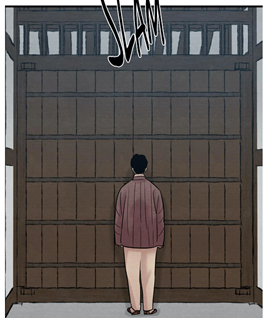
- Yoon Seungwon is sent off by the butler, when the former leaves his brother’s mansion.
 (chapter 37)
 - The younger master Yoon is leaving his father’s home in order to go to Hanyang (chapter 44)

- Jung In-Hun is departing from his sponsor’s propriety for the capital (chapter 44) after taking the first round of the civil service examination

- The painter is leaving the kisaeng house on Heena noona’s order.
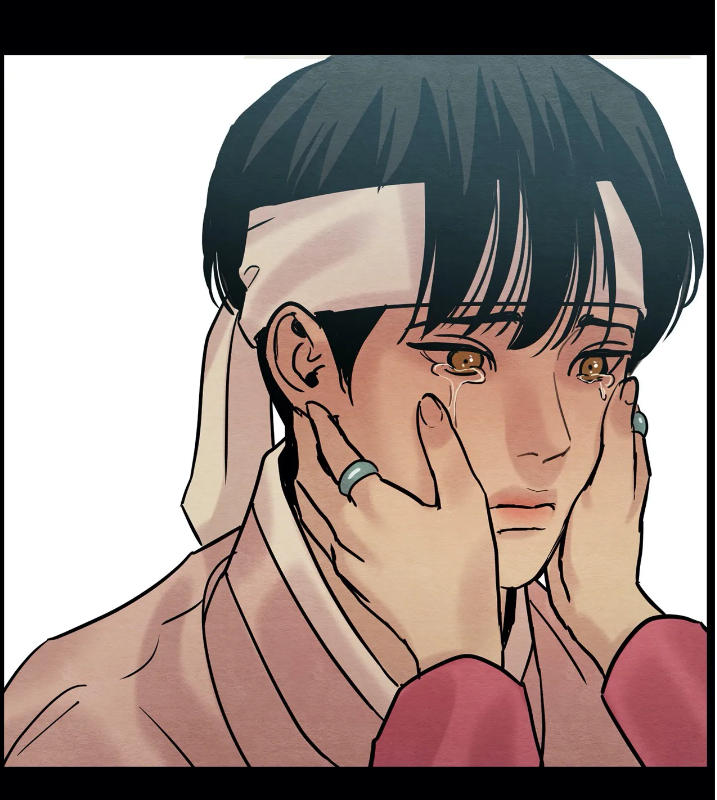 (chapter 46)
 - Heena noona with her brother and his lord
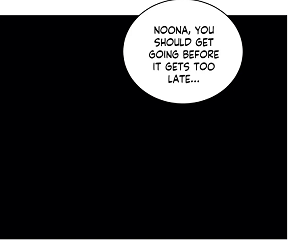 (chapter 69)
 - In chapter 70, Baek Na-Kyum recalls an important goodbye from his youth. Back then, the young boy was sad and upset after departing from Heena noona. He had been entrusted to the scholar Jung In-Hun.

What do these adieux have in common?
| Chapter | People involved in the farewell |
| 35 | Baek Na-Kyum, Jung In-Hun, Yoon Seungho, Kim |
| 37 | Yoon Seungwon, Yoon Seungho, Kim and Baek Na-Kyum |
| 44 | Yoon Seungwon, father Yoon, Yoon Seungho and Baek Na-Kyum through the painting |
| 44 | Jung In-Hun, Yoon Seungho, Baek Na-Kyum and valet Kim |
| 46 | Heena noona, Baek Na-Kyum, noonas and Jung In-Hun |
| 69 | Heena noona, Yoon Seungho, valet Kim and Baek Na-Kyum |
| 70 | Heena noona, Jung In-Hun, Baek Na-Kyum and the moon |
Observe that all seven goodbyes are revolving around four people, although the adieu was just between two persons. Moreover, the main leads, Yoon Seungho and Baek Na-Kyum, are always involved. You might argue that in the seventh case, it is not possible. But I would like to remind my readers that I have already associated the main lead Yoon Seungho to the moon. Furthermore, the teacher’s words about the moon (“fond of you”)  are mirrored in the lord’s confession from chapter 56.
 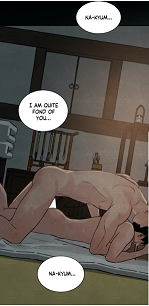 Therefore, we could say that he was present in the farewell as well, because the scholar kept referring the moon to the innocent boy. Since I have already pointed that in each departing two people got involved, this means that their relationship is strongly intertwined with other bonds. Relatives or acquaintances affect the farewell.
Striking is that the way they part from each other exposes the true nature of their relationship. In the first case, the scholar just faked his concern for the artist’s health, whereas he desired to use the commoner as spy.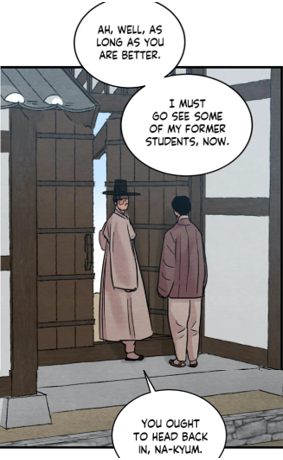 That’s why he gave him an order “you ought to head back in” and the painter couldn’t argue. Moreover, the learned sir asked him to keep his promise, he needed him to work for him.
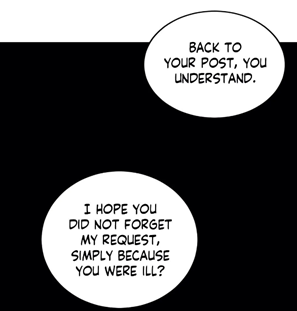 What caught my attention is the silence from the painter. At no moment, he can speak and bid farewell, and this is understandable due to the noble’s remarks. Although the commoner wasn’t the one leaving, he had the impression that he was abandoned. This explicates why the artist was wounded by this departure.
 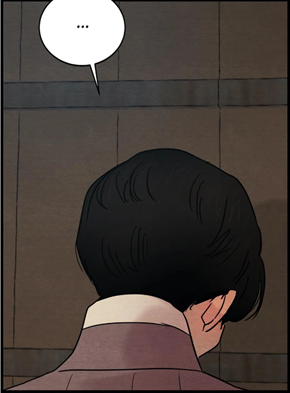 Striking is that this scene was observed by the main lead and his butler. While the noble felt himself betrayed and abandoned, he was indeed relieved in the end that Baek Na-Kyum had remained by his side. Consequently, the first departure was marked by disappointment and heartache from the protagonists. Both felt helpless, as they had no saying in this. Since the closed gate resembled more to a jail gate than a real home, I come to the conclusion that both main characters were trapped in reality. This explains why the lord feared the painter’s departure. He had the impression that if the latter set a foot outside, the noble would end up alone again. Another aspect is that this farewell forced the aristocrat to leave his room and window, he had to run to the gate… a desperate measure to stop this moment.
Now it is time to examine the next goodbye. The brother was officially on the verge of departing from his brother, but the host was not present. Hence there’s no real goodbye. Since the main lead didn’t show him any respect by following him to the gate, the younger master was just followed by the butler. Moreover, the latter gave him in his master’s name a letter, like the younger master had requested it in the morning. From my point of view, the brother’s smile 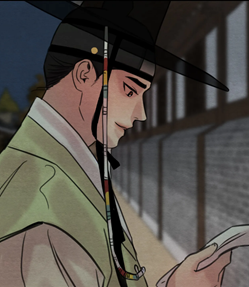 is an indication that he believed that his personal visitation had been successful. By pressuring his brother, he had finally been able to get the reply he desired. But the reality must have hit him hard later, because in the end, he just got a ruined painting of sodomy. And this explicates why the father ended up receiving the paper from his younger son.
 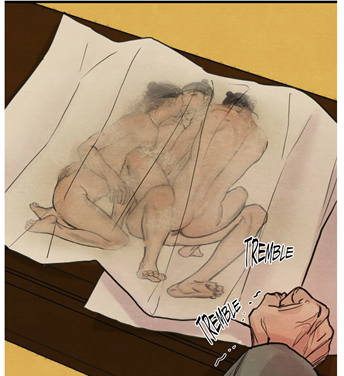 In other words, Seungwon decided to get revenge on the humiliation. Besides, I also think that he hoped that with such a gesture, father Yoon would make the decision to pay his rebellious son a visit and have him punished for his lack of respect. But what Yoon Seungwon seemed to overlook is that when he barged into his brother’s mansion, he showed no real respect either.
  Imagine, he even desired to open the door of Yoon Seungho’s bedchamber. Hence, it is not surprising that the eldest brother didn’t follow his brother to the main gate. He didn’t feel obliged to pay his respect to Yoon Seungwon. To sum up, in this farewell, both characters were quite rude to each other, and Yoon Seungho showed no leniency towards the younger master, as the latter had violated the social norms first. This animosity was even encouraged by the valet’s intervention. And let’s not forget that in that scene, Yoon Seungho chose the painter over his brother. He asked him to remain by his side, because he was too upset and wounded by Yoon Seungwon’s sudden appearance and selfish request.
In the third case, Yoon Seungwon was waiting for his father, but since the door remained closed, he decided to depart from home. There’s no doubt that this must have indeed disappointed Yoon Seungwon. His father still chose to focus his attention to Yoon Seungho instead of him, hence he kept looking at the closed door. Yet before leaving he blamed his oldest brother for his father’s lack of concern and respect. Striking is that the main lead was not present, yet through his mention, the brother gave the impression that Yoon Seungho was still part of the family despite the incident with the topknot and the long separation. Yet, Yoon Seungwon felt bothered that his own father didn’t even pay attention to customs. He didn’t send off like a respectful and dutiful father either. From my perspective, it looks like the younger master was trying to cover up the lack of father Yoon’s manners by making the main lead responsible for this. We shouldn’t forget that the main character was considered as the black sheep of the Yoons. At the same time, the younger brother was attempting to make himself look good, because unlike the head of family, the former paid his respect to his father before. With a single panel, we can conclude that Yoon Seungwon is acting, as if he was a honorable and dutiful son, contrary to his older brother, who upset father Yoon so much that the latter forgot his duties. The irony is that while the younger master talks about his brother, the latter has no opportunity to contradict this, as he is not present. On the other hand, the brother’s words are somehow true, because the father is indeed infuriated due to the ruined painting. On the other hand, the younger master played a role in this as well, because he was the one wo delivered the painting. Moreover, like I have already underlined, I am no longer thinking that Yoon Seungho entrusted it deliberately to his brother as an affront for the simple reason that Yoon Seungho still fears his father. Let’s not forget Yoon Seungho’s words addressed to his brother.
 Here, he reminded him that he was living according to their father’s principles, showing that despite the abandonment and betrayal, he never dared to drop his father’s doctrines. From my point of view, the ruined painting was given by Kim on purpose, to incite the father to intervene. Besides, we shouldn’t forget that the “letter” was delivered after the brother had parted from Yoon Seungho. Hence the main lead never got to see what the butler did behind his back. Another evidence for this misdeed is the absence of the valet’s eyes. Since Kim had told his master that he needed to deliver an answer personally, the butler used this request to his advantage. And Yoon Seungwon is too naive to realize that he has been misled, that’s why he is also represented without eyes. The manhwaphiles should recall that in this scene, the younger master was humiliated, as his elder brother didn’t send him off properly. Why should he give a letter under such circumstances? And if we compare the three goodbyes, we will detect the recurrence of discourtesy and the missed opportunity of saying goodbye properly.
In the fourth case, we also have the absence of a third person: the painter. Yoon Seungho invited the teacher to bid farewell to his former student through his rhetorical question, 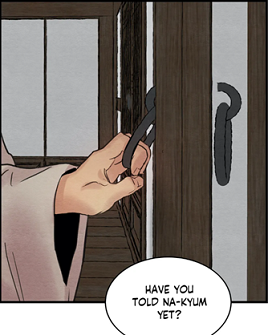
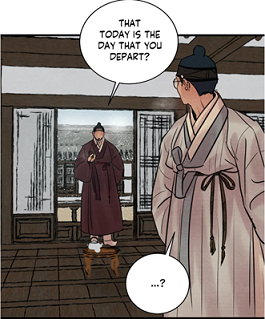 but Jung In-Hun didn’t care. In his eyes, he was just a low-born, and the former didn’t need him at all.
  Striking is that the low noble paid his respect to his sponsor out of obligation and nothing more. As long as Yoon Seungho was useful, then the learned sir would have to be polite and respectful. That’s why he bowed in front of the wealthy aristocrat. In other words, the scholar’s bow is fake which stands in opposition to the artist’s bow in chapter 69.
  More importantly is that in this fourth farewell, the artist didn’t get the opportunity to bid farewell properly to his former teacher too. Neither Jung In-Hun nor Kim had informed him about the time of his departure.
 Striking is that in that chapter, the rich main lead was the only one who desired to make the painter happy, hence he suggested the low noble to depart properly from the low-born. What caught my attention is the opened door in front of the painter.
  Why was the door left open like that? The manhwaphiles should remember that in that scene, Kim was already aware of the discussion between Jung In-Hun and Baek Na-Kyum at the library. And with this new approach, it becomes clear, Kim was hoping that the artist would leave the place, since he had been insulted and abandoned by his teacher. He had no reason to remain by Yoon Seungho’s side. Besides, we shouldn’t forget the noble’s words addressed to the learned sir:
  In other words, Kim was just waiting for the low-born’s departure, and in order to push the painter to leave the mansion, he made sure that he wouldn’t see Jung In-Hun leaving. This would reinforce the betrayal and abandonment issues the painter had felt due to the scholar’s attitude and words before. Moreover, we shouldn’t forget the parting between Jung In-Hun and his former pupil in chapter 35. Note that in both farewells, the young man had no saying. In the first incident, he got caught by surprise and in the second goodbye, the learned sir was already gone. Since this closed door contrasts so much to the open gate in episode 44, and in both chapters Kim was present, I come to the deduction that the butler was observing the low-born in the shadow. In his mind, if the door was left open, the artist would leave without saying goodbye to anyone. Striking is that despite the previous desertion and wound, Baek Na-Kyum was still showing respect towards his learned sir, indicating that despite his heartache, he was willing to overlook everything. There’s no doubt that the missed goodbye did increase the artist’s abandonment issues. And here again, I detect the lack of respect towards the main leads. The scholar might have bowed in front of Yoon Seungho, yet he rejected the noble’s suggestion and even started plotting behind his back, how he would use the painter for his own benefit.
And it is time to focus on the parting between Heena noona, the artist and the noble. Striking is that for the first time, the lord left his room and walked towards the painter and his guest.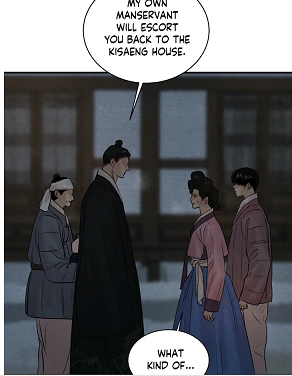 In other words, he was showing her a huge respect and as such biding her farewell. He even acted as a real host, because he offered to send her off with a servant from his mansion in order to guarantee her safety. And if you keep in mind that he did nothing for his own brother, and the latter is a noble, while Heena noona is just a kisaeng, you’ll detect how much the lord has already changed. He is definitely determined to keep the artist by his side, hence he is aware that he needs to show him a different side from him. He definitely heard the painter’s confession, because in chapter 70 Yoon Seungho asked the low-born directly if he was afraid of him.
  And with this new approach, the main lead did succeed. Baek Na-Kyum was able to recognize the lord’s leniency and honorable attitude. And contrary to the scholar’s bow in chapter 44, the artist is sincerely showing his respect towards his master. On the other hand, the disrespect is still present here. The one showing a rude attitude is the guest, the kisaeng.
  She keeps questioning the lord’s authority and personality. However at no moment, the aristocrat doesn’t lose his temper. In fact, he even retreats, until the kisaeng’s brother intervenes to stop her. Another huge difference contrasting to the departure of chapter 35 and 44 is the change of attitude of both protagonists. While with the scholar, Baek Na-Kyum could say nothing and had to resign to his fate, in chapter 69 he is the one speaking. Unlike in the past, he is the one sending off the loved one. But there’s more to it. Not only he can decide about his noona’s departure, but also he can choose the way he bids her farewell. He can hug her, he takes his time
 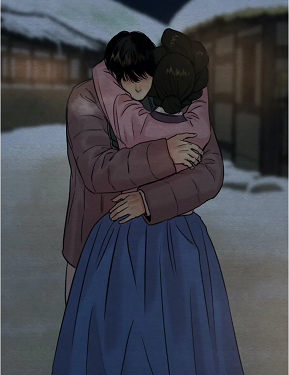 and smiles.
  For the first time, he feels that he is not left behind, but he can determine his fate. Imagine in the past, he used to be sent away by his noona and he couldn’t protest.
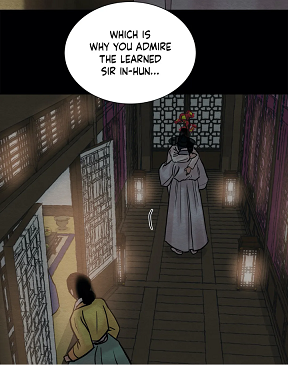 but the worst is that he even had to leave the kisaeng house and walked through the countryside. Try to put yourself in his place: Each time, he could never say goodbye and had to leave the place. He got carried away, when he was young and later, he was simply ordered to leave the kisaeng house without biding farewell properly.
 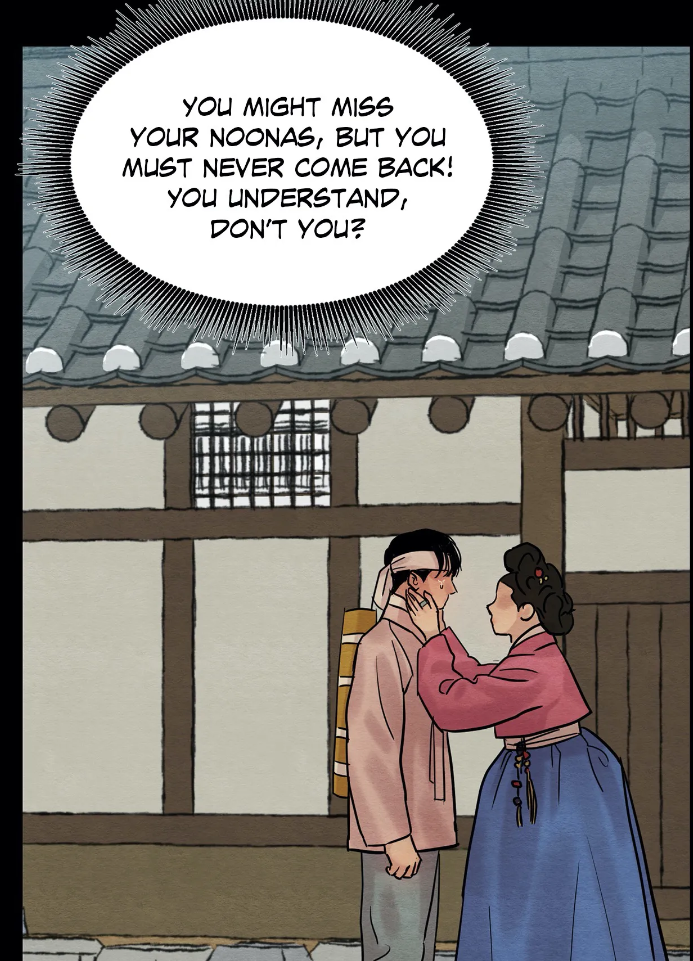 In this adieu, the kisaeng’s words and the panel indicated that he was ordered to leave the kisaeng house without his noonas’ knowledge. With her rhetorical question, she forced the painter to resign to his fate. Besides, the readers can one more time notice that in this scene, the artist remained silent as well. As a conclusion, the painter’s abandonment issues are related to the fact that he was forced to leave and he couldn’t take his time to bid farewell properly. He was either caught by surprise (35, 44, 46) or simply too powerless (68,70). In other words, neither Heena noona nor Jung In-Hun respected the painter’s wishes. Sure, the head-kisaeng sent him away in order to protect him. Yet like I underlined it before, she was definitely too overwhelmed with her situation. With these observations, I deduce that the moment the lord chose to respect the painter’s will
 despite his own insecurities, the painter could only select him. For the first time, a person was willing to listen to the low-born’s voice. And the moment Yoon Seungho treated Heena noona with respect and even allowed the painter to bid farewell properly
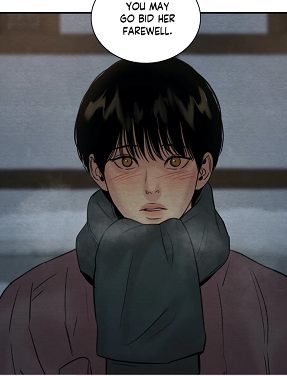 , his behavior could only reinforce the painter’s choice. In other words, he gave the power to the painter to determine his fate and as such reinforced his certainty. For the first time, Baek Na-Kyum was able to send someone away and not the other way around. He could also choose his fate. Simultaneously, the painter helped the powerful aristocrat to witness with his own eyes that he was not left behind and was selected. Both helped each other to overcome their abandonment issues. And this explains why after the departure, Baek Na-Kyum remembers the past. Back then, he was hurt because he had been dragged again from his noona. The scholar tried to console him by saying that the moon was always by his side,
  but this couldn’t truly comfort the artist. And because in chapter 69, the painter experienced for the first time a real good farewell, he could only recall this incident. But unlike in the past, the moon appears differently.
  In my opinion, this scene is important, as it symbolizes that Baek Na-Kyum is finally able to perceive the lord. And for the first time, he looks at the satellite with a certain fascination. He stands still and doesn’t sense the coldness. For me, this panel announces that the painter has finally perceived the lord’s presence. I would even say that the picture implies that Baek Na-Kyum is slowly accepting the existence of Yoon Seungho in his life. Unlike in the past
  , he is not sad and not thinking too deeply as well.
 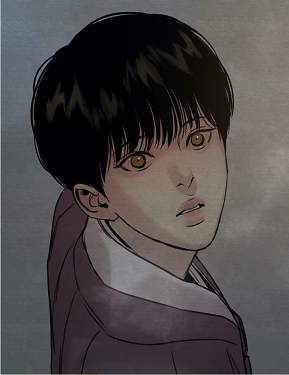 The lord is indeed replacing the scholar, the painter doesn’t need his comfort any longer. Why? Because unlike in the past, the powerful noble allowed him to part from his sister properly, which the teacher never did. Remember what I had denunciated in a former analysis: the scholar hid behind the boy in order to avoid any responsibility for the brutal incidents at the kisaeng house. In other words, the teacher is responsible for the low-born’s abandonment issues. What Jung In-Hun never imagined is that he was right about the moon. Yoon Seungho, represented by the moon, has fallen in love with him. However, if you recall that the adieux between Yoon Seungwon, father Yoon and the main lead, you will notice that the aristocrat has not overcome his abandonment issues yet. How could he, since the father left him behind after humiliating him like that (incident with the topknot)? He never had the opportunity to bid farewell to his family properly, since the latter treated him with disrespect. And this explicates why Yoon Seungho asks the painter not to push him away at the end.
 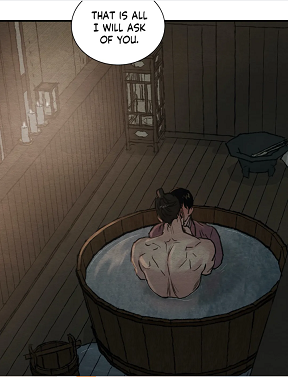 The missed goodbyes were the reasons why both main characters were deeply hurt in the past, both victims of circumstances due to the actions of selfish and ruthless people.
Feel free to comment. If you have any suggestion for topics or manhwas, feel free to ask. If you enjoyed reading it, retweet it or push the button like. My instagram-tumblr-twitter account is: @bebebisous33. Thanks for reading and for the support, particularly, I would like to thank all the new followers and people recommending my blog.

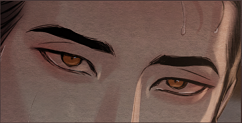 Therefore it helped me to become more precise in the predictions.
 Yet, we shouldn’t forget that during the first season, the noble bathed after the rape, hence the lord was in the bathroom in chapter 25 and not in 26.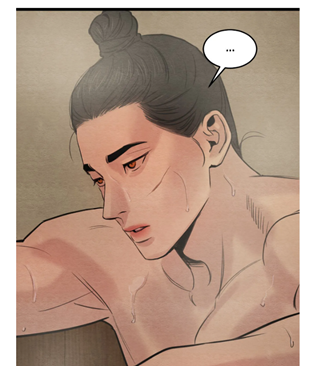
 and in the barn.
 Why? It is because the two protagonists lit a fire place
  (chapter 57)
 (chapter 62). In both scenes, the main characters made sure that the loved one wouldn’t get cold, while in chapter 25-26 Kim was the one preparing the bath, hence he used a lamp surrounded by glass. And since me and my follower have already analyzed the signification of the candles, the manhwaworms will recognize this type of light symbolizes the valet.
  (chapter 20)
  (chapter 36)
  The reality is that the painter was more wounded by the absence of a kiss at the end
 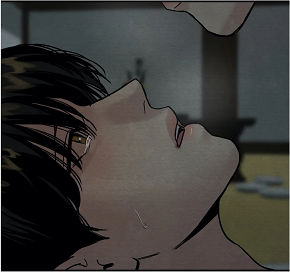 (chapter 64). Moreover, in that barn the main character had even opened up and confessed what he truly desired: seeing the painter smile. As a conclusion, I believe, we will have a fireplace in the bathroom, affecting Yoon Seungho.
 (chapter 62), yet it contrasts to the scene in the storage room, where the lord was turning his back to the fire place.
 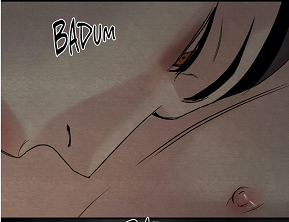 Since the light is a symbol for knowledge and warmth, his attitude during that love session exposed his insecurities and doubts. And now, if you look at the image again
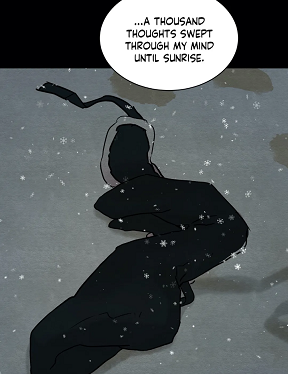 This is the noble’s current state of mind, which is also a new version of chapter 35
  All the three scenes have something in common: the noble’s mind is occupied with worries, as all his thoughts are revolving around the painter. In chapter 35 and 70, Yoon Seungho is wondering how to improve his bond with the artist. He has no idea how to approach him. Some readers might be surprised by my association with chapter 62 with the picture from episode 70.
  This explicates why later the lord chose to confess his love differently. Since in chapter 58, the low-born was the one who prepared the fire place, although we never witnessed it, there’s a high probability that Baek Na-Kyum is the one preparing the aristocrat’s bath. Moreover, in chapter 26, the lord brought himself the change of clothes for the low-born.
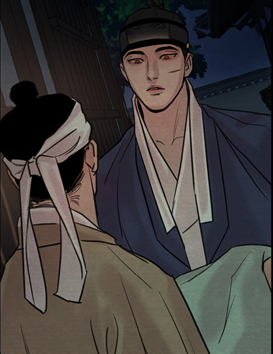 This is important, because it would signify that Baek Na-Kyum has once again taken over another task from Kim. First, he was present, when the lord put his hanbok in chapter 65
 , while the valet was no longer helping him to get dressed. That’s why I believe that the manhwaworms are going to witness another huge change, and the panel from episode 70 is already insinuating it.
 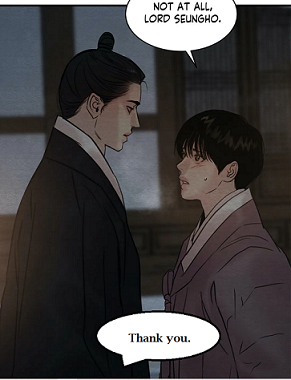 their relationship has already changed in a good way. Right now, the painter is just a favored servant, since the noble gives him an order, but simultaneously he treats the artist as someone precious. He allows him to receive a guest, then he gives him a scarf in order to keep him warm. So just like in the first season, the noble is lowering himself in front of Baek Na-Kyum. Remember the chapter 36, when the lord gave the painter a fellatio
 , and in chapter 37, he even opened the door instead of Baek Na-Kyum. During that night, Baek Na-Kyum was even the one shouting an order:
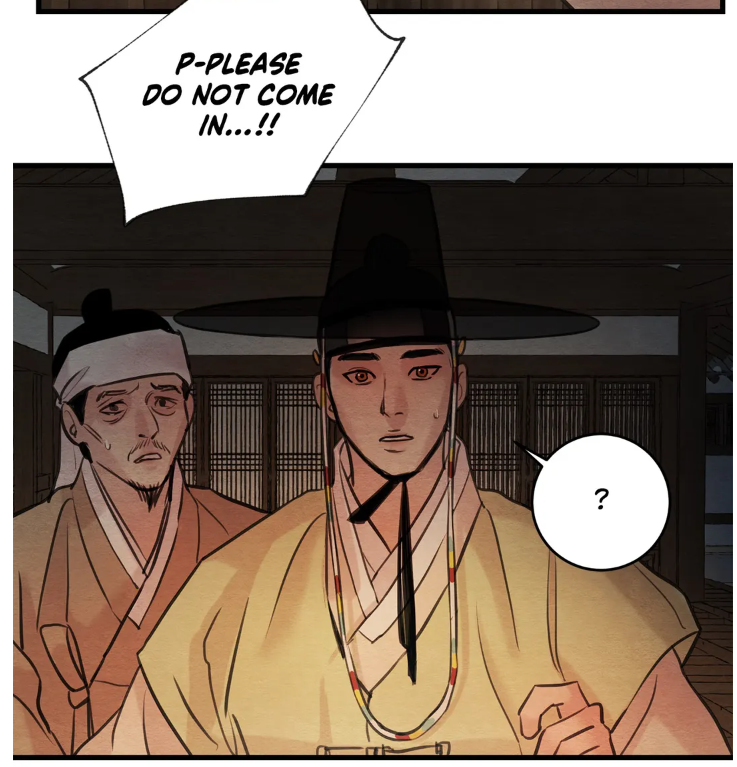 That’s why in chapter 69 the main lead removed the manggyeon too, before joining the painter and his guest. Therefore I am expecting a similar situation like in the last part of the first season. The lord will treat Baek Na-Kyum more and more like his official “wife”. It is highly possible that we get a new version of chapter 47, where both characters eat together. However this time the aristocrat will be the one eating his meal in the painter’s study… exactly like in chapter 11.
 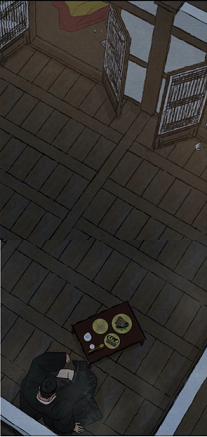 The lord is sitting alone in the dark with a table full of dishes. The food is an indication that the head-maid ensured the noble would get something to eat. Due to his confrontation with Yoon Seungho, the butler is avoiding his master, hence there’s no ambiguity that he wasn’t the one taking care of his master. When she brought his dinner, she must have noticed the darkness, the chaos and the cold in the room. Therefore I think, this must have concerned her. In her eyes, a hot bath would be the right solution for her lord so that he doesn’t get ill again.
  First, she not only bowed to him in chapter 46, but also pointed out to the low-born the noble’s care and kindness.
 Then in chapter 47, the main lead didn’t scold her for the incident, he showed a real benevolence towards her and her colleague,
  which could only move her. Moreover, she implied that the painter had affected the master in a good way (chapter 51)
  . And notice how wounded and upset she was, when she imagined that the painter had lied to her.
  Finally, let’s not forget that her colleague was at the door of the master’s bedroom
 , when the painter had a flashback. She definitely witnessed how concerned and caring the lord became. She must have told the head-maid that the main lead was no longer infuriated towards the artist. Since the servant had been protecting Baek Na-Kyum (chapter 46 and 47) and Yoon Seungho (chapter 63 and 67), there’s no ambiguity that she will keep acting that way. In truth, her role is to bring the two protagonists together. As a conclusion, she is gradually becoming their surrogate mother. Since the lord can’t confide to her due to her position, she can definitely help her master by talking to the artist. That’s why she confided him her observations in chapter 46.
  But there are more evidences for this prediction. Striking is that the moment the main leads became an “official couple” (chapter 33), she always appeared next to the butler, except in two cases:
 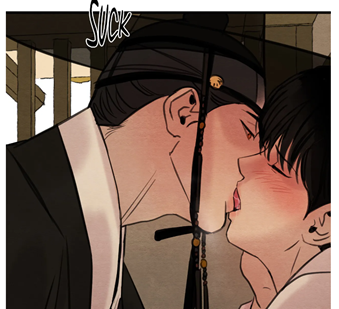 Then after conversing with the low-born, the next day the lord invited the painter to have his breakfast with him, because the latter had entered his room with a new painting.
 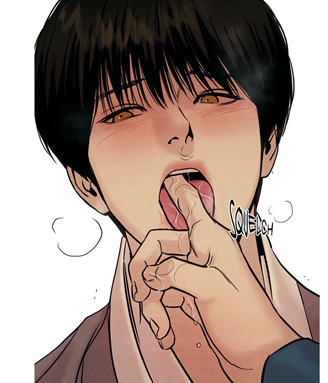 Her words had affected the artist, thereby he created a new picture. Since she interacted with the commoner without the valet’s presence, I believe, she will be the one asking the painter to take care of her master telling him how the lord was waiting for the kisaeng’s departure in the cold and dark. Besides, let’s not forget that the fire place is associated to the kitchen as well, reinforcing my interpretation that the head-maid is on her way to become part of her family.
  . There’s no ambiguity that Kim will approach the artist again, and tell him that he was the one who asked the noble to be kind. That way, he will attempt to portray his master as “cruel”, but the butler’s words won’t change the artist’s perception, because the head-maid has already talked to him. If this truly occurs, then this signifies that the head-maid’s influence is increasing and Kim’s manipulations are no longer working. Besides, I am still hoping that the painter will remember the butler’s behavior during the night of the second sex marathon: He did run away and acted, as if nothing was happening. He truly abandoned him, and unlike the aristocrat, the artist’s relationship with the valet is not that deep. The latter has already hurt him once:
 He wasn’t giving the order out of jealousy, but out of concern. The fear to lose him again… has deeply affected him, and this happened outside the propriety. He will try to remain by the low-born’s side all the time. On the other hand, the noble is very cautious, because he made a terrible mistake. Therefore for me, there is no ambiguity that the noble will appear in the study during the night watching over his lover. In other words, the painter’s dream will become true again:
 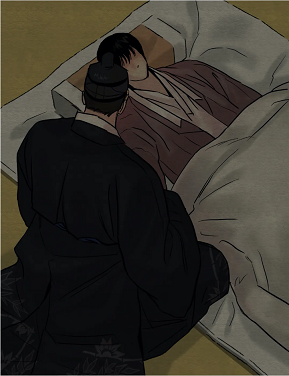 It is definitely possible that the artist confesses his love to the noble, because in the wet dream from chapter 56, the lord’s confession happened in the painter’s chamber.
 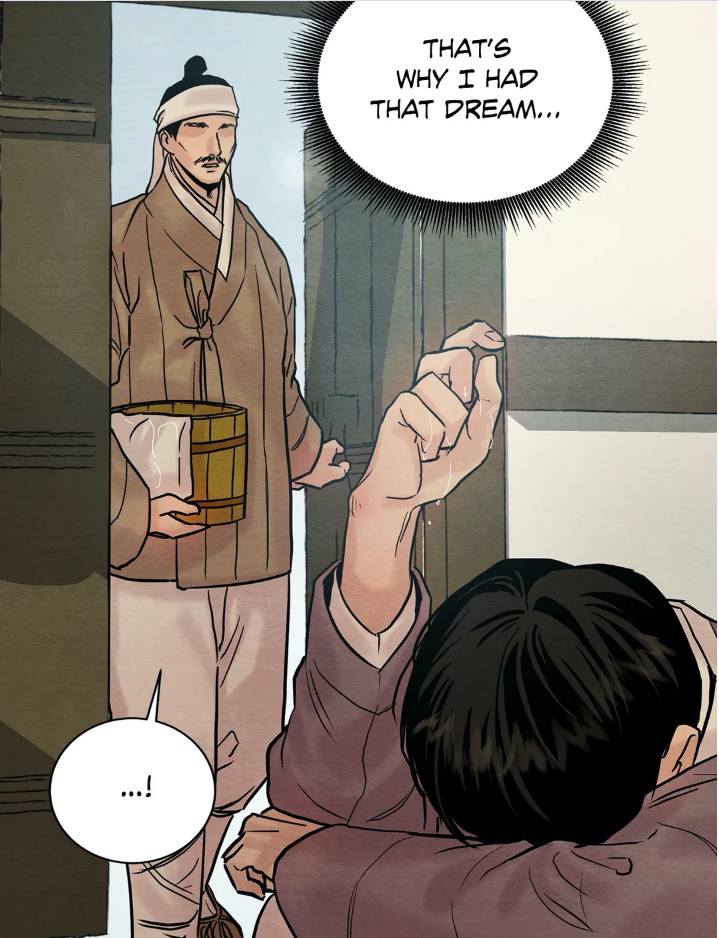 , I believe to see here another clue for my prediction that the next chapters will contain elements from chapter 26 (the bath), 36 (the head-maid and the fellatio), 46 (the maid talking to Baek Na-Kyum), 56 (the wet dream and the bathroom) and 66 (the dream). Striking is that all the episodes I mentioned are ending with a 6!! The most incredible is that the symbolic meaning of six are harmony, balance, sincerity, love, and truth.
  Although he had to listen to many arguments from his sister, he decided to believe in the lord’s love confession. Yoon Seungho did exactly the same: he chose to wait for the painter’s resolution. Therefore this signifies that he decided to trust the artist’s will. In other words, both protagonists took a leap of faith, although they were scared and full of doubts.
 , Baek Na-Kyum could only be moved. With these words, Yoon Seungho was not only showing his care and gentleness, but he was expressing his confidence in the low-born. The latter could feel it through his eyes and ears. Simultaneously, Baek Na-Kyum reciprocated this mark of faith. First, he obeyed to the noble’s order.
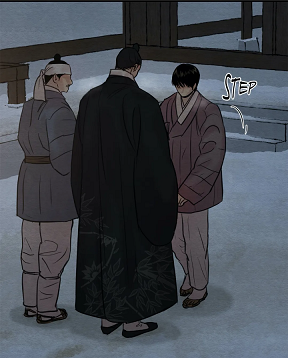 Secondly, he allowed the main lead to touch him with the scarf. This submission was different from the past, because the painter was totally honest here and not wounded. Then after covering the artist’s throat, the lord pays attention to the low-born’s reaction.
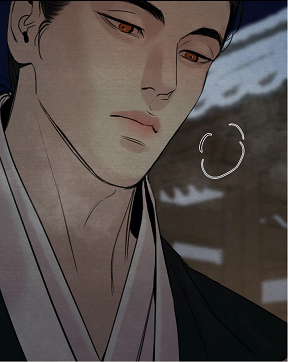 He sees with his own eyes that this simple but tender gesture has already affected Baek Na-Kyum. The latter keeps blushing and if the manhwaphiles look carefully at the commoner’s gaze, they will detect a glimpse of hope due to the light in the eyes.
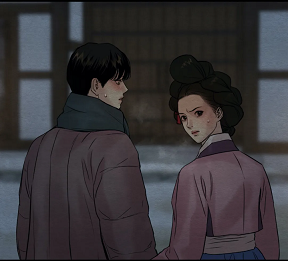 She blames him for affecting her relationship to her “brother and son”. That’s why she glares at the protagonist. Their mistrust is actually mutual.
  In her eyes, the main lead can be the only reason why Baek Na-Kyum is no longer listening to her advices and requests. In the past, he used to be so obedient and never talk back to her. He rejected not only her suggestions, but also her hand.
  For the first time, she was pushed away, that’s why she got so shocked. In that moment, she could no longer be blind, hence the author zoomed on her gaze.
  And now, you are wondering why I am talking about chapter 68, when my main focus was chapter 69. The reason is simple: Heena noona is actually becoming more daring and defiant, because she feels legitimated in her actions. She has the impression, Baek Na-Kyum has become submissive due to the noble’s abuse. Let’s not forget that the artist also portrayed Yoon Seungho in a rather negative light before
 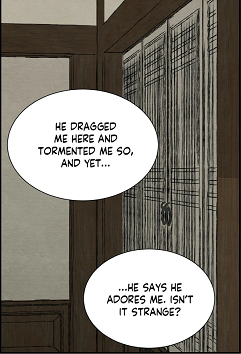 and he even added that he didn’t want to love him.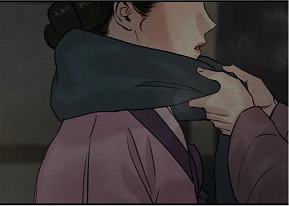
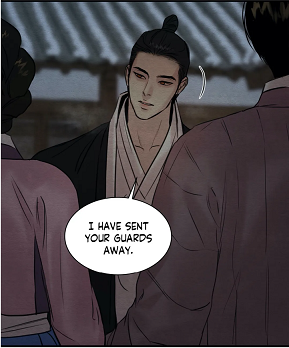 and adds that one of his servants will accompany her to the kisaeng house. Secondly, she questions Yoon Seungho’s decision, ignoring the fact that she did violate laws by entering the mansion with her guards.
 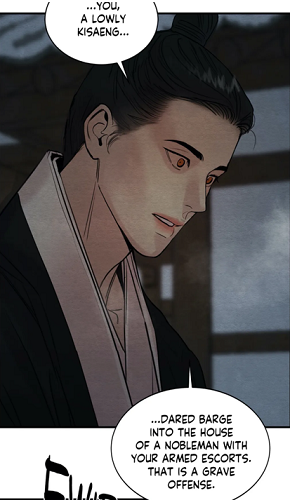 Sure, he is firm, when he justifies his resolution, yet simultaneously this indicates that Yoon Seungho is listening to her despite her rudeness. I have to admit that it took me some time to interpret the following image:
  My first impression was that the lord was approaching Heena, but after pondering for a while, I came to a different deduction. In fact, this is the opposite: Heena noona is the one approaching Yoon Seungho, although the words from the protagonist gives the impression, he is confident and determined. In other words, the kisaeng keeps defying the host. She is the one threatening the main lead, this explicates why Baek Na-Kyum intervenes and puts himself between them. However, unlike in chapter 30
 , the painter is here protecting Yoon Seungho. That’s why he yells at Heena:
  This displays that he is not protecting his sister here, he definitely disapproves her attitude. That’s why Baek Na-Kyum sides with the lord and is grateful for his behavior.
  , as it is a first for Yoon Seungho. No one has ever thanked him before, his guests took everything for granted, not even the painter. And with the return of respect, trust can only flourish and as such love. This new gaze from the aristocrat astonishes the painter as well. In my opinion, the painter witnesses a different gaze for the first time: his gaze is no longer impenetrable.
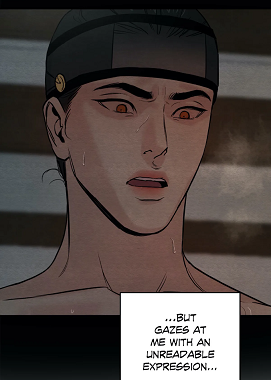 He can see through him, and sense his true soul. That’s why Baek Na-Kyum is moved and feels awkward.
  And now, you understand why the author chose to draw Baek Na-Kyum’s chin
 , which is similar to the following panel:
  (chapter 35). Back then, the lord was exhausted and on the verge of giving up, until he saw the artist’s blush, which made him smile and gave him strength and hope again. In my opinion, the painter is in a similar situation, in the sense that he is already sensing that Heena noona is determined to reject Yoon Seungho. There’s a certain disappointment, that’s why he sends the kisaeng away.
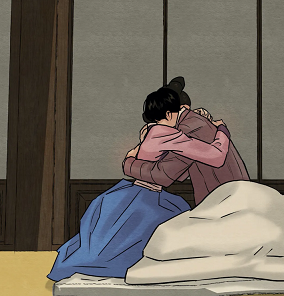 Don’t get me wrong: both characters still love each other, yet the disagreement from before and Heena noona’s behavior has already disturbed Baek Na-Kyum. Furthermore, observe that the kisaeng seizes the opportunity to influence her “son”.
  Therefore I judge the embrace as less honest and more selfish from her part. She keeps attempting to change his mind. She is refusing to accept his resolution, hence neither the hug nor the scarf let her forget her decision: Baek Na-Kyum should follow her and not remain by Yoon Seungho’s side. This explicates why the warning from the servant in front of the kisaeng house ignites her resistance to resign to her fate. It pushes her to fight back.
 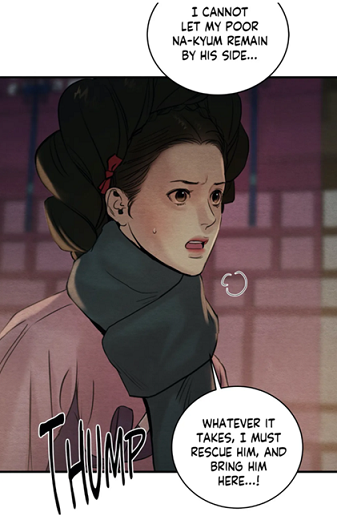 She can not trust her “son’s” judgement, because in her mind the painter has been negatively influenced by the main lead.
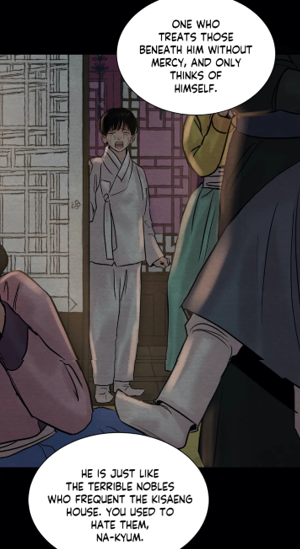 Because she wanted to keep him out of trouble, she relied on the scholar to take away Baek Na-Kyum from the kisaeng house. In her mind, she was actually making the best decision: she was protecting him. However, she never reflected on the impact of her choice. She let the painter consider himself as a burden. Why? He couldn’t help her, moreover he had the impression that he was a source of trouble.
 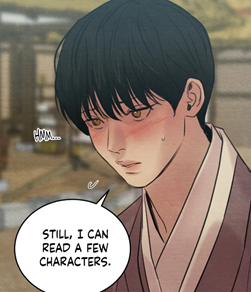 The worst is that the kisaeng still doesn’t know that he can’t write.
  If he revealed his illiteracy, he feared that she might get upset. Moreover, there is no ambiguity that the scholar made sure that Baek Na-Kyum would be blamed for his incapacities. Since Heena noona always viewed the teacher as a trustworthy person, but she didn’t trust the painter’s personality, the artist could only internalize the criticisms from Jung In-Hun. In his eyes, he must have been too stupid and was responsible for his inability, especially when Heena noona kept praising the low noble. Besides, since Baek Na-Kyum had been abandoned since his birth, he felt pressured to please Heena noona and never question her words and judgement. He followed her advices and prejudices blindly with the hope that he would get trusted by her. There’s no doubt that she loves him, yet love without real trust can only deteriorate the relationship in the long run. And now, imagine how the painter must have felt, when she entrusted him to Jung In-Hun. His insecurities must have increased.
  Moreover, due to her words, when she is justifying her resolution with the painter’s love and admiration, she gives the impression that she is trying to impose her own feelings onto her “adoptive son and brother”.
  And now, the manhwaphiles can sense why Baek Na-Kyum’s critical thinking was never developed. His desire to be accepted led him to become submissive and silent. Furthermore, he was never allowed to express himself (anger, powerlessness, fear etc.) The hug was used to shut his mouth. Due to her overprotectiveness, the kisaeng affected the painter’s personality: she increased his insecurities so that he withdrew more and more, and found refuge in painting. At the same time, he tried to please Heena noona more and more, therefore he adopted her prejudices and her admiration for the scholar. From my perspective, the kisaeng’s biased vision is the result of her own seclusion. She lives in the kisaeng house, hence she doesn’t interact with commoners in general. Her judgement about people is based on her own experiences, therefore she generalizes: rich nobles are all bad. She doesn’t realize that commoners and poor nobles are also humans, hence they can also be selfish and ruthless. Remember what I wrote before: her perception is influenced by appearances. What she sees leads her to judge people. Servants are humbly dressed, then she thinks, they are modest and not sneaky.
  Bebebisous33s' analyses in K-Dramaland and Manhwas