

This is where you can read the manhwa. https://www.lezhinus.com/en/comic/madplace_en But be aware that this manhwa is a mature Yaoi, which means, it is about homosexuality with explicit scenes. Here is the link, if you are interested in more analyses about other manhwas https://bebebisous33analyses.com/2021/06/06/table-of-contents-of-analyzed-mentioned-manhwas/ I mentioned the following essays: https://bebebisous33analyses.com/2021/07/24/mad-place-smiling-ghost-and-sinful-priest/ and https://bebebisous33analyses.com/2022/07/06/painter-of-the-night-payback-innocent-or-not-guilty-%e2%9a%96/ and https://bebebisous33analyses.com/2021/06/21/who-are-you-the-significance-of-masks-in-manhwas/
It would be great if you could make some donations/sponsoring: Ko-fi.com/bebebisous33 That way, you can support me with “coffee” so that I have the energy to keep examining manhwas. Besides, I need to cover up the expenses for this blog.
First of all, I would like to thank the author Junah 😍😘 for mentioning my first essay about Mad Place on Lezhin in the creator’s note. Imagine my surprise and my joy, when I saw this. It truly means a lot to me, for I felt that my dedication and work were recognized.
1. Sin versus purity
But let’s turn our attention to the manhwa and season 2. I had already sensed the presence of religion in season 1, and this interpretation got reinforced in season 2. It even became more obvious in special episode 2 which I will elaborate more in details later. In my first analysis about the main characters, I had compared the chaebol’s son to a mysterious ghost and Gu Sehyuk to a sinful priest. The prosecutor’s house was like a temple dedicated to the “spirit” Gu Sihwan and the picture on the shelf served as an altar. And observe that in season 2, the protagonist confided to the suspect Ideun that he had felt the presence of Sihwan’s ghost in the house.  (chapter 36) Hence you comprehend why my new title is once again referring to faith and sin. On the other hand, the readers could be surprised by the choice of my new title. How is it possible that a sinner can be pure? This represents a contradiction. I chose this oxymoron for two reasons. Junah ended season 2 with the same contrast:
 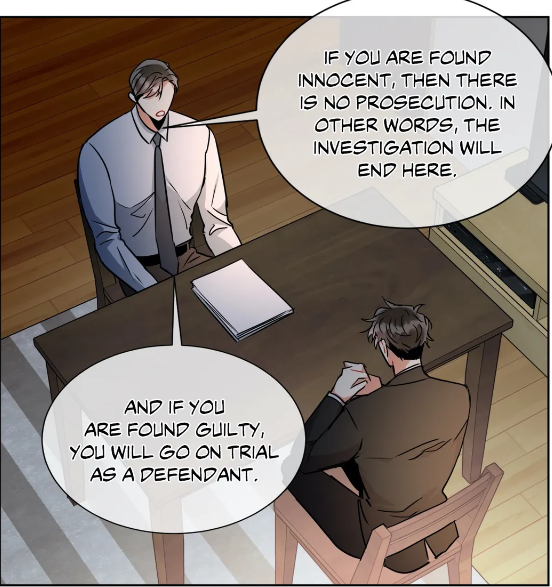 (chapter 44) In this scene, the prosecutor is pronouncing Ha Ideun for “guilty” for murdering Kim Jintaek.
  (chapter 44) However, in that moment the author chose to show the hand of Ha Sungmin, who is about to remove the mask of Ha Sungyeob. This means that the so-called brother is about to commit a murder on the former CEO, his official father. Thus I am deducing that despite the verdict of the prosecutor, Ha Ideun is actually innocent. The “real guilty” versus the “fake one”.
In addition, observe that when Gu Sehuyk is confronting the suspect Ha Ideun about the charges pressed against him, at no moment the chaebol is worried or scared. In verity, he looks calm and relaxed. 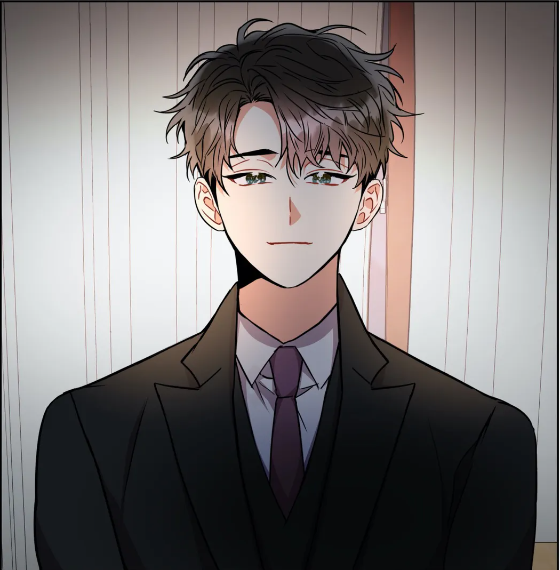 (chapter 44) It was, as if a burden had been removed from his shoulder and heart. Furthermore, in special episode 2, the protagonist’s innocence became even more obvious.
 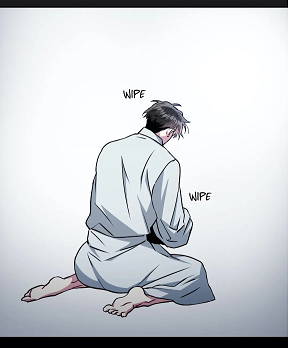 In his nightmare, Ha Ideun is imagining himself wearing a white bathrobe in a white room. Moreover, he looks busy cleaning himself. If you read my essays about Painter Of The Night, you are probably aware of the signification of white and “cleaning”. It is an allusion to purity and purification. Finally, Ha Ideun said that he would never lie by commision.
 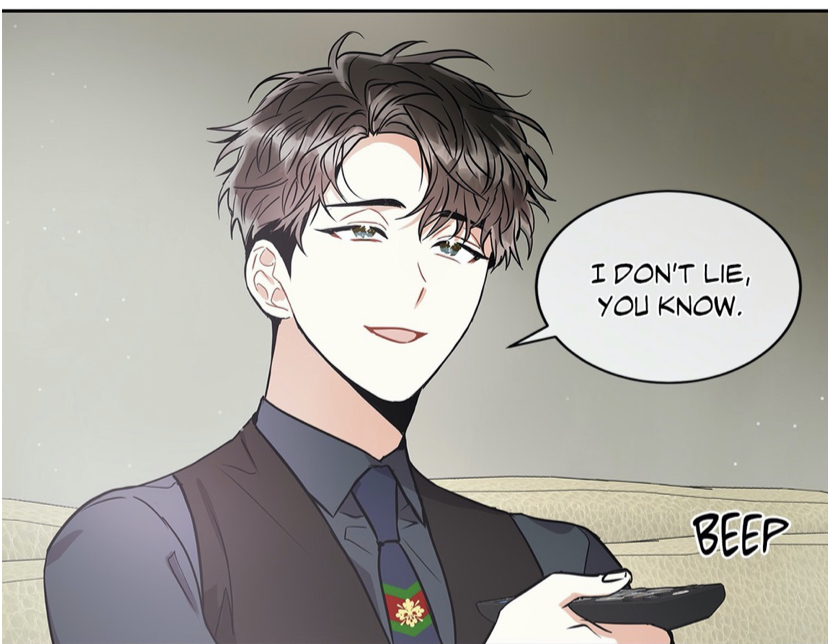 (chapter 11) Everything is pointing out about Ha Ideun’s innocence.
However, he could be perceived as a “sin” and “sinner”, for he is not wearing the same name than his brothers: Not Sung- but Ideun! His name displays that he is the result of an illegitimate affair. 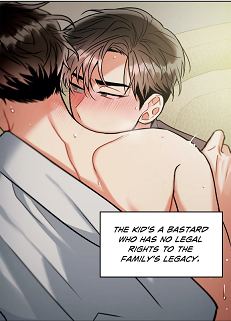 (chapter 39) Hence the reporter Yoo Tae describes him as a bastard, and the official mother Choi Seolhwa doesn’t recognize the protagonist as her son. She doesn’t even call him by his name, but by the expression “the boy”.
 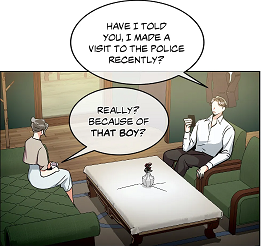 (chapter 41) He is not part of the family. On the other hand, Ha Sungmin and Ha Sungjoon views Ha Ideun as a relative.
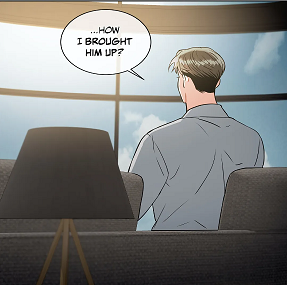
 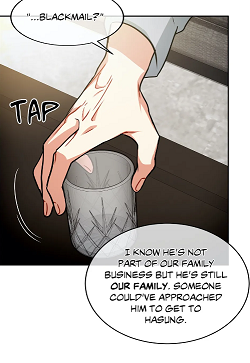 (chapter 37) We could even say that Ha Sungmin views himself as his owner, even as a surrogate father, for he was the one who raised the main lead.
  (chapter 37)
2. Crime or sin?
Nevertheless, I would like the manhwaphiles to keep in their mind two important aspects. First, it is important to make the distinction between a criminal and a sinner. The former belongs to the justice system, while the latter is a religious concept. In the essay “Innocent or not guilty?”, I had already outlined the difference. An accused will never be pronounced “innocent”, in the best case he can be found not guilty. Hence the defendant can still be judged as a sinner. His action or words could be judged as morally wrong or they contributed indirectly to a negative outcome.
In this manhwa, Ha Ideun is suffering from a immense guilt. Therefore he dreams that he will end up in hell. The demons are dragging him to hell.  (special episode 2) He feels responsible not only for the death of Gu Sihwan but also for the death of Kim Jintaek. This explicates why in his nightmares, the suspect had the impression that he had stabbed himself the victims.
 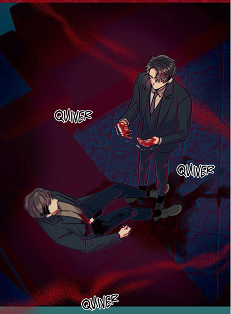 (chapter 21)
 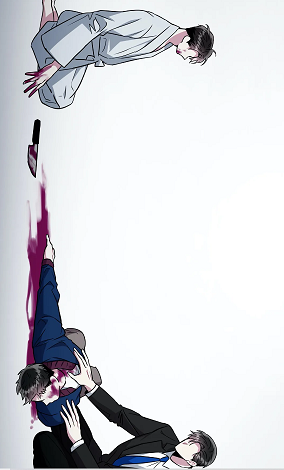 (special episode 2) The hands covered with blood were the symbol of his guilt. The manhwalovers can comprehend why Ideun felt terrible towards the prosecutor. Thus he constantly apologized to the prosecutor by kissing Gu Sehuyk’s wounds
  (chapter 13)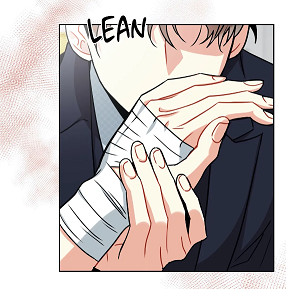
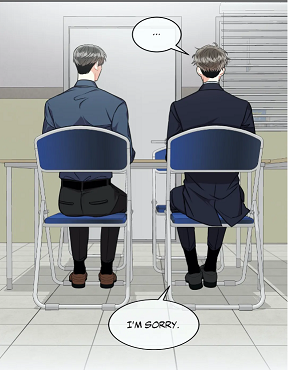 (chapter 23) or by voicing his apology directly.
 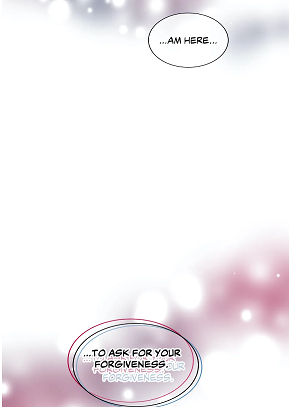 (chapter 44) However, as you can imagine, the chaebol never killed the brother or the criminal. I have no doubt about it. He shouldn’t blame himself for their death. On the other hand, Ha Ideun is definitely involved in their vanishing. Thus Ha Sungmin blames him for everything. Ha Ideun is perceived as a sinner. And that’s how he judges himself too, therefore he dreams of being sent to hell. So when the prosecutor declares Ha Ideun (chapter 44), we should view it from a religious perspective. In verity, it is the priest Gu Sehyuk speaking to the chaebol. By recognizing his “sins”, the wrongdoer has the opportunity to seek contrition. It will help him to reveal his suffering which has been buried. This is no coincidence that the night before this “sentence”, the main lead begged Gu Sehyuk for his forgiveness. (chapter 44) Only the “priest” Sehuyk can give him the opportunity to confess his “sins” and obtain forgiveness. That’s his fault that his brother died, though the prosecutor is well aware that this is not correct. That’s the reason why I believe that during that night, the chaebol confessed to his lover about his past action, though we didn’t see it. Gu Sehuyk had already voiced that he would trust him no matter what. The other evidence for this interpretation is naturally the suspect’s nightmare in special episode 2. This scene took place right after the sexual abuse from Ha Sungmin. But what sin did Ha Ideun commit exactly?
3. Ha Ideun’s “sin”
This is related to the investigation about the slush fund. 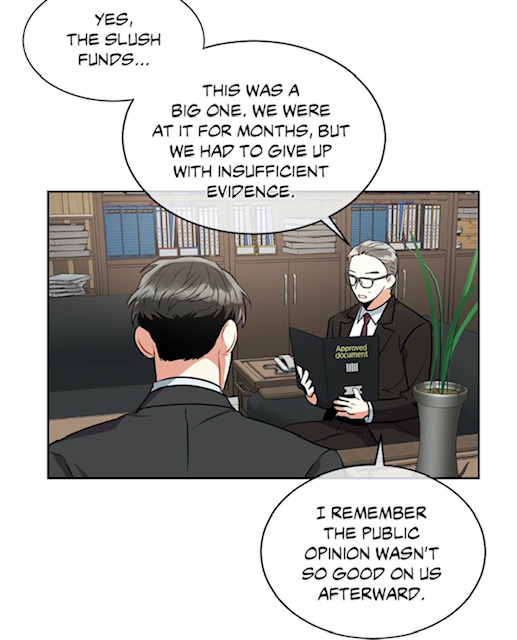 (chapter 8) which is linked to corruption and the project Heaventown. With the slush fund, Ha Sungmin could buy politicians and officials in order to buy the golden land in Gwanghae.
 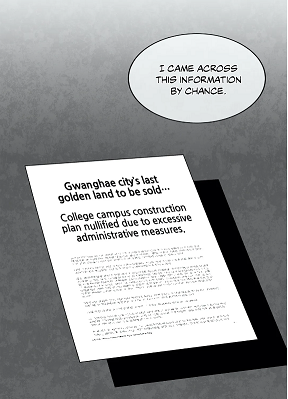 (chapter 39) Note that in the beginning, Gu Sehuyk was supposed to investigate the slush fund. Yet due to his brother’s death, he was removed from the case, for he was left traumatized. His colleague Na Joohwan took over the case and look how it ended: (chapter 8) They found nothing which is highly suspicious. I am suspecting the smiling deputy prosecutor general behind the cover up.
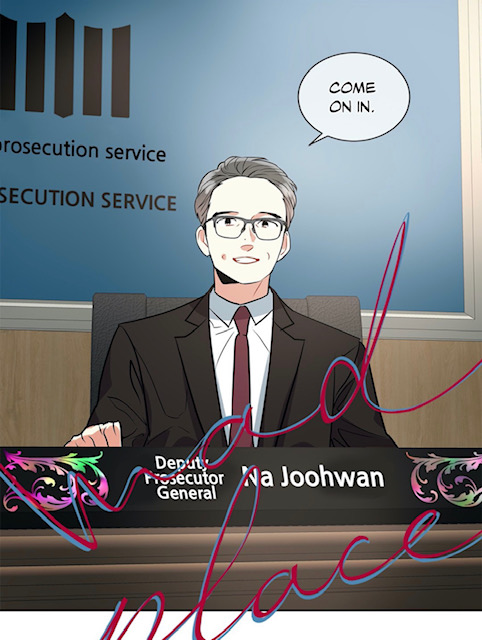 (chapter 8) I have two clues for this theory: he got promoted within a short time, he became deputy prosecutor general, and he is wearing glasses. After reading so many manhwas, I made the following discovery: characters with glasses are hypocrites and even backstabbers. 🧐 [For more read the essay “The significance of masks in manhwas”] Then the reporter Yoo Tae was supported by Ha Ideun to investigate the matter, because he wanted to maintain the good reputation of Hasung Hotel:
  (chapter 39) Moreover, I would like to point out that 2 years later, Ha Ideun was also monitoring Kim Jintaek, this means that he was again investigating about a case, where the Hasung group was involved. This truly exposes the main lead’s righteousness and purity. He chose to do the right thing, yet each time he failed, for he was powerless. People had to die. Therefore the brother said this to Ha Ideun in his dream.
  (special episode 2) Both brothers are goal-oriented, yet they both stand on different sides of the law. Ha Ideun stands for law and righteousness, while the other has no conscious. The goal justifies the means. This explains why Ha Ideun would ask Gu Sehuyk as the prosecutor for this case. The latter is famous for his uprightness and pure nature. Only through him, the truth can come to light. Consequently, I am suspecting that the trial concerning the murder of Kim Jintaek will serve as a mean to unveil all the dirty deeds committed by the Ha family. On the other hand, Ha Ideun wished that his family wouldn’t get into trouble:
  (chapter 40) Why did he make such a request? We have many possibilities. It could be related to Ha Ideun’s goodhearted nature and pride or his fear that Gu Sehuyk could get hurt. So far, people representing a threat to the brother got eliminated. This shows that the main lead was still under the influence of the terrible huyng here.
4. The other “pure” sinner 😉
The irony is that Ha Sungmin has a perfect reputation, because he has a clean record! On the other hand, Ha Ideun is perceived as a man living in debauchery. He would have sex with different men in hotels, he would be lazy. But what is Ha Sungmin’s dream? This panel exposes everything:  (chapter 26) his ambition and greed. He would like to dominate the town and even the economy. His mentality is strongly influenced by his mother who appears as ruthless and selfish too.
  (chapter 41) She is already waiting for her husband’s death. Striking is that at no moment, the villain feels remorse. Why? It is because he has been gaslighting his brother. The brainwashing is detectable in this statement. (special episode 2) If Ha Ideun hadn’t started the investigation and as such betrayed the “family”, then none of this would have ever happened. Gu Sihwan and the informant wouldn’t have died. But as you can imagine, the reality is that his project Heaventown was only possible thanks to crimes (corruption, drug, murder). Besides, I would like to point out that the former CEO Ha Sungyeob only became the president of this group after his other siblings were ruled out.
 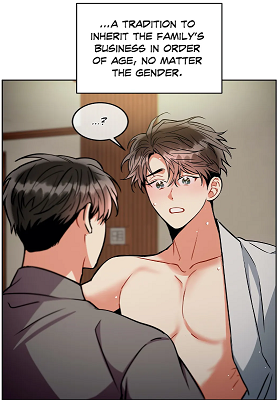 (chapter 39) I am definitely suspecting that there was a battle among the family, and Ha Sungyeob definitely used illegal means to achieve his goal. The oldest sister died in a car accident, and the second brother was judged unqualified. So we could say that Ha Sungmin is actually imitating his “father’s” past behavior, though they are not biologically related. Interesting is that
  (chapter 25) in this scene, Kim Jintaek revealed that he had been in contact with Sungyeob. He showed no real respect to the elder by calling him “crook”, though I have to admit that I am suspecting that Ha Ideun is not Sungyeob’s son. This truly shows that the family Ha is no ordinary family.
5. Ha Ideun’s confessions and contrition
But this doesn’t explain why Ha Ideun would constantly dream of his hands covered in blood. In my eyes, it is related to the sexual abuse he suffered from his “brother” Ha Sungmin. (chapter 37) In this chapter, it was already implied, and Sungjoon even knew about this.  (chapter 37) Junah added the red traces in this panel for that reason. Moreover, Ha Ideun showed signs of PTSD in season 2. On different occasions, he was seen trembling
 (chapter 34), sweating, had difficulties to breathe
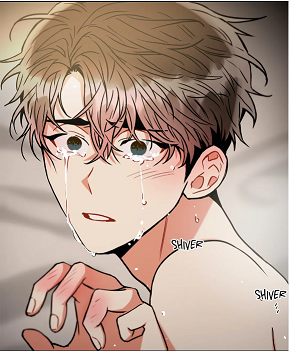
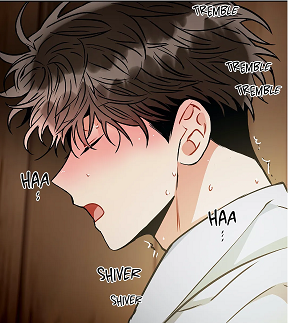 (chapter 34), he had a lost and terrified gaze
  (chapter 33), and he is still suffering from insomnia. He can only sleep after having sex.
 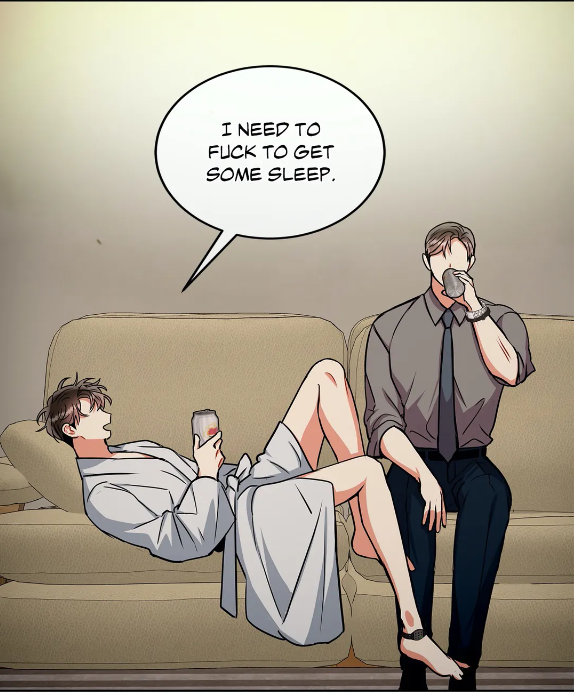 (Chapter 36) This is an indication that the sexual abuse took place during the night. His panic attacks could get triggered by different elements: a certain position or a specific location. He is also suicidal, displaying his self-loathing.
 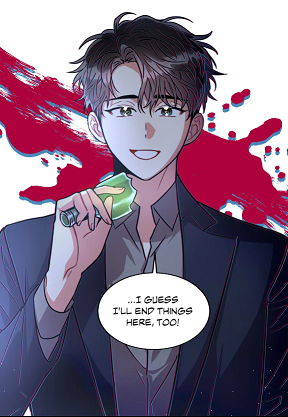 (chapter 21) From my point of view, Ha Ideun had tried to rebell and leave his brother’s side
  (chapter 35), but he had failed. The stabbing is the proof of his resistance.
  (chapter 35) Simultaneously, he was forced to remain by his side, for he had wounded his brother. The blood on the stomach was to make the main lead feel guilty. That way, he would remain silent and passive.
After reading season 2, I couldn’t help myself associating him to Yoon Seungho from Painter Of The Night. Both are smiling ghosts, because they are masking their pain and traumatic past.  (chapter 26) They could never show their true self. In my eyes, Ha Ideun stabbed his brother during the sexual abuse
  (chapter 33), as he tried to protect himself, thus the brother has a huge scar on his stomach.
  (chapter 43) This explicates why Ha Sungmin tied his hands with the belt in the hotel. He made sure that the “brother” would never reject him. It was to control him. The hyung had learned his lesson. Moreover, it was his way to “convince” him to return home. In addition, Ha Ideun was definitely confined, for the nightmare revealed that Ha Ideun was trapped. The most terrible thing is that the huyng made sure to gaslight Ha Ideun. He shouldn’t have stabbed him, he had committed a huge sin against him. That’s the reason why Ha Ideun sees his hands covered with blood in his nightmares. He views himself as a sinner. The dirty hand symbolized his guilt.
 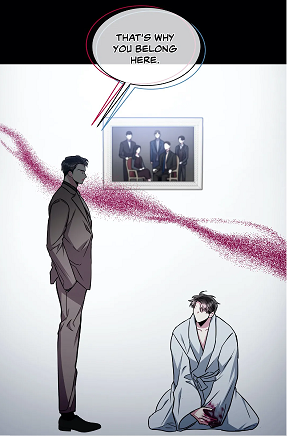 (special episode 2) Thus the main lead came to internalize that sex between “siblings” is normality. Don’t forget that Sungjoon never intervened. He became an silent accomplice. On the other hand, in his subconscious Ha Ideun is well aware that this is not right. This explicates why he felt safer to have sex with strangers than living with his brother. And now you comprehend why I wrote before that the main lead’s wish (chapter 40) was related to the brainwashing. At the same time, we have now the explication why the main character’s bedroom was so white and empty.
 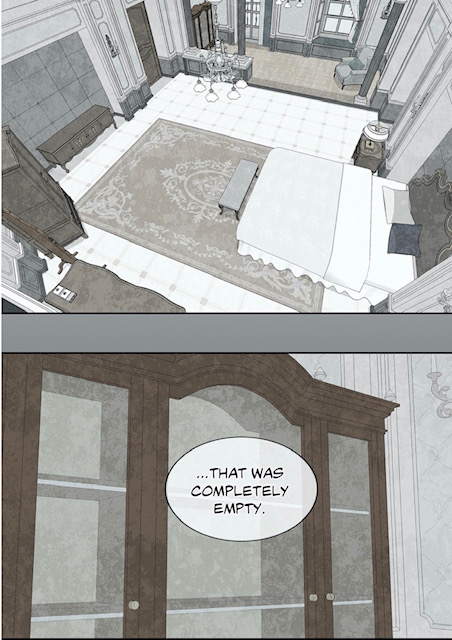 (chapter 08) All traces of violence had to be removed and cleaned.
And this observation led me to the following deduction. Since Ha Ideun feels responsible for Gu Sihwan’s death, he decided to comfort the prosecutor by replacing the brother. Because the main lead had sex with his brother, then in his eyes, it should be the same between Gu Sihwan and the prosecutor.  (chapter 23) This is no coincidence that Ha Ideun asked how his sexual partner felt about their sexual encounters. It was important that Gu Sehuyk would like it.
  (chapter 22) That way, the main lead had the impression that he was indeed capable to replace the brother’s loss. However, like pointed out above, Ha Ideun needed the protagonist on his side too, for he wished to unveil the truth about Heaventower and the father’s illness which is connected to the drug. This is no coincidence that sex with Gu Sehyuk was connected to a confession. The sinner was seeking relief from the “priest”, at the same time he was trying to redeem himself by give warmth to the wounded prosecutor. Simultaneously, he was hoping to obtain his forgiveness. This is important, because by interacting with the prosecutor, he came to discover a new form of family. This is not surprising that at some point, Ha Ideun came to question the nature of the relationship between siblings.
  (chapter 25) Hence I come to the conclusion that by interacting with Gu Sehuyk, the victim adopted slowly a new religion of HOME! Don’t forget that home has different significations: a household, a mansion and a clan. What caught my attention is that Ha Ideun started calling the prosecutor’s house HOME!
 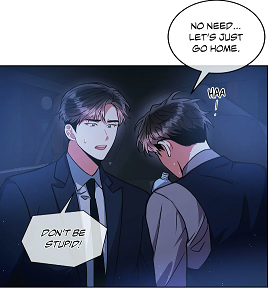 (chapter 26) This truly exposes that he had moved from Sungmin’s fake religion of home and family. (special episode 2) They are only a family in name and as a family in the picture. In reality they don’t live under the same roof. Under this new perspective, it becomes comprehensible why Ha Ideun feared to return to his brother’s side
 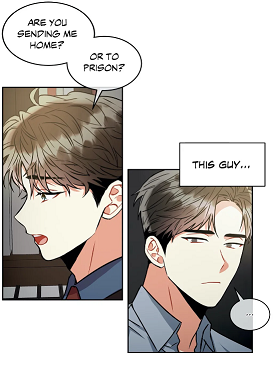 (chapter 29) and at the end of season 2, he chose to reveal his secret to Gu Sehuyk: the sexual and physical abuse. Therefore it is not surprising that at the end, Gu Sehuyk said this to Ha Ideun.
  (chapter 44) He was now considering the “suspect” as his “family”. That’s the reason why I believe that this “sentence guilty” at the end of season 2 is just a subterfuge. This can only serve as an excuse to keep him by his side. At the same time, the prosecutor Gu Sehuyk can not be suspected of favoritism, for he is suspecting a chaebol to have committed a crime. The media already reported the case to the public. Under this new perspective, I came to understand why Ha Ideun never tried to defend himself right from the start. He needed to remain a suspect, so that he could influence the prosecutor in his investigations. That way, he could discover that his brother’s case had not been truly solved…. At the same time, Ha Ideun could be considered as a sinner, for he “seduced” the priest Gu Sehuyk to have sex. So far, the man was dedicated to his work, and as such had no sex life.
To conclude, Ha Ideun is on his way to discover that he has been a victim of sexual abuse all this time, and the Ha family can only be viewed as perverted and ruthless. Through his sexual encounters with the main lead, the “suspect” discovered a new form of home (chapter 36) 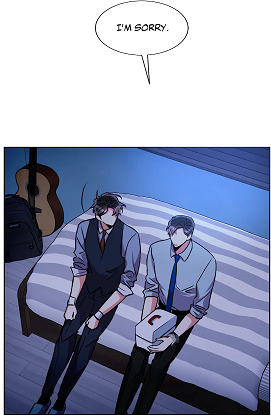 where equity, love and warmth were oozing which stands in opposition to the cold and aseptic “temple” of the Ha. (special episode 2) The hyung was the highest authority and Ha Ideun had to obey blindly. The position of the characters reflects the nature of the relationship between Ha Ideun and his “sexual partners”: hierarchy versus equity.
Feel free to comment. If you have any suggestion for topics or manhwas, feel free to ask. If you enjoyed reading it, retweet it or push the button like. My Reddit-Instagram-Tumblr-Twitter account is: @bebebisous33. Thanks for reading and for the support, particularly, I would like to thank all the new followers and people recommending my blog.
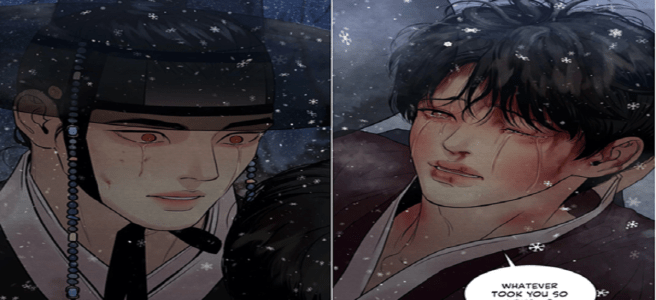
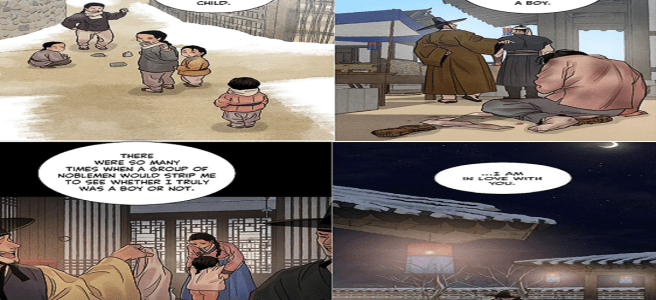


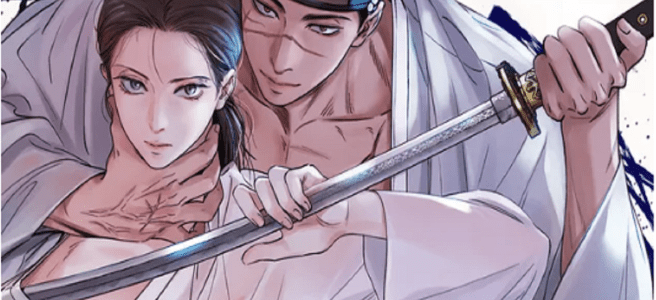
 (chapter 5), stoic
  (chapter 20), pitiful
 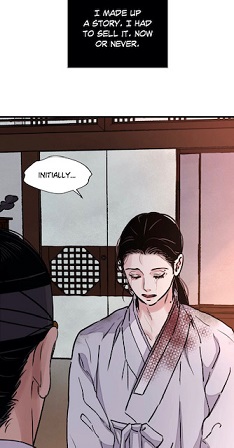 (chapter 20) or enraged and afraid
  (chapter 9). The only times we saw him smiling in the present occurred in front of lord Chang and each time, he was making fun of his sponsor:
 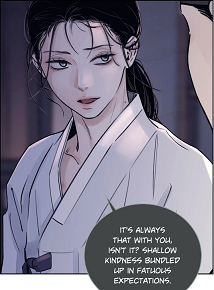 (chapter 5)
  (chapter 16) In both occasions, he was smirking, criticizing lord Chang for his behavior. He wouldn’t mince his words at all. Here, he was brutally honest. This contradicts the previous statement,
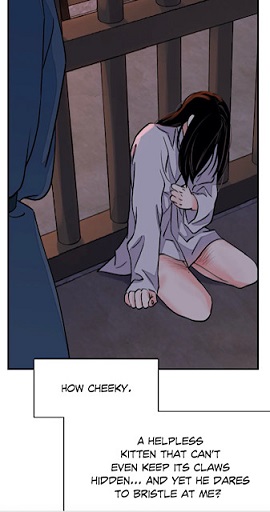 (chapter 13) This means that Kwon Hee-Ryang was well aware of Lee Yeonjo’s true intentions. The young slave was trying to seek revenge. But the governor didn’t mind it at all, because in his eyes, the thin and small domestic doesn’t represent a true danger to him. In the worst case, he can get a new scar and that’s it.
  (chapter 18) On the other hand, Lee Yeonjo would lose his life. To conclude, the dagger hidden behind the smile is not truly referring to the uke in my eyes. We know his intentions and his past. Moreover, he is a poor actor in front of Kwon Hee-Ryang. He is incapable to control his facial expressions,which explains why the official can read him like an open book:
  (chapter 23) He tells him lies, but the governor doesn’t fall for it at all.
 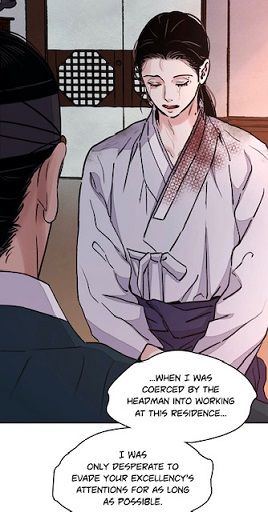 (chapter 22) In verity, the main lead uses the statements from the innocent slave to his own advantage. If he was coerced and raped by Chang Moowon, then Kwon Hee-Ryang will treat him differently. The governor takes each confession from Lee Yeonjo at his words. The result is that the young slave is put in a position where he can choose. He has to prove the veracity of his words and as such his willingness that he selected the main lead in order to improve his living conditions. He has no other choice than to act on his own free will. Thus Kwon Hee-Ryang said this:
  (chapter 20) Yeonjo is forced to turn his lies into a verity. This explicates why the servant admits that he needs to be such a great actor that he has to believe in his own lie.
  (chapter 20) Note that in this image, the young protagonist is not even smiling, he is acting pitiful hoping to get the lord’s sympathy. However, during the intercourse, he is unable to control his true emotions. On the one hand, he is taking pleasure in this, on the other hand, he rejects sodomy due to social norms.
  (chapter 23) Yet, his mouth is betraying him once again.
 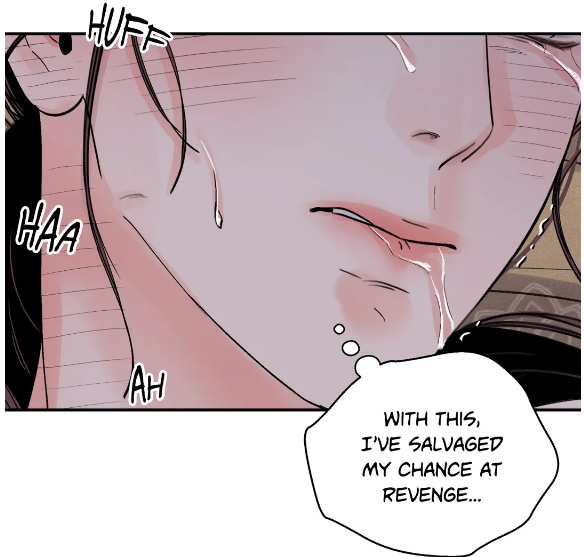 (chapter 23) That’s the reason why Kwong Hee-Ryang interrogated Yeonjo, for he had noticed his dissatisfaction.
  (chapter 23) As a conclusion, so far Lee Yeonjo can not be perceived as the dagger hidden behind a smile! From my perspective, this title is actually hinting to Kwon Hee-Ryang.
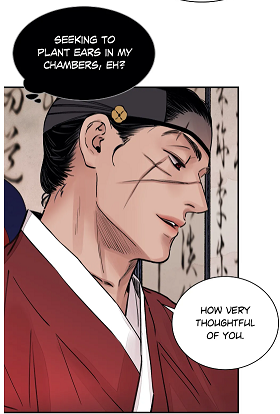 (chapter 3) Here, he was complimenting the headman Choi, though he had already perceived his wrongdoings and motivations. Yet, he was still giving the impression that he was in a good mood. Then
  (chapter 3) when he had organized a huge feast for his new appointment in order to deceive the nobles from the hojok, he continued smiling, though he had been insulted as a host.
 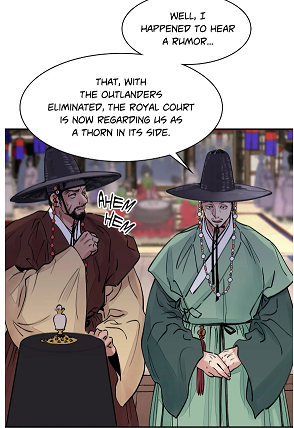 (chapter 3) And note how he replied to the attack to Kwak Gilsoo. He overlooked the insult and reproach, and showed generosity and leniency.
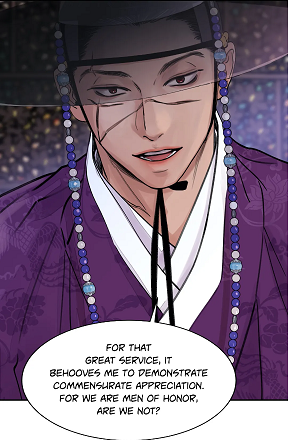 (chapter 3) He acted, as if he only had pure intentions and he was a man of honor. The irony is that he had long selected his target:
 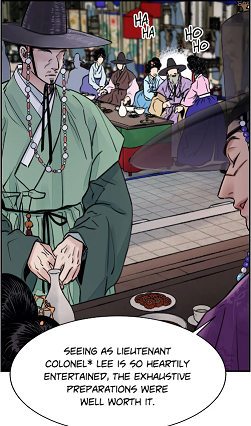 (chapter 3) The lieutenant colonel Lee. This is no coincidence that he was smiling, when he explained to his assistant his next move
  (chapter 6) There was a light smile on his lips, when he offered the poisoned wine to his prey.
  (chapter 6) No one suspected that he would poison the lieutenant colonel Lee, for he had shown no sign of hostility and arrogance in front of the local lords. He had never displayed any mood swings either. In fact, he had acted like a submissive, calm and innocent governor. Once Kwak Gilsoo accused him of murdering the chief of the hojok, Kwon Hee-Ryang returned the situation to his advantage with a smirk on his face.
  (chapter 15) He had been insulted on many occasions, though he had treated the hojok very respectfully.
  (chapter 15) He portrayed himself as a benevolent governor seeking support from the hojok, yet they had somehow rejected his good will. This means that he was turning himself into a victim. He even went so far by asking the crowd if they were declaring war against him and as such the king, leaving the nobles speechless. They got defeated, for if they contradicted his words, they could only be perceived as traitors, for the appearances were against them. The man had organized a huge ceremony for them, had even treated the lieutenant colonel Lee with such a great care. Moreover, he had attended to his funeral. He had always been gentle and smiling, thus he had reasons to get upset. Suddenly the governor’s tone changed which caught the aristocrats by surprise! Hwan Hoon described the main lead like this:
 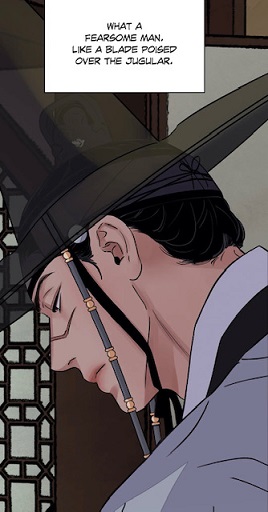 (chapter 15) As you can detect, we have here a reference to the dagger. To conclude, during the funeral, we have this combination between the smile and the dagger.
  (chapter 15) No one, not even Kwak Gilsoo, had even anticipated such an attack. But there exist two other reasons why I think that the dagger hidden behind the smile is hinting on the official, especially after associating him to the blade. On the other hand, I am expecting that Kwang Hee-Ryang’s personality will rub off on Yeonjo. The latter will become a better actor. But let’s return our attention to the governor.
  (chapter 19) The official had connections to the Lees before the downfall of right-state councilor, yet the nature of their relationship is not quite clear: Ex-what? Ex-benefactor, ex-lover or ex-enemy? And according to the assistant, Yeonjo’s father must have wronged the protagonist. In my eyes, the smile from the official should be interpreted under the different light. It is hiding the scars left by the attacks from the past. That’s the reason why he is now holding a dagger in a figurative way. He was not just stabbed by a blade, he was also wounded by words, for he is just the son of a concubine. Thus he learned to use his tongue as a dagger, which we could witness during the funeral.
 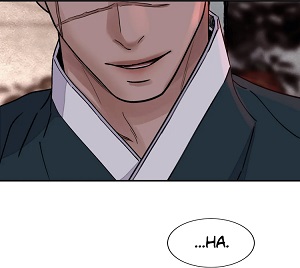 (chapter 20) He could see right through Yeonjo. The readers could sense that he was making fun of him.
 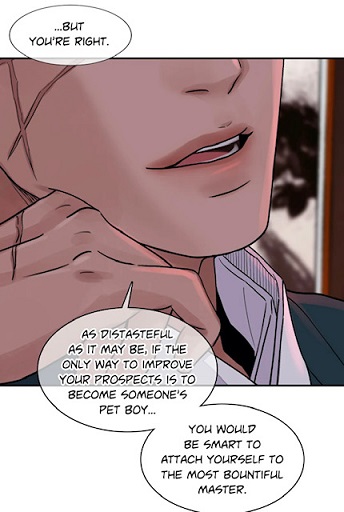 (chapter 20) There is no ambiguity that the governor was here acting, though I perceive his smile as not entirely fake.
  (chapter 20) He was definitely happy that the young man would seek him, as he had already voiced regret before. Nonetheless, the manhwaphiles could sense the official’s manipulations. The kiss on the scar is the best evidence.
 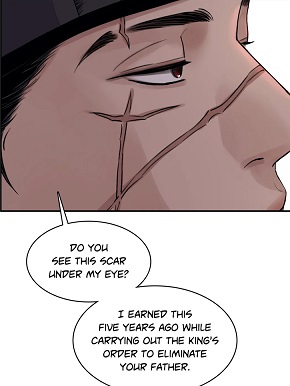 (chapter 20) Here, he was challenging Yeonjo. He should prove his honesty. Like I mentioned above, he was taking the young slave at his words.
 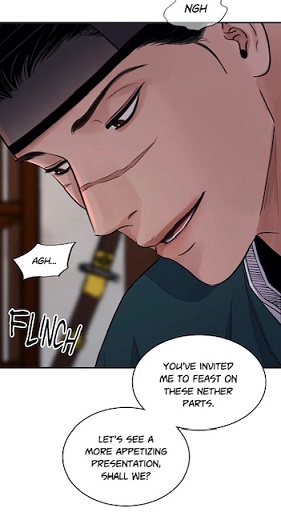 (chapter 21) That way, the young domestic could never make such reproach about him: he had raped him or coerced him. However, this signifies that the main lead is also obliged to keep his words. He has to ensure Lee Yeonjo’s comfort and safety. So while Lee Yeonjo had the impression that he could deceive his counterpart, he never realized that he had been fooled. And to his surprise, Yeonjo discovered his enemy’s true personality: he was a beast! I am quite certain that my avid readers are already aware of the symbolism of blade: the phallus! Lee Yeonjo never expected his “husband” to have such an appetite.
  (chapter 23) He was a monster, a beast! He thought that it would end very soon. However, Kwon Hee-Ryang was far from being satisfied. He wished more.
 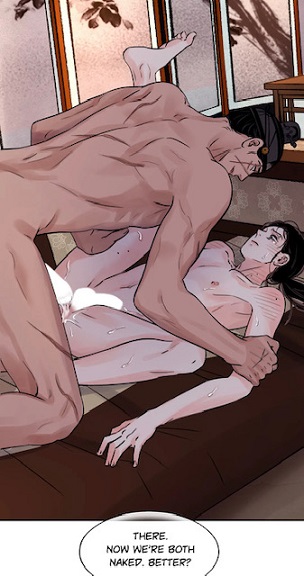 (chapter 23) Striking is that in the last panel, the governor is smiling while holding his “dagger” which caught Yeonjo by surprise. To conclude, the dagger is not just a reference to the weapon or words, but also to sex.😉
  (chapter 1), he even got a scar. In other words, he was willing to risk his life. Thus I deduce that Yeonjo is copying him. He is facing his enemy directly, similar to a man of honor. In chapter 24, he has even a nightmare because of the stabbing, an indication that he rejects the idea of killing the man in his sleep. Besides, the governor in his own vision is exposing to him how pointless such a plan is. Kwon Hee-Ryang is not an easy target. He is very smart and observant. This can only reinforce my interpretation that Lee Yeonjo is not the dagger hidden behind the smile. However, I am expecting a transformation from Lee Yeonjo influenced by his tutor Kwon Hee-Ryang and his future experiences. Don’t forget that by becoming his lover, the slave can become the target of the hojok. Kwak Gilsoo is well aware of the governor’s sexual preferences
  (chapter 4) and once he hears how headman Choi got evicted from the court because of Yeonjo, the aristocrat will definitely blame the domestic for his “misery”. The aristocrat with the green hanbok envisioned that he had discovered the governor’s secret and as such vulnerability. But the official has never hidden his sexual orientation. One might accuse the governor of treason, because he has a relationship with the son of a traitor, yet this relationship could be judged differently. Lee Yeonjo could be judged as ruthless and immoral, he is sleeping with the murderer of his own family. Besides, this could be seen as a humiliation… the son has to serve the governor as his night servant. That’s the reason why Kwon Hee-Ryang said this to his assistant. It was not kindly… but indignant.
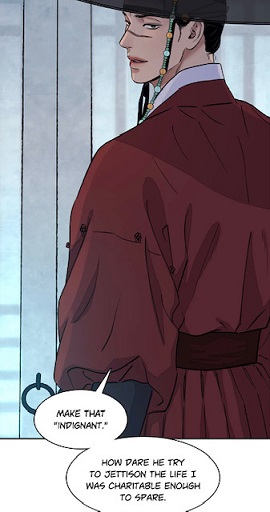 (chapter 19)
 (chapter 4) Then he tried to discern the uke’s feelings in this situation and explain his reaction.
  (chapter 23) or reacted, when he saw Yeonjo’s distance.
 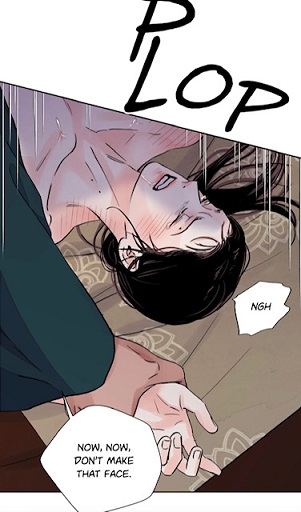 (chapter 23) Why is he so fascinated by his face? It is because it stands in opposition to his own! Note that the lord enjoys the uke’s tears. Secondly, the servant’s facial expressions are oozing genuineness. The protagonist can not control his emotions and thoughts, while Kwon Hee-Ryang is behaving the opposite. He aims to remain calm the whole time. Thus he often smiles. It is his mask. The latter is always hiding his true thoughts and emotions, while he continues smiling. This means that he can never show his pleasure or his pain to others, for they would reveal his weaknesses. Imagine that though he had been wounded that night, he acted, as if nothing had happened.
 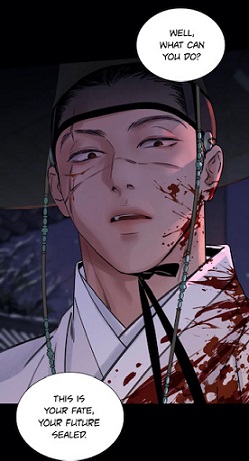 (chapter 1) Yet, in reality he didn’t have the heart to erase the whole household of the Lees.
 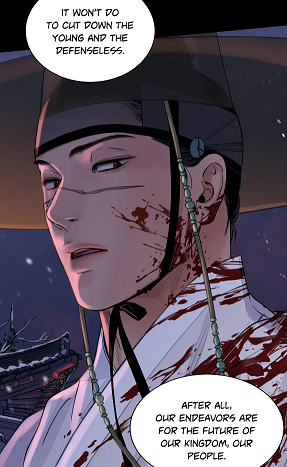 (chapter 9) To sum up, Lee Yeonjo can expression emotions that the official has long repressed. Even his orgasms are restrained
 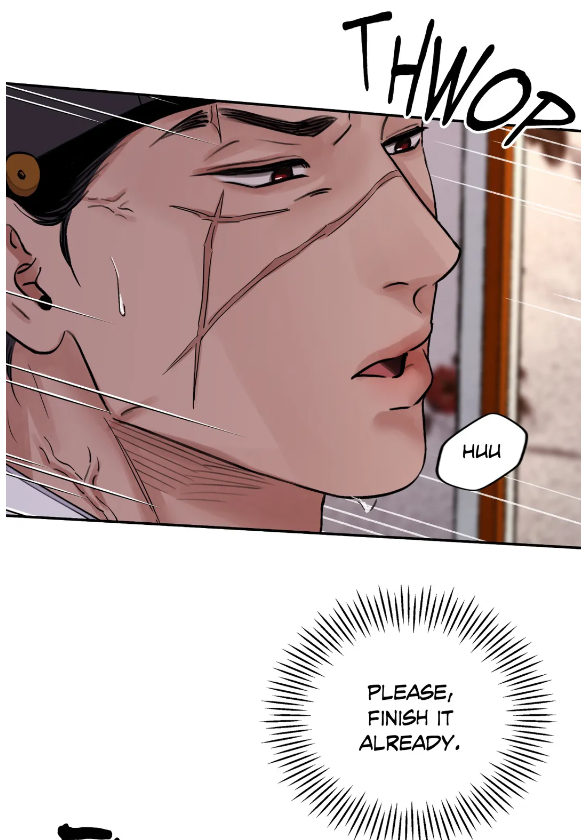 (chapter 23), his mouth is barely letting escape a sound
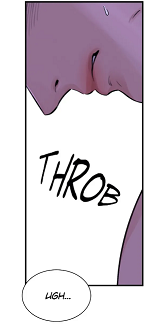 (chapter 4) If I had to associate the official to two notions, I would say, he symbolizes work and control! And the smile contradicts Lee Yeonjo’s tears and moaning. This is no coincidence that he asked his lover to be called “my lord”
 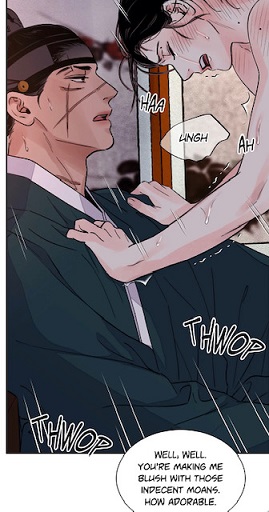 (chapter 23) In this picture, the aristocrat mentions his blushing, but if the readers look at his facial expression, they are not able to detect his reddening. How do we explain this? It is because the lord had long internalized to control his facial expressions. However deep down, his heart was moved by the uke’s whispers. Many readers could sense his growing attachment to Lee Yeonjo. First, he stated that the protagonist would become his plaything, yet in chapter 22, he called himself the main character’s husband.
 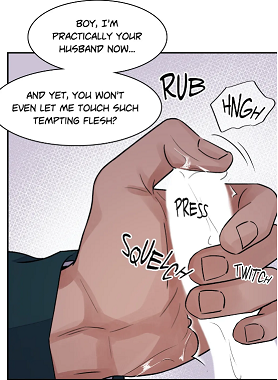 (chapter 22) Then in chapter 24, Kwon Hee-Ryang was even willing to share his bed with Lee Yeonjo. This reflects the lord’s biggest desire. He wishes to keep the young man by his side. Because the slave is showing facial expressions that Kwon Hee-Ryang can not do, it is not astonishing why the governor is under Lee Yeonjo’s spell. Under this new approach, the manhwaworms can grasp why I perceive the governor as the dagger hidden behind the smile. He is a dangerous but mysterious man, and the author is slowly revealing his thoughts and also his past.
 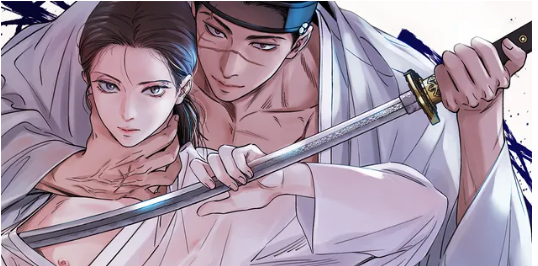 The lord is smiling while holding the sword in front of Lee Yeonjo indicating that the main lead will do anything to keep the uke by his side. Once again, we have the combination of the smile and the blade. Yet, this time, it is not hidden. Why? It is because their relationship is not a secret. This is the topic in the court.
 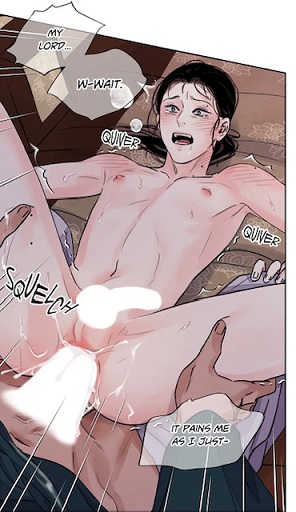 (chapter 23)
 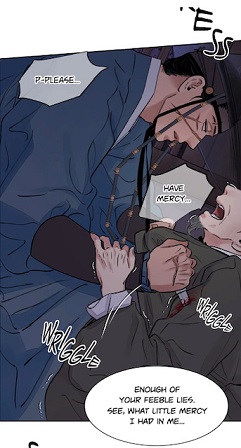 (chapter 11) So who is the next? However, we shouldn’t forget the administrator lord Chang who felt that he had been deceived by the governor.
  (chapter 17) Thus I come to the conclusion that Kwon Hee-Ryang’s plan won’t work so smoothly because of lord Chang’s intervention.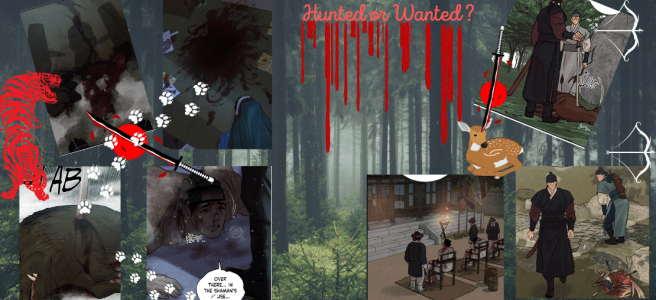


 (Chapter 73)
 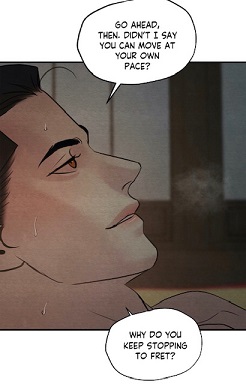 (chapter 73) This is important, because the manhwalovers can sense a connection between sex and hunt. This means that the love session in the bedchamber from season 2 should be perceived as a new version of a hunt. And this link between sex and hunting was also present, when Yoon Seungho and Min were in the woods in chapter 41:
 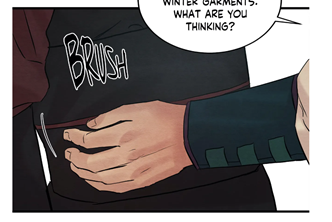 (chapter 41) In this scene, it looked like Black Heart was trying to make a move on Yoon Seungho, while in truth Min was more obsessed with the painter.
  (Chapter 41) The expression „spot“ belongs also to the semantic field of chase.
 (Chapter 11) A murder disguised as an accident, the scholar would have been eaten by a tiger. What caught my attention is that No-Name requested from Deok-Jae that he should make the painter leave the mansion.
  o (chapter 51) It was, as if the rabbit had been chased away from its burrow or the deer had been forced to leave the woods. That way, he would become an easy target for the hunter and butcher Mumyeong. To conclude, we had two hunts in season 2 as well.
  (Chapter 99) First, he was rushing, but the moment he received the crucial tip from his childhood friend, he approached the den silently, just like a tiger. That‘s the reason why neither Black Heart nor lord Jang nor lord Park detected his presence.
  (Chapter 101)
 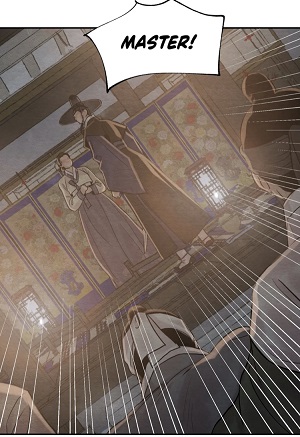 (chapter 99) and Lee Jihwa
 (chapter 100), hence he had not the time to question the veracity of their claims or sense their manipulations. On the other hand, he could detect the difference between the blood in front of the scholar’s house and inside the building.
 (Chapter 100). He was following his instincts. Tigers cautiously stalk their target from the rear in attempt to get as close as possible to their unsuspecting prey.
  (chapter 102)
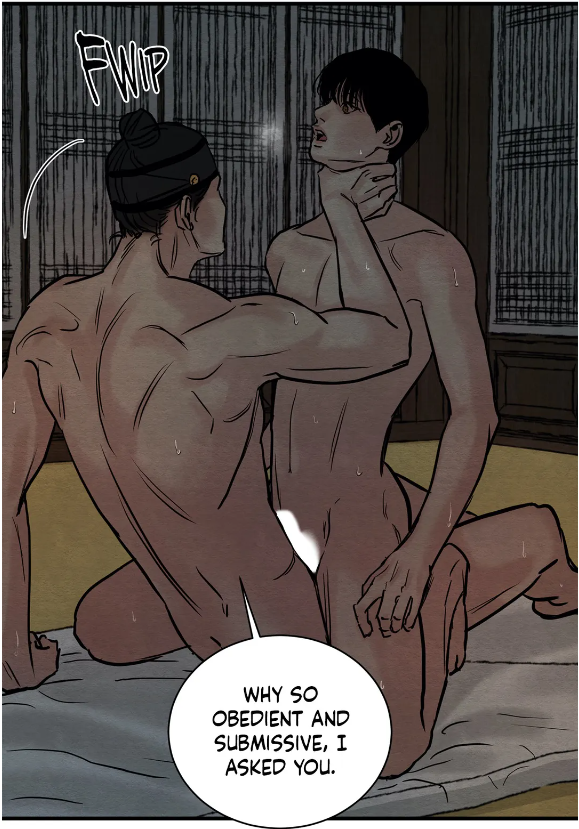 (chapter 48) or the chin
  (chapter 83)
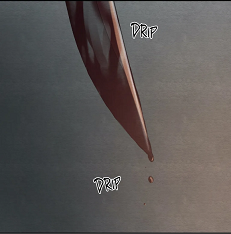
 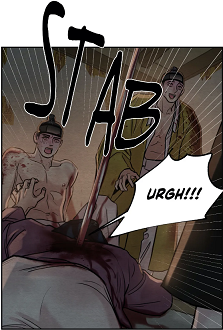 (chapter 102) Even in this panel, the sword resembles a lot to the tiger‘s fang:
  (chapter 102) Another important element is that this predator usually targets large-bodied preys like boar, deer, humans and not rabbit or pheasant. Under this new light, it becomes comprehensible why the main lead went after a boar or the aristocrats in season 3.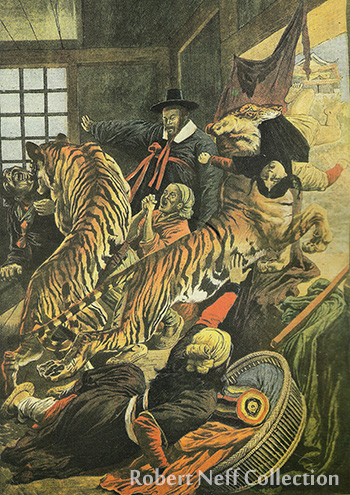
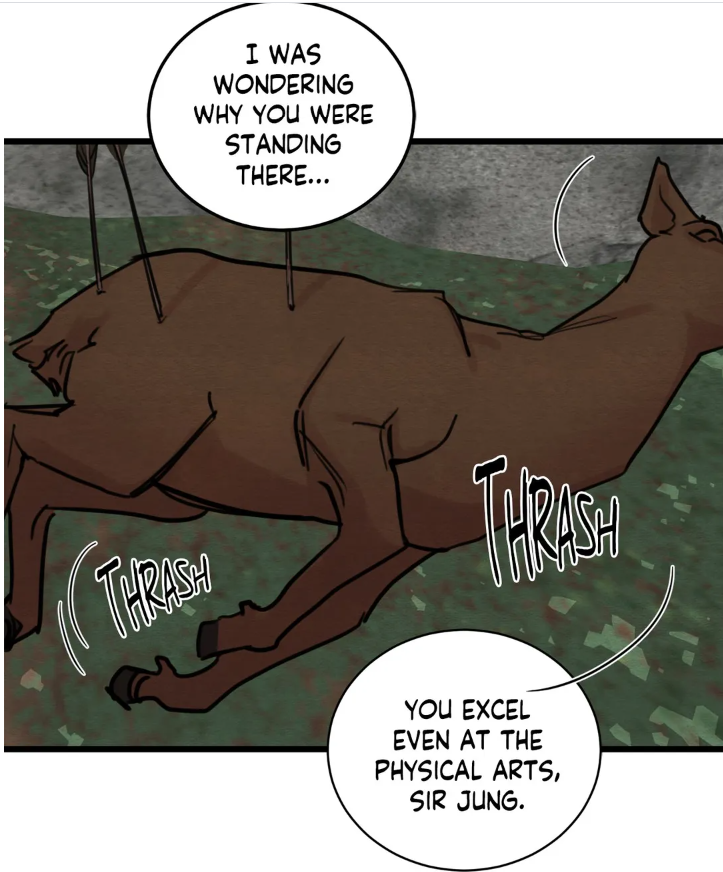 (chapter 22)
 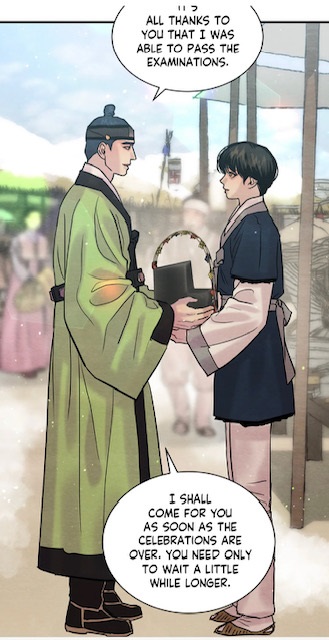 (chapter 111) than the killer in the woods
  (chapter 103), it looks like the learned sir chose to drop his own principle. And if this theory is true, then I come to the conclusion that the learned sir chose to copy the protagonist thinking that he could get away with it.
 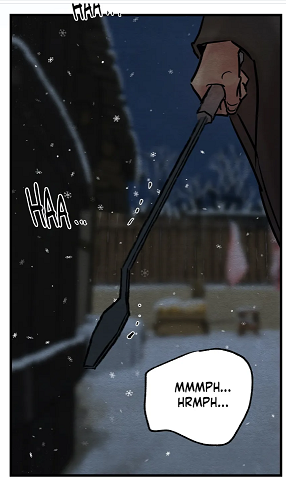 (chapter 60) The latter belonged to the lowest ranks of Joseon’s society, because killing an animal was a disgraceful job. On the other hand, the butcher No-Name and the tiger Yoon Seungho have something in common: killing is viewed as a necessity. It is either to survive or to end the animal’s suffering or to punish the criminals.
 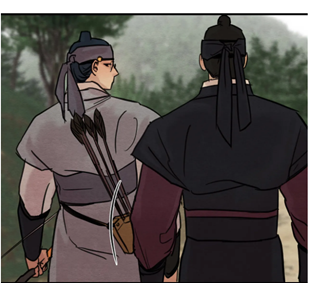 (Chapter 22). And when Black Heart suggested the artist’s assassination, he always kept laughing, making it sound like a game without any terrible consequence.
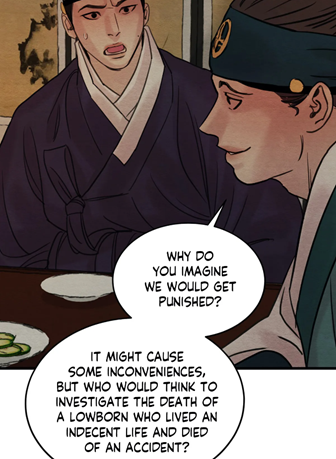 (Chapter 43) Lee Jihwa would remove a witch, and not a human.
  (chapter 43) Only Nameless painted it in all its cruelty and brutality. Not only the person would lose his life, but he would lose his identity.
 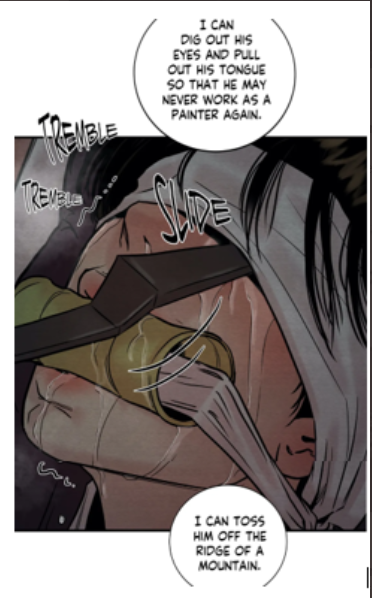 (Chapter 60) By removing his eyes and tongue, the victim’s face would change making him impossible to be recognized. And note that his scarf and headgear had been removed as well. It was not a game, but a deadly matter. Why would he do such a thing? The reason is simple. If no one could identify the victim, there would be no investigation. Astonishing is that hunt is a synonym for investigation and prosecution. Hence I am deducing that in season 4, the investigation should be perceived a new version of the hunt, a new version of this scene.
  (chapter 37) Because of Jung In-Hun and Min, someone will be put on the wanted list. On the other side, Mumyeong’s other job is to entertain people. To conclude, there is a strong connection between killing and entertaining which the main lead destroyed during that night. He reminded the nobles that hunting means taking away a life.
  (chapter 83) Thus I am deducing that this chase had been suggested to the main lead in order to release his tension and as such in order to divert his attention from the painter. Naturally, Kim was behind this idea faking his concern for his master. The hunt was supposed to procure pleasure to Yoon Seungho, but it couldn’t, because he was afraid of losing the painter. This explains why he selected the boar as his prey. He was fearless in front of that dangerous animal, for it meant nothing to him. He didn’t mind losing his life… revealing his suicidal disposition which resurfaced later, when the father mentioned the authorities.
  (chapter 86)
  (chapter 86) But the moment the servant reminded him to pay more attention to himself
 (chapter 83), he abandoned the boar immediately. This shows that all this time, Baek Na-Kyum had been on his mind. Therefore it is no coincidence that he rushed home on his horse and looked for Baek Na-Kyum.
 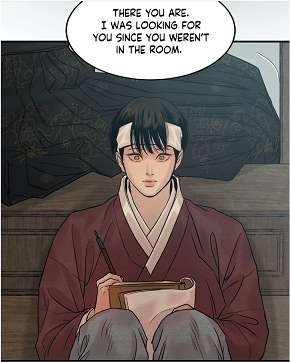 (Chapter 83) He couldn’t forget that he had scared and wounded the painter in his dissociative state. This shows that the chase had not served its true purpose: entertainment. In reality, the domestics had been the ones suffering the most, for them it was definitely more work
 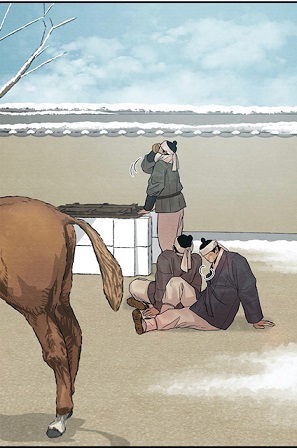 (Chapter 84) compared to the past.
 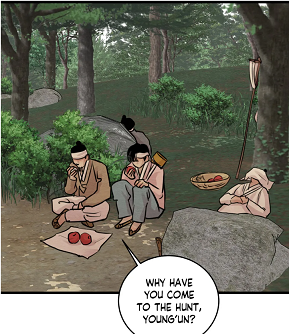 (chapter 23)
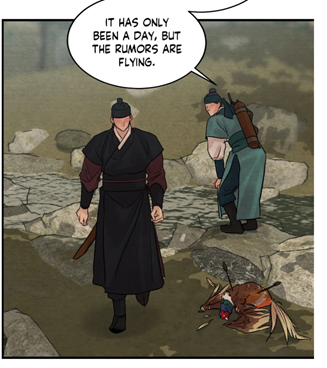 (chapter 41) First, I had feared that he might lose his life, then later I had realized that this death was purely symbolic. He would lose his title and family, therefore he would become a commoner. But I had also expressed my doubts that this scene could be a reference to Black Heart, as from chapter 52 on, I had sensed that he would die. Moreover, observe that during that hunt, Min had wounded the animal himself. This mirrors his own death. He became a victim of his own trick. But if the pheasant is representing two characters, The Joker and Lee Jihwa, then this means that the deer in chapter 22
  (chapter 22) embodies not only the painter, but also someone else. While in the past, I used to believe that it was Kim, now I come to the deduction that it was Jung In-Hun. Note that in this scene, the main lead left the prey and the scholar behind. Both got defeated. This means that by targeting Yoon Seungho, the scholar is not realizing that he is actually endangering his own life. Besides, by hunting the deer, the learned sir offered this prey to the tiger Yoon Seungho, and this was the painter’s case. Furthermore, the deer was carried back home on a horse
 (chapter 24) reflecting the painter’s fate.
 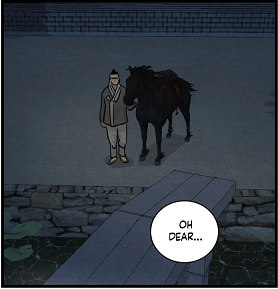 (chapter 25) Who brought the horse to the pavilion? Kim and Deok-Jae! And when the learned sir departed from the mansion, he was followed by the vicious servant and the horse.
 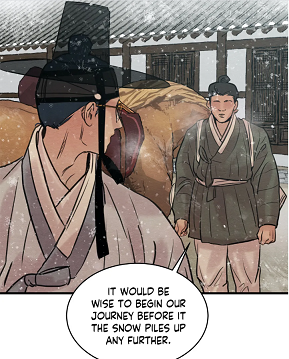 (chapter 44) As you can see, Jung In-Hun is connected to the horse. This observation was even confirmed in season 4.
  (Chapter 111) Thanks to episode 111, I detected another progression. First, Jung In-Hun was walking behind the horse
 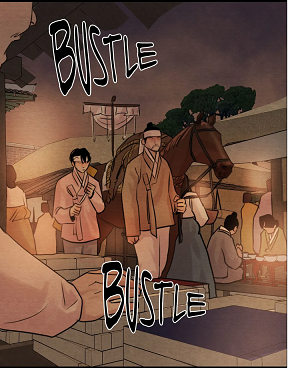 (chapter 24) Thus he could take the artist away unnoticed. Then in episode 44, the learned sir is shown standing in front of the horse. Finally, the manhwaphiles can see the man riding. This reflects his social ascension.
 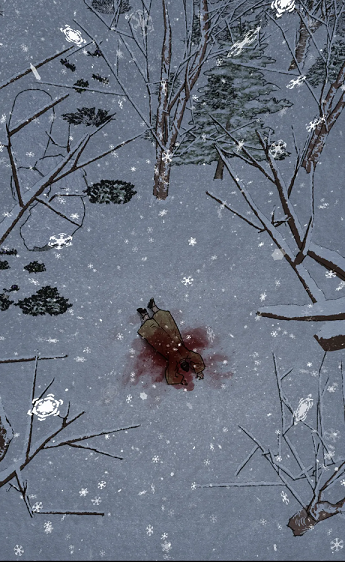 (Chapter 111) Like mentioned above, the shoes could be perceived as the evidence for Jung In-Hun’s crime.
  (chapter 83) The boar symbolizes not only the nobles like Jihwa, Min, Jang or Park, but also the elders Kim, Lee, Yoon Chang-Hyeon, and as such the king. And if you consider the boar as the personification of the pedophile, the ruler, this means that the moment Yoon Seungho hunted down the nobles, he defeated the ruler in a figurative way. I would even say that the nobles like Min or lord Haseon are pushing the main lead to “hunt” the monarch, for the shadows are standing behind the main lead. Due to their tricks, the “schemers” are realizing that they are contributing to give justice to the protagonists. Thus I was wondering if in the end, the main lead would hunt down a human in season 4, Kim or the king. Don’t forget the main lead’s words to the painter:
  (Chapter 103) However, since the manhunt appeared in the first episode from season 4, I deduce that we will have many manhunts in the final season, like here
 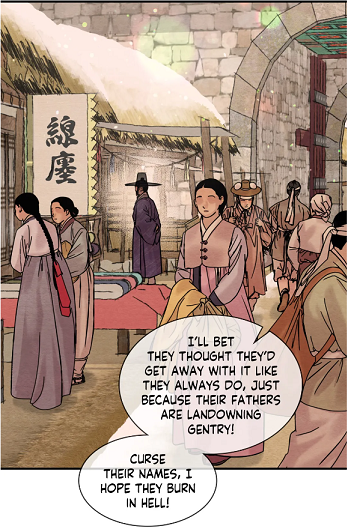 (Chapter 106)
  (chapter 106)
 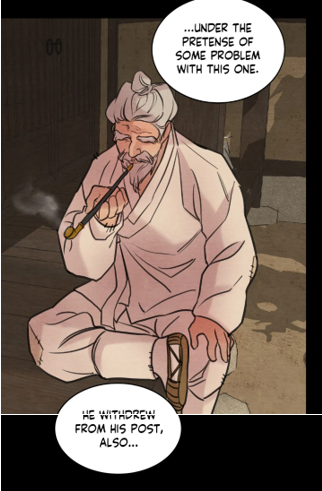 (chapter 37)
 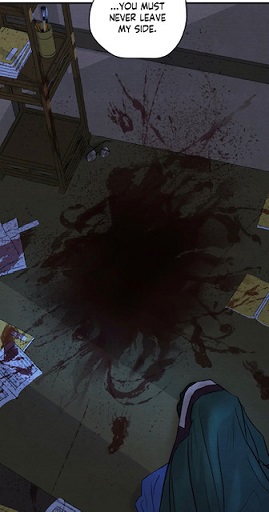 (Chapter 88) On the other hand, the foot print and the glasses were added to give the impression that the learned sir had been murdered. However, after adding blood in the fake crime scene and removing the learned sir’s possessions,
 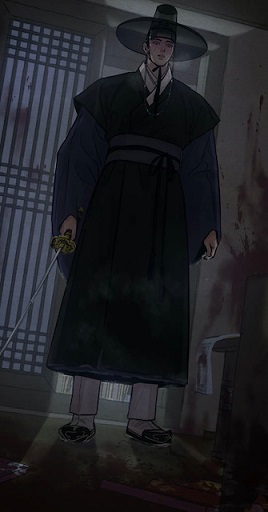 (chapter 100), the place could be interpreted differently. The inhabitant had been attacked by a tiger during the night.
  (chapter 45) the cobweb behind Deok-Jae. Imagine that this scene took place in the middle of winter, thus the spider’s web got covered by frost. However, this indicates that this room had been abandoned for quite some time. But it is close to the gate. So it should have been the place where the doorkeeper is living. Secondly, I had demonstrated that the shrine had been neglected, for the altar had been removed.
 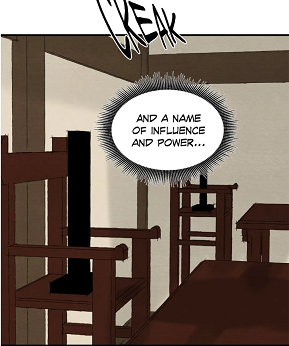 (chapter 18) Because of the presence of the cobweb, I started wondering why the author drew it behind Deok-Jae. In my eyes, it is because he was part of the spider’s web.
  (chapter 18) That’s the reason why Yoon Seungho was not dressed properly.
  (chapter 83) If he lived in a shed and had such a simple attire, no one would ever think that he was a noble in the first place. I believe that neither the patriarch nor the ruler had an interest to reveal his true identity. However, the protagonist had to be monitored, for he could try to escape at any moment. That’s the reason why the butler was still tasked to “take care of him”. But by becoming a male night servant for the king, this meant that the other nobles could claim him as well. He had no right. However, since the main lead was a butterfly, he couldn’t get tamed. Hence violence, manipulations and drugs were used to tame the young master. And remember how the spider kills its target: he empties it of its blood. In other word, he sucks all his energy. Therefore it is not surprising that at the end the main lead had become a wreck, and had no light in his eyes.
 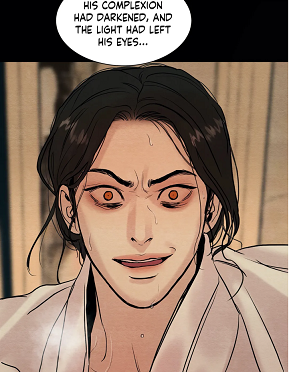 (chapter 57) Naturally, the purge played a huge role in the lord’s suffering reinforcing the huge rift between the pedophile and Yoon Seungho.
 (chapter 57)
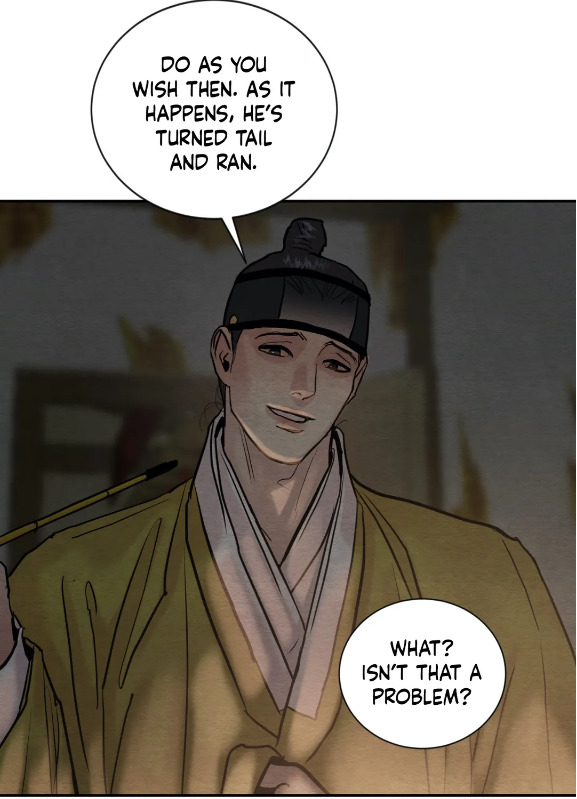 (chapter 101). It was not Min’s task to carry a friend… he was just a fellow puppet brought to the shaman’s house in order to entertain Black Heart. This truly exposes that Black Heart never saw in the aristocrats humans. As the red-haired master, he had been considered as the hunting dog, he had fulfilled his function. That’s why he was abandoned. He had helped Min to corner the painter and brought the kisaeng to the scholar’s home. Moreover, a hunting dog disobeying his master will be killed. Hence it is not surprising that the wild dogs ended up all dead. They were totally defenseless in front of a huge tiger. This feline is difficult to tame.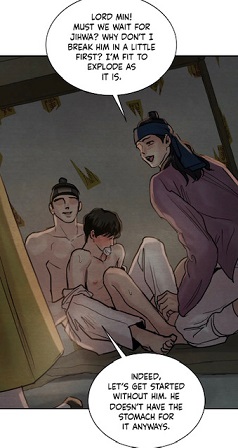
 (chapter 101) They saw in the sexual violence a new form of hunting. I would even go so far to say that they desired to turn the artist into their pet fulfilling all their desires:
  (chapter 101) Thus it is not surprising that Yoon Seungho was compared to an animal by his own father in the past.
 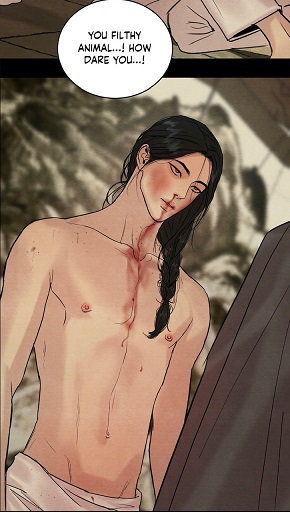 (chapter 83) The pedophile also desired to tame the young master, the beautiful and gentle butterfly. Thus he got brainwashed. He could never refuse anyone, he had to entertain the guests. And now you comprehend why Min said this to the painter.
  (chapter 101) As a punishment, he was given to lord Jang and his friend. Since Min had captured the artist, he viewed himself as his owner who would give order to his pet. Yet, a deer is a shy, but wild animal, difficult to control making it difficult to be tamed.
  (chapter 99) But this was impossible, for Black Heart never treated Baek Na-Kyum as a man. Hence I come to the conclusion that by meeting the painter, Yoon Seungho rediscovered his true nature: he was a free spirit, a tiger! And guess what… In Joseon, the tiger was perceived as a good talisman to chase away the evil spirit!!
 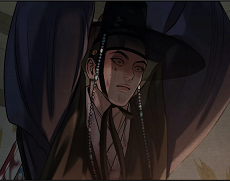 (chapter 102) Hence the dogs became the preys of the huge tiger. On the other hand, I am wondering if in the next season, the painter will paint a tiger and show it to his lover. So far, we couldn’t see the pictures from his childhood.
 Yoon Seungho has the impression that he could get hunted down, for he killed the nobles. The tiger is now the target of “humans”, and Jung In-Hun will play a crucial role in his prosecution
 (Chapter 10)
  Bebebisous33s' analyses in K-Dramaland and Manhwas