

Please support the authors by reading the Manhwas on the official websites. This is where you can read the manhwa: Jinx But be aware that the Manhwa is a mature Yaoi, which means, it is about homosexuality with explicit scenes. Here is the link of the table of contents about Jinx. Here is the link where you can find the table of contents of analyzed Manhwas. Here are the links, if you are interested in the first work from Mingwa, BJ Alex, and the previous essay about Jinx Click : Between Fleeting illusions and Enduring Realities. This is the reference of the book I quoted from https://www.seuil.com/ouvrage/haikus-le-bruit-de-l-eau-collectif/9782021572148
It would be great if you could make some donations/sponsoring: Ko-fi.com/bebebisous33 That way, you can support me with “coffee” so that I have the energy to keep examining manhwas. Besides, I need to cover up the expenses for this blog.
The countdown for season 2 is running. The author and Lezhin announced that chapter 54 will be released on November 22nd. 🎉 Almost exactly one year after the start of the first season.
A great thank you to @Rin_de_eegana who provided me with the original Haikus. Hence the English translation was changed.
Initially, I desired to release this essay  , but as always I didn’t anticipate the effort and energy involved in the composition. Thus I decided to publish the essay “Sound Of Water” first, as it is much easier to write (less literature to read). The trigger for this essay are Haikus which I discovered in a recently published French Book entitled “Le bruit de l’eau” (Sound of water).
  And now, you know the origin for this essay. As you can see, the collection of Haikus is focusing on the topic “Water”. Since I only possess the French version of Haikus, I could only give you my own English translation. Fortunately, my friend @Rin_de_eegana was able to find the original version, Japanese. Therefore in the second version, I am giving a second English translation whích gave me new insight once again. Anyway, the thing is that as soon as I read certain poems, it made me think of Jinx and the characters. This shows my obsession for this terrific Manhwa.
1. Haikus and nature
On the other hand, you might be wondering how the Korean Manhwa is connected to Haikus and to water as well. In order to answer to this question, it is first necessary to present the characteristics of a Haiku.
1. 1. Characteristics of a Haiku:
- Syllable Structure: Traditionally, a haiku consists of three lines following a 5-7-5 syllable pattern. This means the first line has 5 syllables, the second line 7, and the third line 5. However, in modern haiku, especially in non-Japanese contexts, this structure can be more flexible.
- Seasonal Reference (Kigo): Classic haikus often include a reference to nature or a specific season, known as a kigo. This ties the poem to the natural world and evokes a sense of time or environment.
- Juxtaposition (Kireji): There is typically a contrast or shift in perspective, often marked by a cutting word (kireji) in Japanese. This brings two images or ideas into sharp focus, inviting the reader to connect them in a meaningful way.
- Present Moment (Awareness): Haikus capture a single moment in time with brevity and clarity. The poet seeks to express the essence of an experience, often related to nature, through minimalistic yet vivid language.
- Subjectivity and Simplicity: The poem is usually personal, expressing the poet’s direct experience or observation in a simple, unsentimental manner.
If you read all my previous analyses about Jinx, you are already aware that in this story, Mingwa has been portraying the city as a place full of corruption and estrangement. Yet the main leads are slowly reconnecting to their own true nature thanks to each other. Furthermore, the Webtoonist is stating through Jinx that fame or wealth are no real source of happiness, rather love and fulfilment. Thus the champion is suffering from depression, insomnia and anger issues. Finally, through her characters, it becomes clear that they need to learn how to “enjoy the moment”. That’s how they will come to love life and stop living like ghosts. That’s how they will learn how to live a good life. And that’s exactly what a Haiku is conveying too. The latter is often linked to the concept of “enlightenment” and “carpe diem” (seizing the day), though not always in an overt way. Many haikus emphasize the fleeting nature of life or the ephemeral beauty of a single moment—key elements of the carpe diem philosophy. The seasonal references, especially to autumn or falling leaves, often remind readers of life’s transience (ephemerality) encouraging an appreciation of the present moment before it passes. For example, a haiku may evoke the beauty of cherry blossoms in spring (a symbol of both renewal and impermanence) or describe the changing of seasons to highlight the inevitability of change and decay, which can be interpreted as a quiet call to embrace life while we can.
In essence, haikus share with carpe diem the philosophy of mindfulness—appreciating the now because it is fleeting. And now, you comprehend why the French book about Haikus is containing poems about water. Since the illustration is showing the sea, , anyone will think immediately of the ocean. But where is the sea in Jinx?
1. 2. Blue and Boundary
It was implied in chapter 14/15 with the doctor’s trip to Busan, a city which is situated on the Southern coast.  (chapter 14) Yet, the main lead never got the chance to see it. Then the ocean is only mentioned directly at the end of the first season. The halmeoni was expressing her wish to return to the West Coast
 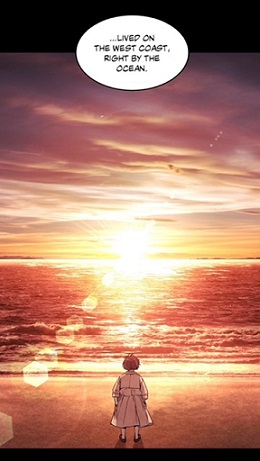 (chapter 53) where she hoped to see a beautiful ocean one more time.
  (chapter 53) When she was 10 years old, she was moved by how the ocean changed colors with the beautiful sunset. It was no longer blue or grey, but yellow, red, pink, orange and purple. This wonderful but brief moment left such a deep impression on her that she could never forget it.
  (chapter 53) She never came to regret her walk to the beach, because this souvenir also became her source of strength. This memory created in her the desire to see it again, thus she kept postcards with views of the ocean.
 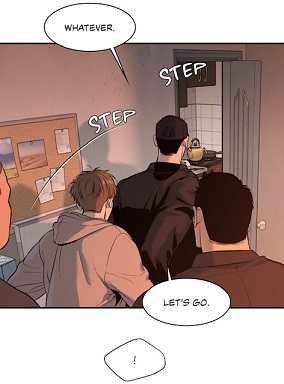 (chapter 17)
In addition, I believe that the mesmerizing view also made her forget everything: her worries or her family. (chapter 53) Hence she remained immobile and silent in front of the amazing view. We could say, she felt totally engulfed by the ocean in fire, forgetting herself in the brilliant glow of the sunset as if she were becoming one with the view. This interpretation reinforces my perception about the intention behind the halmeoni’s wish: escapism from reality. She believes that with such a view, she will forget her terminal disease and even her pain, as though it will help her to live longer.
But there is another reason why she was so affected which I discovered with this Haiku written by Santoka:

| French | English | Japanese |
| “Me voilà là où le bleu de la mer est sans limite.” | “Here I am, where the blue of the sea knows no bounds.” New translation: I am here now, in the boundless blue of the sea.” | われ今ここに 海の青さのかぎりなし |
The Haiku evokes a profound sense of openness and freedom, often reflecting a Zen-inspired approach to nature and self-awareness. Since the ocean embodies infinity and timelessness, the observer “Here I am” is remembering through the beautiful view of the ocean of his own limit: mortality. At the same time, the contrast encourages the “Here I am “ not only to meditate. It also motivates the person to grow, to push away his own limits. Why? It is because the boundless blue sea symbolizes both the vastness of nature and the limitless potential of the self, inviting reflection on life’s expansive and uncontainable aspects. The sea here represents a place beyond the limits of ordinary concerns, not as a void but as openness and infinite potential. This limitless “blue” suggests an escape from the mundane, a place for self-discovery, and the eternal flow of time, reminiscent of the Buddhist idea of impermanence. As a conclusion, this haiku captures a moment of complete presence within the vastness of nature. The poet stands before the limitless blue of the sea, feeling both awe and a sense of unity with its expansiveness. The phrase “I am here now” grounds the poet in the present (ephemerality), whereas “boundless blue” emphasizes the sea’s infinite reach, a powerful symbol for freedom, mystery, or eternity. The haiku suggests an experience of feeling both small and deeply connected within the immense, unending beauty of the natural world.
As you can sense, this poem captures the “now,” encouraging readers to embrace a moment as fleeting as the sea’s endless horizon, thus aligning with “carpe diem.” Shin Okja must have felt free, peaceful and powerful in that moment. As you can imagine, as soon as I saw this picture with the poem, I couldn’t help myself thinking about Kim Dan. In front of the sea, the PT should find his true self: no boundary… like the sea! In front of the sea, he could get more self-awareness and realize that he is also strong. In season 1, people could sense his low self-esteem. So by being next to nature (sea, trees), he could regain his self-confidence. In other words, I believe that his journey to the sea will affect him deeply too, though he has no expectation at all.
Is it a coincidence that his silhouette  (chapter 53) is glowing blue? I don’t think so. Let’s not forget that blue symbolizes wood for Koreans. The sea (water) and a tree
 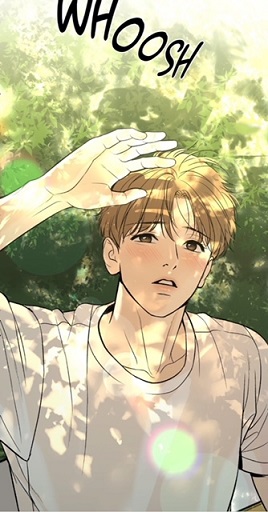 (chapter 41) are the doctor’s true elements. Under this new light, it becomes comprehensible why under the tree, he came to acknowledge his feelings for the athlete. In addition, if Kim Dan gets close to water, this signifies that he will get replenished and truly nourished. And notice that during season 1, he never ate properly.
But this doesn’t end here. The poem also reminded me of Joo Jaekyung: 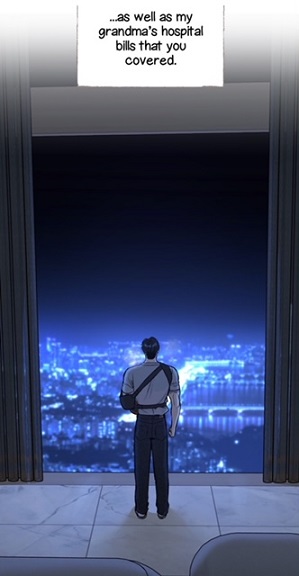 (chapter 53) He is standing in front of the blue city. But he doesn’t feel free and powerful. Why? There is a window in front of him. The window is showing him his own boundaries. His penthouse is like a cage, and he is not truly dominating the city. In reality, he is isolated. To conclude, the panel stands in opposition to the Japanese poem and the grandmother’s vision: alienation, regret and powerlessness. So we should write the haiku like this, from the champion’s perspective:
“Here I am,
where the blue of the city
knows my limits.”
In Seoul, he is now portrayed as a thug and loser. Since the image contradicts the original haiku from Santoka, this means that the moment in front of the window embodies not self-awareness, but the opposite: obliviousness, ignorance, or even self-deception. These terms imply a lack of insight into his own thoughts, feelings, or actions, which led him misunderstand or misjudge Kim Dan. Similarly, the opposite of peace of mind can be described as anxiety, distress, or turmoil, which are states marked by worry, unease, or mental unrest, often resulting from unresolved conflicts or lack of clarity. Thus the fighter can not express his emotions and thoughts properly. 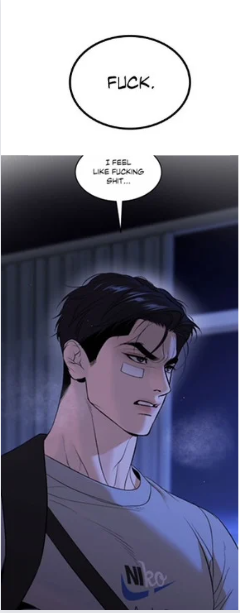 (chapter 53) Together, these opposites suggest a state of inner turmoil or confusion, where a person lacks clarity about both themselves and the world around them, which can inhibit personal growth and well-being. And this is exactly how the main lead feels in the final panel of season 1.
Thus it dawned on me that both characters could make a beautiful experience in front of the ocean in fire. How so? I realized that the grandmother never shared this experience with her grandson before. She kept this beautiful moment as a secret (chapter 53) which is the exact opposite to Santoka. By writing the haiku, the author desired to share his thoughts and emotions, and encourage his readers to meditate and to feel this freedom and peacefulness. Thus I am expecting that both characters will go to the ocean together and that’s how the latter will get closer to each other. Their intimacy will improve not just through clear and direct communication, but also through shared experiences. However, we shouldn’t imagine that they will make the exact same experience than Shin Okja, as each person is different. Furthermore, they could go there to a divergent season or time, hence the nature of the ocean could be different:
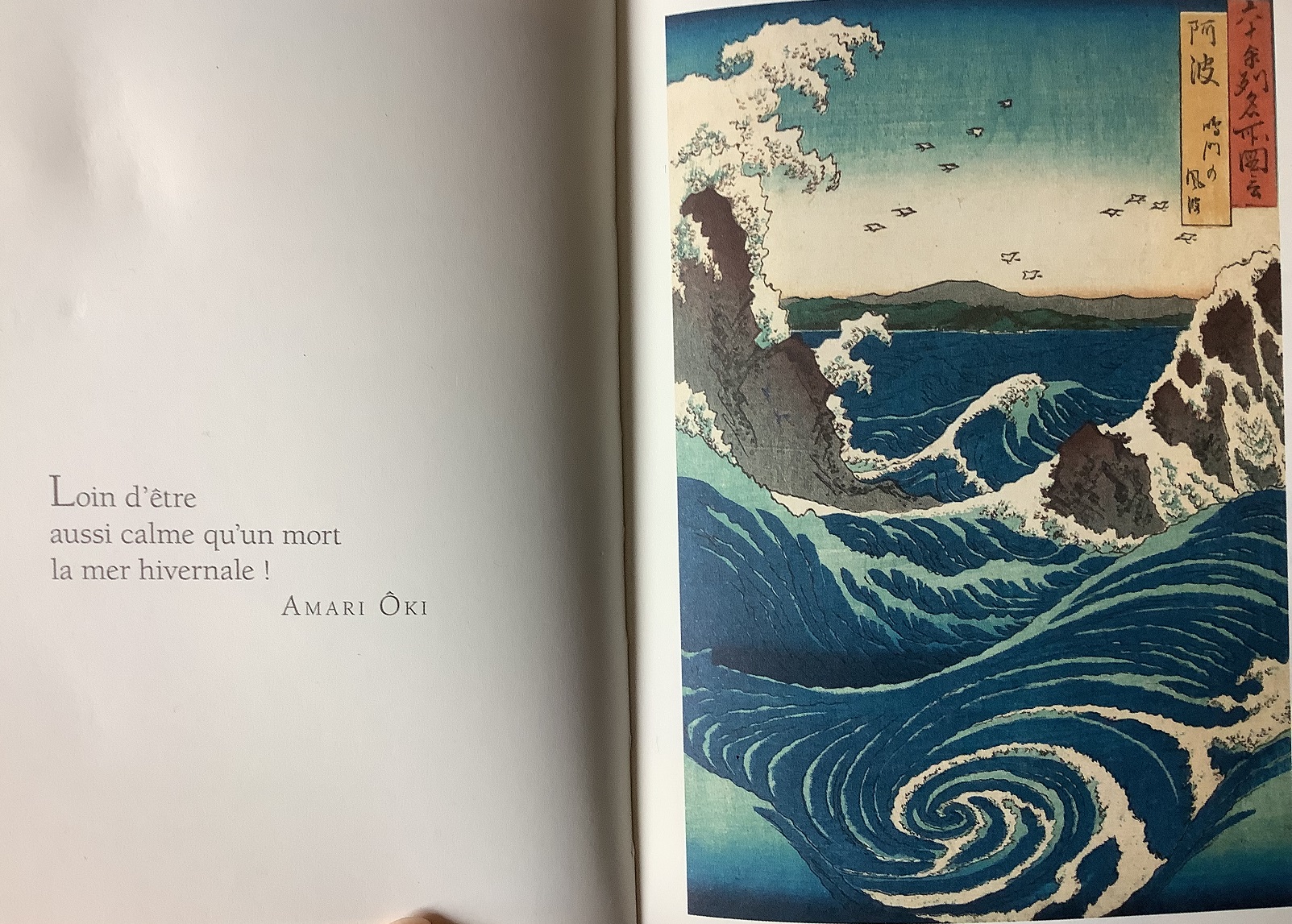
Like this Haiku from Amari Ôki
| French | English | Japanese |
| Loin d’être aussi calme qu’un mort la mer hivernale ! | “Far from being as calm as the dead, the winter sea!” New translation: There is no ease of death in the winter sea. | 死ぬといふ やすらぎ 冬の海になし |
The French version of this haiku contrasts the common image of calmness with the intense energy of the winter sea. By comparing it to the dead, the poet suggests that even in the cold and desolate season, the sea is dynamic, restless, and alive—defying the stillness and finality of death. This evokes a sense of nature’s persistent vitality, even in winter’s harshest state. The constant, unrelenting waves of the winter sea indeed suggest an image of persistence and ceaseless motion contrasting with the sleeping nature in winter. This naturally made me think of the grandmother’s death, who might have vanished, but she remains present in the heart and mind of the main leads. In front of a changing and vigorous sea, the beholder is also reminded of his own life and mortality.
However, the Japanese version and the second English translation gives a totally different interpretation. The « winter sea » conveys a vision of death that is neither gentle nor peaceful, but rather restless and intense, like the winter sea itself. In this image, the cold, churning waters of winter contrasts with the idea of a calm, serene end. The winter sea embodies a relentless, almost haunting energy, where waves are constantly breaking and crashing, echoing a sense of turmoil rather than tranquility.
This interpretation suggests that, just as the winter sea is harsh and unyielding, so too might death be something that doesn’t bring the expected ease or comfort. It reflects an unsettling vision of nature and existence, where peace is elusive and even death holds an enduring, untamed force. This means that once the halmeoni is facing the ocean, the latter could scare her, because she is reminded of her own death. She would be confronted with her own powerlessness and mortality, this can only reinforce her fears about death. Another possibility is that Kim Dan is triggered by this vision (don’t forget that he fears water:  (chapter 27) Like mentioned above, the beholder in front of the ocean can have a different experience than the young girl.
2. The grandmother’s confession
Let’s return our attention to Shin Okja’s childhood and magical moment once again. (chapter 53) What caught my attention is the vocabulary employed to describe her past life is revolving around “chaos”, “urgency” and “race against time: “to evacuate” and “so hectic”. 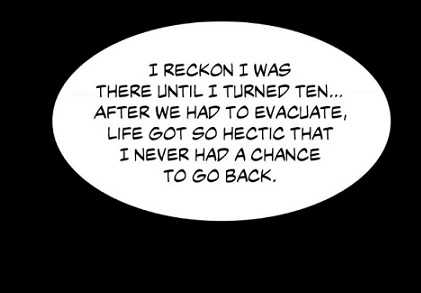 (chapter 53) Thus I deduce that in that moment, she must have felt at peace. This explains why she could never forget this magic moment. However, her confession displays a deep regret as well: she couldn’t go back to the ocean. I would even add that she is portraying herself as a person who had no control over her life. It was either « we » or « life ». Through her words, we can sense her passivity, but also her victim mentality. It was not her fault that she couldn’t go back to the ocean. She never had the opportunity to do so!! She never had missed her chance. She is denying the existence of a missed chance or timing. After reading the description of her past life, I am quite certain that my avid readers can recognize the similarities between the athlete and the halmeoni’s destiny. Until his defeat, Joo Jaekyung had no time either. He was also racing against time. However, there exists one divergence between them: the chance to make the right decision. This means that the champion has now the opportunity to take a break. Furthermore, he also has one chance to get back the doctor, but he shouldn’t miss it.
“In my opinion, the reason why most people fail in their lives is because they never know when the decisive moment has arrived.” Erich Fromm
This quote underlines the importance of awareness and self-knowledge in seizing opportunities and making meaningful choices. Fromm frequently discussed how individuals miss chances for genuine self-fulfillment because they are distracted by external pressures or conformist habits, thereby losing touch with the pivotal moments that could bring change and growth. Thus I deduce that Shin Okja is not truly honest to herself and her grandchild. She must have had a chance at some point, but she made the wrong decision. Thus she portrays herself as a victim of circumstances. There is no doubt that contrary to Shin Okja, the athlete won’t miss his second chance and will change for the better.
However, we shouldn’t forget that with her request, the grandmother is making a rush decision in reality. She is not taking her time to reflect if her desire to go to the West coast is a good thing. Like I wrote in the previous analysis Click : Between Fleeting illusions and Enduring Realities, she got definitely deceived by this brochure: 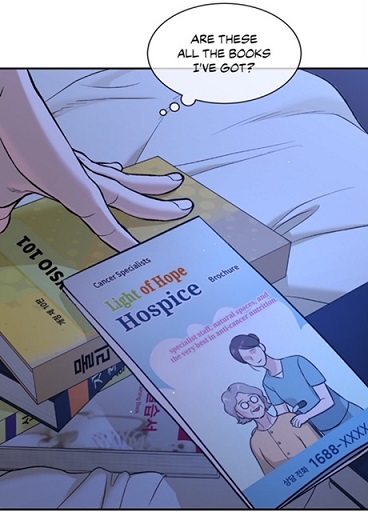 (chapter 53) Furthermore, she is imagining that she can make the same experience again. But this is just an illusion, like the Greek philosopher Heraclitus explained it:
“No man ever steps in the same river twice, for it’s not the same river, and he’s not the same man.” Heraclitus
Heraclitus uses the river as a metaphor to show that everything is in constant flux. Just as the water in a river is always moving, flowing from one place to another, everything in life is always changing—from our thoughts, feelings, and bodies to the external world. This idea (“everything flows”) points to his belief that nothing remains static or permanent.
Yes, Shin Okja is no longer the 10 years old child. She needs someone by her side to go to the beach.  (chapter 53) Secondly, I doubt that the beautiful view could make her forget her suffering. Finally, let’s not forget that for one single moment, she will spend many days in a hospice, where she will be surrounded by dying people. Furthermore, the image of the ocean could generate a different feeling: torment like mentioned above. She is expecting to make the same experience, but the opposite could happen. She gets terrified and tormented. Therefore I have the impression that the grandmother might come to regret her past decision. But contrary to the past, she can not blame the others (« we ») or life, as it was her own choice and request! Therefore I deduce that in the past, she let others make decisions for herself, like we could see it with her expensive treatment. She listened to Kim Dan and the oncologist.
  (Chapter 7) And we could see that Joo Jaekyung had a similar attitude in season 1, he would listen to his hyungs and the people working for MFC. Consequently, I come to the following deduction: this time, the fighter will make the decision on his own. He won’t follow Park Namwook’s advice:
 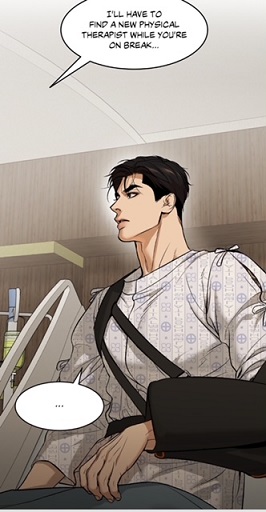 (chapter 53) The latter is asking him to simply wait and to rely on him. Joo Jaekyung will take the matter into his own hands, the exact opposite attitude to the beginning of season 1.
3. Regret and Water
As you can see, thanks the first two haikus, I got a much better understanding of the characters from Jinx. However, the biggest revelation came with another haiku. Water comes under different forms, like a river, a waterfall or rain. Therefore the book contains the following haiku written by Ryokan Taigu.
| French | English | Japanese |
| Jour après jour Tombe la bruine – La vieillesse me saisit | “Day after day The misty rain falls— Old age grips me.” New translation based on the Japanese version: Day by day, as the winter rain falls, people grow old.” | 日々日々に 時雨の降れば 人老いぬ (Thanks to @rinsan) |
This haiku reflects the passage of time and the inevitability of aging, with the winter rain symbolizing the steady, unstoppable rhythm of nature that mirrors life’s transient nature. The imagery of rain falling “day by day” emphasizes the gradual, almost unnoticed progress of time that ultimately leads to aging. Despite the slight change in the translation, it doesn’t affect my revelation and new interpretation. Thanks to this poem, I had suddenly realized two aspects. First, the fall and winter in Jinx symbolize the dying Shin Okja. The seasons are mirroring the aging and the changes. This means that we should expect her death either in fall or in winter. I am opting more for fall due to the rain, though the poem from Amari Ôki is connecting death to winter. Why? Striking is that in season 1, Mingwa always showed us a beautiful weather. The sun was always present following the main lead, 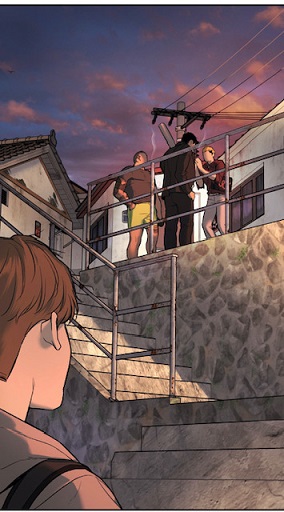 (chapter 1)
  (chapter 47)
 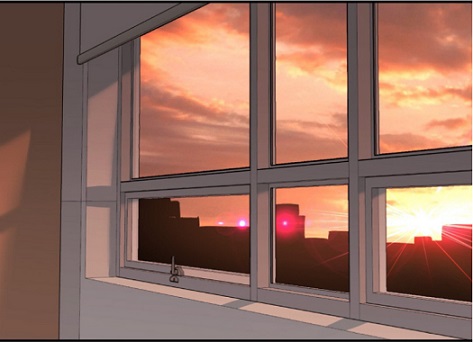 (chapter 47) even when the doctor was confronted with the truth about his terminally ill grandmother. The sun was always shining brightly. Since in the haiku from Ryokan Taigu, the rain is associated with old-age and fall (misty), it dawned on me that the rain should be associated with the grandmother’s death. If this comes true, it was, as though the sky and gods were weeping for her vanishing. Additionally, the first season took place in Spring and Summer, thus I deduce that season 2 will take place around late summer, fall and winter. This means that the weather should change. And this remark led to my second revelation. I started looking for South Korea’s climates, particularly I was curious about the climate on the West Coast.
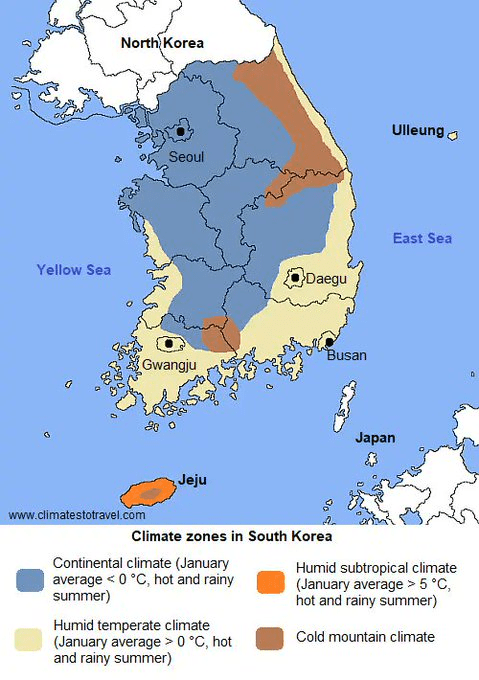
Should they move to the beige region on the West coast, this signifies that it will rain more often, especially in the Summer. 😮
South Korea is affected by the Asian monsoon regime: in winter, cold air masses from the Asian continent prevail, while in summer, the country is reached by warm and moist air masses of tropical origin. For this reason, the precipitation pattern is opposite to that of the Mediterranean climate: the driest season is winter, while the rainiest one is summer. Moreover, in summer and early autumn, South Korea can be affected by typhoons (see below).
Total annual precipitation is significant, spanning generally from 1,200 to 1,500 millimeters (47 to 60 inches), with the exception of both the southern coast, where it is higher and can reach 1,700 mm (67 in), and the northernmost inland regions, where it is lower and can go down to 1,000 mm (40 in), in addition to some particularly sheltered valleys like that of Daegu (or Taegu), where it does not exceed 1,000 mm (40 in) per year. […] Typically, typhoons affect Korea from July to early October, with a higher probability in the first half of September. Sometimes, they also arrive in the second half of June, when they are generally less strong and only affect the extreme south.
As you can see, late Summer and fall in South Korea are strongly linked to rain and even typhoons😨. And we would have a possible explanation about the circumstances for the vanishing of Kim Dan’s parents and his fear of water. Imagine this. By returning to the West Coast and as such by reconnecting to her past, the doctor’s past and his parents’ vanishing will certainly come back to the surface. Don’t forget that his parents were never brought up in season 1.
But let’s return our attention to my previous observation. The weather and as such nature could decide not to fulfil her wish. Due to the rain or a tempest, she is not able to go to the beach. She didn’t take the season into consideration, a sign that she didn’t truly ponder on her decision. This would explain why we had no bad weather in season 1, for her grandchild was fulfilling all her desires. Moreover, since the halmeoni lived for quite some time at the hospital, there is no ambiguity that she came to forget the seasons. She only remembers the ocean on a beautiful day. And now, look at the following picture: 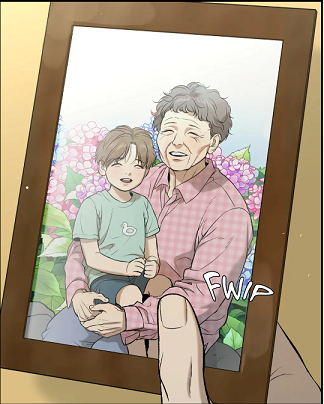 (chapter 19) the presence of pink and purple hydrangeas indicates that it was taken in Summer. This new approach reinforces my perception that the grandmother is about to get confronted with harsh reality despite her attempts to escape from it. Her wish can not be fulfilled so easily, like she is imagining it. In addition, Manhwa-philes should keep in their mind that weather has a great influence on elderly people’s health.
How Weather Affects the Elderly
It’s hard to believe that cooler temperatures will be here soon. As I sat here composing today’s blog, my weather app is showing a maximum temperature of 19 Degrees with rain due throughout the day. This will drop quick and suddenly as we approach autumn!
This raises the question as to how temperature changes affect the elderly, whether it is hot or cold and how we can be prepared to assist our elderly relatives.
Hot Weather and the Elderly
The reality is that the older we get the more sensitive we become to temperature changes. Elderly people are far more prone to heat stress than younger people. As one specialist commented, “elderly people account for a disproportionate number of heat related hospital admissions and deaths.” […]
Cold Weather and the Elderly
Temperatures in the UK are still below the average for this time of year (May). However, it’s true to say that cold temperatures present a real problem for elderly people. Again cold weather puts pressure on the heart as the cold temperature thickens the blood and constricts the arteries. Quoted from https://www.telecare24.co.uk/blog/how-weather-affects-the-elderly/?srsltid=AfmBOopORZIEer1Bqo8_HCSybW4mOJ8NxgP8Wdh3MXsbIFJldLePciX0
It is not just about heat or cold, even rain can increase their pain (arthritis for example) or bring them infections. Here, I found an article showing the great impact of the monsoon on seniors.  https://www.patientsengage.com/healthy-living/managing-older-adults-health-rains-monsoon
This observation leads me to even conclude that her move to the West Coast could in reality accelerate her death. 😮And now, I am adding the picture which was placed next to the haiku from Ryokan.
 We have an elderly man walking through the rain in front of the blue sea. The latter is accompanied with a Waka-poem from Yoshihiro (which was not translated). According to my Japanese friend @Rin_de_eegana (飯乞ふと 里にも出でず この頃は 時雨の雨の 間なくし降れば), this phrase describes a situation where one cannot even go out to the village to beg for alms due to the long rain. Here, we have the topic of poverty linked to old-age and rain. Yes, the pages of this book reminded me of Shin Okja, a poor elderly woman who is so sick. And like mentioned above, the rain could be the reason why the woman doesn’t go to the beach. The two poems are underlining one important aspect: the powerlessness of humans in front of nature. No one can stop aging, just like no one can control the weather. At the same time, it outlines the importance for a senior to be surrounded by people, so that they don’t end up dying from dehydration, from a cold or hypothermia.
4. Tears and rain
In the part above, I presented the following expectation: the day of the grandmother’s death is strongly intertwined with the rain. The drops from the sky should be seen as a metaphor for tears. But I have another evidence for this prediction. My avid readers should keep in their mind that Mingwa’s story is written like a kaleidoscope, like an eternal circle. Thus scenes are always reflecting each other. This means, the author left traces of the rain in season 1. And where were they? In the bathroom 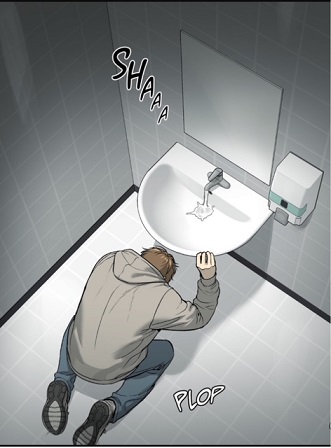 (chapter 47)
  (chapter 49) Both main leads went to the restroom in order to hide their emotional turmoil and suffering. They used flowing water (in Joo Jaekyung’s case the shower) in order to cover the sound of their weeping: SHAAA. Yes, the tears are making sound… so the rain should make sound as well. And this brings me to my next remark. (chapter 53) When she mentioned this beautiful experience to Kim Dan, she was only focusing on the mesmerizing view: a colorful ocean. Thus the author zoomed on her eyes and blushing cheeks. However, she didn’t pay attention to the sound of the ocean. Yes, the waves are making sound. Thus the author zoomed on her eyes and blushing cheeks, but her ears are not really visible. Moreover, her memory is presented without a sound. (chapter 53) There is only silence, whereas in reality, this is how the ocean sounds:
If you pay attention to the title of this video, you will see that sea waves are used to help people to relax and to fall asleep!! Thus I am inclined to think that the champion will discover the true power of nature in front of the Yellow sea. The sound of the waves will help him to overcome his insomnia. In season 1, the author implied the existence of a connection between the sea waves and his insomnia in the champion’s life :  (Chapter 29) Remember how I had described this panel. The fighter feared to be swallowed by the darkness, to drown because of the many opponents. The fighters are placed like waves. Thus the celebrity could decide to change his career (to become a fighter like Dominic Hill who selects his own fighters) and move to the countryside in order to live a better life. And this brings me to my last haiku composed by Suéko Fujii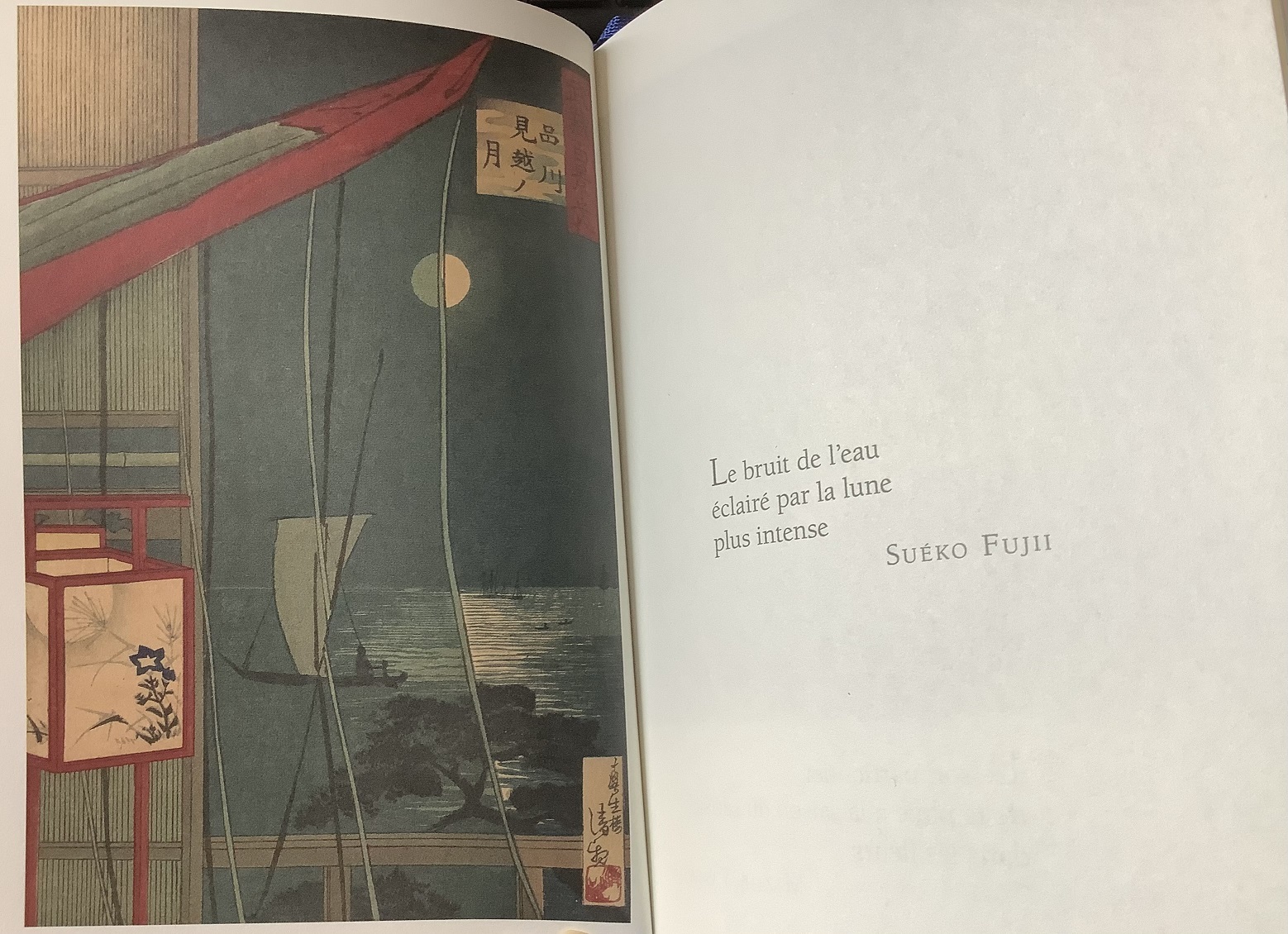
| French | English |
| Le bruit de l’eau éclairé par la lune plus intense | “The sound of water illuminated by the moon— more intense.” |
In this haiku, the poet highlights how moonlight not only illuminates but enhances perception, sharpening the experience of nature’s sounds. The moonlight doesn’t physically alter the water, but it creates an atmosphere that heightens the beholder’s awareness, making the sound seem richer or more intense. This effect reveals the power of the night and the way natural elements interact, transforming something ordinary into something profound. The haiku suggests a quiet moment of immersion where the listener becomes deeply attuned to the surrounding world, connecting to the peaceful yet amplified rhythm of nature. As a conclusion, the poet becomes engulfed by the moon’s illumination and the ocean’s sound, as if fully absorbed into this heightened sensory experience. The moonlight and the intensified sound draw the poet into a deep, almost meditative state, where each element—the visual of the moon and the sound of the water—merges, enveloping him completely. This poem represents a reflection of the grandmother’s experience, though the latter diverges slightly. She didn’t focus on the sound. And look at the drawing next to the haiku. We have a room with a view! Under this new light, it becomes comprehensible why I am already envisaging that Joo Jaekyung moves to the countryside. As you can envision it, the Haiku from Suéko Fujii triggered my imagination.
Joo Jaekyung is getting his enlightenment during the night in front of the sea, and who is standing in front of the ocean? Naturally, it can only be Kim Dan who stands for the moon!! A new version of these two blue nights: 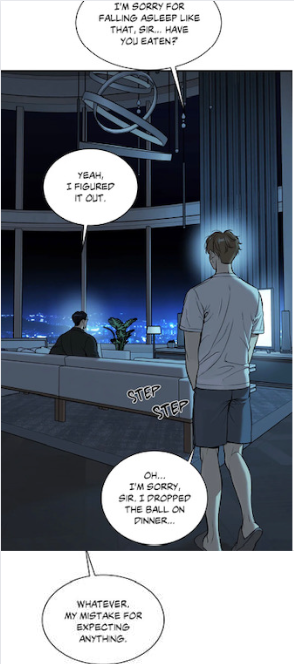 (chapter 29)
  (chapter 35) The blue would be a reference to the ocean. After that couch confession night, the athlete got a certain enlightenment, hence he tried to get closer to Kim Dan the next morning
  . (chapter 30) In episode 35, the night stands for ignorance and self-deception, for the doctor was not present. Joo Jaekyung reverted to his old self. However, don’t forget that the haiku was not just about the moon light, but also about the sound of the waves. All the senses are awakened which represents a better experience than the grandmother’s. Moreover, since I am anticipating the presence of Kim Dan, this means that Kim Dan embodies not only the light in the dark, but also sound of water. This interpretation brings me to the following remark. In season 1, the athlete had already associated his fated partner to “sound”, though in the beginning he viewed it as noise
  (chapter 18) and as a source of stress and worries.
  (chapter 45) This means that the night view of the ocean should make him discover the beauty of the sound of water. He will come to associate the sound of the sea waves with Kim Dan. That’s how he will be able to fall asleep. In other words, I am expecting a new version of this scene:
 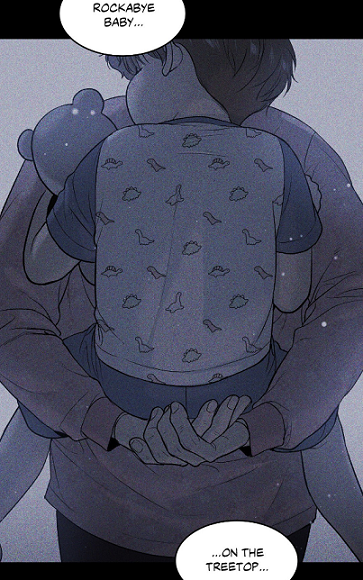 (chapter 47) To conclude, Joo Jaekyung will also have an Enlightenment in front of the ocean, but contrary to the grandmother, this experience will be associated with the night, the sound and a person: his soulmate Kim Dan.
That’s it. I hope you enjoyed reading this composition. If yes, let me know if I should write a similar essay with haikus which are focusing on a different topic, like for example flowers, food etc.
Feel free to comment. If you have any suggestion for topics or manhwas, feel free to ask. If you enjoyed reading it, retweet it or push the button like. My Reddit-Instagram-Twitter-Tumblr account is: @bebebisous33. Thanks for reading and for the support, particularly, I would like to thank all the new followers and people recommending my blog.
 Bebebisous33s' analyses in K-Dramaland and Manhwas