

Please support the authors by reading Manhwas on the official websites. This is where you can read the Manhwa: Jinx But be aware that the Manhwa is a mature Yaoi, which means, it is about homosexuality with explicit scenes. Here is the link of the table of contents about Jinx. Here is the link where you can find the table of contents of analyzed Manhwas. Here are the links, if you are interested in the first work from Mingwa, BJ Alex, and the 2 previous essays about Jinx Unseen 👀 Savior🦸🏼♂️ : The Birth Of Jaegeng (locked) and The Sweet 🧁 Curse of the Round Table 🍴
It would be great if you could make some donations/sponsoring: Ko-fi.com/bebebisous33 That way, you can support me with “coffee” so that I have the energy to keep examining Manhwas. Besides, I need to cover up the expenses for this blog.

Introduction
In Chapter 66, Mingwa’s careful use of visual symbolism invites readers to look beyond the surface of a simple scene: two sparrows perched together on a power line  (chapter 66) quietly shapes the emotional core of the episode. At first, this detail may appear insignificant, but its narrative timing and visual prominence suggest a deeper meaning. The sudden flight of the sparrows
  (chapter 66) mirrors the situation of the main characters, as the latter are about to depart for Seoul. Striking is that Mingwa draws our attention away from the champion grabbing doc Dan, but focused on the birds. Why? It is because the author desires her readers to notice the world of subtle symbolism. Far from being a random detail, the presence—and sudden flight—of the sparrows echoes the characters’ inner transitions, raising questions about home, communication, critique, and the complicated process of change. To understand the richness of this scene, it’s crucial to consider not only the sparrow’s traditional meanings but also the narrative choices the Webtoonist makes in what is shown and what is left unseen, especially regarding the role of witnesses and the power of perception. To fully appreciate the layers of meaning in this moment, it is essential to consider not only the universal symbolism of sparrows but also their role in classic fables, Korean culture, and even modern pop culture—where the sparrow’s voice becomes a catalyst for both belonging and change.
The Sparrow: Universal Meanings and Positive Symbolism
Across cultures and literary traditions, the sparrow [sources: Wordbirds / the symbolism of sparrow/ Sparrow Symbolism/ Birdsandwings] is a symbol rich with positive and nuanced connotations:
Home and Family: As birds that build their nests near people, sparrows evoke the warmth, joy, and optimism found in the heart of a happy home. In Chinese culture, they are symbols of marital bliss, prosperity, and the delight of shared domestic life.
Resilience and Adaptability: Small but mighty, sparrows flourish even in challenging environments, representing not only perseverance but also the cheerful optimism that helps individuals bounce back from hardship. Japanese stories often celebrate their cleverness and resourcefulness.
Hope and New Beginnings: Sparrows are often seen as harbingers of change and hope, embodying the bright, uplifting spirit that marks every new chapter and the possibility of positive transformation. . Their presence inspires optimism for what lies ahead.
Love and Devotion: Whether pulling the chariot of Aphrodite or appearing in folktales of loyalty and gratitude, sparrows are messengers of affection, emotional bonds, and the enduring joy of loving relationships.
Protection and Spiritual Guidance: Sparrows remind us that all beings—no matter how small—are worthy of care and protection. Their appearance in legend and religion reflects a gentle optimism in the universe’s watchfulness and kindness.
Community and Togetherness: Living in flocks, sparrows symbolize the happiness and optimism that comes from unity, trust, and shared support, while their lively interactions echo the joys and challenges of communal life.
Simplicity and Humility: With their modest appearance, sparrows invite us to embrace joy in the ordinary and to recognize the beauty that exists in simplicity and humility.
Freedom and Strength: In today’s world, sparrows embody the exuberance of freedom and the uplifting strength it takes to overcome obstacles. Their flight becomes a symbol of living joyfully and fearlessly.
Wisdom and Connection to Nature: Many cultures honor sparrows as wise creatures, deeply connected to the earth. They embody humanity’s bond with nature, encouraging us to live harmoniously with our environment and to find wisdom in the rhythms of the natural world.
These meanings form the foundation for understanding the sparrows’ presence in Chapter 66: their sudden flight is not just a visual echo of the characters’ departure, but also a symbol of the personal and relational changes that come with leaving home in search of healing. (chapter 66) Their appearance draws from universal and modern meanings (chapter 66), while also directly echoing the tradition of older Korean paintings such as Myojakdo,
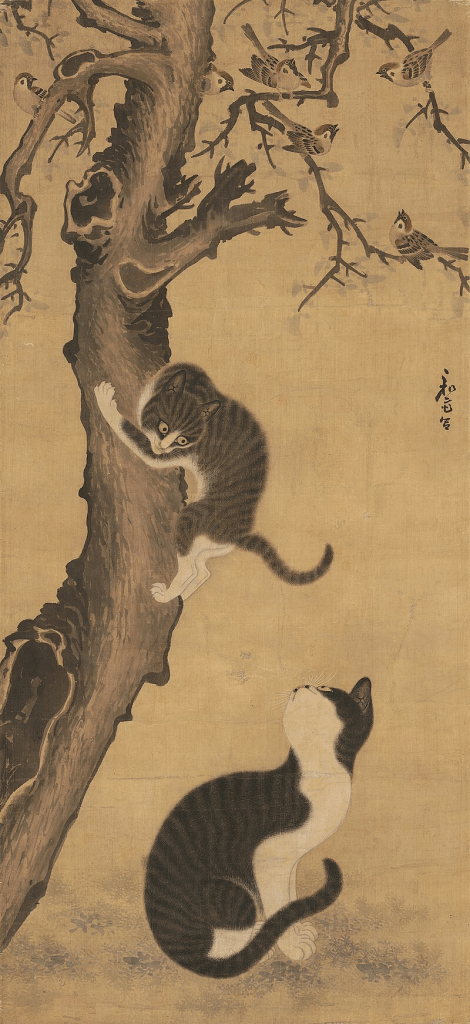
where sparrows are emblems of harmony, lively companionship, and auspicious beginnings—a good omen for any household or relationship. Yet, in this episode, the sparrows are not perched on a tree like in the classic paintings, but on a power line—a subtle but meaningful shift. (chapter 66) The power line, a symbol of modern civilization, stands in sharp contrast to the natural branches of traditional art, highlighting the vanishing of nature and the disconnection between people and nature that characterizes Jinx and contemporary life. Additionally, this visual choice underscores the precariousness of the couple’s brief harmony: while the sparrows momentarily embody hope and unity, their perch on a man-made structure suggests that such peace is fragile and easily disrupted in today’s world. (chapter 66) The humans are here portrayed more as the intruders.
In traditional Myojakdo paintings, sparrows often share the scene with cats, whose presence signals lurking dangers and the constant threat to harmony. Similarly, in this scene, the sparrows’ sudden flight hints at the brevity of peace for the main couple and the inevitability of new struggles ahead. The moment of tranquility is fleeting, easily scattered by disturbance—mirroring how, shortly after this scene, Kim Dan is confronted by his physical limitations and Joo Jaekyung receives later unsettling news about his fighting career. The narrative thus can be seen as a homage to the wisdom of traditional art by reminding us that beauty, connection, and joy are precious precisely because they are impermanent and must continually be reclaimed in the face of life’s ongoing challenges.
In episode 66, the presence of sparrows subtly foreshadows a pivotal turning point in the couple’s relationship—the transition from uncertainty and separation toward unity. By the end of episode 69, this is poignantly sealed with the couple’s embrace  (chapter 69), making the sparrows’ appearance an omen of the official union to come. (chapter 66) Their presence coincides with their gradual acceptance into the life of the little town. By the time their embrace seals their new status as a couple in episode 69, they are no longer completely isolated: the embrace happens with official witnesses present—the coast guards and the hospice nurses
 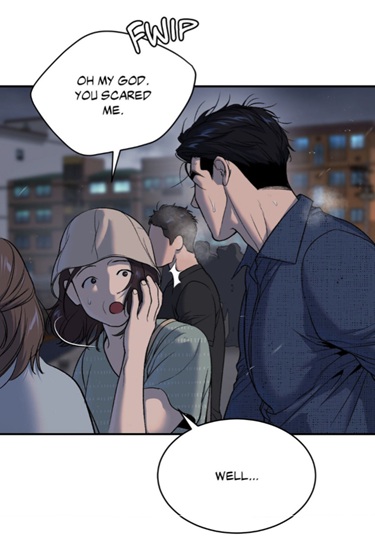 (chapter 69) —who serve as stand-ins for the broader community. In this way, their union is not just a private matter but becomes public and recognized, affirming their bond within the social fabric of the town.
Yet the author adds a layer of narrative irony by highlighting the fragility of such happiness. (chapter 66) The sudden departure of the sparrows, while signaling a threshold of hope, also carries a shadow of foreboding. In both folklore and art, birds in flight can herald the end of good fortune or the approach of new challenges. This duality quickly unfolds in the story: shortly after the sparrows leave, doc Dan is faced with his physical limitations (illness), and the next morning, Joo Jaekyung is pressurized to meet the CEO and  (chapter 69) fight again in the fall which leads him later to admit his own vulnerability
  (chapter 69). The omen of unity is fleeting, replaced by the return of hardship and uncertainty. Through this careful allusion to the visual language of traditional art, Mingwa invites us to savor the beauty and community of these moments (chapter 66) while also acknowledging their impermanence—the cycles of hope and struggle that shape the couple’s journey, echoing the bittersweet truths found in both folklore and real life. At the same time, these hurdles are there to push the main couple to recognize that they need the support from others (in particular from their fated partner) and they are not alone.
Sparrows in Fables: Brief Summaries for Unfamiliar Readers
Sparrows, however, are not only symbols of comfort and togetherness. In Western fables, they are also known for their sharp wit and critical voices, adding a more complex dimension to their meaning. For readers unfamiliar with these tales, a brief summary is helpful:
“The Sparrow and the Hare” (Aesop):
A hare, caught by an eagle, laments its fate. A sparrow mocks the hare for getting caught despite its speed. But as the sparrow gloats, a hawk seizes it—turning its mockery back upon itself. The story’s lesson: those who judge or mock others’ misfortunes may soon suffer the same fate.
“The Nightingale and the Sparrow” (Aesop):
A nightingale listens to a shepherd’s flute to improve its song. The sparrow ridicules the nightingale, claiming such talent shouldn’t require lessons. The nightingale, however, values humility and lifelong learning. Here, the sparrow’s mockery becomes a foil for the nightingale’s wisdom, suggesting that critique and skepticism are ever-present in community life, sometimes fostering growth and sometimes reflecting insecurity.
These fables portray the sparrow as a voice of both challenge and growth—one that can provoke humility, self-reflection, or even much-needed change within a group.
This duality finds a parallel in modern pop culture through characters like Jack Sparrow

from Pirates of the Caribbean. The famous pirate embodies the trickster spirit—irreverent, unpredictable, challenging norms and authority, but also fiercely independent and resourceful. His refusal to conform, his wit, and his outsider status make him both a disruptor and, paradoxically, a source of new possibilities for the community around him.
Thus, the sparrow as a symbol of critique and mockery is not simply destructive. In a healthy community, such voices provoke discussion, expose hypocrisy, and challenge complacency. Sometimes, mockery and criticism push individuals to grow  (chapter 64) or inspire the group to change its direction. In the context of Jinx, the sparrows’ existence (chapter 66) and their abrupt flight can be read as a metaphor for the inner and outer voices—of doubt, of challenge, of the push and pull between conformity and authenticity—that the characters must navigate as they leave their old world for something new.
The Scene in Jinx: Communication, Disturbance, and Visual Language
(chapter 66) When perched on the power line, one bird “sings” to the other—a fleeting but meaningful moment of natural communication and attentive listening. In this way, the sparrows become living examples of true partnership and open dialogue. Unlike the protagonists, who struggle with silence, secrecy, and miscommunication, the birds embody a kind of relational ideal: they respond to each other instinctively, without hesitation or pretense. Through this subtle comparison, the Webtoonist almost seems to highlight the superiority of these animals in their ability to connect honestly, without the barriers of pride, fear, or unresolved trauma that often hold humans back.
Then the startled flight of the sparrows in Chapter 66 serves as an external reflection of the complex, contrasting emotions between Kim Dan and Joo Jaekyung. (chapter 66) As the birds sit peacefully on the power line—one “singing” to the other—they embody a fleeting sense of harmony, communication, and possibility. This calm is abruptly shattered not by nature, but by the commotion below: the sudden, unannounced action of Joo Jaekyung physically pulling Kim Dan, who is caught off guard and frightened which Jinx-philes don’t see.
This disturbance in the birds’ world is a perfect metaphor for the moment’s emotional truth. Kim Dan, in this scene, is the one most visibly startled—his fear and confusion echoing the sparrows’ sudden flight. His response highlights his ongoing struggle with vulnerability, trust, and the aftershocks of instability that have defined his life. We have to envision a new scene of this situation, but not during the sunset (chapter 62). It took place in the morning. The harmony doc Dan hoped to find is momentarily lost, replaced by anxiety and a sense of being unmoored.
For Joo Jaekyung, however, the action is not motivated by aggression or dominance, but by genuine concern. He approached the physical therapist silently  (chapter 62), therefore the young man didn’t pay attention to his arrival contrary to the quoted panel above. Moreover, it is clear that the “hamster” felt safe in the presence of the landlord. Back then, he had only accepted the champion’s request after hearing the landlord’s remark:
  (chapter 62) The champion’s abruptness is the result of Kim Dan’s past rejection and stubbornness, the athlete is expecting resistance. However, he can not ignore doc Dan’s exhaustion and fragility. Besides, he feels motivated and justified, as he is following Shin Okja’s request.
The sparrows’ sudden flight, then, does not simply symbolize the couple’s shared disturbance (chapter 66); it also highlights the difference in their internal experiences. The doctor is frightened and confused, while the celebrity’s actions are rooted in worry and an urgent, if clumsy, need to help. The birds externalize both the jolt of fear and the disruptive, caring impulse behind it.
Yet, this moment is not just about disruption. In the wake of the startled birds, and the startled hearts, comes the possibility for growth and deeper understanding. The disturbance sets the stage for the main couple to reconsider their patterns: Kim Dan is challenged to recognize and eventually trust the care offered to him 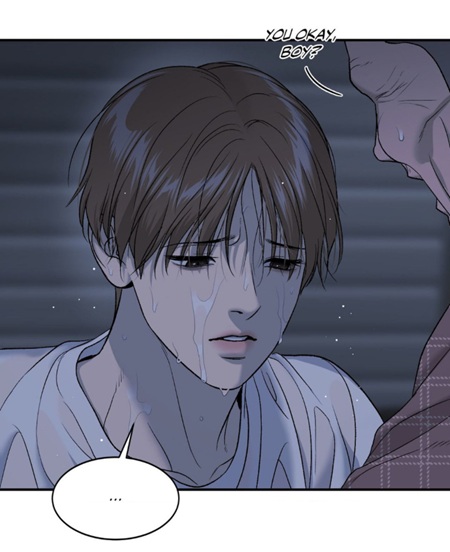 (chapter 69), while Joo Jaekyung must confront the impact of his actions and learn new ways to show support. The challenges that follow—the physical setback for Kim Dan and the champion’s new professional demands—reinforce that their journey is full of hurdles. Still, these hindrances serve a higher purpose: to remind them that they are not alone, that they need each other’s protection and backing, and that the bonds forming in this little town can become sources of true resilience.
In this way, the sparrows are not only omens of harmony or hardship, but living symbols of how sudden change, even when frightening, can lead to a rebalancing—a chance for the couple to move beyond old habits, accept help, and ultimately grow together.
When the startled sparrows flap away, (chapter 66) disturbed by the commotion, their flight becomes a metaphor for the characters’ own inner turbulence. The birds’ reaction externalizes what happens to Kim Dan and Joo Jaekyung emotionally—anxiety, uncertainty, the disruption of safety—and invites the reader to reflect on the cost of misunderstood intentions.
Framing Action: Witnesses, Ambiguity, and the Power of Perception
One might wonder why, at such a charged moment, Mingwa chooses not to depict the champion grabbing doc Dan directly, (chapter 66) instead shifting focus to the two sparrows above. At first glance, the birds seem to be mere bystanders—figures that do not directly advance the story’s plot. So why spotlight them rather than the characters’ physical interaction? The answer lies in the way the Manhwa author handles ambiguity, context, and the subtle power of what is left unseen.
A particularly sophisticated element of Mingwa’s storytelling emerges when considering the role of witnesses and context. In episode 27, 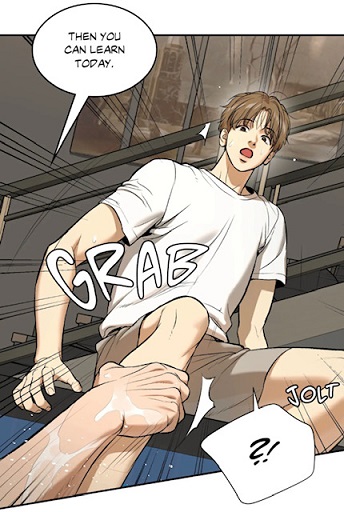 (chapter 27) a playful prank occurs without any third-party observer. The context is unambiguous: both the characters and the reader understand the action as harmless and mutually accepted, so no external framing is required.
However, as the narrative moves into episodes 66 and 69, the emotional stakes and potential for misunderstanding increase. Now, Mingwa introduces the landlord as a visible witness to the action.  (chapter 66) The landlord’s proximity and his bemused, neutral questioning guides the reader’s interpretation, framing the scene as ordinary and non-threatening rather than alarming or inappropriate. He is able to grasp the existence of Joo Jaekyung’s motivations behind his behavior. He doesn’t judge the protagonist as face-value, he desires to know why he is acting this way.
This shift is critical. When intent is clear, no witness is necessary. No one questioned the athlete’s intentions in the pool—both the characters and the audience understood it as a playful, harmless prank, needing no external framing or intervention. But when ambiguity arises, as with the champion grabbing doc Dan (chapter 66), the presence of a grounded observer becomes essential—helping to anchor the narrative and pre-empting misreadings that could arise from the audience’s own biases or prior experiences.
This is made especially clear in chapter 69.  (chapter 69) Here,the Korean Webtoonist directs the focus to the characters themselves, depicting the champion’s rough handling of doc Dan with striking directness: we see the moment Jaekyung grabs Dan by the t-shirt
  (chapter 69) and throws him outside
 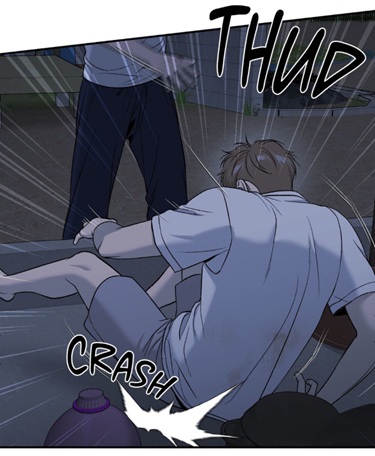 (chapter 69), the action punctuated by dramatic motion lines and the sounds of impact. Yet, despite the force of the act, the landlord—who witnesses the scene in real time—remains silent, choosing not to intervene, criticize, or even question Jaekyung’s motives.
  (chapter 69) His composed presence in the background (chapter 69), his calmness, and the absence of blame send a subtle but powerful message to the reader: sometimes, an apparently harsh action can spring from necessity, urgency, or even care rather than malice.
With his presence and restraint, the landlord functions not just as a passive bystander but as a narrative guide, subtly shaping the reader’s response. By withholding judgment and allowing events to unfold without immediate condemnation, he encourages us to do the same: to pause, look deeper, and consider the emotional context rather than relying on surface appearances or preconceived ideas. In this way, the Webtoonist uses the landlord’s behavior to foster a more nuanced, empathetic reading of the situation—reminding us that true understanding often requires patience, perspective, and an open mind. (chapter 69) The landlord’s role, then, is not only to comment on the scene, but to model a balanced response, encouraging the reader to withhold judgment and remain open to the characters’ perspectives. Furthermore, I would even say that the landlord is on his way to discover Joo Jaekyung’s sleeping problems. 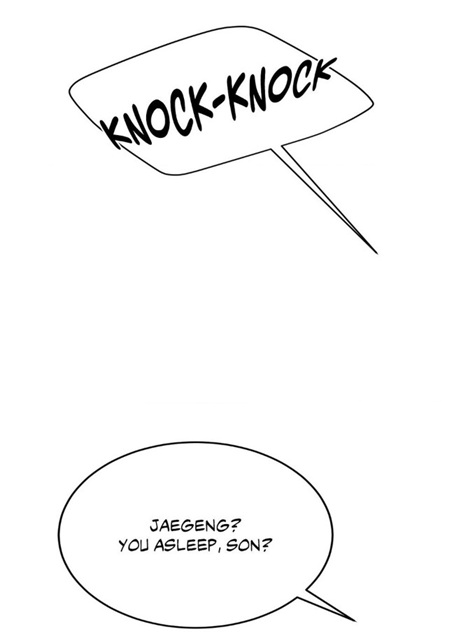 (chapter 69)
  (chapter 69) Moreover, I am sensing that the elderly man might feel terrible, for he asked for the athlete’s assistance in the middle of the night. But let’s not forget that the main lead had driven 4 times within 2 days the distance from the little town to Seoul.
Moreover, Mingwa’s choice to center the panel on the startled sparrows (chapter 66) —rather than the physical interaction—underscores the delicacy of these moments. The birds’ flight externalizes the disturbance without reducing the characters’ actions to something easily condemned or misread. This narrative strategy subtly suggests that human interactions, like those of birds, are shaped by both context and the way they are witnessed—and that sometimes, what is unseen or left to the imagination is as important as what is shown.
Building Belonging: The Sparrow’s Nest and the Champion’s Journey
Alongside its associations with critique and community, the sparrow is also a builder—patiently gathering twigs to create a secure home. This motif is reflected in the champion’s actions:  (chapter 62) he brings his belongings
 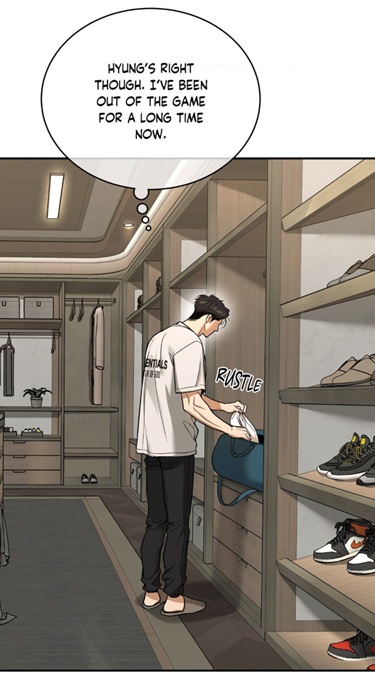 (chapter 66) gradually into his new environment, creating a personal nest.
  (chapter 69) This process is not merely about physical comfort, but about constructing a sense of safety, identity, and belonging. One of these items could be the doctor’s present. Notice that before he left his penthouse with the gray car, he was holding the “golden key chain”,
 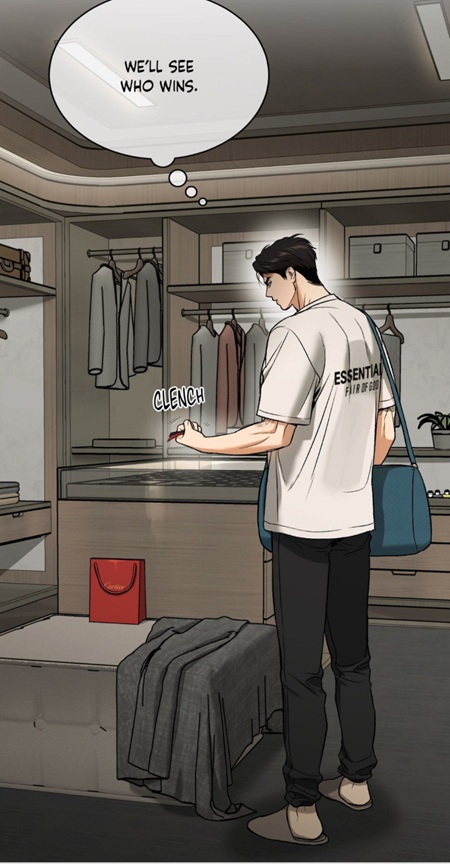 (chapter 66) a sign that this gift has now a sentimental value for the athlete. Just as sparrows persistently build and rebuild, so do the characters in Jinx adapt, settle, and grow—sometimes through trial and error, sometimes in fits and starts, but always moving toward a deeper sense of home. By moving to a smaller house, he is encouraged to select what truly matters to him. This evolution has not reached its end: the champion will keep moving his possessions to the little town. Moreover, I am more than ever convinced that we should expect the arrival of the Wedding Cabinet in that small town.
 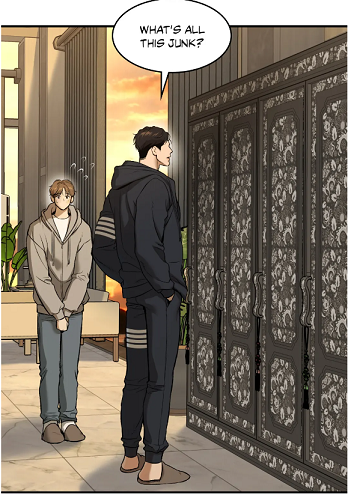 (chapter 19) To conclude, we should see the chapters from 62 to 69 as the creation of the couple’s nest and as such “home”.
Conclusion: Sparrows, Perception, and the Complexity of Change
Mingwa’s use of sparrows (chapter 66) in Chapter 66 of Jinx is much more than atmospheric detail. These birds, with their long history as symbols of home, resilience, community, and critique, become mirrors for the characters’ struggles with communication, belonging, and change. By focusing on the sparrows’ flight (chapter 66)—and carefully orchestrating when witnesses appear or do not—the author invites Jinx-philes to look beyond surface actions, to recognize the importance of context, perception, and the ever-present challenge of understanding one another. In this way, the sparrows ask us not only to witness the characters’ journey, but to reflect on the ways we, too, interpret, judge, and ultimately strive to belong. In addition, the birds’ flight is a call to transformation, an invitation to leave behind complacency, and a challenge to build a more authentic home—both within oneself and alongside others.
Through these small birds, readers are reminded that growth requires not only the support of community, but also the courage to question, to reflect, and sometimes, to fly away and begin again. Joo Jaekyung and doc Dan were on their way to discover real “freedom”. When the birds left the power line, this announces that the two protagonists were about not only to reconnect with their true personality, but also to discover nature and its beauty and power.
Feel free to comment. If you have any suggestion for topics or Manhwas, feel free to ask. If you enjoyed reading it, retweet it or push the button like. My Reddit-Instagram-Twitter-Tumblr account is: @bebebisous33. Thanks for reading and for the support, particularly, I would like to thank all the new followers and people recommending my blog.


 (chapter 69)
 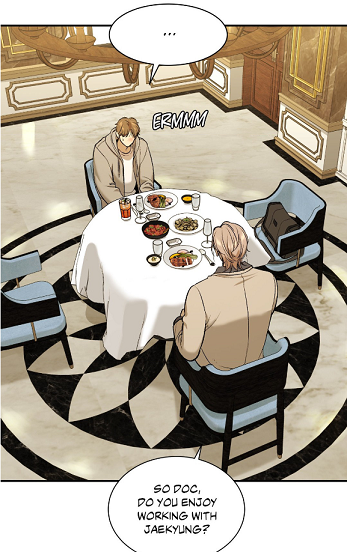 (chapter 32) Yet upon closer inspection, certain oddities stood out to me.
  (chapter 43) In that scene, Kim Dan poured soju into his water cup to pace himself during a drinking session.
  (chapter 43) Joo Jaekyung, unaware, mistakes it for his own and angrily reacts upon drinking it. This moment shows how closely water glasses are associated with Korean dining culture—even in casual or alcohol-heavy settings. Hence during a meal, the characters always have
  (chapter 32) two glasses on the table. In South Korea, it is customary for restaurants to provide a glass of water to every diner, regardless of the meal’s formality or complexity. This small gesture reflects hospitality, attentiveness, and the expectation of proper nourishment. The absence of water glasses, therefore, subtly communicates indifference or even disrespect—signaling that the recipient is not truly welcome to enjoy a full meal or rest. When applied to the “dessert meeting,” this detail becomes all the more striking: a cultural standard is ignored, revealing the performative nature of the gesture. Their absence at the “dessert meeting” feels deliberate, a symbol of superficiality and arrogance.
  (chapter 43) The reason for his mistake was that they had only placed a spoon and sticks.😮 He had no glass for himself. It was, as if they had forgotten him. In other words, he was not supposed to eat and drink at his own birthday party!! 😂
 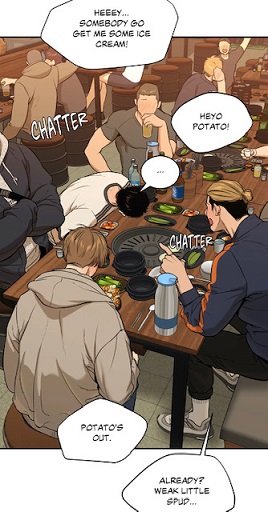 (chapter 9) It reflects a pattern: the champion is present but not included in the communal or emotional aspects of the gathering. His spoon and chopsticks function like a prop, much like the untouched knives and forks at the dessert meeting.
  (chapter 69)
 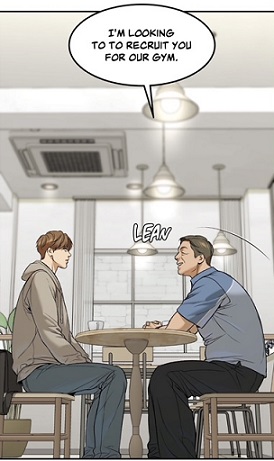 (chapter 48), the meeting between Choi Gilseok and Kim Dan. The former invited him for coffee.
 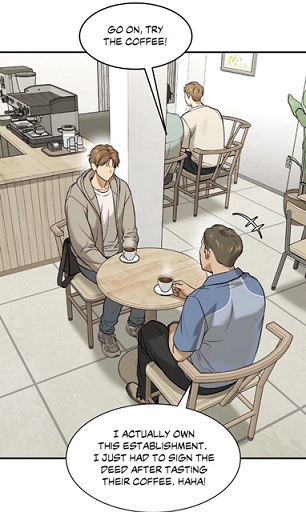 (chapted 48) At first, the gesture seemed generous—he offers a home, a car,
 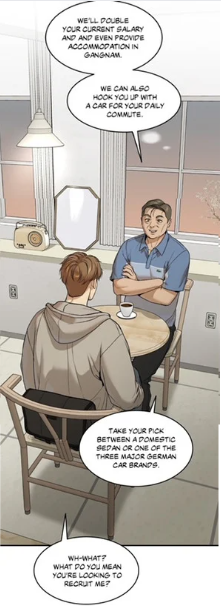 (chapter 48) and the promise to help doc Dan to get a new treatment for the grandmother.
  (chapter 48) But this so-called kindness is conditional: in exchange, Kim Dan must betray Joo Jaekyung. Striking is that director Choi only ordered coffee. But a coffee without a dessert is no real break, but a stimulant—fuel for continued work. In both this meeting and the previous one with Choi Gilseok, the core remains the same: “work”, stinginess and greed wrapped in the guise of generosity. Every sweet drink or dessert lies a hidden price. This comparison highlights that the current meeting is not for the athlete’s sake—it is meant to serve Park Namwook and the CEO, who share different but aligned goals.
 (chapter 66) linked to fire, summer (hence the reference to the trip in the States), passion, performance, and vitality—ironically twisted here into cold professionalism and superficial seduction. Her position contrasts with her symbolic warmth, highlighting the emptiness of her care. This explains why she is portrayed eyeless. She sold her “soul” to money and as such to the “devil”.
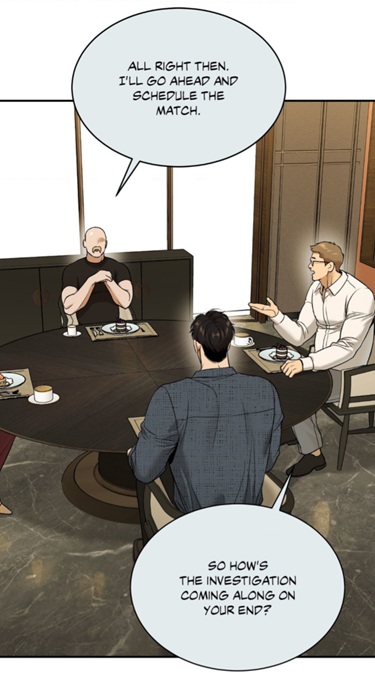 (chapter 69) wearing black, aligns with the North (흑, Heuk), associated with the color black, winter, water, authority, secrecy, and hidden control. It was, as if he was representing the missing glass of water. His position as the initiator of the meeting and his location near the window reinforce his dominance and detachment.
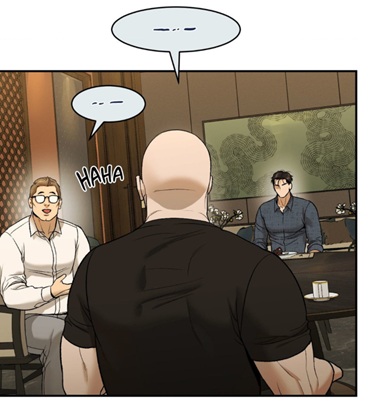 (chapter 69), which evokes confusion and corruption. This artistic backdrop continues the theme from Voyage, Voyage (life is a journey), positioning Jaekyung as mentally “adrift” within this orchestrated trap. At the same time, the green might reference the “Black Forest”—a literal and metaphorical journey ahead. Like Hansel and Gretel, he is being lured with sweets into the forest. But unlike the fairy tale, the athlete’s breadcrumb trail will not lead him home—it will lead him to Kim Dan. On the other hand, by making this connection, I couldn’t help myself thinking that exactly like Hansel and Gretel, doc Dan and his fated partner will cross the witch’s path on their journey to independence and happiness.
 (chapter 69) Notably, this outfit marks a shift from his previous appearances: during his public pose with Baek Junmin
 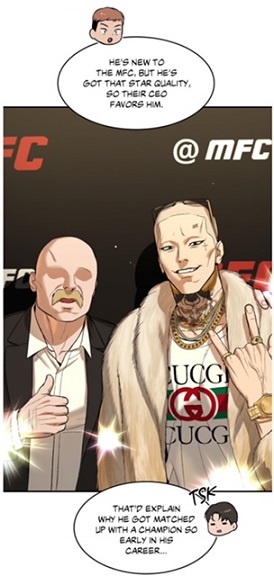 (chapter 47), he wore a formal black suit with a white shirt, signaling polished professionalism. When he met the champion in the States, his full black outfit resembled a manager’s uniform and a badge, signaling humbleness and authority but also a hands-on, corporate role.
  (chapter 37) Now, Joo Jaekyung mirrors this casual dark attire
 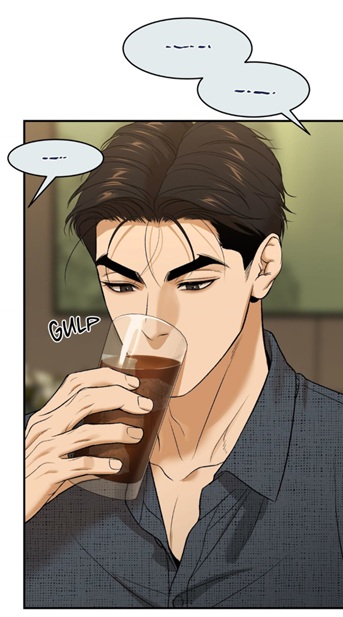 (chapter 69) —a signal of inner turmoil and his transition from his former life. Blue stands for loyalty, thought, and calm, while black alludes to his troubled past. He is evolving but not yet free.
 (chapter 69) In this world, ideals are hollow, and tradition is co-opted to mask self-interest.
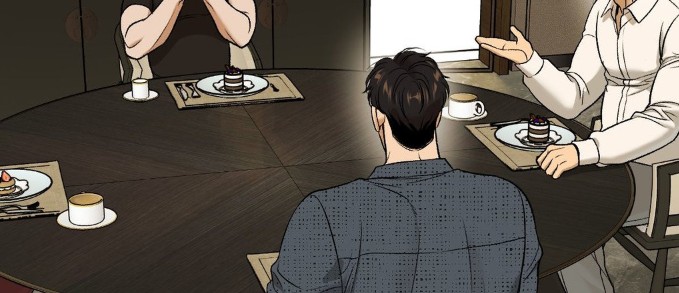 (chapter 69) the strawberry fraisier (chosen by the woman) stands for surface sweetness and seduction; the layered chocolate cake (perhaps a feuilleté) represents indulgence and opulence. Joo Jaekyung alone chose a square Black Forest cake—a form traditionally associated with structure, truth, and boundaries. Because the cake contains kirschwasser, subtly referencing the athlete’s brief brush with alcohol, it becomes clear that Park Namwook was not the one behind this order. Imagine this: under his very own eyes, the champion is encouraged to taste a strong alcohol. In my opinion, they must know that the star has been drinking. Yet, it was through Kim Dan’s presence that he stopped drinking, making this dessert an unconscious mirror of both his struggle and strength. Meanwhile, Park Namwook, ever the follower, selects the same dessert as the CEO and the same drink as the woman, revealing his pretense and pastiche once more. Since the manager has always bought junk food (chicken
 – chapter 26, hamburgers, ramen
 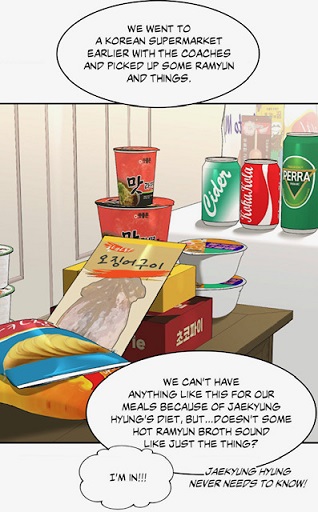 – episode 37), it becomes clear that the hyung simply has no idea about Western food in general and in particular expensive French or German dishes. That’s why he didn’t ask about the dish or questioned the champion if he should eat the deadly sweet cake.
  (chapter 22)
 (chapter 48), their meeting was not supposed to be secretive. On the other hand, because the scene was photographed
 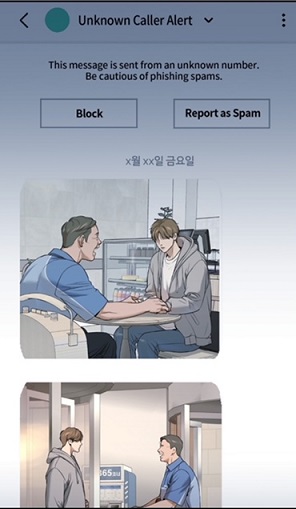 (chapter 48), it created the illusion of “betrayal” as it looked like a secret meeting”. In episode 69, the meeting is hidden from the public. In contrast to the earlier public appearance alongside Baek Junmin for the cameras
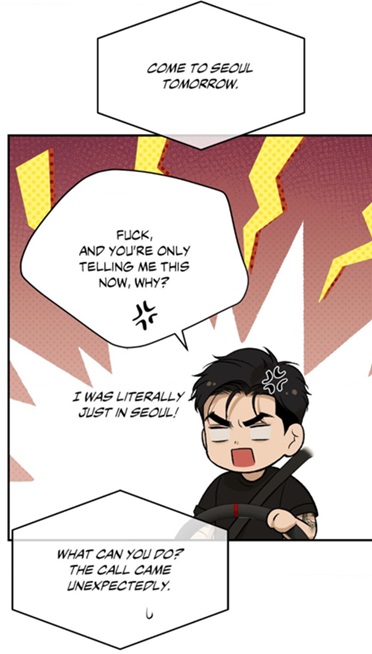 (chapter 69) This framing is deceptive: far from being a gesture of goodwill, it reveals the urgency and opportunism driving the meeting. However, this gesture is carefully staged: the CEO and the woman in red are the ones who selected the time and location of the encounter, placing the athlete in a reactive position where he must adjust his schedule to their convenience. It reinforces the illusion of privilege while concealing a dynamic of control. The meeting is designed to appear personalized, but it reflects MFC’s ethos that ‘time is money’—a business-centered logic that prioritizes efficiency over empathy. The CEO’s urgency to schedule a match, despite Jaekyung’s unclear health status, further exposes the commodification of the athlete. Notably, the proposed match is not even a title bout.
 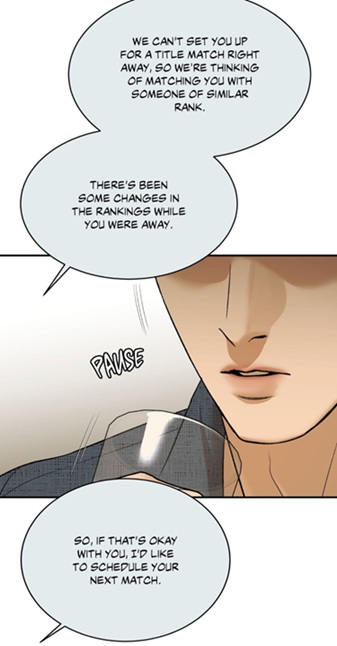 (chapter 69) This strategic omission likely serves to shield the organization from scrutiny, as a title match would demand full transparency around the champion’s ranking and physical condition—areas that may not withstand public examination. In truth, the meeting is not about offering the protagonist an opportunity, but about maintaining MFC’s narrative control while exploiting his fame. This framing is deceptive: far from being a gesture of goodwill, it reveals the urgency and opportunism driving the meeting. To conclude, the discreet setting implies that MFC is not interested in publicizing their dealings with the star, possibly to avoid scrutiny or backlash. The lack of transparency underscores the manipulative nature of this so-called “favor,” which ultimately serves the organization’s agenda, not the athlete’s interests. The problem is that this meeting is heard by doc Dan
  (chapter 69), hence the “future match” is no longer a secret.
  (chapter 67) He was not dropping the case. That’s the reason why the fighter is offered a match in the fall. If he is busy, then he might forget the “case”, especially since fall is right around the corner. He would be occupied training. Like mentioned in previous essays, my theory is that the CEO is involved in the scheme. This assumption got reinforced with this meeting. Striking is that the focus of the “chief of security” was the incident in the States.
  (chapter 69) By stating that the criminal belonged to a Korean gang in the States, she implied that this man had no direct connection in South Korea. In addition, with this statement, she claims that he is still in the States and the champion is safe. However, if the “fake manager” had been living in the States for a long time, he wouldn’t have spoken in Korean automatically.
  (chapter 37) In other words, she is trying to place the mastermind in South Korea.
 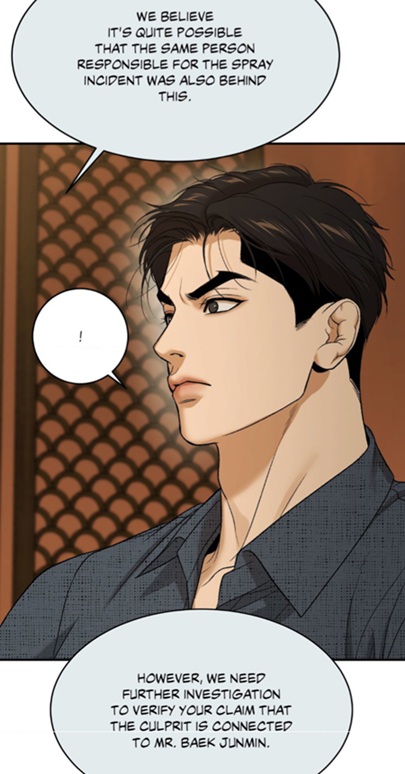 (chapter 69) This means that she is attempting to erase the involvement of MFC in the scheme. That’s why they are now offering an apology, which is naturally fake:
  (chapter 42), it dawned on me that MFC is actually treating the Emperor like a “cash cow”, they imagine that they can keep milking him. I could say, this encounter is exposing the reality to the athlete: Joo Jaekyung is treated like any other fighter. Hence there is no longer mention of Baek Junmin in the news. On the other hand, they have to vouch for Baek Junmin’s integrity
  (chapter 41) here the topic is avoided altogether—possibly due to the lack of actual clearance. Should a third-party hospital intervene, the match could be canceled. Secondly, Park Namwook assumes control of the timeline: a match in the fall means training now. But the champion is no longer dancing to his tune. He is meditating, admitting his exhaustion.
 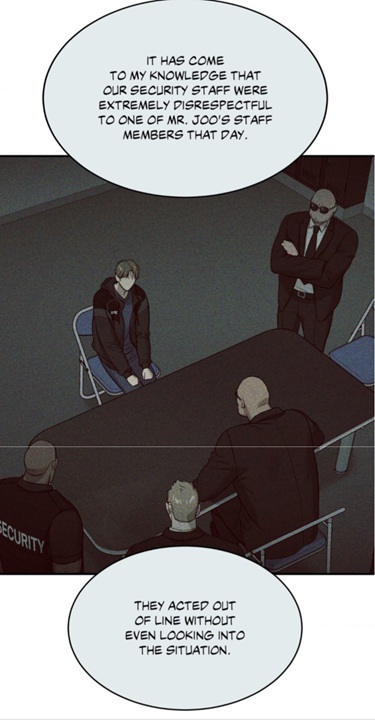 (chapter 69) So Joo JAekyung is more than a fighter and the apology (interrupted by the manager) is the evidence for this. Under this new light, Jinx-philes can understand Park Namwook’s interruption and embarassement. Not only he doesn‘t want to be reminded of his past mistakes (passivity, failure of his job, the slap), but also this apology serves as a mirror and reminder that he is not the true owner of the gym.
  (chapter 69) He is his unseen savior. Thanks to Kim Dan, the star remained silent and calm giving the impression that he had fallen for MFC’s trick.
  (chapter 40) This echoes Kim Dan’s confusion in Chapter 40 when interrogated in English. It also conveniently hides their ties to local authorities—acting as foreigners with no responsibility or rootedness in Korea. But this is what director Choi Gilseok confessed to the angel:
  (chapter 48) The business is rooted in the USA.
 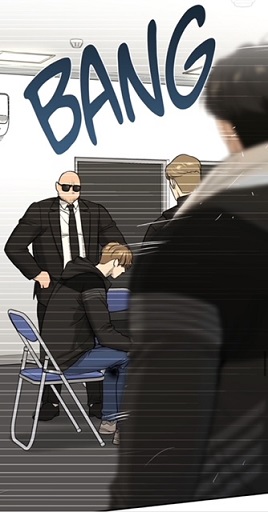 (chapter 40), effectively opening the metaphorical door to truth and protection. In this meeting, however, Park Namwook serves to contain and silence, not to defend. His placement underscores his complicity and fear—not just of the CEO or MFC, but of confronting the consequences of his own failures. But the manager is on his way for a rude awakening, he will be taught a lesson: don’t judge a book by its cover. The athlete won’t be the depressed, anxious, submissive and passive “boy” any longer. Moreover, he listened carefully to the chief of security:
  (chapter 69) It is Kim Dan.
 (chapter 69) he leaves during the day and arrives by night.
  (chapter 69) This spatial detachment echoes his emotional separation from MFC and its toxic grip. Distance, both literal and figurative, is now his strength. The fact that he chose to return to the little town outlines that he is now considering that place as his “home” and not the penthouse. He is not realizing that his true home is doc Dan.
  (chapter 32) During Kim Dan’s lunch with Choi Heesung, the floor beneath their round table shows a twelve-petal flower motif—evocative of the legendary Knights of the Round Table, who were said to sit twelve strong. That earlier scene featured Heesung testing Dan, much like the fake round table later hosts a veiled test for Joo Jaekyung. The repetition of round tables masks exclusion and betrayal. These early “false” tables pave the way for a true table—one that Jaekyung might one day forge with fighters like Heesung, Potato, Oh Daehyun, and others, where loyalty and respect, not manipulation, define the bond.




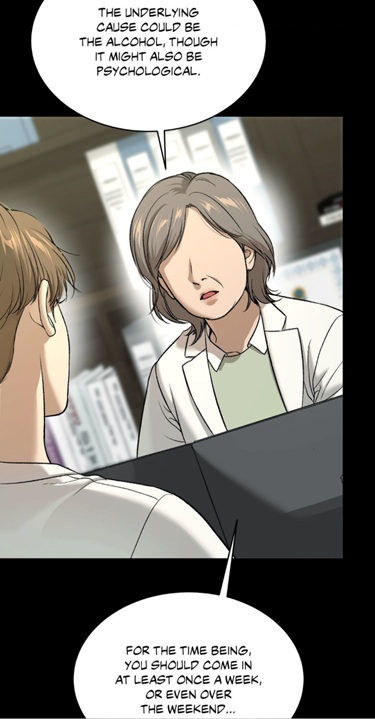 (chapter 67): the brief diagnosis, the recommendation for weekly visits, the specialist’s tentative attribution of Kim Dan’s condition to either alcohol or a possible psychological cause, emphasizing the need for continued observation and weekly visits before offering a definitive diagnosis —all standard responses. For her, this was a doctor following routine procedure without overstepping professional boundaries. However, I perceived her behavior very differently. I saw someone who remained emotionally detached and almost absent, reducing the complexity of Kim Dan’s condition to simplistic surface-level causes without genuine inquiry.
 (chapter 67) Rather than forming an independent assessment, she accepts the narrative of a third party, which introduces bias and limits her understanding. One might argue about that, because she is looking at a paper, probably result of a blood test which seems to corroborate the guardian’s statement. Hence the sleep specialist concludes that Kim Dan is suffering from insomnia, alcohol addiction and sleepwalking. The problem is that his statement is based on external observations (halmoni and the landlord) and their limited knowledge. Moreover, Jinx-philes should keep in mind two important aspects:
  (chapter 61) The champion had been himself suffering from similar symptoms which could be seen as a projection on his loved one. Additionally, based on previous observations, I have interpreted Kim Dan’s nightly walks not merely as sleepwalking, but as dissociative episodes—likely triggered by overwhelming guilt, unresolved trauma, and a chronic sense of disconnection from his body and surroundings. But how could the champion know about this? He’s not a doctor himself. In order to have a more accurate picture of the whole situation, she should have talked to the patient himself. But by relying on papers and the guardian’s testimony, she not only distances herself from the patient physically and emotionally, but also delegates the responsibility of interpretation. She is using the eyes of others.
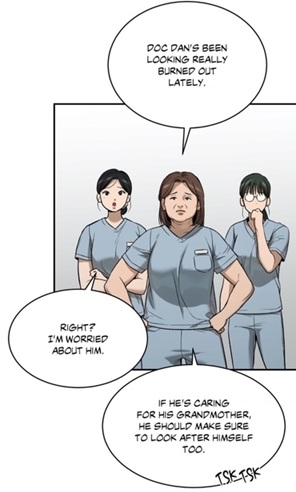 (chapter 57) Perhaps the doctor’s detachment is not indifference, but a survival mechanism in a healthcare system that demands efficiency over intimacy.
 (chapter 67) indicating that his alcohol addiction is not the real reason for his insomnia. Then she fails to examine Kim Dan physically, the desk is between them. Therefore she can not detect his visible malnourishment.
 (chapter 62) Moreover, both the landlord and the grandmother never brought up this aspect, though Shin Okja had observed this terrible transformation:
  (chapter 57)
 (chapter 66) It is because the physical therapist is just a number (2) and as such a file. Therefore the doctor is not seeing the patient as a human. I can not blame the woman either, for she has so many patients to treat during the day. And now look at the building of the hospital:
  (chapter 66). It is huge reminding me of a factory. This “modern hospital” with its sleek architecture, expansive buildings, and impressive specialization exudes a sense of advancement and trustworthiness. Yet beneath this polished surface lies a business-oriented structure, one that prizes efficiency, reputation, and patient turnover over genuine patient connection. This “modern hospital”
 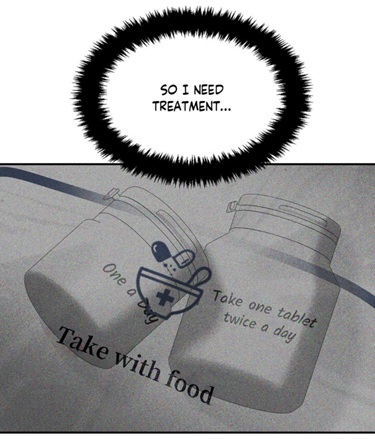 (chapter 67) She is doing exactly what Shin Okja wanted:
 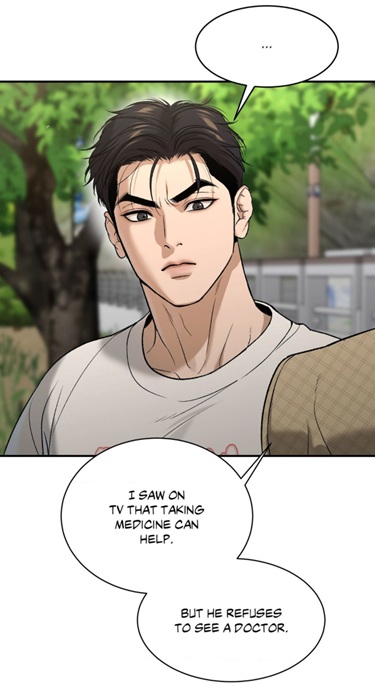 (chapter 65)
 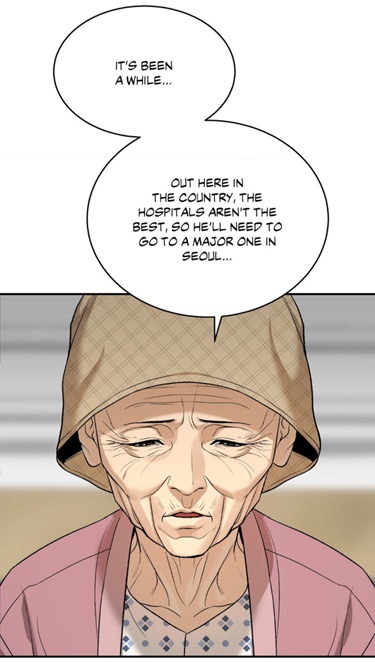 (chapter 65) It is as though thanks to the drug, the odd behavior from Kim Dan would simply vanish.
  (chapter 5) with the new medicine. On the other hand, it implies that the light-brown haired woman is doing her job for her paycheck which reminds me of Cheolmin’s statement:
  (chapter 13): “Oh no, no. That won’t do. My precious paycheck!”.
 (chapter 27)
  (chapter 49) as mere service providers. Whether it was brushing off medical advice with “Don’t push it, I know my body better than anyone else” (chapter 27) or demanding instant pain relief to continue training (chapter 49), the champion positioned himself as the ultimate authority over his own treatment. Since his attitude echoed the confession of my osteopath, it is understandable why my osteopath-orthopedist began to select his patients carefully. This mirrors Kim Dan’s evolution, when the latter chose to reject the champion’s offer. Indirectly, he is “learning” to select his job and not take them by opportunism. He is also learning to select his “patients”. Striking is that Shin Okja has a similar attitude than the athlete.
  (chapter 7) She desired to have a treatment with less side effects and less painful. And the moment she was confronted with reality, this painful new treatment only brought pain and nothing more, she chose to leave this institution and move elsewhere.
 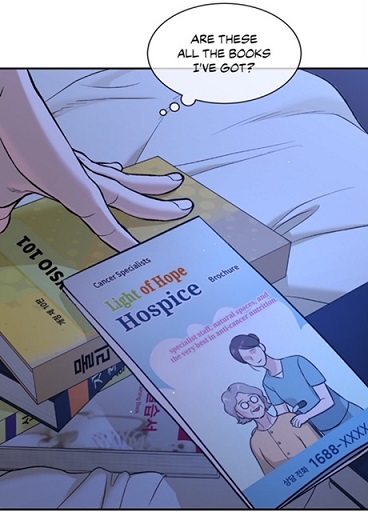 (chapter 53) Therefore it is not surprising that she is treating the protagonist the same way: she knows what is the best for him.
  (chapter 57) She is treating him like a service-provider, she is now rejecting that he has lost his “usefulness”. His pay here is not high, …
  (chapter 67) and not even following her recommendation.
 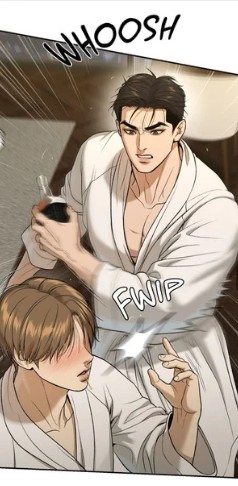 (chapter 67) He felt misjudged and misunderstood; reduced to a file number, not seen as a complex human being.
 (chapter 67) and second, what Kim Dan actually received as treatment:
  (chapter 13), in contrast, enters the story with no white coat at all. He carries only a doctor’s bag, dressed in a green pullover and a beige checkered shirt.
  (chapter 13) Despite this informal attire, he immediately recognizes Kim Dan’s symptoms and engages both the guardian and the patient. He doesn’t need institutional support to assert authority; his presence and diagnostic clarity define him. While his clothes might elsewhere be read as conservative or emotionally restrained, here they highlight that care can come outside rigid systems.
  (chapter 13) Quite the opposite. He doesn’t hide behind his distance; he manages it. His approach is practical and grounded, but never cold. He doesn’t wear a white coat, yet he brings with him a doctor’s case and an unshakable sense of responsibility. His tools are simple (his own body),
  (chapter 13) It bridges the gap between roles, making the patient feel seen rather than categorized.
 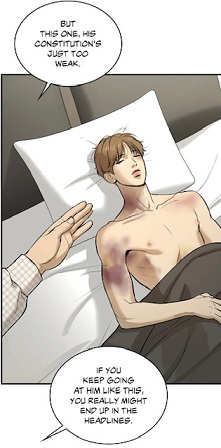 There’s no judgement in their relationship. The eyeless doctor may appear neutral, but in truth, she is hollow. Cheolmin appears reserved, yet his actions speak with empathy. Where she recites guidelines, he initiates dialogue.
  (chapter 13) Where she avoids involvement, he offers engagement.
  (chapter 61)
  (chapter 67), the Light of Hope hospice
  (chapter 61), the sleek University hospital dedicated to research
  (chapter 5), and more intimate yet modern facilities like this one.
 (Chapter 27) Each medical setting not only has its own architecture but also its own moral blueprint. In the essay “
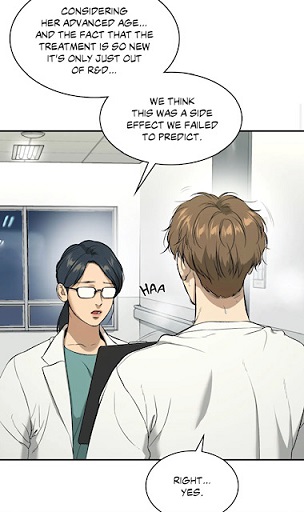 (chapter 21) Then the treatment’s failure is attributed either to the grandmother’s frailty or Kim Dan’s late arrival and absence, subtly shifting blame.
 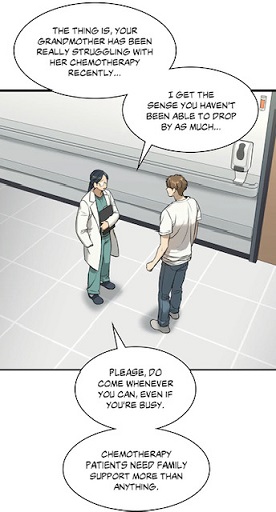 (chapter 21) Like mentioned before, this treatment wasn’t even properly recorded in the patient file raising the suspicion of deliberate concealment.
  (chapter 56) It appears as “pain killers”. Her open white coat
 (chapter 48) got aware of Shin Okja’s conditions, implying that patient confidentiality had been breached.
  (Chapter 61): In contrast, Park Junmin
  (chapter 61) represents the polished face of a business-oriented clinic. While his office projects sleekness and personalized care, his comments betray his priorities. He praises Joo Jaekyung’s fame and urges a return to the ring—not out of medical concern, but because it would guarantee the champion’s return as a paying patient. He wants to retain a high-profile client. His friendliness is strategic.
  (chapter 61), highlighting that the athlete has become aware of what genuine care should look like. When the champion calmly declares, “I’ll be receiving rehabilitation services in another hospital,” Junmin answers with a stunned “Sorry?”. But this is not confusion. It’s a reflexive mask for shock. He did not expect to lose control of the situation. Beneath that one-word response lies disbelief, disappointment, and veiled panic. He’s losing a lucrative patient—and more importantly, a public endorsement. The moment exposes how fragile his authority truly is when faced with a patient asserting autonomy. Let’s not forget that when the champion was facing a mental and emotional breakdown, the latter offered no other support than “rest”. He even avoided his gaze.
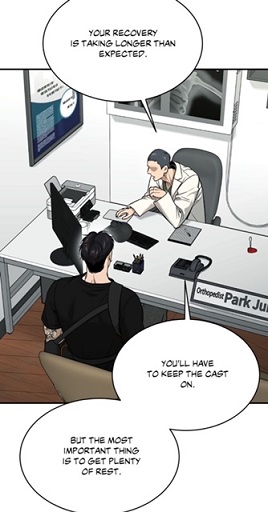 (chapter 54) The athlete was left on his own.
 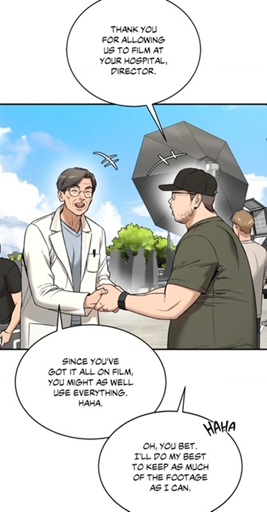 (Chapter 59): At first glance, the hospice appears to be underfunded and outdated.
  (chapter 61) However, its director breaks expectations. Unlike the smooth-talking or indifferent doctors at larger institutions, he is directly involved in patient care.
  (chapter 60), criticizes people for their rude behavior
  (chapter 59) or actively disciplines staff
 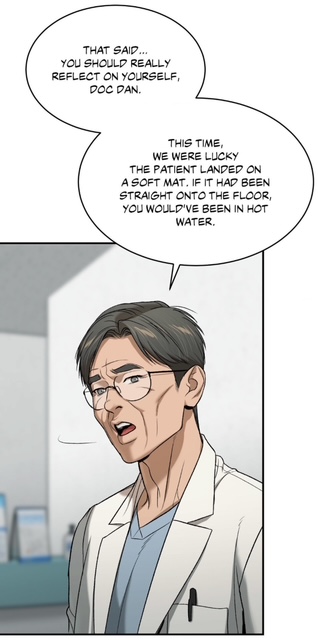 (chapter 59) when mistakes are made. Though he also flatters the champion
  (chapter 61) and sees promotional potential, he never exploits patients.
  (chapter 61) The juxtaposition of humility and responsibility in his demeanor, combined with his stunned reactions to sudden events, suggests an overworked and understaffed environment—but not one without moral grounding. His white coat and blue medical uniform echo the nurses’ attire, subtly promoting a sense of equity among staff. Despite being a director, he doesn’t separate himself from frontline caregivers. His uniform also contrasts with the green worn by Kim Miseon or Park Miseon, suggesting a focus on practical responsibility over prestige. By blending in with the team, he fosters a culture of shared accountability, not rigid hierarchy. Among all institutional figures, he comes closest to balancing authority with integrity.
  (Chapter 6): While this figure appears authoritative
 (chapter 1), the details of his attire tell another story. Wearing a suit beneath his coat implies professionalism, but here it also suggests a business-driven mindset. The coat becomes a sleek outer layer masking deeper intentions. His charming demeanor conceals a more sinister reality—he weaponizes authority for personal gain. His use of professional attire isn’t about respectability but manipulation. Beneath the surface, profit, control, and coercion drive his actions.
  (chapter 1) The white coat, in his case, is not a symbol of healing but a façade for exploitation. drives his authority. The coat becomes a literal cover for abuse—harassment disguised under professionalism. His entire persona is a façade: calculated, charming on the surface, but predatory and morally bankrupt beneath.
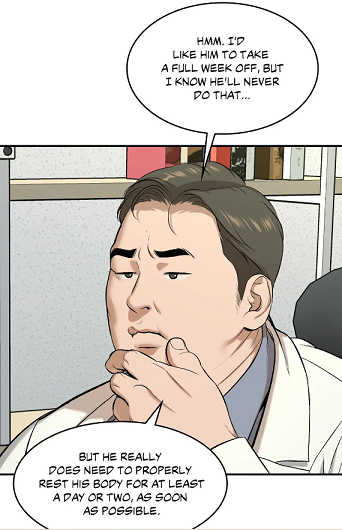 (chapter 27) His gray shirt signals a more relaxed approach,
 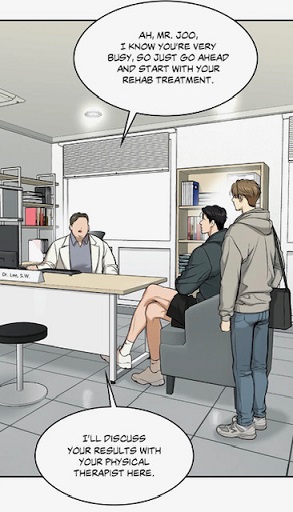 (chapter 27) and his facial expression conveys a certain empathy—though his words also betray resignation. He sits beside the patient, not opposite, visually erasing the typical hierarchical divide between doctor and athlete. His recommendation that Joo Jaekyung rest is gently delivered, but he knows it will likely be ignored. He represents the tension between medical idealism and the pressures of athletic performance. He is trying his best to protect Joo Jaekyung’s career.
  (chapter 27) Notably, he doesn’t chase fame or loyalty—he’s realistic, yet still rooted in care.
 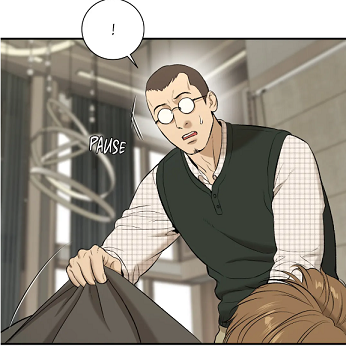 (chapter 13) Finally, Cheolmin exists outside the hospital system. He wears no white coat, but his behavior mirrors a true physician’s. He diagnoses accurately, gives immediate advice, and engages both patient and guardian. His attire—a shirt layered under another—might suggest emotional restraint, but it doesn’t interfere with his actions. He jokes and teases, breaking through tension and inviting trust. He acts not because protocol demands it, but because someone needs help. That’s enough.
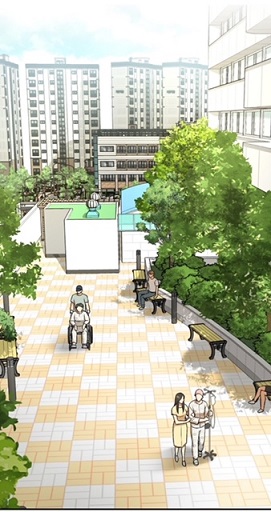
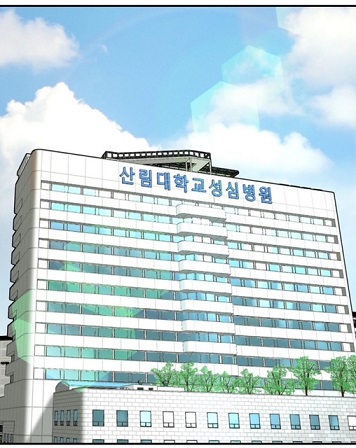 (chapter 41) nature is neatly confined. Rooftop gardens and structured greenery exist, but more as visual accessories than lived environments. The hospital is a towering research center, representing scientific advancement—but also bureaucratic coldness. Here, nature exists to impress, not to comfort. This artificial balance between concrete and green reflects a clinical detachment: nature is curated, not embraced. It aligns perfectly with Kim Miseon’s demeanor—professional, pristine, but ultimately distant and ambition-driven.the environment feels controlled.
  (chapter 41)
  (chapter 54) where Joo Jaekyung receives treatment, the rooftop greenery appears remote and ornamental, disconnected from patient care.
  (chapter 18) modern, and set among scattered trees.
  (chapter 18) Large windows suggest openness and transparency—the very qualities Dr. Lee brings to his interaction. This is a space that, while modest, is genuinely attentive. Here, nature doesn’t impress, it is integrated in the landscape. The park is not surrounded by huge buildings.
 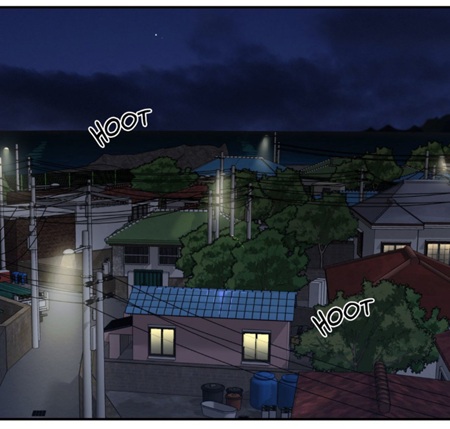 (chapter 65) nestled in the countryside and far from institutional rigidity, emerges as a space of true potential. In returning there, Joo Jaekyung and Kim Dan are not just escaping their past—they are moving toward a form of healing that modern hospitals imitate but rarely achieve. Closer to nature, they are closer to themselves. If hospitals imitate forests, the village becomes the forest. And in that simplicity, Jinx suggests, real happiness might grow.
 (chapter 62) surrounded by greenery, animals, and people who don’t treat him as a product—his health improves. His muscles may still ache, but mentally and emotionally, he is lighter.
  (chapter 57) It lives where no one is watching and no one is billing. In Jinx, the real medicine lies outside the chart—in the dirt on borrowed floral pants, in sweat earned under open skies. Nature becomes the unspoken vow that systems forgot.
 Bebebisous33s' analyses in K-Dramaland and Manhwas