Protected: Jinx: The Fabric 👕 Of Silence 🧶

Bebebisous33s' analyses in K-Dramaland and Manhwas
Analyses of K-dramas and Manhwas (for the most part Yaoi)



Please support the authors by reading Manhwas on the official websites. This is where you can read the Manhwa: Jinx But be aware that the Manhwa is a mature Yaoi, which means, it is about homosexuality with explicit scenes. Here is the link of the table of contents about Jinx. Here is the link where you can find the table of contents of analyzed Manhwas. Here are the links, if you are interested in the first work from Mingwa, BJ Alex, and the 2 previous essays about Jinx I Love You and The Wolf’s Ritual in front of the Tender Mirror
It would be great if you could make some donations/sponsoring: Ko-fi.com/bebebisous33 That way, you can support me with “coffee” so that I have the energy to keep examining Manhwas. Besides, I need to cover up the expenses for this blog.
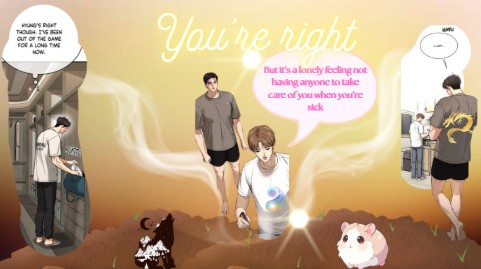
My avid readers might have been wondering why I haven’t released a single analysis yet. The reason is simple. I had a lot of stress at school (many staff meetings, school trips to plan etc), hence I had no energy left for Jinx. However, I want to publish one before the release of episode 77. Why? It is because this number is magical.
The release of chapter 77 comes charged with symbolic weight. In numerology, seven resonates with truth and inner searching and as such spiritual awakening; doubled, as in 77, it points to equity and communication — two forces balancing, two voices meeting. It is precisely this symmetry that hovers at the close of chapter 76, when Joo Jaekyung, long defined by victory, utters for the first time: “I lost.” 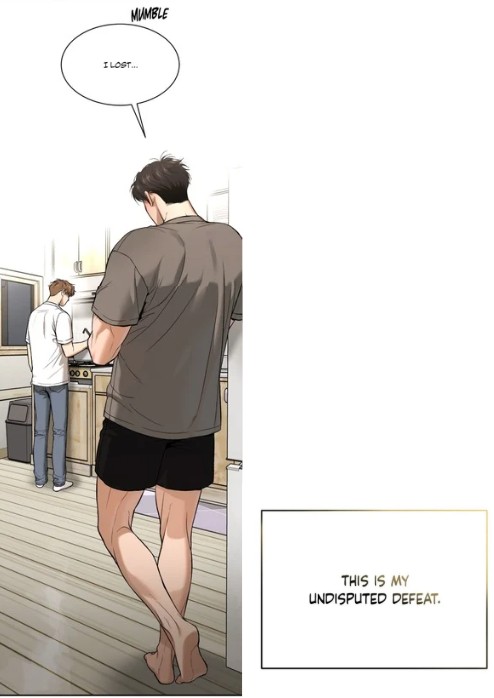 (chapter 76) This admission is no mere reversal of pride. It gestures toward something Jaekyung has never known: an exchange that does not end in domination or silence, but in dialogue. For Kim Dan, too, it marks a turning point.
 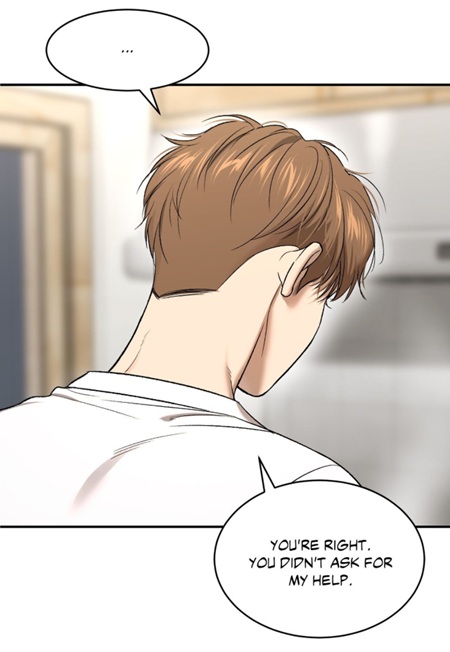 (chapter 76) For the first time, he uses the expression you’re right in front of his fated partner. He seems to concede with this idiom. Yet this apparent submission hides a deeper reversal. By admitting Jaekyung never asked for his help, he redirects the exchange toward his own truth: the loneliness of having no one to care for you.
 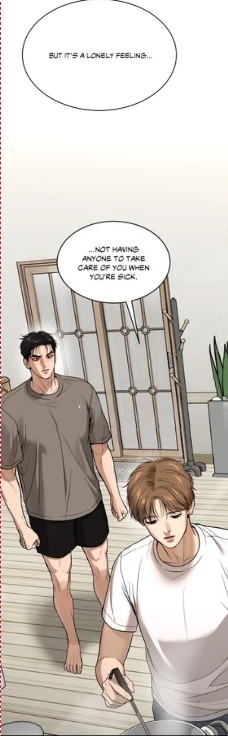 (chapter 76) What unfolds in the kitchen is not a quarrel about porridge but a fragile recognition. Dan’s “You’re right” acknowledges Jaekyung’s perspective without bitterness, while Jaekyung’s “I lost” (chapter 76) is his clumsy way of saying the same. Both, in their own idiom, admit the other is right — without denying their own truth. And tellingly, they deliver these words without facing each other. The absence of direct confrontation allows something new: not a fractured dialogue, but the first exchange built on respect. The opposite to these “challenges”:
  (chapter 9)
 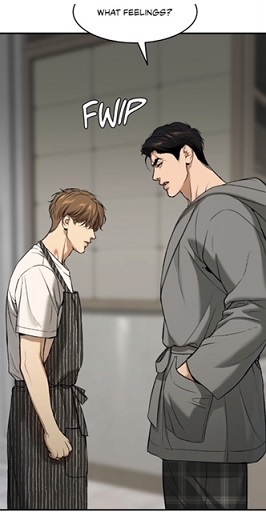 (chapter 45)
Chapter 77 therefore promises not another contest of wills, but a true sharing of thoughts. The future episode, with its doubled sevens, embodies equity and communication: two truths, mirrored, balancing, a new version of the champion’s nightmare:  (chapter 76) The kitchen scene closes one cycle and announces another. (chapter 76) What follows is an attempt to untangle why Jaekyung has always spoken in the language of winning and losing, how Dan has always yielded ground with his refrain “you’re right,” and why their exchange over porridge finally reverses the logic. The rest of the essay will trace how this “loss” becomes the champion’s first victory in love.
Victory and loss — where does such a vocabulary come from? Such a mind-set seems almost natural for an athlete, whose life is measured in wins and defeats, belts and rankings. It is tempting, then, for Jinx-philes to assume it is Jaekyung’s own invention — the stubborn creed of a fighter who admits in chapter 76 that he was “single-minded about winning.” (Chapter 76) In this view, his fixation would be the product of ambition, pride, or ego: the expected cost of survival in a cage where only victory pays.
But that confession, full of sweat and self-loathing, risks being misunderstood if we take it at face value. The truth is revealed in the next panels: he never formed deep connections (chapter 76), because the adults in his life cut them off before they could exist. Winning became his only mode of survival because every formative argument in his youth ended in defeat, and not the kind decided by a referee. With his father, mother, coach, and manager, words never led to recognition — only to insult, silence, utility, or obedience. He learned early that dialogue could not protect him; only victory could. His victories were not chosen freely, but forced into being by guardians who made him feel like a burden, until relationships themselves became burdens.
With his father, argument was domination. Every interaction or exchange ended in violence or insult, the cruelest of which was the comparison to his mother: 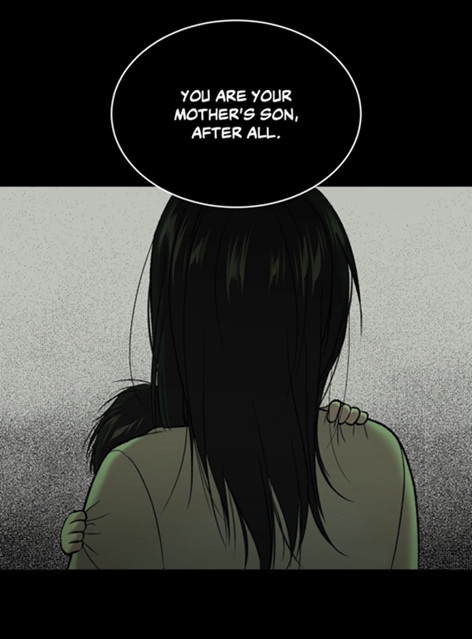 (chapter 73) He was a loser because of his mother. To lose meant humiliation and rejection; to speak at all meant to invite contempt. The only possible rebuttal was victory — to prove through strength that he was not the pathetic, worthless child his father saw in him. Winning became his sole argument against a man who would never listen, the only way to resist being branded a loser.
This logic crystallized on the morning (dawn) of their last confrontation. Bleeding but defiant, the boy hurled back the father’s words:  “(chapter 73). It was not just defiance; it was a vow that victory would silence abuse once and for all. When he returned with the trophy, he shouted triumphantly,
 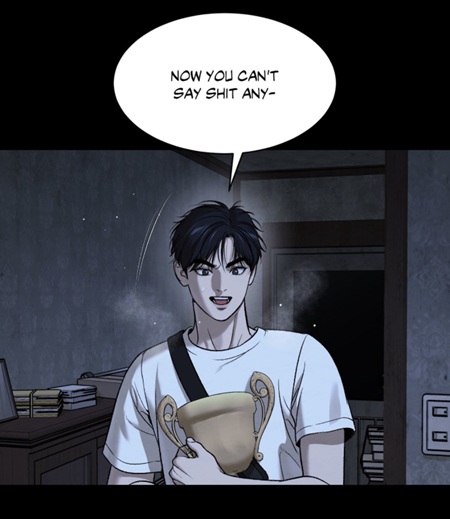 (chapter 73) ready at last to claim, “I was right.” Yet reality betrayed him. His father’s death denied him the only acknowledgment he had sought.
 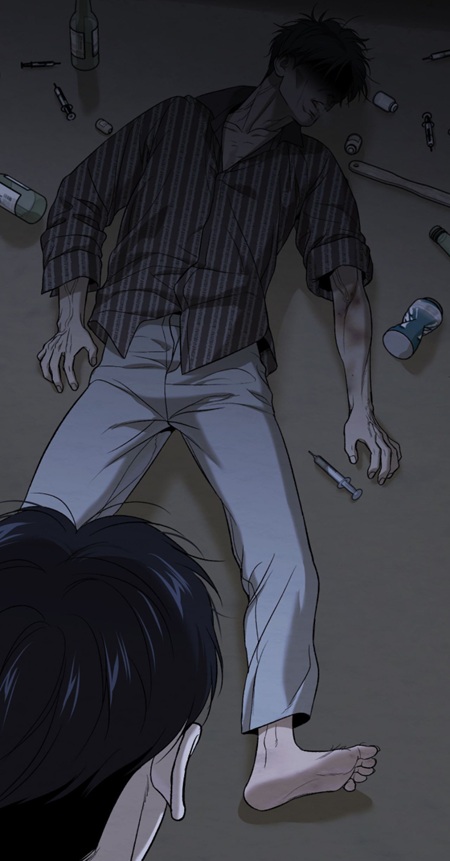 (chapter 73) The words “I was right” died in his throat. He had proved himself, yet there was no one left to recognize it. His own prediction — that his father’s death would mean nothing — proved false. The absence cut deeper than the insults had, leaving Jaekyung not with triumph but with the bitter aftertaste of self-loathing. Victory had silenced his father, but it also silenced the son. He had proved himself, yet there was no one left to hear it.
  (chapter 74) At the funeral he remained dry-eyed, his face locked in shame (ch. 74). No one saw his guilt, but it consumed him: the one man he needed to hear “I was right” from could no longer answer. At the same time, his smile and laugh were also linked to misery. For Jaekyung, laughter was never the sound of joy, but the echo of mockery and rejection due to the father. Just as tears became tied to betrayal and abandonment through his mother, so too did his father twist laughter into a weapon
 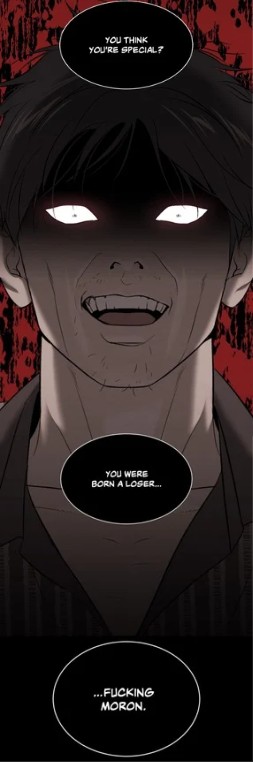 (chapter 73) — every laugh at his expense reinforcing the verdict that he was weak, pathetic, a loser. In Jaekyung’s childhood vocabulary, neither laughter nor tears could carry warmth. Both were stripped of comfort and redefined as signs of humiliation and pain.
From then on, the champion’s victories were haunted. Each belt raised was a mute confession to a dead man, proof delivered into silence. What looked like arrogance from the outside was in fact self-loathing: every triumph reminded him of the futility of winning arguments when no one was left to listen.
With his mother, argument was absence disguised as care. Unlike his father, she did not break him with fists or insults but with promises and justifications that placed the burden on him.  (chapter 72) To the boy, she was not silent at first: she must have definitely told him to become strong, to endure, to wait. She gave him her number, leaving the illusion that her departure was not abandonment but necessity. Victory and wealth became her conditions for love. That is why he swore over the payphone to work hard
 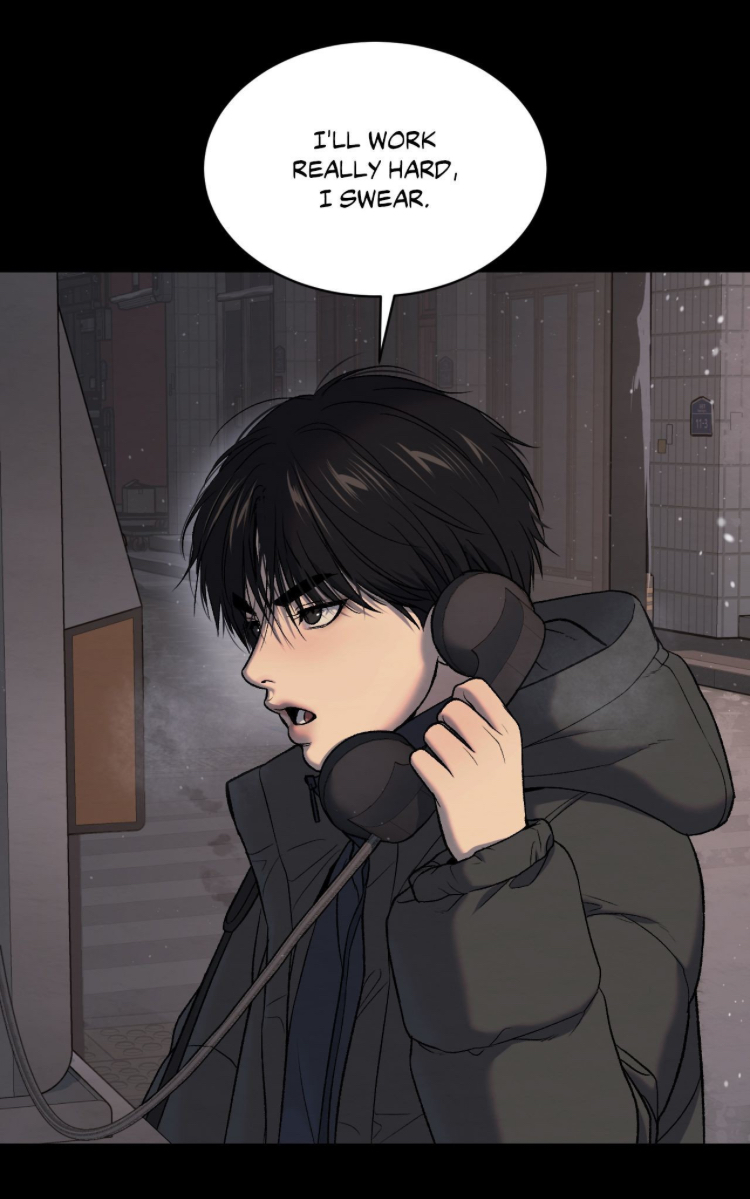 (chapter 72) and “make money” so she could return, and why after his father’s death he still hoped for her homecoming.
  (chapter 74) But when the calls went unanswered, her silence became the sharpest weapon of all. Her eventual reply
 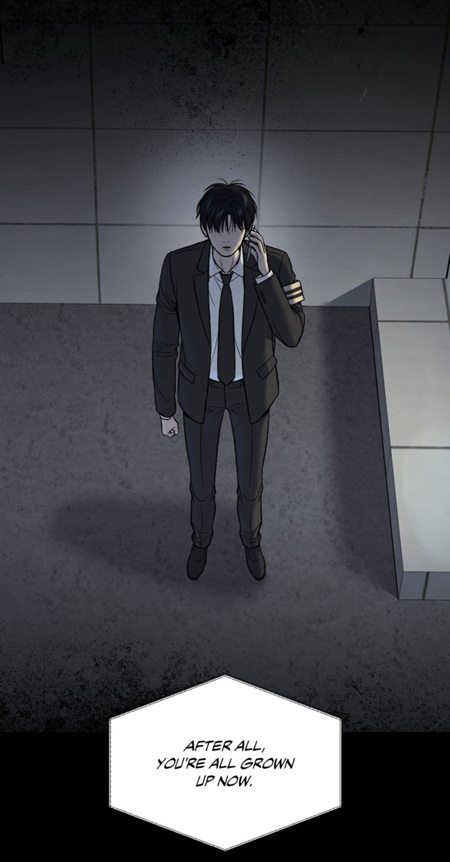 (chapter 74) confirmed that his effort had never mattered. For the first time, he cried
 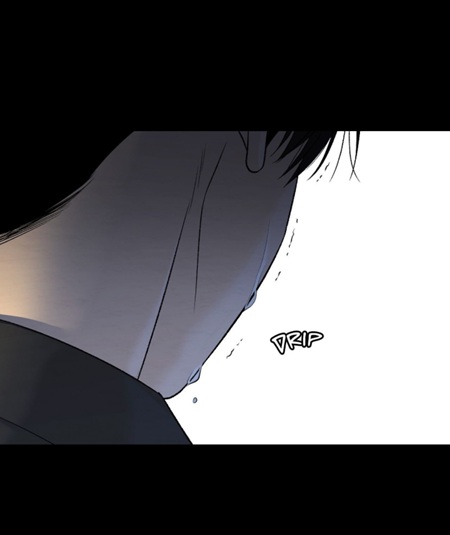 (chapter 74), his tears expressed not just grief but the recognition of betrayal. From then on, tears themselves became equated with loss, weakness, and abandonment. This is why, in the wolf’s nightmare, Dan’s crying form
  (chapter 76) appears: the sight of tears recalls the moment he unconsciously realized that even his mother’s “you’re right” was a lie. At the same time, those tears function as a mirror. The champion projects onto Dan the very weakness he has always forbidden himself to show. (chapter 76) That’s why they are facing each other. This vision confirmed my previous interpretation, the physical therapist is the athlete’s tender reflection.
Yet the nightmare reveals even more. Notice their positions: Jaekyung faces Dan as though locked in an argument, but the words he utters — “Where are you going?” — strike at the heart of his own abandonment. As a child, he had no right to question his mother’s departure; he could only trust her excuse. Now, in the dream, Dan becomes the mirror of every adult: the father who could not cry, the mother who perhaps cried but still left silently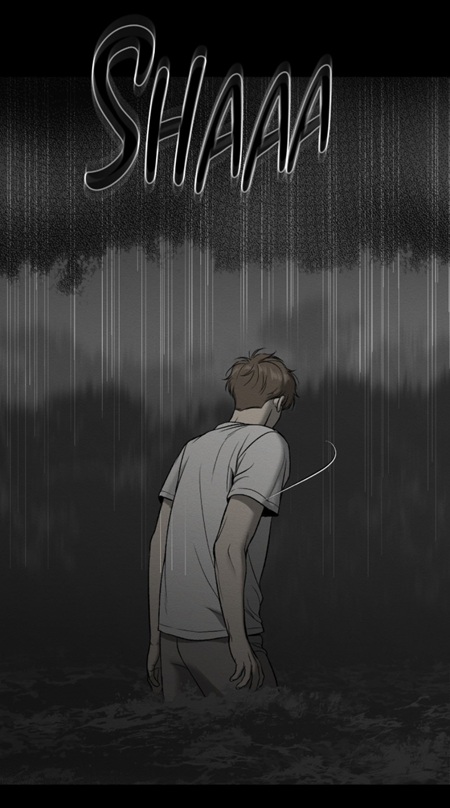 (chapter 76), the boy he once was who longed to weep but had to swallow it down. At the same time, Jaekyung himself occupies the place of the “adult” — (chapter 76) the sinner, the one guilty of causing tears. This double vision displays his self-loathing. Thus I deduce that before meeting doc Dan, in the wolf’s psyche, tears were not simply weakness but hypocrisy, a performance that masks betrayal. How do I come to this interpretation? It is because during their last phone call, the mother shed no tears (chapter 74), she only made requests!
  (chapter 74) Hence the wolf’s tears were quickly replaced by rage and violence.
 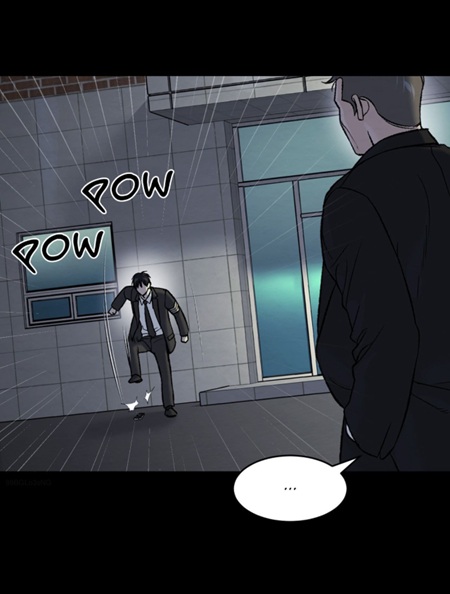 (chapter 74)
Yet the nightmare does more than replay old pain. (chapter 76) It stages his first fragile attempt at connection. The positioning is crucial: though Jaekyung stands opposite Dan as though in an argument, he shows an interest in his fated partner. He is curious and worried about him. For the boy who once believed strength and silence were the only defenses against humiliation, this hesitant query is revolutionary. He is no longer trying to win, but to reach. Hence he attempts to stop doc Dan from leaving. 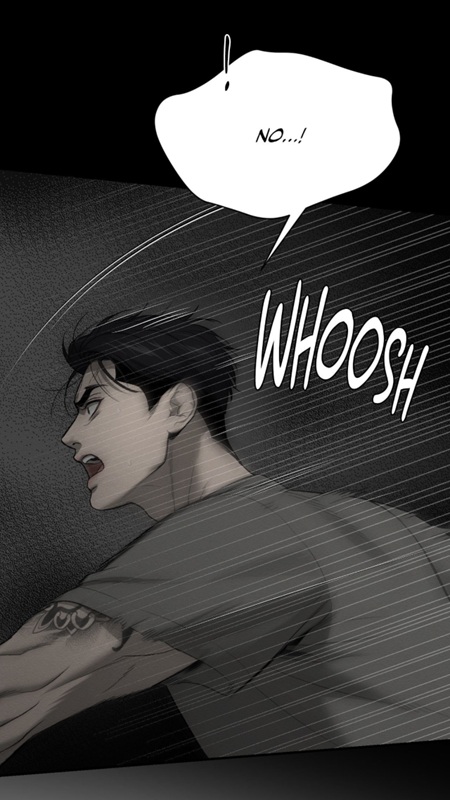 (chapter 76) His trembling hand upon waking
 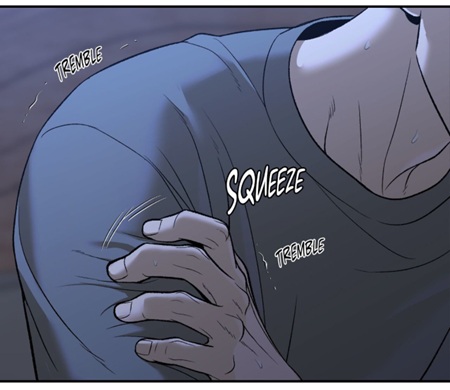 (chapter 76) shows the yearning to be held, comforted, reassured — something he never received from either parent. He is not entirely responsible for the physical therapist’s suffering. And here lies the difference: Dan’s tears are not manipulative or hypocritical , like the ones Jaekyung suspects from his mother, but unfiltered honesty. He expressed his emotions, not just through tears, but also through body language!
  (chapter 1) He was shaking, he was bowing and asking for forgiveness! Dan embodies a form of vulnerability that is real, legible, and forgiving contrary to the mother. When the teenager heard his mother’s voice after such a long time, the latter never brought up her past action. She never asked him for forgiveness.
In this sense, the nightmare foreshadows Jaekyung’s confession in the kitchen. (chapter 76) By following him and acknowledging Dan’s suffering and sincerity, he begins to dismantle his old associations of tears with betrayal. Facing Dan means facing his inner child: the boy who once begged his mother to return, and who still waits to be told that his effort mattered. In this way, apologizing to Dan becomes a form of apologizing to himself — a step out of self-loathing and into the possibility of communication.
If Jaekyung’s father embodied domination and his mother abandonment, Hwang Byungchul represented blindness and passivity disguised as authority. His flaw was not cruelty but compliance: he never questioned the “mothers” in his life — not his own  (chapter 74), whose quiet devotion and silence kept the gym alive, nor Jaekyung’s, whose absence he accepted without challenge.
  (chapter 72) In fact, his own mother’s submission reinforced this flaw: her blind trust in her son, her refusal to question his choices and the boxing world, taught him that authority need not be examined, only endured or seen as trustworthy. For him, hierarchy was unquestionable, and so he perpetuated it. Thus he stands for lack of critical thinking. This is why, with Hwang, the vocabulary of “right” and “wrong” was never about dialogue but about obedience. No wonder why he became so violent at the police station.
  (chapter 74) Unlike Jaewoon’s domination or the mother’s evasive silence, Hwang cloaked his authority in the language of advice — yet beneath it lay a black-and-white dualism: winners and losers, villains and victims. Thus Joo Jaewoon was blamed for becoming a thug
  (chapter 74), while the wolf’s mother was a victim. He viewed her as a selfless and caring mother:
  (chapter 74)And observe how he provoked the main lead.
  (chapter 74) When Hwang sneers, “What, am I wrong? Come on, answer me!” he is not inviting dialogue — he is staging a trap. The question is rhetorical, a demand for submission. Let’s not forget that he had witnessed the phone call in front of the funeral hall, but back then he had done nothing. And when the boy hesitates
  (chapter 74), unable to answer, Hwang strikes him in the chest.
  (chapter 74)and justifies his action behind social norms.
 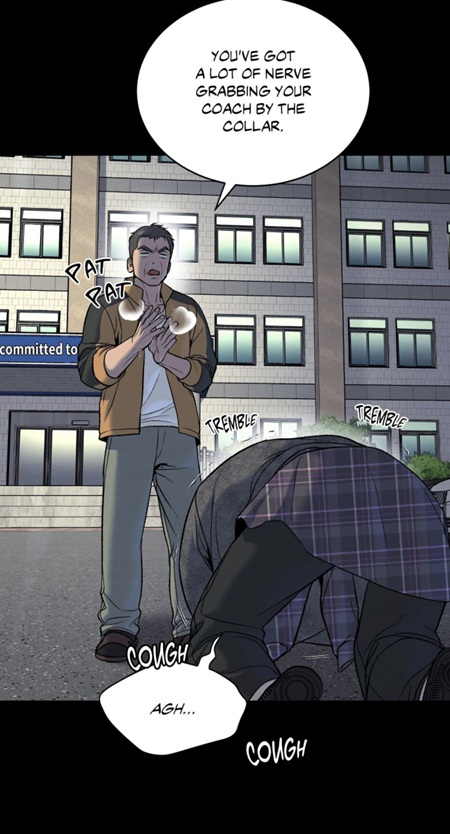 (chapter 74) In that instant, he takes the role of judge, referee, and executioner, collapsing “argument” into violence. The very words “Am I wrong?” contain the irony: the coach is less interested in truth than in reasserting his own authority. Silence is treated as guilt, hesitation as defeat.
When Jaekyung bowed to him  (chapter 74), he effectively admitted “you’re right” to the coach. Yet this wasn’t simply genuine agreement — it was submission, respect mixed with survival. The director misread it as validation of his worldview. This only reinforced his certainty, encouraging him never to reconsider his role.
  (chapter 74) When the protagonist finally left, the director could declare with satisfaction:
  t(chapter 74).
Crucially, his phrasing matters: he does not say “I’m right,” nor does he grant the fighter subjectivity with “you’re right.” Instead, “that’s right” casts Jaekyung himself as the object of judgment — a boy who fits into Hwang’s pre-set narrative of failure. At the same time, this word “that” could be seen as a reference to social norms. The words externalize responsibility: “that” is what defines the relationship between the director and the main lead. They are not a team or a family. The director of the boxing studio was forced to become “responsible” for the teenager, because the police had called him, not because of choice or empathy. He had become his guardian from a moral and social perspective. 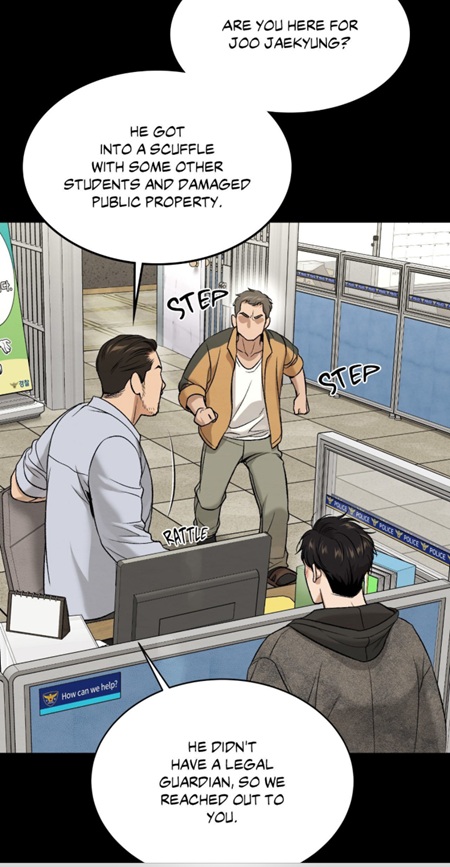 (chapter 74) The reality was that the old man had never truly become the star’s home and family, which explains why he constantly leaned on other adults, the mother or the father, to provide the guidance he himself refused to give. At the same time, I come to the following deduction: he must have lost his boxing studio, and with its vanishing, the elder was forced to face “reality”: loneliness, sickness and absence of happiness in his life!
And even decades later, his mentality hadn’t changed. Speaking to Dan, he cast the same black-and-white judgment: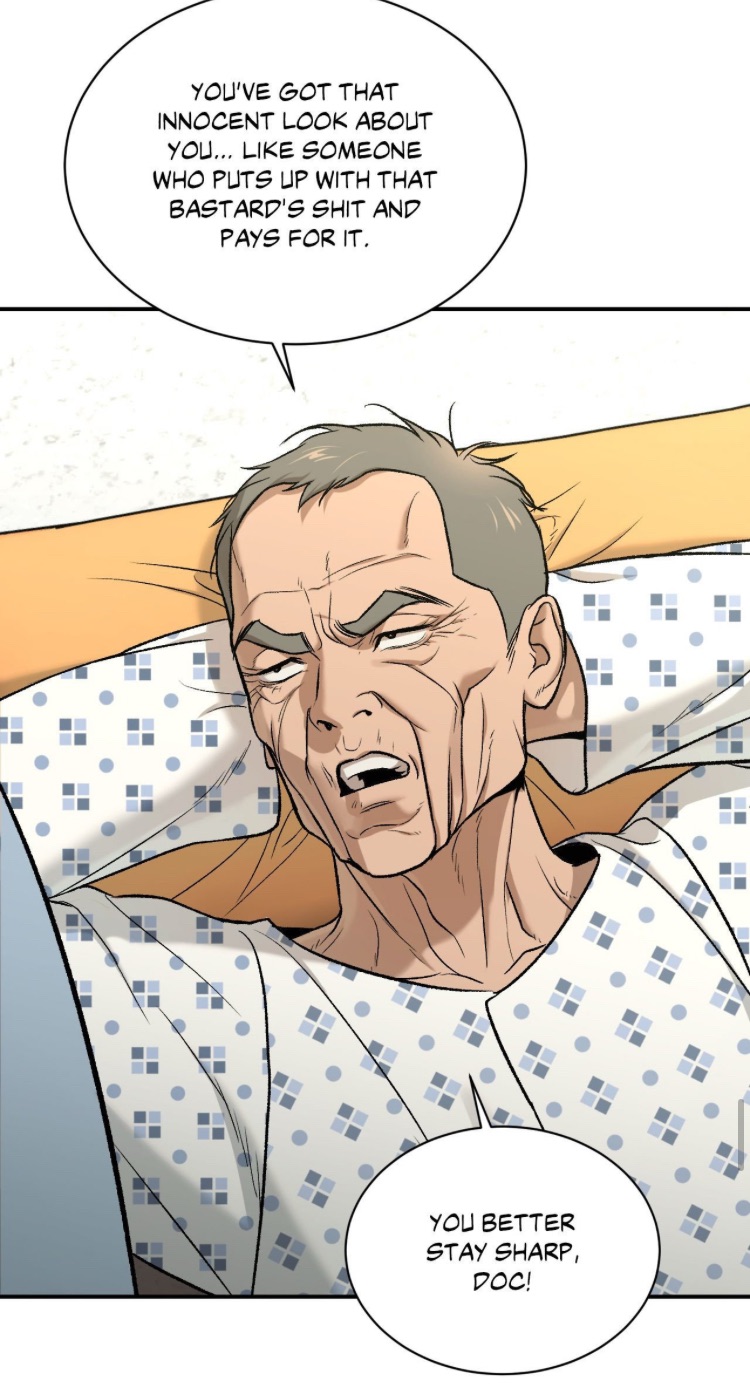 (chapter 70) Once again, Jaekyung is reduced to “that bastard” — a label, not a person — while Dan is framed as the pitiable victim. The old coot remains the righteous observer, untouched by guilt, protected by a rhetoric that always shifts responsibility elsewhere.
But the champion’s visit changed everything. The boy he once pushed away, the “bastard” he never claimed, still remembered him and returned.  (chapter 75) He was happy again, though he initially tried to hide it. We have to envision that before the wolf’s visit, the elder had to face what his own life outside the gym looked like: sickness, solitude, the collapse of the studio that had sustained him and came to resent the main lead. Yet, Joo Jaekyung’s behavior changed everything:
 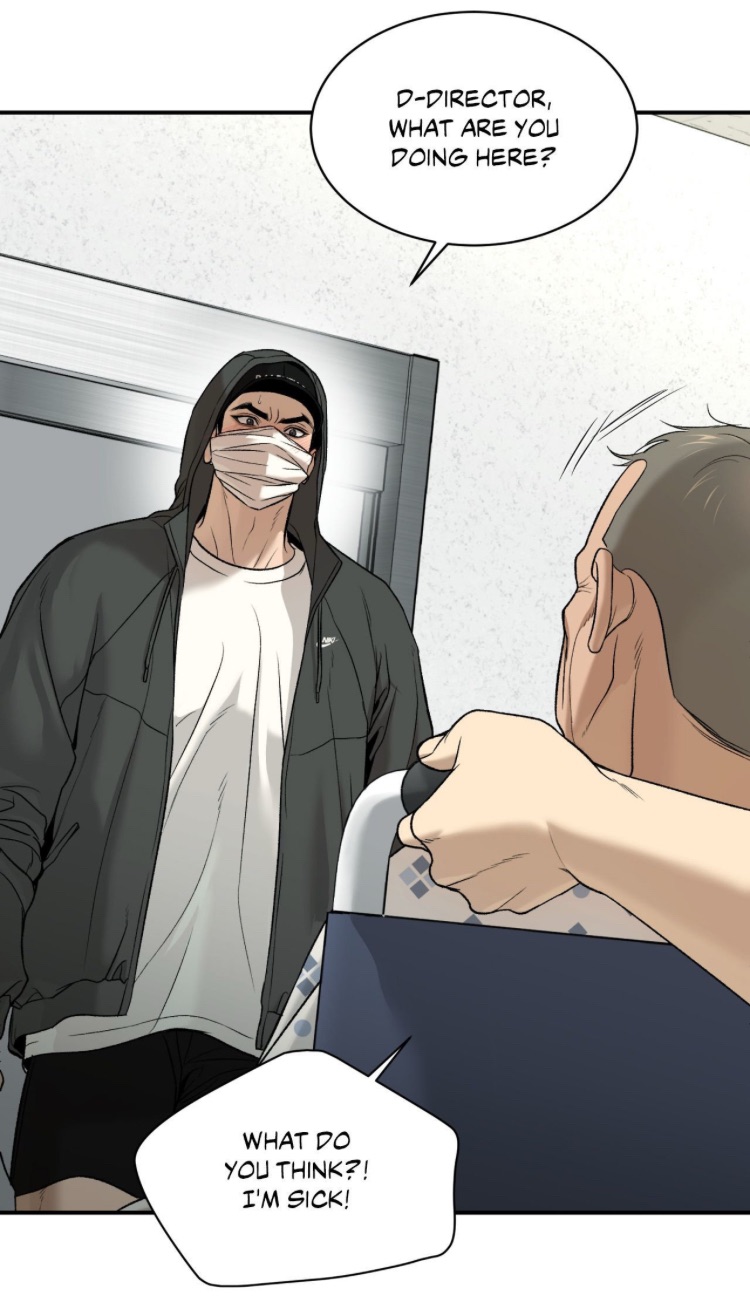 (chapter 71)
 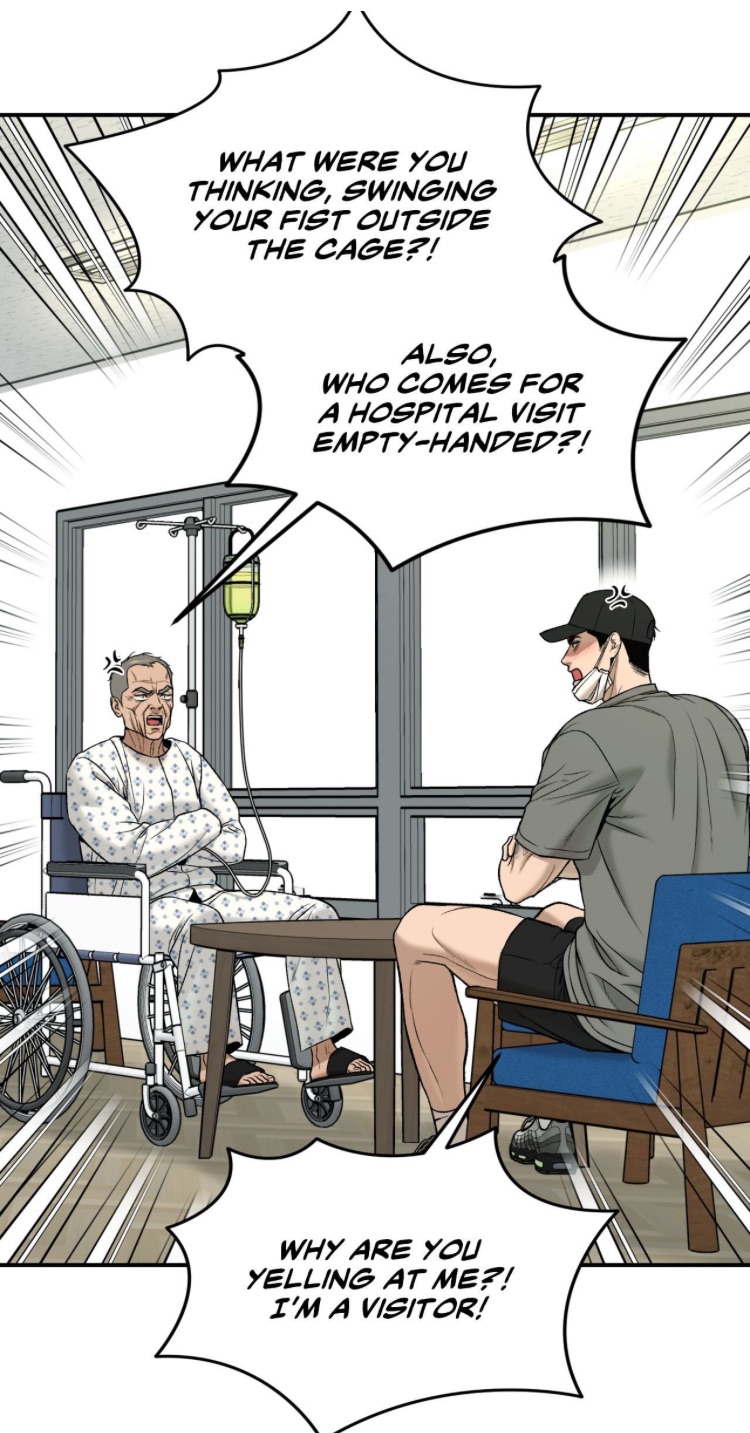 (chapter 71) Only during the champion’s visit, did his words alter.On the rooftop of the hospice, he finally tells Jaekyung:
 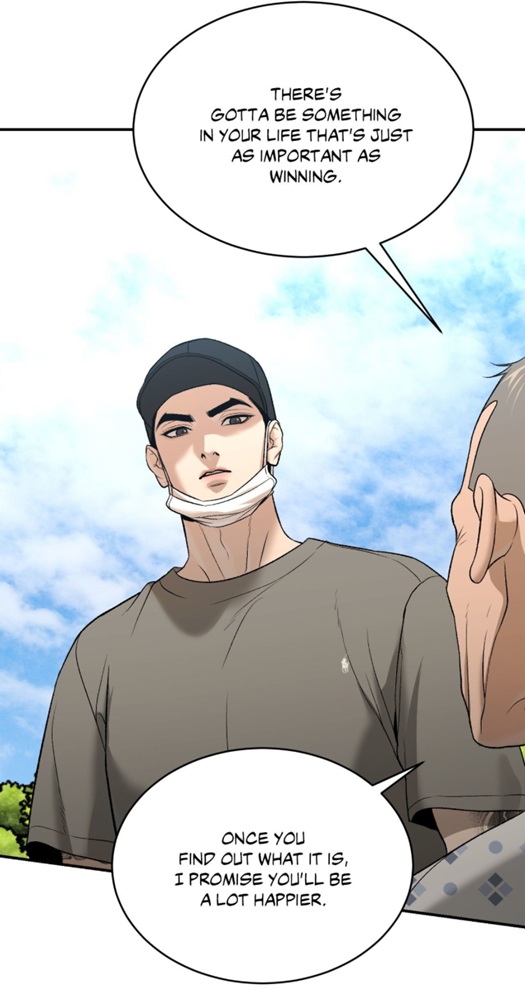 (chapter 75) This shift did not come from wisdom gained in the ring but from loss — the loss of health, the loss of the gym, the loss of illusions — and from Jaekyung’s loyalty, which pierced through his blindness. Interesting is that this time, he doesn’t give the answer to the athlete. He stops thinking “I’m right, you’re wrong”. He treats him as an adult, as a mature and thoughtful person. Through that fidelity, Hwang glimpsed at last what he had denied both himself and Jaekyung for decades: that victory alone cannot sustain a life.
This is where the contrast with Dan becomes stark. Hwang’s “that’s right” (chapter 74) avoids accountability, treating Jaekyung as an object who merely confirms the coach’s worldview. Dan’s later (chapter 76), by contrast, acknowledges the other as a subject. It respects Jaekyung’s perspective without erasing his own. To conclude, the director’s change of attitude signals that—even for the wolf—change is possible. 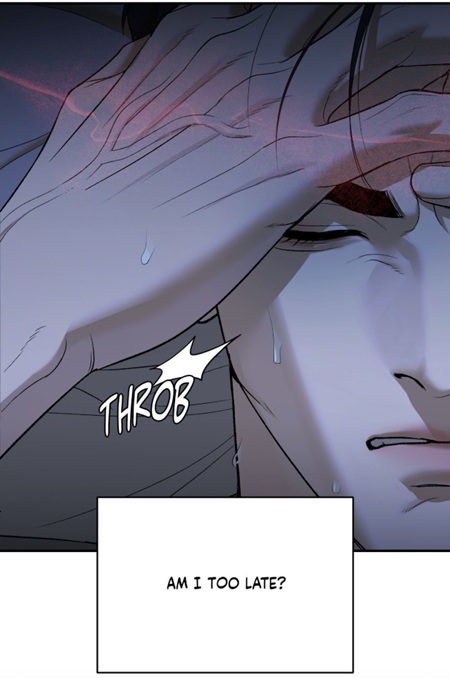 (chapter 76) It is not too late. The question “Am I too late?” is the consequence of Hwang byungchul’s words and it gradually indicates the switch in the champion’s mentality. It is no longer about being right or wrong. However, the nightmare reveals another aspect: the world is not black and white, but grey. (chapter 76) Imagine for one week, the champion has been staying in bed sick and no one paid him a visit and took care of him. Not even doc Dan, who knew that the man was sick… an important detail which he didn’t reveal to his landlord.
 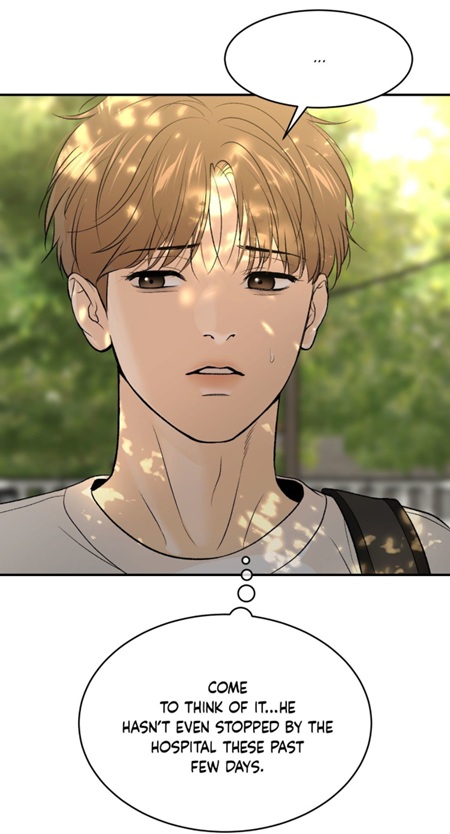 (chapter 76) Hence he remained silent and avoided his gaze. But like the director showed it, it is never too late:
  (chapter 76)
Park Namwook is often shown eyeless, as the latter are concealed behind his glasses.  (chapter 69) Thus my avid readers might jump to the conclusion that his biggest flaw is blindness, similar to the director. Besides, I had often criticized him for his blindness and ignorance. However, this is just a deception. The manager’s real defect is actually his deafness. How so? He does not hear Jaekyung’s words
  (chapter 17) at all. The verity is that he refuses to listen to his thoughts and emotions
 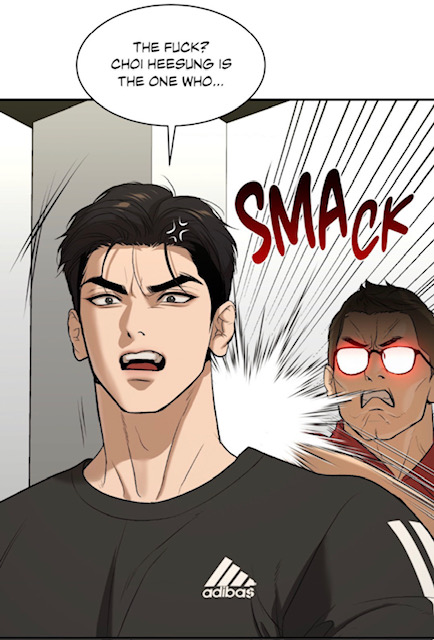 (chapter 31) in good
 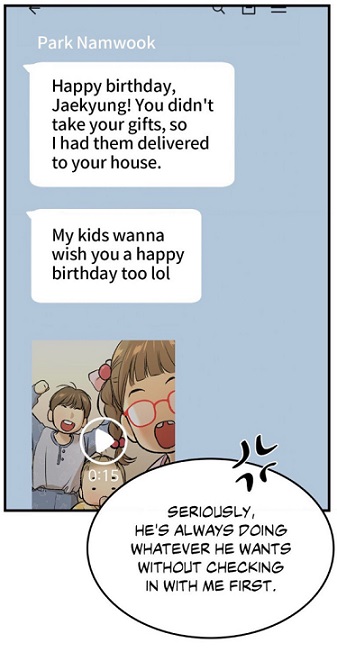 (chapter 45) or in bad times. It goes so far, he does not take his silences seriously, and does not register his pain. This explicates why the manager saw in the champion’s silence at the restaurant as an agreement for a new fight!
  (chapter 69) His role is not to guide or protect, but to extract: money, victories, publicity.
 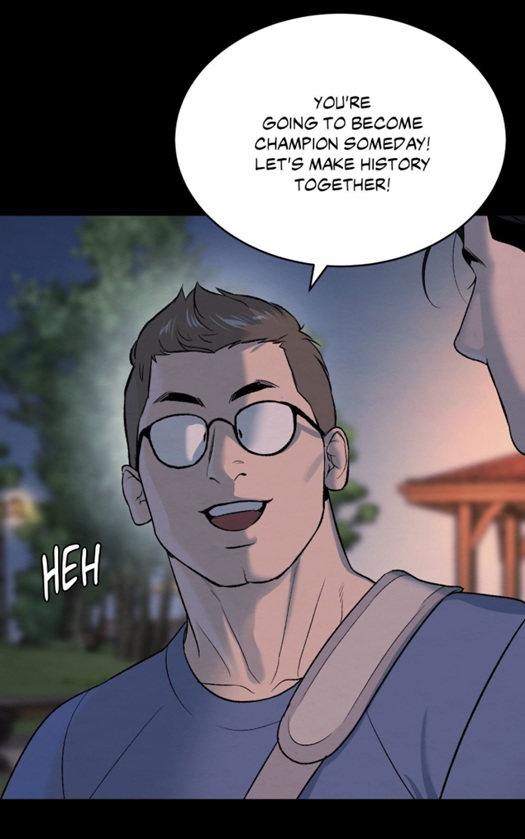 (chapter 75) In my opinion, he is fighting against oblivion through the star. This hidden disability explains why the coach can never truly connect with the champion. He listens instead to other voices – the CEO of MFC
  (chapter 69), the rumors among the directors
  (chapter 46), the media
  (chapter 52), the sponsors
  (chapter 41), the spectators or “authorities”
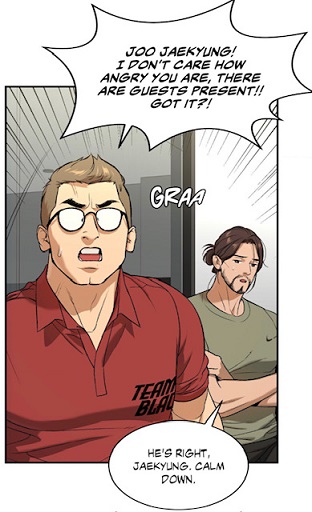 (chapter 36) — and reacts to them, even violently, as in chapter 52, when public criticism painted Jaekyung in a negative light.
  (chapter 52) The slap was less about Jaekyung’s behavior than about Namwook’s own fear of outside judgment. He was not listening to the man in front of him but to the noise around him. He feared losing control in the end, especially after the athlete’s words let transpire his true position at the gym:
 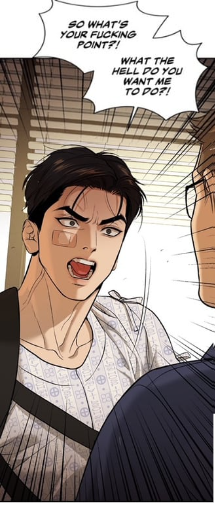 (chapter 52) His question is not mere anger. It is a confession of position — an inadvertent acknowledgment that he knows he is the true backbone of the gym. He is the one responsible, the one carrying the burden that Namwook refuses to admit. These words crack the illusion: the fighter is not subordinate, but owner. The gym lives because of him.
Namwook’s reaction is immediate and violent. He slaps Jaekyung, not to correct him, but to silence him. The blow is the physical embodiment of his deafness: he refuses to hear the truth, so he strikes to reassert control. In that moment, Namwook reveals his greatest fear — that the fragile hierarchy could collapse if the fighter’s voice were truly recognized. And this interpretation gets validated right after: he appears as the one dependent on the athlete. (chapter 52) He acted as a child, faked “tears” in order to use empathy to his advantage.
For Namwook, dialogue is irrelevant: he expects obedience, nothing more, similar to the director. However, there’s a difference between them. Hwang Byungchul felt pity for the little boy in the past 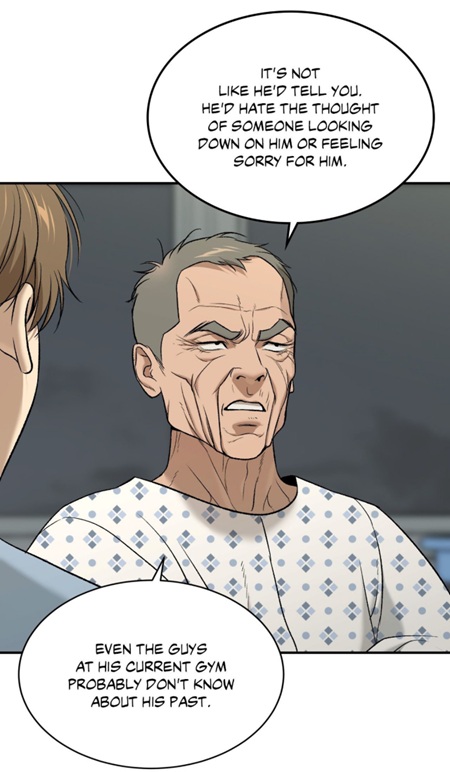 (chapter 71), hence he tried to help in his own way. On the other hand, Park Namwook shows clearly no sign to be interested in the private life of his boss. He is preferring ignorance over “knowledge and connection”.
  (chapter 66) Despite the incident, the manager hasn’t changed yet. He clinched onto the past, thinking that everything will be like before, as soon as the athlete enters the ring. He images a return to normality with the next match.
And yet, signs of change creep in. In chapter 66, standing in the silence of his own wardrobe, the star repeats Namwook’s words to himself: 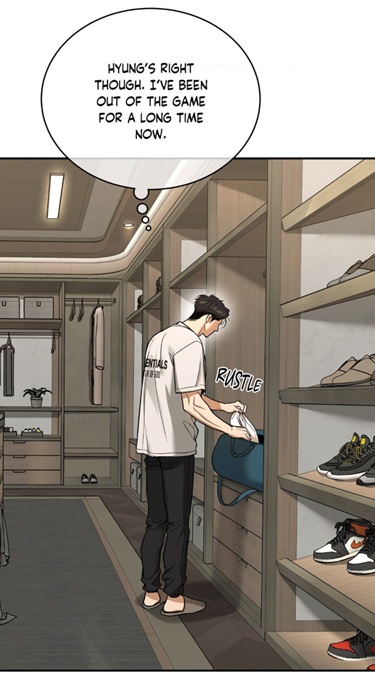 (chapter 66) For years, he had accepted his manager’s judgments out of habit, mistaking silence for consent. But here, for the first time, the repetition feels deliberate — not resignation, but reflection (“though”). The phrase becomes a question more than an agreement: is he truly right? He is admitting this out of habit.
By chapter 69, the cracks widen. Driving alone, he clenches the wheel and admits inwardly:  (chapter 69) His silence has shifted from obedience to suffocation. The weight of Namwook’s deaf authority is no longer bearable. And yet, even here, his confession is muted, confined to the private space of his car. He is not yet ready to speak the words aloud — not until someone appears who will listen.
Park Namwook’s hidden disability, then, is not that he cannot hear, but that he refuses to. Hence he becomes blind as well because of his greed and vanity. His authority depends on silencing Jaekyung’s voice, keeping him in the role of the commodity who produces money but never speaks truth. The moment that silence is broken, his position collapses. And the wardrobe and the car foreshadow this collapse — places of solitude where Jaekyung begins, at last, to hear himself. And here I feel the need to add another observation:  (chapter 48) This scene was observed by Kwak Junbeom, so the latter could have reported it to the coach. If it truly happened, this would expose the coach’s deafness and cowardice. He chose passivity instead of confronting the doctor or the champion. That way, he avoided responsibility. And this brings me to my final conclusion concerning the deaf manager. His main way to contact the celebrity is the cellphone:
  (chapter 66) It is both his mask and his crutch — a tool for barking orders, never for dialogue. The moment the line goes dead, his authority collapses, for he has no other means of contact. His power depends on Jaekyung’s reception, not his own strength. In truth, the manager’s disability is exposed here: deaf to Jaekyung’s voice, he has trained himself to hear only the ring of a phone. A fragile authority built on silence, ready to crumble the instant Jaekyung decides to switch it off.
From these four figures, Jaekyung inherited a devastating binary. Argument meant violence, silence, utility, or stubbornness and selfishness — never recognition. No wonder why the champion became so selfish. He never had the last word. They were all right, he was always wrong… while the verity is that they all failed him as elders. And beneath the silence grew self-loathing: every failure, every moment of doubt confirmed the voices of his past. If he was not winning, he was worthless. That is why his reflection here  (chapter 76) must be read not as pride, but as a desperate shield against annihilation. In other words, in episode 76, the athlete is too harsh on himself, though I am not saying that he is innocent either. He only thought of himself because he had taught to behave that way. He was just mirroring the adults surrounding him who hid their weaknesses and wrongdoings behind “lies, social norms and hierarchy”.
Kim Dan’s world mirrors this in reverse. Where Jaekyung was forced to fight for survival, Dan was taught to yield. 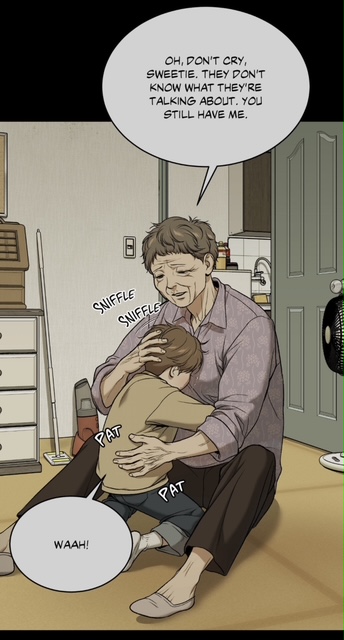 (chapter 57) With his grandmother and with every authority he encountered — doctors, employers, even predators — he believed unquestioningly that others were right and he was wrong. Hence he trusted others blindly. He was trained to accept decisions made for him or against him.
  (chapter 70) Thus he accepts criticism with defending his own interest. He was not taught how to fight back or resist or even argue.
 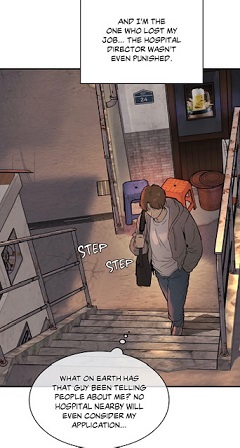 (chapter 1) He never tried to seek justice. His “you’re right” was not recognition but submission, the language of someone who could not afford to resist. In season one, this made their relationship combustible: Jaekyung spoke only in victory and as such submission, while Dan accepted every loss as natural. He also adopted this mind-set. On the other hand, because their initial interaction was based on a contract,
  (chapter 6), both were forced to discuss with each other about the “content of the agreement”. That’s where the champion was trained to communciate with the physical therapist. Thanks to the champion, because of this victory/loss mentality, the doctor learned gradually to argue and “reply” with his “boss. However, due to his childhood, he couldn’t totally drop his old principles like for example “saying no”.
 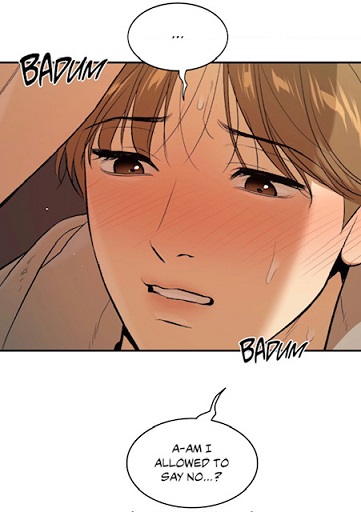 (chapter 34) To conclude, before their fateful meeting, neither man had learned how to argue as equals. But in the kitchen in front of the stove, this changed: both are right and wrong! (chapter 76)
In the kitchen of chapter 76, Jaekyung does the unthinkable. (chapter 76) He lowers his head, leans against the wall, and mumbles words that would once have been inconceivable: “I lost. This is my undisputed defeat.” The phrasing is awkward, almost clumsy — the language of the ring awkwardly transplanted into the language of intimacy. But precisely because it sounds “wrong,” the moment feels real. For the first time, Jaekyung has no script to fall back on.
The body betrays what the words alone cannot carry. His feet are angled awkwardly, as if he does not quite know how to stand in this unfamiliar territory. His ears burn red, the involuntary flush of shyness. His voice is muffled, half-swallowed, the tone of a man who is both embarrassed and afraid. This is not the bold, aggressive fighter who has silenced others with insults or blows. This is Jaekyung stripped bare, caught between self-loathing and vulnerability. This is the child Jaekyung, the “cute cat”.
Self-loathing is essential to this moment. His confession is not a triumphant recognition of Dan’s worth, but a hesitant, guilty murmur: “I lost” is heavy with the weight of “I mistreated you, I don’t deserve you.” 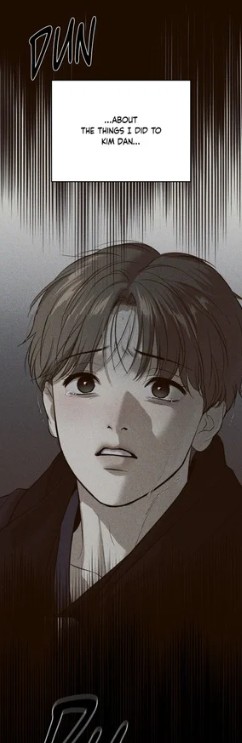 (chapter 76) He speaks like someone expecting rejection. Hence he keeps his distance. Yet the very fact that he says it at all signals change. Where once he would have doubled down — by barking an order, by firing Dan, by retreating into silence — he now admits defeat. The vocabulary of winning and losing, inherited from his father and reinforced by every adult in his life, collapses in the presence of Dan’s quiet honesty.
And paradoxically, this “defeat” is liberating. For Jaekyung, losing has always meant humiliation — the sneer of his father, the silence of his mother, the slap of his coach, the deafness of his manager. But here, losing does not bring scorn. It does not end in abandonment. It opens a space for recognition: losing to Dan means acknowledging that his heart has been touched, that someone else’s truth has entered his world and survived. In defeat, he is finally allowed to stop fighting.
This admission comes after a night of trembling restraint (chapter 76), where he literally grasps his own shoulder as though seeking the comfort of an embrace. The champion who once sneered at tears now reveals what he secretly longed for all along: to be reassured, to be held, to be forgiven. His “tap” against the wall is a silent gesture of surrender  (chapter 76) — an acknowledgment that he can no longer keep his walls intact. He is now willing to rely on doc Dan exclusively.
The flashbacks frame this shift:  (chapter 76). His confession reveals not strength but guilt. Kim Dan’s suffering was the price of his victories, and he knows it. “On the other hand, his mea culpa should be relativized, for both were the targets of a plot!
 (chapter 76) These words expose both responsibility and shame: he had prioritized survival over connection, career over compassion. What boils under his skin is not pride but remorse.
And yet, within this defeat lies recognition: the fragile physical therapist, weak in constitution and endlessly battered by life, possesses a heart larger than his own. “When he not only failed to fulfill that role, but even showed me a weak side to him, it got my blood boiling” (chapter 76). The anger masked envy. Dan’s ability to remain soft, to cry openly, to keep caring despite his own pain — that is a form of strength Jaekyung never had. 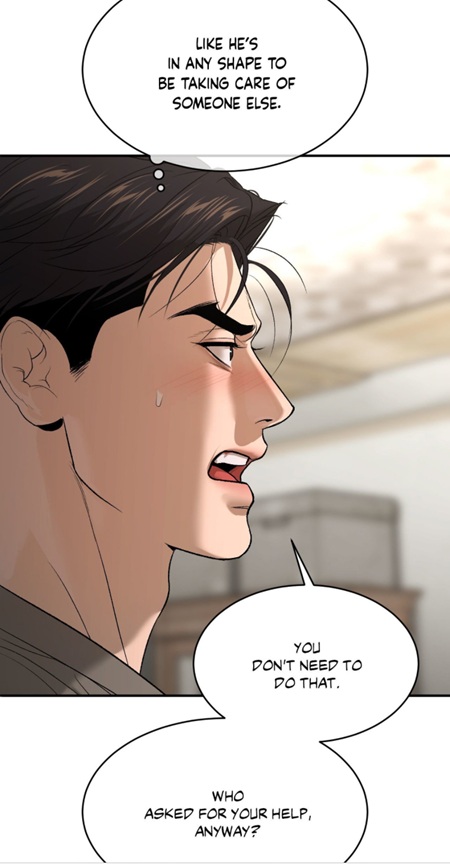 (chapter 76) The star’s thoughts in the kitchen are actually mirroring the ones in the bathroom:
 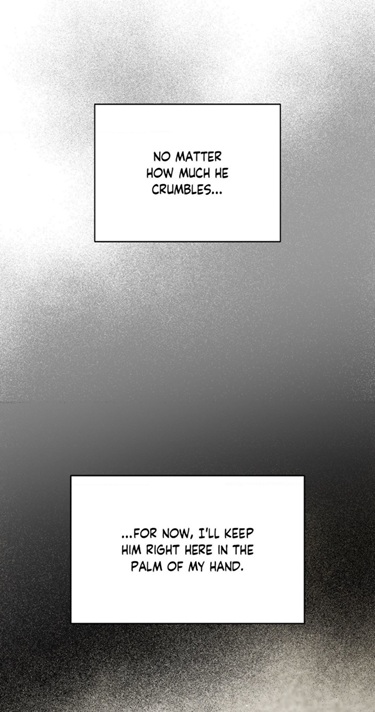 (chapter 68) In the bathtub, he still saw himself as the one in control, with the upper hand… but this is no longer the case in the kitchen. Through the physical therapist, the wolf is learning that even being in a vulnerable state doesn’t mean that this person is powerless. It is just that his “strength” lies elsewhere. In other words, someone struggling can also give comfort to another person in pain.
In front of the stove, (chapter 76) his words to Dan are clumsy and his tone hesitant, but the meaning is clear: this is the clean start of their relationship. He will no longer measure life by wins and losses, but by the courage to stand unguarded before another human being.
Thus the kitchen becomes a battlefield turned sanctuary. (chapter 76) The stove glows, not as an opponent’s spotlight, but as a hearth. The man who could never say “you’re wrong” to his father, mother, or coach finally confesses it in his own way: “I lost.” And in that defeat, Jaekyung discovers what victory in love looks like — not domination, but the freedom to lean, blush, and be weak without fear.
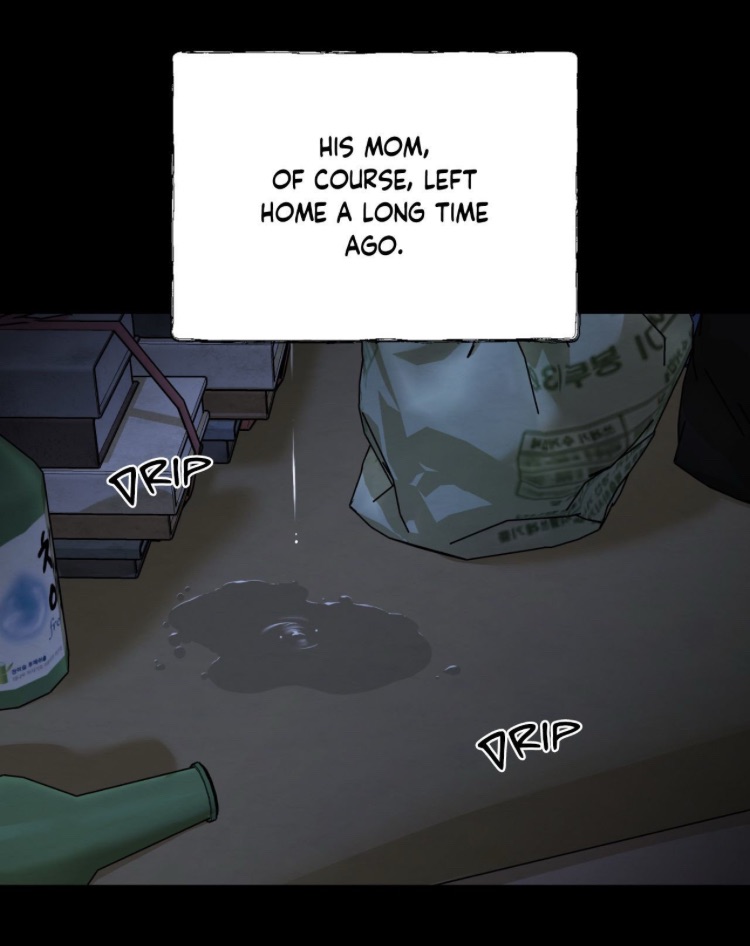
If the table in Jaekyung’s childhood home was cluttered with ramen packs and soju bottles —  (chapter 72) a place of solitary consumption rather than shared meals, the bed was the place where the little boy would drink his milk.
 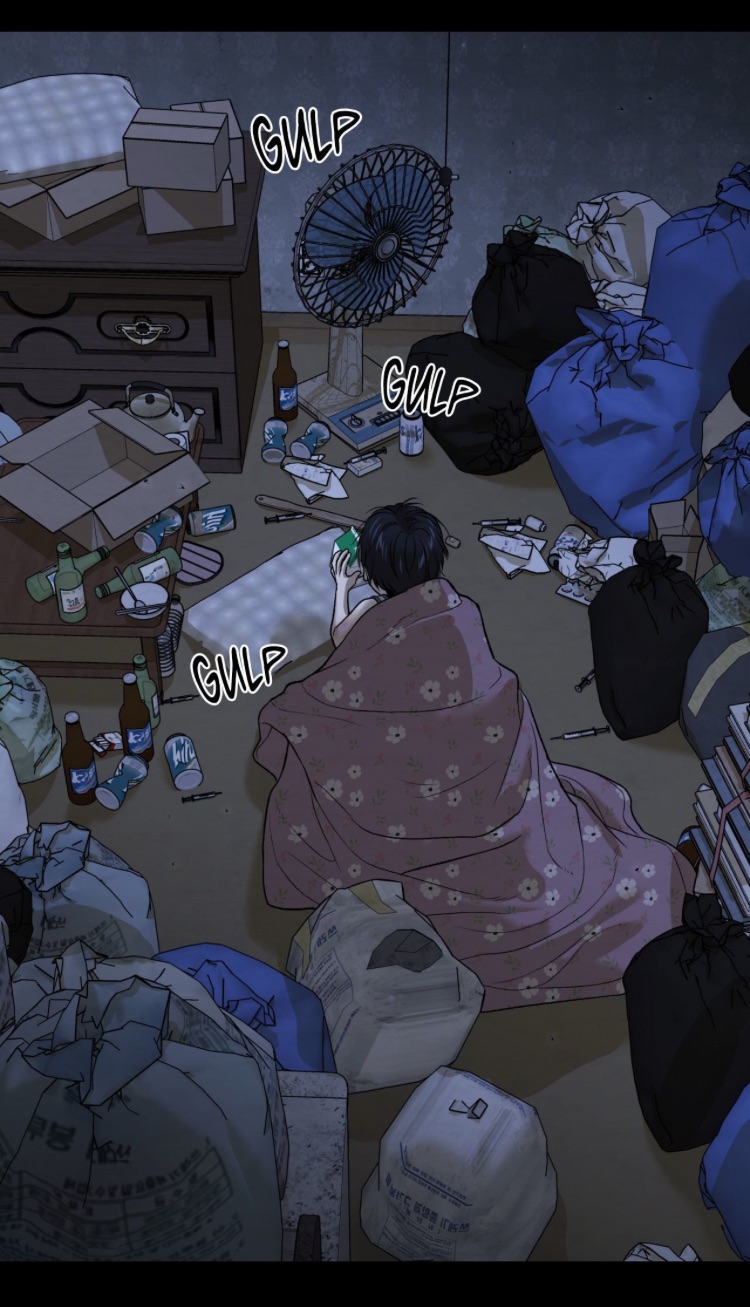 (chapter 72) It is interesting that actually, Doc Dan wanted to bring the porridge to Joo Jaekyung to his bed during that full moon night, thus the latter made the following request:
  (chapter 76) But the wolf didn’t understand the hamster’s intention and followed his “hyung” to the kitchen. That’s how a misunderstanding was born which is also reflected in this interaction: (chapter 76) Here, what the wolf wanted was not to be a burden to the physical therapist. But he realized right away that his words could be misinterpreted.
  (chapter 76) However, doc Dan agreed to this, he remained calm. (chapter 76) Yet, the misunderstanding is not totally out of the room. Hence the doctor imagines that he has to leave the place right after the porridge is finished. However, what caught my attention is that in this brief scene, there was no table between them (chapter 76) contrary to the past, in particular in the penthouse.
  (chapter 41) The latter actually represented a hindrance between them, it marked their relationship: boss and “employee” (servant). Moreover, since the table in the champion’s childhood was linked to one person (the father), it is clear that the champion has never shared a table with someone. And this aspect brings me to my other observation.
The table under Park Namwook’s watch was no better. It was never about eating together as family, but about transactions.  (chapter 22) Whether in meetings, weigh-ins, or dinners with the CEO (chapter 69), the table served as the stage for contracts, discipline, and deals. Even in chapter 36, where Namwook barked at him in front of guests, or in chapter 46, where he sat beside him during business discussions, the surface between them was never for intimacy.
  (chapter 46) It was a place where others dictated terms, while Jaekyung’s silence was mistaken for consent. And now, you comprehend why the two main leads could get closer in front of the stove in the kitchen. This place stands for warmth, care and family. (chapter 76) He lost, because there was no table… there is no contract, silence … this is no longer work, but home!
And this brings to my final observation. You certainly remember how the champion offered the doctor  (chapter 13) a meal after his collapse. He refused to bring a meal to the bed, he asked him to join in the dining room and sit at the table. And what did they do there? The champion talked about his career, his fight etc…
  (chapter 13) the champion has long associated the table to business and not “care”. That’s why it is important for him to remember the significance of the bed in his childhood. It was the place where he could feel comfortable and safe, where he would eat! (chapter 72)
To conclude, the table represents the ultimate emblem of selfishness and deafness: a place where Jaekyung’s words and silences alike carry no weight and he is treated like an object.
Against this backdrop, the kitchen scene in chapter 76 shines with quiet revolt. (chapter 76) There, no table separates him from Dan, no manager is present to misread his silence. Both stand shoulder to shoulder by the stove, and what unfolds is not a deal but an exchange — fragmented, yes, but genuine. The kitchen, unlike the boardroom, is not a place of deafness but of listening, even in misunderstanding. In admitting “I lost,” Jaekyung finally answers an argument not with fists or silence, but with vulnerability. The table collapses, and with it the authority of all those who once claimed to know what was best for him.
Feel free to comment. If you have any suggestion for topics or Manhwa, feel free to ask. If you enjoyed reading it, retweet it or push the button like. My Reddit-Instagram-Twitter-Tumblr account is: @bebebisous33. Thanks for reading and for the support, particularly, I would like to thank all the new followers and people recommending my blog.
 Bebebisous33s' analyses in K-Dramaland and Manhwas