
Please support the authors by reading Manhwas on the official websites. This is where you can read the Manhwa: Jinx But be aware that the Manhwa is a mature Yaoi, which means, it is about homosexuality with explicit scenes. Here is the link of the table of contents about Jinx. Here is the link where you can find the table of contents of analyzed Manhwas. Here are the links, if you are interested in the first work from Mingwa, BJ Alex, and the 2 previous essays about Jinx The Hot Sparks and Feverish Reality part 1 – part 2 and The Secrets Behind The Floors
It would be great if you could make some donations/sponsoring: Ko-fi.com/bebebisous33 That way, you can support me with “coffee” so that I have the energy to keep examining Manhwas. Besides, I need to cover up the expenses for this blog.

They Held Hands, But…
They held hands.
They held hands.  (chapter 87)
They are so cute. 😍
This refrain summarizes much of the immediate reaction to the chapter. Attention clustered around the opening scene: the quiet morning moment in which the champion squeezes the doctor’s hand after asking for luck.  (chapter 87) The intimacy of the gesture (chapter 87), its tenderness, and its symbolic weight were widely commented on—sometimes to the exclusion of almost everything else.
In the aftermath of the chapter, the author Mingwa herself remarked on this reception. On X, she noted—half amused, half ironic—that although Baek Junmin appeared  (chapter 87) and an entire match took place, readers were largely talking about the introduction alone. 그나저나 이번화 나름 ㅂㅈㅁ도 나오고 경기도 했는데 다들 맨앞 도입부만 얘기하셔서 너무나 커엽군요,, (손잡았어 웅성웅성) Mimicking the collective reaction with a playful “They held hands!”, she described this selective focus as 커엽군요—not reproachful, but gently teasing.
This imbalance is understandable. The preceding chapters centered predominantly on the main leads  (chapter 84) and the progression of their relationship, attuning readers to intimacy
 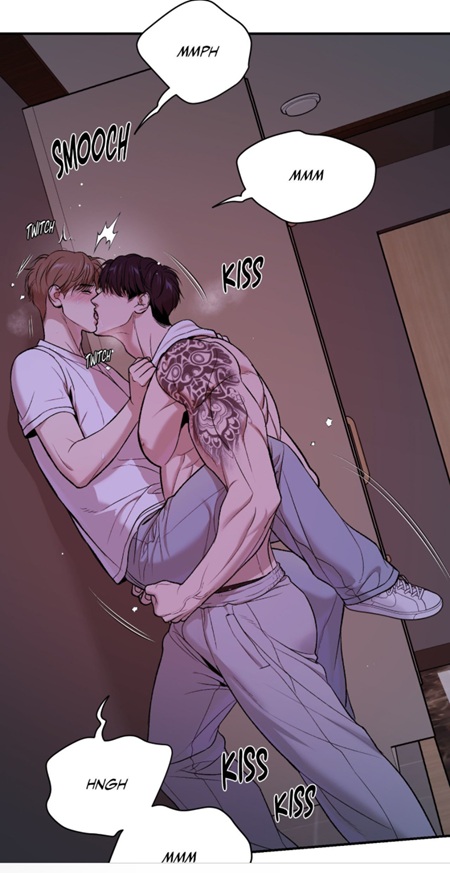 (chapter 85), care, and emotional release. When the chapter opens with a tactile, reassuring gesture, it naturally confirms that reading mode. The squeeze feels like a culmination.
Yet the chapter does not end there. By focusing almost exclusively on that moment, readers risk overlooking the significance of the final scene 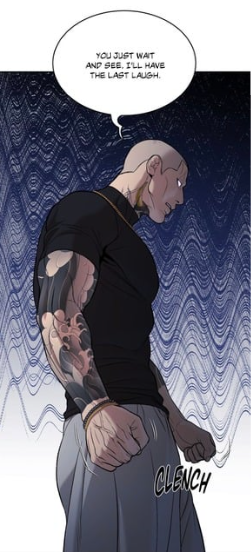 (chapter 87), where a very different gesture unfolds.
 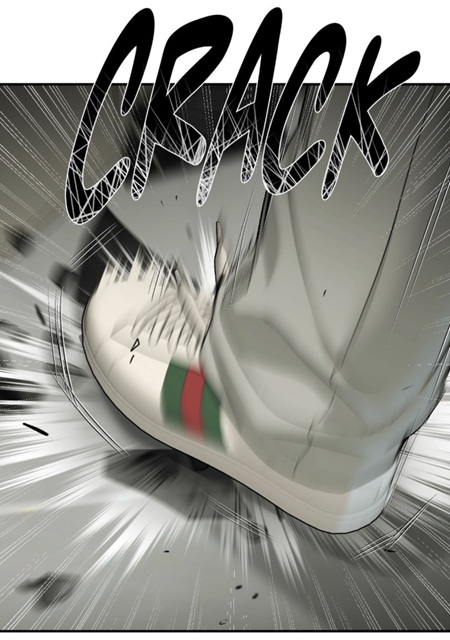 (chapter 87) There, Baek Junmin rejects restraint, pushes away guidance, and verbalizes a resolve shaped not by trust or release, but by anger and revenge. (chapter 87) This closing moment is not incidental; it is placed in deliberate contrast to the opening.
The chapter is structured around these two gestures. One dissolves a belief rooted in ritual and control, the champion’s jinx. The other inaugurates a trajectory driven by wounded pride and escalation. Read together, they form a single movement—one that unfolds between a squeeze (chapter 87) and a crack (chapter 87).
Between a Squeeze and a Crack: Two Gestures, Two Logics
The chapter is structured around two gestures that appear simple, almost inconspicuous, yet articulate two radically different ways of relating to control, desire, and action.
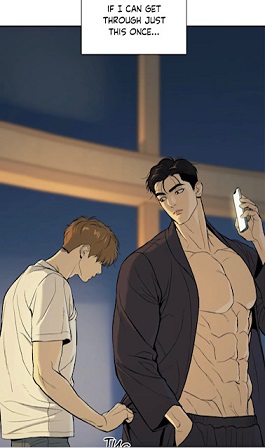
One is a squeeze of the hand. (chapter 87) The other is the crushing of glass underfoot. (chapter 87) Between them unfolds a decisive split. The squeeze is not an act of domination. It is measured, contained, and reciprocal —an act of protection. The champion’s hand does not merely touch the physical therapist’s; it covers it. (chapter 87) The gesture encloses rather than exposes, shielding the other instead of pressing down on him. Force is present, but it is regulated and oriented toward care. The champion does not grasp to hold on longer than necessary; he squeezes, then stops. The gesture culminates in a line that matters far more than it seems at first glance: “That’ll do.”  (chapter 87) This sentence marks a limit. It is not indifference, but acceptance. The champion has just registered the doctor’s surprise
  (chapter 87) — the slight jolt, the hesitation—and he responds by stopping. The restraint is not automatic; it is chosen. He does not ask for more reassurance, more certainty, or more support, even though he clearly desires it. Instead, he recognizes sufficiency.
What unfolds here is a careful negotiation between selfishness and selflessness. (chapter 87) The gesture still serves his need—he seeks strength, grounding, and reassurance—but it refuses to extract more than the other can freely give. (chapter 87) He allows himself to receive without insisting, to take comfort without turning it into a demand. Let’s not forget that after the tap, doc Dan had already started moving his hand away, though his fingers were brushing slightly his.  (chapter 87) So the doctor’s support was indeed limited in time. So the stop of the champion ‘s squeeze (chapter 87) is therefore not a withdrawal, but an ethical adjustment: the moment at which desire acknowledges the other’s boundary and accepts it as final.
In that sense, the squeeze does not prove generosity; it proves restraint. It shows a willingness to carry what remains unmet rather than convert it into pressure. This is why the gesture concludes where it does. Not because the need disappears, but because it is no longer permitted to override respect.
In doing so, he abandons the logic that previously governed him—the belief that repetition, ritual, or escalation could secure an outcome. He would have sex, until his partners passed out. 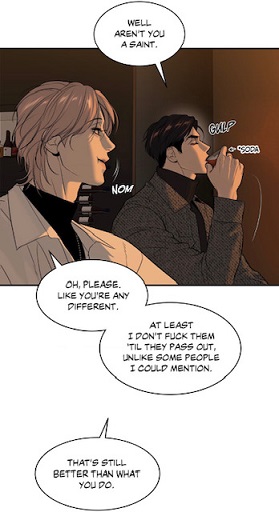 (chapter 33) Humbleness here (chapter 87) is not merely the expression of modesty, but the conscious recognition of limits: the willingness to accept uncertainty without compensating for it through excess, and the refusal to impose oneself on another. The gesture exposes a desire for respect toward Kim Dan; the champion knows his shyness and calibrates his touch accordingly, stopping before closeness turns into coercion. (chapter 87) The hand, as an instrument, reinforces this meaning. It reaches horizontally toward another human being. It creates proximity, connection, and grounding.
 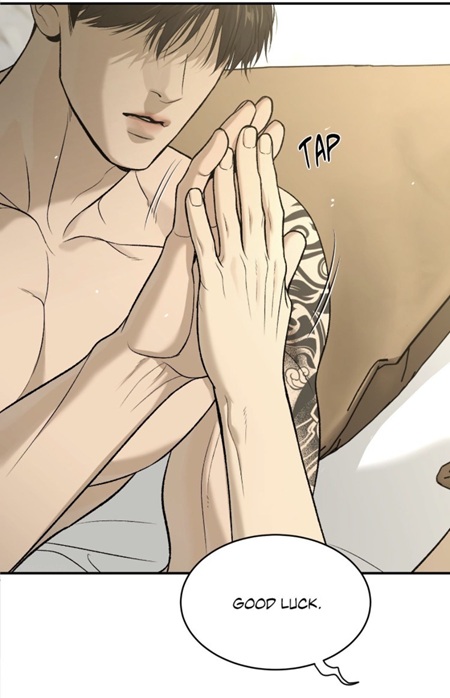 (chapter 87) Nothing mediates the gesture. There is no object, no talisman, no substitute. Meaning is produced entirely through contact.
The final gesture operates according to the opposite logic. (chapter 87) The foot does not protect; it exposes. It descends vertically, asserting weight rather than relation. Where the hand encloses, the foot bares. The glass shatters under pressure, turning reflection into sharpness. What was once a surface becomes a source of wounds. It does not regulate force but releases it. Where the hand stops (chapter 87), the foot escalates. (chapter 87) The glass shatters, not to restore anything, but to discharge tension. This is not violence directed at a person, yet it is unmistakably expressive. It replaces connection with spectacle and containment with excess. Unlike the squeeze, the crack does not conclude itself. It invites continuation. The gesture is driven not by sufficiency, but by the refusal of “enough.” Here, greed is not merely material; it is existential. It manifests as the desire for the last word, total vindication, and unrestrained agency.
The contrast extends beyond movement into atmosphere. 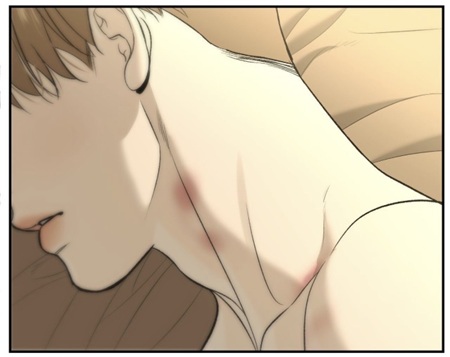 (chapter 87) The opening scene unfolds in a space that feels inhabited and shared, composed in softer shades that emphasize stillness and presence. The final scene is colder, darker, sharper.
 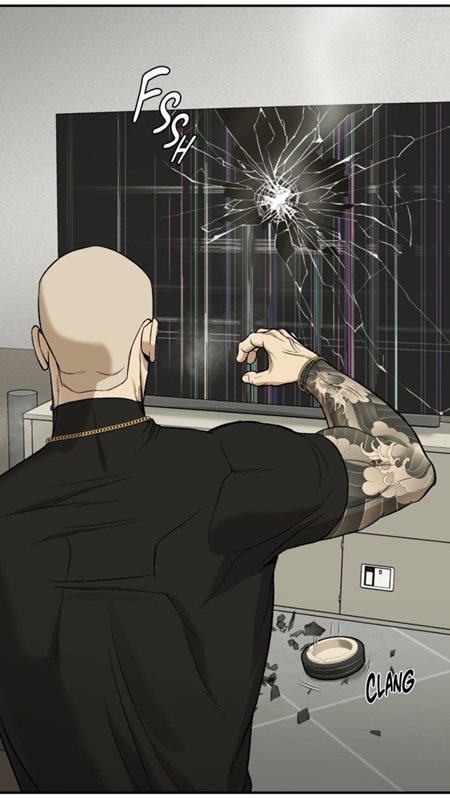 (chapter 87) Motion replaces quiet. An object enters the frame, absorbing force and redirecting it away from human contact. Where the first scene restores continuity—between bodies, between effort and outcome, between present and future
 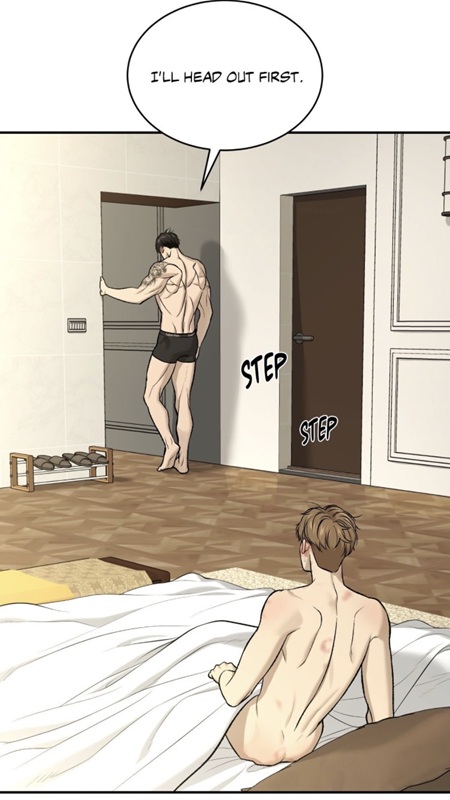 (chapter 87) —the second collapses time inward. Baek Junmin does not act toward what is coming; he reacts toward what has already been. His violence is not exploratory but recursive.
 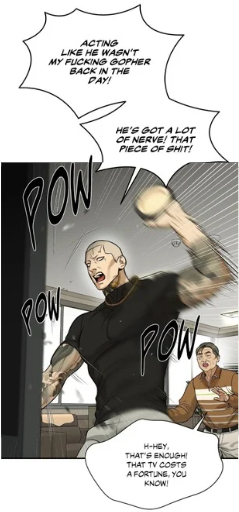 (chapter 87) It invokes the past as a template, attempting to reinstate an earlier hierarchy in which domination was secure and uncontested.
The gesture is therefore not simply destructive, but regressive. By striking, he tries to repeat a former position—acting like he wasn’t my gopher back in the day—as if the present could be coerced into mirroring that memory. This is why moderation is impossible. Repetition does not recognize limits; it demands reenactment. What breaks under this logic cannot be repaired because it was never oriented toward the future in the first place. It leaves only fragments—evidence of an attempt to overwrite change rather than accommodate it.
What ultimately sharpens the contrast between the two gestures is not only the difference between hand (chapter 87) and foot (chapter 87), but the difference between human presence and object substitution. In the opening scene, meaning emerges exclusively between two people. Nothing stands in for the other; nothing absorbs the gesture on their behalf. The squeeze requires mutual presence and ends precisely because it is shared. Its limit is ethical as much as physical. The final gesture unfolds in the absence of such reciprocity. Baek Junmin does not direct his force toward another human being, but toward an object. This displacement is not incidental. The object absorbs what no one else does. It becomes the recipient of rage, humiliation, and wounded pride. In doing so, it exposes a fundamental loneliness. Violence no longer seeks recognition from another person; it settles for impact.
The object in question matters. The Shotgun does not destroy a random item, but a television screen 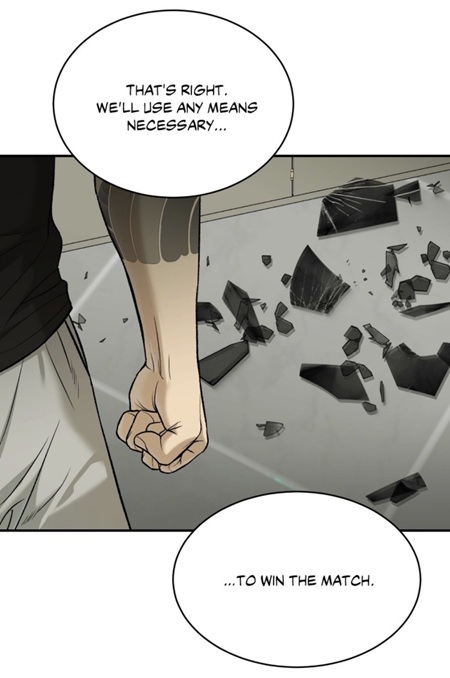 (chapter 87)—the very surface on which images circulate, words are fixed, and visibility is regulated. The screen does not reveal truth; it organizes perception. It is where victories are staged, reputations stabilized
 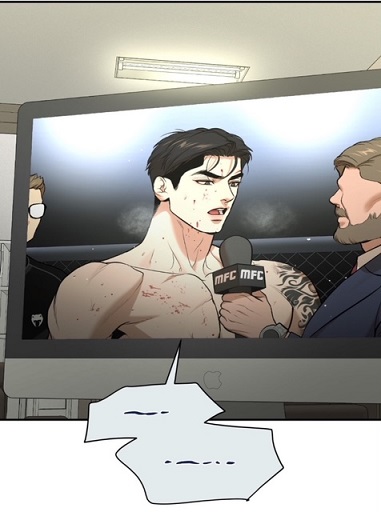 (chapter 46), and statements acquire permanence through broadcast.
 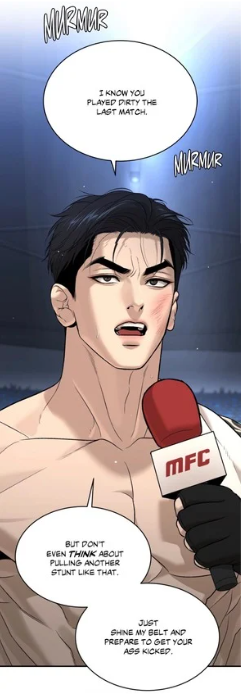 (chapter 87)
By turning on the screen, The Shotgun does not challenge the system itself (chapter 87); he reacts to what it has already done to him. What breaks is not the logic of spectacle, but his ability to endure exposure. The screen cracks, yet remains standing. This first rupture interrupts the image, but not its effect. The words spoken through it persist. They cannot be retracted, reframed, or silenced after the fact.
Thus he strikes again. (chapter 87) Using the ashtray, the “demon” shatters the screen into debris. At this point, the object has already lost its function. The broadcast is long over; the image is long gone. Yet the violence continues. He steps forward and crushes the remaining black shards underfoot (chapter 87), as if determined to annihilate even the remainder. The escalation exceeds necessity. It is no longer about disabling a device, but about confronting something that refuses to disappear.
This escalation becomes even more revealing when read against the opening sequence of the chapter. The three acts of destruction mirror, in distorted form, the three steps through which closeness was established earlier. In the morning scene, proximity unfolds gradually and remains contingent on consent: first the whisper 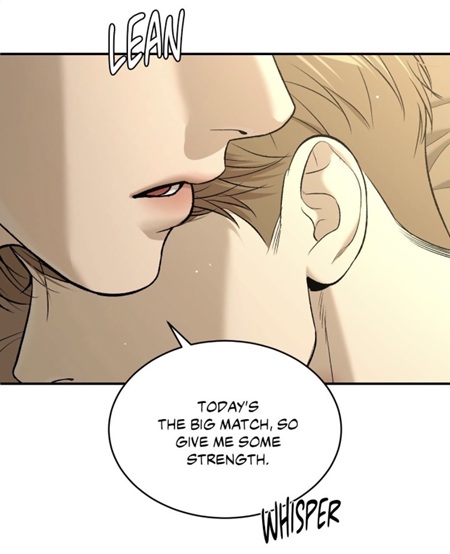 (chapter 87), then the pause; then Kim Dan’s tentative tap (chapter 87); finally the squeeze (chapter 87), held only until it must stop. Each step waits for response. (chapter 87) Each movement depends on acknowledgment. The sequence concludes because it recognizes a limit.
At the office of director Choi Gilseok (chapter 87), the same tripartite structure is emptied of reciprocity. The first strike cracks the surface. The second shatters it into debris. The third crushes what remains. Where the opening scene pauses, this one accelerates. Where the whisper waits, the blow overrides. Where the squeeze ends itself, the violence repeats because it cannot conclude. The symmetry is formal, but the logic is inverted: one sequence builds relation through restraint; the other pursues erasure through excess. (chapter 87) In the latter, escalation is uninterrupted. At no point does Director Choi Gilseok intervene. He does not place a hand on Baek Junmin’s shoulder again, does not issue a command, does not impose a limit. (chapter 87) Whether he has already left the room or chooses deliberate avoidance is ultimately secondary. What matters is the absence itself.
That absence exposes a failure of containment. Authority is present in name, but not in function. Choi Gilseok cannot—or will not—stop his fighter. His invisibility transforms into passivity and complicity, not because he endorses the violence, but because he allows it to proceed unchecked. Power here no longer circulates through guidance or control; it dissolves into abdication. Yet this abdication is not uniform. It is selective.
Earlier in the narrative, Director Choi reacts strongly when his authority is verbally challenged. 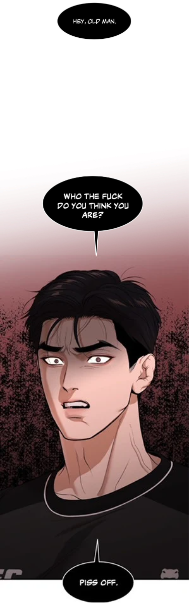 (chapter 49) When Joo Jaekyung addresses him with open disrespect, the breach of seniority provokes immediate outrage.
  (chapter 49) Intervention follows quickly. The insult is not tolerated
 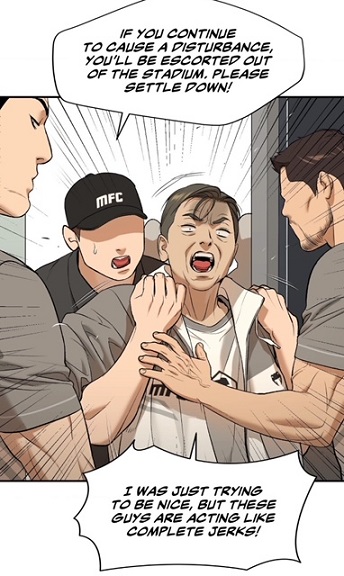 (chapter 49) because it threatens hierarchy itself. Choi’s anger is genuine in that moment and it reveals what he truly guards: status, order, and the visibility of respect.
In contrast, Baek Junmin’s behavior provokes no such response. He brushes past instructions (chapter 87), slaps away physical restraint  (chapter 87), and continues escalating without repercussion (chapter 87). The difference is telling. Where Choi once asserted authority to defend rank, he now withdraws it in the face of volatility. Baek’s aggression does not offend hierarchy in the same way; instead, it destabilizes it. And Choi does not confront destabilization. He avoids it.
A final irony sharpens this configuration of power. Neither Choi Gilseok nor Baek Junmin is aware of the protagonist’s true rank.  (chapter 78) Both continue to perceive Joo Jaekyung as nothing more than a fighter (chapter 87) —talented, profitable, but ultimately subordinate.
  (chapter 87) This assumption governs how they speak to him, how they threaten him (chapter 49), and how they imagine their leverage over him.
Yet this perception is false. Joo Jaekyung is not merely an athlete within the system; he occupies the same structural level as those who presume to manage him. He is the owner of Team Black. His position aligns not with fighters, but with directors. The irony lies in the fact that the system itself enables this misrecognition. Authority is not distributed according to legal ownership, but according to visibility and habit.
This is already visible earlier, when the “hyung” attends directors’ meetings on the champion’s behalf. 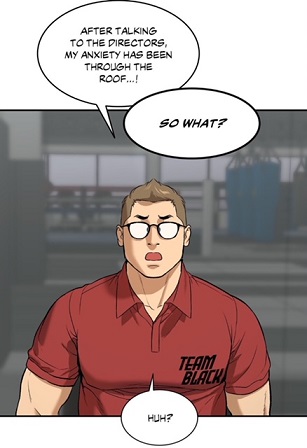 (chapter 46) His presence creates a convenient fiction: those around the table come to believe that he is the owner, or at least the one who truly governs the gym. Joo Jaekyung’s absence is interpreted not as autonomy, but as immaturity or dependence. Authority, once again, attaches itself to performance rather than reality.
The warning issued by the gym’s leadership makes this distortion explicit. 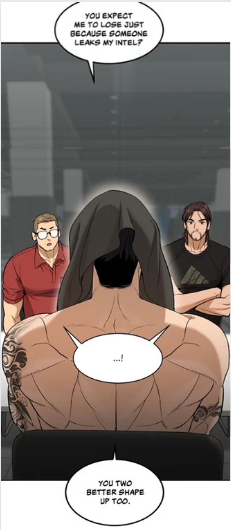 (chapter 46) Even after boundaries are formally stated, Park Namwook continues to rely on seniority to address the champion
  (chapter 46) as if he were a child or an employee—someone to be corrected, instructed, and disciplined. The warning does not alter behavior because it does not challenge the underlying assumption: that Joo Jaekyung’s place is below them.
This misreading has consequences. Because Choi Gilseok and Baek Junmin both believe they are dealing with a fighter who must answer to managers, coaches, and institutions, they overestimate their capacity to contain him. They imagine leverage where there is none. They threaten exposure, punishment, and exclusion—tools that function only if the target depends on the system for legitimacy.
What they fail to see is that Joo Jaekyung no longer does. He doesn’t care about his image after challenging Baek Junmin. 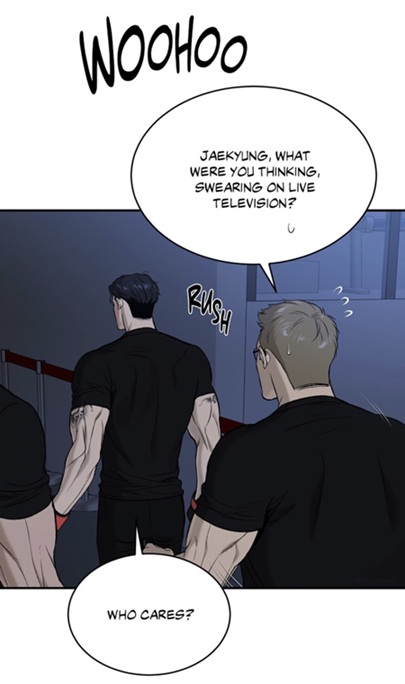 (chapter 87)
But let’s return our attention to the scene at the gym office. (chapter 87) This asymmetry exposes the limits of Choi Gilseok’s power. His authority functions only when obedience is already plausible. It depends on recognition rather than enforcement. When faced with a figure who neither seeks approval nor acknowledges restraint, Choi’s authority collapses into silence. The absence of intervention is not neutrality; it is an admission of impotence.
In that sense, Baek Junmin is not merely uncontrolled — he is uncontrollable within the existing structure. Choi’s refusal or inability to intervene reveals that the hierarchy he enforces is performative, not structural. It governs appearances and etiquette, not escalation or consequence. What remains once those appearances are ignored is not authority, but avoidance.
This is why Choi’s passivity matters narratively. By failing to stop Baek, he becomes an accomplice to excess without ever authorizing it. He does not direct violence, but he creates the conditions under which it can proceed. Power, here, does not flow downward or circulate relationally; it evaporates at the moment it is most needed.
In this sense, Baek Junmin is not merely acting out of rage. (chapter 87) He is acting in a vacuum created by institutional withdrawal. Thus the thug starts talking to himself loudly. This is not a dialogue, but a monologue. It was, as if he was trying to reassure himself about his power and connection. The director’s inability to regulate his “star” mirrors the waves in the last panel. An ocean can not be contained or restrained. In addition, his lack of restrain reflects the broader collapse of moderation within this economy. Where restraint once required oversight, its absence permits excess to define the relationship. What unfolds is not rebellion against authority, but the revelation that authority was already hollow.
This repetition is revealing. Each act answers the same stimulus, yet fails to neutralize it. The destruction does not bring release because the provocation was never material. The television has already fulfilled its role; the words spoken live cannot be undone. 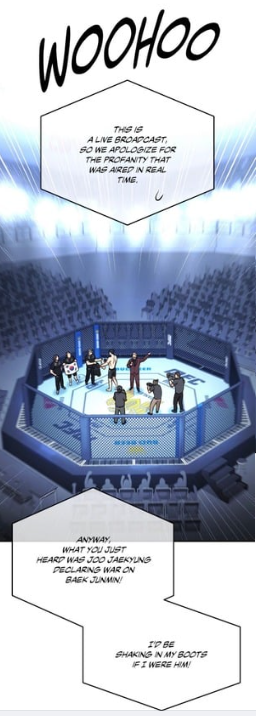 (chapter 87) What Baek attempts to destroy is not the object, but what it represents: the irreversibility of public speech, the collapse of secrecy, the loss of narrative control.
The black glass fragments make this failure visible. (chapter 87) They do not restore darkness; they scatter it across the floor. The act does not erase visibility but multiplies its traces into debris. This is not a cleansing destruction. It is an attempt at erasure that arrives too late, producing residue instead of resolution.
Seen in light of Baek Junmin’s habitual reliance on whispers  (chapter 49), handshakes, and private humiliation
 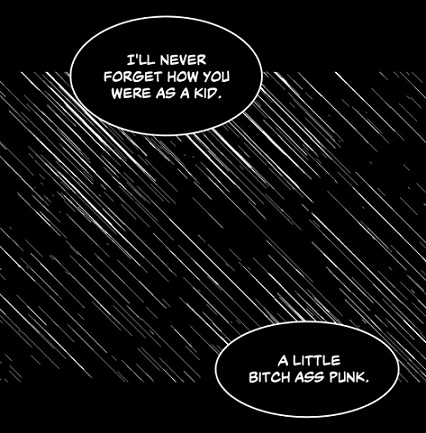 (chapter 49), the gesture becomes clearer still. He is accustomed to violence without witnesses, to domination shielded by proximity and secrecy. He was always the man in the shadow. The live broadcast deprives him of that refuge. (chapter 87) For the first time, he is confronted with words that circulate beyond his control.
Both sequences 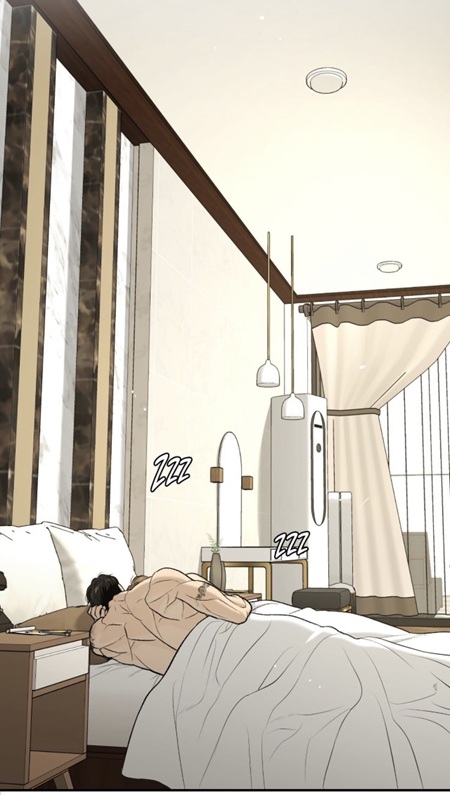 (chapter 87) also unfold under the sign of privacy. (chapter 87) Nothing from either scene is leaked to the audience within the story. No cameras intrude on the morning room; no spectators witness the destruction that follows. In both cases, what happens remains offstage, contained within enclosed spaces.
Yet the function of privacy differs radically. In the opening scene, privacy protects vulnerability. It creates a space in which hesitation, consent, and restraint can exist without performance. The absence of witnesses allows closeness to remain unexploited and unrecorded. Privacy here is not concealment, but care. (chapter 87)
The destruction scene also takes place out of view, but for the opposite reason. Privacy no longer shelters vulnerability; it shields waste. Hence the thug used an ashtray to damage the TV screen. The object exposes the truth about this gym: it is just a cover for thugs. Additionally, the ashtray allows violence to escalate without immediate consequence, to repeat without interruption. What is hidden is not intimacy, but loss of control. The same absence of witnesses that preserves dignity in one scene enables denial in the other. This parallel sharpens the contrast further. Privacy is not neutral. It amplifies what already governs the gesture. Where restraint is present, privacy sustains it. Where limits have collapsed, privacy becomes an accomplice.
What surfaces here (chapter 87) is not pure aggression, but fear. Rage functions as its mask. The insistence, the repetition, the overkill all point to an inability to tolerate being seen, named, and fixed in public space. Crushing the screen is not an assertion of power, but a response to exposure—a desperate attempt to silence what can no longer be taken back.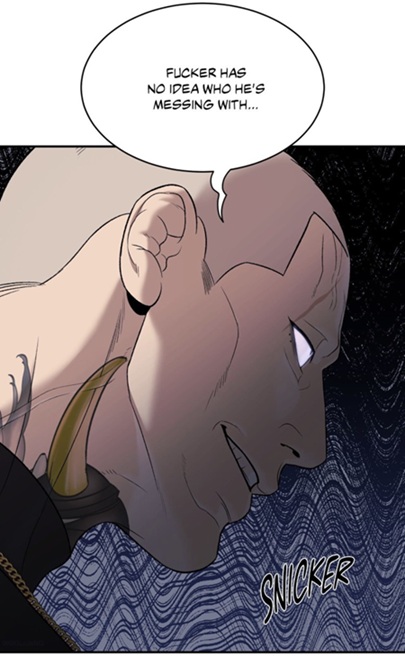 (chapter 87) He is announcing a shift of identity.
Up to this point, Baek Junmin still oscillated between two positions: the shadow fighter 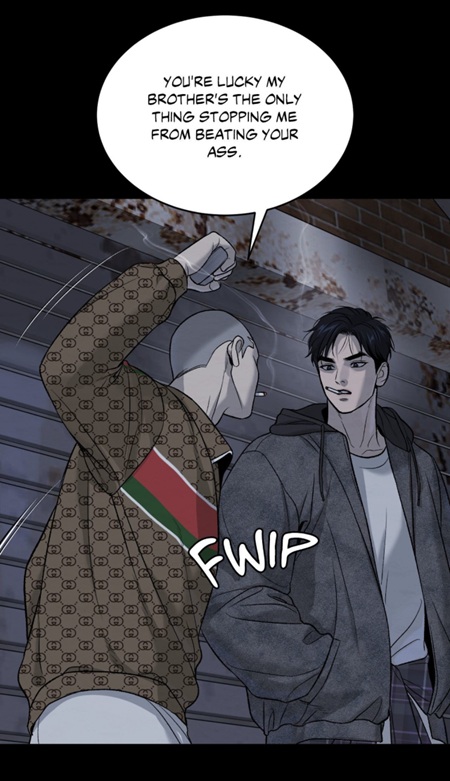 (chapter 74) seeking legitimacy, and the underground enforcer shaped by violence, order and debts
 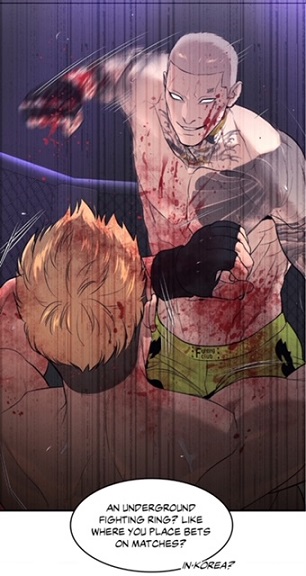 (chapter 47). The broken screen already signaled that he no longer cares about how he is seen. (chapter 87) This line confirms what replaces that concern. He is ready to be seen as he is, without mediation, without justification. Leaving the shadow does not mean entering the light. It means abandoning concealment.
What he exposes are not hidden virtues, but true colors. The phrase is not a threat designed to intimidate an opponent into caution; it is a declaration of readiness to abandon restraint. He no longer intends to pass as a disciplined athlete governed by rules, training, or institutional limits. He is prepared to act as a bully and criminal —someone for whom violence is not a means within a system, but an identity in itself.
This is why the line follows the destruction of the screen so closely. (chapter 87) Once image no longer matters, there is nothing left to protect. Reputation, legitimacy, and future standing cease to function as brakes. What remains is the body and its capacity to harm. The statement therefore does not project confidence about the outcome of a match; it projects indifference toward consequences. In that sense, Baek Junmin is not stepping out of the shadows to claim recognition. He is stepping out to remove the mask. The system demanded that he appear controlled, profitable, and presentable. 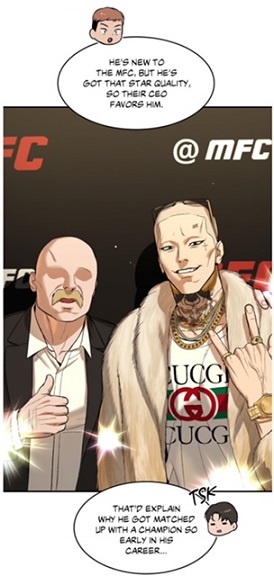 (chapter 47) By rejecting visibility and embracing excess, he also rejects the last requirement that tied him to that system.
What he is ready to expose is not truth, but himself.
Just as importantly, the damaged object does not belong to him. (chapter 87) Baek Junmin does not need to clean the mess, replace the screen, or account for the damage. He can afford indifference because responsibility is externalized. This is where materialism enters the gesture. (chapter 87) In his logic, what is destroyed can be replaced—by money, by compensation, by someone else’s labor. The gesture therefore carries no sense of loss. It is pure discharge. Where the hand-holding scene ends in sufficiency (chapter 87), this act ends in non-attachment. That non-attachment is not freedom; it is dispossession. Because nothing belongs to him, nothing binds him. The violence does not commit him to consequence. He does not have to stay, repair, or answer. (chapter 87) The object takes the blow and disappears from relevance, just as people do in his worldview once they cease to be useful or respectful. This is why the destruction feels so pronounced. It is not driven by concern for outcome. Baek Junmin does not care whether the screen works afterward, just as he does not yet care how events unfold. What matters is the act itself—the assertion that he can still act, still impact, still dominate a space that otherwise refuses him recognition. Under this new light, it becomes palpable that Baek Junmin’s resent and rage represent a liability to Choi Gilseok and his backers, the pharmaceutical company.  (chapter 48) And their collaboration is founded on money laundering!! The shooting star is in reality (chapter 47) a meteor bringing calamity, once it lands on the Earth. Baek Junmin is about to face “reality” very soon.
Placed next to the opening scene, this contrast becomes stark. (chapter 87) There is no money, no power… between them. One gesture creates meaning because it acknowledges another human and accepts limitation. The other destroys an object precisely because no human is there to receive the force. One restores continuity; the other exposes isolation. Between them, the chapter reveals not only two trajectories, but two economies of value: one grounded in presence, the other in replacement.
Two pairs, two economies of power
What ultimately distinguishes the two dynamics is not intimacy versus violence, but how power is situated and what it depends on. In one case, power emerges through limitation; in the other, it is sought through displacement. The difference is not emotional, but structural. In the morning scene, power does not circulate vertically, but it also does not dissolve into symmetry. What changes is not the existence of power, but its source.
When the champion leans in and whispers, (chapter 87), he is not performing vulnerability for reassurance, nor delegating responsibility. He is explicitly naming Kim Dan as his source of energy. This matters. In earlier chapters, strength was something to be extracted through action—through sex, repetition, or coercive certainty 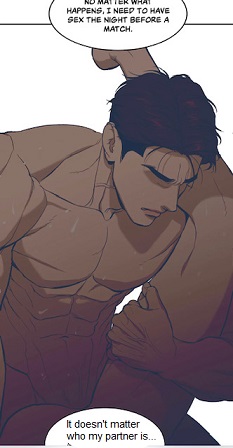 (Chapter 2). Here, strength is no longer something he takes. It is something he receives. (chapter 87)
This is not a weakening admission. It is a reorientation. The champion does not ask Kim Dan to guarantee victory, to protect him from loss, or to secure the outcome. He asks for presence. What sustains him is no longer a ritualized act performed on another body, but the continued existence of a relationship in which he is accepted despite his flaws.  (chapter 87) Kim Dan sleeping openly, showing his face, remaining there without fear—this is read by the champion as tacit trust. That trust becomes energy. In other words, this scene serves as the positive reflection of the argument in the locker room:
  (chapter 51)
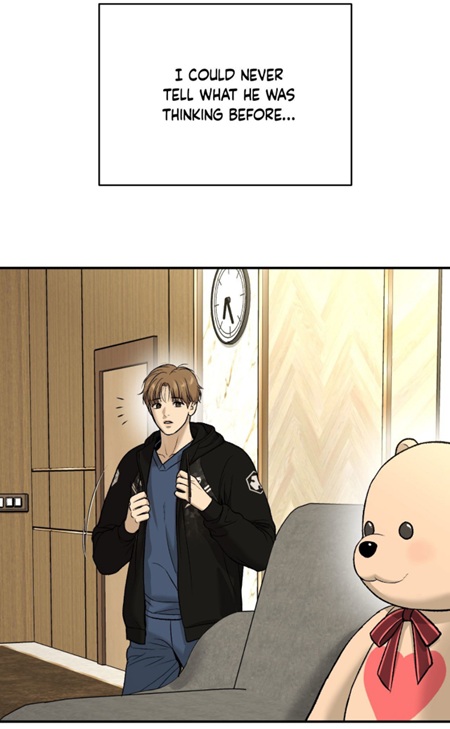
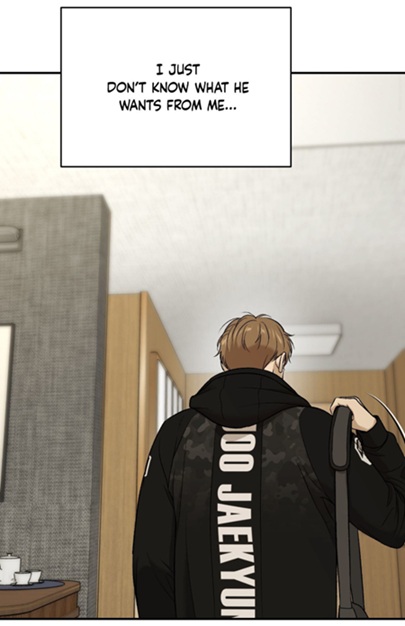
The jinx (chapter 87) collapses precisely here. The old belief system operated on compensation: anxiety required action; uncertainty demanded escalation. Sex functioned as a mechanism to overwrite doubt. In this scene, no such mechanism is activated. The chapter makes this shift legible through space. When the champion rises from the bed, his movement is shown in full: he steps away from Kim Dan and crosses the room. (chapter 87) Yet he does not open the brown door. There is no pause at the threshold, no transition panel suggesting entry into another enclosed space. Instead, the next frame places him directly in the living area of the suite. The cut is continuous, not elliptical.
This matters because the brown door cannot be the suite’s entrance. (chapter 87) We have already seen the entrance elsewhere, and its placement does not align with this angle or proximity to the bed. Within the logic of a hotel suite, the remaining option is functional rather than transitional: the bathroom. In earlier chapters, that space was explicitly associated with ritual 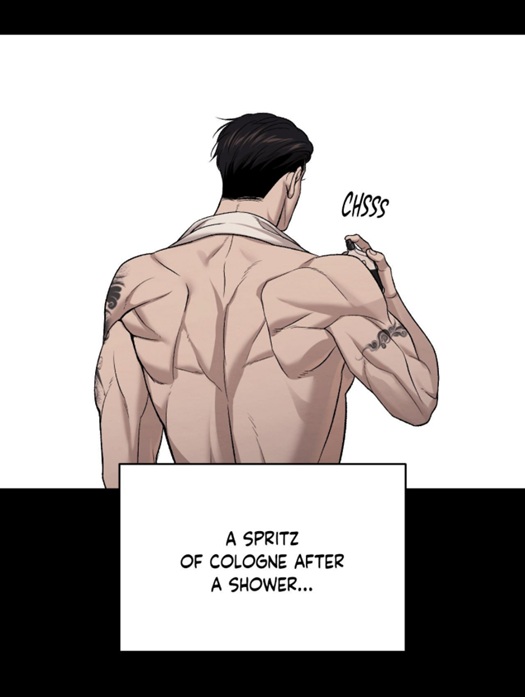 (chapter 75) —showering, cologne, self-regulation before a match. Here, that sequence is conspicuously absent.
The absence is not neutral. Mingwa does not show him choosing another ritual; she shows him skipping one. (chapter 87) No water, no mirror, no scent. The champion moves forward without cleansing, without recalibration, without the preparatory gestures that once framed his readiness. The bathroom—previously a site of purification and self-conditioning—remains closed, unused, and irrelevant.
What replaces it is not another ritual, but continuity. He enters the shared living space already grounded. The confidence he carries does not come from resetting himself, but from what has already occurred. Kim Dan’s presence, his sleep, the unguarded exposure of his face—all of this has already done the work that ritual once performed. There is nothing left to correct, neutralize, or overwrite. To conclude, this omission is not accidental. By abandoning the shower-and-cologne ritual, the champion abandons the idea that he must transform himself to be worthy of victory or public acceptance. He no longer needs to sanitize desire, image, or fear. What sustains him has already been secured before the match begins: recognition without conditions.
Power, then, is not extracted from superstition, domination, or bodily expenditure. It is grounded in continuity. Kim Dan’s presence does not ensure success, but it makes uncertainty bearable. That is the decisive shift. The champion no longer acts to silence fear; he acts while carrying it. And because he no longer believes that ritual determines outcome, he can later speak freely on live television. He is now confident, as he feels supported by doc Dan. 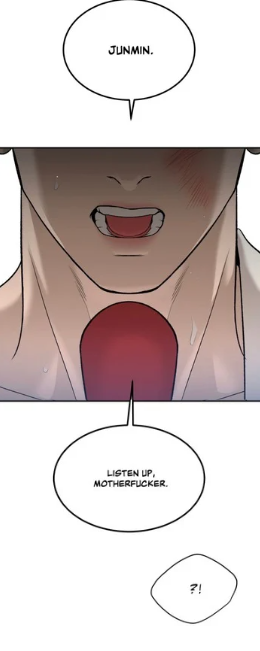 (chapter 87) The profanity is not recklessness—it is evidence that image management has lost its hold. The champion does not stop caring about how he is seen; he narrows the field of recognition. Public perception no longer governs him (chapter 87) because it no longer defines his worth. What matters now is not the crowd, the broadcast, or the institution—but the single person whose presence already secured his sense of legitimacy before the match began. Thus after the match, he asked for the physical therapist’s approval and recognition:
 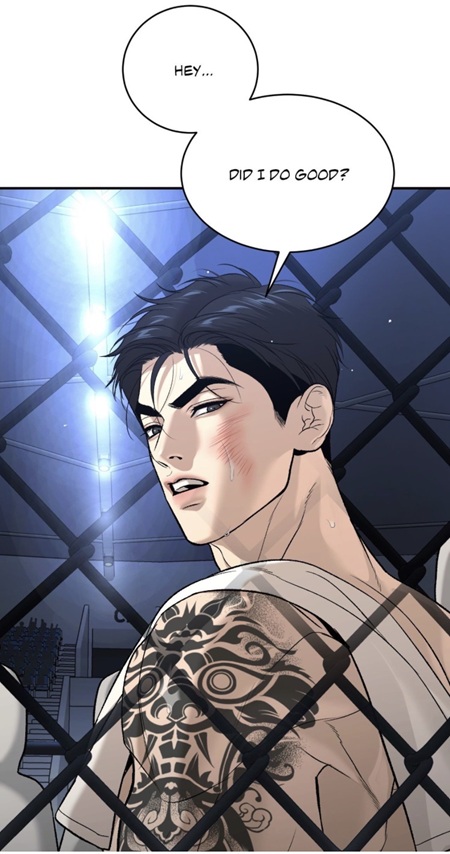 (chapter 87)
In short, the whisper does not mark dependence, but emancipation. (chapter 87) By replacing “I must do something” with “you are here,” the champion exits the economy of compulsion and enters an economy of trust. Victory will still matter—but it no longer needs to be purchased in advance.
The dynamic surrounding Baek Junmin operates differently. His position has always depended on external validation—rankings, victories  (chapter 69), recognition, and above all visibility. Yet this visibility is curiously incomplete. Despite his victory, Baek Junmin is not immediately present as a public figure. He appears as a result
 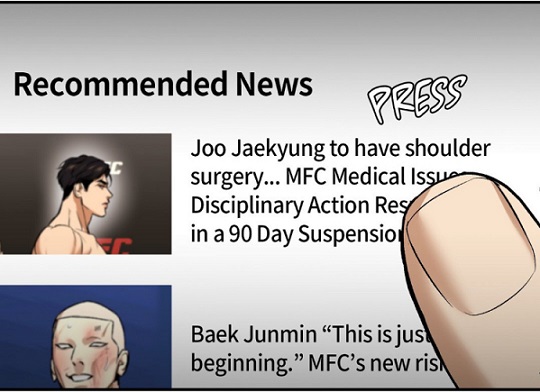 (chapter 52) —his name, his win—but not yet as a narrative subject.
Only later, in episode 77 (chapter 77) does the story formally reveal his identity as champion. Until that moment, he remains strangely undefined, as if held back from full exposure. This delay is not incidental. It reflects a controlled form of recognition: Baek Junmin is allowed to win, but not yet to be seen. It already exposes that his success or victory is not clean.
 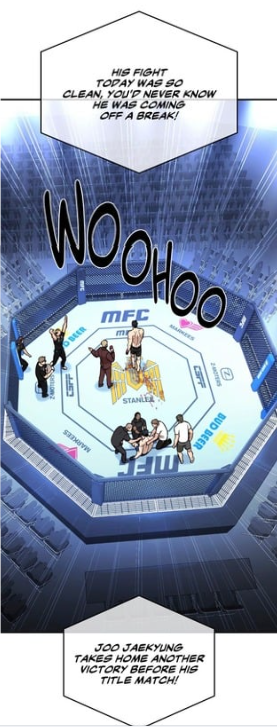 (chapter 87)
In this sense, the former underground fighter has not disappeared, but been contained. His past is not erased; it is suspended. (chapter 47) Visibility is granted selectively, not as self-expression, but as an institutional function. He exists within the system, but not yet fully in the public gaze. Even when violence or illegality intervenes, it does so in service of legitimacy. Until now, Baek Junmin has relied on the legal system 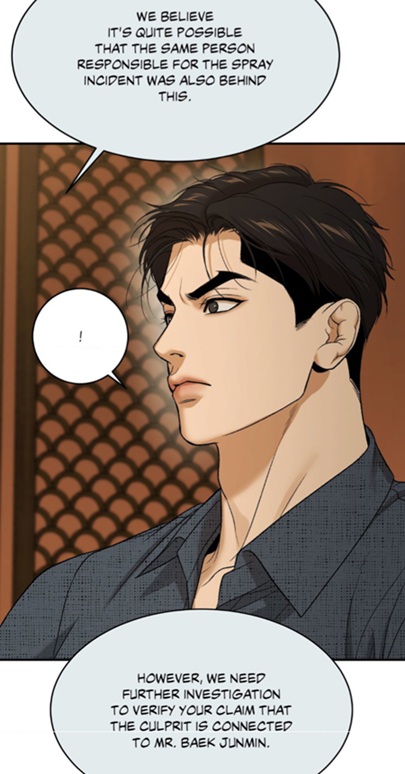 (chapter 69) to carry him forward: sanctioned fights, official narratives, public status. Crimes may occur along the way, but they remain hidden, delegated, or absorbed by others. Power, for him, is something that must appear legitimate, even when it is not.
The destruction of the screen marks the point where this arrangement begins to fracture. (chapter 87) The legal economy no longer guarantees dominance. Public speech escapes control. (chapter 87) Visibility becomes a threat rather than a resource. In response, Baek does not retreat; he escalates. What we witness is not yet a full turn toward the underground, but the precondition for it: the realization that legality no longer secures power. (chapter 87) In this moment, Baek Junmin is no longer speaking as an athlete anticipating a rematch, nor as a rival operating within institutional rules. The phrasing “He has no idea who he’s messing with” does not refer to skill, ranking, or preparation. It signals a different register of power altogether—one that lies outside competition and beyond merit.
The threat is deliberately vague. He does not name a tactic, a plan, or a legitimate advantage. Instead, he invokes reach. The implication is relational rather than athletic: access, leverage, intermediaries. Power here is imagined as something that can be mobilized indirectly, through others, rather than exercised personally. This is where the “angel of death” reading becomes relevant—not as a literal figure, but as a symbolic posture. Baek frames himself as someone whose influence does not require visibility or accountability. Risk is no longer borne by the speaker. It is transferred, outsourced, or enforced through an unnamed elsewhere. Violence becomes atmospheric rather than explicit.
This is where the contrast between the two pairs sharpens. One trajectory exits the economy of compensation—the belief that force, ritual, or excess can neutralize uncertainty. The other moves toward a system where uncertainty is resolved through coercion rather than consent. One abandons the jinx by accepting risk. The other approaches a space where risk is relegated, outsourced, or enforced.
What separates them, then, is not morality, but dependency. The champion no longer depends on systems that promise control. Baek Junmin still does—and when that promise fails, the search for power does not stop. It changes terrain. Up to this point, Baek Junmin’s power has been structurally protected rather than personally secured. His victories, rankings, and public status were carried forward by the legal economy of the sport, even as acts of sabotage or coercion occurred in its margins. Crucially, this system did not require his full awareness to function. Violence was absorbed, displaced, or misattributed by intermediaries, allowing legitimacy to remain intact on the surface. Baek benefited from this arrangement without having to own it. Authority appeared lawful, outcomes appeared earned, and responsibility flowed elsewhere.
That arrangement begins to collapse here. Once public speech escapes control and visibility can no longer be managed retroactively, legality stops functioning as insulation. What follows is not yet a plunge into the underground, but the moment where reliance on institutional protection becomes untenable—and the search for power must change terrain. (chapter 87) Strangely, the director of King of MMA has just assured him his full support (chapter 87), but this was not enough for the “demon”. What the “new champion” failed to realize is that gaining the champion belt didn’t mean the end of his achievement. The reality was and is that he would be challenged constantly. Even when crimes are committed around him 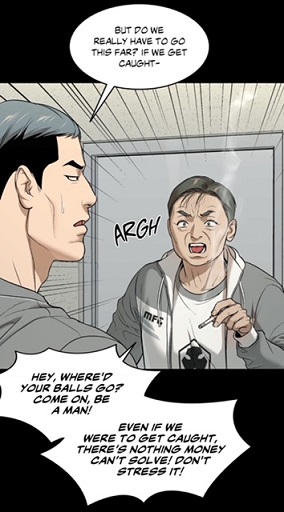 (chapter 50), they remain structurally hidden, absorbed by intermediaries, or misattributed.
  (chapter 69) Violence is laundered through legitimacy. The system continues to present him as a contender, even as it quietly tolerates sabotage and manipulation. Importantly, Baek Junmin does not need to know every detail for this economy to function; it protects him by design.
The scene in chapter 87 marks the moment where this economy begins to fail him. Public speech, live broadcast, and irreversible visibility introduce a variable that cannot be managed retroactively. Unlike clandestine acts or whispered humiliations, what is said on air cannot be displaced, denied, or quietly corrected. The legal system does not offer erasure; it offers record.
This is where the alternative economy becomes legible. Underground fighting (chapter 47), illegal gambling, and criminal enforcement operate on a different logic: outcomes are secured not through recognition, but through coercion and tricks; not through visibility, but through fear and secrecy; not through procedure, but through immediacy. There, a defeat is more like a death sentence. 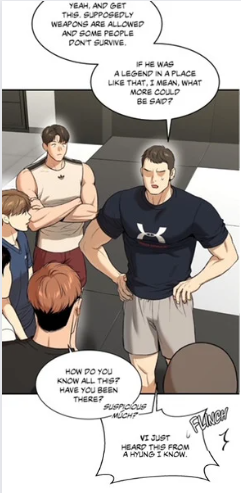 (chapter 47) Where the legal economy requires patience and exposure, the illicit one promises certainty and silence.
By contrast, the champion’s gesture in the opening scene binds him more firmly to the legal economy precisely because it accepts uncertainty. Redistributed power cannot be weaponized quickly. It resists conversion into domination. That resistance is what dissolves the jinx—and what makes the two trajectories incompatible.
This is how mediation works in that relationship. Kim Dan’s presence does not absorb excess; it sets a limit that is respected. Joo Jaekyung does not outsource control. He exercises it on himself.
The dynamic between Choi Gilseok and Baek Junmin operates according to a different economy. Formally, theirs is a boss–employee relationship. 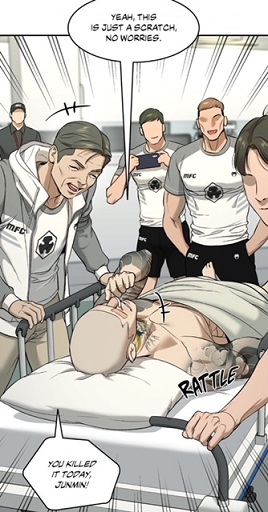 (chapter 52) In practice, hierarchy barely functions. Authority exists without discipline, protection without accountability. Baek Junmin is not positioned among other fighters, nor anchored in a collective. Thus he is not truly celebrated at the restaurant after the tie. Thus the fighters mentioned the director Choi Gilseok’s financial success or the odd behavior of Joo JAekyung.
  (chapter 52) Besides, he watches the match alone (chapter 87), from the director’s office—at the center of power, yet fundamentally isolated. This spatial detail matters. It signals both exclusion and entitlement. He does not belong, but he feels authorized to occupy the space.
When Choi Gilseok touches Baek Junmin’s shoulder, the gesture is corrective. (chapter 87) It is meant to halt escalation, to reassert moderation, to momentarily reintroduce limits. Baek’s response is immediate: he slaps the hand away. (chapter 87) This rejection is not rebellion in the classical sense. He is not trying to overthrow authority; he is refusing mediation. In his mind, limits no longer apply to him. He has been granted license without ownership. It was, as if the championship belt had freed the fighter from social norms and laws. Shortly after, “By all means” (chapter 87) removes the brakes while leaving responsibility elsewhere. It sounds like a free pass for the “criminal” in the end.
The final scene also marks the quiet dissolution of the association between Choi Gilseok and Baek Junmin. Although the director speaks in the plural—“we will use all means necessary”—the scene itself contradicts that claim. Spatially, Choi remains behind Baek, positioned as if backing him, yet excluded from his line of sight. The demon does not turn toward him, does not respond to him, and does not share affect or intent. The “we” exists only rhetorically. In practice, the scene contains only two figures: Baek Junmin and his imagined adversary. The director is already irrelevant.
This staging contrasts sharply with the earlier locker-room confrontation between Joo Jaekyung and Kim Dan,  (chapter 51) where proximity forced acknowledgment and power was renegotiated face-to-face. (chapter 51) In the office, no such negotiation occurs. (chapter 87) Baek Junmin’s refusal is not confrontational; it is dismissive. (chapter 87) He does not reject authority—he bypasses it. The champion belt appears to function, in his mind, as a form of exemption: a signal that dependence, seniority, and mediation no longer apply. Whether this belief is justified remains open. What matters is that Baek Junmin acts as if it were. In doing so, he exits not only a partnership, but the structure that once contained him.
Placed side by side, the two pairs reveal two economies of power. In one, influence circulates through presence, restraint, and mutual risk. In the other, power is maintained through delegation, insulation, and the removal of limits. One dynamic produces responsibility by accepting vulnerability. The other produces entitlement by severing accountability.
This is why the outcomes diverge so sharply. Where one relationship closes a cycle of superstition and control, the other opens a trajectory of escalation and downfall. Not because one side loves and the other hates, but because one accepts limits—and the other has been told there are none.
Feel free to comment. If you have any suggestion for topics or Manhwa, feel free to ask. If you enjoyed reading it, retweet it or push the button like. My Reddit-Instagram-Twitter-Tumblr account is: @bebebisous33. Thanks for reading and for the support, particularly, I would like to thank all the new followers and people recommending my blog.

 🌶️😂
🌶️😂 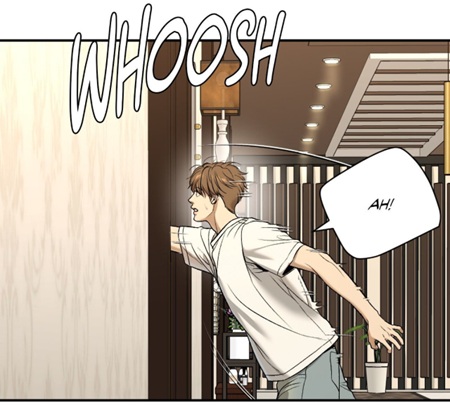 (chapter 85) Why care about the color of a carpet or the direction a door opens
 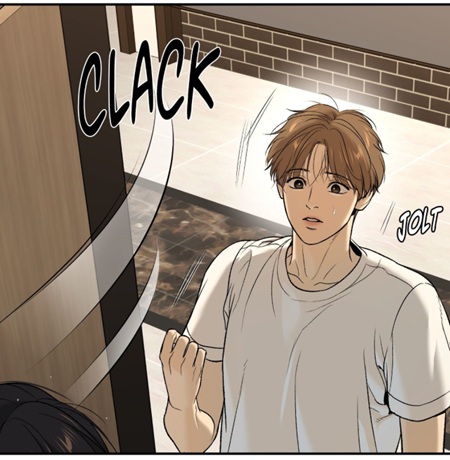 (chapter 85), when the real story unfolds between Joo Jaekyung and Kim Dan?
 (chapter 82) Floors and patterns are not neutral decoration. They function as a parallel narrative system—one that tracks changes in status
 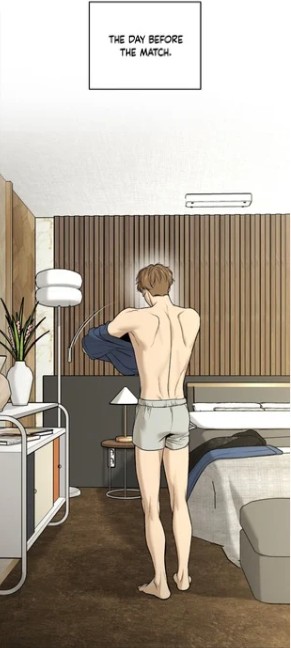 (chapter 85), exposes the actual situations in which the characters are placed
  (chapter 85), and helps us locate spaces and relationships within the hotel architecture itself. In other words, the floors do not merely frame the story; they add a spatial depth that sharpens our understanding of the “characters.”
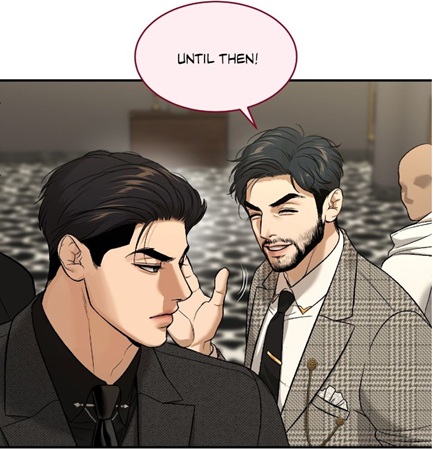 (chapter 82)
 (chapter 82)
  (chapter 82) One might think, the only information we get is that MFC had booked a conference room at the hotel where Team Black is staying. However, in the States, the carpet of the hallway at the hotel had a similar pattern.
 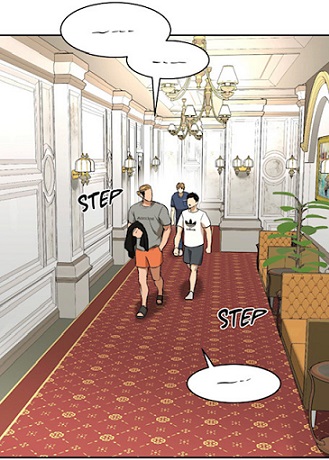 (chapter 37) This similarity and repetition caught my attention. It suggests continuity between public spectacle and private space, between what is shown and what is concealed. Following this thread led to a broader realization: the floors simultaneously signal elevation and confinement. They show who appears powerful—and who is, in fact, enclosed.
 (chapter 37)
 (chapter 37) It is in that hallway that Kim Dan collapses after drinking a drugged beverage. He literally falls onto the carpet, on his knees. The trap activates—but not on its intended target.
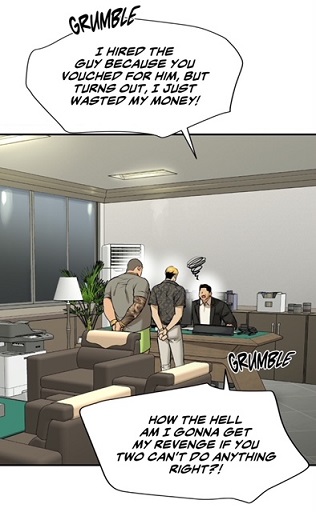 (chapter 46), not by MFC directly. The scheme exists, but it is imperfect. Joo Jaekyung is not truly “caught” in that moment, which explains why the plan ultimately fails.
 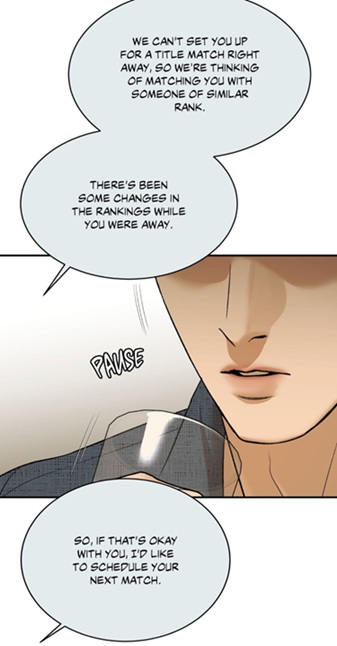 (chapter 69) As you can see, the pattern of the carpet could be seen as an evidence for a trap, and the “Emperor” is their target once again. Their plan is to end his career so that all the incidents and crimes from the past can be buried.
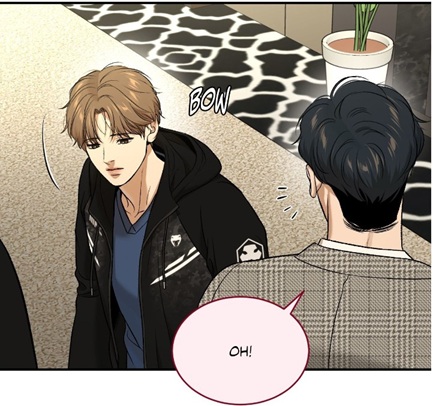 (chapter 82). The opponent stands on the surface that embodies order, hierarchy, and control, and behaves accordingly. He flirts, comments on the doctor’s eyes, and treats the moment as harmless. Then he turns his back.
 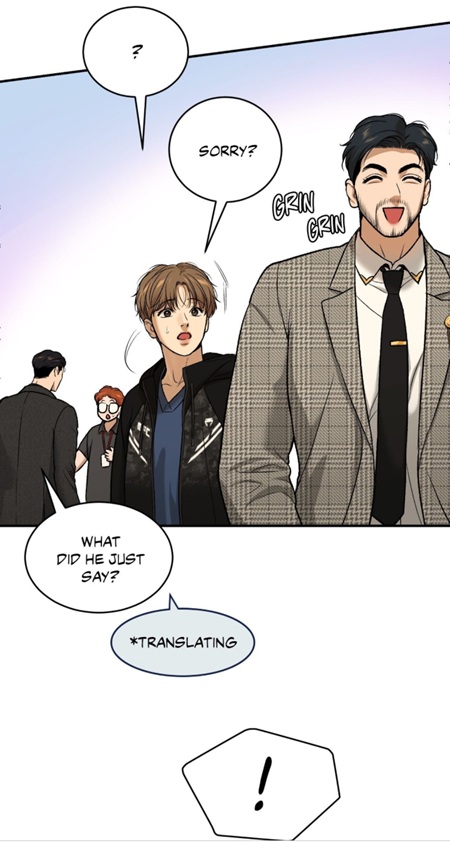 (chapter 82) He never steps onto, nor does he seem to register, the animal-patterned carpet nearby, as doc Dan was standing on a white-off carpet. In other words, Arnaud Gabriel interacts only with the space that reflects the institution’s worldview.
 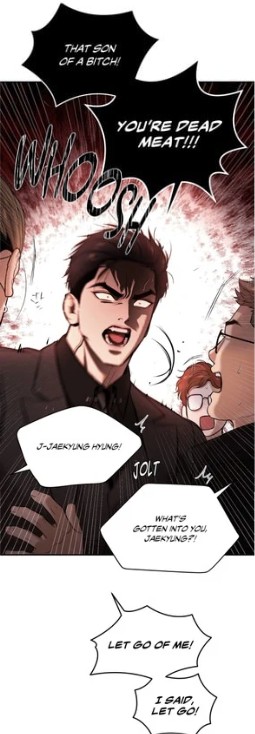 (chapter 82) This is not the response of a neutralized Emperor, but the instinctive surge of a predator whose territory has been violated. The scene echoes an earlier, more intimate image from the bathroom in chapter 30,
 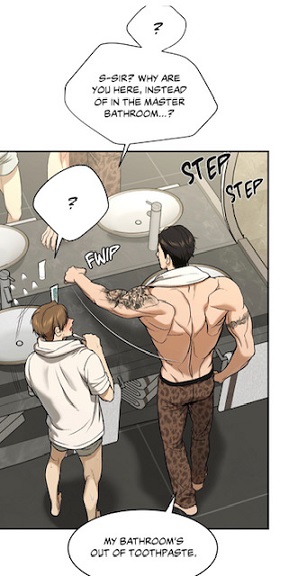 (chapter 30), where Joo Jaekyung appeared wearing leopard-patterned pajamas. The animal imagery was already present then, but dormant. Here, it reawakens.
 (chapter 85) The champion is not alone inside the cage. He is supported, grounded, and no longer isolated. What MFC fails to see is that this support does not weaken the predator—it stabilizes him. And a stabilized predator is far more dangerous than a cornered one. For years, Joo Jaekyung’s violence was reactive, triggered by threat, humiliation, or loss of control. Such a fighter is powerful, but predictable. He can be provoked, exhausted, and manipulated.
 (chapter 84) These visual cues distinguish floors, mark thresholds between zones, and separate different kinds of isolation. The hotel ceases to function as an abstract backdrop and instead reveals itself as a structured environment in which hierarchy is materially inscribed.
 (chapter 85)
  (chapter 84)
  (chapter 85) The corridor seems to have white linoleum covered a dark brown carpet, similar to the one in his bedroom. However, observe that the manager’s entrance has the same tiles than in the hallway.
  (chapter 85) reminds us of the champion’s living room in the hotel.
  (chapter 82) This clearly exposes that doc Dan’s room is not a normal room. It exceeds that basic category. It is larger, brighter, and arranged for comfort. The interior layout is particularly revealing: the bathroom is located close to the bedroom
  (chapter 85) clearly separating living space from bedroom
  (chapter 82), and extending outward through more than one balcony.
  (chapter 82)
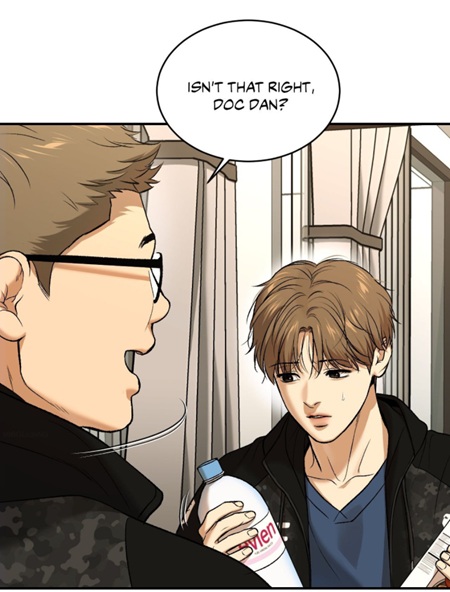 (chapter 82) And the moment I had this realization, architecture, once again, speaks first, my attention returned to the hotel in the States.
  (chapter 37)
 (chapter 37) This detail is crucial. It explains why he can hear their laughter and smell the food they are eating.
 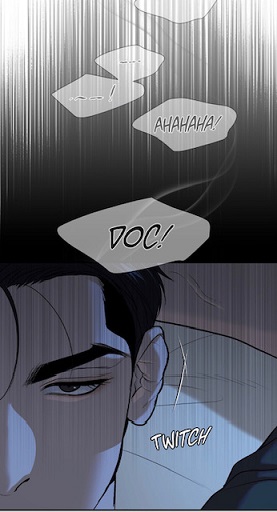 (chapter 37) Architecturally, he was not isolated. Despite his status, he remained embedded within the collective space of the team.
  (chapter 37) Besides, Episode 40 confirms that Joo Jaekyung did occupy an imperial suite: the interior layout includes a door separating the bedroom from another room
  (chapter 40), a feature characteristic of a suite rather than a standard hotel room. The issue, therefore, is not the absence of a suite, but how that suite was positioned and managed.
 (chapter 37) Because the suite was embedded within a shared corridor, an intruder could approach the champion’s room without attracting attention.
  (chapter 37) intended for weight-cutting and post–weight-cut recovery. This detail exposes a managerial failure rather than a hotel failure. The environment was not curated around the champion’s physical needs. Discipline was demanded of his body, but not enforced in his space. Meanwhile, fighters and coaches purchased junk food behind the champion’s and Kim Dan’s back, reinforcing the gap between stated goals and actual practice.
 (chapter 37) There is no visible keycard system, and no clear indication of an interior lock.
 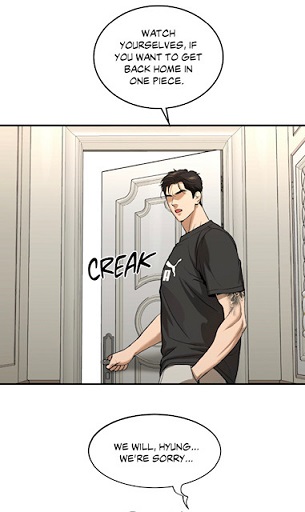 (chapter 37) This absence is striking, especially when contrasted with the Paris hotel
  (chapter 85), where doors are equipped with keycards and locks on both sides
 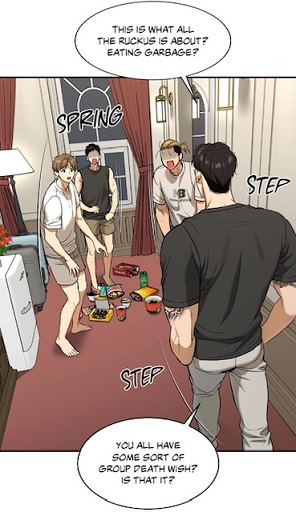 (chapter 37) Access was not negotiated; it was simply taken. The architecture allowed it. The space did not protect its occupants.
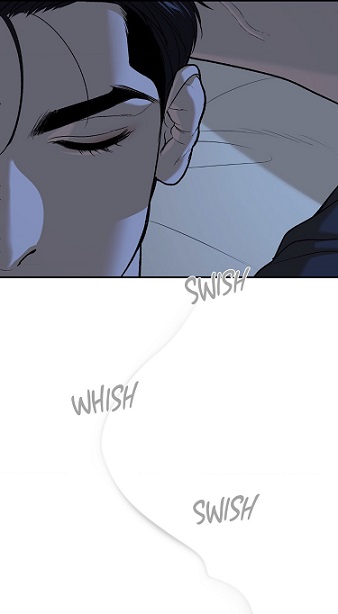 (chapter 37) At first glance, this appears implausible. A suite, by definition, should insulate its occupant from such disturbances. His bedroom is not situated next to the corridor.
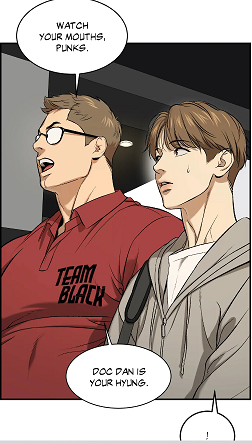 (chapter 7) Status was asserted rhetorically, but not enforced spatially, exactly with Joo Jaekyung.
 (chapter 37), negotiating access with local coaches and nearly getting into a physical altercation before being allowed to use their facilities
 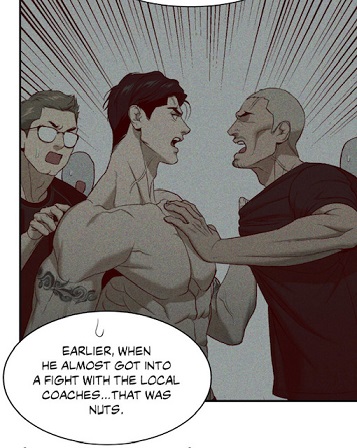 (chapter 37). Only after asserting himself does he gain permission to train. Even then, the gym he ultimately uses is unremarkable — functional, crowded, and indistinguishable from what any average fighter might access. There is nothing exceptional about it.
 (chapter 82) The infrastructure finally aligns with the demands placed on his body. This shift is not a luxury; it is a correction. It reveals retroactively how deficient the American setup was — and how little institutional care surrounded the champion at the time.
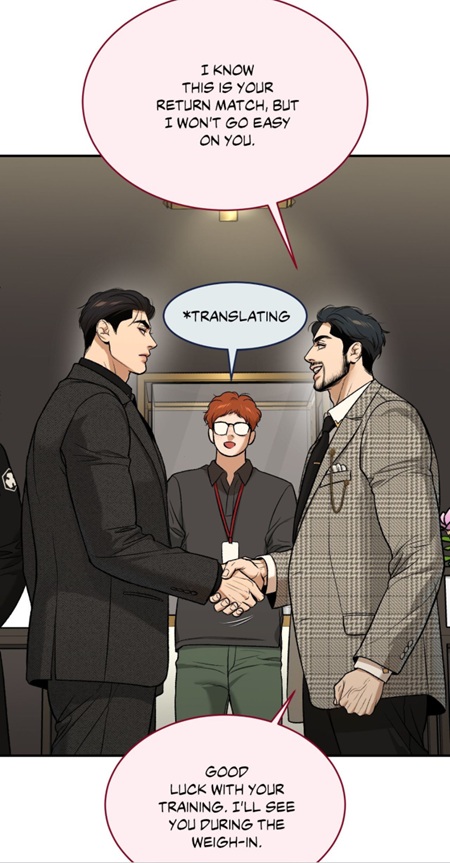 (chapter 82) The remark does not stem from arrogance alone; it is grounded in observation. The training space available to Joo Jaekyung at the hotel is not designed for an elite athlete, even less for MMA fighters.
  (chapter 82) It is a generic fitness room intended for ordinary guests. There are no heavy bags, no proper equipment, no environment suited to the demands of a reigning champion.
 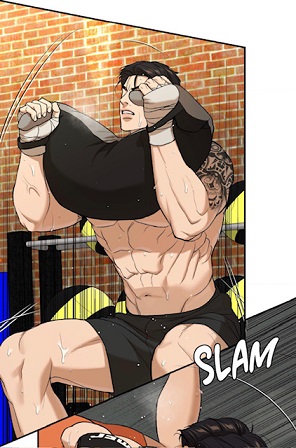 (chapter 37) This is precisely why his training must be adapted, restrained, and partially improvised.
 (chapter 5) MMA is not baseball or soccer
  (chapter 54); it does not benefit from the same institutional prestige or resources. Earlier in his career, the champion was more likely trained to endure damage than to prevent it. What we see now is not the continuation of an elite system, but its gradual construction — one in which Kim Dan plays a central role.
 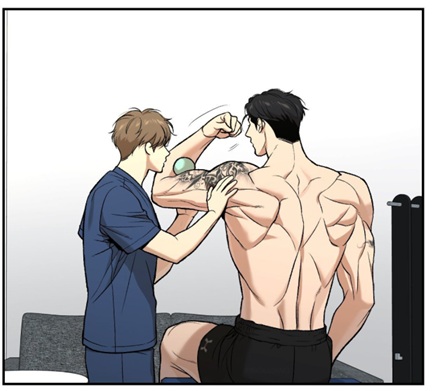 (chapter 81)
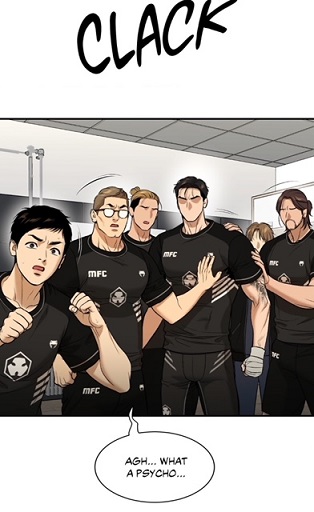 (chapter 49), rather restraining him and as such exposing him to danger.
 (chapter 37) and the post–weight-cut recovery.
 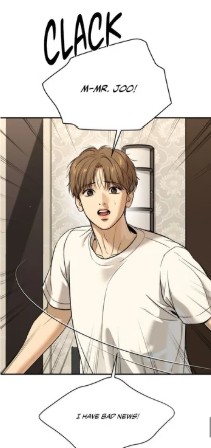 (chapter 82) Kim Dan may indeed possess a keycard to Joo Jaekyung’s suite. If so, this is not a minor convenience. It constitutes a symbolic transfer of access. The physical therapist is granted proximity not merely to the champion’s body, but to his private space. Hence the athlete is not caught by surprise, he doesn’t even mind this intrusion or interruption.
 (chapter 82) and support
 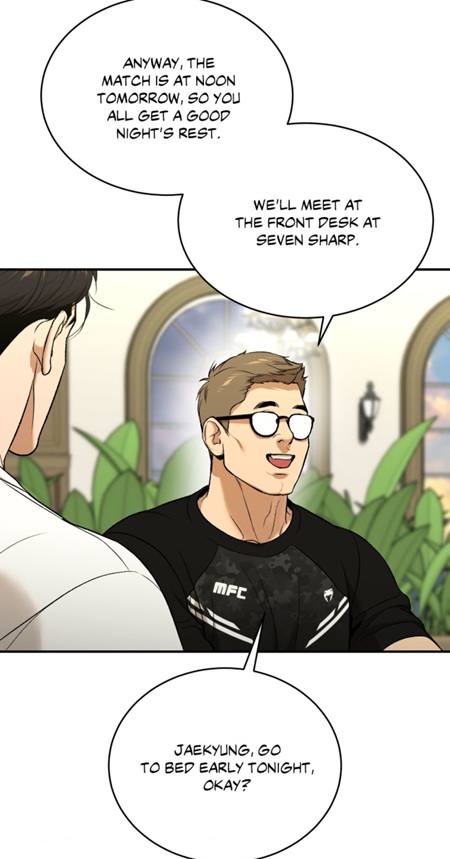 (chapter 85), he expects everyone to wake up on time and appear at seven sharp. He doesn’t see it as his “task” to wake up the champion. Once again, he is delegating responsibility onto others. However, it is clear that he expects Joo Jaekyung to be awake early like he did before. So if the champion doesn’t appear on time, the manager’s decision should be to call doc Dan or visit his room. In his eyes, he is the one responsible for the champion!!
 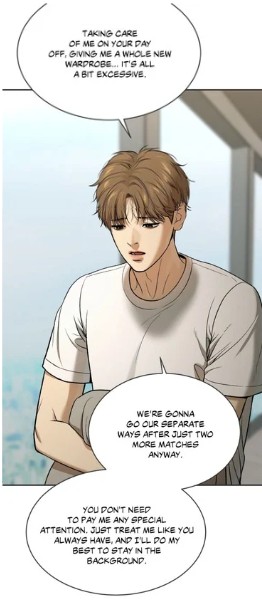 (chapter 80) for his contract is limited not only to Joo Jaekyung, but also in time. He was never a fighter, hence he is not part of MFC at all contrary to the other hyungs.
 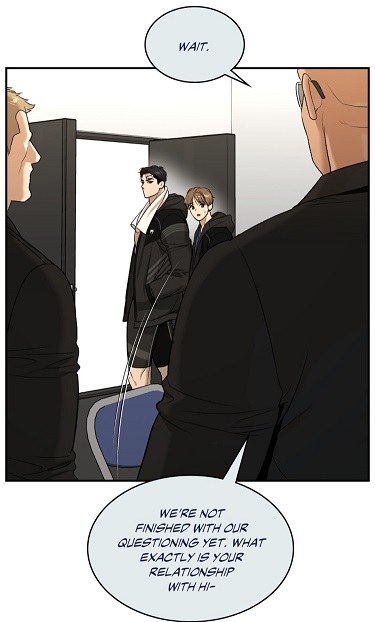 (chapter 40)
 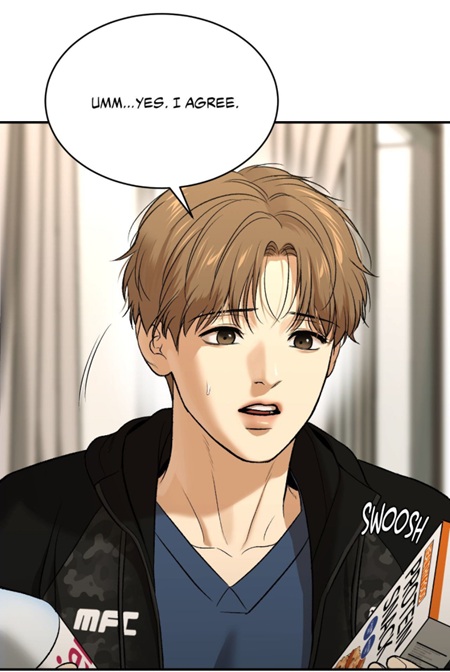 (chapter 82) These are managerial functions.
 (chapter 40) Doc Dan is not one among others, but the BEST physical therapist. He is also a champion

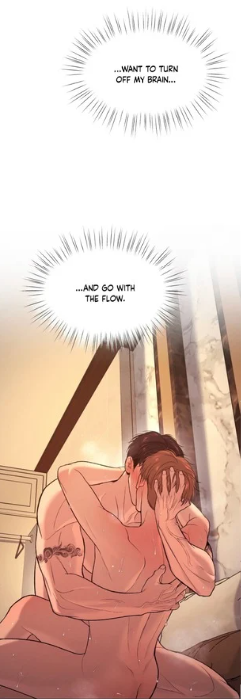 (chapter 86), it does not close the night through narrative resolution. There is no statement, no promise, no verbal seal. And yet, for many Jinx-philes, the final panel refuses to let the scene dissolve. What remains is not heat, not tension, not even tenderness — but circulation.
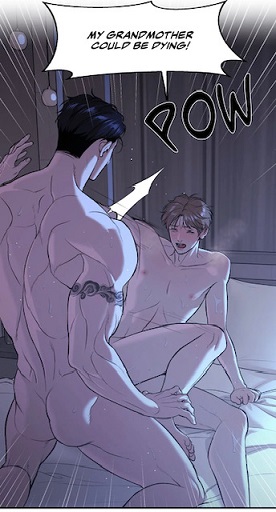 (chapter 21), overload
  (chapter 33), short circuit
 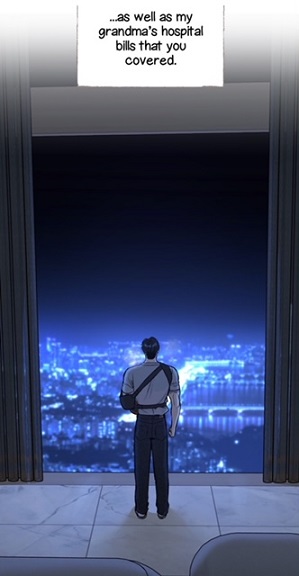 (chapter 53) reset. And once that lens is adopted, it becomes impossible to limit the consequences of episode 86 to the couple alone. Because a closed circuit does not only affect those directly connected to it. It alters the surrounding system.
 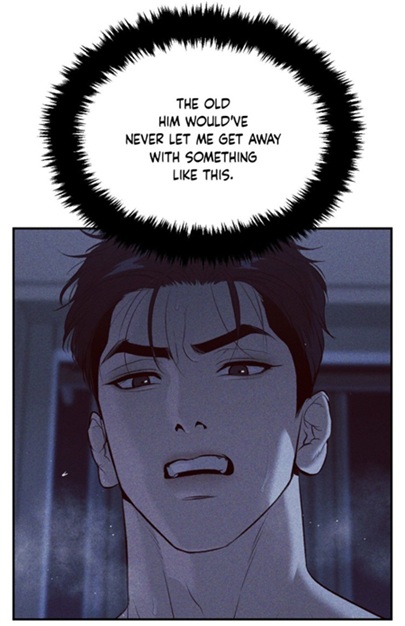 (chapter 86). This section will explore how acknowledging change without denying past harm opens a new ethical position — one that prevents memory from being weaponized, while still preserving responsibility. Third, the analysis will turn to conversion, revisiting earlier nights marked by failure, asymmetry, and isolation. Rather than cancelling them, episode 86 absorbs and transforms them. This is where forgiveness, reflection, and the first true encounter with consequence quietly enter the narrative. Finally, a new section will widen the lens further by examining shared experience and memory
  (chapter 53), particularly through Kim Dan’s relationship with his grandmother. Here, the focus will not be accusation, but contrast: between memories carried alone and memories held together; between cycles of repetition and moments of presence; between a worldview structured around endurance and one shaped by circulation. The Paris night does not only affect how Kim Dan sees Joo Jaekyung
 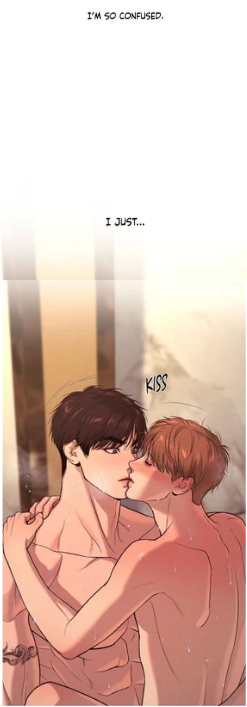 (chapter 86) carries such weight, we must return to the origin of kissing itself in Jinx. Because surprise, in this story, is not an abstract theme. It has a history. And that history begins with a body being caught off guard.
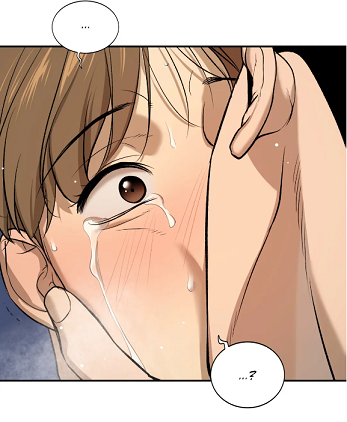 (chapter 14) There is no warning, no verbal cue, no time to prepare. The kiss arrives as interruption. It is not negotiated; it is imposed. Hence the author focused on the champion’s hand just before the smooch.
 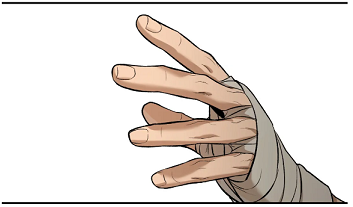 This moment matters far more than it initially appears, because it establishes the template through which Kim Dan first encounters intimacy.
 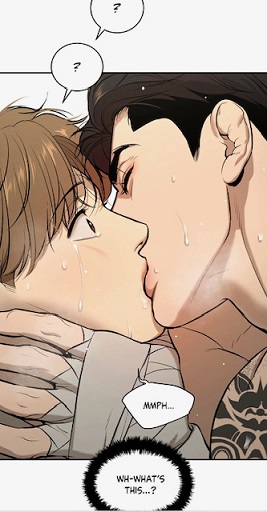 (chapter 15) Affection does not emerge gradually. It breaks in.
 (chapter 15) He needs preparation. He needs time to brace himself emotionally. This request reveals two aspects. First, he connects a kiss with love. On the other hand, the request is not really about romance; it is rather about survival. Surprise, for Kim Dan, has already been coded as something that overwhelms the body before the mind can intervene.
 (chapter 39), he violates his own request.
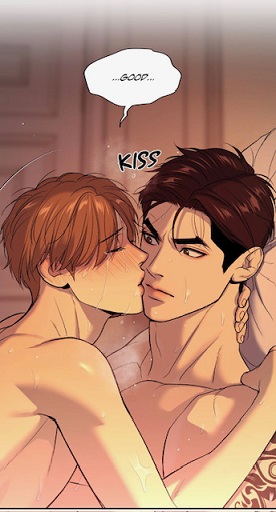 (chapter 39) They are unannounced, often landing on unusual places (cheek or ear)
  (chapter 44). They often take place under asymmetrical conditions — when one of them is intoxicated, confused, or emotionally exposed. Sometimes they occur without full consent, sometimes without clarity. In chapters 39 and 44, kisses surface precisely when language fails or consciousness fractures. It is as if Kim Dan has internalized a rule he never chose: a kiss must be sudden. Observe how the champion replies to the doctor’s smile and laugh: he kissed him, as if he was jealous of his happiness.
 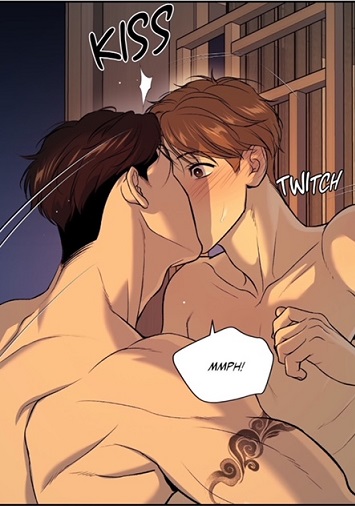 (chapter 44) That’s how I came to realize that the kiss in the Manhwa is strongly intertwined with “surprise”. This is the missing link.
 (chapter 2), he comes to reproduce interruption as intimacy. He knows that surprise destabilizes him — that is why he asked for warning — but he has no other model. What overwhelms him also becomes what he reaches for. Surprise is both threat and language.
 (chapter 3): the sudden call from the athlete,
  (chapter 1), the offer of sex in exchange for money
 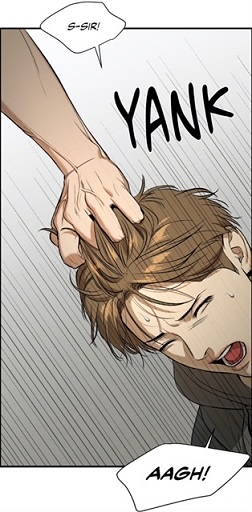 (chapter 6), the switched spray
  (chapter 49), the sudden changes in rules. These moments strip Kim Dan of anticipation and agency. His body reacts before his will can engage. Surprise equals exposure.
 (chapter 1) His life is governed by “always”: always working, always returning, always responsible. He lives for his grandmother. Nothing unexpected is allowed to happen, because nothing unexpected can be afforded. This is safety through stasis. Presence without experience.
 (chapter 5)
  (chapter 1) They shattered routine rather than enriching it. Surprise, in that context, did not open possibility; it threatened survival. It meant debt, coercion, fear. And precisely because of that, it could not be integrated into memory as experience — only repressed as trauma.
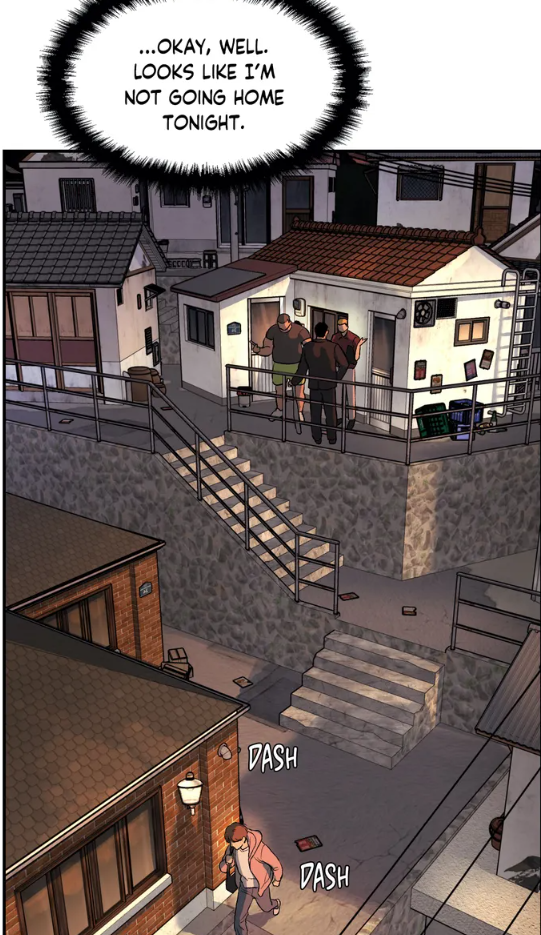 (chapter 1), if he doesn’t return home. Surprise, in its earlier form, is excised from the household. What remains is a world of repetition and endurance — safer, but lifeless.
  (chapter 2) but in a fundamentally different form.
 (chapter 11)
 (chapter 11) His appearances are sudden, his demands non-discussable, his violence immediate. He does not ask; he enforces. Surprise, under his rule, eliminates speech. It leaves no space for argument, no room for clarification, no possibility of consent. One endures, or one is punished.
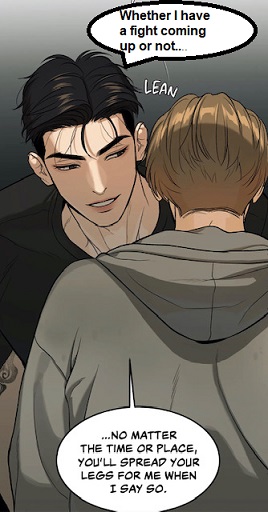 (chapter 6) Even when power is asymmetrical, even when the terms are coercive, speech is required. Conditions are stated. Rules are articulated. Kim Dan is forced to listen, to answer, to argue, to object. He must speak.
 (chapter 17) The two figures cannot coexist because they represent mutually exclusive regimes of surprise: one that annihilates speech, and one that forces it into being. In other words, only one allows experience to be lived rather than survived.
 (chapter 27) Experiences accumulate instead of disappearing. They demand response, speech, negotiation. Life no longer consists in enduring impact, but in processing it.
 (chapter 65) and as such neutralization: suffering must be absorbed, pain must be justified, disruption must be folded back into endurance. There is no place for charge there — only for dissipation. What Kim Dan lives through with Joo Jaekyung follows a different logic altogether: not sacrifice, but circulation; not repetition, but conversion.
 (chapter 41) not despite surprise, but through it. Not because dominance is romanticized, but because surprise is the first force that treats him as someone to whom things can happen. And don’t forget that for him, a kiss symbolizes affection. Even negative experiences generate subjectivity. They prove that he exists beyond function.
 (chapter 85) Kim Dan either endures it or reproduces it under unstable conditions. Agency is partial. Meaning collapses afterward.
 (chapter 39), irony
 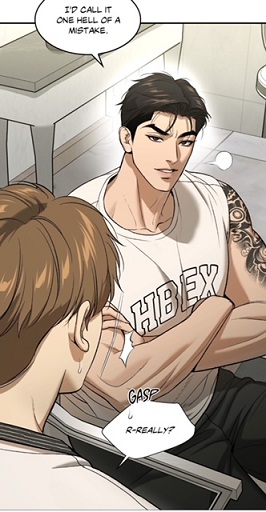 (chapter 41) or rejection
 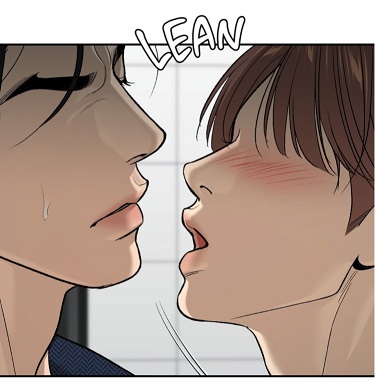 (chapter 55). He does not retreat into his habitual “it’s nothing” or “never mind.” He does not reinterpret the gesture as convenience or reflex.
  (chapter 86) He kisses back while looking tenderly at his partner. He holds Kim Dan’s head gently. He can only see such a gesture as a positive answer to his request: acceptance and even desire. Surprise is not punished. It is received.
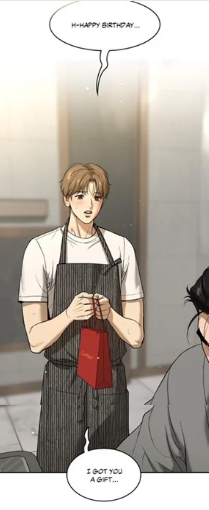 (Chapter 45) This time, the athlete not only accepts the present (the kiss), but but also expresses “gratitude” by kissing back actively.
  (chapter 65) In her eyes, she has never changed, just like her grandson.
  (chapter 52), justify behavior
  (chapter 57), and foreclose change. The champion’s violence is explained through reputation.
  (chapter 1) Kim Dan’s endurance is explained through obedience and debt. The grandmother’s authority is explained through sacrifice. In every case, the same logic applies: this is how it has always been; therefore this is how it must remain.
 (chapter 65) If the past is absolute, it can be endlessly invoked to invalidate the present. We have a perfect example on the beach.
  (chapter 65)
 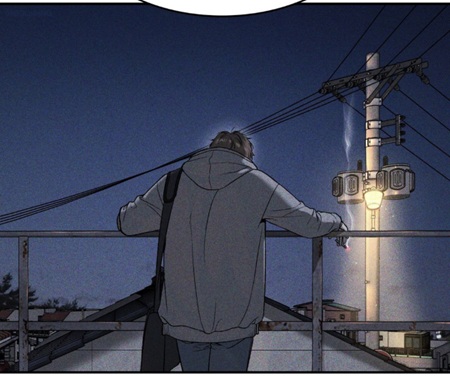 (chapter 65) They are evaluated exclusively through a moral lens. Smoking and drinking are not responses; they are flaws. And because they are framed as flaws, they retroactively define his character rather than his situation. This is where agency collapses.
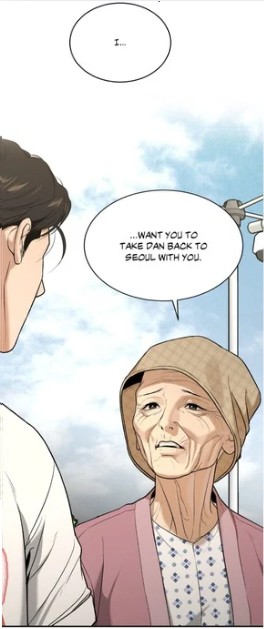 (chapter 65) Her behavior does not contradict her claim that she wants Kim Dan to “live his own life.”
  (chapter 65) It reveals how she understands such a life should be arranged. She sees herself as superior, as if she had never done any mistake, as if she had lived as a saint.
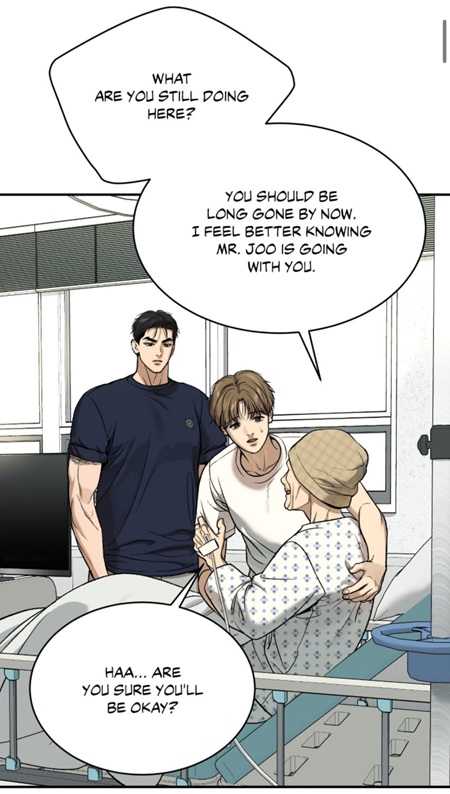 (chapter 78)
 (chapter 86) Once again, the “hamster” is given the opportunity not only to decide, but also to follow his heart. Where the Paris night allows difference to coexist with memory, Shin Okja’s framework collapses difference back into judgment. Where electricity requires polarity, her logic insists on sameness. Under this new light, it becomes comprehensible how doc Dan came to neglect himself. Self-care is inseparable from choice — from the belief that one’s decisions can meaningfully alter the present. If change is denied, care loses its purpose. Attending to oneself becomes optional, even suspect, because it implies a future different from the one already prescribed.
  (chapter 44) The one who remembers bears the – alone, while the other continues forward unmarked. That imbalance is corrosive. It distorts perception. It turns even good memories sour.
 (chapter 65), but she remembers it in a way that flattens time. Pain becomes proof of virtue. Sacrifice becomes identity.
  (chapter 65) Change is allowed only insofar as it returns to the same point. Electrically speaking, her system is grounded — all charge dissipates into endurance. There is no polarity, only repetition.
 (chapter 65) Even though the word jinx is never spoken during the Paris night, its logic quietly collapses there.
 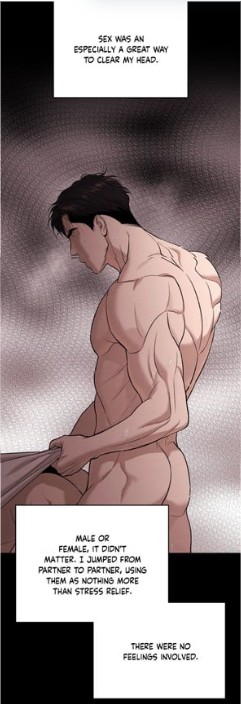 (chapter 75) In chapter 75, it is explicitly framed as a way to “clear the head”: an act designed to release pressure and return the system to zero. Partners were interchangeable. Feelings were excluded. Electricity existed only as a spark — brief, violent, and self-extinguishing. Energy was expelled, not circulated. That is the true mechanics of the jinx: power without continuity, intensity without consequence.
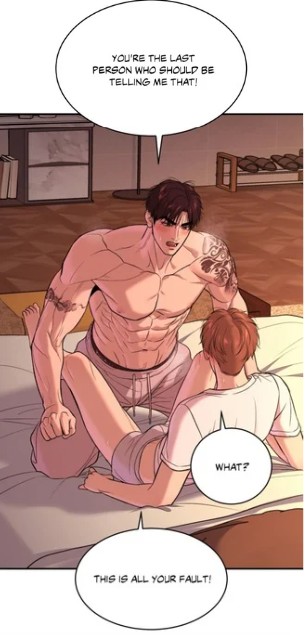 (chapter 85) Desires matter, not the match the next morning. Besides, the identity of the partner matters — not just romantically, but also structurally. Current requires two poles. It requires response. It cannot flow through an object, only between 2 subjects.
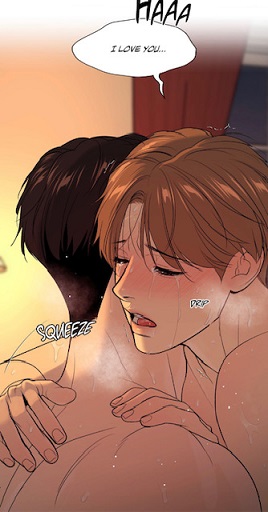 (chapter 39) and chapter 44
 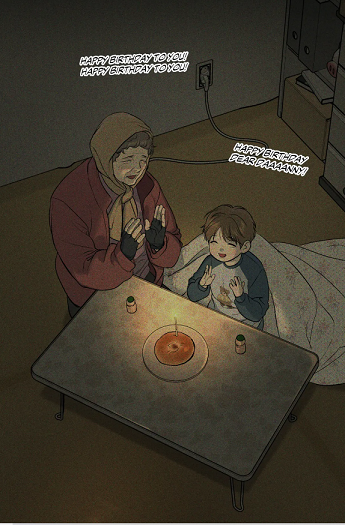 (chapter 11), the care – even if he had hurt himself –
 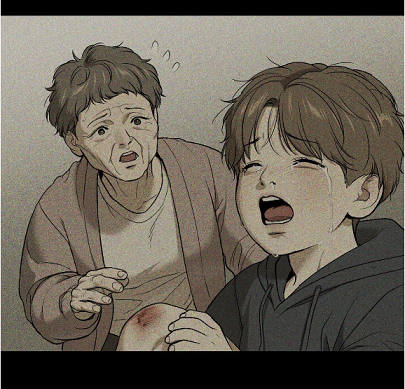 (chapter 47), the shared smiles
 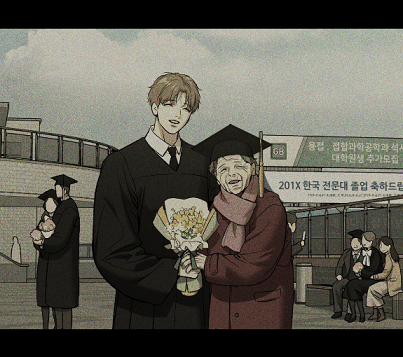 (chapter 47). Thus this photograph
  (chapter 65) becomes a talisman — not a record of reality, but a distilled image of safety. Painful dimensions are filtered out. Conflict, coercion, and silent pressure recede into the background. Memory protects him by idealizing. Because of this picture, he projected himself in the future, making unrealistic plans.
 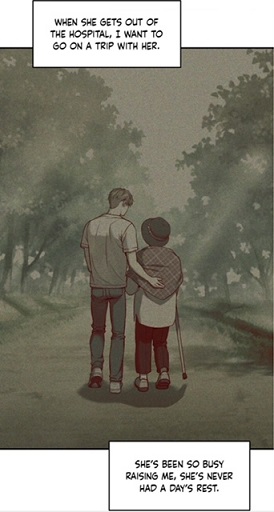 (chapter 47) It was, as if he only had good times with his grandmother.
 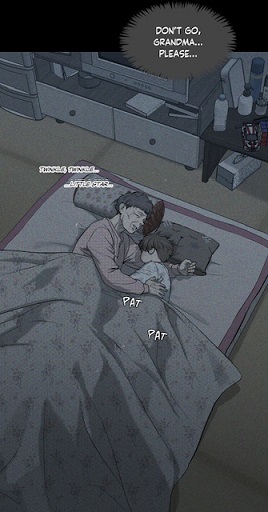 (chapter 21)
  (chapter 47) and memories.
 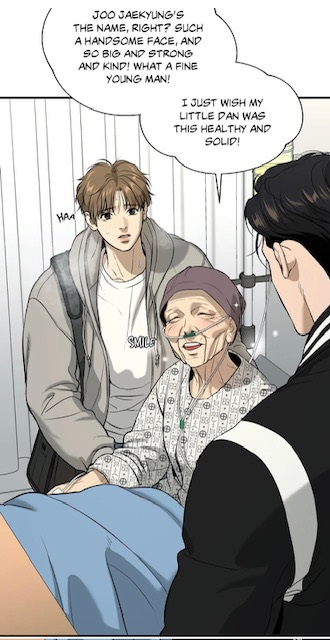 (chapter 21)
 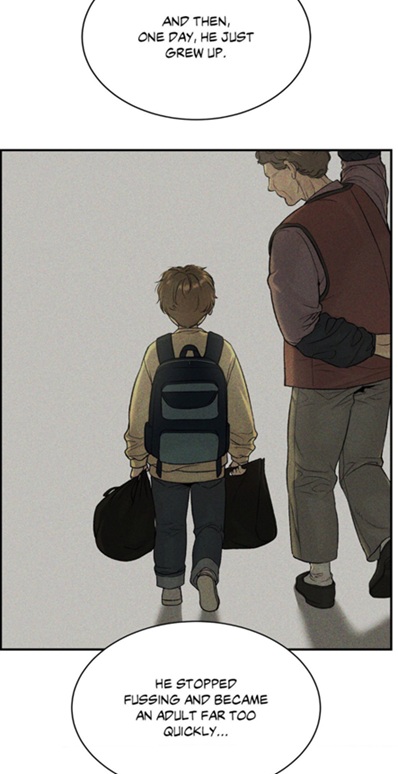 (chapter 65). While sleeping, memories come to the surface.
  (chapter 85) I believe that its appearance does not function as decoration. Its imagery — figures suspended among clouds, bodies neither falling nor grounded — introduces a different register of time. Not urgency. Not performance. Not spectacle. Stillness. Interval. A space where movement pauses without collapsing. Under this new light, the reference is Morpheus.
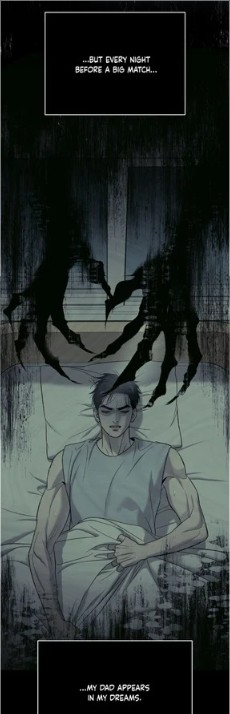 (chapter 75) Until now, rest had been replaced by discharge: sex as erasure, violence as exhaustion, ritual as compulsion. The Paris night does not abolish wakefulness through collapse; it introduces the conditions under which sleep might finally be possible.
 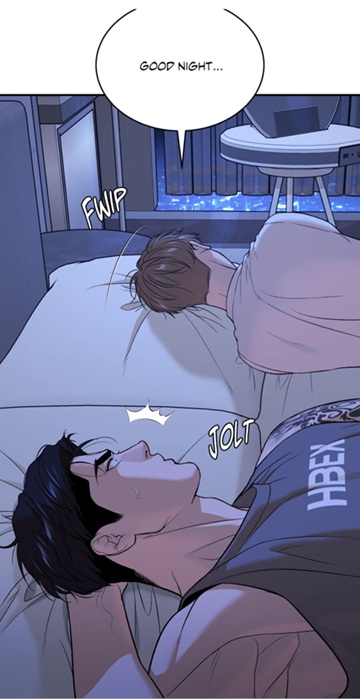 (Chapter 78) Here, he reduced it to the absence of sex, but I am sure that deep down, he would have been satisfied, if the “hamster” had given him a good night kiss.
 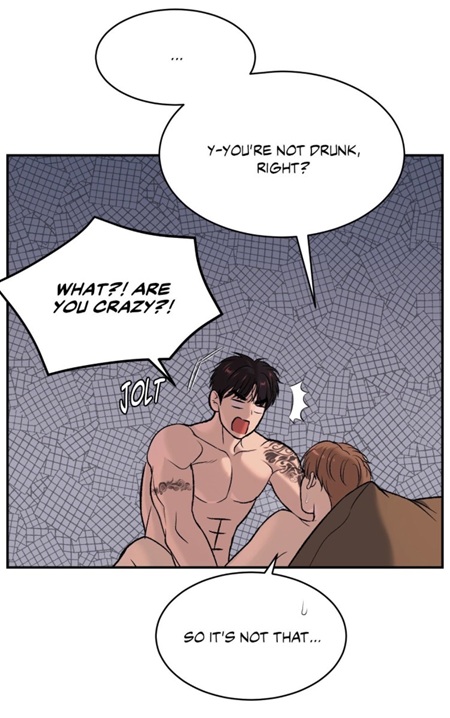 (chapter 86) The charge redistributes. Memory ceases to isolate and begins to circulate. Hence it creates a new memory.
  (chapter 86) was a reflection of the picture.
  (chapter 86) No one is erased or reduced to an object. Nothing is overlooked or forgotten. But repetition loses its hold. And from here, the story can no longer proceed as before.
 (chapter 86), gentle, attentive
 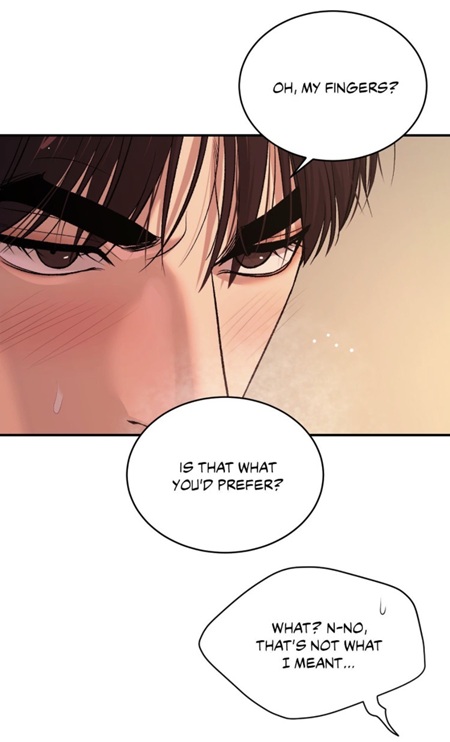 (chapter 86) — asking questions instead of imposing answers
 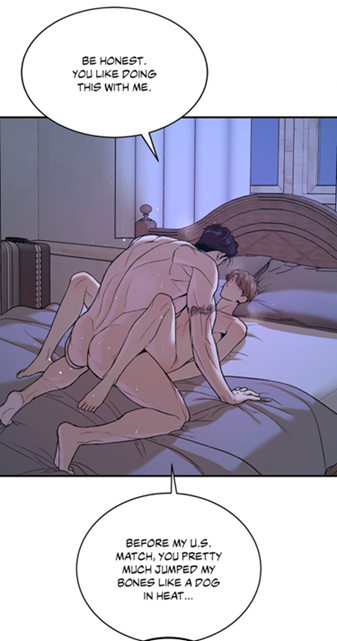 (chapter 64). For Joo Jaekyung’s unconditional stans (and I count myself among them), such an attitude
 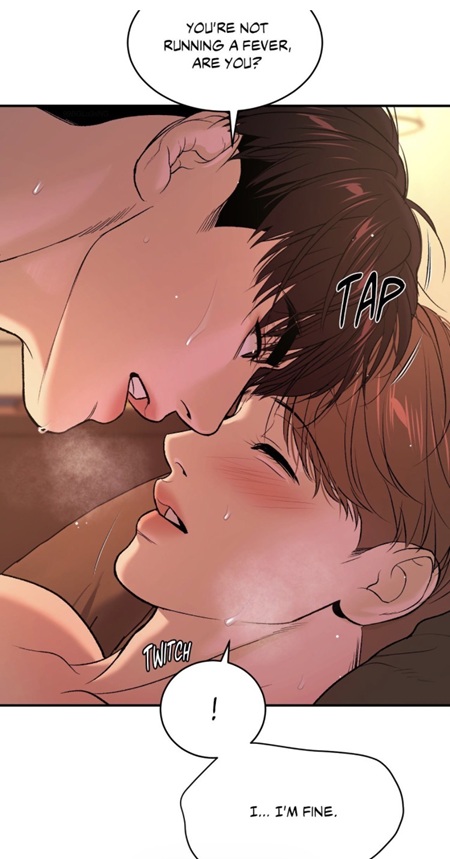 (chapter 86) can easily be read as proof that the protagonist’s good heart has always been existent, but it was barely visible. Compared to earlier chapters, the contrast is now undeniable. And yet, I would like to pause you right there.
 (chapter 61), sometimes awkwardly
  (chapter 80), sometimes inconsistently
  (chapter 79), but unmistakably
  . (chapter 83) Tenderness, concern, even a certain form of devotion had appeared earlier
  (chapter 18) misunderstood or poorly timed. This night
 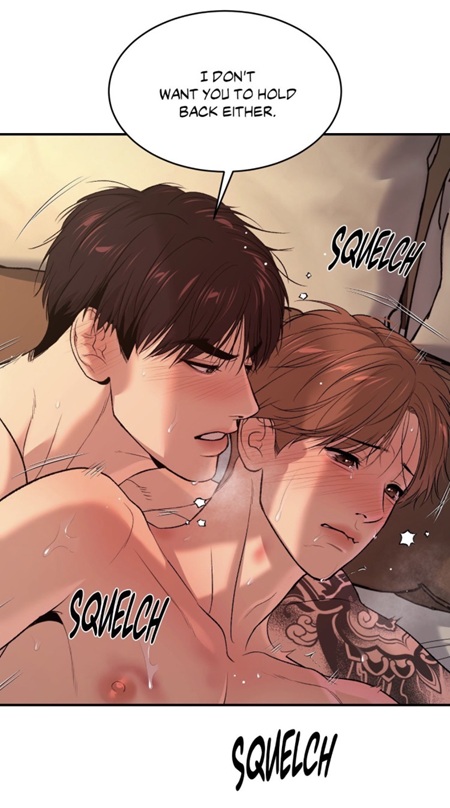 (chapter 86) does not initiate his metamorphosis.
 (chapter 86), sparks
 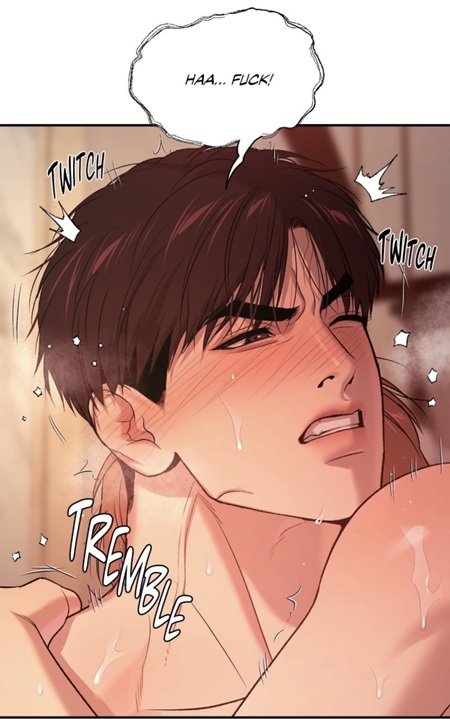 (chapter 86), and softness, many Jinx-philes might instinctively describe it as magical. The imagery invites such a reading. After all, we have seen similar nights before. The night in the States shimmered with illusion
  (chapter 41) The penthouse night echoed A Midsummer Night’s Dream
 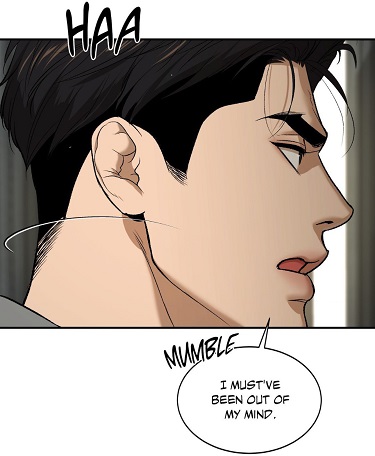 (chapter 45). This raises an essential question. Is episode 86
  (chapter 4), in the return of light
  (chapter 66), in what remains once the sparks fade. A dream dissolves with daylight. Reality does not.
 (chapter 86), sparks, that strange shimmer that seems to hang in the air
 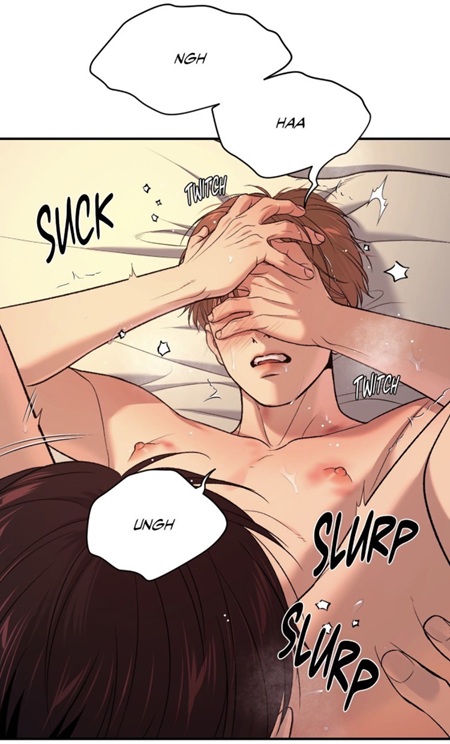 (chapter 86). Why? It was, as if their dream had come true. However, is it correct? Is it not wishful thinking? What if this night is not magical at all? What if its true signature is not enchantment, but electricity—a current that interrupts, tests, and resets? 😮
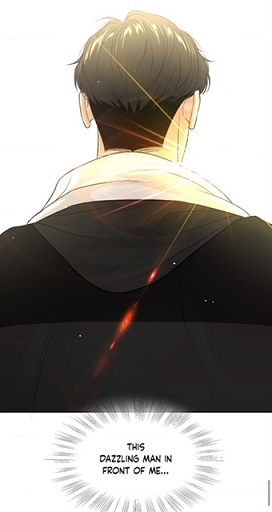 (chapter 40) in Kim Dan’s perception: overwhelming, radiant, dominant, a heat-source that does not negotiate.
 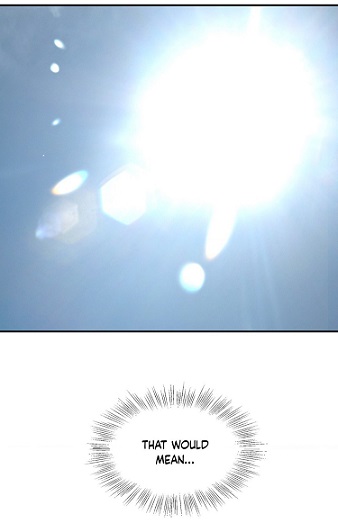 (chapter 41) The sun can be admired, feared, and endured—but it cannot be questioned.
  (chapter 58) It simply shines, and the one who stands in its light adapts. This explicates why the physical therapist would choose silence and submission over communication.
  (chapter 48)
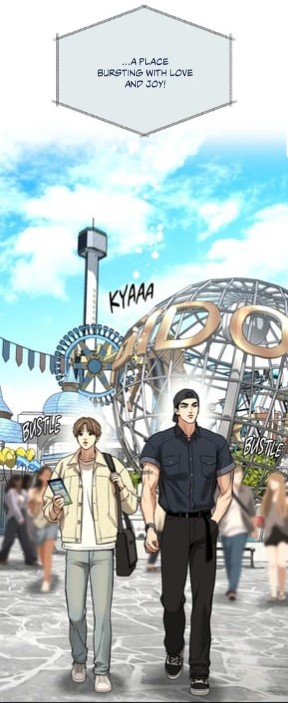 (chapter 83)
 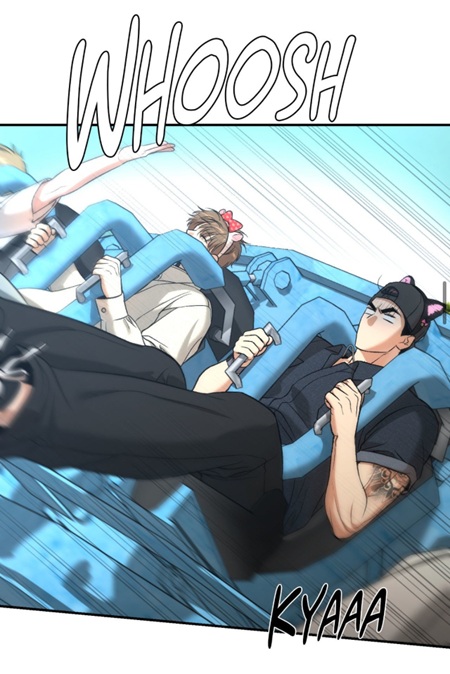 (chapter 83) Every ride, every light, every scream suspended in midair depends on current: motors accelerating and braking, circuits opening and closing, energy stored, released, and cut off.
  (chapter 83) Roller coasters do not move by heat, charisma, or sheer physical force; they move because electricity flows through them. The Viking ship swings
 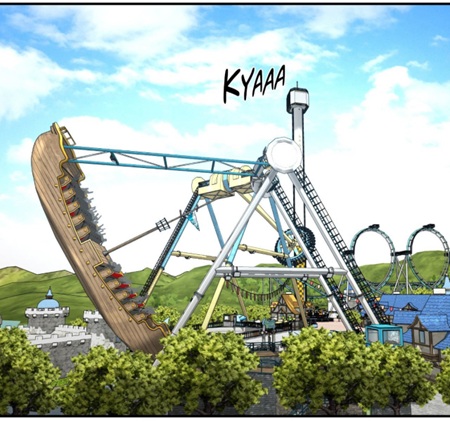 (chapter 83) because current allows it to swing. The Ferris wheel ascends
 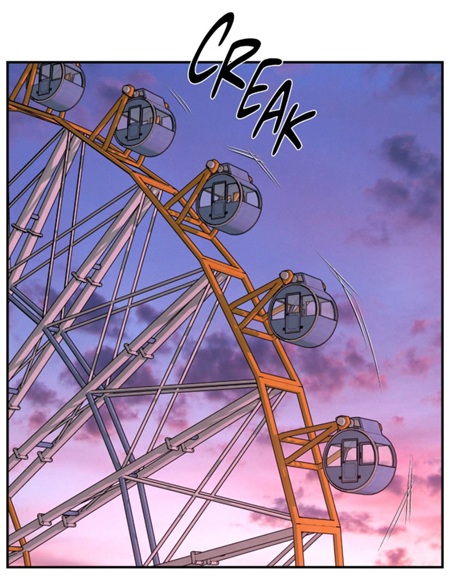 (chapter 83) because circuits hold — and descends because they release.
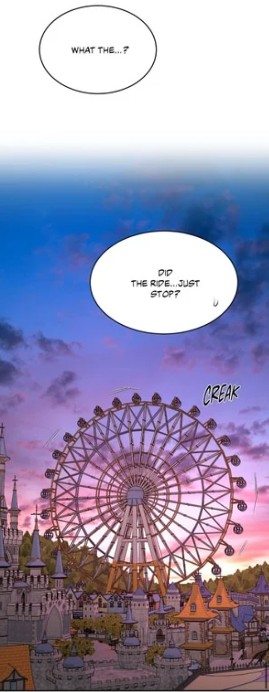 (chapter 84)
 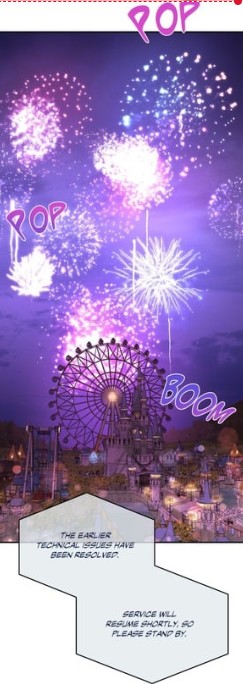 (chapter 84) explicitly names what had previously gone unspoken: the rides function only because current flows. When it disappears, the illusion of effortless motion collapses.
 (chapter 84) The Ferris wheel has stopped. The current is gone. The carefully regulated system that lifted, rotated, and sustained them is no longer in control. Yet movement does not disappear entirely. It mutates. When the champion shifts his weight, grips the structure, reacts instinctively, the cabin begins to shake. Panels emphasize instability: creak, swish, ack. The motion is no longer generated by electricity but by the body itself.
 (chapter 84) Stranded above ground, stripped of the park’s mechanical rhythm, he apologizes.
 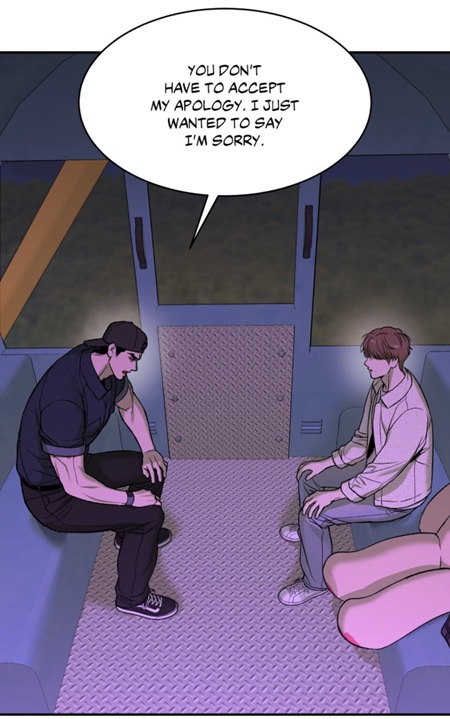 (chapter 84) Not theatrically, not performatively, but awkwardly, haltingly. His body exposes his discomfort
  (chapter 84) and fears. He avoids the doctor’s gaze, crosses his arms
 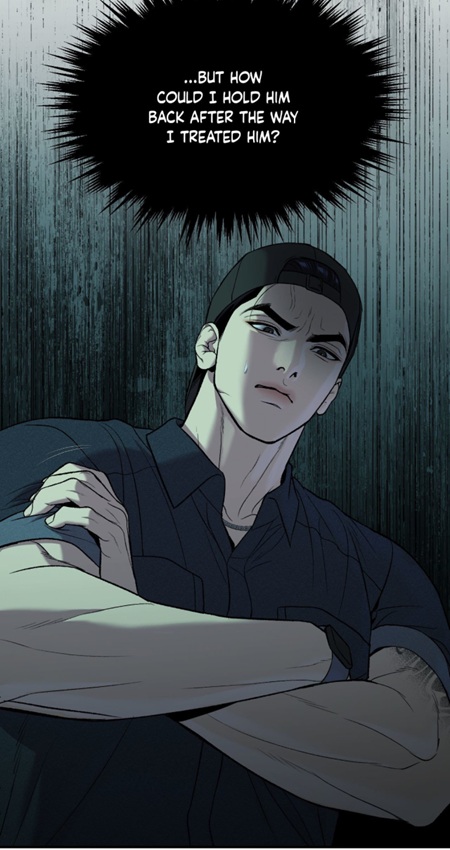 (chapter 84) or squeezes his arm
 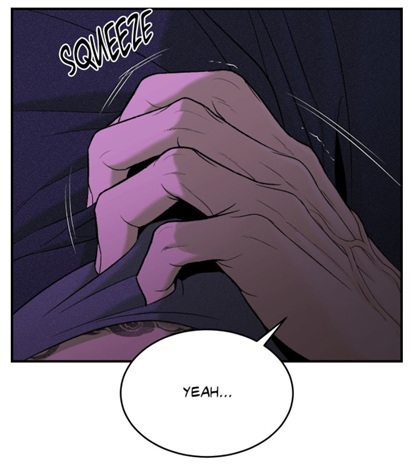 (chapter 84). The cessation of electrical motion coincides with a shift in his own mode of action. Where the park depended on current to keep things moving, he now moves without it. The absence of electricity forces something else to surface: responsibility, attention, presence. Additionally, this sequence anticipates what will later unfold more fully. Proactivity is no longer expressed through force or motion, but through articulation. Words stand for action and have weight. The champion’s future action is announced here, quietly: he will no longer push forward by shaking the structure. He will move by sharing thought, by naming feeling, by allowing himself to be affected.
  (chapter 86),
 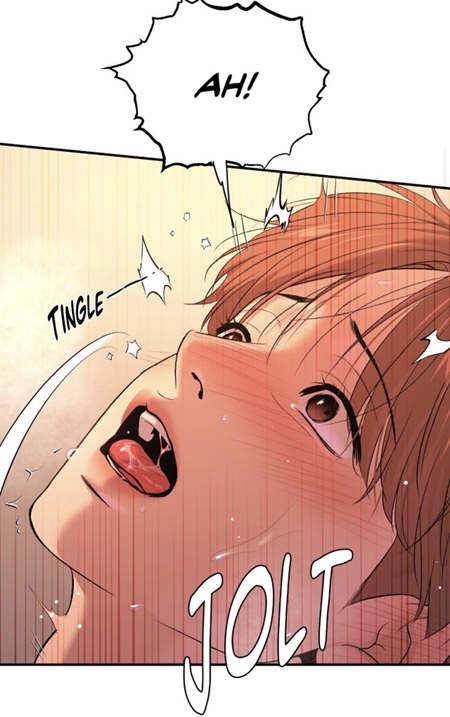 (chapter 86) jolts, sudden contractions of the body
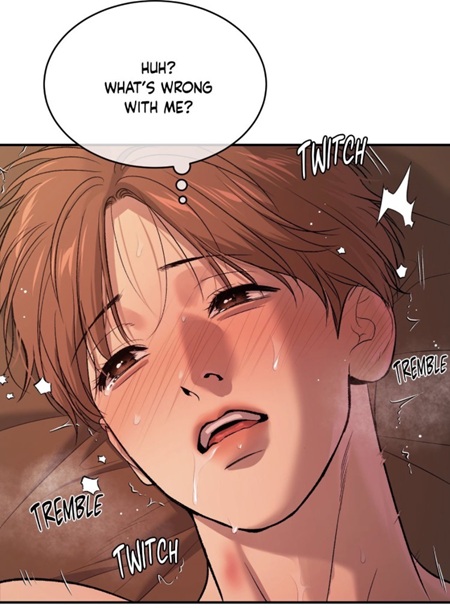
 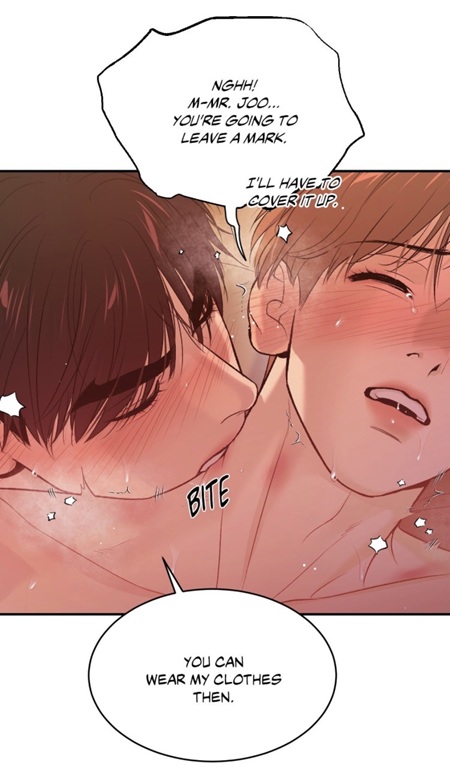 (chapter 86). Kim Dan is repeatedly shown convulsing, gasping, losing linear thought, and it is the same for the MMA fighter. Panels insist on interruption: jolt, tingle, broken breath, aborted sentences. The doctor’s body behaves as if struck, especially in this image.
 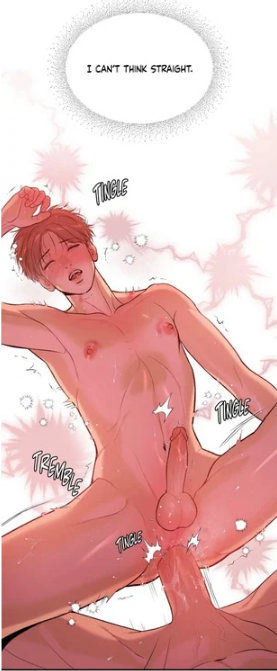 (chapter 86) It is at this point that a phrase surfaced in my mind — instinctively, almost involuntarily. A phrase we use in French when something intangible yet decisive occurs between two people: Le courant passe. Literally, the current passes. Idiomatic meaning: they are on the same wavelength, something connects, communication flows. However, here, the current is not the product of civilization, but of nature. Two people interacting with each other. And it is precisely because of the unusually high frequency of sparks and jolts in the illustrations that a belated realization imposes itself: nature, too, produces electricity — through storms, through thunder.
 (chapter 69) A storm was announced back then. And yet, upon closer inspection, no thunder was ever shown there. There was tension, there was excess, there were dark clouds
  (chapter 69) — but there was no strike, no discharge, no interruption. The imagery remained continuous, fluid, enclosed within the logic of escalation rather than rupture.
 (chapter 83). In Roman terms, Thursday corresponds to dies Iovis — Jupiter’s day — the god of thunder. Both gods are strongly connected to thunder and as such current.
 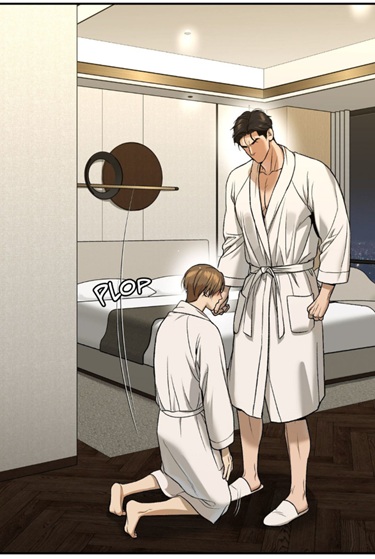 -chapter 67-; for more read my analysis
 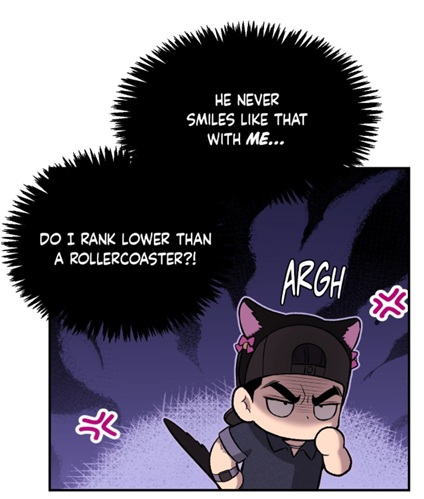 (chapter 83). Before striking anything, he is already unwell: angry overstimulated and complaining, visually reduced to a childlike register. This matters. The hammer does not create excess — it receives it.
  (chapter 34), the hammer gesture is not confrontational, for the machine is immobile. There is no opponent.
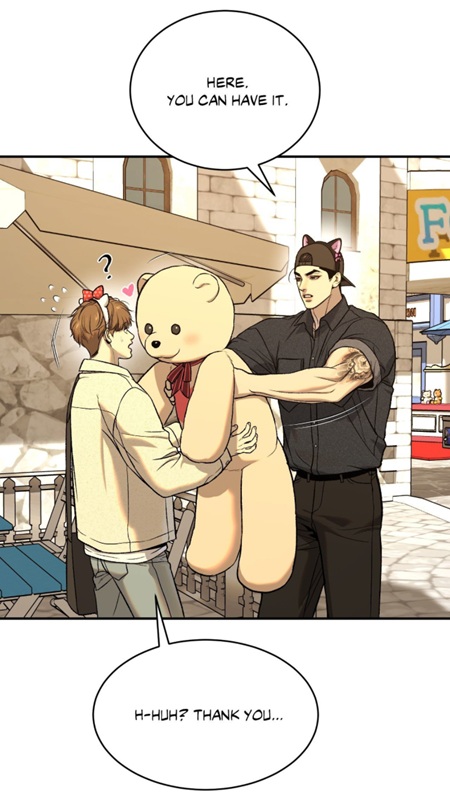
 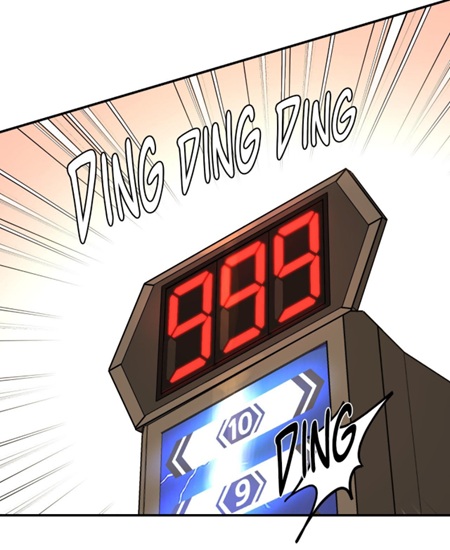 (chapter 83) Too much energy released at once. The system registers it, but cannot contain it. This means, the record won’t be registered and as such “remembered”. In fact what mattered here was the prize, the teddy bear, and restored self-esteem of the athlete. He could offer a present to doc Dan which the latter accepted without any resistance.
  (chapter 86) Therefore it is not surprising that doc Dan starts looking at his fated lover. Imagine what it means for the athlete, when the “hamster” is staring at him, though he is a little embarrassed. Finally, he is truly looking at him. The champion loves his gaze. And now, you comprehend why the “wolf” listened to the “cute hamster” and stopped leaving marks.
 (chapter 85), but this time, its nature has changed. It is no longer jealousy or anger, but love and desire. Hence the current is not colored in red, but white and pink.
  , but a thunder and as such it is still restrained and regulated.
 (chapter 44) as emotionally charged, intense, even pivotal. Confessions were made. Bodies responded. Vulnerability appeared to surface. And yet, both nights collapsed almost immediately afterward. What was felt
 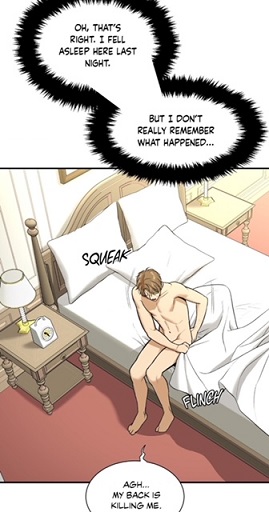 (chapter 40)
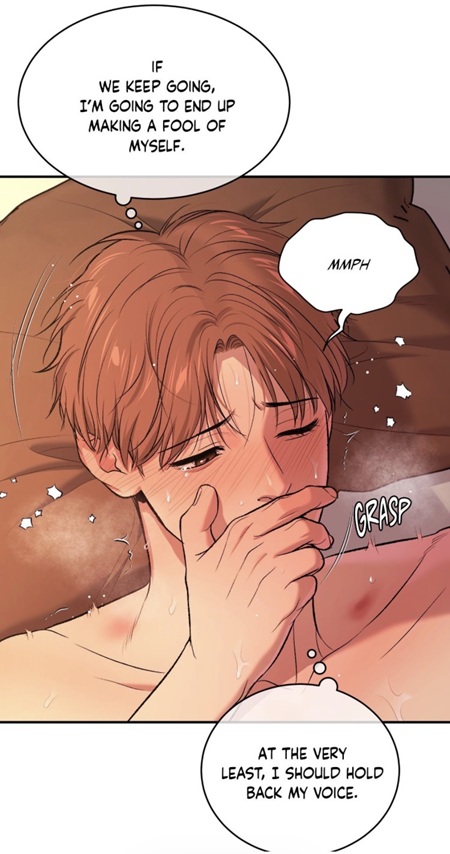 (chapter 86) In this panel, we should glimpse a reference to the night in the States as well, and not just to the night in the penthouse.
  (chapter 44) The setting is elevated, luxurious, almost theatrical. The doctor is brought into a space of power that is not his own.
 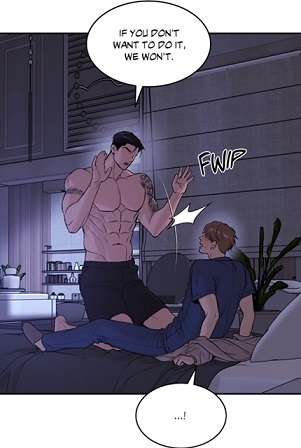 (chapter 44) By acting that way, the athlete created a false impression of himself, as if he was still rational and clear-minded. Again, desire unfolds.
  (chapter 44)
  (chapter 44) Again, closeness occurs. And again, the aftermath reveals the same fracture.
 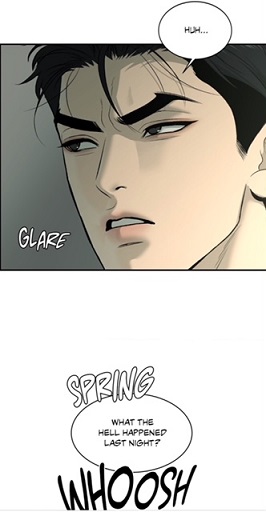 (chapter 45) and later wants to even forget it.
  (chapter 45) and he can not deny his own involvement and actions. Hence the doctor is left alone. Only he can recall this “dream”.
  (chapter 44) But memory alone is not power. Remembering without the other’s participation transforms recollection into isolation. Kim Dan cannot confront, confirm, or renegotiate what happened, exactly like the champion did in the past. Meaning freezes instead of evolving. Striking is that he came to associate feelings with addiction.
  (chapter 46) No wonder why later doc Dan had no problem to reject the athlete. And for him, the next morning became a cruel reality, even a nightmare. It wounded doc Dan’s heart and soul so much that he learned the following lesson: to not get deceived by impressions. Hence in Paris, Doc Dan tries to explain the change of the champion’s attitude with drunkenness.
 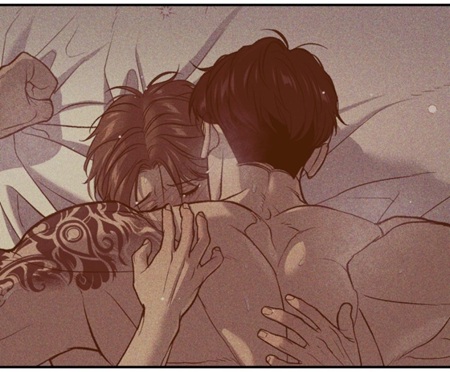 (chapter 44) One participant is altered. The other must carry the weight of meaning alone. The night does not end in shared reflection, but in silence and absence.
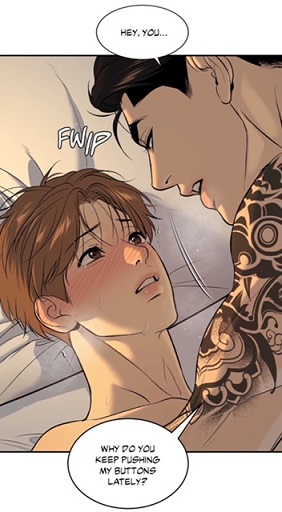 (chapter 44) Words blur, vanish, or are forgotten. Even gestures go unnoticed: a kiss, an embrace or a patting. Memory fractures. The morning after is defined not by continuity but by confusion. The body has moved forward, but the narrative has not.
  (chapter 84)
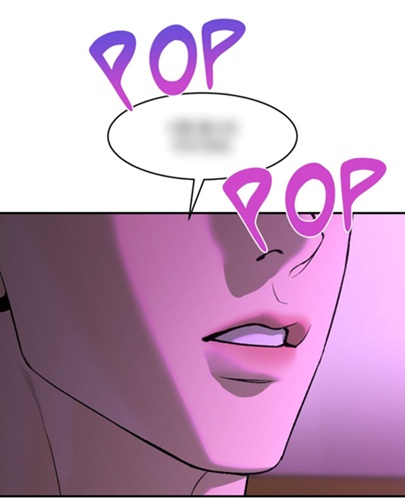 (chapter 84) Speech bubbles lose clarity. Confessions are obscured. The reader is denied access to meaning. Fireworks, like drugs, produce intensity without duration.
 (chapter 39)
  (chapter 44) It was as if these nights could only exist under altered states — as if clarity on either side would have made them impossible.
 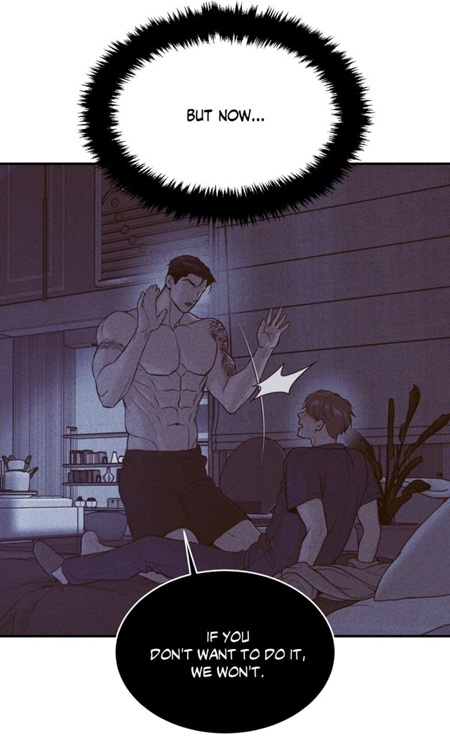 (chapter 86) This is why, when electricity returns in episode 86, it does not revive heat. It interrupts it.
 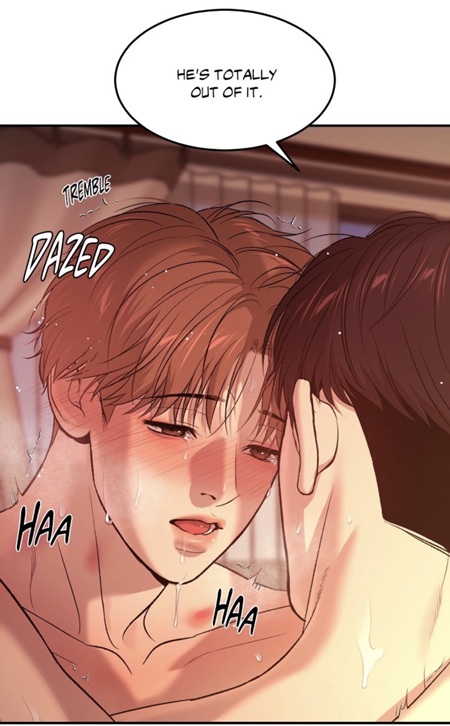 (chapter 86) That’s the reason why the athlete stops for a moment and asks doc Dan, if he needs a break.
  (chapter 86) This question is important because doc Dan admits his confusion and ignorance. He confesses to himself that he “knows nothing” not only about himself, but also about his fated lover.
 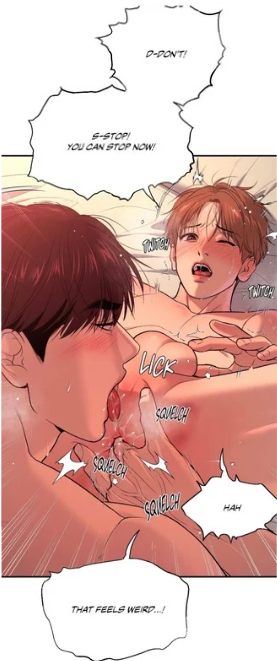 (chapter 86) They function as temporal markers. A spark exists only now. It has no duration. It cannot be stored, recalled, or anticipated. It appears — and vanishes. In this sense, electricity becomes the perfect visual language for the present moment itself.
 (chapter 10), statements blurred by drugs
 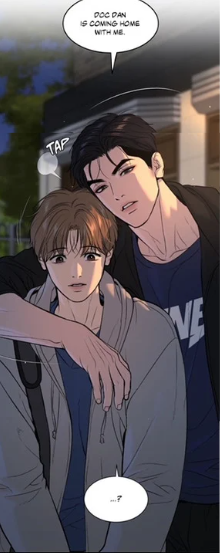 (chapter 43), sentences remembered by only one side.
  (chapter 44) and even laugh…. if only he could remember that night…
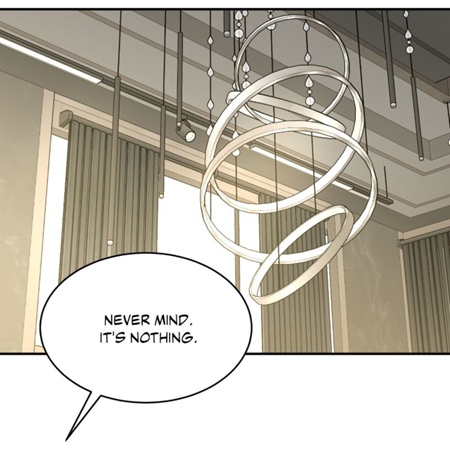 (chapter 79), the “never mind”,
  (chapter 84) or it is a mistake, the easy erasure that once dissolved meaning after the fact. The kiss interrupts that mechanism. It produces a pause that cannot be talked over. It forces reflection.
 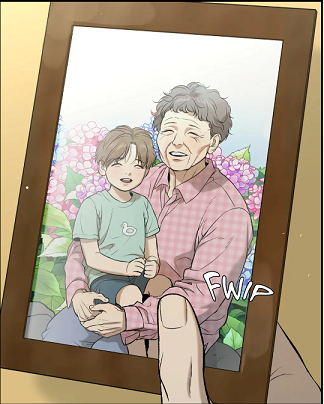 (chapter 19) The grandmother’s lap structured Kim Dan’s understanding of safety, endurance, and knowledge. Sitting there meant being held — but also being taught how to survive through sacrifice, silence, and self-effacement. That worldview sustained him, but it also confined him.

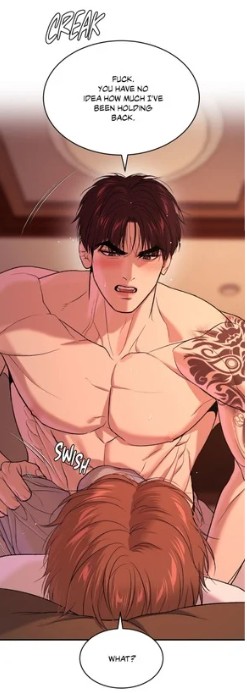 (chapter 85) represents the positive reflection of this night
  (chapter 58)
  (chapter 58), when the physical therapist chose to give up on the athlete and stop listening to his heart. Here, I am not only referring to the numerical symmetry but also to the doctor’s shifting vision of Joo Jaekyung.
 (chapter 85), Jaekyung appears with a towel around his neck. This simple object evokes water and sweat, but in Jinx, these elements are never neutral. They are tied to one of the champion’s earliest traumas: the humiliation of being called “dirty”
  (chapter 75) and “smelly” as a child. This is why Jaekyung learned to perfuse his body with cologne after every shower
  (chapter 40) It was, as if the fear of smelling “wrong,” of being perceived as contaminated, was still dictating his movements. Hence he could only claim doc Dan as one of his own, but not as his “physical therapist” or even “family”. And interesting is that doc Dan copied his attitude. In the hallway, he maintained a certain distance from the athlete.
 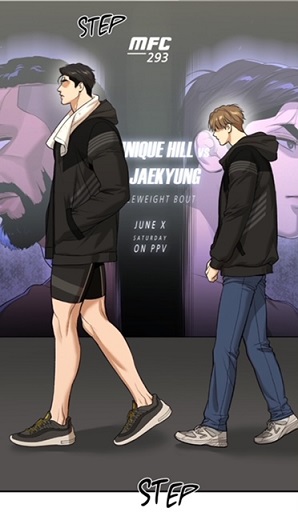 (chapter 40)
 (chapter 40) the moment he dried off
 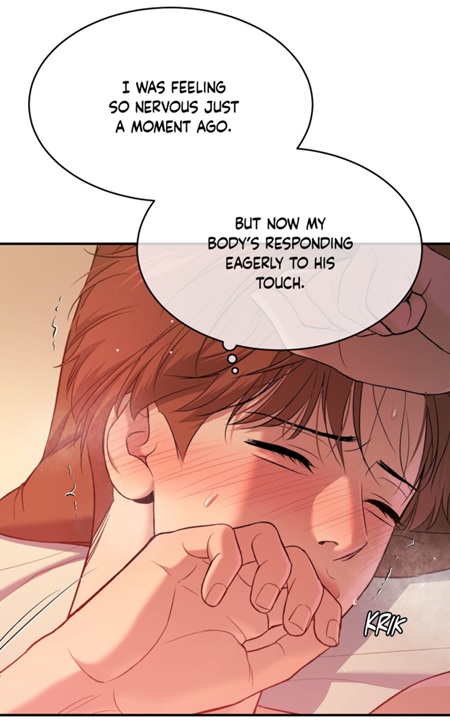 (chapter 85) and trust — and perhaps even the moment when Dan chooses, for the first time, to be honest with his own body and heart.
 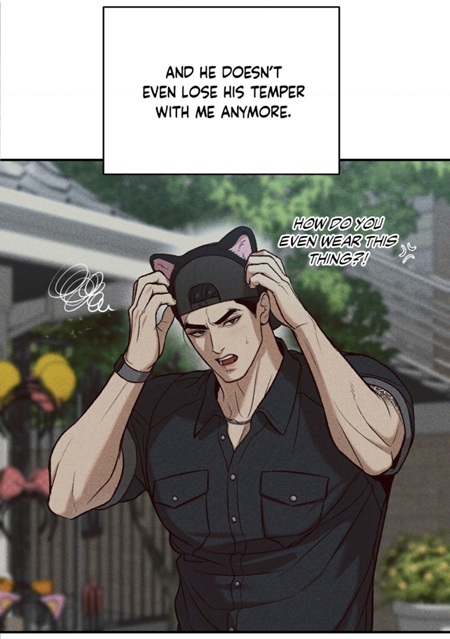 (chapter 85)
  (chapter 61) [I will elaborate it further later]. And perhaps this is why the moment feels so disarming: because the downfall is not tragic but tender, not humiliating but intimate. Sweet, even.
 (chapter 85) Dan is lost in his thoughts — anticipating the night ahead with the champion — and has barely touched his food. Park Namwook notices this. One might think, such a remark displays the manager’s concern for the main lead’s well-being. However, the manager adds that the other members of the team are all almost finished. With such a remark, it becomes clear that the manager is urging the protagonist to finish his plate. Although Park Namwook addresses Dan as if showing concern, the content of his remark betrays his true priority: not Dan’s well-being, but the team’s schedule. By pointing out that ‘the rest of us are almost finished,’ he urges Dan to keep pace, treating him as staff who had to follow the group rather than someone with personal needs. As you can sense, schedule is essential for the manager. However, because doc Dan couldn’t reveal the true reason behind his behavior, he gives an excuse for his lack of appetite.
 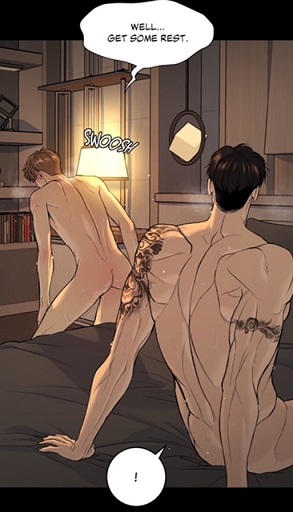 (chapter 53) The manager’s words bring Joo Jaekyung back to reality and its uncomfortable truth that Dan’s presence now is still bound to a contract — temporary, contingent, never fully his. In other words, with his remarks, Park Namwook is reopening old wounds which shows his total blindness and lack of finesse and of empathy. He treats the last match, as if nothing bad had happened. The incident with the switched spray is simply erased.
 (chapter 53) leaving without thinking; now, after Dan vanished from his life entirely, that earlier departure feels like a sign he failed to read. Park’s question brushes against this bruise, and Jaekyung’s lips reflect the discomfort.
 (chapter 85) The younger fighter suddenly bursts into panic, declaring how nervous he would be in Jaekyung’s place, how his heart would be pounding out of his chest. His outburst is sincere, naïve, and completely focused on the champion — he never once considers Dan’s feelings. Yet these words strike deeper than he intends. At the mention of a pounding heart, Jaekyung’s eyes lift upward in a brief, involuntary movement. It is the smallest gesture, but it exposes everything he wishes to hide. Because his heart is pounding — but not for the match. It is because of doc Dan!
  (chapter 85) “Come to my room at 11.”
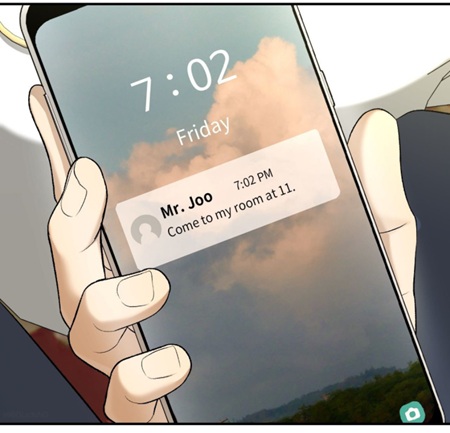 (chapter 85) the need for reassurance, the wish to rewrite the pattern of the past, the quiet hope that Dan will not leave him again — not tonight and not afterwards.
 (chapter 85), as soon as the athlete stands up right after his recommendation and announces he is now returning to his room.
  (chapter 54)
 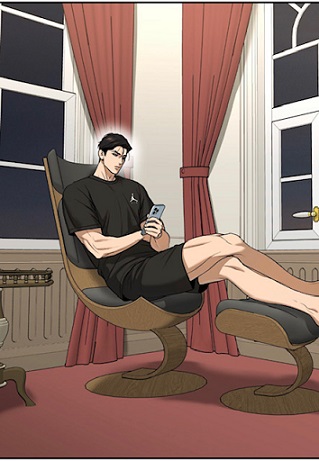 (chapter 38) and Korea
  (chapter 48) before a big fight: watch his opponent’s videos, study their habits, rehearse counters. If we only looked at the clock, we might assume he spent the evening thinking about Arnaud Gabriel.
 (chapter 85) He opens the door and immediately grabs him inside
  (chapter 85) This is not the controlled, casual emperor of old; it is someone who has been holding back for hours and refuses to risk even a second in which Dan might change his mind.
  (chapter 65) and the comment of the champion in front of this movie:
 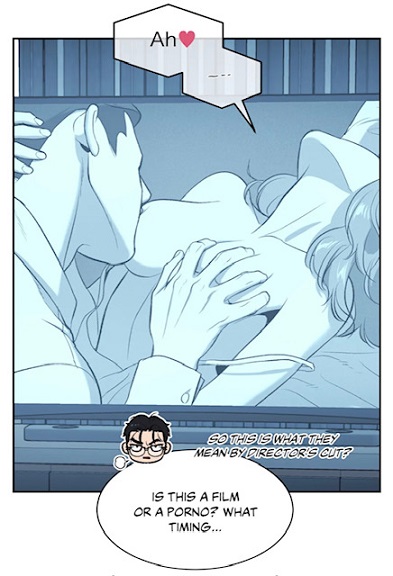 (chapter 29) Moreover, I consider this scene
 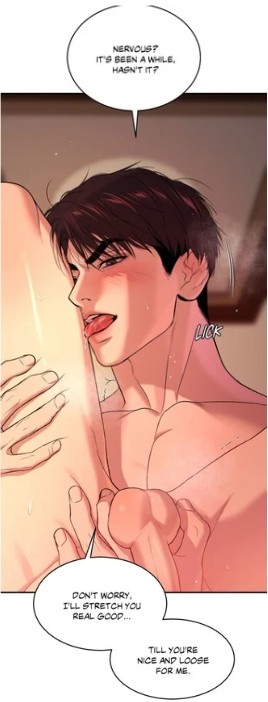 (chapter 85) as a new version of Choi Heesung’s advice: Doc Dan just needs to sit back and enjoy!!
 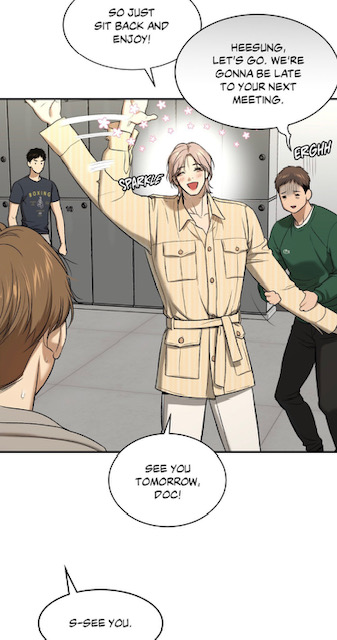 (chapter 31) Joo Jaekyung is now doing everything, as deep down he wants to become the perfect lover! And how had I described the night in the States?
  Back then, the hamster Dan had become the champion’s perfect lover, especially because he had kissed his face, hugged him and confessed to him.
  (chapter 38) One might reply that the athlete desired to maintain appearances and as such to hide his suffering and anxiety. In other words, he was hiding his emotions behind routine, Jinx-sex would always start at 11 pm. However, this idea is not entirely satisfying because once doc Dan was in his room, the fighter was no longer hiding his emotions and desires.
  (chapter 72), when the latter would return late from his “work” and the death of his father
 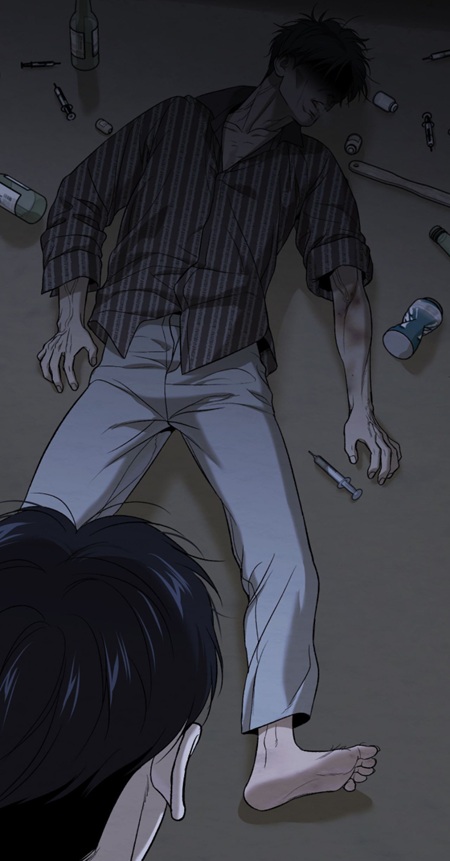 (chapter 73).
 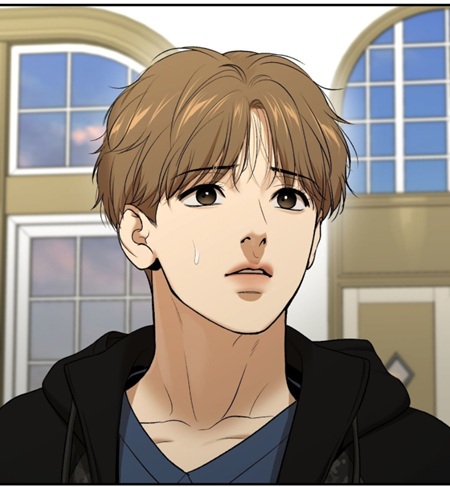 (chapter 85) This explains why his worried gaze followed his fated partner.
  (chapter 85) In other words, the text had a different meaning. It was not an order, but rather a wish…and it had nothing to do with his match against Arnaud Gabriel. During that night, Joo Jaekyung is not seeing a surrogate fighter in front of him or a sex toy, but his real partner, his future boyfriend. This means, this night stands in opposition to the one in the penthouse:
 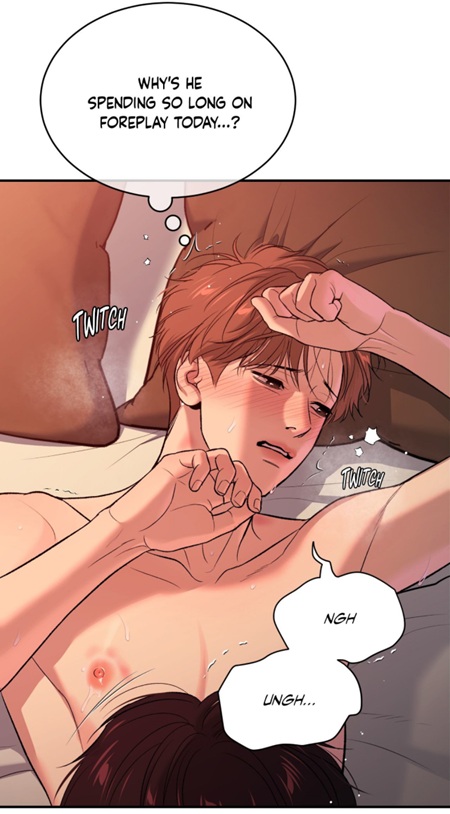 (chapter 85) This is why he touches Dan’s face instead of flipping him over.
 (chapter 85) — something he has never done before. This does not come from instinct. It comes from intention. It comes from effort. It comes from learning. He is indeed showering doc Dan with love and tenderness, therefore it is not surprising that the “hamster” is moved sensually and emotionally. Exactly like during the Summer Night’s Dream, he is reaching nirvana, hence Jinx-philes are constantly seeing stars,.
 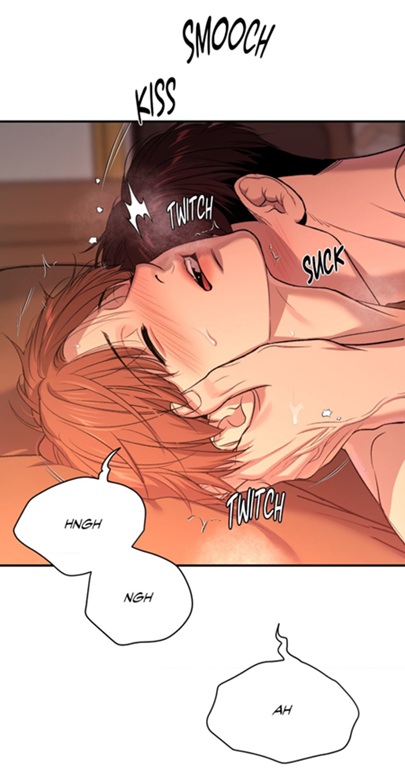 (chapter 85)
  (chapter 85) — or the emotional slip that comes with resurfacing feelings: the therapist losing distance, falling back into intimacy. All of these readings sound plausible at first glance.
 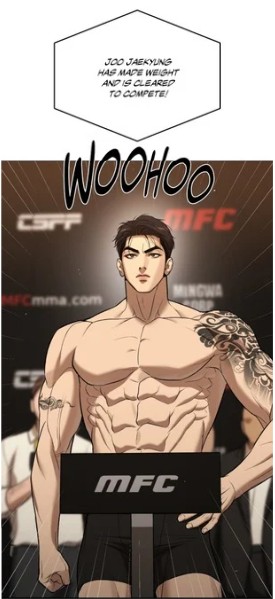 (chapter 85) Styled up, hardened with gel
  (chapter 30) , perfectly arranged — it is the crown of the Emperor, the symbol of his control, his discipline, and the myth that MFC sells:
 (chapter 85) — but not the way adults or professionals usually do.
  (chapter 71) So doc Dan could recognize the little boy in the athlete, the more he sees the protagonist with his hair down. Furthermore, I noticed that contrary to season 1, Doc Dan has now more memories of the “wolf” facing him.
  (chapter 85) In the past, he would more look at him from behind:
  (chapter 35)
  (chapter 35) Seeing his face reflects not only the increasing care for each other, but also the improving communication between them.
  (chapter 85) more mature, more “masculine” in the traditional sense. This explicates why the stylists had to dress him up.
  (chapter 82) Yet such an intervention did more than prepare him for the cameras — it tightened the restrictions around his own image, reducing the fighter’s rights over how he appears to the world. With the suit, he appeared older and more powerful. The French fighter leans into age, while the Korean champion leans into youth — a symbolic inversion that reinforces the central tension in the Paris arc: Gabriel performs adulthood; Jaekyung rediscovers the adolescence he never lived.
  (chapter 85) But just as Jaekyung begins to slip into these youthful, softer identities, MFC reasserts control.
 (chapter 85) hair up, face polished, a look engineered for posters and rankings. He becomes once again the Emperor — the man who must appear older, sharper, more intimidating, more manufactured.
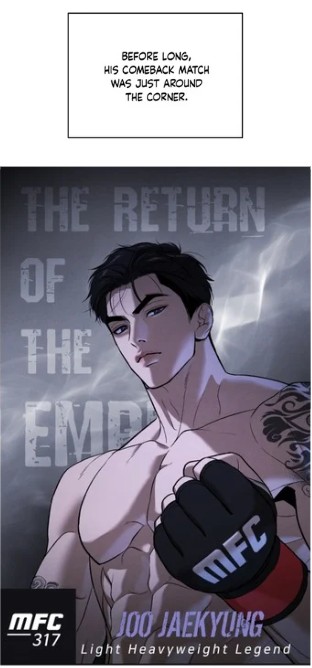 (chapter 79) This is the boy from the childhood photograph.
 In the rain, with his hair heavy and unstyled, his gaze dark and sensual, Jaekyung appears nothing like the commanding emperor. He looks free — freed by weather, freed by desire, freed from roles. It was foreshadowing, not just fanservice. It announces the end of the « jinx » in reality.
 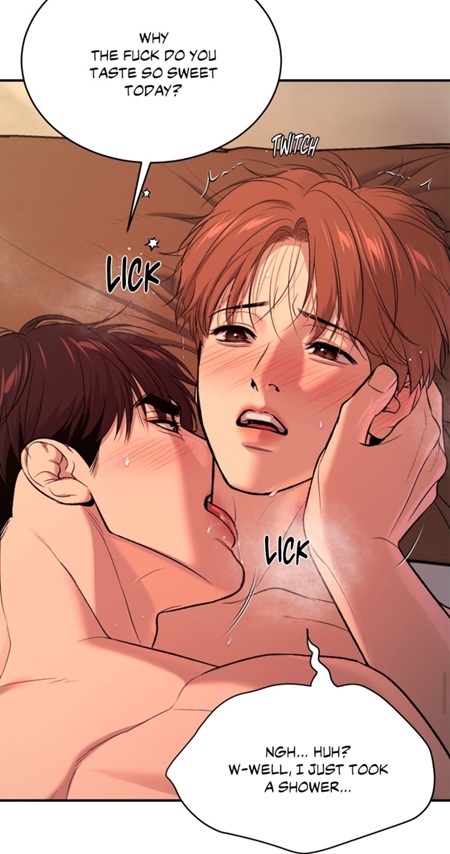 (chapter 85) He is describing himself. His sweetness is the taste of freedom — freedom from performance, freedom from control, freedom from MFC, freedom from fear. He is enjoying this moment. Dan tastes sweet because Jaekyung is finally tasting the life he never allowed himself to want.
 (chapter 21) The image of winged rescue and divine protection hangs over the very piece of furniture that, throughout the series, has functioned as Dan’s private sanctuary. This is not incidental. In Jinx, the couch is tied to his deepest memories of care and abandonment, and Mingwa activates this symbolism each time Dan gravitates to it.
 (chapter 21) Why does he consistently feel safer on the couch than in a bed?
 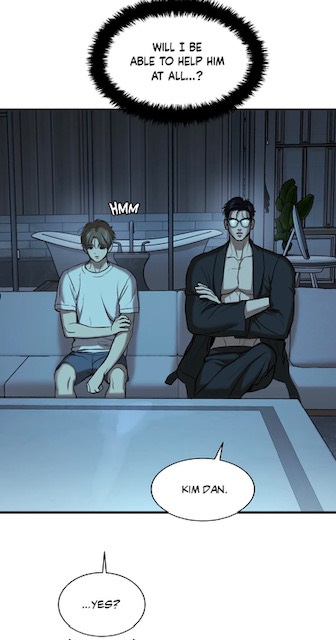 (chapter 29) Why, after the second swimming lesson, did he refuse to return to the bed
 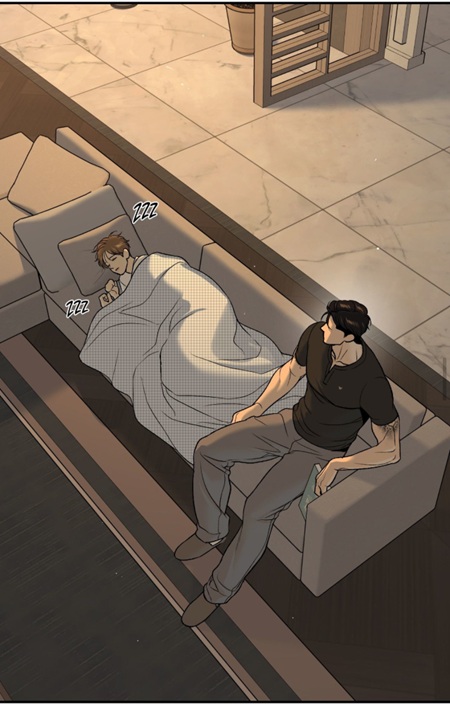 (chapter 81), even though he was exhausted? Why does he place the teddy bear
  (chapter 10) Secondly, at no moment, we ever witness the grandmother carrying the little boy to bed. Either she is rocking him to sleep outside the house
  (chapter 44),
  (chapter 44) traces from parents. And now, you comprehend why the hamster could never truly rest in the bed. The couch is therefore not an adult preference; it is a trauma imprint. Resting there feels safe because beds—large, empty, abandoned spaces—became reminders of whoever no longer carried him. Hence it is no longer surprising that he woke up, when he sensed the vanishing of warmth.
 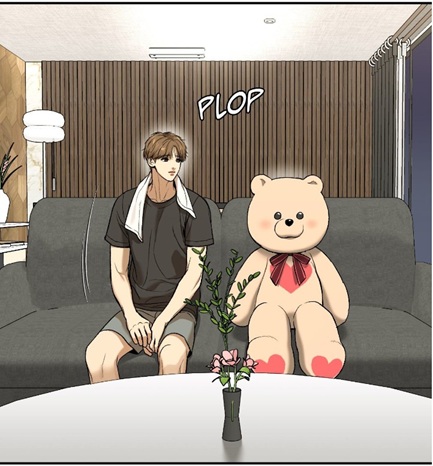 (chapter 84): the bear stands in for a lost comforting presence. It also represents the main lead, Joo Jaekyung. The latter is gradually reentering in the physical therapist’s heart and life. Therefore it is not surprising that there, he squeezes the hand of the toy. It is also why Doc Dan curls around it like a child who deep down hopes to be chosen, lifted, and held. And it is why, even as an adult, his body still whispers the same yearning: someone, please carry me to bed again.
 chapter 40, chapter 65, chapter 68, chapter 79)
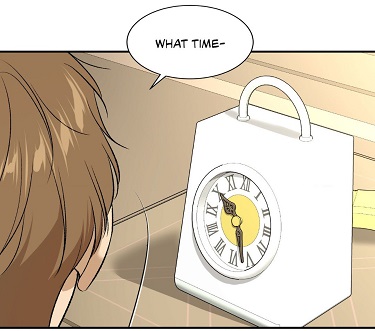 (chapter 85) and he was still able to arrive on time in the arena.
 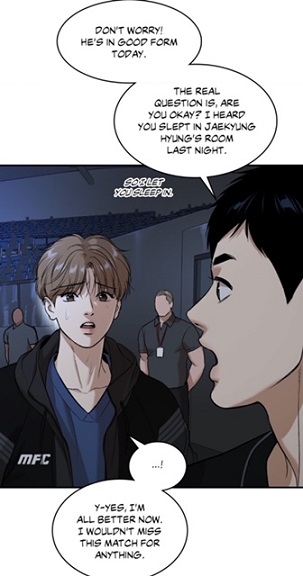 (chapter 40) For me, it is a clue that the manager would always request to meet around 7.00 am, when the match was at noon. But what should do the athlete do during all this time? He can only get nervous and feel pressured.
 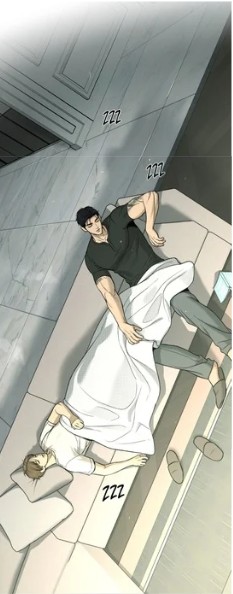 (chapter 81) I noticed that in different scenes from season 2, the athlete started waking up later and even after doc Dan.
  (chapter 66) But the manager’s rigid schedule threatens even that. An early morning summons drains the fighter’s cortisol reserves before the match has even begun, creating a long, empty corridor of waiting — a period where tension, anxiety, fatigue, and irritation ferment in the body. Instead of resting, centering, and preparing, the champion would spend hours fighting against the clock imposed on him.
 (chapter 54) , he might even jump to the wrong conclusion: that Jaekyung drank again — this time behind his back.
 (chapter 84) Readers have replayed the blurred panel again and again, straining to decipher the muffled shapes of his mouth. Some are convinced that this is the confession, the moment the wolf finally says aloud what his body has been whispering for months. One Jinx-phile,
  just enough to match the Korean 좋아해 김단 (jo-a-hae Kim Dan)—“I like you, Kim Dan.”
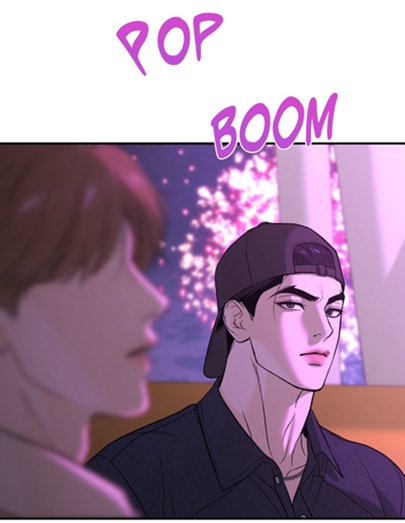 (chapter 84) —especially Japanese summer festivals where boys and girls, dressed in yukata, confess beneath crackling skies. Fireworks symbolize joy, romance, fleeting courage. It is no wonder many readers assumed that Mingwa was drawing on this cultural grammar: purple night sky, glowing lights, two lonely figures suspended above the world. A confession seems almost inevitable. And if it truly was a love declaration, then the champion’s refusal to repeat himself
  (chapter 62)
  (chapter 77) Why does Joo Jaekyung speak exactly when the fireworks begin, as if choosing the one moment when he is guaranteed to be drowned out?
 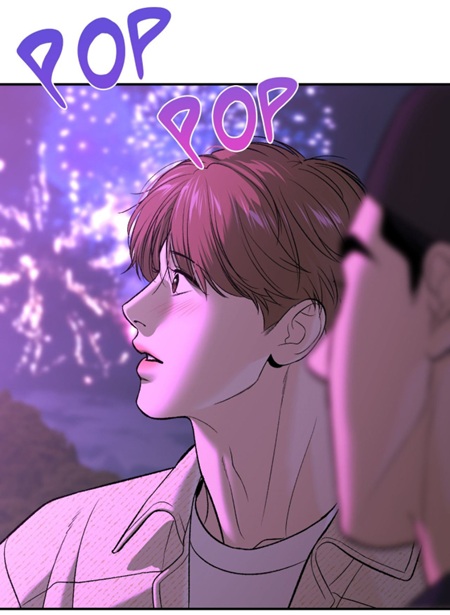 (chapter 84) Was he truly confessing love—or was he trying to verbalize something far more raw, far more primitive, far more difficult?
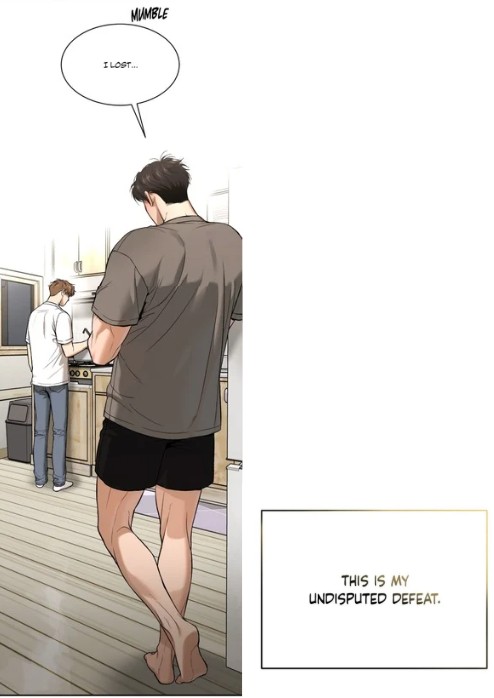 (chapter 76) and 79
  (chapter 79), where he “speaks” only when the other man cannot truly hear him. At the hostel, the mumbling was barely audible: yet according to my observation and deduction, doc Dan seems to have caught something. as later we discover this scene from the champion’s memory:
 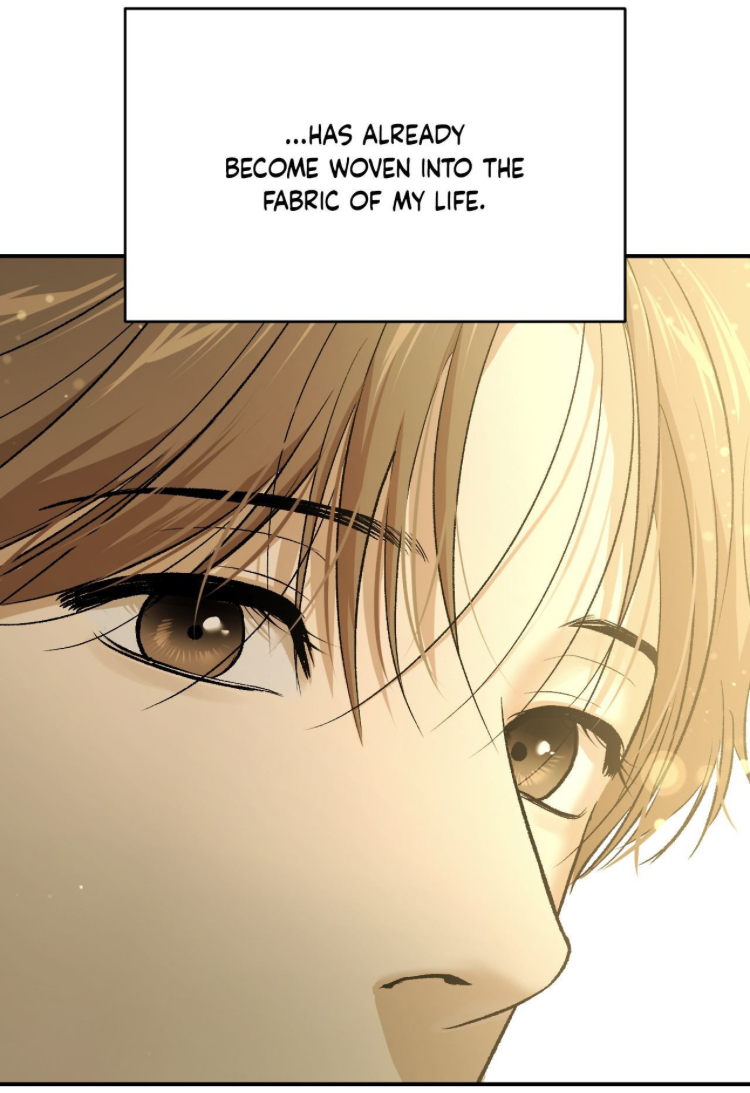 (chapter 77) He already knew that the athlete was standing next to him. However, observe that this vision focused on the doctor’s gaze was accompanied with silence. This means, doc Dan acted, as if he had heard nothing. So if he heard, what did the physical therapist catch exactly in the kitchen? “I lost…”, but it was devoid of any context. Doc Dan had no idea what the director Hwang Byungchul had advised to his former student.
 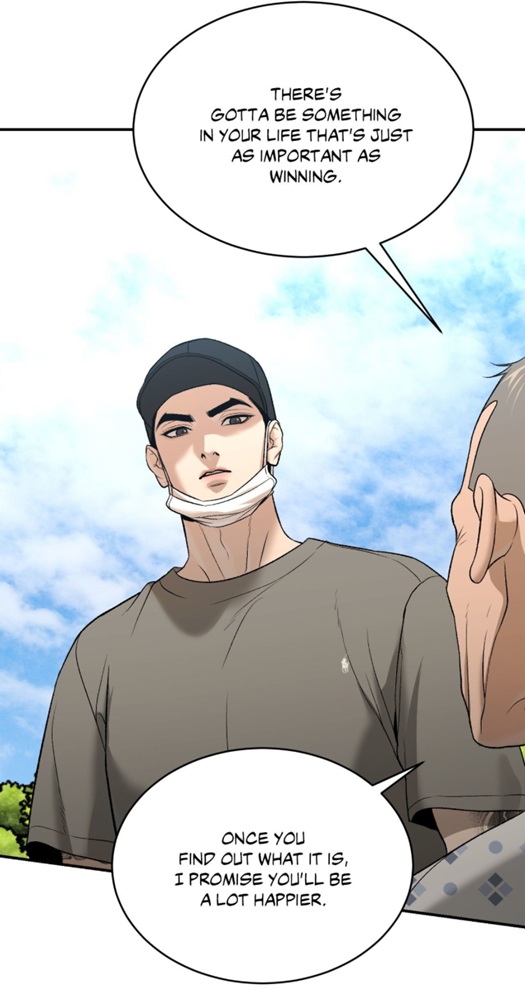 (chapter 75) He could not know that “I lost” referred to something far more intimate: Jaekyung losing control over his own emotional detachment, he was totally vulnerable in front of doc Dan. His heart was stronger than his “mind and fists”. Naturally, if Kim Dan interpreted the phrase at all, he would connect it to the only “loss” he understood: the tie with Baek Junmin. A humiliating defeat. A source of shame. This misinterpretation perfectly explains why in the cabin, the hamster immediately assumes that the champion is once again determined to regain his title:
 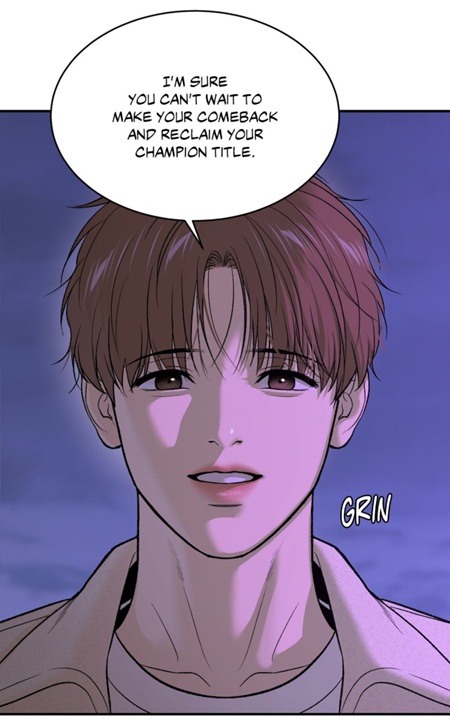 (chapter 84) He is taking the champion’s words at face-value.
  (chapter 84) A deadline designed to keep Kim Dan close without revealing the depth of the emotional dependency underneath. Finally, before we even analyze posture or timing, we must acknowledge the ghost that is sitting inside the cabin with them — Jaekyung’s own admission of dishonesty. Just minutes earlier, the narrative revealed again a thought he had never dared to voice aloud:
  (chapter 84) This is the language of surrender — not to defeat, but to vulnerability and selflessness. The champion who once insisted on keeping Kim Dan “one way or another” (chapter 84) now articulates the opposite impulse: the willingness to release him, to give him a choice.
 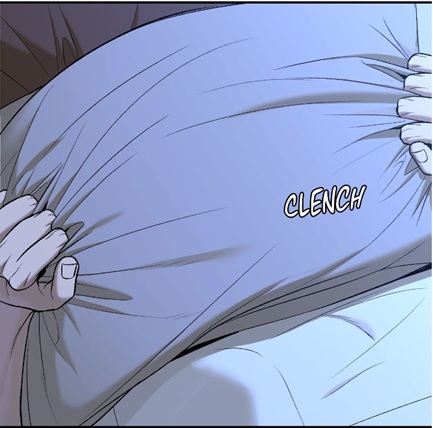 (chapter 84) Thus for me, in the cabin the champion became, for a moment, the boy with no mother’s gaze, no father’s protection, no safe place to rest. He must have said something cheesy, something a young person would say. Purity returns before experience does. Honesty returns before articulation. And in that moment inside the cabin, Mingwa makes a decisive artistic choice: we do not see Jaekyung’s eyes.
 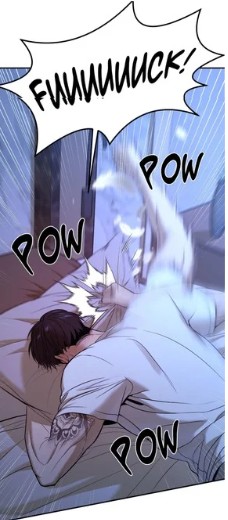 (chapter 84) This pigment stands for innocence, purity, new beginnings and even equity.
 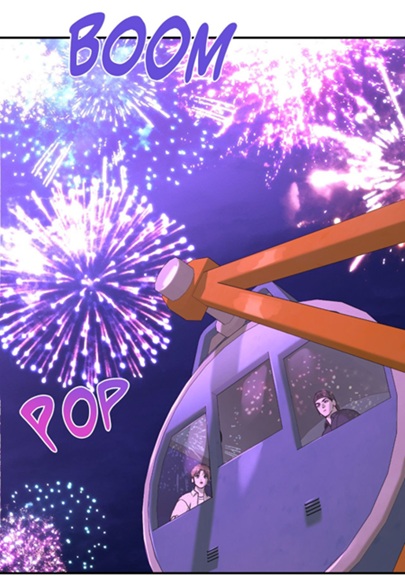 (chapter 84) Because they were not yet meant to be received, only meant to be released. The fireworks allow him to finally attempt a more honest sentence, but in conditions where it cannot reach its target.
 (chapter 81) Yet this is also the limit of what he can say.
 (chapter 79) Thus he could see the athlete’s mouth moving and hear sound. Nevertheless, observe that the moment the wolf reached to the doctor’s words, he bowed his head and looked down. From this
 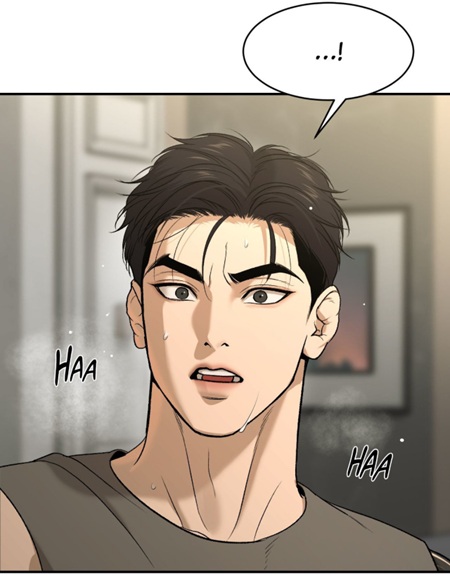 (chapter 79) to this
  (chapter 79) However, he doesn’t fear coldness, but ridicule and mockery, the father’s gaze:
 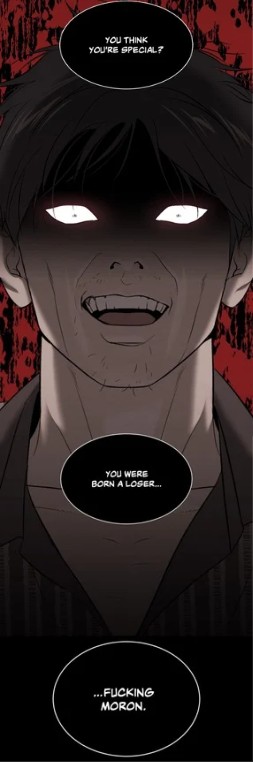 (chapter 73) Under this light, people can grasp why Joo Jaekyung was not facing doc Dan directly in the cabin. To conclude, the mechanism is identical, but amplified.
 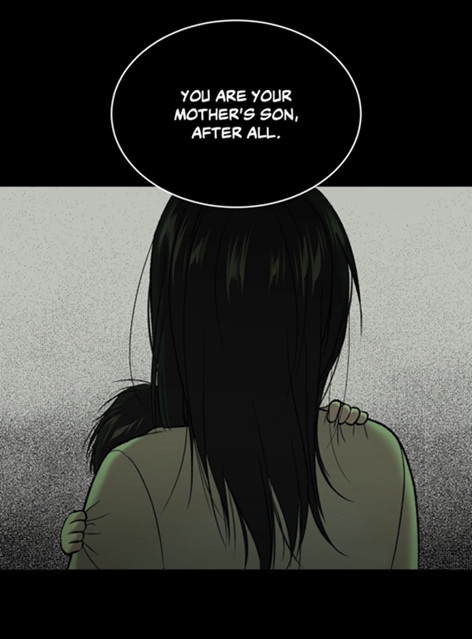 (chapter 73) Besides, the head of her position is indicating that she was not looking at her son, the boy was hiding his face from Joo Jaewoong and his mother. Then his father mocked him, degraded him, and used resemblance as an insult: “
 (chapter 74) or his mother (a poor but good mother), he was not seen for whom he was: a child, a boy. Jinx consistently links sight with recognition, and recognition with love.
  (chapter 53) Jaekyung has never been granted either.
  (Chapter 45) Thus when he got upset with the present, he indirectly expressed the wish to be « looked at ». Moreover, in his visions or memories, this is what he keeps seeing:
  (chapter 54)
  (chapter 75) Doc Dan’s gaze!
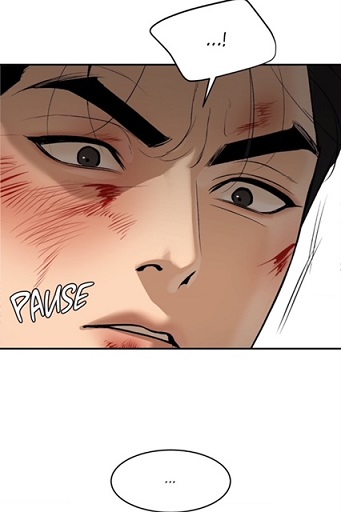 (chapter 51) His breath catches; his eyes widen. It is the moment he realizes his mistake. He never thought that doc Dan had been trusting him. That moment marks the first rupture in his emotional armor, not only because it hurt, but because it revealed. He realizes with terror that he wants to be seen by Kim Dan, but when he faced such a gaze, he could only feel guilty and bad. Thus it is not surprising that later, his nightmare let transpire his guilty conscience.
  (chapter 82), as the champion has always used his surroundings as a source of inspiration.
  (chapter 84) The gaze under the fireworks triggers emotions in him. Thus he blurted out something. But for me, he does not know how to say “I love you.” He cannot even say “I like you.” Those sentences belong to someone who has matured emotionally — someone who can identify feelings properly, but so far he keeps saying: “to stay by his side” and his « affection declarations » were all linked to negativity.. Thus my idea was that Joo Jaekyung could have said this: “I want to hold you!” (안고 싶어 너). Let’s not forget that so far, the champion had never expressed such a longing before; a warm embrace. He would always follow his instincts:
 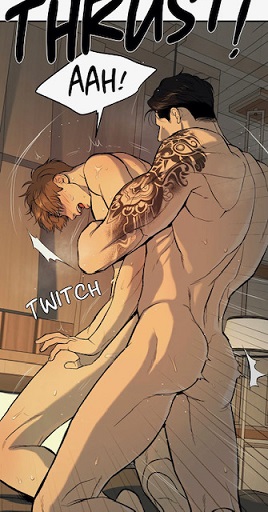 (chapter 4)
 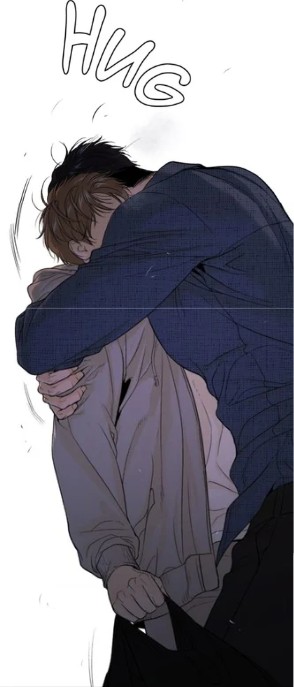 (chapter 69) The hug represents a metaphor for “staying by his side, for home and to be seen”. Moreover, in French embrasser can mean kiss and hug. And strangely, I noticed that the protagonists were never looking at each other during an embrace.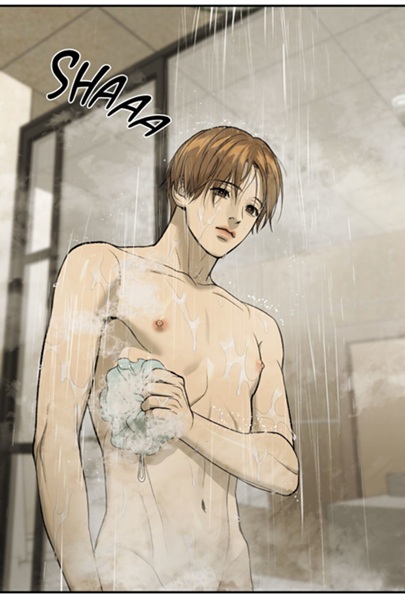
 (chapter 84) Here, the doctor looks sad and wounded. His eyes are unfocused — he is not seeing the present. The water running down his eyelashes gives the impression of tears, even though he is not crying. His gaze is distant, fixed on something internal. His mouth looks tense, almost trembling. The mouth especially is a clue: Kim Dan’s emotions always gather there when something from the past resurfaces.This is the expression of someone thrown into an involuntary flashback. He is inside a memory. This explicates why this scene is similar to the champion’s shower after the latter had met Baek Junmin:
 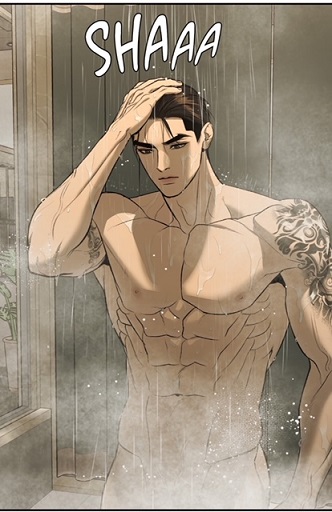 (chapter 49)
  (chapter 49) Both scenes show a man pulled violently into a buried memory. Thus, my assumption is simple: the champion said something that pierced straight into Kim Dan’s oldest wound and brought his trauma to the surface. And this brings me to my next observation. Inside the cabin, there are not two people — there are three: the champion, the therapist, and the Teddy Bear.
 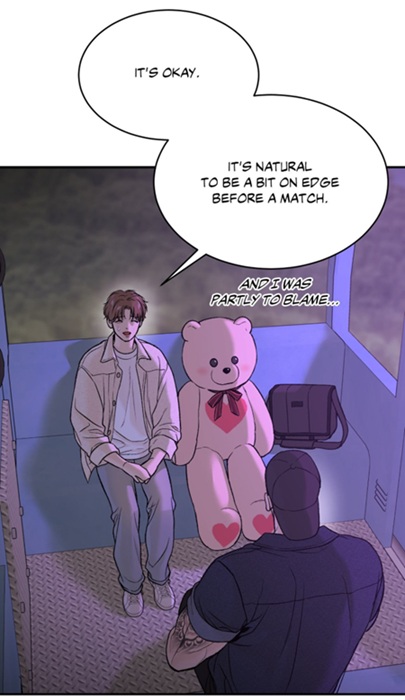 (chapter 84) Furthermore, we have a window. We have a phone (dead, but present). We have a childlike toy — symbol of stolen innocence.
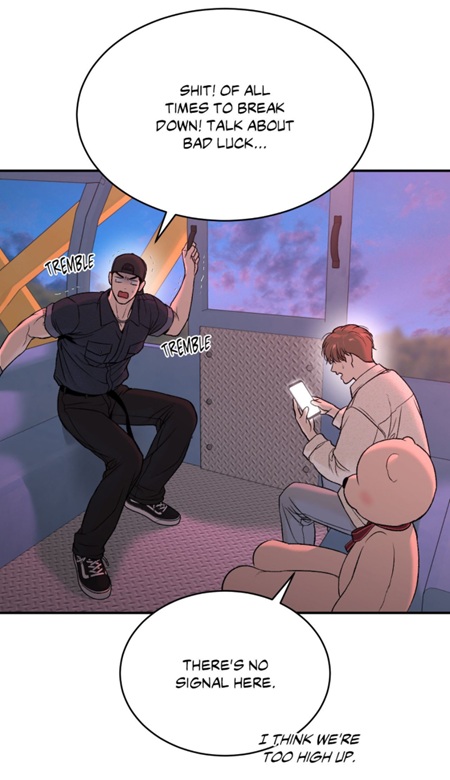 (chapter 84) And now, look again at episode 19:
  (chapter 19) A window with no view. Three figures: halmoni, the boy, and the phone placed between them like a knife. And the sound structure is identical, but reversed:
 (chapter 56) In other words, wearing black is more than just a change of personality or mourning. It becomes the color of mystery, the beginning of descent into truth.
 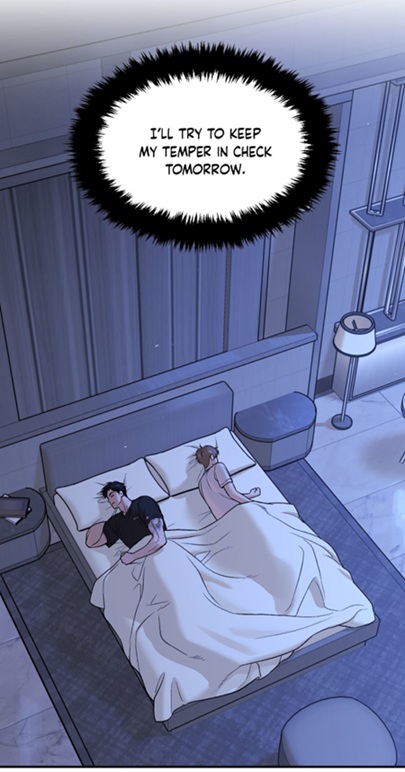 (chapter 79) on the night table.
 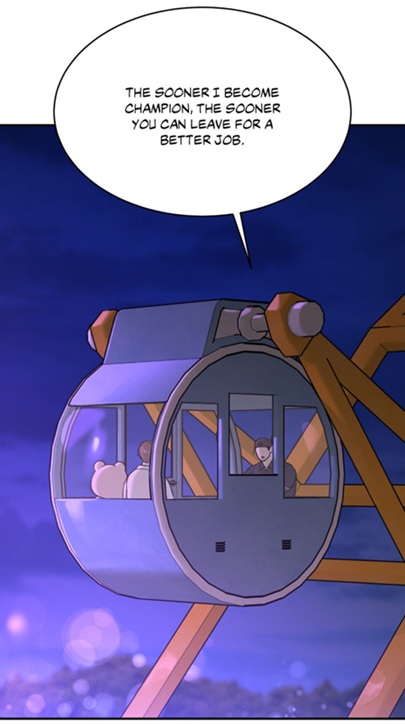 (chapter 84) So by wearing black, doc Dan indicates that he is gradually becoming responsible for Team Blackand Joo Jaekyung the athlete.
  Bebebisous33s' analyses in K-Dramaland and Manhwas