
Please support the authors by reading Manhwas on the official websites. This is where you can read the Manhwa: Jinx But be aware that the Manhwa is a mature Yaoi, which means, it is about homosexuality with explicit scenes. Here is the link of the table of contents about Jinx. Here is the link where you can find the table of contents of analyzed Manhwas. Here are the links, if you are interested in the first work from Mingwa, BJ Alex, and the 2 previous essays about Jinx The Hidden Predators (part 1) and The Hidden 🐺 Predators (Part 2)
It would be great if you could make some donations/sponsoring: Ko-fi.com/bebebisous33 That way, you can support me with “coffee” so that I have the energy to keep examining Manhwas. Besides, I need to cover up the expenses for this blog.
Sorry for the hiatus, but as you can imagine, it is related to my work. I recently got more responsibilities.
The Importance of Knowledge
Many classic thrillers have explored the dangerous consequences of knowing the wrong thing at the wrong time. Alfred Hitchcock once built an entire film around this very idea: someone who accidentally discovers too much becomes a threat. In The Man Who Knew Too Much, knowledge is not merely information—it is a liability.
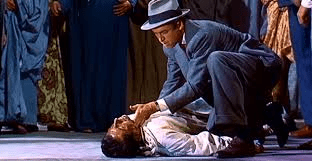
The moment someone understands how the hidden mechanism works, that knowledge becomes dangerous. Insight is inseparable from the plot itself, because it exposes the existence of a conspiracy. To know too much therefore means to become a threat to those who depend on secrecy. Information stops being neutral; it transforms into a risk that must be contained, silenced, or eliminated. The moment a hidden truth surfaces, those who possess it risk becoming targets themselves. Episode 93 of Jinx seems to echo this logic. 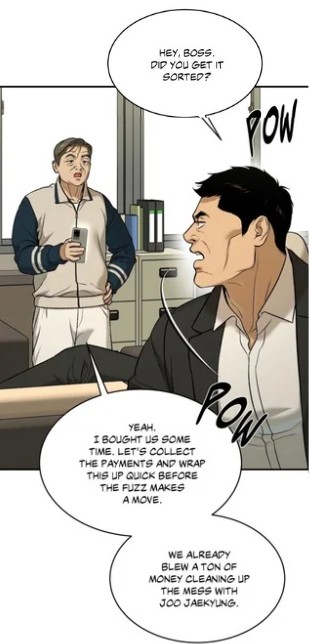 (chapter 93) Beneath the apparent calm of the chapter lies a growing tension: secrets circulate quietly, alliances remain uncertain, and certain characters may already know more than they should.
  (chapter 93)
At first glance, the chapter appears to focus on the evolution of the relationship between Joo Jaekyung and Kim Dan. 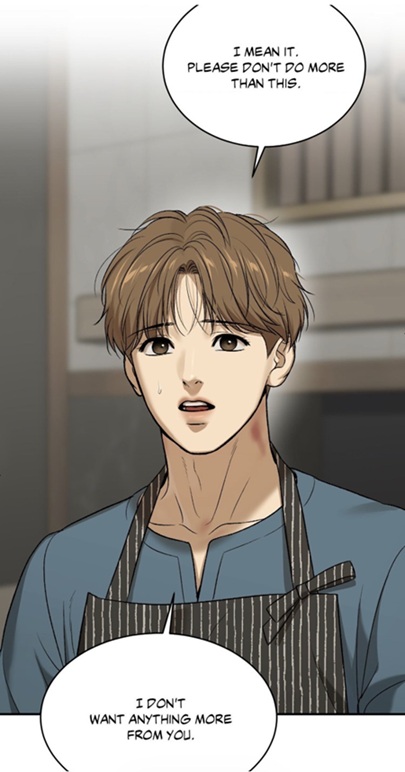 (chapter 93) linked to their previous night together. During the night they shared, the invisible wall that once separated them seemed to disappear completely. Their intimacy was no longer defined by domination or obligation. Instead, the encounter suggested equality (position of 69)
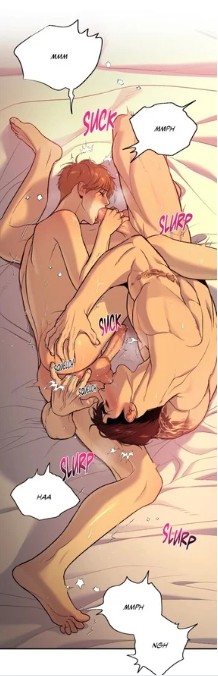 (chapter 92) and reciprocity—an exchange, as Joo Jaekyung himself described it, of “give and take.”
 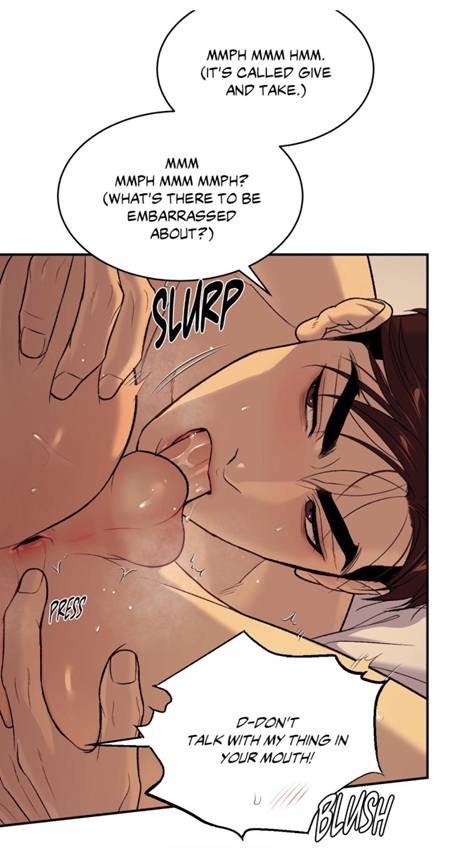 (chapter 92) In a striking reversal, Kim Dan took the initiative
 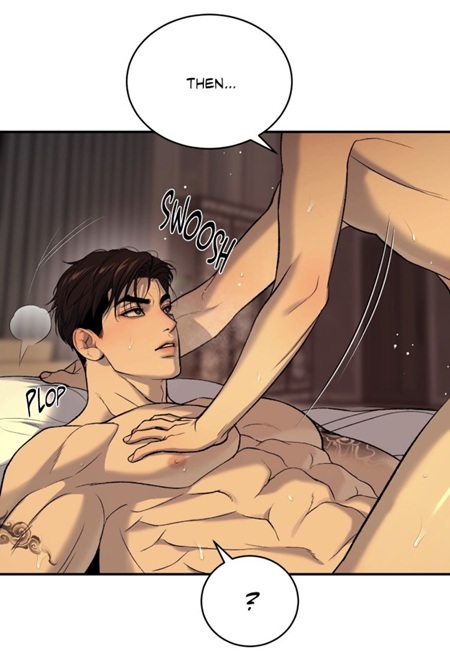 (chapter 92), after being asked about his own desires.
 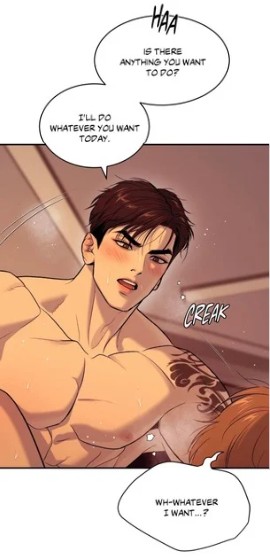 (chapter 92) He was no longer driven by shame, debt or obligation.
 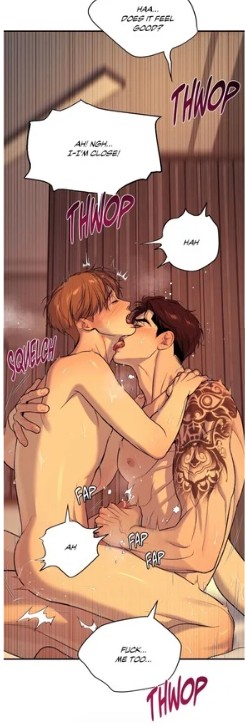 (chapter 92) For the champion, the moment carried the weight of something deeper than physical pleasure
 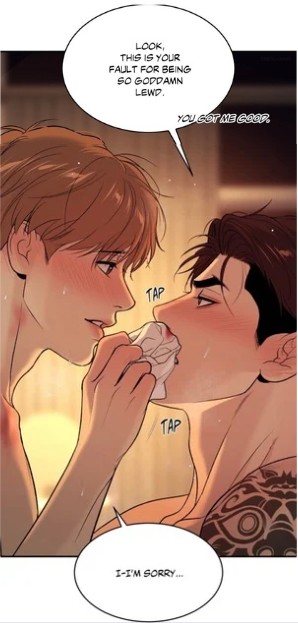 (chapter 92), for he was able to give pleasure to his partner. Thus his self-esteem could only be boosted. For Kim Dan, however, it remained simply sex.
 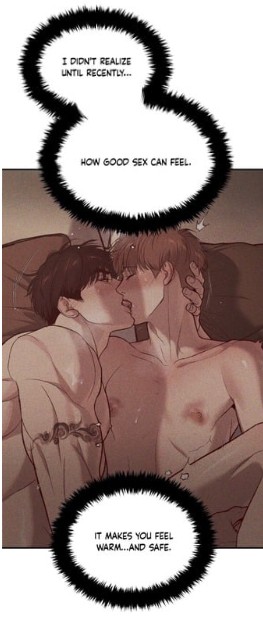 (chapter 92) The imbalance between their interpretations already foreshadowed the tension that would emerge the following morning.
That tension becomes visible when Kim Dan calmly refuses Joo Jaekyung’s attempt to continue taking care of him. 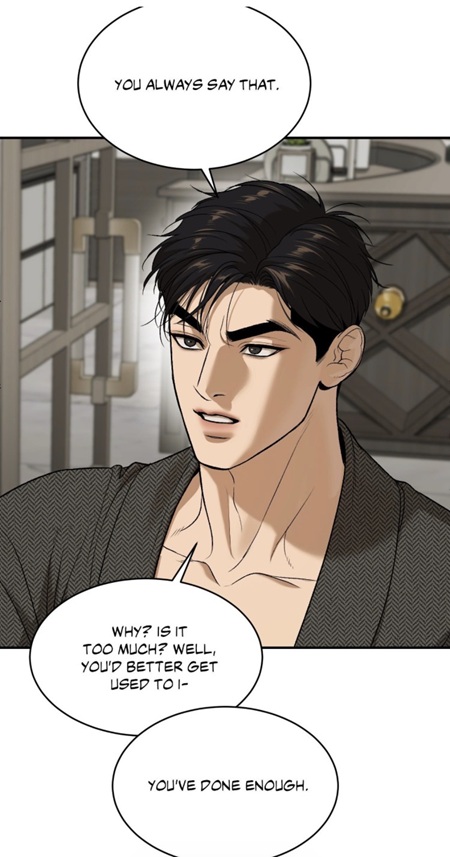 (chapter 93) For the first time, he establishes a clear boundary. The gesture signals a new stage in his personal development: for the first time, Doc Dan speaks as a professional, as a physical therapist
 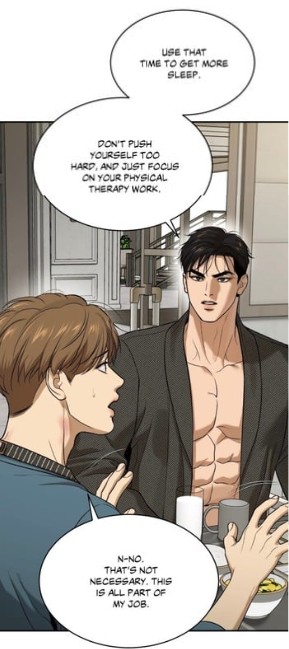 (chapter 93) who knows his role and his responsibilities. He refuses the help with the meals not out of pride, but because he clearly frames it as part of his job. In the past, he would have simply listened, letting others decide or speak in their name
  (chapter 42); now he asserts his own authority and expertise. But just as this moment seems to mark a quiet step forward in their dynamic
 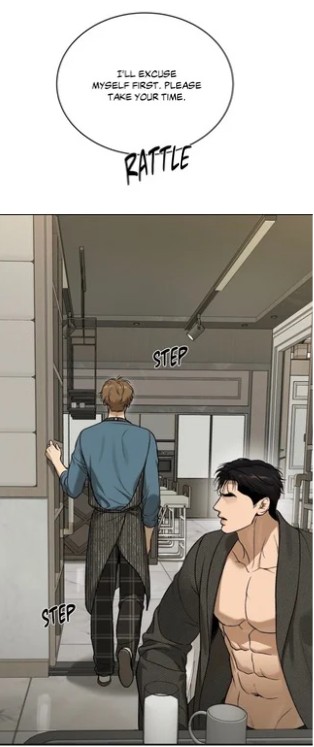 (chapter 93), the narrative abruptly widens its focus, drawing the reader away from this personal shift toward a far more ominous development unfolding elsewhere.
 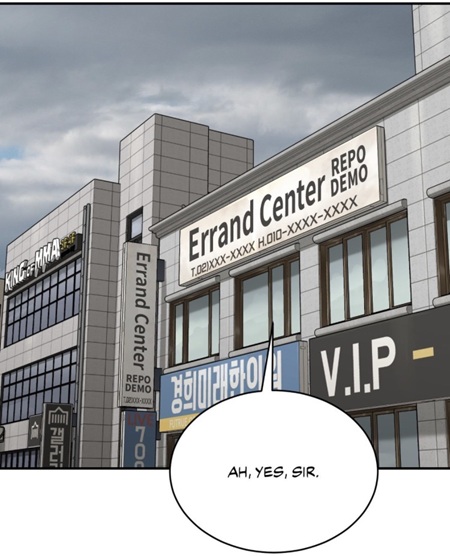 (chapter 93)
Far from the intimacy of the penthouse, Baek Junmin appears surrounded by an invisible barrier 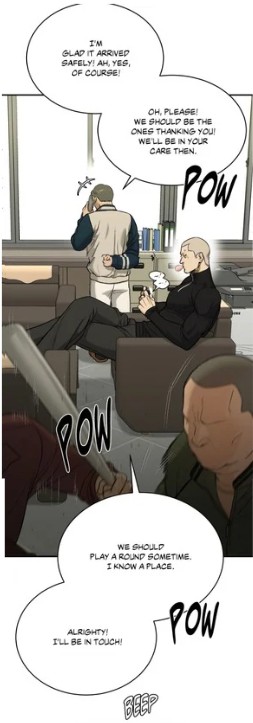 (chapter 93) separating him from Choi Gilseok and Heo Manwook. The atmosphere of that scene is strangely detached. Junmin seems unconcerned with the financial urgency discussed around him; his attention is fixed instead on the cellphone. Yet the readers cannot see what he is watching
 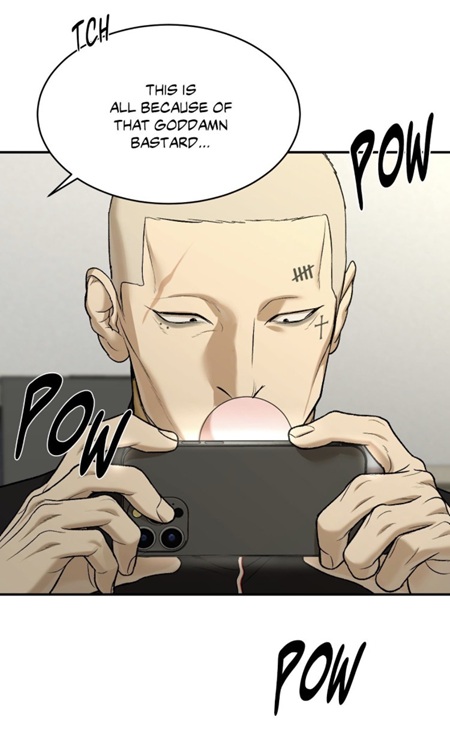 (chapter 93), while he casually blows a bubble of gum, creating a small moment of distraction that contrasts with the tension of the conversation around him. Only when he eventually reaches for the calendar on the desk,
 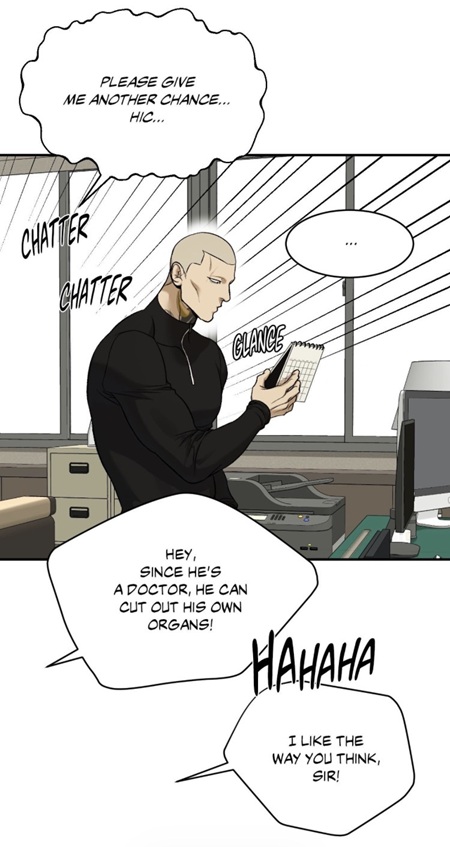 (chapter 93) does the focus of his attention become clear: the approaching match. What matters to him is not money, but time. What seems to occupy his mind is not the money being discussed, but the ticking clock before the fight—suggesting he may be searching for a way to reclaim his standing, restore his reputation, and probably settle an old score. But if this is indeed his objective, one question inevitably arises: what kind of weapon does he intend to use?
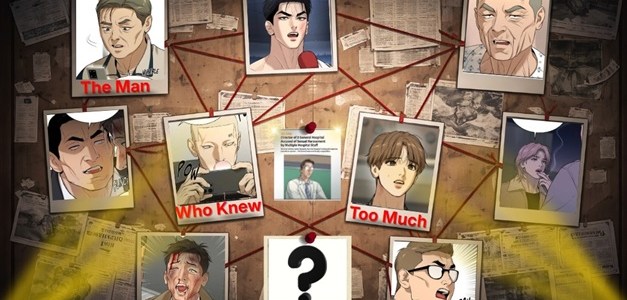
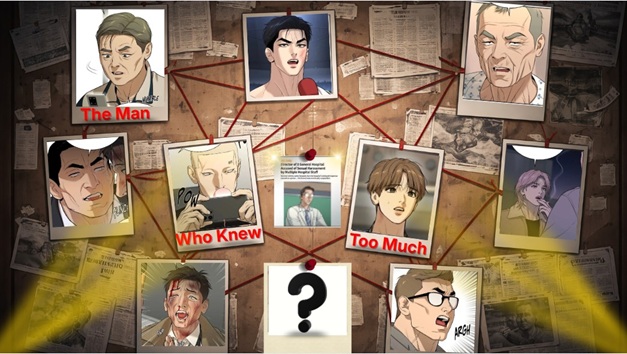
The cover illustration accompanying this essay proposes one possible answer. Rather than depicting a single event, it visualizes the network of hidden connections surrounding Baek Junmin: the underworld figures who support him, the organizations that benefit from his actions, and the champion who stands at the center of these intersecting interests. In such a configuration, information itself may become the most dangerous tool. If certain characters possess fragments of the past — memories, secrets, or assumptions about who Joo Jaekyung once was or about the physical therapist — then exposing or manipulating that knowledge could prove far more destructive than any physical confrontation.
This leads to the central question of this essay: who, in this story, truly knows too much—or believes that they do—and what happens when that knowledge is finally brought to light?
The Office – Where the Readers Begin to Know Too Much 😮
Episode 93 opens in a location that immediately signals danger: the office of Heo Manwook (chapter 93). The place is recognizable because the interior furniture (chapter 93) matches the office previously shown in episode 46.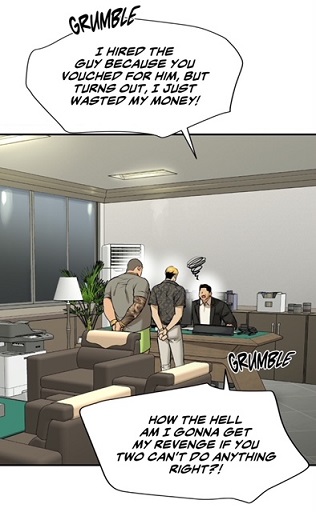 (chapter 46) Yet even before examining the room itself, the exterior sign already introduces an intriguing ambiguity. The building is labeled (chapter 93) “Errand Center – Repo – Demo.” At first glance, the name suggests a mundane service business. An errand center typically performs small tasks for clients—delivering packages, transporting items, or running administrative errands. Thus shortly after, Jinx-philes discover that a package has been successfully delivered. (chapter 93) The additional terms reinforce this impression: “repo” evokes repossession services that recover unpaid property, while “demo” suggests demonstrations or promotional tasks. Taken together, the sign appears to advertise a collection of ordinary logistical services.
However, within the narrative context the meaning becomes far more unsettling. Each of these activities revolves around the same principle: carrying out tasks on behalf of someone else. (chapter 93) The vocabulary is deliberately neutral, but the logic easily translates into criminal practice. Errands can become intimidation missions, repossession can turn into violent debt collection, and demonstrations can serve as distractions or staged incidents. The apparently harmless name therefore functions as a façade, masking a network that organizes coercion, surveillance, and illegal gambling operations. Even the office furniture contributes to this illusion. (chapter 46) The couch and armchairs resemble the kind of seating commonly found in legitimate businesses—familiar from many office settings in K-dramas—suggesting a place where clients might calmly sit down to discuss matters. Yet the scene reveals a striking contrast: no one actually uses this furniture except Baek Junmin. (chapter 93) The debtor is instead beaten near the entrance, deliberately kept far away from the seating area. In this way, the loan shark and his men ensure that the couch and chairs remain untouched, almost as if they were props. 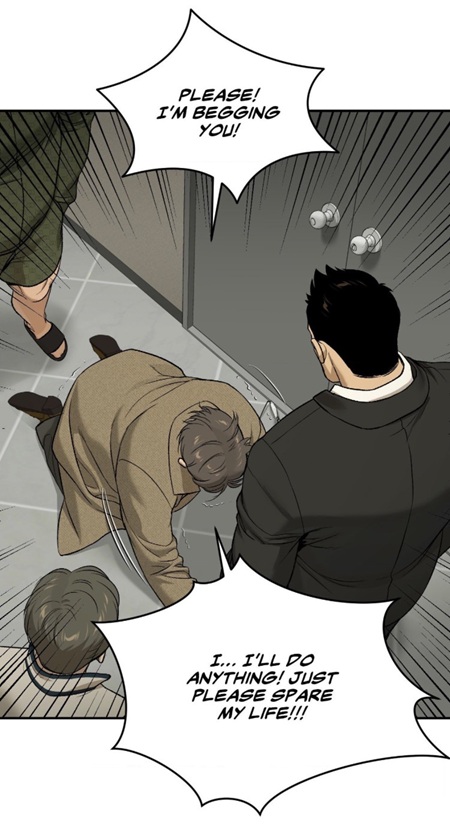 (chapter 93) The furniture thus reinforces the same strategy as the office name itself: it maintains the appearance of a respectable business while the violence of the operation is carefully kept out of sight.
This principle of delegated action (chapter 93) reveals something deeper about the structure of the organization itself. (chapter 46) At first glance, the office appears to belong to Heo Manwook 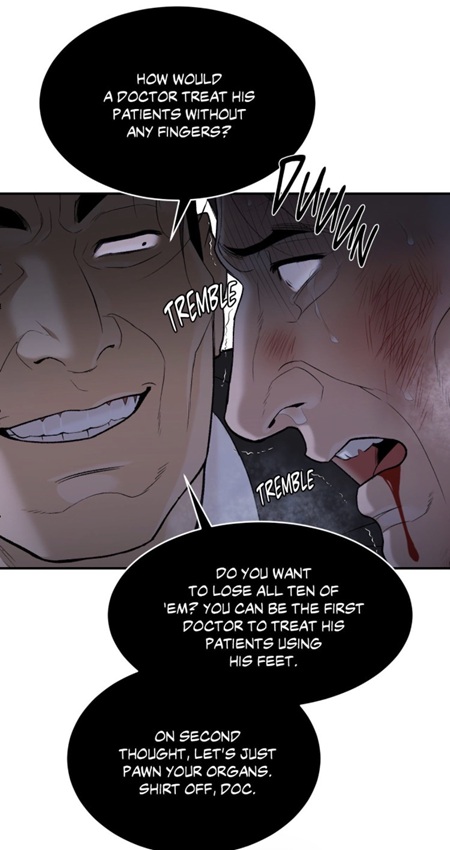 (chapter 93), who confronts victims and manages the loan shark operation. Yet the scene gradually reveals that he is less a true mastermind than a frontman—a visible intermediary who handles the dirty work.
  (chapter 46) Hence he calls Choi Gilseok “boss” and asks about the current situation. (chapter 93) Behind him stands Choi Gilseok, the director of King of MMA, who clearly exerts greater influence over the situation. He coordinates financial decisions, negotiates with outside contacts, and attempts to contain the consequences of the recent scandal. And yet even Choi Gilseok is not the ultimate authority.
  (chapter 48) In episode 48, he revealed that his actions were connected to a parent pharmaceutical company (F Pharmaceuticals), suggesting that the criminal activities surrounding the fights, betting, and intimidation may ultimately serve a larger financial structure. In that sense, the Errand Center name becomes almost literal: every actor in this network appears to be running errands for someone higher in the hierarchy, forming a chain of delegated power in which responsibility constantly shifts upward.
This ambiguity becomes even more striking when one considers Kim Dan’s own situation in season 1. In order to offer an expensive gift to Joo Jaekyung, he took a job as a courier 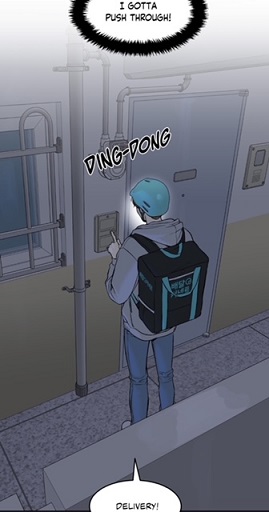 (chapter 42), delivering food or packages across the city during the night. His work is built on the same basic principle: completing tasks and transporting items for others which exposed him to dangers and shame.
  (chapter 42) The parallel is subtle but revealing. While Kim Dan runs legitimate errands for the athlete’s sake, the criminals in the Errand Center perform their own “services” within the shadow economy. Both operate within a system of delivery and obligation—yet one side does so out of feelings, while the other exploits the structure for predatory purposes. Gratitude versus Greed.
Thanks to my friend @Rin_de_eegana, I discovered that the Japanese translation
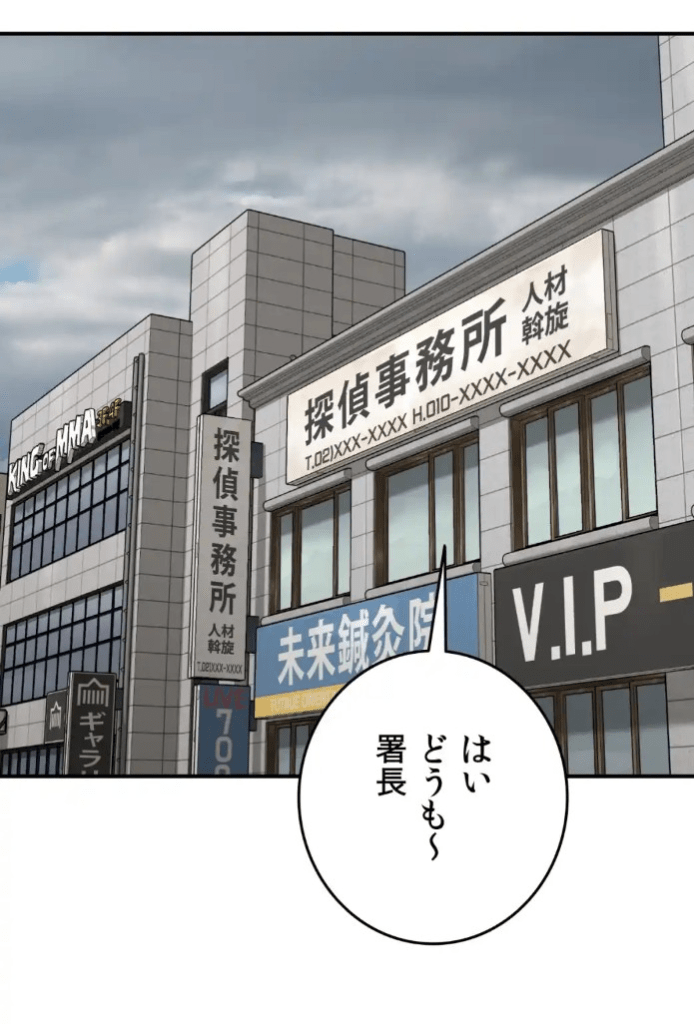
even labeled the place as a “detective agency,” a term that evokes investigation, surveillance, and the gathering of information. At first glance, the presence of such an office might suggest a professional organization specialized in surveillance and intelligence gathering. Earlier in the story, this is precisely the impression the narrative created. Kim Dan’s background was carefully investigated: photographs were secretly taken, a dossier was assembled, and details about his personal life were documented 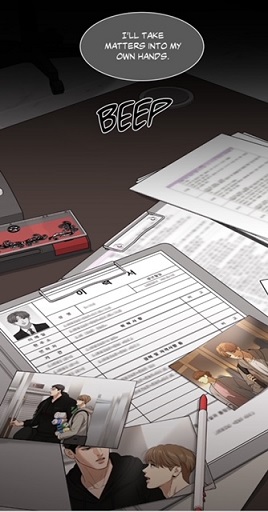 (chapter 46). The operation looked methodical, almost professional, as if a genuine investigative agency had been hired to monitor the champion’s environment.
Yet, the office scene in chapter 93 quietly dismantles that illusion. (chapter 93) Choi Gilseok, Heo Manwook and his minions are not behaving like investigators at all. No one is collecting new information. No one is analyzing evidence. Instead, the conversation revolves around debts, payments, and damage control. The supposed detective agency suddenly looks much closer to what it truly is: a loan shark operation that had previously hidden behind the façade of investigation. (chapter 93)
This shift becomes particularly visible in the dialogue between the director of King of MMA and Heo Manwook. The latter asks whether the situation has been “sorted.” (chapter 93) The reply reveals the underlying problem: they have already spent a considerable amount of money cleaning up the mess connected to Joo Jaekyung. The champion’s televised revelation has created waves. People had to be silenced, favors had to be paid, and the organization now finds itself under financial pressure. Choi Gilseok even admits bluntly that money is tight.
The financial tension visible in the office scene becomes even more revealing when one recalls an earlier accusation made by Heo Manwook in front of Kim Dan. 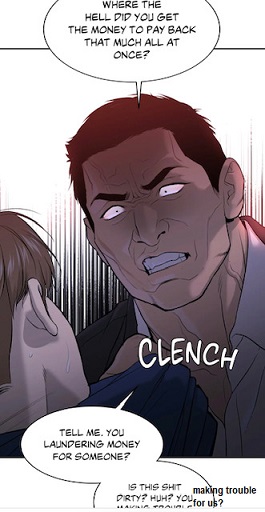 (chapter 11) At that moment, the loan shark explicitly raised the possibility of money laundering. This detail suddenly casts the entire network in a different light. The illegal gambling operations visible on Heo Manwook’s computer are therefore not merely a source of profit; they may also serve as a mechanism through which larger sums of money circulate and are quietly reintegrated into the legal economy.
 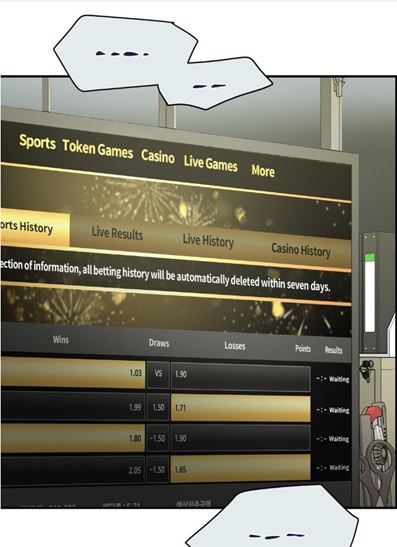 (chapter 46) In this structure, Choi Gilseok himself appears less like the true mastermind than another intermediary in a much larger financial chain.
In episode 48, Gilseok revealed that his activities were connected to a parent pharmaceutical company (chapter 48), suggesting that the underground fights and betting operations might ultimately serve broader corporate interests. Yet the director of King of MMA does not behave as a purely obedient subordinate either. 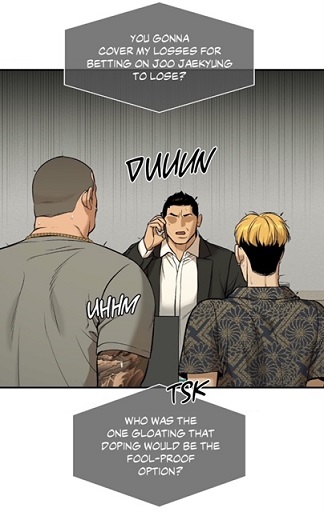 (chapter 46) In chapter 46, he was already acting behind the back of that parent company, manipulating events to influence the outcome of the fight. Later developments—such as the conversation at the café with Kim Dan and the suspicious use of the spray—suggest that he may eventually have received support from that higher structure.
  (chapter 49) At the same time, however, the director of the gym clearly took personal risks. By secretly betting on the “underdog”
  (chapter 52) and manipulating the situation through the switched spray, he appears to have pursued his own strategy within the system.
This double game helps explain why the organization now finds itself under financial strain. The fake director of the gym was not simply executing orders; he was gambling within the laundering mechanism itself. When Joo Jaekyung publicly exposed the situation on television, the carefully balanced financial structure began to wobble. Joo Jaekyung’s public provocation therefore did more than damage reputations—it interfered with the flow of money itself, forcing the network to spend resources on bribes and damage control while threatening the laundering pipeline that sustained it. Yet earlier in the story, the logic had been very different. As Park Namwook once remarked, Jaekyung’s fame made him the fighter who would “rake in the most cash.”  (chapter 46) In other words, the champion was originally the system’s most valuable asset. His visibility and reputation attracted attention, betting activity, and therefore profit. However, once he disrupted the carefully orchestrated mechanisms behind the fights, that same visibility became dangerous. The athlete who once generated the most revenue suddenly turned into the network’s greatest liability. From that moment onward, the logic of profit shifted into the logic of elimination.
The sequence of panels reveals another layer of the network. Choi Gilseok is first shown speaking with a person (chapter 93) who may be connected to the police in a surprisingly casual tone, thanking him and even suggesting they play golf together. The expression “I’m glad it arrived safely” implies that the unknown person must have received some hush money. Rather than a confrontation between criminals and investigators, the conversation suggests familiarity and mutual benefit. Only later does he mention that they need to “wrap this up before the fuzz makes a move.” On the surface, this sounds like fear of law enforcement, but placed after the friendly phone call, the line reads less like genuine concern and more like a reminder to settle matters quickly before any official attention becomes inconvenient. In other words, they are attempting to buy some time, to interfere in the investigation so that they don’t get caught.
This moment becomes even more intriguing when one remembers an earlier scene involving Yosep. 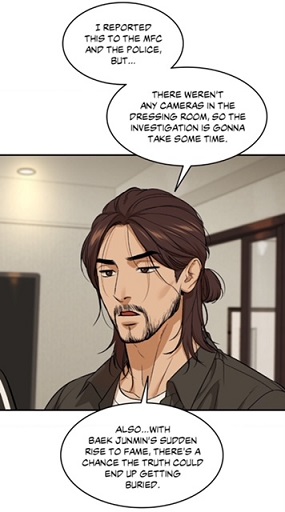 (chapter 52) After the dressing-room incident, Yosep reported the situation to both the MFC and the police, turning this incident into an official and legal issue. Yet the investigation immediately encountered a convenient obstacle: there were no cameras in the dressing room, meaning the case would take time to resolve. If the officer Choi Gilseok is speaking with belongs to the same network (police or MFC), the investigation itself may already be entangled in the system it is supposed to expose. But the revelation in the media made it impossible to bury it for good, as it was exposed to the “world”.
But there is another visual clue that deepens this interpretation. (chapter 93) If attentive readers look closely at the surroundings of the office in chapter 93, they will notice the presence of the rival gym King of MMA located next to the loan shark’s headquarters. This small detail quietly reveals the proximity between the world of professional MMA gyms and the underground economy of illegal fights and gambling. The boundary between legitimate sport and criminal activity appears far thinner than it first seemed. The gym known as “King of MMA” stands almost literally beside the loan shark operation, hinting at the structural connections that bind them together.
In this sense, the office scene becomes a place where readers begin to perceive the outlines of a hidden system. Throughout the story, they have witnessed conversations from multiple perspectives: between the protagonists and villains (chapter 48), between the loan shark and the director (chapter 46), and within the MMA world 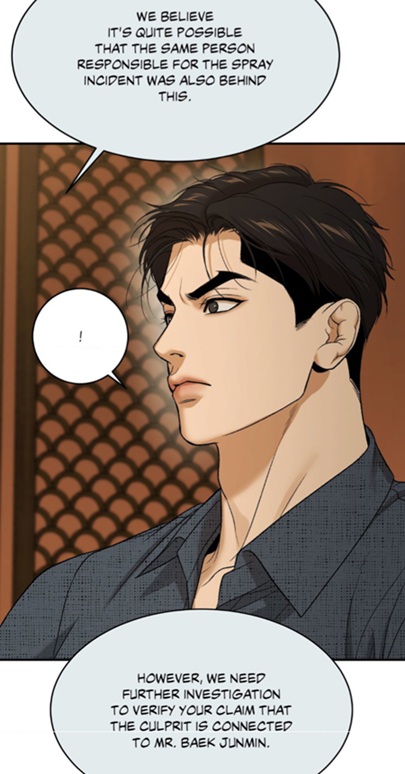 (chapter 69). They know, for instance, that Heo Manwook once misunderstood the name “Team Black,” interpreting it as a brothel rather than a gym
  (chapter 16). Jinx-Lovers have seen fragments of the schemes unfolding behind the scenes and can therefore begin to assemble the existence of several overlapping plots.
And yet, despite these clues, the full picture remains incomplete. One crucial element still escapes both the characters and the audience: the identity of the person who secretly took the photographs of Kim Dan and Joo Jaekyung (chapter 46). If Heo Manwook’s organization—the supposed detective agency—had truly conducted that surveillance, they would already recognize Kim Dan and understand his connection to the gym. Moreover, the earlier phone conversation between the hyung and the loan shark indicates that Choi Gilseok already possessed those photographs while sitting in his own office at the gym. This strongly suggests that the person who gathered that information did not belong to the Errand Center at all.
The office therefore becomes the starting point of a different kind of investigation—not one carried out by the characters inside the story, but by the readers themselves. By piecing together scattered details across multiple chapters, Jinx-lovers gradually uncover the outlines of a conspiracy that none of the individual actors fully control. Somewhere in the shadows,  (chapter 33) (chapter 46)
 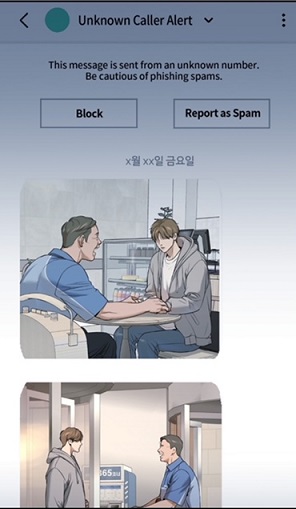 (chapter 48) another observer must exist—someone who collected information long before Choi Gilseok revealed his second scheme to his right-hand. While the men in the office rush to repair their collapsing financial operation (chapter 93), the audience slowly realizes that the true structure behind these events may be far larger than any of them suspect.
Yet in this very moment another development quietly takes place. For once, Baek Junmin does not remain in the shadows behind his hyung, behind Choi Gilseok, or behind the criminal hierarchy. 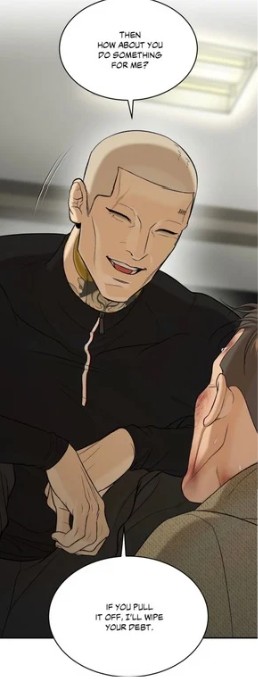 (chapter 93) He speaks himself. Addressing the disgraced hospital director, he offers to erase the man’s debt—on the condition that he carries out a task for him.
 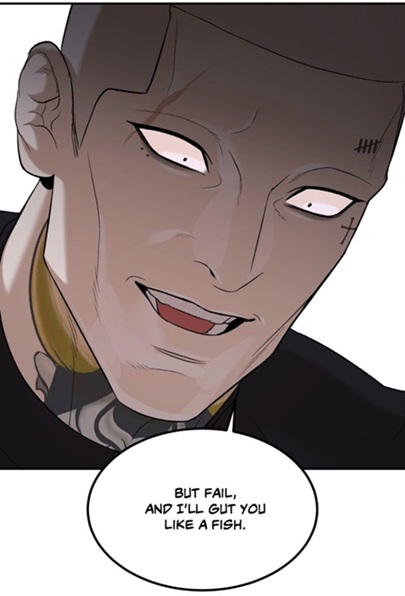 (chapter 93) The threat that accompanies the proposal is unmistakable: failure will be punished with death.
In doing so, Junmin transforms the doctor’s debt into an instrument of coercion. (chapter 93) The indebted man is no longer merely a victim of the loan-shark system; he is being recruited as an expendable agent within a new scheme. Ironically, this moment also marks the point where Junmin unknowingly pulls another institution into the conspiracy. 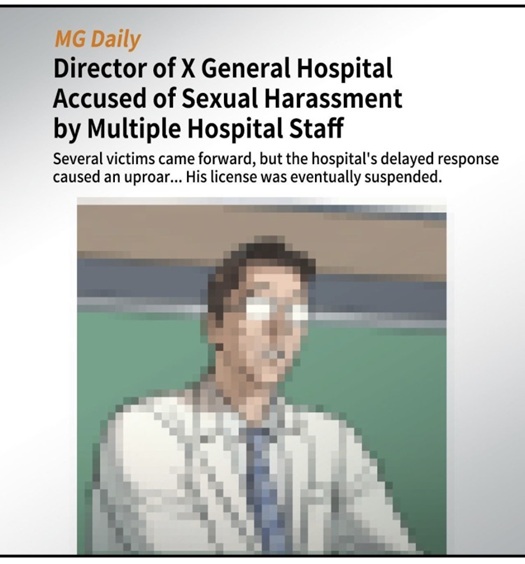 (chapter 91) By involving a former medical authority in an illegal act, he brings the corrupted medical world to the surface and connects it directly to the network of underground betting and money laundering.
What Junmin likely perceives as a safe and clever manipulation may therefore function as something far more dangerous. By offering to erase the doctor’s debt in exchange for a task, he believes he can remain safely removed from the action itself. 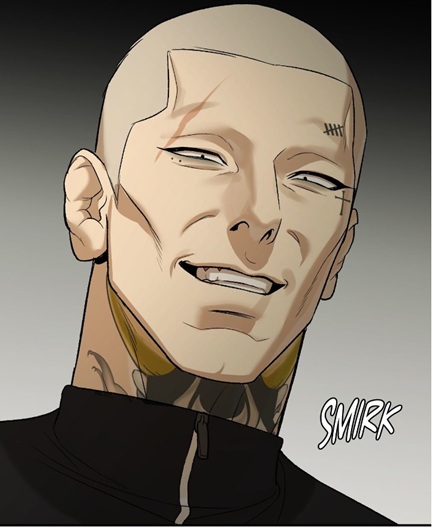 (chapter 93) That’s why he is smirking. The wrongdoing will be carried out by someone else, allowing him to stay in the shadows as he always has. Yet Junmin underestimates the weight of his own words. (chapter 93) In both the criminal and the legal worlds, speech itself carries responsibility. A spoken order, a promise, or even the disclosure of information can create liability. The story has already demonstrated this elsewhere: the leaking of Joo Jaekyung’s patient file triggered legal consequences and led the champion to file a lawsuit against the hospital.
 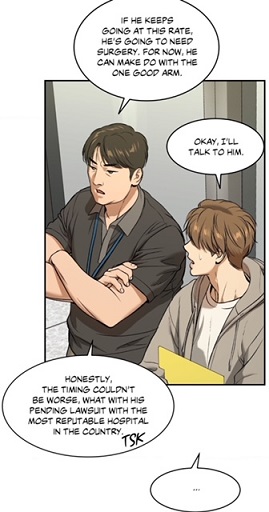 (chapter 42)
Junmin’s proposal therefore does more than recruit a desperate man—it transforms him into the author of the scheme. 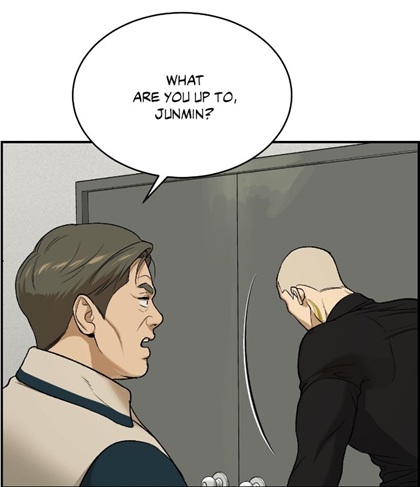 (chapter 93) Hence the director asks him this question. He is now taking the lead. Knowledge and liability become inseparable. Once the doctor accepts the offer, Junmin’s words effectively pull the trigger: the moment the deal is spoken aloud, the hidden system that sustained the illegal fights begins to lose its stability. By drawing the corrupted medical world directly into the operation, the fighter who once thrived in the shadows may in fact become the spark that accelerates the collapse of the entire machine. I would even add, with this new stunt, he is not realizing that he could be blamed for the past crimes (drugged beverage, switched spray etc.).
Heo Manwook – The Hand of the Machine
Before turning to Baek Junmin’s intervention, it is worth examining the role of Heo Manwook more closely. Throughout the story, the loan shark repeatedly threatens the hands of his victims.  (chapter 16) Doc Dan’s hand got crushed and the former hospital warden is warned that he might lose his fingers; thus he might no longer be able to work. (chapter 93) The threat is not random. It reveals the symbolic position Heo Manwook occupies within the criminal structure.
Heo Manwook represents the operational hand of the system. While others design schemes or manipulate financial flows, he executes the violence that keeps the network running. His task is not to think strategically but to enforce obedience: take care of the illegal gambling site 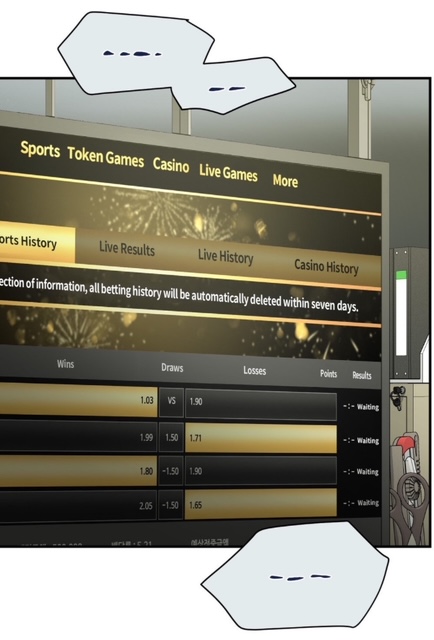 (chapter 46), collect debts
  (chapter 11), intimidate victims, and ensure that money continues to circulate through the laundering mechanism. In this sense, the repeated focus on hands and fingers becomes meaningful.
The hand is the instrument of action 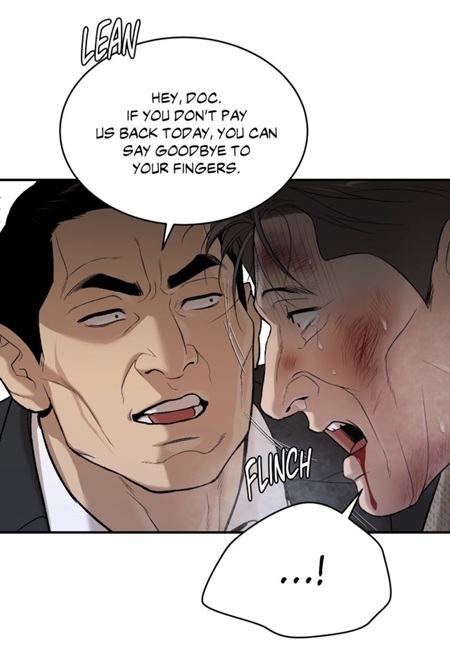 (chapter 93) —the part of the body that allows people to work and generate the very income he seeks to extract. By threatening to destroy his victims’ hands, however, Heo Manwook undermines that capacity himself. The gesture exposes a certain narrow-mindedness: his violence contradicts the economic logic he is supposed to enforce, revealing not only his cruelty but also him as an enforcer who acts impulsively rather than strategically.
Yet the irony of his position becomes increasingly visible. Although he runs what appears to be a “detective agency,” he repeatedly demonstrates an inability to perform the most basic function of investigation. (chapter 11) When he confronts Kim Dan about the origin of the money used to repay his debt, he does not rely on financial records or systematic research. Instead, he interrogates the doctor through intimidation and violence. The encounter in episode 16 occurs almost by coincidence, when he meets Kim Dan on the street and hears about his imminent moving  (chapter 16) rather than locating him through documentation or surveillance. This observation corroborates my previous deduction: he is not the one following the physical therapist in secret and taking pictures of him. Secondly, observe his reaction, when he reads the money transfer:
 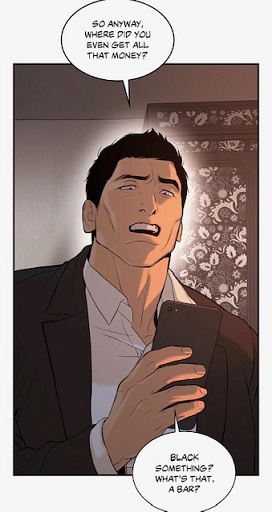 (chapter 16) The loan shark reads the name quickly or without interest, so that he can only remember the most striking word. In this case, “Black” stands out, while “Team”—a generic word—disappears from his memory. So his phrasing suggests he did not pay attention to the full name. This displays his lack of professionalism. He doesn’t investigate carefully.
Even his interpretation of evidence proves unreliable. Upon seeing the name “Team Black,” his minions and Heo Manwook quickly assume that it refers to a brothel.  (chapter 16) Instead of verifying the information, he projects his own criminal assumptions onto the situation. (chapter 16) The supposed detective agency therefore produces not knowledge but distortion. Rather than gathering reliable intelligence, it generates blind spots that weaken the entire network. In this sense, the situation ironically echoes the logic behind The Man Who Knew Too Much. In Hitchcock’s story, the danger lies in possessing knowledge that exposes a hidden conspiracy. In Heo Manwook’s case, however, the problem emerges from a different form of knowledge: experience. Years of operating in the criminal underworld have convinced him that he already understands how the world works. Hence he misjudged the champion’s skills.
 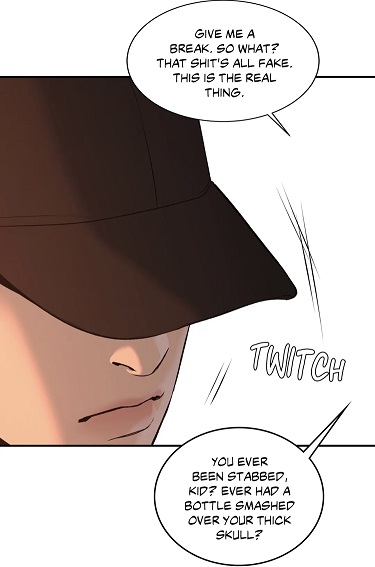 (chapter 17) Instead of investigating carefully, he interprets every new piece of information through the lens of his past encounters and knowledge. His boss is rigging fights, so the others must do the same. When confronted with the name “Team Black,” he immediately assumes it must refer to a bar or brothel. What appears to be practical experience therefore becomes a liability. The man who believes he knows reality best may in fact be the one most vulnerable to misreading it.
This failure becomes particularly significant when one considers his connections to the medical underworld. During his threats, Heo Manwook casually refers to organ trafficking (chapter 93), suggesting that his operations intersect with the shadow side of the medical system. Such activities require the knowledge and complicity of doctors. The earlier intimidation of Kim Dan and the threats directed toward his grandmother (chapter 11)  (chapter 16) demonstrate that Heo Manwook was already operating within that gray zone where medicine, crime, and financial exploitation overlap. It is therefore not surprising that the disgraced hospital director later appears within this environment. The medical world has long been entangled with the loan shark’s activities and this through Choi Gilseok who has a connection to a pharmaceutical company.
At the same time, however, Heo Manwook himself occupies a precarious position within the hierarchy. Although he runs the office and commands his subordinates, his authority is ultimately dependent on Choi Gilseok. (chapter 46) The phone calls between the two reveal a relationship defined by obedience. When Choi Gilseok reprimands him for the failed scheme, Heo Manwook immediately accepts the criticism and follows his orders.  (chapter 46) The “hand” of the organization may execute violence, but it does not decide the strategy.
Visually, the story even reflects his gradual loss of power. Earlier confrontations often depict Heo Manwook towering over his victim  (chapter 16), emphasizing the asymmetry between predator and prey. Yet when he threatens the disgraced hospital director, the composition changes subtly. (chapter 93) The two men are positioned almost at eye level, confronting one another on the same plane. The shift is striking. The man who once dominated every encounter now appears lowered, forced into a confrontation with someone who mirrors his own corruption. The hierarchy begins to flatten. This visual transformation acquires an additional meaning when one recalls Joo Jaekyung’s realization in episode 91.
 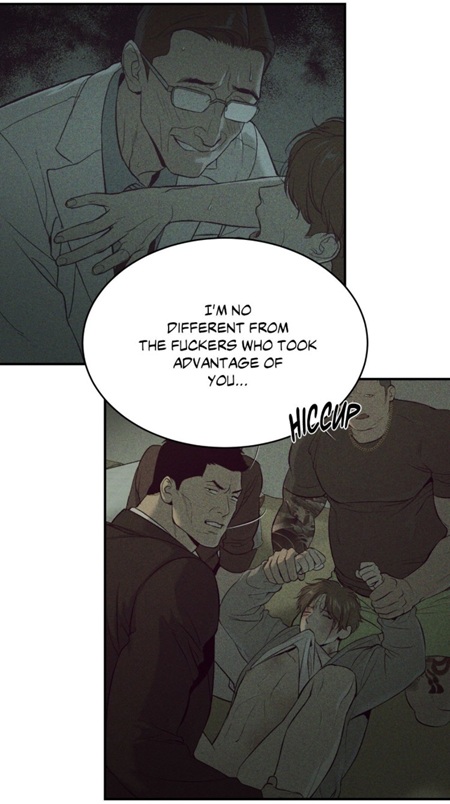 (chapter 91) Reflecting on the men who had abused Kim Dan, the champion bitterly admits that he is “no different from the fuckers who took advantage of you.” Although Jaekyung is still unaware that Heo Manwook actually attempted to rape Kim Dan earlier in the story, the scene nevertheless establishes an unsettling parallel between different forms of abuse of power. The disgraced hospital director exploited his authority as a physician, while the loan shark uses violence and intimidation to dominate his victim. Both belong to the same shadow world where institutional positions become instruments of exploitation.
In this sense, Heo Manwook also resembles another figure hinted at by the narrative’s broader thematic references: the “man who knew too much.” As the operator of the supposed detective agency, 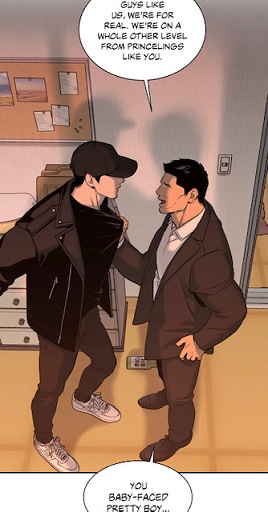 (chapter 17) he possesses extensive knowledge about the hidden mechanisms of the criminal network — rigging fights, illegal betting, debt collection, organ trafficking, and even the exploitation of vulnerable individuals. Yet this knowledge does not grant him control; instead, it entangles him more deeply in the system’s corruption. The more he knows about its secrets, the less clearly he perceives reality. Years of operating within the criminal network have isolated him from the logic of the legal world. Surrounded by corruption, intimidation, and bribery, he gradually begins to believe that these mechanisms can shield him from any real consequences. The knowledge that once gave him power therefore becomes a distortion: it convinces him that he can act with impunity, imagining that the system protecting him will always remain intact. What once appeared to be power gradually reveals itself as liability. I would even add. This protection could only function as long as the system itself continued to run smoothly. It depended on the uninterrupted flow of money circulating through the laundering network. The moment that flow is endangered—when bets collapse, scandals emerge, and funds begin to disappear—the shield of protection weakens. Figures such as the director of the gym and the loan shark suddenly become far more exposed than before.
Another recurring element reinforces this tension: the knife. Earlier in the story, Heo Manwook is already associated with the sudden appearance of a blade during his confrontation with Joo Jaekyung. 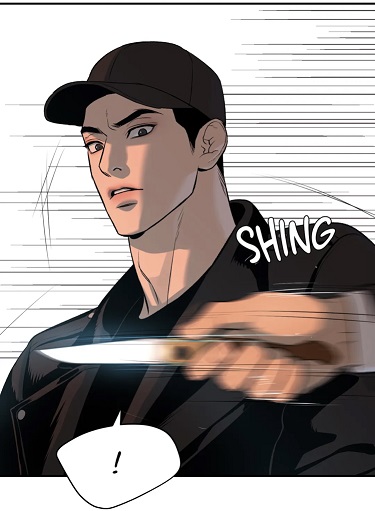 (chapter 17) The weapon signals impulsive violence rather than calculated strategy.
 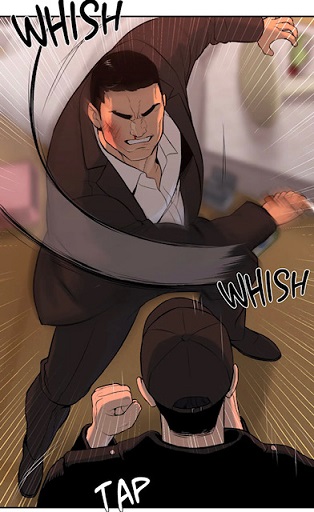 (chapter 17) The knife belongs to the realm of direct physical force—the crude instrument of someone who acts rather than plans. At the same time, this weapon reveals why Heo Manwook believes that his power and strength are real. The latter stands for ultimate violence, someone can die with such a weapon. However, like exposed in a previous essay, MMA fighters can still die with bare hands. A wrong move or a mistake …
  (chapter 25)
Striking is that the attack with the knife did not occur in an open fight. (chapter 17) Instead, the weapon appeared abruptly from behind, transforming the encounter into an act of treachery rather than a fair confrontation. The knife therefore becomes a symbol of unfairness, backstabbing and betrayal. Rather than representing courage or open combat, the weapon exposes the opposite: deception, hypocrisy, and cowardice. Heo Manwook and his men do not confront their victims openly. Instead, they rely on tools—blades, bats, and intimidation—to frighten and wound those who cannot defend themselves.
This symbolism becomes even more striking when placed next to Baek Junmin’s later threat toward the disgraced hospital director. (chapter 93) When Junmin swears to “gut him like a fish,” the language itself evokes the imagery of a blade. Even though no weapon appears in the panel, the metaphor unmistakably suggests the act of cutting open a body. The threat therefore carries the same symbolic weight as the earlier knife attack: violence delivered through sudden, treacherous intervention rather than through open confrontation.
At the same time, Baek Junmin’s words unintentionally reveal something about the world he comes from. Earlier conversations among fighters hint that illegal matches often involve hidden weapons and brutal ambushes rather than regulated combat. 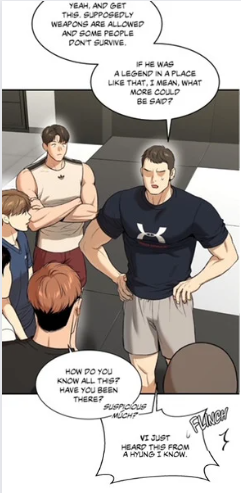 (chapter 47) The underground arena operates according to entirely different rules, where knives are not anomalies but part of the environment. In this sense, Junmin’s threat does more than intimidate the former hospital director—it exposes the violent logic of the system that produced him.
This background also helps explain the visual markers associated with the fighter himself. (chapter 93) The scar crossing his face suggests past encounters with blades, while the demon tattoo carrying a knife in its mouth reinforces the imagery of violence as an ever-present companion. In the world of illegal fights, the blade is not merely a weapon. It is a sign of survival within a system where betrayal, ambush, and hidden violence are part of the rules.
Seen from this perspective, the knife becomes a recurring motif that links several narrative threads: the cowardly intimidation practiced by the loan shark, the brutal culture of underground fights, and the language of threats used by Baek Junmin. Each instance reveals a world where violence is rarely honorable. Hence it is rather fake, though both men believe that they are “real” and as such “strong”. Instead, it appears as something sudden, concealed, and treacherous—an instrument of systems that operate in the shadows rather than in the open.
Ironically, the greatest vulnerability of the loan shark is not a rival fighter, the police, or even the collapsing betting scheme. His true Achilles’ heel lies in a far more mundane object: the cellphone and as such the digital world. From the beginning, Heo Manwook demonstrates a profound distrust of digital evidence. Even after Kim Dan transfers the expected amount of money for the month,  (chapter 11) the loan shark refuses to rely on the transaction itself. Instead of trusting the digital record, he personally visits Kim Dan and continues the physical abuse. In his worldview, confirmation must come through intimidation rather than documentation.
Yet this instinct reveals a crucial blind spot. The system he participates in increasingly operates through precisely the kind of digital traces he refuses to respect. 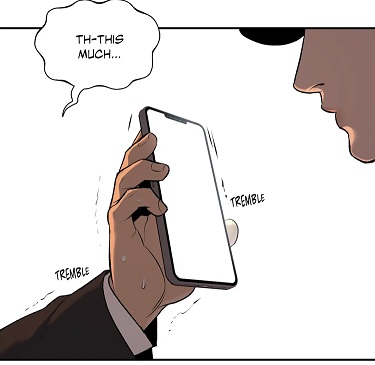 (chapter 17) When Joo Jaekyung later transfers the money directly to him using his own phone
  (chapter 17), the transaction itself becomes a form of evidence. What Heo Manwook perceives merely as a convenient payment leaves behind a record — one that cannot be erased by violence. The phone quietly transforms the power dynamic: intimidation may silence witnesses, but it cannot erase a transaction history.
This weakness becomes even more visible when the narrative contrasts his behavior with Joo Jaekyung’s. 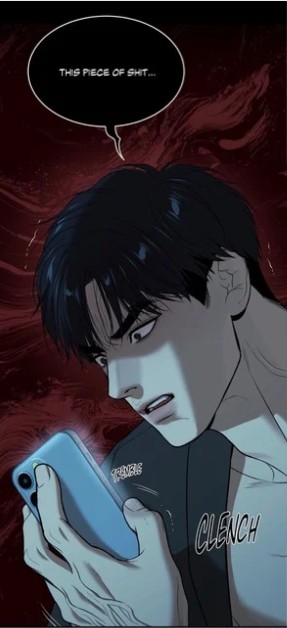 (chapter 91) The champion carefully reads the news article exposing the former hospital director’s crimes. (chapter 91) Through that article, the audience learns that the man’s medical license has already been suspended.
Heo Manwook, however, never appears to read this information. (chapter 93) When confronting the disgraced hospital administrator, he still addresses him as “doctor.” He still thinks, he can treat patients. (chapter 93) The mistake is revealing. It shows that the loan shark operates not through careful verification but through assumptions and second-hand knowledge.
This vulnerability becomes even clearer inside the office itself. 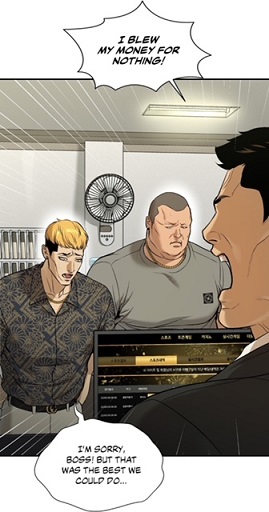 (chapter 46) The computer visible on Heo Manwook’s desk quietly contains a record of the entire operation. The illegal betting site displayed on the screen is not merely a tool for profit; it is also a potential archive of evidence—transactions, accounts, and financial flows that could expose the laundering system. In other words, the machine that allows the network to generate money simultaneously preserves the traces of its crimes.
The question, however, is whether Heo Manwook truly understands this danger. The computer is still on his desk, but this time unused, as he has other things to do. (chapter 93) Throughout the scene he appears less like an independent decision-maker than an obedient intermediary who follows the instructions of Choi Gilseok. (chapter 93) Rather than taking initiative himself, he waits for orders from the director of the gym. This dependency raises a crucial uncertainty: if the system begins to collapse, will he even recognize the need to erase these traces? If not, the very tools that enabled the network’s operations—the phone, the betting platform, the office computer—may ultimately become silent witnesses against him.
For this reason, the interaction with the disgraced doctor marks a turning point. As the system begins to destabilize, the “hand” that once enforced obedience now finds itself confronting forces it cannot fully control. The network’s operational executor is gradually being pushed downward, while another figure—Baek Junmin—steps forward with his own plans. The collision between these two trajectories appears increasingly inevitable.
Baek Junmin – The Man Who thinks Who Knows Everything
If the office scene exposes the true nature of Heo Manwook’s organization, the final figure sitting in that room introduces a different kind of mystery: Baek Junmin. (chapter 93) Unlike the other men present, he appears strangely detached from the conversation unfolding around him. While Heo Manwook and Choi Gilseok discuss debts, payments, and police connections, Junmin shows little interest in the financial urgency dominating the room. Instead, he lounges in the armchair typically reserved for the “CEO” or company owner, casually chewing gum while glancing at his phone.
This posture is revealing. In a room where the others are preoccupied with stabilizing a failing operation, Junmin behaves with the careless ease of someone who feels entitled to the space. The seat he occupies subtly reinforces this impression: he places himself in the position of authority without actually participating in the responsibilities that come with it. The attitude he projects is less that of a strategist and more that of a spoiled child, detached from the consequences of the situation unfolding around him. (chapter 93)
Only when he reaches toward the calendar, does the focus of his attention become clearer: the approaching match. (chapter 93) The fight appears to function as a deadline, a moment toward which his thoughts have been quietly moving while the others worry about debts and bribes. At first glance, this might simply indicate that he is counting down to the fight. Yet the gesture suggests something deeper. Unlike the others in the room, Junmin does not seem to experience time as a practical pressure linked to debts, bribery, or police intervention. His notion of time is psychological rather than material. He is not living in the present urgency of the criminal network; he is still trapped in an older temporal logic shaped by humiliation, resentment, and wounded pride.
This is why the televised revelation matters so much. 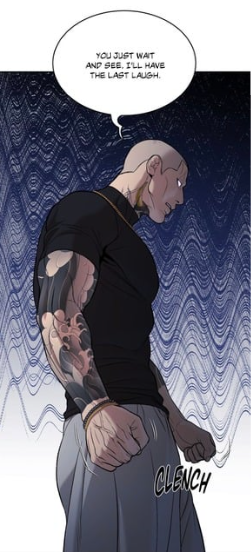 (chapter 87) Joo Jaekyung’s public exposure of the stunt did not merely create financial problems for the organization. It inflicted a fresh narcissistic wound on Junmin himself. The humiliation was public, visible, and impossible to ignore. In that sense, the upcoming match is not only a sporting deadline but also a symbolic countdown: a chance to reverse the humiliation, reclaim his standing, and restore a damaged image. Time, for Junmin, does not move forward in a stable or mature way. It circles obsessively around injury, revenge and shame; he stores it.
(chapter 93) Seen in this light, the gum becomes more than a casual gesture. It reinforces his childishness. Junmin does not cry, does not openly rage, and does not confess weakness. Notice that he is not even training at the gym, though King of MMA is next door. This contrasts so much to Joo Jaekyung who continues to maintain a disciplined routine despite everything. Thanks to his determination, he was able to leave poverty behind and overcome a brutal childhood. As Kim Dan later remarks on the beach, this perseverance is 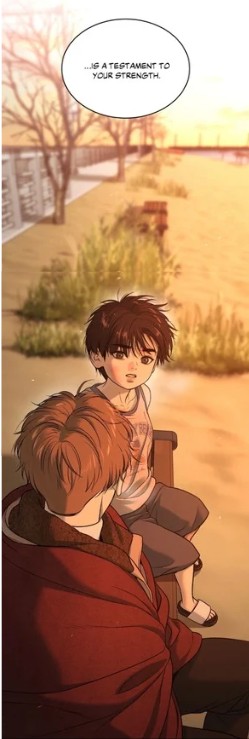 (chapter 94)
The juxtaposition between the Shotgun watching the video (chapter 93) and the quiet conversation on the beach therefore reveals two radically different understandings of strength. For Joo Jaekyung, strength has gradually come to mean endurance: the ability to continue moving forward despite humiliation, hardship, and personal loss. 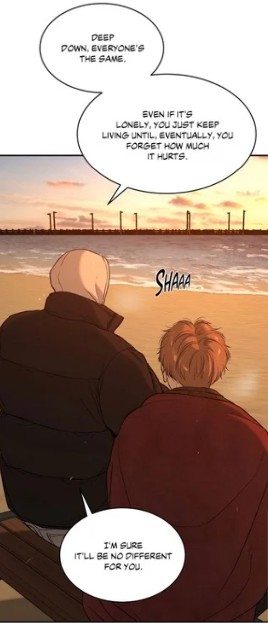 (chapter 94) For Baek Junmin, by contrast, strength remains tied to wounded pride and the desire for retaliation.
Rather than transforming humiliation into growth, he remains trapped within it. This is precisely why his request to the doctor is immediately accompanied by a threat: (chapter 93) The sentence reveals the logic governing his actions. Authority, in his world, is not built on discipline, patience, or competence, but on intimidation. Violence becomes the only language through which he can assert control. In this sense, the panel exposes the profound immaturity behind his performance of indifference. While the champion disciplines his body and confronts his past, Junmin simply reproduces the brutality that once humiliated him.
But let us return to Baek Junmin and the bubble gum. His behavior only makes visible how immature his emotional world remains, exposing a lack of professionalism and inner strength. While the champion disciplines his body and confronts his past, Junmin sits idle, replaying an insult and waiting for an opportunity to restore his pride. The others are trying to save a criminal enterprise under pressure; Junmin is still silently thinking of the insult, fixated on the idea of revenge. Thus I deduce that he is watching Joo Jaekyung’s last match.
This deduction raises another possibility. If Junmin is indeed watching footage of Joo Jaekyung’s last match on his phone, the scene may contain a hidden clue. After that fight, the champion briefly turns toward the outside of the cage and asks someone whether he did well. 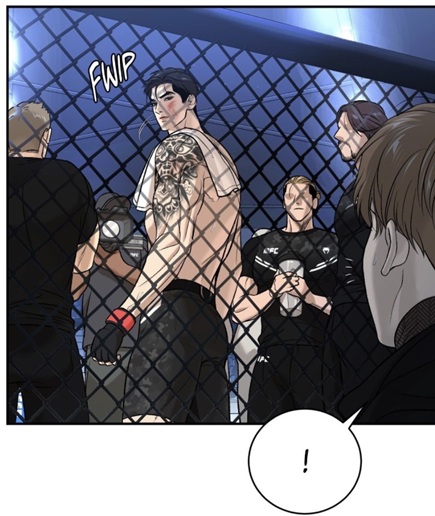 (chapter 87) The moment appears insignificant to most spectators. Yet for someone who already knew the identity of the person standing there, the gesture could reveal something important.
If Junmin had previously followed Kim Dan and taken photographs of him (chapter 46) —as suggested by the anonymous surveillance images circulating earlier in the story—he would immediately recognize the pattern of Joo Jaekyung’s behavior. The champion’s glance toward the cage-side observer would no longer appear random. It would identify the person occupying that position: the physical therapist Kim Dan.
In this sense, the scene may quietly suggest that Baek Junmin already knows more than the other characters in the room. While Heo Manwook and Choi Gilseok remain unaware of Kim Dan’s real identity, Junmin might have been the one who first connected the champion to the young therapist. Doc Dan is the champion’s vulnerability, he has feelings for him. If this interpretation is correct, the invisible wall separating him from the others takes on a new meaning: Junmin is not merely detached from their conversation—he may already possess information that they do not.
Yet another detail complicates the situation even further. (chapter 93) Throughout the entire scene, Baek Junmin remains silent—but silence does not necessarily mean ignorance. While Heo Manwook and Choi Gilseok are focused on collecting money and resolving immediate problems, Junmin is still present in the room, quietly hearing everything that is being said.
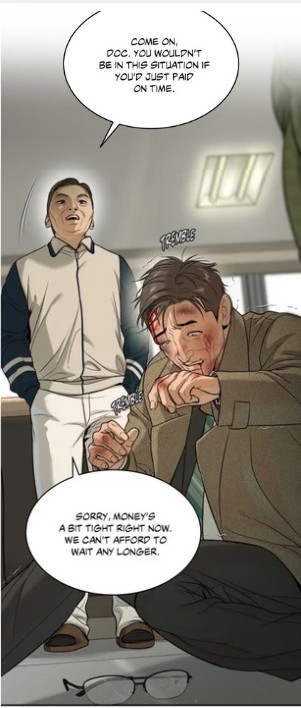
One particular detail may therefore become significant: the repeated references to a “doctor.” The man being pressured by the loan sharks is clearly identifiable as the former hospital director who once fired Kim Dan. (chapter 93) His appearance leaves little doubt—he wears the same clothes and glasses seen in earlier chapters. 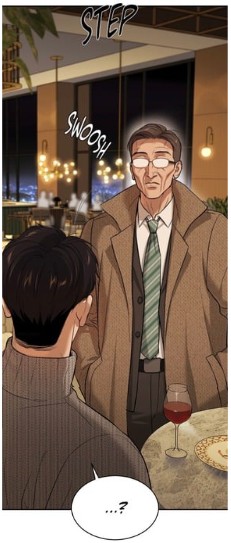 (chapter 90) The only difference is the loss of his spectacles. They are not only broken, but also lying next to him. The loss of his glasses mirrors his situation: he is forced to face reality and as such he is discovering the true reasons behind doc Dan’s greed: despair and fear in front of the loan shark.
 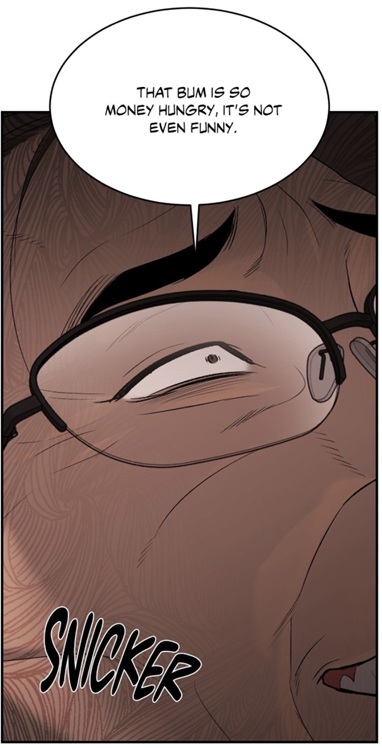 (chapter 90) One could say, he is now receiving his karma. Like mentioned above, the behavior and words of the men (chapter 93) confronting him suggests that they are not left in the dark concerning the situation of the perverted hospital director. They are not truly interested in investigating his work place. Choi Gilseok and Heo Manwook appear not only impatient, but they don’t question his social status. Rather than asking questions about the man’s circumstances, he simply pressures him to produce money.
This urgency is revealing. If the loan sharks had taken the time to examine the man’s background carefully, they would almost certainly have discovered the recent scandal surrounding him. (chapter 91) An article had already exposed the accusations of sexual harassment and the suspension of his medical license. If Heo Manwook and Choi Gilseok had read that report, their reaction would likely have been very different. A disgraced doctor without a license represents a debtor with extremely limited means of repayment. Under normal circumstances, they would immediately question how he intended to pay them back.
The fact that they do not ask such questions suggests that they simply do not know. They are rushing the process, focused on immediate cash rather than information. Their attention is consumed by the financial damage caused by Joo Jaekyung’s televised revelation, leaving them little time to investigate the background of the man sitting in front of them.
But Baek Junmin’s position in the room is different. Unlike the others, he is not distracted by money or debts. While pretending to be uninterested—chewing gum and staring at his phone—he may in fact be absorbing every detail of the conversation. If Junmin has already connected Kim Dan to Joo Jaekyung, hearing the word “doctor” in this context could suddenly activate an entirely new chain of associations.
In that sense, the scene may represent a crucial turning point. The loan sharks believe they are merely collecting a debt. Yet the presence of the former hospital director introduces a piece of information that may be far more valuable than money. The moment Junmin realizes who this man is, a doctor, then he can jump to the conclusion that he represents a good tool against Joo Jaekyung and Kim Dan. The question is: did he read the news and does he know what role he once played in Kim Dan’s life (the sexual harassment)?, especially if he was the one following doc Dan. I have my doubt about it, as he could never forget the humiliation on TV. Moreover, let’s not forget that officially, the main lead got “fired” after the incident leaving a stain on his resume. 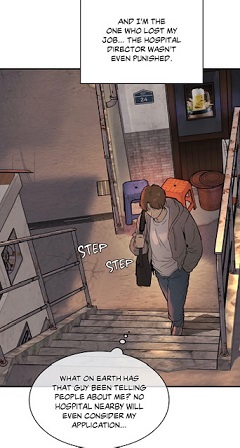 (chapter 1) So what did he hear at the office the whole time? (chapter 93) Doctor, doctor… And why did Joo Jaekyung speak about the prank in the first place? It was for Doc Dan’s sake and to restore his honor.
 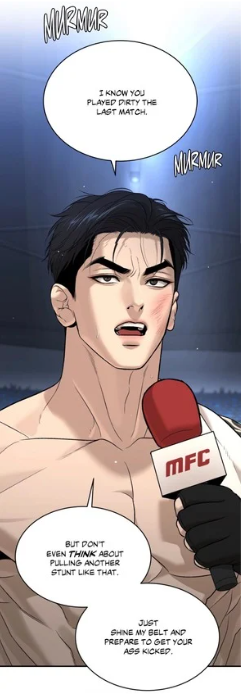 (chapter 87) Joo Jaekyung came to the conclusion that the prank had destroyed Doc Dan.
 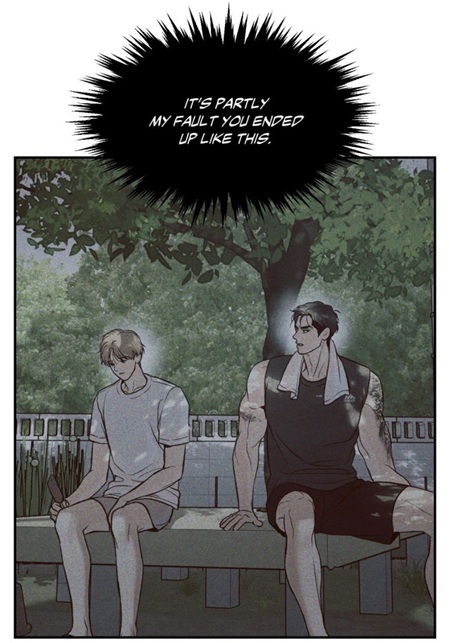 (chapter 91) Thus I deduce that the physical therapist has become the real target of the next plot.
Yet Junmin’s behavior reveals another pattern that runs consistently through the narrative: he rarely confronts his enemies directly. Instead, he repeatedly hides behind authority.
Earlier in the story, he invokes the protection of his mysterious “hyung.” 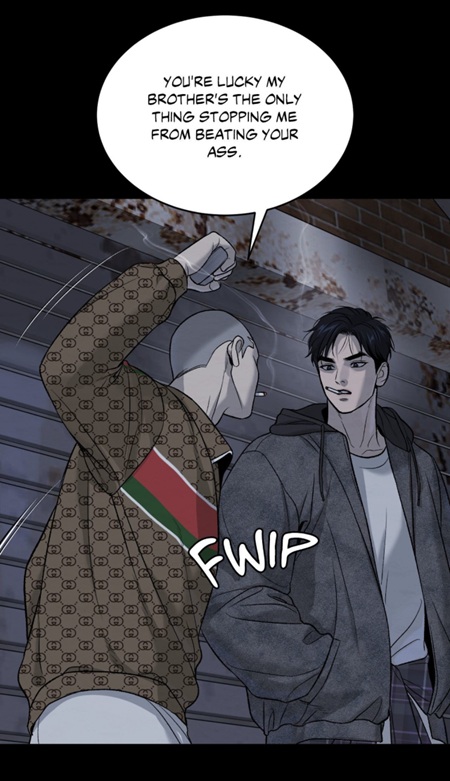 (chapter 74) Later, he relies on Choi Gilseok to approach Joo Jaekyung with an offer (chapter 48) designed to manipulate the outcome of the fight. When the doctor rejects the offer, the scheme unfolds in a different way. The manipulation involves not only gambling but also medical interference — the suspicious spray used during the match and Choi Gilseok brought it himself and gave it to one of his members.
 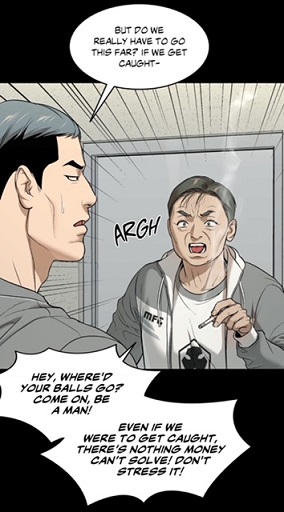 (chapter 50)
The same logic appears within the institutional framework of the sport. The CEO of the MFC openly praises 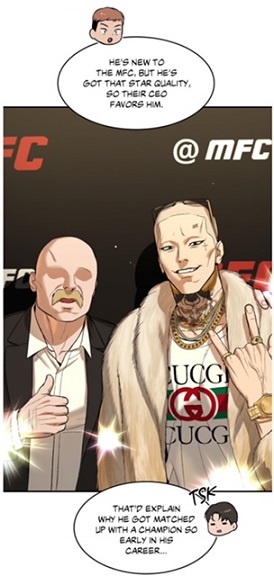 (chapter 47) Junmin’s “star quality” and supports his rapid rise within the organization. Such endorsement provides him with a form of institutional legitimacy that shields him from direct scrutiny. His authority does not come from discipline or merit alone but from the structures that elevate and protect him. And observe how the lady in red protected the “champion’s reputation”. (chapter 69)
Even the medical system itself appears to participate in these manipulations. In episode 41, the medics clear Joo Jaekyung to fight  (chapter 41), though it was clear that the champion’s shoulder condition had worsened.
 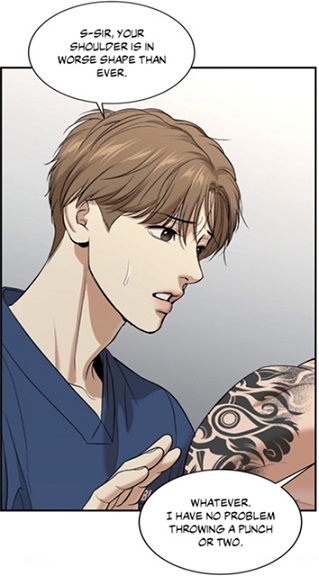 (chapter 41) The official report contradicts the observations of the physical therapist. Moreover, they had allowed the fight, though the athlete’s foot had been injured.
 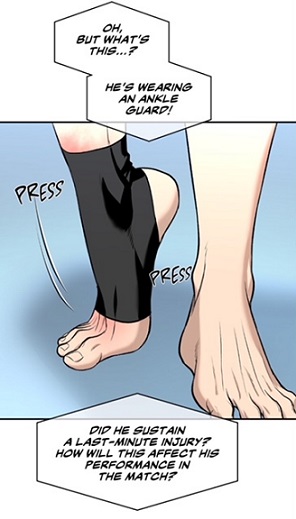 (chapter 50) Later, after the match, the examination of the fighters at the health center takes place in conditions that clearly lack privacy
 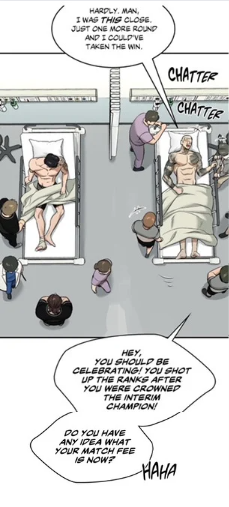 (chapter 52) : there are no curtains separating the athletes during their medical checks and treatment. This unusual setup allows information to circulate freely between competitors. Authority, rather than truth, determines the outcome.
This pattern repeats again in the media narrative that follows the fight.  (chapter 54) Experts criticize the champion’s decision to fight despite his condition, and news reports emphasize the financial damage caused by his brawl and declining brand value.
  (chapter 54) Responsibility is gradually shifted away from the structures that enabled the situation and toward the fighter himself.
Seen together, these elements reveal Junmin’s true modus operandi. Rather than confronting his opponents directly, he operates through a chain of authorities: criminal patrons, gym directors, corporate executives, and medical institutions. Each layer provides protection while simultaneously distancing him from direct responsibility. Violence, manipulation, and reputation damage are carried out by others, while Junmin remains positioned just outside the immediate line of accountability.
Seen in this light, the presence of the disgraced hospital director in the office may represent a new opportunity for the Shotgun. While Heo Manwook and Choi Gilseok focus only on collecting a debt, Junmin may recognize a different potential. The man in front of them is not merely a debtor. He is a doctor — a figure associated with knowledge, prestige, and institutional authority.
If such a figure could be used to shift blame onto Kim Dan, the consequences would be devastating. The young physical therapist already occupies a vulnerable social position: he comes from poverty, lacks institutional protection, and carries the stigma of having been dismissed from the hospital (chapter 1) and even he made a “mistake” at the Light of Hope once. 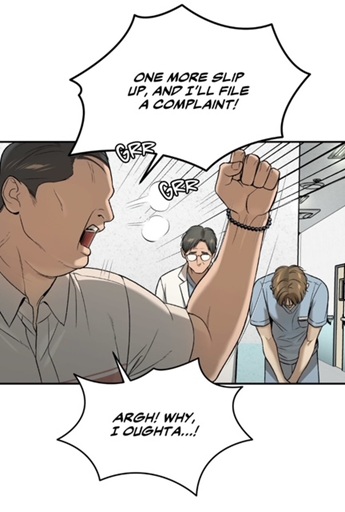 (chapter 59) Finally, because of the perverted hospital warden’s assault, the main lead ended up blacklisted. He could never get hired at another hospital. If the narrative surrounding the injury were manipulated, the responsibility for Joo Jaekyung’s worsening condition and the schedules could easily be redirected toward him.
Several elements would support such a strategy. Though the doctor protested, the champion nevertheless continued to fight and used the report from MFC doctors as justification. In a manipulated narrative, these facts could be rearranged to suggest that the inexperienced therapist had mismanaged the situation.
This possibility becomes even more disturbing when one considers Park Namwook’s role within the system.  (chapter 46) Throughout the story, the coach frequently appears wearing glasses—a visual symbol traditionally associated with knowledge and clarity. Yet despite this apparent vision, he repeatedly fails to recognize the dangers surrounding Joo Jaekyung. As the champion’s manager, Park Namwook is responsible for organizing his schedule and protecting his long-term career. In principle, this role should place him in the position of a guardian. But he does not intervene
  (chapter 41), he just stands by his side.
In practice, however, the opposite often occurs. Earlier in the story, Joo Jaekyung openly questions why he was scheduled for so many events in the first place.  (chapter 17) Instead of acting as a protective barrier between the athlete and the pressures of the industry, Park Namwook frequently defers to the logic of the organization. When the CEO of MFC later invites the champion to an important meeting, the coach encourages him to attend, once again placing institutional expectations above caution.
  (chapter 69) In this sense, Park Namwook’s authority begins to resemble the same pattern visible in Baek Junmin’s behavior: responsibility is repeatedly shifted upward toward the organization MFC or Joo Jaekyung as the owner of Team Black
 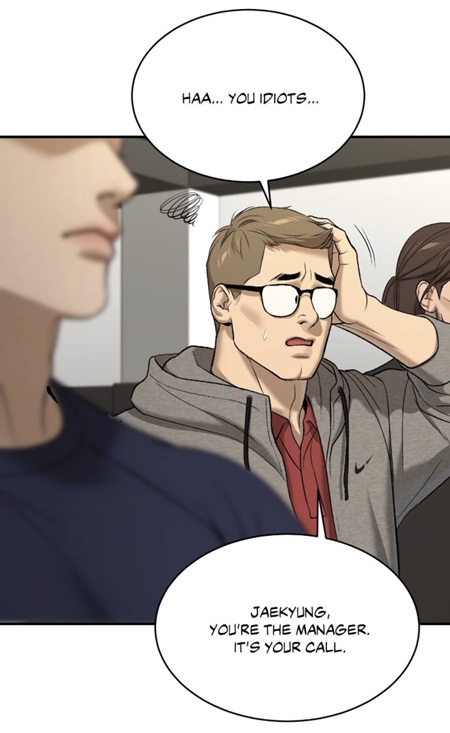 (chapter 88)
The result is a chain of authority in which no single actor fully accepts responsibility. The manager defers to the organization (MFC or the star), the organization relies on medical clearance, and the medical staff produce reports that legitimize risky decisions  (chapter 61). Each layer appears authoritative, yet together they create a system in which accountability becomes blurred.
Baek Junmin’s strategy exploits precisely this weakness. By bringing the disgraced hospital director into the situation, he introduces a figure whose authority once belonged to the medical world itself. The newspaper article reveals that the hospital had tolerated the director’s abusive behavior for a considerable time before finally suspending his license under public pressure. (chapter 91) In other words, the institution protected him as long as the scandal remained manageable. Only when external scrutiny became unavoidable did the hospital distance itself from him. Hence his face got almost exposed.
Seen from this perspective, Junmin’s decision to involve the former doctor does not merely introduce a new accomplice. It exposes the deeper corruption already present within the medical system. The “rotten apple” did not emerge from nowhere; he was produced and sheltered by the institution that now claims to reject him.
This development creates a dangerous convergence between two worlds: the criminal network surrounding illegal fights and the institutional structures of sport and medicine. By aligning himself with the disgraced doctor, Junmin believes that he is protecting himself, unaware that he is effectively importing the corruption of the medical sphere into the arena of professional fighting and as such endangering his own position. The boundaries separating criminal manipulation, corporate interests, and medical authority begin to collapse.
In that sense, the situation no longer concerns only a personal rivalry between fighters. It reveals the fragility of the entire system surrounding the champion. The figures who should protect him—the manager, the organization, and the medical staff—are themselves embedded in structures that can be manipulated.
At this point, Baek Junmin’s nickname begins to acquire a deeper symbolic meaning.  (chapter 49) A shotgun is not a weapon designed for precision. When fired, it releases multiple pellets that spread across a wide area, striking several targets at once. Junmin’s strategy follows a similar logic. Rather than confronting Joo Jaekyung directly, he destabilizes the structures surrounding him: the media narrative, the medical establishment, the leadership of MFC, and potentially even the champion’s personal relationships. Each move strikes a different layer of the system protecting the fighter. The goal is not a single decisive blow but a gradual weakening of the entire structure around the champion.
Yet this strategy carries an inherent danger. By firing into multiple institutional spheres at once, Junmin risks exposing connections that were previously hidden. The medical world, the fighting organization, and the criminal network surrounding illegal betting are not isolated domains; they intersect. In that sense, Junmin does not merely act like a fighter seeking revenge. At this moment, he becomes “the Shotgun.” The weapon does not only wound a single opponent; it blasts open the structures that conceal corruption. By pulling the trigger, Junmin risks revealing the true nature of MFC, the sport itself and the network of interests surrounding them (the medical world and the pharmaceutical company).
So if this interpretation is correct, the office scene may foreshadow the next stage of the conspiracy. Junmin does not need to attack Joo Jaekyung directly. Instead, he may target the person the champion cares about most.
Kim Dan.
The Disgraced Director – Knowledge as Liability
The appearance of the former hospital director in Heo Manwook’s office introduces another crucial figure into the unfolding conspiracy. 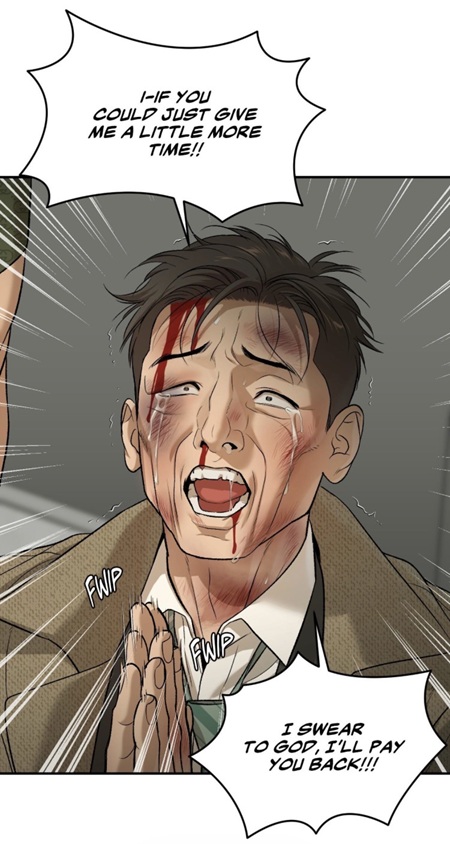 (chapter 93) Unlike the other men in the room, this individual already stands at the intersection of several narrative threads. He knows Kim Dan.
 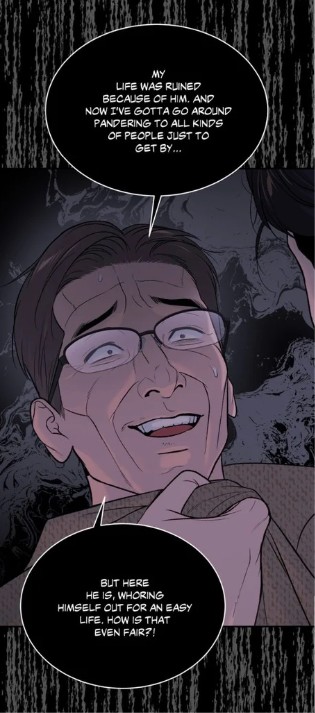 (chapter 90) He has encountered Joo Jaekyung. And he has personally witnessed the dynamics between them.
Yet this knowledge is fundamentally distorted. Because of the circumstances surrounding their earlier encounters, the disgraced director arrived at a false conclusion: he believed that the physical therapist and the champion were romantically involved. Let’s not forget that he had blacklisted him in his career. From his perspective, the young doctor could only be the athlete’s intimate partner rather than his professional caregiver. 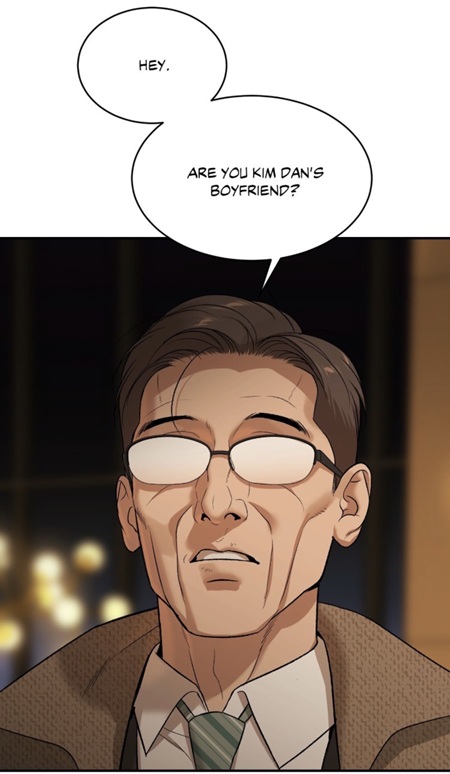 (chapter 90) Secondly, he was doing it for the money, hence he called him a slut.
 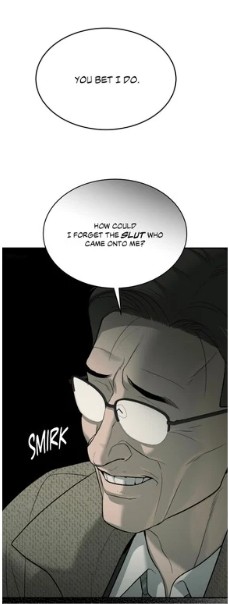 (chapter 90) This misunderstanding fundamentally shapes how he interprets the situation. In this sense, the disgraced director resembles Heo Manwook. Both men rely heavily on their past experiences when judging others. The loan shark assumes that Kim Dan must have obtained the money through prostitution or some other illicit activity, while the former hospital director interprets the closeness between the athlete and the therapist as evidence of a romantic relationship. In both cases, what appears to be practical knowledge becomes a source of blindness. Their experience allows them to recognize familiar patterns, but it also prevents them from seeing the complexity of the reality before them. The relationship between Joo Jaekyung and Kim Dan does not fit into a simple category such as business, manipulation, or romance. Their bond evolves gradually and reflects a far more complex emotional dynamic. (chapter 93) Yet characters like the loan shark and the disgraced director attempt to reduce it to a single explanation that matches their own expectations. In doing so, they illustrate another variation of the same paradox: those who believe they know the world best are often the least capable of perceiving its truth.
A Dangerous Instrument
At the same time, his position is extremely precarious. Unlike Baek Junmin or the loan sharks, the disgraced director cannot confront either Joo Jaekyung or Kim Dan directly. Both men already recognize him. His earlier misconduct in the hospital and at the restaurant have exposed his character, and his recent public scandal has destroyed his professional legitimacy. (chapter 91)
This is precisely why indirect strategies are the only solution for him.
If Kim Dan indeed becomes the next target of Baek Junmin’s schemes, the director initially appears to offer a convenient opportunity. As a doctor, he possesses the authority and reputation associated with the medical profession. From Junmin’s perspective, such a figure could provide legitimacy to accusations directed at the young therapist. Yet this calculation overlooks a crucial reality. The man’s reputation has already collapsed. The public scandal surrounding the accusations of sexual harassment has stripped him of his professional credibility and resulted in the suspension of his medical license.
This loss of status drastically changes his position. The disgraced director can no longer act openly within the medical world. Any direct accusation coming from him would immediately be discredited because of his scandal. However, this does not mean that he has become powerless. On the contrary, his former position may still grant him access to personal contacts and informal networks inside the medical system. Instead of acting publicly, he could therefore operate indirectly—reaching out to former colleagues or institutions and encouraging them to question Kim Dan’s competence or responsibility, as this is something he experienced in the past. (chapter 1)
The Vulnerability of an Invisible Doctor
Such a strategy would exploit an existing weakness in Kim Dan’s situation. Earlier in the story, when Joo Jaekyung attempted to locate him after his disappearance 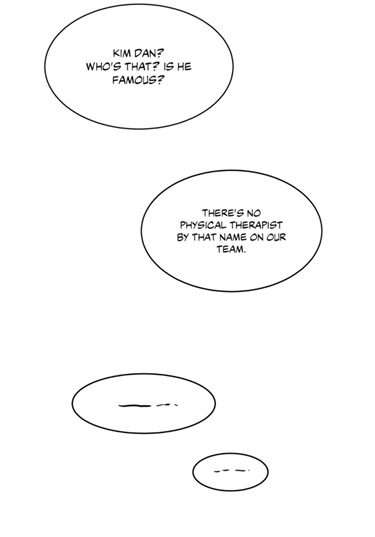 (chapter 56), hospitals repeatedly responded that they had never heard of anyone by that name.
 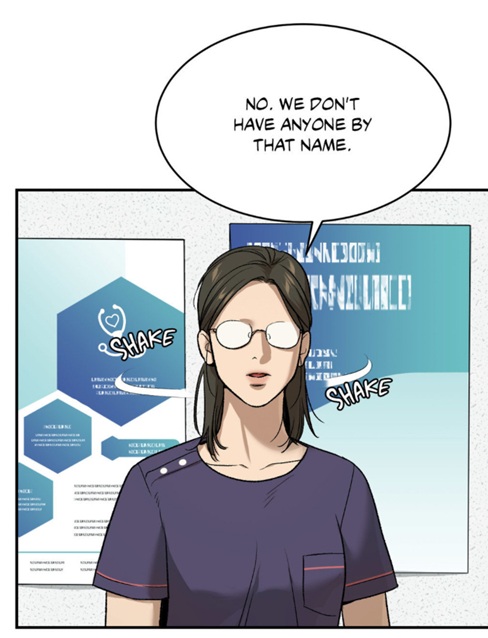 (chapter 56) This reaction suggests that the young therapist had already been erased from the professional network in Seoul. Far from protecting him, this invisibility places him in an extremely fragile position: without institutional recognition, he has no professional community capable of defending him.
If rumors about Kim Dan suddenly begin circulating within the medical world—or even appear in the media—the contradiction would be striking. Only a few months earlier, no hospital acknowledged his existence. Yet now doctors or the media would suddenly be discussing him as a controversial figure linked to the champion’s injury. Such a sudden shift would inevitably raise questions.
For Joo Jaekyung, this discrepancy could become the first clear sign that something is wrong and lets not forget that in the past, he doubted the doctors.  (chapter 5) The athlete might realize that the narrative emerging around Kim Dan does not match the reality he previously encountered while searching for him. What appears at first as professional criticism could therefore reveal the existence of a coordinated attempt to manipulate the story.
Medical Confidentiality as a Weapon
Another possibility makes the situation even more troubling. If Junmin or the disgraced hospital director wished to discredit Kim Dan, they could not necessarily need to rely solely on rumors or professional criticism. A far more effective strategy would involve the selective leaking of medical information.
Kim Dan’s own patient file could become a weapon. 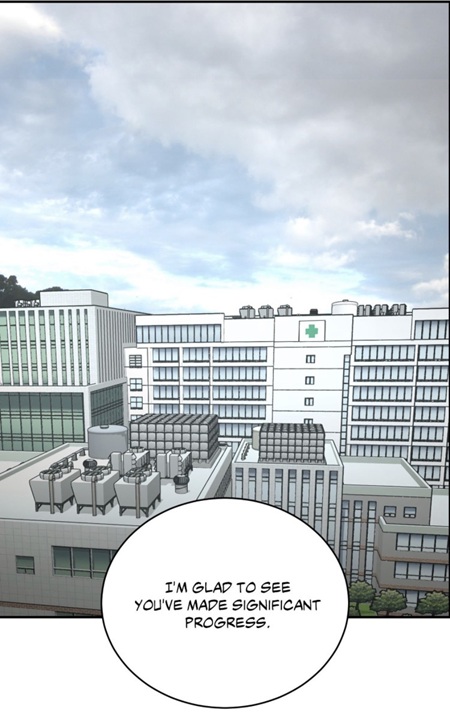 (chapter 91)
The young therapist’s history of psychological struggles and emotional distress is part of his medical record. Under normal circumstances, such information would remain strictly protected by medical confidentiality. Yet the story has already demonstrated how easily such boundaries can be violated when institutional interests are at stake.  (chapter 36)
Earlier in the narrative, the medical system showed little hesitation in discussing Joo Jaekyung’s injury publicly. Experts speculated on television about the champion’s condition, and reporters openly discussed his worsening shoulder problem despite the obvious ethical implications of revealing medical information without the patient’s consent.  (chapter 54) Striking is that no one in the medical world sided with the star because of his law suit against a hospital (chapter 42)
These scenes suggest that medical confidentiality in this world is far from absolute. When money, reputation, or institutional pressure become involved, private information can quickly turn into public material.
If the same logic were applied to Kim Dan, the consequences could be devastating. And don’t forget how the main lead reacted to this situation: he was rather indifferent. A leaked file describing his mental health struggles could easily be used to construct a narrative portraying him as unstable, unreliable, or professionally unfit. Under this light, you comprehend why I placed Choi Heesung in the illustration, as he was the first one bringing up the notion of mental illness. 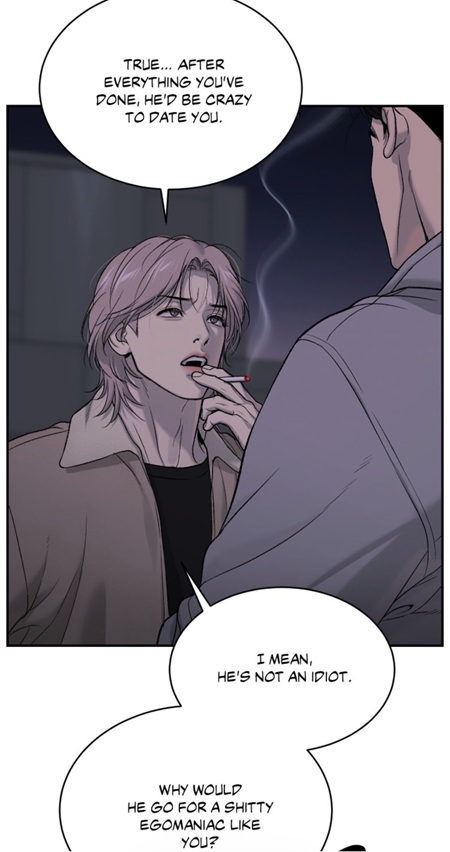 (chapter 89) In such a scenario, the young therapist would not simply be accused of incompetence. His entire credibility could be undermined, before he even had the chance to defend himself.
The strategy would also serve several interests at once. And like mentioned above, the medical institutions involved could shift responsibility for the champion’s worsening injury onto a crazy outsider. MFC could distance itself from the controversy surrounding the fight. And Baek Junmin could exploit the scandal to weaken both Joo Jaekyung and the man closest to him.
What makes this possibility particularly disturbing is that it would rely on a form of violence that leaves no visible wounds. Instead of physical intimidation, the attack would take place through information — through documents, rumors, and carefully constructed narratives.
In other words, the same system that once erased Kim Dan from the medical world could suddenly reintroduce him into public discourse under the worst possible circumstances.
The Man Who Knows Too Much
Yet the plan also contains a dangerous flaw. The disgraced director is far from a reliable ally. His public scandal has already destroyed his credibility, and his own actions in the past reveal a man driven by opportunism and self-preservation. If pressured too far, he may choose to reveal far more than Junmin expects. Instead of stabilizing the situation, his intervention could expose the corruption of the very system Junmin is attempting to manipulate. How so? It is because he was brought to Heo Manwook’s office. (chapter 93) In the past, the loan shark never brought his victims into his own headquarters. Debtors were usually confronted in their homes 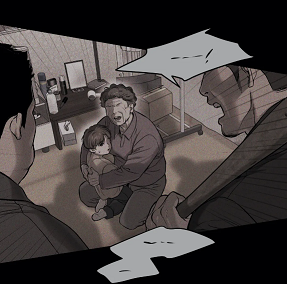 (chapter 5) or attacked in the street
 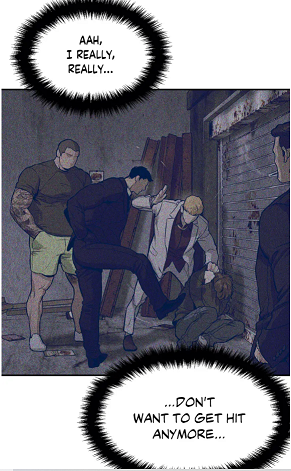 . (chapter 1) His office functioned as a hidden lair, carefully separated from the violence carried out by his subordinates. The presence of the disgraced director inside that office therefore represents a significant rupture in Heo Manwook’s usual methods.
 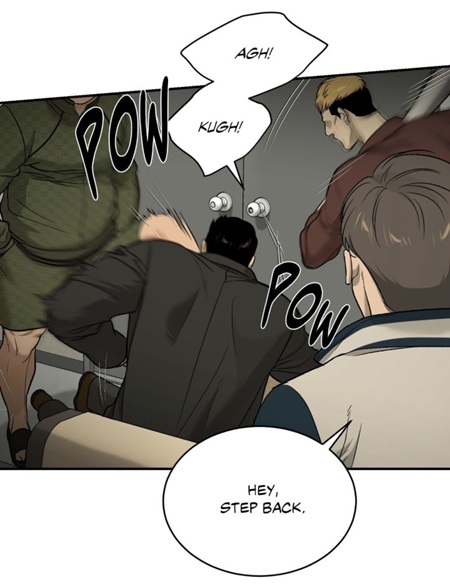 (chapter 93) Moreover, this time he is the one beating the victim, while one of his minions is standing. (chapter 16)
The doctor’s presence there represents a source of danger. He is no longer merely a possible instrument; he also becomes a witness. By hearing the conversation about bribes, police pressure, and debt collection, he acquires dangerous knowledge about the criminal network itself. (chapter 93) In that sense, the same man whom Junmin hopes to use as a tool against Kim Dan simultaneously becomes a liability capable of exposing the entire scheme.In other words, the former doctor could end up betraying the schemers, something the Shotgun is not expecting.
The urgency created by recent events has forced the organization to abandon its usual caution. At the same time, the visual composition of the scene creates a revealing illusion. (chapter 93) Seated prominently in the center of the room, Baek Junmin appears almost like the true authority figure — the one silently observing while others handle the negotiations. His posture suggests the role of a mastermind directing the operation from the background. Thus the scared director could misjudge the true position of the “champion”, he is the real mastermind behind this. And this time, he could no longer hide behind his hyungs or organizations.
This creates a striking contrast with Kim Dan himself.
Kim Dan also possesses knowledge about the hidden world surrounding Joo Jaekyung. He has witnessed suspicious medical decisions (chapter 41), manipulations within the fighting organization  (chapter 37, the drugged beverage), and the athlete’s deeply personal belief in the so-called “jinx.” Yet despite these insights, Kim Dan remains largely excluded from the decision-making processes that shape the champion’s career. In several crucial moments—such as the incident at the health center—he was deliberately kept in the dark.
The contrast between the two figures could not be sharper. The disgraced director possesses knowledge but uses it as a potential weapon. Kim Dan possesses knowledge but has no idea about his own power. What distinguishes them is that the main couple is starting sharing their thoughts and insight to each other, while at the office, the schemers keep their insight to themselves. Yet, a plot can only work, if intel is exchanged. At the same time, the information has to be accurate as well. But for that, the villains have to expose their “knowledge” and as such “vulnerabilities”.
In the end, the question is no longer simply who knows too much. Baek Junmin believes he understands everything: Kim Dan, Joo Jaekyung, and the system surrounding them—especially the power of money. Yet his confidence rests on misinterpretations and assumptions. Kim Dan, by contrast, never claims such certainty. Still, he has witnessed the hidden mechanisms of that same system—its corruption, its manipulation, and its violence—without fully grasping their meaning. Yet the way he acquires this knowledge is fundamentally different. His insight does not come from intimidation or control, but from the confessions of others. He listens patiently and attentively, without judgment. (chapter 47) (chapter 48) 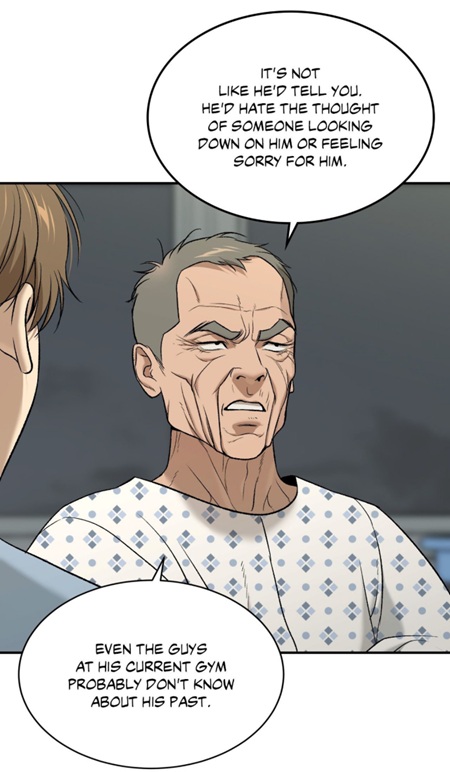 (chapter 74) Joo Jaekyung represents yet another form of knowledge: the knowledge of experiences. Through hardship, defeat, and survival, he has learned to recognize the realities of the world step by step. By living next to doc Dan, he learned to listen and observe so that he is now more aware of the world surrounding him. The true tension of this arc therefore lies not simply between ignorance and knowledge, but between three different ways of understanding reality. One man believes he understands everything, another quietly carries knowledge that could expose it all without realizing it, while the third slowly learns the truth through experience.That is precisely why, in the illustration, they now stand facing each other.
Feel free to comment. If you have any suggestion for topics or Manhwa, feel free to ask. If you enjoyed reading it, retweet it or push the button like. My Reddit-Instagram-Twitter-Tumblr account is: @bebebisous33. Thanks for reading and for the support, particularly, I would like to thank all the new followers and people recommending my blog.


 (chapter 66) quietly shapes the emotional core of the episode. At first, this detail may appear insignificant, but its narrative timing and visual prominence suggest a deeper meaning. The sudden flight of the sparrows
  (chapter 66) mirrors the situation of the main characters, as the latter are about to depart for Seoul. Striking is that Mingwa draws our attention away from the champion grabbing doc Dan, but focused on the birds. Why? It is because the author desires her readers to notice the world of subtle symbolism. Far from being a random detail, the presence—and sudden flight—of the sparrows echoes the characters’ inner transitions, raising questions about home, communication, critique, and the complicated process of change. To understand the richness of this scene, it’s crucial to consider not only the sparrow’s traditional meanings but also the narrative choices the Webtoonist makes in what is shown and what is left unseen, especially regarding the role of witnesses and the power of perception. To fully appreciate the layers of meaning in this moment, it is essential to consider not only the universal symbolism of sparrows but also their role in classic fables, Korean culture, and even modern pop culture—where the sparrow’s voice becomes a catalyst for both belonging and change.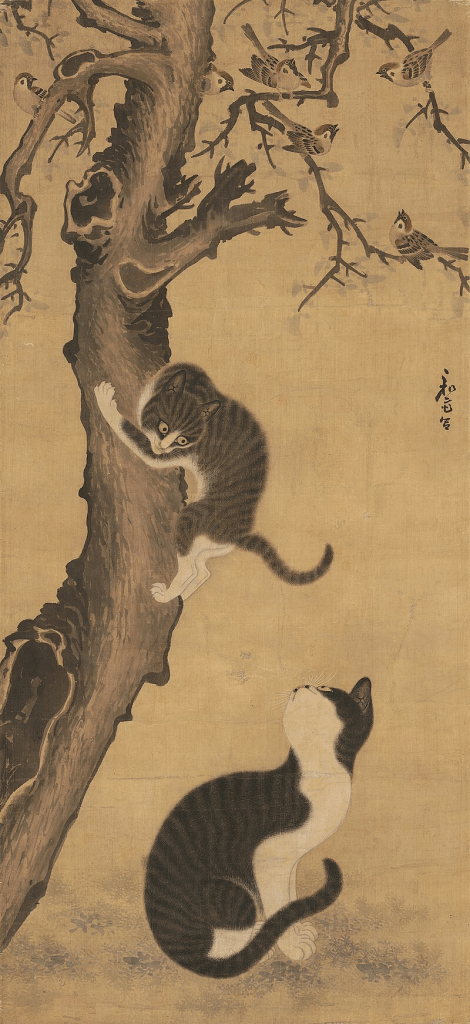
 (chapter 69), making the sparrows’ appearance an omen of the official union to come.
  (chapter 69) —who serve as stand-ins for the broader community. In this way, their union is not just a private matter but becomes public and recognized, affirming their bond within the social fabric of the town.
 (chapter 69). The omen of unity is fleeting, replaced by the return of hardship and uncertainty. Through this careful allusion to the visual language of traditional art, Mingwa invites us to savor the beauty and community of these moments
 (chapter 64) or inspire the group to change its direction. In the context of Jinx, the sparrows’ existence
  (chapter 62). It took place in the morning. The harmony doc Dan hoped to find is momentarily lost, replaced by anxiety and a sense of being unmoored.
  (chapter 62), therefore the young man didn’t pay attention to his arrival contrary to the quoted panel above. Moreover, it is clear that the “hamster” felt safe in the presence of the landlord. Back then, he had only accepted the champion’s request after hearing the landlord’s remark:
  (chapter 62) The champion’s abruptness is the result of Kim Dan’s past rejection and stubbornness, the athlete is expecting resistance. However, he can not ignore doc Dan’s exhaustion and fragility. Besides, he feels motivated and justified, as he is following Shin Okja’s request.
 (chapter 69), while Joo Jaekyung must confront the impact of his actions and learn new ways to show support. The challenges that follow—the physical setback for Kim Dan and the champion’s new professional demands—reinforce that their journey is full of hurdles. Still, these hindrances serve a higher purpose: to remind them that they are not alone, that they need each other’s protection and backing, and that the bonds forming in this little town can become sources of true resilience.
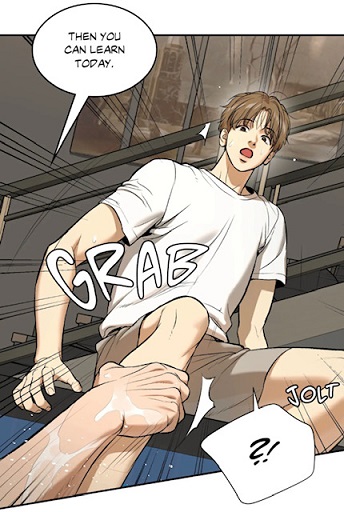 (chapter 27) a playful prank occurs without any third-party observer. The context is unambiguous: both the characters and the reader understand the action as harmless and mutually accepted, so no external framing is required.
 (chapter 66) The landlord’s proximity and his bemused, neutral questioning guides the reader’s interpretation, framing the scene as ordinary and non-threatening rather than alarming or inappropriate. He is able to grasp the existence of Joo Jaekyung’s motivations behind his behavior. He doesn’t judge the protagonist as face-value, he desires to know why he is acting this way.
 (chapter 69) Here,the Korean Webtoonist directs the focus to the characters themselves, depicting the champion’s rough handling of doc Dan with striking directness: we see the moment Jaekyung grabs Dan by the t-shirt
  (chapter 69) and throws him outside
 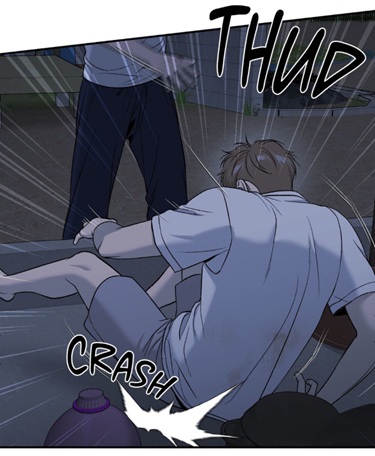 (chapter 69), the action punctuated by dramatic motion lines and the sounds of impact. Yet, despite the force of the act, the landlord—who witnesses the scene in real time—remains silent, choosing not to intervene, criticize, or even question Jaekyung’s motives.
  (chapter 69) His composed presence in the background
 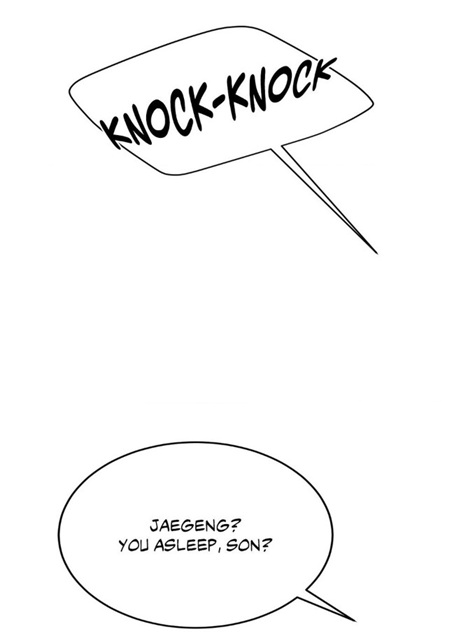 (chapter 69)
  (chapter 69) Moreover, I am sensing that the elderly man might feel terrible, for he asked for the athlete’s assistance in the middle of the night. But let’s not forget that the main lead had driven 4 times within 2 days the distance from the little town to Seoul.
 (chapter 62) he brings his belongings
 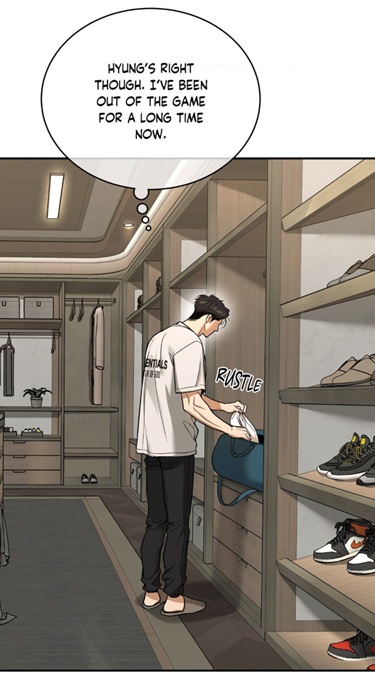 (chapter 66) gradually into his new environment, creating a personal nest.
  (chapter 69) This process is not merely about physical comfort, but about constructing a sense of safety, identity, and belonging. One of these items could be the doctor’s present. Notice that before he left his penthouse with the gray car, he was holding the “golden key chain”,
 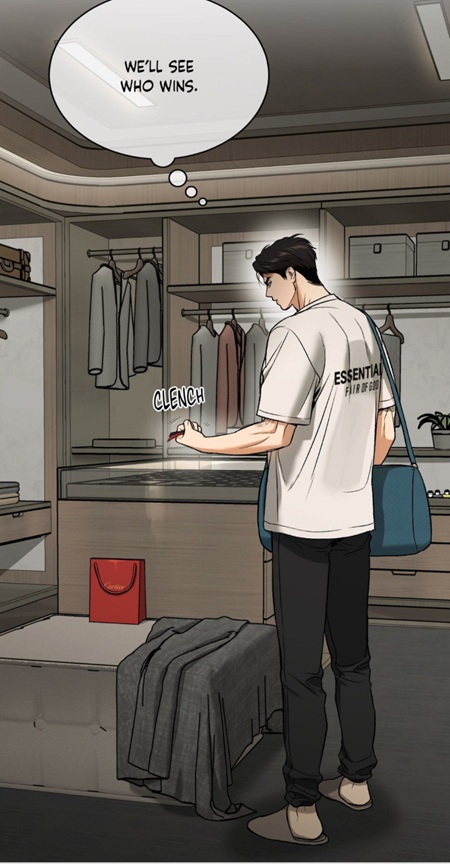 (chapter 66) a sign that this gift has now a sentimental value for the athlete. Just as sparrows persistently build and rebuild, so do the characters in Jinx adapt, settle, and grow—sometimes through trial and error, sometimes in fits and starts, but always moving toward a deeper sense of home. By moving to a smaller house, he is encouraged to select what truly matters to him. This evolution has not reached its end: the champion will keep moving his possessions to the little town. Moreover, I am more than ever convinced that we should expect the arrival of the Wedding Cabinet in that small town.
 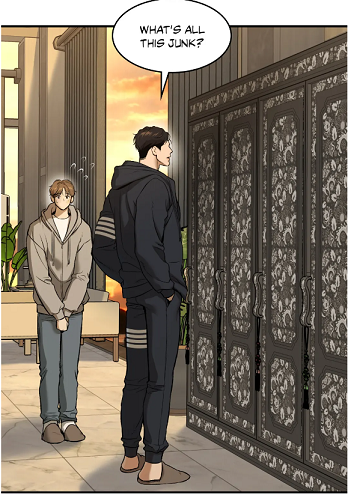 (chapter 19) To conclude, we should see the chapters from 62 to 69 as the creation of the couple’s nest and as such “home”.
 Bebebisous33s' analyses in K-Dramaland and Manhwas