
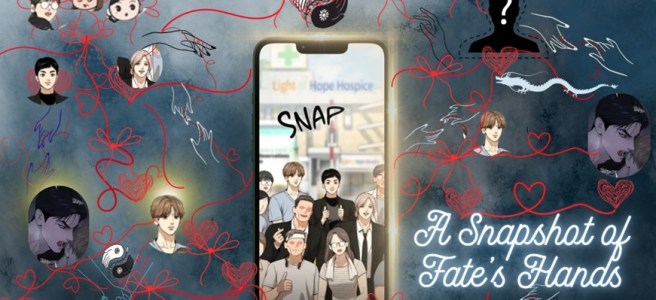
Please support the authors by reading Manhwas on the official websites. This is where you can read the Manhwa: Jinx But be aware that the Manhwa is a mature Yaoi, which means, it is about homosexuality with explicit scenes. Here is the link of the table of contents about Jinx. Here is the link where you can find the table of contents of analyzed Manhwas. Here are the links, if you are interested in the first work from Mingwa, BJ Alex, and the 2 previous essays about Jinx The Wolf’s Cure Among the Sheep and The Silent Shore
It would be great if you could make some donations/sponsoring: Ko-fi.com/bebebisous33 That way, you can support me with “coffee” so that I have the energy to keep examining Manhwas. Besides, I need to cover up the expenses for this blog.

Introduction
The journey of Joo Jaekyung finding Kim Dan 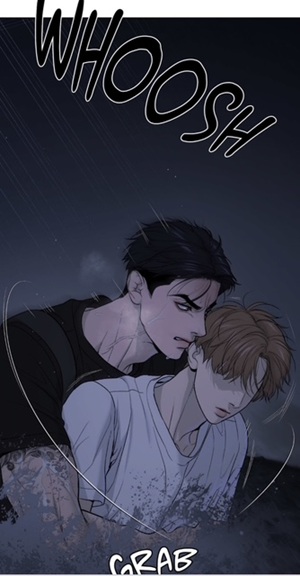 (chapter 59) is a masterful interplay of symbolism, reflection, and narrative breadcrumbs laid out by Mingwa. Central to this exploration is a photograph
  (chapter 59) —an innocent request by the nurses at the hospice
 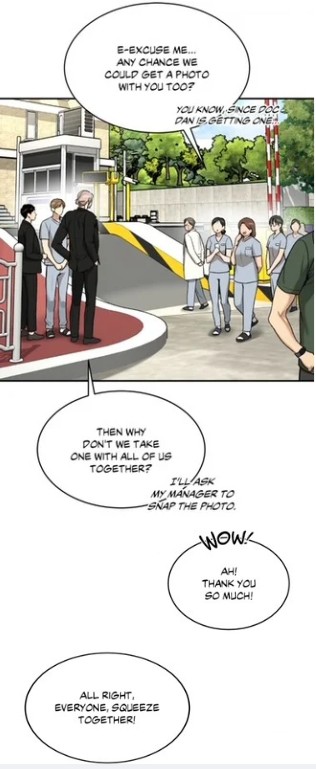 (chapter 59) —which becomes the pivotal clue leading Joo Jaekyung to Kim Dan. Through a careful analysis of the timeline and the use of contrasting events, it becomes clear that Mingwa’s narrative mirrors a kaleidoscope, reflecting positive and negative elements rooted in Taoist principles. While the doctor’s unconscious
 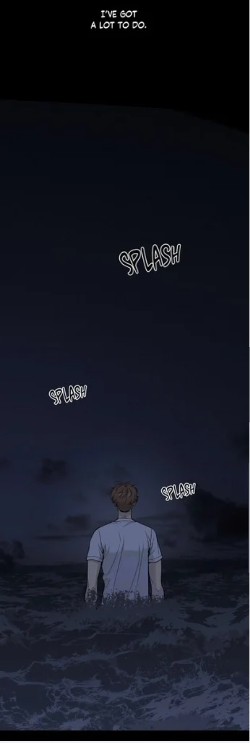 (chapter 59) led him to the shore, driven by despair and suicidal intent, the MMA fighter’s journey stands as its opposite:
 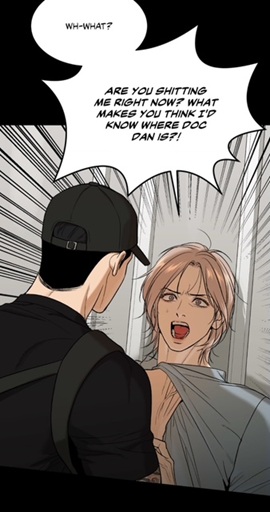 (chapter 59 ) a conscious choice to follow his heart, hence he was full of anger and frustration. Joo Jaekyung was no longer repressing his feelings, even if he had yet to fully recognize his affection. (chapter 59) This deliberate action underscores the contrast between their emotional states and sets the stage for their eventual reunion. The stay of Heesung and Potato
 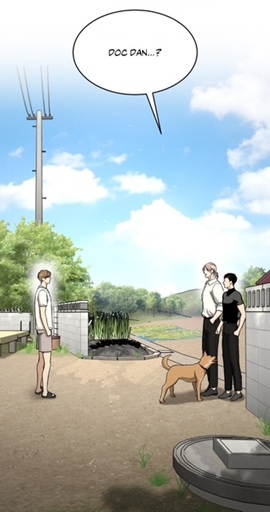 (chapter 59) embodies the negative reflection of Joo Jaekyung’s purposeful arrival. We can detect the divergences: day versus night, work versus break, healthy versus unhealthy etc. Through the juxtaposition of images and situations, Mingwa provides profound insight into the characters’ thoughts, desires, and intentions. The photograph’s role becomes pivotal: while it marks the end of Heesung and Potato’s visit
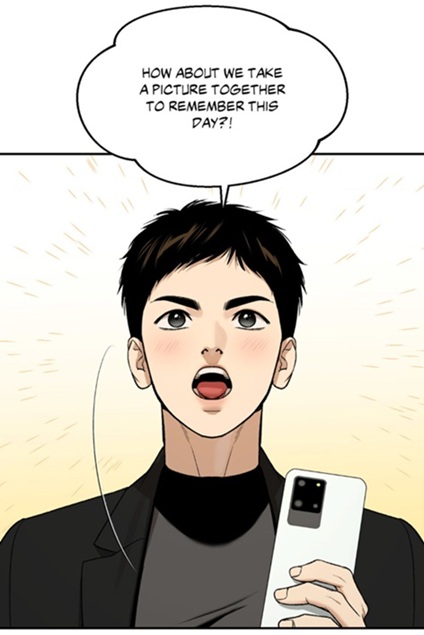 (chapter 59), it simultaneously signifies the first crucial clue in Joo Jaekyung’s search. This marked the turning point where his ongoing efforts were given direction, transforming his pursuit into a decisive journey toward discovery.
At first glance, the photograph (chapter 59) features key individuals such as Heesung, Potato, the green-haired nurse, and the director of the hospice  (chapter 59) —each of whom had interacted with Kim Dan
  (chapter 57) during his time at Light of Hope. While these individuals appear as potential candidates for revealing Kim Dan’s location, the true helper remains shrouded in mystery. This ambiguity emphasizes the layered narrative of Jinx, where each small action—no matter how mundane—contributes to the larger theme of fate’s intricate web, offering insight into the power of both intentional and unintentional intervention. If Potato had not suggested the picture (chapter 59), if the nurses had not insisted (chapter 59), or if the photograph (chapter 59) had remained entirely private (only Kim Dan, Potato and Heesung together), the chain of events might not have unfolded. Each of these “ifs” reflects the delicate interplay of fate and intervention, where seemingly small actions cumulatively wove the threads that guided Joo Jaekyung to Kim Dan. This demonstrates how intentional and unintentional acts alike can influence the larger narrative, ultimately intertwining lives in unexpected ways. The “if” becomes a recurring symbol of fate and intervention. Through a process of deduction and analysis, the photograph emerges as the link that sets fate into motion, guiding Joo Jaekyung to his lover. The stay of Heesung and Potato, defined by inaction, lies
 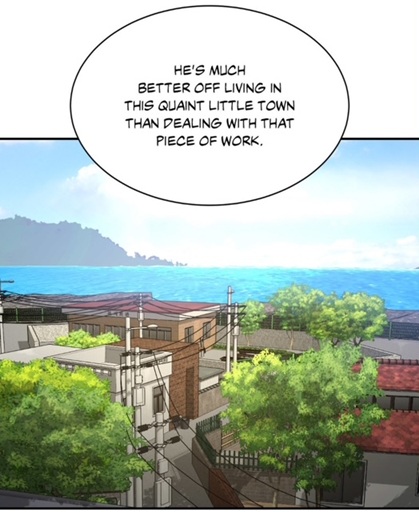 (chapter 58)
 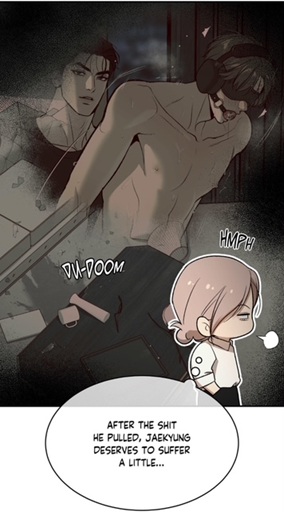 (chapter 58)
 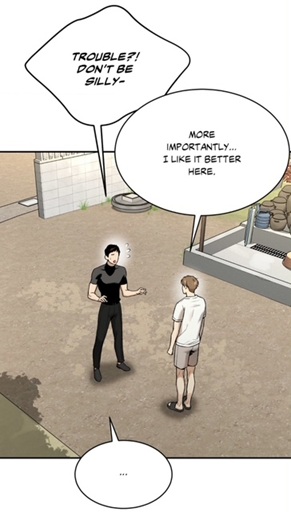 (chapter 58), ignorance and superficiality
  (chapter 58), becomes the shadowed reflection of the proactive search by Joo Jaekyung. This interplay of light and dark is central to unraveling how fate unfolded.
Potato, Heesung, and the Decision to Stay Silent
Heesung  (chapter 58) and Potato, despite their contrasting motivations
  (chapter 58), came to the same conclusion: they should not reveal Kim Dan’s whereabouts to Joo Jaekyung. Heesung argued that Kim Dan was better off in his secluded life, away from the chaos of Joo Jaekyung. Potato, deeply trusting his lover’s seniority and judgment, chose to follow Heesung’s lead. Their decision reflects not only their loyalty to Kim Dan’s expressed wishes but also their passive adherence to the belief that avoiding intervention was a form of help which reminds us of Potato’s former principle:
  (chapter 35) This shows that despite the last incident, Yoon-Gu didn’t drop this terrible principle. Notice that he is advocating the same philosophy than Shin Okja. Heesung justified his stance by claiming that it was in Kim Dan’s best interests (chapter 58), implying that the relationship between Kim Dan and Joo Jaekyung was toxic. However, his reasoning revealed a deeper selfishness: Heesung harbored resentment and sought to see his frenemy suffer as payback for the humiliation and damages he had endured. (chapter 58) This hidden motivation underscores the complexity of his actions and casts doubt on his proclaimed concern for Kim Dan.
This decision persisted throughout their ten-day stay at the hospice. 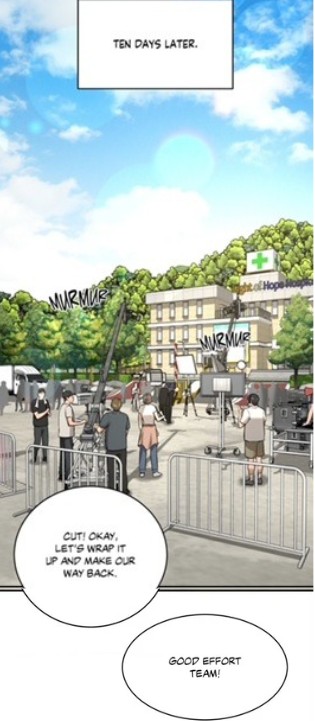 (chapter 59) Importantly, Joo Jaekyung did not arrive during this period, further affirming their resolve. The photograph taken just before their departure was the key turning point. However, the timeline—marked by the sunsets
  (chapter 59)
  (chapter 59) —suggests that Joo Jaekyung arrived only two days after Heesung and Potato left. This indicates that neither Potato nor Heesung leaked the information to Joo Jaekyung, as the champion would have sought Kim Dan immediately if informed by them. Instead, this photograph—seemingly public rather than private—became the clue he needed. Moreover, since the two friends knew where Kim Dan lived, I am assuming that he would have gone right to the doctor‘s rented room. But he did not. He went to the beach. Since the nurses didn‘t notice that Kim Dan was a friend of Potato and Heesung and mistook him for a fan, I am assuming that only the two friends know his address.
The Photograph as the Catalyst
The photograph holds immense symbolic and narrative weight. It was not meant to expose Kim Dan (chapter 59); it was requested by the nurses as a keepsake for their time with the visiting celebrities. Initially intended as a simple memento, the photograph transformed into the thread that connected Joo Jaekyung to Kim Dan. Importantly, the identities of Heesung, Potato, the green-haired nurse, and the hospice director all become relevant, as each had interacted with Kim Dan during his time at Light of Hope.
This public nature of the photograph underscores the idea of “hiding in plain sight.” Kim Dan was among a crowd, blending into the background, not anticipating that anyone would recognize him. However, this picture became the critical link for someone who initially focused on Heesung, Potato, or the green-haired nurse or the hospice director. The person looking at the picture was not searching for Kim Dan but discovered him by accident, making the revelation both unexpected and serendipitous. This discovery highlights how fate operates through chance and unintentional connections. It serves as a prelude to exploring the contrasting dynamics of intervention, from misguided actions to purposeful assistance, which will be further examined in the comparative analysis.
Thus it is unlikely that the information came from members of Team Black, in particular from Oh Daehyun and Kwank Junbeom. Initially, I envisaged them as potential candidates, for Oh Daehyun has always had sharp eyes (he has an eagle as tattoo) 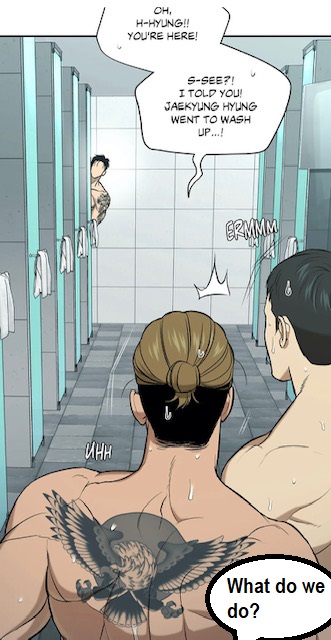 (chapter 8)
 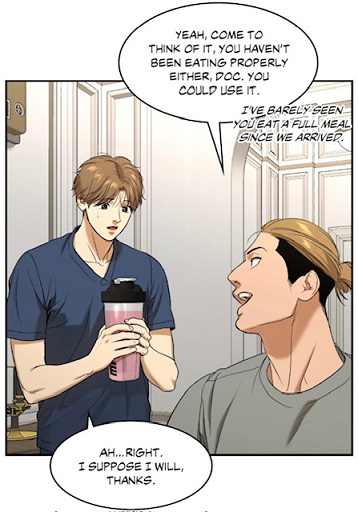 (chapter 37) and Kwak Junbeom was a witness of the encounter between Kim Dan and director Choi Gilseok.
  (Chapter 48) Nonetheless, there exist significant points against this theory. Despite their fondness for the actor
  (chapter 30) and their interactions with Heesung and Potato
  (chapter 35), they are unaware of the actor’s relationship with Potato. The author left many clues for this interpretation. They didn’t notice the maknae’s absence at the champion’s birthday
 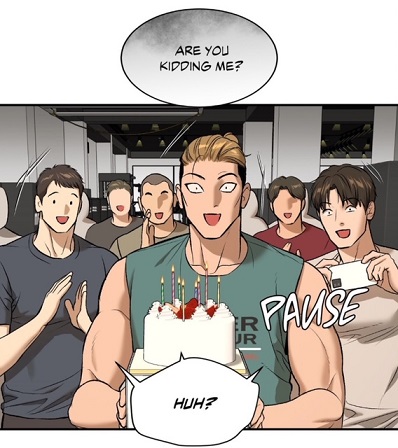 (chapter 43), but more importantly the presence of Yoon-Gu‘s embarrassment in front of his hyung indicates secrecy. .
  (chapter 58) His “redness” indicates that he doesn’t want to expose his special relationship with Heesung. Therefore I believe that he didn’t mention this trip to other members. Consequently, I doubt that the members were looking for Potato in such a photograph. Furthermore, from my perspective, members of Team Black are still left in the dark about Joo Jaekyung’s struggles. They are unaware of his drinking habits
  (chapter 56), or his emotional state. They think, he has not come to the gym due to his recovery. Furthermore, they don’t use his cellphone number to contact him. The hiring of a new physical therapist and
  (chapter 57) the interview suggested that Joo Jaekyung was taking a break to recover from his injury, leaving no indication of his active search for Kim Dan. However, Yoon-Gu got informed through Heesung that Joo Jaekyung was desperately looking for him:
  (chapter 58), but probably saw this as another “negative reaction” (bad temper) of a spoiled child. This makes it unlikely that members of Team Black could have provided the critical information.
This leaves only the green-haired nurse and the hospice director as plausible sources of assistance. However, the hospice director can be ruled out, as he did not make the request for the photograph. His lack of direct involvement in this key moment suggests that his role in connecting Joo Jaekyung to Kim Dan was minimal, leaving the nurse as the final candidate.
The green-haired nurse (chapter 59), while not pivotal in initiating the photograph (chapter 59) —this was driven by her colleagues’ request—holds a central position in the narrative due to her placement next to Kim Dan in the picture. Although quiet, observant (chapter 57) and unassuming 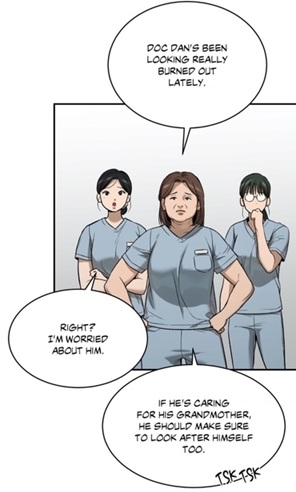 (chapter 57), her positioning reflects Mingwa’s deliberate storytelling, emphasizing her subtle yet crucial role in connecting the threads of fate. She is also unlikely to have directly contacted Joo Jaekyung. As an average nurse living far from Seoul, she would not have access to the champion’s contact information or knowledge of his search for Kim Dan. However, this does not exclude her influence entirely. My idea is that she shared the photograph with someone close to her—a family member or friend—turning what was initially a public image into a private clue. Through this intermediary, the picture may have reached someone who recognized Kim Dan and understood his connection to the MMA fighter. This chain of events underscores the role of chance and intervention in the narrative and suggests that another, yet unknown, individual helped guide Joo Jaekyung to his destination.
In season 1, both Joo Jaekyung and Kim Dan became victims of schemes  (chapter 50)
 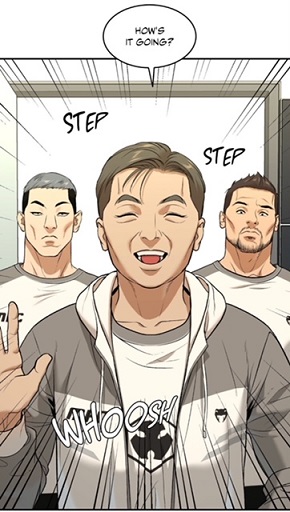 (chapter 49), highlighting the failures of relying solely on fate. The champion’s eventual discovery of Kim Dan underscores the necessity of teamwork and active intervention. Notably, this also reflects the flaws in Team Black, whose inaction and superficiality limited their understanding of both Joo Jaekyung’s struggles and Kim Dan’s situation. While Heesung’s stardom and blog
 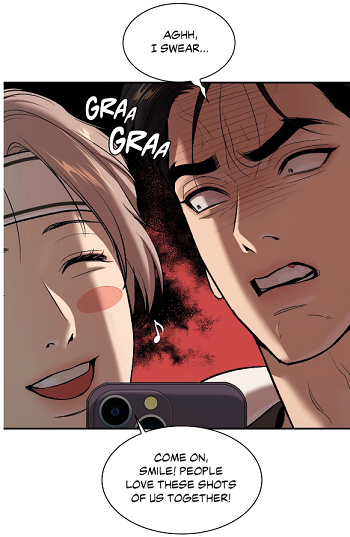 (chapter 30) could have amplified the picture’s reach, it’s unlikely Joo Jaekyung relied on such sources directly. I can not imagine him spying on the actor’s blog. Instead, the role of the helpers — the nurse and her acquaintance— emerge as crucial to piecing together the connection. The inadvertent role of the nurses Mind and Heart, urging Heesung to take the picture, becomes an integral part of the story’s progression. (chapter 59) Symbolically, their request took place on the road, metaphorically paving the way for the reunion between Joo Jaekyung and Kim Dan. This act of intervention can also be compared to the three fairies in Sleeping Beauty
  (chapter 13) who played pivotal roles in lifting the curse, as Mingwa’s narrative often draws on such reflections. Here, the nurses’ actions, though seemingly minor, echo the same themes of fate and intervention.
Comparative Analysis: Bad Help vs. Real Help
And now it is time to show the table with the comparative analysis which helped me to determine the identity of the “decisive helper”.
| Aspect | Heesung and Potato (Bad Help) | The Anonymous Helper and Joo Jaekyung (Real Help) |
|---|---|---|
| Motivation | Coincidence – They visited Kim Dan for unrelated reasons and deferred to his expressed wishes to stay hidden. | Purposeful – Joo Jaekyung actively searched for Kim Dan, aided by the helper’s deeper insight. |
| Driving Force | Heesung dominated decision-making; Potato followed blindly out of trust. | Collaborative – The helper actively supported Joo Jaekyung with information and empathy. |
| Knowledge of Kim Dan | Limited to surface-level observations, unaware of his deeper struggles (derealization, isolation). | Comprehensive understanding of Kim Dan’s physical and emotional state, possibly worsened by isolation. |
| Knowledge of Joo Jaekyung | None; they did not factor in Joo Jaekyung’s struggles or his importance to Kim Dan. | Awareness of Joo Jaekyung’s emotional repression, suffering and need for reconciliation. |
| Action Taken | Chose not to reveal Kim Dan’s whereabouts, leaving him isolated and misunderstood. | Proactively helped Joo Jaekyung locate Kim Dan, recognizing their interdependence. |
| Impact on Kim Dan | Reinforced his isolation and emotional detachment, respecting his wish to remain hidden but worsening his condition. | Facilitated a reunion, offering support and an opportunity for Kim Dan to heal through connection. |
| Encounter Timing | During the day, casual and detached, focused on surface-level interactions. | At night, intimate and deliberate, focused on reconnecting and providing real help. |
| Interaction Depth | Minimal – They barely talked to Kim Dan and misunderstood his deeper needs. | Profound – The helper’s understanding of both characters allowed for meaningful assistance. |
| Emotional Tone | Misguided loyalty, passive adherence to Kim Dan’s expressed wishes without deeper consideration. | Empathy-driven, with active efforts to address both Kim Dan’s and Joo Jaekyung’s struggles. |
| Identity of the Helper | Heesung and Potato: Superficial understanding, driven by friendship and blind trust. | Anonymous Helper: Likely someone who knows both Kim Dan’s struggles and Joo Jaekyung’s challenges |
| Motivated By | Fear of “making things worse” by interfering, leading to inaction. Heesung sees Joo Jaekyung as a violent, drunk and selfish ruffian 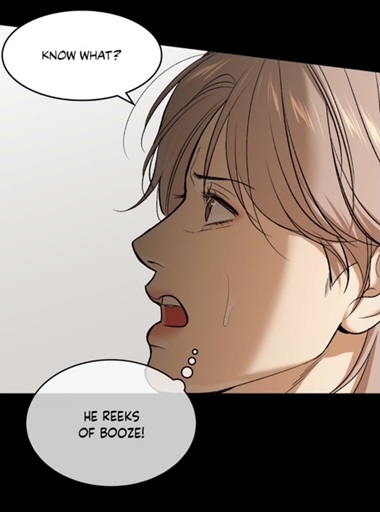 | So the other person should stand for the opposite notions: Genuine care and understanding of the importance of reconnection for both parties. |
| Outcome | Left Kim Dan emotionally isolated and neglected Joo Jaekyung’s need to help him. | Enabled Joo Jaekyung to find Kim Dan, fostering potential healing and growth for both. |
Portrait of the Anonymous Helper
The anonymous helper stands out as a figure of quiet significance, bridging the emotional and practical divide between Joo Jaekyung and Kim Dan. Acting out of genuine care and empathy, this individual demonstrated a nuanced understanding of the connection between the two protagonists. While they may not have known all the details of Kim Dan’s struggles or Joo Jaekyung’s emotional turmoil, their insight and actions played a pivotal role. By recognizing the doctor in the photograph and ensuring it reached the athlete, who could act upon it, the helper catalyzed the reunion. Their ability to intervene discreetly and purposefully exemplifies the transformative power of small, compassionate gestures. This role, often unnoticed in its quiet execution, serves as a symbol of how intentional yet modest actions can shape the course of fate.
The Angel’s Intervention
And all these clues led me to Cheolmin!  (chapter 13) The latter knew the PT’s face,
  (chapter 13) but didn’t know his identity. He mistook him for someone who was selling his body for money.
  (chapter 13) In addition, Kim Dan never got to know the intervention of this hyung: he was the invisible helping hand in season 1. And now, if you reread the scene in episode 13, you will notice that this conversation between Joo Jaekyung and his friend contains all the ingredients in episode 59: the use of the phone, fainting, malnutrition, secrecy, neglect, secret suffering, pictures and public knowledge
  (chapter 13), the death of a man and finally urgency. Moreover, remember what his friend told him before: the importance of rest and
 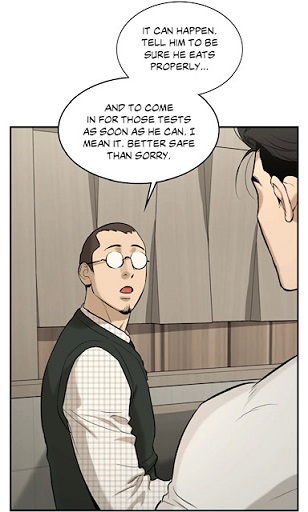 (chapter 13) He should send him to the hospital for tests, but the fighter refused. Why? It is because the latter feared his “chingu”. The doctor seemed rather interested in Kim Dan, therefore he feared that the PT might dump him for a “colleague”. That’s why Heesung was sent later to his gym. Karma was punishing him for not listening to his friend’s advice. Finally, it is important to recall his advice: (chapter 13) His recommendation makes him a clear supporter of the couple which stands in opposition to the second couple: Heesung and Potato. That’s why I am suspecting that the actor is about to receive his own punishment!! Who is standing next to Kim Dan? (chapter 59) The Cute Potato! The actor is about to get a rival. But let’s return our attention to Cheolmin. Though in episode 13, he remained unaware of Kim Dan’s true identity and personal struggles, I have the impression that he got updated by the athlete later.
 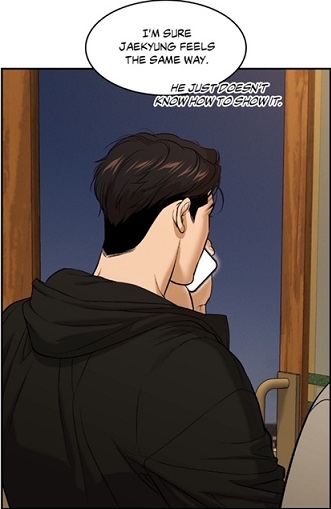 (chapter 43) And during that evening, the champion called his penthouse with the doc “Home” for the first time. Finally, in season 2, Joo Jaekyung started visiting each hospital or Sports Rehabilitation Center in Seoul in order to find Kim Dan.
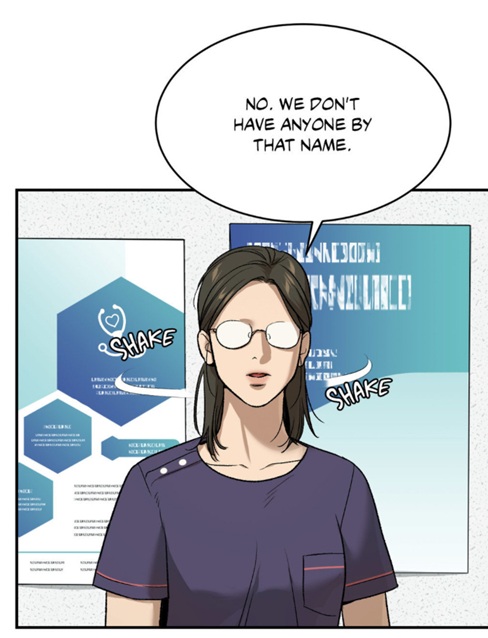 (chapter 56) And there’s no doubt that Joo Jaekyung got recognized by people forcing him to use a mask to hide his identity. So this frenetic search must have reached the mysterious doctor’s ears, but I doubt that he made the connection between the star’s lover and the physical therapist right away. Since he‘s a guest of XY club,
  (Chapter 13), it is also possible that he could have heard about the last incident in the restroom with doc Dan’s replacement. Since Cheolmin found Dan cute, it is very likely that he was also drawn to the surrogate „Dan“. But I don‘t think, this was enough to intervene, as Joo Jaekyung didn‘t ask for his help.
However, this must have changed, when Cheolmin came across the photograph and recognized Kim Dan, his prior connection to both men could have inspired him to act. Moreover, since he had examined Kim Dan before, as a detailed -oriented physician, he could have detected the pale face of Kim Dan. (Chapter 59) Moreover, if he talked with the green-haired nurse, he could have heard about his unusual tiredness and spacing out. This would reflect the theme of fate weaving unlikely connections into the narrative. Cheolmin’s invisible intervention would also underscore the contrast between those who act out of genuine care and those who avoid involvement due to fear or inaction. However, since the champion came at the right time, it is likely that Joo Jaekyung will feel deeply grateful to the person who informed him. This gratitude may pave the way for Joo Jaekyung to trust others more fully and recognize the value of relying on others’ judgment.
Finally, I would like to remind my readers about my previous portrait of the mysterious doctor Cheolmin: I compared him to an archangel 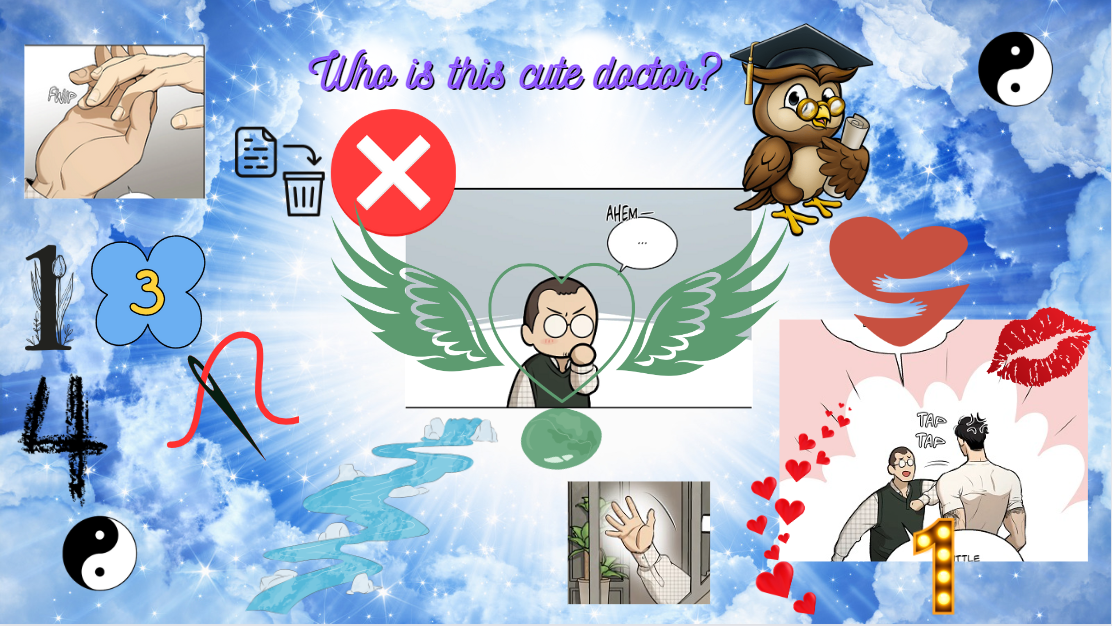 and to Neptune
 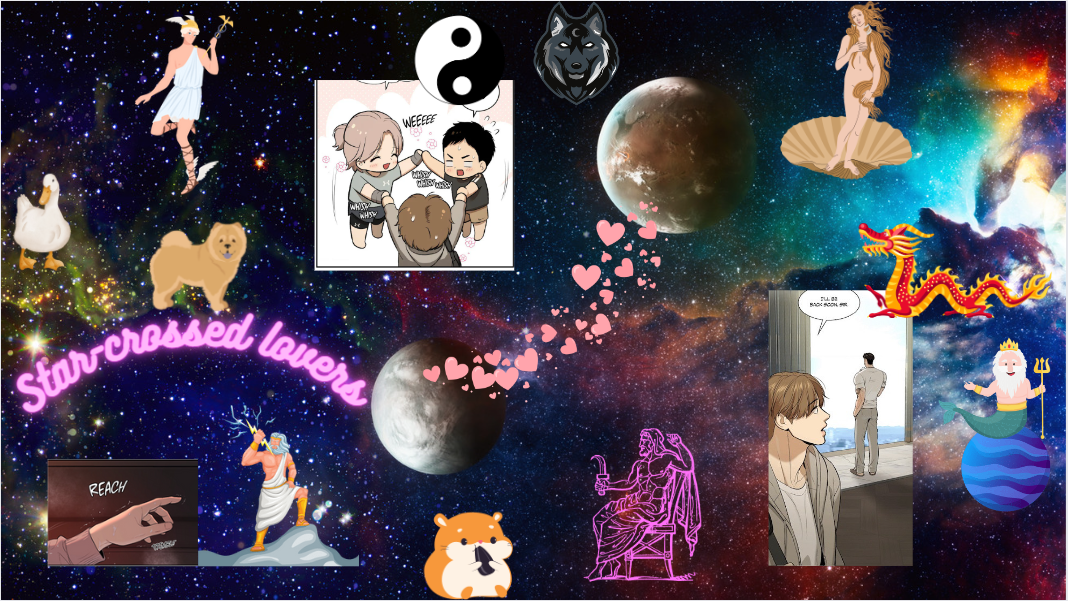 and strangely, the doctor moved to a place next to the coast. So maybe Cheolmin comes from that little town and the green-haired nurse is his relative. I had already outlined their similarities. Finally, look at the numbers, we have 4 in both episodes, 13 and 59 (13: 1+3 = 4 / 59: 5-9= -4) The -4 would coincide with Kim Dan’s vanishing, but also with the intervention of Cheolmin. And if my theory is correct, this means that the champion will come to regret his past decision (chapter 13), not to listen to his true friend, the one who was not called (chapter 56), but who reached to him, when Joo Jaekyung needed assistance the most. He was the only one who was accepting the fighter’s struggling, whereas Park Namwook chose to bury the truth.
Contrasting the Two Photographs
The two significant photographs in Jinx—one of Kim Dan and his grandmother 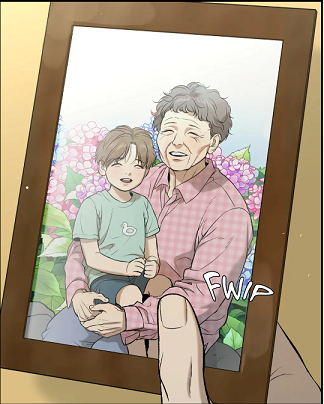 (Chapter 19) and the group photograph at the hospice
(chapter 59) (Chapter 59)—serve as visual metaphors for Kim Dan’s emotional state and his evolving journey. However, their contrast is best understood through an analysis of key aspects: location, subjects, feelings, and the importance of memory.
Location: The first photograph, taken in a garden filled with vibrant flowers, symbolizes life and nature. This imagery conveys warmth and innocence, yet in reality, it reflects ephemerality and death due to the flowers. Moreover, it is ironically undercut by the secrecy surrounding the picture, as it was hidden from view. That’s why the readers can not identify the location and occasion for this image too. In contrast, the hospice setting of the second photograph can be more easily identified and located. In addition, it represents a more clinical and structured environment. On the other hand, it contains a common denominator with the first image: death and temporality. This means that The “Light of Hope” sign in the background casts a dual shadow. On the one hand, it signifies the grandmother’s oppressive influence but also hints at the possibility of healing and reconnection. Someone else will take over her place.
Subjects: The first photograph features only Kim Dan and his grandmother, emphasizing their private and familial bond. This simplicity, however, underscores Kim Dan’s isolation and dependency on a single flawed relationship. The group photograph, on the other hand, is crowded with people: nurses, hospice staff, and celebrities. The collective setting reflects a growing sense of community, albeit one where Kim Dan remains on the periphery. His inclusion in this photograph marks the beginning of a tentative integration into a broader social circle.
Feelings of Kim Dan: In the first photograph, Kim Dan’s childlike happiness is genuine, hence I am suspecting that the halmoni’s smile was not sincere. How so? It is because in the hospice photograph, Kim Dan’s outward expressions appear subdued, reflecting discomfort and reluctance. Everyone is happy except him, but no one noticed it. Hence I believe that in the first picture, Kim Dan has been idealizing his grandmother’s happiness. However, since he is now struggling, I see this new picture as a good sign. This juxtaposition highlights his transition from stagnation and idealization to a fragile but growing acceptance of connection and support.
Importance of Memory: The childhood photograph was hidden, suggesting that it served more as a relic of the past than a tool for connection. For Kim Dan, it embodied a memory of his grandmother’s love, but for her, it likely held no such significance—highlighting her emotional distance. In contrast, the hospice photograph, initially intended as a lighthearted memento, became a pivotal clue in reuniting Kim Dan with Joo Jaekyung. Its transformation from public to private use underscores the power of shared memories in forging connections. Furthermore, since the second picture announces the future reunion of the protagonists, I am connecting the first picture to a future „separation“. On the other hand, the second image was taken just before they departed, so both photographs are linked to separation and departure.
Photographer’s Identity: The identity of the photographer adds another layer of contrast. The hospice photograph was taken by Heesung’s manager, someone connected to work and external responsibilities. In contrast, the photographer of the childhood image remains unknown, shrouding the moment in secrecy. This anonymity, combined with the hidden nature of the photograph, reinforces its association with private pain and toxic positivity. Both images carry “ghosts”—the grandmother’s influence and the silent presence of the anonymous photographer—highlighting the themes of temporality and loss in Kim Dan’s journey.
Through these comparisons, it becomes evident that the first photograph symbolizes stagnation, secrecy, and unspoken pain, while the second reflects progression, albeit hesitant, toward community and healing. These images serve as mirrors of Kim Dan’s journey, reinforcing Mingwa’s use of visual storytelling to depict the interplay of isolation, connection, and fate. This comparison serves another purpose as well. Keep in mind that the one who desired to have a private picture was Potato (chapter), he wanted to have a good memory of his stay there with Heesung and Potato. However, this is how it looked like in the end: (chapter 59) It became the synonym for “work” and “fame”. So should the news about Kim Dan’s action reach Potato’s ears, he can only get shocked. What he thought to be a happy memory, was not, because he was unable to detect his friend’s suffering. He was not a true friend. As you can see, I have the feeling that this image will drive an edge between the second couple in the end. Let’s not forget that the actor is now using friendship and work to hide his true relationship with Yoon-Gu. So far, he has not been honest to the chow chow. He used his innocence to his advantage. However, the doctor’s attempted suicide announces the loss of Potato’s real innocence.
Conclusion: A Green Thread Among the Red
Through the photograph and the green-haired nurse’s inadvertent intervention, Joo Jaekyung was led to Kim Dan. The story’s thematic underpinnings—fate, connection, and the contrast between isolation and community—culminate in this reunion. Joo Jaekyung’s journey was not simply guided by one person but by many, each playing a small but significant role in weaving the threads of fate. If Potato had not asked for the photograph, if the nurses had not encouraged its capture, or if someone like Cheolmin had not acted upon it, the outcome could have been vastly different. These small moments of intervention underscore the story’s larger theme: the quiet power of collective action. However, keep in mind that Kim Dan met the actor and the „puppy“ by coincidence. So in their meeting, fate still played a role: the beach. As you already know, my theory is that Joo Jaekyung recognized Kim Dan‘s back from the road, as the latter is higher than the beach. And where did the nurses asked for the picture with Heesung? (Chapter 59) They were standing on the road. On his way to the hospice, he arrived by the coast, from there he could see the ocean. Nature (sea) brought them together, just like the dog Boksoon let Kim Dan reunite with his friends.
Interestingly, (chapter 59) Kim Dan’s ocean scene—a night devoid of moonlight—symbolized his emotional turmoil and loss in the darkness which marks the end of the grandmother‘s power over her grandson‘s life. By contrast, Joo Jaekyung’s intervention represents the light of hope rekindled (chapter 59), offering Kim Dan a chance for healing and reconnection. He embraces him, something his grandmother has not been able to provide lately, Through this journey, Joo Jaekyung also learns to trust others and realize that self-reliance, bolstered by money alone, is insufficient. His disillusionment with Park Namwook, who failed to act on his requests, should further cement this realization. Gradually, Joo Jaekyung comes to value genuine support and collaborative effort, paving the way for both his and Kim Dan’s growth.
This narrative progression, captured through time, characters, and symbolism, ultimately reveals that Joo Jaekyung’s journey to finding Kim Dan was not simply one of chance. It was a testament to the interconnectedness of lives and the quiet power of actions—a snapshot of fate’s many hands.
Feel free to comment. If you have any suggestion for topics or manhwas, feel free to ask. If you enjoyed reading it, retweet it or push the button like. My Reddit-Instagram-Tumblr-Twitter account is: @bebebisous33. Thanks for reading and for the support, particularly, I would like to thank all the new followers and people recommending my blog.

 Bebebisous33s' analyses in K-Dramaland and Manhwas