

Please support the authors by reading Manhwas on the official websites. This is where you can read the Manhwa: Jinx But be aware that the Manhwa is a mature Yaoi, which means, it is about homosexuality with explicit scenes. Here is the link of the table of contents about Jinx. Here is the link where you can find the table of contents of analyzed Manhwas. Here are the links, if you are interested in the first work from Mingwa, BJ Alex, and the 2 previous essays about Jinx The Mermaid’s Illusion of Love and A Luminous Kiss Amid Shadows This is where you can watch the K-drama Love Scout
It would be great if you could make some donations/sponsoring: Ko-fi.com/bebebisous33 That way, you can support me with “coffee” so that I have the energy to keep examining Manhwas. Besides, I need to cover up the expenses for this blog.

Hope often implies the promise of a tomorrow, a continuation of life and opportunity. Yet in Jinx, the depiction of Kim Dan’s condition—his unconscious attempted suicide  (chapter 60), deteriorating physical health
  (chapter 60), and the ominous setting of the hospice
  (chapter 60) — challenges this notion. The photographs from episode 60 subtly introduce the fifth puppy’s death as a poignant symbol of Kim Dan’s precarious fate.
  (chapter 60) The puppy’s appearance in only one photo (the second one from left) among many mirrors Kim Dan’s fragile existence,
 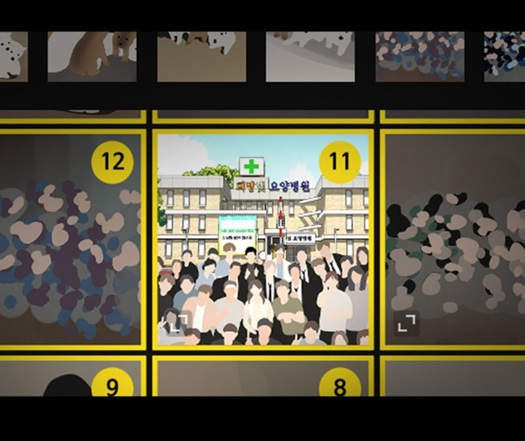 (chapter 60) deepening the parallel between them. This connection becomes even more striking when recalling that the grandmother once likened Kim Dan to a puppy
 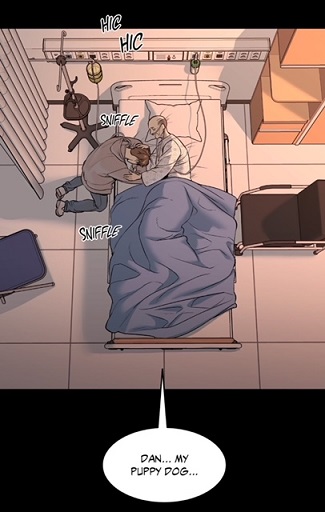 (chapter 53), emphasizing his vulnerability and dependence on others.
Without intervention, Kim Dan’s condition—both physical and emotional—could spiral into irreparable harm, reflecting the unnoticed demise of the puppy. 😭This essay will examine these events chronologically, beginning with Joo Jaekyung’s urgent rescue and arrival at the hospice. The narrative will then explore the symbolic meaning of the photographs, including the fifth puppy’s fleeting presence and its absence in subsequent images, as well as the profound symbolism of the room where Kim Dan is placed. This analysis will reveal how both elements intertwine to foreshadow Kim Dan’s increasingly tenuous grip on life and the unspoken realities of his condition.
The Rescue and the Green Cross
Joo Jaekyung rushed to the hospice with Kim Dan in his arms  (chapter 60), he rested him on his healthy shoulder to provide support. This method of carrying, while practical in the moment, placed uneven strain on Jaekyung’s body. The weight resting on one side risked injury to his back and disrupted his balance, subtly reflecting the physical toll of his desperation to save Kim Dan. This small but significant detail underscores the sacrifices Jaekyung was willing to make in his attempt to protect him. However, since Kim Dan was unconscious, he couldn’t see the wolf’s kindness and selflessness.
Moreover, we have to imagine that while looking around for help on the beach,  (chapter 60) the green cross and the name “Light of Hope” likely caught his attention, inspiring him to believe the hospice could offer immediate assistance. Jaekyung’s desperation was evident in his drenched appearance after rescuing Kim Dan from the ocean (chapter 60), coupled with his labored breathing as he hurried into the hospice. His question
 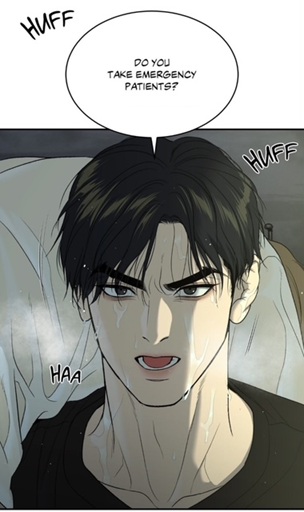 (chapter 60) reflected not only his uncertainty about whether the hospice could offer assistance but also the sheer urgency of his actions. This moment underscores the physical and emotional toll of his determination to save Kim Dan. Jaekyung risked worsening his own physical condition, driven by the hope that help would be available Yet the irony of this moment lies in the true purpose of the hospice: it is not a place for treatment or healing but a program dedicated to end-of-life care.
  (chapter 57)
This observation invites deeper reflection on why a small town would have a hospice rather than a hospital. The answer may lie in the demographic realities of the region. The aging population is evident in scenes depicting the town’s streets, where Potato and Heesung encounter primarily elderly individuals  (chapter 58), such as two older women
  (chapter 58). Yes, there were two small details, yet full of meaning. Even the landlord
  (chapter 58) nicknamed “old man”
 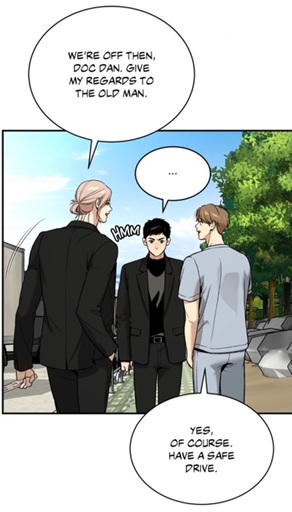 (chapter 59) by Heesung, symbolizes this demographic trend. The hospice’s focus on senior care reflects a broader societal issue in South Korea: a declining birth rate coupled with an increasing elderly population.
People aged 65 and older took up nearly 20 percent of South Korea’s population this year amid rapid aging and the ultra-low birthrate, data showed Thursday.
The number of senior citizens stood at 9.94 million in 2024, accounting for 19.2 percent of the country’s 51.75 million population, according to the data from Statistics Korea.
The proportion is forecast to surpass 20 percent in 2025, which will make South Korea a “super-aged society,” and is to rise further to 30 percent in 2036 and over 40 percent in 2050. Quoted from https://en.yna.co.kr/view/AEN20240926004100320?utm_source=chatgpt.com
Concurrently, the country recorded the world’s lowest fertility rate, with an average of 0.72 births per woman in 2023. This demographic trend is anticipated to continue, with projections indicating that by 2072, the population could decline by 30%, reducing the current 51.7 million to approximately 36.2 million. Quoted from https://time.com/6488894/south-korea-low-fertility-rate-trend-decline/?utm_source=chatgpt.com
These statistics underscore the challenges South Korea faces in balancing an increasing elderly population with a shrinking workforce, impacting economic growth, healthcare systems, and social services. While “Light of Hope” caters to the growing number of seniors, this approach inadvertently reinforces the exodus of younger generations. This migration from the countryside to Seoul or other major cities is subtly reflected in Jinx. Yoon-Gu, for instance, comes from the province of Gangwon-Do, embodying the trend of younger people leaving rural areas in search of opportunities. 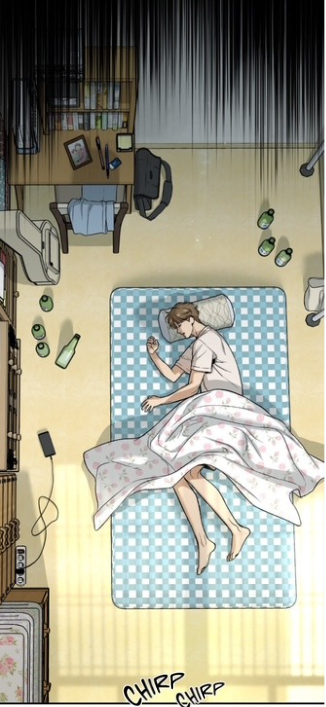 (chapter 57) In addition, the empty bedroom where Kim Dan is staying—with its untouched guitar, furniture, and books—suggests it once belonged to a teenager who left home and never returned. The unchanged state of the room symbolizes the stagnation and loss felt in these regions, further highlighting the broader societal issues at play. This shows that Jinx is not merely a classic love story; it also paints a nuanced portrait of South Korean society and its challenges. By prioritizing elder care without addressing the needs of the youth, the hospice embodies a false promise of hope—one that may ultimately exacerbate the very demographic crisis it seeks to alleviate. (chapter 57) This observation is further supported by the panel depicting the hospice’s exterior, which highlights its offer of free health checks. This detail suggests that the hospice is actively trying to attract new patients and has the necessary resources to conduct thorough medical examinations. For instance, when one of Kim Dan’s patients fell, the hospice staff were able to examine him properly
  (chapter 59), indicating their capacity for medical intervention. However, this approach reveals an underlying paradox: while the hospice caters primarily to an aging population, it lacks a sustainable strategy to address the exodus of younger generations, whose departure threatens its long-term viability. This issue is further illustrated by the hospice director’s decision to allow the facility to be used as a location for a movie shoot,
 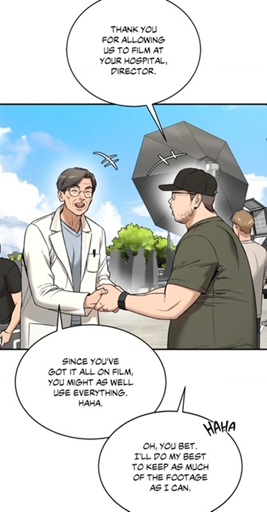 (chapter 59) seemingly as an attempt to garner attention and improve its reputation. However, relying on such strategies means any potential benefits will only materialize months later, when the movie is released. This delay highlights the limitations of the hospice’s current approach to sustaining itself. In this context, Joo Jaekyung’s presence could play a pivotal role. It is possible he may become the driving force in revitalizing not only the hospice but also the town itself, potentially pushing the director to transform the hospice into a full-fledged hospital, addressing both immediate and long-term needs of the community. And this would fit his personality, as I connected him to a dragon. Let’s not forget that in season 1, the MMA fighter was introduced as a benefactor who organized a charity event
  (chapter 41), yet we never got to hear where the money went. This potential transformation underscores the underlying complexities of the hospice’s current operations, as it navigates between providing care for the elderly and responding to broader societal challenges. By situating Jaekyung in this dynamic, the narrative subtly hints at his capacity to influence change, bridging the gap between the hospice’s limitations and the community’s evolving needs.
This stark reality mirrors Kim Dan’s mental and physical state. The trail of blood he left behind 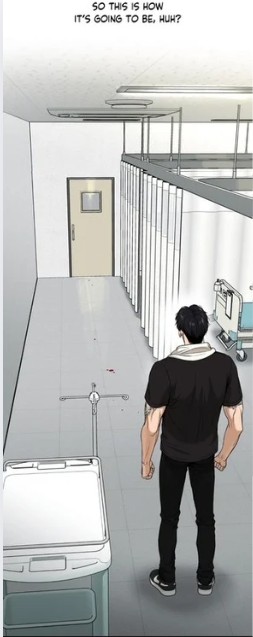 (chapter 60) —a consequence of removing his IV needle—symbolizes his quiet surrender and deteriorating health. When Kim Dan arrived at the hospice, he carried the faint hope of finding solace
 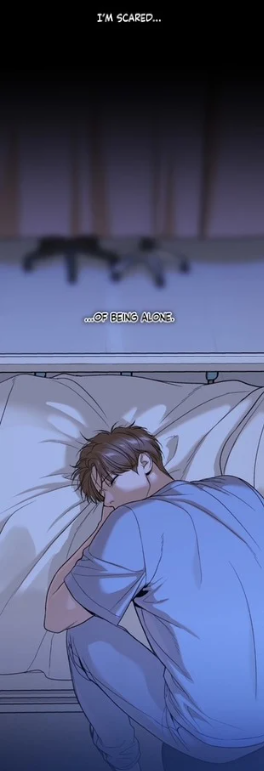 (chapter 56), particularly from his grandmother, who had promised to go to the beach with him.
  (chapter 53) However, this hope was met with disappointment
 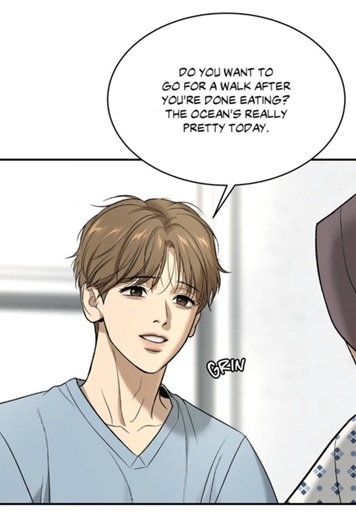 (chapter 57) – which he never expressed -, reflecting the deceptive promise of the hospice itself. Kim Dan’s fate seems to mirror not only the unnoticed death of the fifth puppy
 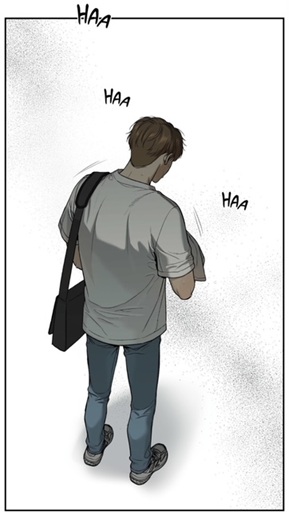 (chapter 59) but also his grandmother’s diminishing expectations of him.
  (chapter 56) She expressed twice that she no longer needed him.
  (chapter 57) However, all this time, she had been his motivation and reason to live. Once likened to a puppy, Kim Dan’s vulnerability and struggle for recognition remain central to his story, highlighting the fragility of his existence. His malnutrition, possibly linked to a deficiency in vitamin K and compounded by his alcohol dependency, exacerbates his fragility, making his situation increasingly perilous. Vitamin K, essential for blood clotting and bone health, is derived primarily from leafy green vegetables and produced by gut bacteria. A deficiency can result in symptoms such as dizziness
  (chapter 57), easy bruising
  (chapter 13), excessive bleeding and slow wound healing—all of which align with Kim Dan’s deteriorating condition and the trail of blood he left after removing his IV needle. (chapter 60) Is it a coincidence that a company with the green logo K was shown in different panels, like this one?
  (Chapter 54) Like mentioned before, this logo could be referring to a pharmaceutical company.
The Room and Its Symbolism
The room (chapter 60) where Kim Dan is placed raises significant questions about its purpose within the hospice. The presence of curtains, indicating multiple beds, contrasts with the lack of personal belongings or cupboards (see as a comparison, Shin Okja’s room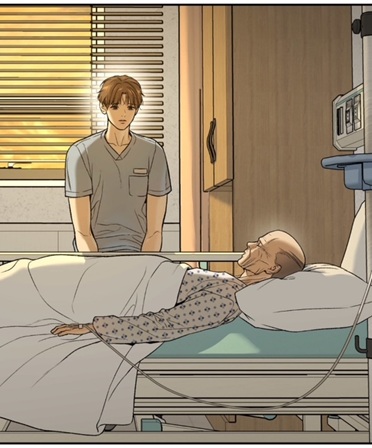 – episode 59), suggesting a temporary space for patients nearing the end of life. Moreover, observe that the colors of the curtains in the patients’ room is orange
  (chapter 56)
 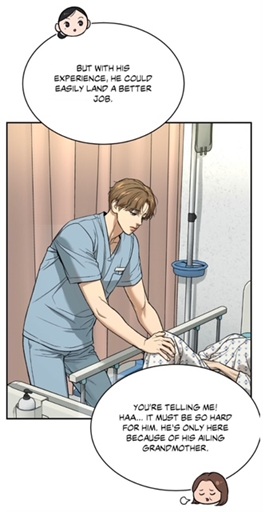 (chapter 56) and not white. This observation aligns with the assumption that this room is reserved for those on the verge of dying, shielding terminally ill patients from witnessing another’s death. 😨
This interpretation becomes clearer when contrasted with the emergency room depicted in the K-drama Love Scout.  In the drama, a character searches for his CEO and friend Kang by pulling back closed curtains in an emergency room,
 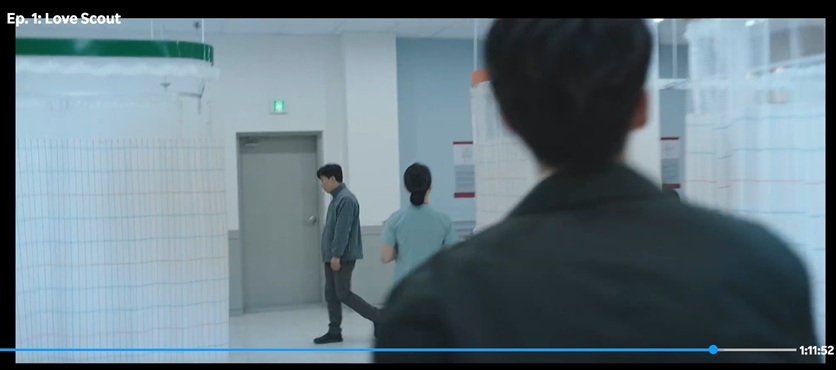 discovering different patients behind each one until finding the right person.
  This reinforces the notion that closed curtains signify the presence of others, even if their identities remain hidden. In addition, when the doctor treated the patient Park Jinchul, the curtains were closed. (chapter 56) (chapter 60) Like in Love Scout, the room in Jinx also has closed curtains, but instead of revealing activity or connection, it implies abandonment and isolation for those behind them. How so? Contrary to the transparent, automatic doors of the emergency room in Love Scout, the door in this scene is closed, manual, and opaque. Such a door symbolizes privacy and secrecy, further emphasizing the room’s association with isolation and death. In addition, the lack of anyone visibly attending to them suggests desertion. Everything is indicating that this space is not dedicated to immediate care and life-saving measures contrary to the emergency room. This contrast emphasizes that the room in Jinx symbolizes abandonment and death rather than rescue.
But there’s more to it. In Episode 52, the curtains in the health center were removed between two patients 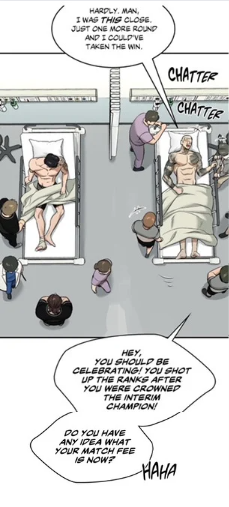 (chapter 52) to signify absence of confidentiality, contrasting with the closed-off nature of this space. This comparison not only exposes the manipulation of the staff at the health center, but also reinforces my interpretation that the emergency room at the hospice stands for danger and challenge. This detail underscores Joo Jaekyung’s assumption that he and Kim Dan are alone, but it also raises the possibility that their conversation could have been overheard by someone lying behind the curtains, such as the patient from Episode 57.
  (chapter 57) or the mysterious Park Jinchul
  (chapter 56)
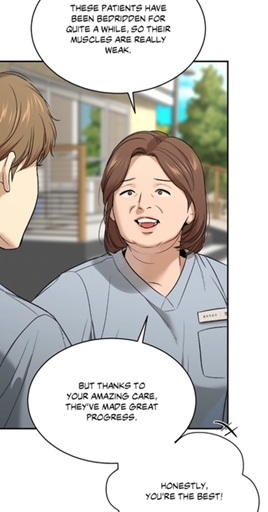 (chapter 56) If others are indeed present, their isolation hints at a bleak reality: death would occur behind closed curtains, without companions or acknowledgment. This setting forces Joo Jaekyung to confront the fragility of life and the limits of money, as even wealth cannot shield anyone from the inevitability of death. (chapter 60) The room’s atmosphere intensifies this realization, as the symbolism of abandonment permeates its design and the interactions within. Moreover, since many people could see parallels between this scene with the doctor’s situation in the locker room,
 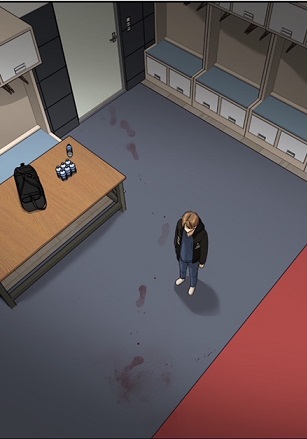 (chapter 51), they should remember that people were listening to their conversation behind the closed door, but they chose not to intervene.
 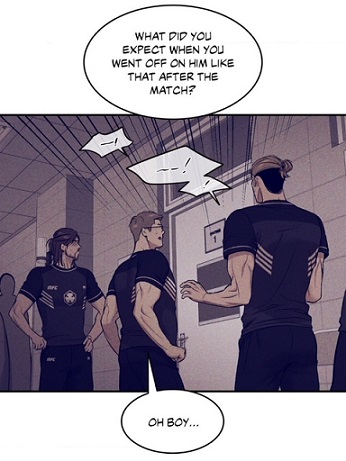 (chapter 53) That’s the reason why I am inclined to think that someone was /is present behind the curtain, but chose to remain silent. However, contrary to Team Black, such a person should intervene, if my theory is correct. And there is another evidence for this hypothesis. Since in episode 60 Joo Jaekyung offers a new contract
 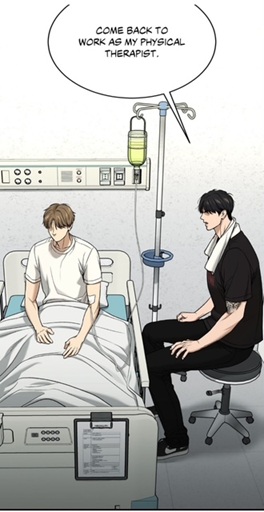 (chapter 60), it signifies that it is a reflection from chapter 6:
 (chapter 6) Nevertheless, back then, the deal was made without any witness. That’s the reason why I come to the conclusion that someone else was present in that room, yet contrary to the past, this person will intervene which stands in opposition to the symbolism of the room: death, secrecy and abandonment. And that can only be a patient who experienced the talent and care from Kim Dan. Joo JAekyung has never met any previous patient from Kim Dan before, but this is what readers got to hear from the nurse: (chapter 56) Only a bedridden person on the verge of dying can express such a gratitude towards the physical therapist.
If this interpretation is correct, the room’s symbolism is intertwined with death rather than rescue, then it conveys a sense of abandonment, as though the staff had already given up on Kim Dan. Furthermore, the decision not to place Kim Dan near his grandmother suggests an effort to keep the incident hidden from her (if she is not in the room), emphasizing the isolation surrounding his condition. On the other hand, the champion’s presence in that room could represent a chance for the athlete as well. This could represent the moment of his “rebirth”. Through a honest but painful conversation, the fighter would be encouraged to judge Kim Dan in a different light and nurture his maternal instincts. Moreover, he could give some comfort to a dying patient, similar to this scene: 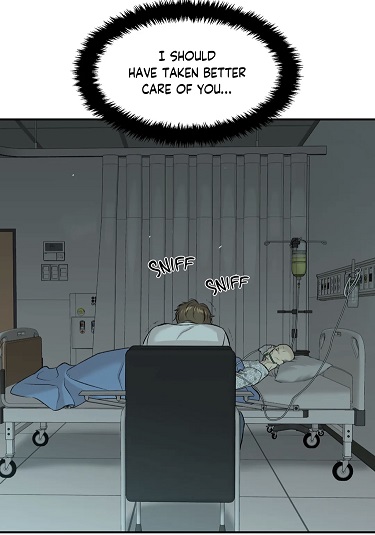 (chapter 21) which would push him to have a change of heart and show his vulnerability. What can he fear from a dying or terminally ill person? Nothing… hence he can only listen to the confidence and advice from such a patient.
And if my deductions based on observations are true, this signifies that the brochure from Light Of Hope 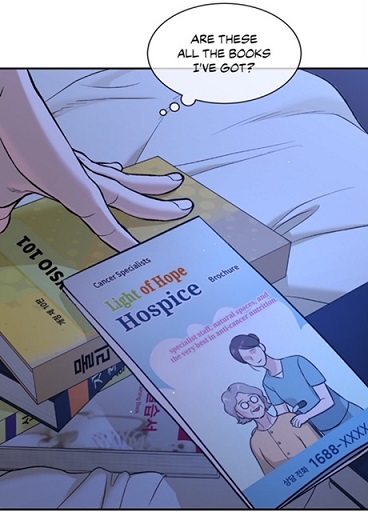 (chapter 53) is indeed an illusion and deception, for the senior on the paper is portrayed as being accompanied by a nurse. The reality is different, for the patients are facing death alone.
Between Lies and Misconceptions
Kim Dan’s interaction with Joo Jaekyung in this room is marked by lies and unspoken truths, which define the fragile dynamic between them. 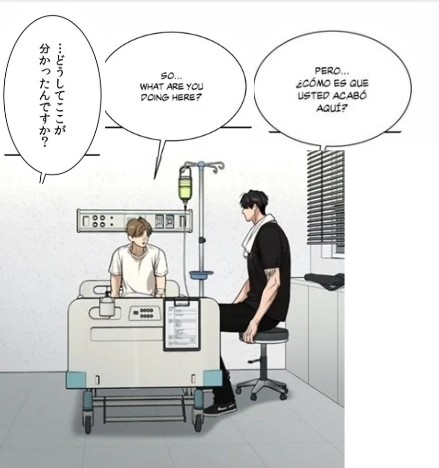 Their conversation begins with Kim Dan’s simple yet loaded question about how Jaekyung discovered his whereabouts. This moment, better captured in the Japanese, and Spanish translations, underscores Kim Dan’s curiosity and underlying desire for clarity. In the Japanese version, Kim Dan asks, “どうしてここがわかったんですか?” (“How did you find out about this place?”), while the Spanish translation reads, “¿Cómo es que usted acabó aquí?” (“How did you end up here?”). Both translations emphasize Kim Dan’s direct inquiry about how Jaekyung discovered his whereabouts, making Jaekyung’s evasive response even more significant. It is clear that he is trying to protect Potato here. However, Jaekyung’s response
  (chapter 60) immediately sets the tone for their interaction. His refusal to answer and his deliberate avoidance of Kim Dan’s gaze reflect a lie by omission. This evasive behavior not only highlights Jaekyung’s reluctance to reveal his vulnerability but also creates a significant divide between them, making it clear that they are not functioning as a unified team.
Kim Dan’s body language mirrors this emotional disconnection. 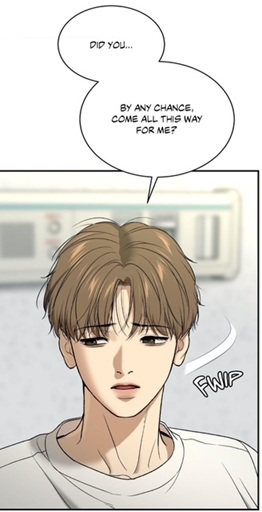 (chapter 60) Initially, he avoids Jaekyung’s gaze, signaling his own fear and insecurity. This avoidance reveals his worry about rejection and his deeper emotional vulnerability. On the one hand, he hopes deep down that the athlete would admit that he came looking for him, yet their last two interactions were arguments and rejections which the doctor didn’t forget.
 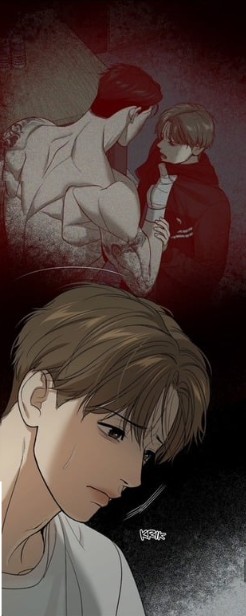 (chapter 60) Moreover, the idiom “by any chance” is exposing his low self-esteem. His words are exposing his internal struggles: between hope and despair. Later, his subtle act of turning his head away—a gesture often linked to dishonesty—indicates an effort to conceal his true feelings.
 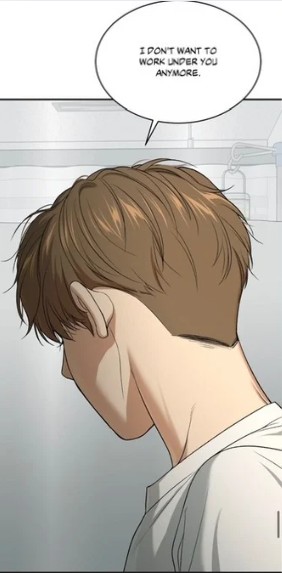 (chapter 60) He is still in love with Joo Jaekyung, but he is no longer hoping for any attachment and feelings from the fighter. On the other hand, his words are reflecting a different opinion: he is no longer trusting the athlete. This means that when the champion admitted his mistake indirectly, it was already too late.
 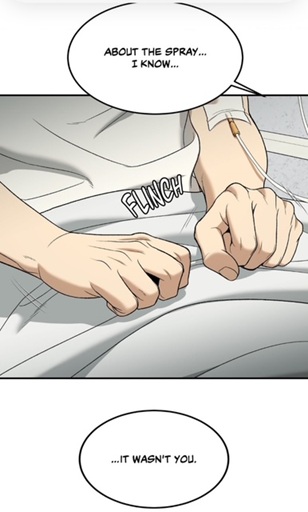 (chapter 60) The damage was done. In addition, he is rejecting the job offer because of the champion’s money.
 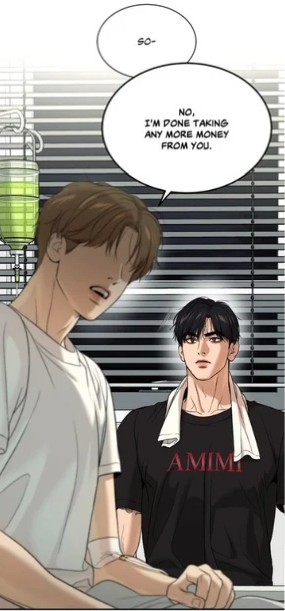 (chapter 60) He doesn’t want this fake generosity, since the athlete is reminding him of his “debts” towards him:
  (chapter 60) How ironic is that with his last remark, he ruined all his chances with Kim Dan. He was still viewing the physical therapist as someone below him. However, keep in mind that such an arrogance and “confidence” are just subterfuges from the MMA fighter. This act of concealment parallels Jaekyung’s guarded demeanor, as both characters are ensnared in a cycle of avoidance and denial.
Jaekyung, for his part, struggles with acknowledging his dependency on Kim Dan. 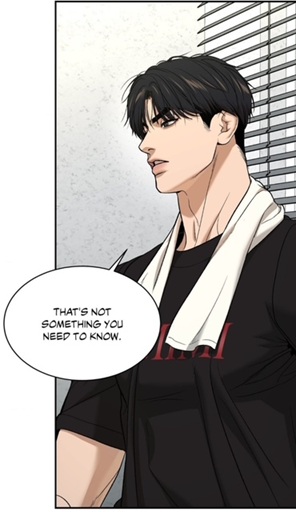 (chapter 60) This evasive remark suggests that Jaekyung believes keeping Kim Dan ignorant of his intentions is for the best. By withholding the truth, he feels he is protecting himself and Kim Dan from unnecessary burdens or complexities, reinforcing his perception that their relationship is better managed with clear boundaries. However, this attempt at concealment only deepens the divide between them, as it denies Kim Dan the clarity and emotional connection he seeks. In fact, he is not realizing that he is even afflicting more pain on his fated partner.
This dynamic is further emphasized when comparing their positions in Episode 6 and Episode 60. In Episode 6, Kim Dan was standing while Jaekyung sat (chapter 6), reflecting the power imbalance between them. Kim Dan momentarily held the upper hand by negotiating his terms, but once Jaekyung agreed, their positions shifted  (chapter 6), with Kim Dan ending up on the floor—a physical manifestation of his subservience. Later, in the locker room, both were shown facing each other
  (chapter 51), symbolizing a superficial moment of equality. In Episode 60, however, both are seated:
  (chapter 60) Kim Dan in bed and Jaekyung on a chair. Yet, this apparent parity hides a reversal of dependency. While Kim Dan is physically and mentally weaker, neglecting his own health to leave the bed, (chapter 60) it is Jaekyung who has become emotionally reliant on him. Kim Dan’s stubbornness to push through his fragility mirrors the fighter’s own traits, exposing an ironic role reversal that neither of them fully acknowledges.
Despite his outward confidence, (chapter 60) his refusal to engage truthfully exposes his internal conflict and fear of reliance. But why does he fear so much closeness and dependency? Naturally, Jinx-philes should keep in their mind his terrible childhood where he suffered emotional abuse. Moreover, he had been taken advantage from his previous sex partners.  (chapter 42) Despite the appearances, such relationships could only deepen his wounds and reinforce his anxieties. Thirdly, let’s not forget that the athlete read the doctor’s birthday card where the latter expressed the hope to work for him for a long time:
 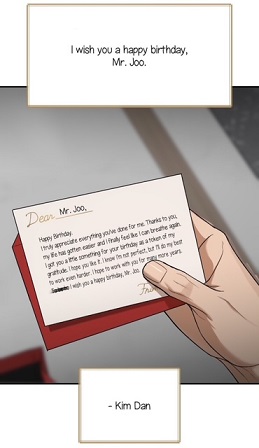 (chapter 55) That’s why he imagined that once he made his offer, the other would agree immediately. However, what he failed to realize is that he read the note too late. Besides, there were these erased words which left the fighter in the ignorance. Finally, he continues to misunderstand Kim Dan’s motivations
 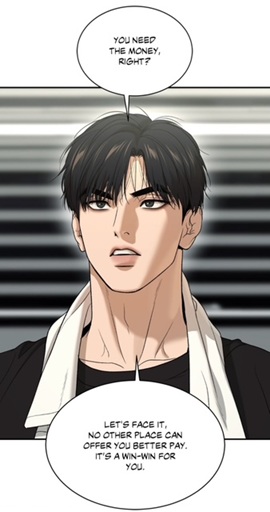 (chapter 60), as he did in episode 6.
 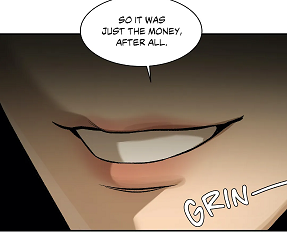 (chapter 6) Back then, Jaekyung assumed money was the sole driving force behind Kim Dan’s actions, and in the current interaction, he still believes this to be true. His internal monologue reveals this misconception:
  (chapter 60) I would even add, he believes to know Kim Dan so well, hence he mentions his grandmother:
 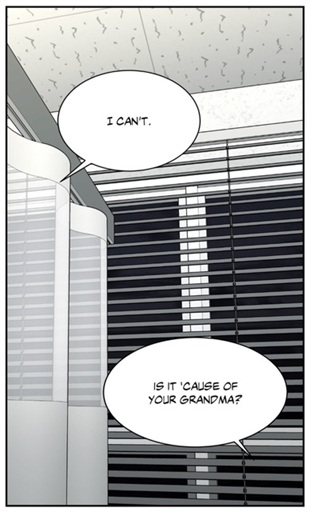 (chapter 60) However, Jaekyung is terribly wrong because he never talked to his lover. His interest and curiosity were quite superficial. Therefore he fails to grasp that Kim Dan’s longing is not for material wealth or familial obligation, but for genuine companionship and a place to call home. Kim Dan’s rejection of a boss-employee dynamic (chapter 60) underscores his desire for a deeper, more meaningful connection—something Jaekyung is unable to see due to his own emotional barriers.
But there is another reason why he got rejected. Fate wanted to punish the athlete for putting his own selfish desires over the doctor’s. He had seen the physical therapist in a dangerous situation  (chapter 60). Moreover he got to hear from the doctor that Kim Dan needed rest: (chapter 60). Yet, the first thing he talked about with the doctor was work (chapter 60), once Kim Dan asked him for the reason of his visit: (chapter 60) In other words, with his request, he implied that he had not been longing for Kim Dan’s company. With his attitude, he could only give the impression that he was not interested in the man Kim Dan, rather in the physical therapist, and that’s not what the main lead truly desires. To conclude, his behavior and words generated the impression that the fighter was only superficially interested in him. It was, as if his rescue on the beach had never taken place. He was definitely undermining his own “good deed”.
Their interaction becomes a poignant dance of unspoken fears and withheld truths, illustrating how deeply both characters are entrenched in their insecurities. From the very start, the conversation is undermined by these concealed emotions, dooming it to failure and highlighting the isolation each character feels despite their physical proximity.
Potato’s Role and the Symbolism of Photos
Potato’s involvement adds another layer to the narrative. While the readers can notice the photo of Kim Dan in front of the hospice, they also detect the pictures of the puppies, which were captured later. (chapter 60) These images reveal that Potato visited the old man’s house to bid farewell to the animals. Among the photos, only one shows the fifth puppy—a small, brown one on the left—who appears less active than the others, symbolizing its declining condition. This shows that he was present, when the puppy was showing signs of being sick, but he did nothing. He was too focused on the moment cheering these animals on  (chapter 35) for his own “happiness”. Through Potato, the author is criticizing the attitude of fans who are only projecting their own emotions onto their idols. Their wish for happiness is quite rather superficial. This subtle oversight reflects Potato’s growing detachment, as his focus shifted to capturing moments for posterity rather than addressing the realities in front of him. The absence of the fifth puppy becomes a poignant symbol of unnoticed fragility and foreshadows Kim Dan’s own vulnerability. And how did Kim Dan react to the death of the small dog? (chapter 60) He blamed himself.
Additionally, Potato’s farewell request to treat Kim Dan to a meal if he ever returns to Seoul reveals his underlying doubt. 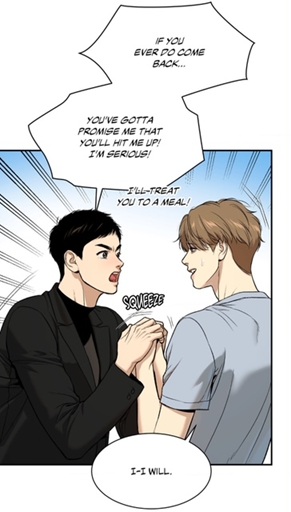 (chapter 59) Deep down, Potato does not expect Kim Dan to come back, reflecting his resignation to their fading relationship. Notably, Potato only asked for a picture of Kim Dan at the very end, never taking photos of him during their time together. (chapter 60) This lack of sensitivity and focus on celebrities, flowers, or the puppies instead of his friend underscores the growing emotional distance between them. Interestingly, while Potato returned to the old man’s house to bid farewell to the puppies, he has no intention of returning to the hospice. This contrast highlights how his farewell request serves as an acknowledgment that they are unlikely to meet again. This detachment mirrors Jaekyung and Heesung’s superficial connections, emphasizing how work relationships often overshadow genuine bonds.
Lies, Betrayal, and Ignorance
Potato’s secret visit concerning the puppies and his silence regarding Kim Dan’s whereabouts reveal his growing resemblance to Heesung. 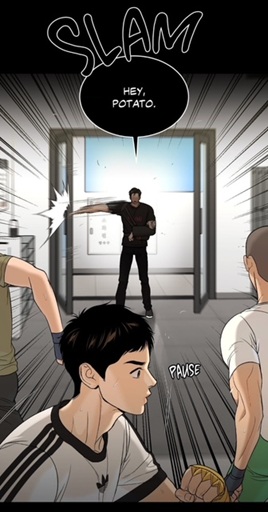 (chapter 60) When he got caught with his silence, Mingwa never showed us Potato’s justification. Yet, it becomes clear that the young fighter decided to give the following explanation: he respected Kim Dan’s wish to remain undiscovered
  (chapter 58) The reason for this interpretation is the champion’s reaction, when he was asked how he knew about his whereabouts (chapter 60) He deliberately avoided revealing that Potato was the one who disclosed Kim Dan’s location, shielding Potato’s role and perhaps attempting to protect the fragile connection they all share. This omission reflects Jaekyung’s misguided belief that ignorance might shield Kim Dan from further pain or complications. However, claiming he respected Kim Dan’s wish to remain undiscovered—was a lie, as his true motivation was Heesung’s request. (chapter 58) Therefore it is not surprising that through this omission, the main couple got affected. The lie from the chow chow had consequences for it increased the gap between the two protagonists. That’s how it dawned on me why Mingwa revealed the photo library of Potato. (chapter 60) The latter would serve as an evidence of his passivity and blindness towards Kim Dan, for the 5th puppy was still alive back then. The latter represents the fate of the doctor’s. These layers of deception highlight how characters like Potato become increasingly absorbed in their own worlds, blinded by their focus on superficial priorities.
This theme of being “too late” is also mirrored in Kim Dan’s experience with the puppy’s fate 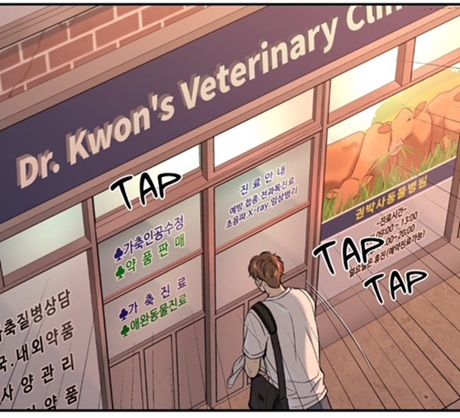 (chapter 59) and Joo Jaekyung’s rescue of Kim Dan. (chapter 59) In the case of the puppy, Kim Dan arrived too late to save the small animal, reflecting his self-doubt and hesitance to trust his abilities. Conversely, Joo Jaekyung arrived just in time to rescue Kim Dan from the ocean, demonstrating his decisive action. However, his failure to keep Kim Dan in a safe environment afterward suggests a broader inability to provide sustained support, echoing the narrative’s overarching theme of fragility and impermanence.
  (chapter 60) Though he is the one left behind, he is not realizing that by not following him, he is failing to protect Kim Dan.
The imagery of the fifth puppy serves as a poignant commentary on the consequences of neglect and inaction. The puppy’s decline—evident but unaddressed—parallels Kim Dan’s own struggles. Just as the fifth puppy’s fading presence is overshadowed by the activity of its siblings, (chapter 60) Kim Dan’s vulnerability risks being overlooked amid the chaos of the narrative. The missing puppy becomes a haunting reminder of what happens when fragility is ignored: a slow, quiet decline that ultimately goes unnoticed until it is too late. With too late comes regrets and remorse: 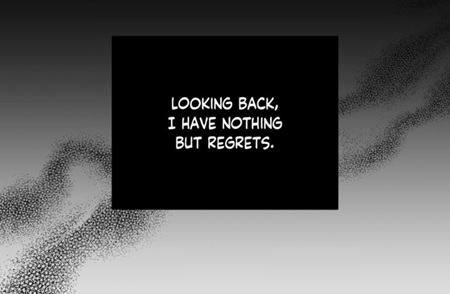 (chapter 57) Cheolmin already warned his friend in episode 13:
 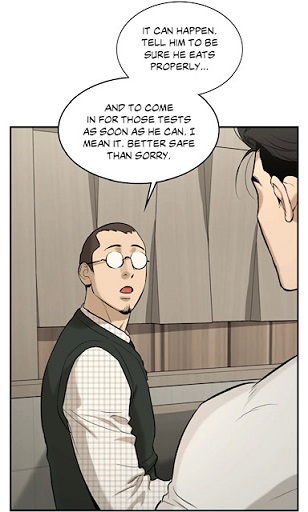 (chapter 13) But the man refused to listen to his advice, and now Kim Dan is leaving a trail of blood on the floor (chapter 60) indicating that his blood is not coagulating correctly. The last comment from the athlete implies that he is now accepting the challenge, he will do anything to have Kim Dan come back to him. Nevertheless, there exists one problem in my opinion: he is running out of time due to Kim Dan‘s physical and emotional deterioration, while he needs time to regain the physical therapist‘s trust.
Conclusion: The Fragility of Hope
The title, “The Deceptive Light of Hope,” encapsulates the essence of these intertwined narratives. The hospice’s name promises healing and solace, yet it masks the harsh reality of end-of-life care. On the other hand, since the couple reunited there, their relationship can be built on better foundations. They are surrounded by people who are definitely more attentive and less passive than at the gym. Moreover, the athlete has been living as a zombie all this time, the latter needs to die in order to be reborn as a human being. But it is the same for Kim Dan who has been living as a ghost for the last one and half month. On the other hand, rebirth is strongly intertwined with suffering, which reinforces my conviction that something bad to Kim Dan will happen. Since a beating heart is the symbol for humanity, it signifies that both will have to open up and confess their feelings. Similarly, the brightly lit hospital room, symbolizing purity, conceals the lies and unspoken truths exchanged between Jaekyung and Kim Dan. Potato’s photographs, seemingly innocent, betray a certain selfishness, ignorance and detachment, symbolized by the missing puppy. Each element contributes to the overarching theme: the fragile and often deceptive nature of hope in a world where appearances rarely align with reality. It is only a matter of time, until the wrongdoers realize their mistakes and apologize properly.
Feel free to comment. If you have any suggestion for topics or manhwas, feel free to ask. If you enjoyed reading it, retweet it or push the button like. My Reddit-Instagram-Tumblr-Twitter account is: @bebebisous33. Thanks for reading and for the support, particularly, I would like to thank all the new followers and people recommending my blog.
 Bebebisous33s' analyses in K-Dramaland and Manhwas