
Please support the authors by reading the Manhwas on the official websites. This is where you can read the manhwa: Jinx But be aware that the Manhwa is a mature Yaoi, which means, it is about homosexuality with explicit scenes. Here is the link of the table of contents about Jinx. Here is the link where you can find the table of contents of analyzed Manhwas. Here are the links, if you are interested in the first work from Mingwa, BJ Alex, and the previous essay about Jinx Passions in Purple : Jealousy and Joy – part 2
It would be great if you could make some donations/sponsoring: Ko-fi.com/bebebisous33 That way, you can support me with “coffee” so that I have the energy to keep examining manhwas. Besides, I need to cover up the expenses for this blog.
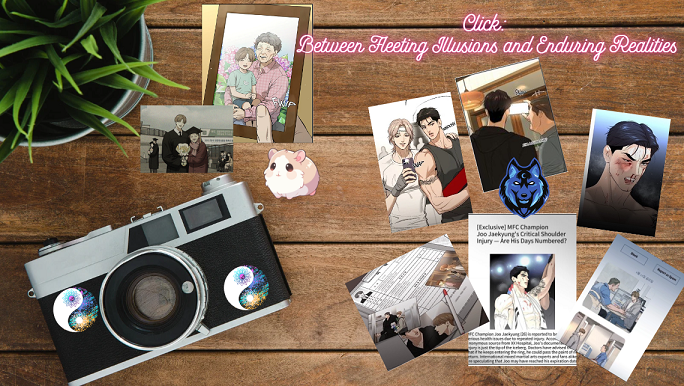
Like the illustration is indicating it, the topic of this composition are the photographs in Jinx. To be more precise, I would like to divulge its different symbolisms. The trigger for this study was a sudden thought, which came to my mind this morning.
1. The ghost’s invisible photos
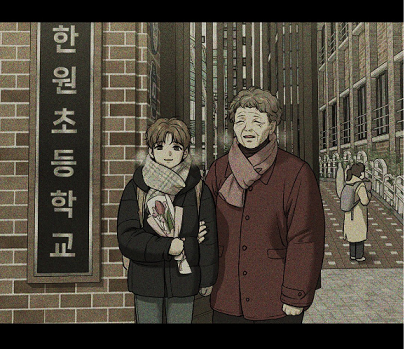
When Kim Dan left his home, he only took this picture. 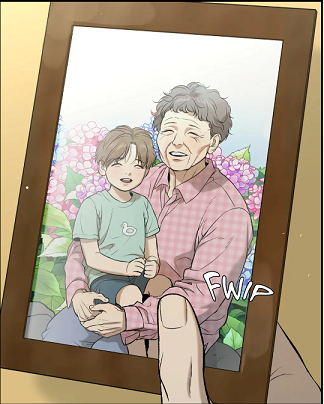 (chapter 19) However, in chapter 47, Mingwa revealed that in the past, Kim Dan had many pictures taken with his grandmother
  (chapter 47) .
  (chapter 47)
  (chapter 47)
 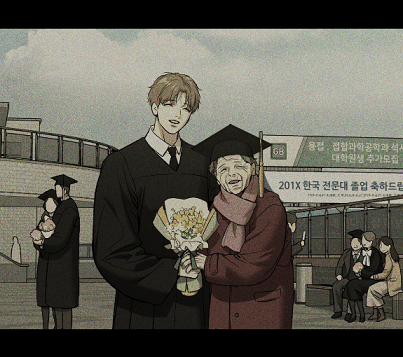 (chapter 47) One might argue about this interpretation, as these panels are presented as “memories”. However, the author left three important clues that these memories were pictures in reality. First, the perspective is not from the protagonist’s, but from an invisible third person’s. Then in the last image, in the background, you can observe a family posing for a picture in front of a person with a cellphone. This was the allusion that someone must have taken these pictures. The last evidence is the bouquet of flowers, the symbol for congratulations, but also affection!! After this realization, I couldn’t help myself wondering about the whereabouts of these photographs. Where are they?
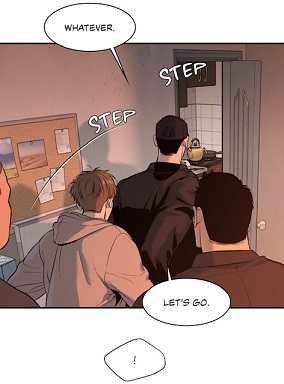
And now, take a closer look at the doctor’s home:  (chapter 17)
 (chapter 17)
 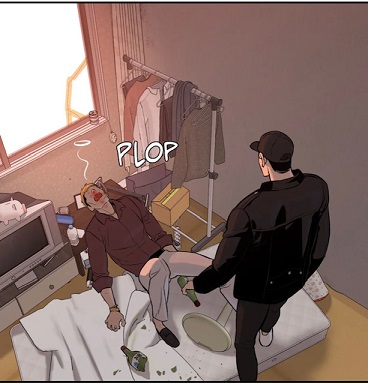 (chapter 17) They are nowhere to be seen!! I would even add that this place contains no traces of Kim Dan’s presence! (chapter 17) The pictures and the papers on the board are all connected to the grandmother. The images of the beach were revealing her wish to go back to the West coast, which was only revealed in the final chapter
 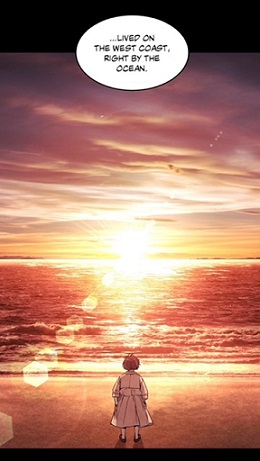 (chapter 53). And here, I feel the need to correct my past interpretation. Back then, I had assumed that this was the doctor’s repressed wish to go to the beach. It turns out that this was Shin Okja’s. Thus I deduce that the papers on the board are related to her health issues. Then in this image (chapter 17), the white shirt, the pink and dark green jackets are definitely belonging to the physical therapist’s relative. Finally, observe where his framed picture was placed: in a chest drawer!
  (chapter 19) The framed photograph isn’t visible on the chests or the shelves, when Joo Jaekyung confronts the loan shark and his minions (chapter 17). Then the next day, there is a box placed on the chest, while he is taking his belongings, while two drawers are open.
  (chapter 19) This exposes that this “souvenir” was not put on display in this house contrary to his stay in the expensive penthouse:
 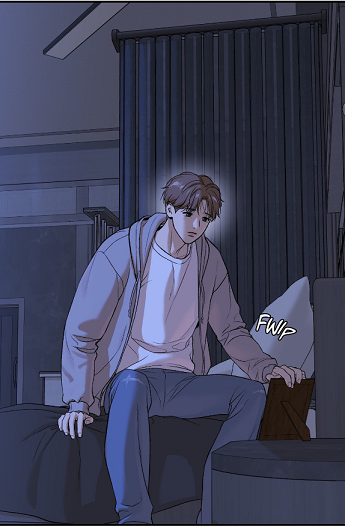 (chapter 47) Thus I conclude through the absence of his pictures and belongings that nothing was exposing the presence of Kim Dan in this small flat. We could say that he had been living as a ghost child (the piggy bank) in his halmoni’s place. It implies the existence of an invisible wall between himself and his grandmother. This perception reinforces my previous interpretation. This place was like a “cursed place, where the “Sleeping beauty” was waiting for his “prince charming”. 😉 Therefore, when the doctor removed the framed picture from the drawer, it symbolizes his own “release”. It is no coincidence that one week later, he became “a man and as such an adult”.
 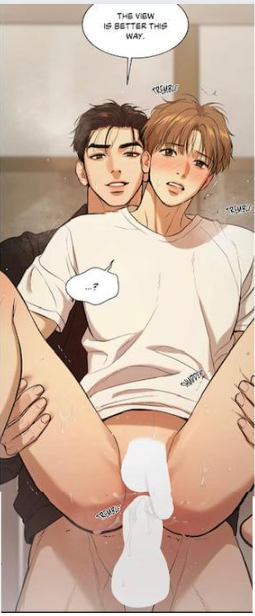 (chapter 19) He was slowly detaching himself from his halmoni’s shadow. The mirror is a reflection of a photograph. Here, he is facing reality: he has a long phallus and he can have a climax.
Furthermore, this new discovery (the absence of his commemoration pictures) helps us to grasp the origin of Kim Dan’s low self-esteem. He was not truly loved by his grandmother. Yes, the absence of his pictures represents a source of his suffering. IT was, as if the grandmother was not proud of her grandchild, because these photos were not exposed. The way these pictures were treated reveals the discrepancy between her words 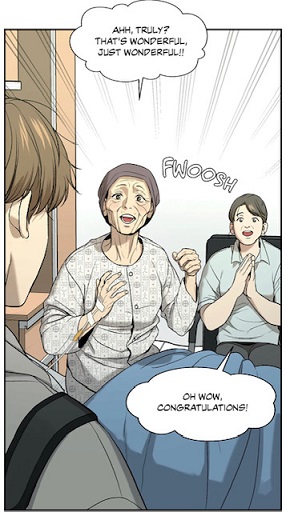 (chapter 7) and actions.
However, I haven’t answered the question yet: where are the other pictures? My assumption is that they were thrown away!!  (chapter 46) I might shock my avid readers with this hypothesis, but the fact that Kim Dan could only remember his childhood’s pictures in chapter 47 shows that he had long forgotten these moments. If he had seen the pictures constantly, he would have been confronted with reality and as such grasped that he was not alone in this world. He had his halmeoni by his side this entire time. He was cherished. Finally, keep in mind that this story is written like a kaleidoscope, so such a scene must have occurred in the past. Thanks to my chingu @@Milliformemes24, I can even be more precise. Note that in the last panel, the photos were taken with a cellphone. (chapter 47) So I deduce that these pictures were never printed and remained in the cellphone. One might say that the woman didn’t have money to print these images. But this explanation falls too short. How so? It is because she could have sent a copy to her grandson, especially when he became a PT. He was old enough to have his own cellphone. These pictures were never shared to her grandson! They remained in her cellphone. If so, he wouldn’t just have looked at the framed picture. The other proof for this deduction is the absence of a grandmother’s picture in her grandson’s screen:
  (chapter 38)
To conclude, their vanishing is exposing that these pictures were not TREASURED!! It was, as if they had been erased. But the doctor can not be the one who erased them or kept them hidden, as he associates these important moments in his life with his grandmother as sign of love and support!! Yes, this recollection reveals how much the doctor valued these moments. In other words, he would have “treasured” these pictures. He has none of them. Besides, when he entered elementary school, he was definitely too young to have a cellphone. That’s why I believe that they were all taken by the grandmother’s cellular phone. From my point of view, they were taken, because it was the custom. This would also explain why these “pictures” had no value for the grandmother. And now, you comprehend why I linked their disappearance to Shin Okja. So why did she not treasure and share them with her grandson? Why did she “erase” them symbolically?
2. Okja’s vanishing
My answer to these questions is the following. Halmeoni couldn’t stand the photographs, because she could see herself aging. From this (chapter 47) to this (chapter 47) And you all know that according to me, this elderly woman is suffering from Peter Pan Syndrom. Thus I feel like at some point, the halmeoni must have “thrown away” the pictures. Besides, I am quite certain that for the woman, these images had a different signification than for the doctor. She connected them to her suffering. She had to raise her grandchild on her own: these pictures represent her suffering from poverty and struggling mentally and emotionally. They mean hardship and aging for her. This explicates why she didn’t value these “souvenirs”. However, observe that all these pictures are related to Kim Dan’s school career path! (chapter 47) (chapter 47) The absence of these pictures signifies denial! It was, as if Kim Dan had never visited school and even never become a physical therapist. Under this new light, it becomes comprehensible why Kim Dan had no pride “as PT” and was willing to take odd jobs like “courier” 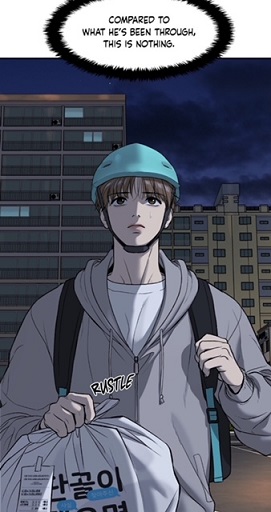 (chapter 42) or “waiter”. As my avid readers can detect, there is a strong link between “pictures” and “pride and love”. Their absence is the expression of neglect from the grandmother, who was definitely too focused on herself and her own suffering. At the same time, it lets also transpire the low self-esteem from the grandmother. In her humble dwell, there is no picture of her as well. (chapter 17) Thus I come to the following deduction: the grandmother dislikes pictures in general and was not living herself as well. Since she couldn’t love herself, she was not capable to love her grandson either. How so? For that, it is necessary to quote Erich Fromm from the Art of Loving (1956):
“If I can say to another: “I love you”, I must also be able to say: “I love everyone else in you too, I love the whole world through you, I love myself in you too”.
Loving someone means loving loving oneself first. In addition, where is the halmeoni running to? To the West coast, where she knows no one and desires to watch the sunset alone. (chapter 53) This image exposes not only her rejection of reality, but also her isolation. This decision stands in opposition to the quote above. She can not love Kim Dan, for she is rejecting the world and humans. This quote made me realize why Kim Dan felt so insecure the whole time, it is because he has never heard such a love confession from his grandmother. As you can see, the trigger with the photos gave me a lot of insight about the grandmother and the main lead.
In addition, one might wonder why the framed image was not put on display. (chapter 19) Why was this photo not treasured by Shin Okja? In my eyes, the picture was taken, when both were happy. There was a garden, and the boy’s happiness was genuine. However, I believe that this photo is linked to loss and this mysterious phone call.  (chapter 19) She was wearing the same shirt, when Kim Dan was speaking on the phone. In other words, the photo was also bringing painful memories to the grandmother. My theory is that the grandson’s parents vanished after that day. But this was not the same for the boy. He remembers the warmth from his relative. He is not making the link between this moment and his abandonment. In addition, this picture represents a frozen moment in time. It was, as if the woman desired to turn back time or hoped to stay in that moment forever. This explains why she kept the picture and continued treating her grandson as a child. For her, he was still the little boy from that time. However, at the end of season 1, it is no longer possible for her to treat Kim Dan as a child, because she needs him to move to the West coast.
 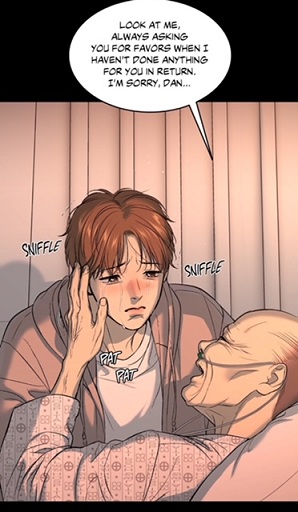 (chapter 53) It requires money, sacrifice and energy, but she is no longer paying attention to these aspects. Her time is now limited, thus she doesn’t feel responsible for any future debt. Striking is that she is not recognizing him as a man, but as a puppy dog.
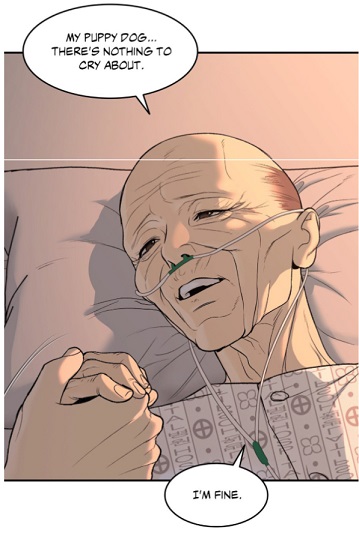 (chapter 47) Why? By acknowledging him as an adult man, she would give him a choice. He could refuse to do her a favor. As a puppy, he can not live on his own. Besides, by turning him into a dog and as such animal, she is denying him his right as a human being. She is appealing to his instinctive nature, his loyalty. And the moment I thought of a dog and death, I couldn’t help myself thinking of the famous dog Hachiko who kept waiting for his owner’s return at the train station, unaware that the latter had died a long time ago. As you can see, doc Dan’s pictures are strongly intertwined with reality and confrontation. Therefore the pictures with her grandson were not shown or treasured. The grandmother has been avoiding mirror and even pictures. As a person suffering from “Peter Pan Syndrome”, she is trying to do anything to escape “death and responsibility”. How ironic is that she just needed a picture to express her wish to move to the West Coast!
 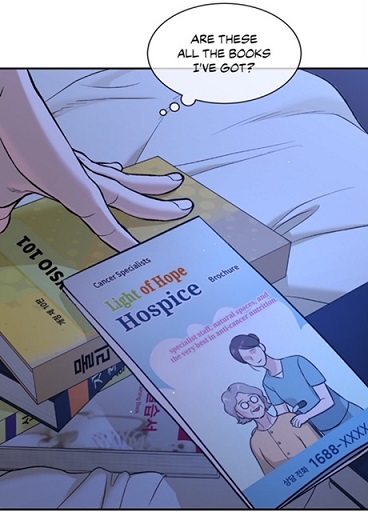 (chapter 53) Yes, the image from the brochure is creating the illusion that the woman on the wheelchair is her. She is smiling and “looking healthy”. It looks like she will have a better life there, less painful than at the hospital. In other words, this photo represents the exact opposite: illusion and fakeness. This
  (chapter 53) is the reality. The grandmother is not looking at Kim Dan contrary to the woman on the prospect. He is reduced to his role as caretaker. He has become her “servant”. In addition, the PT is not smiling like the nurse in the photo. In verity, he doesn’t want to do it. Deep down, he wished to stay at the penthouse.
  (chapter 53) The words “I should go” displays that he is doing it out of obligation. To conclude, photographs in Jinx are also embodying dream and illusion. (chapter 53). They only symbolize truth and reality, when the doctor is present.
3. The pictures in Joo Jaekyung’s world
What caught my attention are the similarities between Kim Dan and the champion. Both have no photo on their cellphone screen: 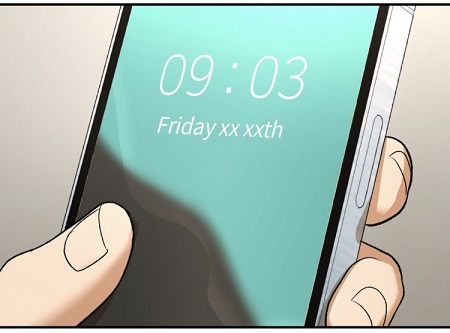 (chapter 38) Clouds are a reference to heaven and dream, while the green display displays loneliness and emptiness. They have no one by their side. Furthermore, just like Kim Dan, Joo Jaekyung has no family pictures in his house
 , (chapter 19) which could be seen as a clue that he is an orphan. Or in the best case, they live, but there is a huge wall and gap between them and the fighter. I would even add that no one could even identify the owner of the penthouse. He is a famous MMA fighter, yet there exist no picture of himself in this flat! Not even this one:
  (chapter 1) That’s why I had compared the penthouse to a hotel room in a previous essay. So we could say that he also lived like a ghost. However, since he is a celebrity, he should be rather compared to a god. He has no home and privacy. Thus the penthouse contained no memories, until the doctor started living with the champion.
Another important aspect is that the fighter doesn’t even have any picture of his manager or his children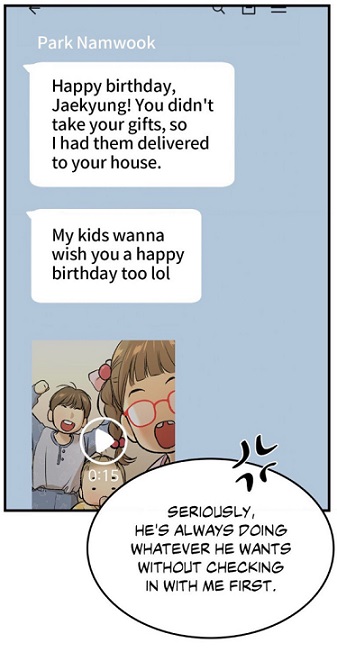 (chapter 43), a sign that their relationship has always been more businesslike, thought the boss somehow considered him as his “older brother”, as he keeps calling “hyung”.
 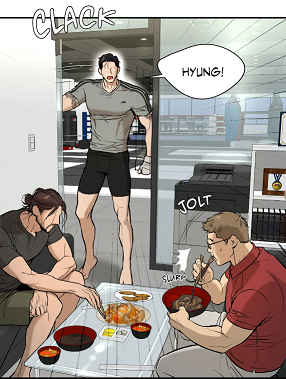 (chapter 5) The first personal video and message from his manager only appeared in chapter 43. This shows that the owner of Team Black had no family at all and not even friends. This observation brings me to my next remark. What about the gym Team Black? (chapter 1)
 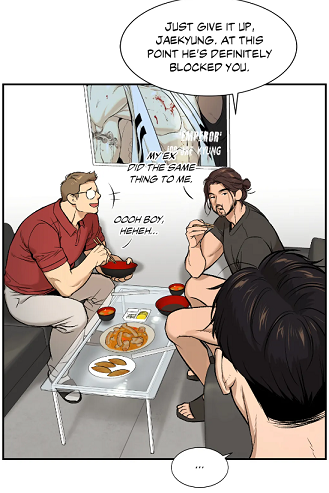 (chapter 5) There are only pictures of the champion and of no one else. Not even from Park Namwook or the ex-professional fighter Jeong Yosep. Everything is revolving around the celebrity. The absence of pictures from others is indicating neglect. The gym was not advertised as a great place to have fun! It is all about fame, wealth and glory! Therefore it is not astonishing why the rats left the sinking ship.
  (chapter 52) The champion’s image is tarnished, he will get less admiration and sponsoring. The decoration of the gym exposed the mentality of the owner, Park Namwook. The gym is about the celebrity, money, fame and sponsoring! Under this new light, it becomes comprehensible why the other members were neglected and why the athlete disliked it so much to be taken in pictures.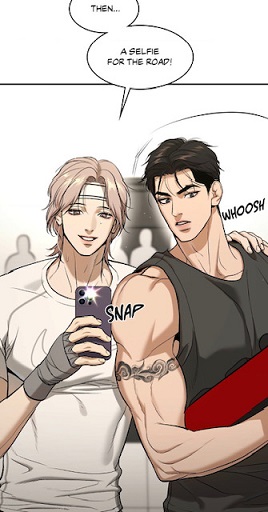
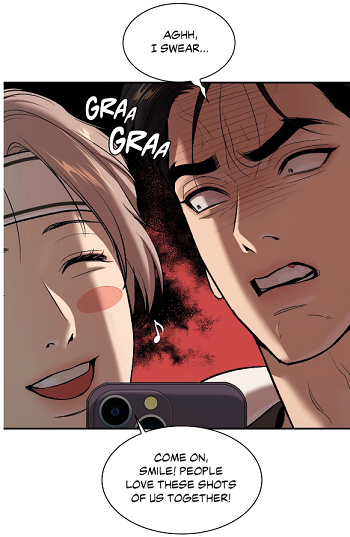 (chapter 30) It is because the photographs are a synonym for “money, glory and fame”. Choi Heesung was using him to get attention. His name
  (chapter 46), his face and body are like “merchandises”.
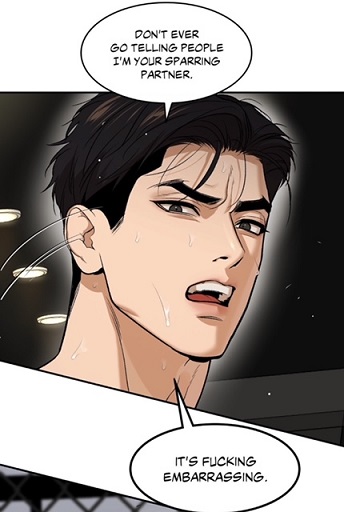
  (chapter 43) That’s why he disliked the idea that Seonho would advertise that he was his sparring partner. The pictures in the god’s world have nothing to do with memories or love, but with work! It is about making business and getting sponsors and making his fans happy. That’s why the author included the magazines in the same chapter with the actor.
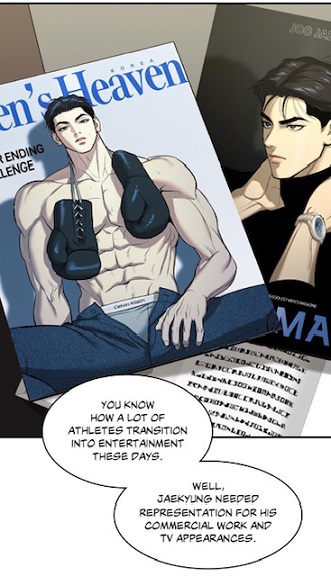 (chapter 30) Naturally, Heesung’s picture is not only related to business, they have a frenemy relationship. The photos with Joo Jaekyung stand in opposition to Kim Dan’s values: glorification, illusion, superficiality and futility. Under this new light, it becomes comprehensible why Joo Jaekyung would never put any framed picture of himself or others in his flat. His gym and the photographs are related to work. Who would like to be “reminded” of work and money in his own home? No one…
Under this new light, I came to understand why the celebrity reacted so violently about the presents and Kim Dan’s.  (chapter 45)
  (chapter 45) Imagine that the doctor had to work to exhaustion to give him an expensive gift! Yes, his gift was strongly intertwined with money, business and work! However, birthday is a symbol for home, pleasure, joy, simplicity and genuine gratitude. This has nothing to do with work and “replacement”. Yet, contrary to the other presents, the champion did open the hamster’s gift, for the latter had brought it personally.
  (chapter 45) Yes, his birthday was turned into a business event, a merchandise where he even had to pay for his own birthday party.
  (chapter 43) His popularity among the staff was based on his spending: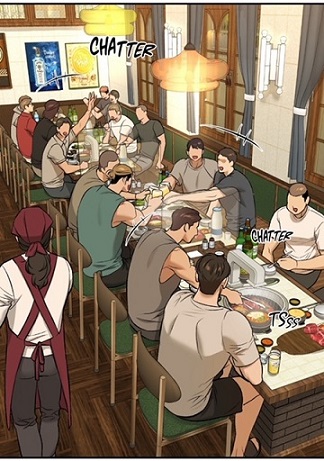
 (chapter 35) Such a success and glorification could only drive an edge between himself and others. In addition, the images could never boost the fighter’s low self-esteem. Yes, the absence of his own picture in his home is another important clue for his unhappiness and self-loathing. Because the doctor brought “work” home, Joo Jaekyung started avoiding the physical therapist:
 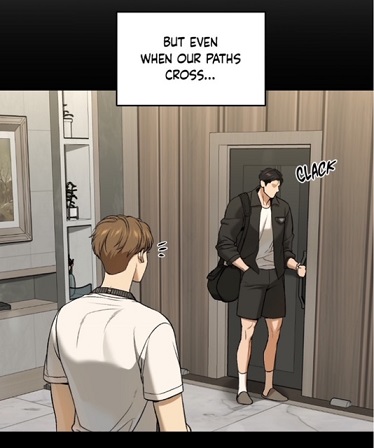 (chapter 47) It was not just because the athlete had been encouraged by his mentor to trust no one, to see relationship as a business.
  (chapter 46) This remark leads me to the following conclusion. Since the manager started sowing distrust in the champion’s heart, we can see it as another proof that this man has never truly loved “his boy”:
“If I can say to another: “I love you”, I must also be able to say: “I love everyone else in you too, I love the whole world through you, I love myself in you too”. (Erich Fromm, The Art Of Loving, 1956)
He just considers him as a toy and possession. 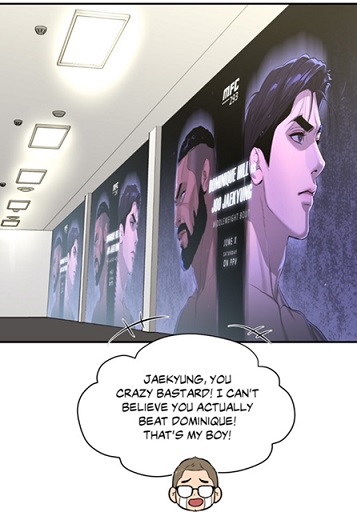 (chapter 40) Thus he can mistreat him, if he is not pleased.
But there’s another evidence that the pictures with the fighter are strongly linked to idolization, illusion and deception. 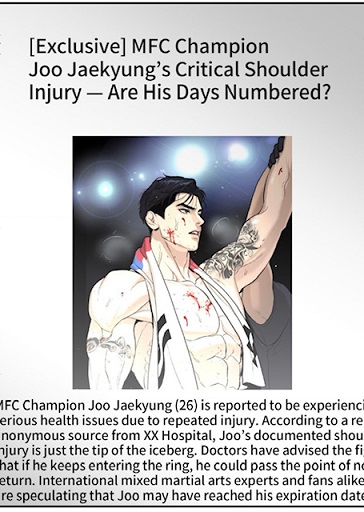 8chapter 35) When this article was released, the author selected a photograph exposing the champion in good health! He was raising his arm and as such using his “injured shoulder”. The content of the article contradicts so much the image which can only raise doubts among the readers. By using such a picture, they created the illusion that the athlete was hiding something. And this remark brings me to the last articles about the fallen legend:
 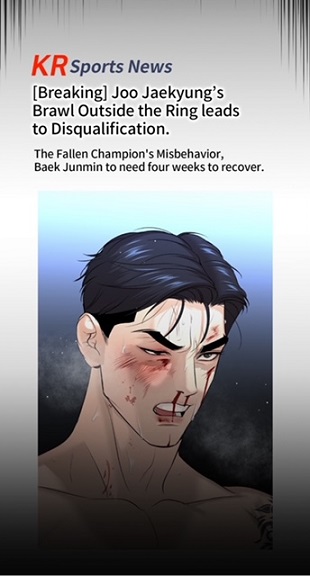 (chapter 52) His beaten face is exposed to destroy his “good image”: he appears not only as weak, but also as a bully. This shows how the medias are trying to manipulate the public with pictures. His face and body are damaged, therefore he has less value. This deceptive trick becomes more visible, when you include Baek Junmin.
 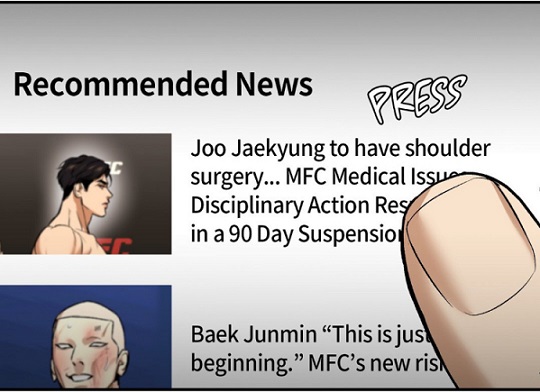 (chapter 52) The article utilized a picture of the fake fighter taken right after the match. He is smiling and barely injured… yet, the reality is that he got so wounded by the champion that he needs a long time to recover. As you could observe, all these photographs symbolizes money, business, work, superficiality and publicity. Thus they are strongly intertwined with temporality, fake love and emptiness. No meaningful moment…
It is important, because the moment the athlete started interacting with the physical therapist, a new kind of photograph started appearing: 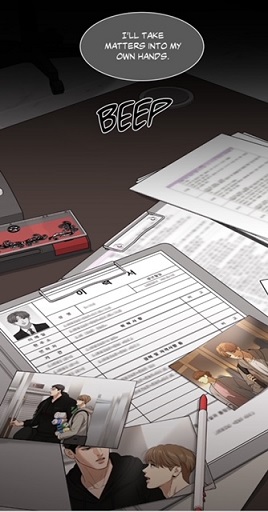 (chapter 46) The ones in this panel ooze privacy, selflessness and intimacy. The champion is seen carrying bottles and opening the door for the doctor, a sign of Joo Jaekyung’s respect for the doctor. Yes, these images expose the truth about the athlete: he really treasures his physical therapist. He is also seen listening to the doctor. This observation corroborates my previous interpretation. The pictures with the physical therapist symbolizes verity and reality. The problem is that Joo Jaekyung never got to see them, hence he didn’t realize his affection for the doctor. However, Choi Gilseok could notice it. In fact, the celebrity was delivered a different kind of truth:
 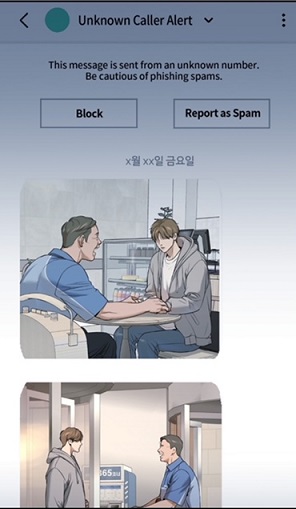 (chapter 48) Kim Dan’s meeting with director Choi Gilseok! However, note that these photographs were also a deception, for they never expose the outcome of the meeting. These pictures display the negative notions of privacy and intimacy, it is about plotting, betrayal and as such about “business”. How so? It is because they met at a café. As a conclusion, the photographs have a total different meaning in the athlete’s world. They represent coldness, superficiality, temporality, deception and work. This new interpretation reinforces my hypothesis that the main lead’s car must have been followed by a paparazzi during that night:
  (chapter 33) A black car was following him. But they couldn’t take any picture, for the windows of his car were tainted.
Interesting is that at the end of season 1, Kim Dan had a recollection of this scene  (chapter 53) which left him deeply impressed. Joo Jaekyung was turning around his head and looking at him! This shows that the star was paying attention to him. And what had happened in that moment? What is the light next to the protagonist? Yes, these were the flashes from the cameras!
 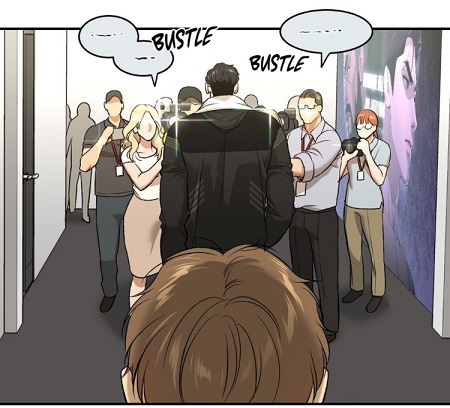 (chapter 40) It is no coincidence. Though he had no memory of the previous night, he felt this moment as magical. He had saved him and claimed him as a part of Team Black. Then he had look at him back, though he was facing journalists. However, the journalists didn’t take a picture of such a moment, for this was not relevant to them. It shows not only the true value of “memories”, but also that both were now truly living! During that night and day, both created wonderful memories.
  (chapter 41) Kim Dan experienced that he was not alone, he was part of “Team Black”, while the other heard a love confession for the first time. This memory displays (chapter 53) not only admiration, but also intimacy and TRUST!
Because the MMA fighter has been constantly surrounded by fake people in his world, it is not surprising that he doesn’t value “money” or glory. These didn’t make him truly happy. But there is more to it. Due to photographs, the fighter learned the wrong lessons. He judged people on prejudices and impressions!! Yes, this explains why Joo Jaekyung imagined to see Kim Dan selling his body., while he was about ti get raped. 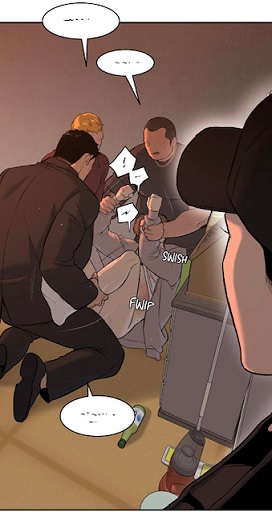 (chapter 17) He is relying too much on his eyes. He paid no attention to details and their words. Hence their words are not visible. In addition, the author created such a panel.
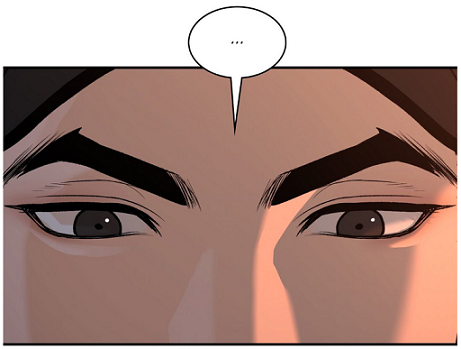 (chapter 17) in that scene.. But why is he trusting too much his eyes? It is because he adopted this poor habit from his mentor and hyung, Park Namwook. who judges people based on prejudices and impressions. When the manager faces a problem or some criticism
  (chapter 17), he prefers blaming his “boy”
  or delegating responsibilities to others:
 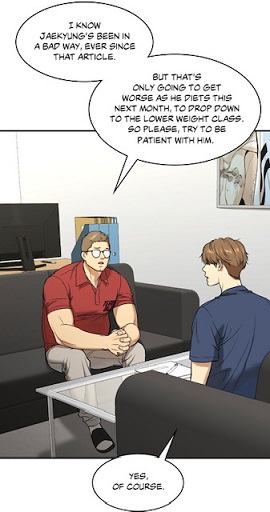 (chapter 36) Furthermore the man with the red tee-shirt has always been by his side for a long time. The time spent together is a proof of his “loyalty”, yet if the athlete had paid more attention to his words, he should have noticed his hypocrisy, lack of empathy and disrespect:
  (chapter 49)
  (chapter 52) The slap is the expression of lack of faith and disrespect. Besides, he kept badmouthing him in front of the other members, creating a huge gap between the celebrity and the other members.
This is no coincidence why Joo Jaekyung didn’t listen to doctor Lee’s recommendations as well. He never saw the results of his examination.  (chapter 27) In addition, he had to rely on the expertise of doctors, but he only trusts himself, his hyung and no others. But let’s return our attention to Kim Dan and his letter.
When the doctor left the penthouse, he left a memory and treasure to the athlete: a letter full of kindness and care! 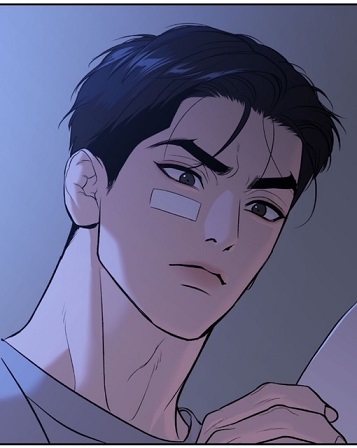 (chapter 53) The letter stands in opposition to the articles and photographs. Through the letter, the main lead is teaching to the wolf this important life lesson. He needs to use his mind and as such his heart to see the truth and reality.
“It is only in the heart that one can see rightly, what is essential is invisible to the eye” (The Little Prince from Antoine Saint-Exupéry”
The doctor is now perceived correctly, because for the first time, the athlete listened to his words and opinion. Here, I mean, he believed in his confession (apology, convalescence). Interesting is that after listening to his words, Joo Jaekyung started reflecting on his own actions and emotions. 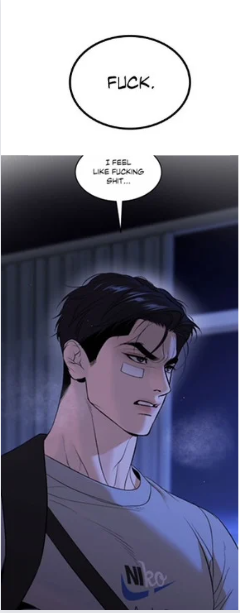 (chapter 53) Thus he voiced his discomfort and annoyance. However, this time, he is not questioning the origins of his actions. He knows now that the doctor means a lot to him. He is not a waste of time. It is no coincidence that the moment he paid attention to Kim Dan’s thoughts and emotions, he opened up his own heart and mind, because according to Erich Fromm
Being able to listen to oneself is a prerequisite for being able to listen to others; being at home with oneself is the necessary condition for relating to others. Erich From from The Art Of Being
And now, look at the expression “home with oneself”. Home is strongly connected with inner harmony, meditation and well-awareness as the foundation for genuine communication and understanding of others.. Let’s not forget that home is also a synonym for “family”. Thanks to the support of a loving family and friends, one can become true to oneself. At the same time, home with oneself helps to communicate better with others. And because the MMA fighter listened to Kim Dan words, he became more aware of himself. The doctor has become the key to the champion’s heart. He has also become his home as well. Thus Joo Jaekyung came to associate the penthouse to his loved one:  (chapter 53) The latter might have no photograph of Kim Dan, but his face is now engraved in his memory. To conclude, the letter should be perceived as a mirror of truth to the athlete. He needed to hear the hamster’s words without seeing his face in order to see him properly.
Finally, I conclude that in season 2, photographs will have a different meaning in the champion and doctor’s life. They will stand for privacy, love, friendship, recognition and selflessness. Yes, I am expecting that the doctor and his lover start taking pictures of memorable events, like this day: 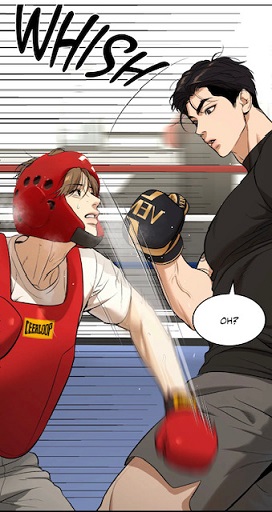 (chapter 26)
 (chapter 26) The gym will face some changes.
Feel free to comment. If you have any suggestion for topics or manhwas, feel free to ask. If you enjoyed reading it, retweet it or push the button like. My Reddit-Instagram-Twitter-Tumblr account is: @bebebisous33. Thanks for reading and for the support, particularly, I would like to thank all the new followers and people recommending my blog.


 The cause for his dismissal is that he believes, he always made decisions influenced by his deep thinking and never recognized that behind his actions, it was his heart influencing his mind. Because of the opposition between mind and heart, I couldn’t help myself connecting this to the famous quote made by the French mathematician and philosopher Blaise Pascal:
  Observe that his eyes are focused on the door facing him and he keeps walking straight, until he pauses due to the scream he hears coming from the painter’s room. The reality is that he is actually acting on his impulses and emotions. He is definitely enraged because he was mocked by Min. He keeps denying the noble’s words and even tries to convince himself that what he has with the painter is nothing special.
  It is really complicated to pinpoint exactly what he was thinking here. Either he really wanted to bring the artist or he desired to let Min believe that he had finally given in and had planned something else. For me, I have some doubt that he was looking for the painter. His emotions were all over the place but he kept reassuring himself that Baek Na-Kyum and him had just a physical relationship. He was mad and he tried to convince his mind that the painter meant nothing to him. However, what caught my attention is that while he recalls his decision from that night, he sees the painter’s sleeping face.
 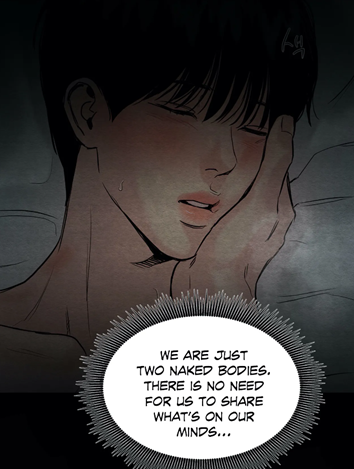 Back then, he felt the need to share what was on his heart, mistaking that his kiss and caress were motivated by his mind. What he really wants to share is not his mind but his heart but his eyes are not able to distinguish the difference. Because of the link between the heart, the mind and the blindness, I had a sudden revelation:

 The children can indeed enjoy the beauty in simple things, while the scholar’s mind is only focus on his books and his hunger for power and admiration.
 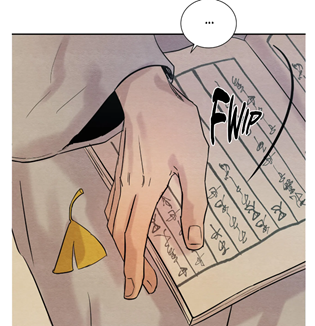 Therefore he can’t really enjoy life as he is left unsatisfied with his situation. As you can observe, the manhwa offers a similar philosophy. Jung In-Hun is just an adult who lost his inner child a long time ago.
 In fact, his inner child died at the moment he got betrayed by his own father so that he stopped living for real. He was like a zombie, the mind was the only proof that he wasn’t truly dead. His thoughts were the remains of his existence and this explains why he detests the idea that he is a man consumed by lust. For him, the body was just a tool thereby he never paid attention to his own body. His sex sessions were just a tool to deceive people, to hurt his father and ensure that he wouldn’t get wounded again. This explicates why he is no big eater, why he was even willing to give his whole lunch to the artist.
 He only existed through the mind and his eyes. That’s why he can’t see and recognize his own heart even after meeting the painter.
 They were the expressions of his innocence and purity in the end, which the aristocrat felt. We could say that through the publications, the noble rediscovered the forgotten childhood and innocence. And this coincidences with the narrator’s life. The latter used to love painting but was forced to renounce his passion, painting. So by meeting Baek Na-Kyum, the lord is encouraged to paint again.
  (chapter 8)
  (chapter 23)
  (chapter 36)
  Remember when he even grabs the painter’s hands, he is treasuring them. There is indeed a certain candidness in his gestures and comments.
 The erotic paintings were the fire to ignite the main lead’s heart. The inner child was awaken. Therefore he is again happy like a little child, when the artist appears at his chamber in the chapter 8.
  Thanks to the painter, the lord’s heart started beating again. He was able to reconnect with emotions that were buried by his huge trauma. However, since he had to use strategies to force the painter to paint, he explained everything with his eyes and mind. Although the low-born rejected him in the chapter 49, the aristocrat overlooked an important aspect:
 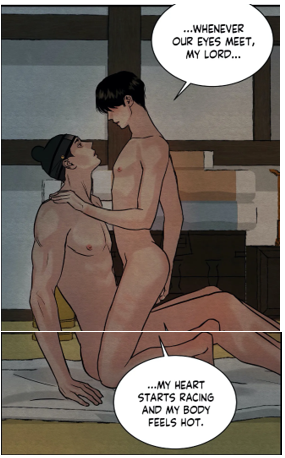 The heart. Baek Na-Kyum’s heart is racing in the lord’s presence so this is definitely more than physical attraction. Another parallel with the French story is the value of responsibilities. The aviator and the prince become responsible for each other, while they live in the desert. And this is what is occurring in the manhwa. Yoon Seungho takes his responsibility for the low-born
  and it is the same for the painter. The latter is the one who offers comfort and warmth to the lord, only him can soothe the noble’s extreme emotions.

 Observe the painting is what brings them back together. This is no coincidence, since imagination and creativity are important for children. Then if I had to compare all the other adults, I would say that Jung In-Hun is a combination of the geographer and the conceited man. The former lives in his books and makes no experience, he doesn’t visit the places he reads in his books. He has no idea about real life and the conceited man lives in order to get admired. The scholar is often seen in company of books
 and has no idea about the real world, therefore the lord warned him before his departure to the city. As for the conceited man, since he is alone on his planet, he is left unsatisfied. And we all know how arrogant and conceited the low noble is. The two adults represent each of them a negative feature which people should avoid in their life. Knowledge is good but without experience, it is reduced to nothing.
 The huge difference here is that taming is not connected to friendship but to love. However, as you can observe, the protagonists in both stories are making the same experiences. They learn the true value of love and friendship, they make bad experiences. One encounters terrible adults which resembles a lot to the painter’s past tragedies. The main lead made him suffer, yet everything was caused by the scholar… Remember that if the rose had treated the boy nicely, he would have never left his own planet. On the other hand, Yoon Seungho is discovering the innocence and purity through the painter. He comes back to life, as he reconnects with his inner child and his heart.
  Through his gesture, he reveals the secret. The lord likes the painter. In The Little Prince, the fox also unveils a huge secret:
 He shouldn’t feel wounded. On the other hand, he kept asking why. As you can see, the painter’s mind is controlling his heart. I had the impression that he would be the first one to recognize his emotions, because he is the only one who talks about his heart.
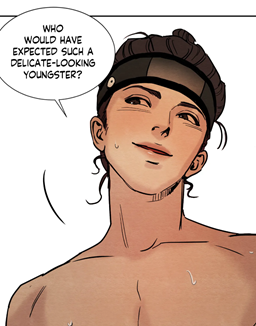 And this assumption was proven correct: The Joker is determined to taste Baek Na-Kyum. However, he is not wise like the fox in The Little Prince. In truth, he embodies the negative version, because he is not reflecting on his own behavior and emotions. He has no idea why he is so obsessed with the painter: for me, there’s no doubt that he is confusing lust with love. He definitely got upset, when he saw the couple hugging
 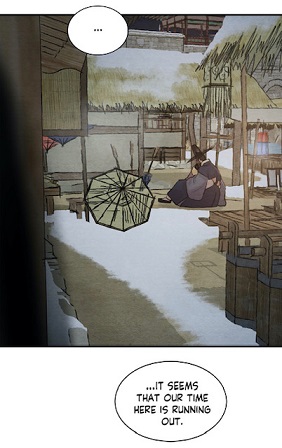 each other tenderly.
  That’s why he felt the urge to vomit. Min is too focused on looking at Yoon Seungho and Baek Na-Kyum that he is not recognizing his true motivations behind his actions. That’s why he said this:
  In my opinion, The Joker needs the presence of others in order to feel his own existence. In other words, while the fox in the original story asked the prince to tame him, the fox in Painter Of The Night is acting the opposite. He is trying to tame the others, but he keeps failing all the time.
 (chapter 70)
 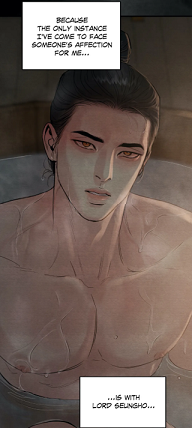 , he starts acting like a child again: he plays pranks
 (chapter 70)
  (chapter 74) or he is teasing his lover.
 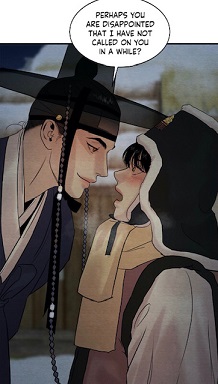 , These are signs of the return of his innocence. The readers can feel the inner child in Yoon Seungho.






 Bebebisous33s' analyses in K-Dramaland and Manhwas