
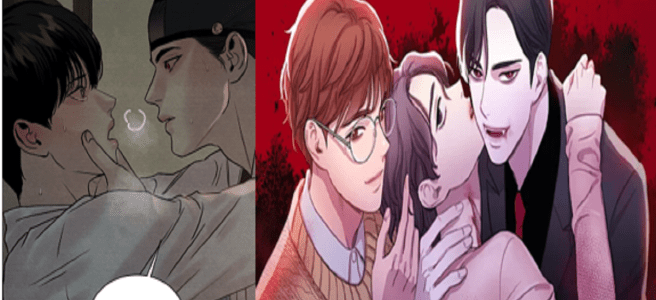
This is where you can read the manhwas. https://www.lezhin.com/en/comic/painter https://www.lezhin.com/en/comic/dine_vampire But be aware that these manhwas are mature Yaoi, which means, it is about homosexuality with explicit scenes. If you want to read more essays, here is the link to the table of contents: https://bebebisous33analyses.wordpress.com/2020/07/04/table-of-contents-painter-of-the-night/
Due to the title, I am quite sure that you are all expecting that my focus in this essay will be about Yoon Seungho’s last confession, 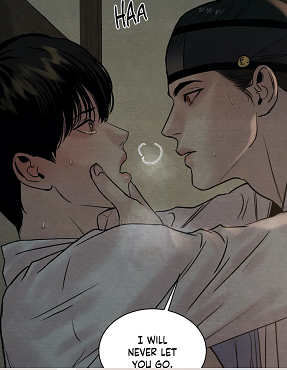 since his last action
  and words remind us more of obsession than of love. First he corners the painter against the wall, making him visualize what his future situation will look like. He won’t be able to escape from Yoon Seungho’s control and monitoring. The lord will always stand within his reach. Secondly, the expression “I will never let you go” indicates that the rich main lead will cling onto him, he will remain sexually close to him. That’s why they are still connected through their bodies. By clinging onto the artist, the aristocrat reveals his dependency. He can’t live without the painter, hence all his thoughts are revolving around him. This definitely looks like an obsession. The reason is simple. Baek Na-Kyum has now given a certain sense in his life, his presence makes him feel emotions, positive
  and negative
 . In my opinion, the artist made him feel less lonely and empty. Consequently, he can’t bear the thought of being separated from him. This exposes that the core issue has not been solved: his Dependency Personality disorder which is strongly connected to his abandonment issues. Since the butler had become his helping hand, the lord’s statement “I will never let you go” lets transpire a change. The lord is now dependent on Baek Na-Kyum. It was, as if he had just replaced the butler with the painter.
However, what the readers shouldn’t forget is that the master’s behavior is actually unveiling his own past and mirroring his past traumatic experiences. The main lead is acting the way he was taught, or even I would even say, the way he experienced it himself. There’s no doubt that he is replicating father Yoon’s gestures. The first evidence for this deduction is the way he grabs the artist’s neck in chapter 62.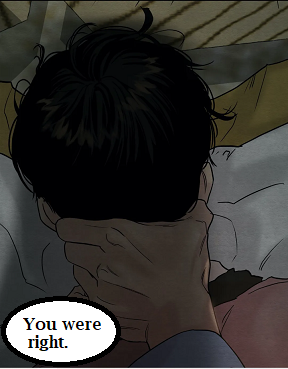 (chapter 57)
 Let’s not forget that he was trapped in his own house, like the doctor pointed out in chapter 57.
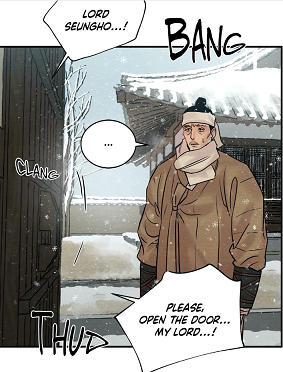
 In other words, his moves were controlled and he was forced to remain by his father’s side as well. However, I realized at the end of the second season that these traumatic experiences are not just related to father Yoon. This night from chapter 62 to chapter 65 exposes all the crimes the young protagonist was exposed to. First, we have the imprisonment
  (chapter 61)
 (chapter 74). Then he was raped in the shed and butler Kim was a witness who betrayed and abandoned him.
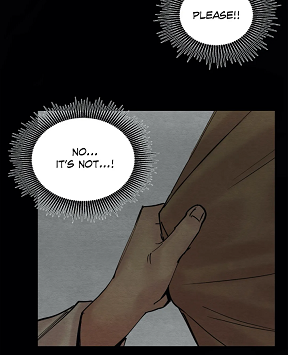 (chapter 65) Hence, later the main lead questions the butler’s appearance and interruption:
 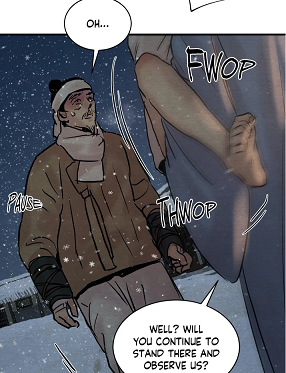 (chapter 64) That’s why I come to the conclusion that the main lead isn’t just utilizing the same expressions and actions from his father’s, but also from all the perpetrators: the rapist in the cabin and his main sexual partner, the king.
 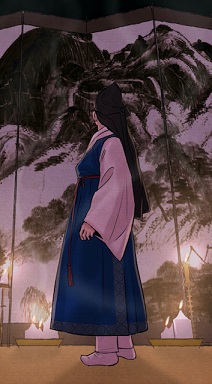 (chapter 74) Consequently, I come to the conclusion that this statement mirrors the king’s obsession for Yoon Seungho. Yet, unlike the main lead, the monarch was unable to keep his “promise”, as his obsession, blindness and selfishness led him to make terrible decisions. He ended up destroying the young man, hence he was forced to send him away.
 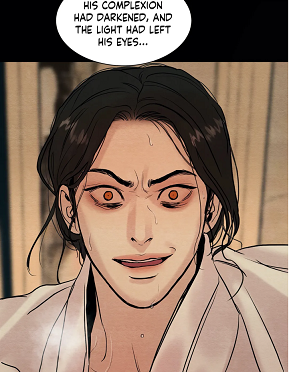 (chapter 57) The protagonist had lost his sanity and there’s no doubt that the king didn’t want to be confronted with his own wrongdoings. In the first version of this essay, I had assumed due to Yoon Seungho’s behavior, that the latter had been sexually abused by his father. This theory was developed based on previous observations, like for example, Jung In-Hun, as a new version of father Yoon and the painter’s surrogate father, seemed to be a pedophile due to his strange behavior in chapter 29.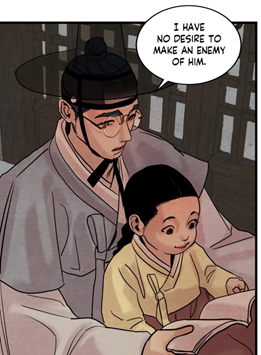

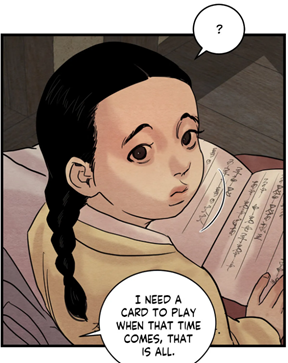 However, now I believe that the real sexual predator was the king himself, who was definitely an old-bearded man. Since he is mentioned in episode 76
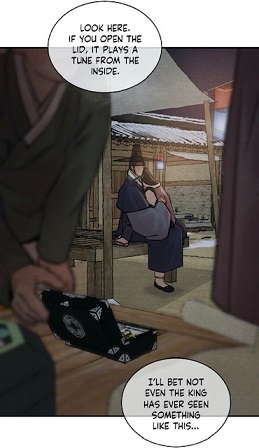 , it becomes more obvious that Yoon Seungho’s tragic fate is intertwined with the monarch. Therefore I deduce this. The king is a combination of Jung In-Hun and father Yoon. He’s an arrogant, stupid, selfish, emotional, violent, jealous, impulsive and obsessive man. Why? First, jealousy is a common denominator between the two fathers, like it is palpable in the following panel:
 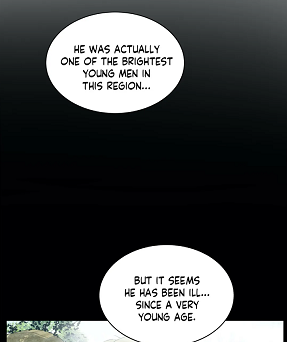 Hence the eldest master Yoon had to diminish his son’s good reputation by describing him as ill. However, if I hold this theory, the nature of the king’s jealousy gets a different signification. He decided to held the teenager captive in the palace, so that the son would stop attracting attention from other men. That’s why no one knows their special relationship. As for father Yoon, the house arrest was justified with the excuse of illness, because he couldn’t stand the idea that his son’s notoriety was better than his own. However, when the first rape occurred in the shed, the eldest master Yoon saw an occasion to use his eldest son in a better way: a prostitute. The manhwaphiles should keep in their mind that the learned sir witnessed the artist’s rape. This means that father Yoon must have been aware of the king’s preferences. For him, it looked like the perfect solution. He didn’t need to do anything, yet he would get benefit from this exchange of favors. Through Yoon Seungho, he could get more power and influence thanks to the monarch’s support. One might argue that the father hates sodomy, hence he can’t have sold his son to the king. In chapter 1, we hear from the painter that father Yoon cut off his son’s topknot in public because of sodomy.
  Yet, the disgust for sodomy is not a real argument in reality. In order to collaborate my theory, I will introduce another manhwa called “Dine With A Vampire”, created by Pangin and Pinko. The characters serves as an example.
Here, the antagonist Kwon Sungha is in a hidden relationship with his former best friend Joo Sooin , although the former hates homosexuality
 . Just like Jung In-Hun, Sungha is a hypocrite. Yet, he abused his schoolmate physically
  and sexually for so long that at the end, the main lead became a shadow of himself, a zombie. Therefore there was no light in his eyes.
  Kwon Sungha resents the protagonist, because he can’t accept his own sexual orientation and blames the poor uke. That’s why the antagonist is rough and violent during the intercourses.
  He even shows some sadistic tendencies, because he enjoys it very much, when the victim is crying due to pain.
 Therefore it signifies that each time the main character sheds some tears, his behavior will incite the seme to become more brutal. As a result, it is better to repress tears.
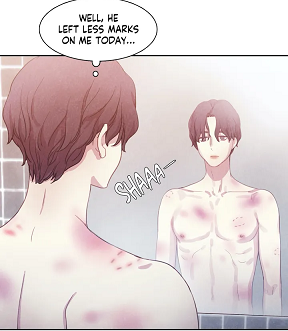
The reason for his violence is simple. This represents his antipathy for sodomy. He has internalized it so deeply that he can’t hate himself due to his huge ego and selfishness. He can only turn his resent towards the object of his obsession. He sees in Sooin the cause for his deviation and his “misery”, as he can’t live normally and follow the social norm which is that homosexuality is repulsive. That’s why in the end, Kwon Sungha gives such a negative reflection towards Sooin. What the victim sees in the abuser’s eyes, is only resent and the image of being a monster, while in reality Sooin is not perceiving his own true reflection, but the picture the former friend has about Sooin and homosexuals in general. This explains why the main lead has such a low self-esteem and self-hatred as a result. He despises his own image and has the impression, he is not lovable. He has the feeling that he is nothing worthy, hence he has no goal in life. He has given up on himself, since he sees no hope and no way out. Each time, he tried to run away, he was caught and tormented even more than before.
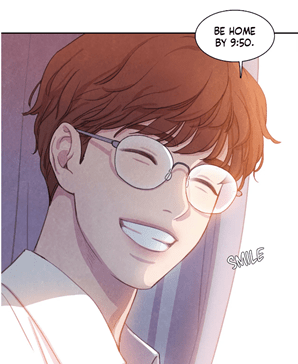
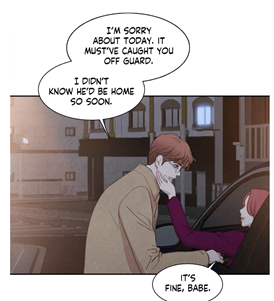
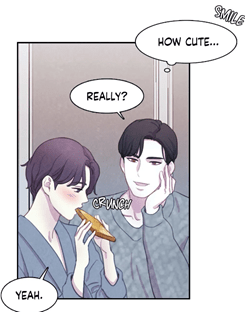
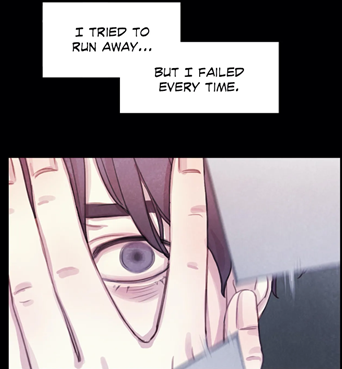 His life is already controlled by Sungha, who tells what he has to eat
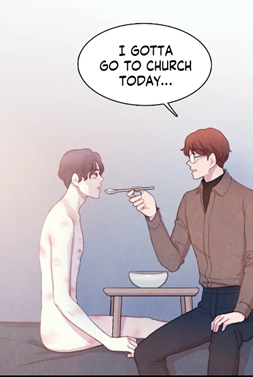 , how he has to dress and when he should come home.
  The villain is ruling Sooin’s life like a vicious tyrant.
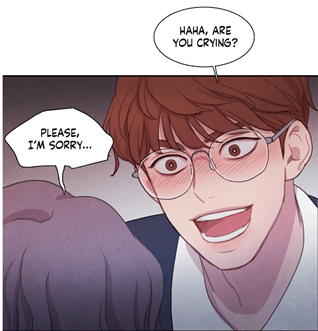
Hence when Sooin has sex with the vampire Park Chi-Hwan, who helped him to get rid of Kwon Sungha, the uke is triggered by the vampire’s word and is reminded of his past experience with Kwon Sungha. He is reliving his past. Notice how he avoids the other main lead’s gaze. He hides his eyes behind his arms and apologizes to his lover. He is already imagining that he will get punished. His behavior is so conditioned that in order to escape a punishment, he apologizes, although he knows that Sungha is dead. Even in his sleep, he is plagued with nightmares.
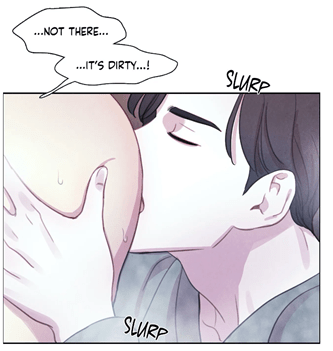
The villain views sodomy as filthy, therefore he rejects any intimate and tender gesture from the uke. As a conclusion, Sooin is not allowed to touch him. As you can envisage, Sooin is never kissed nor hugged. However, despite his hatred for sodomy and the abuse, he is not willing to give up on his sexual partner. He is so obsessed with Sooin that he even envisions to keep him captive in a cage, though he plans to marry a woman coming from an influential family. The irony is that after getting betrayed by the main lead, the former “lover” is not questioning the reason behind the treachery. In fact he blames Sooin for everything. He reproached him that the latter never smiled in front of him
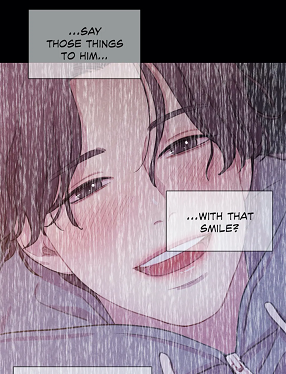 , but now he is giving his smile towards another man. The antagonist, who has now become a vampire himself, definitely perceives the uke as his possession. The description of Sungha’s behavior indicates that Sooin was his obsession, but not his love.
And now it is necessary to summarize all the elements indicating that Sooin has been abused sexually, physically and emotionally:
The lack of light in Sooin’s gaze, his self-hatred, a negative image about himself, plagued with nightmares, words can trigger the victim and he is reliving his past, his entire life is controlled by the abuser, the attempts to flee, the lack of warmth and tenderness, punishment if the abuser is angered, the feeling of being trapped, living a hell. Like I described, Sooin had become a zombie, was no longer living his own life.
And now, I am quite sure that the manhwaphiles will recognize these symptoms in Yoon Seungho’s behavior. And this is no coincidence that Yoon Seungho is so obsessed with the painter’s tears. Due to the repetitive abuse, the main lead had to stop crying, if he didn’t want to infuriate his father and later the king. That’s the reason why he can no longer cry and Kim and the noble asked the painter to stop crying. Moreover, the main character is dressed like his father. Both wear a robe with long sleeves without any pattern and even the color is quite similar in the beginning.
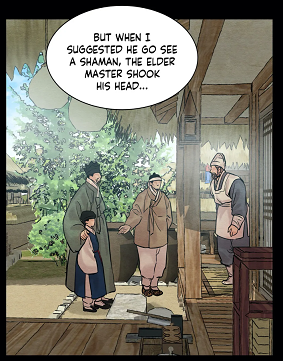 This shows that he has internalized not to draw attention through his clothes. However, the moment he wants to impress the painter, he starts wearing a different color (blue), like in his youth. And the more time passes on, the more he dresses up in order to attract the artist’s attention, which is already visible in chapter 23.
 This evolution displays that his original taste for clothes was influenced by the abusive sex partner. Striking is that the beautiful hanbok in chapter 52
  reminds us of the king, as the phoenix is a symbol for the Joseon monarch. That’s why I am more and more convinced that the traumatic past causing abandonment issues is caused by the father and the Joseon monarch. And it becomes more understandable, why the lord could only fall for the painter during their Wedding night and desired to renew this night. He was hugged for the first time
 and he was the source of happiness of his partner, something he has never heard before. Neither his father nor his “sexual partner” embraced him. Why? In my opinion, it is linked to the way the lord was offered to the king. Due to the position of the candles, it looks like the noble’s fate is already determined. He will be a sacrifice for the monarch. He will become his plaything.
 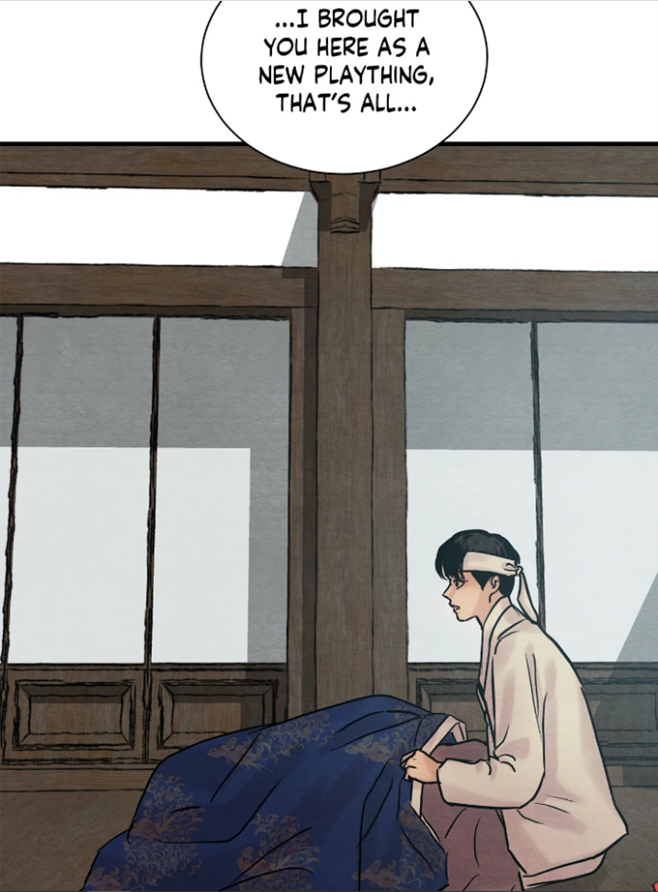 However, in order to ensure that the favored courtesan would never get power over the monarch and would remain under the control of his father, the latter had to indoctrinate his son. Thus the father created these rules: sex was just a battle and the teenager was not allowed to confess. Then I remembered the scholar’s words:
  Striking is the word “courtesan” in this picture. It’s here linked to the kisaeng-house, however the expression as such implies the royal court. This definitely shows that there’s a strong connection between the brothel and the palace. Since the learned sir mentioned it in Yoon Seungho’s library, I am more than ever convinced that father Yoon transformed his mansion into a brothel in order to train his son as a future courtesan. Let’s not forget that the nightmare
  in chapter 74 takes place in the mansion: We never see the palace, only the hands of the nobles. That’s why I come to the deduction that father Yoon must have asked the noble families close to him for help. They were supposed to train his son. After getting drugged and gangraped, the noble’s strong will was broken. The father did it intentionally. He needed to turn him into a obedient puppet who would never make any request or even try to escape from his father’s claws through the king. That’s why I believe that when he went to the capital, his heart had already died. He was in a similar state than Baek Na-Kyum in the beginning of the second season: passive and submissive. Since we have two rapes with the painter (one is planned), I assume that the lord had this terrible fate:
- The rape in the shed
- The gangrape leading to the sexual education as prostitute:
- The second rape which I associate to the king :
 that’s why he couldn’t yell or defend himself. Who could help him in front of the most powerful person in Joseon? He was like a low-born next to the monarch.
However, like Sungha from Dine with a vampire, the king was a very possessive and jealous man who hid his homosexuality. Nevertheless, I guess, he got fascinated by his plaything that at some point, he wanted to possess the main lead’s body and heart. Let’s not forget that Yoon Seungho’s obsession in the beginning of the second season was this:  And since we have a repetition in the story, it means that this must have happened in the past. Besides, I doubt that father Yoon would have questioned such a behavior. He definitely hated Yoon Seungho’s strong will. Consequently, I believe that the king must have had a similar attitude. He wanted to obtain the main lead’s love, yet unlike Yoon Seungho, the king became violent and angry by such a submissive behavior, which could only contribute to the protagonist’s silence and fear.
From my point of view, father Yoon was too simple-minded to realize that among the palace, there were rivals and enemies who would target his son. Since I have developed the theory that Yoon Seungho’s painting had been stolen by Jeong Seon, his special relationship to the king could have been perceived as a source of threat for the painter. The theft could have been discovered. I had stipulated as well that a painter could have been kidnapped and killed, especially if we take into consideration Nameless’ words who seems to know how to deal with artists: 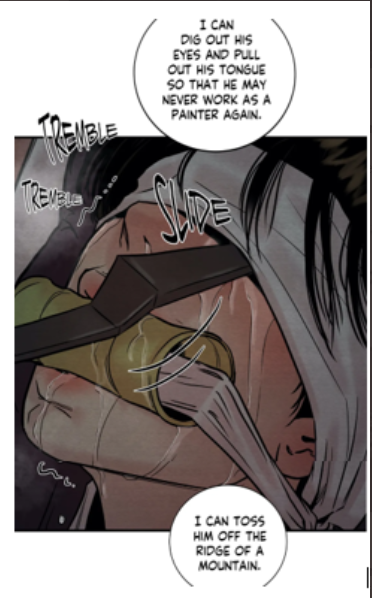 (chapter 60). Besides, the readers should remember that the main lead tasked the artist to paint his sexual intercourses, therefore it is definitely possible that Yoon Seungho’s request was influenced by the king’s. The latter could have had the desire to have his sexual intercourses with Yoon Seungho portrayed as well. However, since father Yoon hates sodomy and doesn’t want to be associate to this, he had every reason to hate the painter. The pictures were a proof of the eldest master’s hypocrisy.
Moreover, it is also possible that the main lead tried to escape from his hell, but he was betrayed and abandoned.  The fact that his description of the flee is so vivid makes me believe that he could have done it himself once. He thought, he had succeeded, before he was caught, because he had been betrayed by the person whom he trusted the most: Kim. Moreover, the main lead had another enemy in my opinion: the culprit of the first rape, as the latter had not been caught. There’s no doubt that in the shed, Yoon Seungho is acting like father Yoon and the king. Both mistreated him, but were unable to give him love, whereas they expected from him total obedience and even attachment.
To sum up, when the lord was brought to the capital, he was confronted with a bearded man again, hence the second rape occurred. That’s why the king thought that the teenager had lost his virginity to him. Let’s not forget that during the Wedding night, the lord never expected this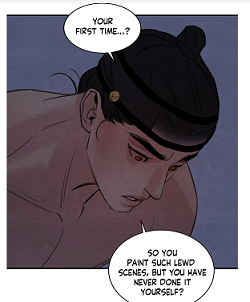 , therefore I am expecting the opposite with the king. The latter imagined that they would send him a virgin. Besides, it is a custom to send virgin concubines to the ruler.
I have to admit that this idea came to my mind, when I wrote the essay “The birth of the zombie”.  This panel symbolizes the purge which the main lead witnessed. It started with the following question: Why would the monarch eliminate the families close to the Yoons? In my opinion, someone revealed to the sovereign that the protagonist had been trained by the nobles close the eldest master Yoon. They had tainted his sex partner and even ruined him, although there’s no ambiguity that the ruler’s attitude (jealous, violent and possessive) contributed to this evolution: the main lead was slowly becoming a zombie. From my point of view, there are three persons who had a desire to destroy Yoon Seungho and through him his father: the culprit of the first rape (my theory is now that it was father Lee), the butler who witnessed it, and like I mentioned it above, the artist who stole Yoon Seungho’s work. This leads me to the following conclusion: the butler could have revealed it to the king, faking his care and concern for his master.
 “Imagine… the poor boy was gangraped by the families close to father Yoon.” But he never mentioned the training, as Kim’s MO is always to tell half-truths. This would divert attention from the other perpetrators. When the king confronted Yoon Seungho, the latter couldn’t reveal what had truly happened, because this would mean that his father was involved. Hence he remained silent, which was perceived as a confession. As a revenge for the dirty trick, the ruler ordered the purge which the main lead had to witness. The latter was so devastated that he was literally destroyed. The king didn’t expect such a reaction, hence he sent him back to the mansion, only to hear later that father Yoon had punished his own son. The latter believed that the main character had betrayed him by revealing the indoctrination and prostitution.
And now, you are wondering about lord Song. From my point of view, when Kim realized that Yoon Seungho was suffering from memory loss and had even forgotten his relationship with the king, the butler decided to use lord Song as the scapegoat for the lord’s suffering. He created fake memories, a mixture composed of half-truths. Father Yoon and lord Song were blamed, while the real perpetrators for Yoon Seungho remained hidden.
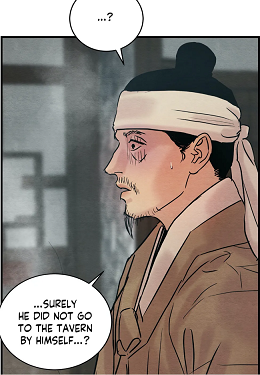 That’s why he doesn’t want them to meet. He never expected that the noble would write a letter to his master, although the letter was fake. Lord Song was definitely father Yoon’s rival. Another possibility is that it was indeed lord Song who had decided to betray lord Yoon and expose the plot. But like I mentioned it above, I am suspecting that this is just another lie from the valet. For that, he used the main lead’s situation in order to divert father Yoon’s attention. Father Yoon was too mad at his son, hence he didn’t realize that in the mean time, the other noble had revealed the plot to the king. Therefore the father could only resent more his son and chose to punish him by betraying a second time. He abandoned his son and punished him in the worst way: not only he castrated him, but also he ruined his reputation for good. That’s why the terrible reflection is engraved in Yoon Seungho’s memory.
 Under this new approach, it becomes understandable why the butler encouraged Yoon Seungho to lead a life in debauchery. That way, he wouldn’t attract the king’s attention:
 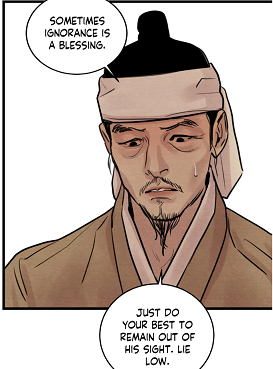 The latter had killed many people due to his obsession for Yoon Seungho, whom he treated very poorly: full of mistrust and violence. The latter was not able to take care of the young man properly.
It is also possible that after the purge and huge revelation, the king decided to offer Yoon Seungho to his officials as retaliation. Observe that we often have two events of the same nature: two rapes, two incidents with the door, two “escapes” etc. Since the protagonist had been tainted, then he was nothing more than a prostitute which led to a real breakdown. Hence the young man was sent away from Hanyang. One might argue that this theory is not possible, since I had already stipulated that the king was obsessed with Yoon Seungho. How could he offer him to his officials? Let’s not forget that Yoon Seungho almost did it, when he got rejected in chapter 54: 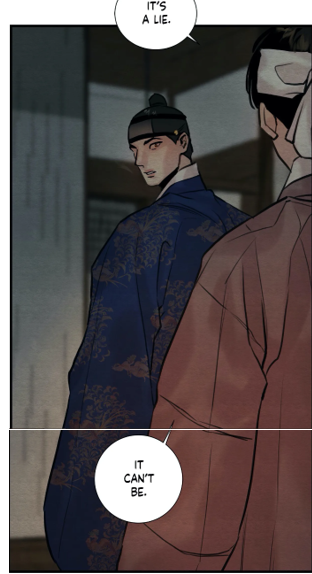 If he was so obsessed with the main lead (mind and heart) to the point he wanted to keep him away from others, then he would have never used him as a whore. However, even this point can be refuted. First, even Jung In-Hun, who hated homosexuality, was willing to betray his own doctrines for his own interests. Let’s not forget that in the other manhwa “Dine with a vampire”, the antagonist has no problem to use his sex partner for his own interests. In one incident, he makes sure that Sooin interrupts him with his girlfriend, so that the villain is not forced to have sex with her. At the same time, he uses this as an excuse to punish the uke. Furthermore, I portrayed father Yoon as especially greedy and ambitious, hence despite his jealousy and obsession, he had a big dream. Besides, he hates sodomy so by using his son as a prostitute, he can remain clean and perceives his son as dirty, since he is the source of his “misery”. As for the king, notice that the latter doesn’t have a bad reputation. This shows that his sexual orientation and even perversion is a secret. The king could have a similar attitude than Sungha: he hates homosexuality, but he can’t stop his urges. So for his own career, father Yoon taught his son that sex is a battle, therefore he described love as a weakness. However he made him believe that if he obeyed him, then he would benefit him:
 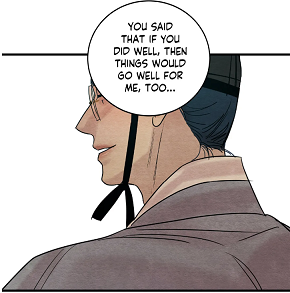 . He requested that his son would never fall in love with a man so that he would have the upper hand in front of the king.
 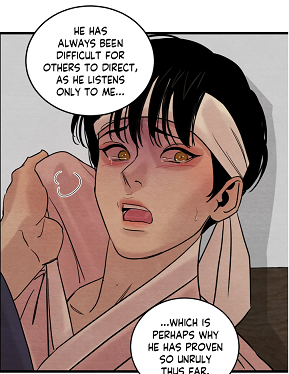 Only the father was somehow able to control him. That way, he would bind his son’s mind and heart to him. This would explicate why the lord chose to become as a ghost in the end. Imagine, he had been ripped apart by his own father and by the king. The body was possessed by the other nobles, while the father was still possessing his mind and heart. He had no freedom at all. After writing this, I feel so horrible. Father Yoon was definitely ruling his son’s life and the monarch tried to change this, but failed as he was himself too selfish, violent and ruthless.
This theory also explains why valet Kim wondered about father Yoon’s reaction in chapter 57.
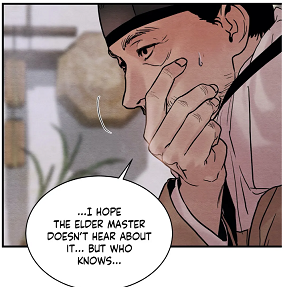 First, this indicates that the eldest master Yoon is still paying attention to Yoon Seungho’s behavior, and Kim is well aware of it. Imagine that Yoon Seungho used his bad reputation as a notorious hell-raiser in order to torment his father, yet the latter never intervened. This signifies that he could bear the humiliation, because the truth had not been unveiled. The father turned his own son into a black sheep, a sign that there’s actually something wrong in a family. However, it becomes a different story, when he hears that Jihwa has already confessed in public. It means that his son could definitely fall in love and this could also reach the king’s ears. If the lord maintains a terrible reputation, then no one will try to become his partner, hence the king’s position remains untouched. Notice that Kim is worried that the elder master hears about the confession, indicating that he is well aware about his doctrines. Love is a taboo. I doubt, he is referring to sodomy as such, because it is well known that Yoon Seungho sleeps with men. As a conclusion, this panel reveals that the lord was keeping an eye on his son all this time. Since he never meddled before, in his eyes, his son’s rebellion was nothing to worry about. Consequently, this is not surprising that the father and Seung-Won imagined that once asked by them, Yoon Seungho would obey and help them, because he had always done it before. Yet, this time, the main lead refused.
Although the damaged painting wasn’t sent to his father by the father, it is important to examine its signification. 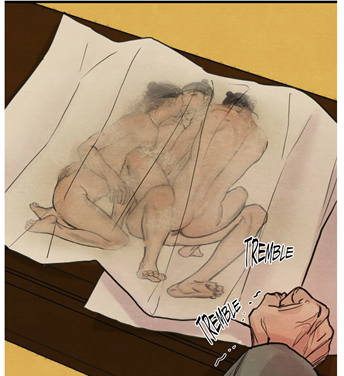 In fact, the painting showed the main character having sex with other men. For the first time, father Yoon was confronted directly with his hypocrisy. In the past, he was never present, when he sold his son, hence in his eyes, he was still someone honorable. However, the painting confronts him with his true nature: He was his son’s owner and pimp. In other words, the father is facing reality. He let men to touch his own son, while in his mind, he justified his action by saying that he was an educated man. He thought, he still possessed his son’s mind and heart. He became infuriated, because he had the impression that he was losing the control over his son. Yet, since this is a threesome, it still looks like Yoon Seungho is just fooling around. And with this theory, his love for the painter gets a different significance. For the father, it would mean the end of his ruling over his son’s life. He would lose Yoon Seungho as his pawn for good. He would use the low status of Baek Na-Kyum in order to separate the lovers, while in reality he would try to regain ownership over the main lead.
If we take this aspect into consideration, then the story gets another dimension. Byeonduck would show us, how a sexual abused victim becomes a perpetrator himself later, which is often the case. And this would explicate why the lord never acted before towards his sexual partners. He might have cut Jihwa’s hair or dragged them by the topknot, yet he didn’t rape them. And since the painter is a low-born, he is put in the same situation than Yoon Seungho in the past, vulnerable and defenseless against the authority of the king, the supreme lord. And remember that he asked the painter to call him “my lord”, and his sex partner might have requested the same calling. However, when the painter whispers “Lord Seungho” for the first time, it pushes the main lead to act differently, like I pointed out in the former analysis. In this perspective, the chapters 62 and 63 get another signification. The painter’s expressed apology is the expression Yoon Seungho used himself in the past, when he had displeased his father and the sovereign, or even worse, when he got caught after his escape attempt. This would explain why he saw it as a confirmation for the painter’s flee. He was definitely sent back to his past, therefore he turned into the shadow of his father and the king. That’s why when the painter started confessing,
 he stopped him, because back then the lord had a similar reaction. He proclaimed, he loved the man, while deep down, he only feared and even detested him. We know for sure that the main lead has never been in love before, father Yoon ensured this. That’s the reason why his third love confession resembles more to an obsession than to love. This is how the king treated him. And read the last two chapters under the perspective that the king is Yoon Seungho and the powerful noble the painter, now you understand why Kim has the intention to intervene this time. He knows why the noble is acting like that. Then we understand why the lord chose to become blind and deaf to the truth, as he was reliving his own past and he knew very well what he had done back then. The painter’s words can only be lies, since he was forced to lie in front of his abuser. Therefore he can not use his brain like during the first season. As for people asking a punishment for Yoon Seungho’s wrongdoings, I can only reply: if my theory is true, then the man needs therapy more than anything else. He is a perpetrator, because he has been conditioned by his father and the king, and since he is willing to change and even shows remorse, he needs help more than anything else.
I have to admit that my initial intention in this essay was different, although I chose the title “Yoon Seungho’s obsession”. While reading the last two chapters, a detail caught my attention: his obsession for the painter’s motivations. (chapter 62)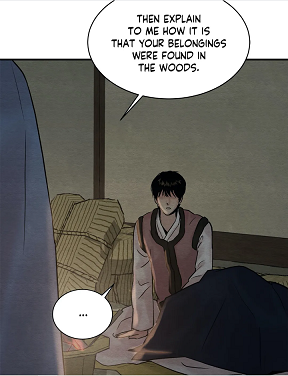
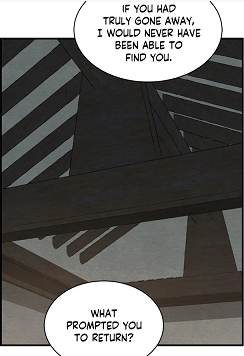
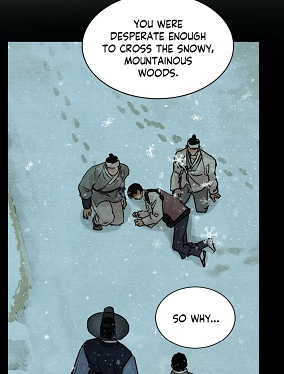
 Then in chapter 63:
  In fact, I noticed that the lord was fixated on “why”, although he doesn’t use it constantly, he often makes allusion. It is already palpable in chapter 21, when the lord wonders about the artist’s reaction:
  With these words, the lord is actually questioning the reason for the painter’s behavior. Why did he push away the lord before? The artist replied that this had nothing to do with him, he didn’t dislike it. Then in chapter 40 and 41, he pushed the painter to question his own motivation. Why would he support his former teacher? What does he expect from him? Then we have the chapters 45 and 47, where the main character keeps asking about the artist’s reason for his behavior. Why did he remain by his side? Why is he so indifferent and submissive unlike in the past? I judge it as his obsession and there’s a reason for that. Sure, one might say that he would like to know why the painter stayed by his side. He is so desperate to be loved, he is still wishing to feel loved. However, there’s another motivation behind this obsession. In my opinion, this obsession to the “why” is related to his past and as such to his father and the king. He saw his negative reflection in his father’s eyes, the man he wanted to please at any cost. He must have wondered why his father tormented him so much, why he betrayed him, why he lied to him, why he was so fixated on him, since he had the impression that he was unlovable and even a monstrosity. The lord must have been young back then to perceive his father’s true motivations: jealousy, obsession and his immense greed and ambition. And after being sent to the capital, he met a similar person: the ruler who didn’t treat him better.
By meeting the painter and falling in love with him, the lord is forced to reflect on his past and indirectly on his father’s behavior. I perceive the recurrence of the “why” as a sign that Yoon Seungho is changing. He definitely affected the painter with his critical thinking, just like the artist affected his life as well. Both are forced to question themselves. Slowly, the aristocrat is liberating himself from his father’s claws and the king’s obsession. However, in order to transform totally, he needs to realize that he is making Baek Na-Kyum suffer the same bad experiences than his father did. At the same time, he needs to remember that the king was just a selfish and possessive monster. The image he saw in the king’s gaze was the reflection the ruler had for himself: too selfish and arrogant to resent himself for being a sodomite. Hence the words lord Seungho said to the painter didn’t reveal Yoon Seungho’s obsession, rather the king’s. But the latter betrayed and abandoned him, when he discovered that he had been lied to. This observation explicates why the protagonist’s so determined to use his position as lord to claim the painter as his possession. Experiencing this terrific experience, where he couldn’t escape from his father and the king’s tyranny, he came to the conclusion that his position as a lord and master was the only way to protect himself from danger and misery. If he was a powerful lord, then no one would be able to abuse him like in the past. That’s why it is urgent that the lord realizes that his approach is wrong. He needs to get rid of this doctrine: relationship is a balance of power. The moment he is no longer a lord and he treats Baek Na-Kyum as his real lover, he can experience the artist’s happiness and love. As a final word, I would like to point out that the main lead is not a new version of his father or the king. He is definitely different, since he doesn’t see the artist as dirty and filthy, though he is a commoner. Besides, he was caring enough to give up on his own bed, pay the visit of the doctor and the expensive medicine for him and even wash the painter himself after their intercourses.  And this actually shows that when he was the uke, no one cleaned him. He had to do it himself. That’s how he learned the basics.
That’s why I believed that Yoon Seungho could redeem himself and could change for the better. Just like Sooin from Dine With A Vampire, the main lead must find a purpose in his life, must gain more confidence and realize that he is lovable. More importantly, he has a different disposition: he has always reflected on his own actions, whereas I suspect it is not the case for the king and the eldest master Yoon. In my eyes, both seem to blame others for their own misery. Even after leaving his abuser behind, Sooin hadn’t still found his place in life. He thought that his only value was to give blood to the vampire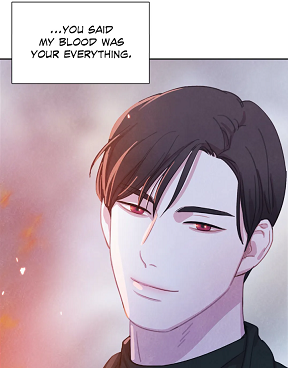 , therefore he refused to become a vampire. His goal in his life was to help the vampire, however this could not be right. Sooin and Yoon Seungho needed to love themselves, so that they could become independent and love their partner. The moment Yoon Seungho treated the painter with respect, the latter showed more confidence again. He could play pranks again. As long as they were full of insecurities, they could never love their partner properly.
Feel free to comment. If you have any suggestion for topics or manhwas, feel free to ask. If you enjoyed reading it, retweet it or push the button like. My instagram-tumblr-twitter account is: @bebebisous33. Thanks for reading and for the support, particularly, I would like to thank all the new followers and people recommending my blog.
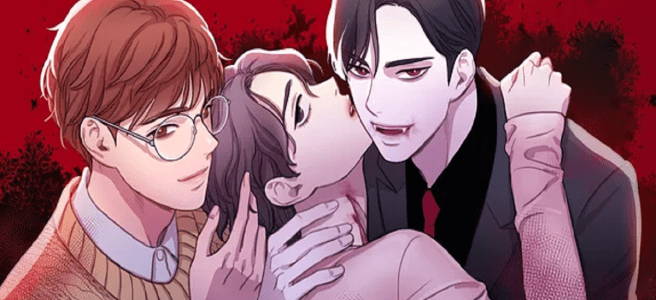
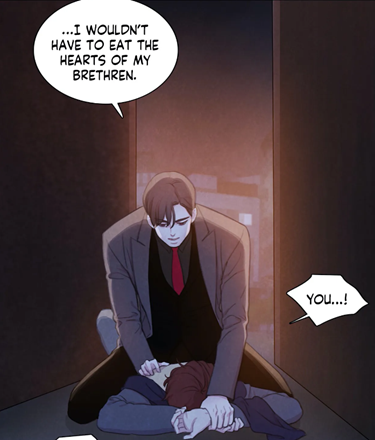 Consequently, while liberation will be the topic of the essay, I’ll question at the end, if their emancipation just announces a positive change.



 due to the colors (dark blue and black) the selected shirt and the trousers resemble to the jacket he wore, when he was living with the future doctor.


 grab his head so that he could take his whole shaft, I believe that this desire was influenced by Kwon Sungha too. What caught my attention is the main lead’s reaction, when he hears from his lover that he will do what Sooin wants.
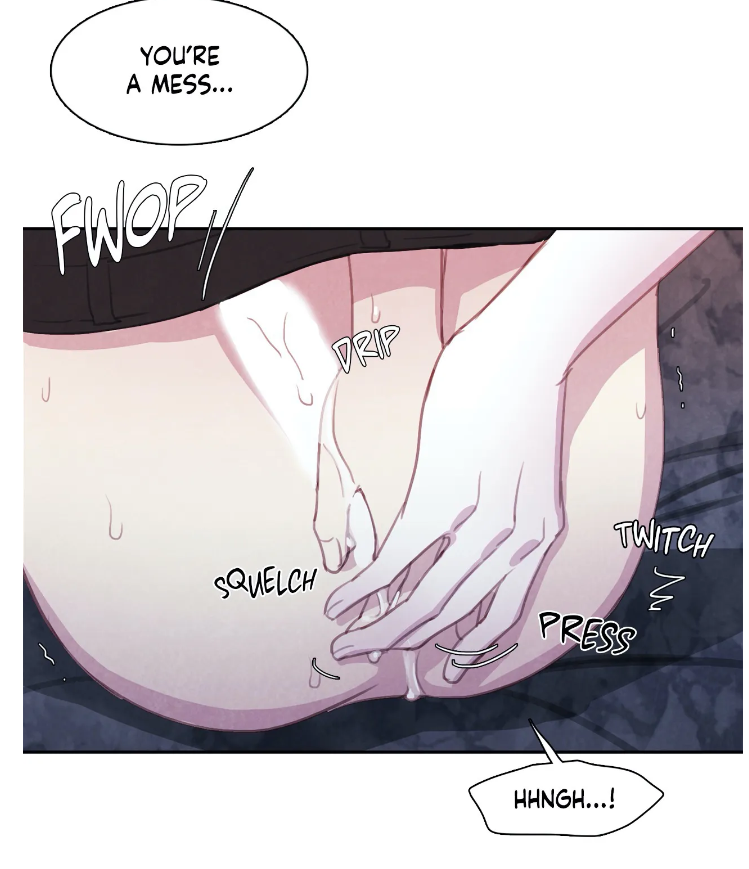
 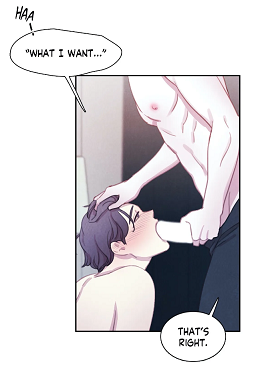 The quotation marks indicate a certain surprise and hesitation expressed by the sensitive human. At that moment, the new lover has no idea that the request doesn’t truly reflect the human’s wish, it is more linked to the violent internist. Besides, if you consider how rough the fellatio is (deep throat), even the vampire wonders how he can allow this, because he knows how delicate the human is. This would explicate why at the end, when the vampire declares that Sooin looks like a mess, the latter starts crying and apologizing. The deep throat fellatio and Chi-Hwan’s words triggered the main lead to remember about the negative image he has about him.
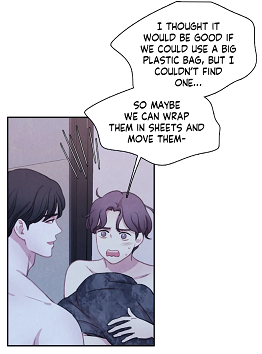 . The personal pronoun “I” is quite central in order to detect the slow recovery. If you compare to the way he spoke much earlier
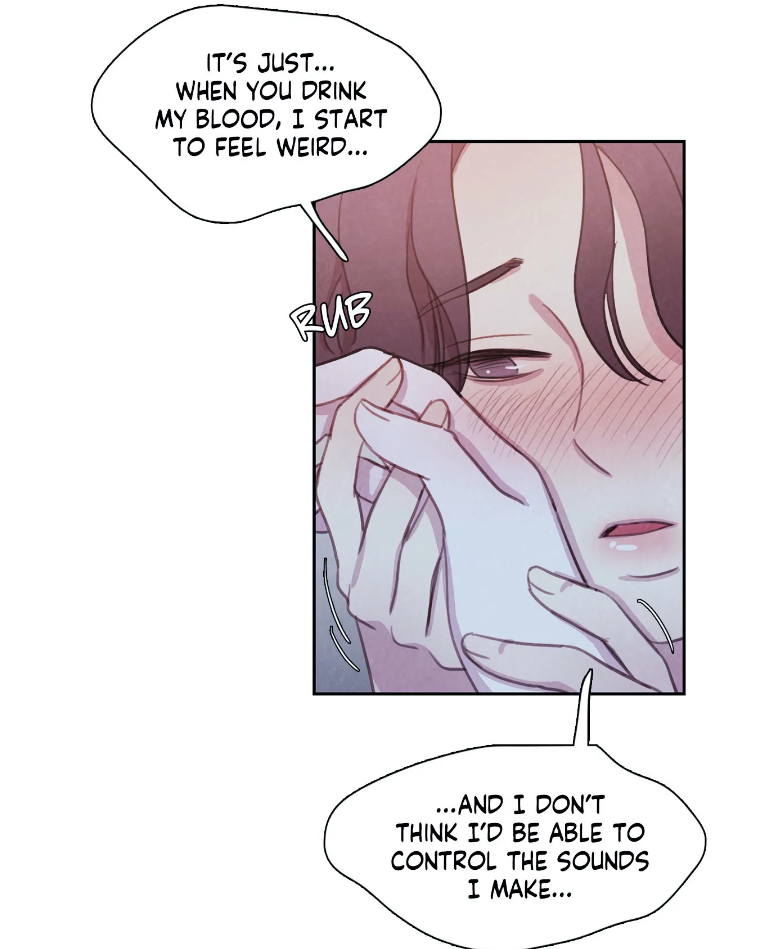 , his sentences in the second picture above are much longer and without any break. Sooin is less reserved and more determined. There is a progression between the two pictures, the “I” becomes more and more important.
 He even tells Sooin that he will always listen to his wishes and desires.
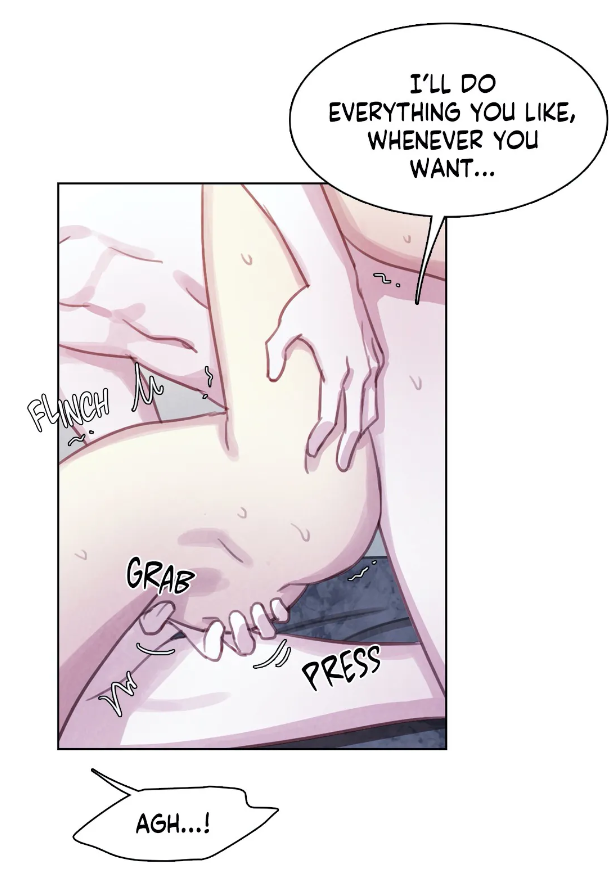 Why is there such a huge contrast between this relationship and Sooin’s bond with Sungha? Sooin and Chi-Hwan call each other master hence there exists no superiority between them, unlike Sungha who was the only master. For him, Sooin was just his pet or his object. While Sungha planned to cage his sex partner in a studio for his own sexual desires, Chi-Hwan uses the expression “our home”.
 Notice that he smiles and even laughs more, while in the introduction, he appeared more grumpy. He was avoiding humans and even vampires. The reasons were quite simple. He disliked the scent of humans’ blood and he needed to avoid vampires so that he could hunt them without getting noticed. In other words, he was quite lonely. He couldn’t share anything with others. Affection and care were non-existent. I also believe that he also discovered sexuality and its pleasures thanks to Sooin. Notice his reaction, when he drinks the human’s blood for the first time.
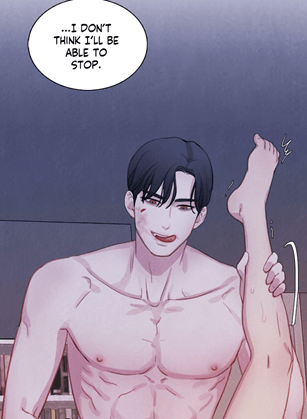


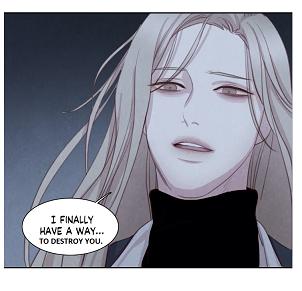 Since he has bonded with a human, the origin of his powers is now Sooin and no longer the vampires. Does it signify that he will lose his supernatural powers over other vampires in the long term? Honestly, I believe the opposite. But we’ll see if this impression will be proven correct. Besides, as human’s life is so fragile, it is normal that Park Chi-Hwan’s enemy will target Sooin because he seems to be the weaker one. Once Sooin is removed from Chi-Hwan’s side, the latter will lose his happiness and joy.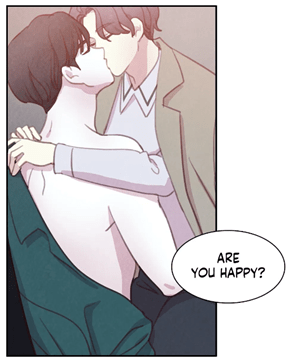
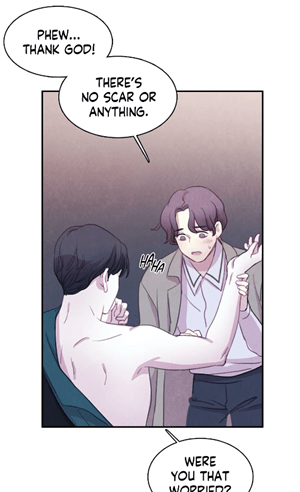


 Striking is that the moment he hears this sentence, he starts mistaking the vampire for Sungha. Note that he is not even looking at his sex partner, because he hid his eyes with his arm. This reveals the importance of the gaze once again. Sooin can’t look at Park Chi-Hwa as he fears to see his own reflection in the vampire’s eyes. Will he see himself in the man’s gaze as a monster? Here, I feel the need to elaborate Jean-Paul Sartres’ theory about the gaze.
 It was as if his eyes had died due to the constant confrontation with Sungha’s gaze. As a conclusion, the main lead sees himself as a monster, not deserving any attention and warmth. He is still surprised by the affection the vampire is exuding towards him. This explains why the main lead started fearing the supernatural creature, when Sooin heard chi-Hwa sighing after the uke had refused to comply to the vampire’s needs (drinking his blood). He heard Chi-Hwa sighing and misinterpreted this as dissatisfaction. Observe that the drawing doesn’t show Sooin’s eyes and at the same time, he is only focused on the vampire’s voice and not his eyes.
 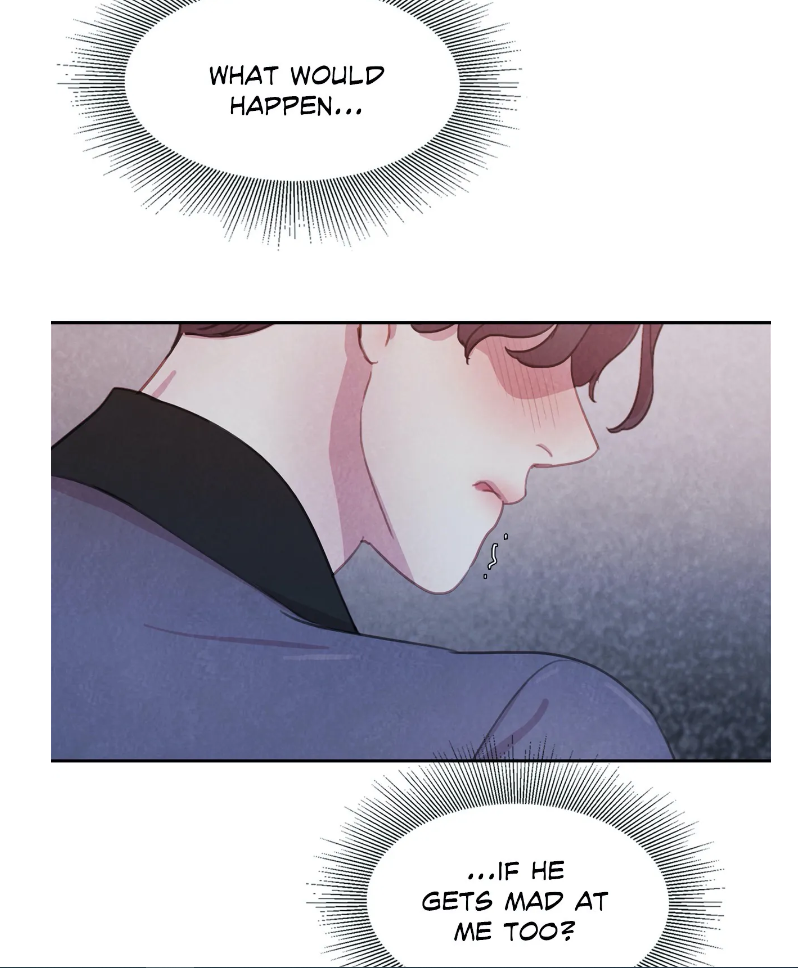 We could say that the uke is still under the influence of the brainwashing operated by Sungha. Sooin has not regained his humanity, his true identity. The so-called monster is still under the ruling of Sungha, because he rejects to fulfill the vampire’s need due the ex-friend’s ideology.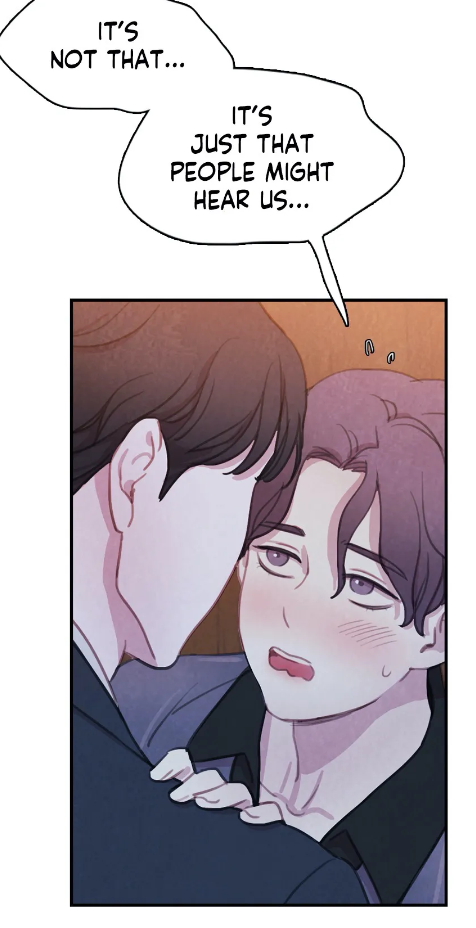
 The innocent man still fears the gaze and the gossip from others. Now you can understand why Sooin became a zombie, a monster in his eyes. He saw a bad image of himself in Sungha’s gaze but at the same time he was manipulated through the friend’s doctrine that even others would perceive him like that.
 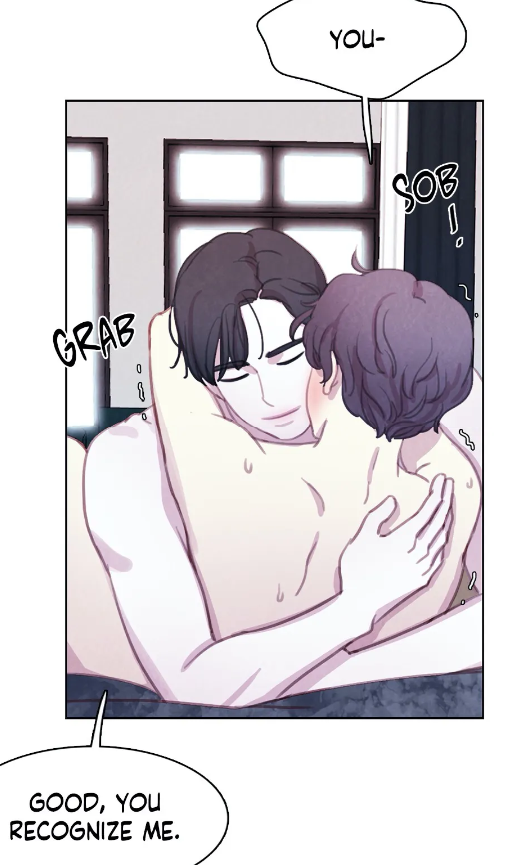 At some point, Chi-Hwa gets aware that Sooin needs to look at him, so he forces the man to look at him in the eyes. This is important because for the first time, Sooin is confronted with a different gaze and judgement. He recognizes the lord, his kindness.
 and his fangs come out.
 He wants to taste the man’s blood. In this moment, Chi-Hwan seems to follow his instincts hence he approaches Sooin. It was, if the vampire’s true nature would surface, he is a monster led by his blood thirst. Remember that Park Chi-Hwa even described the vampires as predators or parasites, so one might say that they are indeed monsters. So do we have two monsters here?
  and treats him as such. He listens to Sooin’s excuses and wishes. When the uke refused to give him his blood in the cabine, the supernatural creature questioned himself.
 The readers can witness how the so-called monster reflects on his behavior. He even kisses the man
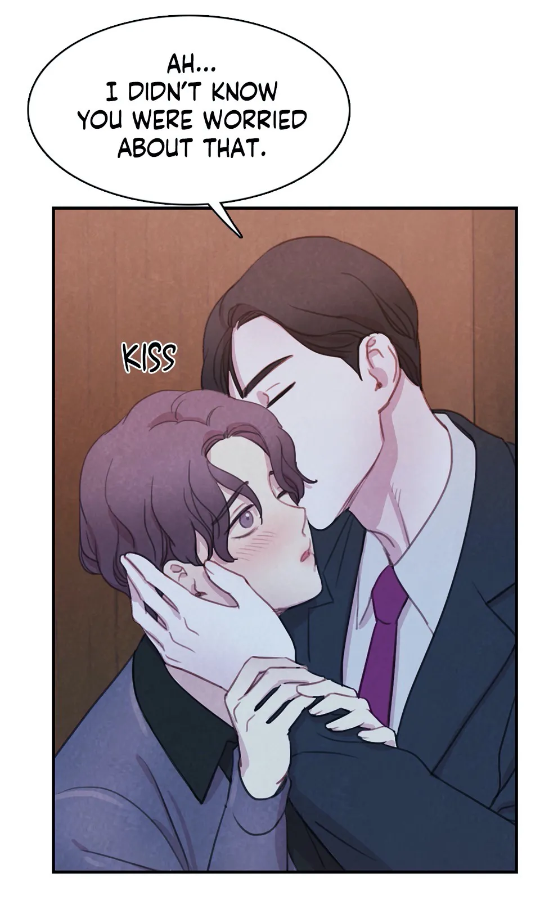 , comforts him twice, when he realizes the traumatized state of Sooin.
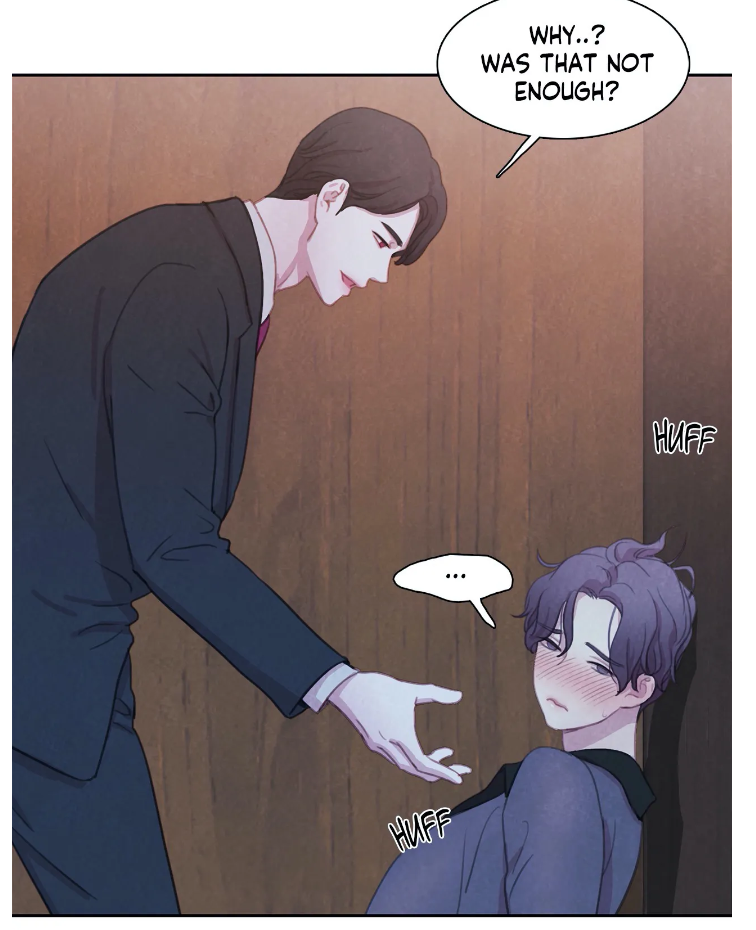
  since it represents the peak of his hunger. The readers can even sense the increasing of his bestiality as the expressions are getting more and more violent: “I want to devour him”; “I just want to rip him open” … “and devour every part of him”. We have the impression that the vampire’s animalistic instincts are growing to the point he could lose the control of his bestiality. However at no moment, he changes his behavior. I feel that while his thoughts indicates the awakening of his “monstrosity”, he acts more humanly in reality. He stands in opposition of Sungha, who gave up on his humanity and his reason. He let social standards and religious doctrines ruled his behavior and his thoughts.
  One might dispute that he rejected to have a fellatio in the cabine, as Sooin wanted. However, his proposition to do it home represents the compromise between the concerns the uke expressed before (people might hear his voice, his fear of people) and the request Sooin had. All this mirrors how caring and attentive the vampire is. He might be an “animal”(when we analyse his thoughts), nonetheless he never lets his instincts cloud his reasoning and judgement. At no moment, he acts like a monster towards the human. Like I mentioned before, the vampire treats the human like his master. However, if you take a closer look at the following image, this reflects their relationship:
 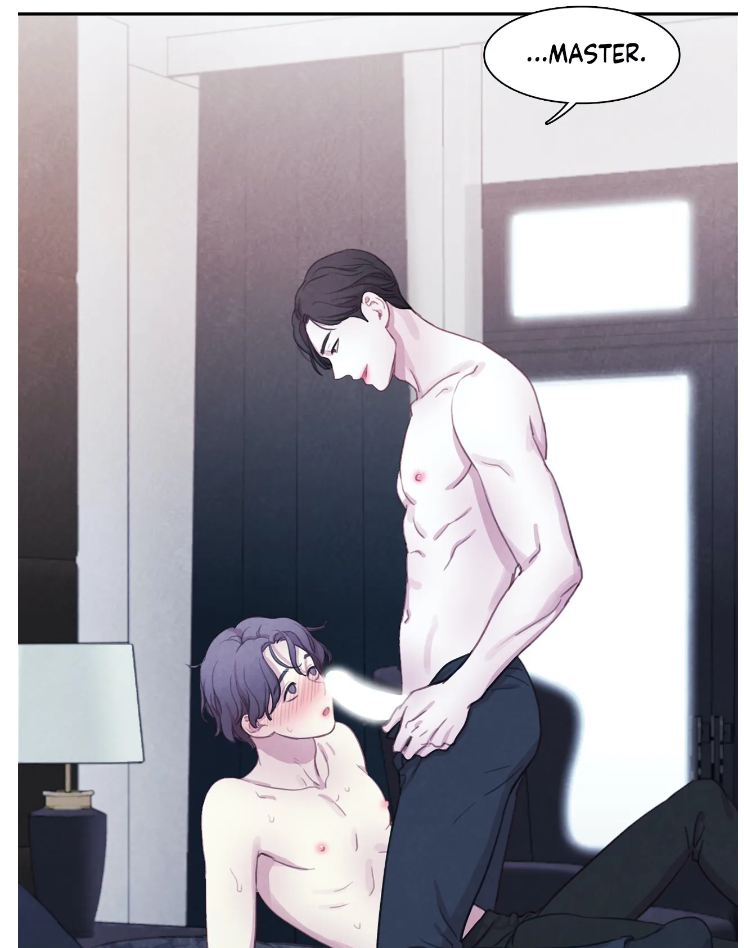 Sooin is the master, yet he is below the vampire as if he was inferior to the vampire. Furthermore, the creature gives the order: “Suck it”. Besides, the man calls Chi-Hwa “sir” and this is how someone addresses to a master.
  So in my opinion, both are masters. The vampire is helping the man to become a human again, he is helping him to get a personality and identity. He knows that the man needs to discover that his homosexuality is something natural, that he is first a human. That’s why he promises Sooin to let him forget Sungha. For him, Sooin should never define himself based on his sexual orientation.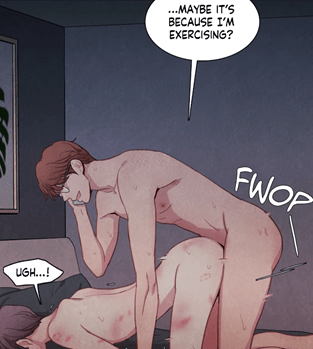




 Bebebisous33s' analyses in K-Dramaland and Manhwas