
This essay represents the last part of the comparison between the theater play “Spring Awakening” from Frank Wedekind with the manhwa Painter Of The Night. In order to be able to compare the characters from the German theater play with the ones from the Korean manhwa, it is important to give a short explanation about the characters from “Spring Awakening” and the role they played in the story. We have the main protagonist Melchior Gabor, his parents and the school director Sunstroke.
Melchior Gabor is a teenager with good grads at school hence he is very confident. Furthermore he is a free spirit hence he knows a lot about sexuality through books and observations. The reason why he stands so much in opposition to Wendla Bergmann is that his mother wasn’t strict compared to the other parents. She believed in her son’s maturity and intelligence and imagined that he wouldn’t do anything stupid. However, as you know it, Melchior Gabor will force himself on Wendla Bergmann. Moreover Melchior is the friend of Moritz Stiefel (Boots). The latter has problems with his grads therefore later, the pessimistic teenager decides to commit suicide because he is expelled from school. He is unable to face the disdain from his parents and the humiliation. But before killing himself, Melchior Gabor tried to help him in many ways, like giving his own homework or giving him a lesson about sex education. This led to the situation that Moritz Stiefel asked Melchior to write notes for the sex education because the former is rather shy and embarrassed. However, after Moritz’s suicide, the adults which means the parents, the school director and the teachers put the blame on Melchior because of the notes about the sex education found in the belongings of Moritz. They claim that the student did it due to the shock he received, when he saw the “vulgar and dirty” papers. As you already know, the real cause was the pressure to perform well coming from the family and the school. Moritz was well aware that he needed to rank among the first 60th students in order to avoid the expel. Even the school director Sunstroke admits this:
“because we have to protect our institution from the devastation of a suicide epidemic that has already broken out in several high schools…” (Act 3, scene 1)
As you can see, the pressure to perform is in fact related to the increasing number of suicides among the students underlining the extreme pressure put on the teenagers. And here, the school director Sunstroke reminds me of Jung In-Hun due to their similar profession and attitude. They blame others for their own failure, especially a teenager which is the perfect target. Jung In-Hun also made the painter feel guilty and dirty with his brainwashing and later with the rejection and abandonment. Since he was born to be a prostitute, the teacher didn’t need to feel responsible for him. Sunstroke doesn’t need to feel guilty for Moritz’s suicide as there is Melchior as justification. Strangely is that both characters are also associated to the same metaphor: the smelling air due to the lack of opened windows. When Jung In-Hun is seen in the library, 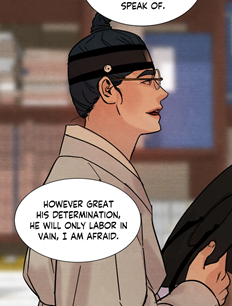
 , the beholder never see any window, only books or walls. In “Spring Awakening”, Sunstroke asks to have a window opened during a meeting but he is unable to have his wish fulfilled. Either one teacher doesn’t want to have his back facing the opened window or one window was boarded up. This underlines their lack of connection to the youth, they are both living in their own world, disconnected from the students or from people in general.
But let’s go back to Melchior Gabor. Instead of changing their methods, the school and as such the adults choose to turn the main protagonist as a scapegoat which leads the father to abandon his son and sends him to a reformatory. His mother Mrs Gabor agrees to her husband’s decision the moment she discovers that her son slept with Wendla. Rejected by society and by his own parents, Melchior escapes from the reformatory and goes to the cemetery. There he sees Wendla’s tomb and in his despair, he begins to hallucinate, where he sees his dead friend Moritz. He is about to commit suicide, when a masked man appears and convinces him to keep living. We have to understand that this hooded man personifies life as such. The masked man tells Melchior how the generation conflict could have been mitigated. The parents should have responded a little to the children’s needs and talked openly to them and simultaneously they should have shown them what was out there in the world. So despite the rejection and abandonment, Melchior decides to follow him and discover the world. He chooses life over his friend.
As you can imagine, we can draw a lot of parallels between Melchior Gabor and Yoon Seungho. Both know about sex quite well, then they are betrayed and abandoned by their own family. Besides, both become the scapegoat for the wrongdoings committed by adults. Both rape, although it was never their intention in the first place. Then their personality is quite similar: they have a huge influence on others (leadership), they are very observant, they read a lot. In other words, the two young men are intelligent free spirits. Moreover, despite the huge pain of losing his friends Wendla and Moritz, Melchior chose life in the end, just like Yoon Seungho. The only first huge difference is that Yoon Seungho is not a social person as he has no real friend. Even his childhood friend Jihwa doesn’t know him that well as the latter always keeps his own thoughts and emotions to him. However, we can conclude that Yoon Seungho’s fate resembles a lot Melchior’s.
Nonetheless, it is important to look closer to their similarities. Strangely, both have a huge libido. Melchior started having erections much earlier compared to his friends (Act 1, scene 2), just like Seungho is able to have sex with Baek Na-Kyum for a very long time.
 (chapter 33). Their age might differ but they both experience “Spring Awakening”. When Melchior is lying in the hay loft, Wendla joins him. Although he attempts to send her away, she refuses to leave him hence he can’t resist her any longer and starts kissing her. She objects that they don’t love each other that’s why they shouldn’t kiss, however Melchior replies that love doesn’t exist, there is only egoism. In other words, he implies that love is not required during intercourse, they should just follow their impulses. We can observe that he is following his sexual natural instincts. This reminds us of the scene, where Yoon Seungho has sex with Jihwa at the pavilion.
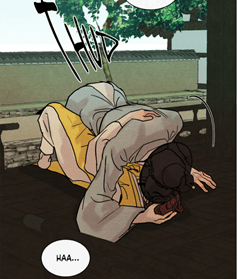
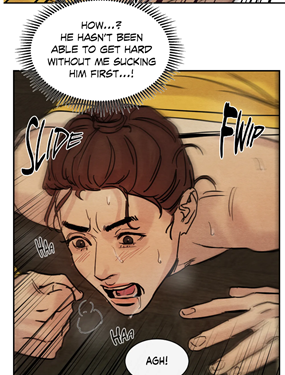 Here the excited noble is also following his instincts. For the first time, he is aroused and feels sex with a man quite exciting. He is neglecting his partner’s needs as well. He experiences something new. He feels pleasure for the first time, he also perceives himself differently. Just like Melchior, the noble is only focusing on sex and doesn’t pay attention to love. He is selfish just like the teenager. Striking is the resemblance in the location, a pavilion and a hay loft are quite similar, since they are open.
However, the huge difference is that Melchior has sex just one time with Wendla and he actually rapes her. With Jihwa, it was different because this was consensual sex and Jihwa did love his childhood friend. Furthermore, Yoon Seungho makes another experience: he makes love to Baek Na-Kyum after the latter confesses his love to him mistaken him for his learned sir. Yoon Seungho thought that he could just have sex, nevertheless he ended up feeling the difference between sex and love. 
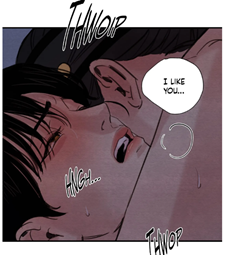 They made love and they had not just sex, though Seungho didn’t realize the distinction. Melchior in the theater play never got to know what making love feels. However, we could say that this represents the second step in the Spring Awakening of our Korean protagonist. Unlike Melchior, Yoon Seungho can no longer say that love doesn’t exist, since the young artist confessed his love … yet the master is unaware of his own feelings.
The readers know that Yoon Seungho rapes the low-born at the pavilion, just like Melchior raped the innocent girl at the hay loft. Both never planned it, even if we can observe a difference between both rapes. Yoon Seungho had planned to have sex with the man there, he thought that Baek Na-Kyum had remembered their night together. Since he thought that the artist had made a painting of their night together, he imagined that he had accepted him as his sex partner. Melchior initially tried to fight his instincts, as he wanted to send his friend away but she refused unaware of the reason for his rejection. In other words, the teenagers acted on his instincts, on an impulse. Yoon Seungho raped the young man out of frustration and not because of a sudden attraction.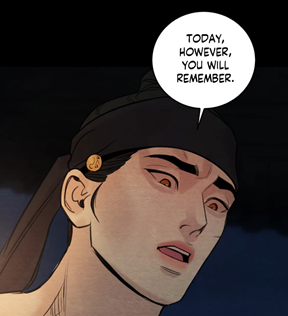 Besides, Baek Na-Kyum refused more categorically than Wendla, he slapped the noble
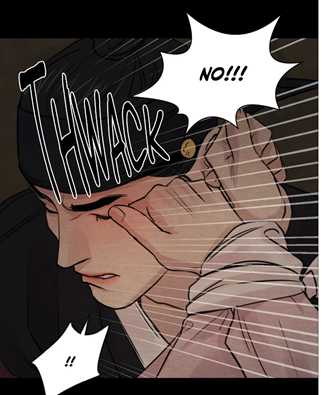 , whereas she tried to argue with her partner. They shouldn’t kiss because they don’t love each other. The stronger resistance can be explained very easily. The painter knew what the man wanted, whereas Wendla had no idea what was going to happen to her. Unlike Wendla, Baek Na-Kyum received sex education because he was raised at a brothel, furthermore he knew about homosexual sex. Strangely, both rapes start with kisses which shows that there was more than just sex.
  A kiss serves as a trigger for arousal but reveals a certain tenderness.
Right after the rape, Yoon Seungho calms down and regrets it hence he tries to redeem himself by taking care of Baek Na-Kyum.

 For Melchior, it is a little different. Some time passes until he sends a letter to Wendla which is caught by her mother. However, both want to take their responsibility for their wrongdoing. When the sex marathon occurred which led to the uke’s exhaustion, here again the lord wanted to redeem himself for overlooking the health condition of his partner. Hence he made sure that he had some water
  and have the doctor fetched and was ready to buy some expensive medicine.
Another resemblance is the role played by Melchior in the discovery of sexuality. We know that Seungho forced the uke to look at his facial expressions while having sex with him so that the latter would no longer deny his sexual orientation.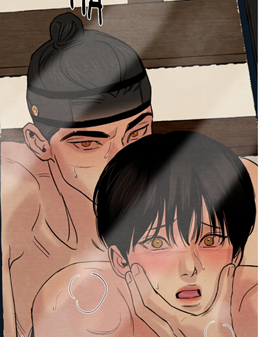 In the theater play, Wendla asked Melchior to beat her because she had never experienced it before. She was curious about it, Melchior was quite surprised by her request but decided to follow her request. Through him, she discovered her sado-masochist disposition. Both Wendla and Baek Na-Kyum realized what they like, though the girl has no idea that it is related to sex. On the other hand, Yoon Seungho contrasts so much to Melchior because the latter ran away after beating the girl. He felt embarrassed and had no idea how to deal with those feelings. Yoon Seungho has never been embarrassed about sex
 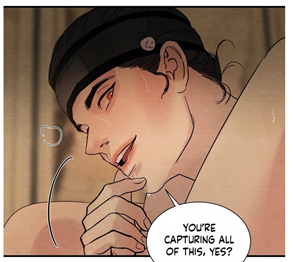 and he has no problem to use violence as well. Sure, he is much older than Melchior and as such he has experienced much more than the teenager.
Both young men are excluded from the family. The elder master accused his son of sodomy and cut off his topknot which created a huge scandal. Then he moved to another mansion in the countryside. Melchior Gabor becomes the gossip because of Moritz’s suicide and of the notes he left to him. The father, Mr. Gabor, declares that Melchior needs to be sent to a reformatory which could be considered as an exile. So there is a physical distance between their relatives and the protagonists in both stories. Another similarity is the cowardice of the fathers.
Mr. Gabor blames his wife for their son’s wrongdoings, while he never showed any interest in education before. He could have explained more about sex education but he never did. The father prefers to save his family’s reputation by abandoning his son than to help his son to take his responsibility for Wendla. Both parents are selfish. The result is the same: Yoon Seungho and Melchior felt betrayed and abandoned by their family. On the other hand, we have no idea about Seungho’s mother. Was she alive back then? Did she become a victim of the purge because her parents could have been involved? The mother could have played a role in Seungho’s suffering as well. Either she betrayed him like Melchior’s mother or she became herself a victim of her husband’s action.
Then we come to the ending. Melchior chose life at the end, although he was suffering so much due to his guilty conscience, the loss of two friends, the abandonment and the disowning by his own family. Yoon Seungho must have felt the same way, even worse, since I suppose that he was himself raped. Besides, I have the feeling that Yoon Seungho could have been responsible for the death of the servants (forced to erase every trace of a possible participation in a conspiracy). We only hear that the servants were replaced. Either they moved with the elder master or they were “removed”. But there is a huge difference: Yoon Seungho chose to get revenge on his father by keeping his reputation as a famous sodomite so that the father would be constantly reminded of his own sins and cowardice. Furthermore, Yoon Seungho was barely alive all these years because of his passivity. He was just surviving hence he constantly looked at his courtyard while smoking at the window. Yet there is the appearance of the masked man in the manhwa as well: the drawings created by Baek Na-Kyum. Through the erotic books, Seungho came back to life as he was able to get aroused. Yoon Seungho had no idea who was the creator of these beautiful paintings, however they became the reason for discovering joy in his life. That’s why we can see the huge smile on the noble, when he meets the low-born for the first time. So the meeting of the hooded man happened before the story in the Painter Of The Night starts. And now, you can perceive the contrast: the chronology is totally different. Since the theater play ends with the meeting of the hooded man, we have to imagine that the manhwa could be seen as a continuation of “Spring Awakening”. This is what Melchior is going to experience later: rediscover the pleasure in sex, discover the existence of love and finally have a companion by his side. The hooded man takes his mask away and gets an identity: Baek Na-Kyum. The latter is the reason why Yoon Seungho smiles again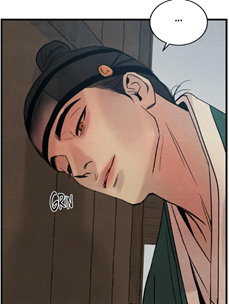
 , why he can feel emotions again, while he was living more or less like a robot in the past.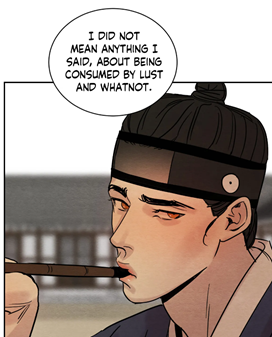
The master actually experiences two kind of “Spring Awakening”: the first one with Jihwa and the second one with Baek Na-Kyum in the bedchamber of the low-born. Sure, his “revenge” on the father kept him alive all this time, while Melchior is far more desperate and feels more guilty than the lord at the cemetery. However, you could see that both works have a lot in common, not only because of the topics but also the resemblance of the characters. And the theater play was written 200 years ago which shows how actual it is. The hypocrisy, the pressure on students to perform well, the discovery of sexuality among teenagers and its repercussion, the taboo linked to homosexuality will never disappear.
Feel free to comment. If you liked it, then retweet it or push the button like. Thanks for reading this.
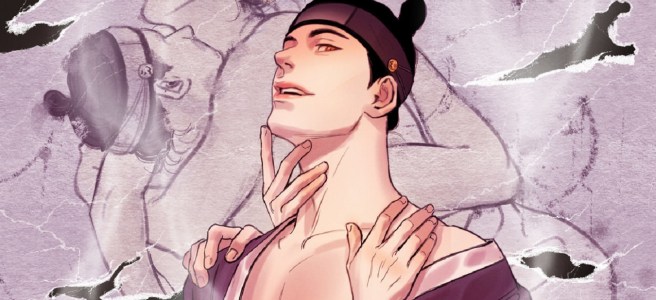

 Here, the beholder can witness a similar attitude of the teacher. Behind his sweet talk and smile, he has another intention. The low-born has to spy for him. He is here actually telling him to sell himself indirectly, yet he acts as if he knows nothing about Seungho’s sexual orientation and that Baek Na-Kyum could become his target. His ignorance protects him for feeling guilty and responsible. The mother never told her daughter who Mrs Schmidt was and what she was about to do. She even adds at the end that Mrs. Schmidt is just someone. That way, she can’t be blamed for her daughter’s death and the latter can never reproach her responsibility. In-Hun’s alleged ignorance leads to the rape, just like Mrs. Bergmann ignored deliberately the sex education leading to the rape.
 Through the rethorical question, Baek Na-Kyum is manipulated into dropping the paintings. The artist has to follow his “adoptive father”‘s values and restrictions. Just like in the German Empire, harsh punishments are a common method in order to create submissive pawns.
 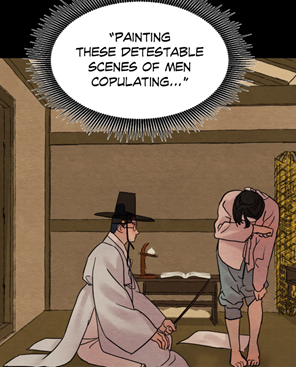 By inducing fear and giving punishments, Baek Na-Kyum is little by little coerced to give up his own identity and personality. He has to follow the rules and social norms which makes him a perfect tool for deception and lies. He ends up as a drunk because he needs to fill that emptiness. Indirectly, the author is here showing issues concerning blind obedience and filial piety, just like Wedekind. The portray of adults is quite negative: they are superficial, manipulative and hypocrite, unwilling to admit their own failure or guilt.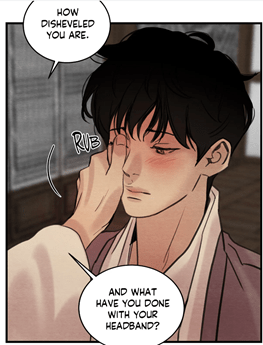
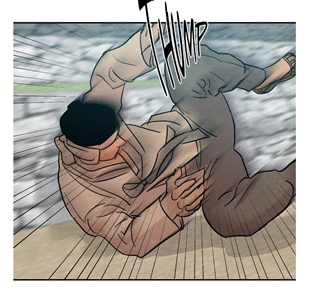 Notice, this servant is also wearing a headband. The parents are here making sure that they are dressed according to their social status and age. There is no freedom in both cases.
 He makes the young man question the teacher’s intentions through a question. He wants him to become more critical, to develop critical abilities. Yoon Seungho is a supporter of the education for commoners, as the chapter 6 underlined it with the sarcastic remarks from the powerful noble.
  I have the impression that the poetry could become the link that brings Yoon Seungho and Baek Na-Kyum closer. As you already know, I have no doubt that the noble returned a different poem. As a result, I am expecting that Yoon Seungho becomes the low-born’s teacher. He truly becomes his “learned sir”.


 (chapter 35). But what does the window symbolize?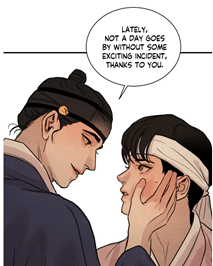
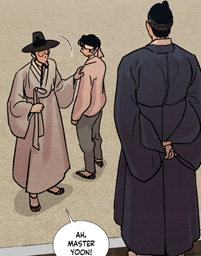

 (chapter 44). It looks like there wasn’t much progression, yet this time, the painter walks towards his mansion and remains by his side.
 This is important, because I realized that with the vanishing of the learned sir, Yoon Seungho chose to remain in the lord‘s bedchamber. What caught my attention is that the lord always went to the courtyard because of the admired sir. We have two chapters for this interpretation: chapter 7 and chapter 35
 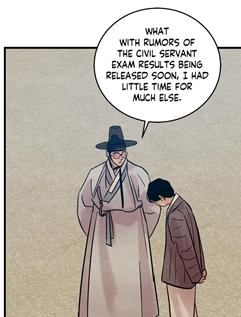 . What caught my attention is that when the lord visited the scholar for the first time, both were sitting in front of a door which looked like a window at the same time.
 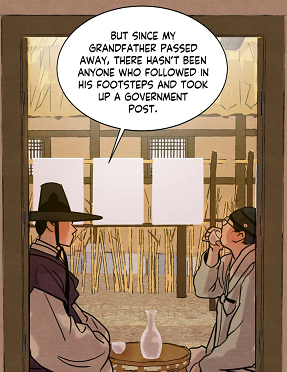 (Chapter 7) This is not random at all, as from my perspective, it introduces the role played by Jung In-Hun in the main lead‘s life. He will be the one forcing the lord to move away from the window so that he can leave the bedchamber. Thus we had this scene: Yoon Seungho is observing the learned sir and his student from far away.
  (Chapter 19) This explicates too why the noble remained so passive in season 2 in the end. Baek Na-Kyum was the lord‘s love interest, hence his „place“ is the bedchamber. So how can the lord move away from the window and as such from the bedroom? Jung In-Hun is the trigger. And note that only in season 2, we discovered how the learned sir used walks through the countryside to console the painter.
 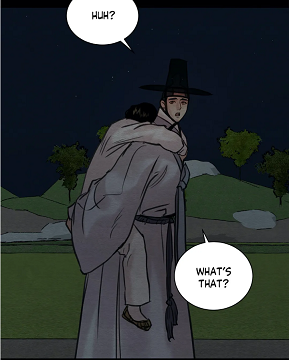 (Chapter 70) Finally, the main lead organized a hunt for the first time because of his honored guest.
 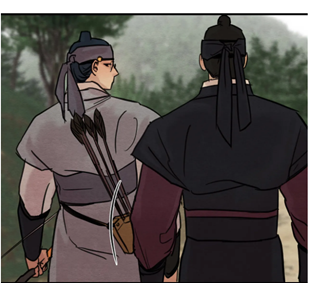 (Chapter 22) And if you recall the lord‘s behavior, you will notice that he left the city for the first time, when he wanted to meet the scholar.
 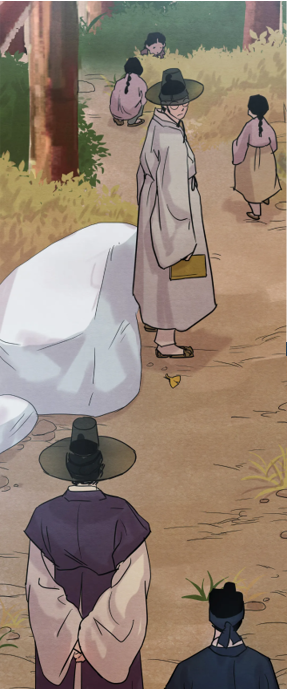 (Chapter 6) He encountered him in the woods. Under this new light, it reinforces my conviction that the learned sir‘s death will be the lord‘s motivation to become proactive and leave his past behind. Why? It is because of the painter‘s words.
  (Chapter 94) The painter still respects the scholar, but he already loves Yoon Seungho. He is not disloyal towards his former teacher despite falling in love with the protagonist. With the last incident, Yoon Seungho got aware how much the painter means to him, but at the same time, he realized the importance of the learned sir in Baek Na-Kyum‘s life. He needs to answer his question:
  (Chapter 102) And this question is strongly connected to the scholar, for the main lead was first sent to Jung In-Hun‘s home.
 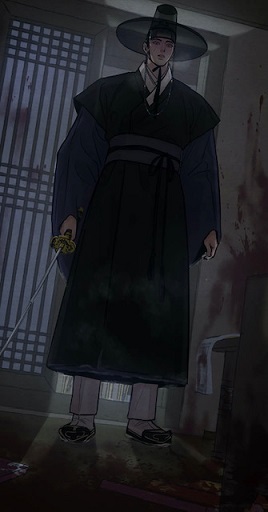 ( 100) Don‘t forget that the main lead saw the room covered in blood, though the latter had already dried. To conclude, the main lead was encouraged to walk thanks to the scholar, and as such to leave his window!
  (Chapter 100)
 (Chapter 44) It was the painter’s role. This signified that he was still trapped by his past and trauma, something that he hadn’t revealed to anyone. Since Yoon Seungho is still inside the room smoking in front of the window, it reveals that the lord had not really let go of his past at all, he had not expressed himself in front of Baek Na-Kyum yet. If he reveals his inner feelings and thoughts, this means he will disclose his secret and unveil his vulnerability. This explains why there was no confession from the noble’s side for instance [there were other reasons why he hadn’t confessed anything too], why he was still not sharing his inner thoughts and emotions to his partner.
  (Chapter 37)
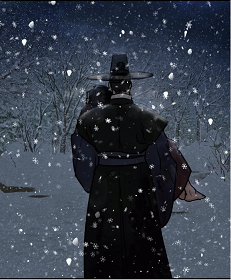 (Chapter 102) This signifies that Yoon Seungho will act differently in season 4: he will be proactive. Like I mentioned in the essay „Scandal(s) in Jemulpo“, he will become the scholar’s disciple and follow his footsteps: ruthless, but also caring and gentle. The only difference is that his affection for the painter is genuine.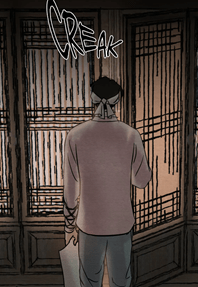

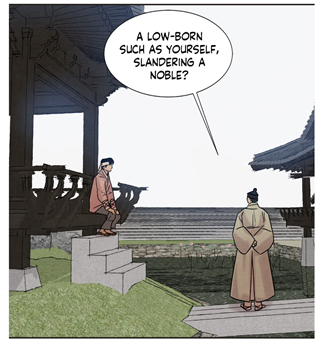 (chapter 10),
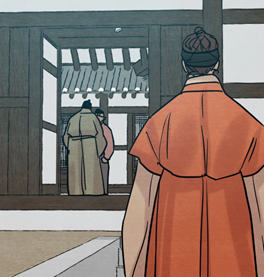 (chapter 12)

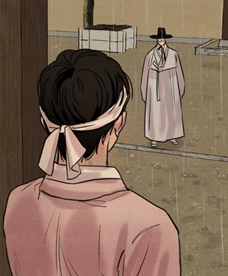
 (chapter 20)
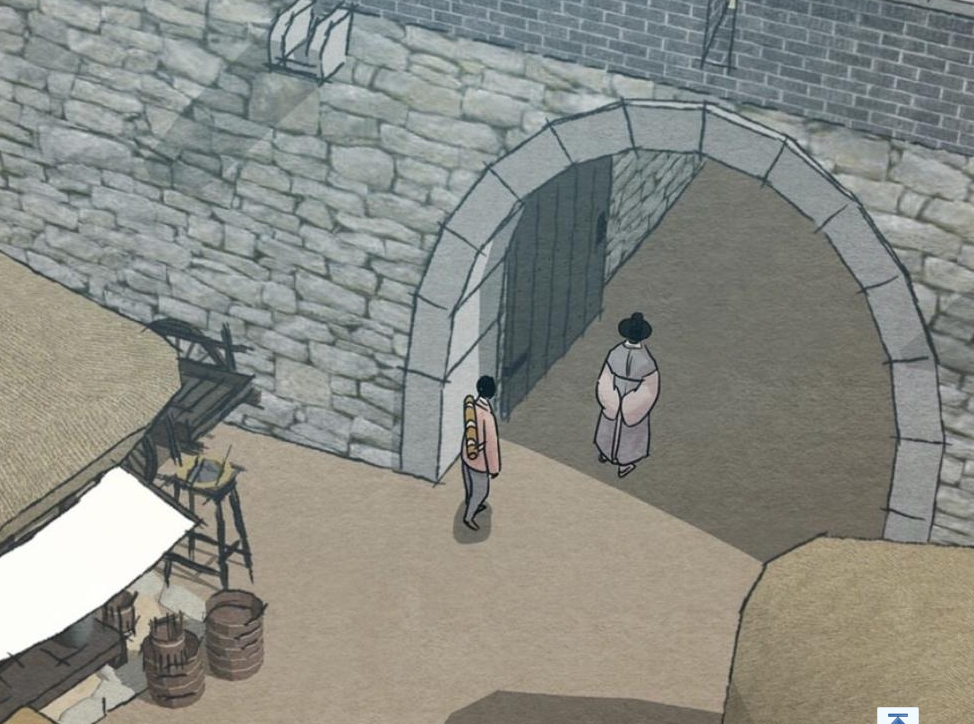 (chapter 29)

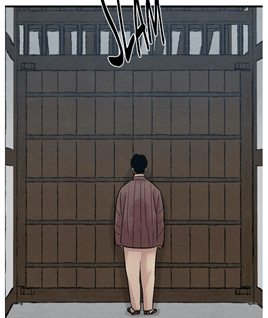


 It is still the same. Despite getting a blowjob, he still wants to hide his homosexuality to the outside. Hence he still gets scared and would like the noble to stop from exciting him. So for the first time, he is experiencing sex with someone.
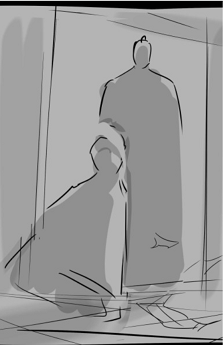 Note the opened door. The learned sir caught him by surprise. That’s how the learned sir was forced to repress and hide his homosexuality. This is no coincidence that in season 1, the scholar had the opposite attitude.
  By feigning ignorance, he actually encouraged the artist to become a sodomite. After their return to the mansion, the teacher showed leniency. He accepted that his student would paint erotic paintings, but he was well aware of their sexual encounter.
 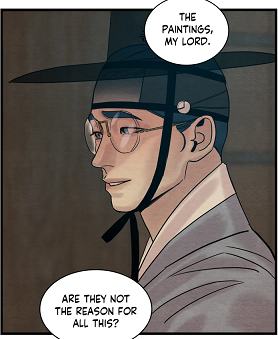 (Chapter 30) The moment he arrives back and the lord brings him back to his chamber, the nature of their relationship is no mystery any longer, though painting is used as a justification.
 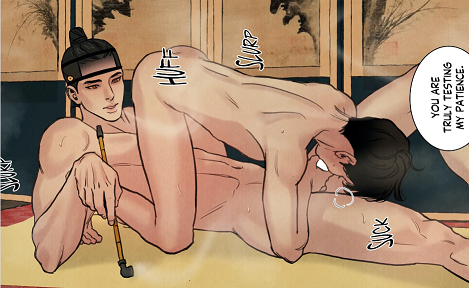 (Chapter 45) He just accepted him as his sexual partner, hence he went to his room and not to the lord’s side in chapter 44. If we compare their respective situation. Yoon Seungho hadn’t progressed much compared to the painter at the end of season 1, because he needed to express his emotions and reveal his secrets and vulnerabilities to Baek Na-Kyum. It took him a long time to open up, as he had been coerced to view himself as a bird of misfortune. He didn’t dare to voice any wish out of fear that these wishes would get ruined.
 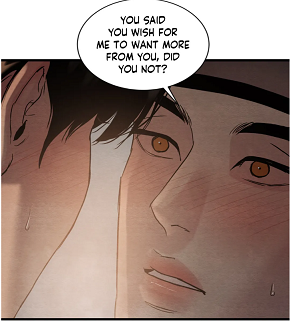 (Chapter 96) In his mind, he had no right to voice any desire, as they would be perceived as GREED!
  (Chapter 96)
 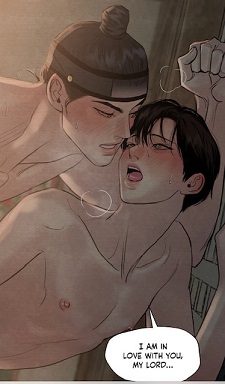 (chapter 96) and Heena could hear his words. Hence at the end, the door got broken:
 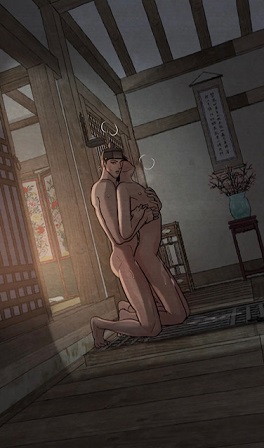 (chapter 96) This represented the final emancipation of the artist. He no longer cared, if he was seen. He was so moved that he didn‘t pay to his surroundings.
 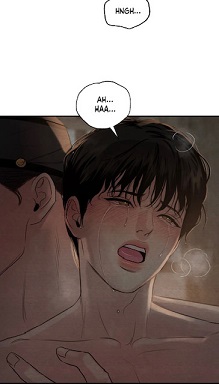 (Chapter 96), while it was not the case for the noble. The latter knew about the artist‘s shyness. This truly shows that Heena was responsible for the sexual oppression of her brother. The painter was no longer hiding his affection for the main lead, when he decided to wait for his master‘s return in the bedchamber.
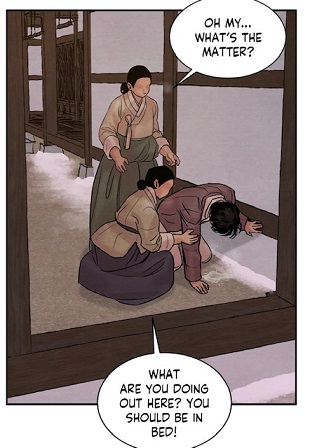 (Chapter 98) Observe that the artist was going there on his own will, and he was sharing his bed with his husband.
 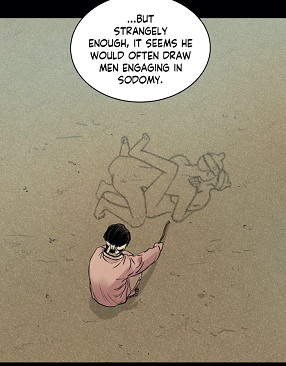 (Chapter 1) This memory was from the learned sir. Why was he approaching the painter during the day? Secondly, note that he only scolded the artist in his house!
 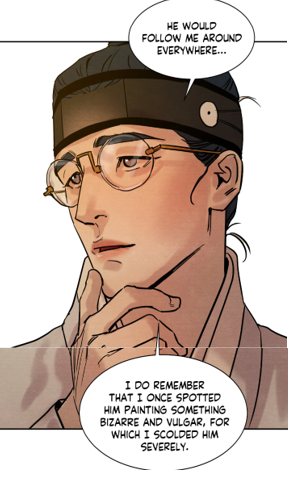 (chapter 6) In my opinion, the kisaeng was responsible for this incident. We have a clue for this interpretation:
 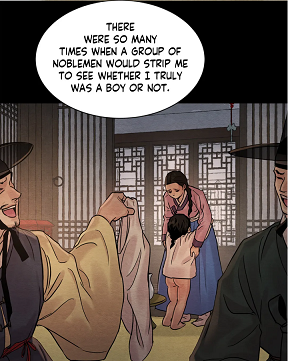 (Chapter 94) The noona is the one standing in front of the opened door with her donsaeng. Here, the artist was getting embarrassed and humiliated. That‘s how little by little, the artist associated the closed door to shame and safety. This is not surprising that the kisaeng is also standing behind the closed door, when she hears her brother making love to the main lead.
 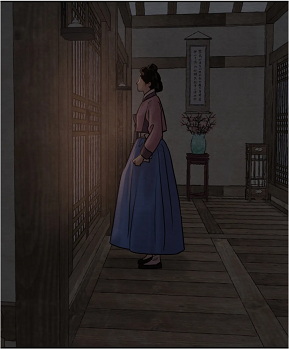 (Chapter 96) In addition, she is constantly seen in connection with an opened door, but this opened door is linked to anxieties, pain, shame and guilt:
 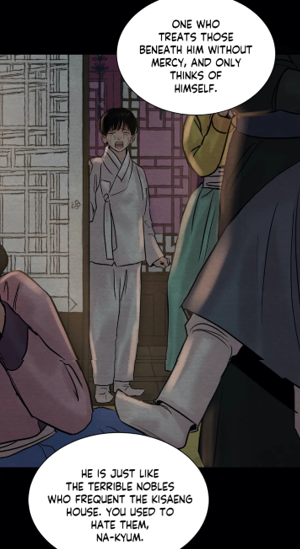 (chapter 68)
  (chapter 66)
 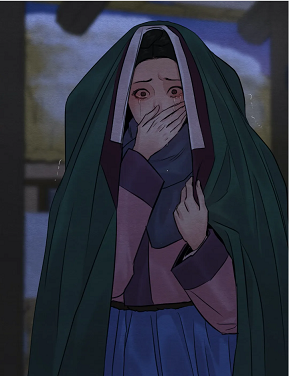 (chapter 88) I have the impression that she was acting out of jealousy, and she had intended to tarnish her brother‘s reputation.
 (Chapter 102) This symbolized the final emancipation of Yoon Seungho. He could finally move on from his past, and as such leave the darkness of his mental prison. He no longer needs a window to view life. This scene announced that he was starting living again. Thus I am expecting to see Yoon Seungho becoming more proactive and funny in season 4. He will show his intelligence and strength in order to defeat his enemies because so far, he never revealed his qualities to others, only to the scholar. His past had left him somehow paralyzed, hence he has laid a low profile. In his past, he believed that his prison was his protection, for he could observe and remain quite wealthy and powerful. For me, Baek Na-Kyum is in reality his strength, the reason why he will be able to leave his cage and shows his true colors and skills.
 (chapter 7)
 (chapter 19)
 (chapter 29)
  (Chapter 22)
 which is connected to the expression “castles in the air”. His aspirations are boundless, he is aiming at the highest position without being competent or even trying to improve himself. He also attempts to air dirty laundry, when he is hunting with Yoon Seungho. He wants to force the lord to admit his lie so that he can criticize him. But here he fails. As you can observe, many expressions with air reflect his personality. However, there is one scene that contrasts to this observation, that’s when he is in his library in the chapter 40. We actually see him at the library in two occasions: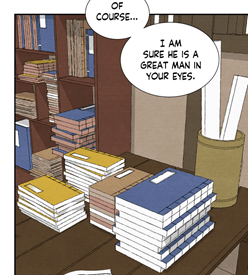

 His words there are suffocating the poor boy, that’s the reason why Baek Na-Kyum is left speechless.
  (Chapter 40) He can’t breathe properly. Since there is no view and no door to the outside visible in the drawing, we have to imagine this reflects his narrow-mindedness. He is surrounded by books (see the pictures from the chapter 7) therefore he lacks real experience and knowledge. He is literally buried behind his books, therefore his knowledge is superficial.
  (Chapter 27) Even in his bedroom there are books so his own bedchamber gives the readers a suffocating feeling. Since there is no window visible in his room and the library, there is no fresh air in the closed room which explains why it is asphyxiating. Usually, we say in a closed room that it smells musty. He only knows the world through his books and the moral standards. He is not even opened to the outside, only his words and thoughts count. Everything else has no value hence there is no life next to him. People living by his side will end up suffocated as he doesn’t allow them to breathe. He is stubborn and he will never change, a fake, empty and narrow-minded man with no conscience. Because of this connection, I realized that Jung In-Hun had no future in Hanyang. He would end up buried, and this became a reality. Because the moment he left for the capital, he ended up dead. And now, if you think carefully, you will recognize that the learned sir is associated to nature! Thus he was seen in the woods (chapter 6, 22) or in the countryside admiring the moon.
  (Chapter 70) Air means also breathing! Hence he represents the fresh air entering Yoon Seungho‘s bedroom, hence we had such a scene:
  (chapter 35) The lord witnessed the intimate interaction between the learned sir and the artist, thus he was incited to leave the bedroom. Strangely, we could say that he was the initiator for the lord‘s liberation. No wonder, why Kim wished to get rid of the learned sir in the end, and just viewed the artist as less annoying and evil!
 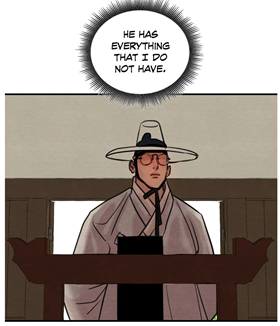 (Chapter 18) so that he ended up letting his guard down. He was not so competent and intelligent like Yoon Seungho, he relied more on the stupidity on others. He could deceive commoners, but not spies. In my first version, I had envisioned that the learned sir had many tricks up his sleeves so he would survive, but I had not realized that he had met a fake servant
 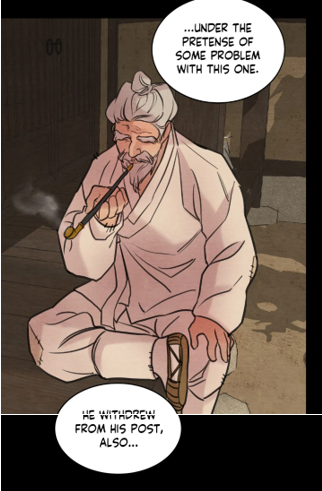 (chapter 37) definitely a noble who could see through him. For me, it was the pedophile himself. I had predicted that he would disappear into thin air, and it became a reality, especially if my theory about his assassination is correct. We could see the transformation of the scholar into a ghost,
 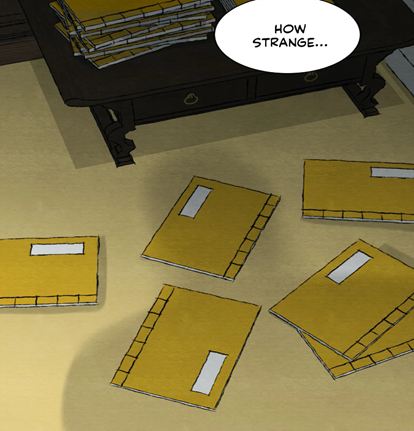 (chapter 50) who would come to haunt the couple because of his resent.
 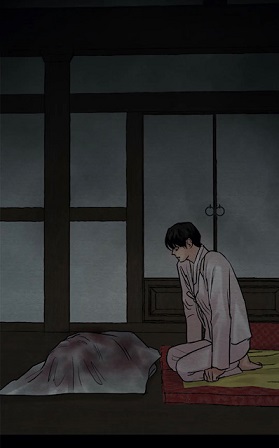 (Chapter 98) As the air, he became a spirit! And note that the lord was encouraged to stroll too!
 (chapter 33), forced the lord to realize that the artist was indeed a precious treasure, and he was not willing to share him.
 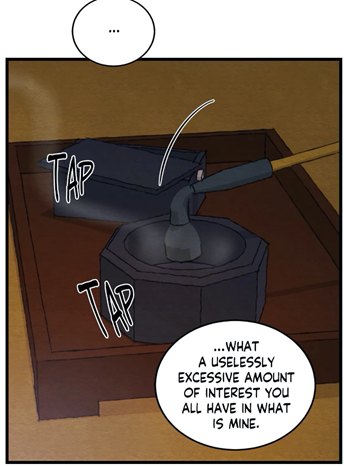 (chapter 33) At the same time, due to Black Heart’s words, the noble was reminded of the painter’s health conditions. Although the lord was talking about the artist, as though the latter was just an object, the reminder forced him to recall that Baek Na-Kyum was a human who could die. That’s why he returned in the end. His abandonment reflected his cowardice, he didn’t desire to be confronted with the consequences of his bad behavior. Consequently, just like in the Russian novel, the main lead was reminded that the low-born was just a human. As you can see, both characters had a similar disposition and also a change of heart.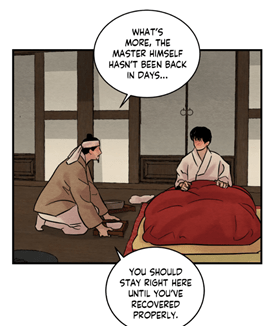
 (chapter 34) Kim’s remark was in fact insinuating that the lord had been very generous and caring for him. He gave the impression to the low-born that the noble was treating him like a noble, as the latter had sacrificed his bed for his recovery. However, this was not true, as the lord had brought the artist to the study before the doctor’s arrival.
  (chapter 33) At the same time, the butler was not entirely lying either. The lord had indeed shown generosity and care, since he had called for the physician. Yet, once he had heard about the doctor’s precription, the aristocrat had ran away from his responsibilities
 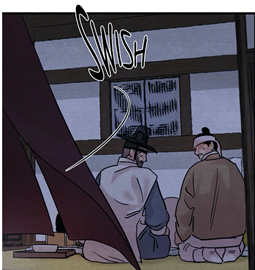 (chapter 33) and left everything in Kim’s hands. Remember my statement: Kim is always telling half-truths. Kim was in reality the one who brought him to the noble’s bed.
 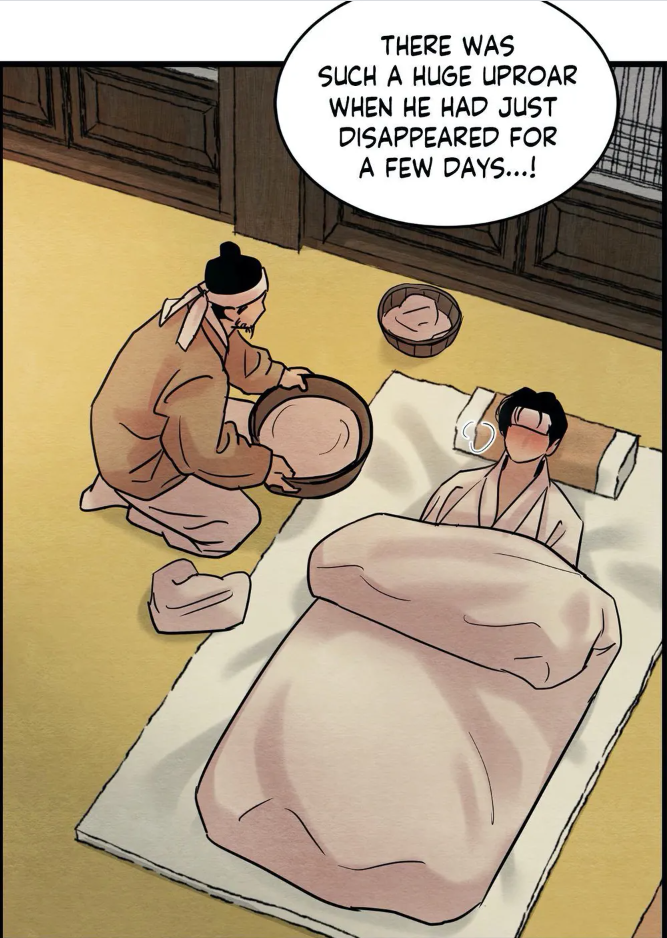 (chapter 33) He needed to portray his master in a much more positive light in order to obtain the painter’s cooperation. The valet hoped that the artist would follow his order
  (chapter 34) and become the lord’s sex toy:
 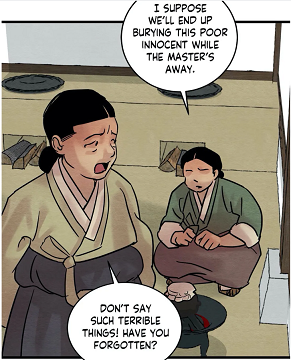 The irony is that although the valet treated the painter as a honorable guest (bringing him to the lord’s chamber and taking care of him as if he was his master), in truth he was just viewing the low-born as an object and tool. was truly making sure that Baek Na-Kyum would get the best treatment, but the domestic used the opportunity to praise his master indirectly.

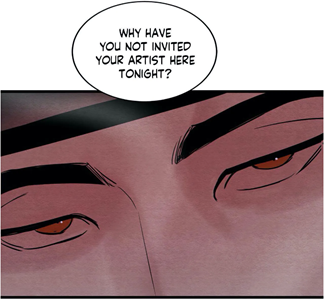 (chapter 33) While he was at the sex orgy, he remembered the exhausted young face of the painter, while they were talking about him.
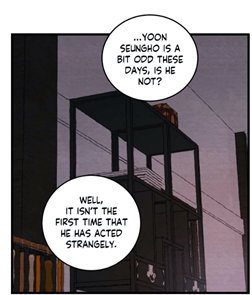
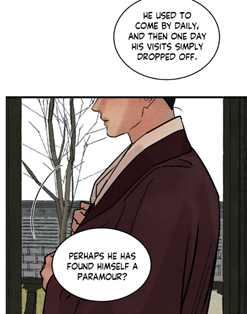
 The lord was suffering, but unlike in the past he couldn’t keep his distance from his lover. He needed to sense his presence. He was no longer his sex partner, but he wasn’t treated like an object or a servant. During these two separations, Yoon Seungho was full of worries for Baek Na-Kyum which he was trying to forget, yet he couldn’t. At the same time, he was reflecting on his past actions:
 (chapter 18) In my eyes, the butler’s cowardice is connected to the social norms. He had deeply internalized the social values from Joseon, hence he represents a reinforcement of authorities. As you can see, there are many explanations for his behavior: guilty conscience, out of concern, self-introspection… On the other hand, he is only partially running away from his responsibility, as he had asked the servant Kim to take care of the artist. This is why this “abandonment” stands in opposition to the scholar’s. The latter betrayed during the rape, as he didn’t intervene and acted as if nothing was happening. And the next day, he brought him back to the mansion and abandoned him by letting Yoon Seungho drag him to the bedchamber. At no moment, he tried to stop his sponsor. That’s why he remains invisible in chapter 32.
  (chapter 33) He was acting as a mediator between the master and the low-born which looks like a good thing. In reality, he was meddling in their relationship. Who was he to intervene? That’s why he acted like a father. With his words, the butler was implying that his lord had been affected by his illness, hence he remained away. However, I believe that in the valet’s mind, there existed a different explanation. For Kim, his master was just a coward. That’s why he said this comment in front of the physician:
 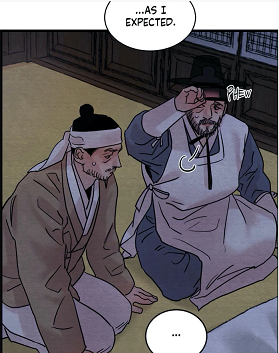 (chapter 33) He anticipated that his master was avoiding to face the consequences of his selfish behavior. For me, Kim doesn’t truly love his master. He views the Yoons as terrible, but he will never confront them. But for his own safety, he needed to deceive the painter. Let’s not forget that Kim had played a role in his escape and the low-born could reveal it to his master. That’s why he needed to fake his care and concern for the painter so that the artist wouldn’t mention the past. Thus he begged the young man not to wander around as a sign of care and gentleness.

 (chapter 32) However, the valet Kim was not present, hence when he lied to Baek Na-Kyum, he had no idea that in reality his words were containing more truth than lies in reality. That’s why I chose the kiss as illustration for the analysis. The roles were switched. The master acted as a servant, and the low-born was now the lord. The male lead was acting like Vasili Andreyevich Brekhunov from the Russian novel. Yoon Seungho was even willing to give water to the exhausted man. This situation was repeated in chapter 76:
  (chapter 76). The lord made sure that the painter would feel better with the water. But let’s return our attention to chapter 33. In the bedchamber, the main lead was to blame for Baek Na-Kyum sickness, as he hadn’t paid attention to the artist’s condition. He had acted selfishly, exactly like the protagonist from Master and man. Both realized their huge mistakes, came to regret and took some responsibility, although the chronology in the Russian story diverges. But this shows that both aristocrats came to realize that commoners were humans and no possessions.
 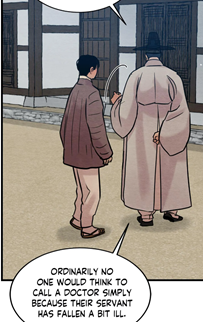 (chapter 35) and his preparations for the exam were more important than the painter’s life.
  (chapter 35) No wonder that after his departure, the artist was disappointed and heartbroken.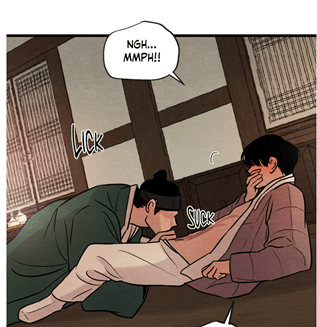

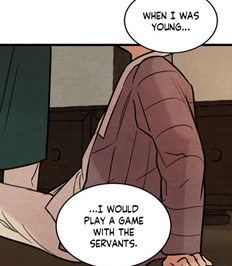 (chapter 36), until he saw the painter’s erection. He was willing to give up his position as master. That’s why he prioritizes the painter’s pleasure all the time.
  (chapter 36) So their relationship master-servant stopped at this moment, hence he lets him stay by his side, when the brother Seung-Won is in his chamber.
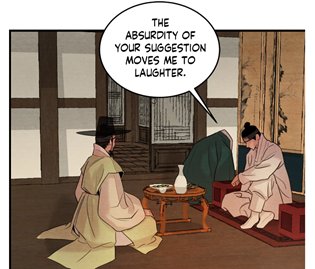 (chapter 37) Notice that his position had changed. He was sitting by the lord’s side. He even asked the artist to sleep by his side and let him stay in his bed without waking him up the next morning. As you can observe, the characters’ position illustrated their actual position in their relationship. When Baek Na-Kyum woke up the next morning, he was alone in the bedchamber. The lord preferred to leave his bed and eat elsewhere. In other words, Kim’s words from chapter 33 became a reality. He let him rest in his bed. Yoon Seungho showed so much consideration that in the chapter 39, he even went to the kitchen in order to fetch the low-born.
 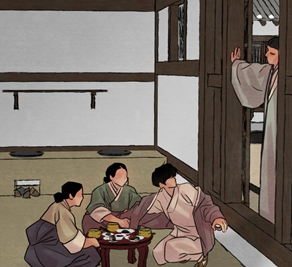 (chapter 38) He didn’t even send his loyal assistant. He had become the “servant” himself. In other words, we witnessed the lord’s slow conversion during the chapter 36 and the small changes from that moment. The nature of their relationship had changed, hence he claimed Baek Na-Kyum as his bride unconsciously.
  (chapter 40) So both characters, Yoon Seungho and Vasili Andreyevich Brekhunov transformed into a different person, more selfless and caring. They were willing to sacrifice things for them: status and pride. On the other hand, the nature of Baek Na-Kyum’s relationship with the teacher changed for the worse: from a teacher to a student, it became a lord-servant relationship, and the painter sensed the change of their relationship. But let us not forget: Jung In-Hun never considered the young man as a student, for him he had always been a low-born. It is just that he was so good to deceive the commoner.
 (chapter 71) Baek NA-Kyum was no longer a low-born, but a noble, while the main lead was his “servant”. This explicates why the noble was no longer asking for him in the evening
  (chapter 74) and visited him secretly during the night. But this switch of position didn’t remain a secret, the moment the lord embraced his panicked lover.
 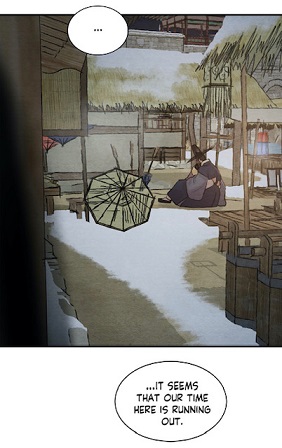 (chapter 76) At the end of the second season, the lord’s true personality is more and more unveiled: he has a kind and generous heart, and he is able to reflect on his wrongdoings, which contrasts to Jung In-Hun. And now, you can comprehend why right from the start, I was fascinated by the infamous sodomite. The first season let us see glimpses of his warmth and selflessness. This means, the noble’s courage and strength will shine more and more.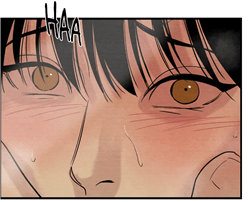

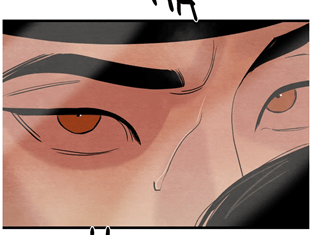


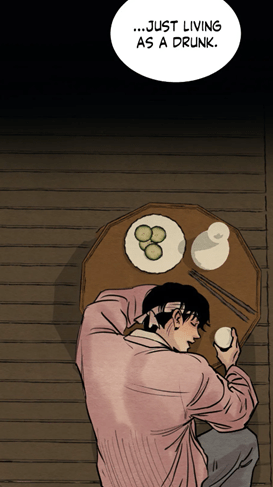
 She thought, she was doing him a favor and imagined that with the teacher’s support, his career could progress. Because of her abandonment, the painter relied even more on the teacher. Exposed to isolation, the teacher could start influencing him about his views: sex and sodomy are filthy and vulgar. As time passed on, he relied more and more on the teacher so that the moment the vow was made, Jung In-Hun somehow abandoned him. Therefore the painter started drinking alcohol in order to survive his existential dependence on the teacher. Then we witness in the chapter 22 how Baek Na-Kyum has some issues to follow the hunters. He is out of breath and he also falls easily. His weak constitution is no coincidence as we have to remember that he is actually a young man.
 and why Jung In-Hun always touched the commoner in the front (chapter 24
 or chapter 29
 ). If you pay attention to the artist’s behavior, he never showed his back to the teacher, only walked behind or by his side because deep down, his body remembered that he was beaten on his calves, hence unconsciously he protected his back.
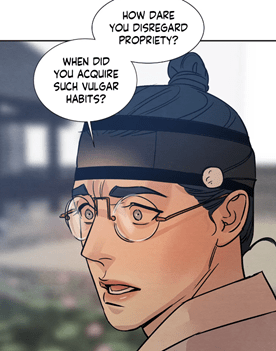


 So Jung In-Hun’s gaze is not remembered. And this is not the only time, when we see the face of the man without eyes.

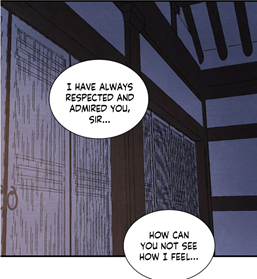 However, the coercive persuasion could never be effective on the artist’s unconscious. This explicates why the painter’s deeply repressed desires keep wishing to have sex with Yoon Seungho. Even awake, he imagines the lord getting closer to him, illustrating his desire that he would like the lord to feel attracted by him.
  (chapter 15)


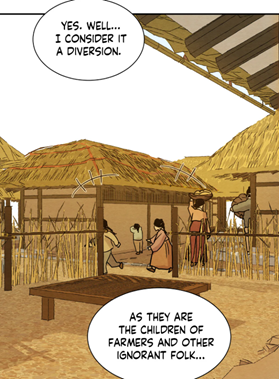 the others from the high nobility were busy with different kind of pleasures: hunting


 Finally, the masturbation symbolizes the climax of his slow approach.
 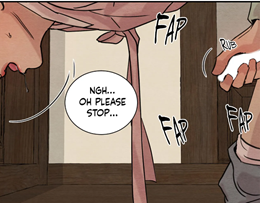 He knows that he has to be careful with the painter, since the latter was forced to remain by his side by using Jung In-Hun as leverage. In this scene, it becomes clear that he was already aiming at the commoner.
  He is willing to do anything so that the artist accepts him as his lover. As a conclusion, “Dangerous liaisons” has a lot of common points with the manhwa.

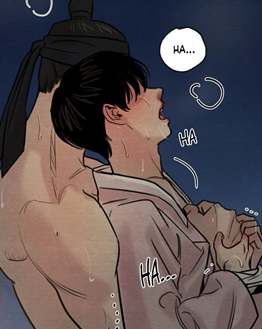
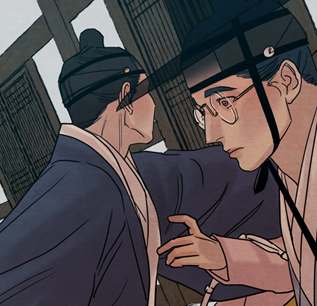 and dragged by Yoon Seungho

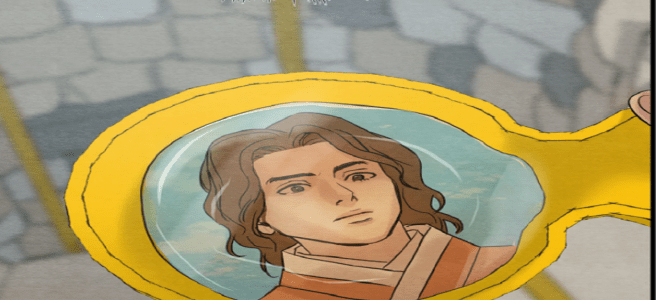


 (chapter 3). Fact is that he is so drawn to his face that he can’t help himself to caress the lips or cheek (e. g. chapter 12)
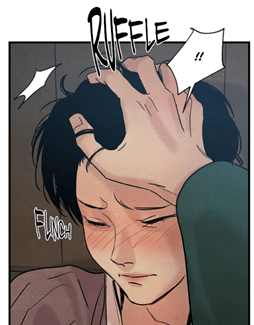


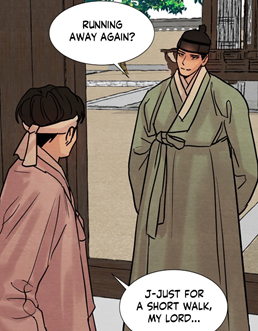 (chapter 12)/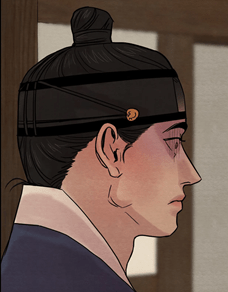
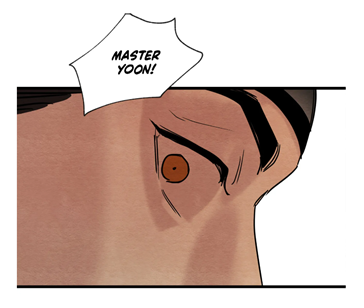
 (chapter 30). The beholder is witnessing more and more expressions coming from the lord, while he was so detached in the beginning, when he was sitting in his room looking out of the window. Through Baek Na-Kyum, our seme learns to discover his inner emotions, that’s why we can say that the uke serves as a mirror unconsciously. The eyes were definitely working as a mirror. Baek Na-Kyum showed his sadness, true desires, anger, happiness and thankfulness… a full range of different emotions. But our seme needed to learn how to control them as he had not been used to feel anything for a long time.
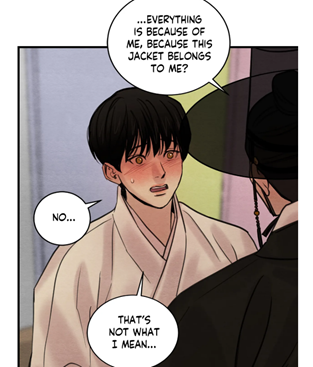


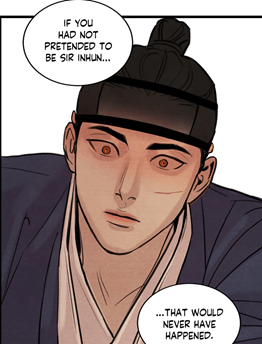


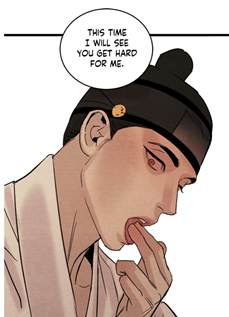
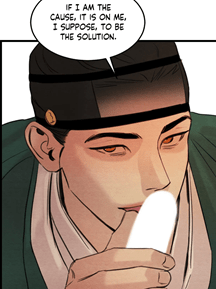
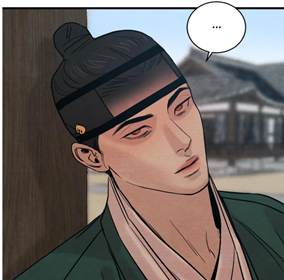 (chapter 35) indicating a certain lack of sleep, then the shaking hand with the fist,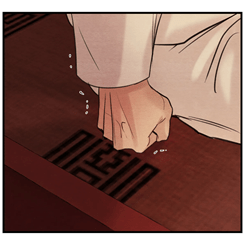
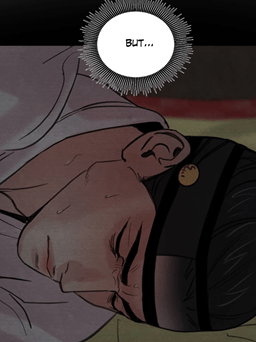
 As you can see, unlike in the past, Seungho is no longer sitting, but standing and also moving. He has been beating his servants. This contrasts so much to the earlier scenes as he was always first portrayed as pensive and immobile. The reason for this huge change of behavior is understandable. The noble just discovered that Baek Na-Kyum was no longer at the mansion. He even went from Baek Na-Kyum’s room to In-Hun’s bedchamber to confirm that he didn’t misunderstand the situation. If both are not present, then they ran away. He became so furious and desperate that he couldn’t control his emotions therefore he started beating his servants, even the loyal assistant Kim. That’s the reason why I compare him to a volcano. All his repressed emotions erupt. Then he hears that the two persons have come back. In my opinion, he must have felt relieved for one moment, until he turns his head around and he witnesses that In-Hun and Baek Na-Kyum are together.
 This chapter stands so much in opposition to the first 3 scenes, where the noble was portrayed as passive, calm and emotionless. Even if we could see a progression in Seungho’s behavior as he started leaving his room in order to go to Baek Na-Kyum’s side, he was always in control of his emotions, even if he teased the painter in chapter 12. Besides, when he came to the artist’s rescue, he might have humiliated the sex partner Jihwa, yet his actions were precise and reasonable. He punished the spy and not Jihwa explaining the reason why he didn’t do anything to him. For the sake of their past relationship, Yoon Seungho was willing to overlook the betrayal. However, here the noble is literally boiling due to his emotions. He feels frustrated, hurt, jealous but also abandoned as he had ordered the painter to remain by his side the night before. We shouldn’t forget that Yoon Seungho is in love with Baek Na-Kyum that’s why his heart can’t take the escape.
 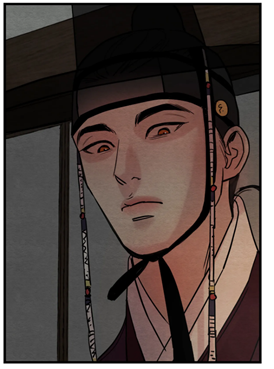 I mean, the artist could still reject him because the lord risked his life. However, nothing happens. Baek Na-Kyum somehow blushes and he doesn’t seem to reject the noble entirely. He just wants to leave the chamber so that the lord can rest. While he is submissive this time, his behavior reveals that there is still a distance between him and Seungho. That’s why the noble acts in a seductive way. He almost kisses the low-born but allows him to return to his chamber while telling him that he is only sparing him because of his poor health. This is quite important as it outlines that Seungho is still claiming Baek Na-Kyum as his partner. On the other hand, he is left alone in his chamber which bothers him. He definitely wants to share his bed with him therefore he is unable to sleep during that night. I am quite sure that Seungho must have been thinking about strategies how to improve their relationship.
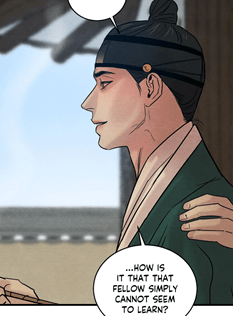
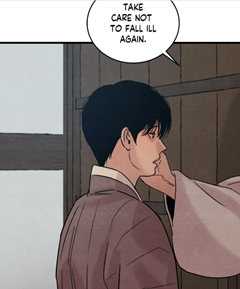
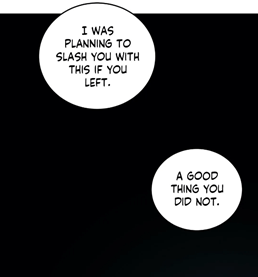
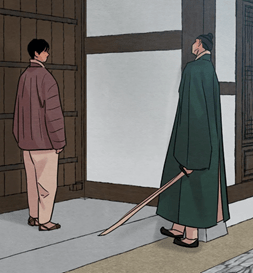
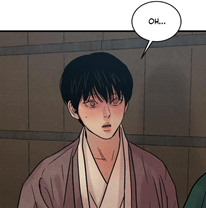

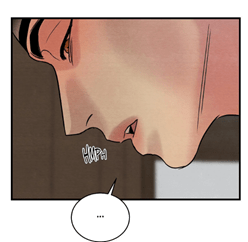

 Does it mean that Seungho has returned to the man he was at the beginning? No, not really. He has obtained what he wanted: the painter is now his partner. Therefore he no longer needs to become proactive, to leave the room in order to get his attention. The painter already belongs to him. Strictly speaking, Seungho can become a neutral person again who refuses to meddle with people’s life and politics. He already has what he needs.
 This image illustrates that Baek Na-Kyum is no longer blind because of the teacher. He is able to notice the lord looking at him. Yet he doesn’t bow like in the chapter 12 nor fear him and tries to run away. He is quite calm. In this scene and the one before, we saw the artist paying attention to the lord. Sure, since the young man doesn’t go to the lord’s side, there is still some distance between them, however now Baek Na-Kyum is able to notice his gaze and his presence and even takes the time to look at him. This reinforces the impression that Yoon Seungho has been able to change the painter’s perspective. Interesting is that both are looking at each other, while it is snowing. There is this tradition in South Korea that if you watch the first snow falling with your partner, then this person will be your fated love. As you can see, the snow seems to indicate that both persons are fated.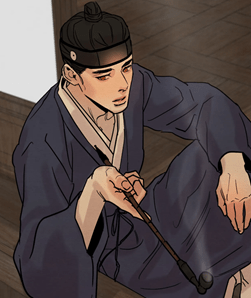











 Bebebisous33s' analyses in K-Dramaland and Manhwas