

Be aware that most of the manhwas I am using as illustrations are mature Yaois, which means, it is about homosexuality with explicit scenes. Please support the authors by reading the manhwas on the official websites. This is where you can read the manhwas.
- BJ Alex / Dine with A Vampire / The Beast Must Die / Legs That Won’t Walk / My Suha / Painter Of The Night / Legs That Won’t Walk / The Blood Of Madam Giselle / The pawn’s Revenge / Unintentional Love Story are on https://www.lezhinus.com/
- ENNEAD https://www.tappytoon.com/en/comics/ennead-mature
- Under The Green Light: https://tapas.io/series/under-the-green-light
- True Beauty: https://www.webtoons.com/en/romance/truebeauty/list?title_no=1436
- Doctor Frost: https://www.webtoons.com/en/mystery/dr-frost/list?title_no=371
Here is the link, if you are interested in more analyses about these manhwas: https://bebebisous33analyses.com/2021/06/06/table-of-contents-of-analyzed-mentioned-manhwas/
It would be great if you could make some donations/sponsoring: Ko-fi.com/bebebisous33 That way, you can support me with “coffee” so that I have the energy to keep examining manhwas. Besides, I need to cover up the expenses for this blog.
In this essay, I won’t examine a certain manhwa very closely, but I will focus on the mask, its different forms and functions in manhwas. Yet, the highlight of this analysis will be BJ Alex. Now, you are probably wondering why I picked such a topic. While reading these stories, I often noticed the presence of a mask, though it was only palpable through the mind’s eye and not to the eye. The reason for their presence is quite simple. The use of mask is strongly intertwined with the protagonists and identity quest. Therefore there is this question in the title: “Who are you?” Many characters are using a mask to hide their true personality or thoughts from their counterpart. Before starting to study the different types of masks and their utilization in the different manhwas, it is important to look at the definition of mask.
“Mask: a form of disguise or concealment usually worn over or in front of the face to hide the identity of a person and by its own features to establish another being. quoted from https://www.britannica.com/art/mask-face-covering
1. Mask and acting
As you can note, the mask is related to acting, but also to protection. That’s why in certain cultures, during religious ceremonies the priest will wear a mask, for he will represent the deity or the spirit the participants are asking for help or protection. This is no coincidence that in the theater of ancient Greece, the actors were wearing masks too. They had two reasons for this. First, women were not allowed to play a role, so a man had to take over their part. Secondly, by covering their faces, they would hide and protect their true identity. In other words, the mask in a religious ceremony and in a theater play ensures that the spectators are not confusing the identities. They have to distinguish between the seem and real, and as such between the person behind the disguise and the character represented. In other words, the viewers are asked to accept that the people covered with a mask are not representing themselves, but a different person: a god or a character.
2. Mask as protection
As for the protection, I could use as an illustration the mask put on the mummy in the sarcophagus. It was to protect the deceased in the afterlife. And these two functions (hiding the identity and protection) have not changed at all nowadays. That’s why we have in BJ Alex, the main lead Ahn Jiwon hiding his face with a mask, while he is following his ex-lover.  (chapter 55) He doesn’t want to be recognized, but more importantly he is determined to hide his true feelings from Nam Dong-Gyun, for he believes that he has no chance to be his lover again. Moreover, during the Corona pandemic, people are requested to wear a mask in order to stop the contamination.
3. The use of a real mask
3. 1 A necessity or a desire?
To sum up, the person behind the mask would like to cover his/her identity or his/her true personality, implying that this person will play a role, while the mask will serve as a shield too. This explicates why in The Beast Must Die, the protagonist hides his ASPD (Antisocial Personality Disorder) from others. 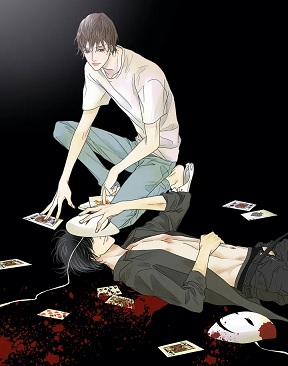 If people knew that he was a psychopath, he would get isolated. His parents are already very distant with him, for they view him as a monster. Due this experience
 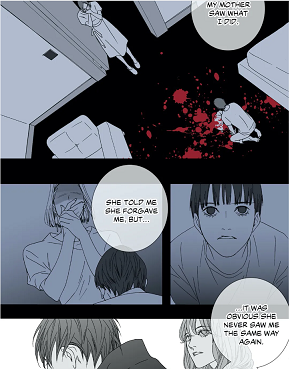 (he killed a dog and his mother caught him), he got aware that he was not allowed to act on his urges. For him, the mask is a necessity, as he is living in society. He doesn’t want to end up in jail. But is it the same for Nameless from Painter Of The Night?
The criminal puts on his mask, when he decides to kill the vicious servant. 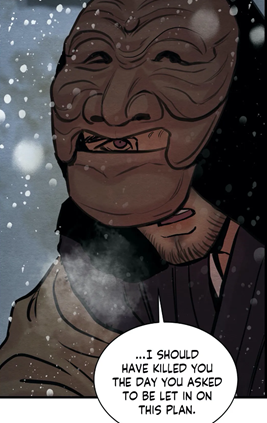 (chapter 54) He is switching his identity to become a killer. In this panel, the manhwaphiles see the transformation of the figure, as his face is already half-covered. He is no longer a joker, but not the ruthless murderer yet. However, when he kills the servant, he has the cover on.
 (chapter 54) By putting a mask, he is protecting himself too, for he is acting as someone else, therefore his heart can’t be wounded.
  In this case, it is more a desire, though in truth it is a combination of both. The “butcher” has to hide his true identity. So when he wears his mask in chapter 44, he is doing his job. He won’t be recognized, but also he won’t feel remorse. He has been paid for that and the mask is helping him not to get emotionally invested. On the other hand when Jihwa met him in chapter 51, the manhwalovers could perceive the low-born’s true personality which coincides with the absence of the mask.
 In that episode, he was literally naked in front of the noble, which explicates why he showed concern and care for his client. He let the noble express his worries. Let’s not forget that the jester is a person with a pure heart, when he is true to himself. Hence I come to the conclusion that the mask serves as a protection for the criminal’s mind and heart. And now, you comprehend why Nameless didn’t feel remorse for hurting the painter. According to me, in this scene, it was Kim who was scaring the painter.
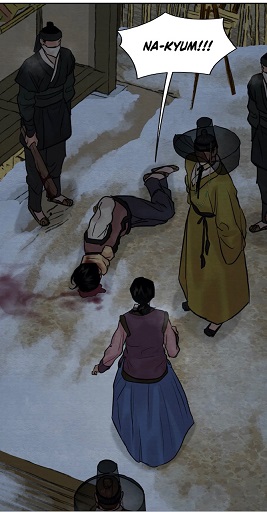
 (chapter 66) This is important, because the mask had two purposes here: to hide the identity of the perpetrator, but also to slip into a role, No-Name’s, the assassin. The main lead’s face was covered and turned around. At no moment, the “butcher” could see the victim’s gaze and facial expressions. The mask helped him to be ruthless, while he threatened Baek Na-Kuym. He might feel pity, but that was it.
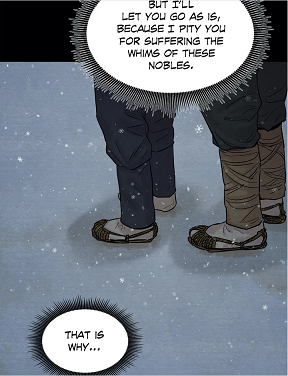 (chapter 66) In that scene, the manhwaphiles thought that they were seeing Mumyeong, hence they imagined that Jihwa’s safety meant more than the artist’s life and possible scars. But if you take my theory seriously, this was Kim, then the words from the butler had a different meaning. He was hiding his action behind the nobles. Only after paying attention to the mask, I realized the existence of two masks.
 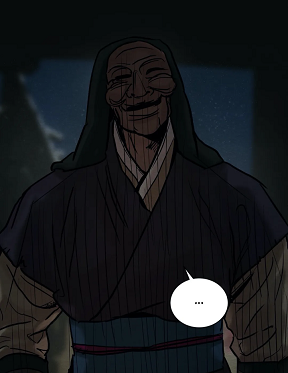 (Chapter 61)
 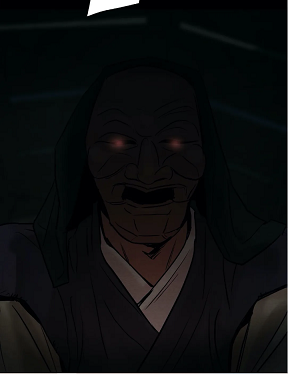 (chapter 61) Smiling mask versus threatening mask. The presence of two masks explicates why No-Name had the impression that after the painter’s return nothing bad had really happened. He was not aware of the butler‘s wrongdoings. Simultaneously, since the artist had not been killed, No-Name imagined that he had done nothing wrong.
 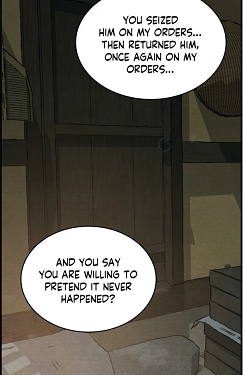 (Chapter 61) Hence the existence of the Joker’s mask outlines the criminal’s duality. He can be a ruthless killer, yet he can be gentle and caring too. At the same time, it implies the presence of a biased view.
But let’s return our attention to the scene, when Nameless stands up in order to eliminate the vicious servant. Putting the mask had another purpose in that scene as well. It was to scare Deok-Jae. And note that in that moment the domestic got paralyzed, when he saw No-Name putting his mask and approaching him. Observe the divergence between the two panels from chapter 54. When Deok-Jae recognizes the seriousness of his situation, the mask is covering the low-born’s chin. Scaring an enemy was another function of the mask in real History. Greek, Roman or Japanese soldiers would wear one in order to instigate fear in their opponents. The mask gave their enemy the impression that they were not fighting men, but demons. As you can see, it was to disguise their true nature.
3. 2. The mask: a source of power and magic
And this leads me to the following observation: the mask in different cultures is often associated to supernatural powers. When a shaman wears one, he can chase evil spirits, cure illness, predict events etc… it was, as if the cover contained divine powers. Hence this is not surprising that in ENNEAD, the god Seth loses his mask
 (chapter 73), the moment he is deprived of his powers. It was, as if he became a human. This is particularly perceptible, when he accepts the judgement of Maat and says this.
 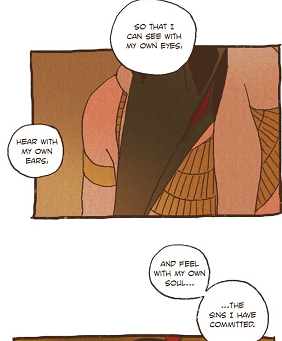 Striking is that in this panel, the mask doesn’t appear as a source of advantage, rather as a hindrance. He couldn’t see and hear the consequences of his crimes due to the mask. He was blind and deaf. By removing his mask, he becomes human and can face reality: he is facing his sins and the suffering of his victims, their wounded soul.
This leads me to the following conclusion, Seth chose to hide his pain under his mask. He acted as a terrible god, for he had lost his own identity. When Seth discovered that everything in his “life” was fake (his family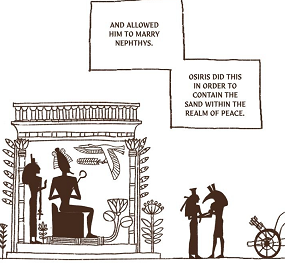 [chapter 35], his son, his title
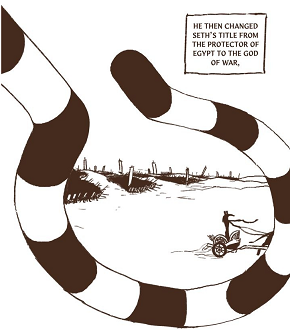 [chapter 35], his power over the desert
 [chapter 35]), he lost his identity. Osiris made sure to imprison his brother, because the former was lusting after him and had the impression that the latter would always escape his control.
  (chapter 35). At the end, he raped him in order to claim him. The latter got literally destroyed, hence he hid his pain behind the mask and chose to hurt others.
 (chapter 37) In other words, the loss of identity was the reason why Seth decided to hide himself under the mask. Who was he in reality? The god was so tormented by his tragic past, Osiris had hurt him with his actions and words. He made sure that his brother would doubt himself. Hence the mask became the only reason to keep living. This item helped him to hide his wounds, but also not to lose himself completely. Hence I conclude that the “evil god” wasn’t just blinded by his heartache, but also by his mask, for the latter hindered him to see the real impact of his terrible actions.
 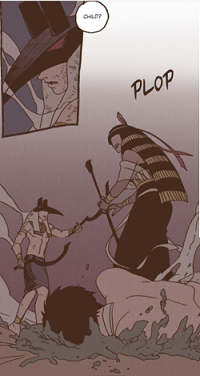 (chapter 37)
As you can see, we have the functions I mentioned in the introduction: disguise, protection and identity quest. Therefore we could say that in ENNEAD, the mask is a source of power, yet represents a hindrance. While Seth becomes human (chapter 73), his son makes the opposite experience. He transforms himself into a god, Anubis, hence he gets a mask.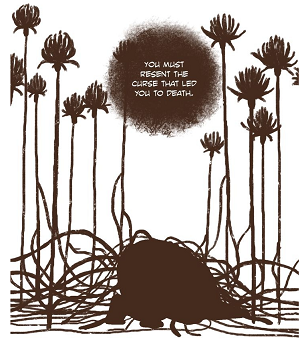
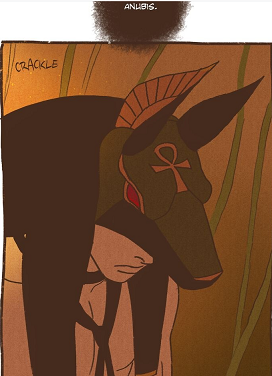 (chapter 73) However, this signifies that he won’t see his wrongdoings too, he will be oblivious to the pain he is causing to others. This time, his blindness will be caused by his resent. While in the past, Anubis was a sensitive and gentle person, but no real god due to Seth’s curse, in chapter 73 he becomes Osiris’ true son, an evil god. Why do I judge him like that? It’s related to Osiris’ words. The latter is encouraging his son to feel hatred for the one responsible for his curse, Seth. Moreover, he asked his son to forget his past signifying that he should cut ties with his previous family. Therefore I believe that in the future, Anubis will fight against Seth and even Horus. Nevertheless, the wounded Anubis doesn’t realize that he has been manipulated by Osiris. The latter used his vulnerability and fear to approach him and appear as his savior.
  (chapter 73) Besides, Osiris was in fact accountable for his injury (chapter 37) and curse (though indirectly). The latter took possession of Anubis’ body in order to approach Seth.
 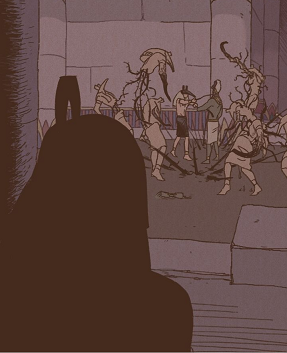 (chapter 37) In other words, the god of the afterlife used a disguise, though his brother had the impression that Osiris was real. Yet, one might argue that in that scene, Osiris was not wearing a mask. However, since he took possession of Anubis’ body, we can clearly see the presence of a cover. Let’s not forget that this terrible god is not allowed to leave the Underworld, hence he needs a subterfuge to enter the world of the living. That’s why I perceive it as a disguise. While the Egyptian god used Anubis as his vessel, Kwon Sungha from Dine With A Vampire took a new identity: he became Sooin’s bodyguard.
  As you can see, in both cases magic provided the villains a new occasion to deceive their target. And this shows that a mask can eventually cover a whole body, when it is to create a new “identity”.
4. The visage and make-up as masks
However, I would like to remind my readers that a mask in literature and especially in manhwas can also have many different forms… We shouldn’t reduce it to the use of a real mask. And this is also visible in ENNEAD. On the surface, the goddess Isis is wearing no mask , just like Ra or Hathor. Yet, note that they are all women. Secondly, if you pay attention to their appearances, you’ll detect the presence of a hair dress and make up, especially around the eyes. This is no coincidence in my opinion. These accessories should be perceived as a “mask”. The make-up and hair dress are a form of disguise. This becomes really obvious in the manhwa “True beauty” from Yaongyi, where the heroine Jugyeong Lim hides her insecurities and true self behind a make-up. This is the real and natural protagonist
 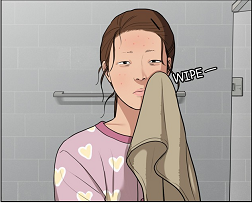 (chapter 7), while we have here the disguised heroine
 (chapter 0). This goes to the point that her boyfriend Sujeon Han has no idea how she really looks like. As a conclusion, the make-up and hair dress should be judged as a mask too. That’s why in traditional Chinese theater, the actors have painted faces. It was, as if they were wearing a mask.
5. The importance of the eyes in connection with a mask
Besides, let’s not forget the saying: the eyes are the mirror of the soul. Therefore the gaze reveals the true thoughts and emotions of the person to his beholder. While a person can control his facial expressions, it is impossible to control the gaze.  (Doctor Frost, chapter 2) That’s the reason why the author Black Apricot didn’t drew a mouth, when she presented Song Ji-Sung here.
 (chapter 9). She wanted her readers and the main lead to realize the character’s true personality. The latter was upset, because Kwon Soo-Young was keeping his distance from him and it looked like, he had found a new protector/boyfriend. When the protagonist Kwon Soo-Young had met Song Ji-Sung for the first time, he had only paid attention to his smile. Therefore he had misjudged his personality. And now, if you contrast the previous panel with the following one
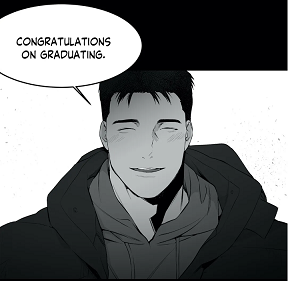 (chapter 16), you’ll notice an important detail: The eyes are closed, when the character is smiling. In this situation, the figure was actually hiding his true thoughts, this explains why the main lead couldn’t correct his false impression about his future lover. He had no idea about his true nature, as the latter keeping concealing his true intentions, he was faking his emotions with his facial expressions. This confirms my interpretation: the face can also be a mask. For me, this character is like Doctor Jekyll and Mr. Hyde. In this picture, Kwon Soo-Young got scared, when he saw this gaze and refused his lover’s advances.
  He is brutal, selfish and very manipulative. And now, you understand why in ENNEAD we had two different kind of masks: Seth and Horus are wearing real masks, while Osiris and Isis use their own face and make-up to conceal their true personality.
But closed eyes is not the only strategy to create a mask and as such create a certain deception. The nature of the gaze can be changed due to the make-up. As you can see, the hair dress and the make-up can be viewed as disguise… and remember that a mask is judged as a disguise. That’s why in ENNEAD, Isis is a real hypocrite and deceiver. She is similar to Seth, as she has been terribly wounded by Nephthys and Osiris’ betrayal, yet she chose to blame Seth. She decided to protect her husband’s reputation in the end. She prefers blaming the real victim of this tragedy. And this observation leads me to the next conclusion. It is no coincidence that Osiris is painted in green.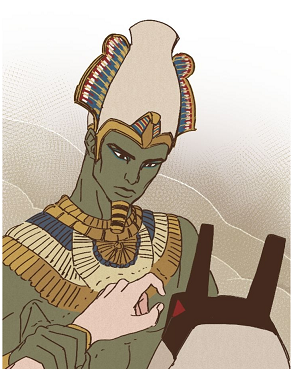 (chapter 7) Sure, the color refers to his death, a decayed body, nonetheless the readers should judge the painting as a cover. Since he is using a whole body to disguise himself, this signifies that he is hiding his true personality and thoughts more than Isis or Ra. That’s why it is not surprising that this god is particularly scheming and deceptive.
5. 1. The absence of eyes
And note that in this image (chapter 73), the god’s face is not even visible, a sign of his deceptive nature and lies. He is not revealing his true plan to Anubis. What caught my attention is the importance of the eyes, since the latter are a reflection of the person’s true character. In other words, the absence of eyes in a manhwa can have a different meaning that just an indication of “blindness”. The absence of eyes is a clue for deception and manipulation. That’s why in the Pawn’s revenge, Jeon Hee-Seong is seen without eyes in chapter 6: 
 The hair fringe and the shadow serve as a mask. In this scene, she used her body to divert her lover’s attention and hide her true intentions. She was inciting Do Seong-Rok to kill on her behalf. However, this temptation left such a deep impression that the main lead was tormented in his sleep later. His unconscious was telling him that he had been manipulated. As you can see, the absence of eyes in the manhwa can be viewed as the presence of a mask and as such a sign of deception. We have another example in BJ Alex:
  (chapter 10) The mask is a combination of shadow and absence of eyes. Here, Ahn Jiwon was remembering his first love and boyfriend, who faked affection and care for him. As a conclusion, the eyes symbolize honesty and naturality and its absence the presence of a mask.
Therefore the readers should pay attention to the characters’ gaze and eyes. This observation brings us to my next point.
5. 2. The presence of glasses
I came to this topic “masks” due to Painter Of The Night and Dine With A Vampire. In both stories, we have two characters wearing glasses, the scholar Jung In-Hun  and the internist Kwon Sungha
 . While examining their characters, I made a connection between the glasses and their personality. I defined the function of the glasses as a mask, because both almost act the same, as vicious hypocrites. They hide behind their glasses and their fake smiles so that people misjudge them. And remember doctor Frost’s advice: Observe that each time the villains from the two manhwas smile, their eyes are closed. It was, as if they didn’t want their eyes to betray them and the glasses were a tool to redirect people’s gaze to their smile not paying attention to the eyes. This item serves as a guarantee that people would rather look at their smiles in order to mislead them. This explicates why people close to them are not aware of their manipulations. Not only Sungha’s girlfriend has no idea that he is two-timing, but also he chose her because of her social background. Baek Na-Kyum also fell for his teacher’s lies, as he could never see the scholar’s real gaze. However, the teacher reveals slowly his gaze and as such his true personality, that’s why in the chapter 29, the low-born detects his first betrayal, but he doesn’t realize his vicious and double-faced nature.
 Observe that the smile is less pronounced, giving the impression that it is vanishing. Simultaneously, the eyes are shown oozing a rather cold and heartless side. In the scene at the library (chapter 40), he’s finally able to perceive his own reflection in the scholar’s gaze, since the smile has totally disappeared. The gaze exudes coldness, despise and filth.
 Combined with the harsh words “you were born to be a prostitute”, the painter’s identity and personality are literally destroyed. The scholar has reduced Baek Na-Kyum to a prostitute, the lowest rank among the commoner. They have no rights and no real identity as they are forced to do what their clients want.
 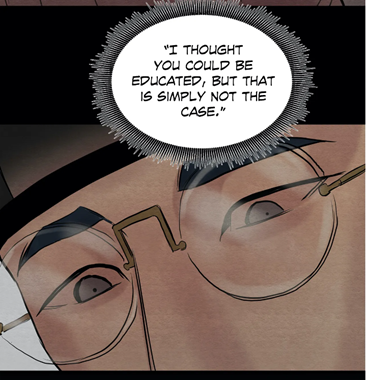 (chapter 41) Hence it is not surprising that the protagonist remembers the cold gaze. His eyes were the other reason why Baek Na-Kyum’s heart was so wounded. He could sense despise and rejection. In other words, the scholar had used two weapons to hurt the main character: the gaze and the words. This connection between the smile and the eyes is visible in Dine With A Vampire too.
 As soon as the smile vanishes, the eyes become visible unveiling their true personality. That’s why it is not surprising that Kwon Sungha has the same behavior towards the main lead Joo Sooin. The former has also destroyed the protagonist and reduced him to a puppet. The villains keeps calling him a pervert. He was even worse than Jung In-Hun in the sense that he kept abusing him mentally and physically after the coercive persuasion. Both are hypocrites hiding behind their glasses and their gaze. Therefore they are portrayed as cruel and mean hypocrites. The other common denominator is their hatred and rejection for homosexuality. Kwon Sungha seems to be even worse than the scholar, as he is in reality a repressed homosexual. He has sex with Joo Sooin, but resents him because he sees in him the reason for his “perverted” sexuality. He rejects sodomy because of the Church and his mother. Both reject this sexual orientation. I could mention Carter Nathan from The Blood of Madam Giselle
 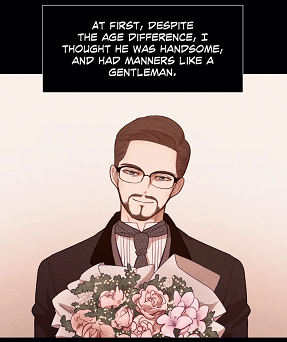 (the fake and the real
 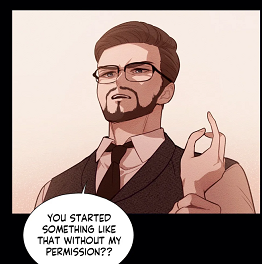 (chapter 13) or Jung from Unintentional Love Story
 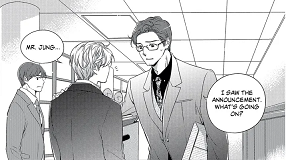 as well as selfish and ruthless hypocrites. In other words, the next time you read a manhwa, be careful with characters wearing glasses, they might be dangerous and their smile might be fake.
However, the manhwaphiles shouldn’t generalize, Mathew Rayner from Under The Green Light represents an exception.
 (chapter 16) The main lead explains that he chose to wear glasses, because he desired to avoid rejection and fear. He had noticed that the absence of facial expressions (smile) and his cold gaze would be misjudged by people. Here, Matthew used the glasses as protection. And this illustration reinforces my interpretation: glasses in manhwas have a huge importance in the end, they should be considered as masks too.
6. The mask wearers
But the example with the glasses illustrates that there exist two types of characters utilizing masks. The first ones are the villains and antagonists who are hiding their true personality in order to achieve their goal. They need people and good connections so that they can gain power or more money. As for the second category, they are the main leads trying to hide their own issues and wounds (Nameless, Mathew Rayner, Ahn Jiwon, Yoon Seungho, etc). For them, the mask is a shield, they are trying to protect themselves from torment and rejection. Their acting is not mainly to hurt others. And note that the moment Kang Moo from “The Beast Must Die” removed his mask, he unveiled his inner thoughts and emotions to his lover Lee Ki-Rin. The latter is the only one who can control him.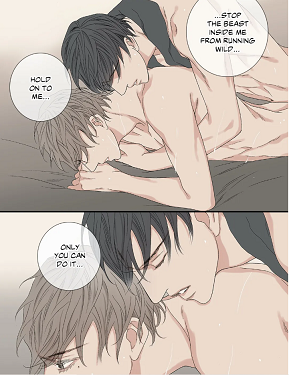
7. BJ Alex: Mask and identity quest
This manhwa is very interesting for two reasons. First, in BJ Alex, the author used so many different types of masks. I have already mentioned two of them: (the absence of eyes and the shadow in chapter 10, the normal mask in chapter 55) . Why are there so many? The reason is simple. The central topic of this manhwa is the protagonist’s journey to find his true self! Remember what I wrote in the introduction: a mask concerning a protagonist is always connected to identity quest.
So it is time to focus on the main character Ahn Jiwon. He is introduced wearing a mask, for he is broadcasting. 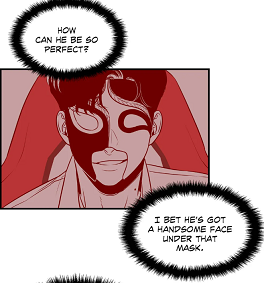 (chapter 1) This is his second identity: BJ Alex. On the one hand, he desires to remain anonymous so that no one can recognize him in real life, on the other hand this signifies that he is living a double life. He would like to protect his privacy, but also his secret life as homosexual. That’s why he said this, when his relationship with Nam Dong-Gyun was revealed:
 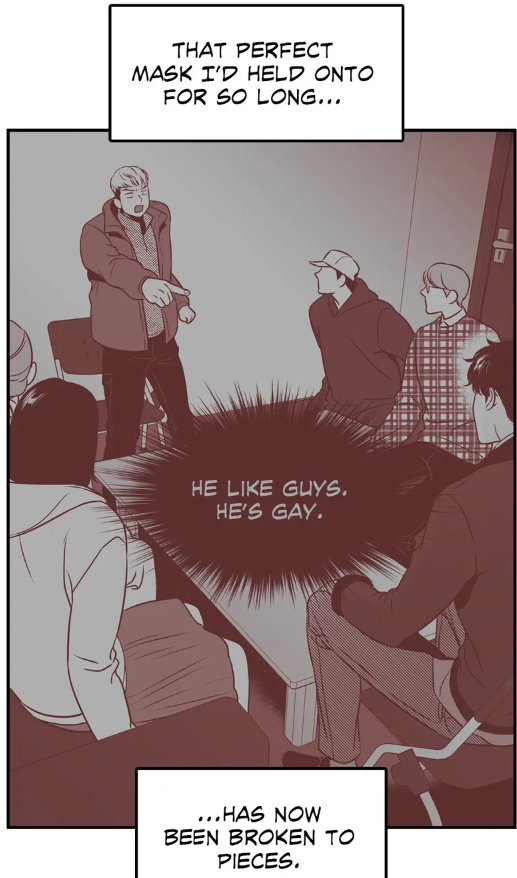 As you can observe, a name and as such notoriety can also serve as a mask. The president of the council was admired by his peers, he was so perfect that some students even wondered, if he was human.
Here, I could also mention two other manhwas, where reputation was used as shield and mask: Yoon Seungho in Painter Of The Night and Park Do-Hyeok in My Suha. The latter utilized his grand-mother’s favoritism, for President Lee considers Park Jiwon’s father as a black sheep. Since Park Do-Hyeok’s father was obedient, she assumes that the red-haired grand-son is the same. Due to this privilege, the villain was able to create the perfect illusion, he is the perfect grand-son. That’s why he is also faking his smile 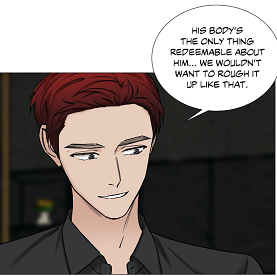 and the president is not recognizing it. But why is reputation a mask? It is, because people often judge others on hearsay and first impressions. The social medias are the perfect example for superficial and quick judgement. But we have to question ourselves about Ahn Jiwon’s initial motivations to hide behind a good notoriety.
But let’s return our attention to the manhwa BJ Alex. Ahn Jiwon had the reputation of the prefect student , for he was always friendly and kept helping people. 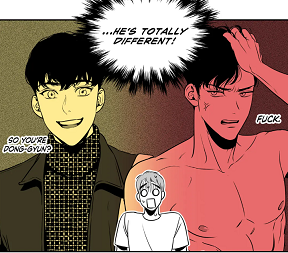 In the beginning of the story, he doesn’t even know the other protagonist very well, yet he is willing to take care of him, when the latter is drunk. The president is seen constantly smiling and has never externalized negative emotions (anger, violence…). This explicates why the uke was so shocked and confused, when he saw a brutal BJ Alex. The latter had discovered his secret, hence the former felt vulnerable. On the other hand, Nam Dong-Gyun wondered about Ahn Jiwon’s true personality. But the uke was not the only one who had no idea about Ahn Jiwon’s true character. The latter was also confused.
What caught my attention is that Ahn Jiwon is not only hiding his identity, he is also hiding his true self from his fans. Note that during the streaming, he told old or possibly fake stories, until he met Nam Dong-Gyun. His interaction with the other main character affected his broadcast so much, for his stories felt more real, genuine and exciting. Besides, observe that in the picture above, Mingwa didn’t drew his eyes. This is relevant, because it truly exposes Jiwon’s life. He is soulless, signifying that he isn’t true to himself in reality. Why? It is related to his childhood. Due to his neglecting parents who always favored the eldest son, the main lead was forced to live in his brother’s shadow. But the worst is that his parents never looked at him. This explicates why the parents in all the panels are represented without eyes.  This signifies that the protagonist was never confronted with his own reflection.
  (Doctor Frost, chapter 11). That’s why he became an empty man in the end. He has no idea about his true self (his likes and dislikes). He was forced to follow his parents’ requests and his brother’s shadow. This emptiness is palpable in chapter 49, when the main lead confesses this: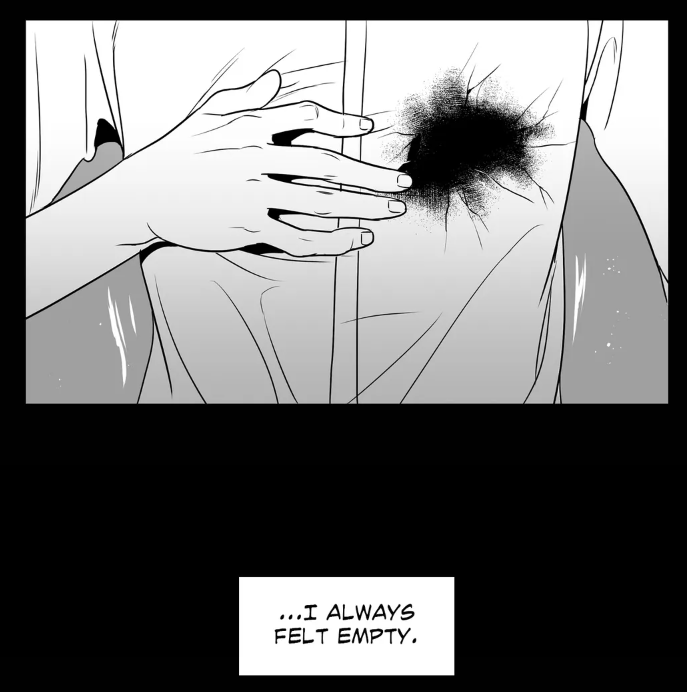
All these observations lead me to conclude that Ahn Jiwon had not only be wearing one mask in fact, but minimum 3!! We have
- the mask BJ Alex
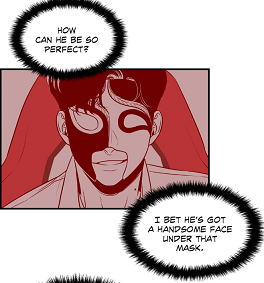 (chapter 1)
 - Then he became a second version of his eldest brother:
 (chapter 49) Since the adults kept criticizing him, he imagined that if he copied his brother, he would get recognition and acceptance. In other words, he forced himself to become a second version of his brother.
  But even copying his hair dress and tastes, he was doomed to failure, for the parents had already categorized him: he would always be inferior to their eldest son. He realized gradually that this wasn’t right, for his parents still didn’t perceive his true identity. That’s why he feels drowning, when he loses his mask.
  He doesn’t have the impression to exist.
 - Furthermore he had imagined, if he was popular at school, his parents would change their mind about him through the comments from people (other parents, teachers, students).
 (chapter 49) That’s why he chose a third mask: he tried to be admired at school. He was caring and considerate towards his fellows. However, since he had made this rational decision
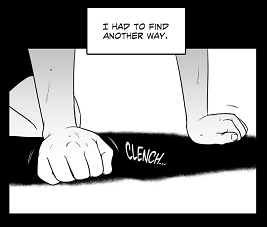 , in his mind he was acting. Hence he didn’t truly enjoy this situation.
 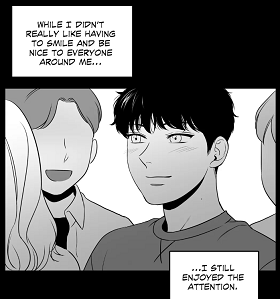 (chapter 49) He felt that he was forced to smile. Besides, I believe as he was fake, this admiration was quite superficial in his mind. Therefore he didn’t feel truly loved. That’s why at some point, he wondered if he would ever be loved…
 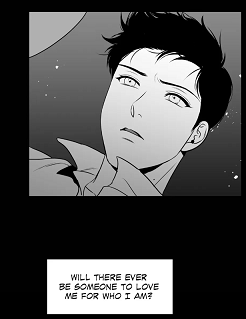 However, the readers should interpret this question differently: he was asking indirectly, when his true self would be recognized by someone. And the one who made him discover his true sexual orientation was unfortunately a player. That’s why the main lead was so devastated and hurt, when he discovered that his relationship was based on deception and fakeness. So after being sent to the army, Ahn Jiwon chose to act like in the past. He became a role model as a student, yet he could no longer hide his homosexuality. Hence he led a double life.
Through his interactions with the other protagonist, Ahn Jiwon was forced to recognize that he needed to drop the mask BJ Alex. In the presence of Nam Dong-Gyun, the dark-haired man came gradually back to life. The break-up and their last sexual encounter, where the uke refused to look at him, made him realize that he was in reality Ahn Jiwon and not BJ Alex. The latter was just a role and not his true self.
Because of the uke’s frankness and sincerity, the main lead was forced to feel emotions. And this leads me to the following observation. The author even used panels to illustrate a mask. 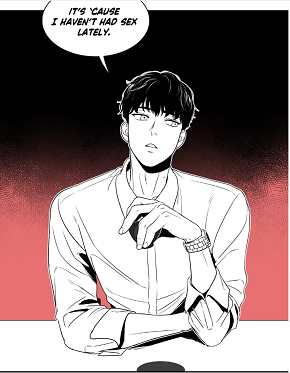 (chapter 08) In this scene, the charater is disguising his true thoughts. The black and red are representing his emotions: he is irritated, because he needs to have sex with Nam Dong-Gyun. Note how Ahn Jiwon is avoiding his counterpart’s gaze. The figure is acting, his mask is his face and the presence of the colors symbolizes the repressed and hidden thoughts and emotions. Mingwa colored one picture in chapter 51 marking a turning point in the protagonist’s life.
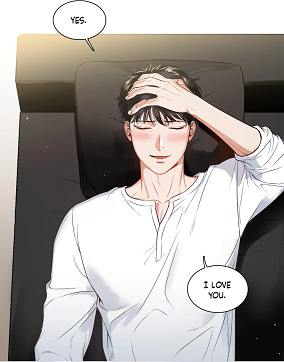 For the first time, he was acknowledging his feelings and as such his own desires. This picture represents the removal of one mask. He is slowly living for real, but in this chapter he still hadn’t found his true personality. The other mask (his reputation as good student) was still existent. Besides, he still believed that his smiling and caring attitude were just an act, while in truth he was genuine and caring. But due to his past, he had already internalized that this was just an act. And now, you comprehend why the latest episodes from BJ Alex are in color. The main lead had finally found his own identity and place.
As a conclusion, the masks in manhwas can be represented in many ways: real masks, absence of eyes, glasses, make-up, facial expressions  (Painter Of The Night, chapter 54), colors, reputation, etc. The protagonists are often hiding their true thoughts and emotions due to their past, while the villains are using masks to deceive people.
Feel free to comment. If you have any suggestion for topics or manhwas, feel free to ask. If you enjoyed reading it, retweet it or push the button like. My instagram-tumblr-twitter account is: @bebebisous33. Thanks for reading and for the support, particularly, I would like to thank all the new followers and people recommending my blog.



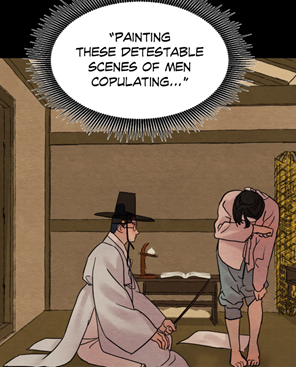 (chapter 34), only spiritual love was allowed
 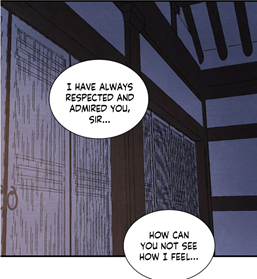 (chapter 19)
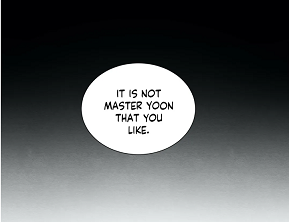 (chapter 68). This signified that in his education, not only sex was prohibited, but also sexual desires were denied. Although love was expressed through hugs
 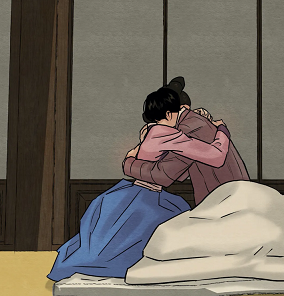 (chapter 66)
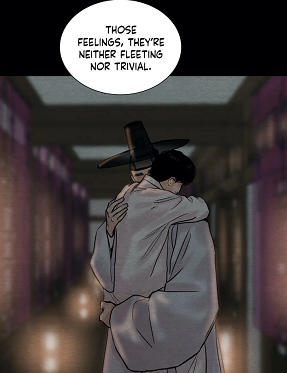 (chapter 68) and caresses
  (chapter 10)
  (chapter 68), they were devoid of sexuality. The painter experienced love, but was not allowed to experience sexuality. He was only authorized to paint it for the scholar’s sake. On the other side, Yoon Seungho was raised the opposite: love was not allowed, as it was a sign of submission and weakness. Sex was permitted, because it was considered as a fight in order to defeat his opponent. These were the butler’s doctrines. That way, he could still have a connection to the main lead. If he came to love someone (the pedophile), the lord could definitely abandon the valet and reveal his betrayals. In other words, he used pity as a way to tame the lord. At the same time, sex also served to gain some benefit, as it was an exchange of favors (giving versus receiving),
  (Chapter 71). I connect this philosophy to the king and indirectly to the butler. With sex, the nobles could exchange some favors. These huge divergences in the mindset explicate why there were so many misunderstandings between Yoon Seungho and Baek Na-Kyum, as their education diverged so much.
 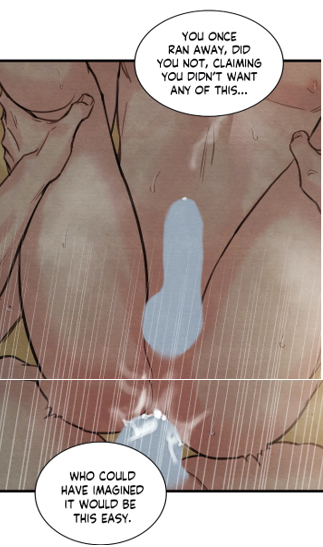 (chapt45), as the painter had accepted him as his sexual partner, he had to realize slowly that he was wrong. He imagined that since the artist had remained by his side and was accepting to have sex with him, he had achieved what he wanted: in his unconscious it was to be loved. Yet, it was just an illusion. The painter saw himself as a whore and the master as a man consumed by lust. As you can see, the noble was forced to judge the nature of the sexual encounters differently. He had associated sex to love due to their Wedding night, therefore he imagined that the moment the painter was accepting him, the problem was solved. He would be able to relive this wonderful moment, but however nothing like that happened. He felt never satisfied, as there were no feelings at all. Hence he even had sex during the day
 , believing that the artist’s lack of experience was the problem.
  (Chapter 45) While the lord became Baek Na-Kyum’s sexual emancipator, the painter became the lord’s teacher for love. This explicates why the low-born forced the lord to question his own identity and feelings.
  than a master- servant relationship, because the commoner was never treated like a domestic. He only had sex with the lord and had some privileges.
  (chapter 46) He was never asked to do other work, although the artist tried to change his situation. Since he was behaving like a whore, he felt that he had no right to express any thought and emotion. He couldn’t show any pleasure. That’s why there were no feelings in their sex encounters, and the lord could sense the difference. Consequently, when the lord realized that he was still perceived as a man consumed by sex
 (chapter 48), he changed his behavior. He acted like a real client at the brothel
 (chapter 48), but at the same time he cornered the painter to have multiple climaxes in order to let him experience that he liked having sex with him.
 (chapter 49) As you can observe, the lord linked sensuality to love. If he could provoke ejaculations, then it meant that the artist was definitely feeling something for him. However, the moment the lord liberated the painter from his pejorative perception about himself (he is a prostitute), the painter reacted the exact opposite. Now, he was the one using Yoon Seungho, the latter was his plaything.
 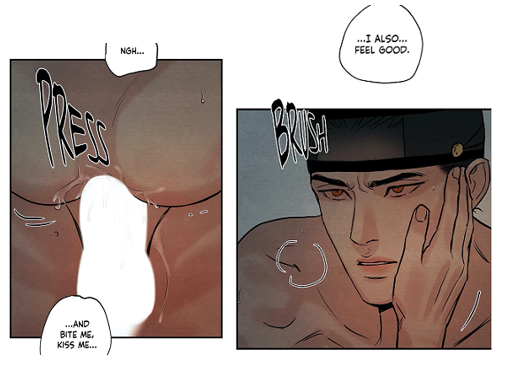 (Chapter 49), his prostitute, for he was the one procuring pleasure to Yoon Seungho. As you can see, the roles had been switched. This means that now the painter had the upper-hand in their relationship. We could even say that the noble was willing to accept his fate.
  (Chapter 49) Yet there was a difference from the past. Yoon Seungho would feel pleasure as well. This is not surprising that Kim chose to intervene and separate the couple right after. Without sex, the painter had no power over the master. That’s the reason why the butler revealed his knowledge the morning after. The protagonist had to hear from his butler the real cause for Baek Na-Kyum’s passivity and torpor:
 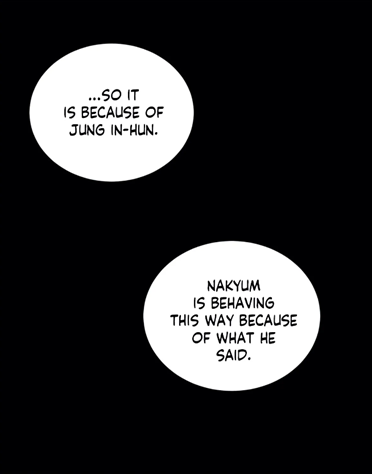 (chapter 50). Through this revelation, the lord was indirectly confronted by his own reflection: he was indeed asking from Baek Na-Kyum sexual favors in exchange for his stay at the mansion. That’s the reason why the lord had a “relapse“ and kept his distance from the painter.
  (chapter 52). This was important, because for the noble, it meant that he could no longer have sex with other partners. Without sex, the lord was forced to question himself and ponder on the true nature of his relationship with Baek Na-Kyum. He felt jealousy during that night, he was very protective as well.
  (Chapter 52) His sexuality had already become an expression of his love, although the main lead was still unaware of his own feelings. That’s why I come to the conclusion, chapter 52 was actually revealing Yoon Seungho’s monogamy, although it looked the opposite. And this becomes truly visible, when the gangrape was about to occur. He felt no urge, when he was with the guests, yet the moment he brought the artist to the bedchamber, he couldn’t stop himself from kissing his loved one.
  (chapter 54) He was definitely longing for his warmth. This explicates why the noble got so infuriated, when he was confronted with the consequence of his bad decision:
 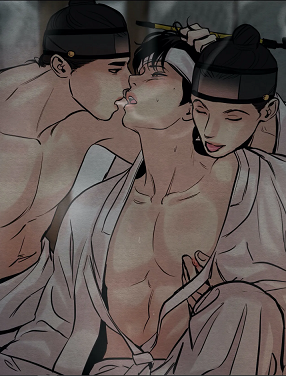 (chapter 54) the artist was on the verge to be no longer monogamous, as he would be tasted by other aristocrats. In this scene, the lord would have indeed become a client and pimp, if he hadn’t chased away his guests. Although the painter was indeed upset afterwards about this incident
 (chapter 55), deep down he sensed that his master had protected him. This night was important for the main lead: he was forced to admit his own feelings for the painter. Therefore, we could say that the issue with the prostitution was solved after chapter 54. Yoon Seungho thought that the moment he confessed, the painter would get scared and run away, but it didn’t happen. Why? Love among men and especially between a brutal noble and a commoner, was a taboo, like Min had underlined. Secondly, if the lord had indeed feelings for him, he had behaved like a beast during that night. He had mistreated Baek Na-Kyum. In his mind, the artist would never accept him.Besides, the painter had clearly denied the affection from the main lead. In his eyes, the painter’s words were indicating a rejection.
 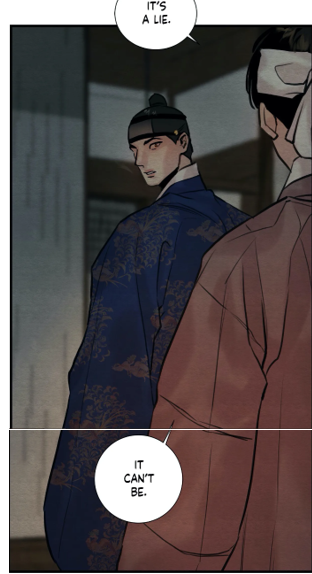 (chapter 54) Thus I conclude that Yoon Seungho and Baek Na-Kyum had come to an implicit agreement: they had a master-servant relationship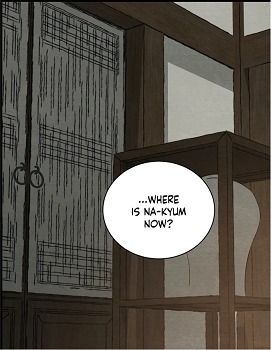
 (chapter 56), although Baek Na-Kyum started perceiving himself as a domestic from chapter 51 on again. He kept following the head-maid
  and Kim
 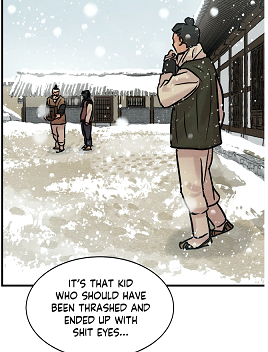 (chapter 51) in order to help them. Therefore the readers could witness the return of the white headband in chapter 52: his task was to paint for his master.
 (Chapter 52)
  (chapter 62) here, he whispered to Baek Na-Kyum that he adored him), he would bind the artist to himself.
  (chapter 63), exactly like he had wished in chapter 49. The only difference is that this time, the painter was here for the lord’s pleasure. The roles had been switched again. As the manhwaphiles can perceive, the noble and painter had a similar reaction: they both tried to deny the existence of love in their relationship. That’s the reason why the noble stopped the artist from confessing:
 (chapter 63) They just had a sexual relationship which could provoke pleasure, but that was it. But in order to ensure that the artist wouldn’t run away again, he used sex to “tame“ Baek Na-Kyum. If the main lead could procure multiple climaxes to the artist, then the latter was forced to admit that only Yoon Seungho could be his “partner“. This explicates why the noble kept pointing out how the artist would react to his lover’s body.
 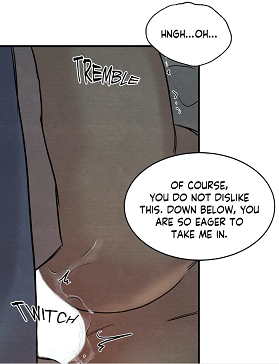 (Chapter 63)
 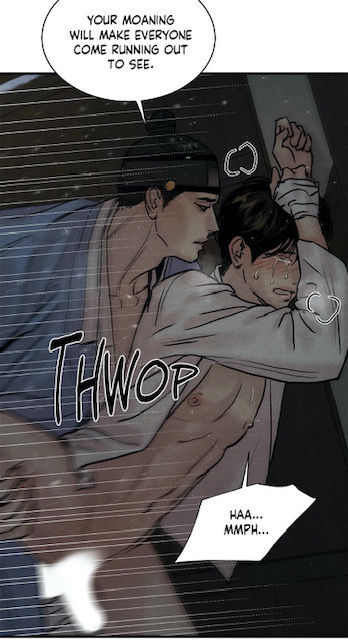 (chapter 64) He was moaning and would ejaculate constantly thanks to the main lead. Yet, during this second marathon, the noble was actually deceiving himself.
  (Chapter 62)
 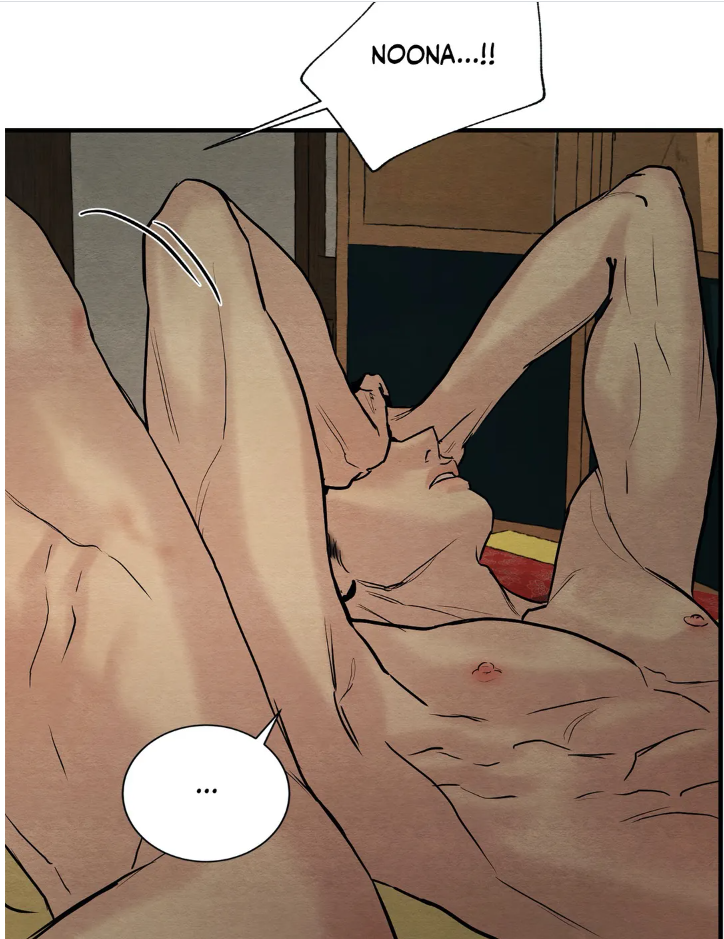 (Chapter 65) This shows that the painter had gained a new position: he was indeed a favored servant. He was allowed to spend the night in his lover’s bed and he could see the lord getting dressed.
  (Chapter 65) The slight change was that now the main lead was aware of this. This truly exposes the lord’s affection for the artist. He might have treated him like a plaything in the shed, in reality he had attempted to show “his skills“ as a lover. He had licked him, bit him and the painter had felt pleasure, though he kept saying no! This is not surprising that Yoon Seungho had denied the kiss in the study.
  (Chapter 64) Because that’s how he had been deceived that night in the study.
 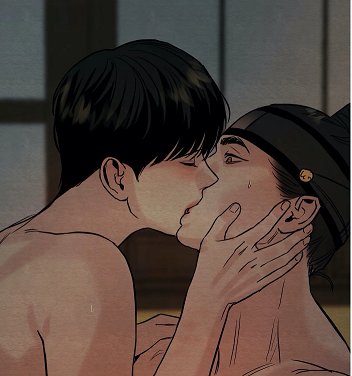 (Chapter 49) Baek Na-Kyum had silenced him with the kiss, as the main lead was about to protest.
  (chapter 65) What caught my attention is that the painter’s disappearance mirrored the lord’s wrongdoing. Lee Jihwa and the main lead had both kidnapped the artist. That’s why I believe that when he heard Heena’s words in the study
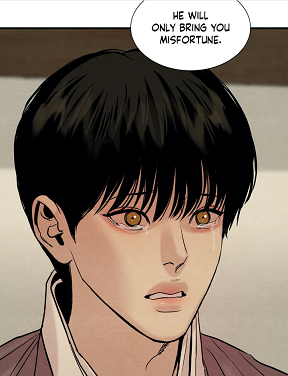 (chapter 68), the noble could only come to the following conclusion: he could only let the painter choose his destiny. But the moment the artist decided to remain by his side, he needed to change Baek Na-Kyum’s position in the mansion. He was no longer a servant, but a noble guest. Hence the lord tied the scarf like aristocrats did.
 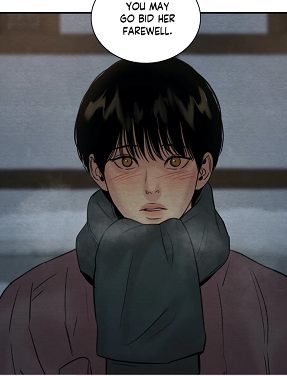 (chapter 69) Consequently, we could say that the painter had a similar status than Jung In-Hun. Yet, there was a huge difference: the owner of the mansion was now acting like the painter’s servant. Hence Deok-Jae’s words came true:
 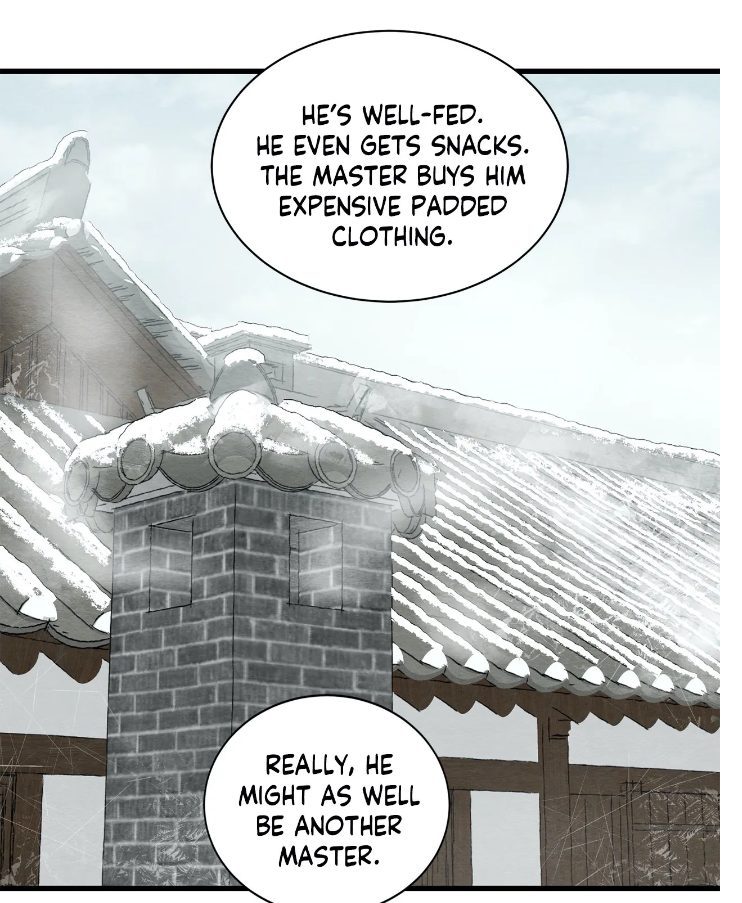 (chapter 46).
  (chapter 71). Why? It is because the lord made the decision that the painter chose him, then this means that he became his wife, though at the end of season 2, he was not thinking about marriage yet. He was not aware of this perception. By becoming his official partner, the spouse obtains the status of his husband: nobility. This explicates why the lord ate with his lover
 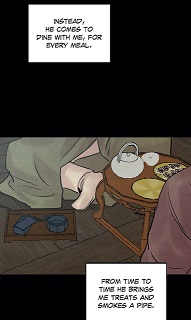 (chapter 74) and allowed him to smoke. Then in season 3, he gave him ladies-in-waiting in order to give him some company.
  (Chapter 78) He even gave him the music box, which was mistaken as a dowry. However, the problem is that the painter was still fighting his own feelings for the protagonist due to Heena noona’s words and past experience with the scholar. He feared that this new situation was too beautiful to be true, hence he thought that the lord’s feelings would fade away. But there was another reason for doubting the lord’s affection: there was no sex.
  (chapter 74) The painter had come to associate sex with love too. Yet, the moment he relived his trauma, he only found comfort and safety in the lord’s embrace.
 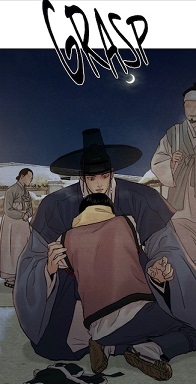 (Chapter 76) The main lead didn’t reject the painter’s urge for a hug in front of commoners. At no moment, Yoon Seungho felt embarrassment. He treated him like a special treasure. That’s how the painter came to realize that Yoon Seungho‘s love for him was true and genuine. Consequently, he decided to rely on him and to trust him. That’s why in this panel, the painter closed his eyes:
  (chapter 76) We could say that he was reminded of his own past. When he was a child, he sensed love through hugs and caresses. Since the painter could feel the lord’s genuine affection and warmth, he recognized that even when there was no sex, love was present. All his senses made him perceive the lord’s love:
 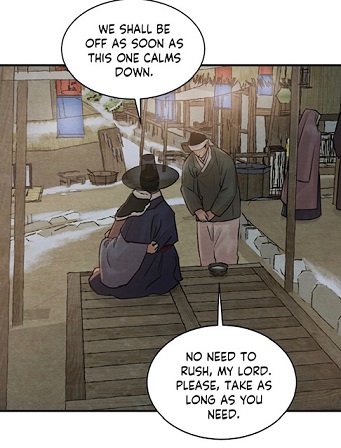 (chapter 76) His words showed his care and concern, then he bought him an expensive music box.
  (Chapter 76)
 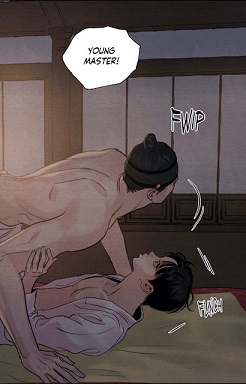 (Chapter 80) And now, you comprehend why the painter didn‘t confess during that night. He got interrupted. The kiss was the symbol for their love. Thus it is no coincidence that just after his confession,.
  (Chapter 94) the painter initiated a long and sensual kiss with his “husband“.
 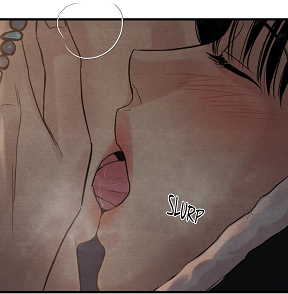 (Chapter 95) Since the painter had received caresses and embraces in his childhood, he came to view the kiss as the symbol for true love. And note that the kisses exchanged in the gibang were full of passion and love. This was the perfect combination of love and sex.
 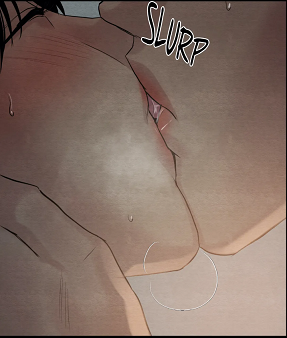 (Chapter 95)

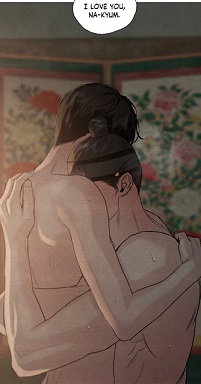 (Chapter 96) This shows that Yoon Seungho has always longed for a pure and spiritual love in the first place. His sexual preferences were already palpable in the last love session (season 2):
 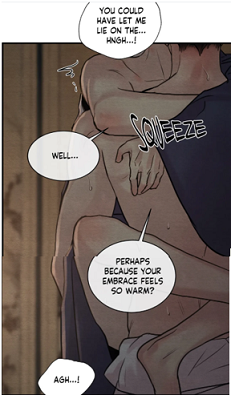 (chapter 72) We could say that he discovered all his sexual preferences thanks to the painter.
  (Chapter 80) But he failed due to the intervention of the butler and other schemers. Besides, the whispering of „Kyumah“ could only make his heart race. Let’s not forget that his painting in the sand
 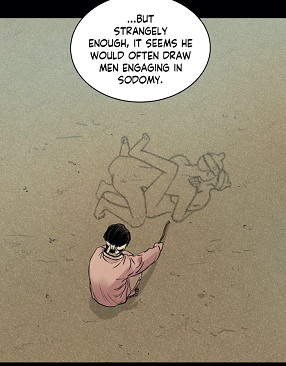 (chapter 1) externalized his own philosophy: love and sex can’t be separated. Note that the couple is is hugging and kissing at the same time! 😍 This picture will represent the peak of their love! Striking is that when the couple confirmed their mutual affection, they did in the kisaeng house, the symbol for prostitution. This truly exposed that Yoon Seungho had been treated like a male night servant in the past. .
 (chapter 72) in the next season, for the painter is still calling his lover “lord Seungho“
  (chapter 99)
  (chapter 102) This means that he is still viewing himself as a low-born. But note that contrary to the past, Baek Na-Kum is now wearing a hanbok and he has no other clothes. Thus I am deducing that the painter’s next lesson is to drop his notion that he is a commoner. He will be taught to view himself as an equal to Yoon Seungho. Only when he has internalized that there is no gap between him and his lover, then he will be able to address him as “Seungho-YA!“ At the same time, both protagonists will come to realize that they can express their love differently. Poetry, painting and more importantly through their desire to protect their loved one. The lord will start protecting Baek Na-Kyum more actively, just like the painter will decide to show more interests in his lover’s skills and past life. Baek Na-Kyum will feel responsible for the bloodshed in the shaman’s house. In my opinion, the lord will confide to him what happened to Min and the other nobles. I am assuming this, for the lord remained silent, when the messenger of his father came to the mansion. He didn’t want to scare his lover because of his brutal outburst.
 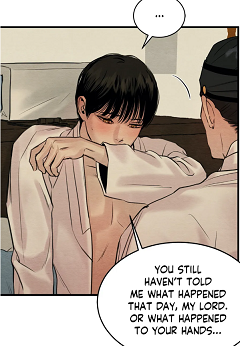 (chapter 84)
 The trigger for the change is the noble’s words. The latter keeps talking to the painter asking for an reply. Hence in my eyes, there are glimpses of love the moment Baek Na-Kyum said this:
  It sounded like a confession, hence the seme became more passionate:
 Here the lord acted like a client. Yet, notice that the lord is speaking again forcing to express himself. And the moment the painter cried and started voicing his own opinion, the sexual encounter was affected.
  (chapter 49) An expression of love and affection, but the painter rejected it, as he mistrusted his own judgement. He couldn’t help thinking of the learned sir’s fake embrace. Striking is that despite the rejection, the painter kissed and hugged back his lover
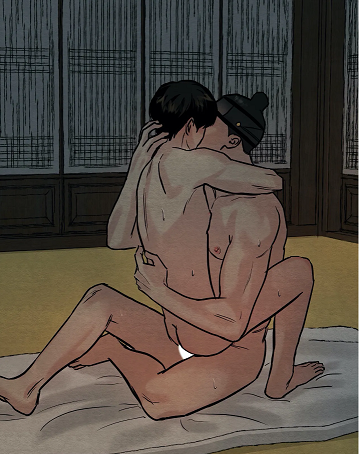 (chapter 49), which made the lord believe that he could only get embraced by the painter, if they had sex.
  . Although the second sex marathon starts like a pure sex session, the moment the painter calls Yoon Seungho differently
 , the lord’s attitude changes. The painter is turned around and faces his lover
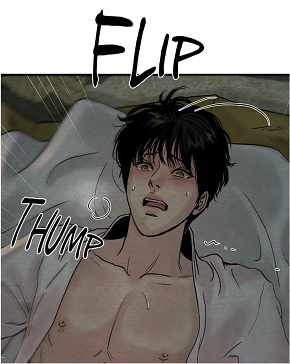 , a sign that they are getting closer. Striking is that again through their conversation, the painter is pressured to think about his own emotions.
  However, due to his own insecurities and fear, the noble still can’t trust the artist’s words, therefore there’s no confession.
  , it is just that both main leads were in denial.
  (Chapter 58) Thus he should become responsible for him. Yoon Seungho was unconsciously trying to push the painter to reciprocate his feelings, an imitation of Lee Jihwa‘s confession. Nevertheless, the painter remained silent, therefore it meant that his love was still denied. That’s why it stands more under the sign of dream and illusion. Consequently, the night in chapter 70, 71, 72 and 73 contrasts so much to the one from chapter 58. This time, it symbolizes the lord’s pure love. As such, the sex is already a real expression of love. That’s why the lord asked to be called intimately: Seungho-Ya
 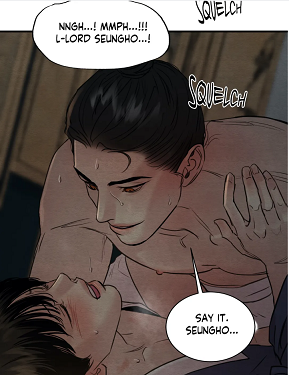 (chapter 72) On the other hand, this love session was strongly intertwined with the notion of forgiveness and punishment as well. This is important, it reveals that Yoon Seungho had internalized that sex was the expression to redeem himself. He had been tasked in the past that if he desired to obtain “forgiveness“, then he should have sex. And by comparing all these sexual encounters, I came to the following conclusion: the lord’s words definitely contributed to change the nature of the sex session, just like the hug.
  In chapter 66, he had a flashback, hence he couldn’t witness his lord’s attention and care.
 But the lord discovered this kind of embrace, when he helped the painter in chapter 53:
  That’s how the noble experienced the embrace as a source of comfort and affection. Therefore you can comprehend, why I wrote above that the painter was teaching the lord how to love properly, but also why the embrace became the symbol for love in the lord‘s eyes. He had never been embraced before by a man. And Lee Jihwa had recognized the true signification of this gesture, when he spied on the couple (chapter 43). That‘s how he knew the friend‘s biggest desire: and was deeply hurt after this discovery
 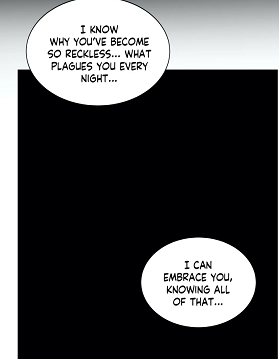 (Chapter 57) However, this shows that Yoon Seungho is a quick learner, because he knew what to do, when the painter was in pain and destress. At the same time, it explains why he could fake the embrace in chapter 62:
  This hug stands in opposition to the one at the end of season 3:
  (chapter 102) The artist was forgiving his lover! Love represents selflessness, tolerance, forgiveness, warmth, affection and assistance which is transmitted by the embrace. Now, you understand why Yoon Seungho was still not satisfied after the sex session in the study, he was longing for the hug.
  (Chapter 84) In his unconscious, he knew that if the artist hugged him, he would have forgiven him. But he had no idea about it, thus he couldn’t suggest this. So far, he had experienced the embrace from the artist while having sex. Deep down, he had already internalized the embrace to forgiveness. So we could say that the absence of the embrace in this scene was the lord‘s punishment for the fake hug in the shed. And the painter let him discover the true nature of a warm embrace:
  (chapter 88) This is not surprising that this hug was not connected to sex at all. Yet it moved the lord so deeply. As the manhwalovers could sense it, season 3 was focused on love and sensuality. During that season, the couple was able to voice about their sexual desires and their preferences.
  (chapter 91)
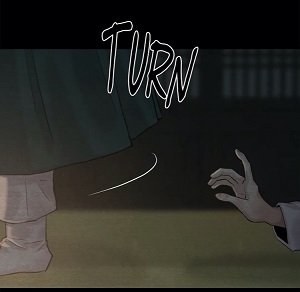 (Chapter 86) No one close to him had grabbed his hand in order to show their support. This gesture in the picture embodies abandonment. On the other hand, the painter had been the first one to take his hand and to swear “loyalty“.
 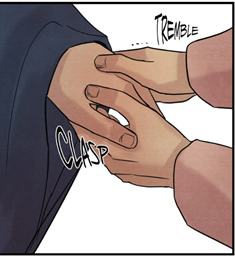 (Chapter 30) The joined hands were repeated in season 3 , the only difference is that this time, Baek Na-Kyum was doing it willingly.
 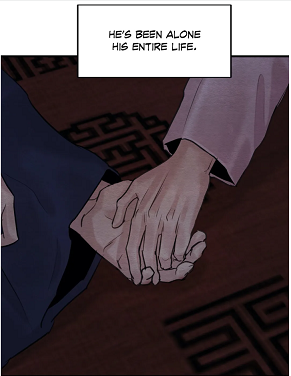 (Chapter 88) The symbol for support, company and responsibility.
 and his request for help are strong indications that Baek Na-Kyum was now accepting his affection. He was now trusting the noble, hence he revealed an important clue about the abduction.
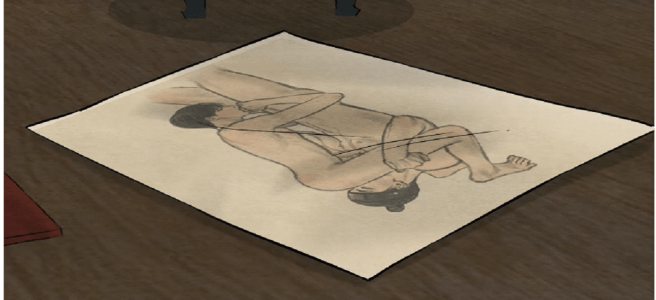
  (chapter 41) Under this perspective, it becomes understandable why the couple neglected these pictures. They were all devoid of affection, it was more about prostitution and battle! And here is now the question? Where are these drawings?

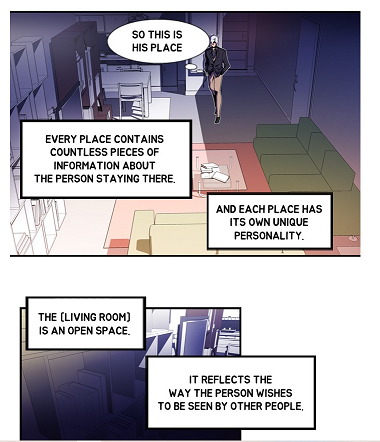 (Dr. Frost, chapter 8) As you can see, home is strongly connected to identity and personality. In other words, without home a person loses his identity. This is no coincidence that homeless people often have no ID.
  He felt so lonely and lost, for he had no place he could call home. It was, as if he had no identity. When he deserted the mansion, he first thought of the kisaeng house and his noonas
 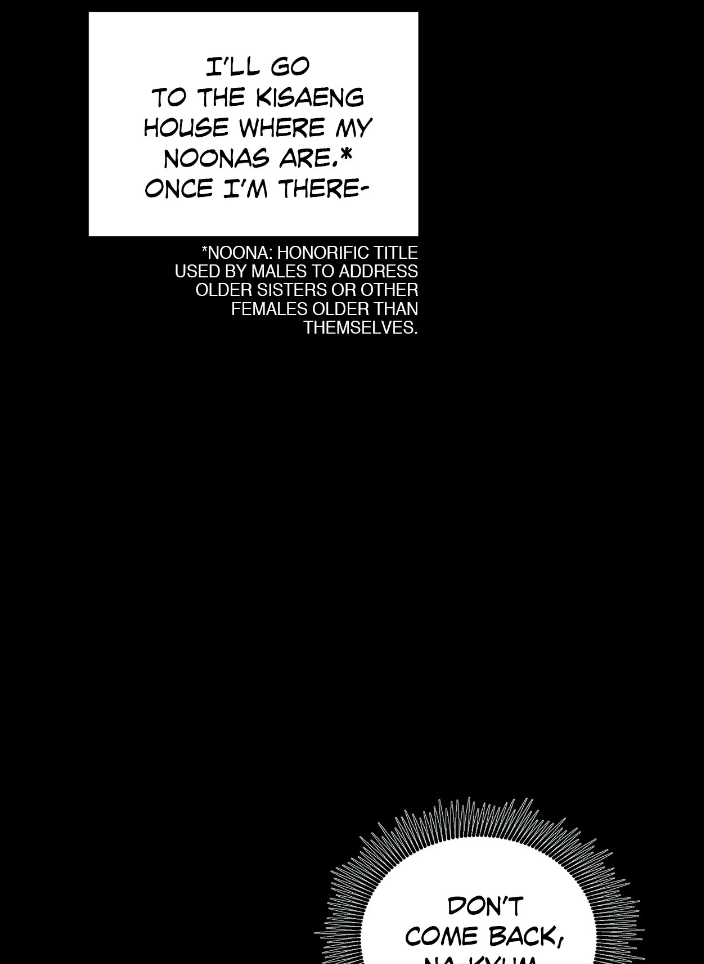 (chapter 46), until he remembered how he had been sent away by Heena noona.
 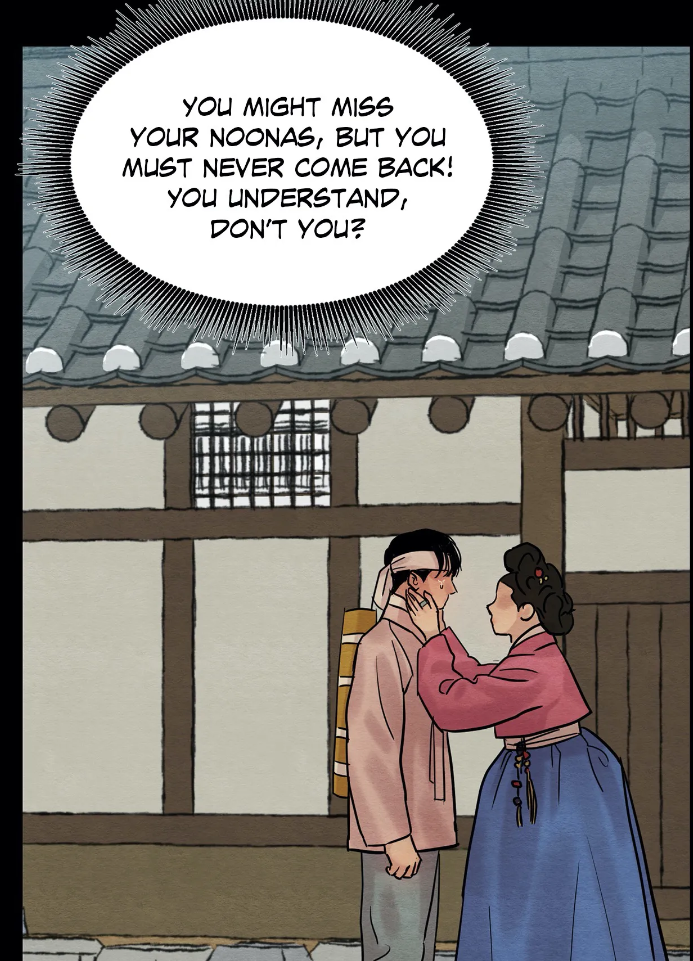 (chapter 46) This moment was terrible for the painter, because he had the impression to be abandoned a second time. Note that he is not calling the kisaeng house his home… for him, it was no longer a home, because his heart had been wounded there. Hence the manhwaphiles sense why the painter was using his mind in chapter 75
 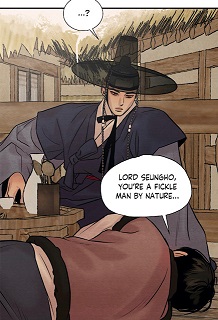 (chapter 75) and was restraining himself from falling more for Yoon Seungho. He had come to view the mansion as his home, and if he came to accept Yoon Seungho as his companion, then the latter would become his home, his family. Don’t forget my previous statement: Home is where the heart is. He was afraid of getting hurt a second time. If the lord came to have a change of heart, he could lose his new founded home.
 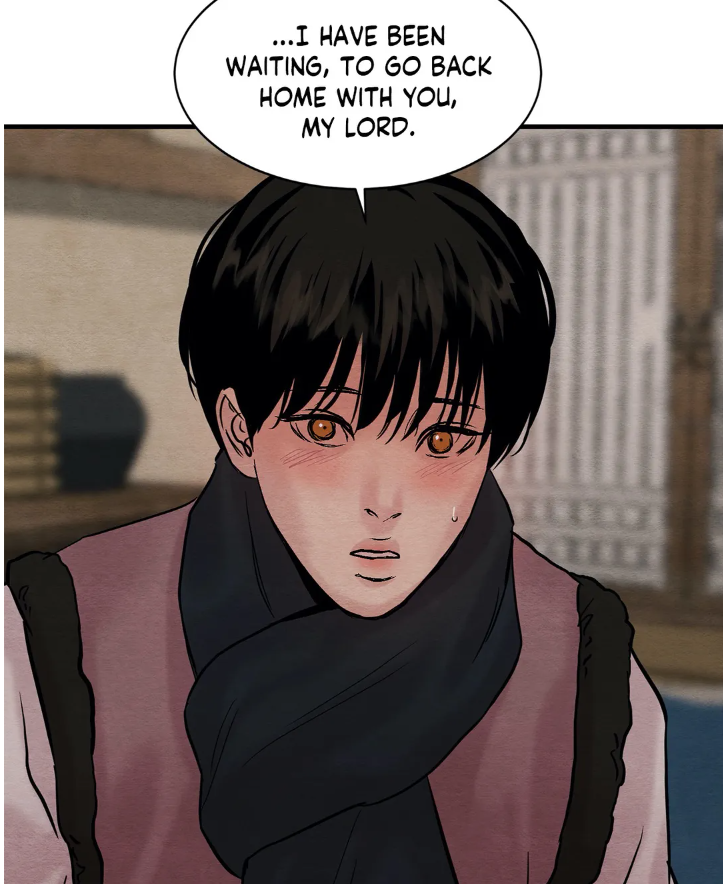 (chapter 58) And now, you comprehend why he stopped in the middle of the street during his escape. He had recalled how Heena had sent him away.
  (chapter 68) Observe how she blames her brother for not contacting her, while she had strictly forbidden him to come back. At the same time, the readers should question her behavior. How come that she never showed any concern for Baek Na-Kyum for 18 months, until she found out that he was living with Yoon Seungho? Why didn’t she contact him in the first place in order to check out if he was living properly? She gave him instructions, and the main lead listened to her, and now she is reproaching him that he should have disobeyed her. In my eyes, Heena noona acts more like a person with a fickle nature. She shows great care and concern in chapter 65 and 68, but she never searched for her brother’s whereabouts before. So far, the readers can only assume that she had no idea that he had been living as a drunk, and she only discovered his whereabouts by hazard.
  (chapter 64) Yet, this is just an impression because of this scene. Yet, in season 3, Heena confided to Min, and the latter revealed the content of her confession:
  (chapter 99) The idiom “bittersweet affections” indicated that the learned sir had expressed regret and disappointment concerning Baek Na-Kyum. This means that Heena knew that Jung In-Hun’s affection towards the low-born had been changing. As you can see, I come to the conclusion that Heena was already aware of the existence of tension between the painter and his former teacher.
 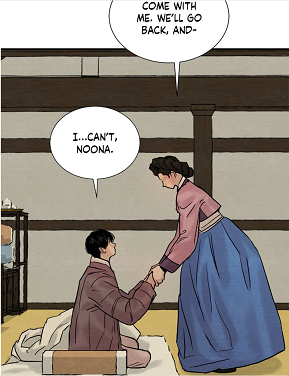 Heena noona is not even using the word “home”. At no moment, she employs this expression. When she parted from her brother in chapter 46,
 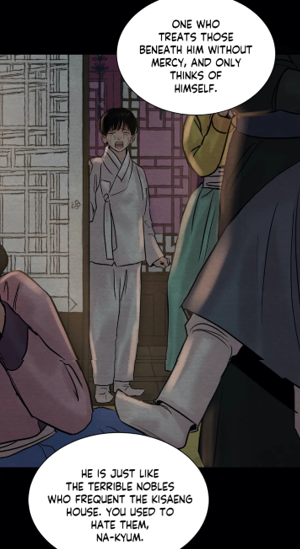 (chapter 68) Hence in her mind, when she asked her brother to leave the kisaeng house, she imagined that she was helping the painter to escape from prison. Since she admires the scholar so much, she saw in him her helping hand. He would assist her brother to become a free man. The readers should notice that the learned sir always left the kisaeng house with the low-born
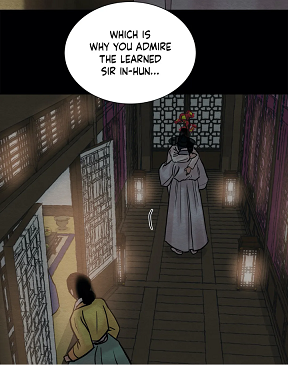 (chapter 68), when there was a ruckus. So when the kisaeng made the request to the teacher
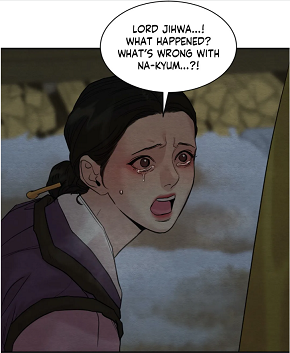 (chapter 99) She was deserting the kisaeng house, and as such the noonas. And note the parallels between chapter 46 and 97/99. In both cases, the painter couldn’t bid farewell to the other kisaengs.
  (chapter 99) It is because she was using her brother. In the first desertion, her choice was influenced by her unconscious. She had just projected her own thoughts and desires onto the artist’s. In season 3, she had made a conscious choice. In exchange of her brother, she would gain her freedom. Thus she used the expression “us”
  (chapter 97) This time, it was for her own sake. But the price for her freedom was that she had to sell her brother. She could still have a clean conscience by convincing herself that Yoon Seungho had killed her idol. At the same time, she needed to fake her death.
 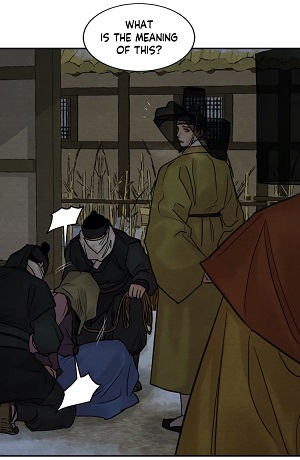 (chapter 99) [For more explanations read the analysis “Heena’s curtains”] This means that she was betraying the eonnies one more time. And that’s how I had another revelation. In my eyes, after their separation, Heena had come to view her life in the gibang differently. She had been able to perceive the good aspects of her life as a kisaeng. She could live a comfortable life and as such get new hanboks.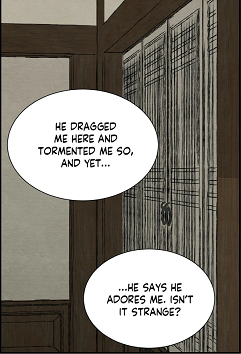
 reinforced her bad impression about Yoon Seungho. That’s why Heena noona will never believe that this place can become the artist’s true home. For her, this place can only represent a new prison, for she has a negative perception of nobles. Hence she needs to rescue her brother.
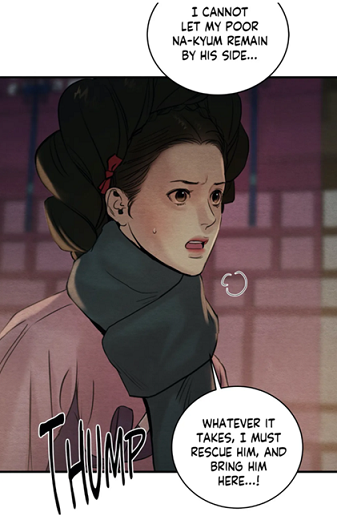 (chapter 69) Besides, I believe that she has another reason. The lord is connected to her own guilt, but she is not admitting her responsibility. In the first version, I had expected that due to his confession, the kisaeng would never trust Baek Na-Kyum’s words later. And this was proven correct. Why? First, Heena noona embodies a certain kind of knowledge: prejudices. Because she has already experienced many things, she has the impression that she knows everything. However, she is not realizing that her world view is based on her own perception. Secondly, her superficial knowledge turns her into a blind and deaf person. What she sees and hears will be interpreted the way she perceives the world. I had even written this back then:
 (chapter 97) Contrary to him, she knows, because she saw and heard things, when Yoon Seungho suffered! Yet, her knowledge is totally superficial, like the last panel exposes it. She just jumped to (false) conclusions. That’s how she got herself manipulated. Because of her bias, she became an easy target of deceptions. That’s the reason why she believes herself in rumors. Like the scholar said it himself,
  (chapter 29) there exists a kernel of truth in the grapevine. Moreover, with her caresses and hugs, she used love to stop her brother from speaking his mind.
 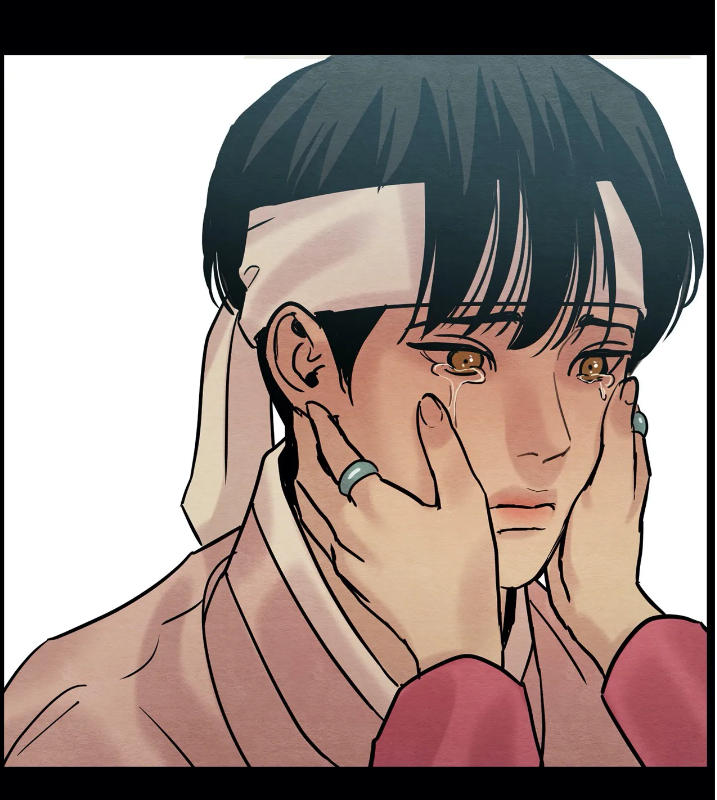 (chapter 46) That’s the reason why Baek Na-Kyum could only express himself through painting, as he had become mute. Due to her decisions and actions and the scholar’s, she contributed to turn the artist into a boy full of insecurities, unable to express himself. Consequently, Heena noona was put in front of the same choice in season 3. Note that the return of the painter to the gibang coincides with her departure. This means that due to the couple’s love session, she was reminded of her own past. She was forced to recall why she had associated the gibang to hell in the first place.
  (chapter 96) She was definitely scared in that scene. That’s the reason why at the end, she utilized her brother to leave the gibang.
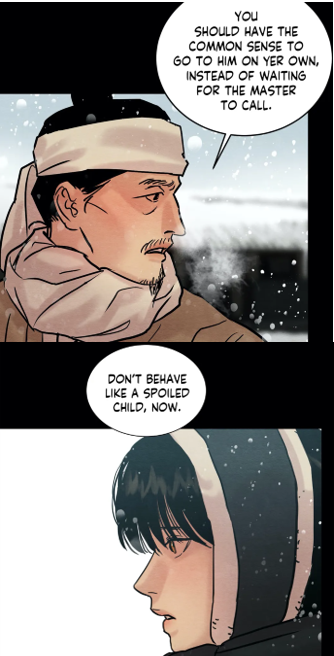
  (chapter 99) This mirrors that her original dream was to live with her brother and the scholar, but this was just an illusion. She had hoped that once the artist was by Jung In-Hun’s side, the learned sir would come to buy her, and they would live together. She counted on the learned sir’s affection for the painter. But this was never Jung In-Hun’s intentions and he excused his behavior by putting the blame on the protagonist.
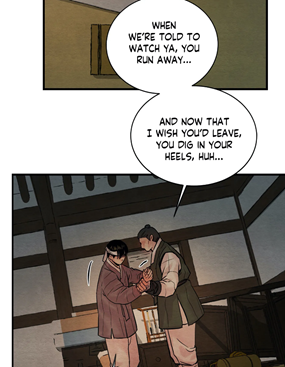
  (chapter 52) And finally Yoon Seungho treated him well on different occasions by sharing his breakfast with him or sending him to the doctor or by protecting him from Deok-Jae. Yet I believe that the decisive factor is the momentary separation. Although the painter had lost his position as favored servant, the noble never sent him away. He let him live in the study and kept treating him well. The artist could sense that despite the distance, the noble was not willing to cut ties with him. This explicates why Baek Na-Kyum resisted to the vicious servant, when the latter tried to force him to leave the property.
  (chapter 53) This was his home now, and he wanted to protect what he had finally found. Despite the pain, he didn’t move. He was ready to do anything for his home. This gives us a glimpse of the painter’s future behavior, when his lover is targeted. There’s no doubt that he will fight for him. And now, if you compare the two following panels, you’ll realize the similarities between the two scenes:
 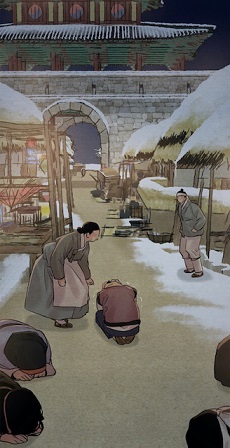 (chapter 76) In both scenes, the painter has a revelation. In chapter 46, he is alone and has no place to go. However, he is strong enough to stand on his feet, while in episode 76, he is paralyzed by fear and becomes so weak. Yet, exactly like in the first image, he feels lonely, but since he can’t escape, this position makes him realize his vulnerability. He needs help and protection. That’s why the moment he realizes the noble’s presence
 (chapter 76), he seeks his embrace and warmth.
  (chapter 76) With these words, it truly outlines that the mansion has become Baek Na-Kyum’s real home, a place where he feels comfortable and secure, which represents a continuation of chapter 46. While in chapter 46, he just considered the mansion more like a refuge or shelter, now he connects it to family. It has truly become part of his identity. But the embrace on the street let him discover that Yoon Seungho could become a home too.
  and English version, when the lord replies to his request.
  In the original version, the lord is now admitting that the mansion is also his home now, whereas in the past it was just a prison and he wanted to have a companion by his side. In the English version, there’s only silence. This difference affects a lot the interpretation. By remaining silent, the noble is not acknowledging the mansion as his home, but this doesn’t mean that he has no home. In my opinion, Yoon Seungho perceives the painter as his home, hence he prefers remaining there hugging his lover. The painter gives him the warmth and love the lord has always been longing. That’s why he gives the excuse that they should stay there. It seems that the English version
  (chapter 85) Baek Na-Kyum represented the foundation of his home. Without him by his side, his “home” would crumble.
  hence his head moves closer to Yoon Seungho’s
 and at the end he even closes his eyes
 (chapter 74) This was a new version of the chapter 51 and 52. And you all know the saying:
  (chapter 78)
  (chapter 102) As long as he is by his side, everything is fine. This new definition of home appeared, when the painter and the lord confessed to each other.
  (chapter 96) It didn’t matter where they were. Thus they could confess in a gibang. They felt safe together. And this is the same in the mountain. Observe that the painter is not asking why they are in the mountain and what the lord intended to do there. In fact, he was more focused on the past than the present. However, for the painter, home is not just a family, he liked to sleep in a warm bed and have a warm meal each day
  (chapter 68), since he had lived like a homeless for a while. Hence both will have to look for a real home, a house. Moreover, the lord will have to provide for the painter, and the latter will feel obligated to assist his lover. This means, in season 4, home should have a new definition. It is not just a family, but also the mansion and the country! Don’t forget that many people died in season 3.
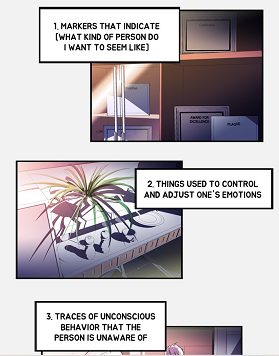 (doctor frost, chapter 9). What caught my attention is that the lord’s bedchamber is literally empty: There are only one big white vase, a red box, candles
  (chapter 55) and a windscreen.
  (chapter 55) The latter shows trees painted in black, there’s barely nature in the end. It mirrors the lord’s symbolic death. The emptiness of his room reflected the lord’s life. He was living like a zombie and avoided emotions, as he had no souvenir at all. Although he reads a lot, you never see them in his room. Why? It is because he separated his spirit from his body. In his bedchamber, he was a captive trapped in the past, hence he had nightmares. Moreover, I think that his bed is the source of his nocturnal panic attacks, as the colors are the same than the king’s. And now, the manhwaphiles can better comprehend why the noble has never considered his mansion a home. In this house, and in this room, he had traumatic experiences (abuse), which were so horrible that he had entirely repressed it. Nonetheless, the moment the painter calls the mansion his home, this has a huge impact on the lord’s life. The latter is now “forced” to consider the mansion as his home too. Hence in the Korean version, we have this panel:
  (chapter 98) This shows that he had conquered the bed. Season 3 exposes the painter’s conquest of the bedchamber. The turning point took place in chapter 87, when the artist went to the study on his own volition.
  (chapter 87) I can’t help myself thinking that in season 4, the painter will bring his possessions to the bedchamber for good contrary to season 3.
  (chapter 79) The music box was brought back to the painter’s studio after the argument. Since the lord bought a music box for Baek Na-Kyum, and the latter treasures this item, it also has a special meaning for the lord too. The music box represents the lord’s heart, but the main lead didn’t grasp the true meaning, until it was too late. So far, the broken music box got neglected after their argument
 (chapter 85), yet I am still hoping for its return, for the lord had recognized its true signification to the painter afterwards.
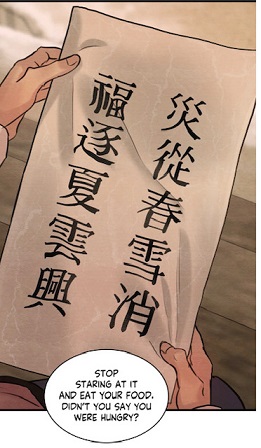
  (chapter 85) But we shouldn’t forget the lord’s Spring poem
  (chapter 92) Little by little, the lord’s study will be filled with treasures belonging to Baek Na-Kyum which are connected to the noble. This is relevant, because thanks to them, the lord can recall the good moments with the artist. Slowly the lord’s bedroom will become more and more a study. With the arrival of souvenirs, the bedchamber will be filled with life again. This will symbolize that the lord is slowly taking over the bedchamber, and filling his room with things he likes. Where is the orchid? So far, all the nobles had plants in their room:
  (chapter 43)
 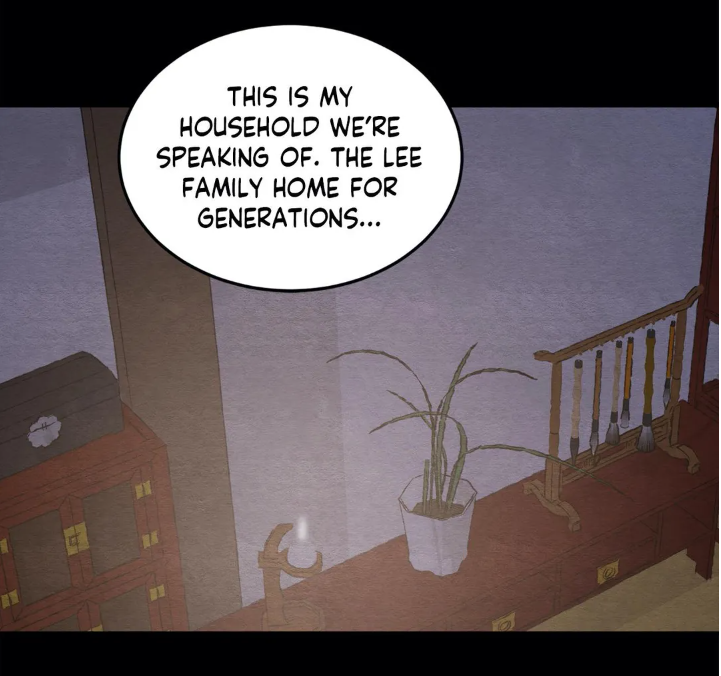 (chapter 82) Hence I am wondering if Yoon Chang-Hyeon didn’t punish his son by taking away the orchid, when he painted on the servant’s body:
  (chapter 36).
  (chapter 99) This new interpretation leads me to the following observation. In season 4, we will witness a new battle again, and it will be about the ownership of the mansion. Who is the true owner of the propriety? Kim, Yoon Chang-Hyeon, Yoon Seungho or lord Song?
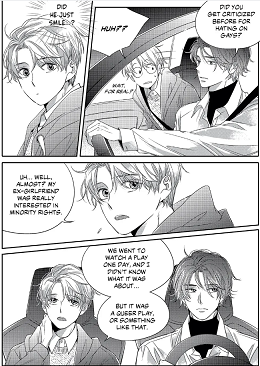 However, an important detail caught my attention. The uke only dated women who would confess to him. He never initiated anything.
 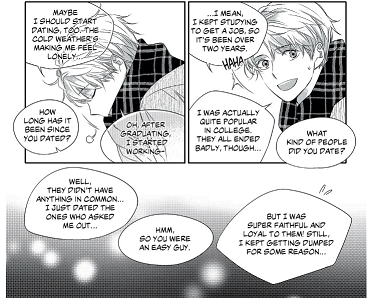 This signifies that the main lead started dating these women, because he felt grateful and touched. That’s why all his ex-girlfriends had nothing in common. In other words, he was never really in love with these women, therefore we could say that he was straight out of convenience. This explicates why he gets more confused, when he starts falling for Yoon Taejun. He goes so far to ask a friend
  how to recognize love. The latter replies with the following description:
 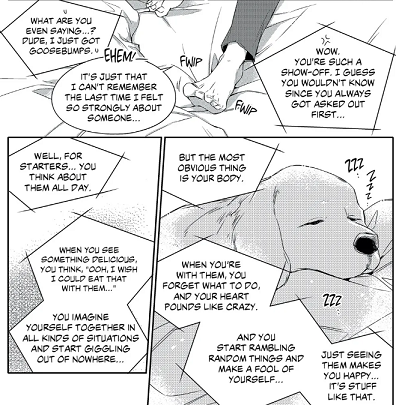 – He would think about the person all the time
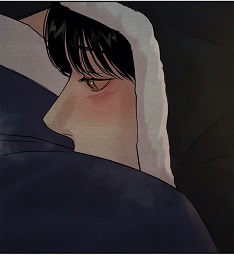
 , blushing
 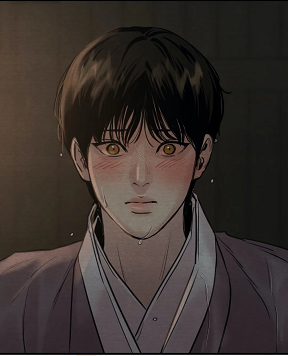 , finally he would ramble things
  and make a fool of himself
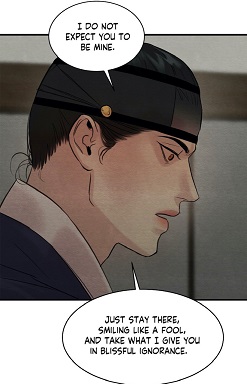
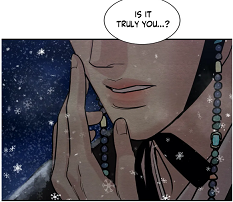
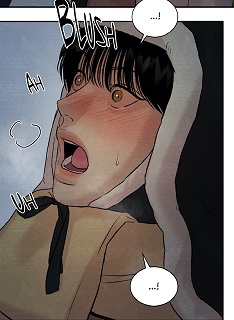 . I included these pictures from Painter Of the Night for a reason. They expose how the painter is definitely in love with the main lead. And this clearly reveals that Baek Na-Kyum was never in love with the scholar in the end. Hence you comprehend why I am presenting Ji Wonyoung from Unintentional Love Story. It helps to grasp why the painter was in denial for so long. He couldn’t understand his emotions, as he had never felt like this before. Moreover, unlike to our modern protagonist, the artist had no one to confide, not even to his noona. When he saw his lover kissing another man, he was bothered, but he couldn’t admit it entirely.
 He wondered about his emotions. When he finally met Heena, it was already too late.
  . Thus he started denying his feelings for Yoon Taejun. First, he reduced it to admiration
 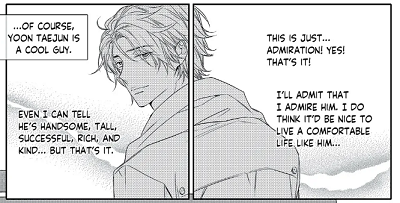 and tried to find excuses for his reaction:
 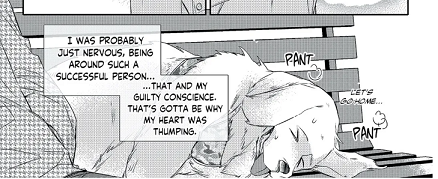 As you can detect, his mind tried to reason his behavior and emotions. More striking is that the character Ko Hotae is the one who pointed out to him that he was just using too much his mind and he shouldn’t ignore his heart.
  As the manhwaphiles can detect, Ji Wonyoung was struggling to admit his feelings for the potter Yoon Taejun. Nonetheless, this has nothing to do with fear of stigma or loss of reputation, because the moment Wonyoung started dating the main lead, he had no problem to kiss his partner outside.
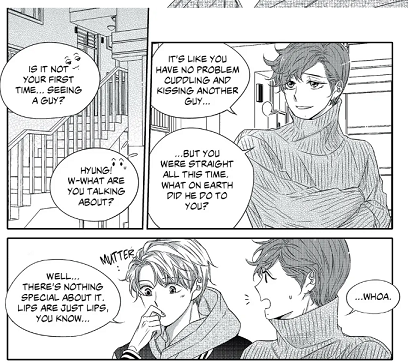 At no moment, he shows real concern or fear that people might discover his relationship with Yoon Taejun. Sure, he is careful due to the special status Yoon Taejun has as a famous potter. And all these observations led me to the following conclusion: Ji Wonyoung had never fallen in love with anyone before and as such, he had never truly paid attention to his true sexual orientation. He was neither a homosexual nor a straight person per se. He just dated girls, because he felt “attached and obliged” as a gentleman. However, all his partners could sense in the long term that their affection was not truly returned. Striking is that in this story, Ji Wonyoung had a similar attitude than Baek Na-Kyum. The low-born would always use his brain and mind to diminish his emotions.
 (chapter 56), even his unconscious was telling him that he longed for the lord’s affection. Both characters were struggling the same way, yet for different reasons.
  and even worse the existence of sexual desires. That’s why he kept hiding behind doors. The artist feared the gaze and judgement from others. This fright was linked to the scholar’s indoctrination: sexuality is dirty, especially copulating men were filthy.
 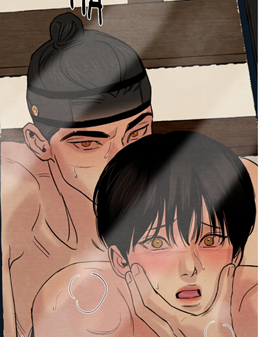 (chapter 31) and secondly during their sex session, when Yoon Seungho was behaving like a client at a brothel.
  In this panel, his face is literally glowing. Yoon Seungho’s words accompanied with a huge smile have already moved his heart, hence his mind reminds him of this:
  He is not allowed to love Yoon Seungho, his noona forbade it. That’s the reason why Baek Na-Kyum drinks in the tavern
 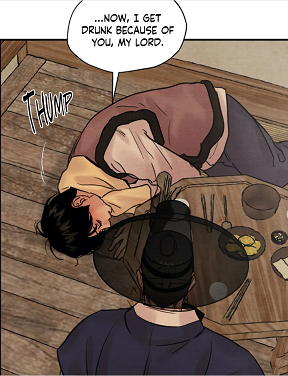 and blames the noble for his fickle nature.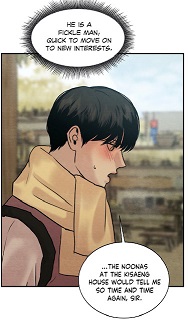
 from chapter 56. The artist always felt the urge to get hugged. As you can see, the artist longed to be embraced as well. Surprising is that in chapter 66, Baek Na-Kyum got hugged by his noona.
 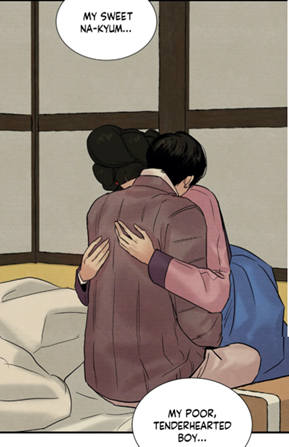 That’s why I think, she knew that the artist was easily swayed, if someone was quite nice and gentle. Note that she hugs him a second time, after the painter has already confessed to her that he had developed some attachment with the main lead. In other words, he was similar to Ji Wonyoung from Unintentional Love Story, he would feel gratitude and become loyal, as long as the person would be caring and warm towards him. I believe that Heena knew that the painter had such a disposition. That’s why she says this “my poor, tenderhearted boy”. If a person showed some affection through caresses and hugs, he would become obedient, as he would be thankful. Yet, in chapter 68, the kisaeng failed twice with her attempts. She even tried to stop him from replying to her points by putting her hands on his cheeks.
 She imagined, the artist would react like in the past, when she sent him away.
  . He had no idea what love is. She tried to convince him in every possible way that his feelings were not real or in the last resort, he should not act on his emotions.
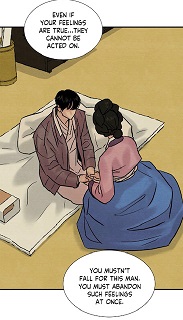 As you can observe, Heena was talking to his mind. We could say that she embodies the mind, hence she was the cause for the inner struggle in chapter 75. For she symbolizes the conscious, she also advocates the social norms. If a man showed his love for another man, then this would be a real scandal. From my point of view, she can’t accept homosexuality for two reasons. First, it is related to the nobles’ hobbies. The latter were the ones who bought the artist’s publications, and Heena hates filthy rich aristocrats. But there’s more to it in my opinion. For her, homosexuality is a synonym for addiction or bad life, because love between two men can’t exist. Why do I think like that? It is connected to the image “man consumed by lust”. Note that till the end, the artist worries about this aspect. If the artist were to admit his love for the noble officially, then he would be perceived as a man consumed by lust. That’s why Heena is against this relationship. She knows that all the other nobles will never admit having sex with other men. They are able to maintain their respectability. Thus the kisaeng says this:
  However, let’s not forget that his relationship with the main lead was always full of pain and violence
 , hence when the artist confesses his love in front of his sister, the latter should have already realized that the artist didn’t develop such an affection out of convenience or gratitude. That’s why she presents it as the opposite:
  He gets so scared, when he meets the criminal by chance that his mind is no longer functioning properly.
 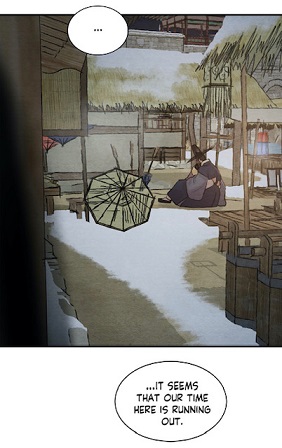 and what the lord was willing to do in order to protect and console him: he remained seated on the ground, until the painter had calmed down.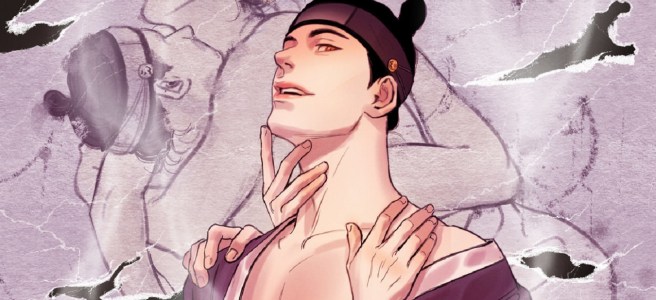

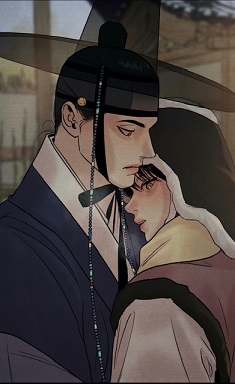 Yet, the peak was reached with the following picture, for Baek Na-Kyum and Yoon Seungho seemed to have merged as one:
  The readers can barely detect the painter’s presence: only his head and hand are visible indicating the depth of their intimacy and closeness. However, the title is mentioning the presence of a ghost. The latter can not be Yoon Seungho, because the panel above announces his official wedding with the commoner due to the presence of the red and blue lanterns called Cheongsachorong. These are used for wedding ceremony in Joseon. Therefore who is the ghost? And why do I perceive the existence of a spirit in this chapter? But before revealing the identity of the ghost, I would like to expose the reason behind such a title. While focusing on the embrace, I came to the following observation.
 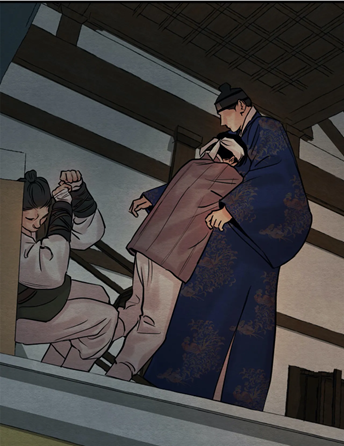 ,
,  ,
,  ,
,  (chapter 29), therefore he chose to push away the wealthy aristocrat out of fear that he might get hurt and betrayed again. The commoner judged the embrace and warmth as a deception. This means that the low noble as a “spirit” was the reason why both protagonists couldn’t get closer. The low-born was only acknowledging Yoon Seungho as his sex partner and nothing more. Striking is that in episode 76, we have a reference to the hug from chapter 49, as the position of the painter’s head in this image
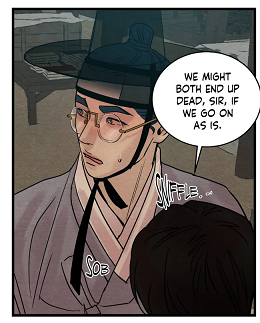 (chapter 29) The low noble feared people’s gaze, his attitude truly showed that he didn’t want to be connected to Baek Na-Kyum. His action was definitely a sign of hypocrisy and cowardice. That’s why in chapter 76, the painter could only come to the conclusion that the lord’s embrace was genuine and the lord’s feelings were not trivial. Moreover, the main character never pushed his lover away
 However, he was stopped with a frightful gaze:
 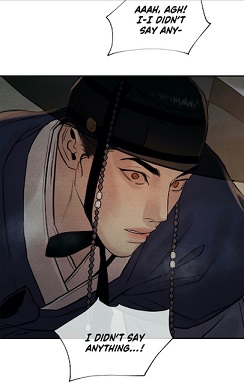 Besides, when the noble kept calling the protagonist in an informal way (Na-Kyum-Ah), people could realize his real intention. He meant no harm. In fact, he was treating the low-born like a precious treasure, who needed help.
 (chapter 29) The former teacher was just caught by surprise, hence “Na-Kyum” was said more or less randomly. On the other hand, Yoon Seungho used this name as a sign of intimacy. He desired to give comfort and warmth to his lover. And now, you understand why Baek Na-Kyum hugged his lover by instinct.
 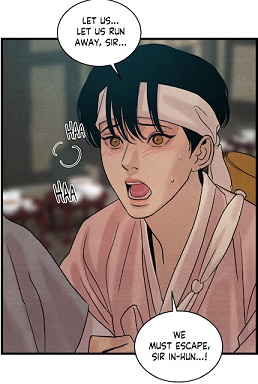 (chapter 29) thus he tried to find him. And now the mansion has become the painter’s home, just like the lord’s embrace. It is a synonym for comfort, warmth and safety. Another huge contrast is that for the first time, the painter asked for Yoon Seungho’s help directly.
 (chapter 65). Surprising is that when he was bullied by Deok-Jae, he never complained and asked for the head-maid’s assistance or his lover’s. His attitude to never rely on others was even more perceptible in his escape in chapter 46. The cause for this behavior is linked to his abandonment issues. Due to his past, he was forced to only rely on himself. Nonetheless, in chapter 76 he changes his attitude. This shows that he is now opening up. That’s why his head rests on the lord’s shoulder completely.
  (chapter 53), hence the gentle boy needed to intervene directly. The lord was definitely deaf to the artist’s words. Striking is that here again, we had the presence of danger, the painter feared for Deok-Jae’s life. Moreover, despite his fear and shaking hands,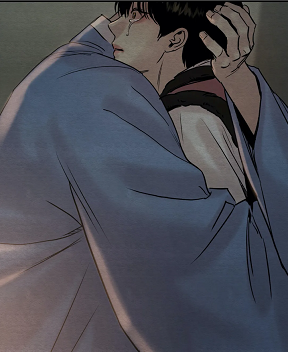
 (chapter 62), whereas in chapter 66 the artist had a flashback, hence he wasn’t himself.
  (chapter 66) This meant that in both episodes, neither the aristocrat nor the commoner could sense the lover’s comfort and warmth.
  (chapter 66) Both of them didn’t feel safe and displayed extreme fear due to betrayal and abandonment.
 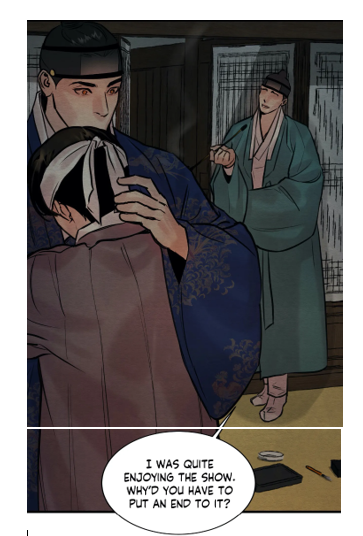 There’s no doubt that the vicious noble felt extremely jealous in both episodes (53-66). The manhwaphiles should envision that despite his rage and his terrible behavior, the artist was willing to embrace such a man, which could only make Min envious. Moreover, the low-born showed courage and even strength. He didn’t reproach anything to his sexual partner. He just attempted to calm him down.
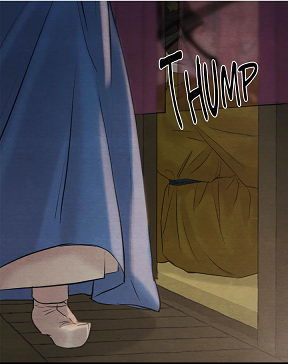 (chapter 69) That’s why he was waiting there. He imagined that the boy would be delivered to him on a silver plate, yet nothing like he had expected happened. In chapter 76, we have a new version of chapter 53. However, when Black Heart witnesses the painter’s second embrace, he can detect the huge difference.
  (chapter 54), in episode 76 Black Heart is truly defeated. And by contrasting these two scenes, it becomes obvious why Yoon Seungho assaulted his guest back then. The noble was in fact punishing The Joker for insulting his lover, as the latter was just reduced to his status: a low-born. He had no name and as such no identity. The powerful aristocrat didn’t do it in order to protect his honor, but the artist’s. At no time, the main lead was afraid of losing his reputation, he is well aware of his bad notoriety. Thus this shows that in chapter 54, the one who feared more social norms was indeed Baek Na-Kyum, which was still visible in chapter 75. That’s why the commoner denied the lord’s affection.
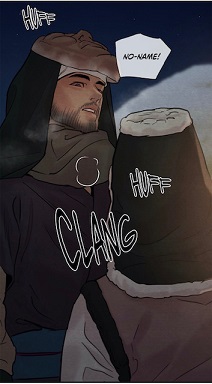 (chapter 76), the ghost from his nightmare
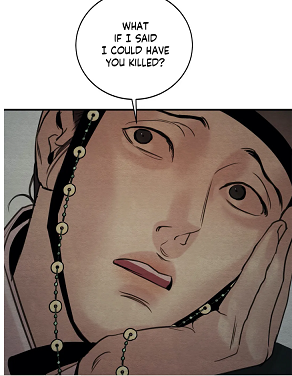 (chapter 76), I view The Joker as a grim reaper. What caught my attention is his reaction, when he saw the heartfelt hug. He had to vomit and this is no coincidence.
  (chapter 76) Observe that the color green is connected to two reactions: “to be green with envy” and “to be green” (sickly). Besides, we have in French “être vert” as a synonym for fuming, furious and disgusted. Hence it’s not surprising that it exist these emojis: 🤮🤢. Both contain green. That’s why I believe that when Min saw the embrace between the protagonists, he got so upset and disgusted that he felt the urge to vomit. It was definitely a mixture of envy and rage. However, he had to lie to the others in order to hide his “weakness”.
  (chapter 76) For me, there’s no ambiguity that The Joker was not honest here. First, he has no dark circle and red eyes like Jihwa who definitely drank again.
 (chapter 76) Besides, has Black Heart ever apologized to others? No. He didn’t even care, when he smoked opium in front of commoners. When he was asked to stop it,
  (chapter 52), he never expressed a real apology, he rather criticized the other for ruining the good mood and his fun. Besides, he looks down on low-borns and even Jihwa…
 (chapter 76) so why would he apologize? It is, because he is slowly recognizing that his urges for Baek Na-Kyum are not linked to sex!! When he saw the hug
 (chapter 56) and the pattern reminds the readers of opium smoke. Contrary to Yoon Seungho who only smoked it once during that terrible party, Min chose to keep smoking opium. First, the manhwaphiles could detect that he enjoyed the kick in chapter 52.
  (chapter 52) Secondly, the hanbok was another indication. Finally, I perceive the lord’s nausea in chapter 76 as another evidence for Black Heart’s opium addiction. Vomiting/nausea are listed as side effects of opium. From my point of view, when he saw the happy couple in the street
 (chapter 74), he chose to smoke one pipe in order to relieve his frustration before visiting Jihwa and urging him to contact Nameless. This was a new version of chapter 56. That’s why they came both to meet the criminal.
  (chapter 76) Hence I come to the conclusion that Min is slowly turning into a ghost himself, losing his mind due to his addiction to opium and at the same time due to his greed and obsession for Baek Na-Kyum. The embrace in chapter 53 led to the kiss and indirectly it was the trigger for Min to change his original plan.
 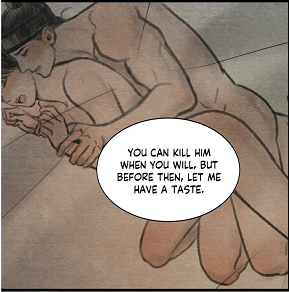 (chapter 56) Therefore I deduce that this second embrace is forcing him to change his plan again. From my point of view, he is no longer interested in tasting the painter once and have him killed afterwards. Black Heart is now determined to take away Baek Na-Kyum from Yoon Seungho. He is definitely longing for the artist’s love. He has every reason to be so jealous. The painter showed such a loyalty and courage. He is no longer fearing people’s gaze unlike in the past. Then, he even forgave his lover for his violence and mistreatment. Slowly, Min is showing his vulnerability in front of Jihwa and as such losing his power over him. He is definitely less laughing. As a conclusion, in chapter 76, the ghost Jung In-Hun vanished for good, while a new one appeared: Black Heart, who is now dressed like a grim reaper. However, there’s a huge difference, because Min has never entered Baek Na-Kyum’s mind and heart. He has no chance at all.
 (chapter 71) My explanation is the following: Baek Na-Kyum wasn’t sure how to judge the lord’s behavior. Imagine that in the morning, his lover had tied him up, while in the evening he was so gentle and calm. That’s why I believe that in this hug, the artist wasn’t certain how he should perceive the lord’s embrace. He knew that it was no longer fake, but like he explained it much later… how long would Yoon Seungho have feelings for him? Therefore I believe that in this scene, Baek Na-Kyum viewed him as an illusion, a spirit who could give him warmth and comfort.
 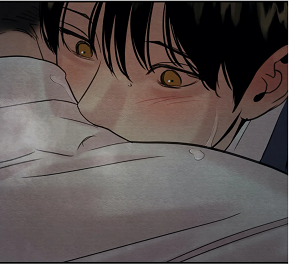 (chapter 71) Note the difference with the following picture:
 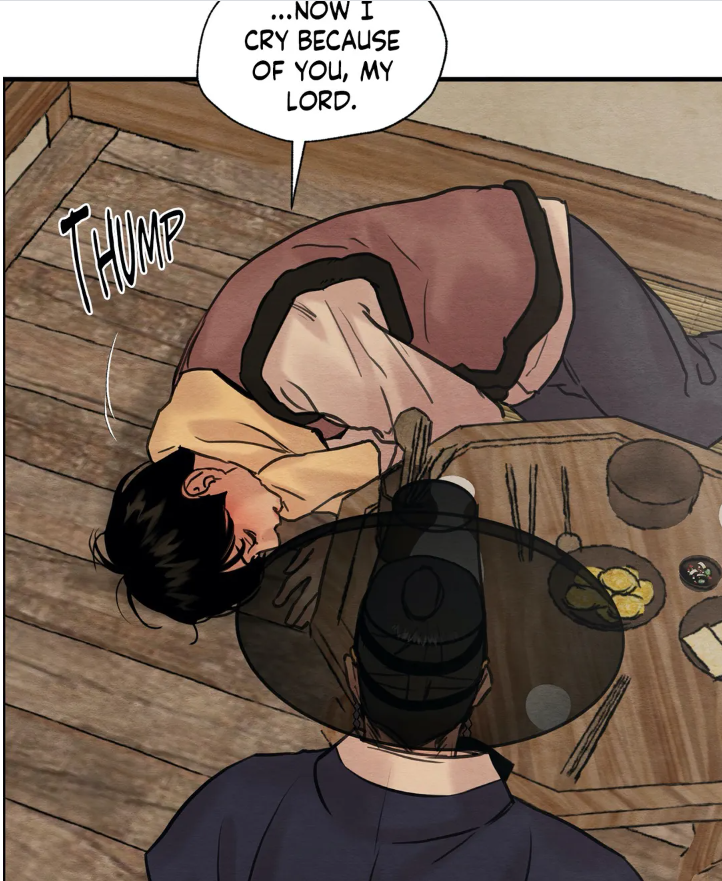 it became
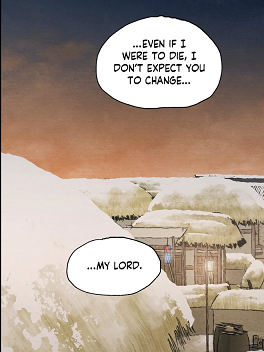 turned into
 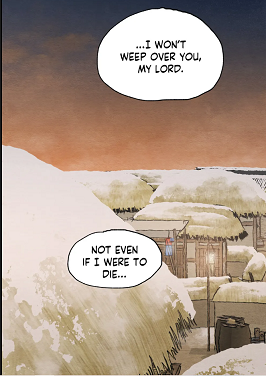 . For the readers who can’t read the original, it is truly frustrating, because we are relying on the translation. Since I pay attention to each word, it definitely changes the interpretation. And here, the painter’s new words give a different impression. In the first translation, he is reproaching his lover his fickle nature. Therefore when he claims that he doesn’t expect the lord to change, it outlines Baek Na-Kyum’s despair and frustration, because expectation is a synonym for hope. On the other hand, “I won’t weep over you” signifies that his affection for the lord is not that deep, if Yoon Seungho were to abandon him due to his fickle nature. Strictly speaking, with the new translation, Baek Na-Kyum is describing his own feelings implying that he can move on and change. He might have drunk today because he felt sad, yet he won’t be too sad, if the lord moves on. Even in his last moments, he won’t express any regret or sadness. Nevertheless, both translations contain the same message: it is definitely a love confession, but full of denial. Their relationship will fail due to the lord’s fickle nature and contrary to his past love for Jung In-Hun, the painter won’t miss him and shed a tear. The reason is simple: the lord is responsible for the failure of their relationship due to his bad personality, whereas in the learned sir’s case, Baek Na-Kyum was to blame for the separation and abandonment. He committed a sin, hence Jung In-Hun can only resent him.
 He felt awful and sad, because he couldn’t let got of the feelings in his heart
  . The reason was that he could no longer paint. Remember how I pointed out that in reality the passion was more connected to painting than to the scholar, as the latter had never asked him to give up on his love or admiration for him. Nonetheless, the fact that he had to renounce his passion (painting) caused him so much pain that he needed to numb his heart and hand. And with this new translation, I realized another important aspect: the trigger for Baek Na-Kyum to paint. I have already stated that the scholar was the artist’s muse, so when he was vowed to never paint, it meant that he had to give up on his muse. So when Yoon Seungho dragged him to his mansion, he forced him to paint. It was a work, he had to do, nonetheless note that the first paintings revealed the artist’s repressed sexual desires, which explains why they were so lewd and beautiful. Intentionally, the artist’s passion was awakened again, hence he had this wet dream. However, as time passed on, the lord became more fixated on the artist so that the pictures became irrelevant. Moreover, the artist was still thinking about the scholar, hence he couldn’t detect how slowly his affection was changing. The manhwaphiles certainly recall the huge amount of pictures Baek Na-Kyum produced in chapter 41.
 But there was no passion. And during the second season, the readers could detect that the artist’s emotional state had an influence on his works:
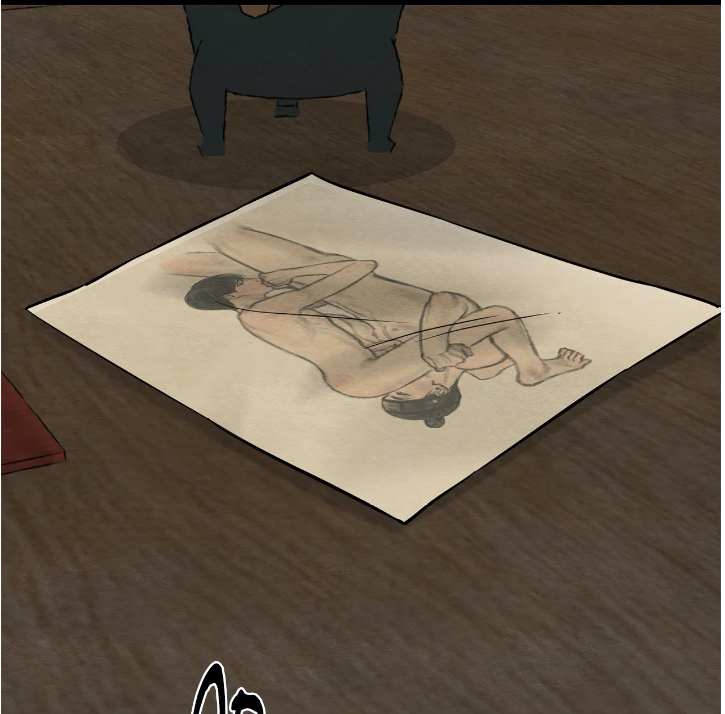 : Both protagonists were portrayed as prostitutes
 In this picture, the artist was confessing how much pleasure he felt during this session. That’s why Min has the impression that the artist is only interested in sex. Baek Na-Kyum hadn’t still found his new muse.
 At no moment, Yoon Seungho has been requesting a picture from him. As you can observe, the new translation made me realize why Baek Na-Kyum is reluctant to confess. His “feelings” are strongly connected to painting and he has not entirely grasped that Yoon Seungho will become his new muse, something I had already announced much earlier. Since they are not making love, there’s no inspiration and only frustration. However, the artist has his heart full of emotions which he can’t express, neither physically nor on the paper. On the other hand, Baek Na-Kyum made the main lead remember that he painted an orchid
 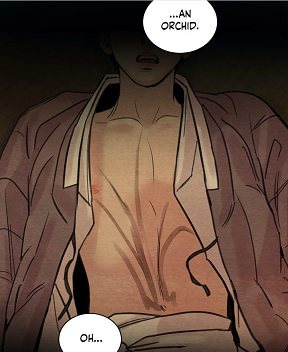 which was connected to sex. And we know for sure that the protagonist tried to paint their Wedding night in order to trigger the artist’s memory:
  That’s why I come to the conclusion that the noble could be the one who creates a painting in order to prove to the artist that his affection won’t fade away and that he is his source of inspiration and strength. We shouldn’t forget that in chapter 36, the noble was definitely exhausted, yet frustrated too, because the painter was keeping his distance from him.
  Baek Na-Kyum was pushing him away with his silence and lack of motivation to create a painting. And now, you understand why there’s a connection between chapter 36 and 75. The roles have been switched: Baek Na-Kyum is frustrated, he feels the need to create a picture in reality, but he has not recognized it. Therefore I deduce that we are at a turning point. Baek Na-Kyum is on the verge to realize that he has already found his new muse and source of inspiration. However, this recognition is delayed by Heena’s intervention. The manhwaphiles are well aware that she was the one who kept reminding Baek Na-Kyum that the latter only loved the scholar
 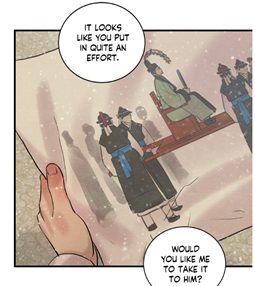 , she can only see it as a confirmation. For her, Baek Na-Kyum’s love was expressed through the picture and it will never change. However, the kisaeng is making a huge mistake, because such an adoration can change. Furthermore, this painting doesn’t represent reality, only the artist’s hope. Finally this admiration vanished, the moment the idol revealed his true face. In other words, this picture doesn’t represent “eternal love”, but “illusion”. Striking is that the painter couldn’t forget Yoon Seungho’s painting on his body
 , his source of inspiration. This was totally new for Baek Na-Kyum, no one had ever done such a thing for him. Both works contrast so much, yet the orchid left a deeper impression on Baek Na-Kyum than the picture with the inauguration, as the latter had already become meaningless. Remember what I wrote about memories: they are stored, the moment they become meaningful. This explicates why the artist felt the need to lie to the scholar the next day. This so-called punishment had deeply impressed the artist in reality, which I only realize now. The lord had painted so quickly on a shivering body, yet the result was really good and the artist could perceive it. And this displays the lord’s true talent. There’s no doubt that the artist will admire Yoon Seungho’s skills later.
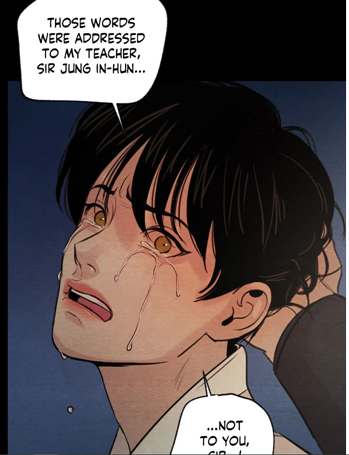 and later called for his learned sir, who didn’t come for his rescue:
  As you can imagine, I am expecting a different outcome in the second abduction. The main lead will save him, as he already failed the first time. Maybe that’s the reason why the translation was changed, although I have to confess that I preferred the first one. Nonetheless, I have now come to this realization. The readers should be happy and just imagine that Baek Na-Kyum confessed this to his lover: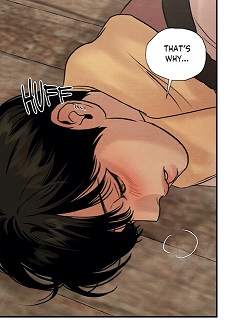
 Bebebisous33s' analyses in K-Dramaland and Manhwas