
This is where you can read the manhwa. https://www.lezhinus.com/en/comic/painter But be aware that this manhwa is a mature Yaoi, which means, it is about homosexuality with explicit scenes. If you want to read more essays, here is the link to the table of contents: https://bebebisous33analyses.wordpress.com/2020/07/04/table-of-contents-painter-of-the-night/
It would be great if you could make some donations/sponsoring: Ko-fi.com/bebebisous33 That way, you can support me with “coffee” so that I have the energy to keep examining manhwas. Besides, I need to cover up the expenses for this blog.

1. Laziness or not?
When the final episode of the main story was released, many Manhwa-philes were laughing about Yoon Seungho’s work attitude as governor. The latter had left his seat in order to return to his lover’s side.  (chapter 131) Hence the police officers found the governor’s seat deserted.
 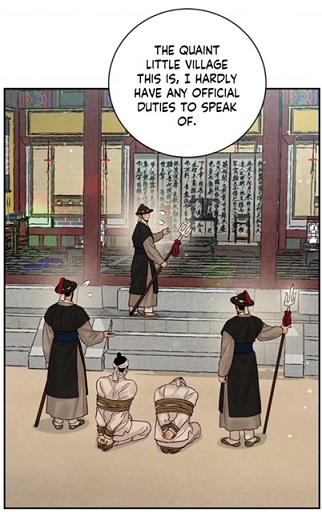 (chapter 131) By contrasting the statement from the governor and the panel, the readers could easily catch his lie. He was a lazy governor, preferring to keep his lover company rather than attend to his official duties. On the one hand, it exposes the main lead’s true mind-set. He is not longing for power or glory. To conclude, he has no ambition. This implies that he is not determined to gain attention either. One might add that he selected this region on purpose. No one would willingly go to that place. The norm was that officials would go there, because they were demoted.
 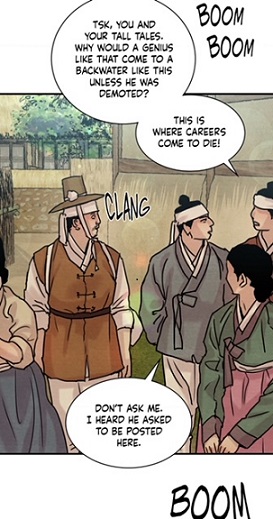 (episode 129) Thus I deduce that Yoon Seungho made the opposite choice to his father. The latter longed for a high position at the government so that the family’s reputation would become famous and powerful again.
  (chapter 86) It is because Yoon Chang-Hyeon was thinking of getting the attention or support from noble families. What he truly wanted was to get recognition from people among his own social class. But with such a decision (join the painter’s side), Yoon Seungho seems to have turned the former patriarch’s nightmare into a reality. Yoon Seungho is about to ruin the family. The name “Yoon” is destined to become forgotten, right? However, I believe that this interpretation is not correct. How so? Let me ask you this.
Why is this region regarded as “backwater”? It is because there are no powerful families like in the town, where the Yoons used to live. There are no huge store or doctor either. The new governor is surrounded by “peasants”, commoners. In other words, it is not a place you can earn a lot of money or gain power, especially for an official. This signifies that buying the governor, like Yoon Chang-Hyeon did, won’t happen.  (chapter 127) No one has such a wealth! That’s the reason why no official would select such a place. Yes, Jung In-Hun’s words from chapter 6
  (chapter 6) (chapter 131) are reflected in the final episode. Peasants are poor und uneducated, and this will not change overnight. Hence they represent ignorance and naivety. This raises the following question. Why did the officers bring these two men? What was their crime? One might reply that it is impossible to figure it out. Nevertheless, I think, Byeonduck left clues in her story. Painter Of The Night is composed of reflections. In each season, certain scenes or elements resurface with slight changes.. Thus I developed the following theory concerning these two commoners.
My hypothesis is that these two men were innocent. In season 1, we have a similar scene:  (chapter 37). It is about a crime, treason. In season 4, we know that the plot was true and there was an evidence, the paper with the signatures from lord Yoon and lord Song. Since in season 1 the wrongdoing was true and heavy, I deduce that it is not the case in the final chapter. Because there is an evidence of the crime in the past, I can’t help myself thinking that in the final chapter, there was no evidence. Additionally, I feel the need to expose my other interpretation about this man:
 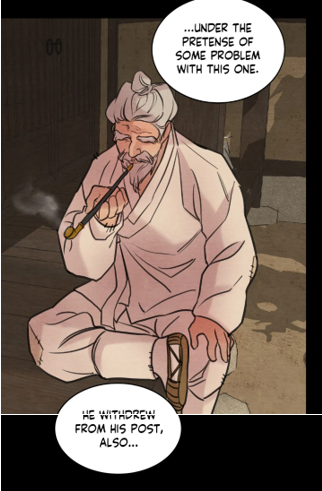 (chapter 37) I have always stated that this man couldn’t be a servant, for he was smoking a pipe and we saw a glimpse of his memory. No commoner would be allowed to enter the courtyard, when three noblemen are tortured and interrogated. Moreover, notice that in both scenes (37 and 131), the magistrate is absent. That’s how it dawned on me that this nameless man could have been a former “governor” who lost his position.
But if the two commoners are rather innocent, why did the officers bring them to Yoon Seungho then? My idea is that they imagined that the new governor wanted to make a statement so that he wouldn’t be looked down by the locals. Or even worse. The guards desired to get protection money from them!! Yes, because this region is not well perceived, the guards thought that the governor would act like his predecessor. Since it is a poor region, it signifies that the officials are not well recognized and well paid. (chapter 131) First evidence that the last image is not symbolizing justice, but corruption, is the behavior from the guards. They are caught by surprise, when they arrive in front of the empty stool. Yet, they are not gesticulating or panicked. If a real crime had taken place, they would be looking for their superior. And this observation leads me to this image. (chapter 131) In this picture, we can detect the governor’s office in the background. It is the yellow building with the multicolor decorations. That’s where the empty stool is!! In other words, if they truly needed him, they just had to go to the other side of the wall. Third evidence for this hypothesis was left in season 3:  (chapter 94) Here, the officers went to the mansion before visiting him at the gibang.
  (chapter 97) Back then, it was about the death of a commoner, a servant. If there’s an urgency, they would look for him. The comparison exposes that the “wrongdoing” from the peasants in the final chapter was no huge deal. Yet, many readers already condemned them due to the guards and the protagonist’s behavior. Funny is that the lord was portrayed as a huge liar, but not “the officers”. (chapter 131) But it could have been the reverse. Officers could have abused their authority. Furthermore, let’s not forget that Min indicated that guards could be bribed easily.
  (chapter 101) His statement displays another aspect: the governor and the guards are not working together. Jihwa would have been sent to jail without being able to talk to the superior, similar to this scene:
  (chapter 126) The guards’ own interests are not necessarily aligned with the governor’s. And now, take a closer look at this scene:
 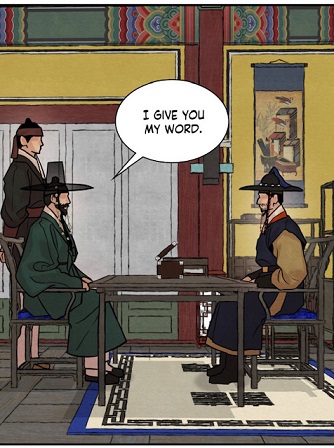 (chapter 127) The official received the patriarch in his office alone. The reason is simple. That way, he wouldn’t have to share the money with others.
But since the guards never went to the lord’s mansion, they must have realized that this man was not like his predecessor. He was not frustrated or demoted. He was indeed not after power or money. They couldn’t rely on his protection either. In fact, they could get blamed for disturbing his privacy. I would even add that since Yoon Seungho comes from a wealthy family, he doesn’t need to rely on bribe at all. In other words, the guards can only come to the conclusion that treating him well can only benefit them. His wealth was already implied with his arrival: 
 (chapter 129). He was not sitting on a horse with a few musicians contrary to Jung In-Hun. He was carried by four men, and other people were announcing his arrival with flags and music.
  (chapter 111) Moreover, Yoon Seungho had a inauguration banquet organized, where the local inhabitants could join.
 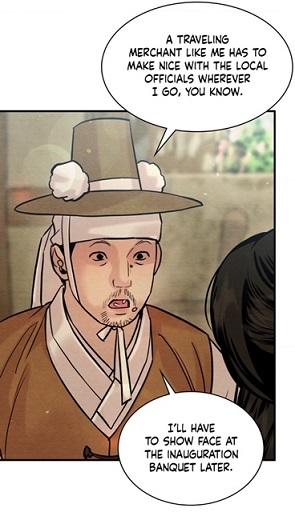 (chapter 129) There was no social exclusion at all. This stands in such opposition to the lord’s statement in season 1, where he distinguished between nobles and commoners.
But let’s return our attention to the two suspects. What happened to them then? (chapter 131) In my opinion, they were released. Why? For the simple reason that in this place, Yoon Seungho expected no huge duty! Yes, his words were not just exposing a lie, but also the truth. Nothing was supposed to happen. People are peaceful and helpful to each other.  (chapter 129) This signifies that the arrest could lead to trouble to the guards too. So was the lord lazy in the end?
  (chapter 131) Yes and no… By acting that way, he put an end to the abuse of authority in that place!! Thus I deduce that the governor is destined to gain recognition and admiration from the local inhabitants. He is generous (inauguration banquet where anyone could join), humble, loyal (he is not forgetting his lover)
  (chapter 131), but also well organized! He had planned to join this place a long time ago. The peach trees were planted about 3 years ago. He is no longer making any distinction between nobles and commoners, and that’s how he will get the respect from the peasants. As a conclusion, we should envision that the lord will become famous. Therefore the son didn’t turn the father’s nightmare into a reality. He didn’t contribute to the family’s ruin at all. Yet, there exists a huge divergence. Yoon Seungho is about to make a name on his own. It is not about the Yoons. On the one hand, the father’s dream was illusory and superficial, especially due to the treason
 (chapter 86). Since Lord Song had been forced to resign, there’s no doubt that the man would resent the Yoons to become successful again. This explicates why lord Song saw Yoon Seungwon as a problem
  (chapter 107) and tried to tarnish the younger son’s reputation. But let’s return our attention to the patriarch. His vision was based on Confucianism. However, he had a very narrow-minded perception of it.
“There is government, when the prince is prince, and the minister is minister; when the father is father, and the son is son.”- The Analects, Book XII, Yen Yuan, Chapt XI Quoted from https://www.chinausfocus.com/society-culture/confucius-more-individualistic-than-you-think
He expected not only blind obedience from his son, but also absolute devotion for the family. The individual steps aside for the community, and as such for the Yoons. This explicates why the main lead’s relative has no name in episode 6, he is simply reduced to a grandfather. 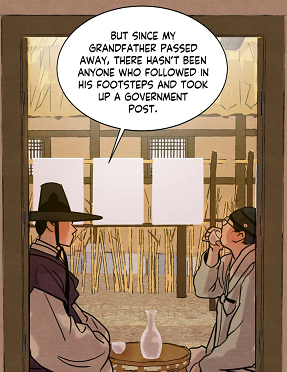 (chapter 7) This shows that the tradition was to “vanish behind the family name, the Yoons”. Under this new light, my avid readers can grasp why the main lead was destined to suffer immensely
 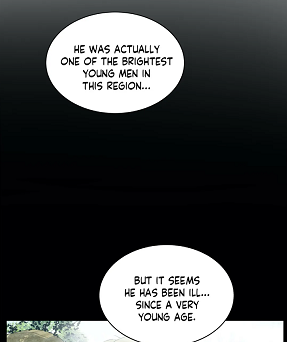 (chapter 57). His reputation was already outshining his father’s. Secondly, by being stigmatized as a homosexual, he was endangering this principle. His role was to continue the lineage and as such produce a heir.
As you can see, Yoon Seungho is breaking the tradition and even dropping Confucianism, as the latter rejects homosexuality. The main lead embodies other values: Modernity, Individualism, true Love and Humbleness. Yoon Seungho is no longer judging people based on their social status and relationship. This signifies that at the end of the story, the new governor symbolizes true justice. He put an end to corruption and malpractice. He is not influenced by people’s opinions and prejudices either. He is only listening to his heart and conscious. He makes sure to keep all his promises and not to say any empty words. He is a reformed man through and through.
However, we shouldn’t forget that the protagonist did kill many people before. Hence my other interpretation is that Yoon Seungho as a sinner is not “allowed” to become a judge himself. (chapter 131) How could he condemn others, when his hands had been soiled with blood? Thus I deduce that through her work, Byeonduck exposed the corruption of human justice in Joseon. It was impossible to get true and fair justice from anyone, let alone from the authorities. The latter were ruled by greedy and arrogant nobles who used law enforcements for their own needs. That’s why the patriarch  (chapter 116) or even Min could commit crimes in the open. They felt safe, for they knew that the authorities belonged to the same social class than them. However, this could only work, as long as the nobles would cover for each other. Should a yanbang denunciate a noble family, it was a different story. Therefore I assume that lord Lee was the one who reported the treason to the authorities (the painting in the bedroom was the evidence). But such a painting couldn’t represent a proof. However, since human justice was corrupted, the gods decided to give justice to the protagonists. That’s how Yoon Seungho became the hand of justice. Everyone involved in the protagonists’ suffering had to pay for their crimes.
  (chapter 102) That’s the reason why Baek Na-Kyum’s martyrdom was strongly intertwined with the young master’s. Yoon Seungho only received this power through Baek Na-Kyum, the character embodying fairness, sincerity, hard work, home and equity. This was particularly perceptible in this scene:
  (chapter 27) The lord couldn’t kill anyone randomly.
Yet, considering the scene in the shrine as a trial from the “gods”, can appear weird, for the main lead attacked Min and his friend under the influence of his unconscious past. 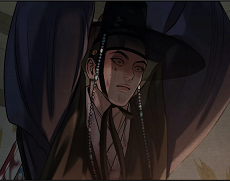 (chapter 102) However, I consider it as a first step to the lord’s emancipation and life lesson. The latter is indirectly learning not to pay attention to status and power. That’s why the author portrayed him as blind and deaf to their plea and special status. While his behavior in the shrine was rather impulsive and influenced by deeply rooted fears, we should consider lord Song’s execution as a true act of justice.
  (chapter 123)
  (chapter 123) The latter had confessed all his crimes: the ones from the past (the lies in order to fool the father)
 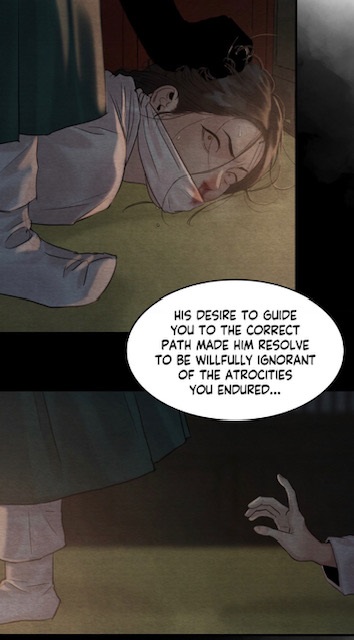 (chapter 123) and the painter’s murder. Funny is that lord Song didn’t feel threatened by the young master at all despite the sword.
 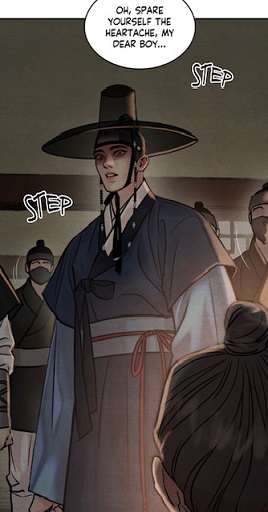 (chapter 123) Why? It is because he feels, he is the one with the upper hand. First, he has the petition, hence he is already projecting himself in the future (he can get a high position again). Secondly, he thinks, Yoon Seungho is outnumbered. He is surrounded by 4 guards. But more importantly, he views himself superior to the main character due to his age. He is an elder. That’s the reason why he calls “my dear boy”. This implies that he is underestimating the main figure. The latter would never dare to raise his hand against a senior!! However, true justice is also blind to age.
 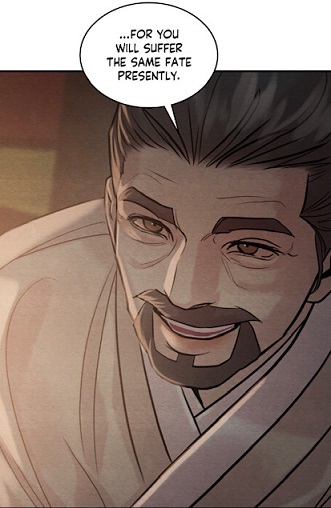 (chapter 123) His smile at the end of the episode should be perceived as a reflection from Min’s vanishing.
  (chapter 103) One might even add that the lord’s action could have been seen as self-defense. However, don’t forget that we are here in Joseon, where a commoner’s life means nothing. Because of this new association, I came to the following deduction: lord Song was the one behind lord Shin’s death.
  (chapter 103) The latter couldn’t imagine that an elderly yanbang, an official, would raise the sword against another noble. After this new realization, it dawned on me why Yoon Seungho had to get separated from his loved one.
 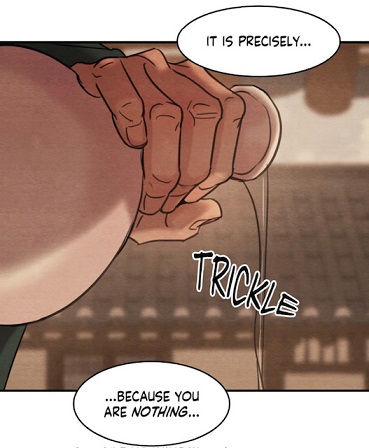 (chapter 126) This humiliation made Yoon Seungho realize that he needed to have his power on his own. He learned through the hard way that he was not just a Yoon, but Seungho. Yes, this helped him to differentiate himself from his father and to become stronger mentally. His religion was now his lover, Baek Na-Kyum, whom he needed to protect. But he could only do it, if he had himself a powerful position. But he needed to witness the corruption of the authorities to realize that in Joseon, there exists no justice. (chapter 127) That’s the reason why I deduce that Yoon Seungho is not destined to become a lazy or unfair governor. He learned through the hard way how important it is to give proper justice. (chapter 131) Should these two men know the artist, the latter could encourage his lover to listen to their testimonies and not judge them based on their status.
Under this new light, it becomes comprehensible why I don’t perceive the main lead as a lazy governor. Just because he appears as one in this scene (chapter 131), we shouldn’t generalize such a behavior. By paying no attention to power and fame, the protagonist learned what true justice is. Moreover, he realized the true source of happiness: love and simplicity. He made sure to keep all his promises to his loved one. Moreover, the artist is there to remind Yoon Seungho of his duties: (chapter 131) Hence I can’t help myself imagining the couple strolling through the village and listening to the people. Thanks to the artist, Yoon Seungho can only get recognition and acceptance from the autochtones. Besides, Baek Na-Kyum is even giving painting lessons to children, so I doubt that he will drop everything for his lover’s sake. We should envision the opposite behavior from the scholar:  (chapter 6): neglect and indifference towards the commoners. And this new observation brings me to my other topic, Jung In-Hun.
2. The real sinners: the hidden hustlers and workhorses
In the first part of this essay, I compared the arrival of the lord in his new jurisdiction with the scholar’s Jung In-Hun.
| YoOn Seungho | Jung In-Hun |
|---|---|
| |
Through this comparison. I had a huge revelation. Manhwaphiles can notice not only the absence of flags and the palaquin, but also the absence of uniforms. The two men in black leading the horse were simply wearing black hanboks and not blue and white costumes. Then it dawned on me that after this cortege on the street, there was no banquet after his success. Hence I deduce that he had not really succeeded at the civil service examination. First, he had not finished top place  (chapter 129), therefore he couldn’t select one position contrary to the main lead. This means that when he celebrated his “victory” in episode 111, it was not official. He had no post. I would even add, his name had not been announced on the official board, like we could witness it in this scene.
 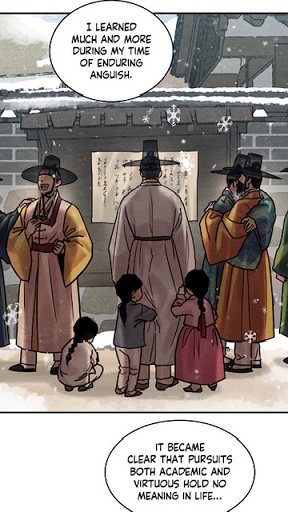 (chapter 121) Here, he is informed that he didn’t pass the exam, for his name was not written there. We can detect this, because people are congratulating each other. His name was left out due to the intervention from lord Song. This means that when Yoon Seungho made him this offer
 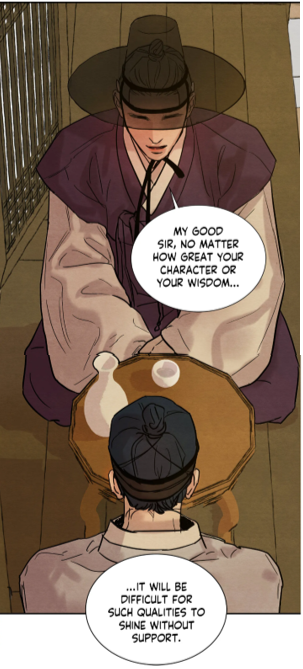 (chapter 7), these were not empty words. He did help the learned sir to pass the civil service exam. But the scholar didn’t succeed like anticipated. The absence of his success explicates why Jung In-Hun received such an offer from lord Song later.
 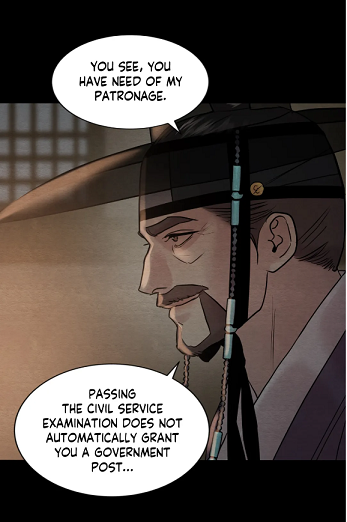 (chapter 117) He had no post, he couldn’t choose it, for he was not the best. Thus I deduce that the scholar had just proven his mediocrity. He was just an average man. That’s how it dawned on me that the ceremony in the street was more a simulacre! (chapter 111) Yes, it was fake, for there was no banquet, no sedan chair, no flag and just civilians were surrounding the former teacher. The painting from Baek Na-Kyum can even serve as another evidence that a palanquin and flags are attributes to a ceremony of inauguration.
 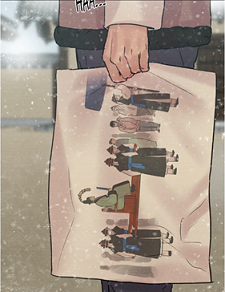 (chapter 44) Only one thing was real: Jung In-Hun was wearing an official uniform, that way no one would doubt his “victory”. Moreover, observe that lord Song only approached the learned sir after the parade. So he was not behind the parade. Besides, keep in mind that the main couple was informed about the parade through the tailor
 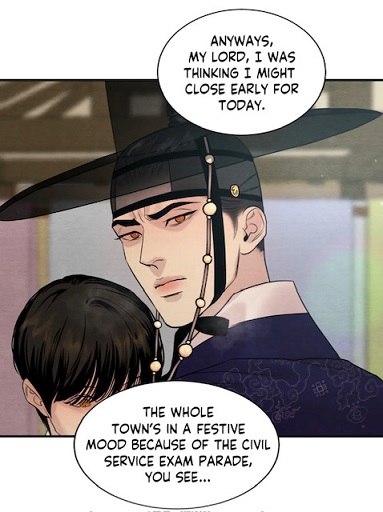 (chapter 111) and not from the official board. His reaction shows not only his displeasure, but also his ignorance. If he had known about the cortege, he would have avoided the place in the first place. Thus I suspect that the tailor had been encouraged to leak this information in front of the couple. Let’s not forget, as a tailor, he was definitely involved in the cortege. It is no coincidence that he informed Yoon Seungho about this “sudden parade”. At the same time, I come to the following deduction: someone must have paid for this spectacle, and it was not Yoon Seungho, for he had been kept in the dark until the last moment. I doubt that the learned sir had the connections and money for this. This new perception corroborates my previous interpretation: the show was sponsored by someone, and it was definitely inspired by the drawing (the hat and the green uniform).
  (chapter 111). Yet this was just a cheap trick, for the person didn’t send a sedan chair with carriers. Under this new light, I realized why Jung In-Hun ended up stigmatized as a criminal.
 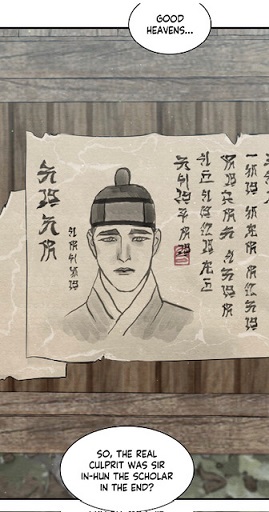 (chapter 127) It was his karma, for he had deceived the painter with his lies. His success was not his own.
 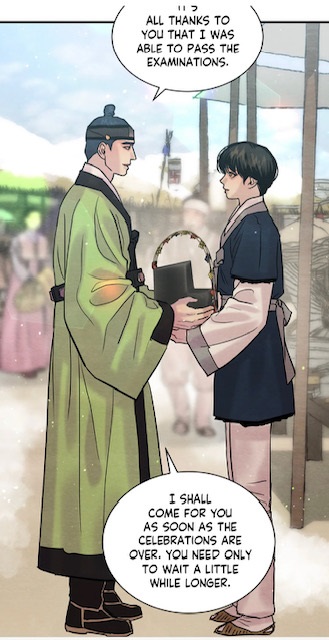 (chapter 111) He realized that even after passing the exam, he needed the assistance of people, a sponsor for the spectacle, a noble with connections. Besides, when in season 1, the painter was accused of a crime (ruining the picture), the learned sir did nothing at all. He didn’t protect his student, for he desired to keep his sponsor. When the latter was sick, he neglected him as well. He wouldn’t have sent a doctor for him. Hence in season 4, the sponsor Na-Kyum decides to end his “sponsorship” for the learned sir. We could say that the former teacher is confronted with a similar situation. He ends up being abandoned and framed for a crime, which he didn’t commit. Yet, contrary to his pupil, he is not entirely blameless, for he played a huge role in the death of the nobles lord Song, lord Shin, lord Min and others. Because Baek Na-Kyum embodies hard work, justice, equity, love and honesty, I deduce that his surrogate father embodies the negative notions: laziness, corruption, partiality, hierarchy, ambition and hypocrisy. That’s why his face ended up on the official board, while the painter’s accusation just remained rumors.
  : (chapter 125) versus (chapter 127) His fate reflects Joseon’ society and authorities, especially when the latter are closer to the capitale.
At the same time, the poster of the scholar exposes that the scholar’s dream had always been to see his name on the official board. (chapter 121) However, the notice was not associated with glory and honor, but with the opposite value. He was an immoral and brutal man. (chapter 127) which was actually reflecting his true personality. We should see the parade in episode 111 as an illusion due to the absence of an official document. And who had paid for this charade? One might think lord Song. However, don’t forget that he approached the man much later. I feel like someone else was involved as well. For me, it was Heena. She was seen with the tailor in season 2, and she had seen the painting from her brother. Finally, she had tried in season 2 and 3 to separate the couple. So she should have repeated the same action, because her resent towards nobles runs deeply, just like her admiration for Jung In-Hun is strong. She knew that her donsaeng was no longer listening to her and his new lover. He was determined to remain by his lover’s side. Thus she didn’t intervene here. 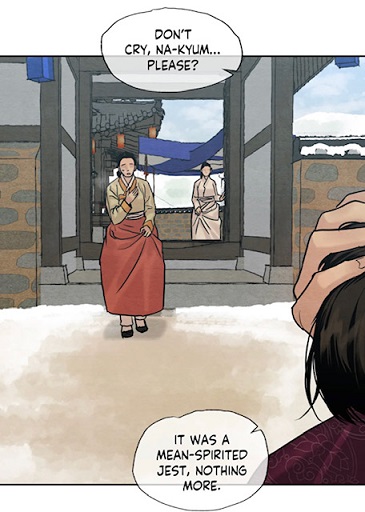 (chapter 105) IMO, she had to use another mean in order to achieve her goal: the scholar. Let’s not forget that the artist had confided to her this:
  (chapter 68) He was simply waiting for the learned sir’s return. And she was present during the cortege.
  (chapter 111)
Naturally, Jung In-Hun ended up being accused of murder, because not only he had lied, but also he had contributed to the death of lord Min and the others. By giving the spectacles, he was also responsible for their death. Finally, by hurting Baek Na-Kyum and giving him to lord Song 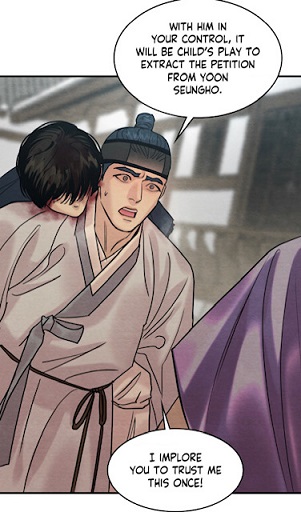 (chapter 121), he put the painter in a position which led him to take for the fall for his loved one. It was like framing an innocent. Exactly like in season 3
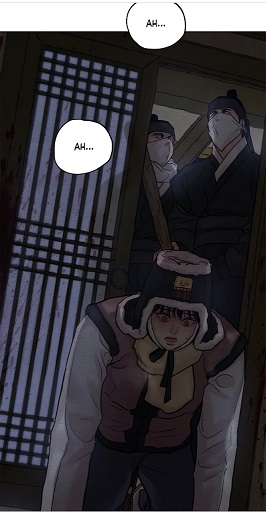 (chapter 99), Yoon Seungho had been forced to take the sword because of the scholar. And the trigger for the massacre
 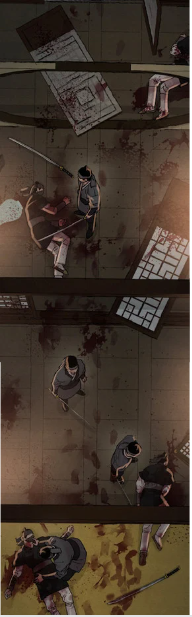 (chapter 124) was always Jung In-Hun. And now, you comprehend why Jung In-Hun became the scapegoat for the last incident. But there’s more to it.
The sexual and physical assault, playing a trick on multiple occasions and the lies are the reasons why the learned sir ended being labelled as a dangerous bandit. (chapter 127) The paper reflects the transformation of the former teacher. He is no longer a honest man. He lost everything: his home, his name and even his life, killed by lord Song’s minions. 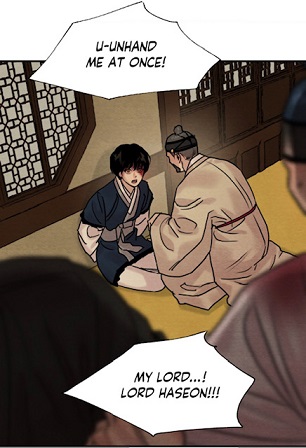 (chapter 121) His final lesson was to learn that he was exactly like the others: he is just a human despite his education. All humans are equal in front of death. In fact, during his confrontation with lord Song, he came to give up on his integrity. His true face came to the surface: he was just an opportunist, a lazy scholar who relied on fate and his arrogance.
  (chapter 6) This brings me to my next interpretation. Jung In-Hun learned through the hard way that there is nothing like fate (“right time”), but life is the result of decisions. However, because the scholar always regretted all his past choices, he decided to blame others for his wrong choices. That’s the reason why he ends up to take the whole crime. We should see this paper (chapter 127) as a reflection from the poem in episode 4:
 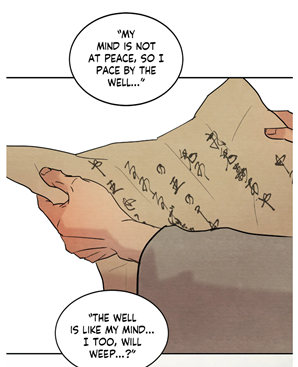 The author from this sijo was the poet and official Wang Bang-Yeon who is said to have lived in the time of Joseon’s sixth king Danjong (1441-1457) and his successor king Sejo (1417-1468). As the official of the state tribunal, he followed the young king Danjong into his exile and gave him poison to drink by royal command. Yes, both are symbols of power, corruption, partiality and injustice. Yet, there exists one divergence. While Wang Bang-Yeon left a poem revealing his yearning for the king, the learned sir had no deep attachment towards the artist. Hence it is no wonder why the paper “Wanted” is not connected to affection. It really reflects the emotions and thoughts of Baek Na-Kyum. Due to the last incident, the latter no longer cares for this man.
Jung In-Hun should have realized much sooner that happiness is not a synonym for power and admiration. In reality, he was living quite well in the small village. (chapter 6) He had a roof over his head, and he was surrounded by children, who liked him. (chapter 121) But the problem is that he was consumed by entitlement and greed. How so? It is because of his education. He saw himself superior to others morally and mentally. Hence he didn’t feel the genuine admiration from the children.  (chapter 6) He couldn’t enjoy it at all. It is no coincidence that the synonyms for ambitious person are “busy person” and “workhorse”. Yes, this mirrors the expression “laziness”. A true ambitious person is actually proactive and not really relying on sponsors and bribes. So when we see the learned sir on the horse (chapter 111), he is acting like a workhorse. The reality is that he is lazy, as he saw himself destined to achieve greatness. He had the impression that no one had recognized his true value. On the horse, he is just waving his hand and smiling. Later, he confesses this to the artist: (chapter 111) As you can see, his success is not the result of his hard work, but rather of his connections!! Though he didn’t kill lord Song himself, Jung In-Hun had to receive his due punishment for all his lies and sins.
3. The brother’s punishment
This brings me to the next interpretation: Yoon Seungwon and his success. (chapter 107) Though he passed the civil service exam too, he is not able to fulfil his father’s wish either. (chapter 86) They lack support now because of the treason. The families close to the Yoons got executed. But there’s more to it. The youngest son had first betrayed his father by giving the petition to Yoon Seungho,
 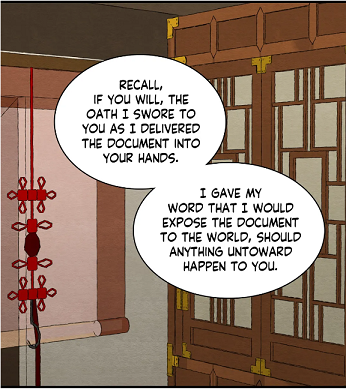 (chapter 118) His intention was to protect not only his brother, but also their family. It was to ensure that lord Song would get blackmailed. That’s how this investigation (chapter 37) got stopped in the end, and the Yoons escaped any punishment. However, by doing so, Yoon Seungwon turned his brother into a blackmailer. Thanks to him, Yoon Seungwon could keep his reputation intact. In fact he never lost his father’s trust. However, in season 4, we can witness a change of heart in the brother.
  (chapter 118) It is because he knows that with the petition in his brother’s hands, lord Song represents a hindrance to his own career. The latter can only see the Yoons as a threat. Besides, he can only resent the family, if they are able to gain reputation and power, while he can not return to Hanyang and occupy a high position. As you can see, the young master’s success can only irritate lord Song. You can sense a rivalry between Seungwon and lord Song Haseon
  (chapter 116) in this scene:
  (chapter 116) The latter has already sensed that the traitor is sitting next to them, thus he raised this question. That’s why I come to the following conclusion that the young master must have realized that he also needed his brother’s assistance. First, if Yoon Seungho returns the petition to the father, the investigation about the traitor in the mansion would be no longer necessary. Secondly, Yoon Seungwon needs to create new connections in Hanyang, but he can only achieve it with his elder brother. Under this new light, you comprehend why Seungwon asked his relative to move on from the past and as such “forgive their father”
 . (chapter 118) In other words, the young man embodies the notion of “fake forgiveness, fake promise, fake understanding”. He is an opportunist, exactly like the scholar. Yet, there exists a huge divergence between them. His affection for Yoon Seungho was not fake. He is feeling sympathy for his brother. But that’s it. This explains why he didn’t help his brother before. In my eyes, Seungwon represents a different notion of family: bloodline. In my eyes, he embodies traditions and Confucianism. His goal is to turn his father’s dream and life motto into a reality: glory and power for the Yoons. Besides, he must have experienced himself the downfall for the family. And this observation leads to my next interpretation. This means that Yoon Seungwon must have lied to his father by omission as well. (chapter 86) In my opinion, he must have promised to fulfil the patriarch’s wish, but reality made him realize that this was not possible. He couldn’t do it alone. However, I doubt that he confronted the elder with reality.
Let’s not forget that he is only the second son. So he can not inherit the family’s properties. Remember that once the main lead succeeded the civil service exam, he received many marriage proposals.  (chapter 128) What about Yoon Seungwon then? Though he succeeded too, there is no mention about engagement or marriage proposals. However, it is clear that this achievement is connected with adulthood and marriage, therefore the elder Song Haseon brought up the topic sex!
 (chapter 107) It is because Yoon Seungho is the first son who will inherit the title and properties. Yoon Seungwon’s success can only work with his brother’s presence. This means that thanks to the last episode, I could finally find the answer from Byeonduck’s question:
  What was the reason for Yoon Seungwon’s embarrassment? First, it is because his brother selected the backward place, though he had passed the exam with flying colors. Yoon Seungwon imagined that once his brother had passed the exam, he would get married and establish new connections. That way, Seungwon would be able to get married with a properous and famous family. In other words, Yoon Seungho would turn the father’s dream into a reality: the return of the Yoons’ glory and power. And Seungwon would benefit a lot from this. So in the gibang, his advices might have sounded well meant, (chapter 118), in verity he was also motivated by his own desires. He wanted to get the help from his older brother. This means that the moment the main lead lost his father, Seungwon’s words became true. Yoon Seungho followed his advice: he cut off ties with his past and as such with his family. He was no longer obliged to fulfil the family traditions and the father’s dream. This means that Yoon Seungwon is now on his own. I find it funny that he blamed his brother for his debauchery, but what did he do during this time? Nothing… he waited, until he received pressure from his own father. Moreover, since Yoon Seungwon didn’t help the artist and allowed him to take the fall for the massacre
  (chapter 126), his karma is not only to end up alone, but also not to receive any support from his brother.
To conclude, Yoon Seungwon tried to convince his brother to change his behavior  (chapter 117), because his career was still insecure due to lord Song’s influence. He needed his brother’s help in the end. At the same time, Seungwon had already long internalized the values from his father: Yoons’ honor and reputation were top priorities. In other words, the younger brother stands for social norms and fake righteousness. He desires to maintain his perfect image (loyalty, filial piety),
 (chapter 118), hence he left the document at the mansion. He wanted his brother to return the papers on his own so that his past action would remain undetected. Returning the paper was like an admission that he had stolen it in the first place. Yet he still barged in his brother’s house twice.
 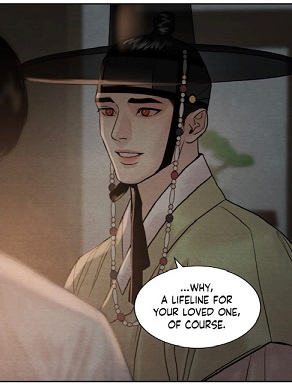 (chapter 117) Here, he exposed the existence of the “petition” to Baek Na-Kyum for one reason. The latter should be used as a way to pressure the main lead to give up on the paper. Notice that this topic was brought up in the gibang:
 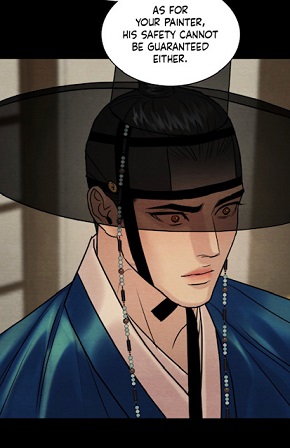 (chapter 119) However, the reality is that Seungwon is not just trying to fulfil his father’s dream, but also he has his own ambition. He wants to make a name on his own. That’s why he confessed this to his brother:
  (chapter 119) He doesn’t associate himself with the father and his sins. In his eyes, he is blameless. The reality is that he is guilty like his father, for he failed to care for Yoon Seungho. He failed to listen to him and his suffering. He didn’t try to understand him. Like mentioned above, he only sympathized with him and that’s it. Thus he condemned him for his debauchery in the gibang, but this was no longer the case.
When the father confronted his own son with reality (he had no power without him), Yoon Seungwon was once again absent!! The latter is the evidence of his “neglect”. It is important, because when the main lead bowed in front of the patriarch,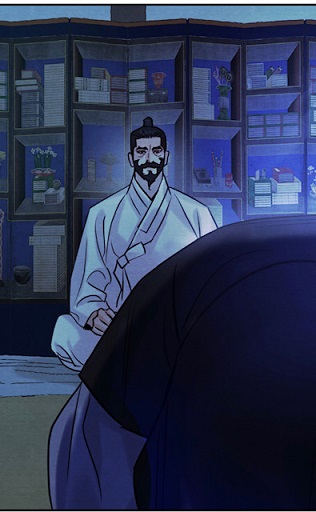 (chapter 127)
 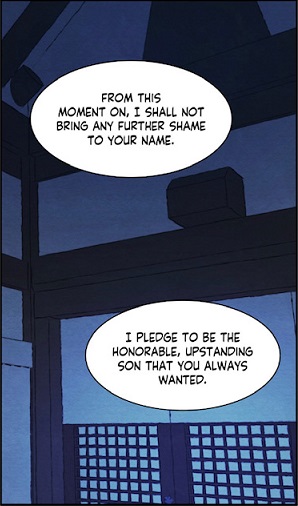 (chapter 127) the former only made a promise to his father and not to the brother. With his death, Yoon Seungho is no longer bound by a promise. Since the main lead had been living properly for 3 years and even passed the civil service exam, it is clear that for the brother, Yoon Seungho must have forgotten his past lover. He must have judged his brother based on appearances, just like he was behaving himself. However, this was just a subterfuge. He was waiting for the right time too. He had no change of heart, he had just been copying his brother’s behavior.
To conclude, the main lead abandoned Yoon Seungwon in the end for his loved one. It happened, when he not only rejected the marriage proposals, but also moved to that “poor region”. The sibling received his punishment for his lack of loyalty and his dishonesty. Funny is that the main lead actually followed his brother’s advices: 8chapter 118) He cut off ties with the past and the family!! This means that his words in the lord’s bedchamber came true:  (chapter 78) Let’s not forget that at the gibang, Yoon Seungwon never revealed his true intentions towards his brother. The latter always said that his advices were for his best interests. He should become involved in the government. But everything was for the Yoons, or better said, for Yoon Seungwon’s sake. And there exists another reason why the sibling must have been embarrassed: This marriage!
  To conclude, Yoon Seungwon embodies the opposite values of Baek Na-Kyum and Yoon Seungho: ambition, corruption, forgetfulness, hierarchy/social norms, traditions and reality versus understanding, forgiveness, simplicity, closeness, modern family and happiness. Selfishness versus Selflessness. This explicates why the main lead gave up his success for the artist. However, though it looks like an exile, the reality is that he will gain popularity and admiration among the inhabitants. Why? It is because he is no longer making distinctions between nobles and commoners, he doesn’t see this place as a punishment, but as a heaven and as such he has a better perception of humans in general. In my eyes, he is bringing progress and change in the region. Baek Na-Kyum is already teaching the kids how to draw… so it is only a matter of time, until his lover takes care of the education for these children. This means that these words will become a reality:
  (chapter 6) He will think of the futures of those children because of his lover.
PS: Tell me, if you are interested in another essay. The question would be: how did lord Yoon die? Was he poisoned or not?
Feel free to comment. If you have any suggestion for topics or manhwas, feel free to ask. If you enjoyed reading it, retweet it or push the button like. My Reddit-Instagram-Tumblr-Twitter account is: @bebebisous33. Thanks for reading and for the support, particularly, I would like to thank all the new followers and people recommending my blog.


 (chapter 1) He was even called a psychopath, for he resorted to kidnapping
 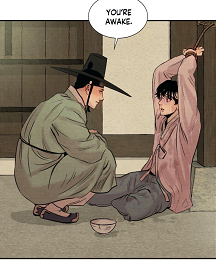 (chapter 1) sequestration, threats
 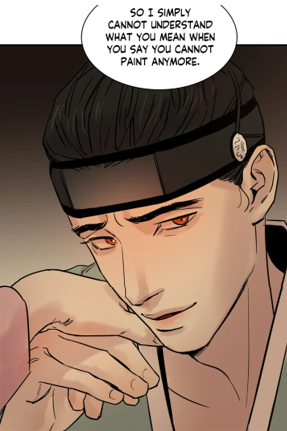 (chapter 2) and blackmail and he initially showed no remorse.
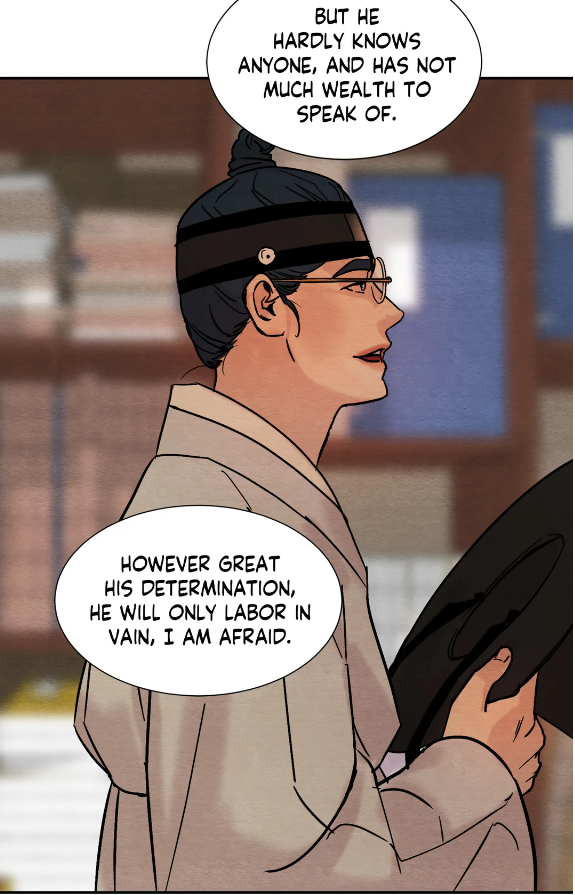 (chapter 7). On the other hand, he never got into trouble for his wrongdoings. Why? It is because he wasn’t violating social norms.
  (chapter 10) It was his right to punish servants, for they are not considered as humans but as propriety. As a lord, he could treat commoners, like it pleased him. Though murder is prohibited, even against a lowborn,
 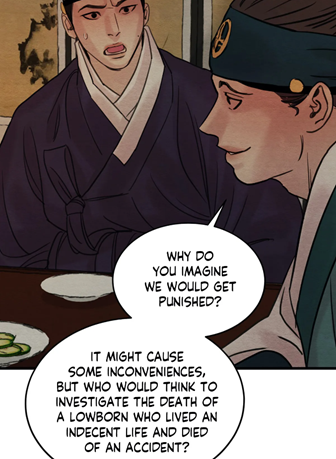 (chapter 43), the reality is that nobles would never get into trouble!! As you can see, there exists a discrepancy between laws on the paper and the reality which was exposed by the rumors in episode 106.
 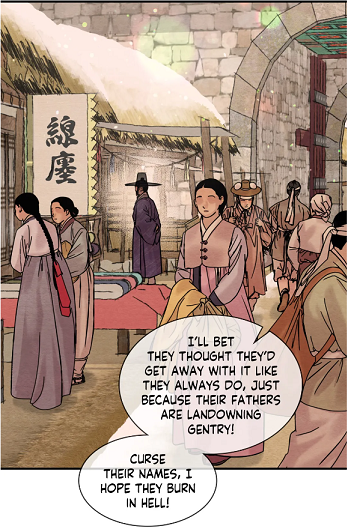 (chapter 107) The fathers would use their position and influence in order to cover up their children’s wrongdoings. And we have the perfect illustration, when the elder master bribes the governor.
 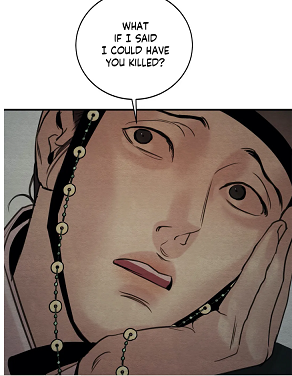 (chapter 76) He didn’t need to dirty his own hands, he could simply frame him. Consequently, I deduce that he had learned this misconduct through the elders’ behavior.
  (chapter 116) This shows that neither Black Heart’s father nor Yoon Chang-Hyeon truly love their children, as according to Erich Fromm, love is knowledge, respect, care and responsibility. However, the elder master Yoon is totally ignorant about his son’s talents and good nature. Thereby, I see lord Seungho from season 1 as the perfect illustration of the corrupted world of the nobility. The monster “Yoon Seungho” was just a reflection from this ruthless and immoral society. Since he committed wrongdoings, his karma was to pay for his sins. It starts with a murder, and the main lead ended up killing people. He might have not broken “traditions” like the disregard of the yangbans against lowborns, but it is considered immoral. He had sinned and now, he is paying for his sins. Therefore his words in the prison resonate differently.
 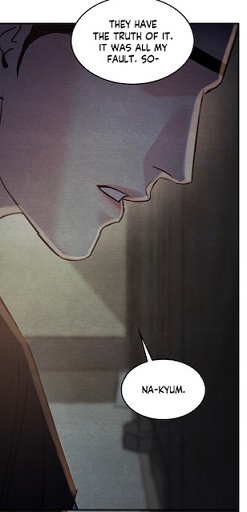 (chapter 126) He expresses regret. He confesses his crimes, he killed people! This means that he is now siding with the lowborns. Their life is as precious as the ones from the nobility. Yet, note that in this image, the author didn’t drew his eyes. Why? It is because in the moment he executed people,
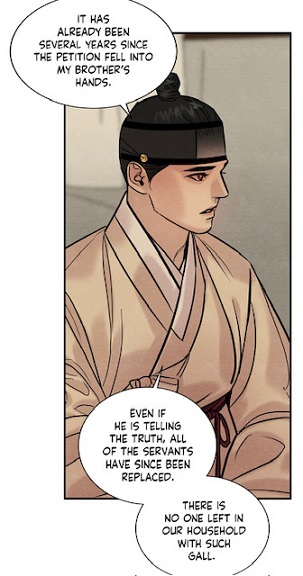 (chapter 116) He had given the order to eliminate all the servants, for they could represent a threat to his “treason”. This explains why the butler describes himself as the only survivor and witness.
 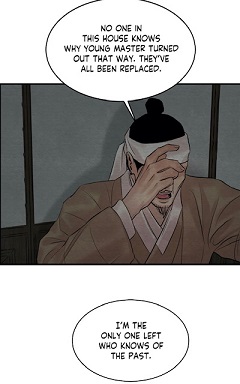 (chapter 86) And we see him giving the order to kill the surviving guard
 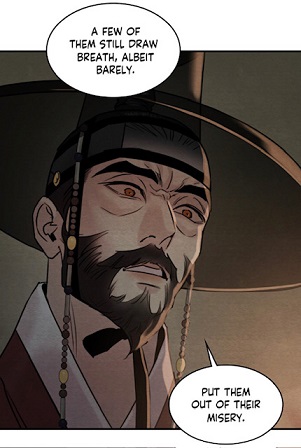 (chapter 125) Besides, he had no problem to order the assassination of his own son which was stopped by the intervention of a helping hand. The father had never asked to spare the main lead’s life.
  (chapter 124). He was his bad role model. But he is not the only one. There is another one…
  (chapter 51) Once a criminal, always a criminal… therefore it is not surprising that the joker chose assassination as second work. By working for the nobles, he would be able to escape punishment, because if he got arrested, he could denunciate them. To conclude, justice is inexistent in Joseon. Yes, we are witnessing the downfall of Joseon, or precisely the king’s bad ruling. The latter is not capable of providing justice to anyone. And this coincides with the purge!
  (chapter 107) “Stepping down” was actually an euphemism for removal. The officials were chased out,
 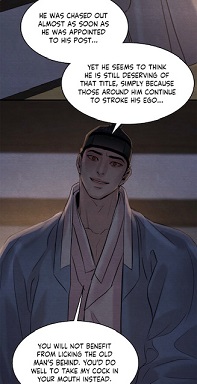 (chapter 80) but their evictions were turned into stepping down.
 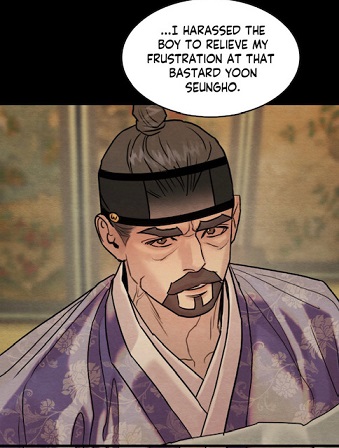 (chapter 122) No wonder why lord Song came to resent the protagonist. Under this new light, it becomes comprehensible why the purge was not noticed by commoners. There was no fire and the staff was sparred.
 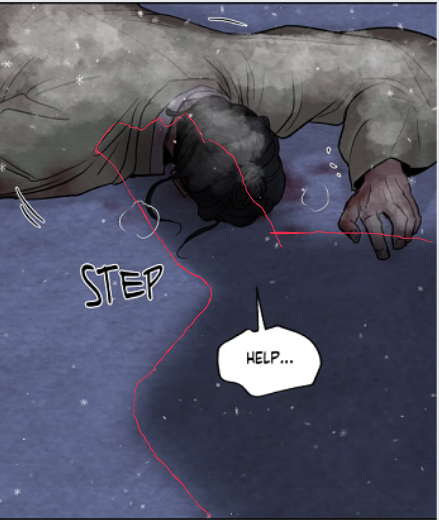 (chapter 103)
  (chapter 67) The murder of lord Shin is the evidence of the anarchy in Joseon. But actually, the monsters are actually everywhere, and not just among the nobility. The Chungin with the scholar and the physicians who have no problem to lie, participate in a kidnapping and drugging people… the kisaengs, the maids, the servants. They are all accomplices, for they feigned ignorance or chose to remain passive, for they preferred avoiding trouble. What people failed to realize is that no one is safe from this tyranny. Hence people could get killed and thrown into a well so easily
 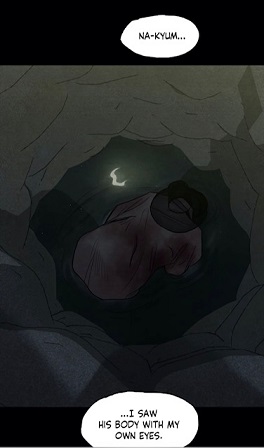 (chapter 97)
 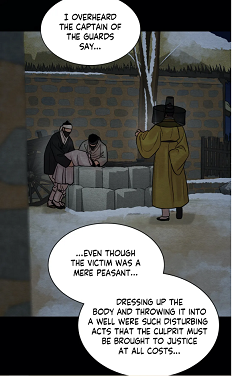 (chapter 101) and their perpetrators got scot-free. Why? It is because the mastermind and the helping hands are protecting each other, like we could see in the Joker’s case. However, the latter in season 3 had no idea that they would face divine retribution and pay with their life.
  (chapter 83) Under this new approach, it becomes comprehensible why he is called “the bird of misfortune”. People around him got to suffer, for they received their karma. Funny is that lord Song mocked him by calling him a grim reaper.
 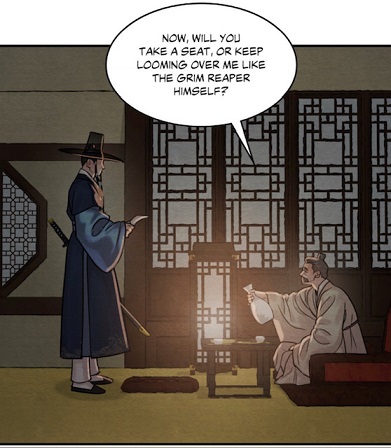 (chapter 123) He underestimated his opponent, not imagining that the latter would use his sword against him. So he became a grim reaper. Lord Song Haseon must have thought that his minions, just like his age and status, would protect him. But no, someone had planned his death and counted on the main lead’s decision.
 (chapter 99) Thus Min’s karma was to die in the total indifference of others. No one is missing him, for he was turned into a brigand himself.
  (chapter 113) But wait… Why did Black Heart get killed in the end? One might say that it was his karma, for he had planned the murder of Baek Na-Kyum in the past. In my opinion, the uke serves as a representative of the divine retribution. The artist is the “judge” and his lover is executing the sentence: death. And we can detect this gods’ intervention through the learned sir’s case as well. Jung In-Hun had looked down on the artist for his origins and education. When the generous main lead chose to accept his apology (attempted rape),
 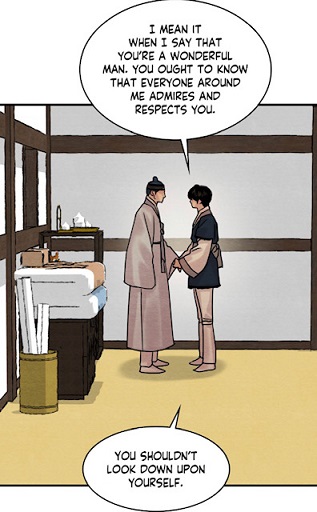 (chapter 120), the latter reminded him that contrary to Yoon Seungho, he was admired. He had such a good notoriety! Since he betrayed the artist and had almost him killed, the scholar ended up losing everything.
  (chapter 106) The gods were using the humans to voice their anger. At the same time, when the woman made this comment, the Manhwa lovers can detect the huge gate in the background, the symbol for royalty. And now, you comprehend why Yoon Seungho was pushed to go to Hanyang. It is his fate to face the king! His task is to clean the palace of these old bearded men.
  (chapter 44) I had already portrayed him as a black shaman in the essay “
 (chapter 65) Don’t forget that the monarch is the only one who stands above the laws, though he is controlled by social norms and his officials. In my opinion, this can only take place, when a new scheme takes place. How so? Note that in the scholar’s case, Jung In-Hun received his karma, but not real human justice. For me, he is not dead. Besides, don’t forget that someone took the petition from lord Song, before Yoon Chang-Hyeon came to the bloody place. There is no ambiguity that the accomplices and schemers didn’t get happy with the last outcome. The couple might be separated physically, but they are attached to each other by their strong love. And since the main lead kept wearing hanboks with the phoenix
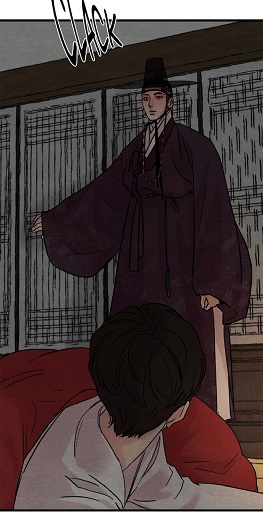 (chapter 34)
  (chapter 45), it indicates that someone saw him as his bird of fortune. And this can not be Yoon Seungho, for the latter was full of self-hatred. Finally, his own father, Kim and Heena called him as a bird of misfortune. As you can see, the king could no longer see the main lead due to the artist’s presence. He is his bird of fortune, for he could live out all his dreams thanks to him, and at no moment he got into trouble. No one is suspecting his intervention.
 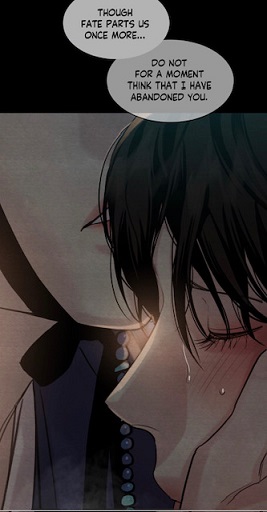 (chapter 127) I recognized why the painter and Yoon Seungho had to go separated ways. It is because the schemers wanted him to return to Hanyang. Remember the learned sir’s suggestion before his departure.
  (chapter 44) Why? It is because now the main lead is an adult. Since my theory is that the pedophile is the ruler, he can no longer approach the protagonist like that. The latter is no longer visiting the gibang. He wants their path to cross again so that they can rekindle. Hence he had to create an opportunity proving that their meeting is not a coincidence. Under this new approach, it becomes comprehensible why Yoon Seungwon encouraged his brother to reconcile with their father.
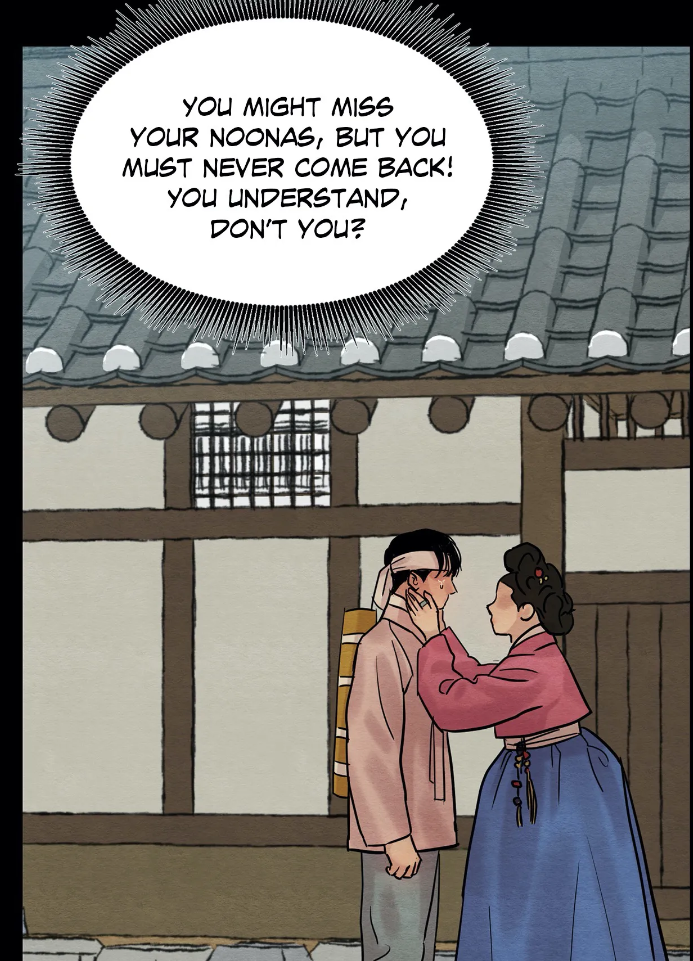
  (chapter 37) That way, he would be “following” the tradition and become an official. But since Yoon Seungho developed a fear of “old bearded men”, he had no reason to go there.
  (chapter 46)
 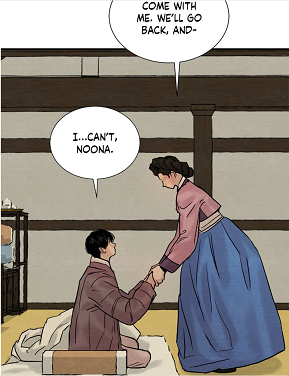 (chapter 68)
  (chapter 97)
  (chapter 120)
 (chapter 127) As you can see, the painter was feverish. Why? From my perspective, he was drugged. He was not allowed to see his loved one, because they don’t want him to remember their departure. The schemers desire him to feel abandoned like in the gibang (chapter 105). The reason why I am suspecting a drug is that this panel
  (chapter 127) is similar to the first Wedding Night:
  (chapter 21) At the same time, this scene is also a reflection from the night after the massacre in the shrine.
  (chapter 103) Back then, he was also under the influence of an aphrodisiac. They don’t want him to remember his last words. And since he didn’t take care of him during that night, though he was unwell, they hope to create the illusion that Yoon Seungho neglected him. He broke his promise. But their trick can no longer work because of the lord’s visitation in the prison and his words.
  (chapter 126)
  (chapter 127) The separation arc is there to prove these plotters wrong. Their affection is not trivial and momentary. He is not a plaything, but his “partner”. In fact, they have absolute trust in each other, and their source of strength will be their short happy moments together. Besides, I am quite certain that the artist will remember the lord’s whisper from that night, since he had problems to recall the First wedding Night and the incident in the shrine. Both are related to his bad conscience. Besides, I have another reason for that, the power of the unconscious knowledge.
 (Chapter 108) Though both were close physically, they still allowed others to manipulate them, for their trust was not complete. In other words, the schemers are thinking that time is working for them!! On the other hand, since Kim is by his side, the painter can only consider his presence as the evidence of the lord’s care.
  (Chapter 127) This coincides with the beginning of the Manhwa, when the lord was seen without his butler.
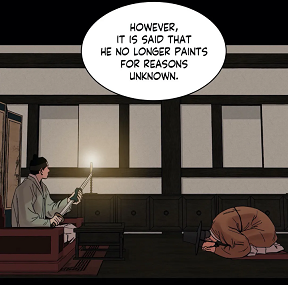 (Chapter 1) The latter only appeared in episode 7, and back then Yoon Seungho had to dress himself.
  (Chapter 7) Finally, I am expecting schemes again.
 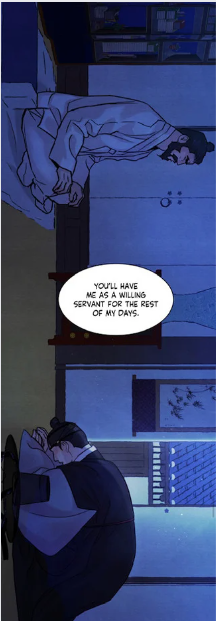 (chapter 127) This means that he is giving up on his status and freedom for Baek Na-Kyum’s sake.
 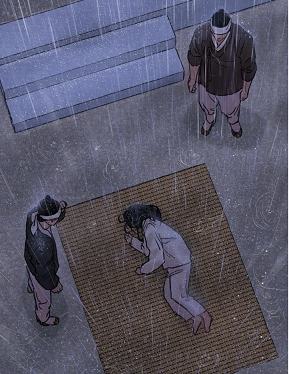 (chapter 127) Here Yoon Seungho had been treated like a servant, because he had been submitted to the straw mat beating. Exactly like in the past, there was a promise. Notice how similar the words are: “No matter”.
 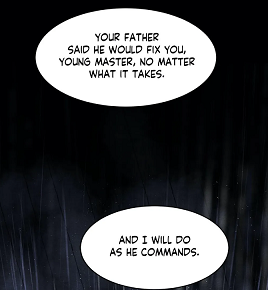 (chapter 77) However, there exists a huge difference. Back then, the vow was made between the butler Kim and Yoon Chang-Hyeon. As you can see, Yoon Seungho is now copying his surrogate father’s behavior.
  (chapter 127) This shows that the young master is following Kim’s path. On the other hand, the domestic employed the future tense in his pledge (“I will do as he commands”), whereas the “spiritual son” is using the present (“I swear to live as you command”). Moreover, the main lead is talking about his way of life and not “order”. And what does the father desire?
  (Chapter 86) Making connections so that the Yoons can become influential again!! But how can he do that? By showing his talent? I have my doubts about it. Why? It is because in season 1, the lord was having sex with his peers, and back then they were like battles… for an exchange of favors. I hope, I might be wrong, but I fear that he is about to become a male kisaeng again. Or if not, then this is what the king is expecting from him. And we have the best example in this scene:
 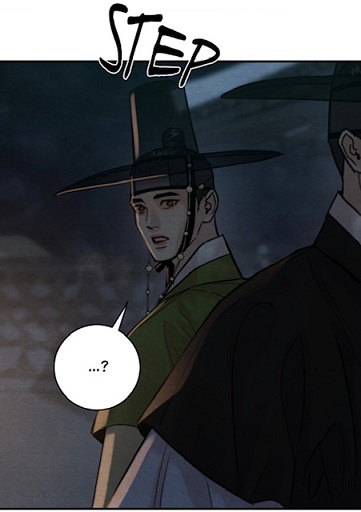 (chapter 127)
 (Chapter 56) Yet, the domestic is only bowing with his head and not his body. The protagonist is dressed exactly like his father. This comparison exposes that my past interpretation was correct: the butler had awakened his master during the night by lighting the candles. And after receiving this letter, Yoon Seungho dressed himself in order to meet his childhood friend, which reinforces my theory that the valet won’t follow the protagonist.
 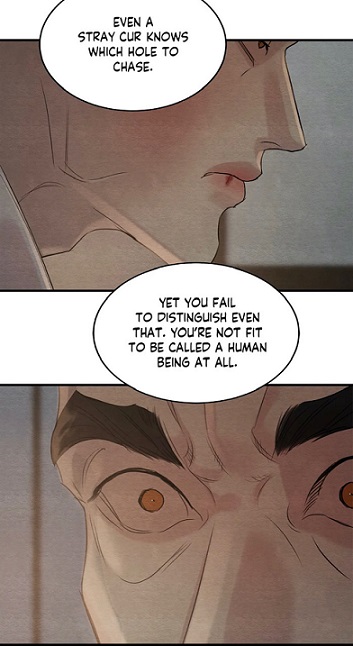 (chapter 86) However, back then, he was considered as the eldest son. One of his duties was to continue the lineage
 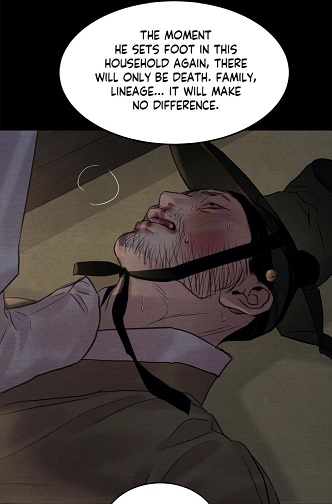 (chapter 82) and because of the stolen kiss, the patriarch became obsessed with sexuality. Observe how lord Song Haseon described the father’s attitude. He knew about the atrocities that the young master was exposed to
  (chapter 107)
  (chapter 55) But what did he see in his father’s gaze? Anger and disappointment, for he was never able to satisfy Yoon Chang-Hyeon’s expectations.
  (chapter 55) With the release of episode 127, I had this sudden revelation concerning this memory. In the past, I used to think that he had been submitted to the straw mat beating. But now, I think that in this scene, Yoon Seungho was forced to bow to his father by the servants or guards!! Yes, the former version of this scene.
  (chapter 126) This idea came to my mind, the moment Yoon Seungho emphasized his bowing!
 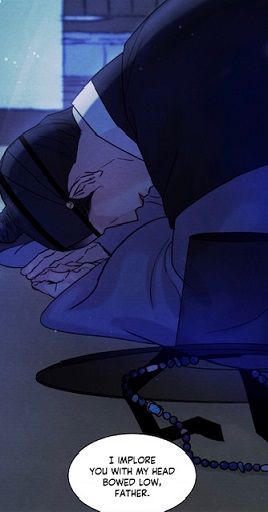 (chapter 127) The protagonist’s words imply that he had never done it before!! And now, you know why Yoon Chang-Hyeon agreed to make a deal with his eldest son.
 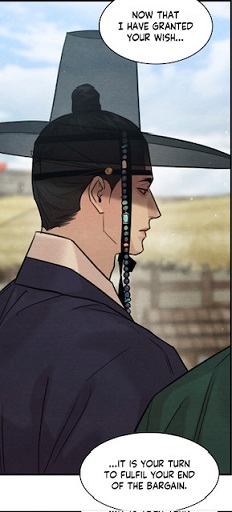 (chapter 127) Yoon Seungho’s bow and oath stand for blind obedience and loyalty. This explicates why the author drew him without eyes.
 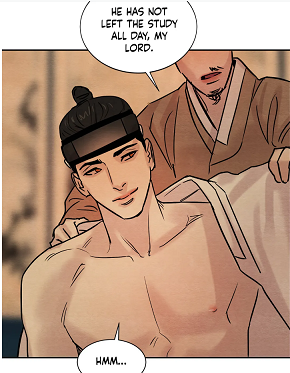 (chapter 11)
  (chapter 35) Does it signify that the protagonist has the intention of betraying his own father? I don’t think so, but the manhwaphiles shouldn’t forget the lord’s wish in the kitchen: “I shall remember this moment for as long as I live”.
  (chapter 118) This shows that when the lord bowed to his father, he was thinking of Baek Na-Kyum in the kitchen. His body might be by his father, but his mind and heart were elsewhere. Thus I couldn’t help myself thinking that Yoon Chang-Hyeon will get betrayed and abandoned by his own son. During the same night, he made 2 vows. It was, as though he had two “lords”! His goal is to meet his loved one again.
  (Chapter 127) Finally, don’t forget that the main lead is following Kim’s path. He will have to choose between his father and the painter. Yoon Seungho is actually applying the father’s principle: the end justifies the means. So if necessary, he can break his vow to his father.
  (Chapter 108) By living by his side, he can lead a quiet life far away from Hanyang. However, this signifies that the artist has become a “prisoner”. As long as he lives in Yoon Chang-Hyeon’s claws, his loved one can not return to his side. Interesting is that a carriage was used to carry away the protagonist.
  (Chapter 78) But where is the painter going? To the mansion? Or to another secluded place? In my eyes, the location is important. His existence is still a source of problems for the schemers. I see a future conflict in the lord’s life, for one oath stands in opposition to the other. Moreover, should the patriarch lose Baek Na-Kyum, he can no longer control his son. He can not suddenly blame the painter for the death of lord Song, for Jung In-Hun has been now convicted for the crime.
  (Chapter 7) Now, the positions are switched. He is the one getting coerced! And this brings me to the following observation. Why did the elder master agree to this deal in the end? First, he refused to assist his son.
 (chapter 127) He believes that he has the petition, therefore he can no longer be blackmailed by his eldest son. The latter has no longer any leverage over him! However, he changed his mind.
  (chapter 125)
  (chapter 126) Yet, in reality they were fake excuses. I have already pointed out that the servants would act on their own. But more importantly, their fake apology hid their failure as guards. How could they let the young master barge into the lord’s bedchamber? With a simple apology, this wrongdoing was overlooked. And now, observe what happened during the same night:
 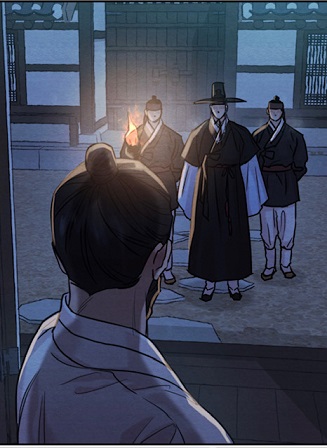 (chapter 127) Yoon Seungho was followed by the guards! It looked like they were serving him. This scene reminded me of the officers’ appearance in front of the mansion.
 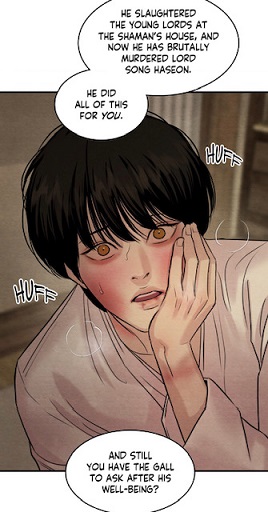 (chapter 125), “drugged” and slapped by Yoon Chang-Hyeon, he is destined to receive his karma through his son. And what was his dream?
  (chapter 125) and paid the governor
 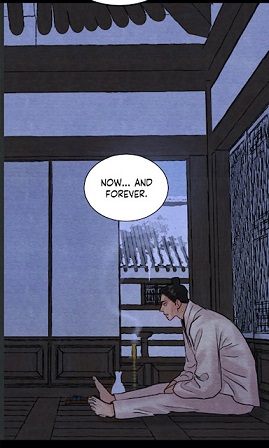 (chapter 87), whereas Yoon Seungho stands for change and hope.
 (chapter 127) Where was Heena noona, when her brother was in prison? This rumor can only create the illusion that the painter is still devoted to the learned sir. Yet, after the last incident, the painter came to regret to have trust the learned sir. Both characters are now healed from their traumas (abandonment issues) and they are in full possession of their mind. This makes them less weak to manipulations.


 (chapter 87) Not only the painter and the 3 noonas were sharing the same bed, but also they were taking their meals together.
 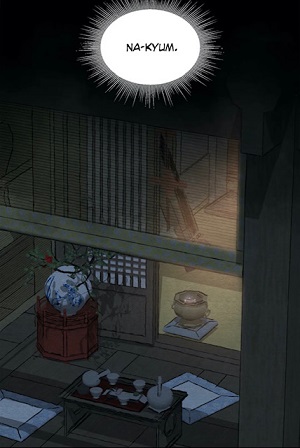 (chapter 87) They would even caress each other and laugh together. This scene oozes happiness. Consequently, it is no coincidence that during that night, they shared their honest thoughts to Baek Na-Kyum giving him good advices. But more importantly, the painter was there, when his noonas were struggling.
  (chapter 94) He cried in front of them. His tears symbolized his compassion and love for his noonas. He regarded them as his family. And it was the same for the artist. He had the noonas by his side, when he was in trouble or agony.
 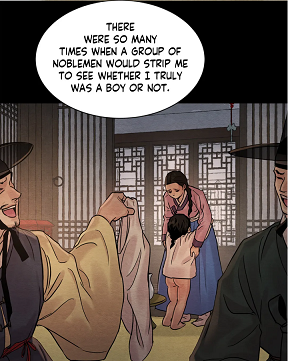 (chapter 94)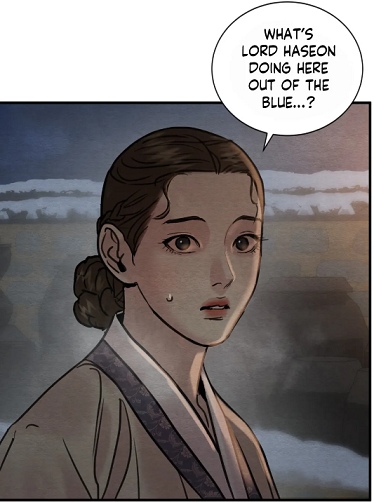
 (chapter 107) However, at some point, it changed!
 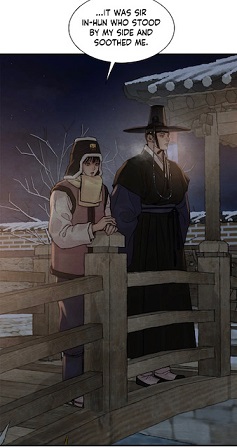 (chapter 94) Jung In-Hun entered his life and consoled him. Thus I deduce that this image
 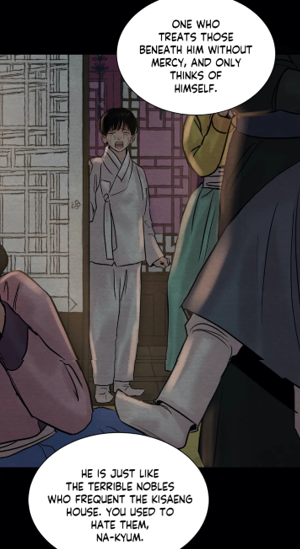 (chapter 68) represents a turning point in Baek Na-Kyum’s life. During that night, the scholar took away the young painter from Heena, hence he couldn’t help her. And now, observe the learned sir’s reaction. He didn’t allow the painter to cry. He shouldn’t share his pain.
  (chapter 70) In fact, he diverted Baek Na-Kyum’s attention from the incident to the moon. The learned sir was smiling the whole time.
  (chapter 70) He was acting, as if nothing had happened. The fact that he didn’t bear the tears from the painter exposes that the learned sir never considered him as a family. Therefore it is not surprising that he got abandoned, when the learned sir struggled:
 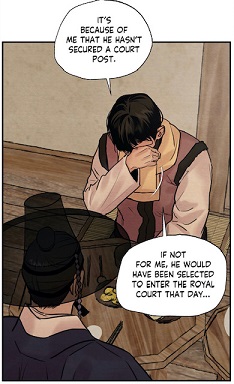 (chapter 75) But we have other scenes where Jung In-Hun didn’t behave like in the poem. When he discovered the truth, he had not been approached by Yoon Seungho due to his talent
 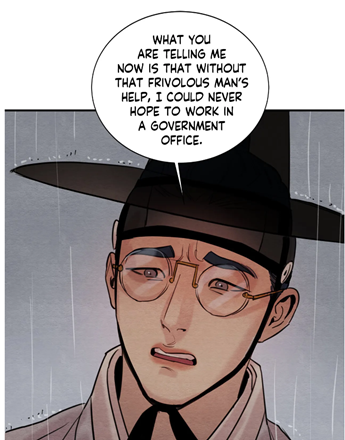 (chapter 19), he pushed away the painter.
  (chapter 19) He was mad, because Baek Na-Kyum was the cause for his sponsoring.
 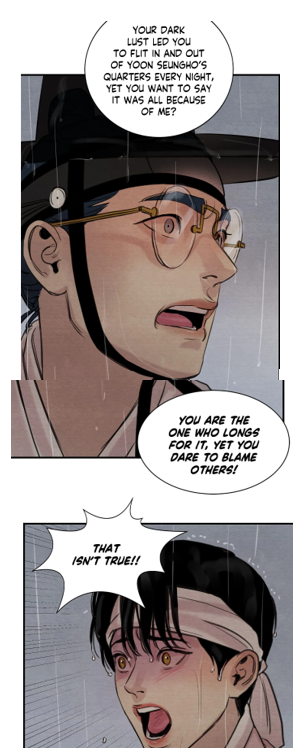 (chapter 19) However, the family serves as pillar and protection. When the scholar’s pride got hurt, he rejected Baek Na-Kyum. He only approached the painter, when he needed him
  (chapter 10)
  (chapter 24)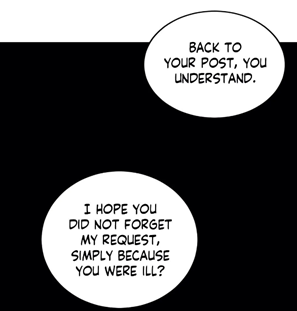
 (chapter 35).
  (chapter 111) For me, in episode 10, he was definitely aware of the existence of a plot, thus he led the painter to the pavilion. Then in episode 24 and 35, he wanted the artist to spy on his benefactor. Finally, in episode 111, he knew that by taking away his former pupil, he would hurt Yoon Seungho, for he was aware of his affection for Baek Na-Kyum. Under this new light, it becomes comprehensible why Jung In-Hun didn’t bid farewell to the main lead in episode 44. Baek Na-Kyum’s presence was not necessary for the preparation for the civil service examination. And this brings me to the last scene between the learned sir and the painter.
  (chapter 118) He is now crying in front of him, as if he was considering him as a part of his family. He is trying to create the illusion that he shares his suffering, just like he shared his happiness during the parade.
  (chapter 117) It was, as if the former was starting his family. Baek Na-Kyum is now his “bride”. But naturally, everything is just an illusion. Why? It is because the Manhwaphiles never saw Jung In-Hun share his bed or room with the artist!
  (chapter 27)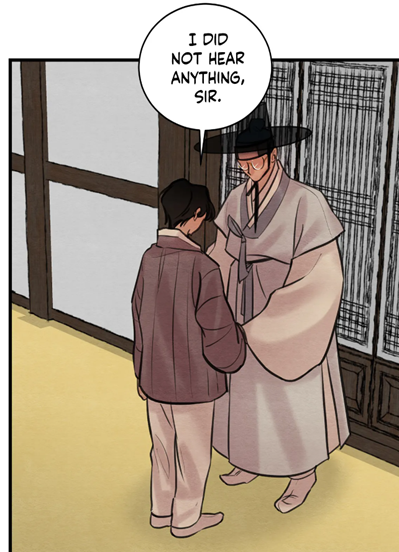
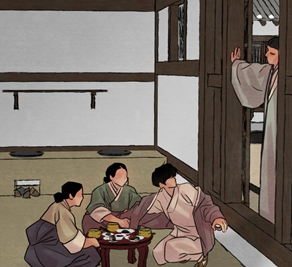 (chapter 38) He was also never seen taking his meals with him. This explicates why he never visited him, when the painter was sick. In fact, the learned sir is connected to the air and the courtyard. That’s the reason why he is always seen roaming around with Baek Na-Kyum (10: pavilion, 18-19-27-35-44: courtyard, countryside/city: 29-37-70 and
  ) But more importantly, he is not sharing his true thoughts and emotions to the young man.
  (chapter 118) He never explained how his face got bruised! This shows that he approached Na-Kyum for one reason. He was in trouble and he needed him. But he acted, as if he was becoming responsible for him.
  (chapter 118)
  (chapter 118) He didn’t expect a rejection. Why? It is because now, he was treating the main lead as family member. Nonetheless, don‘t get me wrong. In Joseon, servants were considered as a part of the household and as such of the „family“. I don‘t believe that the teacher views Baek Na-Kyum as an equal. Yet, the latter is in reality a free man.
  (chapter 118) Thus out of fear, he made a false love confession which resembles a lot to obsession and possessiveness. His words display his worries and despair. Another important aspect is the absence of the personal pronoun “we” in their conversation. We only have “you” and “me”.
 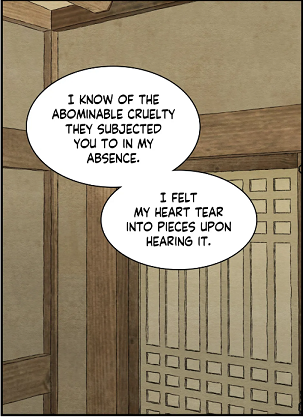 (chapter 118)
  (chapter 40), the latter learned the following lesson: Jung In-Hun had never been his new family. That’s the reason why he was so wounded. Therefore it is no coincidence that his karma is to be abandoned the moment he needs Baek Na-Kyum the most. But why did he not consider the painter as a family member? It is because he came from the gibang. Moreover, he was blinded by his desire to succeed on his own, not realizing the true role of a family.
 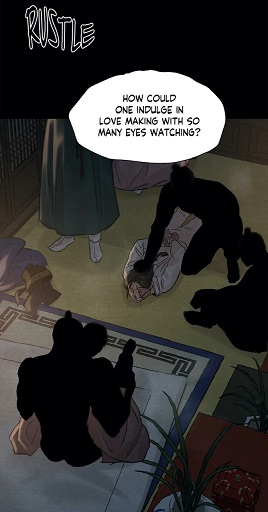 (chapter 86)
  (chapter 107) The sexual abuse is something they hid from Baek Na-Kyum! They could never share such a burden with the protagonist. But there is more to it. In fact, Byeonduck illustrated the slow deterioration of Na-Kyum’s s family in season 2, 3 and 4. First, the painter couldn’t talk to his noonas like in the past:
 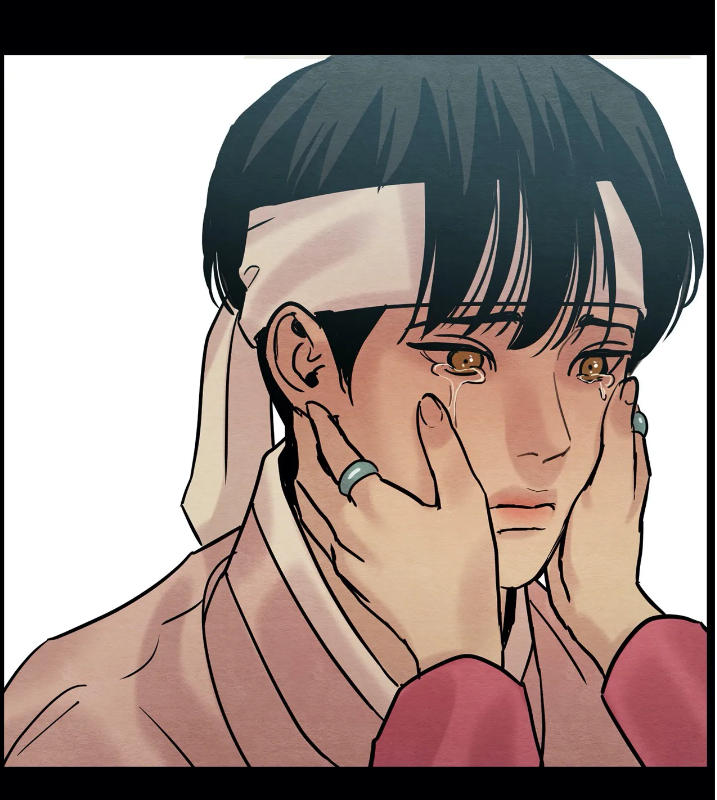 (chapter 46) He could only express his sadness with his tears. Then when Heena reentered his life, she was seen next to his bed while hugging. by his side
 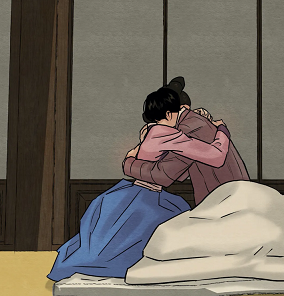 (chapter 66) This means that she would no longer share his cover. This is no coincidence that in the gibang, the noona could no longer enter her brother’s room.
  (chapter 96) Little by little, Heena got excluded from the painter’s life. She could no longer share her meals with him.
  (chapter 93) This explicates why in season 4, Baek Na-Kyum can not penetrate Heena’s room.
 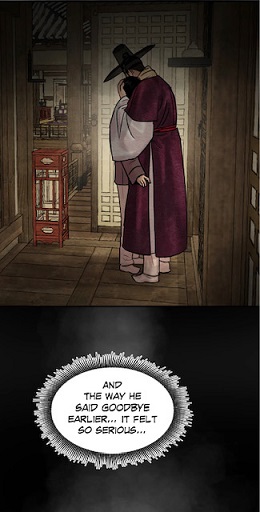 (chapter 105) She is hiding more and more things from her brother: her “illness”, her involvement in the murder of nobles and her lies. On the other hand, the painter still considered her as a part of his family because of her intervention in episode 68/69:
 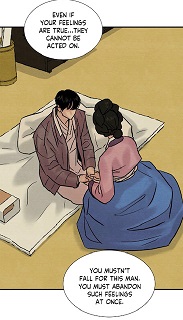 (chapter 68) Their argument was reflecting their trust, though here the kisaeng was questioning her brother’s maturity. Due to her concerns, Baek Na-Kyum felt that they were still a family. However, I sense a rupture, when they argued in the kisaeng house. The artist was no longer trusting Heena’s words:
 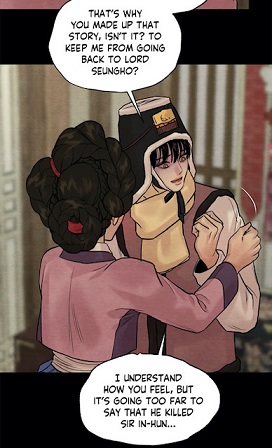 (chapter 97) Interesting is that from that moment on, Baek Na-Kyum and Heena never faced each other! She didn’t join his side during the parade. This means that their argument in the kisaeng house represents their last reunion. And what did Heena do in this scene? She cried
  (chapter 97), while the painter didn’t, though he looked disturbed.
  (chapter 97) He lost all his colors. However, such a scene could be perceived as a sign of indifference, especially for the kisaeng. And this observation made me realize why the kisaeng asked Yoon Seungho not to reveal his suspicions about Jung In-Hun’s involvement to her brother.
  (chapter 105) Here, she implied that Baek Na-Kyum would cry out of pain and shock. But she had seen that he had shared no tears, when he heard about his murder: And it happened again in the shrine.
 (chapter 99) Simultaneously, the request from Heena exposes that they are no longer sharing agony and as such struggles. Moreover, this made me realize why the artist left the mansion after the nightmare. It was out of fear and obligation. For me, he had sensed that Heena liked the learned sir and as she was still part of his family, he had to make sure that this was not true. Yet, even after witnessing the faked crime scene, he still trusted Yoon Seungho. Hence I am deducing that the absence of tears is the trigger for their separation which stands in opposition to their embrace in the mansion:
  (chapter 66)
  . (chapter 68) And what was her reaction, when she saw her brother in tears and yelling at his lover?:
 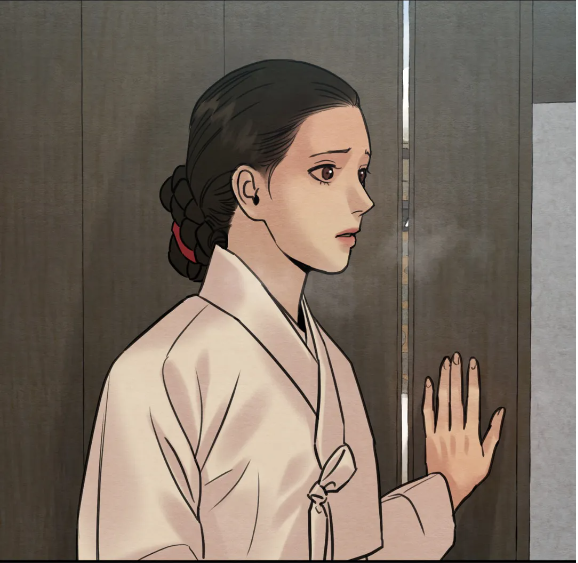 (chapter 105) She remained silent, passive and rather indifferent. This impression gets reinforced, when she is lying next to her colleagues. She is not sharing her thoughts and emotions, rather pensive contrary to these kisaengs:
  (chapter 105) She is even turning her back to them. This displays the dissolution of this family. The kisaeng is no longer sharing her fears, her tears and emotions to others. Therefore she can not sense “happiness or relief” like the others.
  (chapter 93), but the moment the lord joined his side, the honesty started vanishing. Notice that the painter couldn’t talk about his past (how he met Yoon Seungho and how he got abandoned by Jung In-Hun). It was reduced to “I was caught up with something”. He had so many secrets that he couldn’t share to his noonas. And it was the same for the kisaengs.
 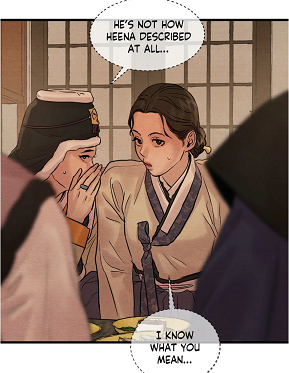 (chapter 93) They also had secrets, hence they were seen whispering. Baek Na-Kyum could confide less to Heena. Why? He sensed that the kisaengs might show no understanding. And note how the painter reacted, when he met his noonas in episode 105.
 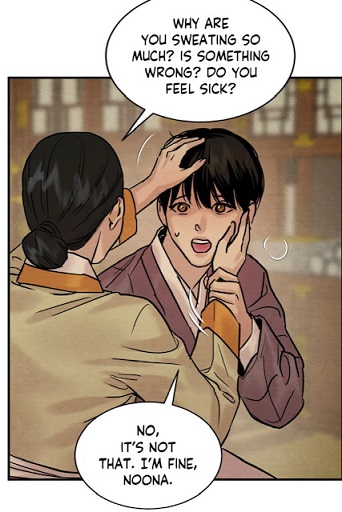 (chapter 105) He lied to his noona, he didn’t voice his worries. He didn’t enjoy his time spent by the kisaengs’ side. He didn’t eat with them either. This is the sign that he was moving on, he was on the verge of starting his new family. In other words, this scene
 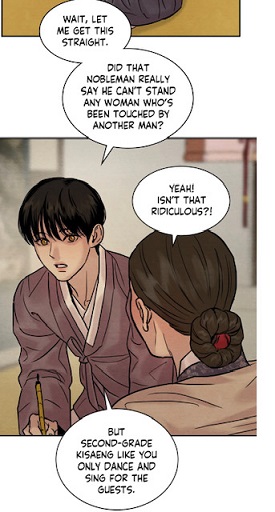 (chapter 105), the kisaeng’s words are a reference to loss of virginity. Yet the painter didn’t grasp the true meaning. Only in his dream and nightmare, he realized the significance of her words:
 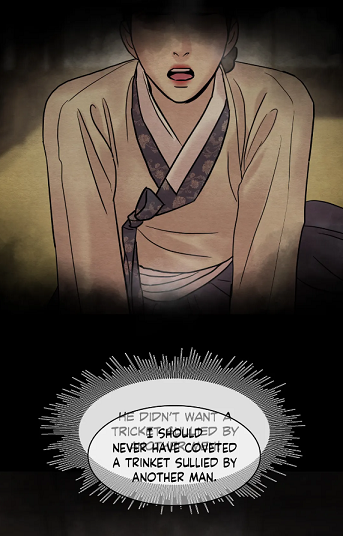 (chapter 109) Hence I come to the conclusion that we are witnessing to the birth of Baek Na-Kyum’s new family: Yoon Seungho.
  (chapter 118) That’s the reason why the painter decided to run away with his lover.
  (chapter 118) However, in order to become a real family, the painter needs to call his husband like this:
  (chapter 72) Under this new light, it becomes comprehensible why the noonas were no longer entirely honest with Baek Na-Kyum in the gibang. They couldn’t share their thoughts and secrets to the artist, as they had played a role in the separation of the couple
  (chapter 99) and the nobles’ execution. Besides, they also had secrets which they had to hide from their donsaeng.
 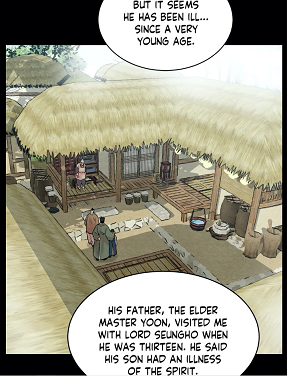 (chapter 57) I believe that it is related to the protagonist’s sensibility and intelligence. My assumption is that Yoon Seungho is a
  (chapter 85), his second son and even lord Song as his family
  (chapter 116) Hence they are sharing a drink, their secrets and emotions together, though it is obvious that the man in purple is deceiving the patriarch. However, the elder master still trusts and listens to his words.
  (chapter 107)
  (chapter 26) The latter was not allowed to cry! Therefore the artist heard the same reproach from the main lead.
 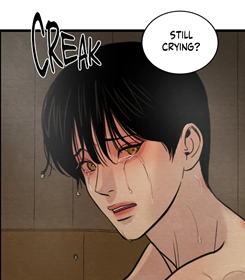 (chapter 26) The valet disliked the tears, because he refused to share the suffering. The reason is simple. If he did, this would have increased his guilt. Furthermore, Kim never shared the cover or his meals with Yoon Seungho in the past
  (chapter 83) and in the present. Here,
  (chapter 17) he even refused to bring him his breakfast. But one might argue that Kim cried in front of the protagonist in the shed, he even expressed regrets:
  (chapter 108) So we could assume that he was starting to view the main lead as a family member. But no… for me, it is just an illusion. First, note that he never let the lord see his gaze while weeping. Besides, the noble’s heart was not moved either. They were not crying together, a sign that the two were drifting apart. Moreover, in the shed, the valet never shared the information about the fire at the shrine.
  (chapter 108) The noble had to use threat and force in order to push the butler to voice his thoughts. Finally, at the end, the valet never vowed his loyalty to Yoon Seungho, but to Baek Na-Kyum.
  (chapter 108) Moreover, like exposed above, family in the poem symbolizes trust, love, responsibility, comfort and protection, but the valet failed to fulfil his duties which he admitted in the shed. As a conclusion, the butler didn’t keep such a promise. Moreover, what did the butler do after the painter’s abduction?
 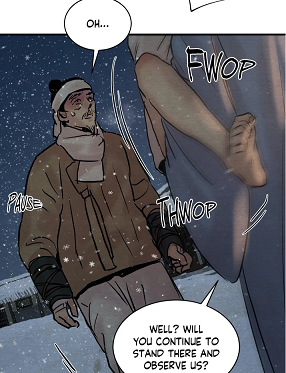 (chapter 64)
  (chapter 64) He ran away. He never saved the painter, just like he didn’t argue with his master in that moment. But he could have, since the latter had no sword by his side. Imagine that he had a heated discussion with Yoon Seungho the very next day, and in the courtyard, the protagonist had the sword in the hand.
 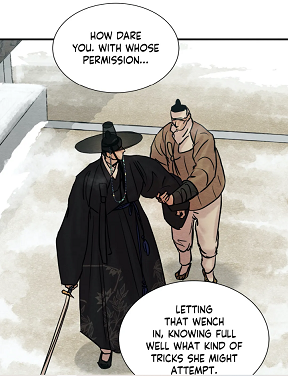 (chapter 68) A sign that he knew that the noble would never slay him! And in the past, the valet had not come to his rescue, shared his suffering or defended his honor. And now, you comprehend why I am more than ever convinced that the valet was never Yoon Seungho’s family: no tear, no joy or no secret shared! His expression “bird of misfortune” embodies the gap between the two characters.
  (chapter 109) The latter would even get the opportunity to eat sweets and sit in the patio
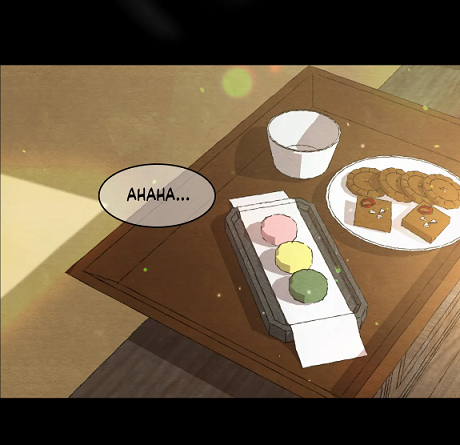 (chapter 109), while the lord was relegated to the courtyard.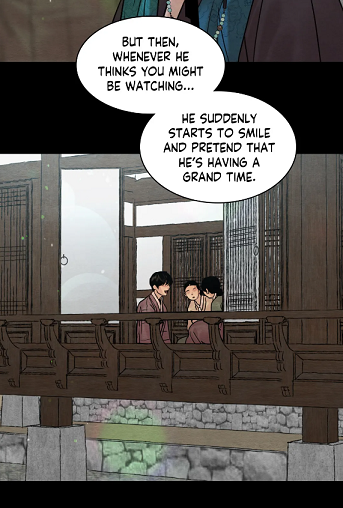
 (chapter 62) and his hope to be happy for one moment:
  (chapter 63) I selected the terrible scene in the shed for two reasons. It symbolizes the verse “how to become a family”. This explicates why in season 3, the artist was slowly using the personal pronoun “we”.
  (chapter 78) This means that the two protagonists were learning how to become a true family. And one of this important step was “crying together” which occurred after the sexual abuse in the shrine,
 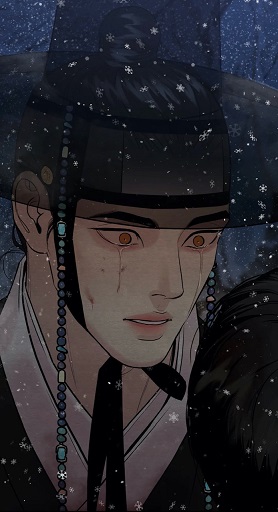 (chapter 102) However, Yoon Seungho had to learn the importance of “secrecy”! He kept his crime from his loved one hidden, not understanding that a real family is to “endure all hardships” together. Consequently, I judge this night
 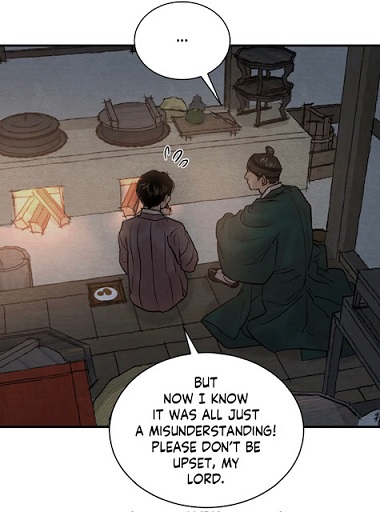 as the finalization of their “Wedding”, though it is still not official. During this night, we have all the criteria. They share their worries
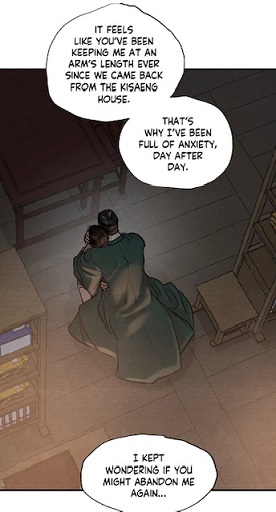 (chapter 110), their happiness
 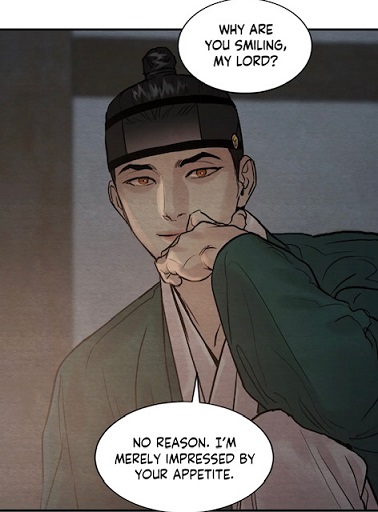 (chapter 110), they sit together while eating
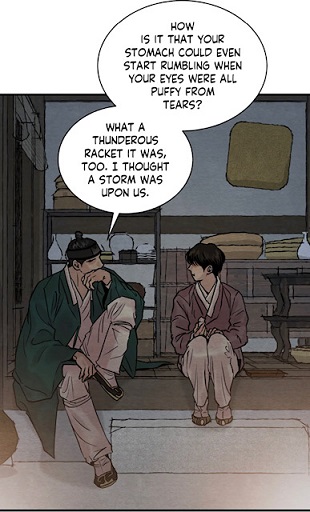 (chapter 110), they embrace each other, they share the same bed. And the lord makes the following promise: there won’t be any secret between them. He will share everything with his lover.
  (chapter 110) So when the brother gave the petition to the artist
 (chapter 117) Therefore, it is not surprising that during that same night, the couple slept under the same blanket while hugging each other.
 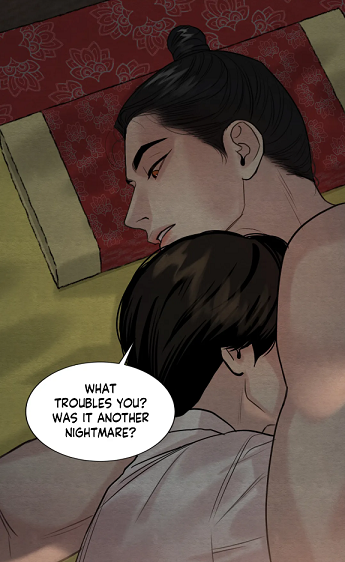 (chapter 117) The symbol for the new family! But a family is not made just of two members! Is Yoon Seungwon a part of Yoon Seungho’s family? Let’s not forget that he considered the artist as his brother’s wife.
  (chapter 116) What caught my attention is that Yoon Seungho was not followed by his lover, when he met his brother in the gibang.
  (chapter 118) And this reminded me of this scene:
  (chapter 37) He wished to send away the artist, but the host refused. Then if you pay attention to his behavior, you will notice that none of them were seen eating together!
  (chapter 118) Compare it to Black Heart’s behavior:
 (chapter 43) In fact, the two guests were drinking on their own! Yoon Seungwon had even started drinking before the protagonist’s arrival.
  (chapter 118) Moreover, exactly like the scholar, Yoon Seungwon is just employing the pronouns “you”, “I” and “father”. There is no WE at all.
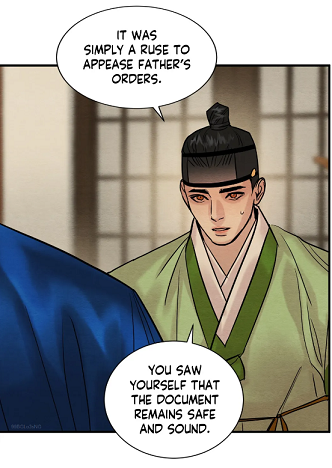 (chapter 118)
 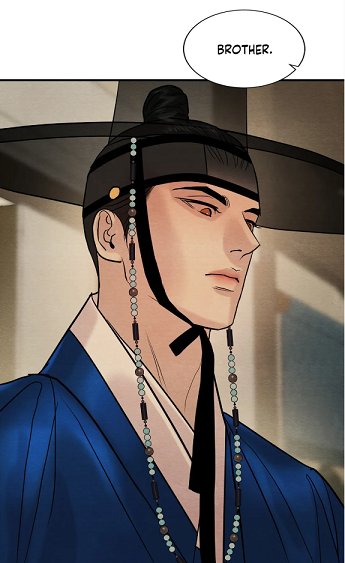 (chapter 118), but it is only a name! In reality, he desires to use the main lead. He needs him more than ever! Let’s not forget that the patriarch could discover Yoon Seungwon’s betrayal at any moment. Finally, I would like to outline that family stands for effort and understanding, nevertheless the younger master never showed compassion or worries for his brother, who had just recovered from a stabbing. His speech was full of blame.
  (chapter 22), the physical therapist still views her as his family. This corresponds to the verse “no matter where you are”. This explains why he listened to her and started treating the champion differently. From my point of view, they became a family, because they slept under the same cover
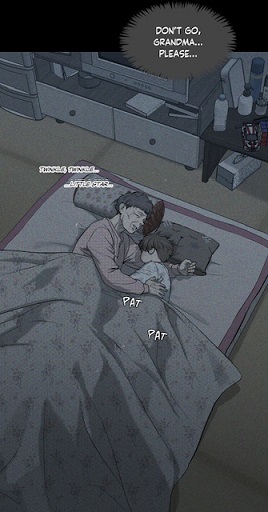 (chapter 21), shared their agony, fears
 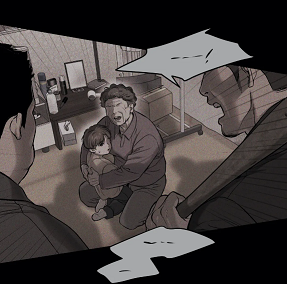 (chapter 5) and their happiness together, though this needs to be relativized.
 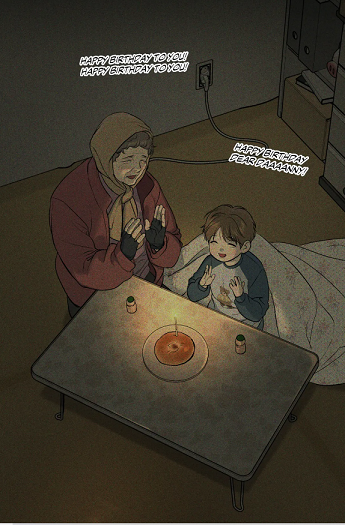 (chapter 11). I will give more details later. Another evidence that they are family is that the grandmother would often sing him songs. Then we could say that the grandmother shares her meals with the doctor, for she is often saving yoghurts for her grandson.
  (chapter 05) She is happy, when she hears good news from her grandson.
 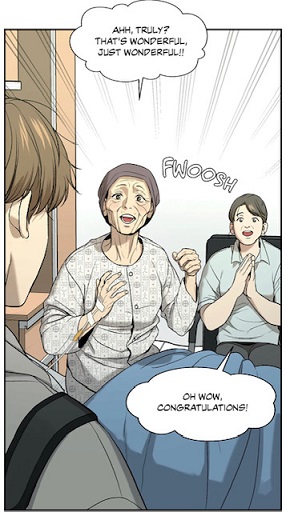 (chapter 07) When she feels lonely or miserable, she asks for his presence.
 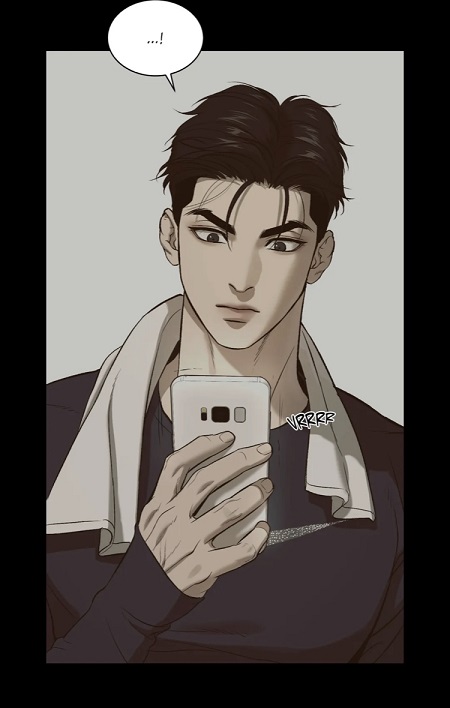 (chapter 21)
  (chapter 5) Nevertheless, there exist two negative aspects. First, I noticed that she didn’t question Kim Dan about his career, only when it was necessary.
 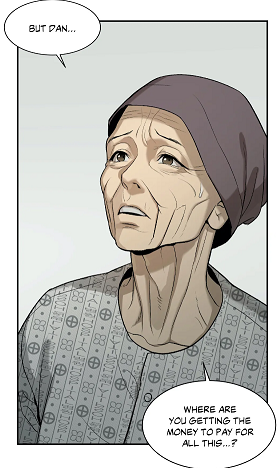 (chapter 07) She is not that involved in his current life.
  (chapter 05) Secondly, what caught my attention is that the halmoni is not letting her grandson weep. With her attitude, she implied that he had overreacted (“Now, now none of that”).
  (chapter 21) Moreover, the poem outlined the necessity of crying together (“be able to cry together”), yet the halmoni was not upset, when she found the little Dan in tears. She didn’t understand his abandonment issues. Thus I deduce that the shared agony was only in one way! If the grandmother was scared or suffering, her grandson should feel the same.
  (chapter 5) This explicates why Kim Dan was willing to sacrifice himself for his halmoni.
 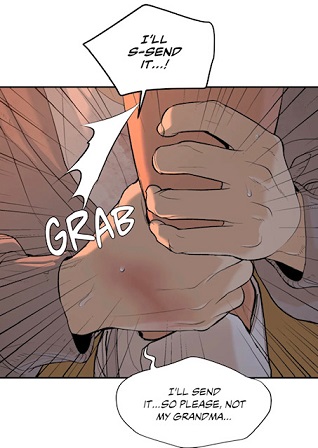 (chapter 16) It is because he knew that her grandmother disliked tears. Besides, in a previous essay, I had already outlined that such an attitude was considered as abusive, for such a young child should have been shielded from harm. However, he was exposed to violence very early on. Under this new perspective, it becomes comprehensible why Kim Dan started having secrets from her. Finally, the family portrayed in the poem implied the notion of effort and work. But the moment the grandmother refused to share his agony, she stopped putting energy in her relationship with Kim Dan. This means that as time passed on, she became more and more passive and relied more and more on the main lead. Another interesting aspect is that Kim Dan came to enjoy K-dramas because of his grandmother.
  (chapter 30) This shows that Kim Dan’s preferences are all influenced by the halmoni. We could say that he didn’t truly develop his own identity. It was, as if he had become the second version of “grandma”. And now, you comprehend why he rejected sex:
 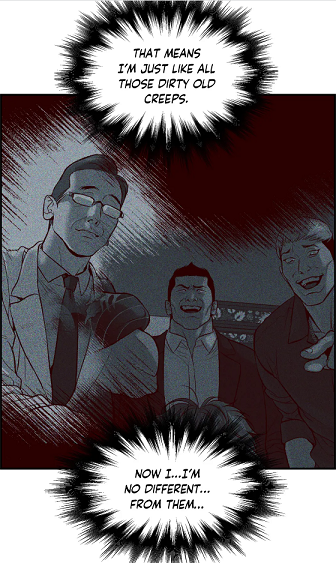 (chapter 20)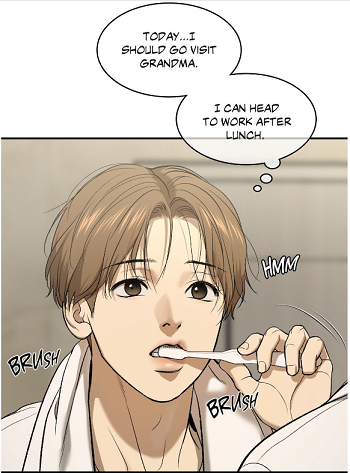
 (chapter 30) Because the grandmother didn’t allow her grandson to share his struggles (no tears), Kim Dan has been hiding many things from his grandmother
 (chapter 07): the beatings from Heo Manwook, his firing from the hospital, the sexual assault from the perverted hospital director and the moneylender, his deal with Joo Jaekyung and the fact that he moved to the penthouse. This means that little by little, the physical therapist is sharing less and less his happiness with her. I doubt that he told her about his trip to Busan, his first MMA fight as spectator
 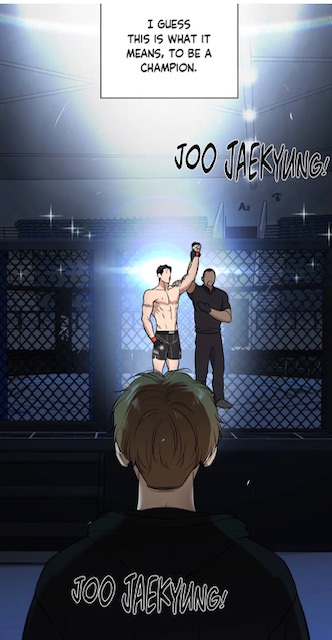 (chapter 15) and his first sparring with Joo Jaekyung
  (chapter 26). But this is a sign that Kim Dan is maturing. Therefore it is no coincidence that after their first day off spent together, Kim Dan is already under the champion’s spell.
 (chapter 30) And at some point, the grandma will notice her little boy’s transformation and the growing distance. And Choi Heesung could be the trigger for a first quarrel
  (chapter 22)
  (chapter 26), they get support from each other
  (chapter 14)
 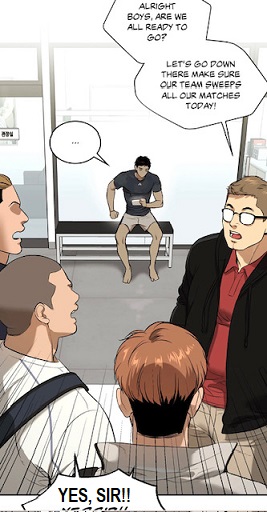 (chapter 23) or they argue
  (chapter 07). Moreover, they call the older members “hyung”
 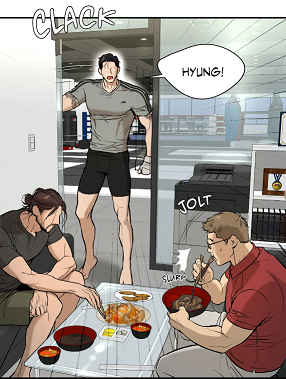 (chapter 5)
  (chapter 23) which is another evidence that Team Black functions more like a family than like a company. What caught my attention is that the doctor is not addressed as hyung
  (chapter 30) but as Doc Dan or doc.
  (chapter 23), though the manager Park Namwook had introduced him as hyung.
 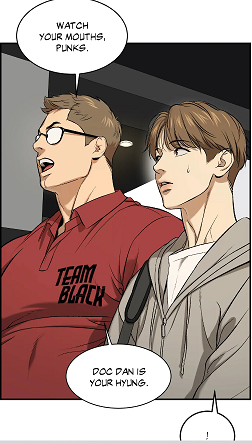 (chapter 07) The reason behind this different title is the champion. The latter addressed him like that:
  (chapter 22) It exposes that the physical therapist occupies a particular position at the gym. On the one hand, it could be interpreted that he has not been entirely adopted as a family member. On the other hand, the physical therapist didn’t exclude that he could have other clients.
  (chapter 25) This means that his “adoption” is not definitive and official. Nevertheless, I would like to outline that though Team Black’s structure resembles a lot to a family, we can not say that it is a true family. Why? It is because Joo Jaekyung is hiding many things from his hyungs and members. He is not sharing his problems to his coach (his insomnia, his jinx, his sexual orientation, his insecurities eg). Imagine that he preferred deceiving his admirer
  (chapter 15) than admitting that his shoulder had been plaguing him. And it is the same for Potato. He didn’t talk about the incident with the office room and the sofa.
  (chapter 25) According to me, Jeong Yosep knows about the true relationship between the physical therapist and the alpha black wolf. But he kept this information to himself as well. However, like pointed out before, family stands for communication and not secrecy! Moreover, so far, we only saw the fighters share their happiness. And what about their struggles or defeat? To conclude, Jinx is actually showing us the transformation of Team Black as company into a family. How they “become” a WE! Park Namwook does consider Team Black as his gym, but he has his own family. However, this is not the case for Jeong Yosep or Joo Jaekyung, who lives as a loner wolf! In my opinion, Team Black will turn into a real family, the moment Kim Dan loses his halmoni. Remember the quote from the poem: “If you can’t say you’re hurt when you feel hurt you’re not family“. Kim Dan won’t be able to hide his sadness and broken heart. In the beginning of the story, he lied to the coach and Kwak Junbeom about the reason for his injuries:
  (chapter 11), because he considered them as superior and colleagues. In other words, the fighters will share their pain with doc Dan helping him to overcome the loss. But this change can only happen, when the owner of Team Black has a change of heart himself as well. Remember how he pushed Oh Daehung and the other members away.
  (chapter 22) He didn’t want them to come to his house.
 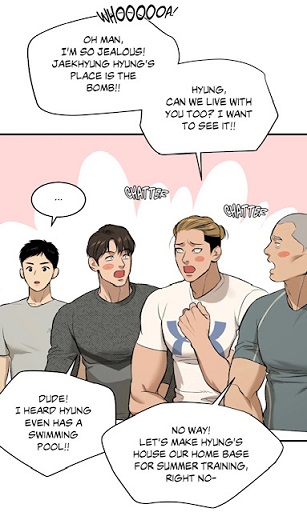 (chapter 22) So far, he didn’t want people to cross the line, but thanks to the physical therapist, this will change. That’s how both protagonists will come to view more and more Team Black as a family. They will share their struggles and happy moments together. I have one evidence that Kim Dan is the key to turn Team Black into a real family. It is because Joo Jaekyung came to the gathering
 (chapter 9), though he had been avoiding such events in the past.
 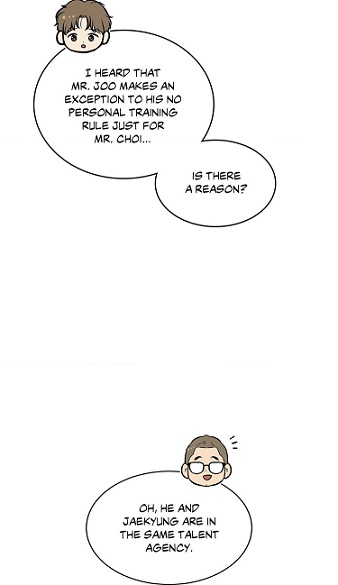 (chapter 30) But he is there an employee. Thus I am suspecting that the talent agency is working differently from Team Black. If there is a scandal, I doubt that the company would side with the star in trouble or they would try to find ways to get rid of the issue, like finding a scapegoat in order to bury the truth. As a conclusion, I am expecting to see companies run differently so that the readers can perceive Team Black as a family company, although it is an incorporation.
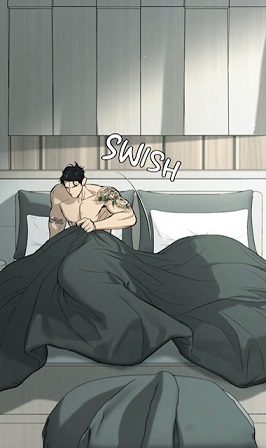 (chapter 4) This was a reference to the blanket in the poem, though here Kim Dan slept in a cocoon. This was a sign that he didn’t feel safe. However, as time passed on, I detected a change in Kim Dan’s sleeping position. He is lying on his back and even in the middle of the bed.
  (chapter 29) It is because Joo Jaekyung always put him there! This exposes that the champion is still thinking that he represents a disturbance to the Sleeping beauty. One thing is sure: Joo Jaekyung will become the blanket taking over the grandmother’s past role:
  (chapter 1) This was the reaction from the champion:
  (chapter 1) He questioned the cause for the tears. He was naturally annoyed (“the hell”), but he didn’t make fun of the doctor. And now, pay attention to the memory Joo Jaekyung had from their first night. He remembered his tears which had moved him deeply:
 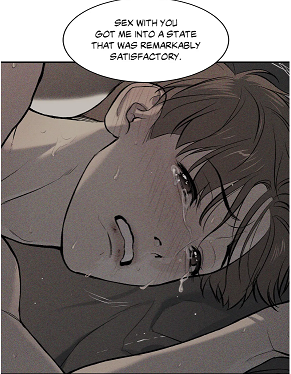 (chapter 6) This shows that the celebrity is not judging the physical therapist as weak due to his tears. In episode 28, he even showed concerns, when he heard the doctor crying.
  (chapter 28)
  (chapter 28) He questioned the doctor once again, why he was in tears. However, he didn’t ask the doctor to stop weeping or to wipe his tears. He wanted to understand him. This exposes the fighter’s tolerance and interest in Kim Dan. For me, it reveals that Joo Jaekyung is willing to share the pain or fears with Kim Dan. Therefore it is not surprising that Kim Dan is remembering this moment!
  (chapter 30) He was allowed to express his emotions. Interesting is that this image is now connected to red, not to grey/black.
  (chapter 30) The switch of color indicates the doctor’s increasing feelings and sensuality for Joo Jaekyung. That’s the reason why I am expecting that one day, the two protagonists will cry together, something that the grandma hasn’t done until now.
  (chapter 13), it doesn’t signify that they are a family now. And it is the same for the penthouse.
  (chapter 18) They might share the same flat, but the penthouse is so huge that they can technically live apart. Joo Jaekyung and Kim Dan are slowly spending more and more time together, either because the champion feels like it
  (chapter 19) or it is necessary
  . (chapter 27) During the day off, they shared their thoughts,, their emotions
  (chapter 27)
  (chapter 27), their happiness
  (chapter 28) and their fears
  (chapter 27)
  (chapter 29) Because Joo JAekyung confessed his fears and health issues to Kim Dan, it shows that he was trusting him. For me, this night represents another step how to become a true family. “If you can’t say you’re hurt when you feel hurt you’re not family.” This day and night were so magical that it affected the protagonists’ life forever. From that moment on, Kim Dan is feeling more attracted to the champion, hence he is peeping at him.
  (chapter 30) And it is the same for the champion. Now, he is slowly regretting that they live in two different rooms and they have their own bathroom. Therefore he came to the doctor’s bathroom under the fake excuse that he had run out of toothpaste.
  (chapter 30) What was so funny is that he had opened the door like a huge bear. Why? It is because he was so annoyed how to explain his intrusion.
  (chapter 30) This shows that little by little, the champion is regretting his words to Kim Dan in the master’s room.
  (chapter 29) For me, he will be forced to recognize that work is not bringing him closer to Kim Dan, especially after Choi Heesung met the main lead.
  (chapter 30) For me, this scene is the bathroom represents another step how to become a true family.
  (chapter 30) However, like Mingwa voiced it, they have a long way to go, for Joo Jaekyung and Kim Dan are hiding their true thoughts and emotions from each other.
  (chapter 30) Kim Dan had to hide his blushing, while the champion had to lie for his appearance. Moreover, the fact that he tried to hide his underwear
  (chapter 30) indicates that their intimacy has not reached its peak. He doesn’t feel comfortable around the athlete to be seen in underwear. Moreover, the champion is also hiding his jealousy and possessiveness towards the main character.
  (chapter 30) But like I said, they need to open up their hearts and mind in order to become a true family. From my point of view, the halmoni could play a huge role in their union. How so? It is because she entrusted her grandson to Joo Jaekyung. The latter also conversed with her
 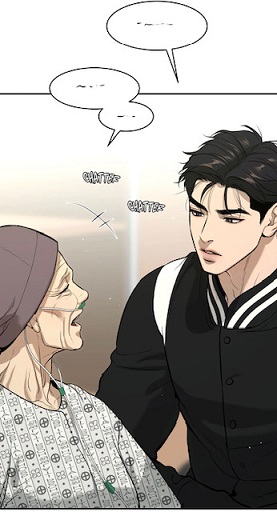 (chapter 21) and even paid her hospital bills. She even took his hand
  (chapter 22) and gave him a yoghurt.
 (chapter 21) So the moment the grandma vanishes, it could also wound the champion’s heart, especially when his sex partner is so heartbroken. It would be interesting if the champion came to voice his feelings about her. If you can’t say you’re hurt when you feel hurt you’re not family.“

 (Chapter 115) The reality was too painful, hence he chose the illusion, thinking that with his new position, he would be able to do anything, especially if he is getting the support from lord Song. In my opinion, he is falling into a trap. He would realize it, if he pondered and didn‘t let his emotions cloud his judgement. Lord Song waited for his suffering and humiliation. By rejecting reality, the learned sir chose the nightmare, a very unpleasant and frightening experience.



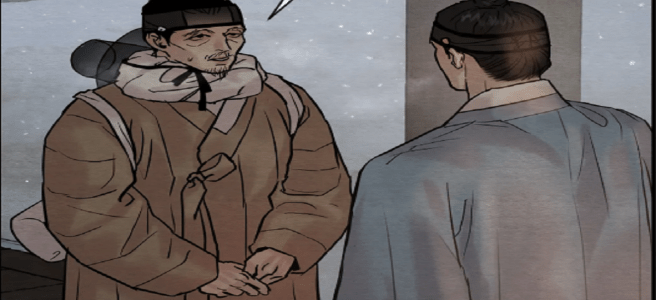


 (Chapter 73)
  (chapter 73) This is important, because the manhwalovers can sense a connection between sex and hunt. This means that the love session in the bedchamber from season 2 should be perceived as a new version of a hunt. And this link between sex and hunting was also present, when Yoon Seungho and Min were in the woods in chapter 41:
  (chapter 41) In this scene, it looked like Black Heart was trying to make a move on Yoon Seungho, while in truth Min was more obsessed with the painter.
  (Chapter 41) The expression „spot“ belongs also to the semantic field of chase.
 (Chapter 11) A murder disguised as an accident, the scholar would have been eaten by a tiger. What caught my attention is that No-Name requested from Deok-Jae that he should make the painter leave the mansion.
  o (chapter 51) It was, as if the rabbit had been chased away from its burrow or the deer had been forced to leave the woods. That way, he would become an easy target for the hunter and butcher Mumyeong. To conclude, we had two hunts in season 2 as well.
  (Chapter 99) First, he was rushing, but the moment he received the crucial tip from his childhood friend, he approached the den silently, just like a tiger. That‘s the reason why neither Black Heart nor lord Jang nor lord Park detected his presence.
  (Chapter 101)
 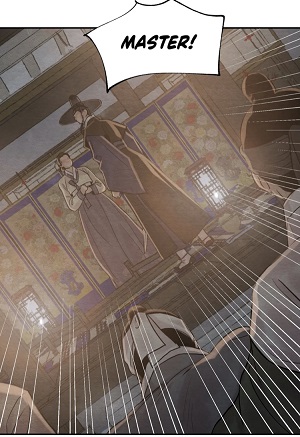 (chapter 99) and Lee Jihwa
 (chapter 100), hence he had not the time to question the veracity of their claims or sense their manipulations. On the other hand, he could detect the difference between the blood in front of the scholar’s house and inside the building.
 (Chapter 100). He was following his instincts. Tigers cautiously stalk their target from the rear in attempt to get as close as possible to their unsuspecting prey.
  (chapter 102)
 (chapter 48) or the chin
  (chapter 83)
  (chapter 102) Even in this panel, the sword resembles a lot to the tiger‘s fang:
  (chapter 102) Another important element is that this predator usually targets large-bodied preys like boar, deer, humans and not rabbit or pheasant. Under this new light, it becomes comprehensible why the main lead went after a boar or the aristocrats in season 3.
 (chapter 22)
  (chapter 60) The latter belonged to the lowest ranks of Joseon’s society, because killing an animal was a disgraceful job. On the other hand, the butcher No-Name and the tiger Yoon Seungho have something in common: killing is viewed as a necessity. It is either to survive or to end the animal’s suffering or to punish the criminals.
  (Chapter 22). And when Black Heart suggested the artist’s assassination, he always kept laughing, making it sound like a game without any terrible consequence.
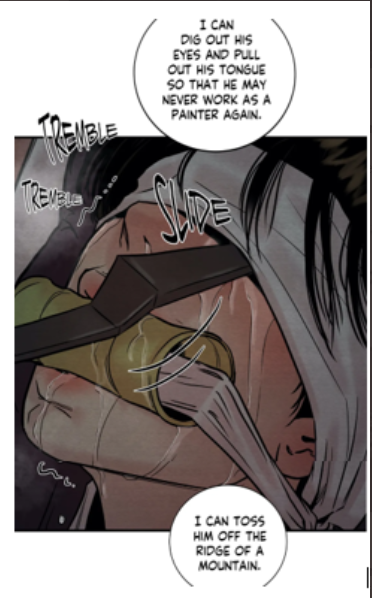 (Chapter 60) By removing his eyes and tongue, the victim’s face would change making him impossible to be recognized. And note that his scarf and headgear had been removed as well. It was not a game, but a deadly matter. Why would he do such a thing? The reason is simple. If no one could identify the victim, there would be no investigation. Astonishing is that hunt is a synonym for investigation and prosecution. Hence I am deducing that in season 4, the investigation should be perceived a new version of the hunt, a new version of this scene.
  (chapter 83) Thus I am deducing that this chase had been suggested to the main lead in order to release his tension and as such in order to divert his attention from the painter. Naturally, Kim was behind this idea faking his concern for his master. The hunt was supposed to procure pleasure to Yoon Seungho, but it couldn’t, because he was afraid of losing the painter. This explains why he selected the boar as his prey. He was fearless in front of that dangerous animal, for it meant nothing to him. He didn’t mind losing his life… revealing his suicidal disposition which resurfaced later, when the father mentioned the authorities.
  (chapter 86)
  (chapter 86) But the moment the servant reminded him to pay more attention to himself
 (chapter 83), he abandoned the boar immediately. This shows that all this time, Baek Na-Kyum had been on his mind. Therefore it is no coincidence that he rushed home on his horse and looked for Baek Na-Kyum.
 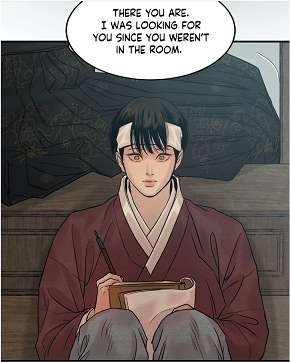 (Chapter 83) He couldn’t forget that he had scared and wounded the painter in his dissociative state. This shows that the chase had not served its true purpose: entertainment. In reality, the domestics had been the ones suffering the most, for them it was definitely more work
 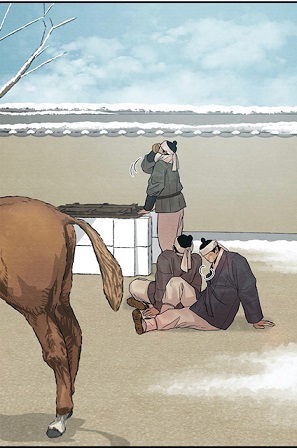 (Chapter 84) compared to the past.
 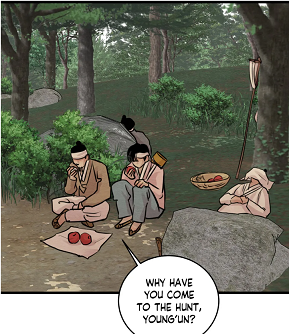 (chapter 23)
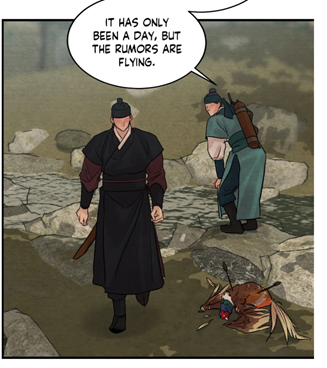 (chapter 41) First, I had feared that he might lose his life, then later I had realized that this death was purely symbolic. He would lose his title and family, therefore he would become a commoner. But I had also expressed my doubts that this scene could be a reference to Black Heart, as from chapter 52 on, I had sensed that he would die. Moreover, observe that during that hunt, Min had wounded the animal himself. This mirrors his own death. He became a victim of his own trick. But if the pheasant is representing two characters, The Joker and Lee Jihwa, then this means that the deer in chapter 22
  (chapter 22) embodies not only the painter, but also someone else. While in the past, I used to believe that it was Kim, now I come to the deduction that it was Jung In-Hun. Note that in this scene, the main lead left the prey and the scholar behind. Both got defeated. This means that by targeting Yoon Seungho, the scholar is not realizing that he is actually endangering his own life. Besides, by hunting the deer, the learned sir offered this prey to the tiger Yoon Seungho, and this was the painter’s case. Furthermore, the deer was carried back home on a horse
 (chapter 24) reflecting the painter’s fate.
 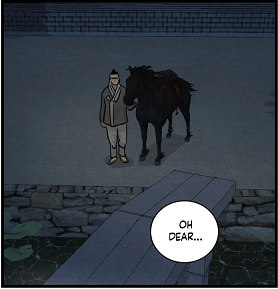 (chapter 25) Who brought the horse to the pavilion? Kim and Deok-Jae! And when the learned sir departed from the mansion, he was followed by the vicious servant and the horse.
 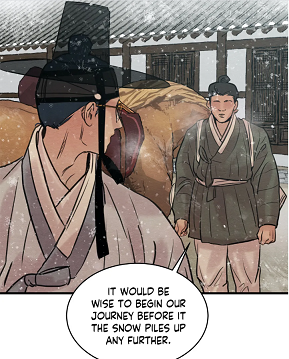 (chapter 44) As you can see, Jung In-Hun is connected to the horse. This observation was even confirmed in season 4.
 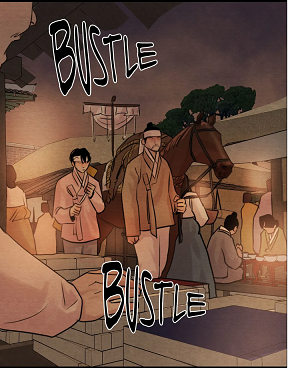 (chapter 24) Thus he could take the artist away unnoticed. Then in episode 44, the learned sir is shown standing in front of the horse. Finally, the manhwaphiles can see the man riding. This reflects his social ascension.
 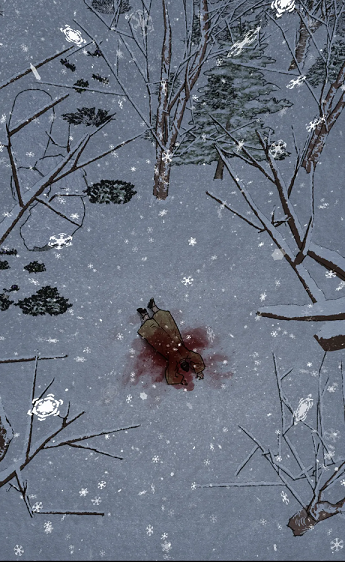 (Chapter 111) Like mentioned above, the shoes could be perceived as the evidence for Jung In-Hun’s crime.
  (Chapter 103) However, since the manhunt appeared in the first episode from season 4, I deduce that we will have many manhunts in the final season, like here
  (chapter 106)
 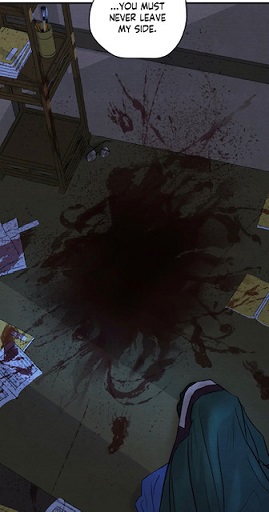 (Chapter 88) On the other hand, the foot print and the glasses were added to give the impression that the learned sir had been murdered. However, after adding blood in the fake crime scene and removing the learned sir’s possessions,
 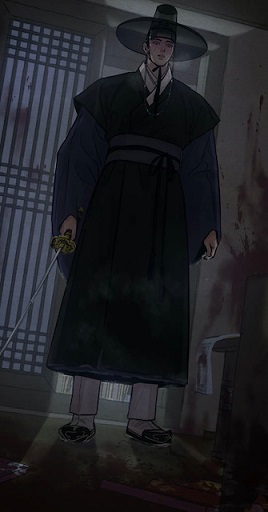 (chapter 100), the place could be interpreted differently. The inhabitant had been attacked by a tiger during the night.
  (chapter 45) the cobweb behind Deok-Jae. Imagine that this scene took place in the middle of winter, thus the spider’s web got covered by frost. However, this indicates that this room had been abandoned for quite some time. But it is close to the gate. So it should have been the place where the doorkeeper is living. Secondly, I had demonstrated that the shrine had been neglected, for the altar had been removed.
  (chapter 18) Because of the presence of the cobweb, I started wondering why the author drew it behind Deok-Jae. In my eyes, it is because he was part of the spider’s web.
  (chapter 18) That’s the reason why Yoon Seungho was not dressed properly.
 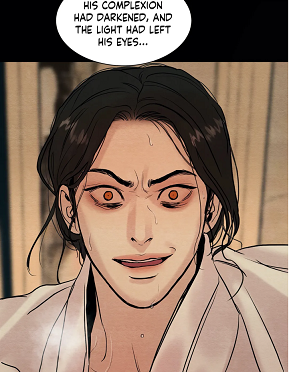 (chapter 57) Naturally, the purge played a huge role in the lord’s suffering reinforcing the huge rift between the pedophile and Yoon Seungho.
 (chapter 57)
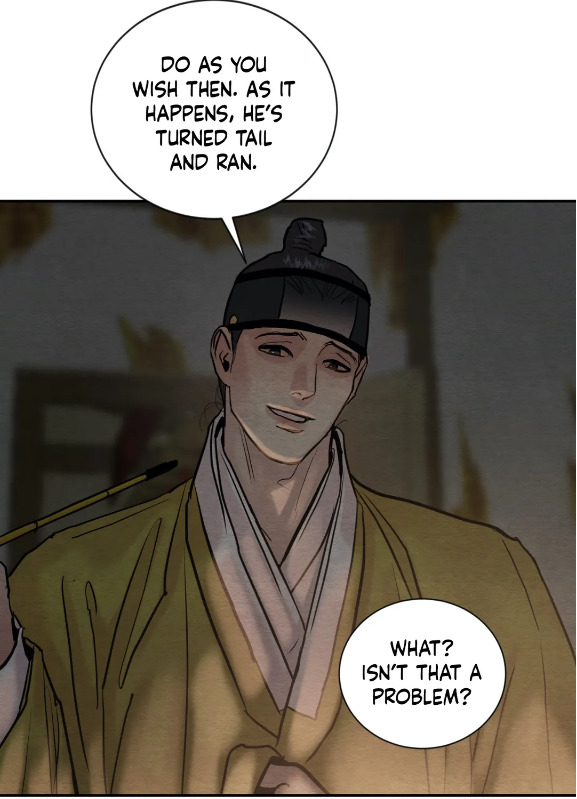 (chapter 101). It was not Min’s task to carry a friend… he was just a fellow puppet brought to the shaman’s house in order to entertain Black Heart. This truly exposes that Black Heart never saw in the aristocrats humans. As the red-haired master, he had been considered as the hunting dog, he had fulfilled his function. That’s why he was abandoned. He had helped Min to corner the painter and brought the kisaeng to the scholar’s home. Moreover, a hunting dog disobeying his master will be killed. Hence it is not surprising that the wild dogs ended up all dead. They were totally defenseless in front of a huge tiger. This feline is difficult to tame.
 (chapter 101) They saw in the sexual violence a new form of hunting. I would even go so far to say that they desired to turn the artist into their pet fulfilling all their desires:
  (chapter 101) Thus it is not surprising that Yoon Seungho was compared to an animal by his own father in the past.
 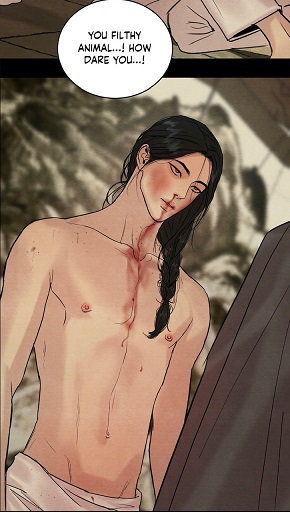 (chapter 83) The pedophile also desired to tame the young master, the beautiful and gentle butterfly. Thus he got brainwashed. He could never refuse anyone, he had to entertain the guests. And now you comprehend why Min said this to the painter.
  (chapter 101) As a punishment, he was given to lord Jang and his friend. Since Min had captured the artist, he viewed himself as his owner who would give order to his pet. Yet, a deer is a shy, but wild animal, difficult to control making it difficult to be tamed.
  (chapter 99) But this was impossible, for Black Heart never treated Baek Na-Kyum as a man. Hence I come to the conclusion that by meeting the painter, Yoon Seungho rediscovered his true nature: he was a free spirit, a tiger! And guess what… In Joseon, the tiger was perceived as a good talisman to chase away the evil spirit!!
  Yoon Seungho has the impression that he could get hunted down, for he killed the nobles. The tiger is now the target of “humans”, and Jung In-Hun will play a crucial role in his prosecution
 Bebebisous33s' analyses in K-Dramaland and Manhwas