

This is where you can read the manhwa. https://www.lezhinus.com/en/comic/painter But be aware that this manhwa is a mature Yaoi, which means, it is about homosexuality with explicit scenes. If you want to read more essays, here is the link to the table of contents: https://bebebisous33analyses.wordpress.com/2020/07/04/table-of-contents-painter-of-the-night/
It would be great if you could make some donations/sponsoring: Ko-fi.com/bebebisous33 That way, you can support me with “coffee” so that I have the energy to keep examining manhwas. Besides, I need to cover up the expenses for this blog.

Because the manhwaphiles are witnessing the downfall of the protagonist, people get the impression that history is repeating itself. It was, as though nothing has ever changed. Besides, in my previous essay, I had already outlined the similarities between the past and present and explained the reasons behind this resemblance. However, as you can imagine, we are not back to square one. Thus in this composition, I will elaborate the changes. And this can only be possible by contrasting the present with the past.
1. Monsters in Joseon society
1. 1. Yoon Seungho and his peers
The Painter Of The Night-philes can certainly recall how in the beginning of the story Yoon Seungho was perceived. He was introduced as a brutal and bloodthirsty monster, for he killed a servant in the open.  (chapter 1) He was even called a psychopath, for he resorted to kidnapping
 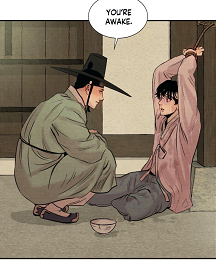 (chapter 1) sequestration, threats
 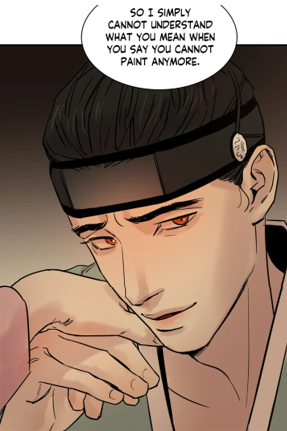 (chapter 2) and blackmail and he initially showed no remorse.
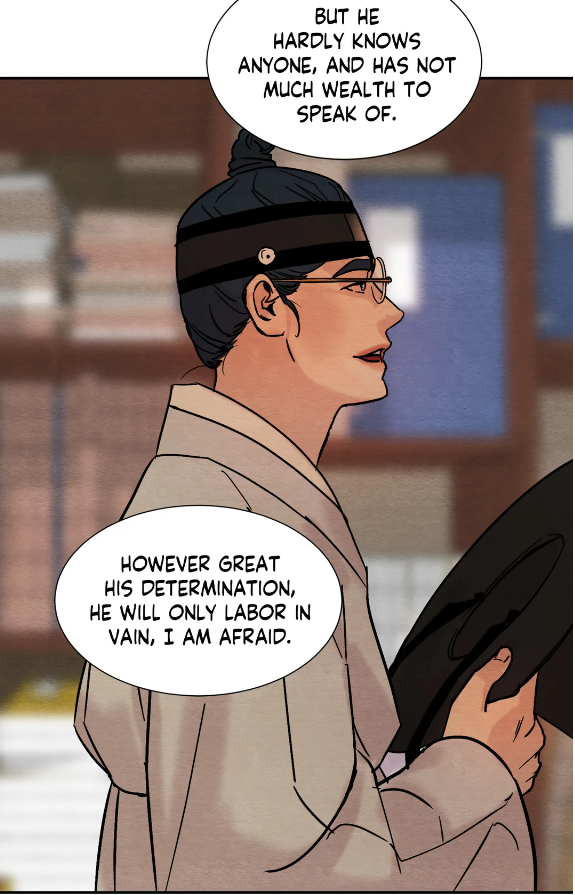 (chapter 7). On the other hand, he never got into trouble for his wrongdoings. Why? It is because he wasn’t violating social norms.
  (chapter 10) It was his right to punish servants, for they are not considered as humans but as propriety. As a lord, he could treat commoners, like it pleased him. Though murder is prohibited, even against a lowborn,
 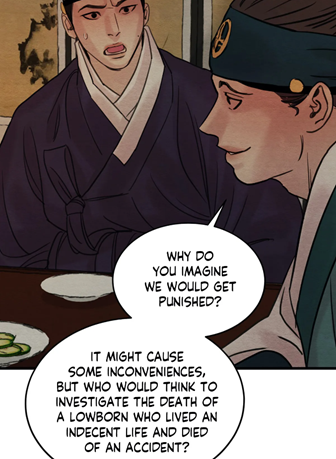 (chapter 43), the reality is that nobles would never get into trouble!! As you can see, there exists a discrepancy between laws on the paper and the reality which was exposed by the rumors in episode 106.
 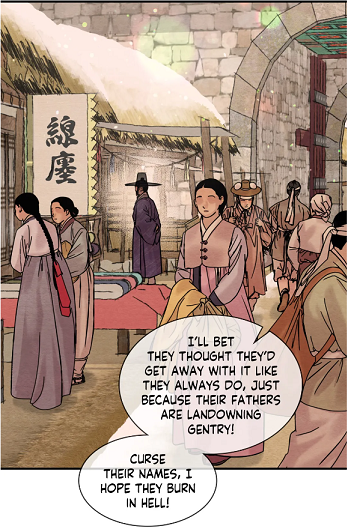 (chapter 107) The fathers would use their position and influence in order to cover up their children’s wrongdoings. And we have the perfect illustration, when the elder master bribes the governor.
  (chapter 127) That’s the reason why the younger generation could do everything! Though the lord appeared as a monster first, he became a “normality”, the more we got to read this story. Under this explication, it becomes comprehensible why lord Min was so sure not to get bothered by the authorities.
 (Chapter 101) He had bought the officers (“the guards”). This explains why Black Heart could threaten No-Name.
 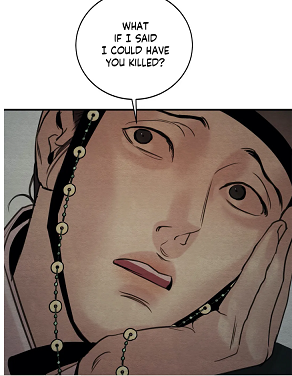 (chapter 76) He didn’t need to dirty his own hands, he could simply frame him. Consequently, I deduce that he had learned this misconduct through the elders’ behavior.
1. 2. The old bearded men and their roles
Interesting is that in season 4, Yoon Seungho gets protected from prosecution by his father’s power, however the latter did not do it for his sake, rather to protect the Yoons’ reputation and influence.  (chapter 116) This shows that neither Black Heart’s father nor Yoon Chang-Hyeon truly love their children, as according to Erich Fromm, love is knowledge, respect, care and responsibility. However, the elder master Yoon is totally ignorant about his son’s talents and good nature. Thereby, I see lord Seungho from season 1 as the perfect illustration of the corrupted world of the nobility. The monster “Yoon Seungho” was just a reflection from this ruthless and immoral society. Since he committed wrongdoings, his karma was to pay for his sins. It starts with a murder, and the main lead ended up killing people. He might have not broken “traditions” like the disregard of the yangbans against lowborns, but it is considered immoral. He had sinned and now, he is paying for his sins. Therefore his words in the prison resonate differently.
 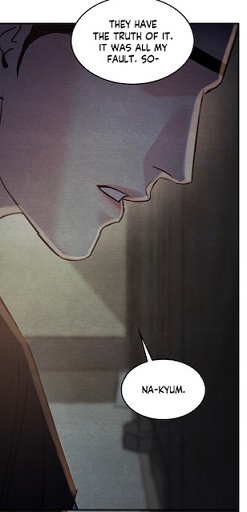 (chapter 126) He expresses regret. He confesses his crimes, he killed people! This means that he is now siding with the lowborns. Their life is as precious as the ones from the nobility. Yet, note that in this image, the author didn’t drew his eyes. Why? It is because in the moment he executed people,
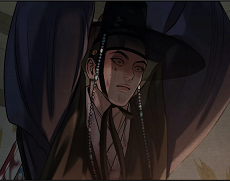 (chapter 102) he was either not himself or he did it out of reflex to protect himself. He was influenced by his past experiences and as such traumas. In the shrine, it becomes more obvious, for he has a lost gaze. He is not even looking at his target. Finally, when he met lord Song, he did it to “protect” himself.
 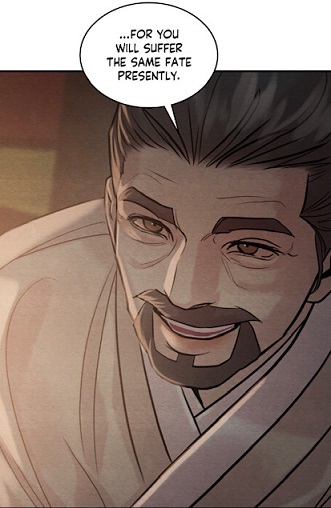 (chapter 123) For me, in episode 1, the execution was triggered by his desire to protect himself and his traumas. And what is the common denominator between these three scenes? The father Yoon Chang-Hyeon! Don’t forget that the petition was the reason for their meeting. And now look at the actions from the patriarch.
 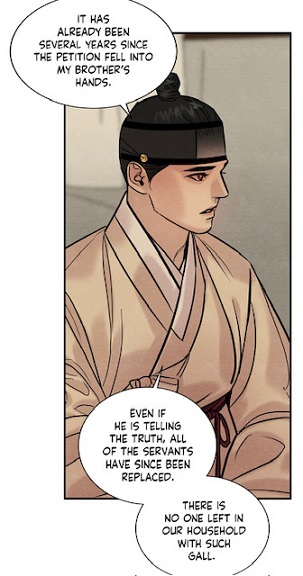 (chapter 116) He had given the order to eliminate all the servants, for they could represent a threat to his “treason”. This explains why the butler describes himself as the only survivor and witness.
 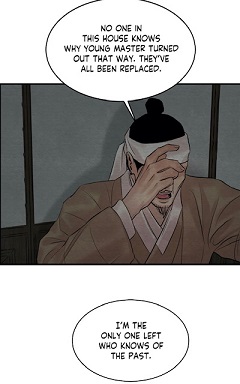 (chapter 86) And we see him giving the order to kill the surviving guard
 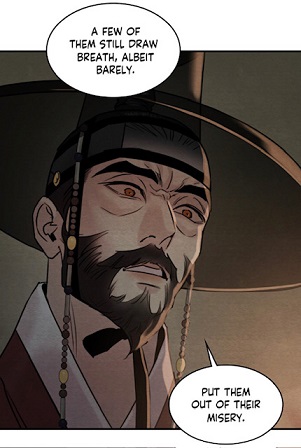 (chapter 125) Besides, he had no problem to order the assassination of his own son which was stopped by the intervention of a helping hand. The father had never asked to spare the main lead’s life.
  (chapter 124). He was his bad role model. But he is not the only one. There is another one…
And if crimes were to take place, then the nobles would find scapegoats in order to avoid punishment. Hence No-Name got so many tattoos in the end.  (chapter 51) Once a criminal, always a criminal… therefore it is not surprising that the joker chose assassination as second work. By working for the nobles, he would be able to escape punishment, because if he got arrested, he could denunciate them. To conclude, justice is inexistent in Joseon. Yes, we are witnessing the downfall of Joseon, or precisely the king’s bad ruling. The latter is not capable of providing justice to anyone. And this coincides with the purge!
  (chapter 37) What is a purge?
to get rid of people from an organization because you do not agree with them
to take names off an official list, sometimes in a way that is not legal Quoted from https://dictionary.cambridge.org/dictionary/english/purge
The purge is the symbol for injustice, because it is connected to violence and intolerance. As you can see, the “fake servant” was exposing his true nature through his words. He should have said “sentenced” or “punished” or “executed” but not purged for treason! I am more than ever convinced that the old bearded man in episode 37 is the king. Those two words (“purged”; “treason”) are contradicting each other. In the first case, the authority is committing a crime by abusing its power, while in the second case, a group is plotting against the authority and as such is breaking laws. Finally, I would like to outline that Yoon Chang-Hyeon and lord Song got evicted from the government which coincides with the second signification of “purge”  (chapter 107) “Stepping down” was actually an euphemism for removal. The officials were chased out,
 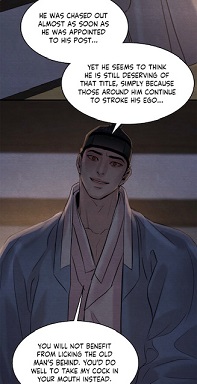 (chapter 80) but their evictions were turned into stepping down.
 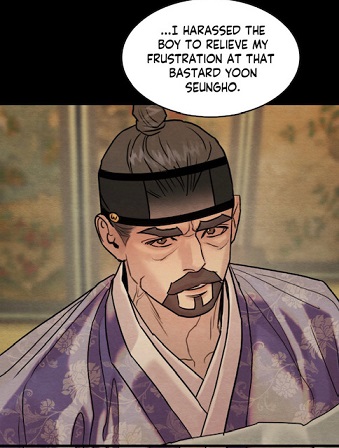 (chapter 122) No wonder why lord Song came to resent the protagonist. Under this new light, it becomes comprehensible why the purge was not noticed by commoners. There was no fire and the staff was sparred. (chapter 37) And if they knew, people didn’t feel concerned… for they were violent, filthy nobles. Remember how the woman came to curse the gentry: (chapter 106) Moreover, we could see how an official came to murder lord Shin.
  (chapter 103) The boots were the indication that this person was working for the government. And it was an elder, for he was wearing this particular headgear.
 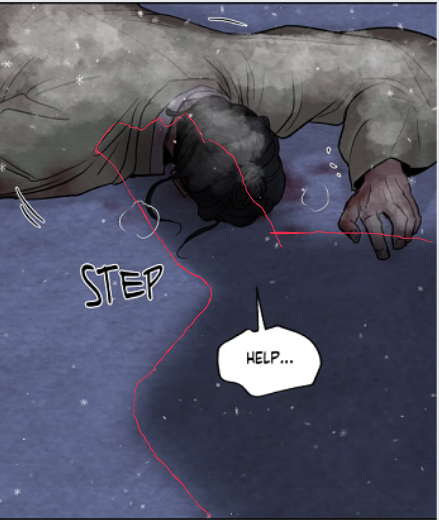 (chapter 103)
  (chapter 67) The murder of lord Shin is the evidence of the anarchy in Joseon. But actually, the monsters are actually everywhere, and not just among the nobility. The Chungin with the scholar and the physicians who have no problem to lie, participate in a kidnapping and drugging people… the kisaengs, the maids, the servants. They are all accomplices, for they feigned ignorance or chose to remain passive, for they preferred avoiding trouble. What people failed to realize is that no one is safe from this tyranny. Hence people could get killed and thrown into a well so easily
 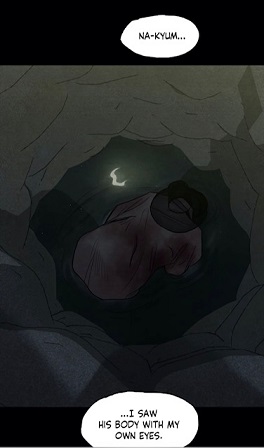 (chapter 97)
 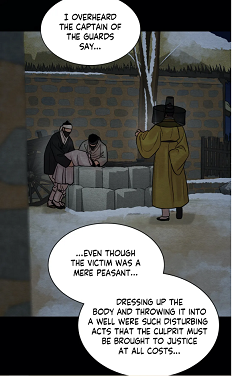 (chapter 101) and their perpetrators got scot-free. Why? It is because the mastermind and the helping hands are protecting each other, like we could see in the Joker’s case. However, the latter in season 3 had no idea that they would face divine retribution and pay with their life.
  (chapter 102) In front of gods, humans are all equal. There is no distinction between gentry, Chungin and commoners. That’s the reason why I come to the conclusion that Yoon Seungho is the divine hand of justice, he is bringing the “divine retribution”. This explicates this vision:
  (chapter 83) Under this new approach, it becomes comprehensible why he is called “the bird of misfortune”. People around him got to suffer, for they received their karma. Funny is that lord Song mocked him by calling him a grim reaper.
 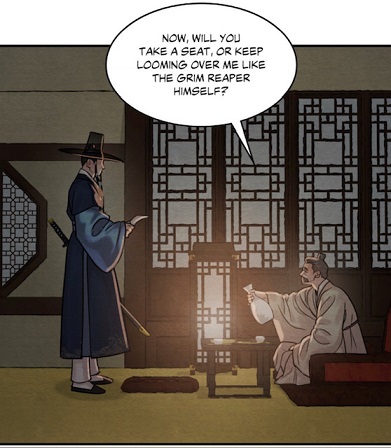 (chapter 123) He underestimated his opponent, not imagining that the latter would use his sword against him. So he became a grim reaper. Lord Song Haseon must have thought that his minions, just like his age and status, would protect him. But no, someone had planned his death and counted on the main lead’s decision.
2. Karma and Baek Na-Kyum
What caught my attention is that Min even expressed the disinterest of the authorities towards peasants.  (chapter 99) Thus Min’s karma was to die in the total indifference of others. No one is missing him, for he was turned into a brigand himself.
  (chapter 113) But wait… Why did Black Heart get killed in the end? One might say that it was his karma, for he had planned the murder of Baek Na-Kyum in the past. In my opinion, the uke serves as a representative of the divine retribution. The artist is the “judge” and his lover is executing the sentence: death. And we can detect this gods’ intervention through the learned sir’s case as well. Jung In-Hun had looked down on the artist for his origins and education. When the generous main lead chose to accept his apology (attempted rape),
 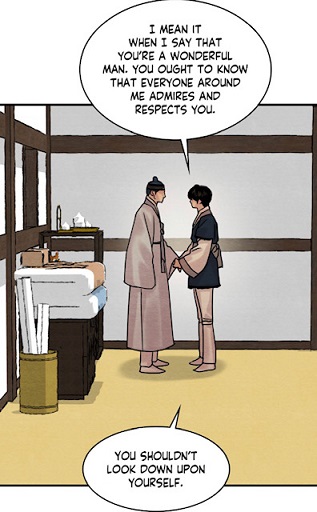 (chapter 120), the latter reminded him that contrary to Yoon Seungho, he was admired. He had such a good notoriety! Since he betrayed the artist and had almost him killed, the scholar ended up losing everything.
 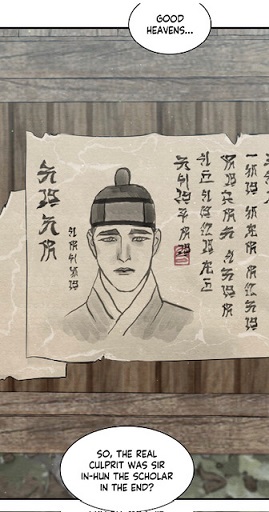 (chapter 127) He became the scapegoat for this incident, for he played a huge role in the painter’s suffering (kidnapping, assault, murder and brainwashing). His success at the civil service examination was erased within a few weeks and now he is viewed as a brigand. How could such a person get selected as an official? His fate gives a bad impression of the civil service examination. And what is the common denominator between these two villains? They both belong to different social classes. Their cases is exposing the king’s negligence and arbitrariness. The latter is the perfect personification of this corruption. Not even Confucianism is respected, for fathers are abusing their own children or even killing them. Season 4 is exposing the chaos in Joseon. Therefore it is not surprising that the sacred tree and the shrine got burned.
  (chapter 106) The gods were using the humans to voice their anger. At the same time, when the woman made this comment, the Manhwa lovers can detect the huge gate in the background, the symbol for royalty. And now, you comprehend why Yoon Seungho was pushed to go to Hanyang. It is his fate to face the king! His task is to clean the palace of these old bearded men.
  (chapter 44) I had already portrayed him as a black shaman in the essay “Spirits and the lustful shaman“. And since he became a believer in episode 126, this means that he can fulfil his task, giving the king’s divine retribution.
  (chapter 65) Don’t forget that the monarch is the only one who stands above the laws, though he is controlled by social norms and his officials. In my opinion, this can only take place, when a new scheme takes place. How so? Note that in the scholar’s case, Jung In-Hun received his karma, but not real human justice. For me, he is not dead. Besides, don’t forget that someone took the petition from lord Song, before Yoon Chang-Hyeon came to the bloody place. There is no ambiguity that the accomplices and schemers didn’t get happy with the last outcome. The couple might be separated physically, but they are attached to each other by their strong love. And since the main lead kept wearing hanboks with the phoenix
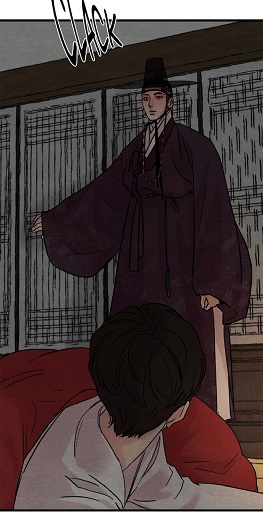 (chapter 34)
  (chapter 45), it indicates that someone saw him as his bird of fortune. And this can not be Yoon Seungho, for the latter was full of self-hatred. Finally, his own father, Kim and Heena called him as a bird of misfortune. As you can see, the king could no longer see the main lead due to the artist’s presence. He is his bird of fortune, for he could live out all his dreams thanks to him, and at no moment he got into trouble. No one is suspecting his intervention.
3. Though fate parts us once more
As soon as I read this whisper from the main lead 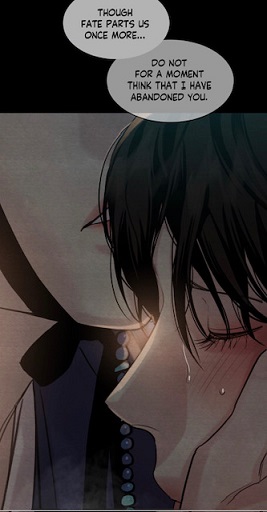 (chapter 127) I recognized why the painter and Yoon Seungho had to go separated ways. It is because the schemers wanted him to return to Hanyang. Remember the learned sir’s suggestion before his departure.
  (chapter 44) Why? It is because now the main lead is an adult. Since my theory is that the pedophile is the ruler, he can no longer approach the protagonist like that. The latter is no longer visiting the gibang. He wants their path to cross again so that they can rekindle. Hence he had to create an opportunity proving that their meeting is not a coincidence. Under this new approach, it becomes comprehensible why Yoon Seungwon encouraged his brother to reconcile with their father.
 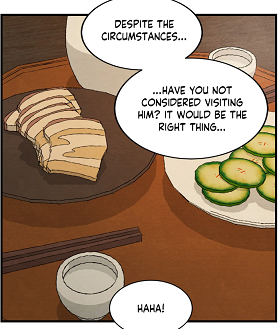 (chapter 37) That way, he would be “following” the tradition and become an official. But since Yoon Seungho developed a fear of “old bearded men”, he had no reason to go there. (chapter 44) This exposes that in his unconscious, the young man was aware that his suffering was related to the officials. But in season 1, their attempts (Jung In-Hun and the brother) failed because of Baek Na-Kyum. The latter had to leave the lord’s side. And this brings me to the following observation. Since the beginning of the story, people were used to make the commoner leave the protagonist’s side:
- Lee Jihwa with the ruined painting and the murder
- Min: the party at the kisaeng house, the orgy in episode 33, the kidnapping and murder
- Heena:
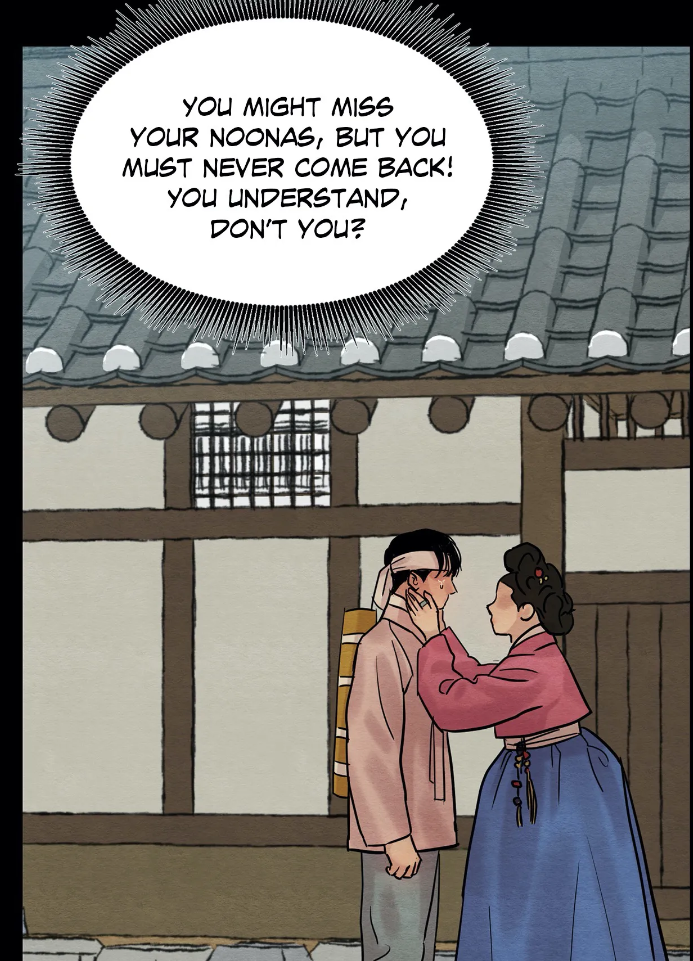 (chapter 46)
 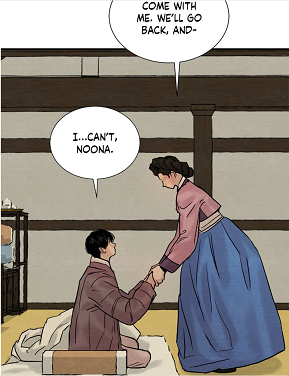 (chapter 68)
  (chapter 97)
 - Jung In-Hun
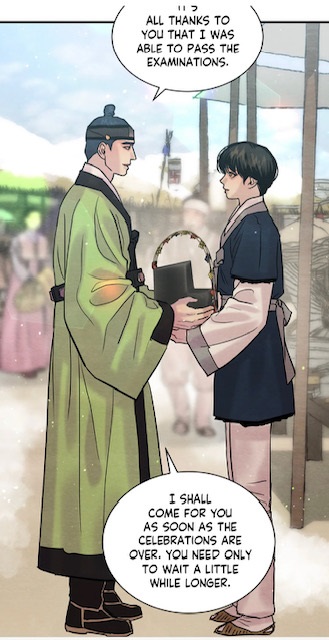 (chapter 111)
  (chapter 120)
I could mention Ýoon Seungwon, the staff, butler Kim, Deok-Jae and the kisaengs. And now, it is time to examine the circumstances of their farewell.  (chapter 127) As you can see, the painter was feverish. Why? From my perspective, he was drugged. He was not allowed to see his loved one, because they don’t want him to remember their departure. The schemers desire him to feel abandoned like in the gibang (chapter 105). The reason why I am suspecting a drug is that this panel
  (chapter 127) is similar to the first Wedding Night:
  (chapter 21) At the same time, this scene is also a reflection from the night after the massacre in the shrine.
  (chapter 103) Back then, he was also under the influence of an aphrodisiac. They don’t want him to remember his last words. And since he didn’t take care of him during that night, though he was unwell, they hope to create the illusion that Yoon Seungho neglected him. He broke his promise. But their trick can no longer work because of the lord’s visitation in the prison and his words.
  (chapter 126)
  (chapter 127) The separation arc is there to prove these plotters wrong. Their affection is not trivial and momentary. He is not a plaything, but his “partner”. In fact, they have absolute trust in each other, and their source of strength will be their short happy moments together. Besides, I am quite certain that the artist will remember the lord’s whisper from that night, since he had problems to recall the First wedding Night and the incident in the shrine. Both are related to his bad conscience. Besides, I have another reason for that, the power of the unconscious knowledge.
The underused power of unconscious knowledge
Fromm considered that the unconscious not only contains irrational passions – which would occupy only a small part – but also all knowledge of reality. He believed that our unconscious mind has infinitely greater power than consciousness – which is fundamentally a social construction – so it can warn us that one person is dangerous and another is trustworthy, tell us which is the best path to follow, help us detect the lies or pointing out when we are being manipulated or making mistakes. Fromm was convinced that through the unconscious we can know everything we need to know to orient ourselves in life. However, we often repress these contents and do not pay attention to our intuition – which is one of the main means of expression of the unconscious – because socially this information is considered too “dangerous”. Quoted from https://psychology-spot.com/unconscious-knowledge-erich-fromm/
Thus I am suspecting that neither the painter nor the lord will be in touch through a correspondence. They have to create the illusion that the main lead is forgetting him. This explicates why Byeonduck created 3 episodes where the silence and miscommunication between the two protagonists played a huge role. (Chapter 108) Though both were close physically, they still allowed others to manipulate them, for their trust was not complete. In other words, the schemers are thinking that time is working for them!! On the other hand, since Kim is by his side, the painter can only consider his presence as the evidence of the lord’s care.
  (Chapter 127) This coincides with the beginning of the Manhwa, when the lord was seen without his butler.
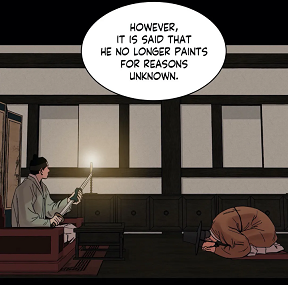 (Chapter 1) The latter only appeared in episode 7, and back then Yoon Seungho had to dress himself.
  (Chapter 7) Finally, I am expecting schemes again.
4. Yoon Seungho a servant again
I have to admit my surprise, when I saw Yoon Seungho’s bow in front of his father. I really didn’t expect this, yet his decision makes sense. He swears to become his father’s servant. 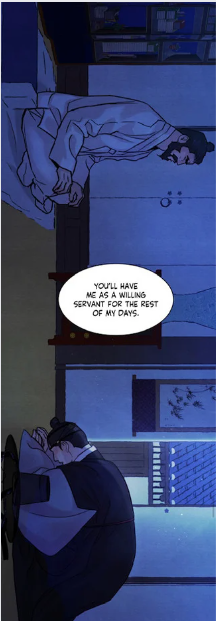 (chapter 127) This means that he is giving up on his status and freedom for Baek Na-Kyum’s sake. (chapter 127) And naturally, this reminded me of this scene with the straw mat beating.
 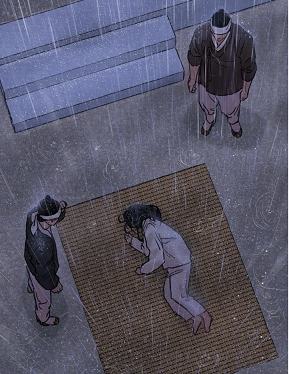 (chapter 127) Here Yoon Seungho had been treated like a servant, because he had been submitted to the straw mat beating. Exactly like in the past, there was a promise. Notice how similar the words are: “No matter”.
 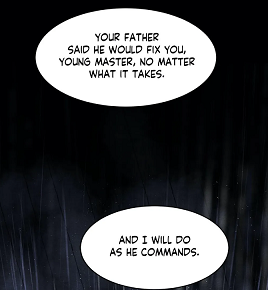 (chapter 77) However, there exists a huge difference. Back then, the vow was made between the butler Kim and Yoon Chang-Hyeon. As you can see, Yoon Seungho is now copying his surrogate father’s behavior.
  (chapter 127) This shows that the young master is following Kim’s path. On the other hand, the domestic employed the future tense in his pledge (“I will do as he commands”), whereas the “spiritual son” is using the present (“I swear to live as you command”). Moreover, the main lead is talking about his way of life and not “order”. And what does the father desire?
  (Chapter 86) Making connections so that the Yoons can become influential again!! But how can he do that? By showing his talent? I have my doubts about it. Why? It is because in season 1, the lord was having sex with his peers, and back then they were like battles… for an exchange of favors. I hope, I might be wrong, but I fear that he is about to become a male kisaeng again. Or if not, then this is what the king is expecting from him. And we have the best example in this scene: (chapter 80) Sex against favors. Yoon Seungho has become the symbol of nepotism, though in reality he is the biggest victim of this. According my investigations, Yoon Chang-Hyeon was left in the dark about the pedophile. But now by asking his eldest son to “become his servant”, he is now responsible for his fate. This means that he can no longer “feign ignorance”. What is more important to him, his hatred for sodomy or his dream of power? By using his elder son, Yoon Chang-Hyeon can maintain his reputation and have a clear conscience. However, this makes him a hypocrite. Besides, why would Yoon Seungwon keep pestering his brother to change his life and go to Hanyang, when he “succeeded” with the exam?
  (chapter 118) Why does he need the protagonist? It is because he needs “connections”. And how can he get these connections? Through his brother. But with the last incident, it looks like Yoon Seungwon jeopardized the remains of his influence, for the noble ignored him.
 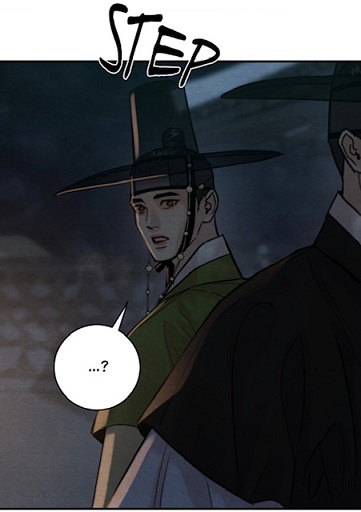 (chapter 127)
But let’s return our attention to the contrast between Kim and his adoptive son. (chapter 127) Another common point between Seungho and Kim is the bow.  (Chapter 56) Yet, the domestic is only bowing with his head and not his body. The protagonist is dressed exactly like his father. This comparison exposes that my past interpretation was correct: the butler had awakened his master during the night by lighting the candles. And after receiving this letter, Yoon Seungho dressed himself in order to meet his childhood friend, which reinforces my theory that the valet won’t follow the protagonist.
Interesting is that the butler and his “adoptive son” are acting for someone else’s sake. Yet, the second divergence is that the protagonist’s vow is not affecting the painter’s life (chapter 127), while the butler’s oath was describing Kim as the helping hand to “fix” Yoon Seungho! In other words, at no moment, the valet was risking his life, whereas the main lead is now “sacrificing” his own life (“as a willing servant”) for the painter. And this brings me to the following observation. Why did Yoon Chang-Hyeon order the straw mat beating for his own son in episode 77? It is because the latter had failed the father’s expectations. He had not been able to have sex with a woman. 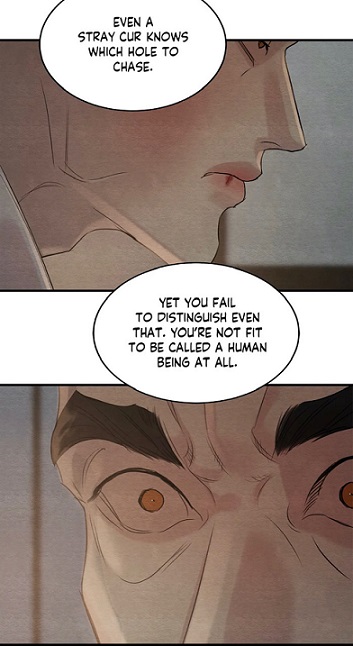 (chapter 86) However, back then, he was considered as the eldest son. One of his duties was to continue the lineage
 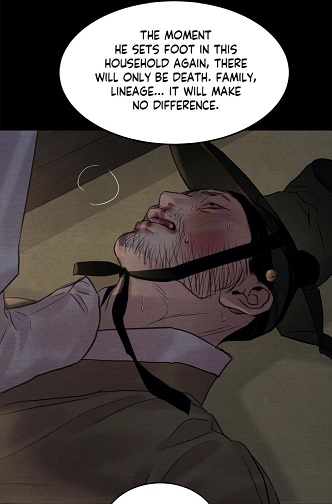 (chapter 82) and because of the stolen kiss, the patriarch became obsessed with sexuality. Observe how lord Song Haseon described the father’s attitude. He knew about the atrocities that the young master was exposed to
 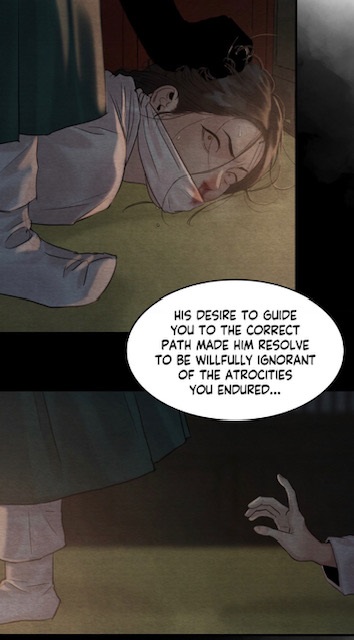 (chapter 123), but he chose to turn a blind eye, for he believed that the end justifies the means. This explicates why he left the room so quickly and abandoned his son. Yoon Chang-Hyeon’s resent for the eldest son came from his high expectations. This can only reinforce my past interpretation that Yoon Seungho is a new version of Prince Sado. Thus the elder master Yoon’s personality is based on king Yeongjo. Moreover, lord Song alluded to the execution of a prince ordered by the monarch.
  (chapter 107)
Most of what we know about Prince Sado comes from a memoir that his wife, Lady Hyegyeong, wrote in 1805. It paints a picture of a tragic young man, who thanks to a youth of constant abuse and tragedy, was driven insane. King Yeongjo was a hard man with a fiery temper. His son was a constant disappointment to him. Yeongjo saw Sado as weak from an early age and would often lash out at him. The young prince grew increasingly timid around his father, which in turn caused his father to lash out more. From a young age Sado, who adored his father and only wanted his approval, was left a wreck. In 1745, at the age of 9, Sado had his first brush with ill health during which he often lost consciousness. His disapproving father was disappointed at this seeming weakness and grew even harder on the young prince. Sado was made regent when he came of age at 15. His father hoped that giving him the ability to make decisions on administrative matters would teach him to be a good king. Sadly, in his father’s eyes, every decision Sado made was the wrong one and he constantly second-guessed his son’s decisions. Quoted from https://www.historicmysteries.com/prince-sado/
Yoon Seungho has a similar disposition. He also hoped to be recognized and loved, thus he was constantly looking at his father’s eyes.  (chapter 55) But what did he see in his father’s gaze? Anger and disappointment, for he was never able to satisfy Yoon Chang-Hyeon’s expectations.
  (chapter 55) With the release of episode 127, I had this sudden revelation concerning this memory. In the past, I used to think that he had been submitted to the straw mat beating. But now, I think that in this scene, Yoon Seungho was forced to bow to his father by the servants or guards!! Yes, the former version of this scene.
  (chapter 126) This idea came to my mind, the moment Yoon Seungho emphasized his bowing!
 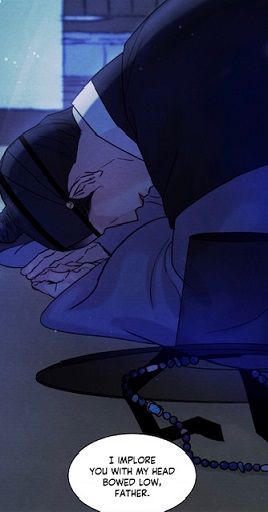 (chapter 127) The protagonist’s words imply that he had never done it before!! And now, you know why Yoon Chang-Hyeon agreed to make a deal with his eldest son.
 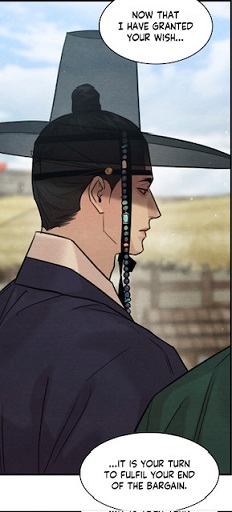 (chapter 127) Yoon Seungho’s bow and oath stand for blind obedience and loyalty. This explicates why the author drew him without eyes. (chapter 127) He believes that he has finally been able to tame Yoon Seungho. He has become the perfect “puppet or tool” in order to make his dream come true: POWER! Actually, he is hoping to restore the Yoons’ reputation and glory.
  (chapter 87) That way, he can act, as if the purge and the humiliation had never happened. So by submitting himself to his father’s will, it looks like Yoon Seungho is put in the same position than in the past. He is “exposed” to the harsh judgement from the patriarch. However, it is just an illusion. How so? First, what caught my attention is the absence of the protagonist’s eye. (chapter 127) The blue color and the absence of the eye are displaying the coldness from Yoon Seungho. He is not looking for recognition and love from his father. He is now totally indifferent towards him. Moreover, if you read my previous essays, you already know that the absence of “eyes” is indicating a lie, like here for example:
 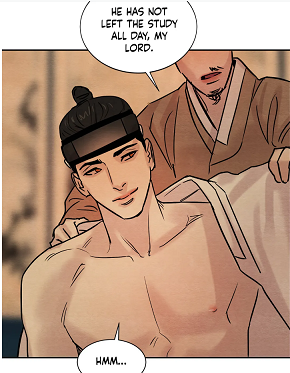 (chapter 11)
  (chapter 35) Does it signify that the protagonist has the intention of betraying his own father? I don’t think so, but the manhwaphiles shouldn’t forget the lord’s wish in the kitchen: “I shall remember this moment for as long as I live”.
  (chapter 118) This shows that when the lord bowed to his father, he was thinking of Baek Na-Kyum in the kitchen. His body might be by his father, but his mind and heart were elsewhere. Thus I couldn’t help myself thinking that Yoon Chang-Hyeon will get betrayed and abandoned by his own son. During the same night, he made 2 vows. It was, as though he had two “lords”! His goal is to meet his loved one again.
  (Chapter 127) Finally, don’t forget that the main lead is following Kim’s path. He will have to choose between his father and the painter. Yoon Seungho is actually applying the father’s principle: the end justifies the means. So if necessary, he can break his vow to his father.
And now, you are wondering why. It is related to the deal between the father and son. (Chapter 127) It is because Baek Na-Kyum represents a leverage for the father to control his son. He is now replacing the petition. This coincides with Yoon Seungwon’s words: 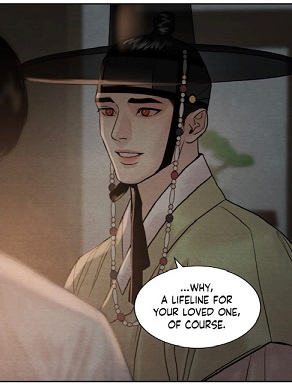 (chapter 116) I still believe that the painter has the original petition. And who is by Baek Na-Kyum’s side? Kim!! (Chapter 127) He is now in charge of the painter so that his pledge to the lord becomes a reality.
  (Chapter 108) By living by his side, he can lead a quiet life far away from Hanyang. However, this signifies that the artist has become a “prisoner”. As long as he lives in Yoon Chang-Hyeon’s claws, his loved one can not return to his side. Interesting is that a carriage was used to carry away the protagonist. (Chapter 127) Such a transportation was utilized for noblewomen. This can only reinforce the rumor that the protagonist has a fiancee!
  (Chapter 78) But where is the painter going? To the mansion? Or to another secluded place? In my eyes, the location is important. His existence is still a source of problems for the schemers. I see a future conflict in the lord’s life, for one oath stands in opposition to the other. Moreover, should the patriarch lose Baek Na-Kyum, he can no longer control his son. He can not suddenly blame the painter for the death of lord Song, for Jung In-Hun has been now convicted for the crime. (Chapter 127) The latter is now stigmatized as an arsonist and murderer.
Another reason why I believe that the actual situation diverges from the past is that the patriarch becomes “responsible” for his decisions. (chapter 127) He can no longer blame Yoon Seungho, for he is now just a “servant”. The expectations are also much lower. He just needs to follow his orders. Yoon Seungho is exempted from continuing the lineage. Moreover, Yoon Chang-Hyeon is now as the lord responsible for his son’s protection. Since he is his servant, he has to ensure his safety as well. That’s why he can no longer abuse like in the past. He is his tool to become powerful. This means that he is now dependent on him. Moreover, note that the father and son have a deal. (chapter 127) In other words, there is a certain equity. The painter serves as a leverage which reminds us of the deal between Baek Na-Kyum and his fated companion. (Chapter 7) In exchange for sponsoring the learned sir, Baek Na-Kyum had to go to his bedchamber and paint there.  (Chapter 7) Now, the positions are switched. He is the one getting coerced! And this brings me to the following observation. Why did the elder master agree to this deal in the end? First, he refused to assist his son.
 (chapter 127) He believes that he has the petition, therefore he can no longer be blackmailed by his eldest son. The latter has no longer any leverage over him! However, he changed his mind.
 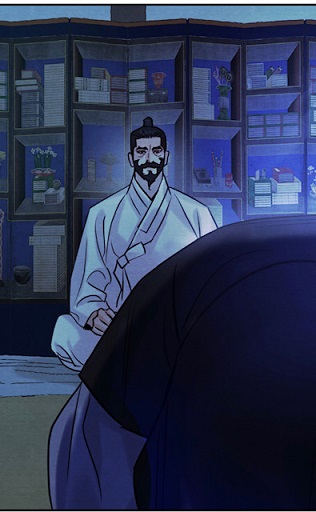 (chapter 127) For me, it is related to the bow. I noticed that the patriarch pays a lot of attention to “manners” and etiquette. Therefore the guards apologized on different occasions, yet the elder master always accepted their excuses
  (chapter 125)
  (chapter 126) Yet, in reality they were fake excuses. I have already pointed out that the servants would act on their own. But more importantly, their fake apology hid their failure as guards. How could they let the young master barge into the lord’s bedchamber? With a simple apology, this wrongdoing was overlooked. And now, observe what happened during the same night:
 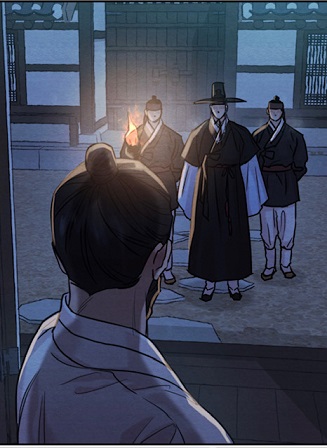 (chapter 127) Yoon Seungho was followed by the guards! It looked like they were serving him. This scene reminded me of the officers’ appearance in front of the mansion.
  (chapter 94) This can only reinforce my theory that the main lead will turn against his father in the end. Keep in mind that there is a deal, so should the situation change (the painter’s desertion or the discovery of the second petition for example), the lord is no longer forced to keep his vow towards his father. Moreover, since Baek Na-Kyum got lied, “brainwashed”
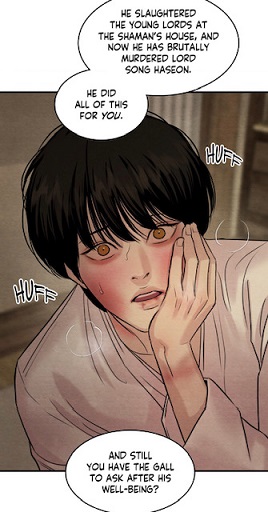 (chapter 125), “drugged” and slapped by Yoon Chang-Hyeon, he is destined to receive his karma through his son. And what was his dream? (chapter 86) He imagined that his second son would bring him fame and power. But now, the main lead is on his way to become “influential” turning the father’s words into a lie. Yes, the father and son needed to be together again so that the patriarch’s life lie would get exposed and ruined. Since he took the bloody paper
  (chapter 125) and paid the governor
 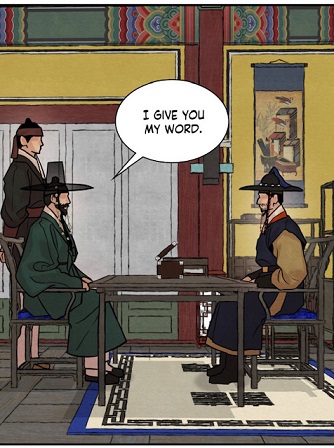 (chapter 127), he could get into trouble for it was, as if he was admitting his responsibility.
In addition, I would like to point out that the protagonist’s mentality is different from Kim’s! The latter advocates immobility and resignation.,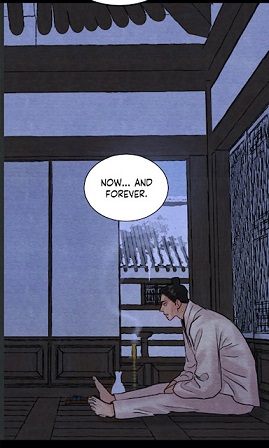 (chapter 87), whereas Yoon Seungho stands for change and hope. (Chapter 127) The latter is neither nihilist nor defeatist, for the painter has become his “god”, his religion. The hope to meet Baek Na-Kyum again will be his source of strength. He believes that the gods will help him again to have his wish come true. It is their destiny to meet again! (Chapter 127) Like announced in the last analysis, the lord is a changed man due to his new found religion. But this is not visible to the eyes. And the schemers are thinking that they are pulling the strings, while in reality they are themselves utilized as pawns by the spirits. Finally, the painter called himself a “plaything”, hence the schemers can jump to the false conclusion that they have still a chance to achieve their dream, like to punish the Yoons or to win the main lead’s heart. Finally, for me, this story is encouraging people to distinguish between fake heroes and from real saviors.
  (chapter 127) Where was Heena noona, when her brother was in prison? This rumor can only create the illusion that the painter is still devoted to the learned sir. Yet, after the last incident, the painter came to regret to have trust the learned sir. Both characters are now healed from their traumas (abandonment issues) and they are in full possession of their mind. This makes them less weak to manipulations.
Feel free to comment. If you have any suggestion for topics or manhwas, feel free to ask. If you enjoyed reading it, retweet it or push the button like. My Reddit-Instagram-Tumblr-Twitter account is: @bebebisous33. Thanks for reading and for the support, particularly, I would like to thank all the new followers and people recommending my blog.

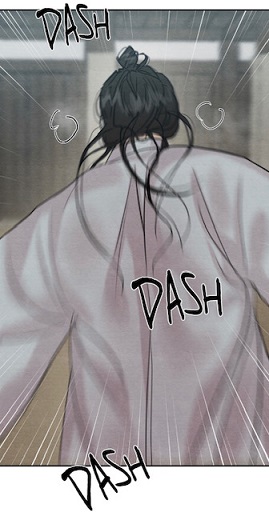 (chapter 126) to another
 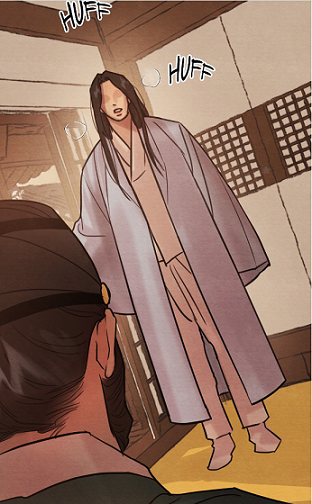 (chapter 126). He allowed his father to humiliate and abuse him
  (Chapter 126) once again. It was, as if the story was back to square one and the protagonist had learned nothing at all. Under this perception, my avid readers can comprehend why I selected such a title. However, instead of thinking that the author was a bad writer, I decided to ponder on the following question. Why did the author choose such an evolution?
 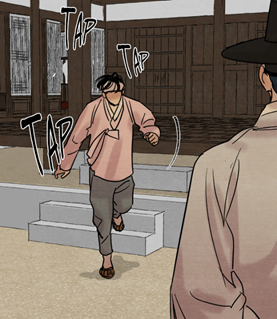 (chapter 7) Like Baek Na-Kyum, he rushed to his loved one’s side. However, he was first stopped
  (chapter 126), because it was not the right time. How so? Notice that his brother had fetched him at the port
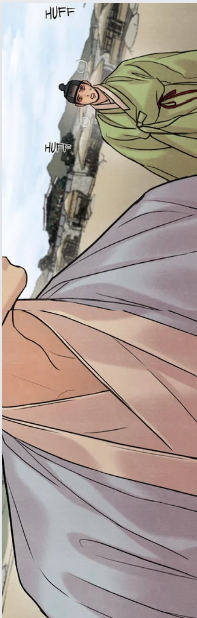 (chapter 125), but he never followed him to the bureau of investigation. And the same happened later. Why didn’t he go to his shed, when he was trapped there? Where was he, when the eldest son visited the father?
 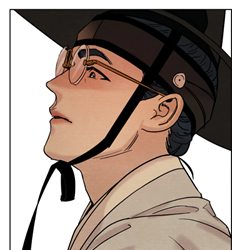 (chapter 07) Therefore Yoon Seungho didn’t notice the presence of a civilian next to the governor.
  (chapter 126). Striking is that the governor knew about Yoon Seungho’s whereabouts before his arrival: the coast. As you can see, I am detecting a link between the governor and the younger master Seungwon. Yet, it was disguised as a rumor behind the expression “I had heard”. My assumption is that Seungwon came from the bureau of investigation in order to inform his brother. Therefore it is not surprising that Seungho was invited by his brother to visit the prison during the night.
  (chapter 126) And the moment I perceived the protagonist as a fool in love, I realized that chapter 126 is a reflection of episode 7, 29
 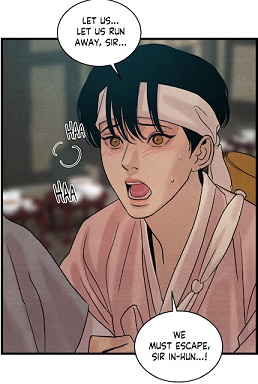 (chapter 29) and 40
  (chapter 40). Here, the painter was trying his best to protect Jung In-Hun’s interests (life, high position). Moreover, in episode 40, the painter had a dream, when he saw the announcement for the civil service examination. He smiled, for he was looking forward for the future.
 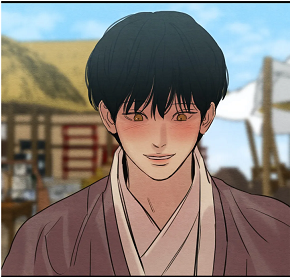 (chapter 40) And what have these episodes more in common? A betrayal, abandonment from a loved one and a paper (painting, poem). Hence I am more than ever convinced that the petition will resurface very soon and play a huge role in the downfall of the schemers and haters. Besides, chapter 40 represents the negative reflection of the conversation in the prison.
 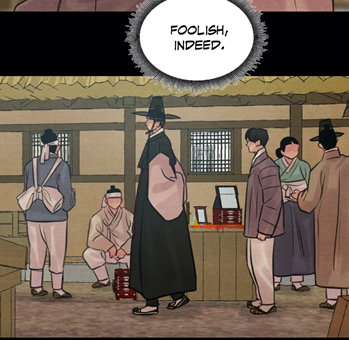 (chapter 40) There is neither disdain nor mockery. The mentioned scenes are similar, for the present resembles the past. And this brings me to the second reason for the Webtoonist’s decision.
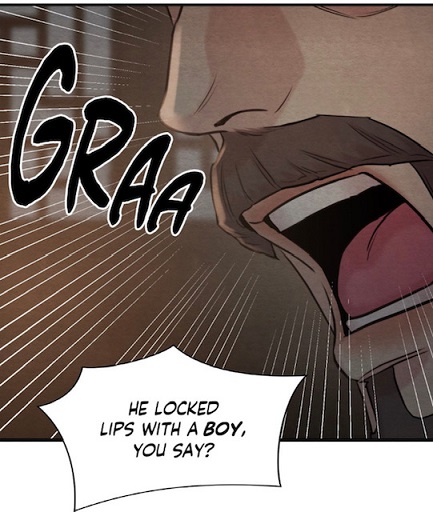 (chapter 123), Yoon Chang-Hyeon considered Yoon Seungho as a human, for he employed the personal pronoun “he”. He was still his son. Then in episode 77, he judged him as a slave
 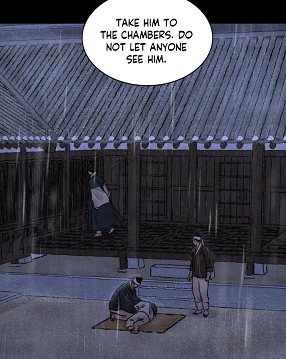 (chapter 77), hence he was submitted to the straw mat beating and was held captive. He even refused to send for a physician.
 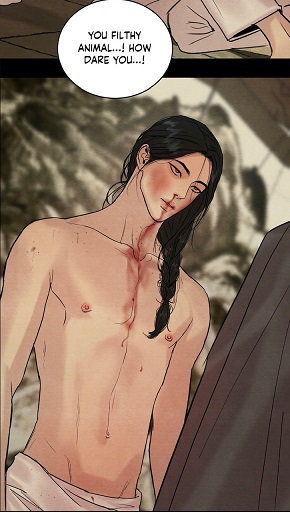 (chapter 83) Here, the father is denying his humanity, he is just an animal. In their next confrontation, he describes him as a monster, hence he wished that he had never been born.
 (chapter 86) However, his words exposed that he was still viewing him as a living being. Therefore it is not surprising that he accepted lord Song’s request to order the murder of his son! In the gibang, he decided to no longer acknowledge Yoon Seungho as his son.
  (chapter 107) The tragedy is that the protagonist still viewed the Yoons as his family because of Yoon Seungwon, who keeps calling him “brother”. This explicates why Yoon Seungho sponsored his brother to have an official position.
  (chapter 115) Therefore it is not surprising that he followed Yoon Seungwon’s advice again.
  (chapter 120). He would bring the petition to his own father. This means that he is acting like the painter who listened to his noona Heena so well.
 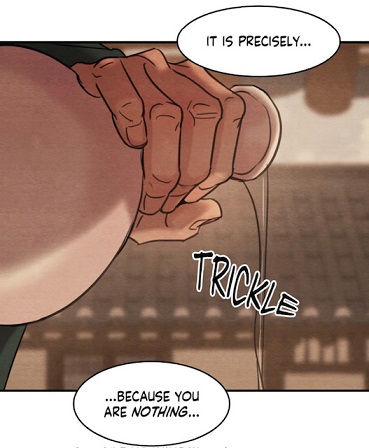 (chapter 126) He is not even a thing. This means that he is actually discarding him. This explicates why he sent him to the shed.
  (chapter 126) It was, as if he had become a merchandise. Or we could say that the elder master had been using him as a tool, which he can now abandon.
  (chapter 126) Interesting is that the idiom “plaything” has for antonyms tool, implement, instrument and utensil. And this brings me to the following remark. The father’s words are reflecting the last scheme. Yoon Seungho was used as the sword to get rid of an enemy, lord Song. It was, as if someone had decided to get rid of lord Song, for he represented a danger or threat. It also mirrors the trick in the shrine. Min and the others got killed, because Lee Jihwa went to his childhood friend. And who had seen the main lead using this sword, when he was enraged? Father Lee!
  (chapter 67) But let’s return our attention to the patriarch and his son. Yoon Seungho is no longer recognized as a Yoon member. Therefore I come to the conclusion that Yoon Seungho will make the following decision: to become an orphan. And this is symbolized by the loss of hair. I am expecting him to cut off his hair, something the painter has been doing for a long time. That’s why Byeonduck showed us the lord without a topknot.
  (chapter 126) This would coincide with my previous statement. The lord is going through the same experience than his loved one. However, people will come to the conclusion that this was done by the father. How so? Remember how each rumor became a reality.
  (chapter 1) I had already demonstrated that Yoon Seungho was not a fiend for sodomy with no regard for time and place, until he met Baek Na-Kyum. But once a deed is done, it can never be repeated.
  (chapter 101) So should Father Lee claim that he has long disowned Jihwa by cutting off his topknot, no one will believe him, for the young master was still seen with a topknot after confessing his feelings in public.
 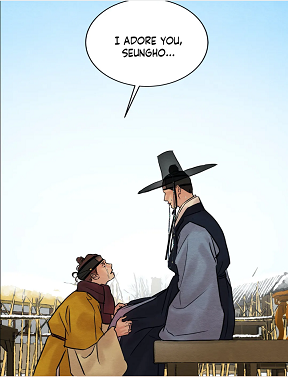 (chapter 57) In other words, the topknot incident at the kisaeng would be brought up. It is impossible for 2 fathers to act the same way. Besides, the loss of the topknot has another signification: Yoon Seungho would cut off ties with valet Kim, for the latter was the one who gave him the topknot. And episode 126 reflected one more time his position:
  (chapter 126) He is the one dressing him. It was, as if he was the pope.
 (chapter 116) It is because someone had reported to him the conversation between lord Song and the painter.
 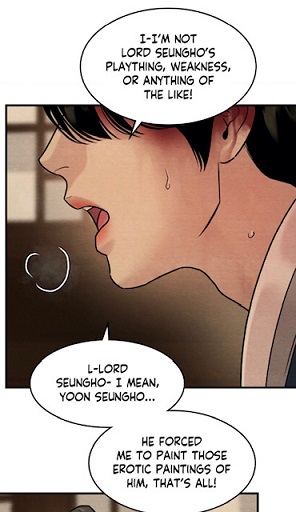 (chapter 122) There was a spy listening to their conversation. Since all the guards died
  (chapter 124)
  (chapter 120) And who was present there? Jung In-Hun! But there is more to it. Since leaving Baek Na-Kyum behind is considered as an abandonment, it means that the patriarch abandoned his son too.
 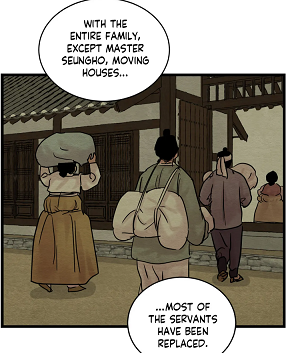 (chapter 27) By speaking to Yoon Seungho, the elder master Yoon didn’t realize that he was admitting his own wrongdoings. Actually, he had abandoned him many times… like here for example
  (chapter 87) Therefore his words will come back to bite him. But these words are also exposing the valet’s betrayal and abandonment towards Yoon Seungho!! How so?
 (chapter 122), then he should have been at the patriarch’s house. The absence of the valet is the evidence of his treason. For me, he is now working for Jung In-Hun which explains why he never mentioned his presence in the mansion, only lord Song. Besides, keep in mind that once deed done can not be repeated. In episode 27, the lord was too angry and busy to notice the learned sir’s spying activities.
 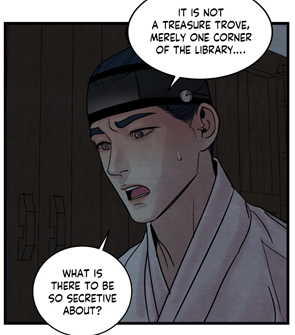 (Chapter 27) Moreover, Kim didn’t report the interrogation to his master. This means that the butler covered up for the teacher’s wrongdoing. But here is the deal:
 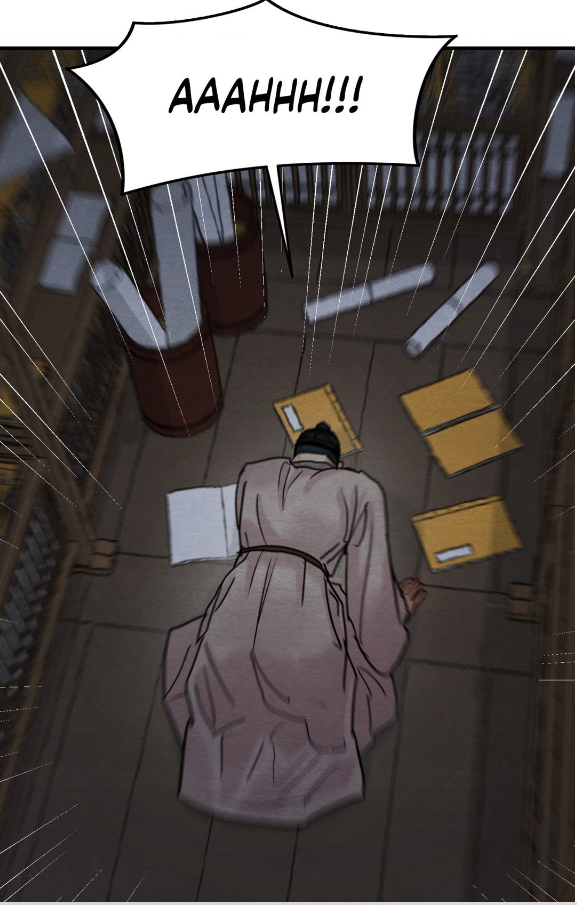 (chapter 120) The library was ransacked, hence this crime is bound to be discovered. Finally, his intervention in the shed is exposing his deception.
  (chapter 83) That’s why I am convinced that these words
 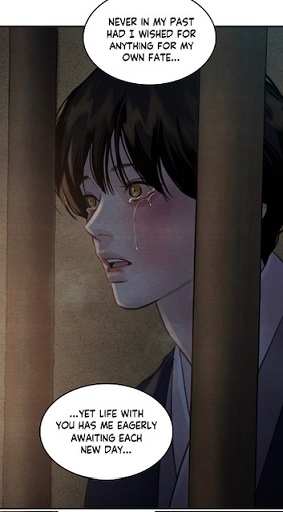 (chapter 126) He is no longer suicidal, in fact he is full of hope! Though he was sent back to hell for a short moment, he came out of this as a winner. My evidence is that the lord has now become a believer.
 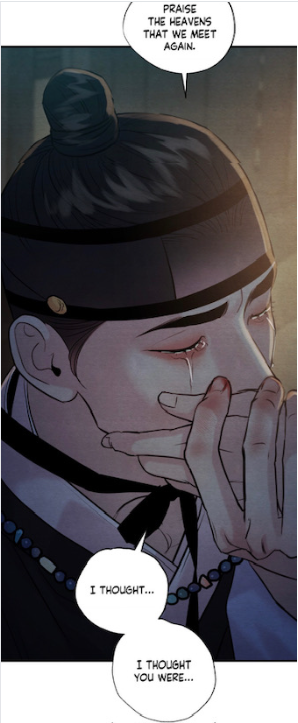 (chapter 126) Yes, episode 126 exposes the return of his faith! And where could we see the atheism of Yoon Seungho in the story? In chapter 92!
  (chapter 92) He didn’t believe in the spring poetry to ward off bad luck! That’s why he was sent back to the past. He needed to lose everything in order to find hope! In his darkest moment, he expressed a wish: to meet his loved one! And where did he pray to the gods? In the shed!
  (chapter 126) Observe how he is kneeling in direction of the bars. He is hoping to meet Baek Na-Kyum again. As you can see, though this scene
  (chapter 126) He was showing resistance and anger towards his father. Moreover, he was no longer shaking in front of the patriarch or the guards.
  (chapter 86) Thus I deduce that though he was mistreated and insulted like in the past, he was no longer suffering from his traumas. He is healed. His will is now really strong, supported by his new found faith.
  (chapter 62) Even if they were hugging, they were not close emotionally and mentally. This stands in opposition to the scene in the jail. They might be separated by the bars, but they are touching each other tenderly.
  (chapter 126) They are able to see each other.
  (chapter 126) Try Meditation
 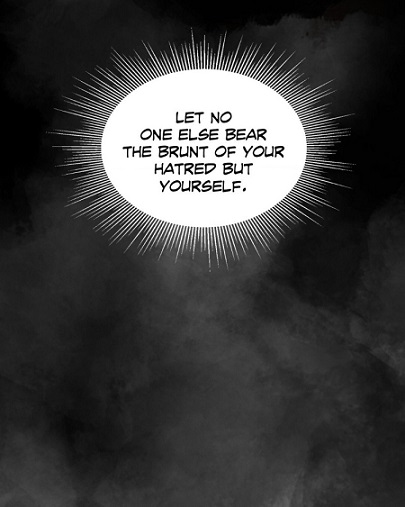 (chapter 126) or Prayer
  (chapter 126)
 (chapter 126) Quoted from
  (chapter 126) It is relevant, because light represents knowledge and truth. He is now the bearer of the truth. And he got his blessing from Baek Na-Kyum, when he touched his hands.
  (chapter 120) Yes, chapter 126 mirrors 92! This somehow confirms my theory that the butler was the one hiding under the purple hanbok.
  (chapter 92) Moreover, we have another reference to this episode, the pouring of alcohol!
 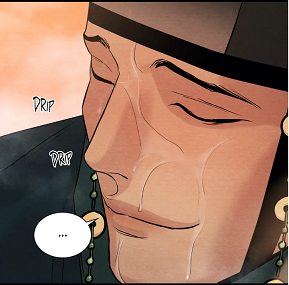 (chapter 92)
  (chapter 126) It was, as if someone wanted the lord to pay for Min’s insult! That’s the reason why I come to the following conclusion: Yoon Seungho is now opening up to Baek Na-Kyum. He is confessing to the painter about his wishes.
 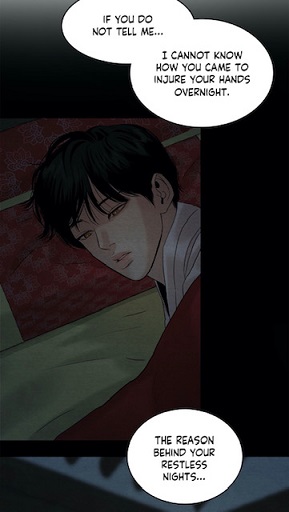 (chapter 85) The manhwaphiles should keep in mind that the request from the artist in the study was strongly connected to forgiveness. And Baek Na-Kyum could also confess what happened in the past: his guilt and regret asking for the lord’s forgiveness. Right now, both are blaming themselves for the incidents, although they got fooled by many schemers. Because the lord proved his loyalty and blinded trust in the painter, I see the scene in the jail as a new version of this confession:
 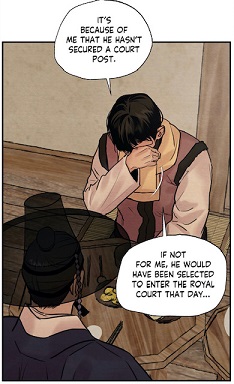 (chapter 75) Thus I consider the prison cell as a sacred place, where both characters are about to be freed from their guilt!
 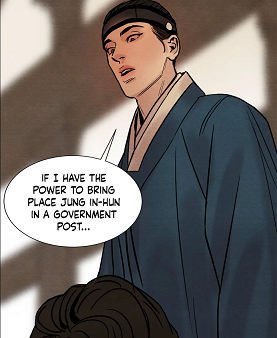 (chapter 11) thus he could escape justice!
  (Chapter 11) Simultaneously, the first definition of life lie corresponds to Yoon Chang-Hyeon. The latter blames his eldest son for the downfall of the Yoons.
 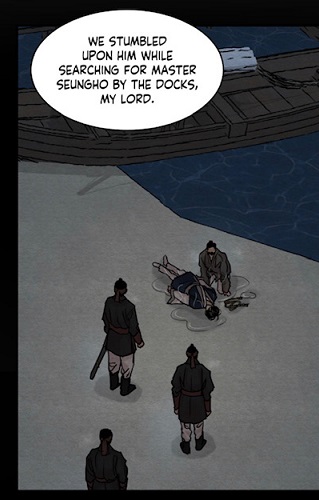 (chapter 125). They fail their duty, for they allowed the main lead to barge in the room.
  (Chapter 126) He is actually encouraging his son to hate himself and indirectly his own father! However, the son made the exact opposite decision: love!! Hence I am more than certain that the elder master is about to experience a harsh awakening.
  (chapter 101) Thus they got punished. And now, the two main leads are about to face human justice.
  (chapter 65) But strangely, the painter is showing no fear at all.
  (chapter 126) He is ready to sacrifice himself. So why was Yoon Seungho dressed up in the end? One might say that with the topknot and the hanbok, the abuse from the patriarch got covered up. That way, Baek Na-Kyum wouldn’t detect Yoon Chang-Hyeon’s lies and abandonment!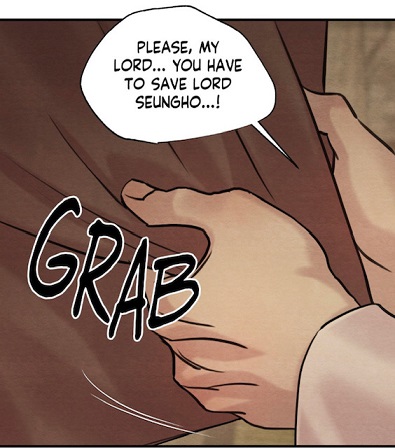
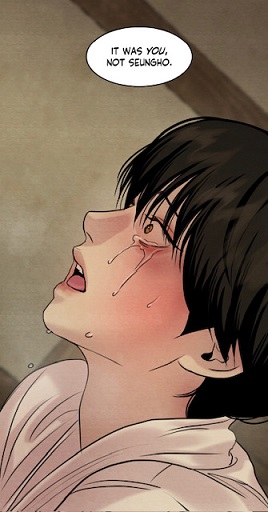 (chapter 125) The latter brainwashed him to take the fall for everything, implying that way, his loved one would be protected! However, I am suspecting that if the lord were to leave the prison, he could meet someone in the office. That way, this person is not confronted with the reality: the main lead was “abused”. According to the butler, he was supposed to meet his brother at the office.
 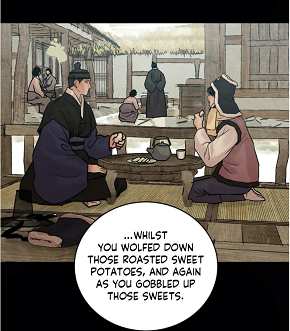 (Chapter 92) In episode 92, we have a mysterious man in the background dressed in black, but he is not wearing his gat. Besides, I would like my avid readers to remember this image from the trailer:
 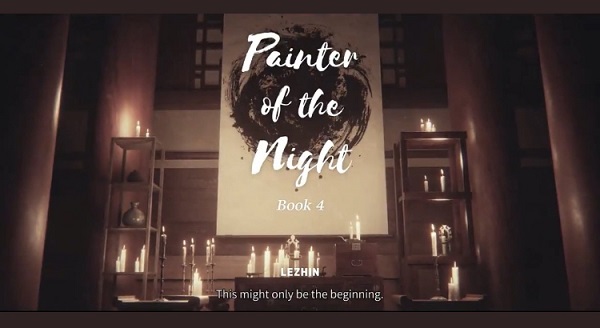 which reminds us of the office:
 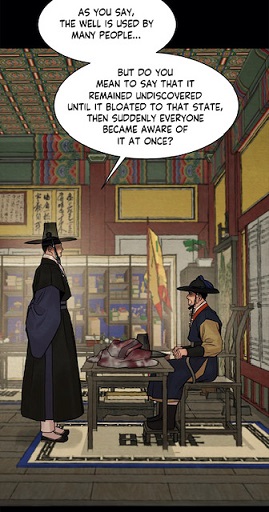 (chapter 98) This place symbolizes power and strength. And because episode 126 is a reflection of chapter 7, 11, 29 and 40, I think, Yoon Seungho is about to receive a deal, for these episodes are focusing on the deal between the painter and the protagonist: protection from the father and punishment in exchange for entertainment. He would appear as a fake savior in the end. Remember what in episode 11 the artist said in front of his fated partner:
 (chapter 11) He would do anything except painting!! He was not willing to give up on this principle, which reminds us of faith. So when Yoon Seungho faced his father, he experienced powerlessness for one reason.
  (Chapter 105) Then in episode 122,
  we discover that lord Song employed the pipe to beat the painter. Moreover, I detected a progression. In season 2, Yoon Seungho was still smoking.
 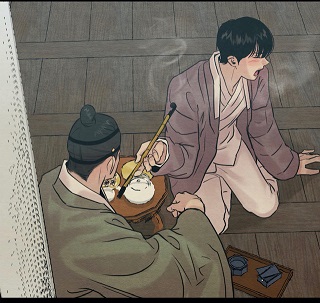 (Chapter 74) But once the painter showed that he didn’t like smoking, Yoon Seungho stopped taking the drug. This explicates why in season 3, he was no longer seen with the item in his hand. Even under stress, he chose to hunt instead of smoking in front of the window. We have two scenes where the pipe is present. One is when the lord is throwing it out of anger,:
 (chapter 86) which reminded me of the incident with the music box.
 (Chapter 85) This shows that this item had no value to the protagonist. Then the pipe appeared in the gibang on the table.
 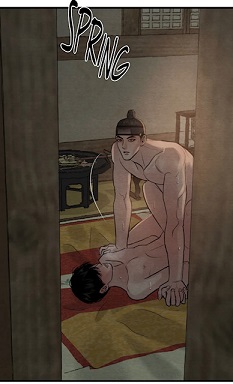 (Chapter 96) However, here the lord had only eyes for the painter or Heena. Hence I have the impression that the pipe could resurface and serve as an tool to identify the perpetrator, just like the glasses were used to recognize the scholar.
  (Chapter 102) Finally, since the pipe appeared in the gibang twice, it indicates that this hobby is linked to the kisaeng house!! And this brings me to my final observation: the pipe is connected to paper
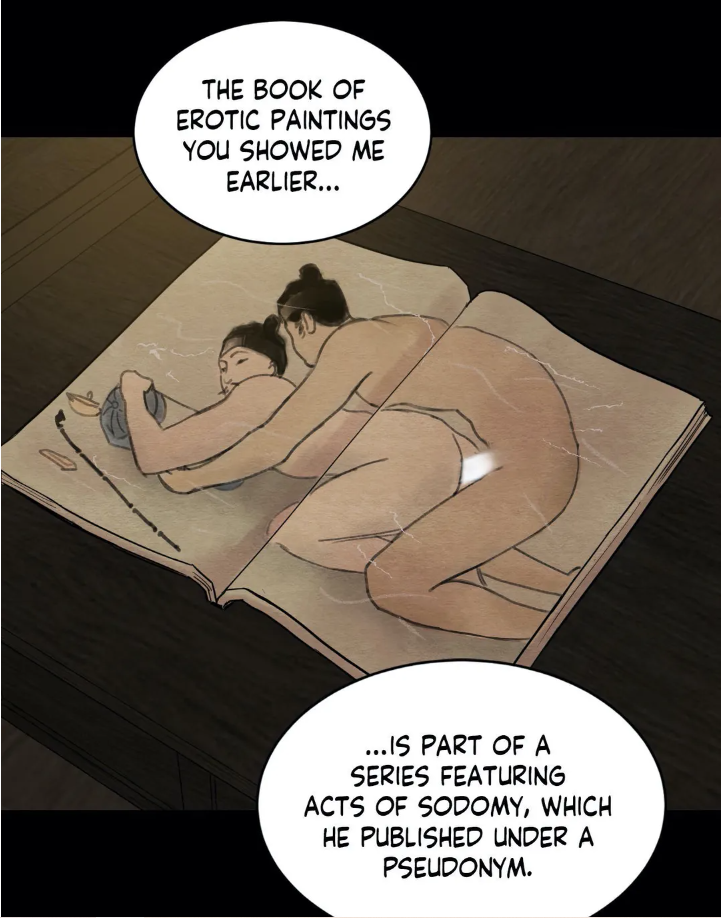 (Chapter 1)
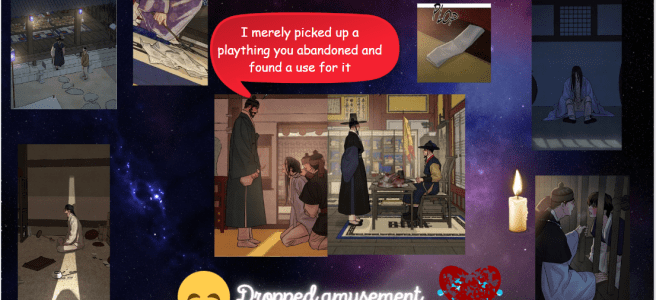
  (chapter 1) However, there exists two books!! And one has no PIPE! This coincides with the decision of the painter to stop drawing erotic pictures! Yes… dropped amusement! At the same time, Yoon Seungho has long lost his interest for erotic publications. He also dropped this hobby. On the other hand, the books were dropped in front of the painter.
 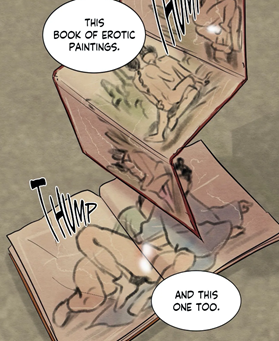 (Chapter 1) Finally, the petition was dropped in front of lord Song
 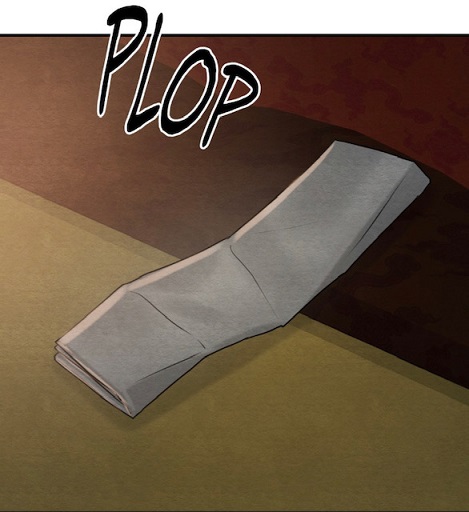 (chapter 123) which announced his death sentence. To conclude, the papers have a strong connection to punishment and death.
  (Chapter 126) Yoon Seungho went to the father’s mansion, and it didn’t take him that long! As you can see, I consider this trip with Yoon Seungwon as a diversion.
 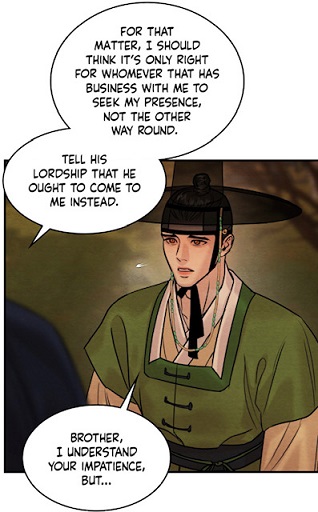 (Chapter 121) So why didn’t the elder master return to his old home? It is to drive the Yoons out of their propriety. In other words, the lies from the past are becoming a reality exposing the liars in the end. Their life lies will be ruined.

 (chapter 117) I am quite certain that many were outraged and disgusted by the scholar’s smooching. First of all, why did the learned sir do it? One might say that it is related to the petition which is in Yoon Seungho’s possession.
  (chapter 117) The learned sir was tasked by the mysterious noble wearing a purple hanbok to retrieve the document. I would like to call my avid readers’ attention that we never saw the man introducing himself to the former teacher. He could have definitely impersonated someone, for this trick has often been used in this story. Anyway, in exchange for this favor, Jung In-Hun got promised a high position in the government.
  (chapter 115) Thus Jung In-Hun has only one option left. He needs to utilize a spy and traitor in order to get the document. Because Jung In-Hun has known the painter since his childhood, it is not surprising that he chose to approach Baek Na-Kyum. As you can imagine, episode 117 is a new version of episode 24
 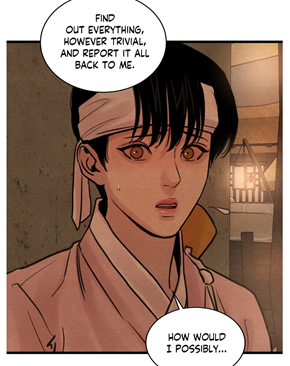 (chapter 24), where the angry learned sir asked the naive artist to spy on their benefactor and episode 35
 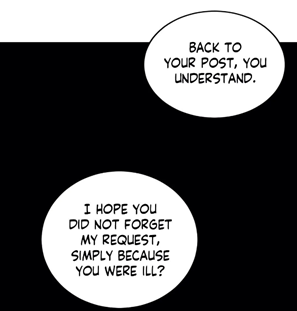 (chapter 35). In the latter, the scholar gave the same task to the main lead, but his attitude was totally different. He was acting like a gentle and concerned man, hence he stroke Baek Na-Kyum’s head and cheek.
  (chapter 35) He had two reasons for that. First, the painter was still recovering from his long illness. So he couldn’t act so coldy, for his selfishness and heartlessness would have become obvious. The learned sir had to justify his egoism and indifference. During his illness, he had at no moment visited him, but he had his reasons.
 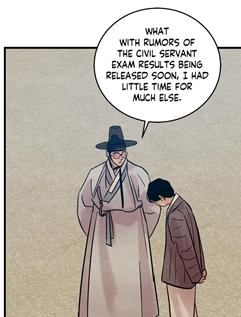 (chapter 35) He hoped for the painter’s understanding. All this because he needed the low-born more than ever. He had not renounced on discovering Yoon Seungho’s weakness yet. However, in season 1, he failed to achieve his goal, because after the night spent with the main lead, Baek Na-Kyum refused to divulge any information about the meeting between the host and his brother Yoon Seungwon.
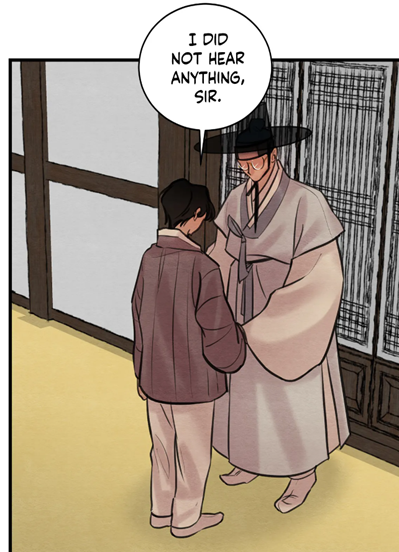 (chapter 38)
  (chapter 117) Hence we should consider the scholar’s kiss as the kiss of Judas. The latter, known as the Betrayal of Christ, is the act with which Judas identified Jesus to the multitude with swords and clubs who had come from the chief priests and elders of the people to arrest him. Thus I am expecting an arrest of the painter in the future. Since he is the love interest of Yoon Seungho, he has once again become the target of the next plot.
 (Chapter 118) While he had faked his pity and empathy for the painter, when the latter was exposed to gangrape
  (chapter 118), the ending of the episode is showing him as a monster, acting like Min and his friends.
 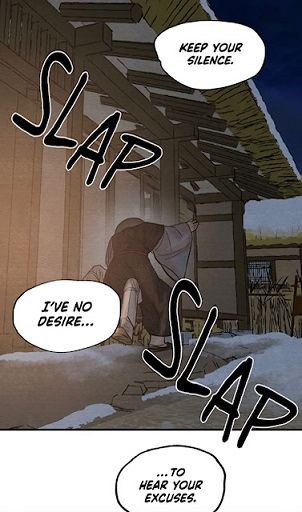 (chapter 115) However, this is impossible. Time is the proof for the lord’s innocence. 7 days have already passed since Yoon Seungho’s violent outburst in front of the learned sir’s home. Don’t forget that it took Yoon Seungho 6 days to regain consciousness.
  (chapter 116) And the manhwaphiles saw that the painter spent the night with his lover after their conversation at the pavilion.
 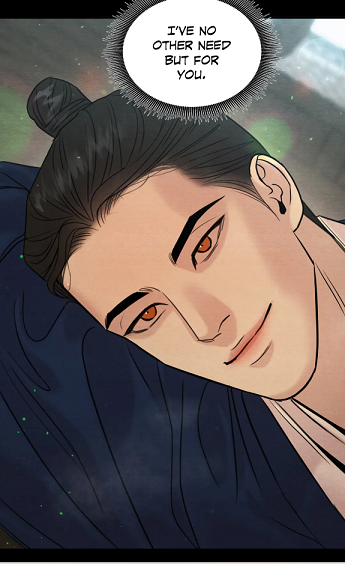 (chapter 117) This means that Na-Kyum’s visit to the gibang could only take place after that night. That’s how I came to the conclusion that the meeting took place after 1 week (6 days+ 1 night). However, the swollen cheek will easily vanish within one week contrary to the stabbing.
 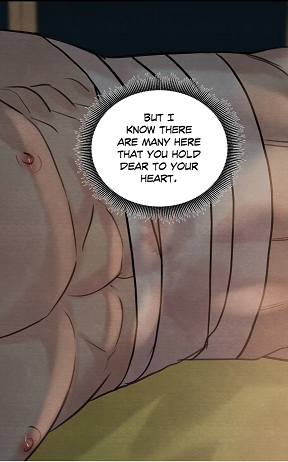 (chapter 117) Therefore after the release of episode 117, I had imagined that the wound from the learned sir was faked with the rouge from the noonas. Yet in episode 118, I detected the busted lip which can not be faked. The scratch is the evidence that the wound is real. Jung In-Hun knew too well that he couldn’t frame his previous sponsor for this. Hence he avoided to reply to the painter’s interrogation.
  (chapter 118) Furthermore, his cheek was perfectly fine, when he left his home.
  (Chapter 117) This must have happened on his way to the gibang or in the gibang itself! So who would do this? Yoon Chang-Hyeon? The noble with the purple hanbok? I will answer to this question further below.
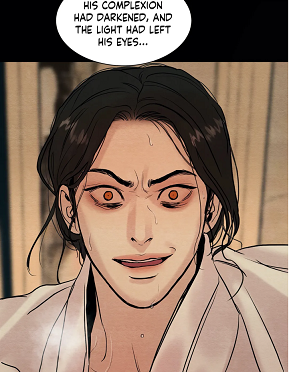 (chapter 57) It is less pronounced, for Jung In-hun only met this mysterious man once contrary to the main lead. Even Baek Na-Kyum noticed the transformation, hence he got scared.
  (Chapter 118) He couldn’t recognize his former teacher. The learned sir had become like a violent beast. But why would he be so frantic and hopeless that he became violent in his gestures and words? It is because he had been threatened again. The wounded lip and cheek are the evidences that he has been coerced to convince the painter that the latter should return to his side.
  (Chapter 118) His grabbing and yelling ooze urgency. One might think that the mysterious aristocrat with the purple hanbok is behind this, for he once voiced a menace towards the villain.
 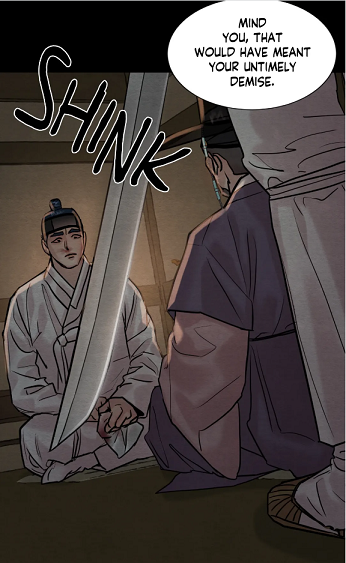 (chapter 117) However, observe that in their meeting, Jung In-Hun spoke about affection
 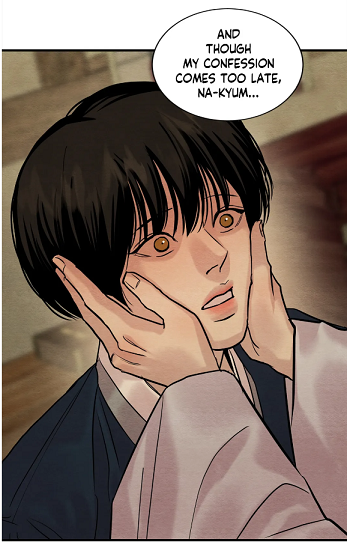 (Chapter 118) and this doesn’t belong to this man’s world (power, lineage, yin/yang, education). And it is the same for Yoon Chang-Hyeon. The latter embodies hatred and rejection for sodomy!
  (chapter 94), then the kiss
  (chapter 95) The artist had kissed the main lead for two reasons. He desired to convey the sincerity of his attachment and to prove that this was real. Yoon Seungho shouldn’t imagine that this was just an illusion, as he often questioned his own senses and sanity. In the gibang, the learned sir changed the chronology: first the smooching, then the confession. Why? It is because he thought that the painter still loved him, when Baek Na-Kyum showed concern for him.
  (Chapter 118) Due to his arrogance and vanity (the negative aspects of self-love), he jumped to the conclusion that nothing had changed. The painter seemed to be still naive.
  (chapter 118) Hence his surrogate father smirked. The irony is that there exist different kind of love: friendship, family… At the beginning, the artist was still viewing Jung In-Hun as a friend. Thus he got worried about his wounds. Yet observe that he had no intention to bid farewell to the former teacher.
  (Chapter 118) He is no longer considering him as a father figure, let alone a close one. Imagine the irony! In reality, the low-born was announcing to his former role model that he was abandoning him. Yes, it is the positive reflection of the scene in the library:
  (chapter 40) Jung In-Hun’s words came back to bite him. He is the one acting like a prostitute, like a man consumed by lust!
 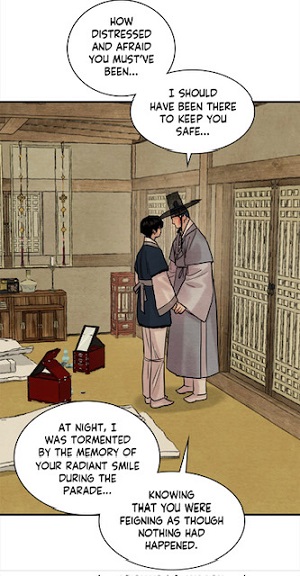 (chapter 118) Baek Na-Kyum, as the mirror of truth, is not only confronting the scholar with his bigotry and dishonesty, but also the mastermind behind this encounter. This explicates why the learned sir spoke about love:
  (chapter 118) This was the same for Yoon Seungho. The sexual abuser had only been obsessed with his own reflection and desires to the point that he never paid attention to his sex partner’s gaze… the loss of light in the gaze, the absence of tears … Besides, there was no agreement, everything was based on coercion and Kim knows that. That’s the reason why Jung In-Hun had tears in his eyes! It is because the main lead used to cry as well… asking for his pity and mercy. Since the scholar never cried before, I believe that the latter had asked to shed some tears in order to move the heart of the counterpart.
  (chapter 118) Baek Na-Kyum was never his young protégé, only his student. Why? It is he never protected him, he just consoled him!
 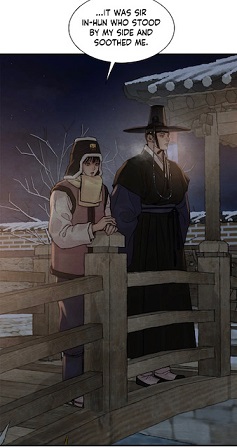 (chapter 94) However, like I had already outlined, Yoon Seungho was offered “protection” in exchange for his favors. That’s how the main lead got rewarded with the mansion and the proprieties. But now, Yoon Seungho is willing to give up on everything for Baek Na-Kyum.
  (Chapter 11) Back then, the painter had the burst lip and the glowing cheek too.
  (Chapter 11)
  (chapter 118) Not even “lord Song” or lord Haseon from episode 107 couldn’t pull such a trick.
  (Chapter 107) He had announced his visit and the kisaengs had to gather next to the gate. There, the mysterious man selected only one woman.
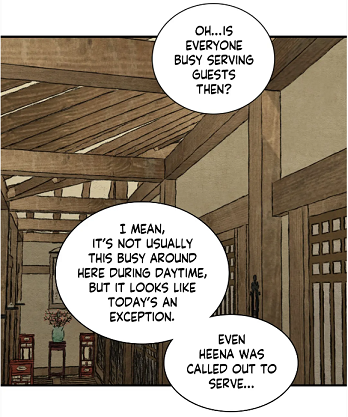
  (Chapter 107) However, in episode 118, the kisaeng talking to Baek Na-Kyum expressed that there were different parties. Each kisaeng was participating in a different festivity (“It’s not usually this busy”). She would have mentioned it, if there was a huge party in the gibang. But there is another clue for the king’s intervention: the pipe is no longer visible in the noonas’ room
 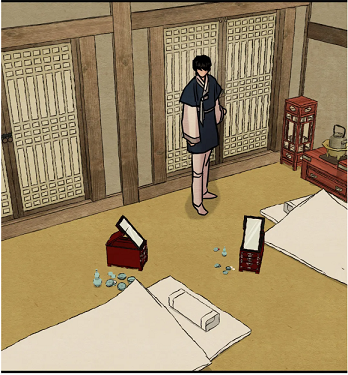 (Chapter 118) Finally, this painting, Hokjado, is actually mocking the monarch.
  (chapter 116) It signifies that this panel is a new version of this scene:
  (chapter 103) And what is the common denominator between these two scenes? Both protagonists rejected the help from the staff, especially from butler Kim.
 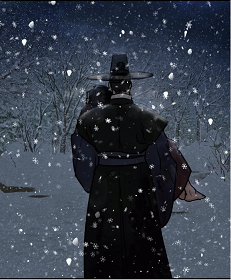 (chapter 102) He was already giving up on everything, even his own life, if he had not the artist by his side. Under this new light, it becomes comprehensible why killing the painter is not the first option for the pedophile.
  (chapter 118) He did it in the past, and he is repeating his actions. He shows no regret or remorse for the past
  (chapter 118) except his promise:
  (chapter 118) In fact, he blamed his brother and his father for everything, even Yoon Seungho’s way of life. His concern and affection for Yoon Seungho are totally superficial and trivial in the end. Why didn’t he ask about his wounds? He met him the next day after he regained consciousness.
  (chapter 118) It was, as if they had two different fathers. Note that despite the father’s cruel action, the young noble still calls Yoon Chang-Hyeon as “father”. To conclude, Yoon Seungwon doesn’t consider the protagonist as his brother despite his words. The younger master is the reflection of the learned sir, the one faking “love, honesty and concern” for a close one, whereas in reality these persons are more worried about their own future and comfort.
 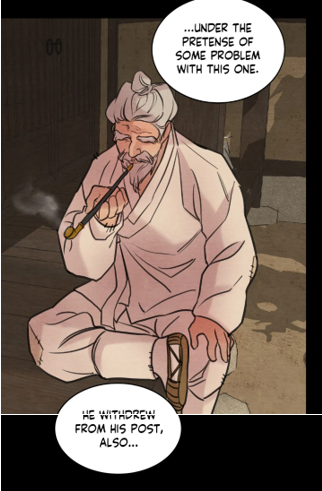 (chapter 37)
 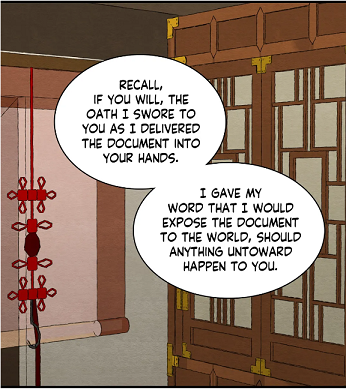 (chapter 118) It is because he knows the truth now. Nevertheless, he is choosing to keep his brother in the dark, for this revelation would make him appear as a liar. He definitely feels bound by secrecy.
 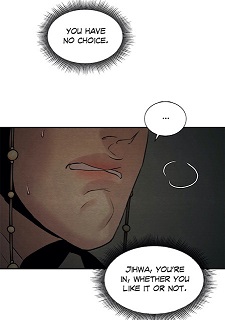 (chapter 76)
  (chapter 118) For this winning hand, Yoon Seungho had to suffer a martyrdom. Hence it becomes comprehensible why he is envisaging to renounce on everything.
  (chapter 117) He was only happy by the painter’s side.
 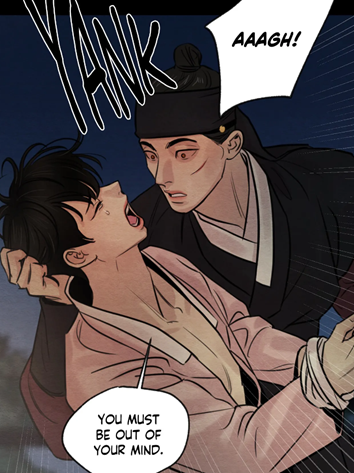 (chapter 25) On the other hand, I had made this connection, even before the release of episode 118. Why? It is because through deductions, I had already come to the conclusion that this was a stolen kiss.
 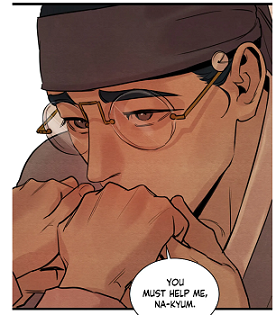 (chapter 24), then he hugged him
  (chapter 29). While the first embrace took place in a deserted area (close to the port), the second hug was witnessed by many people. It was in the open, moreover the so-called “hero” had jumped off the horse during the parade which could only catch the attention from the crowd.
  (chapter 111) Between the two embraces, we shouldn’t overlook the caresses on the head and cheeks which I mentioned above. As you can imagine, the kiss of Jung In-Hun represents the climax of their intimacy. Striking is that the affectionate gestures always took place in public (street twice and the courtyard).
 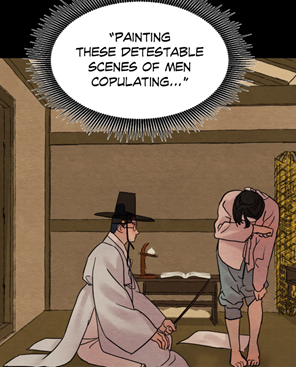 (chapter 34) His kiss is displaying his hypocrisy, which the artist could only feel. Hence he didn’t reciprocate the smooching. His lips remained immobile.
  (chapter 19) Therefore I come to the conclusion that this kiss is like the embrace from episode 29: fake! It is because the learned sir needs him! This statement stands in opposition to the protagonist’s love confession.
 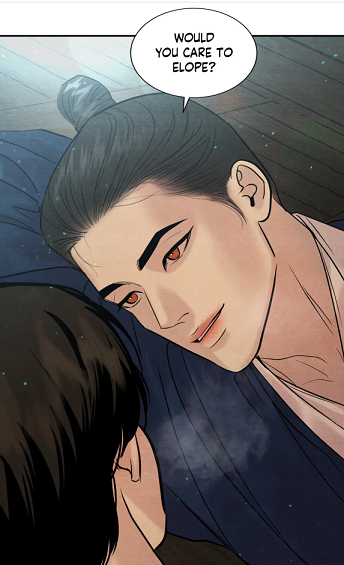 (chapter 117) His presence and affection represent the biggest treasure for Yoon Seungho. Baek Na-Kyum is his only source of joy and happiness. However, for the learned sir, the “need” has a different foundation. He can lose everything, if the painter doesn’t choose him. And if he were successful, he would even get power! As you can sense, for the learned sir, Baek Na-Kyum is just a tool, while for the Black Knight, he is a necessity! Without him, he has no reason to continue living. Jung In-Hun is desperate to survive, while Yoon Seungho is pushed to give up on his suicidal thoughts THANKS TO His father:
  (chapter 111) His gaze oozed not only arrogance, but also blindness. Imagine that he was smirking in front of the painter while looking at the wealthy aristocrat. It was, as though he thought that the artist wouldn’t notice his disdain and vanity. He imagined that the artist was still naive and ignorant like in season 1. This explains why the painter expressed his disapproval about the learned sir with a smile later:
  (chapter 111)
 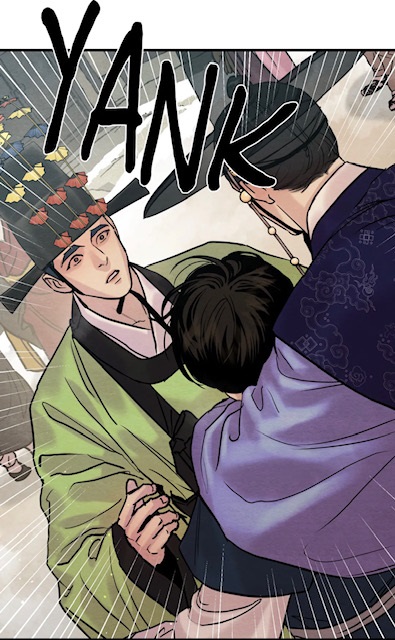 (chapter 111), for Baek Na-Kyum is always accompanied by his soul mate (chapter 40, 45, 74-75, 91-97, 104-105) In addition, people would have recognized him due to the previous parade and noticed his interaction with the artist. Nevertheless, the villain needed privacy, as he was inciting the main lead to commit a wrongdoing: betrayal towards Yoon Seungho. So their meeting could never be mere coincidence and happen in the open. Their reunion had to be planned properly and in secrecy. Thus it signifies that it had to happen behind the dark knight’s back. I would even add that the beloved couple needed to be separated! And now, you comprehend why their meeting had to take place in the gibang! In season 3 and 4, the kisaeng house is the place where the main leads got separated from each other, though the intervention from the noonas didn’t always work like expected.
  – first separation, for Yoon Seungho had to take care of the noona Heena
  Here we witnessed his return. However, the kisaengs badmouthed Yoon Seungho
  (chapter 93) Their attempt was to create a riff between the couple.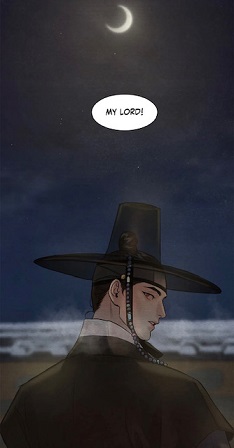
 (chapter 94), when the painter thought that they would go to the pond.
 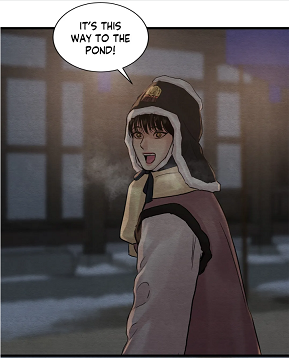 (chapter 94) Why didn’t the artist follow his partner right away?
  (chapter 96) She intervened too late, and her brother didn’t notice her presence.
 (chapter 99) Yet, we never saw the face carrying the light
 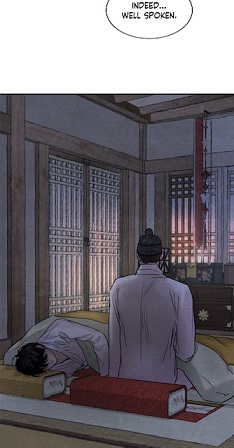 (chapter 97) But it can not be the officers, for they were carrying torches.
  (chapter 97) Yet, the light in the previous image is nearer to the ground than to the top of the door. Besides, carrying a torch in a building made of paper and wood is quite dangerous. For me, the person approaching their suite could only lift such a candle light
  (chapter 19) We have two possibilities left: the kisaeng Heena or the butler.
  (chapter 98) This confrontation didn’t occur in episode 93, for the kisaeng’s back was illuminated by the candle light, whereas the room was darker in episode 93.
  (chapter 93) The light was standing further away from her in this picture. Hence I deduce that the lord must have revisited the kisaeng during that night. Because she was not holding the candle light, I can only deduce that the person witnessing this second conversation was butler Kim! Besides, we have another allusion to him through the reflection of episode 19 and the first Wedding night. Then later, Heena tried to convince her brother to leave Yoon Seungho’s side
 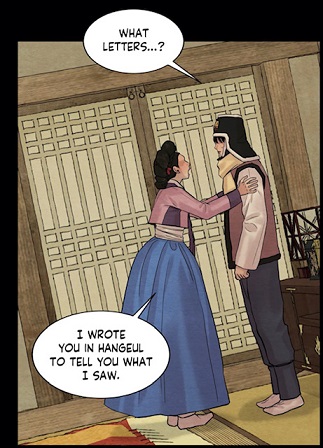 (chapter 97) by blaming him for Jung In-Hun’s murder, but her intervention failed. In reality, the separation could only take place thanks to the intervention of Yoon Seungho’s staff. In episode 97, the servants were definitely manipulating the painter with this corpse
  (chapter 97), whereas in episode 98, the maids had to play their role as well: badmouthing their master
  (chapter 98). He was a cruel and violent lord!
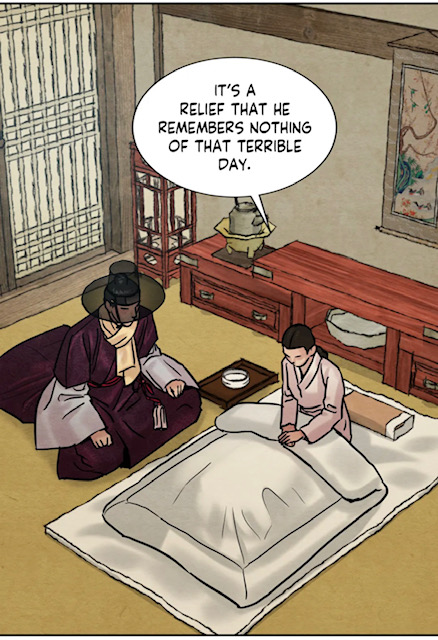 (chapter 105: Heena was strong enough to follow her brother to the door, and this quite quickly, for she witnessed their argument), the other cast doubts in Baek Na-Kyum
 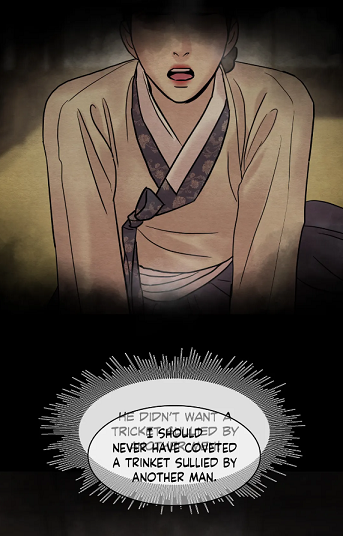 (chapter 109) and finally the third one lied to her donsaeng.
  (chapter 105) Yoon Seungho had mentioned that he would return to the kisaeng house in order to fetch his lover.
  (chapter 105) Yoon Seungho was just thinking of a momentary separation, whereas the kisaeng implied that his departure was definitive. This shows that they had hidden the main lead’s true intention from the painter. This was no coincidence in my eyes.
  (chapter 118) However, I believe that Jung In-Hun was lying, for his visit could be leaked to the owner of the mansion. He has no idea that no one is siding with the main lead. But by saying this, he was covering up for the gibang, and as such Heena. She was definitely her source of information.
 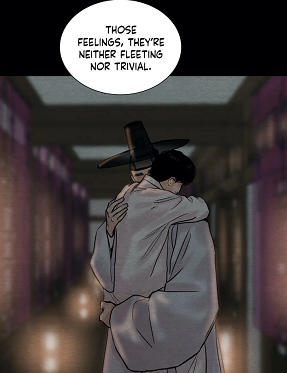 (chapter 68) Why? It is because she has always loved the learned sir and projected her own thoughts and emotions onto the artist. In my eyes, this encounter is to prove the kisaeng wrong, to confront her with reality and her prejudices. What caught my attention is that each time, the painter couldn’t meet Heena, her absence was justified that she was serving a nobleman outside.
 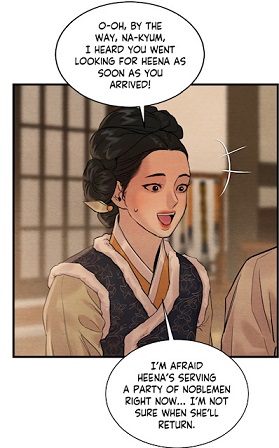 (chapter 93)
 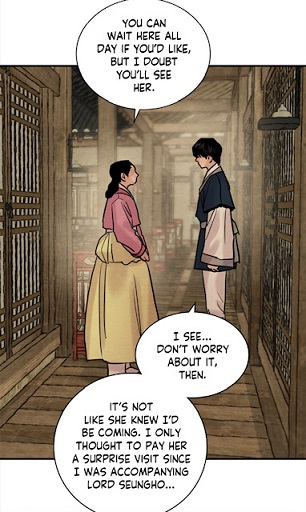 (chapter 118) Notice that the painter is already thinking that she was not expecting him. Yet, it is clear that he would come to the kisaeng house, for Yoon Seungho had been invited by his brother. The invitation had already been proceeded the day before:
 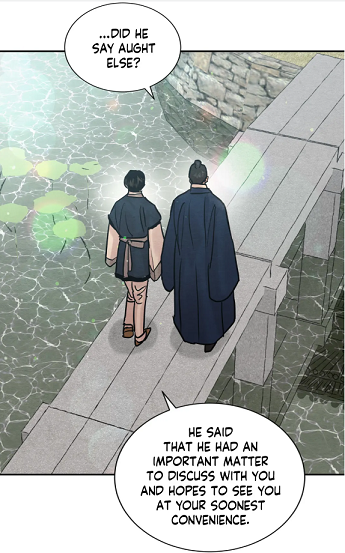 (chapter 117) So if something were to happen, Heena could feign ignorance and as such innocence. After their last argument, the noble has learnt that he shouldn’t keep his distance from the artist and he should confide to him, hence he talked about elopment at the pavilion.
  (chapter 25)
  (chapter 77) in a previous analysis. However, I will only focus on the comparison between episode 19 and 118, for both represent a first kiss!
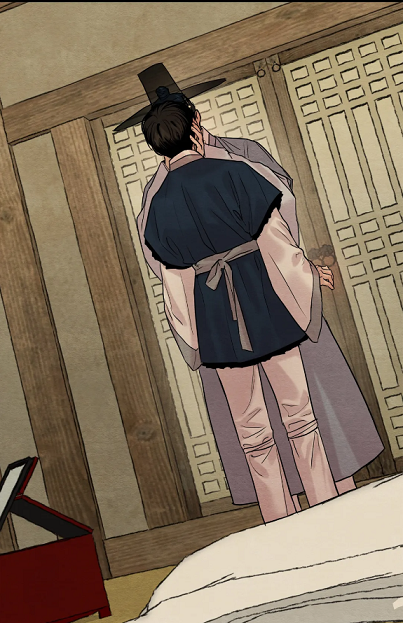 (chapter 118) And remember that in episode 19, the painter had caught the main lead by surprise, when he entered the room.
 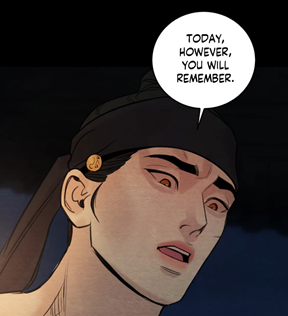 (chapter 25) Thus I am deducing that this scene
 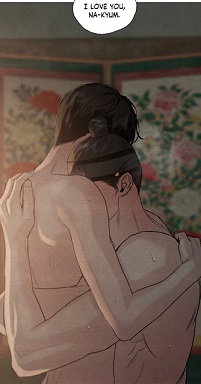 (chapter 96), this means that he has finally accepted his homosexuality. Consequently, the sexual abuser could have the impression that he just needs to remove the painter from the main lead’s side and that’s it. He can replace the artist… impersonation once again!
 (chapter 96) These notions are all reflected in the confrontation between Baek Na-Kyum and Jung In-Hun:
 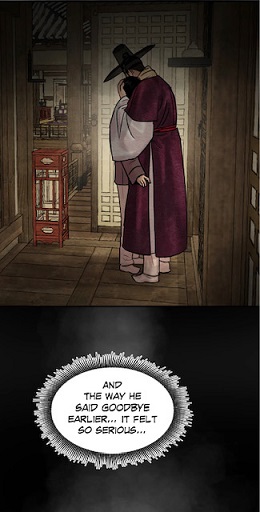 (chapter 105) Hence I came to the conclusion that the stolen kiss from Jung In-Hun represents a farewell, though the learned sir has no idea of this signification. Thus I thought of Judas’ kiss. The learned sir failed to achieve his goal exactly like in season 1. Even back then, he was distressed and under pressure, for he had recognized that he needed to pass the civil service examination first.
  (chapter 115) In my opinion, he will be framed for the incident in the shaman’s house.
 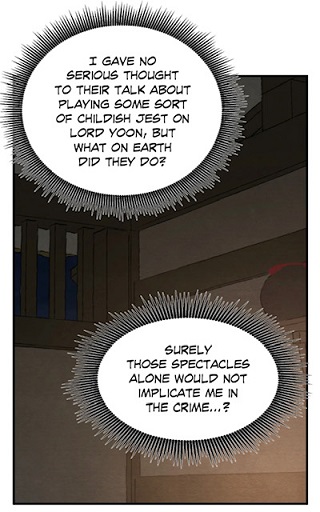 (chapter 115) Hence I have the impression that this stolen kiss will have huge repercussions not only for the learned sir, but also for Heena.
 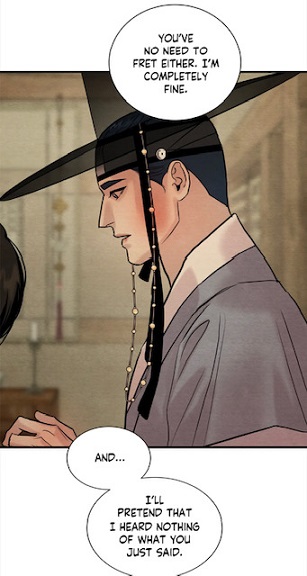 (chapter 118) Observe that the painter wanted to ignore the words from the fake teacher. So he could have a change of heart and report the incident to the authorities. He doesn’t know that his lover killed Black Heart and his friends. The learned sir was admitting that his nightmare had truly happened.
  (chapter 83)
  (chapter 88) From my point of view, the schemers are projecting their own thoughts and emotions on Yoon Seungho. Moreover I am quite certain that they have already calculated the possibility of a rejection. The painter’s so-called wrongdoings from season 1 (chapter 11: the ruined painting, chapter 29: desertion) and season 2 (chapter 61: the desertion) were all perceived as rejections. If he is caught with Jung In-Hun alone, they anticipate that Yoon Seungho will react like his father. He won’t be able to discern the truth. Baek Na-Kyum is not faithful and is now tainted. Or even worse… Yoon Seungho might commit a crime. This thought seems to contradict my previous statement: Jung In-Hun is acting on the pedophile’s order. Nonetheless, my theory is that there exist two conspiracies:
 (chapter 107)
  (chapter 115)
 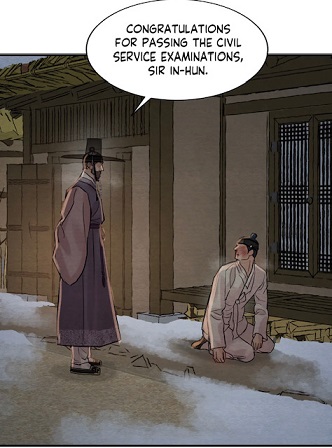 (chapter 115: flower pattern and no sleeve, the beard covers the jaw )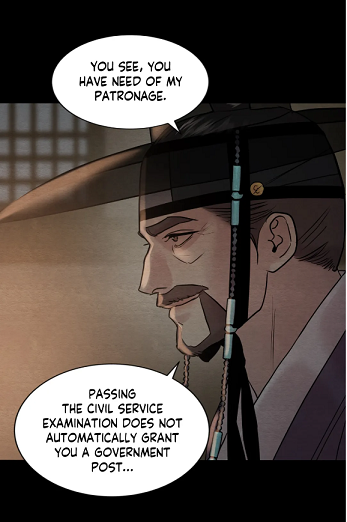
 (chapter 117: no pattern, the lips are covered by the moustasch, straight)
 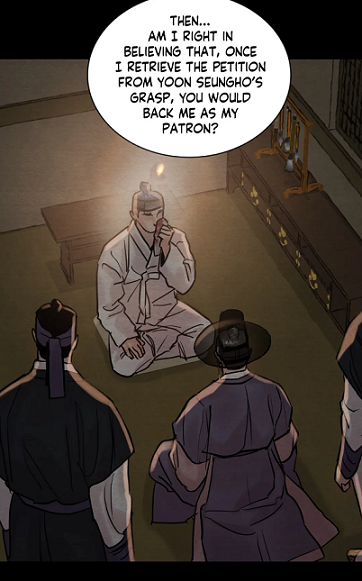 (chapter 117) There are simply too many divergences to say that it is a mistake from the author. This would actually mean that she is quite sloppy. Furthermore, I decided to rely on my eyes and not a belief: there is only one lord Song. Thus you comprehend why I never called the man talking to Jung In-Hun lord Song. So if my theory is true, this would signify that these men represent the previous gang “dogs of Joseon”, the older version of this:
 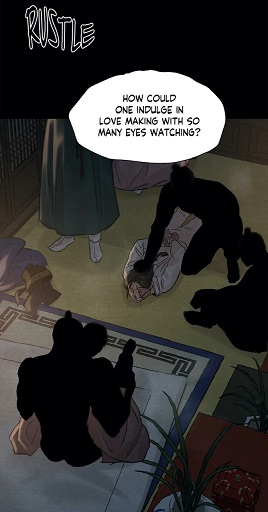 (chapter 86) A coincidence? I don’t believe this. Besides, I discovered a relevant detail about petition and government.
 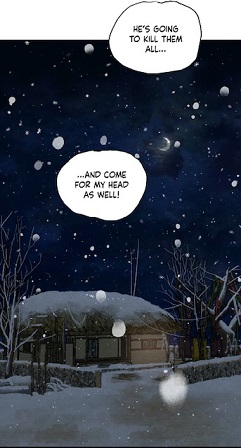 (chapter 101) That’s the moment when the truth will come to light. Someone will get angry, because he got confronted with the painful reality: he was a man consumed by lust, he was selfish, cruel, abusive, ignorant, coward, and even naive. He was never destined to be the protagonist’s life companion.
  , I detected a strong connection between chapter 10 and 117. The common denominator was the pavilion. The learned sir brought the artist under the pretense for a walk in order to seek seclusion and privacy. While he faked his worries
  (chapter 10), he wanted the painter to stop working for Yoon Seungho. He desired him to leave the propriety, for he saw Baek Na-Kyum as a rival. Unlike the painter, the scholar had not been invited to join the party the night before. Hence he had to portray Yoon Seungho in such a bad light!
 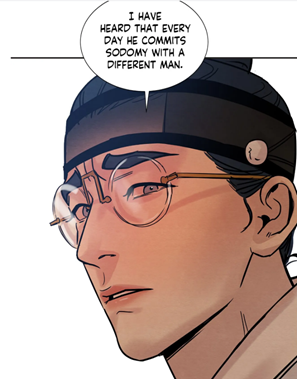 (chapter 10) Back then, the vain and stupid man thought that the main lead had truly liked his poem. Thus he imagined that he could get the attention from the protagonist, once he got rid of his competitor.
 (chapter 10) This is not surprising that the author employed a panel from that chapter.
  (chapter 118) Back then, the artist had not detected the manipulation. Hence he had protected his former teacher, when the latter got accused of ruining the painting. This confession from the scholar
 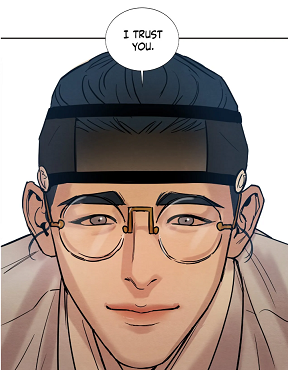 (chapter 10) stands in opposition to Yoon Seungho’s. The latter has no expectation from the artist.
  (chapter 117) The latter is the one deciding about the lord’s fate. But why did he go to the pavilion with the painter? For privacy and intimacy! They needed to discuss the matter about the brother and the petition, a dangerous matter.
 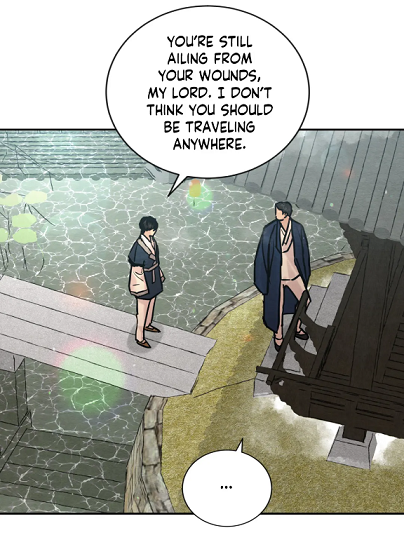 (chapter 117) Here, the painter was acting as the main lead’s right-hand and advisor. He is taking over the butler’s function. He was full of concern for his loved one asking him to postpone the reunion (chapter 117) And the moment the artist voiced his fears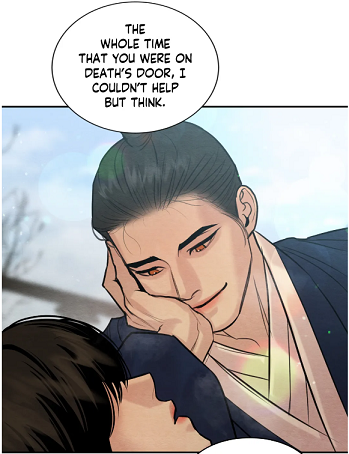
 (chapter 117), the noble suggested to leave everything behind.
  (chapter 117) And what would people see from far away? 2 people showing closeness and attachment, they wouldn’t expect a desertion, an abandonment!! And now you comprehend why Yoon Chang-Hyeon was sitting in the pavilion in town
 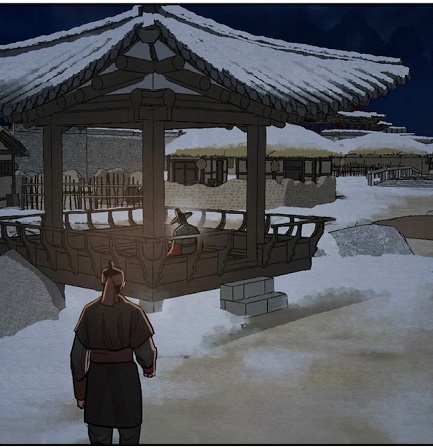 (chapter 116) It was, as if he was trying to get an alibi for his crime: he had planned to have his son killed, but it didn’t happen as expected. Thus he was forced to join his son.
  (chapter 116) This means that he was exposing his crime to people in town. Furthermore, he even confessed his hatred for his own son. He yelled this:
  (chapter 116) Yet, by stating this, he was admitting that he was violating social norms (Confucianism). That’s how I realized that the pavilion is not only the place where Yoon Seungho’s emancipation takes place, it is also the symbol for betrayal and abandonment.
 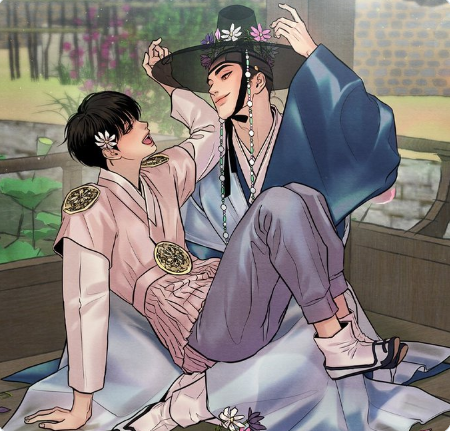 It is the same pavilion than Yoon Chang-Hyeon’s. This means that the couple will purify this place. At some point, the lord and his knight will come to admire the pond with the lotus flowers:
  (chapter 117) Byeonduck let us see a glimpse of their future.

 (Chapter 115) The reality was too painful, hence he chose the illusion, thinking that with his new position, he would be able to do anything, especially if he is getting the support from lord Song. In my opinion, he is falling into a trap. He would realize it, if he pondered and didn‘t let his emotions cloud his judgement. Lord Song waited for his suffering and humiliation. By rejecting reality, the learned sir chose the nightmare, a very unpleasant and frightening experience.


 Bebebisous33s' analyses in K-Dramaland and Manhwas