
Please support the authors by reading Manhwas on the official websites. This is where you can read the Manhwa: Jinx But be aware that the Manhwa is a mature Yaoi, which means, it is about homosexuality with explicit scenes. Here is the link of the table of contents about Jinx. Here is the link where you can find the table of contents of analyzed Manhwas. Here are the links, if you are interested in the first work from Mingwa, BJ Alex, and the 2 previous essays about Jinx The Man Who Knew Too Much – part 2 and The Piercing Amber Shore
It would be great if you could make some donations/sponsoring: Ko-fi.com/bebebisous33 That way, you can support me with “coffee” so that I have the energy to keep examining Manhwas. Besides, I need to cover up the expenses for this blog.
In my previous essay, I ended with the observation that the photograph with the dogs 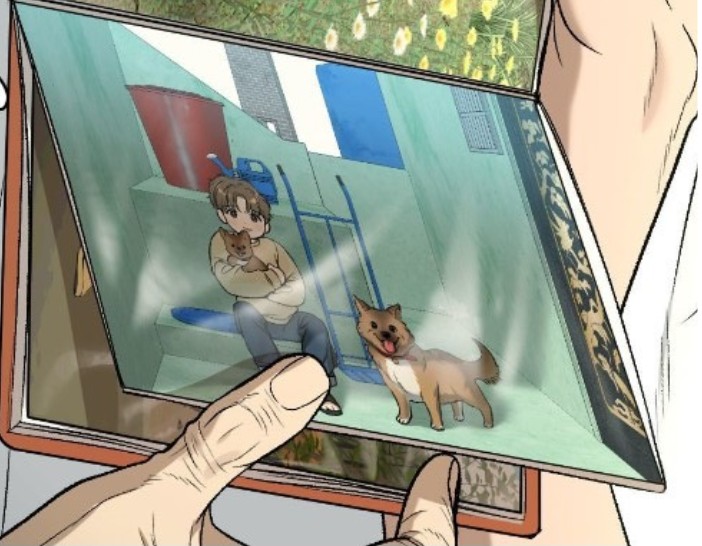 (chapter 94) was not simply a charming childhood image. It already contained the traces of loss, even if Joo Jaekyung did not recognize it as such. What appeared to him as innocence and warmth concealed a reality that remained invisible to him. This is where I want to begin.
If we look more closely at these images, we realize that they do not merely show fragments of Kim Dan’s childhood. 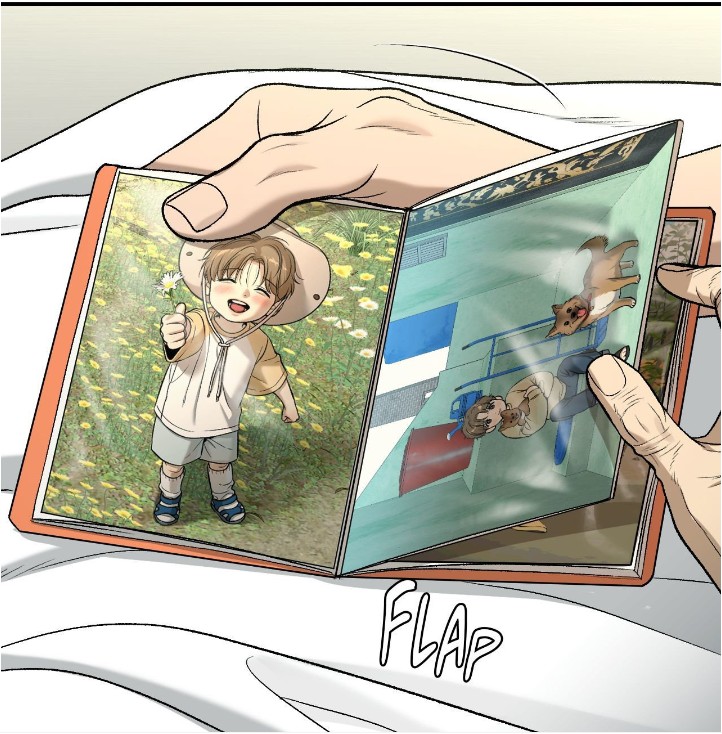 (chapter 94) They are traces of a life already shaped by forces that remain unseen. What appears as warmth and innocence is, in fact, embedded in a process of dispossession that has already begun.
In Jinx, there is one game that immediately comes to mind: Monopoly.  (chapter 27) Each time it is played, it reveals a rigid structure. One player accumulates, the other is gradually dispossessed. There is no space for coexistence or shared success. Loss is not accidental. It is built into the rules.
And what makes this dynamic even more revealing is the way each of them reacted to that loss. What makes this dynamic even more revealing is the way each of them reacts to it. One responds with anger, denouncing “highway robbery,” refusing to accept defeat. The other remains seated and resigned: 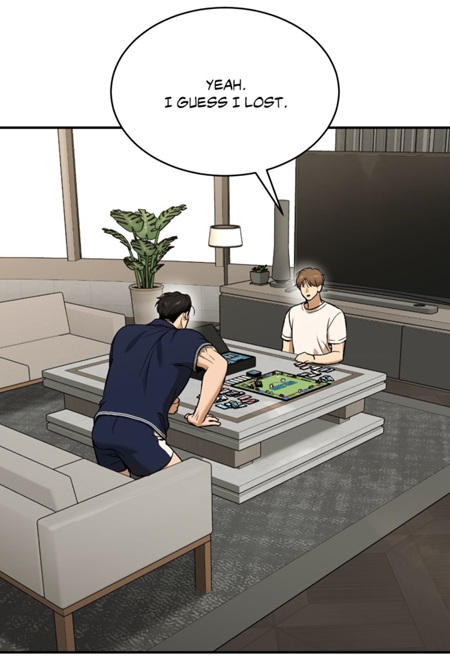 (chapter 80) These reactions were not incidental. They already suggest two fundamentally different ways of inhabiting the game. They already suggest two fundamentally different ways of inhabiting the same system. One resists and attempts to escape. The other endures and adapts.
This distinction becomes crucial in episode 94.
If we keep this in mind, we can sense the same logic in episode 94 again. It is already suggested by the way Kim Dan compliments the champion and views himself. When he admits, 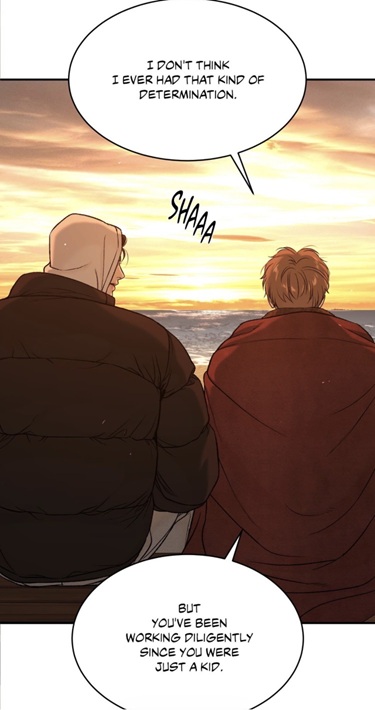 (chapter 94), he positions himself outside the logic of confrontation. He recognizes his lack of determination in the conventional sense. And yet, this does not place him outside the game. On the contrary, it reveals another mode of participation. His strength lies not in resistance, but in endurance, patience, and continuity.
This is where the structure becomes more complex. Because the same logic persists — only in a different form. This time, the game no longer takes place on a board. Instead of properties and rent, we are given photographs of a childhood (chapter 94). At first glance, they seem harmless. There is no visible competition, no immediate conflict, no explicit rules. What we see are moments of play: a child with a dog, a child offering a daisy, a child moving freely within his environment. These gestures suggest connection, spontaneity, and joy. They belong to a childhood experienced as something open and shared.
And yet, this is precisely what makes the scene deceptive. (chapter 94) Because if Monopoly makes loss visible, these images conceal it. What appears as play is already embedded in time, transformation, and conditions that remain outside the frame. The child is not competing, but he is not outside the system either. The game has not disappeared. It has become less visible.
This is why the photographs cannot be read as simple memories. 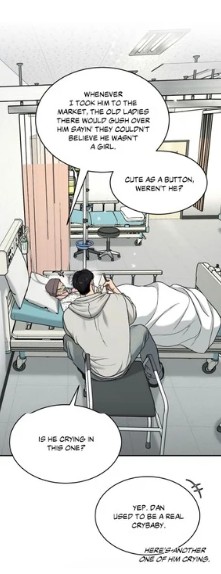 (chapter 94) They do not present a complete story. They offer fragments. Some are clear, others overlap, and one remains partially hidden. This fragmentation is not accidental. It requires reconstruction. We have to put them together, like pieces of a puzzle. And this raises a simple question.
And this immediately raises a question. How many pictures are actually shown in this scene? Most readers would answer: four. 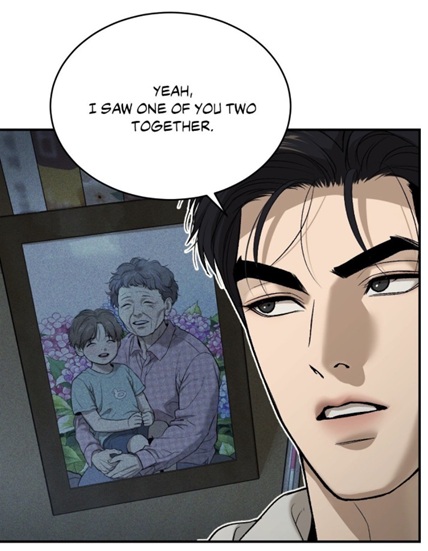 (chapter 94) And yet, this answer is incomplete. One image remains partially concealed, almost erased by another.
 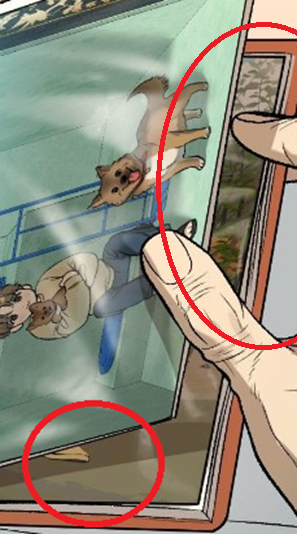 (chapter 94) It is easy to overlook, and that is precisely why it matters. Because once we begin to count more carefully, we also begin to see more carefully.
The images are not arranged randomly. They suggest a sequence. If we pay attention to clothing, landscape, and atmosphere, a pattern begins to emerge: spring, summer, autumn, winter. Childhood is not presented as a fixed and single moment, but as a cycle unfolding over time. This is where The Unseen Game of Life becomes visible.
The game is no longer limited to possession or victory. It unfolds through time, through what is shown and what is hidden, through what is remembered and what is ignored. It shapes not only outcomes, but experiences. It determines what kind of childhood is lived — and what remains invisible, even when it is right in front of us.
And this is where Joo Jaekyung’s position becomes revealing. He understands perfectly how to play Monopoly — not only within the game  (chapter 80), but also in reality, as he owns several properties. But he does not immediately understand what these photographs represent. What he sees are pleasant memories.
 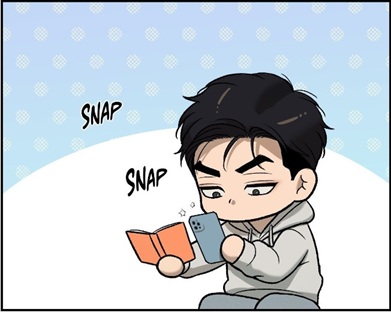 (chapter 94) And when he takes pictures of these pictures, his gesture exposes the limit of his perception. He preserves what is visible, not what it signifies. The stylistic shift reinforces this moment. Rendered as a chibi, the “Emperor” is momentarily stripped of his predatory gaze. His perspective is simplified, almost purified. He no longer sees Kim Dan as a function or a role, but as a cute and sensitive child. And yet, this remains incomplete. He captures the image, but not the structure behind it. He perceives the warmth, but not the cost that made it possible. He sees the surface of a life, but not the forces that shaped it.
This is why the game remains unseen.
Reconstructing a Childhood
If the photographs in episode 94 function like pieces of a puzzle, then the first step is not to interpret them immediately, but to examine them carefully. What do they show, and in what order should they be read? A closer look reveals that these are not static portraits, but carefully selected glimpses of Kim Dan’s childhood, each marked by a distinct posture, season, and emotional tone.
A closer look reveals that these are not static portraits, but carefully selected glimpses of Kim Dan’s childhood, each marked by a distinct posture, season, and emotional tone. (chapter 94) At first glance, these images appear simple. They are structured around play, companionship, and small gestures of joy: a child holding a puppy, offering a daisy, moving freely through his environment. In this sense, they seem to confirm what we might expect from childhood. Life appears light, open, and shared.
It is precisely this impression that makes Kim Dan’s confession on the beach so revealing. When he tells Joo Jaekyung that he has been working diligently since childhood (chapter 94), he constructs a clear contrast between them. The champion appears as someone shaped by effort from an early age, while he implicitly presents himself as someone who did not follow the same path. The statement suggests that determination belongs to one, and not to the other. This formulation echoes the logic we have already seen in Monopoly (chapter 80) In that game, positions are unequal from the very beginning. One player accumulates, the other is gradually dispossessed. What matters is not only the outcome, but the way each player responds to it. One resists, protests, and refuses defeat. The other accepts the loss and remains seated. Over time, this difference becomes internalized. The rules of the game are no longer questioned. They are absorbed.
This is precisely what happens in Kim Dan’s confession. He does not simply describe a difference. He accepts it as natural. He interprets Joo Jaekyung’s strength as something inherent, while reducing his own past to a lack. In doing so, he unknowingly adopts the logic of the game itself: one rises, the other yields.
And yet, this is where the photographs introduce a rupture. Because the child they show is not yet playing by these rules. One detail emerges with striking consistency: Kim Dan is always at the center of the image. (chapter 94) The photographs are not landscapes, nor are they focused on objects or environments. They are structured around him. He is the one being held, the one running, the one interacting, the one offering the flower. The gaze that frames these images is directed toward him. This has concrete implications. The child we see is not neglected. He is well dressed. His clothes are clean, varied, and appropriate to the seasons. He is also well fed. As his grandmother later remarks, he had a “hearty appetite as a kid” 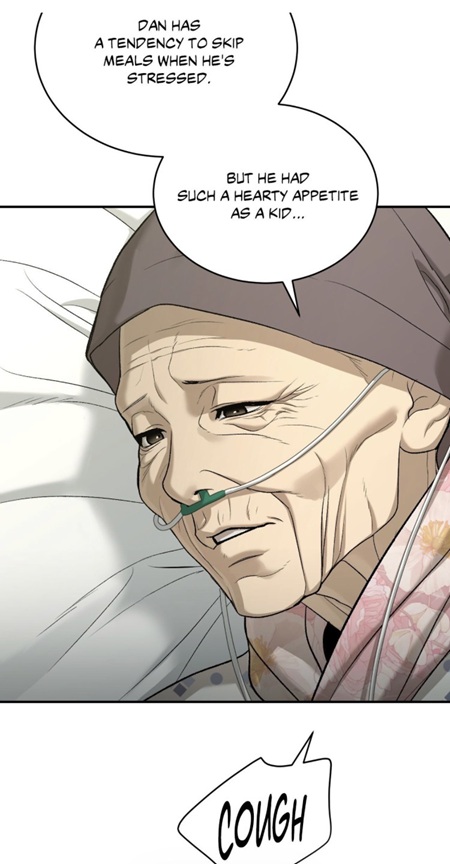 (chapter 94). These are not insignificant details. They indicate that, at this stage, his basic needs were met. He was cared for.
This stands in sharp contrast to his present situation. When Joo Jaekyung observes Kim Dan’s living conditions, he notices the absence of clothing 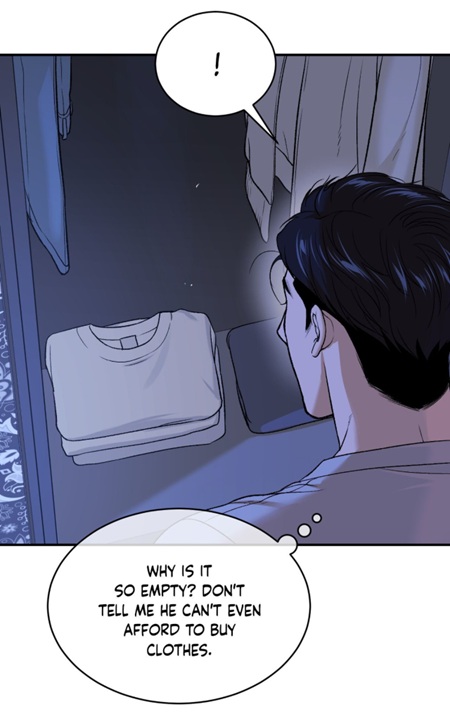 (chapter 80). The wardrobe is nearly empty. The implication is immediate: Kim Dan does not spend money on himself. This observation is confirmed by his own behavior. He uses his savings for others. He pays for his grandmother’s needs
  (chapter 41) and later spends a significant amount on a gift for Joo Jaekyung.
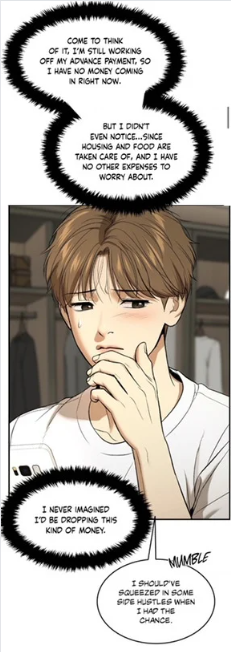 (chapter 42). This repetition is not incidental. It reveals a pattern: Kim Dan directs resources outward, not inward. He prioritizes others over himself. Even his relationship to food reflects this shift. As an adult, he skips meals when he is stressed, despite having once eaten well.
The contrast is therefore unmistakable. In the photographs, Kim Dan is the center of care. In the present, he has become the one who provides it. This inversion is crucial for understanding the structure of his life. The child who was once supported, fed, and dressed by others now assumes that role himself. Care has not disappeared. It has been reversed. This is what Kim Dan’s confession fails to recognize. (chapter 94) His statement on the beach creates the illusion that Joo Jaekyung alone was shaped by discipline and hardship, while he himself remained outside that logic. But the photographs reveal a different truth. They do not show a child who lacked strength. They show a child who had not yet been forced to transform strength into sacrifice. He was not yet responsible. He was not yet the one who gave. He was the one who received.
That is why these images matter so much. They do not simply preserve moments of happiness. They document a time before the rules of the game fully took hold of him. They reveal that Kim Dan’s later endurance did not emerge from a lack of determination, but from the reversal of a position he once occupied. What he now mistakes for weakness is, in fact, the trace of a childhood that was interrupted.
And yet, this is only one part of the story. If we read these images more carefully, a different structure begins to emerge.
The bodily positions already tell us something important. In one image, Kim Dan is held in his grandmother’s arms. 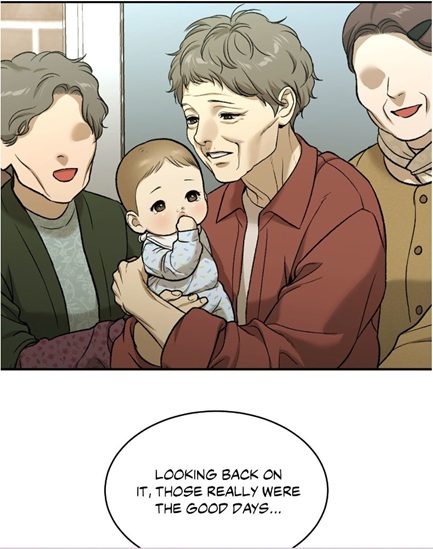 (chapter 94) His body is supported, carried, entirely dependent. In another, he is sitting on a step while holding a puppy close to his chest. (chapter 94) In the field, he stands on his own two feet and extends a daisy toward the person behind the camera.
 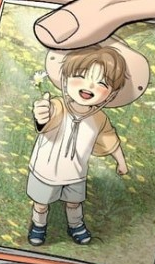 (chapter 94) In the almost hidden image, only one foot is visible, lifted off the ground: this is enough to conclude that he is running. (chapter 94) And in the photograph mentioned by Joo Jaekyung, he is seated on his grandmother’s lap among hydrangeas. (chapter 94) These positions are not accidental. They show a child who is allowed to inhabit many different states: dependence, stillness, affection, upright autonomy, movement. He is not fixed in one role. He is carried, he holds, he stands, he runs, he rests. Before we even interpret the backgrounds, the body already suggests a childhood marked by freedom.
This impression is reinforced by the objects that accompany him. In the image with the daisy, the flower is not simply part of the setting. It is held out toward the photographer. (chapter 94) The daisy, a simple wildflower, is traditionally associated with innocence, sincerity, and unfiltered joy. Unlike cultivated flowers, it grows freely, without constraint. By offering it, Kim Dan does not only interact with the person behind the camera, he shares something that belongs to his world. The gesture suggests trust, openness, and a spontaneous desire to connect.
A similar dynamic can be observed in the photograph with the puppy and the dog. (chapter 94) Animals, especially young ones, are often used to symbolize vulnerability, affection, and instinctive attachment. The puppy in his arms mirrors the child himself: small, fragile, and in need of care. At the same time, the presence of the adult dog introduces a second layer, that of protection and loyalty. Kim Dan is not alone in this image. He is part of a small relational world built on closeness and mutual dependence.
These elements are not incidental. They reinforce the impression that this is a childhood shaped not only by movement and freedom, but also by affection. The daisy, the puppy, and even the way these moments are framed suggest that the child is seen through a gentle and attentive gaze. They let transpire that he was loved. In other words, they actually prove my theory about his parents: he was raised by loving and caring parents. Hence he is placed in the center of the photography. But there exists another evidence for this interpretation: Joo Jaekyung’s lack of photos suggests he was never “beheld” with that same gentle gaze. If Dan was raised in a “natural cycle” (seasons, animals), Jaekyung was raised in an “industrial cycle” (results, training, utility). 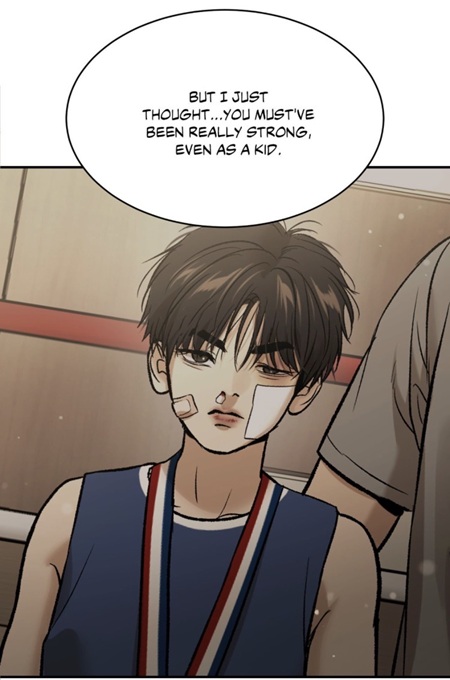 (chapter 94) Hence his only picture in his childhood is linked to a tournament and boxing.
This freedom becomes even clearer once the photographs are arranged in seasonal order. (chapter 94) The baby picture most likely belongs to early spring. The adults around him wear light jackets and scarves, which suggests cold but transitional weather rather than deep winter. Since Kim Dan was born on December 26th, this scene can plausibly be placed only a few months later. The woman on the far left wears a floral sleeve beneath a dark cardigan, a detail that subtly reinforces the idea of seasonal transition. Spring, then, is not only the season of beginnings. It is also the season in which Kim Dan first appears within a circle of adults, still dependent, still held, and still emotionally tied to others.
The image with the daisy comes later. (chapter 94) Here Kim Dan is dressed lightly, standing in an open field and offering the flower toward the photographer. The flower itself matters. Daisies belong to late spring or early summer, but they also symbolize simplicity, innocence, and spontaneous joy. Unlike a cultivated bouquet, a daisy is modest and wild. Kim Dan does not merely hold it for himself. He presents it. This gesture suggests trust, openness, and delight in shared attention. It is an image of a child for whom the world is still something to be explored and offered, not defended against.
The hydrangea photograph mentioned by Joo Jaekyung provides the clearest seasonal anchor. Kim Dan is wearing shorts and a short-sleeved T-shirt, and the hydrangeas behind him are in full bloom. (chapter 94) This places the image firmly in summer. Yet what matters here is not only the season, but the atmosphere. In contrast to the daisy picture, where he stands independently and reaches outward, he is now seated on his grandmother’s lap. Summer here does not simply symbolize expansion, but also fullness and protection. It is a moment of warmth, abundance, and secure intimacy. If spring marks origin and the daisy image marks early openness, the hydrangea scene represents the height of childhood ease but also its imminent ending.
The dog picture introduces a different mood. (chapter 94) Kim Dan is no longer in an open field, but in a structured outdoor hallway. Around him we can identify a trolley, a watering can, large containers, and in the background a large chimney. There is also a patterned door with birds and flowers, which echoes the decorative logic of the later cabinet without being the same object. These details suggest a hybrid environment where living and working coexist. His clothes are warmer than in the summer pictures, which indicates a drop in temperature. This does not allow us to assign the season with total certainty, but the heavier clothing, the functional setting, and the disappearance of open flowering landscapes point more convincingly toward late summer or early autumn. Symbolically, this matters. Autumn is the season of transition, upkeep, and preparation. The carefree openness of earlier pictures begins to recede. At the same time, this image introduces class more clearly than the others. The child still appears affectionate and gentle, but the world around him is already marked by labor, maintenance, and material necessity.
Finally, the hidden image completes the cycle. (chapter 94) Only fragments are visible: one foot in motion, a fence, a pale surface that resembles snow, and what looks like a hill in the background. Since only one foot is shown, the child must be running. This is not a posed portrait but a captured instant. The suggestion of snow or frost, together with the more closed landscape, points toward winter or perhaps late fall. The symbolism here is different from the others. Winter is not simply the season of hardship. In this sequence, it is the season of movement, exposure, and unfolding time. The child is no longer merely being shown. He is already in motion. This is not without significance. Kim Dan was born on December 26th, at the very beginning of winter. In this context, winter does not represent an end, but a point of origin. It marks a beginning that unfolds under conditions of cold and vulnerability, but also one that requires inner warmth and resilience. Rather than opposing warmth, winter redefines it. Since winter is his birth season and his “running” season, it suggests that Dan’s natural state is one of internal resilience. He is a “winter child”—he doesn’t need the sun to thrive; he generates his own warmth. This explains why he could survive next to Jaekyung’s distance. It is no longer given by the environment, but must be created and preserved. In this sense, winter becomes the season in which growth takes place in a less visible, more internal way.
Taken together, these images form a full cycle: spring with the baby in arms, late spring or early summer with the daisy, summer with the hydrangeas, late summer or early autumn with the puppy, and winter with the running child. The author does not show only growth, but a childhood unfolding through the seasons. This is not insignificant. Seasons imply rhythm, continuity, and immersion in a living world. Kim Dan’s childhood is therefore associated not with institutional milestones, but with natural time. That already tells us something about the kind of child he was and the kind of life he came from.
The symbolism of the clothes strengthens this reading. As a baby, he wears clothes patterned with little sweets (chapter 94), an image of softness and indulgence, as if childhood were still associated with comfort and delight. Later, he appears in a shirt with a duck, another gentle and playful motif. (chapter 94) These patterns are not random. They connect him to a childlike world of animals, tenderness, and whimsy. They suggest that he was once seen and dressed as a child who could be cute, soft, and playful. This matters all the more because, later in life, that softness will be reinterpreted as weakness.
Another recurring feature deserves attention. What matters is not whether Kim Dan’s eyes are open or closed, but how he relates to the presence behind the camera (chapter 94). In several photographs, he appears visibly aware of that presence. (chapter 94) In the image with the daisy, for instance, his eyes are closed, yet his gesture and expression clearly indicate engagement. He is blushing, smiling, and extending the flower outward. This is not withdrawal, but a form of shy openness. The gesture only makes sense if someone is there to receive it. The photograph captures an interaction. The child responds to the observer, and the observer is implicitly included in the scene.
A similar attentiveness can be sensed in other images, where his gaze is directed outward, alert and receptive. In these moments, Kim Dan appears fully present to the world and to the person who is looking at him. The photographs do not merely record him. They suggest a relationship with the photographer.
By contrast, the hydrangea photograph introduces a shift. (chapter 94) Here, Kim Dan is seated on his grandmother’s lap, and the composition is entirely centered on the two figures. There is no outward gesture, no attempt to reach beyond the frame. The scene is closed. The person behind the camera is no longer included in the same way, but remains outside, observing. The child is no longer interacting with that presence, but contained within a relationship that is already defined.
This does not diminish the warmth of the image, but it alters its structure. What was previously a shared moment becomes a framed intimacy. The child is no longer primarily engaged with the world around him, but situated within it. The difference is subtle, yet decisive. The closing of the frame mirrors the closing of his world; the open fields of the daisy photo (chapter 94) are replaced by the protective, yet narrow, lap of his grandmother. This picture announces Kim Dan’s imminent loss of innocence due to his parents’ vanishing.
This is what the photographs finally show about Kim Dan. He is presented as a child of openness rather than control, of movement rather than discipline, of relation rather than domination. He belongs to fields, flowers, animals, changing seasons, and spaces where work and life overlap. In other words, he embodies nature. He can be held, he can hold, he can stand, he can run. He is not yet trapped in one function. At the same time, the backgrounds complicate the apparent innocence of these scenes. The dog picture in particular reveals that this freedom existed within a modest environment already touched by labor and transformation. Kim Dan’s childhood, then, cannot be reduced either to pure happiness or to pure suffering. It appears instead as a life suspended between warmth and fragility, between natural abundance and quiet precarity.
This is precisely why these images matter so much. They do not simply preserve a past. They reveal a child who was still able to inhabit the world freely, even though the conditions of that freedom were already beginning to change. And that is where the unseen game starts to take shape.
A Changing Landscape
If the photographs (chapter 94) are read not only as personal memories, but as traces of a lived environment, they begin to reveal something more than childhood itself. They point toward the world in which that childhood was embedded.
The image with the dog and the puppy is particularly revealing (chapter 94). The setting is neither purely domestic nor entirely natural. It is a transitional space. The presence of a trolley, a watering can, and large containers suggests a place where living and working coexist. This is not a leisure environment. It is a space of small-scale labor.
At the same time, the child is not working. He is sitting, holding the puppy, fully absorbed in play. This contrast is decisive. It shows that his childhood unfolds within a world already shaped by work, but in which he himself is not yet subjected to it. This allows us to situate the family within a specific social context.
The environment suggests a modest, possibly semi-rural or peri-urban setting, where economic activity is directly tied to nature. The recurring presence of flowers, plants, and open spaces supports the idea that the family may have been involved in a form of small-scale production, such as flower cultivation or local trade. (chapter 94) The fact that Shin Okja later mentions taking him to the market reinforces this connection. The child is not isolated. He is part of a network of everyday economic life. This also explains why he is entrusted to her.
If the parents were working, possibly outside the immediate household or within demanding conditions, the grandmother’s role as caretaker becomes necessary.  (chapter 47) Her presence does not replace the parents. It supplements a structure already under pressure.
This pressure becomes more visible when we contrast these images with the later urban landscape. 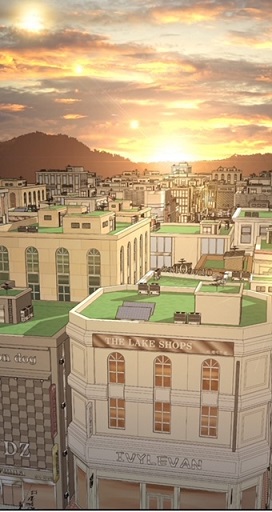 (chapter 48) In the city view, nature has not disappeared entirely, but it has been pushed to the margins. Hills and trees remain in the distance, while the foreground is dominated by dense construction, commercial buildings, and rooftops. The naming of places such as “The Lake Shops” is particularly revealing. The reference to the lake suggests a natural environment that is no longer accessible. What remains is its name, preserved as a surface within a commercial structure. This transformation is not incidental. Striking is that this image mirrors the painting in the champion’s penthouse:
 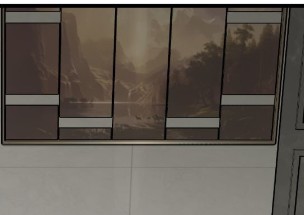 (chapter 93) But the lake has been replaced by a building. It corresponds to a broader process of urban redevelopment, in which natural or semi-rural areas are progressively absorbed into economic systems based on property, rent, and commercial use. In this context, land is no longer lived on. It is monetized.
To understand the “Unseen Game,” we must look beyond the frame of the photographs and into the historical shadow of the 1997 South Korean financial crisis. This was the moment the “Monopoly board” of the nation was violently reset. Triggered by a toxic cocktail of corporate debt, speculative volatility, and the sudden flight of foreign capital, the crisis forced the country into a brutal era of IMF-supervised restructuring.
For families like Kim Dan’s, this wasn’t just a headline—it was an earthquake. Property values didn’t just “fluctuate”; they collapsed. Debts became predatory. The “small-scale livelihoods” we see in the photographs—the gardening tools, the modest outdoor hallway, the flowers—were the exact type of “informal” or “traditional” economies that were liquidated to satisfy the demands of global capital. (chapter 94)
This is where the connection to Monopoly becomes more than metaphorical. The logic of the game — acquisition, accumulation, rising costs, and eventual dispossession — reflects the mechanisms at work in such transformations. Small-scale environments are gradually replaced by larger structures. (chapter 27) Those who cannot keep up with increasing economic pressure are displaced. Seen from this perspective, Kim Dan’s childhood does not only precede a personal rupture. It is situated within a world that is already undergoing structural change.
This also sheds light on his later relationship to money. And what did the physical therapist suggest back then, when the star was on the verge of bankruptcy? He could take a loan… that’s how the parents’ misery started. But there’s more to it. (chapter 42) As an adult, Kim Dan does not accumulate. He spends what he has on others. He supports his grandmother, pays for her needs, and later repeats this pattern with Joo Jaekyung. He does not invest in himself. He does not secure his own position. This behavior is not simply a matter of personality. It reflects a life shaped by instability, where resources are used for survival rather than growth. In this sense, his position within the “game” is already determined before he becomes aware of it. He does not enter it as an equal player. He enters it from a position marked by loss, adaptation, and necessity.
And this is what the photographs ultimately reveal.
They do not show a world that was stable and later broken. They show a world that was already fragile, already exposed to forces that would eventually transform it. What appears as a peaceful childhood is, in reality, a moment suspended between continuity and disappearance.
This context also allows us to comprehend the gap between the two main leads.
Kim Dan, who is three years older and approaching thirty, experienced the immediate impact of the 1997 financial crisis during his early childhood. He lived through a period of instability, displacement, and economic pressure without fully understanding its causes. The transformation of his environment, the loss of his family structure, and the increasing precarity of everyday life formed the background of his development.
Joo Jaekyung, by contrast, belongs to a slightly later moment. When he was a child, the crisis had already reshaped the social landscape. Its consequences were no longer unfolding, but had become part of a normalized reality. This is reflected in Hwang Byungchul’s description of his neighborhood
Joo Jaekyung grows up in its aftermath.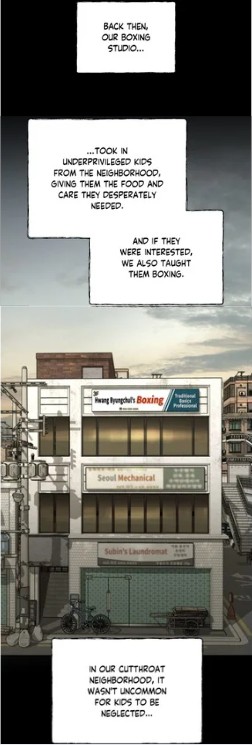 (chapter 72): a “cutthroat” environment in which neglect was common and institutions such as the boxing gym functioned as substitutes for basic care. The difference is subtle, but decisive. Kim Dan grows up at the moment of rupture. This is why the unseen game does not begin with loss. It begins much earlier, in the conditions that make that loss possible.
The Same Image, a Different Truth — Memory, Loss, and Reinterpretation
If the first set of photographs suggests a childhood shaped by freedom and affection, the images (chapter 94) involving the grandmother (chapter 94) introduce a more complex and unsettling dimension. At first glance, they appear similar. In both cases, Kim Dan is held close, framed within a moment of intimacy. The composition seems almost identical. And yet, a closer reading reveals a fundamental divergence.
In the image of Kim Dan as a baby, one detail cannot be ignored: his expression. (chapter 94) His eyes are wide, his gaze tense with tears, his mouth covered with his hand. He is not calm. He is not smiling. He has been crying. This raises an unavoidable question. Why?
If we take the image seriously, the tears cannot be dismissed as a trivial detail. They contradict the idea of a peaceful, happy moment. Instead, they suggest distress, discomfort, or even rupture. Such a reaction is not unusual. Infants often display what developmental psychology describes as stranger anxiety, a phase in which unfamiliar environments or faces provoke fear or distress. But in this context, the reaction points toward something more specific. Because this form of distress is not neutral. It implies the absence of a familiar figure. The child does not simply react to strangers; he reacts because the person to whom he is attached is no longer present.
In this sense, the image does not only show fear. It outlines a strong connection to the mother — a bond that is being disrupted at the very moment the photograph is taken. The child is no longer with his mother. He has been handed over, entrusted to Shin Okja. The presence of other women reinforces this reading. This is not an intimate, private scene. It is social, almost public. In this sense, the photograph does not simply show affection. It records a transition.
This reading becomes even more significant when we consider that Shin Okja refers to the “good old days” while looking at this very image. 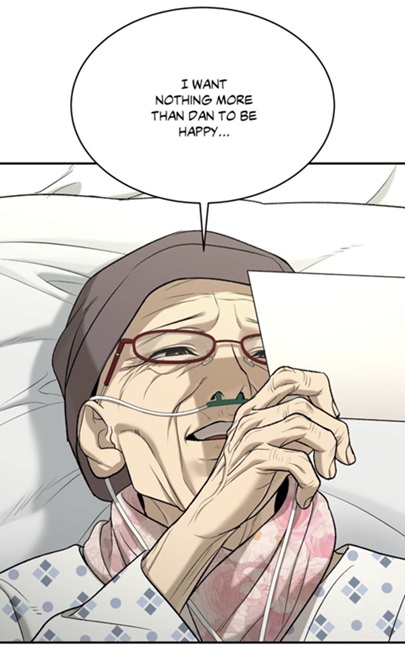 (chapter 94) She even associates this scene with Kim Dan’s happiness, while the photography contradicts this notion. The child is not at peace. He had just been crying. The moment is not one of stability, but of rupture. And yet, it is precisely this image that becomes the anchor of nostalgia. This creates a displacement.
This is where the contrast with the later hydrangea image 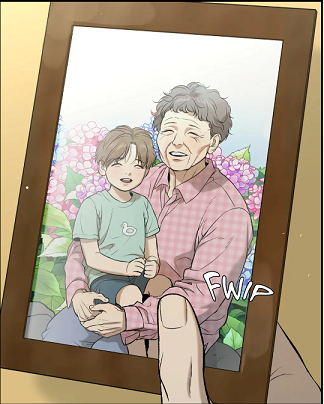 (chapter 19) becomes particularly revealing. In the first photograph, the women from the market are visibly present. (chapter 94) The moment is shared, exposed, embedded in a social environment. By contrast, in the hydrangea image, these figures have disappeared. They are replaced by flowers. What was once a public scene becomes a private one. At first glance, this shift may appear to enhance intimacy. The child is now alone with his grandmother, surrounded by blooming hydrangeas. The composition is softer, more harmonious, more contained. And yet, this transformation raises a question. What has been removed, and why?
What disappears is not only the social environment, but the structure that defined the earlier image. In the first photograph, the presence of the women from the market situates the scene within a moment of transition that is witnessed and shared. (chapter 94) The child’s tears unfold within this exposed space, and his reaction is oriented toward a presence beyond the frame.
In the hydrangea image, this structure has changed entirely. The scene is no longer oriented outward. The composition is closed, centered, and self-contained. The gaze that once participated in the moment is no longer included. This is not a simple shift toward intimacy. It is the consequence of a rupture. (chapter 94)
The hydrangeas do not merely decorate the scene. They occupy the space left by what has disappeared. Traditionally associated with apology, regret, and a desire for forgiveness, they introduce the idea that something unresolved persists beneath the surface. But they also carry another implication. Blooming fully, they mark a moment of completion — and, at the same time, of transition. They announce departure. Within this context, the image no longer represents a stable present. It captures a threshold. The child remains, but the relational structure that once connected him to the outside — and to the one behind the camera — has already begun to dissolve. (chapter 94)
Striking is that the image that most closely corresponds to a moment of calm, rest, and emotional balance is not part of the album at all. It is the photograph with the hydrangeas — the one Kim Dan himself has kept and framed. (chapter 94) In that image, he is older, composed, and seated on his grandmother’s lap, surrounded by blooming flowers. The scene is quiet, contained, and visually harmonious. According to my past interpretation, the last photography most likely represents the last moment before he lost his parents, a moment in which his world had not yet fully collapsed. And yet, this is not the image preserved in the album.
This difference is crucial. It reveals that the album does not simply gather memories. It reflects a specific point of view. 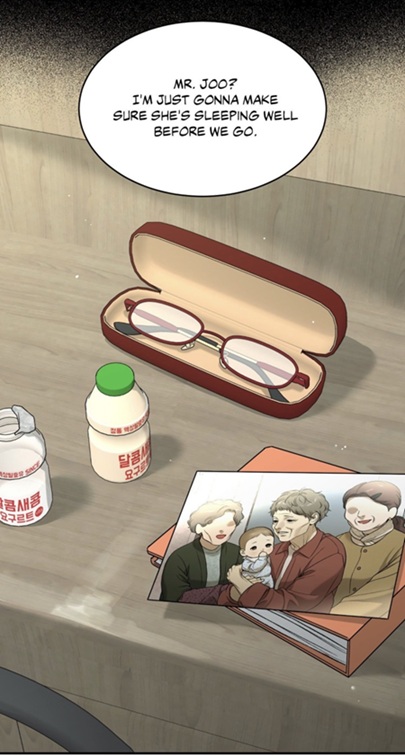 (chapter 94) The photographs it contains are not neutral. They are selected, arranged, and interpreted according to Shin Okja’s perspective. The image of separation becomes the “good old days,” while the image of relative stability is excluded from that narrative.
By contrast, the framed photograph belongs to Kim Dan. It is the only image he has chosen to keep. Unlike the album, which organizes memory collectively and retrospectively, the frame isolates a single moment. It suggests a different attachment, a different understanding of what should be preserved.
This divergence exposes two distinct relationships to the past. For Shin Okja, memory moves backward, reconstructing earlier moments and integrating them into a narrative of care and responsibility. For Kim Dan, memory condenses into a single image, one that he does not reinterpret verbally, but silently preserves.
The absence of the hydrangea photograph from the album, and its presence in his possession, therefore marks more than a simple difference in taste. It reveals a gap between two memories that do not fully coincide. Because if we follow the internal logic of the photographs, the moment that could most plausibly correspond to the “good old days” is not this one, but the later image with the hydrangeas. (chapter 94) In that scene, Kim Dan is older, calm, and seated on his grandmother’s lap, surrounded by blooming flowers. His clothing and the vegetation clearly situate the image in summer, a season associated with fullness and continuity. If your interpretation is correct, this photograph would mark the last period before he lost his parents — a moment when his family was still intact.
This creates a striking contradiction. (chapter 94) What we see is a child in distress. What is remembered and narrated is happiness.The gap between these two levels is crucial. It reveals that the photographs are not interpreted neutrally. They are reinterpreted through memory, filtered by emotion, and reshaped by nostalgia. Shin Okja does not lie consciously. Rather, she projects her own feelings onto the images. For her, these moments represent closeness, responsibility, and perhaps even purpose. The child’s tears disappear behind her own perception of care.
This becomes even clearer when we consider how she moves through the album. (chapter 94) Her gaze is not oriented toward the future, but toward the past. She flips through the pages in reverse, moving from the most recent images back to the earliest ones. This movement is not chronological. It is selective and directional. It functions as a form of regression.
In this sense, her gesture stands in direct contrast to the logic of a competitive game. A game such as Monopoly advances relentlessly toward an outcome, 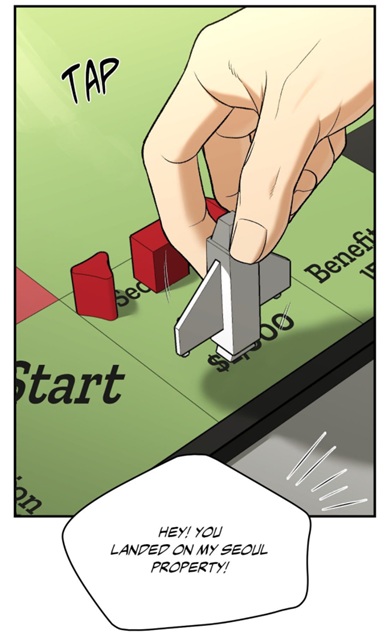 (chapter 80) structuring time as progression, accumulation, and eventual resolution. Her movement does the opposite. It moves backward, not toward victory, but toward a point of refuge. The album becomes a space in which time is reversed and the pressures of the present are temporarily suspended.
This reversal is not abstract. It is material and visible. (chapter 80) Each turn of the page, marked by the tactile flap of the paper, reduces Kim Dan. The sequence narrows. The independent boy who runs, stands, and interacts gradually disappears, replaced by a smaller, more contained figure. The movement through the album functions like a visual funnel: from autonomy to dependence, from mobility to stillness, from openness to enclosure. (chapter 94) At its endpoint stands the image of the infant.
Here, the contradiction becomes explicit. The baby had been crying, yet the grandmother is smiling in front of the photography. The scene contains two opposing emotional registers that are not experienced as such. The child’s distress is immediate, visible, and unresolved within the frame. And yet, for her, it does not signify rupture. It signifies need. This distinction is crucial. (chapter 94) Because a crying infant represents a form of suffering that can still be answered. It is simple, direct, and, above all, solvable. In that moment, she is able to position herself as the source of relief. The child depends on her, and that dependence gives structure and meaning to her role. This is why the contradiction does not appear as one. What we read as distress, she experiences as confirmation. She still views herself as his “source of happiness”.
By moving backward through the album, she does not merely revisit the past. She reconstructs a position in which her role is absolute and uncontested. The adult Kim Dan — the one who provides, who suffers, who exists outside her control — disappears from view. This psychological orientation explains why she continues to treat the professional physical therapist as a helpless infant 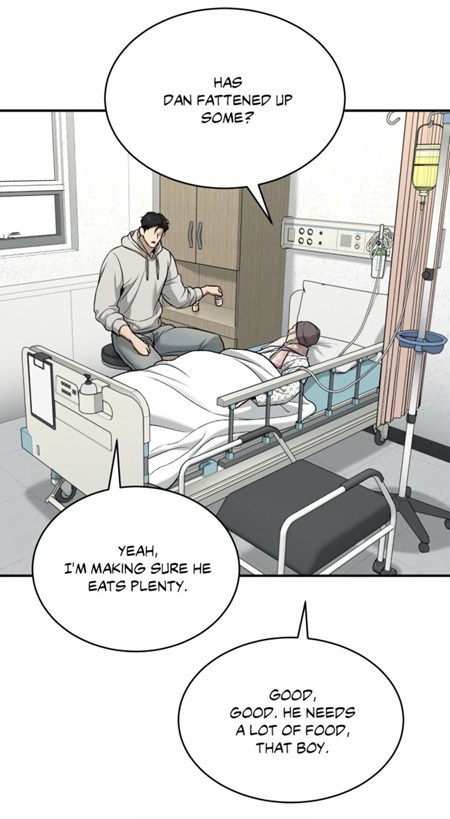 (chapter 94) Her persistent desire to see him “fattened up” is quite telling; it is not truly about the pleasure of eating, but about returning him to a state of physical dependence. To “fatten” a child is to exert a primary form of care that requires no complex dialogue or adult understanding—it is the most basic “rule” of her version of the game.
The photographs, then, are no longer treated as evidence of Dan’s life, but as emotional anchors for her own identity. This explains why the contradiction between his tears and her “good times” remains unaddressed. For her, the “good times” were a period of perfect dependence. In the space of the album, the 1997 crisis hasn’t arrived, the parents haven’t vanished, and the child’s only problem is a discomfort that a grandmother’s arms—and her “fattening” meals—can still resolve.
(chapter 94) What remains is a simplified structure in which the child’s distress is immediate and her response is sufficient. Not a time without suffering, but a time in which suffering was still manageable.This is what she calls the “good old days.”
Where the childhood images can be transformed into “good old days,” (chapter 94) the later photographs 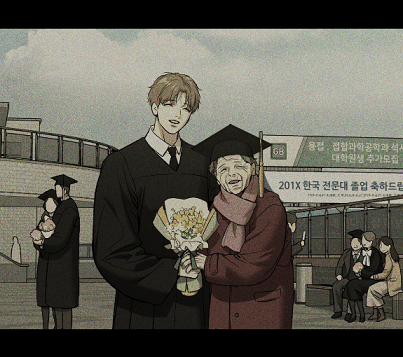 (chapter 47) remain tied to necessity. They reveal that, over time, the relationship between Kim Dan and his grandmother was no longer defined solely by care, but also by dependence.
The Mirror of Erasure: Doc Dan’s Compliance
The discrepancy between the photographs and Shin Okja’s verbal narrative reveals a profound structural shift in Kim Dan’s identity. On the beach, she insists that she  (Chapter 65), a statement that appears humble but subtly centers her own effort as the only relevant force in his life. When she speaks of her struggle, she envisions a calm baby. This makes her “failure” purely internal. By remembering him as calm while she felt “not enough,” she frames herself as the tragic martyr who was suffering even when things looked peaceful. It centers the entire era on her emotional state, not the child’s. But the picture from episode 94 displays a certain MO. She is simply ignoring reality. (chapter 94) In the physical photograph, the baby is clearly in distress (crying), but she is smiling. She is literally overlooking the child’s present reality in the photo to preserve her own feeling of “good times.” The child’s actual pain is invisible to her because, in that moment, she was the one holding him—and for her, being the “holder” is the only thing that matters. She frames his childhood through the definitive claim that he
  (chapter 65). This is not merely a description of loss; it is a transformation. By labeling him an absolute orphan, she erases the specific love and sacrifice documented in the early photographs, stripping him of his right to a specific grief. If he “never knew” them, he never lost them. In her version of the “game,” Dan is a blank slate upon which she has written her own narrative of care. At the same time, she
Strikingly, Kim Dan corroborates this void 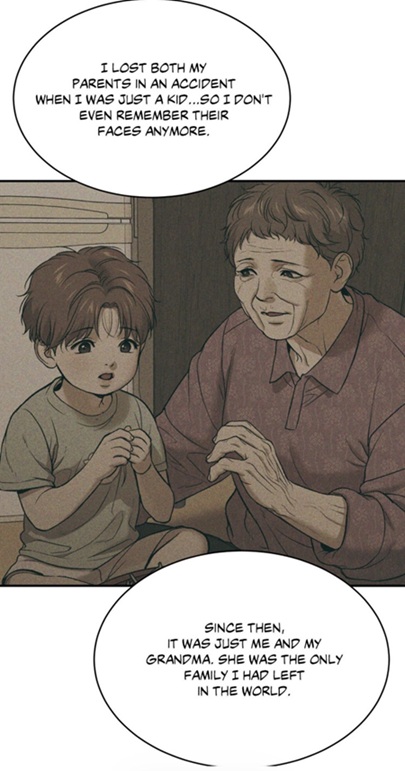 (Chapter 94). He speaks as if he were a baby when they vanished, yet the memory indicates the opposite. Moreover, the photos of him offering daisies and running prove he was old enough to know them. To survive under his grandmother’s care, Dan had to adopt her memory as his own, internalizing the image of a man who started from “nothing.” By erasing the parents, Shin Okja effectively erased the “Dan” who was once the center of a loving world, leaving behind only the “Doc Dan” who exists to serve the needs of others.
From Play to Performance: The Trophy Child
This shift becomes visible when comparing the childhood album shown to Jaekyung (Chapter 94) with the graduation photos Dan recalled at the hospital. (Chapter 47). The early images are structured around spontaneity—movement, animals, and open fields. However, as the timeline progresses toward his youth, the “Natural Cycle” is replaced by a trajectory of performance.
In these later institutional spaces—classrooms and stages—Dan no longer moves freely; he poses. 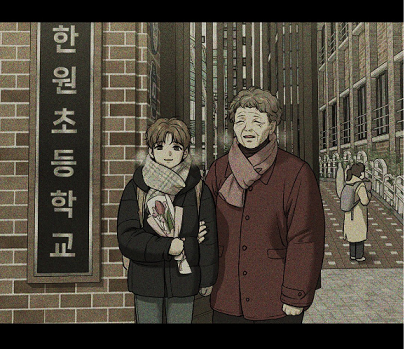 (chapter 47) He stands still, holding bouquets, looking at the camera to comply rather than engage. He is no longer a child “being,” but a trophy of successful care. His growth is recontextualized as the “interest” on his grandmother’s sacrifice, transforming his development into something useful and legible. This logic of appropriation is the “unseen rule” Dan eventually internalizes: his value is no longer grounded in his existence, but in his functional utility.
This is where the emotional register shifts again. The earlier photographs suggested a gaze directed toward the child — attentive, affectionate, and open. Here, the direction of that gaze becomes more complex. The child is still visible, but he is also being positioned within a narrative that exceeds him. His life is no longer only his own. It becomes intertwined with her need for meaning, recognition, and continuity. This is why these images feel different. They are not only more structured. They are more purposeful. The camera no longer captures a moment. It records a result.
The Crybaby
She looks fondly at this picture (chapter 94), she is able to position herself as the source of relief. The child depends on her, and that dependence gives structure and meaning to her role. This is why the contradiction does not appear as one. What we read as distress, she experiences as confirmation. And yet, her own words introduce a subtle tension within this dynamic.
When she refers to him as a “crybaby” (chapter 94), she does more than describe a child’s behavior. The term carries a judgment. It implies excess, weakness, a deviation from what is expected. Crying is no longer simply a response to pain or separation. It becomes something that must be corrected. This is where another layer emerges.
Because the child she describes is, in fact, behaving in a completely normal way. (chapter 94) He is a baby, or a very young child. If he cries in another one, it could be because he hurt himself, or he is frightened, or overwhelmed. The image of him crying after falling and injuring his knee 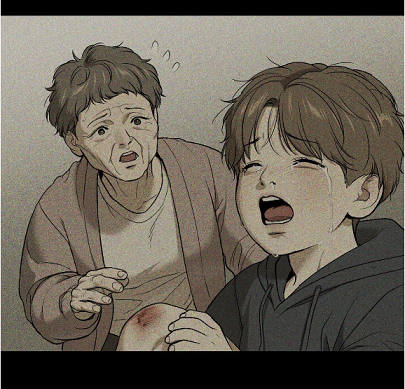 (chapter 47) confirms this. The tears are not excessive. They are appropriate. Thus he could have cried, because he lost the dogs for example. (chapter 94)
The label, then, does not describe the child. It reflects her perception. It reveals a discomfort with vulnerability, and more specifically, with the persistence of that vulnerability over time. The “crybaby” is not only the infant in distress. It is also the figure she does not want him to remain. This is reinforced by her later remark to Joo Jaekyung, where she praises his strength, his physique, and his masculinity 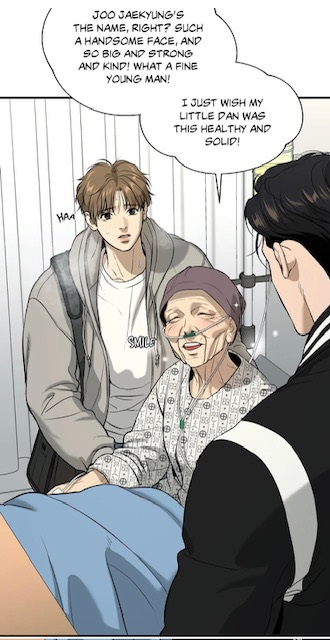 (chapter 21) The contrast is implicit but clear. The ideal is no longer the dependent child who cries, but the strong young man who does not. And now, you comprehend why he went to the restroom in order to cry. He is not allowed to express his sadness.
 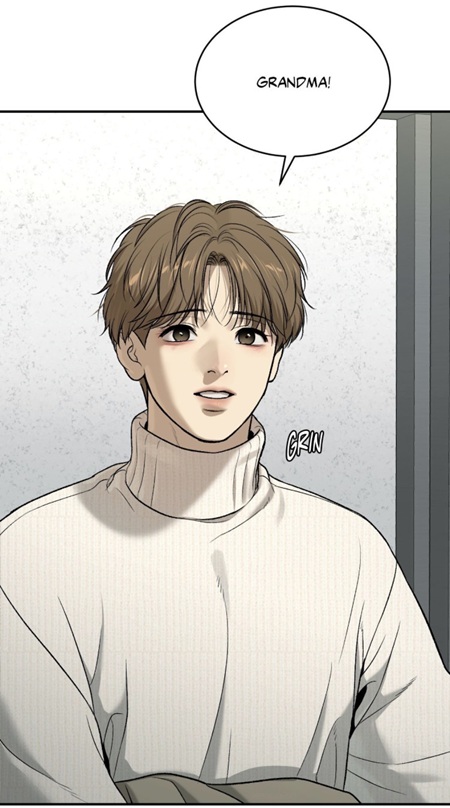 (chapter 94) In this sense, her perspective is structured by a normative expectation. A boy should be strong. He should endure. He should not cry. This creates a paradox.
On the one hand, she returns to the image of the infant because it secures her role as caretaker. On the other, she implicitly rejects the qualities associated with that same state. The crying child is both the foundation of her identity and something that must be overcome. This tension is crucial.
Because it helps explain the transformation we observe later. The child who once cried freely gradually becomes someone who suppresses his needs, who endures silently, and who defines himself through resilience rather than expression. In other words, the “crybaby” disappears. But what replaces him is not strength in the sense she admires. It is a form of self-erasure.
Because this transformation does not occur in isolation. It is mediated through her gaze. 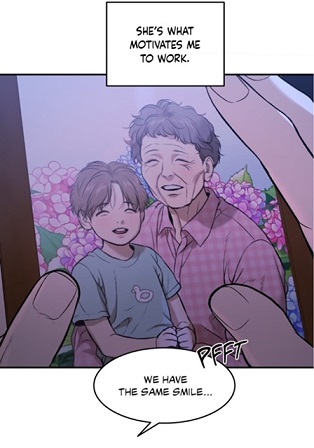 (chapter 47) Over time, Kim Dan learns to see himself as she sees him. The qualities that once defined his childhood — openness, sensitivity, emotional responsiveness — are no longer recognized as strengths. (chapter 94) They are recoded as weakness, something to outgrow, something to suppress.
This is why he cannot recognize his own strength. (chapter 94) What he has developed is not the visible, dominant form of strength embodied by Joo Jaekyung, but something quieter: endurance, patience, and an exceptional capacity for care. His strength lies in his ability to persist, to adapt, and to remain attentive to others even under pressure.
In other words, he stands for genuine empathy. And yet, because he perceives himself through the lenses of his grandmother, this form of strength remains invisible to him. What he sees instead is lack — a failure to meet an ideal that was never his to begin with.
The Production of Worthlessness
The consequences of this transformation are absolute. As Dan becomes the support structure of the relationship, he develops a pathological selflessness. His refusal to invest in himself—his empty wardrobe and skipped meals—is the continuation of a role where his only valid function is to provide. His lack of self-worth is not innate; it is a manufactured condition. (chapter 94) The original “Dan,” who offered daisies without expectation, has been overwritten by a provider who must justify his presence through constant sacrifice.
These later photographs (chapter 47) are excluded from the “happy” album because they resist reinterpretation. They cannot be turned into “good old days” because they document the exact moment care turned into dependence. They reveal a rupture that didn’t just remove his parents, but dismantled his entire environment—home, neighborhood, and unconditional joy. They expose her reliance on him and the doctor’s suffering and growth. By focusing on her role as the sole caretaker, Shin Okja reorganized the past, making the parents’ absence more visible than their existence ever was. Ultimately, Dan adopted this simplified history, losing the memory of the world that was taken from him.
The Glasses: Seeing the Past, Losing the Present
This dynamic becomes even more visible through a small but significant detail: the grandmother’s glasses (chapter 94) When she looks at the photograph, she is wearing them. This is not incidental. The glasses mediate her vision. They frame the way she perceives the image. She does not look at the past directly. She sees it through a lens. And that lens is not neutral.
It allows her to focus on what she wants to preserve: closeness, affection, meaning. At the same time, it filters out what cannot be integrated into that narrative: rupture, loss, contradiction. This is why the photograph can be reinterpreted.
The tears disappear behind the idea of “good old days.” (chapter 94) The moment of separation becomes a moment of connection. What is seen is not what is shown, but what can be emotionally sustained.
But this also implies a form of blindness. Her gaze is turned entirely toward the past. The present, by contrast, is only partially perceived. 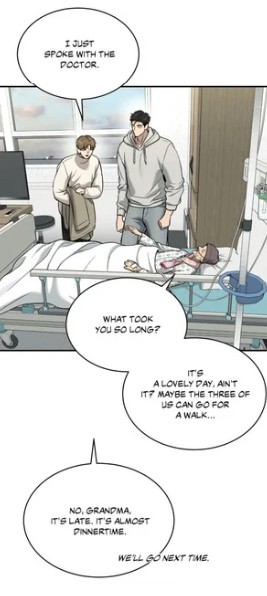 (chapter 94) She noticed his absence, but she failed to see his red eyes, his suffering. She does not fully register the adult standing in front of her. She continues to relate to him through the image she has preserved. This is where the gesture of removing the glasses becomes significant.
When she takes them off, the mediation disappears. The lens through which she has been interpreting the world is no longer in place. (chapter 94) This moment signals a possible rupture in her perception. The constructed coherence of her memory is about to be confronted by a reality that cannot be filtered in the same way. Her vision, quite literally, is about to collapse.
The Birthday: Time, Erasure, and the Illusion of Permanence
This tension between past and present becomes even more striking when we consider the question of the birthday.  (chapter 41) Birthdays are not trivial details. They function as markers of time, inscribing the individual within a social and temporal order. They acknowledge growth, change, and the passage from one stage of life to another.
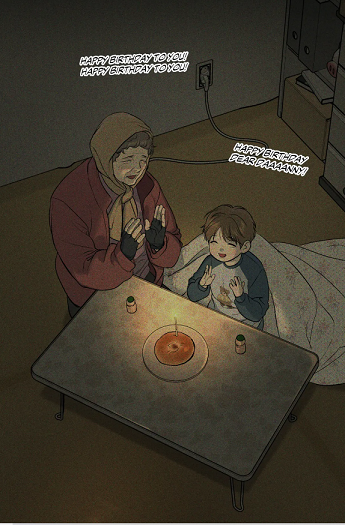 (chapter 11)
And yet, in this scene, the birthday is absent. This absence is revealing.
Jinx-philes already know that Kim Dan’s birthday follows immediately after Joo Jaekyung’s scheduled match on December 25th 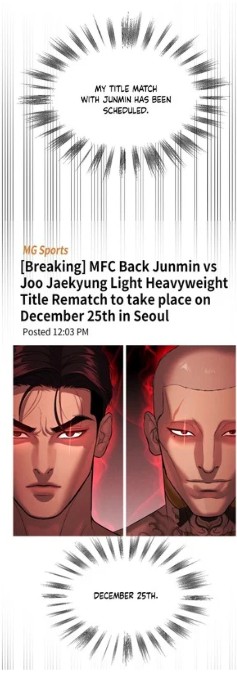 (chapter 88). The temporal proximity is clear. If the grandmother is aware of his matches — if, as she claims, they “give her strength”
 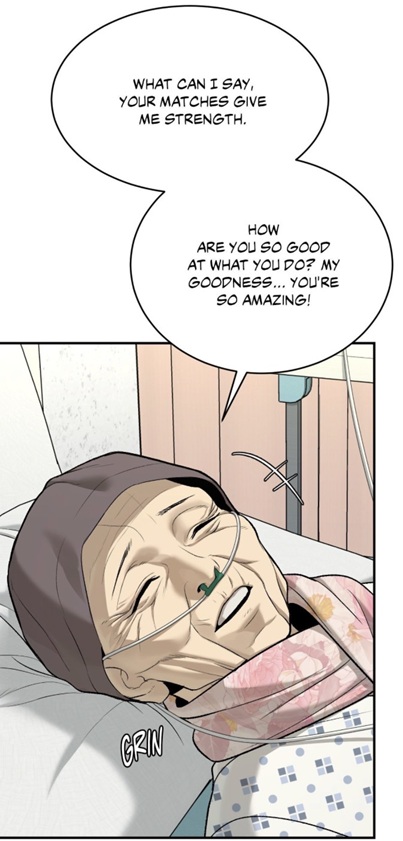 (chapter 94) — then she should also be aware of this date. But she does not mention it.
Instead, her attention is directed elsewhere. She complains that he does not spend enough time with her and asks him to come earlier next time. (chapter 94) She asks him to come earlier next time. 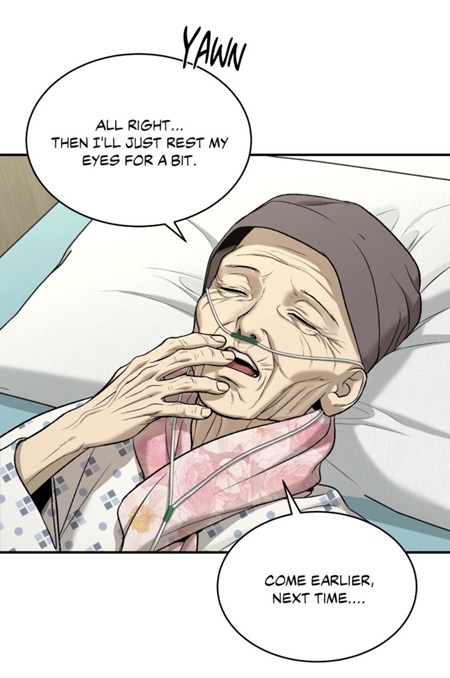 (chapter 94) Her concern is not oriented toward his life as it unfolds, but toward maintaining a certain relational dynamic.
This is where the contradiction emerges. She speaks as if she is connected to the present, yet her perception is anchored in the past. The fact that she only “heard” about his victory suggests distance rather than genuine involvement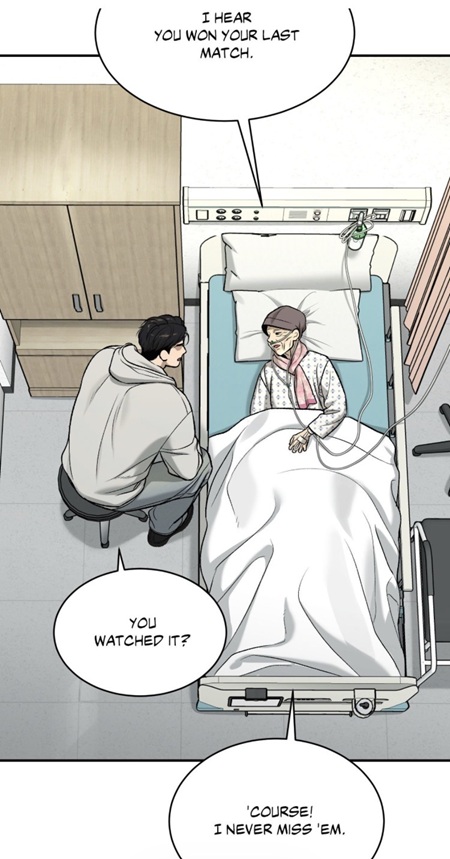 (chapter 94) Her knowledge is indirect, fragmented, and yet presented as intimacy. This gap is not incidental. It has structural consequences.
By not acknowledging his birthday, she does not acknowledge the passage of time. She does not recognize him as someone who is approaching thirty , as someone whose life extends beyond the role she has assigned to him. In this sense, the absence of the birthday is not a simple omission. It functions as a form of erasure.
Without temporal markers, the individual becomes fixed. He no longer moves forward. He remains suspended in a past that can be revisited, reshaped, and controlled. This is why he appears, in a certain sense, frozen in the end. (chapter 94) This also explains why she continues to treat him as a child. If time is not acknowledged, growth is not recognized. If growth is not recognized, the child never fully becomes an adult. He remains within a structure in which his role is defined by dependency, proximity, and care. This is where the notion of the “Unseen Game” reaches another level.
It is not only about economic structures or social conditions. It also operates through time itself. Through what is remembered, what is omitted, and what is allowed to change. And in this case, what disappears is not only the parents. It is Kim Dan as an individual. (chapter 11) When Jinx-philes encounter the birthday scene, they may assume that this celebration was a recurring ritual. But is that necessarily the case? The narrative does not confirm repetition. On the contrary, the absence of any reference to his birthday in the present suggests discontinuity rather than tradition.
This absence becomes even more striking when we consider the logic of the photographs. If, as suggested, one of the images corresponds to winter (chapter 94) then this season should have triggered her memory. And yet, it does not. The seasonal cycle that structures the photographs no longer structures her perception.
This indicates a deeper divide. She no longer inhabits the same temporal reality as her grandson. While his life continues to move forward, her perception remains anchored in a reconstructed past that she revisits selectively.
What disappears, then, is not only the parents. It is Kim Dan as an individual. He becomes, in a very precise sense, a ghost within his own life: present, functioning, necessary—but not fully recognized as someone who exists independently of the role he has been assigned.
And yet, this structure is not immutable.
Because the absence of the birthday does not mean that time has stopped. It only means that it has not been acknowledged. This is precisely where Joo Jaekyung’s role becomes decisive. By celebrating Kim Dan’s birthday, he does something that has been missing until now: he reintroduces time. He marks a transition. He recognizes not the child of the past, but the adult of the present. This gesture is not symbolic in a superficial sense. It has structural consequences. 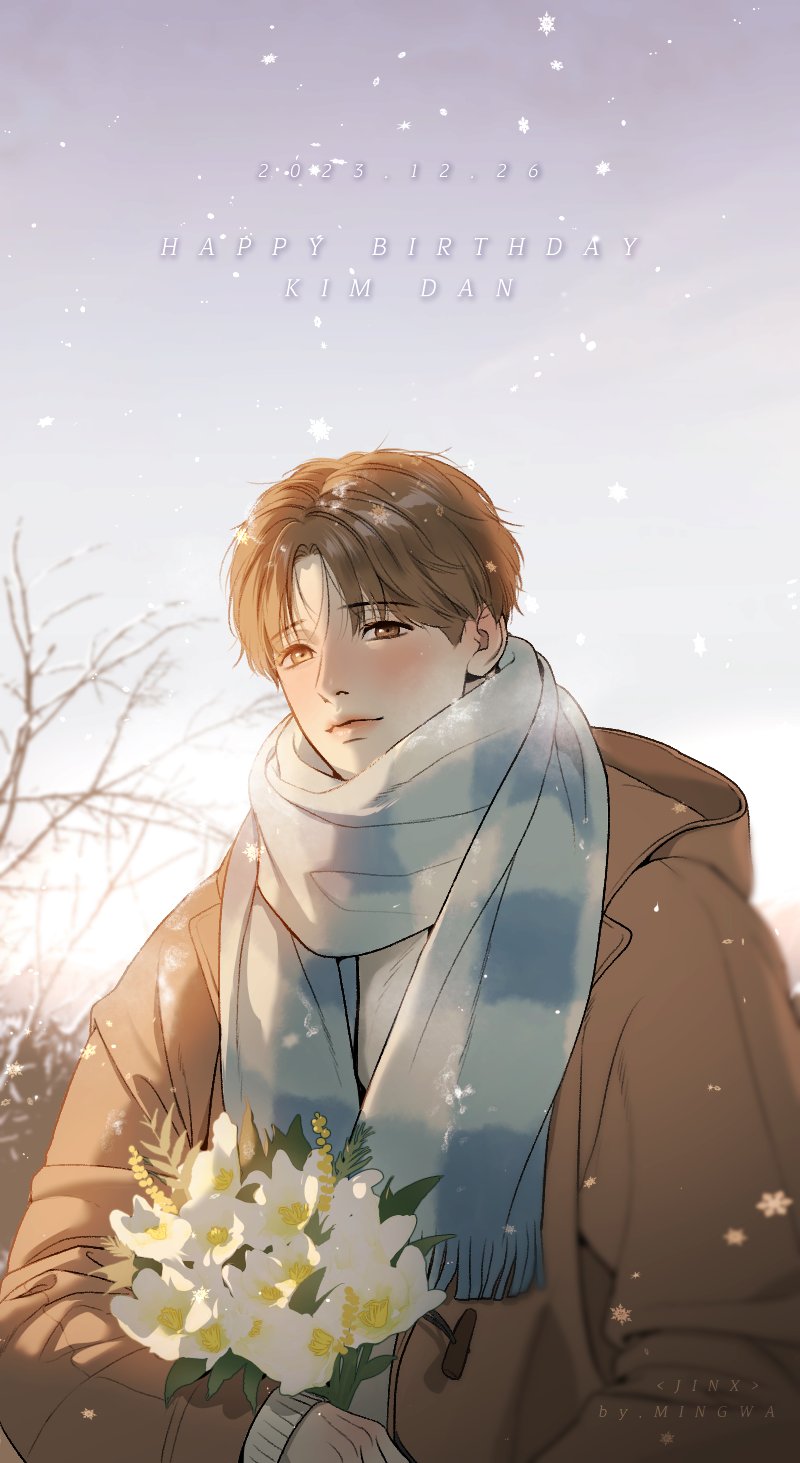 For the first time, Kim Dan is acknowledged as someone who has grown, who has endured, and who has reached a stage that cannot be reduced to dependency. The celebration does not create his maturity. It makes it visible. So this image could be seen as a picture taken by the main lead on Kim Dan’s birthday. And observe that this image lets transpire the presence of the photographer and the strong connection between the main lead and the photographer.
In this sense, Joo Jaekyung does not simply “care” for him. He restores a dimension that had been erased. He gives him back a temporal position. And with it, an identity.
The Function of the Photographs
This allows us to understand the true function of the photographs. (chapter 94) They are not simply memories. They are instruments of perception.
At first, Joo Jaekyung looks at them and sees only what is immediately visible: a child, innocence, warmth. (chapter 94) He recognizes the purity of that image, but not the conditions that surround it. The past appears self-contained, detached from the structures that shaped it. This limitation has consequences.
When he later recalls the encounter between Kim Dan and Choi Gilseok, his interpretation follows the same logic. 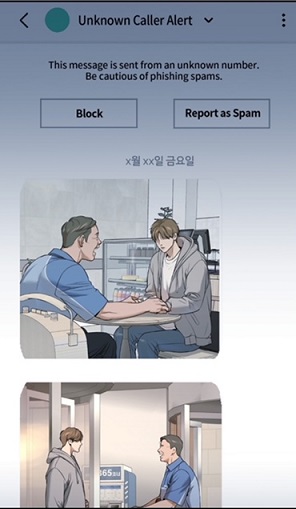 (chapter 48) He suspects manipulation, imagines betrayal, and attributes agency to the most visible figure, because he knows about the loan and debts. And don’t forget that in his mind, they are the result of gambling and not of an economical crisis. In this framework, Kim Dan appears as someone who could be bought
  (chapter 51), influenced, or used. Baek Junmin becomes the primary culprit, the one who acts openly, who attacks his wounds, who embodies threat. One might say that he looked at the pictures through the gaze of the photographer. But something remains unexamined.
Choi Gilseok. (chapter 48) He did not notice that these pictures were staged.
Because, unlike Baek Junmin, Choi Gilseok does not hide his position. On the contrary, he reveals it. In the café he owns, he lays out his resources with striking clarity.  (chapter 48) He speaks of his parent company, of pharmaceutical connections, of international treatment. He offers to cover medical expenses, to provide accommodation, to double Kim Dan’s salary, even to place a car at his disposal. This is not a conversation. It is a display.
What he presents is not simply help, but a system of possession. If we read this scene through the lens of Monopoly, the structure becomes unmistakable. Choi Gilseok is not a player struggling within the game. He is someone who already owns the board. The café, the company, the network, the capital—these are not isolated elements. They form a coherent system in which value is accumulated, controlled, and redistributed according to strategic interest.
Kim Dan, by contrast, is placed in the position of someone who has landed on another’s property. The offer appears generous. But like in Monopoly, generosity is never neutral. It is tied to incorporation. To accept means to enter the system, to become part of a structure in which the terms are already defined. This is where the illusion operates. Because what is presented as opportunity is, in fact, a form of capture. 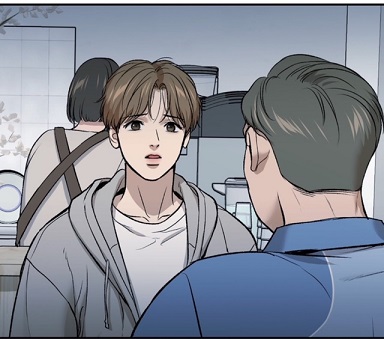 (chapter 48) And the switched spray was the price to pay for the “visit” at the café.
 (chapter 49) The meeting with Choi Gilseok is no longer a simple interaction between individuals. It becomes part of a larger configuration — one in which visible actions and invisible structures intersect. Responsibility is no longer attributed only to the one who strikes, but also to the one who orchestrates.
As you can see, the pictures can help Joo Jaekyung to see not only the director, but also his position within the game. This shift is crucial. (chapter 94) Because it allows him to recognize that Kim Dan is not defined by greed, weakness, nor by passivity, but by a history that required endurance, adaptation, and silent resistance. The child he saw in the photographs is not separate from the man he stands beside. It is the foundation of that man.
To conclude, this is where the photographs about Kim Dan’s childhood begin to transform Jaekyung’s perception. Indirectly, he has sensed the care and loving gaze of the parents. Because once he has learned to look beyond the surface — once he understands that what appears as innocence may contain loss, that what appears as simplicity may conceal structure — his way of seeing changes. He no longer looks only at what is shown. He begins to question what is hidden. And it is the same for Kim Dan (chapter 94) who could be forced to remember painful moments  (chapter 19)
 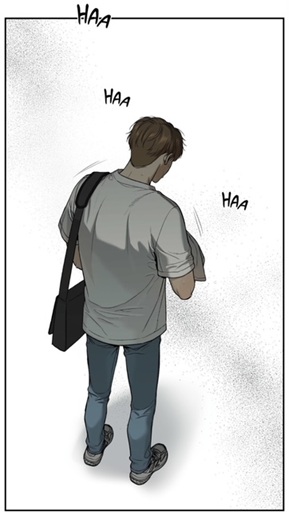 (chapter 59) by rediscovering the photos from his childhood, like the vanishing of the “puppy”. (chapter 94) I don’t think, it is a coincidence that Potato has pictures of the puppies as well.
  (chapter 60)
Feel free to comment. If you have any suggestion for topics or Manhwa, feel free to ask. If you enjoyed reading it, retweet it or push the button like. My Reddit-Instagram-Twitter-Tumblr account is: @bebebisous33. Thanks for reading and for the support, particularly, I would like to thank all the new followers and people recommending my blog.
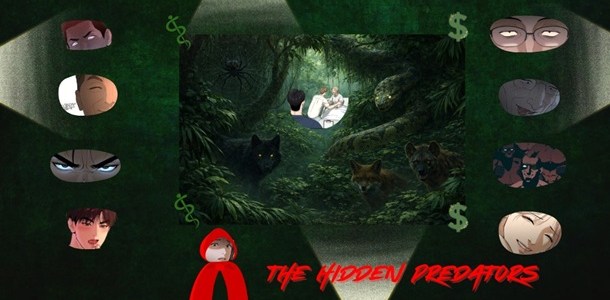
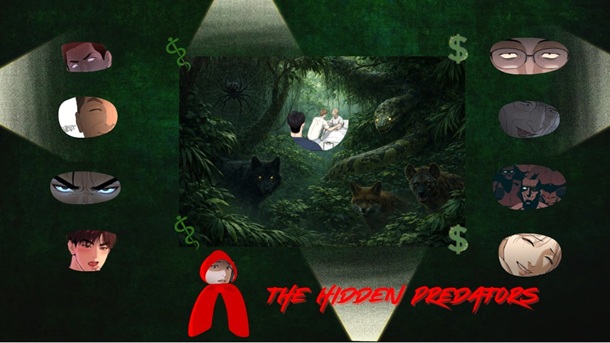
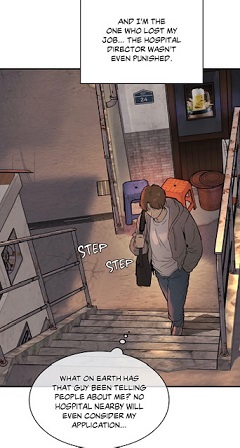
 (chapter 14) Others hide behind systems.
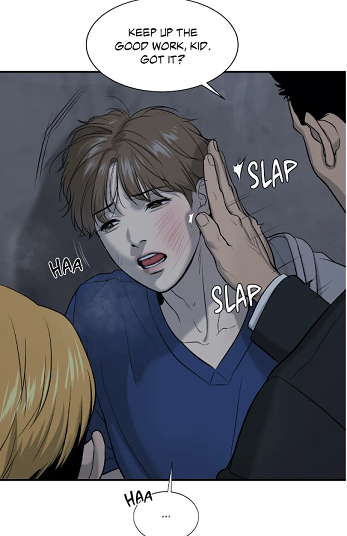
  (chapter 1) Some exploit bodies.
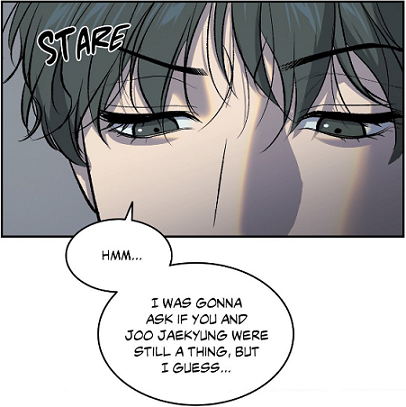
  (chapter 11) Others exploit labor, fear, loyalty, or belief. The forest contains them all.
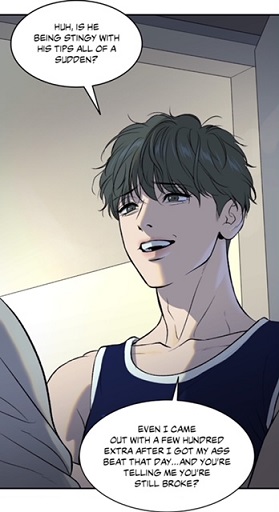
  (chapter 42). When he speaks of Joo Jaekyung, his language is explicit: the champion was a source of milk, a body that could be “milked” for money, favors, and reflected status. In biological terms, this is parasitism rather than hunting — survival not through direct attack, but through prolonged attachment to a stronger host. As long as the host remains productive, the parasite thrives. When the bloodsucker is removed, flow stops, hunger turns first into regret
  (chapter 42) before resentment.
  (chapter 42)
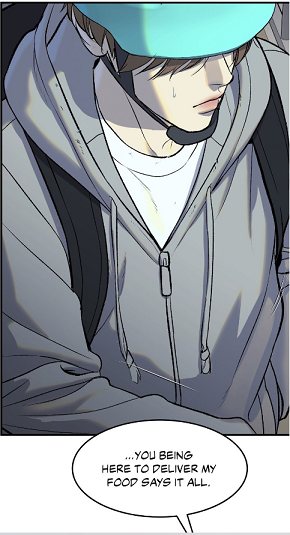 (chapter 42), but why he does so at the precise moment he does.
  (chapter 42) His hostility does not emerge from poverty alone, nor from moral outrage. It is triggered by a rupture in his expectations.
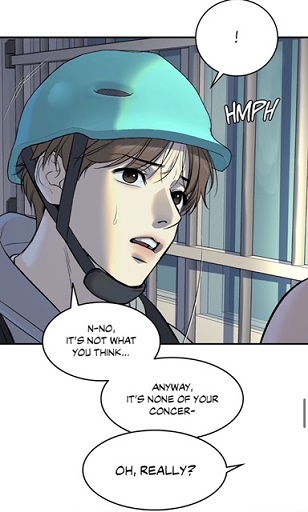 (chapter 42) In that moment, the green-haired man realizes that closeness still exists without visible profit. This is intolerable to him. It contradicts the logic through which he has justified his own past behavior: the belief that proximity to power must be monetized, that relationships exist to be exploited, that affection without gain is either naive or dishonest.
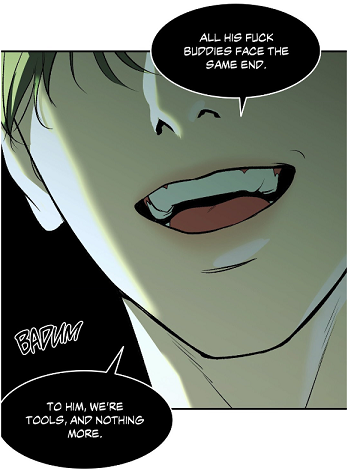 (chapter 42) Something used and discarded. In other words, he reframes Kim Dan’s loyalty as delusion and reasserts predation as the only intelligible model of intimacy.
 (chapter 02) and that the exchange of attention and money implied mutuality. Joo Jaekyung’s refusal shattered that illusion. What Kim Dan represents now is not competition, but refutation: proof that closeness does not require extraction, and that survival does not have to pass through exploitation.
 (chapter 42) The green-haired man refuses to pay for food this, while implying that his roommate is taking advantage of him, as if he would barely contributes. On the surface, the image suggests exploitation: one man living off another’s labor. Yet the scene refuses to clarify who truly benefits. The roommate remains largely invisible, economically opaque, almost spectral. Is he a dependent quietly feeding off the green-haired man’s remaining resources? Or is the green-haired man himself the parasite, overstaying, consuming, and justifying his presence through grievance? The narrative does not resolve this tension — deliberately so. Predation here is not readable at a glance. It hides in everyday arrangements, in domestic negotiations, in the language of fairness and contribution.
 (Chapter 31), the contract is made visible: the manager’s income depends entirely on the star’s uninterrupted productivity. When work stops, pay stops. Yet neither the star nor the agency appears exposed. Heesung himself, who proposed the risky sparring, shows no empathy for his caring manager. He doesn’t feel concerned for this arrangement and makes no attempt to renegotiate it for his manager’s sake. Financial risk is displaced downward, onto the least protected figure. The manager is not the predator here, but a human buffer, absorbing the instability produced by a structure that benefits the star and the Entertainment agency while refusing to insure those who sustain them.
 (chapter 34) or on Saturdays
 (chapter 32), treating the physical therapist’s work and time as indefinitely available. This is not an isolated lapse but a recurring pattern, later reproduced with Potato as well.
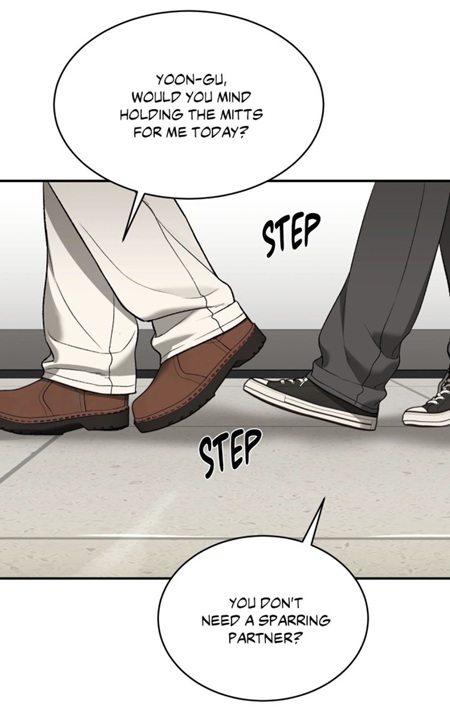 (Chapter 88) In both cases, access replaces consent: labor and care are extracted on polite request, while the cost—fatigue, intrusion, and loss of private time—is borne entirely by the subordinate.
 (chapter 54) Its hallmark is externalization: the institution benefits while the vulnerable party carries the damage. A hospital extracts unpaid endurance and calls it devotion. A league extracts bodily risk and calls it career ambition. An agency extracts loyalty and calls it partnership. Even when no one screams, the asymmetry remains: those above set the terms; those below absorb the consequences.
 (chapter 70) but “Take better care of yourself.” Not “We failed to protect you,” but “You caused inconvenience.” This is the core of economic predation: the harm is real, but the blame is displaced downward so the system remains clean.
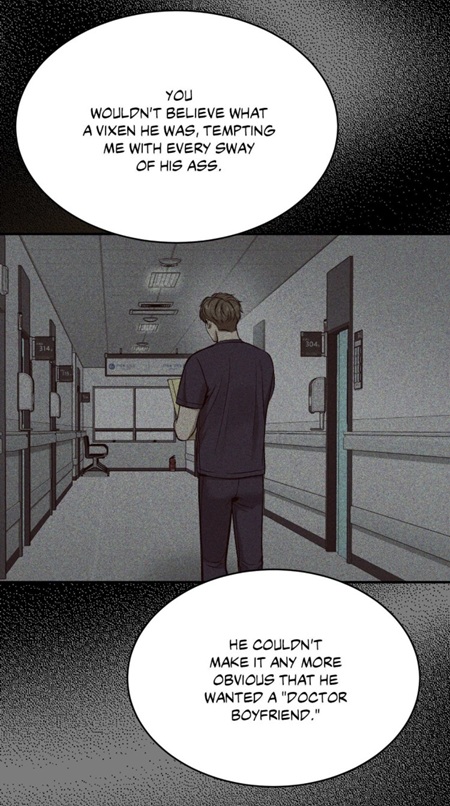 (Chapter 90) A sexual predator targets someone whose circumstances make refusal impossible or costly — socially, economically, professionally, physically, psychologically. The predator does not need to use overt violence to be dangerous; often the strategy is precisely to stay close to the border where the victim can later be blamed: You wanted it. You tempted me. You misled me. You didn’t say no clearly enough. This is why victim-blaming belongs structurally to sexual predation: it is a technique of retroactive absolution. This logic does not remain abstract in Jinx. It finds a concrete site where authority, legitimacy, and bodily access converge.
 (chapter 29) Rival fighters do not need to engineer the champion’s collapse; they only need to anticipate it. What defines them is not ambition alone, but timing.
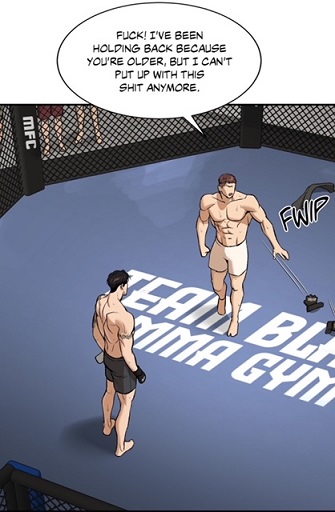 (chapter 46) His words are exposing not restraint, but accusation. The implication is clear: the champion’s body is already failing; respect has become optional. Seonho is not trying to overthrow Jaekyung through skill alone. He is announcing that the moment of vulnerability has arrived, and that patience is no longer required.
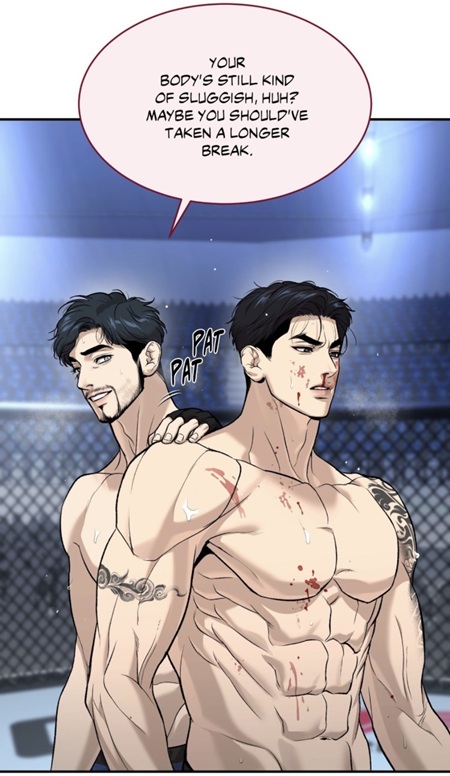 (chapter 87) He thought, he had found his perfect “meal”. To conclude, Arnaud Gabriel articulates the same logic even more coldly.
  (chapter 87) There is no personal animosity here, only inevitability. The statement is not a threat; it is a forecast. Power, in this worldview, is temporary by nature, and the role of rivals is not to prevent collapse, but to be present when it happens. Like hyenas, they do not waste energy on the kill. They wait for age, injury, scandal, or exhaustion to do the work.
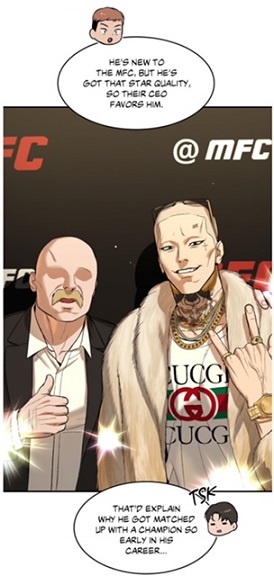 (chapter 47) Their role is not to wait for blood, but to manage its visibility. When the switched spray incident and the drug-related harm threaten to surface, the response is not investigation, but orchestration.
 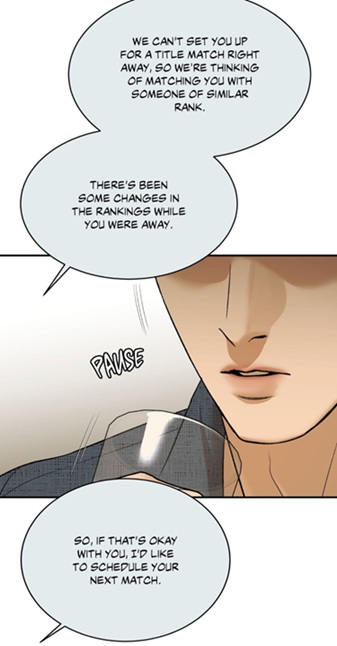 (chapter 69) A new match is organized. An invitation is extended. Noise is generated. Attention is redirected. The spectacle resumes.
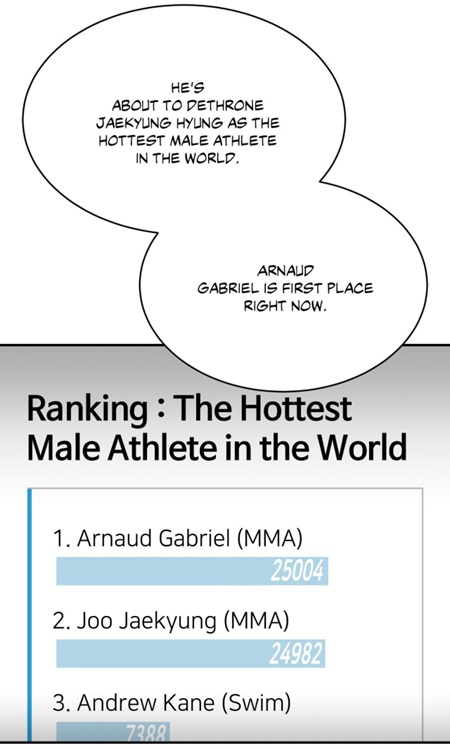 (chapter 81) The distinction matters. An athlete is managed for performance and longevity; a celebrity is managed for visibility. Injury is a problem in the first case. Scandal is profitable in the second.
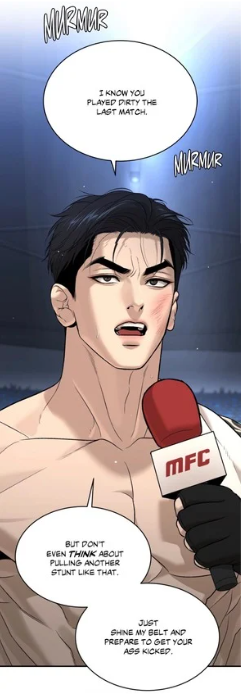 (chapter 87) By naming the manipulation in front of an audience, he breaks the tacit agreement of silence that protects institutions. What should have remained backstage is brought into public discourse. From that moment on, the system has an incentive not to clarify the truth, but to reframe the speaker.
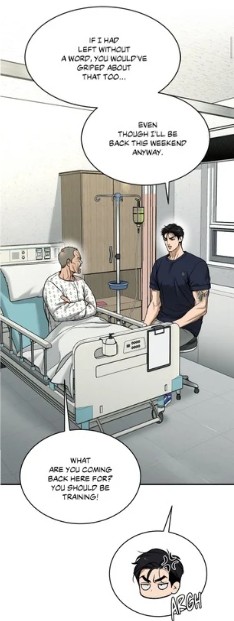 (chapter 78) The latter has always blamed the “boxer Joo Jaewoong”, but not the boxing world, the institution.
  (chapter 74) He never saw the ties between boxing and mafia. And this raises the following question: how can the Little Red Riding Hood discover the predator in MFC before getting eaten?
  (chapter 61) Joo Jaekyung accepts matches while injured
  (chapter 41), his shoulder still compromised, because he is “cleared” to fight. The phrase is decisive. Clearance does not mean safety; it means permission. The medics approve, the fight proceeds, and responsibility dissolves upward. When the body holds, profit is generated. When it fails, discipline follows.
 (chapter 50) later participate in his suspension. In both cases, the logic is identical: the body is usable until it is not. MFC remains intact; the cost is borne by the fighter.
  (chapter 52) The hyenas wait, the institution schedules, and the risk is displaced downward—onto the athlete, onto his body—while the structure that benefits from him remains untouched.
  (chapter 90) is the first figure in Jinx who embodies all three dimensions of predation at once. He is a biological predator in logic, an economic predator in practice, and a sexual predator in effect — yet none of these appear as transgression. They are exercised under license.
 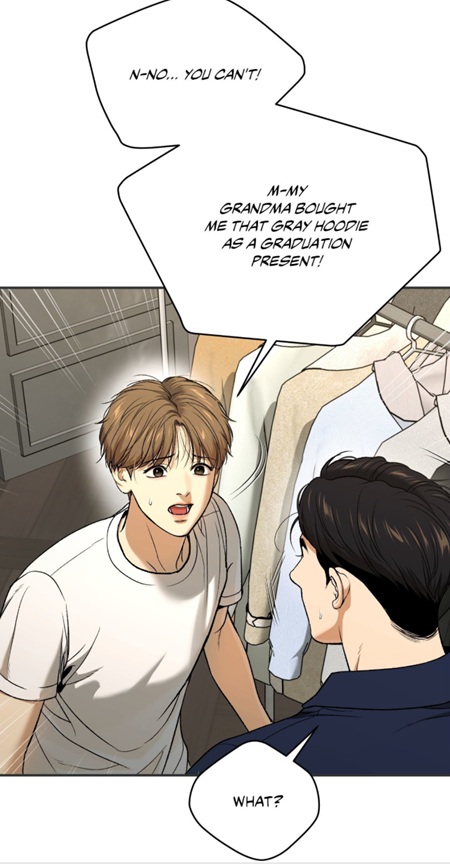 (chapter 80) In this environment, appearance is not superficial. It is a language of rank. To arrive without fluency in that language is already to be classified as provisional.
  (chapter 54)
  (chapter 1) The expression matters. It implies opportunity rather than integration: freelance labor, paid by hours or shifts, without institutional protection. In such conditions, negotiation is not expected. The contract is accepted, not discussed.
 (chapter 90) — the same signs previously associated with the hospice.
 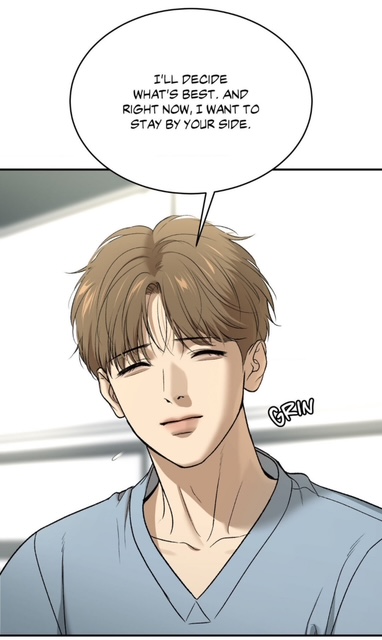 (chapter 57)
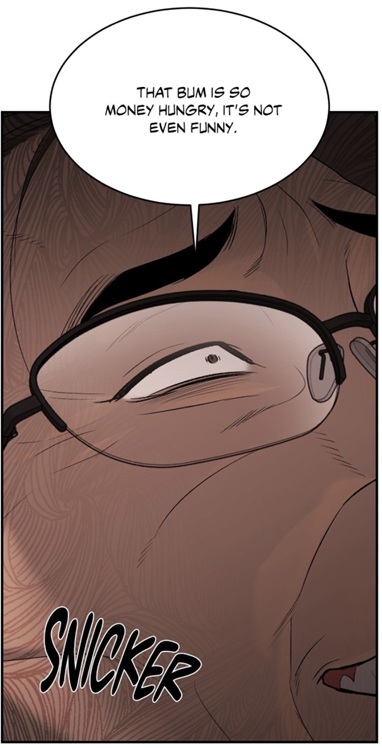 (chapter 90) Constant availability is misrecognized as appetite. Endurance becomes ambition. Constraint is translated into desire. Vulnerability is reclassified as greed. This misreading is not accidental; it is functional. If Kim Dan is greedy, then the director is not coercive. If Kim Dan “wants more,” then nothing is being taken from him.
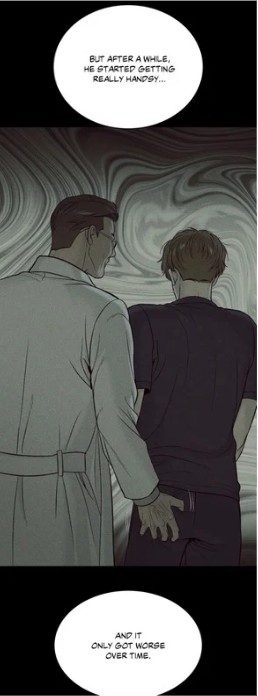 (chapter 90) The contact is quiet, progressive, and deniable. It blends into routine movement, into institutional normalcy. “After a while, he started getting really handsy… and it only got worse over time.” Each tolerated touch becomes precedent. Boundary erosion is not sudden; it is cumulative.
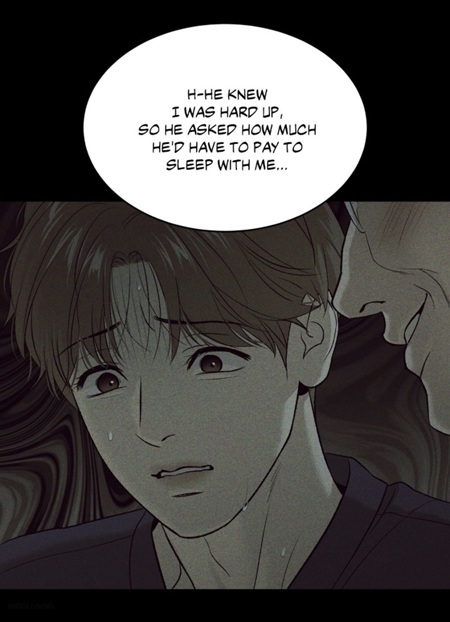 (chapter 90) In the doctor’s eyes, the predator knew about Kim Dan’s difficult financial situation, then he asked how much he would have to pay to sleep with him. The timing is crucial. The offer does not initiate desire; it tests whether vulnerability can be converted into consent. Payment reframes coercion as transaction, need as availability, and silence as something that can be bought in advance.
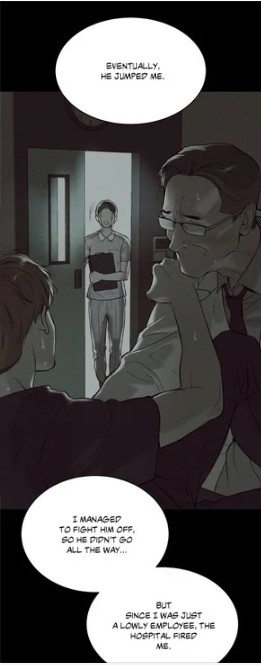 (chapter 90) Even then, the violence is controlled and incomplete — withdrawn before it can be named unequivocally. The goal is not consummation at all costs, but domination without consequence. What remains is fear, confusion, and isolation rather than proof.
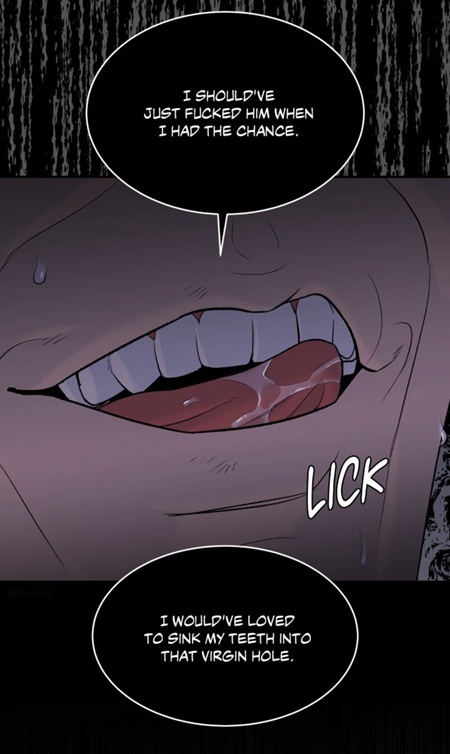 (chapter 90) His regret is not moral but tactical — that he did not take Kim Dan “when he had the chance.” Value resides in the moment of breaking resistance, not in the person afterward. Once the prey yields, interest vanishes.
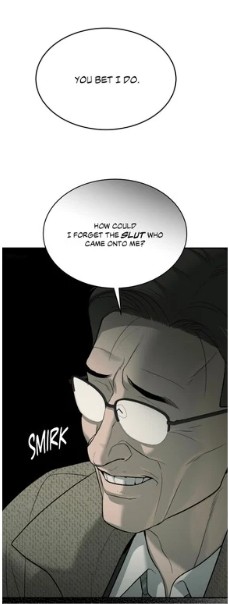 (chapter 90), despite never having paid him, never having offered gifts, dinners, or compensation. The hospital paid Kim Dan’s salary — and the director used his position as a low employee to see himself entitled. Hierarchy replaces money. Shame replaces consent. This is retroactive absolution perfected by institution.
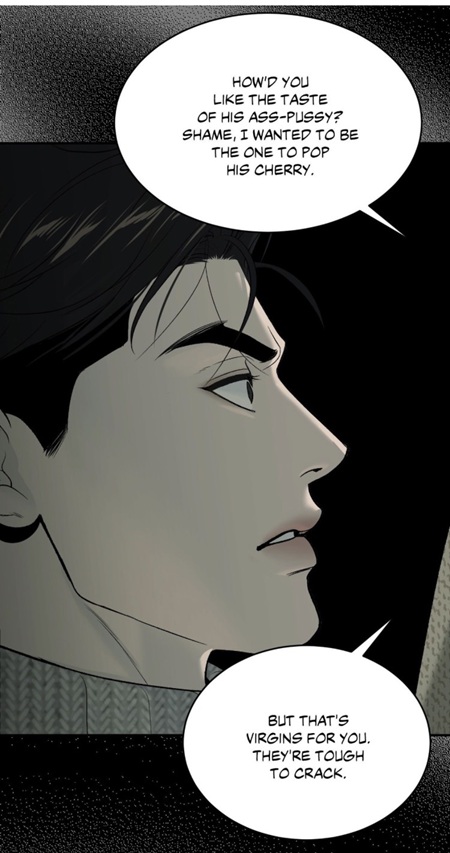 (chapter 90) as bodies that are “tough to crack,” with the confidence of repetition. The metaphor is consumptive: a shell broken to reach what is inside, then discarded. Once resistance is broken, interest disappears. This is practiced predation. The hospital is not merely the setting of abuse; it is his hunting territory — a space where authority guarantees access, exhaustion weakens refusal, and legitimacy ensures silence.
 (chapter 21) The juxtaposition of two buildings, the rooftop park, the sterile façade, and above all the near-identical hallways collapse
 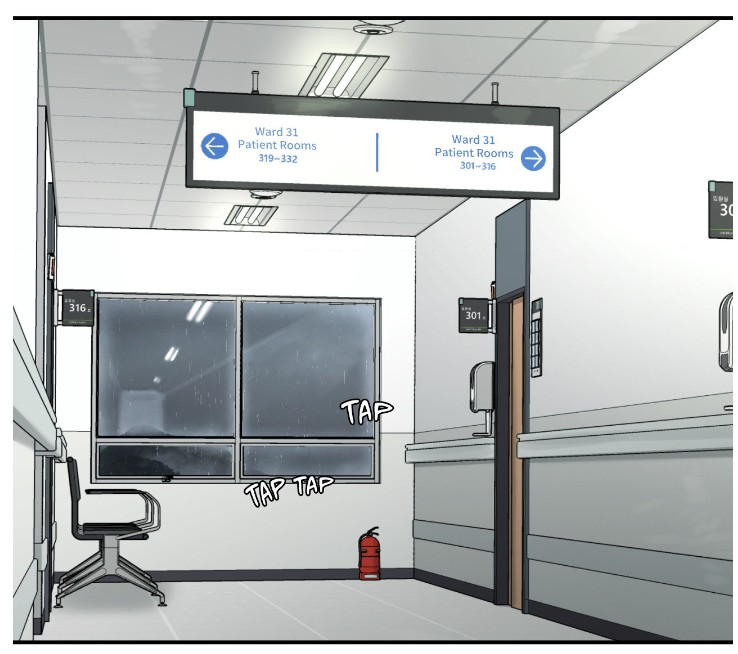 (chapter 5) Professional and personal life are folded into the same architectural body. This is not decorative repetition; it signals circulation — of staff, of protocols, of information.
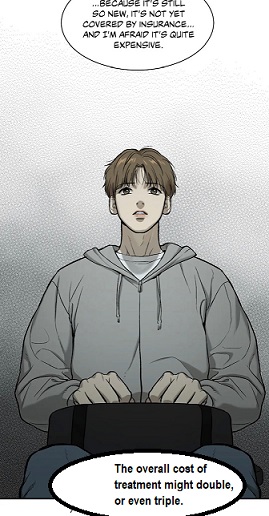 (chapter 5) — professional legitimacy, research success, advancement within a system that rewards results over outcomes. Progress functions as an absolute good, one that authorizes human cost without requiring personal cruelty. Harm is acceptable so long as it produces data.
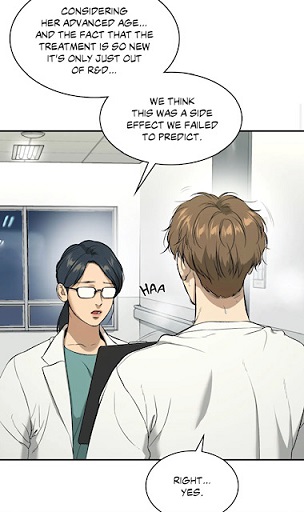 (chapter 21), age and vulnerability become a risk factor, endurance becomes a resource. When the new drug fails and the grandmother deteriorates, the explanation is procedural: side effects, unpredictability, regulatory timelines. Failure is framed as scientific, not ethical.
 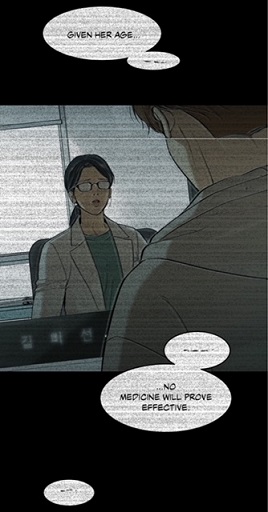 (chapter 47)
 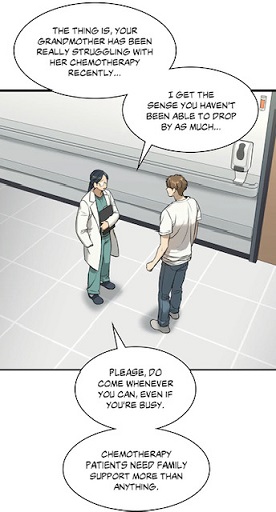 (chapter 21) Treatment patients “need family support,” she says — a statement that sounds compassionate, but functions as deflection. Psychological care is outsourced; responsibility for deterioration quietly migrates away from the institution (“we”). The setting of her disclosures reinforces this posture. She does not speak in a protected office, but in the hallway — a transitional, impersonal space governed by efficiency rather than care, as if she had nothing to hide. However, by behaving like that, she violated the confidentiality rights. Unlike the Saero-An director, who relies on enclosure and isolation, Kim Miseon operates through openness and institutional flow.
  (chapter 48) It is no coincidence.
  (chapter 56)
 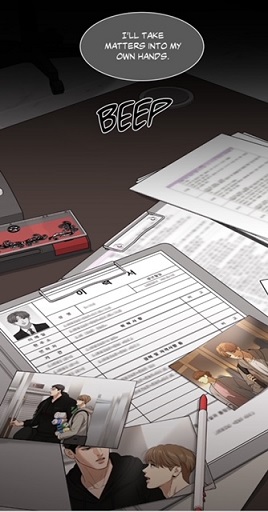 (chapter 46) This is not a coincidence. It is evidence. Personal and professional data move through institutional networks without consent. The same is true of medical information. Choi Gilseok knows about the grandmother’s illness despite having no clinical mandate.
 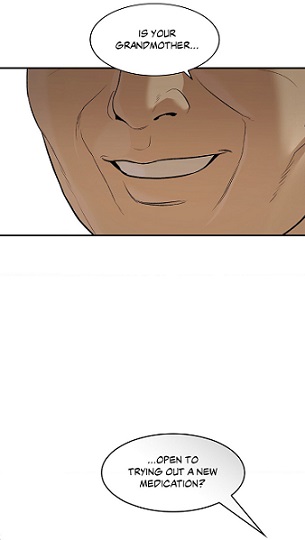 (chapter 48) That knowledge could only have reached him through leakage — informal, normalized, unremarked. Bodies are not the only things consumed here; information is too.
 (chapter 41)
  (chapter 56) Unlike Saero-An or Sallim, this space does not extract profit or prestige; it operates under scarcity. Kim Dan works there as a freelancer, not as protected staff. When he collapses, he is advised to take a day off, not sick leave — a telling detail.
  (chapter 70) It confirms that, even here, labor is contingent, negotiability absent, protection minimal. The vocabulary of care masks the reality of precarity.
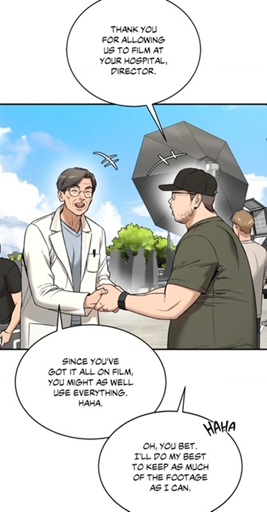 (chapter 59) Thus he is happy to let a film crew use his building for a movie. This is why he sometimes works night shifts himself.
 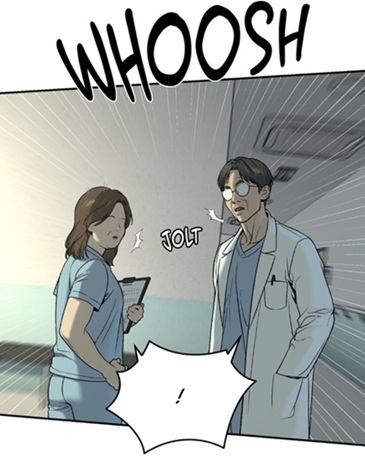 (chapter 60) His authority does not shield him from exhaustion; it exposes him to it. He enforces discipline because collapse anywhere threatens survival everywhere.
 (chapter 59) And yet, harm still occurs. Responsibility is displaced not upward, but sideways — onto the most vulnerable worker present. Kim Dan becomes the buffer once again, not because the director is powerful, but because he is trapped. Predation here is no longer driven by appetite, but by attrition.
 (chapter 61), preserving the impression of treatment rather than end-of-life care. This semantic slippage matters. For Joo Jaekyung, who has been treated there himself, the space remains associated with improvement.
 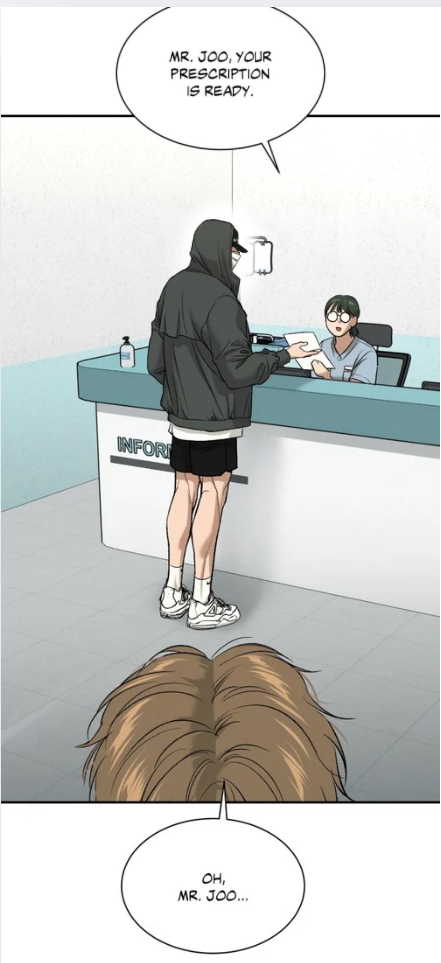 (chapter 70) He thinks, Hwang Byungchul is treated properly, as he still looks lively and strong.
 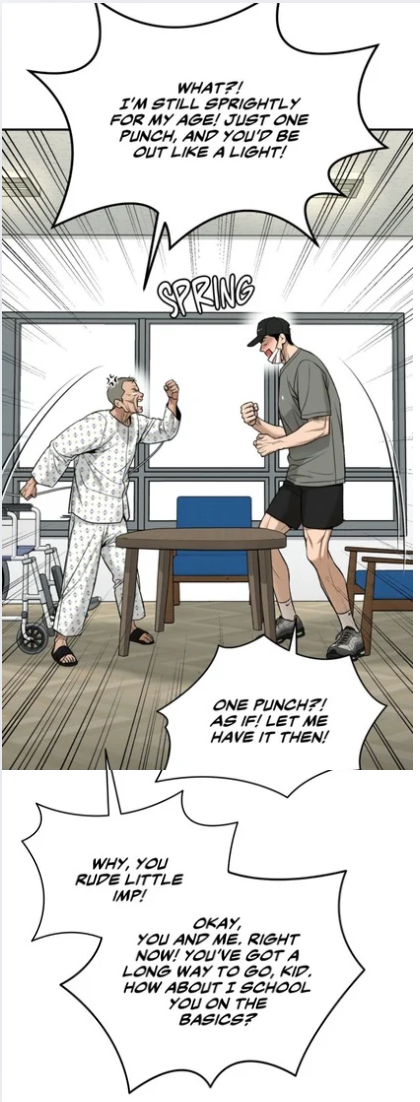 (chapter 71) The champion does not fully register that it is a place at the threshold of death. Care and closure blur. This confusion is not accidental; it mirrors the broader system’s refusal to name limits. By calling a hospice a hospital, death is softened into treatment. By calling resignation progress, responsibility is deferred.
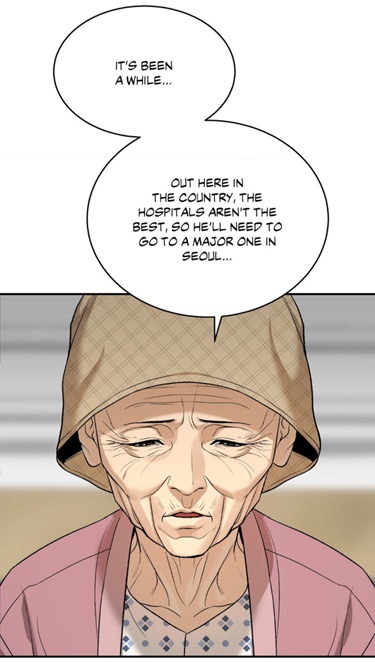 (chapter 65) For her, medicine is sacred and progress meaningful.
 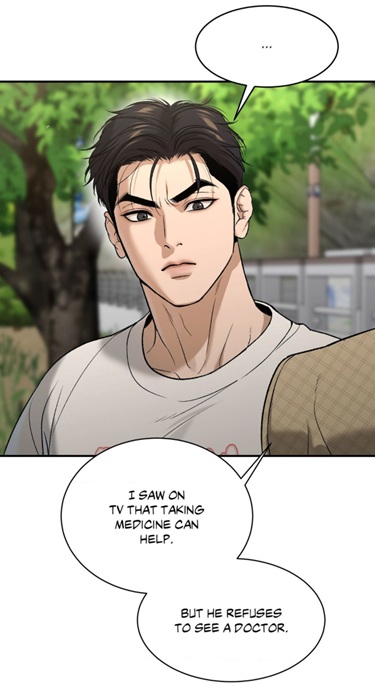 (chapter 65) This belief is not naïve in the childish sense; it is aspirational. It is tied to the idea of success, of legitimacy, of having “made it.” And in her mind, that idea has a name: Seoul.
 (chapter 65) It is where competent doctors work, where advanced hospitals stand, where progress happens, where you can earn a lot of money. This belief structures her entire horizon. Corruption, abuse, and institutional predation do not register there, because acknowledging them would mean admitting that the space she has invested with hope is also capable of harm. Within Seoul, institutions are not suspect; they are self-justifying.
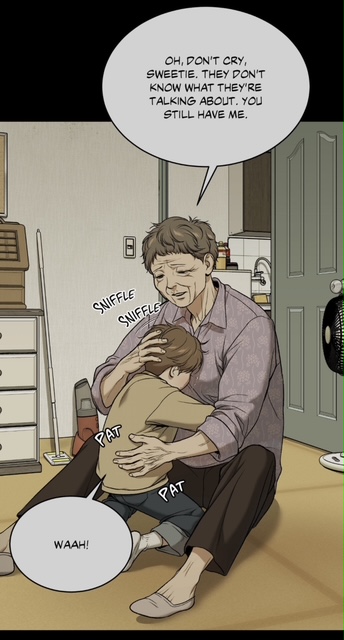 (chapter 57), she did not confront teachers. Her answer was always the same: he still had her. The implication was clear — institutions were there to protect him. To intervene would have meant questioning the very structures she depended on to make sense of the world.
 (chapter 65) as if it was recent, temporary, and situational. The wording matters. What has been chronic is compressed into the present. Duration disappears. Suffering becomes recent, temporary, and therefore manageable. This is temporal minimization — not denial of harm, but deferral of its cause.
  (chapter 57) Only then does his condition become visible. Not because it is new, but because it now implicates her. Before that moment, his endurance could remain unnamed. After it, it must be explained. This is not cruelty; it is belief colliding with responsibility.
 (chapter 7) This exposes her lack of trust in him, as she views him as too naive and trusting. This is where the irony crystallizes. Financial precarity is erased from discourse because acknowledging it would expose her responsibility. Money resurfaces, when Kim Dan presents an expensive gift. But she doesn’t mind, she is even aware of his lie:
  (chapter 22)
 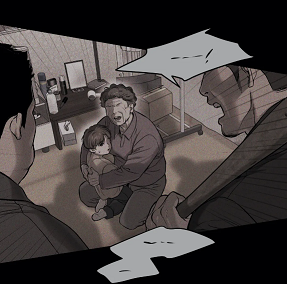 (chapter 5), not systems. And so, she imagines that as long as Kim Dan is working, earning, and paying back what he owes, nothing truly irreversible can happen to either of them. To conclude, what governs Shin Okja’s thinking is a simple equation: payment equals safety. In her mind, debt is a temporary problem with a finite solution. Once money is paid back, danger ends. Order is restored. Life resumes. This belief explains her silence around the loan. To name it would be to admit uncertainty; to erase it is to preserve control.
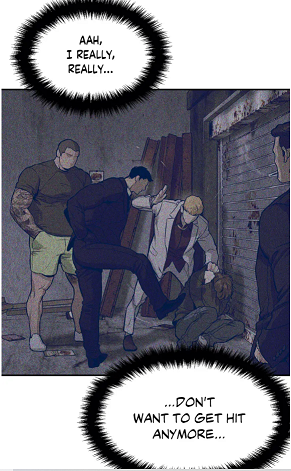 (chapter 1) Kim Dan is beaten not because he refuses to pay, but because payment structures domination. He accepts the abuse precisely because he believes it is temporary — a punishment that will end once the balance is cleared. Violence is normalized as consequence, not crime. This logic mirrors hers exactly. The more the main lead paid back, the more he was exposed to violence.
  (chapter 11) Here, he talked back to Heo Manwook, a sign that he was no longer tolerating the loan shark’s intrusion. The result was that he ended up being beaten more violently than before.
  (chapter 13) This reached its peak, when after sending his whole salary
 (chapter 16), Heo Manwook intended to rape him. As you can see, the more they got money, the more abusive they became… and all this time, the grandmother has no idea. But the best evidence is when Joo Jaekyung pays the loan in full, the pattern repeats at a higher level.
  (chapter 17) The debt is erased — and the danger escalates. Kim Dan might become free, but now the target is the champion. He becomes visible. Settling the debt marks him as someone worth targeting, someone who can be extracted from again.
  (chapter 46) What Shin Okja imagines as closure functions, in reality, as a signal.
 (chapter 46) Each appearance sustains sponsors, broadcast value, betting volume, and gym economies. This is why he becomes the “biggest target”: not because he is weak, but because he represents the highest return.
 (chapter 41) A champion who keeps winning cleanly, visibly, and on his own terms becomes difficult to manage. His victories increase his market value, distribute prestige and income to others, and create expectations of legitimacy. At that point, success stops being profitable in a controllable way. It begins to threaten both institutional authority and informal economies that rely on predictability, influence, and narrative control.
 (chapter 46) A dominant, credible champion reduces volatility, resists manipulation, and makes engineered outcomes harder to disguise. In such a configuration, continued victory is destabilizing. The problem is no longer his body failing — it is his body refusing to fail on schedule.
 (chapter 46) is violent. The question is: what kind of predator is he?
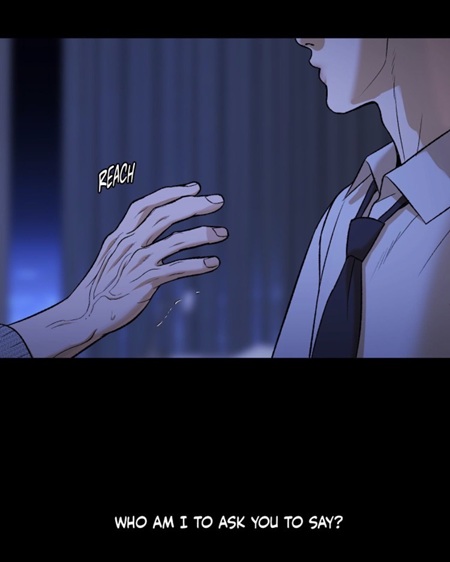 (chapter 90) — and then he pulls his hand back.
 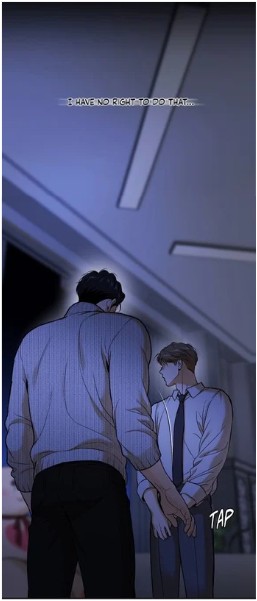 (chapter 90) No words are spoken to stop him. His hand is not even pushed away, like doc Dan did it before.
  (chapter 21) Everything happens in silence. The interruption comes entirely from within.
  (chapter 90) In his mind, everything that followed the hiring — the money, the contract, the protection, the conflicts — converges back onto him. Faced with this conclusion, he rewrites the past. The good moments lose their weight.
  (chapter 26)
 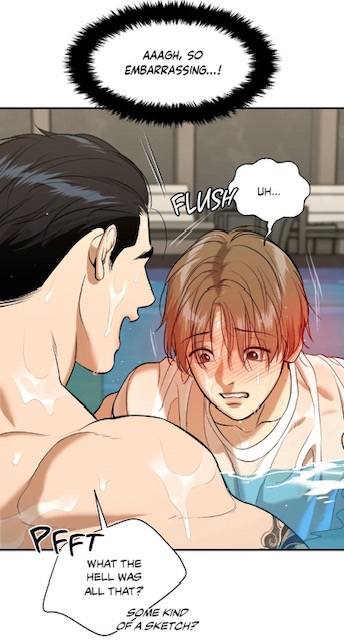 (chapter 27)
 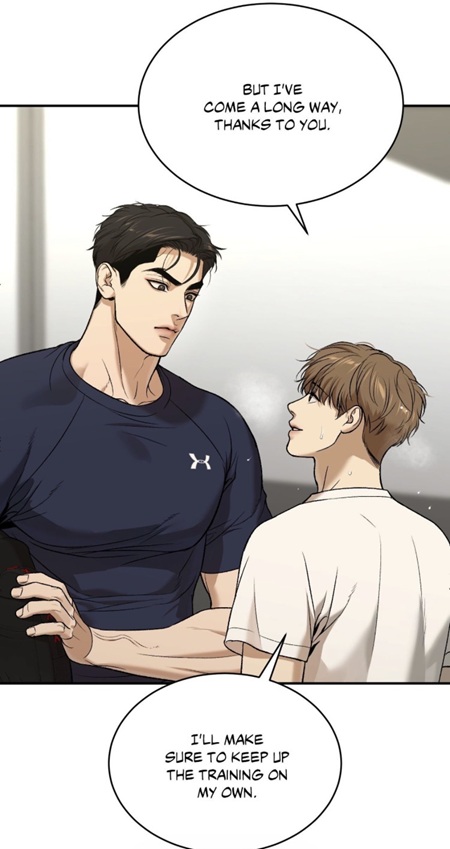 (chapter 88)
 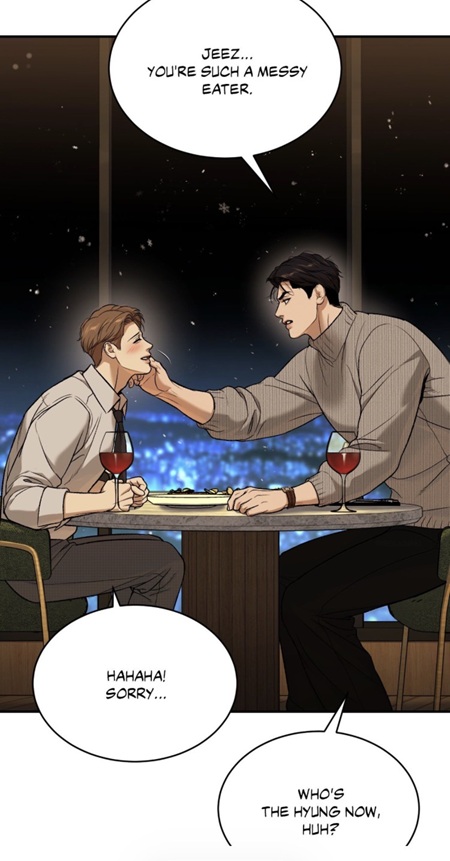 (chapter 89) The help he provided becomes irrelevant. What remains is a single narrative: meeting him caused harm.
 (chapter 61) the clenched fist, when he expressed determination to achieve his goal (bringing back doc Dan or winning a fight).
  (chapter 81)
  (chapter 74), or converting conflict into challenge.
  (chapter 73) Fighting was not only his profession; it was his primary mode of being in the world. Here, however, the impulse to fight dissolves.
  (chapter 16) His hand is first crushed. The antagonist targets the very instrument of his livelihood, injuring what allows him to work, to treat, to survive. Only after this act of violence does Kim Dan cling to his aggressor.
  (chapter 16) The grasp that follows is not an invitation, but a reaction to damage already inflicted. Resistance has been broken through the body before appeal becomes possible. It symbolizes submission, exactly like in the penthouse.
  (chapter 89), unlovability, moral contamination
  (chapter 89) — do not introduce a foreign judgment. They articulate what Joo Jaekyung already believes about himself.
  (chapter 84) Deep down, he thinks that he can not be forgiven and even loved. This is precisely why they take hold. Spoken aloud, they acquire the authority of truth. Once internalized, they no longer need to be repeated.
  (chapter 89) The panel does not show Heesung speaking again; it shows Joo Jaekyung’s clenched fist, isolated, rigid, suspended in recollection. This is not the fist of imminent action. It does not precede a strike. It does not convert pain into confrontation. Instead, it freezes.
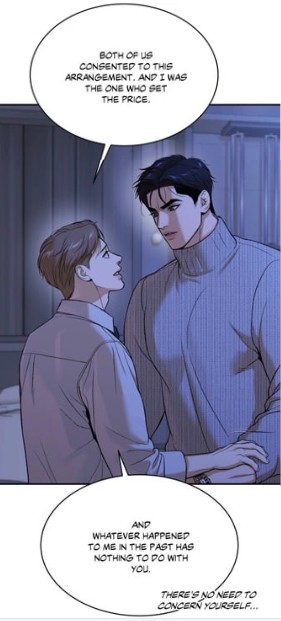 , (chapter 90) offering reassurance. That attempt failed, not because Kim Dan lacked care, but because reassurance can only reach someone who is still willing to fight for their place. Joo Jaekyung is no longer asking how to endure. He is asking whether he should exist in this space at all.
 (chapter 65), and Heesung who dismissed his agency
 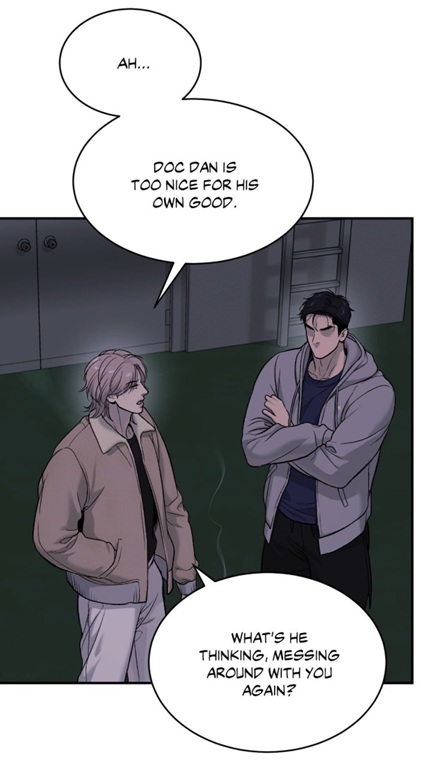 (chapter 89) under the guise of concern.
 (chapter 2), an external curse that followed his steps. Here, that distinction collapses. He no longer experiences the jinx as an event or condition, but as an identity. He does not fear what might happen because of him; he accepts that he himself is what causes harm. The curse is no longer something he carries. It is something he has become. Once internalized in this way, it no longer requires rituals to contain it.
  (chapter 75) Practices that once functioned as talismans—gestures meant to ward off misfortune or secure victory—lose their meaning.
  (chapter 75) What collapses is not only belief in luck, but belief in the necessity of striving at all.
 8episode 10), Kim Dan wakes up there after drinking excessively, confused why he is sleeping in the penthouse. He doesn’t know that the night before in his drunkenness, his thoughts were turning toward his grandmother. He was mistaking the athlete for his relative.
  (chapter 10) He feared getting abandoned. When the doctor realized his whereabouts, he imagined that he had sex with the champion. As you can see, the bedroom is strongly intertwined with longing and sin, where consciousness returns only after collapse. This association deepens in episode 20, when sexual intimacy is immediately followed by a phone call announcing his grandmother’s critical condition.
 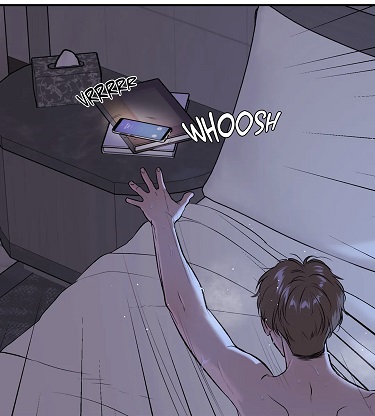 (chapter 20) Pleasure and threat coexist in the same space, binding the room to the anticipation of loss.
 (chapter 29), his body once again giving way under accumulated strain. The room is no longer merely where exhaustion manifests; it is where it becomes undeniable. In episode 61, the association shifts again: Joo Jaekyung comes to the room seeking sex, but Kim Dan is unwell, unable to voice his own thoughts, unable to refuse.
  (chapter 61) Illness interrupts desire, and the room marks the moment where agency falters.
 (chapter 79). Once more, it is this room that frames the danger.
  (chapter 79) The body moves without consciousness, hovering at the edge between presence and disappearance. The room becomes a liminal space where life is not actively threatened by violence, but quietly endangered by exhaustion and dissociation (suicidal thoughts).
 (chapter 53) The object becomes a trace of absence, and the room transforms into a container of loss. Standing by the window, Joo Jaekyung is portrayed without eyes.
  (chapter 53) The visual choice is crucial: it does not indicate blindness in a literal sense, but an inability to see forward, to orient himself. He is present in the room, but detached from direction and purpose. This scene announces the falling apart of the athlete.
  (chapter 55) The space is sealed off, preserved, treated almost as a forbidden zone. The cleaning staff is not allowed to enter. Nothing is moved, corrected, or neutralized. The room becomes a reliquary rather than a dwelling — a place frozen in the moment of loss. Joo Jaekyung does not confront what happened there; he keeps it intact, untouched, and therefore unresolved. At the same time, he imagines that avoiding that place will help him to forget doc Dan’s gaze and face.
  (chapter 53)
 (chapter 53) In episode 54, wine bottles begin to accumulate beside the couch
  (chapter 54) in his own bedroom leaving a huge red wine stain on the carpet.
  (chapter 55) And in episode 90, the teddy bear now rests on the couch in Kim Dan’s room
  (chapter 90) — occupying the very place toward which the jacket once flew. Across these scenes, the hand and couch emerge as a recurring site of impact, exhaustion, and surrender. It is where bodies fall, where frustration lands, where the weight of what cannot be said is deposited. One detail caught my attention: because they are not sitting on the couch, the main leads are discussing together. They are able to face each other and as such to listen to each other.
  (chapter 90) Their respective position in this room reminded me of their previous arguments.
  (chapter 45)
  (chapter 61)
 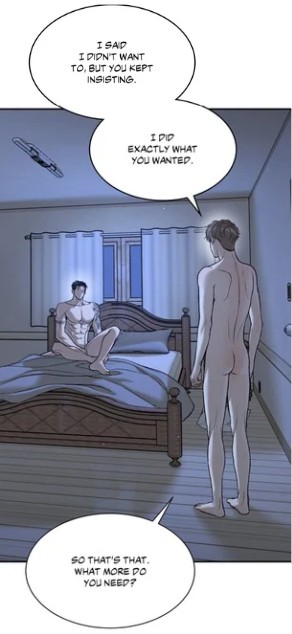 (chapter 64) Only when they would truly face each other, they would be more honest and expose their thoughts and emotions. As soon as there is a table, a bed or a couch, I detected some restrain and silence. In other words, the presence of the teddy bear and the couch in that scene explains why Kim Dan is silent and passive after their conversation. He is definitely remembering the day and conversation at the amusement park.
  (chapter 88) On the other hand, it is about time that doc Dan becomes proactive so that they finally become a real team.
 (chapter 79) for everything. He was to blame for everything.
  (chapter 37) He endured before being asked. He accepted harm as a condition of acceptance and staying. His silence was not passivity, but a learned ethics: if I ask for less, if I take up less space, if I disappear when necessary, others, in particular his grandmother, might be spared.
 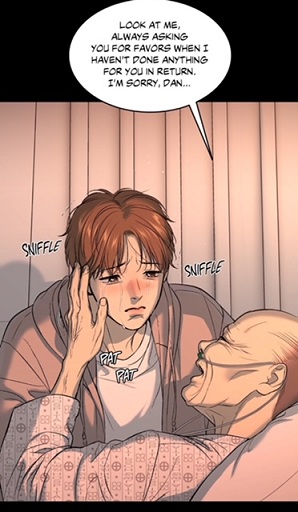 (chapter 53) That posture did not originate with Joo Jaekyung. It preceded him. It was shaped by debt, obligation, omission, and by figures who decided on Kim Dan’s behalf what he could endure and what he deserved.
 (chapter 90) He does not argue. He does not demand. Instead, he blames himself for everything, thus he withdraws. He refuses to claim a right. He positions himself as the problem that must be removed so that something better might follow.
  (chapter 53) This is the same moral calculus Kim Dan once applied to himself: the belief that care becomes ethical only when it is accompanied by sacrifice, and that love, if it exists at all, must be proven through disappearance. The only difference is that he can not apologize as his existence has become the synonym of wrongdoing. Thus Kim Dan can not hear the distress from his “loved one”.
 (chapter 74) He remains upright. His posture holds. Yet, he is now voiceless exactly like the physical therapist in the past. From the outside, he still appears powerful, but the loss of cry or sound indicates loss of agency and choice. But structurally, the positions have reversed. The one who once endured now asserts authorship over his choices.
  (chapter 89) and the green-haired man
  (chapter 90) — not because he shares it, but because the mirror he has become reveals it. Yet instead of recognizing this capacity as ethical clarity, he mistakes it for contamination. He equates himself with the very figures whose cruelty is laid bare in his presence. However, he is making a huge mistake, he is accepting this projection forgetting that he had it all wrong for one reason:
 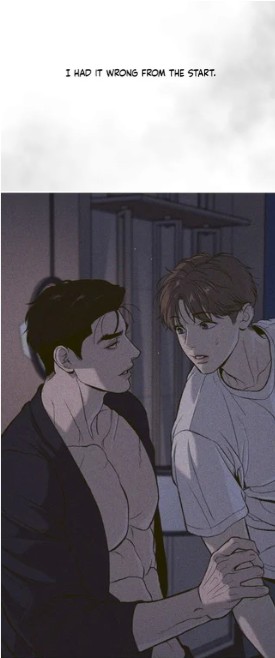 (chapter 90) During their first meeting, the “hamster” had grabbed his “anaconda”.
  (chapter 1) Such a gesture could be interpreted as a seduction, and don’t forget that the previous physical therapist had rubbed him the wrong way:
  (chapter 1) Finally, observe that after this incident, Joo Jaekyung was looking at the embarrassed doc Dan
 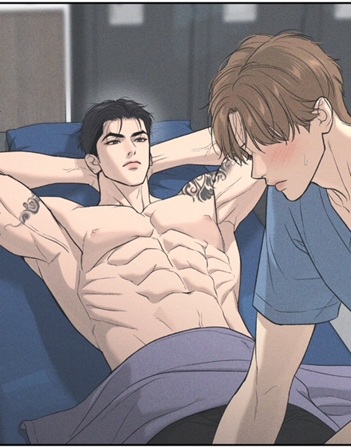 (chapter 56) and thinking that they could have fun together in bed.
  (chapter 56) So doc Dan has his share of responsibility in the champion’s misjudgment.
  (chapter 84) This gesture symbolized their reconciliation in the end,
  (chapter 84) the return of trust and faith in the “champion”. What Joo Jaekyung mirrors is not who the doctor is now, but who he once had to be in order to survive. The tragedy lies precisely there: the champion adopts a posture the doctor has already outgrown thanks to him.
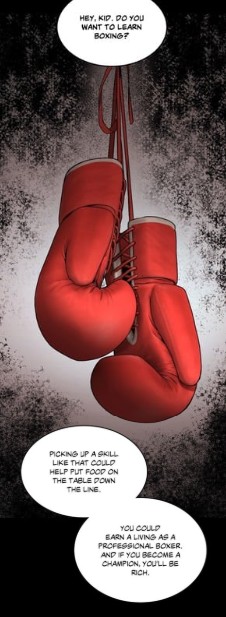 (chapter 72), the reality was that he longed for a home, which he came to associate with his mother. Thus over the phone, he promised to become strong
  (chapter 72) and earn a lot of money so that his mother could return home. As you can see, fighting was strongly intertwined with his mother and his longing for a family.
  (chapter 72), as if the boy’s role was to validate the father’s existence. Joo Jaewoong does not ask his son what he wants
  (chapter 73); he mocks his ambition
  (chapter 73) and reduces his dream to delusion. Yet even in conflict, Joo Jaekyung seeks recognition.
 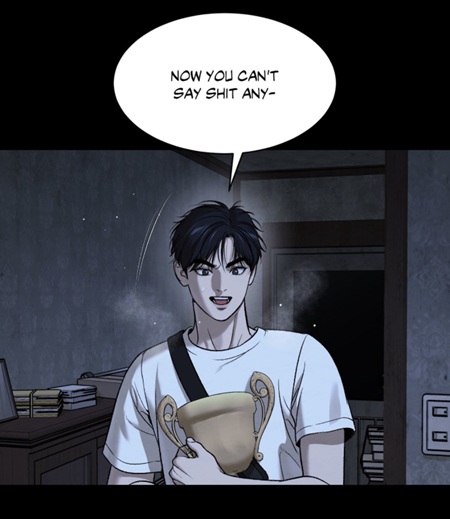 (chapter 73) As you can see, his life is always focused on the future, on one goal and as such one person: the mother, then the father.
  (chapter 74) He warns against becoming like the father, to change for the sake of his own mother
  (chapter 74), not by encouraging freedom, but by replacing one obligation with another: win, endure, don’t disgrace the dead. Many years later, he encourages him to change his mind-set, because he could end up alone.
  (chapter 75) For the first time, it is no longer about winning or enduring.
  (chapter 75) However, observe how the main lead reacts to this well-meant advice:
  (chapter 75) He starts visualizing Doc Dan as his goal. It is once again focused on one person and future-oriented.
 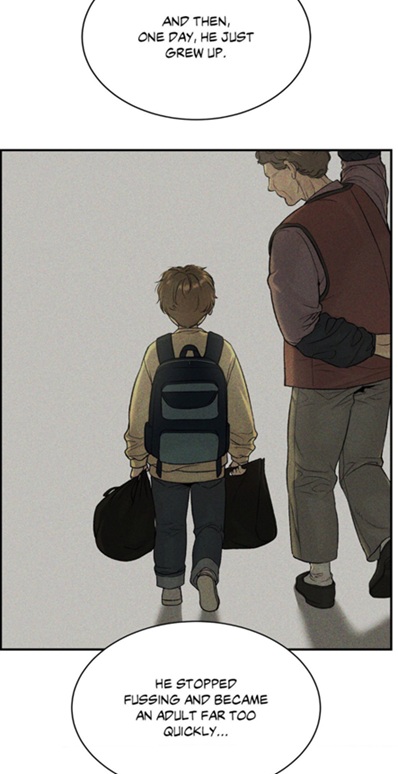 (chapter 65) He suppresses desire, health, and rest for her sake. The moral lesson is identical: if your presence risks harm, reduce yourself; if your absence protects others, endure it.
 (chapter 65), because she did the same in the past with doc Dan:
 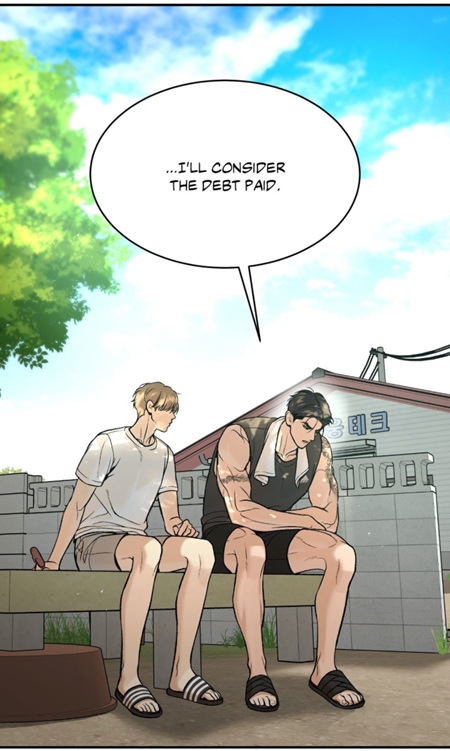 (Chapter 77) This means, the debts bring the terrible mind-set to the surface.
 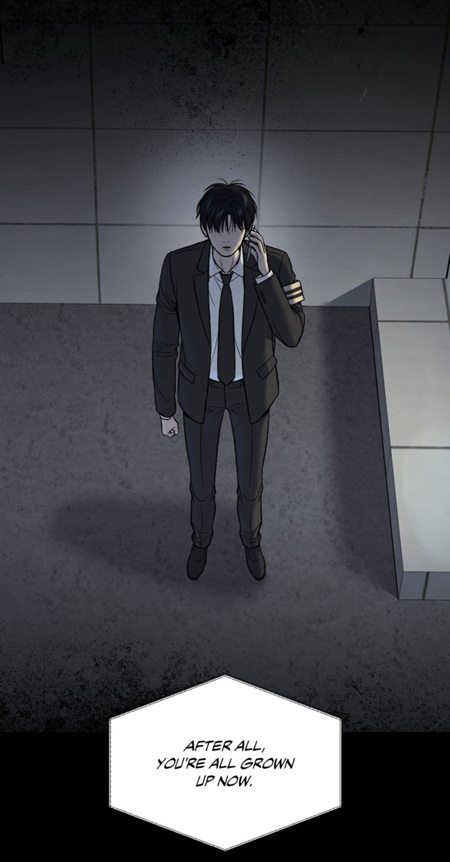 (chapter 74) The latter justifies her betrayal by saying that he is too late, as he is already too old. The promise that sustained him collapses. Winning no longer guarantees return. The future he fought for vanishes. And in the penthouse, we have the same thought again:
  (chapter 54) — longstanding, cumulative, and corrosive.
 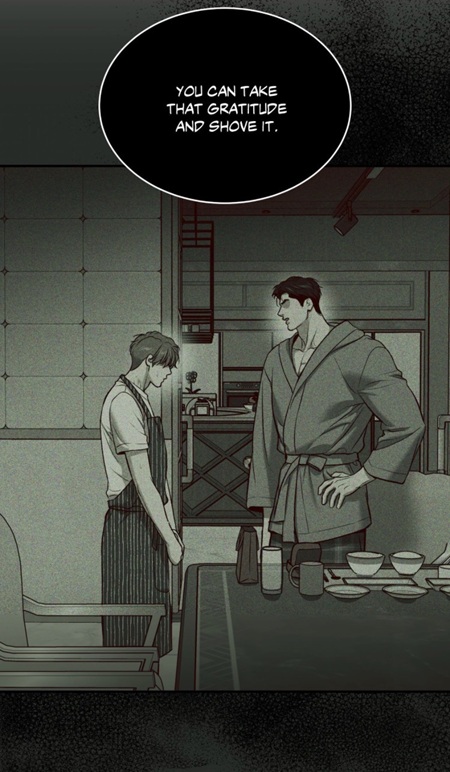 (chapter 90) And these two “friends” return during that night. What inhabits the room in episode 90 is not nostalgia, nor an unprocessed sadness that merely needs to be named. The same shame that has structured his life since childhood resurfaces here, stripped of all justifications. Joo Jaekyung is not suffering because he feels abandoned in the present. He is suffering because he believes himself to be the reason others leave.
 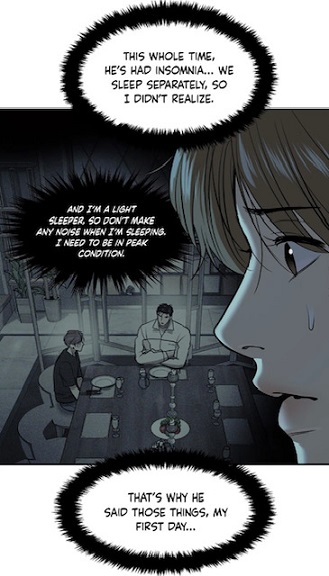 (chapter 29) He cannot sleep. He cannot relax. His body remains permanently alert because, in his words, he could “be killed” at any moment.
 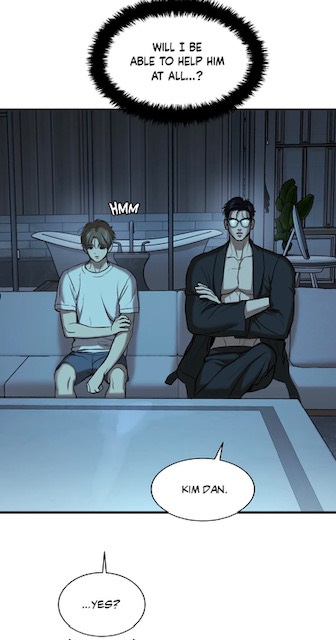 (chapter 29) He understands that this state is unsustainable — that it is only a matter of time before something gives way. What Joo Jaekyung treats as discipline, Kim Dan recognizes as danger.
 (chapter 53) In his mind, he is obeying a command.
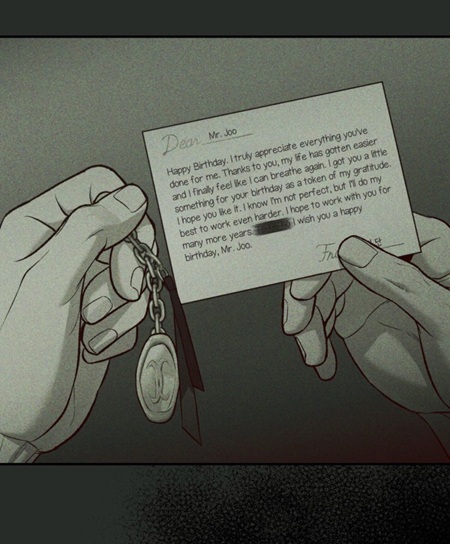 (chapter 90) But that explanation is insufficient. What actually begins after is grief and recognition.
 (chapter 54) Now the logic sharpens: Kim Dan does not merely embody bad luck. He embodies the champion’s mental state — depression, trauma, and chronic self-devaluation. He becomes the surface onto which Joo Jaekyung’s inner instability is projected.
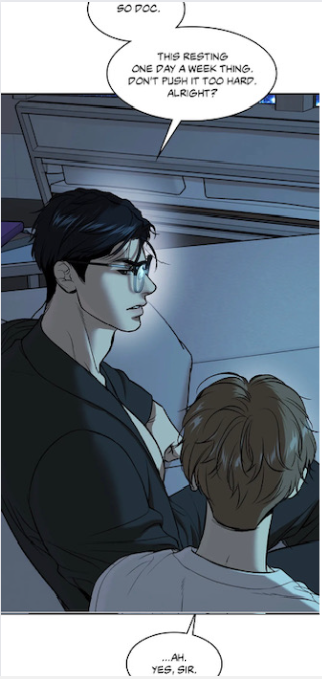 (chapter 29) And now, in episode 90, Jinx-philes can sense that the athlete is wearing the glasses “depressive realism” once again, where everything seems so true. He recalls all his misdeeds and can only perceive himself as the source of unhappiness for doc Dan. And like mentioned above, during that night, he is just only recalling his wrongdoings. He is overlooking that thanks to him, Doc Dan’s mental and physical conditions
 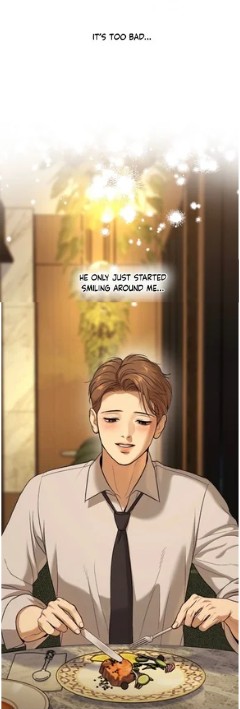 (chapter 89) improved, that he could make doc Dan smile. Meeting the hospital director made him see everything in a bad light. As you can see, he still has a black and white mentality. However, the truth is that right from the start, the champion had not just been a terrible person. He could be generous, help someone in need.
  (chapter 17) He saved doc Dan’s life twice.
 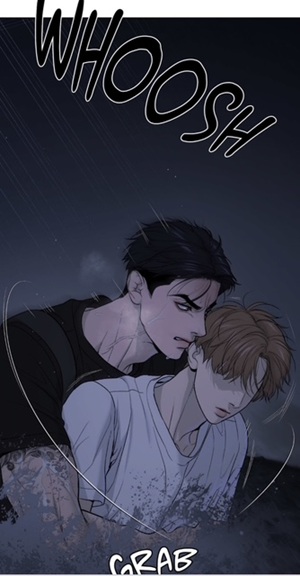 (chapter 59) He is reducing everything to one single moment and emotion: pain. And his reasoning is resembling a lot to the grandmother‘s:
 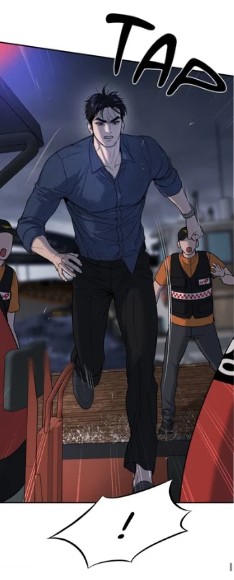 , when Joo Jaekyung imagines that doc Dan has once again fallen into the ocean and fears to lose him.
  (chapter 79) gestures toward falling, both physically and psychologically.
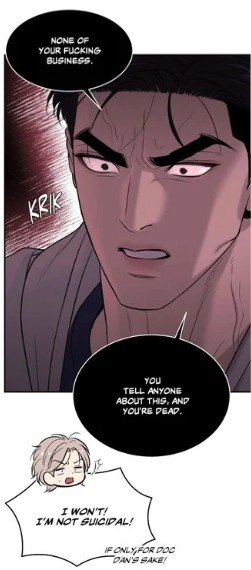 (chapter 89) Secondly, he is the only one referring to mental illness:
  (chapter 54)
 (chapter 78) Now, he is blaming himself for everything — and the narrative quietly aligns him with the same numbers, the same silences, the same logic of disappearance.
 (chapter 80) Secondly, he doesn’t know how the champion was blamed for everything and was treated by the other members of Team Black:
  (chapter 52) No one listened to his unwell-being, they rather silenced him. They showed no support and didn’t take care of him. Thus later the athlete started drinking. The physical therapist has no idea what Potato heard either:
  (chapter 52) At the same time, I am suspecting that Mingwa is putting doc Dan in a similar situation than in the past, so that repressed memories about the parents will come to the surface. Keep in mind that the athlete is actually mirroring the parents’ behavior (abandonment and sacrifice as a sign of love and respect). Thus the teddy bear is placed on the couch and the physical therapist is looking at it.
  (chapter 21) A teddy bear was present in his childhood, until it vanished.
  (chapter 87)

 (chapter 88), and the final panel hinting at an imminent confrontation with Choi Heesung.
  (chapter 88) Discussions largely revolved around physical proximity, discipline, and anticipation — around bodies in motion and the promise of conflict to come. At first glance, the episode seemed to oscillate between intimacy and tension
  (chapter 88), between preparation
  (chapter 88).
 (chapter 88) are structured around restraint
  (chapter 88), delayed, or redirected. Words are measured, authority is redistributed, and decisions are deferred
  (chapter 88) rather than imposed. What initially appears as physical intensity and narrative suspense begins to reveal a deeper reconfiguration of roles, responsibility, and choice.
 (chapter 70)—most likely in November— in late autumn.
  (chapter 88) This temporal setting is visually reinforced by the environment itself: in the opening sequence marked “a few weeks later,” the tree is already bare, its leaves gone. Nature offers no spontaneous image of growth or renewal. If a flower were to appear in this chapter, it couldn’t belong to the season. It must be cultivated, protected, and sustained in a green house—something that emerges not from natural abundance, but from deliberate care. So where does this idea of a flower come from?
 : a closed circuit which we could witness once again in the training room:
 (chapter 88) There are once again sparks between them. The number 8 is not just related to doc Dan [for more read
  (chapter 58) Two trajectories —long separated, repeatedly missing one another—intersect at last. When two eights overlap, they form neither a loop nor a knot, but a new shape: a flower-like figure, suggestive of opening rather than closure. This crossing does not resolve everything; instead, it creates the conditions for growth for all the characters.
  (chapter 88), white
  (chapter 88) purple
  (chapter 88), blue, gray,
  , (chapter 88) red
 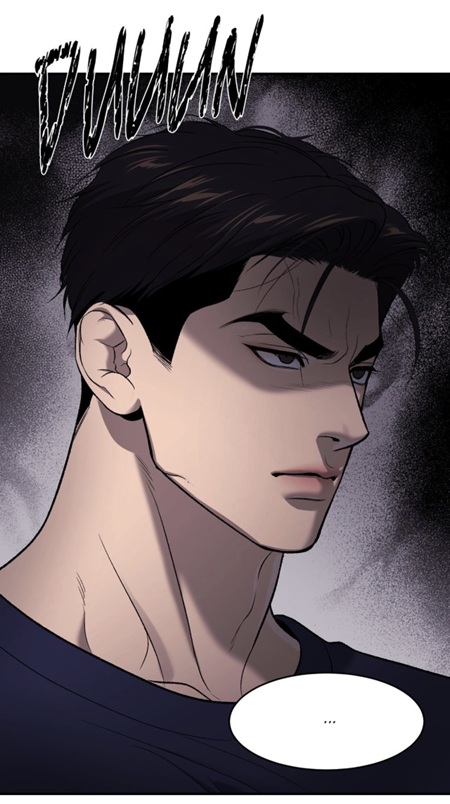 (chapter 88) Pink frames tenderness and mutual awkwardness; purple marks embarrassment and heightened awareness; red signals suppressed anger and looming confrontation; black absorbs fear, silence, and unresolved tension.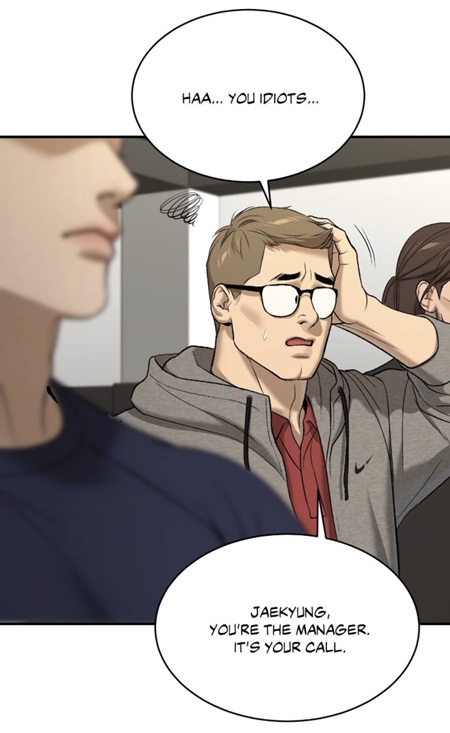
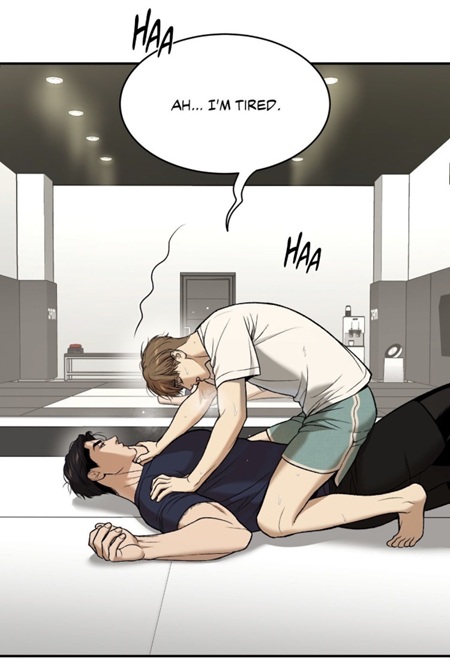 (chapter 88) are dressed in green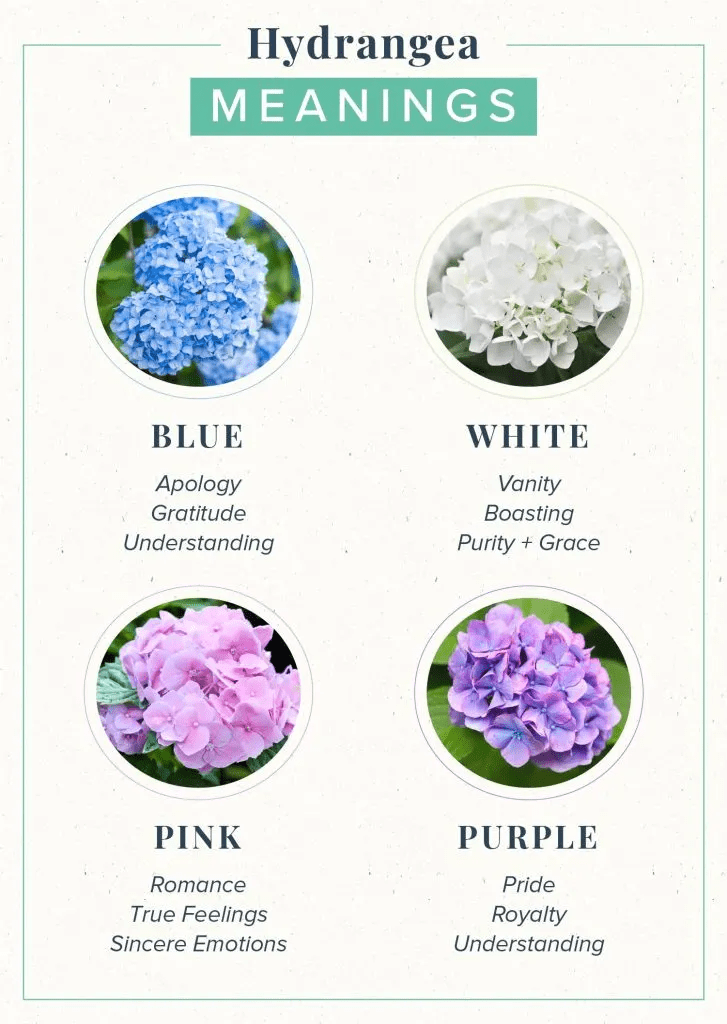
 (chapter 35), which tend to assert a singular message (love, passion, beauty), hydrangeas communicate multiplicity and emotional ambivalence; they speak in clusters rather than declarations. This visual language mirrors Kim Dan’s inner world at the time
  (chapter 31). Here, the symbolism shifts. Pink roses convey affection and admiration, while baby’s breath suggests innocence and fragility. Yet the arrangement is excessive, overwhelming, and mismatched to its recipient. The bouquet does not listen; it speaks at Kim Dan rather than with him. Significantly, Heesung comes to associate Kim Dan himself with the flower—something delicate, beautiful, and deserving of protection, but also something to be handled, displayed, and possessed.
  (chapter 88) Kim Dan’s green training clothes—visually echoing the green shirt he wore in the photograph with his grandmother—signal continuity rather than regression. This is not a retreat into childhood dependency, but the reappearance of an inner child now disentangled from obligation and fear. The flower that reemerges here is not gifted, not arranged, not imposed—it grows. In this sense, episode 88 introduces a missing element in the dynamic between the two protagonists: not desire, not care, but communication. And it is here that Choi Heesung becomes central—not as a rival or antagonist, but as a structural bridge, as in reality he represents the rose, “La vie en rose”
  . He embodies speech, playfulness, and visibility, yet also reveals their limits when they are severed from responsibility and respect. I will elaborate about this more below.
 (chapter 88), but the moment in which the conditions for happiness are finally put into place. And now let me ask you this. What is the symbol of happiness? Smiles and laughs. During the training session, Kim Dan smiles. These moments are brief
  (chapter 83) What is striking is that neither of them recognizes this fulfillment.
  (chapter 31)
 (chapter 88) What appears at first glance as coercion
  (chapter 88) or discipline is in fact a negotiation shaped by habit, fear of burdening the other, and an inability—on both sides—to articulate desire outside professional roles.
 (chapter 88), a space that is never neutral in Jinx. A car has one driver, one direction, one authority. By placing the conversation there, Mingwa signals that the relationship is still structurally asymmetrical at this point: Joo Jaekyung leads, Kim Dan follows.
 (chapter 88) Secondly, such a training suggests that the athlete is gradually remembering this scene of the almost-rape.
  (chapter 17) Therefore it is not surprising that instead of asking permission or explaining concern, he imposes the idea—because that is how he has learned to act as a captain, a fighter, and later a manager. Authority precedes dialogue.
  (chapter 88) In other words, the request from Joo Jaekyung appears as a memory from the physical therapist. Why?
  (chapter 88) Because Mingwa refuses the “clean” sequence in which an order is issued and immediately executed. The narration inserts a gap—an interval of off-panel time that we are forced to reconstruct from Kim Dan’s recall.
  (chapter 88) Instead Kim Dan no longer insists on his own sufficiency. He no longer says “I can manage., but doc Dan admits not only his own lacking.
  (chapter 88), but also his own desire. He finally expresses his desire to improve, to learn more.
  (chapter 88) creates a temporal bridge that enables this recognition. Only once change is named from the outside can Kim Dan cautiously acknowledge it from within.
 (chapter 88) The problem is that his form of care was influenced by his own mindset and emotions: his physical limitations.
 (chapter 88)
 (chapter 88). He teases.
  (chapter 88)
 (chapter 88), not rest. Thus the doctor mistakes the embrace for a technique and not the expression of love.
  (chapter 88) And observe that the athlete still refuses to express the true meaning of his hug. His explanation still remains technical, defensive, and strategically framed:
 (chapter 88) This sentence is crucial. It reduces contact to function. The closeness of bodies, the pressure of weight, the proximity of breath are translated into instruction. What could be acknowledged as reassurance or care is instead displaced into pedagogy. Joo Jaekyung does not deny intimacy; he relabels it.
  (chapter 88) of breath held too long, of proximity charged with something unnamed. The technical explanation arrives after that awareness, not before it. This confirms that the instructional language functions as a shield — not against intimacy itself, but against having to speak it.
 (chapter 88) Directly after warning against lowering one’s guard, Joo Jaekyung kisses him.
 (chapter 26) Back then, Doc Dan had accepted the challenge due to Potato, though deep down he desired to have the champion as his teacher.
  (chapter 25) That’s how it dawned on me that doc Dan has gradually taken over Yoon-Gu’s previous place at the gym. He is an “unofficial member” of Team Black. Thus he mops the floor and Yoon-Gu is not there to stop him or reclaim this position.
  (chapter 88) Yoon-Gu’s position within the gym has improved. He is now considered as a real fighter.
  (chapter 88)
  (chapter 87) For him, this trip was related to work, while in reality it was a date in disguise.
  (Chapter 88) The answer restores hierarchy without acknowledging the transformation that has already occurred. Secondly, the answer closes the future by appealing to a supposedly objective limit. Yoon-Gu can never be his sparring partner. The best he can do is hold the mitts and nothing more. The fox is using his seniority and body to have the final say.
  (chapter 88) Under that framework, Yoon-Gu is not disqualified; he is qualified. He has trained. He belongs. So technically, Yoon-Gu could indeed beat the actor, as the “puppy” has trained for a long time at Team Black.
  (special episode 1) He knows people’s patterns.
  (special episode 1) He knows how relationships fail.
  (chapter 33)
  (chapter 33) He knows what he does not want. His language is saturated with judgment shaped by past experiences: lovers who become “too clingy,” attachments that turn inconvenient, people who should remain “better off” elsewhere
 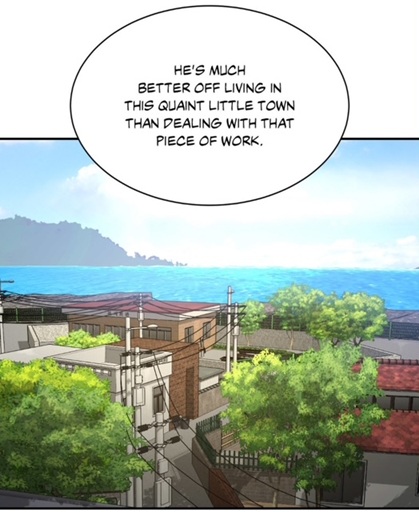 (chapter 58). This knowledge is not neutral; it is retrospective and comparative. It is built from what has disappointed him before, and it governs how he evaluates others in the present. He views himself as superior to the champion morally.
  (chapter 33) Heesung’s orientation is never toward what is unfolding, but toward what might be better elsewhere—another partner, another configuration, another future. His repeated invocation of a “soulmate” is revealing: it displaces intimacy into a hypothetical horizon. By looking at the grass, he is overlooking the flower. Love, for him, is something to be found later, once the conditions are ideal. What exists now is always provisional, always lacking, always subject to replacement. He needs the “perfect” lover, and in his eyes, Potato doesn’t meet his conditions: too innocent and too young.
  (special episode 1) This explicates why the young fighter is only considered as “fuck buddy”.
  (special episode 1)
  (special episode 1), he is present, available, even emotionally invested—but he is never treated as sufficient. He is smaller
  (chapter 58) Heesung’s use of the pronoun “we” is, on the surface, inclusive. Linguistically, it frames his relationship with Potato as mutual, shared, and consensual. But pragmatically, it does the opposite. The “we” is spoken over Potato’s head, not with him. Thus Potato is physically present but discursively absent. He does not confirm, nuance, or reciprocate the statement verbally. The pronoun thus becomes a rhetorical appropriation rather than a sign of partnership.
  (chapter 31) He denies the existence of feelings and attachment.
  (special episode 1) or humiliate the other.
  (chapter 34) Heesung, by contrast, is fluent. He can name, joke, insinuate. What he lacks is restraint and responsibility. His ease with words does not signal emotional intelligence; it signals control.
 (special episode 2), corrected.
  (chapter 32). It has no declared endpoint, no moral clarity
  (chapter 34) Heesung enters fully aware of what he is likely to witness. He is not naïve, nor totally surprised. Hence he doesn’t flee right away. Yet instead of acknowledging the reality before him, Doc Dan is not someone the fighter fucks, until he passes out,
  (chapter 34) Joo Jaekyung becomes the problem, the one who “deserves to suffer.”
 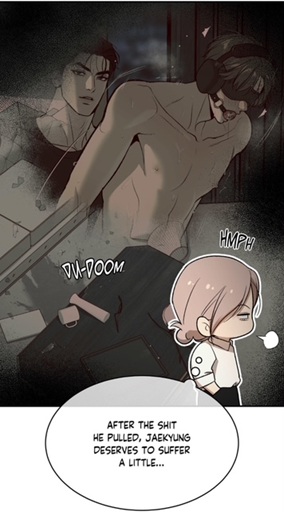 (chapter 58) This moral displacement allows Heesung to maintain distance: if Jaekyung is guilty, then no self-examination is required. Forgiveness—central to this arc (from 79 to 89)—is rendered impossible, because forgiveness would require recognizing shared vulnerability rather than assigning blame.
 (chapter 25), accepts deferral. Later, he is displaced entirely. Unlike Kim Dan, who gradually moves from imposed participation to earned agency, Potato is never given a space where effort leads to recognition.
  (chapter 85) However, this panel implies that the young man has already been able to enter competition. Striking is that his promise at the seaside sounds like commitment
  (chapter 59), but the reality diverges. It only binds doc Dan. If the latter returns to Seoul, he has to promise to train with Potato. The reason is simple. He is already committed to the actor, he is already at his beck and call. Potato’s promise echoes the earlier promise forced upon Kim Dan by his grandmother: a future-oriented vow that justifies present sacrifice while guaranteeing nothing in return.
  (chapter 11)
 (chapter 78), he didn’t remind doc Dan of his promise. At the same time, observe that none of the fighters apologized or promised something. When they hugged the doctor, they didn’t pay attention to the physical therapist’s reaction: his passivity and silence. The “laugh” lacked genuineness and felt wrong at the time.
  (chapter 78)
  (Chapter 88) This is how it dawned on me why Mingwa recreated such a situation for Heesung. Observe his reaction, when he opened the door. He never answered the question to Potato. In fact, he slammed the door and kept his thoughts to himself.
 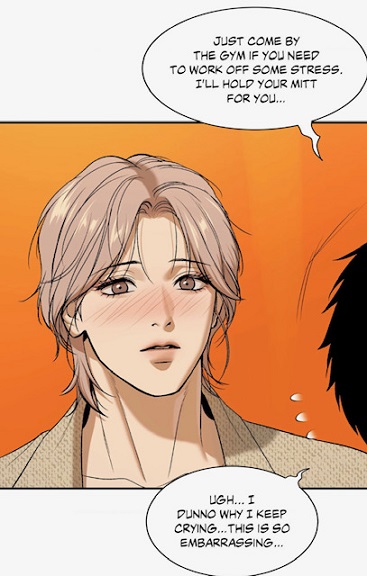 (chapter 35). In both cases, Heesung benefits from proximity without assuming responsibility for the other person’s risk. Silence, here, is not neutral—it is the mechanism by which that asymmetry is maintained.
 (chapter 88) Forgiveness, responsibility, and mutual recognition—central to the arc unfolding elsewhere—are entirely absent from his conduct. Where Joo Jaekyung begins to redistribute choice and accountability, Heesung consolidates control by refusing to speak.
 (chapter 88) The irony is that the actor didn’t realize this. He had the impression to be exposed to a similar scene than in the penthouse.
  (chapter 35) And now, pay attention to the logo on the doctor’s t- shirt.
  (chapter 88) First, it appears on the left side, positioned close to the hamster’s heart. Moreover, it looks like an orange eye. Orange is not only the color of Heesung the fox
  (chapter 79) Besides, it is the same logo than when Yoon-Gu was spying behind the closed door.
 (chapter 23) That’s the moment Potato realized the truth about the couple: they were intimate. That’s the reason why I am convinced that Heesung will play the role of the messenger and mediator between the wolf and the hamster.
 (chapter 86), gentle, attentive
  (chapter 86) — asking questions instead of imposing answers
  (chapter 64). For Joo Jaekyung’s unconditional stans (and I count myself among them), such an attitude
  (chapter 86) can easily be read as proof that the protagonist’s good heart has always been existent, but it was barely visible. Compared to earlier chapters, the contrast is now undeniable. And yet, I would like to pause you right there.
 (chapter 61), sometimes awkwardly
  (chapter 80), sometimes inconsistently
  . (chapter 83) Tenderness, concern, even a certain form of devotion had appeared earlier
  (chapter 40), albeit in ways that were often overlooked,
  (chapter 18) misunderstood or poorly timed. This night
  (chapter 86) does not initiate his metamorphosis.
 (chapter 86), sparks
  (chapter 86), and softness, many Jinx-philes might instinctively describe it as magical. The imagery invites such a reading. After all, we have seen similar nights before. The night in the States shimmered with illusion
  (chapter 39); words were spoken, confessions made — only to dissolve with memory.
  (chapter 41) The penthouse night echoed A Midsummer Night’s Dream
  (chapter 44), suspended between intoxication and desire, intense yet fragile. Both nights felt unreal, and both were later reframed as mistakes
  (chapter 41) — moments to be erased rather than carried forward.
 (chapter 45). This raises an essential question. Is episode 86
  (chapter 86) a renewal of those nights? Another dream layered over the past? A repetition disguised as healing? Or, on the contrary, is this the first night that resists enchantment altogether?
 (chapter 4), in the return of light
  (chapter 66), in what remains once the sparks fade. A dream dissolves with daylight. Reality does not.
 (chapter 86) for final transformation. The real shift occurs elsewhere — more quietly, and perhaps more unsettlingly. To grasp the nature of this night, we must follow more importantly the doctor and his interaction with his fated partner.
 (chapter 86), processes, and responds to it. How he hesitates
  (chapter 86), reflects, and allows himself to reconsider what this moment can mean — and what it can lead to.
  (chapter 86), sparks, that strange shimmer that seems to hang in the air
  (chapter 86). Why? It was, as if their dream had come true. However, is it correct? Is it not wishful thinking? What if this night is not magical at all? What if its true signature is not enchantment, but electricity—a current that interrupts, tests, and resets? 😮
 (chapter 40) in Kim Dan’s perception: overwhelming, radiant, dominant, a heat-source that does not negotiate.
  (chapter 41) The sun can be admired, feared, and endured—but it cannot be questioned.
  (chapter 58) It simply shines, and the one who stands in its light adapts. This explicates why the physical therapist would choose silence and submission over communication.
  (chapter 48)
 (chapter 83)
  (chapter 83) Every ride, every light, every scream suspended in midair depends on current: motors accelerating and braking, circuits opening and closing, energy stored, released, and cut off.
  (chapter 83) Roller coasters do not move by heat, charisma, or sheer physical force; they move because electricity flows through them. The Viking ship swings
  (chapter 83) because current allows it to swing. The Ferris wheel ascends
  (chapter 83) because circuits hold — and descends because they release.
 (chapter 84)
  (chapter 84) explicitly names what had previously gone unspoken: the rides function only because current flows. When it disappears, the illusion of effortless motion collapses.
 (chapter 84) The Ferris wheel has stopped. The current is gone. The carefully regulated system that lifted, rotated, and sustained them is no longer in control. Yet movement does not disappear entirely. It mutates. When the champion shifts his weight, grips the structure, reacts instinctively, the cabin begins to shake. Panels emphasize instability: creak, swish, ack. The motion is no longer generated by electricity but by the body itself.
 (chapter 84) Stranded above ground, stripped of the park’s mechanical rhythm, he apologizes.
  (chapter 84) and fears. He avoids the doctor’s gaze, crosses his arms
  (chapter 84) or squeezes his arm
  (chapter 84). The cessation of electrical motion coincides with a shift in his own mode of action. Where the park depended on current to keep things moving, he now moves without it. The absence of electricity forces something else to surface: responsibility, attention, presence. Additionally, this sequence anticipates what will later unfold more fully. Proactivity is no longer expressed through force or motion, but through articulation. Words stand for action and have weight. The champion’s future action is announced here, quietly: he will no longer push forward by shaking the structure. He will move by sharing thought, by naming feeling, by allowing himself to be affected.
  (chapter 86),
  (chapter 86) jolts, sudden contractions of the body
  (chapter 86). Kim Dan is repeatedly shown convulsing, gasping, losing linear thought, and it is the same for the MMA fighter. Panels insist on interruption: jolt, tingle, broken breath, aborted sentences. The doctor’s body behaves as if struck, especially in this image.
  (chapter 86) It is at this point that a phrase surfaced in my mind — instinctively, almost involuntarily. A phrase we use in French when something intangible yet decisive occurs between two people: Le courant passe. Literally, the current passes. Idiomatic meaning: they are on the same wavelength, something connects, communication flows. However, here, the current is not the product of civilization, but of nature. Two people interacting with each other. And it is precisely because of the unusually high frequency of sparks and jolts in the illustrations that a belated realization imposes itself: nature, too, produces electricity — through storms, through thunder.
 (chapter 69) A storm was announced back then. And yet, upon closer inspection, no thunder was ever shown there. There was tension, there was excess, there were dark clouds
  (chapter 69) — but there was no strike, no discharge, no interruption. The imagery remained continuous, fluid, enclosed within the logic of escalation rather than rupture.
 (chapter 83). In Roman terms, Thursday corresponds to dies Iovis — Jupiter’s day — the god of thunder. Both gods are strongly connected to thunder and as such current.
  -chapter 67-; for more read my analysis
  (chapter 34), the hammer gesture is not confrontational, for the machine is immobile. There is no opponent.
  (chapter 83) Too much energy released at once. The system registers it, but cannot contain it. This means, the record won’t be registered and as such “remembered”. In fact what mattered here was the prize, the teddy bear, and restored self-esteem of the athlete. He could offer a present to doc Dan which the latter accepted without any resistance.
  (chapter 86) Therefore it is not surprising that doc Dan starts looking at his fated lover. Imagine what it means for the athlete, when the “hamster” is staring at him, though he is a little embarrassed. Finally, he is truly looking at him. The champion loves his gaze. And now, you comprehend why the “wolf” listened to the “cute hamster” and stopped leaving marks.
 (chapter 85), but this time, its nature has changed. It is no longer jealousy or anger, but love and desire. Hence the current is not colored in red, but white and pink.
  , but a thunder and as such it is still restrained and regulated.
 (chapter 86) or second-hand data. New information must now be gathered. New meanings must be negotiated. Because Joo Jaekyung acts differently (son-father), the doctor is incited to discuss with his fated lover and not to generalize. He is pushed to become curious about the main lead and even adapt himself in the end.
 (chapter 39) and the penthouse night
  (chapter 44) as emotionally charged, intense, even pivotal. Confessions were made. Bodies responded. Vulnerability appeared to surface. And yet, both nights collapsed almost immediately afterward. What was felt
  (chapter 39), arousal, and emotional exposure under the influence of a drugged beverage. His body reacts strongly, almost violently. His speech loosens. He confesses.
 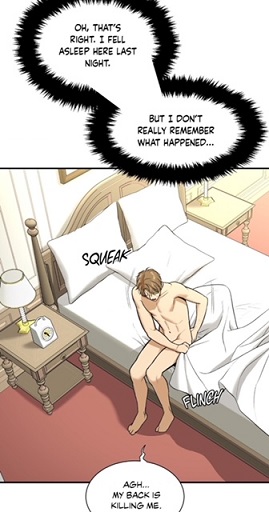 (chapter 40)
 (chapter 86) In this panel, we should glimpse a reference to the night in the States as well, and not just to the night in the penthouse.
  (chapter 44) The setting is elevated, luxurious, almost theatrical. The doctor is brought into a space of power that is not his own.
  (chapter 44) By acting that way, the athlete created a false impression of himself, as if he was still rational and clear-minded. Again, desire unfolds.
  (chapter 44)
  (chapter 44) Again, closeness occurs. And again, the aftermath reveals the same fracture.
  (chapter 45) and later wants to even forget it.
  (chapter 45) and he can not deny his own involvement and actions. Hence the doctor is left alone. Only he can recall this “dream”.
  (chapter 44) But memory alone is not power. Remembering without the other’s participation transforms recollection into isolation. Kim Dan cannot confront, confirm, or renegotiate what happened, exactly like the champion did in the past. Meaning freezes instead of evolving. Striking is that he came to associate feelings with addiction.
  (chapter 46) No wonder why later doc Dan had no problem to reject the athlete. And for him, the next morning became a cruel reality, even a nightmare. It wounded doc Dan’s heart and soul so much that he learned the following lesson: to not get deceived by impressions. Hence in Paris, Doc Dan tries to explain the change of the champion’s attitude with drunkenness.
  (chapter 44) One participant is altered. The other must carry the weight of meaning alone. The night does not end in shared reflection, but in silence and absence.
 (chapter 44) Words blur, vanish, or are forgotten. Even gestures go unnoticed: a kiss, an embrace or a patting. Memory fractures. The morning after is defined not by continuity but by confusion. The body has moved forward, but the narrative has not.
  (chapter 84)
 (chapter 84) Speech bubbles lose clarity. Confessions are obscured. The reader is denied access to meaning. Fireworks, like drugs, produce intensity without duration.
 (chapter 39)
  (chapter 44) It was as if these nights could only exist under altered states — as if clarity on either side would have made them impossible.
  (chapter 86)
  (chapter 86) This is why, when electricity returns in episode 86, it does not revive heat. It interrupts it.
  (chapter 86) That’s the reason why the athlete stops for a moment and asks doc Dan, if he needs a break.
  (chapter 86) This question is important because doc Dan admits his confusion and ignorance. He confesses to himself that he “knows nothing” not only about himself, but also about his fated lover.
  (chapter 86) They function as temporal markers. A spark exists only now. It has no duration. It cannot be stored, recalled, or anticipated. It appears — and vanishes. In this sense, electricity becomes the perfect visual language for the present moment itself.
 (chapter 10), statements blurred by drugs
  (chapter 43), sentences remembered by only one side.
  (chapter 44) and even laugh…. if only he could remember that night…
 (chapter 79), the “never mind”,
  (chapter 84) or it is a mistake, the easy erasure that once dissolved meaning after the fact. The kiss interrupts that mechanism. It produces a pause that cannot be talked over. It forces reflection.
 (chapter 84) Readers have replayed the blurred panel again and again, straining to decipher the muffled shapes of his mouth. Some are convinced that this is the confession, the moment the wolf finally says aloud what his body has been whispering for months. One Jinx-phile,
  just enough to match the Korean 좋아해 김단 (jo-a-hae Kim Dan)—“I like you, Kim Dan.”
 (chapter 84) —especially Japanese summer festivals where boys and girls, dressed in yukata, confess beneath crackling skies. Fireworks symbolize joy, romance, fleeting courage. It is no wonder many readers assumed that Mingwa was drawing on this cultural grammar: purple night sky, glowing lights, two lonely figures suspended above the world. A confession seems almost inevitable. And if it truly was a love declaration, then the champion’s refusal to repeat himself
  (chapter 62)
  (chapter 77) Why does Joo Jaekyung speak exactly when the fireworks begin, as if choosing the one moment when he is guaranteed to be drowned out?
  (chapter 84) Was he truly confessing love—or was he trying to verbalize something far more raw, far more primitive, far more difficult?
 (chapter 76) and 79
  (chapter 79), where he “speaks” only when the other man cannot truly hear him. At the hostel, the mumbling was barely audible: yet according to my observation and deduction, doc Dan seems to have caught something. as later we discover this scene from the champion’s memory:
  (chapter 77) He already knew that the athlete was standing next to him. However, observe that this vision focused on the doctor’s gaze was accompanied with silence. This means, doc Dan acted, as if he had heard nothing. So if he heard, what did the physical therapist catch exactly in the kitchen? “I lost…”, but it was devoid of any context. Doc Dan had no idea what the director Hwang Byungchul had advised to his former student.
 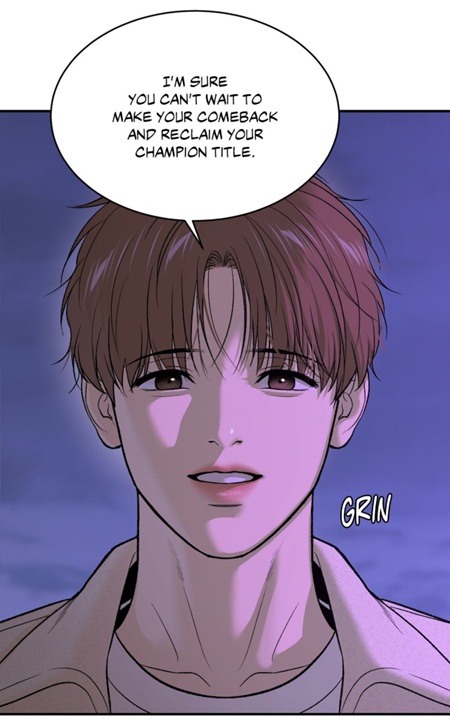 (chapter 84) He is taking the champion’s words at face-value.
  (chapter 77) He trusts the explanation Jaekyung himself gave under the tree. And here lies the deeper revelation: Kim Dan’s misunderstanding exposes the true meaning of the tree confession. Why did Jaekyung suddenly accept the match? Why frame it entirely in terms of “I need you for these two fights”?
 (chapter 84) A deadline designed to keep Kim Dan close without revealing the depth of the emotional dependency underneath. Finally, before we even analyze posture or timing, we must acknowledge the ghost that is sitting inside the cabin with them — Jaekyung’s own admission of dishonesty. Just minutes earlier, the narrative revealed again a thought he had never dared to voice aloud:
  (chapter 84) This is the language of surrender — not to defeat, but to vulnerability and selflessness. The champion who once insisted on keeping Kim Dan “one way or another” (chapter 84) now articulates the opposite impulse: the willingness to release him, to give him a choice.
  (chapter 84) Thus for me, in the cabin the champion became, for a moment, the boy with no mother’s gaze, no father’s protection, no safe place to rest. He must have said something cheesy, something a young person would say. Purity returns before experience does. Honesty returns before articulation. And in that moment inside the cabin, Mingwa makes a decisive artistic choice: we do not see Jaekyung’s eyes.
  (chapter 84) This pigment stands for innocence, purity, new beginnings and even equity.
  (chapter 84) Because they were not yet meant to be received, only meant to be released. The fireworks allow him to finally attempt a more honest sentence, but in conditions where it cannot reach its target.
 (chapter 81) Yet this is also the limit of what he can say.
 (chapter 79) Thus he could see the athlete’s mouth moving and hear sound. Nevertheless, observe that the moment the wolf reached to the doctor’s words, he bowed his head and looked down. From this
  (chapter 79) to this
  (chapter 79) However, he doesn’t fear coldness, but ridicule and mockery, the father’s gaze:
  (chapter 73) Under this light, people can grasp why Joo Jaekyung was not facing doc Dan directly in the cabin. To conclude, the mechanism is identical, but amplified.
  (chapter 73) Besides, the head of her position is indicating that she was not looking at her son, the boy was hiding his face from Joo Jaewoong and his mother. Then his father mocked him, degraded him, and used resemblance as an insult: “
 (chapter 53) Jaekyung has never been granted either.
  (Chapter 45) Thus when he got upset with the present, he indirectly expressed the wish to be « looked at ». Moreover, in his visions or memories, this is what he keeps seeing:
  (chapter 51) And for the first time, Jaekyung freezes.
  (chapter 51) His breath catches; his eyes widen. It is the moment he realizes his mistake. He never thought that doc Dan had been trusting him. That moment marks the first rupture in his emotional armor, not only because it hurt, but because it revealed. He realizes with terror that he wants to be seen by Kim Dan, but when he faced such a gaze, he could only feel guilty and bad. Thus it is not surprising that later, his nightmare let transpire his guilty conscience.
  (chapter 82), as the champion has always used his surroundings as a source of inspiration.
  (Chapter 29) It would also fit with 5 syllabes in Korean. And it would be cheesy too. Yet, I have my doubts about this theory which I will explain further below. Nevertheless, one thing is sure. The champion loves the doctor’s eyes and they have the power to move not only his heart but also his mouth. He is encouraged to verbalize his emotions.
  (chapter 84) The gaze under the fireworks triggers emotions in him. Thus he blurted out something. But for me, he does not know how to say “I love you.” He cannot even say “I like you.” Those sentences belong to someone who has matured emotionally — someone who can identify feelings properly, but so far he keeps saying: “to stay by his side” and his « affection declarations » were all linked to negativity.. Thus my idea was that Joo Jaekyung could have said this: “I want to hold you!” (안고 싶어 너). Let’s not forget that so far, the champion had never expressed such a longing before; a warm embrace. He would always follow his instincts:
  (chapter 4)
  (chapter 69) The hug represents a metaphor for “staying by his side, for home and to be seen”. Moreover, in French embrasser can mean kiss and hug. And strangely, I noticed that the protagonists were never looking at each other during an embrace.
 (chapter 84) Here, the doctor looks sad and wounded. His eyes are unfocused — he is not seeing the present. The water running down his eyelashes gives the impression of tears, even though he is not crying. His gaze is distant, fixed on something internal. His mouth looks tense, almost trembling. The mouth especially is a clue: Kim Dan’s emotions always gather there when something from the past resurfaces.This is the expression of someone thrown into an involuntary flashback. He is inside a memory. This explicates why this scene is similar to the champion’s shower after the latter had met Baek Junmin:
  (chapter 49)
  (chapter 49) Both scenes show a man pulled violently into a buried memory. Thus, my assumption is simple: the champion said something that pierced straight into Kim Dan’s oldest wound and brought his trauma to the surface. And this brings me to my next observation. Inside the cabin, there are not two people — there are three: the champion, the therapist, and the Teddy Bear.
  (chapter 84) Furthermore, we have a window. We have a phone (dead, but present). We have a childlike toy — symbol of stolen innocence.
 (chapter 84) And now, look again at episode 19:
  (chapter 84) It is not a fashion choice. It marks the moment when innocence collapses and the past reopens.
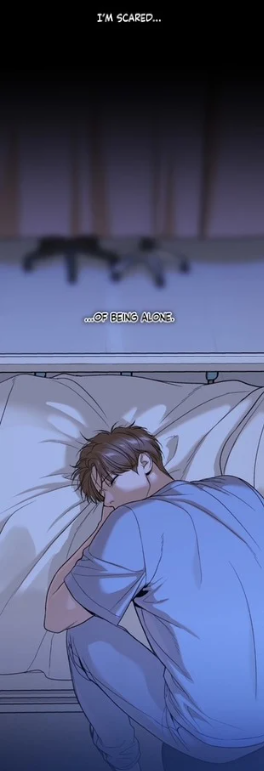 (chapter 56) In other words, wearing black is more than just a change of personality or mourning. It becomes the color of mystery, the beginning of descent into truth.
 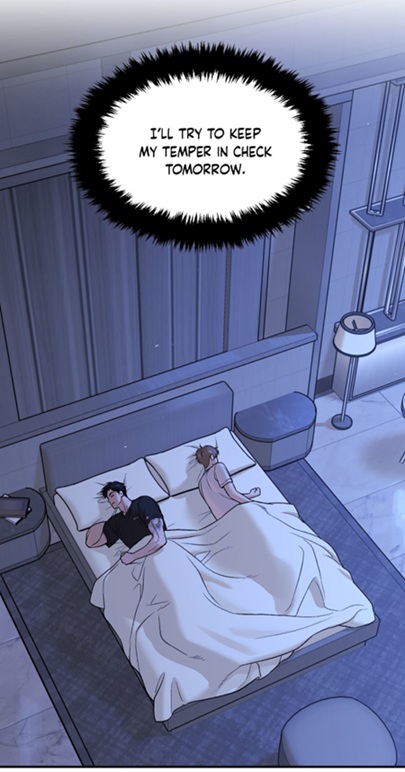 (chapter 79) on the night table.
  (chapter 47). Dan once had toys — proof that once, someone loved him enough to give him gifts which contrasts to the wolf’s childhood.
  (chapter 84) Every time innocence is ripped away, a teddy bear disappears from the story.
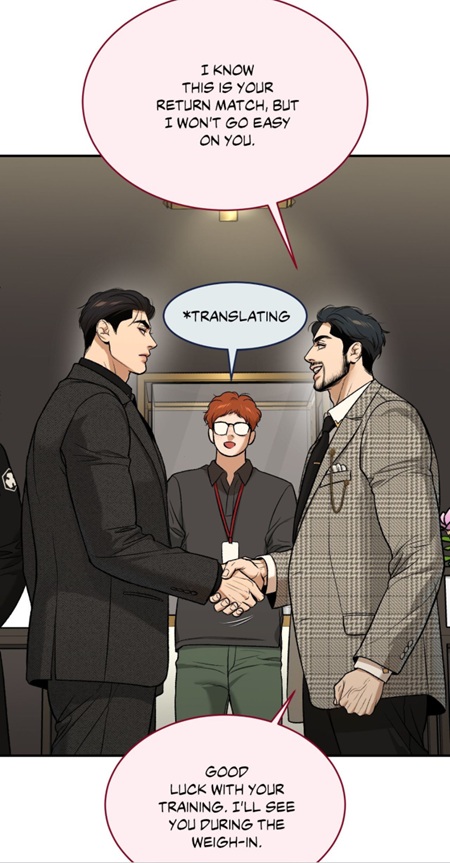 (chapter 82) will happen linked to the protagonists’ past (recent and childhood). Let’s not forget that doc Dan still has no idea what Joo Jaekyung went through after his departure: the slap, the drinking, the headache and the indifference of Team Black, just like the athlete has no idea about the blacklisting and bullying in the physical therapist’s past.
 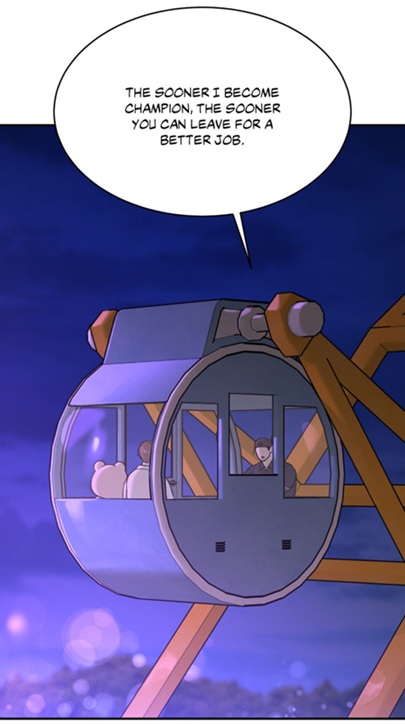 (chapter 84) So by wearing black, doc Dan indicates that he is gradually becoming responsible for Team Blackand Joo Jaekyung the athlete.

 I established that Kim Dan’s number is 8. It is therefore no coincidence that the arc from chapter 80 to 89 should revolve around him—his body, his suffering, and ultimately his recovery. The number 8, often associated with balance, renewal, and continuity, here signals not only the doctor’s rebirth but also the gradual thawing of his frozen world. It marks the moment when the past can no longer remain buried, when the last remnants of family and unspoken pain begin to surface. The mystery behind this phone call will be soon revealed.
 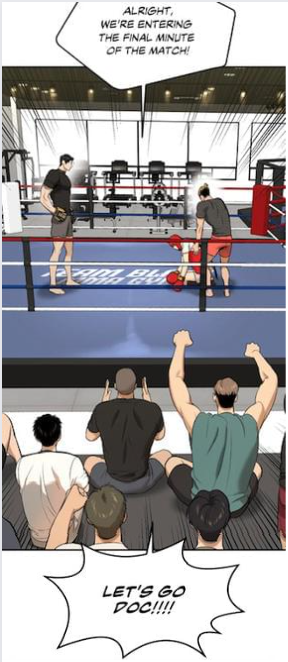 (chapter 26) the sparring between Joo Jaekyung and Kim Dan unfolds under the sign of fun and apparent joy, yet its origin lies in jealousy. The champion, unconsciously triggered by the doctor’s closeness with Potato
 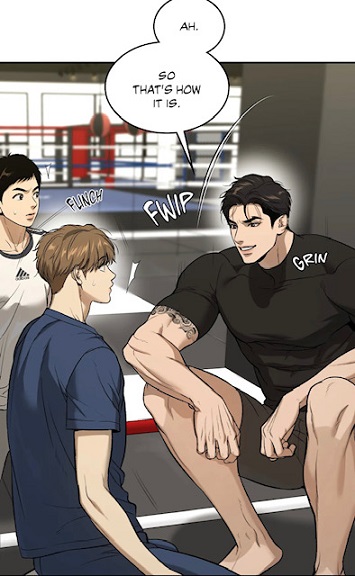 (chapter 25), turns play into a contest—a way to reclaim attention.
  (chapter 25) The gym, usually a place of hierarchy, momentarily becomes a stage where both can laugh, but beneath that laughter runs an undercurrent of rivalry (with Potato). On the other hand, for the first time, the Manhwa allows both protagonists to exist outside the economy of debt and hierarchy. The gym, normally a place of discipline and work, transforms into a playground of laughter. The champion teases the doctor
  (chapter 26) He believes he has accomplished something meaningful and feels, perhaps for the first time, proud of himself. He was taught that he could fight back and overcome his fear.
  (chapter 26) He realizes that the hamster can beam at others, that such light has never been directed at him. In that instant, he no longer sees an employee but a companion whose gaze and embrace he covets, whose approval he unconsciously seeks.
 (chapter 62) The atmosphere is brighter in color but colder in tone. There, Joo Jaekyung got to experience how Kim Dan has lived all this time, helping others, making them happy with his assistance.
  (chapter 62) Here, the protagonist was thinking all the time of his loved one:
 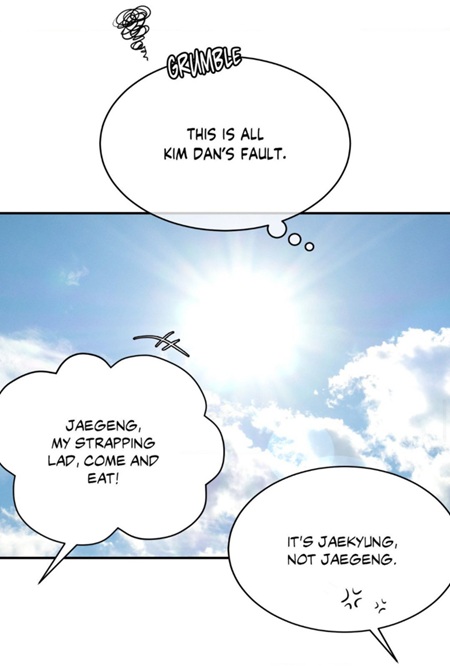 (chapter 62) Indirectly, he hoped to get the doctor’s attention, but he failed. In fact, none of the wolf’s good actions got noticed by his fated partner. Interesting is that though the characters engage in acts of performance and service—helping others, pleasing strangers— their smiles have turned into masks.
 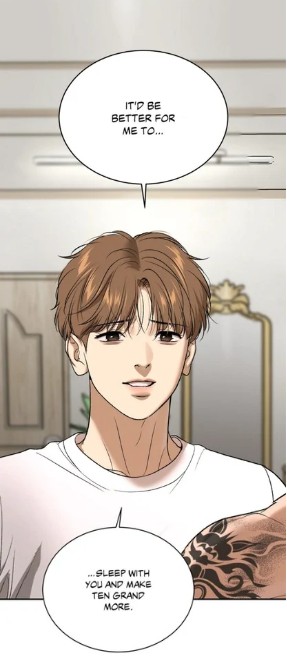 (chapter 62)
 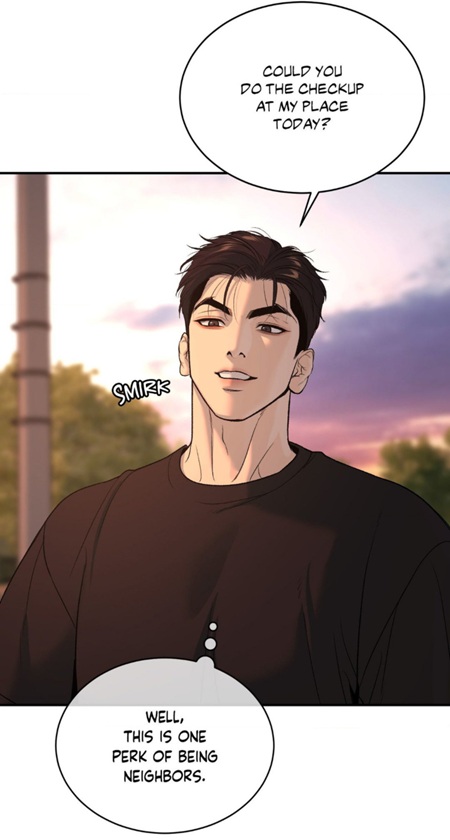 (chapter 62) Where chapter 26 radiated spontaneity, this one reveals calculation and fatigue.
  (chapter 62), where exposure to others leaves both men strangely isolated. The happiness of the crowd no longer unites; it separates. The champion’s outfit, ridiculous and domestic
 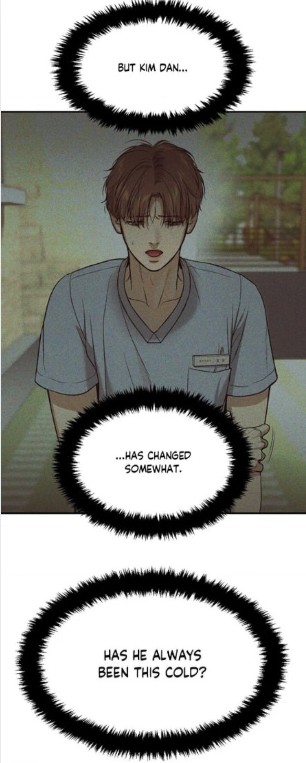 (chapter 62) which is actually his true nature. I will elaborate more further below. For the first time, the wolf looks at his companion and senses distance instead of warmth, as though the man he once touched so easily has withdrawn behind glass. His thought—“Has he always been this cold?”—marks the beginning of introspection, the moment when perception replaces instinct.
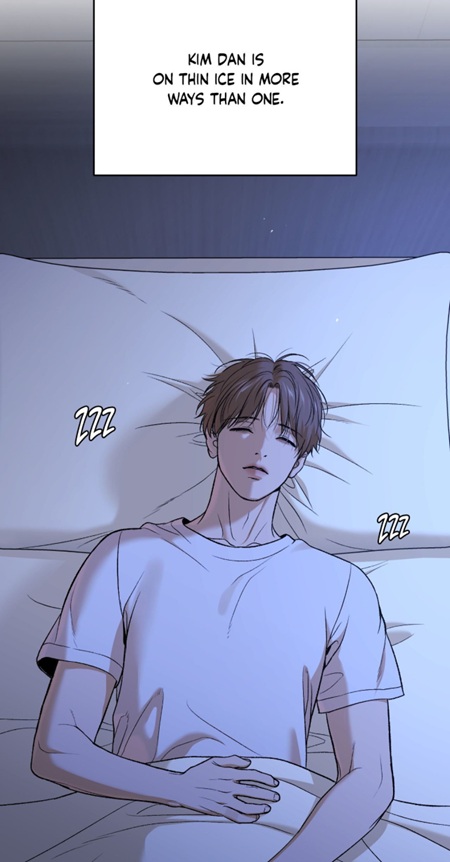 (chapter 80) To “walk on thin ice” is to approach him gently, without force—a lesson the champion must learn if he wishes to thaw what has been frozen by years of duty and self-denial.
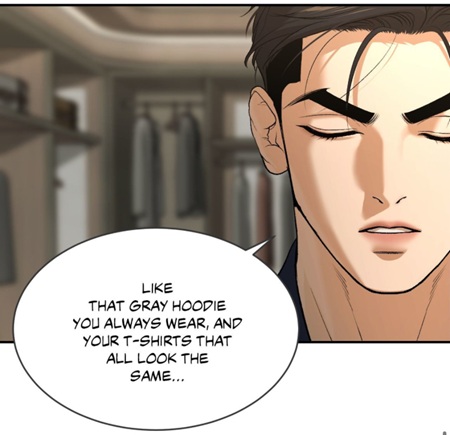 (chapter 80) Hence he made this mistake: he threw the doctor’s clothes without the owner’s consent.
 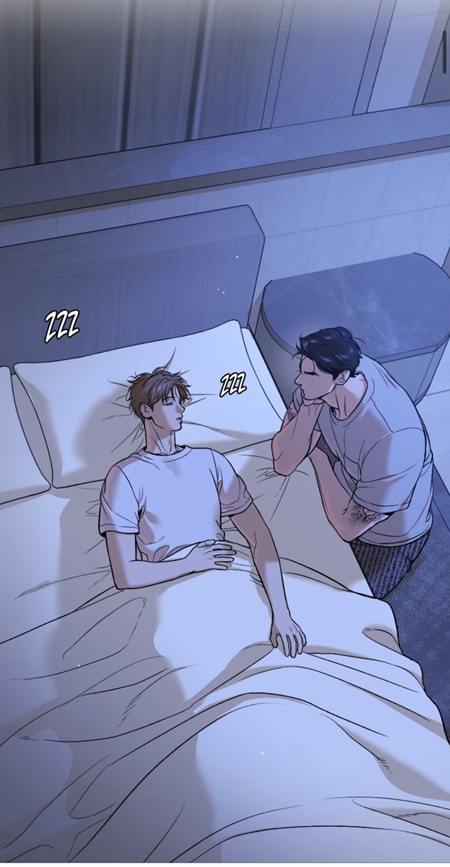 (chapter 80)
  (chapter 80), not red. The atmosphere is fluid, reflective, submerged. Water—not flame—governs this new stage. What we witness is not combustion but fusion—ice meeting water, solid meeting liquid, two states of the same element touching at last. Ice does not just melt under fire; but also in the presence of water. It softens when it recognizes itself in another form. In that sense, Joo Jaekyung’s tenderness doesn’t heat Kim Dan—it mirrors him. The thaw begins not through passion, but through likeness, through quiet recognition. This signifies that Joo Jaekyung is on his way to discover their similarities: they both suffered from bullying and abandonment issues and they love each other.
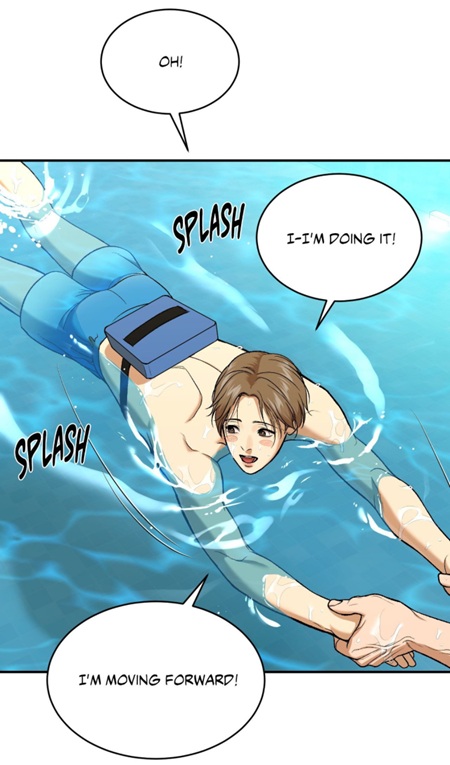 (chapter 80) —his joy is spontaneous, detached from duty, born from play rather than service. It is his first genuine smile since the sparring match in chapter 26, but this time it arises not from competition, only from freedom. In the same chapter, Joo Jaekyung’s grin
  (chapter 80), I have to admit that my favorite part was this one
  (chapter 80), as it exposes the real metamorphosis from the “wolf”. The night Joo Jaekyung watches Kim Dan sleep is not erotic; it is revolutionary. For once, his desire gives way to perception and attentiveness. The fighter who has conquered bodies now studies one that is quietly losing its battle. The body before him is not the sculpted strength he knows, but a map of deprivation: protruding collarbones
  (chapter 80), visible neck tendons, the knobby finger joints and his stiff fingers resting on the blanket as if holding the body together.
  (chapter 80) The pale, bluish hue of the skin—half light, half illness—tells him what no words ever have.
 (chapter 80), the faint opacity of the nails
  (chapter 80) In the faint parting of the mouth he sees not seduction, but exhaustion—a man so depleted that even rest demands effort.
  (chapter 80) he begins to treat rest not as weakness, but as reverence.
 (chapter 13) The fighter who once mocked stillness as laziness now finds meaning in it.
 (chapter 80) — not from exhaustion, but from understanding. The rhythm of his life starts to synchronize with the doctor’s vulnerability. Time, once his most tightly guarded possession, now bends around another person’s needs. Without noticing, he has allowed Kim Dan to become the owner of his hours — a quiet dethronement that signals love in its earliest, purest form. Moreover, Jinx-philes should realize that the moment the star made this decision,
  (chapter 80), it signifies that he will have to dedicate his time to the physical therapist! Hence his routine and training could get affected, just like their weekends.
 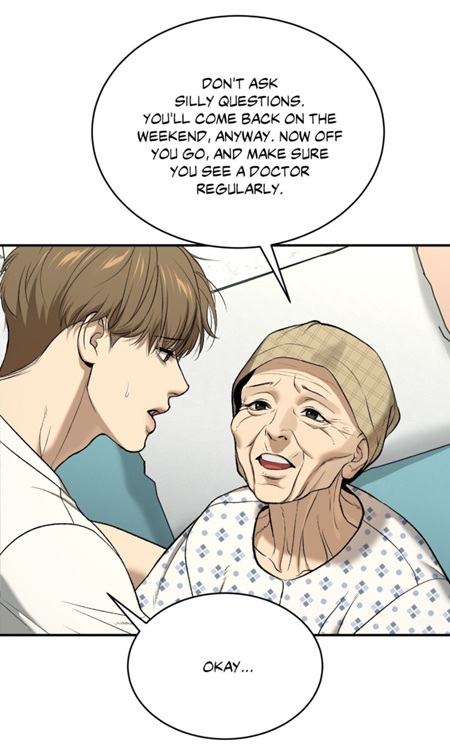 (chapter 78)
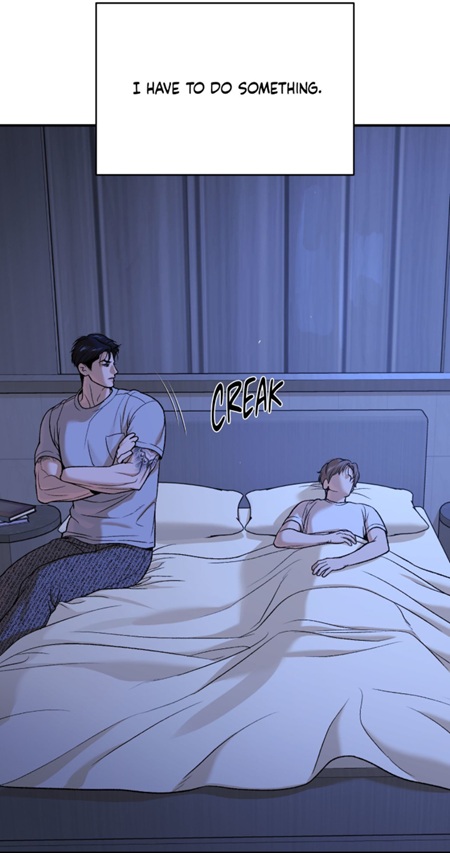 (chapter 80) —the doctor
 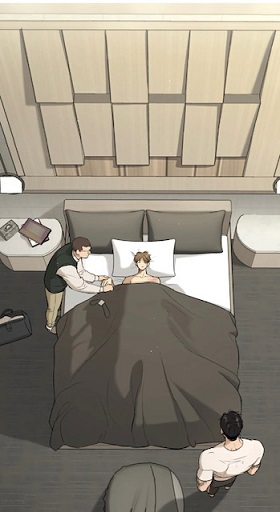 (chapter 13), the family member
 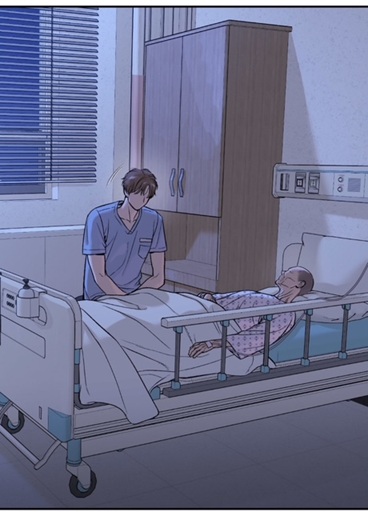 (chapter 56), the one who stays close enough to touch if needed.
  (chapter 80) Without realizing it,the athlete has inherited that role. His nearness is no longer intrusive but protective. He has crossed the invisible threshold that separates obligation from affection. The fighter who once stood as an outsider in the doctor’s life now finds himself within its most intimate circle.
 (chapter 80) Compare his facial expression to the hamster’s before their first day off together.
 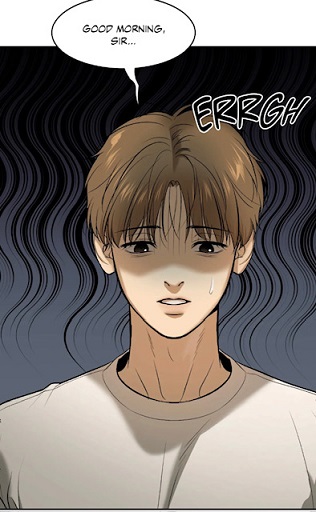 (chapter 27) That way, Mingwa can outline the champion’s confidence and that the one who needed the rest is the physical therapist and not the champion.
 (chapter 69) Every flicker of light falls through The Emperor’s gaze and lands on Kim Dan’s form, transforming weariness into something sacred.
  (chapter 68) in the bathtub
  (chapter 68) —“I’ll keep him right here in the palm of my hand”—echo now with quiet irony. To hold someone in one’s hand is, paradoxically, to immobilize them; it grants possession but denies agency. The same gesture that promises safety also enacts paralysis. His possessiveness, once mistaken for protection, now appears as helplessness.
 (chapter 80) Thus he teaches him swimming. This gesture is not trivial: it marks the moment when care turns into collaboration and liberation, when watching becomes doing.
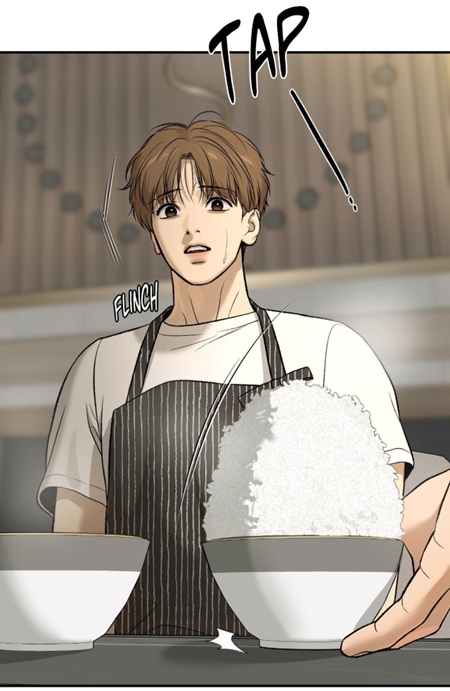 (chapter 79),
  (chapter 80) shrinking back when confronted. The body remembers the threat long after the mind tries to forget.
 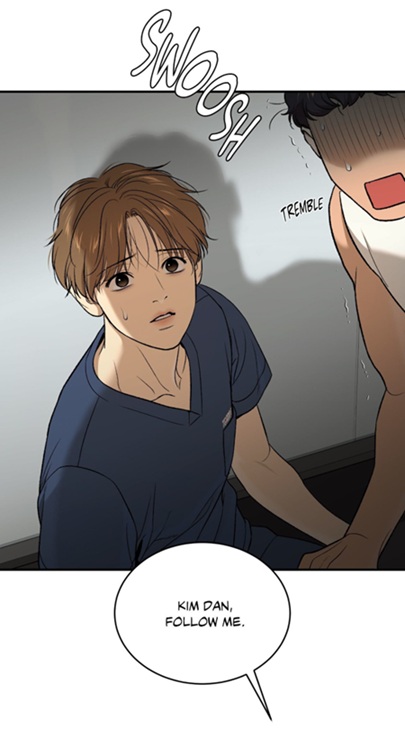 (chapter 79) He lives suspended between two survival reflexes: freezing or fleeing. Since the contract binds him to stay, he cannot physically run away; therefore, his body freezes instead. It is his way of obeying while still protecting himself. Exhaustion becomes his armor. And now, you comprehend why the celebrity could detect the coldness in the “hamster” in front of the hospice.
 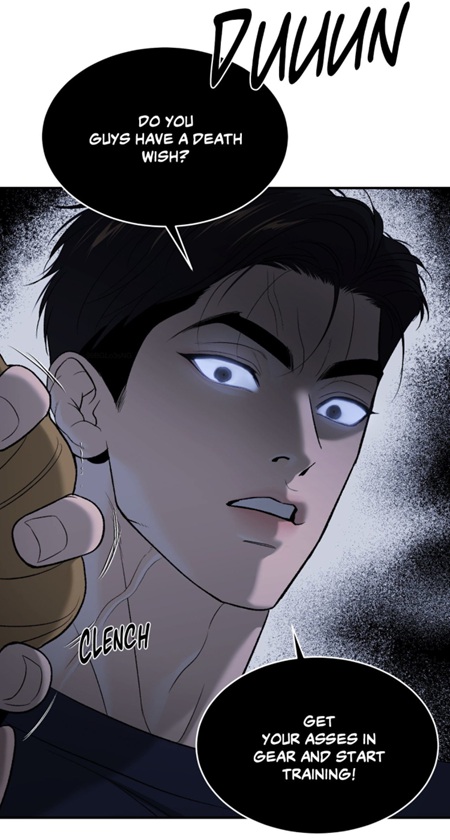 (chapter 79) — now turned outward and wounded the one he wished to protect.
 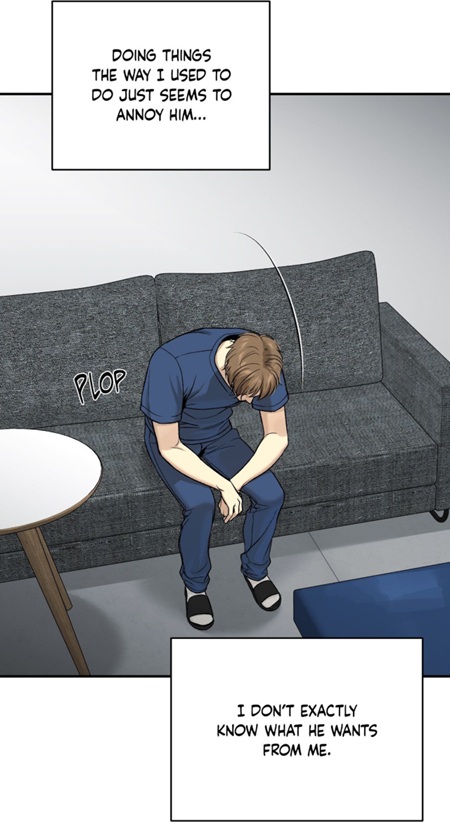 (chapter 79) Thus he clinched onto routine to maintain a normal relationship. But once the champion voiced his dissatisfaction (masking his jealousy), the light in the doctor’s gaze vanished.
  (chapter 79)
 (chapter 38) Born on December 26th, his very birthday ties him to winter, to the paradox of beauty that burns when touched.
 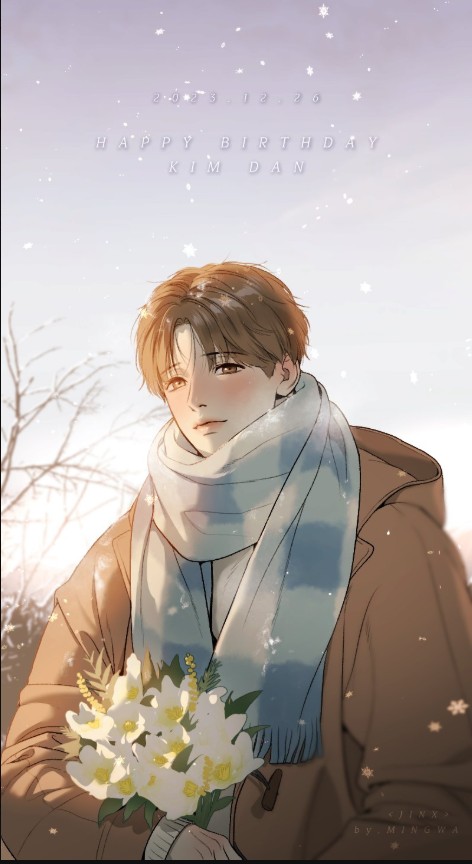 That’s why I can’t help myself thinking that the physical therapist is actually embodied by the snow. Ice and snow preserve, but they also isolate.
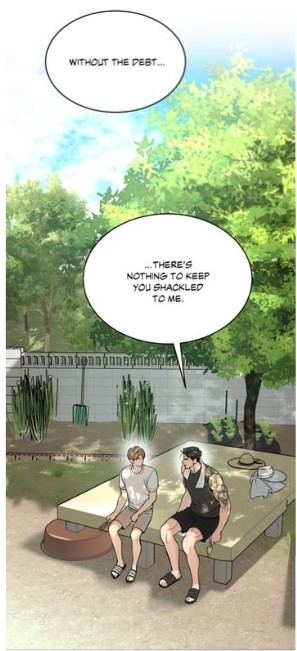 (chapter 77): a sweet that melts too quickly to be shared. Neither man truly appreciated it; both were too absorbed in their own thoughts to enjoy the fleeting pleasure. These missed opportunities — to taste, to feel, to be present — form the emotional prelude to the “thin ice” arc.
  (chapter 80) His smile is still too attached to victory.
  (chapter 63), desperate to restore closeness, mistook passion and pleasure
  (chapter 63) for repair. Believing that physical heat could melt emotional frost
  (chapter 64) The physical act, rather than fusing them, exposed the truth he had refused to see — that his partner was already freezing from within. On the other hand, during this night, the athlete used “self-control” for the first time, his roughness in bed started vanishing.
  (chapter 64) The wolf’s attempt to “burn the bridge” between them became the very thing that broke it. His flame met ice
  (chapter 64), and the result was not warmth but steam — a brief illusion of intimacy that vanished as soon as Kim Dan pulled away. His rejection wasn’t cruelty but a cry of despair, disillusion and exhaustion
 (chapter 64): a body too cold to burn, a heart too tired to love and fight.
 (chapter 80), but about melting together, letting warmth and cold coexist without annihilating each other. To melt together does not mean to dissolve into sameness, but to trust that proximity will not destroy one’s shape. True intimacy begins when both accept that they can share warmth without losing form — when fire believes it can touch ice without turning it to steam, and ice trusts it can meet fire without vanishing.
  (chapter 61) Touch it bare-handed, and you feel both heat and pain. The same holds true for Kim Dan’s presence: those who reach for him too quickly end up wounding both him and themselves. The sportsman’s early attempts at care followed that pattern — too forceful, too immediate, leaving frostbite where he intended warmth.
  (chapter 64)
  (chapter 79) but anxiety — fear of losing control, of not being seen
 (chapter 80) but terror — the instinct to flee before being hurt again. Both used frost as armor, and both mistook it for strength and protection.
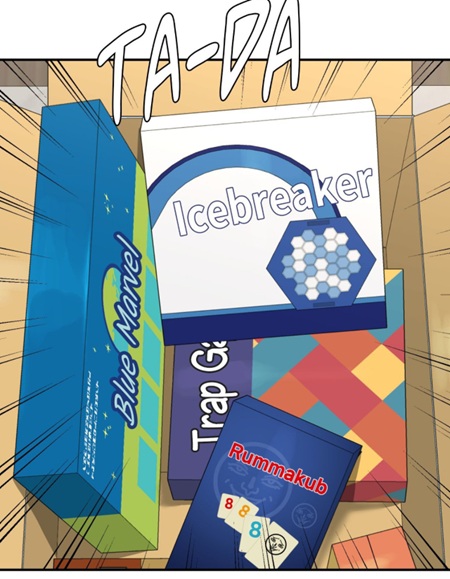 (chapter 80) They never played it — and that is no accident. The title encapsulates the temptation Jaekyung must resist: to treat intimacy as a contest, to imagine that trust can be won through tactics or timing. But hearts do not yield to strategies. The only way to melt the ice is not by “breaking” it, but by warming it, patiently, sincerely.
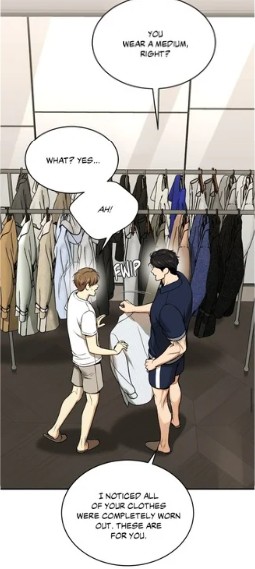 (chapter 80) marks its opposite — a spontaneous act free of calculation. I am not here talking about the purchase of the clothes. When Jaekyung brings new clothes for Kim Dan and places them in his own wardrobe, he is doing something that escapes his usual logic of control. For once, he doesn’t command or anticipate; he simply gives.
 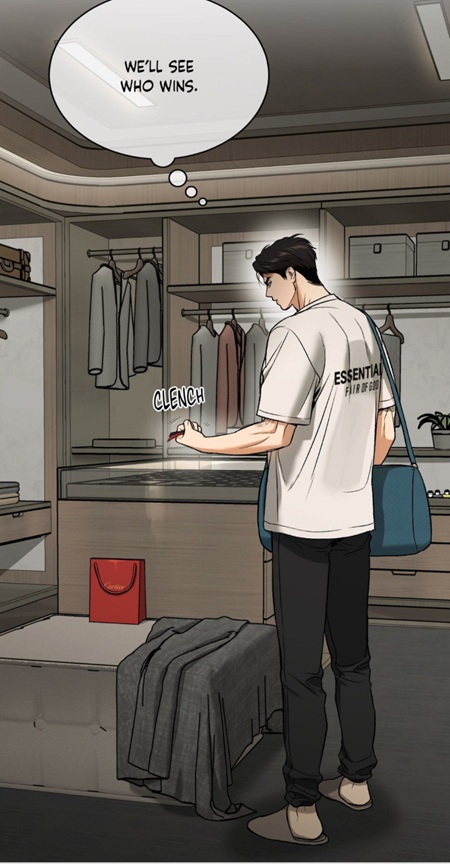 (chapter 66) And this is something the physical therapist could notice, if he enters the room again and pays more attention to his surroundings. This is not about ownership but about inclusion: an unspoken invitation to share a part of himself.
  (chapter 30). Even in that comic panel, the imbalance between physical familiarity and emotional distance was evident. Kim Dan’s embarrassment stood for boundaries not yet earned, and Jaekyung’s casual tone for a love not yet understood.
 (chapter 70) The athlete’s posture
  (chapter 80)
  (chapter 80) — were gestures of power. Now, through trial and correction, they evolve into gestures of reciprocity. Besides, to err is human. In learning how to respect and help, he learns how to love.
 (chapter 80) By tending to another’s exhaustion, he faces his own. Each regret
 (chapter 65) are in fact the boy’s first attempts at self-assertion. In a life where every decision has been dictated by duty, poverty, and responsibility, destroying his own body becomes the only act that truly belongs to him. Each cigarette, each drink, is a tiny rebellion — a momentary claim over flesh that has always served others.
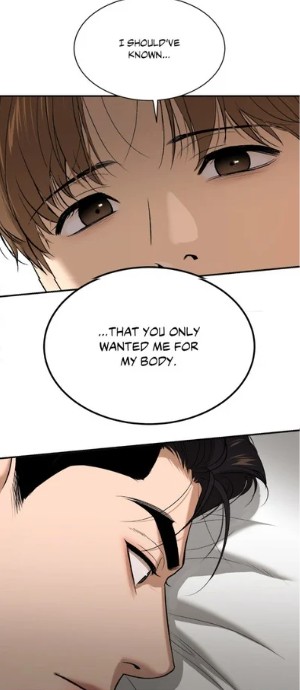 (chapter 62) the weight of that sentence stretches far beyond the bedroom. It carries the residue of every moral, familial, and physical contract that has reduced him to flesh. What the champion hears as accusation is, at its core, a confession of alienation — the echo of a man who has never learned to live inside himself. It’s not only a reproach but a confession. He hates his body because it has become the medium through which he is used, never loved.
 (chapter 27)
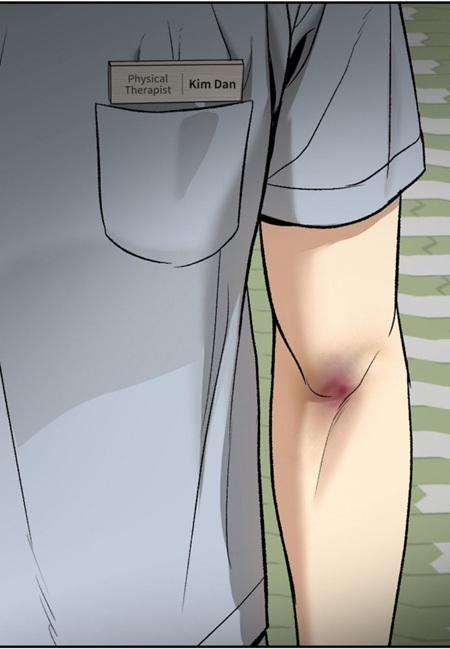 (chapter 61), the other where no one looks. Yet, the attitude of people is the same: no one pays attention to them. Both inhabit bodies that have forgotten the difference between endurance and pain. Both mistake self-destruction for strength.
  (chapter 18) when Kim Dan, bruised, had seized his hand and expressed his concerns. Back then, the gesture had confused the wolf. His hands were made to strike, to defend, to dominate — not to be pitied or protected. He had pulled away instinctively, unsettled by the tenderness and the huge sense of responsibility behind the question. He felt criticized, as if his power was questioned.
  (chapter 80) What began as misunderstanding in episode 1,
  (chapter 80), Kim Dan panics, convinced that release equals abandonment.
  (chapter 80) He freezes once again. Yet the water holds him; he reaches onto the champion again — and this time, the embrace stays. What makes this moment remarkable is that the pool is shallow.
  (chapter 80) Kim Dan could easily stand on his own, but fear has eclipsed reason. His instinct is not to trust his feet, not to fight the water, but to cling to the man before him.
  (chapter 80) And this has nothing to do with his money and the gifts. This gesture exposes that the hamster does trust the athlete. For me, his passivity is strongly linked to his longing.
  (chapter 16) —that deceptively simple French word—finds its power. It means “ice,” but also “mirror” and “window.” When the champion looks through Kim Dan’s glace
  (chapter 77), unlike the touch of ice. It softens, sweetens, dissolves slowly on the tongue. Likewise, the heat between them no longer needs to scorch; it can melt. And yet, the kiss — once their most volatile exchange — has fallen silent.
  (chapter 64) Kim Dan had to bite his own lips to make Jaekyung stop, and neither has ever truly spoken of it. Yet, during the night, the athlete could see the remains of that cold war.
  (chapter 16), just as the champion has never confessed that it was his first kiss. Moreover, during their first day off together, Joo Jaekyung had also initiated a kiss and back then, the doctor never wondered why.
  (chapter 27) Both men have been staring into the same mirror without realizing that the reflection was shared. They love each other. Joo Jaekyung needs to ponder on the signification of a kiss
  (chapter 13) and why doc Dan made such a request.
  (chapter 15) The kiss is more than just fun and pleasure. It is the expression of “love”. And now, you comprehend why I am expecting a huge change in the next episode.
 (chapter 28) and urge Kim Dan to ask, at last, the question that remained frozen between them. In doing so, he would not only reopen the conversation but also reclaim the meaning of touch itself: not as misunderstanding or survival, but as curiosity and love.
 (chapter 80) And it comes with a small but crucial instruction. In that single phrase, the MMA fighter encourages Kim Dan to discover his own power and strength without overexercising. His feet, which were once symbolically trapped in the nightly ice, now press against the water with intent during the day. For the first time, his body obeys him, not fear. His movements are neither frantic nor helpless but self-regulated, gentle and alive. That’s why the main lead becomes happy for a moment.
  (chapter 21) comes from the early loss of his mother.
  (chapter 79), if he knew that the doctor has already loved him for a long time.
 (chapter 80), yet without panic. It is the opposite of his lifelong reflex to cling.
 Kim Dan on Thin Ice was never just about danger or fragility — it was about transformation. The ice that once confined him to stillness has melted into water, and the fear that once froze his body has become motion. Where there was trembling, there is now flow; where there was isolation, there is connection.
 (chapter 75) Where his father’s curses bound him to guilt and the past, Dan’s glow opens the possibility of release
  (chapter 75) His eyes open after the dream, and they open to the same light. It’s the opposite of every earlier awakening
  (chapter 54) —no gasp for air, no clutching his throat
  (chapter 75), no father’s voice strangling him. This sudden awakening embodies enlightenment.
  (chapter 75)
 (chapter 75) He is smiling, a sign that the director is enjoying this moment with the “wolf”. He becomes the first person to speak to Jaekyung not about titles, not about survival, but about happiness.
 (chapter 70) He knows the athlete from the past. The latter was attached to people and not to places. Why does he speak of “something” rather than “someone”, if he knows? The lesson is not about fixing a new goal or object to chase, but about discovering how to live differently — how to live happily.
  (chapter 65)
 (chapter 75). Even before, he could only mutter to himself this:
  (chapter 70) The negation indicates denial, but observe that he couldn’t even use a noun. He cannot yet translate this vision into words, because he has never heard “I love you” himself
  (chapter 74) No one ever taught him how to say I love you. And so, when Dan appears in his dream, it is not the words that free him but the gaze.
  (chapter 75) or the mother’s withdrawal.
 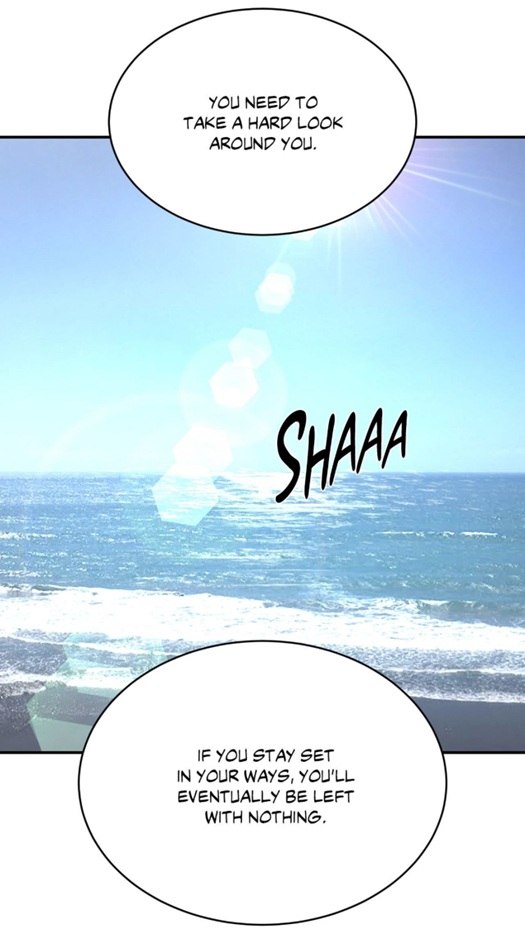 (chapter 75) The openness is what makes it love — it is respect.
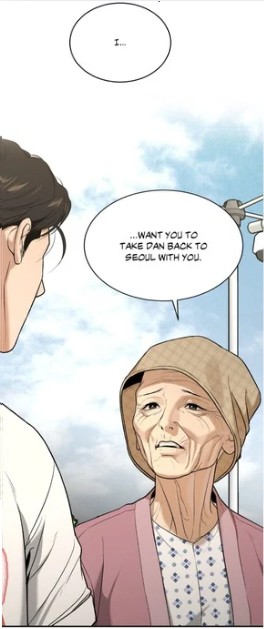 (chapter 65) Halmoni believed she already knew the solution to Dan’s suffering: sacrifice yourself, work hard, pay the debts or make money, endure. She closed off alternatives by imposing her narrative on him. Her love was distorted into certainty. The director, by contrast, recognizes the limit of his role. He has learned (belatedly) that he cannot dictate meaning for someone else. Instead, he tells Jaekyung:
  (chapter 75) His love is expressed through humility — through not knowing. At the same time, his words and facial expression ooze trust and confidence.
 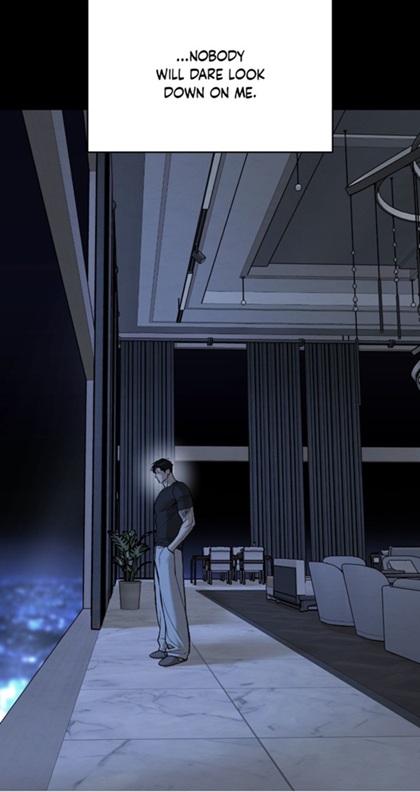 (chapter 75) Each title, each belt, each triumph was a rebuttal to his father’s words. He was not worthless, not doomed. Yet the irony is cruel: in fighting to silence those curses
 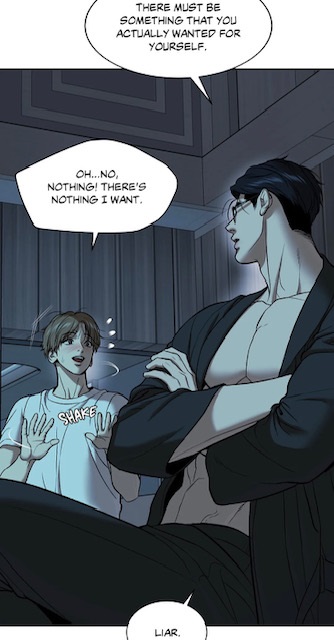 (chapter 29), Joo Jaekyung opened up a little to doc Dan! Thus the next morning, he visited the bathroom where doc Dan was!
  (chapter 30) It was just an excuse to spend more time with his fated partner.
  (chapter 74), no “dear,” no “I love you.” In the father’s memory, she used the child as an excuse to distance herself from her spouse. In that moment, Jaekyung is not a son to be cherished but a barrier in an adult quarrel.
 (chapter 67) His question is really an appeal for recognition. If Jaekyung answered yes, Dan could interpret it as proof of love, because in his own distorted framework being worried about equals being cared for. But Jaekyung answered with silence.
  (chapter 67) Not because he felt nothing, but because he lacked the language to connect worry with love. In his conscious mind, conception of care was still bound to usefulness — Dan mattered because he was needed for training, not because he was loved as himself, while deep down, he had already moved beyond this aspect. He was just in denial in this scene,
 (chapter 74) On one level, she does not recognize his voice. But on a deeper level, her words ring as truth: she does not know her son. She has no idea who he has become, what defines him, what characterizes him beyond money and survival.
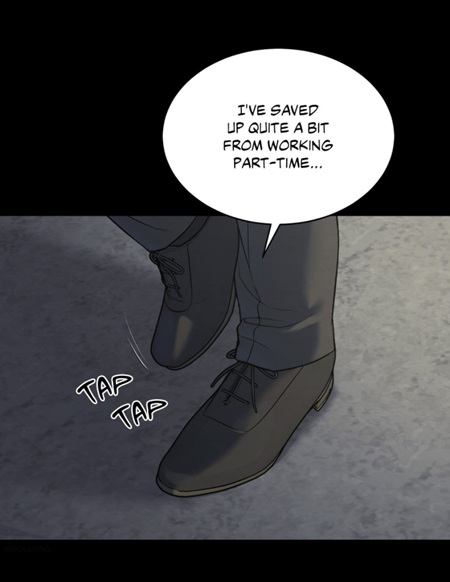 (chapter 74), promising to provide for her if she returns home. He unconsciously appeals to the only logic he has ever known: that love equals provision, that affection is secured by usefulness.
 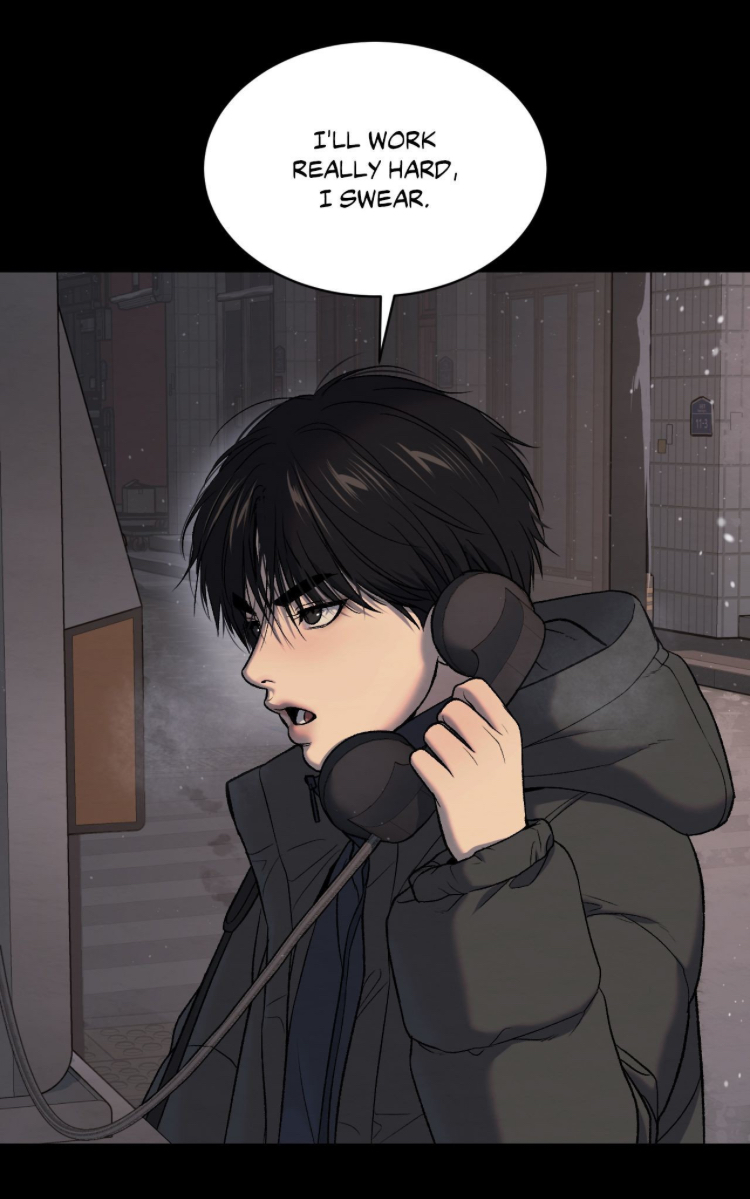 (chapter 72) and Kim Dan, he instinctively assumed he had to “do it all”: earn, fight, shield, control.
 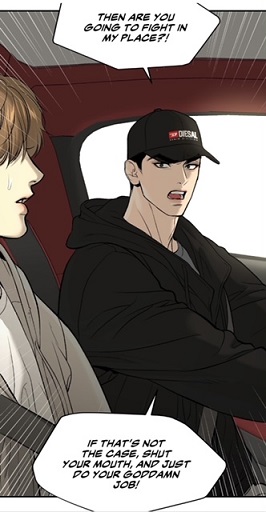 (chapter 42) His father’s voice was violent and scornful, but its framework remained lodged in him.
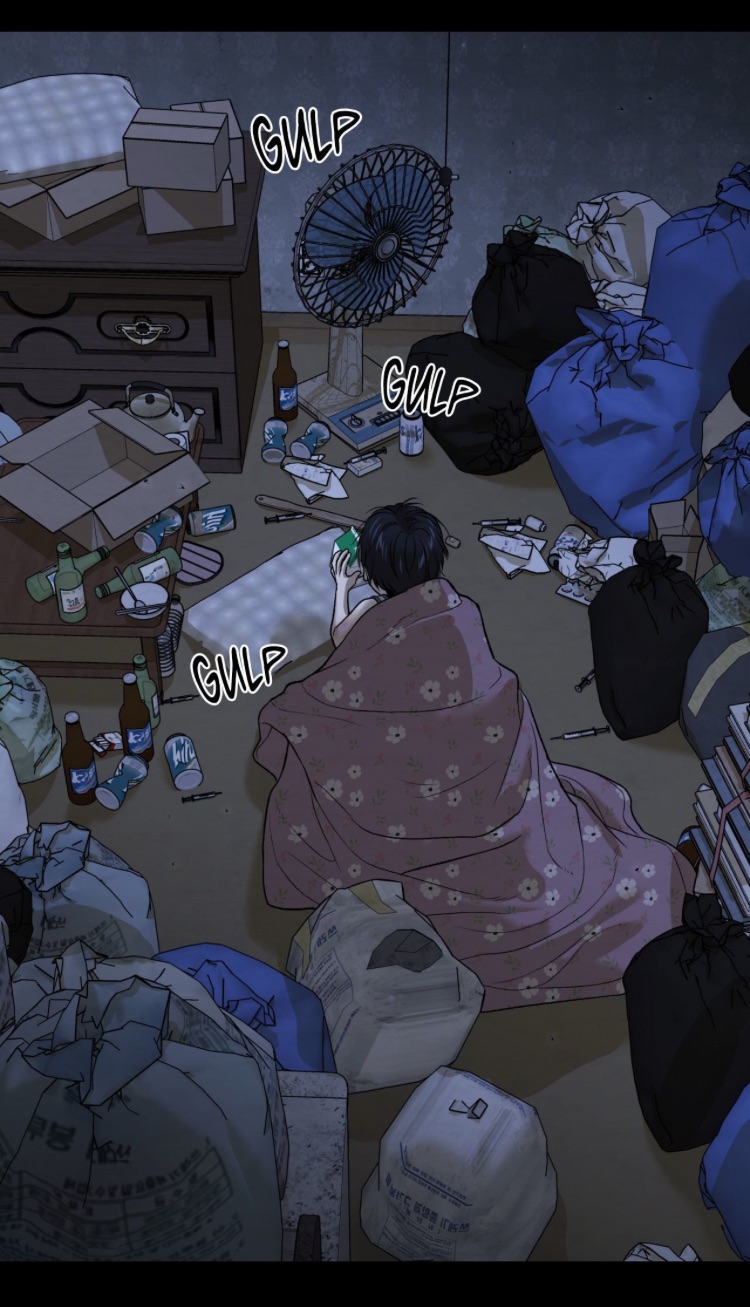 (chapter 72) becomes the perfect metaphor for her treatment of him. Once she no longer needed him, he was discarded like refuse. Just as trash cannot be reclaimed by sentimental value, she will not be able to reclaim him later through appeals to blood ties or belated need. It is impossible because he has learned — painfully — that true love is not about what you have, but about who you are.
 (chapter 74) He understood that the words he longed for as a child were never simply withheld — they never existed. Since we saw her back and heard her voice, I don’t think, she truly cut off ties with Joo Jaekyung. Why? It is because she had no intention to change her phone number again.
  (chapter 74) She expected him to follow her request. I can definitely imagine her trying to reconnect with Joo Jaekyung, the moment he became a celebrity.
  (chapter 75) Keep in mind that we have these mysterious phone calls:
  (chapter 37)
 (chapter 43)
  (chapter 49)
 (chapter 75)
 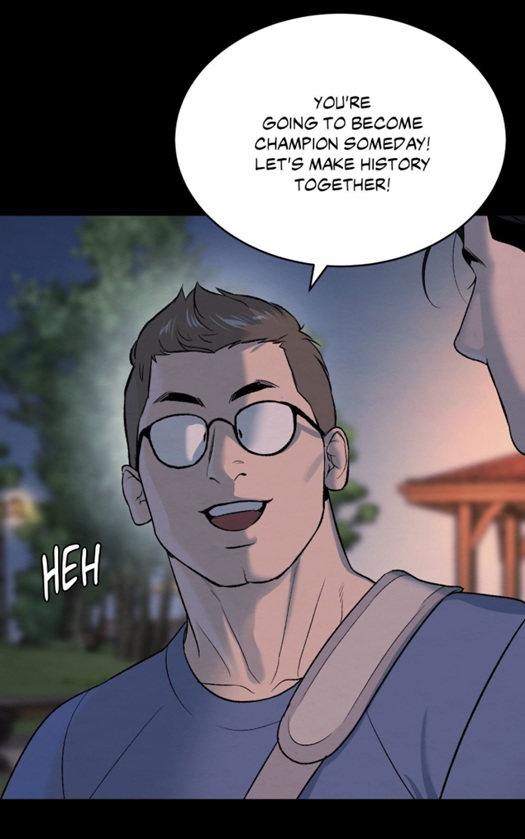 (chapter 75) On the surface, these sound like support. He smiles, his tone is warm, his words echo the vocabulary of friendship. Yet this false promise had lasting consequences: it reinforced a pattern already planted by the champion’s mother. Since childhood, Jaekyung had equated helping with caring
  (chapter 34), Jaekyung assumed later that the actor would have helped doc Dan to hide.
  (chapter 58) His violent intrusion into the actor’s home was the natural outgrowth of Namwook’s teaching: if love is real, it must show itself as service.
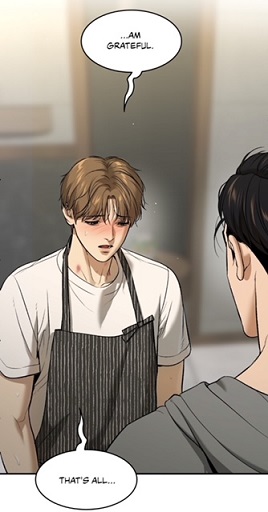 (chapter 45), Jaekyung struggled to even recognize it. Giving him a gift and expressing gratitude was not “helping the fighter”.
  “ (chapter 75) There’s a life outside the ring and the spotlight.
 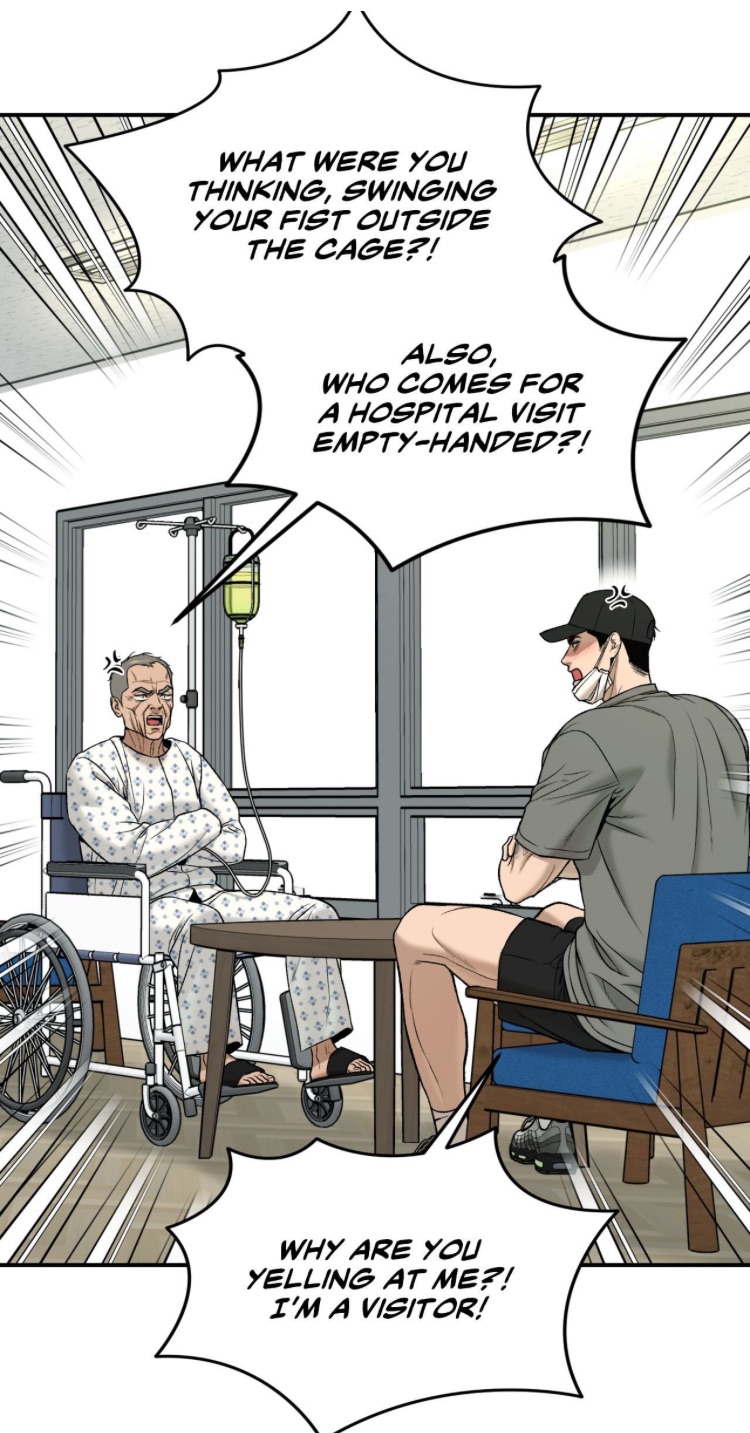 (chapter 71) Yet, deep down, he was happy that Joo Jaekyung had visited him and even spent the whole day with him. Secondly, for him, too, love has always been expressed through responsibility, advice, and correction rather than direct declaration. When he tells Jaekyung to “look around” and “think hard,” or warns Dan to “
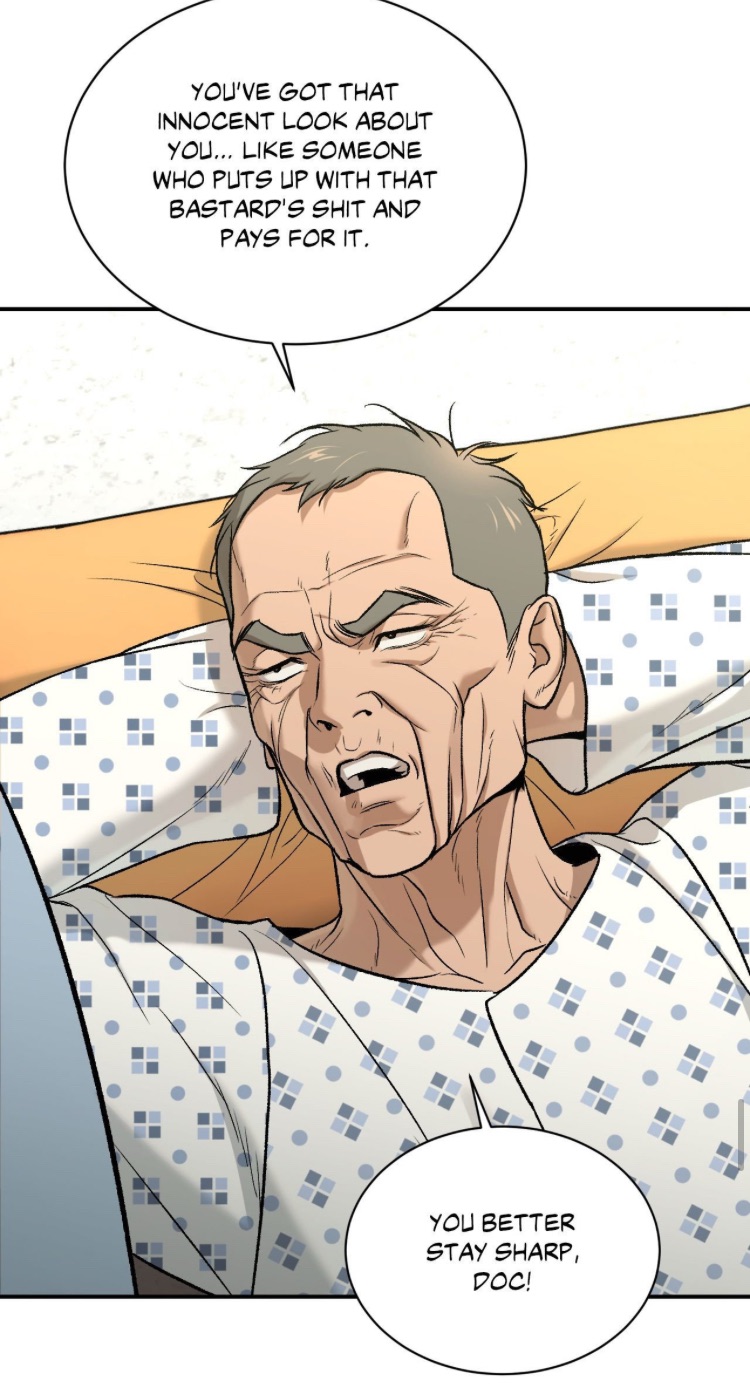 (chapter 70) “stay sharp,” he is not being cold — he is speaking from the only framework of love he knows: respect, knowledge, care, and responsibility, the very dimensions Erich Fromm outlines. He realized too late that he missed Joo Jaekyung very much. His love is embedded in actions and words of guidance, not in sentimental speech. To suddenly say “I love you” would, in his own register, feel shallow and false. He actually embodies the “real parent” IMO, because contrary to all the others adults, he learned from his mistakes. No parent is perfect, but they need to reflect on their words and actions. Learning through experiences is lifelong learning. It stops with death. The director did his best according to the circumstances and tried to correct his wrongdoings. And we can see his influence in the champion’s life. When it comes to doc Dan, he also makes mistakes:
  (chapter 68)
  (chapter 69)
  (chapter 69) And that’s what makes him so human.
  (chapter 71) Hence doc Dan didn’t resent the champion for his harsh treatment. But unlike the mother, who equated love with possession, Hwang Byungchul has begun to correct himself. He respects Jaekyung’s privacy, he encourages instead of dictating, he models a love that is belated but still real. This opens the possibility that Jaekyung, too, may learn to fill his silences differently — not with dominance or provision, but with genuine presence. He truly embodies the philosophy from Erich Fromm: it is never too late to become happy! Hence he smiled on the rooftop!
  (chapter 71) This means that he lives now in the present. It looks like the “old coot” has been tamed by the “gentle hamster or duck”.
  (chapter 65) We know he once had toys (teddy bear,car)
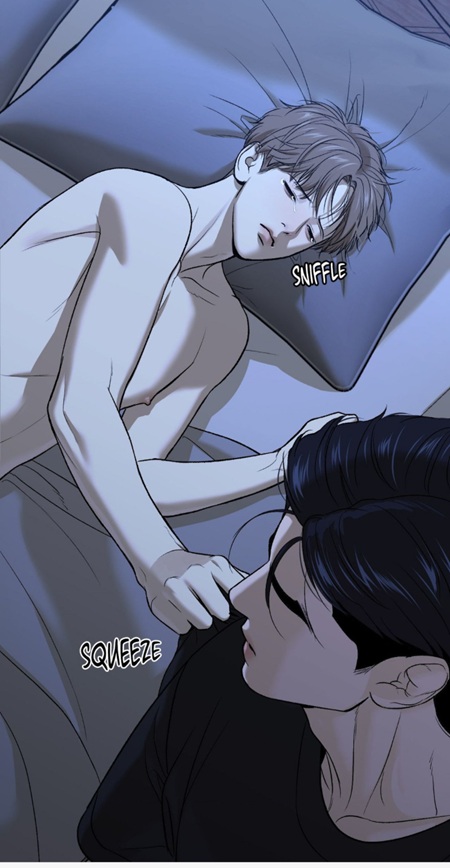 (chapter 66), whispers through tears
 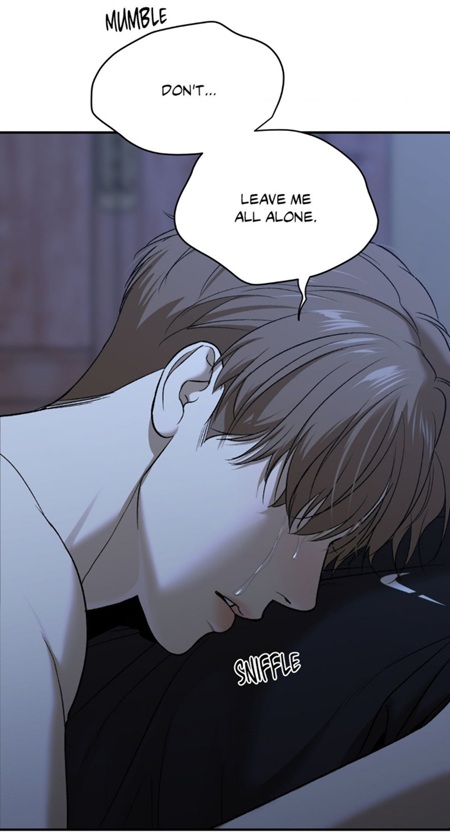 (chapter 66) and then breaks down with “
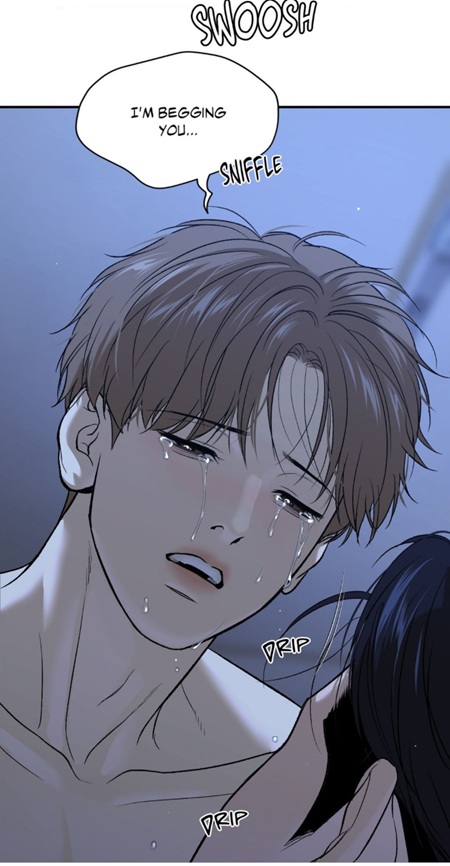 (chapter 66) These are not declarations of love, but desperate substitutes — fragments of the words he could never utter in childhood. They expose the precise gap: he never managed to say back what had once been said to him. He had lost his parents too soon. Instead of “I love you too,” what emerges is fear of abandonment. Instead of reciprocity, there is only pleading. His grip on Jaekyung’s shirt is the physical translation of what he could not verbalize: the child’s attempt to hold onto someone who is already vanishing.
  (chapter 44) Dan once received love of a different kind — playful and tender. A kiss cannot have come from the grandmother, who expressed affection only in gestures of care, never of intimacy. That kiss belongs to his mother.
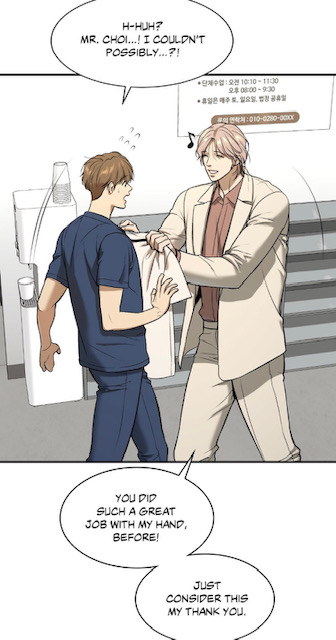 (chapter 31)— which he associates with unbearable debt. His mother’s final “gift” of love was one he could never repay. Any present risks reopening that wound: “What if I can’t repay this? What if I lose them too?”
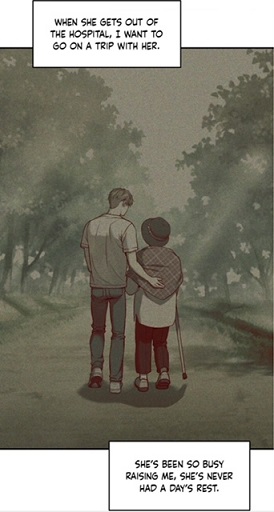 (ch. 47) throws this into sharper relief. There, Dan imagined taking her on a trip after the hospital, walking side by side, giving her what she never had: rest, companionship. The problem is that this image was still mixed with repayment, nevertheless doc Dan was gradually realizing that spending time together was important. This vision displays the importance of walking together. When Jaekyung dreams of Dan waiting in the sunlight,
  (chapter 74) — the quiet sign that the sun is about to rise. Dawn is not just a natural detail in Jinx; it is a symbolic hinge. It is the moment when night meets day, when moon and sun overlap, when endings bleed into beginnings. In myth and fairy tale, dawn often marks metamorphosis: the Little Mermaid turns to foam, the enchanted sleepers awaken, the beast becomes a prince. For Jaekyung, too, dawn is the threshold. His father cursed him at dawn
  (chapter 73), stripping him of worth, tying the rising sun to shame. But in this new dawn, another voice will have to intervene. Only Dan can replace the curse with a blessing. Only “I love you” can undo “you are not special.” And if it is not “I love You”, then it could be a kiss, the symbol of “affection”.
  (chapter 69) when Park Namwook leaned across the table and whispered to the champion about his slipping rank, his lost title, his third place. The setting is dim, the words hushed, the tone heavy with shadow. That whisper was not meant to soothe — it was meant to undermine. Namwook’s closeness is false intimacy: a confidentiality designed to manipulate, to remind Jaekyung of his dependence, to keep him chained to the cycle of fighting. The whisper here is the voice of fear, lack, and scarcity.
 (chapter 75) He was always there — arranging his matches, covering his problems, whispering about his “future.” Yet the quality of his presence was hollow. He never once guided Jaekyung beyond his father’s curse, never helped him imagine a life beyond titles. Thus he never discovered that the “monster” was suffering from insomnia.
 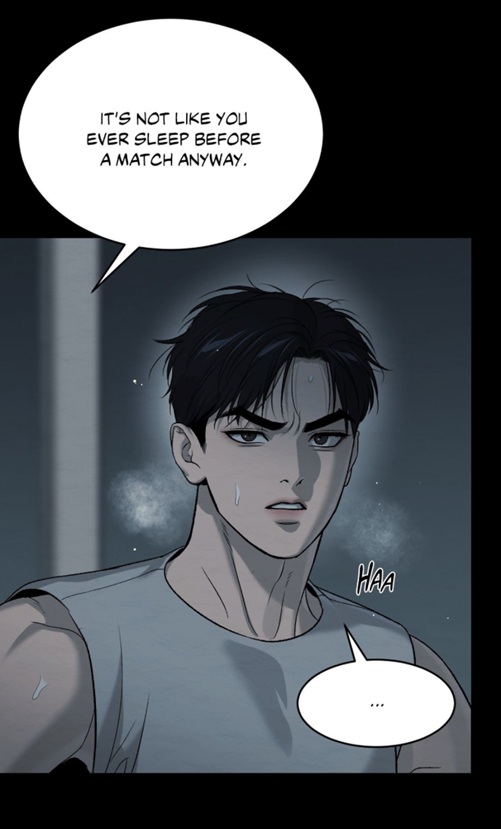 (chapter 75) His companionship was measured in duration, not depth.
 (chapter 41), an invitation to walk together. Namwook’s long presence embodies the trap of quantity without substance. Dan’s brief but luminous presence reveals the power of quality: the kind of attention that transforms.
 (chapter 75) Namwook’s whispers, too, keep him chained to that rhythm of urgency — rankings, titles, deadlines. But once Dan’s whisper replaces Namwook’s, time itself shifts. The future is no longer a debt to repay but a horizon to approach slowly, hand in hand.
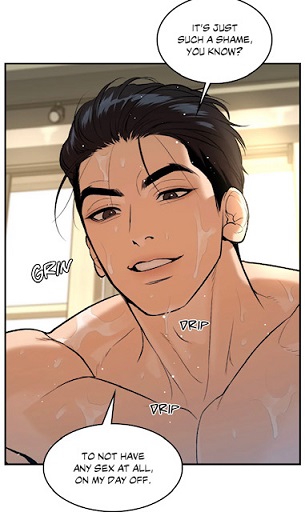 (chapter 27), joked
  (chapter 27), even rediscovered his love for swimming. Water, his true element, was reclaimed as play rather than punishment.
  (chapter 27) That single day was a seed — a foreshadowing of what life might look like once the curse is broken for good.

 (chapter 72) —and not with fists, but with fabric.
  (chapter 11) Each boy is introduced wearing a shirt adorned with a teddy bear, a symbol that quietly carries the emotional weight of the entire narrative.
  (chapter 72)
  (chapter 68) In time, each man will become the other’s bear
  (chapter 66): a source of comfort, loyalty, and belonging. To follow the teddy bear is to trace this emotional path—from abandonment to connection, from injury to intimacy, from being held once to being held again.
  (chapter 47), and then claimed, just like his teddy bear. The fate of doc Dan’s toy bear reflects the boy’s. The former was pushed outside the embrace and bed before disappearing.
  (chapter 72) The shirts are not only outgrown
  (chapter 72) but also replaced with t-shirts without any design alluding to the vanishing of their identity and forced maturity.
 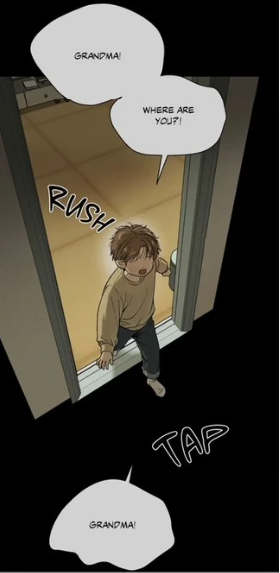 (chapter 57) For Jaekyung, the beanie-wearing bear with its wounded arm and wise glasses is the last trace of comfort before reality hardens. What remains is not the child, but the instinct to survive. From the moment the bear vanishes, a new figure begins to emerge—not one held, but one who fights. The boy with the teddy bear becomes the man who can’t rest, who equates existence with usefulness, and usefulness with victory.
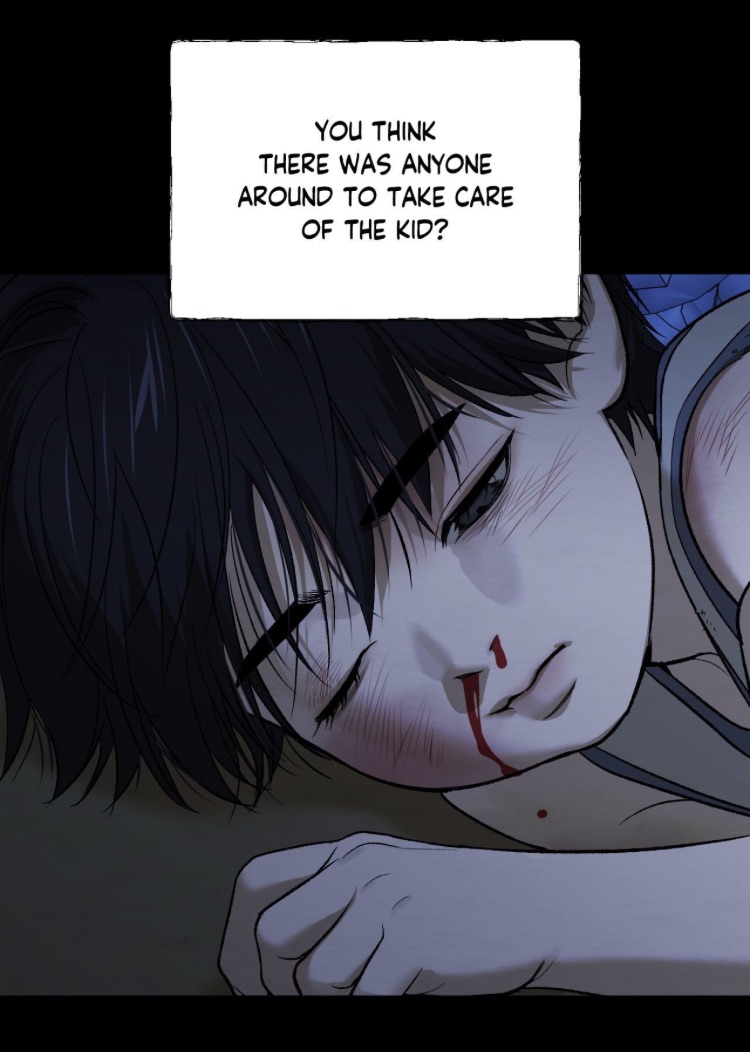 (Chapter 72) This episode doesn’t just show how Jaekyung became a self-made man
 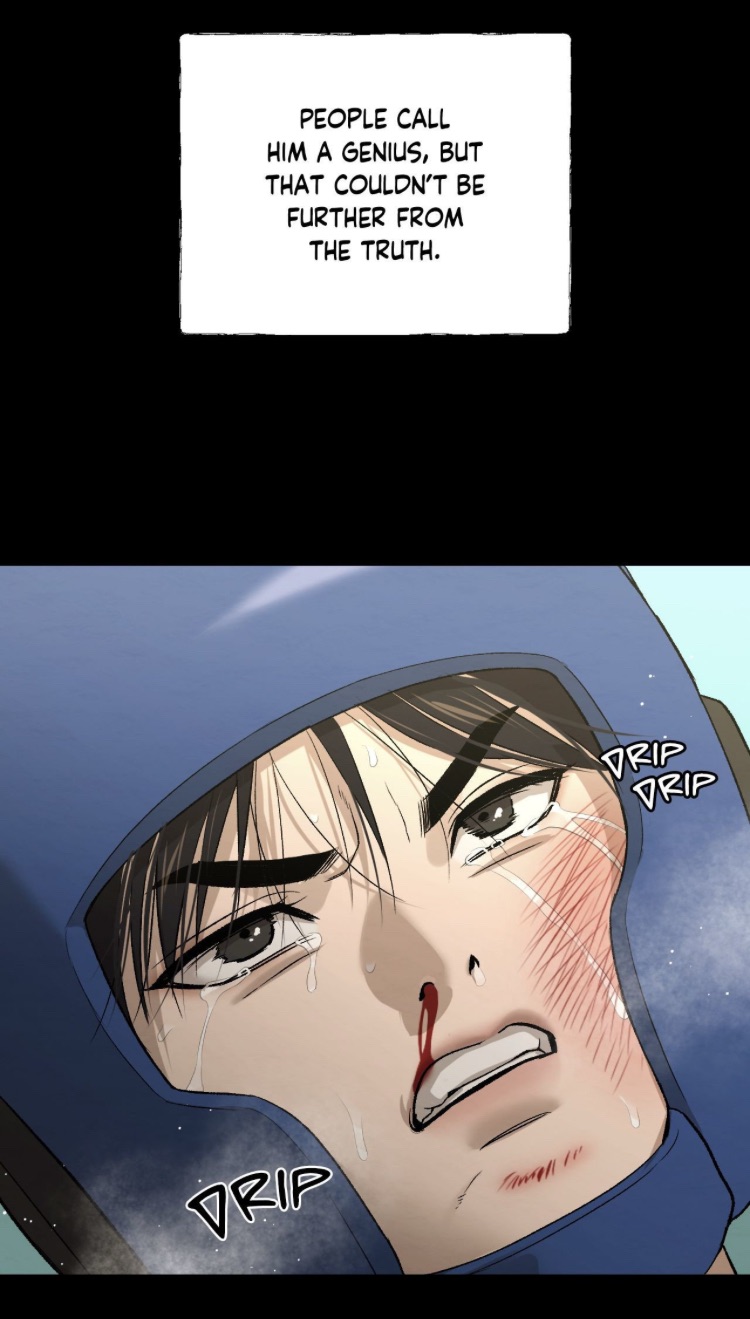 (chapter 72)
  (chapter 72) —it makes one thing heartbreakingly clear: he wasn’t raised by a pack of wolves; he raised himself.
  (chapter 7) The cliché used by Park Namwook in chapter 7 is revealed to be not only ignorant, but cruel. Jaekyung had no home, no real guardian, no one to defend or guide him. He didn’t grow up in the wild—he grew up alone, navigating between violence (abuse and bullying), hunger, and neglect without true protection. This reframes the champion’s identity: not as someone untamable, but as someone who was never tamed because no one cared enough to try. What we witness is not savagery, but simple survival. Thus he had no friend.
  (chapter 71), performative masculinity and high expectations of Park Namwook, and the explosive violence of his father.
  (chapter 72)
  (chapter 5) His behaviors—his hot temper, cold demeanor, blunt speech, and instrumental approach to others—were not innate traits. They were learned strategies, adapted from men who had likewise buried their vulnerability beneath strength or stoicism or brutality. Hence he brought no present to the patient at the hospice.
  (Chapter 72) Much earlier, in the summer night’s dream (Chapter 44), Kim Dan sensed that hidden nature: not the predator, but the man longing to be held.
 (Chapter 44) Doc Dan had sensed the real person behind the legend.
 (chapter 1), as he treats them as valid, not shameful. He cries, trembles, runs away, he apologizes… He asks questions rather than issuing orders. He names feelings
  (chapter 29) And so, like a child learning a new language, Jaekyung begins to mimic him too.
  (chapter 71) With Kim Dan, the fighter who once only mirrored power begins to echo tenderness.
 (chapter 68). These are not just words—they’re the building blocks of intimacy, borrowed from the only person who ever saw through his armor. From mimicking strength, Jaekyung has begun to mimic care.
 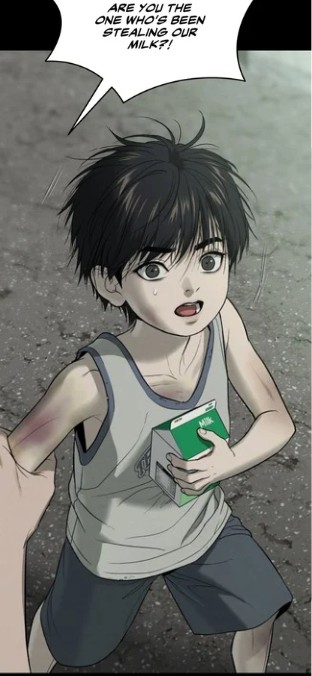 (chapter 72) So he fed him. But he never saw the deeper hunger: the absence of love, of being wanted. The coach assumed the problem was solved with food—because he had never gone without care.
  (chapter 72) He lived with his mother. He was never truly alone. And so he projected stability onto the boy’s silence.
 (Chapter 27) because the body, from the very start, was only a tool for survival.
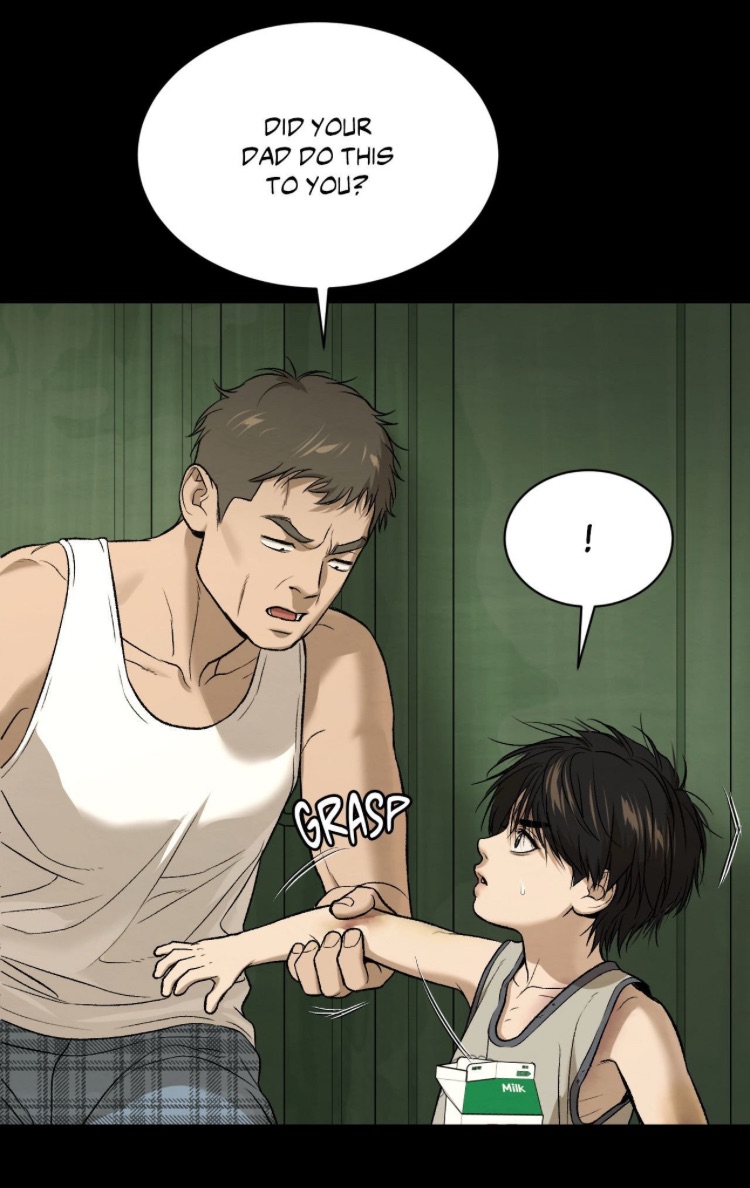 (Chapter 72) Instead, he redirects the situation:
 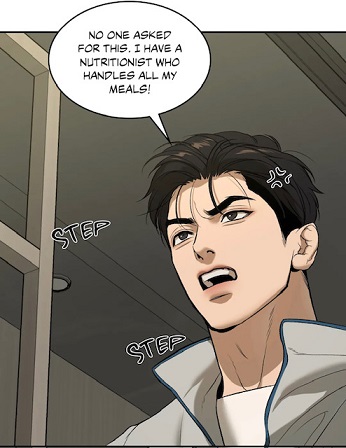 (chapter 22) There is no joy in eating, no comfort at the table. His body becomes a tool, and pain becomes the currency he pays to keep it running.
 (Chapter 26) This is how he enters adulthood, though he was still a child: not through love, but through function. The moment he steps into the ring, he’s no longer a child. He becomes, in the eyes of the adults around him, a product.
 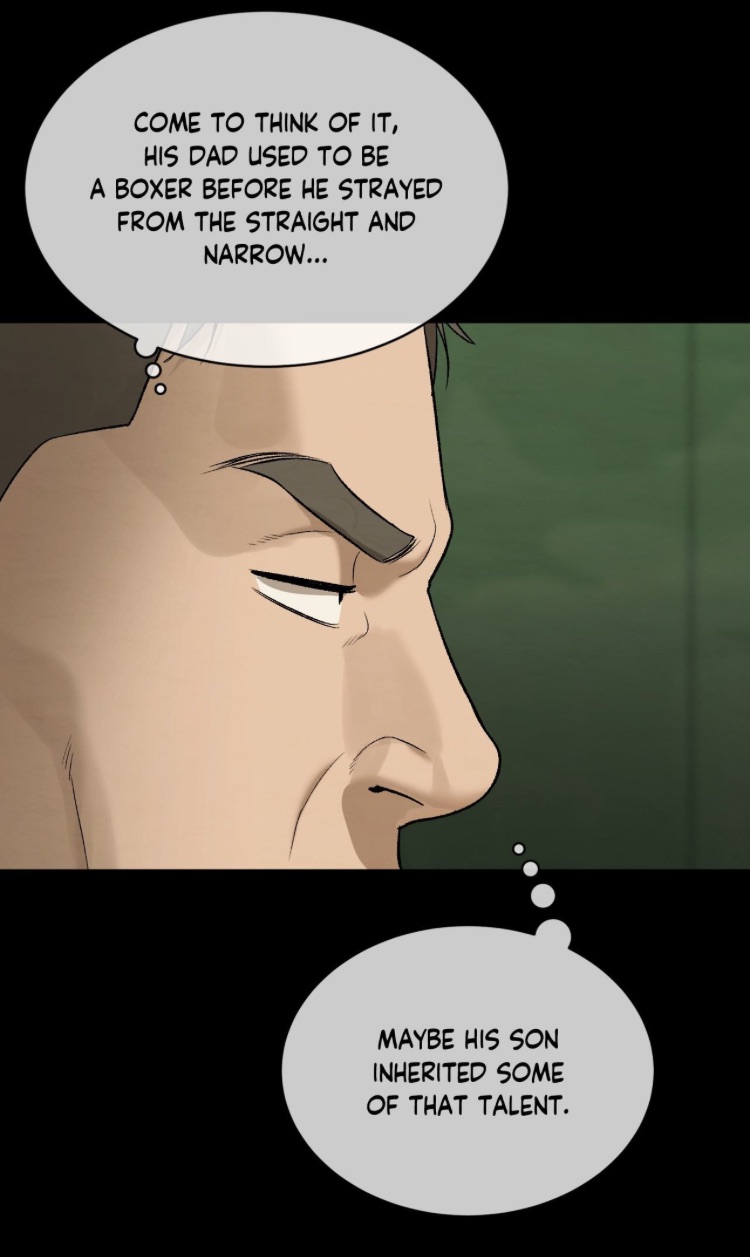 (Chapter 72) This explicates why Hwang Byungchul never confronted the father or called the cops or the social services. The fact that he asked the little boy
  (chapter 72) The expression (“But reality was like a punch to the gut”) suggests that even the coach himself was struck by how wrong or harsh the outcome turned out to be, but that realization came too late. Yet he blamed the young boy instead of convincing the young boy to postpone the fight. This scene shows that the man’s form of “help” was not rooted in empathy or protection—it was rooted in opportunity and perhaps even short-sighted hope for glory through the boy’s talent. He turned pain into performance.
 (chapter 71) why Joo Jaekyung never visited him or expressed his gratitude towards the boxing coach more openly.
 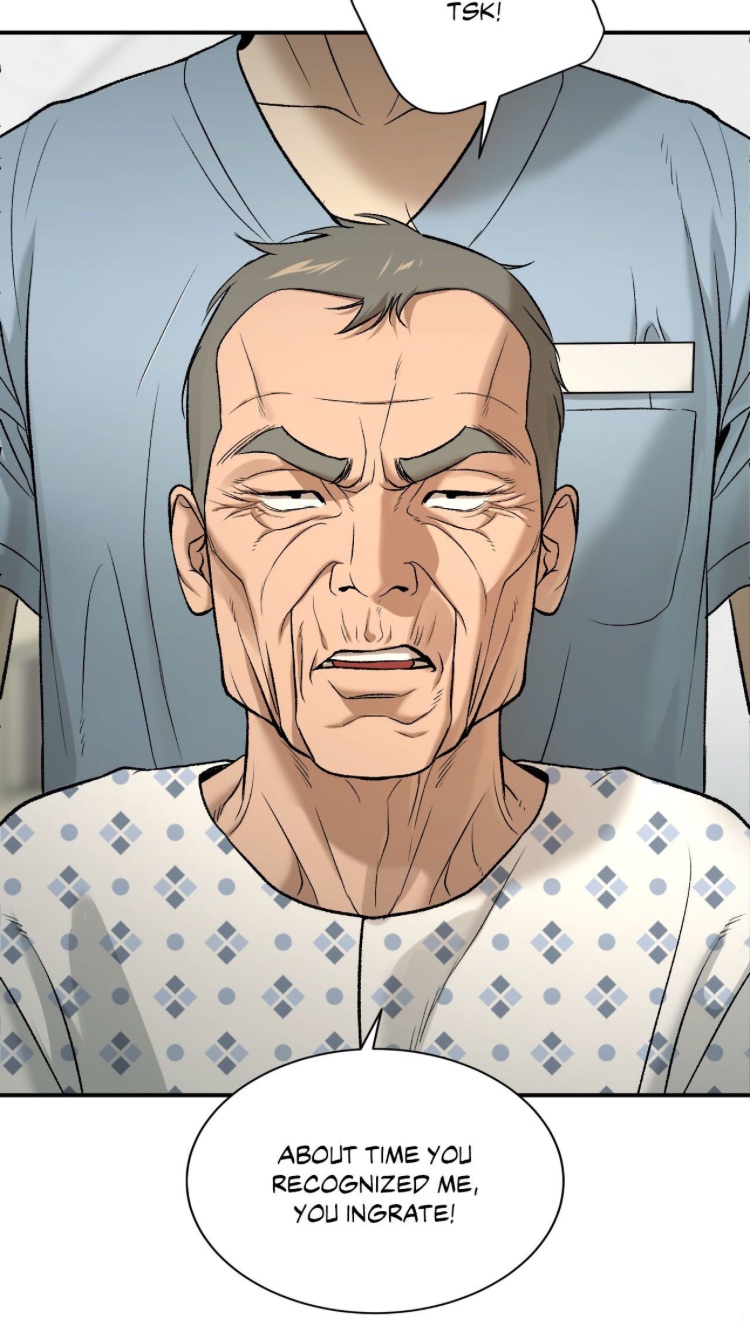 (Chapter 71) He became successful thanks to his own hard work. It was, as if he had followed the advice to the letter—make it on your own. I am suspecting that the charity event is linked to poor neighborhoods and children, so he didn’t totally erase the man from his memory, he just repressed him. However, it is not astonishing why the director is resentful and even bitter towards Joo Jaekyung. It was, as if he had never helped him. While he blames the man, the coach never recognized his own shortcomings. He didn’t see that his assistance was actually conditional.
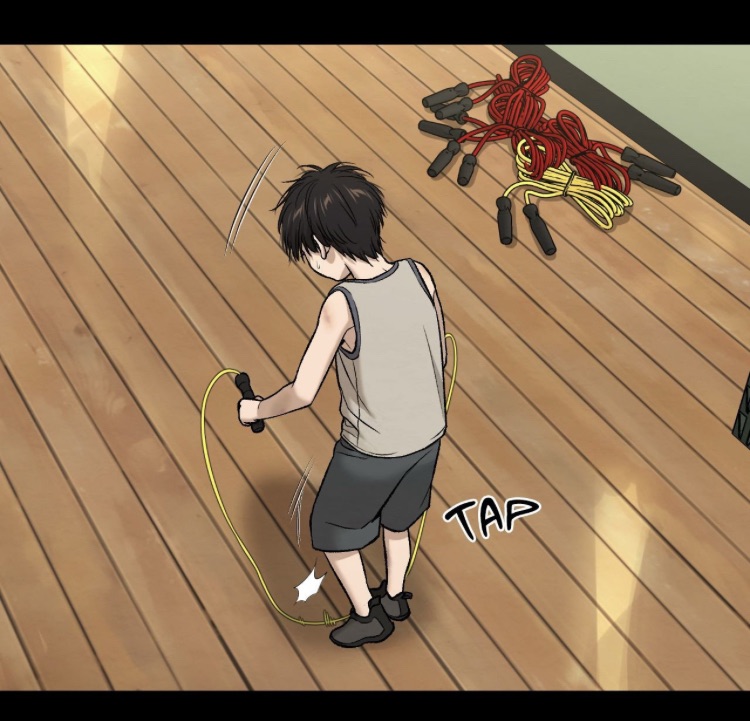 (chapter 72) They are all rivals. But from my perspective, there exists another reason why the main lead didn’t keep in touch with Hwang Byungchul exposing the director’s blindness. The adult Joo Jaekyung admits that seeing the director’s face brings back “old memories”—not of comfort, but of trauma.
  (Chapter 71) The implication is unmistakable: Hwang Byungchul reminds him of his father and the abuse. And the latter is strongly intertwined with the mother’s abandonment.
 (chapter 72) The other is Jaekyung himself. How can we tell? Because the scene of the phone call contains no narration, no framing voice.
  (chapter 72) Thus I deduce that the other scenes are a combination of the champion and director’s memories. This would explain such scenes, where Hwang Bung-Chul is not present.
 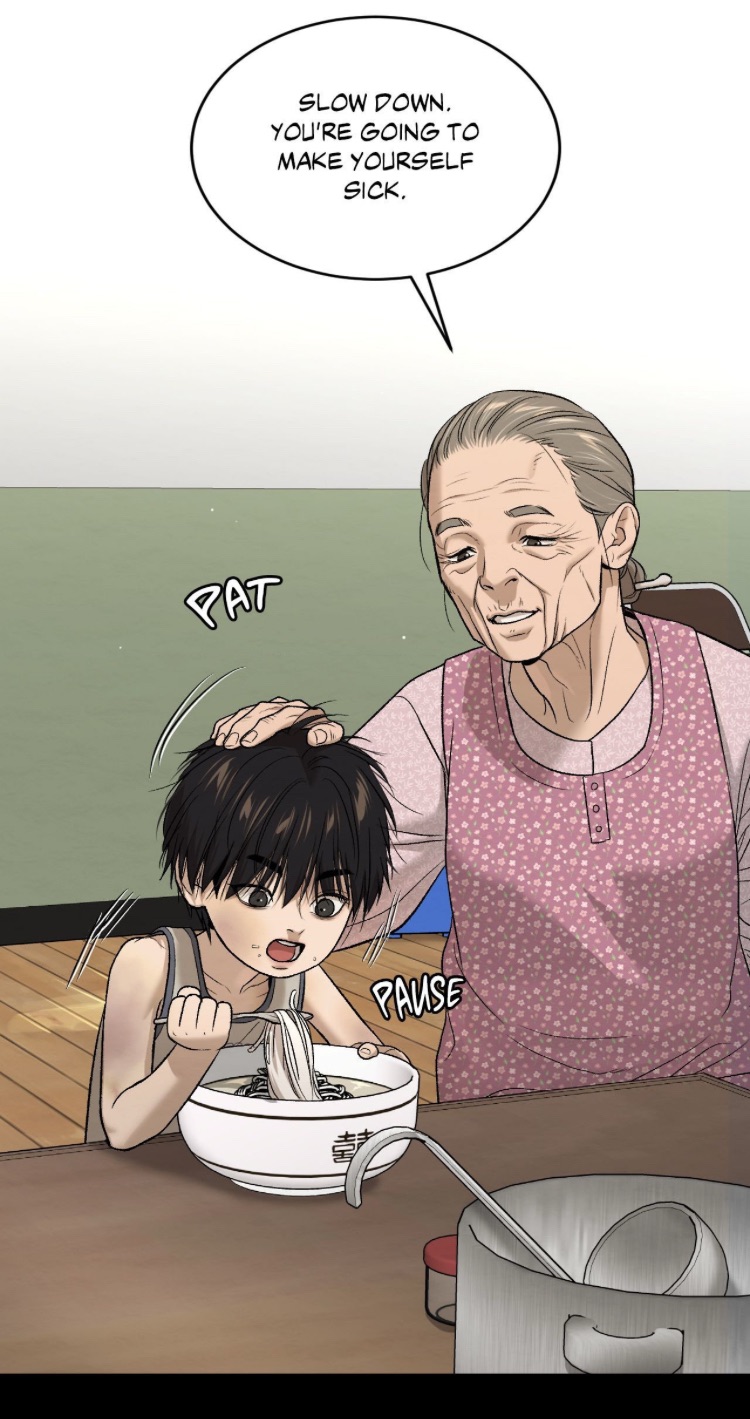 (chapter 72)
 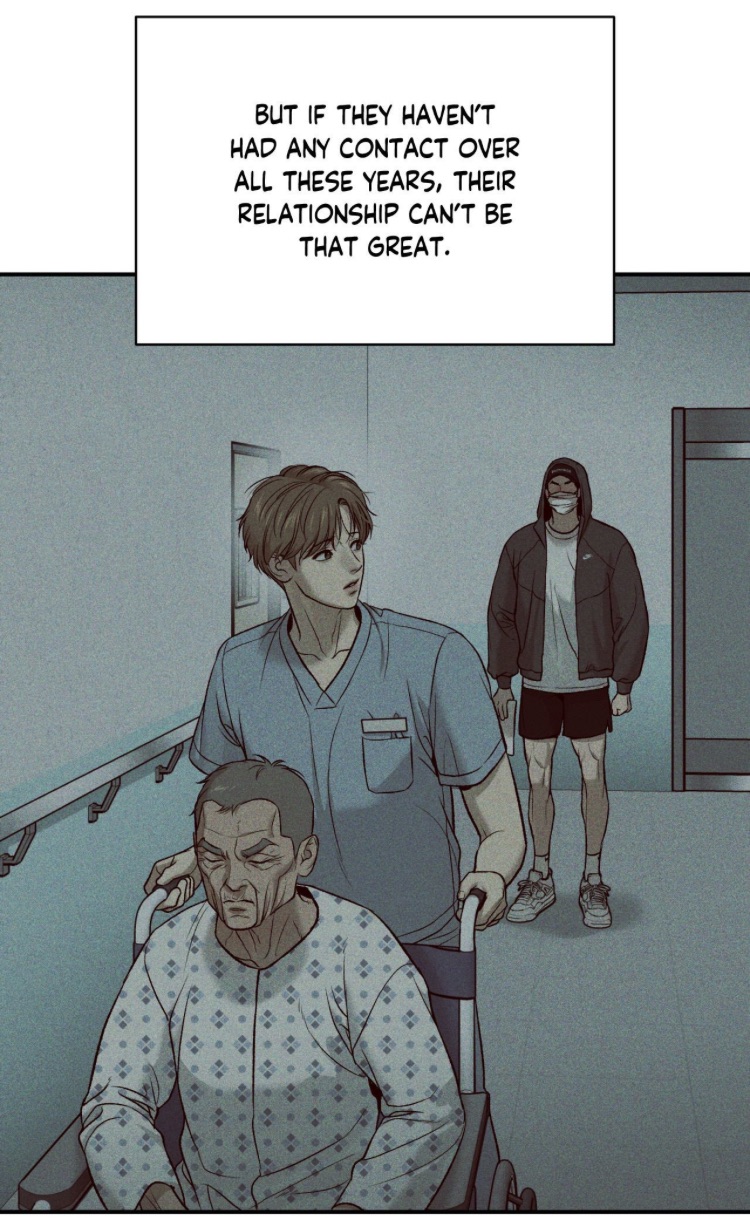 (Chapter 71) But here, doc Dan was making a huge mistake: he was just projecting his own feelings and relationship with him onto theirs. But he was behaving exactly like the former director: simplification.
  (chapter 9) Instead of listening, we assume. We choose clear lines—strong or weak, good or bad, useful or useless—over the tangled, uncomfortable truth that everyone is both hurting and trying. This refusal to reflect doesn’t just distort reality—it perpetuates it. When we simplify, we don’t heal; we reenact.
 (chapter 61) In the panel where he sighs, “Haa… I have no idea what’s going on in that guy’s head,” he unintentionally exposes the shallowness of his approach. He imagines that by looking at Jaekyung’s brain—by cracking his psychology—he’ll “understand” him. That way, he can regain control. But this isn’t curiosity. It’s a veiled form of control-seeking. Namwook doesn’t want to know Jaekyung as a person—he wants him to be predictable, manageable, marketable. That line doesn’t reflect concern. It reflects frustration that the human being in front of him refuses to fit the role he’s been assigned. Hence it is logical that his solution to force Joo Jaekyung to return to the gym is to accept a new match.
 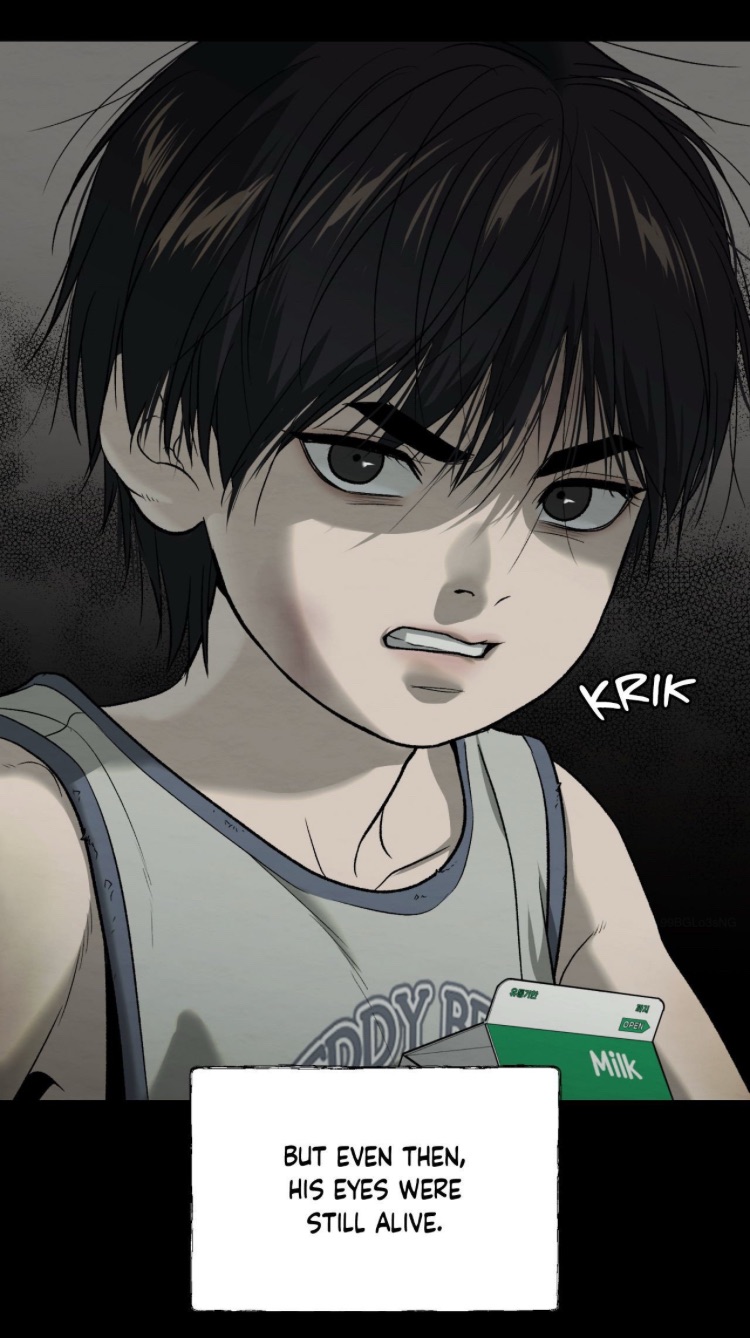 (chapter 72) is invisible to her. She sees a man who has succeeded—and assumes that means he is thriving.
 (chapter 65) she doesn’t know anything about his life. That’s the price of simplification: you get a clean answer, but not the truth.
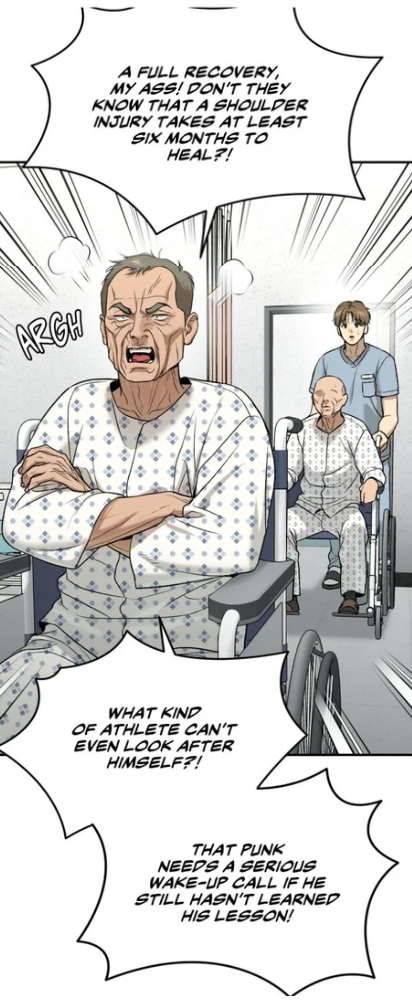 (chapter 70), as though he chose freely, overlooking how coercion and image control operate in their world. He accuses him of ruining his career with the suspension, even though it was orchestrated by others.
  (chapter 70) He judges him without knowing the circumstances. This projection is not new. In the past, he blamed the father,
 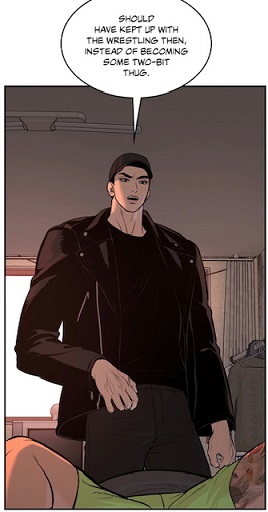 (chapter 17), it becomes clear that there exists a recurring link between athletic decline and criminal paths. The man fails to notice this connection. He sees these outcomes as individual moral failings, not systemic failures.
  (chapter 64) He reproached him about being used and abandoned. But he was forgetting his own actions. He had also used the athlete, he had also left the bed in a hurry the next morning. Yes, he, too, simplified Jaekyung. That night, he said nothing. And in doing so, he confirmed the belief Jaekyung had internalized: I’m not someone who gets cared for. I’m someone who is tolerated, used, replaced. Like mentioned above, his mind-set was strongly influenced by Shin Okja. On the other hand, I noticed that the protagonist embodies complexity. How so? On the surface, he appears simple: obedient, quiet, weak, submissive, passive.
  (chapter 70) But beneath that surface lies a dense emotional world— love, grief, guilt, exhaustion, intelligence, empathy and moral clarity — that few characters in Jinx truly perceive. He stands for the heart! And everyone knows that “the heart has its reasons, of which reason knows nothing.” (Blaise Pascal) Because he acts from a place that defies the cold logic of power, hierarchy, and survival, he operates on emotional intelligence
 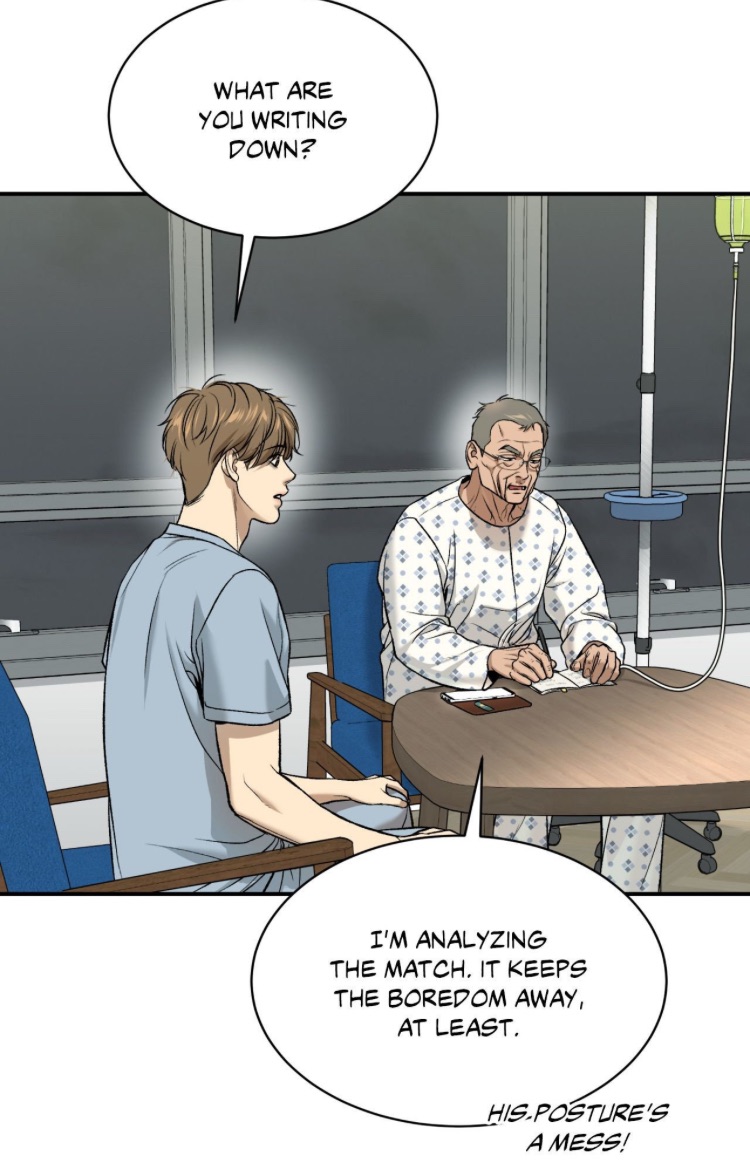 (chapter 71) —unspoken understanding, silent resistance, instinctive empathy. It’s no coincidence that his presence disrupts every system he enters: the gym, the hospital, the champion’s life.
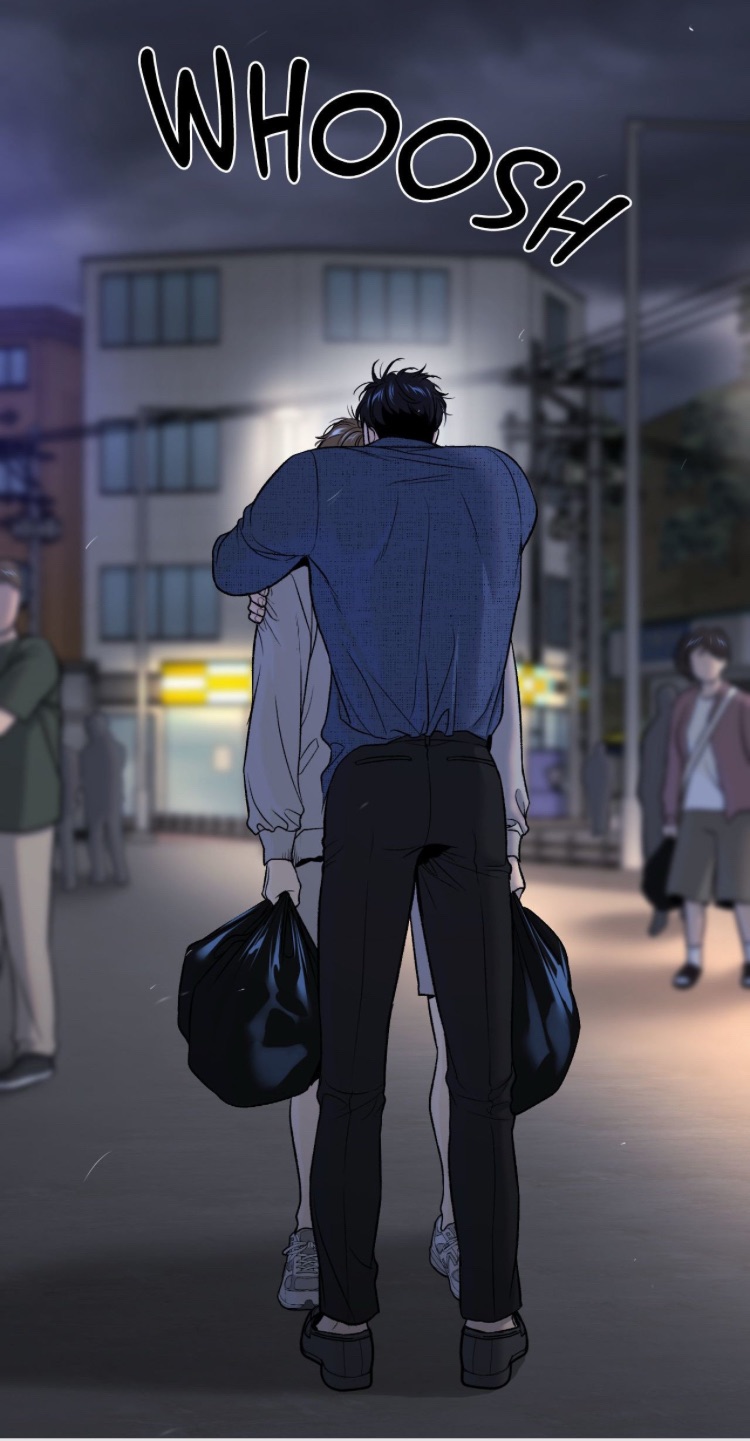 (chapter 70), and starts being a person. The racing heart… which has already happened. And this observation leads me to this scene:
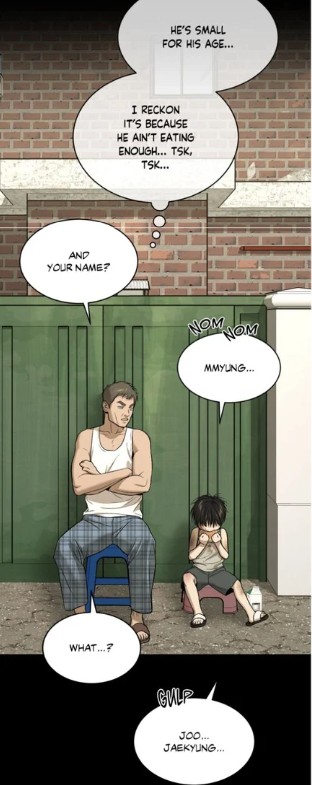 (chapter 72), his bruises
 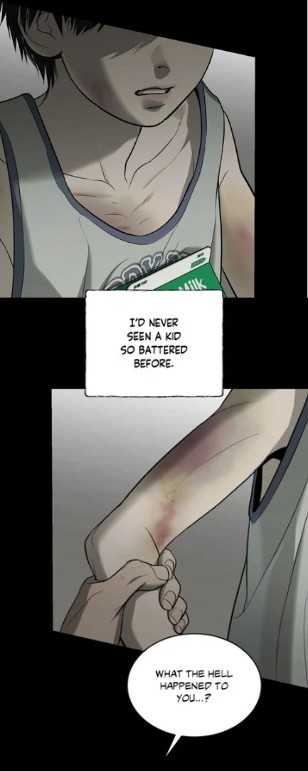 (chapter 72) and asked for his name. This exposes his priorities and his blindness. He didn’t truly perceive the child in him, he was seeing him through the lenses of a boxer and director. Hence he underestimated the absence and abandonment of the mother.
  (chapter 72) The boy didn’t have a blanket. He slept beside garbage. His father lay drunk and sprawled out, blind to his child’s needs. There was no teddy bear, no shared bed, no real cover.
 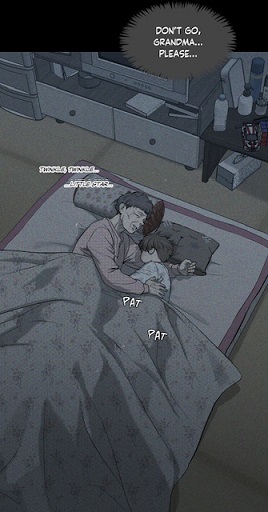 (chapter 21) Unlike Kim Dan, who grew up falling asleep next to his grandmother, accustomed to someone sharing his blanket, Jaekyung was emotionally and physically on his own from the start. Moreover, observe that the little boy had toys
  (chapter 53) He is a physical therapist. He had also arranged his books together:
 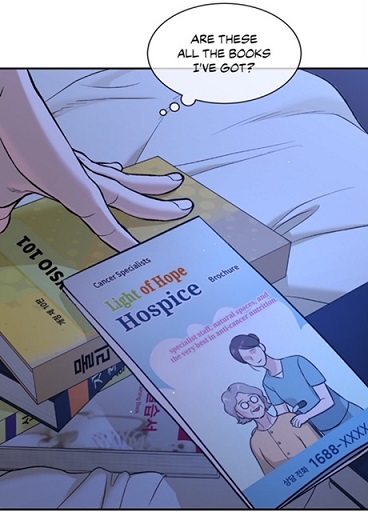 (chapter 53) And what did the hamster think while gathering his belongings?
  (chapter 53) So I deduce that the woman left them behind because she didn’t need them, she had enough or she no longer cared. But there is more to it!
 (chapter 27) There are no toys, no supplies for a child—just quiet evidence of a woman focused on herself, her escape perhaps already underway.
 (chapter 53) The jacket… Because of these parallels, I come to develop the following theory. Joo Jaekyung knew his age, because he had just celebrated his birthday. This scene definitely took place in the summer.
  (chapter 53) must have triggered the champion’s abandonment issues. He had the impression to relive the past. The mother had left him behind in the dark unexpectedly.
 (chapter 45) And now, you comprehend why I wrote above that I was not giving up on the idea that the champion could belong to a different world too. She was not accustomed to take care of a household. She wasn’t used to cook either. She would order food, hence we have the empty bowls.
  (chapter 72) Remember how the champion reacted, when he tasted his cooking for the first time?
  (chapter 22) He feared deception here, a sign that he must have experienced such a lie before. For me, everything is pointing out that this woman was incapable of becoming responsible for her own child. She left quietly and early enough that even Hwang Byungchul, who knew of her departure, didn’t recognize the boy
  (chapter 72). In other words, the mother was already emotionally absent long before she physically vanished. The bandaged bear thus becomes a silent accusation: you saw, and you left. Therefore it is not astonishing that Joo Jaekyung made such a mistake:
  (chapter 68) His mistakes concerning doc Dan are the evidences that he was not taught how to take care of someone. His errors indicates his innocence and purity.
 (chapter 72) Joo Jaewoong—whose name literally evokes the bear (웅, 雄 or 熊)—was not a gentle protector, but a violent alcoholic and drug addicted, a man who “strayed from the straight and narrow”
  (chapter 72) The bear here is not a comforting toy but a dangerous beast. He loomed large over the child’s life not as a shield, but as a shadow. It is important because doc Dan is hearing for the second time that fighting has connections to the underworld.
  (chapter 47)
 (chapter 54) —Team Black—bears symbolic weight. Unlike other athletes who proudly attach their names to their legacy, Joo Jaekyung avoids personal branding. He doesn’t call it “Jaekyung’s Gym” or “Joo Athletics.” Instead, he opts for anonymity, for darkness. It’s as if he’s building a fortress rather than a legacy, a space that offers power and protection, but no trace of where he came from.
 (chapter 71) I am quite certain that her vanishing must have pained him. She embodies the only good motherly role model in his life which explains why Joo JAekyung has a soft heart for Shin Okja. He knew to speak prettily and gently because of her. It is clear that the director influenced his dream, creating a gym where his mother would be part of it.
  (chapter 22)
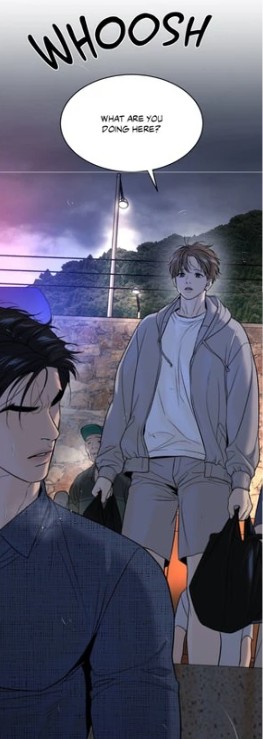 (Chapter 69) from the physical therapist is more than a startled greeting — it marks a critical shift in the psychological and emotional trajectory of both Kim Dan and Joo Jaekyung. Standing at the dock, doc Dan, still recovering from his depression and trauma of the switched spray incident, sees the champion not as an invincible athlete, but as someone equally unmoored. He is surprised and confused by such a behavior. Why would he act that way? Hence the author added right after this image:
  (chapter 69) Striking is that the champion has a similar reaction. He never expected that he had misjudged his fated partner. Both characters are forced to face their own prejudices and bias.
  (Chapter 69) This moment is less about resolution and more about recognition: two men, shaped by different paths of burnout, collide again — but this time not as patient and caregiver, predator and prey, but as human beings in crisis.
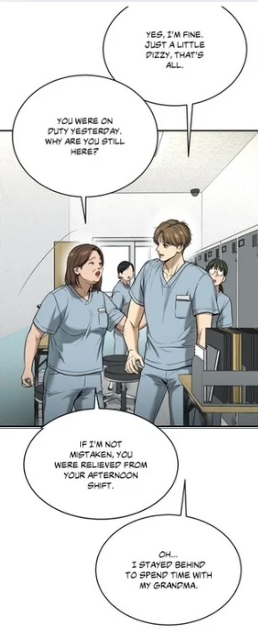 (chapter 57) that go unnoticed to dealing with the emotional numbness of detachment, Kim Dan begins to resemble the article’s description of someone silently breaking down.
  (Chapter 59) Although he didn’t face difficult patients at the hospice
 (chapter 57), he approaches his work like a robot, emotionally disconnected from those in his care. The burnout is not only shaped by the hospital environment — it’s also deeply tied to his role with Joo Jaekyung. The champion became, in many ways, his most demanding patient
 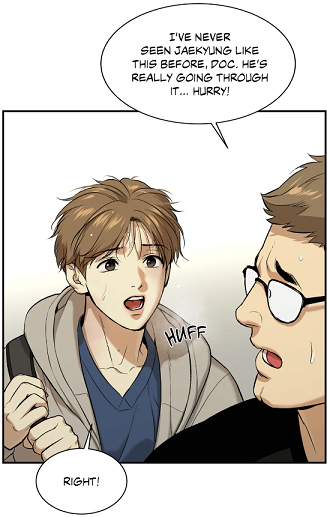 (Chapter 14), with unrealistic expectations
  (Chapter 57) This offhand remark reveals that within the medical setting, the symptoms are visible to trained observers. And yet, the insight never reached the “hamster” or the “wolf.”
  (chapter 56) and isolates himself emotionally. Therefore he doesn’t engage in a conversation with the nurses.
  (Chapter 56) No wonder why the readers still don’t know the names of the three “angels in blue”’. Their presence is functional, but remains impersonal. They remain silent observants.
  (Chapter 57) Likewise, Jaekyung — despite not being in healthcare — he fits the article’s description of someone burdened by a toxic professional environment.
  (chapter 49), or that in the aftermath of the suspicious match, he blames him
  (chapter 69) and avoids speaking with Shotgun altogether. Instead of engaging in conversation, he contacts MFC — preferring institutional action over personal interaction.
 (chapter 19) and relational isolation all echo the article’s diagnosis:
 (chapter 59) — and any deviation from it is interpreted as personal failure. Here, it’s important that the hospice took advantage from the overworked protagonist. No one paid attention to the double shift. (Naturally, I am not saying that the main lead is blameless either). For Kim Dan, the patient’s fall in episode 59
  (chapter 59) and the sabotage incident destroyed his self-perception as “doctor” and “helper”.
  (Chapter 59) This is reflected in the image where the author zoomed on the “main lead’s” hands or when he is holding the dead puppy.
  (Chapter 51) Neither of them has been taught to see difficulty as an invitation to adapt. They both cling to a fixed mindset — until crisis breaks the pattern.
 (Chapter 60) Though Dan has long suffered from low self-esteem, he has never questioned his sacrificial identity. It is as if he were destined — or conditioned — to care for others without regard for himself.
  (Chapter 29) He sees selflessness not as a virtue but as a default mode of survival. This explicates why he blames himself for the puppy’s death. Observe how Mingwa implied the relevance of the doctor’s hands while he was holding the poor puppy.
  (Chapter 6) His grandmother reinforces this belief by reducing his worth to his earning capacity. This mindset is plainly illustrated in two key moments. In the first, she expresses her gratitude to the champion, because he gave him “a roof over his head and a salary.”
  (Chapter 65) These words reveal what truly matters to her: material provision and financial compensation. She does not seem to register the emotional toll the job may be taking on Dan, nor does she question the ethics of the contract or his living conditions. What she values is that her grandson is being paid and housed — signs of visible, quantifiable success.
 (chapter 62) the athlete’s success gave him a sense of purpose. No wonder why he took everything so personally.
  (Chapter 56) The hospice marks not just a physical retreat from his past, but a psychological one: a setting that echoes his emotional state. While his body continues to function, his inner life has entered a form of dormancy. His role in this environment reflects how deeply detached he has become — professionally, emotionally, and existentially. The job had become more than money, but now that it’s gone, he can no longer look forward. He feels lonely and rootless.
  (chapter 60), functions as a form of emotional absolution, though doc Dan is not aware of it. This job offer is an indirect proof that he is still seen as competent and trustworthy.
 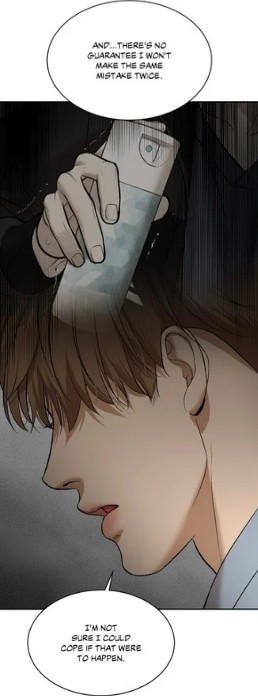 (Chapter 62) If Jaekyung had not come himself, it would have confirmed Dan’s worst fears: that he was to blame, that he was discarded. The first crack in his fixed mindset comes from this gesture — an external acknowledgment that the so-called “sin” may not have been his at all. This explicates why Kim Dan can give him the cold shoulder and even ignore him.
  (Chapter 61) It helps him to boost his strength and confidence. From that moment on, he is capable to express his own thoughts and as such criticize the star.
  (Chapter 69) His stunned reaction — “
 (Chapter 65) — yet she changes nothing. How so? She could have talked to the nurse, and the latter would have brought up the possibility of “burnout”. She frames her grandson as a victim
  (chapter 61) , and approaches Dan not as a star reclaiming property, but as a person reaching out.
 (Chapter 69) He no longer focuses only on the next fight or media appearance — instead, he chooses emotional repair. Dan also learns to value life over denial. Hence we see him holding bags, certainly containing food. During the episode 69, the incident in the courtyard served as a wake-up call that he could no longer deny his mental illness. After his collapse, he gets back up, and is seen wearing his sports shoes.
  (Chapter 69) These items indicate the transformation in the doctor’s life. From my point of view, it announces the arrival of sports in his life.
  (Chapter 67) Meanwhile, Jaekyung drops his script of invincibility and openly acknowledges his need for Dan. Neither of them says the perfect thing — but they are no longer using self-talk to punish themselves.
 (Chapter 69) begins to receive it. It is not a grand declaration, but a quiet shift: you can fail or cause a ruckus, and still be loved. Hence he doesn’t push away the wolf on the dock.
  (chapter 69), the star begins to extend that care inward. Each gesture of empathy toward Dan becomes a step closer to self-compassion. In learning to protect someone else without demanding perfection, the wolf is learning, perhaps for the first time, that he too deserves kindness — not just from others, but from himself. He models what the article calls a true “growth mindset” — one that sees failure not as final, but as a catalyst for relational and emotional evolution.

 (chapter 65) corresponds to the release of Jinx Chapter 70, which marked the series’ return after a three-month hiatus. This observation is more than clever numerology—it mirrors the manhwa’s deeper message: the past always haunts the present, and at times, it even foreshadows the future. And that’s exactly what I will do in this essay. I propose that the key to understanding the protagonists and characters’ evolving identities lies in the overlooked architectural and administrative details—especially the house numbers, door placements, and legal ownership of space. These seemingly minor visual cues are in fact loaded with meaning, offering insight into how home, memory, and identity are fragmented and reassigned across time and place.
 (chapter 57) The landlord’s house has the number 33-3. Why do two neighboring houses bear such disconnected numbers: 7-12 and 33-3?
  (chapter 61) For readers unfamiliar with Korea, this looks quite bizarre. In most European and American countries, street addresses follow a linear order; house number 12 would typically be located between 10 and 14. But in Korea, especially in rural areas, many towns use the older jibeon (지번) land-lot numbering system. Here, numbers are based not on street sequence but on the chronological order of land registration and subsequent subdivisions.
 (chapter 62), newer developments, or administrative restructuring rather than deep-rooted inheritance. In this context, a higher subdivision number implies not only later division, but also the erosion of legacy and the weakening of kinship-based territorial claims—an erosion especially poignant in the context of Confucian traditions that once emphasized multi-generational cohabitation and patrilineal inheritance. In classical Korean society, a home was not merely a shelter but a physical emblem of familial continuity, with ancestral rites often performed within the same household across generations. As addresses fragment and land parcels divide, so too does the symbolic structure of the family unit. The once-cohesive ideal of the extended household dissolves into isolated, rented spaces, reflecting not only economic realities but also the fraying of intergenerational bonds and filial authority.
 (chapter 61) Though Jaekyung is a wealthy celebrity, he inhabits a parcel of land that speaks to impermanence and anonymity. Meanwhile, Dan shares space with someone who quietly represents legacy and transparency.
 (chapter 62) However, this “dynamic” (distinction) began to shift the moment Jaekyung started working for the local residents.
  (chapter 62) No longer just a “guest” or a “tourist,” he earned their recognition and acceptance through acts of service and humility.
  (chapter 62) As he helped them with manual tasks—such as lifting goods or assisting the elderly—they started seeing him not as an outsider, but as one of their own. However, it is important to note that these gestures of inclusion occurred while Jaekyung was outside the blue gate
  (chapter 62) —beyond the formal boundary of the rental property.
 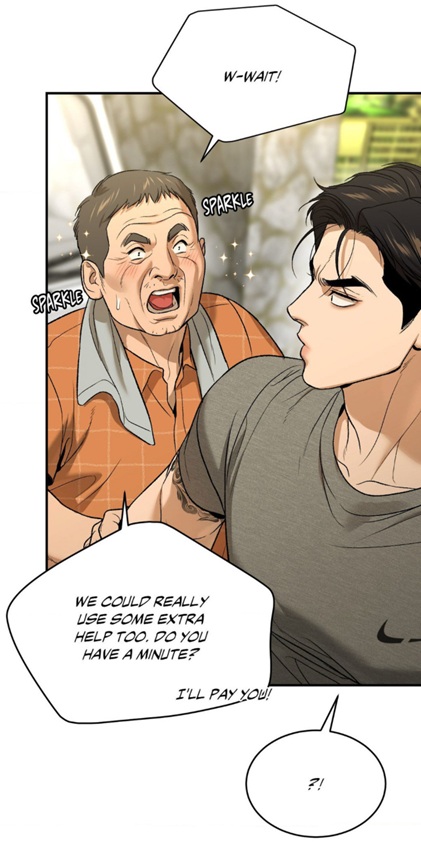 (chapter 62) In this way, the gate truly functioned as a symbolic threshold: only once he crossed it through action and humility, the community began to approach him. This change in perception was symbolized, when he received vegetables from the townspeople, a traditional gesture of inclusion and local acknowledgment.
  (chapter 62) Nevertheless, the best sign that he has been accepted by the community is when he received traditional welcome gifts: the toilet paper and detergent.
  (chapter 69) [For more read
 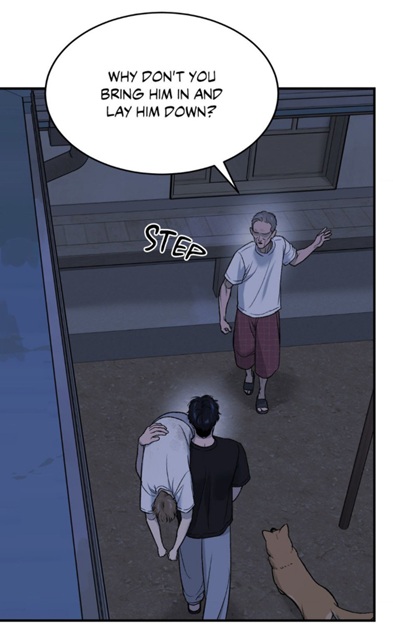 (chapter 65), the elderly neighbor chose to open the blue gate shortly after:
  (chapter 69) Thus I deduce that the blue gate lost its purpose. The champion definitely saw the advantages of the absence of a gate by his neighbor. He could arrive there at any moment
  (chapter 62) and the landlord never rejected him. In fact, he was always welcome.
 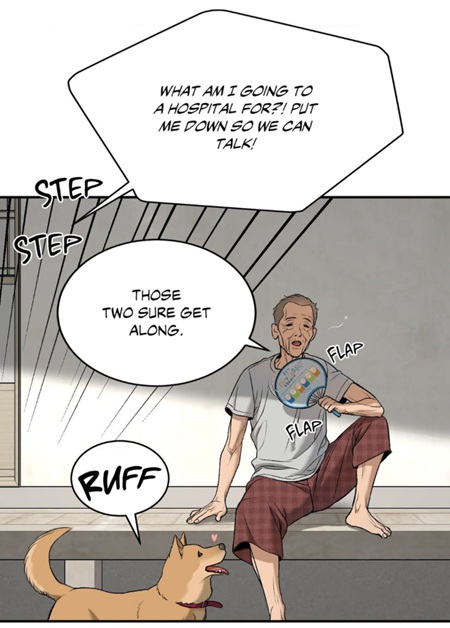 (chapter 66)
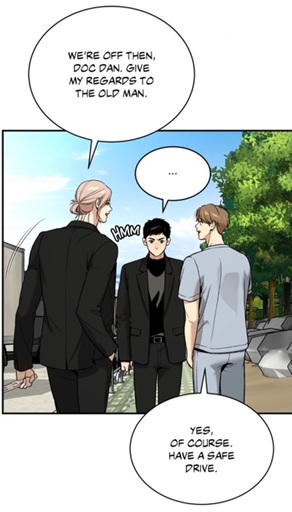 (chapter 59), and townspeople instinctively report Dan’s behavior to him.
 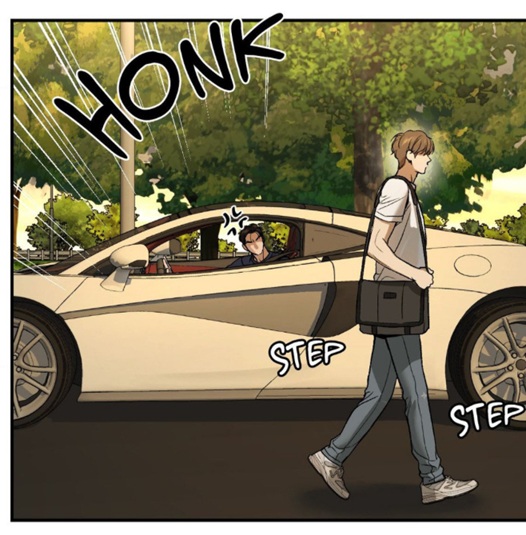 (chapter 61) That’s the reason why the author included this scene. Even if someone had disclosed Dan’s address, the GPS in Jaekyung’s luxury car would not have been able to guide him there. Like mentioned above, the streets have no names, and the numbering lacks logical sequence. Thus, we have to envision how the Emperor followed Dan on foot, observing where he went. In doing so, he not only located the general vicinity. Afterwards, he must have contacted a local and requested for a vacant house close to 33-3. That’s how he found the “hostel” right next door.
  – chapter 69) and walking through the confusion himself.
 (chapter 65) Though she insists this seaside town is where she “grew up,” she never identifies a lot number, street, or ancestral parcel. In a rural system where numbers are more than logistical—they are signs of rootedness and intergenerational presence—her vagueness stands out. Everyone else is connected to a numbered gate, a registry, or a mailbox. She alone floats in narrative space, clinging to emotional claims without material proof: no concrete location is brought up.
 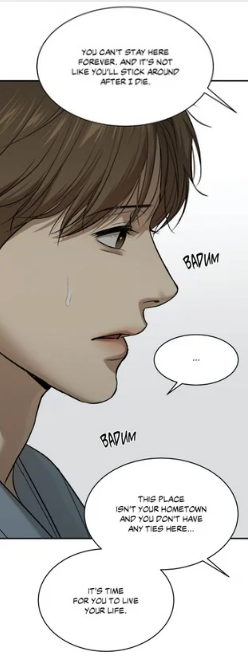 (chapter 57) The contrast becomes sharper when she refers to Seoul only in generic terms. She never mentions a district,
  (chapter 56), a neighborhood, or specific location. This lack of detail, especially when juxtaposed with the specificity of the rural jibeon system (where even a subdivision number implies lineage and ownership), exposes her rootlessness. It reinforces the idea that her ties to place are performative rather than grounded. Even her nostalgia for Seoul is flattened
  (chapter 17) As Jinx-lovers can detect, next to the entrance of her apartment, there is no blue house number plate or street name. How is that possible in a metropolis where every residence should be digitally registered? And now, pay attention to the house where the “goddess” and her “puppy” lived.
 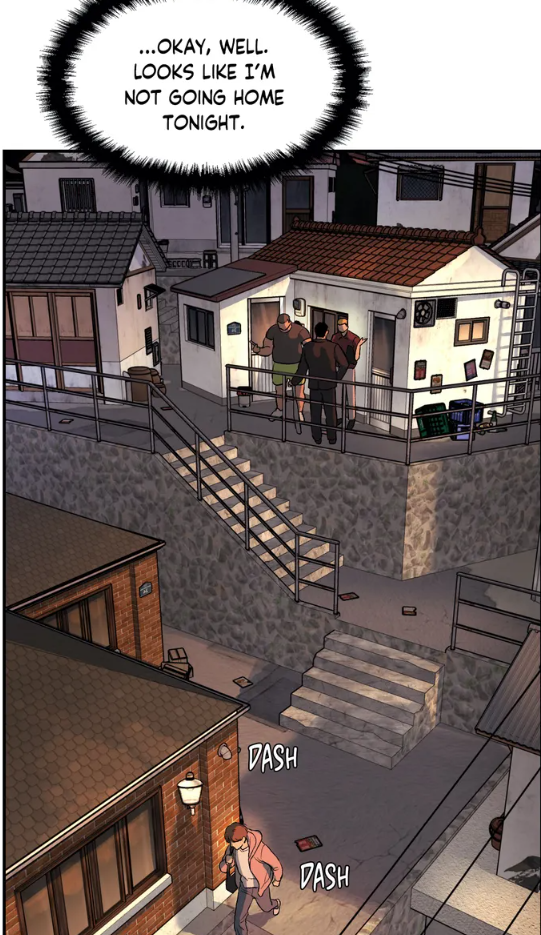 (chapter 1) The building had not only two doors, but also the plaque is placed next to the other door. It is also partially visible in this image:
 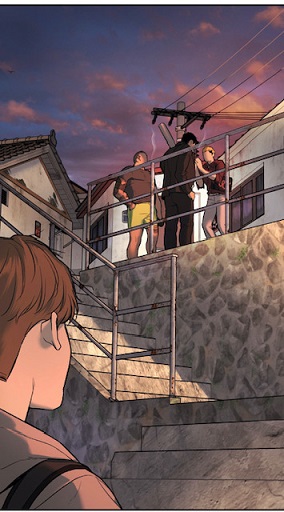 (chapter 1)
  (chapter 11), we naturally assume he is returning home—entering the same shared space he and his grandmother inhabit. But is that actually the case? A closer look reveals he is using the other entrance. On his right side, we see the electricity meter, the mailbox, and the window—the signs of an inhabited and administratively recognized unit. This suggests that Kim Dan’s official residence is behind this second door. Once again, I am showing the view of the same building from a different perspective,
 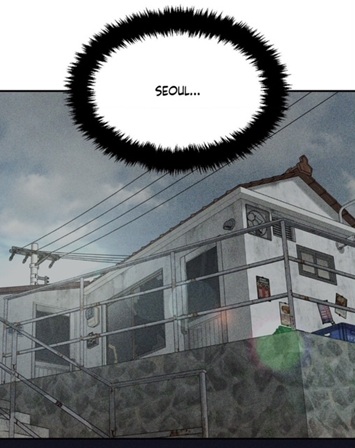 (chapter 57) where the mail box and the electricity meter are. But I have another evidence for this observation. During that night, the hamster got assaulted by Heo Manwook and his minions.
  (chapter 19) The moment I made this discovery, I couldn’t help myself wondering why doc Dan would go to the other door and not to the halmoni’s room.
 (chapter 11) The voice on the phone reveals something legally crucial
 (chapter 11): Kim Dan is the last remaining resident in that building. That one line reframes everything. This suggests that Kim Dan’s official residence is behind this second door. 😮 In fact, the building features
  (chapter 5) —the door that, at the time, likely bore the blue house number plaque.
  (chapter 5) the door associated with Kim Dan in later episodes—particularly the one through which the champion entered during the confrontation with the thugs —opens inward and is placed in the corner of the right wall. The interior layouts and door directions don’t match, though the furniture is similar. This strongly suggests that these are two different units within the same building, exactly like I had observed before. The “goddess” and the hamster’s house had two doors and as such two units.
  (chapter 19) had a recollection of this moment, when he was about to leave this humble dwelling.
  (chapter 65) and Kim Dan the immature child, whereas according to my observations, she is legally dependent on the “hamster”. She is just a household member. As you can see, I detected a contradiction between her words and “hidden actions”, all this triggered because of the closed door. By transferring the address and registration to the physical therapist, she made it possible for him to inherit not just the space, but also the liability. That’s why he’s now the only registered person.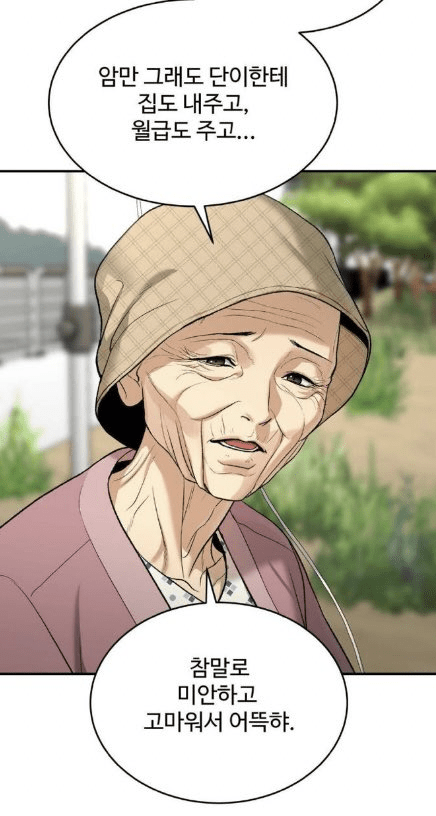
 (chapter 65), in the eyes of the system, merely lodging in his shadow. She is indeed a ghost.
 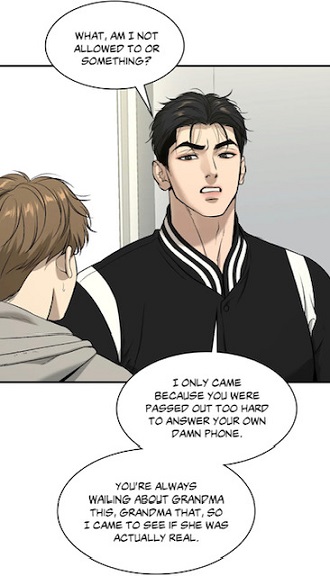 (chapter 22) This architectural division is deeply symbolic. Despite being the dependent, Dan is the one bearing responsibility—both financially and administratively. Shin Okja, on the other hand, manages to live without accountability.
 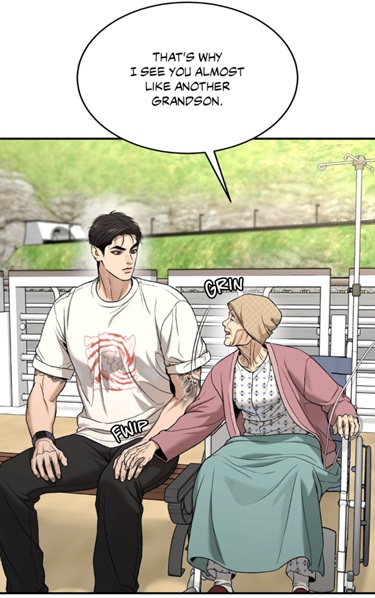 (chapter 65) Joo Jaekyung is almost her grandson!! It was, as if she was about to adopt him. Let’s not forget that he embodies all her ideals and dreams: strong, healthy, rich, famous, generous, polite and gentle! And according to my observations, she knows that the athlete owns a flat in Seoul, big enough to take a room mate.
 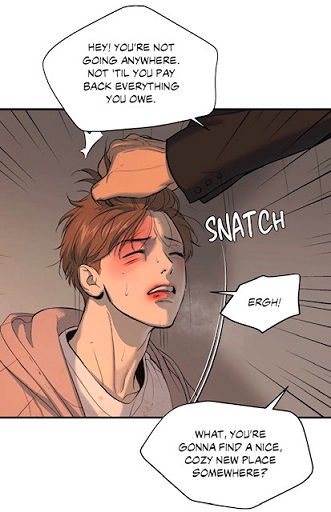 (chapter 16) He even showed the amount Kim Dan owned with his cellphone to the Emperor
  (chapter 17) That’s how the champion internalized that the hamster was the one with debts. This theory explicates why doc Dan is not blaming his grandmother for the debts in the end, as he signed himself loans. And now, you can imagine what happened in the past. Once he became 17 years old, she asked him to get a resident registration number. With this, he could apply for a loan in order to reimburse the grandmother’s debts. This must be one of her favors from the past:
 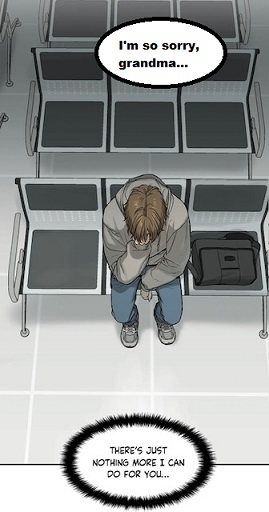 (chapter 5) His words imply that he had done something in the past for her. And that would be to become her guardian and take her debts. This hypothesis explicates why only in episode 11, Doc Dan was comparing the progression of the interests with a snowball system, something unstoppable.
  (chapter 11) His thoughts reflect a rather late realization that he is trapped in a system and he can not get out of it. In other words, this image oozes a certain innocence. This also explained why Joo Jaekyung had to confront him with reality in front of the hospital.
 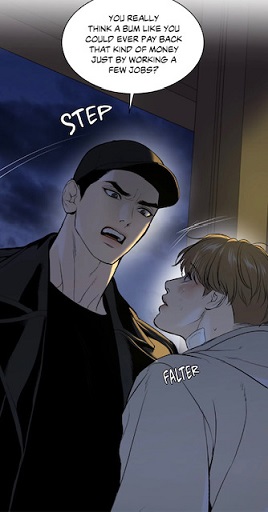 (chapter 18) The location is not random: for the halmoni, such a work place symbolizes respectability, power and money. The problem is that in the hospice, Doc Dan is not well-paid.
 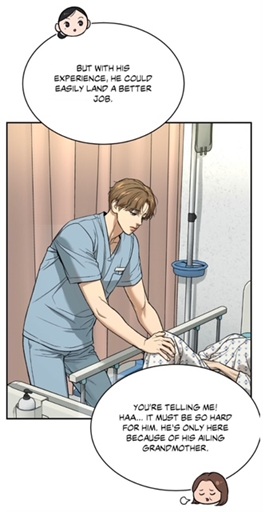 (chapter 56)
 (chapter 11) And now, it is time to return our attention to my illustration for the essay:
  As my avid readers can observe, the panel with the champion facing the blue door comes from episode 69, while the one with doc Dan comes from chapter 11. These scenes are mirroring each other. It is about concern and danger! While in episode 69, the athlete got worried, as he imagined that doc Dan’s life was in danger, in episode 11, the hamster was about to face an old threat: Heo Manwook and his minions!
  (chapter 11) But back then, he was on his own and no one paid attention to his health. Not even Shin Okja… He was truly abandoned, while the episode 69 exposes the opposite. Society in this little town takes care of people in general.
 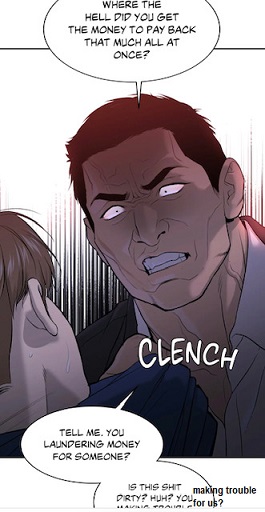 (chapter 11), he jumped to the conclusion that Dan was either prostituting himself or laundering funds. Why? It is because he had taken odd jobs, until he got hired by the dragon, Joo Jaekyung, and had such a huge income. Under this new light, it becomes comprehensible why Heo Manwook knew how to use the old lady in order to threaten doc Dan.
  (chapter 16) Like I wrote in a different analysis, I doubt that the grandma would have signed a loan by Heo Manwook. This reveals how Dan entered the contract in obscurity, without recognition or protection. He did it for Shin Okja’s sake to repay her for her support and “love”.
 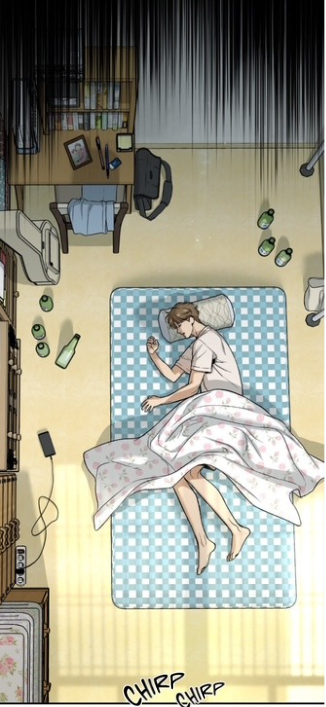 (chapter 57) Therefore I am expecting an argument between the halmoni and the inhabitants of 33-3. The landlord embodies the opposite values of Shin Okja.
 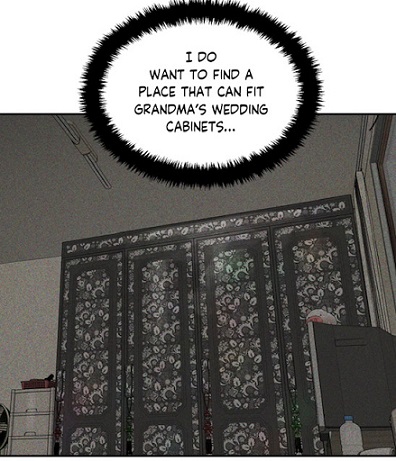 (chapter 16) Dan repeatedly calls it his grandmother’s and even dreamed of finding a new place that could house it—a gesture that underscores how much he believed she treasured the object, even though she herself never mentions it. But she never once references it, not even when returning from the hospital. The absence of interest is striking. What if the cabinet didn’t belong to her at all? Its size suggests that it predates the division of the house. Besides, according to my observation, she used to live in the other unit and I can not imagine, the halmeoni moving this furniture from one unit to the other. Perhaps it once belonged to Dan’s mother—a remnant of the original household, now misattributed to the woman who unofficially took over.
 (chapter 19) onto the object just as he projects loyalty and gratitude onto his guardian. But the silence around the cabinet speaks volumes: it is not treasured by Shin Okja, only by Dan. Much like his name on the loan, or the house number on the door, it could be a misplaced inheritance. At the same time, such an item could serve to identify doc Dan’s true origins, if the Wedding Cabinet belonged to his true family.
 (chapter 66) Changing his registration would mean stepping outside of the institution’s control and surveillance.
 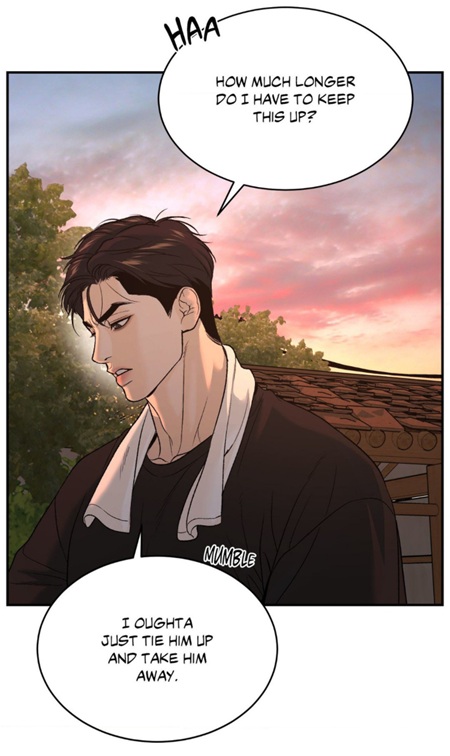 (chapter 62) Without Dan, Seoul held no meaning. But if he remains in the town past the statutory threshold, it would imply that he is ready to leave behind the world of contracts and competitions. It would mean he is now rooted—not by career, but by choice. Not by obligation, but by emotional truth.
 , released in anticipation of Chapter 70, is more than a promotional teaser. It is a moment frozen in time, yet brimming with motion—emotional, symbolic, and narrative. We see Joo Jaekyung embracing Kim Dan with both arms, pressing him tightly against his chest. There is no resistance, no distance, no tension in the frame. The palette moves from gray and brown fading into violet and pink, blooming into soft light. There is vapor, there is breath, an allusion to life. And most strikingly, there is stillness.
 (chapter 11), every glare, and every awkward silence
  (chapter 68) and the public hug on the dock in Chapter 69.
  (chapter 68) He rests his chin not on Dan, but on his own hand, his arm propped on the edge of the bathtub. This detail is telling: even in a moment of supposed closeness, Jaekyung relies on himself for support, not on Dan. He is physically near but emotionally braced—still holding himself apart. His thoughts are private, tender, and possessive. In a rare moment of introspection, he confesses that
  (chapter 69) Yet, when faced with renewed pressure and stress, he falters—leaving Dan behind.
  (chapter 69) The illusion of control dissipates, revealing that his earlier vow, however heartfelt, was not yet unshakable.
  (chapter 55) In the new illustration, the hamster’s back is no longer representing anonymity and indifference, but visibility and care, for the champion is now facing his fated partner. In other words, doc Dan’s back in the teaser stands for uniqueness and high value. He can not be replaced. Moreover, doc Dan is not walking away, nor is he asleep.
  (chapter 47) and composed embraces—gestures repeated with calm precision. These touches were predictable, rhythmic, and soothing, but they also suppressed genuine emotional exchange, the symbol of toxic positivity.
 (chapter 57) the momentary pause of a hand
 (chapter 5) never still—giving the impression of involvement, of care in action. But this motion avoided vulnerability and responsibility in reality. She never clung, never trembled. Her gestures conveyed comfort but not surrender, presence but not change, and not support either. They were not truly emotionally together.
  (chapter 47) to hold her hand, to initiate closeness
  (chapter 47)
  (chapter 57); I’ll come back home, once I am all better”
 (chapter 35) Instead of recoiling in fear or admiring his strength, Dan quietly states, “I think I really need to focus on Mr. Joo right now.” He does not focus on the strength or aggression, but on the pain beneath it. The burst sandbag, for him, is not a threat—it is a symbol of Jaekyung’s emotional unraveling. This silent recognition mirrors Dan’s interpretive skills developed in childhood. Just as he once learned to read a shift in his grandmother’s hand or the silence after a broken promise, he now interprets the damage to the sandbag as an unspoken plea for help. This sensitivity continues to define his bond with Jaekyung.
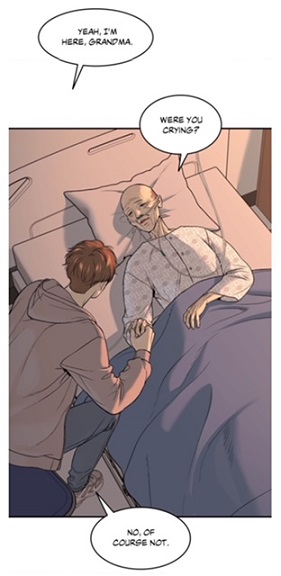 (chapter 47), to stabilize the person meant to support him. Now, he is receiving without shame or hesitation. The Emperor’s silent desperation, his refusal to hide behind ritual or false strength, creates the space for Dan to feel treasured—not pitied, but wanted.
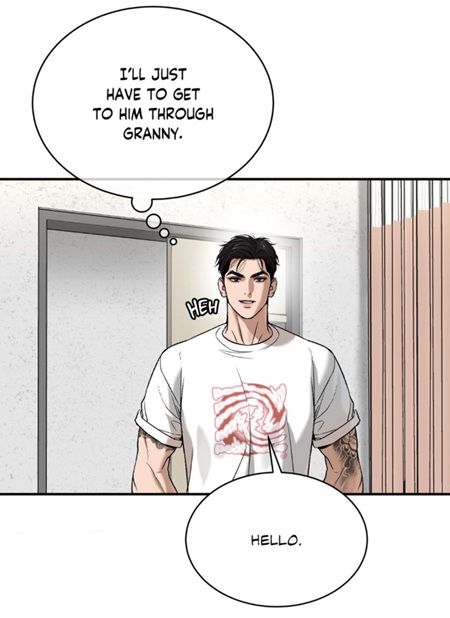 (chapter 65) or stand-ins
 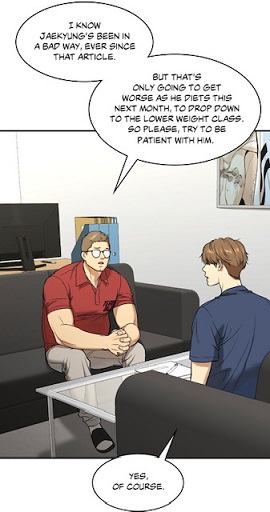 (chapter 36) for affection has ended. The spotlight now belongs solely to Jaekyung and Dan, who no longer require mediation to reach one another. This shift becomes particularly evident when contrasting the teaser with earlier moments of evasion, silence, and misplaced dominance—especially through the lens of Park Namwook’s slap and Jaekyung’s own past deflections.
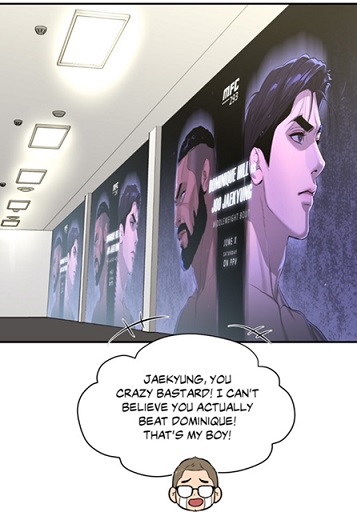 (chapter 40) Each time, they faced a problem, the athlete had to resolve it. He was the problem and the solution for everything.
  (chapter 17)
  (chapter 52) The reason is that he couldn’t face the terrible outcome and his own responsibility. He needed a scapegoat. Thus he blamed the champion for everything. But by doing so, he refused to share the burden and the athlete’s unwell-being. Striking is that this slap served as a wake-up for the athlete. From that moment on, he stopped relying entirely on his “hyung”. He was pushed to make decisions on his own. This harsh gesture mirrors Shin Okja’s attitude toward Kim Dan,
 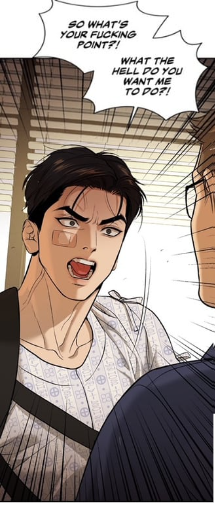 (chapter 52), seeing it as disruptive or shameful. Their guidance demanded emotional control, not emotional honesty.
 (chapter 66) or use violence to “tame the wolf”. That’s the reason why he is accepting the offer from the CEO of MFC. He is pushing the Emperor to return to the ring, but the problem is now that doc Dan was officially recognized as a member from Black Team.
  (chapter 69)
 (chapter 66)


 (chapter 69) Hence he is still wearing his dark blue shirt, pants and an expensive watch. But more importantly, he is now driving his white sports car. This means before meeting his hyung and the CEO, he went to the penthouse and changed not only his outfit but also his vehicle. He selected the white car,
  (chapter 69) Since the latter is a high-performance luxury model, it symbolizes wealth, speed, and prestige. That’s how he wanted to appear in front of the CEO. However, now he is going to the place where the storm will be the most violent. Because the star is still dressed in his dark blue shirt and expensive watch, I came to the following interpretation. This is not the champion in training clothes, but a man who now owns time
 (chapter 60)
  (chapter 61) No longer is he defined by his cellphone or his car, but by a reclaimed sense of agency.
  (chapter 38) or his car
  (chapter 69). Hence the manager can no longer be in touch with him.
  (chapter 66)
  (chapter 69) might be damaged or lost to the tempest—a symbolic stripping away of status which reminded me of the way doc Dan treated the halmoni’s Wedding Cabinet.
  (chapter 53) Both instances symbolize a relinquishing of material attachments (he leaves his huge penthouse for a rented little “hostel”) and a profound shift toward emotional growth. For Jaekyung, the potential loss of his prized possession is not just about property—it marks the beginning of relying on others, accepting vulnerability, and letting go of his rigid, self-reliant identity. Similarly, the doctor’s decision to leave behind the Wedding Cabinet signals a break from the past and a readiness to build something new, no longer defined by inherited burdens or emotional debts. In both cases, possessions lose meaning. With nothing left to prove, the champion accepts vulnerability. He is no longer above asking for help, nor afraid of stillness. And that realization could only emerge under pressure.
  (chapter 57) This initial depiction – of the sparkling blue sea, the gentle rhythm of waves (shaaa), the birds in the sky, the beautiful sunset
  (chapter 59) and
  , (chapter 65) “It’s a nice little town, isn’t it?”, lulled both the characters and readers into a false sense of permanence. But beauty is ephemeral. Storms, by nature, contradict stability. They sweep away trees, roofs—and with them, pipe dreams.
  (chapter 53) That’s why Mingwa zoomed on her gaze, but “cut” her ears, a symbol for her “deafness”. Hence she didn’t hear and feel the wind during her stroll with the champion.
 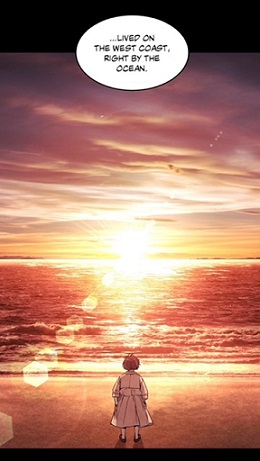 (chapter 53), bathed in the orange glow of a perfect sunset, reflected her toxic positivity—her tendency to ignore pain and erase any negative memories, including a life marked by hardship in Seoul. It encapsulated her attempt to embellish the past and project into the present
  (chapter 17), where the walls were decorated with actual postcards of beaches she had never visited. These were not souvenirs, but illusions—windows into an idealized elsewhere that helped her ignore the hardship around her.
 (chapter 47), symbolizing distance from reality. In the hospice, it is placed next to the window
  (chapter 61), revealing trees and the sky—nature encroaching. By her second stroll with Jaekyung, the image of the window reappears
  (chapter 65), subtly reminding readers of its fragility. Now, as the storm rolls in, the trees outside become potential hazards, and the window that once offered a view might shatter. Should this happen, then it will rupture her illusion of control and all her repressed fears should come to the surface.
 (chapter 56) —it is a layered terrain of symbolism and vulnerability. Perched on what appears to be a peninsula
  (chapter 65) in a bay
  (chapter 60) ; the docks, roads, and shops follow at level 1
  (chapter 62)
  (chapter 69); and the town proper stretches up with retaining walls
 (chapter 59) (Light of Hope) overlook the coast and the landlord’s house
 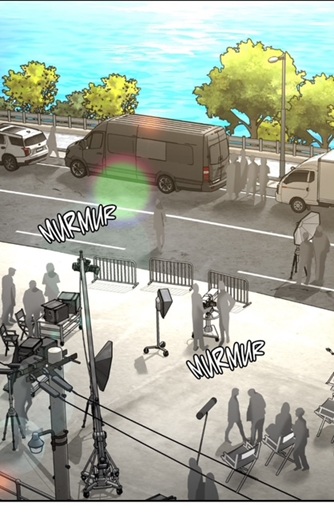 (chapter 57). I came to this deduction, as the champion could see the building from the beach, when he rescued doc Dan.
  (chapter 61) Like pointed out before, his name is misleading, for hope implies “rescue”. However, a stay in that place means that their “inhabitants” are all destined to die due to cancer. There’s no real cure there. In other words, the tempest will bring to light its true nature. The hope, just like its comfort, are illusory.
 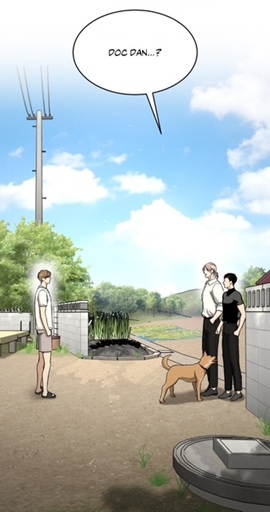 (chapter 57), fields and close to two power masts
  (chapter 57) The landlord may even encourage the fighter to adopt a puppy from Boksoon’s litter, as he can see the champion’s care and sense of responsibility—not just for himself, but for another life.
 (chapter 69) would be left outside, symbolizing that this “sport” has become less central and vital in the main lead’s life. This is the first true pause in their relationship. Jaekyung, used to immediate gratification and external control, must slow down. And for the first time, he will see what he always overlooked: that meals take effort, that conversation has value, as it can help to get closer to another person. He doesn’t need the grandmother to get “through Kim Dan”.
 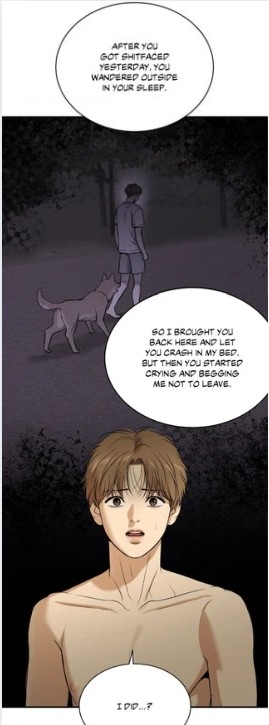 (chapter 66) Jaekyung, who has never seen the puppies, might discover them now. That discovery mirrors his gradual awareness of fragility and caretaking. For Kim Dan, nurturing the puppies symbolizes reclaiming his capacity for love and responsibility—free from obligation.
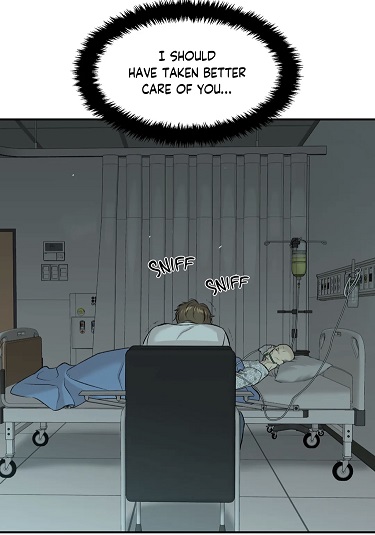 (chapter 21) and needed company.
  (chapter 21) The doctor would drop everything and rush to her side overlooking his own health. But now, with blocked roads and dangerous winds, Kim Dan cannot come—even if he wants to. He is no longer her servant or safety net. Nature has intervened where he could not set a boundary.
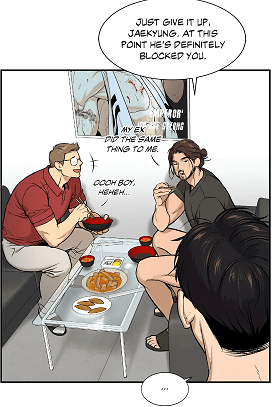 (chapter 5) Thus his anxieties should reach a new peak. His grip on the boy he used to control is gone. The storm draws a line between who remains—and who fades.
 (chapter 53) She imagined a final golden moment—warm, serene, and nostalgic before her death. But instead, she gets gusts and branches crashing down. In that sense, the tempest is her lesson: Humans are not superior to nature. They can not control time, nature and destinies. Moreover, nature does not serve our stories. It tells its own.

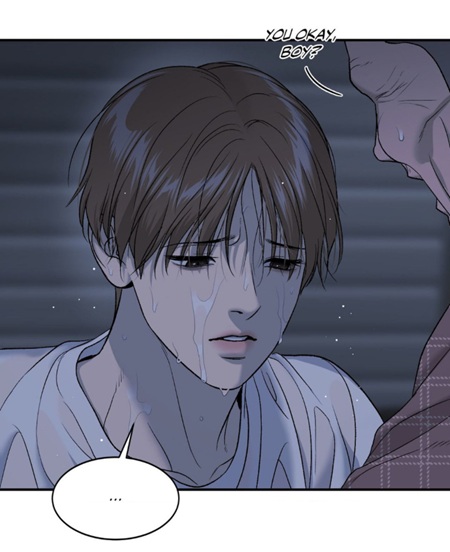 (chapter 69) These silent, parallel compositions reveal the landlord’s symbolic position as an enduring guardian: not static, but responsive. Therefore his position shifts constantly, either
  (chapter 65) in front of the couple, or behind Kim Dan in one scene, behind the champion in another.
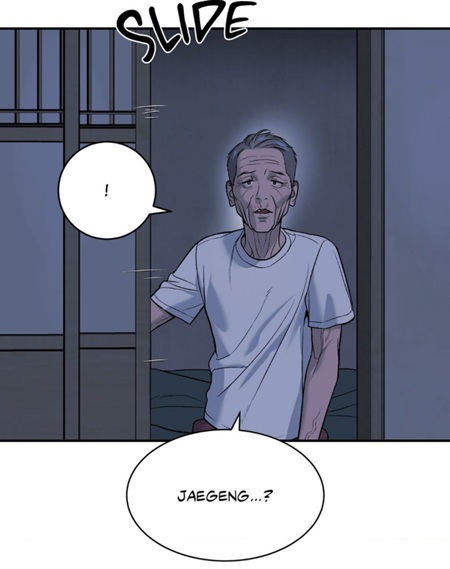 (chapter 65) He is like the wind, fluid and unobtrusive, adapting to the needs of the moment. His position is never rigid, therefore in the final panel he seems to have vanished.
  (chapter 46) or authority
  (chapter 65) He does not try to define the protagonists by their past or their titles. He lets them define themselves. While he tried to encourage doc Dan to drink and work less, as time passed on, he came to notice his suffering and accept him with his illness.
  (chapter 69) had already been shown earlier together in the crowd, I suspect that one of them might informed Kim Dan about the incident and the champion’s presence. This would align with the narrative’s kaleidoscopic structure, where certain scenes are reflected in different timelines.
 (chapter 66) Under this new light, it dawned on me that the fan was most likely handed out by a local institution—perhaps even the hospice Light of Hope, during a public health campaign or examination event. This means that he is taking good care of himself. One might argue with this interpretation, yet there exists another evidence for this perception.
  (Chapter 62) He is constantly wearing the green cap, a sign that he knows about the danger of the sun. This stands in opposition to the grandmother who would sell her vegetables without any hat.
  (chapter 57) These types of fans are typically distributed by hospitals or clinics: practical items with subtle promotional intent. But once in the landlord’s hands, it takes on symbolic weight. The number “365” does not simply represent a calendar year; it represents consistency, time, and the daily rhythm of care.
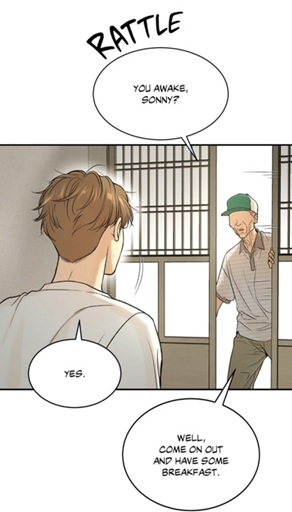 (chapter 57), white,
  (chapter 62)
  (chapter 69) and Kim Dan as “sonny”
 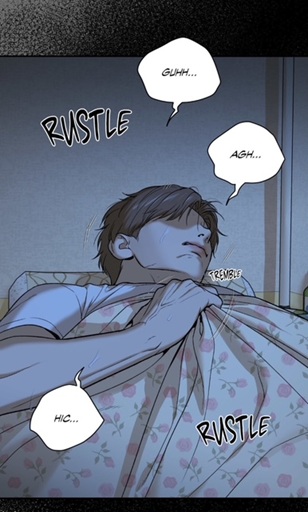 (chapter 59) Whether it’s due to panic, malnutrition, exhaustion, or psychological collapse, suffocation is one of the defining sensations of Kim Dan’s arc. In this context, the landlord, with his unassuming fan and grounded demeanor, emerges as a breath of fresh air—the very opposite of the heiße Luft, or “hot air,” surrounding the champion’s fabricated scandals and media distortions.
  (chapter 69) the atmosphere grows heavier—not from external scandal, but from inner turmoil. Then Kim Dan’s puzzled reaction,
  (chapter 59) The landlord doesn’t shelter people from pain or storms. He makes sure they’re equipped to face them. And once they do, the wind is no longer a threat, but a form of grace. And now, you comprehend why the death of the puppy has not been discovered by the athlete yet. For the landlord, death is something natural and inevitable, and since doc Dan has been working at the hospice, I am quite certain that the old man imagined that doc Dan was well-equipped to deal with this situation. He must have been envisaging that Doc Dan was accustomed to it. The problem is that he doesn’t know the protagonist’s past and family.
  (chapter 58), who plays the victim while hiding his own culpability, the landlord does not engage in gossip or vilification. His silence isn’t ignorance—it is grace.
  (chapter 58) and from media
 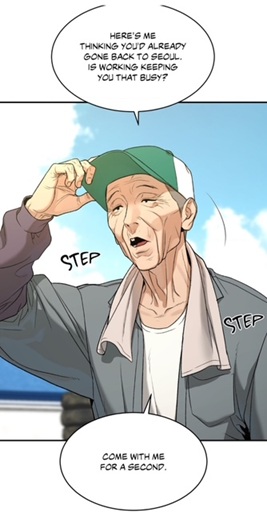 (chapter 57), but someone who understands the balance between labor and rest. He may not have a name, but he has a function. And sometimes, in storytelling, function is identity enough.
 (chapter 59) there’s only one poor sun umbrella in front of him and a wall far behind him. His back is turned to the world, wrapped in solitude and silence. That’s how I was reminded of his childhood. There, the grandmother often stood beside him
  (chapter 49) explains why he got abandoned in the locker room. It gains even more poignancy when viewed against his past. In Episode 47, while the grandmother was carrying him on her back, Kim Dan’s back is left unprotected.
  (chapter 57) The moment she offered him a snack, she distanced herself from him. Now, she is standing by his side.
  (chapter 61) —they give him the air, time, and space to grow.
  (chapter 62) Their presence—especially the landlord’s—is the embodiment of silent guardianship.
  (chapter 69) His consistent yet unobtrusive presence stands in opposition to the grandmother’s inconsistent gestures. One acted out care; the other lives it.
 (chapter 47)
  (chapter 69) This gesture, though seemingly violent, reveals something deeper—it forced Kim Dan to feel what he had been missing all along: there were people around him, he was not alone. I would even add, someone was finally standing behind him.
 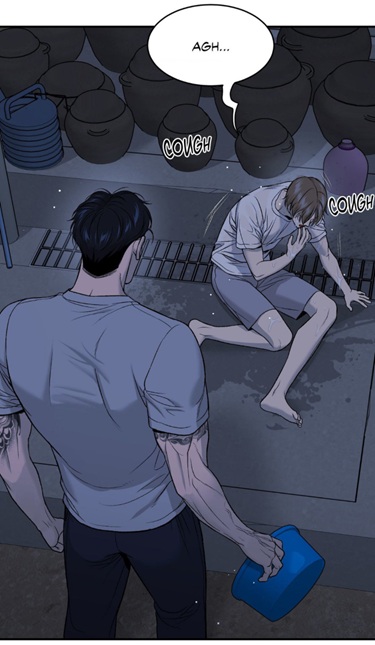 (chapter 69) In that brief moment, Kim Dan is no longer alone. The landlord, as a silent guardian, and Joo Jaekyung, as a fierce protector, are both behind him—symbolically and literally.
  (chapter 65), reliant on beds, wheels, and nurses to navigate the world. Under this new perspective, the wheelchair and the truck are no longer just modes of transportation—they are emblems of character. One rolls forward by another’s push, the other steers by its own will.
 (chapter 46) Coach Yosep, Joo Jaekyung, and Park Namwook—a trio marked by authority without dialogue, control without care. In that group, the manager sowed distrust while avoiding accountability.
  (chapter 46) In the new trio, no one holds dominion over the other. There are no contracts, no strings. The landlord has no financial stake in the fighter’s success.
 (chapter 66)

 (chapter 66) quietly shapes the emotional core of the episode. At first, this detail may appear insignificant, but its narrative timing and visual prominence suggest a deeper meaning. The sudden flight of the sparrows
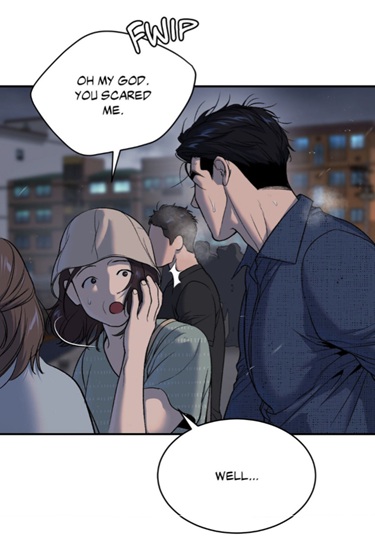 (chapter 69) —who serve as stand-ins for the broader community. In this way, their union is not just a private matter but becomes public and recognized, affirming their bond within the social fabric of the town.
 (chapter 69) and throws him outside
  (chapter 69) His composed presence in the background
  (chapter 62) he brings his belongings
 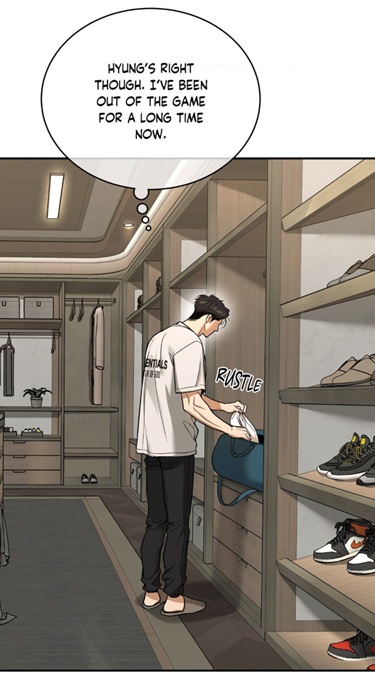 (chapter 66) gradually into his new environment, creating a personal nest.
 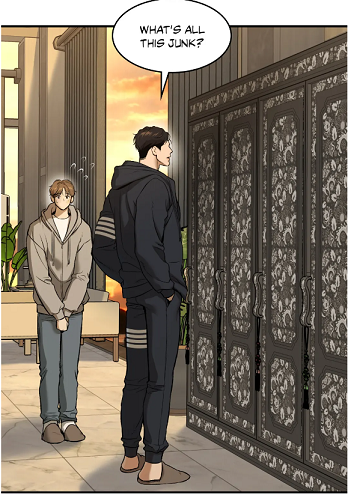 (chapter 19) To conclude, we should see the chapters from 62 to 69 as the creation of the couple’s nest and as such “home”.


 (chapter 2) his ritualistic sex before fights, his fear of losing control,
 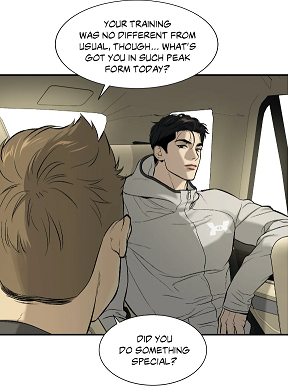 (chapter 5) his reliance on routine. Yet there is another jinx in this story, one far less visible and perhaps even more tragic: Kim Dan’s.
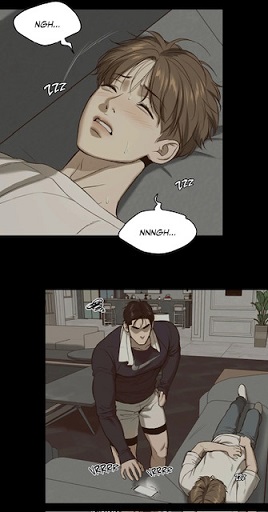 (chapter 21) It weaves together absence, silence, and the specter of loss. What’s striking is that the nightmare surfaces, not when he’s alone in the present, but after he has just returned from watching over his hospitalized grandmother.
 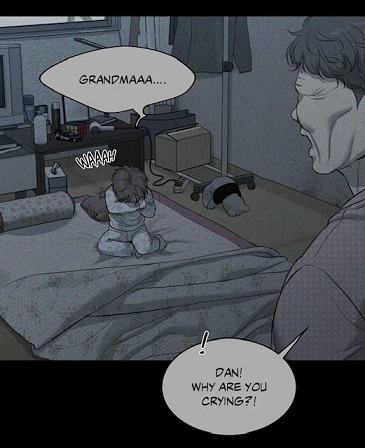 (chapter 21) This reveals how, in Kim Dan’s subconscious, the night and an empty bed have become synonymous with death. The trauma is deeply embedded, where even temporary absence is tied to the irreversibility of loss. For Kim Dan, solitude at night
  (chapter 67) is not mere loneliness—it is abandonment, it is death, it is the erasure of home. It is repressed, hidden beneath his quiet demeanor and years of survival-based behavior. Rather than a rational belief, it is a subconscious wound that only surfaces in moments of extreme vulnerability—especially at night.
  (chapter 2), the doctor’s is secret and involuntary. His actions—his fearful expressions
  (chapter 57), his pattern of emotional detachment
  (chapter 67), and his obsessive loyalty to his grandmother
 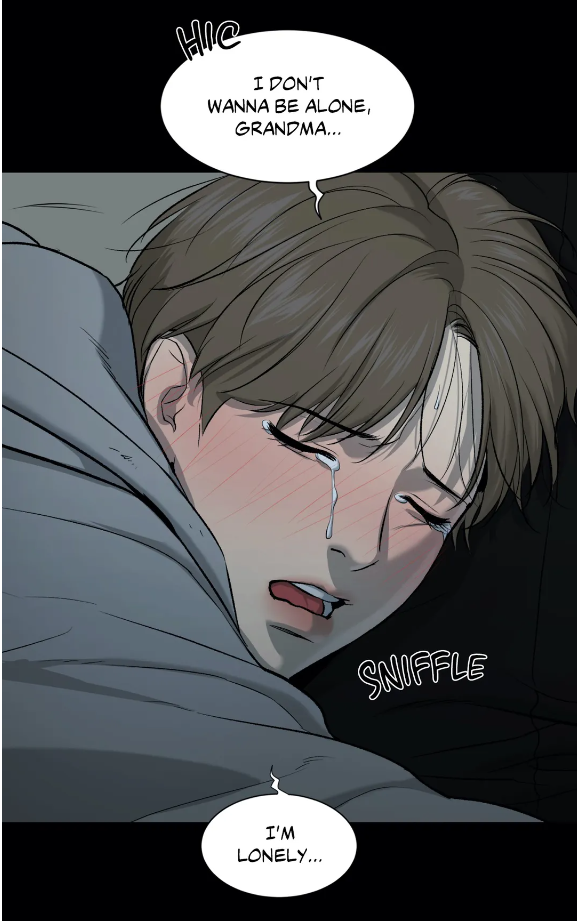 (chapter 10) signal a suppressed conviction: that he is destined to be left behind. What seemed like devotion now appears as coping; what appeared stoic was survival. And with the impending death of his grandmother, the anchor holding this hidden jinx in place is slipping away.
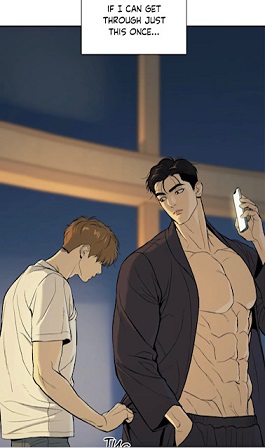 (chapter 2), the trembling kiss
  (chapter 44) in Chapter 44, the complete breakdown
 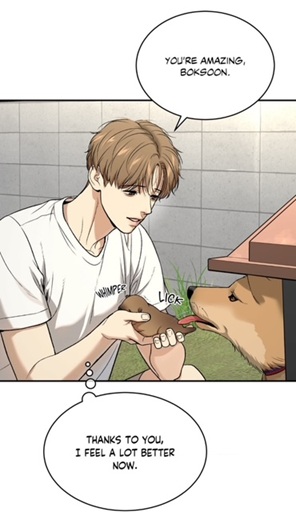 (chapter 57) A puppy needs at least eight weeks with its mother to grow emotionally secure. By drawing this parallel
  (chapter 59), the story tells us: Kim Dan was separated too soon. He was not ready.
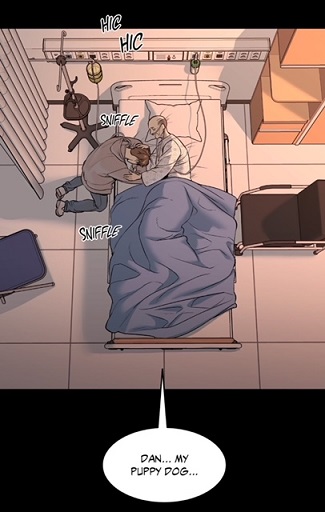 (chapter 53)
 (Chapter 56) he tucks her in. Their roles are reversed. He behaves like a parent, whereas in truth, he is reverting emotionally to a child terrified of being alone. This reversal highlights the internal dissonance between his outward behavior and emotional reality. Though he was forced to grow up quickly
  (chapter 67) This reinforces my hypothesis that his bad drinking habits are related to the absence of a loved one next to him.
  (chapter 29) That’s how it dawned on me why Shin Okja was so determined to send back her grandson to Seoul.
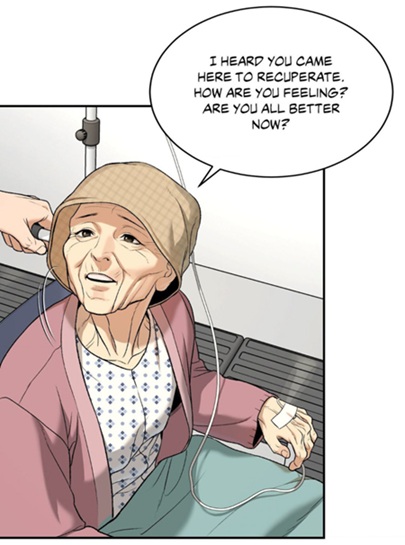 (chapter 65)
 (chapter 44) These gestures suggest he had once received such kisses, most likely from his mother. It means he remembers love, even if he doesn’t know how to process its loss.
 He is carrying the sins of “adults”. By likening him to an angel, Mingwa frames his pain not as weakness, but as unjust burden. He embodies purity, sacrifice, and resilience, not because he was allowed to thrive, but because he endured. The angel metaphor becomes even more striking when you think about traditional symbolism: angels don’t belong to Earth, yet they walk among the living, often suffering in silence and helping others. That’s exactly Kim Dan — out of place, bearing the consequences of others’ choices, carrying guilt, debt, and unspoken grief that were never his to begin with.
 (Chapter 67) Observe how Joo Jaekyung called the penthouse: not home, but his place. Due to the last altercation, the emotional safety collapsed. This experience reactivated his fear of abandonment and solidified the belief that he has no home.
  (chapter 65) Even the family photo (where and by whom it was taken is unclear) emphasizes the fragility and incompleteness of his sense of belonging.
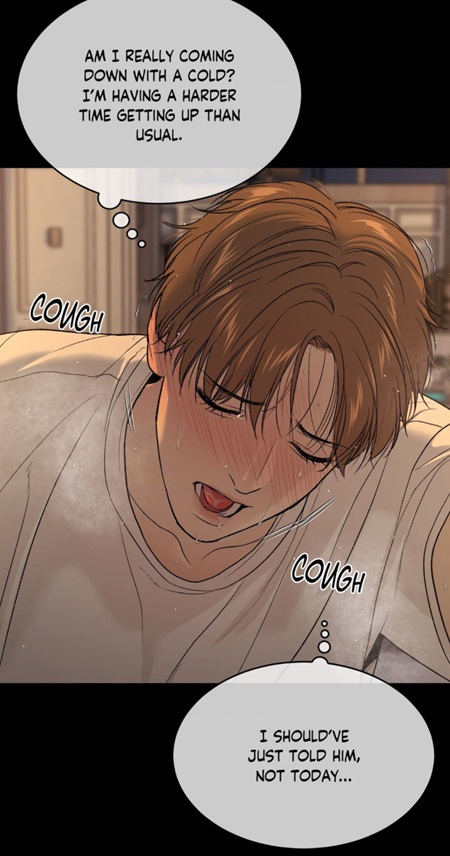 (chapter 61) that he must sacrifice his “needs” and identity to be accepted.
 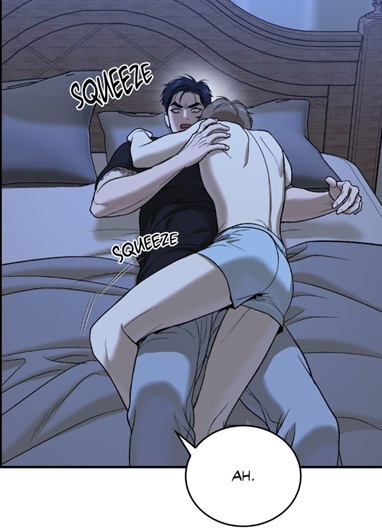 (chapter 66) holds on—“Don’t leave me.”
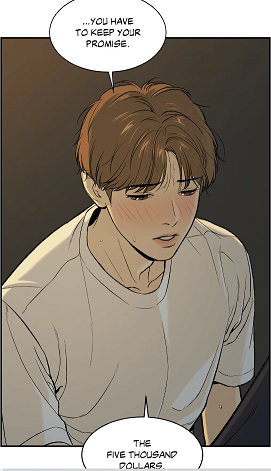 (chapter 2) He wanted the champion to keep his promise. From my point of view, the parent’s vanishing is strongly intertwined with a broken promise… And that’s exactly what the grandmother did to her own grandson: she didn’t keep her words either.
 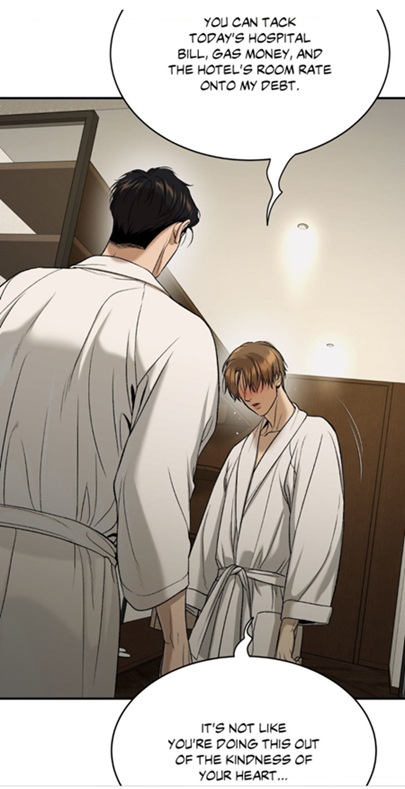 (chapter 67), but this time, with eerie detachment. He kneels before Joo Jaekyung like a servant,
 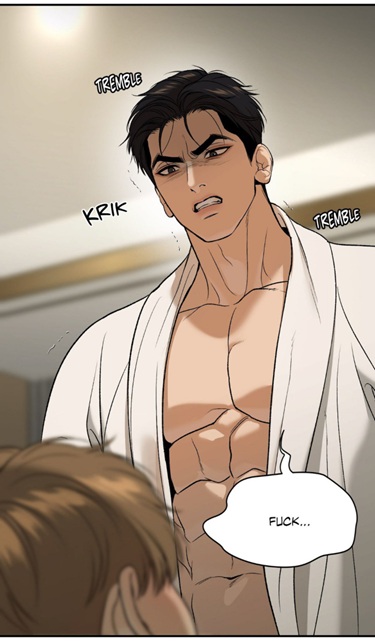 (chapter 67) his arousal betrays a loss of emotional control. Though he is on his knees, it is Joo Jaekyung who is emotionally yielding. His body betrays his composure, responding to Kim Dan’s touch and gaze. Kim Dan, watching the tremble in the fighter’s expression and the rising heat in his body, feels the shift. His soft blush is not simply one of affection or embarrassment—it’s a flicker of recognition.
  (chapter 67) He senses that the one usually in control is now unraveling. Appearances deceive: beneath this scene lies a quiet reversal of power. The blush on his cheeks is a trace of a brief moment of clarity: he sees that the person who once held all the control is now faltering.
 (chapter 66), his body is still a vessel for mourning. Hence there is no kiss during that blue night. Each night carries the residue of that first trauma: the night he was left alone. Whether his mother disappeared or passed away in the night, the result is the same—nighttime became synonymous with loss.
 (chapter 63) His so-called jinx is not some irrational superstition. It’s a scar. It’s the quiet belief that the people he loves will vanish the moment he lets his guard down.
 (chapter 67), it’s resignation. Hence he is not expecting to be cured with the pills.
  (chapter 67) he offers sex to “settle up,” citing his own preparations like a transaction.
  (chapter 67) while he drank alcohol with the medicine.
  (Chapter 67) Until now, the champion has a blind faith in drugs, just like the grandmother.
 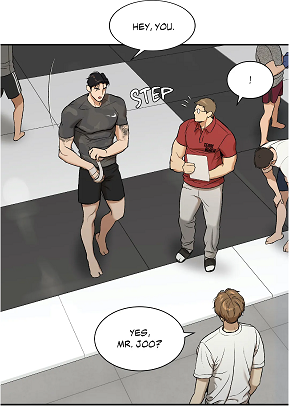 (chapter 7), while Kim Dan becomes a child during the night.
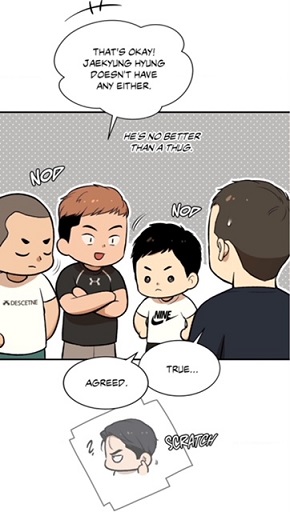 (chapter 47), when the “wolf” was portrayed as a thug, though the latter had assisted him on multiple occasions.


 (chapter 59), reflecting his selfless role as a caregiver. As someone who has long allowed others to define his time—whether as a physical therapist or as a prostitute—Kim Dan has yet to acknowledge his own mortality. Even during the lavender-tinted night, while he determined the length
  (chapter 64) and nature of the encounter
  (chapter 64) The recent death of the puppy serves as a stark reminder
  (chapter 59) that he is not exempt from time’s reach, that he too is aging and vulnerable. But the doctor failed to recognize this warning. He only viewed it as a sign of his own powerlessness, reducing it from his own perception. He overlooked the fragility of life as such.
  (chapter 35), he created an illusion of freedom that only masked his deeper confinement—his glass prison. When Kim Dan closed the door and left
  (chapter 55) once confined to the bedroom, now permeates his entire life, binding him to a past shaped by his abuser’s cruel words.
 (chapter 55) The view created an illusion of openness and freedom, masking the reality of his confinement. Glass, by its very nature, is transparent—a barrier that is invisible yet unbreakable, creating a false sense of freedom. The window’s clarity hid the fact that it was, in truth, an impassable wall that confined him, turning the promise of escape into a cruel irony. By focusing on the horizon, he could avoid looking inward, denying the unresolved trauma left by his anonymous abuser.
  (chapter 54) The ghost’s words, ‘
 (chapter 54) were designed to create the illusion of eternity—as if time itself was under the phantom’s control. This assertion not only sought to freeze Joo Jaekyung in a perpetual state of inadequacy but also to distort his perception of change as impossible. Trapped in a cycle of hatred and self-loathing, the athlete’s vision of freedom was limited to the false infinity of the horizon.
 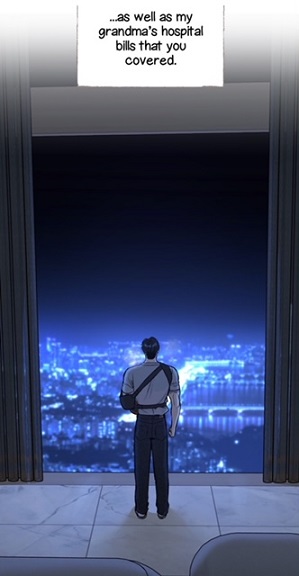 (chapter 53) And now, you comprehend why the champion chose not to look for Kim Dan after his departure. He was so close to the window, making him think that he had a “choice”. That’s how I realized that the closer he would stand to the window, the less he would get Enlightenment. Hence he is portrayed eyeless here.
 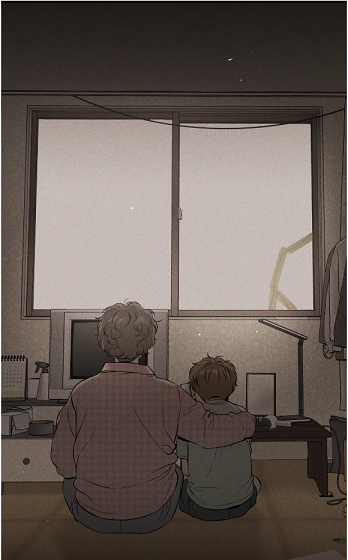 (chapter 19) —a window that offered no view of the outside world. This reflected his entrapment in a life defined by guilt and sacrifice, unable to envision a future beyond repaying debts and fulfilling duties. The window’s visible cracks and makeshift repairs represent not only the physical deterioration of their environment but also the psychological fragmentation within Kim Dan himself. By choosing to patch the window rather than replace it, Shin Okja’s actions reflect a mentality of denial and resignation—an unwillingness to confront the full extent of their impoverishment and suffering.
 (chapter 19) suggests a deeper symbolic resistance to change or moving forward. In a sense, the grandmother’s decision to live with the broken window mirrors her acceptance of a life defined by limitations and unspoken grief.
  (chapter 51) served as the key that triggered Kim Dan’s abandonment trauma. How so? While “get out of my sight” implied that Kim Dan should leave him, the reality is that the champion left the locker room first.
  (chapter 51) Observe how the “hamster” is once again turning his back to the door. However, the bloody footprints became an evidence for Kim Dan that he had been abandoned and left behind. And now, you comprehend why the main lead took the athlete’s request seriously and literally. It is because the door in the past was the symbol of betrayal and abandonment. This explicates why he is so sensitive to the sound of a closing door and could recognize it, even if his ears and eyes were covered.
  (chapter 35)
  (chapter 57) His unconscious was telling him this: Shin Okja had broken her promise. She was about to abandon him. He had the impression that he was reliving the past. That’s the reason why he was scared and suffering.
 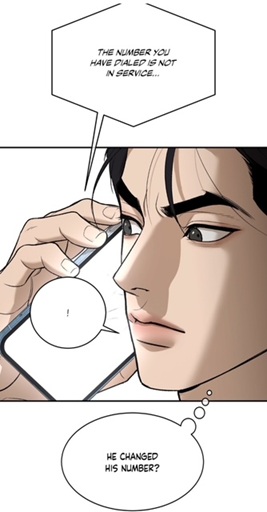 (chapter 56) revealed the existence of a past trauma. It highlighted his own fear of abandonment and rejection—an emotion he had long denied. The door, a supposed barrier against the outside world, now stood as a reminder of all he had pushed away, including his own need for connection. Therefore he never left his door open in the penthouse:
  (chapter 55) That’s why I perceive this scene as an important step for Kim Dan himself:
  (chapter 64) By opening and closing the door, he is overcoming his abandonment issues. He becomes the ruler of his own life (time and relationship). He is freeing himself from the mental torment which readers could witness in earlier episodes.
  (chapter 24), yet the latter didn’t get fooled at all. He found out the true nature of their relationship.
  (chapter 19) the Wedding Cabinet in Kim Dan’s home functioned both as a mirror and a false window, preserving an illusion of timelessness.
  (chapter 10), the cabinet remained pristine, suggesting a futile attempt to halt the passage of time and maintain the status quo.
  (chapter 53), he was deep down miles away from her emotionally and mentally. This observation explains why he could object to her suggestion.
  (chapter 1) to the point that I called him “Mister Mistake”.
  (chapter 43) On the other hand, his missteps are there to teach the fighter to drop his perfectionism and to bring the notion of entertainment in his fated partner’s life. Kim Dan is funny in his own way.
 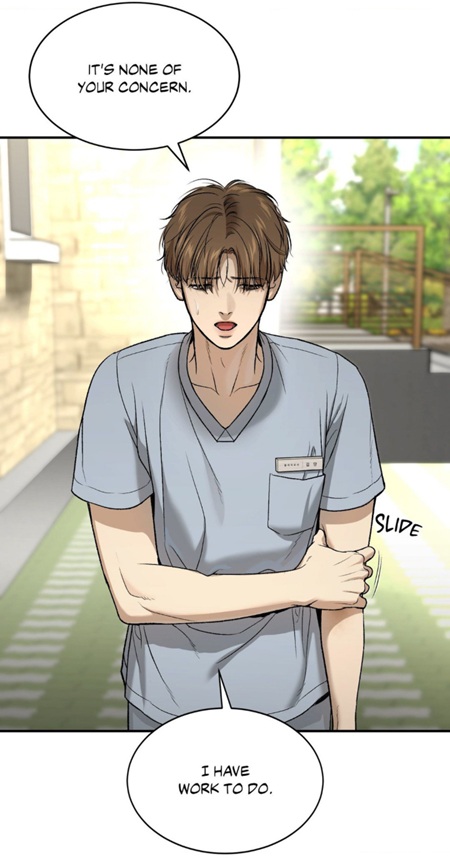 (chapter 61) No, as the number 6 sounds similar to sex. Moreover, don’t forget that Satan’s number is strongly associated with 6 (666 or 616). From my point of view, the “hamster” is on his way to become an adult and as such a sinner as well. The physical therapist’s stubbornness reminded me of the behavior of a teenager who believes to know everything about life, while in verity, such people lack experiences. And what did the nurse say about the main lead?
  (chapter 61) But why did he want to return to the past? It is because of the ghost’s criticism
  (chapter 64)
  (chapter 64) That’s why the door
  (chapter 64) Hence the author focused on his wide opened gaze. Kim Dan’s intervention was painful but necessary, because through this reflection, the athlete’s motivation to fight is bound to change. In the future, the fight won’t be deadly serious like before, he won’t act like a tyrant in the ring where he couldn’t control his rage.
  (chapter 1) He will see his opponent as an artist too.
 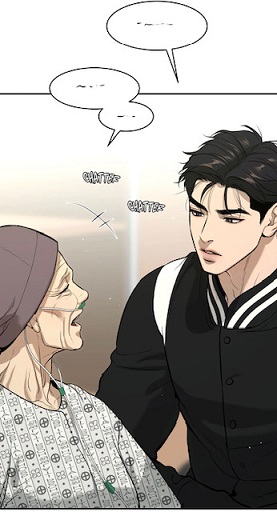 (chapter 21) with her, because he felt treasured.
  (chapter 61)
  (chapter 63) —no matter how reluctantly—represents the second turn. With the doctor’s cold rejection, he is forced to choose: What does he want in life? Only the champion title or something else?
  Hence the latter will become his hyung. For me, there’s no doubt that through this confrontation, the athlete’s respect for Kim Dan can only increase.
 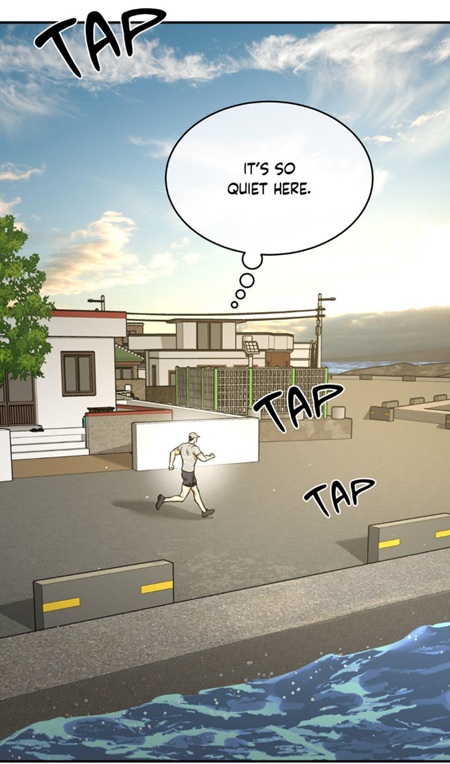 (chapter 62), I am expecting that he will go to the beach. A new version of this scene:
  (chapter 59) But this time, that would be a conscious choice. That’s how he will reconnect with his true self for good. But strangely, I am expecting that he won’t be on his own. I am quite certain that this man will make a similar experience than the grandmother:
  (chapter 47). Moreover, in season 1 and 2, the doctor was often connected to the sunset:
  (chapter 48) This was an ominous sign for the champion’s symbolic “death” and rebirth. Sun and moon are natural tools to determine the flow of time.
  Bebebisous33s' analyses in K-Dramaland and Manhwas