

Please support the authors by reading Manhwas on the official websites. This is where you can read the Manhwa: Jinx But be aware that the Manhwa is a mature Yaoi, which means, it is about homosexuality with explicit scenes. Here is the link of the table of contents about Jinx. Here is the link where you can find the table of contents of analyzed Manhwas. Here are the links, if you are interested in the first work from Mingwa, BJ Alex, and the 2 previous essays about Jinx The Silent Shore and The Red Flags Behind The Flowers . This is where you can read the original version The Little Mermaid from Hans Christian Andersen
It would be great if you could make some donations/sponsoring: Ko-fi.com/bebebisous33 That way, you can support me with “coffee” so that I have the energy to keep examining Manhwas. Besides, I need to cover up the expenses for this blog.

When Joo Jaekyung dives into the water to rescue Kim Dan 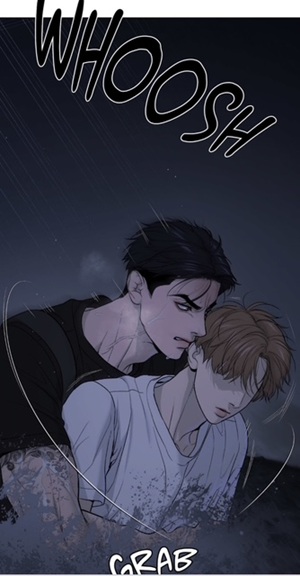 (chapter 59), the scene mirrors the iconic moment in The Little Mermaid where the mermaid saves the prince from drowning. Kim Dan, unconscious and seemingly following the voices of the hospice
 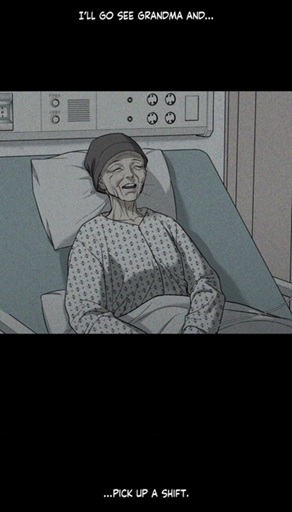 (chapter 59) —a representation of the mermaids’ song—drifts into a state of surrender, much like the prince. This act of salvation becomes a pivotal moment, connecting both characters to the themes of water, transformation, and rediscovery of purpose.
Hans Christian Andersen’s The Little Mermaid is often overshadowed by its popular Disney adaptation, yet the original fairy tale delivers a far more complex and somber narrative. Initially, the underwater world of the mermaids appears idyllic, with its enchanting gardens and harmonious existence.
Far out in the ocean, where the water is as blue as the prettiest cornflower, and as clear as crystal, it is very, very deep; so deep, indeed, that no cable could fathom it: many church steeples, piled one upon another, would not reach from the ground beneath to the surface of the water above. There dwell the Sea King and his subjects. We must not imagine that there is nothing at the bottom of the sea but bare yellow sand. No, indeed; the most singular flowers and plants grow there; the leaves and stems of which are so pliant, that the slightest agitation of the water causes them to stir as if they had life. Fishes, both large and small, glide between the branches, as birds fly among the trees here upon land. In the deepest spot of all, stands the castle of the Sea King. Its walls are built of coral, and the long, gothic windows are of the clearest amber. The roof is formed of shells, that open and close as the water flows over them. Their appearance is very beautiful, for in each lies a glittering pearl, which would be fit for the diadem of a queen. Quoted from http://hca.gilead.org.il/li_merma.html
However, as the story progresses, it becomes evident that the mermaids are seductresses, luring sailors to their deaths with their hauntingly beautiful voices. Their prosperity and gardens stem from the remains of drowned humans, tying their existence to mortality and forgetfulness.
The absence of the Sea King as an active father figure leaves the grandmother to raise the mermaids, instilling traditions, hierarchy and materialism.
his aged mother kept house for him. She was a very wise woman, and exceedingly proud of her high birth; on that account she wore twelve oysters on her tail; while others, also of high rank, were only allowed to wear six. […] ” Quoted from http://hca.gilead.org.il/li_merma.html
Among these traditions is the rule that mermaids may only visit the human world when they reach maturity, an act meant to influence them to appreciate their underwater kingdom and discourage longings for the surface. This restriction mirrors the tension between imposed norms and individual desires, as the mermaids are shaped by a world that limits their experiences until adulthood, by which time many have conformed to the values of their realm. Yet, for the little mermaid, this delayed freedom only deepens her yearning for a world beyond her own, setting her apart from her sisters. The grandmother’s role highlights the mermaids’ lack of individuality and spiritual depth, as their ultimate fate is oblivion—they vanish into sea foam upon death, unremembered and without souls.
“Yes,” replied the old lady, “they (humans) must also die, and their term of life is even shorter than ours. We sometimes live to three hundred years, but when we cease to exist here we only become the foam on the surface of the water, and we have not even a grave down here of those we love. We have not immortal souls, we shall never live again; but, like the green sea-weed, when once it has been cut off, we can never flourish more. Human beings, on the contrary, have a soul which lives forever, lives after the body has been turned to dust. It rises up through the clear, pure air beyond the glittering stars. As we rise out of the water, and behold all the land of the earth, so do they rise to unknown and glorious regions which we shall never see.” Quoted from http://hca.gilead.org.il/li_merma.html
Moreover, the mermaids’ fear of the sun, symbolized by the third sister who dives underwater to escape its burning rays, further reflects their estrangement from light and transcendence. This idyllic yet haunting world mirrors the struggles faced by the characters in Jinx, who similarly navigate environments defined by materialism  (chapter 54), performance, and the longing for a deeper connection.
Drawing from Andersen’s original themes, Jinx presents a modern reinterpretation through its characters and their relationships. Both Kim Dan and Joo Jaekyung embody aspects of the little mermaid’s journey. Kim Dan, like the mermaid, endures silent suffering, yearning for recognition and freedom from his oppressive environment. Joo Jaekyung, meanwhile, encapsulates both the prince, whose light seduces others 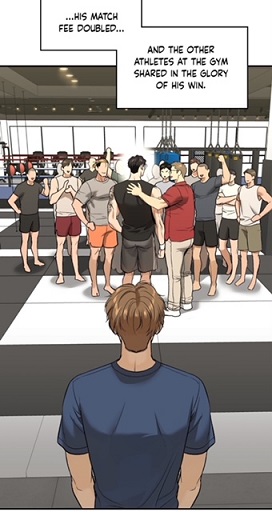 (chapter 41), and the mermaid, as he grapples with voicelessness and the pressures of his world.
 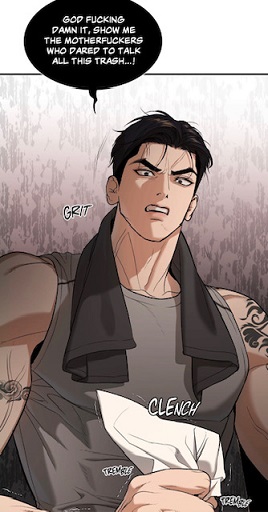 (chapter 36)
 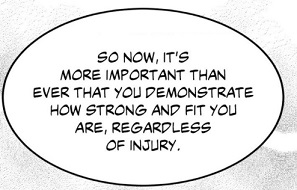 (chapter 36) Choi Heesung, representing another prince with Potato as his bride, benefits from others’ sacrifices
 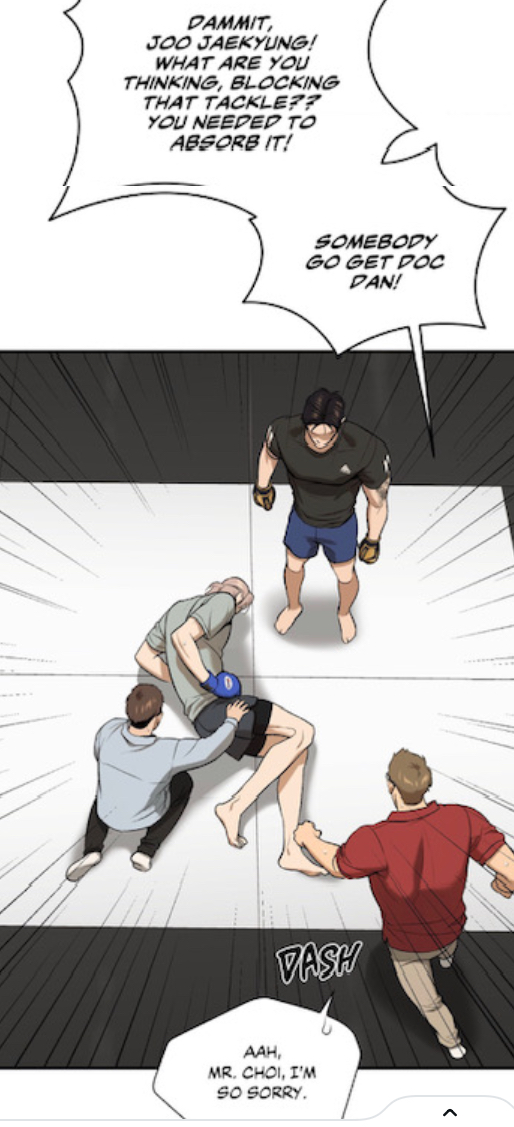 (chapter 31)
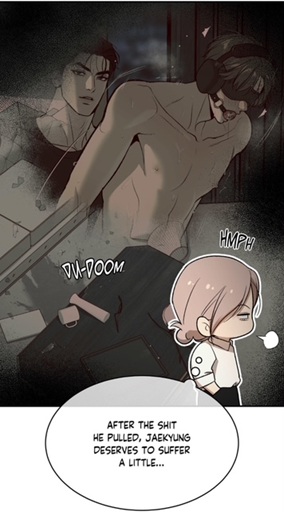 (chapter 58) while remaining oblivious to their struggles. These parallels reveal layers of self-discovery, mutual transformation, and the pursuit of meaning. By analyzing these similarities, we uncover deeper layers of self-discovery and transformation within the narrative.
The Fake Sun and Kim Dan’s Awakening
When the little mermaid first surfaces, she does not see the sun but encounters the prince instead. He becomes her “fake sun,” a symbol of misplaced hope and unfulfilled longing. Similarly, Kim Dan, who became a physical therapist due to his grandmother’s influence, is thrust into Joo Jaekyung’s world—a world he perceives as brighter, almost blinding, like the sun.  (chapter 53) Joo Jaekyung, representing the “new world,” acts as both a source of transformation and a mirror reflecting Kim Dan’s sacrifices.
In Andersen’s story, the little mermaid’s longing for the prince reflects her yearning for connection and transcendence, but it ultimately brings her pain. However, even before meeting the prince, the little mermaid longed to discover the human world. She listened intently to her sisters’ stories of their experiences on the surface, which created a deep yearning within her to explore this new realm.
“When the sisters rose, arm-in-arm, through the water in this way, their youngest sister would stand quite alone, looking after them, ready to cry, only that the mermaids have no tears, and therefore they suffer more. ‘Oh, were I but fifteen years old,’ said she: ‘I know that I shall love the world up there, and all the people who live in it.’” Quoted from http://hca.gilead.org.il/li_merma.html
Her yearning for the prince only exacerbates her desire to leave the confinement of the underwater kingdom, which she sees as restrictive, and pursue the dreams that set her apart from her sisters. Unlike her siblings, the little mermaid does not fear the sun; instead, she longs for its light and warmth. Andersen emphasizes this through her garden, which reflects her inner world and emotions:
“One arranged her flower-bed into the form of a whale; another thought it better to make hers like the figure of a little mermaid; but that of the youngest was round like the sun, and contained flowers as red as his rays at sunset. She was a strange child, quiet and thoughtful; and while her sisters would be delighted with the wonderful things which they obtained from the wrecks of vessels, she cared for nothing but her pretty red flowers, like the sun.” Quoted from http://hca.gilead.org.il/li_merma.html
The garden, overlooked by others, mirrors her unacknowledged feelings and aspirations, emphasizing her quiet longing for a brighter existence beyond the depths. Kim Dan’s relationship with Joo Jaekyung similarly oscillates between hope 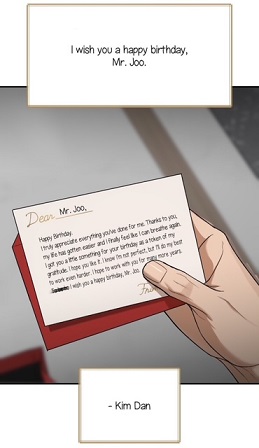 (chapter 55) and hardship
 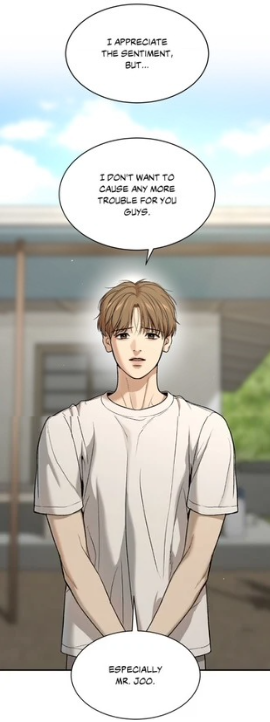 (chapter 58), yet it serves as the catalyst for his growth. Just as the little mermaid’s journey leads her to a higher spiritual purpose as a daughter of the air, Kim Dan’s experiences with Joo Jaekyung force him to confront his own worth, identity, and emotional needs. Just before he went to the ocean, he wondered about his own future and desires, a sign that he was standing at a crossroad:
 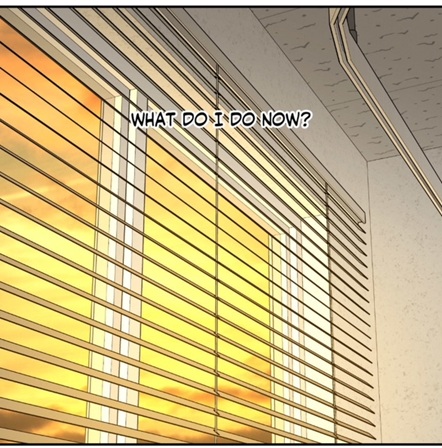 (chapter 59) However, let’s not forget that Kim Dan’s profession had been determined by Shin Okja, as the latter desired to have her grandchild taken care of her. Therefore his own desires and needs were overlooked. Traditions and social norms were used to decide about the protagonist’s life and future. His journey from voiceless suffering to self-realization echoes the mermaid’s transformation.
Depression: Disconnection and Yearning
Both Hans Christian Andersen and the little mermaid offer insights into the experience of depression. Andersen himself struggled with feelings of isolation and unreciprocated affection, which find their echo in the mermaid’s story. Her disconnection from both the underwater world and the human world mirrors the profound alienation that often accompanies depression.
The little mermaid feels different from her sisters, who eagerly conform to their traditions, while she secretly yearns for something beyond their understanding. This sense of being “other” and her inability to express her desires create a deep loneliness. Similarly, Kim Dan’s life has been marked by silent suffering and a lack of recognition for his sacrifices. 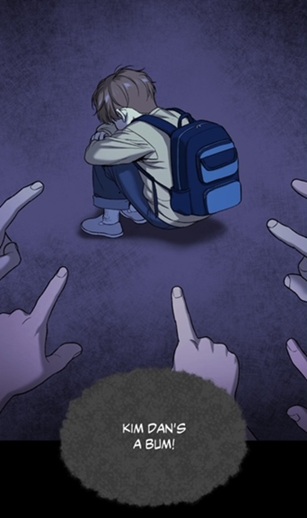 (chapter 57)
  (chapter 59) Like the mermaid, he has always lived disconnected from his own needs, burdened by the expectations of others—his grandmother, Heo Manwook, the doctors
 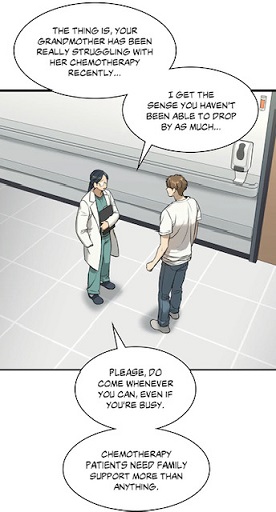 (chapter 21) , and even Joo Jaekyung.
  (chapter 45)
Andersen’s depiction of the mermaid’s inability to cry—”mermaids have no tears, and therefore they suffer more”—reflects the emotional numbness of depression. Kim Dan’s stoic endurance and inability to articulate his pain in season 2 resonate with this portrayal. When he is on the verge of killing himself  (chapter 59), he is not capable of crying. It is because he has been living like a ghost for the last two months. Depression, for both the mermaid and Kim Dan, manifests as a silent struggle, making their eventual transformations even more poignant.
Joo Jaekyung: The “Prince” or The Mermaid?
Joo Jaekyung’s role in Jinx is multifaceted, resembling both the prince and the mermaid from Andersen’s tale. On one hand, he is a “fake prince,” burdened by the high expectations of his surroundings and unresolved traumas. Much like the mermaid’s prince, Joo Jaekyung’s image is carefully curated,  (chapter 1) hiding his true self behind a facade of strength and success. On the other hand, Joo Jaekyung also embodies the mermaid’s longing and sacrifice. Living in the world of MMA, a high-pressure environment where he is constantly pushed to perform, he resembles the mermaid in the underwater kingdom—a place of death and materialism where the mermaids feed on drowned humans. It is no coincidence that the fighters are displayed like mermaids in the water full of blood.
  (chapter 29) This zombie-like existence leaves him voiceless; the entertainment agency and MFC dictate his actions
 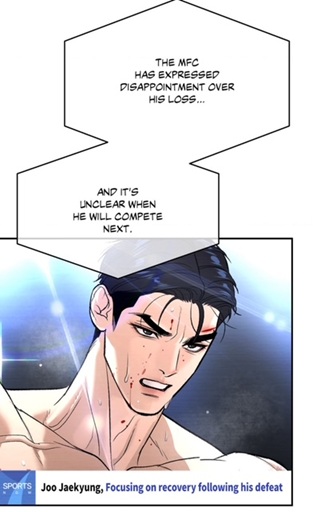 (chapter 57), only allowing him to speak when it benefits them financially.
Interestingly, Joo Jaekyung’s affinity for water  (chapter 27) reflects his connection to the mermaid. Water is his natural element, a place where he feels at peace, yet he has been forced to conform to a fiery world of intensity and relentless ambition.
  (chapter 19) Hence he never went to the swimming pool in his own penthouse, until Kim Dan triggered his memory and longing. This interplay of water and fire (chapter 53) symbolizes Joo Jaekyung’s duality: water represents his reflective and calm nature, while fire reflects the passion, turmoil, and seduction he embodies. His light, much like the mermaids’ song in Andersen’s tale, attracts others, but it often leads them astray. For example, many members of Team Black left the gym to join King of MMA, a rival gym with connections to the underground world and illegal fights.
  (chapter 52)
  (chapter 41) Joo Jaekyung’s image was exploited to lure these individuals down a darker path, highlighting how his light has been misused by those around him.
(chapter 53) The contrasting visuals of the King of MMA building (chapter 52) and Joo Jaekyung himself underscore this dichotomy. The building, with its blue tones and connection to the sky, evokes the image of a ship luring fighters into oblivion, much like the mermaid’s siren call. Interestingly, the light from the building comes from the sun, giving it the impression of naturality and hope. This creates a deceptive allure, as those who follow this path are ultimately consumed and forgotten.
In contrast, the image of Joo Jaekyung turning around is bathed in artificial light from the flash of cameras, (chapter 53) emphasizing his curated, public-facing facade. This artificiality reflects how Kim Dan, much like the public, has not yet perceived the humanity beneath Joo Jaekyung’s exterior. This dichotomy underscores Joo Jaekyung’s struggle to reclaim his identity while also highlighting Kim Dan’s journey to truly see the man behind the image. This juxtaposition highlights how Joo Jaekyung’s journey is not merely about physical survival but about reclaiming his identity and resisting the forces that seek to exploit him.
The Doctor’s Family: A Reflection of the Mermaid’s World
Kim Dan’s family background parallels the little mermaid’s environment in significant ways. The absence of the father in Kim Dan’s life placed all the responsibility on his grandmother, echoing the absence of the Sea King’s active role in his daughters’ lives. The grandmother in Kim Dan’s story shares several traits with the mermaid’s grandmother, but also presents key contrasts. Both grandmothers embody traditions, social norms, and a materialistic worldview. Shin Okja’s wedding cabinet and scarf were a source of joy and pride for her,  (chapter 19)
 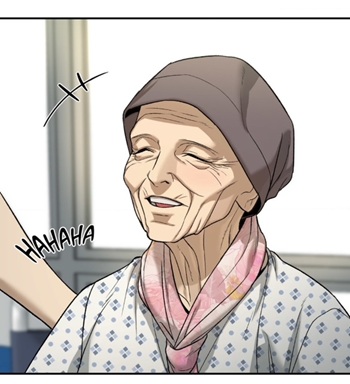 (chapter 56) as long as they were not associated with burden or suffering, while the mermaid’s grandmother celebrates the beauty and decorum of their underwater realm.
At last she reached her fifteenth year. “Well, now, you are grown up,” said the old dowager, her grandmother; “so you must let me adorn you like your other sisters;” and she placed a wreath of white lilies in her hair, and every flower leaf was half a pearl. Then the old lady ordered eight great oysters to attach themselves to the tail of the princess to show her high rank. “But they hurt me so,” said the little mermaid. “Pride must suffer pain,” replied the old lady. Oh, how gladly she would have shaken off all this grandeur, and laid aside the heavy wreath! The red flowers in her own garden would have suited her much better, but she could not help herself […] Quoted from http://hca.gilead.org.il/li_merma.html
Both women disregard the pain and desires of the protagonists—Shin Okja justifies her dependency on Kim Dan with cultural norms and his selflessness 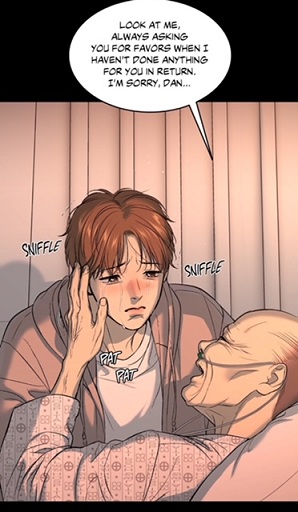 (chapter 53), while the mermaid’s grandmother dresses her granddaughter beautifully for her first visit to the surface, disregarding the physical pain she complains about. In both cases, the protagonist’s suffering is diminished or ignored, highlighting a shared insensitivity to their emotional and physical experiences. Both grandmothers appear as rather distant and cold-hearted.
However, the mermaid’s grandmother exhibits a mental and physical strength that Shin Okja lacks. Confident and authoritative, she enforces the rules and rituals of the mermaid world, including the tradition of visiting the surface only after reaching maturity. This ritual, framed as a way to teach the young mermaids to appreciate their own realm, indirectly influences the little mermaid’s yearning for the human world. Her family could have noticed it, if they had paid attention to the sculpture in her small garden.
One arranged her flower-bed into the form of a whale; another thought it better to make hers like the figure of a little mermaid; but that of the youngest was round like the sun, and contained flowers as red as his rays at sunset. She was a strange child, quiet and thoughtful; and while her sisters would be delighted with the wonderful things which they obtained from the wrecks of vessels, she cared for nothing but her pretty red flowers, like the sun, excepting a beautiful marble statue. It was the representation of a handsome boy, carved out of pure white stone, which had fallen to the bottom of the sea from a wreck. Quoted from http://hca.gilead.org.il/li_merma.html
In contrast, Shin Okja is emotionally and physically dependent on Kim Dan, burdening him with the entirety of their survival. Her insistence on adhering to traditions reflects a passive selfishness, as she benefits from his sacrifices while escaping her own responsibilities.
Interestingly, both grandmothers play a role in inciting their grandchildren to leave their side. The mermaid’s grandmother encourages the little mermaid to explore the human world as part of their ritual, emphasizing its transience and superficiality. 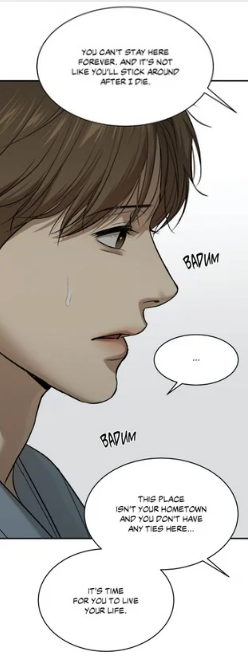 (chapter 57) Shin Okja, noticing Kim Dan’s figurative slow death under the weight of her request, subtly pushes him to seek his own path. However, this act is not entirely selfless. For Shin Okja, it represents an escape from the guilt of causing her grandson’s unhappiness, a way to absolve herself of responsibility.
Yet, the two grandmothers diverge significantly in their personal strength and awareness. The mermaid’s grandmother confidently instills traditions as a way to ground her grandchildren in their underwater identity, while Shin Okja clings to traditions to justify her dependence. Both grandmothers also embody forgetfulness and oblivion. The mermaid’s grandmother focuses on traditions and appearances, disregarding the existential yearning of the little mermaid for an immortal soul. Shin Okja similarly disregards Kim Dan’s emotional suffering, prioritizing her material needs and societal expectations. Notably, she never returned to her hometown, until she was nearing death, underscoring her detachment from legacy and emotional connection. These shared traits highlight how both grandmothers, despite their different contexts, restrict the protagonists’ growth and self-discovery, keeping them tethered to a world of conformity and unfulfilled dreams.
In both stories, the protagonists live like ghosts, overshadowed by the expectations and traditions imposed upon them. Kim Dan has always lived for his grandmother and her “dreams,” never truly pursuing his own aspirations. Similarly, the little mermaid is forced to follow traditions and live through the eyes and expectations of others. Her deepest dream of becoming human and reaching the surface is kept to herself, unknown to anyone around her. This suppression of individuality and desire reflects the stifling nature of their environments. Interestingly, the little mermaid’s garden reflects her inner world and emotions. Unlike her sisters, she does not fear the sun, and her garden is shaped like the sun with flowers as red as his rays. Yet, no one pays attention to her garden, mirroring how Kim Dan’s struggles and unwell-being are overlooked by those around him. 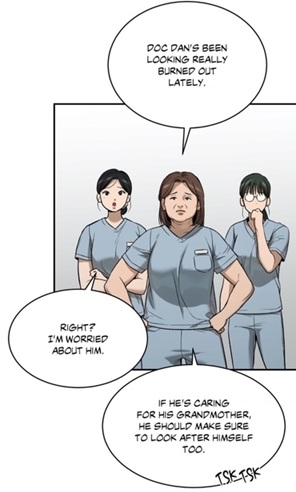 (chapter 57) He even gets blamed for his illness. These elements further emphasize how the suppression of individuality leads to yearning and eventual transformation.
The Sisters of the Mermaid and Team Black
In Andersen’s tale, the mermaid’s sisters are largely indifferent to her plight until they realize she is about to die. Their sudden sacrifice of their hair to obtain a knife from the sea witch demonstrates a delayed recognition of their sister’s suffering. Though their act is born of desperation, it comes too late to save her. The sisters, pale and sorrowful, ultimately sink back beneath the waves, leaving the mermaid to face her fate alone.  (chapter 52) This dynamic parallels the members of Team Black in Jinx. Although they are treated like Joo Jaekyung’s co-workers
  (chapter 7), in reality, he is their boss and the foundation of their success. Their indifference mirrors the mermaid sisters’ behavior; they only notice his struggles and absence when his winning streak falters, prompting many to leave the gym for the rival King of MMA. However, if we take Andersen’s fairy tale as a source of inspiration, it signifies that at some point, the remaining members of Team Black might come to “sacrifice” themselves for their “little sister,” symbolically representing Kim Dan and Joo Jaekyung. This potential act of loyalty could mirror the mermaid sisters’ gesture, showing that even belated recognition and care can lead to transformative redemption for those involved.
Gardening and Immortality
In Andersen’s tale, the mermaids tend gardens in the underwater world, a symbol of their limited existence tied to material beauty. This theme resonates in Jinx, where the gym Team Black acts as a parallel to the underwater kingdom. Like the mermaid gardens, Team Black is centered on appearances and the cultivation of superficial success. Originally created to serve Joo Jaekyung’s needs, the gym drew attention due to his achievements  (chapter 1), attracting others seeking the same level of fame and fortune.
 (chapter 46) However, the gym’s inability to produce another champion reveals its “fake gardening” nature—focused on maintaining an image rather than fostering true growth.
Park Namwook, much like the Sea King’s materialistic focus, behaves as though he owns the gym, taking pride in its reputation  (chapter 52) while merely using Joo Jaekyung’s success to boost his own ego. His plans to set up a kids’ program at the gym further underscore this self-serving nature. While presented as an effort to expand the gym’s reach, Park Namwook’s true motivation lies in financial gain, as he tries to persuade Joo Jaekyung by stating, “Kids are where the money is at.” On the one hand, this reflects his obsession with money and contrasts with the deeper, transformative intentions associated with true gardening. On the other hand, since he has himself kids, it is clear that he would like to send his own children to the kids’ program.
Interestingly, the concept of a kids’ program can be compared to the daughters of the air in Andersen’s tale.
The little mermaid perceived that she had a body like theirs, and that she continued to rise higher and higher out of the foam. “Where am I?” asked she, and her voice sounded ethereal, as the voice of those who were with her; no earthly music could imitate it. Among the daughters of the air,” answered one of them. “A mermaid has not an immortal soul, nor can she obtain one unless she wins the love of a human being. On the power of another hangs her eternal destiny. But the daughters of the air, although they do not possess an immortal soul, can, by their good deeds, procure one for themselves. We fly to warm countries, and cool the sultry air that destroys mankind with the pestilence. We carry the perfume of the flowers to spread health and restoration. After we have striven for three hundred years to all the good in our power, we receive an immortal soul and take part in the happiness of mankind. You, poor little mermaid, have tried with your whole heart to do as we are doing; you have suffered and endured and raised yourself to the spirit-world by your good deeds; and now, by striving for three hundred years in the same way, you may obtain an immortal soul.” Quoted from Quoted from http://hca.gilead.org.il/li_merma.html
The daughters of the air earn their immortal souls through good deeds, particularly by serving as unseen companions to children, influencing their growth and joy. The transformation of the little mermaid into a daughter of the air holds profound significance. Through her death, she transcends her former existence, drawing closer to her aspiration for an immortal soul. Her nature fundamentally changes—she evolves from a being defined by longing and sacrifice to one with purpose and autonomy. Her rise to the air signifies liberation from the pain and constraints of her past life, granting her a new identity. Similarly, Joo Jaekyung and Kim Dan’s struggles, marked by insomnia, loneliness, and emotional turmoil, echo this journey of transformation. (chapter 59) The ocean scene in Jinx represents the beginning of their ascent, a symbolic death of their former selves and the first step toward self-discovery and fulfillment. Like the little mermaid’s yearning for the sun and light, their encounter in the ocean marks a turn toward aspiration and the possibility of a brighter, truer existence.
However, Park Namwook’s approach twists this idea into a shallow form of “gardening” focused on profit rather than nurturing. (chapter 46) His actions reveal the disconnection between genuine care and the commodification of growth, paralleling the gym’s superficial cultivation of champions and success. When Joo Jaekyung’s streak of victories faltered after his tie with Baek Junmin, many members abandoned the gym, (chapter 52) exposing the lack of genuine loyalty and care for the champion. This mirrors the indifference of the mermaids to the plight of drowning humans, a reflection of their inhumanity. Similarly, the world of MMA fighting, like the underwater kingdom, encourages relentless training and suppresses emotional expression—vacations and rest only occur due to injury or external intervention, such as Kim Dan’s request for a day off.
Potato’s characterization as a mixture of a “spoiled child”  (chapter 22) and a “neglected child”
 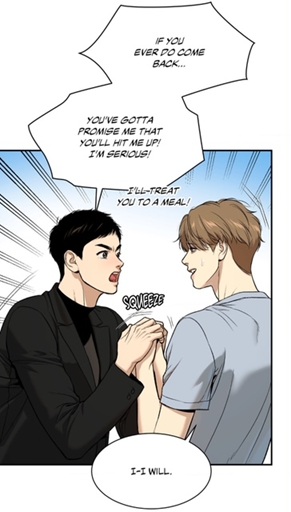 (chapter 59) further emphasizes the immaturity and lack of responsibility prevalent in this environment. In Andersen’s story, the mermaid sisters are given gardens to tend from a young age, instilling responsibility early on. Potato’s journey mirrors the mermaid sisters’ visit to the surface, as his trip to the sea represents a moment of exploration and self-discovery. While working as an actor for the first time, he realizes during his stay with Kim Dan that he has no intention of leaving Team Black.
  (chapter 58) Feeling lost without Kim Dan, he initially requests his return so that they can be together again. This longing for a companion reflects Potato’s deeper need for guidance and connection, much like the mermaid sisters who briefly visit the surface but ultimately return to their underwater world when the novelty fades. Yet, when they reach maturity and are allowed to visit the surface, the novelty of the human world quickly fades, and they return to their underwater realm indifferent to human suffering. However, notice that on his day of the departure, Potato tells Kim Dan that he won’t call him, the mermaid has to initiate the first step. (chapter 58) Just like the prince in the fairy tale, the protagonist from Jinx is treated like a servant or a play companion, but nothing more.
The prince said she should remain with him always, and she received permission to sleep at his door, on a velvet cushion. He had a page’s dress made for her, that she might accompany him on horseback. […] As the days passed, she loved the prince more fondly, and he loved her as he would love a little child, but it never came into his head to make her his wife; yet, unless he married her, she could not receive an immortal soul; and, on the morning after his marriage with another, she would dissolve into the foam of the sea. Quoted from http://hca.gilead.org.il/li_merma.html
This shows that in both stories, the humans take the mermaid’s selflessness and gentleness for granted. They don’t ask if the mermaid is feeling well. They expect them to be around them.
This lack of empathy and the absence of tears 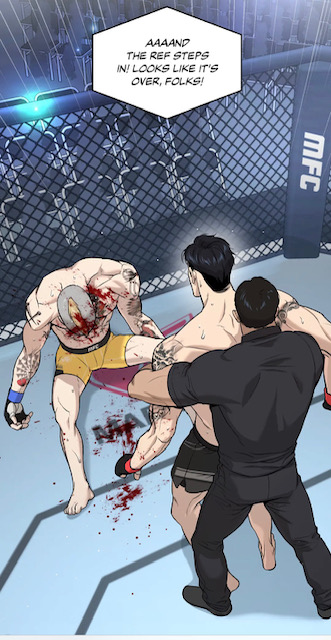 (chapter 15) strongly parallel the detached, high-pressure environment of MMA fighting. Joo Jaekyung, trained relentlessly since youth, embodies this world’s harshness, where vulnerability is a luxury rarely afforded.
By contrasting the gym’s “fake gardening” with Joo Jaekyung’s eventual journey toward authenticity, the narrative underscores the need to move beyond superficiality and reclaim one’s true self. Joo Jaekyung, after being inspired by Kim Dan, begins to metaphorically “garden” by creating his own space of renewal and growth. The ocean setting  (chapter 59) suggests that Joo Jaekyung might reclaim his authentic self through activities like swimming, reconnecting with nature, and symbolically planting the seeds for a new life. Kim Dan, who cannot swim, learns from Joo Jaekyung, and together, they forge a path toward mutual healing and immortality—not in the literal sense but through finding their “soul” and purpose.
The Ocean: Nature as a Setting for Transformation
In Jinx, the shift in the setting from the city (a symbol of civilization and its suffocating pressures) to the ocean (a symbol of nature and renewal) mirrors a pivotal change in the characters’ journeys.  (chapter 56) The city represents the oppressive expectations and artificial constructs that have shaped Joo Jaekyung and Kim Dan’s lives. By meeting again in the ocean, they reconnect with a more authentic and unburdened version of themselves. This transition echoes the little mermaid’s connection to the natural world as a place of solace and transformation.
Responsibility and Guilt: The Couple’s Role
The scene where the prince and his bride gaze at the foam, sorrowfully searching for the mermaid, mirrors Heesung and Potato’s behavior.  (chapter 59) They imagined that Kim Dan would be better off without Joo Jaekyung
  (chapter 58), but this assumption reveals their failure to truly understand Kim Dan’s plight. Their ignorance ties them to the selfishness and guilt that mark the couple in the fairy tale. Despite their faults, however, their actions indirectly contribute to Kim Dan’s transformation.
However, the mermaid’s final kiss on the prince’s bride’s forehead holds deeper symbolic meaning. The goodbye kiss, given unseen, can be interpreted as either a curse or an act of emancipation. It symbolizes her liberation from heartbreak and physical suffering. The kiss is also a farewell to the life she had sacrificed so much for, allowing her to rise as a daughter of the air. Similarly, the picture in front of the hospice could be interpreted as Kim Dan’s goodbye kiss to his friends before his own metamorphosis, marking a farewell to his old life and the start of his transformation: air.
Similarly, Kim Dan’s journey reflects a moment of quiet yet profound transformation: 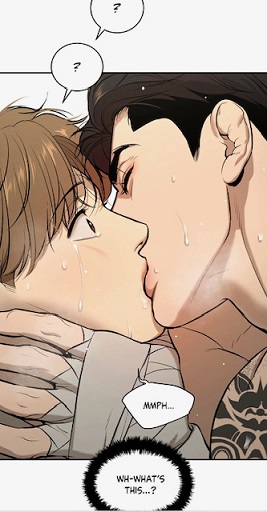 (chapter 15) his kiss with Joo Jaekyung, shared in the locker room, was both an act of protection and a pivotal moment in their dynamic. Like the mermaid’s unforgettable first kiss with the prince (when he was rescued), Joo Jaekyung’s kiss in the locker room was an act of initiation, driven by his “fears” and sense of responsibility, reflecting his growing attachment to Kim Dan. The kiss symbolized his struggle to connect and protect, even as he grappled with his emotional restraint. The locker room, a symbol of physical endurance and vulnerability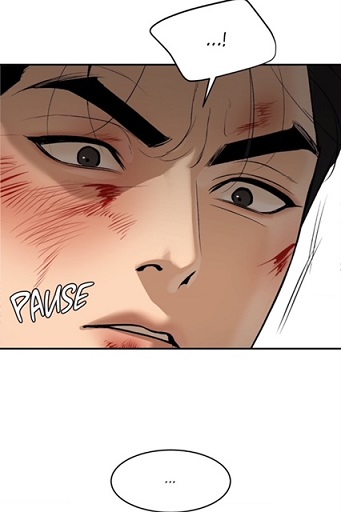
 (chapter 51), mirrors the mermaid’s longing to break free of her limitations and find meaning in her suffering.
The Daughter of the Air: Kim Dan’s Transcendence
In The Little Mermaid, the protagonist’s final transformation into a daughter of the air signifies her spiritual elevation and newfound purpose. No longer tied to the physical or the emotional pain of unrequited love, she discovers companionship and a mission—to earn an immortal soul through good deeds. This mirrors Kim Dan’s journey of finding a new identity and purpose.
The 300 years the mermaid must strive for redemption recalls the three months Kim Dan spent with Joo Jaekyung before vanishing. In this time, Kim Dan undergoes a profound change. Like the daughter of the air, Kim Dan moves closer to his own “sun,” 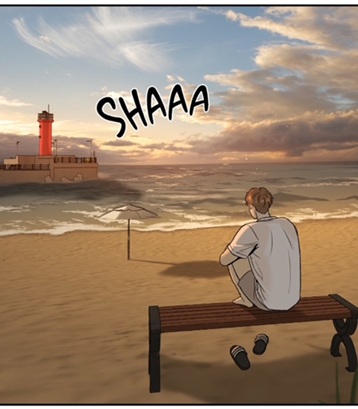 (chapter 59) finding light not in others but within himself. Through his hardships, he gains the strength to pursue his own identity and agency.
The “Princes” and Legacy
The story also underscores the theme of legacy, as the concept of the “prince” takes on multiple layers in Jinx. Joo Jaekyung is the central prince, undergoing his own awakening as he transitions from being an oblivious benefactor to an active participant in Kim Dan’s healing and growth. However, Heesung and even Potato emerge as “princes” in their own right. Heesung’s journey to face his flaws mirrors the prince’s search for his rescuer, while Potato’s evolution hints at a future where he might follow in Joo Jaekyung or Kim Dan’s footsteps, symbolizing a new generation of legacy. I couldn’t help myself noticing that Potato was the first one showing an interest in Kim Dan’s profession:  (chapter 49) The maknae’s tears are an indication that he is no mermaid, but a human, I would even say, he still has the soul of an innocent boy.
 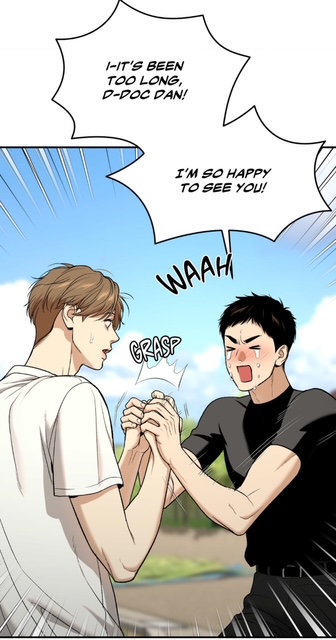 (chapter 58) reminding me of the princess looking for the voiceless mermaid. It is clear that in both stories, the mermaid left traces in the humans’ hearts.
Conclusion: Mutual Transformation
Ultimately, The Painful Mermaid’s Aspiration is a story of mutual transformation. The mermaid’s sacrifice enables the prince’s happiness, but her ultimate transcendence reflects a deeper journey of self-discovery. Similarly, Kim Dan’s suffering becomes the foundation for his growth, pushing both him and Joo Jaekyung to evolve. While the figures around them, like Heesung and Potato, remain entangled in their own struggles with guilt and identity, they contribute to the larger narrative of transformation and redemption.
Kim Dan’s journey, like the little mermaid’s, is not just about sacrifice but about rising above pain to find purpose and light. In the end, both characters achieve a form of liberation, stepping closer to the “sun” and reclaiming their voices and identities in a world that once rendered them invisible.
Feel free to comment. If you have any suggestion for topics or manhwas, feel free to ask. If you enjoyed reading it, retweet it or push the button like. My Reddit-Instagram-Tumblr-Twitter account is: @bebebisous33. Thanks for reading and for the support, particularly, I would like to thank all the new followers and people recommending my blog.



 (chapter 54) and penthouse
 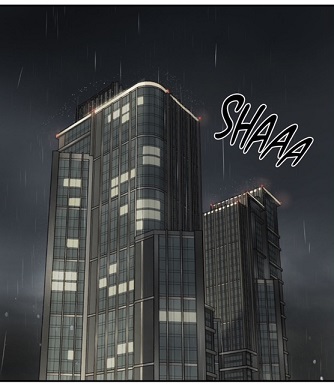 (chapter 54) in Seoul—a city symbolizing anonymity, invisibility, and corruption—to the hospice “Light of Hope”
  (chapter 56) in a small town on the West Coast
  (chapter 56), where people know each other. This essay builds upon my previous interpretations of the series, which led me to develop these predictions for the upcoming season. By comparing the visual depictions of the gym and penthouse in Seoul with the hospice and small town on the West Coast, the divergence in weather becomes a powerful symbol of the changes Joo Jaekyung will undergo. The rainy, overcast settings of the gym and penthouse reflect the fighter’s inner turmoil and sadness, highlighting the oppressive atmosphere of a city rife with anonymity and corruption. In contrast, the sunny and open environment of the hospice and town by the ocean represents a space of hope and renewal, where human connections thrive. This comparison underscores the significant role the hospice and small town will play in fostering Joo Jaekyung’s self-discovery and healing. The gym and penthouse in Seoul symbolize anonymity, invisibility, and corruption. This anonymity stems from the city’s indifference to individual suffering, as seen when Kim Dan was dragged
  (chapter 16)
  (chapter 16) through the streets by loan sharks in broad daylight without anyone intervening. Invisibility is further exemplified by the perverted hospital director,
  (chapter 1) who harassed Kim Dan without facing any consequences, though he was caught, and by Kim Miseon’s unethical actions, such as leaking patient information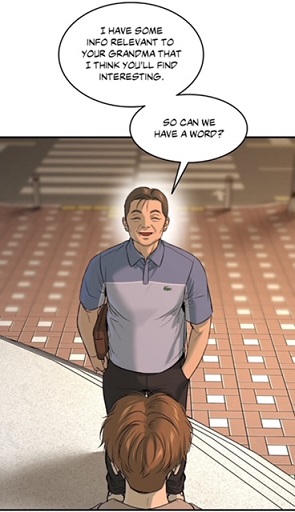
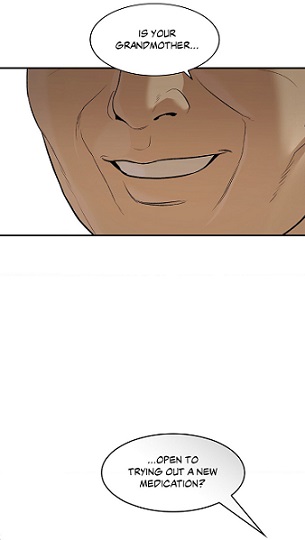 (chapter 48) and using Shin Okja as a guinea pig for trial treatments
 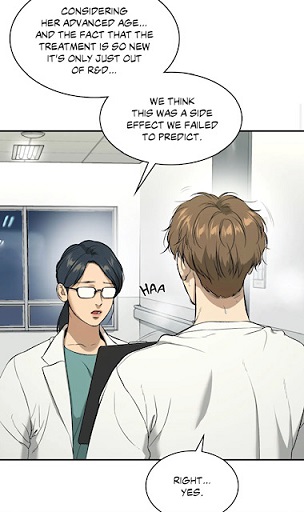 (chapter 21) —none of which led to accountability. In contrast, the hospice represents a counterpoint:
  (chapter 56) a space where respect and dignity take precedence over ambition, fostering genuine human connection and care. This contrast between the city and the hospice highlights the champion’s need to redefine his understanding of life, identity, and success. The contrast between the hospice and MFC becomes pivotal, as these environments symbolize opposing values: while the hospice fosters compassion
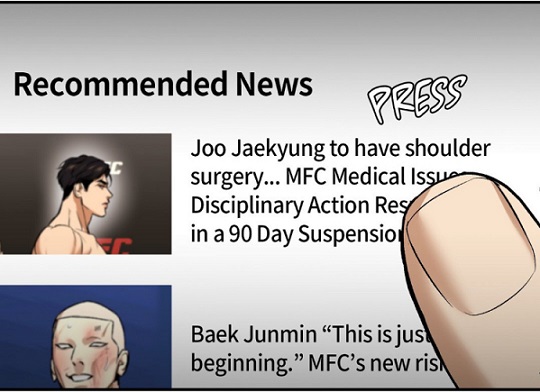 (chapter 52) The best example is the vanishing of the protagonist’s former rival, Baek Junmin,
 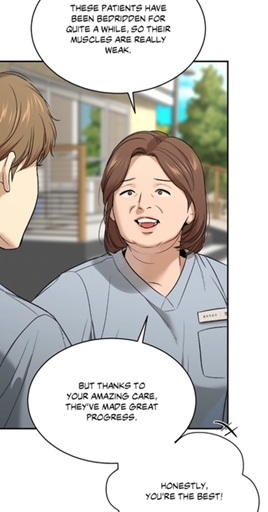 (chapter 56) emphasizing respect and dignity. This stark reality will serve as an eye-opener for Joo Jaekyung, who is burdened by news and media narratives equating
  (chapter 36)
 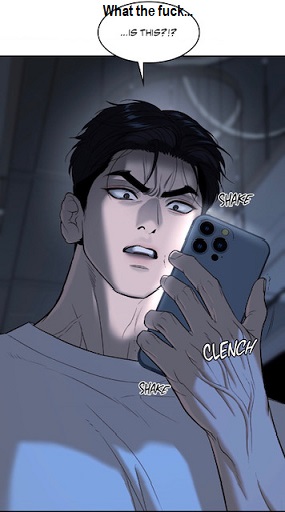 (chapter 35)
  (chapter 57), prompting him to recognize that his so-called career end does not symbolize his real death.
  (chapter 57). This environment challenges him to confront the indifference of figures like Yosep and Park Namwook, whose neglect, blind trust, passivity, naivety, neglect and selfishness have shaped his struggles. Notice that the nurses are often seen together and exchanging thoughts about doc Dan symbolizing unity and harmony
  (special episode 1) In other words, the presence of Kim Dan’s friends (Joo JAekyung, Potato and Heesung) could make her realize her true nature, which would impact her mental health. She led a life full of missed chances and regrets.
  (chapter 26)
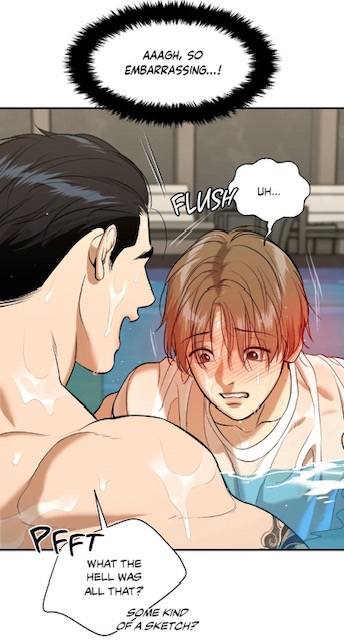 (chapter 27) In Korean culture, the saying “when the heart isn’t in it” reflects a profound truth: actions devoid of sincerity lack real value. Season 2’s new settings allow the champion to reflect on his mechanical, dispassionate life and begin to act with intention and feeling.
 (chapter 54) Though in denial, Joo Jaekyung feels undoubtedly responsible for the doctor’s suffering, as one of his nightmares reveals his guilt for doubting Kim Dan’s honesty and dedication. Once seeing his terrible transformation, the man can only blame himself, especially if he recalls Cheolmin’s advice:
 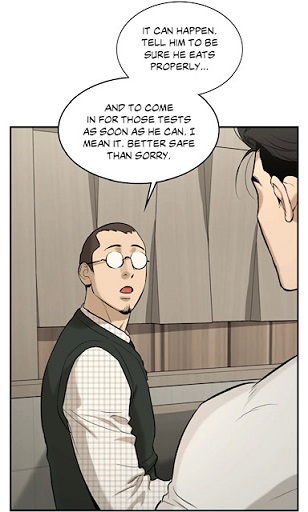 (chapter 13)- The act of nurturing Kim Dan is symbolic: it aligns Joo Jaekyung with the wolf, an animal deeply associated with love, family, and protection. Through this connection, he learns to balance his ferocity with tenderness, becoming not just a fighter but a protector.
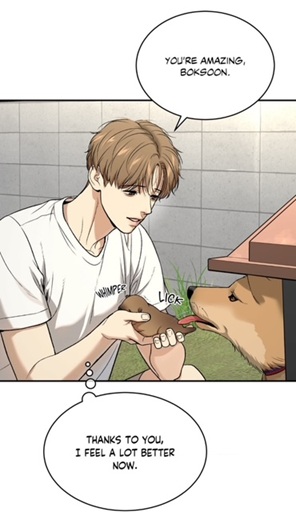 (chapter 57) and her puppies. Kim Dan is tasked with taking care of the dog and her newborns, and Joo Jaekyung should be asked to do the same. This responsibility not only serves as an allegory for taming the wolf within him but also paves the way for the champion’s deeper connection with Kim Dan. By being close to the ocean
  (chapter 56), a place where Joo Jaekyung finds relaxation through swimming, the setting introduces an opportunity for him to teach Kim Dan how to swim, addressing the latter’s fear of water
  (chapter 27). Swimming could become a shared activity that rebuilds their relationship on a foundation of trust, mutual learning, and growth. Engaging in this physical activity would not only strengthen their bond but also boost Kim Dan’s confidence and help him rediscover his own resilience.
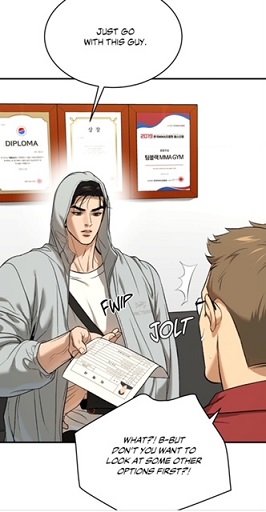 (chapter 54), his connection with Kim Dan is no longer defined by a boss-employee relationship. Their interactions, now free of financial obligations, offer the fighter a clearer view of Kim Dan’s selfless and angelic nature. The physical therapist’s unwavering care, even at the expense of his own well-being, highlights his ungreedy and altruistic character. This realization will deepen Joo Jaekyung’s respect and affection for Kim Dan, further cementing the transformative journey they both embark on.
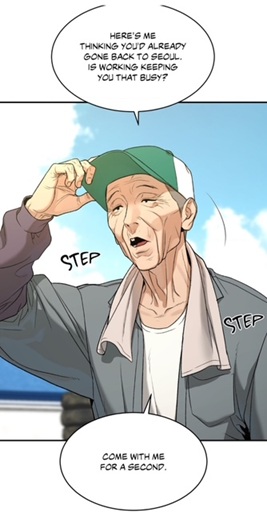 (chapter 57) and the yelling patient
 (chapter 56) “Nurse Mind” and “Nurse Heart,” provide another layer of mentorship. They could act as the champion’s eyes and ears, teaching him to observe and understand Kim Dan’s mental state. Though the nurse 1 started reproaching Kim Dan to neglect himself
 (chapter 57), she reminded me of the champion’s friend:
  (chapter 13) She already noticed his unusual fatigue, so in my opinion, this third woman could be the one detecting that the main lead is not eating properly. If this assumption is correct, then she stands for food and body, like in the Korean saying: “If your heart is not in it, you can’t see if you look. You can’t even hear if you listen, and you can’t taste even if you eat.” Their guidance should help Joo Jaekyung cultivate a nurturing side, showing him that strength is not solely physical but also emotional and relational. In this way, the nurses become pivotal in his journey from a lone wolf to a leader who values and protects his pack.
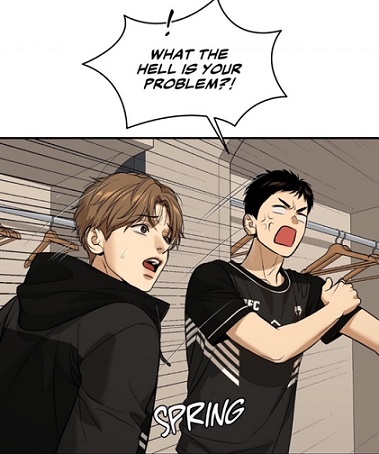 (chapter 49), though their positions are absolutely opposite. The patient’s reaction in Chapter 57 echoes this dynamic, as he accuses Joo Jaekyung of being ill-tempered (this means that he remembers the suspension), a perspective shaped by the media’s manipulations. His criticism reflects the behavior of a sheep, falling prey to misinformation and failing to see the larger truths. On the other hand, it indicates that this man also knows a part of the truth: the suspension which is no longer mentioned, but also escaped Kim Dan’s notice, as he was dealing with his departure. In contrast, Potato’s response in Chapter 49, where he courageously questioned Director Choi despite the latter being an elder, showcases independence and critical thinking. This juxtaposition highlights the patient’s potential to awaken Joo Jaekyung, Kim Dan, and Potato to the damaging impact of media narratives. Over time, the patient himself must confront the wrongfulness and cold-heartedness of his accusations, fostering growth and understanding on all sides. These characters reflect the flaws of Yosep and Namwook, enabling Joo Jaekyung to see the neglect and indifference he has endured and inspiring him to redefine his role in the gym and in Kim Dan’s life.
  The illustration’s inclusion of the hamster—symbolizing Kim Dan’s fun, fragile, and nurturing nature—along with the chow chow and the gumiho, emphasizes the roles of protectors and mediators. The chow chow’s loyalty and the gumiho’s cunning serve as essential forces guarding the hamster and navigating the complexities of this “pure community,” where lies and selfishness can still exist. These characters highlight the intricate dynamics within the hospice, where Joo Jaekyung must balance strength with empathy.
 (chapter 13) This newfound appreciation allows him to form fond memories of the place, associating it with peace and renewal despite the grandmother’s inevitable passing. By metaphorically taking over her place at the hospice, Joo Jaekyung symbolically builds his family there, grounding himself in the values of compassion and community. These lessons ultimately empower him to take over the gym with a renewed perspective, ready to lead with strength and empathy. Finally, I deduce that the main couple will initially navigate between the Light of Hope Hospice and the doctor’s rented room before visiting other places (like the beach and the mountain) The more places they will visit together, the more they will become true to themselves, inciting them to open their mind and heart to each other. Surrounded by nature, all the characters will get purified and discover the true source of happiness.


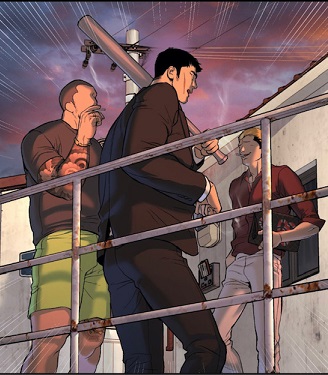

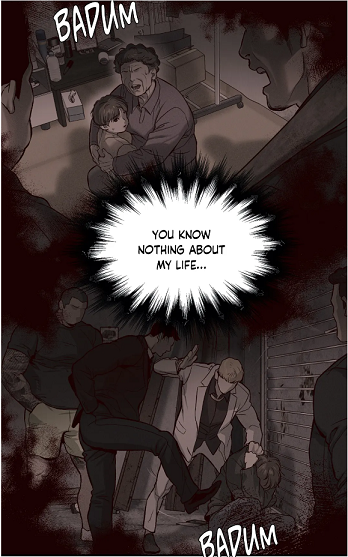


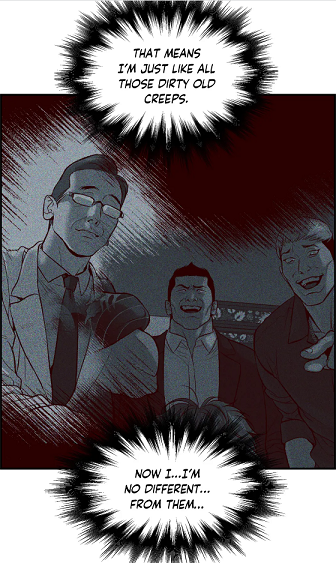

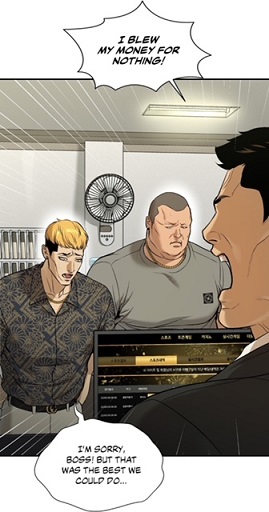

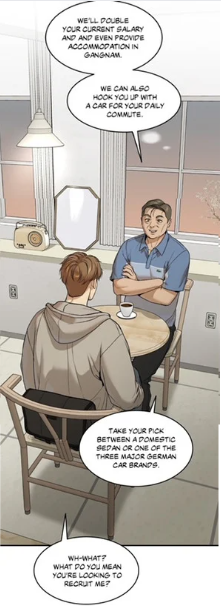


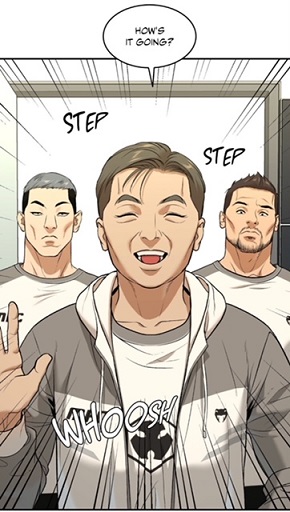 (chapter 49) These 3 men and The Shotgun have to be seen as a team. Moreover, 4 is a synonym for death. Then, observe that the image from episode 20 contains two villains, the loan shark and the perverted hospital director. 1 +1 = 2. So when we see the number 10, 11, 16, 17 and 18, we could perceive it as an allusion to Heo Namwook, the villain.
 (chapter 11) and indirectly the persons involved in the redevelopment. However, I have to admit that I have a different explanation.
 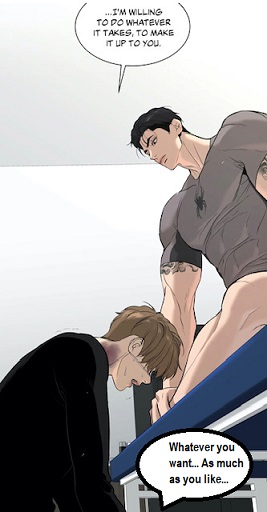 (chapter 11) Let’s not forget that in Jinx-Fandom, many Jinx-addicts calls him a “red flag”. Here, he was abusing his position. Furthermore, this theory could be seen as validated with the first episode with this image:
 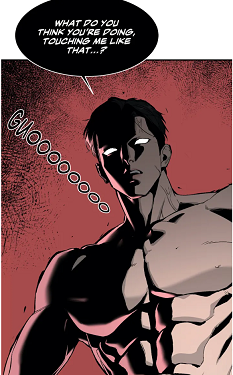 (chapter 1) The main lead appears as a beast, triggering the doctor’s fears. He seems to be like an antagonist. However, I believe that it is just a deception. First, Mingwa has clearly stated that the champion is the protagonist of Jinx. As such, he can be neither a villain nor an antagonist. Secondly, though he seems to serve as a barrier, the reality is that Kim Dan is incited to mature and overcome his own fears. In fact, the celebrity represents the opposite notions of “conformity” and “immobility”. He embodies verity, maturity, transformation and progression. The evidence of this perception is the gradual transformation of Kim Dan as an inexperienced PT to a very professional and performant physical therapist. According to my interpretation, the Emperor works as the mirror of truth. He confronts the delusional physical therapist with his mental and emotional issues, like here:
 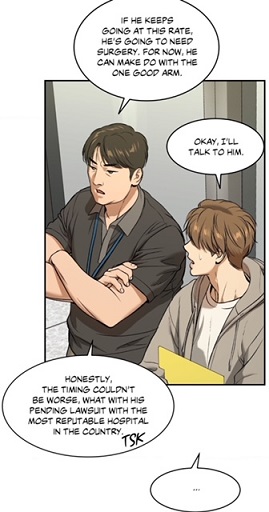 (chapter 42) He only relied on his hands. He was forced to become a serious and confident PT!!
 (chapter 1) The star was just waiting, and not threatening the doctor. As you can see, Joo Jaekyung doesn’t appear like a threat or a monster. But this doesn’t end here. One detail caught my interest. The champion is associated with blue. It is his true color, whereas Kim Dan is “red”, like a sweet strawberry. So why does this young man ooze a red aura, when his true shade is blue like water
  (chapter 1) Note the contrast to his “boy”. The red is not coming from Joo Jaekyung’s body
 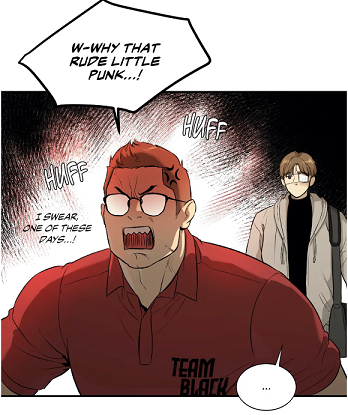 (chapter 11) The coach is yelling for Joo Jaekyung’s comment, yet the reality is that the manager didn’t treat Kim Dan at all. In fact, he feigned ignorance. Moreover, look at the champion’s t-shirt:
  (chapter 26) In this composition, I compared the MMA star with a leopard and Park Namwook to a spider:
  (chapter 17) or in episode 46
  (chapter 46) He represents regression or the hurdle to overcome.
  (chapter 11)
 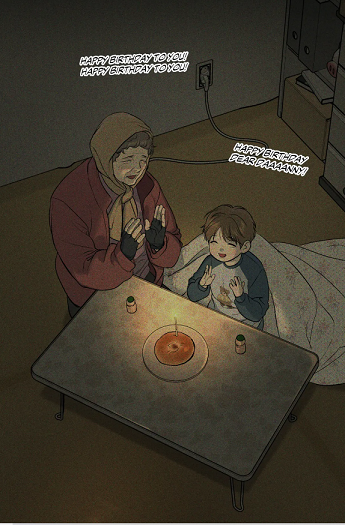 (chapter 11) And I can prove my statement by showing the episode where she appears:
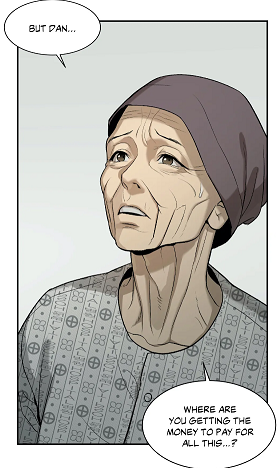
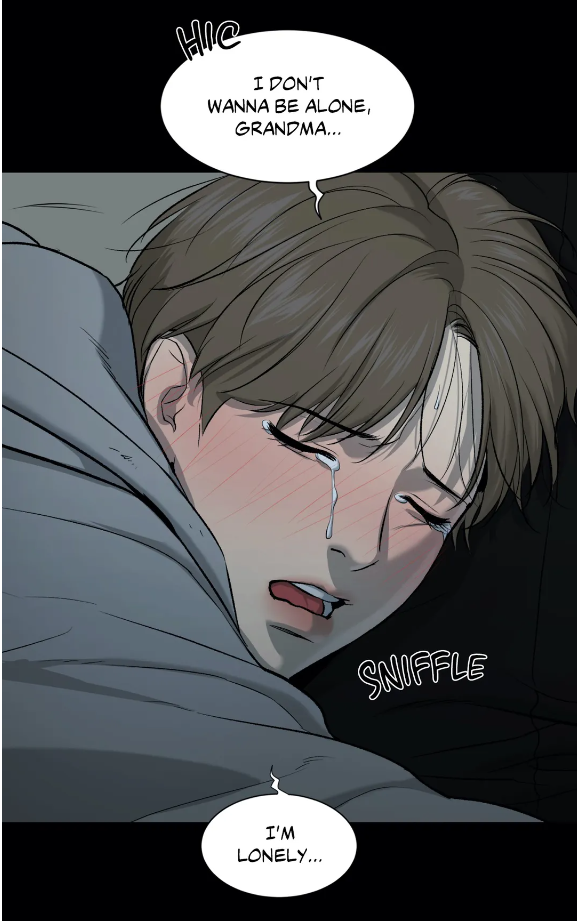
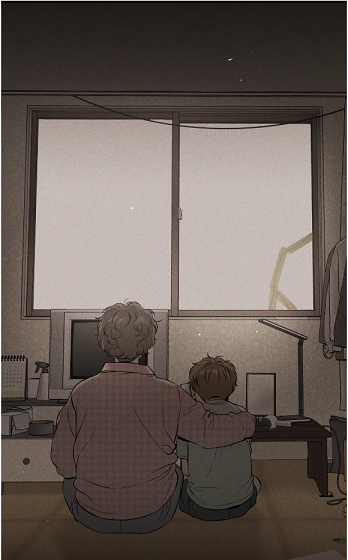


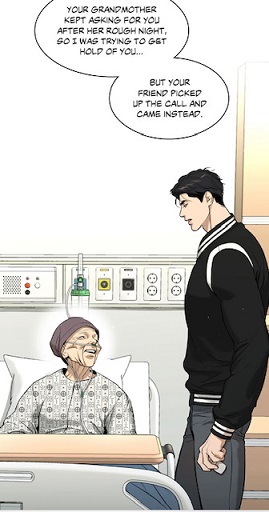

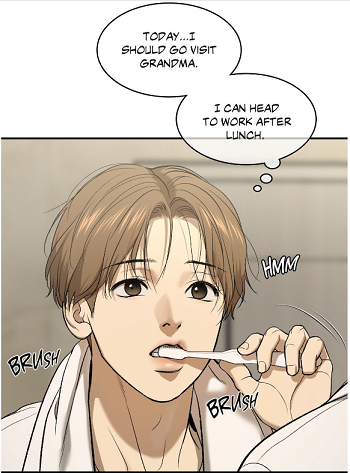
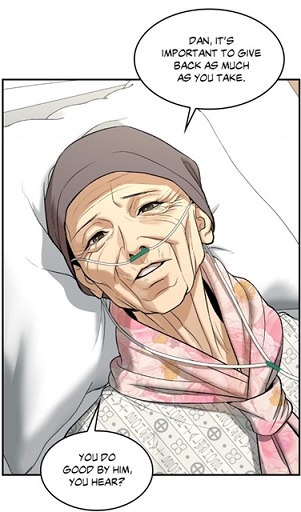
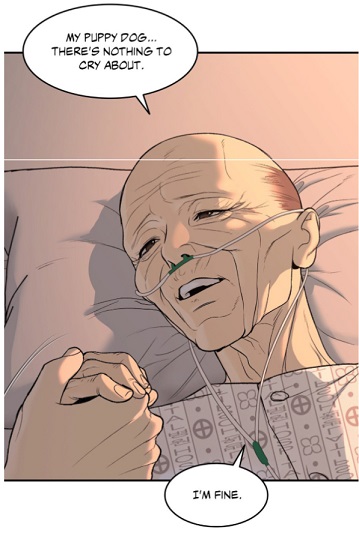
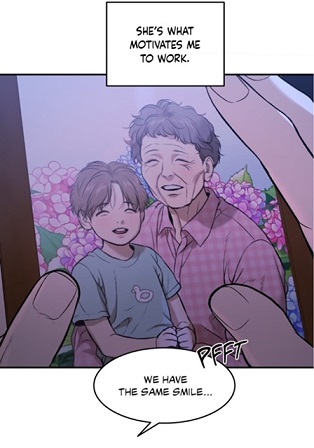


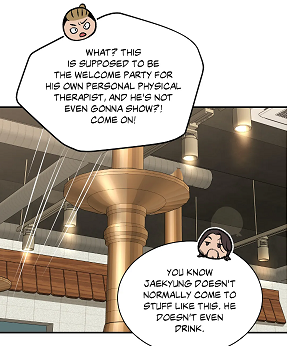 (chapter 9) or other events like this one:
 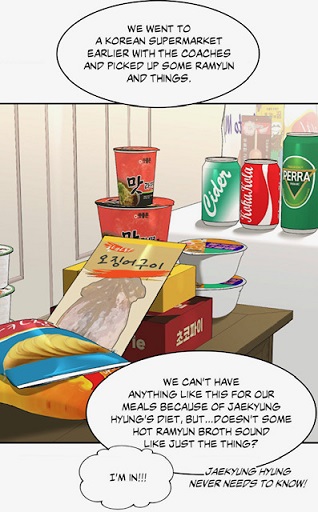 (chapter 37) Buying in secret junk food.
 (chapter 1)
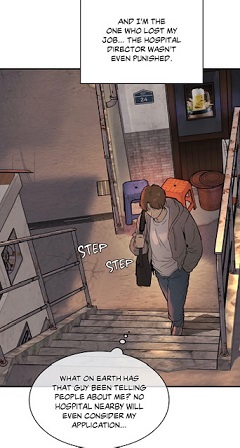 (chapter 1) But it is the same for the champion who got his “gym” stolen from his hyung:
  (chapter 22) He is acting here like a tyrant.
  I came to this revelation thanks to this article:
 . (chapter 46) This would explain the champion’s emptiness and darkness:
  (chapter 21) and Kim Miseon’s reproach to Kim Dan could be seen as an indirect allusion. And if my interpretation about her number is correct, then we would have a good explanation why Kim Dan was unable to perceive her true nature, but also why she is so selfish.
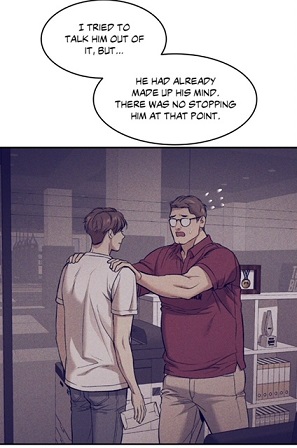 (chapter 53) Only the logo is red.
 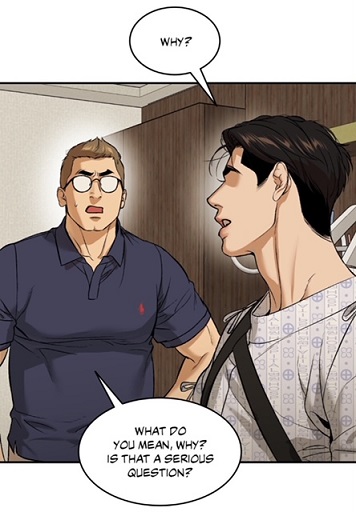 (chapter 53) It is important, because it announces the manager’s resignation. He doesn’t want to become responsible for the mess. Unconsciously, he is no longer claiming to be the owner of the gym. Furthermore, notice that the grandmother desires to return to the West Coast in order to see an ocean of “fire”.
 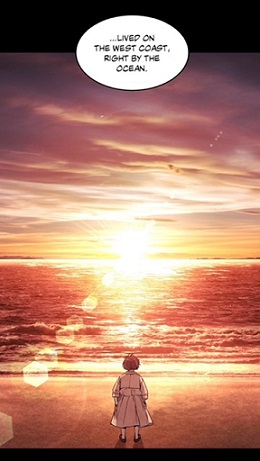 (chapter 53) This shows that she is longing for warmth and red colors. Yet, the color of the sea is rather green or blue. As you can see, everything is pointing out that the couple had to overcome the antagonists from season 1, the emotional vampires, who were so close to them than none of them realized that they were the origins of their suffering. And now, if you look at my table again:
 (chapter 35) In episode 16 and 17, the presence of the sun is a reference to the MMA fighter, it is announcing his arrival. This corresponds to the color I had detected with the first scheme: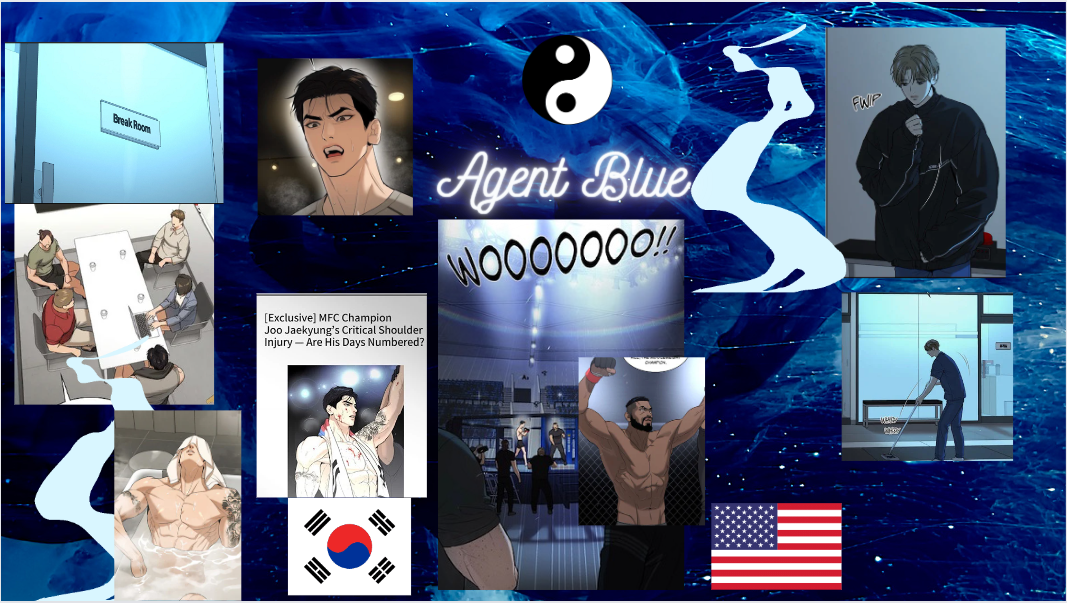
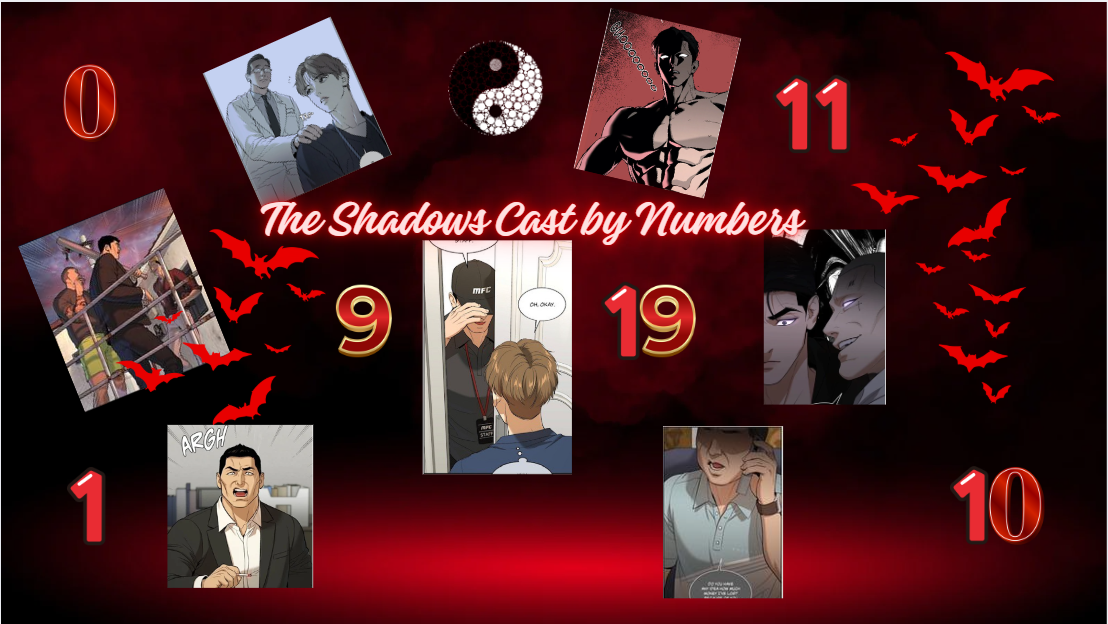
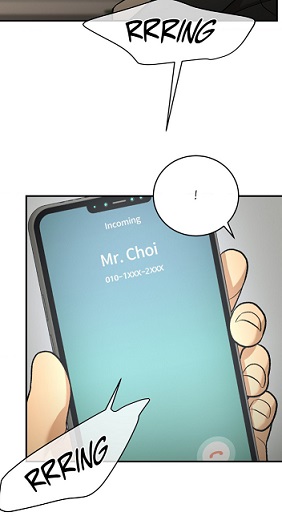
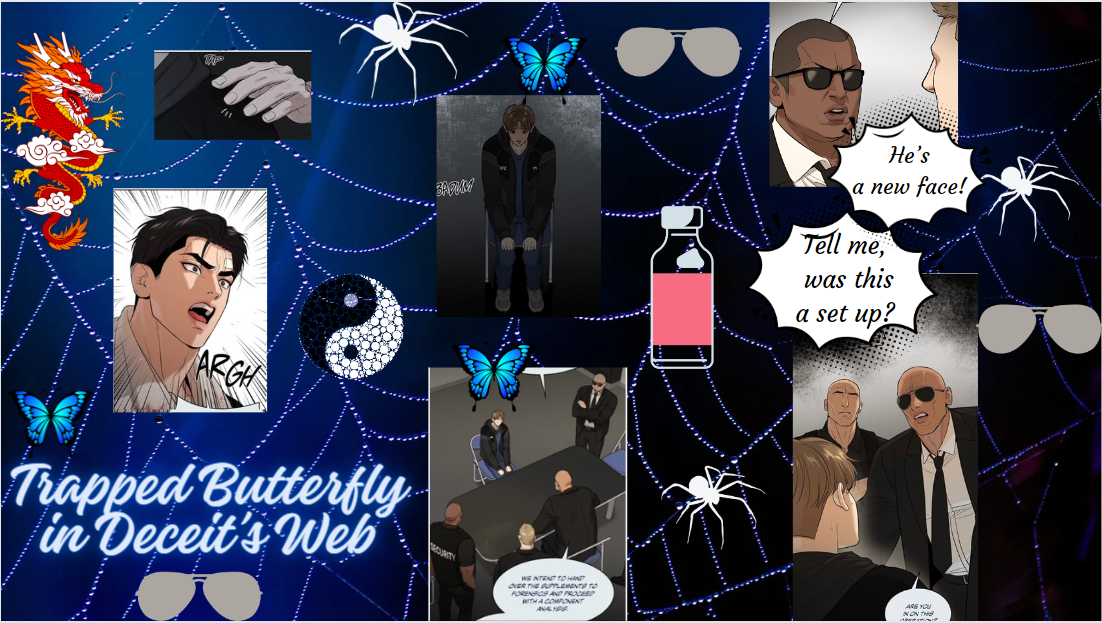 MFC with the blue “ring” embodies this pigment, just like the ocean. In other words, blue should be the dominant color in season 2, and in Taoism blue stands for YIN! On the other hand, Kim Dan also represents red with his name. Moreover, if you look at the numbers of the quoted episodes again, you will realize that the villains are strongly connected to the number 10 and as such one and zero. Thus Director Choi Gilseokf’s phone number is 010-1….
  (chapter 46)
  (chapter 37) He never complimented him for his hard work at all.
  (chapter 46) With these words, the manager creates a negative atmosphere, therefore there is no longer any trust and loyalty among the members.
  (chapter 18), until the champion confronted the protagonist with reality.
 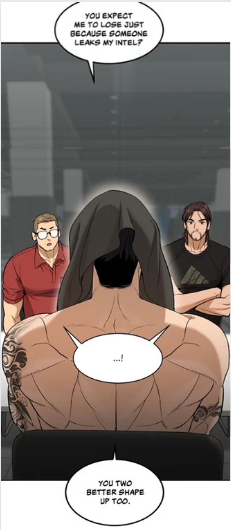 (chapter 46), however Park Namwook refused to accept such a behavior from his boss. Therefore he put his pupil under pressure.
 (chapter 46) He avoided a confrontation. This number symbolizes how the lead feels burdened by obligations imposed by his oppressor, who positions himself as provider of “stability” while actually fostering dependence and draining his victim. And naturally, in the same chapter, we have a similar interaction between Heo Manwook, the minion and his hyung, the real boss:
 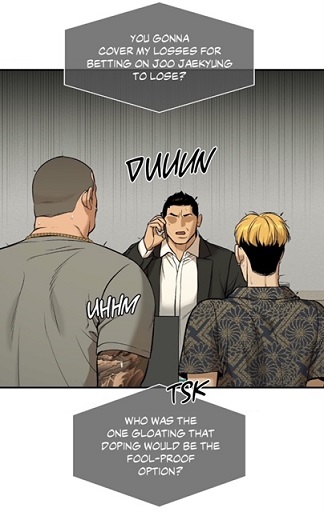 (chapter 46) Here, the director was reminding him of his mistakes and obligations. However, this time the boss chose to become proactive and responsible.
 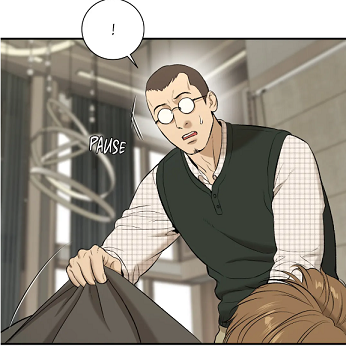 (chapter 13) They are strongly intertwined with the color green and as such blue. In literature, art, and psychology, the color blue often represents calmness, loyalty, and introspection.This fits to the description made by the author concerning season 2. The latter would focus more on emotions and thoughts than on the plot. And now, it is time to reveal why in the illustration I added the number 9.
 (chapter 9) The leopard agreed and that’s how they came to argue about his home the next morning:
  (chapter 10)- So from 9 to 18, the story is focusing on the doctor’s home. In episode 18, Joo Jaekyung invites the poor physical therapist to his home.
 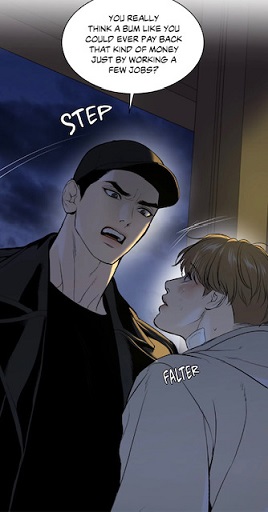 (chapter 18) In this episode, both main leads refuse the assistance from the other. Kim Dan is bothered that Joo Jaekyung paid off the debts, while the other dismissed the worries from the PT:
  (chapter 18) Then in episode 19, Joo JAekyung is not asking for his “help”, until he calls him. But even here, he is refusing to prepare his partner:
 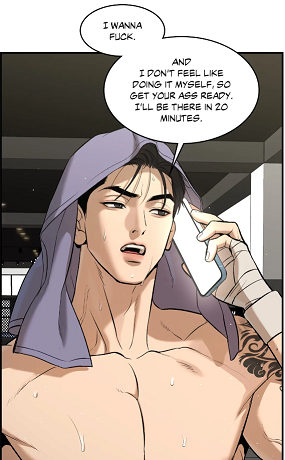 (chapter 19) As for Kim Dan, the latter doesn’t feel truly needed as PT, hence he is already thinking about taking another job:
 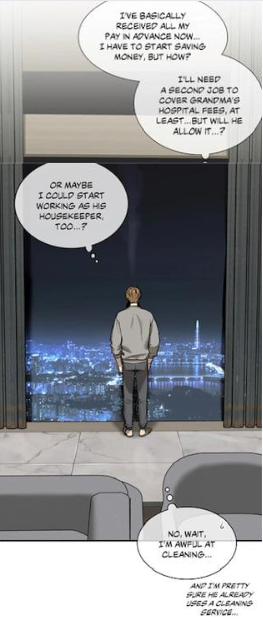 (chapter 19) Then in episode 27, Kim Dan offers his assistance.
 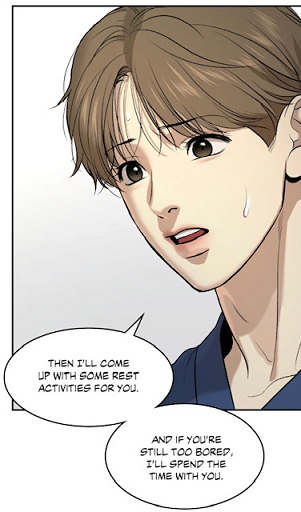 (chapter 27) He encourages his VIP client to take a break by remaining by his side. However, this attempt fails, as in episode 29
 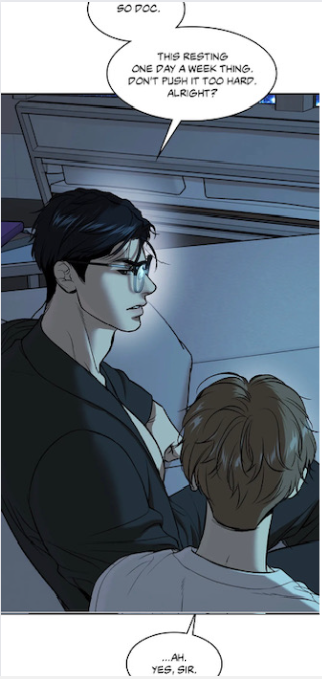 , (chapter 29) the champion rejects the idea of resting for a day. Then after the incident with the article, at no moment Kim Dan offers his assistance to help the champion. He remains totally passive,
  (chapter 36) it shows his passivity and neglect. He doesn’t feel responsible for the champion’s career or safety. His concerns earlier were rather superficial. This explicates why he is also treated like a doll. Then in episode 39, for the first time, the doctor is requesting his help and assistance.
 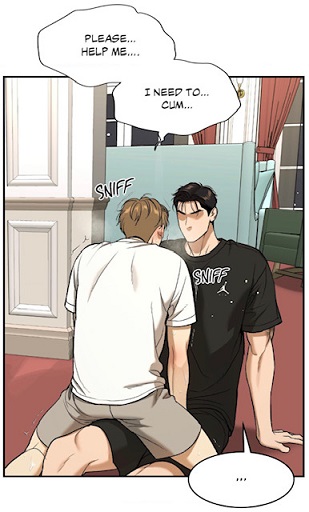 (chapter 39) The problem is that it is related to a drug and sex. This has nothing to do with his job or career. Interesting is that in episode 45, for the first time, Joo Jaekyung voiced his needs to have him as a PT:
  (chapter 49) This means that in that scene, Joo Jaekyung refused to let Kim Dan treat him out of doubts and mistrust which were triggered by the manager’s words and the pictures. As you can see, the number 9 is strongly intertwined with help, but also with a change. The beginning of a new circle. Thus I am expecting in the new season, chapter 54, that for the first time, Joo Jaekyung will ask for help and support. But he can not ask Park Namwook or others from Team Black… he has only one true friend and that would be Cheolmin, unless he finds the protagonist immediately. At the same time, I would like to point out another observation. What is the opposite of 9? Naturally 6, which represents the end of a circle. And now, look at this:
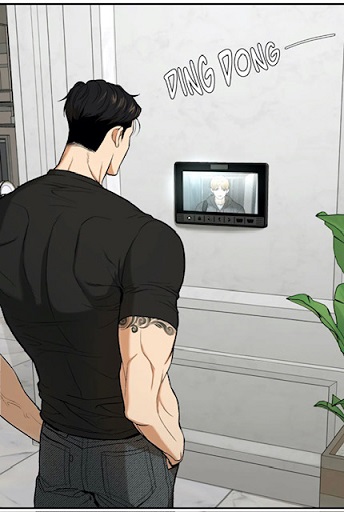 The end of Joo Jaekyung’s torment. He doesn’t need to chase after him.

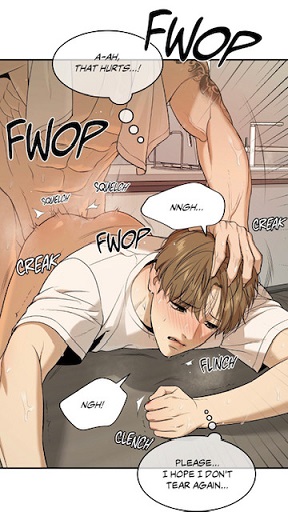




 (chapter 26) are talking about Joo Jaekyung’s past. In this episode, Jinxphiles discover through the testimonies from Oh Daehyun
  (chapter 26) and Kim Changmin that Joo Jaekyung could have become a thug. However, the confession from the fighter with the beige t-shirt grabbed my interest, in particular the sentence “didn’t go down a darker path”. Notice that the innocent sportsman is employing the adjective dark in the comparative form. The usual expression is to go down on a dark path. So why did he say “darker”? Interesting is that by using the comparative, the sportsman insinuates that the protagonist didn’t make a good choice either. Why? It is because dark implies danger, corruption and chaos. It was, as if the man had still veered off course. It seems to hint that Jaekyung is still involved in some morally ambiguous or risky associations. This subtle implication not only complicates Jaekyung’s character but also suggests a tension between his ambition and possible hidden affiliations. This observation raises the following question: why would the sportsman state this?
 (chapter 7), he is a maniac,
  (chapter 9) he is a stubborn workaholic
  (chapter 27)
  (chapter 27)
 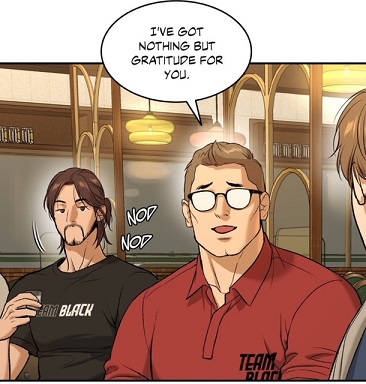 (chapter 43) The moment this expression “darker path” grabbed my interest, I wondered why the manager and coach would employ such an expression. It implies that he still saw the athlete’s career as a dark path.
 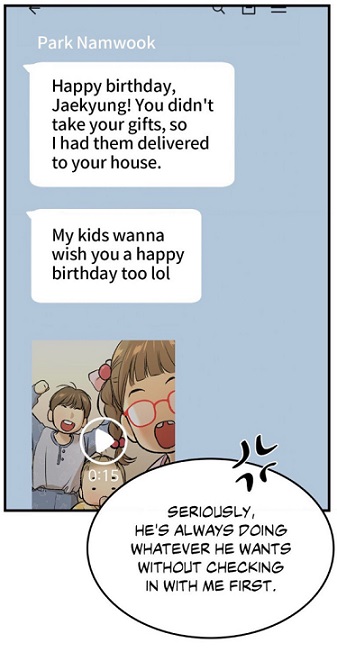 (chapter 43) The latter seem to be cheering on the star. The video exposes that Park Namwook has been portraying the main lead as a champion and as such as a hero. He doesn’t see his job as MMA in a negative light. If so, he would have never allowed his children to know about his relationship with Joo Jaekyung. In fact, the message and video are exposing the father’s pride. He is the coach and manager from the famous and invincible MMA fighter. Consequently, I don’t think that the man is truly condemning him for becoming a MMA fighter.
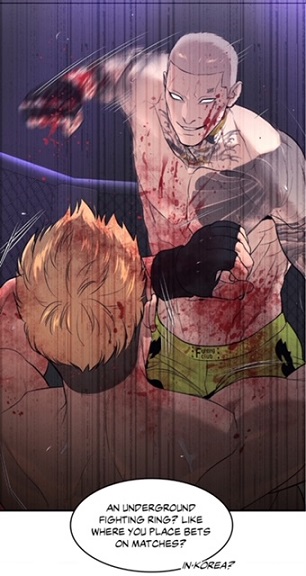
 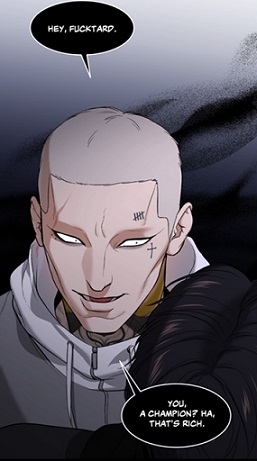 (chapter 49), it signifies that Joo Jaekyung could have become involved in this type of games:
  (chapter 46) In this picture, I detected a contradiction from the hyung. If the star is bringing a lot of money, why would he become a target? In fact, people would rather bet on the man, as his victory seems more probable than his defeat. No one has an interest to bet against him, unless the schemers are malicious and malevolent. The word “target” is not random, it implies the existence of a scheme. Hence the manager should have been even more prudent concerning his star’s safety. Yet, he allowed him to return home alone during the night and he had no guard by his side.
 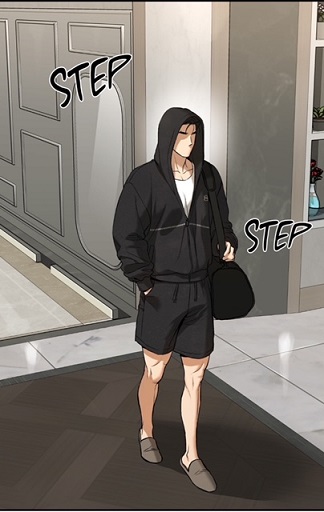 (chapter 48) This remark outlines the manager’s neglect. His boy has no protection, though he had already become the target of a “malicious fan” according to the “fake investigation”. Moreover, in the office, Park Namwook is finally admitting the existence of illegal gambling, a topic which was never brought up before.
  (chapter 46) He is explaining this, as if that was something new. However, even the members from TEAM Black already knew about them.
 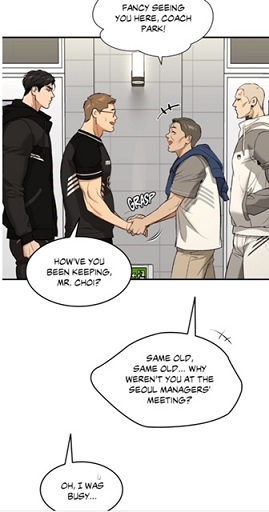 (chapter 49) The drop of his face is not only indicating his discomfort, but also his lie. It is because if he had met the director from King Of MMA, he could have been suspected of being a traitor or a spy. Thus I come to the following theory: Park Namwook knew about the meeting between the director of Choi Gilseok and Kim Dan. Let’s not forget that the physical therapist encountered the villain right in front of the gym and Kwak Junbeom was a witness of their meeting.
  (chapter 48) This raises the following question: did he know about the anonymous message?
 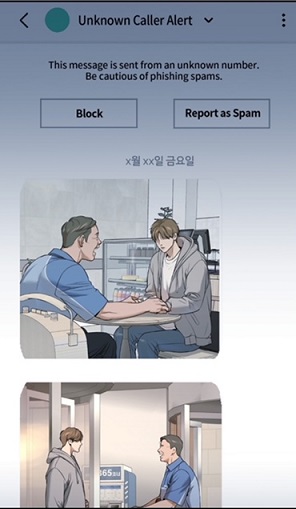 (chapter 48) It is difficult to say, but this incident is revealing the manager’s complicity. How so? It is his job as a manager to protect his boy from the public. No personal information should be so easily accessible. He has to make sure that his cellphone number is not given to any random guy. Yes, his cellphone number was leaked not only to journalists, but also to rival gyms. I am suspecting that the leaking could be linked to „favors“ and free PR. One might say that the Entertainment agency could be behind the leak. However, my avid readers shouldn’t forget that the person who pushed Joo Jaekyung to sign a contract with the agency was Park Namwook.
 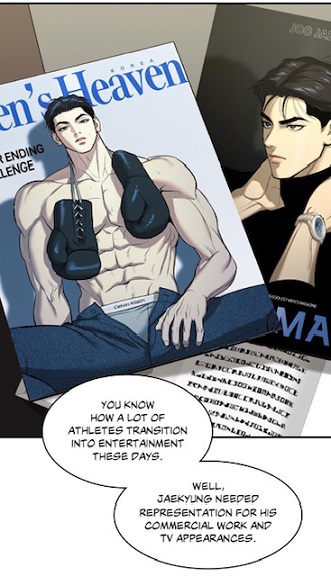 (chapter 30) He explained this choice by saying that many athletes would sign such contracts. His justification outlines his herd mentality. That way, he would delegate his responsibility to the agency. Hence Park Namwook is accountable for the signature of this contract. Thus it dawned on me that the manager has played the same role than the halmoni’s in the end. Both put a leash to their “relative’s neck”, though it had never been their intention. There is no ambiguity that these two characters were definitely motivated by their selfishness, greed and dream. Finally, we should question ourselves why the manager and coach is so obsessed with money and is treating his “boy” like a doll. His mentality was definitely influenced by his surroundings. However, at the gym, most of the fighters were portrayed as little kids who got corrupted over time. Since I detected similarities between the two main leads, I can only come to the deduction that Kim Dan is the champion’s emancipator. While the doctor needed money to get liberated from debts, the other needs to find a true family in order to be free from fighting restlessly. But there is more to it.
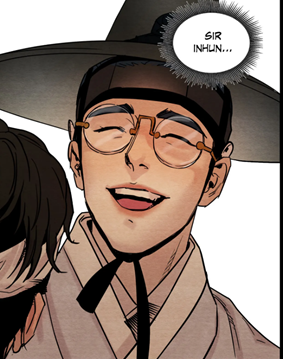 (Painter Of The Night, chapter 7) Jung In-Hun from Painter Of The Night is the perfect illustration. The latter had the impression to be superior to others due to his knowledge. He imagined to have fooled Yoon Seungho. Thus he envisioned that he had been able to manipulate the main lead, whereas the opposite had happened. Finally, the scholar had the tendency to dream big, which led him to his doom. On the other hand, since Matthew Rayner
  from Under The Green Light decided to wear spectacles in order to avoid rejection and fear, I deduce that Park Namwook represents a combination of both metaphors. On the one hand, he is hiding his true thoughts behind the spectacles. He also has high ambitions and he is not entirely honest to his “boss”, like I exposed it in the last composition. On the other hand, there is no doubt that the man is also motivated by fears.
 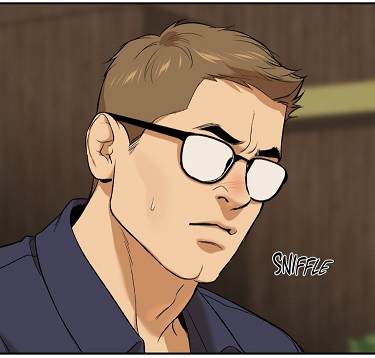 (chapter 53) They serve him as shield literally and figuratively. No one would punch or slap a man wearing glasses. Furthermore, he is protecting his own heart and mind that way. It was, as if he was closing his eyes to reality. That’s the other reason why I believe that the coach is not entirely ignorant about the existence of corruption in MFC. Yet, I couldn’t help myself noticing the absence of Park Namwook’s eyes, especially at the end of the season 1. Jinx-philes could only see them, when he voiced his anger towards his “champion”:
  (chapter 52) After that outburst, they vanished behind the glasses.
 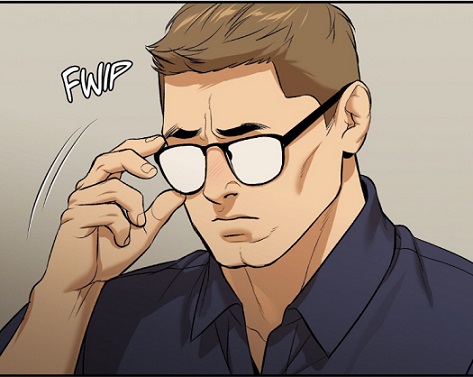 (Chapter 52) By putting them back, he is displaying that he is acting again. His hidden eyes may also hint at an emotional or moral blindness, as though he either cannot or chooses not to see the deeper consequences of his actions or the corruption around him. And now, you comprehend why he stands for fake gratitude and fake compassion. His mouth is not reflecting his mind.
 (chapter 52)
 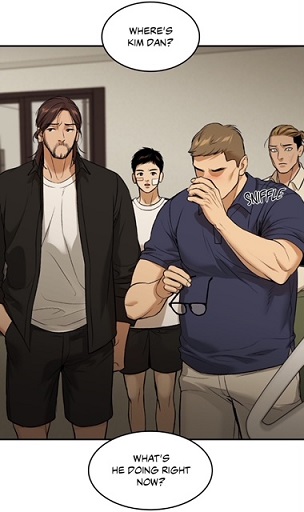 (chapter 52) Park Namwook removed his spectacles, when he cried. However, notice that he still protected his eyes by using his arm. A sign for his dishonesty in my opinion. Moreover, it indicates how guarded and mistrustful this man is. At the same time, it becomes clear why he had to remove them. It is because the glasses are a mask. The tears would not have been visible. I would even add that this man was mimicking a crying person, as his weeping stopped very quickly. He needed to awake compassion or sympathy, for he had acted like a ruffian at the hospital. He had used violence on a patient.
 (chapter 31)
 (chapter 31) He used his whole weight and strength to take down his counterpart. This corresponds to a low-speed car accident and Mingwa let us see the effect of this terrible impact:
  (chapter 31) His facial expression was betraying him: he was in pain. This means that in verity the one who had caused an injury was not the champion, but Heesung. But there is more to it.
 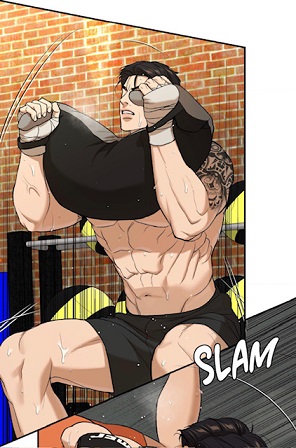 (chapter 37) Look at this: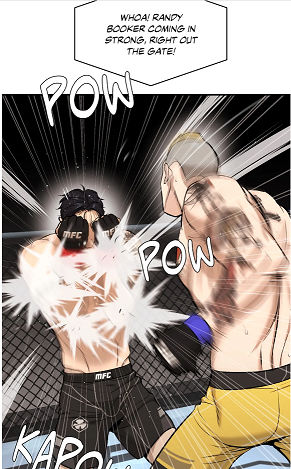

 In the second case, the athlete had to change his strategy, for he was already wounded. In other words, Kim Dan’s mistake was to teach Joo Jaekyung to trust his instincts and as such himself. He needs to stop using his body as a shield, but as a weapon, like he did in the doctor’s home: become proactive and anticipate his opponent’s moves.
 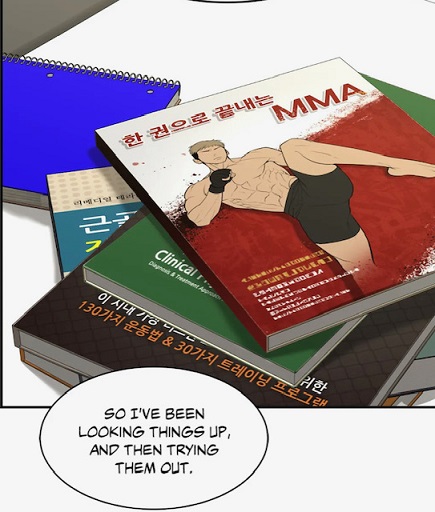 (chapter 25) The latter desired to learn the moves from MMA fighting
  (chapter 25) in order to understand the involvement of the muscles and the possible consequences on the body. This scene displays the lack of expertise from Park Namwook. How did he become a manager and even a coach? Perhaps a crash course organized by MFC
  (chapter 22), but the latter is definitely influenced by the criminal underworld. This new observation reinforces my previous theory that Kim Dan will come to replace the manager and coach’s position. What distinguishes them from each other is their attitude to knowledge. Kim Dan keeps learning, reading and watching, whereas the other has the impression, he already knows everything. I guess, he has never heard from the concept “lifelong learning”.The latter promotes the idea of continuously acquiring knowledge and skills throughout a person’s life. This approach values education beyond formal schooling, emphasizing that learning can happen in various settings
  (chapter 42), including personal, professional, and community experiences. The goal is to adapt to changes, meet evolving job requirements, and stay mentally engaged. In Germany and other countries, lifelong learning is promoted to foster personal growth, social inclusion, and employability, especially as technology and society rapidly evolve. I am myself a follower from this concept. Hence I am still looking for new things (learning new cultures, new languages, reading about psychology, …).
  (chapter 27) Yet, he was chastised. I had always stated the coach’s responsibility before, but I had only found indirect evidences for this interpretation. Since he should have absorbed the impact, it implies that the latter should accept the pain as a normality. However by blocking Heesung’s assault, the athlete had tried to protect his own body. Thanks to Kim Dan, the fighter was learning how to treasure his own body. Moreover, it displays another flaw from Park Namwook: his risky attitude by making a bad recommendation. I would even add that his slap on the fighter’s neck is revealing his recklessness and thoughtlessness.
 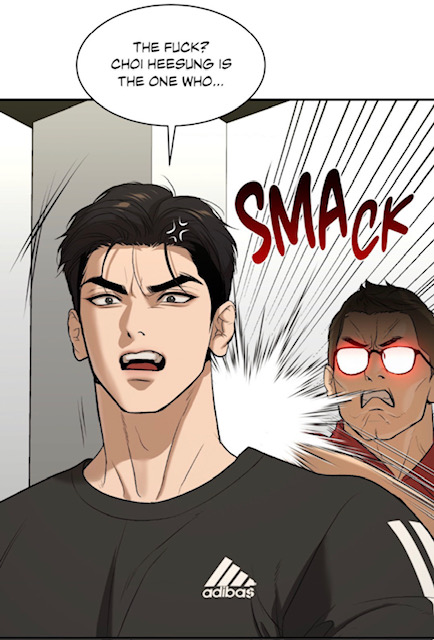 (chapter 31)
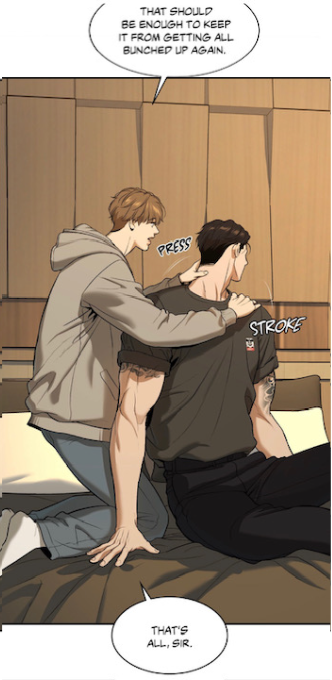 (chapter 32) Joo Jaekyung was finally receiving his treatment for his injury, the consequence of Heesung’s tackle. No one checked on his body, just because the other was faking his injury. While writing this, I can’t stop my blood from boiling out of anger. To conclude, I am confirming once again that Park Namwook is a bad coach and manager. He shouldn’t be allowed to become one for the other fighters. He would treat them like toys or even “punching bags”. Imagine that he would also recommend such a strategy to Potato as fighter. That would be very dangerous. In addition, why was he treating his star so badly and privileging the actor? It is because the latter brings money forgetting that the champion is the source of his own income! And this brings me back to the initial picture:
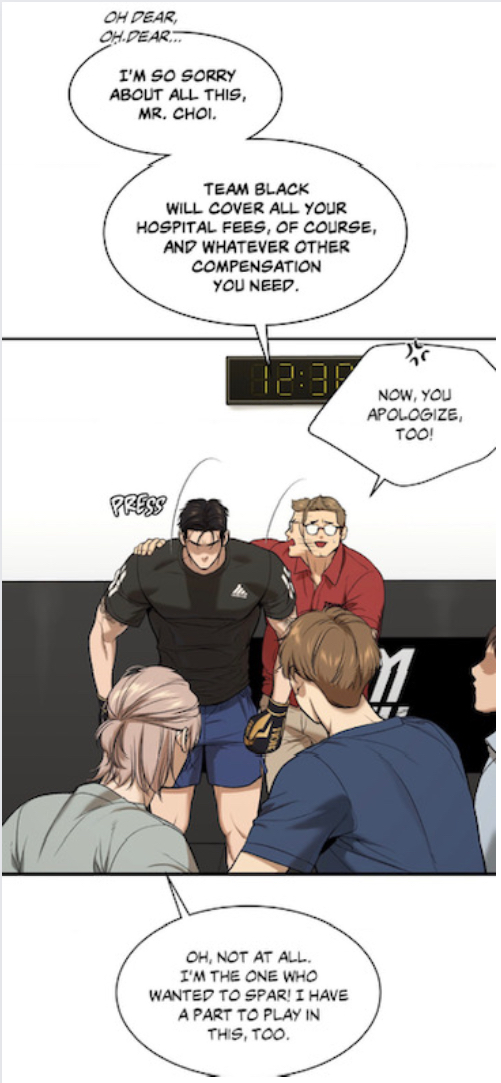
 (chapter 43) Interesting is the idiom is a synonym for deceitfulness. And this brings me to my next observation. Why did he add “whatever other compensation you need”? The moment I asked myself this question, I couldn’t restrain myself from thinking that the manager might have known about the true intention from Choi Heesung. Is it a coincidence that Kim Dan was used as compensation for the athlete’s mistake? Moreover, the latter was supposed to meet the actor on a Saturday, his own day-off.
  (chapter 32) And this proves that Park Namwook is the reason why the athlete never took a day-off. He was forcing an employee to work during his day-off and the latter wouldn’t even be paid for this. It was included in the “salary”. It was, as if the manager was using the PT as his servant.
 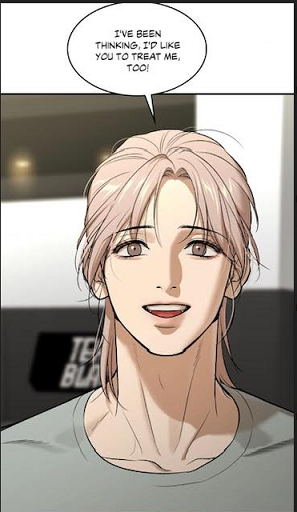 (chapter 31) in the hallway, next to the meeting room and office. So technically, Park Namwook could have heard them talking behind the door, a new version of this scene:
 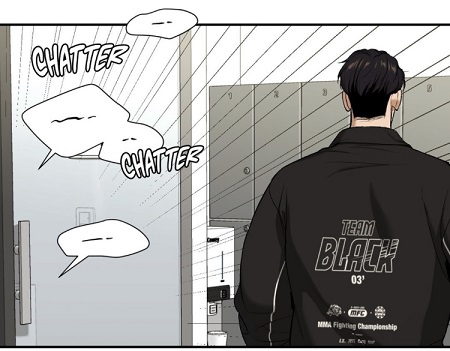 (chapter 36) Was he truly ignorant about the actor’s intentions with all this wooing and sponsoring?
  (chapter 31) In addition, he had heard the comment from the gumiho’s manager.
  (chapter 30) Just because we didn’t see this, it doesn’t mean that it didn’t happen. And maybe that’s the other reason why he was more than willing to use Kim Dan. The latter was bringing a huge client to the gym.
  (chapter 31) He would come on a regular basis. Naturally, I have no more proof for this theory than the remark “whatever other compensation you need” and its timing. Nevertheless, one thing is sure. Kim Dan was treated the exact same way than Joo Jaekyung, a doll and servant at his disposal.
 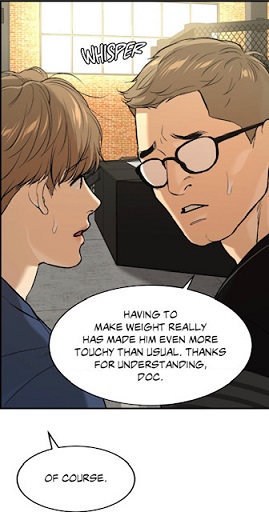 (chapter 37) are just lip-services because at the end, he has no problem to replace Kim Dan.
 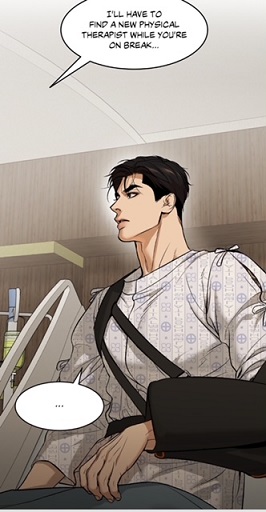 (chapter 53) That’s the reason why I have been wondering if the last incident was not the trigger for the coach to drop his “boy” and find a new “star and champion”. Since he is so obsessed with money and fame, I can’t help myself wondering if he will take a new pupil and torment him so that the latter only becomes a shadow of himself. Let me know what you think about this.
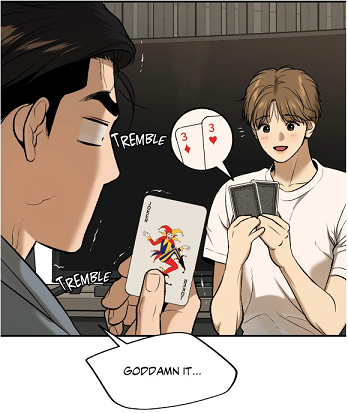 (chapter 27)
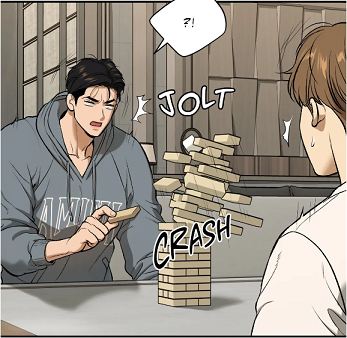 (chapter 27) His fine motricity and his sense of observation were not well developed, hence he selected the wrong pieces in both games.
  (chapter 27) In order to win in such games,the players need to take their time and observe. Yes, playing such games are encouraging calmness and patience. Indirectly, it is promoting peace of mind, people can forget their worries and anxieties. And because the athlete had lost all the games before, there is no doubt that he was rushing for a victory. Let’s not forget that he had bet with the doctor, he could win so easily.
  (chapter 27) In addition, because of the previous negative experiences, I believe that the champion’s belief (being jinxed) got revived. How could he explain that he would lose to such a poor and small opponent? That’s why it is necessary to question ourselves what kind of card games they were playing.
  (chapter 27) Because the latter couldn’t swim, he jumped to the conclusion that he was drowning.
  (chapter 37) Is it a coincidence that the doctor drank his drugged nutrition drink? No… The reason why both became a victim of the second scheme is that they were no longer communicating to each other.
  (chapter 47) They are no longer facing each other, the athlete was even turning his back on his precious roommate and PT. Joo Jaekyung had started keeping his distance from his soulmate because he had listened to his toxic mentor
  (chapter 51), while in reality the latter had protected his back. Interesting is that exactly like in the penthouse
  (chapter 27), the athlete deserted the room out of anger
 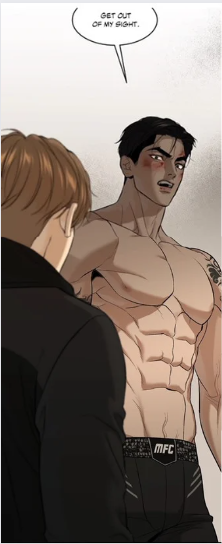 (chapter 51) leaving the doctor behind. It was, as if he had thrown away his Joker without realizing his true value. However, we shouldn’t overlook this aspect. The fighter’s words were not reflecting his true thoughts and emotions. He was acting impulsively and thoughtlessly overlooking that words can be as harmful as punches. And what is the common denominator between these two matches? Team Black had reacted impulsively. They made accusations and rushed decisions, while just like in board games, patience and observations are necessary to win a round. Yes, this connection between these two scenes displays that life is like a game… you should take your time, enjoy the moment, you can start afresh and play a new game. While the manager is envisioning to replace the doctor
 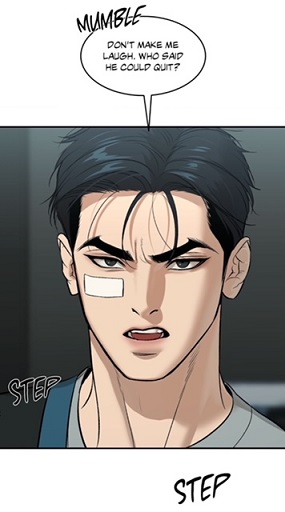 (chapter 53) decided to pick up the Joker on the floor and continue the game, as the round is not finished yet. His intention is to bring his Joker Kim Dan back in order to use him properly in the future. He will treat him with patience, trust, respect and care! Moreover, observe that the goal of “Chase the Joker” is to get rid of the cards. Consequently, I perceive this game as a metaphor for the champion’s future actions and decisions: he will have to get rid of certain cards like MFC manager, the Entertainment agency and the lawyer in order to become the true winner. He regains control of his own life. I am leaving out the manager and coach, for I believe that Park Namwook will stay there, but he will have a different position.

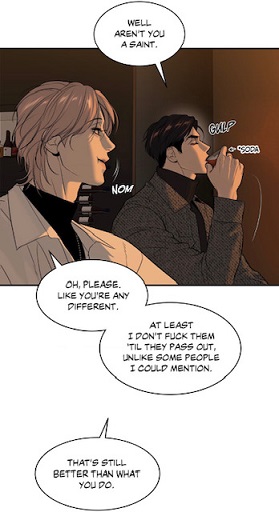
 (Chapter 1) Imagine that he was in the middle of an intercourse. Yet he felt the need to have someone else by his side. It was, as if the grass on the other side was looking greener. 😉 Yes, in this scene, I detect parallels between Choi Heesung and Joo Jaekyung.
  (Chapter 33) On the one hand, the celebrity felt attracted to Kim Dan, on the other hand he had already sensed that the green-haired uke was greedy and even too passive. He was letting the celebrity fuck him. Yet there was neither real interaction nor sensuality between them. Hence the athlete could call Kim Dan during their sex. Funny is that the other didn’t mind at all, or in the worst case he didn’t even notice it. This shows not only the deafness and blindness of the mint goblin, but also the absence of communication and understanding in their “couple”. It was, as though the green-haired uke had submitted himself of becoming a sex toy. So by recalling the doctor, there is no doubt that the athlete couldn’t have voiced this change verbally. Why was he thinking of someone else during the intercourse? He was just simply not feeling it, the “great fuck”. In other words, Joo Jaekyung was attracted to Kim Dan by lust! In my previous analysis entitled
  (chapter 42), it becomes clear why the athlete’s lust for the mint goblin couldn’t last. The latter was only interested in his money and not even in his body. Thus he didn’t try to bring thrill into their relationship or even seduce him. And now, you comprehend why Mingwa let us see such a scene in the beginning of the story.
 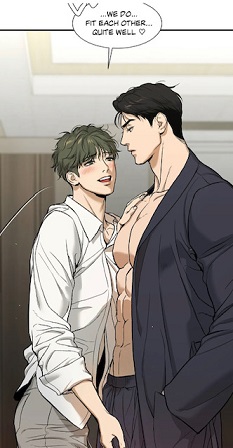 (chapter 2) He had never done it before. As for the champion, Manhwa-lovers can grasp that since their relationship was purely physical (not even accompanied with romanticism due to the athlete’s jinx), the lust from the champion’s side could only weaken overtime. When the athlete met the actor, he had not met the green-haired man before. Hence the sportsman was sitting at the bar looking more or less for a new partner.
  (chapter 33) So the relationship between the “prostitute” and the fighter must have lasted around 3 months, the same amount of time than with the physical therapist. The uke had put no effort, for in verity he was relying on the athlete’s jinx. The latter just needed him, and no one was willing to experience such a rough sex session. The reason why I gave the green-haired uke the nickname “mint goblin” is the following. He brought some fresh breathe in the athlete’s life, for contrary to his past lovers, this one didn’t run away. However, as time passes on, the mint taste couldn’t mask his corrupted mind and heart. He was passive and rotten deep inside. But there’s more to it. Thanks to the mint goblin, the athlete learned an important lesson. It was possible that someone could match his strength in bed. Yes, the latter wasn’t passing out like the others. Deep down, the star could sense that he was no monster, a criticism he had received from the actor.
 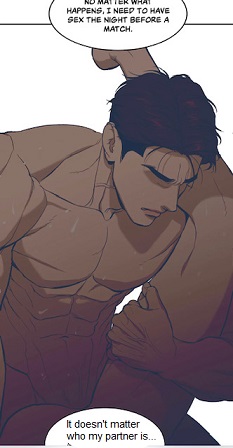 (chapter 2) There would be nothing left in the future, it was a work relationship. Under this new light, it becomes comprehensible why Kim Dan had to end their relationship at the end of the season. Because of his confession, their relationship was doomed to fail. It stood under the sign of “jinx”. We could say that the champion was receiving his karma for treating people like sex toys or surrogate fighters.
  (chapter 33). The irony is that as soon as he saw Kim Dan
 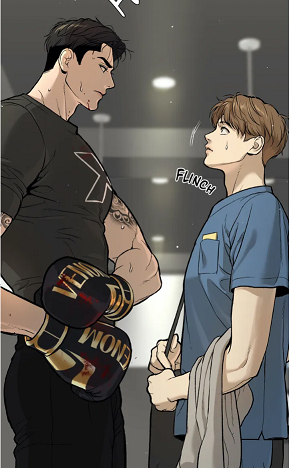 (chapter 1), he got attracted to this pretty and cute new face. However, contrary to the comedian, he didn’t realize this, for the athlete is not someone who thinks deeply. He acts rather on his emotions, exactly like his mentor Park Namwook. Since lust is the first stage of love, the recipient of his “attraction” needed to give him a signal that he was interested in him. I doubt that the celebrity would have made a move on him, if the doctor had not made this mistake
 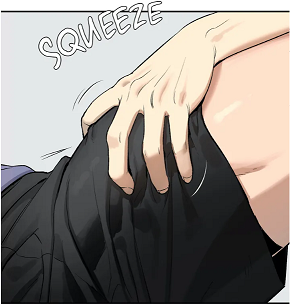 (chapter 1). Naturally, grabbing his phallus was the expression of the doctor’s masked sexual desires. This signifies that when the couple met for the first time, the grass appeared greener on the other side (medical world) for the first time. Since we have the first step of love in their relationship, we could say that the athlete was already in love with Kim Dan. While “lust” only represents the first stage in a love relationship, I decided to examine their relationship on this aspect.
 (chapter 33) We have the novelty aspect (bringing thrill into their relationship) and the champion’s selfishness. The sex toy was utilized as a “punishment”, for the athlete was upset due to his jealousy. However, this perception is still too short-sighted. You will laugh, as soon as you read my new interpretation.
 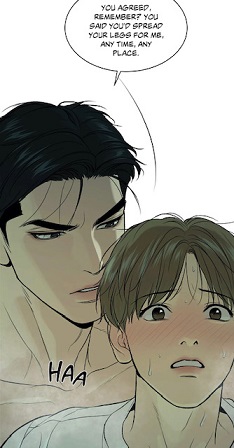 (chapter 8)
  (chapter 27) Consequently, the man had to bring up the deal constantly. Besides, their relationship started because of money. Finally, I would like Jinx-lovers to keep in mind the doctor’s lie: he had previous relationships with men.
  (chapter 3) As you know, I am quite certain that the athlete had sensed his lie (thus he utilized no condoms later). Yet, Kim Dan never came out with the truth either. This is relevant, for there could be lingering doubts from the MMA star’s side. Since the athlete had no idea about the doctor’s taste and physical attraction, Joo Jaekyung worried that his partner would start fantasizing the gumiho. Under this light, my avid readers can grasp why in episode 33, it was important for the champion to use the sex toy first. Initially it was to exhaust the doctor so that the latter would no longer feel attracted to Choi Heesung. Yes, it was to kill in him “lust”. Moreover, the moment the young man asked for his assistance
  (chapter 33), Joo Jaekyung had the impression that he was needed. Finally, don’t forget how this scene ended. Kim Dan was finally admitting that he was really sensitive to him:
 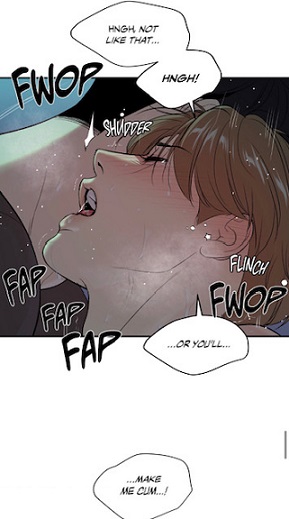 (chapter 33) However, this desire was accompanied with rejection and denial too. This explicates why the champion didn’t know how to interpret Kim Dan’s thoughts and emotions.
 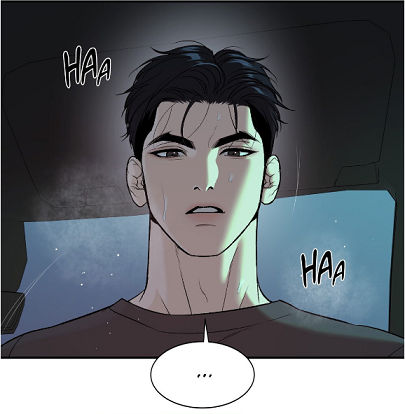 (chapter 33) Was Kim Dan feeling the same way than him or not? Did Kim Dan desire him or not? And this leads me to the next sex session:
  (chapter 34) For the first time, the athlete was divulging his physical attraction and desire towards the doctor. He seduced him with his own body. Yet, in order to keep the upper hand in their relationship, he was the one who was determining how they would have sex:
 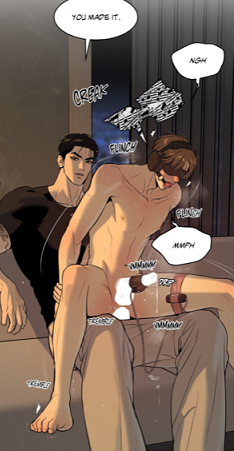 (chapter 34) As you can see, during season 1, it took a long time for the athlete to admit “lust and physical attraction” towards the doctor. One might reply that the celebrity had already admitted this to the physical therapist:
  (chapter 29) However, this confession is connected to the anus, and not to the doctor’s face and as such identity. Thus I don’t consider it as an admission that Kim Dan was his type. One might object too that he had already wooed the doctor before next to the swimming pool.
  (chapter 27) The divergence between these two chapters is that in the first scene, the athlete had not planned this. He was acting on his instincts and emotions, while in the living room, he was seducing the doctor on purpose.
  (chapter 34) I would even add that he gave more freedom to Kim Dan to decide if he would accept his offer or not. As you can see, Joo Jaekyung was learning to internalize the notion “consent and respect”. Here, the doctor could have refused… the evidence is his reaction at the gym, the slap on the athlete’s hand. That’s how I realized the strong connection between the athlete’s ignorance about his soulmate’s taste (partner type) and his consent. Respecting the doctor’s boundary meant to trust that the doctor was attracted to him and accepted him as a partner.
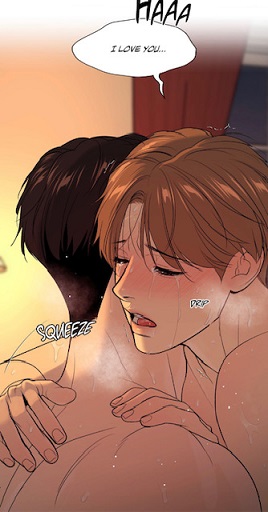 (chapter 39), this could only make the athlete happy first. He had the impression that he had finally discovered his soulmate’s taste and secret: he was also feeling the same… LUST. Yes, I am not writing love, but lust on purpose. Why? The irony is that the athlete was not recognizing that he was feeling more than lust for Kim Dan. He was already in love. 😉 However, so far he had only been busy focusing on Kim Dan’s type. Was the man also lusting after him or not? Under this new perspective, Manhwa-lovers can grasp why Joo Jaekyung asked this to Kim Dan in the dining room:
  (chapter 41) He didn’t expect a love confession He wanted to know if Kim Dan was finally accepting him as his partner, if he desired him too. Yes, gradually the possibility of dating was slowly emerging. Like mentioned in the introduction, lust is just the beginning of love. So should Kim Dan have remembered this night in the hotel room, he would have come not only to deny his feelings for the athlete, but also he would have reduced this “I love you” to lust, just a physical reaction due to the drug. A new version of the blue night, the only difference is that that night he kept his thoughts to himself.
  (chapter 45) What did the athlete imagine here? A fake love confession from Kim Dan, a stan trying to live out a fantasy. He was expecting “dating”, a notion he couldn’t accept, for he was confusing “lust” with “love”. That’s the reason why he couldn’t accept Doc Dan’s present and “gratitude”. They sounded like fake, especially since he was showing respect to the celebrity and not to the man himself! Yes, even in that scene, the PT was still hiding his own true emotions and attraction towards the handsome man. Joo JAekyung has no idea that Kim Dan views him as “perfect”
  (chapter 1) despite his injured shoulder: the muscles, the skin, the handsome face. He has never voiced such thoughts in front of his VIP client.He always kept them to himself.
 (chapter 53) than with this one:
  (chapter 53) He let him go, for he anticipated that the latter would remain by his side. In addition, he didn’t feel the need to have sex the whole night, as his affection had already moved to the next stage. There was more than physical attraction and desire.

 , but as always I didn’t anticipate the effort and energy involved in the composition. Thus I decided to publish the essay “Sound Of Water” first, as it is much easier to write (less literature to read). The trigger for this essay are Haikus which I discovered in a recently published French Book entitled “Le bruit de l’eau” (Sound of water).
  And now, you know the origin for this essay. As you can see, the collection of Haikus is focusing on the topic “Water”. Since I only possess the French version of Haikus, I could only give you my own English translation. Fortunately, my friend @Rin_de_eegana was able to find the original version, Japanese. Therefore in the second version, I am giving a second English translation whích gave me new insight once again. Anyway, the thing is that as soon as I read certain poems, it made me think of Jinx and the characters. This shows my obsession for this terrific Manhwa.
 (chapter 14) Yet, the main lead never got the chance to see it. Then the ocean is only mentioned directly at the end of the first season. The halmeoni was expressing her wish to return to the West Coast
  (chapter 53) When she was 10 years old, she was moved by how the ocean changed colors with the beautiful sunset. It was no longer blue or grey, but yellow, red, pink, orange and purple. This wonderful but brief moment left such a deep impression on her that she could never forget it.
  (chapter 53) She never came to regret her walk to the beach, because this souvenir also became her source of strength. This memory created in her the desire to see it again, thus she kept postcards with views of the ocean.
  (chapter 17)
 (chapter 53) is glowing blue? I don’t think so. Let’s not forget that blue symbolizes wood for Koreans. The sea (water) and a tree
  (chapter 41) are the doctor’s true elements. Under this new light, it becomes comprehensible why under the tree, he came to acknowledge his feelings for the athlete. In addition, if Kim Dan gets close to water, this signifies that he will get replenished and truly nourished. And notice that during season 1, he never ate properly.
 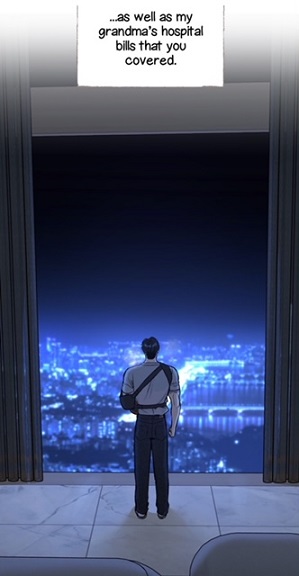 (chapter 53) He is standing in front of the blue city. But he doesn’t feel free and powerful. Why? There is a window in front of him. The window is showing him his own boundaries. His penthouse is like a cage, and he is not truly dominating the city. In reality, he is isolated. To conclude, the panel stands in opposition to the Japanese poem and the grandmother’s vision: alienation, regret and powerlessness. So we should write the haiku like this, from the champion’s perspective:
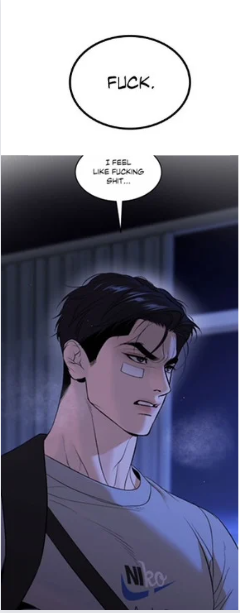 (chapter 53) Together, these opposites suggest a state of inner turmoil or confusion, where a person lacks clarity about both themselves and the world around them, which can inhibit personal growth and well-being. And this is exactly how the main lead feels in the final panel of season 1.
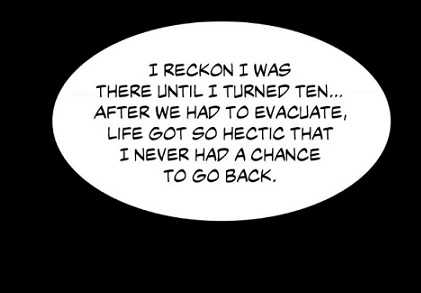 (chapter 53) Thus I deduce that in that moment, she must have felt at peace. This explains why she could never forget this magic moment. However, her confession displays a deep regret as well: she couldn’t go back to the ocean. I would even add that she is portraying herself as a person who had no control over her life. It was either « we » or « life ». Through her words, we can sense her passivity, but also her victim mentality. It was not her fault that she couldn’t go back to the ocean. She never had the opportunity to do so!! She never had missed her chance. She is denying the existence of a missed chance or timing. After reading the description of her past life, I am quite certain that my avid readers can recognize the similarities between the athlete and the halmeoni’s destiny. Until his defeat, Joo Jaekyung had no time either. He was also racing against time. However, there exists one divergence between them: the chance to make the right decision. This means that the champion has now the opportunity to take a break. Furthermore, he also has one chance to get back the doctor, but he shouldn’t miss it.
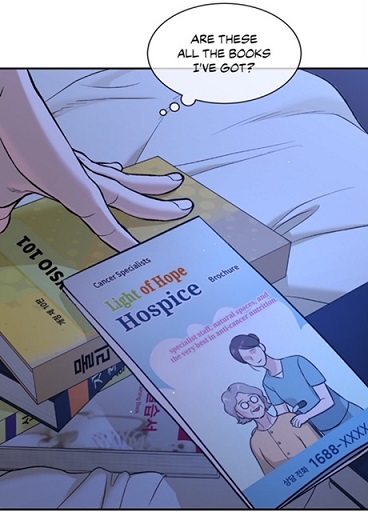 (chapter 53) Furthermore, she is imagining that she can make the same experience again. But this is just an illusion, like the Greek philosopher Heraclitus explained it:
  (chapter 53) Secondly, I doubt that the beautiful view could make her forget her suffering. Finally, let’s not forget that for one single moment, she will spend many days in a hospice, where she will be surrounded by dying people. Furthermore, the image of the ocean could generate a different feeling: torment like mentioned above. She is expecting to make the same experience, but the opposite could happen. She gets terrified and tormented. Therefore I have the impression that the grandmother might come to regret her past decision. But contrary to the past, she can not blame the others (« we ») or life, as it was her own choice and request! Therefore I deduce that in the past, she let others make decisions for herself, like we could see it with her expensive treatment. She listened to Kim Dan and the oncologist.
  (Chapter 7) And we could see that Joo Jaekyung had a similar attitude in season 1, he would listen to his hyungs and the people working for MFC. Consequently, I come to the following deduction: this time, the fighter will make the decision on his own. He won’t follow Park Namwook’s advice:
 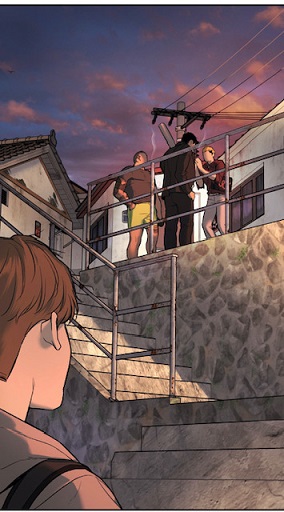 (chapter 1)
  (chapter 47)
 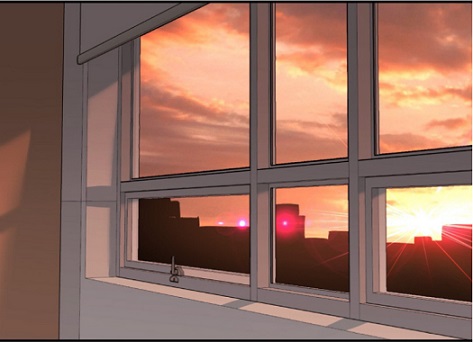 (chapter 47) even when the doctor was confronted with the truth about his terminally ill grandmother. The sun was always shining brightly. Since in the haiku from Ryokan Taigu, the rain is associated with old-age and fall (misty), it dawned on me that the rain should be associated with the grandmother’s death. If this comes true, it was, as though the sky and gods were weeping for her vanishing. Additionally, the first season took place in Spring and Summer, thus I deduce that season 2 will take place around late summer, fall and winter. This means that the weather should change. And this remark led to my second revelation. I started looking for South Korea’s climates, particularly I was curious about the climate on the West Coast.
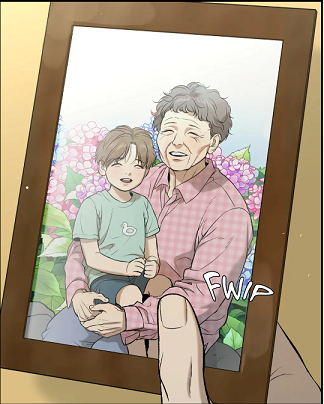 (chapter 19) the presence of pink and purple hydrangeas indicates that it was taken in Summer. This new approach reinforces my perception that the grandmother is about to get confronted with harsh reality despite her attempts to escape from it. Her wish can not be fulfilled so easily, like she is imagining it. In addition, Manhwa-philes should keep in their mind that weather has a great influence on elderly people’s health.
 We have an elderly man walking through the rain in front of the blue sea. The latter is accompanied with a Waka-poem from Yoshihiro (which was not translated). According to my Japanese friend @Rin_de_eegana (飯乞ふと 里にも出でず この頃は 時雨の雨の 間なくし降れば), this phrase describes a situation where one cannot even go out to the village to beg for alms due to the long rain. Here, we have the topic of poverty linked to old-age and rain. Yes, the pages of this book reminded me of Shin Okja, a poor elderly woman who is so sick. And like mentioned above, the rain could be the reason why the woman doesn’t go to the beach. The two poems are underlining one important aspect: the powerlessness of humans in front of nature. No one can stop aging, just like no one can control the weather. At the same time, it outlines the importance for a senior to be surrounded by people, so that they don’t end up dying from dehydration, from a cold or hypothermia.
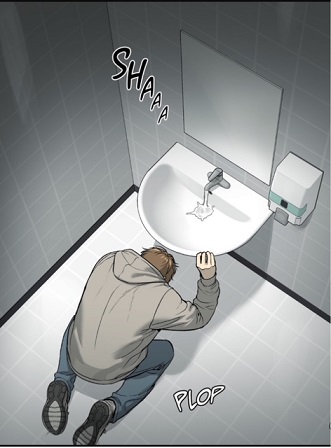 (chapter 47)
  (chapter 49) Both main leads went to the restroom in order to hide their emotional turmoil and suffering. They used flowing water (in Joo Jaekyung’s case the shower) in order to cover the sound of their weeping: SHAAA. Yes, the tears are making sound… so the rain should make sound as well. And this brings me to my next remark.
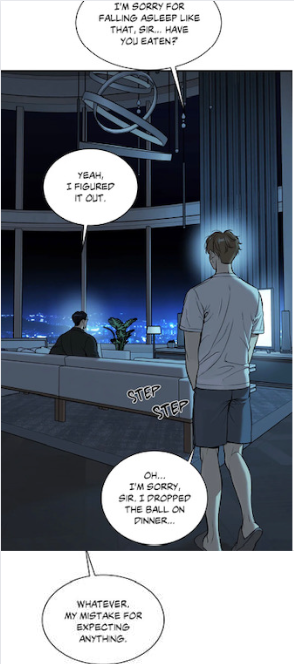 (chapter 29)
  (chapter 35) The blue would be a reference to the ocean. After that couch confession night, the athlete got a certain enlightenment, hence he tried to get closer to Kim Dan the next morning
  . (chapter 30) In episode 35, the night stands for ignorance and self-deception, for the doctor was not present. Joo Jaekyung reverted to his old self. However, don’t forget that the haiku was not just about the moon light, but also about the sound of the waves. All the senses are awakened which represents a better experience than the grandmother’s. Moreover, since I am anticipating the presence of Kim Dan, this means that Kim Dan embodies not only the light in the dark, but also sound of water. This interpretation brings me to the following remark. In season 1, the athlete had already associated his fated partner to “sound”, though in the beginning he viewed it as noise
  (chapter 18) and as a source of stress and worries.
  (chapter 45) This means that the night view of the ocean should make him discover the beauty of the sound of water. He will come to associate the sound of the sea waves with Kim Dan. That’s how he will be able to fall asleep. In other words, I am expecting a new version of this scene:
 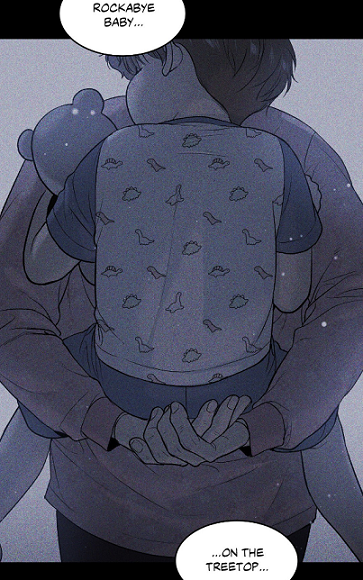 (chapter 47) To conclude, Joo Jaekyung will also have an Enlightenment in front of the ocean, but contrary to the grandmother, this experience will be associated with the night, the sound and a person: his soulmate Kim Dan.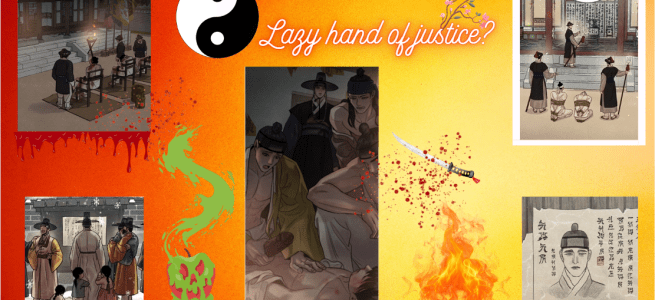

 (chapter 131) Hence the police officers found the governor’s seat deserted.
 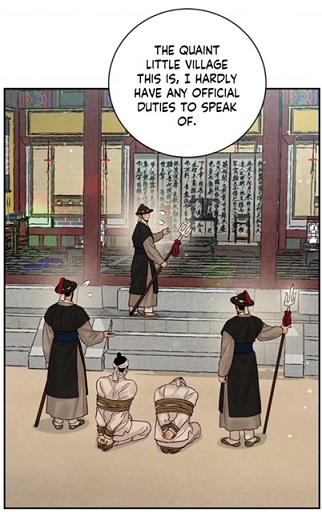 (chapter 131) By contrasting the statement from the governor and the panel, the readers could easily catch his lie. He was a lazy governor, preferring to keep his lover company rather than attend to his official duties. On the one hand, it exposes the main lead’s true mind-set. He is not longing for power or glory. To conclude, he has no ambition. This implies that he is not determined to gain attention either. One might add that he selected this region on purpose. No one would willingly go to that place. The norm was that officials would go there, because they were demoted.
 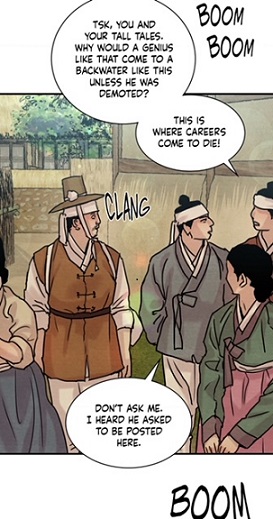 (episode 129) Thus I deduce that Yoon Seungho made the opposite choice to his father. The latter longed for a high position at the government so that the family’s reputation would become famous and powerful again.
  (chapter 86) It is because Yoon Chang-Hyeon was thinking of getting the attention or support from noble families. What he truly wanted was to get recognition from people among his own social class. But with such a decision (join the painter’s side), Yoon Seungho seems to have turned the former patriarch’s nightmare into a reality. Yoon Seungho is about to ruin the family. The name “Yoon” is destined to become forgotten, right? However, I believe that this interpretation is not correct. How so? Let me ask you this.
 (chapter 127) No one has such a wealth! That’s the reason why no official would select such a place. Yes, Jung In-Hun’s words from chapter 6
  (chapter 6)
  (chapter 37). It is about a crime, treason. In season 4, we know that the plot was true and there was an evidence, the paper with the signatures from lord Yoon and lord Song. Since in season 1 the wrongdoing was true and heavy, I deduce that it is not the case in the final chapter. Because there is an evidence of the crime in the past, I can’t help myself thinking that in the final chapter, there was no evidence. Additionally, I feel the need to expose my other interpretation about this man:
 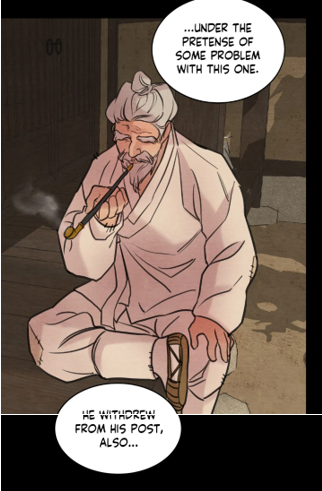 (chapter 37) I have always stated that this man couldn’t be a servant, for he was smoking a pipe and we saw a glimpse of his memory. No commoner would be allowed to enter the courtyard, when three noblemen are tortured and interrogated. Moreover, notice that in both scenes (37 and 131), the magistrate is absent. That’s how it dawned on me that this nameless man could have been a former “governor” who lost his position.
 (chapter 94) Here, the officers went to the mansion before visiting him at the gibang.
  (chapter 97) Back then, it was about the death of a commoner, a servant. If there’s an urgency, they would look for him. The comparison exposes that the “wrongdoing” from the peasants in the final chapter was no huge deal. Yet, many readers already condemned them due to the guards and the protagonist’s behavior. Funny is that the lord was portrayed as a huge liar, but not “the officers”.
  (chapter 101) His statement displays another aspect: the governor and the guards are not working together. Jihwa would have been sent to jail without being able to talk to the superior, similar to this scene:
  (chapter 126) The guards’ own interests are not necessarily aligned with the governor’s. And now, take a closer look at this scene:
  (chapter 127) The official received the patriarch in his office alone. The reason is simple. That way, he wouldn’t have to share the money with others.
 (chapter 129). He was not sitting on a horse with a few musicians contrary to Jung In-Hun. He was carried by four men, and other people were announcing his arrival with flags and music.
  (chapter 111) Moreover, Yoon Seungho had a inauguration banquet organized, where the local inhabitants could join.
  (chapter 129) There was no social exclusion at all. This stands in such opposition to the lord’s statement in season 1, where he distinguished between nobles and commoners.
 (chapter 129) This signifies that the arrest could lead to trouble to the guards too. So was the lord lazy in the end?
  (chapter 131) Yes and no… By acting that way, he put an end to the abuse of authority in that place!! Thus I deduce that the governor is destined to gain recognition and admiration from the local inhabitants. He is generous (inauguration banquet where anyone could join), humble, loyal (he is not forgetting his lover)
  (chapter 131), but also well organized! He had planned to join this place a long time ago. The peach trees were planted about 3 years ago. He is no longer making any distinction between nobles and commoners, and that’s how he will get the respect from the peasants. As a conclusion, we should envision that the lord will become famous. Therefore the son didn’t turn the father’s nightmare into a reality. He didn’t contribute to the family’s ruin at all. Yet, there exists a huge divergence. Yoon Seungho is about to make a name on his own. It is not about the Yoons. On the one hand, the father’s dream was illusory and superficial, especially due to the treason
 (chapter 86). Since Lord Song had been forced to resign, there’s no doubt that the man would resent the Yoons to become successful again. This explicates why lord Song saw Yoon Seungwon as a problem
  (chapter 107) and tried to tarnish the younger son’s reputation. But let’s return our attention to the patriarch. His vision was based on Confucianism. However, he had a very narrow-minded perception of it.
  (chapter 7) This shows that the tradition was to “vanish behind the family name, the Yoons”. Under this new light, my avid readers can grasp why the main lead was destined to suffer immensely
  (chapter 57). His reputation was already outshining his father’s. Secondly, by being stigmatized as a homosexual, he was endangering this principle. His role was to continue the lineage and as such produce a heir.
  (chapter 116) or even Min could commit crimes in the open. They felt safe, for they knew that the authorities belonged to the same social class than them. However, this could only work, as long as the nobles would cover for each other. Should a yanbang denunciate a noble family, it was a different story. Therefore I assume that lord Lee was the one who reported the treason to the authorities (the painting in the bedroom was the evidence). But such a painting couldn’t represent a proof. However, since human justice was corrupted, the gods decided to give justice to the protagonists. That’s how Yoon Seungho became the hand of justice. Everyone involved in the protagonists’ suffering had to pay for their crimes.
  (chapter 102) That’s the reason why Baek Na-Kyum’s martyrdom was strongly intertwined with the young master’s. Yoon Seungho only received this power through Baek Na-Kyum, the character embodying fairness, sincerity, hard work, home and equity. This was particularly perceptible in this scene:
  (chapter 27) The lord couldn’t kill anyone randomly.
  (chapter 102) However, I consider it as a first step to the lord’s emancipation and life lesson. The latter is indirectly learning not to pay attention to status and power. That’s why the author portrayed him as blind and deaf to their plea and special status. While his behavior in the shrine was rather impulsive and influenced by deeply rooted fears, we should consider lord Song’s execution as a true act of justice.
  (chapter 123)
  (chapter 123) The latter had confessed all his crimes: the ones from the past (the lies in order to fool the father)
  (chapter 123) and the painter’s murder. Funny is that lord Song didn’t feel threatened by the young master at all despite the sword.
  (chapter 123) Why? It is because he feels, he is the one with the upper hand. First, he has the petition, hence he is already projecting himself in the future (he can get a high position again). Secondly, he thinks, Yoon Seungho is outnumbered. He is surrounded by 4 guards. But more importantly, he views himself superior to the main character due to his age. He is an elder. That’s the reason why he calls “my dear boy”. This implies that he is underestimating the main figure. The latter would never dare to raise his hand against a senior!! However, true justice is also blind to age.
  (chapter 123) His smile at the end of the episode should be perceived as a reflection from Min’s vanishing.
  (chapter 103) One might even add that the lord’s action could have been seen as self-defense. However, don’t forget that we are here in Joseon, where a commoner’s life means nothing. Because of this new association, I came to the following deduction: lord Song was the one behind lord Shin’s death.
  (chapter 103) The latter couldn’t imagine that an elderly yanbang, an official, would raise the sword against another noble. After this new realization, it dawned on me why Yoon Seungho had to get separated from his loved one.
  (chapter 126) This humiliation made Yoon Seungho realize that he needed to have his power on his own. He learned through the hard way that he was not just a Yoon, but Seungho. Yes, this helped him to differentiate himself from his father and to become stronger mentally. His religion was now his lover, Baek Na-Kyum, whom he needed to protect. But he could only do it, if he had himself a powerful position. But he needed to witness the corruption of the authorities to realize that in Joseon, there exists no justice.
  (chapter 6): neglect and indifference towards the commoners. And this new observation brings me to my other topic, Jung In-Hun.
 (chapter 129), therefore he couldn’t select one position contrary to the main lead. This means that when he celebrated his “victory” in episode 111, it was not official. He had no post. I would even add, his name had not been announced on the official board, like we could witness it in this scene.
  (chapter 121) Here, he is informed that he didn’t pass the exam, for his name was not written there. We can detect this, because people are congratulating each other. His name was left out due to the intervention from lord Song. This means that when Yoon Seungho made him this offer
  (chapter 7), these were not empty words. He did help the learned sir to pass the civil service exam. But the scholar didn’t succeed like anticipated. The absence of his success explicates why Jung In-Hun received such an offer from lord Song later.
 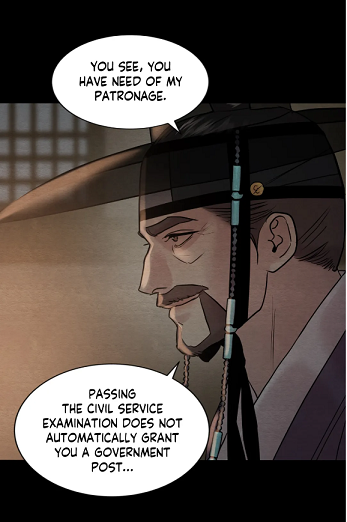 (chapter 117) He had no post, he couldn’t choose it, for he was not the best. Thus I deduce that the scholar had just proven his mediocrity. He was just an average man. That’s how it dawned on me that the ceremony in the street was more a simulacre!
  (chapter 44) Only one thing was real: Jung In-Hun was wearing an official uniform, that way no one would doubt his “victory”. Moreover, observe that lord Song only approached the learned sir after the parade. So he was not behind the parade. Besides, keep in mind that the main couple was informed about the parade through the tailor
 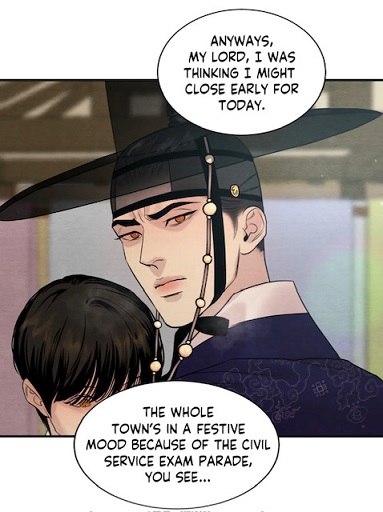 (chapter 111) and not from the official board. His reaction shows not only his displeasure, but also his ignorance. If he had known about the cortege, he would have avoided the place in the first place. Thus I suspect that the tailor had been encouraged to leak this information in front of the couple. Let’s not forget, as a tailor, he was definitely involved in the cortege. It is no coincidence that he informed Yoon Seungho about this “sudden parade”. At the same time, I come to the following deduction: someone must have paid for this spectacle, and it was not Yoon Seungho, for he had been kept in the dark until the last moment. I doubt that the learned sir had the connections and money for this. This new perception corroborates my previous interpretation: the show was sponsored by someone, and it was definitely inspired by the drawing (the hat and the green uniform).
  (chapter 111). Yet this was just a cheap trick, for the person didn’t send a sedan chair with carriers. Under this new light, I realized why Jung In-Hun ended up stigmatized as a criminal.
 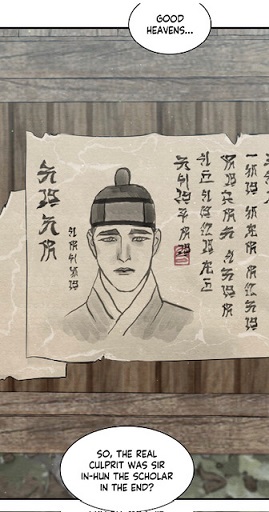 (chapter 127) It was his karma, for he had deceived the painter with his lies. His success was not his own.
  (chapter 111) He realized that even after passing the exam, he needed the assistance of people, a sponsor for the spectacle, a noble with connections. Besides, when in season 1, the painter was accused of a crime (ruining the picture), the learned sir did nothing at all. He didn’t protect his student, for he desired to keep his sponsor. When the latter was sick, he neglected him as well. He wouldn’t have sent a doctor for him. Hence in season 4, the sponsor Na-Kyum decides to end his “sponsorship” for the learned sir. We could say that the former teacher is confronted with a similar situation. He ends up being abandoned and framed for a crime, which he didn’t commit. Yet, contrary to his pupil, he is not entirely blameless, for he played a huge role in the death of the nobles lord Song, lord Shin, lord Min and others. Because Baek Na-Kyum embodies hard work, justice, equity, love and honesty, I deduce that his surrogate father embodies the negative notions: laziness, corruption, partiality, hierarchy, ambition and hypocrisy. That’s why his face ended up on the official board, while the painter’s accusation just remained rumors.
  : (chapter 125) versus
 (chapter 105) IMO, she had to use another mean in order to achieve her goal: the scholar. Let’s not forget that the artist had confided to her this:
  (chapter 68) He was simply waiting for the learned sir’s return. And she was present during the cortege.
 (chapter 121), he put the painter in a position which led him to take for the fall for his loved one. It was like framing an innocent. Exactly like in season 3
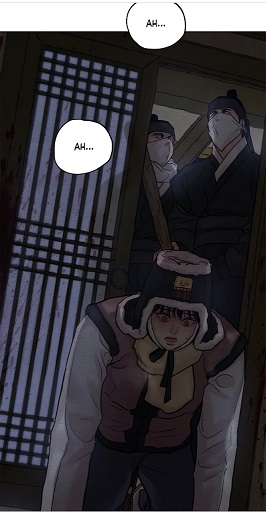 (chapter 99), Yoon Seungho had been forced to take the sword because of the scholar. And the trigger for the massacre
 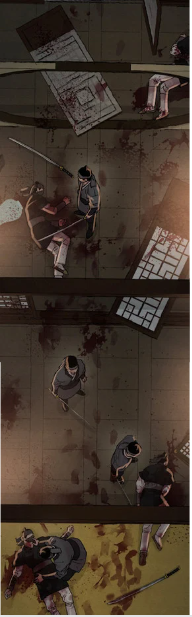 (chapter 124) was always Jung In-Hun. And now, you comprehend why Jung In-Hun became the scapegoat for the last incident. But there’s more to it.
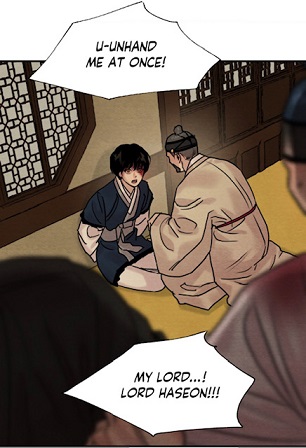 (chapter 121) His final lesson was to learn that he was exactly like the others: he is just a human despite his education. All humans are equal in front of death. In fact, during his confrontation with lord Song, he came to give up on his integrity. His true face came to the surface: he was just an opportunist, a lazy scholar who relied on fate and his arrogance.
  (chapter 6) This brings me to my next interpretation. Jung In-Hun learned through the hard way that there is nothing like fate (“right time”), but life is the result of decisions. However, because the scholar always regretted all his past choices, he decided to blame others for his wrong choices. That’s the reason why he ends up to take the whole crime. We should see this paper
 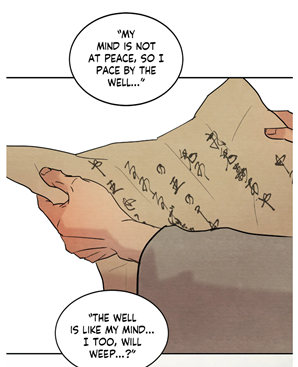 The author from this sijo was the poet and official Wang Bang-Yeon who is said to have lived in the time of Joseon’s sixth king Danjong (1441-1457) and his successor king Sejo (1417-1468). As the official of the state tribunal, he followed the young king Danjong into his exile and gave him poison to drink by royal command. Yes, both are symbols of power, corruption, partiality and injustice. Yet, there exists one divergence. While Wang Bang-Yeon left a poem revealing his yearning for the king, the learned sir had no deep attachment towards the artist. Hence it is no wonder why the paper “Wanted” is not connected to affection. It really reflects the emotions and thoughts of Baek Na-Kyum. Due to the last incident, the latter no longer cares for this man.
 (chapter 6) He couldn’t enjoy it at all. It is no coincidence that the synonyms for ambitious person are “busy person” and “workhorse”. Yes, this mirrors the expression “laziness”. A true ambitious person is actually proactive and not really relying on sponsors and bribes. So when we see the learned sir on the horse
  (chapter 107) Though he passed the civil service exam too, he is not able to fulfil his father’s wish either.
  (chapter 118) His intention was to protect not only his brother, but also their family. It was to ensure that lord Song would get blackmailed. That’s how this investigation
  (chapter 118) It is because he knows that with the petition in his brother’s hands, lord Song represents a hindrance to his own career. The latter can only see the Yoons as a threat. Besides, he can only resent the family, if they are able to gain reputation and power, while he can not return to Hanyang and occupy a high position. As you can see, the young master’s success can only irritate lord Song. You can sense a rivalry between Seungwon and lord Song Haseon
  (chapter 116) in this scene:
  (chapter 116) The latter has already sensed that the traitor is sitting next to them, thus he raised this question. That’s why I come to the following conclusion that the young master must have realized that he also needed his brother’s assistance. First, if Yoon Seungho returns the petition to the father, the investigation about the traitor in the mansion would be no longer necessary. Secondly, Yoon Seungwon needs to create new connections in Hanyang, but he can only achieve it with his elder brother. Under this new light, you comprehend why Seungwon asked his relative to move on from the past and as such “forgive their father”
 . (chapter 118) In other words, the young man embodies the notion of “fake forgiveness, fake promise, fake understanding”. He is an opportunist, exactly like the scholar. Yet, there exists a huge divergence between them. His affection for Yoon Seungho was not fake. He is feeling sympathy for his brother. But that’s it. This explains why he didn’t help his brother before. In my eyes, Seungwon represents a different notion of family: bloodline. In my eyes, he embodies traditions and Confucianism. His goal is to turn his father’s dream and life motto into a reality: glory and power for the Yoons. Besides, he must have experienced himself the downfall for the family. And this observation leads to my next interpretation. This means that Yoon Seungwon must have lied to his father by omission as well.
  (chapter 128) What about Yoon Seungwon then? Though he succeeded too, there is no mention about engagement or marriage proposals. However, it is clear that this achievement is connected with adulthood and marriage, therefore the elder Song Haseon brought up the topic sex!
 What was the reason for Yoon Seungwon’s embarrassment? First, it is because his brother selected the backward place, though he had passed the exam with flying colors. Yoon Seungwon imagined that once his brother had passed the exam, he would get married and establish new connections. That way, Seungwon would be able to get married with a properous and famous family. In other words, Yoon Seungho would turn the father’s dream into a reality: the return of the Yoons’ glory and power. And Seungwon would benefit a lot from this. So in the gibang, his advices might have sounded well meant,
 (chapter 126), his karma is not only to end up alone, but also not to receive any support from his brother.
 (chapter 117), because his career was still insecure due to lord Song’s influence. He needed his brother’s help in the end. At the same time, Seungwon had already long internalized the values from his father: Yoons’ honor and reputation were top priorities. In other words, the younger brother stands for social norms and fake righteousness. He desires to maintain his perfect image (loyalty, filial piety),
 (chapter 118), hence he left the document at the mansion. He wanted his brother to return the papers on his own so that his past action would remain undetected. Returning the paper was like an admission that he had stolen it in the first place. Yet he still barged in his brother’s house twice.
  (chapter 117) Here, he exposed the existence of the “petition” to Baek Na-Kyum for one reason. The latter should be used as a way to pressure the main lead to give up on the paper. Notice that this topic was brought up in the gibang:
  (chapter 119) However, the reality is that Seungwon is not just trying to fulfil his father’s dream, but also he has his own ambition. He wants to make a name on his own. That’s why he confessed this to his brother:
  (chapter 119) He doesn’t associate himself with the father and his sins. In his eyes, he is blameless. The reality is that he is guilty like his father, for he failed to care for Yoon Seungho. He failed to listen to him and his suffering. He didn’t try to understand him. Like mentioned above, he only sympathized with him and that’s it. Thus he condemned him for his debauchery in the gibang, but this was no longer the case.
 (chapter 127)
 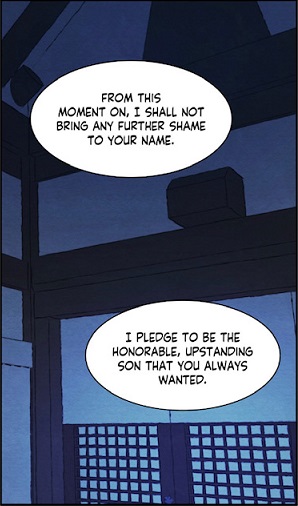 (chapter 127) the former only made a promise to his father and not to the brother. With his death, Yoon Seungho is no longer bound by a promise. Since the main lead had been living properly for 3 years and even passed the civil service exam, it is clear that for the brother, Yoon Seungho must have forgotten his past lover. He must have judged his brother based on appearances, just like he was behaving himself. However, this was just a subterfuge. He was waiting for the right time too. He had no change of heart, he had just been copying his brother’s behavior.
  (chapter 78) Let’s not forget that at the gibang, Yoon Seungwon never revealed his true intentions towards his brother. The latter always said that his advices were for his best interests. He should become involved in the government. But everything was for the Yoons, or better said, for Yoon Seungwon’s sake. And there exists another reason why the sibling must have been embarrassed: This marriage!
 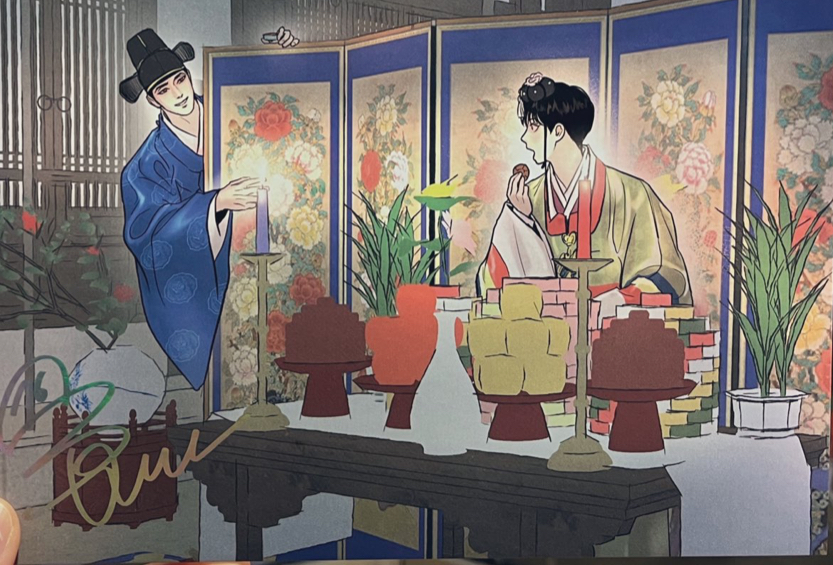 To conclude, Yoon Seungwon embodies the opposite values of Baek Na-Kyum and Yoon Seungho: ambition, corruption, forgetfulness, hierarchy/social norms, traditions and reality versus understanding, forgiveness, simplicity, closeness, modern family and happiness. Selfishness versus Selflessness. This explicates why the main lead gave up his success for the artist. However, though it looks like an exile, the reality is that he will gain popularity and admiration among the inhabitants. Why? It is because he is no longer making distinctions between nobles and commoners, he doesn’t see this place as a punishment, but as a heaven and as such he has a better perception of humans in general. In my eyes, he is bringing progress and change in the region. Baek Na-Kyum is already teaching the kids how to draw… so it is only a matter of time, until his lover takes care of the education for these children. This means that these words will become a reality:
  (chapter 6) He will think of the futures of those children because of his lover.

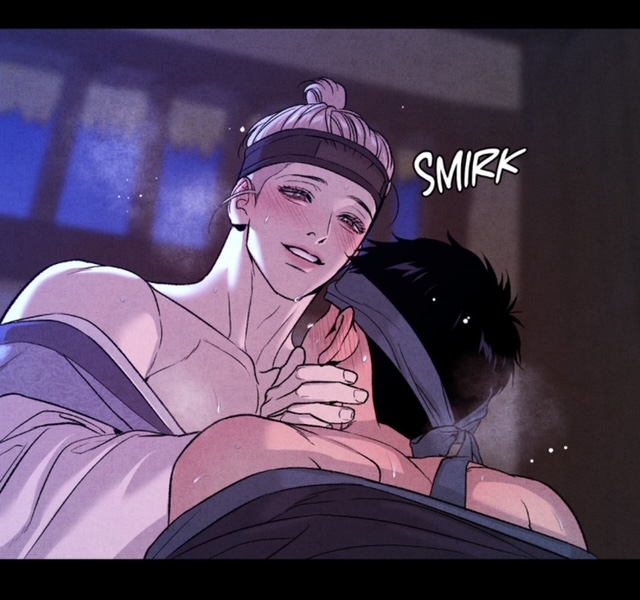 (special episode 2). This pigment is a combination of blue and red/pink. And now pay attention to the last panel. Potato is blushing while wearing dark-green clothes, his lover is standing in front of the blue sky and his skin is rather pale. His hanbok has purple and white shades. As you can see, this wonderful night represents their union: white meets black, blue meets red and yellow (hence purple and green). The light from outside contrasts to the darkness of the shelter. That’s how purple came to shine. On the other hand, since Heesung is acting as the master, and the maknae is relegated to the role of a male servant, the actor is exposing his inner darkness. He is longing for dominance and possession.
 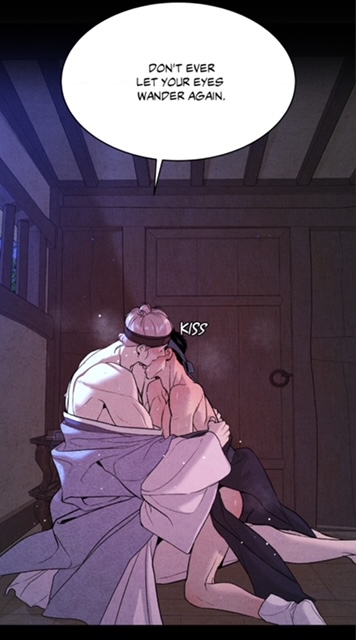 (special episode 2) To conclude, Heesung is gradually showing his true colors: the hidden black spot behind his perfect white skin. However, dark shouldn’t be reduced to evil, for in Taoism, black has another signification. It represents yin, the feminine energy. This means that thanks to that night, Heesung could display his motherly and caring side. Therefore he kissed, hugged Yoon-Gu and stroke his cheek. But this doesn’t end here. After the intercourse, he caressed his lover’s head.
 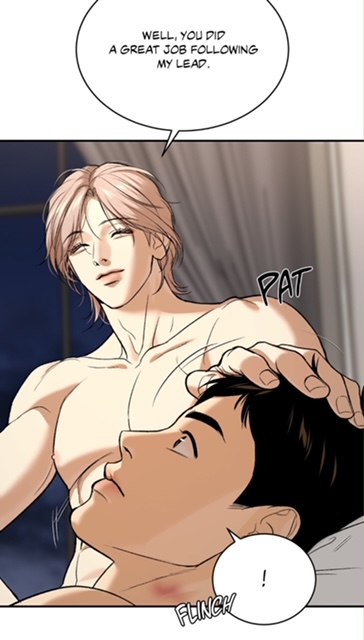 (special episode 2). One might argue that in the last picture, he was not entirely honest, for his eyes were closed. Besides, he was just paying him a compliment. Nevertheless, this gesture is still exposing that the actor is opening up his mind and heart to the chow-chow. He is no longer indifferent like in the past! This stands in opposition to his gifts to the members from Team Black and Kim Dan.
 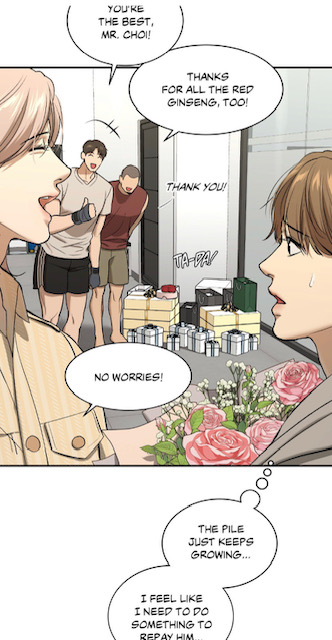 (chapter 31) The latter reflected his superficiality and detachment. How so? It is because he had bought them. Moreover, his manager was tasked to carry the presents.
  (chapter 31) It was, as if the manager was cursing him and his gifts. As you can see, there was no direct contact between him and the beneficiaries of his generosity. Money was between them in the end: Heesung, the manager and the members from Team Black. This could only corrupt their relationship. However, the pat on the head between the two second leads symbolizes genuineness and real gratitude.
 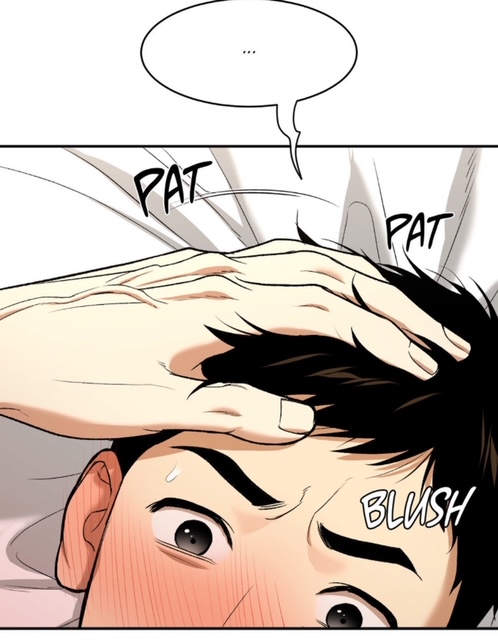 (special episode 2) Therefore it is not astonishing that Potato feels so moved by such a caress that he starts blushing. His dream has always been to be patted on the head.
 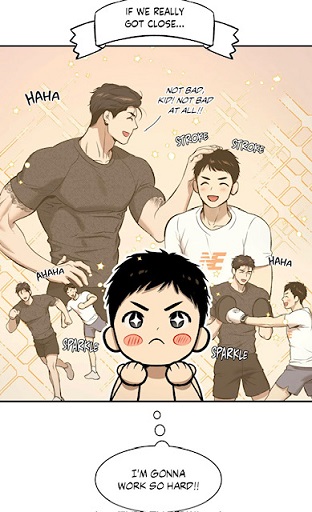 (chapter 23) This signifies that the comedian fulfilled one of the young fighter’s dreams. Yet, the color in the last panel is not purple, but coral peach. Why? The reason is simple. The emperor is linked to red (anger, blood thirst), whereas the maknae embodies yellow. The pigment exposes the young stan’s ignorance, for he was not able to detect his hero’s true colors and as such his flaws. In his eyes, he was just a “god”, as he embodied perfection. Thus he had a pink version of his idol. Moreover, observe that this dream is connected to light, day and publicness, while the other is linked to darkness, night and privacy.
  (special episode 2) The young fighter and his lover are slowly discovering the existence of a double life (public/professional versus private life). This signifies that Potato is learning to distinguish between image (hero) and reality. In fact, he only knows the MMA fighter Joo Jaekyung and not the private man with his troubled past. As for the actor, with his blog
  (chapter 30), pictures and sponsoring
  (chapter 32) The gumiho never felt the need to hide his sexual orientation, it was never a taboo. It indicates that he felt safe among his colleagues and agency. Therefore the manager could talk so freely about his love life in front of others.

 (chapter 20) the main pigments were yellow, rosa, red and orange, whereas on the bed, the roles and topics were switched. Kim Dan’s feminine side was the dominant one. His motherly and caring instincts were so strong that he had no problem to challenge his sex partner.
 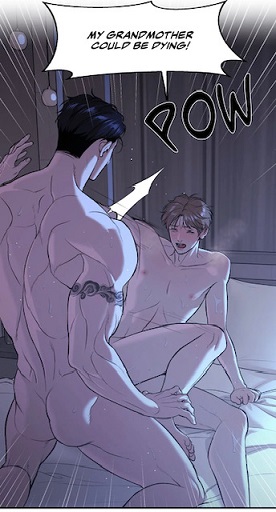 (chapter 21) Here, black and purple were the dominant pigments, similar to the sex scene from the special episode. The moon stands for softness, quietness, but also mystery and receptiveness. And during the night of episode 21, the doctor taught to Joo Jaekyung the importance of family. Besides, the athlete discovered a secret from the physical therapist. Though the former was pushed away, he didn’t react violently. Joo Jaekyung remained passive. This was the influence of Kim Dan’s yin.
  (chapter 21) And the next morning, the emperor chose to show his motherly and caring side to Kim Dan and the halmeoni.
  (chapter 21)
 (special episode 2) Potato is literally glowing, while the other is just wearing a purple hanbok (disguise). One might wonder why. The answer is simple. Potato stands for innocence, reflection and ignorance. Contrary to his new role model (Kim Dan), he has no real prejudices against sex. He doesn’t view it as dirty. This explicates why Potato is always surprised by his own pleasure and always claims his ignorance.
 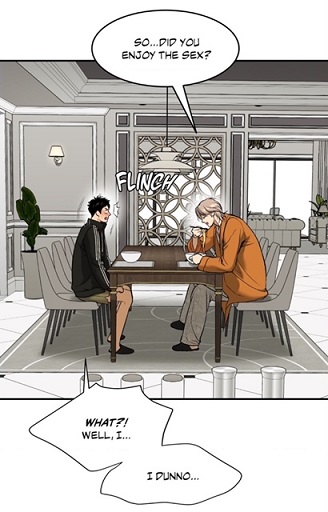 (special episode 1)
 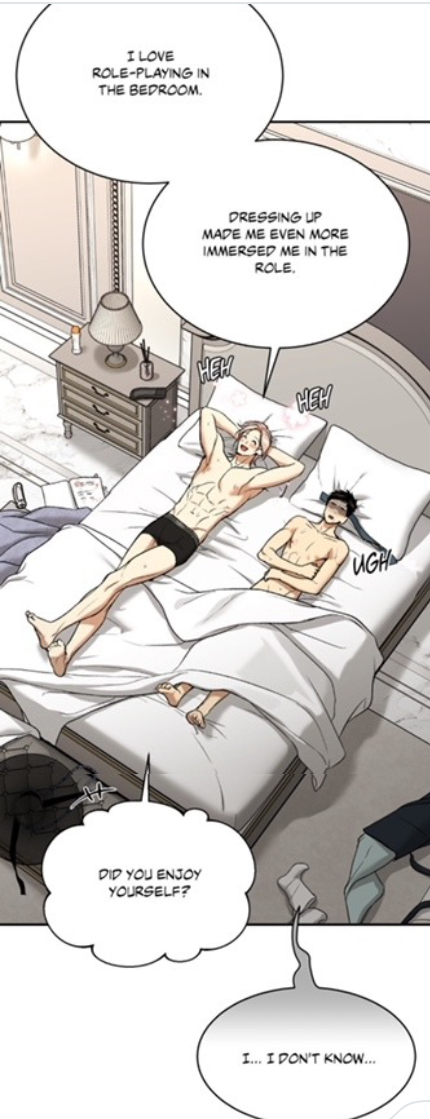 (special episode 2) He doesn’t make quick conclusions. The irony is that by expressing his ignorance and as such denying the existence of his own pleasure, he is actually challenging his gumiho. The latter is not recognized as a good lover! 😂 Moreover, it was, as though the young man had not been thrilled and excited contrary to his partner. This means that the maknae is pushing his companion to become more creative in sex. He is hoping that Potato would come to confess his joy and excitement as well. This means that Heesung has to find new ways to impress and woo his companion. Innocence and ignorance are the best weapons to tame the mythological creature. Simultaneously, it implies the actor’s underlining desire: he wishes to share his happiness with others!! As you can see, though Heesung is indeed a red flag [Further explanations are below], he shouldn’t be simply reduced to the stigma “jerk”. Exactly like the terrible emperor, he also has redeeming qualities. Moreover, this made me realize that his words are turning into a reality:
 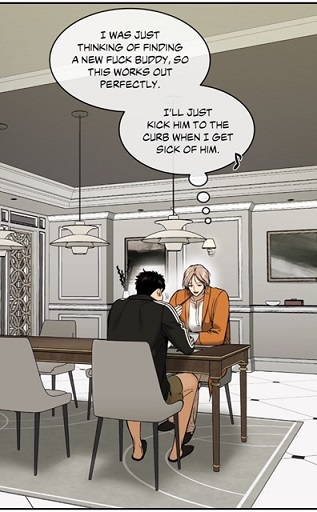 (special chapter 1) Potato has become his “fuck buddy”. By developing friendship through sex, he is not realizing that he is falling for the young fighter. Thus I am suspecting that in the past, he paid too much attention to emotions and less to sex… he was not trying to give pleasure to his sex partners in the first place. Now, he is doomed to find ways to give pleasure to his “fuck buddy”. And that’s how he is learning to become a responsible person.
 (special episode 2) That’s why the actor was glowing like a star after their passionate role-play. The presence of “stars” indicates his excitement and joy. His heart is racing, hence he is full of joy and feels rejuvenated. Moreover, the Webtoonist already implied the link between Potato and purple in the following scenes:
  (chapter 23) Don’t forget that his family name is Hwang which means yellow in Chinese. That’s the reason why I don’t think, the purple towel is random. One might argue that the towel belongs to the gym, and they got changed later:
  (chapter 36) Park Namwook selected black towels, a sign that he was taking over the gym. But the purple towel announces the moment, where the doctor and Potato gets closer to each other.
  (chapter 23) For the first time, the young fighter showed a certain curiosity towards the physical therapist: the beginning of “Enlightenment” and friendship. Under this new light, Manhwaworms can grasp why Heesung was under Potato’s spell during this intercourse.
  (special episode 2) But we have another evidence that Heesung has always been looking for a “purple” person. It is because he picked up a purple suit for Kim Dan.
 (chapter 32) This means that this night stands under the sign of Yoon-Gu! The latter came to shine to the point that he affected his lover… that’s how the actor blushed more and more.
  (special episode 2) This observation brings me to my next interpretation.
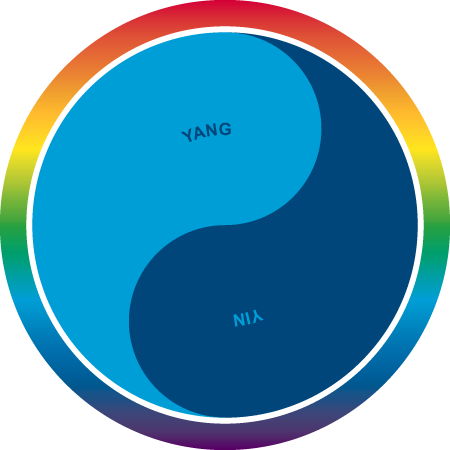 Dark red… full of passion. The actor could expose his possessiveness and jealousy, though he masked it behind a role-play.
  (special episode 2)
 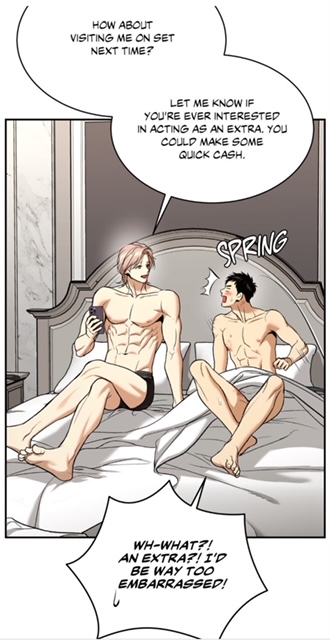 (special episode 2) This exposes his desire for companionship and his loneliness. Additionally, it shows that he desires to get closer to his sex partner, to include him in his life. Once again, Manhwaphiles can detect the absence of boundaries between private and professional life. However, by making such a suggestion, he is not realizing that he is ignoring the MMA fighter’s career. But wait …notice that they had sex in a shed. But this was just an illusion, for they were having sex in the actor’s white bedroom.
  (special episode 2) With that, I am implying that the actor imagined a scene from a historical drama (Joseon, hierarchical society and the shed). It was interesting, because for the first time, the author allowed us to penetrate Heesung’s mysterious inner world. It shows his “creativity”, inspired by his last shooting
 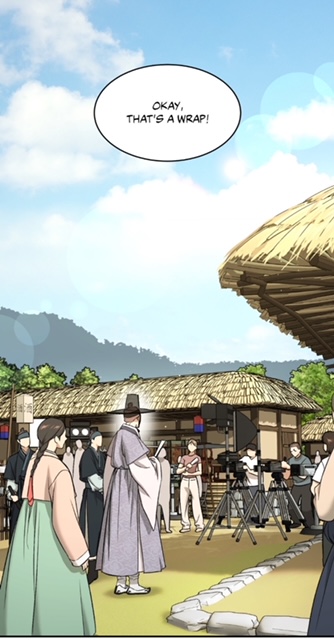 (special episode 2) and his own desires. As you can see, the sex session is a mixture of dream and reality which is reflected in the color purple.
 (special episode 2) He is blushing, he is enjoying this moment with his partner. He has the impression that his dream has come true. In his mind, he was breaking rules. A prince has sex not only with a man, but with a guard, a commoner. Secondly, they were having sex in the shed, hence they could get caught. He felt like he was playing with fire. This shows that the man enjoys thrilling situations. This explains his blushing in this scene:
 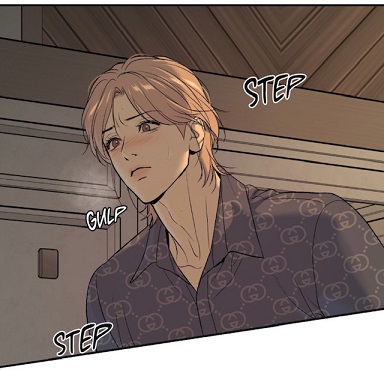 (chapter 34) He was not shocked or disgusted, when he saw Kim Dan having sex with the champion
  (chapter 33) Under this new light, his visit in the sauna appears like an intrusion.
  (chapter 34) He knew about the emperor’s schedule, a sign that he was somehow “monitoring” the main lead’s moves. Here, I feel the need to include this video exposing Heesung’s dark side.
 (chapter 35)
  (special episode 1) With this statement, he is actually taking over Potato’s schedule and life
  (special episode 1). Then he still chose to have sex with Potato, though he knew that the young sportsman was drunk.
  (special episode 1) The irony is that though Potato had said, he was a virgin, the actor chose to ignore it. Hence he got shocked later, when he realized Potato’s age..
 (special episode 1) There’s a huge gap, he appears as a “seductive” wolf like in the fairy tale “The Little Red Riding Hood” That’s how it dawned on me why Heesung will have problems in his relationship with Potato. It is related to his dishonesty and mistrust which he projects onto others. This explicates why he doubted about Yoon-Gu’s virginity.
  (special episode 1) And what is the synonym for “truth”? Reality and Real World!! And now, you understand why Heesung created a historical drama in his mind for the sex session. It was his way to avoid truth and honesty. He used the role play to expose his jealousy
  (chapter 44) After this wonderful moment, Kim Dan came back down to earth. His present got rejected, he was just viewed as a physical therapist and nothing more.
 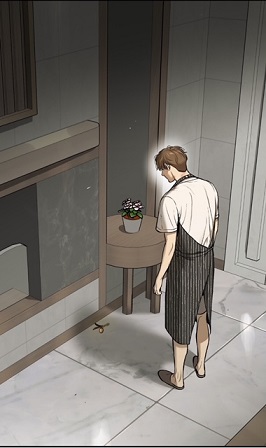 (chapter 45) We also have a refusal in the special episode. Potato initially rejected the offer from his sex partner:
 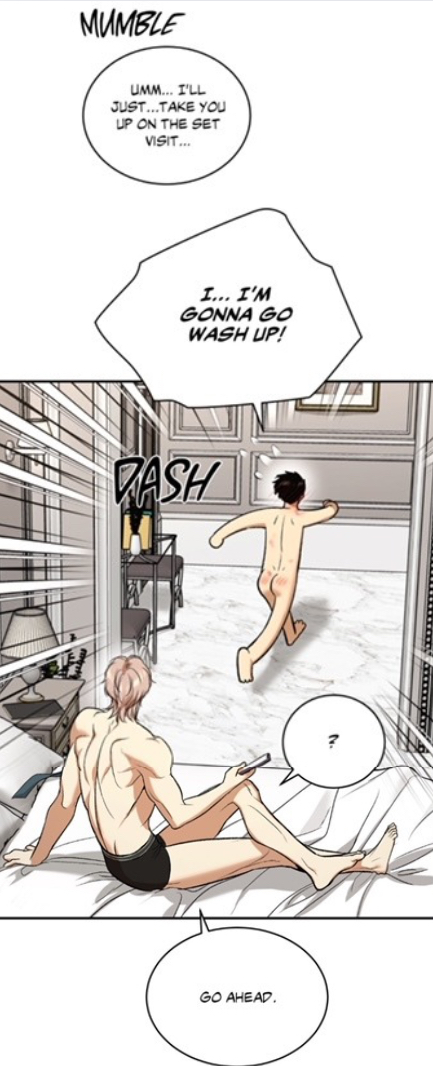 (special episode 2) Moreover, his words were definitely spoken more softly with a lot of hesitations. Hence I am doubting that Heesung saw his offer (visit to the set) as an acceptance. From my point of view, we should envision that the comedian saw it as a rejection. Potato was actually refusing to become an actor like him, then he employed the word “embarrassment”. It was, as if he was ashamed to be seen close to the actor Heesung. Finally, we should compare the last panel with this one:
  (chapter 34) He was also running away after getting threatened and rejected. In other words, Potato didn’t realize that with his behavior, he had triggered Heesung’s jealousy, insecurity and anger. That’s why he has this cold gaze.
  (special episode 2) It is the same glaring than Joo Jaekyung’s
  (chapter 7) who was full of jealousy here! Thus I conclude that this special night ended on a bad note, though Potato had no idea. The fox is no longer amused. Because Heesung is not happy deep down, he is planning something!!
  (special episode 2) Moreover, Manhwaphiles should keep in mind that he is talking in the past: “I had a ball”.His joy was just short-lived.
 (chapter 33) Observe the parallels:
 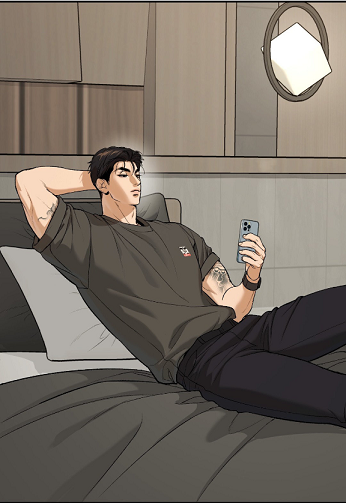 (chapter 33)
  (special episode 2) Yes, we need to question ourselves what triggered Heesung’s fantasy for the role-play.
  (special episode 2) IT is not just because of the costumes. My hypothesis is that the guards are working as an item, you can observe this in the following two panels:
  (special episode 2) This scene triggered his envy and jealousy. He wanted to have someone by his side whom he could talk to. ,
  8special episode 2), Here, he thanked everyone, yet he was standing in the middle of the scene, far away from everyone. In reality, his “gratitude” was superficial, for his thank was addressed to no one in particular. Just empty words. Under this new light, Manhwalovers can understand why he made such a suggestion after the intercourse:
  (special episode 2) Each pigment of green has a different signification: dark green can symbolize balance, drive, money, greed and fertility, while pale green symbolizes peace.
 The green color corresponds to sunset or sunrise which makes me think of a moment of transition. This corresponds to the notion of change and as such growth. Moreover, it stands for balance between yin and yang, like quoted above. The shade implies an equity between female and male energy. And now, you comprehend why Mingwa used green light in the car scene:
  (chapter 33) On the one hand, it was an allusion to the emperor’s hidden jealousy. The latter had masked it as a challenge and game:
  But the shade is implying that the fighter was slowly calming down. He accepts the doctor’s embrace, he even grabs his phallus in order to give pleasure to his partner.
 (chapter 33) In the end, he did show a caring side to the doctor.
  (special episode 2), the jealousy, the possessiveness… making sure that the companion is not looking elsewhere… but more importantly, both seme are and were unaware of their growing affection towards their “fuck buddy”. Yet, there exists a huge difference between these two sex sessions: THE KISS!
  (chapter 33) The emperor has now regained control of his emotions, but he couldn’t interpret his emotions correctly (jealousy, longing for love, insecurities). Moreover, we shouldn’t forget that he has not associated the kiss to love yet. In the locker room, he kissed the “hamster” in order to protect him. He had been simply following his friend’s advice. Then in the swimming pool, he felt attracted towards him.
  (chapter 34) As a conclusion, he came to “deny” this reality. He rejected his own emotions, until he was challenged once again in the sauna.
 (special episode 2) In addition, I noticed that the fighter’s buttocks are red

 (special episode 2) This means that this sex session took place during the new moon. Hence we have the color purple… This corresponds to the actor’s transformation. He is revived… he has finally found his soulmate, but he is not aware of it yet. And now, pay attention to this scene: We have the color blue,
  (chapter 53) There is no moon, only the artificial lights from the city. Hence I deduce that the couple is now entering in a new phases, there is a new moon soon. The absence of the moon corresponds to the doctor’s departure. Don’t forget that these panels took place on two different days. One thing is sure. The dominance of the blue symbolizes the dominance of Kim Dan in Joo Jaekyung’s life, but also the loss for the two characters. There is no warmth… yet calmness and softness. Joo Jaekyung is not throwing a tantrum. He is not breaking any sandbag or throwing away the letter. It shows the calming influence of Kim Dan over the champion. With his departure, he is pushing the athlete to face his own emotions and to analyze them. And now pay attention to the last panel from season 1: there are glimpses of purple:
  (chapter 53) Red and yellow are strongly connected to Yang. The latter is conceived of as heaven, maleness, light, activity, and penetration..And now, you comprehend why I am expecting an Enlightenement from the athlete on the beach. Hence I am expecting that the champion will come to recognize the doctor’s true character there: he is strong, brave, manly and so selfless. He is not a baby like in the bathroom. Yes, I am expecting a new version of this scene
  (chapter 39)

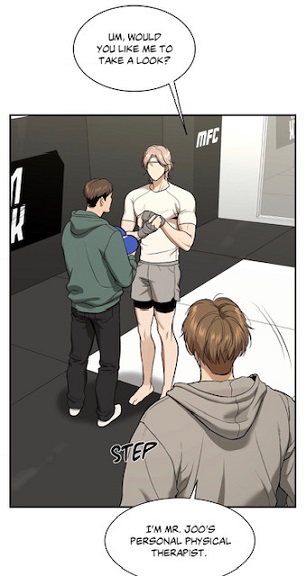 (Chapter 30) Kim Dan had heard the conversation between the artist and his manager before offering his help and approaching him. Then when he took his hand for an examination, he was not holding it out of admiration.
 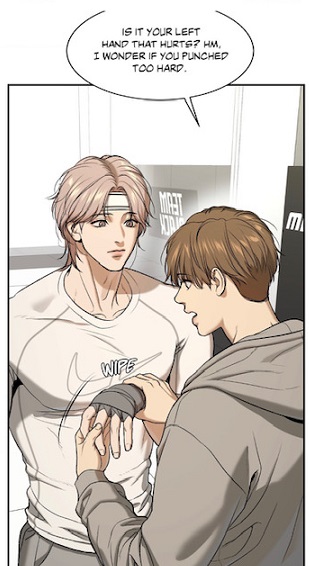 (Chapter 30) No wonder why the doctor caught his attention. The pink haired star got surprised by such an unusual treatment. The irony is that the main lead was doing nothing out of the ordinary. This shows that till this meeting, the actor had always been treated as a prince, for the latter had always been privileged. It is not surprising that Heesung found Joo Jaekyung refreshing.
 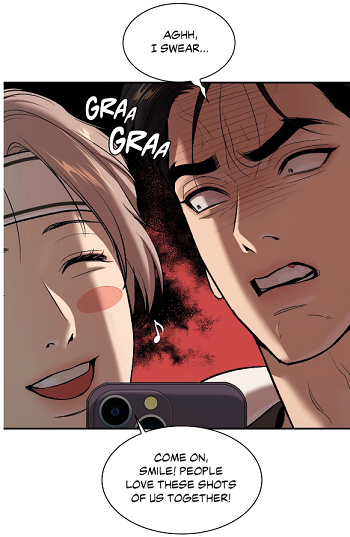 (Chapter 30) He was the only one who would not consider him as special, rather as bothersome. Yes, he was not favored by the emperor. Under his new light, it becomes comprehensible why Mingwa let the gumiho play the role of a prince wearing a purple hanbok with Potato:
  (Special episode 2) The purple hanbok is strongly connected to Joseon royalty. (For more read my essays about Painter Of The Night) In addition, while the comedian thinks, it is a fiction, he is wrong in verity. It was a reality, for he has been living like a sovereign. And now, you comprehend why Heesung praised the physical therapist to the sky.
  (Chapter 30) By treating him like an average patient, he could only appear as very professional and competent.
  (Chapter 30) He was seen as a serious and honest doctor who was not looking for favors and recognition. So I deduce that the actor felt moved by such a selflessness and care.
  (Chapter 30) We should consider this image full with stars as a metaphor for the comedian’s heart racing. To conclude, their first encounter reflected Heesung’s philosophy: his desire for novelty and genuine attention, while he is longing for normal treatment and as such for an ordinary relationship. The expression “soulmate” is implying the notion of equity. Thus because of the doctor’s actions, Heesung felt alive. Funny is that by discovering the doctor, Heesung was encouraged to accept routine. Therefore he came to the gym on a regular basis.
  (Chapter 31) This shows the inner conflict of the actor. Deep down, he dislikes being treated as a prince and would like to be seen as a man and nothing more. Normality and regularity stand in opposition to privilege and novelty. On the other side, he seems to reject averageness and commonplaceness. Therefore he likes to show off his wealth:
  (chapter 32) Through the ukes (Potato and Kim Dan), the fox is experiencing the positive aspects of ordinariness. He drinks soju while eating a cheap meal on the street to drown his sorrow
 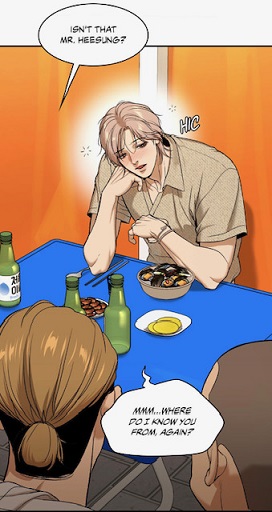 (chapter 35) or he imagines to have sex in a barn next to a crowded place.
  (chapter 35), as their relationship is affecting his own life. How so? It is because the young MMA fighter is a stan of Kim Dan and Joo Jaekyung!
  (Chapter 35) Let’s not forget that when Yoon-Gu helped the physical therapist in the locker room, he was indirectly assisting the star.
  (Chapter 29) He has only lived in one so far due to his privileges. It was, as if he has lived in a fairy tale, far away from reality. Now with Potato, he is finally able to live out his fantasies, hence his fairytale-like world has just lost its reason to exist. Thanks to Kim Dan and Potato, the comedian is brought back to reality. He is discovering not only averageness, but also the true significance of routine and normality. Thanks to the latter, trust and intimacy can deepen. He found out that he can experience novelty through sex.
 (Special episode 2) It was, as if he wanted Potato to switch his career. It exposes his desire to be close to the maknae. However, with the champion’s downfall and the physical therapist’s departure, I am quite certain that Yoon-Gu’s position at Team Black is about to change. The gym needs to become successful again and present new athletes. Yoon-Gu can no longer be treated as an extra!! His future is now important for Team Black and Park Namwook. Finally, he proved his worth by fighting the older and bigger fighters at the restaurant. Thus I doubt that Choi Heesung can make a deal with Park Namwook like in the past.
 The moment you read this note, you can grasp why the athlete would consider the comedian as a total nuisance. It is because the former couldn’t focus on his training (other exercises: CrossFit, Gym, mostly weights). As a conclusion, the athlete had many reasons to view the artist as bothersome. On the other hand, since Heesung is on his way to adopt regularity, I deduce that the champion’s fate is to accept surprises and changes in his life. And now, you know why their first encounter ended like this:
 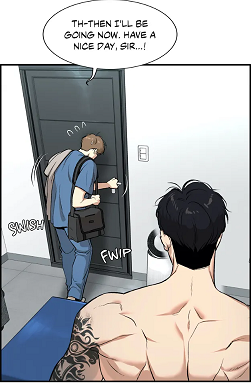 (chapter 1) No one had ever run away from him like that. He was used to face opponents who would challenge him or people who would admire him. Notice that the doctor is turning his back on him, which contrasts to the morning after their first sex session. There, the protagonist chose to vanish into thin air behind the champion’s back after spending the night with him.
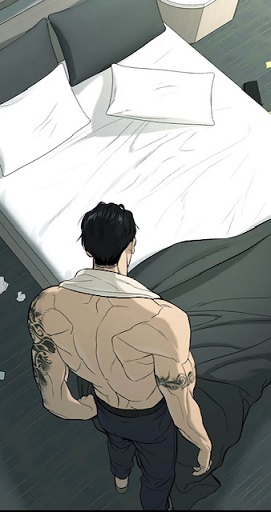 (Chapter 4) However, in the athlete’s mind, the doctor had not abandoned him, for he imagined that Kim Dan was motivated by his greed. He was just interested in money. As you can see, Kim Dan represents novelty and exception. Nonetheless, the problem is that till the end of season 1, the fighter never came to see novelties and sudden events as something positive.
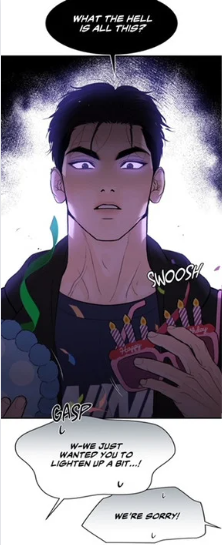 (Chapter 43)
  (chapter 19), the athlete didn’t change his daily schedule at all. On the one hand, Manhwa-philes could judge this as a sign of his selfishness. On the other hand, it exposes his lack of sociability. He had never lived with someone else before. Since we never saw his family or heard about his parents in the first season, I assume that he is a true orphan contrasting to the physical therapist’s situation. Yet both have one common denominator: abandonment issues. The absence of family displays the difference between the two semes. While the actor embodies favoritism and nepotism which is strongly linked to family, the other represents the opposite values: indifference, meritocracy and business. Thus the Webtoonist created such a scene:
  (Chapter 32) According to me, he never went to his training. And shortly after, he was involved in a scandal.

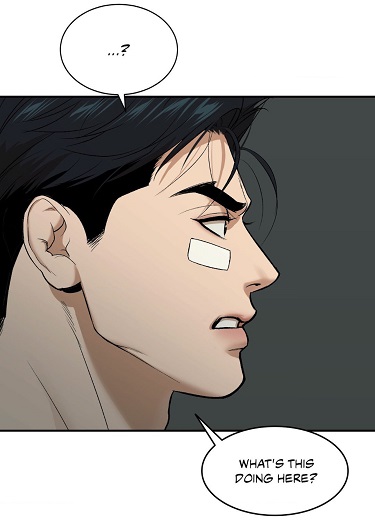 (chapter 53). In episode 19, the champion really viewed the main lead as an object
 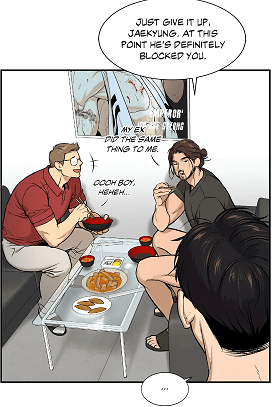 (chapter 05) Hence he called him from the gym making sure that he had not blocked him or even vanished. Under this new light, Jinx-philes can understand why he felt the urge to have sex with Kim Dan. It was to remind him that he would belong to him. Yes, unconsciously, the athlete projected his own thoughts and fears onto his fated companion.
 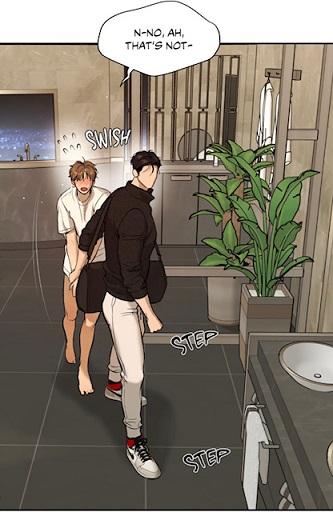 (chapter 19), many Jinx-philes had been able to discern the fighter’s past (invisible) action. He had been looking for the doctor in the huge penthouse, the older version of this scene
  (chapter 19) The doctor had barely left traces in the apartment. Only the cupboard was the evidence of his presence in the flat. However, this object could be left behind… exactly like Joo Jaekyung had treated Kim Dan in this panel:
 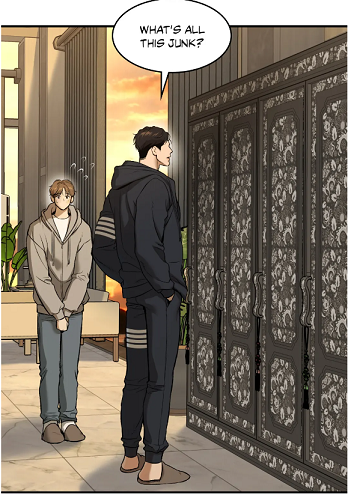 (chapter 19) It was worthless. My point is that Joo Jaekyung must have realized in episode 19, when he returned to the penthouse that Kim Dan was different from the cupboard, he was no object at all. And now, you comprehend why the main lead said this to the doctor in the bathroom:
 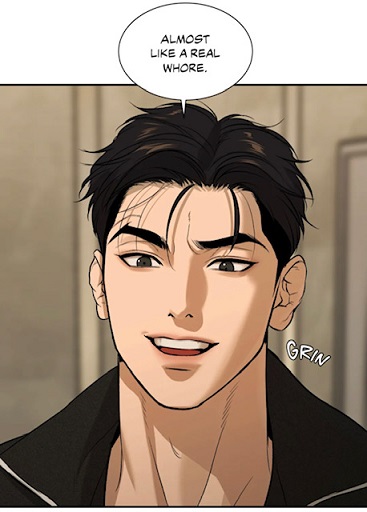 (chapter 19) First, he was compared to a prostitute, then later to a baby.
  (Chapter 20) This scene proves that Joo Jaekyung was viewing his lover as a human. Additionally, the comparison to a whore was to mask his previous anxiety and thoughts. He had been looking for him. He needed to appear as strong and superior, the one with the upper hand.
 (chapter 36) However, my avid readers should keep in their mind that sex was like a surrogate fight. Thus we could say that in this panel, the physical therapist is actually treated like a “fighter” and enemy. Then when the champion criticized him for his bad decision, he was finally recognizing him as a physical therapist.
  What caught my attention is that earlier in the season, the celebrity talked to doc Dan, but he was showing a certain disrespect towards his room mate. His Wedding Cabinet was garbage, he was not included in his evening training. Like mentioned above, he was treated like a furniture. Nevertheless, in chapter 47, Joo Jaekyung chose the silent treatment. It shows that he was now considering him as a member from Team Black, but because of Park Namwook’s warning,
 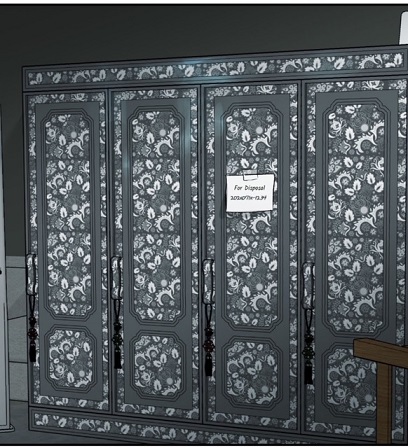 (chapter 53) When the doctor left the penthouse, he disposed his halmoni’s Wedding cabinet. In other words, he treated the precious furniture as junk, turning the champion’s words into a reality. It was, as if the doctor had taken the MMA fighter’s words seriously. However, Kim Dan didn’t act that way because of the athlete’s false judgement. It is just that the doctor came to consider the wedding cabinet as a burden. Thus he treated it as junk. For him, the furniture only had a sentimental value. It symbolized the grandmother. But why would he consider it as an onus then? First, he couldn’t bring the cupboard to the West coast, too expensive and troublesome. Secondly, he wouldn’t have been able to place the Wedding cabinet in a small flat.
  (chapter 16) In addition, Kim Dan had kept it for his halmoni’s sake.
  (chapter 53) She was the one who loved it so much. But since she is trying to reconnect to her childhood and nature, she no longer values it. Yes, the halmoni is falling more and more into childhood, the closer she is to death. Thus she came to repress her marriage. As you can see, the elderly is slowly forgetting her own past and as such Kim Dan. She is trying to relive a moment from her childhood, a time when the grandchild didn’t exist.
  (Chapter 53) This image is full of symbolism. Kim Dan is now able to touch the cold Wedding Cabinet, a sign that he is accepting his grandmother’s death. By biding farewell to the furniture, he is preparing himself for the inevitable: his halmoni’s vanishing. It was, as though he was saying goodbye to his relative. That’s the reason why his smile is full of sadness, when he is pushing his relative’s wheelchair.
 (chapter 53) as a reflection of this chapter:
  (chapter 46)
  (chapter 46) In both scenes, the doctor came to resign and lower his expectation. Thus I deduce that after the final episode, the champion will come to treasure the objects left behind by the physical therapist. Notice that he didn’t throw away the letter. By keeping them, the athlete would show how much he appreciates Kim Dan. In addition, the letter is wishing him well, which no one has expressed so far. The letter oozes trust, confidentiality, admiration and closeness. Hence I deduce that at the end, Joo Jaekyung is heartbroken, though he can not clearly voice his emotions.
  (Chapter 17) Then when he brought the physical therapist to Heesung’s home, he used the GPS, a sign that he was not familiar with the route.
  (Chapter 33) Interesting is that when he heard his regular nightly disappearances, he never tried to follow him.
  (Chapter 45) Why? It is because he was always back in the morning. Furthermore, despite his exhaustion, the physical therapist was still following the daily schedule. Because Kim Dan wanted to keep it a secret, the champion was forced to feign ignorance. Thus he couldn’t question him about his whereabouts. In addition, I can also envision that he must have thought that it was related to his grandmother. Don’t forget that he experienced once how the doctor had left his side due to a phone call in the middle of the night.
 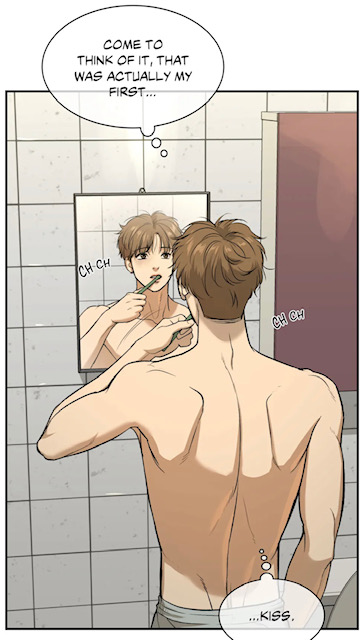 (chapter 16) He wondered why the athlete had kissed him, which made him realize that it was his first kiss. Therefore I come to the following deduction. Joo Jaekyung will be forced to discover his lover’s like and dislike which will incite him to become more honest about his own desires and passions. We have an allusion to this development in season 1:
  (chapter 27) Thanks to his companion, he remembered how much he likes swimming! He had totally repressed it. To conclude, Joo Jaekyung’s travel shouldn’t be just perceived as a journey to the West Coast and Kim Dan’s side, but as an inner journey! He is on his way to discover himself and reconnect to his childhood, or better said to his inner child. This signifies that he is actually following Shin Okja’s footsteps which is regression to childhood.
  (chapter 22) He would have the opportunity now to verify this statement.
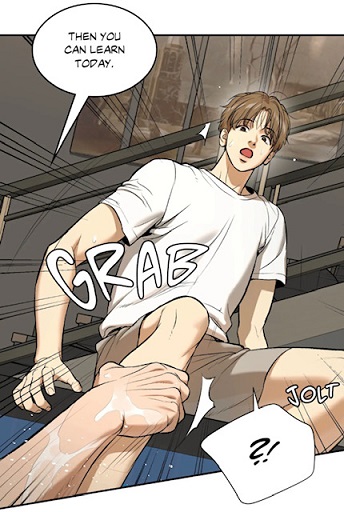 (Chapter 27)
  and humorous fighter in season 2. Since he is suspended, he can no longer associate sex with fighting! He has now time to enjoy life. He has someone by his side watching his back. He can now learn how to relax. He should come quickly to the conclusion that his career doesn’t represent his life. He could do other things. He is no longer fighting against time, as the latter has been suspended: 3 MONTHS! The god Saturn, Kim Dan, will teach him the true value of time. And that’s how Park Namwook will lose his boy to the physical therapist.

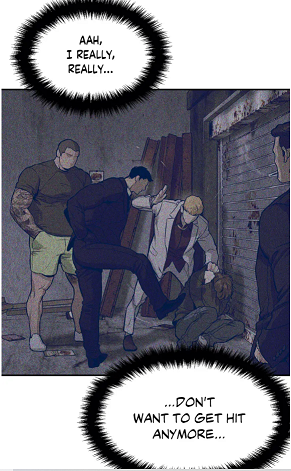 (chapter 1) The problem is that Kim Dan blamed himself for his suffering, as he must have often not paid the interests on time. That’s the reason why he got surprised, when he saw his enemy in front of his humble home.
  (chapter 1) Due to the lack of rest and time, he didn’t have the opportunity to ponder on his life and even have dreams on his own. Therefore he had no ambition. At the same time, he couldn’t become energetic and proactive due to his low self-esteem and his abandonment issues.
 (chapter 26) This represents the highlight for the first season. For the first time, both characters had fun together. That’s how they got one step closer to each other. The fighter was enjoying this moment, as he was teaching Kim Dan to become more proactive and fight for himself. The sparring represents the opposite version of the athlete’s vision (chapter 29). He felt safe next to Kim Dan. In fact, his presence boosted his confidence.
  (chapter 25) It is no coincidence that he employed that expression in front of his fated partner. To conclude, chapter 26 stands for life and happiness, proving that their life is not cursed per se. Consequently, red was the dominant color of this chapter. This pigment stands for love and life. Both felt alive during that day. Moreover, we could see glimpses of the sportsman’s true psyche as well, when he proposed to spar with the main lead. He desired to help the doctor himself. Hence he acted as his mentor and teacher in the ring. There, we could see his generosity, interest and open-mindedness. He wasn’t looking down on the doctor, he saw him as a true member from Team Black.
 (chapter 29) He has no one by his side. And this observation leads me to my next interpretation. The existence of Joo Jaekyung’s belief is exposing Park Namwook’s neglect and bad management and coaching. We could say that he is partially responsible for the champion’s misery and bad luck. Therefore it is no coincidence that the sparring took place during his absence.
  (chapter 26)
 This shows that Park Namwook has no real respect for the champion. According to my theory, the athlete comes from a wealthy family, hence he is labeled as “spoiled kid”. Due to his social status, the manager can only judge the main lead as “lucky”. Besides, he is successful, for he earns a lot of money and has many fans. He embodies the “American Dream” perfectly. He has everything to be happy in the manager’s eyes. Therefore he couldn’t comprehend the bad mood from the champion. Moreover, Park Namwook embodies social norms and prejudices, and he has many about his star. Not only the latter has a bad temper, but also he is a stubborn workaholic.
 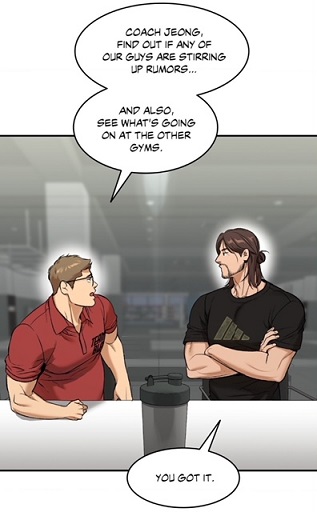 (chapter 46) Despite his attitude, Joo Jaekyung still listened to his hyung’s warning, for from that moment on, he kept his distance from everyone, including the physical therapist. But there’s more to it. Park Namwook keeps associating his star with “good luck”.
  (chapter 1)
  (chapter 33) The latter truly worries for his star, although he is well aware of his shortcomings.
  (chapter 33), he didn’t report it to his hyung. He also kept it a secret. That way, he was not only protecting Kim Dan’s misdiagnosis, but also Park Namwook’s misjudgment. On the other hand, he acted as a real boss, for the comedian is an important client.
 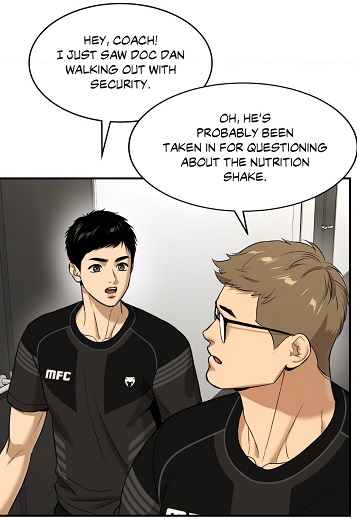 (chapter 40) However, he is far from being a honest man. How so? First, he describes himself as the owner of the gym which is not true.
 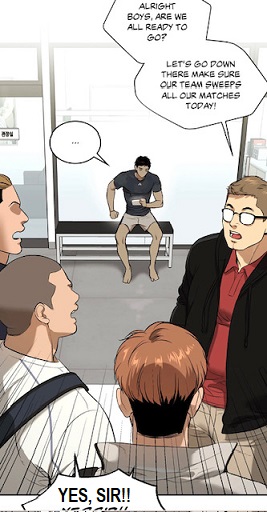 (chapter 23) He promised the fighters that they would win, but the reality is that they failed terribly.
 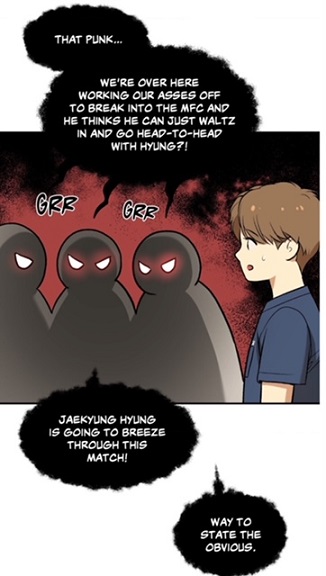 (chapter 47) Therefore he bought chicken for them. Instead of showing compassion and understanding for his hungry and miserable champion, he allowed Potato and Oh Daehyun to buy junk food behind the celebrity’s back.
 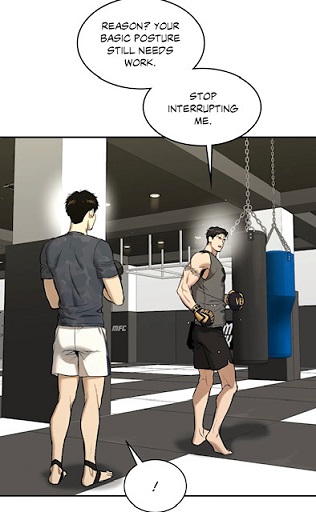 (chapter 23) He never confronted the members with the truth. They lack skills
 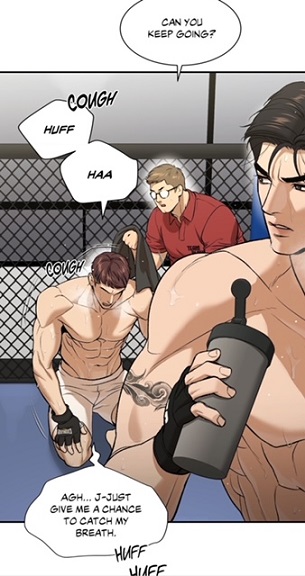 (chapter 46) or endurance. I would even say that neither Park Namwook nor Jeong Yosep had high expectations for the other members from Team Black
 (chapter 49) He claimed to trust the champion, but the reality is the opposite.
 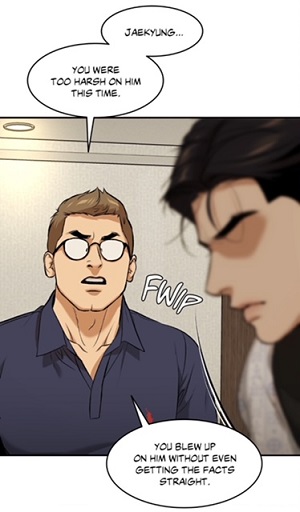 (chapter 52) He blamed Joo Jaekyung for everything: the tie, the doctor’s departure, the suspension and as such the loss of his good reputation. However, even if the champion had vented his anger onto the physical therapist wrongly, he had reasons to doubt Kim Dan. He had not only received the pictures, but he had been warned by the coach himself to doubt the members’ loyalty. There was a spy and a traitor among Team Black. One detail in the last panel caught my attention is the idiom “facts”. It is in plural and not in singular. Fact could be seen as a reference to his own warning, he had not checked the fact either (rumor, suspected disloyalty), yet this is not what he meant. Potato had exposed only one fact to the group: the switch of the spray organized by Choi Gilseok.
 (chapter 52) So what other fact was Park Namwook referring to? The fighter Baek Junmin and director of King Of MMA had paid Kim Dan. This shows that he had heard the conversation between the two protagonists.
 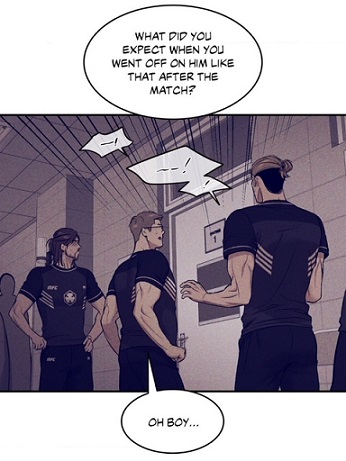 (chapter 52) And what did the manager do, after the champion had left the room? He abandoned Kim Dan, followed by the other men. At no moment, he asked Oh Daehyun or Yoon-Gu to take care of the physical therapist. But by following the celebrity or remaining passive, they had implicitly supported Joo Jaekyung’s decision. They had taken his side. And now, you comprehend why all these men chose to put the whole blame on the celebrity.
 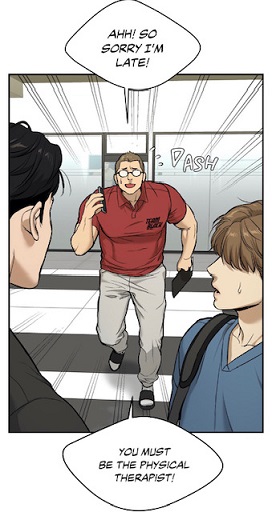 (chapter 1)
  (chapter 49) He should be responsible for his contracts, yet the reality is that the Entertainment agency is the one managing the champion’s career.
  (chapter 41) However, as his manager, it is his duty to protect his star, as the career of a MMA fighter is rather short. Imagine, he let Joo Jaekyung fight three times within 3 months (April- June- July). It is definitely too much. To conclude, he is not doing his job properly, as he is trying to put a lot of responsibility on others (Kim Dan- Joo Jaekyung – the Entertainment agency). According to Mingwa, Kim Dan had been taking care of administrative tasks. However, as the director of Team Black, he should be the one handling it. After the incident at the health center, Park Namwook didn’t contact the press to explain the whole situation.
 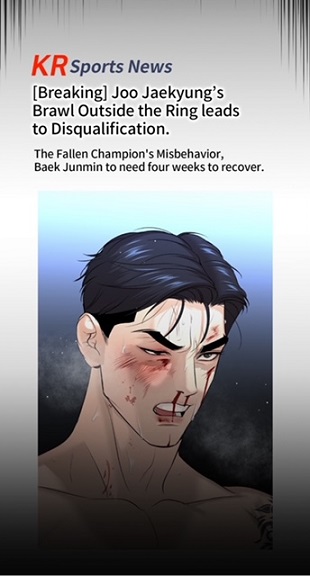 (chapter 52) The article is indicating that the champion was quickly judged and this within a few days. The article implies the non-intervention of a lawyer or his manager. No one sided with the celebrity. They are not even contacting the media.
 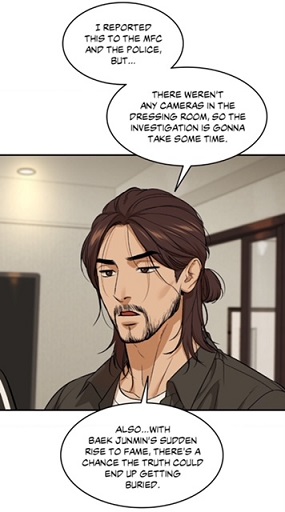 (chapter 52) Park Namwook never tried to correct this negative reflection, for this is how the manager perceives the man himself. He is an ill-mannered child. This explicates why Park Namwook could slap the patient in his bed. So we should judge the argument between the fighter and his manager
  (chapter 52) as the negative reflection from that blue night.
 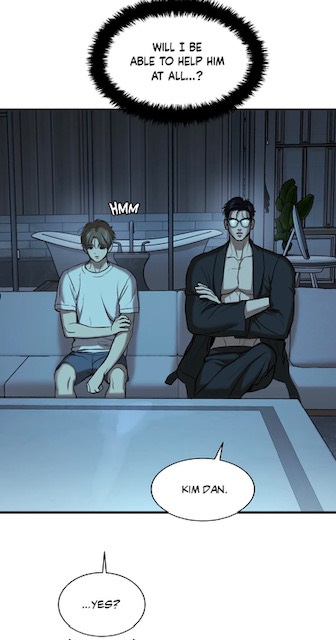 (chapter 29) He is not standing next to the main lead, but he is facing him. He is like an opponent. Another divergence is that Kim Dan was alone, whereas Park Namwook utilizes Potato and the others from Team Black to corner Joo Jaekyung. The doctor was willing to listen to him, whereas the other gets upset, when the other admits his suffering. Since the gym is facing a crisis, the patient should find a solution to the problem.
 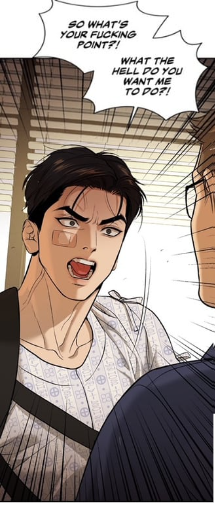 (chapter 52) The hospital is a place for reconvalescence, rest and not work and pressure. Indirectly, it shows the coach’s lack of respect for the medical world. The champion was right to criticize his hyung, for blaming him was totally pointless. He couldn’t turn back time. The manager desired to hear from the champion
  (Chapter 53) Moreover, he had not earned his patient’s trust. Kim Dan was the only one paying attention to his injured shoulder.
 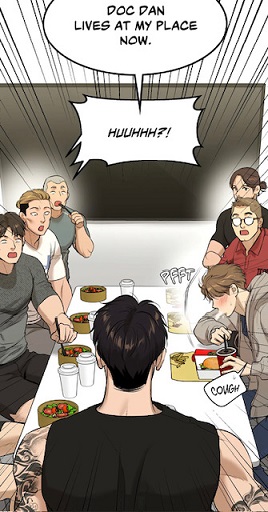 (chapter 22) Besides, by announcing it in front of this circle, the champion divulged that there existed a certain distance between the manager and the sportsman. Finally, the fact that Park Namwook is still left in the dark about the fighter’s jinx is the evidence that he is a really bad manager. For me, it is because he is afraid of making decisions. He lets other take his burden and responsibilities. Yet, Myles jury declared that a manager needs to take a lot of responsibilities. The gathering in the break room stands in opposition to this one:
 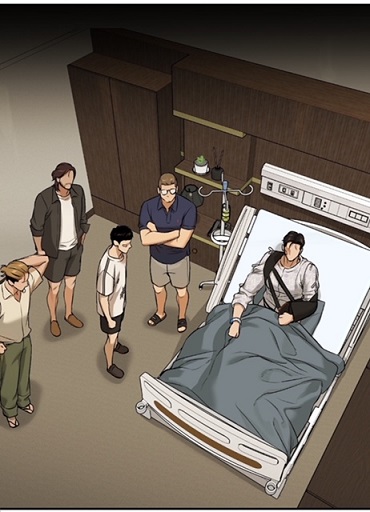 (chapter 52) For the first time, the champion is no longer looking at his cellphone. He shared his thoughts to others and exposed his powerlessness
 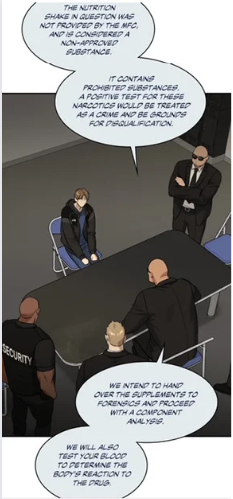 (chapter 40) These two situations have many similarities. Both were confronted with an accusation, they were surrounded by people, who were acting as righteous and honest workers. Both were coerced to admit a wrongdoing. In addition, they are actually abandoned by Team Black members, especially the manager. No one is looking for them out of concern. The reality was that they were not their “true colleagues and even less friends. However, like mentioned in a previous essay, the men in black were actually covering up a crime in order to hide the corruption from the organization. This makes me truly wonder if Park Namwook is truly ignorant about MFC’s corruption. He could simply know about the crimes, but he chose to close an eye to the whole situation.
  (chapter 40) He had rescued him. So by slapping the champion
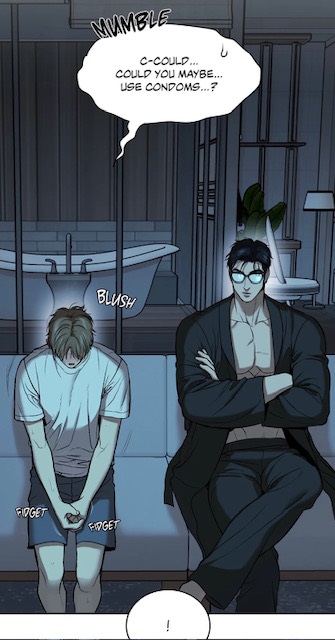 , (chapter 29), I deduce that the slap had the opposite effect than this wonderful night. The gap between the hyung and the athlete got bigger. This represents the moment where Joo Jaekyung is emancipating himself from the hyung’s influence. By refusing the letter of resignation, he clearly indicates that he is rejecting Park Namwook’s suggestion.
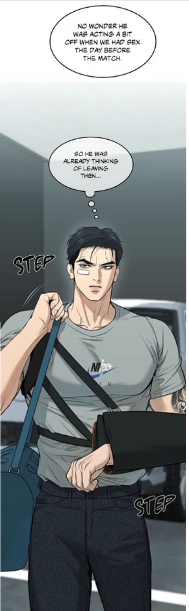 (Chapter 53) This explicates why the idiom “jinx” is not even brought up, when he recalls their last sex session. He is not blaming the doctor for not procuring him a “good fuck”. The reason is simple. It is because he had already made this resolution:
 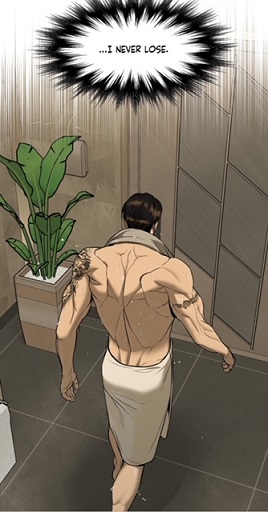 (chapter 49) He was no longer relying on the ritual.
 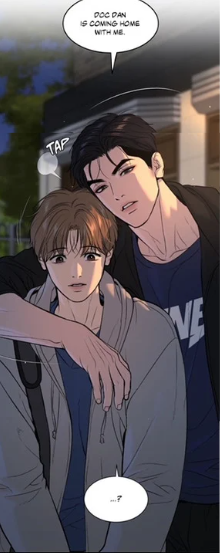 (chapter 43) So when he discovers the empty bedroom, he is forced to admit that he had become a part of his life. He had liked Kim Dan’s company.
  (chapter 19) Yes, we should see episode 53 as the negative reflection from chapter 19, the doctor’s arrival at the penthouse.
  (chapter 19)
  (chapter 37) or sightseeing attractions. Here, I feel the need to add this French song from Daniel Balavoine (1985): “Aimer est plus fort que d’être aimé” (Loving is stronger than being loved”).
 (chapter 21). By interacting with Kim Dan, he will be able to reconnect with his true self which will change him forever. Notice that after the night in the States, at no moment, the champion mentioned his jinx, but spoke about his physical health. In reality, he was including his mental health. This shows that he was already moving on from his jinx. Moreover, after the tie and the suspension, he is not mentioning or thinking about his former belief. The reason is simple. Because of the doctor, the champion was allowed to perceive glimpses of the truth: corruption and the existence of tricks. This image
  (chapter 26) He didn’t realize that he brought joy and love to the gym.
 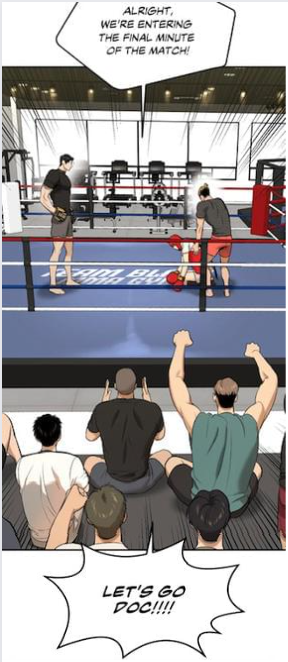 (chapter 26) The more he spent time with the celebrity, the more confident he became. He was able to voice his opinion and he started becoming more passionate about his job as PT. He studied sports rehabilitation, a sign that he was taking the champion’s career seriously. So when he wrote these words to his soulmate
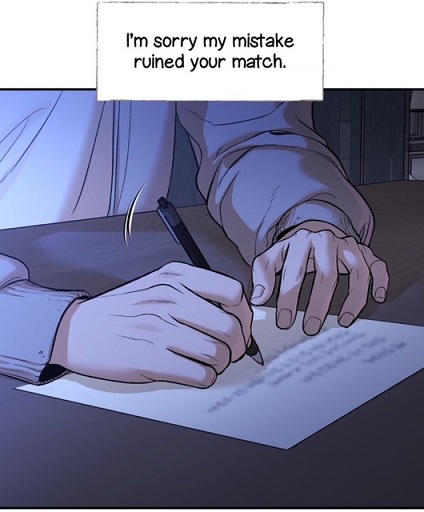 (Chapter 53) Here, I feel the need to remind my avid readers that though the doctor was victim of a trick, he was not entirely innocent either. He should have come clean with the champion concerning his meeting with the director from the rival gym. His lie still played a huge role in the champion’s mistrust. But why did he not tell him later? It is because he was under the influence of the manager.
  (chapter 48) The hyung had been his mentor and advisor. Thus he copied his actions and followed blindly his recommendations.
  (chapter 41) At no moment, he questioned his words and honesty.
  (chapter 45) Both knew how the champion disliked the birthday and the gifts, but they still chose to ignore the man’s feelings. He believed every word Park Namwook said about the champion in the end. Hence for me, the doctor’s decision to quit was not simply the consequence from champion’s request and reproach, but also from the manager’s indifference and ignorance. At no moment, he contacted him showing that he was necessary for Team Black. His silence and passivity could only be interpreted as a disapproval and rejection.
 (chapter 44) The intimacy is rather superficial, for it is limited to pleasure and sensuality. This has nothing to do with the partner’s personality. Secondly, during that night, the champion was drunk. In season 1, both protagonists only discovered physical closeness without sharing their thoughts and emotions
  (chapter 44) .
  (chapter 44) He never told the athlete that he was so cute or handsome. He kept his thoughts and happiness to himself. The only moment they shared real intimacy was this night:
 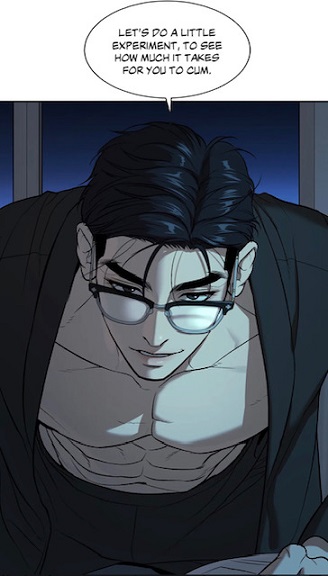 (chapter 29) Moreover, during that sex session, the athlete employed dirty talk.
  (chapter 29) It was not to express affection.
 (chapter 2) prostitution and rough sex. He never experienced true romance and the birth of “first love”. The courting and seduction were totally absent. His first kiss is connected to fighting, pain, survival and protection.
  (chapter 14) It had nothing to do with innocent and pure love. For me, Kim Dan didn’t have the time to fall in love with the champion properly. He could even say that his affection is related to his job and he could reduce it to mutual physical chemistry. Thus I deduce that he became a ghost again for one reason. Both need to experience the innocent first love. In other words, we should expect a new version of this magical night:
  (chapter 44) There should be no drug or no time pressure!! However, there exists another reason why I have such an expectation. First, the grandmother should be close to them. Her presence should represent a hindrance, as the latter is falling back into childhood. Secondly, right from the start, Joo Jaekyung was under the spell from Kim Dan.
  The hands are no longer fists used to express anger and resent, but they are wide open, they are expressing love and tenderness. They will convey a different message: respect, teamwork, and communication. Finally, through such gestures, both are able to reconnect. The hands are encouraging them to express their own thoughts and emotions. They are giving them reassurance and confidence. Season 2 stands for sharing, honesty and communication. Expect a revolution at the gym!



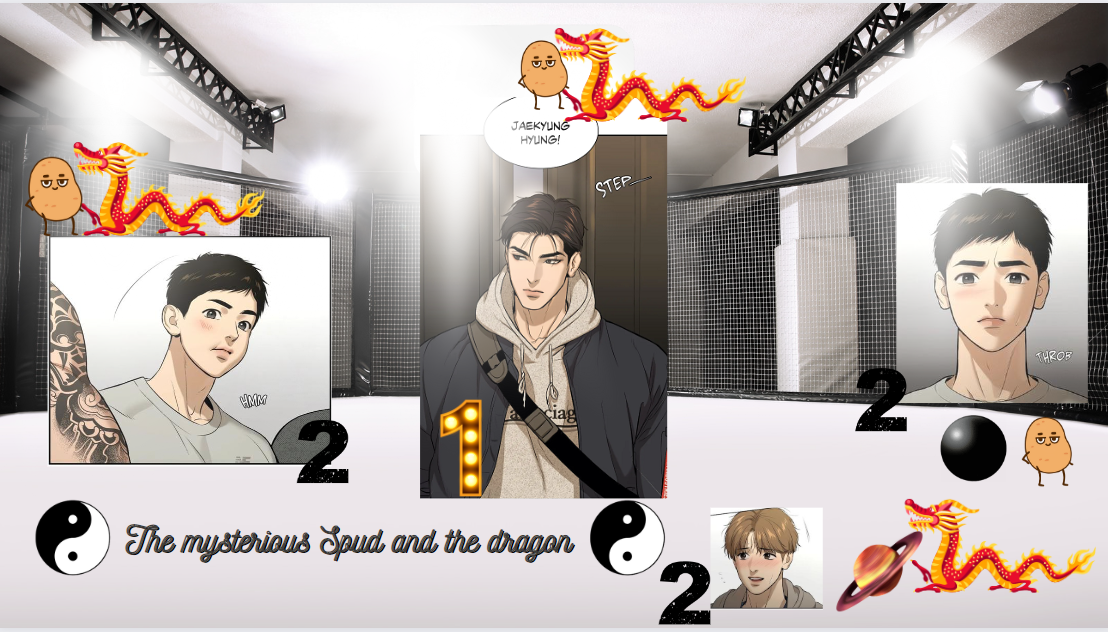 (chapter 22) Back then, I came to realize that both ukes were associated with the number 2. Shortly after, while making a first portrait of Cheolmin, I noticed that this cute doctor was linked to numbers 1, 3, 4.
  At the same time, I connected him to the sky, an angel. As you can observe it, my observations led me little by little to planets and numerology. But the major turning point was, when I perceived Kim Dan as a representative of Saturn
  . From that moment on, I came to associate Jinx-characters with gods and as such planets. Hence in the essay
  , I made the following connections. Potato was Venus, and his soulmate Choi Heesung is Mercury. Then Joo Jaekyung is Jupiter and the Sun, whereas Kim Dan was Saturn and the Moon.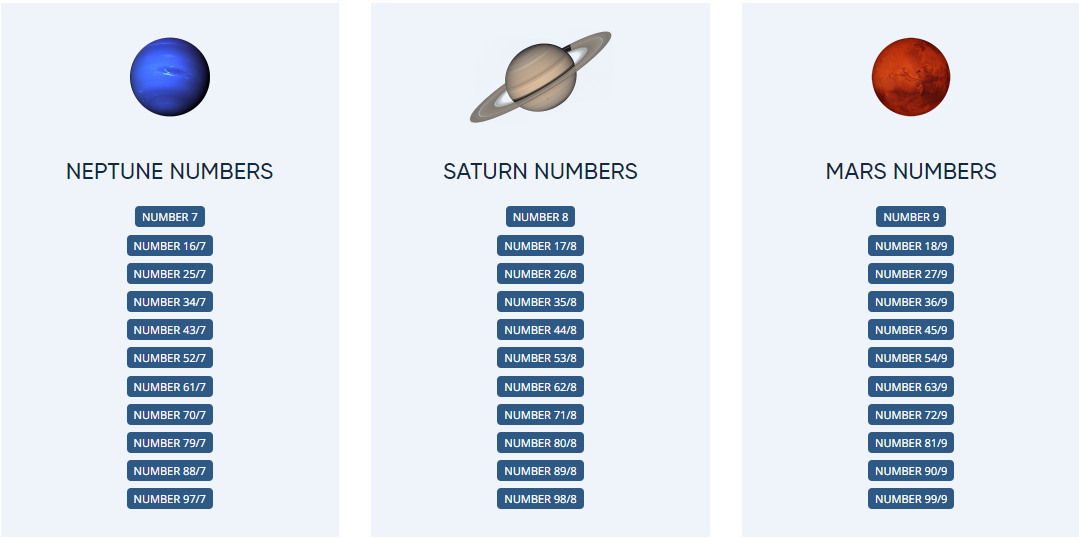

 That’s how I discovered that Kim Dan was associated with the number 8. Thus in the composition
  HEALING! That’s the night Kim Dan got healed.
  (chapter 44) During that night, he realized that time was flowing. It helped him to reconnect with the present and forget his abandonment issues. How so? This revelation was necessary to make him realize that his promise with his halmoni was impossible. She was a mortal, exactly like him. This lovely night gave him the strength to face reality
  (chapter 47) and digest the terrible news.
 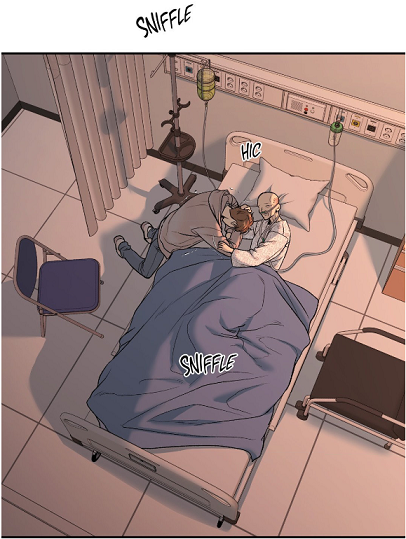 (chapter 47) Thanks to the champion, Kim Dan discovered that he could receive warmth and love from someone else. And now, you can grasp why he was strong enough to give the present to Joo Jaekyung despite his fear, why he could confront his boss in the locker room in episode 51. Thanks to this magical night, he learned that he could stand on his own. He is an adult now. But wait… people might question this interpretation, for there was no teamwork in episode 11.
  (chapter 11) When Park Namwook and Kwak Junbeom saw that he was wounded, the manager could detect the doctor’s lie. But what did they do? Nothing, they acted, as if they had not detected his lie. However, don’t forget the champion’s reaction.
  (chapter 11) He treated him as an important member of his team, he needed his assistance. Secondly, who helped Kim Dan with his struggles? Joo Jaekyung.
  (chapter 11) He might have taken advantage of the situation, yet contrary to the others, he did something despite his ignorance.
  (chapter 22) It is important, because it indicates that little by little, Joo Jaekyung is taking over the gym. From that chapter on, he was building his world from the ground”.
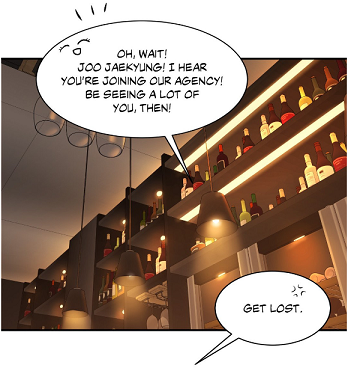 (chapter 33), we could see Joo Jaekyung’s success reached its peak, as he had just signed a contract with the Entertainment agency. “Reaching the pinnacles of success” was also reflected in another situation. The champion was allowed to touch his lover’s phallus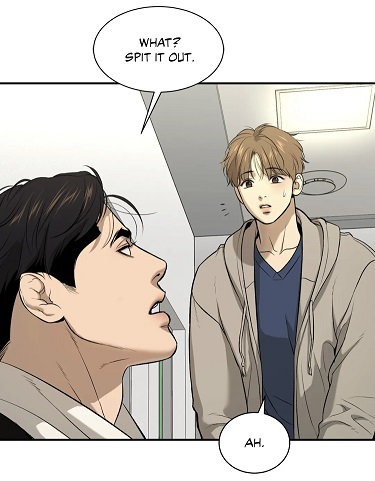


 A request, but notice that he is avoiding the athlete’s gaze. He only starts talking, when the other is turning his back to him.
  But even so, he is not able to look at his VIP client. Kim Dan is the one avoiding the athlete.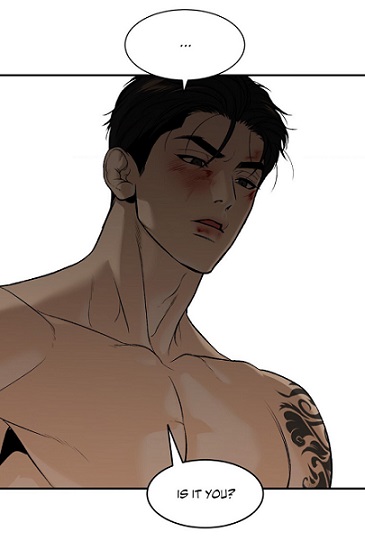
 They are no longer avoiding discomfort, a sign that they are getting closer to each other.
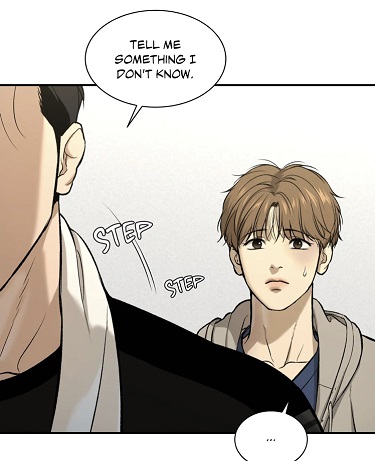 Here Manhwa-lovers can detect Joo Jaekyung’s arrogance and detachment. Both were not true to themselves. They were both beating around the bush. No one voiced exactly what they truly desire from each other, for they were not listening to their own heart.
 I selected pictures from episode 6, 33 and 51! They are all connected to the same number. This signifies that we should examine the following chapters 6, 15, 24, 33, 42, and 51 as a continuation or better said as reflections. Hence they stand for love, but don’t forget that Venus also embodies fertility, prosperity and victory. How so? She was the ancestor of the Roman people through her son, Aeneas, who survived the fall of Troy and fled to Italy. That’s why she came to symbolize Rome’s imperial power. Yes, these chapters are mirroring a battle, who has the upper hand in the couple.
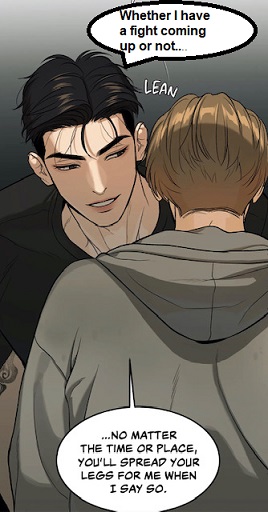

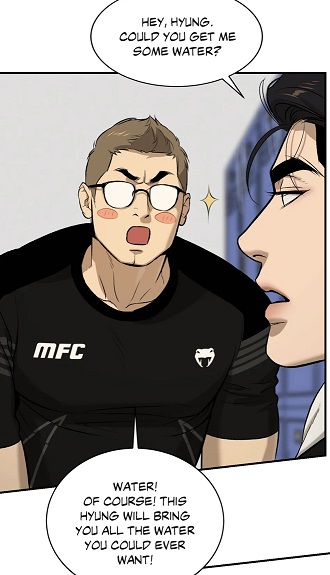
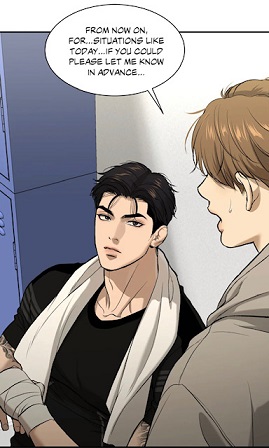


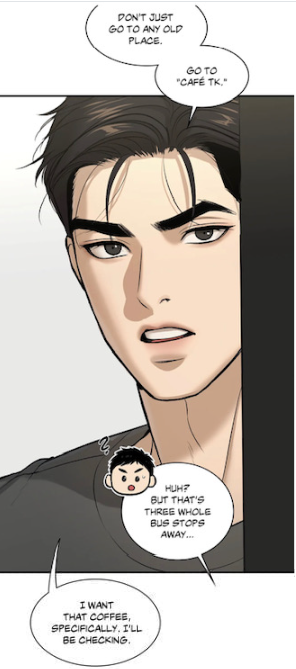


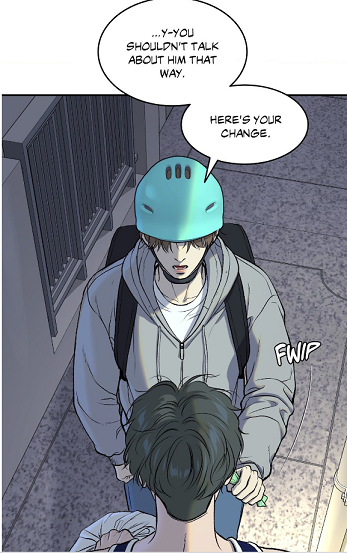

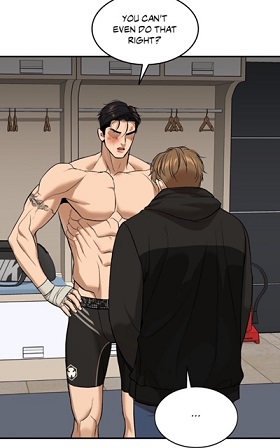
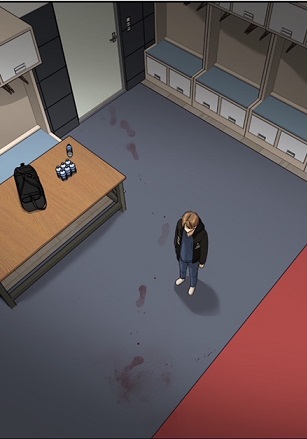
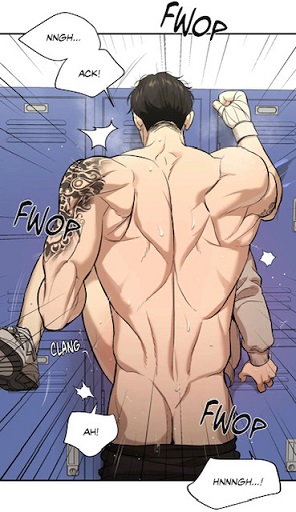 (chapter 15) But there’s more to it. It was also a first for the champion. He invited Kim Dan to watch the show. Imagine that he had never invited any sex partner before. Then in episode 24, he listened to the doctor’s request without any complain. Then in episode 33, for the first time, Joo Jaekyung focused on giving Kim Dan’s anal pleasure. It was, as if the star wanted to trigger desires in Kim Dan. Then in episode 42, Joo Jaekyung witnessed that Kim Dan was doing the breakfasts out of “routine” and not out of pleasure. Thus he always fell asleep. On the other hand, the physical therapist got confronted with a rival for the first time. Finally, in episode 51, Joo Jaekyung is now acknowledging Kim Dan as his final doctor. He is voicing his expectation: meticulousity.
  (chapter 51) By bringing the topic money
  (chapter 51), the champion could finally voice his biggest fear. Deep down, he knew that their relationship was based on money. But with one sentence, the doctor could remove his doubts and insecurities.
  (chapter 6)
  (chapter 47). Remember that for me, Cheolmin is connected to Neptune, hence we have the number 1, 3 and 4. Thus it would validate my hypothesis that at the restaurant, Joo Jaekyung was talking to the cute doctor.
  (chapter 43) On the other hand, you are probably wondering how I came to this new theory. It’s simple. It’s because of his name. Alfredo is connected to the number 7. In addition, his name signifies wise counselor.
 , (chapter 39) In chapter 53, we discover that it was the halmoni’s dream to see the ocean, like we could observe it in his old house.
  (chapter 47) As you can see, we have dream and ocean combined together. But if the ocean is connected to dream, how did I come to associate Alfredo with the dark elf? My theory is that the sea also represents the source of his suffering and as such his nightmare. I believe that his parents died drowning which would explain this reaction in the swimming pool.
  (chapter 7)
  (chapter 37)
  (chapter 39) Then his favorable days are Thursday, Tuesday and Friday. And if we combine the days from the two protagonists, there is only Wednesday off.
 (chapter 35) We have a 5, but 3+5= 8, the double of 4. Besides, his favorable numbers are 1, 7, 4. Then we would have the explanation why he became more important in episode 22
 (chapter 22), why he protected the doctor from Heesung in episode 31
 (chapter 31), why he asked for Kim Dan in episode 40
 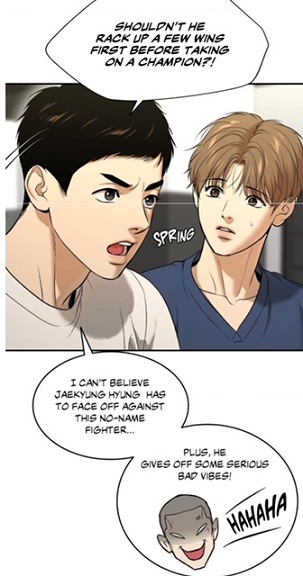 (chapter 47) and helped him in the locker room.


 (chapter 140)
  (chapter 149) Both were suffering from survivor guilt. To conclude, Joo Jaekyung and Kim Dan represent the bitter medicine for their scars. I mentioned “bitter”, because through their loved one, they are forced to face painful moments. That’s how they can overcome their past and discover happiness. However, while looking for a new title, I rediscovered the first illustration
  , and it suddenly made click in my head. To conclude, I had another revelation concerning episode 50.
 . (chapter 50) At first glance, the champion is blaming Kim Dan for the wound. He betrayed him. However, his words could have a different signification. Don’t forget that a message always has 4 sides according to Schulz von Thun.
  Consequently, while many saw this question as a “factual information” and as such as an accusation, the reality is that it gave us an insight about the sender too. The sportsman was not using the personal pronoun “I” or “me” in his inquiry. As you can see, the absence of the personal pronoun is indicating that Joo Jaekyung was in reality not referring to him and his wounds. He is not prioritizing himself, rather the doctor and his action. So this question could be prompted by curiosity or a desire to understand the person’s recent activities. Thus I deduce that the champion was asking his lover to tell him the truth. He should come clean. He desired a honest explanation. His attitude reminded me of an adult confronting his child.
 (Chapter 50) It becomes comprehensible why the Emperor refused the offer. The rejection was the symbol of his “trust” in Kim Dan unconsciously. Astonishing, right, though people and Kim Dan had the opposite impression. Yet, because of the “tie”, Kim Dan felt responsible for the incident, therefore he apologized.
  (chapter 51) This means, the main lead recognized his responsibility. He should have checked the spray more carefully. The champion could perceive this excuse as a confession of his complicity. Hence he asked his lover if he was the spy.
 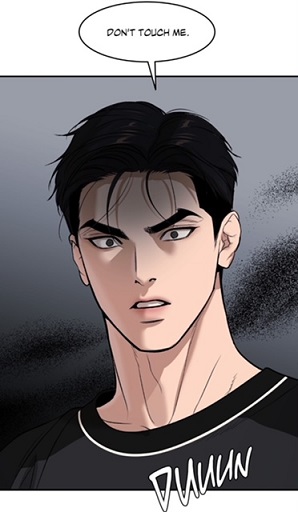 (chapter 50) This is the face of a scarred man. Yet, contrary to the past, he is not expressing his fear through rage. That’s the reason why his emotions were controlled. Under this new light, Manhwaworms grasp why the athlete asked such a question from his soulmate:
  (chapter 51) Interesting is that he was more pained by the idea of a betrayal from Kim Dan than the tie, if you compare these two panels: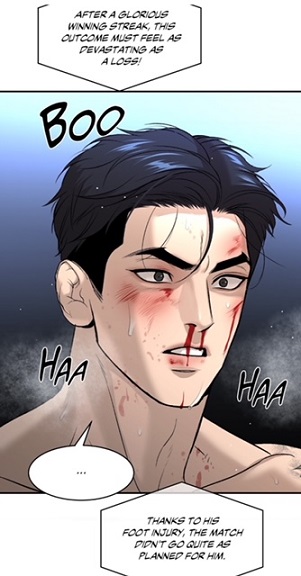
 (chapter 51) As my avid readers can see, my perception about chapter 50 was confirmed with episode 51. The arguments in the locker room were reflecting the quarrel in the penthouse with Choi Heesung. What is the common denominator between these two scenes? The lack of trust from Joo Jaekyung, but his private PT failed to realize it in the penthouse. Why? It’s because he chose to trust his destined partner.
 I believe you = I trust you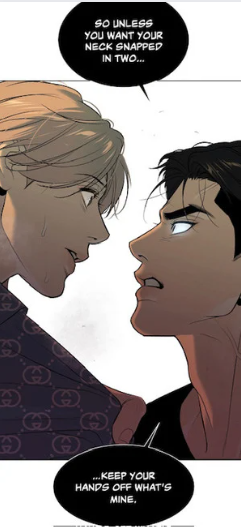

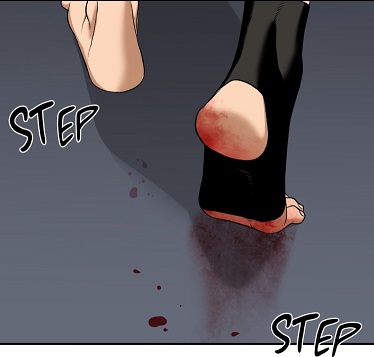
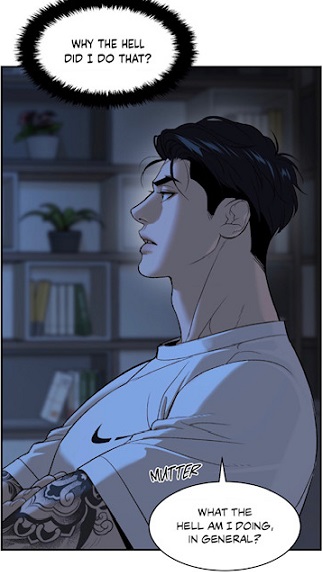 (chapter 35) He was still clueless about the trigger for his behavior. With this inquiry “You don’t trust me”, the hamster pushed his destined partner to face his biggest fear: trust someone and in particular him. This conversation can only incite him to meditate about their relationship. So while in episode 15, he behaved like a pouting child
  (chapter 15), in the latest episode, Jinx-philes can perceive his growth and maturity.
  (chapter 34) These questions were all rhetorical:
  (chapter 34) This signifies that in the sauna, truth was not standing in opposition to daring. The sauna reminded me of the cavern where an imugi hides, until the latter leaves its hidden place and find his star, his yeouiju. Only then, he can turn into a dragon. To conclude, because of Heesung’s pressure, the imugi had to select between daring or lie. In other words, telling the truth became the challenge itself. Heesung knew that Joo Jaekyung would never confess.
  (Chapter 34) What Heesung wanted was actually a lie by omission or commission which would have been presented as the truth. Through this game, the actor thought that he could impose his will onto the celebrity. He anticipated the athlete’s silence. This signifies that he knew about the star’s denial and turned it against him. Besides, that way Heesung could maintain his good image: he had not stolen his partner and as such there was no cheating. No one was betraying him.
 (chapter 34), but also his hand.
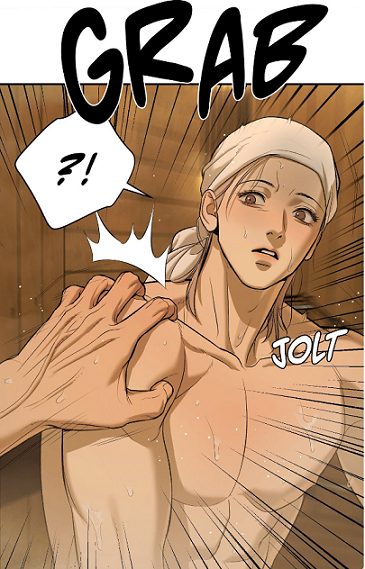 (chapter 34) He caught the actor by surprise, the latter never thought that the celebrity would become violent. The redness on his face was displaying that he was barely controlling his annoyance and impatience.
 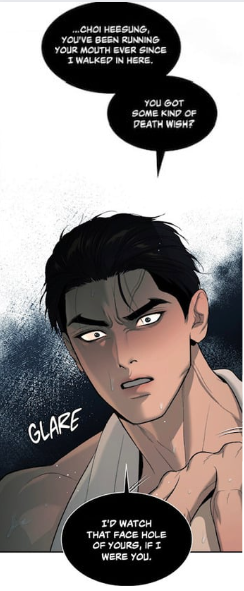 (chapter 34) However, they were in a public place, the hotel’s sauna, and the actor is a celebrity. Hence he is protected by his fame and social status. That’s the reason why the champion didn’t hit his frenemy, he had learned his lesson at the gym.
  (chapter 34) Despite his words, the gumiho still got scared. The racing of his heart is an indication of his fright. Therefore he ran away more or less after ordering his trainer not to meddle in his love life.
 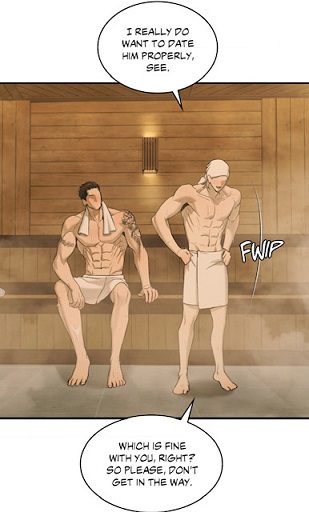 (chapter 34) Note that when he did this, he avoided his counterpart’s gaze. Deep down, he knew that he shouldn’t provoke his frenemy too much. Only when he was at the door, he turned around and LIED!
  (chapter 34) Yes, after that incident, he chose to give him a fake excuse for his departure. As you can see, this conversation was strongly intertwined with the notion “truth or dare”, but both ended up lying. Whereas the champion didn’t admit any feelings, the other acted, as if there was nothing wrong and he was not scared. The gumiho thought that if he were to remove the champion from the doctor’s side, the latter would be able to open up to the actor.
  (chapter 34) What does it reveal? The actor had been projecting his own thoughts onto the future dragon too. He was the one who didn’t dare to become more honest with the physical therapist. He used work to spend time with Kim Dan. One might say that Heesung failed terribly. Yet, this is just an illusion, because his “failure” pushed him to become more honest with Kim Dan. Thereby he asked to meet the doctor again.
  (chapter 34) Yet, the message is exposing that Heesung was still lying, as he kept using work as an excuse. Hence Joo Jaekyung had to intervene again:
  (chapter 34) The champion dared to challenge his rival.
  (chapter 35) Yes, by challenging the athlete because of Kim Dan, the comedian ended up telling the truth.
  (chapter 34), but his anxiety reached a new peak, the fear that he might be abandoned. Hence he used the sandbag to vent his temper. And what did the cute puppy do during that incident? He dared to offer his help to his idol:
  (chapter 34), yet he was in total denial about the reality: it was dangerous. Deep down, the champion knew that it was impossible for him to control his lover’s time, but also his body. Besides, the other problem is that the athlete is rejecting the notion of love. By denying the existence of his own feelings, he can not claim the doctor’s heart. That’s the reason why the champion got so mad and frustrated.
  (chapter 34) He was not telling the truth, when he stated that Kim Dan was his “possession”. This explicates why he couldn’t stay by the doctor’s side
  (chapter 34) in the end. He manipulated the main lead by letting him think that he had no other choice. Yet the last panel displays his trick. It was up to the doctor to decide how he should spend his free time. Nevertheless, while people were mad at the champion for his deception, many failed to realize that the champion was actually deceiving himself. So all the tricks (episode 33 and 34) were manifestations of avoidance, the fear to face the truth: his affection for Kim Dan and this due to a past betrayal. Hence these chapters stand under the sign of silence hidden by “pranks”.
  (chapter 35) On the other hand, the artist could only tell one part of the truth: the presence of feelings. However, the deceptions in the penthouse exposed something else:
 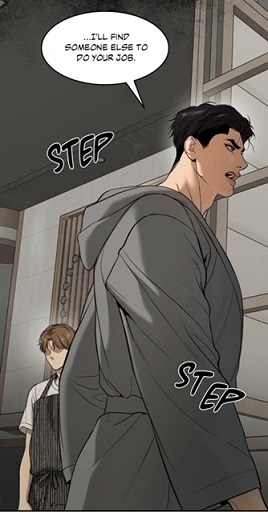 (chapter 45) or left the doctor in the locker room in episode 51.
 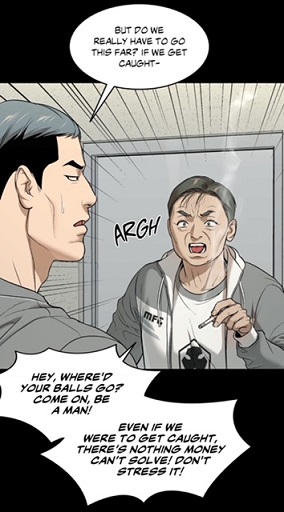 (chapter 50) First, the schemers’ MO corresponds to the game Truth or Dare. Choi Gilseok asked his minion to cross the line. This explicates why they are trying to use tricks and manipulations. Daring means no truth, thus someone will be framed: Kim Dan. Yet, the plotters are not aware that thanks to the cute hamster, the alpha is turned into a mirror of truth. Hence he couldn’t get deceived by the MFC security guys:
 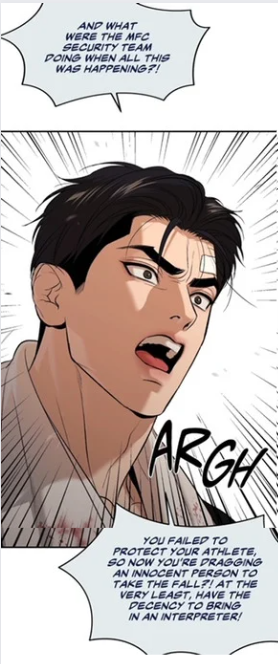 (chapter 40)
 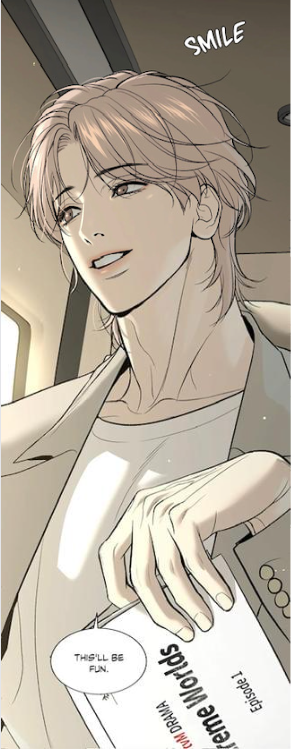 (chapter 29), the journalist without a face
 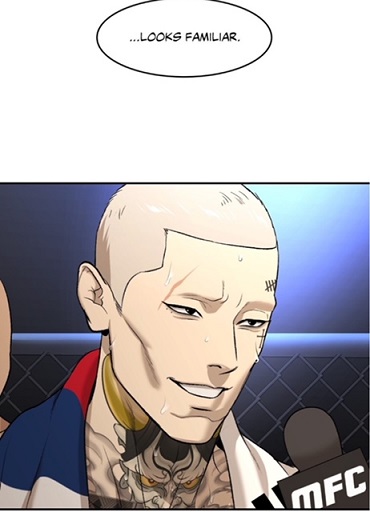 (chapter 47), then he recognized the director without naming him,
 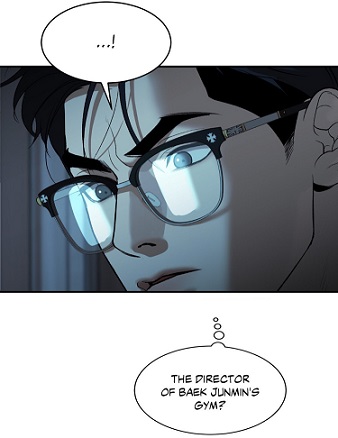 (chapter 48) and finally the ghost from the past
  (chapter 54). These characters are all connected to “Truth or Dare”.
  (chapter 50) This scene exposed that the champion repressed a certain incident which is rather common among victims of a trauma, especially people suffering from PTSD. This shows that some traumatic event took place for quite some time, but the champion acted, as if nothing had happened.
  (Doctor Frost, chapter 140 ) That’s how the champion became a zombie, he couldn’t live properly due to his untreated scars.
  (doctor Frost, chapter 139) But thanks to his fated partner, the traumatic past is slowly coming to the surface.
 (chapter 48) Should the athlete remember this night, he will realize that he was the one dismissing his physical therapist, although the doctor could have come clean later. At the same time, Joo Jaekyung’s attitude could be mirroring the parent or guardian’s in the past. They didn’t have the time or the inclination to listen to their son, hence the traumatic incident got buried.
 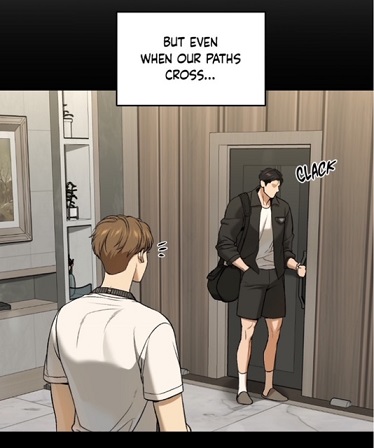 (chapter 47) and voice his true thoughts and emotions:
 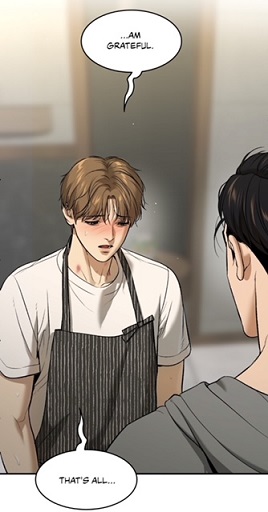 (chapter 45) He lied, when he portrayed himself as grateful. He was avoiding his gaze either. No wonder why the fighter got even more mad and threatened to fire him. Such an attitude could only increase the celebrity’s mistrust, as the latter could discern a certain dishonesty.
  (chapter 49) The latter didn’t even greet the director or acted, as if they didn’t know each other. He exposed the existence of a secret, an uncomfortable secret. Consequently, I believe that the champion could only jump to the conclusion that Kim Dan had been indeed acting behind his back, even coerced to do something.
  (chapter 51) Note that the star never came clean with the truth either.
 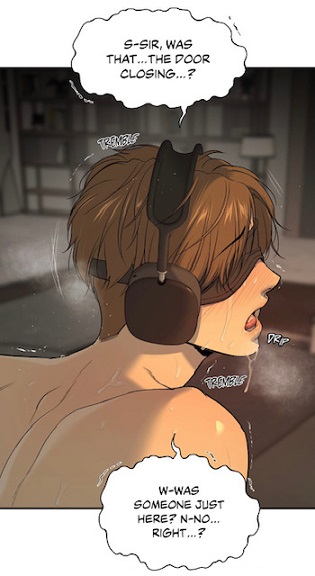 (Chapter 35) Through the doctor, the champion is encouraged to become honest to himself.
 (chapter 9) And what did happen after they left the restaurant? The champion discovered the truth:
  (chapter 10)
 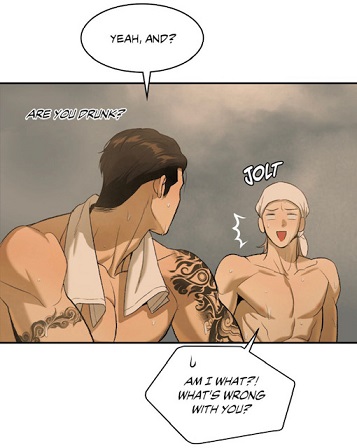 (chapter 34) “Are you drunk?” With this question, the protagonist revealed something about himself. He associates dating and love confession with drunkenness. He implies the existence of a lie. But a confession is strongly associated with verity and sincerity. On the other hand, for the sportsman, no one in his right mind would admit to be in love and in our case to love another man. For me, one part of the problem is that the champion is afraid of admitting his homosexuality. The latter is still a stigma in South Korean society. But there’s more to the game Truth or Dare. If you paid attention to the origin of the last quote, you will realize that this fun is linked to bullying and even hazing.
 (chapter 49) Furthermore, bullying is never done alone, but in groups.
 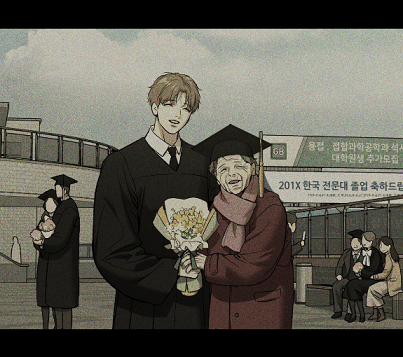 (chapter 47), Manhwalovers can see that Kim Dan was a loner. Therefore I doubt that he had friends during his college years. The only person he knew from his school was his mentor:
  (chapter 1) It is important, because it implies that Kim Dan avoided to socialize and participate in gatherings. Interesting is that in season 2, Jinx-philes discover that Kim Dan had been bullied in the past.


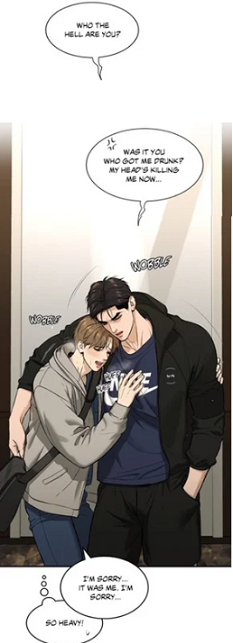
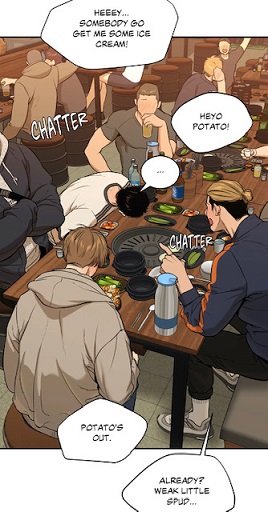 (chapter 9), yet Park Namwook made sure that the physical therapist wouldn’t be abandoned drunk. Thus he tasked his boss to bring him home. And as for Potato, it is clear that Oh Daehyun would take care of him, as he was sleeping in the dormitory next to him. In other words, no one was left behind drunk. But this scene contrasts so much to episode 43. First, no one was missing Potato. No one asked about his absence. Secondly, pay attention that the fighters invited Kim Dan to join them for another round, while they were neglecting their boss, though it was his birthday party.
 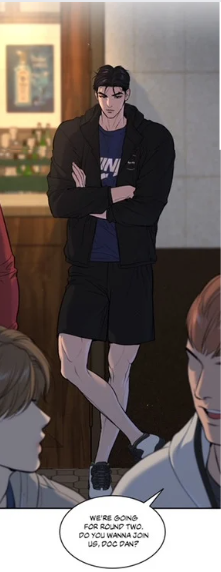 (chapter 43) Moreover, they never wondered about his physical condition. Was he drunk or not? Funny is that the intoxicated character was the one who forced Kim Dan to go home.
 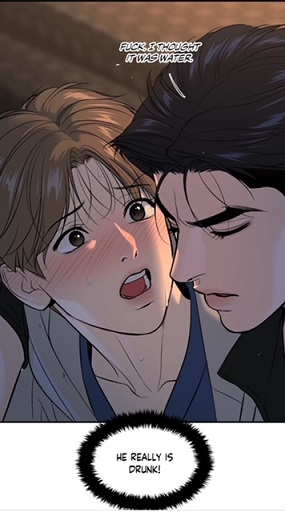 (chapter 43) That’s what a friend is supposed to do.
 (chapter 35) So the auntie could keep an eye on the judo fighter, and it was only a matter of time, until his friend would return. Nevertheless, this scene is implying a certain problem: a drunken person shouldn’t be left unguarded. Thus imagine that during a party, an unconscious person is brought to a room and left there unguarded, as the friend desires to keep partying, similar to this scene:
  (chapter 37) The person could get sexually assaulted, and no one would notice it. Secondly, I would like to outline that the hazing party from the article reminded me a lot to bullying. These freshmen were humiliated, and the perpetrator excused her behavior behind traditions and social norms. So the champion could have been betrayed by a friend, as the latter would have justified his action similarly. So instead of admitting his mistake, he could have justified the incident like this: the victim was responsible for his misery, because he was at the wrong place at the wrong time. It was just his misfortune or better said his jinx. Yes, for me, the jinx is indicating that people responsible for the champion’s traumas were denying their wrongdoings.
 (chapter 8) From my point of view, this place is not just symbolizing purification and reflection, but also indicating the presence of a wound. As soon as I connected the bathroom and as such water to pain, all the champion’s past behavior appeared in a different light. In episode 3, when he went there, he was wearing his pajamas.
  (chapter 3) Neither Kim Dan nor the protagonist were seen both naked in the shower room.
  (chapter 8)
  (chapter 20)
  (chapter 30) Therefore I perceive the champion’s last comment as relevant. In my opinion, Kim Dan’s gesture reflected the champion’s mind-set. So by saying this, Joo Jaekyung was forced to admit the absurdity of such an attitude. Therefore Manhwalovers can understand Joo Jaekyung’s annoyance at the sauna. He imagined that he would be alone there.
  (chapter 36) Kim Dan’s entrance could be perceived as a violation, for the champion was naked. This intrusion caught him off-guard. But since his gaze was covered, his anxiety masked behind his anger was diminished. On the other hand, this led him to leave the bathtub undressed and have sex in the kitchen.
 (chapter 27) Under this new perspective, I don’t think that it is a coincidence that the champion felt the need to take a shower after meeting Baek Junmin and recalling the past.
  (chapter 49) This helped him to overcome his trauma and past wound.
  (chapter 8) they dared to have sex next to Oh Daehyun and the other fighter. However, note that in all these scenes, neither the doctor nor the champion were honest. They were both lying… not only to their counter-part, but also to themselves.
 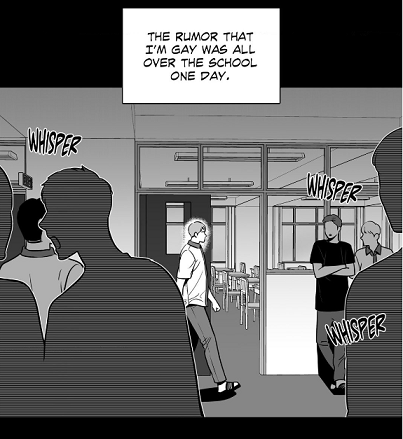 (chapter 70) His sexual orientation was exposed in high school, his friends were behind the rumor
  (chapter 70), although we have to envision that his crush played a huge part in it. Why? It is because he didn’t want to be associated with homosexuality.
  (chapter 70) Not only he cut off ties with him, but also he made sure to isolate the main lead from other students. The worst is that this person acted, as if this ostracizing had never occurred.
  (chapter 69), as if he had done nothing wrong. For me, it shows that the traitor never grasped the significance of his actions. Hence Park Sung-Woong could forget Dong-Gyun, while the latter could never forget him at all. The result from this huge betrayal was that the cute uke decided to keep his distance from people.
  (chapter 70) He could no longer trust people, he avoided meetings. In order to outline how severe betrayal trauma can be, the Webtoonist showed us the immediate effects of betrayal trauma: physical and emotional reactions
  (chapter 70)
 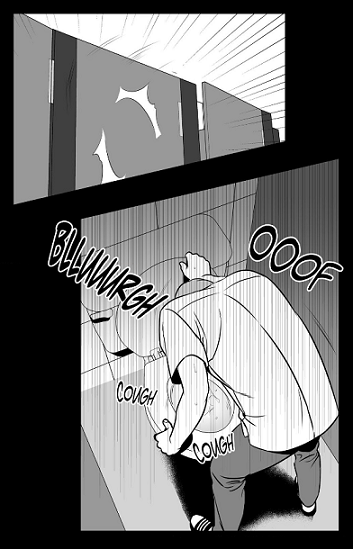 (chapter 70) and the long term effects:
 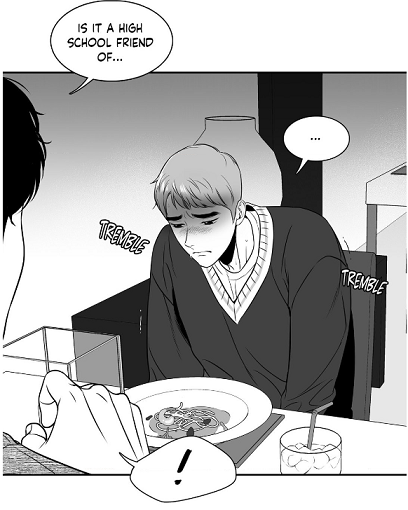 (chapter 69) he is trembling so much, he can not look at his former friend. Readers shouldn’t underestimate the issue. Betrayal trauma is so severe that it is comparable to being hit by a white truck. The pain is so great that it affects the brain functioning and as such personality.
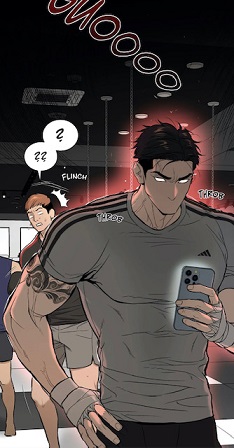 (chapter 05) Then when he stayed at home,
 (chapter 49), the latter was not loved, as he didn’t reach the first place like his older brother. Then we have Interpersonal with Nam Dong-Gyun and his high school friend. However, since the rumor circulated at school, and no adults intervened, we could see it as a reference to Institutional betrayal. Finally, Mingwa presented the last type (partner) with Hweemin.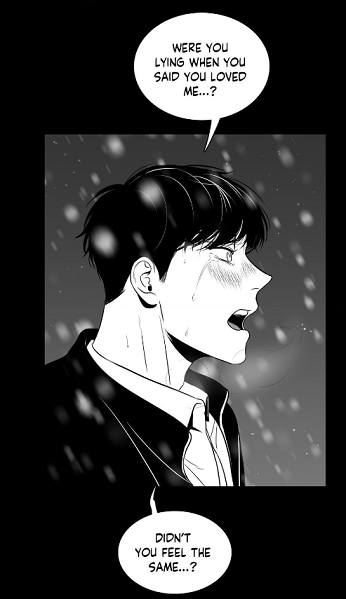
 (chapter 51) But why is betrayal trauma so severe? It is because everything appears as a lie, as an illusion. All the memories become tainted. The victim can only question his own senses and judgment. How could he not detect the lies? Since PTSD and betrayal trauma share some common points, it is not surprising that such persons come to blame themselves and develop huge self-loathing.
 (doctor Frost, chapter 139). And now, it is time to expose my latest observation:
 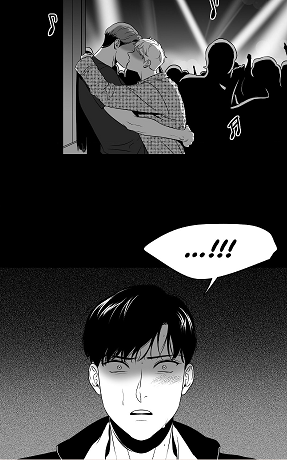 (BJ Alex, chapter 51) Ahn Jiwon caught his first lover cheating on him at a club. Interesting is that the new lover resembles a lot to Joo Jaekyung! Mingwa said that characters from BJ Alex will only appear, but Jinx is not connected to her previous work. Note that they were kissing in a public place. Moreover, the club is a location where students not only meet, but also drink alcohol together. However, once Jiwon saw Hweemin, he dragged him outside so that they could talk. In other words, the “new lover” was left behind. Thus I come to the following conclusion. Joo Jaekyung has been suffering from betrayal trauma exactly like Ahn Jiwon. He was betrayed by his guardian
 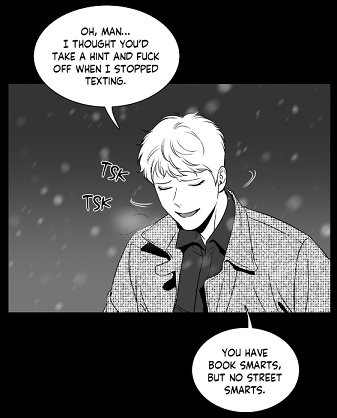 (BJ Alex, chapter 51). If this theory is true, then Mingwa would finally outline the devastating effects of Betrayal trauma on people, something she barely touched in her previous work.
 (chapter 51)
 (chapter 48) Why did the Webtoonist gave us the time, when the next episode starts another day? On the one hand, it exposes that the schemers knew about the champion’s nightly activities. He wouldn’t sleep much and he would keep his cellphone next to him.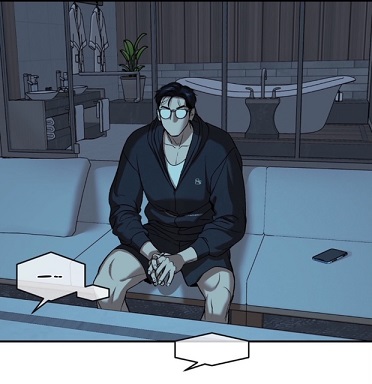
 (chapter 76) “A deed once foiled has no chance of success the second time around”.The criminal was referring to learning through experience. After going through such an event once, the athlete is no longer caught by surprise. We could say that he learned not to jump to conclusions and control his emotions. That’s the reason why in episode 48 he remained level-headed. Because the champion didn’t get angry, he could be more attentive.
 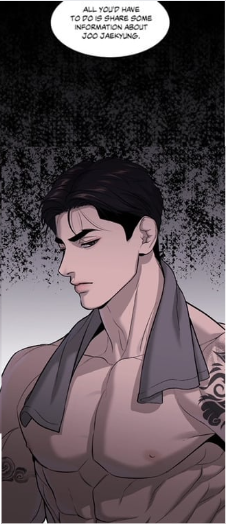 (Chapter 48) The irony is that the doctor had been able to treat the star’s injury. For me, the Summer Night’s Dream played a huge role, as during that night, Joo Jaekyung felt treasured and loved. Therefore the pictures could only expose the duplicity of the director of King of MMA. Under this new light, it becomes understandable why the celebrity didn’t fall into their trap and why they had to turn doc Dan into a traitor by giving him a weapon without his knowledge. Finally, I believe that Joo Jaekyung had another reason not to confront the physical therapist. How so? It is because he had sent away his soulmate, while the latter had approached him.
 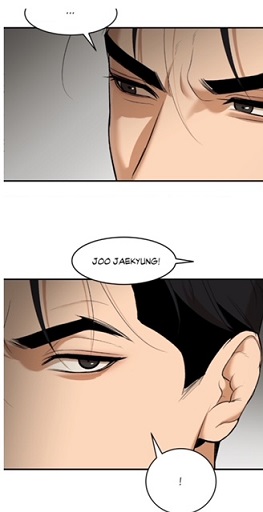 (chapter 49) The gaze displays not only worry and anxiety, but also regret. It was too late to ask the doctor. For me, he chose silence, for he was regretting his reactions in the penthouse. He feared to ask Kim Dan, because if he brought up the meeting with Choi Gilseok, this could push the hamster to quit his job. However, thanks to Kim Dan, the star’s condition improved greatly. That’s how it dawned on me why the champion became a beast and why he is hiding his past:
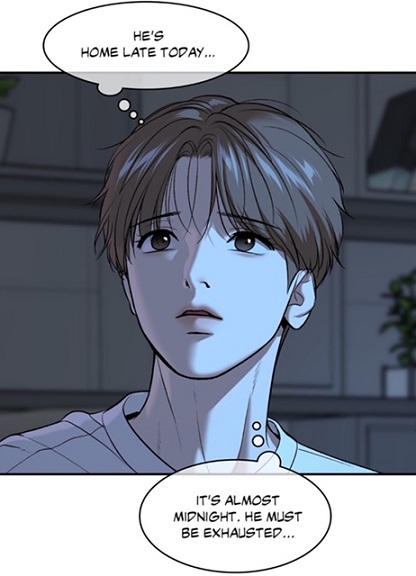 (chapter 48) But why is midnight so important? It is because the number 12 carries religious, mythological and magical symbolism, generally representing perfection, entirety, or cosmic order.
 (chapter 12) the couple was supposed to reach Nirvana, but the athlete failed terribly. Under this new light, it becomes comprehensible why the protagonist chose not to confront Kim Dan in episode 48. It was, as if the champion was closer to the heavens. This represents the champion’s leap of faith. Don’t forget that the star got scared for one moment
 (chapter 48), when he noticed doc Dan’s presence too late. But nothing happened to him, that’s how he got incited to trust Kim Dan. The latter wouldn’t backstab him. Under the blue light, the champion got transformed.
 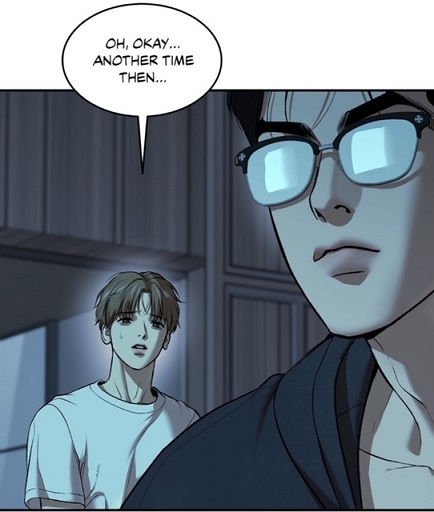 (chapter 48) On the other side, the fact that the champion is always targeted during the night is a sign that the villains desired to approach him, when he was isolated. So they know not only about his insomnia, but also about his solitude. I would even add that the plotters are aware of his association between the night and danger. Remember how he described relaxation: he would give an opportunity to his enemies to attack him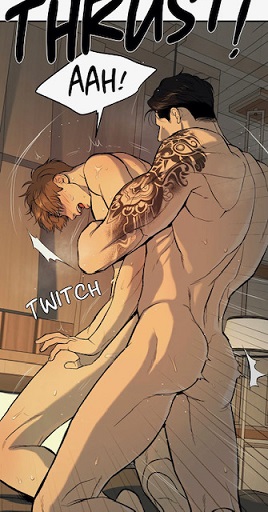
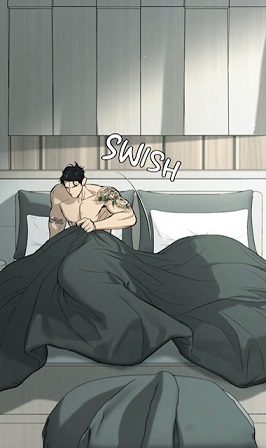


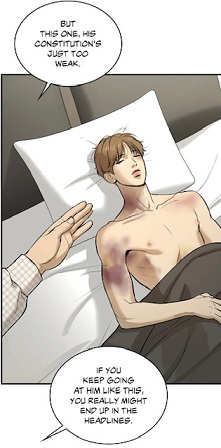 (chapter 13) It is important, because through this terrible experience, Joo Jaekyung came to internalize the connection between sex and danger. This would explain why he has been so rough in bed before. He came to see it as a normality, a sign that his perception of sex had been negatively influenced. And this can only come from bad experiences. It had nothing to do with “enjoying the moment”, until the protagonist met the shy hamster. We can see his gradual transformation. In episode 12, he definitely saw the night as “carpe diem”
 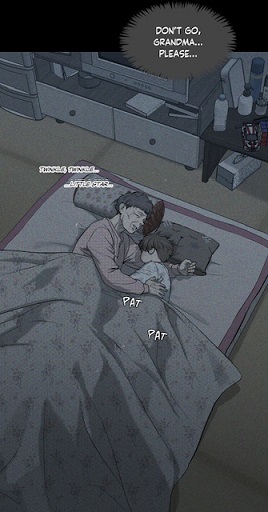 (chapter 21) Furthermore, the champion exposed why he could never relax:
  (chapter 47). And what was the main lead feeling after that terrible night? Regret, for he had not been able to notice his relative’s suffering and sacrifice!
  (chapter 19) or a new request like swallowing the sperm
 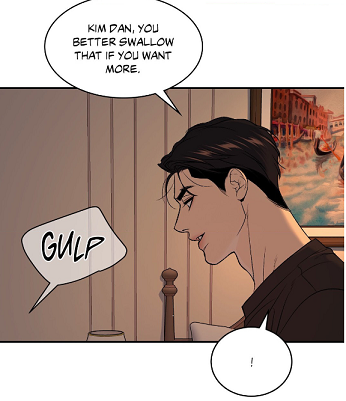 (chapter 39) or kissing the champion’s ruined ears
  (chapter 44)
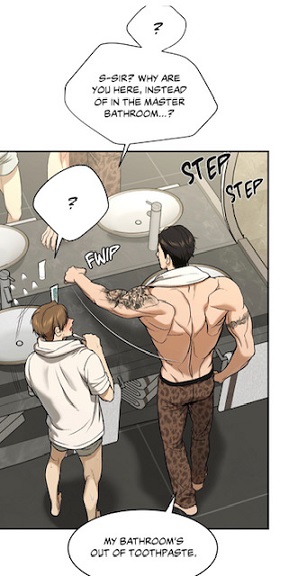 (chapter 30) He was rough and used the toothpaste as an excuse.
 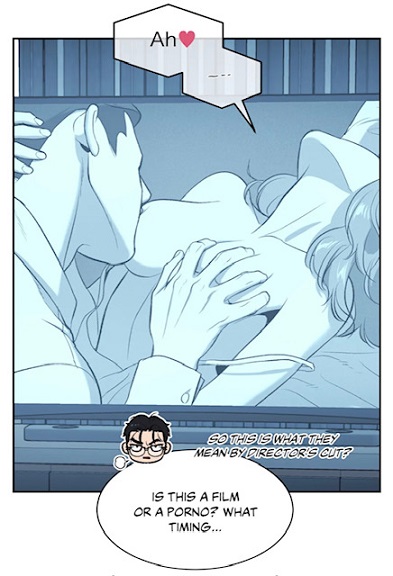 (Chapter 29)
 (Chapter 18) And now, observe that during the night in the bathroom, doc Dan was associated with a baby receiving food:
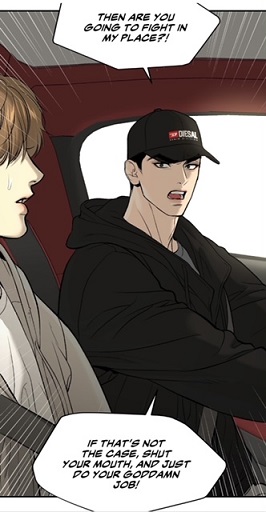 (Chapter 42) He rejected his advice, a sign that he was doubting doc Dan’s skills and competences. That’s the reason why I come to the conclusion that with the pictures, the champion was pushed to admit that Kim Dan is his physical therapist
  (Chapter 49)
  (chapter 49) Then I noticed another parallel between the two plots: the presence of a scapegoat, and the involvement of a third person. Heesung faked his injury by putting the blame on the athlete, while he asked Kim Dan as compensation. In the second plot, the roles are switched. Kim Dan is now the perpetrator, while the athlete is the victim! Baek Junmin is the beneficiary of this scheme. And what do these plots have in common? Joo Jaekyung is the victim of a trick, though Heesung’s manipulation was rather benign. First, he acted on his own.
  (Chapter 31) Moreover, he utilized the genuine concern and innocence of his surroundings. In other words, he used his image as a good and honest man to his advantage. Thus I come to the conclusion that the artist’s sin in their youth was rather minor, as the artist tends to violate social norms. So though it was no illegal, the actor’s wrongdoing definitely left scars on the protagonist’s heart.
  (chapter 5) Joo Jaekyung destroyed the sandbag, when he imagined that doc Dan had blocked him! This signifies that the former could no longer contact the shy hamster. Joo Jaekyung saw it as an affront, a challenge!
  (chapter 49), I deduce that such an action must have happened in the champion’s youth. He got not only hurt by people, but also betrayed by a friend. There exists many reasons for this hypothesis.
 (Chapter 04) and be rude towards others.
 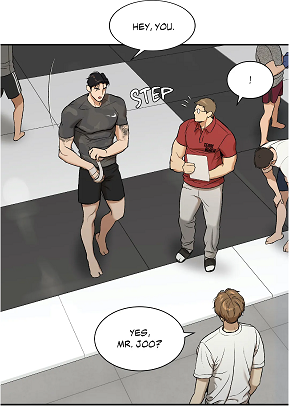 (Chapter 7)
 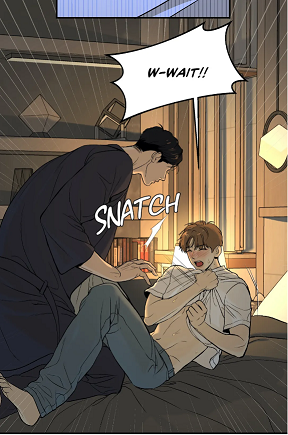 (Chapter 3) Some of them are not written in Korean or English. Moreover, the Webtoonist revealed that one of his hobbies is reading. This explains why he can talk prettily.
 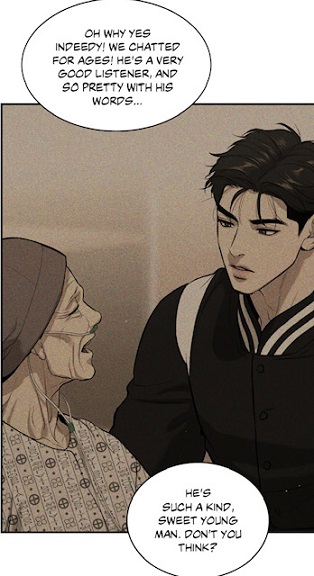 (chapter 22) This shows that his behavior mirrors the counterpart’s. Consequently, it is not surprising that the champion is rough with his own body, as Park Namwook is not treating him like a delicate child.
  (Chapter 37) Even stressed and filled with anger, he could understand and speak fluently in English.
 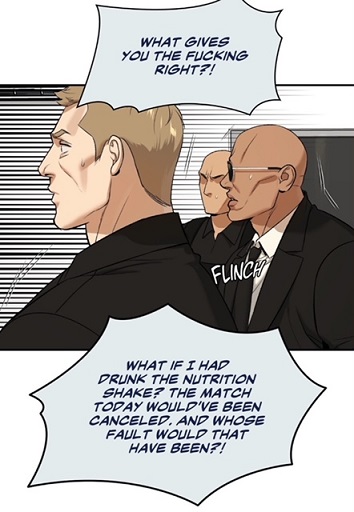 (Chapter 40) Compare Kim Dan’s English skills in the same scene:
  (chapter 40) Besides, Jinx-philes should question why Mingwa is not divulging his scores as a student contrary to Kim Dan or Jinwon from BJ Alex. It is because she wants to create a certain image about the champion: he is a bad boy. In my eyes, she is playing with prejudices about MMA fighters. People often imagine, they lack social manners and education. They chose this path, for they could do nothing else. And this brings me to my next remark. We know that Kim Dan selected PT because of his halmoni.
 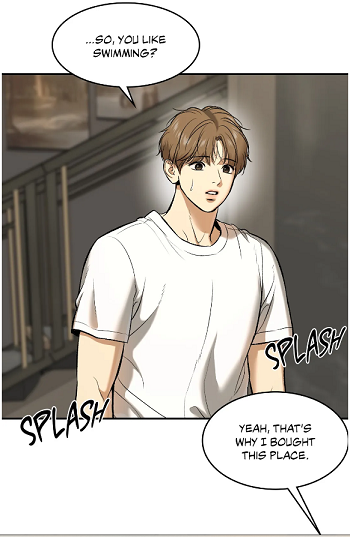 (chapter 27) I see a contrast between these two sports: swimming which is related to relaxation, pleasure and fun and MMA fighting which stands for challenge, pain and seriousness. This contrast is even more present in the following panel:
  (chapter 49) He is a hyena, hence his color is brown.
  (Chapter 48) And The Shotgun has a similar attitude:
  (chapter 49) Interesting is that his description of the challengers fits the situation in the new plot perfectly. The Shotgun imagines that he will fight against a diminished champion. His shoulder is injured and they have planned to add a new injury. The hyena stands for balance and cleansing as their task is to remove the weak ones.
 (chapter 49) As an old man, Choi Heesung is revealing vulnerability and senility. Due to his old age, he could be replaced by another hyena, a younger hyena!
 (chapter 5), as he is the only person who has not appeared yet, though the champion has his cellphone number. And this remark brings me back to the present and the night messages and the hyenas.
 (chapter 36) which could only affect the members from Team Black. Their loyalty could waver. Then he got to hear bad comments from the Internet
 (chapter 36), creating the illusion that he was losing popularity. That’s how the lawyer could convince the champion to accept a new match in such a short-time. Finally he got reprimanded for his outburst.
  (chapter 36) Under this new perception, Manhwaphiles can grasp why the MFC manager offered him a new defy right away. They needed to exploit his injury!
  (chapter 41) With the pictures
  (chapter 13) This could have ended badly. Another wrongdoing could be the rejection of his birthday present and his harsh reaction.
  (chapter 47) At no moment, the physical therapist brought up his misdeeds and asked for an apology. His silence became the symbol for his tolerance and even forgiveness. In addition, the doctor and his halmoni embody both vulnerability and poor health, which is strangely connected to crime and scandal.
  (chapter 26) For the first time, he had fun sparring. Hence he kept smiling. It is no coincidence that soon after he chose to accept to take a day-off, when Kim Dan made the suggestion.
  (chapter 35) and not in episode 48. It is because Kim Dan had paid him a visit during that night, a sign that he was thinking of him as his patient and VIP client.
 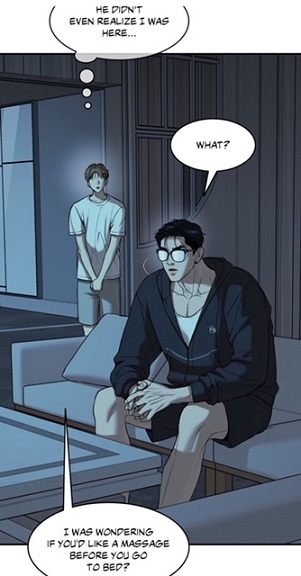 (Chapter 48) On the other hand, I am inclined to think that when a terrible incident in his youth occurred, he couldn’t contact his family or guardian. Hence he keeps his cellphone by his side constantly. Yes, I was thinking of the doctor’s assault in the street and his failed rape:
  (Chapter 16) Heo Namwook’s minions had confiscated his cellphone. Hence it was impossible for him to call for help. And now take a closer look at this scene:
 (chapter 37)
 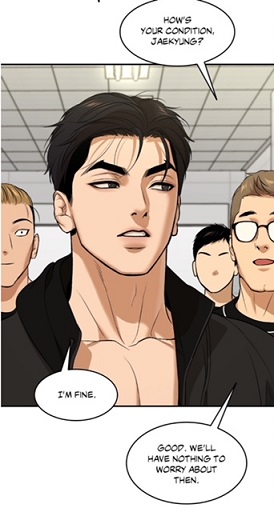 (chapter 49) That could be the hidden guardian who has not showed up yet, I am thinking of Seo Gichan. And now it is time to close this long essay.
 Bebebisous33s' analyses in K-Dramaland and Manhwas