

Please support the authors by reading Manhwas on the official websites. This is where you can read the Manhwa: Jinx But be aware that the Manhwa is a mature Yaoi, which means, it is about homosexuality with explicit scenes. Here is the link of the table of contents about Jinx. Here is the link where you can find the table of contents of analyzed Manhwas. Here are the links, if you are interested in the first work from Mingwa, BJ Alex, and the 2 previous essays about Jinx This has to change and Kim Dan on Thin Ice
It would be great if you could make some donations/sponsoring: Ko-fi.com/bebebisous33 That way, you can support me with “coffee” so that I have the energy to keep examining Manhwas. Besides, I need to cover up the expenses for this blog.

Water and Power
Two years ago, I published the analysis  At the crossroads: between 🤍, 💙, and ❤️🔥 and it has become the most read essay on my blog. [27.3 K views] It traced Joo Jaekyung and Kim Dan’s first day off together—the fateful swim in chapters 27-28 —when Joo Jaekyung’s apparent selfishness became the catalyst for Kim Dan’s first spiritual awakening. There, the water served as both mirror and baptism: a liquid threshold through which the doctor began to accept sexuality not as sin or submission, but as part of being alive. I had compared the athlete to a dragon holding his yeouiju. The pool stood for motion, rebirth, and the courage to breathe underwater—to trust one’s body rather than deny it.
Though the grandmother was never mentioned, I had sensed her ghostly presence in the grandson’s thoughts and actions. In her youth, the ocean looked beautiful to her 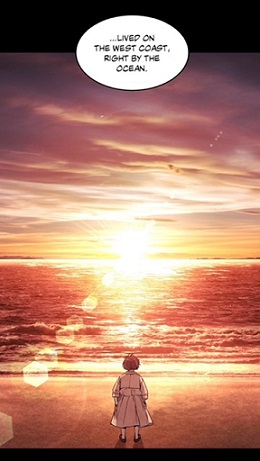 (chapter 53), yet she kept her distance. Observe that she only talked about one time experience. She sensed its danger and built her life on the solid ground of caution, duty, and control. In other words, she belongs to the world of the shore (chapter 53) —the solid, the measurable, the safe. Her fascination with the sea’s beauty reveals the limits of her perception: she judges by what is visible, by surface calm and reflected light. The ocean entrances her precisely because she refuses to imagine what lies beneath. For her, beauty is something to be looked at, not entered. Depth implies risk; darkness suggests loss of control.
That is why she keeps her distance. She fears what cannot be seen or accounted for — the unseen currents, the hidden life beneath the glittering skin of water. Her faith is built on appearances, not intuition; on the stability of the shore, not the movement of the tide. Thus I deduce that she never learned to swim. To her, entering the water would mean surrendering control, accepting fluidity, and admitting the existence of life below the surface. This means, swimming would expose the falsehood of her philosophy. That’s why I come to the following deduction that to her, swimming was unnecessary; one simply had to stay on land and hope never to fall in. But the pool, unlike the ocean, demanded a choice: enter, move, the pleasure of being below the surface 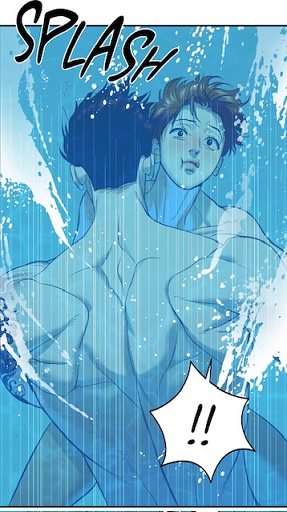 (chapter 28) and learn that not everything can be postponed or entrusted to someone else. Water, in this sense, rejects fatalism. It calls for motion, for risk, for personal responsibility.
What the grandmother built on faith in others was quietly undone by breath and muscle.  (chapter 80) And that intuition resurfaced and was confirmed in episode 80, when another day off brings the couple back to the pool. This time, the doctor steps into the water willingly.
 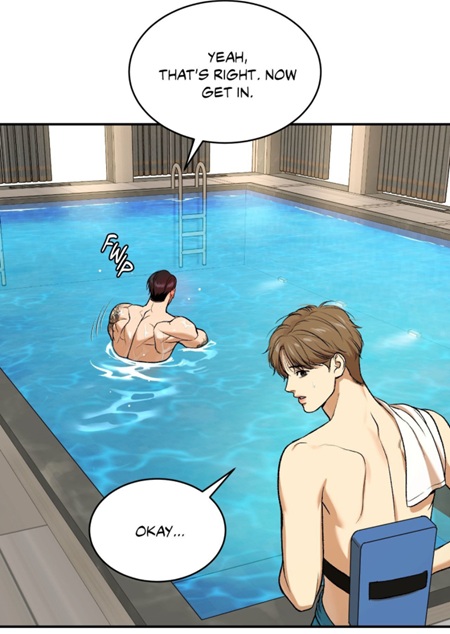 (chapter 80) He is no longer the man waiting to be rescued; he is the man learning how to swim. The champion’s words
  (chapter 80) distill the new doctrine: don’t wait for salvation
  (chapter 80), create your own buoyancy. Between the first swim
 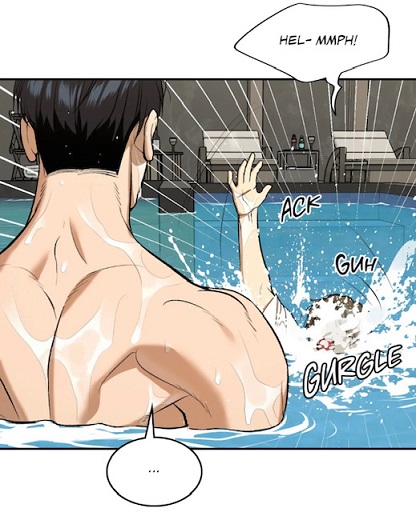 (chapter 27) and this second lies the true point of no return—where superficial judgment turns into reflection, dependency into self-trust
 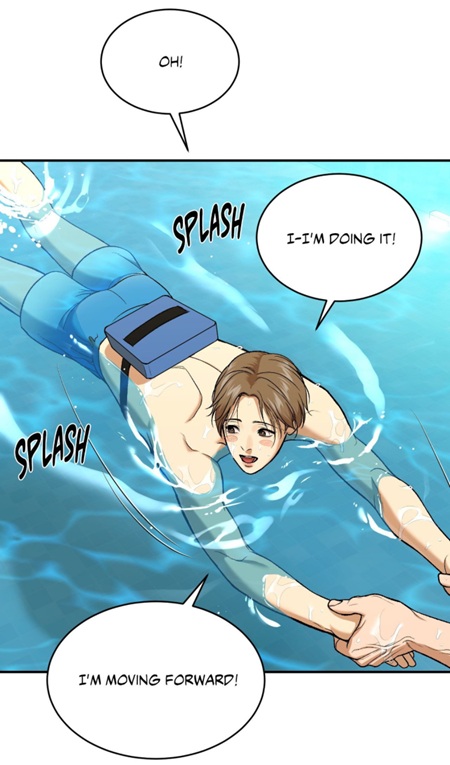 (chapter 80) and the rejection of powerlessness, (chapter 80), and fear of closeness
 (chapter 28) into the first stirrings of love
 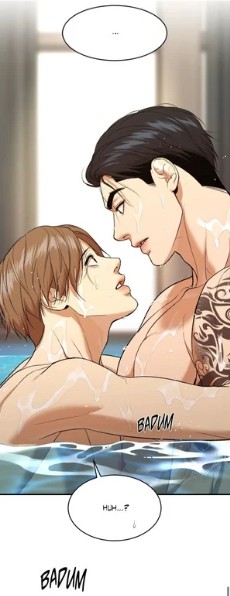 (chapter 80).
Shin Okja’s private religion was one of delegation: wait for the right person, the right moment, the right help to come. That’s why she never got the chance to return to the ocean. 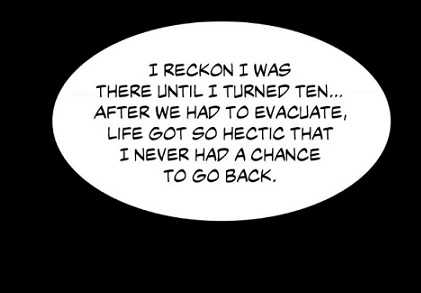 (chapter 53) Safety lay in patience and dependence. Even when she later spoke with the champion by the sea, she avoided mentioning the ocean —as if to deny that any movement beyond her control could exist.
 (chapter 65)
One might argue that I am overinterpreting, since the grandmother’s presence seems unrelated to the swimming pool and tied instead to her graduation gift—the gray hoodie. 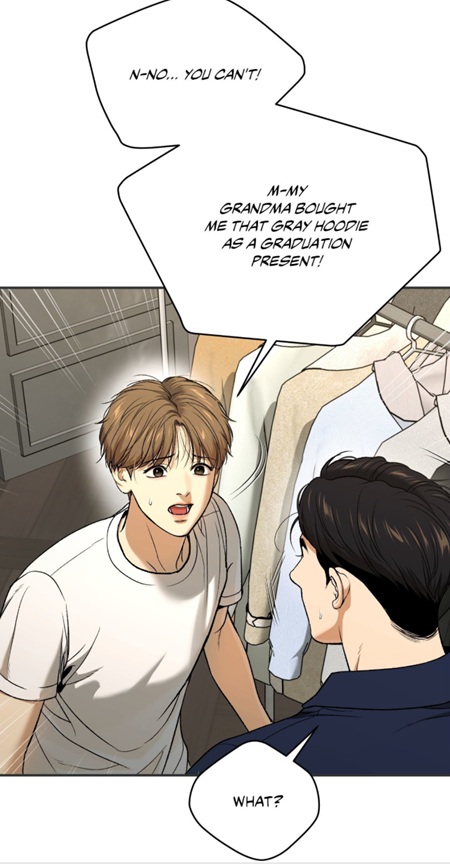 (chapter 80) Yet her absence from the pool scene is precisely what reveals her theology of avoidance. The pool was never her domain because her life revolves around work, not pleasure. She has no notion of rest without guilt, no concept of joy detached from utility. For her, swimming would appear frivolous—something “unnecessary” as long as one stays on solid ground. Jinx-philes should keep in mind that she never gave such a task to Joo Jaekyung. Her instructions to him were always practical, delegating care outward: take him back to Seoul, bring him to a big hospital and make sure he’s safe.
  (chapter 65) When she sees them together, her first reaction is not pride or relief but mild reproach— doc Dan should have left already.
 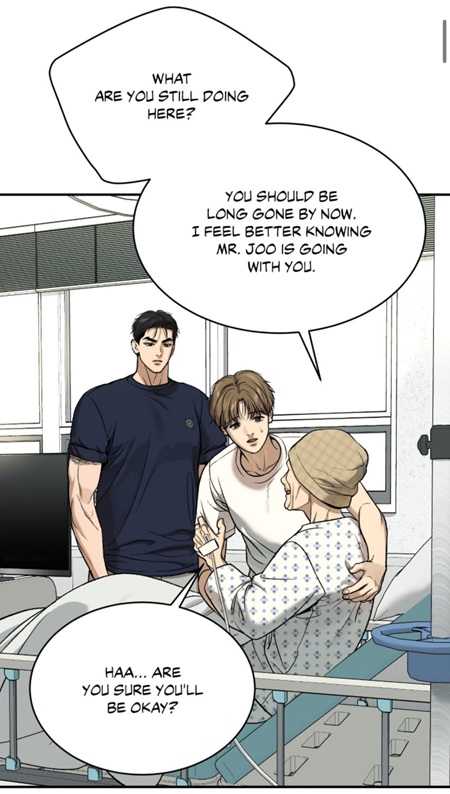 (chapter 78) The subtext is unmistakable: she expected obedience, efficiency, not attachment. Furthermore, her final instruction—“Make sure you see a doctor regularly”—
 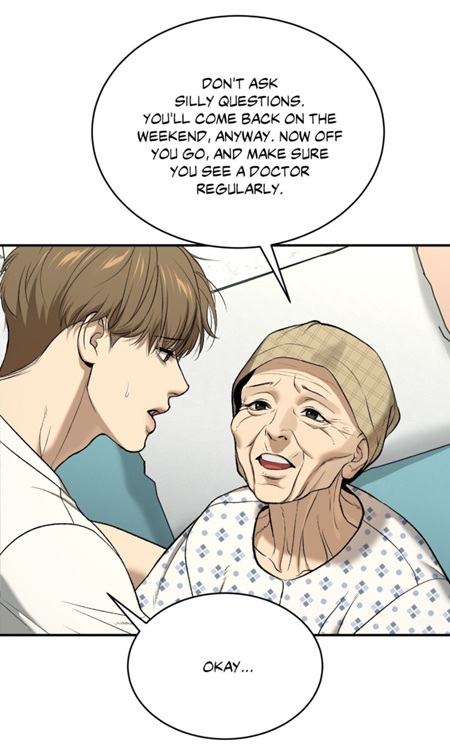 (chapter 78) sounds like ordinary concern, yet it hides her familiar logic of blame. It is as if she were implying that Joo Jaekyung has failed to fulfill her favor because Kim Dan has resisted care. In her eyes, the grandson is still the one responsible for trouble; the athlete’s role remains that of the dependable proxy who must “fix” him. What makes this moment striking is her tone of urgency, so unlike her habitual fatalism. The woman who once repeated “I’m the same as always”
  (chapter 65) suddenly speaks as though time is running out. (chapter 78) Her words, however, do not signal newfound insight—they only reinforce her desire to keep control, to ensure that someone else continues her mission of delegated care.
But what she interprets as negligence is actually independence. The champion is no longer following her religion of work and duty; he is inventing a new one based on choice 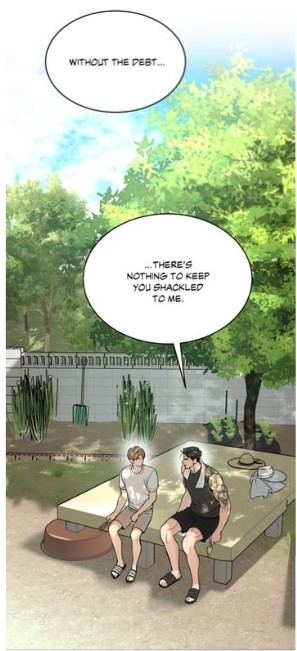 (chapter 77), respect and care. What she calls delay is, in truth, meditation and transformation.
Presents: The Gray Hoodie and the Lady
If the grandmother’s religion was built on work, the gray hoodie was its sacred relic.  (chapter 80) It was her graduation gift, yet it had nothing to do with his new profession or status. In contrast, the first episode already shows Kim Dan in a blue therapist’s uniform, name tag neatly pinned — a garment he must have purchased himself.
  (chapter 1) Traditionally, a graduation present helps the recipient embark on a career — like for example, a watch, a suit, or even a briefcase — symbols of adult entry into the job market. By offering him a hoodie instead, she unconsciously devalued her grandson’s professional worth. The garment belongs to the domestic sphere, not the workplace; it wraps him in comfort rather than readiness. In a moment meant to celebrate his arrival into public life, she reinscribes him into the private one — the house, the caretaker role, the obedient child. He doesn’t look like someone who went to university.
The gesture, whether she intended it or not, tells him that his identity has no market value beyond her recognition. The gift affirms warmth but denies competence; it soothes rather than equips. In addition, the grandmother’s choice of a hoodie exposes her lack of investment in that future. Her pride ended at the diploma; what came next was his responsibility. 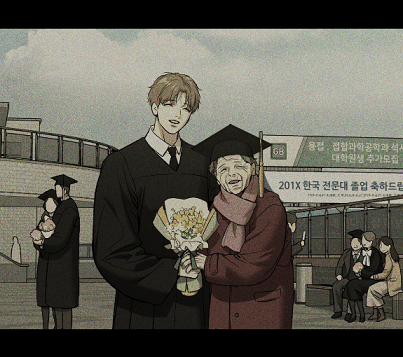 (chapter 47) There was no curiosity about his career, no acknowledgment of his competence—only the quiet satisfaction that through her endurance, she had produced a “doctor.” In the graduation photo, she even wears the mortarboard herself, smiling with the pride of someone who believes the diploma justifies a lifetime of sacrifice. Her grandson’s success confirms her own virtue; his “adulthood” validates her survival. This question to the athlete exposes her lack of interests in his profession:
  (chapter 65)
But her act of giving, like her act of living, was book-keeping disguised as affection. 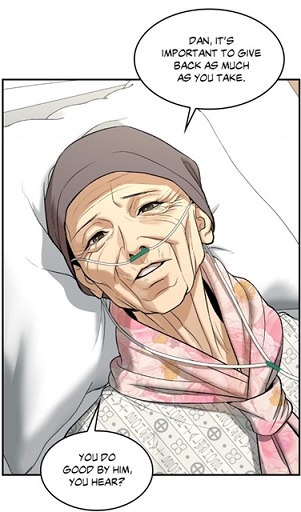 (chapter 41) While dying, she reduces love to an equation of productivity: “Dan, it’s important to give back as much as you take.” The verb do anchors her worldview — love must be measurable, visible, earned through action. To do good by someone means to labor for them, not to rest beside them. What caught my attention is that neither doctor
 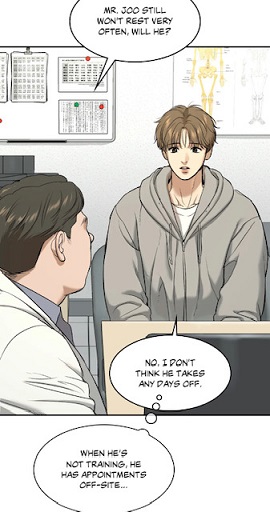 (chapter 27) nor the champion employs the expression “vacation” or “break”.
  (chapter 80) Why? It is because they never experienced a break. We have to envision that the “hamster” must have followed his grandmother, when he was not busy studying or working. Both main leads never experienced a real vacation. They say a day off, as if the day itself didn’t really exist, as if it were a temporary pause between “real” time. In their inherited logic, only work gives time its value; everything else evaporates. The grandmother’s way of loving has turned rest into an absence, something unworthy of being named. However, observe that there’s a gradual change in doc Dan’s vocabulary:
  (chapter 80) The problem is that for the hamster, only the athlete is worthy of getting his rest. It still doesn’t belong to his world.
Shin Okja’s universe contains no category for leisure, play, or shared time; such things produce nothing, and what produces nothing has no value. Even when she worries — “You haven’t eaten?”  (chapter 5) the focus remains mechanical. Eating is fuel; sleep is maintenance. But rest, in the sense of surrender, stillness, or joy, is foreign to her lexicon.
Her self-image as a tireless worker 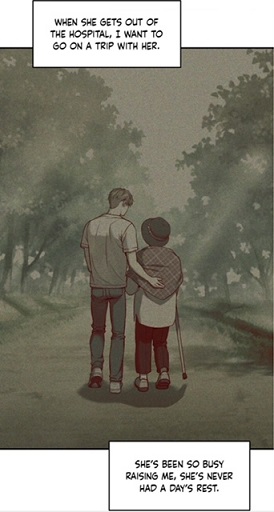 (chapter 47) is, in truth, a legend she wrote about herself. When Kim Dan recalls that “she’s never had a day’s rest,” the statement reveals more about his belief than about her reality. The woman who claimed endless labor also knew the comfort of “weekends”
 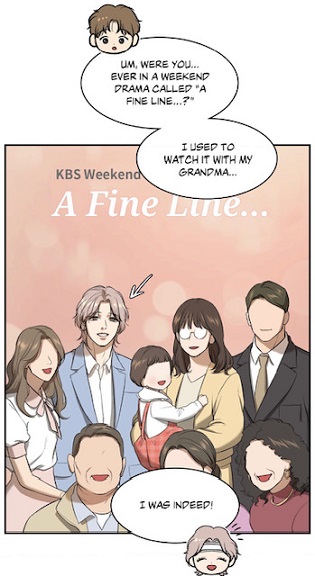 (chapter 30) — she watched The Fine Line, the very drama that made Choi Heesung famous. The detail seems trivial, yet it exposes everything: she had leisure
  (chapter 30), she simply refused to call it that. Watching television was permitted because it was passive, solitary, and could be rationalized as recuperation, not pleasure. In contrast, genuine rest — time shared, chosen, or joyful — never existed in her vocabulary. What she denied was not the existence of rest but the act of resting with him. She kept her downtime to herself, as if peace were a private possession. For her, love meant providing, not accompanying. Yet true care requires presence — sharing is caring, as the saying goes. [For more read this essay: Sharing is caring ] To share one’s time is to acknowledge another person’s worth beyond utility. Shin Okja never did that; she offered comfort but withheld companionship.This is why Kim Dan later struggles to accept that Joo Jaekyung is willing to spend his own time on him — the champion does what the grandmother never did: he makes room for him in his rest. His attempt is to make the main lead smile, to make him happy.
Her statement in chapter 65 —  (chapter 65) displays that she perceives her grandson’s exhaustion not as suffering but as malfunction, as if the human were a device that could be recalibrated through work and pills. That’s why her favors revolves about living conditions, but not about his “happiness”. Perhaps she genuinely hoped that the drugs and the stability of a “regular job” with the champion would realign him, as though routine alone could fix what grief and deprivation had unbalanced.
What she never imagines, however, is that balance might emerge not from regulation but from relationship — not from control, but from the unpredictable rhythm of living. Thus the readers can hear or sense the heart racing of the protagonists.
But let’s return our attention to the grandmother. Because she keeps an account, affection becomes another form of work, and gratitude a form of repayment. She cannot imagine love that simply exists — it must be done. Every gesture had to be accounted for and eventually entered into the invisible ledger of “what I’ve done for you.” For her, a gift was never spontaneous; it was a transactional record. It had to suggest effort without truly requiring it—so she could later recall it as proof of trouble taken. But why is she doing this? Ultimately, Shin Okja’s greatest flaw is not cruelty but distrust. She never truly believes her grandson can stand on his own. She fears that he might take the wrong path. 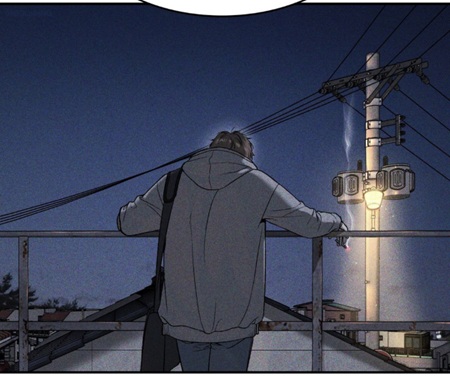 (chapter 65) Her constant bookkeeping—every favor tallied, every gift framed as trouble—betrays a hidden fear: that if she stops keeping score, she will lose him. Rather than grant him autonomy, she entrusts him to another caretaker. Sending him to the champion is not an act of faith but of resignation, a way to offload responsibility while maintaining the illusion of control.
When she “went out of her way,” she made sure the phrase itself became part of the gift. The author let transpire this philosophy in two events. In an earlier memory, the child Kim Dan watches his grandmother return home from the cold night  (chapter 11), scarf tied under her chin, carrying a single sweet bun. She doesn’t need to say she “went out of her way”—her action already proclaims it. The effort is the gift.
  (chapter 11) That simple walk to the store becomes a moral event, proof of affection through fatigue.
 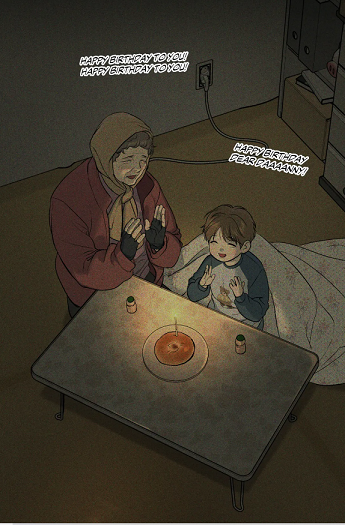 (chapter 11) Even the smallest purchase is framed as sacrifice. The sweet bread itself—a cheap red bean bun—is less nourishment than testimony: “Look what I endured for you.” If he had followed her, he would have seen that it didn’t take so much effort and money to buy the “present”. Finally, he had to share the sweet bread with his grandmother.
This moment sets the pattern for her entire philosophy of giving. Love must be earned through trouble; care must leave a trace of effort. The gesture matters more than the joy it brings. In her world, affection is always accompanied by labor, and gratitude becomes indistinguishable from guilt.This pattern repeats across her life. To “go out of one’s way” (chapter 80) becomes both proof of care and a claim for repayment. Hence she went to school or university for the ceremonies. However, such an action stands for social tradition and normality. She gives little, but ensures it feels heavy. Each offering, no matter how modest, is wrapped in the language of fatigue and obligation. The child, in turn, learns that to be loved is to feel guilty, and to receive is to incur debt.
The hoodie later inherits this same emotional script. It’s the adult version of the birthday bun: humble, practical, and accompanied by invisible conditions. Both are gifts that measure sacrifice, not joy. When she says she “went through so much” to raise him, she isn’t lying—she is testifying, recording her hardship in fabric and flour. However, pay attention to the picture from the hamster’s memory: (chapter 47) Where is the gray hoodie? That day, he only received a bouquet of flowers. Its absence in the photo is revealing. A gray hoodie would have looked out of place beside formal suits and robes; it would have exposed her thrift. The omission is both aesthetic and psychological: she hides the evidence of small-minded practicality beneath the spectacle of maternal pride. What was invisible at the ceremony later re-emerges in episode 80 (chapter 80), and with it, the emotional economy she built.
It is not far-fetched to imagine that the hoodie came paired with a favor or transaction 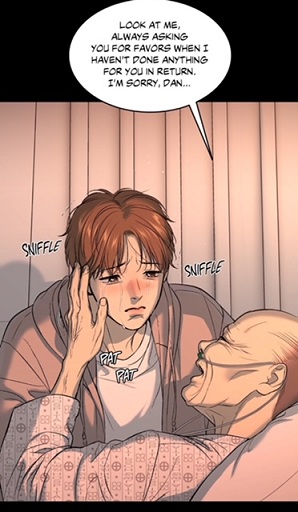 (chapter 53) —perhaps the signing of the loan. “You’re a doctor now; you’ll pay it off quickly.”
 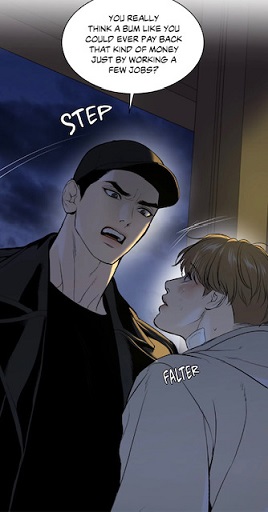 (chapter 80) In her eyes, generosity always justified expectation. The flowers were for display; the hoodie was the contract.
That’s why her gifts always come from the same palette: dull, neutral, gray. Even the birthday sequence is bathed in that dim, ochre light where warmth looks like exhaustion. The gray hoodie continues this chromatic philosophy—safety without brightness, affection without ease.
This explains why the hoodie feels less like a present and more like a receipt. At the same time, it denies him “adulthood” too. A sweater, not a suit; warmth, not celebration. Its comfort masked her emotional distance and her disinterest in his career. She gave him something to wear at home—a garment of rest that forbids real rest—because her world allowed no leisure without guilt.
Her sense of time mirrored that logic. She lived oriented toward the past  (chapter 65) and the future (chapter 78), rarely the present. Hence she shows no real joy about their visit before their departure. Life for her was a chain of recollections and predictions: what she had done
  (chapter 65), what he would one day repay
  (chapter 47). The present moment existed only as a bridge between past sacrifice and future obligation. The embrace is conditional — a rehearsal for independence, not tenderness. In that instant, love is already an investment waiting for return. The teddy bear pressed between them, once a symbol of innocence and comfort, becomes collateral in this emotional economy: the pledge that he will someday “grow up,” earn, and pay back the care that raised him. Even at the graduation, she treated the day not as fulfillment but as record keeping. (chapter 47) The bouquet of flowers visible in the picture served as public proof of pride, while the hoodie—cheap, colorless, and private—belonged to the closed economy of obligation.
The scarf later mirrors this same logic, but in reverse.  (chapter 41) When Dan gifts his grandmother an expensive scarf, he hides its true price — “I got it for a bargain” — repeating her own pattern of disguised generosity. She sees through the lie, teasing him for “spoiling” her, yet she accepts the luxury without feeling guilty. The scarf becomes her version of the hoodie: a fabric trophy of moral worth. But its later disappearance is revealing. In season two, she wears it
  (chapter 56) shortly after her arrival at the hospice, never again. When she greets Joo Jaekyung, the scarf is gone
  (chapter 61). Why? One might reply that the scarf lost its value, especially since she is living next to the director’s room. I doubt that such men would pay attention to such an object. Another possibility is that she fears its brightness might betray her neglect, for the champion has lived with her grandson for a while. How could she display silk while her grandson owns almost nothing?
 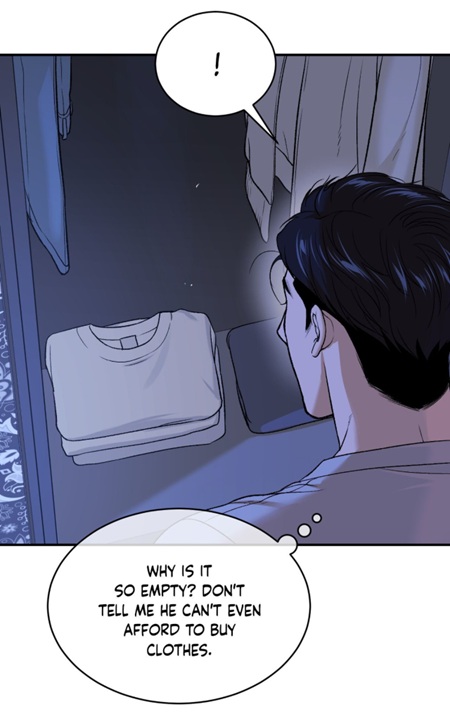 (chapter 80) The missing scarf thus exposes both her superficiality and exaggerated generosity. Her affection, like her pride, is short-lived — decorative rather than enduring. Should Heesung ever visit her, (chapter 30) one can easily imagine the scarf’s reappearance: the fabric of self-deception, ready to flatter, to perform, to erase guilt under the sheen of respectability. She already acted like a fan girl in front of the celebrity. (chapter 61)
The pattern of her giving finds its quiet conclusion in episode 80. When Kim Dan rediscovers the hoodie, his first smile fades into silence.  (chapter 80) The gesture that once symbolized love now feels like pain and loss. The signification of the gift has changed. What once wrapped him in safety now weighs like absence — the fabric retains the shape of someone who is about to vanish. His silence is not understanding but hurt, a wordless awareness that affection can curdle into memory. The audience, not the character, perceives that with the grandmother’s approaching death, her ledger is about to close. The gray fabric, once proof of her sacrifice, will lose its moral weight; her “gesture” will expire with her. Yet Kim Dan may not yet realize that this very ending could one day free him. The book-keeping dies with the bookkeeper.
This moment also reveals why he remains wary of other people’s gifts. 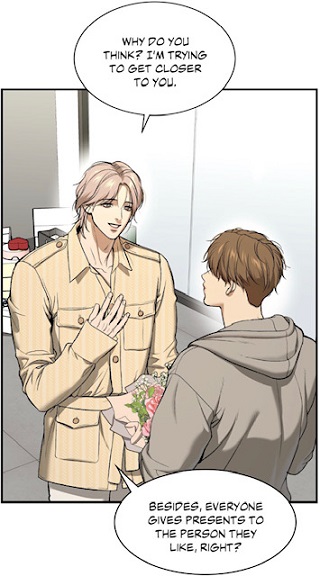 (chapter 31) When Heesung offers flowers “to get closer,” Kim Dan’s face mirrors the same unease: affection presented as transaction, intimacy disguised as generosity. What the actor calls closeness, the doctor feels as imbalance — the same emotional distance that Shin Okja’s presents once produced. Her gifts, meant to bind, isolated him instead; they built a hierarchy where gratitude replaced equality. Each present widened the gap between giver and receiver. To be cared for was to be indebted.
From this upbringing stems Kim Dan’s reflexive equation:
Presents = trouble, debt, or burden.
Each time someone offers him something, he instinctively feels burdens  (chapter 31) and tries to refuse it.
  (chapter 31) (chapter 80) “You don’t have to go through all this trouble.” The line is not modesty but defense. To him, receiving kindness creates imbalance. His grandmother’s “help” was always instrumental; every act of support came attached to sacrifice: “I went through so much for you.” The hoodie thus becomes a moral anchor, a fabric reminder that love must always be earned and repaid.
Guilt as Love Language.
Because of this, Kim Dan experiences love only through fatigue and suffering. He feels cared for when someone worries 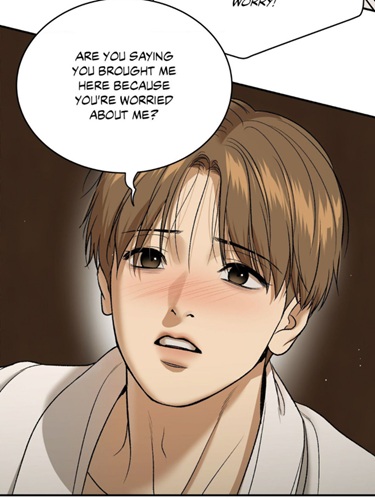 (chapter 67), loses sleep, or pays a price. He interprets Joo Jaekyung’s concern as “trouble,” Heesung’s gifts as “too much.” In his mind, affection is inseparable from cost:
If you love me, you must pay for it. And if I accept your love, I’m guilty.
Caretaker Identity and Self-Erasure
To escape that guilt, he lives as a helper. 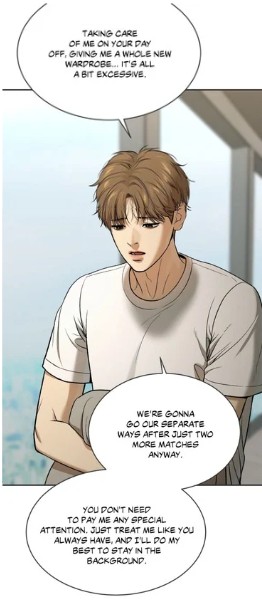 (chapter 80) “I’ll stay in the background.” His self-worth depends on not burdening others. His words let transpire that he has never been Shin Okja’s first priority in the end. The hoodie reinforces that psychology—it is not a professional outfit like a suit or briefcase would have been, but a teenager’s garment, meant for the domestic space rather than the adult world. It literally arrests his growth, keeping him in the house and under her logic. Thus it is not surprising that after receiving his diploma, he still took part-time jobs.
Gifts as Triggers of Anxiety
When others try to give him something—Heesung’s flowers, Jaekyung’s wardrobe—his first instinct is panic. “What do I do? It’s all so expensive.” He expects a hidden price: affection, submission, repayment. Every gesture of generosity recalls the old bargain with his grandmother.
Repetition Compulsion
He repeats the same dynamic with new authority figures. With Heesung, he suspects every gift hides control. With Joo Jaekyung, he accepts care only to reduce someone else’s burden. When the champion lies—“These brands sent the wrong size; I was going to throw them out anyway”—Kim Dan hears not kindness but necessity. Refusing would mean waste, and he has long internalized that nothing must ever be wasted. So he accepts—not out of entitlement, but as an act of thrift, a way to help the giver by taking what is “useless.”
And yet, through this misreading, something begins to shift. The logic of guilt quietly bends toward mutual release. Jaekyung sheds excess; Dan sheds shame. The exchange of clothes becomes an exchange of burdens.
Gray: The Color of Suspension.
The hoodie’s color captures the entire tragedy of their old world. Gray is neither black nor white—it refuses decision, blending work and rest, love and obligation. It is the color of compromise, of deferred joy, of life half-lived. Gray also carries another meaning beyond monotony. It fuses black and white — two opposites that, when mixed, erase each other’s clarity. The hoodie’s color therefore reflects the fused identity of grandmother and grandson: their lives blended until he became her shadow. Her pride shone only through his dimness. To live in gray meant to live as her reflection — never as himself. The color embodies both her dominance and his self-erasure. When Kim Dan finds it again in episode 80, his first smile fades into silence. (chapter 80) The object that once expressed care and promised safety now mirrors grief. The gray fabric absorbs the light around him, turning into the shade of everything unspoken between love and duty.
The hoodie, once a symbol of endurance, now becomes a relic of a world where love meant survival. To wear it again would be to stay in that twilight. To put it away is to risk color, to learn to live in the present tense.
The Wardrobe: Undoing the Gray Religion
If the gray hoodie was the relic of Shin Okja’s work-based faith, Joo Jaekyung’s wardrobe 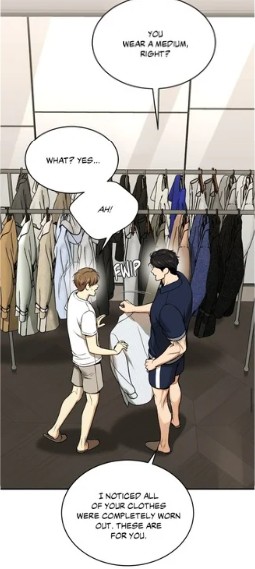 (chapter 80) is the site of its quiet destruction. His act of giving reverses every law the grandmother ever taught. First, he does not “go out of his way.” The clothes are delivered effortlessly, without fanfare or moral accounting.
 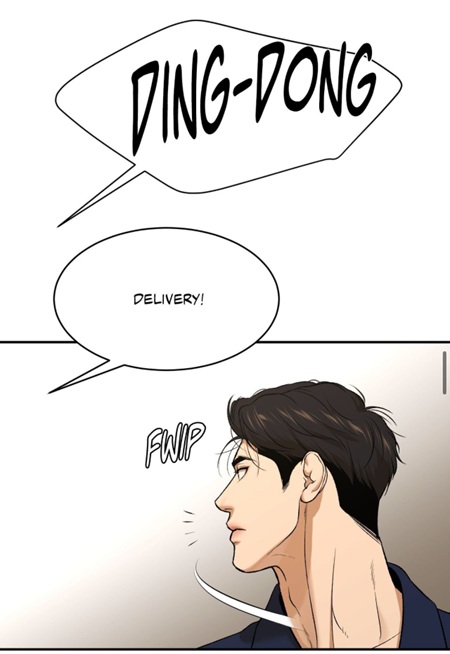 (chapter 80) There is no speech about sacrifice, no self-congratulation.
  (chapter 80) By erasing the gesture of “effort,” he removes the emotional price tag that once accompanied every gift.
Second, he tells a deliberate lie: that he did not spend a dime, that the brands sent the wrong sizes. This white lie has healing power. It dismantles the logic of debt that rules Kim Dan’s psyche.  (chapter 80) If the grandmother’s motto was “I went through so much for you,” the champion’s is “It’s no big deal.” Generosity becomes invisible, unburdened, and therefore trustworthy.
Third, he offers not one item but an entire range.  (chapter 80) The row of garments invites choice — a concept absent from Shin Okja’s universe, where love came in single doses and with strings attached. Here, the doctor is asked to select what he likes, to exercise taste, to inhabit preference. The abundance of options grants him agency, dignity, and the right to refuse.
Fourth, note the nature of the clothes: they are not sportswear. (chapter 80) These are professional garments — coats, shirts, and slacks suitable for the workplace, not the gym. They restore the image his grandmother’s hoodie had erased. In offering these, Joo Jaekyung is not only dressing him but reframing his social identity: from dependent to equal, from housebound caretaker to visible professional. This means that they are bringing him into the adult world. Yet this also creates a paradox — wearing such refined clothes will attract attention, making it impossible for Kim Dan to “stay in the background.” (chapter 80) They will incite him to voice more his thoughts, to become stronger as a responsible physical therapist. The wardrobe, like a mirror, forces him into presence. This means that he is losing his identity as “ghost”, which was how the halmoni was perceived by the athlete. 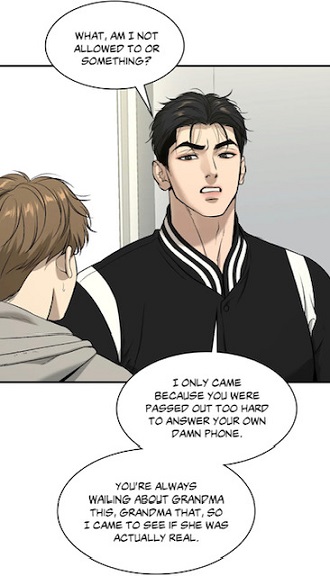 (chapter 22)
Symbolically, the location intensifies the gesture: the clothes are placed inside the champion’s own wardrobe. (chapter 80) The two now share a domestic and symbolic space. What once separated their worlds — fame, class, gendered roles — begins to dissolve thread by thread. The actor Choi Heesung’s remark, that gifts can “bring people closer,” 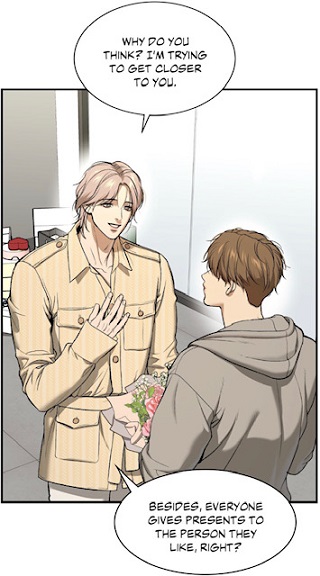 (chapter 30) becomes unexpectedly true here. The wardrobe bridges the distance that the grandmother’s gifts had always created.
When the champion remarks, (chapter 80) he implies that these items would just go to waste. Therefore he completes the reversal. Waste, once the grandmother’s greatest fear, becomes the vehicle of grace. By claiming the clothes are “leftovers,” he removes their monetary and moral value; they are no longer costly. In accepting them, Kim Dan does not incur debt — he prevents waste. 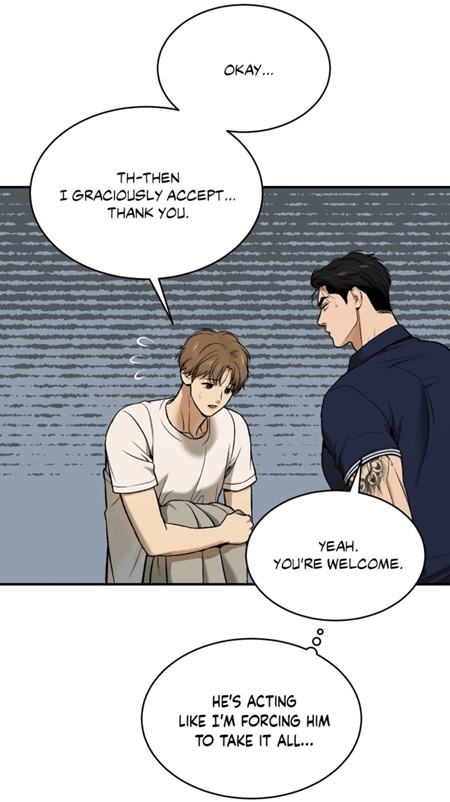 (chapter 80) This is why his hesitant and embarrassed gratitude, framed against a background of dissolving gray waves, feels so transformative. The air behind him ripples as if washing away the residue of his old faith.
The striped blue-and-white shirt he finally chooses carries its own quiet symbolism. (chapter 80) Yet unlike gray — the color of fusion and loss of identity — these shades remain distinct. They do not blend but alternate, acknowledging the coexistence of two identities: the doctor and the man, the caregiver and the self. In contrast to the grandmother’s world, where love meant absorption and sameness, Joo Jaekyung’s gesture affirms difference. The champion does not swallow him; he gives him space.
At the same time, the stripes hint at the complexity of Kim Dan’s inner life. Beneath his apparent passivity lies rhythm, variation, and resilience — qualities long suppressed by duty and guilt. The pattern becomes a visual metaphor for the layered texture of his heart.
By filling the wardrobe with clothes of different colors, the champion quite literally brings light and time back into Kim Dan’s life. The new hues break the monotony of gray 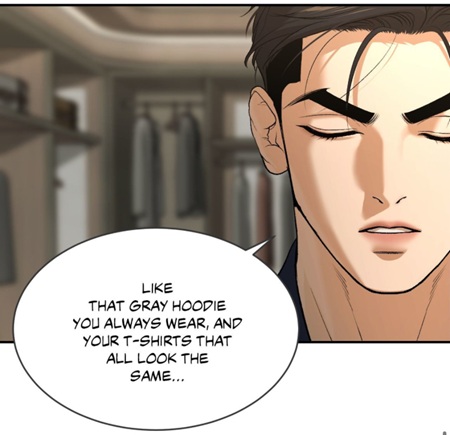 (chapter 80); they mark the passing of days, the return of seasons, the rediscovery that not every morning has to look the same. Variety itself becomes a form of freedom. When the wolf once complained that all his shirts looked identical, he was unknowingly naming what both of them lacked: differentiation, spontaneity, change. Through this act, he restores color not only to the doctor’s wardrobe but to his emotional world — a quiet resurrection through fabric.
Finally, the celebrity’s next gesture — teaching him how to swim — extends this transformation. If the grandmother’s graduation gift (the hoodie) kept him grounded and homebound, neglecting his future and career, the champion’s “lesson” propels him toward movement and autonomy. (chapter 80) Swimming means survival without the shore; it is the art of staying afloat without a hand to hold. In this sense, Joo Jaekyung’s care points forward, not backward. He offers not protection but potential, not memory but future.
The wardrobe, then, is not a storage space but a threshold — between debt and desire, between inherited caution and chosen freedom. And now, you comprehend why the doctor chose to seek refuge and support, when he feared to sink. 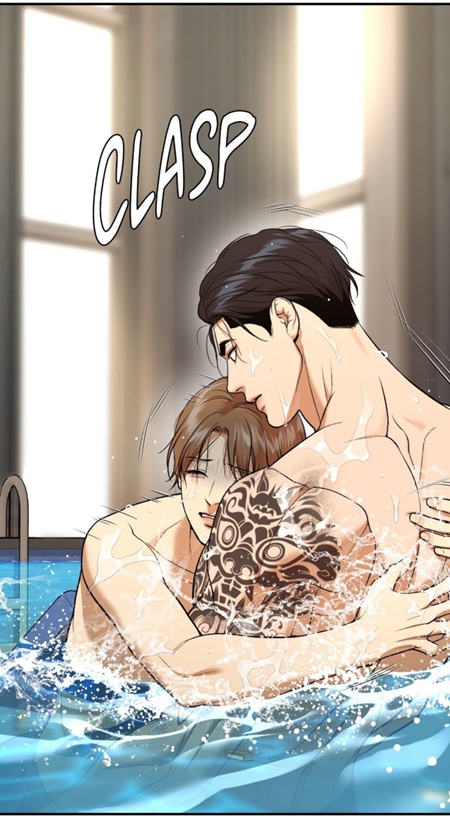 (chapter 80) The “hamster” had instinctively turned to the only person who had ever offered him help without cost.
In reaching for the champion, he does not regress into dependence; he reaches toward a new form of trust, one that no longer confuses care with control. To let himself be held is not to return to childhood, but to unlearn fear. The act of seeking support becomes the first stroke of a new swimmer — hesitant, but free.
This scene also recalls the image of the Korean dragon and its yeouiju  — the luminous, wish-granting jewel said to contain both wisdom and life energy. The dragon’s power is not innate; it is completed and elevated by the jewel. Without the yeouiju, it cannot ascend to the heavens — strength without meaning, force without direction.
When Kim Dan finally pulls Joo Jaekyung into his arms  (chapter 80), the myth reverses. The dragon—once feared, untouchable, wrapped in rage and solitude—is suddenly embraced by the very being he once believed too fragile for his world. The power dynamic inverts: the human shelters the beast.
In that gesture, the legend of the Korean dragon and its yeouiju gains a new form. The jewel is no longer an external object of desire, but a state of being—mutual recognition. By holding the dragon, Kim Dan becomes the hand that completes the circle, allowing power to flow again. The yeouiju exists between them, not in either of them: it is the bond itself.
For the champion, who has long carried the invisible scar of disgust—  (chapter 75) —this embrace is nothing short of salvation. The man who once fought to wash off shame through endless training now finds himself accepted in his unguarded state. He doesn’t need to mask his trauma with perfume
  (chapter 75), the imagined smell, or cleanse his skin of battle; he is held and, therefore, purified. Through Dan’s arms, he rediscovers his value and humanity—the dragon touched and not destroyed. He is worth of being embraced, even if he is already so old!
This reversal has immense symbolic power. The yeouiju is no longer something the dragon must seize; it is something that recognizes him back. (chapter 80) When Kim Dan holds him, the light of that jewel shines from within the dragon himself. Power and tenderness, once enemies, coexist in the same body.
For Kim Dan, this act also signals a new allegiance. He is no longer in service of duty or debt—no longer the caretaker bound to an old creed of sacrifice. By choosing to embrace Joo Jaekyung, he chooses his friend, not his “master.” He decides who is worthy of his trust, and in doing so, reclaims his agency.
The dragon, embraced rather than worshiped, rises stronger. The yeouiju—the bond, the shared heartbeat—no longer lies at the peak of a mythic mountain but glows quietly between two exhausted men who have stopped running from touch.
The gray world — the realm of thrift, debt, and book-keeping — dissolves into color and movement. Blue and white ripple through the water, reflecting not fusion but harmony. For the first time, love does not demand payment; it breathes.
Arc 8 – The point of no return
The shape of the 8 itself evokes both the infinity loop and the closed circuit: two halves endlessly reflecting each other, each incomplete without the other’s motion. It is the symbol of reciprocity, but also of a threshold — the moment when balance can no longer be postponed. Once complete, the loop allows no intrusion — it admits no third. The number’s symmetry carries both union and exclusion: whatever falls outside its rhythm disappears.
This is the geometry of Jinx’s emotional world in Arc 8. The loop that once included a third observer — the grandmother’s watchful eye, the manager’s interference, the actor’s rivalry and resent — now folds inward, leaving no aperture for control. The form itself performs the story’s evolution: dependency becomes reciprocity; triangulation dissolves into dual motion. And now, you comprehend why Mingwa included a new outburst of the wolf’s jealousy. 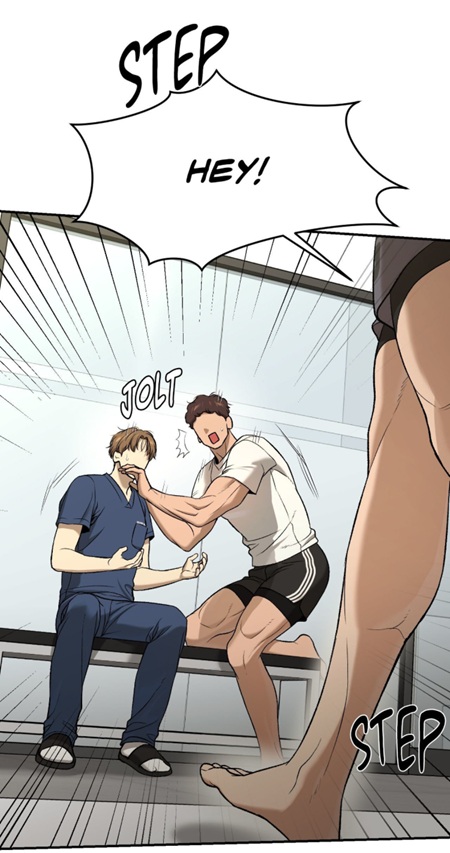 (chapter 79) This is one part of the new circle. Jealousy is the residue of imbalance — the echo of the 7 within the 8. In the numerology of Jinx, the 7-chapters, like for example episode 7
  (chapter 7), episode 18, where the champion had sex because of this statement
  (chapter 18),episode 34 with Choi Heesung
  (chapter 34) or episode 52, where the former members of Team Black and expressed their disdain and jealousy toward the main lead
 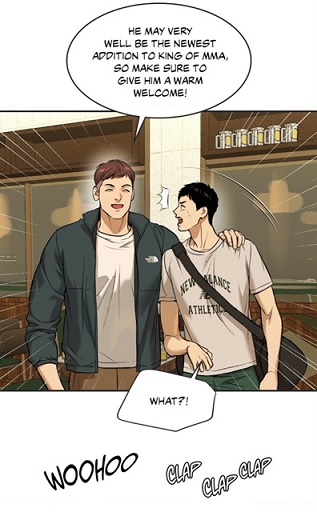 (chapter 52)
But Arc 8 changes the equation. For the first time, both protagonists risk loss because they have something — and someone — to lose. The return of jealousy is therefore not regression but proof of attachment and the occasion to improve their personality 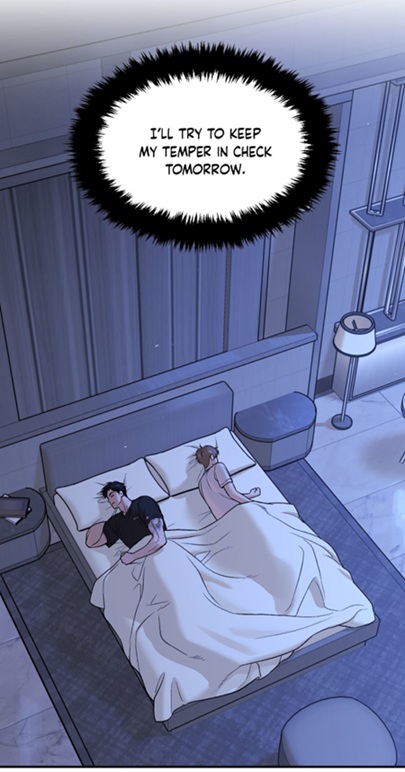 (chapter 79), the final test before the circle closes for good.
Eight is the reversal digit, where hidden motives come to light and attachments are tested. Between 7 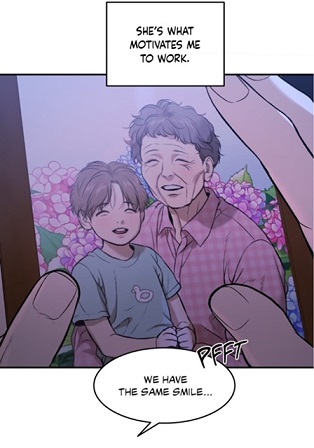 (chapter 47) and 8 lies that invisible hinge: the death of the old economy of love and the birth of a new one.
Thus, Arc 8 becomes the arena of triangular pressure. The grandmother’s possessive nostalgia (she sees herself as the mother, doc Dan as the boy and the champion as her surrogate husband) (chapter 78) mirrors Park Namwook’s managerial anxiety 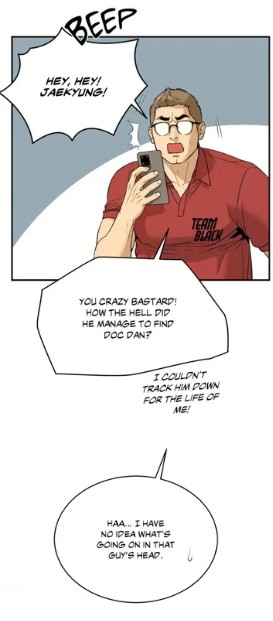 (chapter 61) and Heesung’s residual rivalry and resent. Each acts as a different face of control: the woman binds through guilt, the manager through hierarchy acting as the owner of the athlete’s time, the actor through charm and deceptions. Together they form the triad that tries to reopen the circle closed in the pool. Let’s not forget that the athlete chose to take a day off on his own accord
  (chapter 80), but he had just returned to the gym. It is no longer the same training and routine.
Park Namwook in particular represents the system that resists intimacy. His “interference” is not random but defensive: he fears that Jaekyung’s change and his attachment to the physical therapist (the promise to teach the doctor to swim implies that he will focus on other things than MMA) will unbalance the professional order. In the symbolic arithmetic of the story, he inherits the number 7 — the unstable, the one who can no longer maintain symmetry.
Jealousy, then, becomes not corruption but purification. It exposes what still belongs to duty and what belongs to choice. Through these frictions, Kim Dan is compelled to speak for himself, to claim the very agency his grandmother once withheld. It makes the protagonists to perceive people in a different light and move away from their self-loathing, passivity and silence.
When he does, the circle of the 8 stabilizes at last. The old triangle — grandmother, doctor, and debt — gives way to the new one: champion, doctor, and trust. In the Arc 8, the color gray finally meets its antidote: blue. 💙What was once the hue of exhaustion and suspended time becomes the pulse of renewal. The blue heart 💙, which first appeared in my earlier essay At the Crossroad, returns here as the emotional compass of both men.
In Jinx, the white heart with the gray hoodie belongs to the past — to the grandmother’s logic of duty, guilt, and caution. Blue, by contrast, is the color of water, movement, and breath. It signals the capacity to feel without measuring, to give without debt. When Kim Dan accepts the new clothes, he does not merely change garments; he crosses from the gray zone of survival into the blue realm of relation. His heart, long muted by obligation, begins to circulate again.
The blue heart marks this point of no return: once it beats, neither man can retreat into solitude. Its rhythm unites the wolf and the hamster in a shared tempo — one that excludes the third, but not the world. For the first time, affection no longer obeys the law of bookkeeping. It flows.
The ocean, once feared and distant, now extends inward, beating quietly beneath their joined silhouettes. The gray relic of the past lies folded away, and in its place, something transparent begins: a friendship that breathes like water — uncounted, unowned, and alive.
Feel free to comment. If you have any suggestion for topics or Manhwa, feel free to ask. If you enjoyed reading it, retweet it or push the button like. My Reddit-Instagram-Twitter-Tumblr account is: @bebebisous33. Thanks for reading and for the support, particularly, I would like to thank all the new followers and people recommending my blog.


 I established that Kim Dan’s number is 8. It is therefore no coincidence that the arc from chapter 80 to 89 should revolve around him—his body, his suffering, and ultimately his recovery. The number 8, often associated with balance, renewal, and continuity, here signals not only the doctor’s rebirth but also the gradual thawing of his frozen world. It marks the moment when the past can no longer remain buried, when the last remnants of family and unspoken pain begin to surface. The mystery behind this phone call will be soon revealed.
  (chapter 19)
 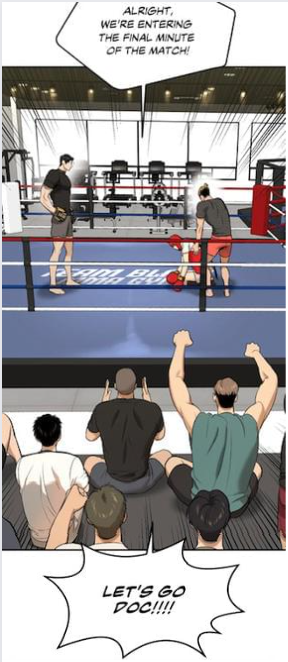 (chapter 26) the sparring between Joo Jaekyung and Kim Dan unfolds under the sign of fun and apparent joy, yet its origin lies in jealousy. The champion, unconsciously triggered by the doctor’s closeness with Potato
 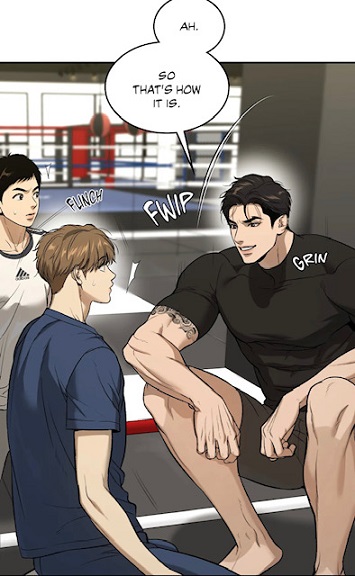 (chapter 25), turns play into a contest—a way to reclaim attention.
  (chapter 25) The gym, usually a place of hierarchy, momentarily becomes a stage where both can laugh, but beneath that laughter runs an undercurrent of rivalry (with Potato). On the other hand, for the first time, the Manhwa allows both protagonists to exist outside the economy of debt and hierarchy. The gym, normally a place of discipline and work, transforms into a playground of laughter. The champion teases the doctor
  (chapter 26), and the latter, clumsy but determined, strikes back with surprising boldness. The crowd cheers, not for the fighter but for the therapist—the underdog, the one who usually stands in the shadow. The entire scene feels like a short-lived holiday, a suspension of order and pain. When Kim Dan smiles at the end of the match, the gesture radiates genuine lightness: he has momentarily escaped the burden of fear and experienced himself as a free, living body.
  (chapter 26) He believes he has accomplished something meaningful and feels, perhaps for the first time, proud of himself. He was taught that he could fight back and overcome his fear.
  (chapter 26) He realizes that the hamster can beam at others, that such light has never been directed at him. In that instant, he no longer sees an employee but a companion whose gaze and embrace he covets, whose approval he unconsciously seeks.
 (chapter 62) The atmosphere is brighter in color but colder in tone. There, Joo Jaekyung got to experience how Kim Dan has lived all this time, helping others, making them happy with his assistance.
  (chapter 62) Here, the protagonist was thinking all the time of his loved one:
 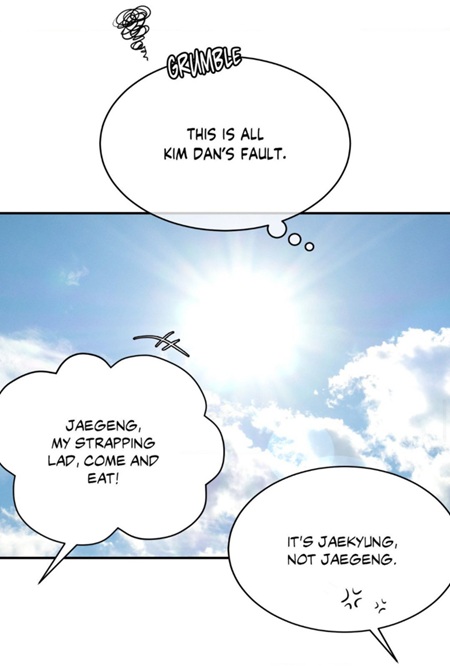 (chapter 62) Indirectly, he hoped to get the doctor’s attention, but he failed. In fact, none of the wolf’s good actions got noticed by his fated partner. Interesting is that though the characters engage in acts of performance and service—helping others, pleasing strangers— their smiles have turned into masks.
 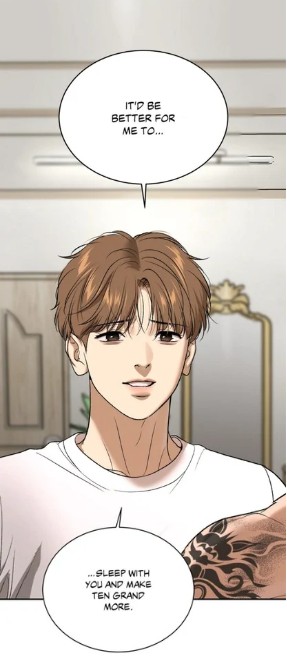 (chapter 62)
 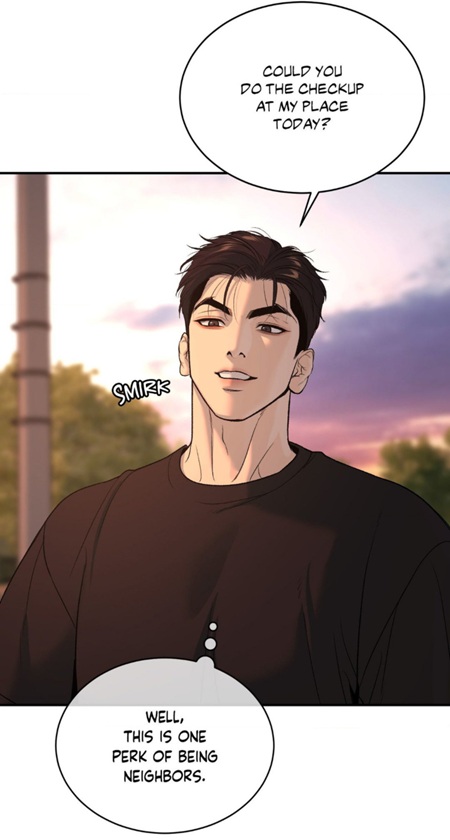 (chapter 62) Where chapter 26 radiated spontaneity, this one reveals calculation and fatigue.
  (chapter 62), where exposure to others leaves both men strangely isolated. The happiness of the crowd no longer unites; it separates. The champion’s outfit, ridiculous and domestic
 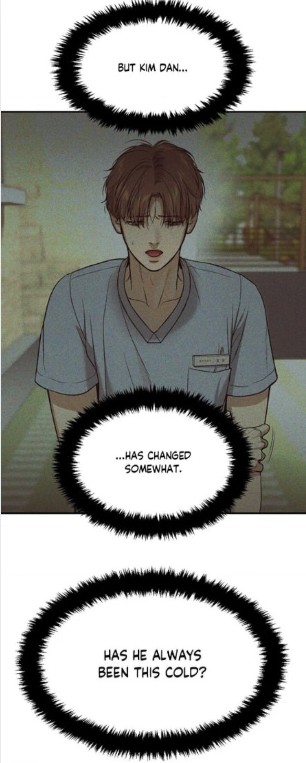 (chapter 62) which is actually his true nature. I will elaborate more further below. For the first time, the wolf looks at his companion and senses distance instead of warmth, as though the man he once touched so easily has withdrawn behind glass. His thought—“Has he always been this cold?”—marks the beginning of introspection, the moment when perception replaces instinct.
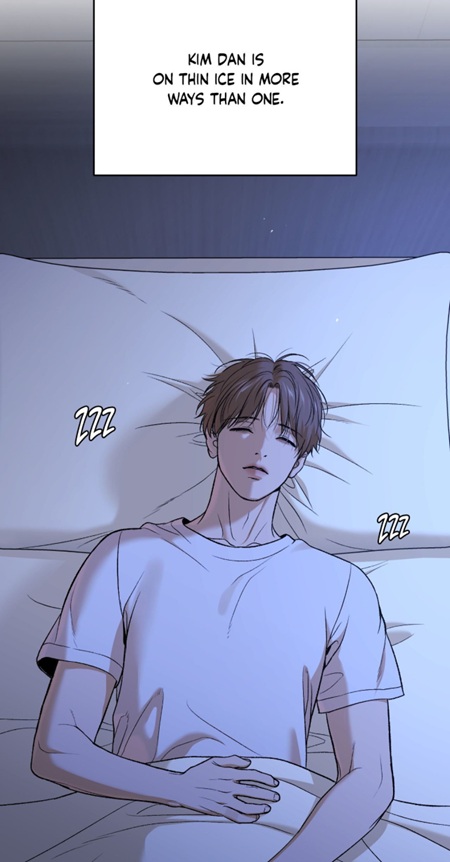 (chapter 80) To “walk on thin ice” is to approach him gently, without force—a lesson the champion must learn if he wishes to thaw what has been frozen by years of duty and self-denial.
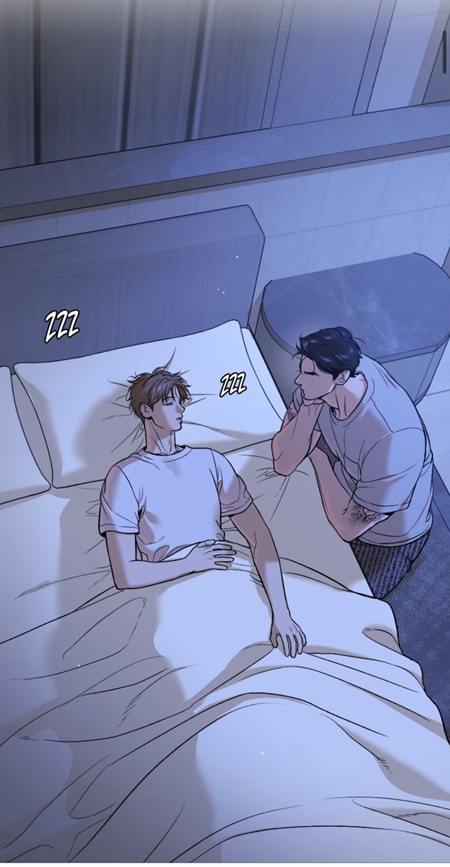 (chapter 80)
  (chapter 80), not red. The atmosphere is fluid, reflective, submerged. Water—not flame—governs this new stage. What we witness is not combustion but fusion—ice meeting water, solid meeting liquid, two states of the same element touching at last. Ice does not just melt under fire; but also in the presence of water. It softens when it recognizes itself in another form. In that sense, Joo Jaekyung’s tenderness doesn’t heat Kim Dan—it mirrors him. The thaw begins not through passion, but through likeness, through quiet recognition. This signifies that Joo Jaekyung is on his way to discover their similarities: they both suffered from bullying and abandonment issues and they love each other.
 (chapter 80) at the board game table mirrors that moment: his smile is light, childlike, uncontaminated by dominance. Yet, tellingly, they do not smile together. Each glows in isolation, unaware of the other’s joy. Doc Dan has not realized it yet: he is the wolf’s source of happiness, he is the only one who can make him laugh and smile.
 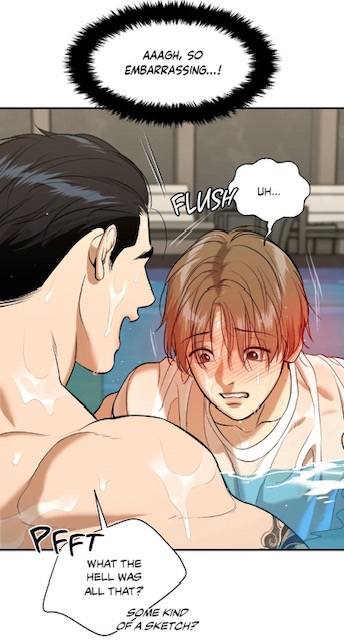 (chapter 27) Thus I came to the following deduction. This is the emotional geometry of the arc 80–89: two smiles moving toward synchrony, two currents approaching convergence. Both need to experience that they make each other happy. Kim Dan on Thin Ice thus begins where the infinite loop of 8 converges—between warmth and coldness, joy and fatigue, play and labor. It is here, in this fragile equilibrium—where ice and water finally coexist—that both men begin, at last, to thaw. And the latter implies emancipation
 (chapter 80), as it exposes the real metamorphosis from the “wolf”. The night Joo Jaekyung watches Kim Dan sleep is not erotic; it is revolutionary. For once, his desire gives way to perception and attentiveness. The fighter who has conquered bodies now studies one that is quietly losing its battle. The body before him is not the sculpted strength he knows, but a map of deprivation: protruding collarbones
 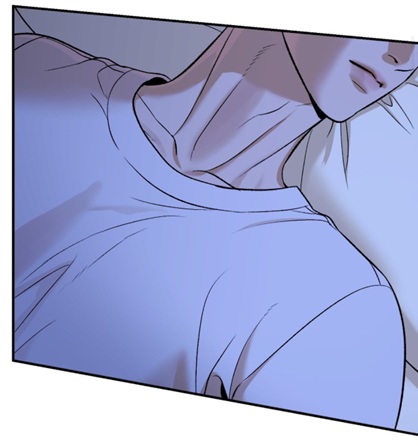 (chapter 80), visible neck tendons, the knobby finger joints and his stiff fingers resting on the blanket as if holding the body together.
  (chapter 80) The pale, bluish hue of the skin—half light, half illness—tells him what no words ever have.
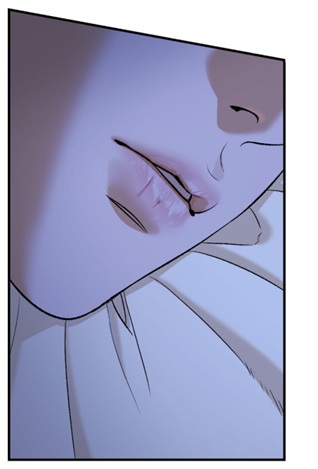 (chapter 80), the faint opacity of the nails
 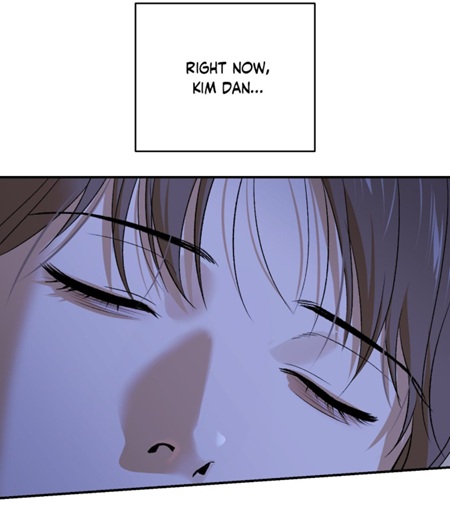 (chapter 80) In the faint parting of the mouth he sees not seduction, but exhaustion—a man so depleted that even rest demands effort.
 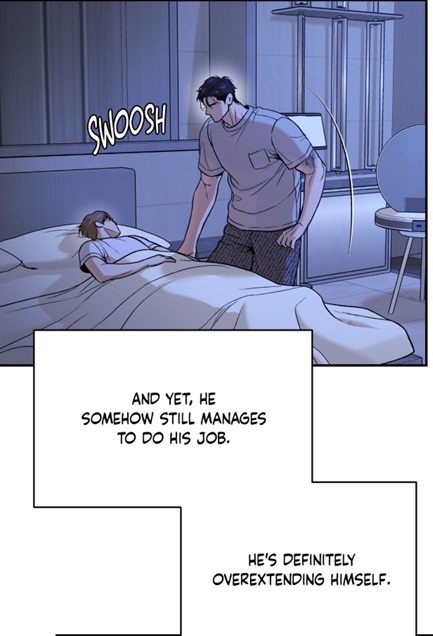 (chapter 80) he begins to treat rest not as weakness, but as reverence.
 (chapter 13) The fighter who once mocked stillness as laziness now finds meaning in it.
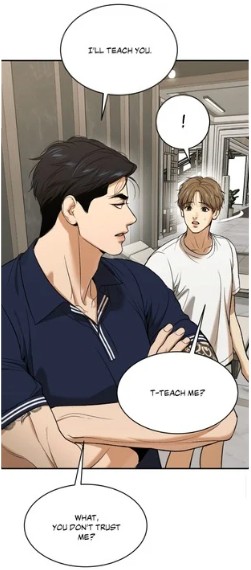 (chapter 80), it signifies that he will have to dedicate his time to the physical therapist! Hence his routine and training could get affected, just like their weekends.
 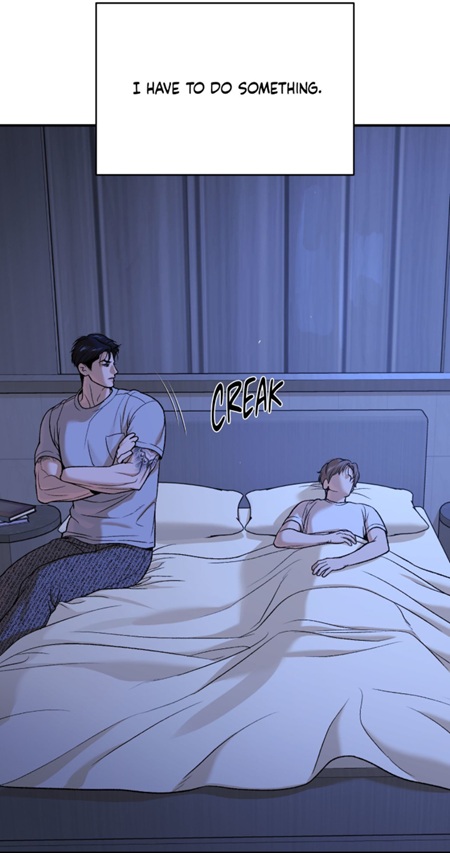 (chapter 80) —the doctor
 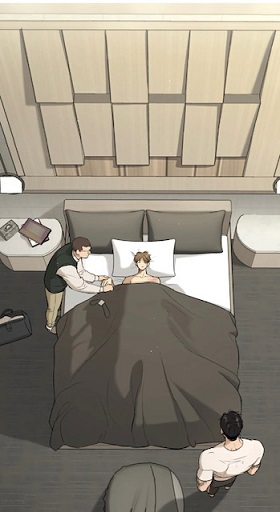 (chapter 13), the family member
 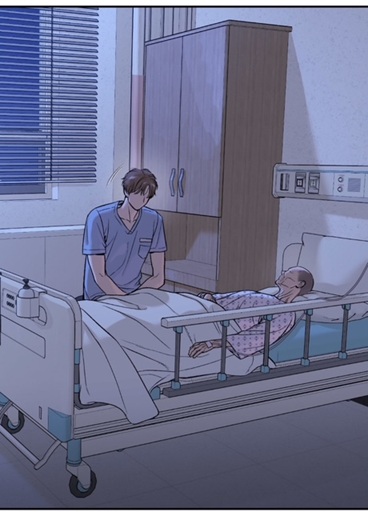 (chapter 56), the one who stays close enough to touch if needed.
  (chapter 80) Without realizing it,the athlete has inherited that role. His nearness is no longer intrusive but protective. He has crossed the invisible threshold that separates obligation from affection. The fighter who once stood as an outsider in the doctor’s life now finds himself within its most intimate circle.
 (chapter 80) Compare his facial expression to the hamster’s before their first day off together.
 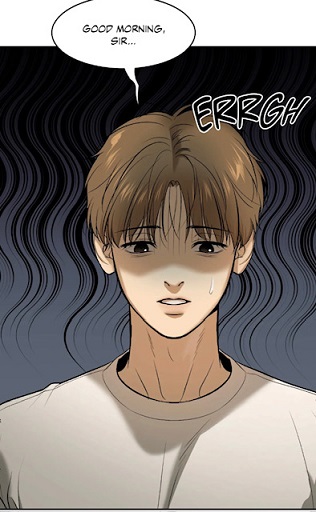 (chapter 27) That way, Mingwa can outline the champion’s confidence and that the one who needed the rest is the physical therapist and not the champion.
 (chapter 69) Every flicker of light falls through The Emperor’s gaze and lands on Kim Dan’s form, transforming weariness into something sacred.
  (chapter 68) in the bathtub
 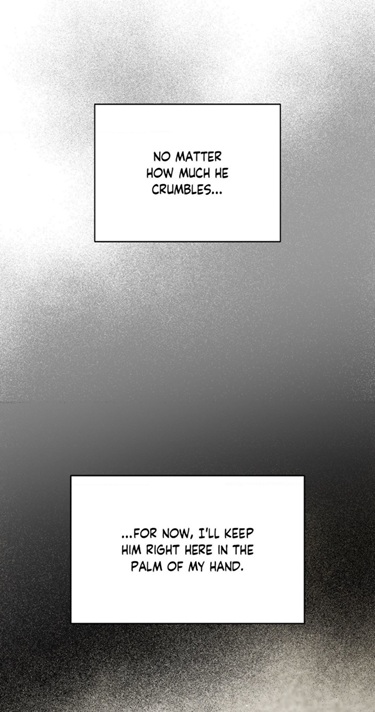 (chapter 68) —“I’ll keep him right here in the palm of my hand”—echo now with quiet irony. To hold someone in one’s hand is, paradoxically, to immobilize them; it grants possession but denies agency. The same gesture that promises safety also enacts paralysis. His possessiveness, once mistaken for protection, now appears as helplessness.
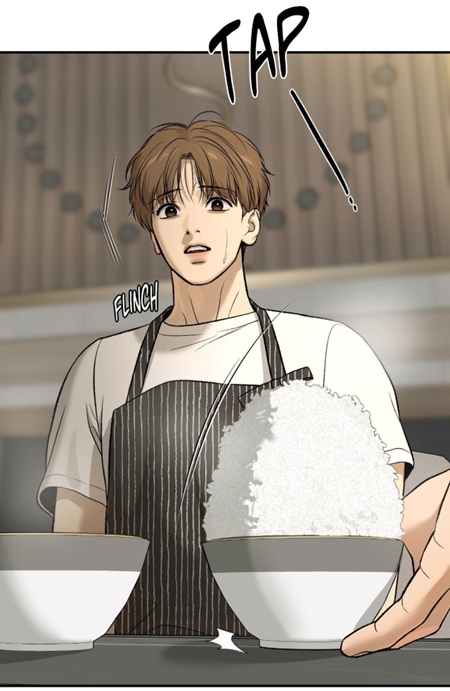 (chapter 79),
  (chapter 80) shrinking back when confronted. The body remembers the threat long after the mind tries to forget.
 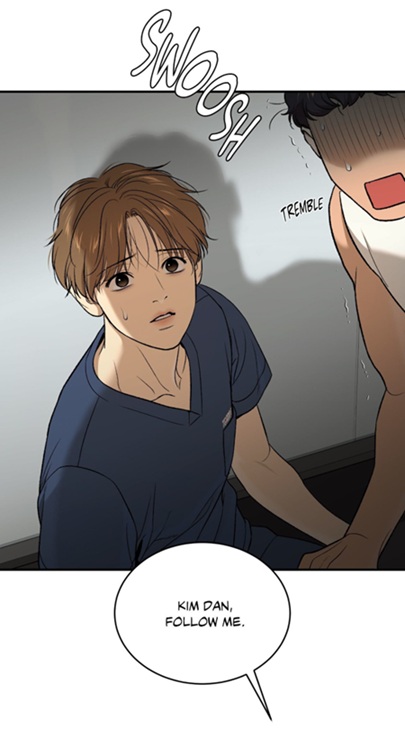 (chapter 79) He lives suspended between two survival reflexes: freezing or fleeing. Since the contract binds him to stay, he cannot physically run away; therefore, his body freezes instead. It is his way of obeying while still protecting himself. Exhaustion becomes his armor. And now, you comprehend why the celebrity could detect the coldness in the “hamster” in front of the hospice.
 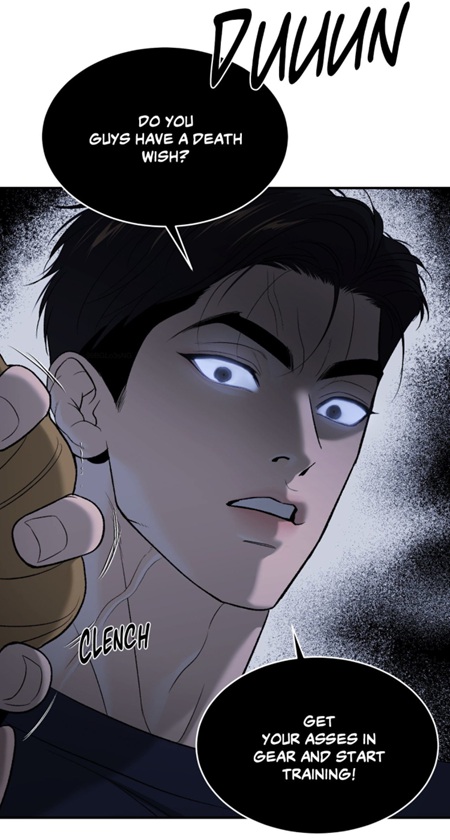 (chapter 79) — now turned outward and wounded the one he wished to protect.
  (chapter 79) That icy look became a mirror: it froze Kim Dan’s small confidence, reinforcing his belief that he would always displease or fail others. Since his return to the gym, the doctor feared the emperor’s next outburst, walking on eggshells and suppressing every impulse to speak or move freely.
 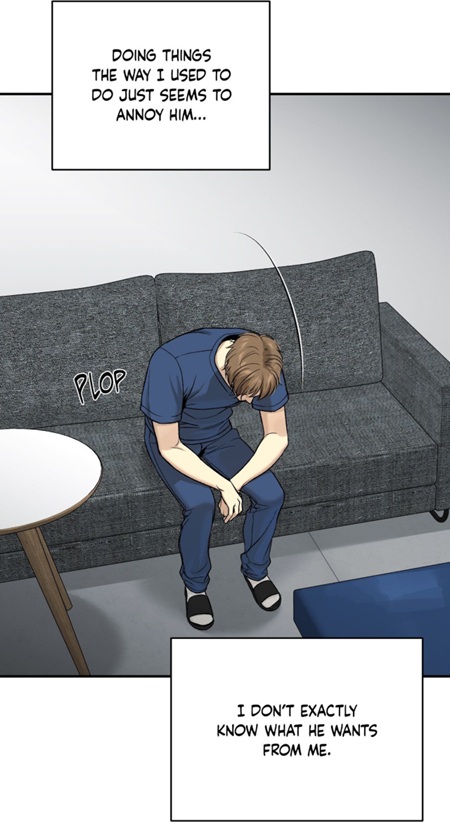 (chapter 79) Thus he clinched onto routine to maintain a normal relationship. But once the champion voiced his dissatisfaction (masking his jealousy), the light in the doctor’s gaze vanished.
  (chapter 79)
 (chapter 79) His unconscious was telling him to flee, as he feared the athlete. To conclude, he was always one step away from collapse. In symbolic terms, he had become ice itself — air and water solidified, transparent yet untouchable. Keep in mind that according to me, the clouds embody the physical therapist.
  (chapter 38) Born on December 26th, his very birthday ties him to winter, to the paradox of beauty that burns when touched.
 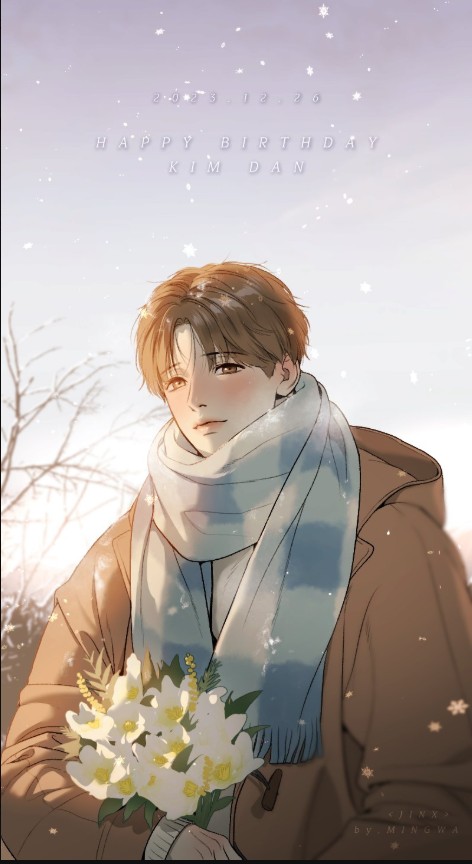 That’s why I can’t help myself thinking that the physical therapist is actually embodied by the snow. Ice and snow preserve, but they also isolate.
 (chapter 72), snow was falling — a silent mirror of his loneliness, the frozen residue of a home that no longer existed. Later, in chapter 77, the motif returned as ice cream
  (chapter 63), desperate to restore closeness, mistook passion and pleasure
  (chapter 63) for repair. Believing that physical heat could melt emotional frost
  (chapter 64), he tried to burn away the distance through souvenirs (evoking the night in the States) and desire. Yet the more he tried to ignite fire, the more he fed the cold.
  (chapter 64) The physical act, rather than fusing them, exposed the truth he had refused to see — that his partner was already freezing from within. On the other hand, during this night, the athlete used “self-control” for the first time, his roughness in bed started vanishing.
  (chapter 64) The wolf’s attempt to “burn the bridge” between them became the very thing that broke it. His flame met ice
  (chapter 64), and the result was not warmth but steam — a brief illusion of intimacy that vanished as soon as Kim Dan pulled away. His rejection wasn’t cruelty but a cry of despair, disillusion and exhaustion
 (chapter 64): a body too cold to burn, a heart too tired to love and fight.
 (chapter 80), but about melting together, letting warmth and cold coexist without annihilating each other. To melt together does not mean to dissolve into sameness, but to trust that proximity will not destroy one’s shape. True intimacy begins when both accept that they can share warmth without losing form — when fire believes it can touch ice without turning it to steam, and ice trusts it can meet fire without vanishing.
  (chapter 61) Touch it bare-handed, and you feel both heat and pain. The same holds true for Kim Dan’s presence: those who reach for him too quickly end up wounding both him and themselves. The sportsman’s early attempts at care followed that pattern — too forceful, too immediate, leaving frostbite where he intended warmth.
 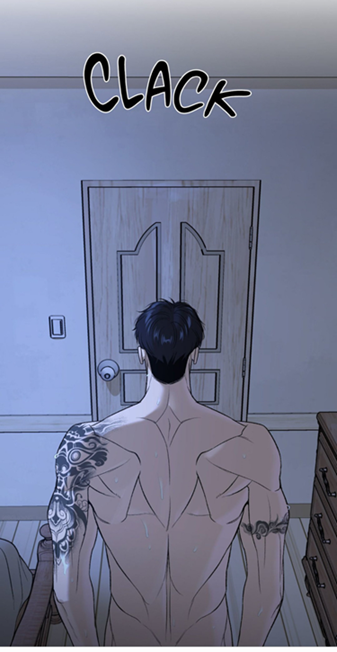 (chapter 64)
  (chapter 79), of not getting the doctor’s affection. Kim Dan’s coldness was not real rejection
 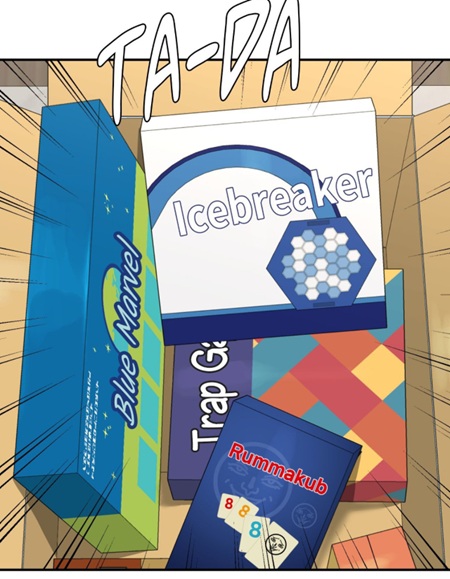 (chapter 80) They never played it — and that is no accident. The title encapsulates the temptation Jaekyung must resist: to treat intimacy as a contest, to imagine that trust can be won through tactics or timing. But hearts do not yield to strategies. The only way to melt the ice is not by “breaking” it, but by warming it, patiently, sincerely.
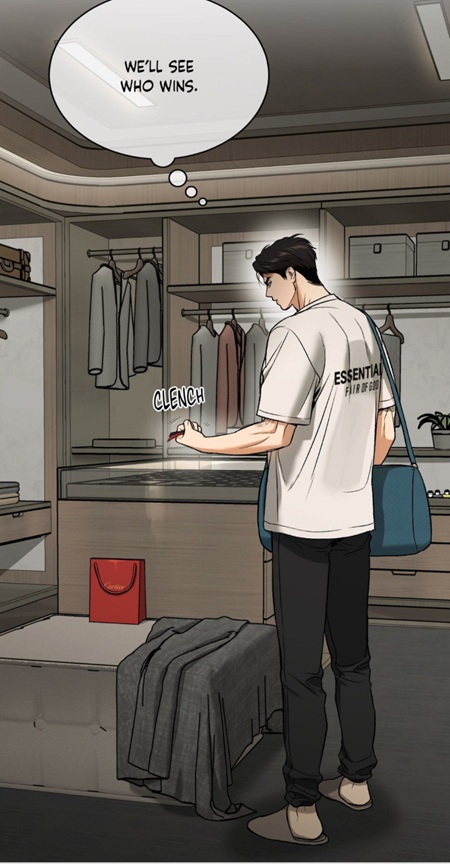 (chapter 66) And this is something the physical therapist could notice, if he enters the room again and pays more attention to his surroundings. This is not about ownership but about inclusion: an unspoken invitation to share a part of himself.
  (chapter 30). Even in that comic panel, the imbalance between physical familiarity and emotional distance was evident. Kim Dan’s embarrassment stood for boundaries not yet earned, and Jaekyung’s casual tone for a love not yet understood.
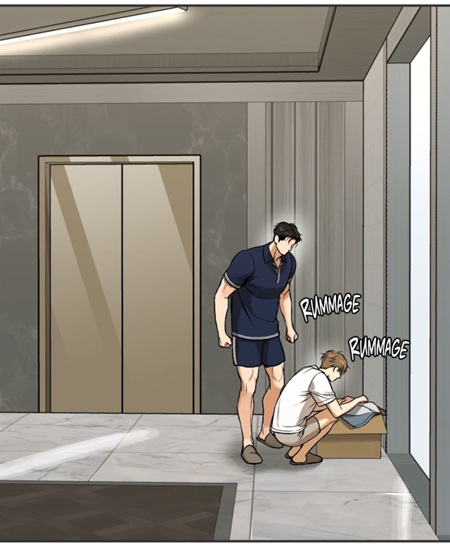 (chapter 80) The scene is small but seismic. The camera places Jaekyung slightly behind, his fists curled and his shoulders tense — an instinctive gesture of self-restraint rather than dominance. He is no longer the one towering above, demanding or explaining; he is waiting, watching, enduring the discomfort of having gone too far. His silence here is not indifference but humility — the silence of someone learning, painfully, what boundaries mean.
 (chapter 70) The athlete’s posture
 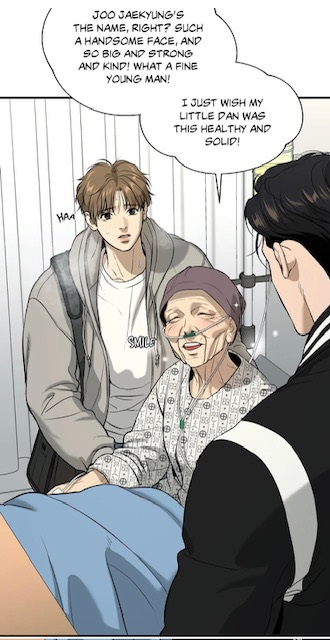 (chapter 21) Behind the warmth of her words lies a quiet wound: she loves her grandson, but she wishes him to be different — stronger, healthier, easier to care for. In his eyes, it’s an unreliable, burdensome shell — a vessel of weakness and sickness. Every protruding collarbone, every cracked lip or dark circle testifies to a deeper wound: the conviction that he is unworthy of care.
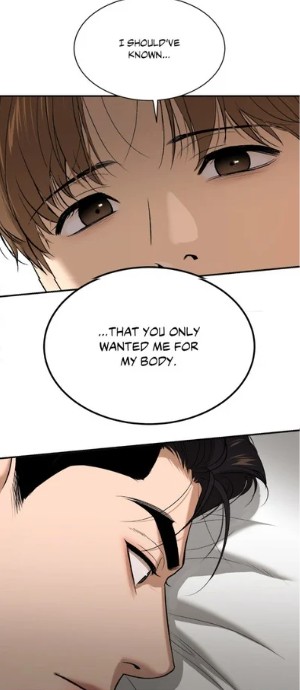 (chapter 62) the weight of that sentence stretches far beyond the bedroom. It carries the residue of every moral, familial, and physical contract that has reduced him to flesh. What the champion hears as accusation is, at its core, a confession of alienation — the echo of a man who has never learned to live inside himself. It’s not only a reproach but a confession. He hates his body because it has become the medium through which he is used, never loved.
 (chapter 27)
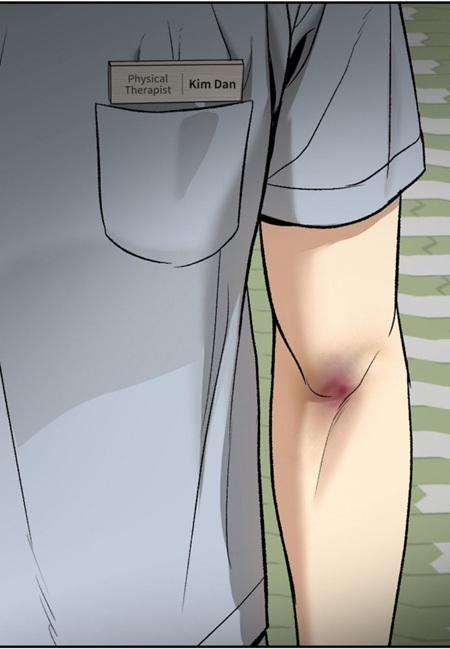 (chapter 61), the other where no one looks. Yet, the attitude of people is the same: no one pays attention to them. Both inhabit bodies that have forgotten the difference between endurance and pain. Both mistake self-destruction for strength.
  (chapter 18) when Kim Dan, bruised, had seized his hand and expressed his concerns. Back then, the gesture had confused the wolf. His hands were made to strike, to defend, to dominate — not to be pitied or protected. He had pulled away instinctively, unsettled by the tenderness and the huge sense of responsibility behind the question. He felt criticized, as if his power was questioned.
  (chapter 80) What began as misunderstanding in episode 1,
 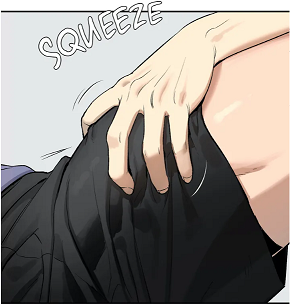 (chapter 1) and was maintained through the awkward hospital encounter in episode 18, now evolves into dialogue and genuine comprehension. In the beginning, Kim Dan’s touch had been accidental and defensive—a misreading of bodily proximity. When he grabbed the fighter in episode 1, he believed he had crossed a forbidden line, that his action would be seen as insolence or violation. The fear and shame that followed transformed touch into a territory of silence and self-censorship.
 (chapter 56), he had interpreted that touch not as mistake or violation, but as a spark of invitation—proof that the “hamster” might want him after all. His own longing twisted the scene into a fantasy of desire, into a private “game” he wanted to continue in the bedroom. One misunderstanding gave birth to another. By episode 18, the same reflex persisted: he reached out again, asking if Jaekyung was hurt, his hand trembling with the same mixture of care and fear. Once more, touch was misread—offered as comfort, received as intrusion. Thus their relationship began under crossed signals: one moved out of survival, the other out of projection or the reverse. It is no coincidence that their relationship in season 1 was doomed to fail. They never communicated properly, as their perception was influenced by their past and surroundings.
 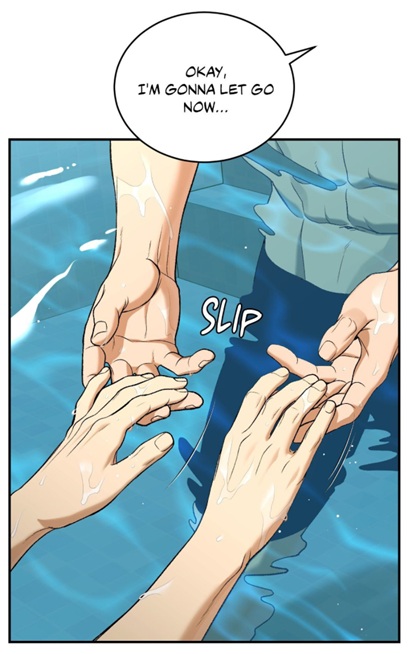 (chapter 80), Kim Dan panics, convinced that release equals abandonment.
 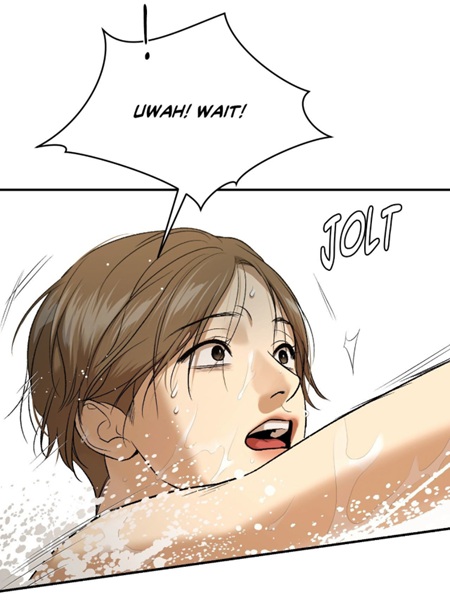 (chapter 80) He freezes once again. Yet the water holds him; he reaches onto the champion again — and this time, the embrace stays. What makes this moment remarkable is that the pool is shallow.
  (chapter 80) Kim Dan could easily stand on his own, but fear has eclipsed reason. His instinct is not to trust his feet, not to fight the water, but to cling to the man before him.
 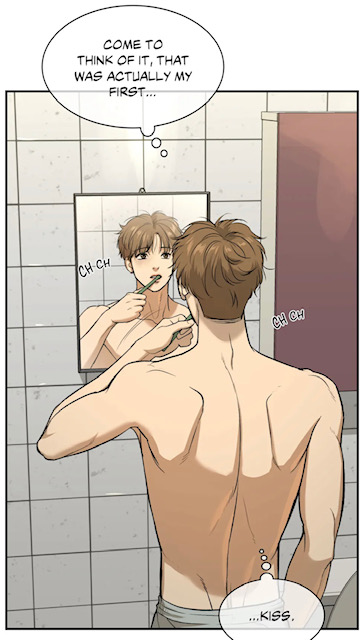 (chapter 16) —that deceptively simple French word—finds its power. It means “ice,” but also “mirror” and “window.” When the champion looks through Kim Dan’s glace
 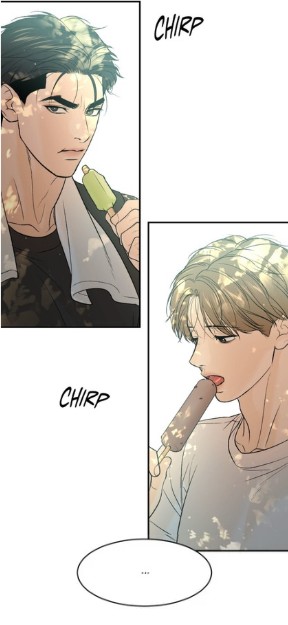 (chapter 77), unlike the touch of ice. It softens, sweetens, dissolves slowly on the tongue. Likewise, the heat between them no longer needs to scorch; it can melt. And yet, the kiss — once their most volatile exchange — has fallen silent.
  (chapter 64) Kim Dan had to bite his own lips to make Jaekyung stop, and neither has ever truly spoken of it. Yet, during the night, the athlete could see the remains of that cold war.
 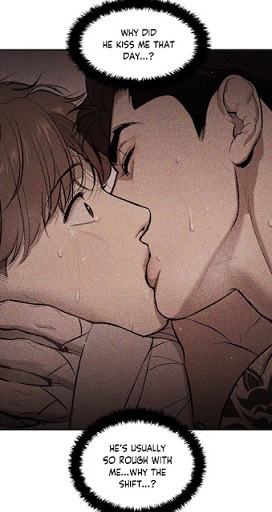 (chapter 16), just as the champion has never confessed that it was his first kiss. Moreover, during their first day off together, Joo Jaekyung had also initiated a kiss and back then, the doctor never wondered why.
  (chapter 27) Both men have been staring into the same mirror without realizing that the reflection was shared. They love each other. Joo Jaekyung needs to ponder on the signification of a kiss
  (chapter 13) and why doc Dan made such a request.
  (chapter 15) The kiss is more than just fun and pleasure. It is the expression of “love”. And now, you comprehend why I am expecting a huge change in the next episode.
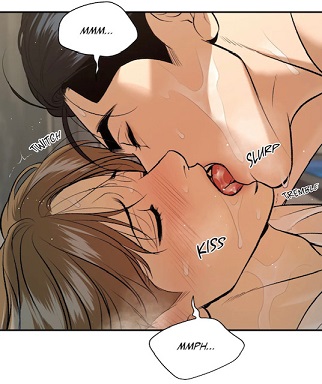 (chapter 28) and urge Kim Dan to ask, at last, the question that remained frozen between them. In doing so, he would not only reopen the conversation but also reclaim the meaning of touch itself: not as misunderstanding or survival, but as curiosity and love.
 (chapter 80) And it comes with a small but crucial instruction. In that single phrase, the MMA fighter encourages Kim Dan to discover his own power and strength without overexercising. His feet, which were once symbolically trapped in the nightly ice, now press against the water with intent during the day. For the first time, his body obeys him, not fear. His movements are neither frantic nor helpless but self-regulated, gentle and alive. That’s why the main lead becomes happy for a moment.
  (chapter 21) comes from the early loss of his mother.
 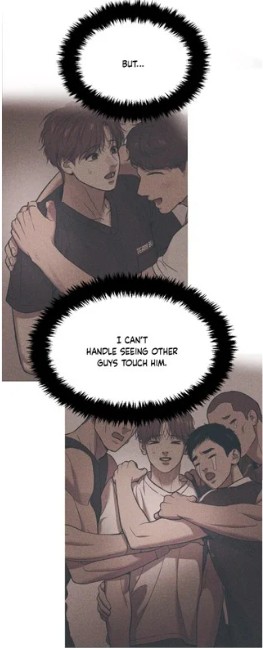 (chapter 79), if he knew that the doctor has already loved him for a long time.
 Kim Dan on Thin Ice was never just about danger or fragility — it was about transformation. The ice that once confined him to stillness has melted into water, and the fear that once froze his body has become motion. Where there was trembling, there is now flow; where there was isolation, there is connection.

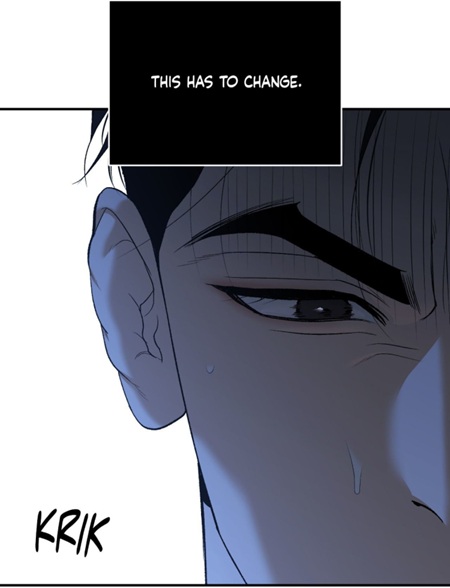 (chapter 79) However, let me ask you this. What kind of circle ends in episode 79? Moreover, how is this ending different from the past? Interesting is that episode 79 of Jinx doesn’t end with conflict, but with an awakening. For the first time, Joo Jaekyung does not rise to fight, command, or perform — he wakes up to a realization: “This can’t go on.” In the Korean version, his words carry an unusual clarity. It is not fate that changes, but choice. The champion, who once lived as if enslaved by habit and haunted by ghosts, now chooses transformation. The circle that has defined his life — power, silence, guilt, and repression — finally begins to close.
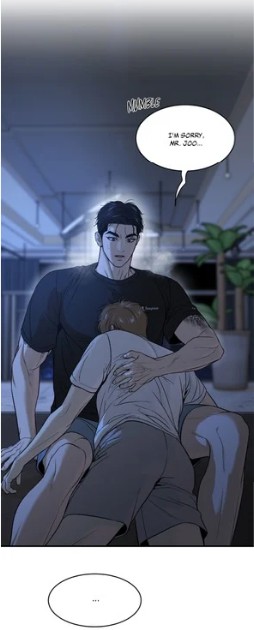 (chapter 79) Until now, Jaekyung has moved through life as if carrying a curse — the belief that he is unworthy of care and love.
 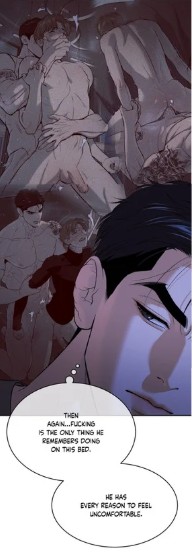 (chapter 78) Every match, every order, every touch was an act of penance. Yet, in this episode, that belief dissolves. What vanishes in chapter 79 is not his strength, but the compulsion to suffer for it. Through the unconscious confession from Doc Dan, the wolf discovers that despite his wrongdoings, he is not hated by the “hamster”.
 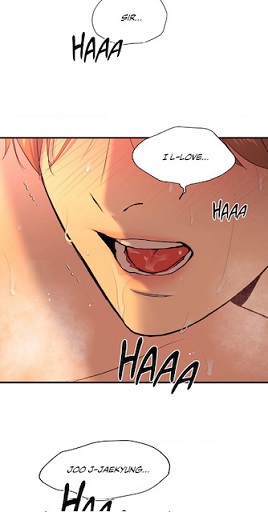 (chapter 39) from the magical night in the States. Both moments unfold in half-darkness, both break through inhibition, and both blur the line between consciousness and surrender. The verbal difference hides a deeper sameness:
  (chapter 79) is not remorse alone — it is an act of love, an instinctive reaching-out toward the other’s pain.
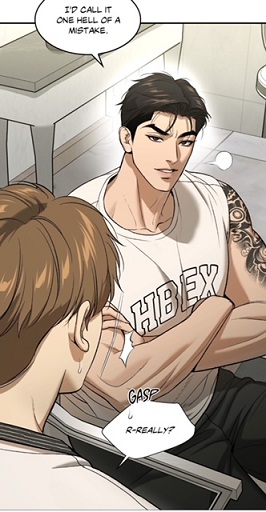 (chapter 41) What could have been a moment of truth was repressed through mockery. His body language was betraying him: his closed arms reveal that he was on the defensive. By trivializing love, he protected himself from suffering and as such from facing his own capacity for harm. Behind the joke hid an immense self-loathing: to accept the confession as real would have required believing himself worthy of it. To trust himself…. he is not a loser, a nobody!
 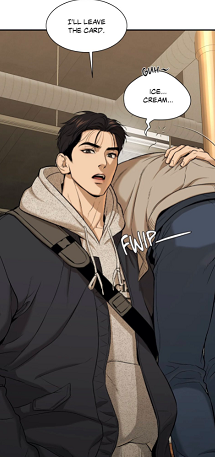 (chapter 9), 29’s confession on the couch
  (chapter 29), 69’s first expression of feelings in the dark
  (chapter 69). In chapter 79, the circle closes once more. The night’s palette tells the story — deep blue softens into violet
 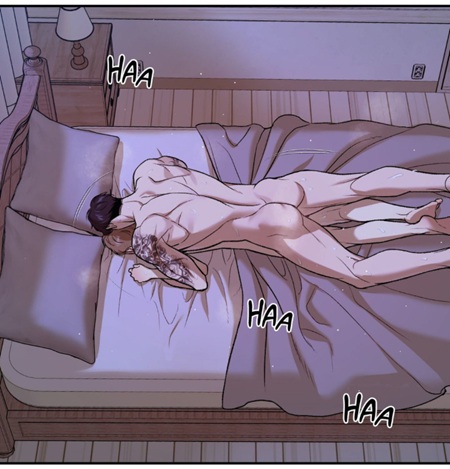 (chapter 64)
  (chapter 79), the color born from the fusion of blue (Dan’s sorrow) and red (Jaekyung’s intensity). For the first time, in the penthouse the color of their relationship is not pain but balance. And now, you comprehend why in the hallway, the purple had almost vanished:
 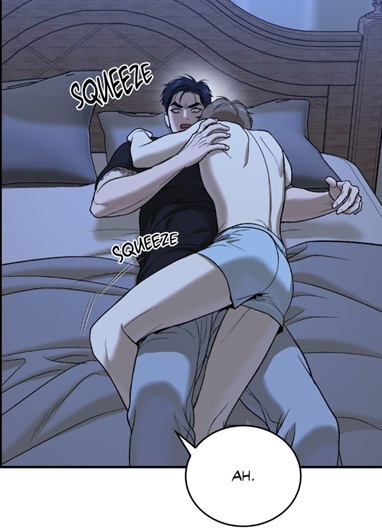 (chapter 66)
  (chapter 79)
 (chapter 79) To restore it, he will have to speak, to act, and ultimately, to smile again.
 (chapter 79), it is a confession disguised as complaint. For the first time, he voiced his dependency and vulnerability more clearly, as his body language is no longer expressing hesitation and shyness. Imagine that so far, he had lived following the principle of “self-reliance”. Yet when Dan asks, “What?” the champion retreats:
 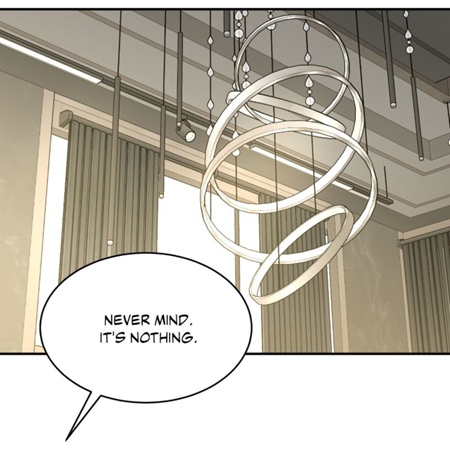 (chapter 79) His feelings collapse into the void between words. Above them, the spiral chandelier glows — the perfect symbol of their unfinished circle. His unspoken fear hangs suspended, waiting to be voiced because of someone else’s actions: the doctor’s grin
  (chapter 79) and fall
  (chapter 54) still equates vulnerability with humiliation.
 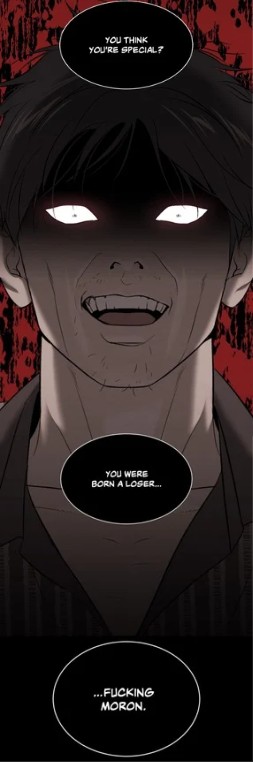 (chapter 73) In the past, every sign of weakness was punished or laughed at; even longing arrived through ridicule. Hence the “grinning” Dan of his nightmare
 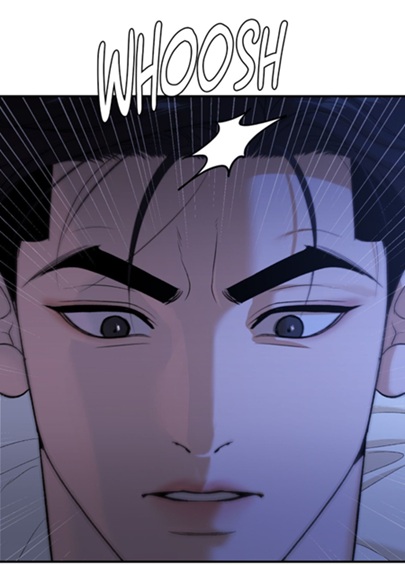 (chapter 79) The vision forces him to confront the origin of his shame. He realizes, instinctively, that the real Kim Dan would never smile at his pain — and through that recognition, he begins to separate present from past. He has already experienced a silent, but warm gaze
 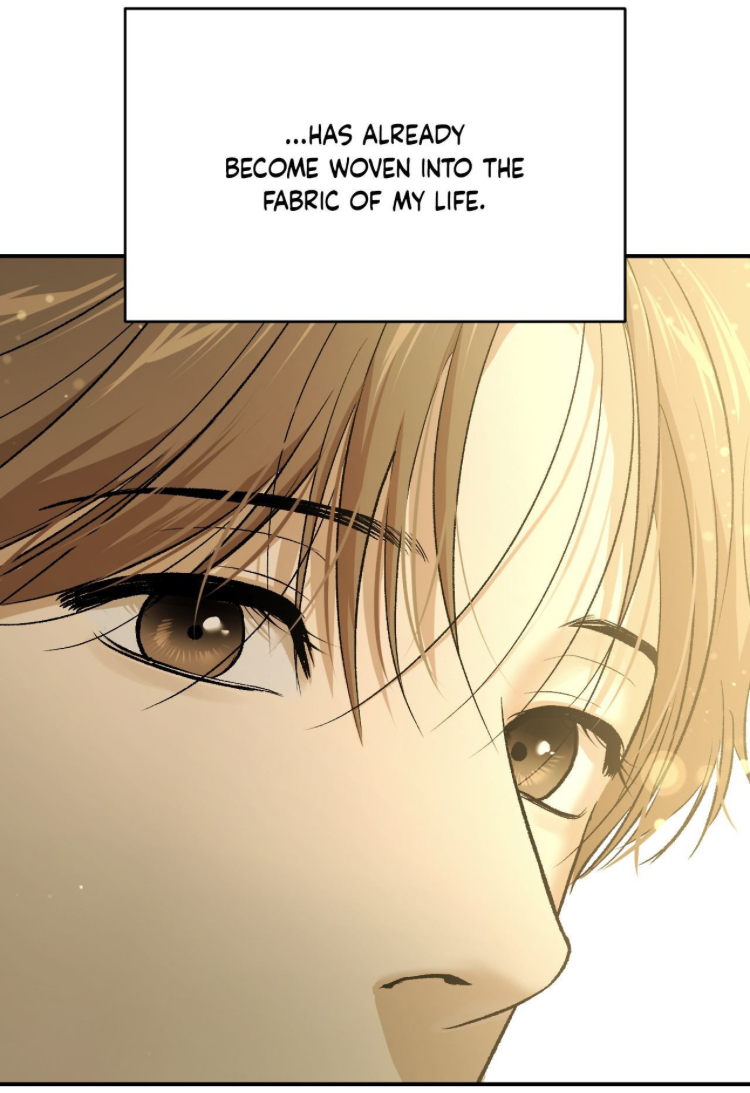 (chapter 77) from his fated partner after admitting his defeat:
 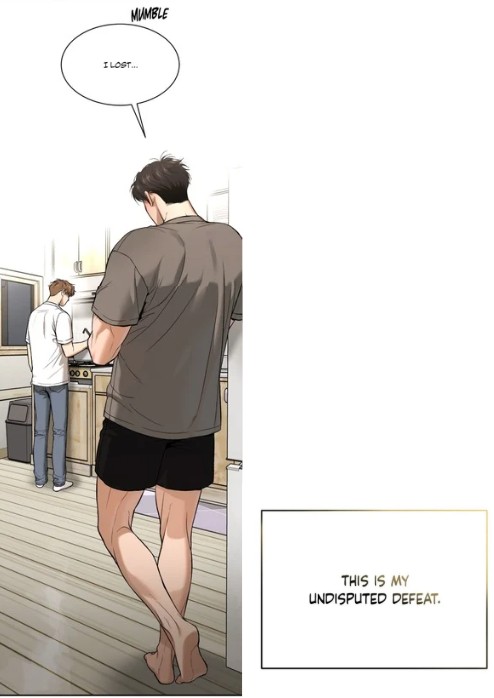 (chapter 76)
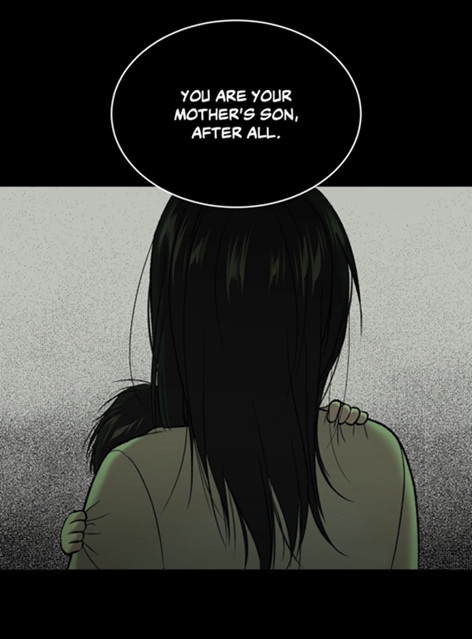 (chapter 73) but by a new, fragile dread: the possibility of losing the one person who would never say it. What vanishes in episode 79 is not his strength, but the belief that to need someone is to be weak.
 (chapter 78) He has long recognized his wrongdoings — the pressure, the harshness, the selfishness
  (chapter 76) — but guilt without self-forgiveness remains sterile. What is the point of apologizing to someone when you cannot forgive yourself? His silence, then, is not arrogance but self-condemnation. Beneath his strength lies a man who believes that no apology can redeem him, because no one ever offered him one first. His father’s mockery, his coach’s reproaches
  (chapter 74) and expectations, his mother’s betrayal
  (chapter 74), his manager’s slap at the hospital
  (chapter 52) — none of them ever voiced regret and said “I’m sorry.”
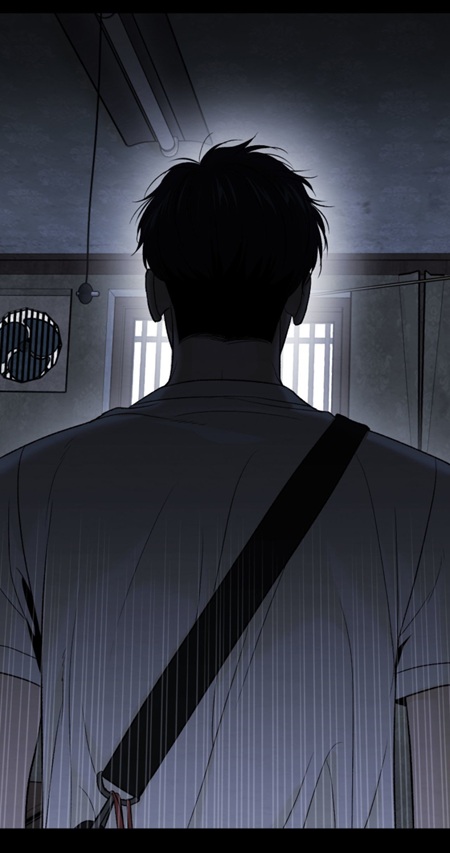 (chapter 73) Every punch was an act of self-erasure, every victory a brief anesthesia against the echo of his own self-loathing and regrets. He mistook exhaustion for atonement. But when Kim Dan whispers
  (chapter 79) His vision of Kim Dan’s false grin is not a taunt from the other
  (chapter 51) The dream revives that unspoken answer, revealing that what Jaekyung perceived as danger was, in fact, an offer of trust. In trying to protect himself from mockery, he denied the very connection that could have saved him. The dream reconstructs the very morning he had dismissed his vulnerability
 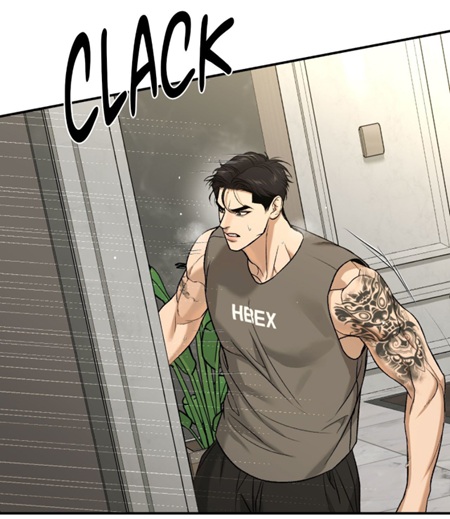 (chapter 79)— the breakfast scene
 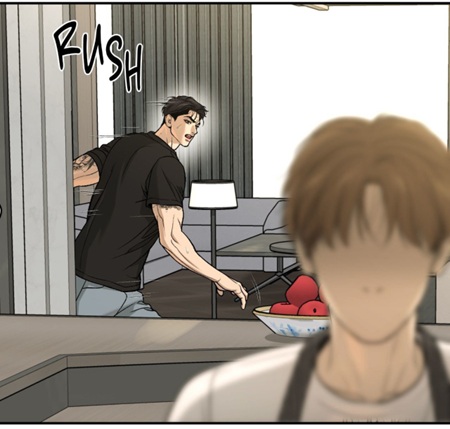 (chapter 79) , the casual
  (chapter 78) That word revealed his blindness — the refusal to acknowledge pain that does not announce itself through wounds. The new incident at the railing shatters that illusion. It was never an accident, but the expression of mental illness
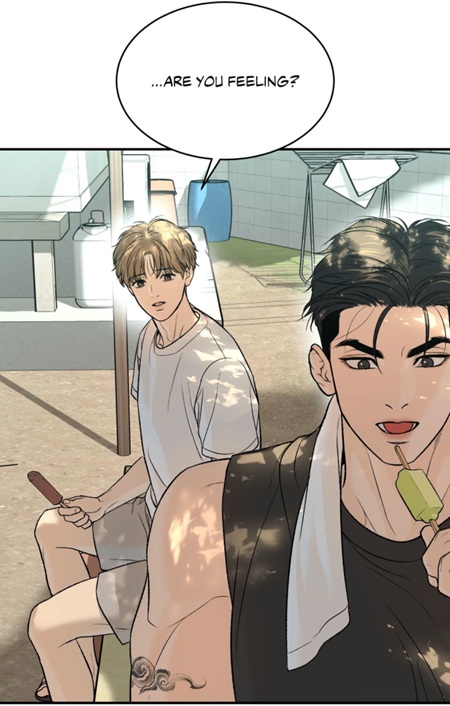 (chapter 77)
 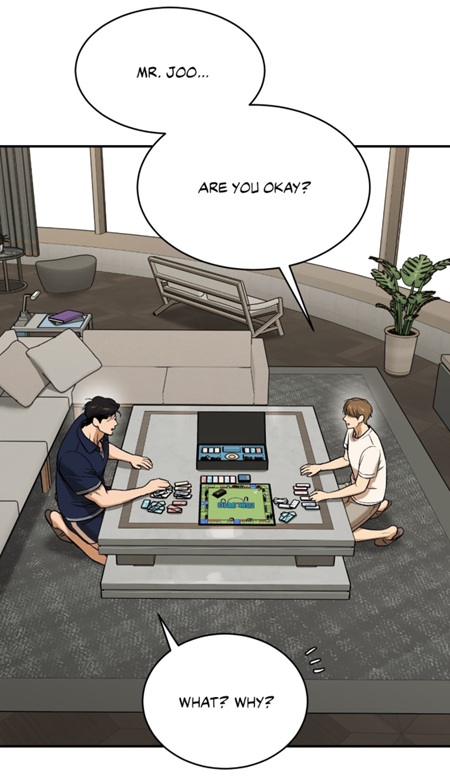 (chapter 80) Each time, the physical therapist shows concerns for the athlete’s well-being. He perceives this change of behavior as the expression of unwell-being.
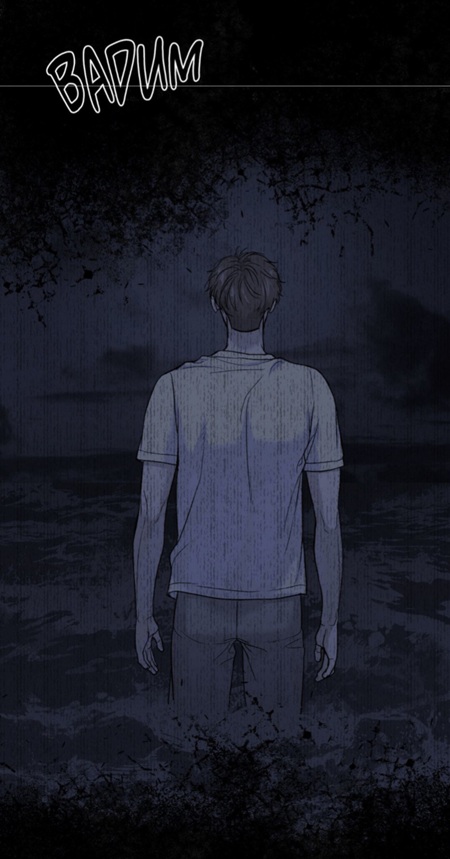 (chapter 69), and the balcony
  (chapter 37) Behind the champion, the Golden Gate Bridge stands as a silent witness — a place where many have ended their lives by leaping into the void between air and water. The bridge fuses both symbols: it is where drowning and falling meet. Moreover, the bridge embodies the connection of two worlds. This backdrop, unnoticed by the protagonists themselves, prefigures the later arcs. Joo Jaekyung is the one standing between the bridge and the physical therapist. It was, as if the author was already announcing the huge depression doc Dan would face in the future. At the same time, I came to wonder if the unconscious suicidal attempts from Doc Dan were actually revealing the biggest secret in his life: the suicide of his parents and their death could be linked to a bridge. Striking is that while the members of Team Black were partying
 (chapter 73) before he discovered Joo Jaewoong’s corpse. The bridge thus becomes a metaphor for invisible grief: joy and pain occurring simultaneously, one masking the other. And keep in mind that according to my theory, the picture of Dan with his grandmother is hiding a tragedy. This would explain why doc Dan is so obsessed with this picture:
 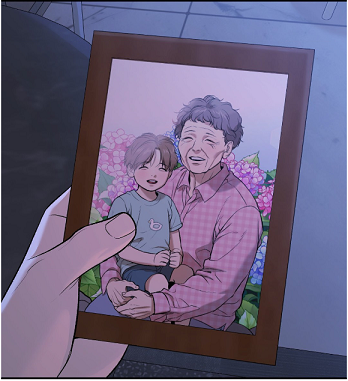 (chapter 47) The smiles here are hiding the past reality.
  (chapter 79) — so unlike his real, exhausted self — is a vision of peace, of love unburdened by fear, while this grin exposes the truth. The dream, the realm of clouds, becomes a stage where the wolf shows and learns tenderness. The dream’s fear and indirect self-reproach
  (chapter 41) In other words, the dream is giving him clues as well how to behave: not only greeting, but also talking. What caught my attention is that during their two last breakfasts together
 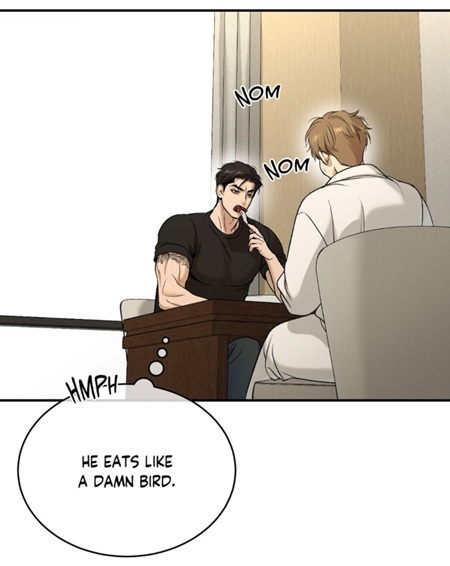 (chapter 68), they didn’t talk at all
 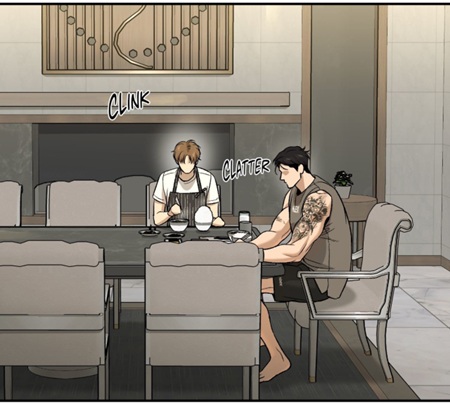 (chapter 79) which contrasts to the star’s vision.
  (chapter 79) He does not kneel; he sits, his body settling softly against the floor as he catches Dan in his arms. The man once associated with dominance becomes a cushion, a pillow, a living anchor. His strength, once used to impose weight, now exists to absorb it. The fall is not toward repentance through pain, but toward tenderness through stillness.
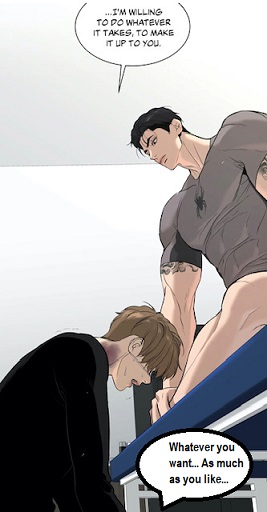 (chapter 11) now becomes the one who receives the collapse.
 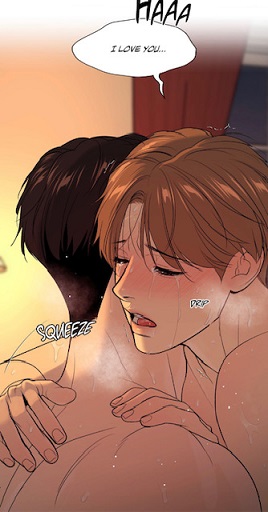 (chapter 39) escapes him in an embrace; his
 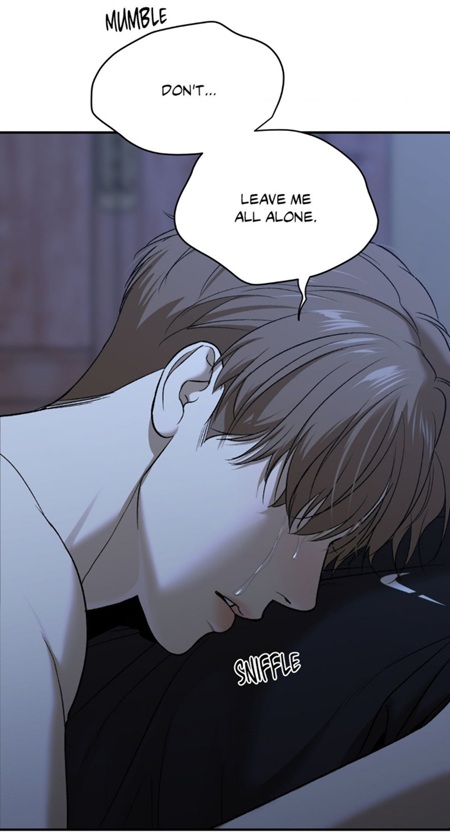 (chapter 66)
  (chapter 66) trembles out against Jaekyung’s chest; his
 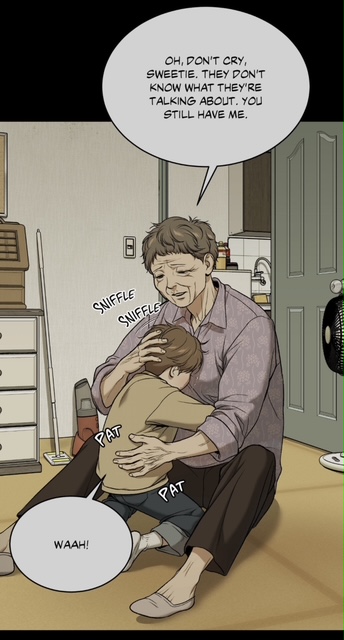 (chapter 57), he could only confide while being physically comforted. The grandmother’s embrace in chapter 57 becomes the prototype of this pattern — the last instance of safety tied to voice. Yet, crucially, that embrace was conditional and silencing. She soothed him but redirected his pain:
  (chapter 80) When Jaekyung takes his hands in the swimming pool, the gesture revives this primal language of reassurance. For the first time, the touch is neither coercive nor desperate; it’s sustaining. The handhold reverses the earlier dynamic — instead of silencing him, it gives him permission to speak. Furthermore, the champion is pointing out that he can rely on two things, the champion’s hands and the kickboard belt. This stands in opposition to the fake promise of Shin Okja.
  (chapter 57) In other words, he is inciting the doctor to trust himself more and become independent.
  (chapter 65), the champion seeks to restore the missing confidence.
 (chapter 28)
  (chapter 69) The wolf, who once relied on dominance and silence, is now allowing his fated partner to hug him.
 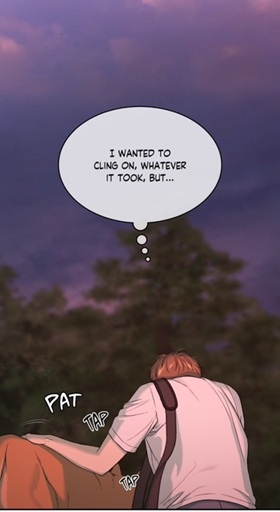 (chapter 59) His hand resting on Boksoon’s fur repeats the same motion — the pat once given to him, now returned to another being in pain. What he offers the animal is precisely what he has always longed for: warmth without judgment, touch without condition.
 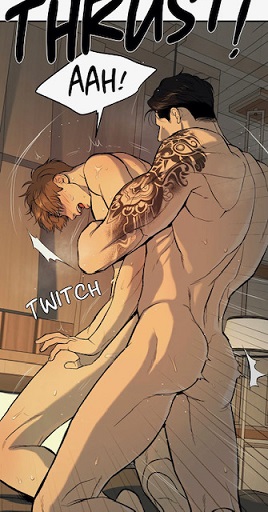 (chapter 4), not intention: a reflex of possession, not communication. As time passed on, it changed, yet in the bathtub (chapter 68), Dan fell asleep against him so that he could never experience the athlete’s care
  (chapter 68); in the morning, Jaekyung acted as though nothing had happened. Then on the dock, Joo Jaekyung expressed his relief
 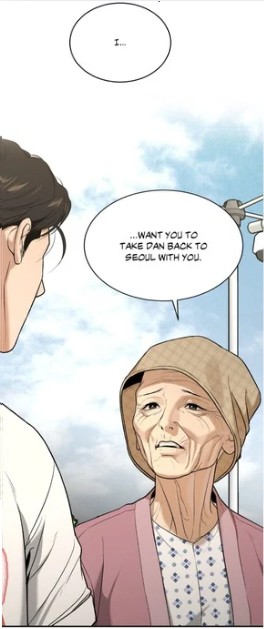 (chapter 65); “bring him to a big hospital so that he can take pills”
 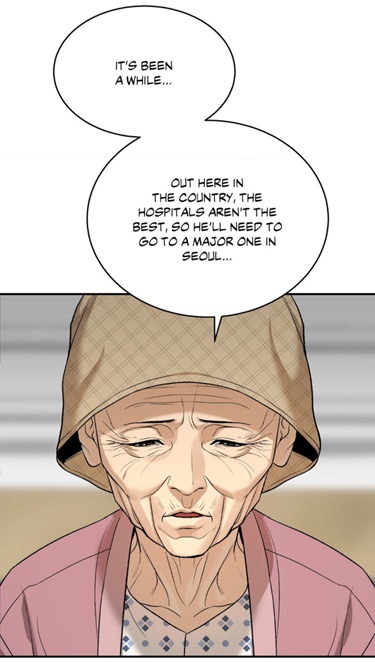 (chapter 65)
  (chapter 65) He trusted her words and advises. I would even add that he believed that compliance equaled real care. Yet the night by the balcony teaches him otherwise.
  (chapter 57). Everything evolved around his lack of sleep and his dependency on her.
 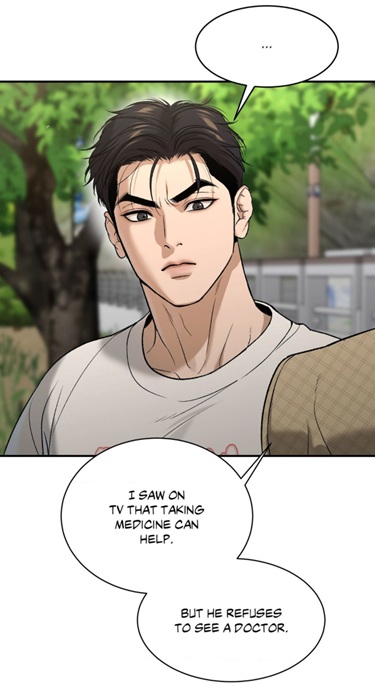 (chapter 65) However, in episode 79, for the first time, the champion notices it.
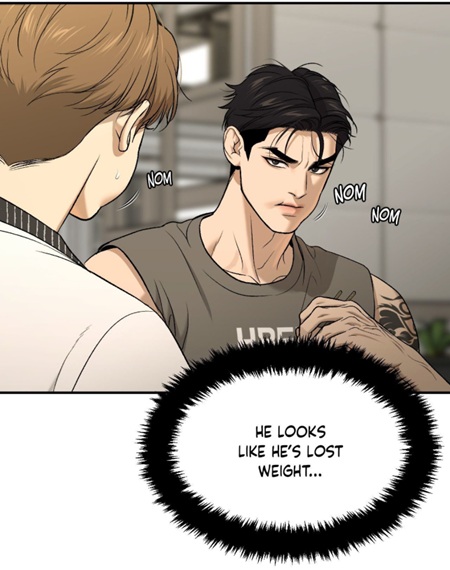 (chapter 79) It is important because very early on, the doctor Cheolmin had already detected his malnutrition:
  (chapter 13) In other words, the physical therapist’s depression and eating disorder were already existent before meeting the “wolf”. And what did the mysterious friend tell to the “wolf”? He shouldn’t wait out of fear that he might regret it later!
 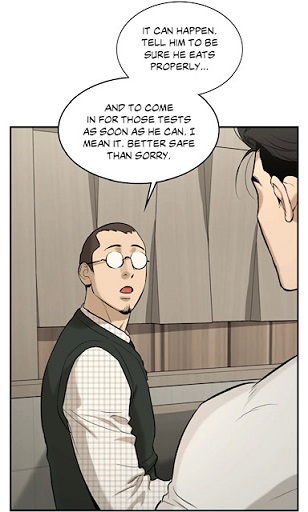 (chapter 13) As you can see, “sorry” is the link between the two doctors and the celebrity.
  His metamorphosis will be complete with the birth of the kind and sweet Joo Jaekyung!
  (chapter 21) Imagine that I had written this part before the release of episode 80!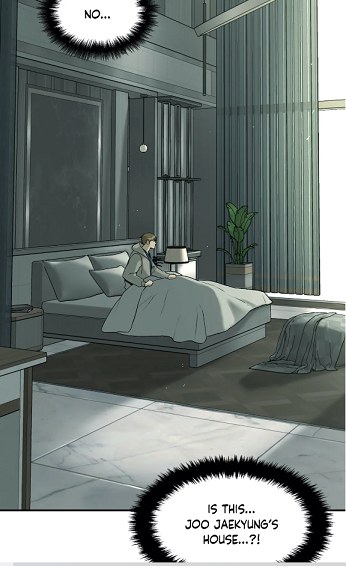
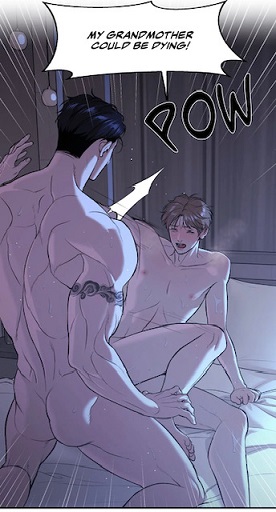 (chapter 21)
 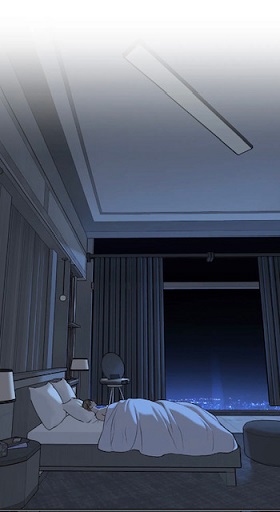 (chapter 29)
  (chapter 61) Hence it is no coincidence that while sleeping in his own bedroom, the physical therapist had a relapse.
  (chapter 79) Because the champion had come to the conclusion that his own bedchamber was linked to sex
 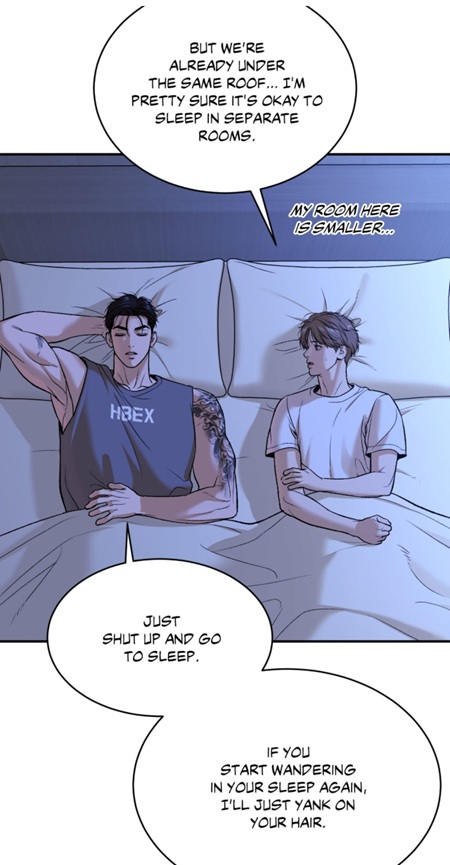 (chapter 78) And though he had another “accident”, the former is never bringing it up to doc Dan. There’s no blame or accusation. The athlete is keeping these accidents as secrets. However, pay attention that he is making sure that doc Dan is resting.
 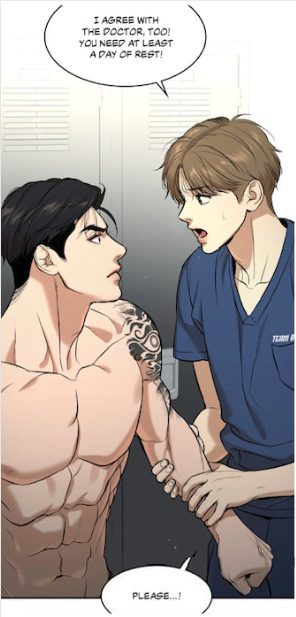 (chapter 27) Striking is that the champion always chose the left side of the bed
  (chapter 66) Thus I deduce that doc Dan is destined to take over his grandmother’s position in the bed:
 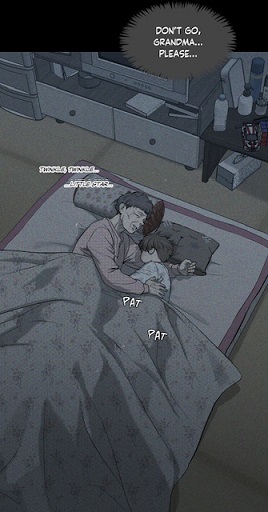 (chapter 21) And this observation seems to be validated by chapter 80.
 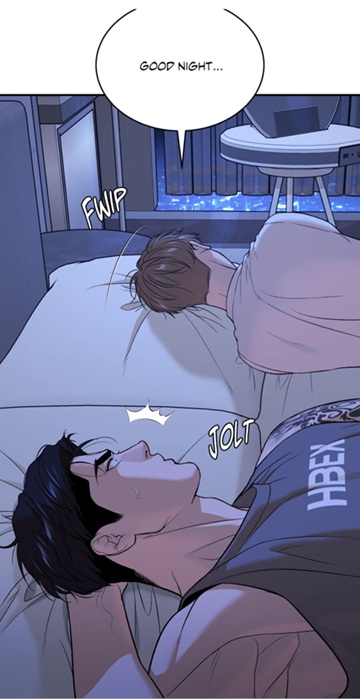 (chapter 78) But if they switch places, the wolf should be able to watch his partner’s face. And now, pay attention to the way Mingwa placed the new embrace in the swimming pool:
  (chapter 79) He had the impression that he wouldn’t meet his “expectations”. Observe the parallels between the champion’s dream
 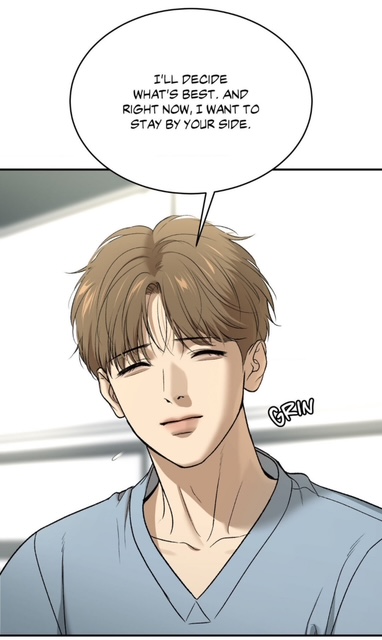 (chapter 57) We have the doctor’s fake smile which is strongly linked to rejection
  (chapter 57) and expectations. And what is the other common denominator? His self-loathing and immense guilt. He has the feeling that he is not lovable. In my opinion, doc Dan is suffering because no one is listening to him at all. So far, they all projected their own thoughts onto him. The reality is that doc Dan already had a hard time before moving to the seaside town,
  (chapter 11) yet she failed to notice it or refused to face his struggles, as they were related to their poverty.
  (chapter 5), he lost his voice and became a ghost. It is no coincidence that in this scene, doc Dan was silent despite the caress. He was avoiding any topic that could trouble his grandmother. He accepted to remain a little boy in her eyes. But thanks to the wolf, doc Dan is learning to become strong and independent so that he can decide about his life. The swimming lesson is pushing him to overcome his abandonment issues.
  (chapter 79). Yet as the doctor grows thinner and more exhausted, the wolf begins to understand what “starvation” truly means.
  (chapter 79)

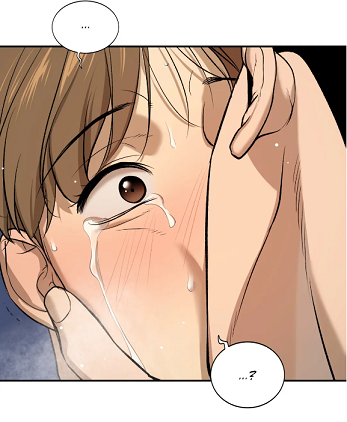 (chapter 14) For the physical therapist, this moment would later be confirmed.
  (chapter 55) Still, some readers have theorized the existence of a “special lover” in his past
 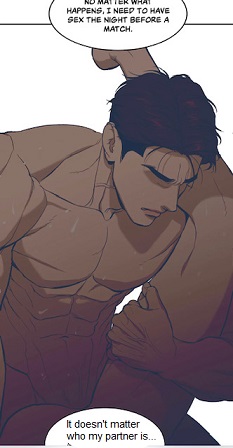 (chapter 2), someone who might have earned a different kind of intimacy. One cause for this hypothesis is that in the champion’s first memory, he was facing his partner, which contrasts so much to the way he had sex with his partners (from behind). This possibility casts the locker room kiss in a new light.
  (chapter 14) If it was his first, the gesture carries a far deeper meaning than either man realizes in the moment. And if it wasn’t, then why does this kiss—with Kim Dan—resonate so differently?
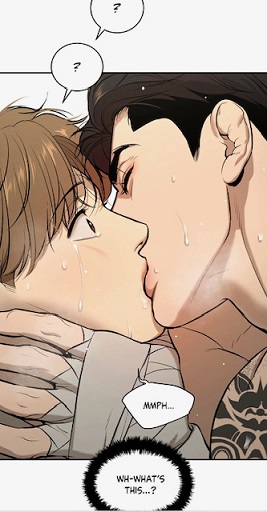 (chapter 15) she showed more than the physical therapist’s confusion with the interrogation marks, she added his inner thoughts. This question (“What’s this?”) already hinted that he had never experienced a kiss before. The ambiguity of his reaction suggested that the moment was unfamiliar, and not immediately recognizable as a kiss at all.
  (chapter 16) it frightened him. The kiss broke an invisible boundary—one his upbringing had silently enforced. That’s the reason why he wasn’t sure if he could do it again.
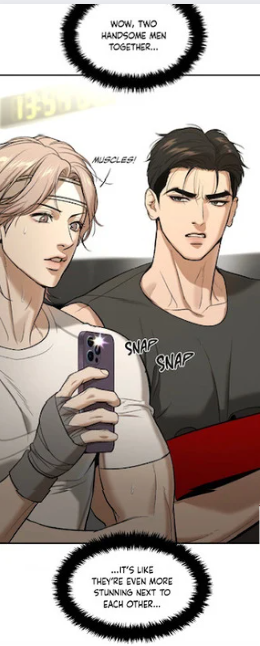 (chapter 30) He blushes and wonders why.
  (chapter 30) It’s a telling moment: Dan isn’t used to feeling attraction and desire, let alone recognizing it. He never bought posters of celebrities, never fantasized. That world—the glamorous world of affection, attention, and beauty—was never his.
 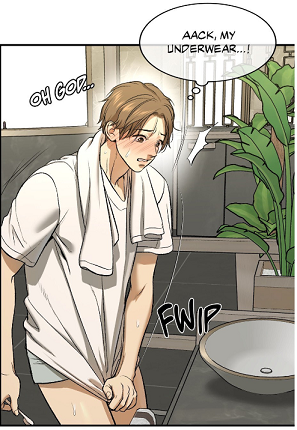 (chapter 30) —despite already having been seen naked by Jaekyung
 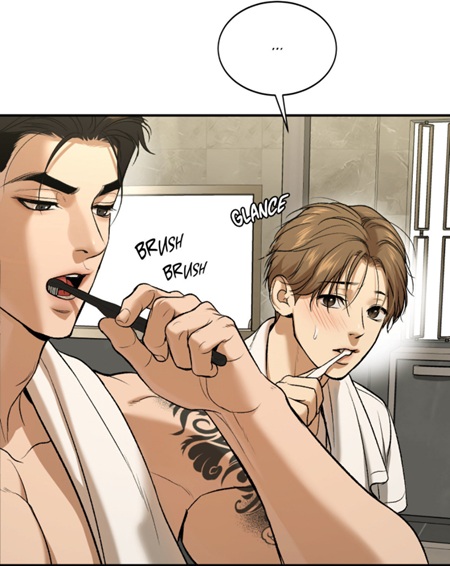 (chapter 30), it becomes evident: Dan is not accustomed to physical closeness or shared domestic spaces. These are not reactions of a man with just sexual trauma—they point to someone raised without the warmth of daily intimacy.
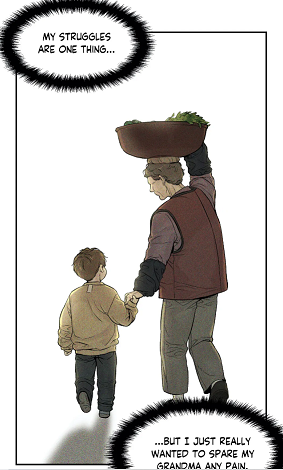 (chapter 5) He had to take care of himself, dressed on his own. He had to act like an adult, as his role was to assist his grandmother:
 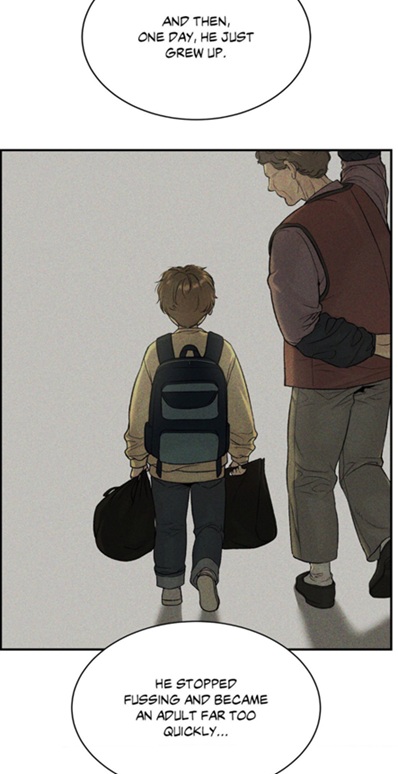 (chapter 65) This raises the possibility that someone else—most likely his mother—was his primary caregiver in early childhood. She would have changed his diapers, held him close, and kissed him gently.
  (chapter 44) and ear
  (chapter 44) For me, without realizing it, Dan reproduced those gestures. These actions can not come from Shin Okja, as we only see her caressing or patting her grandson. The progression is striking. It moves away from eroticism (kiss from the lips)
  (chapter 44) and toward something far more intimate and protective. These are not the kisses of seduction, but of affection—almost maternal in their tone. Hence the MMA fighter got patted later:
  (chapter 44) They suggest care, comfort, and emotional presence. This is crucial, because it reveals that for Dan, a kiss is not about arousal or conquest. It is a language of love. They carry the flavor of instinct. These are the kinds of kisses a child might have once received, or given, in moments of safety and connection.
 (chapter 44) is a behavior shared by felines and wolves alike: a subtle act of comfort, trust, and bonding. Wolves nuzzle to soothe and reassure. Leopards nudge to display affection without threatening dominance. Dan’s pecks
  (chapter 57) (chapter 57)—licking them not out of instinct alone, but to reassure and bond.
 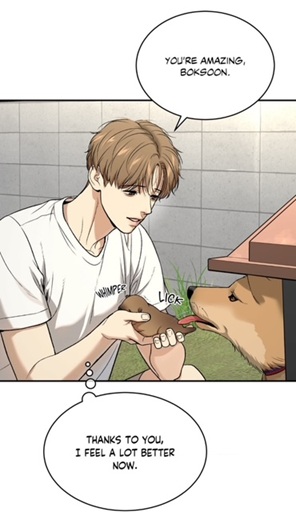 (chapter 57) During that summer night’s dream, Dan’s body mirrored this wordless care. That’s why he could laugh so genuinely like a child after witnessing his “pet’s reaction”.
  (chapter 44)
  (chapter 14) Therefore the physical therapist astonishment, “What’s this?” was not naïve; it was disoriented. Somewhere deep within, Dan had internalized a different model of kissing: one that reflected comfort, not conquest; affection, not arousal. The kiss he received was too strange, too fierce—it violated a definition he didn’t even know he had. His body knew how to kiss, but it remembered a different type of kiss altogether. The latter stands for love and as such emotions. Under this new light, my avid readers can comprehend why the physical therapist made the following request from his fated partner:
 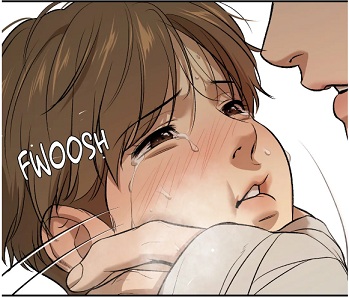 (chapter 14) Jaekyung repeated such a gesture, as seen in chapters 24
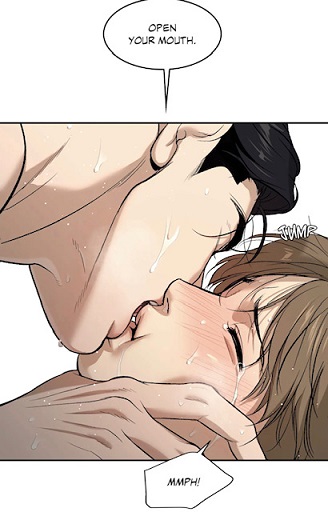 (chapter 24), and again in 64
  (chapter 64). These gestures were not expressions of tenderness, but acts of dominance, mirroring how the celebrity was taught to treat intimacy: not as an exchange, but as an imposition. His behavior echoes Cheolmin’s earlier suggestion
 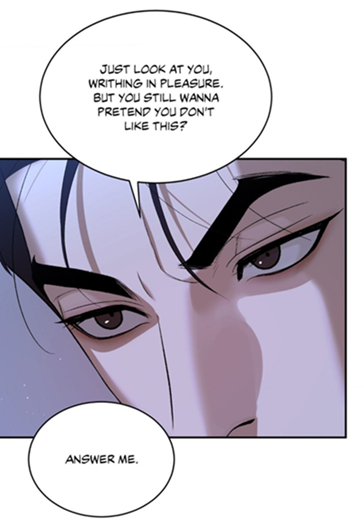 (chapter 63) Fun is not the same as love, and this distinction matters deeply for someone like Kim Dan, who associates kissing with emotional safety and love, not performance or play. This explicates why he refused to be kissed in episode 63:
 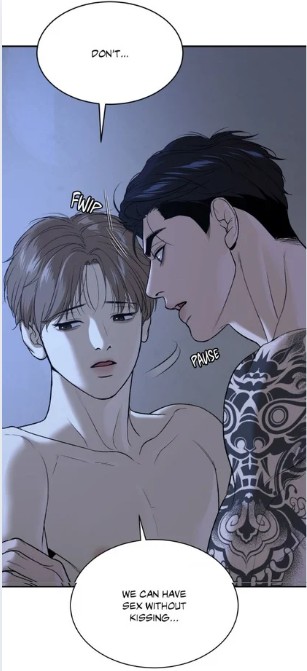 (chapter 63)
 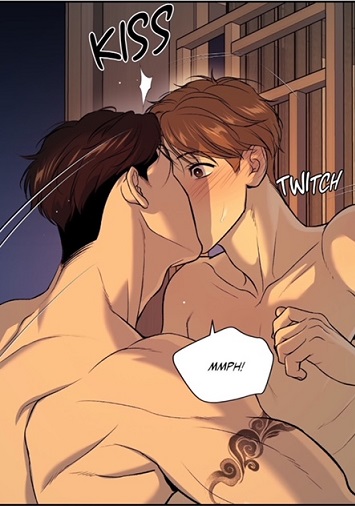 (chapter 44), Dan’s were soft, exploratory, almost reverent. His lips touched not just his lover’s mouth, but his cheek and ear—tender sites that bypass eroticism in favor of emotional intimacy. These weren’t prolonged, devouring kisses. They were pecks, small and deliberate. They mirrored affection, not possession.
 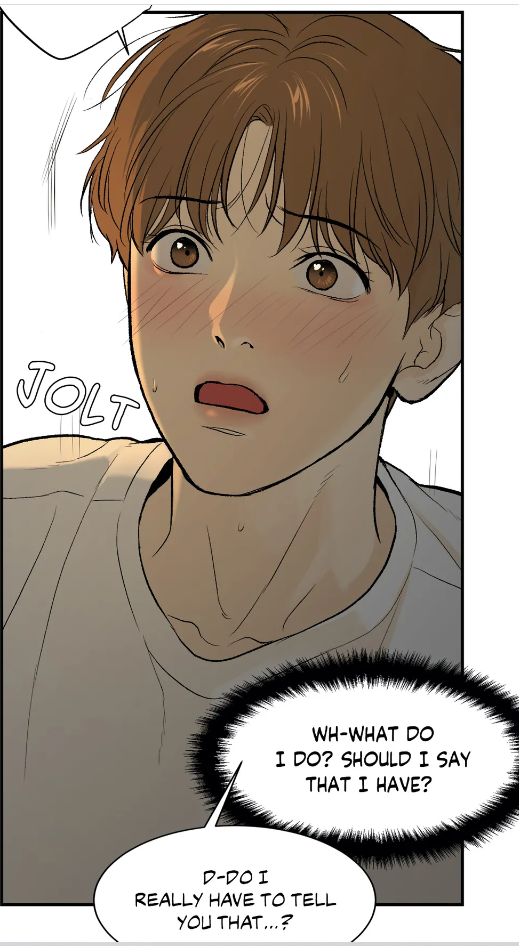 (chapter 3) —it forces the wolf to ponder on the meaning of a kiss and his relationship with the physical therapist.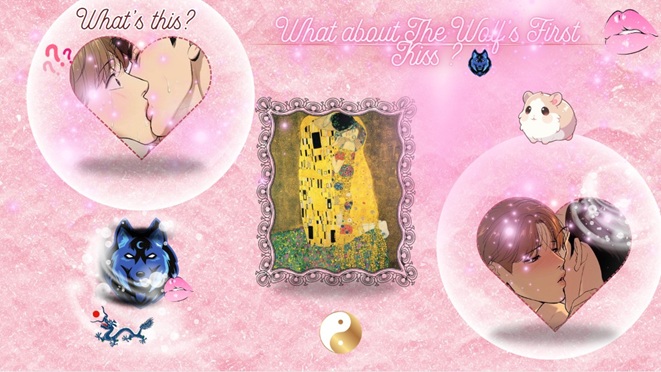
 In that iconic artwork, the man does not kiss the woman on the mouth, the traditional locus of erotic desire. Instead, his lips are placed upon her cheek—a gesture that suggests reverence, not possession; vulnerability, not domination.
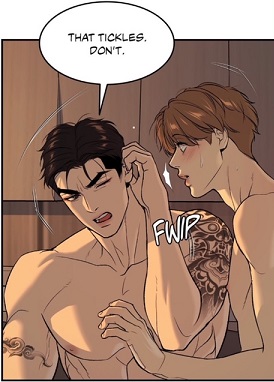 (chapter 44)
  (chapter 45)
 (chapter 54) When he was young, he had to face an abuser. Notice that the man’s face was very close to the champion’s
  (chapter 44) He couldn’t hide his joy by the champion’s funny reaction and laughed. And how did the protagonist react to this? Not only his face expressed his dissatisfaction, but also he silenced his partner with a kiss right away:
  (chapter 44) Joo Jaekyung is leading the kiss, he is regaining control over their relationship. It reinforces the idea that the wolf’s kiss was not merely about passion, but about reclaiming dominance and halting a shift in power. Just moments earlier, Kim Dan’s laughter had opened a space of emotional intimacy and lightness, which the champion was not prepared to face. The kiss, now prolonged and intensified, becomes the sportsman’s way of reasserting control over a situation that was slipping into unfamiliar emotional territory.
 (chapter 45) The marks on the doctor’s body were evidence that he was no longer in control. They weren’t just signs of a physical encounter—they were witnesses to something far more threatening: vulnerability, softness, and reciprocity. In the night, swept up by instinct and unspoken longing, the wolf had allowed himself to be touched—not just physically, but emotionally. But by morning, the spell was broken. His gaze didn’t linger on Kim Dan with affection—it darted instead to the bruises and scratches as though they were accusations.
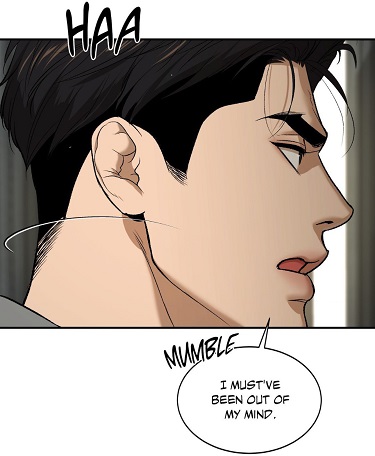 (chapter 45) wasn’t just the pain he might have inflicted—it was the realization that the balance of power had subtly shifted. The man who had always dictated the terms of their relationship had surrendered to something unfamiliar: tenderness, emotional closeness, and shared desire. The fact that Kim Dan initiated affection, even kissed him voluntarily, shattered Jaekyung’s script. For someone who conflated feelings with threat, and dominance with safety, this reversal was unbearable.
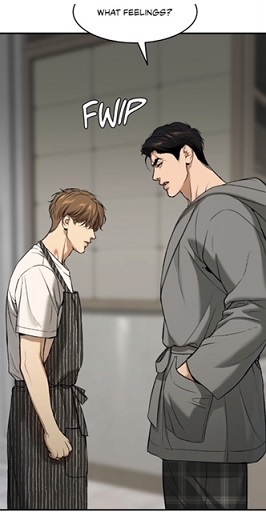 (chapter 45) —and that he, in turn, had wanted Dan back. This terrified him more than any bruise ever could.
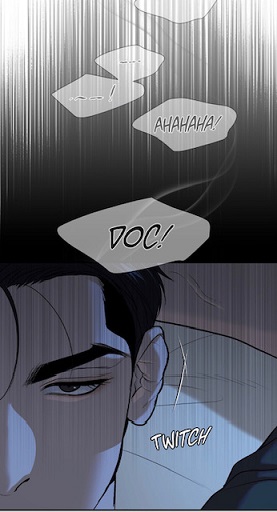 (chapter 37), and kissing becomes his emotional brake pedal. It’s not simply an act of love, but a means to regulate, or even drown out, what he cannot yet name or accept: that he is being loved. It is not random that I included the scene from episode 37: he heard laughs from the other room. For him, such a noise must have sounded like a disrespect and mockery, triggering his past trauma. And he was not entirely wrong in the sense that they were eating behind his back
  (chapter 37) It was, as if they were mocking him because of his forced “diet”. No wonder why the champion is barely seen laughing and prefers seriousness. At the same time, I can grasp why the athlete feels close to Park Namwook, as the latter stands for these exact notions: work, money and seriousness. Fun is not part of his world and vocabulary, therefore he punished Joo Jaekyung for sparring with doc Dan.
 (chapter 2) Though his face was close to the star’s, he didn’t attempt to kiss him. In fact, he proposed him a fellatio, a sign that the champion had never allowed anyone to get close to his “face”. Finally, observe how he reacted, when the uke in episode 55 attempted to kiss him:
 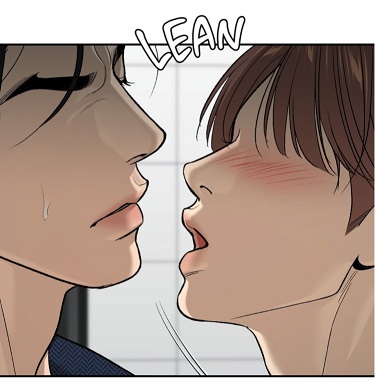 (chapter 55) Not only he rejected him, but also he pushed him violently so that the latter was on the floor.
 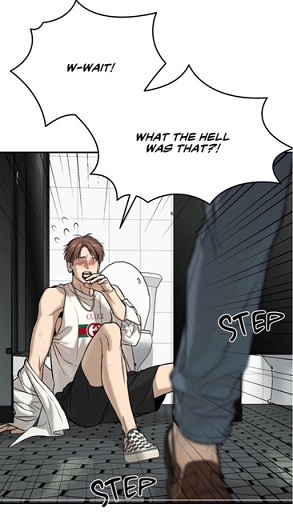 (chapter 55) The celebrity even ran away: a sign that the allowing someone approaching his face is perceived as something uncomfortable and threatening. At the same time, that moment exposes the kiss as something sacred—one that cannot be duplicated without emotional violation. This shows that for the champion, the meaning of a smooch has evolved. It is no longer perceived as a source of fun and a mean to gain something.
 (chapter 55) He couldn’t forget doc Dan’s face, the latter excited him, a sign that for the champion, the face in general has been a source of pain, yet thanks to doc Dan, the latter has become a source of “comfort and joy”.
  (chapter 39) before requesting a fellatio:
  (chapter 39) The main lead’s head was very close to the champion’s face, thus he must have felt uncomfortable. Secondly by acting this way, the doctor was gradually gaining power over their relationship. For the wolf, dominance is everything, an indication that in his past he felt defenseless and weak. His “opponent”, the mysterious ghost, had the upper hand. Moreover, the fellatio created a distance between them, where the fighter could expose his superiority. And note how doc Dan behaved under the influence of the drug:
  (chapter 39) He caught his fated partner by surprise, when he suddenly kissed him, mirroring the champion’s past behavior. This panel corroborates that for the doctor, a kiss is the symbol of love. The champion was not happy with this kiss too, for the latter meant that he was no longer controlling their relationship. Yet, after hearing the doctor’s confession during that night, the athlete no longer resisted his partner’s kisses.
  (chapter 39) For the first time, he accepted Dan’s initiative—both physically and emotionally. Compare it to his attitude before:
  (chapter 39) here, he still has his eyes wide open, a sign of vigilance. These kisses from doc Dan
  (chapter 39) mark a turning point in Jaekyung’s arc: he begins to lower his defenses, allowing Dan not only into his personal space but also into a position of gentle agency within their relationship. The kiss no longer represents a threat; it becomes an opening and a sign of trust.
  (chapter 55) These memories represent the moment where the athlete felt strong and had the upper hand in their relationship. These images reveal that Joo Jaekyung hasn’t realized the signification of the kiss yet. For him, they don’t seem important. This exposes that the athlete has not associated kiss with love and affection yet. At the same time, we have to envision that a smooch is strongly intertwined with equity and trust.
  (chapter 28) And in episode 14, it was clear that the star still felt superior to his companion, therefore the kiss had no special meaning. As you can see, everything is pointing out that Joo Jaekyung had never been kissed before. And what does a kiss symbolize? Not only attachment, but also purity and innocence.
  (chapter 42) According to him, doc Dan was not different from him. However, he was wrong. It is because the champion had kissed him!! Moreover, the celebrity had allowed doc Dan to kiss him as well. Besides, how did the champion name his past lovers? They were toys… normally people don’t kiss playthings. And now, imagine that doc Dan were to discover that Joo Jaekyung had his first kiss with him. This revelation would not only make him realize that Joo Jaekyung loves him, but also he could be wondering why the athlete had never done such a thing before, though he had past lovers. YES, the “first kiss” could be the trigger for both characters to question their respective past and perceive their fated partner correctly.
  (chapter 15)
  (chapter 52) In that context, a kiss could never be affection, but vulnerability. A risk.
 (chapter 3), based on Dan’s vague claim of prior partners. Yet Dan has never kissed anyone before. The kiss becomes his true moment of loss, a quiet confession through action. Conversely, Jaekyung’s own discomfort shows that he, too, is untouched in this particular way. When Dan tries to kiss Jaekyung again, and he instinctively rejects it, it reveals just how unprepared he is for affection. They are both unaware that the other is emotionally “pure” in this regard, and that makes the kiss a shared revelation.
 (chapter 67), Jaekyung must reinvent his approach. He cannot rely on dominance, strength, or sexual performance to win Dan’s heart. If he wants true connection, he must learn a new language—one built on gestures of affection, softness, and presence. This process also involves separating his public persona from his private longing. Joo Jaekyung, the champion, cannot seduce with spectacle. But Jaegeng, the man, might learn to express love through a simple touch, or a well-timed kiss. The redefinition of seduction is not just about Dan’s healing; it is about the wolf’s reclaiming his own right to feel and give love. And in my opinion, that process has already started:
  (chapter 29: note that he did not select this scene to rekindle with the doctor, but the other scene) He will learn it from life, from watching how the innocent express care without shame or purpose.


 (chapter 62), as his actions increasingly reflect a willingness to embrace his own fragility and build meaningful ties with those around him. Through his growing interactions with others and his immersion in the rhythms of town life, the champion begins to redefine his sense of identity and purpose, moving beyond dominance to discover the power of connection. From a man defined by strength, dominance, and transactional relationships
  (chapter 62) and, more importantly, to himself.
  (chapter 62) Thus in this essay I will explore the symbolic meaning behind his actions in the town, the interplay of nature and community in his transformation, and how these moments reflect his internal growth. The analysis begins with his transformative experience in the ocean during his rescue of Kim Dan
  (chapter 60), followed by his newfound attentiveness to his surroundings—jogging in silence and responding to the natural rhythms of life.
 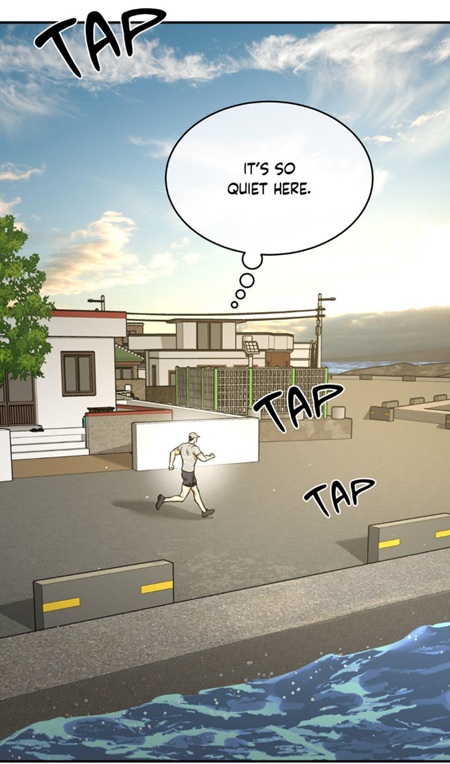 (chapter 62) This heightened awareness paves the way for his burgeoning integration into the town through labor
  (chapter 62) and community service. His gradual acceptance of simplicity, represented by his clothing and the symbolism of cucumbers and potatoes, signals his reconnection to nature and humanity.
  (chapter 60) In many ways, this moment functions as a symbolic baptism, reflecting a deeper narrative of renewal and change. In Chapter 28, Kim Dan’s immersion in water during a pool scene
 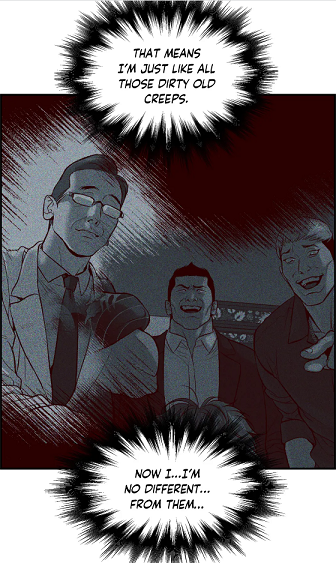 (chapter 20) into something natural and human.
 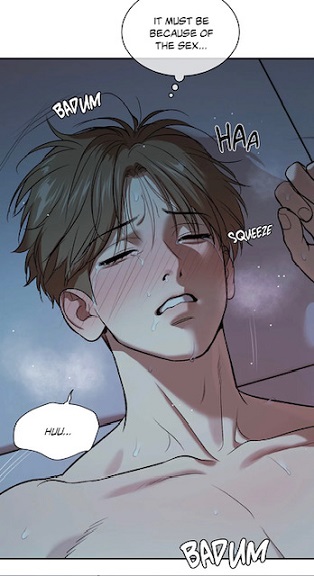 (chapter 29) Similarly, Joo Jaekyung’s dive into the ocean can be interpreted as his baptism into a new “religion”: love and vulnerability.
 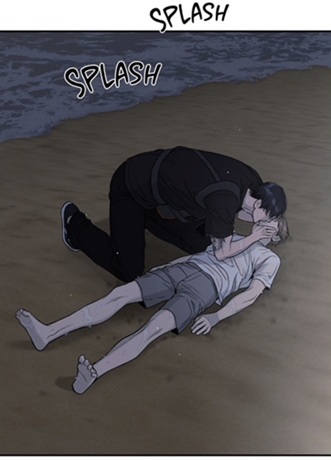 (chapter 60) His gesture is not just about saving his loved one, but also showing care to humans in general. He can no longer be indifferent to someone in pain or in danger.
 (chapter 62) He might complain, but in the end he accepts the presents. This change is reinforced by his willingness to accept gratitude in the form of vegetables and food rather than monetary gain, showing a newfound appreciation for simple, heartfelt exchanges over transactional relationships.
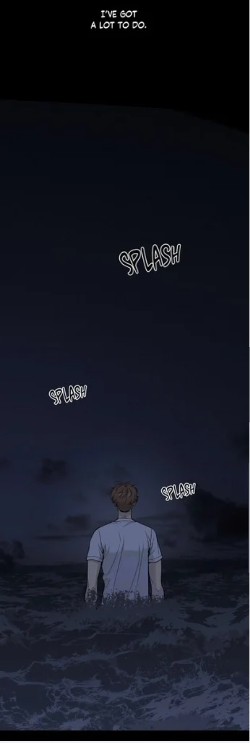 (chapter 59) caused by his grandmother’s neglect, indifference and rejection. The rescue, while focused on saving Kim Dan, also represents the birth of a new understanding for Joo Jaekyung—a recognition of the transformative power of vulnerability and connection.
 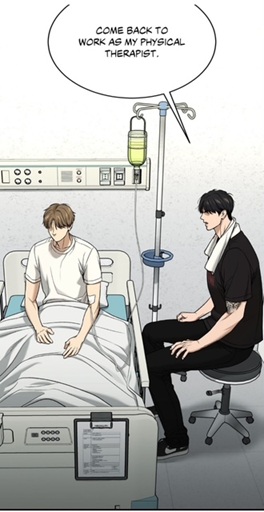 (chapter 60) At the time, his eyes were fixed solely on Kim Dan
 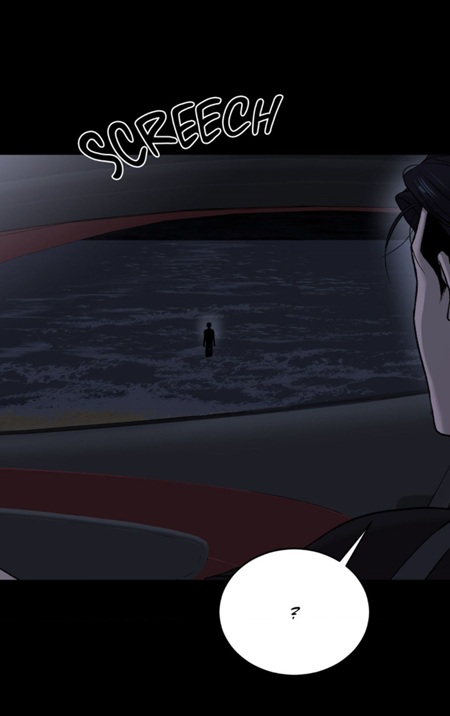 (chapter 60), not the natural world around him. The rescue planted a subconscious seed, setting the stage for his later behavior. When Kim Dan denies his assistance in Episode 60
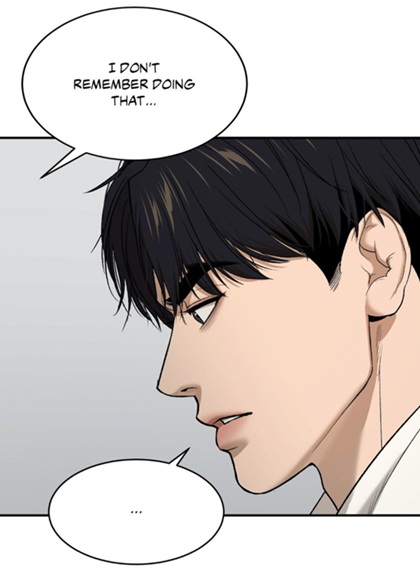 (chapter 60), it’s as if the doctor erases that defining moment, refusing to acknowledge the champion’s care. Yet Joo Jaekyung does not react with anger or frustration. Instead, he takes the doctor’s rejection as challenge.
 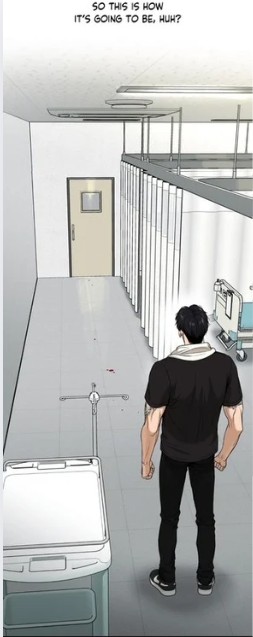 (chapter 60) However, contrary to the past, money and influence seems to have no impact on the physical therapist’s mind and heart. He is keeping the athlete at arms-length.
 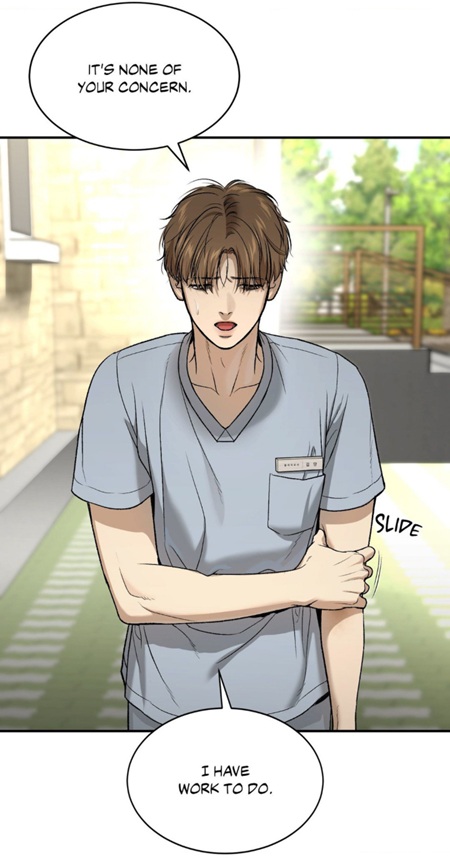 (chapter 61) The moment he moves to that little town
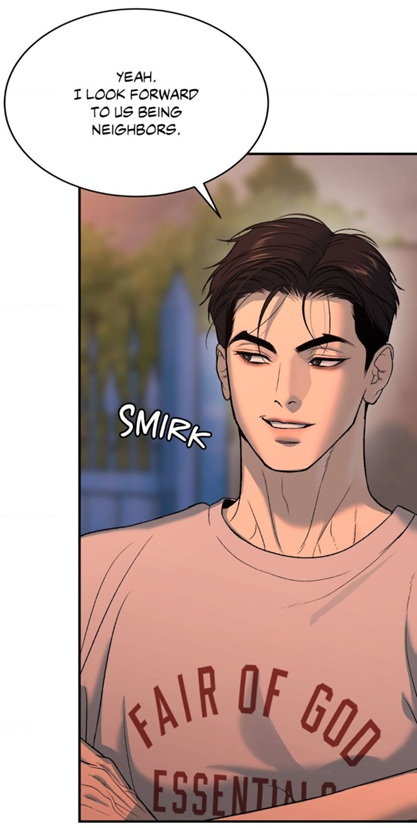 (chapter 61), he begins to demonstrate his growth through quiet, consistent actions—helping others without expecting gratitude in return.
 (chapter 62) For the first time, he is not merely running for fitness or competition; he is paying attention to his surroundings.
  (chapter 62), and the natural rhythm of life around him.
  (chapter 62) Running along the ocean, a setting that profoundly influences his state of mind, Joo Jaekyung demonstrates a newfound openness.
  (chapter 62) This moment underscores his growing ability to connect with others sincerely, without suspicion or defensiveness. His willingness to engage reflects a broader transformation—one that prioritizes meaningful connections over dominance or transactional relationships. This newfound awareness signifies a major shift in his character. His senses are becoming attuned to the world beyond himself, and he is learning to differentiate between what truly matters and what does not.
  (chapter 10), seeing only the “overpowering stench of poverty.”
  (chapter 10) At that time, his perception was clouded by indifference and a focus on material circumstances. Now, however, his response to the elderly woman’s request reflects empathy and an awareness of human vulnerability.
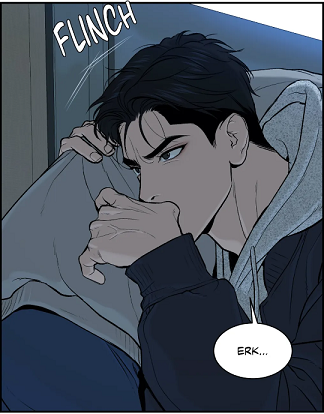 (chapter 10), evoking a sense of cold detachment and judgment. In contrast, the moment where Joo Jaekyung is asked to repair the roof is bathed in daylight
 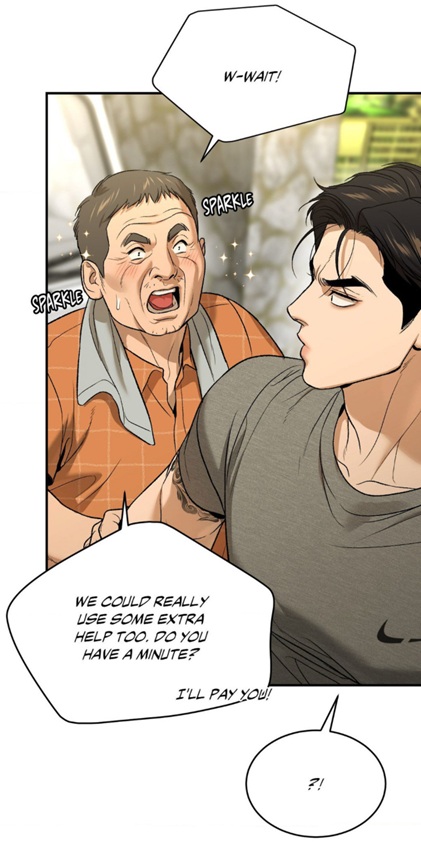 (chapter 62) Thus I deduce that he never accepted any kind of compensation in the end. But none of the inhabitants could accept such a generosity, therefore they brought vegetables or dishes. Unlike his previous life, defined by detachment and impermanence, these acts of community-oriented labor mark a significant shift in how he values his strength—not as a tool for control
  (chapter 62), but as a way to support and uplift others. The admiration from the inhabitants is genuine
 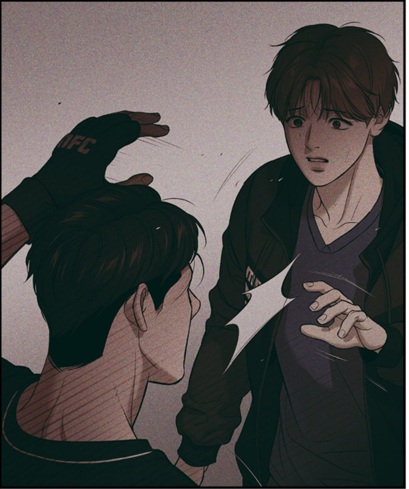 (chapter 62) The champion feels really bad for his rejection after the incident with the spray. And since he believes that Kim Dan comes from that town, he thinks that he can redeem himself by helping his “community”.
 (chapter 47), she rarely prioritized Kim Dan’s nourishment. The grandmother’s actions were driven by financial survival. Joo Jaekyung, on the other hand, receives food as a form of gratitude and recognizes the significance of nourishment beyond monetary gain.
  (chapter 58) with the reality of his evolving personality and his behavior toward others. Choi Heesung’s dismissive remark that Joo Jaekyung would “flip his shit” if he knew the living conditions of Kim Dan implies a static, unchanging view of the champion, one that aligns with a superficial understanding of him as merely ruthless and violent. However, this chapter reveals the fallacy in such an interpretation, exposing the actor’s arrogance and lack of true insight into Joo Jaekyung’s character.
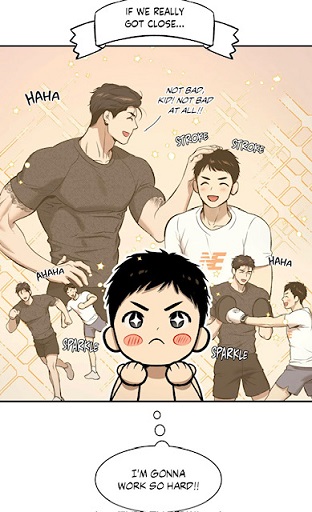 (chapter 23), they could have succeeded. Potato, the youngest member of the team, embodies this missed opportunity.
  (chapter 9) His nickname, “Potato,” while intended as lighthearted and affectionate, is something he despises because he perceives it as demeaning. Yet the reality is quite the opposite—nicknames like these often carry affection and camaraderie. Yet he rejects it out of insecurity or an internalized belief in its inferiority.
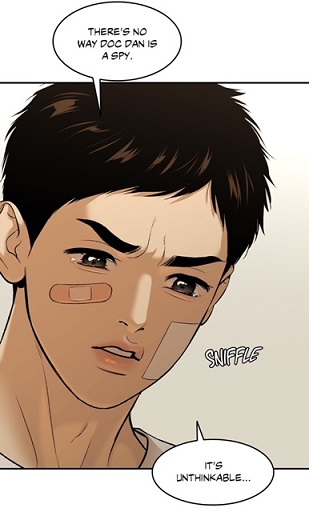 (chapter 52) reveal a missed opportunity for bonding. The champion, who is evolving into a more open and empathetic individual, might have been an unexpected source of support and connection had Potato not listen to others and chosen to embrace this chance instead of harboring negative assumptions.
  (chapter 62) underscores the gap between perception and reality, showing how preconceived notions can prevent genuine relationships from forming. It also reinforces the theme of growth and transformation, as Joo Jaekyung continues to break away from the static image others have of him, proving that even the most misunderstood individuals can surprise us with their capacity for change. The interplay between the nickname “Potato” and its underlying affection further echoes the theme of finding value and beauty in simplicity—a motif central to the champion’s journey as he embraces humility and authenticity.
 (chapter 62) , while he had put on his expensive jeans and CK tee-shirt.
  (chapter 62). This stands in opposition to the previous scene in front of the hospice:
  (chapter 61) The focus on Joo Jaekyung’s feet
  (chapter 62) The hospital or Kim Dan’s presence may provide him with a sense of stability and calmness, allowing him to adopt a more casual and relaxed appearance. Additionally, the contrast between his expensive jeans and branded t-shirt and his unassuming sandals reveals a division between his public image and private self. While his clothing aligns with his status as a wealthy and successful individual, the casual footwear hints at a simpler, more authentic side of him that is emerging in this setting. It reflects his willingness to shed some of the societal expectations tied to his identity.
 (chapter 62) Feet often represent movement or progress, and wearing casual footwear like sandals might signify that he is in a state of personal transformation. The lack of socks further emphasizes this shedding of layers—he is slowly allowing himself to be more vulnerable and introspective, stepping away from his usual, controlled persona. Finally, sandals reflect his connection to the environment. His footwear choice underscores that the hospital is a place where he feels secure and unthreatened. The focus on his feet could symbolize his groundedness in the moment, highlighting that this environment allows him to pause and reflect, rather than act or defend.
 (chapter 62), he is immediately approached by the town chief.
  (chapter 42), where appearances and dominance once took precedence over community and connection.
  (chapter 02) The penthouse, perched high above the city, served as a symbol of isolation and self-reliance—an ivory tower of sorts, detached from the world below. In contrast, the town’s hostel
  (chapter 62) reflects shared experiences and human connection, embodying a shift toward groundedness and humility.
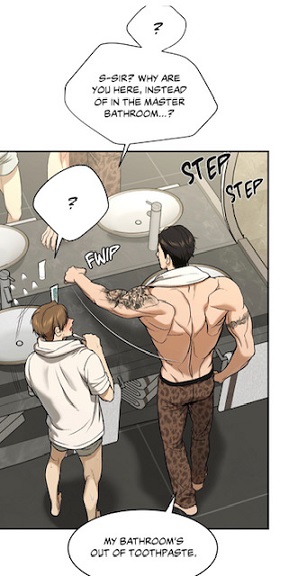 (chapter 30) This evolution from animalistic aggression
  (chapter 30) to floral gentleness mirrors his inner journey—from a man who thrived on dominance to one who values connection and vulnerability. By choosing practicality over intimidation, he signals a readiness to embrace his humanity and shed the pretensions of his past. Moreover, the hat has here a different function: it serves as a real protection from the sun, hence his neck is covered.
 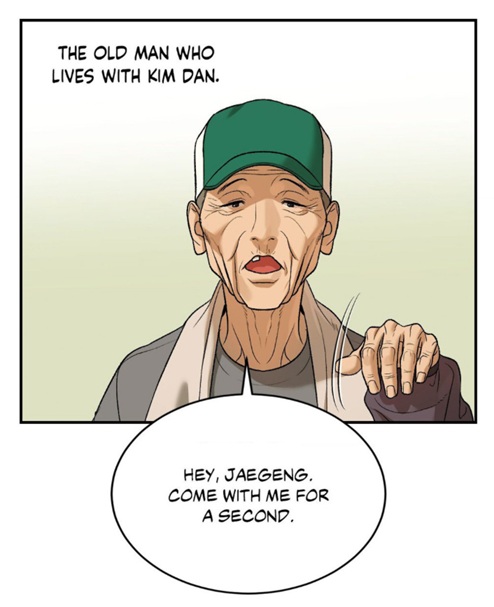 (chapter 62) “Jaegeng.” While this may initially appear as a simple mistake due to the landlord’s poor hearing, it holds deeper symbolic weight. This renaming can be interpreted as part of Joo Jaekyung’s rebirth in the town—a reflection of his evolving identity.
 (chapter 7) Yet here, in the quiet simplicity of the town, he is seen not for his image but for his actions. The landlord’s care and warmth
  (chapter 54) Like mentioned above, his stay in this little town is teaching him to become immune to manipulations in the end. His self-esteem is getting boosted, hence he doesn’t mind being called “Jaegeng”.
 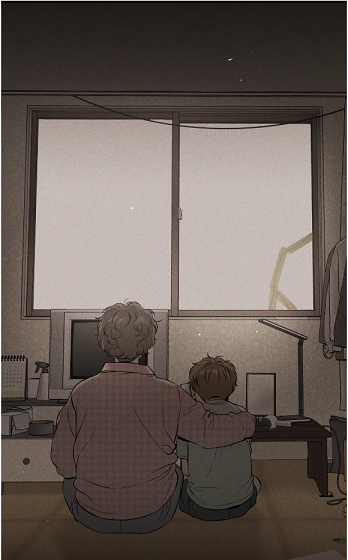 (chapter 19). This creates a fascinating parallel between the two characters: both grapple with the idea of belonging, but from opposing starting points. While Kim Dan longs for acceptance in a community
  (chapter 56) that has continually rejected him (parents, students, hospital; Team Black), Joo Jaekyung is learning how to stop running—physically and emotionally—and to establish a sense of permanence for the first time in his life.
 (chapter 62) So far, the champion has not paid attention to Boksoon. He has not even looked at her, because his eyes are always directed at Kim Dan:
  (chapter 61)
 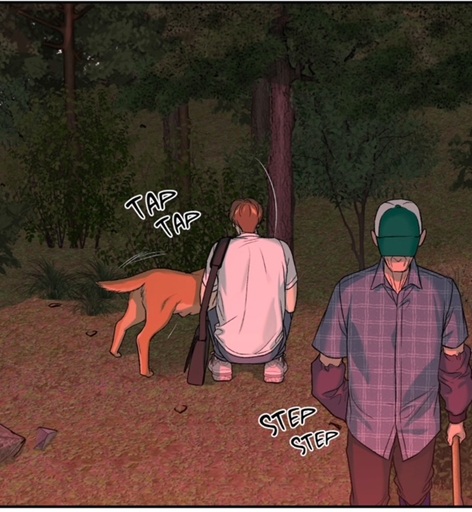 (chapter 59) Hence I have the impression, she could be the one leading him there, if not Kim Dan. Let’s not forget that the doctor’s deepest wish is to go on a walk through the woods:
 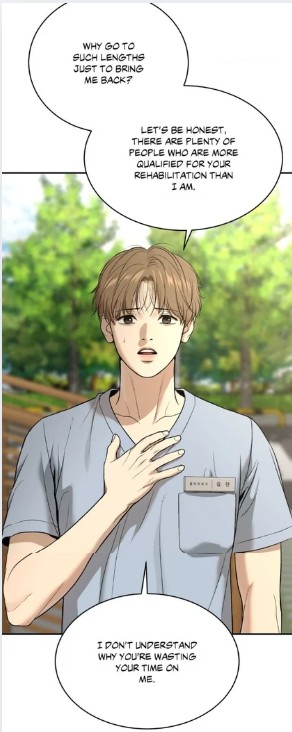 (chapter 62) Ultimately, Joo Jaekyung’s journey is not just one of self-improvement but a quiet challenge to societal values. True strength is not about control, but about the ability to grow, connect, and embrace change. Blooming muscles signifies not just physical power, but a strength nourished by care, community, and the courage to evolve. Finally, I would like my readers to pay attention to the sky, when the champion approached his fated lover:

 (special episode 1) The actor chose to use the black-haired sportsman as “Friends with Benefits”. But what would be Potato’s benefits then? Support and connections, like we could see it in special episode 2:
  (special episode 2) So when Heesung is already envisaging to get rid of his new lover
  (chapter 35) Because he is famous and wealthy, he is expecting a similar reaction from the chow-chow. At some point, he will appear too clingy, hence he will perceive his relationship as burdensome. This is no longer fun.
 (chapter 33) However, the change of Heesung’s mind-set (Friends with Benefits, no longer the search for a soulmate) is also related to Potato’s reaction after their first night together.
  (special episode 1) With his words, the sportsman implied that he had taken advantage of the actor, while in reality the opposite had happened. Heesung had taken advantage of Potato’s drunkenness
  (special episode 1), ignorance and purity
 (special episode 1).The confession of Yoon-Gu’s wrongdoing could only shock the actor.
  (special episode 1) How did Yoon-Gu come to this reasoning, when he admitted in the same breath that he was drunk? It is because the night before, Heesung had confided that he was heartbroken due to Kim Dan’s rejection.
  (chapter 35) With his behavior, the fox gave the impression that his affection for Kim Dan was running deep. Under the tent, he was drowning his sorrow with soju. Hence in the maknae’s mind, Heesung was still in love with the physical therapist. Yes, the irony is that the chow-chow was also projecting his own thoughts onto the comedian. Let’s not forget that when the young fighter discovered the true nature of the relationship between the doctor and the emperor, he didn’t give up on his admiration and affection for Joo Jaekyung.
  (chapter 35) My avid readers should keep in their mind that the chow-chow is famous for his strong loyalty. To sum up, Potato imagined that Heesung was still loving Kim Dan, exactly like him with the fighter… he would remain faithful and keep his one-sided love.That’s why I came to the following conclusion: their relationship started on a misunderstanding, which was also reflected in this situation:
  (special episode 1) It was, as if he had disregarded the gumiho’s feelings, he had incited the latter to commit a sin. Heesung had broken his vow of faithfulness 😂. That’s the reason why he mentioned “zero regrets”. It is important, because with such a mind-set and attitude, he is indirectly pushing the gumiho to face the truth: his dishonesty. His affection for Kim Dan was just a crush, a superficial attachment, as he knew nothing about him. In fact, he was just chasing after an illusion. He even admitted it at the restaurant:
  (chapter 35) His description for a partner and as such love doesn’t correspond to the definition of true love: care, respect, knowledge and responsibility (Definition from Erich Fromm, for more read “
 (chapter 32) He didn’t try to protect him from the athlete’s fury. He never clearly stated his true desire, he wished to date the doctor, until he was cornered (threatened).
 (chapter 41) In other words, both second leads are on the same wavelength despite the misunderstanding. Both have the same expectations: Friends With Benefits. Yet, they are not equal in their relationship, as Potato feels indebted towards the actor so that the latter has “Zero regrets”. In other words, he is bound by a debt and a contract. He has to please his partner, he can not refuse to his demands. That’s why Heesung said this
  (special episode 1) and why Potato couldn’t refuse the role-play.
  (special episode 2) He is put in a similar situation than his role model Kim Dan. He can not say no to Heesung.
  (special episode 2) However, he is not entirely powerless, like I mentioned in the first part. He is not forced to admit that he had fun after the intercourse.
  (special episode 2) In other words, he is not obliged to say YES either! It is funny because thanks to this examination, I realized that Yes and No have “become” like taboo words. Yoon-Gu is avoiding these idioms by using the expression “I don’t know”. Hence I am suspecting that Heesung will become obsessed with the word “yes”! 😂 Only Heesung can procure him fun and pleasure, and no one else. He is getting disarmed by the sentence “I don’t know”.
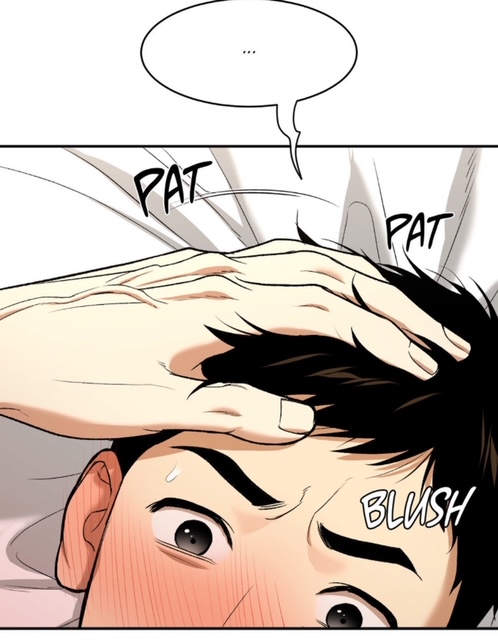 (special episode 2), yet in the past he had a different reaction.
 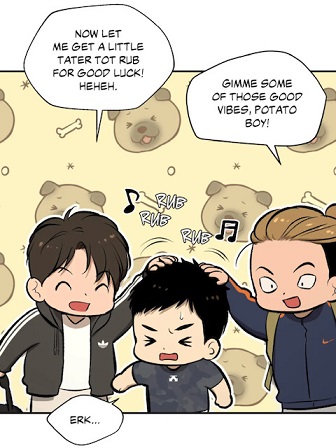 (chapter 23) The reason is simple. This was not patting, but rubbing. Neither Oh Daehyun nor Kim Changmin did it to express gratitude, rather for selfish reasons. They wanted luck on their side. Potato didn’t feel recognized and accepted, rather used as a tool. Hence he was bothered. Under this new light, it becomes comprehensible how Heesung can win Yoon-Gu’s heart in the long run. It is not because of his sexual performances, but thanks to his selfless gratitude and generosity!! We have the perfect example in these two scenes:
  (chapter 26) The main lead had taken a risk for him. He could win his heart by turning his dream into reality. He would be able to spar with the emperor. Then observe how Potato was full of admiration, when the champion decided to organize a charity event for his birthday.
 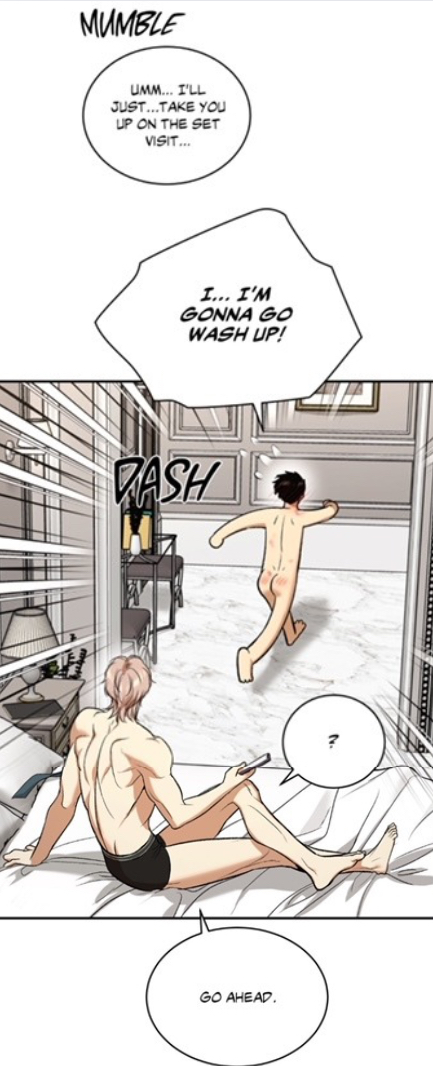 (special episode 2) He was attempting to hide his growing affection for the comedian. He feared that his feelings for him could become a burden for the comedian. In his eyes, Heesung should remain faithful to the physical therapist. He shouldn’t expect any affection from the actor either.
  (chapter 13) And the moment I read this expression, I couldn’t help myself thinking of a leash as a new sex toy.
 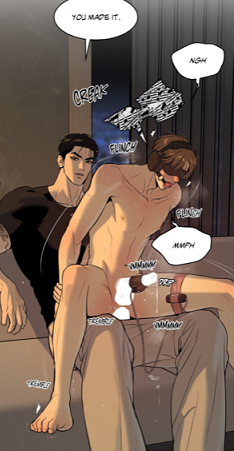 (chapter 34) In this scene, the physical therapist looked like attached to his owner. In the first part of “Passions in Purple: Jealousy and Joy”, I made the following prediction. Heesung would order a sex toy
  (special episode 2) out of annoyance and jealousy
 (special episode 2), for Potato had run away from him. He needs to put him on a leash to feel in control, to obtain his chow chow’s attention. Naturally, there is no guarantee that this prediction is correct. Yet since according to my examination, Potato is thinking that Heesung is in love, it signifies that Heesung is already attached to Kim Dan. Hence he won’t do anything to ruin this attachment… therefore Heesung can only be put in front of a dilemma. How can he make Potato look at him? He could reveal the truth to Yoon-Gu, but by doing so, he would ruin his image as a good and caring guy. Moreover, since he has lived for a long time deceiving himself and others, it is very unlikely that the actor might change his behavior so suddenly. Old habits are hard to die. Therefore for me, honesty won’t be his initial choice, rather acting. He will express his thoughts and emotions behind a new role-play and sex.
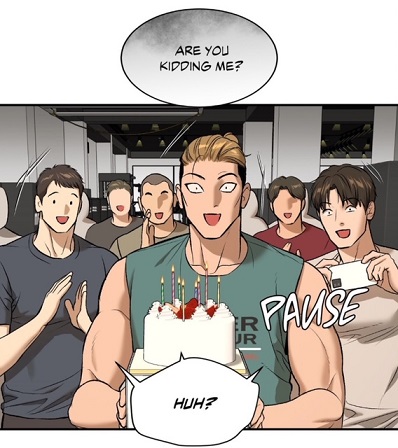 (episode 43) Yoon-Gu must have gone to the set, like promised!
 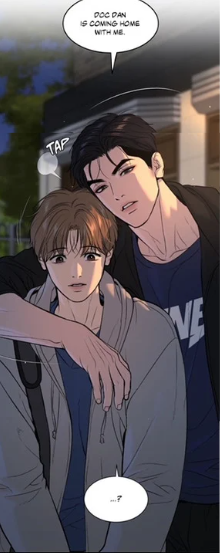 (chapter 43) He would have perceived this statement differently from the others, as he knew about the true nature of their relationship. On the other hand, his absence was necessary. Why? It is because the young fighter needed to learn to distinguish between himself and his idol. Yes, in my opinion, Yoon-Gu’s motivation to bring back Kim Dan to Team Black won’t be just for the athlete’s sake! It will be Potato’s own desire to bring him back. He is missing the physical therapist. Through the last incident, Potato must have realized how much Kim Dan meant to him. His departure left him so heartbroken.
  (chapter 52). In the past, Heesung saw Joo Jaekyung as a rival, hence he made sure that Potato didn’t participate in the champion’s surprise party. So I believe that he was not upset about Joo Jaekyung’s downfall. In fact, he could have envisioned that this could help him to gain Potato’s attention. However, what he didn’t realize is that since feelings and affection can change, this could also happen towards other persons: the physical therapist. Potato’s attachment towards the doctor deepened, as time passed on, especially since they spent some time together in the States. Therefore I conclude that the departure of the doctor will not only affect the relationship between Potato and the comedian, but also force them to follow the main couple to the West coast. Mingwa left many clues for this prediction. Where?
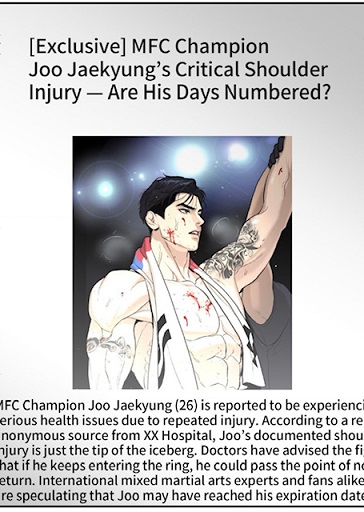 (chapter 35)
 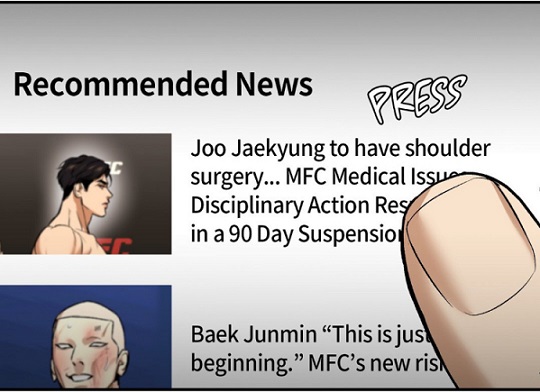 (chapter 52), the enemies, in particular Baek Junmin wrong. Even if he is injured or ends his career as MMA fighter, his life is not over. He is strong, talented and trustworthy, because Yoon-Gu chose to trust him and his career. He is no thug or spoiled child, as despite his injury, he “assisted” someone to become a new fighter.
 There, I included two gemstones, the Bloodstone and the Aquamarine! Choi Heesung, born on 21st March, is represented by these birthstones! In this composition
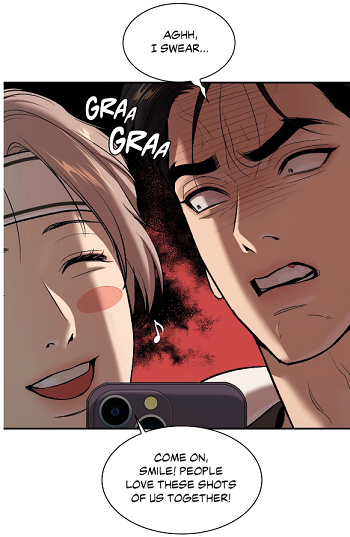 (chapter 30) After getting enlightened, he would know what he truly desires. He would have no interest to get on the champion’s nerves. Potato would be the one bringing him happiness and novelty. Athletes and those seeking to enhance physical endurance often turn to bloodstone for its reputed ability to increase stamina and energy. This signifies that thanks to Heesung’s presence, the champion’s training won’t appear as a torture. Yes, expect a new version of this scene:
  (chapter 37) Here each fighter was on his own, they were not really training together. The champion was the leader due to his imminent match, he put the others under pressure, as he was himself stressed. But with his suspension, he is no longer racing against time. In other words, the training routine should be different. They will help each other, encouraging each other to become better. The presence of Heesung should help them to see the training under a different light. But for that, he has to reconnect to his true nature: bloodstone and aquamarine.
 (chapter 37) or the switch of medicine. Unfortunately, the gumiho was not present both times, hence Kim Dan and Joo Jaekyung became the targets of revenge. On the other hand, the author stated that in season 2, the focus would be more on emotions, which means that there shouldn’t be many plot. Nevertheless, my avid readers should keep in mind my previous interpretation about the “beautiful” Kim Miseon
 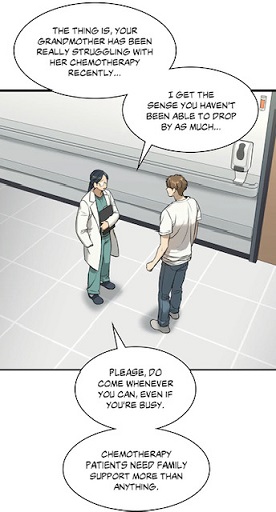 (chapter 21) I had criticized her on many occasions, like disculssing a case in a hallway. Before, she had proposed an expensive treatment, well aware of the grandmother’s age and her weak condition. Moreover, I had suspected her to have leaked information to the director Choi Gilseok. Thus I hope that season 2 will expose her misdeeds and the corruption of the medical world. This was already present in episode 1. But let’s return our attention to the gemstone and its symbolism. In medieval Europe, the stone was deeply linked to the crucifixion of Jesus Christ, believed to have formed when drops of His blood fell to the earth. As you can see, the gumiho is strongly connected to selflessness, sacrifice, death and rebirth. This reinforces my expectation that his encounter with the grandmother will have a huge impact in his life, like for example the “neglect and indifference from his parents”. Exactly like the other main characters, he has abandonment issues. Bloodstone is commonly associated with the root chakra, which governs grounding, stability, and physical well-being.
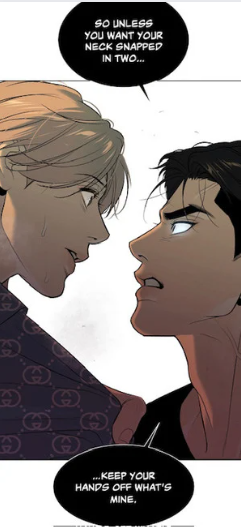 (chapter 34) Here, he forced the champion to claim the doctor as his possession. However, in season 1, the main lead came to regret his actions (34, 43), for he has never been honest to himself. And now, it is time to focus on the second gemstone.
 (chapter 31) They were green. He is attracted to “green”, his origin self. Nevertheless, in episode 31, this was rather a khaki version due to his corruption. No wonder why he played a trick on the champion. And this observation brings me back to the doctor’s clothes. What was he wearing, when he was young?
 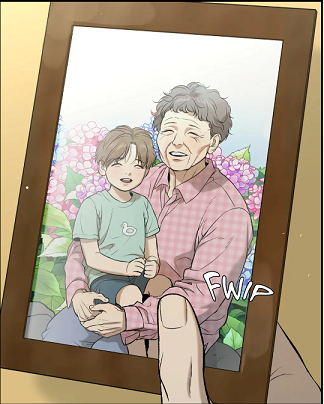 (chapter 19) A green t-shirt!! No wonder why Heesung felt a connection towards Kim Dan. They have something in common. Moreover, the doctor is a “duck”, so Heesung’s role is to help the doctor to recognize and accept his true self. Hence, the former helped him, when he confessed this to Kim Dan:
  (chapter 35) At the same time, it explains why Heesung changed for the better thanks to the physical therapist. Thus I assume that Heesung is destined to become an aquamarine, bringing all these characters closer to each other: Potato, Cheolmin, Kim Dan, Joo Jaekyung. However, contrary to the past, he won’t use his money to help people to become happier. His smile and happiness should affect the others:
  (chapter 31) However, this should no longer be superficial. The celebrity is associated with flowers, stars, fun and happiness. Because he symbolizes “Spring”, I deduce that his rebirth and as such his Enlightenment are primordial. He is there to assist the others. And the color for understanding, compassion, self-awareness and wisdom is purple:
 (special episode 1) Since the elderly woman confided to Joo Jaekyung, we can assume that she could do the same with the gumiho, as soon as she sees her idol. It is important, because he could grasp the physical therapist’s suffering and low self-esteem.

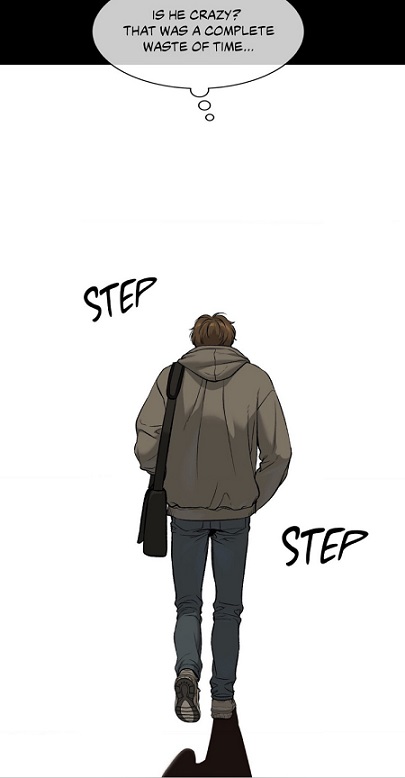

 (chapter 48), but the actor would be replacing the fake director. We had a sunset here, dark water (the coffee), the symbol for corruption. Then notice that he is wearing a blue t-shirt (but two colors, a symbol of his hypocrisy)!! This reinforces my expectation that we should witness the actor’s awakening, the exact opposite of the other Choi, who chose revenge and manipulations. But there is more to it. Thanks to the comment of @Milliformemes24, I had another revelation. The latter wrote that places of knowledge and self-awareness are related not only to the ocean, but also to the mountains. It is normal, as the hill is closer to the sky and as such closer to the gods. Notice that Heesung’s new home is situated on the top of a hill, surrounded by a forest.
  In other words, Heesung could get enlightened on a mountain too, during a stroll for example. And the moment I read this from my friend, this image came to my mind:
 (chapter 41) The huge tree at the hospital!! The latter is even strongly connected to a stroll. In that scene, the doctor thought of his lover, as he associated him with the sun.
  (chapter 41) That’s the moment when he realized his feelings for the fighter. As you can see, Mingwa used the tree and as such nature as a source to spirituality. And now let me ask you this question. Since the story is written with reflections, the tree should have appeared before and after. Where was it then? First, the first plant to appear was the bouquet. The roses from Heesung
  (chapter 31) could be seen a mirror of the tree. The roses encourage the doctor to ponder and show an interest in his employer.
 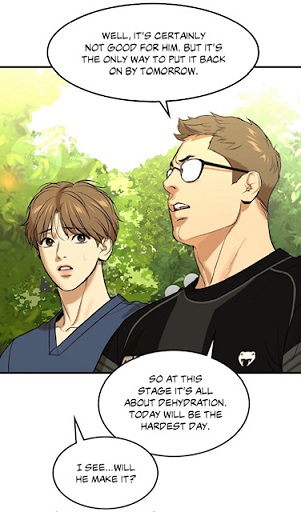 (chapter 37) However, the first time, the tree appeared as such was in the States, and this on two occasions:
  (special episode 2) Yes, the barn!! The tree had been transformed into a home. However, don’t forget that this was just a fantasy from Heesung. However, during this intercourse, he came to expose his jealousy and growing attachment towards his soulmate. Yes, the last two mentioned scenes have two common denominators: a mixture of fantasy and Enlightenment. Nature is strongly intertwined with meditation and communication. To conclude, we should expect the presence of woods and trees in season 2 as well. And this hypothesis got reinforced, when Mingwa released this image on X:
  We have a sunset, a palm tree and purple in the sky… Joo Jaekyung is wearing a similar shirt than Heesung:
  (chapter 34) I consider this as an allusion that the actor will be by the fighter’s side. On the other hand, since the shirt is open, I interpret as the star’s emancipation. The latter has been able to escape from his mental prison and suffering. In his cage, he was racing against time. Now, he is able to relax and enjoy time. At the same time, since the champion in the image from X is seen wearing rings with stones, it somehow confirmed my interpretation about the role of birthstones in Jinx.
 as a new version of the image from season 1. The fighter’s hand is a mirror of the tree. He is giving support and protection. Hence I am assuming that the champion will be also reminded of Kim Dan in a particular place.




 (chapter 140)
  (chapter 149) Both were suffering from survivor guilt. To conclude, Joo Jaekyung and Kim Dan represent the bitter medicine for their scars. I mentioned “bitter”, because through their loved one, they are forced to face painful moments. That’s how they can overcome their past and discover happiness. However, while looking for a new title, I rediscovered the first illustration
  , and it suddenly made click in my head. To conclude, I had another revelation concerning episode 50.
 . (chapter 50) At first glance, the champion is blaming Kim Dan for the wound. He betrayed him. However, his words could have a different signification. Don’t forget that a message always has 4 sides according to Schulz von Thun.
  Consequently, while many saw this question as a “factual information” and as such as an accusation, the reality is that it gave us an insight about the sender too. The sportsman was not using the personal pronoun “I” or “me” in his inquiry. As you can see, the absence of the personal pronoun is indicating that Joo Jaekyung was in reality not referring to him and his wounds. He is not prioritizing himself, rather the doctor and his action. So this question could be prompted by curiosity or a desire to understand the person’s recent activities. Thus I deduce that the champion was asking his lover to tell him the truth. He should come clean. He desired a honest explanation. His attitude reminded me of an adult confronting his child.
 (chapter 51) But note that he never accused Kim Dan of assault, but of leaking information. That’s the reason why I don’t think that this inquiry “What have you done” was about seeking accountability. In that case, he wouldn’t have rejected the doctor’s offer. By letting him treat his wound, Kim Dan would have become responsible for the injury.
  (Chapter 50) It becomes comprehensible why the Emperor refused the offer. The rejection was the symbol of his “trust” in Kim Dan unconsciously. Astonishing, right, though people and Kim Dan had the opposite impression. Yet, because of the “tie”, Kim Dan felt responsible for the incident, therefore he apologized.
  (chapter 51) This means, the main lead recognized his responsibility. He should have checked the spray more carefully. The champion could perceive this excuse as a confession of his complicity. Hence he asked his lover if he was the spy.
  (chapter 51) This signifies that in episode 51, he dared to question his physical therapist’s loyalty. Yes, we have another “Truth or Dare” in episode 51.
 (chapter 50) This is the face of a scarred man. Yet, contrary to the past, he is not expressing his fear through rage. That’s the reason why his emotions were controlled. Under this new light, Manhwaworms grasp why the athlete asked such a question from his soulmate:
  (chapter 51) Interesting is that he was more pained by the idea of a betrayal from Kim Dan than the tie, if you compare these two panels:
 (chapter 51) But note that at no moment, he is accusing him of an assault. Because of this confrontation, Joo Jaekyung and Kim Dan had a honest conversation. The doctor asked him a painful question
  (chapter 51) He could sense the wound in doc Dan’s voice and gaze. It is important, because the sentence “You don’t trust me?” is actually constructed like a statement and not like a question. It only becomes a question through the tone. Through the latter, the champion could detect his partner’s genuine pain. The wounded tone could only move the champion’s heart. Kim Dan dared with a single question to shake the fighter’s confidence. No wonder why he reacted badly.
  (chapter 51) On the other hand, don’t let yourself get fooled by this rude request. The reality is that the alpha didn’t chase away the doctor, in truth he was the one running away.
  (chapter 51) Thus Kim Dan could overcome this shocking but terrible discovery: he hadn’t earned the full trust from Joo Jaekyung yet.
  (chapter 51) As my avid readers can see, my perception about chapter 50 was confirmed with episode 51. The arguments in the locker room were reflecting the quarrel in the penthouse with Choi Heesung. What is the common denominator between these two scenes? The lack of trust from Joo Jaekyung, but his private PT failed to realize it in the penthouse. Why? It’s because he chose to trust his destined partner.
 I believe you = I trust you

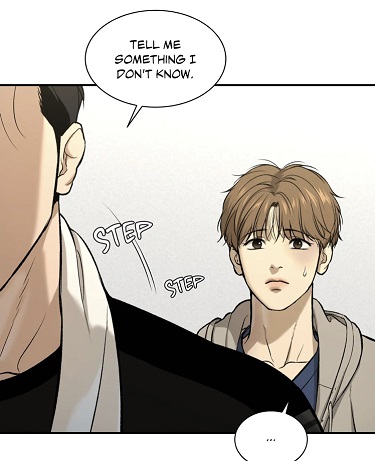 (chapter 15) He told him something that he didn’t know. Note that after the terrible meeting with the actor, Joo Jaekyung couldn’t even find the answer himself:
 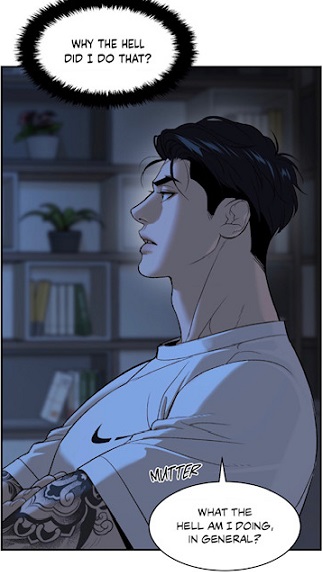 (chapter 35) He was still clueless about the trigger for his behavior. With this inquiry “You don’t trust me”, the hamster pushed his destined partner to face his biggest fear: trust someone and in particular him. This conversation can only incite him to meditate about their relationship. So while in episode 15, he behaved like a pouting child
  (chapter 15), in the latest episode, Jinx-philes can perceive his growth and maturity.
  (chapter 15) This painful incident was a wake-up call Thus I come to the following deduction. Kim Dan will try to earn the champion’s trust, whereas the champion will be forced to take a leap of faith towards Kim Dan. Contrary to episode 34, the champion could see the truth directly through the doctor’s gaze and voice:
  (chapter 34) These questions were all rhetorical:
  (chapter 34) This signifies that in the sauna, truth was not standing in opposition to daring. The sauna reminded me of the cavern where an imugi hides, until the latter leaves its hidden place and find his star, his yeouiju. Only then, he can turn into a dragon. To conclude, because of Heesung’s pressure, the imugi had to select between daring or lie. In other words, telling the truth became the challenge itself. Heesung knew that Joo Jaekyung would never confess.
  (Chapter 34) What Heesung wanted was actually a lie by omission or commission which would have been presented as the truth. Through this game, the actor thought that he could impose his will onto the celebrity. He anticipated the athlete’s silence. This signifies that he knew about the star’s denial and turned it against him. Besides, that way Heesung could maintain his good image: he had not stolen his partner and as such there was no cheating. No one was betraying him.
 (chapter 34), but also his hand.
 (chapter 34) He caught the actor by surprise, the latter never thought that the celebrity would become violent. The redness on his face was displaying that he was barely controlling his annoyance and impatience.
  (chapter 34) However, they were in a public place, the hotel’s sauna, and the actor is a celebrity. Hence he is protected by his fame and social status. That’s the reason why the champion didn’t hit his frenemy, he had learned his lesson at the gym.
  (chapter 34) Despite his words, the gumiho still got scared. The racing of his heart is an indication of his fright. Therefore he ran away more or less after ordering his trainer not to meddle in his love life.
  (chapter 34) Note that when he did this, he avoided his counterpart’s gaze. Deep down, he knew that he shouldn’t provoke his frenemy too much. Only when he was at the door, he turned around and LIED!
 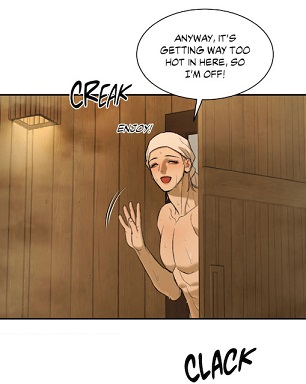 (chapter 34) Yes, after that incident, he chose to give him a fake excuse for his departure. As you can see, this conversation was strongly intertwined with the notion “truth or dare”, but both ended up lying. Whereas the champion didn’t admit any feelings, the other acted, as if there was nothing wrong and he was not scared. The gumiho thought that if he were to remove the champion from the doctor’s side, the latter would be able to open up to the actor.
  (chapter 34) What does it reveal? The actor had been projecting his own thoughts onto the future dragon too. He was the one who didn’t dare to become more honest with the physical therapist. He used work to spend time with Kim Dan. One might say that Heesung failed terribly. Yet, this is just an illusion, because his “failure” pushed him to become more honest with Kim Dan. Thereby he asked to meet the doctor again.
  (chapter 34) Yet, the message is exposing that Heesung was still lying, as he kept using work as an excuse. Hence Joo Jaekyung had to intervene again:
  (chapter 34) The champion dared to challenge his rival.
  (chapter 35) Yes, by challenging the athlete because of Kim Dan, the comedian ended up telling the truth.
  (chapter 34), but his anxiety reached a new peak, the fear that he might be abandoned. Hence he used the sandbag to vent his temper. And what did the cute puppy do during that incident? He dared to offer his help to his idol:
  (chapter 34), yet he was in total denial about the reality: it was dangerous. Deep down, the champion knew that it was impossible for him to control his lover’s time, but also his body. Besides, the other problem is that the athlete is rejecting the notion of love. By denying the existence of his own feelings, he can not claim the doctor’s heart. That’s the reason why the champion got so mad and frustrated.
  (chapter 34) He was not telling the truth, when he stated that Kim Dan was his “possession”. This explicates why he couldn’t stay by the doctor’s side
  (chapter 34) in the end. He manipulated the main lead by letting him think that he had no other choice. Yet the last panel displays his trick. It was up to the doctor to decide how he should spend his free time. Nevertheless, while people were mad at the champion for his deception, many failed to realize that the champion was actually deceiving himself. So all the tricks (episode 33 and 34) were manifestations of avoidance, the fear to face the truth: his affection for Kim Dan and this due to a past betrayal. Hence these chapters stand under the sign of silence hidden by “pranks”.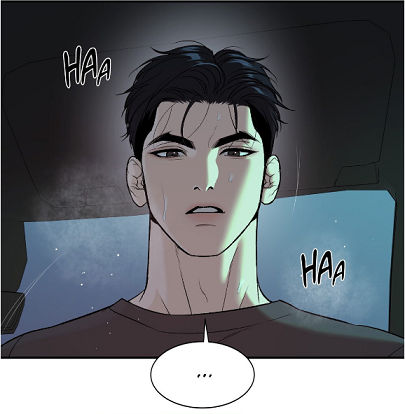
 (chapter 45) or left the doctor in the locker room in episode 51.
  (chapter 45) It is because by denying his affection, he needs to justify his presence next to him. He is his PT… forcing his enemies to portray the doctor as a traitor or a bad PT. However, they failed, as the champion is not doubting the doctor’s innocence concerning his wound on the foot. Nevertheless, the incident is not closed, as the culprit has not been brought to justice.
 (chapter 50) First, the schemers’ MO corresponds to the game Truth or Dare. Choi Gilseok asked his minion to cross the line. This explicates why they are trying to use tricks and manipulations. Daring means no truth, thus someone will be framed: Kim Dan. Yet, the plotters are not aware that thanks to the cute hamster, the alpha is turned into a mirror of truth. Hence he couldn’t get deceived by the MFC security guys:
  (chapter 40)
  (chapter 36) The lawyer, the journalist and the manager pushed him to choose “dare” and not truth! That’s why there was no interview and the leak was not investigated. He had to prove his strength.
  (chapter 36) And exactly like at the sauna, daring became a synonym for verity. No wonder why the fighter is never rejecting the challenge. It corresponds to his past attitude: he has been burying the truth and as such the past. But let’s return our attention to the plotters.
 (chapter 29), the journalist without a face
  (chapter 35), the “fake” MFC agent
 (chapter 42), Baek Junmin whom the champion couldn’t truly identify
  (chapter 47), then he recognized the director without naming him,
  (chapter 48) and finally the ghost from the past
  (chapter 50) This scene exposed that the champion repressed a certain incident which is rather common among victims of a trauma, especially people suffering from PTSD. This shows that some traumatic event took place for quite some time, but the champion acted, as if nothing had happened.
  (Doctor Frost, chapter 140 ) That’s how the champion became a zombie, he couldn’t live properly due to his untreated scars.
  (doctor Frost, chapter 139) But thanks to his fated partner, the traumatic past is slowly coming to the surface.
 (chapter 48) The director created a stage for the betrayal. That should represent the truth, while in reality it was a lie! Nevertheless, Joo Jaekyung could perceive the truth: Kim Dan had met the director from the rival gym.
  (chapter 48) Yes, he didn’t dare to tell him what had happened. No truth… no daring which reflects the games in the sauna and the living room of the penthouse. Kim Dan could have come clean the next morning, but no. This panel explains his silence. He also mistrusted his VIP patient. He had a negative perception of his lover’s mental state. On the other hand, the champion’s attitude reminded me of a parent who has not the time to listen to his child’s problem due to work.
 (chapter 48) Should the athlete remember this night, he will realize that he was the one dismissing his physical therapist, although the doctor could have come clean later. At the same time, Joo Jaekyung’s attitude could be mirroring the parent or guardian’s in the past. They didn’t have the time or the inclination to listen to their son, hence the traumatic incident got buried.
  (chapter 27), hence truth comes to the surface! Kim Dan and Joo Jaekyung feel attracted to each other and have come to love each other. When they speak their mind, they feel comfortable around each other. Truth is strongly connected to communication. Hence the painful conversation in the locker room was necessary. “You don’t trust me?” also reflected the doctor’s attitude. He never tried to approach his room mate
 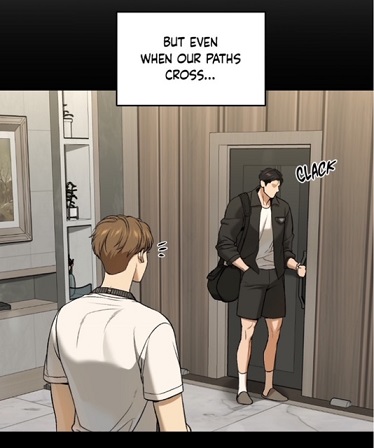 (chapter 47) and voice his true thoughts and emotions:
 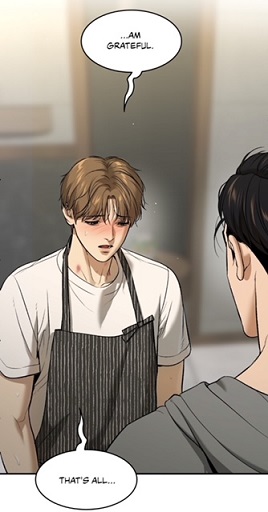 (chapter 45) He lied, when he portrayed himself as grateful. He was avoiding his gaze either. No wonder why the fighter got even more mad and threatened to fire him. Such an attitude could only increase the celebrity’s mistrust, as the latter could discern a certain dishonesty.
  (chapter 49) The latter didn’t even greet the director or acted, as if they didn’t know each other. He exposed the existence of a secret, an uncomfortable secret. Consequently, I believe that the champion could only jump to the conclusion that Kim Dan had been indeed acting behind his back, even coerced to do something.
  (chapter 51) Note that the star never came clean with the truth either.
  (Chapter 35) Through the doctor, the champion is encouraged to become honest to himself.
 (chapter 33) Simultaneously, it exposes that the champion has a secret, which is strongly intertwined with betrayal, love, money and deceptions. I couldn’t help myself thinking of “blackmail”. Kim Dan had been coerced to do something, as the director was holding something against him. Hence we have the question: “what have you done?”. Remember how the actor chose to approach the angel.
 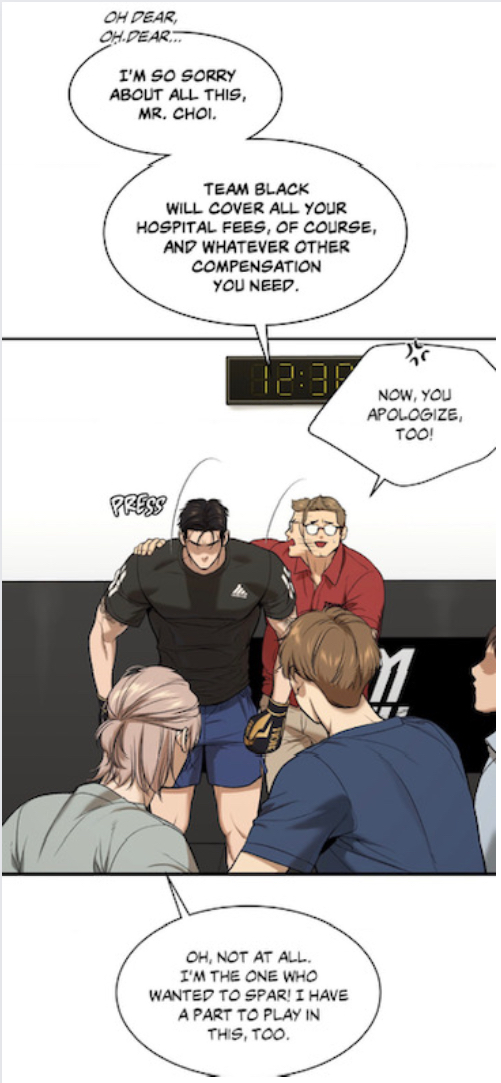 (chapter 31) He tricked his boss by faking an injury. He put the gym under pressure, as this incident could be leaked to the outside. The whole situation reminded me of blackmail. If he did not follow his request, there could be a scandal. That’s the reason why I believe that the champion’s past is linked to blackmail as well. How is it possible? It is because of the game “truth or dare”! The latter is strongly intertwined with divulging information and crossing the line!! To sum up, this game embodies trauma, secret, leaking information, trust and overstepping a boundary or rule. This observation brings me to my next point.
 (chapter 9) And what did happen after they left the restaurant? The champion discovered the truth:
  (chapter 10)
 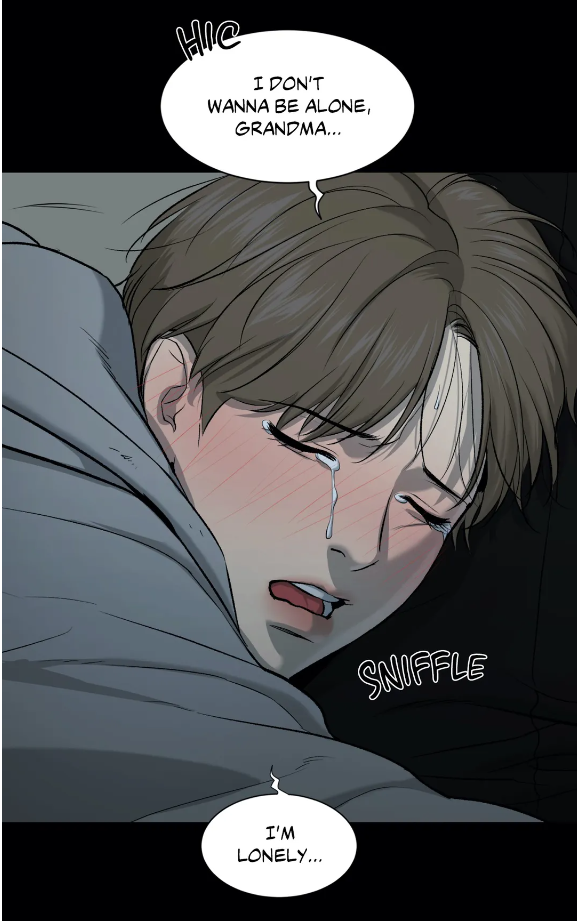 (chapter 10) Kim Dan was terribly poor, but he was also on his own, missing his grandmother.
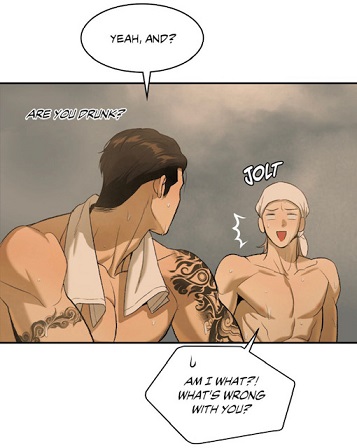 (chapter 34) “Are you drunk?” With this question, the protagonist revealed something about himself. He associates dating and love confession with drunkenness. He implies the existence of a lie. But a confession is strongly associated with verity and sincerity. On the other hand, for the sportsman, no one in his right mind would admit to be in love and in our case to love another man. For me, one part of the problem is that the champion is afraid of admitting his homosexuality. The latter is still a stigma in South Korean society. But there’s more to the game Truth or Dare. If you paid attention to the origin of the last quote, you will realize that this fun is linked to bullying and even hazing.
 (chapter 49) Furthermore, bullying is never done alone, but in groups.
 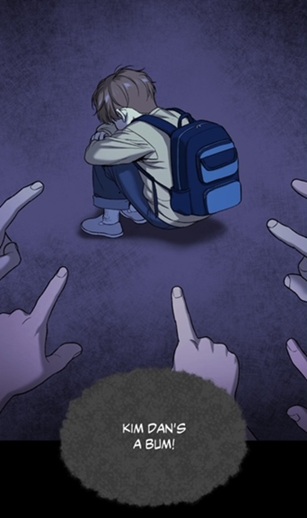 (chapter 57) There is one leader and the others are following the flow, the latter even become more proactive by making new bets and suggestions in order to ensure their own safety. As long as no one divulges the truth, the bullies are safe. But there’s more to it. Striking is that the way they coerced the champion to fight resembles to bullying too. He was manipulated with the articles, then with the advises from the lawyer and manager. Once in the States, they tried to drug him, which corresponds to a physical assault.
  (chapter 37) Finally, note that the schemers are working in teams exactly like the bullying students. Therefore I judge Park Namwook’s attitude as the teacher’s who is closing the eye to the truth. He is rather passive and puts the whole responsibility on his “boy”.
  (chapter 41) It is the champion’s choice to refuse or not the matches. The moment I associated the game with parties, peer groups and bullying, I had many revelations.
 (chapter 1) The main lead never considered her behavior as betrayal and abandonment. In fact, he never considered the crime as a betrayal from an institution.
 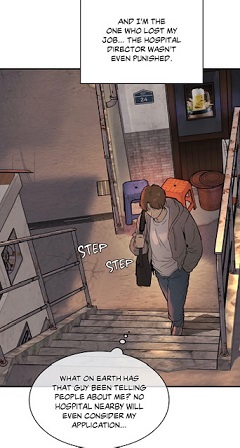 (chapter 1) He put the whole blame on the hospital director himself. He is a liar. Furthermore, through these pictures
  (chapter 47)
  (chapter 1) It is important, because it implies that Kim Dan avoided to socialize and participate in gatherings. Interesting is that in season 2, Jinx-philes discover that Kim Dan had been bullied in the past.


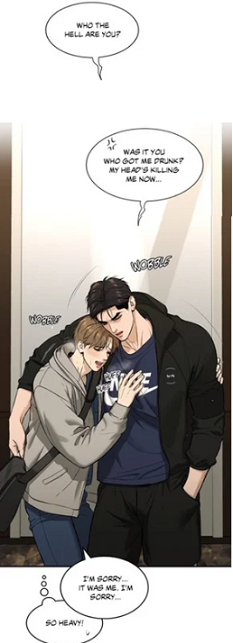
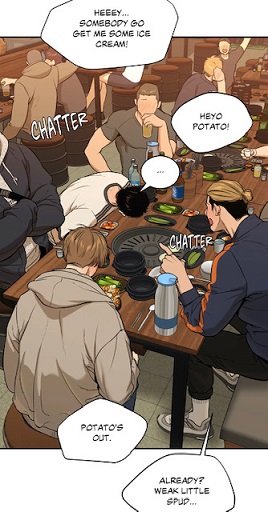 (chapter 9), yet Park Namwook made sure that the physical therapist wouldn’t be abandoned drunk. Thus he tasked his boss to bring him home. And as for Potato, it is clear that Oh Daehyun would take care of him, as he was sleeping in the dormitory next to him. In other words, no one was left behind drunk. But this scene contrasts so much to episode 43. First, no one was missing Potato. No one asked about his absence. Secondly, pay attention that the fighters invited Kim Dan to join them for another round, while they were neglecting their boss, though it was his birthday party.
 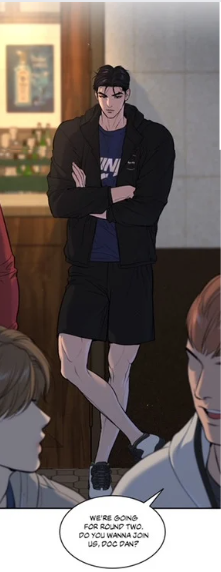 (chapter 43) Moreover, they never wondered about his physical condition. Was he drunk or not? Funny is that the intoxicated character was the one who forced Kim Dan to go home.
 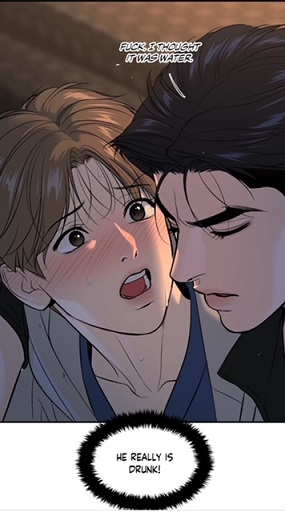 (chapter 43) That’s what a friend is supposed to do.
 (chapter 35) So the auntie could keep an eye on the judo fighter, and it was only a matter of time, until his friend would return. Nevertheless, this scene is implying a certain problem: a drunken person shouldn’t be left unguarded. Thus imagine that during a party, an unconscious person is brought to a room and left there unguarded, as the friend desires to keep partying, similar to this scene:
  (chapter 37) The person could get sexually assaulted, and no one would notice it. Secondly, I would like to outline that the hazing party from the article reminded me a lot to bullying. These freshmen were humiliated, and the perpetrator excused her behavior behind traditions and social norms. So the champion could have been betrayed by a friend, as the latter would have justified his action similarly. So instead of admitting his mistake, he could have justified the incident like this: the victim was responsible for his misery, because he was at the wrong place at the wrong time. It was just his misfortune or better said his jinx. Yes, for me, the jinx is indicating that people responsible for the champion’s traumas were denying their wrongdoings.
 (chapter 8) From my point of view, this place is not just symbolizing purification and reflection, but also indicating the presence of a wound. As soon as I connected the bathroom and as such water to pain, all the champion’s past behavior appeared in a different light. In episode 3, when he went there, he was wearing his pajamas.
  (chapter 3) Neither Kim Dan nor the protagonist were seen both naked in the shower room.
  (chapter 8)
  (chapter 20)
  (chapter 34) He feels uncomfortable naked around people… As soon as you connect this place to a wound, my avid readers can finally better interpret the champion’s irritation in episode 36:
  (chapter 36) Kim Dan’s entrance could be perceived as a violation, for the champion was naked. This intrusion caught him off-guard. But since his gaze was covered, his anxiety masked behind his anger was diminished. On the other hand, this led him to leave the bathtub undressed and have sex in the kitchen.
  (chapter 36) For me, everything is pointing out that one of the champion’s fears is intimacy with water. He has long internalized this association. Don’t forget that the sexual encounter in the swimming pool started with clothes, before they got completely removed.
 (chapter 27) Under this new perspective, I don’t think that it is a coincidence that the champion felt the need to take a shower after meeting Baek Junmin and recalling the past.
  (chapter 49) This helped him to overcome his trauma and past wound.
  (chapter 49) Yet, keep in mind that the athlete’s wounded soul is not the result of one traumatic incident, but of many anguishes.
  (chapter 8) they dared to have sex next to Oh Daehyun and the other fighter. However, note that in all these scenes, neither the doctor nor the champion were honest. They were both lying… not only to their counter-part, but also to themselves.
  (chapter 19) That’s the reason why the argument in the locker room
  (chapter 51) doesn’t represent the final moment where both main leads opened up their heart and mind to each other. They were not truly honest to themselves and to each other. There was no water… and according to me, the spray was a pepper spray, so the champion’s ankle should have been cleaned and not simply covered. For me, both characters need to prove their trust and loyalty to each other. But they are moving in the right direction, for Joo Jaekyung divulged a huge information to Kim Dan.
  (chapter 7)
  (chapter 70) His sexual orientation was exposed in high school, his friends were behind the rumor
  (chapter 70), although we have to envision that his crush played a huge part in it. Why? It is because he didn’t want to be associated with homosexuality.
  (chapter 70) Not only he cut off ties with him, but also he made sure to isolate the main lead from other students. The worst is that this person acted, as if this ostracizing had never occurred.
  (chapter 69), as if he had done nothing wrong. For me, it shows that the traitor never grasped the significance of his actions. Hence Park Sung-Woong could forget Dong-Gyun, while the latter could never forget him at all. The result from this huge betrayal was that the cute uke decided to keep his distance from people.
  (chapter 70) He could no longer trust people, he avoided meetings. In order to outline how severe betrayal trauma can be, the Webtoonist showed us the immediate effects of betrayal trauma: physical and emotional reactions
  (chapter 70)
  (chapter 70) and the long term effects:
 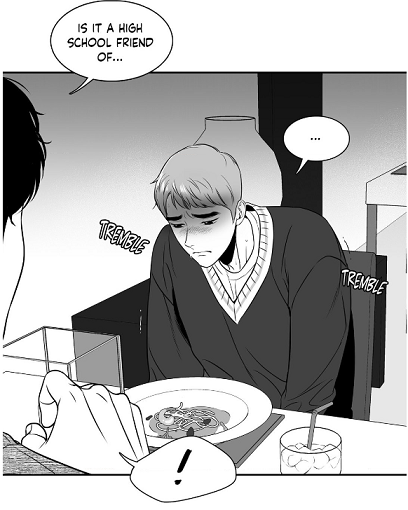 (chapter 69) he is trembling so much, he can not look at his former friend. Readers shouldn’t underestimate the issue. Betrayal trauma is so severe that it is comparable to being hit by a white truck. The pain is so great that it affects the brain functioning and as such personality.
 (chapter 9), trust issues
  (chapter 29), withdrawal (we know nothing about his family and he dislikes going to gatherings, he is not meeting his hyung Cheolmin) and rumination: he got upset, when the hamster ignored his calls.
 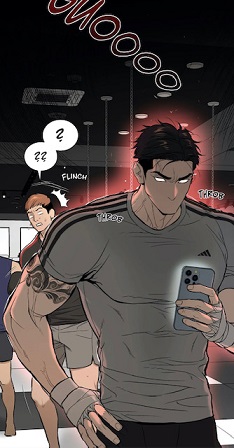 (chapter 05) Then when he stayed at home,
 (chapter 32), it was clear that the doctor’s actions were constantly on his mind. He was so bothered that he had to bring him to Heesung. He made sure that Kim Dan would forget Choi Heesung in the car.
  (chapter 33) Interesting is that this trauma resembles a lot to PTSD.
 (chapter 49), the latter was not loved, as he didn’t reach the first place like his older brother. Then we have Interpersonal with Nam Dong-Gyun and his high school friend. However, since the rumor circulated at school, and no adults intervened, we could see it as a reference to Institutional betrayal. Finally, Mingwa presented the last type (partner) with Hweemin.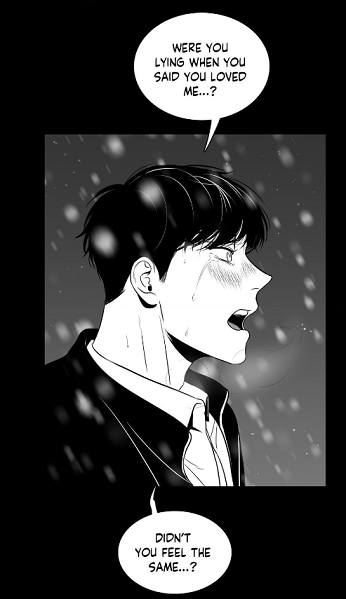
 (chapter 51) But why is betrayal trauma so severe? It is because everything appears as a lie, as an illusion. All the memories become tainted. The victim can only question his own senses and judgment. How could he not detect the lies? Since PTSD and betrayal trauma share some common points, it is not surprising that such persons come to blame themselves and develop huge self-loathing.
 (doctor Frost, chapter 139). And now, it is time to expose my latest observation:
 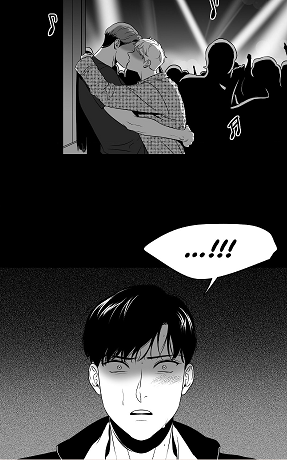 (BJ Alex, chapter 51) Ahn Jiwon caught his first lover cheating on him at a club. Interesting is that the new lover resembles a lot to Joo Jaekyung! Mingwa said that characters from BJ Alex will only appear, but Jinx is not connected to her previous work. Note that they were kissing in a public place. Moreover, the club is a location where students not only meet, but also drink alcohol together. However, once Jiwon saw Hweemin, he dragged him outside so that they could talk. In other words, the “new lover” was left behind. Thus I come to the following conclusion. Joo Jaekyung has been suffering from betrayal trauma exactly like Ahn Jiwon. He was betrayed by his guardian
 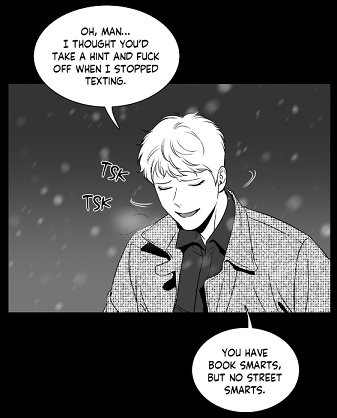 (BJ Alex, chapter 51). If this theory is true, then Mingwa would finally outline the devastating effects of Betrayal trauma on people, something she barely touched in her previous work.
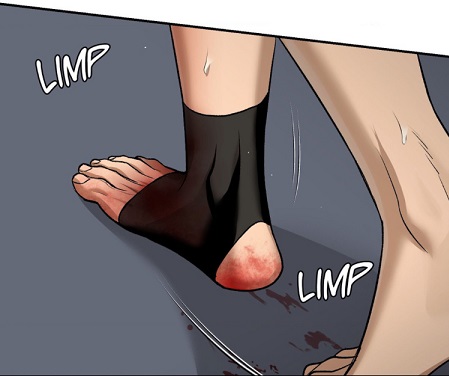 (chapter 51)


 (chapter 22) It shows that ring does not necessarily possess a negative connotation. To conclude, ring is a reference to marriage (Kim Dan will become the champion’s official partner), to the MMA arena, to Team Black, but also to Mafia. We had an allusion to criminality during the sparring
  (chapter 26) and when the champion discovered the loan shark and his minions on the verge of raping Kim Dan.
  (chapter 18) The doctor is unaware of this, but one of his purposes in the champion’s life is to clean the scene, MFC and its corruption. On the other hand, the illustration contains many pictures of the two main leads having sex.
  Why? It is because the characters are acting like fighters. At bottom left, the doctor’s embrace resembles a lot to the one he used during the sparring (see the image in the middle). Their gestures are sudden and quite abrupt, which contrasts to the image on the right bottom. The kiss from the doctor holding Joo Jaekyung’s face represents the exception from all the selected panels. This shows that this Summer Night’s Dream indicates a huge transition in the sex sessions. But let’s return our attention to the images illustrating roughness. Right from the start I detected a strong connection between fighting and sex. [For more read
  (chapter 14)
  (chapter 36)
 (chapter 29)
 (chapter 15) This means that if the fighter is on his own. He can not rely on others. If he is not able to return without the assistance of spectators or his seconds, he is declared as defeated. So we could say that any interruption is condemned, as it is ruining the flow of the fight.
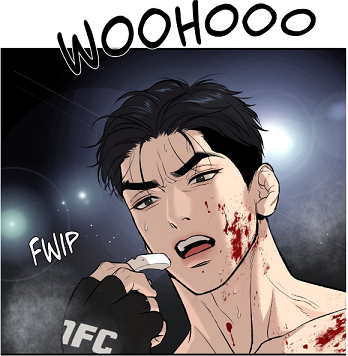 (chapter 15) Funny is that conversation is permitted, yet mouth gear hinders the fighters to talk. Should they remove it constantly, the referee can judge it as a violation (“Timidity”), for the fighters can not fight, as long as they don’t wear the mouthpiece. This signifies that the sportsmen are encouraged to express their thoughts through the hands.
 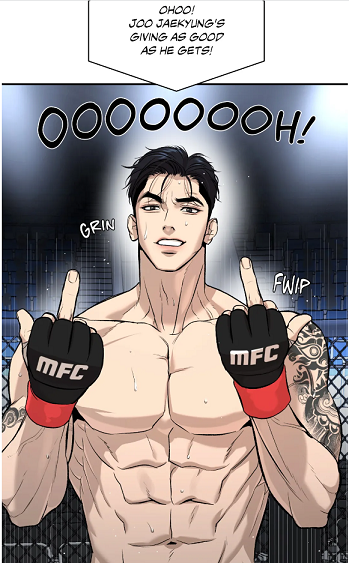 (chapter 15)
 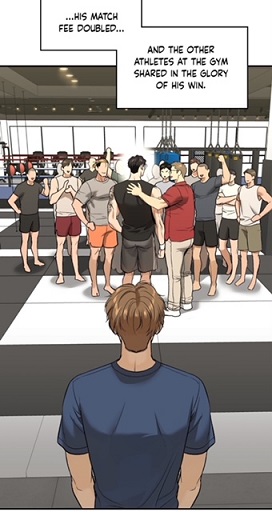 (chapter 41) To conclude, while MMA fighting is a work, it is strongly intertwined with pleasure and entertainment. Their fight is witnessed by spectators in the arena or on TV.
  (chapter 41) That’s the reason why Mixed Martial fighters are called artists, a synonym for actor.
 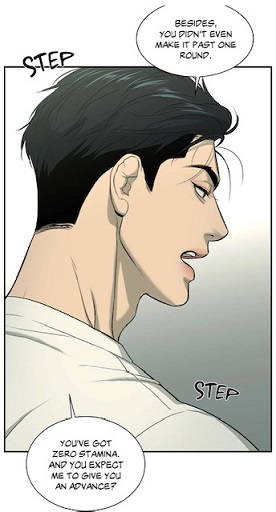 (chapter 12). The absence of kisses and caresses can be explained with the presence of mouthpiece and hand wraps in the ring. Moreover, in the arena, there is no warning up, therefore we have the explanation why the champion never included foreplay. On the other hand, the fellatio was used as the symbol for submission. The rival was always brought to his knees.
 (Chapter 6)
  (chapter 39) I would even add that the opponent’s challenge was to overcome the long intercourse. I doubt that he gave his past partners a break while having sex.
  (chapter 39) At the same time, it explains why the champion didn’t take the partner’s pleasure into consideration. It was a battle in bed, which was led by the protagonist. The latter was not only acting as MMA, but also as arbiter and MFC matchmaker. With his money, he could determine the time, the location and the duration.
 (chapter 5) Their gestures were seductive, a sign that they were not fearing the champion. The challenge was here the difference of weight. On the other hand, by approaching Joo Jaekyung, they looked confident about their skills. That’s the reason why he would have sex with them, until they passed out.
  (chapter 33) He was testing their stamina and as such he desired to demonstrate his superiority. He had to make them KO in bed. However, the green-haired uke represented an exception, because he managed not to pass out. That’s how he became the athlete’s regular partner.
  (chapter 2) This means that Joo Jaekyung failed to defeat this competitor in bed. This explicates why the “goblin” came to look down on the star. In fact, he realized that he had the upper hand.
  (chapter 42) That’s the reason why he no longer put any effort in this relationship. There was a certain balance, but it was based on money. That’s how it dawned on me why Mingwa included this memory in the champion’s narration:
  (chapter 1)
  (chapter 4)
  (chapter 8)
  (chapter 12)
  (chapter 39). As Jinx-philes could observe, till the night in the States, the champion privileged to have sex from behind. How do we explain the difference and when did this change occur?
  (chapter 2) The champion’s ecstasy served as a measurement to view himself as victorious. This statement implies that he was not only the fighter, but also the arbiter. This corroborates my previous statement. During sex, he was the fighter and the referee. He acted as the MFC matchmaker.
 (chapter 43) In my opinion, during that night
  (chapter 2) The goblin might have not voiced his thoughts to the celebrity before, but Joo Jaekyung could perceive his soul through the gaze and facial expressions. Hence the star’s domination was quite superficial. In fact, as time passed on, the athlete could only get bored of the goblin.
  (chapter 42) It is because there was no challenge. The guy was accustomed to the champion’s roughness. Hence he never feared the star. He could only judge him as weak. Because Joo Jaekyung was missing the thrill, he came to look for the “wimp”! On the one hand, the latter would treat him with respect
 (chapter 1), on the other hand, he would cry and tremble in his presence. Then right after the session, he left the room in a hurry.
 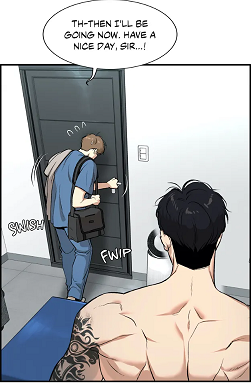 (chapter 1) That’s how I realized why during that night, the champion felt the need to call Kim Dan.
  (chapter 1) It is because the “hamster” had not only feared him
  (chapter 21) Then after facing Heesung, he stopped the intercourse too,
  (chapter 3) He was defying the champion’s authority.
  (chapter 3) Despite his fear, the hamster wouldn’t become submissive like the others. While the green-haired uke faked submission and the others got defeated by KO, Kim Dan remained true to himself. He embodies honesty and modesty, the opposite values of the “goblin”.
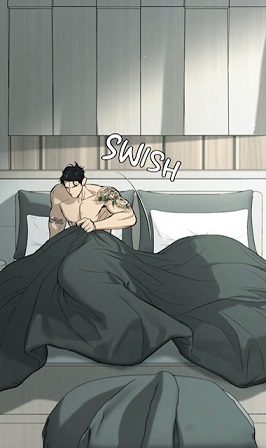 (chapter 4) That’s the reason why the two main leads were sleeping under the cover. This explicates why he selected the doctor as his definitive partner. I also discovered another infringement during the “Wedding Night”: the champion refused to wear any protection during sex.
 (chapter 2) Let’s not forget that during a match, they are supposed wear a sex gear. Interesting is that he grabbed the doctor by the hair
  (chapter 4). It is important, as it represents a real transgression of MMA rules indicating how powerful the doctor was. The champion needed to break rules in order to get him. Funny is that he thought that after such a long night, he had been able to submit the cute hamster, but he was totally wrong. The latter chose to ignore him.
  (chapter 5) It was, as if he was hiding from him. What caught my attention is that while he tried to get in touch with the physical therapist, he called MFC Match Manager at some point. Why? I believe that he had planned that after his huge success to organize another match very soon. As you can see, the intervention of Saturn, the god of time, taught the champion through the hard way, he was no real MFC Matchmaker. By refusing to answer his calls, Kim Dan was the one determining the time.
 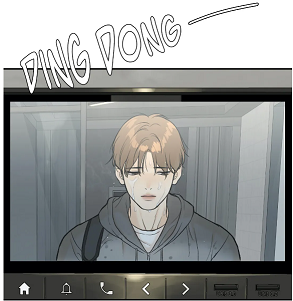 (chapter 6) Under this new light, it becomes comprehensible why the athlete offered this deal to the physical therapist:
  (chapter 6) He was trying to regain the upper hand in their relationship. He wished to keep his position as the owner of time. But the problem is that despite this contract, he wasn’t able to control Kim Dan. The latter chose to approach Kim Changmin
  (chapter 7), while he kept his distance from the champion. This scene made him realize that he was still powerless.
  (chapter 12) or having sex in front of a mirror
  (chapter 20) or anal masturbation in a car
  (chapter 32) I could mention other defies linked to sexuality, having sex without getting noticed, either in the shower room
  (chapter 8) or during a phone call
  (chapter 24). Then we have this bet concerning the doctor’s sensitivity.
  (chapter 29), thus the champion tried an experiment:
  (chapter 29) Furthermore, notice that each time they had sex, the doctor was pressured to have sex with the champion. Kim Dan felt that he could never refuse.
  (chapter 12) On the other hand, the athlete always met some resistance
  (chapter 27) Kim Dan would never agree to the champion’s requests immediately. They would fight about the time, location and position. Furthermore, note that Kim Dan went so far to punch the protagonist:
  (chapter 7) This could only increase the athlete’s interest and obsession for the physical therapist. Although he was getting paid, the latter would never admit submission. He thought, he had achieved his goal in that scene
  (chapter 12) With his words, he was telling the sportsman that he was a terrible lover. He denied any admiration for him. And since sex is a synonym for wrestling in Joo Jaekyung’s eyes, doc Dan’s declaration signified that his title as champion was questioned. Though the champion came to enjoy their intercourse
  (chapter 12), it was short-lived, as the doctor fainted after one round.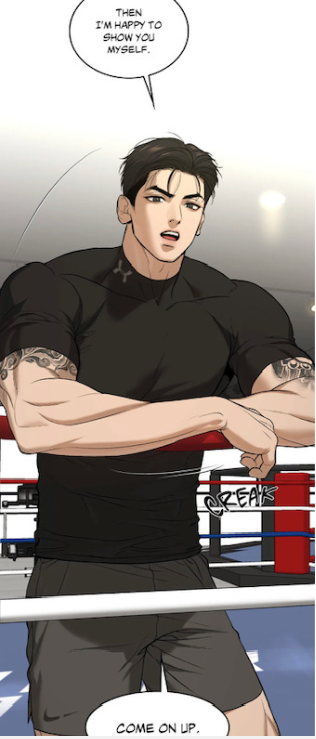
 (chapter 26) Observe how the doctor reacted after the sparring took place. .
  (chapter 44) Why? It is because this sex session will have an impact in their work, MMA. During that night, they became real fuck buddies. Sex was not related to work and fighting. But why did the notion come to the surface for the sparring? It is because MMA fight consists of challenges, which implies consent. Striking is that so far the champion never rejected a challenge. Yes, Joo Jaekyung was put in the same situation than Kim Dan in the end, but the one putting under pressure was the MFC Matchmaker and naturally the agent from Entertainment agency. Don’t forget that both are earning money thanks to events. And how did the champion got convinced by them? “You think, you can do it?” With their words, they doubted his talents
 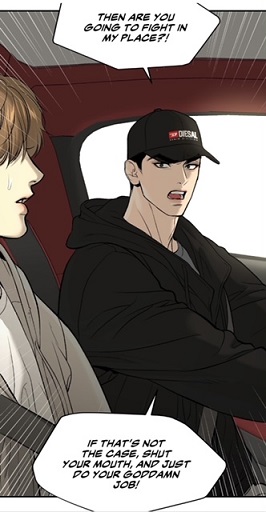 (chapter 42) There, the doctor tried to control the champion’s time, as he suggested him not to go to the training. No wonder why Joo Jaekyung reacted that way. On the other hand, the athlete replied with a defy. Thus I deduce that at some point, the doctor will react to these words. As you can see, the champion needs to learn to say NO to them. That’s the reason why I started suspecting that in episode 5, Joo Jaekyung might have planned a match, as he felt invincible thanks to Kim Dan.
 (chapter 12) And because the doctor never reacted the way the champion expected it, the latter was forced to infringe more and more MMA rules, like this one
  (grabbing the groins is forbidden). To conclude, the doctor is there to teach the champion to distinguish between love and fighting. This explicates why the physical therapist embodies violation of MMA rules. We have the perfect example in this scene:
  (chapter 25) Potato made a mistake which could have made the doctor unconscious. That way, he can expose the corruption within MFC and its implication with the mob. That’s the reason why I am more than ever convinced that Kim Dan is destined to become a MMA fighter in the end. Why? It is because he is the champion’s reflection. The moment Joo Jaekyung is no longer the fighter in the ring, but the spectator or assistant, he is forced to witness how his loved one is risking his life. So far, he never showed any interest in the fights of other members. He needs to understand why Doc Dan would advise him not to fight. And this brings me to the next remark: Kim Dan is a strong believer, like we could observe it in this scene.
 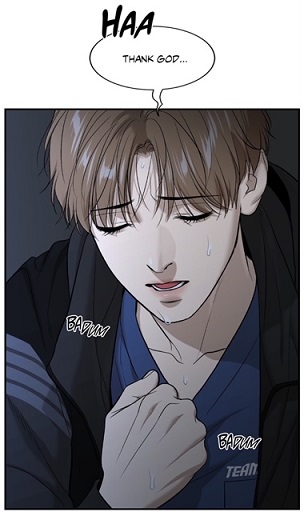 (chapter 40) This explicates why he was willing to risk his life for his sick grandmother.
 (chapter 36)
 (chapter 44) By taking the initiative, the physical therapist is teaching his “mentor” how to express love. Interesting is that during that scene, the athlete remained passive. It displays his consent and trust towards the doctor. He knows that the latter won’t hurt him. That’s how I realized that the kisses are strongly connected to consent. Let’s not forget that when Joo Jaekyung smooched the hamster for the first time, he took him by surprise. Because the latter felt uncomfortable, he made the following request:
  (chapter 14) Then it was out of desire
  (chapter 24) and out of excitement and attraction.
  (chapter 15) In chapter 24, first it was from behind, but then it changed, as the star desired to see the hamster‘s erected phallus.
  (chapter 24) He wanted to make sure that the doctor would enjoy this break. Yet, what caught my attention is that in chapter 39, Kim Dan initiated the kisses and embraces, because this is what he likes.
 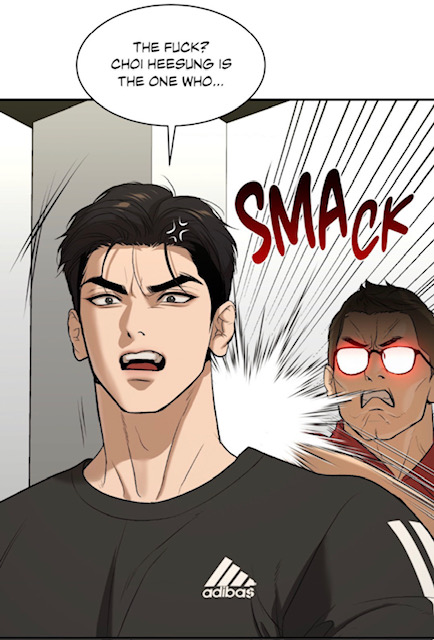 (chapter 31) That’s how I recognized the huge importance of this scene:
 (chapter 32) Joo Jaekyung entrusted his neck to the doctor. The latter stroke it for a long time. And now, you comprehend the initial hesitation from Joo Jaekyung in the hotel room:
  (chapter 44) He felt safe. This explicates why he could fall asleep so easily.
 (chapter 44) contrasts so much to this one:
  (chapter 44), though the doctor had not sex in mind at all. He brought him there to rest. However, the presence of fighting has not vanished totally in episode 44:
  (chapter 44). Joo Jaekyung still provoked his lover
  (chapter 44), but the latter was able to reject his defy by asking a question. One might think that he did that out of habit. On the other hand, I believe that Joo Jaekyung doesn’t know his partner that well, hence he is bothered. He can never predict his actions and decisions. He was definitely worried about his recent change of behavior too. Moreover, note that Kim Dan was the one leading the intercourse, for he determined the time flow:
  (Chapter 44)
  (chapter 44) It shows that the power is shifting, Kim Dan is slwoly getting the upper hand in their relationship. He can control time and place.
  (chapter 44) This means that the connection between sex and fighting is vanishing. The sportsman can actually realize that sex is leisure and resting. He had made such a suggestion in the past
  (chapter 27) But he got rejected by Kim Dan back then, because the physical therapist considered sexuality as shameful. As you can see, the doctor’s actions are changing the champion’s perception of sex. It is no longer fighting, but resting. On the other hand, the doctor can seize the occasion to express his love through his caresses and kisses. At the same time, he could use it as a treatment for his insomnia.
 (chapter 4)
  (chapter 10)
 (chapter 42)
 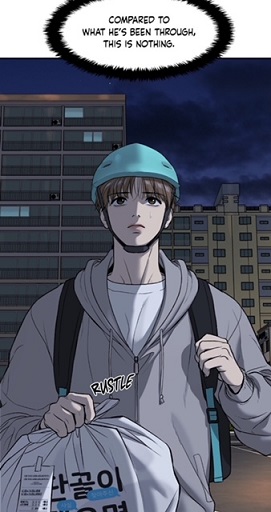 (chapter 42) Interesting is that the champion was also thinking a lot about the main lead, as the latter was worried by his exhaustion and his lack of appetite.
  (chapter 44) By occupying his mind, Kim Dan is winning his heart. He is reminding him of the fragility of life, but also of true courage due to his humbleness and selflessness. Hence it becomes comprehensible why I stated that the doctor would risk his life or reputation for Joo Jaekyung. He will appear as a true hero receiving the admiration from his loved one and members from Team Black. In my eyes, he will become the heart and soul of Team Black, while the champion is the face of the gym. Though the members are behaving like a family, I detected a lack of cohesion and a certain indifference. No one was missing Potato during the day of the birthday party
  (chapter 40) It is important that he brings the members closer together, as there is an enemy in the shadow: the Mafia.
 (chapter 44) See the contrast to the night on the couch:
  (chapter 29) Contrary to the past
  (chapter 4) Joo Jaekyung is not hiding his pleasure. He is moaning loudly, as he has his mouth wide open. It exposes once again the increasing trust in Kim Dan. He no longer mistrusts him, in his eyes, he is no longer a prostitute. That’s how the doctor won the champion’ s heart. Now, his heart is truly beating for the doctor. Little by little, the hamster is taming the wolf. The latter needs to recognize that by loving the doctor, he will become powerful.


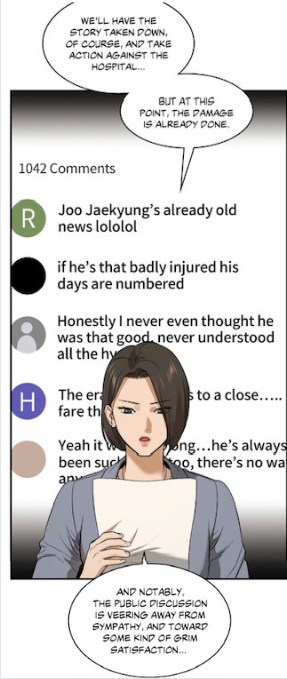 (chapter 36) Mingwa is here criticizing the attitude of netizens writing hateful and gloating comments behind anonymity. This is no coincidence that since certain BL-readers came to hate this character, they start transferring their resent towards the author or Jinx-philes. If the latter like Joo Jaekyung, they must be deranged or they are advocating rape or violence. They are confusing fiction and reality. However, the purpose of stories or fairy tales is to reflect and internalize life lessons. And now, you are wondering what Mingwa has planned for the champion. For me, chapter 37 was important, because it outlines the champion’s flaws which are linked to his mindset. He can only change through tough life lessons.
  (chapter 37) He embodies the positive reflection of Kim Dan. The latter lacks experiences and proper guidance. Besides, when the physical therapist makes decisions
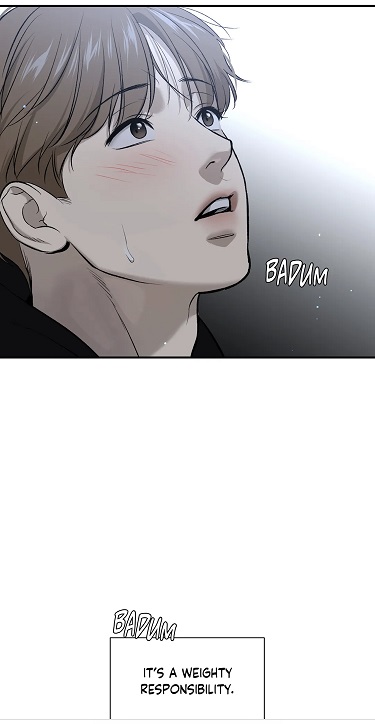 (chapter 15)
  (chapter 22),
  (chapter 35), he often changes his mind. He doesn’t stick to them. Why? It is because he listens to others. Consequently, he doesn’t appear as a competent physical therapist. This signifies that the champion is the exact opposite. Once he makes his choice, he won’t change his mind. Therefore he can only appear as stubborn and selfish. Consequently, one of his previous lessons was to listen to Cheolmin and accept his advices concerning his sex life.
  (chapter 13) Notice that there was no scandal after this incident. So since Kim Dan drank a drug
 (chapter 37), Joo Jaekyung is now incited to listen to Oh Daehyun and Potato, and as such to trust them. He needs to figure out how the physical therapist got poisoned.
  (chapter 37)
  (chapter 37)
  (chapter 37) One might reply that he needs to respect people. In other words, he has no notion of politeness. He behaves like a tyrant outside the ring. The manhwaphiles shouldn’t forget his nickname: “Emperor”.
 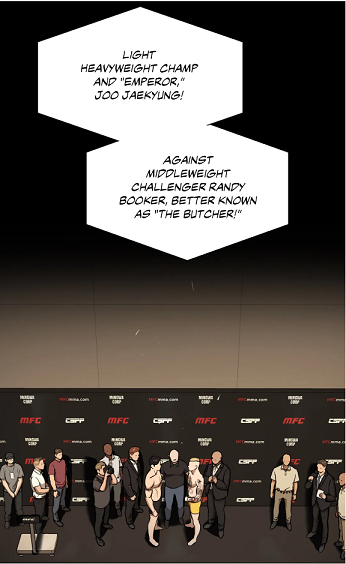 (chapter 14) Thus I deduce that the champion is making no distinction between inside the ring and outside the ring.
  (chapter 1) This signifies that he views life like a fight which never ends. This would explicate why Joo Jaekyung can never relax.
 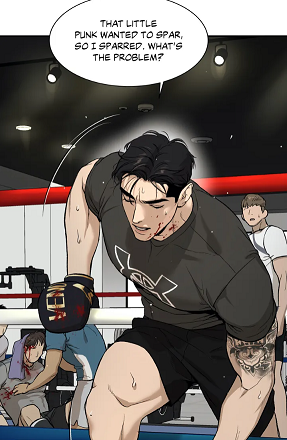 (chapter 1) Why should he restrain himself, when his life and career are always on the line? If he were to lose during the sparring, he imagined that people would question his talents or position. For him, sparring was a synonym for fighting and not playing! This explicates why he is not resting in the end.
 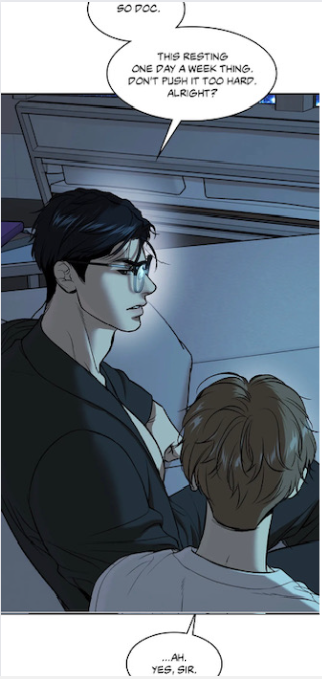 (chapter 29) Under this new light, the Manhwa lovers can comprehend why the champion refused to invite the members from Team Black to his penthouse.
  (chapter 27) This let him reconnect to his past and how he liked swimming. Moreover, we have the best example for “life is a game” in chapter 26.
 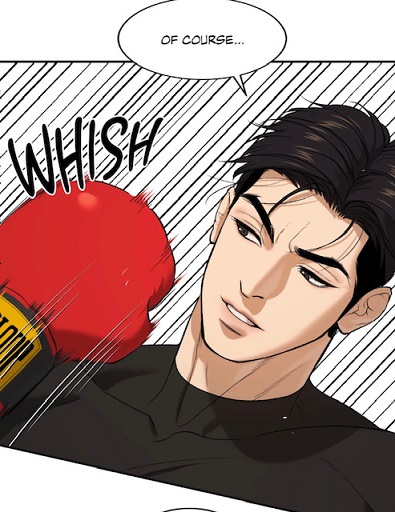 (chapter 26) He had fun here with Kim Dan, he was restraining his strength. Therefore it is not surprising that after his defeat, he had no problem to accept Potato as his sparring partner!!
  (chapter 26) And because life is like a battle for him, it is not surprising that Joo Jaekyung is not capable to say
  (chapter 37) the doctor’s reaction. He is feeling for him.
 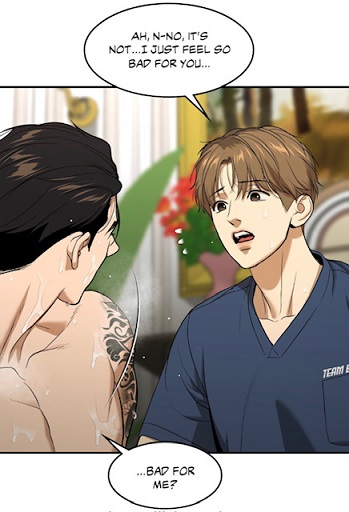 (chapter 37) Consequently, it is not surprising that Joo Jaekyung is not complimenting the doctor either. The former is not receiving encouragements and support from his hyungs. In the ring, the fighters are silent too.
 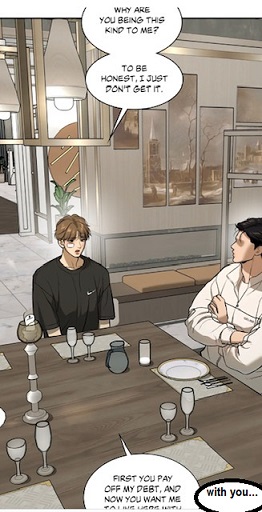 (chapter 18)
  (chapter 21)
 (chapter 22)
 (chapter 37) The champion is never eating with others!! He is not sharing his meals to others. This signifies that he has no notion of a family dinner. This was perceptible in this scene as well.
  (chapter 13) Joo Jaekyung had prepared two plates, but in South Korea the tradition is to put all the dishes in the middle of the table, and people take bits from the plates, like at the restaurant.
  (chapter 9) This is important, because once again, it outlines the coaches’ flaw or bad decision. Neither Yosep nor Namwook tried to convince Joo Jaekyung to assist to the meals. I am quite certain that his abstinence
  (chapter 36) were used as excuses not to intervene. I am not saying that these two hyungs had bad intentions or excluded him on purpose. It is just that they simply didn’t bother. They could say that he wouldn’t listen anyway.
  (chapter 27) So why bother to invite him? Moreover, if he were present, he would represent a source of trouble. Under this light, it becomes comprehensible why he had to use the company card for his appearance.
  (chapter 9) But this interpretation exposes the hyungs’ hypocrisy. They are not truly caring for the athlete. The irony is that in the same chapter, the champion “shared” his drink with the doctor.
  (chapter 31) Thanks to Kim Dan, the fighters’ life improved.
  (chapter 8) Interesting is that each time, Kim Dan was focused on others, he took the initiative to approach them.
 (chapter 7) He would even talk to them.
  (chapter 30) As you can see, I see a strong link between sharing and communication. Why? It is because conversing is sharing thoughts.
  (chapter 2)
  (chapter 34), it symbolizes that he was willing to share his home to someone. This is no coincidence that later, he proposed to Kim Dan to live with him. Thus I deduce that Heesung will also become Joo Jaekyung’s real friend, as he had been invited to enter his penthouse.
  (chapter 37) which could only make him feel more excluded. But the final straw was, when he heard that Kim Dan was having fun with the others. Not only he was not sleeping like usually, but also he had decided to chat with Potato and Oh Daehyun.
  (chapter 29) He had not been seeking his company. Thus I deduce that he got envious of the chow chow and the eagle! This was the reflection of the doctor’s thoughts.
  (chapter 37) Moreover, it is important to recall that each time Kim Dan spent time with his partner, he would often fall asleep so easily or sleep for a long time.
  (chapter 12)
  (chapter 37) As you can see, this episode exposes the lack of communication between the couple. Why? It is because both are relying on Park Nawmook.
  (chapter 37) This panel exposes the tyrant Park Namwook who is drawing an invisible line between the athlete and the members. This means that the coach has the same impact on the protagonist’s life than the grandmother on her grandchild! Both ended up without friends due to the surrogate parent. I have long portrayed the athlete as a mirror of truth, and the best evidence is the halmoni.
  (chapter 21) Joo Jaekyung was gentle and well-mannered, because the grandmother was nice and polite to him. But we all know that the athlete is not a hypocrite.
  (chapter 11) He exposed his vulnerability to the protagonist. Then the grandmother gave him one yoghurt.
  (chapter 13) Both scenes are the perfect illustrations for sharing is caring. Thus I deduce that this “family dinner” was fake
  (chapter 37) He remained silent contrary to episode 1. It is not just Park Namwook’s task to compliment him. However, as long as he doesn’t give any feedback to the insecure physical therapist, the latter won’t open up to him. Why does Kim Dan feel close to Potato and Oh Daehyun? It is because they are sharing their thoughts and emotions. But why is it so important for the champion to share the doctor? It is because through him, the doctor can get recognition and advance in his career. If he secludes him, Kim Dan is bound to make no progress. That’s the reason why I consider Joo Jaekyung’s intervention here as inappropriate.
  (chapter 31) It was not his place to decide for the main lead. Kim Dan could have had another client, even though it was just an excuse.
 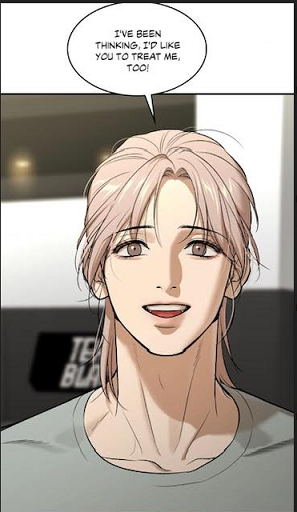 (chapter 31) Because he treated Kim Dan like an underling, he received the same treatment later. He was not allowed to defend himself
 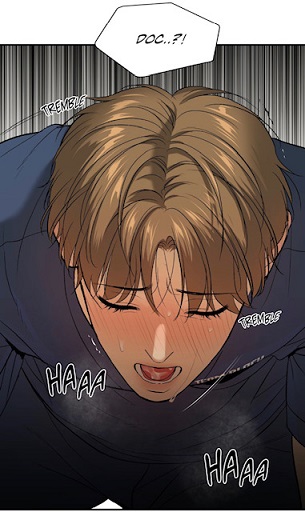 (chapter 37) and as such his vulnerability. In my eyes, this will move his heart… exactly like in that scene.
 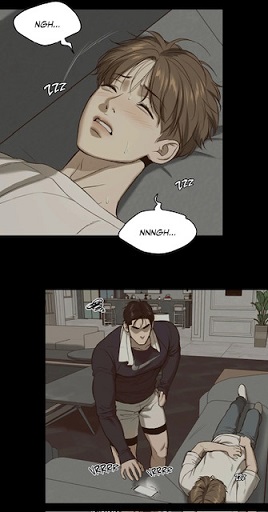 (chapter 21) In other words, the champion has to recognize that all his actions have consequences. As long as he is not treating Kim Dan properly, he is doomed to suffer and as such face adversity. But this perception is also valuable for the doctor. As long as he neglects his job due to his low self-esteem, he is fated to be treated like an errand boy. To sum up, both characters have to recognize their own flaws and misbehavior. Furthermore, I deduce that as long as Joo Jaekyung doesn’t expose his true position within the company in front of Park Namwook, he is bound to be treated like a prize. To conclude, Joo Jaekyung needs to confront his hyungs for their negligence. How come that they let Kim Dan fetch the drink and no one questioned its origins? Why was Yosep Jeong on the phone?
  (chapter 37) In my opinion, the coach is not involved in the conspiracy, for it looks like Mingwa has no intention to turn the members into bad guys. Nevertheless, this man was not talking to his wife, for the latter had blocked him. This raises the question. Who was he talking to? I have the feeling, that the person on the other side of the phone must have involved in the scheme in order to distract Jeong Yosep: MFC manager or the agent from the entertainment company?
 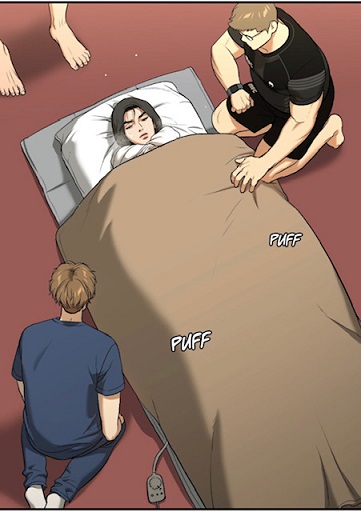 (Chapter 37) Finally, this panel
  (chapter 37) So don’t give up hope! Joo Jaekyung still has his own merits.


 (chapter 12) Like I had elaborated in a previous essay, in the last image, Joo Jaekyung’s phallus appeared so big, for this represented the doctor’s perception. Hence he compared it to a weapon. That’s the reason why I believe that
  (chapter 32), a character from BJ Alex who is promoting BDSM. However, the purpose of BDSM is not to be cruel or violent towards the partner. It is an act. The “pain” is supposed to bring pleasure. On the other hand, the first condition for BDSM is consent. And now, if you look at the situation in the car, you will realize that the car is still in the garage. Joo Jaekyung is not driving. This means that Kim Dan still has the power to refuse. He could leave the car. Besides, the gift is related to the champion’s service: he would bring him to Heesung’s house with his car.
  (chapter 32) As you can see, if the athlete is not giving him the ride, Kim Dan is not obliged to follow his request. Besides, contrary to episode 11, the physical therapist is not cornered. The loan was paid off and now, he is able to afford the hospital bills for his halmoni. To conclude, Kim Dan has the right and even the means to say NO! Nevertheless, Joo Jaekyung didn’t just buy a dildo, he even ordered a carton full of sex toys!!
  . (chapter 13)
  (chapter 27) But more importantly is that chapter 32 took place on a Saturday exactly like in episode 27-28-29!
  (chapter 32) Back then, the fighter had taken a day-off! The doctor had been tasked to keep the champion’s company. He was responsible for his day-off.
  (chapter 27) This signifies that back then, the gentle doctor had been “working”, entertaining his boss and client. However, what caught my attention is that during that Saturday, the author never leaked any information about the time.
  (chapter 27) Since the champion was drinking his glass of milk, it was in the morning, for it is his “breakfast”. But when did he drink it exactly? Moreover, how long did they play board games?
 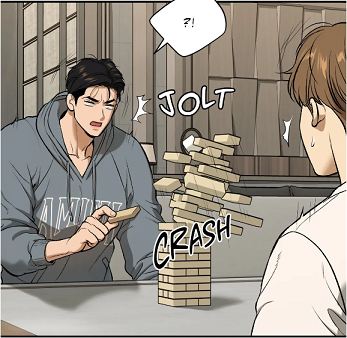 (chapter 27) When did Kim Dan fall asleep?
  (chapter 27) or the night sky
  . (chapter 29). This stands in opposition to episode 32, where Mingwa created 3 panels with a time clock:

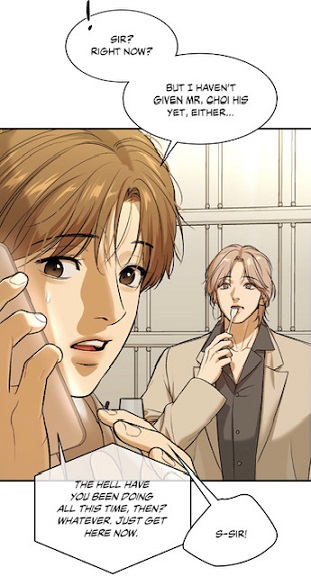 (chapter 32) My first assumption was that the actor and Kim Dan had spent 2 and half hours maximum together. I am counting minimum 30 minutes for the doctor’s return to the penthouse. On the other hand, observe what Choi Heesung said to the main lead. He had no problem to wait for one or two hours.
  (chapter 32) That’s the amount of time they had already spent together: around 2 hours. The final clue for this is the time Kim Dan spent on Joo Jaekyung’s treatment:
  (chapter 32) That’s quite late! Besides, don’t forget the athlete’s previous habit. He would often wake up the physical therapist because of his training.
 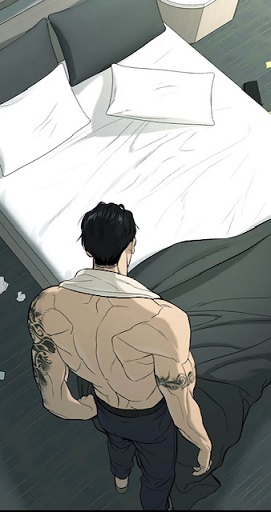 (chapter 4)
  (chapter 12) He changed his MO, the moment Kim Dan started living with him. Besides, on the first champion’s day-off, he waited for the physical therapist too.
  (chapter 27) It indicates that it is in the morning. The other evidence for this is the position of the sun in episode 32..
  (chapter 32) It stands on the opposite side. Moreover, since the sun is going around 4.30 pm,
 (chapter 27) Real shopping
  (chapter 32) versus online shopping.
 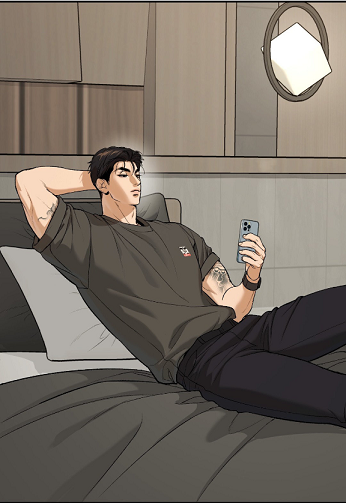 (chapter 32) Certain Manhwalovers were always wondering why the sportsman would often stare at his cellphone. The other evidence is that the champion used the cellphone to “buy” Kim Dan!
  (chapter 32) Suddenly, Kim Dan had become accountable for the athlete’s mistake.
  (chapter 32) The latter had remained silent, but his silence didn’t mean consent. But the problem is that he had been “silenced” by his blind “hyung” who judges people on impressions.
  (Chapter 26) Park Namwook only saw Joo Jaekyung’s anger, when he heard about him ruining the punching machines. But he never questioned why he would behave like that. Why should he question this, since he was definitely impressed by the champion’s force?
 (chapter 19) That’s the reason why the doctor felt lonely.
  (chapter 27) However, Joo Jaekyung only knows sex as a source of fun, which is a synonym for rest for him!
  (chapter 32), we have to envision that the dragon was imagining his partner with a dildo! The moment I had this revelation, I couldn’t stop laughing. 😂 Consequently, the suggestion in the car appears in a different light:
  (chapter 32) Therefore the doctor would feel obliged to fulfill his wish. But like mentioned above, the doctor has the power to refuse. At the same time, the purpose of the sex toy is to procure pleasure to Kim Dan. In other words, it would help him to relax. It was, as if he would be taking a break… between two treatments. 😂 Finally, we shouldn’t overlook that after each sex session, the doctor was exhausted, hence he fell asleep. There exists a strong connection between sex and sleep, when it comes to Kim Dan. And Joo Jaekyung is probably counting on this. That way, he wouldn’t treat Choi Heesung properly. On the other hand, the fighter made the purchase and the suggestion for selfish reasons, whereas the doctor embodies selflessness.
 is displaying discomfort, yet he never complained. Then he got hit by the former wrestler.
  (chapter 31) So we could say that Joo Jaekyung had faked training 😉, but he didn’t get caught, for his body was exposing the truth: he was “strained”. I would like to point out that Kim Dan took care of his lover for almost 2 hours.
  (chapter 32) Finally, if he asks for sex from Kim Dan, he will divulge his manipulation to the doctor. But why didn’t he detect this cheap trick? It is because he trusted Heesung, Park Namwook and the manager.
 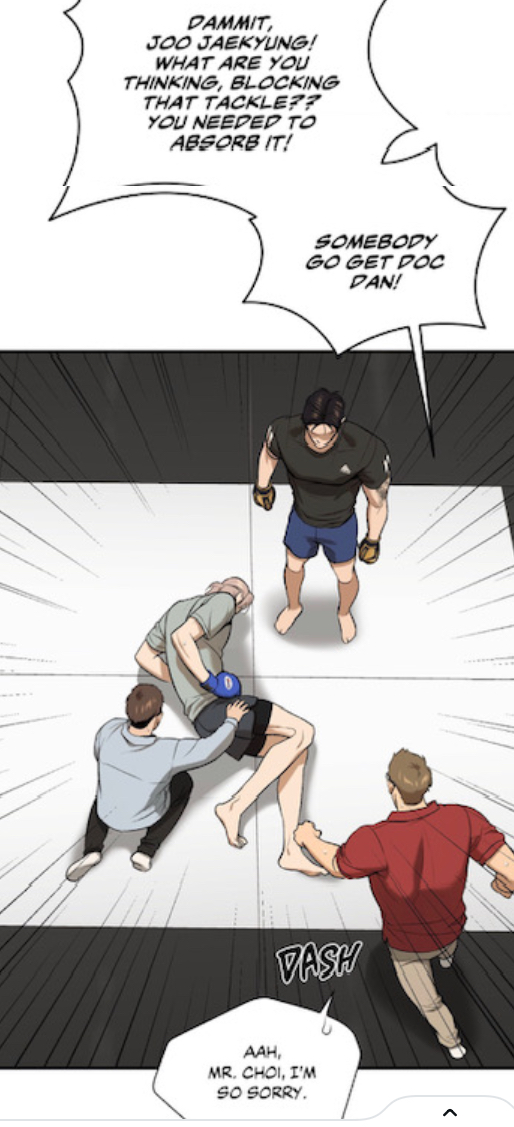 (chapter 31) He has been taught to never question people’s words and action. This means that Heesung’s trick will definitely backfire. Thus I come to the conclusion that from now on Joo Jaekyung will take a day-off on Saturdays!
 (chapter 119), they got worried and nervous, as they considered the expression „as long as I live“ as a clue for a sad ending. Why? It is because the lord was referring to his own death. Under this light, it becomes comprehensible why I selected „heavenly“ in the title. I was naturally alluding to the afterlife. However, I perceived his words in a positive light. He expressed his desire to live. He is no longer suicidal, he wishes to live a long life next to the painter and treasure his moments with him. That’s the reason why the author included the refraction in the scene. A dream had come true, the lord was finally able to escape the darkness.
  (Chapter 119) He is now truly alive. This explicates either why he smiled and laughed at the end. But why was he so happy? It is because Baek Na-Kyum had just confessed that he loved him not for his wealth or power, but for himself.
  (Chapter 119) He even described him as a treasure. Yoon Seungho had finally achieved his goal: to win the painter’s heart. His presence and love bring happiness to Baek Na-Kyum which stands in opposition to his reputation as bird of misfortune. Moreover, this description contrasts so much to Jung In-Hun
  (Chapter 119) and Yoon Seungwon’s.
  (Chapter 118) where both portrayed the main lead as a man consumed by lust and revenge. In other words, he was presented as a huge sinner. This implies that he stands so far away from heaven. But all these words were erased the moment the painter confessed his love for Yoon Seungho once again. What Baek Na-Kyum didn’t realize is that his love confession is pushing the protagonist to fight for the painter.
 (chapter 102) In episode 102, he was renouncing on everything (life, mansion, wealth and connection), because he imagined that the artist had died. Consequently, I deduce that in episode 119, the painter’s life is attached to the lord’s for good. If the artist got into trouble, Yoon Seungho would side with him and the reverse. Thereby, I come to the conclusion that this moment in the kitchen represents their union, as they are no longer tied to the mansion. They are now a family no matter where they are. Let’s not forget that the painter expressed his wish to run away with his lover.
  (Chapter 119) It is important, because such a departure symbolizes that the bird “Yoon Seungho” is leaving the nest. He is now starting a family on his own.
 (chapter 85) and put a glass and that was it. This exposes the father’s hypocrisy, ignorance and greed. By acting on his own, he was exposing his true mindset. He views himself as the family. The sons are just the extension of himself, for they are his reflections.
  (Chapter 45) On the other hand, Yoon Seungwon is his golden child, for he represents his positive reflection.
  (chapter 86), whereas he put the other on a pedestal
 (chapter 86). Thus I created this illustration.
 Under this new light, it becomes comprehensible why the father could only reject the offer from lord Song in the gibang. Doubting Yoon Seungwon’s sexuality meant to question about the father’s sexual orientation. At the same time, it is not surprising why the elder master would blame Yoon Seungho for everything, for he couldn’t admit his responsibility for the purge. Consequently, the Manhwaphiles can grasp why Yoon Chang-Hyeon came alone to the shrine. If he had brought Yoon Seungwon, the father would have been reminded of the elder son, as both can not be separated. This explicates why the younger master asked his elder brother to submit to his father.
 (Chapter 119) I couldn’t help myself smirking when the brother attempted to make him believe that.
 (Chapter 119) the protagonist could ever gain the father’s favor. Yoon Seungwon was definitely playing with his brother’s feelings, as if he could hope that their father would change.
  (Chapter 118) It is because as a golden child, he is also suffering, but it is naturally nothing compared to Yoon Seungho’s position who could have died.
  (Chapter 77)
 (Chapter 119) First, by returning the petition to the father, Yoon Seungho would become the culprit. He was not only a traitor, but also a blackmailer of the Yoons and lord Song.
 (Chapter 107), for he had stolen the petition. Yoon Seungwon would hide his wrongdoing, he betrayed their father.
  (Chapter 118) There is no doubt that Kim played a role in this as well. In other words, the brother and the valet would bury the truth by diverting the attention of the patriarch towards the main lead, if Yoon Seungho followed this suggestion.
  (Chapter 116) The elder master would no longer seek the truth, similar to the kidnapping in season 2 which was turned into a desertion and later Lee Jihwa’s abduction occulting the instigator and the helping hands. Simultaneously, Yoon Seungwon needs his brother as scapegoat, because the pressure coming from the patriarch and lord Song must have definitely increased.
  (Chapter 83) This shows that the young master wants to sacrifice his brother once again. Out of selfishness and cowardice, he is trying to convince Yoon Seungho that this is the right thing to do!
  (Chapter 37) He is even implying that he needs to sacrifice himself in order to protect Baek Na-Kyum!! Moreover, he is distorting the reality, because he implies that his father is still powerful.
  (chapter 37) like the memories from episode 37 are exposing it. It becomes clear that if Yoon Seungho returned the petition, he would die.
  (Chapter 116) Thus I come to the conclusion that the meeting between the brothers in the gibang represents an offering. For the Yoons’ sake, Yoon Seungho should admit his wrongdoings
  (Chapter 55) People had played with his hopes and longing for acceptance and recognition. Interesting is that offerings is a synonym for atonement and sacrifice. But why is Yoon Seungwon so sure that he can repeat the same action from the past? It is because Kim and Yoon Seungwon have known for a long time that Yoon Seungho was longing for acceptance and love from his family, just like the scholar knew about the painter’s love for him.
  (Chapter 119) But everything changed, when the painter met the lord. So who is worse here? Jung In-Hun who tried to rape the painter or Yoon Seungwon who is sentencing his elder brother to death? Let’s say that the valet convinced the younger master to suggest this solution, this doesn’t diminish Seungwon’s responsibility at all. He knows that his father abused his elder brother. In my opinion, he is copying his father, like the former tried to diminish the responsibility of the patriarch.
  (Chapter 119) Yoon Seungho got hurt because of lord Song and not because of Yoon Chang-Hyeon. This means that the younger master was denying the existence of the patriarch’s choice and the helping hands. And if the brother listened to his advise and the father hurt or killed the main lead afterwards, the younger master could put the blame on the elder master, for the decision and responsibility belonged to the patriarch. Moreover, he heard from lord Song that killing Yoon Seungho was just a matter of time.
  (Chapter 119) So technically, this situation could have triggered the protagonist’s insecurities like in season 1
  (chapter 28), 2
 (chapter 60) and 3
  (chapter 98). However, through these constant exposures, Yoon Seungho came to learn not to jump to conclusions and to have faith in Baek Na-Kyum. He knew that he would return to the mansion. Hence he ran to the bedchamber first.
  (Chapter 119) Another important detail is that we don’t see any staff in the courtyard or in the kitchen. It was, as if the propriety had been deserted.
  (Chapter 119) This implies that at no moment, he relied on the domestics’ testimonies which contrasts to the following scenes:
  (chapter 104)
  (chapter 107) and
 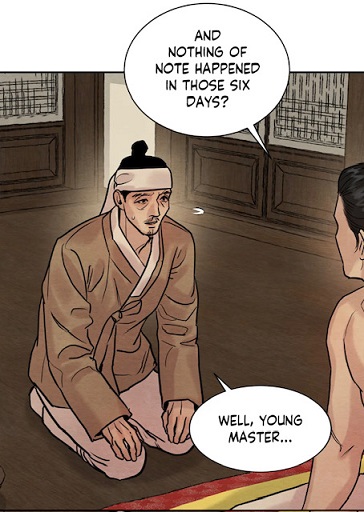 (chapter 116) However, observe that in episode 116, Yoon Seungho had witnessed how his lover had taken care of him, while he was unconscious. Furthermore, the petition had been handed over to the painter and not Kim, a sign that the artist had become the protagonist‘s confident. As you can see, as time passed on, the main protagonist learned the following lessons: he should stop relying on servants, he should only trust his partner. I would even add that he was taught the following principle: “If you want something done right, you have to do it yourself”. In my eyes,
  (Chapter 103) Here, they never expected the return of Yoon Seungho and the painter. The staff ‘s absence in episode 119 is the evidence of their desertion! Moreover, I consider Yoon Seungho’s search for his lover as a new version from episode 28/29/30:
  (chapter 28) Back then, they feigned ignorance, but they never anticipated a punishment from Yoon Seungho.
 (chapter 115) And now you are wondering how the painter’s gesture can be considered as an offering. It is because the kitchen hearth is considered as sacred due to the fire. First, in shamanism, there exists the god of fire named Jowangshin.
  (Chapter 115)
 (Chapter 59)
 (Chapter 98)
 (Chapter 115)
  (Chapter 47)
 (chapter 102) who was a traitor, for he had tattled on Black Heart and his friends to Yoon Seungho. And now, you comprehend why I connected the shrine to the kitchen hearth. Both places are considered as sacred, for they are connected to gods and spirits.
  (Chapter 85) The absence of his sons and of food as offerings reveals that he was not showing true respect to his ancestors. He used religion and social norms to hide his true intentions. He wanted to take over the mansion. Hence the black guards were standing at the entrance of the sacred house. Their presence symbolizes violence. Therefore it is not surprising that the gods chose to punish the elder master through Yoon Seungho. The former was not received properly
  (chapter 86): no bow, no food and no seat.
  (Chapter 86) Let’s not forget that the elder master had entered the lord’s chambers without the permission of his owner. No wonder why he was left speechless. And now, you are wondering if I am not drifting away from the topic, as these chapters from season 3 don’t seem to be connected to episode 119. However, it is important to realize that these chapters have many common denominators
 Here, we could detect the suicidal tendencies of the protagonist. He wouldn’t fight back.
 The seat looks like a throne.
 The courtyard is empty! No one is defending their master.




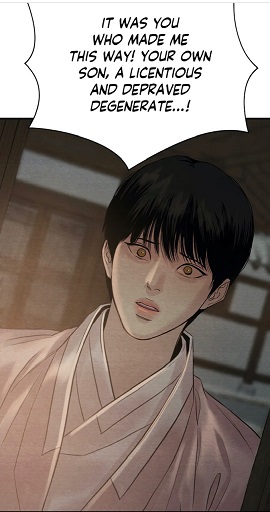


 Baek Na-Kyum freed himself.
  (Chapter 85) The study is even close to the gate.
  (Chapter 51) He could have reached the study before the father entered the shrine. Finally, observe that the patriarch even arrived to the bedchamber before Yoon Seungho,
 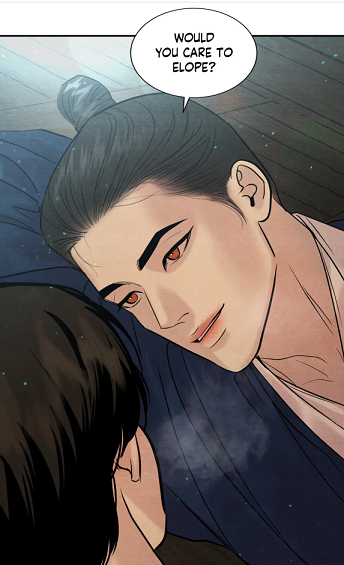 (Chapter 117) The painter wants to leave everything behind too.
  (Chapter 119) Thus I am deducing that the authorities will be involved very soon.
  (chapter 119) They are not expecting the lord‘s resistance, for he remained passive all this time (season 2 and 3). The scholar has now the means to do so, and the necessary motivation. Imagine that he got wounded and humiliated by the couple! Besides, we have this broken promise due to Yoon Seungwon
  (Chapter 115) exposing the younger master’s lies and Yoon Chang-Hyeon’s delusions. Without the protagonist’s help, the younger brother would not be „successful“. Furthermore, the absence of food and fire in episode 86 indicates that this house was neglected and even not protected.
  (Chapter 94) The gibang is connected to money, power, pleasure, artificiality, sensuality and lack of privacy.
 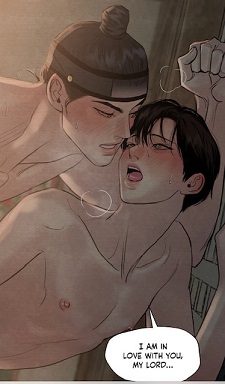 (Chapter 96) I am sure that you can detect all the contrasts (night, door close, spies, confession outside and inside, no fire, only light). Thus I am deducing that the painter’s words in the kitchen were not heard by others. As you can see, this scene in the kitchen is full of symbolism. In my previous essay “The true face of family”, I had already pointed out that sharing meals represented a criteria to define a real family. Therefore I had demonstrated that Yoon Seungho and Baek Na-Kyum were excluded from the mansion, for they wouldn’t eat their meals in the kitchen like the staff.
  (Chapter 17) Moreover, the hearth doesn’t just provide warmth, but also light! The latter embodies knowledge and as such Enlightenment.
  (Chapter 119) Hence they were clueless about the wrongdoings from the staff. Only in the kitchen, the lord could finally grasp the depth of Baek Na-Kyum’s love for him. It is an unconditional love contrary to Yoon Seungwon’s. The latter would only recognize him, if he listened to him. And he only seeks his assistance, when he needs him. It shows that Yoon Seungho is only approached, when he has power.
  (Chapter 118)
 (Chapter 119) I would like to outline that during their conversation, Yoon Seungwon remained calm and indifferent, when he talked about the assassination attempt from Yoon Chang-Hyeon.
 (Chapter 116) But the biggest difference is the absence of fire in the kisaeng house.
  (chapter 78) Furthermore, he tried to leave before
  (Chapter 104)
  (chapter 105) Finally, we saw him in the courtyard standing next to a horse and a servant indicating that he had given him a task, and the latter needed to leave.
  (Chapter 108) Hence you comprehend why I am full of optimism in the end. Yoon Seungho has already made some preparations in my opinion. On the other hand, I am quite certain that their love will be tested. Can they face together trouble? Yes, because through their pain, they learned their lessons and changed.
  (Chapter 119) It is because in the past, he was never allowed to join the kitchen hearth. This place was either beneath him or he was not worthy of entering the place. Thus he employed the expression scullery boy to Yoon Seungho.
  (Chapter 47) Here, I would like to outline that when the protagonist was held in the shed, someone brought him food .
  (Chapter 83) That‘s how I realized that the shed is connected to the kitchen!
  The maid had just brought water to the couple.
 During that night, Baek Na-Kyum had been held captive in a shed.

 (chapter 38) Yoon Seungho remained outside on the door step. Consequently, I started comparing scenes where the kitchen hearth appeared and that’s how I discovered a pattern:
 (Chapter 46)
  (chapter 47)
  (Chapter 110)
 (Chapter 77)
  (chapter 38)
 (chapter 59)
  (chapter 119)
 (chapter 38)
  (chapter 47)
 (chapter 77)
 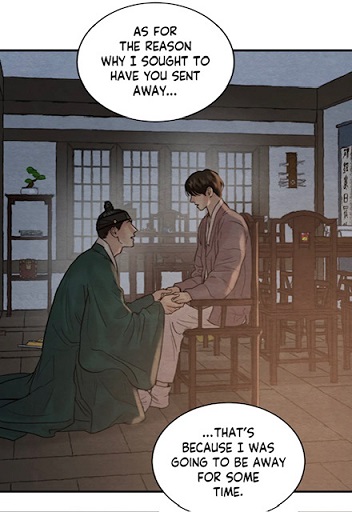 ( Chapter 110)
  (chapter 119)
  (chapter 47)
  (Chapter 77) For me, Kim must have looked down on the other domestics. I consider this scene as the best example what Kim should have done in the past.
  (Chapter 119)
  (Chapter 98) One door leads to the backyard and the other to the smaller courtyard. And this scene confirms my previous assumption
 (Chapter 87) Baek Na-Kyum is there to prove him wrong. He had other opportunities, like giving him a good meal.
  (Chapter 63) He should have sided with his master and even remained by his side. This signifies that this scene
  (chapter 7) the artist is not only cleansing the kitchen, but also cutting off ties with the scholar. The latter is no longer protected. The spirits will intervene through chance. As a conclusion, the hearth has a spiritual and healing power, for it is connected to „Heaven“. Yoon Seungho‘s paradise is to have a family.

 Bebebisous33s' analyses in K-Dramaland and Manhwas