
Please support the authors by reading Manhwas on the official websites. This is where you can read the Manhwa: Jinx But be aware that the Manhwa is a mature Yaoi, which means, it is about homosexuality with explicit scenes. Here is the link of the table of contents about Jinx. Here is the link where you can find the table of contents of analyzed Manhwas. Here are the links, if you are interested in the first work from Mingwa, BJ Alex, and the 2 previous essays about Jinx The Hidden Predators (part 1) and The Hidden 🐺 Predators (Part 2)
It would be great if you could make some donations/sponsoring: Ko-fi.com/bebebisous33 That way, you can support me with “coffee” so that I have the energy to keep examining Manhwas. Besides, I need to cover up the expenses for this blog.
Sorry for the hiatus, but as you can imagine, it is related to my work. I recently got more responsibilities.
The Importance of Knowledge
Many classic thrillers have explored the dangerous consequences of knowing the wrong thing at the wrong time. Alfred Hitchcock once built an entire film around this very idea: someone who accidentally discovers too much becomes a threat. In The Man Who Knew Too Much, knowledge is not merely information—it is a liability.
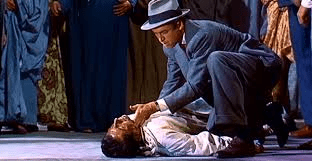
The moment someone understands how the hidden mechanism works, that knowledge becomes dangerous. Insight is inseparable from the plot itself, because it exposes the existence of a conspiracy. To know too much therefore means to become a threat to those who depend on secrecy. Information stops being neutral; it transforms into a risk that must be contained, silenced, or eliminated. The moment a hidden truth surfaces, those who possess it risk becoming targets themselves. Episode 93 of Jinx seems to echo this logic. 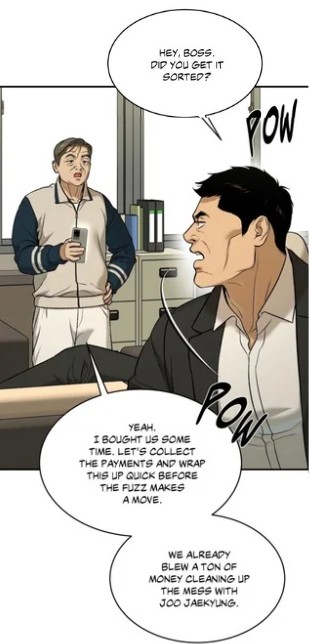 (chapter 93) Beneath the apparent calm of the chapter lies a growing tension: secrets circulate quietly, alliances remain uncertain, and certain characters may already know more than they should.
  (chapter 93)
At first glance, the chapter appears to focus on the evolution of the relationship between Joo Jaekyung and Kim Dan. 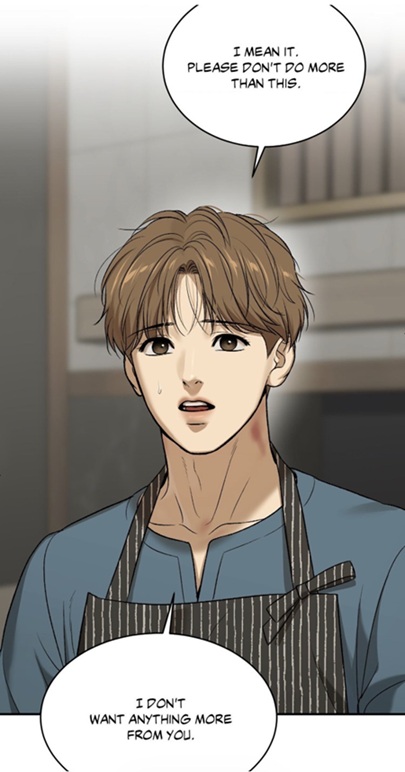 (chapter 93) linked to their previous night together. During the night they shared, the invisible wall that once separated them seemed to disappear completely. Their intimacy was no longer defined by domination or obligation. Instead, the encounter suggested equality (position of 69)
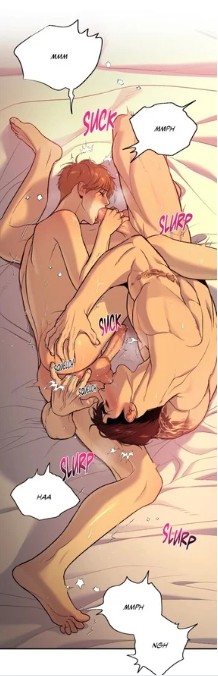 (chapter 92) and reciprocity—an exchange, as Joo Jaekyung himself described it, of “give and take.”
 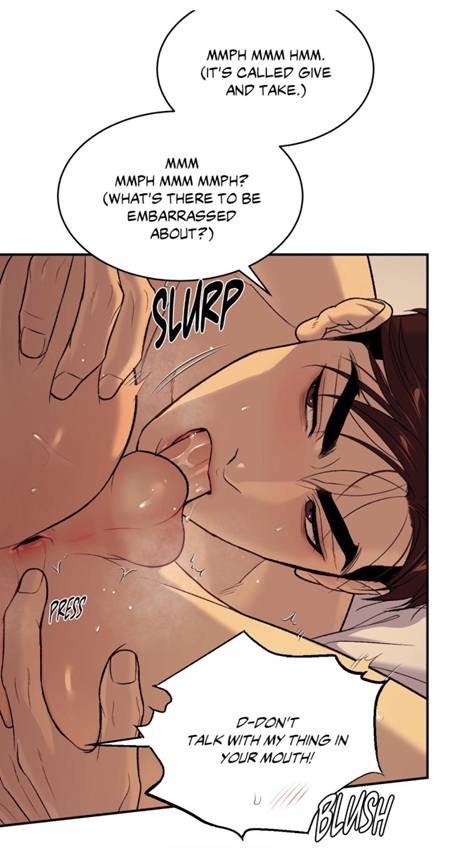 (chapter 92) In a striking reversal, Kim Dan took the initiative
 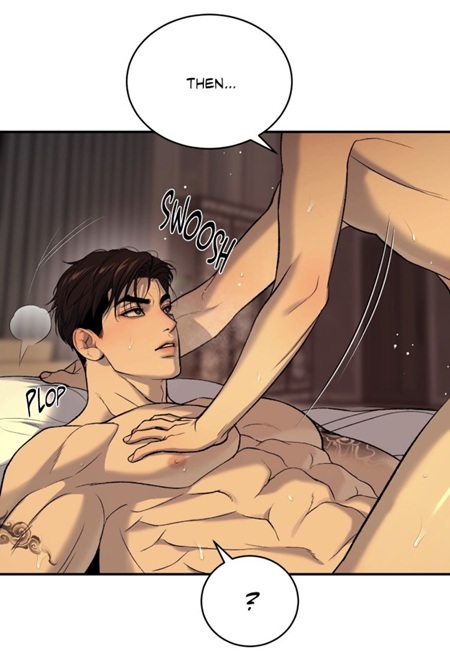 (chapter 92), after being asked about his own desires.
 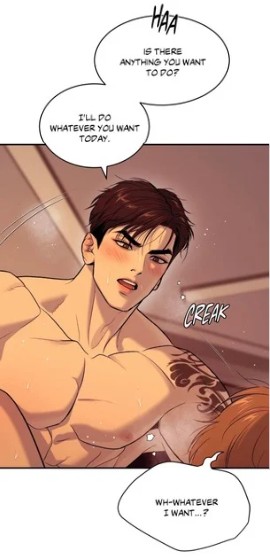 (chapter 92) He was no longer driven by shame, debt or obligation.
 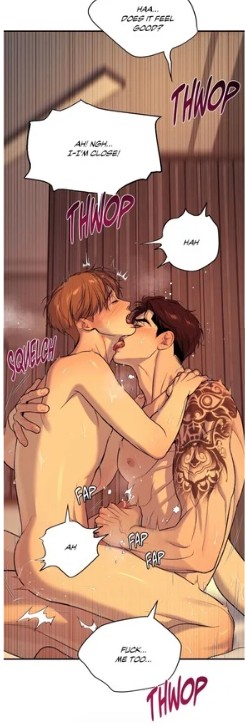 (chapter 92) For the champion, the moment carried the weight of something deeper than physical pleasure
 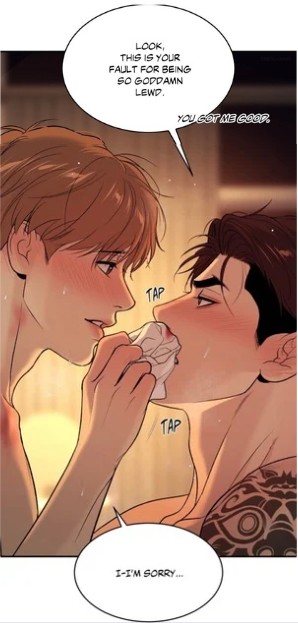 (chapter 92), for he was able to give pleasure to his partner. Thus his self-esteem could only be boosted. For Kim Dan, however, it remained simply sex.
 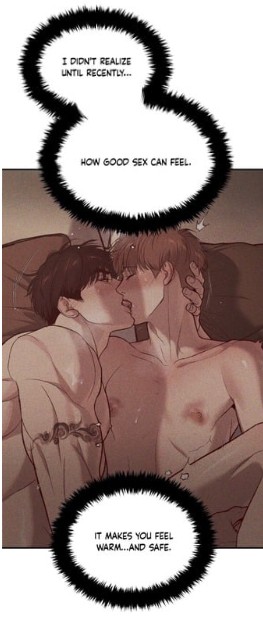 (chapter 92) The imbalance between their interpretations already foreshadowed the tension that would emerge the following morning.
That tension becomes visible when Kim Dan calmly refuses Joo Jaekyung’s attempt to continue taking care of him. 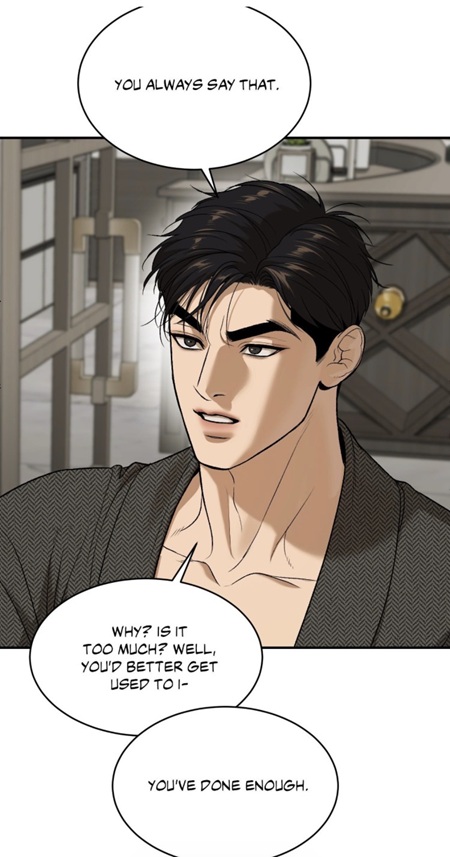 (chapter 93) For the first time, he establishes a clear boundary. The gesture signals a new stage in his personal development: for the first time, Doc Dan speaks as a professional, as a physical therapist
 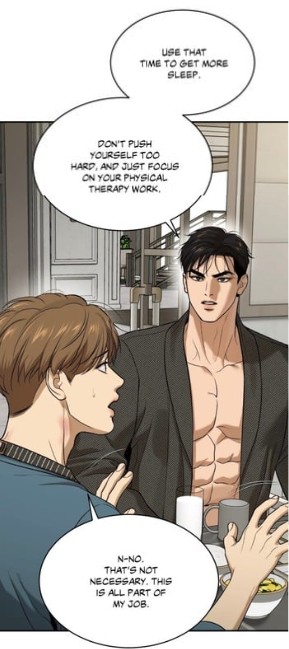 (chapter 93) who knows his role and his responsibilities. He refuses the help with the meals not out of pride, but because he clearly frames it as part of his job. In the past, he would have simply listened, letting others decide or speak in their name
  (chapter 42); now he asserts his own authority and expertise. But just as this moment seems to mark a quiet step forward in their dynamic
 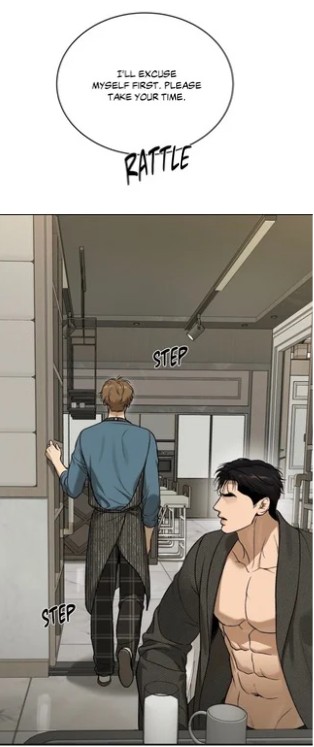 (chapter 93), the narrative abruptly widens its focus, drawing the reader away from this personal shift toward a far more ominous development unfolding elsewhere.
 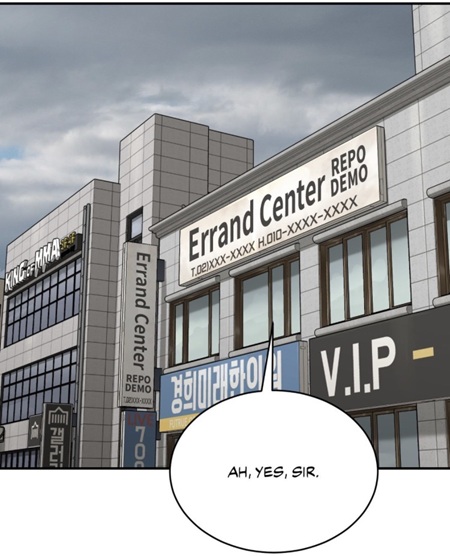 (chapter 93)
Far from the intimacy of the penthouse, Baek Junmin appears surrounded by an invisible barrier 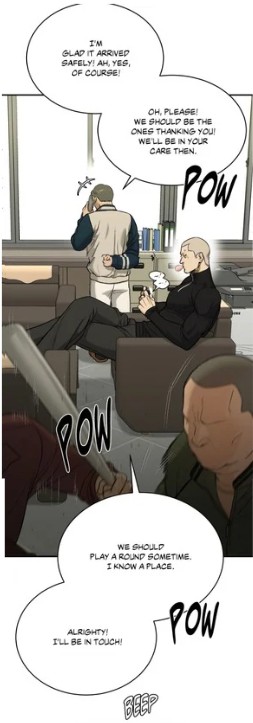 (chapter 93) separating him from Choi Gilseok and Heo Manwook. The atmosphere of that scene is strangely detached. Junmin seems unconcerned with the financial urgency discussed around him; his attention is fixed instead on the cellphone. Yet the readers cannot see what he is watching
 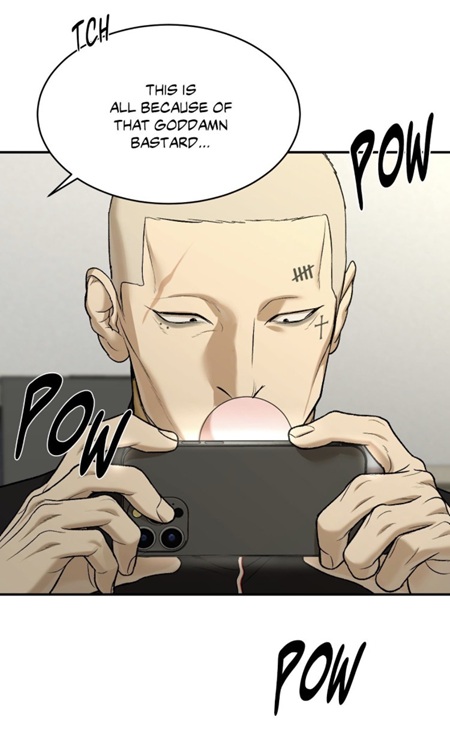 (chapter 93), while he casually blows a bubble of gum, creating a small moment of distraction that contrasts with the tension of the conversation around him. Only when he eventually reaches for the calendar on the desk,
 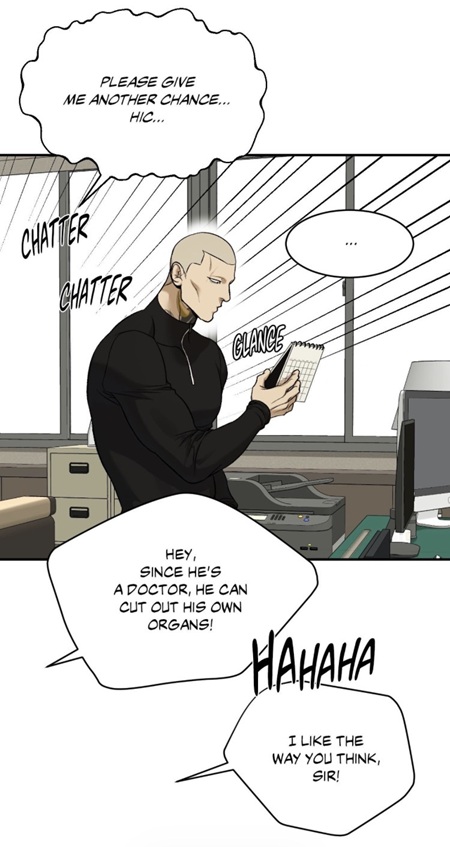 (chapter 93) does the focus of his attention become clear: the approaching match. What matters to him is not money, but time. What seems to occupy his mind is not the money being discussed, but the ticking clock before the fight—suggesting he may be searching for a way to reclaim his standing, restore his reputation, and probably settle an old score. But if this is indeed his objective, one question inevitably arises: what kind of weapon does he intend to use?
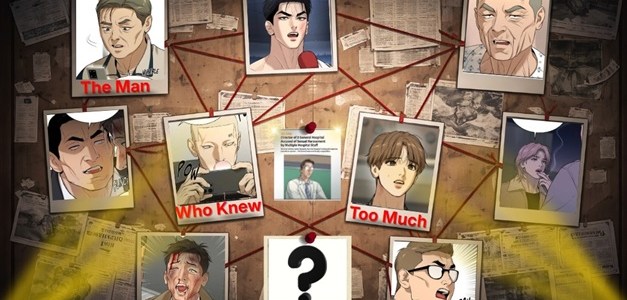
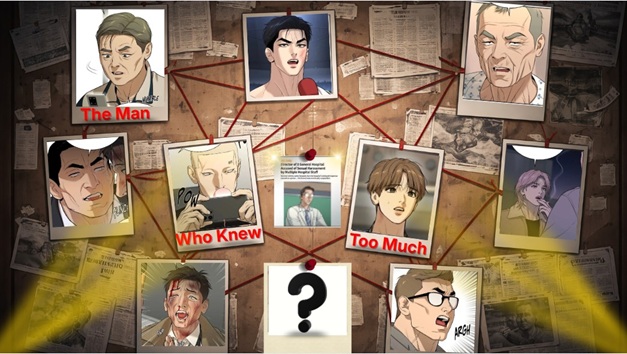
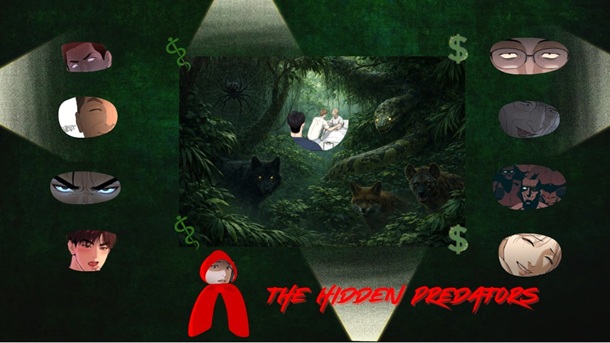
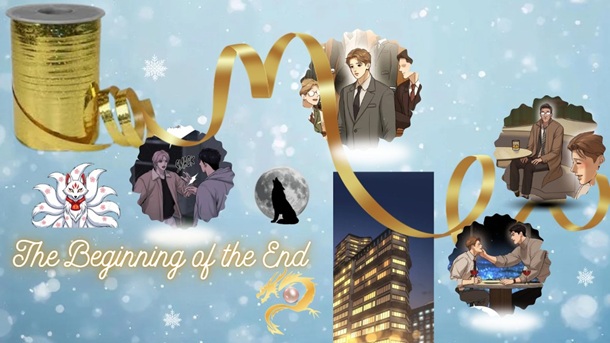
The cover illustration accompanying this essay proposes one possible answer. Rather than depicting a single event, it visualizes the network of hidden connections surrounding Baek Junmin: the underworld figures who support him, the organizations that benefit from his actions, and the champion who stands at the center of these intersecting interests. In such a configuration, information itself may become the most dangerous tool. If certain characters possess fragments of the past — memories, secrets, or assumptions about who Joo Jaekyung once was or about the physical therapist — then exposing or manipulating that knowledge could prove far more destructive than any physical confrontation.
This leads to the central question of this essay: who, in this story, truly knows too much—or believes that they do—and what happens when that knowledge is finally brought to light?
The Office – Where the Readers Begin to Know Too Much 😮
Episode 93 opens in a location that immediately signals danger: the office of Heo Manwook (chapter 93). The place is recognizable because the interior furniture (chapter 93) matches the office previously shown in episode 46.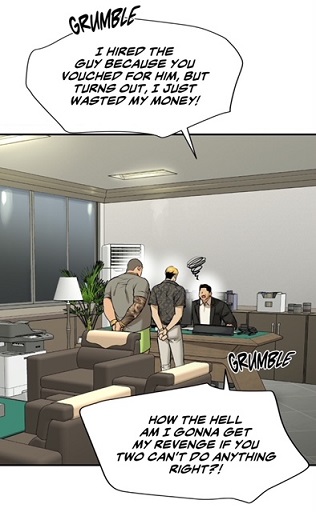 (chapter 46) Yet even before examining the room itself, the exterior sign already introduces an intriguing ambiguity. The building is labeled (chapter 93) “Errand Center – Repo – Demo.” At first glance, the name suggests a mundane service business. An errand center typically performs small tasks for clients—delivering packages, transporting items, or running administrative errands. Thus shortly after, Jinx-philes discover that a package has been successfully delivered. (chapter 93) The additional terms reinforce this impression: “repo” evokes repossession services that recover unpaid property, while “demo” suggests demonstrations or promotional tasks. Taken together, the sign appears to advertise a collection of ordinary logistical services.
However, within the narrative context the meaning becomes far more unsettling. Each of these activities revolves around the same principle: carrying out tasks on behalf of someone else. (chapter 93) The vocabulary is deliberately neutral, but the logic easily translates into criminal practice. Errands can become intimidation missions, repossession can turn into violent debt collection, and demonstrations can serve as distractions or staged incidents. The apparently harmless name therefore functions as a façade, masking a network that organizes coercion, surveillance, and illegal gambling operations. Even the office furniture contributes to this illusion. (chapter 46) The couch and armchairs resemble the kind of seating commonly found in legitimate businesses—familiar from many office settings in K-dramas—suggesting a place where clients might calmly sit down to discuss matters. Yet the scene reveals a striking contrast: no one actually uses this furniture except Baek Junmin. (chapter 93) The debtor is instead beaten near the entrance, deliberately kept far away from the seating area. In this way, the loan shark and his men ensure that the couch and chairs remain untouched, almost as if they were props. 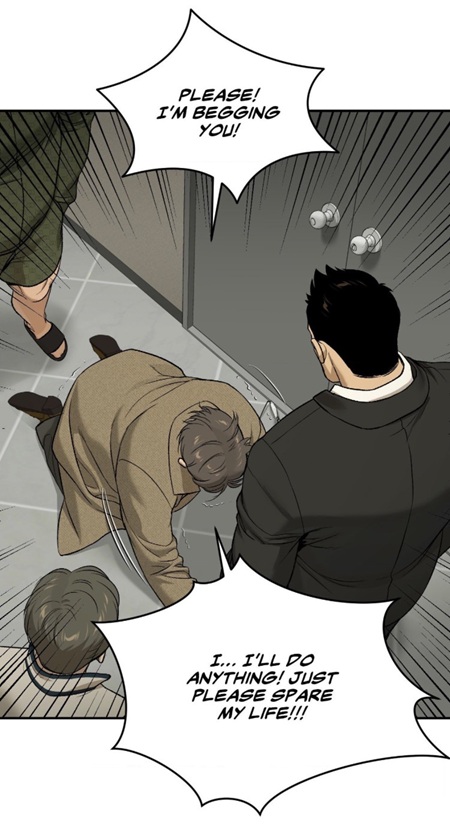 (chapter 93) The furniture thus reinforces the same strategy as the office name itself: it maintains the appearance of a respectable business while the violence of the operation is carefully kept out of sight.
This principle of delegated action (chapter 93) reveals something deeper about the structure of the organization itself. (chapter 46) At first glance, the office appears to belong to Heo Manwook 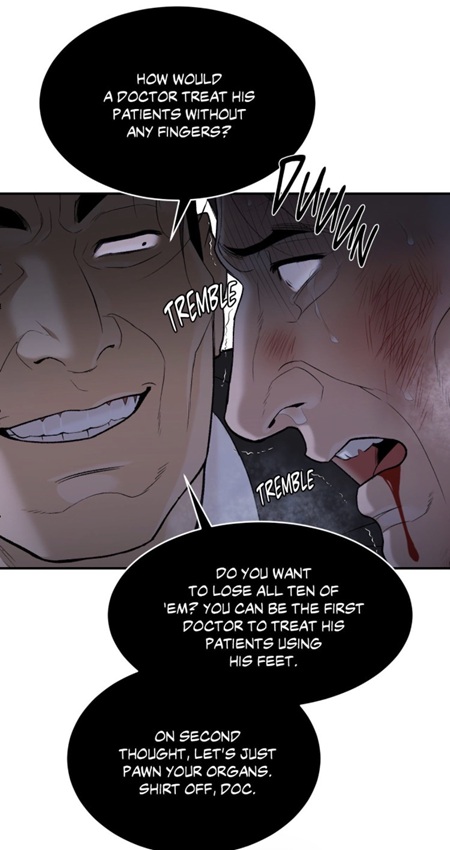 (chapter 93), who confronts victims and manages the loan shark operation. Yet the scene gradually reveals that he is less a true mastermind than a frontman—a visible intermediary who handles the dirty work.
  (chapter 46) Hence he calls Choi Gilseok “boss” and asks about the current situation. (chapter 93) Behind him stands Choi Gilseok, the director of King of MMA, who clearly exerts greater influence over the situation. He coordinates financial decisions, negotiates with outside contacts, and attempts to contain the consequences of the recent scandal. And yet even Choi Gilseok is not the ultimate authority.
  (chapter 48) In episode 48, he revealed that his actions were connected to a parent pharmaceutical company (F Pharmaceuticals), suggesting that the criminal activities surrounding the fights, betting, and intimidation may ultimately serve a larger financial structure. In that sense, the Errand Center name becomes almost literal: every actor in this network appears to be running errands for someone higher in the hierarchy, forming a chain of delegated power in which responsibility constantly shifts upward.
This ambiguity becomes even more striking when one considers Kim Dan’s own situation in season 1. In order to offer an expensive gift to Joo Jaekyung, he took a job as a courier 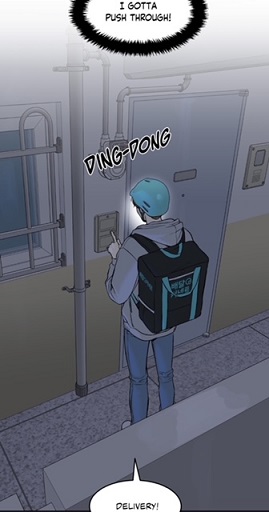 (chapter 42), delivering food or packages across the city during the night. His work is built on the same basic principle: completing tasks and transporting items for others which exposed him to dangers and shame.
  (chapter 42) The parallel is subtle but revealing. While Kim Dan runs legitimate errands for the athlete’s sake, the criminals in the Errand Center perform their own “services” within the shadow economy. Both operate within a system of delivery and obligation—yet one side does so out of feelings, while the other exploits the structure for predatory purposes. Gratitude versus Greed.
Thanks to my friend @Rin_de_eegana, I discovered that the Japanese translation
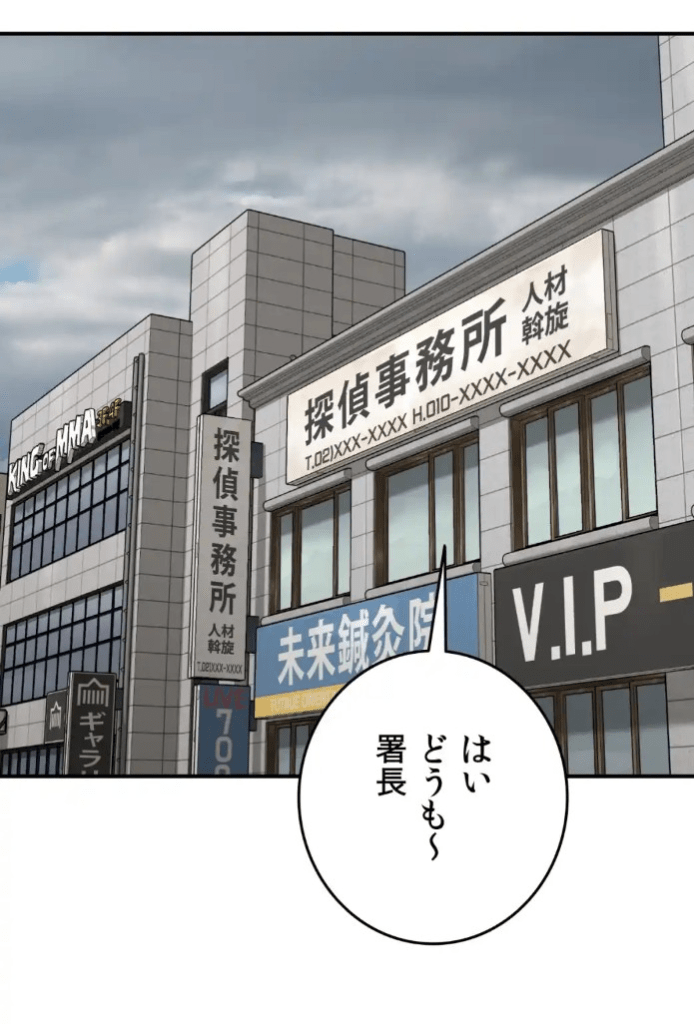
even labeled the place as a “detective agency,” a term that evokes investigation, surveillance, and the gathering of information. At first glance, the presence of such an office might suggest a professional organization specialized in surveillance and intelligence gathering. Earlier in the story, this is precisely the impression the narrative created. Kim Dan’s background was carefully investigated: photographs were secretly taken, a dossier was assembled, and details about his personal life were documented 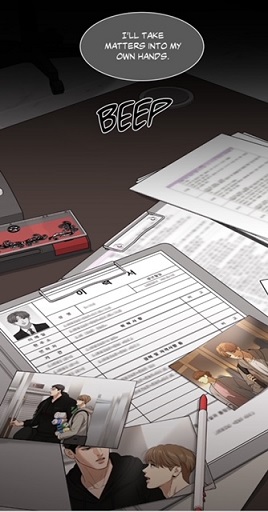 (chapter 46). The operation looked methodical, almost professional, as if a genuine investigative agency had been hired to monitor the champion’s environment.
Yet, the office scene in chapter 93 quietly dismantles that illusion. (chapter 93) Choi Gilseok, Heo Manwook and his minions are not behaving like investigators at all. No one is collecting new information. No one is analyzing evidence. Instead, the conversation revolves around debts, payments, and damage control. The supposed detective agency suddenly looks much closer to what it truly is: a loan shark operation that had previously hidden behind the façade of investigation. (chapter 93)
This shift becomes particularly visible in the dialogue between the director of King of MMA and Heo Manwook. The latter asks whether the situation has been “sorted.” (chapter 93) The reply reveals the underlying problem: they have already spent a considerable amount of money cleaning up the mess connected to Joo Jaekyung. The champion’s televised revelation has created waves. People had to be silenced, favors had to be paid, and the organization now finds itself under financial pressure. Choi Gilseok even admits bluntly that money is tight.
The financial tension visible in the office scene becomes even more revealing when one recalls an earlier accusation made by Heo Manwook in front of Kim Dan. 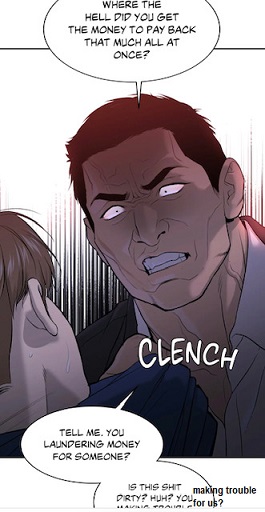 (chapter 11) At that moment, the loan shark explicitly raised the possibility of money laundering. This detail suddenly casts the entire network in a different light. The illegal gambling operations visible on Heo Manwook’s computer are therefore not merely a source of profit; they may also serve as a mechanism through which larger sums of money circulate and are quietly reintegrated into the legal economy.
 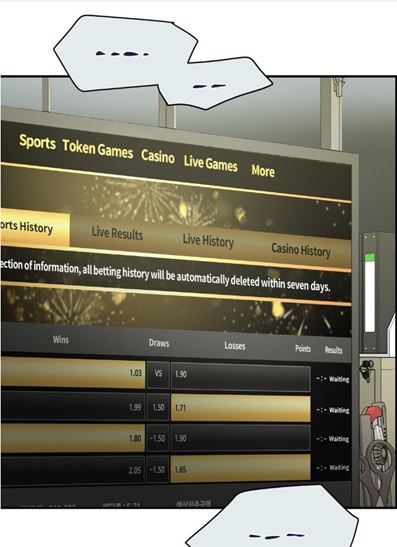 (chapter 46) In this structure, Choi Gilseok himself appears less like the true mastermind than another intermediary in a much larger financial chain.
In episode 48, Gilseok revealed that his activities were connected to a parent pharmaceutical company (chapter 48), suggesting that the underground fights and betting operations might ultimately serve broader corporate interests. Yet the director of King of MMA does not behave as a purely obedient subordinate either. 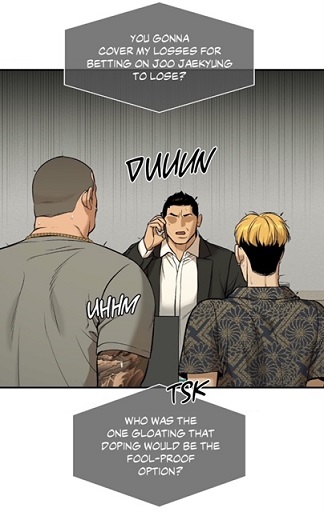 (chapter 46) In chapter 46, he was already acting behind the back of that parent company, manipulating events to influence the outcome of the fight. Later developments—such as the conversation at the café with Kim Dan and the suspicious use of the spray—suggest that he may eventually have received support from that higher structure.
  (chapter 49) At the same time, however, the director of the gym clearly took personal risks. By secretly betting on the “underdog”
  (chapter 52) and manipulating the situation through the switched spray, he appears to have pursued his own strategy within the system.
This double game helps explain why the organization now finds itself under financial strain. The fake director of the gym was not simply executing orders; he was gambling within the laundering mechanism itself. When Joo Jaekyung publicly exposed the situation on television, the carefully balanced financial structure began to wobble. Joo Jaekyung’s public provocation therefore did more than damage reputations—it interfered with the flow of money itself, forcing the network to spend resources on bribes and damage control while threatening the laundering pipeline that sustained it. Yet earlier in the story, the logic had been very different. As Park Namwook once remarked, Jaekyung’s fame made him the fighter who would “rake in the most cash.”  (chapter 46) In other words, the champion was originally the system’s most valuable asset. His visibility and reputation attracted attention, betting activity, and therefore profit. However, once he disrupted the carefully orchestrated mechanisms behind the fights, that same visibility became dangerous. The athlete who once generated the most revenue suddenly turned into the network’s greatest liability. From that moment onward, the logic of profit shifted into the logic of elimination.
The sequence of panels reveals another layer of the network. Choi Gilseok is first shown speaking with a person (chapter 93) who may be connected to the police in a surprisingly casual tone, thanking him and even suggesting they play golf together. The expression “I’m glad it arrived safely” implies that the unknown person must have received some hush money. Rather than a confrontation between criminals and investigators, the conversation suggests familiarity and mutual benefit. Only later does he mention that they need to “wrap this up before the fuzz makes a move.” On the surface, this sounds like fear of law enforcement, but placed after the friendly phone call, the line reads less like genuine concern and more like a reminder to settle matters quickly before any official attention becomes inconvenient. In other words, they are attempting to buy some time, to interfere in the investigation so that they don’t get caught.
This moment becomes even more intriguing when one remembers an earlier scene involving Yosep. 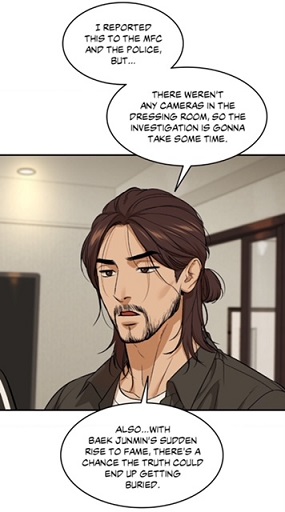 (chapter 52) After the dressing-room incident, Yosep reported the situation to both the MFC and the police, turning this incident into an official and legal issue. Yet the investigation immediately encountered a convenient obstacle: there were no cameras in the dressing room, meaning the case would take time to resolve. If the officer Choi Gilseok is speaking with belongs to the same network (police or MFC), the investigation itself may already be entangled in the system it is supposed to expose. But the revelation in the media made it impossible to bury it for good, as it was exposed to the “world”.
But there is another visual clue that deepens this interpretation. (chapter 93) If attentive readers look closely at the surroundings of the office in chapter 93, they will notice the presence of the rival gym King of MMA located next to the loan shark’s headquarters. This small detail quietly reveals the proximity between the world of professional MMA gyms and the underground economy of illegal fights and gambling. The boundary between legitimate sport and criminal activity appears far thinner than it first seemed. The gym known as “King of MMA” stands almost literally beside the loan shark operation, hinting at the structural connections that bind them together.
In this sense, the office scene becomes a place where readers begin to perceive the outlines of a hidden system. Throughout the story, they have witnessed conversations from multiple perspectives: between the protagonists and villains (chapter 48), between the loan shark and the director (chapter 46), and within the MMA world 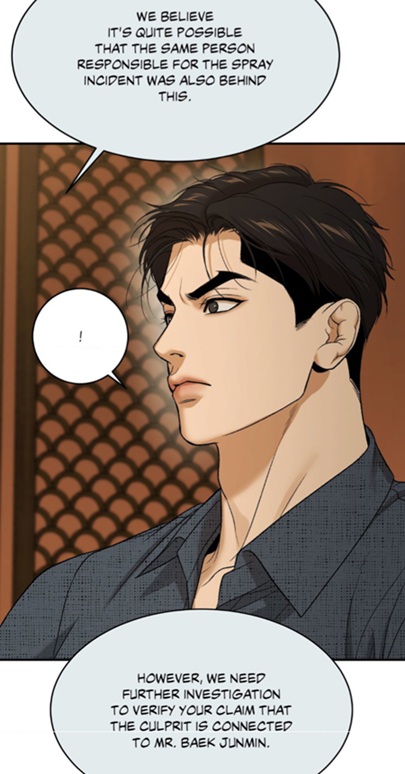 (chapter 69). They know, for instance, that Heo Manwook once misunderstood the name “Team Black,” interpreting it as a brothel rather than a gym
  (chapter 16). Jinx-Lovers have seen fragments of the schemes unfolding behind the scenes and can therefore begin to assemble the existence of several overlapping plots.
And yet, despite these clues, the full picture remains incomplete. One crucial element still escapes both the characters and the audience: the identity of the person who secretly took the photographs of Kim Dan and Joo Jaekyung (chapter 46). If Heo Manwook’s organization—the supposed detective agency—had truly conducted that surveillance, they would already recognize Kim Dan and understand his connection to the gym. Moreover, the earlier phone conversation between the hyung and the loan shark indicates that Choi Gilseok already possessed those photographs while sitting in his own office at the gym. This strongly suggests that the person who gathered that information did not belong to the Errand Center at all.
The office therefore becomes the starting point of a different kind of investigation—not one carried out by the characters inside the story, but by the readers themselves. By piecing together scattered details across multiple chapters, Jinx-lovers gradually uncover the outlines of a conspiracy that none of the individual actors fully control. Somewhere in the shadows,  (chapter 33) (chapter 46)
 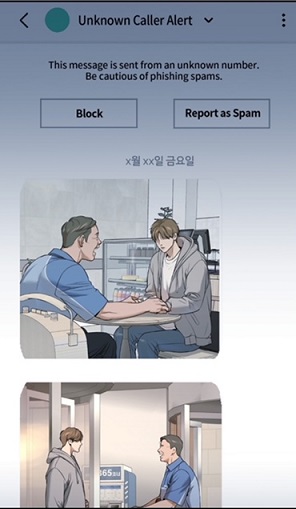 (chapter 48) another observer must exist—someone who collected information long before Choi Gilseok revealed his second scheme to his right-hand. While the men in the office rush to repair their collapsing financial operation (chapter 93), the audience slowly realizes that the true structure behind these events may be far larger than any of them suspect.
Yet in this very moment another development quietly takes place. For once, Baek Junmin does not remain in the shadows behind his hyung, behind Choi Gilseok, or behind the criminal hierarchy. 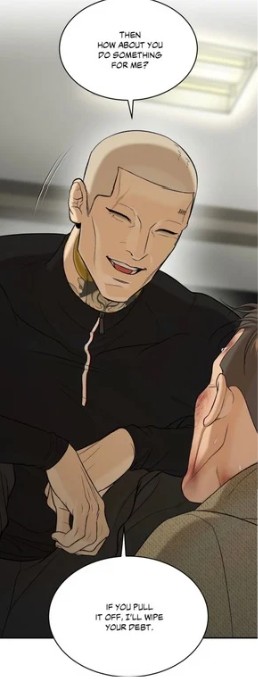 (chapter 93) He speaks himself. Addressing the disgraced hospital director, he offers to erase the man’s debt—on the condition that he carries out a task for him.
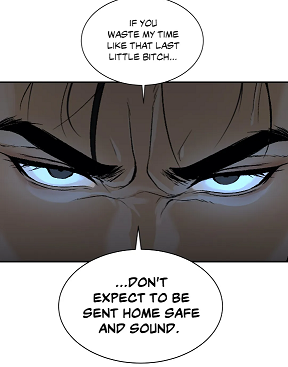
 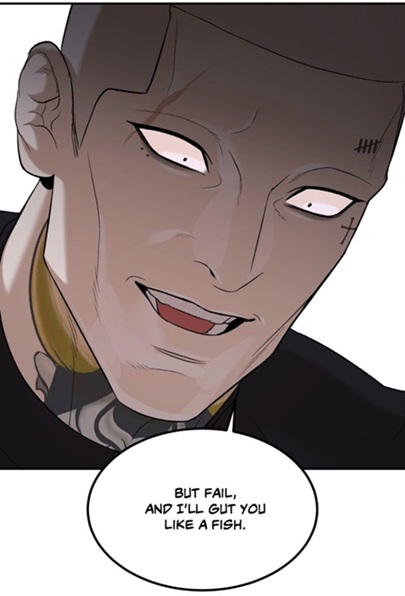 (chapter 93) The threat that accompanies the proposal is unmistakable: failure will be punished with death.
In doing so, Junmin transforms the doctor’s debt into an instrument of coercion. (chapter 93) The indebted man is no longer merely a victim of the loan-shark system; he is being recruited as an expendable agent within a new scheme. Ironically, this moment also marks the point where Junmin unknowingly pulls another institution into the conspiracy. 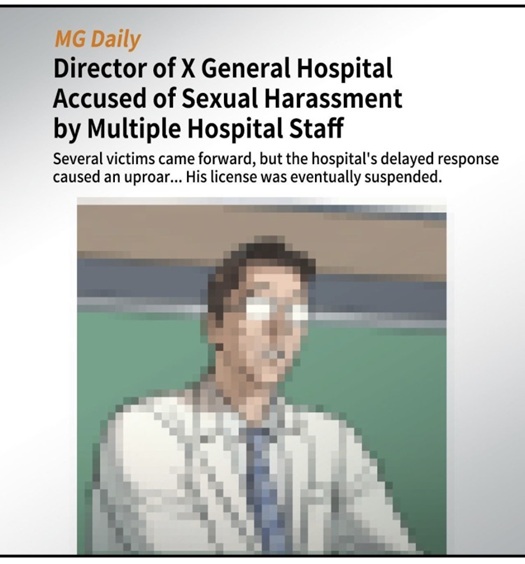 (chapter 91) By involving a former medical authority in an illegal act, he brings the corrupted medical world to the surface and connects it directly to the network of underground betting and money laundering.
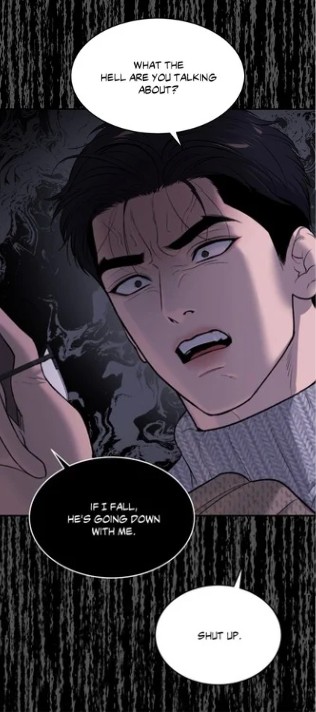
What Junmin likely perceives as a safe and clever manipulation may therefore function as something far more dangerous. By offering to erase the doctor’s debt in exchange for a task, he believes he can remain safely removed from the action itself. 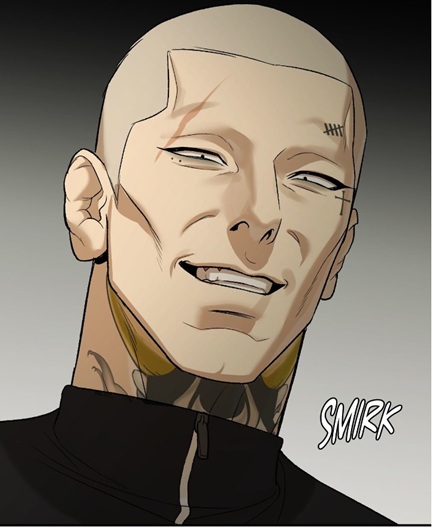 (chapter 93) That’s why he is smirking. The wrongdoing will be carried out by someone else, allowing him to stay in the shadows as he always has. Yet Junmin underestimates the weight of his own words. (chapter 93) In both the criminal and the legal worlds, speech itself carries responsibility. A spoken order, a promise, or even the disclosure of information can create liability. The story has already demonstrated this elsewhere: the leaking of Joo Jaekyung’s patient file triggered legal consequences and led the champion to file a lawsuit against the hospital.
 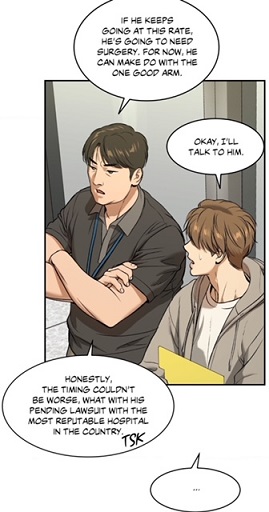 (chapter 42)
Junmin’s proposal therefore does more than recruit a desperate man—it transforms him into the author of the scheme. 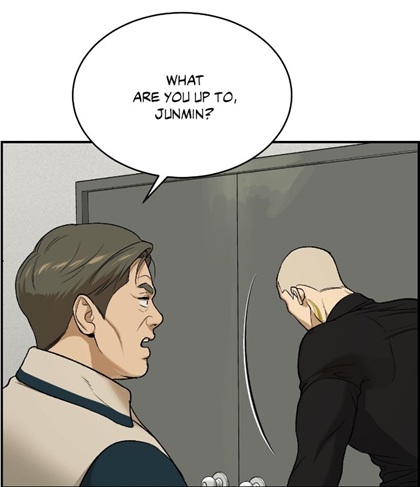 (chapter 93) Hence the director asks him this question. He is now taking the lead. Knowledge and liability become inseparable. Once the doctor accepts the offer, Junmin’s words effectively pull the trigger: the moment the deal is spoken aloud, the hidden system that sustained the illegal fights begins to lose its stability. By drawing the corrupted medical world directly into the operation, the fighter who once thrived in the shadows may in fact become the spark that accelerates the collapse of the entire machine. I would even add, with this new stunt, he is not realizing that he could be blamed for the past crimes (drugged beverage, switched spray etc.).
Heo Manwook – The Hand of the Machine
Before turning to Baek Junmin’s intervention, it is worth examining the role of Heo Manwook more closely. Throughout the story, the loan shark repeatedly threatens the hands of his victims.  (chapter 16) Doc Dan’s hand got crushed and the former hospital warden is warned that he might lose his fingers; thus he might no longer be able to work. (chapter 93) The threat is not random. It reveals the symbolic position Heo Manwook occupies within the criminal structure.
Heo Manwook represents the operational hand of the system. While others design schemes or manipulate financial flows, he executes the violence that keeps the network running. His task is not to think strategically but to enforce obedience: take care of the illegal gambling site 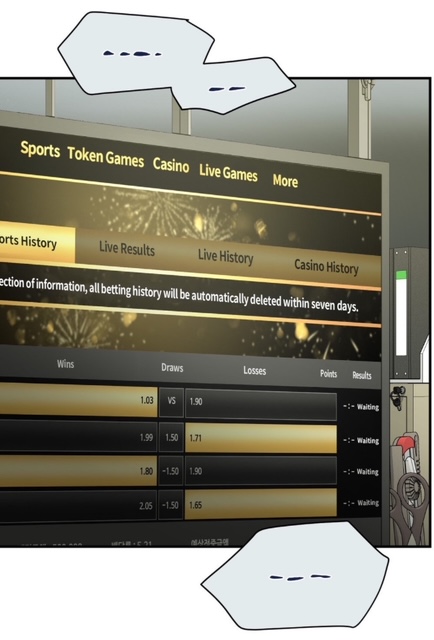 (chapter 46), collect debts
  (chapter 11), intimidate victims, and ensure that money continues to circulate through the laundering mechanism. In this sense, the repeated focus on hands and fingers becomes meaningful.
The hand is the instrument of action 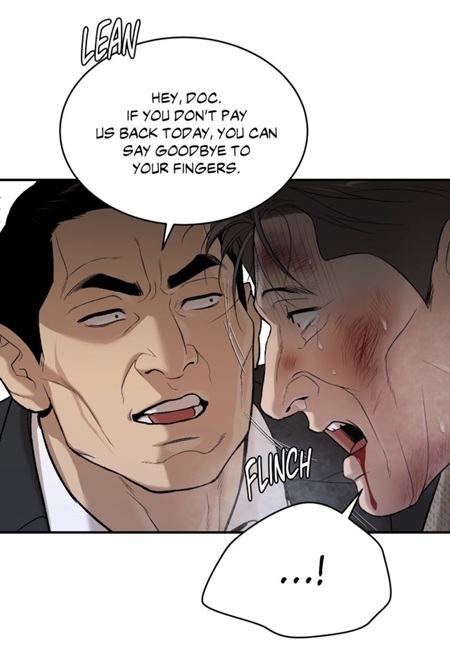 (chapter 93) —the part of the body that allows people to work and generate the very income he seeks to extract. By threatening to destroy his victims’ hands, however, Heo Manwook undermines that capacity himself. The gesture exposes a certain narrow-mindedness: his violence contradicts the economic logic he is supposed to enforce, revealing not only his cruelty but also him as an enforcer who acts impulsively rather than strategically.
Yet the irony of his position becomes increasingly visible. Although he runs what appears to be a “detective agency,” he repeatedly demonstrates an inability to perform the most basic function of investigation. (chapter 11) When he confronts Kim Dan about the origin of the money used to repay his debt, he does not rely on financial records or systematic research. Instead, he interrogates the doctor through intimidation and violence. The encounter in episode 16 occurs almost by coincidence, when he meets Kim Dan on the street and hears about his imminent moving  (chapter 16) rather than locating him through documentation or surveillance. This observation corroborates my previous deduction: he is not the one following the physical therapist in secret and taking pictures of him. Secondly, observe his reaction, when he reads the money transfer:
 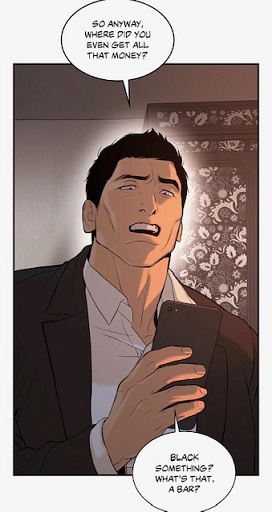 (chapter 16) The loan shark reads the name quickly or without interest, so that he can only remember the most striking word. In this case, “Black” stands out, while “Team”—a generic word—disappears from his memory. So his phrasing suggests he did not pay attention to the full name. This displays his lack of professionalism. He doesn’t investigate carefully.
Even his interpretation of evidence proves unreliable. Upon seeing the name “Team Black,” his minions and Heo Manwook quickly assume that it refers to a brothel.  (chapter 16) Instead of verifying the information, he projects his own criminal assumptions onto the situation. (chapter 16) The supposed detective agency therefore produces not knowledge but distortion. Rather than gathering reliable intelligence, it generates blind spots that weaken the entire network. In this sense, the situation ironically echoes the logic behind The Man Who Knew Too Much. In Hitchcock’s story, the danger lies in possessing knowledge that exposes a hidden conspiracy. In Heo Manwook’s case, however, the problem emerges from a different form of knowledge: experience. Years of operating in the criminal underworld have convinced him that he already understands how the world works. Hence he misjudged the champion’s skills.
 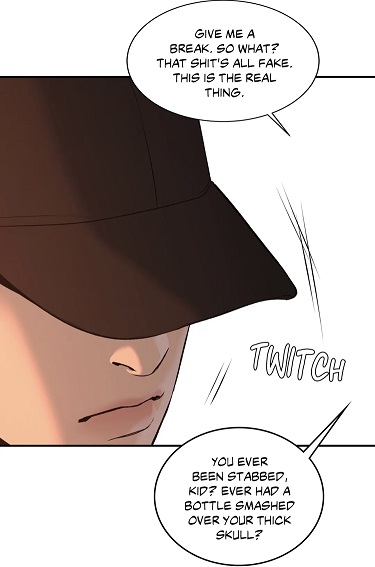 (chapter 17) Instead of investigating carefully, he interprets every new piece of information through the lens of his past encounters and knowledge. His boss is rigging fights, so the others must do the same. When confronted with the name “Team Black,” he immediately assumes it must refer to a bar or brothel. What appears to be practical experience therefore becomes a liability. The man who believes he knows reality best may in fact be the one most vulnerable to misreading it.
This failure becomes particularly significant when one considers his connections to the medical underworld. During his threats, Heo Manwook casually refers to organ trafficking (chapter 93), suggesting that his operations intersect with the shadow side of the medical system. Such activities require the knowledge and complicity of doctors. The earlier intimidation of Kim Dan and the threats directed toward his grandmother (chapter 11)  (chapter 16) demonstrate that Heo Manwook was already operating within that gray zone where medicine, crime, and financial exploitation overlap. It is therefore not surprising that the disgraced hospital director later appears within this environment. The medical world has long been entangled with the loan shark’s activities and this through Choi Gilseok who has a connection to a pharmaceutical company.
At the same time, however, Heo Manwook himself occupies a precarious position within the hierarchy. Although he runs the office and commands his subordinates, his authority is ultimately dependent on Choi Gilseok. (chapter 46) The phone calls between the two reveal a relationship defined by obedience. When Choi Gilseok reprimands him for the failed scheme, Heo Manwook immediately accepts the criticism and follows his orders.  (chapter 46) The “hand” of the organization may execute violence, but it does not decide the strategy.
Visually, the story even reflects his gradual loss of power. Earlier confrontations often depict Heo Manwook towering over his victim  (chapter 16), emphasizing the asymmetry between predator and prey. Yet when he threatens the disgraced hospital director, the composition changes subtly. (chapter 93) The two men are positioned almost at eye level, confronting one another on the same plane. The shift is striking. The man who once dominated every encounter now appears lowered, forced into a confrontation with someone who mirrors his own corruption. The hierarchy begins to flatten. This visual transformation acquires an additional meaning when one recalls Joo Jaekyung’s realization in episode 91.
 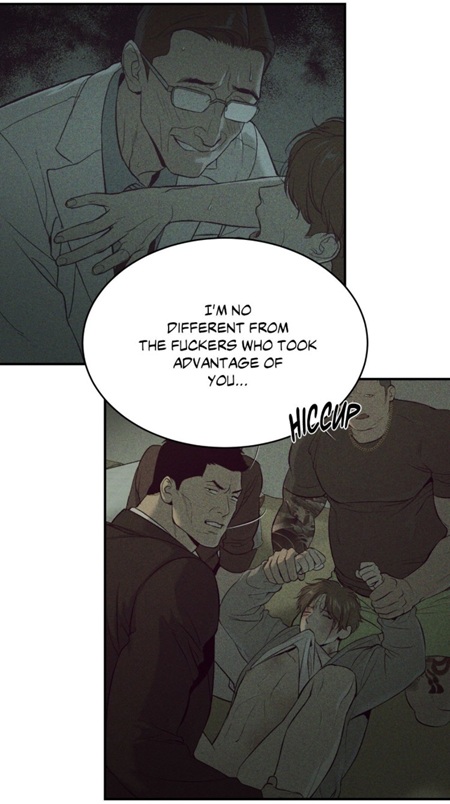 (chapter 91) Reflecting on the men who had abused Kim Dan, the champion bitterly admits that he is “no different from the fuckers who took advantage of you.” Although Jaekyung is still unaware that Heo Manwook actually attempted to rape Kim Dan earlier in the story, the scene nevertheless establishes an unsettling parallel between different forms of abuse of power. The disgraced hospital director exploited his authority as a physician, while the loan shark uses violence and intimidation to dominate his victim. Both belong to the same shadow world where institutional positions become instruments of exploitation.
In this sense, Heo Manwook also resembles another figure hinted at by the narrative’s broader thematic references: the “man who knew too much.” As the operator of the supposed detective agency, 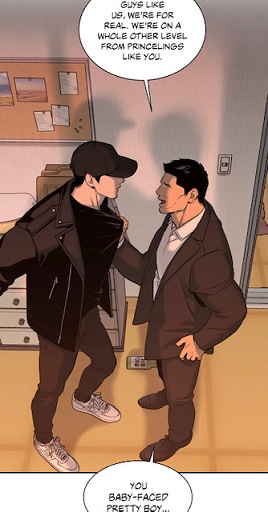 (chapter 17) he possesses extensive knowledge about the hidden mechanisms of the criminal network — rigging fights, illegal betting, debt collection, organ trafficking, and even the exploitation of vulnerable individuals. Yet this knowledge does not grant him control; instead, it entangles him more deeply in the system’s corruption. The more he knows about its secrets, the less clearly he perceives reality. Years of operating within the criminal network have isolated him from the logic of the legal world. Surrounded by corruption, intimidation, and bribery, he gradually begins to believe that these mechanisms can shield him from any real consequences. The knowledge that once gave him power therefore becomes a distortion: it convinces him that he can act with impunity, imagining that the system protecting him will always remain intact. What once appeared to be power gradually reveals itself as liability. I would even add. This protection could only function as long as the system itself continued to run smoothly. It depended on the uninterrupted flow of money circulating through the laundering network. The moment that flow is endangered—when bets collapse, scandals emerge, and funds begin to disappear—the shield of protection weakens. Figures such as the director of the gym and the loan shark suddenly become far more exposed than before.
Another recurring element reinforces this tension: the knife. Earlier in the story, Heo Manwook is already associated with the sudden appearance of a blade during his confrontation with Joo Jaekyung. 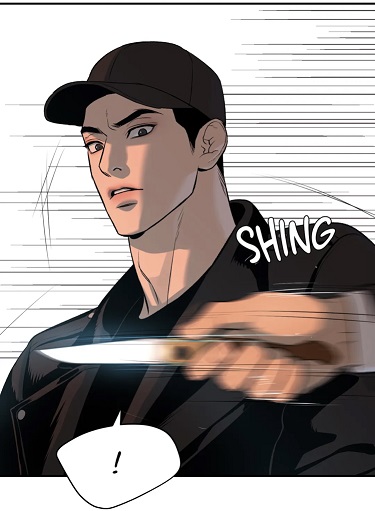 (chapter 17) The weapon signals impulsive violence rather than calculated strategy.
 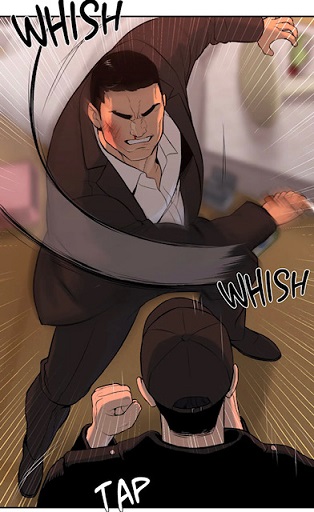 (chapter 17) The knife belongs to the realm of direct physical force—the crude instrument of someone who acts rather than plans. At the same time, this weapon reveals why Heo Manwook believes that his power and strength are real. The latter stands for ultimate violence, someone can die with such a weapon. However, like exposed in a previous essay, MMA fighters can still die with bare hands. A wrong move or a mistake …
  (chapter 25)
Striking is that the attack with the knife did not occur in an open fight. (chapter 17) Instead, the weapon appeared abruptly from behind, transforming the encounter into an act of treachery rather than a fair confrontation. The knife therefore becomes a symbol of unfairness, backstabbing and betrayal. Rather than representing courage or open combat, the weapon exposes the opposite: deception, hypocrisy, and cowardice. Heo Manwook and his men do not confront their victims openly. Instead, they rely on tools—blades, bats, and intimidation—to frighten and wound those who cannot defend themselves.
This symbolism becomes even more striking when placed next to Baek Junmin’s later threat toward the disgraced hospital director. (chapter 93) When Junmin swears to “gut him like a fish,” the language itself evokes the imagery of a blade. Even though no weapon appears in the panel, the metaphor unmistakably suggests the act of cutting open a body. The threat therefore carries the same symbolic weight as the earlier knife attack: violence delivered through sudden, treacherous intervention rather than through open confrontation.
At the same time, Baek Junmin’s words unintentionally reveal something about the world he comes from. Earlier conversations among fighters hint that illegal matches often involve hidden weapons and brutal ambushes rather than regulated combat. 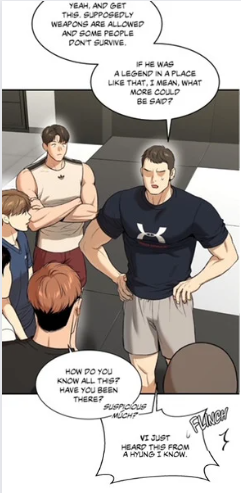 (chapter 47) The underground arena operates according to entirely different rules, where knives are not anomalies but part of the environment. In this sense, Junmin’s threat does more than intimidate the former hospital director—it exposes the violent logic of the system that produced him.
This background also helps explain the visual markers associated with the fighter himself. (chapter 93) The scar crossing his face suggests past encounters with blades, while the demon tattoo carrying a knife in its mouth reinforces the imagery of violence as an ever-present companion. In the world of illegal fights, the blade is not merely a weapon. It is a sign of survival within a system where betrayal, ambush, and hidden violence are part of the rules.
Seen from this perspective, the knife becomes a recurring motif that links several narrative threads: the cowardly intimidation practiced by the loan shark, the brutal culture of underground fights, and the language of threats used by Baek Junmin. Each instance reveals a world where violence is rarely honorable. Hence it is rather fake, though both men believe that they are “real” and as such “strong”. Instead, it appears as something sudden, concealed, and treacherous—an instrument of systems that operate in the shadows rather than in the open.
Ironically, the greatest vulnerability of the loan shark is not a rival fighter, the police, or even the collapsing betting scheme. His true Achilles’ heel lies in a far more mundane object: the cellphone and as such the digital world. From the beginning, Heo Manwook demonstrates a profound distrust of digital evidence. Even after Kim Dan transfers the expected amount of money for the month,  (chapter 11) the loan shark refuses to rely on the transaction itself. Instead of trusting the digital record, he personally visits Kim Dan and continues the physical abuse. In his worldview, confirmation must come through intimidation rather than documentation.
Yet this instinct reveals a crucial blind spot. The system he participates in increasingly operates through precisely the kind of digital traces he refuses to respect. 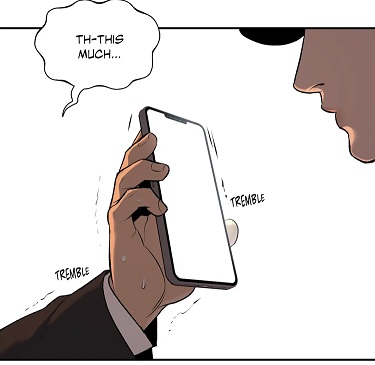 (chapter 17) When Joo Jaekyung later transfers the money directly to him using his own phone
  (chapter 17), the transaction itself becomes a form of evidence. What Heo Manwook perceives merely as a convenient payment leaves behind a record — one that cannot be erased by violence. The phone quietly transforms the power dynamic: intimidation may silence witnesses, but it cannot erase a transaction history.
This weakness becomes even more visible when the narrative contrasts his behavior with Joo Jaekyung’s. 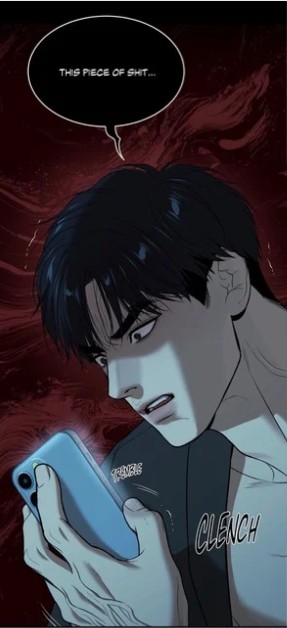 (chapter 91) The champion carefully reads the news article exposing the former hospital director’s crimes. (chapter 91) Through that article, the audience learns that the man’s medical license has already been suspended.
Heo Manwook, however, never appears to read this information. (chapter 93) When confronting the disgraced hospital administrator, he still addresses him as “doctor.” He still thinks, he can treat patients. (chapter 93) The mistake is revealing. It shows that the loan shark operates not through careful verification but through assumptions and second-hand knowledge.
This vulnerability becomes even clearer inside the office itself. 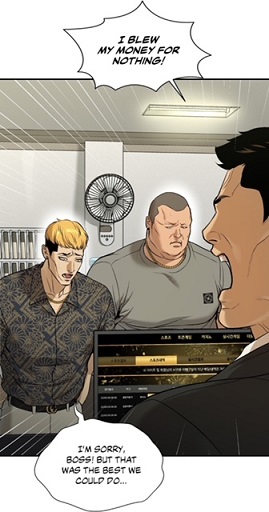 (chapter 46) The computer visible on Heo Manwook’s desk quietly contains a record of the entire operation. The illegal betting site displayed on the screen is not merely a tool for profit; it is also a potential archive of evidence—transactions, accounts, and financial flows that could expose the laundering system. In other words, the machine that allows the network to generate money simultaneously preserves the traces of its crimes.
The question, however, is whether Heo Manwook truly understands this danger. The computer is still on his desk, but this time unused, as he has other things to do. (chapter 93) Throughout the scene he appears less like an independent decision-maker than an obedient intermediary who follows the instructions of Choi Gilseok. (chapter 93) Rather than taking initiative himself, he waits for orders from the director of the gym. This dependency raises a crucial uncertainty: if the system begins to collapse, will he even recognize the need to erase these traces? If not, the very tools that enabled the network’s operations—the phone, the betting platform, the office computer—may ultimately become silent witnesses against him.
For this reason, the interaction with the disgraced doctor marks a turning point. As the system begins to destabilize, the “hand” that once enforced obedience now finds itself confronting forces it cannot fully control. The network’s operational executor is gradually being pushed downward, while another figure—Baek Junmin—steps forward with his own plans. The collision between these two trajectories appears increasingly inevitable.
Baek Junmin – The Man Who thinks Who Knows Everything
If the office scene exposes the true nature of Heo Manwook’s organization, the final figure sitting in that room introduces a different kind of mystery: Baek Junmin. (chapter 93) Unlike the other men present, he appears strangely detached from the conversation unfolding around him. While Heo Manwook and Choi Gilseok discuss debts, payments, and police connections, Junmin shows little interest in the financial urgency dominating the room. Instead, he lounges in the armchair typically reserved for the “CEO” or company owner, casually chewing gum while glancing at his phone.
This posture is revealing. In a room where the others are preoccupied with stabilizing a failing operation, Junmin behaves with the careless ease of someone who feels entitled to the space. The seat he occupies subtly reinforces this impression: he places himself in the position of authority without actually participating in the responsibilities that come with it. The attitude he projects is less that of a strategist and more that of a spoiled child, detached from the consequences of the situation unfolding around him. (chapter 93)
Only when he reaches toward the calendar, does the focus of his attention become clearer: the approaching match. (chapter 93) The fight appears to function as a deadline, a moment toward which his thoughts have been quietly moving while the others worry about debts and bribes. At first glance, this might simply indicate that he is counting down to the fight. Yet the gesture suggests something deeper. Unlike the others in the room, Junmin does not seem to experience time as a practical pressure linked to debts, bribery, or police intervention. His notion of time is psychological rather than material. He is not living in the present urgency of the criminal network; he is still trapped in an older temporal logic shaped by humiliation, resentment, and wounded pride.
This is why the televised revelation matters so much. 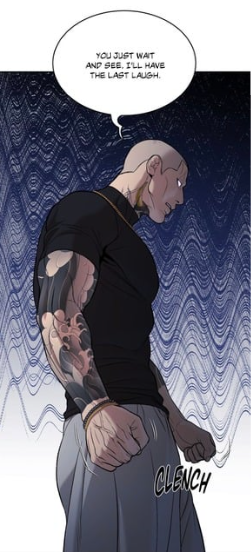 (chapter 87) Joo Jaekyung’s public exposure of the stunt did not merely create financial problems for the organization. It inflicted a fresh narcissistic wound on Junmin himself. The humiliation was public, visible, and impossible to ignore. In that sense, the upcoming match is not only a sporting deadline but also a symbolic countdown: a chance to reverse the humiliation, reclaim his standing, and restore a damaged image. Time, for Junmin, does not move forward in a stable or mature way. It circles obsessively around injury, revenge and shame; he stores it.
(chapter 93) Seen in this light, the gum becomes more than a casual gesture. It reinforces his childishness. Junmin does not cry, does not openly rage, and does not confess weakness. Notice that he is not even training at the gym, though King of MMA is next door. This contrasts so much to Joo Jaekyung who continues to maintain a disciplined routine despite everything. Thanks to his determination, he was able to leave poverty behind and overcome a brutal childhood. As Kim Dan later remarks on the beach, this perseverance is 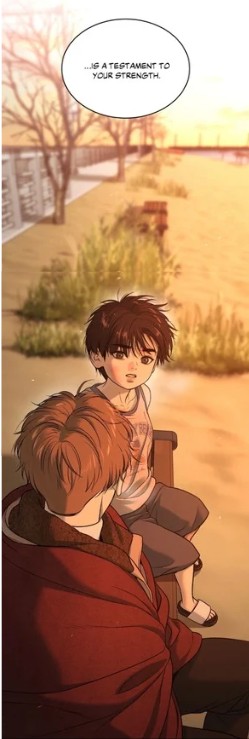 (chapter 94)
The juxtaposition between the Shotgun watching the video (chapter 93) and the quiet conversation on the beach therefore reveals two radically different understandings of strength. For Joo Jaekyung, strength has gradually come to mean endurance: the ability to continue moving forward despite humiliation, hardship, and personal loss. 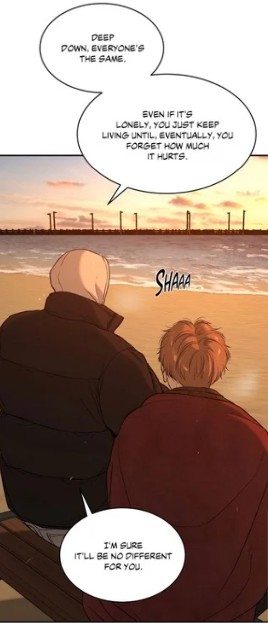 (chapter 94) For Baek Junmin, by contrast, strength remains tied to wounded pride and the desire for retaliation.
Rather than transforming humiliation into growth, he remains trapped within it. This is precisely why his request to the doctor is immediately accompanied by a threat: (chapter 93) The sentence reveals the logic governing his actions. Authority, in his world, is not built on discipline, patience, or competence, but on intimidation. Violence becomes the only language through which he can assert control. In this sense, the panel exposes the profound immaturity behind his performance of indifference. While the champion disciplines his body and confronts his past, Junmin simply reproduces the brutality that once humiliated him.
But let us return to Baek Junmin and the bubble gum. His behavior only makes visible how immature his emotional world remains, exposing a lack of professionalism and inner strength. While the champion disciplines his body and confronts his past, Junmin sits idle, replaying an insult and waiting for an opportunity to restore his pride. The others are trying to save a criminal enterprise under pressure; Junmin is still silently thinking of the insult, fixated on the idea of revenge. Thus I deduce that he is watching Joo Jaekyung’s last match.
This deduction raises another possibility. If Junmin is indeed watching footage of Joo Jaekyung’s last match on his phone, the scene may contain a hidden clue. After that fight, the champion briefly turns toward the outside of the cage and asks someone whether he did well. 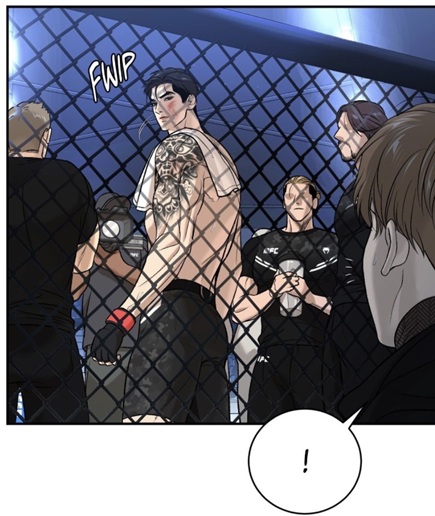 (chapter 87) The moment appears insignificant to most spectators. Yet for someone who already knew the identity of the person standing there, the gesture could reveal something important.
If Junmin had previously followed Kim Dan and taken photographs of him (chapter 46) —as suggested by the anonymous surveillance images circulating earlier in the story—he would immediately recognize the pattern of Joo Jaekyung’s behavior. The champion’s glance toward the cage-side observer would no longer appear random. It would identify the person occupying that position: the physical therapist Kim Dan.
In this sense, the scene may quietly suggest that Baek Junmin already knows more than the other characters in the room. While Heo Manwook and Choi Gilseok remain unaware of Kim Dan’s real identity, Junmin might have been the one who first connected the champion to the young therapist. Doc Dan is the champion’s vulnerability, he has feelings for him. If this interpretation is correct, the invisible wall separating him from the others takes on a new meaning: Junmin is not merely detached from their conversation—he may already possess information that they do not.
Yet another detail complicates the situation even further. (chapter 93) Throughout the entire scene, Baek Junmin remains silent—but silence does not necessarily mean ignorance. While Heo Manwook and Choi Gilseok are focused on collecting money and resolving immediate problems, Junmin is still present in the room, quietly hearing everything that is being said.
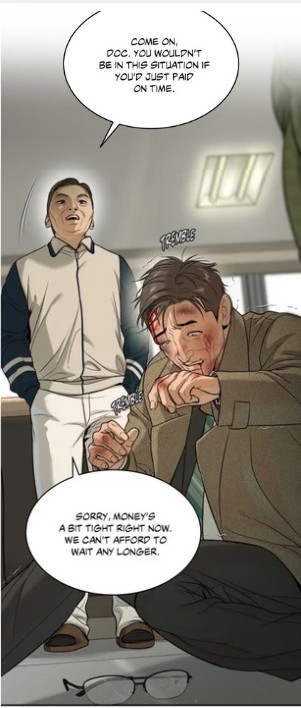
One particular detail may therefore become significant: the repeated references to a “doctor.” The man being pressured by the loan sharks is clearly identifiable as the former hospital director who once fired Kim Dan. (chapter 93) His appearance leaves little doubt—he wears the same clothes and glasses seen in earlier chapters. 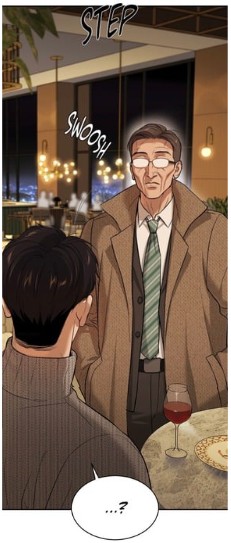 (chapter 90) The only difference is the loss of his spectacles. They are not only broken, but also lying next to him. The loss of his glasses mirrors his situation: he is forced to face reality and as such he is discovering the true reasons behind doc Dan’s greed: despair and fear in front of the loan shark.
 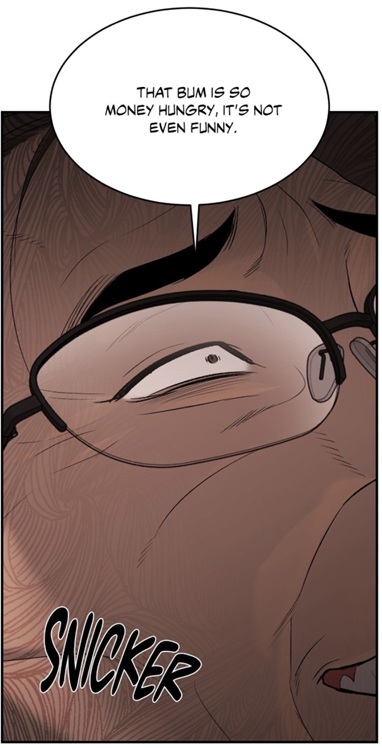 (chapter 90) One could say, he is now receiving his karma. Like mentioned above, the behavior and words of the men (chapter 93) confronting him suggests that they are not left in the dark concerning the situation of the perverted hospital director. They are not truly interested in investigating his work place. Choi Gilseok and Heo Manwook appear not only impatient, but they don’t question his social status. Rather than asking questions about the man’s circumstances, he simply pressures him to produce money.
This urgency is revealing. If the loan sharks had taken the time to examine the man’s background carefully, they would almost certainly have discovered the recent scandal surrounding him. (chapter 91) An article had already exposed the accusations of sexual harassment and the suspension of his medical license. If Heo Manwook and Choi Gilseok had read that report, their reaction would likely have been very different. A disgraced doctor without a license represents a debtor with extremely limited means of repayment. Under normal circumstances, they would immediately question how he intended to pay them back.
The fact that they do not ask such questions suggests that they simply do not know. They are rushing the process, focused on immediate cash rather than information. Their attention is consumed by the financial damage caused by Joo Jaekyung’s televised revelation, leaving them little time to investigate the background of the man sitting in front of them.
But Baek Junmin’s position in the room is different. Unlike the others, he is not distracted by money or debts. While pretending to be uninterested—chewing gum and staring at his phone—he may in fact be absorbing every detail of the conversation. If Junmin has already connected Kim Dan to Joo Jaekyung, hearing the word “doctor” in this context could suddenly activate an entirely new chain of associations.
In that sense, the scene may represent a crucial turning point. The loan sharks believe they are merely collecting a debt. Yet the presence of the former hospital director introduces a piece of information that may be far more valuable than money. The moment Junmin realizes who this man is, a doctor, then he can jump to the conclusion that he represents a good tool against Joo Jaekyung and Kim Dan. The question is: did he read the news and does he know what role he once played in Kim Dan’s life (the sexual harassment)?, especially if he was the one following doc Dan. I have my doubt about it, as he could never forget the humiliation on TV. Moreover, let’s not forget that officially, the main lead got “fired” after the incident leaving a stain on his resume. 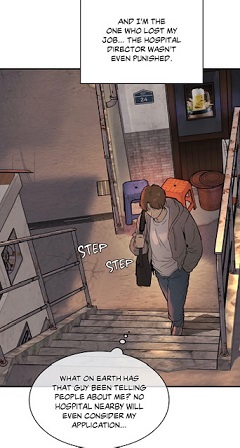 (chapter 1) So what did he hear at the office the whole time? (chapter 93) Doctor, doctor… And why did Joo Jaekyung speak about the prank in the first place? It was for Doc Dan’s sake and to restore his honor.
 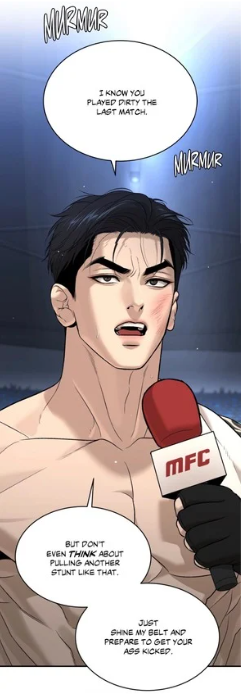 (chapter 87) Joo Jaekyung came to the conclusion that the prank had destroyed Doc Dan.
 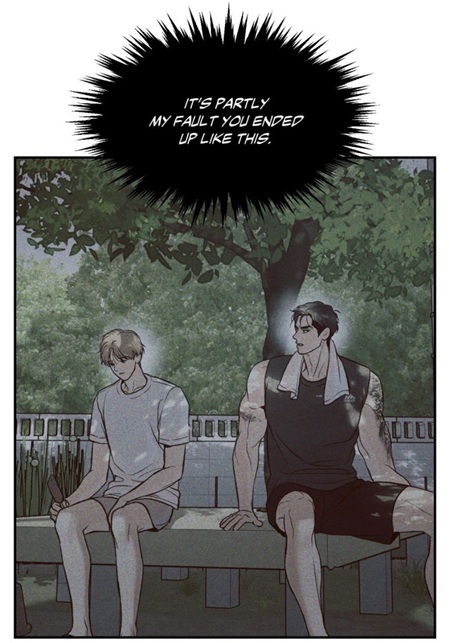 (chapter 91) Thus I deduce that the physical therapist has become the real target of the next plot.
Yet Junmin’s behavior reveals another pattern that runs consistently through the narrative: he rarely confronts his enemies directly. Instead, he repeatedly hides behind authority.
Earlier in the story, he invokes the protection of his mysterious “hyung.” 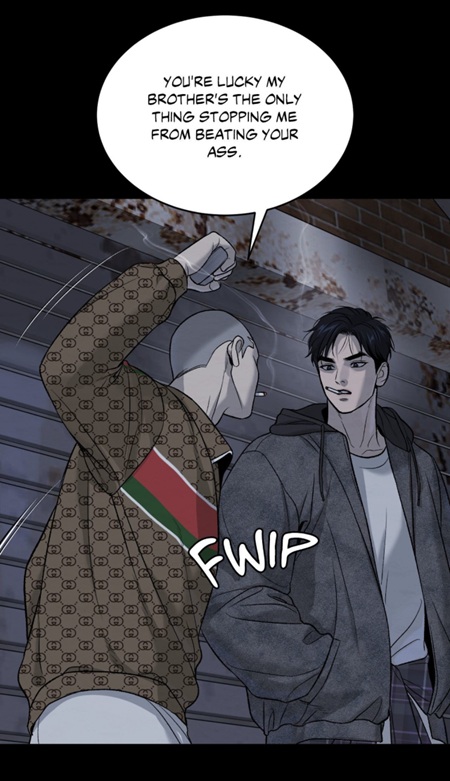 (chapter 74) Later, he relies on Choi Gilseok to approach Joo Jaekyung with an offer (chapter 48) designed to manipulate the outcome of the fight. When the doctor rejects the offer, the scheme unfolds in a different way. The manipulation involves not only gambling but also medical interference — the suspicious spray used during the match and Choi Gilseok brought it himself and gave it to one of his members.
 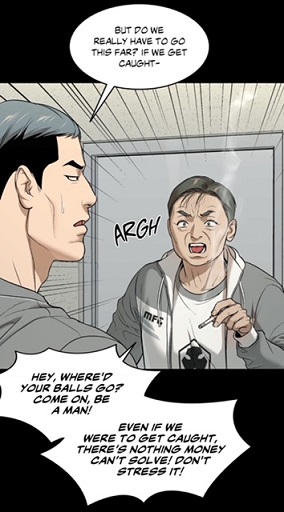 (chapter 50)
The same logic appears within the institutional framework of the sport. The CEO of the MFC openly praises 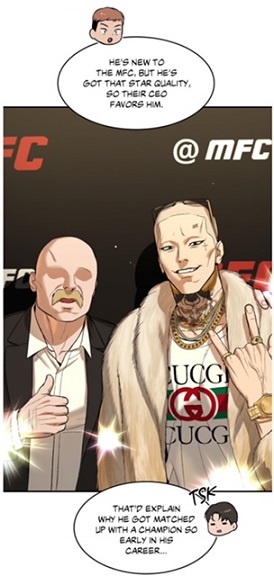 (chapter 47) Junmin’s “star quality” and supports his rapid rise within the organization. Such endorsement provides him with a form of institutional legitimacy that shields him from direct scrutiny. His authority does not come from discipline or merit alone but from the structures that elevate and protect him. And observe how the lady in red protected the “champion’s reputation”. (chapter 69)
Even the medical system itself appears to participate in these manipulations. In episode 41, the medics clear Joo Jaekyung to fight  (chapter 41), though it was clear that the champion’s shoulder condition had worsened.
 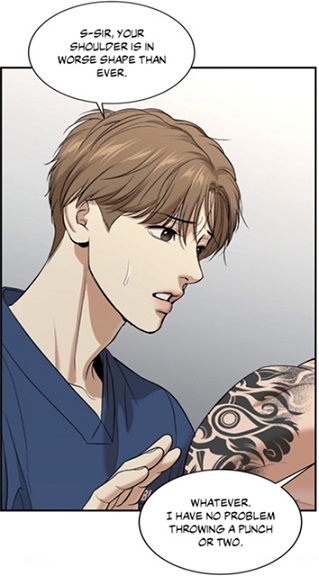 (chapter 41) The official report contradicts the observations of the physical therapist. Moreover, they had allowed the fight, though the athlete’s foot had been injured.
 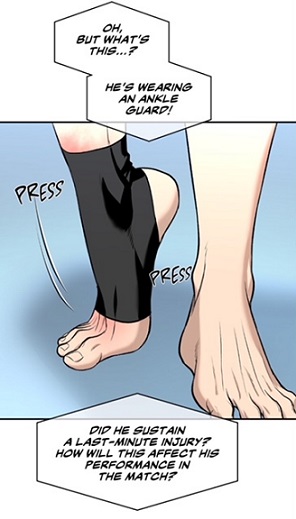 (chapter 50) Later, after the match, the examination of the fighters at the health center takes place in conditions that clearly lack privacy
 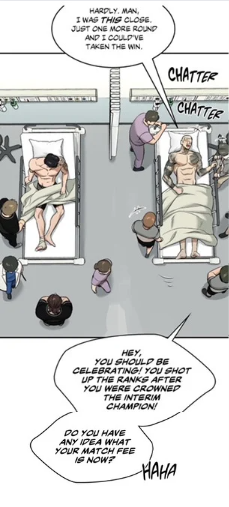 (chapter 52) : there are no curtains separating the athletes during their medical checks and treatment. This unusual setup allows information to circulate freely between competitors. Authority, rather than truth, determines the outcome.
This pattern repeats again in the media narrative that follows the fight.  (chapter 54) Experts criticize the champion’s decision to fight despite his condition, and news reports emphasize the financial damage caused by his brawl and declining brand value.
  (chapter 54) Responsibility is gradually shifted away from the structures that enabled the situation and toward the fighter himself.
Seen together, these elements reveal Junmin’s true modus operandi. Rather than confronting his opponents directly, he operates through a chain of authorities: criminal patrons, gym directors, corporate executives, and medical institutions. Each layer provides protection while simultaneously distancing him from direct responsibility. Violence, manipulation, and reputation damage are carried out by others, while Junmin remains positioned just outside the immediate line of accountability.
Seen in this light, the presence of the disgraced hospital director in the office may represent a new opportunity for the Shotgun. While Heo Manwook and Choi Gilseok focus only on collecting a debt, Junmin may recognize a different potential. The man in front of them is not merely a debtor. He is a doctor — a figure associated with knowledge, prestige, and institutional authority.
If such a figure could be used to shift blame onto Kim Dan, the consequences would be devastating. The young physical therapist already occupies a vulnerable social position: he comes from poverty, lacks institutional protection, and carries the stigma of having been dismissed from the hospital (chapter 1) and even he made a “mistake” at the Light of Hope once. 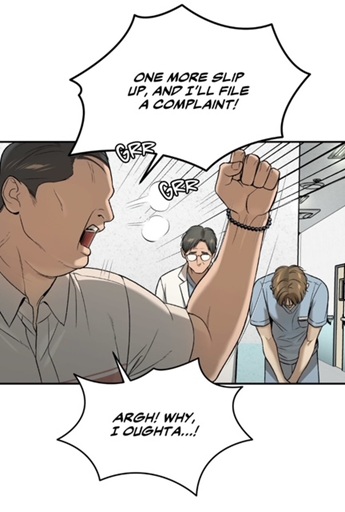 (chapter 59) Finally, because of the perverted hospital warden’s assault, the main lead ended up blacklisted. He could never get hired at another hospital. If the narrative surrounding the injury were manipulated, the responsibility for Joo Jaekyung’s worsening condition and the schedules could easily be redirected toward him.
Several elements would support such a strategy. Though the doctor protested, the champion nevertheless continued to fight and used the report from MFC doctors as justification. In a manipulated narrative, these facts could be rearranged to suggest that the inexperienced therapist had mismanaged the situation.
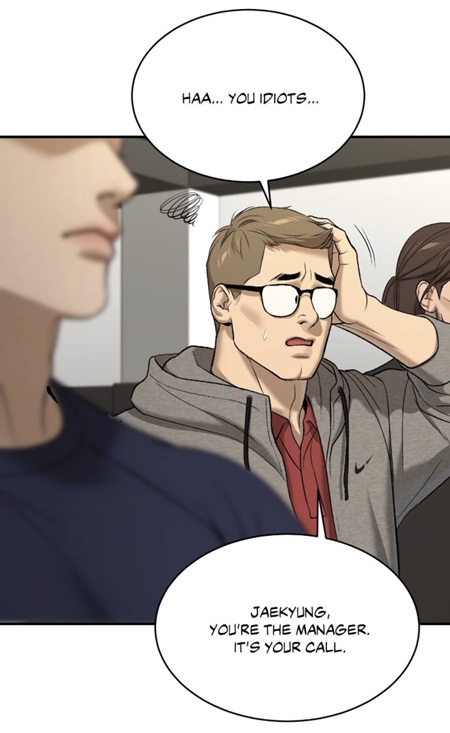
This possibility becomes even more disturbing when one considers Park Namwook’s role within the system.  (chapter 46) Throughout the story, the coach frequently appears wearing glasses—a visual symbol traditionally associated with knowledge and clarity. Yet despite this apparent vision, he repeatedly fails to recognize the dangers surrounding Joo Jaekyung. As the champion’s manager, Park Namwook is responsible for organizing his schedule and protecting his long-term career. In principle, this role should place him in the position of a guardian. But he does not intervene
  (chapter 41), he just stands by his side.
In practice, however, the opposite often occurs. Earlier in the story, Joo Jaekyung openly questions why he was scheduled for so many events in the first place.  (chapter 17) Instead of acting as a protective barrier between the athlete and the pressures of the industry, Park Namwook frequently defers to the logic of the organization. When the CEO of MFC later invites the champion to an important meeting, the coach encourages him to attend, once again placing institutional expectations above caution.
  (chapter 69) In this sense, Park Namwook’s authority begins to resemble the same pattern visible in Baek Junmin’s behavior: responsibility is repeatedly shifted upward toward the organization MFC or Joo Jaekyung as the owner of Team Black
  (chapter 88)
The result is a chain of authority in which no single actor fully accepts responsibility. The manager defers to the organization (MFC or the star), the organization relies on medical clearance, and the medical staff produce reports that legitimize risky decisions  (chapter 61). Each layer appears authoritative, yet together they create a system in which accountability becomes blurred.
Baek Junmin’s strategy exploits precisely this weakness. By bringing the disgraced hospital director into the situation, he introduces a figure whose authority once belonged to the medical world itself. The newspaper article reveals that the hospital had tolerated the director’s abusive behavior for a considerable time before finally suspending his license under public pressure. (chapter 91) In other words, the institution protected him as long as the scandal remained manageable. Only when external scrutiny became unavoidable did the hospital distance itself from him. Hence his face got almost exposed.
Seen from this perspective, Junmin’s decision to involve the former doctor does not merely introduce a new accomplice. It exposes the deeper corruption already present within the medical system. The “rotten apple” did not emerge from nowhere; he was produced and sheltered by the institution that now claims to reject him.
This development creates a dangerous convergence between two worlds: the criminal network surrounding illegal fights and the institutional structures of sport and medicine. By aligning himself with the disgraced doctor, Junmin believes that he is protecting himself, unaware that he is effectively importing the corruption of the medical sphere into the arena of professional fighting and as such endangering his own position. The boundaries separating criminal manipulation, corporate interests, and medical authority begin to collapse.
In that sense, the situation no longer concerns only a personal rivalry between fighters. It reveals the fragility of the entire system surrounding the champion. The figures who should protect him—the manager, the organization, and the medical staff—are themselves embedded in structures that can be manipulated.
At this point, Baek Junmin’s nickname begins to acquire a deeper symbolic meaning.  (chapter 49) A shotgun is not a weapon designed for precision. When fired, it releases multiple pellets that spread across a wide area, striking several targets at once. Junmin’s strategy follows a similar logic. Rather than confronting Joo Jaekyung directly, he destabilizes the structures surrounding him: the media narrative, the medical establishment, the leadership of MFC, and potentially even the champion’s personal relationships. Each move strikes a different layer of the system protecting the fighter. The goal is not a single decisive blow but a gradual weakening of the entire structure around the champion.
Yet this strategy carries an inherent danger. By firing into multiple institutional spheres at once, Junmin risks exposing connections that were previously hidden. The medical world, the fighting organization, and the criminal network surrounding illegal betting are not isolated domains; they intersect. In that sense, Junmin does not merely act like a fighter seeking revenge. At this moment, he becomes “the Shotgun.” The weapon does not only wound a single opponent; it blasts open the structures that conceal corruption. By pulling the trigger, Junmin risks revealing the true nature of MFC, the sport itself and the network of interests surrounding them (the medical world and the pharmaceutical company).
So if this interpretation is correct, the office scene may foreshadow the next stage of the conspiracy. Junmin does not need to attack Joo Jaekyung directly. Instead, he may target the person the champion cares about most.
Kim Dan.
The Disgraced Director – Knowledge as Liability
The appearance of the former hospital director in Heo Manwook’s office introduces another crucial figure into the unfolding conspiracy. 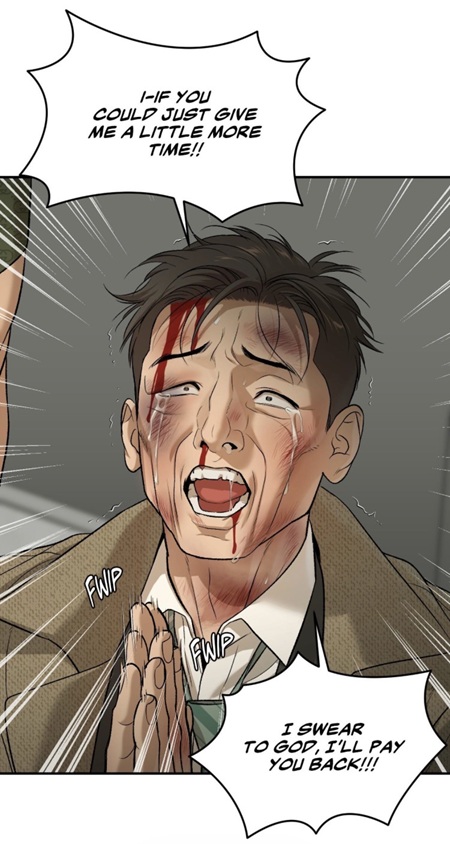 (chapter 93) Unlike the other men in the room, this individual already stands at the intersection of several narrative threads. He knows Kim Dan.
 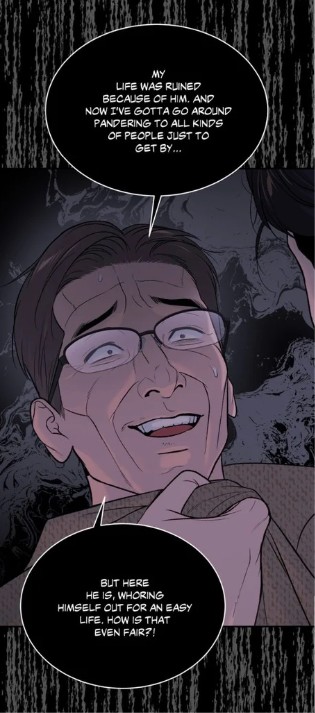 (chapter 90) He has encountered Joo Jaekyung. And he has personally witnessed the dynamics between them.
Yet this knowledge is fundamentally distorted. Because of the circumstances surrounding their earlier encounters, the disgraced director arrived at a false conclusion: he believed that the physical therapist and the champion were romantically involved. Let’s not forget that he had blacklisted him in his career. From his perspective, the young doctor could only be the athlete’s intimate partner rather than his professional caregiver. 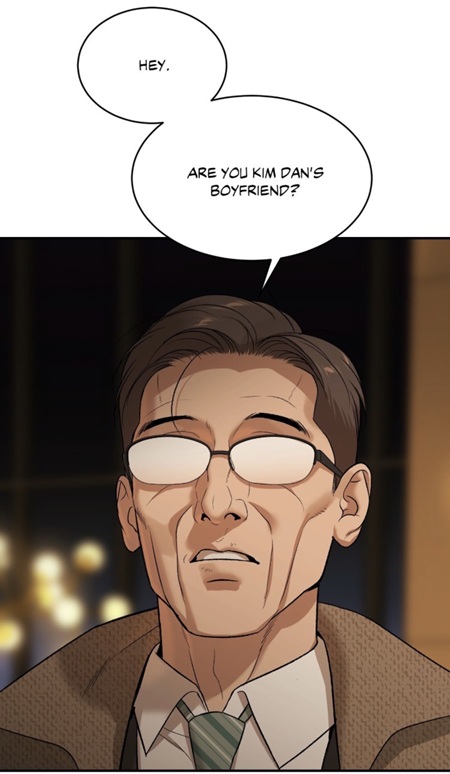 (chapter 90) Secondly, he was doing it for the money, hence he called him a slut.
 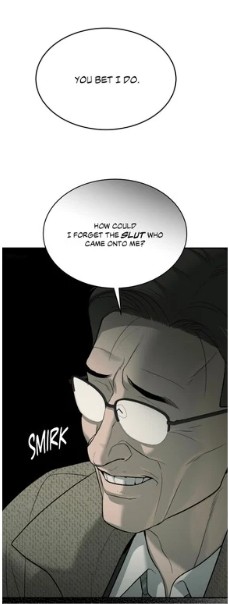 (chapter 90) This misunderstanding fundamentally shapes how he interprets the situation. In this sense, the disgraced director resembles Heo Manwook. Both men rely heavily on their past experiences when judging others. The loan shark assumes that Kim Dan must have obtained the money through prostitution or some other illicit activity, while the former hospital director interprets the closeness between the athlete and the therapist as evidence of a romantic relationship. In both cases, what appears to be practical knowledge becomes a source of blindness. Their experience allows them to recognize familiar patterns, but it also prevents them from seeing the complexity of the reality before them. The relationship between Joo Jaekyung and Kim Dan does not fit into a simple category such as business, manipulation, or romance. Their bond evolves gradually and reflects a far more complex emotional dynamic. (chapter 93) Yet characters like the loan shark and the disgraced director attempt to reduce it to a single explanation that matches their own expectations. In doing so, they illustrate another variation of the same paradox: those who believe they know the world best are often the least capable of perceiving its truth.
A Dangerous Instrument
At the same time, his position is extremely precarious. Unlike Baek Junmin or the loan sharks, the disgraced director cannot confront either Joo Jaekyung or Kim Dan directly. Both men already recognize him. His earlier misconduct in the hospital and at the restaurant have exposed his character, and his recent public scandal has destroyed his professional legitimacy. (chapter 91)
This is precisely why indirect strategies are the only solution for him.
If Kim Dan indeed becomes the next target of Baek Junmin’s schemes, the director initially appears to offer a convenient opportunity. As a doctor, he possesses the authority and reputation associated with the medical profession. From Junmin’s perspective, such a figure could provide legitimacy to accusations directed at the young therapist. Yet this calculation overlooks a crucial reality. The man’s reputation has already collapsed. The public scandal surrounding the accusations of sexual harassment has stripped him of his professional credibility and resulted in the suspension of his medical license.
This loss of status drastically changes his position. The disgraced director can no longer act openly within the medical world. Any direct accusation coming from him would immediately be discredited because of his scandal. However, this does not mean that he has become powerless. On the contrary, his former position may still grant him access to personal contacts and informal networks inside the medical system. Instead of acting publicly, he could therefore operate indirectly—reaching out to former colleagues or institutions and encouraging them to question Kim Dan’s competence or responsibility, as this is something he experienced in the past. (chapter 1)
The Vulnerability of an Invisible Doctor
Such a strategy would exploit an existing weakness in Kim Dan’s situation. Earlier in the story, when Joo Jaekyung attempted to locate him after his disappearance 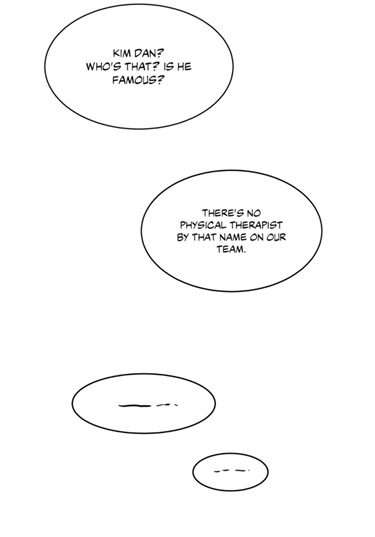 (chapter 56), hospitals repeatedly responded that they had never heard of anyone by that name.
 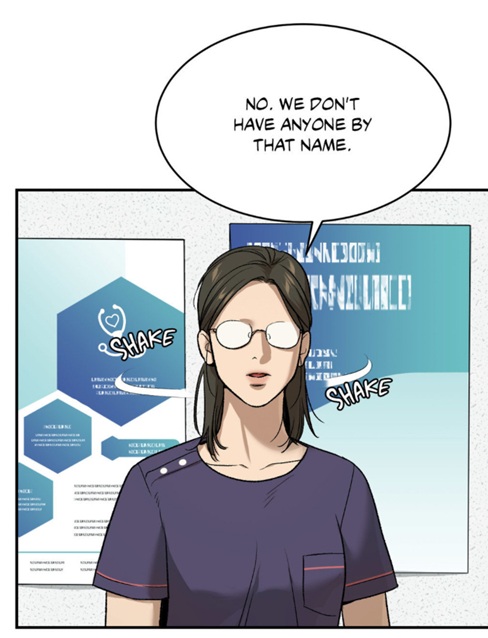 (chapter 56) This reaction suggests that the young therapist had already been erased from the professional network in Seoul. Far from protecting him, this invisibility places him in an extremely fragile position: without institutional recognition, he has no professional community capable of defending him.
If rumors about Kim Dan suddenly begin circulating within the medical world—or even appear in the media—the contradiction would be striking. Only a few months earlier, no hospital acknowledged his existence. Yet now doctors or the media would suddenly be discussing him as a controversial figure linked to the champion’s injury. Such a sudden shift would inevitably raise questions.
For Joo Jaekyung, this discrepancy could become the first clear sign that something is wrong and lets not forget that in the past, he doubted the doctors.  (chapter 5) The athlete might realize that the narrative emerging around Kim Dan does not match the reality he previously encountered while searching for him. What appears at first as professional criticism could therefore reveal the existence of a coordinated attempt to manipulate the story.
Medical Confidentiality as a Weapon
Another possibility makes the situation even more troubling. If Junmin or the disgraced hospital director wished to discredit Kim Dan, they could not necessarily need to rely solely on rumors or professional criticism. A far more effective strategy would involve the selective leaking of medical information.
Kim Dan’s own patient file could become a weapon. 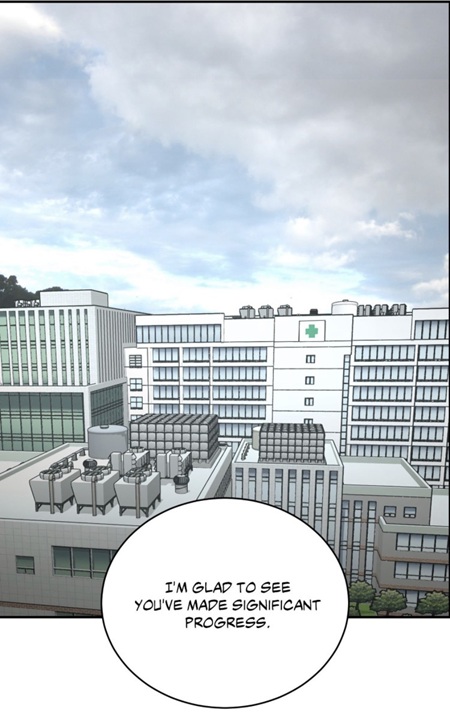 (chapter 91)
The young therapist’s history of psychological struggles and emotional distress is part of his medical record. Under normal circumstances, such information would remain strictly protected by medical confidentiality. Yet the story has already demonstrated how easily such boundaries can be violated when institutional interests are at stake.  (chapter 36)
Earlier in the narrative, the medical system showed little hesitation in discussing Joo Jaekyung’s injury publicly. Experts speculated on television about the champion’s condition, and reporters openly discussed his worsening shoulder problem despite the obvious ethical implications of revealing medical information without the patient’s consent.  (chapter 54) Striking is that no one in the medical world sided with the star because of his law suit against a hospital (chapter 42)
These scenes suggest that medical confidentiality in this world is far from absolute. When money, reputation, or institutional pressure become involved, private information can quickly turn into public material.
If the same logic were applied to Kim Dan, the consequences could be devastating. And don’t forget how the main lead reacted to this situation: he was rather indifferent. A leaked file describing his mental health struggles could easily be used to construct a narrative portraying him as unstable, unreliable, or professionally unfit. Under this light, you comprehend why I placed Choi Heesung in the illustration, as he was the first one bringing up the notion of mental illness. 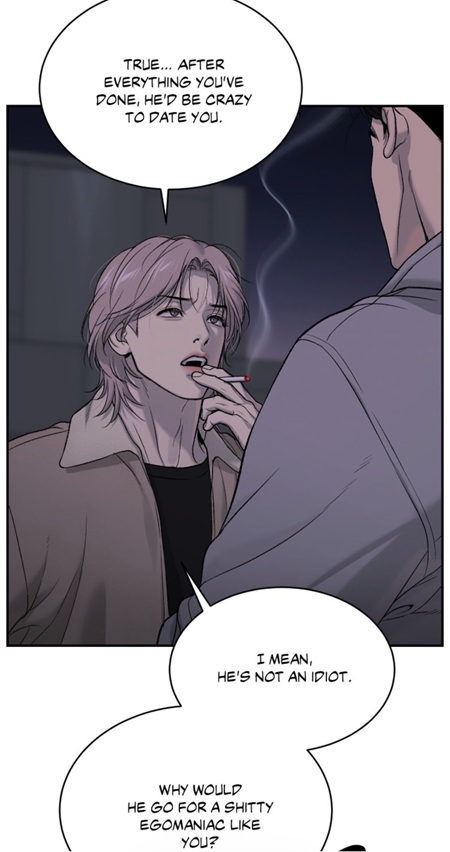 (chapter 89) In such a scenario, the young therapist would not simply be accused of incompetence. His entire credibility could be undermined, before he even had the chance to defend himself.
The strategy would also serve several interests at once. And like mentioned above, the medical institutions involved could shift responsibility for the champion’s worsening injury onto a crazy outsider. MFC could distance itself from the controversy surrounding the fight. And Baek Junmin could exploit the scandal to weaken both Joo Jaekyung and the man closest to him.
What makes this possibility particularly disturbing is that it would rely on a form of violence that leaves no visible wounds. Instead of physical intimidation, the attack would take place through information — through documents, rumors, and carefully constructed narratives.
In other words, the same system that once erased Kim Dan from the medical world could suddenly reintroduce him into public discourse under the worst possible circumstances.
The Man Who Knows Too Much
Yet the plan also contains a dangerous flaw. The disgraced director is far from a reliable ally. His public scandal has already destroyed his credibility, and his own actions in the past reveal a man driven by opportunism and self-preservation. If pressured too far, he may choose to reveal far more than Junmin expects. Instead of stabilizing the situation, his intervention could expose the corruption of the very system Junmin is attempting to manipulate. How so? It is because he was brought to Heo Manwook’s office. (chapter 93) In the past, the loan shark never brought his victims into his own headquarters. Debtors were usually confronted in their homes 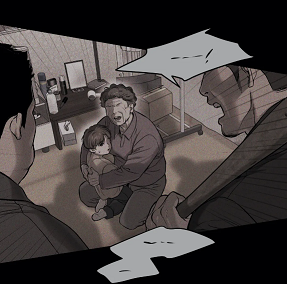 (chapter 5) or attacked in the street
 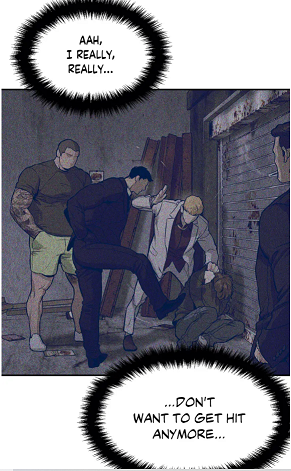 . (chapter 1) His office functioned as a hidden lair, carefully separated from the violence carried out by his subordinates. The presence of the disgraced director inside that office therefore represents a significant rupture in Heo Manwook’s usual methods.
 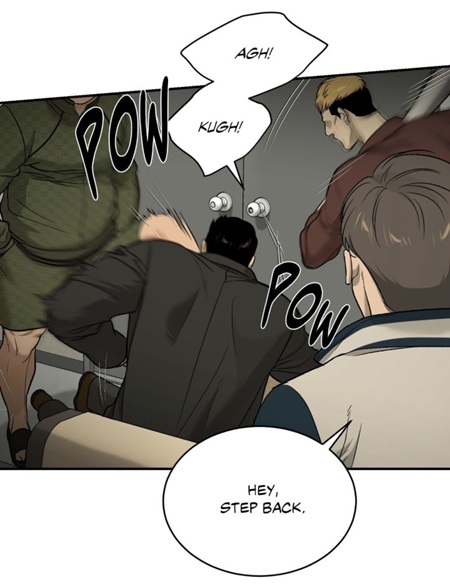 (chapter 93) Moreover, this time he is the one beating the victim, while one of his minions is standing. (chapter 16)
The doctor’s presence there represents a source of danger. He is no longer merely a possible instrument; he also becomes a witness. By hearing the conversation about bribes, police pressure, and debt collection, he acquires dangerous knowledge about the criminal network itself. (chapter 93) In that sense, the same man whom Junmin hopes to use as a tool against Kim Dan simultaneously becomes a liability capable of exposing the entire scheme.In other words, the former doctor could end up betraying the schemers, something the Shotgun is not expecting.
The urgency created by recent events has forced the organization to abandon its usual caution. At the same time, the visual composition of the scene creates a revealing illusion. (chapter 93) Seated prominently in the center of the room, Baek Junmin appears almost like the true authority figure — the one silently observing while others handle the negotiations. His posture suggests the role of a mastermind directing the operation from the background. Thus the scared director could misjudge the true position of the “champion”, he is the real mastermind behind this. And this time, he could no longer hide behind his hyungs or organizations.
This creates a striking contrast with Kim Dan himself.
Kim Dan also possesses knowledge about the hidden world surrounding Joo Jaekyung. He has witnessed suspicious medical decisions (chapter 41), manipulations within the fighting organization  (chapter 37, the drugged beverage), and the athlete’s deeply personal belief in the so-called “jinx.” Yet despite these insights, Kim Dan remains largely excluded from the decision-making processes that shape the champion’s career. In several crucial moments—such as the incident at the health center—he was deliberately kept in the dark.
The contrast between the two figures could not be sharper. The disgraced director possesses knowledge but uses it as a potential weapon. Kim Dan possesses knowledge but has no idea about his own power. What distinguishes them is that the main couple is starting sharing their thoughts and insight to each other, while at the office, the schemers keep their insight to themselves. Yet, a plot can only work, if intel is exchanged. At the same time, the information has to be accurate as well. But for that, the villains have to expose their “knowledge” and as such “vulnerabilities”.
In the end, the question is no longer simply who knows too much. Baek Junmin believes he understands everything: Kim Dan, Joo Jaekyung, and the system surrounding them—especially the power of money. Yet his confidence rests on misinterpretations and assumptions. Kim Dan, by contrast, never claims such certainty. Still, he has witnessed the hidden mechanisms of that same system—its corruption, its manipulation, and its violence—without fully grasping their meaning. Yet the way he acquires this knowledge is fundamentally different. His insight does not come from intimidation or control, but from the confessions of others. He listens patiently and attentively, without judgment. (chapter 47) (chapter 48) 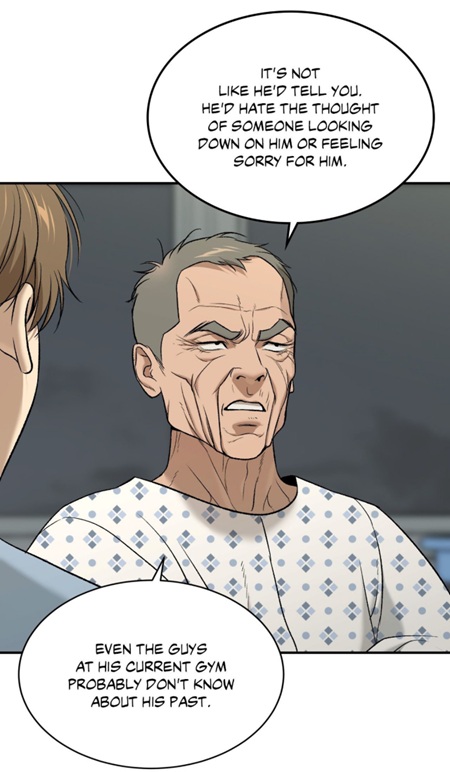 (chapter 74) Joo Jaekyung represents yet another form of knowledge: the knowledge of experiences. Through hardship, defeat, and survival, he has learned to recognize the realities of the world step by step. By living next to doc Dan, he learned to listen and observe so that he is now more aware of the world surrounding him. The true tension of this arc therefore lies not simply between ignorance and knowledge, but between three different ways of understanding reality. One man believes he understands everything, another quietly carries knowledge that could expose it all without realizing it, while the third slowly learns the truth through experience.That is precisely why, in the illustration, they now stand facing each other.
Feel free to comment. If you have any suggestion for topics or Manhwa, feel free to ask. If you enjoyed reading it, retweet it or push the button like. My Reddit-Instagram-Twitter-Tumblr account is: @bebebisous33. Thanks for reading and for the support, particularly, I would like to thank all the new followers and people recommending my blog.

 (chapter 3) The latter became responsible for the hamster’s sexual education.
  (chapter 90) He is not impulsive. He is not openly violent. He operates within institutions, within offices, within controlled environments. He isolates rather than attacks. He frames rather than forces. Like Compère le loup, he is not a stranger; he is part of the social order. He belongs to the system. That belonging is precisely what grants him access.
 (chapter 90) His threat is not confession; it is defensive strategy. It reveals what he fears most: exposure. Not moral reckoning, but visibility. The predator who once operated in sealed rooms now imagines himself dragged into the open. And that possibility terrifies him.
 (chapter 90) prioritizes its “output” (reputation, profit, or clinical operations) over the safety of its staff, it adopts the woodcutter’s axe. By focusing only on the work at hand, the institution effectively grants the predator a “sealed room.” The wolf doesn’t need to hide from the woodcutters; he only needs them to keep their heads down. What makes him powerful is not brute force but the absence of eyes. The director functioned the same way. His authority depended on institutional insulation — doors closed, hierarchy unquestioned, narratives controlled. As long as no one looked too closely, he remained Compère — familiar, respectable, legitimate.
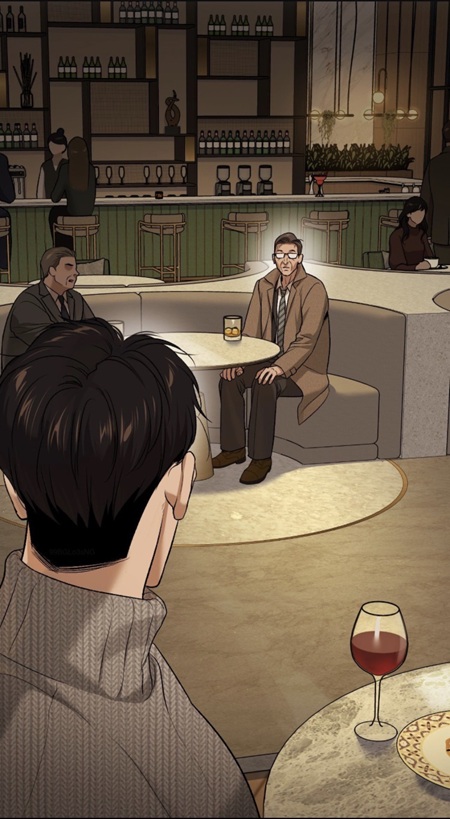 (chapter 90) It resembles the wolf’s preferred setting: intimacy that appears voluntary. What caught my attention is that he complained about his partners.
 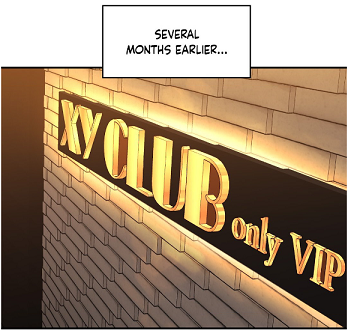 (chapter 33), but at the restaurant. If he had known such a club, he could have met the green haired-guy or the “uke” from episode 55. Thus I deduce that the sexual predator is actually hiding his “homosexuality”, he had been living a double life in the end, like the wolf in Perrault. That’s why he targets “virgins”. Since he used the expression “pandering… get by”, Mingwa implies that this man must have told the men (“all kinds of people”) he met, he was looking for a boyfriend to justify his action.
 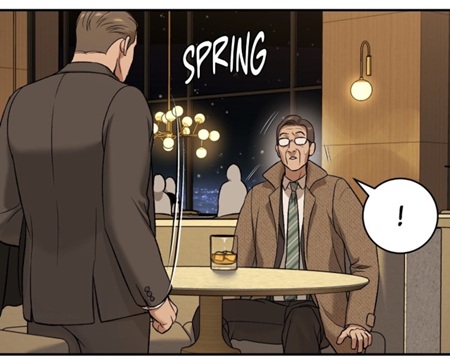 (chapter 90) That surprise matters. It suggests expectation of compliance, of silent agreement, of recognition of coded signals. The man likely does not belong to the director’s ecosystem; he does not recognize the invitation as opportunity but as lack of respect. Thus he exits.
 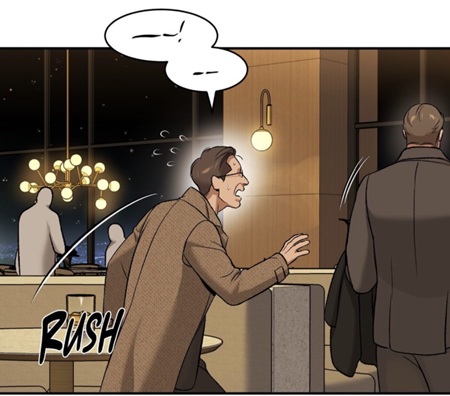 (chapter 90) The fact that the wolf tried to talk him out of it indicates that their relationship was not only superficial, but also more equal. Humiliation is crucial. Predators who rely on social camouflage depend on territory. When territory collapses, strategy must change.
 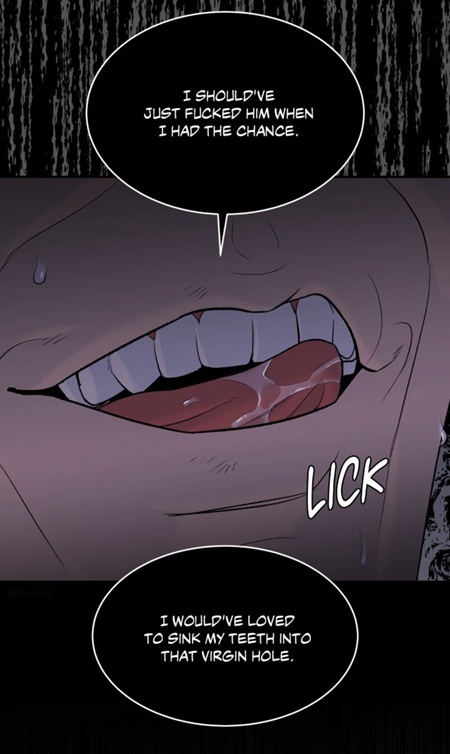 (chapter 90) This is where Grimm enters. His true nature got exposed, he is socially identified as predator.
 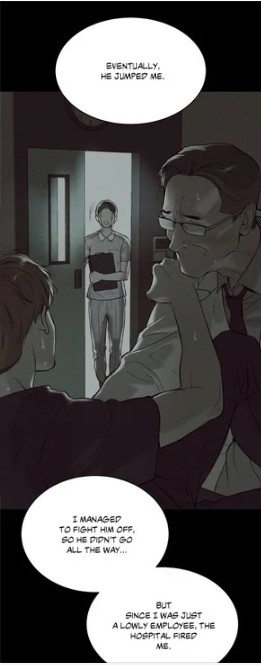 (chapter 90) He devours.
 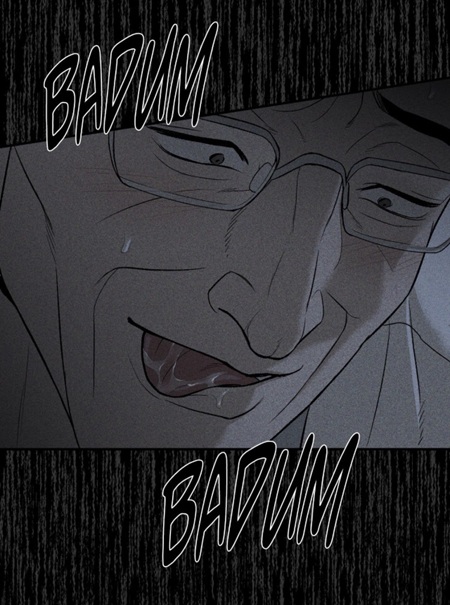 (chapter 90) There is no sustained camouflage. Violence becomes explicit.
 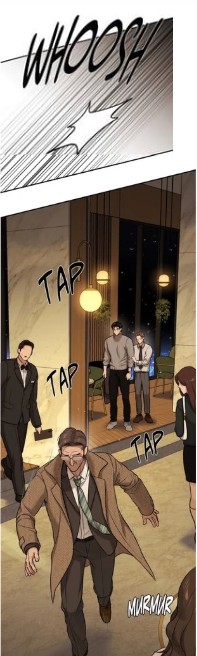 (chapter 90) Hence he ran away. The exposure destroyed his credibility. The public article marked him. His ecosystem collapses. He is no longer hidden wolf. He is identified predator.
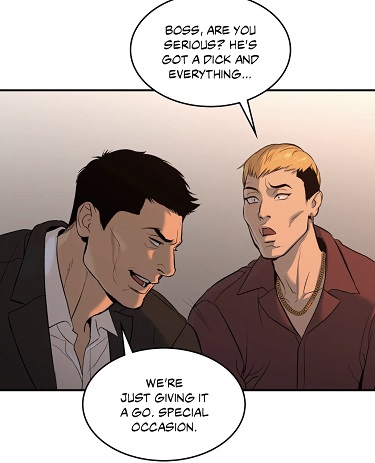 (chapter 16)
 (chapter 30), but also as selfless.
 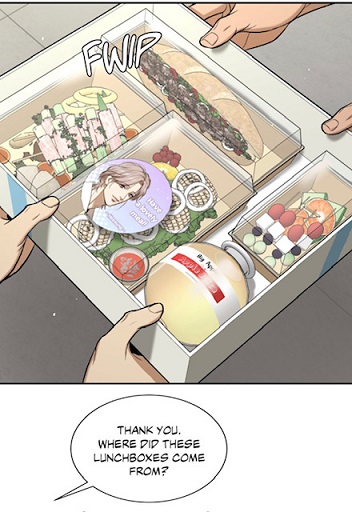 (chapter 30) Yet, he is a libertine, though he claims to be pure by stating that he is looking for his soulmate.
  (chapter 33) Hence no one is suspecting the darkness in his heart. Even the champion believed in his words, when he claimed that he had some feelings for doc Dan.
  (chapter 58) The resemblance is deliberate. He is discreet. He avoids public scrutiny. He hides his intimacy with Potato.
  (chapter 43) Therefore the latter was not present at the champion’s birthday party. The actor operates in private spaces
 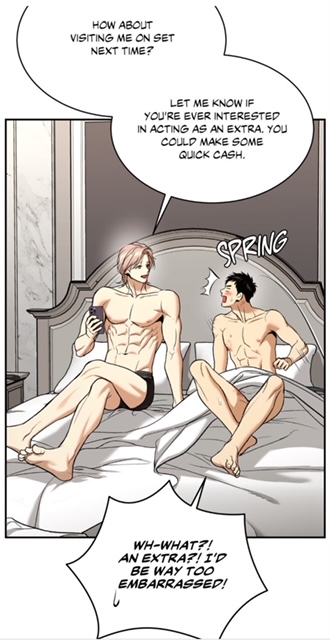 (special episode 2) and prefers silence over visibility. Like Perrault’s Compère le loup, he does not appear monstrous. He appears socially legible — even charming. He navigates controlled environments. He is careful about who sees what.
 (chapter 35) He proposes a “race”to the little girl, in Jinx it’s a meal (ramen in Korean, an allusion to sex)
 (chapter 35) He softens his voice. He invites the girl into bed.
  (special episode 1) He constructs intimacy before violence. He depends on civility as camouflage.
 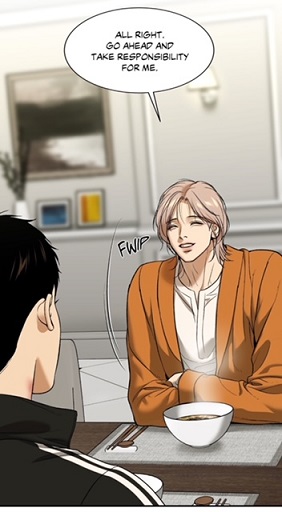 (special episode 1)
 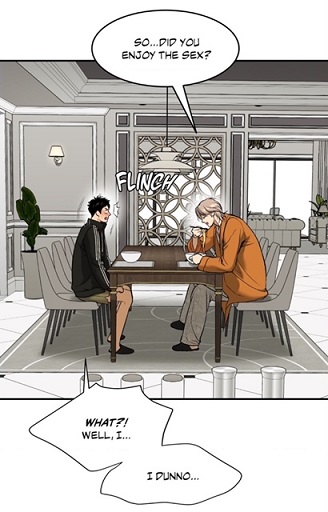 (special episode 1) It is not about power display, but fun. He hides not to isolate his partner, but to shield himself from exposure. His discretion protects his own public image, not his access to another’s body. The imbalance exists — it cannot be denied — but it is not systematically mobilized to erode consent. The latter comes from their initial contract: Potato is at his beck and call.
  (special episode 1) He has been avoiding “virgins” for one reason. He knows how a “virgin” would react to his dream ” to find his soulmate”. They would take his “words” seriously and imagine him as someone serious and reliable. But by selecting partners with sexual experience, he can claim that he made a mistake, they were no soulmate.
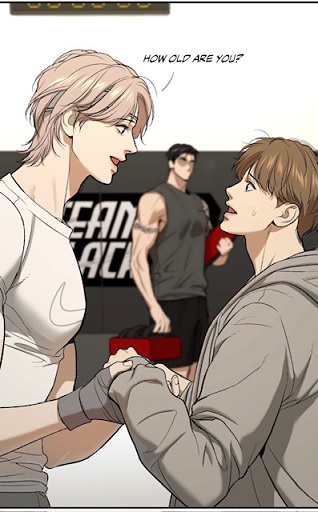
  (special episode 1) But this panel exposes even better why the actor is so different from Perrault’s wolf. Youth symbolizes “vulnerability and innocence” and that’s something he has been avoiding. The reason is simple. That way, he can avoid accountability. That’s why he panics, when he hears the age. He realizes his mistake! This reveals that though Heesung is a libertine, he is different from the hospital warden. He is not seeking pleasure in asymmetry, fear, shame and power. He is not targeting “virgins” to exploit their vulnerability. He has been avoiding “virgins”, as he knew that he would have to take responsibility. In reality, he has always feared attachment. Where the wolf eroticizes vulnerability, Heesung is destabilized by it.
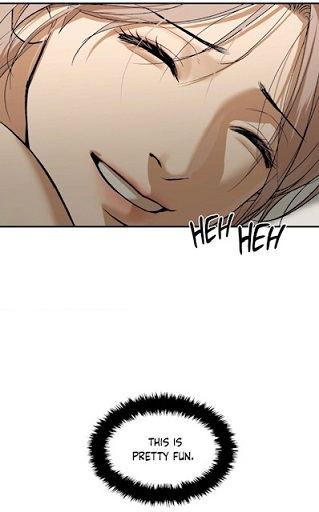 (chapter 34) the predator by accident
 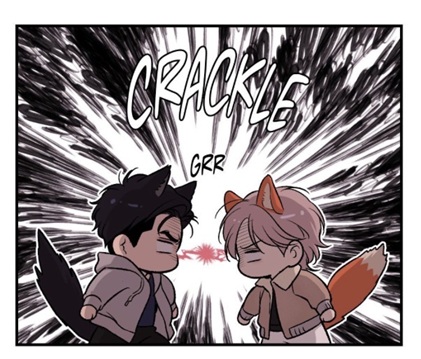 (chapter 89) — clever, adaptable, socially fluid. The fox does not devour. It maneuvers and as such plays tricks.
  (chapter 32) He first approaches Kim Dan through professional contact. Later, he suggests a gig to Potato
 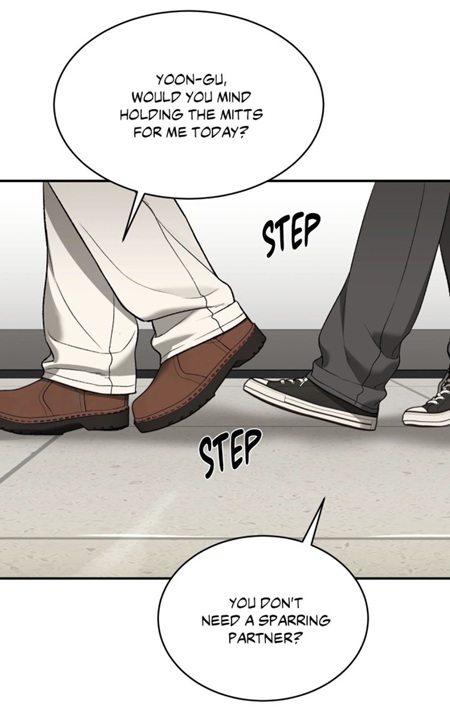 (chapter 88) Even in the gym, he casually asks Yoo-Gu to hold mitts — reorganizing the work structure in ways that subtly serve his private interest. Work becomes the bridge. The boundary blurs.
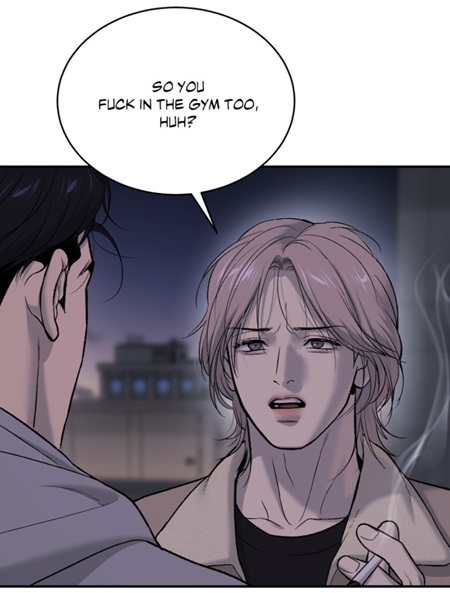 (chapter 89) The accusation implies that Jaekyung contaminates professional space with sex. Yet Heesung himself collapses that boundary. He initiates intimacy with Potato after drinking.
 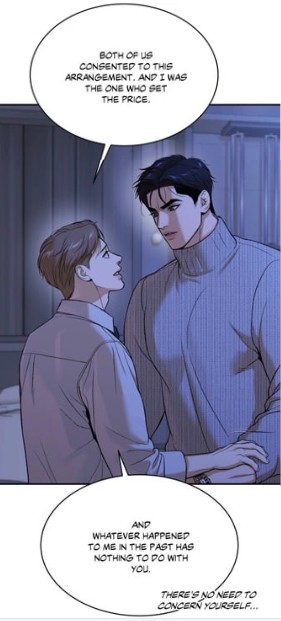 (chapter 90) It is when one makes a clear decision and accepts the consequences. Yet, Heesung violated this rule, for he knew Potato was drunk. He did not stop. He did not insist on postponement. He allowed desire to override clarity. That choice introduces asymmetry. Alcohol clouds agency. Youth complicates balance. Professional proximity blurs roles. Secondly, he is rejecting accountability. Finally, he never tried to correct Potato’s error and false belief. He took advantage of his ignorance. So his behavior could be perceived as manipulative and coercive.
 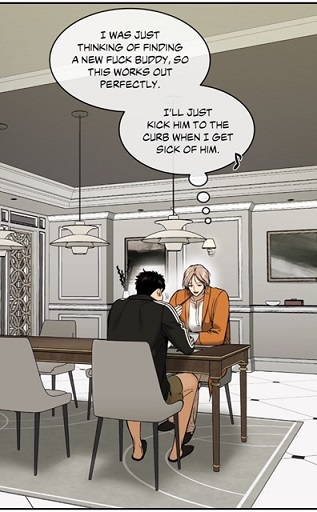 (special episode 1) He hides it, though he tried to reveal it to doc Dan
  (chapter 58). If the truth were exposed — an actor secretly sleeping with a younger, inexperienced partner whom he approached through work — the narrative could easily frame him as exploitative. He could be accused of sexual harassment.
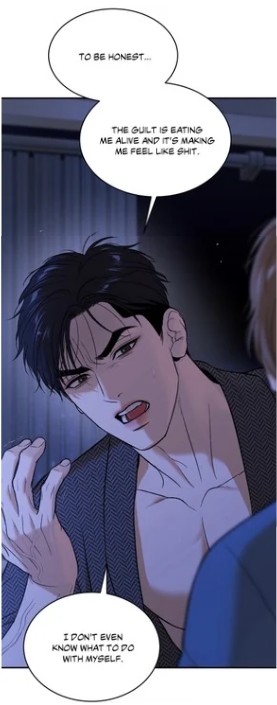 (chapter 91) the emotion is internalized. He experiences remorse not because he was exposed, but because he crossed a boundary. He separates work from intimacy afterward. He becomes rigid about consent, alcohol, and clarity. Therefore imagine his reaction, when he discovers the true nature of the relationship between Choi Heesung and Potato. He can only be shocked and angry.
 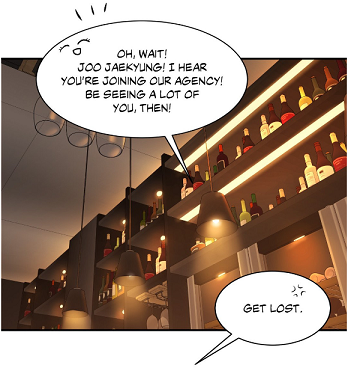 (chapter 33) Or would attention shift to the structure that allowed blurred boundaries to exist in the first place?
 (chapter 40) The sports reporters who repeated the official version? The referees? The moderators? The corrupted director of the gym Choi Gilseok? Or the institution itself?
 (chapter 52), does the structure remain untouched?
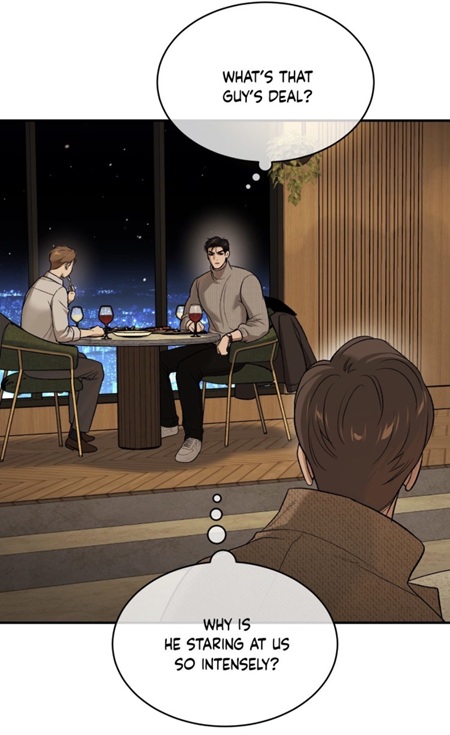 (chapter 89) Episode 89 does not rely on spectacle, confrontation, or confession. Instead, it performs something far more unsettling. It turns back toward the beginning
 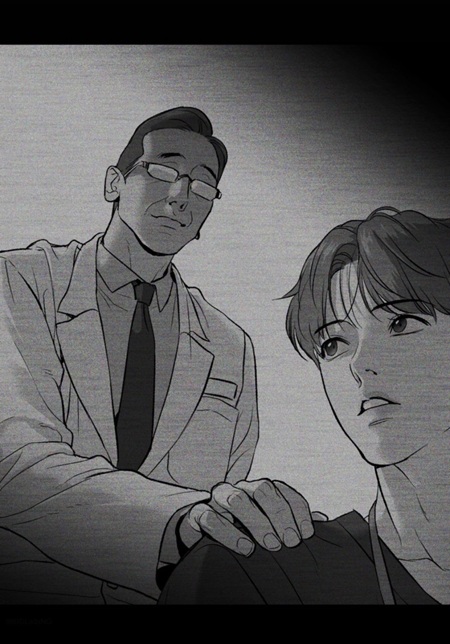 (chapter 89) and begins to unravel what was once deliberately sealed.
 (chapter 1) We knew there was a witness. We knew that what happened was not ambiguous in moral terms.
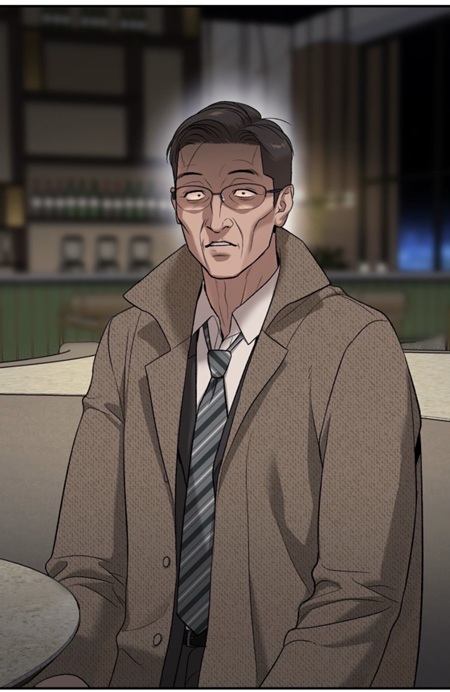 (chapter 1) is not a revelation of new information. It is the resurfacing of a figure who once proved that truth alone was insufficient. His reappearance signals that what was buried at the beginning of the story—harassment, witness, cover-up, professional erasure—is no longer content to remain inert. The silence that once protected the hospital director is beginning to fray, unwinding slowly, like a gift ribbon pulled loose thread by thread. What was known but unspeakable is approaching exposure not through confession, but through loss of insulation.
 (chapter 89) Instead, the narrative offers a bird’s-eye view of the hospice Light of Hope as Joo Jaekyung’s car leaves the parking lot. The implication is unmistakable. Her death is imminent. But just as importantly, she is transitioning from presence to spectral force—no longer intervening, no longer negotiating, but lingering over the narrative as memory and obligation.
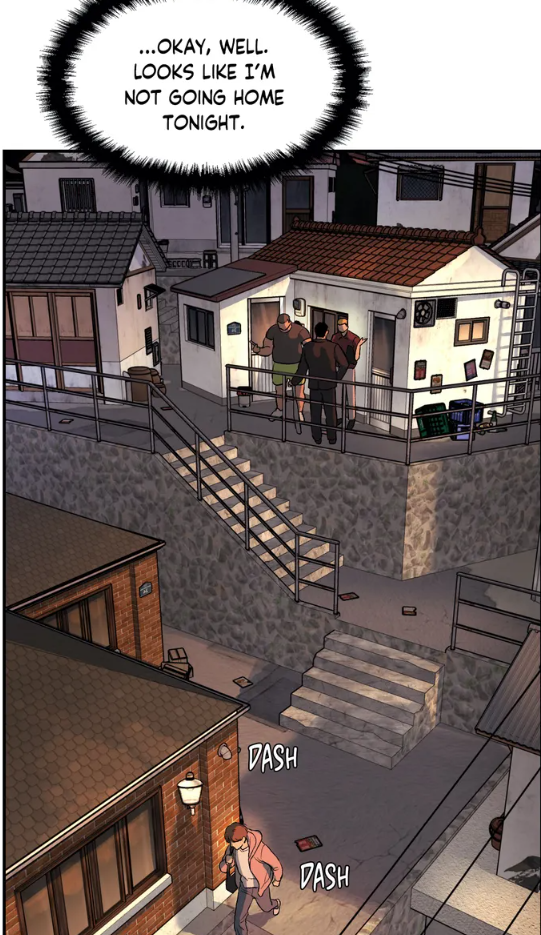 (chapter 1) Readers did not meet the grandmother until Episode 5.
 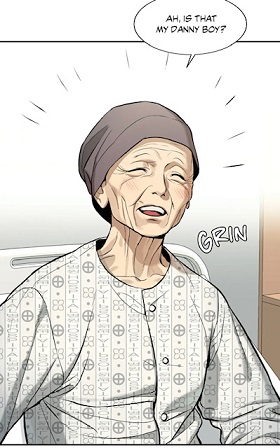 (chapter 5) Before that, her existence was inferred rather than seen: through debt, through responsibility, through the ruined house Kim Dan inhabited. Absence structured the story before presence ever did. The grandmother was a force long before she was a character.
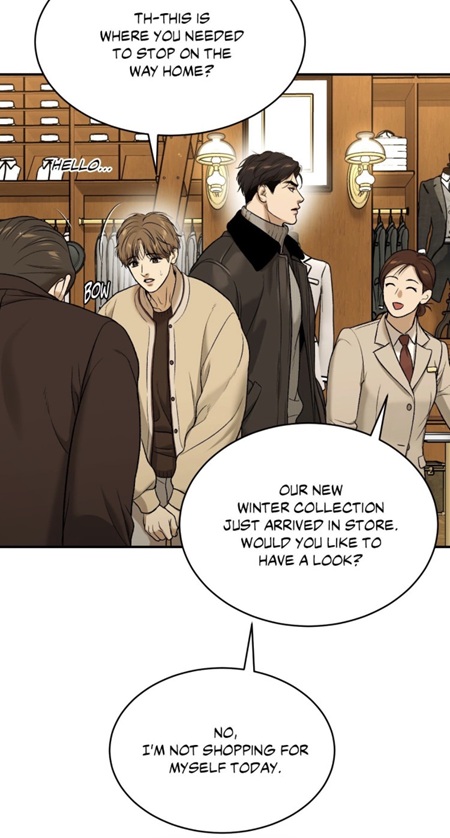 (chapter 89) When Joo Jaekyung speaks of “the way home,”
 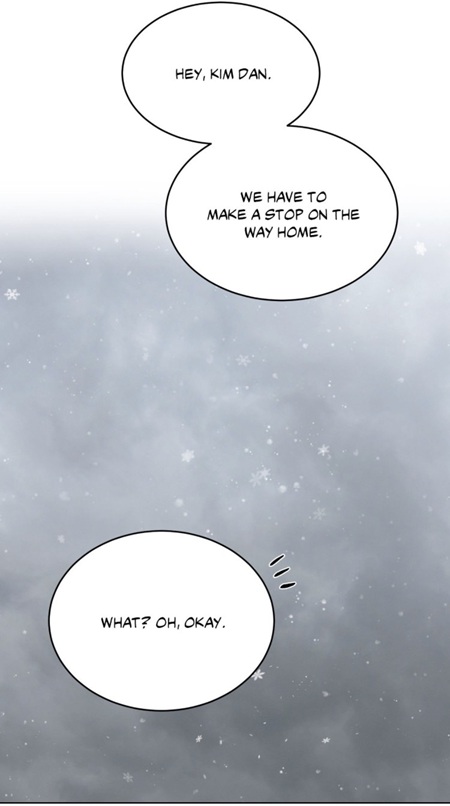 (chapter 89) and Kim Dan repeats the phrase without hesitation, the shift is unmistakable. Home has been reassigned. It is no longer the place where Kim Dan endures obligation or where his grandmother is
  (chapter 56), but the place where he lives in the present: the penthouse. The grandmother’s influence has not vanished; yet it has been reduced to a short visit, while he spends time with his fated partner a long time on the road. Her absence no longer anchors him to a life of quiet survival. He is now enjoying life, hence he is seen smiling and talking informal to the athlete.
 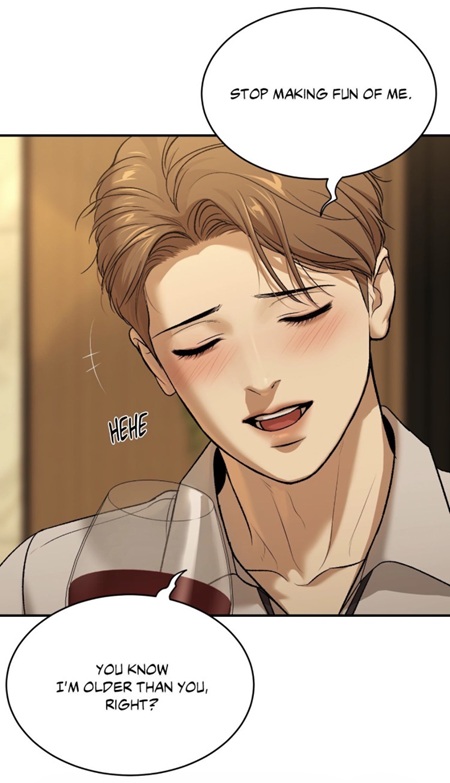 (chapter 89)
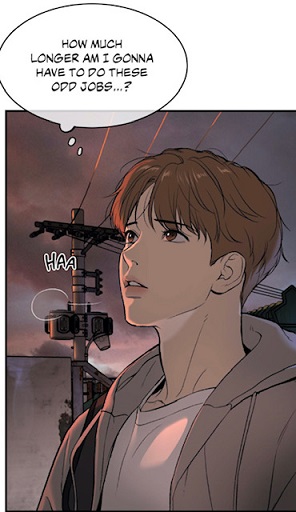 (chapter 1), unseen decisions made about Kim Dan without his consent
 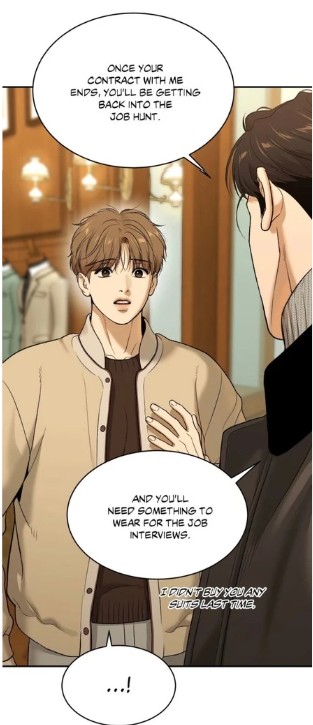 (chapter 89) Debts have been paid. Contracts are finite. A witness exists, though he doesn’t believe in the “angel”.
 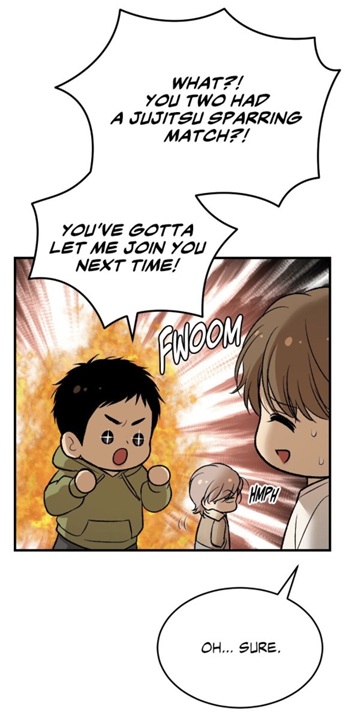 (chapter 89) Kim Dan is no longer isolated in his knowledge, nor alone in bearing its consequences. Joo Jaekyung detected the presence of a “predator”.
  (chapter 89)
  (chapter 1) The readers never saw what caused the unknown therapist’s departure. Instead, the incident is relayed second-hand, through Park Namwook’s narration—an account that reduces the event to temperament, friction, and inevitability. The physical therapist is said to have “rubbed him the wrong way.” An incident occurred and the athlete was exposed as the problem. The job was framed as undesirable. The departure was normalized.
  (chapter 1), but he did not question the narrative offered to him. He never tried to justify his own action either. Park Namwook, as manager, occupied the position of authority: the one who explained, interpreted, and closed the case. He never checked the facts, like for example “rubbing him the wrong way”. He acted as the prosecutor, judge and lawyer at the same time. What happened before remained unseen, and therefore unexamined. The truth did not need to be falsified; it only needed to be summarized.
  (chapter 1), the reluctance of applicants, and the need to recruit Kim Dan through informal channels all suggested that something else had already been circulating: a reputation formed in absence, not through evidence.
 (chapter 9), explanations, and silence. Only after the “hamster’s arrival”, the athlete is gradually exposed to gossip, badmouthing
 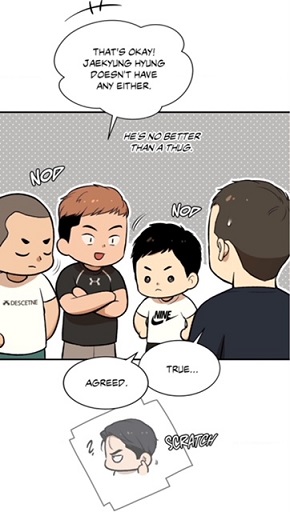 (chapter 47) and exclusion. This reached its peak with the famous slap at the hospital.
  (chapter 52) It shows that like doc Dan, the celebrity bears the effects of a narrative he did not author, one that no longer requires verification and questioning because it has already been administratively settled.
 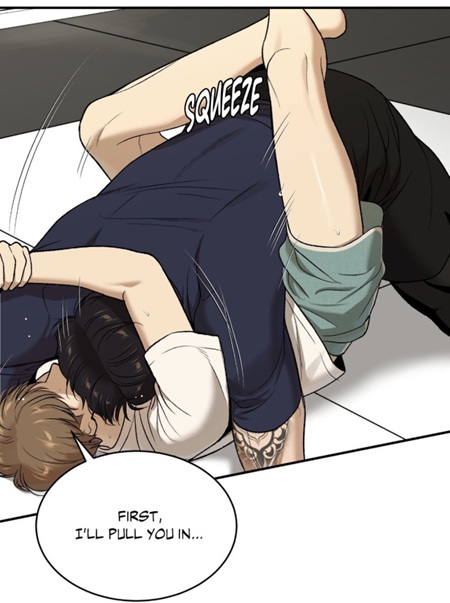 (chapter 88) The kiss does not erase what preceded it; it merely interrupts it. Kim Dan’s explanation is therefore neither wholly true nor wholly false. It is a partial truth, shaped by shyness, by a desire to protect, and by shame. Hence he is sweating, when he explains his presence to Potato.
 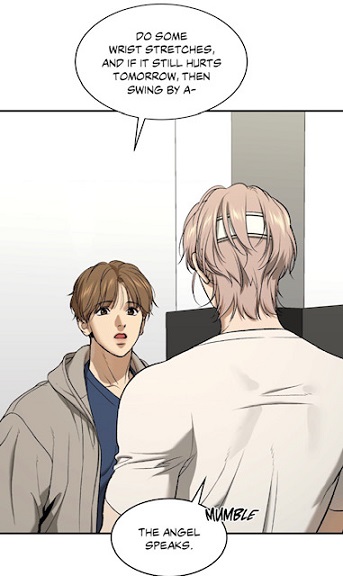 (chapter 30), as the latter is quiet, self-effacing. selfless, attentive, humble and absorbs blame instead of projecting it. Kim Dan initially fits the fantasy of the perfect lover — someone who would not disrupt Heesung’s self-image. Hence he doesn’t need to do anything.
 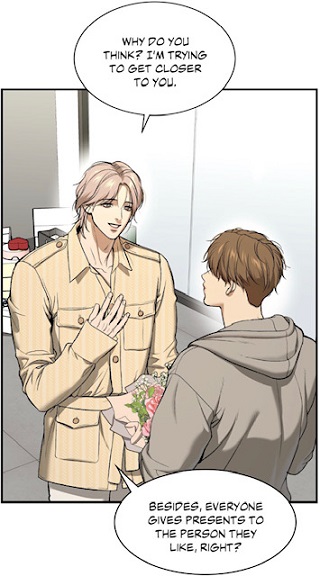 (chapter 31) By siding with doc Dan and acting as the angel’s advocate
 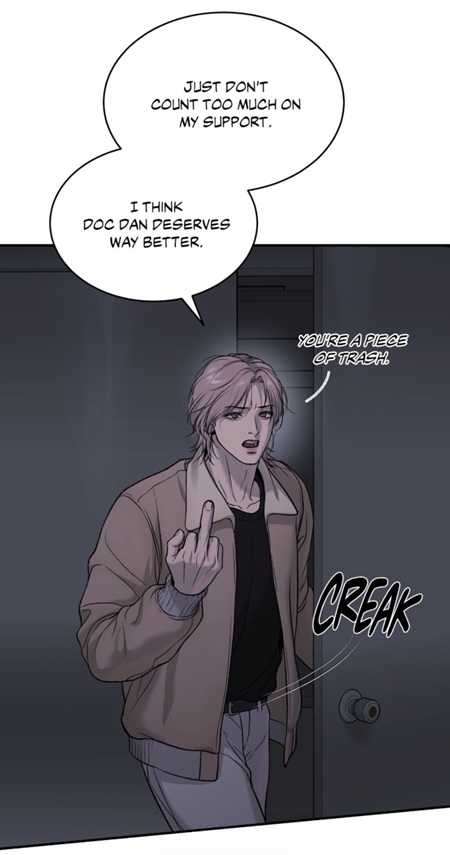 (chapter 89), the comedian can appear as a saint.
 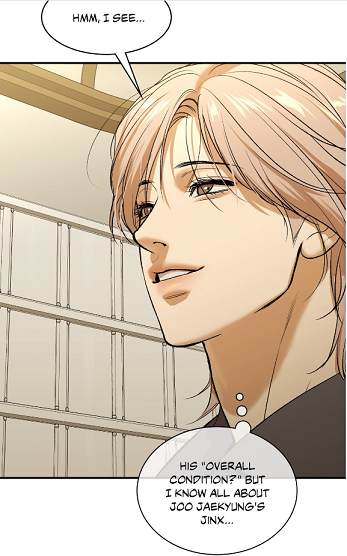 (chapter 32)— he believes that he can judge the celebrity. However, he does not consider that something else might have happened before the moment he witnessed. The kiss becomes totalizing. Training is retroactively erased.
  (chapter 52) nor Heesung exercises this control. Both act from positions of perceived authority, and both mistake emotional coherence for factual accuracy. Their confidence does not only arise from what they know, but also from how strongly they feel. The strength of conviction replaces the labor of verification.
 (chapter 58) He imagines a simple narrative: Kim Dan must have left because of Joo Jaekyung’s temper, his rudeness, his violence, probably due to the “defeat”. A quarrel, therefore, naturally leads to separation. From this assumption follows a paternalistic conclusion: the “hamster” must be hidden from the athlete for his own good. Protection becomes justification; concealment becomes virtue.
  (chapter 89) while smoking—a detail the episode insists on repeating, and one that should not be aestheticized. The cigarette does not merely accompany his words; it alters the air in which they are spoken.
 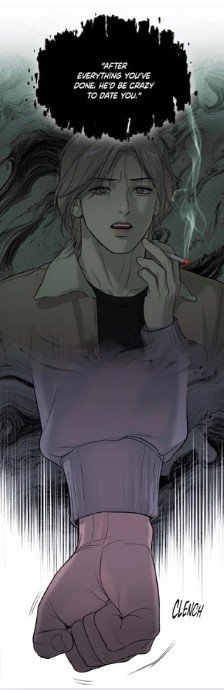 (chapter 89) Smoke replaces oxygen. What should be a space for clarification becomes a polluted environment where nothing clean can circulate. His speech is not only corrosive; it is toxic, dispersing blame without responsibility and judgment without accountability.
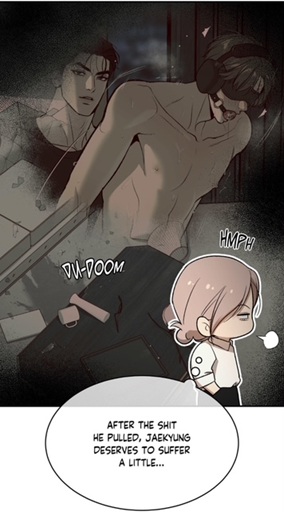 (chapter 58), he reinterprets the kiss as “fuck” and not as the expression of love and tenderness. In other words, he is witnessing “true love”, but he rejects it. This exposes that he has no true notion of real love. In his mind, Joo Jaekyung abused his position as “employer”.
 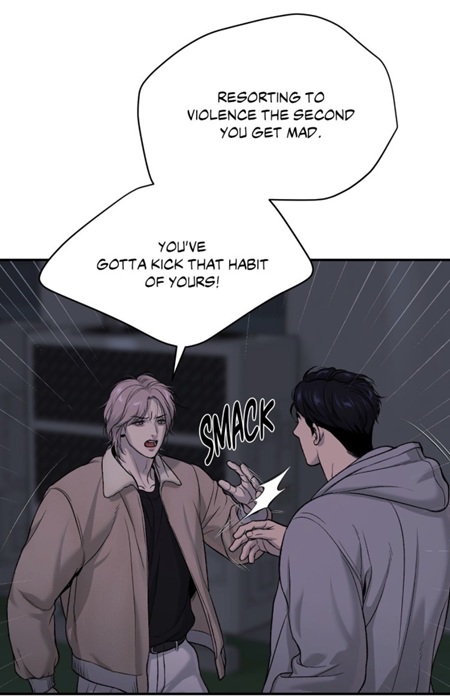 (chapter 89) But this distinction is hollow. Harm does not require raised fists. It can be inflicted through trick, insinuation, through speaking about someone rather than to them, through occupying the role of moral arbiter while denying the other person a voice.
 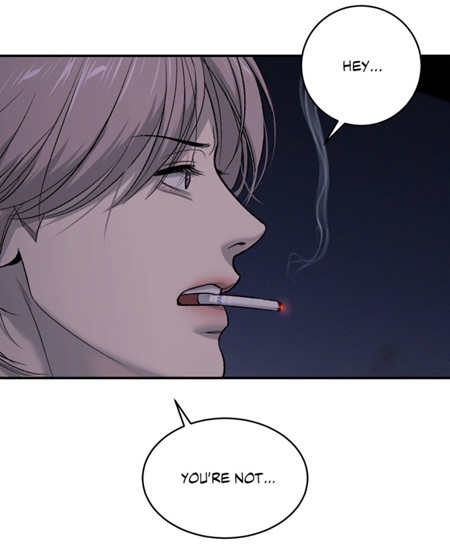 (chapter 89) His comment “You’re not ….” implies the expectation of a confirmation. Both are not dating. What Joo Jaekyung is actually doing exceeds the category Heesung understands. This is not casual dating. It is not secrecy. It is not consumption. It is preparation. Continuity. A future. Symbolically, Joo Jaekyung is already a step beyond “dating”: he is moving toward marriage — toward public, accountable union. He is closer to commitment than the cursed “Romeo”. That’s the reason why the author included such a reference at the store:
 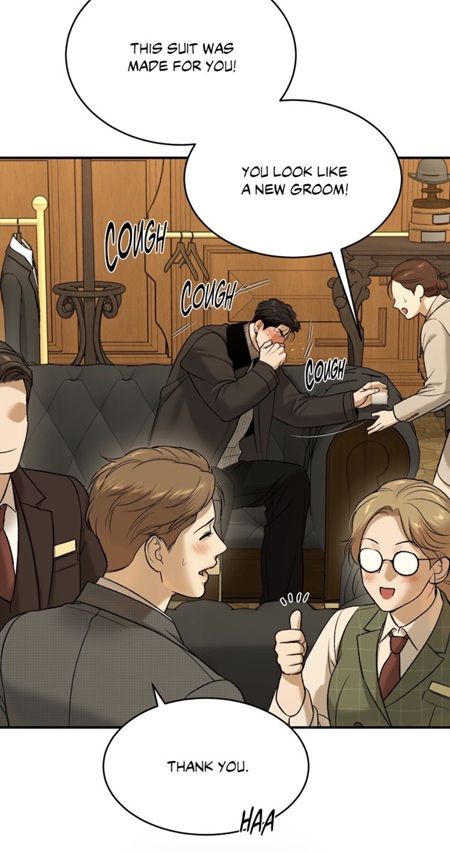 (chapter 89).
 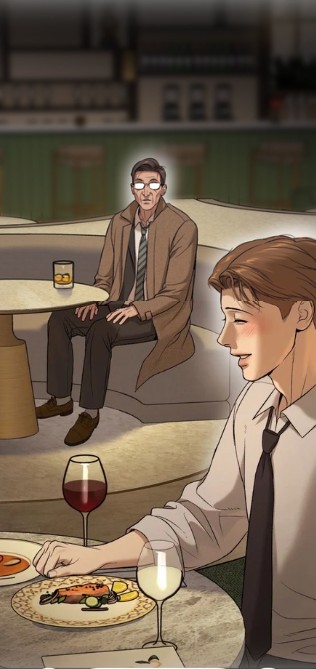 (chapter 89)
  (chapter 56) As long as Kim Dan remained unseen, power could continue to “know” without ever needing to verify.
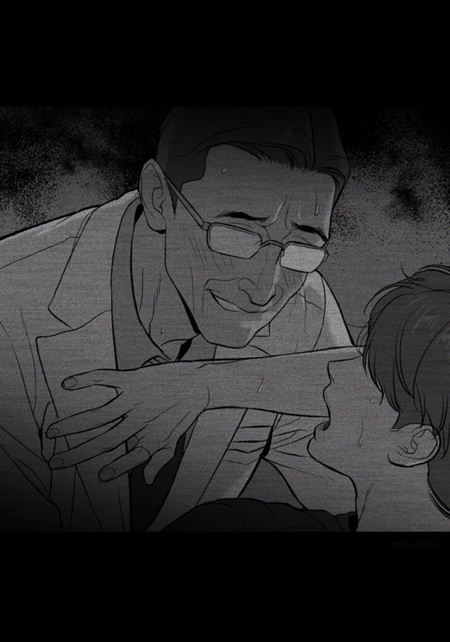 (chapter 89) rather than exposed guilt. His posture is upright, leaning in. His hand rests on Kim Dan’s shoulder without hesitation—uninvited yet unchallenged. His face shows satisfaction, not doubt. He smiles while Kim Dan sweats and is attempting to stop him.
 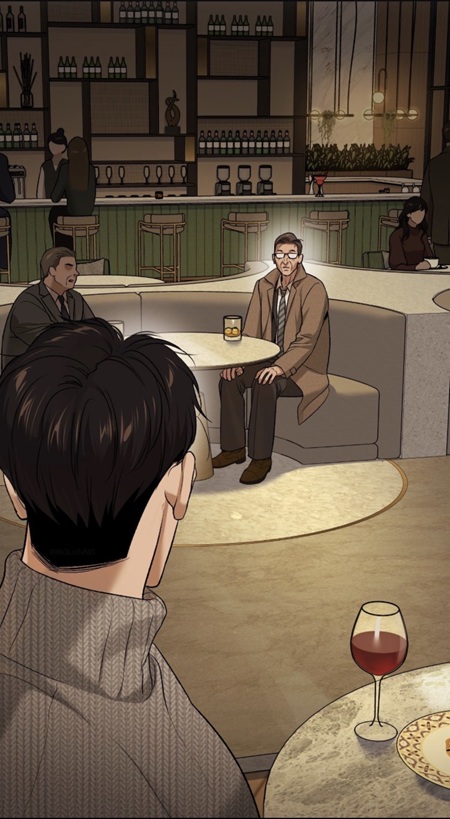 (chapter 89)
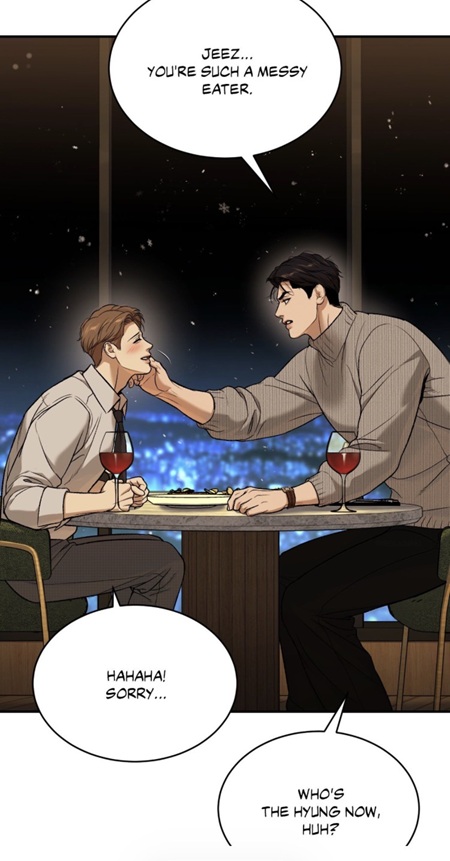 (chapter 89) They do not require shadows, isolation, or ambiguity to touch. Their closeness does not depend on secrecy or hierarchy. Where the director’s former power depended on institutional opacity, hierarchical distance, and Kim Dan’s vulnerability, Joo Jaekyung’s present intimacy depends on none of these. And no one seems to pay attention to the “main couple” at all.
 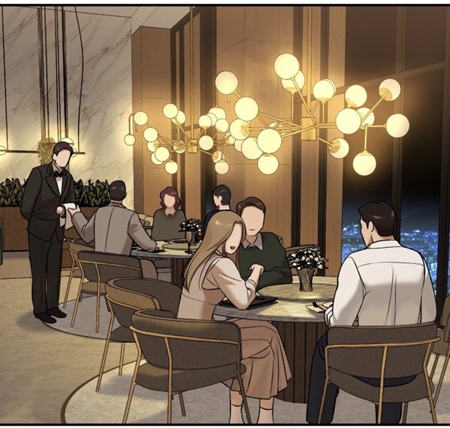 (chapter 89)
 (chapter 89) Wine is relational. It opens, breathes, changes with time. It is meant to be shared, discussed, returned to. It presupposes duration. Where whisky seals, wine circulates.
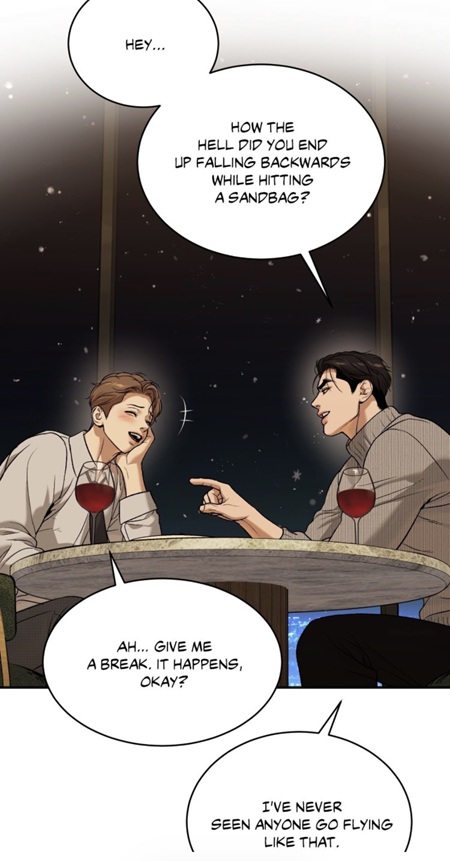 (chapter 89) But more importantly, he doesn’t hide his affection and attraction to doc Dan, while the other did it behind closed doors. Finally, thanks to doc Dan, Joo Jaekyung is learning to pay attention to his surrounding. That’s how he sensed the gaze from the perverted hospital director.
 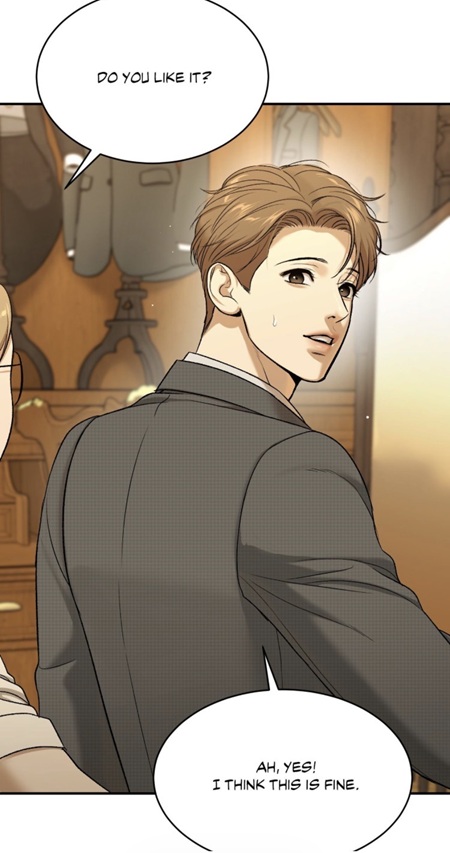 (chapter 89) not as a plea for permission, but as an invitation into a shared future. The pause of the older man watching him echoes a different kind of professionalism: not predatory authority, not performative control, but quiet recognition. Furthermore the doctor’s suit reminded me of the doctor in episode 13, Cheolmin (pattern, colors).
 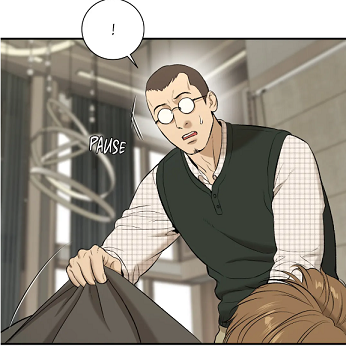 (chapter 13) The visual resemblance to Cheolmin is not accidental. It aligns Kim Dan’s future not with power that operates through secrecy, but with practice grounded in fun, care and responsibility. Earlier, suits belonged to those who decided outcomes behind closed doors
 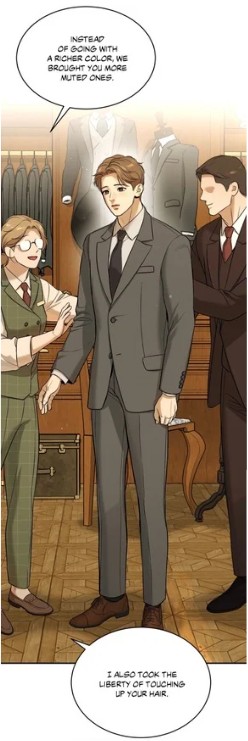 (chapter 89) Bought by Joo Jaekyung but chosen by Kim Dan, it marks the return of agency. What was once a symbol of exclusion now signals continuity. Kim Dan is no longer preparing to survive. He is preparing to live. Hence his birthday is approaching.

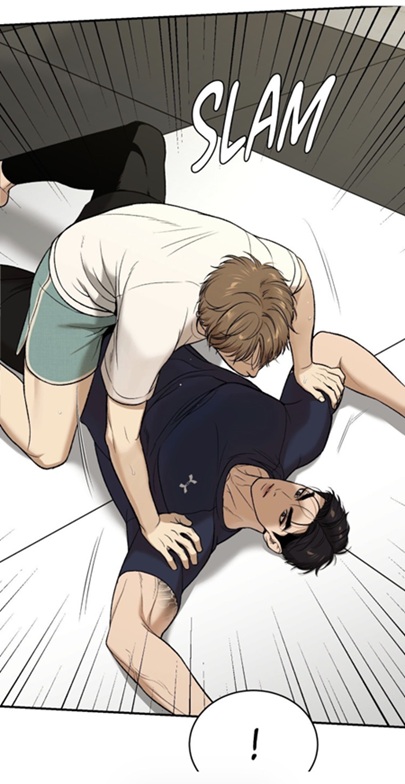 (chapter 88), and the final panel hinting at an imminent confrontation with Choi Heesung.
 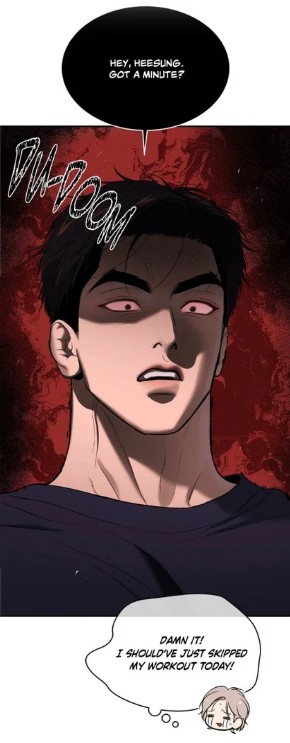 (chapter 88) Discussions largely revolved around physical proximity, discipline, and anticipation — around bodies in motion and the promise of conflict to come. At first glance, the episode seemed to oscillate between intimacy and tension
 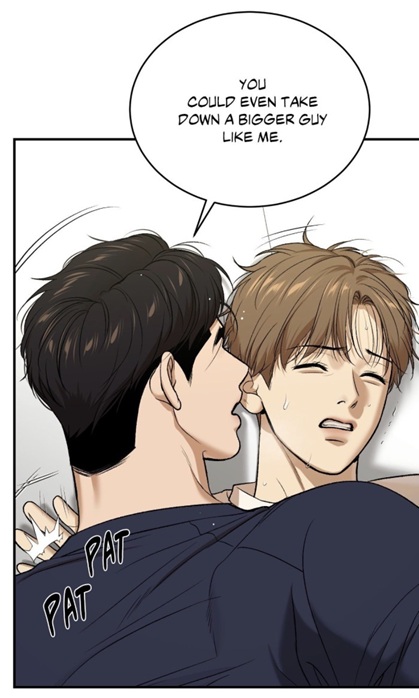 (chapter 88), between preparation
  (chapter 88).
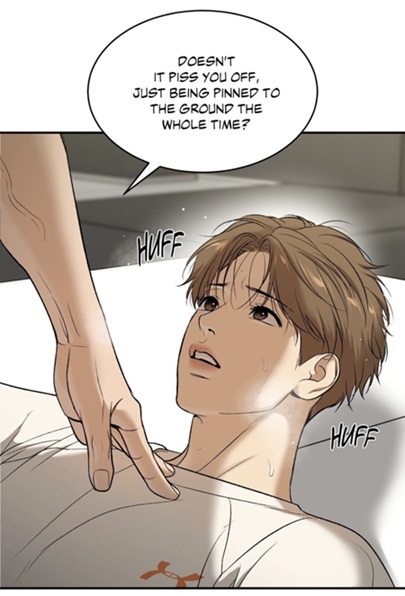 (chapter 88) are structured around restraint
 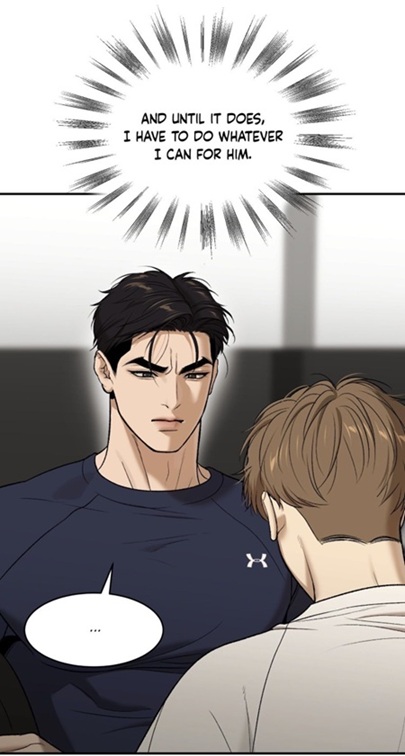 (chapter 88), delayed, or redirected. Words are measured, authority is redistributed, and decisions are deferred
  (chapter 88) rather than imposed. What initially appears as physical intensity and narrative suspense begins to reveal a deeper reconfiguration of roles, responsibility, and choice.
 (chapter 70)—most likely in November— in late autumn.
  (chapter 88) This temporal setting is visually reinforced by the environment itself: in the opening sequence marked “a few weeks later,” the tree is already bare, its leaves gone. Nature offers no spontaneous image of growth or renewal. If a flower were to appear in this chapter, it couldn’t belong to the season. It must be cultivated, protected, and sustained in a green house—something that emerges not from natural abundance, but from deliberate care. So where does this idea of a flower come from?
 : a closed circuit which we could witness once again in the training room:
 (chapter 88) There are once again sparks between them. The number 8 is not just related to doc Dan [for more read
  (chapter 58) Two trajectories —long separated, repeatedly missing one another—intersect at last. When two eights overlap, they form neither a loop nor a knot, but a new shape: a flower-like figure, suggestive of opening rather than closure. This crossing does not resolve everything; instead, it creates the conditions for growth for all the characters.
  (chapter 88), white
  (chapter 88) purple
  (chapter 88), blue, gray,
  , (chapter 88) red
  (chapter 88) Pink frames tenderness and mutual awkwardness; purple marks embarrassment and heightened awareness; red signals suppressed anger and looming confrontation; black absorbs fear, silence, and unresolved tension.
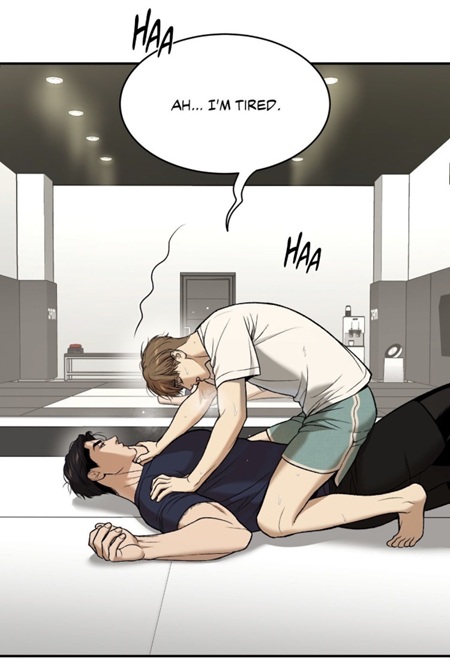 (chapter 88) are dressed in green
 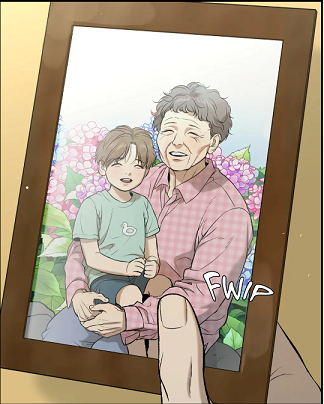 (chapter 19), where green and floral elements once functioned as a silent language of care and containment. The repetition is not accidental. By wearing a similar tone in the present, Kim Dan does not merely revisit the past; he carries it forward.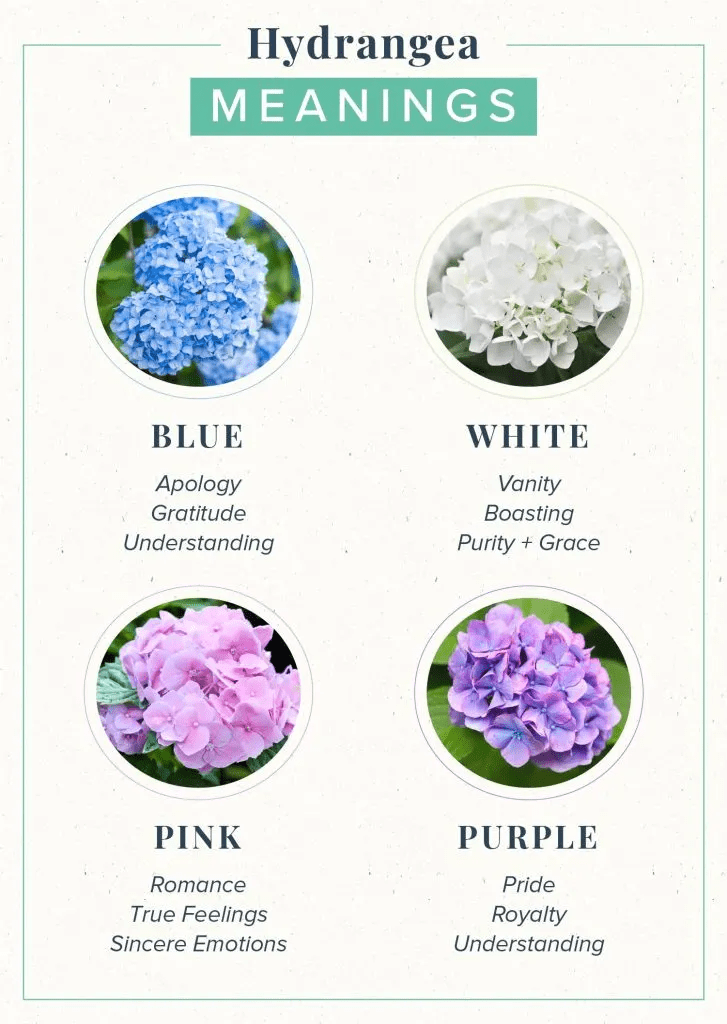
 (chapter 35), which tend to assert a singular message (love, passion, beauty), hydrangeas communicate multiplicity and emotional ambivalence; they speak in clusters rather than declarations. This visual language mirrors Kim Dan’s inner world at the time
 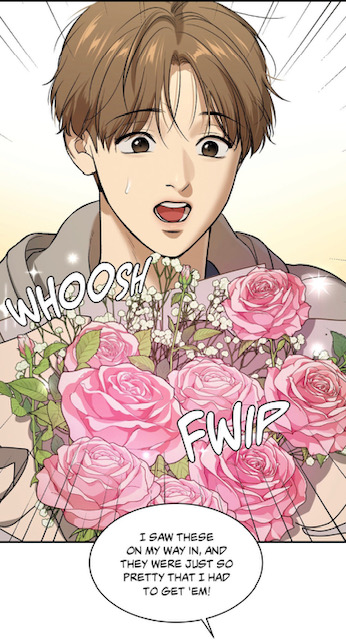 (chapter 31). Here, the symbolism shifts. Pink roses convey affection and admiration, while baby’s breath suggests innocence and fragility. Yet the arrangement is excessive, overwhelming, and mismatched to its recipient. The bouquet does not listen; it speaks at Kim Dan rather than with him. Significantly, Heesung comes to associate Kim Dan himself with the flower—something delicate, beautiful, and deserving of protection, but also something to be handled, displayed, and possessed.
 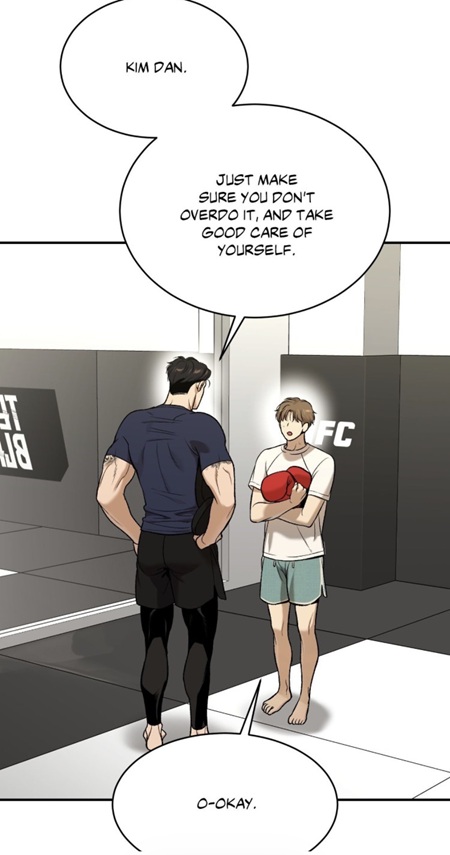 (chapter 88) Kim Dan’s green training clothes—visually echoing the green shirt he wore in the photograph with his grandmother—signal continuity rather than regression. This is not a retreat into childhood dependency, but the reappearance of an inner child now disentangled from obligation and fear. The flower that reemerges here is not gifted, not arranged, not imposed—it grows. In this sense, episode 88 introduces a missing element in the dynamic between the two protagonists: not desire, not care, but communication. And it is here that Choi Heesung becomes central—not as a rival or antagonist, but as a structural bridge, as in reality he represents the rose, “La vie en rose”
  . He embodies speech, playfulness, and visibility, yet also reveals their limits when they are severed from responsibility and respect. I will elaborate about this more below.
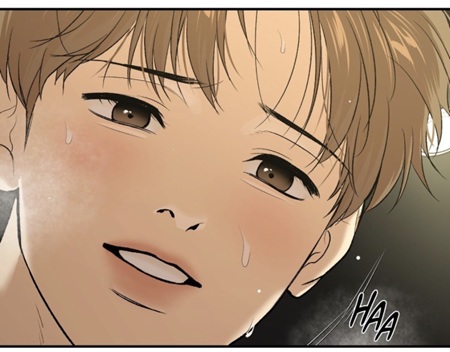 (chapter 88), but the moment in which the conditions for happiness are finally put into place. And now let me ask you this. What is the symbol of happiness? Smiles and laughs. During the training session, Kim Dan smiles. These moments are brief
 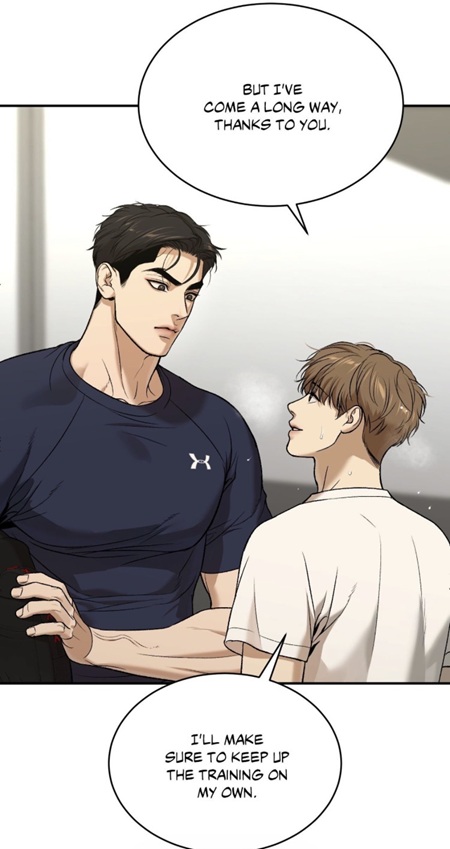 (chapter 88) and goes unnoticed by him
 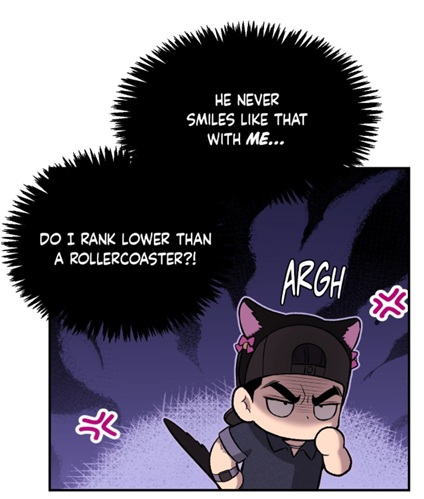 (chapter 83) What is striking is that neither of them recognizes this fulfillment.
  (chapter 31)
 (chapter 88) What appears at first glance as coercion
 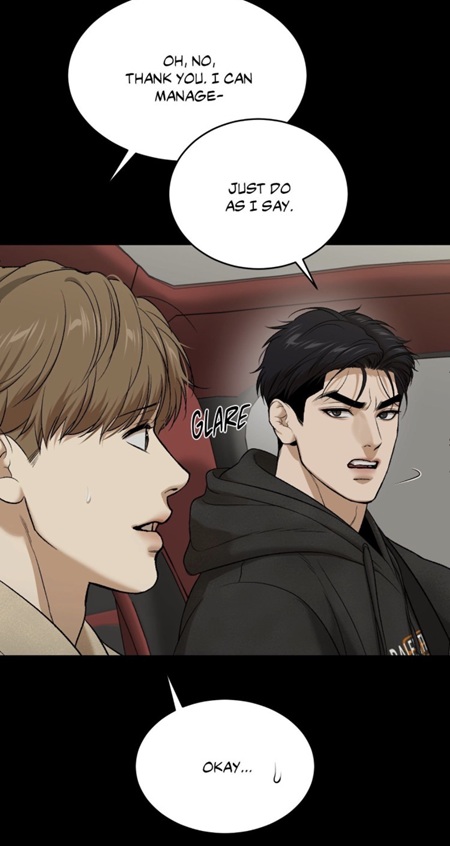 (chapter 88) or discipline is in fact a negotiation shaped by habit, fear of burdening the other, and an inability—on both sides—to articulate desire outside professional roles.
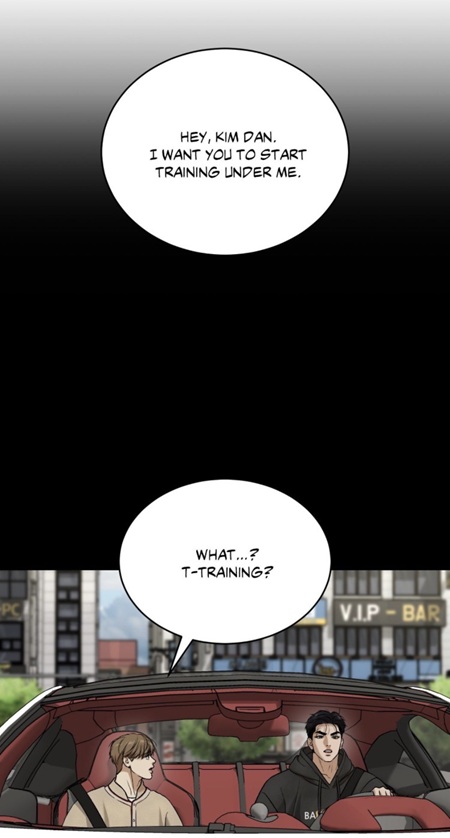 (chapter 88), a space that is never neutral in Jinx. A car has one driver, one direction, one authority. By placing the conversation there, Mingwa signals that the relationship is still structurally asymmetrical at this point: Joo Jaekyung leads, Kim Dan follows.
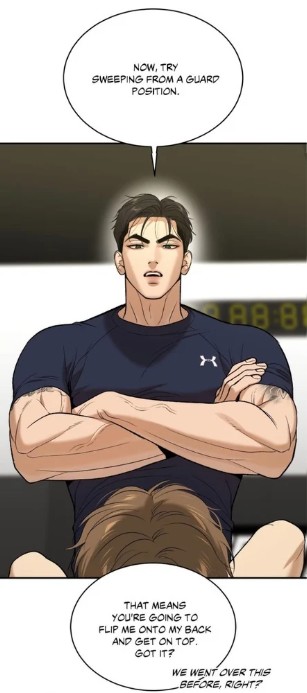 (chapter 88) Secondly, such a training suggests that the athlete is gradually remembering this scene of the almost-rape.
 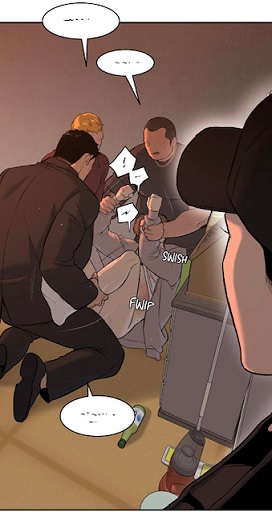 (chapter 17) Therefore it is not surprising that instead of asking permission or explaining concern, he imposes the idea—because that is how he has learned to act as a captain, a fighter, and later a manager. Authority precedes dialogue.
 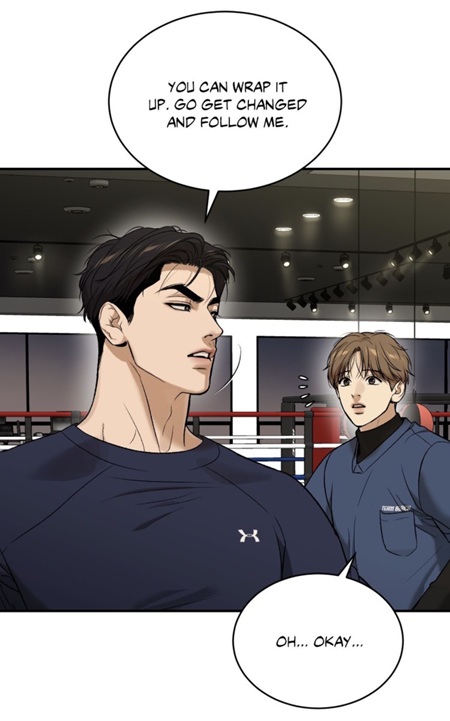 (chapter 88) In other words, the request from Joo Jaekyung appears as a memory from the physical therapist. Why?
  (chapter 88) Because Mingwa refuses the “clean” sequence in which an order is issued and immediately executed. The narration inserts a gap—an interval of off-panel time that we are forced to reconstruct from Kim Dan’s recall.
  (chapter 88) Instead Kim Dan no longer insists on his own sufficiency. He no longer says “I can manage., but doc Dan admits not only his own lacking.
  (chapter 88), but also his own desire. He finally expresses his desire to improve, to learn more.
  (chapter 88) creates a temporal bridge that enables this recognition. Only once change is named from the outside can Kim Dan cautiously acknowledge it from within.
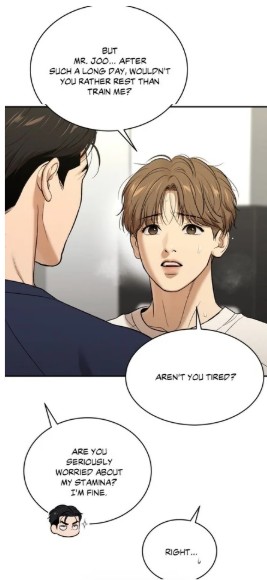 (chapter 88) The problem is that his form of care was influenced by his own mindset and emotions: his physical limitations.
 (chapter 88)
 (chapter 88). He teases.
  (chapter 88)
 (chapter 88), not rest. Thus the doctor mistakes the embrace for a technique and not the expression of love.
 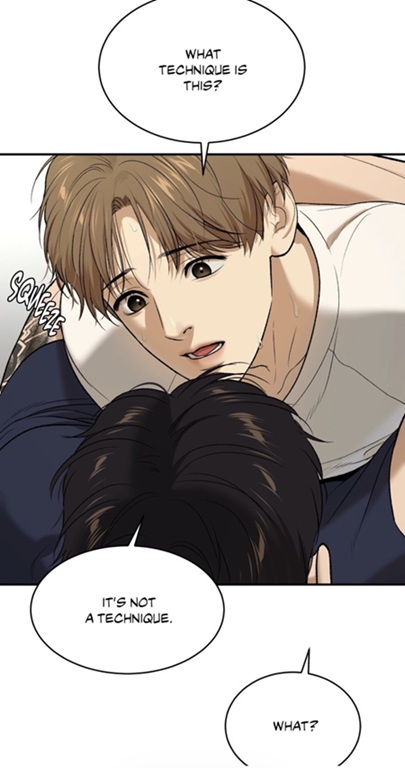 (chapter 88) And observe that the athlete still refuses to express the true meaning of his hug. His explanation still remains technical, defensive, and strategically framed:
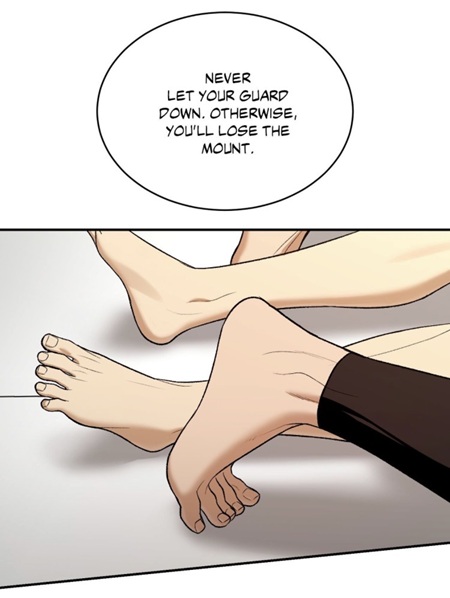 (chapter 88) This sentence is crucial. It reduces contact to function. The closeness of bodies, the pressure of weight, the proximity of breath are translated into instruction. What could be acknowledged as reassurance or care is instead displaced into pedagogy. Joo Jaekyung does not deny intimacy; he relabels it.
 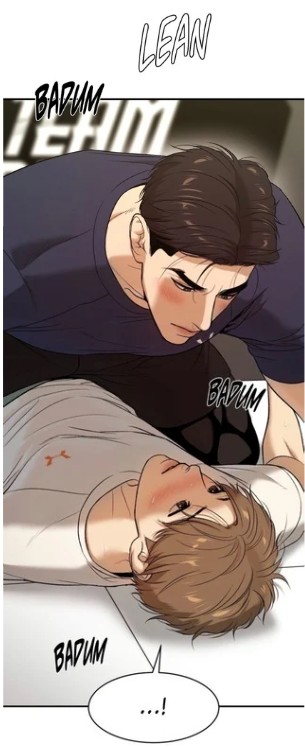 (chapter 88) of breath held too long, of proximity charged with something unnamed. The technical explanation arrives after that awareness, not before it. This confirms that the instructional language functions as a shield — not against intimacy itself, but against having to speak it.
 (chapter 88) Directly after warning against lowering one’s guard, Joo Jaekyung kisses him.
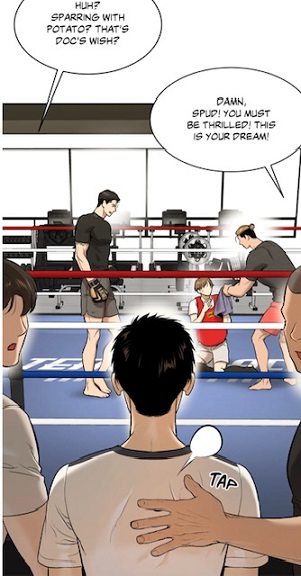 (chapter 26) Back then, Doc Dan had accepted the challenge due to Potato, though deep down he desired to have the champion as his teacher.
  (chapter 25) That’s how it dawned on me that doc Dan has gradually taken over Yoon-Gu’s previous place at the gym. He is an “unofficial member” of Team Black. Thus he mops the floor and Yoon-Gu is not there to stop him or reclaim this position.
 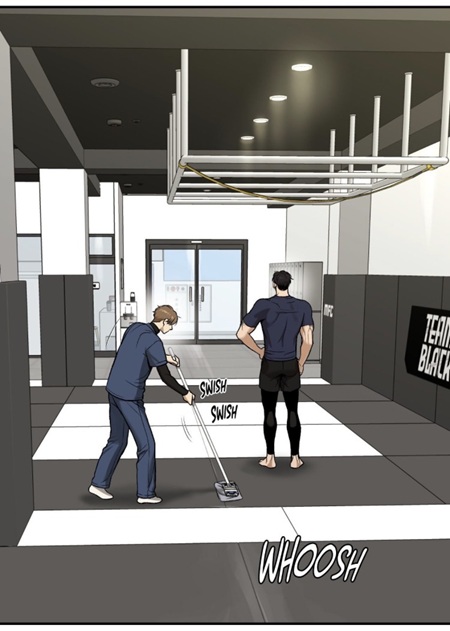 (chapter 88) Yoon-Gu’s position within the gym has improved. He is now considered as a real fighter.
 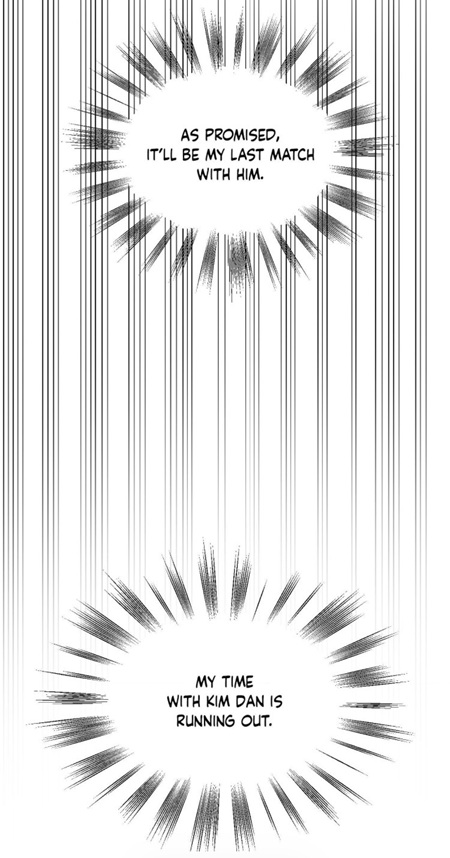 (chapter 88)
 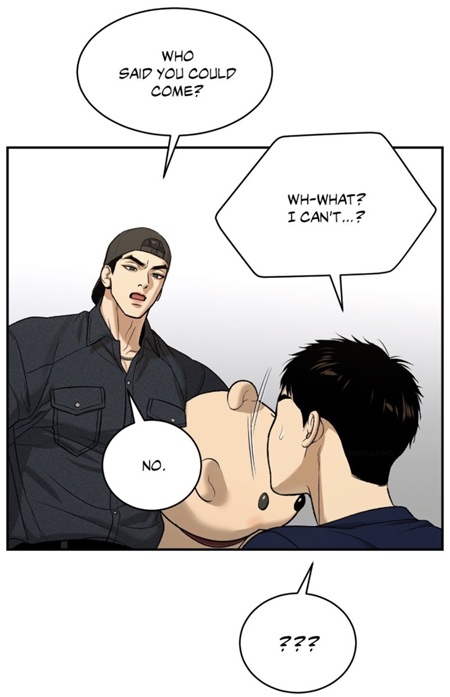 (chapter 87) For him, this trip was related to work, while in reality it was a date in disguise.
 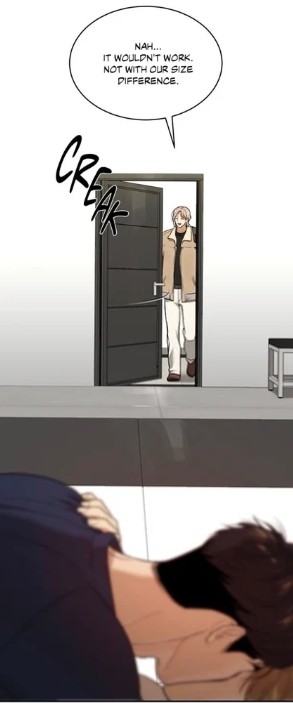 (Chapter 88) The answer restores hierarchy without acknowledging the transformation that has already occurred. Secondly, the answer closes the future by appealing to a supposedly objective limit. Yoon-Gu can never be his sparring partner. The best he can do is hold the mitts and nothing more. The fox is using his seniority and body to have the final say.
 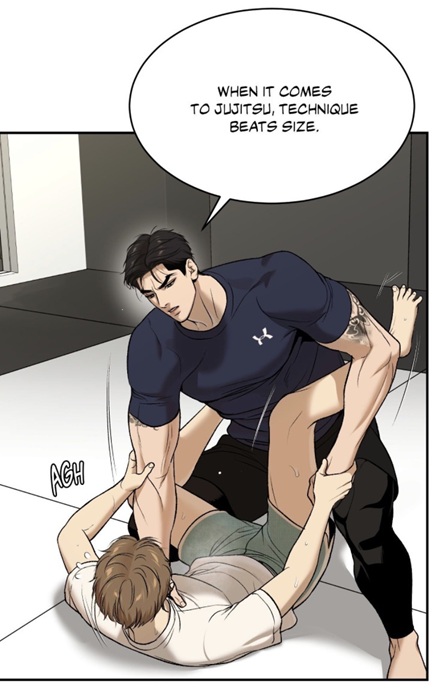 (chapter 88) Under that framework, Yoon-Gu is not disqualified; he is qualified. He has trained. He belongs. So technically, Yoon-Gu could indeed beat the actor, as the “puppy” has trained for a long time at Team Black.
 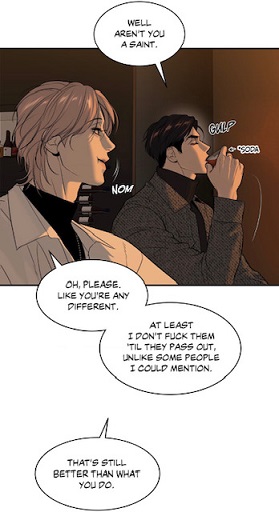 (chapter 33) He knows what he does not want. His language is saturated with judgment shaped by past experiences: lovers who become “too clingy,” attachments that turn inconvenient, people who should remain “better off” elsewhere
  (chapter 33) Heesung’s orientation is never toward what is unfolding, but toward what might be better elsewhere—another partner, another configuration, another future. His repeated invocation of a “soulmate” is revealing: it displaces intimacy into a hypothetical horizon. By looking at the grass, he is overlooking the flower. Love, for him, is something to be found later, once the conditions are ideal. What exists now is always provisional, always lacking, always subject to replacement. He needs the “perfect” lover, and in his eyes, Potato doesn’t meet his conditions: too innocent and too young.
  (special episode 1) This explicates why the young fighter is only considered as “fuck buddy”.
  (special episode 1), he is present, available, even emotionally invested—but he is never treated as sufficient. He is smaller
  (chapter 31) He denies the existence of feelings and attachment.
  (special episode 1) or humiliate the other.
 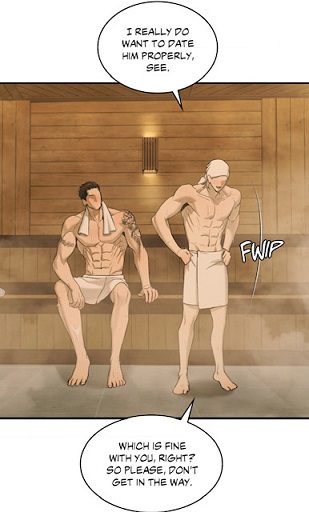 (chapter 34) Heesung, by contrast, is fluent. He can name, joke, insinuate. What he lacks is restraint and responsibility. His ease with words does not signal emotional intelligence; it signals control.
 (chapter 34) Heesung enters fully aware of what he is likely to witness. He is not naïve, nor totally surprised. Hence he doesn’t flee right away. Yet instead of acknowledging the reality before him, Doc Dan is not someone the fighter fucks, until he passes out,
  (chapter 34) Joo Jaekyung becomes the problem, the one who “deserves to suffer.”
  (chapter 25), accepts deferral. Later, he is displaced entirely. Unlike Kim Dan, who gradually moves from imposed participation to earned agency, Potato is never given a space where effort leads to recognition.
  (chapter 85) However, this panel implies that the young man has already been able to enter competition. Striking is that his promise at the seaside sounds like commitment
 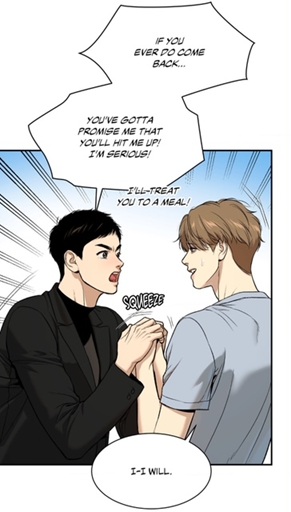 (chapter 59), but the reality diverges. It only binds doc Dan. If the latter returns to Seoul, he has to promise to train with Potato. The reason is simple. He is already committed to the actor, he is already at his beck and call. Potato’s promise echoes the earlier promise forced upon Kim Dan by his grandmother: a future-oriented vow that justifies present sacrifice while guaranteeing nothing in return.
  (chapter 11)
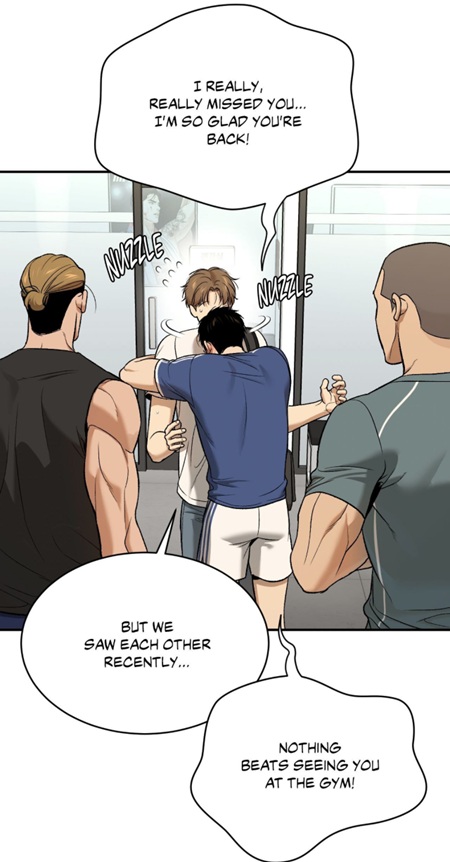 (chapter 78), he didn’t remind doc Dan of his promise. At the same time, observe that none of the fighters apologized or promised something. When they hugged the doctor, they didn’t pay attention to the physical therapist’s reaction: his passivity and silence. The “laugh” lacked genuineness and felt wrong at the time.
  (chapter 78)
 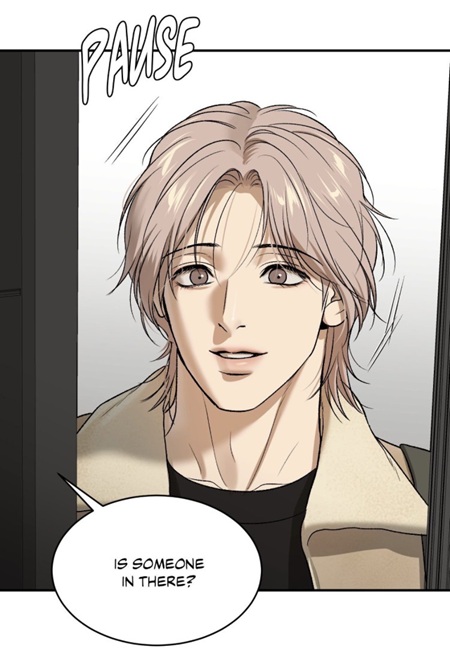 (Chapter 88) This is how it dawned on me why Mingwa recreated such a situation for Heesung. Observe his reaction, when he opened the door. He never answered the question to Potato. In fact, he slammed the door and kept his thoughts to himself.
  (chapter 32), Yoon-Gu now provides unpaid labor and institutional access under the guise of familiarity and generosity
 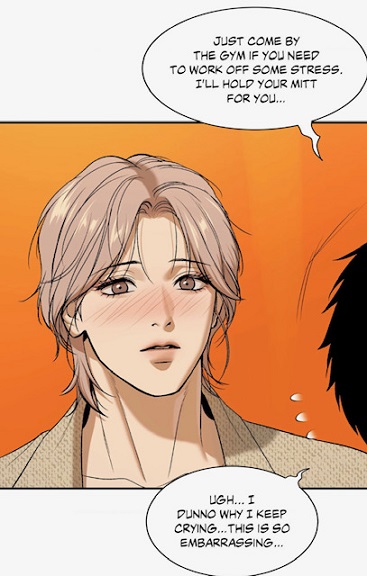 (chapter 35). In both cases, Heesung benefits from proximity without assuming responsibility for the other person’s risk. Silence, here, is not neutral—it is the mechanism by which that asymmetry is maintained.
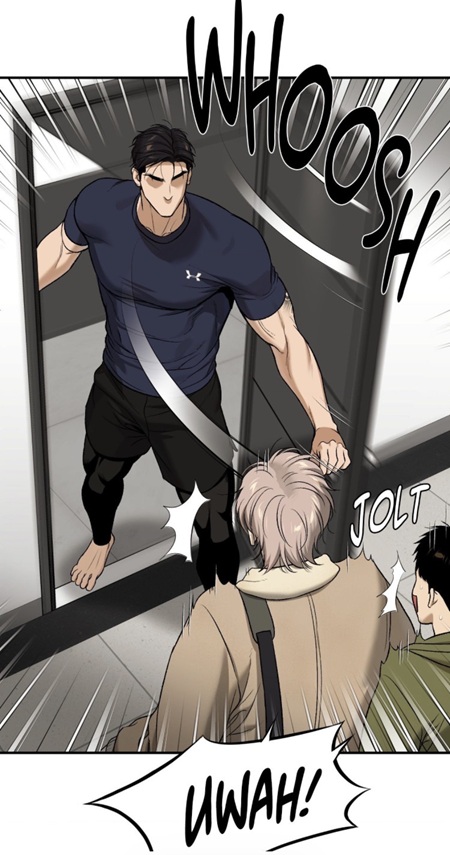 (chapter 88) Forgiveness, responsibility, and mutual recognition—central to the arc unfolding elsewhere—are entirely absent from his conduct. Where Joo Jaekyung begins to redistribute choice and accountability, Heesung consolidates control by refusing to speak.
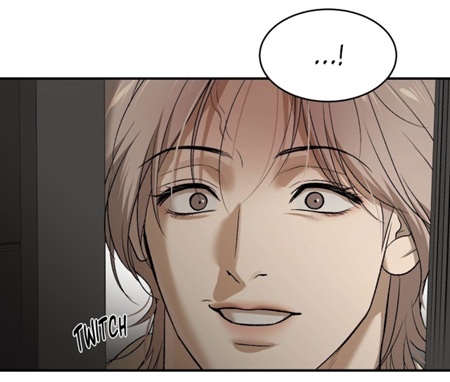 (chapter 88) The irony is that the actor didn’t realize this. He had the impression to be exposed to a similar scene than in the penthouse.
  (chapter 35) And now, pay attention to the logo on the doctor’s t- shirt.
  (chapter 88) First, it appears on the left side, positioned close to the hamster’s heart. Moreover, it looks like an orange eye. Orange is not only the color of Heesung the fox
  (chapter 34), but also of friendship and social communication and interaction.
  (chapter 79) Besides, it is the same logo than when Yoon-Gu was spying behind the closed door.
 (chapter 23) That’s the moment Potato realized the truth about the couple: they were intimate. That’s the reason why I am convinced that Heesung will play the role of the messenger and mediator between the wolf and the hamster.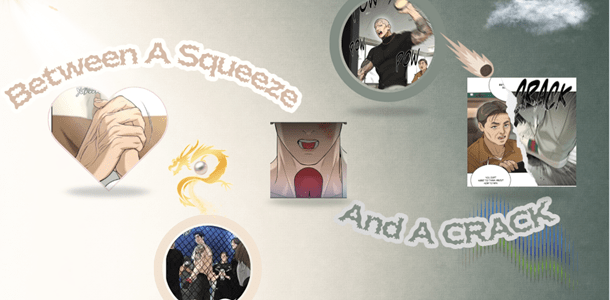

 (chapter 87)
  (chapter 87) The intimacy of the gesture
  (chapter 87) and an entire match took place, readers were largely talking about the introduction alone. 그나저나 이번화 나름 ㅂㅈㅁ도 나오고 경기도 했는데 다들 맨앞 도입부만 얘기하셔서 너무나 커엽군요,, (손잡았어 웅성웅성) Mimicking the collective reaction with a playful “They held hands!”, she described this selective focus as 커엽군요—not reproachful, but gently teasing.
 (chapter 84) and the progression of their relationship, attuning readers to intimacy
  (chapter 85), care, and emotional release. When the chapter opens with a tactile, reassuring gesture, it naturally confirms that reading mode. The squeeze feels like a culmination.
 (chapter 87) There, Baek Junmin rejects restraint, pushes away guidance, and verbalizes a resolve shaped not by trust or release, but by anger and revenge.
  (chapter 87) This sentence marks a limit. It is not indifference, but acceptance. The champion has just registered the doctor’s surprise
  (chapter 87) — the slight jolt, the hesitation—and he responds by stopping. The restraint is not automatic; it is chosen. He does not ask for more reassurance, more certainty, or more support, even though he clearly desires it. Instead, he recognizes sufficiency.
 (chapter 87) So the doctor’s support was indeed limited in time. So the stop of the champion ‘s squeeze
 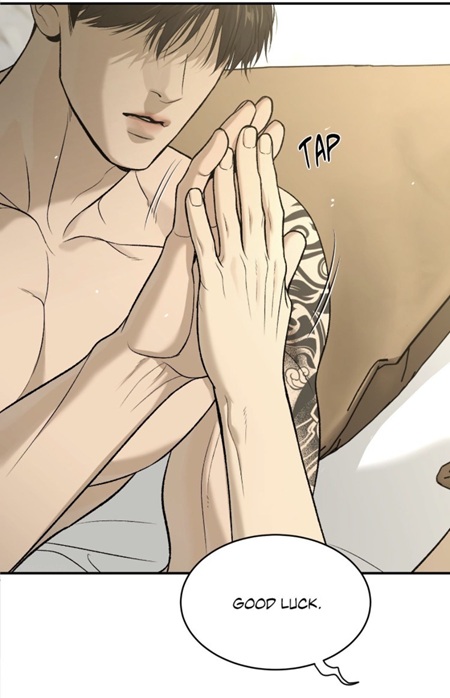 (chapter 87) Nothing mediates the gesture. There is no object, no talisman, no substitute. Meaning is produced entirely through contact.
 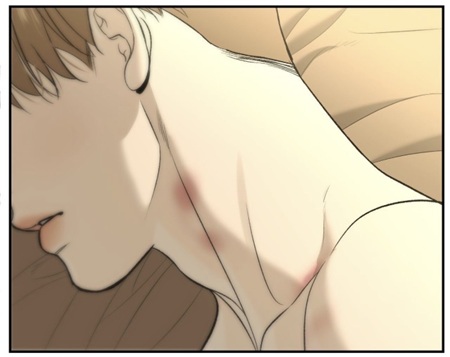 (chapter 87) The opening scene unfolds in a space that feels inhabited and shared, composed in softer shades that emphasize stillness and presence. The final scene is colder, darker, sharper.
 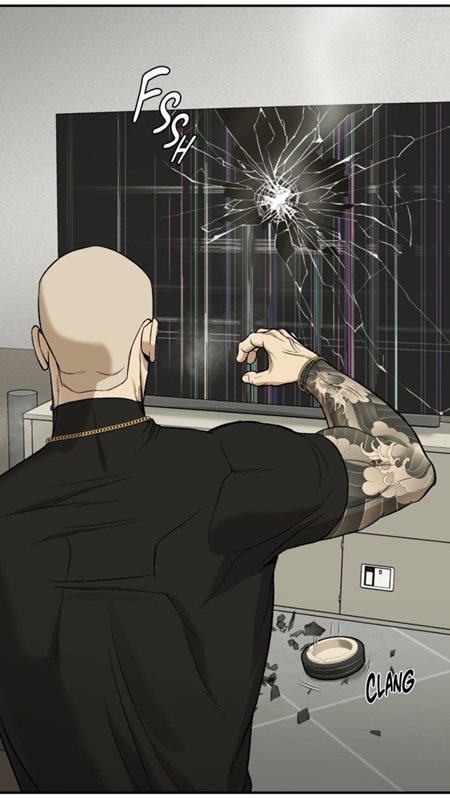 (chapter 87) Motion replaces quiet. An object enters the frame, absorbing force and redirecting it away from human contact. Where the first scene restores continuity—between bodies, between effort and outcome, between present and future
 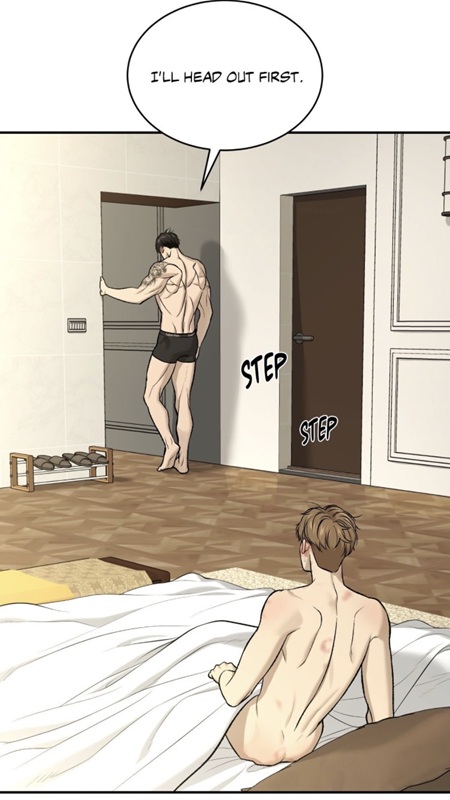 (chapter 87) —the second collapses time inward. Baek Junmin does not act toward what is coming; he reacts toward what has already been. His violence is not exploratory but recursive.
 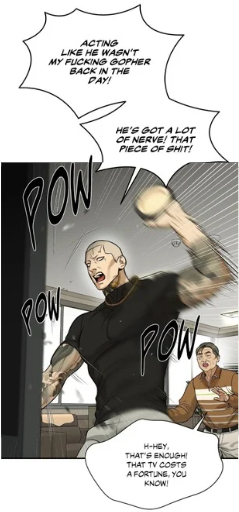 (chapter 87) It invokes the past as a template, attempting to reinstate an earlier hierarchy in which domination was secure and uncontested.
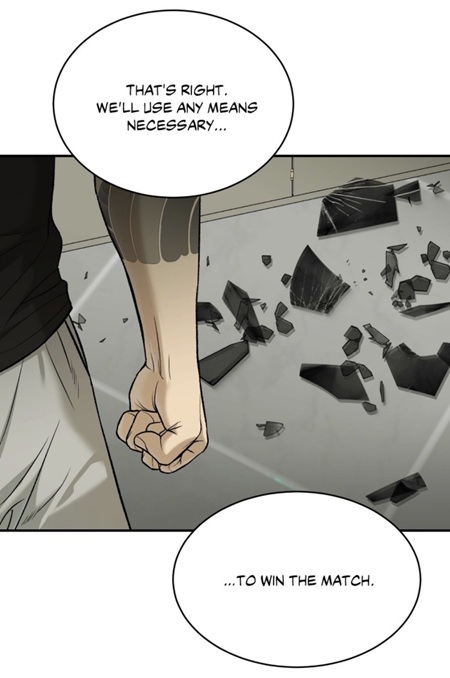 (chapter 87)—the very surface on which images circulate, words are fixed, and visibility is regulated. The screen does not reveal truth; it organizes perception. It is where victories are staged, reputations stabilized
 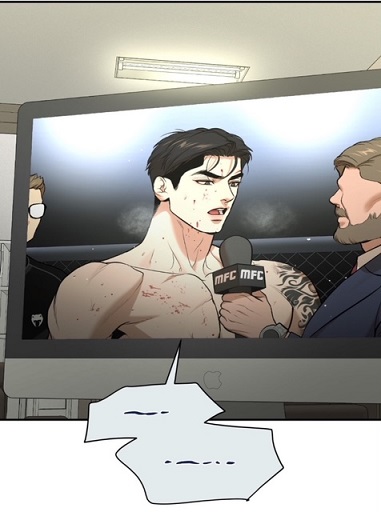 (chapter 46), and statements acquire permanence through broadcast.
 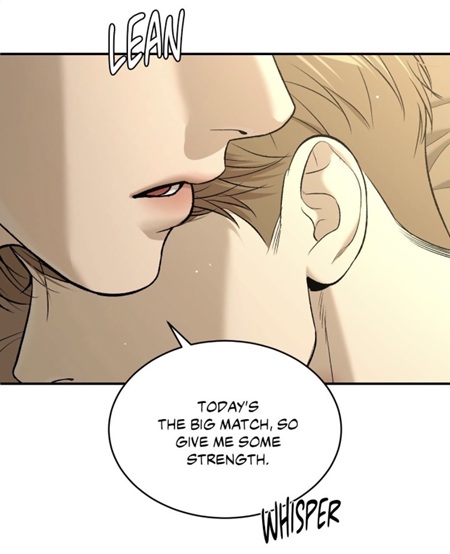 (chapter 87), then the pause; then Kim Dan’s tentative tap
 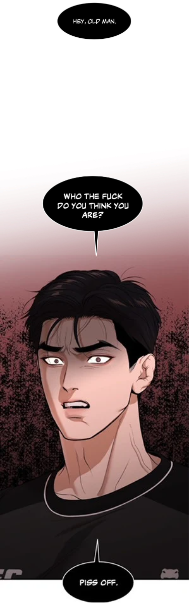 (chapter 49) When Joo Jaekyung addresses him with open disrespect, the breach of seniority provokes immediate outrage.
  (chapter 49) Intervention follows quickly. The insult is not tolerated
 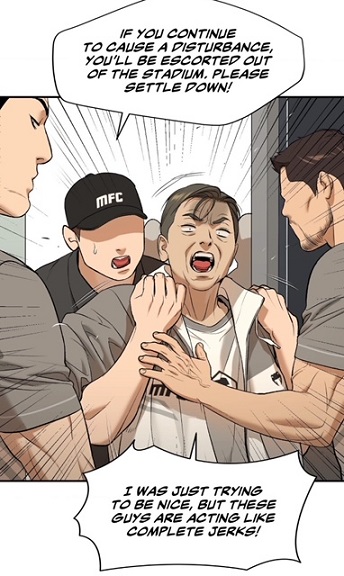 (chapter 49) because it threatens hierarchy itself. Choi’s anger is genuine in that moment and it reveals what he truly guards: status, order, and the visibility of respect.
 (chapter 87), and continues escalating without repercussion
  (chapter 78) Both continue to perceive Joo Jaekyung as nothing more than a fighter
  (chapter 87) This assumption governs how they speak to him, how they threaten him
 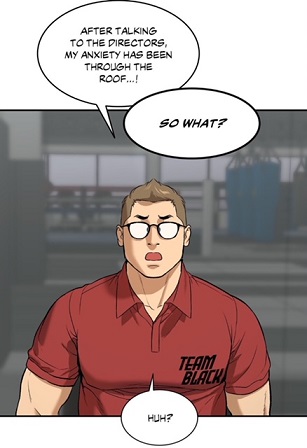 (chapter 46) His presence creates a convenient fiction: those around the table come to believe that he is the owner, or at least the one who truly governs the gym. Joo Jaekyung’s absence is interpreted not as autonomy, but as immaturity or dependence. Authority, once again, attaches itself to performance rather than reality.
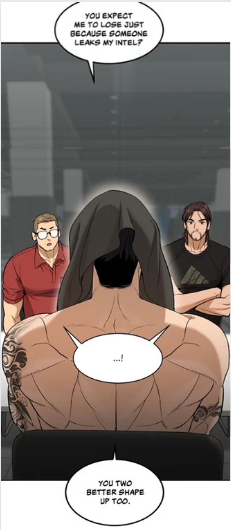 (chapter 46) Even after boundaries are formally stated, Park Namwook continues to rely on seniority to address the champion
 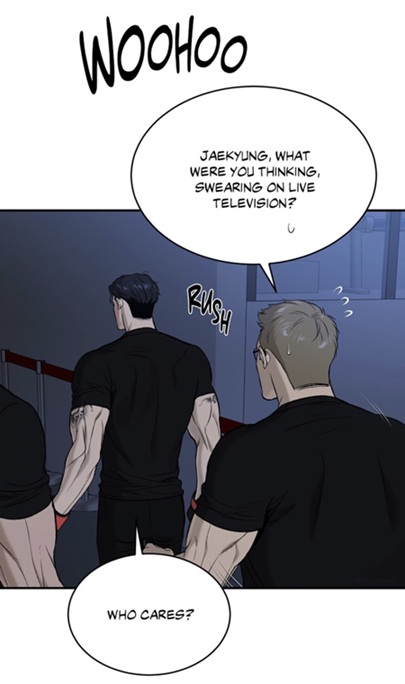 (chapter 87)
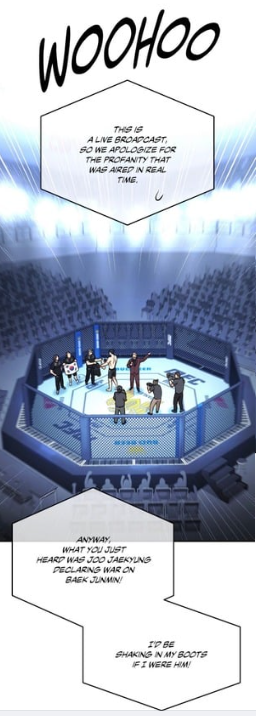 (chapter 87) What Baek attempts to destroy is not the object, but what it represents: the irreversibility of public speech, the collapse of secrecy, the loss of narrative control.
 (chapter 49), handshakes, and private humiliation
  (chapter 49), the gesture becomes clearer still. He is accustomed to violence without witnesses, to domination shielded by proximity and secrecy. He was always the man in the shadow. The live broadcast deprives him of that refuge.
 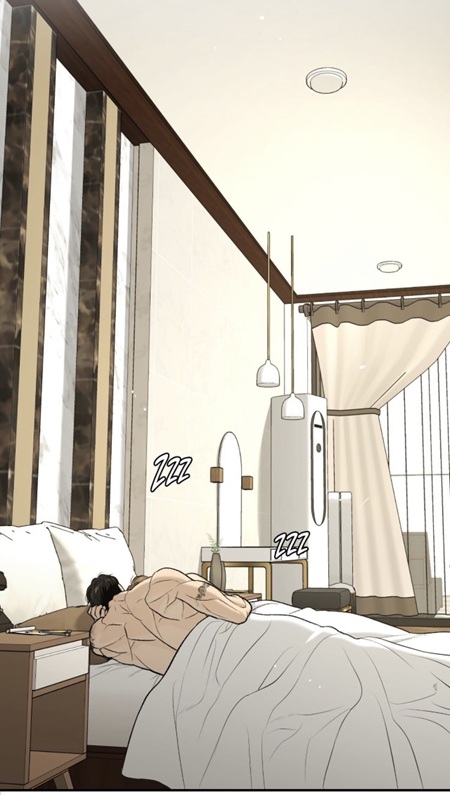 (chapter 87) also unfold under the sign of privacy.
 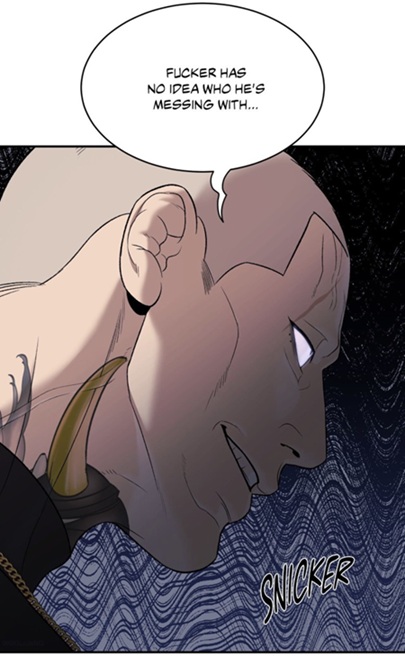 (chapter 87) He is announcing a shift of identity.
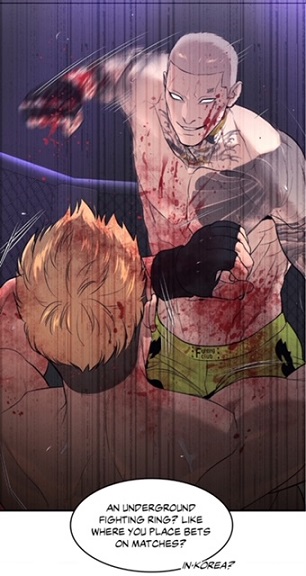 (chapter 47). The broken screen already signaled that he no longer cares about how he is seen.
  (Chapter 2). Here, strength is no longer something he takes. It is something he receives.
  (chapter 87) Kim Dan sleeping openly, showing his face, remaining there without fear—this is read by the champion as tacit trust. That trust becomes energy. In other words, this scene serves as the positive reflection of the argument in the locker room:
  (chapter 51)
 (chapter 75) —showering, cologne, self-regulation before a match. Here, that sequence is conspicuously absent.
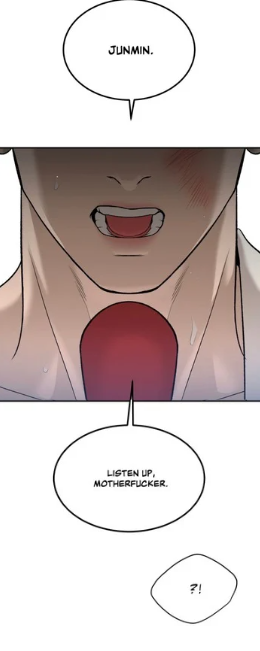 (chapter 87) The profanity is not recklessness—it is evidence that image management has lost its hold. The champion does not stop caring about how he is seen; he narrows the field of recognition. Public perception no longer governs him
 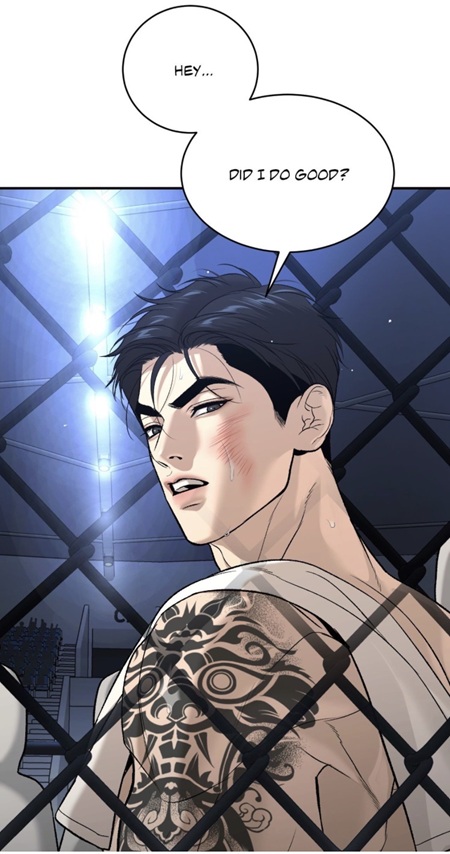 (chapter 87)
 (chapter 69), recognition, and above all visibility. Yet this visibility is curiously incomplete. Despite his victory, Baek Junmin is not immediately present as a public figure. He appears as a result
 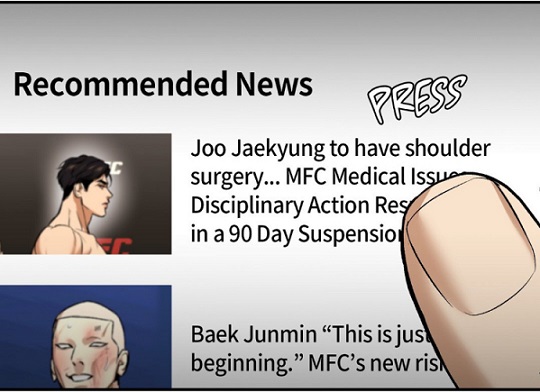 (chapter 52) —his name, his win—but not yet as a narrative subject.
 (chapter 77) does the story formally reveal his identity as champion. Until that moment, he remains strangely undefined, as if held back from full exposure. This delay is not incidental. It reflects a controlled form of recognition: Baek Junmin is allowed to win, but not yet to be seen. It already exposes that his success or victory is not clean.
 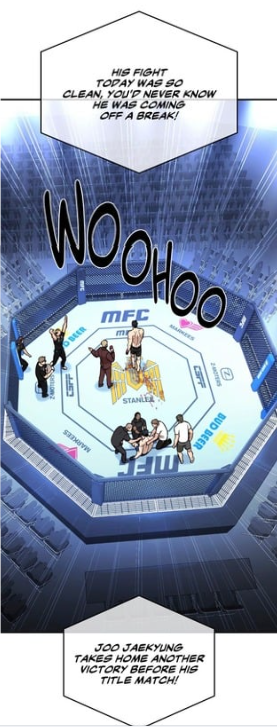 (chapter 87)
 (chapter 69) Violence is laundered through legitimacy. The system continues to present him as a contender, even as it quietly tolerates sabotage and manipulation. Importantly, Baek Junmin does not need to know every detail for this economy to function; it protects him by design.
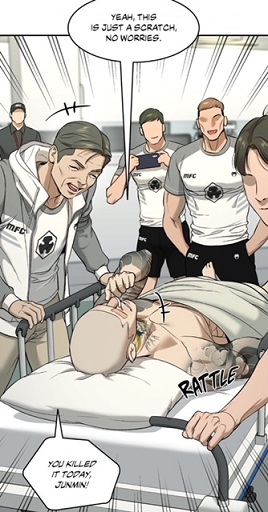 (chapter 52) In practice, hierarchy barely functions. Authority exists without discipline, protection without accountability. Baek Junmin is not positioned among other fighters, nor anchored in a collective. Thus he is not truly celebrated at the restaurant after the tie. Thus the fighters mentioned the director Choi Gilseok’s financial success or the odd behavior of Joo JAekyung.
  (chapter 52) Besides, he watches the match alone
  (chapter 51) where proximity forced acknowledgment and power was renegotiated face-to-face.
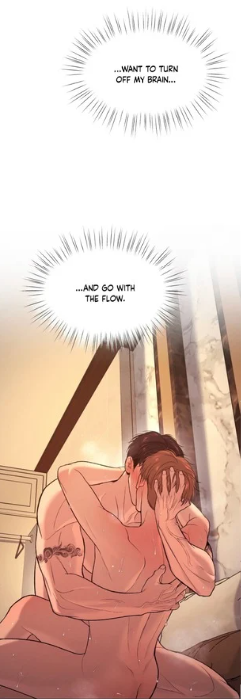 (chapter 86), it does not close the night through narrative resolution. There is no statement, no promise, no verbal seal. And yet, for many Jinx-philes, the final panel refuses to let the scene dissolve. What remains is not heat, not tension, not even tenderness — but circulation.
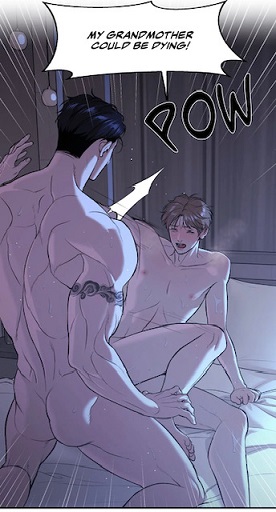 (chapter 21), overload
  (chapter 33), short circuit
 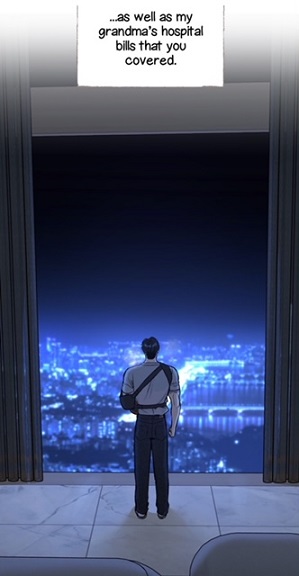 (chapter 53) reset. And once that lens is adopted, it becomes impossible to limit the consequences of episode 86 to the couple alone. Because a closed circuit does not only affect those directly connected to it. It alters the surrounding system.
 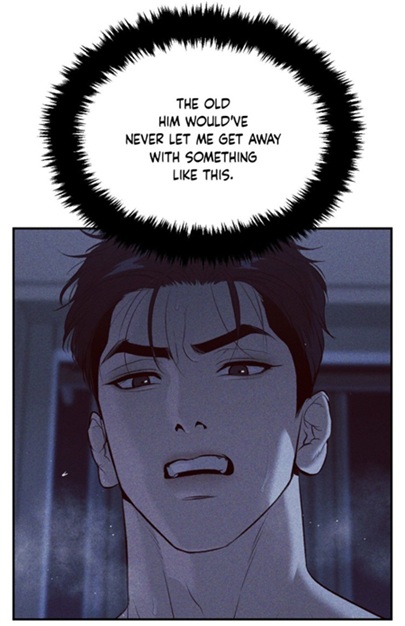 (chapter 86). This section will explore how acknowledging change without denying past harm opens a new ethical position — one that prevents memory from being weaponized, while still preserving responsibility. Third, the analysis will turn to conversion, revisiting earlier nights marked by failure, asymmetry, and isolation. Rather than cancelling them, episode 86 absorbs and transforms them. This is where forgiveness, reflection, and the first true encounter with consequence quietly enter the narrative. Finally, a new section will widen the lens further by examining shared experience and memory
  (chapter 53), particularly through Kim Dan’s relationship with his grandmother. Here, the focus will not be accusation, but contrast: between memories carried alone and memories held together; between cycles of repetition and moments of presence; between a worldview structured around endurance and one shaped by circulation. The Paris night does not only affect how Kim Dan sees Joo Jaekyung
 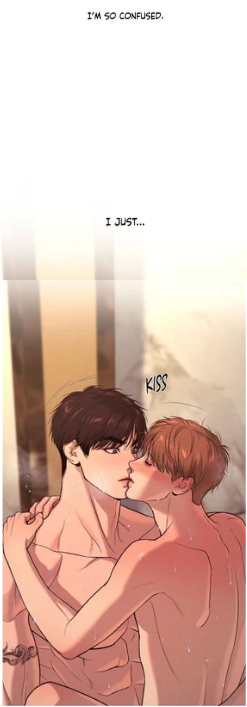 (chapter 86) carries such weight, we must return to the origin of kissing itself in Jinx. Because surprise, in this story, is not an abstract theme. It has a history. And that history begins with a body being caught off guard.
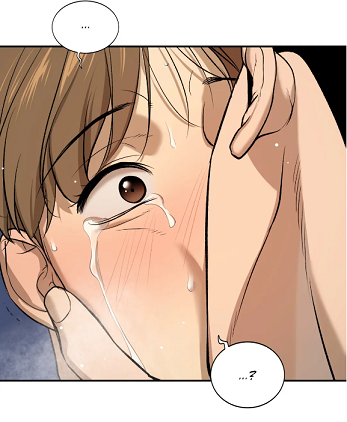 (chapter 14) There is no warning, no verbal cue, no time to prepare. The kiss arrives as interruption. It is not negotiated; it is imposed. Hence the author focused on the champion’s hand just before the smooch.
 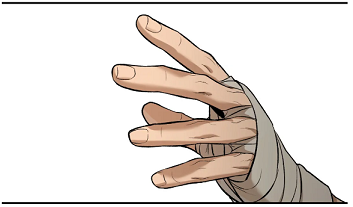 This moment matters far more than it initially appears, because it establishes the template through which Kim Dan first encounters intimacy.
 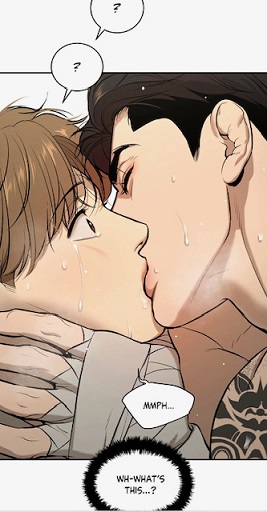 (chapter 15) Affection does not emerge gradually. It breaks in.
 (chapter 15) He needs preparation. He needs time to brace himself emotionally. This request reveals two aspects. First, he connects a kiss with love. On the other hand, the request is not really about romance; it is rather about survival. Surprise, for Kim Dan, has already been coded as something that overwhelms the body before the mind can intervene.
 (chapter 39), he violates his own request.
 (chapter 39) They are unannounced, often landing on unusual places (cheek or ear)
  (chapter 44). They often take place under asymmetrical conditions — when one of them is intoxicated, confused, or emotionally exposed. Sometimes they occur without full consent, sometimes without clarity. In chapters 39 and 44, kisses surface precisely when language fails or consciousness fractures. It is as if Kim Dan has internalized a rule he never chose: a kiss must be sudden. Observe how the champion replies to the doctor’s smile and laugh: he kissed him, as if he was jealous of his happiness.
 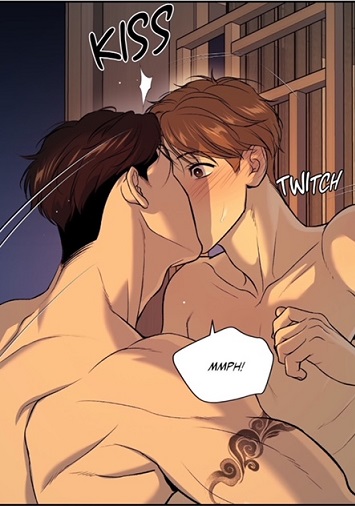 (chapter 44) That’s how I came to realize that the kiss in the Manhwa is strongly intertwined with “surprise”. This is the missing link.
 (chapter 2), he comes to reproduce interruption as intimacy. He knows that surprise destabilizes him — that is why he asked for warning — but he has no other model. What overwhelms him also becomes what he reaches for. Surprise is both threat and language.
 (chapter 3): the sudden call from the athlete,
  (chapter 1), the offer of sex in exchange for money
 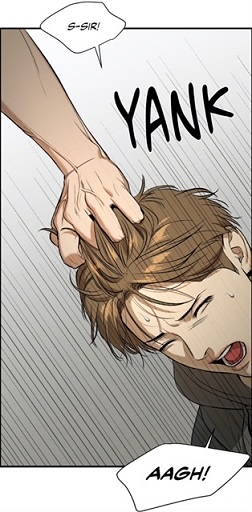 (chapter 6), the switched spray
  (chapter 49), the sudden changes in rules. These moments strip Kim Dan of anticipation and agency. His body reacts before his will can engage. Surprise equals exposure.
 (chapter 1) His life is governed by “always”: always working, always returning, always responsible. He lives for his grandmother. Nothing unexpected is allowed to happen, because nothing unexpected can be afforded. This is safety through stasis. Presence without experience.
 (chapter 5)
  (chapter 1) They shattered routine rather than enriching it. Surprise, in that context, did not open possibility; it threatened survival. It meant debt, coercion, fear. And precisely because of that, it could not be integrated into memory as experience — only repressed as trauma.
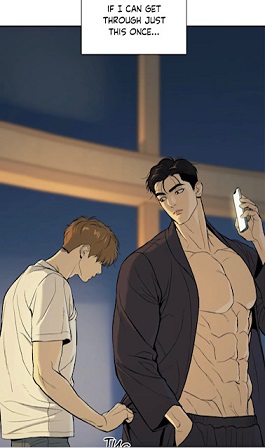 (chapter 2) but in a fundamentally different form.
 (chapter 11) His appearances are sudden, his demands non-discussable, his violence immediate. He does not ask; he enforces. Surprise, under his rule, eliminates speech. It leaves no space for argument, no room for clarification, no possibility of consent. One endures, or one is punished.
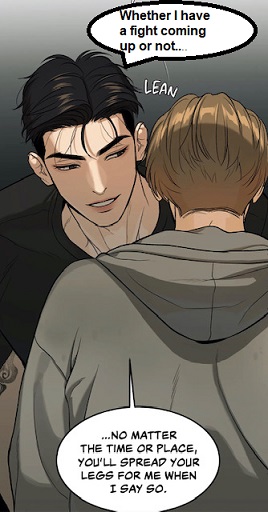 (chapter 6) Even when power is asymmetrical, even when the terms are coercive, speech is required. Conditions are stated. Rules are articulated. Kim Dan is forced to listen, to answer, to argue, to object. He must speak.
 (chapter 17) The two figures cannot coexist because they represent mutually exclusive regimes of surprise: one that annihilates speech, and one that forces it into being. In other words, only one allows experience to be lived rather than survived.
 (chapter 27) Experiences accumulate instead of disappearing. They demand response, speech, negotiation. Life no longer consists in enduring impact, but in processing it.
 (chapter 65) and as such neutralization: suffering must be absorbed, pain must be justified, disruption must be folded back into endurance. There is no place for charge there — only for dissipation. What Kim Dan lives through with Joo Jaekyung follows a different logic altogether: not sacrifice, but circulation; not repetition, but conversion.
 (chapter 41) not despite surprise, but through it. Not because dominance is romanticized, but because surprise is the first force that treats him as someone to whom things can happen. And don’t forget that for him, a kiss symbolizes affection. Even negative experiences generate subjectivity. They prove that he exists beyond function.
 (chapter 85) Kim Dan either endures it or reproduces it under unstable conditions. Agency is partial. Meaning collapses afterward.
 (chapter 39), irony
 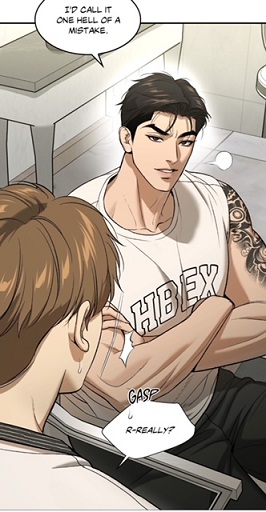 (chapter 41) or rejection
 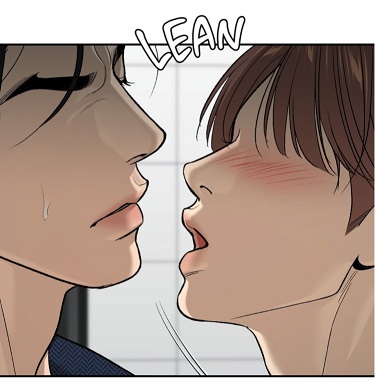 (chapter 55). He does not retreat into his habitual “it’s nothing” or “never mind.” He does not reinterpret the gesture as convenience or reflex.
  (chapter 86) He kisses back while looking tenderly at his partner. He holds Kim Dan’s head gently. He can only see such a gesture as a positive answer to his request: acceptance and even desire. Surprise is not punished. It is received.
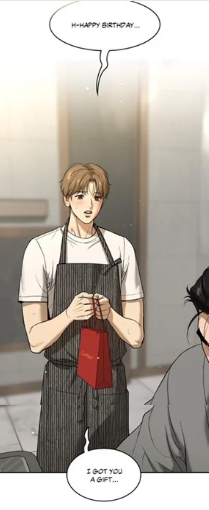 (Chapter 45) This time, the athlete not only accepts the present (the kiss), but but also expresses “gratitude” by kissing back actively.
  (chapter 65) In her eyes, she has never changed, just like her grandson.
  (chapter 57), and foreclose change. The champion’s violence is explained through reputation.
  (chapter 65) If the past is absolute, it can be endlessly invoked to invalidate the present. We have a perfect example on the beach.
  (chapter 65)
 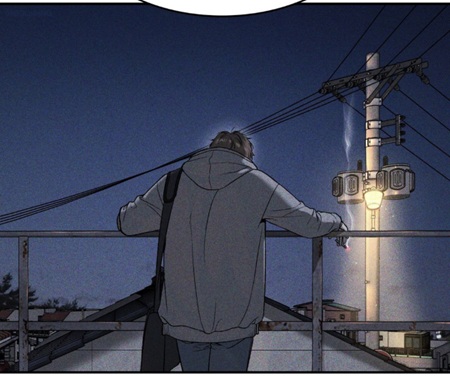 (chapter 65) They are evaluated exclusively through a moral lens. Smoking and drinking are not responses; they are flaws. And because they are framed as flaws, they retroactively define his character rather than his situation. This is where agency collapses.
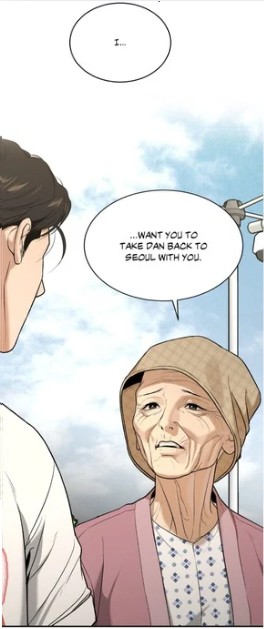 (chapter 65) Her behavior does not contradict her claim that she wants Kim Dan to “live his own life.”
  (chapter 65) It reveals how she understands such a life should be arranged. She sees herself as superior, as if she had never done any mistake, as if she had lived as a saint.
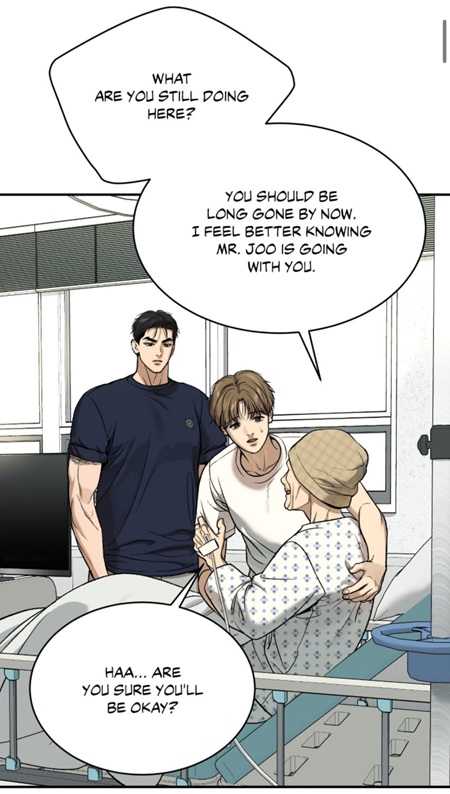 (chapter 78)
 (chapter 86) Once again, the “hamster” is given the opportunity not only to decide, but also to follow his heart. Where the Paris night allows difference to coexist with memory, Shin Okja’s framework collapses difference back into judgment. Where electricity requires polarity, her logic insists on sameness. Under this new light, it becomes comprehensible how doc Dan came to neglect himself. Self-care is inseparable from choice — from the belief that one’s decisions can meaningfully alter the present. If change is denied, care loses its purpose. Attending to oneself becomes optional, even suspect, because it implies a future different from the one already prescribed.
  (chapter 44) The one who remembers bears the – alone, while the other continues forward unmarked. That imbalance is corrosive. It distorts perception. It turns even good memories sour.
 (chapter 65), but she remembers it in a way that flattens time. Pain becomes proof of virtue. Sacrifice becomes identity.
  (chapter 65) Change is allowed only insofar as it returns to the same point. Electrically speaking, her system is grounded — all charge dissipates into endurance. There is no polarity, only repetition.
 (chapter 65) Even though the word jinx is never spoken during the Paris night, its logic quietly collapses there.
 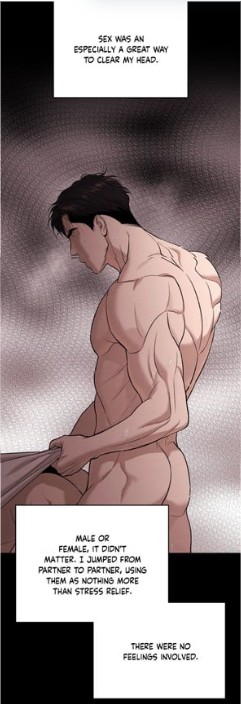 (chapter 75) In chapter 75, it is explicitly framed as a way to “clear the head”: an act designed to release pressure and return the system to zero. Partners were interchangeable. Feelings were excluded. Electricity existed only as a spark — brief, violent, and self-extinguishing. Energy was expelled, not circulated. That is the true mechanics of the jinx: power without continuity, intensity without consequence.
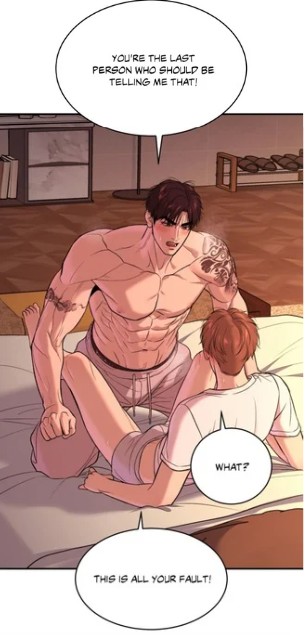 (chapter 85) Desires matter, not the match the next morning. Besides, the identity of the partner matters — not just romantically, but also structurally. Current requires two poles. It requires response. It cannot flow through an object, only between 2 subjects.
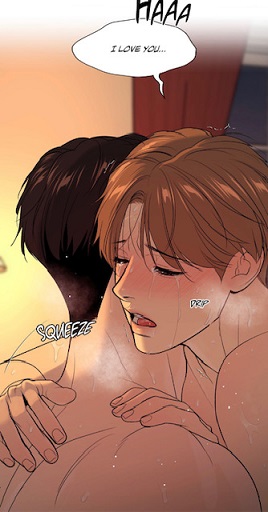 (chapter 39) and chapter 44
  (chapter 11), the care – even if he had hurt himself –
  (chapter 47), the shared smiles
  (chapter 47). Thus this photograph
  (chapter 65) becomes a talisman — not a record of reality, but a distilled image of safety. Painful dimensions are filtered out. Conflict, coercion, and silent pressure recede into the background. Memory protects him by idealizing. Because of this picture, he projected himself in the future, making unrealistic plans.
  (chapter 47) It was, as if he only had good times with his grandmother.
  (chapter 21)
  (chapter 47) and memories.
  (chapter 21)
 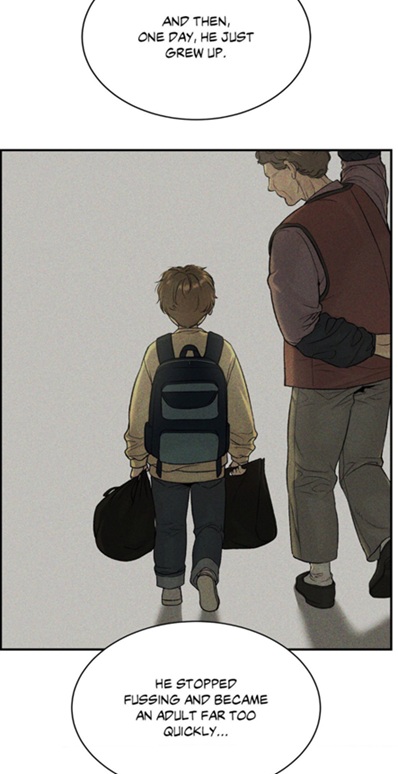 (chapter 65). While sleeping, memories come to the surface.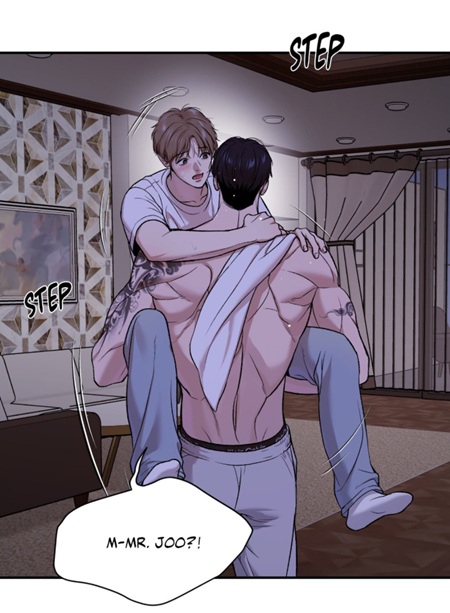
 (chapter 85) I believe that its appearance does not function as decoration. Its imagery — figures suspended among clouds, bodies neither falling nor grounded — introduces a different register of time. Not urgency. Not performance. Not spectacle. Stillness. Interval. A space where movement pauses without collapsing. Under this new light, the reference is Morpheus.
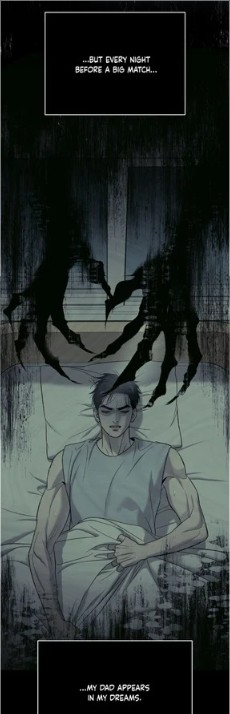 (chapter 75) Until now, rest had been replaced by discharge: sex as erasure, violence as exhaustion, ritual as compulsion. The Paris night does not abolish wakefulness through collapse; it introduces the conditions under which sleep might finally be possible.
 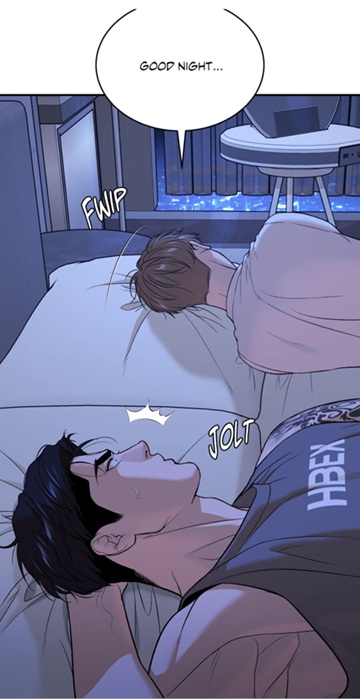 (Chapter 78) Here, he reduced it to the absence of sex, but I am sure that deep down, he would have been satisfied, if the “hamster” had given him a good night kiss.
 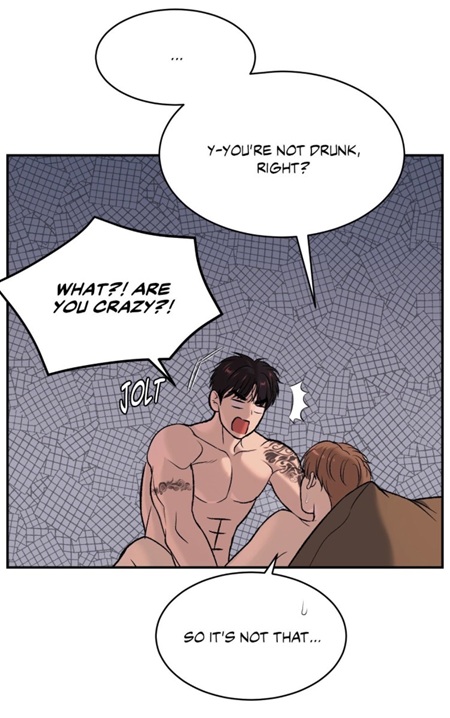 (chapter 86) The charge redistributes. Memory ceases to isolate and begins to circulate. Hence it creates a new memory.
  (chapter 86) was a reflection of the picture.
  (chapter 86) No one is erased or reduced to an object. Nothing is overlooked or forgotten. But repetition loses its hold. And from here, the story can no longer proceed as before.

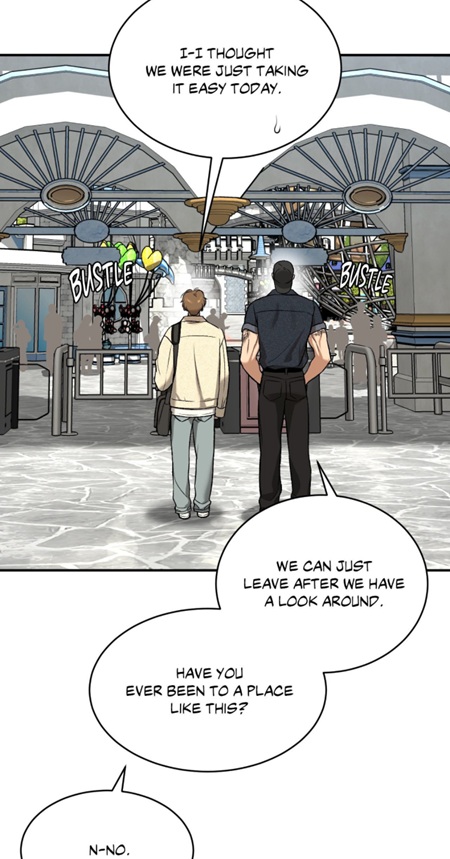 (chapter 82) Jinx-Lovers consider it as their first real date, a long-awaited moment of levity after so much pain. But perhaps we should pause and ask: why this place?
  (chapter 82) scattered on the table, one displays the Eiffel Tower — the obvious choice, symbol of mastery and control. Built for the Exposition Universelle of 1889, it was meant to celebrate France’s industrial power and the centenary of the Revolution — proof that bourgeoisie and steel, not kings and nobility, now ruled the sky and ground. It was even supposed to be dismantled after twenty years, yet it remained, and has since become the symbol of Paris and of France. A monument to progress, modernity, freedom, national pride and endurance.
 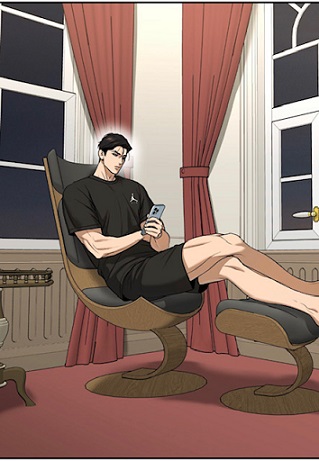 (chapter 38) Hence in the States he is here turning his back to the window and his only connection to others was through the cellphone. The cities he visited were backdrops, not experiences. He was always alone. And yet, here, something changes in Paris.
  (chapter 82) His hotel room opens onto a broad window and a balcony — an invitation to look out. Secondly, observe that he only proposed this activity after the other members had fallen sick. When doc Dan barged in his room, the champion was doing a one-handed handstand, holding his entire weight as if defying gravity itself
  (chapter 82) and proving his recovery. The posture seemed like control, yet it was closer to self-punishment — an immobility that devoured strength. Blood rushed to his heart and head, but his lungs stayed empty. It was, unconsciously, his way of treating his breathlessness. This also shows that he had no real expectation about the “rest” his manager had suggested
  (chapter 82) — the drinking, the empty and aimless trip (“check out the area”). For the wolf, such a downtime could only mean endurance, not release and excitement. By the way, such a suggestion from Park Namwook borders on stupidity and blindness. How could he propose drinking, when he had seen his “boy” indulged in alcohol before?
 (chapter 54) I guess, he must have taken the celebrity’s words at face-value. But let’s return our attention to the panel with the brochures selected by the champion. If you look carefully, you will detect the presence of 4 stars.
 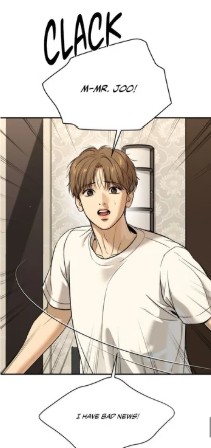 (chapter 82) How do I come to this interpretation? We have seen these stars before, during Kim Dan’s Summer Night’s Dream: the same glittering symbols of softness and excitement.
 (chapter 44) Yet, this time, the little “stars” belong to the celebrity.
 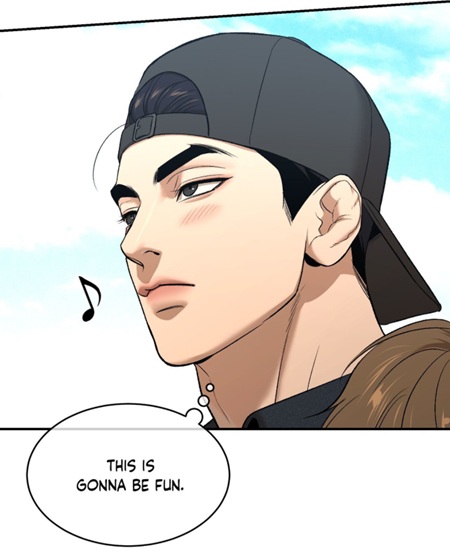 (chapter 82) His choice of the amusement park is not really about himself and his desires— it is an act of care, a wish to give happiness to someone else.
 , Sleeping Beauty
  and Beauty and the Beast
 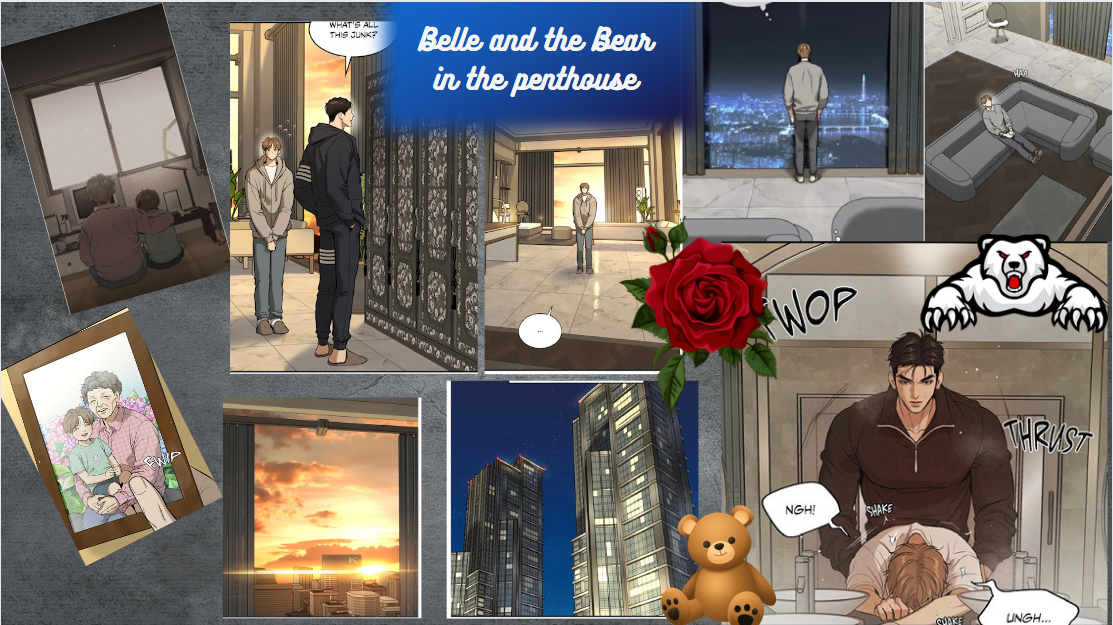 ).Hence there is the castle on the brochure.
  (chapter 82) For both, it was financially and emotionally out of question. It grounds the symbolism of the amusement park in social reality, reminding readers that “fun” is also a form of privilege. This means that the champion is actually on his way to replace this picture:
  (chapter 65) So yes, this may look like a simple date. Yet beneath its playful surface lies the quietest revolution of all: the man who once ignored every view now opens the window, looks outward, and chooses wonder and fun over war.
 (chapter 81), but not about the geography and air. I had truly detected the importance of this image and its symbolism. The plane that opened this arc spoke not of luxury, but of altitude — of a life lived too high, where oxygen is rationed by pride. Below the aircraft stretch the Alps, which I had correctly identified. From there flows the athlete’s own water – Evian
 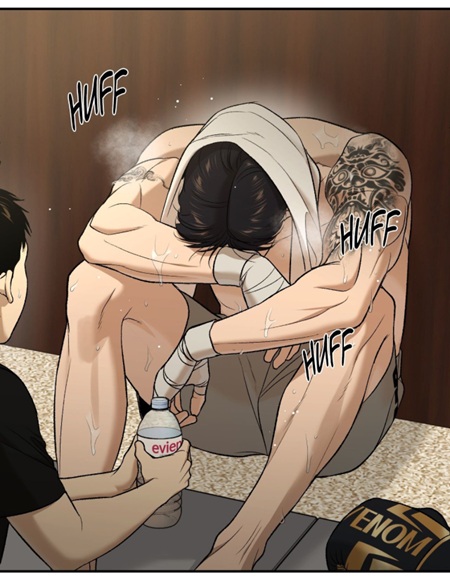 (chapter 82) (written Evien in the manhwa) — drawn from the mountain that sustains him and starves him at once.
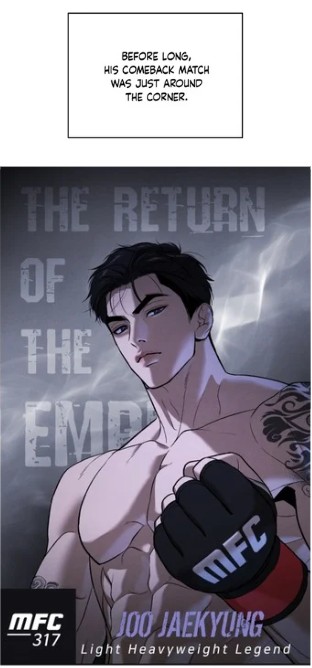 (chapter 81): the rising smoke, the suggestion of a light already suffocated. The higher they bring him, the closer he moves to extinction. Besides, the higher he climbs, the harder the fall. In other words, they are trying to break him — to make him fall — something the athlete has already sensed.
  (chapter 82)
 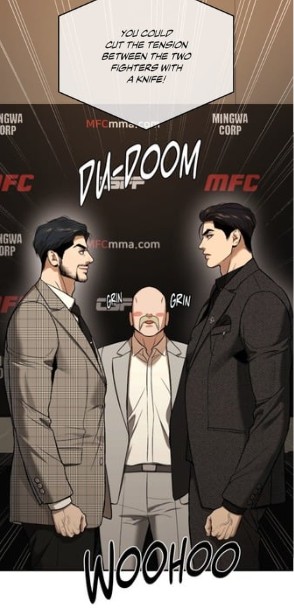 (chapter 82) — a creature of heights and thin air, born to dominate the skies where others can barely breathe. The metaphor could not be clearer: altitude is his arena, but also his undoing.
  (chapter 81) The air remains clear and generous, the sky washed in blue as if nothing could go wrong. Yet the trees, touched by the first copper tones, announce the slow turn of the year. It is a calm, lucid atmosphere, the kind of weather that hides transition inside serenity. The unseen Seine glides through the city like a long breath, steady and effortless.
 (chapter 82), to build joy outside the ring
  (chapter 82)
  (chapter 81) A single breath — huu — escapes, white against the air. It looks like calm, but it isn’t. It’s the sound of a man forcing his body to obey. The clenched fist that follows betrays him: anxiety condensed into muscle.
  (chapter 81) The champion has descended, yet the altitude still lives inside him.
 (chapter 14), but his lungs and heart. Yet at the airport, the sportsman doesn’t realize it
  and makes the following resolution:
 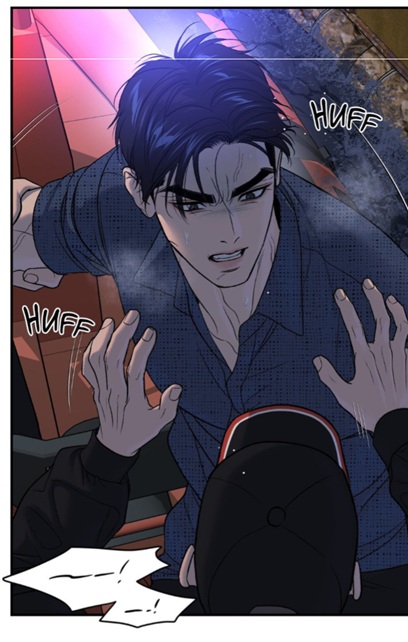 (chapter 69) Back then, he feared for doc Dan’s life and ran as if his own heart depended on it. His breathlessness wasn’t exhaustion but panic: the instinctive terror of losing the person who keeps him alive. Thus when he saw him alive on the dock, he could start breathing properly:
  (chapter 69) From HUFF to HAA… exhale versus inhale.
 (chapter 82) His brain and heart remember that night at the dock; every harsh inhale during practice echoes that same dread of separation.
 (chapter 82) And how did the champion respond to that provocation? Like a cornered animal.
 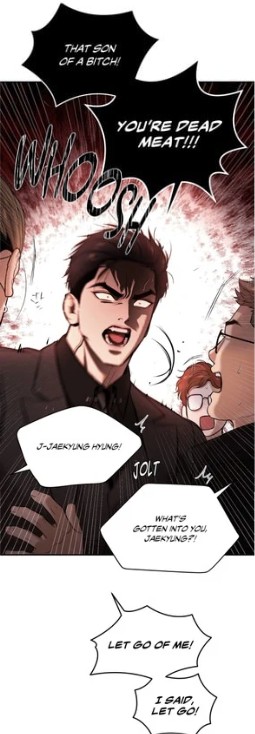 (chapter 82) He became the wolf again, not out of jealousy, but out of survival reflex—his body screaming its panic in place of words. In that instant, he was reminded that he could lose doc Dan as a partner, that the bond he relies on might not belong to him forever.. The roar emptied his chest; his lungs gave out before his pride did. There was no air left in his body… thus the heart and lung couldn’t work properly.
  (chapter 75) The fearsome beast who once fought for dominance is gone. What remains is a tamed wolf, following his master’s voice (doc Dan) — not out of submission, but because he finally trusts where it leads.
 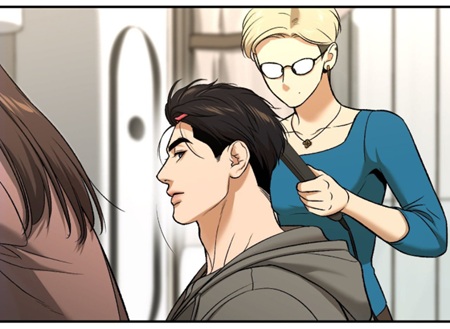 (chapter 82) He is now a tamed wolf following his master’s suggestions!
  (chapter 82) Thus the coach is now facing the couple. And now, my avid readers can understand why the champion seems almost radiant when he finds himself alone with doc Dan at the amusement park. It is not mere joy or freedom; it is the relief of finally acting from desire instead of duty
  (chapter 55)
  (chapter 79) The scene functions as both mirror and revelation: it forces the fighter to face the truth he has avoided all his life. In the past, he had never truly fallen. His defeats were painful, but never fatal; his failures never signified the end of a life. He could always stand up again — until now. Watching Kim Dan lean over the edge forces him to confront the difference between metaphor and mortality.
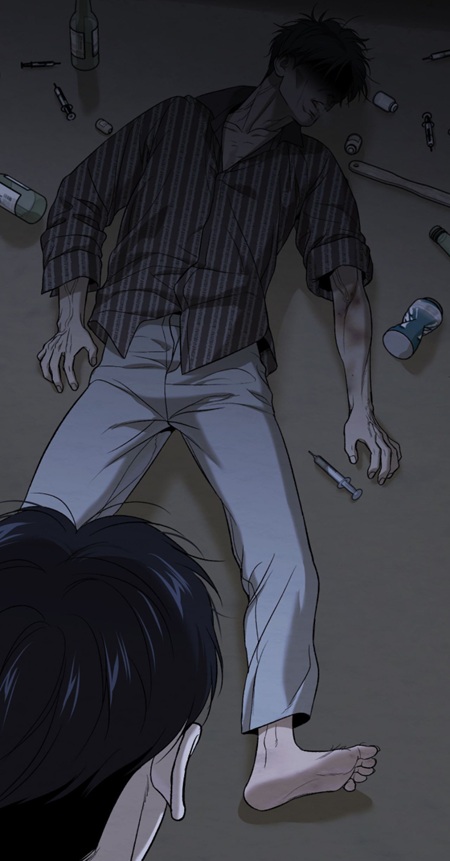 (chapter 73) – surrounded by bottles and syringes (chapter 73). Addiction, gambling, and intoxication: all ways of trying to rise above reality, to feel high, if only for a moment. Joo Jaewoong quite literally died from altitude, from chasing a false form of air. His father had tried to climb the social ladder through sport, to escape the poverty that trapped them, but he had failed. Those words
  (chapter 73), thrown like stones by the father at his son, buried themselves in the boy like shards.. They echoed like a curse — a prophecy Joo Jaekyung would spend his whole life disproving.
 (chapter 72)
 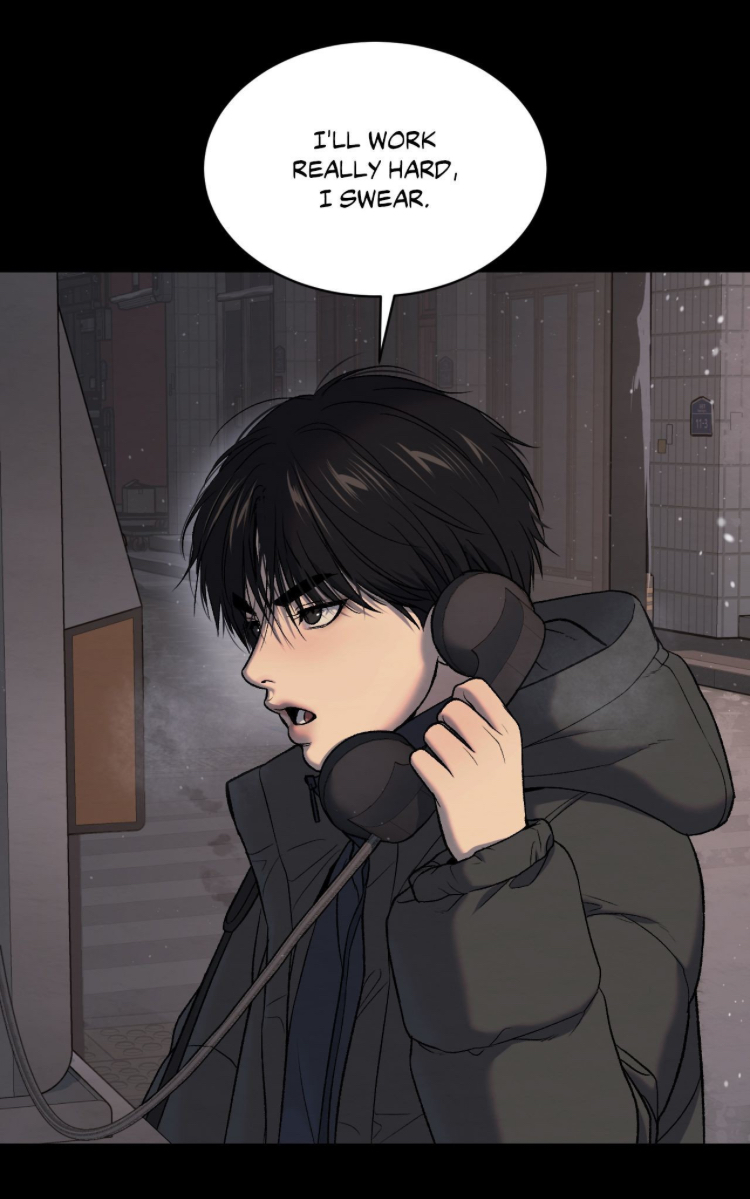 (chapter 72), yet she made no attempt to build an independent life. Her survival had always depended on his success — and when his career crumbled, she vanished with it. That’s the reason why the trash remained uncollected — a visual proof of abandonment
  (chapter 72) But the little boy failed to notice it, because he was suffering from the father’s abuse. Before leaving, she gave her son a phone number, as if absence were only temporary, as if love could be reached through a dial tone. That small gesture sustained an illusion: that she would come back if he became strong enough, rich enough, worthy enough. That illusion became the foundation of his life.
 (chapter 72) His first fight was not about trophies — it was an act of filial negotiation: a promise to buy her return. But of course, 300 dollars could not rebuild a family. His first fall became the confirmation of her silence. This explicates why he recalls his first tournament and considers it as “fall”. He had not been able to win, thus the mother could not return. He doesn’t fight for glory or passion; he fights to avoid being discarded again. So, when he says “I won’t fall again,” what he really means is “I won’t let myself be unloved again.”
  (chapter 72) But the problem is that when he was finally able to reach his mother, the latter answered that Joo Jaekyung was too late. The mother’s words sealed the curse. He was “already grown up now”
 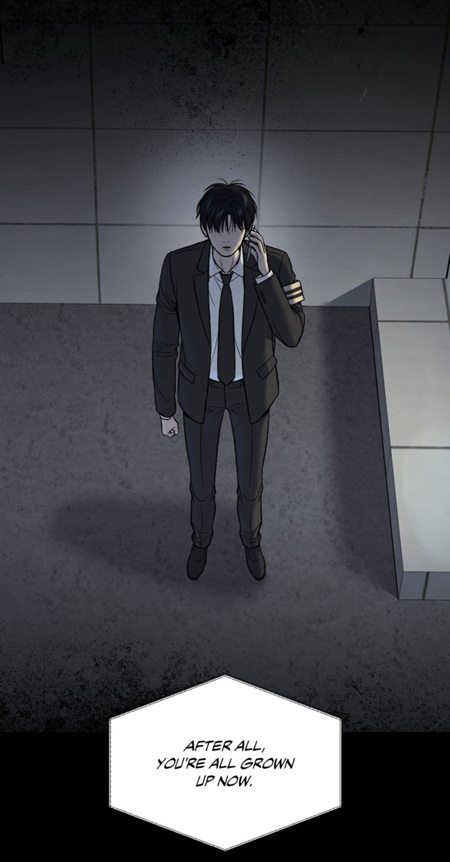 (chapter 74), hence he no longer needed her — as if maturity meant he no longer needed love. She actually implied that she had been all this time by his side.
  (chapter 74), while in reality, she had long abandoned him. Her departure turned growth into punishment, and independence into exile. This explicates why as an adult, he used money to buy people and turn them into toys. This could only make appear as a spoiled brat.
  (chapter 79) Even Park Namwook himself, only days earlier, had described the French match as
  (chapter 81) “a breeze” — a fight so effortless that it would bring some fresh air into the champion’s career. But that metaphor betrays its irony: what was supposed to refresh him is now suffocating him. The “breeze” promised by his manager has turned into lack of air.
 (chapter 70) — a detail no one around him ever learned. This simple fact overturns their interpretation.
 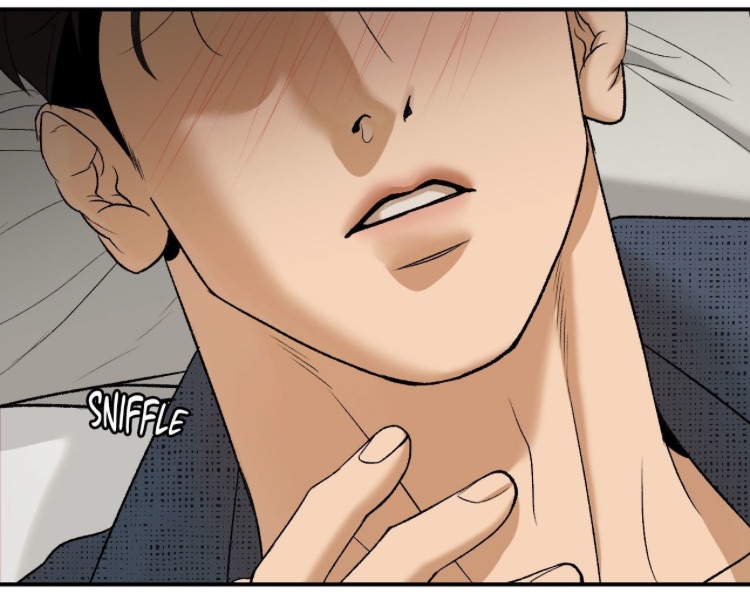 (chapter 70) The breathlessness they see now is not a decline in performance, but the residue of transformation. His body, once trained to suppress every weakness, had finally surrendered to nature.
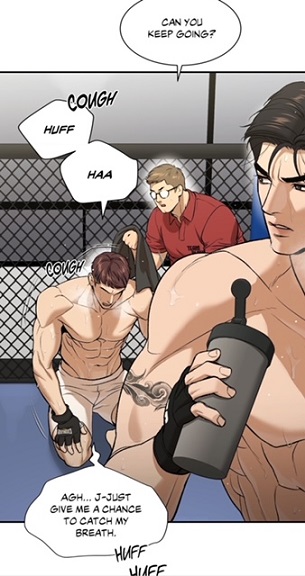 (chapter 46), whose clash with the champion exposes two different forms of frustration.
 (chapter 46) He reproaches Seonho for using his title and image to promote himself, for bragging about their sparring sessions to boost his career. From his perspective, Seonho lacks both endurance and authenticity — he performs strength rather than living it.
  (chapter 46) For Jaekyung, such behavior is intolerable because it cheapens everything he has sacrificed to achieve.
 (chapter 46) He turns on Jaekyung and accuses him of arrogance — of using his champion title to look down on others. What Seonho perceives as disdain is, in truth, the athlete’s defense mechanism. The star’s detachment is not born from pride but from obligation and trauma (abandonment issues).
  (chapter 46) His perfection is not freedom; it is captivity.
 (chapter 52) tried to recruit Potato, the youngest member from Team Black. He wanted to become the new idol of Hwang Yoon-Gu. He imagined that he could replace the main lead and Potato would be happy to become the new sparring partner of Seonho.
  (chapter 82) — a beauty that glides but never lands. Like Seonho, Gabriel thrives on appearance — on surfaces polished by attention. His beauty, elegance, and social charisma are his weapons. He lives in the air of visibility, relying on wind — the shifting currents of social media
 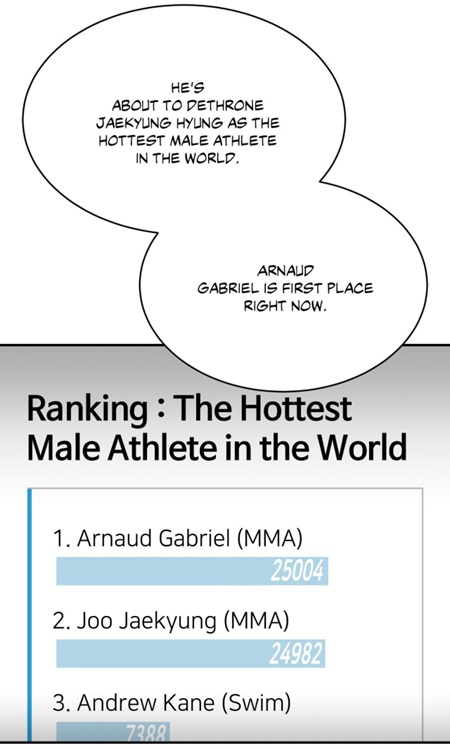 (chapter 81)
  (chapter 82) and press coverage — to lift his name higher. That’s why Mingwa made sure to show him at the press conference.
  (chapter 82) Every post, every camera flash, every headline serves as borrowed oxygen.
 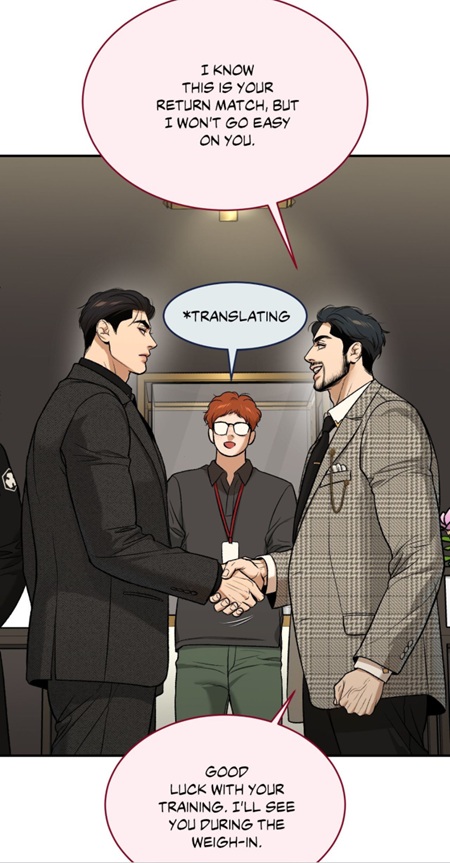 (chapter 82) Yet beneath that composure lies dependency. Gabriel’s power exists only as long as others keep watching, as long as the wind keeps blowing. His world is made of altitude — but the higher one flies, the thinner the air becomes. But if there is no wind or air, the eagle can no longer fly. This is palpable on two occasions, his encounter with the two male leads.
 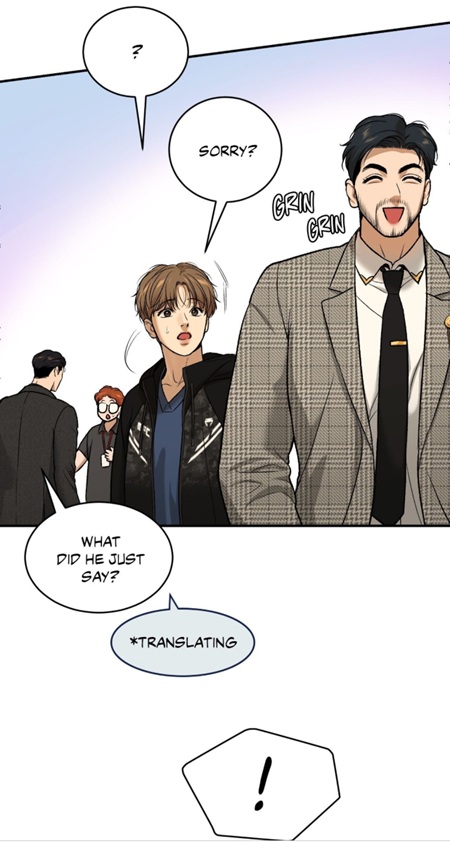 (chapter 82) The grin that follows is one of self-satisfaction and superficiality, not connection. It’s the smile of a man admiring his own reflection in another’s confusion — proof that he controls both the scene and the gaze. This shows that he had no intention to make the protagonist jealous. And it is clear that he never saw the wolf’s rage afterwards.
  (chapter 82) That way, his “vulnerability” would be masked. No one would question the champion’s health. And this brings me to my next observation.
 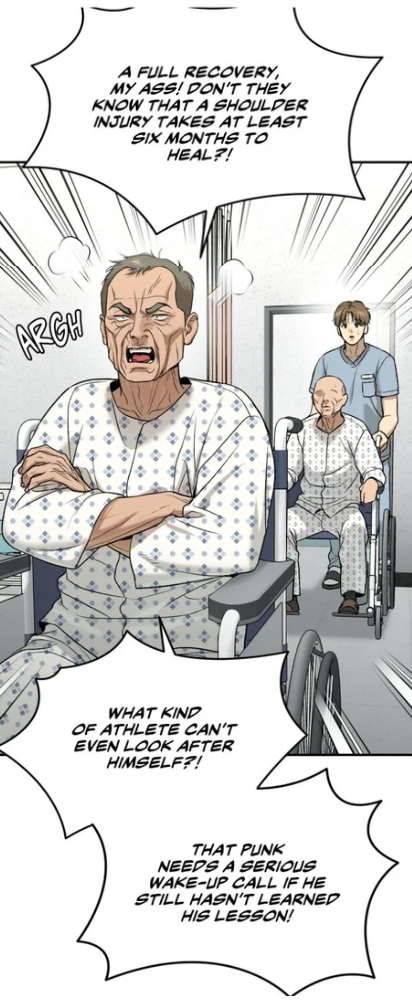 (chapter 70). Both men embody the same cruelty disguised as professionalism — one in the ring, the other from the shadows. They blame the champion for the new match, none of them question the system.
 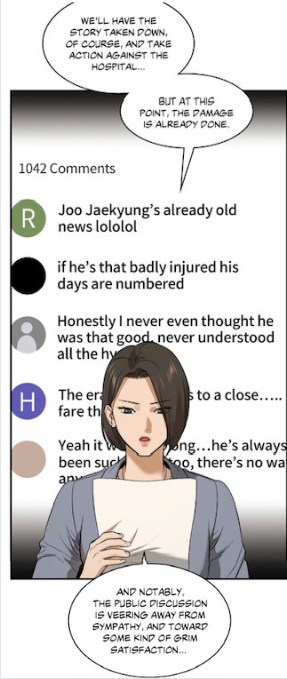 (chapter 36) or the media’s harsh verdicts after defeat
 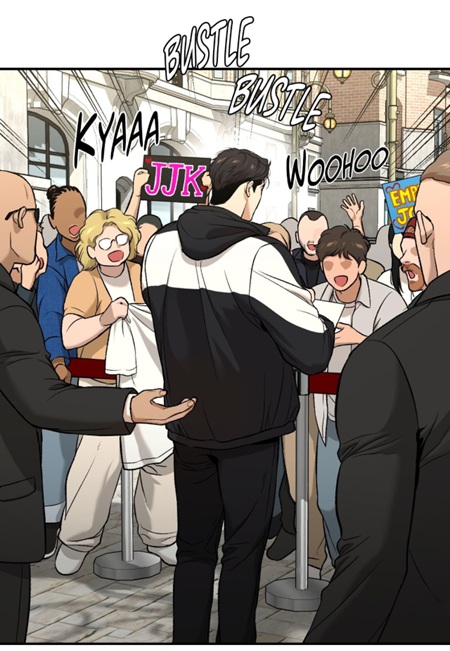 (chapter 82) He is now seen signing autographs
 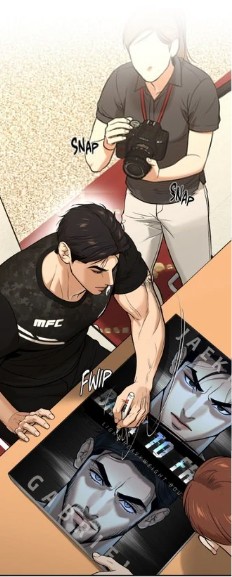 (chapter 82), whereas in the past, he was only seen in company of reporters in a secluded area.
  (chapter 40)
  (chapter 82) first unveiled at the World’s Columbian Exposition in 1893, was created to transform height into play. Conceived by engineer George Washington Ferris as America’s answer to the Parisian tower, it sought to outshine France not through steel alone, but through motion — a structure that would rise and fall, carrying ordinary people with it. Unlike the fixed tower, the wheel invited participation: passengers would move together, share the air, rise and descend without fear. It was both monument and moment — a way to democratize the sky.
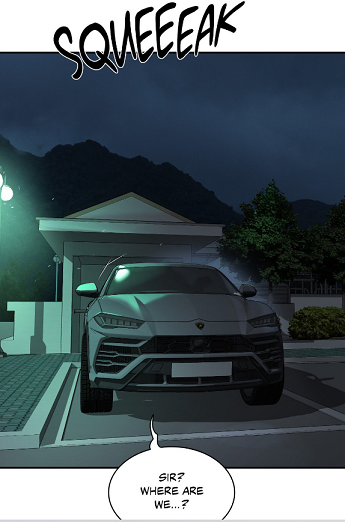
 Here the athlete has only one goal: talk to doc Dan and clean the air. He has no intention to truly rekindle with him
 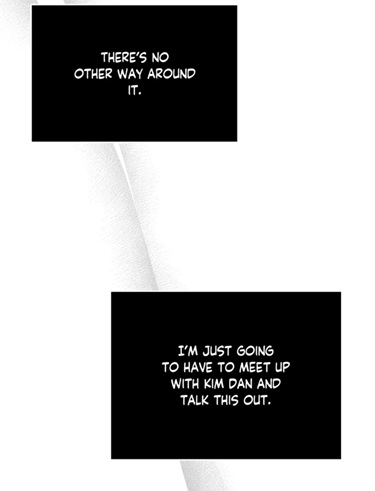 Thus he is still stuck in a traffic jam.
  Here, there is a progression, because he can switch the lane. However, he is still driving in one direction, not looking out of the window. He is not taking his time either. These scenes illustrate the champion’s psychological confinement and mirror doc Dan’s mindset as well.
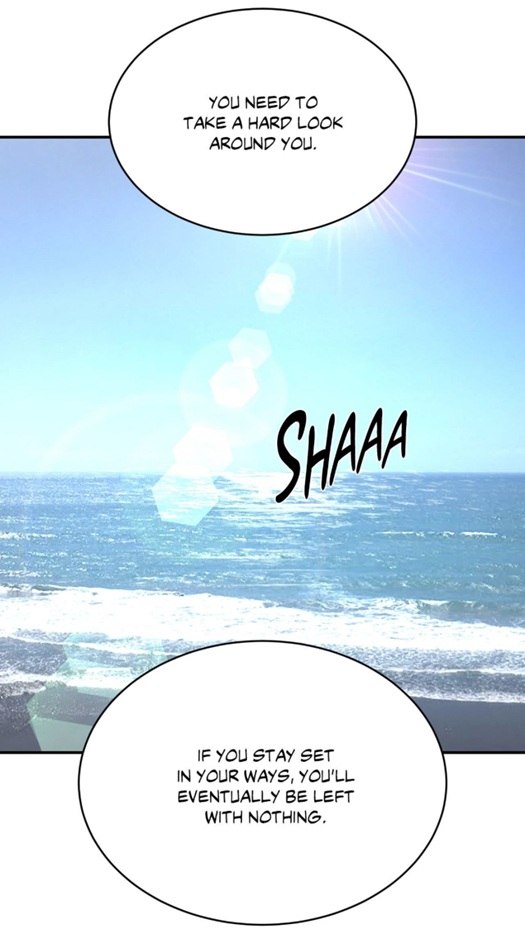 (chapter 75)
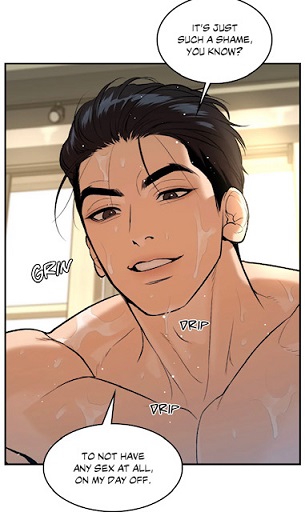 (chapter 27)
  (chapter 80) He has not grasped that he can make the champion happy. In fact, this day would represent a real break and rest, as they would learn nothing, only make new experiences so that life can appear colorful again. Here, we can see two balloons in the form of heart: green and yellow.
  (chapter 74) Joo Jaekyung would have achieved his goal: even vulnerable or childish, he is still lovable.
  (chapter 41) They were destined to be together and lived happily.
  (chapter 55)


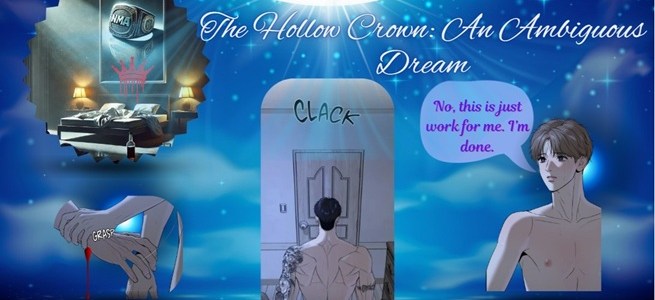


 (Chapter 63) The presence—or absence—of clothing during their encounters symbolized the gradual dismantling of their emotional walls. Now, shifting the perspective to the champion, another layer of complexity emerges. Joo Jaekyung’s evolving approach to intimacy is not just a reflection of his growing feelings but also a silent, deeply ingrained struggle with dependence and control.
 (chapter 63) Why does he hesitate to strip entirely, even as he succumbs to desire? Notice that he released his erected phallus before removing his cloth.
  (chapter 63) To answer this, a comparative analysis of earlier sex scenes is necessary, unraveling the hidden dialogue between physical exposure and emotional vulnerability.
 (chapter 30) The doctor instinctively tried to cover his gray boxer shorts with his t-shirt, prompting the champion to question his reaction:
  (chapter 30) In Episode 63, this dynamic appears subtly reversed.
  (chapter 63) The champion, despite holding the dominant role, is now the one retaining a piece of clothing. This suggests an unconscious act of concealment—not of shame in the traditional sense, but of a growing dependency on Kim Dan.
 (chapter 62) with a zoom-in shot on his erection still hidden by gray sweatpants. Striking is that on the one hand he let the doctor feel his reaction to his naked body, when he embraced the doctor:
  (chapter 62) The “hamster” could sense with his leg the excitement. On the other hand, these pants were only removed once he entered the bedroom and was on the bed
  (chapter 63), reinforcing the idea that vulnerability, for him, is confined to this private space. Moreover, the choice of attire in Episode 62
  (chapter 62) —ridiculous floral-patterned pants—serves as an indirect reference to shame (in a good way), an unfamiliar emotion for the undefeated fighter. This pattern culminates in Episode 63, where Jaekyung’s thoughts confirm his internal battle:
 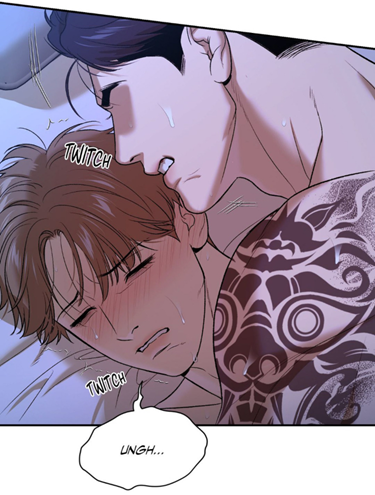 (chapter 63) Thus I deduce that exactly like the presence of the black underwear, the athlete’s low self-esteem hasn’t been removed completely. He still expects fear and rejection.
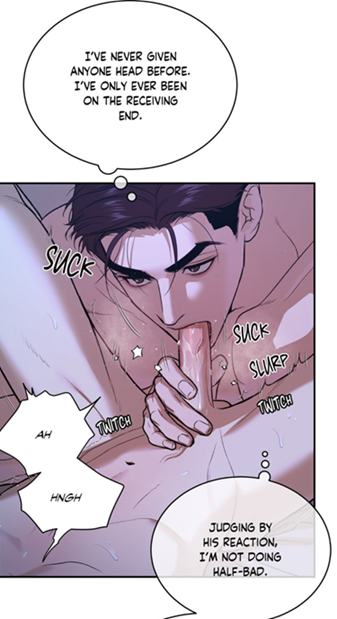 (chapter 63), dominates without seeking connection
  (chapter 55), and ensures that every encounter follows his carefully constructed narrative. However, in Episode 63, a subtle but undeniable shift occurs. For the first time, Jaekyung’s actions reflect something deeper than mere desire or dominance. They reveal his growing emotional investment in Kim Dan, exposing a side of him that even he does not fully comprehend.
  (chapter 63)
 (chapter 12) In the earlier encounter, Jaekyung presented himself as a generous partner, offering Kim Dan a so-called privilege—an opportunity to enter a whole new world, thanks to him. However, his so-called generosity was nothing more than a facade, a way to conceal his inexperience in genuine intimacy. The tool he used was not just an object of pleasure but a mask for his own shortcomings as a lover. He did not know how to pleasure Kim Dan, nor did he care to learn. His focus was not on Kim Dan’s enjoyment but on reinforcing his own power and dominance.
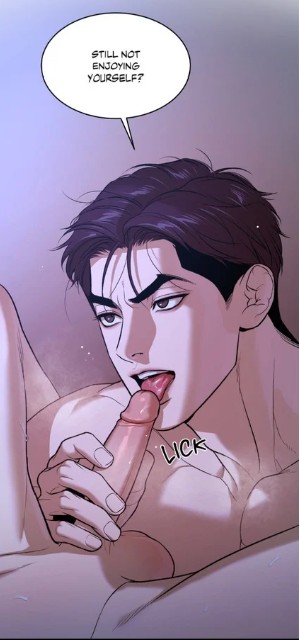 (chapter 63) Here, he no longer portrays himself as the benevolent provider of an experience.
 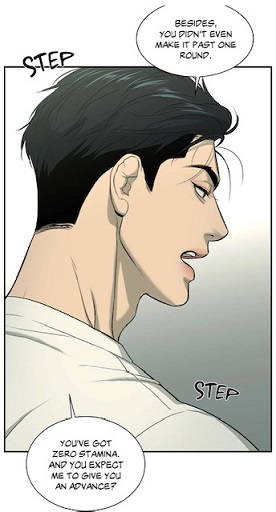 (chapter 12) – seeking both to display dominance and to elicit validation
  (chapter 12) —this time, in Episode 63, he prioritizes Kim Dan’s pleasure without explicitly expecting anything in return.
  (chapter 63) Up until this point, Jaekyung has never truly faced rejection.
  (chapter 63) His wealth, power, and physical prowess have ensured that people comply with his desires. However, in Episode 63, Kim Dan does not simply comply—he resists on an emotional level. While he consents to sex, he actively rejects any deeper connection. He avoids eye contact, creates physical distance, and refuses to acknowledge Jaekyung beyond the act itself. This rejection unsettles Jaekyung because, for the first time, his usual methods of control no longer work. He cannot use money to bridge the emotional gap, nor can he rely on his dominance to make Kim Dan want him.
  (chapter 63) This moment forces him to confront an uncomfortable truth: power and status cannot buy emotional intimacy.
 (chapter 63) While he does voice his frustration, he does so without force, showing an unprecedented level of emotional regulation. Instead of demanding compliance, he chooses a different approach—he focuses on Kim Dan’s pleasure, attempting to bridge the emotional gap through physical intimacy
  (chapter 63) rather than control. This decision is not merely about sex; it is an unconscious attempt to regain Kim Dan’s attention, to re-establish a connection that he does not yet fully understand but deeply craves.
 (chapter 29) This remark exemplified his detachment, his refusal to acknowledge Kim Dan as a person rather than just a body. Once again, the intercourse was linked to achievement and work. However, in Episode 63, he actively seeks Kim Dan’s gaze, subtly pleading for recognition.
  (chapter 63) This reversal is crucial because it indicates that he no longer sees Kim Dan as just a means to an end. However, his desire for recognition still lingers beneath the surface—just as he once sought validation through dominance, he now seeks it through Kim Dan’s acknowledgment. He wants something more, though he cannot yet articulate what that is, and his actions reflect a subconscious craving for emotional reassurance.
  (chapter 13)
 (chapter 62) the sportsman welcomes the physical therapist in blue pajamas and a robe—an overt attempt to maintain distance and control. Even as the encounter begins, he leaves his pajamas on
  (chapter 3), removing them only
  (chapter 3) – this image marks the change) when the doctor’s back is turned. Then in Episode 8, during the shower, he continues wearing shorts and underwear
  (chapter 8), and his choice of the doggy style further reinforces his desire to avoid direct, face-to-face vulnerability.
  (chapter 12) before removing it and adding the pink sex toy.
  (chapter 12) Their bodies might have been close, but their minds remained divided. That’s why he couldn’t detect the huge bruises on his companion’s body.
  (chapter 12) This guarded approach is further underlined in Episode 20
  (chapter 20), where even in the midst of nakedness, the athlete deliberately positions the doctor in the dog stance. At the same time, he uses another MO: the darkness of the room to hide himself. This calculated arrangement maintains an emotional buffer, allowing him to remain physically exposed yet emotionally detached—a recurring theme in his behavior.
 (chapter 29) while still cloaked in his familiar blue robe and pajamas. Interesting is that the room is not totally dark like in episode 20, the bedroom is illuminated by the huge TV screen. Importantly, this episode marks the first time they face each other in the bedroom, signaling a significant shift in their dynamic and announcing a switch in position. This newfound mutual visibility lays the groundwork for later developments.
 (chapter 33) —a deliberate act imbued with symbolism. Unlike earlier encounters, the champion remains fully clothed throughout this episode,
  (chapter 33) contrasting sharply with previous moments of exposure. The car scene, where they are now facing each other, reinforces the announced switch in intimacy; the light not only illuminates the scene but also serves as a metaphorical spotlight on his desire to see the doctor’s face and body
  (chapter 33) —a silent assertion that only he can truly satisfy the physical therapist. Let’s not forget that before having sex together, the fighter resorted to a dildo
  (chapter 33) rather direct physical intimacy, because he felt insecure after witnessing the actor’s advances toward Kim Dan. His goal? To reaffirm his dominance and make Kim Dan admit that he needed him for pleasure. It is important because it exposes that deep down, the champion views himself as a bad lover. There is no doubt that Heesung‘s criticism resonated with him.
  (chapter 39) While receiving fellatio, the champion keeps his t-shirt on, only removing it later when he invites the doctor into bed.
  (chapter 39) Maintaining the doggy style during this phase, he uses such intimate acts to mask his true longing and attraction—an effort to control the encounter while keeping his emotions under wraps. Then I noticed that they switched positions, when doc Dan asked for a break.
  (chapter 39) The wolf chose to lie down on the bed:
  (chapter 39) As you can see, through the different intercourses, we can see the different methods the star used to conceal himself, to hide his “weakness”, his growing feelings for the doctor.
 (chapter 61) The physical therapist remembers an encounter bathed in bright light, where they stood before a couch: the doctor had removed his pants while the champion remained fully clothed, positioned behind him.
  (chapter 61) After both reached climax, the sportsman swiftly departed—a stark demonstration of his habitual retreat into distance and fear, even as he ensures the doctor’s pleasure.
  (chapter 61) This calculated “running away” underscores the return of old insecurities and the persistent need to assert control. Since the doctor was still living in the penthouse and as such was still working as the star’s physical therapist, it becomes comprehensible why the athlete could only resort to strength to keep his fated companion by his side. He had rejected his “gratitude” and “emotions” before.
  (chapter 63) Now lying on the bed facing each other, the pair’s physical closeness appears more genuine. Yet, even in this seemingly intimate configuration, they avoid locking eyes during penetration.
 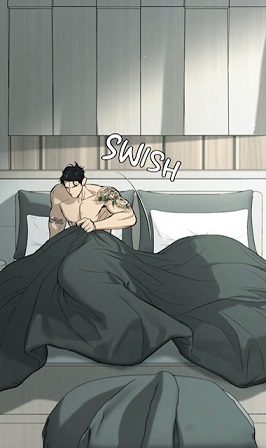 (chapter 4), we do not see whether he is wearing anything the morning after. After their “magic night” in the United States (Episode 39), the next morning, he is only shown taking a shower
  (chapter 40) —meaning the audience never sees him leaving the bed. However, in Episode 45, the author deliberately includes a shot of Jaekyung leaving the bed while still wearing his black boxer briefs.
 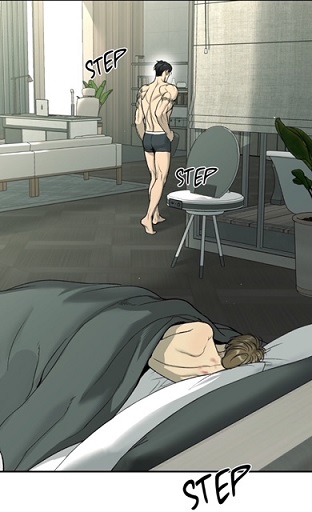 (chapter 45)
 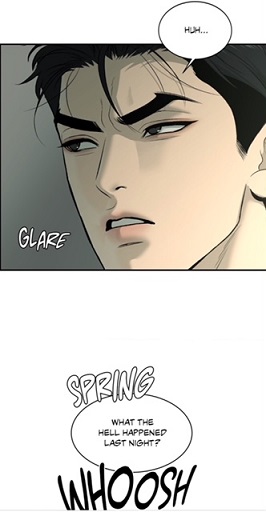 (chapter 45). This is just a rhetorical question, as he clearly remembers the night.
  (chapter 45) In reality, he was wondering why he had acted this way. This contradiction—pretending to forget while consciously recalling their time together—reflects his internal denial. His next thought,
  (chapter 45) is a transparent excuse to avoid confronting his emotions. The presence of the black underwear in this scene confirms that he had not fully lowered his guard; he still maintained a psychological barrier between himself and Kim Dan.
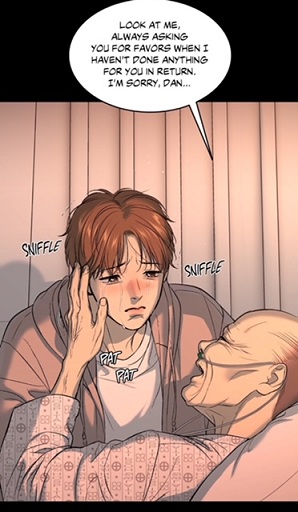 (chapter 53), Jaekyung was conditioned through shame and rigid expectations. His worth was not inherent but conditional, entirely dependent on his performance.
 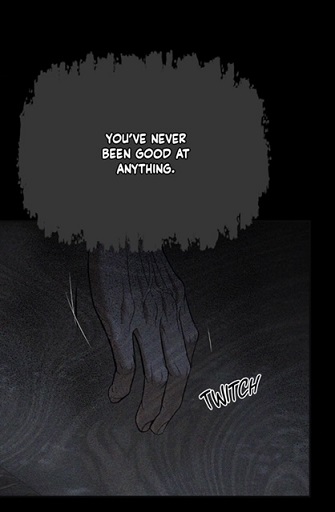 (chapter 54) If he was not good enough, if he did not win, he was nothing.
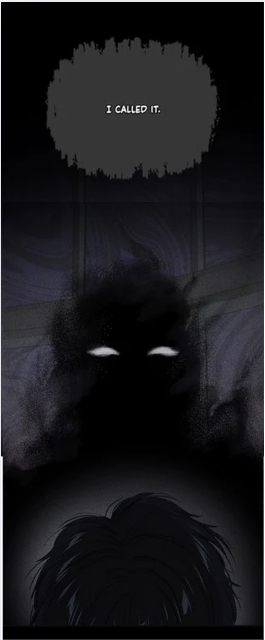 (chapter 54) The specter that haunts him—an unnamed figure whose words still echo in his nightmares—was the architect of his relentless pursuit of strength. Striking is that in his nightmare, he is facing the mysterious ghost, a sign that he saw hatred and rejection in his counterpart’s eyes. While Kim Dan’s halmoni took his hand and provided warmth
  (chapter 22), Jaekyung’s guardian likely did the opposite.
 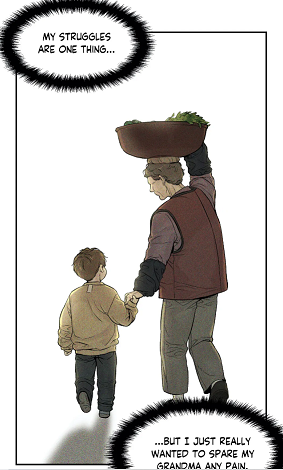 (chapter 5) This represented a source of support for the elderly woman. Secondly, during the intercourse in the lavender-tinted bedroom, neither the champion nor the doctor are trying to take each other’s hand:
  (chapter 63) In the beginning, the champion grabbed doc Dan’s wrist. This shows that the athlete was not used to touch Kim Dan’s hand. And notice how the “hamster” reacted
  (chapter 63) He pushed it away. This means that taking the doctor’s hand represents the biggest challenge for Joo Jaekyung right now. In addition, the last panel indicates the champion’s transformation, he is now willing to seek the doctor’s closeness. It also implies the vanishing influence from his past guardian.
 (chapter 54) There was no room for imperfection, no tolerance for hesitation. Thus I deduce that the champion’s choice of career could have been decided by the guardian, similar to the grandmother’s attitude with Kim Dan. Remember that he loves water and swimming.
  (chapter 27) Under this new light, it could explain why the fighter forgot his passion. They made sure that he would train restlessly. In this environment, vulnerability was a defect to be eradicated, not a human trait to be acknowledged. This description reminded me think of Park Namwook and his family. The manager is a former national wrestler who is married to an athlete too.
  (chapter 5) At the same time, it would highlight the potential danger of Park Namwook’s vision for the gym: an institution that might perpetuate the same cycle of control, shame, and expectation rather than fostering true passion and individuality in young athletes. That’s how I realized why the manager slapped his “boy” after the funny sparring:
  (chapter 26) He explained that the main lead was just a doctor. However, I am quite certain, underneath, the manager thought that doc Dan was not fit to spare: so small and weak. He doesn’t fit the criteria to become a sparring partner. Look at his reaction, when Seonho faced the champion:
  (chapter 1), until he received the doctor’s massage in chapter 1. His attitude toward sex mirrors his training in the gym—focused on endurance, performance, and control. His body is a tool, a machine honed for efficiency.
  (chapter 63) Pleasure is secondary; the real goal is lasting, enduring, proving his stamina. Even in his most intimate moments, he is competing against an invisible opponent—his own ingrained fear of inadequacy.
 (chapter 63), why he keeps barriers between himself and Kim Dan, even when his body betrays his true desires.
 (chapter 62)
 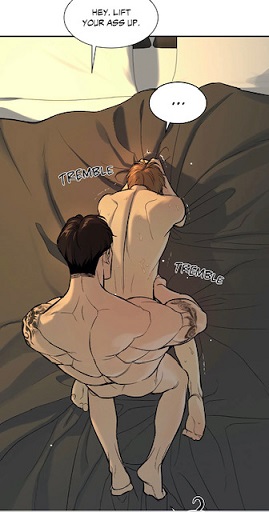 (chapter 4) nudity was a tool of dominance, a means of asserting control. Now, it has become a sign of submission—not in the physical sense, but in the way he is slowly relinquishing the emotional armor he has always relied upon.
  (chapter 44) His decision to keep his underwear on for as long as possible in Episode 63 is not a sign of detachment
  (chapter 63), but of his silent battle against the vulnerability he is beginning to feel.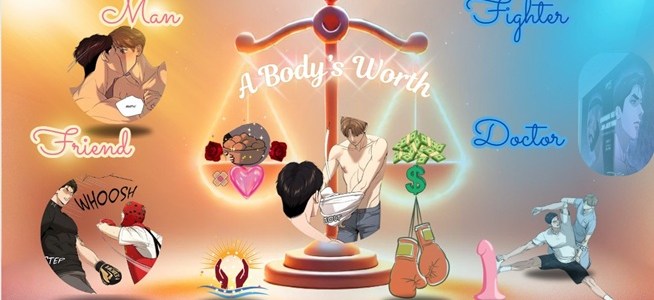
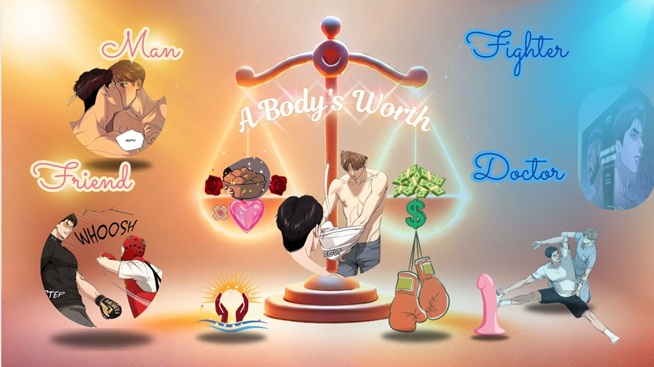
 (chapter 27) This aspect becomes particularly evident in Kim Dan’s perception of himself and his interactions with Joo Jaekyung.
 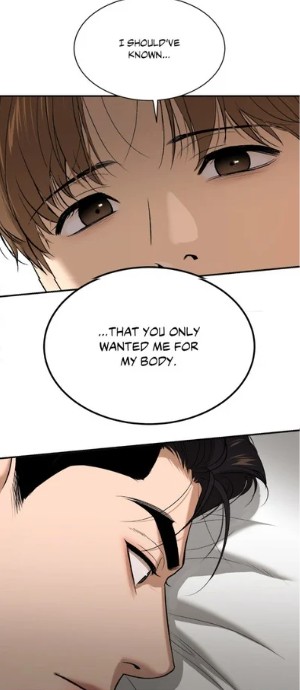 (chapter 62) In episode 62, Kim Dan reproached the champion for only being interested in his body, reflecting his own inability to see his body as something valuable. Hence he never wondered about the true cause for such a huge bruise.
 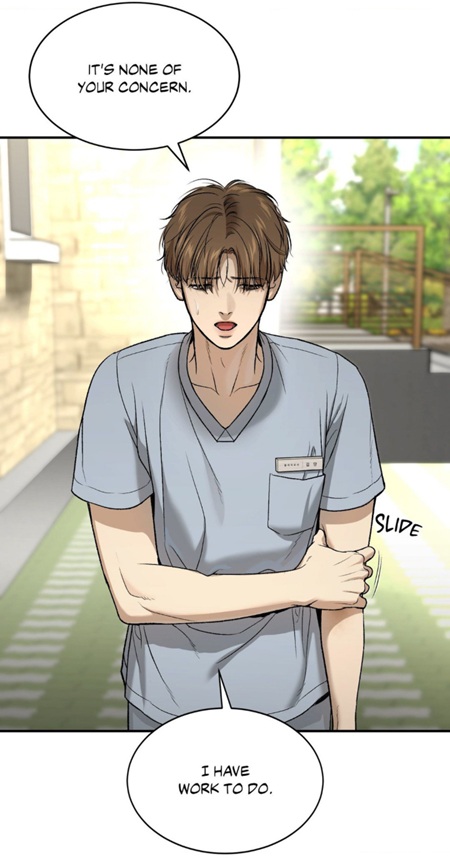 (chapter 61) While with his words, he implied that his fated partner was a man obsessed with sex, his complaint reveals his mindset. First, he is the one longing for human warmth
 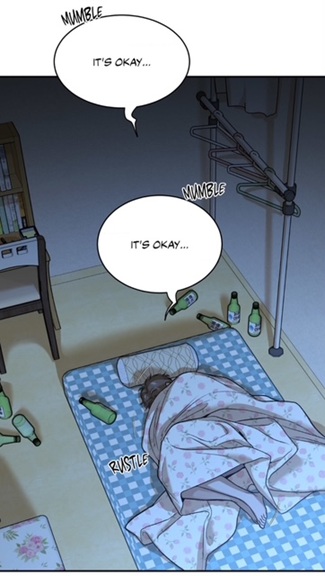 (chapter 59), hence he felt terrible sleeping alone. Secondly, he does not attribute worth to his own physical being beyond its utility for others. This explains why he has consistently neglected himself—avoiding food, disregarding his own injuries, and refusing to seek medical help when necessary.
 (chapter 60) It underscores the reality that without his body, he cannot work. In this way, his physical deterioration forces him to confront an undeniable truth:
  (chapter 59) his body is not just a tool for others, but the very foundation of his survival. I would even so far to say that his sick and stressed body would question his identity as PT and caregiver.
  (chapter 43), they will replace him with a new ‘doll.’ This exploitation shaped his relationship with his own body—one that prioritized its use over its care.
 (chapter 26) and 62
 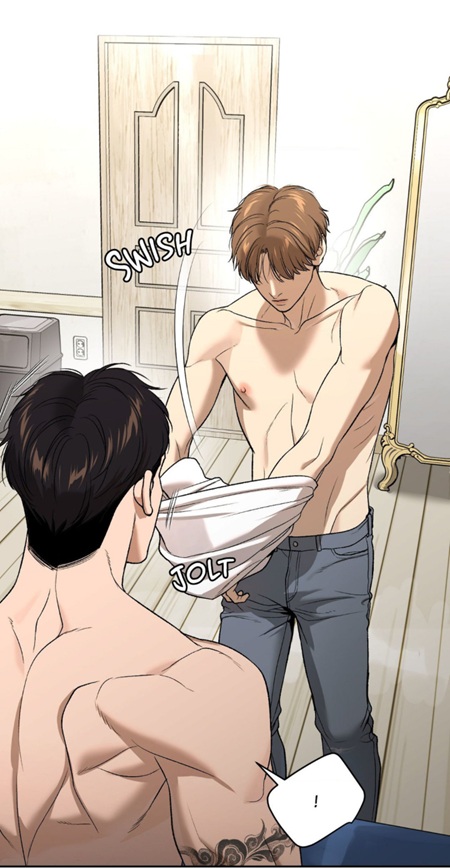 (chapter 62) that highlighted a crucial shift in how each of them perceives their own worth—and, more importantly, each other’s. The mirroring of these two episodes suggests a deliberate narrative structure that showcases their evolving dynamic, with each character taking on a role the other once held. This realization led me to explore how their perspectives on strength, vulnerability, and agency transform over time.
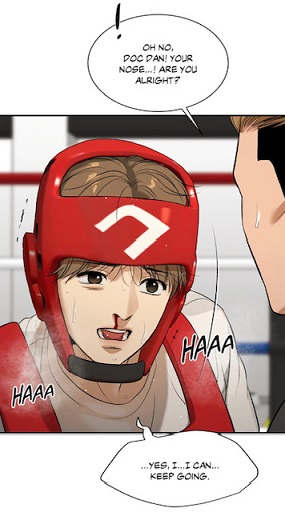 (chapter 26)
  (chapter 62), Kim Dan’s smile (genuine versus fake) and the characters’ shifting roles in confrontation and protection. The numerical structure of this episode—where Joo Jaekyung (2) represents dominance
  (chapter 26)
  (chapter 26) This small yet significant act reveals that the champion does not see Kim Dan merely as a ‘sex doll’ but as someone worth protecting, even when challenging him. The protective gear is a contrast to Joo Jaekyung’s usual treatment of his one-night stands, reflecting an unconscious distinction between how he views Kim Dan versus his other partners. Finally, this sparring day exposes the doctor’s biased perception about the athlete in episode 62 once again.
  (chapter 62) It was, as if he had no real talent. But let’s return our attention to the safety gears. The latter underline the high sense of responsibility of the champion, which readers could detect in episode 62. With the red accessories, Joo Jaekyung was showing his respect to the doctor as a man. In that scene, Kim Dan could choose his destiny. It is clear that “the hamster” has long forgotten this happy day
  (chapter 26) – he was smiling genuinely here- , and has reduced his time spent with Joo Jaekyung to sex:
  (chapter 26) —a powerful, intimidating man who mirrors the threat of Heo Manwook
 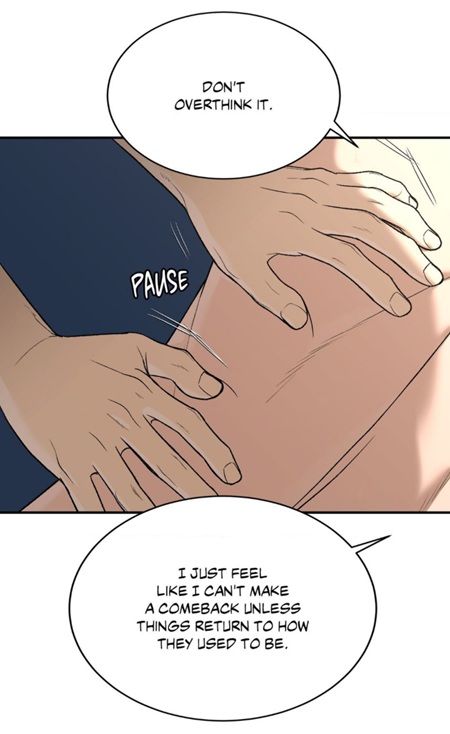 (chapter 62) On the surface, it looks like Joo Jaekyung lost.
 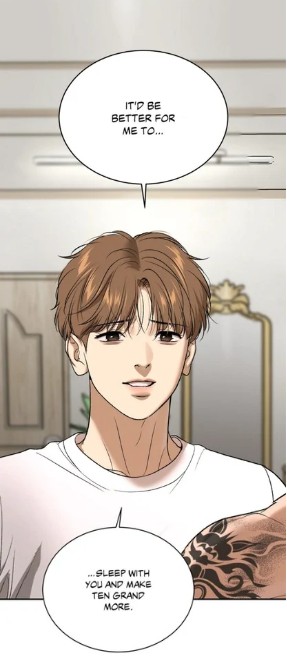 (chapter 62) More importantly, Kim Dan’s words
 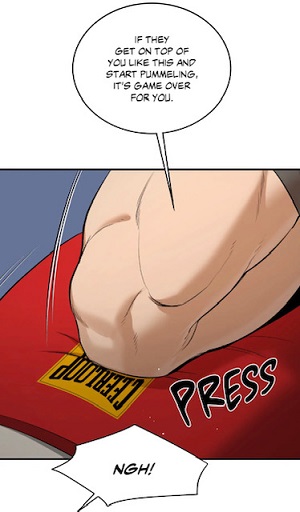 (chapter 26), was happy to demonstrate his talents and kept smiling all the time:
  (chapter 26) For the first time, fighting had become a source of joy for the athlete. He felt not only good, but confident about his skills, as a teacher and fighter. In both instances, this moment serves as a turning point, pushing each character to redefine their role and perception of self.
 (chapter 25) Kim Dan was interested to know more about this sport for the protagonist’s sake, whereas Potato was jealous of Kim Dan’s closeness to the star. How did the celebrity react, when he heard the doctor’s desire to learn fighting moves? He was totally pleased, hence he lowered himself smiling
 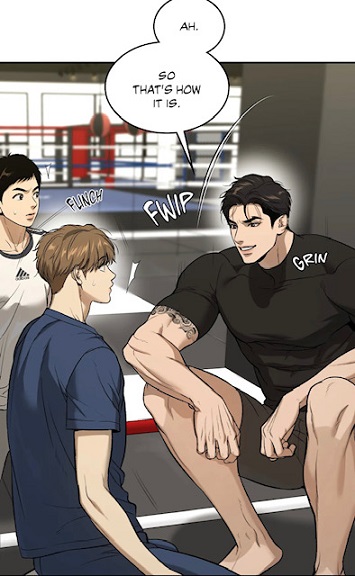 (chapter 25) before returning to the ring:
 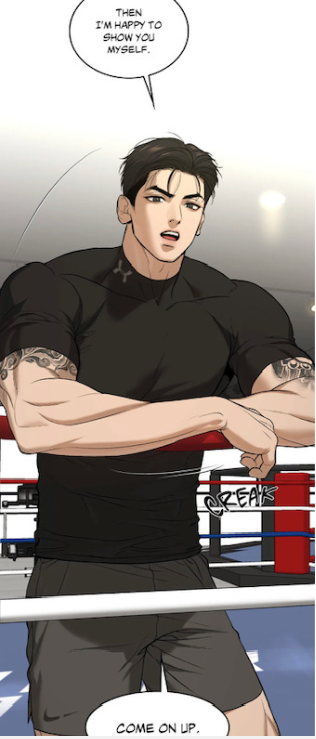 (chapter 25). Notice that he employed the word “happy” here. This shows that the athlete liked to be a teacher and mentor to a novice.
  (chapter 26), reinforcing his belief that his worth lies in service, and he requests an opportunity for someone else. The physical challenge that followed, in which the champion invited him into the ring, was meant to teach Kim Dan to overcome fear, though the original idea was to learn jujitsu moves for the champion’s sake. As you can see, there was a switch in the intentions for the “lesson”. This moment also highlights Joo Jaekyung’s approach to the body—power, physicality, and dominance, which will later be subverted in episode 62 when emotional resilience becomes the true test of strength.
  (chapter 26) Though the doctor was initially immobile and passive, the experience became a significant lesson: fear was something that could be faced and overcome. From that moment on, he became more proactive
 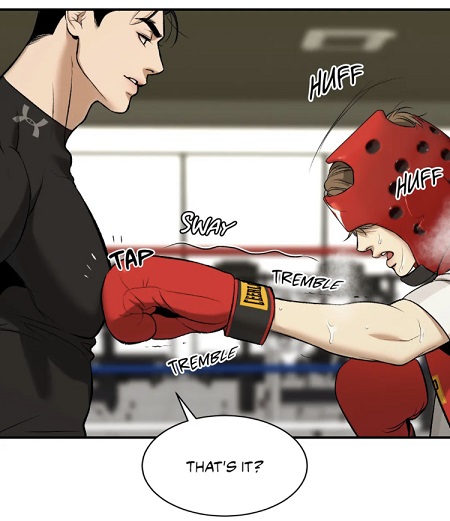 (chapter 26) This is a moment of physical initiation for Kim Dan, teaching him resilience. Nonetheless, he was still fighting for someone else, still locked in his pattern of self-neglect.
 (chapter 62) This shift highlights a deeper irony: while Joo Jaekyung has always prided himself on his physical strength, he is now being tested in a way that cannot be resolved with fists.
 (chapter 34), wealth
  (chapter 42) and title
 (chapter 55), not for its attractiveness or desirability. His reputation in bed has been poor;
  (chapter 13), but for his own pleasure. The defy incites the fighter to make a conscious choice contrary to the day, when both main leads took the day off:
  (chapter 29) On the other hand, this suggestion challenges Joo Jaekyung’s previous experiences, forcing him to realize that he has never had to woo or seduce anyone before. This was the only time, where Jinx-philes could see him using his sex-appeal-
  (chapter 34) He got confident, because he had played a trick on his room mate. His physicality has always been his defining trait, but for the first time, he is being confronted with the question: does he have more to offer beyond brute strength and money? If he wants to prove his worth, he must do more than rely on his body—he must reveal his true self.
 (chapter 62) He does not plead; he challenges. This reversal is significant because it places Joo Jaekyung in the uncomfortable position of emotional uncertainty. In episode 26, the champion was confident in his control over the situation. In episode 62, he is on the verge of losing control—not over a fight, but over a person. Hence he can no longer control his erection.
 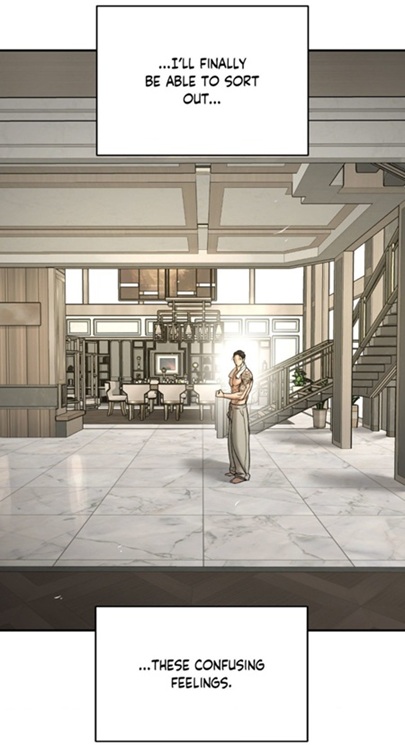 (chapter 61) Why does he want him to return to Seoul? Is he really looking for a physical therapist or something else? It is clear that he is longing for companionship.
 (chapter 26), which represents the MMA fighter’s world, the wolf is now the one penetrating Kim Dan’s world: the treatment table!
  (chapter 62) The latter was brought to the hostel. I know, here I am more speculating about the next episode. However, keep in mind that the hamster brought up the past to his destined partner.
 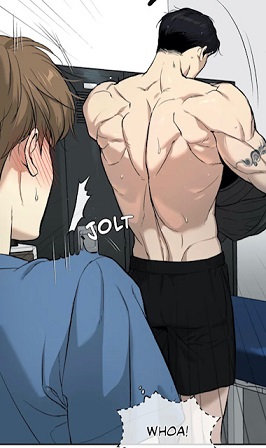 (chapter 1) The blue treatment table is the witness and proof that the champion never saw Kim Dan as a sex doll. So far, they never had sex on it, a sign that he respected not only Kim Dan as PT, but also the profession as such
  (chapter 27) Here, the champion suggested to have sex at home, and not on the table. On the other hand, Jinx-philes will certainly recall this scene where the doctor begged on his knees for money:
 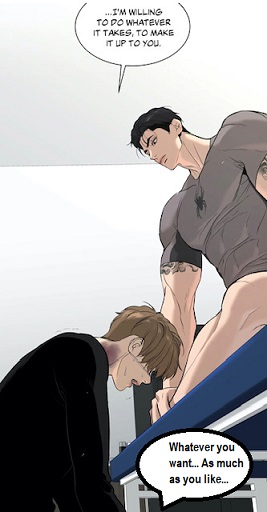 (chapter 11) That’s how I discovered a strong connection between this item and sexuality. First, the one fantasying about the champion’s body on the treatment table had been Kim Dan
  (chapter 1).
  (chapter 1) The massage must have felt like caresses to Joo Jaekyung. So when the main lead made this mistake
 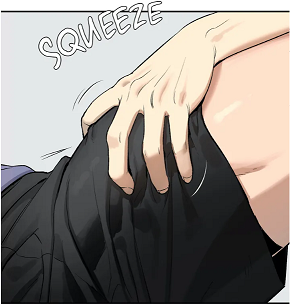 (chapter 1), it is very clear that Joo Jaekyung could have interpreted it as a sign for seduction later. Moreover, don’t forget the mysterious incident concerning the previous physical therapist:
  (chapter 37) In the States, the athlete received his treatment on the floor, a sign of a disrespect for that profession from the manager and even MFC. They somehow knew that the fighter had brought his “sex partner” for his jinx, but they had no idea about his identity. By paying attention to the blue treatment table, I realized that this item stands for power, secret, courage and vulnerability.
 (chapter 62) According to my interpretation, Joo Jaekyung had interpreted the mistake for some advances and keep in mind that the fighter felt also attracted to the physical therapist.
  (chapter 56) In other words, he projected his own desires onto the “hamster”. But since he was still with the green-haired guy, he needed to mask his true intention:
  (chapter 1) -thus he asked for a treatment. He was about to drop the man.
 (chapter 1) However, contrary to their first encounter, the champion would be talking to his neighbor. While the doctor is thinking, he will relive his first night in the penthouse, the other might reproduce his first treatment, though it should be certainly combined with the intercourse on the couch: .
  (chapter 29)
  (chapter 62) But he made such an offer, because he thought, he was respecting the doctor’s wish. This shows that the athlete needs to converse properly with the doctor and not just make assumptions (MO from his manager). Moreover, the star has never expressed his gratitude and admiration towards Kim Dan concerning his talents and efforts openly. The problem is that he can not compliment him yet, because Joo Jaekyung is trying to “forget” the past and as such he is repressing the fight with Baek Junmin. I feel like the champion is on his way to discover the medical world and chapter 62 represents a prelude.
 (chapter 57) He should have sent her to the hospital and ensure that she received treatment. Notably, after the sea incident, Joo Jaekyung took Kim Dan to the hospital, but the latter rejected the champion’s advice and help.
 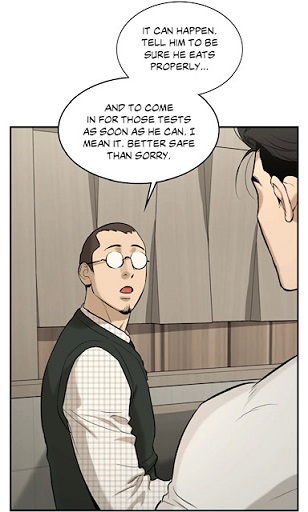 (chapter 13) So it dawned on me that if the doctor gets sick, Joo Jaekyung will be fueled with regrets and guilt, as he didn’t listen to Cheolmin’s advice. So this could lead him to apologize to Kim Dan. On the other hand, his illness could serve as a reminder to the fighter that he needs to treat his physical therapist and friend better. He only sent for the doctor because of “sex”. To conclude, both would be responsible for this terrible situation, a balance of responsibility.
  (chapter 57) is not just a symptom of overwork and lack of sleep—it symbolizes the deep imbalance in his life. His world consists only of work
  (chapter 62), without fun, rest, or emotional fulfillment. He has no hobby, no personal joy, and no real human connections. He is suffering from depression. Interestingly, the sense of balance is directly tied to the ear, which aligns with his emotional “deafness”—his lack of true contact with others.
  (chapter 61) His mind and heart are no longer listening; he is trapped in his own darkness. His dizziness and fainting spells mirror this imbalance, making his physical weakness a reflection of his emotional detachment.
 (chapter 54) and drinking habits.
 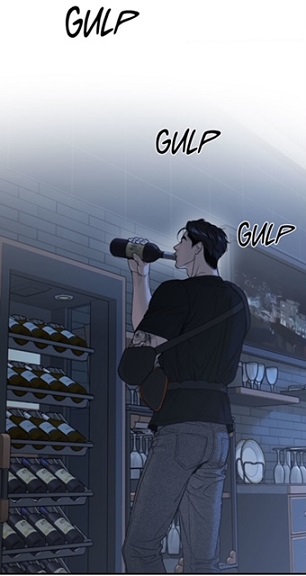 (chapter 54) His entire life has been dedicated to work and physical prowess, leaving no space for genuine happiness or emotional well-being. His drinking is not just an escape—it is a manifestation of his need to silence his thoughts and emotions. In episode 44, when Kim Dan expressed admiration for his body, he patted his head
 (chapter 44), he caressed his cheeks
 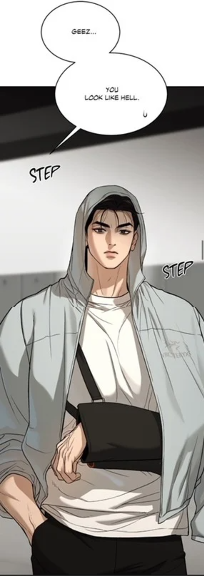 (chapter 54) His headaches intensified, and he isolated himself, mirroring Kim Dan’s earlier state of detachment. His drinking hadn’t just become a habit—it was mourning, a sign of his internal loss. It was, as if deep down he wanted to forget this intoxicating feeling of happiness from that night in the penthouse. The departure of Kim Dan caused both of them to lose their already fragile balance, reinforcing the idea that their dynamic, as unhealthy as it had been, was stabilizing them in ways they never acknowledged.
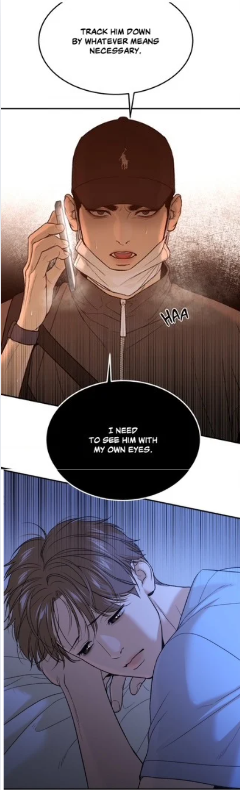 (chapter 56) It was, as if the champion no longer needed to see his former room mate. Note that he even waited for the evening before approaching doc Dan again.
  (chapter 60), he immediately went to the town. This contradiction reveals that mere visual presence was never sufficient—what he truly longed for was something deeper. And as soon as he saw him, he felt much better,
  (chapter 61) hence he could remove his splint. That’s how powerful drug Kim Dan is. 😉
 (chapter 61) While undergoing treatment, he saw Kim Dan every day, yet he remained unsatisfied due to the silent treatment. It was not enough to simply observe him; what Joo Jaekyung truly craved was conversation, interaction, and recognition. This explains his decision to move into the town, settling near Kim Dan as his neighbor.
 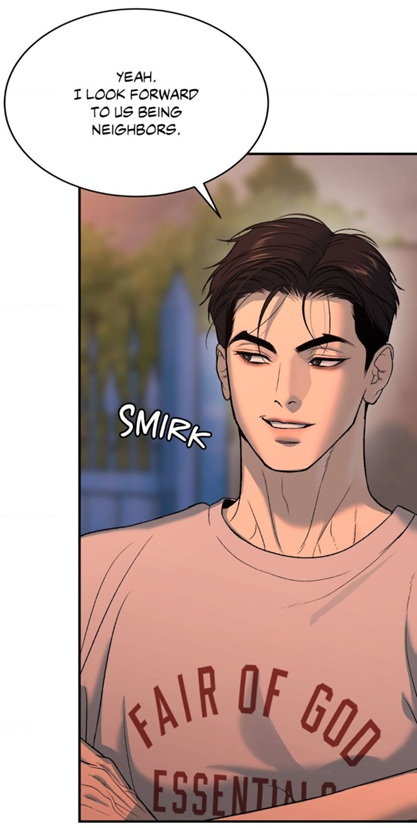 (chapter 61) It also sheds light on why, during their latest encounter, he chose to turn his back on Kim Dan—he no longer needed to ‘see his face,’ he wanted acknowledgment and his return to the penthouse. He has not grasped it yet, but he already views the protagonist as his family and home.
 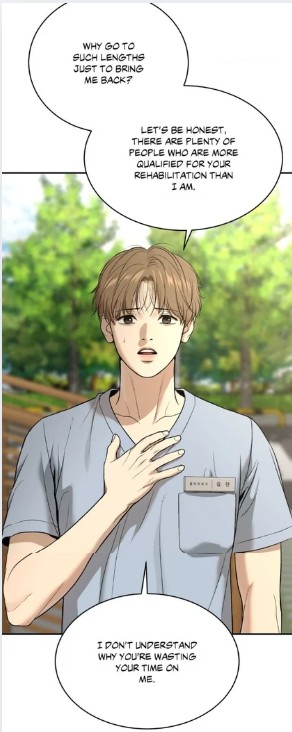 (chapter 62) He asked a question, while the other did not! He just made assumptions from his part, hence he suggested “separate ways”. It was naturally his way of being considerate. That’s why I have the feeling that two words could move Kim Dan’s heart: “HOME” and “HYUNG”. If he calls him that way, the doctor is now recognized as a family member, even as a senior. Hence he needs to be treated with respect.
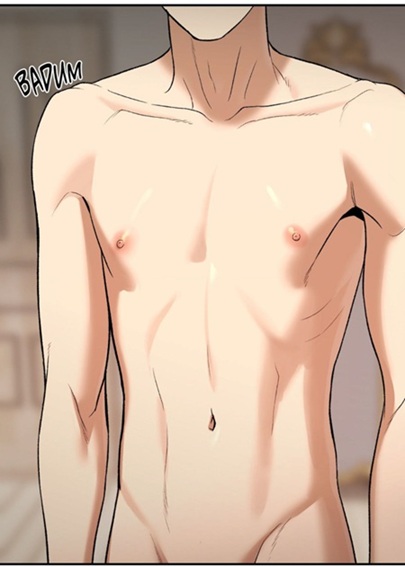 (chapter 62) he had previously ignored—he is undeniably attracted to Kim Dan’s body, particularly his nipples, which have repeatedly
  (chapter 27) triggered strong reactions in him.
  (chapter 29) That’s the moment he expressed his interest in the doctor’s nipples for the first time. This even became a habit:
  (chapter 44). And what did the doctor whisper during that magical night?
  (chapter 44) He wanted him to treasure his body!! In my eyes, Kim Dan’s suggestion in episode 62 is hiding another intention, though it is definitely unconscious:
  (chapter 44), though in his mind, he desires to have a bad experience so that he can erase him from his mind. Finally, what do the nipples symbolize? Motherhood and nurturing.
  (chapter 57)
  (chapter 26) Moreover, it was thanks to a trick that Kim Dan won:
 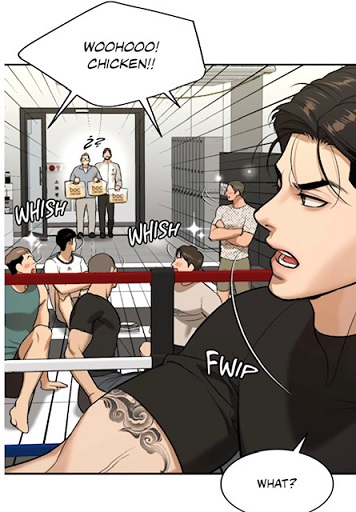 (chapter 26)
  (chapter 26) He felt superior and strong, whereas his rival was weak. Moreover, he imagined that Kim Dan would ask for money for the bet.
  (chapter 26) That’s why I believe that in the next episode, the roles should be switched. Kim Dan always saw himself morally superior and caring to the star, but in truth, his care was rather superficial, for he also showed no interest in the champion’s past and family. Thus I come to the following deduction that episode 62 suggests that arguing is not about losing or winning, but about listening. The champion has unknowingly become a caretaker, not only to the people of the town but, potentially, to Kim Dan himself. The question remains whether he will recognize that Kim Dan’s provocation is not just another fight lost (cutting off ties) —it is a seductive challenge to redefine his understanding of worth and their relationship. What are they to each other? A client and a prostitute? A fighter and a doctor? Or simply two men who are longing for the same: belonging and love. Nevertheless, due to their past, they are unable to detect the true source of their misery: their lack of reflection, own bias and anxieties.

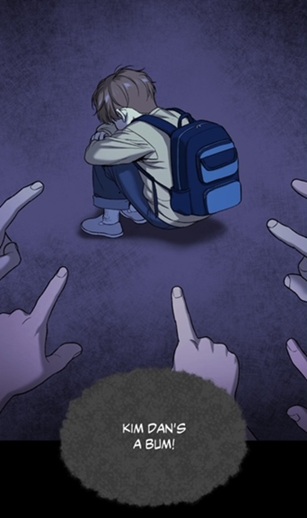 (chapter 57). Similarly, when Joo Jaekyung faced his opponent Randy Booker, he was also verbally harassed
 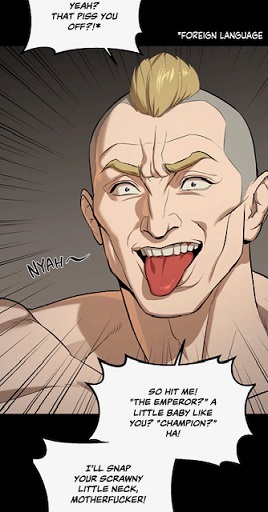 (chapter 14) which visibly destabilized the champion. Then in chapter 49, Team Black failed to perceive the duality of appearances and reality:
  (Chapter 49)
  (chapter 61), while Joo Jaekyung represses his emotions and thoughts through “physical activities”.
 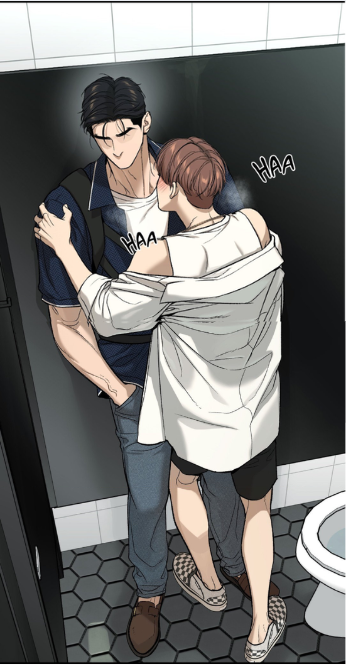 (chapter 55) This essay will explore how their experiences in the restroom space serve as a mirror to their past and reveal the psychological scars that shape their behaviors.
 (chapter 14)
  (chapter 38)
 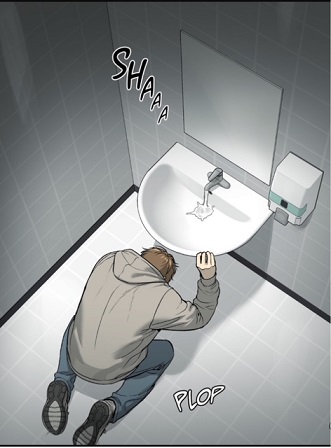 (chapter 47) However, in Season 2, the lavatory appears isolated for the first time, reinforcing a shift in symbolic meaning. This distinction helps to explain why restrooms (toilets/water closets) hold different meanings for the two protagonists. [for more read
  (chapter 19) —a space where one is free to confront their inner selves without external pressures. In Jinx, the use of the restroom emphasizes the external pressures and the characters’ reactions to their environments, reinforcing their struggles with exposure and control. But how did I come to this realization?
 (chapter 33) This would explain why Heesung was determined to hide the physical therapist’s whereabouts.
 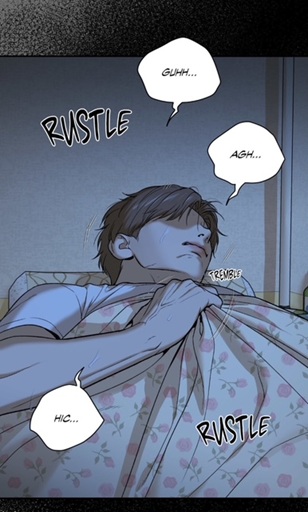 (chapter 59) The imminent death of his grandmother triggered his repressed fears.
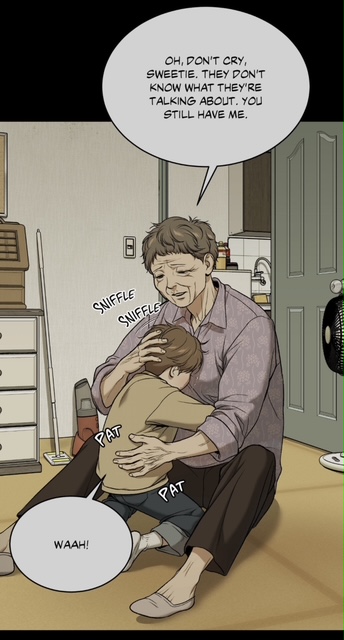 (chapter 57) Without her, he is now left with no protection. Stalking, in contrast, occurs later in life but evokes the same psychological distress—trapping victims in a cycle of hyper-awareness, helplessness, and anxiety. What makes stalking even more insidious is that it often mimics past experiences of bullying, dragging the victim back into a state of learned helplessness.
 (chapter 61), reacts with pursuit. His behavior mirrors the tendencies of a stalker—not out of malice, but because his entire life was shaped by the belief that to be ignored is to be erased and forgotten.
 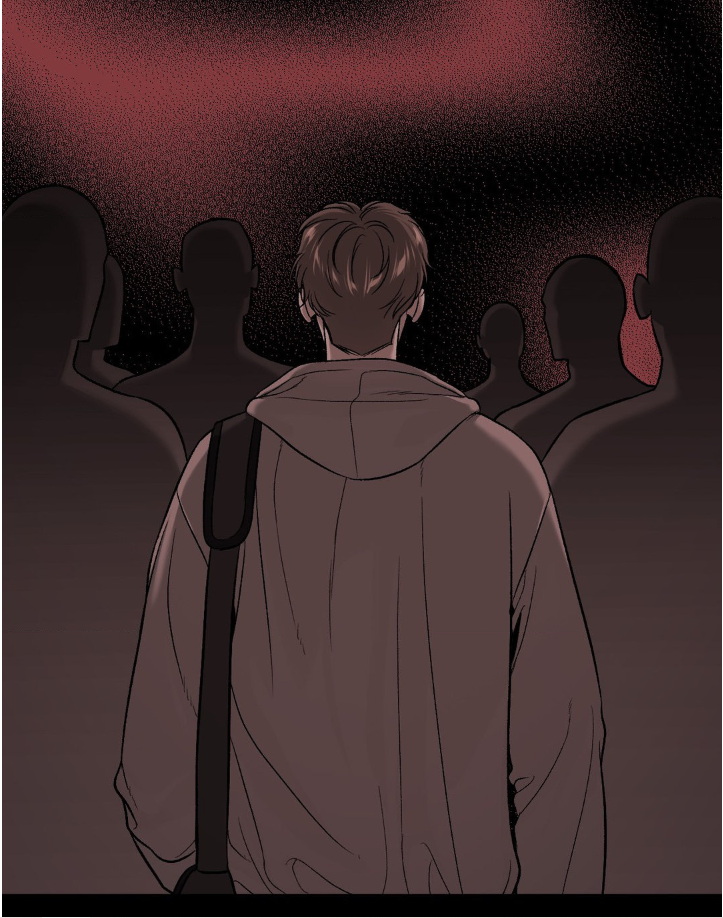 (chapter 55) In childhood, he learned that only strength could secure attention
  (chapter 26)
 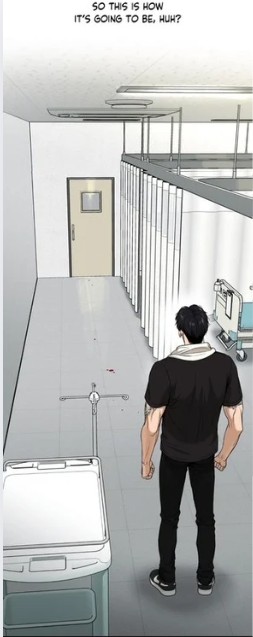 (chapter 60) He tracks him down, calls him repeatedly
  (chapter 57) and cornered, leading him to associate confined spaces with protection. The restroom was his only escape from ridicule, his sanctuary where he could momentarily regain control. This explains why he went crying there, when he heard the terrible news about his grandmother.
  (chapter 61) Since he can not escape the champion, he decides to ignore him.
  (chapter 55) – the mirror is very low -, Kim Dan retreats into memories to rationalize his pain. Instead of processing his suffering, he shifts blame to Jaekyung, using the restroom space to wall himself off emotionally. The restroom in Jinx thus acts as a metaphor for entrapment—whether through self-isolation or forced exposure, neither character is truly free from their past.
  (chapter 38) So he could faint there or hurt himself and he would have no one by his side. Don’t forget that this place stands for seclusion and privacy.
  (chapter 57), it is clear that the kids were not thinking of sex or using the restroom to assault the little boy. However, we should question ourselves how this rumor about Kim Dan being an orphan started.
  (chapter 54) bears a striking resemblance to this boy, leading to the possibility that this new character could be Kim Dan’s childhood bully. Given Jinx’s themes of positive psychology and confronting past demons, it is plausible that Kim Dan will encounter this schoolmate again. Such an interaction could force Kim Dan to address his unresolved trauma and reexamine his perceptions of strength and vulnerability. Moreover, don’t forget that the doctor in green saw the champion in a terrible shape who had admitted that he had drunk the night before.
  (chapter 61) I sense some retaliation here.
  (chapter 08) It is because in his mind, this place is associated with toilets in general. That’s how it dawned on me that the athlete could have been harassed at school, but contrary to the physical therapist, it took place later. The leader was Baek Junmin who hid behind the “mob”.
 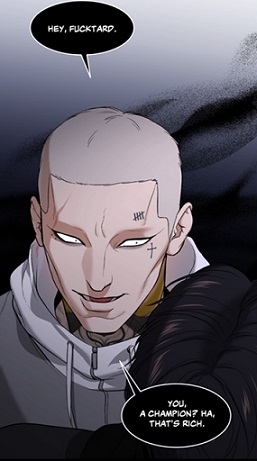 (chapter 49) People could discern his true personality: he was nothing more than a thug. Moreover, he would be perceived as a cheater, because he used others and his seniority to torment a child or teenager. At the same time, since Joo Jaekyung became a victim of bully later, the content about the mobbing should have been different. I am suspecting that he could have been targeted because of his homosexuality.
 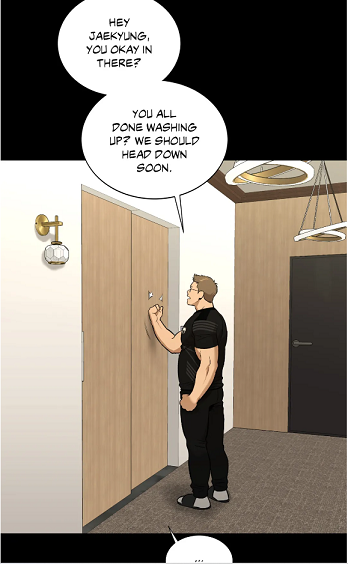 (Chapter 14)
  (chapter 55), he showed no reaction. In fact, his headache got even worse than before.
 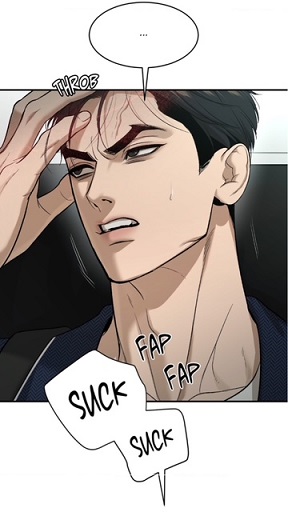 (chapter 55) The champion’s passivity and migraine could be the symptoms of the athlete’s past suffering. His pain worsened in that place because of the past, but he didn’t realize it, for he was so focused on his soulmate. Secondly, the moment he was about to get kissed
 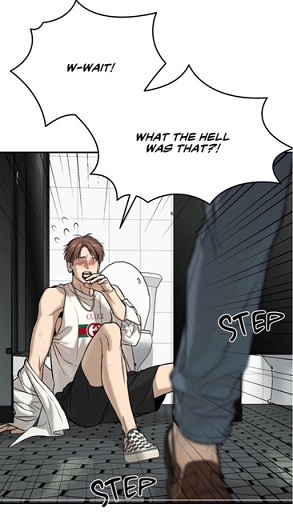 (chapter 55).In this place, he could show vulnerability, yet he experienced that nothing bad happened to him. This explicates why after this experience is willing to remember and even reconnect with the doctor.
  (chapter 61) In my opinion, the departure of Kim Dan forced the champion to be confronted with his repressed past.
 (chapter 54) While he calls his former rival and tormentor’s name and recollects his beating, he is not plagued with a migraine. This means that the real cause for Joo Jaekyung’s suffering (his headache linked to his repressed memories) is triggered by the attitude of his guardian. That’s the reason why he had a nightmare with the ghost of the past.
  (Chapter 54) There is no ambiguity that Randy Booker‘s insults had triggered the athlete‘s repressed memories and fears. Joo Jaekyung’s avoidance of mirrors suggests a fear of self-recognition—an unwillingness to face the vulnerability he tries so hard to suppress. His reaction mirrors the response of someone who has internalized a rigid sense of masculinity, where showing emotion is equated with weakness. The restroom, then, becomes a battleground where he unconsciously fights his past conditioning, yet he is unable to overcome it.
  (chapter 7) At the same time, it shows that by asking to defend himself, he pushed the athlete to become a “fighter”. He needed to demonstrate his strength and worth constantly. Choosing truth would have required him to admit that his emotional detachment stemmed from his own fears of vulnerability and inadequacy. Instead, he projected these insecurities onto his son, perpetuating a cycle of emotional isolation and avoidance.
 (Episode 60). Both moments carry significant emotional weight but reflect different facets of their dynamic, from selfishness to selflessness, secrecy to openness, and miscommunication to recognition. The setting and circumstances surrounding these kisses not only highlight the characters’ growth but also underscore the unresolved struggles they face.
 (chapter 14), acted particularly rough with Kim Dan
  (chapter 14), only snapping back to reality when he felt Kim Dan’s body trembling.
  (chapter 14) This moment of realization, coupled with the doctor’s tears and plea
  (chapter 14), served as the trigger for Joo Jaekyung to recall Cheolmin’s recommendation
  (chapter 14) of using foreplay and gentler methods, such as a kiss. While the kiss reflected care in the moment
 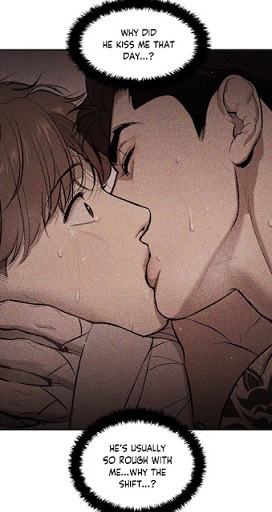 (chapter 16) Moreover, he never wondered why Joo Jaekyung had asked for sex in the locker room, which represented a change in his behavior. If he had done it before, then he would have forced the physical therapist to travel with him to Busan.
  (chapter 13) As you can see, through the comparison with the kiss on the beach, I realized the doctor’s passivity and lack of critical thinking in season 1. He never asked why the athlete was so rough during sex. He took this for a normality. His attitude exposed the doctor’s biased perception of his boss: a spoiled and rough man obsessed with sex. I would even add that the kiss had a positive effect on the protagonist
 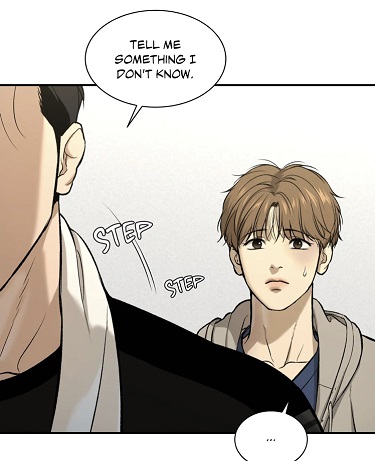 (chapter 15), the physical therapist omitted something important in the locker room. First, he didn’t share all his thoughts about the athlete, in particular his prejudices. Finally, he should have talked about his behavior before the kiss. What was he thinking, when he was having sex with him? In verity, he had been used as a substitute. In other words, the champion’s selfishness was rubbing on the doctor. Both were selfish, both had their heart and mind closed. And this remark brings me to the kiss on the beach.
  (chapter 15), a confined space symbolizing Joo Jaekyung’s need to keep his relationships private. Picking up partners at a VIP club
 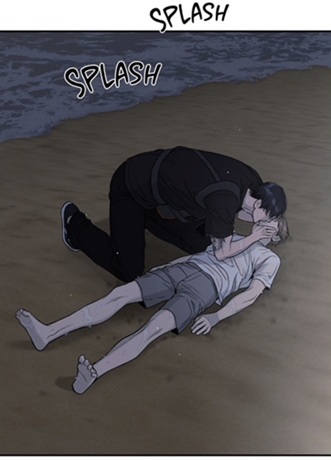 (chapter 60) Moreover, in the past, the locker room
  (chapter 14) even excluding Park Namwook, who was even seen before stationed outside the bathroom door,
 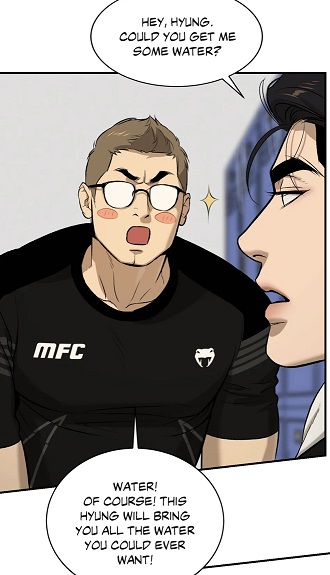 (chapter 14) This shift highlights the increasing importance of Kim Dan in Joo Jaekyung’s personal sphere. Interestingly, this progression is contrasted by Episode 49, where Joo Jaekyung deliberately ensured
  (chapter 49) he was not left alone with Kim Dan. This means that this place was no longer the synonym for privacy and secret. This reflects why director Choi could intrude with his minions. Following the incident with the switched spray, Kim Dan was left behind
  (chapter 50) in the locker room twice
 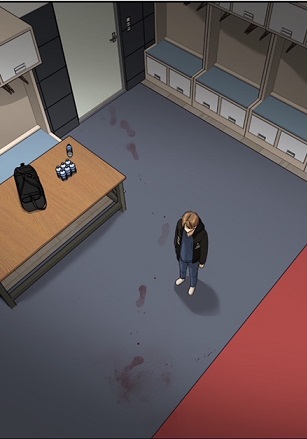 (chapter 51), which could only increase the physical therapist’s feelings that he didn’t belong to Team Black. He was not part of that “family”. And this coincides with the moment where Kim Dan cries for the last time:
  (chapter 51) From that moment on, the main lead won’t show his vulnerability and pain to others. This gesture announces the return of his “blue friend”, the depression.
  (chapter 47) And now, you are wondering how this is relevant to the scene on the beach. Joo Jaekyung got shocked and scared, but he didn’t cry later and it is the same for Kim Dan. Hence the latter could deny his presence on the beach and even ignore the athlete’s words:
  (chapter 60) The absence of tears or a trembling body from the main leads indicate that both are hiding their emotions from each other.
  (chapter 60)
 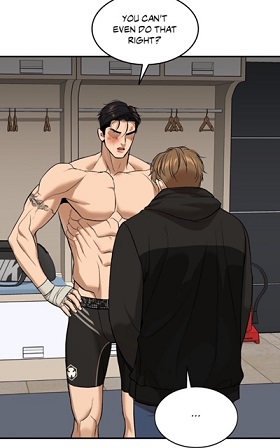 (chapter 51), his lack of loyalty, his greed and obsession for money.
  (chapter 51) Though the champion was restraining himself, he didn’t realize that his words were like punches to Kim Dan. The latter got to hear what he didn’t know.
  (chapter 15) , representing his need for mental and emotional support, which his team and entourage failed to provide. While the CPR kiss could be dismissed as a rescue, it symbolically represents a step toward Joo Jaekyung revealing his true self. The kiss marks a moment where he unconsciously begins to acknowledge his feelings and his homosexuality, even in a setting where others could witness it.
 (chapter 60) was surrounded by nature. Hence they could show their true self: their exhaustion, desire and emotions. While the doctor was suicidal due to his depression and fatigue, the champion’s worries were genuine. Yet Kim Dan was not able to hear them.
  (chapter 60) This means that on the beach, Kim Dan could only detect one thing: Joo Jaekyung’s presence. But he didn’t sense his kisses and hear his words. That’s the reason why I come to the conclusion that this scene stands under the sign of “dream and illusion”.
  (chapter 60) Hence he came to reject his “intervention” as a lie and deception. The reality is that Joo Jaekyung does care for him, but he doesn’t know how to show it. He fears attachment. Because of his misjudgement, Kim Dan is not capable to notice the transformation in his former boss.
 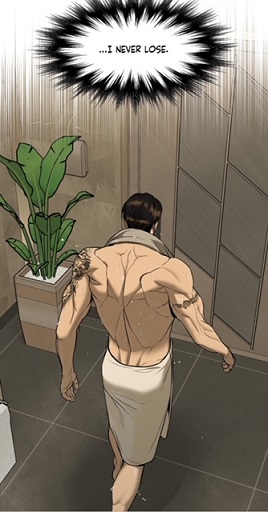 (chapter 49) His muscles are less pronounced. He is also wasting away.
 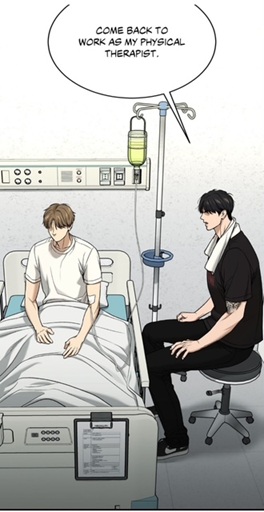 (chapter 60) reinforce control and suppression. In the locker room, the absence of time and space to relax or meditate highlighted the pressures placed on Joo Jaekyung by his manager and coach
 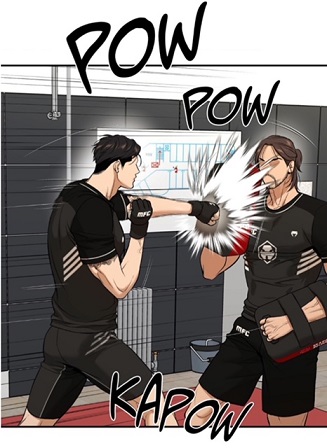 (chapter 49), who believed that physical strength alone would solve his problems. This environment denied him the mental and emotional support he truly needed.
  (chapter 54) Because Joo Jaekyung saw it in a vision, it becomes clear that the athlete is still in denial about his wrongdoing. Therefore he didn’t apologize for his false accusations and his bad perception of the physical therapist:
 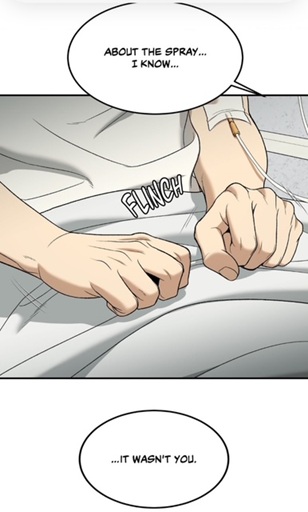 (chapter 60) By admitting that he knows about his innocence, he imagines that he can get scott-free. But he is wrong. His skepticism and dismissiveness wounded Kim Dan’s heart and mind, leaving scars that reverberate through their future interactions. Kim Dan can no longer trust him now
 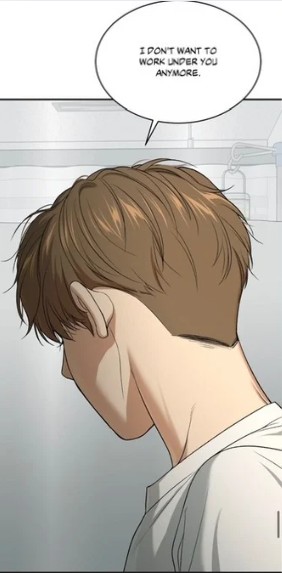 (chapter 60) , though there is no doubt that the doctor is still in love with him. At the hospice, this mistrust resurfaces. The parallel conversations—in the locker room and the emergency room—highlight the ongoing cycle of miscommunication and emotional disconnect. Both characters, in their own way, lie to themselves and each other. Joo Jaekyung sees Kim Dan through the lens of poverty and greed
  (chapter 60, reducing his identity to his need for money, while Kim Dan rejects his offer, his help and conceals his pain. It is not surprising that Kim Dan left the treatment room.
  (chapter 60) By doing so, he is denying his rescue and assistance. It was, as if this night and as such the kiss had never happened.
  (chapter 60) The lies and miscommunication fade in the face of the life-and-death situation. However, this recognition is short-lived, as the events at the hospice reveal Joo Jaekyung’s lingering selfishness
  (chapter 27) and mental well-being.
 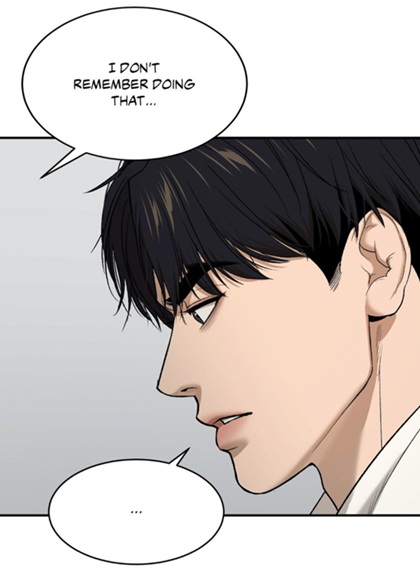 further highlight his mental fragility. This fragility contrasts sharply with Joo Jaekyung’s reaction during their interaction at the hospice. When the champion angrily asks,
  , his words reveal frustration and a superficial understanding of the situation. Rather than addressing the underlying psychological distress driving Kim Dan’s actions, Joo Jaekyung perceives them as reckless behavior. His focus remains on immediate danger rather than the deeper cause, showcasing his emotional detachment and inability to grasp the full seriousness of Kim Dan’s mental state. This misinterpretation underscores how Joo Jaekyung is still projecting his own coping mechanisms onto Kim Dan, assuming that sheer willpower and physical strength can resolve emotional struggles. This moment serves as a stark reminder of Joo Jaekyung’s ongoing growth and the gaps in his understanding of Kim Dan’s suffering. His denial of having gone to the beach, despite clear evidence, points to the depth of his trauma.
 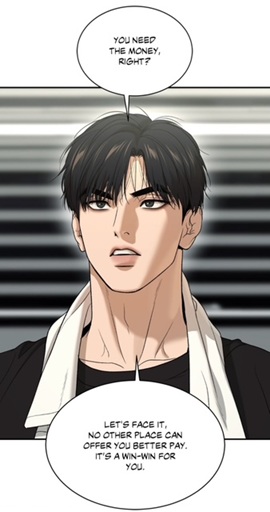 (chapter 60) at the hospice contrasts sharply with the purity of his actions on the beach, underscoring his ongoing struggle with selfishness and superficiality.
 (chapter 60) at the end of episode 60 as something negative. How so? It is because Kim Dan never said this:
 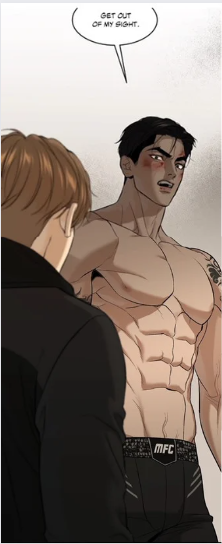 (chapter 51) He never wished to never see Joo Jaekyung again. Moreover, he never regretted their meeting either.
 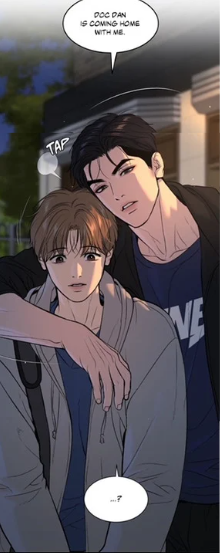 (chapter 43) No wonder why he thought that it was time to get to know the fighter during that night:
  (chapter 44)
  (chapter 57)
 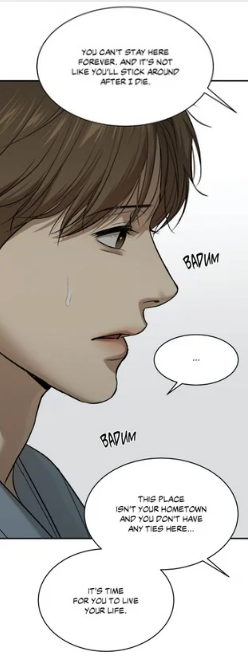 (chapter 57) However, Jinx-philes should detect the divergence: she is not using the word “home”, but Seoul. That’s the reason why in the end, Shin Okja’s confession to her grandchild will come back to bite her, as she described her own grandson as a stranger in this little town. It was, as if he had been an orphan all his life. He had no home all along.
 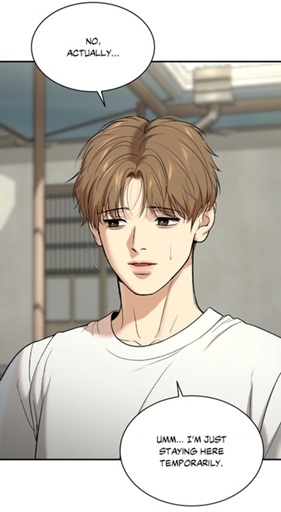 (chapter 58) Where are the parents? Who is the man where he is staying? Where did he plan to go after his stay there? The idiom “temporarily” could be perceived as an evidence that the doctor plans to end his life. According to my interpretation, Heesung believed that the landlord was Kim Dan’s grandfather. He was just denying his origins out of shame.
  (chapter 9) The athlete has now every reason to stay there and that’s how he will discover all the doctor’s secrets and misery.
 (chapter 15) kiss represents selfishness, secrecy, and miscommunication, while the beach kiss

 (chapter 23) Potato initially admires the champion, aspiring to be like him
  (chapter 23) and dreaming of recognition as his sparring partner.
  (chapter 23) Joo Jaekyung, much like the prince in Andersen’s story, projects an image that masks the reality of his life. His success, while celebrated, represents years of hard work and immense personal sacrifices. At the gym, Park Namwook undermines these efforts by slapping the athlete
  (chapter 40) effectively denying Joo Jaekyung the acknowledgment he deserves for his achievements. Potato is misled by this fabricated image
 (chapter 23) without understanding the profound struggles beneath his image, failing to perceive Joo Jaekyung’s unhappiness, struggles, and loneliness. Like the image is exposing it, Potato views the athlete as a companion as well whose efforts should serve to keep him company. This dynamic mirrors the little mermaid’s conditional love for the prince, as Potato’s idealization is rooted in his own aspirations rather than genuine understanding. Just as the prince remains oblivious to the mermaid’s sacrifices, Potato overlooks the reality of Joo Jaekyung’s burdens, emphasizing a dependency that hinders true recognition and connection. Once his reputation as a champion is tarnished
  (chapter 52), the amateur starts distancing himself from his former idol. This exposes the fragility of Potato’s dream. Therefore it is not surprising that he starts taking a different path: acting, though I still think, it is temporary. However, behind the glamorous facade of the show business, there exists a dark side as well.
  (chapter 59) Heesung’s fate is similar to the champion’s. Despite his popularity, the actor is deeply unhappy. He feels lonely, for people only know the actor and not the man behind the mask. That’s the reason why he is looking for his soulmate.
  (chapter 23). In reality, he wanted to use the athlete as his servant. The closeness
  (chapter 23) he was seeking was self-serving. While the amateur and the actor are searching for the “perfect companion”, the other couple has no expectation from others. They both have no longer any dream or hope. That’s the reason why Kim Dan was putting this vision of Joo Jaekyung behind a veil:
  (chapter 58) He was giving up on his dream expressed in the birthday card,
 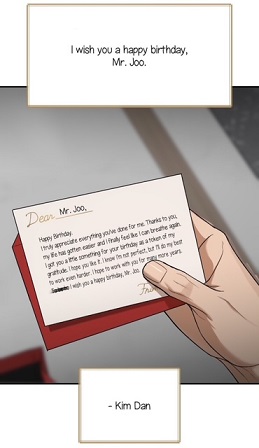 (chapter 55) though I believed that he had another bigger wish, but due to his low self-esteem, he didn’t dare to express it:
 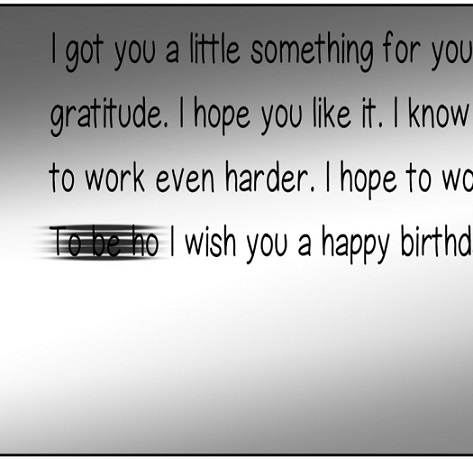 (chapter 55) My newest theory is that he wanted Joo Jaekyung to teach him fighting, but not for himself, but in order to help the fighters and in particular to protect the champion’s body:
 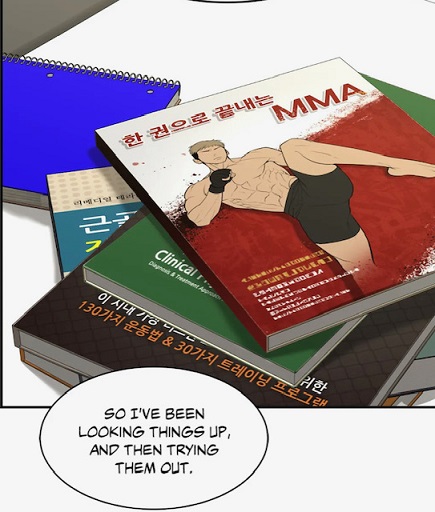 (chapter 25)
 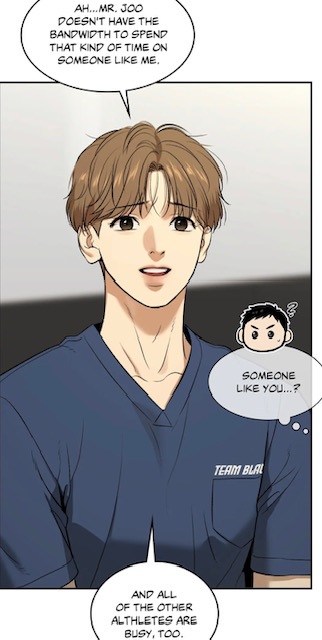 (chapter 25) To develop a training where injuries are minimized. In season 2, it is clear that Joo Jaekyung and Kim Dan have reached the bottom. Both feel empty and exhausted. They were crushed by harsh reality, and they had no one by their side to listen to their pain. Therefore it is not astonishing why the doctor could not confide to the actor and the amateur fighter. They arrived too late.
 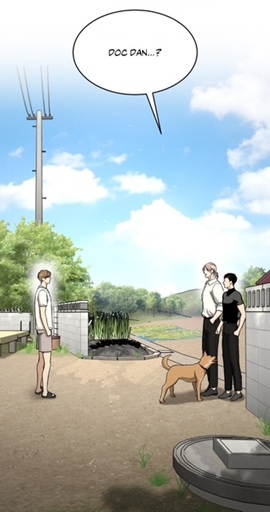 (chapter 58) Their presence definitely diverted the doctor’s attention, lessening his pain.
  (chapter 25) he learns the true nature of the relationship between Kim Dan and Joo Jaekyung. This revelation forces him to confront his own repressed feelings, as he unconsciously realizes his attraction to the fighter.
 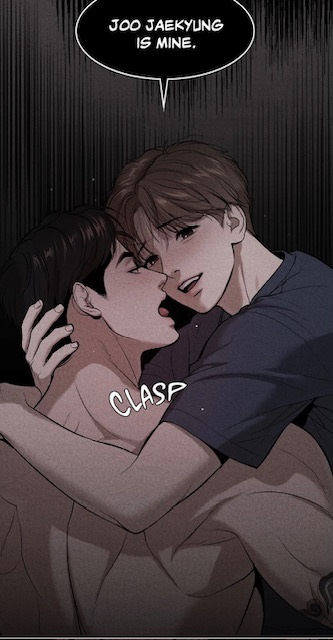 (Chapter 25) Heesung’s involvement further complicates matters, as Potato confesses his love for Joo Jaekyung
  (chapter 35) while simultaneously vowing to sacrifice his feelings for the sake of the couple’s happiness. This act demonstrates Potato’s pure and selfless definition of love,
  (chapter 35) contrasting with the conditional love depicted in Andersen’s tale.
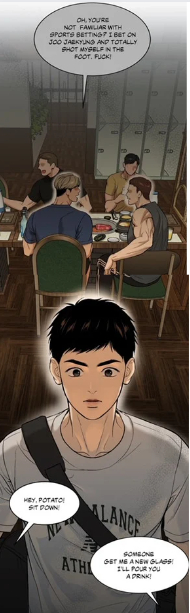 (chapter 52) and the switched spray the
 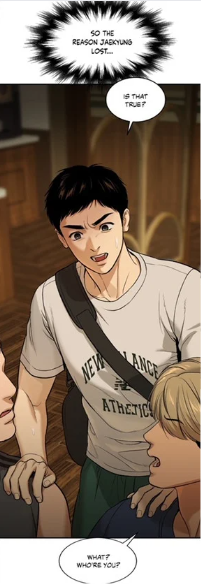 (chapter 52) which is strongly intertwined with the departure of disloyal members from Team Black marks another step in his journey toward disillusionment. While Potato initially views this as an isolated incident, it exposes the broader corruption within the MMA world, including the betrayal, greed, and lack of loyalty that undermine its integrity. While he views himself as loyal to doc Dan and Team Black, for he remained at the gym, his heart was not. He is becoming like his hyungs, Park Namwook and Heesung. In Andersen’s tale, the mermaid’s journey to the sea witch represents a pivotal moment of transformation. By sacrificing her voice and enduring physical pain, she gains entry into the human world, but at the cost of her identity. Similarly, Potato’s journey is marked by painful discoveries that force him to confront uncomfortable truths. Through Kim Dan, he will begin to see his own flaws before he is able to recognize them in those he once trusted.
  (chapter 23)
  (chapter 25)
 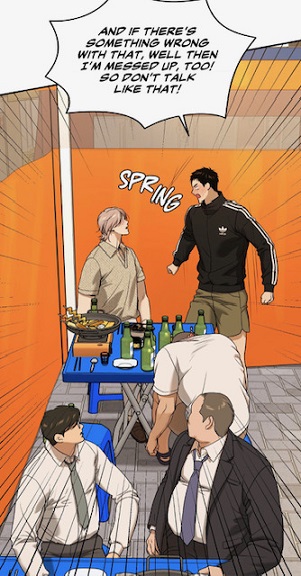 (chapter 35) The latter doesn’t mind breaking social norms by yelling or causing a fight at a restaurant. But let’s return to the actor’s confession at a bar. It’s not surprising that Heesung appears indifferent to the affection of those who cared for him. The last partner was described as too clingy. This means that Heesung places himself as the judge. In addition, it was, as if he was a god destined to live forever. He is forgetting his human condition, just like his partner’s. And that’s exactly how the prince in The Little Mermaid views life.
 (special episode 2) Hwang Yoon-Gu didn’t realize that by taking responsibility for the actor, he lost his freedom and as such his voice. Is it a coincidence that Mingwa portrayed the young maknae as someone who would raise his voice due to his emotions in the past?
  (chapter 58) his behavior is totally different than with the actor:
  (chapter 58) Tears, touch, raising his voice with Kim Dan, but not with the comedian. With the actor, he looks more calm, distant and mature. Heesung’s selfishness is evident in his treatment of Potato, whom he manipulates into becoming an extension of his own image. Hence he is no longer wearing shorts and tee-shirts.
  (chapter 59) One might say that he is gradually elevating Potato’s status through his suggestions.
 (chapter 23) Why? It was due to his low self-esteem.
  (chapter 23) He was not confident enough, for he was the only one with such a weight-category.
 (special episode 2) played a huge influence in Potato’s decision to take the offer as an extra. It was, as if one of his dreams had come true. But is this what he truly wanted?
  (chapter 58) underscores his indifference, symbolizing the unbalanced dynamic in their relationship. Like the prince, Heesung offers no genuine commitment, leaving Potato to grapple with the consequences of his dependency. Thus I perceive Potato’s tears
  (chapter 59) as a signal that he is not truly happy.
  (chapter 58) However, this is about to change. Heesung who likes novelty and change is not realizing that his wish is becoming true. The picture with his last work announces the end of his “friendship” with Potato. How so?
  (chapter 59) Kim Dan once referred to Potato as a puppy
  (chapter 29), drawing a connection between the character’s innocence and loyalty.
  (chapter 35) This shows that Heesung has long internalized this pattern: assistance will be only given, if he is called. That’s why he has no true friend in the end. He shows no interest in others. But by doing so, he is putting the whole responsibility on his counterpart. Through the actor and the manager’s behavior, the former errand boy has long adopted this pattern. Hence he didn’t call Kim Dan in the end. He waited for a signal from his part. This behavior mirrors the little mermaid’s sisters, who only realize her absence when it is almost too late to act. Similarly, Potato’s casual farewell highlights a betrayal of Kim Dan’s friendship, further emphasizing Potato’s struggle with emotional awareness. That’s why I mentioned above that Potato is about to discover his true nature: he is also a sinner. This growth parallels the biblical narrative of Adam and Eve, where the acquisition of knowledge leads to the loss of innocence. Heesung, like Eve, introduces Potato to a new world of experiences, including his sexual orientation. However, this newfound knowledge comes with its own burdens, as Potato must reconcile his identity with the harsh realities of the world around him.
 (chapter 5) Heesung could no longer express his needs and desires.
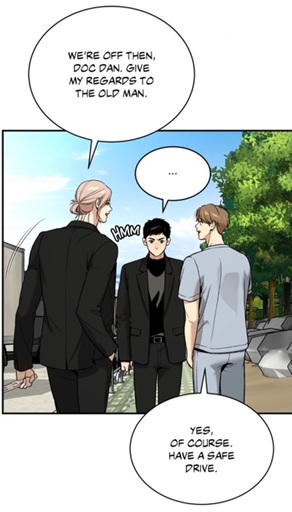 (chapter 59) This event underscores the contrasting paths of Joo Jaekyung and Potato. While Joo Jaekyung is forced to give up his principle of “self-reliance,”
 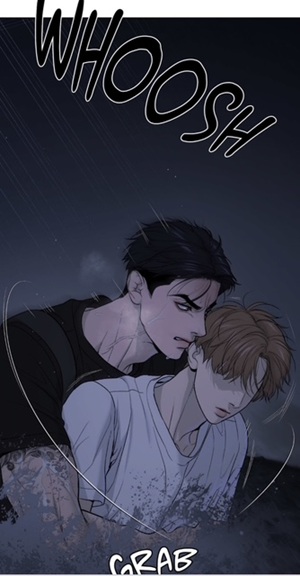 (chapter 59) Potato’s journey is to discover and embrace the principle of “self-reliance” and autonomy. Only when Potato becomes independent in his thoughts and decisions, can he truly help the main couple.
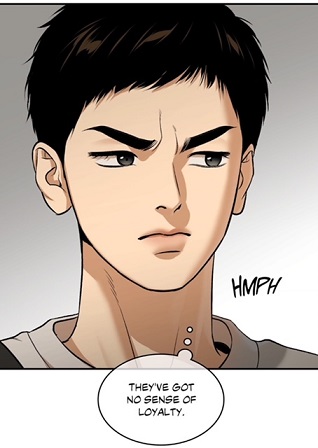 (chapter 52), accusing them of lacking loyalty and dismissing their claim that they had nothing to learn from him. Yet, in episode 52, Potato does not reproach Park Namwook or Yosep for their passivity and naivety,
 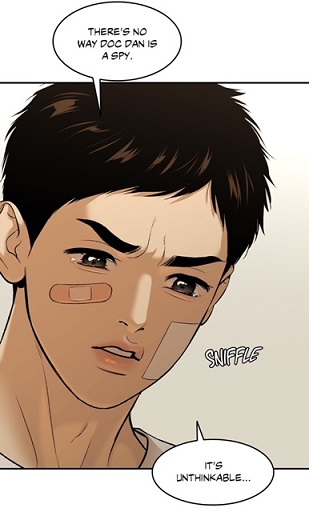 (chapter 52) instead solely blaming Joo Jaekyung for not trusting Kim Dan and causing his departure. This selective criticism reveals that Potato still views the older men as inherently good and fails to recognize his own shortcomings. In this way, he mirrors Park Namwook’s superficial loyalty, further emphasizing his dependence on external validation.
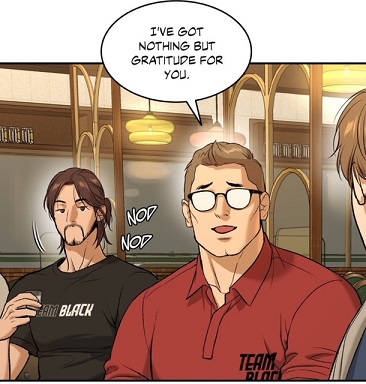 (chapter 43) This absence highlights how Potato has missed key moments of reflection and acknowledgment, which are essential for his growth. It suggests that Potato is destined to detect the flaws in his hyungs—Park Namwook, Yosep and Heesung’s superficiality, passivity, hypocrisy and selfishness—before he can achieve true independence and contribute meaningfully to the lives of Joo Jaekyung and Kim Dan.
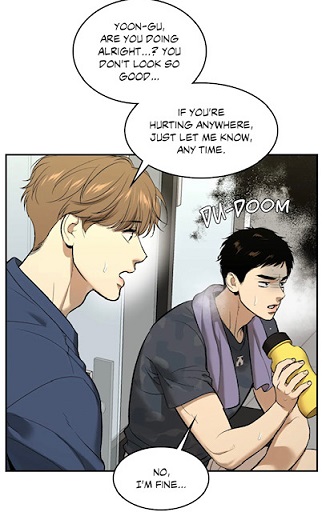 (chapter 23) —taking over his tasks and noticing his unhappiness
 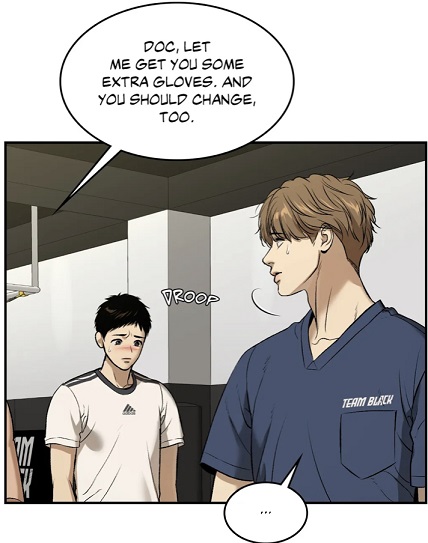 (chapter 25) —demonstrates his capacity for genuine care. This contrasts sharply with Heesung’s selfishness and serves as a reminder of the value of mutual support in relationships. Potato’s potential return to the place where he met Kim Dan could symbolize a rediscovery of authentic connections, marking the beginning of his path toward independence and self-realization.
  (chapter 58) And like mentioned above, this could become a serious problem for Yoon-Gu. He could be perceived as someone selling himself for a gig. And Heesung is not even realizing the consequences of his intervention and meddling. That’s why it is important for Yoon-Gu to become independent. This lesson resonates with Potato’s journey in Jinx. By recognizing Heesung’s selfishness and breaking free from his influence, Potato has the potential to rediscover his own dreams and individuality. Like Erich Fromm mentioned it, true love is respect, care, knowledge and responsibility. However, Heesung has no idea about the importance of these notions, as everything is evolving around his own needs and dreams.
  (chapter 58) That’s how it dawned on me that little by little Yoon-Gu had been losing his senses:
  (chapter 31), his smell, then his ears
 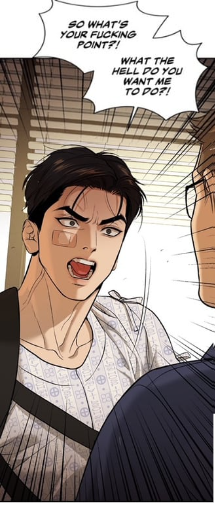 (chapter 52) and finally his eyes:
 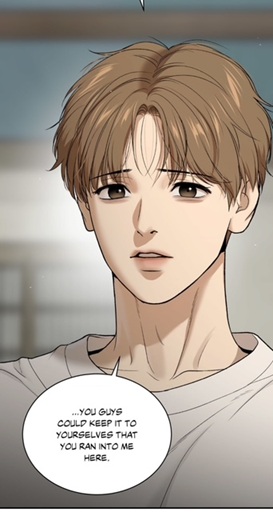 (chapter 58) He forgot the danger coming from Heesung’s words, he could not hear the suffering from the champion due to his bias, and finally he couldn’t see Kim Dan’s distress due to his own feelings and prejudices. We could say that because of the influence from others, he was no longer able to see reality. However, like mentioned before, I sense the return of Potato’s senses in the following panel:
 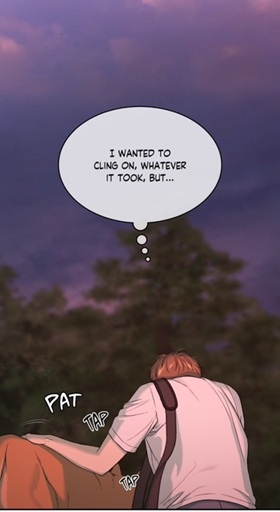 (chapter 59), coinciding with Potato’s departure, underscores this theme of overlooked emotions and unreciprocated care. As Joo Jaekyung reflects on Kim Dan’s comparison of Potato to a puppy, it may catalyze a pivotal shift, prompting him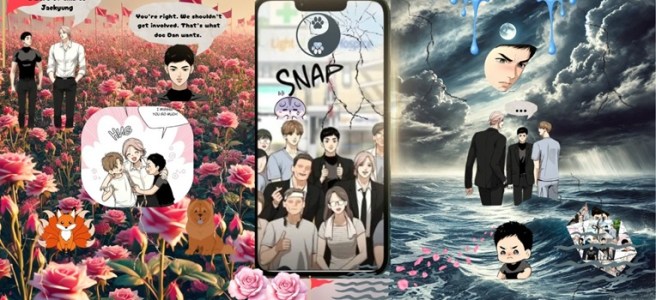
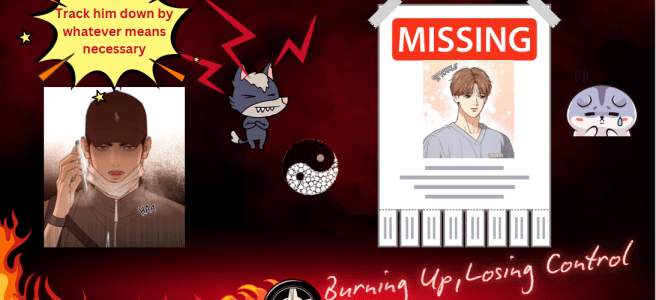

 (chapter 56) and
 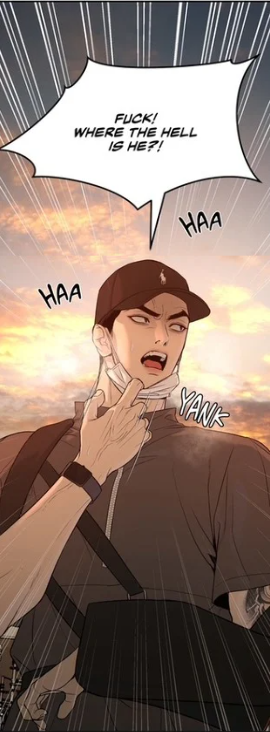 (chapter 56) While in the first picture, Joo Jaekyung is calm, concentrated and silent, in the second one, the fighter is agitated, lost, breathless and yelling. These two mental dispositions are reflected in the location. In the first image, the MMA celebrity appears behind the steering wheel, which is a symbol for power, determination and control, whereas in the second panel the champion is wandering alone in the street. This running is no longer part of his training and routine, but it exposes his powerlessness, loneliness and despair. He has no idea where to go contrary to the first picture. This means that the latter embodies goal and destination, whereas the second image represents the opposite values: beginning, start, ground zero and source. In other words, the end of episode announces the athlete’s rebirth or better said, the start of a new life. I will elaborate further below. But let’s return our attention to the symbolism of the auto.
  (chapter 56)
  (chapter 56) Because Joo Jaekyung doesn’t want to be recognized, he is wearing a mask and a cap. This gesture stands for anonymity, hence no one is paying attention to him. Contrary to his frenemy at the cafe
  (chapter 35), Joo Jaekyung succeeded. He is just a passerby. In other words, the avenue indicates not only his failure to find Kim Dan, but also his loss of power and status. He has just become a nobody. Thus we should consider this as the athlete’s karma for thinking that Kim Dan could be replaced, because he was just a nobody:
 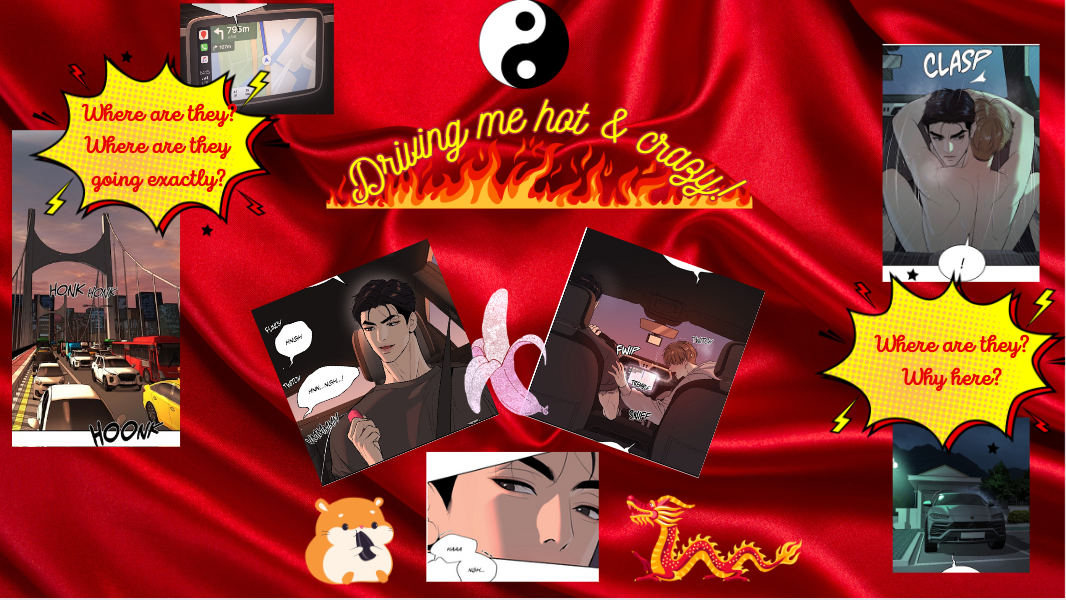 These two chapters are similar, for they convey the same emotions: anger, anxiety, frustration and despair of the fighter. In the car, the champion attempted to control the doctor’s libido.
  (chapter 33) On the one hand, he appeared calm and concentrated like in 56, yet deep inside, he was burning up. The pink dildo was used as a tool to voice his negative emotions (abandonment issues, insecurities and jealousy). With the release of episode 56, another reason came to my mind why the athlete proposed to drive the physical therapist to Choi Heesung.
 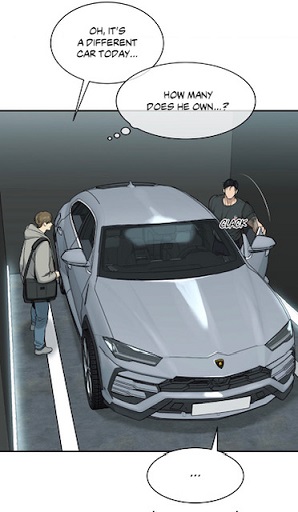 (chapter 32) First, he switched the car in order to demonstrate his wealth and status. It was, as if he wanted to show off to his fated companion, which reminded me of the actor. The latter would bomb doc Dan with “presents”, an indirect demonstration of his fortune. In addition, Jinxphiles will certainly recall that during the same day, the comedian came to fetch the physical therapist with his white Porsche.
 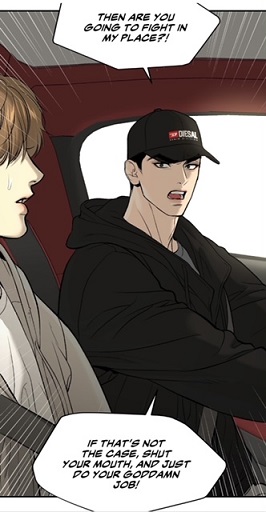 (chapter 42) And what was his attitude there? He would not listen to his passenger. Moreover, he would separate his job from his roommate’s. It looked like they were living in two different worlds, though they were sharing the car. This scene exposes miscommunication, lack of faith, stubbornness and prejudices. The fighter was not willing to accept the physical therapist’s doubts and chose to go through with the training and match.
  (chapter 2)
  (chapter 37) with arrogance and weakness, but this is not true. [For more read this
 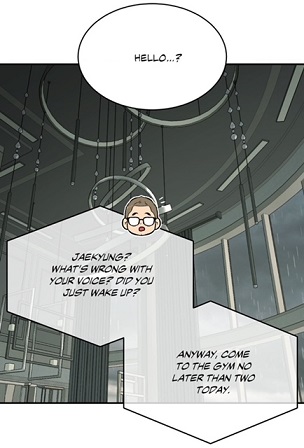 (chapter 54)
  (chapter 5) He allows the coach to drive the car and the manager to sit in the front. Thus they represent the higher authorities. However, so far, the doctor had only been his passenger. Thus a new idea popped up: what if the athlete let the physical therapist drive his car? Let’s not forget that the loner wolf shouldn’t be driving on his own, for his shoulder has not healed properly yet. I already pointed out the wrongdoings from the two hyungs.
 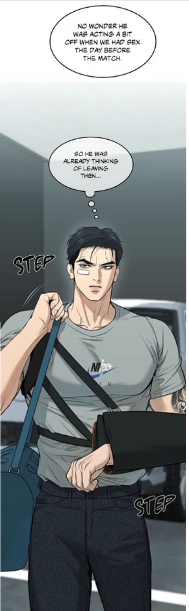 (chapter 53) They should have brought him home. They stand for neglect and indifference due to their passivity and routine. In my eyes, they are happy at the gym, the latter represents their second family. So they imagine that it is the same for their boss. In other words, they projected their own thoughts and feelings onto the celebrity. They embody silence and lack of communication and this is actually palpable in the car. In episode 5, the manager and the MMA fighters lied to each other:
  (chapter 49). Yet, he revealed his true thoughts at the hospital:
 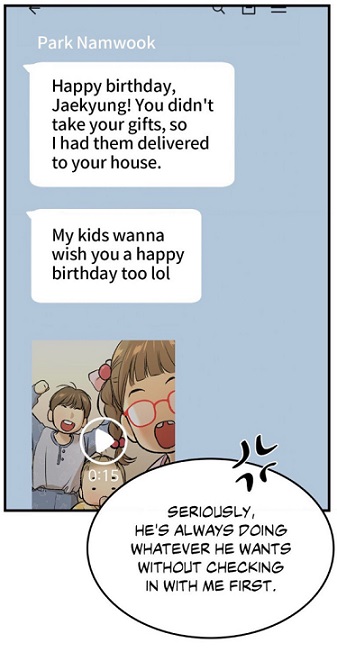 (chapter 45) It gives the impression that he owns no cellphone, especially if Jinx-philes recall this situation in the States:
  (chapter 37) He was using the landline telephone. This observation is relevant, because it exposes the coach’s dependency on Park Namwook. The latter’s task is to keep in touch with his boss and champion, for he has his cellphone number. Nevertheless, how do we explain the absence of the coach’s cellphone? I have the feeling that this could be related to his divorce.
 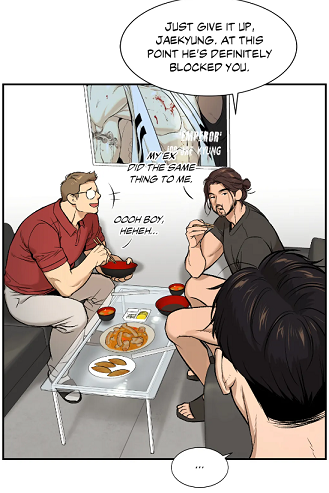 (chapter 5) When his wife suddenly blocked him, he got shocked and hurt. And don’t forget that we have another person traumatized with a phone call: Kim Dan, who got abandoned during that day.
  (chapter 19) Thus this observation made me think that the coach could have something in common with Kim Dan. And that’s how the champion will demonstrate his strength to his hyung. Contrary to him, he didn’t accept the divorce so “easily”. In fact, he is fighting for the doctor in his own way. The problem is that he is his own worst enemy.
 (chapter 49), Jinxphiles could never view the driver.
 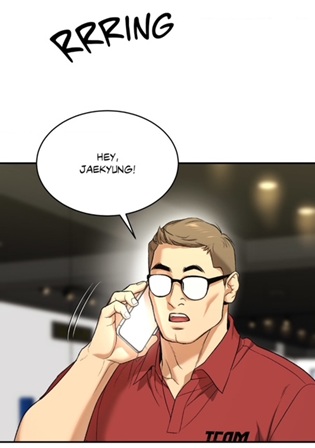 (chapter 56) He doesn’t look worried, scared or despaired. In fact, he is pretty calm, the opposite to this scene:
 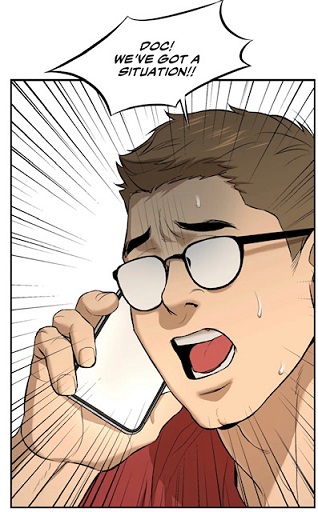 (chapter 13) His question “Is everything okay with you?” is purely mechanical and as such meaningless, for he doesn’t inquire, when he hears a silence from the other side of the line. I would even say that he doesn’t really wait for his boy’s answer as well.
 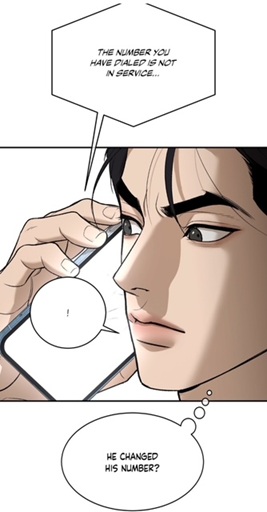 (chapter 56), he could end up in the same situation than the protagonist. And keep in mind that the coach Yosep is actually relying on the manager. Thus I reckon that the champion’s other source of power is actually his cellphone! Without him, he has no connection
  (chapter 5), no money
 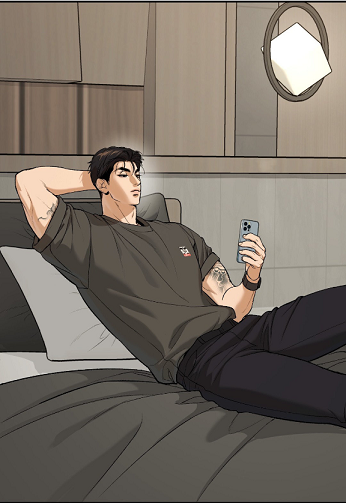 (chapter 32) and no power. His call to the manager during that evening represents his last resort. Thus he is calling the manager “Namwook hyung” contrary to episode 5.
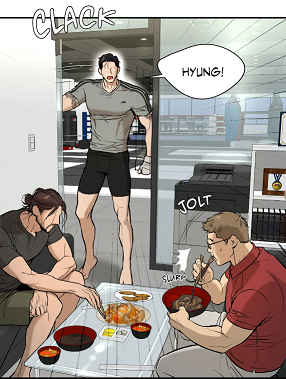 (chapter 5) This title is indicating that the champion is opening up, and willing to show his vulnerability and despair. On the other hand, this change also implies “expectations” from the fighter,
  (chapter 55) The physical therapist hoped to get recognition, gratitude and acceptance from his soulmate. That’s the reason why I perceive this conversation over the phone as a reflection from that scene:
 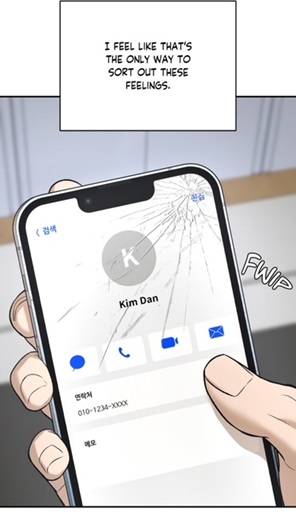 (chapter 56) He somehow expected doc Dan to listen to his words and accept them. That was it. Then at the end, it is just about seeing doc Dan and nothing more. At no moment, he voiced the desire to get to know his partner or to listen to his side of the story. Why? It is because he had strongly internalized that the man was a liar. He never questioned his perception and detected his own prejudices. It is important to recollect how Jinx-philes could sense a positive change in the physical therapist:
 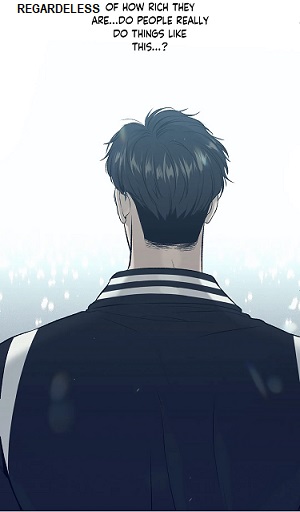 (chapter 22) Yes, it is the view with the star’s back. The author selected such a position on purpose. The face represents the character’s identity and as such his personality. By showing the back, Mingwa is implying that the beholder is full of prejudices and doesn’t know his partner that well. That’s why I judge this image
  (chapter 7)
 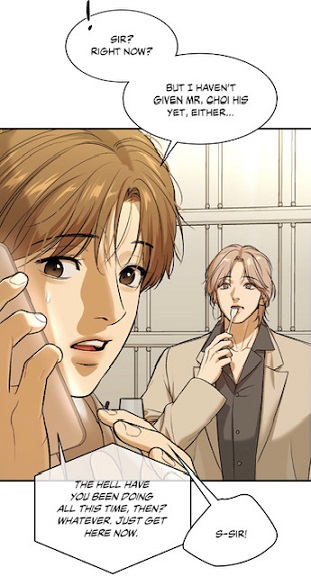 (chapter 32)
 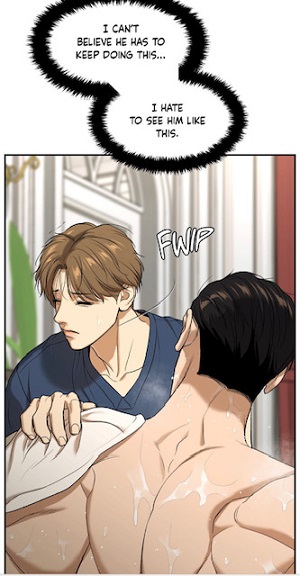 (chapter 37)
  (chapter 40)
 (chapter 43)
  (chapter 45)
 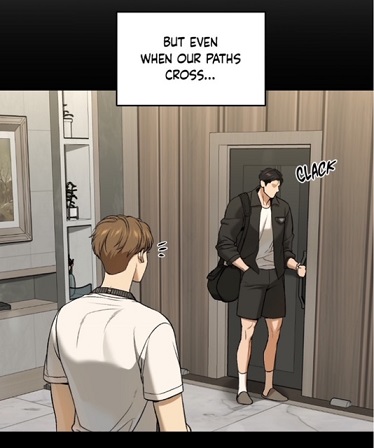 (chapter 47) Looking at his face had become his new secret ritual and as such his source of joy. Naturally, his heart and unconscious were the causes for this new habit. This explicates why he hated hearing the doctor leaving the penthouse during the night: he feared that he would no longer be able to see his cute face. That’s also the reason why Joo Jaekyung got angry/upset, when he saw the doctor turning his head away
  (chapter 21) and almost got shocked
  (chapter 56), when he imagined that she had died. In reality, he helped financially more the grandmother than Kim Dan himself. Kim Dan is the one he should really empathize with. He has always been a victim of circumstances.
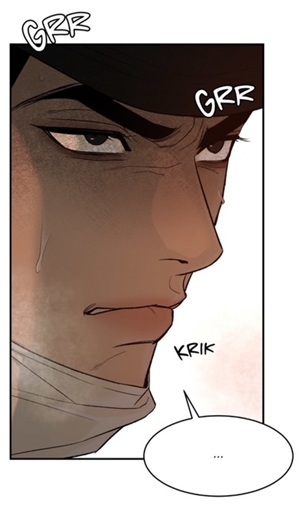 (chapter 56) Desperation can strip away the higher faculties that make us human—reason, empathy, and self-control—exposing something primal.
  (chapter 17) and
  (chapter 11). In season 1, the athlete stands for golden hour, whereas Heo Namwook embodies blue hour. “Entre chien et loup” is the time of day when the light is such that is becomes difficult to distinguish between a dog and a wolf, between friend and foe, between known and unknown. Hence I am thinking that if the next episode represents a continuation of that nightfall, it signifies that the champion is on his way to meet someone from the past. Moreover, I detected that the pavement is the same than in front of the gym:
  (chapter 35)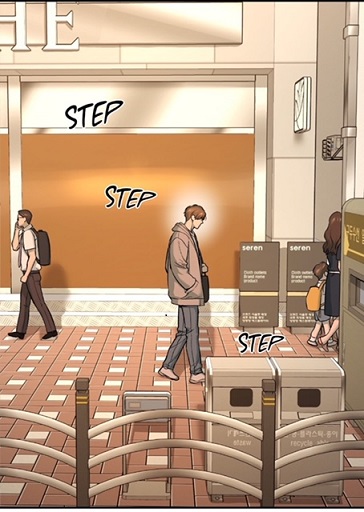
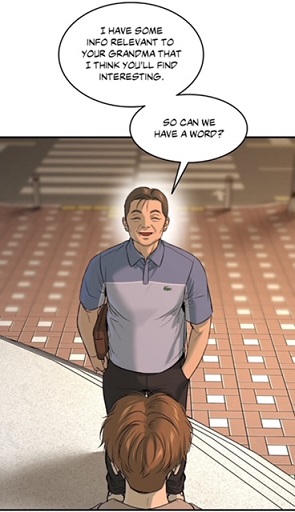 (chapter 48) As you can see, this detail made me realize that the next chapter should contain reflections from episode 35 and 48, the meeting with an old/new acquaintance. I am writing new and old together on purpose, for Director Choi Gilseok had been the halmoni’s loan shark, but the “hamster” had no idea. Choi Gilseok is the boss of Heo Manwook. If this encounter takes place, it signifies that on the one hand, it will cause pain and suffering to the athlete, on the other hand, this incident will become a “blessing in disguise”, for it will push the champion to reflect and mature. That’s how I had the following revelation. Why did the author ensure that the MMA fighter’s shoulder would get badly injured?
  (chapter 52) It is because this exposes the champion’s bad coping mechanism. The champion always uses his fists, therefore he doesn’t reflect and as such analyze his emotions.
 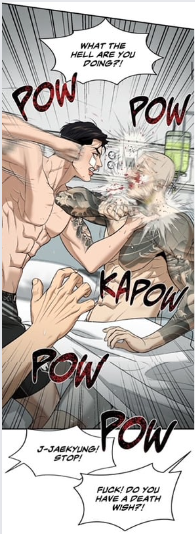 (chapter 52) That’s how he felt right into the trap of the schemers. So by having his splint, Joo Jaekyung is indirectly coerced to meditate on his feelings., as he can no longer use his shoulder and as such his fist. His physical injury represents in reality his “lucky charm”, for it helps him to transform, to overcome his trauma and face the shadows from his traumatic past. Notice that for the first time, the athlete came to accept the existence of feelings for Kim Dan.
 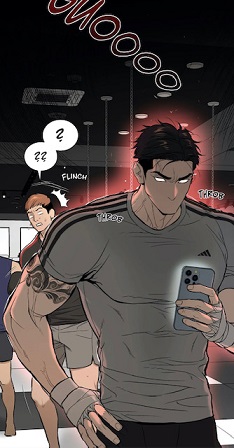 (chapter 5) He is much calmer. He is not oozing red and remaining silent. He is not burning up inside, in fact he is expressing his thoughts and emotions:
  (chapter 5) In both cases, the athlete asked for his manager’s help. However, as Jinx-philes can sense, there exist two huge differences between the past and present. Back then, Park Namwook didn’t care for Kim Dan. He was just a PT like any other doctor. He didn’t even care that Joo Jaekyung would lose his temper and ruin the sandbag.
  (chapter 5) It was not worrisome in his eyes, because his day would consist of training and punching the sandbag. The problem is that the fighter is no longer coming to the gym and he is not even calling him:
 Bebebisous33s' analyses in K-Dramaland and Manhwas