

Please support the authors by reading Manhwas on the official websites. This is where you can read the Manhwa: Jinx But be aware that the Manhwa is a mature Yaoi, which means, it is about homosexuality with explicit scenes. Here is the link of the table of contents about Jinx. Here is the link where you can find the table of contents of analyzed Manhwas. Here are the links, if you are interested in the first work from Mingwa, BJ Alex, and the 2 previous essays about Jinx The Fabric of Silence and The missed Party
It would be great if you could make some donations/sponsoring: Ko-fi.com/bebebisous33 That way, you can support me with “coffee” so that I have the energy to keep examining Manhwas. Besides, I need to cover up the expenses for this blog.

Chapter 79 proved my previous interpretation correct: the number 9 announces the end of a circle. 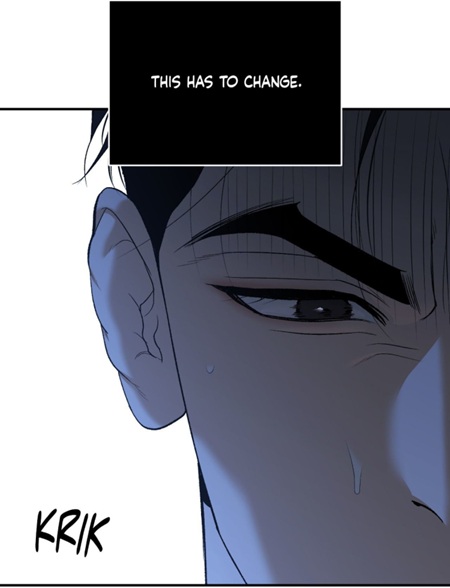 (chapter 79) However, let me ask you this. What kind of circle ends in episode 79? Moreover, how is this ending different from the past? Interesting is that episode 79 of Jinx doesn’t end with conflict, but with an awakening. For the first time, Joo Jaekyung does not rise to fight, command, or perform — he wakes up to a realization: “This can’t go on.” In the Korean version, his words carry an unusual clarity. It is not fate that changes, but choice. The champion, who once lived as if enslaved by habit and haunted by ghosts, now chooses transformation. The circle that has defined his life — power, silence, guilt, and repression — finally begins to close.
The decision is quiet but monumental: he will no longer live in a cycle of fear and self-loathing. 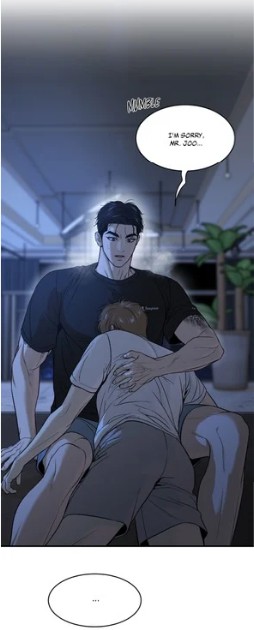 (chapter 79) Until now, Jaekyung has moved through life as if carrying a curse — the belief that he is unworthy of care and love.
 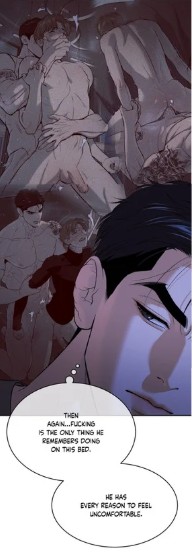 (chapter 78) Every match, every order, every touch was an act of penance. Yet, in this episode, that belief dissolves. What vanishes in chapter 79 is not his strength, but the compulsion to suffer for it. Through the unconscious confession from Doc Dan, the wolf discovers that despite his wrongdoings, he is not hated by the “hamster”. (chapter 79)The words carry the same emotional weight as
 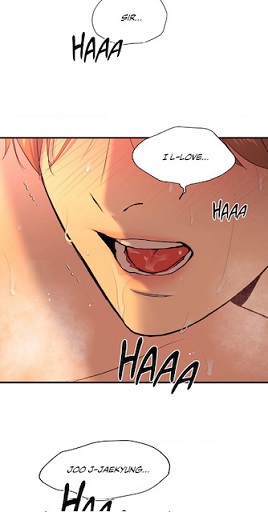 (chapter 39) from the magical night in the States. Both moments unfold in half-darkness, both break through inhibition, and both blur the line between consciousness and surrender. The verbal difference hides a deeper sameness:
  (chapter 79) is not remorse alone — it is an act of love, an instinctive reaching-out toward the other’s pain.
Mingwa mirrors the composition of these two scenes to stress their equivalence. The parted lips, the contrast between the heavy breath and the mumbling, the closeness of skin — all visual echoes that turn guilt into a language of tenderness. In chapter 39, the confession was drug-induced, raw and unfiltered, but afterward Jaekyung dismissed it with a laugh: 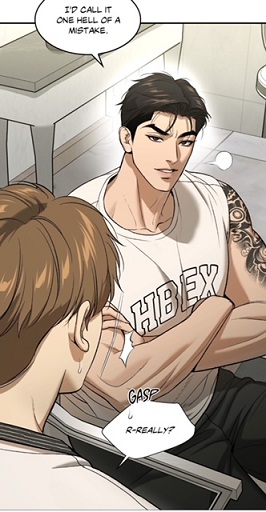 (chapter 41) What could have been a moment of truth was repressed through mockery. His body language was betraying him: his closed arms reveal that he was on the defensive. By trivializing love, he protected himself from suffering and as such from facing his own capacity for harm. Behind the joke hid an immense self-loathing: to accept the confession as real would have required believing himself worthy of it. To trust himself…. he is not a loser, a nobody!
Chapter 79 reverses that denial. This time, the athlete cannot turn away or make light of what he hears. (chapter 79) The doctor’s voice — faint, sleep-bound, and sincere — forces him to listen. The “mistake” returns, transformed into absolution. Where laughter once erased meaning, silence now restores it. The champion finally grasps that Dan’s words, whether “I love you” or “I’m sorry,” spring from the same place: care that persists despite injury.
This is why the “blue night” cannot be read as accident or madness. It is revelation. The wolf sees, perhaps for the first time, that he can be forgiven — that love, for Dan, includes compassion for his flaws. The “I’m sorry” becomes the mirror image of the earlier “I love you,” not a repetition but a correction. What Jaekyung once labeled a mistake now stands as proof of connection, as if fate itself were rewriting the joke into a prayer.
The End of a Circle
Each chapter ending in nine has marked emotional completion: chapter 9’s first gesture of care 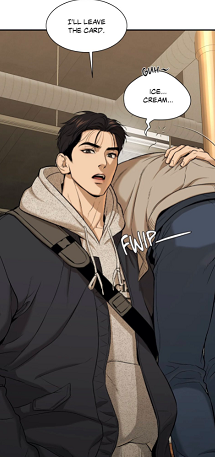 (chapter 9), 29’s confession on the couch
  (chapter 29), 69’s first expression of feelings in the dark
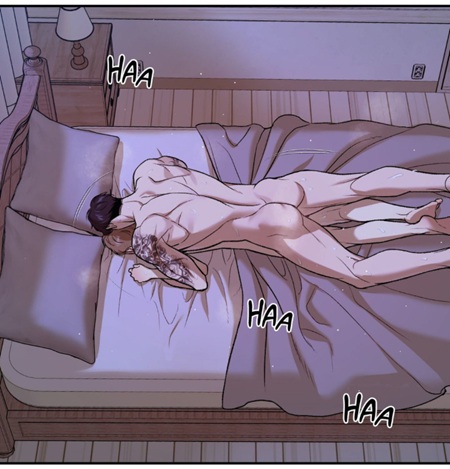
  (chapter 69). In chapter 79, the circle closes once more. The night’s palette tells the story — deep blue softens into violet
  (chapter 64)
  (chapter 79), the color born from the fusion of blue (Dan’s sorrow) and red (Jaekyung’s intensity). For the first time, in the penthouse the color of their relationship is not pain but balance. And now, you comprehend why in the hallway, the purple had almost vanished: (chapter 79) The light purple – lavender that once filled their world turns
 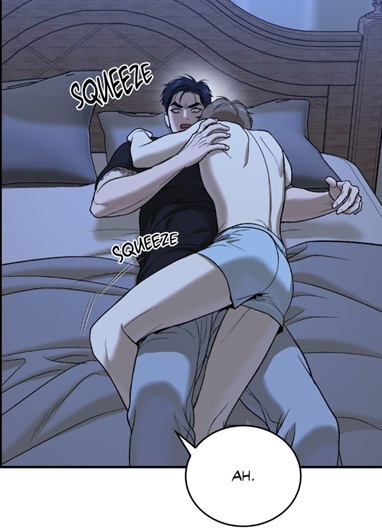 (chapter 66) (chapter 79) fades into the cold blue of the night. The light shifts — not toward warmth, but toward fragility. The purple, symbol of fusion, nearly disappears, leaving behind the dominant blue of isolation and fear. (chapter 79) This chromatic regression visualizes what happens next: in the hallway, both men are still haunted by their separate pain. Dan, drawn by the pull of despair and self-loathing, almost falls over the railing. Jaekyung, still guided by fear, rushes to catch him.
  (chapter 79)
The blue in this scene is not mere sadness — it is the residue of old wounds resurfacing. It unites them through pain rather than peace, yet this unity marks the turning point. The absence of purple is what propels the wolf to make a decision: he is about to drop his routine and as such his past believes, like for example, his life is still his first priority or he is just a shackle. He realizes that color — the life and warmth in Dan — is fading.  (chapter 79) To restore it, he will have to speak, to act, and ultimately, to smile again.
What truly ends here is the Emperor’s old language. The vocabulary of orders —  (chapter 79) gives way to the silent recognition of fear. When the champion admits,
  (chapter 79), it is a confession disguised as complaint. For the first time, he voiced his dependency and vulnerability more clearly, as his body language is no longer expressing hesitation and shyness. Imagine that so far, he had lived following the principle of “self-reliance”. Yet when Dan asks, “What?” the champion retreats:
 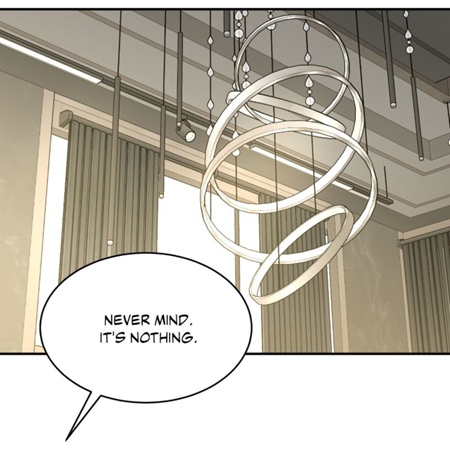 (chapter 79) His feelings collapse into the void between words. Above them, the spiral chandelier glows — the perfect symbol of their unfinished circle. His unspoken fear hangs suspended, waiting to be voiced because of someone else’s actions: the doctor’s grin
  (chapter 79) and fall (chapter 79) That retreat exposes a deeper fear — not of rejection, but of mockery. The man who once endured his father’s contempt and smirks
  (chapter 54) still equates vulnerability with humiliation.
 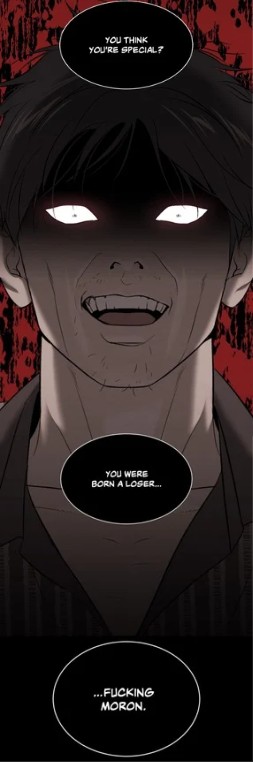 (chapter 73) In the past, every sign of weakness was punished or laughed at; even longing arrived through ridicule. Hence the “grinning” Dan of his nightmare (chapter 79) should be perceived as a distorted echo of the father’s cruel smile. And now, Jinx-philes can grasp why the wolf woke up from this “dream”.
 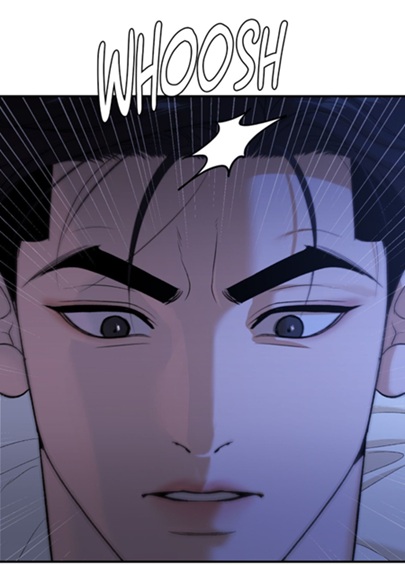 (chapter 79) The vision forces him to confront the origin of his shame. He realizes, instinctively, that the real Kim Dan would never smile at his pain — and through that recognition, he begins to separate present from past. He has already experienced a silent, but warm gaze
 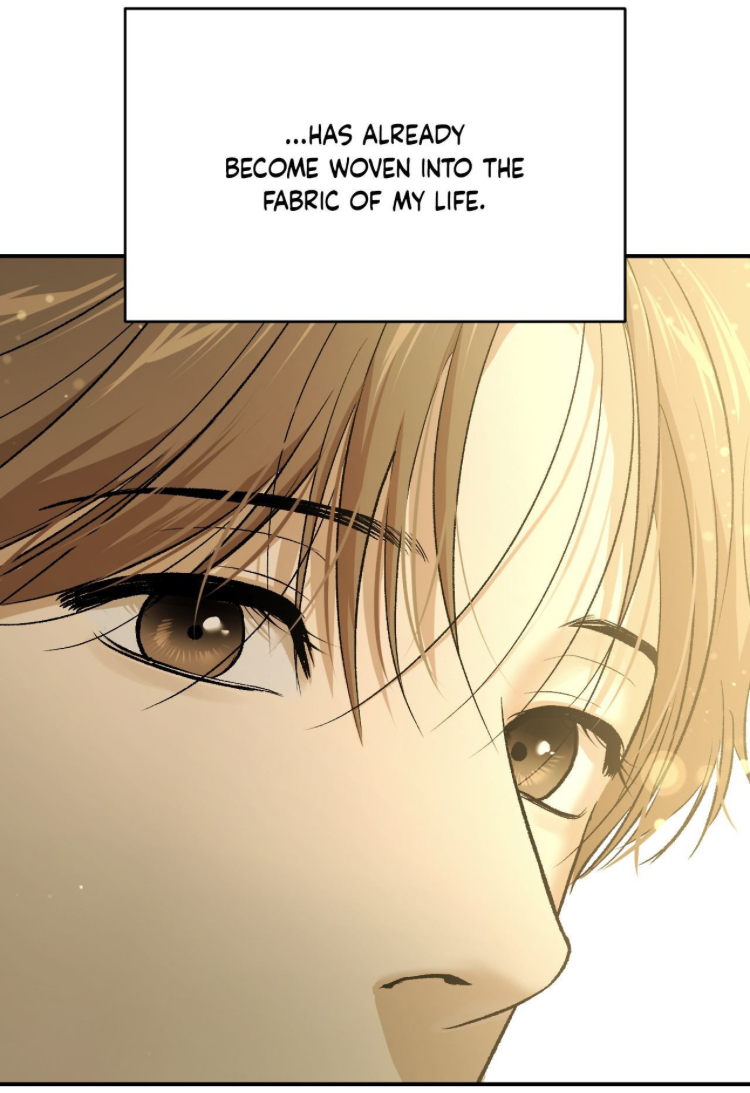 (chapter 77) from his fated partner after admitting his defeat:
 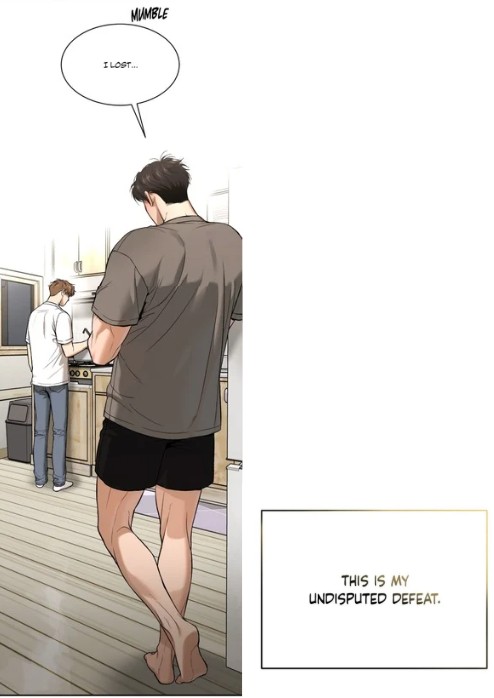 (chapter 76)
In silencing or voicing his fear, Jaekyung crosses the boundary between guilt and growth. He is no longer haunted by his father’s accusations like “you’re just trash” or 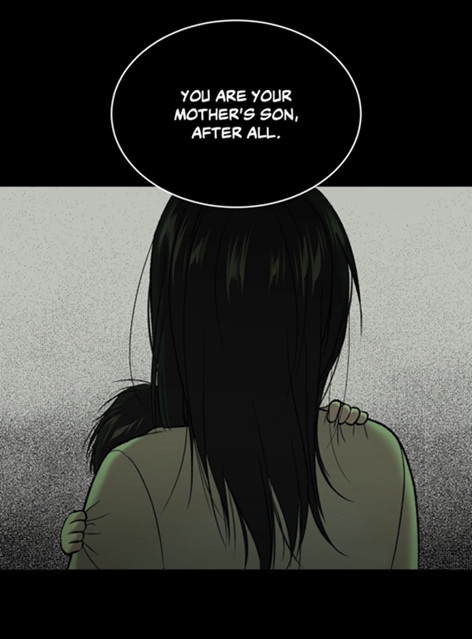 (chapter 73) but by a new, fragile dread: the possibility of losing the one person who would never say it. What vanishes in episode 79 is not his strength, but the belief that to need someone is to be weak.
That completion arrives at night. In his sleep, Kim Dan murmurs, (chapter 79) The two halves of their dialogue finally meet: the fear Jaekyung silenced finds its answer in the apology Dan utters unconsciously. One speaks awake but retracts; the other speaks asleep but reveals. The night itself becomes their interpreter — turning “nothing” into meaning.
Until now, Jaekyung’s remorse had lived without a voice.  (chapter 78) He has long recognized his wrongdoings — the pressure, the harshness, the selfishness
  (chapter 76) — but guilt without self-forgiveness remains sterile. What is the point of apologizing to someone when you cannot forgive yourself? His silence, then, is not arrogance but self-condemnation. Beneath his strength lies a man who believes that no apology can redeem him, because no one ever offered him one first. His father’s mockery, his coach’s reproaches
  (chapter 74) and expectations, his mother’s betrayal
  (chapter 74), his manager’s slap at the hospital
  (chapter 52) — none of them ever voiced regret and said “I’m sorry.”
Fighting became his substitute for repentance. 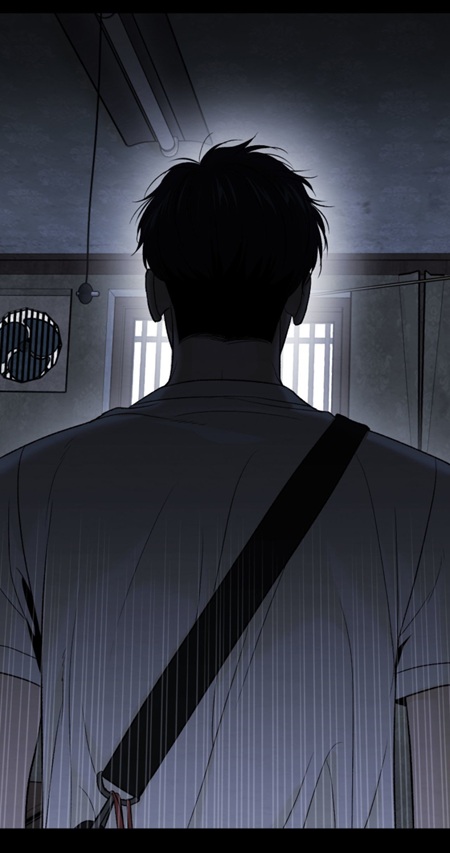 (chapter 73) Every punch was an act of self-erasure, every victory a brief anesthesia against the echo of his own self-loathing and regrets. He mistook exhaustion for atonement. But when Kim Dan whispers (chapter 79) in his sleep, something shifts. The word that once chained him to guilt now sounds different — tender, not accusatory. For the first time, he experiences apology as care, not as confession.
That is why this night matters. It teaches the champion what he was never taught: that forgiveness is not granted by punishment, but by connection and communication. Through Kim Dan’s unconscious words, he senses that he can be forgiven — that love does not vanish because of fault. He is still accepted despite his wrongdoings, not because he hides them. For the first time, Joo Jaekyung begins to believe that being loved and being imperfect can coexist. And in that fragile belief, change truly begins.
The Fall of the Angel
The dream of the wolf is not punishment — it is confession. It becomes the space where Jaekyung’s unconscious dares to speak what he hides from waking life.  (chapter 79) His vision of Kim Dan’s false grin is not a taunt from the other (chapter 79), but a message from within: You shouldn’t have hidden your fear. You should have trusted me. What appears as irony is, in truth, the echo of a moment that had once wounded him — the doctor’s trembling question,
  (chapter 51) The dream revives that unspoken answer, revealing that what Jaekyung perceived as danger was, in fact, an offer of trust. In trying to protect himself from mockery, he denied the very connection that could have saved him. The dream reconstructs the very morning he had dismissed his vulnerability
 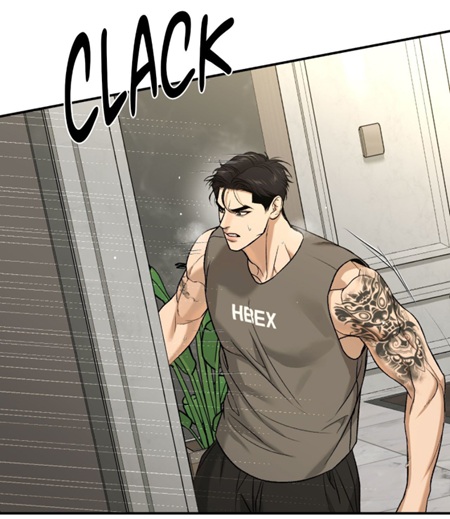 (chapter 79)— the breakfast scene
 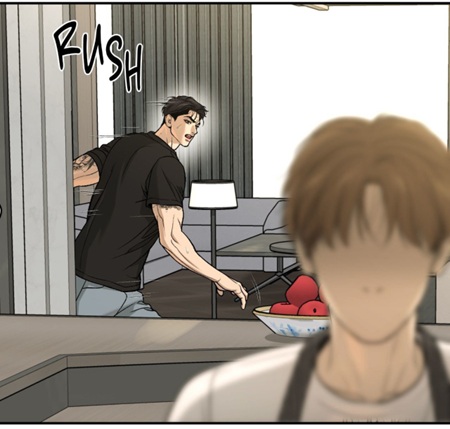 (chapter 79) , the casual (chapter 79) By replaying it in this distorted form, his mind stages a confrontation with his own denial.
The wolf’s remorse takes the shape of fear. In his dream, Jaekyung finally admits that he cannot bear to lose the one person who makes him feel human (chapter 79) — yet even there, his confession is shadowed by dread. (chapter 79) The grin that startles him awake is his own projection of unhappiness and shame, the echo of the mockery he once received from his father. But the truth beneath it is different: his soul is telling him that vulnerability is not ridicule, that he must stop silencing himself.
The resemblance between dream and reality is deliberate. The kitchen reappears, the same domestic warmth, the same silence. The unconscious replays what the conscious has failed to complete — the moment he turned away instead of speaking his fear aloud. His body wakes before his mind does, moving instinctively toward redemption. When he finds Kim Dan by the railing  (chapter 79), it is as if he is saving not only his partner but the part of himself that used to give up. He was living like a ghost denying his own emotions.
A few days before, the champion had called Dan’s drowning “an accident.”  (chapter 78) That word revealed his blindness — the refusal to acknowledge pain that does not announce itself through wounds. The new incident at the railing shatters that illusion. It was never an accident, but the expression of mental illness (chapter 79) Both events spring from the same silent cry for help, the same exhaustion he once ignored. This time, he sees it for what it is: suffering, not weakness. The shock of recognition becomes his wake-up call — not to fight harder, but to understand deeper. The problem is that so far the champion never had a true companion, hence he has not learned how to share thoughts and emotions to others. This explicates why doc Dan is actually the one initiating the conversation.
 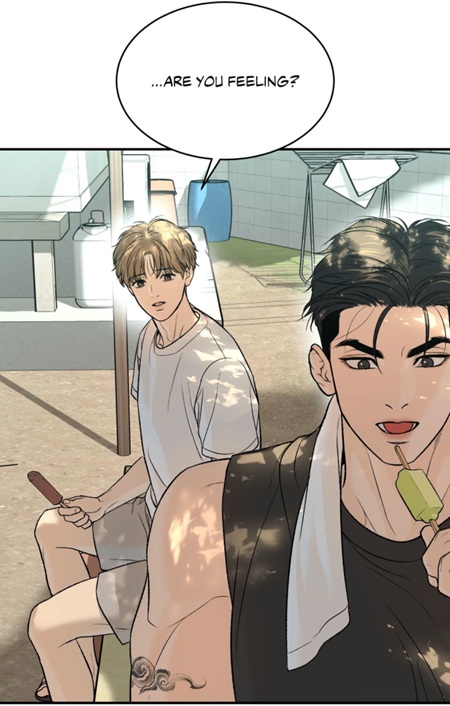 (chapter 77)
 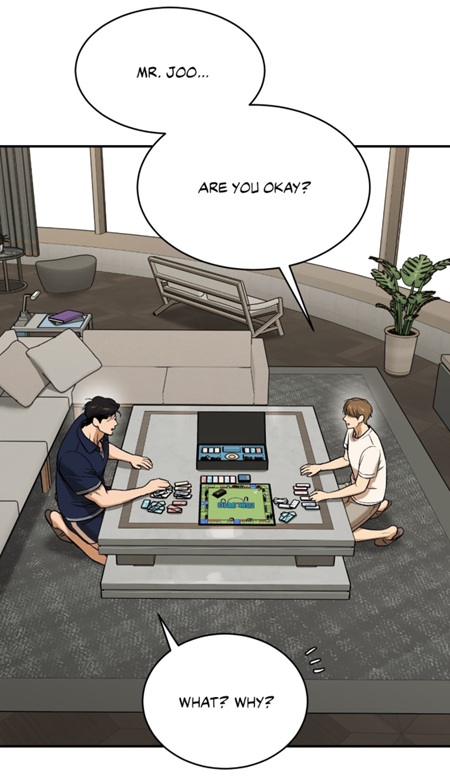 (chapter 80) Each time, the physical therapist shows concerns for the athlete’s well-being. He perceives this change of behavior as the expression of unwell-being.
Symbolically, the near fall (chapter 80) represents the danger of repeating inherited unhappiness and despair — the impulse toward surrender that has haunted the doctor. Both the ocean 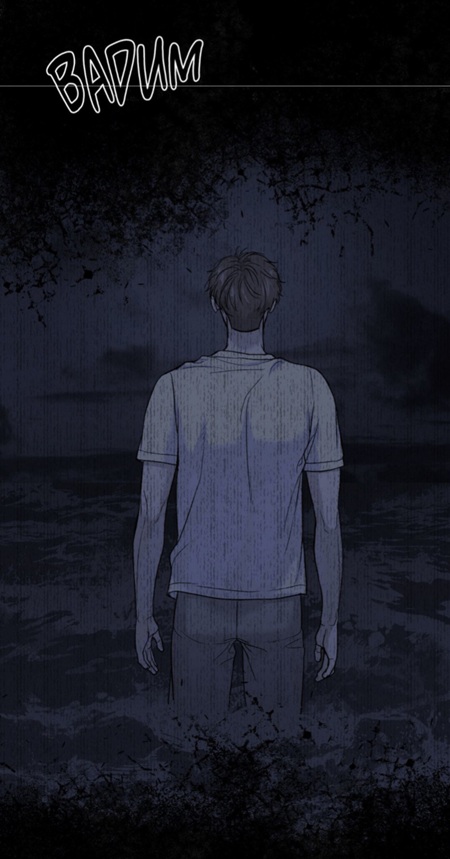 (chapter 69), and the balcony (chapter 79) embody the same impulse — escape — yet they reveal two distinct forms of suffocation. In the sea, Kim Dan moves toward the element that promises oblivion through absorption: water swallows, erases boundaries, and offers rest through dissolution. It is the drowning of exhaustion, of someone who wishes to return to the womb of stillness. On the balcony, however, the element shifts to air — the emptiness between life and death. Falling from a high place is the asphyxiation: the lungs collapse not by immersion but by void. Both gestures — walking into the waves and leaning over the railing — spring from the same inner logic: the unbearable weight of pain and expectation. But if water and air unite, they create clouds
  (chapter 38) — the very image that defines Kim Dan’s being. The clouds on his phone screen are not incidental; they reflect his essence. A cloud has no home, no fixed form, forever moving, dissolving, reforming — just like the doctor’s life, endlessly displaced and redefined by others’ expectations. Clouds embody both dream and danger: they promise transcendence but conceal the storm. Besides, a cloud can fall as rain, return to the ocean, or vanish into the sky — an image of the soul that oscillates between grounding and escape.
As soon as I made this connection, I couldn’t help myself thinking of the painting in the background of chapter 37:  (chapter 37) Behind the champion, the Golden Gate Bridge stands as a silent witness — a place where many have ended their lives by leaping into the void between air and water. The bridge fuses both symbols: it is where drowning and falling meet. Moreover, the bridge embodies the connection of two worlds. This backdrop, unnoticed by the protagonists themselves, prefigures the later arcs. Joo Jaekyung is the one standing between the bridge and the physical therapist. It was, as if the author was already announcing the huge depression doc Dan would face in the future. At the same time, I came to wonder if the unconscious suicidal attempts from Doc Dan were actually revealing the biggest secret in his life: the suicide of his parents and their death could be linked to a bridge. Striking is that while the members of Team Black were partying (chapter 37), death was standing behind the celebrity and this reminded me of the champion’s last genuine smile
  (chapter 73) before he discovered Joo Jaewoong’s corpse. The bridge thus becomes a metaphor for invisible grief: joy and pain occurring simultaneously, one masking the other. And keep in mind that according to my theory, the picture of Dan with his grandmother is hiding a tragedy. This would explain why doc Dan is so obsessed with this picture:
 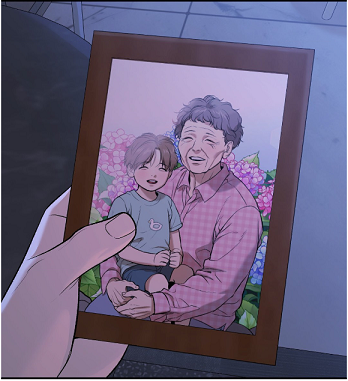 (chapter 47) The smiles here are hiding the past reality.
But let’s return our attention to the champion’s vision in episode 79. In that same duality (water/air) lies salvation. (chapter 79) The dream that wakes Jaekyung is not a nightmare but a revelation. He senses that the smirk is not the reality, but also the mask hiding misery. The greeting from the smiling Dan  (chapter 79) — so unlike his real, exhausted self — is a vision of peace, of love unburdened by fear, while this grin exposes the truth. The dream, the realm of clouds, becomes a stage where the wolf shows and learns tenderness. The dream’s fear and indirect self-reproach (chapter 79) becomes action; remorse (chapter 79) turns into rescue.
That’s how I noticed that so far, the champion never greeted his room mate with a good morning and smile in the morning.  (chapter 41) In other words, the dream is giving him clues as well how to behave: not only greeting, but also talking. What caught my attention is that during their two last breakfasts together
 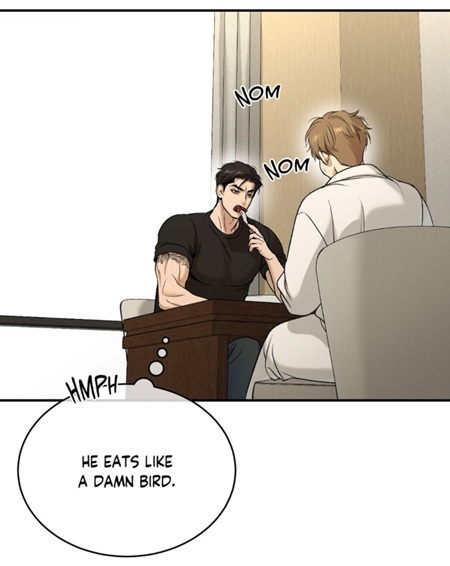 (chapter 68), they didn’t talk at all
 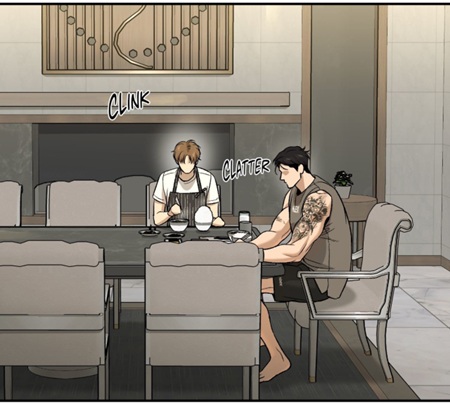 (chapter 79) which contrasts to the star’s vision.
In the dream, he had fallen to his knees — a gesture of humility and unspoken remorse. Yet in reality, the fall takes a gentler form.  (chapter 79) He does not kneel; he sits, his body settling softly against the floor as he catches Dan in his arms. The man once associated with dominance becomes a cushion, a pillow, a living anchor. His strength, once used to impose weight, now exists to absorb it. The fall is not toward repentance through pain, but toward tenderness through stillness.
This inversion transforms descent into grounding. The wolf who once incited Dan to kneel 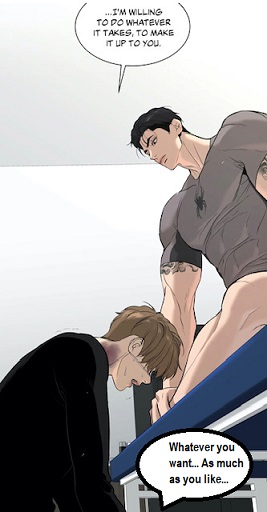 (chapter 11) now becomes the one who receives the collapse. (chapter 79) His body — no longer an instrument of violence — turns into safety itself. In that moment, he is neither fighter nor emperor, but a quiet surface where another can rest. The fall that once signified defeat now marks awakening: the champion’s muscles, built for battle, finally serve their true purpose — to hold, not to harm; to bear, to protect, not to break.
The Mercy Of The False Saint
That’s how I detected another pattern. Kim Dan’s speech is tethered to touch — every genuine confession or plea emerges only when he is held. Physical contact functions as emotional permission: the body grants what words alone cannot. His first “I love you” 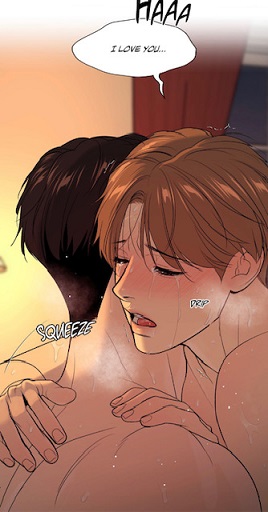 (chapter 39) escapes him in an embrace; his
 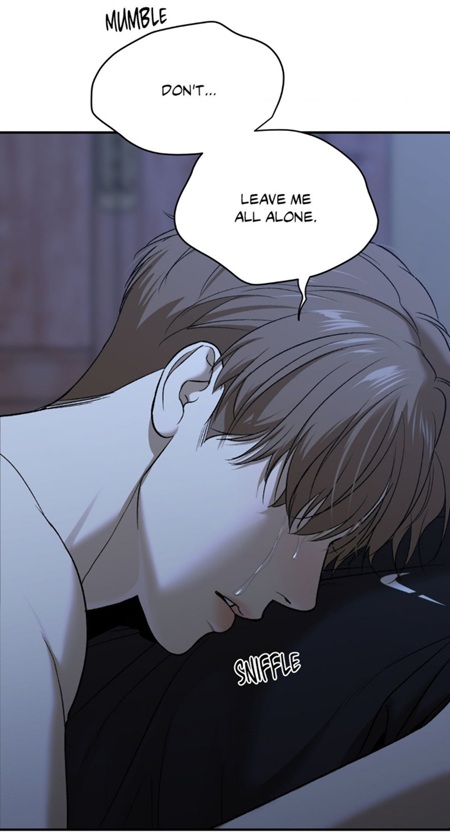 (chapter 66)
  (chapter 66) trembles out against Jaekyung’s chest; his (chapter 79) is whispered while clinging to the same body. Even as a child
 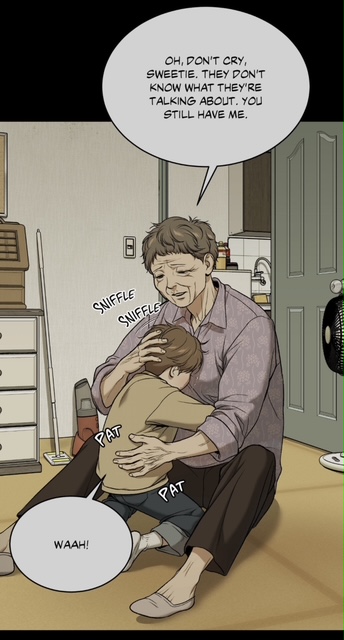 (chapter 57), he could only confide while being physically comforted. The grandmother’s embrace in chapter 57 becomes the prototype of this pattern — the last instance of safety tied to voice. Yet, crucially, that embrace was conditional and silencing. She soothed him but redirected his pain: (chapter 57) Instead of validating his pain and terrible experience, she absorbed it into her own narrative of endurance. The physical comfort coexisted with emotional invalidation — he was held but not heard.
And this interpretation (the touch is triggering the doctor’s desire for communication) got even corroborated by the latest episode.  (chapter 80) The moment the star was holding doc Dan’s hands, the latter started voicing more his emotions (fears, displeasure).
  (chapter 80) When Jaekyung takes his hands in the swimming pool, the gesture revives this primal language of reassurance. For the first time, the touch is neither coercive nor desperate; it’s sustaining. The handhold reverses the earlier dynamic — instead of silencing him, it gives him permission to speak. Furthermore, the champion is pointing out that he can rely on two things, the champion’s hands and the kickboard belt. This stands in opposition to the fake promise of Shin Okja. (chapter 57)
  (chapter 57) In other words, he is inciting the doctor to trust himself more and become independent.
  (chapter 80) (chapter 80) The champion’s words — “If you ever end up in the water, you can come back to shore as long as you know how to swim” — stand in quiet but radical opposition to the grandmother’s old reassurance: “You still have me.”
Both statements aim to comfort, yet they embody two entirely different philosophies of love. Shin Okja’s version of care was possession and control disguised as protection. Her “You still have me” offers solace by denying reality — her own mortality and it erased the boy’s suffering and loss and his capacity to cope. It promises stability but at the cost of autonomy: he is safe only through her. Love, in her logic, means dependence. Jaekyung’s line, by contrast, offers trust instead of control. 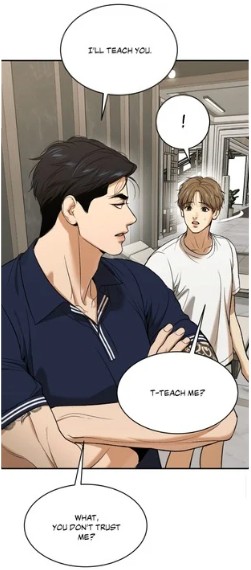 (chapter 80) His comfort does not deny danger — he acknowledges the possibility of falling into the water — but he links survival to skill, not assistance and dependency. His statement affirms Dan’s agency: he can save himself. Once he can swim, he is strong enough. Where the grandmother sought to replace the absent parents
  (chapter 65), the champion seeks to restore the missing confidence.
This is why the swimming lesson in chapter 80 carries so much symbolic weight. It is not only about overcoming fear of water, but about learning to float between love and self-sufficiency. (chapter 80) He just needs to learn and trust his own body and skills. For the first time, someone tells Kim Dan that he doesn’t need to cling to live. The wolf’s hands do not promise eternal rescue; they teach assurance and confidence.
Through this opposition, Mingwa traces the transformation of care in Jinx: from the grandmother’s pitying dependency to Jaekyung’s empowering faith. The very moment the wolf steadies his trembling fingers, the doctor begins to voice his worries and fears, words that previously only surfaced through sleepwalking or half-conscious murmurs. That’s why I believe that this embrace 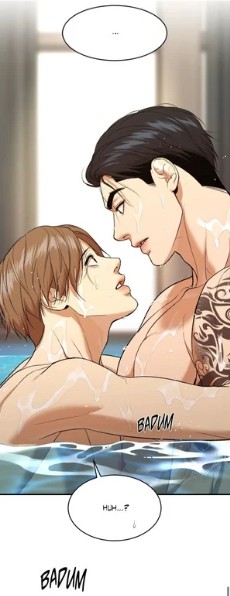 (chapter 80) in the swimming pool carries transformative potential. It is not merely a gesture of survival, but an initiation into honesty. Surrounded by water, both men are stripped of pretense. And observe that Joo Jaekyung is not rejecting the physical embrace
  (chapter 80) contrary to the past.
  (chapter 28)
  (chapter 69) The wolf, who once relied on dominance and silence, is now allowing his fated partner to hug him. (chapter 80) He accepts his vulnerability and struggles. In the swimming pool, the athlete is also learning to reassure instead of command. Dan, who has long associated touch with consolation and suppression, begins to experience it as safety and trust.
In that moment, their bodies speak what their words still resist: trust me. (chapter 80) The embrace might become the very impulse that pushes them toward verbal honesty — toward saying what they have long hidden. For Dan, it means learning to voice his needs and desires without shame; for Jaekyung, it means acknowledging his feelings without fear of losing control or strength.
But let’s return our attention to the physical therapist’s childhood. (chapter 57) Dan came later to associate love with contradiction: touch equals permission to speak, yet speaking never brings resolution. His psyche learned that disclosure leads nowhere — the listener (the grandmother) offers affection, not change. That’s the reason why he came to suppress his thoughts and emotions and project onto his grandmother. Her way of dealing with pain was denial, rooted in her own fear of trouble and probably social judgment. From my point of view, it is related to the secrecy surrounding the family’s past.
Furthermore, for the hamster, the embrace is more than comfort — it is survival.  (chapter 21) From childhood onward, being held becomes the only assurance that the world still contains care. When he woke crying and was taken into his grandmother’s arms (chapter 21), the patting gesture did not merely quiet his fear; it taught him that consolation requires contact. Yet this early lesson carried a hidden cost: it trained him to associate peace with submission and silence, and affection with dependency. Therefore the swimming lesson contains another important life lesson: it is about choice! Joo Jaekyung wants to be “chosen” by the physical therapist, hence he wants to conquer his heart.
  (chapter 80) That’s the reason why he can not change doc Dan’s heart and mind with the new clothes. For that, he needs to reveal his “weakness” to the physical therapist.
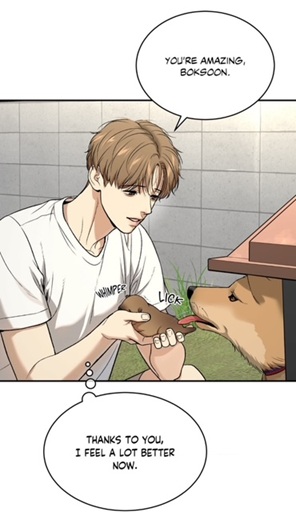
When the puppy died, Dan instinctively tried to recreate that lost safety. 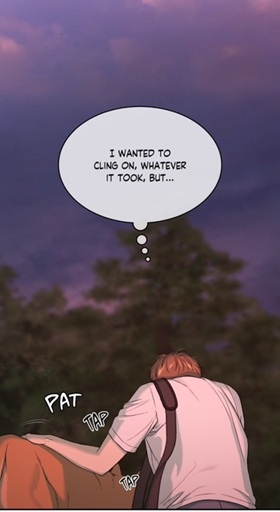 (chapter 59) His hand resting on Boksoon’s fur repeats the same motion — the pat once given to him, now returned to another being in pain. What he offers the animal is precisely what he has always longed for: warmth without judgment, touch without condition.
This explains why every later confession — “I love you,” “Don’t leave me,” “I’m sorry” — is born inside an embrace. Speech emerges only when his body feels that safety again. Yet, until now, the wolf’s touch has never been a true confession. The wolf initially held him through instinct 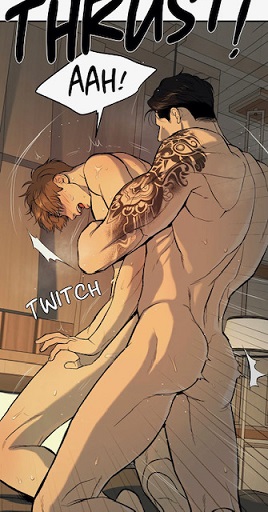 (chapter 4), not intention: a reflex of possession, not communication. As time passed on, it changed, yet in the bathtub (chapter 68), Dan fell asleep against him so that he could never experience the athlete’s care
  (chapter 68); in the morning, Jaekyung acted as though nothing had happened. Then on the dock, Joo Jaekyung expressed his relief (chapter 69), yet he never explained the reason behind his behavior. Besides, he removed himself from Doc Dan very quickly. There was no continuity between touch and word, no bridge from body to heart. The embrace between them was marked by silence.
Only now, in the night of chapter 79, does that change. (chapter 79) The embrace that once silenced finally begins to speak. Dan’s trembling body against Jaekyung’s chest reactivates all those buried associations — fear, need, longing — but this time, the silence is attentive. The champion listens. The gesture that once merely soothed now confesses.
When Shin Okja finally apologizes 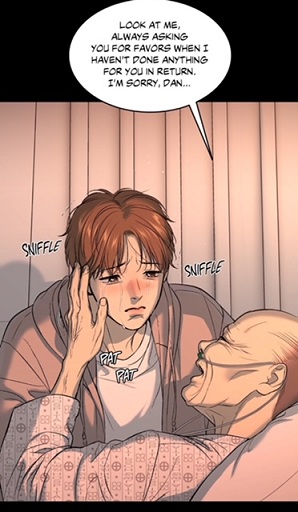 (chapter 53), she frames her guilt in terms of debt, not grief. What she cannot say is: “I’m sorry your parents are gone, and I buried the truth.” Her compassion never touches the core wound. Instead, she redirects her remorse into pity (chapter 65), a safer, one-sided emotion that keeps her in control. Pity allows her to appear virtuous while avoiding responsibility. It transforms shared pain into hierarchy: she the giver, he the grateful recipient.
This emotional economy defines Kim Dan’s childhood. He was loved through guilt, not through recognition. Every tender gesture — the pat on the head (chapter 57), the hug after bullying — carries the unspoken message: “You’re unfortunate, but you still have me.” That is not empathy; as she is not showing any sign of distress and pain. In my eyes, it is containment. It keeps the child dependent, silent, and bound by gratitude.
Hence, her confession to the celebrity (chapter 65) reveal the same mechanism. The focus remains on her heart, her pain, her goodness, not on his loss. She centers herself within his tragedy. Pity becomes a mask for unacknowledged guilt — perhaps linked to the parents’ disappearance or to choices she justified under social pressure. Her “mercy” is, in truth, a way to maintain her moral purity at the cost of his emotional autonomy.
Through this lens, it becomes clear why Dan needs reciprocal touch to speak. Pity silenced him; touch, when offered without pity, finally frees his voice. This is why the doctor’s embrace in episode 79 marks such a decisive turning point: it is the first time doc Dan is holding someone and that person is taking his words and pain seriously. The champion does not silence or reinterpret what he hears; he simply receives it. For the first time, Dan’s trembling voice is met not with pity, denial, or instruction — but with presence. (chapter 79)
Finally, this moment also exposes Jaekyung’s awakening. Until now, he had followed the grandmother’s advice as if it were gospel: 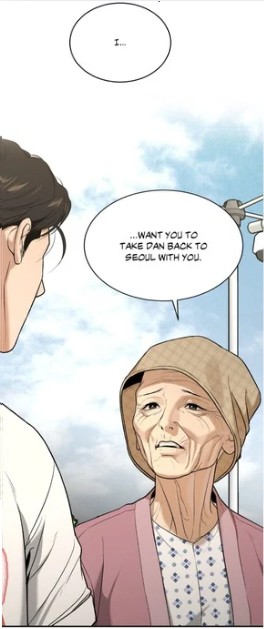 (chapter 65); “bring him to a big hospital so that he can take pills”
 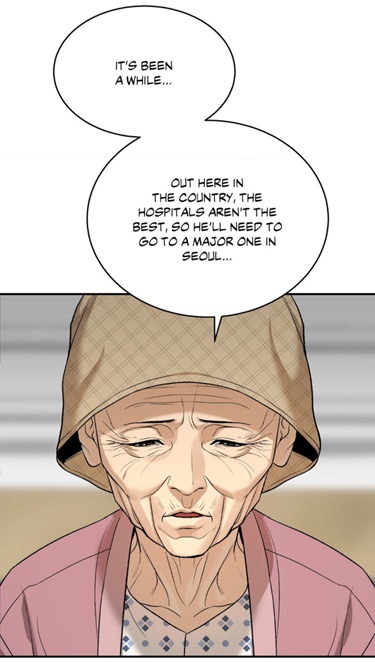 (chapter 65)
  (chapter 65) He trusted her words and advises. I would even add that he believed that compliance equaled real care. Yet the night by the balcony teaches him otherwise. (chapter 79) Despite doing everything the “saintly” grandmother prescribed, Dan is still suffering. The illusion collapses: her mercy never healed, it merely concealed. Interesting is that she never brought up to the athlete the doctor’s loss of weight in front of the ocean. Yet, she had noticed it.
 (chapter 57). Everything evolved around his lack of sleep and his dependency on her.
 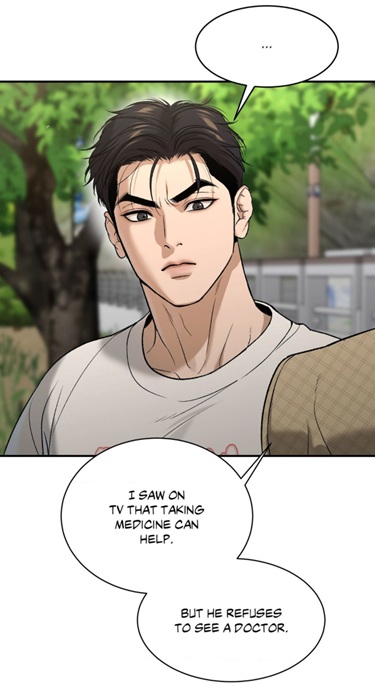 (chapter 65) However, in episode 79, for the first time, the champion notices it.
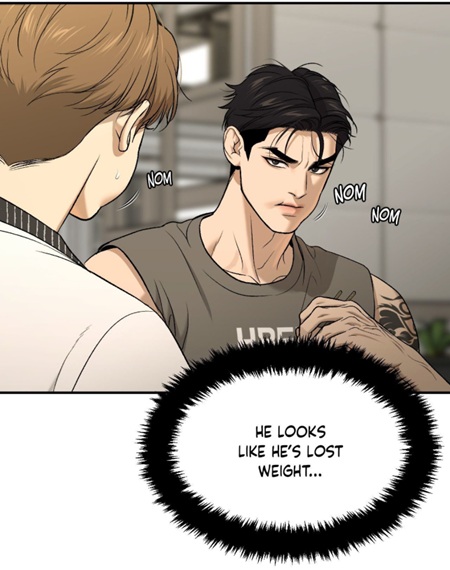 (chapter 79) It is important because very early on, the doctor Cheolmin had already detected his malnutrition:
  (chapter 13) In other words, the physical therapist’s depression and eating disorder were already existent before meeting the “wolf”. And what did the mysterious friend tell to the “wolf”? He shouldn’t wait out of fear that he might regret it later!
 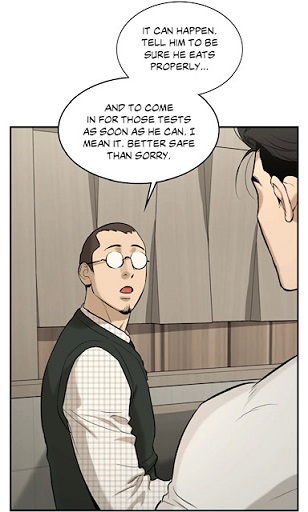 (chapter 13) As you can see, “sorry” is the link between the two doctors and the celebrity.
Thus, the “wolf” realizes that love cannot be delegated to duty. (chapter 79) What Dan needs is not obedience to the old woman’s script, but presence, dialogue, and trust. The champion must now do what she never did — look at pain without denial, listen without pity, and finally speak from the heart. This means that after that night, the wolf will gradually change not only his vocabulary, but also his tone and gestures.  His metamorphosis will be complete with the birth of the kind and sweet Joo Jaekyung!
  (chapter 21) Imagine that I had written this part before the release of episode 80!
The secret behind doc Dan’s room
Another detail caught my attention in episode 79 which was confirmed with the publication of episode 80. Doc Dan’s bedroom has always been associated with illness and as such rest! 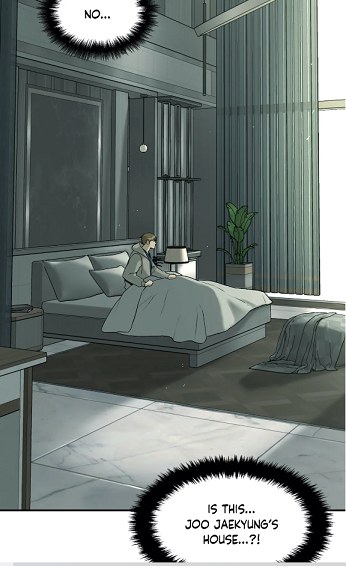
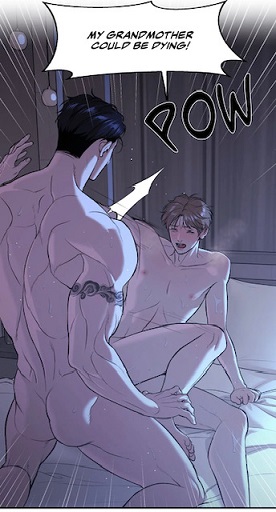 (chapter 21)
 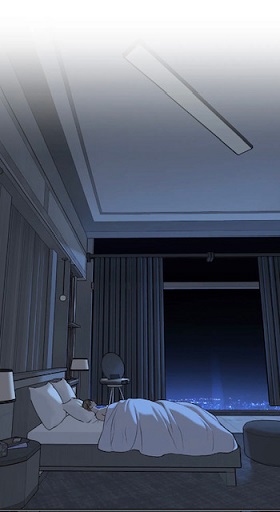 (chapter 29)
  (chapter 61) Hence it is no coincidence that while sleeping in his own bedroom, the physical therapist had a relapse.
  (chapter 79) Because the champion had come to the conclusion that his own bedchamber was linked to sex (chapter 78) and as such “wrongdoings”, the next day, he must have suggested to doc Dan to sleep together in his bed. This explicates why both main leads are sleeping in doc Dan’s bedroom at the end of episode 78: (chapter 78) This shows that the star is listening more and more to his fated partner
 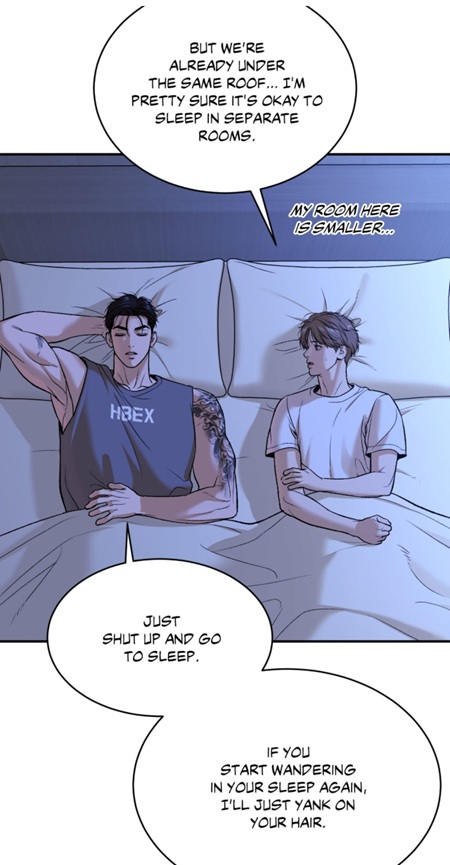 (chapter 78) And though he had another “accident”, the former is never bringing it up to doc Dan. There’s no blame or accusation. The athlete is keeping these accidents as secrets. However, pay attention that he is making sure that doc Dan is resting.
  (chapter 80) Notice that he joined him later, acting as if they had not shared the same bed. Gradually, the champion is giving back doc Dan’s freedom and privacy. He is guiding him to take care better of himself by using his own words.
 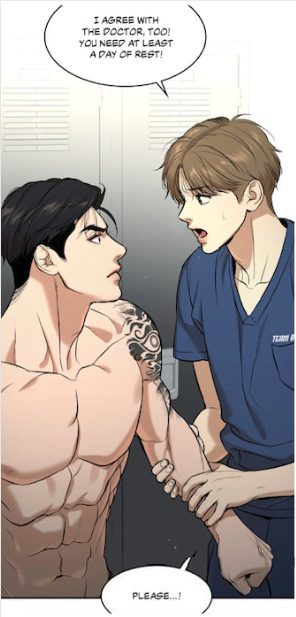 (chapter 27) Striking is that the champion always chose the left side of the bed (chapter 79), while he came to sleep much better, when he slept on the other side of the bed:
  (chapter 66) Thus I deduce that doc Dan is destined to take over his grandmother’s position in the bed:
 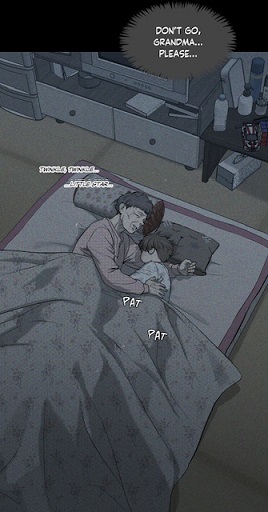 (chapter 21) And this observation seems to be validated by chapter 80.
  (chapter 80) The star was sitting on the right side of the bed while watching his sleeping partner. Why? It is because he can see his face. But by lying on the left side, doc Dan came to turn his back to him.
 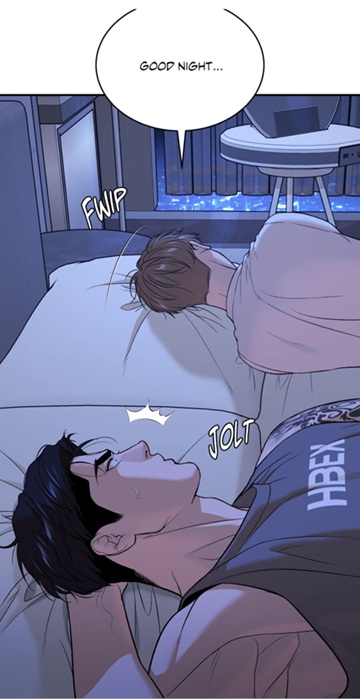 (chapter 78) But if they switch places, the wolf should be able to watch his partner’s face. And now, pay attention to the way Mingwa placed the new embrace in the swimming pool: (chapter 80) Doc Dan is placed on the left side…. and that’s where the heart is placed. Doc Dan’s racing heart is displaying not only the revival of his repressed affection for the champion, but also his desire to live. He is not truly suicidal, as all his attempts were unconscious choices.
The second “accident”
I have to admit that after reading this image (chapter 78), it was clear to me that the doctor would make a new suicidal attempt during his sleep walking. I was already anticipating him to go to the rooftop, thus the new incident didn’t catch me by surprise. Yet, chapter 79 gave us an important clue about doc Dan’s dissociative state (sleepwalking). They were all triggered:  (chapter 79) Because of the champion’s cold gaze, doc Dan felt rejected and even hated.
  (chapter 79) He had the impression that he wouldn’t meet his “expectations”. Observe the parallels between the champion’s dream (chapter 79) and the doctor’s reply in front of Shin Okja:
 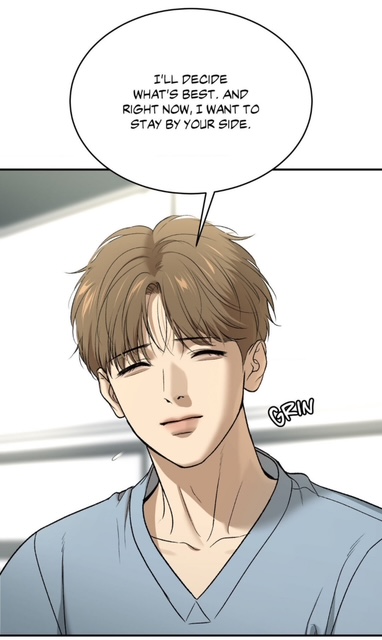 (chapter 57) We have the doctor’s fake smile which is strongly linked to rejection
  (chapter 57) and expectations. And what is the other common denominator? His self-loathing and immense guilt. He has the feeling that he is not lovable. In my opinion, doc Dan is suffering because no one is listening to him at all. So far, they all projected their own thoughts onto him. The reality is that doc Dan already had a hard time before moving to the seaside town,
  (chapter 11) yet she failed to notice it or refused to face his struggles, as they were related to their poverty.
Because he lived alone for a long time without any physical touch  (chapter 5), he lost his voice and became a ghost. It is no coincidence that in this scene, doc Dan was silent despite the caress. He was avoiding any topic that could trouble his grandmother. He accepted to remain a little boy in her eyes. But thanks to the wolf, doc Dan is learning to become strong and independent so that he can decide about his life. The swimming lesson is pushing him to overcome his abandonment issues.
The Songs of Change
While I was on my way to visit my son ( a 6 hours trip), I listened to an old CD from French singer Jean-Louis Aubert entitled Ideal Standard. While listening to the music, three songs — “On vit d’amour,” “On aime comme on a été aimé,” and “Parle-moi” caught my attention. They reminded me a lot of the main couple.
If the previous night (chapter 79) marked the end of a circle, then the next day announces a new rhythm — one that no longer follows the tempo of fighting or guilt, but of tenderness. These 3 songs form a hidden soundtrack to this transformation. They mirror, with startling precision, the inner journey of the champion and his fated companion.
1. “On vit d’amour” — Living on Love
On vit d’amour / Et d’eau fraîche / On vit d’amour, de rien du tout…
We live on love and fresh water / We live on love, on almost nothing at all.
| On vit d’amour French | We live on Love English |
| On vit d’amour Dans le regard des autres On vit d’amour Dans le mien et le votre On vit d’amour Quand il n’y a plus d’eau fraiche On vit d’amour Tout au fond de la dèche Laisse le briller Éclairer Laisse le venir Laisse le aller Car on vit d’amour On vit d’amour Sous le bong et les pluies On vit d’amour Dans la boue et la suie On vit d’amour Jusqu’au bout de la nuit Laisse le briller Éclairer Laisse le venir Laisse le aller Laisse lui vivre sa vie d’amour Car on vit d’amour On vit d’amour Je mens, j’aime tant ta main On vit d’amour Et je bois à ta bouche On vit d’amour On vit d’amour Toujours Laisse le briller Éclairer Laisse le venir Laisse le aller Laisse à l’amour sa liberté On vit d’amour On vit d’amour On vit d’amour On en vivra Toujours (2*) Laisse le briller Éclairer Laisse le venir Laisse le aller Laisse lui vivre sa vie d’amour | We live on love In the eyes of others We live on love In mine and in yours We live on love When there’s no more fresh water We live on love At the very depth of poverty Let it shine, Let it light, Let it come, Let it go. For we live on love, We live on love Under the bong and the rain, We live on love In the mud and the soot, We live on love All the way through the night. Let it shine, Let it light, Let it come, Let it go, Let it live its own life of love, For we live on love, We live on love. I lie — I so love your hand, We live on love, And I drink from your mouth, We live on love, We live on love, Forever. Let it shine, Let it light, Let it come, Let it go, Let love have its freedom. (We Live on love, we Live on love, we Live on love, And we’ll live on it Forever.) |
This refrain captures the quiet revelation at the heart of Jinx: love is sustenance.
Until now, Jaekyung has lived on adrenaline, duty, and pride — mistaking physical dominance for vitality. His meals with Dan were about nutrition 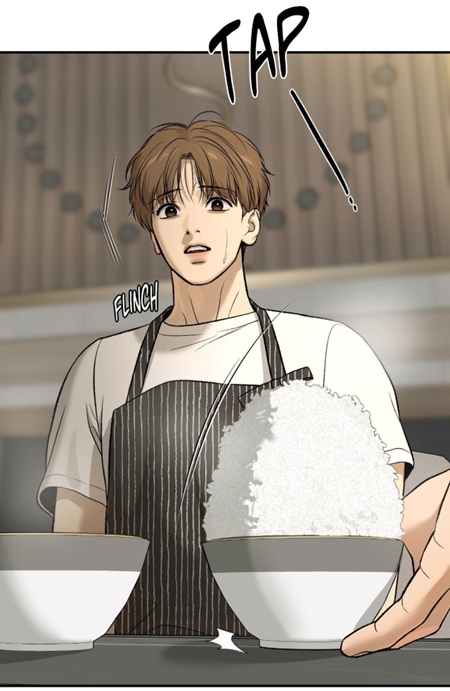 (chapter 79), not communion; his affection, an extension of performance
  (chapter 79). Yet as the doctor grows thinner and more exhausted, the wolf begins to understand what “starvation” truly means. (chapter 79) Dan’s body becomes a metaphor for their shared deficiency — not of food, but of warmth. Although the athlete’s actions were all well-meant, he failed to touch doc Dan’s heart due to the way he spoke to his loved one:
  (chapter 79)
In On vit d’amour, Aubert contrasts material survival with emotional survival. “We live on love and almost nothing” rejects the capitalist or competitive logic that defines Jaekyung’s world (MFC, rankings, contracts). The line speaks instead to the simplicity of presence — the kind of nourishment that Dan quietly provides through care, routine, and wordless understanding. No wonder why the athlete failed to move doc Dan’s heart by offering so many clothes in episode 80.
This song thus signals the first shift: Jaekyung begins to eat differently — not just at the table, but emotionally. The wolf who once devoured life is gradually learning to taste it through love.
2. “On aime comme on a été aimé” — We Love as We Have Been Loved
| On aime comme on a été aimé | We love as we have been loved. English translation |
| On n’invente pas un sentiment Les baisers donnent l’alphabet L’amour nous griffe Ouvre ses plaies L’amour nous soigne L’amour nous fait On aime comme on a été aimé C’est cela qui nous fait courir De reproduire et faire grandir Ce qui nous a été donné Sans jamais pouvoir en parler On aime comme on a été aimé C’est dans les mains de nos parents C’est dans les coeurs de nos amants Regard aimé, regard aimant C’est le plus clair de notre temps Le plus obscur de nos tourments On n’apprend pas un sentiment Même si on veut faire autrement On aime comme on a été aimé On dit les chiens n’font pas des chats Et que l’on est que c’qu’on connait Qu’on désire ce qu’on n’connait pas Un autre chien, un autre chat On aime comme on a été aimé Toutes ces secondes de tendresse Dérobées à l’emporte-pièce Toutes les claques, les maladresses Pour que ça dure, pour que ça cesse On aime comme on a été aimé C’est dans les mains de nos parents C’est dans les bras de nos amants C’est dans les yeux de nos enfants C’est le plus clair de notre temps Le plus obscur de nos tourements On n’invente pas un sentiment Même si on veut faire autrement On aime comme on a été aimé Et j’aime comme tu m’as aimé | We don’t invent a feeling. Kisses give us the alphabet. Love scratches us, Opens its wounds, Love heals us, Love makes us. We love as we have been loved. That’s what makes us run — To reproduce and to grow What was once given to us, Without ever being able to speak of it. We love as we have been loved. It’s in the hands of our parents, It’s in the hearts of our lovers. A loved gaze, a loving gaze — It’s the clearest part of our days, The darkest part of our torment. You don’t learn a feeling, Even when you want to do otherwise. We love as we have been loved. They say dogs don’t make cats, And that we are only what we know, That we desire what we do not know — Another dog, another cat. We love as we have been loved. All those fleeting seconds of tenderness, Stolen in haste, All the slaps, all the clumsy gestures — So that it lasts, or so that it ends. We love as we have been loved. It’s in the hands of our parents, It’s in the arms of our lovers, It’s in the eyes of our children. It’s the clearest part of our days, The darkest part of our torment. We don’t invent a feeling, Even when we want to do otherwise. We love as we have been loved. And I love as you have loved me. |
On aime comme on a été aimé / On hait comme on a été haï…
We love as we have been loved / We hate as we have been hated.
This lyric exposes the chain both men must break. The author’s line suggests that love is not spontaneous but inherited — modeled through wounds and care. In his childhood, Jaekyung learned rather hatred and misguided affection as domination, silence, lies and endurance, while Dan learned it as sacrifice and appeasement in his grandmother’s care. Both were taught that affection or recognition was not free — through obedience, perfection, or pain.
Throughout Jinx, each reenacts the love they received: the champion demands submission, the therapist offers self-effacement. Yet chapter 79 introduces a turning point — they begin to unlearn this inheritance. (chapter 79) The unconscious apology “I’m sorry, Mr. Joo” is not submission; it is vulnerability freely given. The wolf’s fears in his sleep are not weakness (chapter 79); they are an echo of the love and tenderness he never received.
In this sense, Aubert’s line becomes prophetic: to love differently, they must be loved differently first. This means that b spending time with each other, they will learn how to love each other properly. This is the essence of growth: transforming the very grammar of intimacy they once feared. The story becomes a re-education of the heart — the rewriting of emotional syntax. And episode 80 is the perfect illustration for this change. In love we can make mistakes, but it is important to detect them and learn from them.
3. “Parle-moi” — Talk to Me
Parle-moi, parle-moi de toi / Qu’est-ce que tu veux, qui tu es, où tu vas…
Talk to me, talk to me about yourself / What do you want, who are you, where are you going…Parle-moi, parle-moi de nous / Tous les deux, qu’est-ce qu’on veut, qu’est-ce qu’on fout…
Talk to me, talk to me about us / The two of us, what do we want, what are we doing…
| Parle-moi | Talk to Me |
| Parle-moi Ce qui nous vient Nous vient de loi Ce qui nous tient Jamais ne nous appartient vraiment Ce qui nous tue Gagné, perdu Ce qu’on a cru On en a perdu la vue vraiment Parle-moi, parle-moi de toi Qu’est-ce tu veux, qui tu es Où tu vas Parle-moi, parle-moi de toi Qu’est-ce tu dis, fais entendre Ta voix Ce qu’on nous vend Ce qu’on nous prend Mais qu’est-ce qui nous prend On dirait qu’on a plus l’ temps A rien Perdu de vue Perdu tout court Peau tendre, coeur pur On dirait qu’on a plus l’ goût A rien Parle-moi, parle-moi de toi Parle-moi de tes doutes de tes choix Parle-moi, parle-moi de toi Qu’est-ce tu dis, plus fort J’entends pas Parle-moi de toi Alors parle-moi, parle-moi de nous Tous les deux, qu’est-ce qu’on veut Qu’est-ce qu’on fout Parle-moi, parle-moi de nous Avec toi j’irai n’importe où Parle-moi de toi | What comes to us Comes from afar. What holds us Never truly belongs to us. What kills us — Won or lost, What we once believed — We’ve truly lost sight of it. Talk to me, talk to me about you. What do you want, who are you, Where are you going? Talk to me, talk to me about you. What do you say? Let me hear your voice. What they sell us, What they take from us — But what’s gotten into us? It feels like we no longer Have time for anything. Lost from sight, Lost altogether — Tender skin, pure heart. It feels like we no longer Have the taste for anything. Talk to me, talk to me about you. Talk to me about your doubts, your choices. Talk to me, talk to me about you. What are you saying? Louder — I can’t hear you. Talk to me about you. So talk to me, talk to me about us — The two of us, what do we want, What are we doing? Talk to me, talk to me about us. With you, I’d go anywhere. Talk to me about you. |
This is the anthem of the new cycle — the song of conversation.
In the beginning, Jaekyung’s language was pure command: “ (chapter 38) (chapter 79) ,” eat” . (chapter 79) His speech created hierarchy, not connection. Aubert’s plea, “Parle-moi”, reverses this logic: it is a call to dialogue, to mutual self-revelation. It embodies exactly what Jaekyung’s dream anticipates — the moment when he will learn to speak with Dan, not at him.
When, in the vision, Dan smiles and says (chapter 79) the tone has changed entirely. The greeting is not fearful or dutiful; it is gentle, open, normal — the image of domestic peace. The dream thus becomes prophetic: language, once the instrument of control, will become a bridge.
Aubert’s words — “Parle-moi de tes doutes, de tes choix” — invite the very vulnerability Jaekyung has never practiced. The wolf who only barked commands must now learn to whisper doubts. The day he speaks softly — “Parle-moi” — will be the day his transformation is complete. Moreover, observe that his repeated plea, “Parle-moi” (“Talk to me”), moves from singular to plural — from me to us. The pronoun shift is decisive: it marks the passage from individual solitude to the possibility of relationship. As long as the “me” dominates, there is distance; only when they learn to say “us” can love begin to exist as dialogue, not projection.
This last strophe, where me dissolves into nous, mirrors precisely where Jaekyung and Dan now stand. They share space, touch, even breath — but not yet language. They might be sharing the same bed, but they don’t talk really to each other and confide to each other. (chapter 80) So far, the nights were full of gestures, yet empty of conversation. Jaekyung would often command and Dan accept everything. Words, when spoken, were often either wounds or vanished into silence. Thus, Aubert’s refrain becomes prophetic: as long as they do not talk, they cannot become a couple.
The line “Avec toi j’irai n’importe où” (“With you, I’d go anywhere”) contains both promise and condition. It imagines a future that depends on mutual speech. To “go anywhere” is not to flee, but to move together — something the two protagonists have never managed. Their shared journey remains suspended in the present, circling between misunderstanding and longing. The dream in chapter 79 — where Dan finally greets him with a smile and a “Good morning, Mr. Joo” — (chapter 79) is the first glimpse of this future tense, a promise that conversation will one day replace command. Strangely, this observation was confirmed the new episode:
For now, the song stands as both prophecy and warning: without dialogue, they remain me and you, parallel solitudes orbiting the same pain. There’s still no “we” between them yet. Only when Jaekyung learns to parler — not shout, not order, but truly speak — will me become us, and their love find a voice strong enough to last.
A Chanson of Renewal
Taken together, the three songs form a triptych of metamorphosis:
- “On vit d’amour” teaches Jaekyung that love is nourishment and a source of happiness, not distraction.
- “On aime comme on a été aimé” forces both men to face the ghosts of their past and their abandonment/trust issues so that they can love their partner properly.
- “Parle-moi” charts the path forward — communication as redemption.
They are not merely songs; they are stages of awakening.
From hunger to empathy, from repetition to reinvention, from silence to speech — Aubert’s lyrics sketch the same arc that Jinx now traces.
If Jaekyung once fought to dominate the world, he now fights to pronounce gentleness correctly. And when he finally dares to speak — not as a champion, but as a man who listens — he will fulfill the promise implicit in Aubert’s refrain:
“Avec toi j’irai n’importe où” — With you, I’d go anywhere.
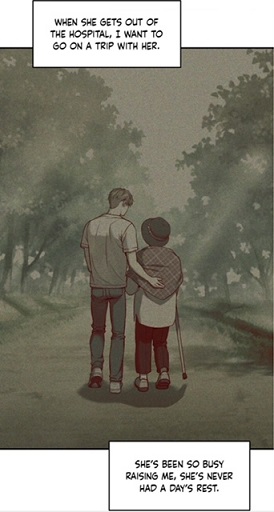
The biggest wish doc Dan has is to go on a trip and walk through the woods with a loved one. The old circle closes; the new begins — not with a punch, but with a word.
Feel free to comment. If you have any suggestion for topics or Manhwa, feel free to ask. If you enjoyed reading it, retweet it or push the button like. My Reddit-Instagram-Twitter-Tumblr account is: @bebebisous33. Thanks for reading and for the support, particularly, I would like to thank all the new followers and people recommending my blog.
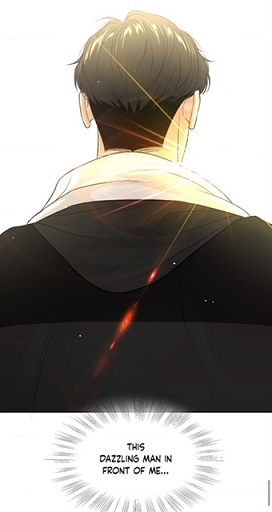
 (chapter 75) – similar to doc Dan’s reaction in the States:
  (chapter 40)
  (chapter 53)
 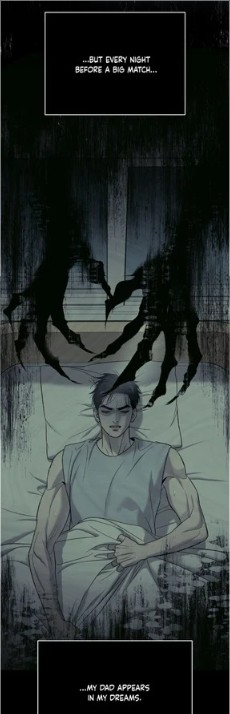 (chapter 75) Where his father’s curses bound him to guilt and the past, Dan’s glow opens the possibility of release
  (chapter 75) His eyes open after the dream, and they open to the same light. It’s the opposite of every earlier awakening
  (chapter 54) —no gasp for air, no clutching his throat
  (chapter 75), no father’s voice strangling him. This sudden awakening embodies enlightenment.
  (chapter 75)
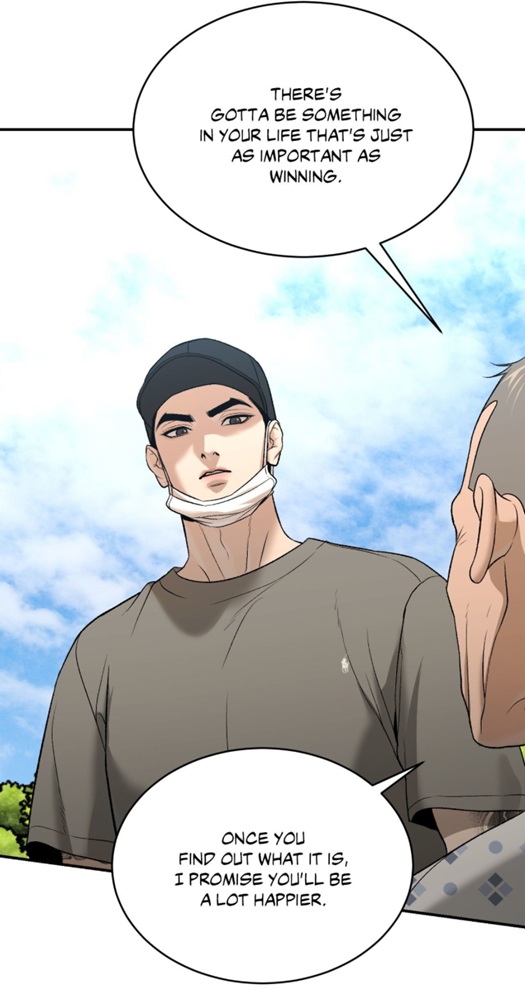 (chapter 75) On the surface, it sounds like a call for balance. In truth, it is a suggestion to find another meaning for his life. And look at the director’s facial expression, when he is talking to his former student: “
 (chapter 75) He is smiling, a sign that the director is enjoying this moment with the “wolf”. He becomes the first person to speak to Jaekyung not about titles, not about survival, but about happiness.
 (chapter 70) He knows the athlete from the past. The latter was attached to people and not to places. Why does he speak of “something” rather than “someone”, if he knows? The lesson is not about fixing a new goal or object to chase, but about discovering how to live differently — how to live happily.
  (chapter 65)
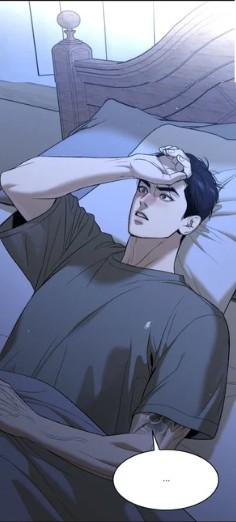 (chapter 75). Even before, he could only mutter to himself this:
 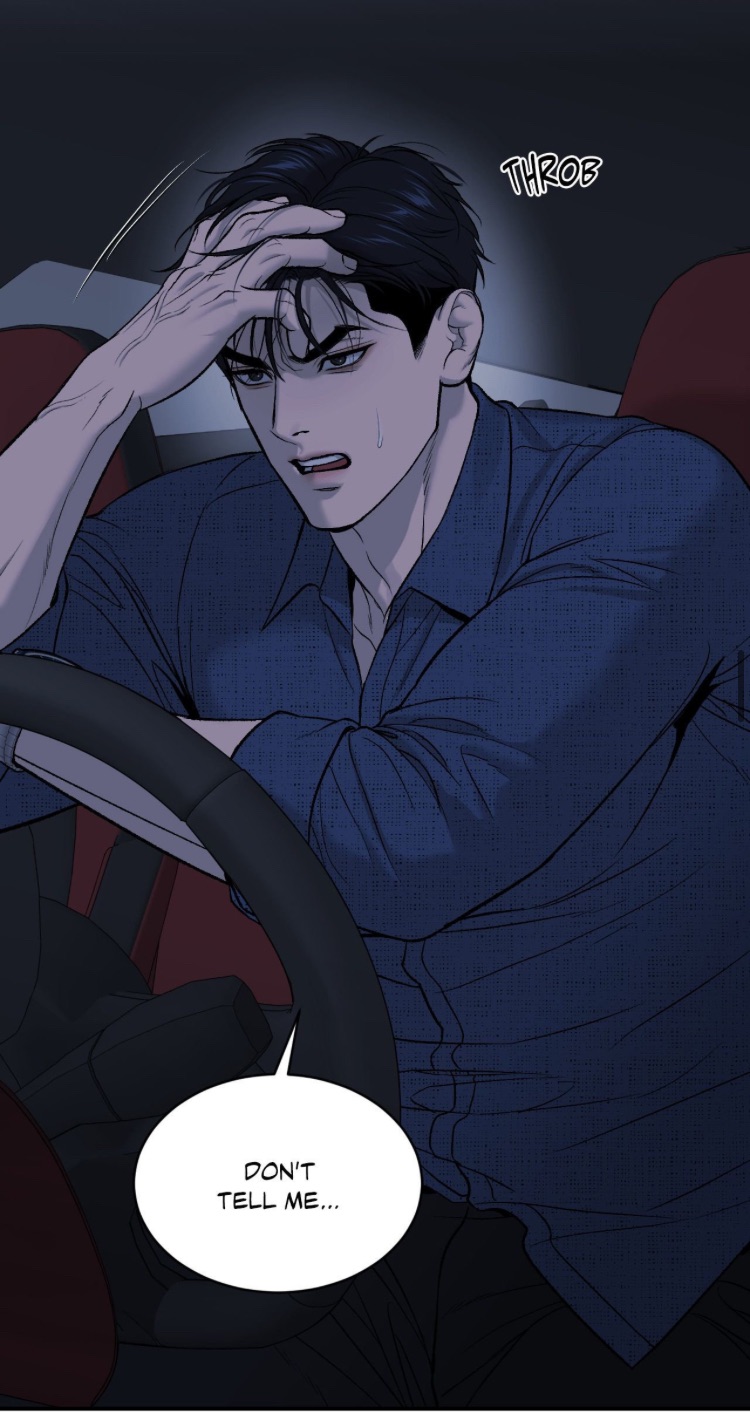 (chapter 70) The negation indicates denial, but observe that he couldn’t even use a noun. He cannot yet translate this vision into words, because he has never heard “I love you” himself
  (chapter 74) No one ever taught him how to say I love you. And so, when Dan appears in his dream, it is not the words that free him but the gaze.
  (chapter 75) or the mother’s withdrawal.
 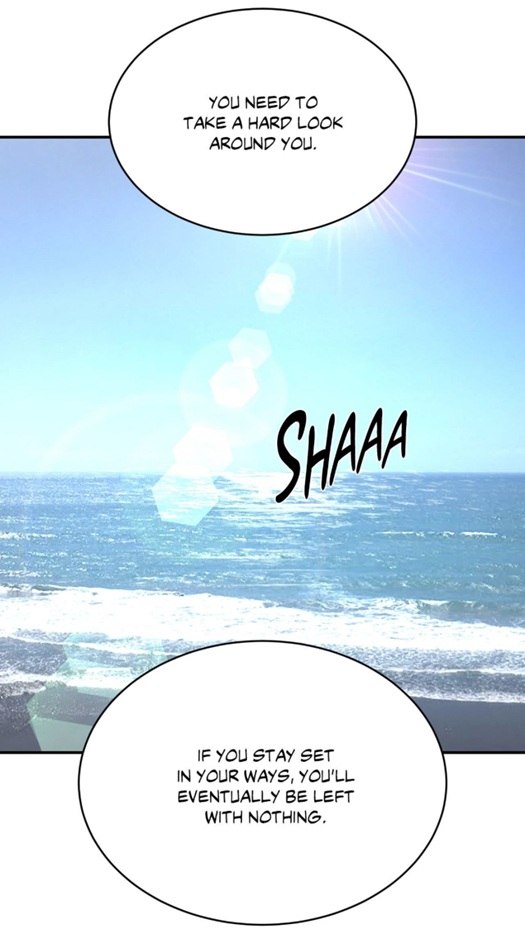 (chapter 75) The openness is what makes it love — it is respect.
 (chapter 75) His love is expressed through humility — through not knowing. At the same time, his words and facial expression ooze trust and confidence.
 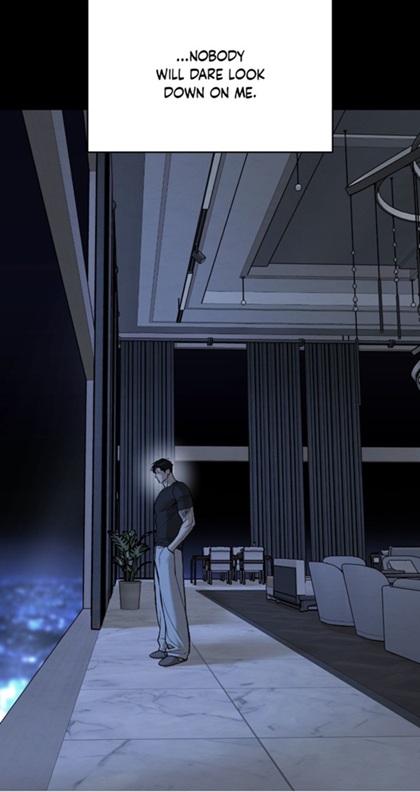 (chapter 75) Each title, each belt, each triumph was a rebuttal to his father’s words. He was not worthless, not doomed. Yet the irony is cruel: in fighting to silence those curses
  (chapter 75), he bound himself ever more tightly to them. Winning never brought peace; it only bought him momentary quiet from the voices in his head. This confession from the main lead confirmed my previous interpretations. First, the main lead had been constantly hearing voices in his head. Secondly, the hamster embodies “sound”, but a different kind: true communication linked to honesty and affection. This explicates why after the couch confession
 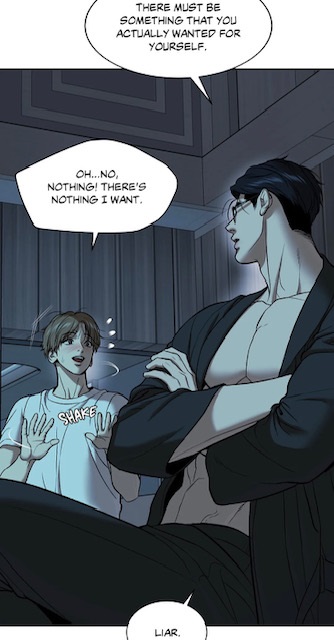 (chapter 29), Joo Jaekyung opened up a little to doc Dan! Thus the next morning, he visited the bathroom where doc Dan was!
 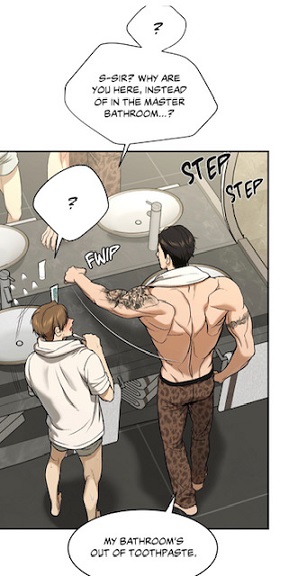 (chapter 30) It was just an excuse to spend more time with his fated partner.
  (chapter 74), no “dear,” no “I love you.” In the father’s memory, she used the child as an excuse to distance herself from her spouse. In that moment, Jaekyung is not a son to be cherished but a barrier in an adult quarrel.
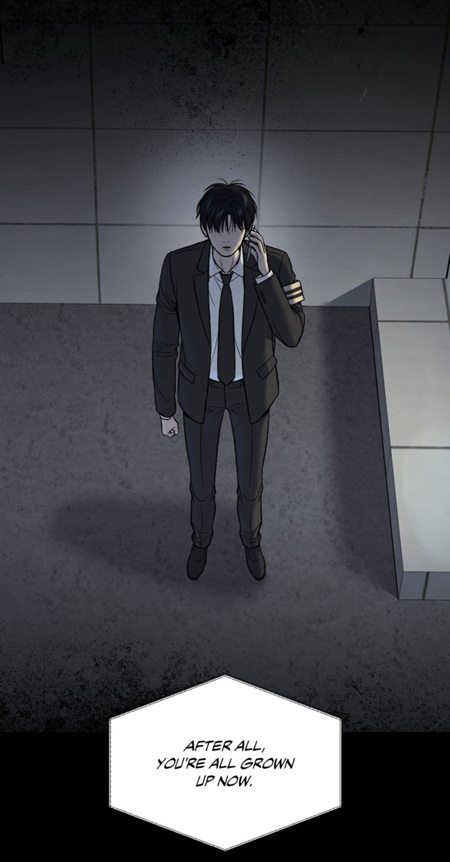 (chapter 75) carry the same cold logic. On the surface, they sound like recognition, even encouragement. But their true meaning is dismissal: you no longer need me. For her, love equaled dependency. Once her role as provider was no longer necessary, she withdrew.
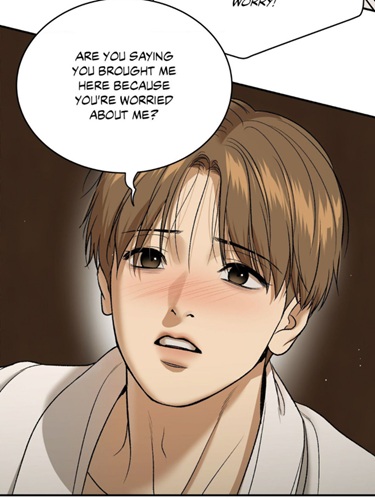 (chapter 67) His question is really an appeal for recognition. If Jaekyung answered yes, Dan could interpret it as proof of love, because in his own distorted framework being worried about equals being cared for. But Jaekyung answered with silence.
 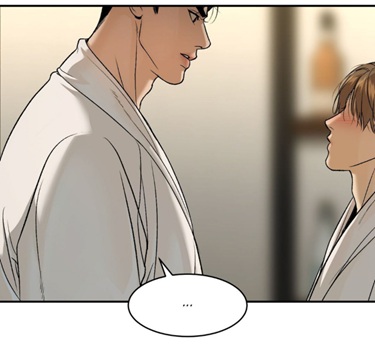 (chapter 67) Not because he felt nothing, but because he lacked the language to connect worry with love. In his conscious mind, conception of care was still bound to usefulness — Dan mattered because he was needed for training, not because he was loved as himself, while deep down, he had already moved beyond this aspect. He was just in denial in this scene,
 (chapter 74) On one level, she does not recognize his voice. But on a deeper level, her words ring as truth: she does not know her son. She has no idea who he has become, what defines him, what characterizes him beyond money and survival.
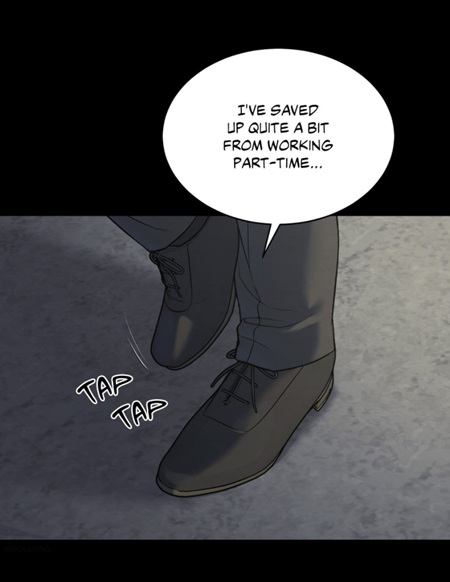 (chapter 74), promising to provide for her if she returns home. He unconsciously appeals to the only logic he has ever known: that love equals provision, that affection is secured by usefulness.
  (chapter 73) From him, Jaekyung absorbed the conviction that a man must be the provider, the protector, the one who works and sacrifices while the partner silently follows. This explains why, in his relationship with his mother
 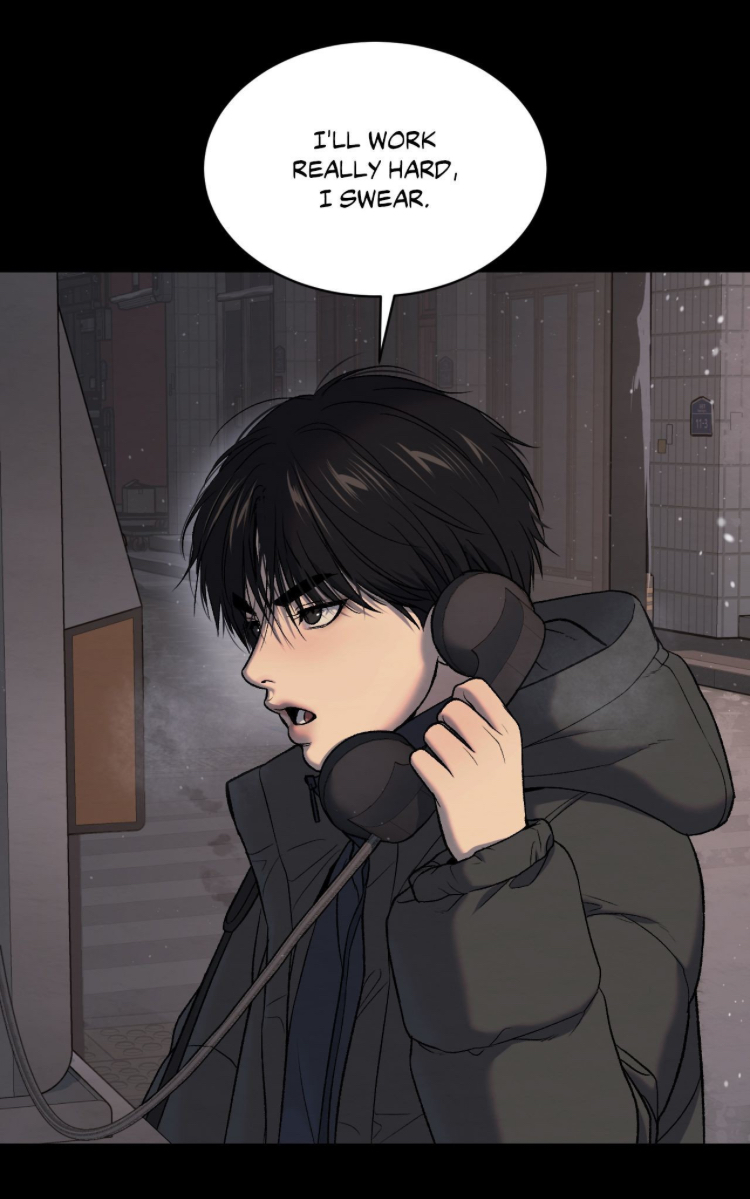 (chapter 72) and Kim Dan, he instinctively assumed he had to “do it all”: earn, fight, shield, control.
 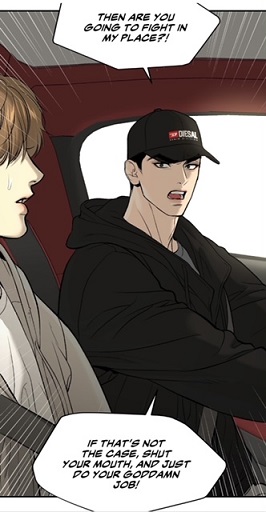 (chapter 42) His father’s voice was violent and scornful, but its framework remained lodged in him.
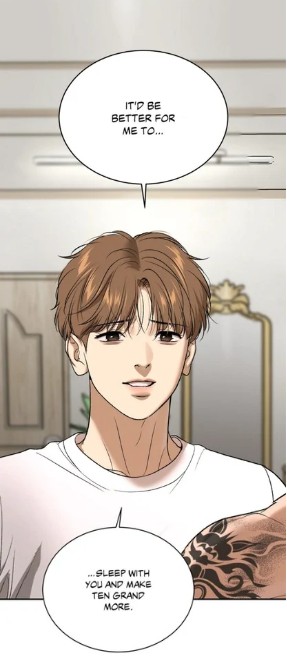 (chapter 62) That way, he can still be “free”.
 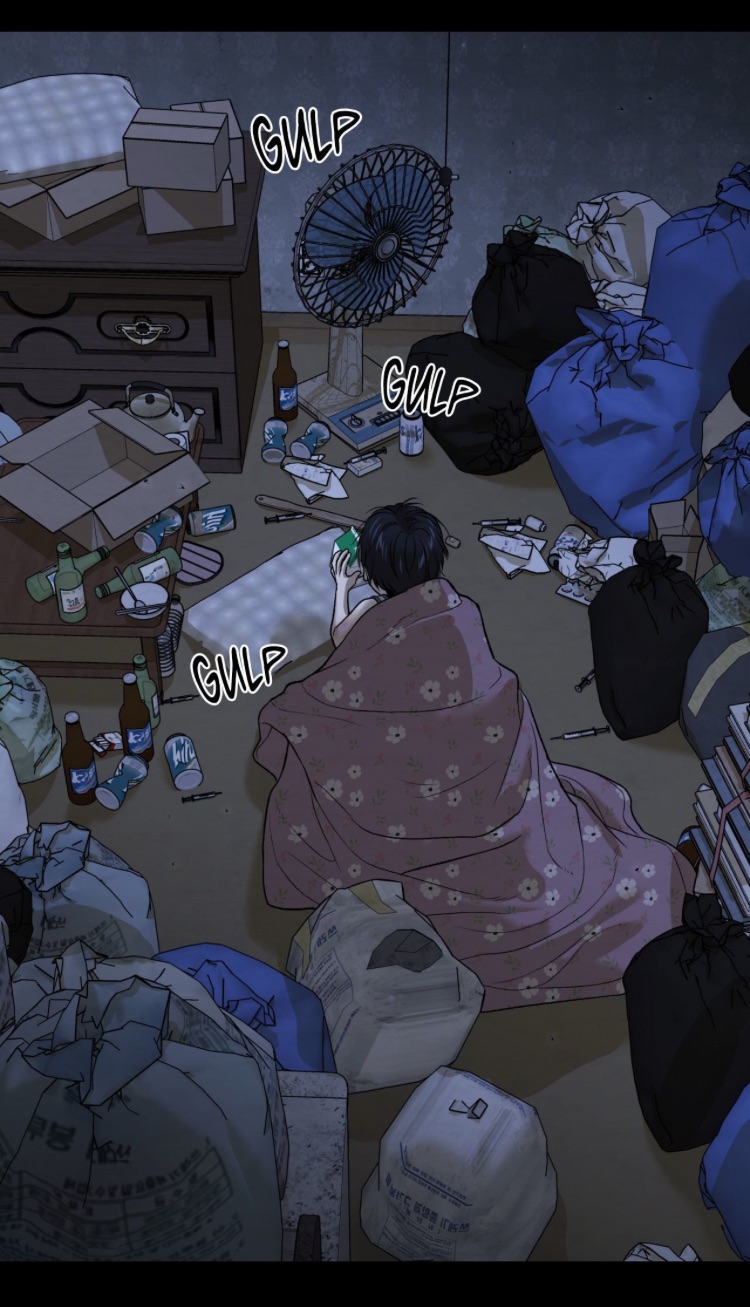 (chapter 72) becomes the perfect metaphor for her treatment of him. Once she no longer needed him, he was discarded like refuse. Just as trash cannot be reclaimed by sentimental value, she will not be able to reclaim him later through appeals to blood ties or belated need. It is impossible because he has learned — painfully — that true love is not about what you have, but about who you are.
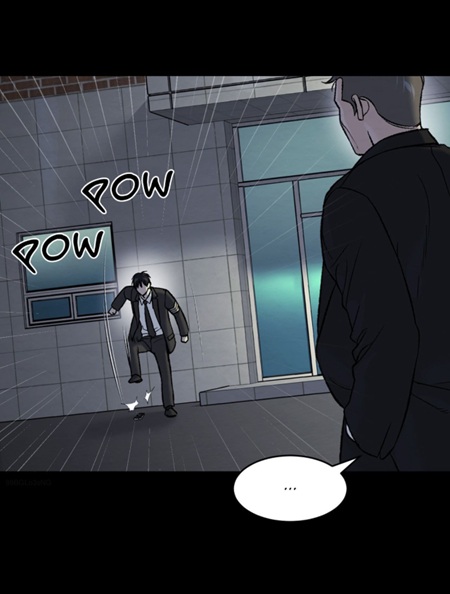 (chapter 74) He understood that the words he longed for as a child were never simply withheld — they never existed. Since we saw her back and heard her voice, I don’t think, she truly cut off ties with Joo Jaekyung. Why? It is because she had no intention to change her phone number again.
 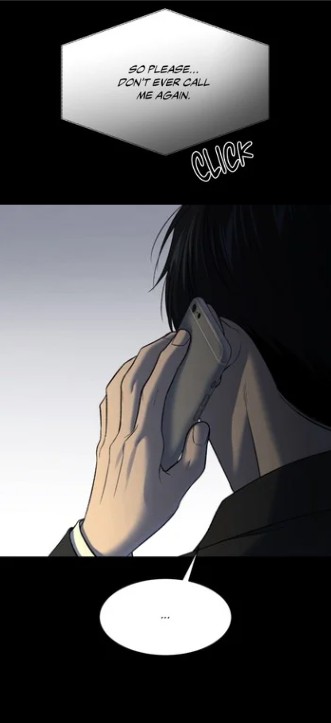 (chapter 74) She expected him to follow her request. I can definitely imagine her trying to reconnect with Joo Jaekyung, the moment he became a celebrity.
 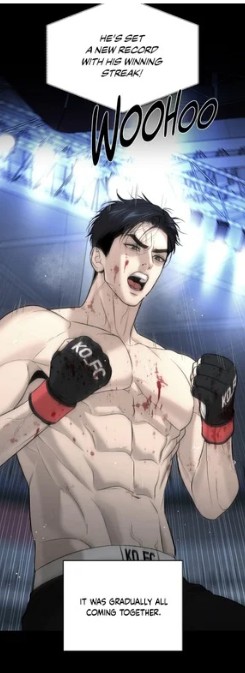 (chapter 75) Keep in mind that we have these mysterious phone calls:
  (chapter 37)
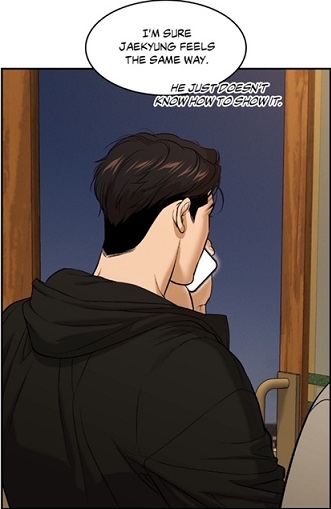 (chapter 43)
  (chapter 49)
 (chapter 75)
 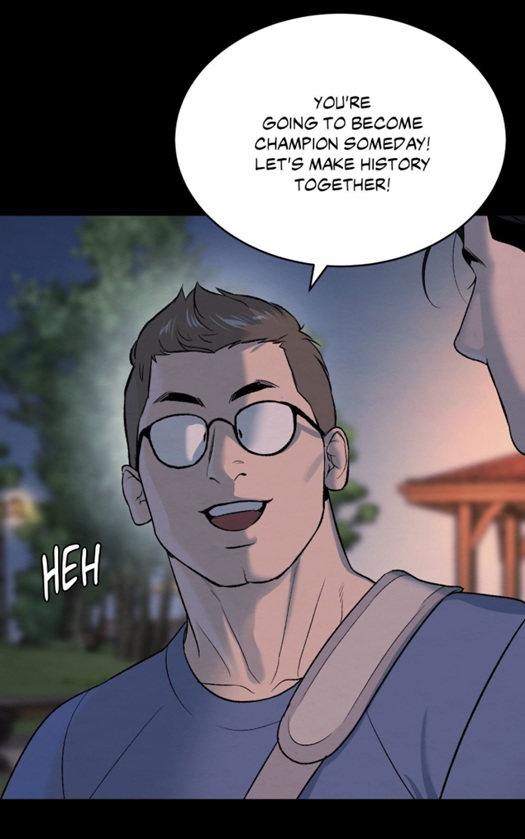 (chapter 75) On the surface, these sound like support. He smiles, his tone is warm, his words echo the vocabulary of friendship. Yet this false promise had lasting consequences: it reinforced a pattern already planted by the champion’s mother. Since childhood, Jaekyung had equated helping with caring
  (chapter 72), because silence at home had taught him that the only way to hold on to love was to provide, protect, and prove his usefulness. Under Namwook, this belief hardened into a rule: in his world, attachment became synonymous with utility.
 (chapter 34), Jaekyung assumed later that the actor would have helped doc Dan to hide.
  (chapter 58) His violent intrusion into the actor’s home was the natural outgrowth of Namwook’s teaching: if love is real, it must show itself as service.
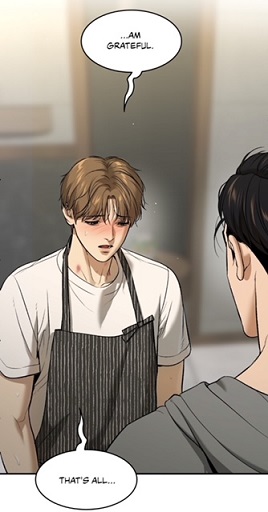 (chapter 45), Jaekyung struggled to even recognize it. Giving him a gift and expressing gratitude was not “helping the fighter”.
  “ (chapter 75) There’s a life outside the ring and the spotlight.
 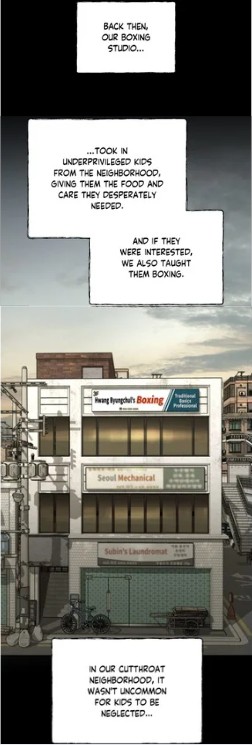 (chapter 72) was quite futile, for at the end, he ended up alone and felt lonely.
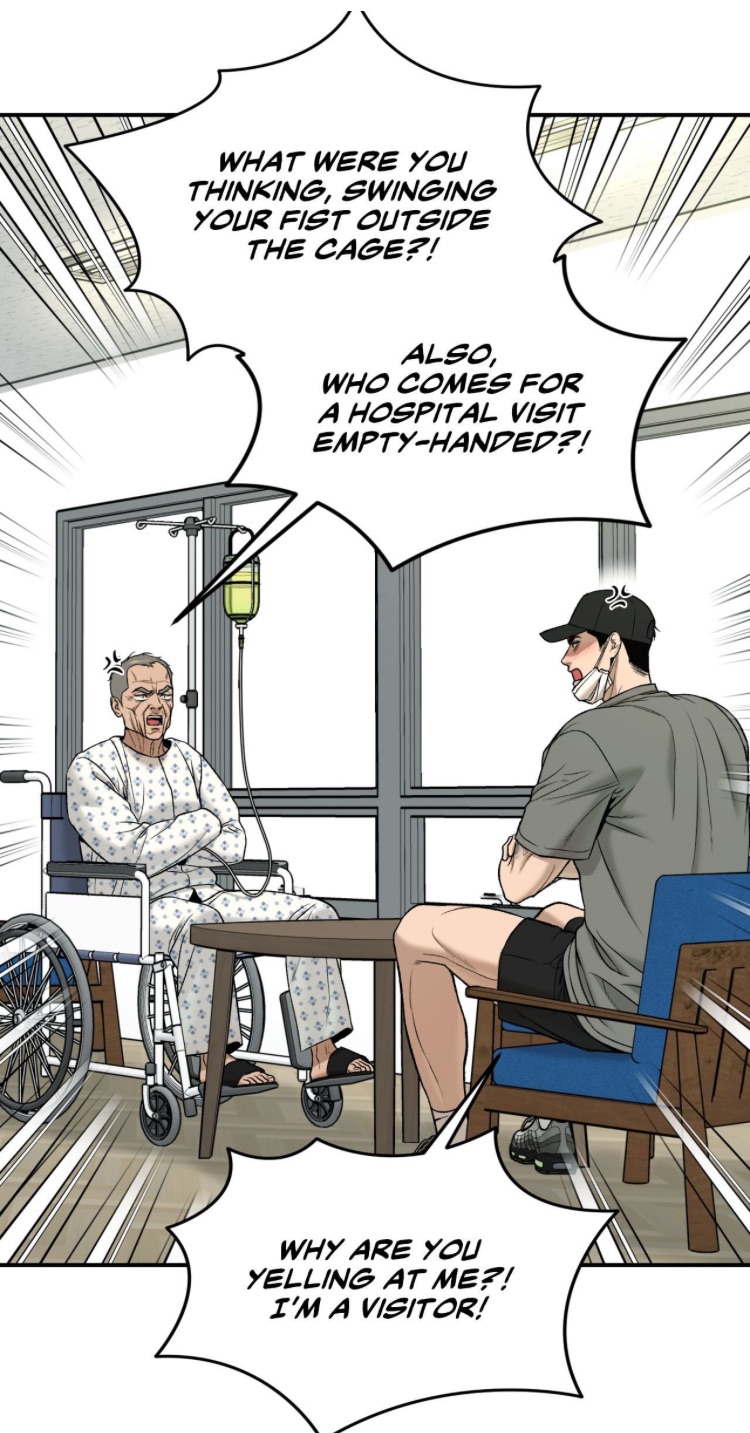 (chapter 71) Yet, deep down, he was happy that Joo Jaekyung had visited him and even spent the whole day with him. Secondly, for him, too, love has always been expressed through responsibility, advice, and correction rather than direct declaration. When he tells Jaekyung to “look around” and “think hard,” or warns Dan to “
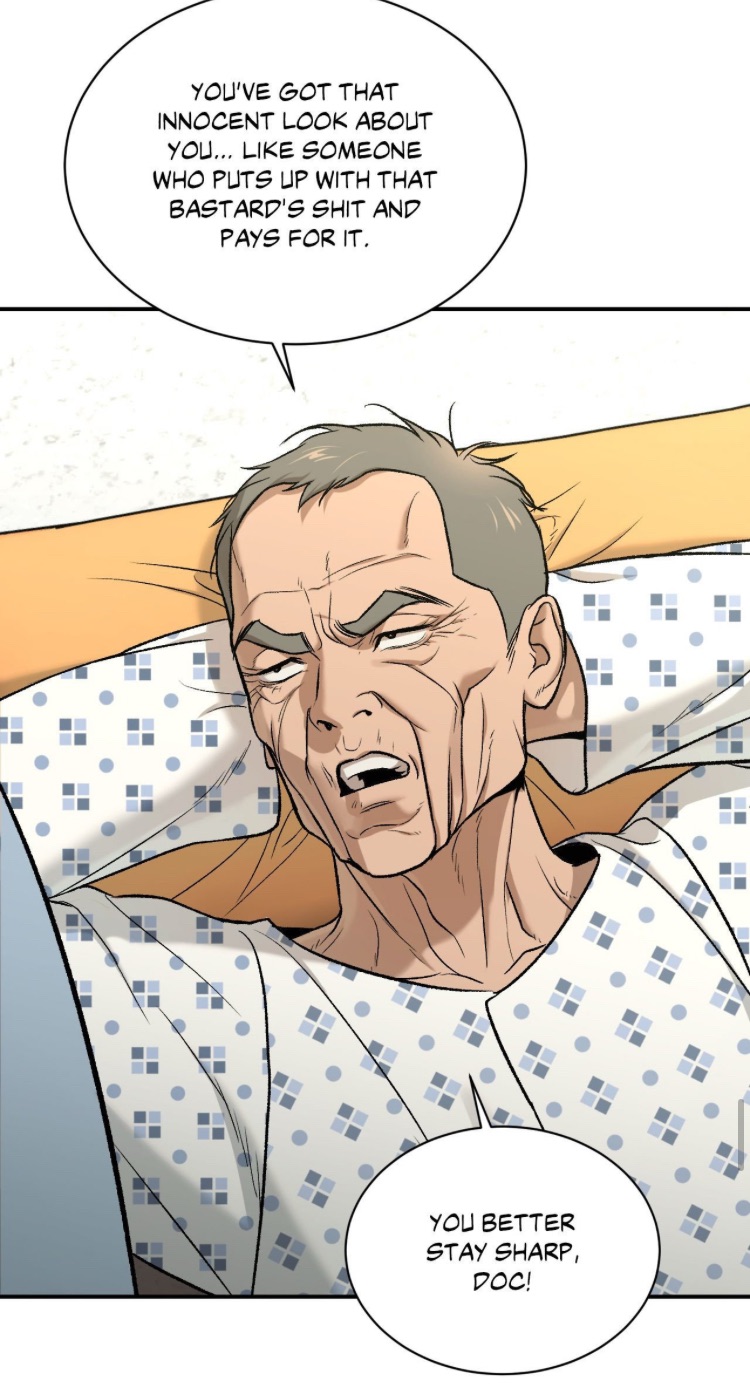 (chapter 70) “stay sharp,” he is not being cold — he is speaking from the only framework of love he knows: respect, knowledge, care, and responsibility, the very dimensions Erich Fromm outlines. He realized too late that he missed Joo Jaekyung very much. His love is embedded in actions and words of guidance, not in sentimental speech. To suddenly say “I love you” would, in his own register, feel shallow and false. He actually embodies the “real parent” IMO, because contrary to all the others adults, he learned from his mistakes. No parent is perfect, but they need to reflect on their words and actions. Learning through experiences is lifelong learning. It stops with death. The director did his best according to the circumstances and tried to correct his wrongdoings. And we can see his influence in the champion’s life. When it comes to doc Dan, he also makes mistakes:
 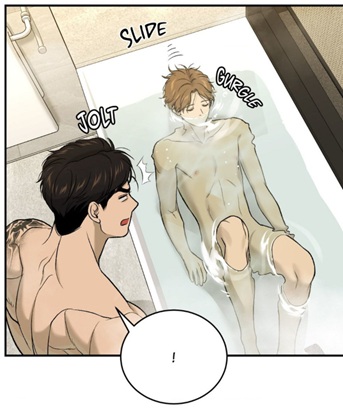 (chapter 68)
 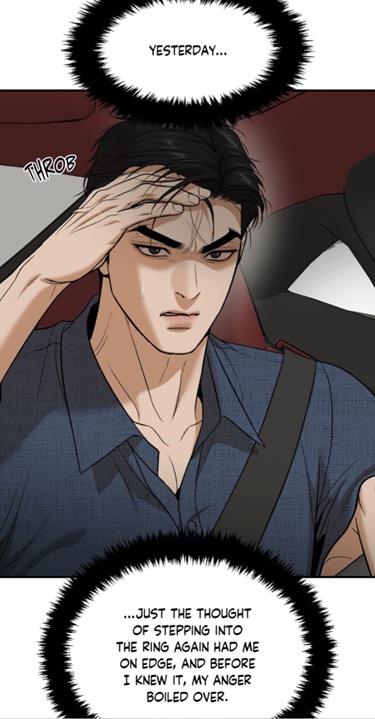 (chapter 69)
  (chapter 69) And that’s what makes him so human.
 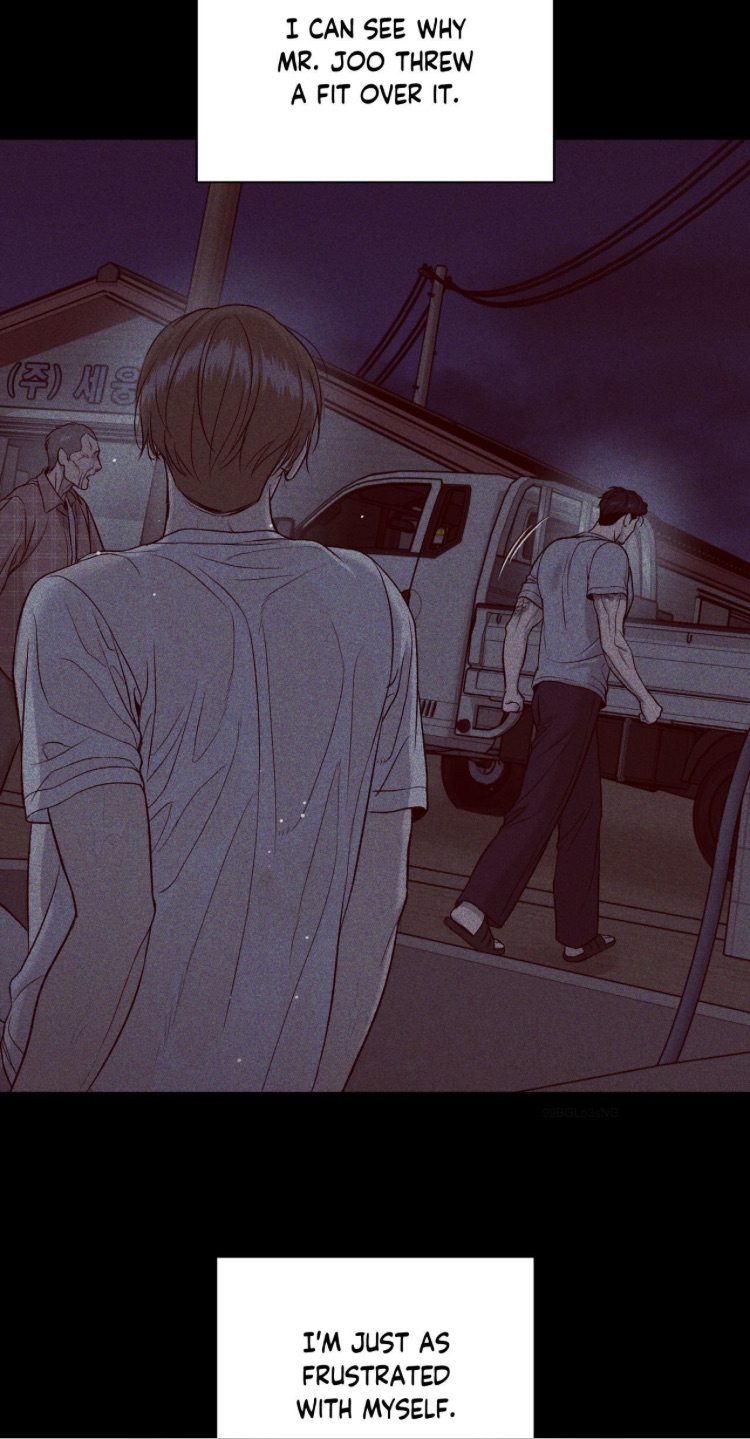 (chapter 71) Hence doc Dan didn’t resent the champion for his harsh treatment. But unlike the mother, who equated love with possession, Hwang Byungchul has begun to correct himself. He respects Jaekyung’s privacy, he encourages instead of dictating, he models a love that is belated but still real. This opens the possibility that Jaekyung, too, may learn to fill his silences differently — not with dominance or provision, but with genuine presence. He truly embodies the philosophy from Erich Fromm: it is never too late to become happy! Hence he smiled on the rooftop!
 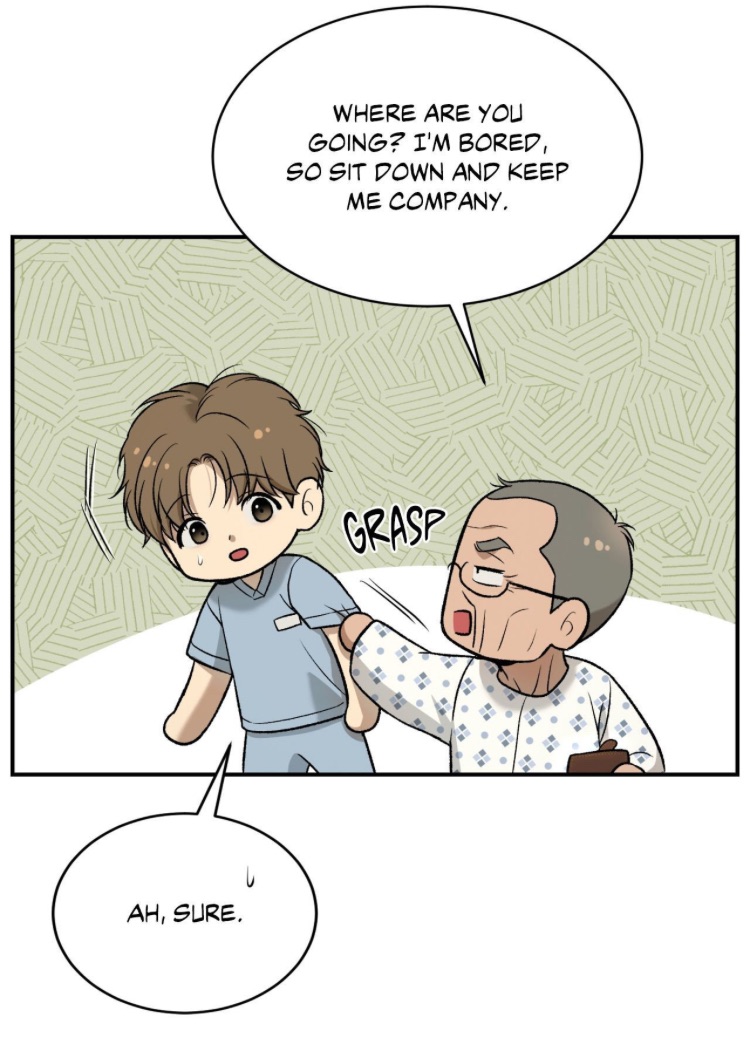 (chapter 71) This means that he lives now in the present. It looks like the “old coot” has been tamed by the “gentle hamster or duck”.
  (chapter 41) He didn’t know how to judge such a confession. Hence these words were reduced to a mistake!
  (chapter 19), and has been unable to say it since.
 (chapter 65) We know he once had toys (teddy bear,car)
 (chapter 21) , little signs of comfort that suggest he grew up in relative security, even if his parents were often absent for work. For me, his childhood was not defined only by poverty but by rupture: love was present, then violently cut short. To a child, such a disappearance feels like betrayal, even if it was no one’s fault. Dan would have been left with a terrible contradiction — that “I love you” was true, and yet those who said it abandoned him forever.
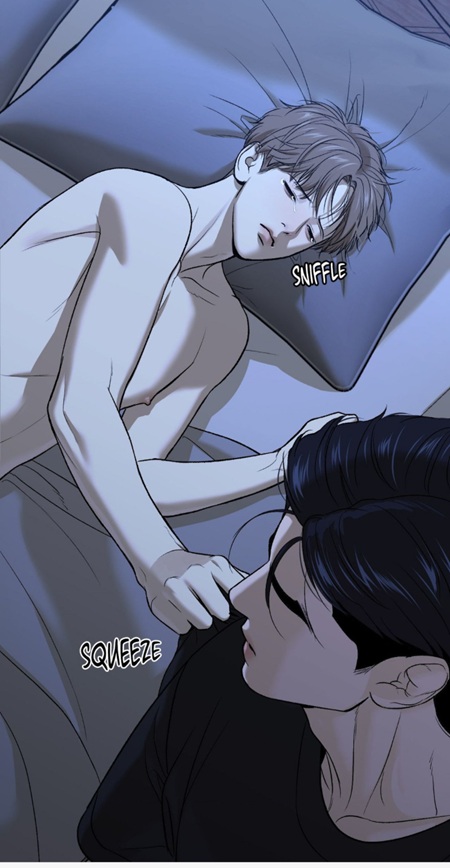 (chapter 66), whispers through tears
 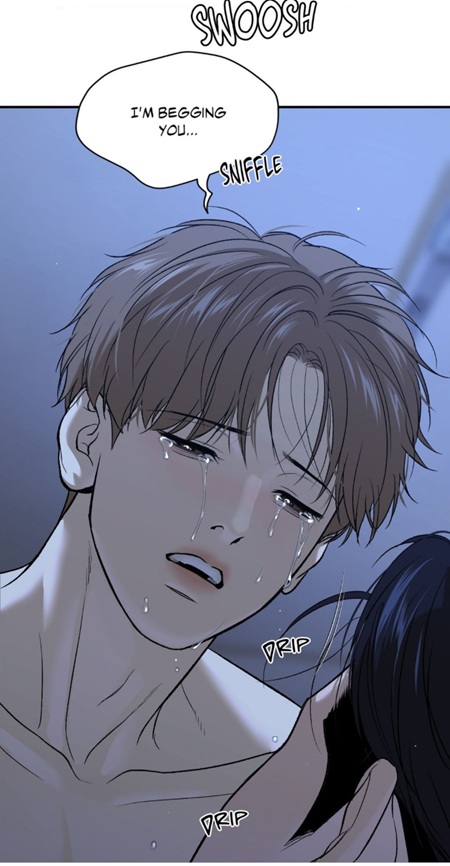 (chapter 66) These are not declarations of love, but desperate substitutes — fragments of the words he could never utter in childhood. They expose the precise gap: he never managed to say back what had once been said to him. He had lost his parents too soon. Instead of “I love you too,” what emerges is fear of abandonment. Instead of reciprocity, there is only pleading. His grip on Jaekyung’s shirt is the physical translation of what he could not verbalize: the child’s attempt to hold onto someone who is already vanishing.
  (chapter 44) Dan once received love of a different kind — playful and tender. A kiss cannot have come from the grandmother, who expressed affection only in gestures of care, never of intimacy. That kiss belongs to his mother.
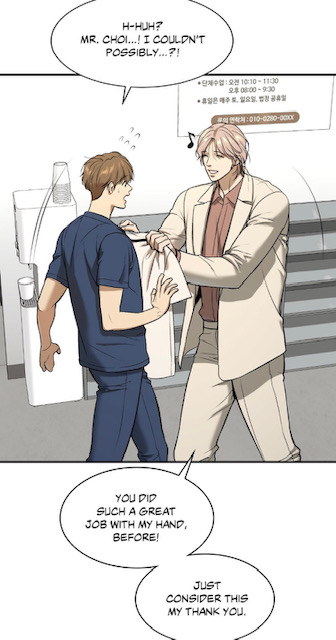 (chapter 31)— which he associates with unbearable debt. His mother’s final “gift” of love was one he could never repay. Any present risks reopening that wound: “What if I can’t repay this? What if I lose them too?”
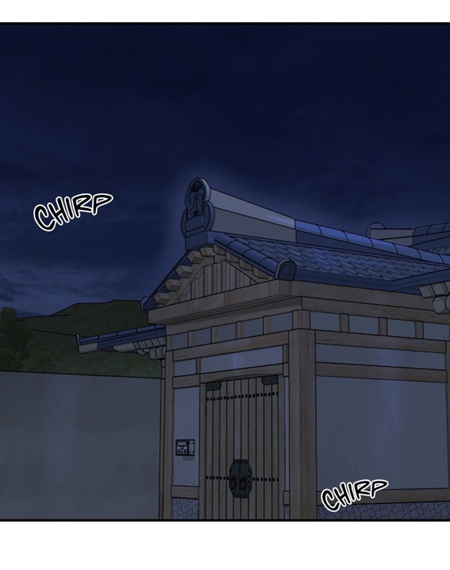 (chapter 74) — the quiet sign that the sun is about to rise. Dawn is not just a natural detail in Jinx; it is a symbolic hinge. It is the moment when night meets day, when moon and sun overlap, when endings bleed into beginnings. In myth and fairy tale, dawn often marks metamorphosis: the Little Mermaid turns to foam, the enchanted sleepers awaken, the beast becomes a prince. For Jaekyung, too, dawn is the threshold. His father cursed him at dawn
  (chapter 73), stripping him of worth, tying the rising sun to shame. But in this new dawn, another voice will have to intervene. Only Dan can replace the curse with a blessing. Only “I love you” can undo “you are not special.” And if it is not “I love You”, then it could be a kiss, the symbol of “affection”.
  (chapter 69) when Park Namwook leaned across the table and whispered to the champion about his slipping rank, his lost title, his third place. The setting is dim, the words hushed, the tone heavy with shadow. That whisper was not meant to soothe — it was meant to undermine. Namwook’s closeness is false intimacy: a confidentiality designed to manipulate, to remind Jaekyung of his dependence, to keep him chained to the cycle of fighting. The whisper here is the voice of fear, lack, and scarcity.
 (chapter 75) He was always there — arranging his matches, covering his problems, whispering about his “future.” Yet the quality of his presence was hollow. He never once guided Jaekyung beyond his father’s curse, never helped him imagine a life beyond titles. Thus he never discovered that the “monster” was suffering from insomnia.
 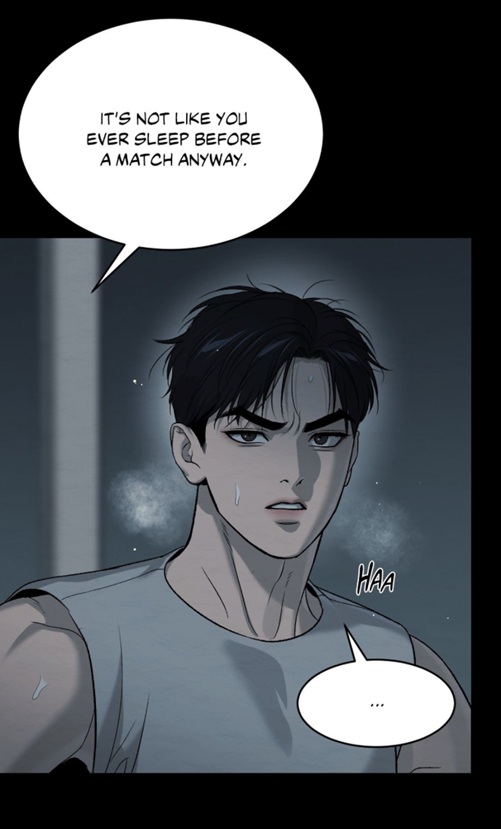 (chapter 75) His companionship was measured in duration, not depth.
 (chapter 41), an invitation to walk together. Namwook’s long presence embodies the trap of quantity without substance. Dan’s brief but luminous presence reveals the power of quality: the kind of attention that transforms.
 (chapter 29) Under the curse, his whole life has been a frantic race: prove himself, fight again, silence the noise in his head.
  (chapter 75) Namwook’s whispers, too, keep him chained to that rhythm of urgency — rankings, titles, deadlines. But once Dan’s whisper replaces Namwook’s, time itself shifts. The future is no longer a debt to repay but a horizon to approach slowly, hand in hand.
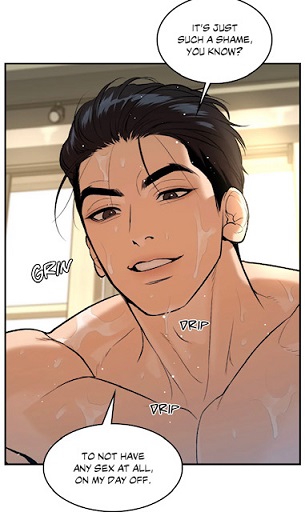 (chapter 27), joked
 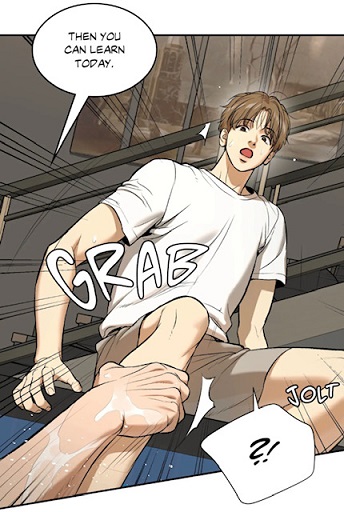 (chapter 27), even rediscovered his love for swimming. Water, his true element, was reclaimed as play rather than punishment.
  (chapter 27) That single day was a seed — a foreshadowing of what life might look like once the curse is broken for good.

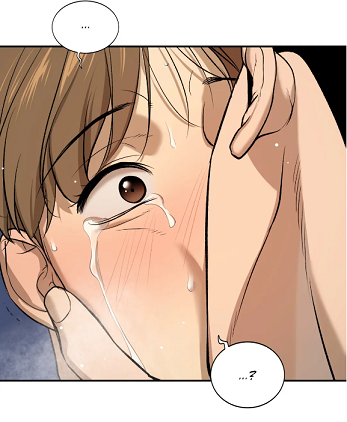 (chapter 14) For the physical therapist, this moment would later be confirmed.
 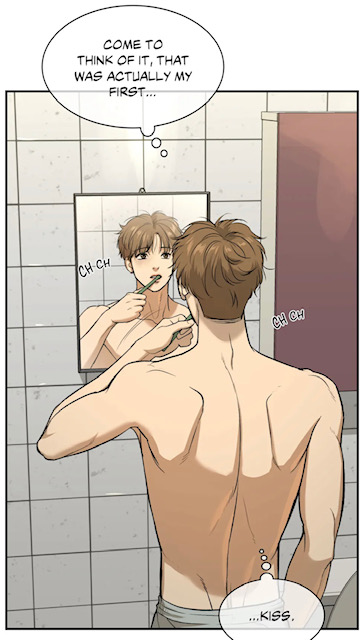 (chapter 16) —haltingly and with a trace of disbelief visible thanks to the points of suspension —as his first kiss ever. His stunned reaction and eventual admission offer a compelling lens through which to explore the symbolism of kissing in Jinx, but also the emotional landscape the two men must navigate.
  (chapter 55) Still, some readers have theorized the existence of a “special lover” in his past
 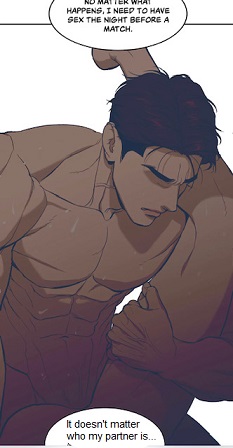 (chapter 2), someone who might have earned a different kind of intimacy. One cause for this hypothesis is that in the champion’s first memory, he was facing his partner, which contrasts so much to the way he had sex with his partners (from behind). This possibility casts the locker room kiss in a new light.
  (chapter 14) If it was his first, the gesture carries a far deeper meaning than either man realizes in the moment. And if it wasn’t, then why does this kiss—with Kim Dan—resonate so differently?
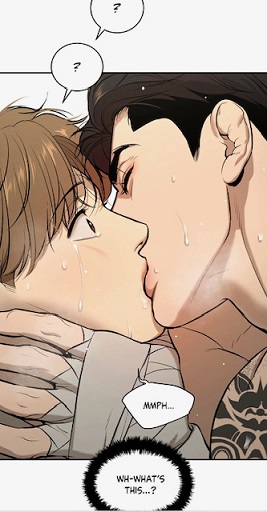 (chapter 15) she showed more than the physical therapist’s confusion with the interrogation marks, she added his inner thoughts. This question (“What’s this?”) already hinted that he had never experienced a kiss before. The ambiguity of his reaction suggested that the moment was unfamiliar, and not immediately recognizable as a kiss at all.
  (chapter 30) Recognizing his face, Dan mentions that his grandmother used to watch the drama A Fine Line, and that he had seen it with her.
 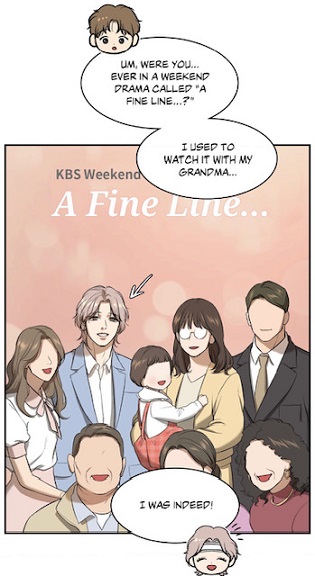 (chapter 30) The author even includes a framed shot from the fictional show, depicting Heesung as the smiling son-in-law in a multigenerational family. This visual insert is subtle, but telling: it wasn’t the story that stayed with Dan, but the faces—the aesthetics of family structure and polite emotional decorum.
 (chapter 16) it frightened him. The kiss broke an invisible boundary—one his upbringing had silently enforced. That’s the reason why he wasn’t sure if he could do it again.
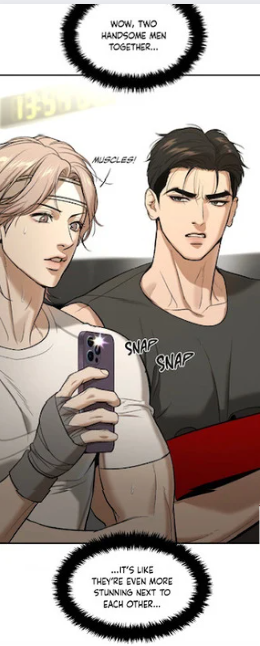 (chapter 30) He blushes and wonders why.
  (chapter 30) It’s a telling moment: Dan isn’t used to feeling attraction and desire, let alone recognizing it. He never bought posters of celebrities, never fantasized. That world—the glamorous world of affection, attention, and beauty—was never his.
 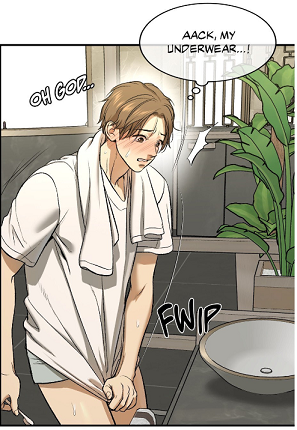 (chapter 30) —despite already having been seen naked by Jaekyung
  (chapter 30) —suggests something deeper than modesty. When he rushes to hide his underwear and blushes merely at brushing his teeth next to someone
 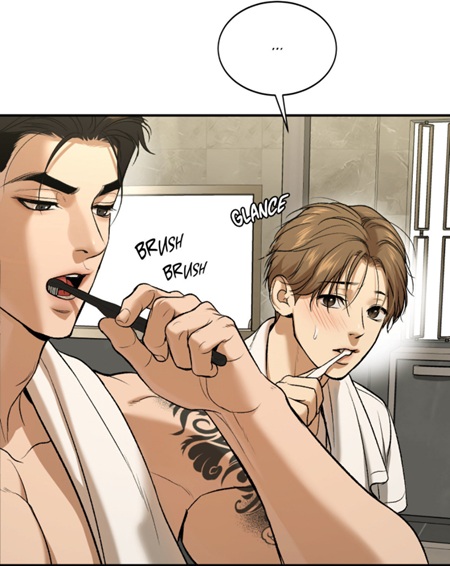 (chapter 30), it becomes evident: Dan is not accustomed to physical closeness or shared domestic spaces. These are not reactions of a man with just sexual trauma—they point to someone raised without the warmth of daily intimacy.
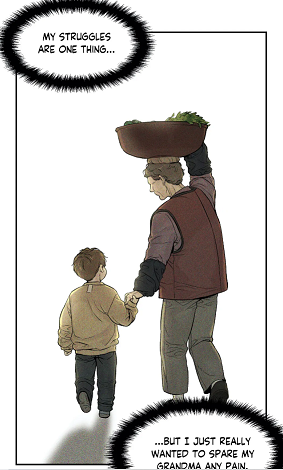 (chapter 5) He had to take care of himself, dressed on his own. He had to act like an adult, as his role was to assist his grandmother:
  (chapter 65) This raises the possibility that someone else—most likely his mother—was his primary caregiver in early childhood. She would have changed his diapers, held him close, and kissed him gently.
  (chapter 44) For me, without realizing it, Dan reproduced those gestures. These actions can not come from Shin Okja, as we only see her caressing or patting her grandson. The progression is striking. It moves away from eroticism (kiss from the lips)
  (chapter 44) and toward something far more intimate and protective. These are not the kisses of seduction, but of affection—almost maternal in their tone. Hence the MMA fighter got patted later:
  (chapter 44) They suggest care, comfort, and emotional presence. This is crucial, because it reveals that for Dan, a kiss is not about arousal or conquest. It is a language of love. They carry the flavor of instinct. These are the kinds of kisses a child might have once received, or given, in moments of safety and connection.
 (chapter 44) is a behavior shared by felines and wolves alike: a subtle act of comfort, trust, and bonding. Wolves nuzzle to soothe and reassure. Leopards nudge to display affection without threatening dominance. Dan’s pecks
  (chapter 57) (chapter 57)—licking them not out of instinct alone, but to reassure and bond.
  (chapter 57) During that summer night’s dream, Dan’s body mirrored this wordless care. That’s why he could laugh so genuinely like a child after witnessing his “pet’s reaction”.
  (chapter 44)
  (chapter 14) Therefore the physical therapist astonishment, “What’s this?” was not naïve; it was disoriented. Somewhere deep within, Dan had internalized a different model of kissing: one that reflected comfort, not conquest; affection, not arousal. The kiss he received was too strange, too fierce—it violated a definition he didn’t even know he had. His body knew how to kiss, but it remembered a different type of kiss altogether. The latter stands for love and as such emotions. Under this new light, my avid readers can comprehend why the physical therapist made the following request from his fated partner:
  (chapter 15) He needed to be “warned” in order to control his “heart”. As you can see, doc Dan had an innocent definition of the kiss. Therefore it is not astonishing that the wolf’s first kiss confused him so deeply: it shattered the only blueprint he had for intimacy.
 (chapter 14) Jaekyung repeated such a gesture, as seen in chapters 24
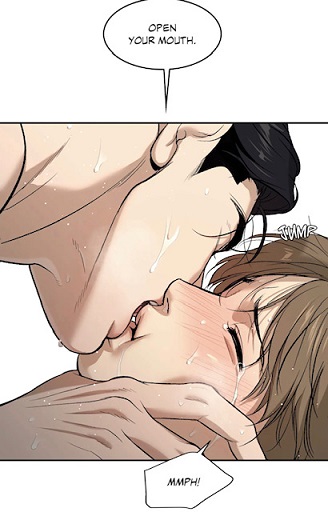 (chapter 24), and again in 64
  (chapter 64). These gestures were not expressions of tenderness, but acts of dominance, mirroring how the celebrity was taught to treat intimacy: not as an exchange, but as an imposition. His behavior echoes Cheolmin’s earlier suggestion
  (chapter 13) where a little touch was functional. On the other hand, the suggestion framed “affection” as a form of fun and entertainment, meant to soften the experience and shift the focus toward the partner. While Cheolmin’s comment was not malicious—in fact, it encouraged Jaekyung to become gentler and more attentive—it still fell short of true emotional connection. Why? It was a medical suggestion, meant to protect Dan’s fragile state. The kisses in episodes 14 were to protect the physical therapist. They were initially functional, a mean to achieve a goal before becoming a habit.
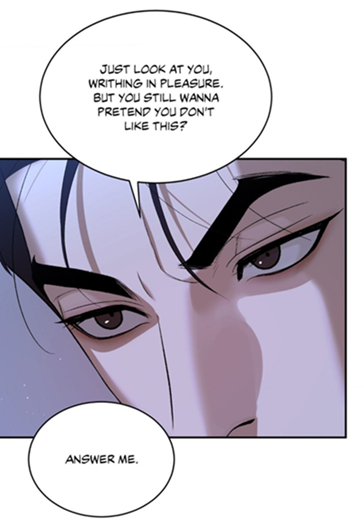 (chapter 63) Fun is not the same as love, and this distinction matters deeply for someone like Kim Dan, who associates kissing with emotional safety and love, not performance or play. This explicates why he refused to be kissed in episode 63:
 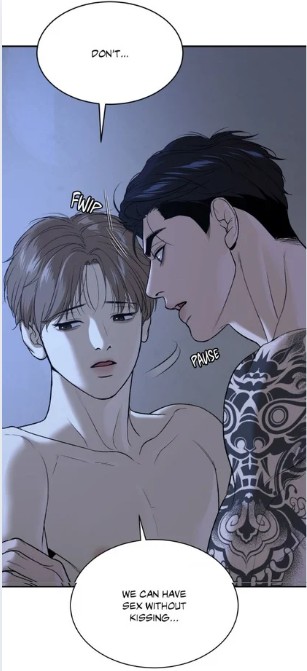 (chapter 63)
 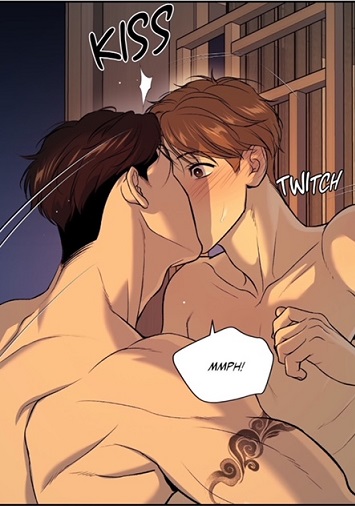 (chapter 44), Dan’s were soft, exploratory, almost reverent. His lips touched not just his lover’s mouth, but his cheek and ear—tender sites that bypass eroticism in favor of emotional intimacy. These weren’t prolonged, devouring kisses. They were pecks, small and deliberate. They mirrored affection, not possession.
 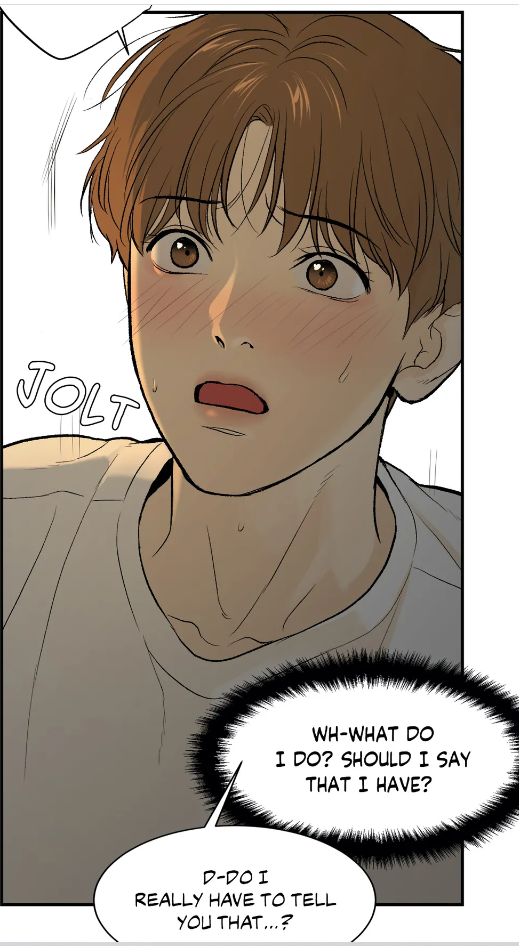 (chapter 3) —it forces the wolf to ponder on the meaning of a kiss and his relationship with the physical therapist.
 In that iconic artwork, the man does not kiss the woman on the mouth, the traditional locus of erotic desire. Instead, his lips are placed upon her cheek—a gesture that suggests reverence, not possession; vulnerability, not domination.
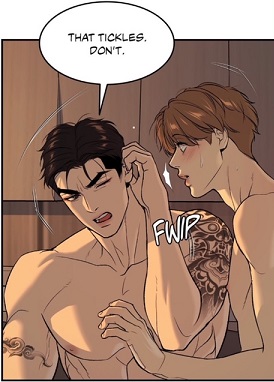 (chapter 44)
  (chapter 45)
 (chapter 54) When he was young, he had to face an abuser. Notice that the man’s face was very close to the champion’s
  (chapter 44) He couldn’t hide his joy by the champion’s funny reaction and laughed. And how did the protagonist react to this? Not only his face expressed his dissatisfaction, but also he silenced his partner with a kiss right away:
  (chapter 44) Joo Jaekyung is leading the kiss, he is regaining control over their relationship. It reinforces the idea that the wolf’s kiss was not merely about passion, but about reclaiming dominance and halting a shift in power. Just moments earlier, Kim Dan’s laughter had opened a space of emotional intimacy and lightness, which the champion was not prepared to face. The kiss, now prolonged and intensified, becomes the sportsman’s way of reasserting control over a situation that was slipping into unfamiliar emotional territory.
 (chapter 45) The marks on the doctor’s body were evidence that he was no longer in control. They weren’t just signs of a physical encounter—they were witnesses to something far more threatening: vulnerability, softness, and reciprocity. In the night, swept up by instinct and unspoken longing, the wolf had allowed himself to be touched—not just physically, but emotionally. But by morning, the spell was broken. His gaze didn’t linger on Kim Dan with affection—it darted instead to the bruises and scratches as though they were accusations.
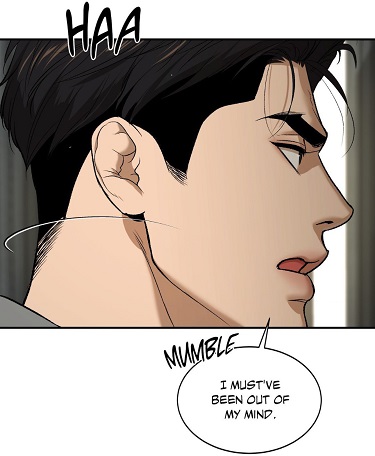 (chapter 45) wasn’t just the pain he might have inflicted—it was the realization that the balance of power had subtly shifted. The man who had always dictated the terms of their relationship had surrendered to something unfamiliar: tenderness, emotional closeness, and shared desire. The fact that Kim Dan initiated affection, even kissed him voluntarily, shattered Jaekyung’s script. For someone who conflated feelings with threat, and dominance with safety, this reversal was unbearable.
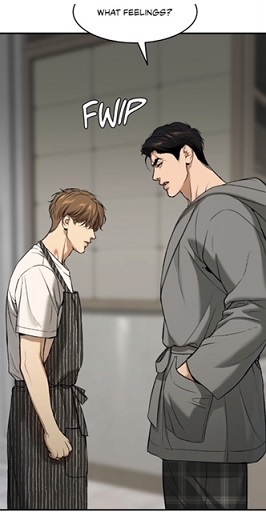 (chapter 45) —and that he, in turn, had wanted Dan back. This terrified him more than any bruise ever could.
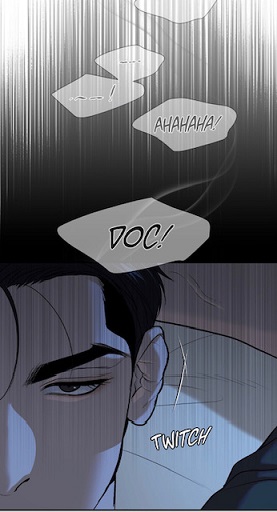 (chapter 37), and kissing becomes his emotional brake pedal. It’s not simply an act of love, but a means to regulate, or even drown out, what he cannot yet name or accept: that he is being loved. It is not random that I included the scene from episode 37: he heard laughs from the other room. For him, such a noise must have sounded like a disrespect and mockery, triggering his past trauma. And he was not entirely wrong in the sense that they were eating behind his back
  (chapter 37) It was, as if they were mocking him because of his forced “diet”. No wonder why the champion is barely seen laughing and prefers seriousness. At the same time, I can grasp why the athlete feels close to Park Namwook, as the latter stands for these exact notions: work, money and seriousness. Fun is not part of his world and vocabulary, therefore he punished Joo Jaekyung for sparring with doc Dan.
 (chapter 2) Though his face was close to the star’s, he didn’t attempt to kiss him. In fact, he proposed him a fellatio, a sign that the champion had never allowed anyone to get close to his “face”. Finally, observe how he reacted, when the uke in episode 55 attempted to kiss him:
 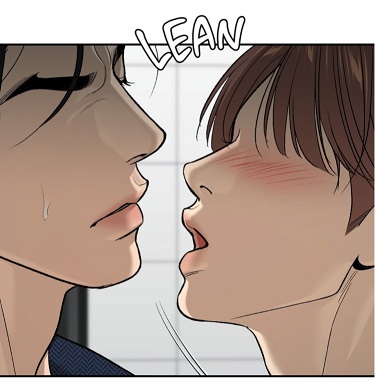 (chapter 55) Not only he rejected him, but also he pushed him violently so that the latter was on the floor.
 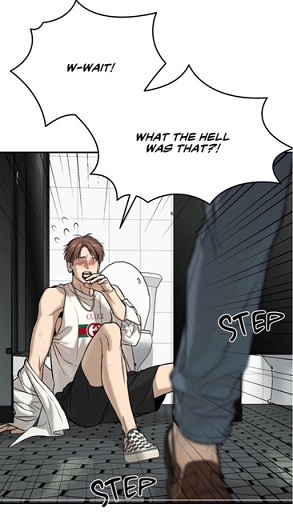 (chapter 55) The celebrity even ran away: a sign that the allowing someone approaching his face is perceived as something uncomfortable and threatening. At the same time, that moment exposes the kiss as something sacred—one that cannot be duplicated without emotional violation. This shows that for the champion, the meaning of a smooch has evolved. It is no longer perceived as a source of fun and a mean to gain something.
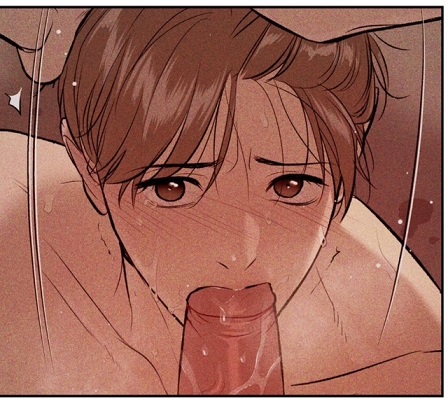 (chapter 55) He couldn’t forget doc Dan’s face, the latter excited him, a sign that for the champion, the face in general has been a source of pain, yet thanks to doc Dan, the latter has become a source of “comfort and joy”.
  (chapter 66) When he saw his face for the first time, he didn’t realize that he was already under the hamster’s spell. Striking is that he even focused on his chin and lips, a sign that he desired to kiss them. One thing is sure. The champion treasured the doctor’s face. After their separation, it is not surprising that the wolf felt the need to see his face.
 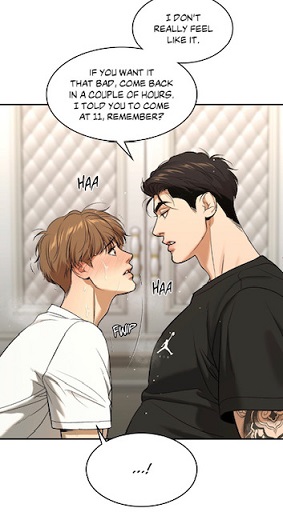 (chapter 39) before requesting a fellatio:
  (chapter 39) The main lead’s head was very close to the champion’s face, thus he must have felt uncomfortable. Secondly by acting this way, the doctor was gradually gaining power over their relationship. For the wolf, dominance is everything, an indication that in his past he felt defenseless and weak. His “opponent”, the mysterious ghost, had the upper hand. Moreover, the fellatio created a distance between them, where the fighter could expose his superiority. And note how doc Dan behaved under the influence of the drug:
  (chapter 39) He caught his fated partner by surprise, when he suddenly kissed him, mirroring the champion’s past behavior. This panel corroborates that for the doctor, a kiss is the symbol of love. The champion was not happy with this kiss too, for the latter meant that he was no longer controlling their relationship. Yet, after hearing the doctor’s confession during that night, the athlete no longer resisted his partner’s kisses.
  (chapter 39) For the first time, he accepted Dan’s initiative—both physically and emotionally. Compare it to his attitude before:
 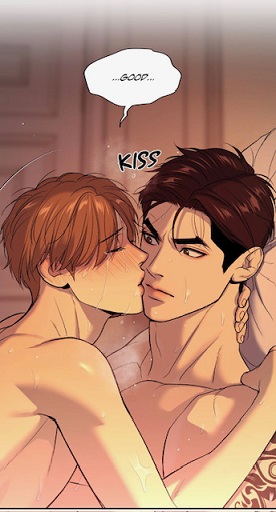 (chapter 39) here, he still has his eyes wide open, a sign of vigilance. These kisses from doc Dan
  (chapter 39) mark a turning point in Jaekyung’s arc: he begins to lower his defenses, allowing Dan not only into his personal space but also into a position of gentle agency within their relationship. The kiss no longer represents a threat; it becomes an opening and a sign of trust.
 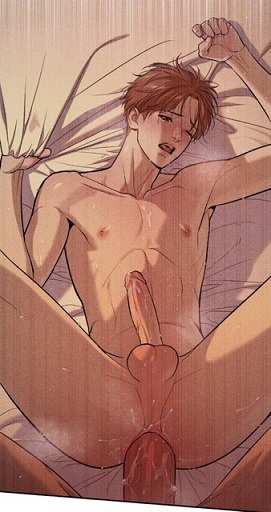 (chapter 55) These memories represent the moment where the athlete felt strong and had the upper hand in their relationship. These images reveal that Joo Jaekyung hasn’t realized the signification of the kiss yet. For him, they don’t seem important. This exposes that the athlete has not associated kiss with love and affection yet. At the same time, we have to envision that a smooch is strongly intertwined with equity and trust.
  (chapter 28) And in episode 14, it was clear that the star still felt superior to his companion, therefore the kiss had no special meaning. As you can see, everything is pointing out that Joo Jaekyung had never been kissed before. And what does a kiss symbolize? Not only attachment, but also purity and innocence.
  (chapter 42) According to him, doc Dan was not different from him. However, he was wrong. It is because the champion had kissed him!! Moreover, the celebrity had allowed doc Dan to kiss him as well. Besides, how did the champion name his past lovers? They were toys… normally people don’t kiss playthings. And now, imagine that doc Dan were to discover that Joo Jaekyung had his first kiss with him. This revelation would not only make him realize that Joo Jaekyung loves him, but also he could be wondering why the athlete had never done such a thing before, though he had past lovers. YES, the “first kiss” could be the trigger for both characters to question their respective past and perceive their fated partner correctly.
  (chapter 15)
 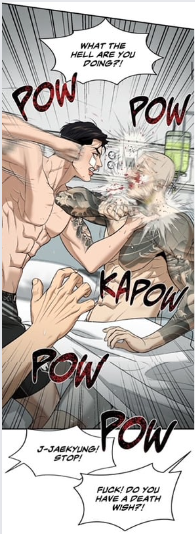 (chapter 52) In that context, a kiss could never be affection, but vulnerability. A risk.
 (chapter 3), based on Dan’s vague claim of prior partners. Yet Dan has never kissed anyone before. The kiss becomes his true moment of loss, a quiet confession through action. Conversely, Jaekyung’s own discomfort shows that he, too, is untouched in this particular way. When Dan tries to kiss Jaekyung again, and he instinctively rejects it, it reveals just how unprepared he is for affection. They are both unaware that the other is emotionally “pure” in this regard, and that makes the kiss a shared revelation.
 (chapter 67), Jaekyung must reinvent his approach. He cannot rely on dominance, strength, or sexual performance to win Dan’s heart. If he wants true connection, he must learn a new language—one built on gestures of affection, softness, and presence. This process also involves separating his public persona from his private longing. Joo Jaekyung, the champion, cannot seduce with spectacle. But Jaegeng, the man, might learn to express love through a simple touch, or a well-timed kiss. The redefinition of seduction is not just about Dan’s healing; it is about the wolf’s reclaiming his own right to feel and give love. And in my opinion, that process has already started:
  (chapter 65) nor his past partners provided him with genuine and affectionate touch, Jaekyung must look elsewhere.
 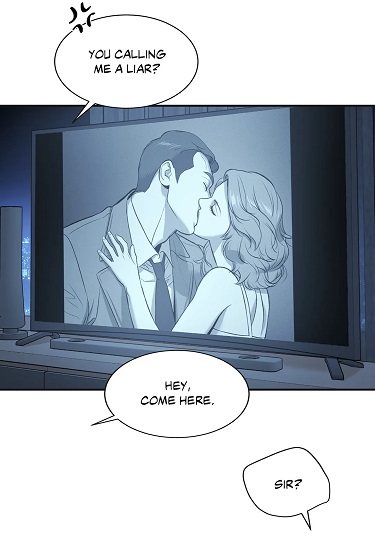 (chapter 29: note that he did not select this scene to rekindle with the doctor, but the other scene) He will learn it from life, from watching how the innocent express care without shame or purpose.
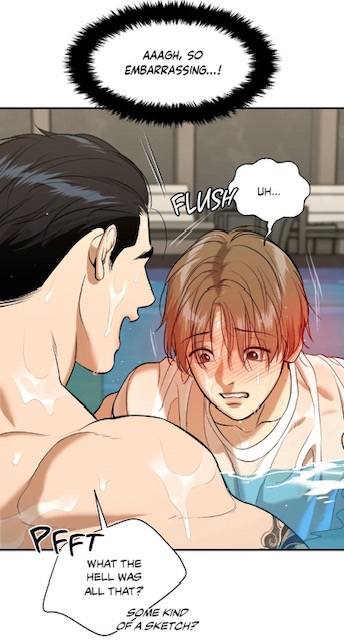 (chapter 27) In Jaekyung’s past, laughter had been a weapon—an expression of ridicule and cruelty from an abuser.
  (chapter 62) If someone had laughed in front of him and made fun of him, this would have reopened his old wounds.

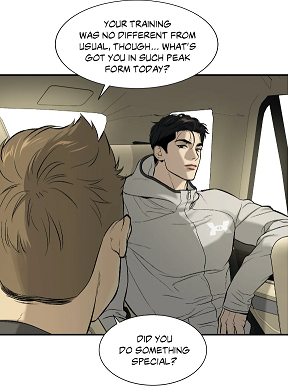 (chapter 5) his reliance on routine. Yet there is another jinx in this story, one far less visible and perhaps even more tragic: Kim Dan’s.
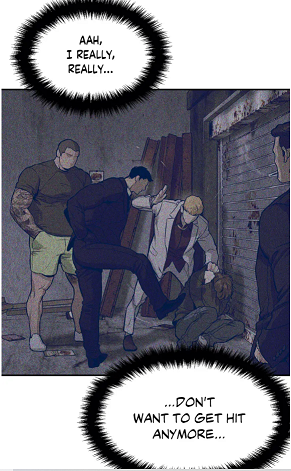 (chapter 1) was seen as the core expression of a man who believed he was doomed.
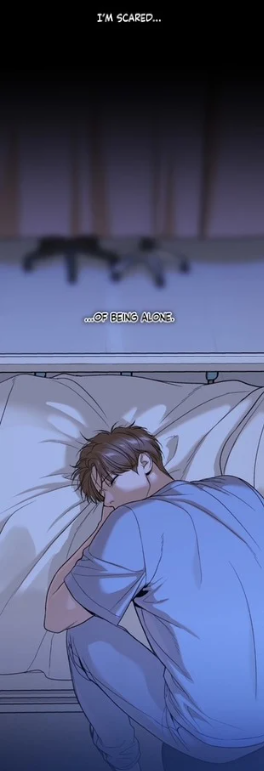 (chapter 56) In Chapter 56, Kim Dan is seen curled up next to a bed, whispering: “I’m scared… of being alone.” What makes this moment especially revealing is that he is not physically alone, for he is resting next to his grandmother. The presence of the very person who raised him should, in theory, offer comfort. And yet, the fear persists.
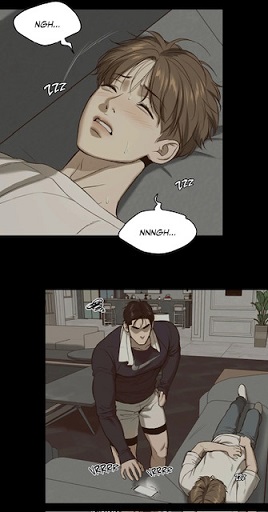 (chapter 21) It weaves together absence, silence, and the specter of loss. What’s striking is that the nightmare surfaces, not when he’s alone in the present, but after he has just returned from watching over his hospitalized grandmother.
 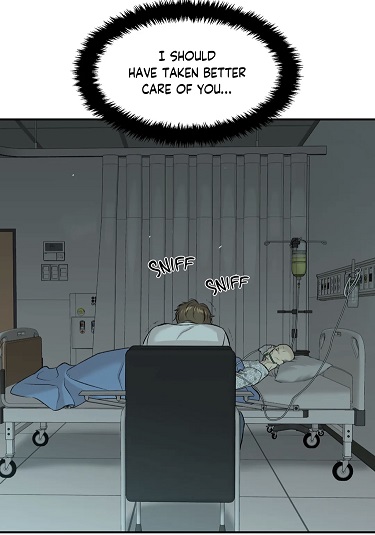 (chapter 21) He lies on the couch and dreams of a night when she vanished from their shared bed.
 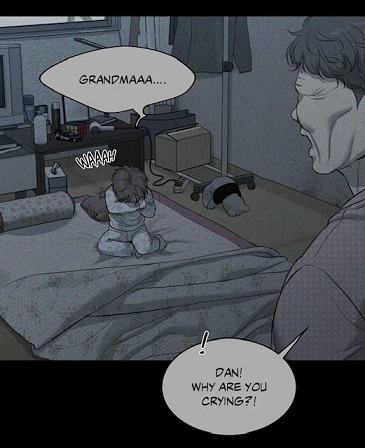 (chapter 21) This reveals how, in Kim Dan’s subconscious, the night and an empty bed have become synonymous with death. The trauma is deeply embedded, where even temporary absence is tied to the irreversibility of loss. For Kim Dan, solitude at night
  (chapter 67) is not mere loneliness—it is abandonment, it is death, it is the erasure of home. It is repressed, hidden beneath his quiet demeanor and years of survival-based behavior. Rather than a rational belief, it is a subconscious wound that only surfaces in moments of extreme vulnerability—especially at night.
  (chapter 2), the doctor’s is secret and involuntary. His actions—his fearful expressions
  (chapter 57), his pattern of emotional detachment
  (chapter 67), and his obsessive loyalty to his grandmother
 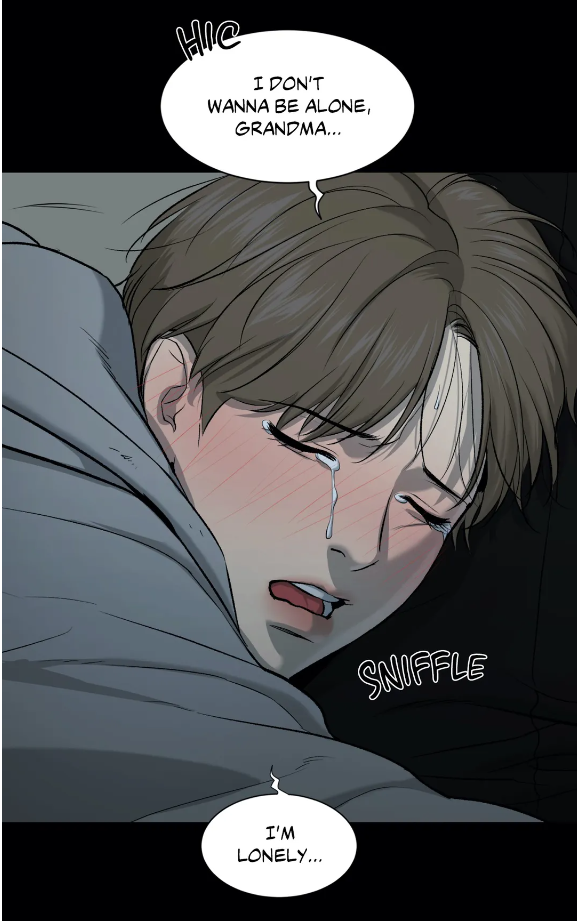 (chapter 10) signal a suppressed conviction: that he is destined to be left behind. What seemed like devotion now appears as coping; what appeared stoic was survival. And with the impending death of his grandmother, the anchor holding this hidden jinx in place is slipping away.
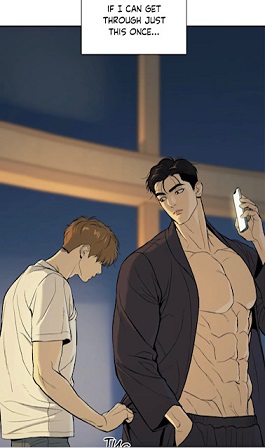 (chapter 2), the trembling kiss
 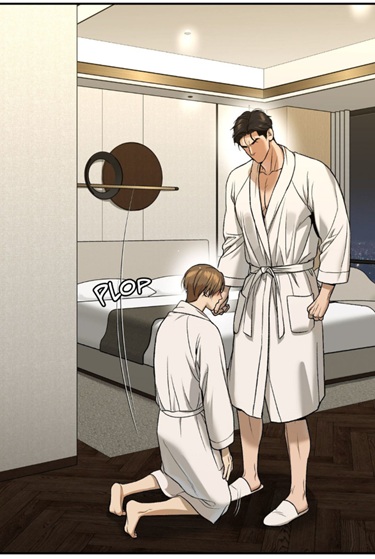 (chapter 67) in Chapter 67, nighttime becomes the stage for his unresolved trauma. These nights mirror one another and suggest an origin story that predates them all: a night when Kim Dan was abandoned by his mother.
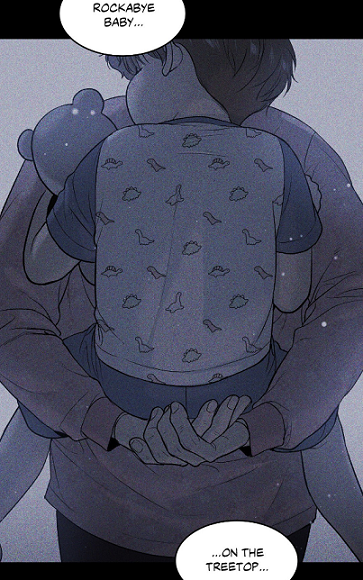 (chapter 47) the one person whose presence could keep the jinx at bay. As long as she was there, he could suppress the trauma, function, survive. She was his talisman. But she was never a healer, for she never spoke about his parents. She never addressed the core of his abandonment, like we could witness in the doctor’s nightmare:
 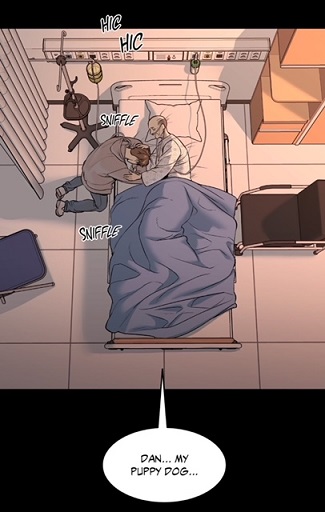 (chapter 53)
 (chapter 65) One might argue about this, for in this scene,
  (Chapter 56) he tucks her in. Their roles are reversed. He behaves like a parent, whereas in truth, he is reverting emotionally to a child terrified of being alone. This reversal highlights the internal dissonance between his outward behavior and emotional reality. Though he was forced to grow up quickly
  (chapter 67) This reinforces my hypothesis that his bad drinking habits are related to the absence of a loved one next to him.
  (chapter 56) Imagine what it means for her: her grandson is already 29 years old and he can not sleep alone. Under this perspective, Jinx-philes can grasp the relative’s reasoning. The problem is that her knowledge is actually wrong! How so? It is because the protagonist was able to sleep so well alone in the penthouse, to the point that the athlete was envious of him.
  (chapter 19) The latter is obsessed with work, while he is suffering from insomnia.
  (chapter 65) And the best evidence for her selfishness and neglect is her ignorance about her grandson’s plan for his future. She is not discussing with him about what he likes or dislikes. She is directing his life, like she did it in the past in the end. And while she may think she’s doing what’s best, her silence about his fears, her ignorance about his true conditions (no home, blacklisted in Seoul) and her refusal to discuss his emotional future reveal a lingering discomfort with the very idea of dependence — perhaps because it reminds her of her own failures or helplessness as a parent figure.
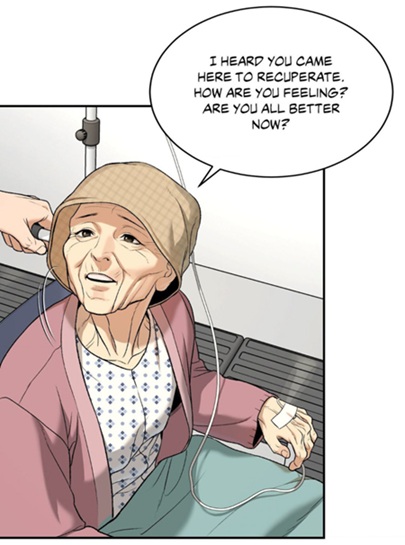 (chapter 65)
 (chapter 65) And when we remember that Kim Dan tried to call her, she
 He is carrying the sins of “adults”. By likening him to an angel, Mingwa frames his pain not as weakness, but as unjust burden. He embodies purity, sacrifice, and resilience, not because he was allowed to thrive, but because he endured. The angel metaphor becomes even more striking when you think about traditional symbolism: angels don’t belong to Earth, yet they walk among the living, often suffering in silence and helping others. That’s exactly Kim Dan — out of place, bearing the consequences of others’ choices, carrying guilt, debt, and unspoken grief that were never his to begin with.
 (chapter 51) The penthouse was never truly his. It was borrowed space. This explicates his refusal to spend the night there.
  (Chapter 67) Observe how Joo Jaekyung called the penthouse: not home, but his place. Due to the last altercation, the emotional safety collapsed. This experience reactivated his fear of abandonment and solidified the belief that he has no home.
  (chapter 65) Even the family photo (where and by whom it was taken is unclear) emphasizes the fragility and incompleteness of his sense of belonging.
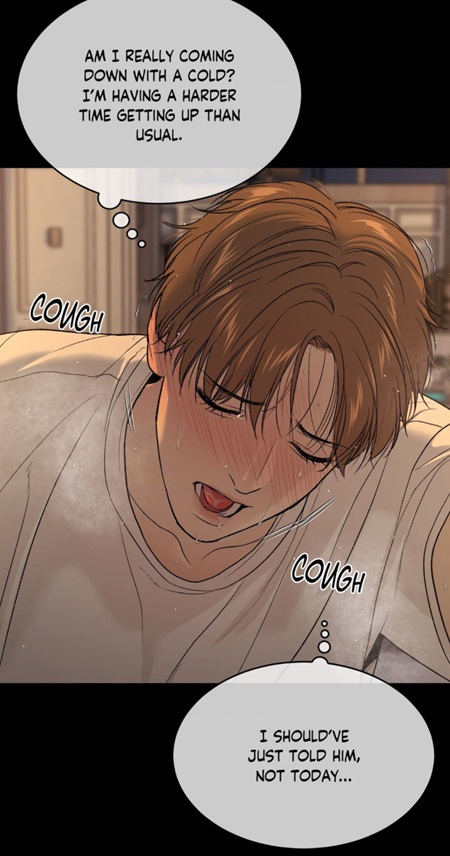 (chapter 61) that he must sacrifice his “needs” and identity to be accepted.
 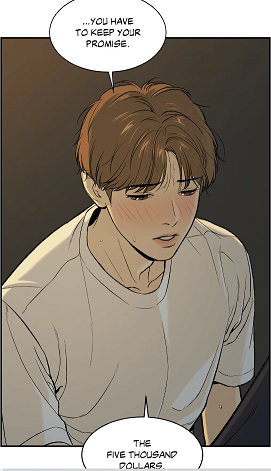 (chapter 2) He wanted the champion to keep his promise. From my point of view, the parent’s vanishing is strongly intertwined with a broken promise… And that’s exactly what the grandmother did to her own grandson: she didn’t keep her words either.
  (chapter 11)
  (chapter 53)
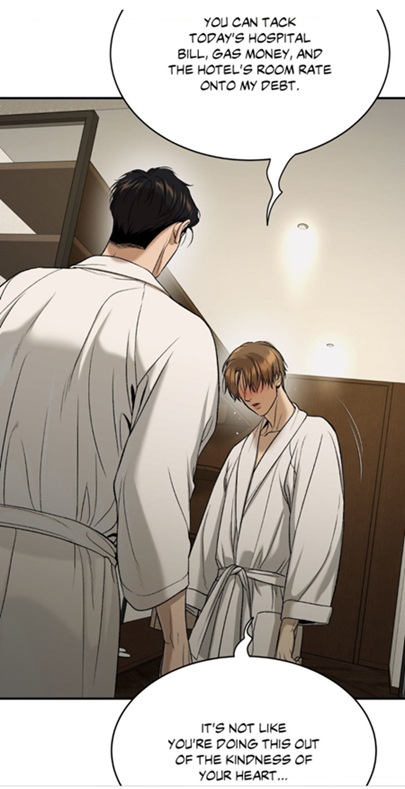 (chapter 67), but this time, with eerie detachment. He kneels before Joo Jaekyung like a servant,
 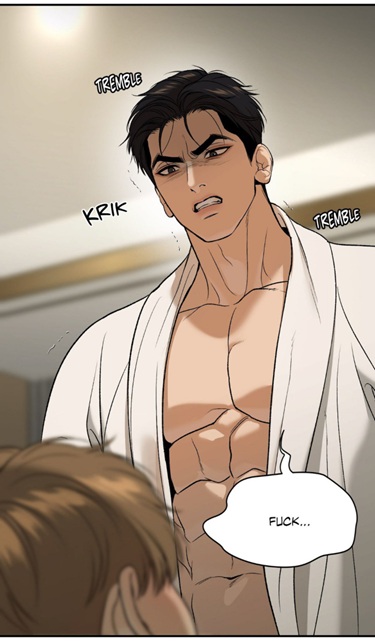 (chapter 67) his arousal betrays a loss of emotional control. Though he is on his knees, it is Joo Jaekyung who is emotionally yielding. His body betrays his composure, responding to Kim Dan’s touch and gaze. Kim Dan, watching the tremble in the fighter’s expression and the rising heat in his body, feels the shift. His soft blush is not simply one of affection or embarrassment—it’s a flicker of recognition.
  (chapter 67) He senses that the one usually in control is now unraveling. Appearances deceive: beneath this scene lies a quiet reversal of power. The blush on his cheeks is a trace of a brief moment of clarity: he sees that the person who once held all the control is now faltering.
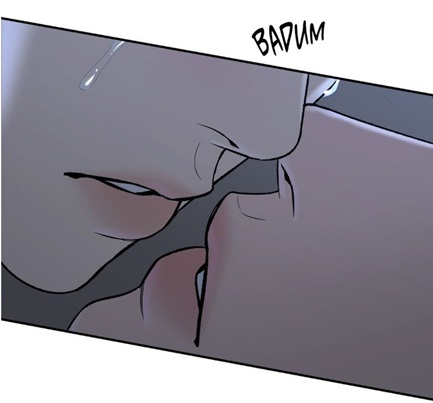 (chapter 66), his body is still a vessel for mourning. Hence there is no kiss during that blue night. Each night carries the residue of that first trauma: the night he was left alone. Whether his mother disappeared or passed away in the night, the result is the same—nighttime became synonymous with loss.
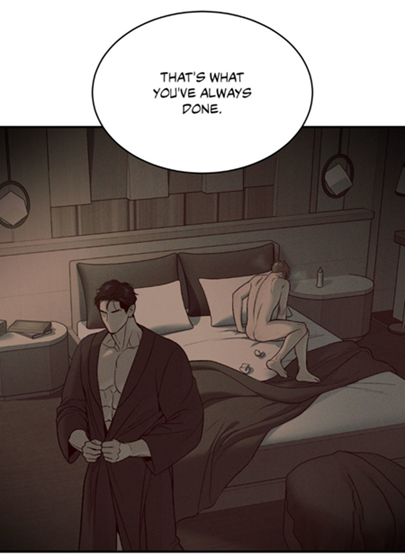 (chapter 63) His so-called jinx is not some irrational superstition. It’s a scar. It’s the quiet belief that the people he loves will vanish the moment he lets his guard down.
 (chapter 67), it’s resignation. Hence he is not expecting to be cured with the pills.
 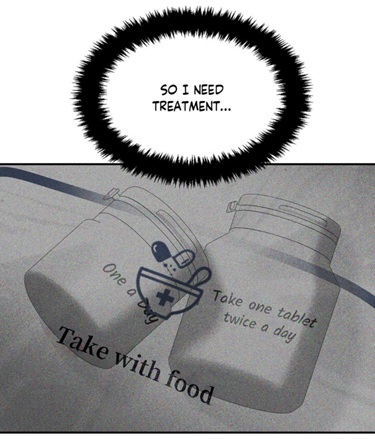 (chapter 67) while he drank alcohol with the medicine.
 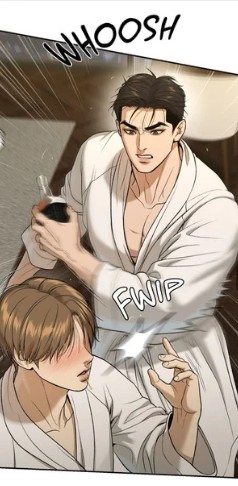 (Chapter 67) Until now, the champion has a blind faith in drugs, just like the grandmother.
 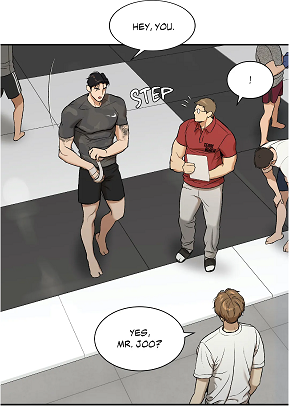 (chapter 7), while Kim Dan becomes a child during the night.
 (Chapter 66)
 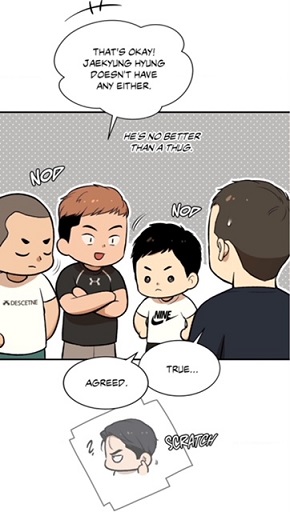 (chapter 47), when the “wolf” was portrayed as a thug, though the latter had assisted him on multiple occasions.

 (chapter 36), his tendency to retreat rather than challenge his own doubts
 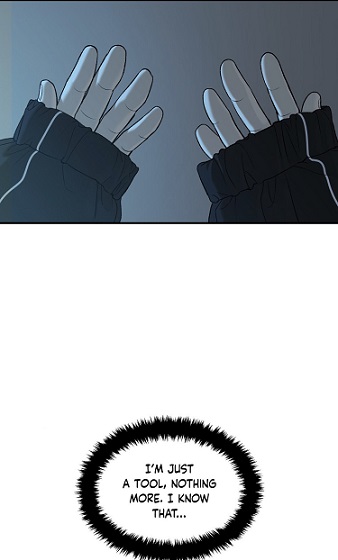 (chapter 36), and his overwhelming fear of disappointing others
  (chapter 62), Joo Jaekyung does not. The evidence for this interpretation is the champion’s nightmare:
  (chapter 18) the doctor
  (chapter 25) Therefore the physical therapist bought books. Moreover, we should consider this argument
  (chapter 45) as a revocation of the star’s statement in episode 18. Kim Dan was no longer perceived as a tool, but as a real physical therapist. On the one hand, this request boosted the “angel’s ego”, on the other hand, he was put under immense pressure, for he was compared to his colleagues.
 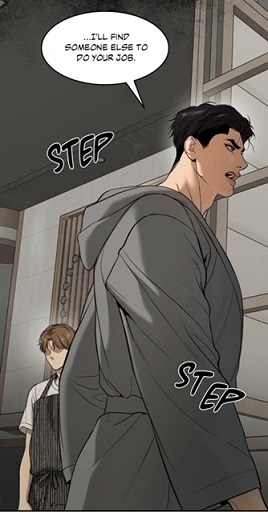 (chapter 45) Since in Seoul, Kim Dan has only been hired because of sex (Joo Jaekyung, the perverted hospital director)
 (chapter 6), he came to accept that he was not truly talented. The champion had no trust in him and later, the word jinx triggered a repressed bad memory.
  (chapter 62) Due to his bad past experiences, he concluded deep down that his CV was not reflecting the truth.
  (chapter 56) That’s the reason why he was devaluing himself and as such not looking for a high position.
 (chapter 48) exemplifies this pattern:
  (chapter 48) It was not the right time. He assumed his voice held no weight, reflecting years of learned helplessness. It shows how Kim Dan internalizes responsibility for things beyond his control. He thinks that withholding information is an act of protection rather than avoidance. Yet in doing so, he denies himself agency in his own life.
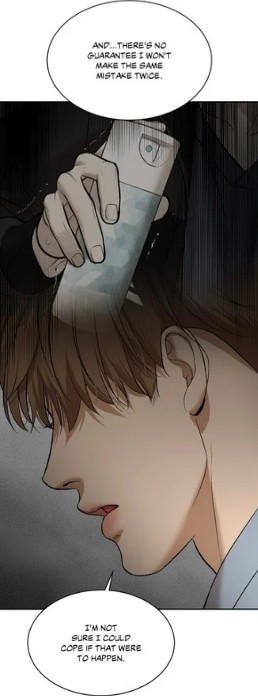 (chapter 62) completely devastated Kim Dan’s already fragile self-esteem.
 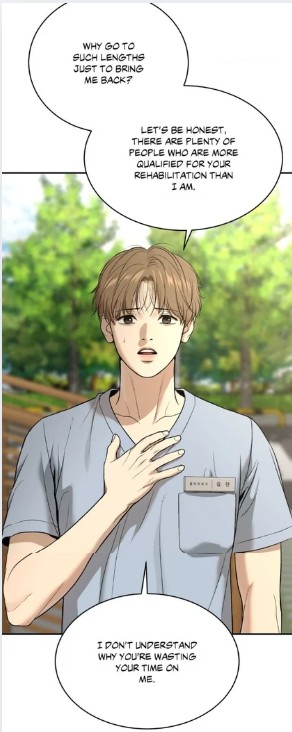 (chapter 62) First, he considers himself as waste. While in the past, he was at least a tool, he is now garbage. Hence his feelings are “trash”.
  (chapter 62) This means that in episode 62, he felt worse than in episode 18! The idioms “trash” and “waste” revealed the doctor’s own self-perception in episode 62: he saw himself as totally useless. He belonged to the “wastebasket”, just like the golden key chain.
  (chapter 46) Thus I deduce that the fate of this item echoes the doctor’s.
 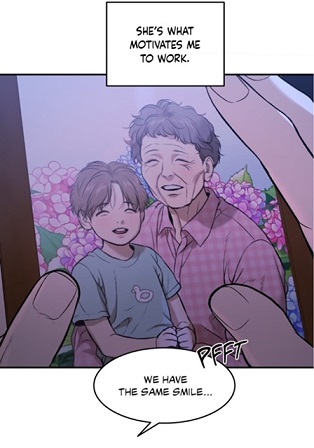 (chapter 47) He had selected this profession because of her. This shows that until now, he has never developed any ambition on his own. The loss of faith from someone he relied on for motivation made him feel completely worthless. This reinforces that his confidence and sense of direction were never self-sustained: they depended on others’ recognition. This pattern suggests that Kim Dan has never truly asked himself what he wants. His entire existence has revolved around meeting expectations, whether from his grandmother, Joo Jaekyung, or even his profession. His current crisis—feeling like waste—stems from the realization that without someone to validate his worth, he sees himself as nothing.
 (chapter 59) However, observe that he is using the expressions “do” and “now”. This has nothing to do with the future and dreams. It is not a reflection on his own desires but rather an immediate reaction to his circumstances. His mindset is still trapped in survival mode, seeking a course of action rather than contemplating what he truly wants. His words reflect an urgency to act rather than an opportunity to dream. This highlights that he has spent his entire life making decisions based on necessity rather than personal fulfillment. Even when faced with uncertainty, he does not ask himself what he wants—only what he must do next. His transformation will only be complete when he begins to question not just how to survive, but how to live on his own terms. That’s how I realized why Mingwa put this question in front of the window covered with Venetian blinds [which made me think of this scene
  (chapter 39 – Venice, a travel to Italy]. The window with the Venetian blinds represents a metaphor for the doctor’s trapped dreams. This interpretation made me recognize another aspect. Kim Dan is pushed to meditate, when he is front of a window or better said close to the sky! Hence the hamster started thinking about his own future in the penthouse
 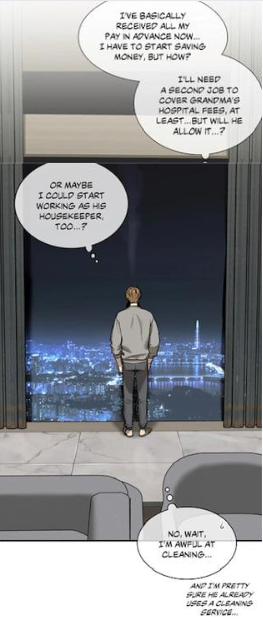 (chapter 19) or when he looked at the sun and sky:
  (chapter 41)
  (chapter 41) And the best evidence for this interpretation and expectation is doc Dan’s cellphone screen display.
  (chapter 47) The picture from his childhood: himself with his grandmother.
  (chapter 38) No wonder why he questioned the meaning of his champion title:
  (chapter 54). He saw the belt as something rather “meaningless”.
  (chapter 43) This would boost the doctor’s self-esteem. He is not trash, but an acknowledged fan and friend. The picture would encourage the physical therapist to develop his own ambitions. As soon as I made this discovery, another detail caught my notice:
  (chapter 66) The celebrity has no picture of Park Namwook in his contacts divulging the superficiality of their relationship.
  (chapter 42) The problem is that the athlete took this recommendation personally. He felt as if his job as fighter was questioned.
  (chapter 62) According to the main lead, the champion is “wasting his time here”.
 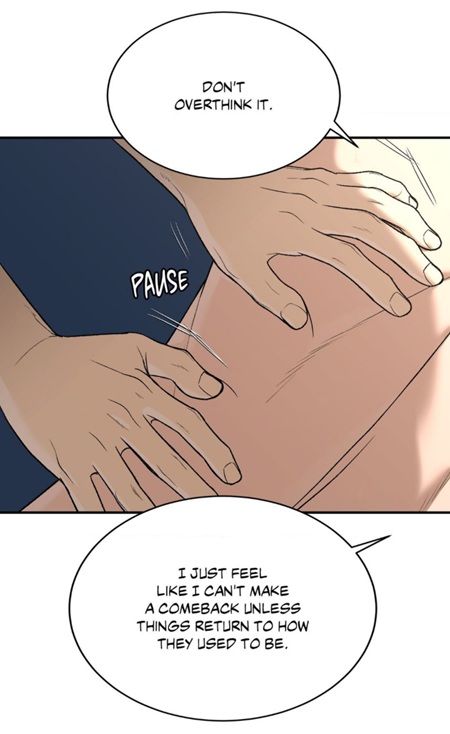 (chapter 62)
 (chapter 57) Hence it is clear that in the future, the physical therapist would refuse to use any kind of spray. On the other hand, it is important to recall that back then, Joo Jaekyung had made the request himself:
  (chapter 49) So in the doctor’s mind, if he agreed to the champion’s request, he would be treated like in the past. He would have to simply to follow the athlete’s lead. That’s why he is imagining that he might be put in a similar situation than in the past. But there exists another reason why he refused the champion’s offer right from the start. It is because he has always perceived himself as “hands” which stand for selflessness and generosity. The latter defined doc Dan. Hence he looked at them, when he declared himself as a tool:
  (chapter 57)
  (chapter 1) with a previous PT like the spray? No wonder why he called himself “trash” in the end.
  , people might wonder why I selected dandelions as a frame for the selected.. It’s clear that the dandelions aren’t just there for aesthetic balance. Their symbolism is profound. Dandelions are often associated with childhood innocence, wishes, and fleeting moments of beauty, yet they also wither quickly, easily scattered by the wind. In the context of Jinx, they represent a transitory force—something that struggles to take root, much like the intangible and fleeting elements in Kim Dan’s life. But there’s more to it. Before delving into deeper analysis, consider this: what is the common denominator in all these scenes?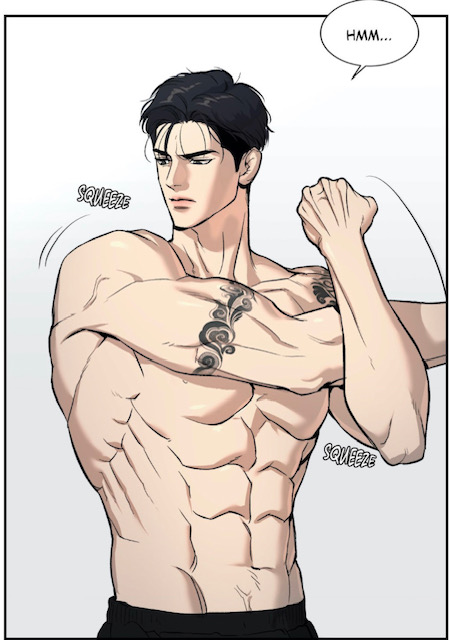


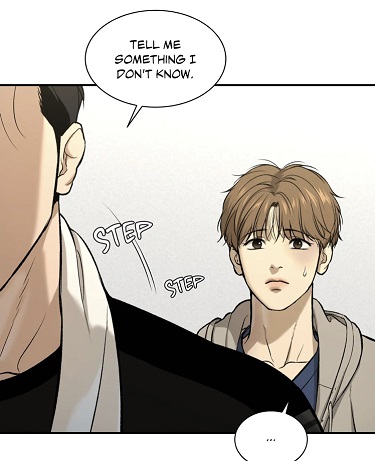
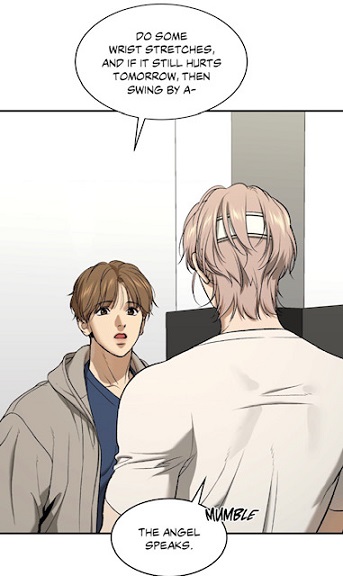

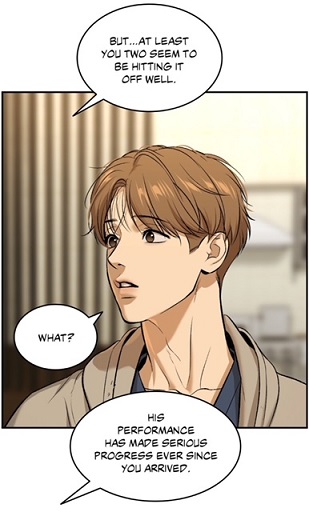


 (chapter 37) Therefore it is not surprising that the main lead couldn’t view the members as friends in the end.
  (chapter 41) And now, you comprehend why Joo Jaekyung has always disliked his birthday and the “congratulations” from people in general. The gifts and words were like poisoned praises to his soul. They were pushing him to live like a “god”.
  (chapter 45) Kim Dan’s only adult photograph, taken with Choi Heesung and Potato, ties into his professional world, reinforcing how his identity has always been defined by what he does rather than who he is.
  (chapter 59) While this photography was not a personal and intimate picture, it also symbolizes his first root in the little community: Light of Hope Hospice. He is part of the staff and as such of the little town. On the other side, we could say, he is gradually entering the scene as a PT. Note the contrast to the food truck:
  (chapter 30) In other words, it exposes the actor’s hypocrisy and wrongdoings. And now, you understand why I wrote genuine in parentheses above [proof of (genuine) human connection]. Photography in Jinx also represents the evidence of wrongdoing
  (chapter 48) and deception:
  (chapter 46) The exact opposite of the dandelions.
 (chapter 66) It is a direct contradiction to the hollow praise doc Dan has received all his life.
 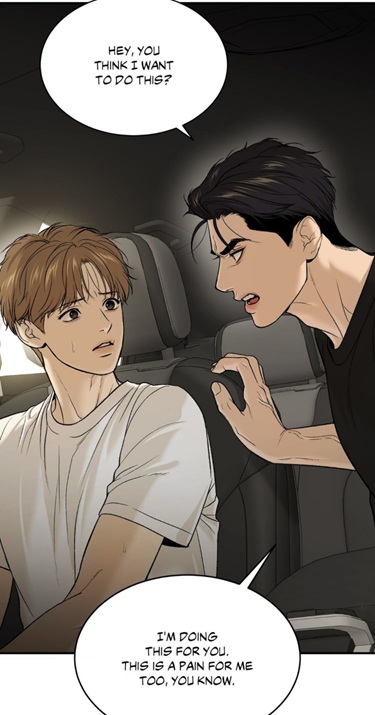 (chapter 66) he contradicts not only Kim Dan’s self-perception, but also his past accusations:
  (chapter 66) that he was merely a tool for Joo Jaekyung’s success. By taking him to the sleep specialist, the champion proves something that Kim Dan had refused to see: he matters beyond his utility. This moment mirrors Joo Jaekyung’s past words—
 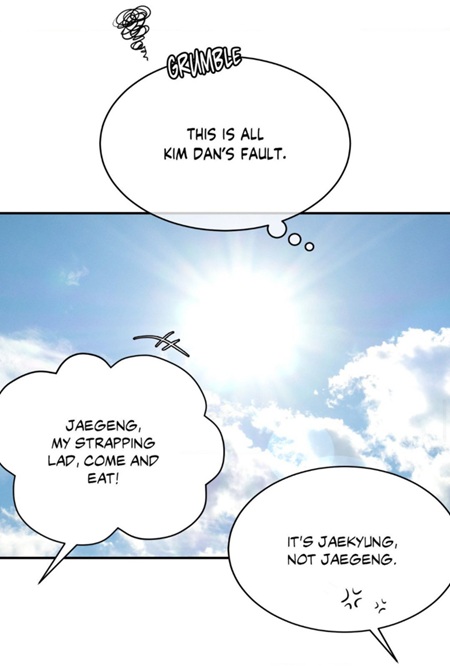 (chapter 62) This shows that deep down, he desires to obtain doc Dan’s gratitude. No wonder why he got so upset after hearing the displeased comment from Kim Dan.
 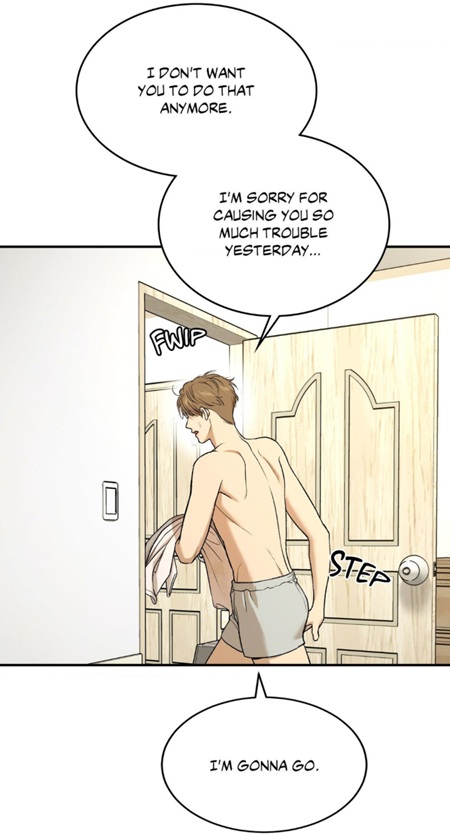 (chapter 66)
 (chapter 66) reveals Kim Dan’s elevation in the champion’s life. The dressing room symbolizes privacy and closeness. No longer seen as a mere tool, Kim Dan has become an integral part of Joo Jaekyung’s world, not because of what he can do but because of who he is.
 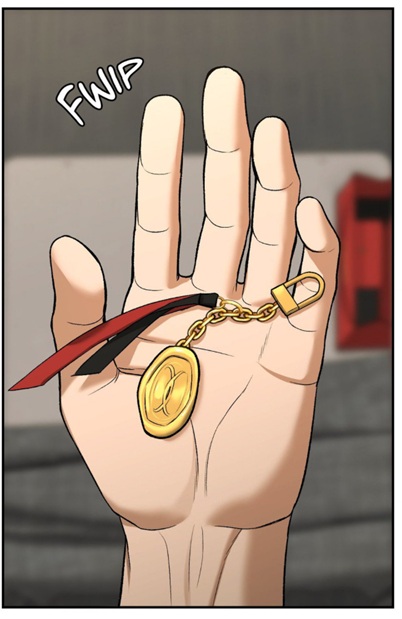 (chapter 66) Therefore the champion is holding the expensive gift with his whole hand contrary to the past:
  (chapter 55) As a conclusion, by bringing him to the sleep specialist, the star proved doc Dan’s words wrong! He told him something that doc Dan didn’t know: he is precious. He needs to pay attention to his health and body.
 (chapter 32) And now, you comprehend why the athlete didn’t fall for Park Namwook’s manipulations afterwards.
 (chapter 66) “I don’t know what you’ve been up to lately…”, it carries an accusatory undertone, subtly suggesting that the champion has been avoiding him. By framing it this way, Park Namwook is not just asking about Joo Jaekyung’s well-being—he is asserting his discontent over losing control. His follow-up suggestion, “Instead of being alone all the time, why not come to the gym?”, reinforces the idea that he sees the gym as a tether, a way to keep Joo Jaekyung within his domain of influence. In addition, he is suggesting that the athlete has been using his injury as an excuse to avoid training. There’s an undertone of doubt and accusation, as if he does not fully believe the champion’s recovery process is valid or necessary. Instead of expressing genuine concern, Park Namwook is subtly framing Joo Jaekyung’s absence as a sign of laziness or avoidance. The small compliment from the manager (“good work”) represents a turning point in the athlete’s life. Park Namwook can no longer treat the athlete like in the past.
 (chapter 7)
 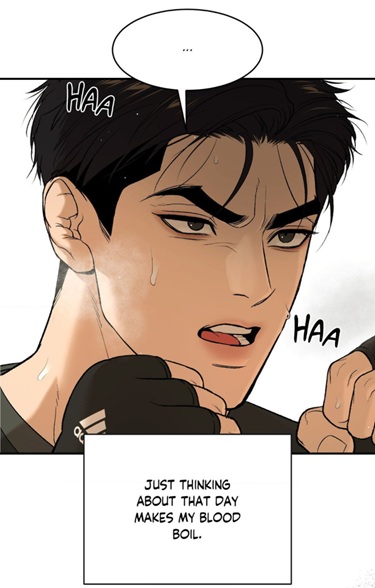 (chapter 65) At the same time, such a disapproval
 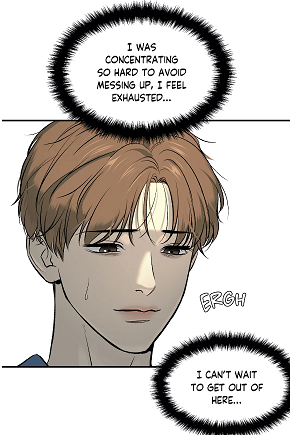 (chapter 1), hence his true desire was to run away from that place. For praise to be effective, the recipient must be open to receiving it, either by looking forward to feedback or having expectations of validation. Since Kim Dan was in a state of distress, he was unable to internalize the champion’s words, reinforcing his long-standing belief that he was invisible or unworthy of acknowledgment. That’s how the champion’s praise became a dandelion seed in the end.
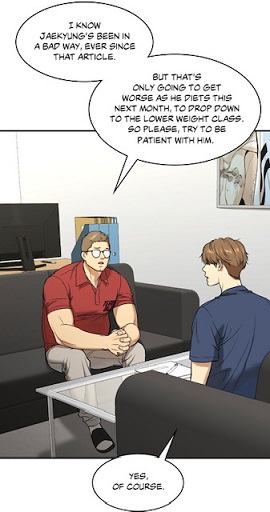 (chapter 36), or to meet expectations. None of these affirmations recognize him as a person, only as a professional fulfilling a role.
 (chapter 18)
  (chapter 45)
 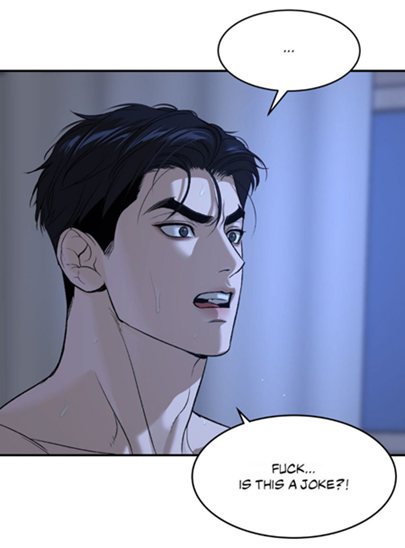 (chapter 64)
  (chapter 66) Is this a joke?
  (chapter 40) However, Kim Dan has never realized it. Either he was sleeping or totally out of it (fear of sex)
  (chapter 27) It is important to recall the importance of the receiver’s mind-set. The latter has to perceive the sincerity from the speaker. Hence I come to the following deduction: The moment Kim Dan notices Joo Jaekyung’s smile and laugh, then he should come to the conclusion that he matters to the protagonist. I would even say, the two protagonists are destined to make each other laugh and smile:
  (chapter 58) The friends ignored the main lead’s emotions and struggles. In order to be able to have fun, both main leads must be freed from their past and low self-esteem.

 (Chapter 63) The presence—or absence—of clothing during their encounters symbolized the gradual dismantling of their emotional walls. Now, shifting the perspective to the champion, another layer of complexity emerges. Joo Jaekyung’s evolving approach to intimacy is not just a reflection of his growing feelings but also a silent, deeply ingrained struggle with dependence and control.
 (chapter 63) Why does he hesitate to strip entirely, even as he succumbs to desire? Notice that he released his erected phallus before removing his cloth.
  (chapter 63) To answer this, a comparative analysis of earlier sex scenes is necessary, unraveling the hidden dialogue between physical exposure and emotional vulnerability.
 (chapter 63) The champion, despite holding the dominant role, is now the one retaining a piece of clothing. This suggests an unconscious act of concealment—not of shame in the traditional sense, but of a growing dependency on Kim Dan.
 (chapter 62) with a zoom-in shot on his erection still hidden by gray sweatpants. Striking is that on the one hand he let the doctor feel his reaction to his naked body, when he embraced the doctor:
  (chapter 62) The “hamster” could sense with his leg the excitement. On the other hand, these pants were only removed once he entered the bedroom and was on the bed
  (chapter 63), reinforcing the idea that vulnerability, for him, is confined to this private space. Moreover, the choice of attire in Episode 62
  (chapter 63) Thus I deduce that exactly like the presence of the black underwear, the athlete’s low self-esteem hasn’t been removed completely. He still expects fear and rejection.
 (chapter 63), dominates without seeking connection
  (chapter 55), and ensures that every encounter follows his carefully constructed narrative. However, in Episode 63, a subtle but undeniable shift occurs. For the first time, Jaekyung’s actions reflect something deeper than mere desire or dominance. They reveal his growing emotional investment in Kim Dan, exposing a side of him that even he does not fully comprehend.
  (chapter 63)
 (chapter 12) In the earlier encounter, Jaekyung presented himself as a generous partner, offering Kim Dan a so-called privilege—an opportunity to enter a whole new world, thanks to him. However, his so-called generosity was nothing more than a facade, a way to conceal his inexperience in genuine intimacy. The tool he used was not just an object of pleasure but a mask for his own shortcomings as a lover. He did not know how to pleasure Kim Dan, nor did he care to learn. His focus was not on Kim Dan’s enjoyment but on reinforcing his own power and dominance.
 (chapter 63) Here, he no longer portrays himself as the benevolent provider of an experience.
  (chapter 12) – seeking both to display dominance and to elicit validation
  (chapter 12) —this time, in Episode 63, he prioritizes Kim Dan’s pleasure without explicitly expecting anything in return.
  (chapter 63) Up until this point, Jaekyung has never truly faced rejection.
  (chapter 63) This moment forces him to confront an uncomfortable truth: power and status cannot buy emotional intimacy.
 (chapter 03) or passive-aggressive remarks.
  (chapter 6) However, in this moment, he does not react with anger or coercion.
  (chapter 63) While he does voice his frustration, he does so without force, showing an unprecedented level of emotional regulation. Instead of demanding compliance, he chooses a different approach—he focuses on Kim Dan’s pleasure, attempting to bridge the emotional gap through physical intimacy
  (chapter 63) rather than control. This decision is not merely about sex; it is an unconscious attempt to regain Kim Dan’s attention, to re-establish a connection that he does not yet fully understand but deeply craves.
 (chapter 29) This remark exemplified his detachment, his refusal to acknowledge Kim Dan as a person rather than just a body. Once again, the intercourse was linked to achievement and work. However, in Episode 63, he actively seeks Kim Dan’s gaze, subtly pleading for recognition.
  (chapter 63) This reversal is crucial because it indicates that he no longer sees Kim Dan as just a means to an end. However, his desire for recognition still lingers beneath the surface—just as he once sought validation through dominance, he now seeks it through Kim Dan’s acknowledgment. He wants something more, though he cannot yet articulate what that is, and his actions reflect a subconscious craving for emotional reassurance.
  (chapter 13)
 (chapter 62) the sportsman welcomes the physical therapist in blue pajamas and a robe—an overt attempt to maintain distance and control. Even as the encounter begins, he leaves his pajamas on
  (chapter 3), removing them only
  (chapter 3) – this image marks the change) when the doctor’s back is turned. Then in Episode 8, during the shower, he continues wearing shorts and underwear
  (chapter 8), and his choice of the doggy style further reinforces his desire to avoid direct, face-to-face vulnerability.
  (chapter 12) before removing it and adding the pink sex toy.
  (chapter 12) Their bodies might have been close, but their minds remained divided. That’s why he couldn’t detect the huge bruises on his companion’s body.
  (chapter 12) This guarded approach is further underlined in Episode 20
  (chapter 20), where even in the midst of nakedness, the athlete deliberately positions the doctor in the dog stance. At the same time, he uses another MO: the darkness of the room to hide himself. This calculated arrangement maintains an emotional buffer, allowing him to remain physically exposed yet emotionally detached—a recurring theme in his behavior.
 (chapter 29) while still cloaked in his familiar blue robe and pajamas. Interesting is that the room is not totally dark like in episode 20, the bedroom is illuminated by the huge TV screen. Importantly, this episode marks the first time they face each other in the bedroom, signaling a significant shift in their dynamic and announcing a switch in position. This newfound mutual visibility lays the groundwork for later developments.
 (chapter 33) —a deliberate act imbued with symbolism. Unlike earlier encounters, the champion remains fully clothed throughout this episode,
  (chapter 33) contrasting sharply with previous moments of exposure. The car scene, where they are now facing each other, reinforces the announced switch in intimacy; the light not only illuminates the scene but also serves as a metaphorical spotlight on his desire to see the doctor’s face and body
  (chapter 33) —a silent assertion that only he can truly satisfy the physical therapist. Let’s not forget that before having sex together, the fighter resorted to a dildo
  (chapter 33) rather direct physical intimacy, because he felt insecure after witnessing the actor’s advances toward Kim Dan. His goal? To reaffirm his dominance and make Kim Dan admit that he needed him for pleasure. It is important because it exposes that deep down, the champion views himself as a bad lover. There is no doubt that Heesung‘s criticism resonated with him.
  (chapter 33)
 (chapter 39) Maintaining the doggy style during this phase, he uses such intimate acts to mask his true longing and attraction—an effort to control the encounter while keeping his emotions under wraps. Then I noticed that they switched positions, when doc Dan asked for a break.
  (chapter 39) The wolf chose to lie down on the bed:
  (chapter 39) As you can see, through the different intercourses, we can see the different methods the star used to conceal himself, to hide his “weakness”, his growing feelings for the doctor.
 (chapter 61) The physical therapist remembers an encounter bathed in bright light, where they stood before a couch: the doctor had removed his pants while the champion remained fully clothed, positioned behind him.
  (chapter 61) After both reached climax, the sportsman swiftly departed—a stark demonstration of his habitual retreat into distance and fear, even as he ensures the doctor’s pleasure.
  (chapter 61) This calculated “running away” underscores the return of old insecurities and the persistent need to assert control. Since the doctor was still living in the penthouse and as such was still working as the star’s physical therapist, it becomes comprehensible why the athlete could only resort to strength to keep his fated companion by his side. He had rejected his “gratitude” and “emotions” before.
  (chapter 63) Now lying on the bed facing each other, the pair’s physical closeness appears more genuine. Yet, even in this seemingly intimate configuration, they avoid locking eyes during penetration.
  (chapter 4), we do not see whether he is wearing anything the morning after. After their “magic night” in the United States (Episode 39), the next morning, he is only shown taking a shower
  (chapter 40) —meaning the audience never sees him leaving the bed. However, in Episode 45, the author deliberately includes a shot of Jaekyung leaving the bed while still wearing his black boxer briefs.
 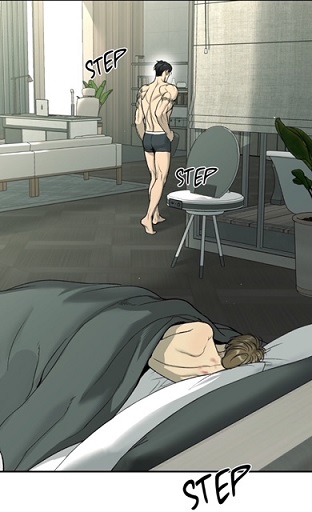 (chapter 45)
 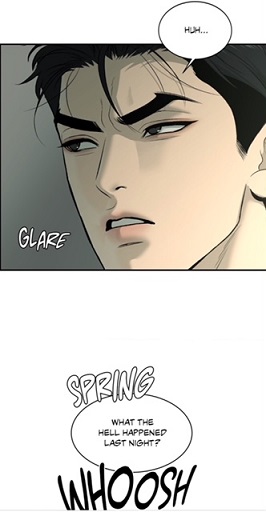 (chapter 45). This is just a rhetorical question, as he clearly remembers the night.
  (chapter 45) In reality, he was wondering why he had acted this way. This contradiction—pretending to forget while consciously recalling their time together—reflects his internal denial. His next thought,
  (chapter 45) is a transparent excuse to avoid confronting his emotions. The presence of the black underwear in this scene confirms that he had not fully lowered his guard; he still maintained a psychological barrier between himself and Kim Dan.
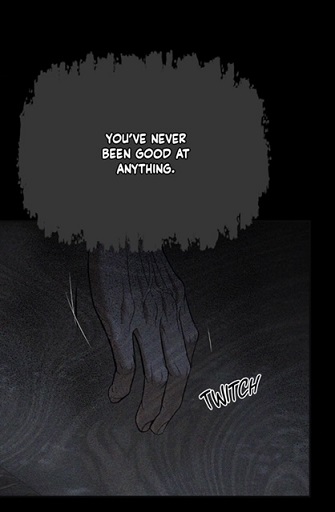 (chapter 54) If he was not good enough, if he did not win, he was nothing.
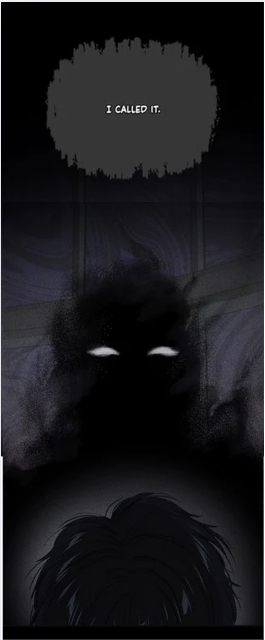 (chapter 54) The specter that haunts him—an unnamed figure whose words still echo in his nightmares—was the architect of his relentless pursuit of strength. Striking is that in his nightmare, he is facing the mysterious ghost, a sign that he saw hatred and rejection in his counterpart’s eyes. While Kim Dan’s halmoni took his hand and provided warmth
  (chapter 22), Jaekyung’s guardian likely did the opposite.
  (chapter 63) In the beginning, the champion grabbed doc Dan’s wrist. This shows that the athlete was not used to touch Kim Dan’s hand. And notice how the “hamster” reacted
  (chapter 63) He pushed it away. This means that taking the doctor’s hand represents the biggest challenge for Joo Jaekyung right now. In addition, the last panel indicates the champion’s transformation, he is now willing to seek the doctor’s closeness. It also implies the vanishing influence from his past guardian.
 (chapter 5) At the same time, it would highlight the potential danger of Park Namwook’s vision for the gym: an institution that might perpetuate the same cycle of control, shame, and expectation rather than fostering true passion and individuality in young athletes. That’s how I realized why the manager slapped his “boy” after the funny sparring:
  (chapter 26) He explained that the main lead was just a doctor. However, I am quite certain, underneath, the manager thought that doc Dan was not fit to spare: so small and weak. He doesn’t fit the criteria to become a sparring partner. Look at his reaction, when Seonho faced the champion:
  (chapter 46) Under this new light, it becomes comprehensible why Potato was also neglected by the manager. The young maknae belongs to a different weight category. There is this invisible rule that only strong people can become member from the gym. However, the purpose of such an institution shouldn’t be reduced to titles, strong and muscular men or boys. The gym should be opened to anyone who desires to have fun and improve their health.
 (chapter 1), until he received the doctor’s massage in chapter 1. His attitude toward sex mirrors his training in the gym—focused on endurance, performance, and control. His body is a tool, a machine honed for efficiency.
  (chapter 63) Pleasure is secondary; the real goal is lasting, enduring, proving his stamina. Even in his most intimate moments, he is competing against an invisible opponent—his own ingrained fear of inadequacy.
 (chapter 63), why he keeps barriers between himself and Kim Dan, even when his body betrays his true desires.
 (chapter 62)
  (chapter 4) nudity was a tool of dominance, a means of asserting control. Now, it has become a sign of submission—not in the physical sense, but in the way he is slowly relinquishing the emotional armor he has always relied upon.
  (chapter 63), but of his silent battle against the vulnerability he is beginning to feel.

 (chapter 55) One might think that the causes for his throbbing head are his depression and insomnia. On the other hand, I am quite certain that many readers had a different explanation for his migraine. He is missing his lover, Kim Dan, as the color red symbolizes the headache and the physical therapist’s name is strongly intertwined with this pigment which was once again confirmed in episoe 56.

 Thus I consider this image, where the champion is seen
  (chapter 43) eating a strawberry with cream as the announcement of the magical night between Kim Dan and his fated partner. The fruit with the cream represented a violation to his strict diet.
  (chapter 55) or the medicine against migraine.
 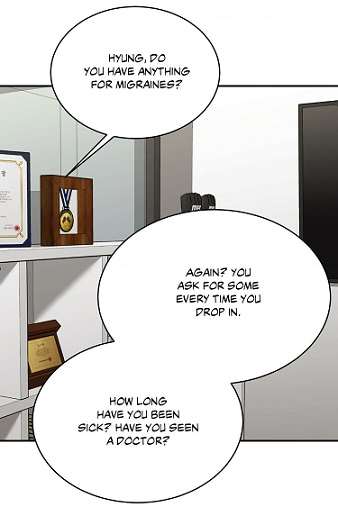 (chapter 54) However, in episode 55, we can observe a huge change in the champion.
  (chapter 55) The latter is finally admitting the inefficiency of the medicine. In other words, in this scene, he was giving up on them. This represents an important step on his way to enlightenment. For me, it signifies that he is stopping relying on pharmaceutical products. Let’s not forget that in the past, he rejected the PT and even neglected them. Why? It is because he trusted more sprays and other medicines than people.
  (chapter 49) Therefore the switch of the spray had to occur. He needed to question his prejudices and attitude. But let’s return our attention to the champion and his throbbing head. One detail in this panel caught my notice.
 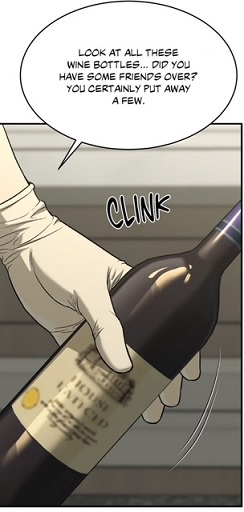 (chapter 55). This means that she had not seen the mess in the master room before:
  (chapter 55) And now, pay attention to the number of the bottles in his room:
 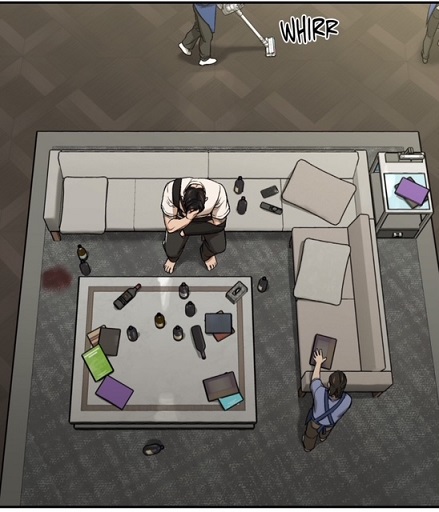 (chapter 55) I count 12 bottles of wine exactly like in the last image from chapter 54. Thus I came to the following deductions:
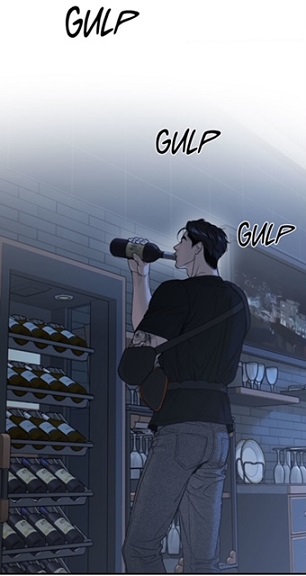 (chapter 54) and the appearance of the staff in chapter 55. It indicates that Jinx-philes can witness time deceleration in season 2. From one month in one chapter, then a week in the next episode, finally we have a reference to a day: Monday. Thus I deduce that in episode 56, only 2 or 3 days elapsed. I have already announced that the couple should meet each other around 25th:
  (chapter 56), for the day Kim Dan wired his money to his “loved one” took place after 10th of the month: XX = two digits.
  (chapter 55)
 (chapter 55) Consequently, I judge the cleaning lady as the positive version of Park Namwook. Though she uses social norms, she doesn’t use them against her employee. She didn’t condemn him, it is a mixture of teasing and reminder. At the same time, her intervention implies that she must have noticed changes in her boss after the arrival of Kim Dan in the flat and his departure. That’s the reason why I have the impression that this image is announcing another turning point in the champion’s life either:
  (chapter 55) He won’t drink like before. However, I don’t think that he will behave like in the past: reject any alcohol entirely.
 (chapter 55), his migraine vanished. Though he is holding his head the next morning and hiding his gaze
  (chapter 55), the Webtoonist didn’t add any red or “throb” as an indication for a migraine. As you can see, his headache is strongly intertwined with repressing the physical therapist and as such locking away memories. However, there exists another cause. What had the doctor done in the past?
  (chapter 23) That’s how little kids are admired and loved. This stands in opposition to the abuser’s behavior:
 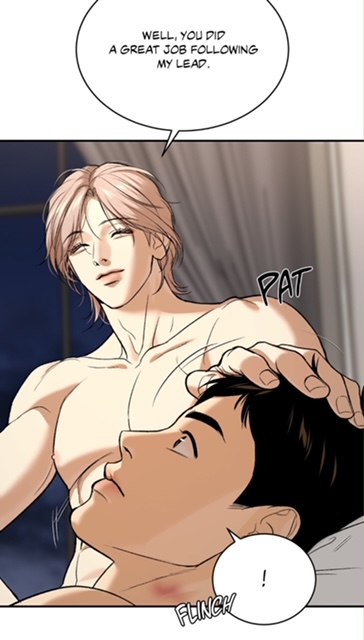 (chapter special 2) The same way than Kim Dan with the patting! In other words, the champion is deep down longing for such a gesture, but he has not realized it yet. Nevertheless, I believe that he just needs a trigger.
 (chapter 55) With his left opened eye!! The exact opposite from this picture:
  (chapter 55) This observation got confirmed in episode 56, though I couldn’t expose it before the release of the new chapter.
  (chapter 56) As long as the fighter thinks of his fated partner, he is not plagued with a throbbing head. This shows that it has something to do with repressing memories. However, his physical condition is still not improving:
 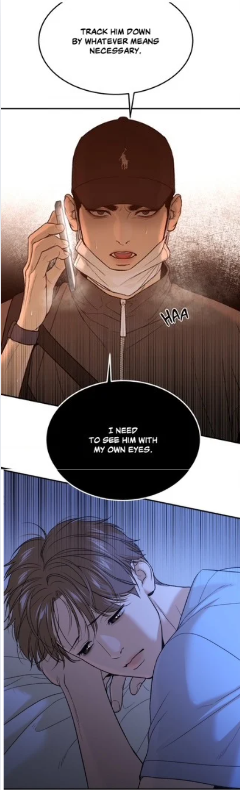 (chapter 56) He even looks worse than before: exhausted and malnourished. There is no one by his side taking care of him: his only interaction with his manager is through the phone. At no moment, the guy felt the need to pay a visit to his boss and champion.
  (chapter 56) Because I discovered the connection between memories and the physical therapist, it is important to examine the interaction between the main lead and the new uke.
 (chapter 55) This signifies that in reality, the uke is the one benefiting more from this relationship, while the “Gucgi guy” is a placebo for Joo Jaekyung. He can not replace the true medicine: Dan’s love. But Joo Jaekyung chose to close an eye to the truth forgetting his “insight” from chapter 2:
  (chapter 2) However, back then, he had just stated it in order to get rid of the mint-goblin. He needed a justification for switching his partner. In other words, this was reflecting more the protagonist’s corrupted mind and heart. Therefore he is designed eyeless, the symbol for ignorance, lies and blindness.
  (chapter 55) And where did he have his migraine exactly?
 (chapter 55) It was on the right side and eye! It truly exposes that Joo Jaekyung was getting punished for his attitude. He is not allowed to bury and forget Kim Dan. The star’s open eyes in this episode symbolize denial, lack of self-awareness and as such the absence of insight. He is also punished for his lies in episode 2. His words might have reflected the truth, but his words didn’t expose a change of heart. He was taking advantage of this situation as well. So when the pain intensified pushing him to close his right eye, we should consider this image as a short moment of reflection and realization. In the restroom, he was forced to admit that only Kim Dan could kiss him. Is it a coincidence that just before Mingwa presented this image
  (chapter 55) He was just standing there and avoiding his gaze.
  (chapter 5) Therefore he was in a happy mood after that match. A simple gesture with a lot of power! He has been missing this hand or better said this gesture. This action was the main lead’s true motivation.
  (chapter 40) No wonder why he felt so lost and empty after the last fight.
  (chapter 43) this was the coach’s hand. In other words, the athlete felt more close to the coach than to the manager. This would explain why he would listen to the coach and even entrust him with huge tasks like the charity event. Strangely, in season 1, we can observe how more or more he is distancing himself from the fighter. Probably related to his secret relationship with Kim Dan. According to my theory, the coach is aware of their relationship. They are more than just boss and employee. As you can see, I don’t think that the champion is right now just missing the doctor’s sweet lips. Deep down, he would like to be patted by his loved one, exactly like Potato.
  (chapter 23)
  (special episode 2) But this is what he received after the last match:
  (chapter 2) The champion’s reaction is quite telling. He is not easily swayed. But we have another bigger evidence that his intercourses were replacement for “fights”. In The States, the fighter asked Kim Dan to join him at 11:00.
  (chapter 38) Therefore it is not surprising that he rejected Kim Dan’s request first.
  (chapter 39) He didn’t feel like it, because he was not aroused at all. Imagine that he needed two hours for that erection, a sign that during that night, Kim Dan was in reality a replacement for the American fighter.
  (chapter 38) In fact, he needed a fellatio to get an erection, and he only started getting excited, when he saw the doctor’s gaze. That’s the reason why he remembered this image under the shower:
  (chapter 53) The latter didn’t feel the need to have more sex with Kim Dan, he let his partner leave the place. Why? This contrasts so much to their First Wedding Night:
  (chapter 4)
  (chapter 53) Pay attention to the behavior from the fighter during their last night together. He is looking away, he is not paying attention to his fated companion. His mind was elsewhere, focused on Baek Junmin! In my opinion, during that night, the champion had been able to differentiate between the physical therapist and his opponent. Fighting was more important than sex and as such his sex partner. To conclude, the physical therapist had been able to win Joo Jaekyung’s belief and heart. He was no longer a replacement at all. He had become a person close the fighter.
 (chapter 49) he wanted to screw Baek Junmin for real. In this image, the athlete oozes confidence and strength. This means that he was no longer dependent on the good fuck before the match.
  (chapter 53) However, the main lead never realized this huge change, he kept his old belief as a tradition out of habit. This explicates why the fighter tried to replace with a new uke
  (chapter 55), but here the sex was longer connected to a match, rather to fun. Finally, observe how the champion is now blaming his PT for his ruined match:
  (chapter 56). I don’t think, he was referring to the spray incident, rather to their night before the match. The doctor had not behaved like a real opponent, he had admitted his “defeat” quite easily. He had left the ring before procuring him a good fuck. He was blaming his partner for violating his rule:
  (chapter 44) Sex is a synonym for love and as such it is about giving pleasure and affection to his partner. It is a two-way street. And this is something that the champion has to admit and accept. Thus I deduce that the fighter still has a long way to go before dropping all his fake principles. Like mentioned before, he needs to ponder on the following question: what matters to him the most? His championship or his happiness? Or what is sex to him? Why does he think that he is jinxed? He needs to face his own painful past and remember the face of his tormentor.
 (chapter 49) Baek Junmin and the abusive parent.
  (chapter 54) But the masturbation had taken place before. So who did he have in mind, when he was jerking off? I might shock my avid readers, but I would say: Baek Junmin.
  (chapter 54) However, this gesture had the opposite signification: rage, resent… but also sweet revenge! He must have recalled the Shotgun’s face.
  (chapter 52) There’s no doubt that thanks to the doctor, the champion will learn that he can get “justice” and satisfaction through other means. He can defeat the ghosts from the past, not just thanks to his fists and hard work, but also thanks to his surroundings and knowledge. Lawsuit and media!
 (chapter 1) The physical therapist is not only his reward and price, but also his “second shoulder” and as such his pillar. The new PT won’t be able to replace him. Joo Jaekyung is not just a champion, but also a team: Kim Dan as his PT and his lover. As for Kim Dan, the celebrity is his “energy drink”, his source of comfort and joy. He is also his home, for he is the first one who invited him to stay with him! Yes, the grandmother didn’t invite her grandson to live with her, he was just dumped at her place. And because the celebrity is like a home and family, it explicates why the doctor is once again “living like a ghost”.



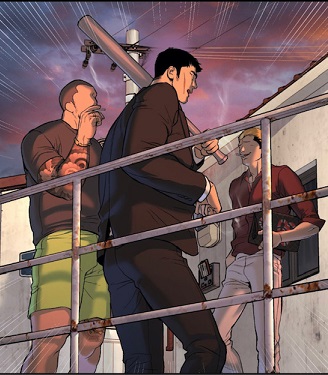

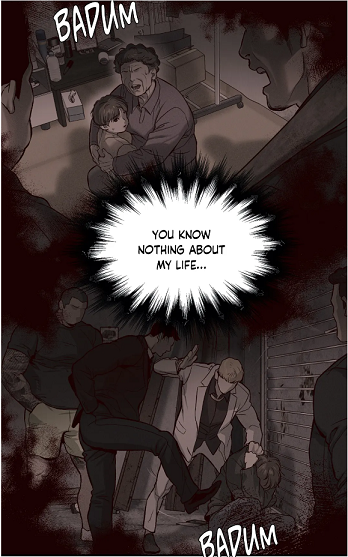


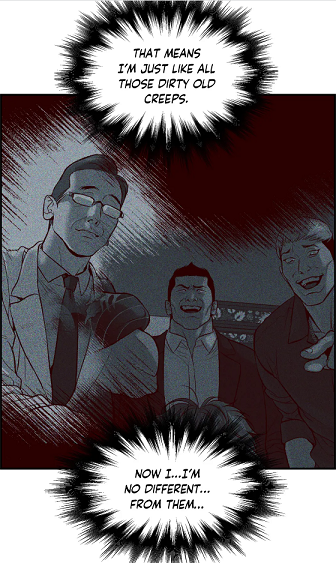

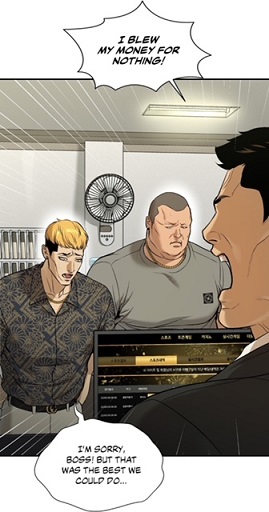


 (chapter 49) These 3 men and The Shotgun have to be seen as a team. Moreover, 4 is a synonym for death. Then, observe that the image from episode 20 contains two villains, the loan shark and the perverted hospital director. 1 +1 = 2. So when we see the number 10, 11, 16, 17 and 18, we could perceive it as an allusion to Heo Namwook, the villain.
 (chapter 11) and indirectly the persons involved in the redevelopment. However, I have to admit that I have a different explanation.
  (chapter 1) The main lead appears as a beast, triggering the doctor’s fears. He seems to be like an antagonist. However, I believe that it is just a deception. First, Mingwa has clearly stated that the champion is the protagonist of Jinx. As such, he can be neither a villain nor an antagonist. Secondly, though he seems to serve as a barrier, the reality is that Kim Dan is incited to mature and overcome his own fears. In fact, the celebrity represents the opposite notions of “conformity” and “immobility”. He embodies verity, maturity, transformation and progression. The evidence of this perception is the gradual transformation of Kim Dan as an inexperienced PT to a very professional and performant physical therapist. According to my interpretation, the Emperor works as the mirror of truth. He confronts the delusional physical therapist with his mental and emotional issues, like here:
 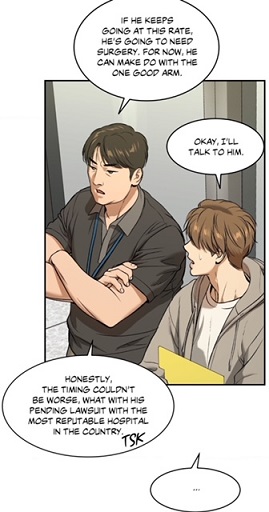 (chapter 42) He only relied on his hands. He was forced to become a serious and confident PT!!
 (chapter 1) The star was just waiting, and not threatening the doctor. As you can see, Joo Jaekyung doesn’t appear like a threat or a monster. But this doesn’t end here. One detail caught my interest. The champion is associated with blue. It is his true color, whereas Kim Dan is “red”, like a sweet strawberry. So why does this young man ooze a red aura, when his true shade is blue like water
  (chapter 1) Note the contrast to his “boy”. The red is not coming from Joo Jaekyung’s body
 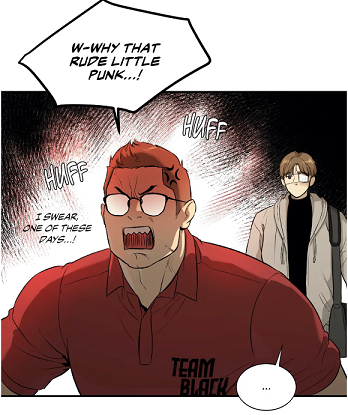 (chapter 11) The coach is yelling for Joo Jaekyung’s comment, yet the reality is that the manager didn’t treat Kim Dan at all. In fact, he feigned ignorance. Moreover, look at the champion’s t-shirt:
  (chapter 26) In this composition, I compared the MMA star with a leopard and Park Namwook to a spider:
  (chapter 17) or in episode 46
  (chapter 46) He represents regression or the hurdle to overcome.
 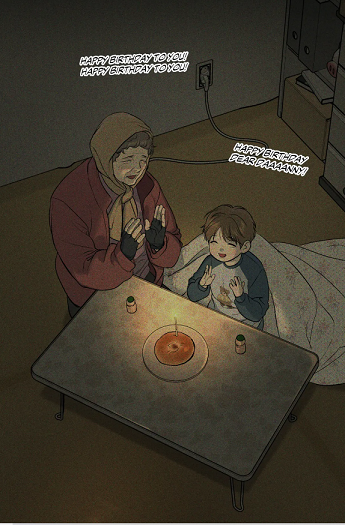 (chapter 11) And I can prove my statement by showing the episode where she appears: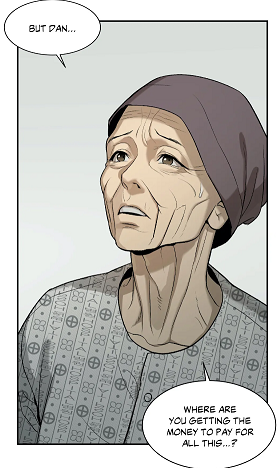

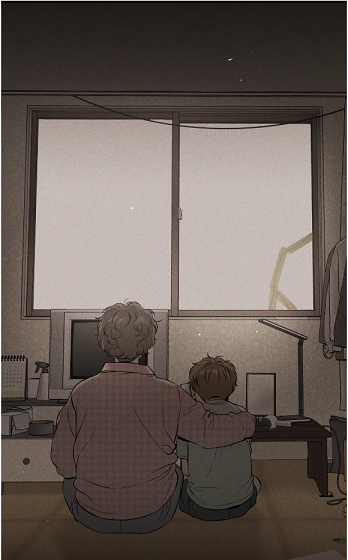


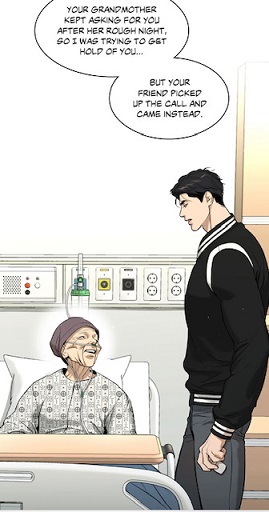

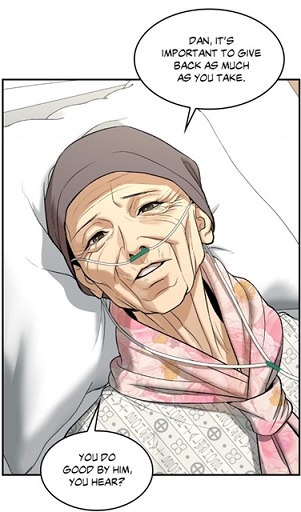


 (chapter 9) or other events like this one:
  (chapter 37) Buying in secret junk food.
 (chapter 1)
 (chapter 1) But it is the same for the champion who got his “gym” stolen from his hyung:
  (chapter 22) He is acting here like a tyrant.
  I came to this revelation thanks to this article:
 . (chapter 46) This would explain the champion’s emptiness and darkness:
  (chapter 21) and Kim Miseon’s reproach to Kim Dan could be seen as an indirect allusion. And if my interpretation about her number is correct, then we would have a good explanation why Kim Dan was unable to perceive her true nature, but also why she is so selfish.
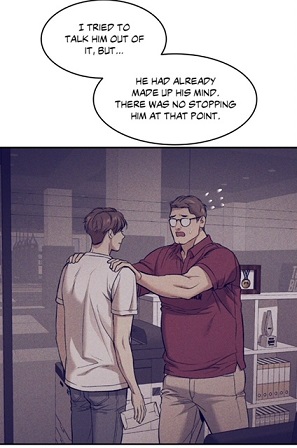 (chapter 53) Only the logo is red.
 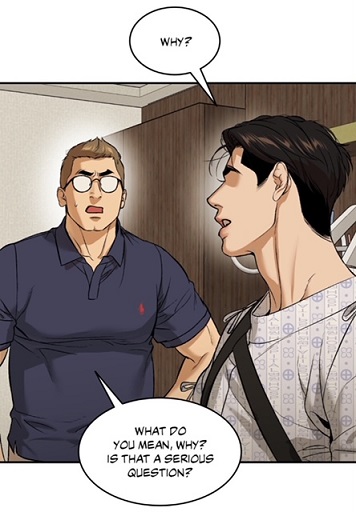 (chapter 53) It is important, because it announces the manager’s resignation. He doesn’t want to become responsible for the mess. Unconsciously, he is no longer claiming to be the owner of the gym. Furthermore, notice that the grandmother desires to return to the West Coast in order to see an ocean of “fire”.
 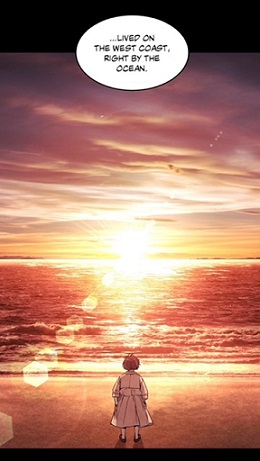 (chapter 53) This shows that she is longing for warmth and red colors. Yet, the color of the sea is rather green or blue. As you can see, everything is pointing out that the couple had to overcome the antagonists from season 1, the emotional vampires, who were so close to them than none of them realized that they were the origins of their suffering. And now, if you look at my table again:
 (chapter 35) In episode 16 and 17, the presence of the sun is a reference to the MMA fighter, it is announcing his arrival. This corresponds to the color I had detected with the first scheme:
 MFC with the blue “ring” embodies this pigment, just like the ocean. In other words, blue should be the dominant color in season 2, and in Taoism blue stands for YIN! On the other hand, Kim Dan also represents red with his name. Moreover, if you look at the numbers of the quoted episodes again, you will realize that the villains are strongly connected to the number 10 and as such one and zero. Thus Director Choi Gilseokf’s phone number is 010-1….
  (chapter 46)
  (chapter 37) He never complimented him for his hard work at all.
  (chapter 46) With these words, the manager creates a negative atmosphere, therefore there is no longer any trust and loyalty among the members.
  (chapter 18), until the champion confronted the protagonist with reality.
 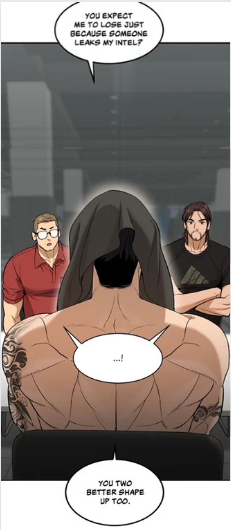 (chapter 46), however Park Namwook refused to accept such a behavior from his boss. Therefore he put his pupil under pressure.
 (chapter 46) He avoided a confrontation. This number symbolizes how the lead feels burdened by obligations imposed by his oppressor, who positions himself as provider of “stability” while actually fostering dependence and draining his victim. And naturally, in the same chapter, we have a similar interaction between Heo Manwook, the minion and his hyung, the real boss:
 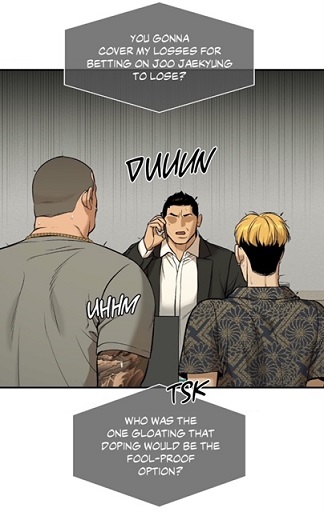 (chapter 46) Here, the director was reminding him of his mistakes and obligations. However, this time the boss chose to become proactive and responsible.
  (chapter 1)
 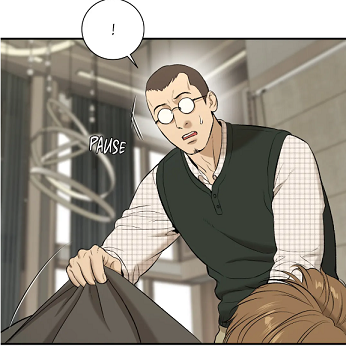 (chapter 13) They are strongly intertwined with the color green and as such blue. In literature, art, and psychology, the color blue often represents calmness, loyalty, and introspection.This fits to the description made by the author concerning season 2. The latter would focus more on emotions and thoughts than on the plot. And now, it is time to reveal why in the illustration I added the number 9.
 (chapter 9) The leopard agreed and that’s how they came to argue about his home the next morning:
  (chapter 10)- So from 9 to 18, the story is focusing on the doctor’s home. In episode 18, Joo Jaekyung invites the poor physical therapist to his home.
 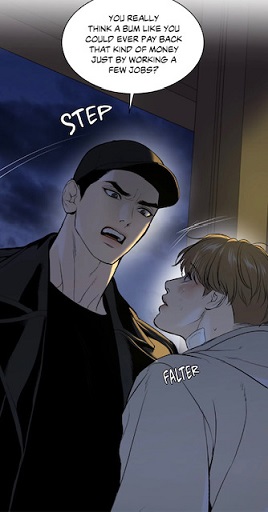 (chapter 18) In this episode, both main leads refuse the assistance from the other. Kim Dan is bothered that Joo Jaekyung paid off the debts, while the other dismissed the worries from the PT:
  (chapter 18) Then in episode 19, Joo JAekyung is not asking for his “help”, until he calls him. But even here, he is refusing to prepare his partner:
 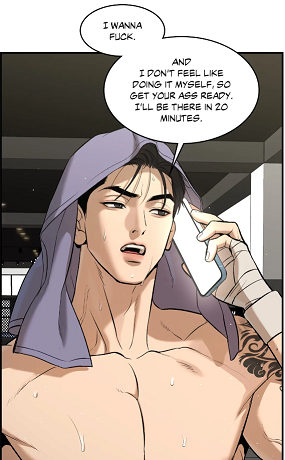 (chapter 19) As for Kim Dan, the latter doesn’t feel truly needed as PT, hence he is already thinking about taking another job:
 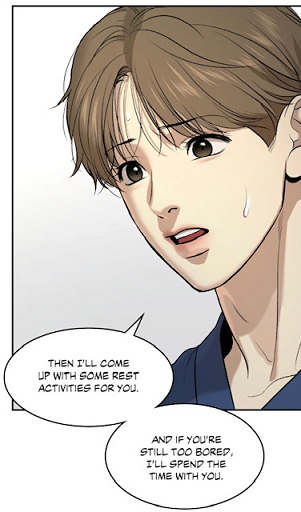 (chapter 27) He encourages his VIP client to take a break by remaining by his side. However, this attempt fails, as in episode 29
 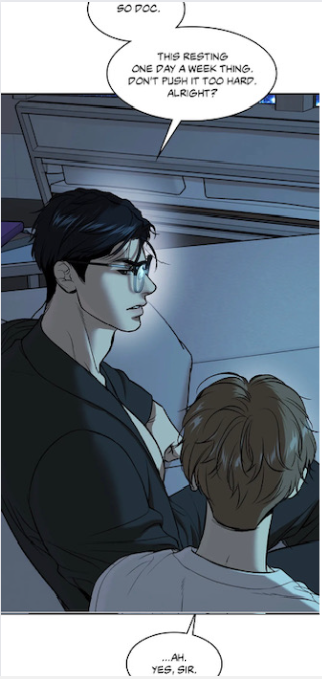 , (chapter 29) the champion rejects the idea of resting for a day. Then after the incident with the article, at no moment Kim Dan offers his assistance to help the champion. He remains totally passive,
 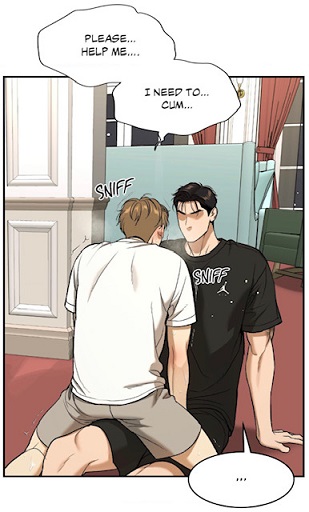 (chapter 39) The problem is that it is related to a drug and sex. This has nothing to do with his job or career. Interesting is that in episode 45, for the first time, Joo Jaekyung voiced his needs to have him as a PT:
  The end of Joo Jaekyung’s torment. He doesn’t need to chase after him.




 (Chapter 1) Imagine that he was in the middle of an intercourse. Yet he felt the need to have someone else by his side. It was, as if the grass on the other side was looking greener. 😉 Yes, in this scene, I detect parallels between Choi Heesung and Joo Jaekyung.
  (Chapter 33) On the one hand, the celebrity felt attracted to Kim Dan, on the other hand he had already sensed that the green-haired uke was greedy and even too passive. He was letting the celebrity fuck him. Yet there was neither real interaction nor sensuality between them. Hence the athlete could call Kim Dan during their sex. Funny is that the other didn’t mind at all, or in the worst case he didn’t even notice it. This shows not only the deafness and blindness of the mint goblin, but also the absence of communication and understanding in their “couple”. It was, as though the green-haired uke had submitted himself of becoming a sex toy. So by recalling the doctor, there is no doubt that the athlete couldn’t have voiced this change verbally. Why was he thinking of someone else during the intercourse? He was just simply not feeling it, the “great fuck”. In other words, Joo Jaekyung was attracted to Kim Dan by lust! In my previous analysis entitled
  (chapter 42), it becomes clear why the athlete’s lust for the mint goblin couldn’t last. The latter was only interested in his money and not even in his body. Thus he didn’t try to bring thrill into their relationship or even seduce him. And now, you comprehend why Mingwa let us see such a scene in the beginning of the story.
  (chapter 2) He had never done it before. As for the champion, Manhwa-lovers can grasp that since their relationship was purely physical (not even accompanied with romanticism due to the athlete’s jinx), the lust from the champion’s side could only weaken overtime. When the athlete met the actor, he had not met the green-haired man before. Hence the sportsman was sitting at the bar looking more or less for a new partner.
  (chapter 33) So the relationship between the “prostitute” and the fighter must have lasted around 3 months, the same amount of time than with the physical therapist. The uke had put no effort, for in verity he was relying on the athlete’s jinx. The latter just needed him, and no one was willing to experience such a rough sex session. The reason why I gave the green-haired uke the nickname “mint goblin” is the following. He brought some fresh breathe in the athlete’s life, for contrary to his past lovers, this one didn’t run away. However, as time passes on, the mint taste couldn’t mask his corrupted mind and heart. He was passive and rotten deep inside. But there’s more to it. Thanks to the mint goblin, the athlete learned an important lesson. It was possible that someone could match his strength in bed. Yes, the latter wasn’t passing out like the others. Deep down, the star could sense that he was no monster, a criticism he had received from the actor.
  (chapter 1), he got attracted to this pretty and cute new face. However, contrary to the comedian, he didn’t realize this, for the athlete is not someone who thinks deeply. He acts rather on his emotions, exactly like his mentor Park Namwook. Since lust is the first stage of love, the recipient of his “attraction” needed to give him a signal that he was interested in him. I doubt that the celebrity would have made a move on him, if the doctor had not made this mistake
  (chapter 1). Naturally, grabbing his phallus was the expression of the doctor’s masked sexual desires. This signifies that when the couple met for the first time, the grass appeared greener on the other side (medical world) for the first time. Since we have the first step of love in their relationship, we could say that the athlete was already in love with Kim Dan. While “lust” only represents the first stage in a love relationship, I decided to examine their relationship on this aspect.
 (chapter 33) We have the novelty aspect (bringing thrill into their relationship) and the champion’s selfishness. The sex toy was utilized as a “punishment”, for the athlete was upset due to his jealousy. However, this perception is still too short-sighted. You will laugh, as soon as you read my new interpretation.
  (chapter 8)
  (chapter 27) Consequently, the man had to bring up the deal constantly. Besides, their relationship started because of money. Finally, I would like Jinx-lovers to keep in mind the doctor’s lie: he had previous relationships with men.
  (chapter 33) However, this desire was accompanied with rejection and denial too. This explicates why the champion didn’t know how to interpret Kim Dan’s thoughts and emotions.
  (chapter 33) Was Kim Dan feeling the same way than him or not? Did Kim Dan desire him or not? And this leads me to the next sex session:
  (chapter 34) For the first time, the athlete was divulging his physical attraction and desire towards the doctor. He seduced him with his own body. Yet, in order to keep the upper hand in their relationship, he was the one who was determining how they would have sex:
  (chapter 34) As you can see, during season 1, it took a long time for the athlete to admit “lust and physical attraction” towards the doctor. One might reply that the celebrity had already admitted this to the physical therapist:
  (chapter 27) The divergence between these two chapters is that in the first scene, the athlete had not planned this. He was acting on his instincts and emotions, while in the living room, he was seducing the doctor on purpose.
  (chapter 34) I would even add that he gave more freedom to Kim Dan to decide if he would accept his offer or not. As you can see, Joo Jaekyung was learning to internalize the notion “consent and respect”. Here, the doctor could have refused… the evidence is his reaction at the gym, the slap on the athlete’s hand. That’s how I realized the strong connection between the athlete’s ignorance about his soulmate’s taste (partner type) and his consent. Respecting the doctor’s boundary meant to trust that the doctor was attracted to him and accepted him as a partner.
 (chapter 53) than with this one:

 (special episode 2). This pigment is a combination of blue and red/pink. And now pay attention to the last panel. Potato is blushing while wearing dark-green clothes, his lover is standing in front of the blue sky and his skin is rather pale. His hanbok has purple and white shades. As you can see, this wonderful night represents their union: white meets black, blue meets red and yellow (hence purple and green). The light from outside contrasts to the darkness of the shelter. That’s how purple came to shine. On the other hand, since Heesung is acting as the master, and the maknae is relegated to the role of a male servant, the actor is exposing his inner darkness. He is longing for dominance and possession.
  (special episode 2) To conclude, Heesung is gradually showing his true colors: the hidden black spot behind his perfect white skin. However, dark shouldn’t be reduced to evil, for in Taoism, black has another signification. It represents yin, the feminine energy. This means that thanks to that night, Heesung could display his motherly and caring side. Therefore he kissed, hugged Yoon-Gu and stroke his cheek. But this doesn’t end here. After the intercourse, he caressed his lover’s head.
  (chapter 31) The latter reflected his superficiality and detachment. How so? It is because he had bought them. Moreover, his manager was tasked to carry the presents.
  (chapter 31) It was, as if the manager was cursing him and his gifts. As you can see, there was no direct contact between him and the beneficiaries of his generosity. Money was between them in the end: Heesung, the manager and the members from Team Black. This could only corrupt their relationship. However, the pat on the head between the two second leads symbolizes genuineness and real gratitude.
  (special episode 2) The young fighter and his lover are slowly discovering the existence of a double life (public/professional versus private life). This signifies that Potato is learning to distinguish between image (hero) and reality. In fact, he only knows the MMA fighter Joo Jaekyung and not the private man with his troubled past. As for the actor, with his blog
  (chapter 30), pictures and sponsoring
  (chapter 32) The gumiho never felt the need to hide his sexual orientation, it was never a taboo. It indicates that he felt safe among his colleagues and agency. Therefore the manager could talk so freely about his love life in front of others.
  (chapter 30) There was no secrecy and privacy. Manhwaphiles should keep in their mind that homosexuality in MMA world and boxing is a huge taboo. So if Potato’s homosexuality were to be exposed to the netizens, this could ruin his career. This is also valid for Joo Jaekyung. Other fighters could question their manhood. And this brings me back to that night. Purple is strongly connected to yin and as such to the moon, like you can detect in the illustrations below.

 (chapter 20) the main pigments were yellow, rosa, red and orange, whereas on the bed, the roles and topics were switched. Kim Dan’s feminine side was the dominant one. His motherly and caring instincts were so strong that he had no problem to challenge his sex partner.
 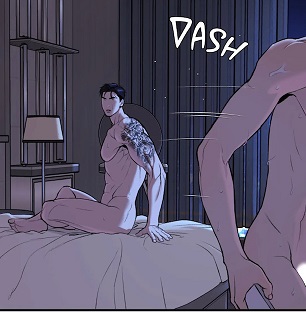 (chapter 21) And the next morning, the emperor chose to show his motherly and caring side to Kim Dan and the halmeoni.
  (chapter 21)
 (special episode 2) Potato is literally glowing, while the other is just wearing a purple hanbok (disguise). One might wonder why. The answer is simple. Potato stands for innocence, reflection and ignorance. Contrary to his new role model (Kim Dan), he has no real prejudices against sex. He doesn’t view it as dirty. This explicates why Potato is always surprised by his own pleasure and always claims his ignorance.
 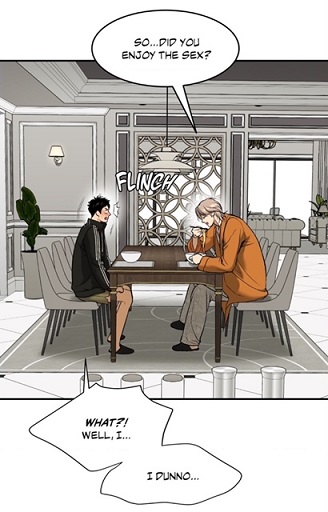 (special episode 1)
 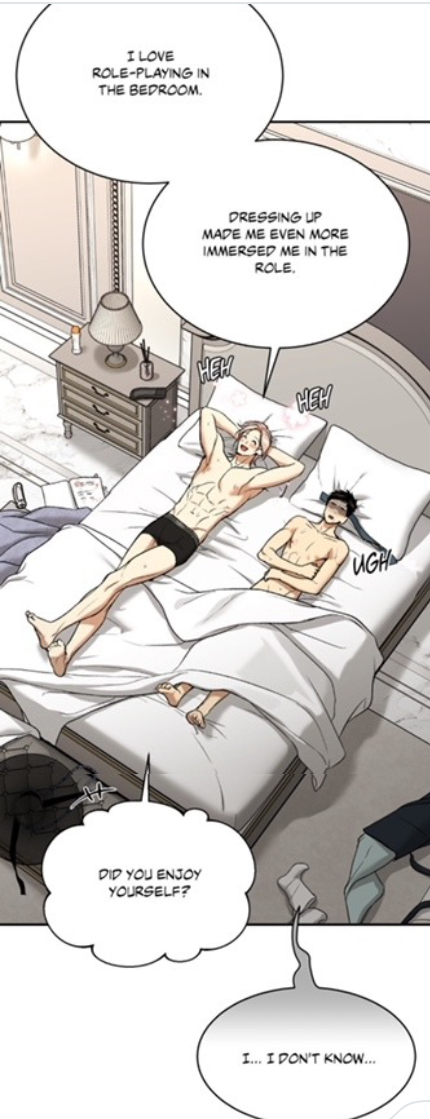 (special episode 2) He doesn’t make quick conclusions. The irony is that by expressing his ignorance and as such denying the existence of his own pleasure, he is actually challenging his gumiho. The latter is not recognized as a good lover! 😂 Moreover, it was, as though the young man had not been thrilled and excited contrary to his partner. This means that the maknae is pushing his companion to become more creative in sex. He is hoping that Potato would come to confess his joy and excitement as well. This means that Heesung has to find new ways to impress and woo his companion. Innocence and ignorance are the best weapons to tame the mythological creature. Simultaneously, it implies the actor’s underlining desire: he wishes to share his happiness with others!! As you can see, though Heesung is indeed a red flag [Further explanations are below], he shouldn’t be simply reduced to the stigma “jerk”. Exactly like the terrible emperor, he also has redeeming qualities. Moreover, this made me realize that his words are turning into a reality:
 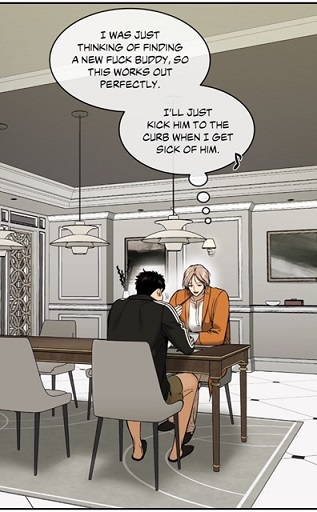 (special chapter 1) Potato has become his “fuck buddy”. By developing friendship through sex, he is not realizing that he is falling for the young fighter. Thus I am suspecting that in the past, he paid too much attention to emotions and less to sex… he was not trying to give pleasure to his sex partners in the first place. Now, he is doomed to find ways to give pleasure to his “fuck buddy”. And that’s how he is learning to become a responsible person.
 (special episode 2) That’s why the actor was glowing like a star after their passionate role-play. The presence of “stars” indicates his excitement and joy. His heart is racing, hence he is full of joy and feels rejuvenated. Moreover, the Webtoonist already implied the link between Potato and purple in the following scenes:
  (special episode 1) The young sportsman’s innocent statement brought Heesung to another galaxy. It was, as if he had entered a new world. Then we see Potato carrying a purple towel, when he is alone with Kim Dan and Joo Jaekyung.
  (chapter 23) Don’t forget that his family name is Hwang which means yellow in Chinese. That’s the reason why I don’t think, the purple towel is random. One might argue that the towel belongs to the gym, and they got changed later:
  (chapter 36) Park Namwook selected black towels, a sign that he was taking over the gym. But the purple towel announces the moment, where the doctor and Potato gets closer to each other.
  (chapter 23) For the first time, the young fighter showed a certain curiosity towards the physical therapist: the beginning of “Enlightenment” and friendship. Under this new light, Manhwaworms can grasp why Heesung was under Potato’s spell during this intercourse.
  (special episode 2) But we have another evidence that Heesung has always been looking for a “purple” person. It is because he picked up a purple suit for Kim Dan.
 (chapter 32) This means that this night stands under the sign of Yoon-Gu! The latter came to shine to the point that he affected his lover… that’s how the actor blushed more and more.
  (special episode 2) This observation brings me to my next interpretation.
 Dark red… full of passion. The actor could expose his possessiveness and jealousy, though he masked it behind a role-play.
  (special episode 2)
  (special episode 2) This exposes his desire for companionship and his loneliness. Additionally, it shows that he desires to get closer to his sex partner, to include him in his life. Once again, Manhwaphiles can detect the absence of boundaries between private and professional life. However, by making such a suggestion, he is not realizing that he is ignoring the MMA fighter’s career. But wait …notice that they had sex in a shed. But this was just an illusion, for they were having sex in the actor’s white bedroom.
  (special episode 2) With that, I am implying that the actor imagined a scene from a historical drama (Joseon, hierarchical society and the shed). It was interesting, because for the first time, the author allowed us to penetrate Heesung’s mysterious inner world. It shows his “creativity”, inspired by his last shooting
  (special episode 2) and his own desires. As you can see, the sex session is a mixture of dream and reality which is reflected in the color purple.
 (special episode 2) He is blushing, he is enjoying this moment with his partner. He has the impression that his dream has come true. In his mind, he was breaking rules. A prince has sex not only with a man, but with a guard, a commoner. Secondly, they were having sex in the shed, hence they could get caught. He felt like he was playing with fire. This shows that the man enjoys thrilling situations. This explains his blushing in this scene:
 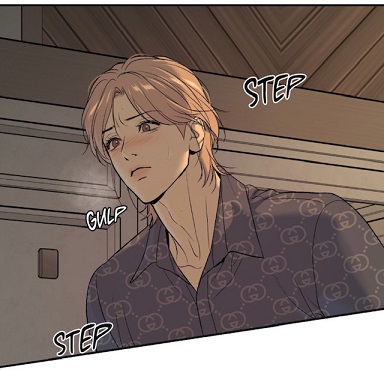 (chapter 34) He was not shocked or disgusted, when he saw Kim Dan having sex with the champion
  (chapter 33) Under this new light, his visit in the sauna appears like an intrusion.
  (chapter 34) He knew about the emperor’s schedule, a sign that he was somehow “monitoring” the main lead’s moves. Here, I feel the need to include this video exposing Heesung’s dark side.
 (chapter 35)
  (special episode 1) With this statement, he is actually taking over Potato’s schedule and life
  (special episode 1). Then he still chose to have sex with Potato, though he knew that the young sportsman was drunk.
  (special episode 1) The irony is that though Potato had said, he was a virgin, the actor chose to ignore it. Hence he got shocked later, when he realized Potato’s age..
 (special episode 1) There’s a huge gap, he appears as a “seductive” wolf like in the fairy tale “The Little Red Riding Hood” That’s how it dawned on me why Heesung will have problems in his relationship with Potato. It is related to his dishonesty and mistrust which he projects onto others. This explicates why he doubted about Yoon-Gu’s virginity.
  (special episode 1) And what is the synonym for “truth”? Reality and Real World!! And now, you understand why Heesung created a historical drama in his mind for the sex session. It was his way to avoid truth and honesty. He used the role play to expose his jealousy
 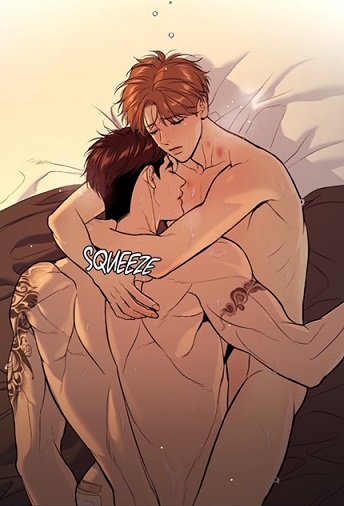 (chapter 44) After this wonderful moment, Kim Dan came back down to earth. His present got rejected, he was just viewed as a physical therapist and nothing more.
 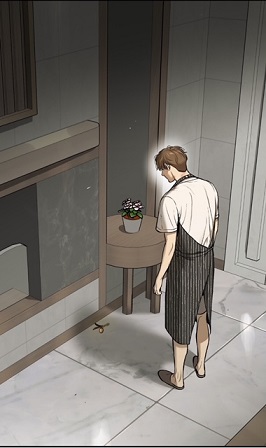 (chapter 45) We also have a refusal in the special episode. Potato initially rejected the offer from his sex partner:
 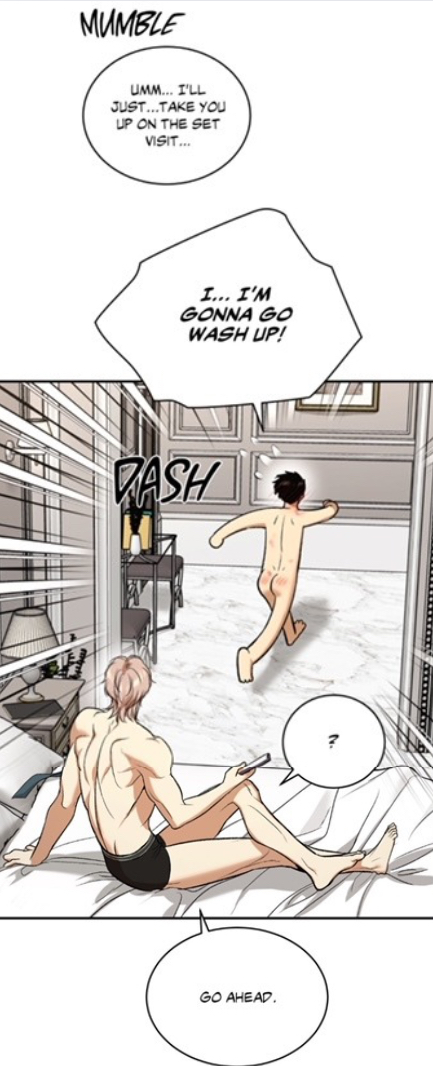 (special episode 2) Moreover, his words were definitely spoken more softly with a lot of hesitations. Hence I am doubting that Heesung saw his offer (visit to the set) as an acceptance. From my point of view, we should envision that the comedian saw it as a rejection. Potato was actually refusing to become an actor like him, then he employed the word “embarrassment”. It was, as if he was ashamed to be seen close to the actor Heesung. Finally, we should compare the last panel with this one:
  (chapter 34) He was also running away after getting threatened and rejected. In other words, Potato didn’t realize that with his behavior, he had triggered Heesung’s jealousy, insecurity and anger. That’s why he has this cold gaze.
  (special episode 2) It is the same glaring than Joo Jaekyung’s
  (chapter 7) who was full of jealousy here! Thus I conclude that this special night ended on a bad note, though Potato had no idea. The fox is no longer amused. Because Heesung is not happy deep down, he is planning something!!
  (special episode 2) Moreover, Manhwaphiles should keep in mind that he is talking in the past: “I had a ball”.His joy was just short-lived.
 (chapter 33) Observe the parallels:
  (chapter 33)
  (special episode 2) Yes, we need to question ourselves what triggered Heesung’s fantasy for the role-play.
  (special episode 2) IT is not just because of the costumes. My hypothesis is that the guards are working as an item, you can observe this in the following two panels:
  (special episode 2) This scene triggered his envy and jealousy. He wanted to have someone by his side whom he could talk to. ,
  8special episode 2), Here, he thanked everyone, yet he was standing in the middle of the scene, far away from everyone. In reality, his “gratitude” was superficial, for his thank was addressed to no one in particular. Just empty words. Under this new light, Manhwalovers can understand why he made such a suggestion after the intercourse:
  (special episode 2) Each pigment of green has a different signification: dark green can symbolize balance, drive, money, greed and fertility, while pale green symbolizes peace.
 The green color corresponds to sunset or sunrise which makes me think of a moment of transition. This corresponds to the notion of change and as such growth. Moreover, it stands for balance between yin and yang, like quoted above. The shade implies an equity between female and male energy. And now, you comprehend why Mingwa used green light in the car scene:
  But the shade is implying that the fighter was slowly calming down. He accepts the doctor’s embrace, he even grabs his phallus in order to give pleasure to his partner.
 (chapter 33) In the end, he did show a caring side to the doctor.
  (special episode 2), the jealousy, the possessiveness… making sure that the companion is not looking elsewhere… but more importantly, both seme are and were unaware of their growing affection towards their “fuck buddy”. Yet, there exists a huge difference between these two sex sessions: THE KISS!
  (chapter 34) As a conclusion, he came to “deny” this reality. He rejected his own emotions, until he was challenged once again in the sauna.
 (special episode 2) In addition, I noticed that the fighter’s buttocks are red

 (special episode 2) This means that this sex session took place during the new moon. Hence we have the color purple… This corresponds to the actor’s transformation. He is revived… he has finally found his soulmate, but he is not aware of it yet. And now, pay attention to this scene: We have the color blue,
  (chapter 53)
  (chapter 53) There is no moon, only the artificial lights from the city. Hence I deduce that the couple is now entering in a new phases, there is a new moon soon. The absence of the moon corresponds to the doctor’s departure. Don’t forget that these panels took place on two different days. One thing is sure. The dominance of the blue symbolizes the dominance of Kim Dan in Joo Jaekyung’s life, but also the loss for the two characters. There is no warmth… yet calmness and softness. Joo Jaekyung is not throwing a tantrum. He is not breaking any sandbag or throwing away the letter. It shows the calming influence of Kim Dan over the champion. With his departure, he is pushing the athlete to face his own emotions and to analyze them. And now pay attention to the last panel from season 1: there are glimpses of purple:
 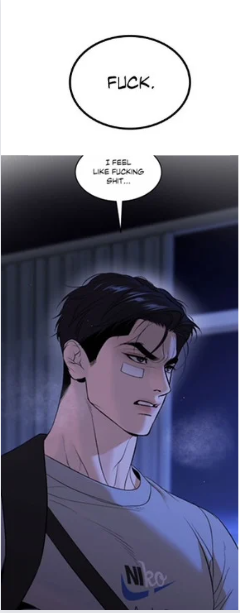 (chapter 53) It announces the start of Joo Jaekyung’s Enlightenment. He is on his way to recognize the source of his joy and happiness: Kim Dan as his companion. This signifies that Potato’s vision should come true in the end:
  (chapter 39)


 you will notice a third shade: orange which is represented by the Chow-chow and the comedian’s robe. Since the latter plays a minor role in the last chapter, it is normal to examine this pigment first. Moreover, its explanation is even necessary to grasp the significance of the other colors: pink and black.
 (Special episode) Then he cooked a spicy ramen for the young fighter.
  (Special episode) This color contrasts so much to the pigments from the artist’s flat: black and white.

 (chapter 35), but it is just a deception. In fact, there were traces of this pigment, when Choi Heesung was introduced for the first time.
 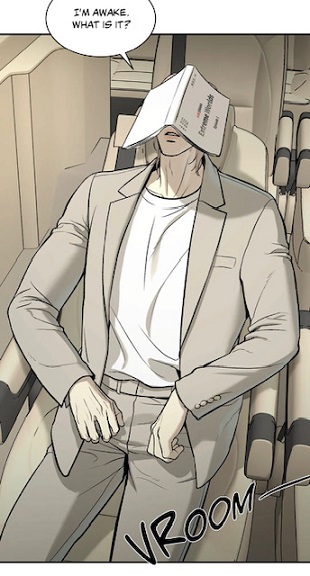 (chapter 29) Yes, we should perceive beige as a washed-out orange. So what does it mean? First, the cursed Romeo was not true to himself. Let’s not forget that in my eyes, Choi Heesung is a fox, and the fur of this animal is orange which is similar to the chow chow’s pigment. This means that both second leads would have a color in common: orange. Moreover, from my perspective, the comedian is a nine-tailed fox, a gumiho. In case, you didn’t read the analysis “
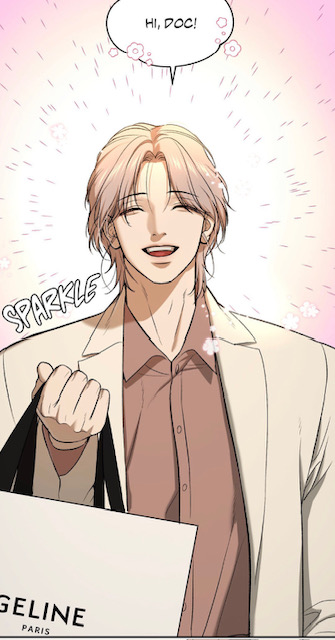 (chapter 31) This observation helped me to recognize that the more Heesung appeared, the more colorful his clothes became. So this discovery exposes that
  (chapter 35) To conclude, the darker beige is and as such the closer it is to orange, the more sincere Heesung is.
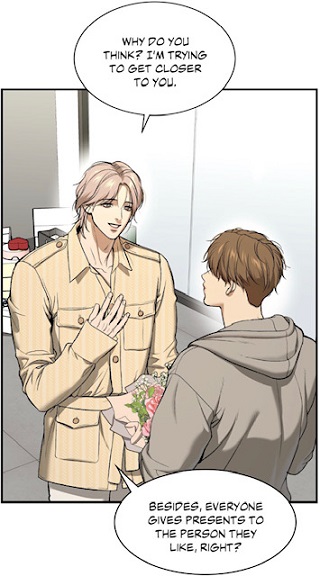 (chapter 31) and finally camel
 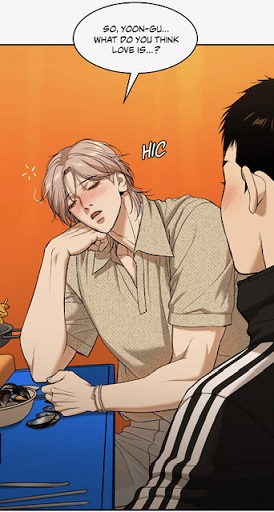 (chapter 35) Here, I added a screenshot of 57 different types of beige.
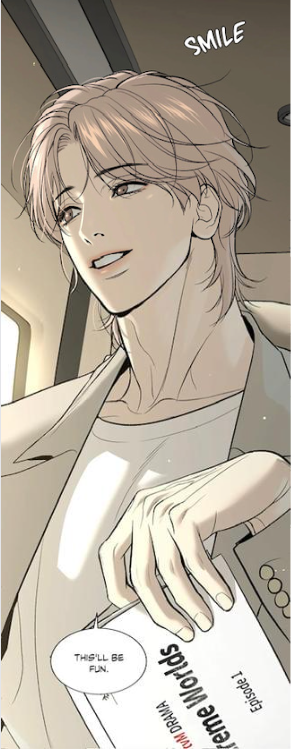 (chapter 29) From my point of view, he doesn’t desire to stand out, to make a statement. Therefore it is not astonishing why he hides behind sunglasses, a hat and a mask.
  (chapter 35) He didn’t want to be recognized. One might argue about this perception (not standing out), for he is writing a vlog
 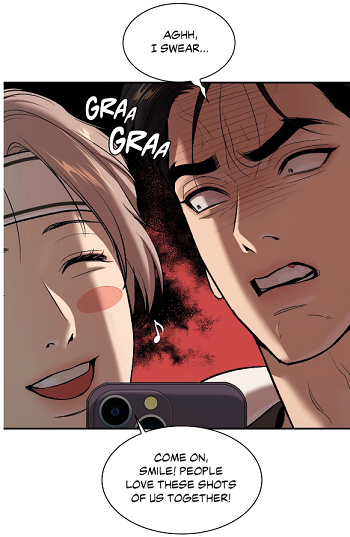 (chapter 30) and giving lunches to the fighters. Besides, he is a celebrity. But notice that he is not delivering the meals to the members of Team Black himself, just like he is not interacting with fans directly too.
  (chapter 30) The social medias serve as a way to control his image and keep people at arms’ length, exactly like his frenemy Joo Jaekyung.
  (special chapter) Therefore he is sleeping while hugging a beige and pastel pink pillow. This exposes his need for warmth and support. On the other hand, he is not realizing that he is his own enemy, for the pillow represents a hindrance. He is not allowing people to get closer to him. It looks like he fears embraces in the end.
 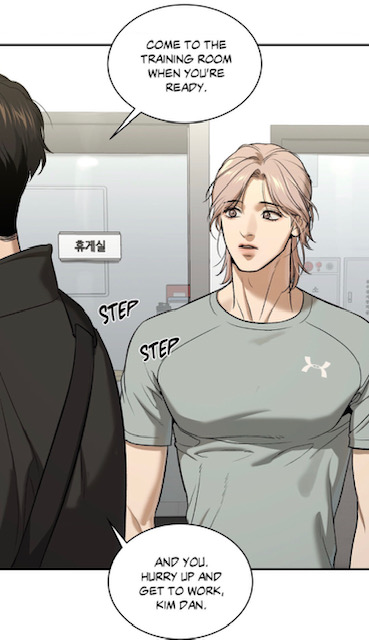 (chapter 31)
 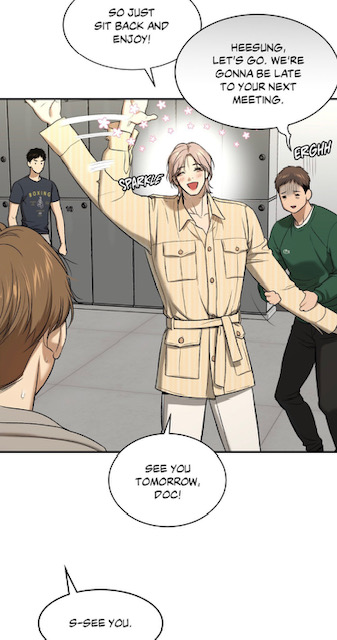 (chapter 31) While he was wearing a peach jacket, his manager had put a vivid green with dark black pants. Shortly after, the comedian was seen with this beige/khaki shirt and grey shorts.
  (chapter 31) Interesting is that his hair shade reflects my previous remarks perfectly. He chose pink which indicates his desire to break social norms, on the other hand, his pink is so faded that it almost looks like beige. He wishes to be “neutral” and somehow “conformist”. Yes, his pink hair mirrors his inner conflict: trying to break free from social norms, yet not standing out too much. The antonym for neutrality is “commitment”, an indication why he was not capable of being committed in a relationship in the end.
 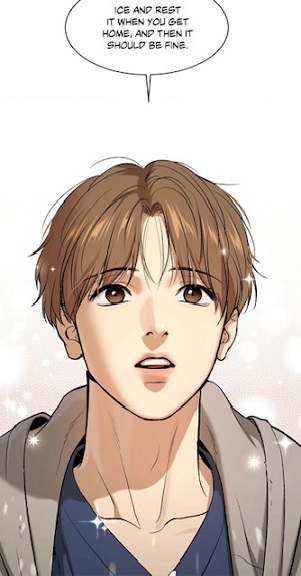 (chapter 30). However, if you compare the pink from
  (chapter 30) episode 30 and 31
 (chapter 31)
  (chapter 31) to the ones from the special episode
 (chapter 35) This shows how important it was for him to have a lover. He fears of being abandoned and being alone. Therefore he asked this from his new lover:
  (chapter 32) Not only he didn’t want to be confronted with the champion’s anger, but also he didn’t care if the doctor had to suffer because of him! To conclude, Heesung prefers watching from the side line with the excuse: he is seeking his soulmate.
  (chapter 32) It is not his “problem”. Hence he was totally absent, when the scandal with Joo Jaekyung broke out. His AWOL corresponds to his passivity and even indifference. However, there is no doubt that this incident will affect his relationship with Potato greatly.
  (chapter 52) The latter looks not only sad, but also frustrated. Let’s not forget that Potato fought against MMA artists from a different gym.
 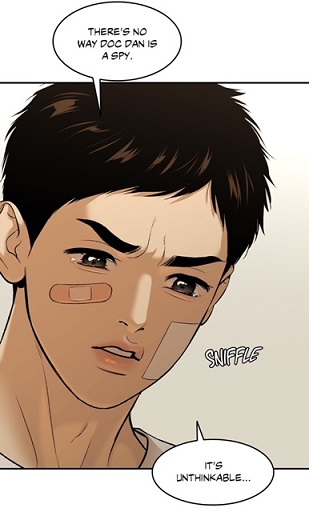 (chapter 52) Besides, Yoon-Gu embodies the opposite notions: loyalty and meddling. He doesn’t fear argument and criticism!
  (chapter 52) Heesung’s indifference and selfishness contrast so much to his new lover’s interest and selflessness. This shows that the young maknae is superior to the actor despite his lack of experience and ignorance. How do we explicate this divergence? It is because Potato had been showered with support and love at the gym. Kim Dan was even willing to risk his safety for him, a sign that he was lovable and worthy. Hence he is a confident man which is not the actor’s case. That’s the reason why the young man stated that he would become responsible for Heesung.
  (special episode) Thus I sense that Potato will force the actor to drop all his past believes: passivity, indifference, irresponsibility and as such betrayal. We could witness this in the special episode partially.
  (chapter 5) This is just another trick from goddess Mingwa to push him to become more responsible for his new relationship. My idea is that in order to discover that Potato is his soulmate, Heesung needs to help Potato and as such the main couple to be together. Only when the doctor and the champion are an item, he will have his partner.
 (special episode) with the one from episode 39
 (chapter 39), as the shades are very similar. Heesung was as rough and selfish as the fighter. Notice that this whole sex session was focused on the actor’s needs and desires,
  (special episode) exactly like with the champion. He needed “comfort”, as he was in a depressed mood.
  (special episode) The champion has a similar habit:
  (chapter 36) Besides, note that Yoon-Gu’s buttocks are red, a sign that the comedian focused on them!! The irony is that Potato felt pleasure right away, hence he had more climaxes than Heesung.
  (special episode) This panel is interesting, because it shows that Potato was not focusing on Heesung at all. It was all about himself and his own pleasure. He was not recognizing that he was actually mirroring the actor’s thoughts and desires. Yes, from my perspective, the young man was in truth treating the actor as his sex toy or fuck buddy. There was no string attached, this explains why Heesung had to ask this to Yoon-Gu:
  (chapter 29: black and white movie!!) and fairy tale: the end shows their blissed union and they lived happily ever after. This explicates why the comedian compared Kim Dan to an angel…
 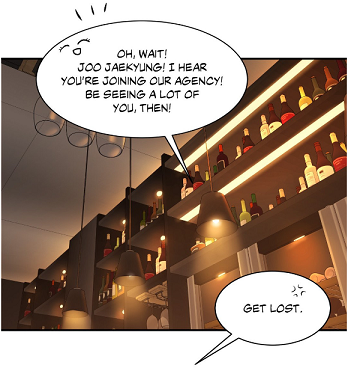 (chapter 33). He can also hear rumors there. Moreover, for me, the actor stands for power, control and as such knowledge… hence he was able to pull tricks on the star on multiple occasions. He is able to make the athlete angry, he can arrange a meeting without Joo Jaekyung’s consent
 (chapter 32.). Interesting is that these values (influence, dominion, competence and insight) are associated with the shade black!
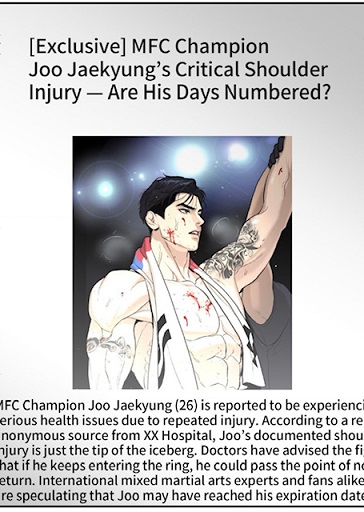 (chapter 35) was not a punishment against Joo Jaekyung for the actor’s injury which happened with the support of MFC.
  (chapter 31) Officially, he had wounded the actor, therefore his physical therapist had to take care of his treatment. Besides, I believe that MFC desired to corner the champion in order to force him to give up on his new lover. He was no longer hiring a prostitute. As you can see, black is an ambiguous color: it can symbolize knowledge as well ignorance. Thus this shade represents mystery. Thus it is no coincidence that the past and family of Joo Jaekyung, who is also associated with black, remain a riddle
 (chapter 31) While Joo Jaekyung condemned him for his deception and constant switching of partners
 (chapter 33), his manager accepts him despite his messy love life and flaws.
  (special chapter) Potato is a sex toy, just like the doctor was a tool against the champion’s jinx. Secondly, the artist discovered a whole new world thanks to Potato’s purity and ignorance
  , we have to envision that his role during the night was to absorb the actor’s negative energy.
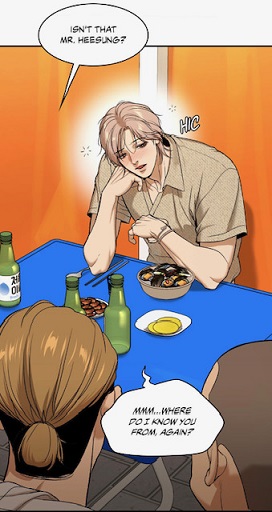 (chapter 35) reminded me of Kim Dan who used to drink in order to numb his pain. By meeting the black and yellow Chow-Chow, the fox was able to see light in his sorrow. Potato could absorb his negative thoughts and even enlighten his night. Therefore it is not surprising that Heesung made such a statement:
  (chapter 33) First, the VIP club is painted with dark colors. Secondly, the athlete was wearing a dark brown jacket with a black pullover. For me, Choi Heesung’s true personality comes to light in the dark!! We could say that he shines in a black room. Surrounded by darkness, he feels more protected. Thus at the club, he revealed his immorality and hypocrisy… He didn’t stand out. The more white the room is, the less the actor is honest! His preference for neutral colors expresses his need for “conformity and passivity”. They are an evidence for his hypocrisy and acting. Under this perspective, Manhwaworms can grasp why the mysterious man has a hidden dark room!
  [I am assuming that Mingwa didn’t change the flat] Only there, he exposes his true nature: BDSM. In my eyes, there he can voice all his desires and thoughts. His true self can come to the surface. I saw another evidence for this hypothesis (BDSM) in this expression: “kick him to the curb”
  (special episode): DEATH! This notion contrasts to the actor’s belief: soulmate! What is Potato’s goal in life? So far, it was to follow Joo Jaekyung’s foot steps! He wants to be a MMA fighter. He is destined to fight and as such to be exposed to danger. In the ring, he can die. He already fought for the physical therapist’s sake.
  (chapter 52) This means, he is already one step closer to the MMA arena. With the last incident, the young fighter must have caught the attention of opponents. He created himself “enemies”. Therefore he could become the next target for a plot as a revenge. In other words, with such a companion, Heesung is confronted with reality. His destined partner can be wounded and even die. Thus he has to ensure his safety. He can no longer be indifferent and passive. As you can see, Heesung will be put in a similar position than the physical therapist:
 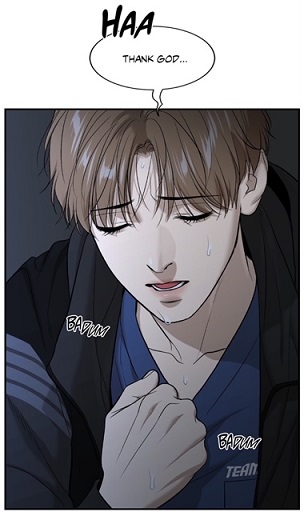 (chapter 40) And this observation leads me to my second part, the explanation for the title: La Vie En Rose.
 (chapter 36) That’s what the athlete experienced at the end of season 1. I could describe the fans’ devotion and appreciation as idolization and veneration which can have terrible consequences.
 (chapter 35) Either he would break up, as he felt no excitement for his boyfriend, or when he would finally reveal his true side, the latter would leave him. Why? Both were disappointed, neither of them would fit the portrait they had from each other. The smiling and generous actor is in fact selfish, childish and probably apathetic. I am even suspecting that he has been suffering from depression too. Not only the choice of his colors indicates blandness, boringness and lifelessness, but also his body language. He is often seen resting his head on his hand.
  (special episode)
  (chapter 33) or sighing, the symbols for boredom. Thus I have the feeling that his job as actor is not procuring him any joy. That’s how I realized why Heesung is the champion’s frenemy. While the latter stands for training and routine (he hates surprises and novelties), the other embodies the exact opposite notions: he loves adventure, spontaneity and variations.
  (chapter 48) As you can see, the main lead announced a turning point in the gumiho’s life. Exactly like his frenemy, he was taught that money and fame can not buy affection. Moreover, for the first time, the young man learned the existence of boundary and respect.
 (special episode)
  (chapter 35)
  (special chapter) He is constantly caught by surprise!
 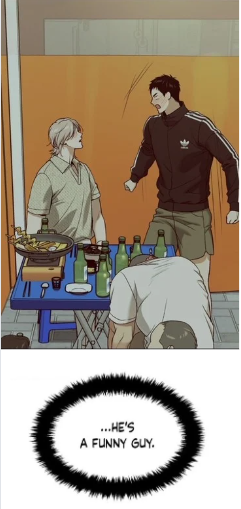 (special chapter) He sees Yoon-Gu as fun! Simply because he is allowing himself to express his emotions. He is never hiding his thoughts and emotions, the exact opposite of Heesung. He is so transparent, on the other hand, totally unpredictable. Yes, in the end, Yoon-Gu represents a huge riddle for Heesung. What caught my attention is how Yoon-Gu didn’t mind to yell his affection and admiration in front of people. He doesn’t mind people’s judgement and gaze. He is strong enough to bear this kind of attention… the exact opposite of the actor. He is not afraid of committing, making a different statement, he can diverge from majority. Hence he left the restaurant in front of others.
 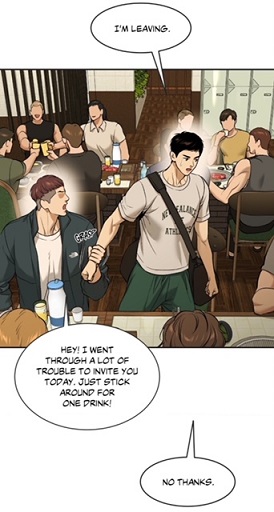 (chapter 52) He can make his own judgement and choice. To conclude, though Yoon-Gu is the younger one, he has so much to teach his fated partner who chose conformity and ended up bored and half-dead!
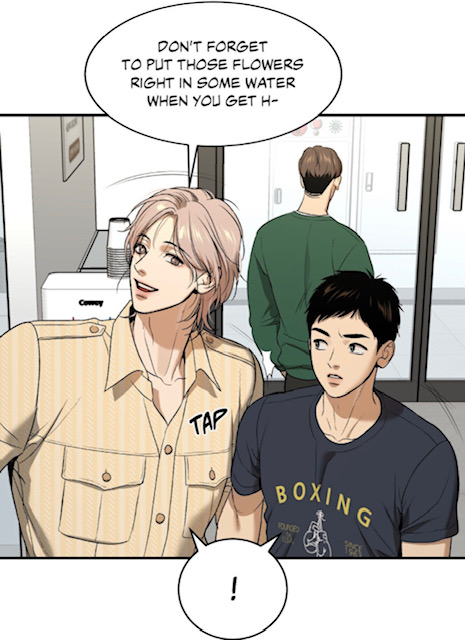 (chapter 31) We could say, their meeting was like a big bang, an explosion! Caught by surprise and annoyed by such an incident, the actor couldn’t help himself voicing his thoughts about Potato:
 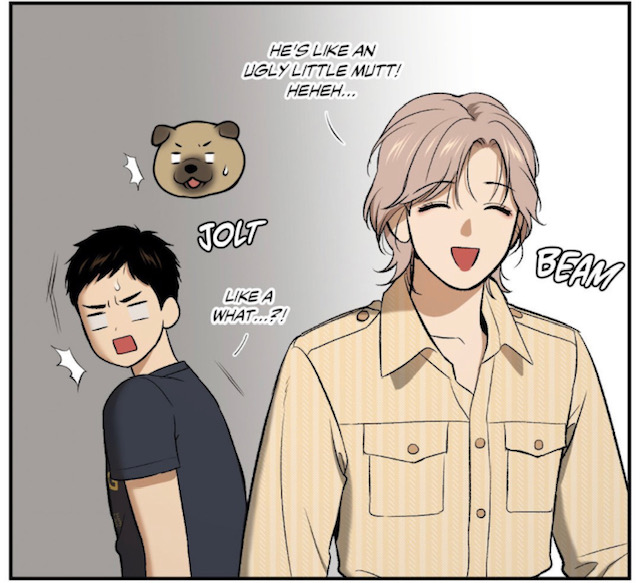 (chapter 31) For a short moment, he dropped his mask and expose his true personality. And for the first time, he received such a gaze:
 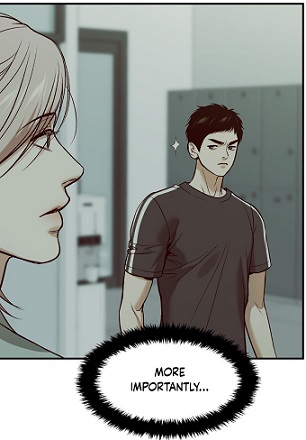 (special episode) That’s how both ended up creating unforgettable moments. Under this perspective, my attentive and patient readers can grasp why I created such an illustration for this essay:
  (chapter 53), for the grandmother’s death is imminent.



 (chapter 22) Back then, I came to realize that both ukes were associated with the number 2. Shortly after, while making a first portrait of Cheolmin, I noticed that this cute doctor was linked to numbers 1, 3, 4.
  At the same time, I connected him to the sky, an angel. As you can observe it, my observations led me little by little to planets and numerology. But the major turning point was, when I perceived Kim Dan as a representative of Saturn
  . From that moment on, I came to associate Jinx-characters with gods and as such planets. Hence in the essay
  , I made the following connections. Potato was Venus, and his soulmate Choi Heesung is Mercury. Then Joo Jaekyung is Jupiter and the Sun, whereas Kim Dan was Saturn and the Moon.

 That’s how I discovered that Kim Dan was associated with the number 8. Thus in the composition
  HEALING! That’s the night Kim Dan got healed.
  (chapter 44) During that night, he realized that time was flowing. It helped him to reconnect with the present and forget his abandonment issues. How so? This revelation was necessary to make him realize that his promise with his halmoni was impossible. She was a mortal, exactly like him. This lovely night gave him the strength to face reality
  (chapter 47) and digest the terrible news.
 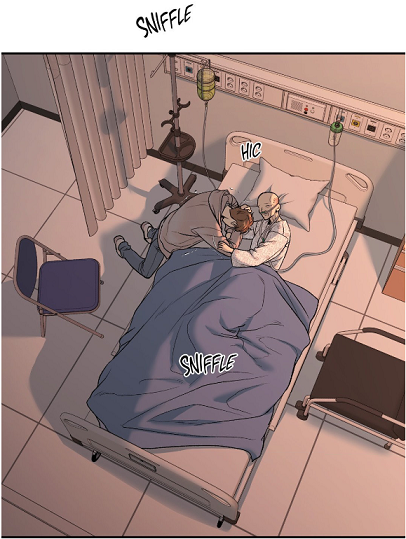 (chapter 47) Thanks to the champion, Kim Dan discovered that he could receive warmth and love from someone else. And now, you can grasp why he was strong enough to give the present to Joo Jaekyung despite his fear, why he could confront his boss in the locker room in episode 51. Thanks to this magical night, he learned that he could stand on his own. He is an adult now. But wait… people might question this interpretation, for there was no teamwork in episode 11.
  (chapter 11) When Park Namwook and Kwak Junbeom saw that he was wounded, the manager could detect the doctor’s lie. But what did they do? Nothing, they acted, as if they had not detected his lie. However, don’t forget the champion’s reaction.
  (chapter 11) He treated him as an important member of his team, he needed his assistance. Secondly, who helped Kim Dan with his struggles? Joo Jaekyung.
  (chapter 11) He might have taken advantage of the situation, yet contrary to the others, he did something despite his ignorance.
 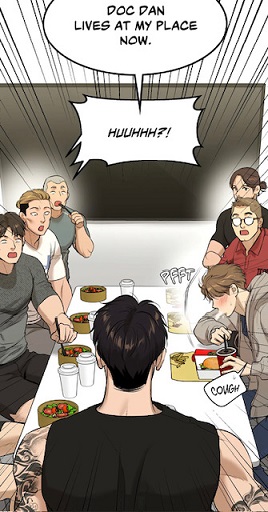 (chapter 22) Secondly, notice that he showed his true power in the break room. He is the true owner of the gym
  (chapter 22) It is important, because it indicates that little by little, Joo Jaekyung is taking over the gym. From that chapter on, he was building his world from the ground”.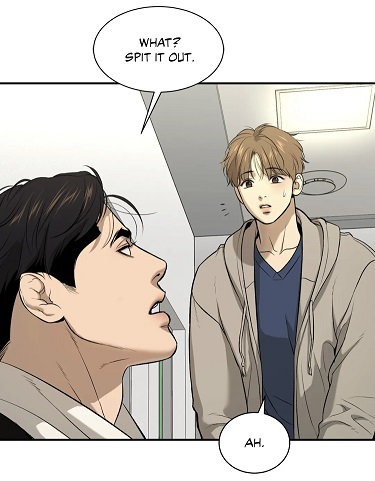


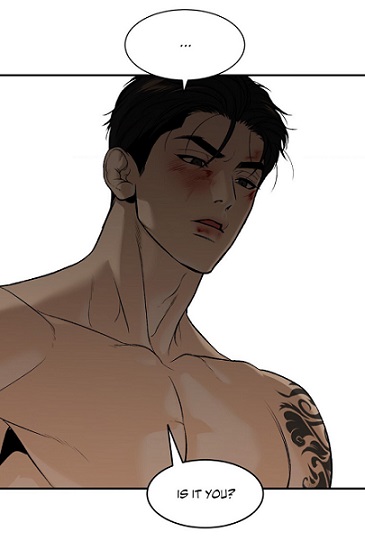
 They are no longer avoiding discomfort, a sign that they are getting closer to each other.
 I selected pictures from episode 6, 33 and 51! They are all connected to the same number. This signifies that we should examine the following chapters 6, 15, 24, 33, 42, and 51 as a continuation or better said as reflections. Hence they stand for love, but don’t forget that Venus also embodies fertility, prosperity and victory. How so? She was the ancestor of the Roman people through her son, Aeneas, who survived the fall of Troy and fled to Italy. That’s why she came to symbolize Rome’s imperial power. Yes, these chapters are mirroring a battle, who has the upper hand in the couple.

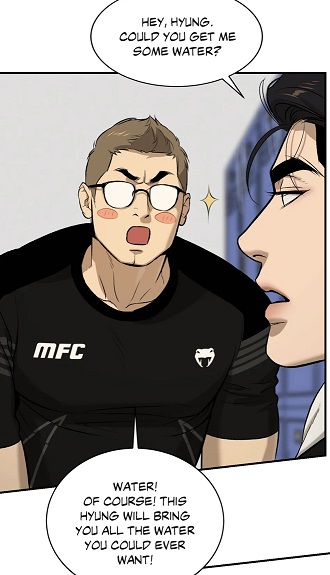
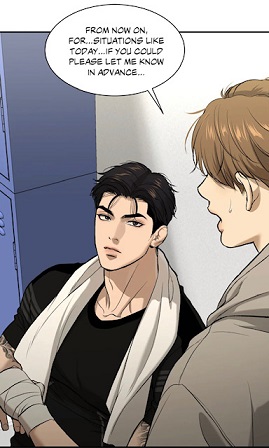




 (chapter 15) But there’s more to it. It was also a first for the champion. He invited Kim Dan to watch the show. Imagine that he had never invited any sex partner before. Then in episode 24, he listened to the doctor’s request without any complain. Then in episode 33, for the first time, Joo Jaekyung focused on giving Kim Dan’s anal pleasure. It was, as if the star wanted to trigger desires in Kim Dan. Then in episode 42, Joo Jaekyung witnessed that Kim Dan was doing the breakfasts out of “routine” and not out of pleasure. Thus he always fell asleep. On the other hand, the physical therapist got confronted with a rival for the first time. Finally, in episode 51, Joo Jaekyung is now acknowledging Kim Dan as his final doctor. He is voicing his expectation: meticulousity.
  (chapter 51) By bringing the topic money
  (chapter 51), the champion could finally voice his biggest fear. Deep down, he knew that their relationship was based on money. But with one sentence, the doctor could remove his doubts and insecurities.
 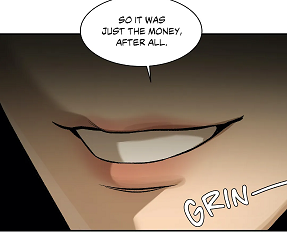 (chapter 6)
  (chapter 51) He was more than caught by surprise, in my opinion, it must have dawned on him that he might have been wrong about the doctor. Hence he got upset. Seeing the physical therapist’s face was like a reminder that he had made a mistake, he had not trusted Kim Dan, while the latter had not.
  (chapter 47). Remember that for me, Cheolmin is connected to Neptune, hence we have the number 1, 3 and 4. Thus it would validate my hypothesis that at the restaurant, Joo Jaekyung was talking to the cute doctor.
  , (chapter 39) In chapter 53, we discover that it was the halmoni’s dream to see the ocean, like we could observe it in his old house.
 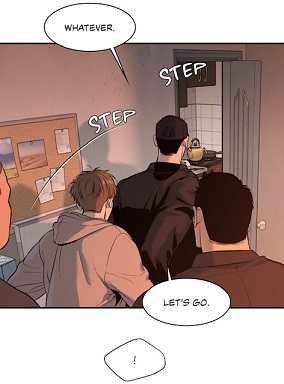 (chapter 17) However, in the last panel, Joo Jaekyung was leading his loved one, symbolizing that he would bring him to different places. Thus the doctor had to follow him to Busan (city next to the sea) and to the USA. At the end of season 1, it becomes clear that the champion will follow the doctor’s footsteps. He will got to the West Coast. Yet, in reality, the fighter is actually following the grandmother’s trail. Moreover, note that the doctor’s dream was to travel too. However, this desire is strongly connected to his relative.
  (chapter 27) Yet according to my previous interpretation, the PT’s totem is the duck:
 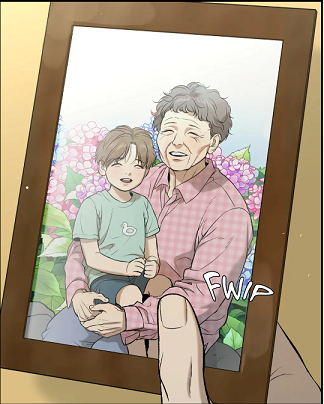 (chapter 19) A bird that is associated with water. And what is the common denominator between these last three panels?
  (chapter 7)
 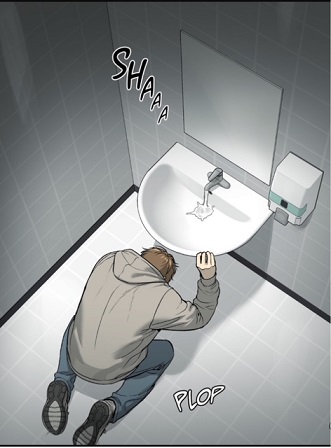 (chapter 47) The bridge from San Francisco is a place where people often commit suicide. My idea is that after they vanished, the halmoni never discussed their death with him. Since the grandmother was harassed by the loan shark, I can only assume that they killed themselves due to the debts, and suicide is a huge taboo in South Korea. Notice that his first trip led him to Busan which is a town next to the sea. However, back then, he had not the time to go to the beach. But when he went to the States, it was far from the coast, as UFC/MFC is located in Las Vegas. Hence he came to enjoy his trip. In fact, it inspired him to travel.
 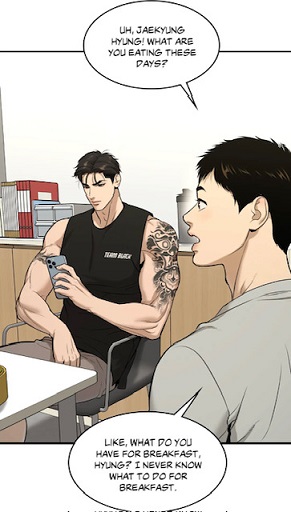 (chapter 22), why he protected the doctor from Heesung in episode 31
 (chapter 31), why he asked for Kim Dan in episode 40
 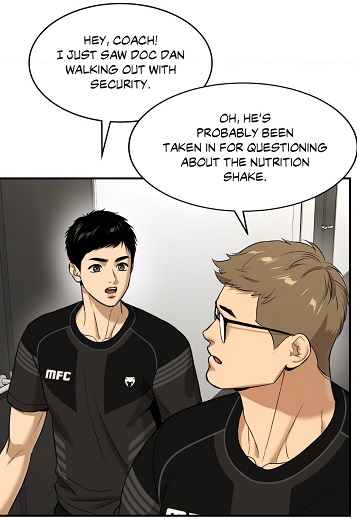 and why he reappeared in episode 47.
 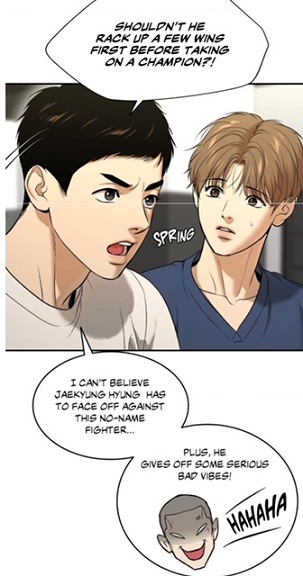 (chapter 47) and helped him in the locker room.


 (chapter 140)
  (chapter 149) Both were suffering from survivor guilt. To conclude, Joo Jaekyung and Kim Dan represent the bitter medicine for their scars. I mentioned “bitter”, because through their loved one, they are forced to face painful moments. That’s how they can overcome their past and discover happiness. However, while looking for a new title, I rediscovered the first illustration
  , and it suddenly made click in my head. To conclude, I had another revelation concerning episode 50.
 . (chapter 50) At first glance, the champion is blaming Kim Dan for the wound. He betrayed him. However, his words could have a different signification. Don’t forget that a message always has 4 sides according to Schulz von Thun.
  Consequently, while many saw this question as a “factual information” and as such as an accusation, the reality is that it gave us an insight about the sender too. The sportsman was not using the personal pronoun “I” or “me” in his inquiry. As you can see, the absence of the personal pronoun is indicating that Joo Jaekyung was in reality not referring to him and his wounds. He is not prioritizing himself, rather the doctor and his action. So this question could be prompted by curiosity or a desire to understand the person’s recent activities. Thus I deduce that the champion was asking his lover to tell him the truth. He should come clean. He desired a honest explanation. His attitude reminded me of an adult confronting his child.
 (Chapter 50) It becomes comprehensible why the Emperor refused the offer. The rejection was the symbol of his “trust” in Kim Dan unconsciously. Astonishing, right, though people and Kim Dan had the opposite impression. Yet, because of the “tie”, Kim Dan felt responsible for the incident, therefore he apologized.
  (chapter 51) This means, the main lead recognized his responsibility. He should have checked the spray more carefully. The champion could perceive this excuse as a confession of his complicity. Hence he asked his lover if he was the spy.
 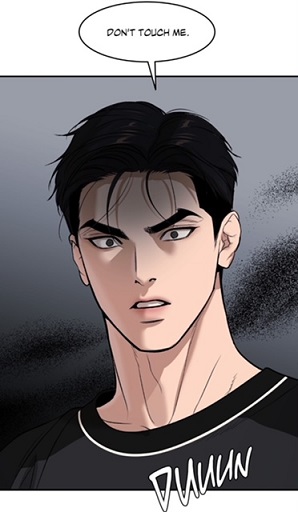 (chapter 50) This is the face of a scarred man. Yet, contrary to the past, he is not expressing his fear through rage. That’s the reason why his emotions were controlled. Under this new light, Manhwaworms grasp why the athlete asked such a question from his soulmate:
  (chapter 51) Interesting is that he was more pained by the idea of a betrayal from Kim Dan than the tie, if you compare these two panels:
 (chapter 51) As my avid readers can see, my perception about chapter 50 was confirmed with episode 51. The arguments in the locker room were reflecting the quarrel in the penthouse with Choi Heesung. What is the common denominator between these two scenes? The lack of trust from Joo Jaekyung, but his private PT failed to realize it in the penthouse. Why? It’s because he chose to trust his destined partner.
 I believe you = I trust you

 (chapter 35) He was still clueless about the trigger for his behavior. With this inquiry “You don’t trust me”, the hamster pushed his destined partner to face his biggest fear: trust someone and in particular him. This conversation can only incite him to meditate about their relationship. So while in episode 15, he behaved like a pouting child
  (chapter 15), in the latest episode, Jinx-philes can perceive his growth and maturity.
  (chapter 34) This signifies that in the sauna, truth was not standing in opposition to daring. The sauna reminded me of the cavern where an imugi hides, until the latter leaves its hidden place and find his star, his yeouiju. Only then, he can turn into a dragon. To conclude, because of Heesung’s pressure, the imugi had to select between daring or lie. In other words, telling the truth became the challenge itself. Heesung knew that Joo Jaekyung would never confess.
  (Chapter 34) What Heesung wanted was actually a lie by omission or commission which would have been presented as the truth. Through this game, the actor thought that he could impose his will onto the celebrity. He anticipated the athlete’s silence. This signifies that he knew about the star’s denial and turned it against him. Besides, that way Heesung could maintain his good image: he had not stolen his partner and as such there was no cheating. No one was betraying him.
 (chapter 34), but also his hand.
 (chapter 34) He caught the actor by surprise, the latter never thought that the celebrity would become violent. The redness on his face was displaying that he was barely controlling his annoyance and impatience.
  (chapter 34) However, they were in a public place, the hotel’s sauna, and the actor is a celebrity. Hence he is protected by his fame and social status. That’s the reason why the champion didn’t hit his frenemy, he had learned his lesson at the gym.
  (chapter 34) Despite his words, the gumiho still got scared. The racing of his heart is an indication of his fright. Therefore he ran away more or less after ordering his trainer not to meddle in his love life.
  (chapter 34) Note that when he did this, he avoided his counterpart’s gaze. Deep down, he knew that he shouldn’t provoke his frenemy too much. Only when he was at the door, he turned around and LIED!
  (chapter 34) Yes, after that incident, he chose to give him a fake excuse for his departure. As you can see, this conversation was strongly intertwined with the notion “truth or dare”, but both ended up lying. Whereas the champion didn’t admit any feelings, the other acted, as if there was nothing wrong and he was not scared. The gumiho thought that if he were to remove the champion from the doctor’s side, the latter would be able to open up to the actor.
  (chapter 34) What does it reveal? The actor had been projecting his own thoughts onto the future dragon too. He was the one who didn’t dare to become more honest with the physical therapist. He used work to spend time with Kim Dan. One might say that Heesung failed terribly. Yet, this is just an illusion, because his “failure” pushed him to become more honest with Kim Dan. Thereby he asked to meet the doctor again.
  (chapter 34) Yet, the message is exposing that Heesung was still lying, as he kept using work as an excuse. Hence Joo Jaekyung had to intervene again:
  (chapter 34) The champion dared to challenge his rival.
  (chapter 35) Yes, by challenging the athlete because of Kim Dan, the comedian ended up telling the truth.
  (chapter 34), but his anxiety reached a new peak, the fear that he might be abandoned. Hence he used the sandbag to vent his temper. And what did the cute puppy do during that incident? He dared to offer his help to his idol:
  (chapter 34), yet he was in total denial about the reality: it was dangerous. Deep down, the champion knew that it was impossible for him to control his lover’s time, but also his body. Besides, the other problem is that the athlete is rejecting the notion of love. By denying the existence of his own feelings, he can not claim the doctor’s heart. That’s the reason why the champion got so mad and frustrated.
  (chapter 34) He was not telling the truth, when he stated that Kim Dan was his “possession”. This explicates why he couldn’t stay by the doctor’s side
  (chapter 34) in the end. He manipulated the main lead by letting him think that he had no other choice. Yet the last panel displays his trick. It was up to the doctor to decide how he should spend his free time. Nevertheless, while people were mad at the champion for his deception, many failed to realize that the champion was actually deceiving himself. So all the tricks (episode 33 and 34) were manifestations of avoidance, the fear to face the truth: his affection for Kim Dan and this due to a past betrayal. Hence these chapters stand under the sign of silence hidden by “pranks”.
  (chapter 50) First, the schemers’ MO corresponds to the game Truth or Dare. Choi Gilseok asked his minion to cross the line. This explicates why they are trying to use tricks and manipulations. Daring means no truth, thus someone will be framed: Kim Dan. Yet, the plotters are not aware that thanks to the cute hamster, the alpha is turned into a mirror of truth. Hence he couldn’t get deceived by the MFC security guys:
  (chapter 40)
  (chapter 36) And exactly like at the sauna, daring became a synonym for verity. No wonder why the fighter is never rejecting the challenge. It corresponds to his past attitude: he has been burying the truth and as such the past. But let’s return our attention to the plotters.
 (chapter 47), then he recognized the director without naming him,
 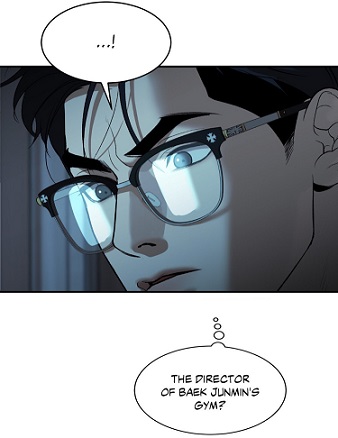 (chapter 48) and finally the ghost from the past
  (chapter 50) This scene exposed that the champion repressed a certain incident which is rather common among victims of a trauma, especially people suffering from PTSD. This shows that some traumatic event took place for quite some time, but the champion acted, as if nothing had happened.
  (Doctor Frost, chapter 140 ) That’s how the champion became a zombie, he couldn’t live properly due to his untreated scars.
  (doctor Frost, chapter 139) But thanks to his fated partner, the traumatic past is slowly coming to the surface.
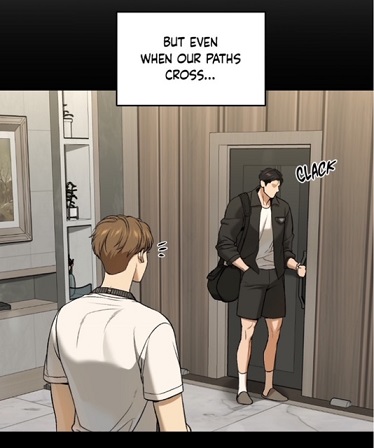 (chapter 47) and voice his true thoughts and emotions:
  (chapter 49) The latter didn’t even greet the director or acted, as if they didn’t know each other. He exposed the existence of a secret, an uncomfortable secret. Consequently, I believe that the champion could only jump to the conclusion that Kim Dan had been indeed acting behind his back, even coerced to do something.
  (chapter 51) Note that the star never came clean with the truth either.
 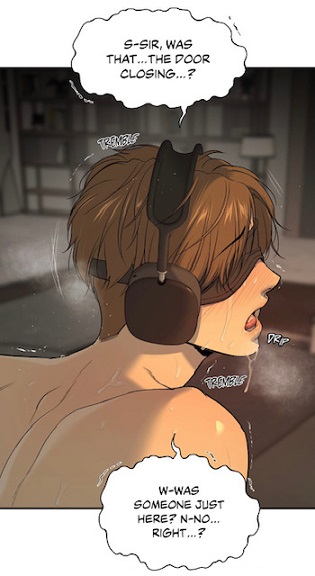 (Chapter 35) Through the doctor, the champion is encouraged to become honest to himself.
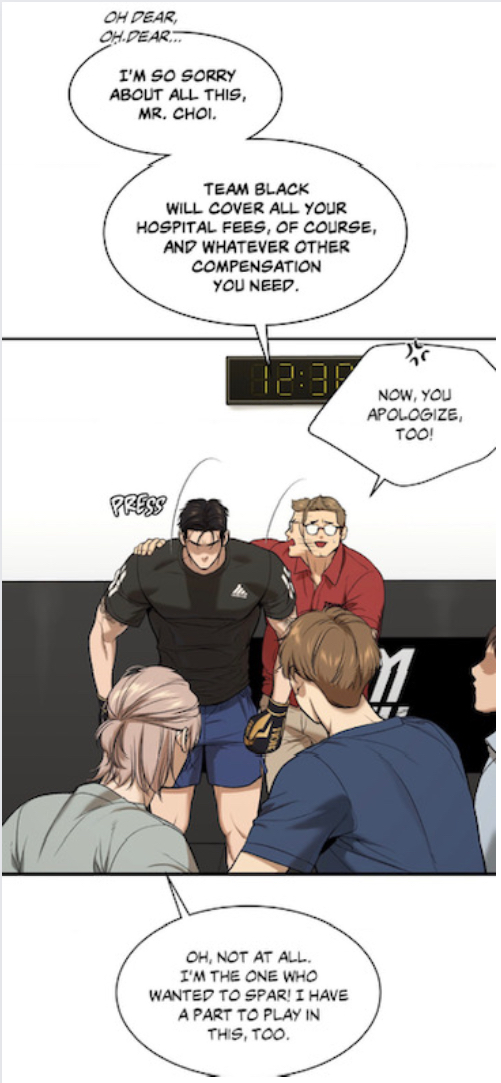 (chapter 31) He tricked his boss by faking an injury. He put the gym under pressure, as this incident could be leaked to the outside. The whole situation reminded me of blackmail. If he did not follow his request, there could be a scandal. That’s the reason why I believe that the champion’s past is linked to blackmail as well. How is it possible? It is because of the game “truth or dare”! The latter is strongly intertwined with divulging information and crossing the line!! To sum up, this game embodies trauma, secret, leaking information, trust and overstepping a boundary or rule. This observation brings me to my next point.
 (chapter 9) And what did happen after they left the restaurant? The champion discovered the truth:
  (chapter 10)
 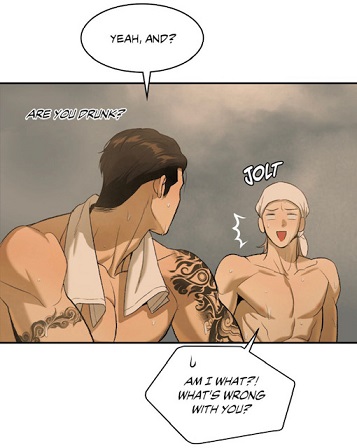 (chapter 34) “Are you drunk?” With this question, the protagonist revealed something about himself. He associates dating and love confession with drunkenness. He implies the existence of a lie. But a confession is strongly associated with verity and sincerity. On the other hand, for the sportsman, no one in his right mind would admit to be in love and in our case to love another man. For me, one part of the problem is that the champion is afraid of admitting his homosexuality. The latter is still a stigma in South Korean society. But there’s more to the game Truth or Dare. If you paid attention to the origin of the last quote, you will realize that this fun is linked to bullying and even hazing.
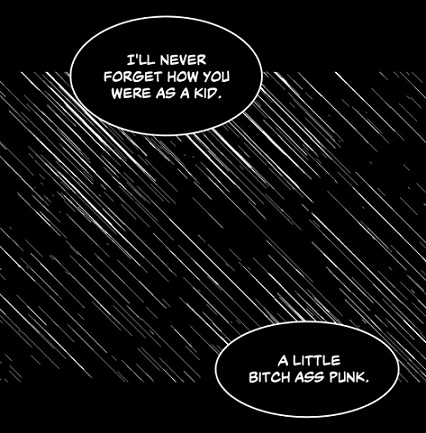 (chapter 49) Furthermore, bullying is never done alone, but in groups.
 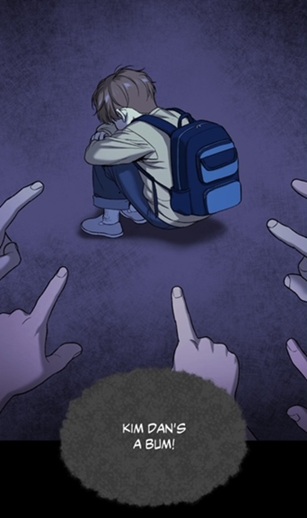 (chapter 57) There is one leader and the others are following the flow, the latter even become more proactive by making new bets and suggestions in order to ensure their own safety. As long as no one divulges the truth, the bullies are safe. But there’s more to it. Striking is that the way they coerced the champion to fight resembles to bullying too. He was manipulated with the articles, then with the advises from the lawyer and manager. Once in the States, they tried to drug him, which corresponds to a physical assault.
  (chapter 37) Finally, note that the schemers are working in teams exactly like the bullying students. Therefore I judge Park Namwook’s attitude as the teacher’s who is closing the eye to the truth. He is rather passive and puts the whole responsibility on his “boy”.
  (chapter 41) It is the champion’s choice to refuse or not the matches. The moment I associated the game with parties, peer groups and bullying, I had many revelations.
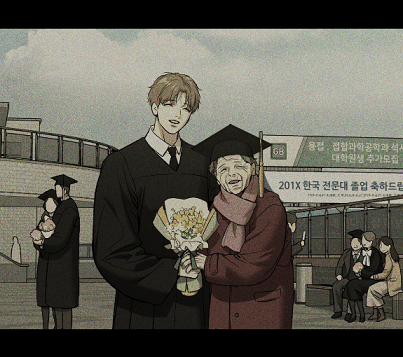 (chapter 47), Manhwalovers can see that Kim Dan was a loner. Therefore I doubt that he had friends during his college years. The only person he knew from his school was his mentor:


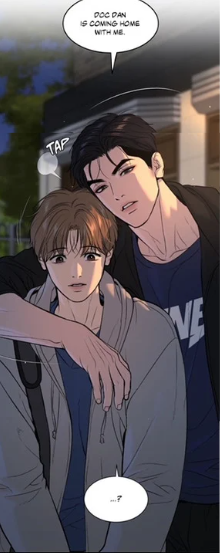

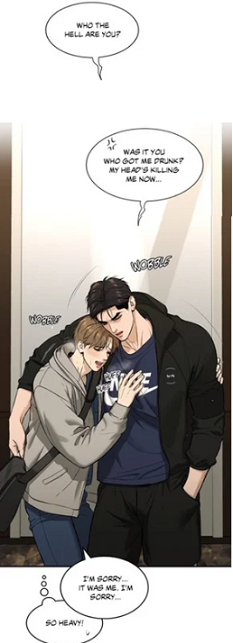
 (chapter 9), yet Park Namwook made sure that the physical therapist wouldn’t be abandoned drunk. Thus he tasked his boss to bring him home. And as for Potato, it is clear that Oh Daehyun would take care of him, as he was sleeping in the dormitory next to him. In other words, no one was left behind drunk. But this scene contrasts so much to episode 43. First, no one was missing Potato. No one asked about his absence. Secondly, pay attention that the fighters invited Kim Dan to join them for another round, while they were neglecting their boss, though it was his birthday party.
  (chapter 43) Moreover, they never wondered about his physical condition. Was he drunk or not? Funny is that the intoxicated character was the one who forced Kim Dan to go home.
  (chapter 43) That’s what a friend is supposed to do.
 (chapter 35) So the auntie could keep an eye on the judo fighter, and it was only a matter of time, until his friend would return. Nevertheless, this scene is implying a certain problem: a drunken person shouldn’t be left unguarded. Thus imagine that during a party, an unconscious person is brought to a room and left there unguarded, as the friend desires to keep partying, similar to this scene:
  (chapter 37) The person could get sexually assaulted, and no one would notice it. Secondly, I would like to outline that the hazing party from the article reminded me a lot to bullying. These freshmen were humiliated, and the perpetrator excused her behavior behind traditions and social norms. So the champion could have been betrayed by a friend, as the latter would have justified his action similarly. So instead of admitting his mistake, he could have justified the incident like this: the victim was responsible for his misery, because he was at the wrong place at the wrong time. It was just his misfortune or better said his jinx. Yes, for me, the jinx is indicating that people responsible for the champion’s traumas were denying their wrongdoings.
 (chapter 8) From my point of view, this place is not just symbolizing purification and reflection, but also indicating the presence of a wound. As soon as I connected the bathroom and as such water to pain, all the champion’s past behavior appeared in a different light. In episode 3, when he went there, he was wearing his pajamas.
  (chapter 3) Neither Kim Dan nor the protagonist were seen both naked in the shower room.
  (chapter 8)
  (chapter 20)
  (chapter 36) Kim Dan’s entrance could be perceived as a violation, for the champion was naked. This intrusion caught him off-guard. But since his gaze was covered, his anxiety masked behind his anger was diminished. On the other hand, this led him to leave the bathtub undressed and have sex in the kitchen.
  (chapter 36) For me, everything is pointing out that one of the champion’s fears is intimacy with water. He has long internalized this association. Don’t forget that the sexual encounter in the swimming pool started with clothes, before they got completely removed.
 (chapter 27) Under this new perspective, I don’t think that it is a coincidence that the champion felt the need to take a shower after meeting Baek Junmin and recalling the past.
  (chapter 49) This helped him to overcome his trauma and past wound.
  (chapter 8) they dared to have sex next to Oh Daehyun and the other fighter. However, note that in all these scenes, neither the doctor nor the champion were honest. They were both lying… not only to their counter-part, but also to themselves.
  (chapter 19) That’s the reason why the argument in the locker room
  (chapter 70) His sexual orientation was exposed in high school, his friends were behind the rumor
  (chapter 70), although we have to envision that his crush played a huge part in it. Why? It is because he didn’t want to be associated with homosexuality.
  (chapter 70) Not only he cut off ties with him, but also he made sure to isolate the main lead from other students. The worst is that this person acted, as if this ostracizing had never occurred.
  (chapter 69), as if he had done nothing wrong. For me, it shows that the traitor never grasped the significance of his actions. Hence Park Sung-Woong could forget Dong-Gyun, while the latter could never forget him at all. The result from this huge betrayal was that the cute uke decided to keep his distance from people.
  (chapter 70) He could no longer trust people, he avoided meetings. In order to outline how severe betrayal trauma can be, the Webtoonist showed us the immediate effects of betrayal trauma: physical and emotional reactions
  (chapter 70)
 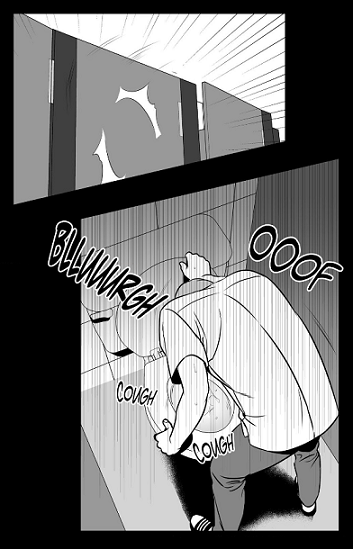 (chapter 70) and the long term effects:
 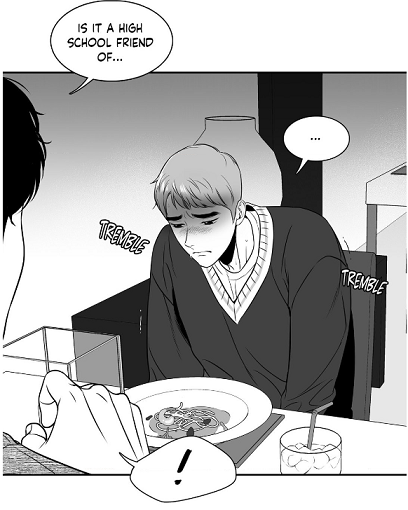 (chapter 69) he is trembling so much, he can not look at his former friend. Readers shouldn’t underestimate the issue. Betrayal trauma is so severe that it is comparable to being hit by a white truck. The pain is so great that it affects the brain functioning and as such personality.
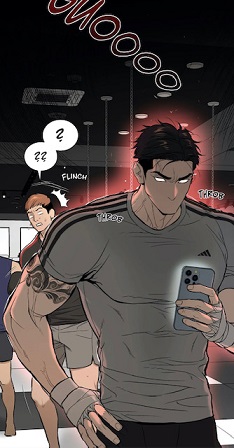 (chapter 05) Then when he stayed at home,
 (chapter 32), it was clear that the doctor’s actions were constantly on his mind. He was so bothered that he had to bring him to Heesung. He made sure that Kim Dan would forget Choi Heesung in the car.
 (chapter 49), the latter was not loved, as he didn’t reach the first place like his older brother. Then we have Interpersonal with Nam Dong-Gyun and his high school friend. However, since the rumor circulated at school, and no adults intervened, we could see it as a reference to Institutional betrayal. Finally, Mingwa presented the last type (partner) with Hweemin.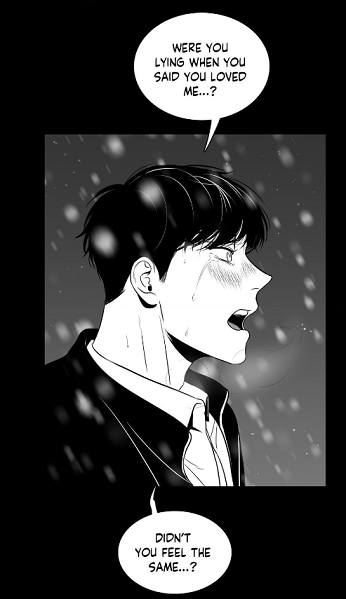
 (chapter 51) But why is betrayal trauma so severe? It is because everything appears as a lie, as an illusion. All the memories become tainted. The victim can only question his own senses and judgment. How could he not detect the lies? Since PTSD and betrayal trauma share some common points, it is not surprising that such persons come to blame themselves and develop huge self-loathing.
 (doctor Frost, chapter 139). And now, it is time to expose my latest observation:
 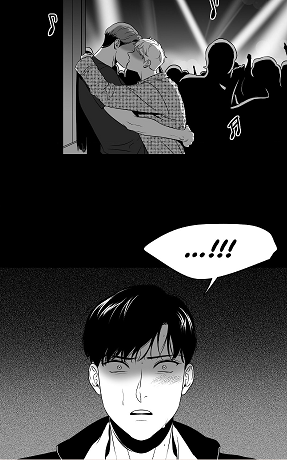 (BJ Alex, chapter 51) Ahn Jiwon caught his first lover cheating on him at a club. Interesting is that the new lover resembles a lot to Joo Jaekyung! Mingwa said that characters from BJ Alex will only appear, but Jinx is not connected to her previous work. Note that they were kissing in a public place. Moreover, the club is a location where students not only meet, but also drink alcohol together. However, once Jiwon saw Hweemin, he dragged him outside so that they could talk. In other words, the “new lover” was left behind. Thus I come to the following conclusion. Joo Jaekyung has been suffering from betrayal trauma exactly like Ahn Jiwon. He was betrayed by his guardian
 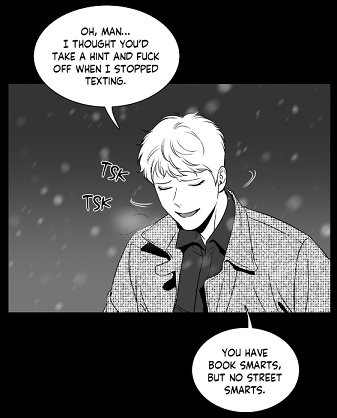 (BJ Alex, chapter 51). If this theory is true, then Mingwa would finally outline the devastating effects of Betrayal trauma on people, something she barely touched in her previous work.
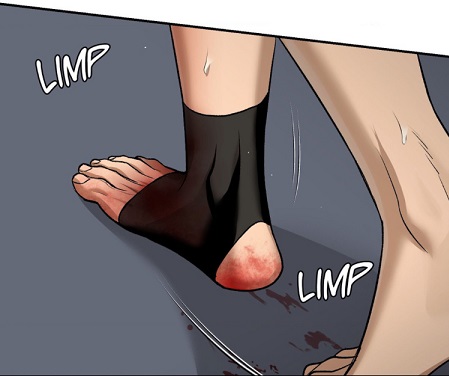 (chapter 51)
 (chapter 50) and Kim Dan. While the former was tormented by his challenger directly
  (chapter 50) and indirectly, the other had to witness how the members from Team Black turned their back on him in the locker room.
  (chapter 50) Interesting is that on X, hamster Dan received more affection and attention than the champion. Though I have always pointed out the doctor’s flaws, in episode 50, I couldn’t help myself being upset and heartbroken for Doc Dan too, until I had a revelation. Many readers were disappointed or mad, when they saw him in this panel.
  (chapter 50) They could put themselves in his shoes: he was left behind. On the other hand, the reaction from Joo Jaekyung was totally understandable.
  (chapter 50) And everyone knows this saying: Time is money. Yes, the hyungs didn’t decide to postpone the fight, because they would have to pay huge fees, and this could have affected the Emperor’s reputation. It exposes that the fight as such the show was more important than the well-being of their star. As a conclusion, money played a huge role in their decision. On the other side, the annulation would have brought more trouble to Kim Dan, as it would have caught the attention from journalists and fans, though it can still happen later. Under this new perspective, it becomes comprehensible why they left the locker room and didn’t argue with Kim Dan. They were under pressure. Nevertheless, the readers had a different reaction, for they knew the truth: Doc Dan was the victim of a new scheme. Therefore they judged the whole situation as unfair. Some were mad at the manager for yelling at the physical therapist.
  (chapter 50) Yet, we shouldn’t allow our emotions cloud our judgement, for this image displays the doctor’s metamorphosis. Notice that he talked back. Though his sentence is still not complete, the thickness of the writing and the point of exclamation are indicating that he was not whispering. He was speaking loudly and clearly. He was talking back firmly. Moreover, he was not avoiding his counterpart’s gaze contrary to the argument in the penthouse.
  (chapter 27) But only Dr. Lee and Kim Dan got to see the results
 (chapter 27), not Park Namwook. He just overviewed the medical file quickly. But for that, the manager needs to be capable of understanding medical terms. Thus I doubt, he could visualize the seriousness of the situation.
  (chapter 27) Then, after the match in the States, the manager asked his “boy” how his shoulder was.
 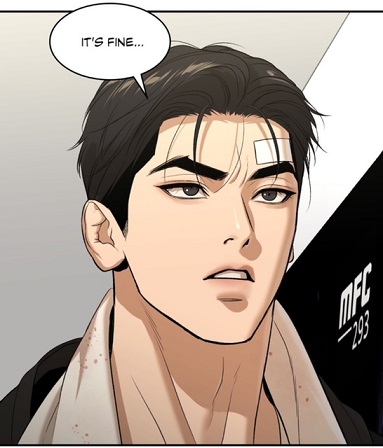 (chapter 40) while the manager had witnessed how Dominic Hill had targeted his shoulder. He should have realized that his star’s shoulder had been damaged. Nevertheless, we shouldn’t overlook that the athlete’s statement was corroborated by the medical checkup from MFC. That’s how he got fooled. Hence there was no treatment. However, doc Dan could detect the champion’s lie not only through observations
 (chapter 41) but also through touching.
 (chapter 41) As you can see, the wound was slowly coming to the surface. Thus I consider the incident in episode 43 as a metaphor for the shoulder injury.
 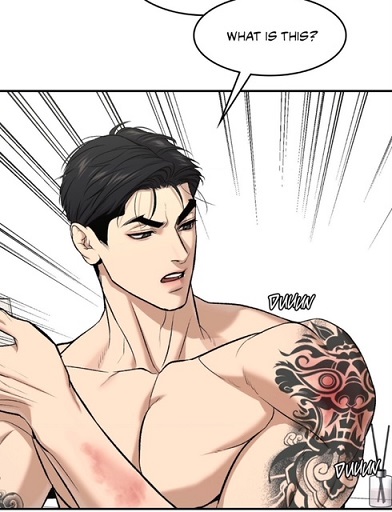 (chapter 43) It was exposing the damage in his body. Consequently, when the champion’s foot got wounded by the pepper spray,
 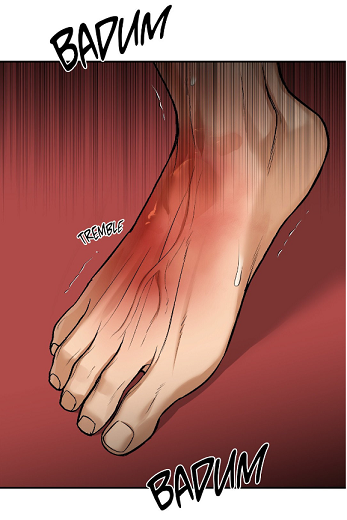 (chapter 49), I realized what was happening. Mingwa is forcing the Emperor to admit his suffering. Hence his wounds are becoming more and more visible.

 (chapter 50) So far, he just had a cut above his eye, nothing serious.
  (Chapter 40) However, the wound on the foot is different, for his skin is damaged. The recovery will take longer. It is relevant, because Park Namwook can no longer feign ignorance about his star’s wounds. He is less susceptible to manipulations.
  (chapter 50) That’s the reason why he turned into a dragon at the end of the chapter. [For more read the essay “
 (chapter 5) And now, you comprehend why he got so nervous and angry, when he imagined that Kim Dan had blocked him.
 (chapter 5) This shows that his belief in his jinx had been reinforced after his first night with Kim Dan.
 (chapter 50) From my perspective, this is the result of the overexerting.
  (chapter 48) Finally, we shouldn’t overlook the fact that after his match in the States, he never visited the hospital due to the law suit.
  (chapter 41) According to me, the MFC medical checkup was not reflecting the verity. Hence he never got a real check-up and MFC could definitely say that the athlete was definitely fine.
  (chapter 41) This shows that the more the champion refuses to his PT’s advice, the more injuries he will substain. That’s how it dawned on me why Joo Jaekyung is now getting more and more wounded during the fights. It forces him to take a rest! However, in the past, he had a reason not to listen: he got barely injured. He needed to treat his body roughly in order to prove his effort and strength. This observation reinforces my conviction that there is a second group manipulating the champion’s matches: MFC itself. For me, Heo Manwook and Choi Gilseok are rather puppets. How so? It is because someone knew about the champion’s sexual habits, hence he was supposed to take an aphrodisiac in the States. But neither the loan shark nor the director from King Of MMA are aware of this. To conclude, the champion’s anguish is necessary to expose the deceptions and the schemers as well.
 (chapter 27) refused to force the champion to take a day-off by saying that the protagonist would never listen anyway. With such a statement, he pushed Kim Dan to make the decision and announce it to his VIP client. Moreover, the manager didn’t stop his “boy” from exposing his injured shoulder to the public.
  (chapter 41) However, by doing so, he was exposing his vulnerability to his opponents, though I am still suspecting that MFC leaked information too. So far, the headlines are not indicating which shoulder is wounded. Yet, the moderator knew which one:
  (chapter 50) So why was the manager so shocked with such an attack?
  (chapter 50) It was clear that during such a match, the challenger would use the opponent’s weakness. What did he expect in the end? The panel exposes his stupidity and his immaturity. He should have anticipated such a move. These observations lead me to the following conclusion: the champion needs to realize that his hyung will never recognize his suffering, as long as Joo Jaekyung is in denial. Until now, he hasn’t been protecting Joo Jaekyung’s interests, rather his own comfort. His MO was to put the whole responsibility on the athlete. But it was his duty as his manager not to accept the new challenge.
  (Chapter 9) and coach for Team Black, but he acts like the director of Team Black.
 (Chapter 49) This explains why he claimed that Team Black was his gym,
  (chapter 41) to the golden keychain.
  (Chapter 45) As you can see, the famous writer is connected to Positive Psychology, for he was also promoting meditation and experiences. This fits our story, as both main characters are on their way to give a meaning to their life and as such to find happiness. But let’s return our attention to the manager Park Namwook as a representative of “ignorance”.
  (chapter 11), but also he never tried to correct the star’s false conclusion.
  (chapter 43) Through the two examples, Manhwaphiles can sense that his “ignorance” is a mixture of willingness to close an eye and real naivety. Under this new approach, it dawned on me why the manager used to beat his star so brutally.
  (Chapter 31) It is his way how to deal with uncomfortable situations. He stands for social norms and conformity. It is not surprising that the manager proposed to use Kim Dan as compensation for Heesung’s fake injury.
  (chapter 36) or to let others make decisions. I would even add, he often delegates things to others: the manager from the Entertainment company
 (chapter 46), Kim Dan [f. ex. He should accept the bad mood from his VIP client]
  (chapter 43) Furthermore, compare his behavior towards the celebrity and the doctor:
 (chapter 16)
  (chapter 41) Therefore I believe that in the locker room, Kim Dan must have recalled her words. She became his source of strength once again. That’s why we have parallels between these three scenes:
 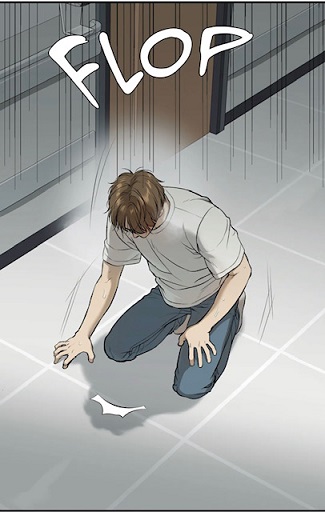 (chapter 21: he was criticized by Kim Miseon, he feared to lose his halmoni)
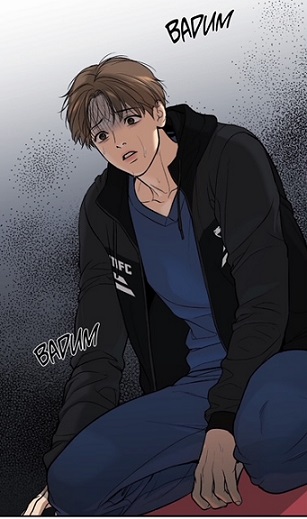 (chapter 50) That’s the reason why Kim Dan could become a star. Contrary to Joo Jaekyung, we didn’t assist to the birth of the yeouiju. It is no coincidence that birth is connected to pain and happiness. Mothers forget the suffering of the delivery, as their child can procure them a lot of joy and happiness.
 (Chapter 26) By embracing misfortune, transcending conventional morality, striving for self-overcoming, embracing individuality, and creating meaning and values, individuals can embark on a journey of self-discovery and self-actualization, ultimately becoming the architects of their own lives. At the heart of Nietzsche’s vision lies the concept of the Übermensch, or Overman, who embodies the pinnacle of human potential and serves as a beacon of courage, creativity, and self-mastery. Through the pursuit of the Übermensch ideal, individuals can transcend their limitations, confront their fears, and forge their own destinies, thereby finding their true selves in the process.
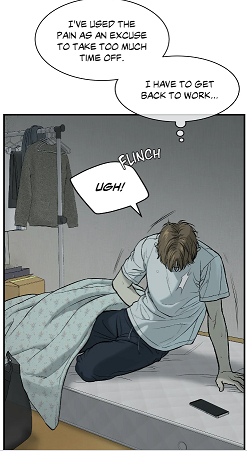 (chapter 5) or Heesung drank alcohol
  (chapter 16) or as a tool for the jinx, therefore he mopped the floor
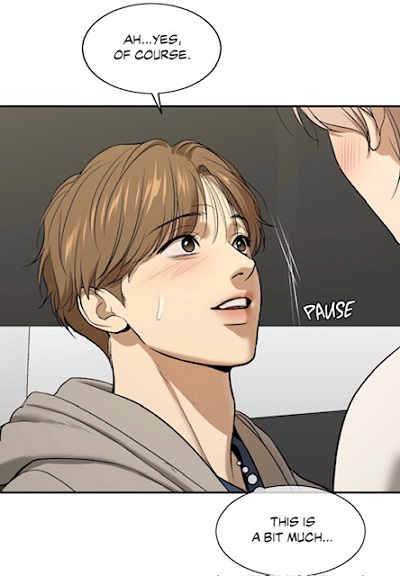 (chapter 31)
  (chapter 31). Furthermore, he took a side gig in order to buy the champion’s present and finally, he rejected Choi Gilseok’s praise and offer.
 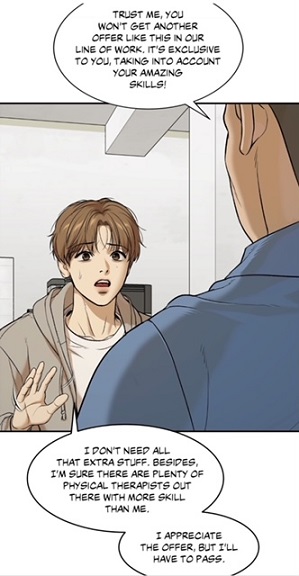 (chapter 48) He was always diminishing himself as a doctor. Therefore in the locker room, he was confronted with his biggest fear: is he really a physical therapist?
  (chapter 50) He injured his patient. The spray is there to let him see that he has power in his hands. He should trust himself and his magical hands. Don’t forget that this request was made by Joo Jaekyung.
  (chapter 50) And from my point of view, the locker room became the doctor’s new temple. There, he must have recalled his grandmother’s wishes. She would like to see him on TV. For me, the light over his head symbolizes Enlightenment. He has become the champion’s yeouiju. Thus I deduce that Kim Dan is on the verge of proving his worth to Team Black. I am anticipating, he will approach the ring, and even treat him during a break, something he denied to his halmoni.
 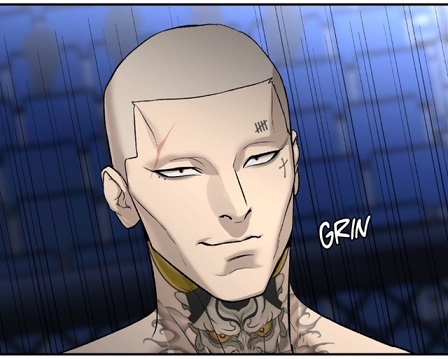 (chapter 50) It is relevant, because through such an intervention, hamster Dan would teach the champion an important lesson. He is not alone in the ring, the doctor is watching his physical condition and helping him.
  For me, chapter 50 announces a new start! Interesting is that the number 50 is associated with the planet Mercury which stands for poison but also medicine! And now, you comprehend why I consider the painful chapter as treatment sessions. The two protagonists are forced to redefine themselves. Joo Jaekyung might be injured, but he no longer sees himself jinxed!
  (chapter 48) So the moment you perceive this moment
  (chapter 19), this signifies that Potato was acting like a true friend in the locker room.
  (chapter 37)
  (chapter 40)
  And this brings me to my next observation. The doctor’s pain is exposing his recovery! Weird, right?
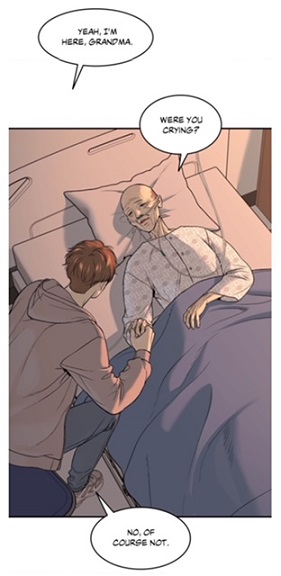 (chapter 47) and his agony. He was no longer under the influence of toxic positivity. While he cried, he admitted his flaws making him realize that he had never been abandoned by his grandmother.
  (chapter 47) That’s how he overcame his abandonment issues.
 (chapter 37) He wanted the party to continue. It shows that he was having a good time with Oh Daehyun and Potato. He has no problem to stop kissing his soulmate, when the latter shows his discomfort.
  . (chapter 36)
  (chapter 45) And now, you comprehend why I stated earlier that he acted rather instinctively. For me, he still trusts the physical therapist.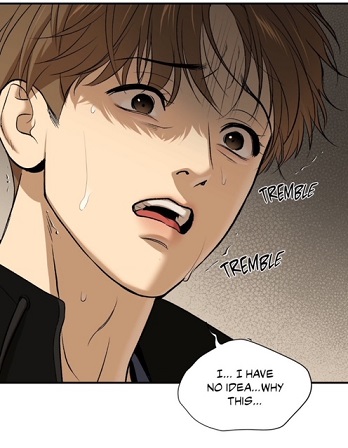
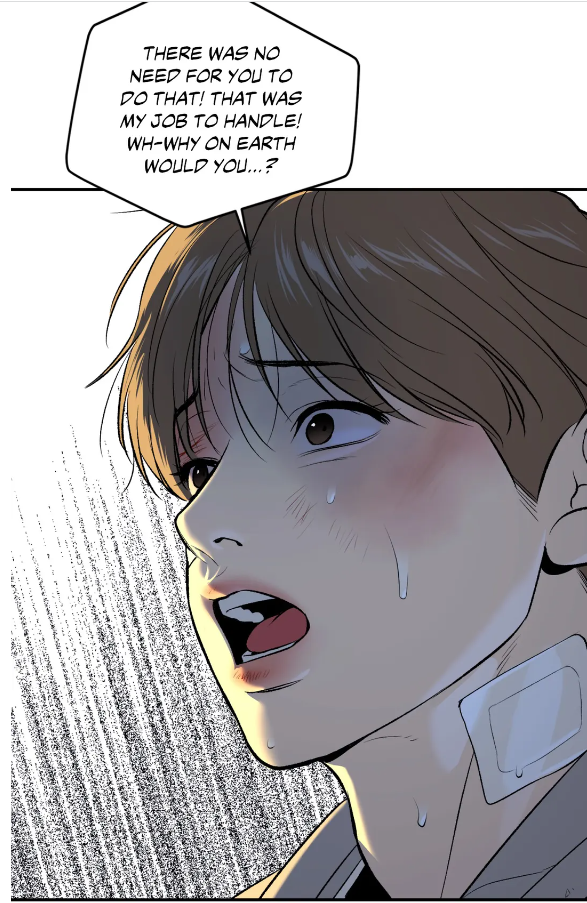 (chapter 18) When the champion paid off his debts, he saw it as meddling. Interesting is that he came to accept the champion’s support, but he never asked for Joo Jaekyung’s help directly. In addition, Jinx-philes should notice that in the interrogation room, he thought just about the champion and not himself.
  (chapter 40) It never came to his mind that he should ask for assistance. Finally, observe that after he got drugged in the States, he let the champion deal with the problem.
  (chapter 41) He accepted the statement from his boss. Nevertheless, doc Dan was the real victim. He should have become more involved in the matter. Besides, he was a witness. And this brings me to my next thought: if Kim Dan gets into trouble, he should remember Heesung’s words: he should give him a call!
 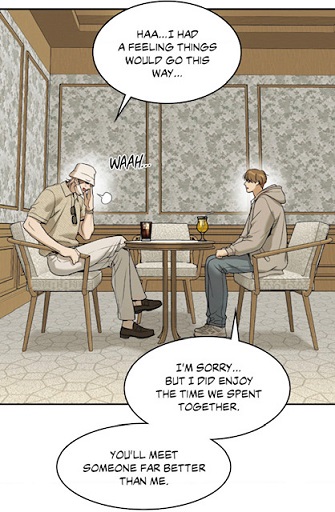 (Chapter 35) Interesting is that after his confession, he still chose to come clean with the doctor. He revealed the truth to Kim Dan, though he could have lost the protagonist’s respect. He admitted his lie and manipulation,
  (Chapter 35), but Kim Dan’s reaction was not to scold his future friend. In fact, he appreciated his honesty. In front of Kim Dan, he could show his true self. He was not entirely a good guy, but he didn’t get rejected. But so far, the actor is not present in the arena. Therefore Potato could be the first person Kim Dan asks for help. He shares some similarities with his soulmate. He doesn’t fear people’s gaze, hence he raised his voice under the tent.
 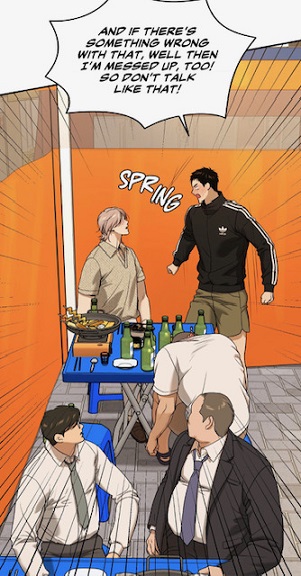 (chapter 35) he doesn’t represent the herd mentality, for he never thinks and acts like others.
  (chapter 49) similarly to his idol and hero in the States. He noticed the issue right away: the security didn’t do his job properly. To sum up, Potato would follow his foot steps and that’s how he would get noticed by MFC!
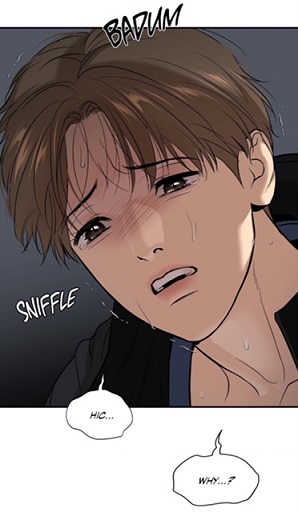 (chapter 50) The word is displaying that the doctor is not accepting the incident simply like that. It is showing that the doctor is slowly losing his naivety. Before the incident with the spray took place, he still trusted the words from people.
 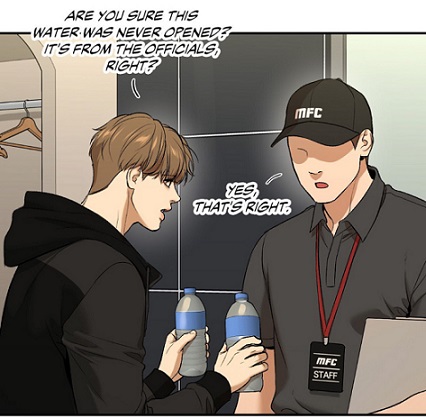 (chapter 49) Naturally, he can not get rid of his naivety totally, for keeping a certain purity is necessary in life too. On the other hand, it becomes clear that his naivety is the result from his education. The halmoni is herself quite too trusting. Hence she ended up being harassed by loan sharks. On the other hand, the incident was like an eye-opener for the physical therapist. He should stop judging people based on their words
  (Chapter 32)
 (chapter 1) by bosses, it becomes comprehensible why he didn’t fall into the trap a third time.
  (Chapter 48) He is pushed to question impressions and people’s motivations. As a conclusion, anguish is a tool to push people to become wiser and happier. And this leads me to my final part.
 (chapter 14) But back then, Kim Dan didn’t mind staying in Seoul.
  (chapter 13) Furthermore, after having sex in the locker room, Kim Dan was left behind.
  (chapter 15) And notice that this pattern was the same in the States. For the second match, Team Black left without him, hence Kim Dan arrived late.
  (chapter 40) Therefore he was running once again. However, back then, no readers felt angry at the team, though it could also be perceived as a betrayal and abandonment! Kim Dan was not perceived as necessary, neither for Joo Jaekyung nor for Park Namwook. Hence the bedroom could be judged as the place of the betrayal: “
 (chapter 40) That’s how I realized why the Webtoonist never showed the athlete’s caring gesture. He moved him in the middle of the bed! It is because the celebrity was still not treating his soulmate as a physical therapist. The second reason for the absence of anger is that Kim Dan had been drugged and as such was not fit. In addition, he needed to rest after having sex for the whole night. And now, you comprehend why the doctor could get dragged away by the MFC security guards, and no one from Team Black intervened.
  (chapter 40) It was to outline their previous disregard and betrayal! Thanks to Potato, Joo Jaekyung got informed, hence he could rescue the physical therapist.
  (chapter 40) But he never revealed the hamster’s role in the team! This explains why Kim Dan was used by Choi Gilseok. He needs to expose his role in Team Black to the world. He is the champion’s private PT!
 He has just his blue uniform.


 Hence he could get into trouble! The MFC could report the incident to the authorities!
  (chapter 49) in both cases! He was present, when Kim Dan drank the drugged beverage.
  (chapter 38) To conclude, it was not in Kim Dan’s interest to run away or hide! This would have been judged as a sign of his culpability and complicity. He needs to face the problems so that he can shape his destiny with his own hands and not remain the playball of dark forces! Yes, this chapter announces a huge change at Team Black, the start of a real friendship between two puppies. 😉
 (chapter 48) Why did the Webtoonist gave us the time, when the next episode starts another day? On the one hand, it exposes that the schemers knew about the champion’s nightly activities. He wouldn’t sleep much and he would keep his cellphone next to him.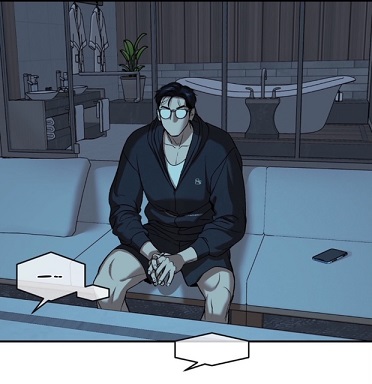
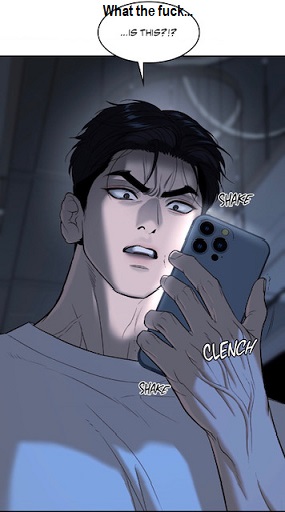 (chapter 35) This made me think of Painter of The Night and No-Name’s advice:
  (chapter 76) “A deed once foiled has no chance of success the second time around”.The criminal was referring to learning through experience. After going through such an event once, the athlete is no longer caught by surprise. We could say that he learned not to jump to conclusions and control his emotions. That’s the reason why in episode 48 he remained level-headed. Because the champion didn’t get angry, he could be more attentive.
 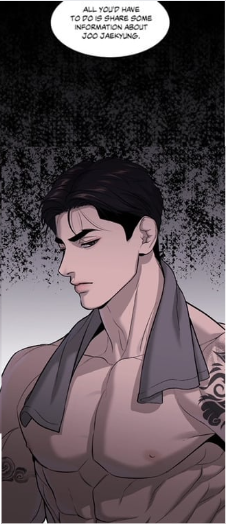 (Chapter 48) The irony is that the doctor had been able to treat the star’s injury. For me, the Summer Night’s Dream played a huge role, as during that night, Joo Jaekyung felt treasured and loved. Therefore the pictures could only expose the duplicity of the director of King of MMA. Under this new light, it becomes understandable why the celebrity didn’t fall into their trap and why they had to turn doc Dan into a traitor by giving him a weapon without his knowledge. Finally, I believe that Joo Jaekyung had another reason not to confront the physical therapist. How so? It is because he had sent away his soulmate, while the latter had approached him.
  (chapter 30) Here, he wished to seek the doctor’s closeness. Nonetheless, if he had gone to Kim Dan’s bedroom during that night, he would have achieved the opposite: he would have created distance and caused an argument. The latter could have told him that he was looking out for himself, for Joo Jaekyung had threatened to fire him. Through these observations, it becomes visible why the athlete couldn’t ask Kim Dan at all. Consequently, I come to the conclusion that the clock
  (chapter 49) The gaze displays not only worry and anxiety, but also regret. It was too late to ask the doctor. For me, he chose silence, for he was regretting his reactions in the penthouse. He feared to ask Kim Dan, because if he brought up the meeting with Choi Gilseok, this could push the hamster to quit his job. However, thanks to Kim Dan, the star’s condition improved greatly. That’s how it dawned on me why the champion became a beast and why he is hiding his past:
 (chapter 26) It is because the man is full of regrets and resent. But by creating new regrets, the champion is incited to focus more on the present so that he stops missing the timing. Because of his immense regrets and frustration, he was still trapped in the past. So he was unable to move on. To conclude, Kim Dan and Baek Junmin pushed him to face his youth and the source of his own unhappiness. His biggest suffering is a secret, because he would appear as weak and pitiful which would ruin his image as the strongest man in the world.
 (chapter 48), when he noticed doc Dan’s presence too late. But nothing happened to him, that’s how he got incited to trust Kim Dan. The latter wouldn’t backstab him. Under the blue light, the champion got transformed.
 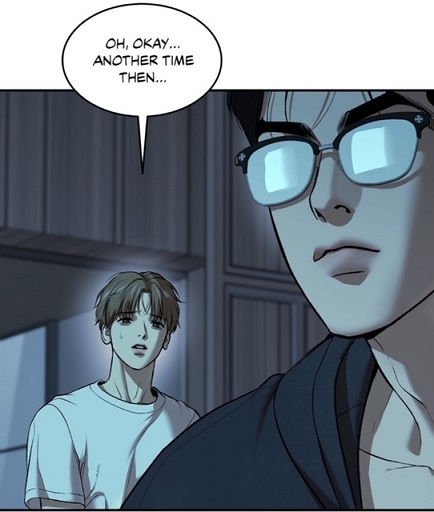 (chapter 48) On the other side, the fact that the champion is always targeted during the night is a sign that the villains desired to approach him, when he was isolated. So they know not only about his insomnia, but also about his solitude. I would even add that the plotters are aware of his association between the night and danger. Remember how he described relaxation: he would give an opportunity to his enemies to attack him


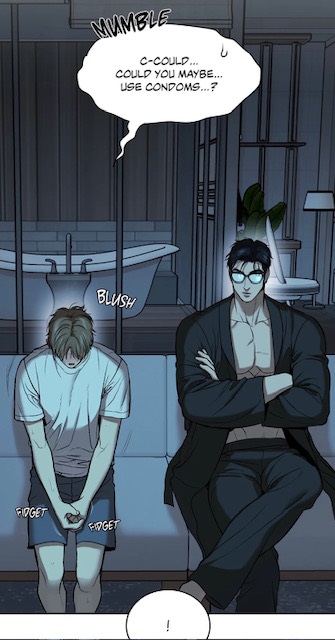


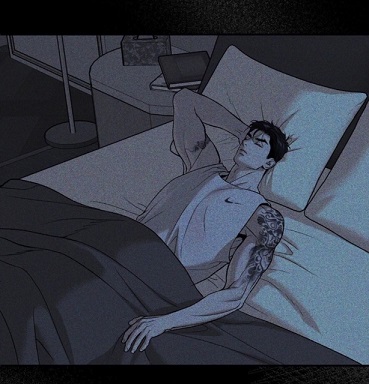
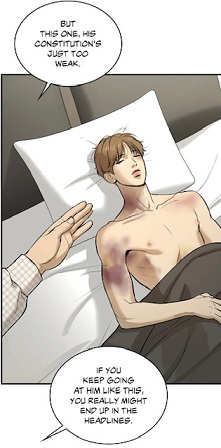 (chapter 13) It is important, because through this terrible experience, Joo Jaekyung came to internalize the connection between sex and danger. This would explain why he has been so rough in bed before. He came to see it as a normality, a sign that his perception of sex had been negatively influenced. And this can only come from bad experiences. It had nothing to do with “enjoying the moment”, until the protagonist met the shy hamster. We can see his gradual transformation. In episode 12, he definitely saw the night as “carpe diem”
  (chapter 19) or a new request like swallowing the sperm
 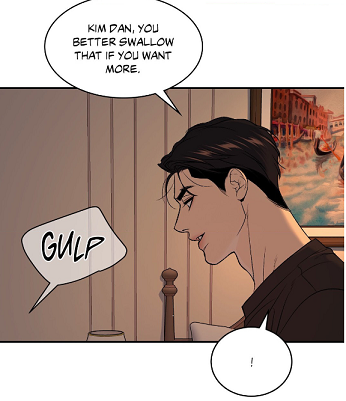 (chapter 39) or kissing the champion’s ruined ears
  (Chapter 40) That’s the moment he stopped considering the hamster as a prostitute, while from chapter 2 to 18, he viewed Kim Dan as a tool, as a talisman against his jinx. However, I detected a transition after he kissed the physical therapist. From that moment on, the doctor was connected to food and sweetness.
  (Chapter 18) And now, observe that during the night in the bathroom, doc Dan was associated with a baby receiving food:
 (chapter 20) As you can see, here the champion started viewing him as a human being. It exposes that little by little, his perception of the physical therapist improved. So from chapter 30 to 39, Joo Jaekyung was forced to question the nature of his relationship with Kim Dan: a PT or a prostitute or a pet?
  (Chapter 49)
 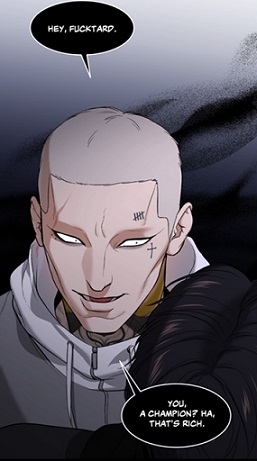 (chapter 49). These meetings are not random at all, a sign that someone knows about the athlete’s hidden suffering very well. Observe that both characters challenged the celebrity by giving him an order:
  (chapter 33)
  (chapter 49) Then I noticed another parallel between the two plots: the presence of a scapegoat, and the involvement of a third person. Heesung faked his injury by putting the blame on the athlete, while he asked Kim Dan as compensation. In the second plot, the roles are switched. Kim Dan is now the perpetrator, while the athlete is the victim! Baek Junmin is the beneficiary of this scheme. And what do these plots have in common? Joo Jaekyung is the victim of a trick, though Heesung’s manipulation was rather benign. First, he acted on his own.
  (chapter 46) could be seen as a reflection from the arcade and the star’s past. And since Kim Dan wounded Joo Jaekyung in the locker room
  (chapter 49), I deduce that such an action must have happened in the champion’s youth. He got not only hurt by people, but also betrayed by a friend. There exists many reasons for this hypothesis.
 (Chapter 04) and be rude towards others.
 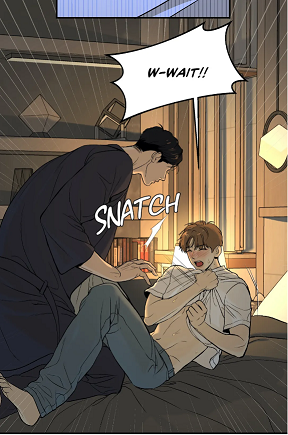 (Chapter 3) Some of them are not written in Korean or English. Moreover, the Webtoonist revealed that one of his hobbies is reading. This explains why he can talk prettily.
 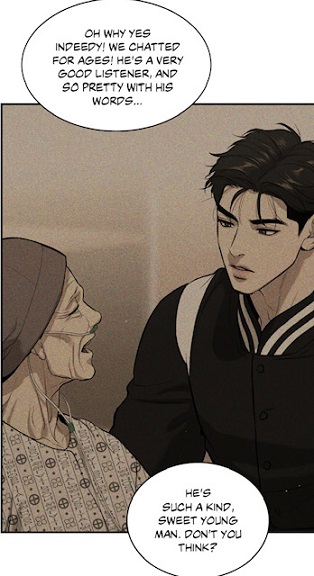 (chapter 22) This shows that his behavior mirrors the counterpart’s. Consequently, it is not surprising that the champion is rough with his own body, as Park Namwook is not treating him like a delicate child.
 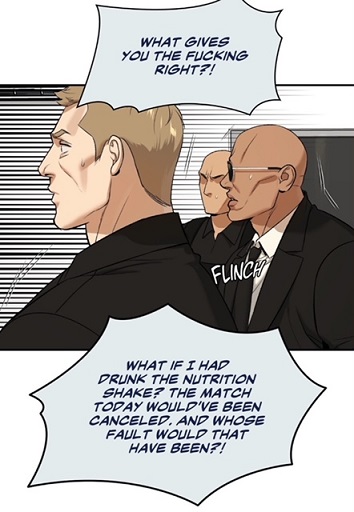 (Chapter 40) Compare Kim Dan’s English skills in the same scene:
  (chapter 40) Besides, Jinx-philes should question why Mingwa is not divulging his scores as a student contrary to Kim Dan or Jinwon from BJ Alex. It is because she wants to create a certain image about the champion: he is a bad boy. In my eyes, she is playing with prejudices about MMA fighters. People often imagine, they lack social manners and education. They chose this path, for they could do nothing else. And this brings me to my next remark. We know that Kim Dan selected PT because of his halmoni.
 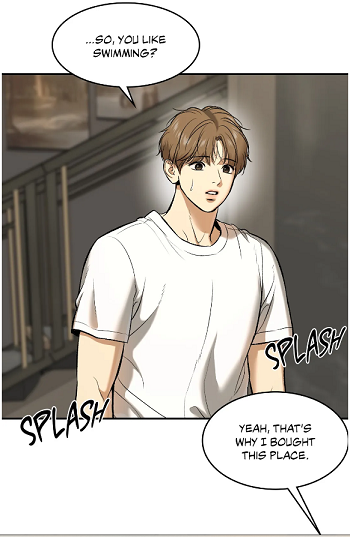 (chapter 27) I see a contrast between these two sports: swimming which is related to relaxation, pleasure and fun and MMA fighting which stands for challenge, pain and seriousness. This contrast is even more present in the following panel:
  (chapter 49) He is a hyena, hence his color is brown.
  (Chapter 48) And The Shotgun has a similar attitude:
  (chapter 49) Interesting is that his description of the challengers fits the situation in the new plot perfectly. The Shotgun imagines that he will fight against a diminished champion. His shoulder is injured and they have planned to add a new injury. The hyena stands for balance and cleansing as their task is to remove the weak ones.
 (chapter 49) As an old man, Choi Heesung is revealing vulnerability and senility. Due to his old age, he could be replaced by another hyena, a younger hyena!
 (chapter 5), as he is the only person who has not appeared yet, though the champion has his cellphone number. And this remark brings me back to the present and the night messages and the hyenas.
 (chapter 36) which could only affect the members from Team Black. Their loyalty could waver. Then he got to hear bad comments from the Internet
 (chapter 36) Under this new perception, Manhwaphiles can grasp why the MFC manager offered him a new defy right away. They needed to exploit his injury!
  (chapter 13) This could have ended badly. Another wrongdoing could be the rejection of his birthday present and his harsh reaction.
  (chapter 48) Through them, the champion is learning that hunting weak and pitiful creatures is not only a sin, but also a crime! In the first case, he could be accused of hurting an innocent.
 (chapter 26) For the first time, he had fun sparring. Hence he kept smiling. It is no coincidence that soon after he chose to accept to take a day-off, when Kim Dan made the suggestion.
 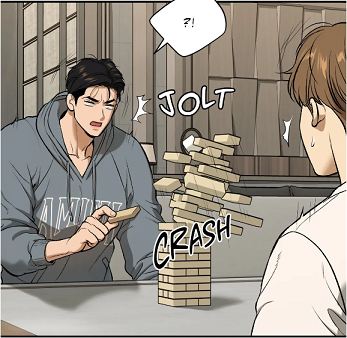 (chapter 27) That’s how he remembered that he liked swimming and he could play a prank on his lover.
  (chapter 35) and not in episode 48. It is because Kim Dan had paid him a visit during that night, a sign that he was thinking of him as his patient and VIP client.
 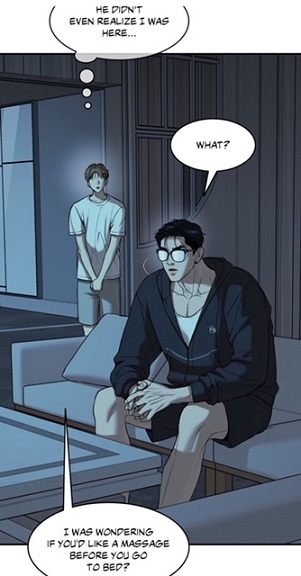 (Chapter 48) On the other hand, I am inclined to think that when a terrible incident in his youth occurred, he couldn’t contact his family or guardian. Hence he keeps his cellphone by his side constantly. Yes, I was thinking of the doctor’s assault in the street and his failed rape:
  (Chapter 16) Heo Namwook’s minions had confiscated his cellphone. Hence it was impossible for him to call for help. And now take a closer look at this scene:
 (Chapter 16) Though he had been on the phone and it was daylight, no one stopped the thugs from kidnapping the main lead or reported the incident to the police. Hence I am also suspecting that Joo Jaekyung must have faced a similar situation: he was surrounded by malicious people and no one had assisted him. So he could have been targeting at school due to his grads or his social status. And his isolation at home could push to seek company outside, to look for friends at school.
 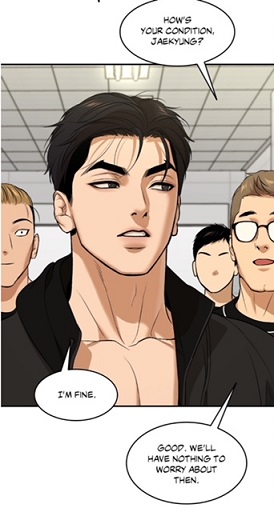 (chapter 49) That could be the hidden guardian who has not showed up yet, I am thinking of Seo Gichan. And now it is time to close this long essay.
 Bebebisous33s' analyses in K-Dramaland and Manhwas