

Please support the authors by reading Manhwas on the official websites. This is where you can read the Manhwa: Jinx But be aware that the Manhwa is a mature Yaoi, which means, it is about homosexuality with explicit scenes. Here is the link of the table of contents about Jinx. Here is the link where you can find the table of contents of analyzed Manhwas. Here are the links, if you are interested in the first work from Mingwa, BJ Alex, and the 2 previous essays about Jinx The Words The Fireworks Stole and The Sweetest Downfall Ever
It would be great if you could make some donations/sponsoring: Ko-fi.com/bebebisous33 That way, you can support me with “coffee” so that I have the energy to keep examining Manhwas. Besides, I need to cover up the expenses for this blog.
Introduction — Dream, Magic, or Something Else?
Many Jinx-lovers were genuinely happy watching how the champion interacted with Doc Dan during that night. He was caring  (chapter 86), gentle, attentive
 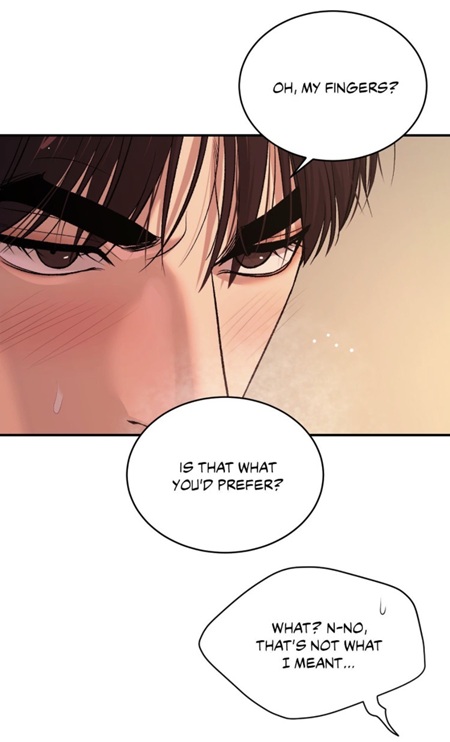 (chapter 86) — asking questions instead of imposing answers
 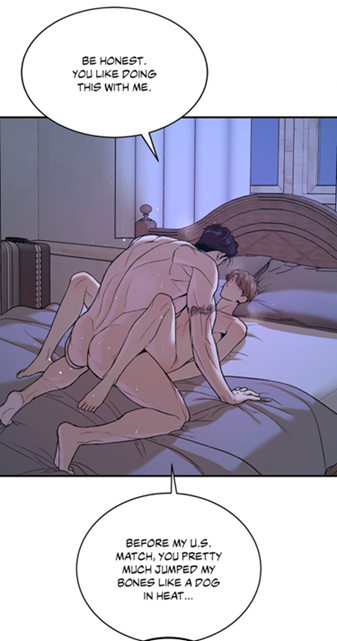 (chapter 64). For Joo Jaekyung’s unconditional stans (and I count myself among them), such an attitude
 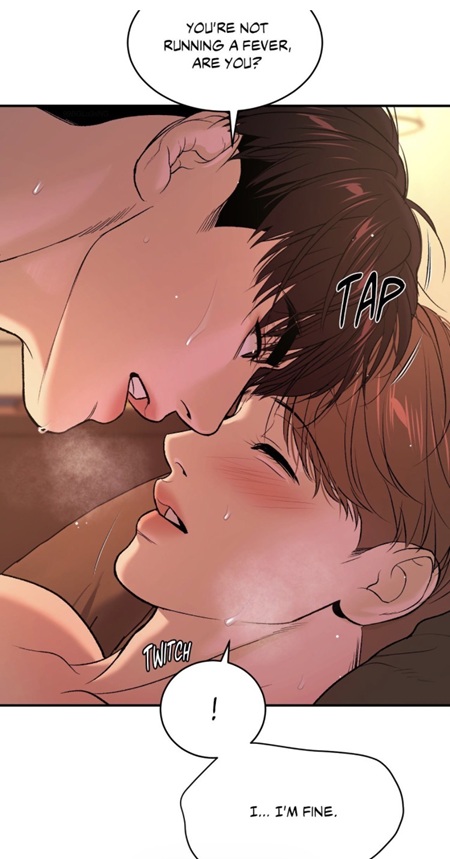 (chapter 86) can easily be read as proof that the protagonist’s good heart has always been existent, but it was barely visible. Compared to earlier chapters, the contrast is now undeniable. And yet, I would like to pause you right there.
Because focusing solely on the champion’s behavior risks missing the most decisive movement of this night. Joo Jaekyung’s transformation did not begin in episode 86. Long before that, he had already started changing — sometimes suddenly  (chapter 61), sometimes awkwardly
 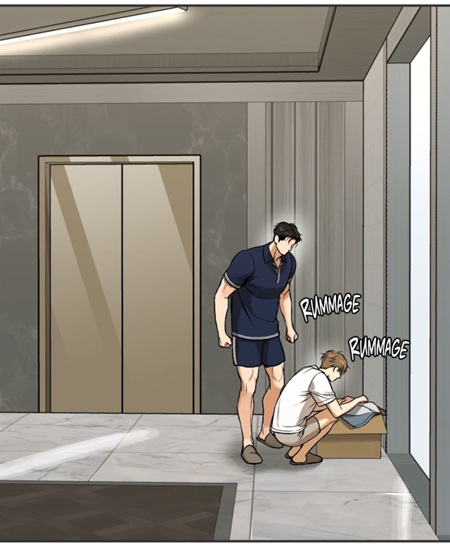 (chapter 80), sometimes inconsistently
  (chapter 79), but unmistakably
 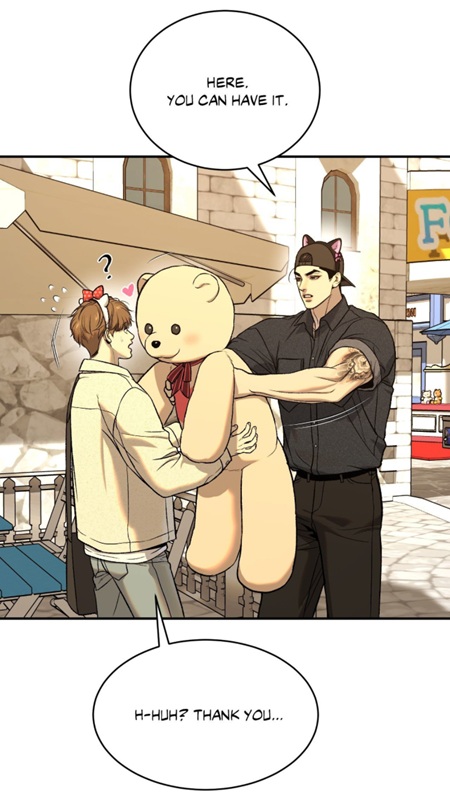 . (chapter 83) Tenderness, concern, even a certain form of devotion had appeared earlier
  (chapter 40), albeit in ways that were often overlooked,
  (chapter 18) misunderstood or poorly timed. This night
 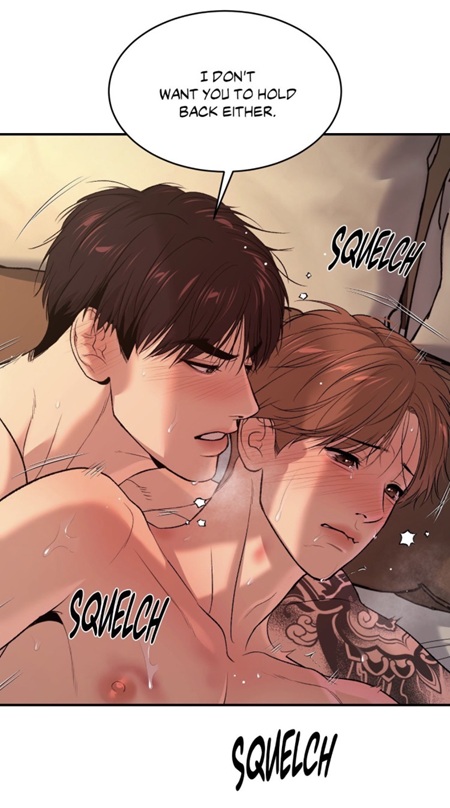 (chapter 86) does not initiate his metamorphosis.
So what, then, makes it feel so different?
When confronted with a night filled with stars 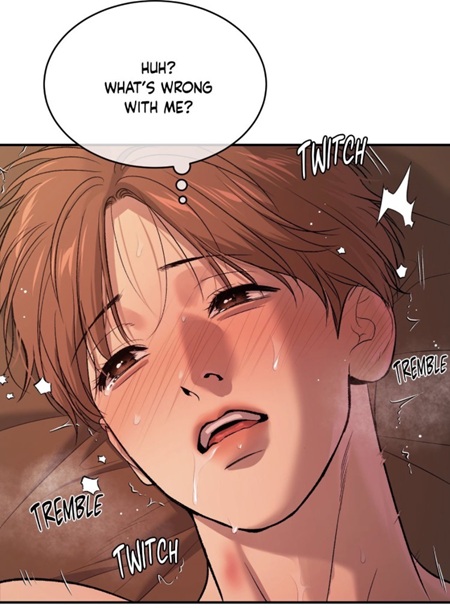 (chapter 86), sparks
 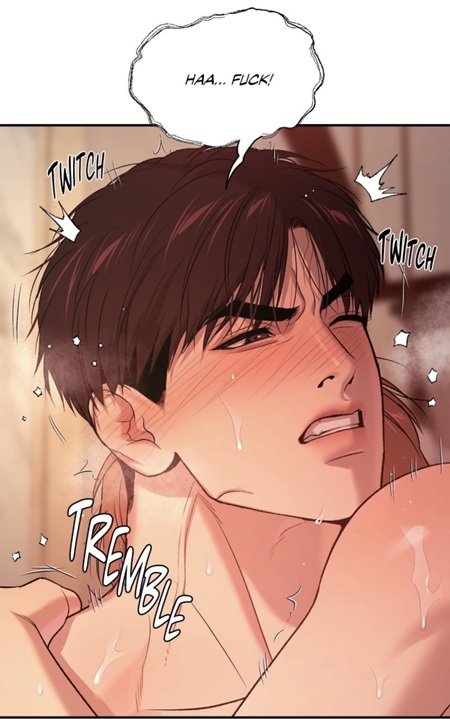 (chapter 86), and softness, many Jinx-philes might instinctively describe it as magical. The imagery invites such a reading. After all, we have seen similar nights before. The night in the States shimmered with illusion
 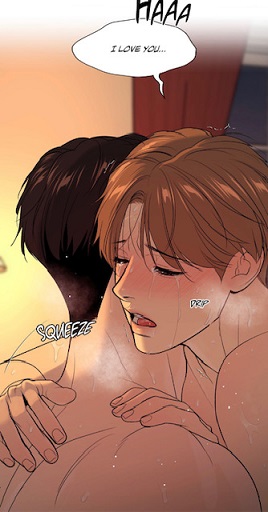 (chapter 39); words were spoken, confessions made — only to dissolve with memory.
  (chapter 41) The penthouse night echoed A Midsummer Night’s Dream
 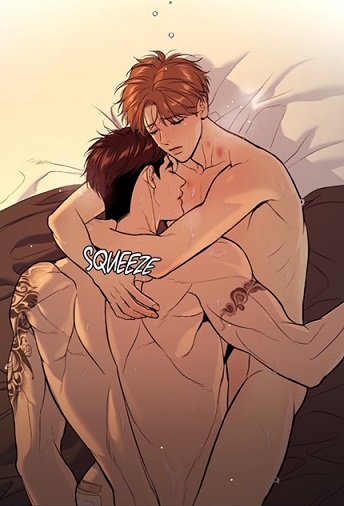 (chapter 44), suspended between intoxication and desire, intense yet fragile. Both nights felt unreal, and both were later reframed as mistakes
 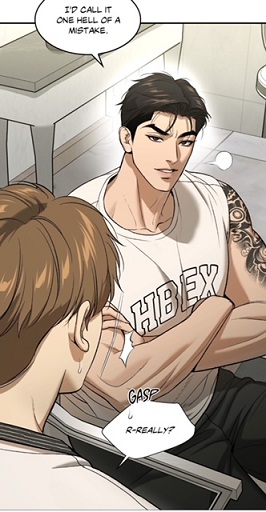 (chapter 41) — moments to be erased rather than carried forward.
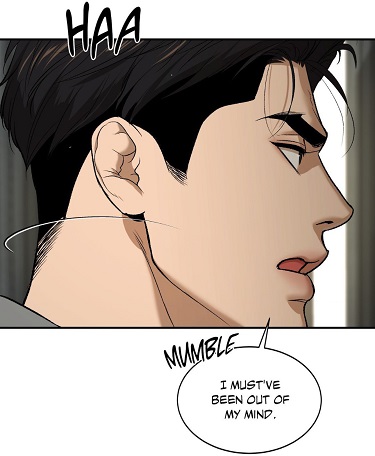 (chapter 45). This raises an essential question. Is episode 86
 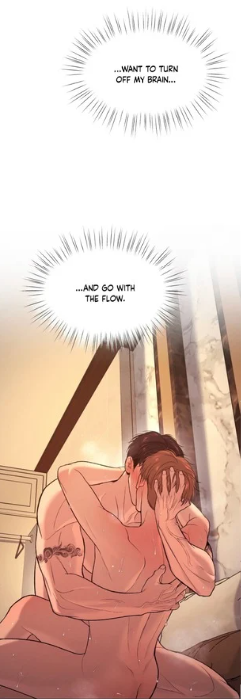 (chapter 86) a renewal of those nights? Another dream layered over the past? A repetition disguised as healing? Or, on the contrary, is this the first night that resists enchantment altogether?
This question matters because in Jinx, nights are never judged by themselves. Their true meaning is revealed afterward — in the morning  (chapter 4), in the return of light
  (chapter 66), in what remains once the sparks fade. A dream dissolves with daylight. Reality does not.
This is why it would be misleading to read episode 86 primarily as evidence of the champion’s improved behavior. Such a perspective encloses the night within its warmth and risks mistaking tenderness  (chapter 86) for final transformation. The real shift occurs elsewhere — more quietly, and perhaps more unsettlingly. To grasp the nature of this night, we must follow more importantly the doctor and his interaction with his fated partner.
What changes here is not only what Joo Jaekyung does, but how Kim Dan perceives 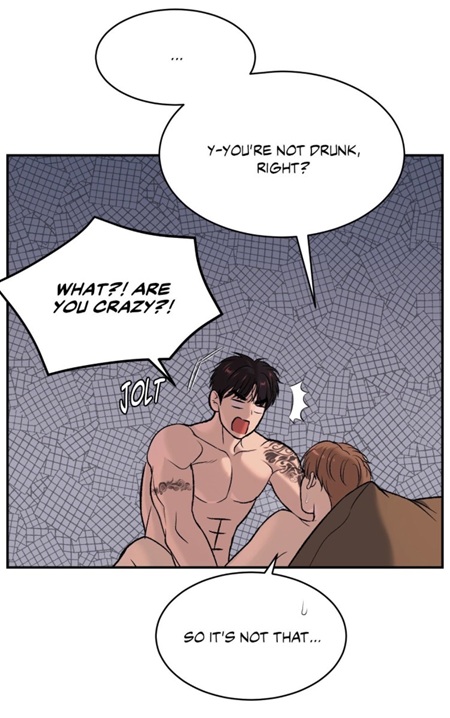 (chapter 86), processes, and responds to it. How he hesitates
 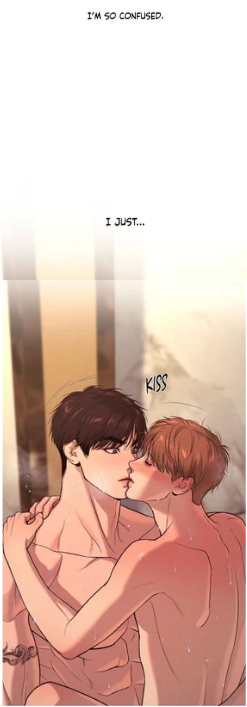 (chapter 86), reflects, and allows himself to reconsider what this moment can mean — and what it can lead to. (chapter 86) It is through this inner recalibration that we can begin to determine whether this night belongs to the realm of dream, repetition, or reality. Only by tracing the doctor’s perception can we understand what truly starts flowing here.
To approach this question, the analysis will move through several successive angles. It will begin with the symbolic and mythological references that frame episode 86, before turning to earlier nights that echo visually or emotionally within it. From there, attention will shift to forms of communication, considering how speech, silence, and gesture are arranged across these scenes. The analysis will then examine repeated actions and how their placement within the narrative differs from one moment to another. Only with such a progression can the nature of this night be reconsidered.
From Solar Heat to Electric Current
Many Jinx-lovers instinctively read episode 86 as a romantic turning point because the night looks “magical”: stars  (chapter 86), sparks, that strange shimmer that seems to hang in the air
 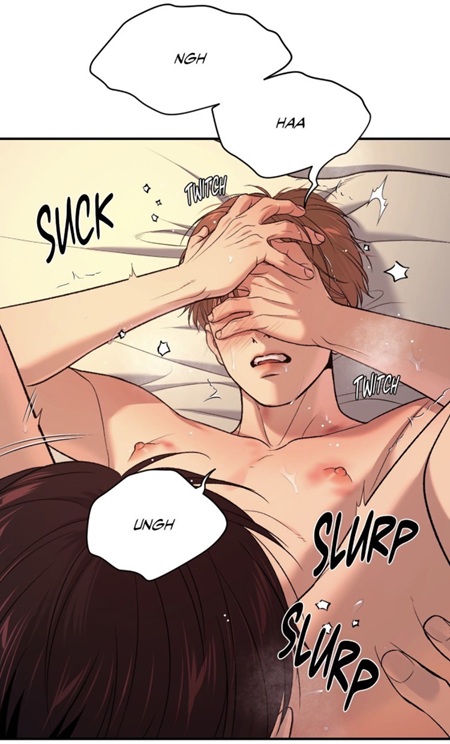 (chapter 86). Why? It was, as if their dream had come true. However, is it correct? Is it not wishful thinking? What if this night is not magical at all? What if its true signature is not enchantment, but electricity—a current that interrupts, tests, and resets? 😮
To grasp this, we must first return to the symbolic regime that used to govern the champion’s presence. In earlier chapters (think of the awe and distance around chapters 40–41 and again later), Joo Jaekyung often appears as a solar figure 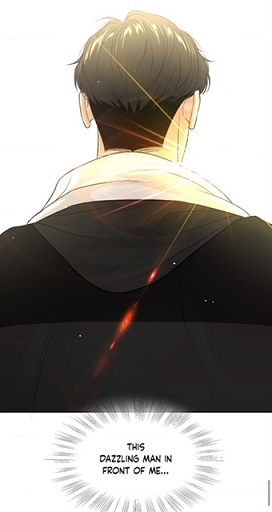 (chapter 40) in Kim Dan’s perception: overwhelming, radiant, dominant, a heat-source that does not negotiate.
 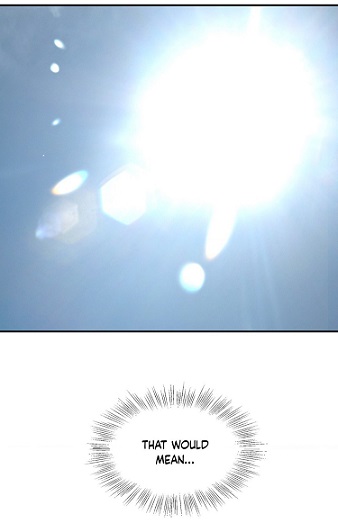 (chapter 41) The sun can be admired, feared, and endured—but it cannot be questioned.
  (chapter 58) It simply shines, and the one who stands in its light adapts. This explicates why the physical therapist would choose silence and submission over communication.
  (chapter 48)
The Invisible Energy
Nevertheless, the excursion in episode 83 and 84 begins to dismantle this solar grammar, though at the time, its meaning is easy to miss. 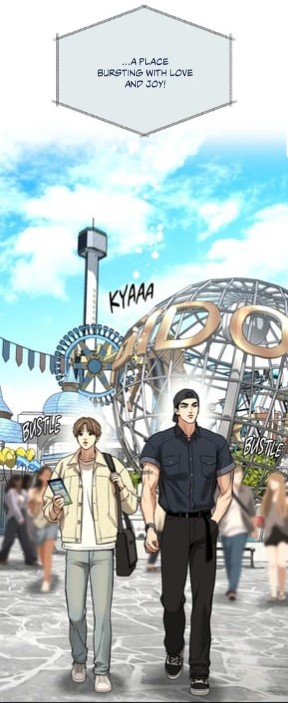 (chapter 83)
The shift away from solar symbolism does not announce itself loudly. It is embedded in the setting itself, almost too obvious to be noticed. An amusement park functions entirely on electricity. 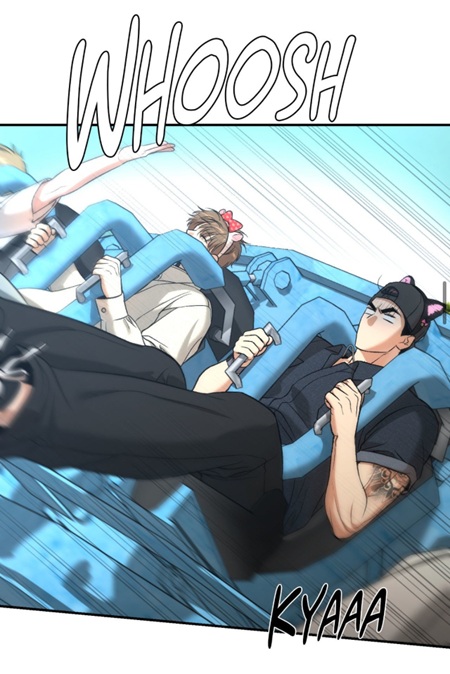 (chapter 83) Every ride, every light, every scream suspended in midair depends on current: motors accelerating and braking, circuits opening and closing, energy stored, released, and cut off.
  (chapter 83) Roller coasters do not move by heat, charisma, or sheer physical force; they move because electricity flows through them. The Viking ship swings
 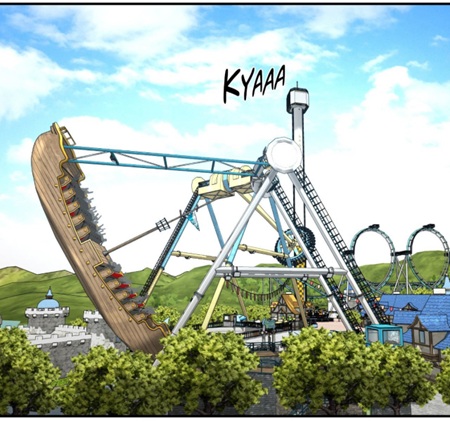 (chapter 83) because current allows it to swing. The Ferris wheel ascends
 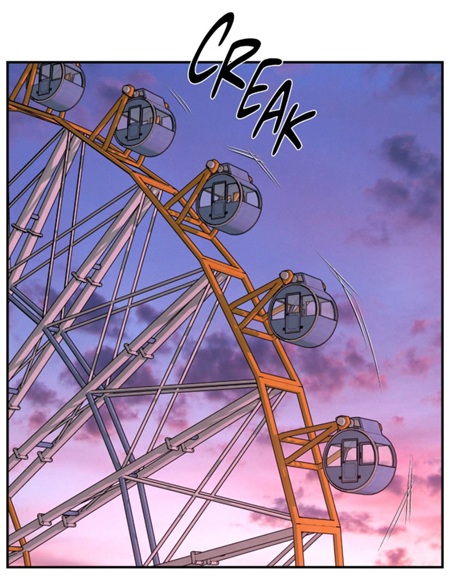 (chapter 83) because circuits hold — and descends because they release.
And yet, precisely because this energy is expected, it becomes invisible.
Neither the characters nor most Jinx-philes initially register electricity as a symbol. It is too familiar, too infrastructural. Electricity does all the work, but it remains background noise. This invisibility is not accidental. Unlike the sun — which imposes itself visually, hierarchically, almost tyrannically — electricity operates silently, relationally, conditionally. It does not dominate the scene; it enables it. It exists only as long as connections hold.
When Electricity Fails
This distinction matters, because electricity only becomes perceptible when it fails. 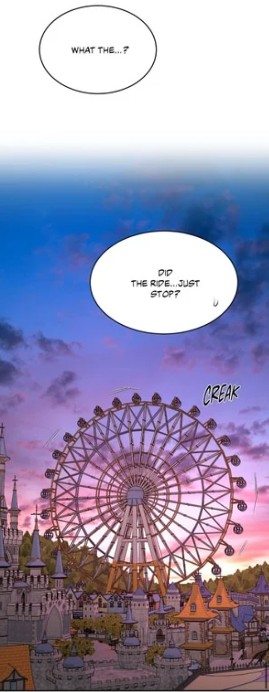 (chapter 84)
The Ferris wheel breakdown in episode 84 is therefore not a minor technical inconvenience but a crucial narrative rupture. The moment the current cuts out, movement stops. Height becomes dangerous. Time suspends. Panic enters the frame. The announcement that “the earlier technical issues have been resolved” 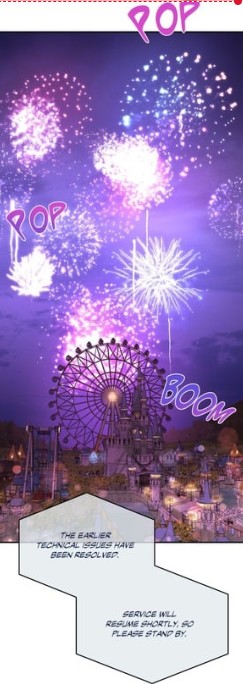 (chapter 84) explicitly names what had previously gone unspoken: the rides function only because current flows. When it disappears, the illusion of effortless motion collapses.
And it is precisely at this moment — when artificial motion halts — that Joo Jaekyung becomes active in an unexpected way.  (chapter 84) The Ferris wheel has stopped. The current is gone. The carefully regulated system that lifted, rotated, and sustained them is no longer in control. Yet movement does not disappear entirely. It mutates. When the champion shifts his weight, grips the structure, reacts instinctively, the cabin begins to shake. Panels emphasize instability: creak, swish, ack. The motion is no longer generated by electricity but by the body itself.
This moment is crucial. The shaking exposes a hierarchy reversal. Human strength now surpasses mechanical control. The ride no longer dictates sensation; the occupant does. And this excess of physical force — uncontrolled, unmediated — becomes unsettling rather than triumphant. Kim Dan immediately responds by asking him to sit down, to stop moving, to restore balance. Stillness, not action, becomes the condition for safety.
From Motion to Speech
What follows is telling. Deprived of the park’s mechanical rhythm, Joo Jaekyung does not compensate by acting more. He compensates by speaking.  (chapter 84) Stranded above ground, stripped of the park’s mechanical rhythm, he apologizes.
 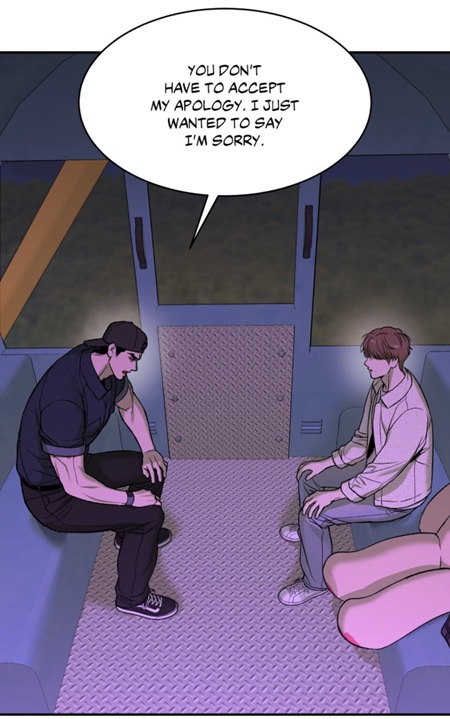 (chapter 84) Not theatrically, not performatively, but awkwardly, haltingly. His body exposes his discomfort
  (chapter 84) and fears. He avoids the doctor’s gaze, crosses his arms
 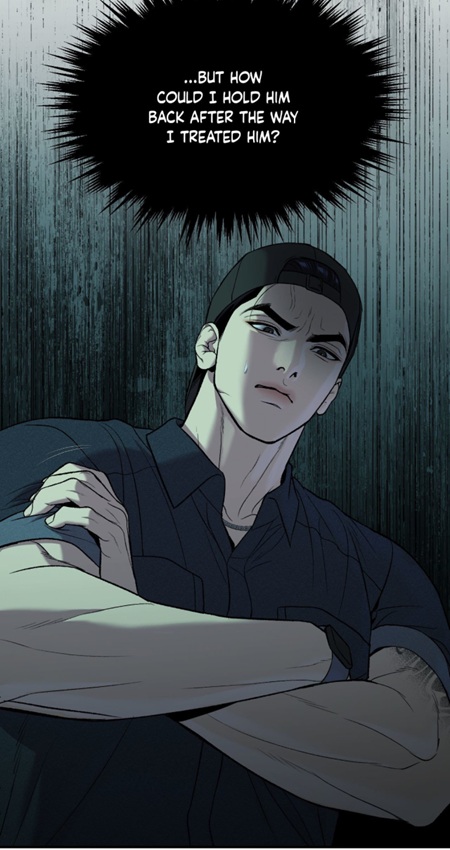 (chapter 84) or squeezes his arm
 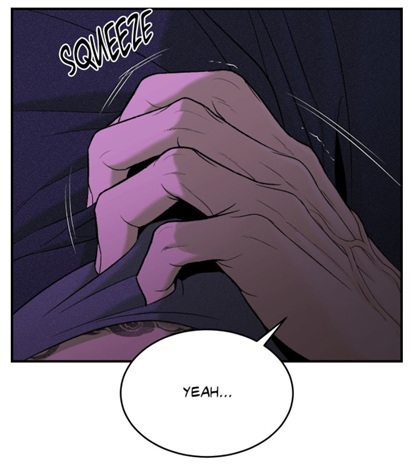 (chapter 84). The cessation of electrical motion coincides with a shift in his own mode of action. Where the park depended on current to keep things moving, he now moves without it. The absence of electricity forces something else to surface: responsibility, attention, presence. Additionally, this sequence anticipates what will later unfold more fully. Proactivity is no longer expressed through force or motion, but through articulation. Words stand for action and have weight. The champion’s future action is announced here, quietly: he will no longer push forward by shaking the structure. He will move by sharing thought, by naming feeling, by allowing himself to be affected.
The interruption of electricity does not merely stop the ride. It forces a change in how agency is exercised. Under this new light, my avid readers can grasp the true life lesson the athlete received at the amusement park, the importance of communication and attentiveness.
As a first conclusion, the amusement park juxtaposes two forms of energy: mechanical electricity and human vitality. The first is regulated, automated, predictable — until it fails. The second is volatile, embodied, responsive. When the Ferris wheel stops, the mechanical system collapses, and a different kind of current emerges: emotional, relational, biological.
Yet, only in retrospect does this moment reveal its deeper logic. I am quite certain my followers are wondering how I came to pay attention to electricity which led to new observations and interpretations. It is related to the “electrical night” in the hotel!
Electricity and Sex
What strikes immediately in episode 86 is not tenderness, nor explicit care, nor even novelty of behavior — but density. The night is saturated with sparks  (chapter 86),
 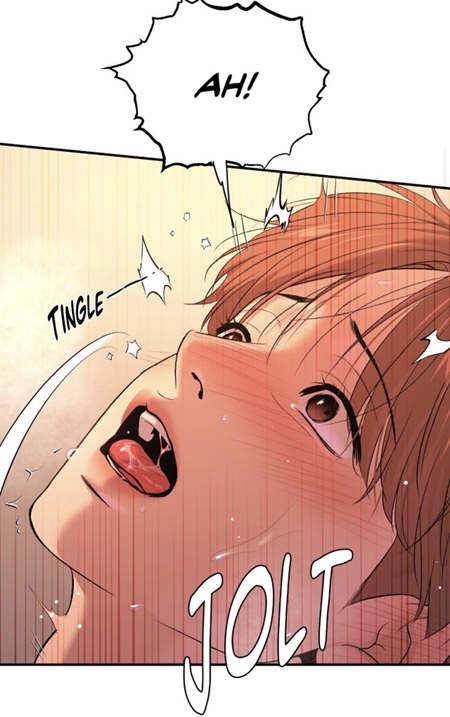 (chapter 86) jolts, sudden contractions of the body
 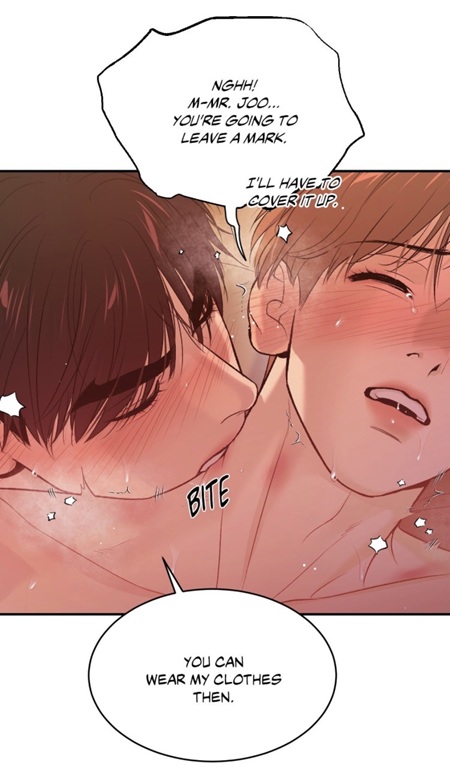 (chapter 86). Kim Dan is repeatedly shown convulsing, gasping, losing linear thought, and it is the same for the MMA fighter. Panels insist on interruption: jolt, tingle, broken breath, aborted sentences. The doctor’s body behaves as if struck, especially in this image.
 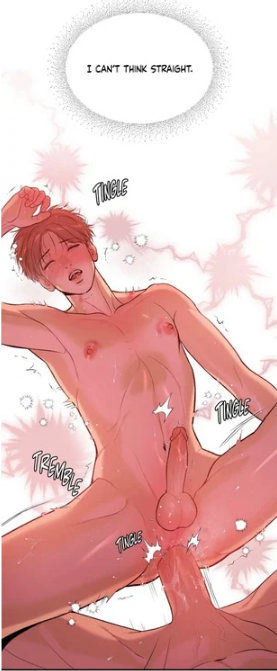 (chapter 86) It is at this point that a phrase surfaced in my mind — instinctively, almost involuntarily. A phrase we use in French when something intangible yet decisive occurs between two people: Le courant passe. Literally, the current passes. Idiomatic meaning: they are on the same wavelength, something connects, communication flows. However, here, the current is not the product of civilization, but of nature. Two people interacting with each other. And it is precisely because of the unusually high frequency of sparks and jolts in the illustrations that a belated realization imposes itself: nature, too, produces electricity — through storms, through thunder.
Joo Jaekyung’s Day and the Thunder
This raises a necessary question: where was the thunder before, as Jinx is working like a kaleidoscope?
One might be tempted to point to episode 69.  (chapter 69) A storm was announced back then. And yet, upon closer inspection, no thunder was ever shown there. There was tension, there was excess, there were dark clouds
  (chapter 69) — but there was no strike, no discharge, no interruption. The imagery remained continuous, fluid, enclosed within the logic of escalation rather than rupture.
The thunder appears in the amusement park. 😮 One detail initially seems insignificant, almost too mundane to merit attention: the day itself.
The excursion in episodes 83–84 takes place on a Thursday. At first glance, this appears to be nothing more than a scheduling detail. And yet, Thursday is not a neutral day. Linguistically and mythologically, it carries a charge. Thursday is Thor’s day. This latent mythology quietly materializes through two objects, the drakkar (Viking boat) (chapter 83) and the hammer  (chapter 83). In Roman terms, Thursday corresponds to dies Iovis — Jupiter’s day — the god of thunder. Both gods are strongly connected to thunder and as such current.
The narrative does not underline this fact. It does not name the god, invoke mythology, or frame the excursion as symbolic. The reference remains dormant. But dormancy is not absence. It is latency. This is where the symbolism stops being latent and becomes functional.
The reference to Thor and Jupiter (which was already palpable in earlier episodes 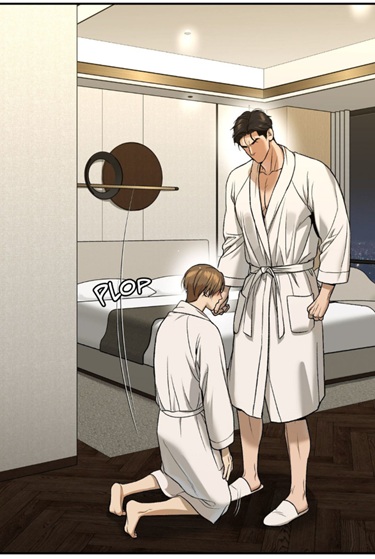 -chapter 67-; for more read my analysis Star-crossed lovers 🌕) is not decorative mythology; it introduces a dual model of power that the narrative begins to test on Joo Jaekyung himself. Thor (chapter 83) is the son: impulsive, embodied, excessive, a god who discharges energy through impact. Jupiter, by contrast, is the father (chapter 83): regulating, sovereign, stabilizing, the god who governs the sky rather than striking it. Thunder belongs to both, but it manifests differently depending on position in the lineage. What matters is not which god the champion “is,” but that he oscillates between them. This oscillation becomes legible through the hammer.
The hammer game appears after the champion’s moment of physical discomfort and jealousy.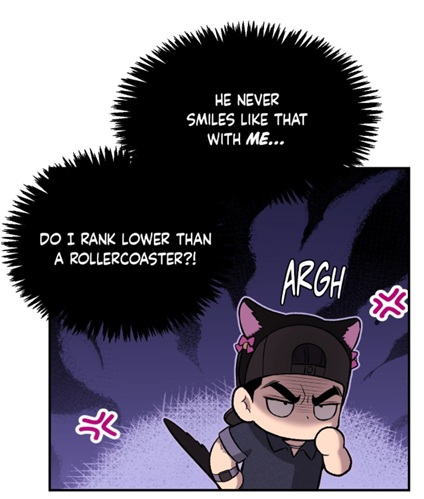 (chapter 83). Before striking anything, he is already unwell: angry overstimulated and complaining, visually reduced to a childlike register. This matters. The hammer does not create excess — it receives it. (chapter 83) It offers a sanctioned outlet for surplus energy that has nowhere else to go. However, contrary to the past, the physical therapist becomes the beneficiary of the athlete’s greed and jealousy. He receives a teddy bear. The hamster doesn’t witness the punching incident, he only sees the result: care and affection. (chapter 83)
Unlike boxing, unlike punching a sandbag  (chapter 34), the hammer gesture is not confrontational, for the machine is immobile. There is no opponent. (chapter 83) The arm rises and comes down. The movement is vertical, not horizontal. It does not engage another body; it obliterates resistance. This is not combat but discharge.
In that moment, Joo Jaekyung performs Thor. Not metaphorically, but structurally. He channels excess into a single, downward strike. The absurd score — 999 — is not triumph; it is overload. 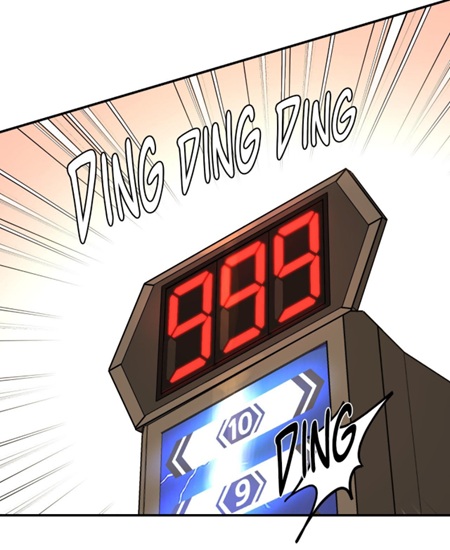 (chapter 83) Too much energy released at once. The system registers it, but cannot contain it. This means, the record won’t be registered and as such “remembered”. In fact what mattered here was the prize, the teddy bear, and restored self-esteem of the athlete. He could offer a present to doc Dan which the latter accepted without any resistance. (chapter 83) The pink heart indicates the presence of affection and gratitude. And crucially, this act restores balance. After the hammer, the champion is no longer visibly overwhelmed. He has expelled what needed to leave. This shows that the champion is learning to manage his jealousy differently.
This prepares the next transition. Once the excess is discharged, he can shift position. The childlike Thor-state gives way to something else: regulation, provision, containment. This is where Jupiter enters — not as domination, but as adaptive authority. The same character who was dazed now intervenes calmly, mediates interaction, hands over the teddy bear, anticipates need. Son and father coexist not as contradiction, but as sequence.
This duality is essential for what follows. Because thunder is not continuous like the sun. It interrupts. It breaks a state, resets a system, and allows a new configuration to emerge. That is its narrative function here. This means that the athlete’s attitude can no longer be generalized, as such reproaches or description wouldn’t reflect reality. But let’s return our attention to the thunder causing a short circuit and reset.
The Ferris wheel breakdown completes the logic. When electricity fails, mechanical motion stops. When motion stops, the champion’s bodily excess becomes dangerous. When excess becomes dangerous, restraint is required. And when restraint is required, speech replaces force. The apology does not come despite the breakdown, but because of it. The system has been reset. This is why the amusement park is not merely foreshadowing but training.
The champion learns, physically and symbolically, that energy must circulate differently depending on context. Sometimes it must be discharged. Sometimes it must be restrained. (chapter 86) Sometimes it must be transmitted through words rather than bodies. This is not moral growth; it is adaptive intelligence.
Doc Dan and the Thunder
And this is precisely what reappears in episode 86. (chapter 86)
There, thunder returns — no longer as mechanical failure, but as biological event. The sparks and jolts saturating the panels are not just erotic embellishment. They reproduce the same logic of interruption and reset as well. Kim Dan’s body reacts as if struck by current. Thought fragments. Linear continuity breaks. “I can’t think straight” is not poetic confusion; it is systemic overload. I would even say, we are witnessing a short circuit which can only lead to a reset.
A thunderstorm does not persuade. It forces a reboot. In other words, this night stands under the sign of reality despite the sparks. Electricity is real and even natural.
The crucial difference is that this time, the current does not come from machines, nor from spectacle, nor from a game. It emerges between two bodies. This is why le courant passe becomes more than metaphor. The current does not dominate; it circulates. It requires two terminals. It only exists because both are present and conductive. And now, you comprehend why the champion was attentive (chapter 86) and asked questions to his sex partner. The current stands for communication.  (chapter 86) Therefore it is not surprising that doc Dan starts looking at his fated lover. Imagine what it means for the athlete, when the “hamster” is staring at him, though he is a little embarrassed. Finally, he is truly looking at him. The champion loves his gaze. And now, you comprehend why the “wolf” listened to the “cute hamster” and stopped leaving marks.
In this sense, the hammer returns one last time — transformed. (chapter 86)
What struck metal in the amusement park now strikes the psyche. Not as violence, not as domination, but as reset. The phallus functions here exactly as the hammer did earlier: a tool of discharge that interrupts an old state and makes a new configuration possible. The result is not surrender, not illusion, but recalibration. Joo Jaekyung is once again releasing his “energy”  (chapter 85), but this time, its nature has changed. It is no longer jealousy or anger, but love and desire. Hence the current is not colored in red, but white and pink. (chapter 86) It is not a flame like here
 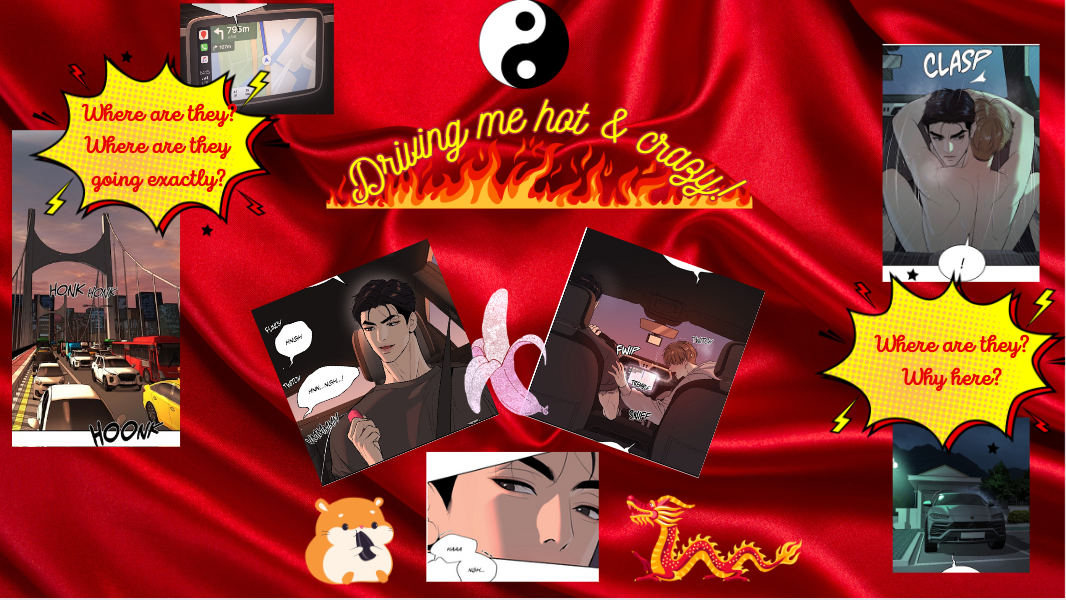 , but a thunder and as such it is still restrained and regulated.
This is why episode 86 does not feel “magical”, once the structure is visible. Magic enchants without consequence. Thunder alters systems. After a strike, nothing resumes exactly as before.
And that is the point.
The champion is no longer a sun that burns from a distance. He has become a figure capable of switching modes — son and father, Thor and Jupiter, discharge and containment. And Kim Dan, having undergone the reset, is no longer operating on inherited assumptions  (chapter 86) or second-hand data. New information must now be gathered. New meanings must be negotiated. Because Joo Jaekyung acts differently (son-father), the doctor is incited to discuss with his fated lover and not to generalize. He is pushed to become curious about the main lead and even adapt himself in the end.
The system has rebooted. What follows will not be repetition — because the thunder forced a reset. What follows will be movement and reciprocity — because current has begun to pass from one side to the other and the reverse. A new circle has been created.
Dream Nights and Drugged Time: Why Chapters 39 and 44 Could Not Last
If episode 86 confronts us with electricity as reset, then we must return to the earlier nights that failed — not because desire was absent, but because time itself was compromised.
Many Jinx-lovers remember the night in the States  (chapter 39) and the penthouse night
 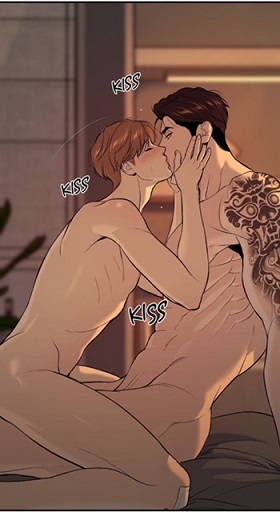 (chapter 44) as emotionally charged, intense, even pivotal. Confessions were made. Bodies responded. Vulnerability appeared to surface. And yet, both nights collapsed almost immediately afterward. What was felt (chapter 44) did not endure. What was said did not bind. What was shared did not accumulate into change.
Why?
The simplest answer would be to blame the champion’s behavior. But this explanation is insufficient — and, in fact, misleading. The deeper issue is not ethical failure alone, but structural impossibility. These nights were built on illusion. And illusion, by definition, cannot sustain time.
Let us begin with the night in the States.
In chapter 39, Kim Dan experiences desire  (chapter 39), arousal, and emotional exposure under the influence of a drugged beverage. His body reacts strongly, almost violently. His speech loosens. He confesses. (chapter 39) He voices feelings that he has never dared to articulate consciously. Many readers interpreted this moment as a breakthrough — the first time the doctor allowed himself to want.
And yet, the morning after reveals the fatal flaw: he does not remember. 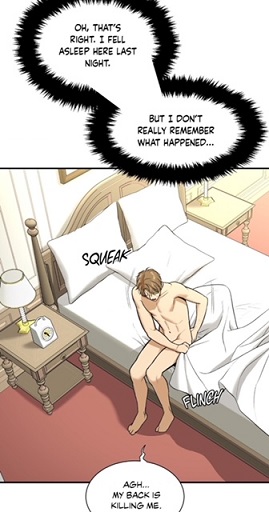 (chapter 40)
Memory loss is not a narrative convenience here. It is the core of the scene’s meaning. Without memory, desire cannot transform into intention. Without intention, intimacy cannot become choice. What remains is sensation without authorship.
In other words, the confession existed — but outside time.
The body spoke, but the self could not claim it. The night produced intensity, not continuity. More importantly, it denied Kim Dan the possibility of return. Because he did not remember, he could not revisit the moment, reinterpret it, or choose it anew. Desire occurred — but never became decision. The night passed through him without granting him authorship. At the same time, Joo Jaekyung made sure with his joke (chapter 41) that doc Dan shouldn’t remember that night. This remark left a deep wound on doc Dan’s soul and mind, thus he hoped not to look like a fool in episode 86. 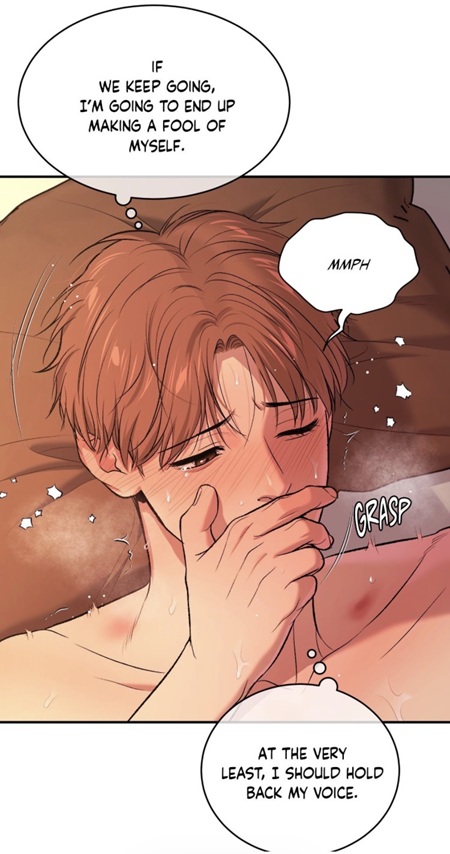 (chapter 86) In this panel, we should glimpse a reference to the night in the States as well, and not just to the night in the penthouse.
The intensity of that night is why the champion’s later obsession with recreating that night is so telling. (chapter 64) Deep down, he hoped that such a night had been real. That’s why he asked shortly after their return about this particular night. (chapter 41) The event floats, unmoored, like a dream recalled only by one participant. I would even add, the amnesia from the doctor even afflicted a wound on the main lead. This explains why in Paris, he keeps asking doc Dan if the later is well and is not suffering from a fever. (chapter 86) He wants to ensure that his fated lover won’t forget this night. He is doing everything to avoid a repetition from that “dream or fake night”, where the physical therapist acted as the perfect lover, but forgot it. However, observe that here, the champion is touching doc Dan’s forehead, a sign that he is making sure that doc Dan is not “lying” by coercion or submission. At the same time, such a gesture reinforces my interpretation: thanks to the “thunder”, heat is generated. “Le courant passe” (the current passes) through physical contact, that’s how they create intimacy and understanding.
The penthouse night in chapter 44 follows a similar structure, though its emotional register differs.
Here, it is Joo Jaekyung who is intoxicated.  (chapter 44) The setting is elevated, luxurious, almost theatrical. The doctor is brought into a space of power that is not his own.
 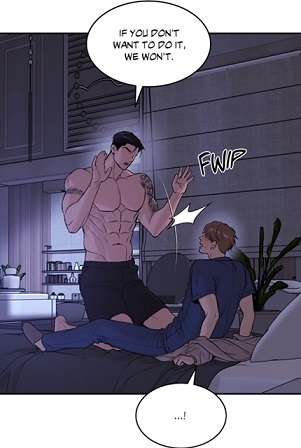 (chapter 44) By acting that way, the athlete created a false impression of himself, as if he was still rational and clear-minded. Again, desire unfolds.
  (chapter 44)
  (chapter 44) Again, closeness occurs. And again, the aftermath reveals the same fracture.
The champion does not remember fully 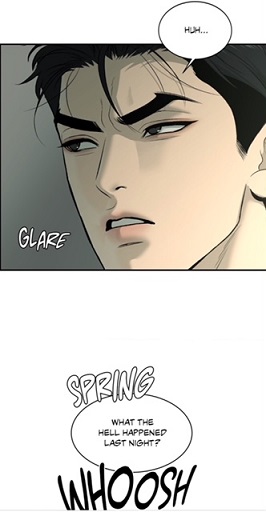 (chapter 45) and later wants to even forget it. (chapter 45) Why? It is because contrary to the night in the States, the MMA fighter left traces on doc Dan’s body
  (chapter 45) and he can not deny his own involvement and actions. Hence the doctor is left alone. Only he can recall this “dream”.
  (chapter 44) But memory alone is not power. Remembering without the other’s participation transforms recollection into isolation. Kim Dan cannot confront, confirm, or renegotiate what happened, exactly like the champion did in the past. Meaning freezes instead of evolving. Striking is that he came to associate feelings with addiction.
  (chapter 46) No wonder why later doc Dan had no problem to reject the athlete. And for him, the next morning became a cruel reality, even a nightmare. It wounded doc Dan’s heart and soul so much that he learned the following lesson: to not get deceived by impressions. Hence in Paris, Doc Dan tries to explain the change of the champion’s attitude with drunkenness. (chapter 86)
What matters is not simply abandonment, but asymmetry of consciousness. While Joo Jaekyung remembers the night in the States, the other remembers the night in the penthouse: 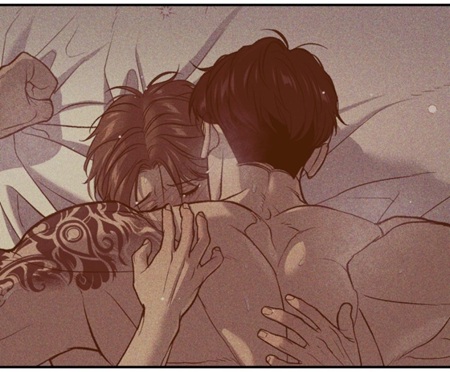 (chapter 44) One participant is altered. The other must carry the weight of meaning alone. The night does not end in shared reflection, but in silence and absence.
In both cases, the problem is not sex. It is not even exploitation or ignorance— though both are present. The problem is that time cannot flow forward from these nights.
Why? Because drugs suspend causality.
Under intoxication, actions do not generate obligation. Words do not demand response. Feelings do not require follow-up. The night becomes sealed — intense within itself, but cut off from before and after. This is why these encounters feel dreamlike in retrospect. Not romantic dreams, but dissociative ones.
And Jinx insists on this reading visually.
In both chapters, speech is unstable. 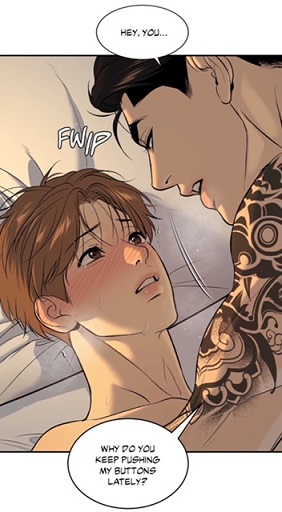 (chapter 44) Words blur, vanish, or are forgotten. Even gestures go unnoticed: a kiss, an embrace or a patting. Memory fractures. The morning after is defined not by continuity but by confusion. The body has moved forward, but the narrative has not.
This logic culminates in the fireworks scene of chapter 84  (chapter 84)
Fireworks are often read as romance. But here, they function as warning. Fireworks illuminate the sky briefly, brilliantly — and then disappear. They leave no trace. And crucially, during this display, words are literally blurred. 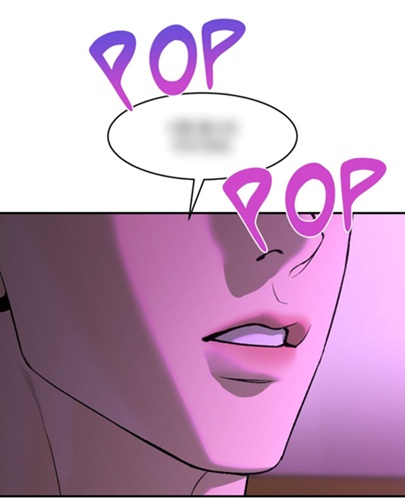 (chapter 84) Speech bubbles lose clarity. Confessions are obscured. The reader is denied access to meaning. Fireworks, like drugs, produce intensity without duration.
This is the crucial distinction that Part I prepared us for: heat versus current. Heat lingers. It can smother. It can burn. But it does not require connection. Current, by contrast, only exists if two points remain linked.
Chapters 39 and 44 are nights of heat. Bodies respond. Desire flares. But no circuit closes. No loop remains intact long enough for time to resume. This is why these nights are doomed — not morally, but structurally.
And this brings us to a crucial observation that many readers overlook.
In both of these earlier nights, questions are absent.
No one asks: “Are you okay?”  (chapter 39)
  (chapter 44) It was as if these nights could only exist under altered states — as if clarity on either side would have made them impossible.
No one asks: “Do you remember?”
No one asks: “Why are you doing it?” “What does that mean to you?”
Speech exists, but it is not dialogic. It does not seek the other’s subjectivity. It spills, confesses, demands, judges or disappears. But it does not circulate. This is why, despite their intensity, these nights do not move the story forward. They collapse inward.
Episode 86, by contrast, will confront us with something radically different: a night that asks questions.  (chapter 86)
But before we get there, we must acknowledge what these dream-nights leave behind.
They teach Kim Dan that desire is dangerous when it appears without agency. That closeness can dissolve overnight. That bodily truth does not guarantee recognition or even knowledge. And perhaps most importantly: that remembering alone is a burden. 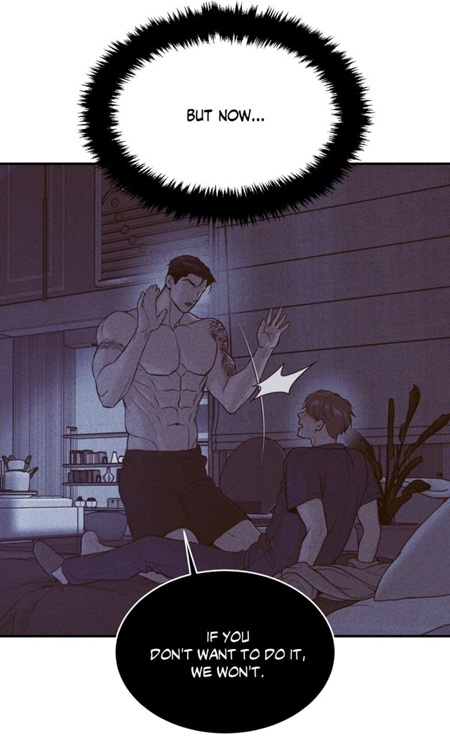 (chapter 86) This is why, when electricity returns in episode 86, it does not revive heat. It interrupts it.
 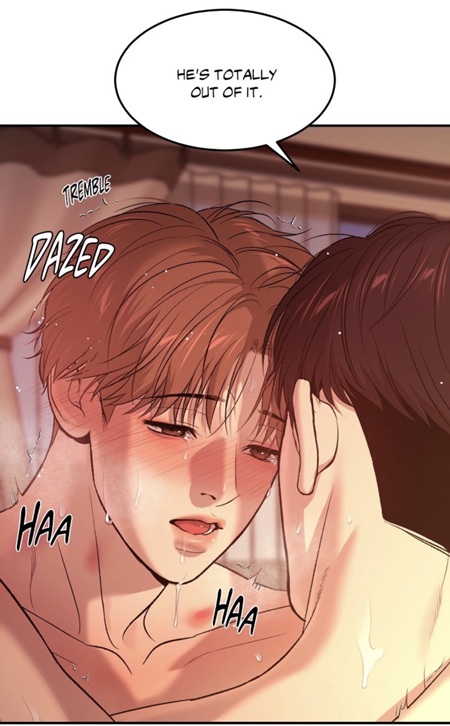 (chapter 86) That’s the reason why the athlete stops for a moment and asks doc Dan, if he needs a break.
  (chapter 86) This question is important because doc Dan admits his confusion and ignorance. He confesses to himself that he “knows nothing” not only about himself, but also about his fated lover. (chapter 86) The night is no longer sealed. It is permeable. Time resumes. (chapter 86) This signifies that thanks to the “champion’s thunder”, doc Dan was able to leave the vicious circle of “depression”. At the same time, such a confession implies that doc Dan’s present is no longer determined by the past and prejudices. And that is precisely why it matters.
From Drugged Time to Embodied Presence
If the earlier nights failed because time itself was compromised, then the question that naturally follows is this: what allows time to resume?
Chapters 39 and 44 taught us that intensity alone is not enough. Desire flared, bodies responded, confessions surfaced — and yet nothing endured. Not because feeling was false, but because consciousness was fractured. Words existed, but they did not circulate. Memory existed, but it was asymmetrical. Each night collapsed into silence the moment it ended.
Episode 86 emerges precisely at this fault line.
At first glance, it might seem quieter. Less dramatic. Less overtly confessional. And yet, this apparent restraint is deceptive. What changes here is not the presence of desire, but the medium through which meaning passes. What circulates between them in this night is not nostalgia, not projection, not even hope — but presence.
The sparks that punctuate episode 86 are not metaphorical excess. 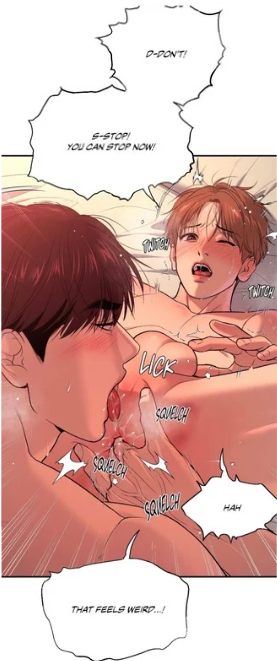 (chapter 86) They function as temporal markers. A spark exists only now. It has no duration. It cannot be stored, recalled, or anticipated. It appears — and vanishes. In this sense, electricity becomes the perfect visual language for the present moment itself.
Unlike heat, which lingers and can smother, current demands simultaneity. It requires two points to be active at the same time. The moment one withdraws, the circuit breaks. Sparks therefore signify not passion remembered or desired, but attention shared. This is why the night in episode 86 feels radically different from earlier encounters. At the end of episode 86, Kim Dan is no longer trapped in the past — replaying humiliation, abandonment or knowledge (as such arrogance). Nor is he projecting into the future at the end — fearing consequences, punishment, or loss. (chapter 86) For once, his thought does not spiral backward or forward. It halts. He decides to follow his heart again. (chapter 86)
The phrase carpe diem applies here not as romantic indulgence, but as psychological fact. To seize the day is not to ignore reality; it is to suspend temporal distortion. (chapter 86) In this night, neither character is reliving an old wound nor rehearsing a future defense. They are not remembering a dream. They are not trying to recreate one. They are simply there.
Electricity makes this visible. The body jolts. Thought fragments. Linear narration breaks. But unlike the drugged nights, this fragmentation does not produce amnesia. It produces grounding. Kim Dan’s repeated confusion — “I can’t think straight” — is not dissociation. (chapter 86) It is the absence of rumination.
This is what distinguishes presence from illusion. Illusion detaches the body from time. Presence anchors the body in time.
The sparks, then, do not represent chaos, rather emancipation and liberation. (chapter 86) Therefore the “hamster” can not control his voice and body. The sparks represent contact without temporal displacement. Both characters inhabit the same instant, without substitution, without rehearsal, without erasure. The present is no longer something to escape or survive. It becomes something that can be shared. That’s the reason why the two main leads are talking to each other.
And this is precisely why meaning finally begins to circulate.
If the first part (From Solar Heat to Electric Current) and second part ( Dream Nights and drugged time) traced how electricity replaces heat, and how illusion breaks time, then the next part turns to the most unsettling shift of all: the disappearance of words — and the emergence of the kiss as language.
No Words, But a Kiss: When Communication Changes Form
One of the most striking features of my illustration for episode 86 is the near absence of visible speech bubbles — even when Joo Jaekyung is clearly speaking. His mouth is open, his body leans in, his posture is attentive, and yet language is visually de-emphasized. Words are present, but they no longer dominate the frame.
By contrast, the star with the cut-off speech bubble appears elsewhere — suspended, incomplete. Language has not disappeared; it has lost its authority. It exists, but it is no longer imposed, no longer unilateral, no longer protected by distance.
This visual shift matters. (chapter 86) In earlier chapters, words often preceded erasure: confessions spoken under intoxication  (chapter 10), statements blurred by drugs
 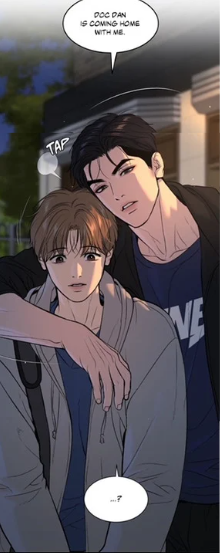 (chapter 43), sentences remembered by only one side. (chapter 39) Language functioned as exposure without continuity. Here, the narrative refuses that pattern. (chapter 86) It withholds verbal dominance so that something else can emerge. Kim Dan’s answer does not come in words. It comes as a kiss. (chapter 86) This gesture must not be misread as avoidance (silencing) or impulsivity. It is neither silence born of fear nor surrender to sensation. It is embodied communication — a mode forged by a history in which words were unsafe, unreliable, or followed by disappearance. The kiss articulates what cannot yet be stabilized in language without being lost again.
It says: I am here. And more importantly: I accept this moment. Not the future. Not the consequences. The present. But this action catches the MMA fighter by surprise, as in the athlete’s mind, Doc Dan has never initiated a kiss before except in the States, but the doctor doesn’t remember it. At the same time, it is clear that the athlete has not been confronted by his own amnesia concerning the night of his birthday: doc Dan had kissed him there too, thus the celebrity had been able to make doc Dan smile  (chapter 44) and even laugh…. if only he could remember that night…
Crucially, this act in episode 86 (chapter 86) cannot be neutralized by Joo Jaekyung’s habitual reflexes — the “it’s nothing” 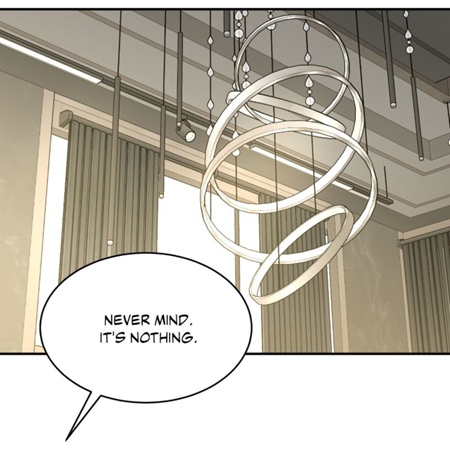 (chapter 79), the “never mind”,
  (chapter 84) or it is a mistake, the easy erasure that once dissolved meaning after the fact. The kiss interrupts that mechanism. It produces a pause that cannot be talked over. It forces reflection. (chapter 86) Joo Jaekyung will have to ponder on the signification of such a kiss.
For the first time, meaning does not vanish once contact is made.
The kiss therefore marks a decisive transformation in how communication functions between them. Words are not rejected; they are postponed. Language is no longer the condition for intimacy, but its consequence. What circulates first is presence.
And this is why the kiss belongs structurally to the logic of current introduced earlier. Current does not explain itself. It passes — or it does not. It requires proximity, consent, and mutual contact. Once established, it cannot be undone by denial. Hence the champion reciprocates the gesture. (chapter 86) He is even kissing with open eyes, as though he desired not forget this wonderful night. In episode 86, communication no longer seeks to protect itself through speech. It risks itself through embodiment. And that risk, precisely because it is accepted rather than anticipated, changes everything.
First Conclusion — When Conditions Change
With the symbolic framework established, the earlier nights revisited, and the forms of communication closely examined, the analysis has already progressed far enough to reconsider the nature of the night in episode 86.
By moving through these successive angles — from mythological and elemental references, to nights compromised by illusion, to the transformation of how meaning is exchanged — one point becomes clear: this night is not just defined by intensity, tenderness, or redemption. It is also defined by changed conditions.
When electricity replaces heat (chapter 86), power ceases to be unilateral and becomes relational (sky and earth). Thunder does not linger or dominate; it strikes, interrupts, and resets. The champion is no longer read as a solar figure imposing force from above, but as a conductor within a circuit that requires reciprocity.
When the earlier nights are reexamined, their failure appears not as emotional insufficiency but as structural impossibility. Desire existed, but time could not flow. Drugs suspended causality, fractured memory, and sealed each encounter inside itself. What remained were dream-nights — vivid, intense, and ultimately unsustainable. Yet, they left wounds. (chapter 86) At the same time, it becomes clear that this moment in Paris embodies the convergence of two memories and two nights which helps them to recreate a new night marked by desires and communication. So this night will generate new memories and push them to redefine their relationship.
Finally, when attention shifts to communication itself, episode 86 reveals a decisive reconfiguration. (chapter 86) Meaning no longer relies on speech that can be blurred, forgotten, or denied. It circulates through presence. The kiss interrupts fear without abolishing clarity. Kim Dan does not forget the future; he accepts the risk of setting it aside. For the first time, current passes while both remain conscious, present, and aware.
One image quietly condenses this transformation. (chapter 86)
Kim Dan almost sits on Joo Jaekyung’s lap. (chapter 86) Earlier in the narrative, this posture belonged to another body. 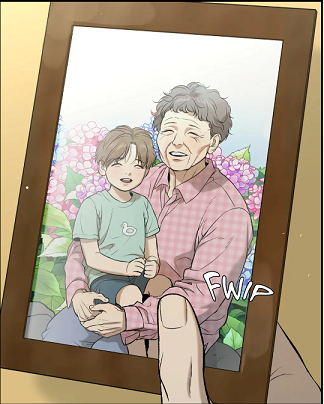 (chapter 19) The grandmother’s lap structured Kim Dan’s understanding of safety, endurance, and knowledge. Sitting there meant being held — but also being taught how to survive through sacrifice, silence, and self-effacement. That worldview sustained him, but it also confined him.
In episode 86, the posture is almost repeated — but the figure has changed.
This is not a romantic substitution. It is a symbolic shift. The body that now supports Kim Dan does not transmit inherited rules or fixed certainties. It asks questions. It pauses. It waits for response. He is actually more sitting between his legs or on his arms. In this moment, Kim Dan is no longer receiving knowledge about how to endure the world; he is participating in how to inhabit it.
From this point, a first answer to the guiding question emerges.
Episode 86 is neither illusion nor culmination. It does not redeem the past, nor does it erase it. It alters the framework within which meaning can circulate. Time resumes not because wounds have healed, but because they are no longer governing the present by default.
What remains unresolved — and what now demands further attention — is what follows from this shift.
If communication has changed form, how does unpredictability change meaning? If presence has been established, how does recognition operate without erasing the past? And if two nights once marked by failure now converge within the same moment, what does that convergence produce?
These questions open the next stage of the analysis.
The following sections will therefore turn away from possibility and toward consequence: how agency is reclaimed, how repetition acquires new ethical weight, and how two previously incompatible trajectories finally begin to add rather than cancel each other out.
Feel free to comment. If you have any suggestion for topics or Manhwa, feel free to ask. If you enjoyed reading it, retweet it or push the button like. My Reddit-Instagram-Twitter-Tumblr account is: @bebebisous33. Thanks for reading and for the support, particularly, I would like to thank all the new followers and people recommending my blog.



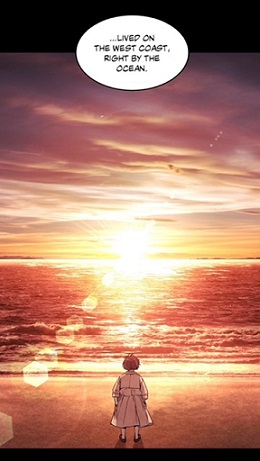 (chapter 53), yet she kept her distance. Observe that she only talked about one time experience. She sensed its danger and built her life on the solid ground of caution, duty, and control. In other words, she belongs to the world of the shore
 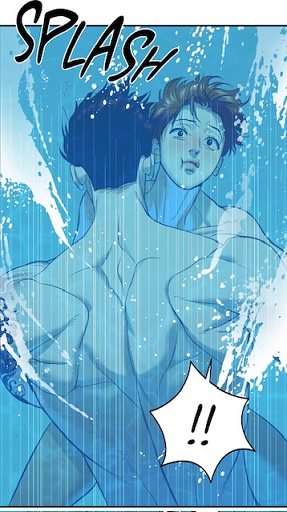 (chapter 28) and learn that not everything can be postponed or entrusted to someone else. Water, in this sense, rejects fatalism. It calls for motion, for risk, for personal responsibility.
 (chapter 80) And that intuition resurfaced and was confirmed in episode 80, when another day off brings the couple back to the pool. This time, the doctor steps into the water willingly.
 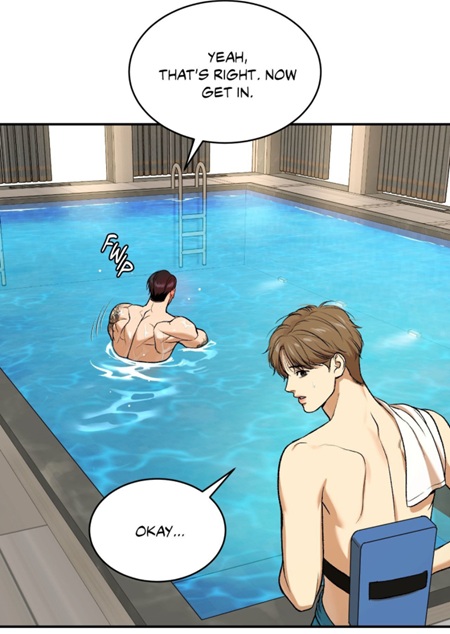 (chapter 80) He is no longer the man waiting to be rescued; he is the man learning how to swim. The champion’s words
  (chapter 80) distill the new doctrine: don’t wait for salvation
  (chapter 80), create your own buoyancy. Between the first swim
 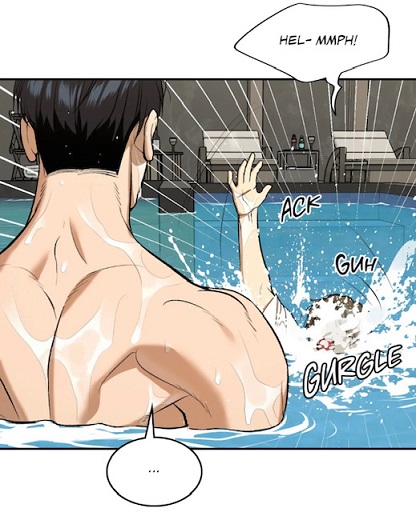 (chapter 27) and this second lies the true point of no return—where superficial judgment turns into reflection, dependency into self-trust
 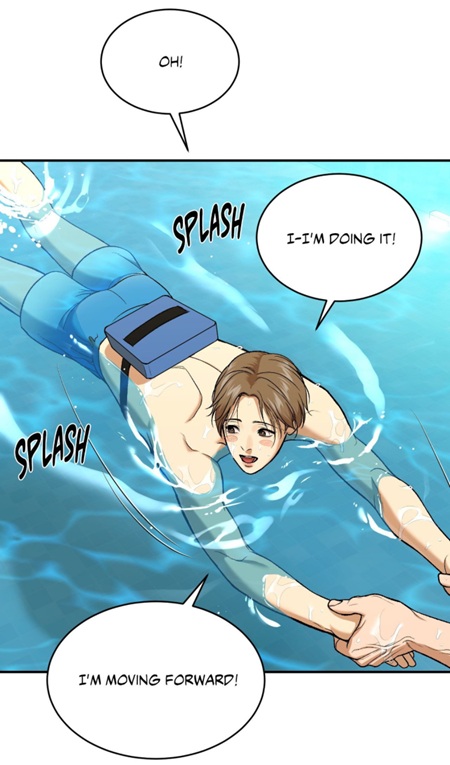 (chapter 80) and the rejection of powerlessness,
  (chapter 28) into the first stirrings of love
 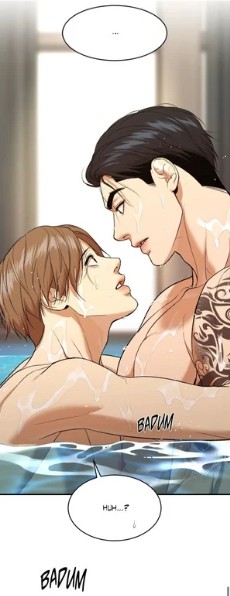 (chapter 80).
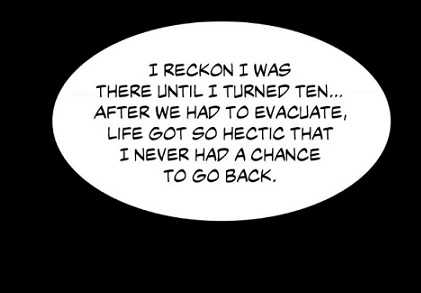 (chapter 53) Safety lay in patience and dependence. Even when she later spoke with the champion by the sea, she avoided mentioning the ocean —as if to deny that any movement beyond her control could exist.
 (chapter 65)
 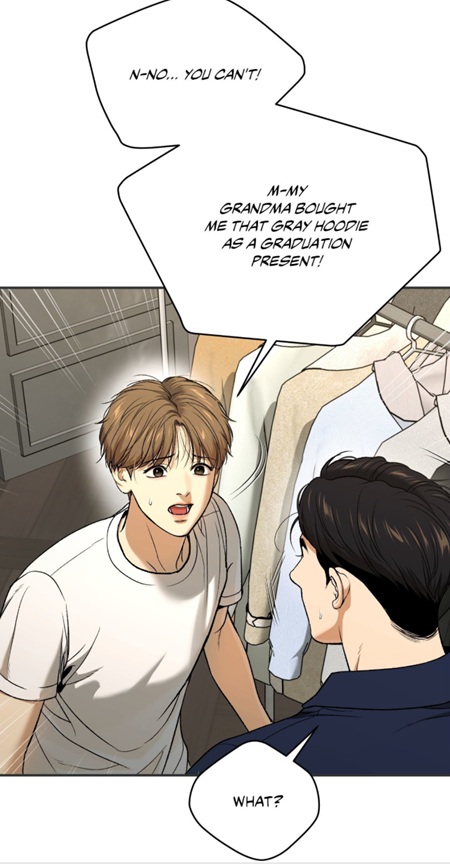 (chapter 80) Yet her absence from the pool scene is precisely what reveals her theology of avoidance. The pool was never her domain because her life revolves around work, not pleasure. She has no notion of rest without guilt, no concept of joy detached from utility. For her, swimming would appear frivolous—something “unnecessary” as long as one stays on solid ground. Jinx-philes should keep in mind that she never gave such a task to Joo Jaekyung. Her instructions to him were always practical, delegating care outward: take him back to Seoul, bring him to a big hospital and make sure he’s safe.
  (chapter 65) When she sees them together, her first reaction is not pride or relief but mild reproach— doc Dan should have left already.
 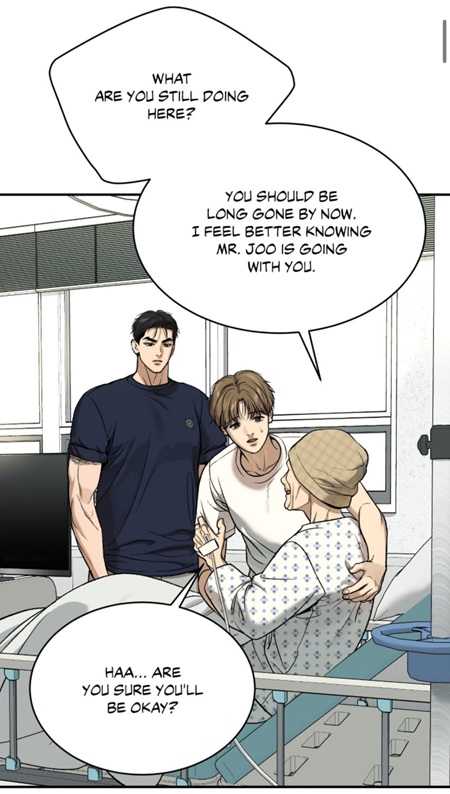 (chapter 78) The subtext is unmistakable: she expected obedience, efficiency, not attachment. Furthermore, her final instruction—“Make sure you see a doctor regularly”—
 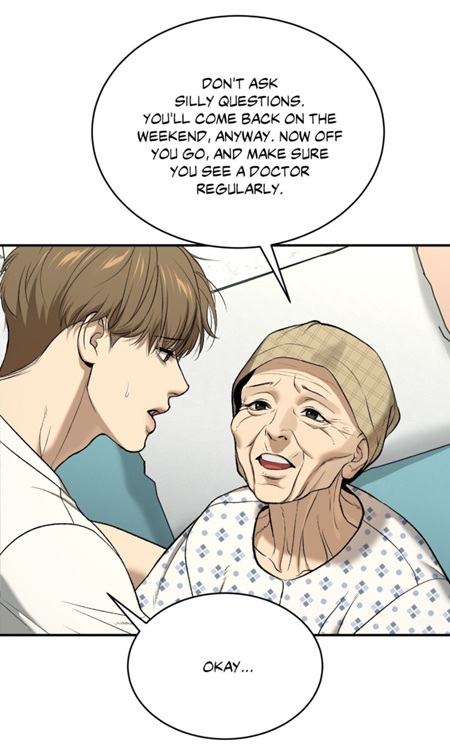 (chapter 78) sounds like ordinary concern, yet it hides her familiar logic of blame. It is as if she were implying that Joo Jaekyung has failed to fulfill her favor because Kim Dan has resisted care. In her eyes, the grandson is still the one responsible for trouble; the athlete’s role remains that of the dependable proxy who must “fix” him. What makes this moment striking is her tone of urgency, so unlike her habitual fatalism. The woman who once repeated “I’m the same as always”
  (chapter 65) suddenly speaks as though time is running out.
 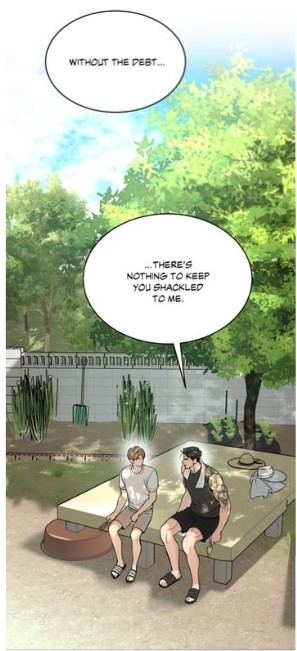 (chapter 77), respect and care. What she calls delay is, in truth, meditation and transformation.
 (chapter 80) It was her graduation gift, yet it had nothing to do with his new profession or status. In contrast, the first episode already shows Kim Dan in a blue therapist’s uniform, name tag neatly pinned — a garment he must have purchased himself.
  (chapter 1) Traditionally, a graduation present helps the recipient embark on a career — like for example, a watch, a suit, or even a briefcase — symbols of adult entry into the job market. By offering him a hoodie instead, she unconsciously devalued her grandson’s professional worth. The garment belongs to the domestic sphere, not the workplace; it wraps him in comfort rather than readiness. In a moment meant to celebrate his arrival into public life, she reinscribes him into the private one — the house, the caretaker role, the obedient child. He doesn’t look like someone who went to university.
 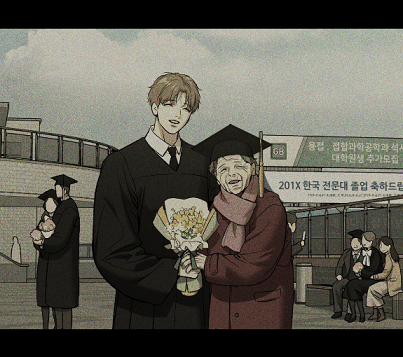 (chapter 47) There was no curiosity about his career, no acknowledgment of his competence—only the quiet satisfaction that through her endurance, she had produced a “doctor.” In the graduation photo, she even wears the mortarboard herself, smiling with the pride of someone who believes the diploma justifies a lifetime of sacrifice. Her grandson’s success confirms her own virtue; his “adulthood” validates her survival. This question to the athlete exposes her lack of interests in his profession:
  (chapter 65)
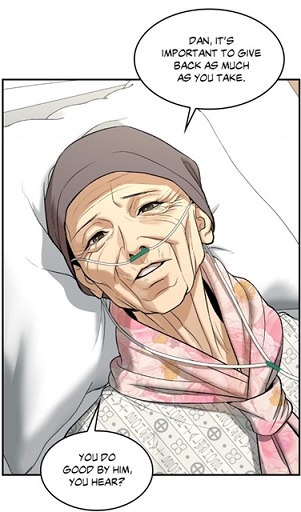 (chapter 41) While dying, she reduces love to an equation of productivity: “Dan, it’s important to give back as much as you take.” The verb do anchors her worldview — love must be measurable, visible, earned through action. To do good by someone means to labor for them, not to rest beside them. What caught my attention is that neither doctor
 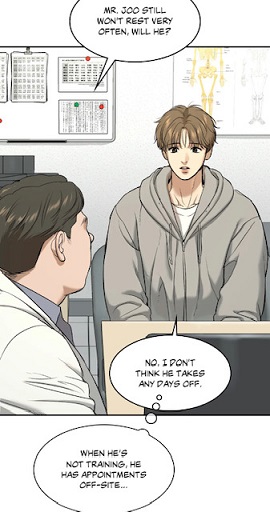 (chapter 27) nor the champion employs the expression “vacation” or “break”.
  (chapter 80) Why? It is because they never experienced a break. We have to envision that the “hamster” must have followed his grandmother, when he was not busy studying or working. Both main leads never experienced a real vacation. They say a day off, as if the day itself didn’t really exist, as if it were a temporary pause between “real” time. In their inherited logic, only work gives time its value; everything else evaporates. The grandmother’s way of loving has turned rest into an absence, something unworthy of being named. However, observe that there’s a gradual change in doc Dan’s vocabulary:
  (chapter 80) The problem is that for the hamster, only the athlete is worthy of getting his rest. It still doesn’t belong to his world.
 (chapter 5) the focus remains mechanical. Eating is fuel; sleep is maintenance. But rest, in the sense of surrender, stillness, or joy, is foreign to her lexicon.
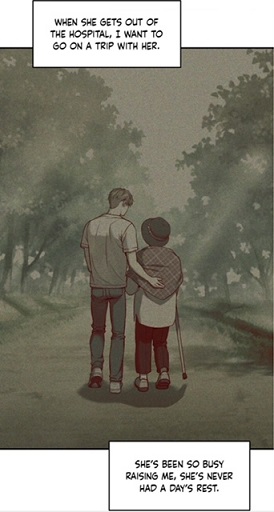 (chapter 47) is, in truth, a legend she wrote about herself. When Kim Dan recalls that “she’s never had a day’s rest,” the statement reveals more about his belief than about her reality. The woman who claimed endless labor also knew the comfort of “weekends”
 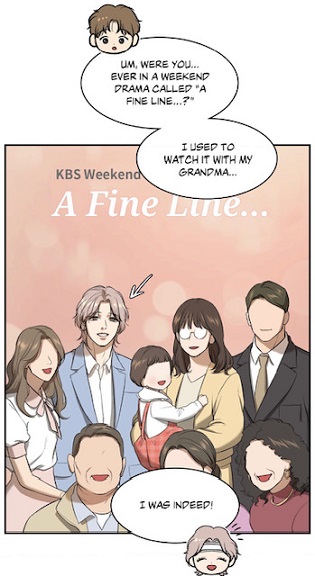 (chapter 30) — she watched The Fine Line, the very drama that made Choi Heesung famous. The detail seems trivial, yet it exposes everything: she had leisure
  (chapter 30), she simply refused to call it that. Watching television was permitted because it was passive, solitary, and could be rationalized as recuperation, not pleasure. In contrast, genuine rest — time shared, chosen, or joyful — never existed in her vocabulary. What she denied was not the existence of rest but the act of resting with him. She kept her downtime to herself, as if peace were a private possession. For her, love meant providing, not accompanying. Yet true care requires presence — sharing is caring, as the saying goes. [For more read this essay:
  (chapter 65) displays that she perceives her grandson’s exhaustion not as suffering but as malfunction, as if the human were a device that could be recalibrated through work and pills. That’s why her favors revolves about living conditions, but not about his “happiness”. Perhaps she genuinely hoped that the drugs and the stability of a “regular job” with the champion would realign him, as though routine alone could fix what grief and deprivation had unbalanced.
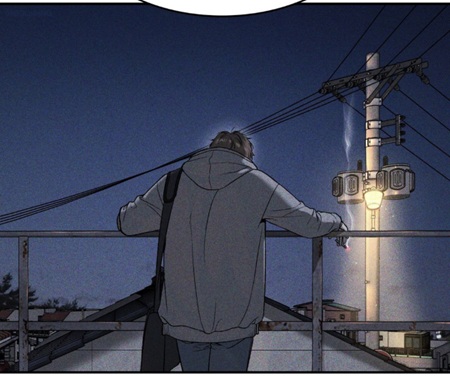 (chapter 65) Her constant bookkeeping—every favor tallied, every gift framed as trouble—betrays a hidden fear: that if she stops keeping score, she will lose him. Rather than grant him autonomy, she entrusts him to another caretaker. Sending him to the champion is not an act of faith but of resignation, a way to offload responsibility while maintaining the illusion of control.
 (chapter 11), scarf tied under her chin, carrying a single sweet bun. She doesn’t need to say she “went out of her way”—her action already proclaims it. The effort is the gift.
  (chapter 11) That simple walk to the store becomes a moral event, proof of affection through fatigue.
 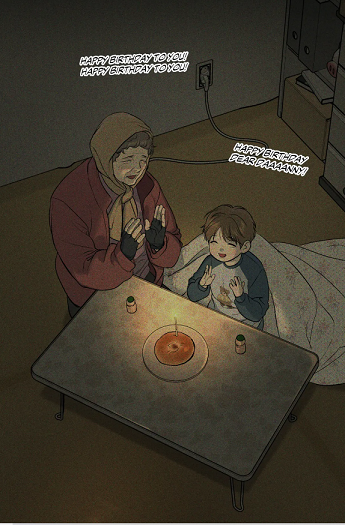 (chapter 11) Even the smallest purchase is framed as sacrifice. The sweet bread itself—a cheap red bean bun—is less nourishment than testimony: “Look what I endured for you.” If he had followed her, he would have seen that it didn’t take so much effort and money to buy the “present”. Finally, he had to share the sweet bread with his grandmother.
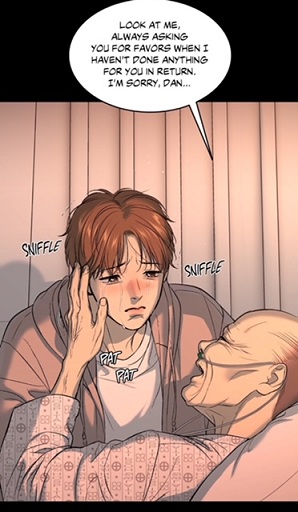 (chapter 53) —perhaps the signing of the loan. “You’re a doctor now; you’ll pay it off quickly.”
 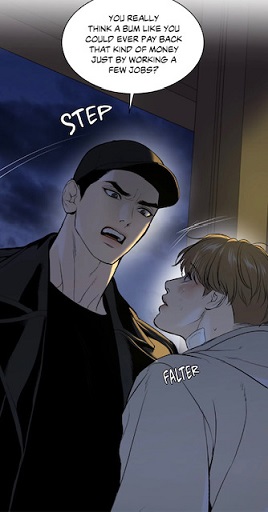 (chapter 80) In her eyes, generosity always justified expectation. The flowers were for display; the hoodie was the contract.
 (chapter 65) and the future
  (chapter 65), what he would one day repay
  (chapter 47). The present moment existed only as a bridge between past sacrifice and future obligation. The embrace is conditional — a rehearsal for independence, not tenderness. In that instant, love is already an investment waiting for return. The teddy bear pressed between them, once a symbol of innocence and comfort, becomes collateral in this emotional economy: the pledge that he will someday “grow up,” earn, and pay back the care that raised him. Even at the graduation, she treated the day not as fulfillment but as record keeping.
  (chapter 41) When Dan gifts his grandmother an expensive scarf, he hides its true price — “I got it for a bargain” — repeating her own pattern of disguised generosity. She sees through the lie, teasing him for “spoiling” her, yet she accepts the luxury without feeling guilty. The scarf becomes her version of the hoodie: a fabric trophy of moral worth. But its later disappearance is revealing. In season two, she wears it
  (chapter 56) shortly after her arrival at the hospice, never again. When she greets Joo Jaekyung, the scarf is gone
  (chapter 61). Why? One might reply that the scarf lost its value, especially since she is living next to the director’s room. I doubt that such men would pay attention to such an object. Another possibility is that she fears its brightness might betray her neglect, for the champion has lived with her grandson for a while. How could she display silk while her grandson owns almost nothing?
 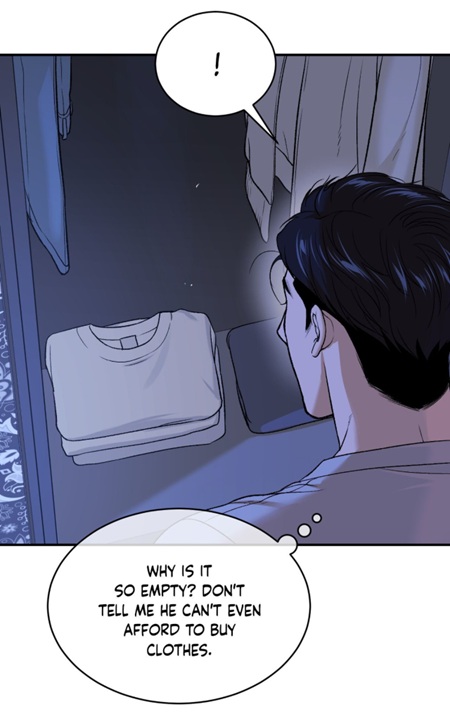 (chapter 80) The missing scarf thus exposes both her superficiality and exaggerated generosity. Her affection, like her pride, is short-lived — decorative rather than enduring. Should Heesung ever visit her,
  (chapter 80) The gesture that once symbolized love now feels like pain and loss. The signification of the gift has changed. What once wrapped him in safety now weighs like absence — the fabric retains the shape of someone who is about to vanish. His silence is not understanding but hurt, a wordless awareness that affection can curdle into memory. The audience, not the character, perceives that with the grandmother’s approaching death, her ledger is about to close. The gray fabric, once proof of her sacrifice, will lose its moral weight; her “gesture” will expire with her. Yet Kim Dan may not yet realize that this very ending could one day free him. The book-keeping dies with the bookkeeper.
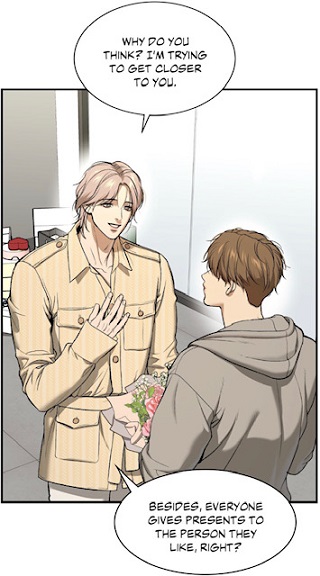
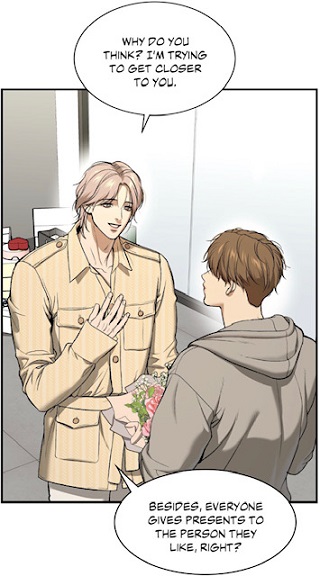 (chapter 31) When Heesung offers flowers “to get closer,” Kim Dan’s face mirrors the same unease: affection presented as transaction, intimacy disguised as generosity. What the actor calls closeness, the doctor feels as imbalance — the same emotional distance that Shin Okja’s presents once produced. Her gifts, meant to bind, isolated him instead; they built a hierarchy where gratitude replaced equality. Each present widened the gap between giver and receiver. To be cared for was to be indebted.
 (chapter 31) and tries to refuse it.
  (chapter 31)
 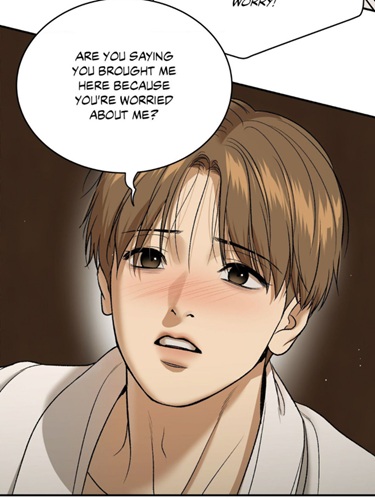 (chapter 67), loses sleep, or pays a price. He interprets Joo Jaekyung’s concern as “trouble,” Heesung’s gifts as “too much.” In his mind, affection is inseparable from cost:
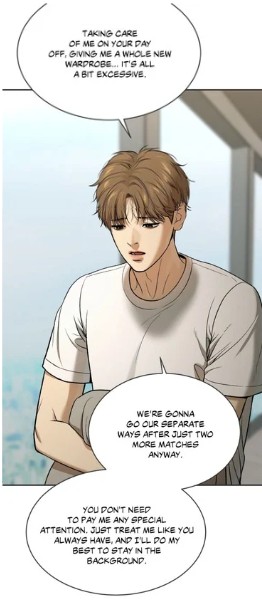 (chapter 80) “I’ll stay in the background.” His self-worth depends on not burdening others. His words let transpire that he has never been Shin Okja’s first priority in the end. The hoodie reinforces that psychology—it is not a professional outfit like a suit or briefcase would have been, but a teenager’s garment, meant for the domestic space rather than the adult world. It literally arrests his growth, keeping him in the house and under her logic. Thus it is not surprising that after receiving his diploma, he still took part-time jobs.
 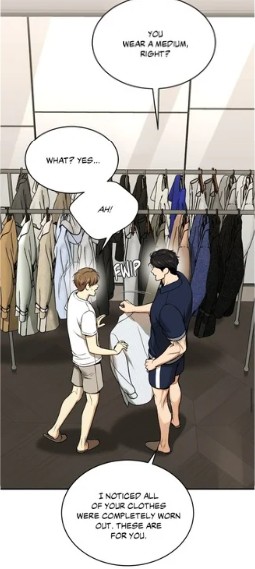 (chapter 80) is the site of its quiet destruction. His act of giving reverses every law the grandmother ever taught. First, he does not “go out of his way.” The clothes are delivered effortlessly, without fanfare or moral accounting.
 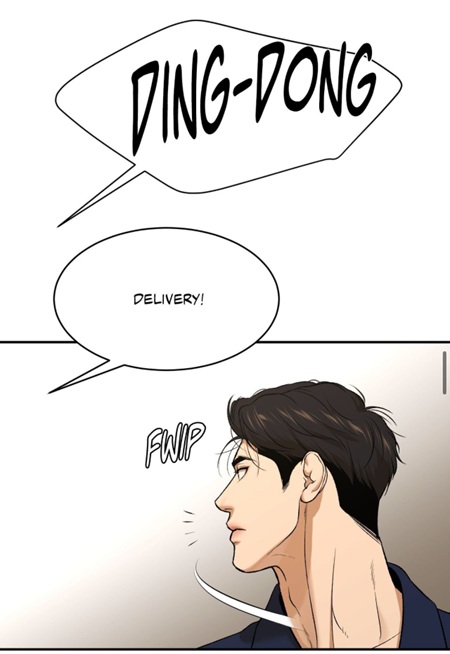 (chapter 80) There is no speech about sacrifice, no self-congratulation.
  (chapter 80) By erasing the gesture of “effort,” he removes the emotional price tag that once accompanied every gift.
 (chapter 80) If the grandmother’s motto was “I went through so much for you,” the champion’s is “It’s no big deal.” Generosity becomes invisible, unburdened, and therefore trustworthy.
 (chapter 80) The row of garments invites choice — a concept absent from Shin Okja’s universe, where love came in single doses and with strings attached. Here, the doctor is asked to select what he likes, to exercise taste, to inhabit preference. The abundance of options grants him agency, dignity, and the right to refuse.
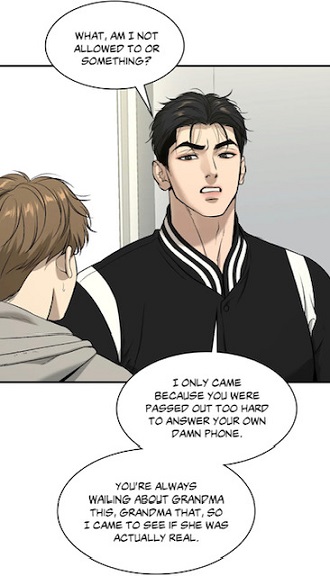 (chapter 22)
  (chapter 30) becomes unexpectedly true here. The wardrobe bridges the distance that the grandmother’s gifts had always created.
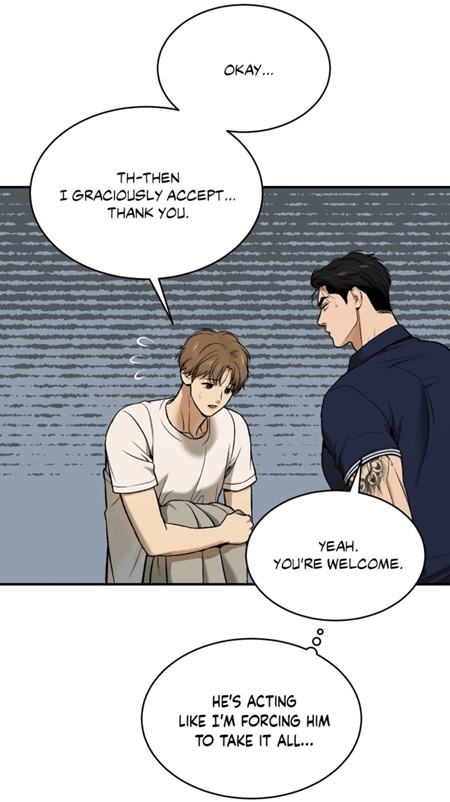 (chapter 80) This is why his hesitant and embarrassed gratitude, framed against a background of dissolving gray waves, feels so transformative. The air behind him ripples as if washing away the residue of his old faith.
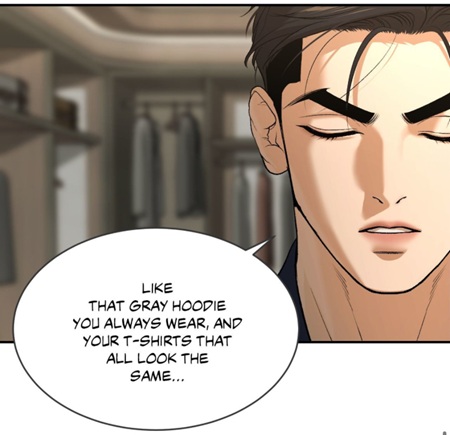 (chapter 80); they mark the passing of days, the return of seasons, the rediscovery that not every morning has to look the same. Variety itself becomes a form of freedom. When the wolf once complained that all his shirts looked identical, he was unknowingly naming what both of them lacked: differentiation, spontaneity, change. Through this act, he restores color not only to the doctor’s wardrobe but to his emotional world — a quiet resurrection through fabric.
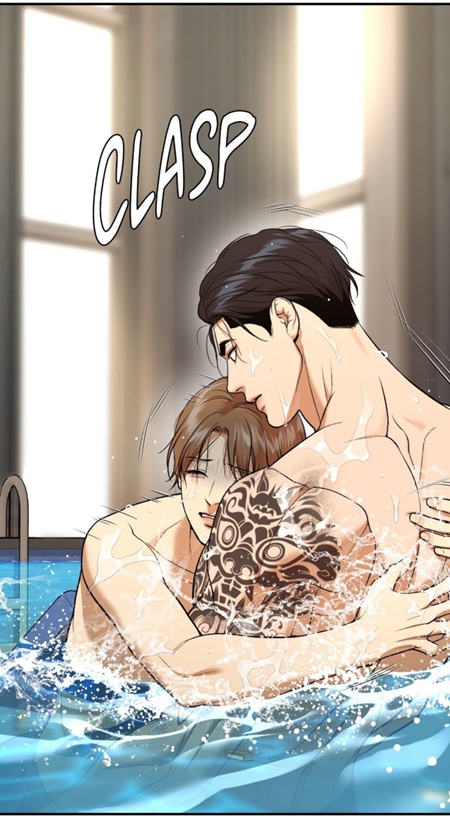 (chapter 80) The “hamster” had instinctively turned to the only person who had ever offered him help without cost.
 — the luminous, wish-granting jewel said to contain both wisdom and life energy. The dragon’s power is not innate; it is completed and elevated by the jewel. Without the yeouiju, it cannot ascend to the heavens — strength without meaning, force without direction.
 (chapter 80), the myth reverses. The dragon—once feared, untouchable, wrapped in rage and solitude—is suddenly embraced by the very being he once believed too fragile for his world. The power dynamic inverts: the human shelters the beast.
 (chapter 75) —this embrace is nothing short of salvation. The man who once fought to wash off shame through endless training now finds himself accepted in his unguarded state. He doesn’t need to mask his trauma with perfume
  (chapter 75), the imagined smell, or cleanse his skin of battle; he is held and, therefore, purified. Through Dan’s arms, he rediscovers his value and humanity—the dragon touched and not destroyed. He is worth of being embraced, even if he is already so old!
 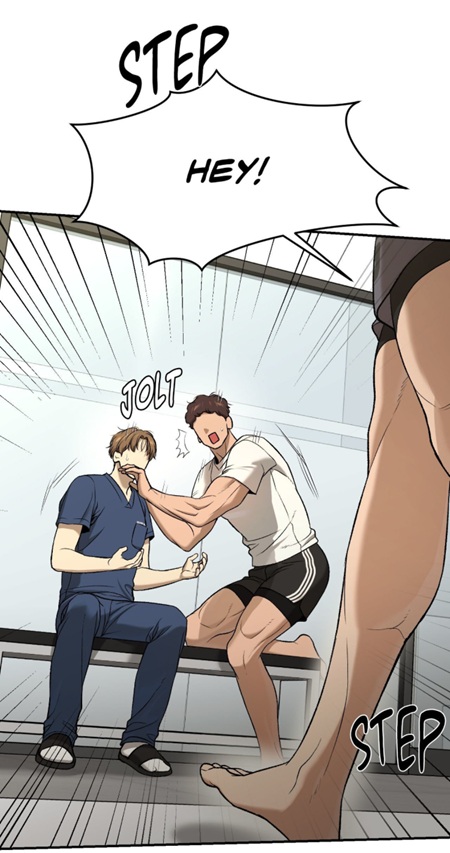 (chapter 79) This is one part of the new circle. Jealousy is the residue of imbalance — the echo of the 7 within the 8. In the numerology of Jinx, the 7-chapters, like for example episode 7
  (chapter 7), episode 18, where the champion had sex because of this statement
  (chapter 18),episode 34 with Choi Heesung
  (chapter 34) or episode 52, where the former members of Team Black and expressed their disdain and jealousy toward the main lead
 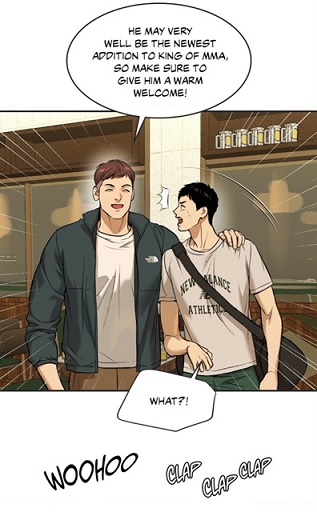 (chapter 52)
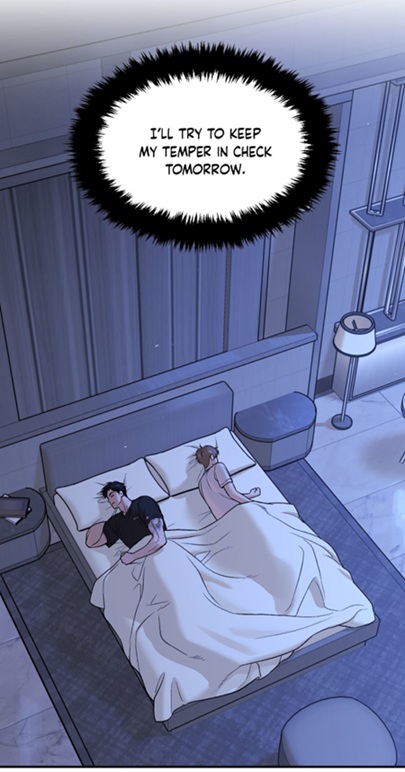 (chapter 79), the final test before the circle closes for good.
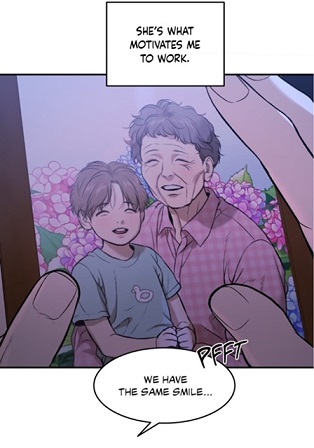 (chapter 47) and 8 lies that invisible hinge: the death of the old economy of love and the birth of a new one.
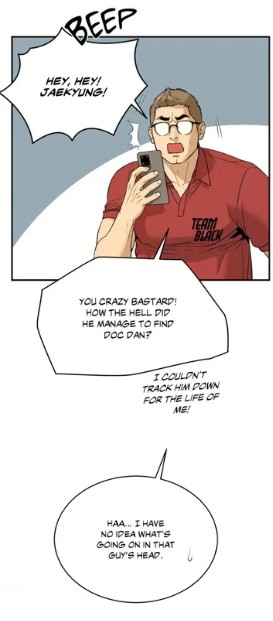 (chapter 61) and Heesung’s residual rivalry and resent. Each acts as a different face of control: the woman binds through guilt, the manager through hierarchy acting as the owner of the athlete’s time, the actor through charm and deceptions. Together they form the triad that tries to reopen the circle closed in the pool. Let’s not forget that the athlete chose to take a day off on his own accord
  (chapter 80), but he had just returned to the gym. It is no longer the same training and routine.
 (chapter 75) – similar to doc Dan’s reaction in the States:
  (chapter 53)
 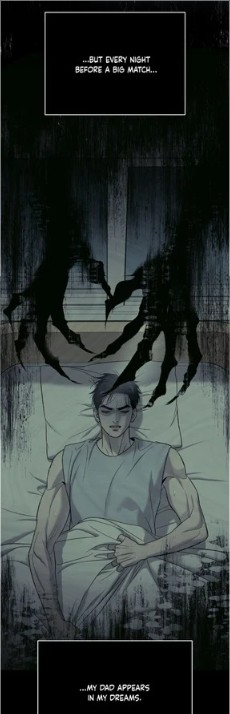 (chapter 75) Where his father’s curses bound him to guilt and the past, Dan’s glow opens the possibility of release
  (chapter 75) His eyes open after the dream, and they open to the same light. It’s the opposite of every earlier awakening
  (chapter 54) —no gasp for air, no clutching his throat
  (chapter 75), no father’s voice strangling him. This sudden awakening embodies enlightenment.
  (chapter 75)
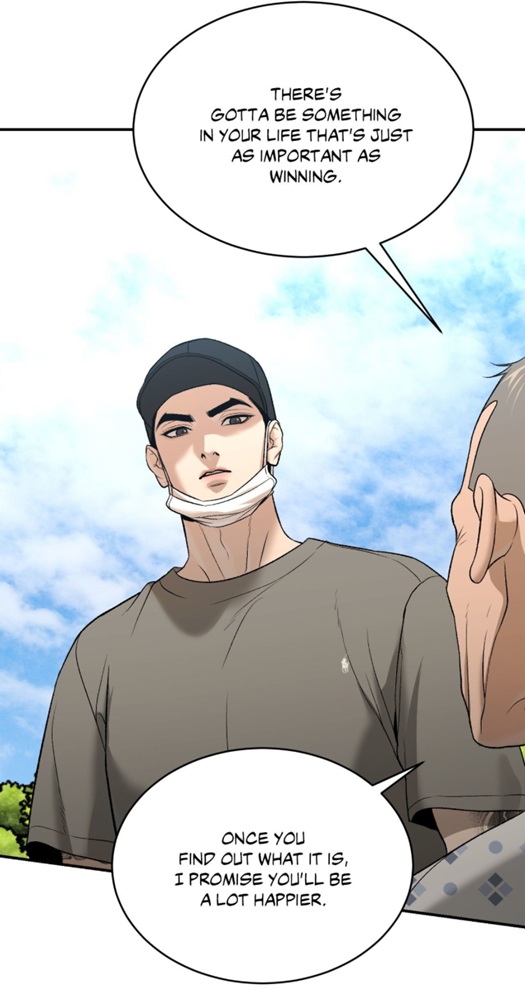 (chapter 75) On the surface, it sounds like a call for balance. In truth, it is a suggestion to find another meaning for his life. And look at the director’s facial expression, when he is talking to his former student: “
 (chapter 75) He is smiling, a sign that the director is enjoying this moment with the “wolf”. He becomes the first person to speak to Jaekyung not about titles, not about survival, but about happiness.
 (chapter 70) He knows the athlete from the past. The latter was attached to people and not to places. Why does he speak of “something” rather than “someone”, if he knows? The lesson is not about fixing a new goal or object to chase, but about discovering how to live differently — how to live happily.
  (chapter 65)
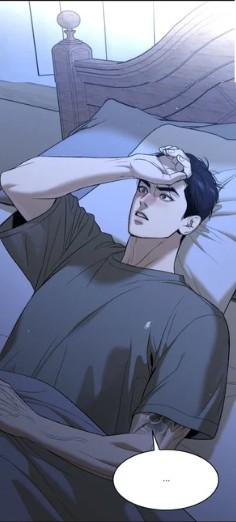 (chapter 75). Even before, he could only mutter to himself this:
 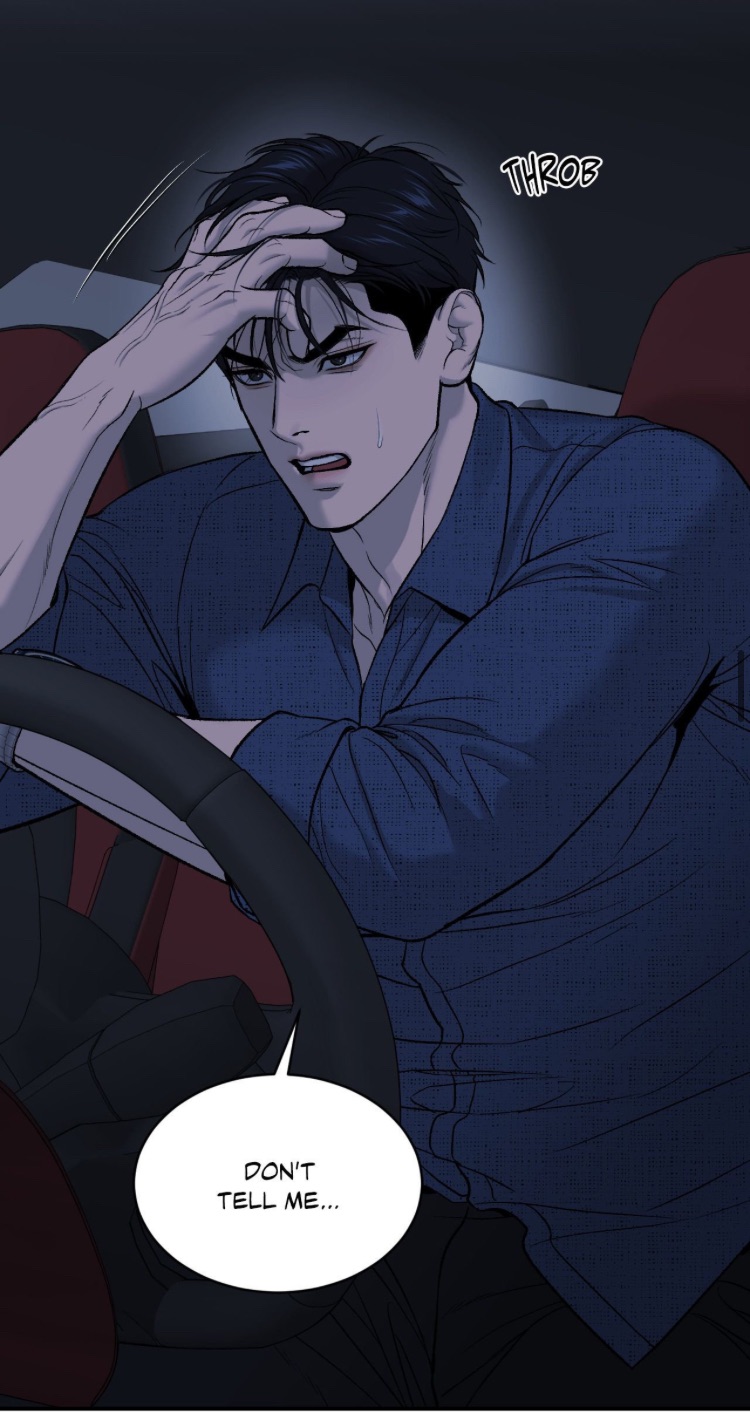 (chapter 70) The negation indicates denial, but observe that he couldn’t even use a noun. He cannot yet translate this vision into words, because he has never heard “I love you” himself
  (chapter 74) No one ever taught him how to say I love you. And so, when Dan appears in his dream, it is not the words that free him but the gaze.
  (chapter 75) or the mother’s withdrawal.
  (chapter 73) It does not condemn, it does not demand; it simply waits. The gaze says this: I see you and accept you.
 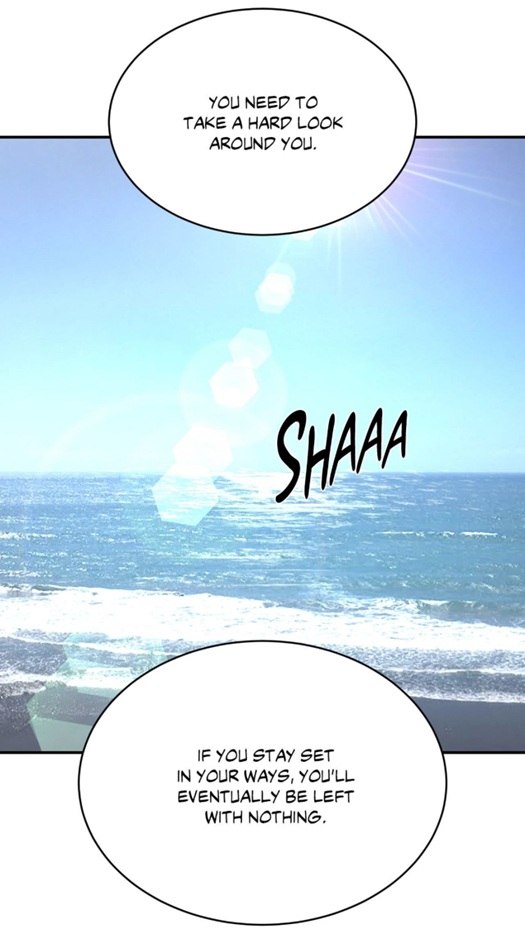 (chapter 75) The openness is what makes it love — it is respect.
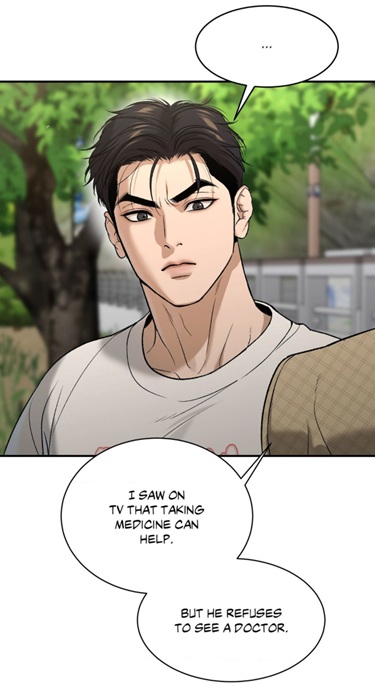 (chapter 65)
 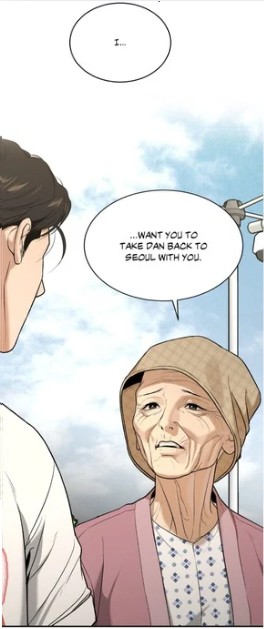 (chapter 65) Halmoni believed she already knew the solution to Dan’s suffering: sacrifice yourself, work hard, pay the debts or make money, endure. She closed off alternatives by imposing her narrative on him. Her love was distorted into certainty. The director, by contrast, recognizes the limit of his role. He has learned (belatedly) that he cannot dictate meaning for someone else. Instead, he tells Jaekyung:
  (chapter 75) His love is expressed through humility — through not knowing. At the same time, his words and facial expression ooze trust and confidence.
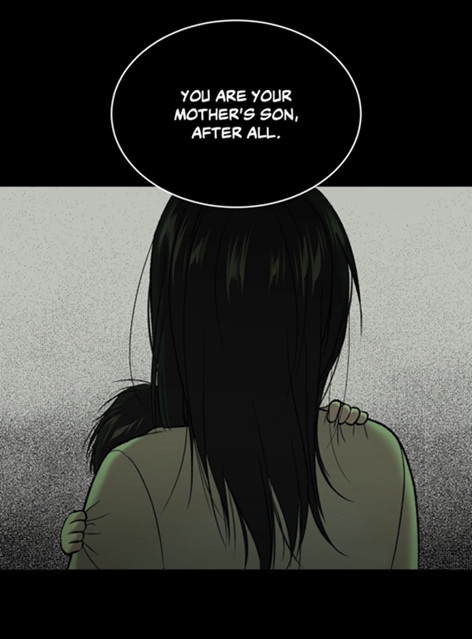
 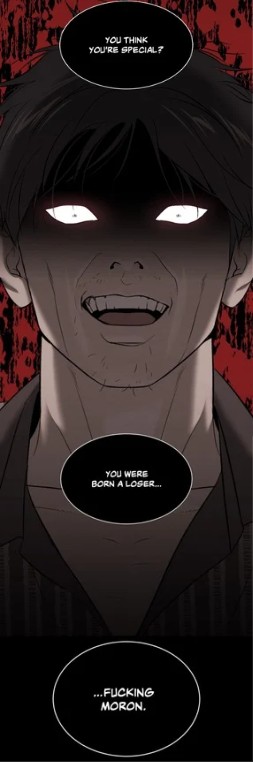 (chapter 73) “You’re a loser”, You’re your mother’s son after all” —
 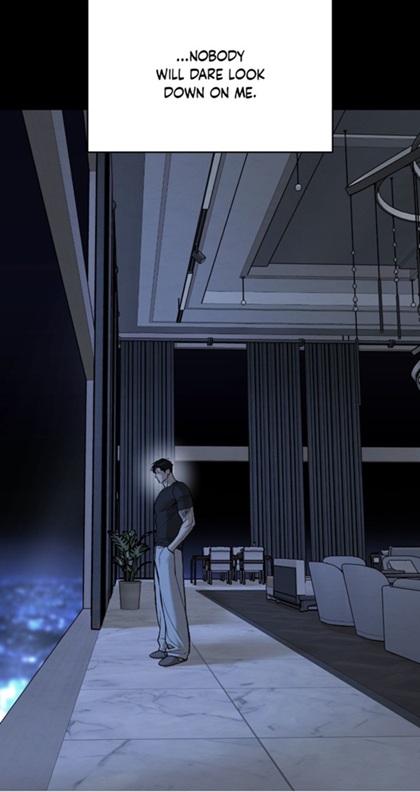 (chapter 75) Each title, each belt, each triumph was a rebuttal to his father’s words. He was not worthless, not doomed. Yet the irony is cruel: in fighting to silence those curses
  (chapter 75), he bound himself ever more tightly to them. Winning never brought peace; it only bought him momentary quiet from the voices in his head. This confession from the main lead confirmed my previous interpretations. First, the main lead had been constantly hearing voices in his head. Secondly, the hamster embodies “sound”, but a different kind: true communication linked to honesty and affection. This explicates why after the couch confession
 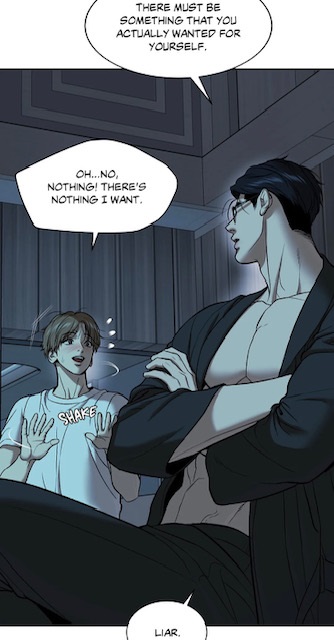 (chapter 29), Joo Jaekyung opened up a little to doc Dan! Thus the next morning, he visited the bathroom where doc Dan was!
 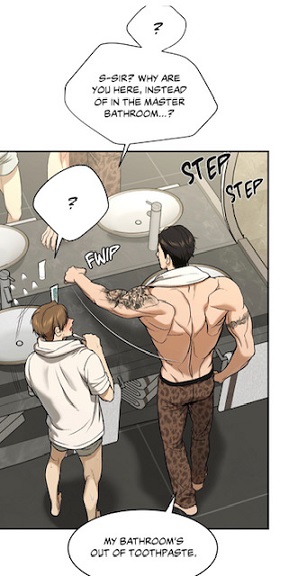 (chapter 30) It was just an excuse to spend more time with his fated partner.
  (chapter 74), no “dear,” no “I love you.” In the father’s memory, she used the child as an excuse to distance herself from her spouse. In that moment, Jaekyung is not a son to be cherished but a barrier in an adult quarrel.
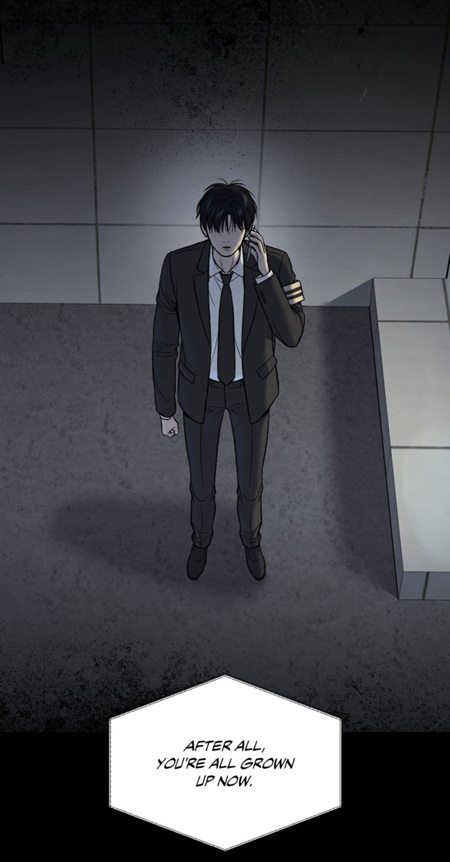 (chapter 75) carry the same cold logic. On the surface, they sound like recognition, even encouragement. But their true meaning is dismissal: you no longer need me. For her, love equaled dependency. Once her role as provider was no longer necessary, she withdrew.
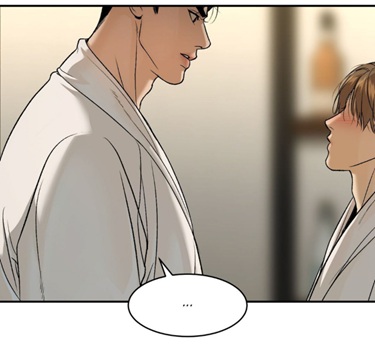 (chapter 67) Not because he felt nothing, but because he lacked the language to connect worry with love. In his conscious mind, conception of care was still bound to usefulness — Dan mattered because he was needed for training, not because he was loved as himself, while deep down, he had already moved beyond this aspect. He was just in denial in this scene,
 (chapter 74) On one level, she does not recognize his voice. But on a deeper level, her words ring as truth: she does not know her son. She has no idea who he has become, what defines him, what characterizes him beyond money and survival.
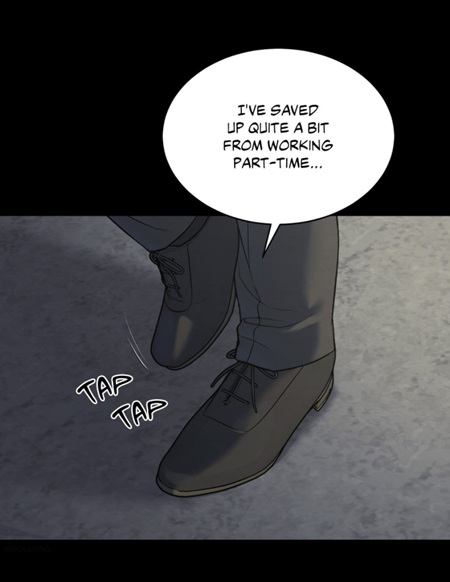 (chapter 74), promising to provide for her if she returns home. He unconsciously appeals to the only logic he has ever known: that love equals provision, that affection is secured by usefulness.
  (chapter 73) From him, Jaekyung absorbed the conviction that a man must be the provider, the protector, the one who works and sacrifices while the partner silently follows. This explains why, in his relationship with his mother
 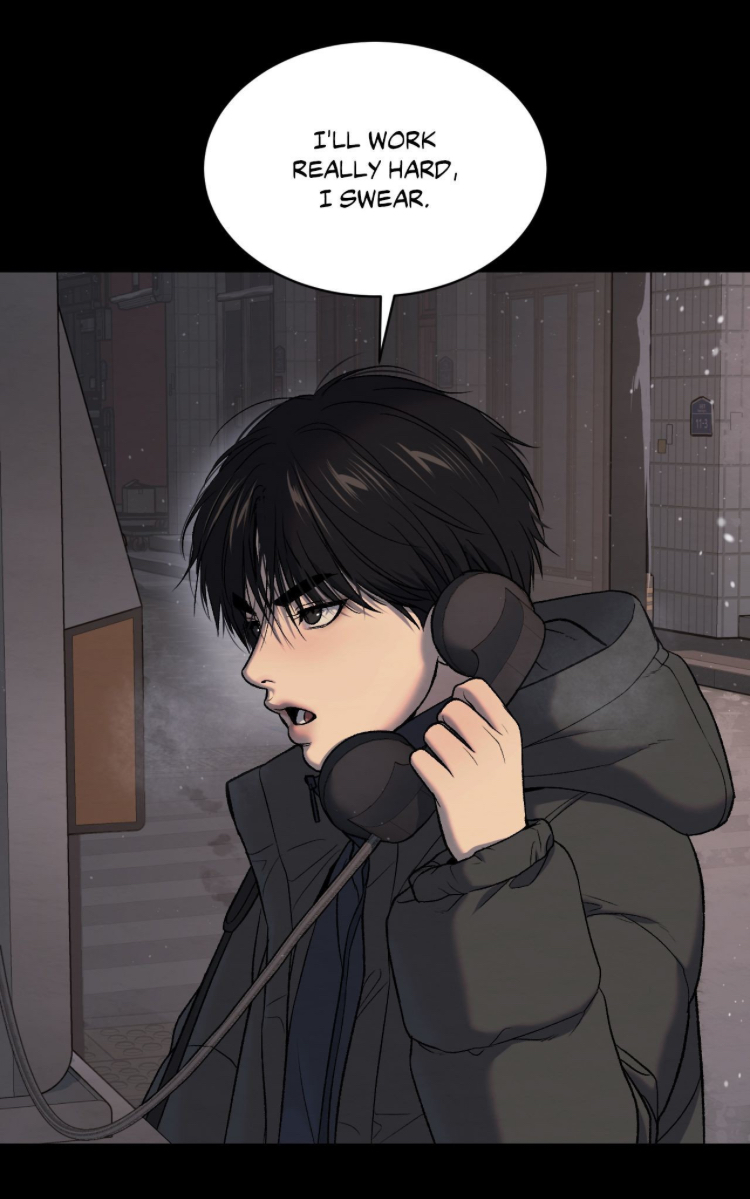 (chapter 72) and Kim Dan, he instinctively assumed he had to “do it all”: earn, fight, shield, control.
 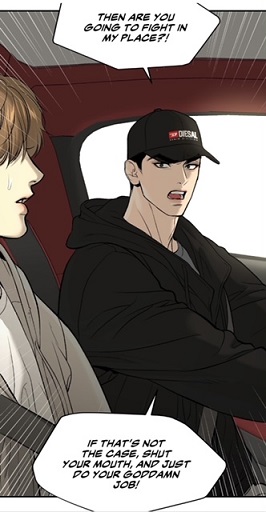 (chapter 42) His father’s voice was violent and scornful, but its framework remained lodged in him.
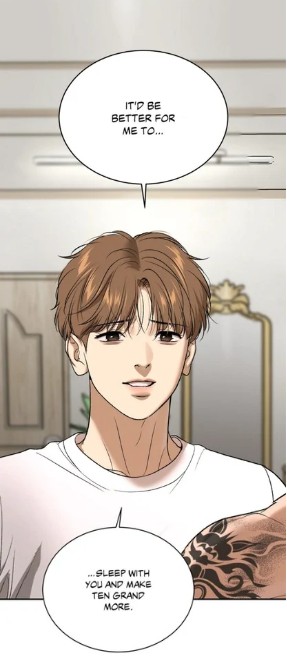 (chapter 62) That way, he can still be “free”.
 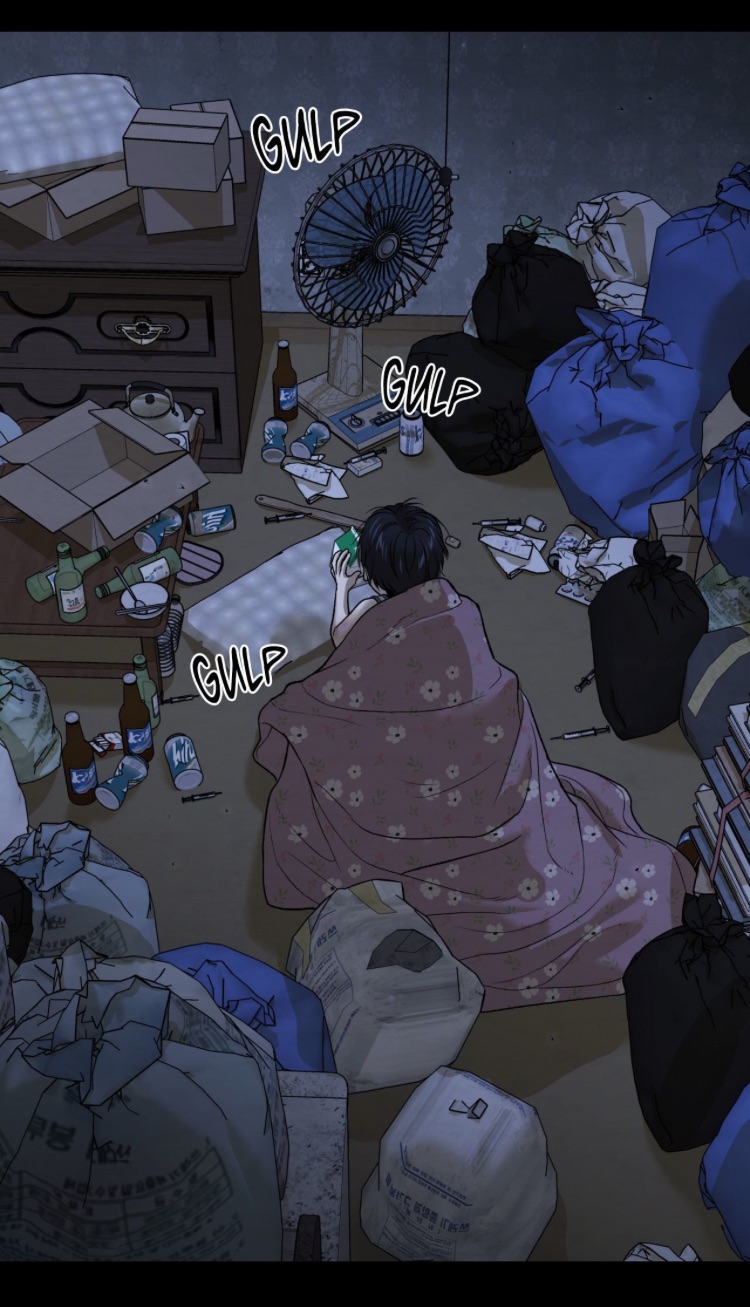 (chapter 72) becomes the perfect metaphor for her treatment of him. Once she no longer needed him, he was discarded like refuse. Just as trash cannot be reclaimed by sentimental value, she will not be able to reclaim him later through appeals to blood ties or belated need. It is impossible because he has learned — painfully — that true love is not about what you have, but about who you are.
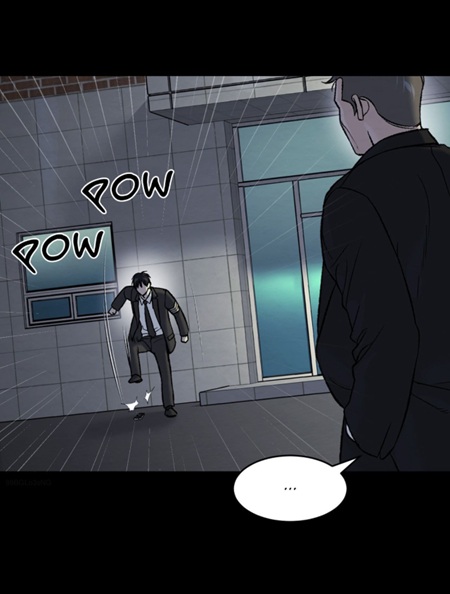 (chapter 74) He understood that the words he longed for as a child were never simply withheld — they never existed. Since we saw her back and heard her voice, I don’t think, she truly cut off ties with Joo Jaekyung. Why? It is because she had no intention to change her phone number again.
 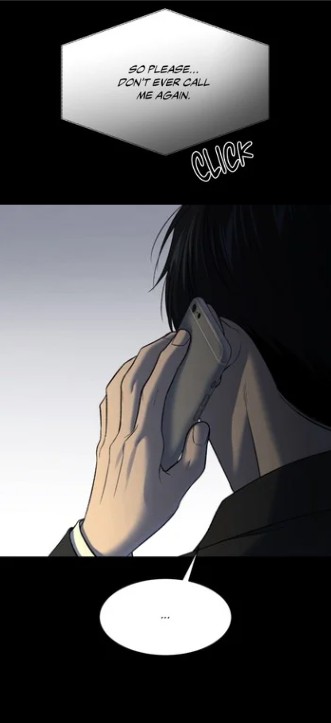 (chapter 74) She expected him to follow her request. I can definitely imagine her trying to reconnect with Joo Jaekyung, the moment he became a celebrity.
 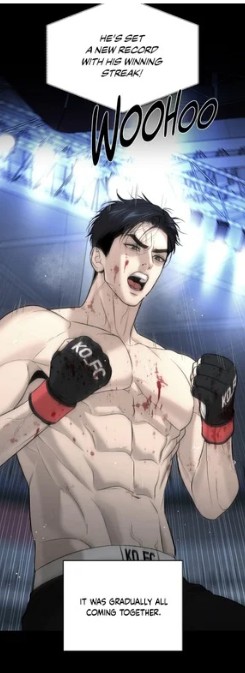 (chapter 75) Keep in mind that we have these mysterious phone calls:
  (chapter 37)
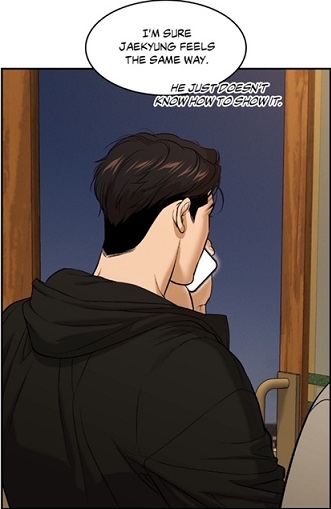 (chapter 43)
  (chapter 49)
 (chapter 75)
 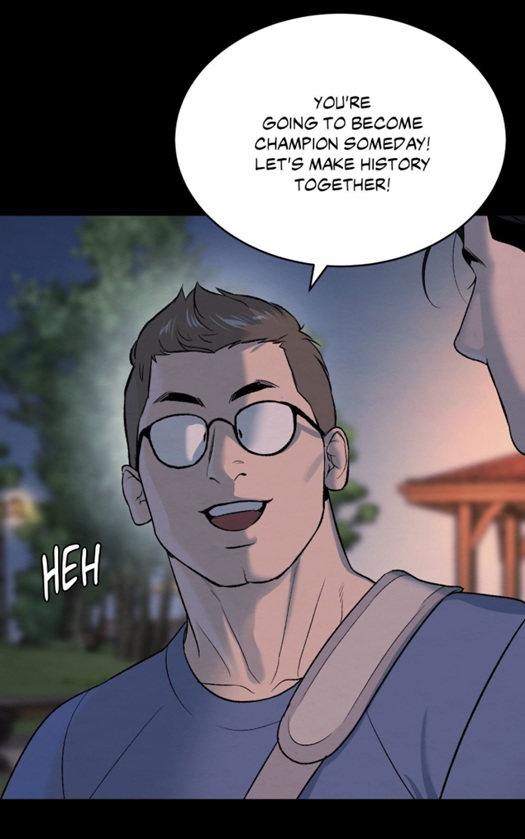 (chapter 75) On the surface, these sound like support. He smiles, his tone is warm, his words echo the vocabulary of friendship. Yet this false promise had lasting consequences: it reinforced a pattern already planted by the champion’s mother. Since childhood, Jaekyung had equated helping with caring
  (chapter 72), because silence at home had taught him that the only way to hold on to love was to provide, protect, and prove his usefulness. Under Namwook, this belief hardened into a rule: in his world, attachment became synonymous with utility.
 (chapter 34), Jaekyung assumed later that the actor would have helped doc Dan to hide.
  (chapter 58) His violent intrusion into the actor’s home was the natural outgrowth of Namwook’s teaching: if love is real, it must show itself as service.
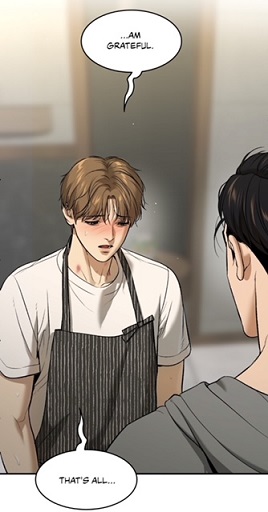 (chapter 45), Jaekyung struggled to even recognize it. Giving him a gift and expressing gratitude was not “helping the fighter”.
  “ (chapter 75) There’s a life outside the ring and the spotlight.
 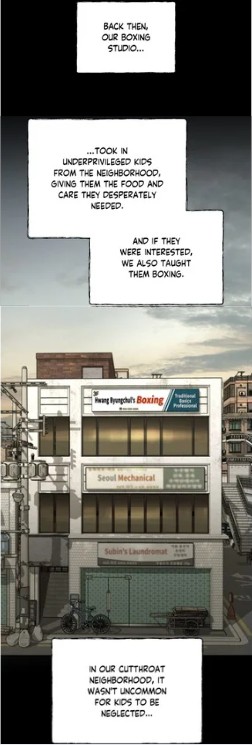 (chapter 72) was quite futile, for at the end, he ended up alone and felt lonely.
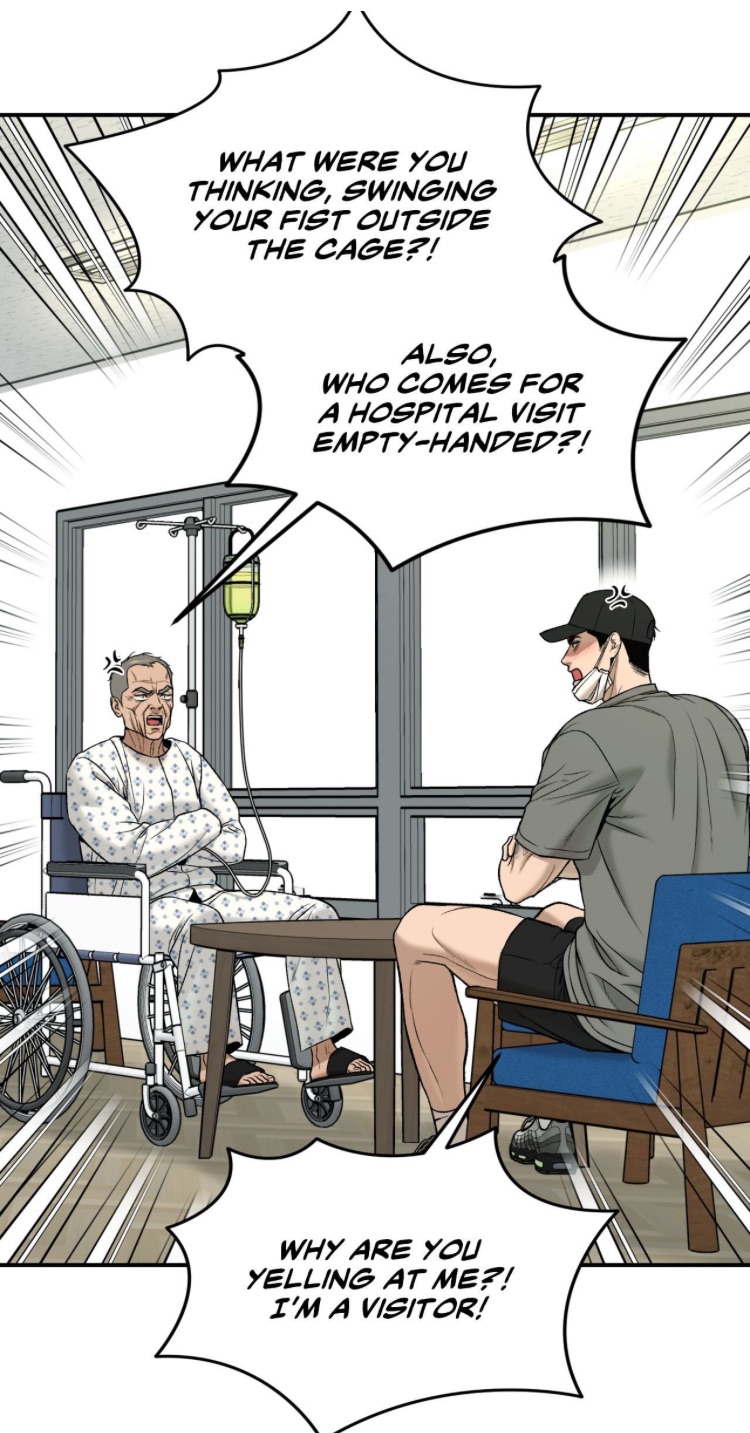 (chapter 71) Yet, deep down, he was happy that Joo Jaekyung had visited him and even spent the whole day with him. Secondly, for him, too, love has always been expressed through responsibility, advice, and correction rather than direct declaration. When he tells Jaekyung to “look around” and “think hard,” or warns Dan to “
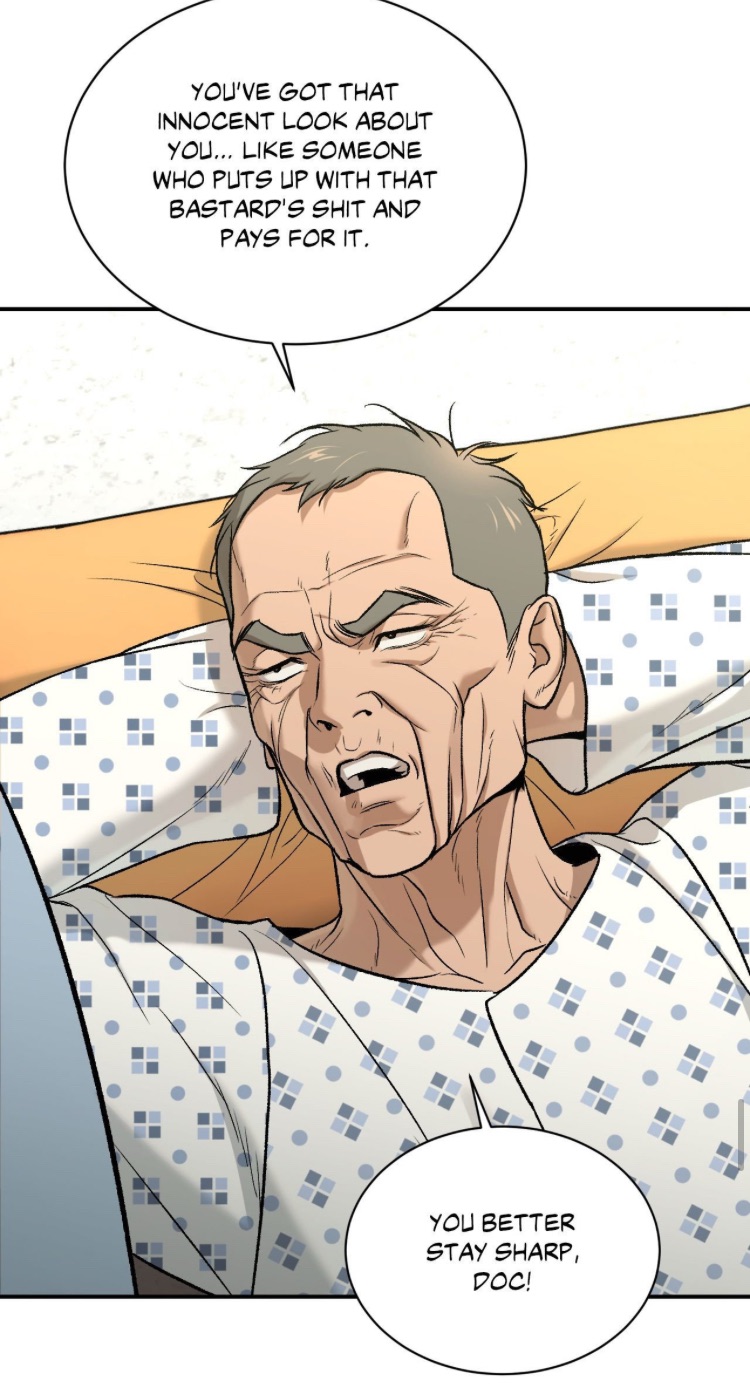 (chapter 70) “stay sharp,” he is not being cold — he is speaking from the only framework of love he knows: respect, knowledge, care, and responsibility, the very dimensions Erich Fromm outlines. He realized too late that he missed Joo Jaekyung very much. His love is embedded in actions and words of guidance, not in sentimental speech. To suddenly say “I love you” would, in his own register, feel shallow and false. He actually embodies the “real parent” IMO, because contrary to all the others adults, he learned from his mistakes. No parent is perfect, but they need to reflect on their words and actions. Learning through experiences is lifelong learning. It stops with death. The director did his best according to the circumstances and tried to correct his wrongdoings. And we can see his influence in the champion’s life. When it comes to doc Dan, he also makes mistakes:
 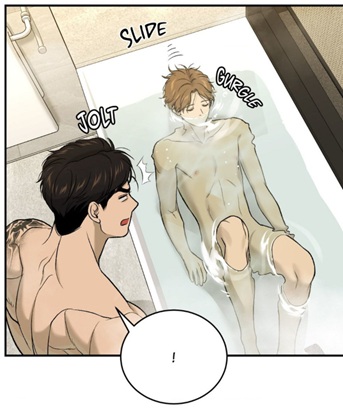 (chapter 68)
 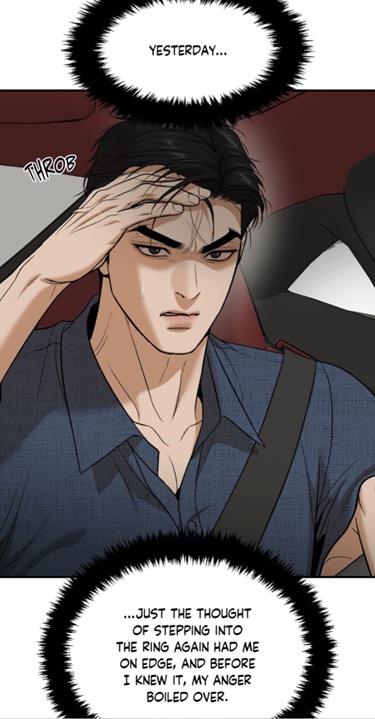 (chapter 69)
  (chapter 69) And that’s what makes him so human.
 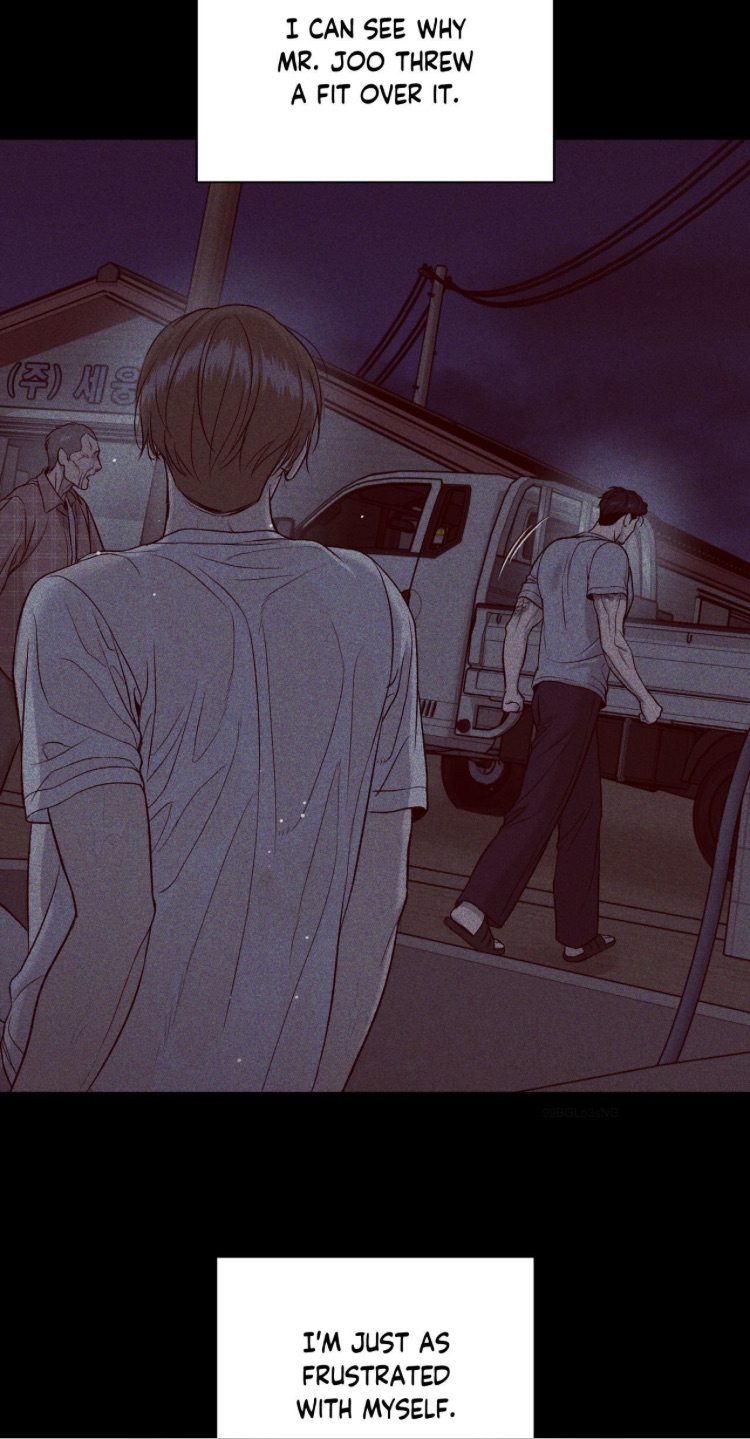 (chapter 71) Hence doc Dan didn’t resent the champion for his harsh treatment. But unlike the mother, who equated love with possession, Hwang Byungchul has begun to correct himself. He respects Jaekyung’s privacy, he encourages instead of dictating, he models a love that is belated but still real. This opens the possibility that Jaekyung, too, may learn to fill his silences differently — not with dominance or provision, but with genuine presence. He truly embodies the philosophy from Erich Fromm: it is never too late to become happy! Hence he smiled on the rooftop!
 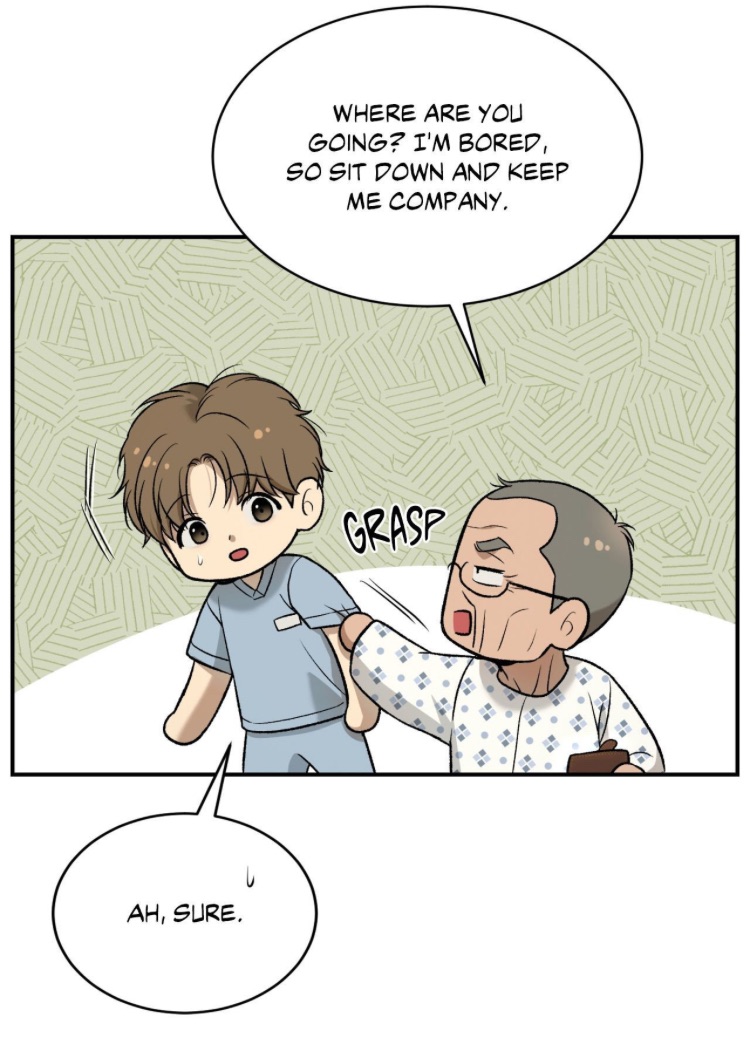 (chapter 71) This means that he lives now in the present. It looks like the “old coot” has been tamed by the “gentle hamster or duck”.
  (chapter 19), and has been unable to say it since.
 (chapter 65) We know he once had toys (teddy bear,car)
 (chapter 21) , little signs of comfort that suggest he grew up in relative security, even if his parents were often absent for work. For me, his childhood was not defined only by poverty but by rupture: love was present, then violently cut short. To a child, such a disappearance feels like betrayal, even if it was no one’s fault. Dan would have been left with a terrible contradiction — that “I love you” was true, and yet those who said it abandoned him forever.
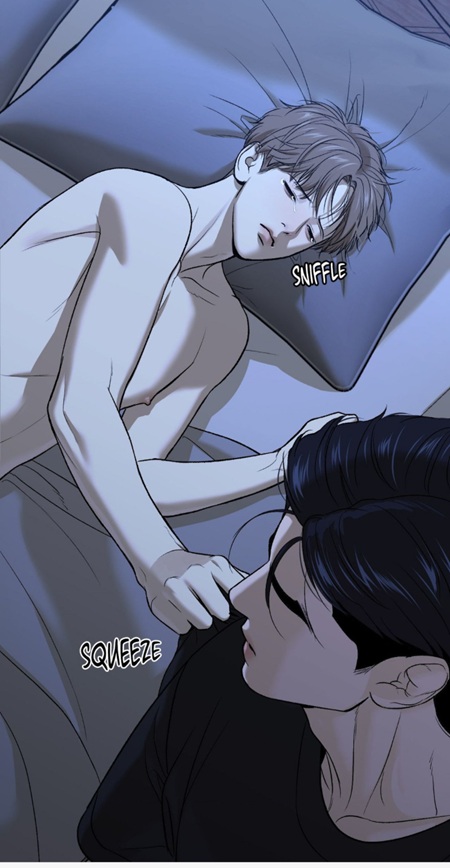 (chapter 66), whispers through tears
 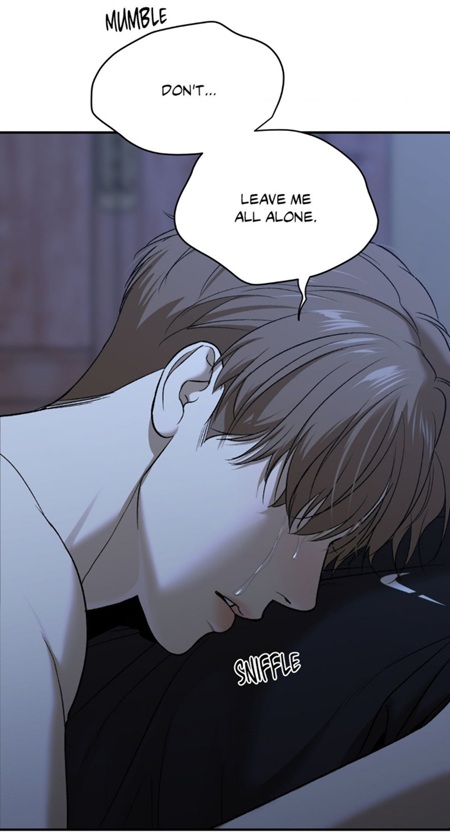 (chapter 66) and then breaks down with “
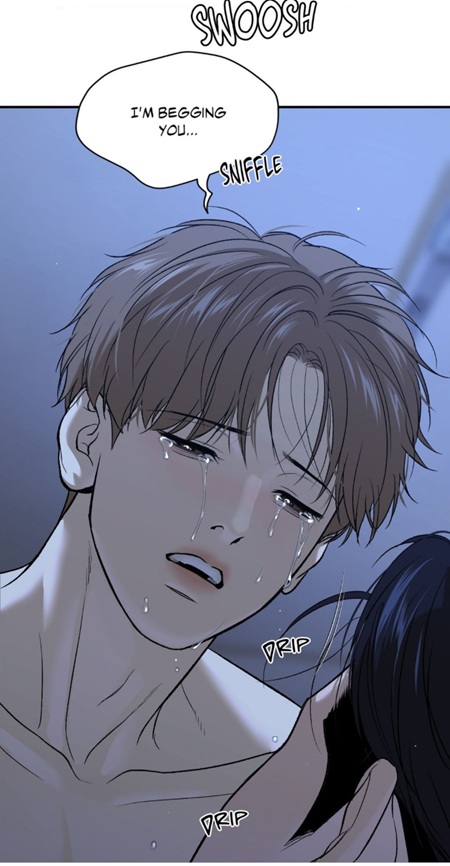 (chapter 66) These are not declarations of love, but desperate substitutes — fragments of the words he could never utter in childhood. They expose the precise gap: he never managed to say back what had once been said to him. He had lost his parents too soon. Instead of “I love you too,” what emerges is fear of abandonment. Instead of reciprocity, there is only pleading. His grip on Jaekyung’s shirt is the physical translation of what he could not verbalize: the child’s attempt to hold onto someone who is already vanishing.
  (chapter 65), the boy had not developed such a deep attachment to his parents. Thus she imagined, she could erase their absence. She conflated sacrifice with love, debt with affection. Yet what he received from her was not the warmth of a parent, but the burden of endurance. She patted
 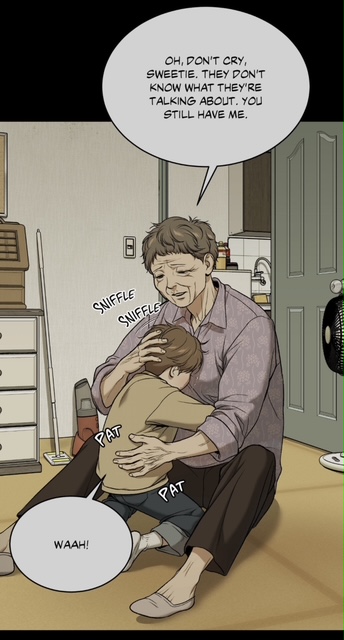 (chapter 57) and caressed him with her hand, but the kiss in chapter 44 reveals something different:
  (chapter 44) Dan once received love of a different kind — playful and tender. A kiss cannot have come from the grandmother, who expressed affection only in gestures of care, never of intimacy. That kiss belongs to his mother.
 (chapter 65)
 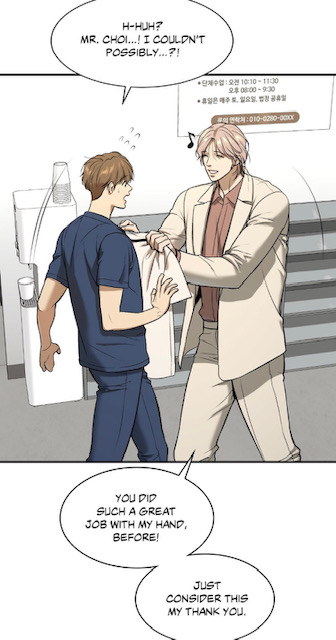 (chapter 31)— which he associates with unbearable debt. His mother’s final “gift” of love was one he could never repay. Any present risks reopening that wound: “What if I can’t repay this? What if I lose them too?”
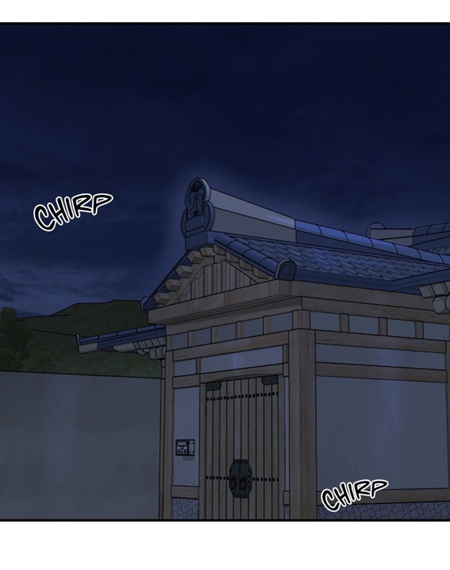 (chapter 74) — the quiet sign that the sun is about to rise. Dawn is not just a natural detail in Jinx; it is a symbolic hinge. It is the moment when night meets day, when moon and sun overlap, when endings bleed into beginnings. In myth and fairy tale, dawn often marks metamorphosis: the Little Mermaid turns to foam, the enchanted sleepers awaken, the beast becomes a prince. For Jaekyung, too, dawn is the threshold. His father cursed him at dawn
  (chapter 73), stripping him of worth, tying the rising sun to shame. But in this new dawn, another voice will have to intervene. Only Dan can replace the curse with a blessing. Only “I love you” can undo “you are not special.” And if it is not “I love You”, then it could be a kiss, the symbol of “affection”.
  (chapter 69) when Park Namwook leaned across the table and whispered to the champion about his slipping rank, his lost title, his third place. The setting is dim, the words hushed, the tone heavy with shadow. That whisper was not meant to soothe — it was meant to undermine. Namwook’s closeness is false intimacy: a confidentiality designed to manipulate, to remind Jaekyung of his dependence, to keep him chained to the cycle of fighting. The whisper here is the voice of fear, lack, and scarcity.
 (chapter 75) He was always there — arranging his matches, covering his problems, whispering about his “future.” Yet the quality of his presence was hollow. He never once guided Jaekyung beyond his father’s curse, never helped him imagine a life beyond titles. Thus he never discovered that the “monster” was suffering from insomnia.
 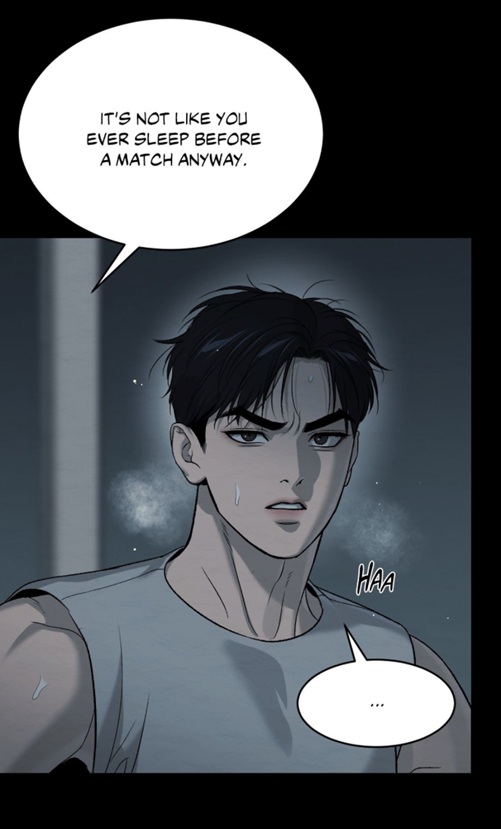 (chapter 75) His companionship was measured in duration, not depth.
 (chapter 41), an invitation to walk together. Namwook’s long presence embodies the trap of quantity without substance. Dan’s brief but luminous presence reveals the power of quality: the kind of attention that transforms.
 (chapter 29) Under the curse, his whole life has been a frantic race: prove himself, fight again, silence the noise in his head.
  (chapter 75) Namwook’s whispers, too, keep him chained to that rhythm of urgency — rankings, titles, deadlines. But once Dan’s whisper replaces Namwook’s, time itself shifts. The future is no longer a debt to repay but a horizon to approach slowly, hand in hand.
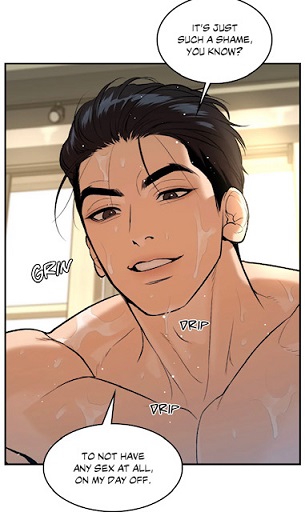 (chapter 27), joked
 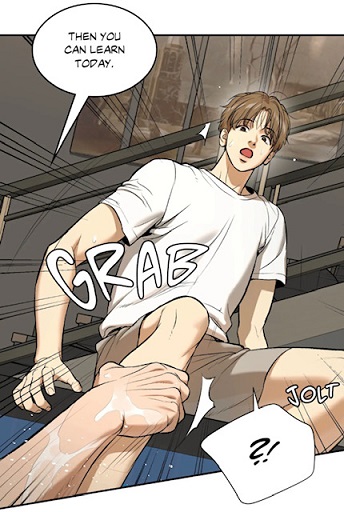 (chapter 27), even rediscovered his love for swimming. Water, his true element, was reclaimed as play rather than punishment.
  (chapter 27) That single day was a seed — a foreshadowing of what life might look like once the curse is broken for good.

 (chapter 26) They have watched his fights
  (chapter 23), memorized his moves and titles, and repeated the anecdotes told in gyms and on TV. They’ve heard how he was “saved” by sports from a darker path, and cheered for him as the “Emperor” — the handsomest fighter, the man who broke the arcade’s punching machine
  (chapter 26), the champion who stands above the rest. But if the champion’s life is already an open book, why did Mingwa wait so long to reveal his childhood and family? The answer is simple. It is because Joo Jaekyung has been called the Emperor till his fight against Baek Junmin! These public portraits — the friendly banter in the gym, the theatrical ring intros — show us the merchandise, not the man. They are the carefully polished surface presented to fans and fellow fighters alike, repeated so often that even those closest to him believe them. Yet behind this image
 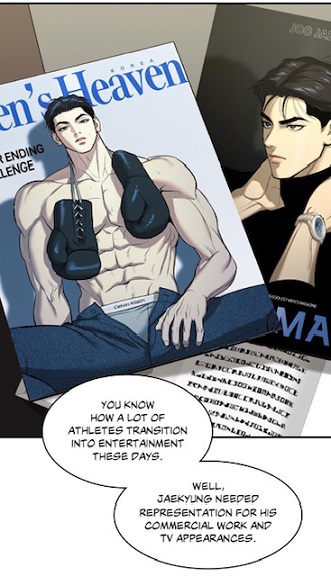 (chapter 30) lies a past left unspoken, a silence so complete that his own history became an empty space others could fill as they wished. This essay brings these two “stories” together — the Emperor and the boy. And now, you may be wondering how I came to connect the champion’s trauma to his future career as an MMA fighter. The answer lies in Joo Jaekyung’s own voice. 😮
 (chapter 70), Hwang Byungchul’s anger fell squarely on the champion.
 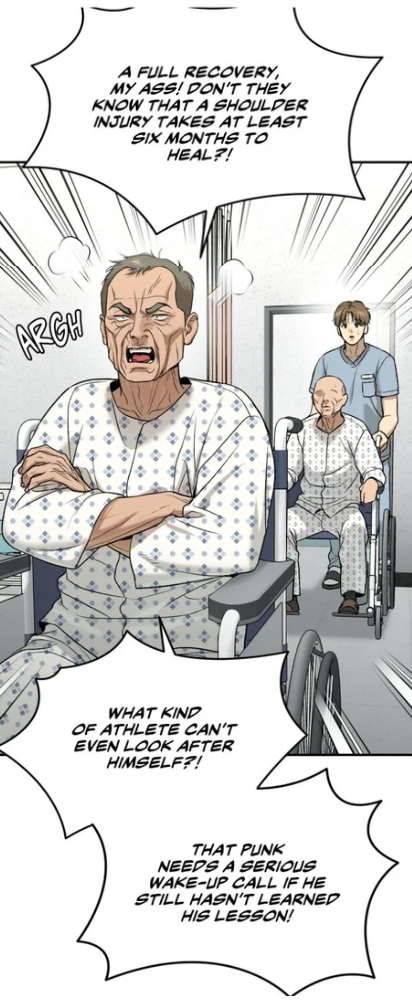 (chapter 70) To him, it looked as though Jaekyung had made the reckless choice to return to the ring so soon. That was the trap: the headline and phrasing were designed to make it appear that the decision was the fighter’s own. The opening line alone
  (Chapter 70) created the illusion that this break had been perceived as a punishment, and that Jaekyung was eager to prove himself once again. No wonder the director assumed he had given his consent.
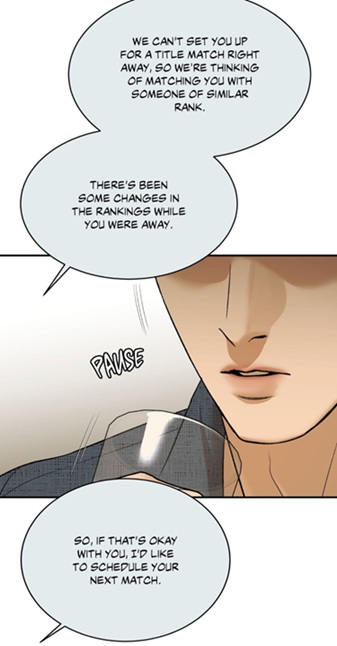 (chapter 69) By erasing these details, the public sees only two players: the Emperor and his anonymous “team.”
 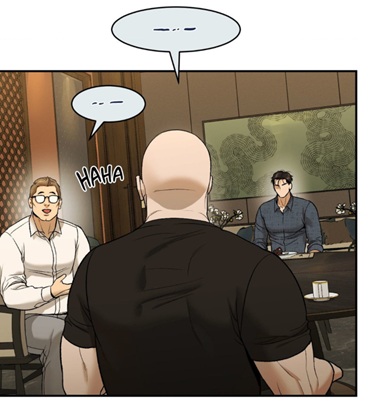 (chapter 69) It was as if the main lead, backed by his team, had personally approached MFC to request the match — an illusion strengthened by the opening line, “MFC’s former champion Joo Jaekyung will be returning to the ring this fall after serving his suspension.” This way, if the decision draws criticism, the CEO can retreat behind the fighter and his team, like they did in the past.
  (Chapter 54) Back then, the champion had not reacted to this comment. Even in the worst case, the CEO can hide behind one of the MFC match managers or doctors.
  (chapter 41) But that excuse would be a fiction: Jaekyung hasn’t even met those doctors or talked to the MFC match manager
  (chapter 05). He has been chasing after his fated partner. Finally, he hasn’t even signed any paper or agreed at the meeting. In fact, he remained silent for the most part of the time and the reason for this urgent meeting was his request for proper investigation concerning the switched spray:
  (chapter 67) That’s the reason why this suggestion from the CEO appeared the very next day.
  (chapter 69)
  (chapter 61), it was paired with a recommendation for rehabilitation — not an immediate return to competition. This was actually a condition for his total recovery. On the other hand, the doctor imagined or suggested that his patient wished to return to the ring so soon. No medical professional ever signed off on an autumn fight. Yet the date is already set, and the headlines frames it as a confident comeback without any medical backup. The Emperor’s name is splashed everywhere, but none of the words belong to him.
 (chapter 57) with one of his close associates — a man whose face was hidden, speaking as though he were the athlete’s voice. That interview was accompanied by a familiar victory image
 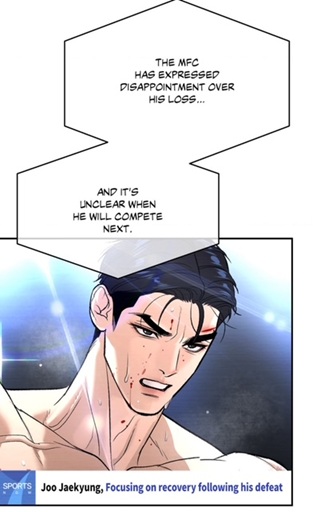 (chapter 57), a stock photo already used in other press pieces. This picture comes from after the fight in the States:
  (chapter 41), while the image released with the fall match announcement was the one from when he first won his champion title.
 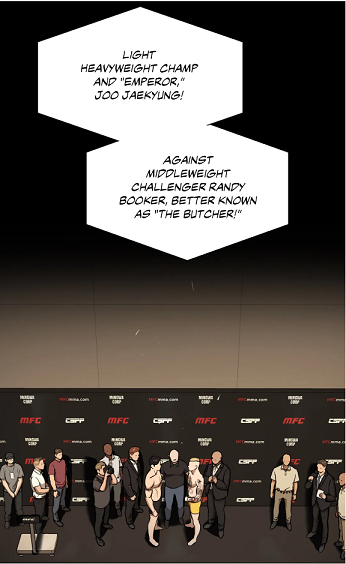 (chapter 14) seems to radiate absolute power — the kind of authority that commands armies, bends laws, and answers to no one. It is meant to ooze charisma and control, a name that suggests the bearer acts on his own will. Yet, in truth, emperors have rarely ruled alone. Behind every throne stand ministers, advisors, generals, and family factions, each shaping decisions from the shadows. An emperor who ignores these forces risks losing his crown.
 (chapter 17) He was blamed for his popularity. The man inside the crown does not act or speak freely; his words are filtered, scripted, or replaced entirely.
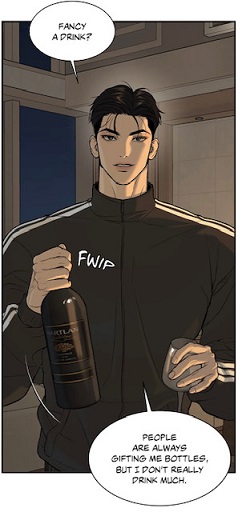 (chapter 12), never mind that he hardly drinks. The gesture fits the fantasy they’ve built around him, not the reality of a man who rejects alcohol due to his addicted father, a reminder that even the tokens of admiration are shaped by the image, not the truth. So who is this so-called close associate or “Joo Jaekyung’s team” exactly that decides for him, speaks for him, and hides behind his title? Besides, why did the journalist change from “one of his close associates” to “Joo Jaekyung’s team”?
 (chapter 57) The nickname, played for entertainment value, was another way of turning the champion into a caricature — a marketable, amusing persona instead of a man with a past and agency. It is quite telling that Park Namwook’s interview aired immediately after the anchor referred to Jaekyung as “Mama Joo Jaekyung Fighter.” This was not the lofty “Emperor” title repeated in gyms and ring intros — it was more a mocking nickname, a deliberate jab meant to provoke. In that moment, the Emperor was verbally pulled down from his pedestal, yet the images shown alongside the segment told a different story: carefully chosen shots of him as a champion, a visual echo of his marketable persona. The dissonance was striking.
 . (chapter 54) In my opinion, the man is trying to return to the past, thinking that his “popularity” can come back, not realizing that he is being manipulated himself. On the contrary, he stepped into the role of spokesperson without hesitation, speaking as if he were Jaekyung’s voice while keeping his own face and name hidden. He only speaks, when he feels safe. He can not be responsible for the champion’s recovery.
  (Chapter 52) This framing lets him claim the prestige of leadership while leaving himself room to withdraw if things go wrong. Yosep was the one notifying MFC and reporting the incident to the police, Potato explaining his discovery to Joo Jaekyung and blaming the star.
  (Chapter 36) He should tolerate the celebrity’s moods and put up with everything. The manager didn’t mind, as long as he didn’t get affected. But what is the consequence of such a passive tolerance? An individual’s self-esteem can slowly erode, leading to a gradual loss of their sense of self. They may stop recognizing their own desires, needs, and rights, often without even realizing this is happening. This is because emotional exhaustion often develops subtly over time, rather than appearing as a sudden, dramatic event.
  (chapter 31) when punished. In this light, Park Namwook embodies the very dynamic the article warns against: a figure who benefits from another’s compliance, maintaining control not through open dialogue, but through unspoken rules and the threat of exclusion.
 (chapter 73), by becoming a boxer, the champion wouldn’t make a lot of money. With this comment, he implied that boxing in South Korea had been losing popularity 10 years ago. This explicates why gradually, the members from Hwang Byungchul left the studio. And it was likely the same in the illegal fighting circuit.
  (chapter 73) The popularity of MMA in the States gave them the opportunity to revive fighting sports, a figure who could draw crowds and sponsors, making such events fashionable again.
 (chapter 72) instead of “hard-working,” a man who “chose sports over a dark path.” Yet if you look closely, this celebrated “ascension”
  (chapter 72), the scars of his family history, and the years of survival before the cage. This is history rewritten, his boxing past and family erased. Why? His origins could expose the ugly verity: the link between criminality and boxing (as such fighting sports). Secondly, because his real story, though moving, lacked the glamorous allure needed to market him. His real story would have revealed that to rise to the top, you need relentless work, not a miraculous moment. That version was never going to sell as well as the “genius” myth.
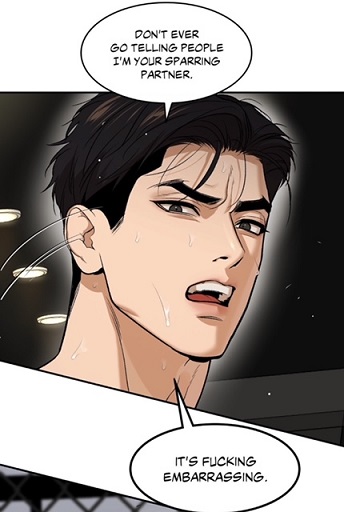 (chapter 46) Most of them thought that by staying close to him, they could benefit from his popularity. To conclude, for many of them proximity to the Emperor wasn’t about learning discipline or technique; it was about absorbing his fame by osmosis. Hence they complained and accepted the gifts and money so easily.
 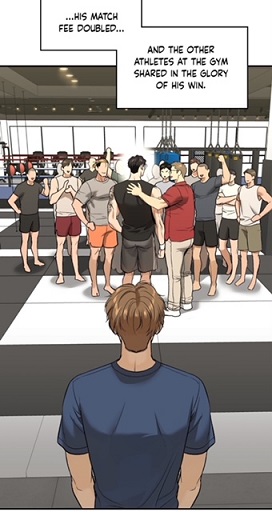 (chapter 41) Observe how the manager is acting here. He is speaking, touching the star like his prize and possession. The Emperor became the merchandise, the illusion, the bait to draw both viewers and fighters. However, being “labeled as genius” can only push desperate fighters to take a short-cut: bribes and drugs. Hence Seonho couldn’t last a whole round.
  (chapter 46) And, like any product, once it was seen as damaged, its value plummeted. The moment he “lost” his title and suffered injury (chapter 52), the dream began to unravel.
  (chapter 52) This panel captures this shift perfectly: two fighters casually dismiss him over dinner. In those words, the Emperor isn’t a mentor, a champion, or even a man — he’s a broken commodity, no longer worth the investment. The same people who once fed off his popularity are the first to abandon him when the promise of easy gain disappears.
 (chapter 22) He is even disposable. He is gradually giving more rights to his “boy”, the real director of Team Black. And the moment you perceive the manager as the main lead’s voice, you can grasp the true significance of the slap at the hospital:
 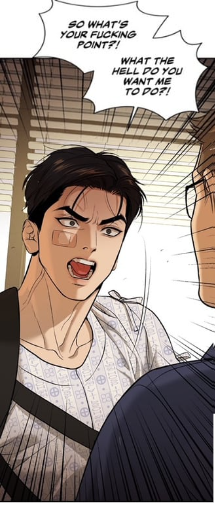 (chapter 52) For the first time, the main lead had voiced his own thoughts and emotions. He had used his real “voice”, revealed his unwell-being:
  (chapter 52) To this outburst, Park Namwook slapped Jaekyung in front of others (chapter 52).
  (chapter 52) That was not the act of a coach correcting an athlete — it was the gesture of an owner disciplining a pet or a possession, a reminder of who controlled the narrative. In that moment, the Emperor did not protest.
 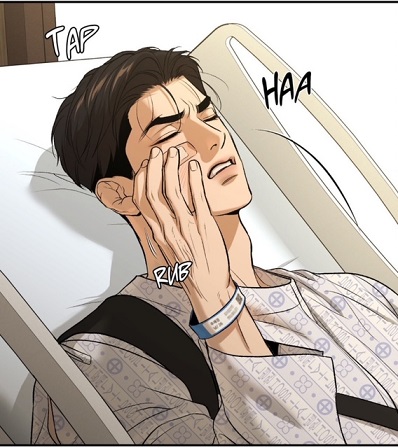 (chapter 52) He chose silence, and later avoidance, staying away from the gym. That silence was not weakness, but choice: he would listen less and less to his hyung.
 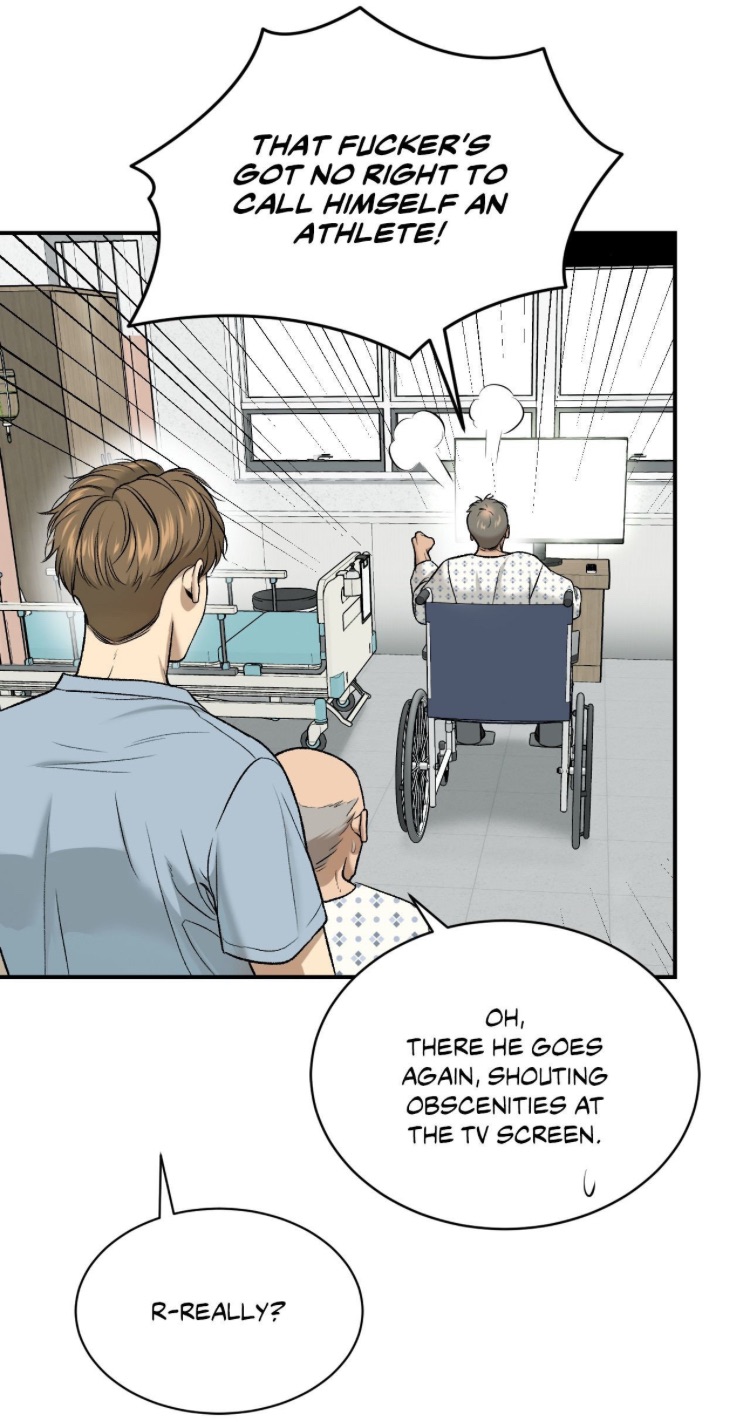 (chapter 70) and more like a product: something to be displayed, sold, and, when necessary, handled roughly to keep in line. The shift in labels is just another layer of that merchandising process — a packaging change to suit the current market, not a recognition of the man inside. To conclude, the champion has always been voiceless all this time, even here:
 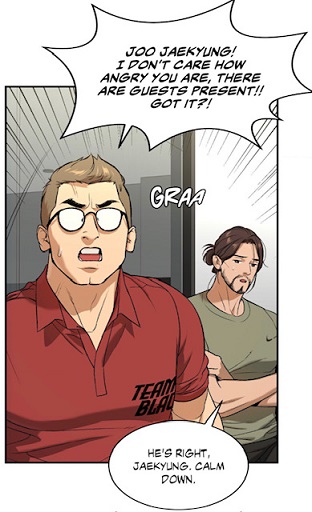 (chapter 36) All he needed to do was to fight:
  (chapter 36)
 (chapter 73) — unfiltered, unmarketed, unprotected. It was raw, dangerous honesty, and it came at a cost: the loss of his voice!
 (chapter 73) Six years earlier, however, his voice had already been battered by silence. After his mother’s abandonment at age six, the only connection he retained with her was a phone number —
 (chapter 72) We don’t know how many times he called, but each time we see him do it, his face is injured.
  (chapter 72) The phone calls are therefore intertwined with the boxing studio, as though pain itself pushed him toward her. At ten, he picked up the receiver and let it ring only a few times before hanging up. The next time, in the dead of winter, he finally spoke, promising that if she returned, he would protect her from his father and make enough money to keep her safe.
 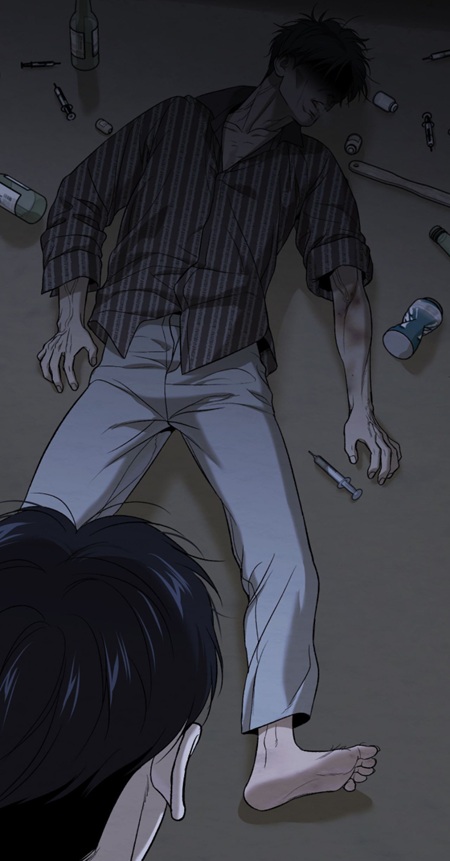 (chapter 73) and with it, another layer of his voice disappeared. He had the impression, he had killed his father. His words had been more dangerous than his punches. Hence he could only come to resent his own voice and words. And now, you comprehend why the Emperor allowed the hyung to become his voice. To conclude, the silence of those nights became the silence of the man. As you can see, the curse did not fall on Joo Jaekyung’s voice in one night — it was built, in stages, over years. But the death of his father linked to the argument represented the final straw that broke the camel’s back.
 (chapter 55)
 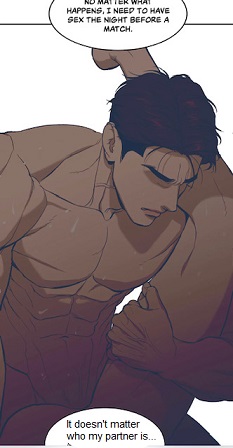 (chapter 2) — a space where he could act without having to speak. In the bedroom, as in the ring, the body could carry the conversation. Here, he could dominate, control, and release tension without the risk of verbal damage. His partners became surrogate opponents: sparring substitutes in a non-lethal match. Treating them as “toys” wasn’t only objectification; it was a form of control that, in his mind, protected both sides. Toys don’t demand answers, don’t talk back, and don’t leave you cursed with regret. They remain safely outside the territory where his voice had once done harm.
 (chapter 27), spent time with him, asks questions, confronts, and refuses to be reduced to a body in the room. He breaks the rule of silence. With him, Jaekyung can no longer hide behind the physical alone; he is forced to speak, to explain, to voice desires and fears. He pushes Jaekyung to engage in ways he’s spent years avoiding. In this way, Kim Dan becomes the first real threat to the system the champion built after those two curses — and possibly the first person who could prove that words can be safe again. And now, you comprehend why Joo Jaekyung was moved by the birthday card
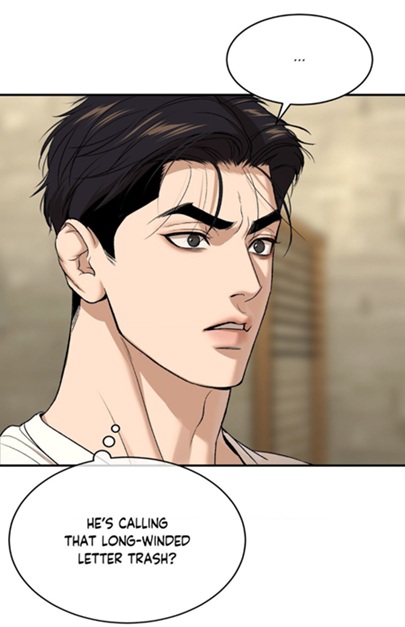 (chapter 62) To most, it might look like a simple gesture, but for him, it was a rare and precious thing — a voice that had taken the time to shape itself into words just for him.
 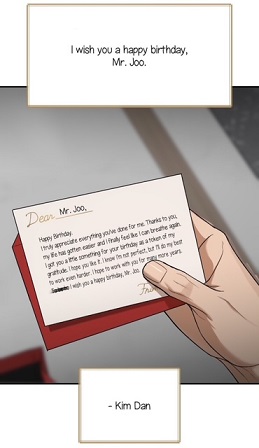 (chapter 55) After years of associating speech with either silence or harm, receiving a long-winded, carefully written message felt almost unreal. He saw the effort behind it, the deliberate choice to put thoughts and emotions into language instead of letting them fade away or turn into weapons. In that card, Kim Dan offered something neither of his parents had managed: a voice that reached him without wounding. No silence, no insult. For the champion, it wasn’t just a card — it was proof that words could be built into a gift, not a curse. The latter expressed his dreams and gratitude. Thus I deduce that the Emperor’s curse will be broken by a spell: words!
 (chapter 55) The “spell” to break it is not some grand external event, but the simple, sustained act of honest communication — something that has been denied to him since childhood.
 (chapter 68), a kiss, a pat, a caress or by simply holding hands
 . In this way, the curse that began when his voice was silenced and his hands were weaponized will only be broken when those same hands learn to speak tenderness. Look how doc Dan reacted to his public embrace:
  (chapter 71) He saw affection in the hug, but he still doubted the champion’s action.
  Until now, the design’s images have played a secondary role, yet the answer lies in a single scene from chapter 41.
  (chapter 41) Under the bright sunlight, Kim Dan reached out toward the leaves, his hand open and unguarded, as he silently thought of the man he loved. This gesture, so simple yet so revealing, became the unspoken confession that marked the start of a different kind of freedom—the freedom to feel.
 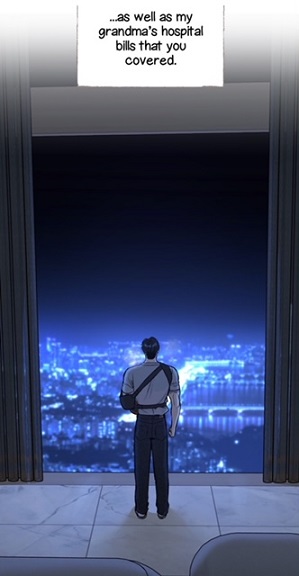 (chapter 53) The glass was an invisible barrier, offering the illusion of freedom while keeping him trapped in the moment of his unresolved trauma. The closer he stood to it, the further he was from true release, his gaze fixed outward to avoid looking inward. That’s why he had no eye in that scene:
  (chapter 55)
 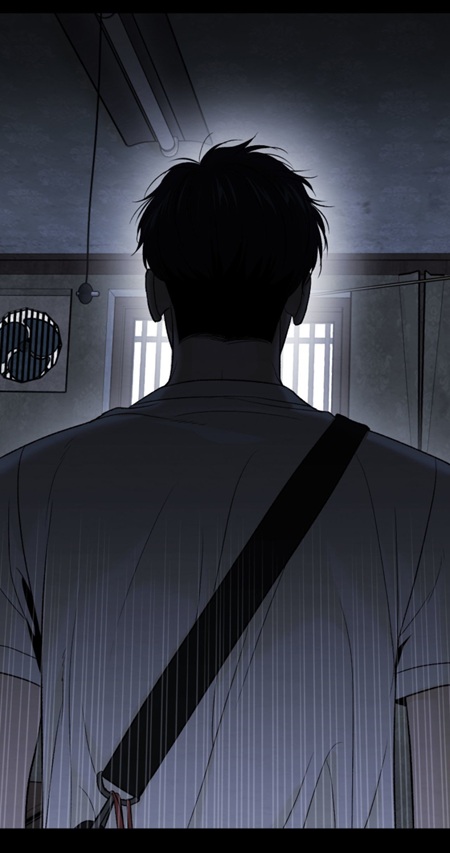 (chapter 73) reveals why that reading was correct: the penthouse window is not just a symbolic device of the present — it is the direct heir of a far older image burned into his memory. Here, as a teenager, he stands before a small barred window in the room where his father’s corpse lies. The resemblance is not visual coincidence but emotional continuity. Both windows let in light without granting escape; both present the outside world as something visible yet forever out of reach.
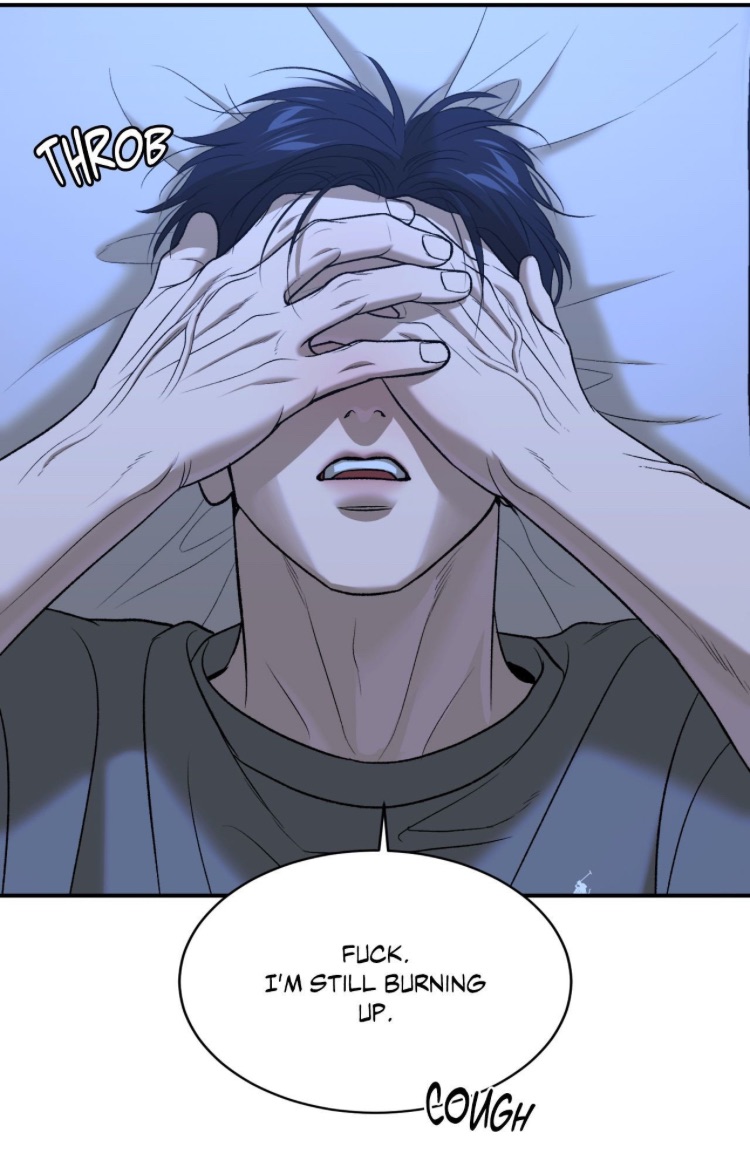 (chapter 71)
 (chapter 70) the night can also be alive, communicative, protective. In that moment, the moon becomes more than a distant light in the sky: it is a patient witness, a calm listener in the stillness, reflecting the truth he has yet to voice.
  (chapter 70) Its soft glow contrasts with the blinding glare of the cage lights, suggesting that under the moon, there is space for gentleness, for hearing one’s own heartbeat and another’s words. Just as the moon guides travelers through darkness, it can guide him toward a night that does not suffocate him with loss, but offers orientation and connection.
 (chapter 60) they were his own form of therapy. In saving someone else in the night,
 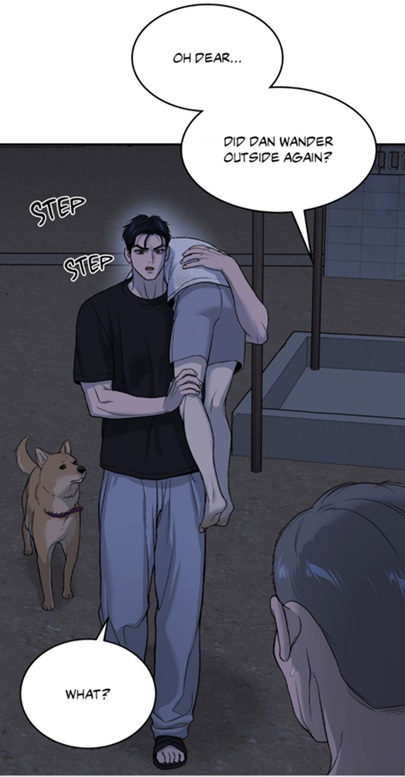 (chapter 65) he could prove to himself he was not powerless, he was valuable, capable of protecting what mattered.
 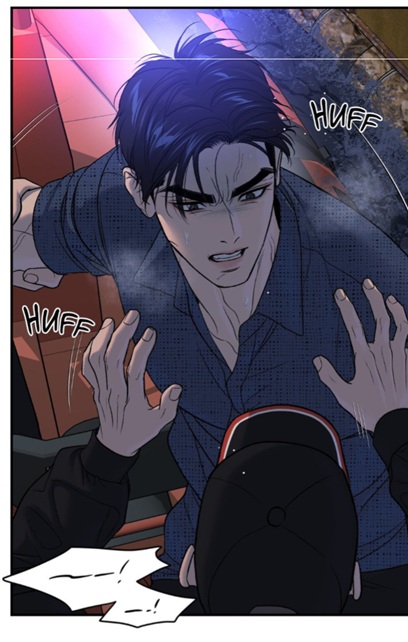 (chapter 69) He was not too late either. And the moment doc Dan discovers what the silent hero has done for him so many times, the former will realize that he has always been special to the Emperor. Moreover, the latter had never abandoned him in the end.
 , (chapter 9) as if the champion’s volatility were a quirk (the actions of a spoiled child) to be managed rather than a wound to be healed. It is because he never talked to the champion or investigated his past. It was only about money and glory. The manufactured image of the erratic, temperamental fighter served Namwook well; it excused rough handling, justified bad press, and kept Joo Jaekyung dependent. Once the Emperor can name the truth of that night, the fiction collapses — and with it, Namwook’s control. He can only be judged as a liar and even a traitor, but we know that Joo Jaekyung has a big heart. He could love his father despite the abuse. Now, the missing link is Cheolmin!
  (chapter 13) Observe that this name is a combination between Hwang Byungchul and Baek Junmin! Under this light, my avid readers can grasp why the athlete kept his existence in the dark for so long! It is because the latter belongs to his past and knows the truth behind the Emperor! He was aware of his suffering. For him, he is not just a fighter, but someone who needed FUN in his life!
 , released in anticipation of Chapter 70, is more than a promotional teaser. It is a moment frozen in time, yet brimming with motion—emotional, symbolic, and narrative. We see Joo Jaekyung embracing Kim Dan with both arms, pressing him tightly against his chest. There is no resistance, no distance, no tension in the frame. The palette moves from gray and brown fading into violet and pink, blooming into soft light. There is vapor, there is breath, an allusion to life. And most strikingly, there is stillness.
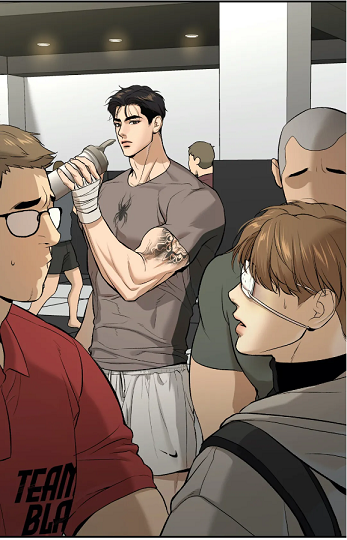 (chapter 11), every glare, and every awkward silence
  (chapter 58)
  (chapter 68) and the public hug on the dock in Chapter 69.
  (chapter 69)
  (chapter 68) He rests his chin not on Dan, but on his own hand, his arm propped on the edge of the bathtub. This detail is telling: even in a moment of supposed closeness, Jaekyung relies on himself for support, not on Dan. He is physically near but emotionally braced—still holding himself apart. His thoughts are private, tender, and possessive. In a rare moment of introspection, he confesses that
  (chapter 68) This line (“I’ll keep him right here in the palm of my hand”) is deeply revealing. The champion frames care through the language of possession. The palm is open but hierarchical; it suggests that Dan is small, fragile, and dependent on Jaekyung’s will to hold or release. He does not yet see Dan as an equal. Even as he softens, his emotional vocabulary is shaped by superiority and containment. The hug is real, the sentiment sincere, but the dynamics remain unbalanced. And since Dan is asleep—unable to reciprocate, respond, or challenge—the embrace becomes more about the wolf’s soothing himself than forming a mutual bond. Furthermore, Dan is not even facing Jaekyung.
 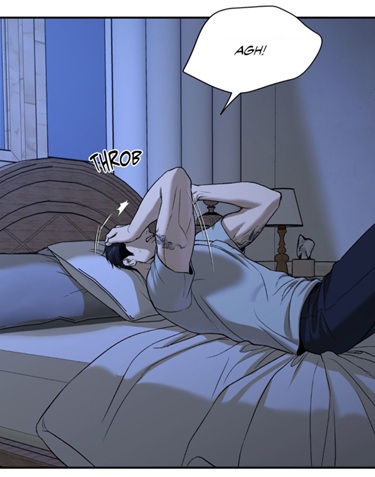 (chapter 69) The illusion of control dissipates, revealing that his earlier vow, however heartfelt, was not yet unshakable.
 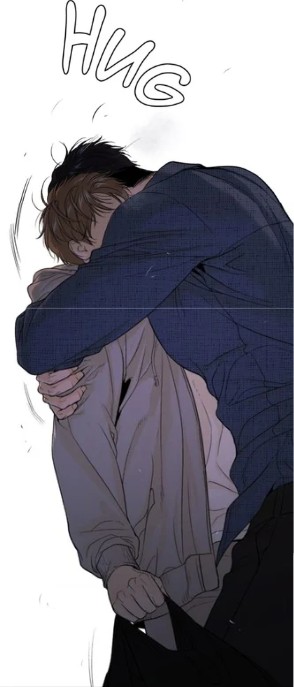 (chapter 69) rather than a moment of mutual resolution. Jaekyung offers no words, yet a silent gesture of care and vulnerability.
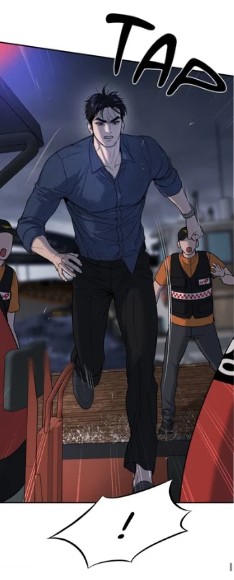 (chapter 69) that Jaekyung is wearing it, the change in angle—viewing the hug from behind—deliberately conceals it.
 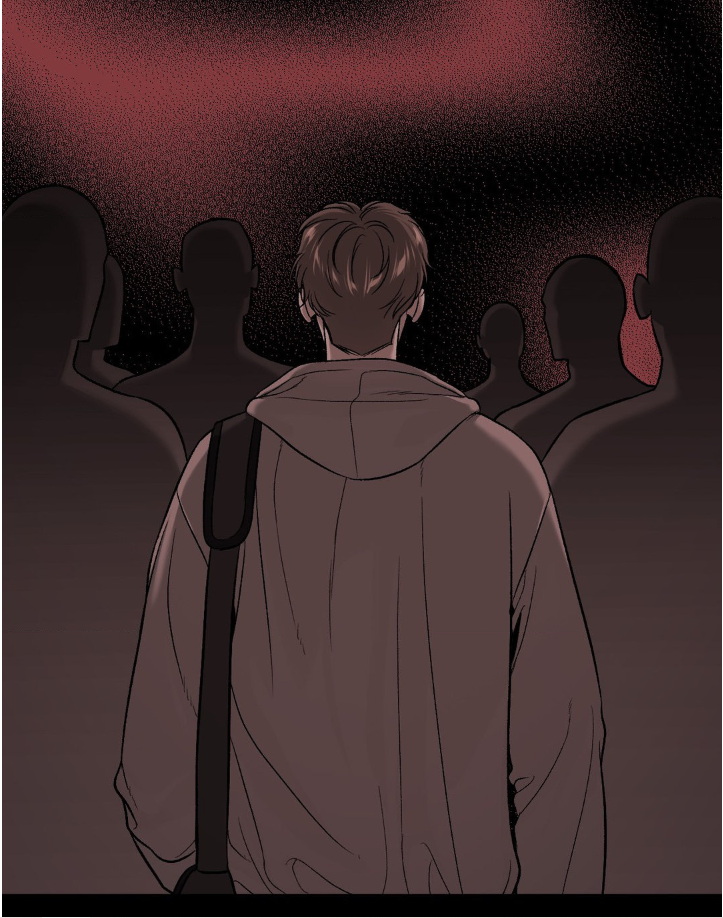 (chapter 55) In the new illustration, the hamster’s back is no longer representing anonymity and indifference, but visibility and care, for the champion is now facing his fated partner. In other words, doc Dan’s back in the teaser stands for uniqueness and high value. He can not be replaced. Moreover, doc Dan is not walking away, nor is he asleep.
 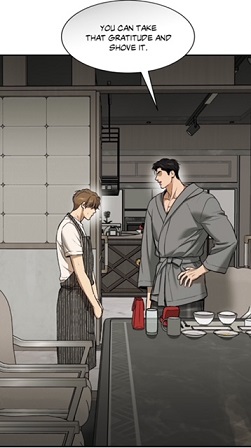 (chapter 45) Back then, the champion refused the expensive key chain, symbolizing a missed opportunity for emotional connection. Both men yearned for attention and affection, but failed to express it. Here, in contrast, the champion offers something far more meaningful than a 14,000₩ and free lodging —his unguarded embrace. And Dan, by remaining still, appreciates the moment.
  (chapter 21) Dan became fluent in a silent, physical language of care. She often asked him not to cry
  (chapter 47) and composed embraces—gestures repeated with calm precision. These touches were predictable, rhythmic, and soothing, but they also suppressed genuine emotional exchange, the symbol of toxic positivity.
 (chapter 57) the momentary pause of a hand
 (chapter 5) never still—giving the impression of involvement, of care in action. But this motion avoided vulnerability and responsibility in reality. She never clung, never trembled. Her gestures conveyed comfort but not surrender, presence but not change, and not support either. They were not truly emotionally together.
  (chapter 47) to hold her hand, to initiate closeness
  (chapter 47)
 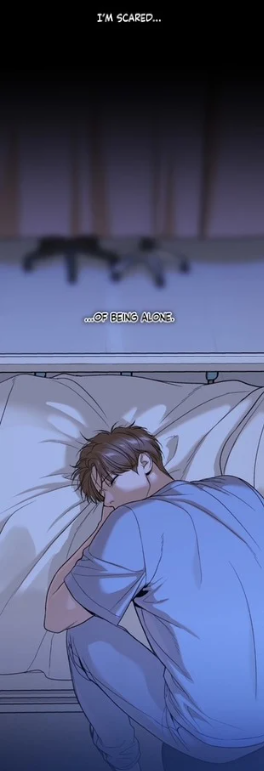 (chapter 56). This reversal of roles placed the burden of emotional stability on his young shoulders.
 (chapter 57); I’ll come back home, once I am all better”
 (chapter 11) —promises that sounded protective but masked emotional denial. Her words were spoken to soothe, not to reassure with truth. These assurances were emotional illusions—comforting on the surface, but hollow in substance. They created the illusion that she was always strong, ever-present, even immortal—an anchor that would never be lost. Over time, this illusion cemented itself in Dan’s mind. She became a fixed point of emotional gravity,
  (chapter 35) Instead of recoiling in fear or admiring his strength, Dan quietly states, “I think I really need to focus on Mr. Joo right now.” He does not focus on the strength or aggression, but on the pain beneath it. The burst sandbag, for him, is not a threat—it is a symbol of Jaekyung’s emotional unraveling. This silent recognition mirrors Dan’s interpretive skills developed in childhood. Just as he once learned to read a shift in his grandmother’s hand or the silence after a broken promise, he now interprets the damage to the sandbag as an unspoken plea for help. This sensitivity continues to define his bond with Jaekyung.
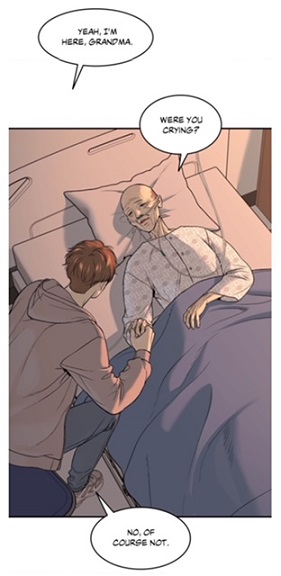 (chapter 47), to stabilize the person meant to support him. Now, he is receiving without shame or hesitation. The Emperor’s silent desperation, his refusal to hide behind ritual or false strength, creates the space for Dan to feel treasured—not pitied, but wanted.
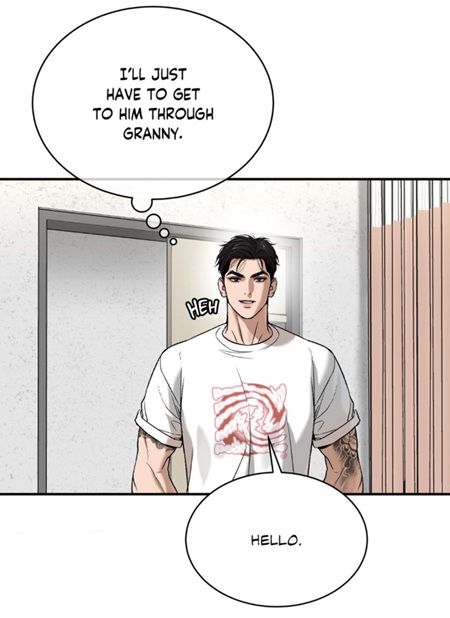 (chapter 65) or stand-ins
 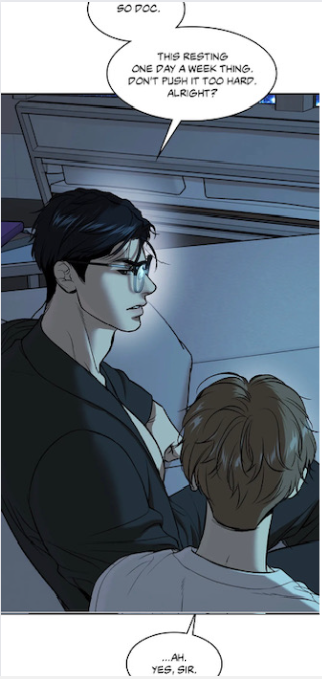 (chapter 29), ignoring Dan’s presence and concern. His rejection of the doctor’s offer of comfort or companionship underscores not only his emotional detachment but also the absence of true support from his supposed team. The manager, Park Namwook, is nowhere to be seen,
 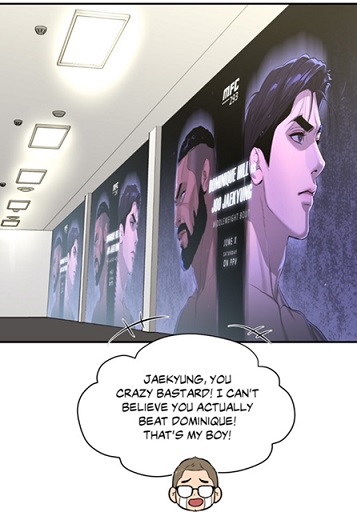 (chapter 40) Each time, they faced a problem, the athlete had to resolve it. He was the problem and the solution for everything.
  (chapter 52) The reason is that he couldn’t face the terrible outcome and his own responsibility. He needed a scapegoat. Thus he blamed the champion for everything. But by doing so, he refused to share the burden and the athlete’s unwell-being. Striking is that this slap served as a wake-up for the athlete. From that moment on, he stopped relying entirely on his “hyung”. He was pushed to make decisions on his own. This harsh gesture mirrors Shin Okja’s attitude toward Kim Dan,
 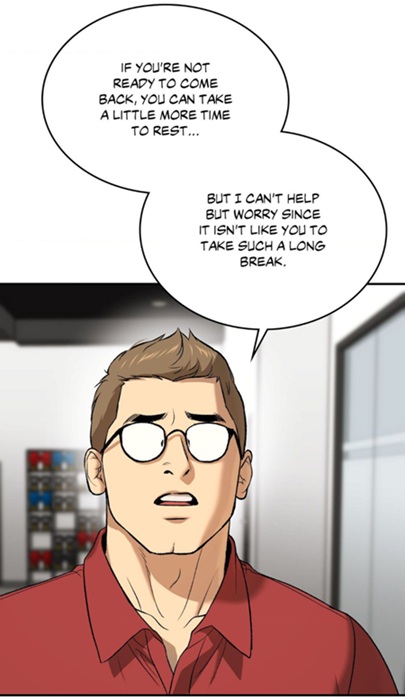 (chapter 66) or use violence to “tame the wolf”. That’s the reason why he is accepting the offer from the CEO of MFC. He is pushing the Emperor to return to the ring, but the problem is now that doc Dan was officially recognized as a member from Black Team.
 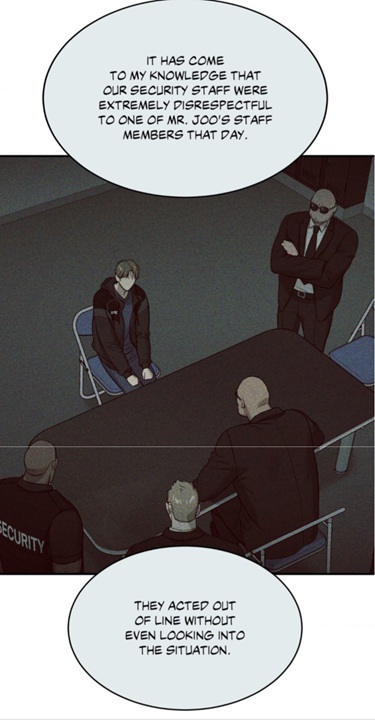 (chapter 69)
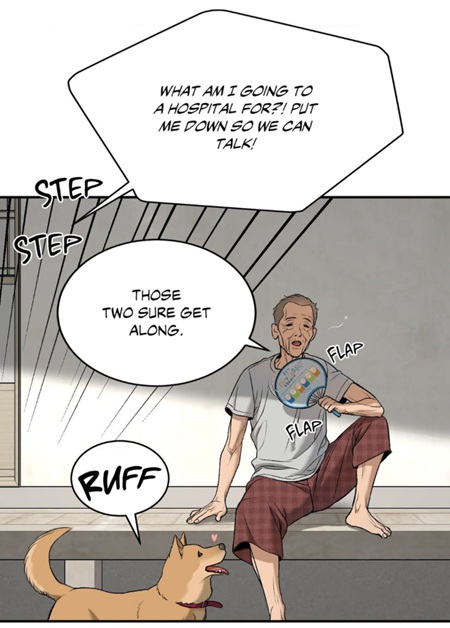 (chapter 66) the moment the Emperor carried away doc Dan. This looks like an “embrace”.
  (chapter 66)

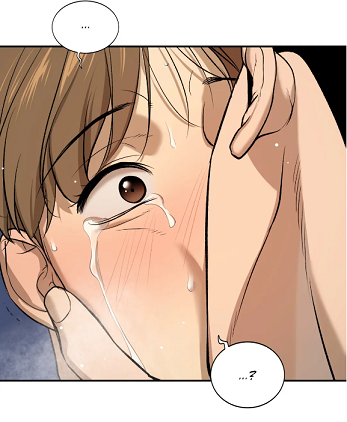 (chapter 14) For the physical therapist, this moment would later be confirmed.
 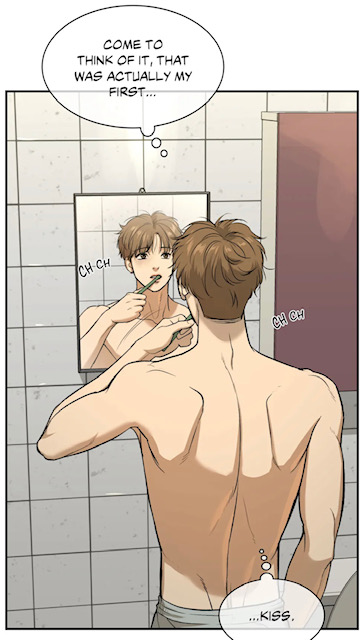 (chapter 16) —haltingly and with a trace of disbelief visible thanks to the points of suspension —as his first kiss ever. His stunned reaction and eventual admission offer a compelling lens through which to explore the symbolism of kissing in Jinx, but also the emotional landscape the two men must navigate.
  (chapter 14) If it was his first, the gesture carries a far deeper meaning than either man realizes in the moment. And if it wasn’t, then why does this kiss—with Kim Dan—resonate so differently?
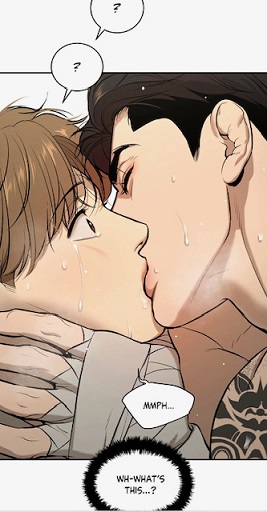 (chapter 15) she showed more than the physical therapist’s confusion with the interrogation marks, she added his inner thoughts. This question (“What’s this?”) already hinted that he had never experienced a kiss before. The ambiguity of his reaction suggested that the moment was unfamiliar, and not immediately recognizable as a kiss at all.
  (chapter 16) it frightened him. The kiss broke an invisible boundary—one his upbringing had silently enforced. That’s the reason why he wasn’t sure if he could do it again.
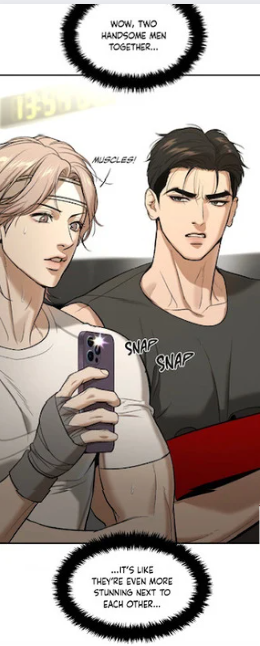 (chapter 30) He blushes and wonders why.
  (chapter 30) It’s a telling moment: Dan isn’t used to feeling attraction and desire, let alone recognizing it. He never bought posters of celebrities, never fantasized. That world—the glamorous world of affection, attention, and beauty—was never his.
 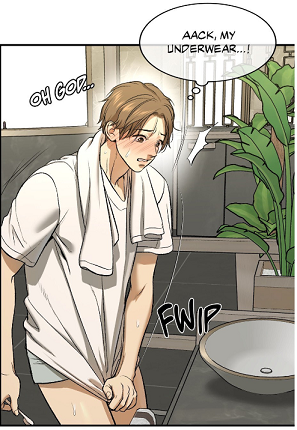 (chapter 30) —despite already having been seen naked by Jaekyung
  (chapter 30) —suggests something deeper than modesty. When he rushes to hide his underwear and blushes merely at brushing his teeth next to someone
 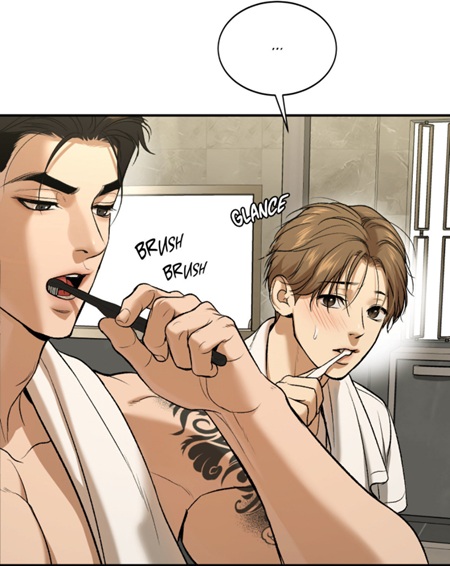 (chapter 30), it becomes evident: Dan is not accustomed to physical closeness or shared domestic spaces. These are not reactions of a man with just sexual trauma—they point to someone raised without the warmth of daily intimacy.
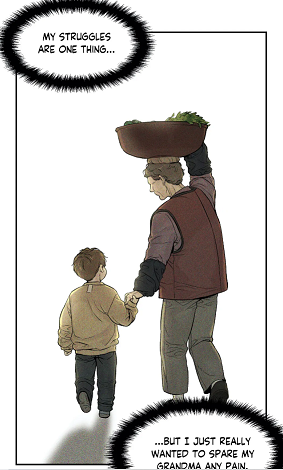 (chapter 5) He had to take care of himself, dressed on his own. He had to act like an adult, as his role was to assist his grandmother:
 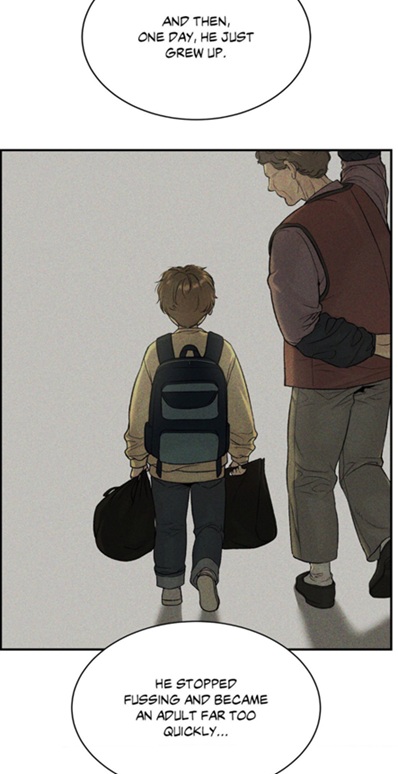 (chapter 65) This raises the possibility that someone else—most likely his mother—was his primary caregiver in early childhood. She would have changed his diapers, held him close, and kissed him gently.
  (chapter 44) For me, without realizing it, Dan reproduced those gestures. These actions can not come from Shin Okja, as we only see her caressing or patting her grandson. The progression is striking. It moves away from eroticism (kiss from the lips)
  (chapter 44) They suggest care, comfort, and emotional presence. This is crucial, because it reveals that for Dan, a kiss is not about arousal or conquest. It is a language of love. They carry the flavor of instinct. These are the kinds of kisses a child might have once received, or given, in moments of safety and connection.
 (chapter 44) is a behavior shared by felines and wolves alike: a subtle act of comfort, trust, and bonding. Wolves nuzzle to soothe and reassure. Leopards nudge to display affection without threatening dominance. Dan’s pecks
  (chapter 57) (chapter 57)—licking them not out of instinct alone, but to reassure and bond.
 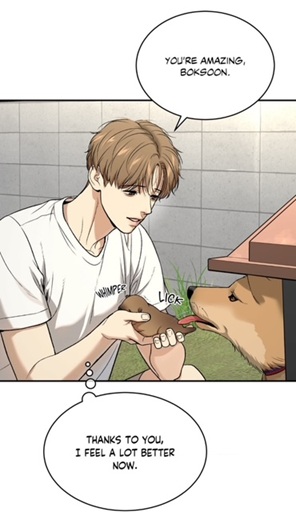 (chapter 57) During that summer night’s dream, Dan’s body mirrored this wordless care. That’s why he could laugh so genuinely like a child after witnessing his “pet’s reaction”.
  (chapter 14) Therefore the physical therapist astonishment, “What’s this?” was not naïve; it was disoriented. Somewhere deep within, Dan had internalized a different model of kissing: one that reflected comfort, not conquest; affection, not arousal. The kiss he received was too strange, too fierce—it violated a definition he didn’t even know he had. His body knew how to kiss, but it remembered a different type of kiss altogether. The latter stands for love and as such emotions. Under this new light, my avid readers can comprehend why the physical therapist made the following request from his fated partner:
  (chapter 15) He needed to be “warned” in order to control his “heart”. As you can see, doc Dan had an innocent definition of the kiss. Therefore it is not astonishing that the wolf’s first kiss confused him so deeply: it shattered the only blueprint he had for intimacy.
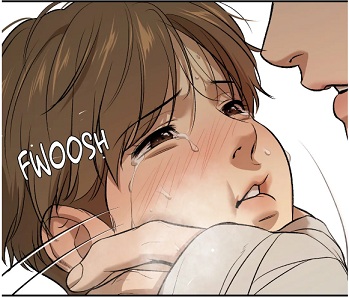 (chapter 14) Jaekyung repeated such a gesture, as seen in chapters 24
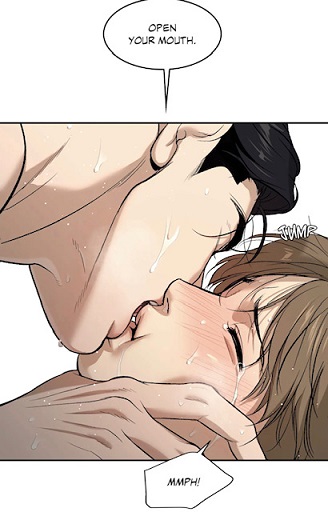 (chapter 24), and again in 64
  (chapter 64). These gestures were not expressions of tenderness, but acts of dominance, mirroring how the celebrity was taught to treat intimacy: not as an exchange, but as an imposition. His behavior echoes Cheolmin’s earlier suggestion
 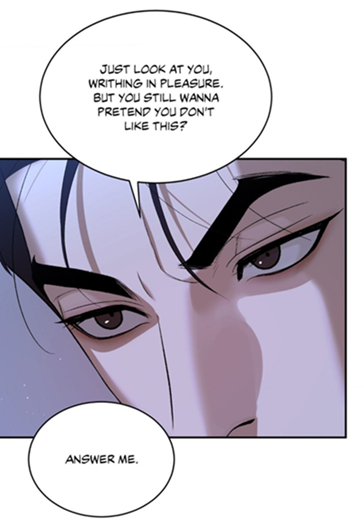 (chapter 63) Fun is not the same as love, and this distinction matters deeply for someone like Kim Dan, who associates kissing with emotional safety and love, not performance or play. This explicates why he refused to be kissed in episode 63:
 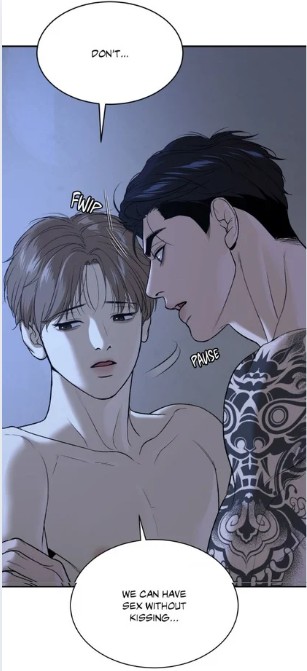 (chapter 63)
 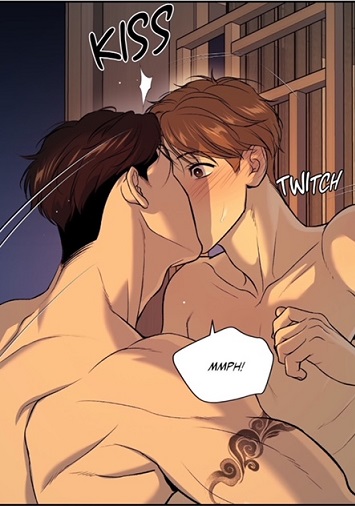 (chapter 44), Dan’s were soft, exploratory, almost reverent. His lips touched not just his lover’s mouth, but his cheek and ear—tender sites that bypass eroticism in favor of emotional intimacy. These weren’t prolonged, devouring kisses. They were pecks, small and deliberate. They mirrored affection, not possession.
 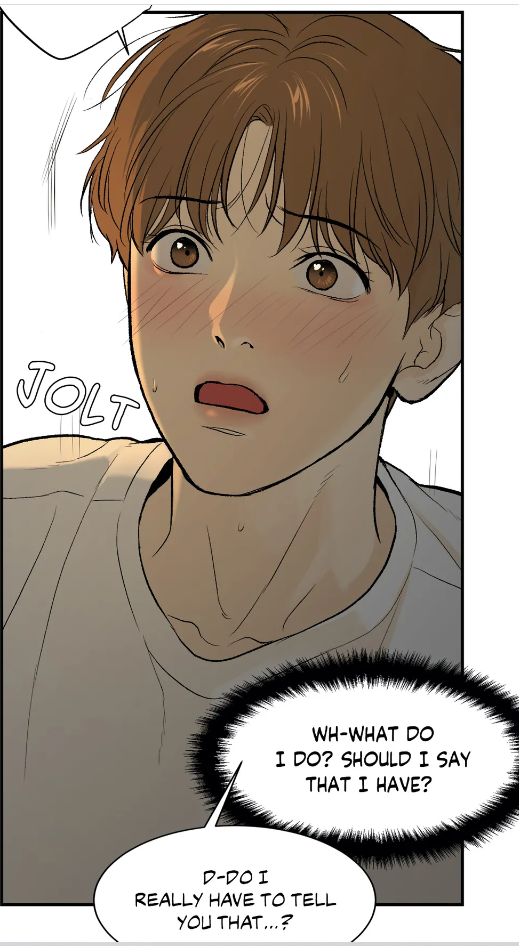 (chapter 3) —it forces the wolf to ponder on the meaning of a kiss and his relationship with the physical therapist.
 In that iconic artwork, the man does not kiss the woman on the mouth, the traditional locus of erotic desire. Instead, his lips are placed upon her cheek—a gesture that suggests reverence, not possession; vulnerability, not domination.
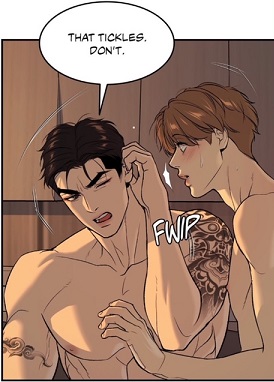 (chapter 44)
  (chapter 45)
 (chapter 54) When he was young, he had to face an abuser. Notice that the man’s face was very close to the champion’s
  (chapter 54). Thus I interpret that for the champion, the face represents not only his vulnerability, but also a source of danger. That’s the reason why he couldn’t hide his displeasure and frustration, when he faced this “lover”.
  (chapter 44) He couldn’t hide his joy by the champion’s funny reaction and laughed. And how did the protagonist react to this? Not only his face expressed his dissatisfaction, but also he silenced his partner with a kiss right away:
  (chapter 44) Joo Jaekyung is leading the kiss, he is regaining control over their relationship. It reinforces the idea that the wolf’s kiss was not merely about passion, but about reclaiming dominance and halting a shift in power. Just moments earlier, Kim Dan’s laughter had opened a space of emotional intimacy and lightness, which the champion was not prepared to face. The kiss, now prolonged and intensified, becomes the sportsman’s way of reasserting control over a situation that was slipping into unfamiliar emotional territory.
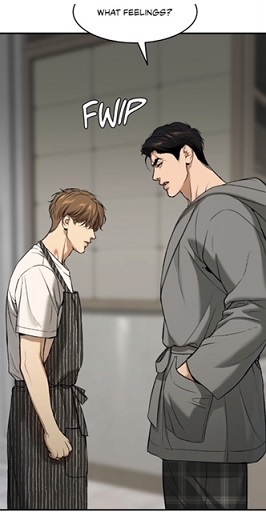 (chapter 45) —and that he, in turn, had wanted Dan back. This terrified him more than any bruise ever could.
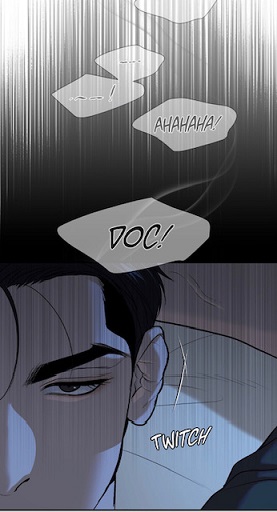 (chapter 37), and kissing becomes his emotional brake pedal. It’s not simply an act of love, but a means to regulate, or even drown out, what he cannot yet name or accept: that he is being loved. It is not random that I included the scene from episode 37: he heard laughs from the other room. For him, such a noise must have sounded like a disrespect and mockery, triggering his past trauma. And he was not entirely wrong in the sense that they were eating behind his back
  (chapter 37) It was, as if they were mocking him because of his forced “diet”. No wonder why the champion is barely seen laughing and prefers seriousness. At the same time, I can grasp why the athlete feels close to Park Namwook, as the latter stands for these exact notions: work, money and seriousness. Fun is not part of his world and vocabulary, therefore he punished Joo Jaekyung for sparring with doc Dan.
 (chapter 2) Though his face was close to the star’s, he didn’t attempt to kiss him. In fact, he proposed him a fellatio, a sign that the champion had never allowed anyone to get close to his “face”. Finally, observe how he reacted, when the uke in episode 55 attempted to kiss him:
 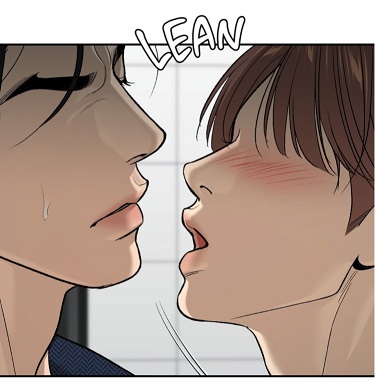 (chapter 55) Not only he rejected him, but also he pushed him violently so that the latter was on the floor.
 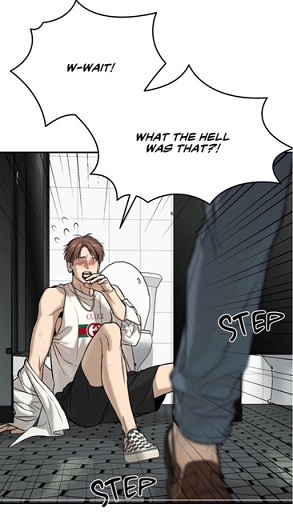 (chapter 55) The celebrity even ran away: a sign that the allowing someone approaching his face is perceived as something uncomfortable and threatening. At the same time, that moment exposes the kiss as something sacred—one that cannot be duplicated without emotional violation. This shows that for the champion, the meaning of a smooch has evolved. It is no longer perceived as a source of fun and a mean to gain something.
 (chapter 55) He couldn’t forget doc Dan’s face, the latter excited him, a sign that for the champion, the face in general has been a source of pain, yet thanks to doc Dan, the latter has become a source of “comfort and joy”.
  (chapter 66) When he saw his face for the first time, he didn’t realize that he was already under the hamster’s spell. Striking is that he even focused on his chin and lips, a sign that he desired to kiss them. One thing is sure. The champion treasured the doctor’s face. After their separation, it is not surprising that the wolf felt the need to see his face.
  (chapter 39) before requesting a fellatio:
  (chapter 39) The main lead’s head was very close to the champion’s face, thus he must have felt uncomfortable. Secondly by acting this way, the doctor was gradually gaining power over their relationship. For the wolf, dominance is everything, an indication that in his past he felt defenseless and weak. His “opponent”, the mysterious ghost, had the upper hand. Moreover, the fellatio created a distance between them, where the fighter could expose his superiority. And note how doc Dan behaved under the influence of the drug:
  (chapter 39) For the first time, he accepted Dan’s initiative—both physically and emotionally. Compare it to his attitude before:
  (chapter 39) here, he still has his eyes wide open, a sign of vigilance. These kisses from doc Dan
  (chapter 55) These memories represent the moment where the athlete felt strong and had the upper hand in their relationship. These images reveal that Joo Jaekyung hasn’t realized the signification of the kiss yet. For him, they don’t seem important. This exposes that the athlete has not associated kiss with love and affection yet. At the same time, we have to envision that a smooch is strongly intertwined with equity and trust.
  (chapter 28) And in episode 14, it was clear that the star still felt superior to his companion, therefore the kiss had no special meaning. As you can see, everything is pointing out that Joo Jaekyung had never been kissed before. And what does a kiss symbolize? Not only attachment, but also purity and innocence.
  (chapter 42) According to him, doc Dan was not different from him. However, he was wrong. It is because the champion had kissed him!! Moreover, the celebrity had allowed doc Dan to kiss him as well. Besides, how did the champion name his past lovers? They were toys… normally people don’t kiss playthings. And now, imagine that doc Dan were to discover that Joo Jaekyung had his first kiss with him. This revelation would not only make him realize that Joo Jaekyung loves him, but also he could be wondering why the athlete had never done such a thing before, though he had past lovers. YES, the “first kiss” could be the trigger for both characters to question their respective past and perceive their fated partner correctly.
  (chapter 15)
 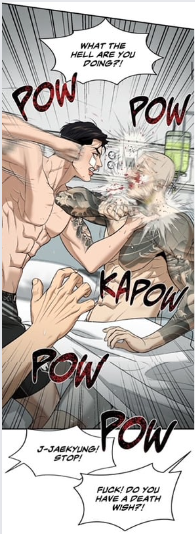 (chapter 52) In that context, a kiss could never be affection, but vulnerability. A risk.
 (chapter 3), based on Dan’s vague claim of prior partners. Yet Dan has never kissed anyone before. The kiss becomes his true moment of loss, a quiet confession through action. Conversely, Jaekyung’s own discomfort shows that he, too, is untouched in this particular way. When Dan tries to kiss Jaekyung again, and he instinctively rejects it, it reveals just how unprepared he is for affection. They are both unaware that the other is emotionally “pure” in this regard, and that makes the kiss a shared revelation.
 (chapter 67), Jaekyung must reinvent his approach. He cannot rely on dominance, strength, or sexual performance to win Dan’s heart. If he wants true connection, he must learn a new language—one built on gestures of affection, softness, and presence. This process also involves separating his public persona from his private longing. Joo Jaekyung, the champion, cannot seduce with spectacle. But Jaegeng, the man, might learn to express love through a simple touch, or a well-timed kiss. The redefinition of seduction is not just about Dan’s healing; it is about the wolf’s reclaiming his own right to feel and give love. And in my opinion, that process has already started:
 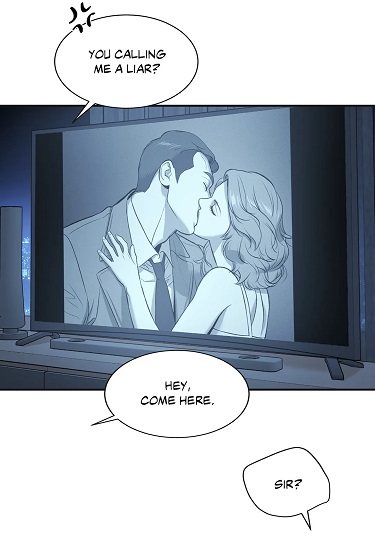 (chapter 29: note that he did not select this scene to rekindle with the doctor, but the other scene) He will learn it from life, from watching how the innocent express care without shame or purpose.
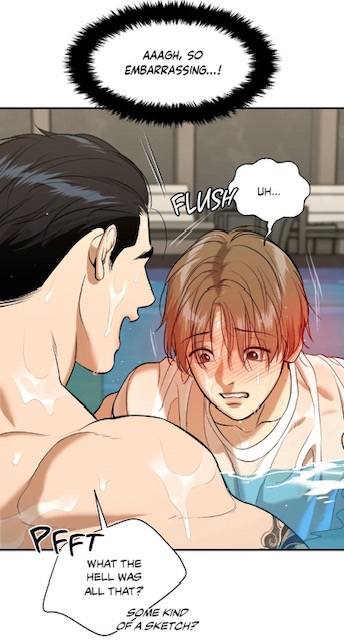 (chapter 27) In Jaekyung’s past, laughter had been a weapon—an expression of ridicule and cruelty from an abuser.
  (chapter 62) If someone had laughed in front of him and made fun of him, this would have reopened his old wounds.
 (chapter 47) and denial for strength
  (chapter 61), Park Namwook
  (chapter 53) all operate within survival mechanisms shaped by trauma, guilt, and fear. They choose the illusion of control or calm over genuine healing. But as the story unfolds, these strategies begin to unravel. Each character must confront the truth behind their emotional habits, learning that happiness isn’t the absence of pain—it’s the result of confronting it with clarity and purpose.
  (chapter 54) He could only express his pain and resent through the hand. This moment encapsulates the core of his trauma: as a child, he learned to survive through silence and compliance, not resistance. Yet deep down, the resentment festered—toward himself, and toward the abuser. That psychological pain was redirected into becoming a fighter, as if to prove the abuser wrong.
  (chapter 36) His language was dominance, not dialogue. He didn’t process his emotions through words—he suppressed them, until they erupted in violence or withdrawal.
  (chapter 1) Thus for the first time, Jaekyung had to develop a new strategy in order to meet him again: one that doesn’t rely on intimidation, but on communication. The problem is that since he saw the physical therapist running away after their first session
  (chapter 1), he knew that he needed to lure him with something: money
  (chapter 1). Under this new light, my avid readers can grasp why the athlete played a trick on the phone, though we have to envision that here the celebrity’s thoughts were strongly influenced by his bias and prejudices. He imagined that Doc Dan had made a move on him.
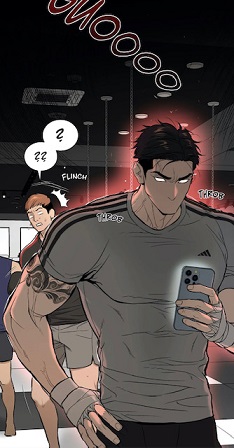 (chapter 5) That retreat doesn’t mean failure—it can be an act of self-preservation. However, the champion experienced that he needed to speak with doc Dan in order to keep him by his side. This lesson became a turning point. Jaekyung started to speak more.
  (chapter 18) Therefore it is no coincidence that in episode 18, right after the celebrity spoke, Kim Dan’s reply was strongly intertwined with flight:
 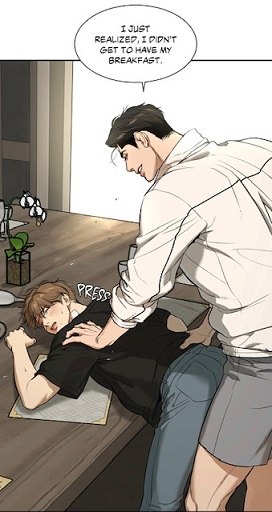 (Chapter 18) Nevertheless, as time passes on, the wolf asks more and more questions. He reacts to emotional discomfort not only with physicality but with hesitation, introspection. He is no longer reacting as the ghost once taught him; he is arguing and as such adapting, growing. Thus we could say, he is less passive.
 (chapter 3) or table, in showers
 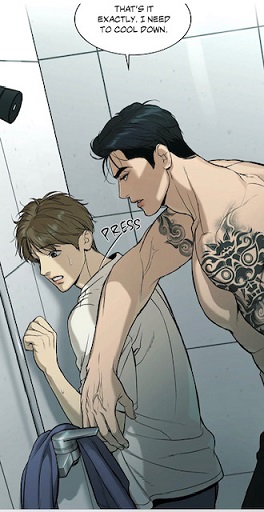 (chapter 7), against doors, or walls
  (chapter 34). On the surface, it may seem like a gesture of dominance or desire, but symbolically, it reflects silencing.
 (chapter 51) They stand in the middle of the room—an open space—symbolizing emotional emancipation. When Dan questions the celebrity
  (chapter 51), the words from doc Dan pierce the champion’s emotional defenses. Thus Joo Jaekyung is destabilized.
 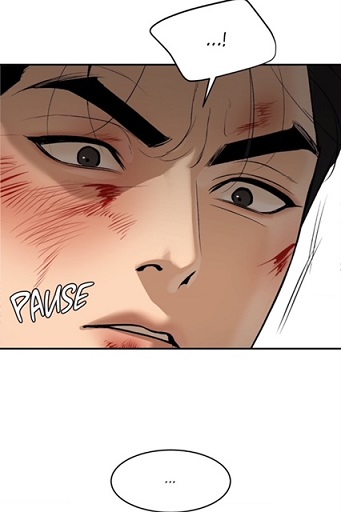 (chapter 51). The latter tries to reassert control
 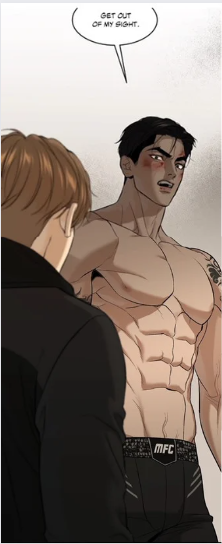 (chapter 51), but this time, when he lashes out, he is the one who leaves. This is cognitive dissonance at work: the fighter cannot reconcile his fear of vulnerability with his emerging need for connection and his perfectionism. So he defaults to a performance of control, even as he runs from it. And while one might mistake this for weakness or regression, it actually displays a progression. First, Jaekyung had finally revealed his thoughts and fears to Dan.
  (chapter 51) Secondly, he left the place which was a new MO for the fighter. His act of fleeing is no longer an escape from confrontation —it follows a moment of emotional vulnerability. It shows that he had finally dared to speak, even if he wasn’t yet ready to stay and endure the emotional aftermath.
 (chapter 69) That silence could easily be mistaken for submission, for the same old performance of the compliant athlete.
  (chapter 69) But that would be a misreading. His silence is no longer a symptom of fear or control. It is a deliberate withholding—a sign that he no longer plays by their emotional rules. He is starting distancing himself from MFC, Park Namwook and the fight-centered identity they crafted for him.
 (chapter 69) He is beginning to think critically about his past behavior, his future, and the systems that have defined his identity and life.
 (chapter 7) and flight
  (chapter 36), or MFC’s decisions.
  (chapter 25: here the protagonist was replacing Yosep and Park Namwook), hires professionals to manage damage
  (chapter 47), and hides behind administrative actions.
  (chapter 66) But he never takes full responsibility. This blame-displacement strategy works—until the champion flees to the West Coast.
  (chapter 66) As long as the champion was nearby, Park Namwook could project blame onto him, framing him as unstable, disobedient, or temperamental. But once „his boy“ vanished from Seoul, the hyung was left exposed. Striking is that he is not seen watching over the training of the remaining members.
  (chapter 60)
 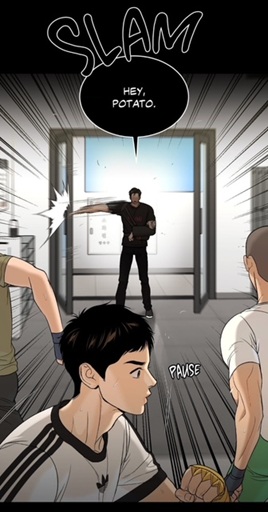 (chapter 60), a sign that he is neglecting the other members. The absence of his star fighter removed his most convenient scapegoat, forcing him to face the consequences of his own mismanagement—though he is not yet ready to truly question it and change his mindset, denial, and dependency. This was not just a geographical disappearance—it was a strategic psychological rupture, meant to destabilize Park’s illusion of authority.
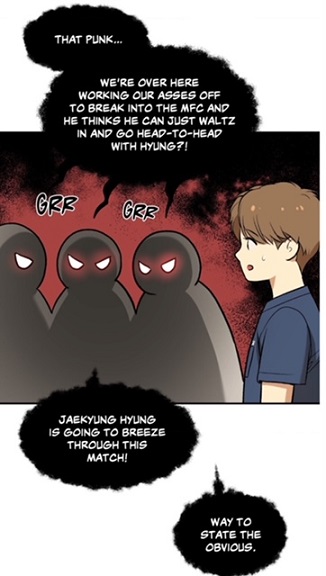 (chapter 47) Finally, he can testify not only as a fighter, but as a representative of the institution they tried to exploit. That elevates his voice: from a disposable athlete to a legal opponent with organizational standing.
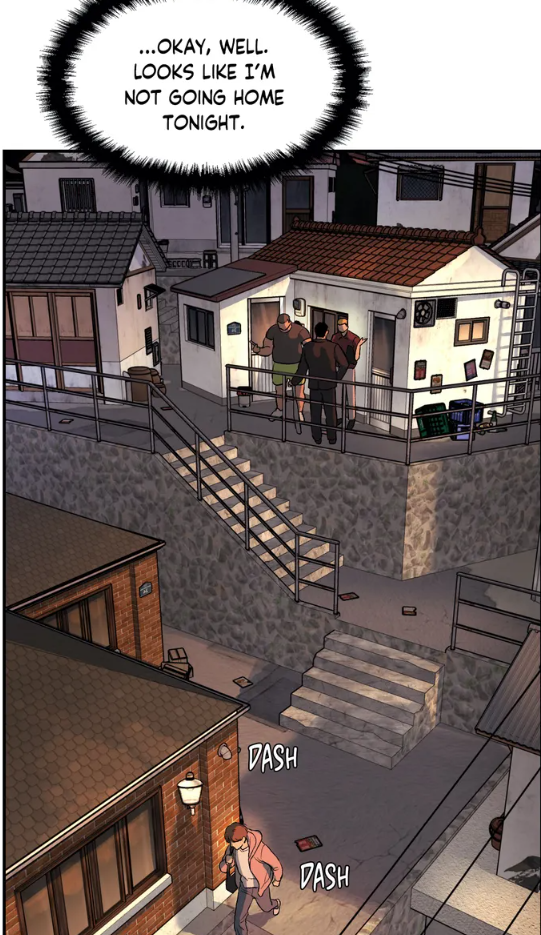 (chapter 1), deflecting, and disappearing became natural. With the grandmother, with doctors
 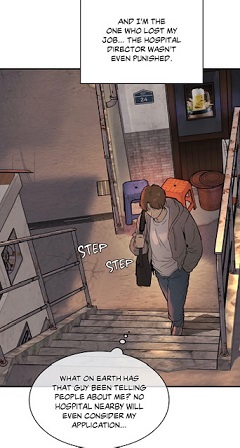 (chapter 1), with institutions—he obeyed. He accepted his fate as a fatality. But with Jaekyung, a new pattern emerged. Slowly, he began to resist: he set boundaries, raised his voice, argued with his boss, even used physical gestures to assert himself.
 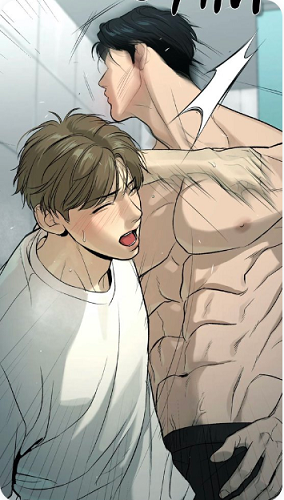 (chapter 7) For a moment, he was fighting.
 (chapter 67) Moreover, in contrast to Season 1, Kim Dan is no longer the invisible caregiver or obedient grandson. Thanks to Joo Jaekyung’s presence—disruptive and painful as it was—he began to form an independent identity
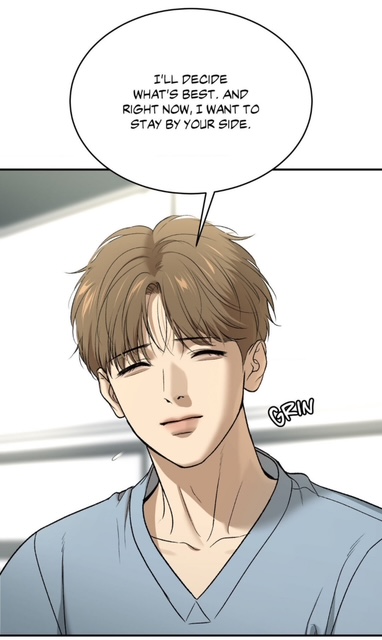 (chapter 57), one no longer shaped entirely by duty or guilt. The grandmother, however, is blind to this change. She continues to speak to him as if he’s the same self-sacrificing boy
  (chapter 57) —it is a rejection of the belief that he exists only to serve. In Season 2, Dan says “no” repeatedly:
 (chapter 60)
  (chapter 67)
 (chapter 58)
  (chapter 57)
 (chapter 65) She uses his past flaws to outline his immaturity and need of guidance. However, she is not taking into consideration the transformation in the doctor due to the recent incidents (switched spray). He is no longer the same than he was 6 months ago or 2 years old. He changed thanks to the athlete and because of unfortunate events (sexual harassment from the hospital director, switched spray). But the halmoni has no idea about such incidents.
  (chapter 53) Unlike Park Namwook who uses blame and delegation in professional settings, she applies emotional avoidance in private and familial spaces. Much like the manager, she outsources responsibility, asking others to step in
  (chapter 65) Her silence is not protective—it is evasive.
 (chapter 5) Her illness becomes a metaphor for her mindset. She relies on external systems: her grandson
  (chapter 7), medication, comfort
  (chapter 21), and other people (nurse, Joo Jaekyung) —to maintain her emotional balance. But as doc Dan himself once observed, she is ultimately on her own in her battle. No system can fight it for her.
 (chapter 7) His grandmother was not truly abandoned; she simply equated his physical absence with neglect, ignoring the emotional and financial burden he already carried. Like Park Namwook, she prefers others to carry the discomfort while maintaining a façade of suffering and sacrifice.
  (chapter 65), protected, comforted. Surrounded by nurses, medication, and routine, she finds temporary peace in an environment that simulates safety. The hospice does not cure her illness, but it cushions it. This illusion allows her to smile again, to relax—but only up to a point. Kim Dan’s gradual deterioration
  (chapter 57) —his visible exhaustion, disconnection, and quiet suffering—becomes a thorn in her eye, a reminder that her peace is not whole. As long as he suffers, she cannot entirely escape the shadow of her own regrets. Sending him away to Seoul represents a new of flight. Out of sight means out of mind. That way the grandmother wouldn‘t have to worry about doc Dan, as he has been entrusted to the athlete.
 (chapter 163) and supported by the article on confirmation bias, human survival was deeply dependent on mental shortcuts. Biases were not flaws, but adaptive tools — heuristics that helped our ancestors make quick decisions under threat. Faced with a potential predator, they could not afford the luxury of curiosity or debate. Run first, think later.
 (chapter 163) In this sense, biases were effective precisely because they increased the chance of survival.
 (chapter 41) he recommends the opposite at the restaurant because the idea comes from the CEO!
  (chapter 67) His survival bias told him: “Don’t trust a man who once treated you violently.” or “Doctors are ignorant, they don’t know me“. It was easier to discredit the source than to weigh the merit of the message. Likewise, in Season 1, the champion dismissed doc Dan’s medical opinions
  (chapter 45) His double standard is not conscious hypocrisy — it’s a form of selective laziness. He does not challenge his beliefs because doing so would unravel the identity he’s built as a competent, authoritative manager.
 (chapter 65) or a support network. It is not her fault, if she never met doc Dan’s friends in the past while hiding the fact that he had been bullied by his peers. Her request for him to return to Seoul, a place he has no roots, only furthers his habit of isolation. Similarly, when she asked Jaekyung to bring him to Seoul and have him diagnosed, she implicitly discouraged any shared decision-making. Like Park Namwook, she bypassed dialogue in favor of directive control, reinforcing the habit of emotional withdrawal.
 (chapter 67) That shift marks a turning point from survival to conscious thought. The mind cannot reflect when it believes it is under attack. The tragedy is not that these characters are irrational — it’s that they were taught fear before they were taught trust. Thus I come to the following conclusion. As soon as both are curious about each other
 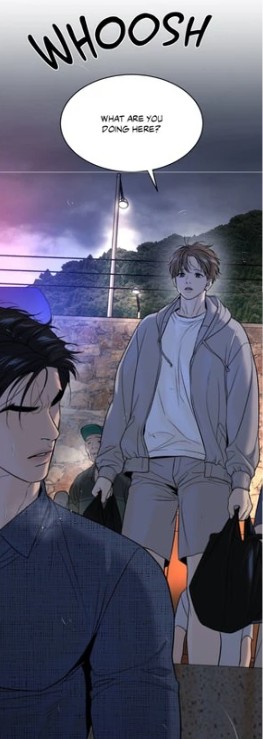 (chapter 69), they are now free from their bias and prejudices.
  (chapter 69) They will be able to communicate which will help them to discover the truth about MFC. Yes, their ability to ponder will lead them to unmask the villains and defeat their opponents. By fighting for justice, both will discover true peace of mind. This hardship at the end of season 1 was necessary to reset their heart and mind: what is the true meaning of life? Money? Work? Duty? Sacrifice?… The answer is happiness which is strongly intertwined with love and selflessness.

 (chapter 69). For the first time in this story, we as readers were allowed to hear Joo Jaekyung’s heart
  — not in battle, not in passion, not in rage — but in that suspended instant when he imagined Kim Dan missing, possibly forever. Since the author linked the BADUM with doc Dan
 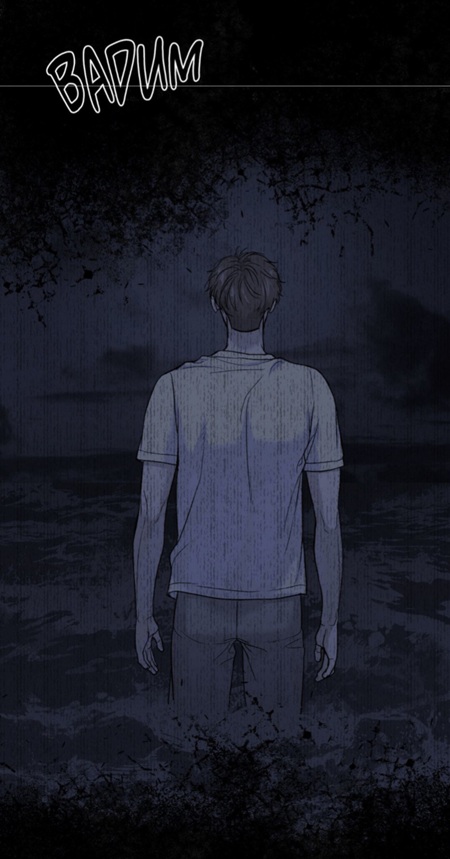 (chapter 69)
  (chapter 69), she created the illusion that the physical therapist was embodying the MMA fighter’s heart. This scene resonated with me long after I closed the chapter.
 (chapter 69) Suddenly, the pieces clicked: the heartbeat in Jinx is not just a narrative sound effect.
  (chapter 14)— yet no heartbeat is heard. One might think, the absence of the heart racing implies the lack of fear. His emotions are real, but they do not connect him to life or to others. Why?
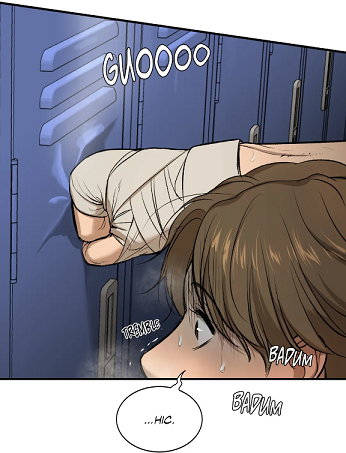 (chapter 14) — GUOOO, metal dented, yet no pain. Yet, Jinx-philes can see Badum Badum in that picture. Nevertheless it is connected to the physical therapist’s heart: he is scared of the athlete’s strength. On the surface, the champion’s gesture appears reckless — an act of a man who does not care for his body. But this is not pure “fearlessness.” In truth, the celebrity’s anger is masking deeper fear and suffering.
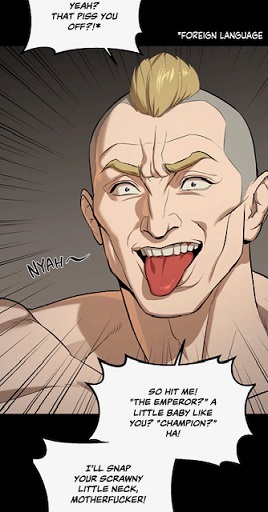 (chapter 14) — triggered this buried wound, igniting a desperate drive to disprove that old accusation.
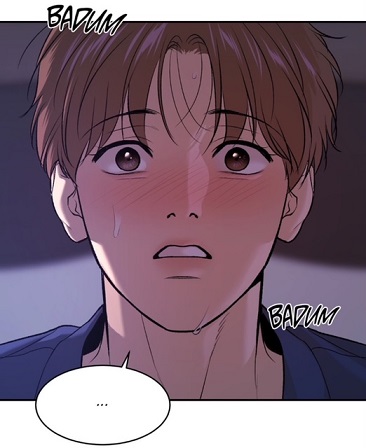 (chapter 44) BADUM BADUM from Kim Dan’s heart as Jaekyung makes a move on him. His blushing face, wide eyes, and parted lips all signal that this is not fear — it is love, excitement, and emerging attachment.
  (chapter 44) and tried new things. He gave his lover pecks on his cheeks and ear
  (chapter 34), we see the actor’s confidence gradually vanishing. His mask begins to crack. In that moment, he realizes that in the VIP spa his celebrity status offers no protection. No manager, no Park Namwook, no audience is present. He is utterly exposed to the raw force of the champion’s anger and fist — and the physical threat is real.
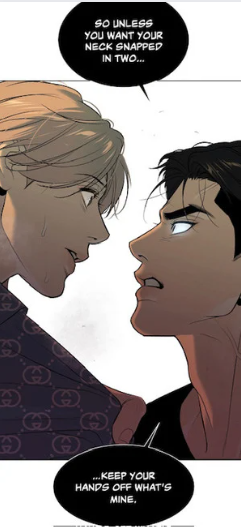 (chapter 34) The confrontation repeats — Jaekyung threatens once more. Yet, there is no visible BADUM, BADUM here. Why? Don’t forget that just before, the actor gulped and blushed
 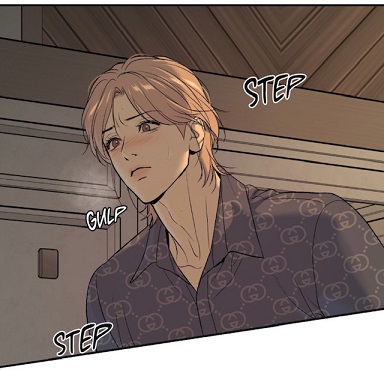 (chapter 34) — a clear sign of excitement, not fear. And still, his heart remains silent. This raises the question. Why was the actor not afraid of the MMA fighter? Because even if the words echo the previous threat, the perceived danger has changed. With doc Dan standing between them
  (chapter 43) Here, the doctor feared the celebrity’s rejection. This scene was actually announcing that doc Dan was already in love with the “wolf”.
 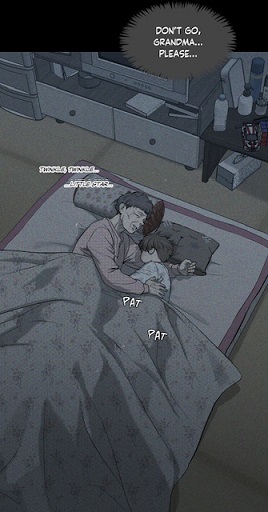 (chapter 21) — a sound of comfort and life. But it was a distant memory, not part of his adult world.
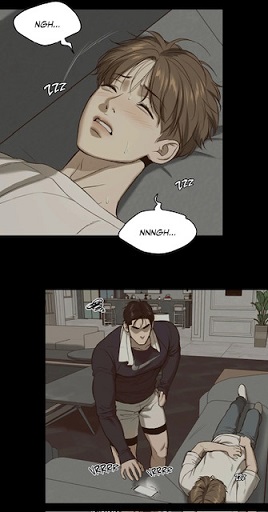 (chapter 21) — having a nightmare. It is only when the grandmother returned to the bed and began to sing that his body calmed.
 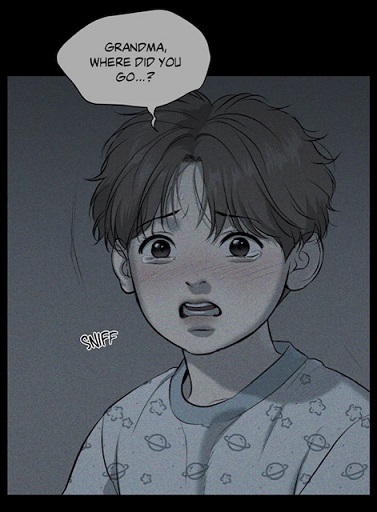 (chapter 21)
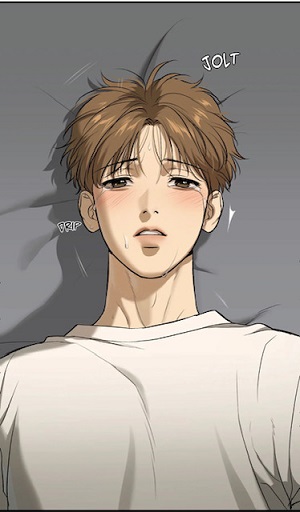 (chapter 21) — one that later echoes in his adult struggles with attachment and loss.
 (chapter 58) “I am happy and at ease, but… why does my heart feel so heavy?” — it is as if the external music has replaced his internal rhythm. The joyous sound outside contrasts painfully with his own muted emotions. The music underscores his emotional disconnection and the inner weight he carries.
 (chapter 65) finds his way back to the man he cares for.
 (chapter 65) is more than noise. It’s a resonant signal — not unlike the heartbeat. When she barks, it alerts Jaekyung to Dan’s trance.
  (Chapter 65) Moreover, the dog is capable of expressing her „worries and pain“. And for the first time, the champion follows a sound not of the crowd, not of a bell, but of life calling to life.
 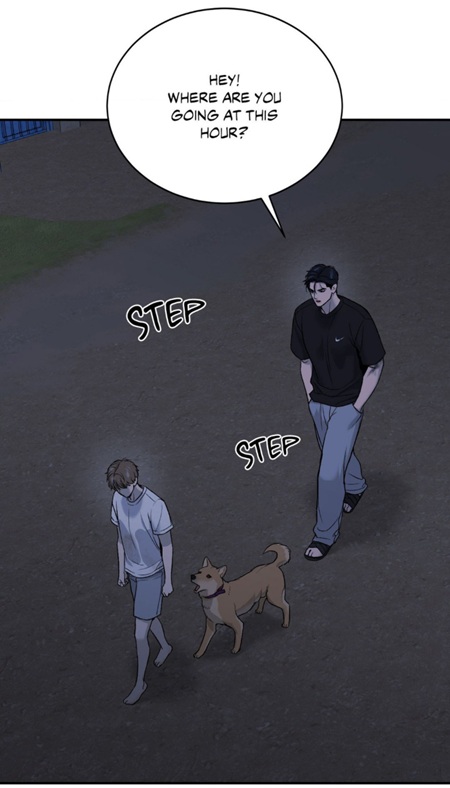 (Chapter 65) Her bark anchors him, just as Dan once did. And it marks the moment Jaekyung becomes emotionally receptive not only to Dan, but to care itself — puppies, vulnerability, connection. In other words, her presence foreshadows Jaekyung’s emotional readiness to care for others beyond the ring. Having rediscovered and embraced his own vulnerability, his heart is gradually open to softness — to animals, to dependency, to affection.
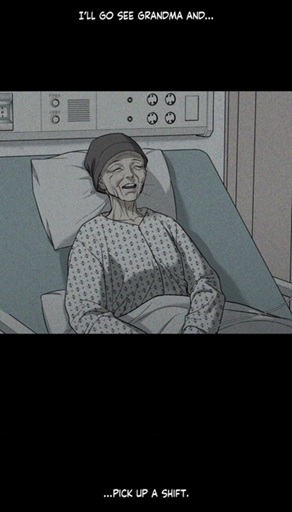 (chapter 59), the reality is that work has long lost its meaning. He has no goal in his life in the end. The emotional gravity of his loss regarding Jaekyung is palpable, though the physical therapist is not realizing it. Jinx-philes should keep in their mind that in season 1, the protagonist used his grandmother as a shield to justify his transactional relationship with the celebrity — and here, perhaps again, she becomes a cover for deeper pain.
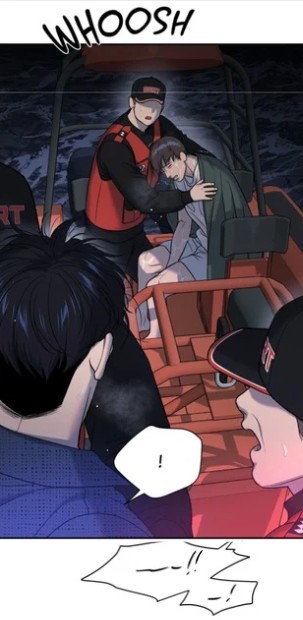 (chapter 69)
  (chapter 69) His body speaks what the panel leaves unsaid — a visceral resonance of surprise, longing, and fragile hope.
 (chapter 49) the fighter’s vulnerability and punished his needs,
  (chapter 45), his heart raced. But he mistook this for irritation
 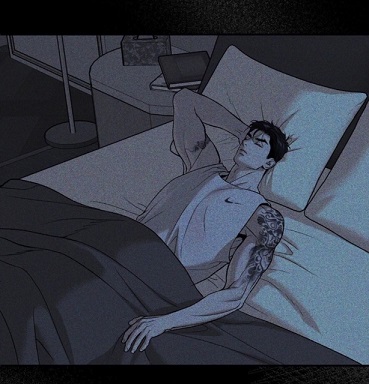 (chapter 45) — not attachment. That is why he threatened to hire another doctor the next morning: he feared dependency and as such vulnerability.
 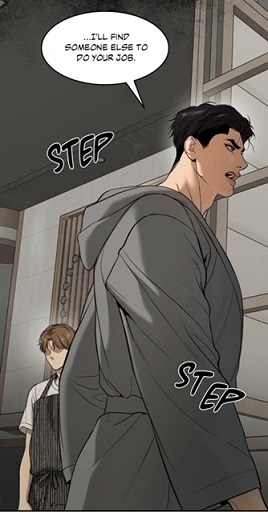 (chapter 45)
 (chapter 26)
  (chapter 65)

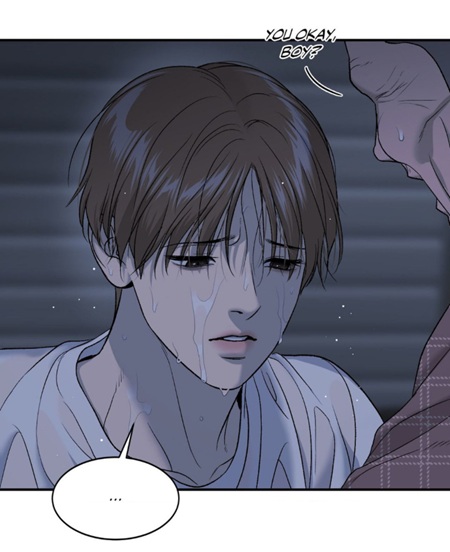 (chapter 69) These silent, parallel compositions reveal the landlord’s symbolic position as an enduring guardian: not static, but responsive. Therefore his position shifts constantly, either
  (chapter 65) in front of the couple, or behind Kim Dan in one scene, behind the champion in another.
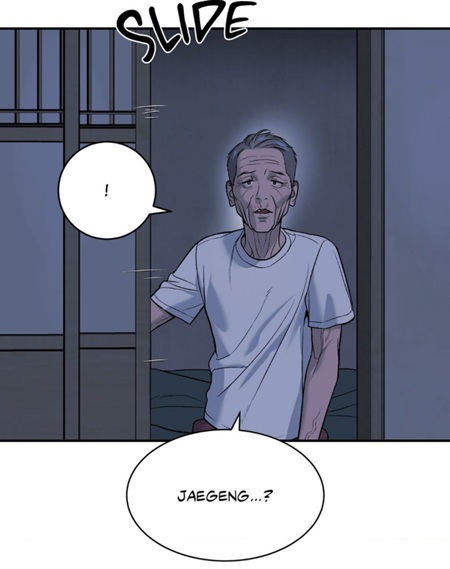 (chapter 65) He is like the wind, fluid and unobtrusive, adapting to the needs of the moment. His position is never rigid, therefore in the final panel he seems to have vanished.
  (chapter 46) or authority
  (chapter 65) He does not try to define the protagonists by their past or their titles. He lets them define themselves. While he tried to encourage doc Dan to drink and work less, as time passed on, he came to notice his suffering and accept him with his illness.
  (chapter 69) They are murmuring, yes, but their attention is absorbed by the incident at the shore. This led me to reconsider: perhaps the purchase was not consciously connected to the weather after all. And yet, one man quietly stood apart from the crowd—the landlord, his silence and gaze directed not toward the commotion, but toward the open horizon.
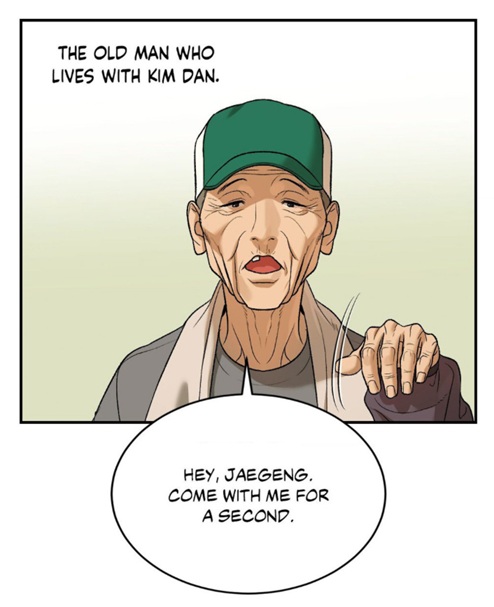 (chapter 62) He is a farmer—a man who reads the sky, the wind, and the rhythm of the land. Hence I am inclined to think that his awareness of the approaching storm stems not from a broadcast but from instinct. The wind carries signs, and he is attuned to them. It is even possible that while talking with the coast guards, he learned more about the forecast—not through digital alerts, but through human connection.
 (chapter 69) had already been shown earlier together in the crowd, I suspect that one of them might informed Kim Dan about the incident and the champion’s presence. This would align with the narrative’s kaleidoscopic structure, where certain scenes are reflected in different timelines.
 (chapter 66) Under this new light, it dawned on me that the fan was most likely handed out by a local institution—perhaps even the hospice Light of Hope, during a public health campaign or examination event. This means that he is taking good care of himself. One might argue with this interpretation, yet there exists another evidence for this perception.
  (Chapter 62) He is constantly wearing the green cap, a sign that he knows about the danger of the sun. This stands in opposition to the grandmother who would sell her vegetables without any hat.
  (chapter 57) These types of fans are typically distributed by hospitals or clinics: practical items with subtle promotional intent. But once in the landlord’s hands, it takes on symbolic weight. The number “365” does not simply represent a calendar year; it represents consistency, time, and the daily rhythm of care.
 (chapter 57), white,
  (chapter 61) and brown. Yet, his clothes tend to lean toward brown hues, evoking earth and soil—symbols of rootedness and stability.
 (chapter 62)
  (chapter 69) and Kim Dan as “sonny”
  (chapter 59) Whether it’s due to panic, malnutrition, exhaustion, or psychological collapse, suffocation is one of the defining sensations of Kim Dan’s arc. In this context, the landlord, with his unassuming fan and grounded demeanor, emerges as a breath of fresh air—the very opposite of the heiße Luft, or “hot air,” surrounding the champion’s fabricated scandals and media distortions.
  (chapter 52)
  (chapter 69) the atmosphere grows heavier—not from external scandal, but from inner turmoil. Then Kim Dan’s puzzled reaction,
  (chapter 69) The scene becomes emotionally charged, echoing classic storm symbolism: emotional intensity, uncertainty, and the prospect of sudden change.
 (chapter 59) The landlord doesn’t shelter people from pain or storms. He makes sure they’re equipped to face them. And once they do, the wind is no longer a threat, but a form of grace. And now, you comprehend why the death of the puppy has not been discovered by the athlete yet. For the landlord, death is something natural and inevitable, and since doc Dan has been working at the hospice, I am quite certain that the old man imagined that doc Dan was well-equipped to deal with this situation. He must have been envisaging that Doc Dan was accustomed to it. The problem is that he doesn’t know the protagonist’s past and family.
  (chapter 58), who plays the victim while hiding his own culpability, the landlord does not engage in gossip or vilification. His silence isn’t ignorance—it is grace.
  (chapter 58) and from media
 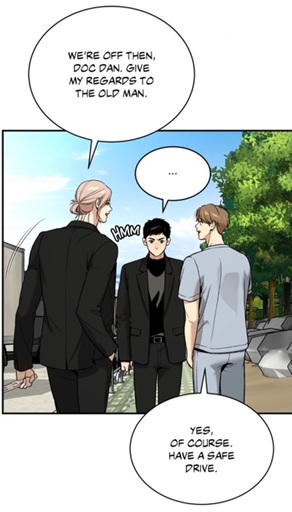 (chapter 59) He felt so comfortable around him.
 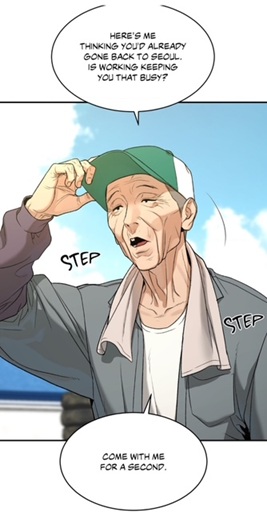 (chapter 57), but someone who understands the balance between labor and rest. He may not have a name, but he has a function. And sometimes, in storytelling, function is identity enough.
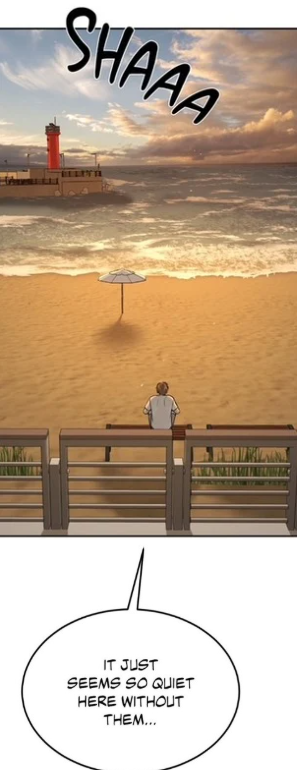 (chapter 59) there’s only one poor sun umbrella in front of him and a wall far behind him. His back is turned to the world, wrapped in solitude and silence. That’s how I was reminded of his childhood. There, the grandmother often stood beside him
  (chapter 47)
 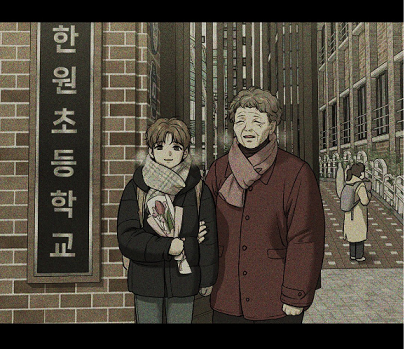 (chapter 47)
  (chapter 49) explains why he got abandoned in the locker room. It gains even more poignancy when viewed against his past. In Episode 47, while the grandmother was carrying him on her back, Kim Dan’s back is left unprotected.
 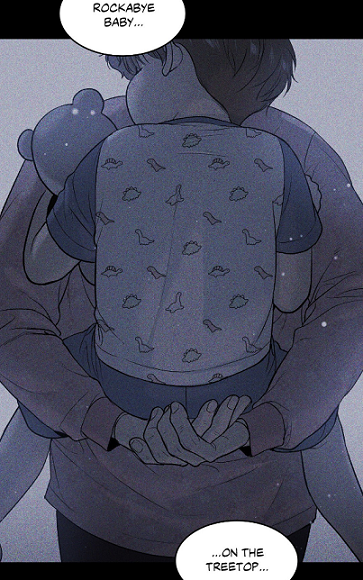 (chapter 47) Her proximity is visible, yet it lacks the symbolic protection associated with standing at someone’s back.
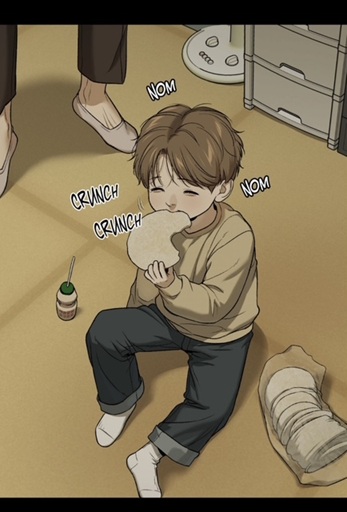 (chapter 57) The moment she offered him a snack, she distanced herself from him. Now, she is standing by his side.
  (chapter 62) Their presence—especially the landlord’s—is the embodiment of silent guardianship.
  (chapter 69) His consistent yet unobtrusive presence stands in opposition to the grandmother’s inconsistent gestures. One acted out care; the other lives it.
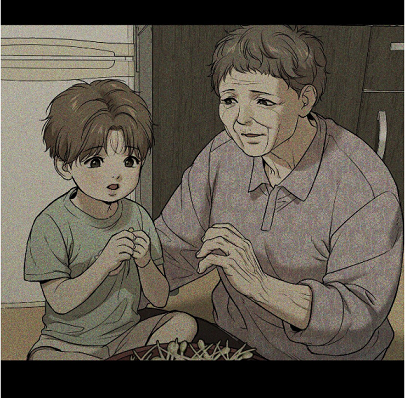 (chapter 47)
 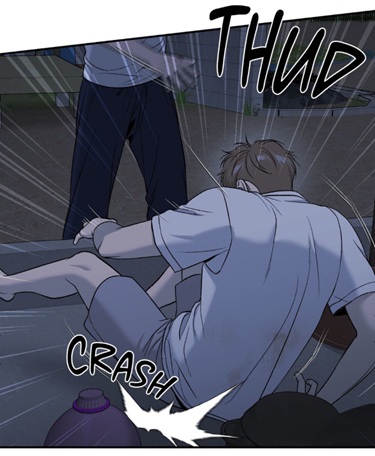 (chapter 69) This gesture, though seemingly violent, reveals something deeper—it forced Kim Dan to feel what he had been missing all along: there were people around him, he was not alone. I would even add, someone was finally standing behind him.
 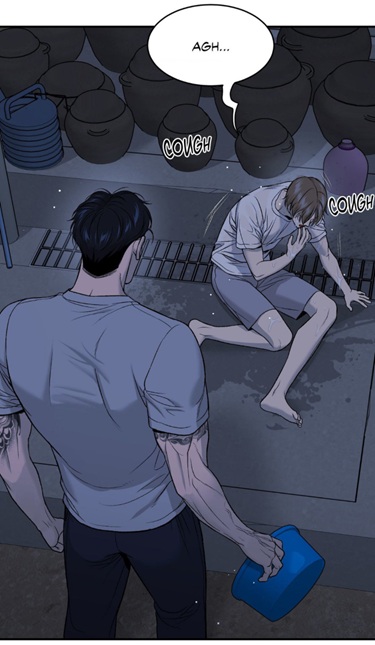 (chapter 69) In that brief moment, Kim Dan is no longer alone. The landlord, as a silent guardian, and Joo Jaekyung, as a fierce protector, are both behind him—symbolically and literally.
  (chapter 56)
  (chapter 65) while seated in a wheelchair or lying in a hospital bed—entirely dependent on others to move her. Her self-image as a strong and autonomous elder clashes sharply with her visible reliance on those around her.
 (chapter 65), reliant on beds, wheels, and nurses to navigate the world. Under this new perspective, the wheelchair and the truck are no longer just modes of transportation—they are emblems of character. One rolls forward by another’s push, the other steers by its own will.
 (chapter 46) Coach Yosep, Joo Jaekyung, and Park Namwook—a trio marked by authority without dialogue, control without care. In that group, the manager sowed distrust while avoiding accountability.
  (chapter 46) In the new trio, no one holds dominion over the other. There are no contracts, no strings. The landlord has no financial stake in the fighter’s success.
 (chapter 66)



 (chapter 67): the brief diagnosis, the recommendation for weekly visits, the specialist’s tentative attribution of Kim Dan’s condition to either alcohol or a possible psychological cause, emphasizing the need for continued observation and weekly visits before offering a definitive diagnosis —all standard responses. For her, this was a doctor following routine procedure without overstepping professional boundaries. However, I perceived her behavior very differently. I saw someone who remained emotionally detached and almost absent, reducing the complexity of Kim Dan’s condition to simplistic surface-level causes without genuine inquiry.
 (chapter 67) Rather than forming an independent assessment, she accepts the narrative of a third party, which introduces bias and limits her understanding. One might argue about that, because she is looking at a paper, probably result of a blood test which seems to corroborate the guardian’s statement. Hence the sleep specialist concludes that Kim Dan is suffering from insomnia, alcohol addiction and sleepwalking. The problem is that his statement is based on external observations (halmoni and the landlord) and their limited knowledge. Moreover, Jinx-philes should keep in mind two important aspects:
  (chapter 61) The champion had been himself suffering from similar symptoms which could be seen as a projection on his loved one. Additionally, based on previous observations, I have interpreted Kim Dan’s nightly walks not merely as sleepwalking, but as dissociative episodes—likely triggered by overwhelming guilt, unresolved trauma, and a chronic sense of disconnection from his body and surroundings. But how could the champion know about this? He’s not a doctor himself. In order to have a more accurate picture of the whole situation, she should have talked to the patient himself. But by relying on papers and the guardian’s testimony, she not only distances herself from the patient physically and emotionally, but also delegates the responsibility of interpretation. She is using the eyes of others.
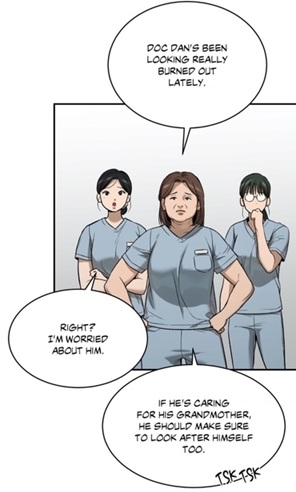 (chapter 57) Perhaps the doctor’s detachment is not indifference, but a survival mechanism in a healthcare system that demands efficiency over intimacy.
 (chapter 67) indicating that his alcohol addiction is not the real reason for his insomnia. Then she fails to examine Kim Dan physically, the desk is between them. Therefore she can not detect his visible malnourishment.
 (chapter 62) Moreover, both the landlord and the grandmother never brought up this aspect, though Shin Okja had observed this terrible transformation:
  (chapter 66) It is because the physical therapist is just a number (2) and as such a file. Therefore the doctor is not seeing the patient as a human. I can not blame the woman either, for she has so many patients to treat during the day. And now look at the building of the hospital:
  (chapter 66). It is huge reminding me of a factory. This “modern hospital” with its sleek architecture, expansive buildings, and impressive specialization exudes a sense of advancement and trustworthiness. Yet beneath this polished surface lies a business-oriented structure, one that prizes efficiency, reputation, and patient turnover over genuine patient connection. This “modern hospital”
 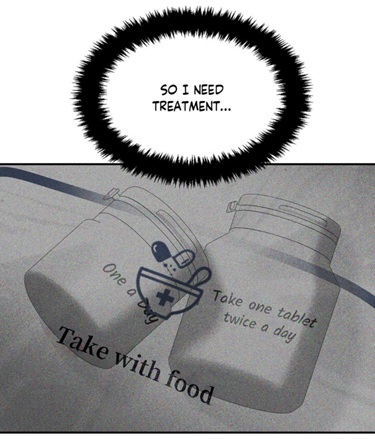 (chapter 67) She is doing exactly what Shin Okja wanted:
 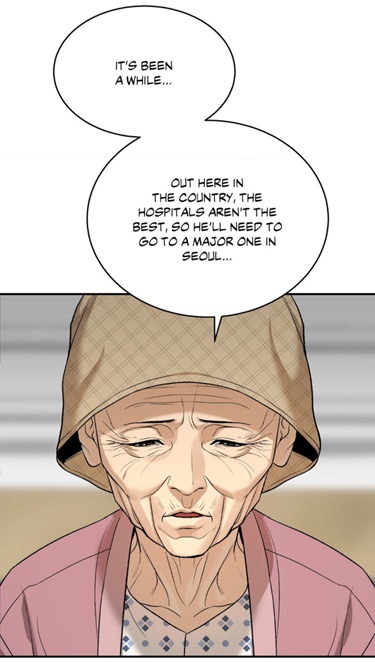 (chapter 65) It is as though thanks to the drug, the odd behavior from Kim Dan would simply vanish.
  (chapter 5) with the new medicine. On the other hand, it implies that the light-brown haired woman is doing her job for her paycheck which reminds me of Cheolmin’s statement:
  (chapter 13): “Oh no, no. That won’t do. My precious paycheck!”.
 (chapter 27)
  (chapter 49) as mere service providers. Whether it was brushing off medical advice with “Don’t push it, I know my body better than anyone else” (chapter 27) or demanding instant pain relief to continue training (chapter 49), the champion positioned himself as the ultimate authority over his own treatment. Since his attitude echoed the confession of my osteopath, it is understandable why my osteopath-orthopedist began to select his patients carefully. This mirrors Kim Dan’s evolution, when the latter chose to reject the champion’s offer. Indirectly, he is “learning” to select his job and not take them by opportunism. He is also learning to select his “patients”. Striking is that Shin Okja has a similar attitude than the athlete.
  (chapter 7) She desired to have a treatment with less side effects and less painful. And the moment she was confronted with reality, this painful new treatment only brought pain and nothing more, she chose to leave this institution and move elsewhere.
 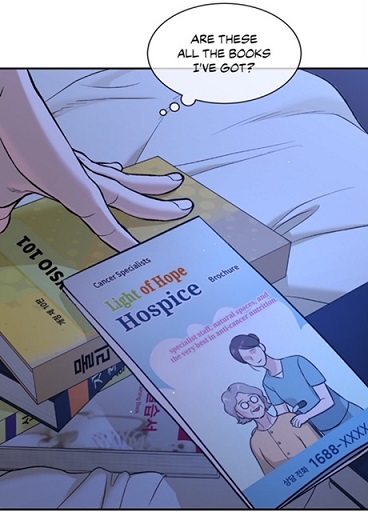 (chapter 53) Therefore it is not surprising that she is treating the protagonist the same way: she knows what is the best for him.
 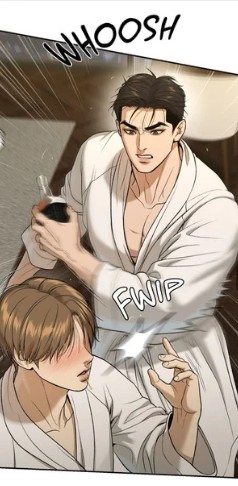 (chapter 67) He felt misjudged and misunderstood; reduced to a file number, not seen as a complex human being.
 (chapter 67) and second, what Kim Dan actually received as treatment:
  (chapter 13), in contrast, enters the story with no white coat at all. He carries only a doctor’s bag, dressed in a green pullover and a beige checkered shirt.
  (chapter 13) Despite this informal attire, he immediately recognizes Kim Dan’s symptoms and engages both the guardian and the patient. He doesn’t need institutional support to assert authority; his presence and diagnostic clarity define him. While his clothes might elsewhere be read as conservative or emotionally restrained, here they highlight that care can come outside rigid systems.
  (chapter 13) It bridges the gap between roles, making the patient feel seen rather than categorized.
 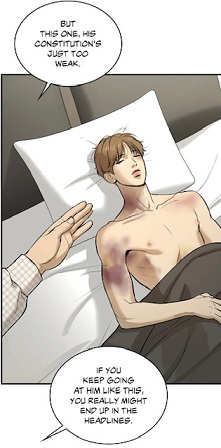 There’s no judgement in their relationship. The eyeless doctor may appear neutral, but in truth, she is hollow. Cheolmin appears reserved, yet his actions speak with empathy. Where she recites guidelines, he initiates dialogue.
  (chapter 13) Where she avoids involvement, he offers engagement.
  (chapter 61)
  (chapter 67), the Light of Hope hospice
  (chapter 61), the sleek University hospital dedicated to research
  (chapter 5), and more intimate yet modern facilities like this one.
 (Chapter 27) Each medical setting not only has its own architecture but also its own moral blueprint. In the essay “
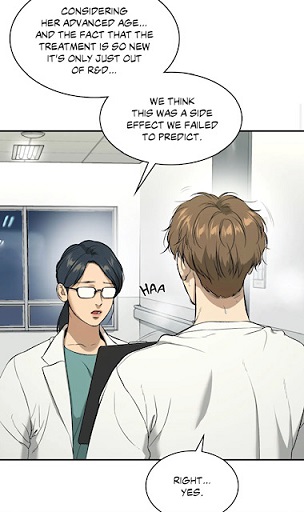 (chapter 21) Then the treatment’s failure is attributed either to the grandmother’s frailty or Kim Dan’s late arrival and absence, subtly shifting blame.
  (chapter 56) It appears as “pain killers”. Her open white coat
 (chapter 48) got aware of Shin Okja’s conditions, implying that patient confidentiality had been breached.
  (chapter 61) represents the polished face of a business-oriented clinic. While his office projects sleekness and personalized care, his comments betray his priorities. He praises Joo Jaekyung’s fame and urges a return to the ring—not out of medical concern, but because it would guarantee the champion’s return as a paying patient. He wants to retain a high-profile client. His friendliness is strategic.
  (chapter 61), highlighting that the athlete has become aware of what genuine care should look like. When the champion calmly declares, “I’ll be receiving rehabilitation services in another hospital,” Junmin answers with a stunned “Sorry?”. But this is not confusion. It’s a reflexive mask for shock. He did not expect to lose control of the situation. Beneath that one-word response lies disbelief, disappointment, and veiled panic. He’s losing a lucrative patient—and more importantly, a public endorsement. The moment exposes how fragile his authority truly is when faced with a patient asserting autonomy. Let’s not forget that when the champion was facing a mental and emotional breakdown, the latter offered no other support than “rest”. He even avoided his gaze.
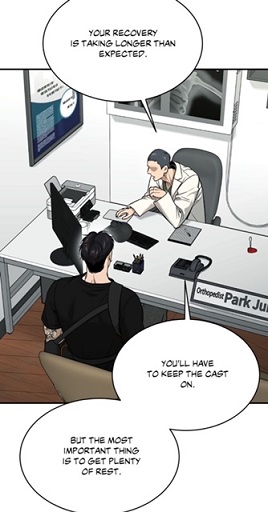 (chapter 54) The athlete was left on his own.
  (Chapter 59): At first glance, the hospice appears to be underfunded and outdated.
  (chapter 61) However, its director breaks expectations. Unlike the smooth-talking or indifferent doctors at larger institutions, he is directly involved in patient care.
  (chapter 60), criticizes people for their rude behavior
  (chapter 59) or actively disciplines staff
  (chapter 59) when mistakes are made. Though he also flatters the champion
  (chapter 61) and sees promotional potential, he never exploits patients.
  (chapter 61) The juxtaposition of humility and responsibility in his demeanor, combined with his stunned reactions to sudden events, suggests an overworked and understaffed environment—but not one without moral grounding. His white coat and blue medical uniform echo the nurses’ attire, subtly promoting a sense of equity among staff. Despite being a director, he doesn’t separate himself from frontline caregivers. His uniform also contrasts with the green worn by Kim Miseon or Park Miseon, suggesting a focus on practical responsibility over prestige. By blending in with the team, he fosters a culture of shared accountability, not rigid hierarchy. Among all institutional figures, he comes closest to balancing authority with integrity.
  (Chapter 6): While this figure appears authoritative
 (chapter 1), the details of his attire tell another story. Wearing a suit beneath his coat implies professionalism, but here it also suggests a business-driven mindset. The coat becomes a sleek outer layer masking deeper intentions. His charming demeanor conceals a more sinister reality—he weaponizes authority for personal gain. His use of professional attire isn’t about respectability but manipulation. Beneath the surface, profit, control, and coercion drive his actions.
  (chapter 1) The white coat, in his case, is not a symbol of healing but a façade for exploitation. drives his authority. The coat becomes a literal cover for abuse—harassment disguised under professionalism. His entire persona is a façade: calculated, charming on the surface, but predatory and morally bankrupt beneath.
 (chapter 27) His gray shirt signals a more relaxed approach,
  (chapter 27) and his facial expression conveys a certain empathy—though his words also betray resignation. He sits beside the patient, not opposite, visually erasing the typical hierarchical divide between doctor and athlete. His recommendation that Joo Jaekyung rest is gently delivered, but he knows it will likely be ignored. He represents the tension between medical idealism and the pressures of athletic performance. He is trying his best to protect Joo Jaekyung’s career.
  (chapter 27) Notably, he doesn’t chase fame or loyalty—he’s realistic, yet still rooted in care.
 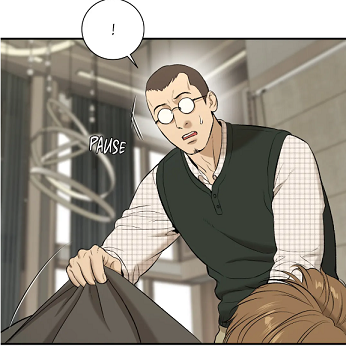 (chapter 13) Finally, Cheolmin exists outside the hospital system. He wears no white coat, but his behavior mirrors a true physician’s. He diagnoses accurately, gives immediate advice, and engages both patient and guardian. His attire—a shirt layered under another—might suggest emotional restraint, but it doesn’t interfere with his actions. He jokes and teases, breaking through tension and inviting trust. He acts not because protocol demands it, but because someone needs help. That’s enough.
 (chapter 41) nature is neatly confined. Rooftop gardens and structured greenery exist, but more as visual accessories than lived environments. The hospital is a towering research center, representing scientific advancement—but also bureaucratic coldness. Here, nature exists to impress, not to comfort. This artificial balance between concrete and green reflects a clinical detachment: nature is curated, not embraced. It aligns perfectly with Kim Miseon’s demeanor—professional, pristine, but ultimately distant and ambition-driven.the environment feels controlled.
  (chapter 41)
  (chapter 54) where Joo Jaekyung receives treatment, the rooftop greenery appears remote and ornamental, disconnected from patient care.
  (chapter 18) modern, and set among scattered trees.
  (chapter 18) Large windows suggest openness and transparency—the very qualities Dr. Lee brings to his interaction. This is a space that, while modest, is genuinely attentive. Here, nature doesn’t impress, it is integrated in the landscape. The park is not surrounded by huge buildings.
  (chapter 65) nestled in the countryside and far from institutional rigidity, emerges as a space of true potential. In returning there, Joo Jaekyung and Kim Dan are not just escaping their past—they are moving toward a form of healing that modern hospitals imitate but rarely achieve. Closer to nature, they are closer to themselves. If hospitals imitate forests, the village becomes the forest. And in that simplicity, Jinx suggests, real happiness might grow.
 (chapter 57) It lives where no one is watching and no one is billing. In Jinx, the real medicine lies outside the chart—in the dirt on borrowed floral pants, in sweat earned under open skies. Nature becomes the unspoken vow that systems forgot.

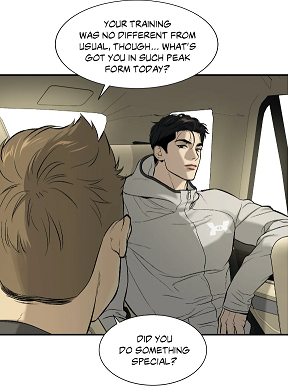 (chapter 5) his reliance on routine. Yet there is another jinx in this story, one far less visible and perhaps even more tragic: Kim Dan’s.
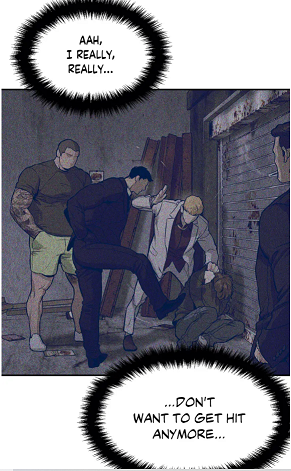 (chapter 1) was seen as the core expression of a man who believed he was doomed.
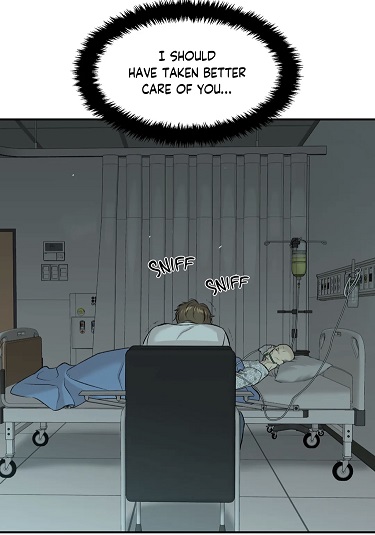 (chapter 21) He lies on the couch and dreams of a night when she vanished from their shared bed.
 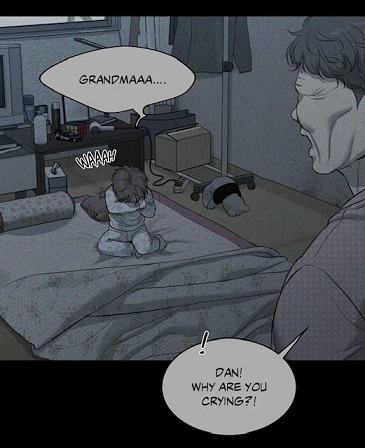 (chapter 21) This reveals how, in Kim Dan’s subconscious, the night and an empty bed have become synonymous with death. The trauma is deeply embedded, where even temporary absence is tied to the irreversibility of loss. For Kim Dan, solitude at night
  (chapter 67) is not mere loneliness—it is abandonment, it is death, it is the erasure of home. It is repressed, hidden beneath his quiet demeanor and years of survival-based behavior. Rather than a rational belief, it is a subconscious wound that only surfaces in moments of extreme vulnerability—especially at night.
  (chapter 2), the doctor’s is secret and involuntary. His actions—his fearful expressions
  (chapter 57), his pattern of emotional detachment
  (chapter 67), and his obsessive loyalty to his grandmother
 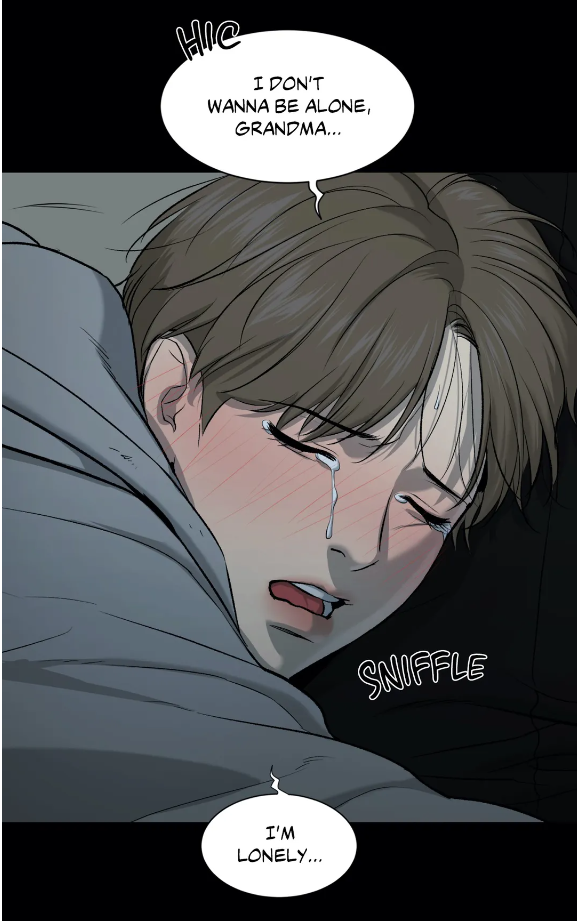 (chapter 10) signal a suppressed conviction: that he is destined to be left behind. What seemed like devotion now appears as coping; what appeared stoic was survival. And with the impending death of his grandmother, the anchor holding this hidden jinx in place is slipping away.
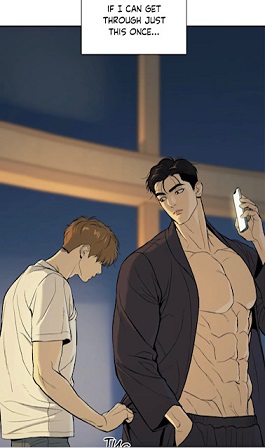 (chapter 2), the trembling kiss
  (chapter 59), the story tells us: Kim Dan was separated too soon. He was not ready.
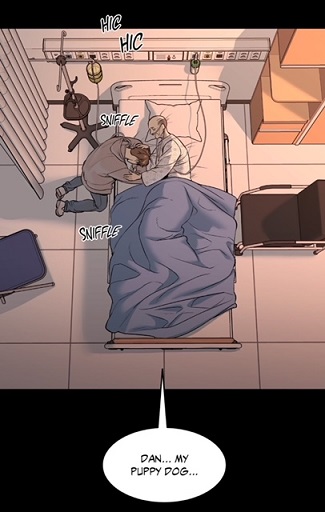 (chapter 53)
 (Chapter 56) he tucks her in. Their roles are reversed. He behaves like a parent, whereas in truth, he is reverting emotionally to a child terrified of being alone. This reversal highlights the internal dissonance between his outward behavior and emotional reality. Though he was forced to grow up quickly
  (chapter 29) That’s how it dawned on me why Shin Okja was so determined to send back her grandson to Seoul.
 (chapter 19) The latter is obsessed with work, while he is suffering from insomnia.
 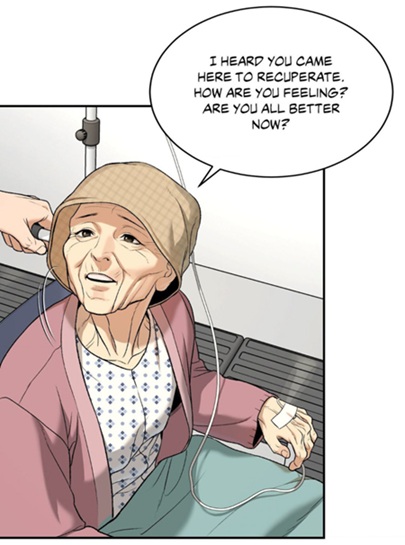 (chapter 65)
 (chapter 65) And when we remember that Kim Dan tried to call her, she
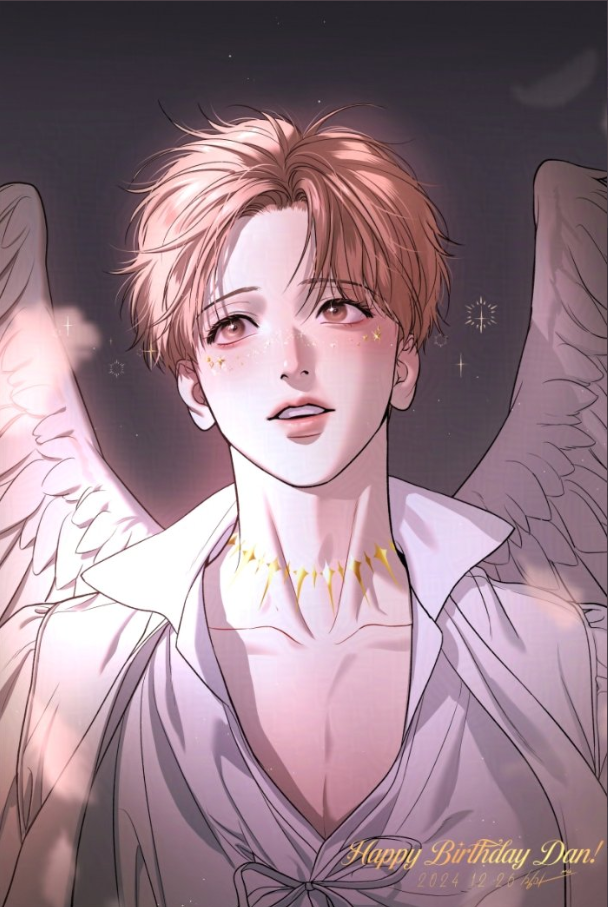 He is carrying the sins of “adults”. By likening him to an angel, Mingwa frames his pain not as weakness, but as unjust burden. He embodies purity, sacrifice, and resilience, not because he was allowed to thrive, but because he endured. The angel metaphor becomes even more striking when you think about traditional symbolism: angels don’t belong to Earth, yet they walk among the living, often suffering in silence and helping others. That’s exactly Kim Dan — out of place, bearing the consequences of others’ choices, carrying guilt, debt, and unspoken grief that were never his to begin with.
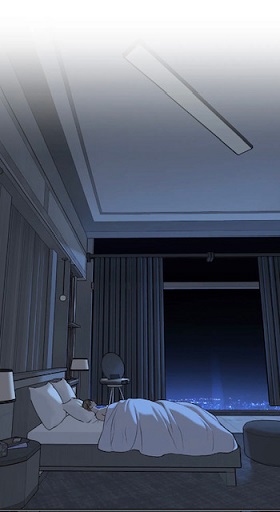 (chapter 29) —not because of physical intimacy with Joo Jaekyung, but because he felt safe. For a time, the place became his illusion of home. But when the champion showed mistrust, the illusion shattered.
  (Chapter 67) Observe how Joo Jaekyung called the penthouse: not home, but his place. Due to the last altercation, the emotional safety collapsed. This experience reactivated his fear of abandonment and solidified the belief that he has no home.
  (chapter 65) Even the family photo (where and by whom it was taken is unclear) emphasizes the fragility and incompleteness of his sense of belonging.
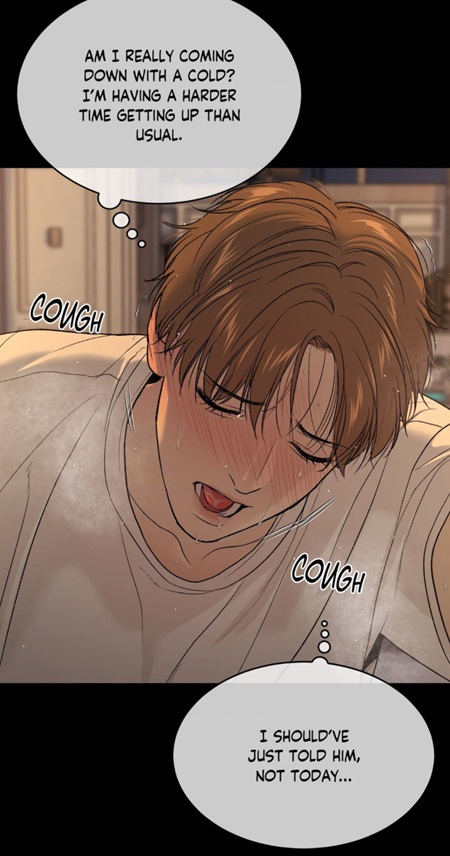 (chapter 61) that he must sacrifice his “needs” and identity to be accepted.
 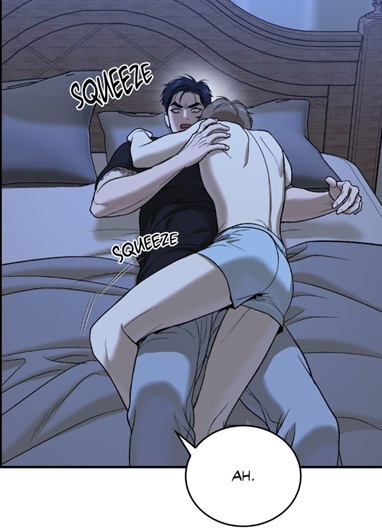 (chapter 66) holds on—“Don’t leave me.”
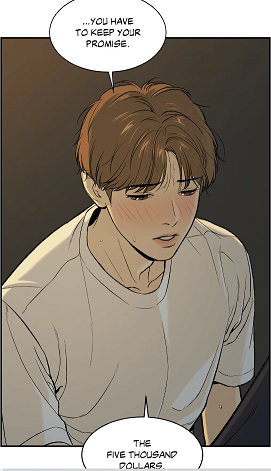 (chapter 2) He wanted the champion to keep his promise. From my point of view, the parent’s vanishing is strongly intertwined with a broken promise… And that’s exactly what the grandmother did to her own grandson: she didn’t keep her words either.
 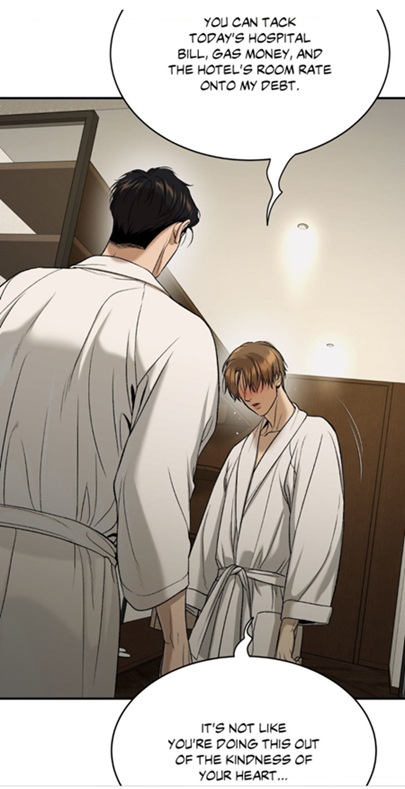 (chapter 67), but this time, with eerie detachment. He kneels before Joo Jaekyung like a servant,
 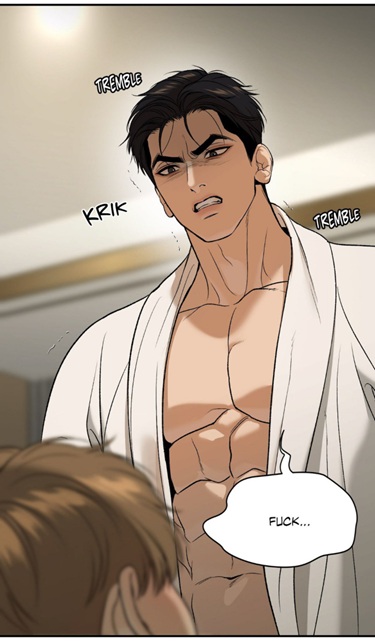 (chapter 67) his arousal betrays a loss of emotional control. Though he is on his knees, it is Joo Jaekyung who is emotionally yielding. His body betrays his composure, responding to Kim Dan’s touch and gaze. Kim Dan, watching the tremble in the fighter’s expression and the rising heat in his body, feels the shift. His soft blush is not simply one of affection or embarrassment—it’s a flicker of recognition.
 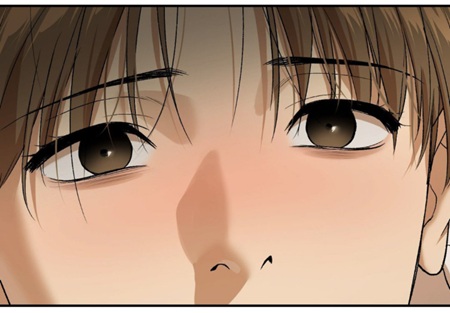 (chapter 67) He senses that the one usually in control is now unraveling. Appearances deceive: beneath this scene lies a quiet reversal of power. The blush on his cheeks is a trace of a brief moment of clarity: he sees that the person who once held all the control is now faltering.
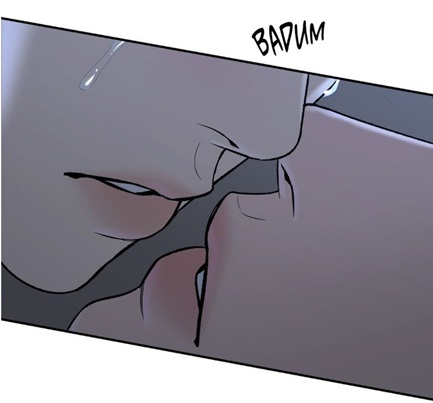 (chapter 66), his body is still a vessel for mourning. Hence there is no kiss during that blue night. Each night carries the residue of that first trauma: the night he was left alone. Whether his mother disappeared or passed away in the night, the result is the same—nighttime became synonymous with loss.
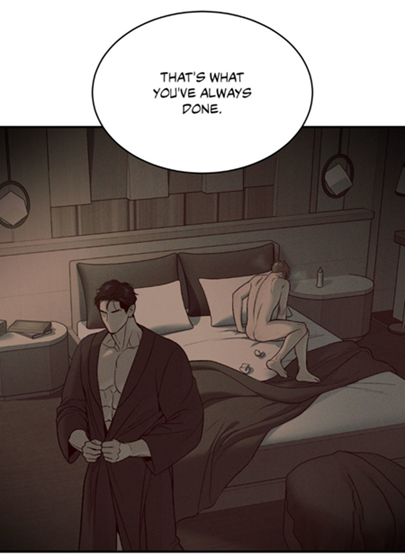 (chapter 63) His so-called jinx is not some irrational superstition. It’s a scar. It’s the quiet belief that the people he loves will vanish the moment he lets his guard down.
 (chapter 67), it’s resignation. Hence he is not expecting to be cured with the pills.
 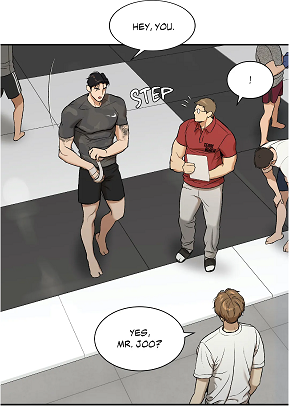 (chapter 7), while Kim Dan becomes a child during the night.
 (chapter 47), when the “wolf” was portrayed as a thug, though the latter had assisted him on multiple occasions.

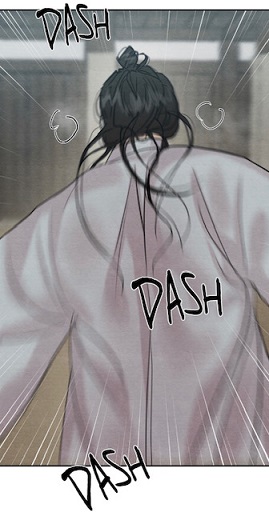 (chapter 126) to another
 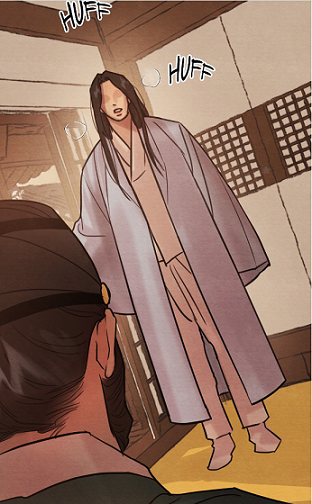 (chapter 126). He allowed his father to humiliate and abuse him
  (Chapter 126) once again. It was, as if the story was back to square one and the protagonist had learned nothing at all. Under this perception, my avid readers can comprehend why I selected such a title. However, instead of thinking that the author was a bad writer, I decided to ponder on the following question. Why did the author choose such an evolution?
 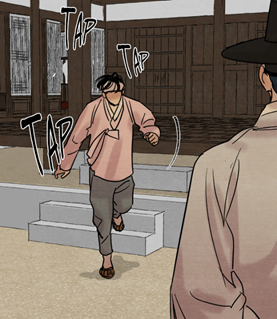 (chapter 7) Like Baek Na-Kyum, he rushed to his loved one’s side. However, he was first stopped
  (chapter 126), because it was not the right time. How so? Notice that his brother had fetched him at the port
 (chapter 125), but he never followed him to the bureau of investigation. And the same happened later. Why didn’t he go to his shed, when he was trapped there? Where was he, when the eldest son visited the father?
  (chapter 126) His absence exposed his passivity and betrayal. However, at no moment, Yoon Seungho noticed this. To conclude, Yoon Seungho was so worried for the painter that he didn’t pay attention to his surroundings, just like the painter didn’t see the learned sir’s disdain expressed through the cold gaze.
  (chapter 07) Therefore Yoon Seungho didn’t notice the presence of a civilian next to the governor.
  (chapter 126). Striking is that the governor knew about Yoon Seungho’s whereabouts before his arrival: the coast. As you can see, I am detecting a link between the governor and the younger master Seungwon. Yet, it was disguised as a rumor behind the expression “I had heard”. My assumption is that Seungwon came from the bureau of investigation in order to inform his brother. Therefore it is not surprising that Seungho was invited by his brother to visit the prison during the night.
  (chapter 126) And the moment I perceived the protagonist as a fool in love, I realized that chapter 126 is a reflection of episode 7, 29
 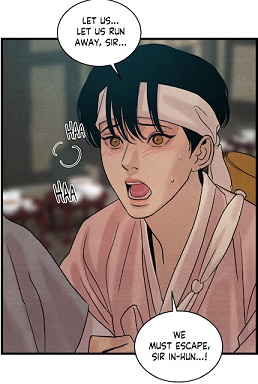 (chapter 29) and 40
  (chapter 40). Here, the painter was trying his best to protect Jung In-Hun’s interests (life, high position). Moreover, in episode 40, the painter had a dream, when he saw the announcement for the civil service examination. He smiled, for he was looking forward for the future.
  (chapter 40) And what have these episodes more in common? A betrayal, abandonment from a loved one and a paper (painting, poem). Hence I am more than ever convinced that the petition will resurface very soon and play a huge role in the downfall of the schemers and haters. Besides, chapter 40 represents the negative reflection of the conversation in the prison.
  (chapter 126) Though they are in a tough situation, Yoon Seungho is not leaving his side contrary to episode 40.
  (chapter 40) There is neither disdain nor mockery. The mentioned scenes are similar, for the present resembles the past. And this brings me to the second reason for the Webtoonist’s decision.
 (chapter 123), Yoon Chang-Hyeon considered Yoon Seungho as a human, for he employed the personal pronoun “he”. He was still his son. Then in episode 77, he judged him as a slave
  (chapter 77), hence he was submitted to the straw mat beating and was held captive. He even refused to send for a physician.
 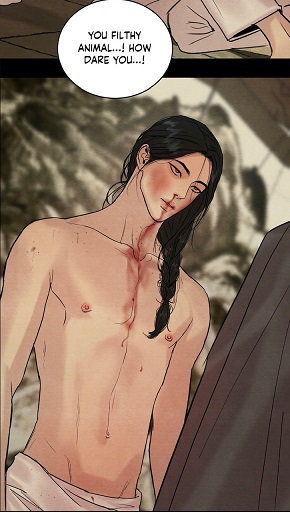 (chapter 83) Here, the father is denying his humanity, he is just an animal. In their next confrontation, he describes him as a monster, hence he wished that he had never been born.
 (chapter 86) However, his words exposed that he was still viewing him as a living being. Therefore it is not surprising that he accepted lord Song’s request to order the murder of his son! In the gibang, he decided to no longer acknowledge Yoon Seungho as his son.
  (chapter 107) The tragedy is that the protagonist still viewed the Yoons as his family because of Yoon Seungwon, who keeps calling him “brother”. This explicates why Yoon Seungho sponsored his brother to have an official position.
  (chapter 115) Therefore it is not surprising that he followed Yoon Seungwon’s advice again.
  (chapter 120). He would bring the petition to his own father. This means that he is acting like the painter who listened to his noona Heena so well.
 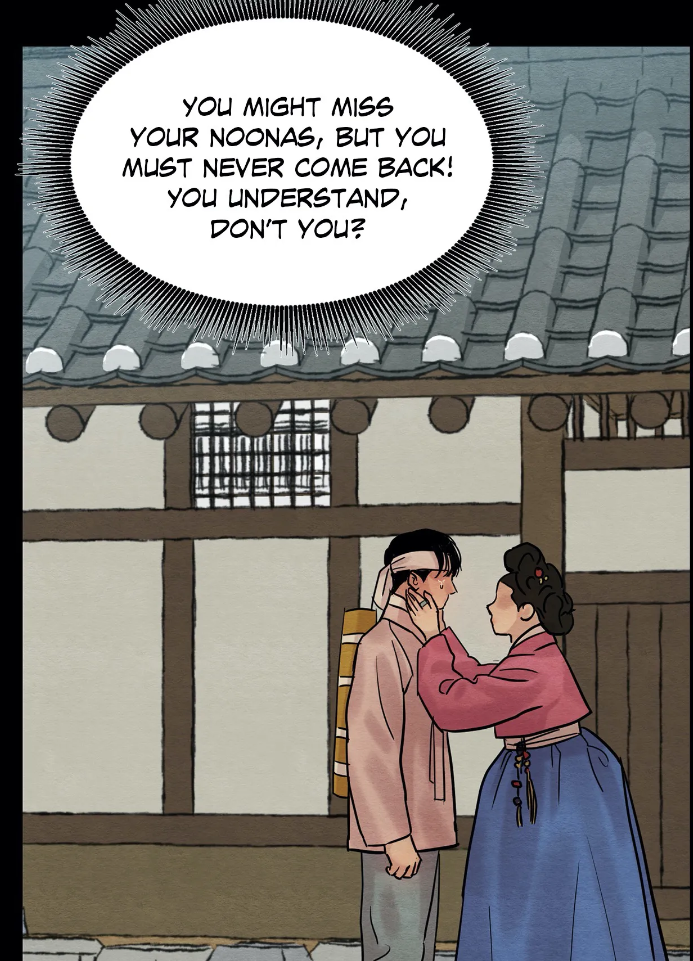 (chapter 46) But now, Yoon Chang-Hyeon believes to have the petition.
  (chapter 125) This explicates why the patriarch is now calling the main lead “nothing”.
  (chapter 126) He is not even a thing. This means that he is actually discarding him. This explicates why he sent him to the shed.
  (chapter 126) It was, as if he had become a merchandise. Or we could say that the elder master had been using him as a tool, which he can now abandon.
  (chapter 126) Interesting is that the idiom “plaything” has for antonyms tool, implement, instrument and utensil. And this brings me to the following remark. The father’s words are reflecting the last scheme. Yoon Seungho was used as the sword to get rid of an enemy, lord Song. It was, as if someone had decided to get rid of lord Song, for he represented a danger or threat. It also mirrors the trick in the shrine. Min and the others got killed, because Lee Jihwa went to his childhood friend. And who had seen the main lead using this sword, when he was enraged? Father Lee!
  (chapter 67) But let’s return our attention to the patriarch and his son. Yoon Seungho is no longer recognized as a Yoon member. Therefore I come to the conclusion that Yoon Seungho will make the following decision: to become an orphan. And this is symbolized by the loss of hair. I am expecting him to cut off his hair, something the painter has been doing for a long time. That’s why Byeonduck showed us the lord without a topknot.
  (chapter 126) This would coincide with my previous statement. The lord is going through the same experience than his loved one. However, people will come to the conclusion that this was done by the father. How so? Remember how each rumor became a reality.
  (chapter 1) I had already demonstrated that Yoon Seungho was not a fiend for sodomy with no regard for time and place, until he met Baek Na-Kyum. But once a deed is done, it can never be repeated.
  (chapter 101) So should Father Lee claim that he has long disowned Jihwa by cutting off his topknot, no one will believe him, for the young master was still seen with a topknot after confessing his feelings in public.
 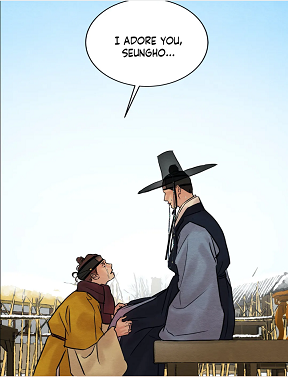 (chapter 57) In other words, the topknot incident at the kisaeng would be brought up. It is impossible for 2 fathers to act the same way. Besides, the loss of the topknot has another signification: Yoon Seungho would cut off ties with valet Kim, for the latter was the one who gave him the topknot. And episode 126 reflected one more time his position:
  (chapter 126) He is the one dressing him. It was, as if he was the pope.
 (chapter 116) It is because someone had reported to him the conversation between lord Song and the painter.
  (chapter 122) There was a spy listening to their conversation. Since all the guards died
  (chapter 124)
  (chapter 125: I am assuming that the survivor got executed), I am suspecting the scholar. Moreover, why would Yoon Chang-Hyeon accuse his son to have abandoned Baek Na-Kyum? It is related to this departure of the staff and Yoon Seungho.
  (chapter 120) And who was present there? Jung In-Hun! But there is more to it. Since leaving Baek Na-Kyum behind is considered as an abandonment, it means that the patriarch abandoned his son too.
  (chapter 27) By speaking to Yoon Seungho, the elder master Yoon didn’t realize that he was admitting his own wrongdoings. Actually, he had abandoned him many times… like here for example
  (chapter 87) Therefore his words will come back to bite him. But these words are also exposing the valet’s betrayal and abandonment towards Yoon Seungho!! How so?
 (chapter 122), then he should have been at the patriarch’s house. The absence of the valet is the evidence of his treason. For me, he is now working for Jung In-Hun which explains why he never mentioned his presence in the mansion, only lord Song. Besides, keep in mind that once deed done can not be repeated. In episode 27, the lord was too angry and busy to notice the learned sir’s spying activities.
 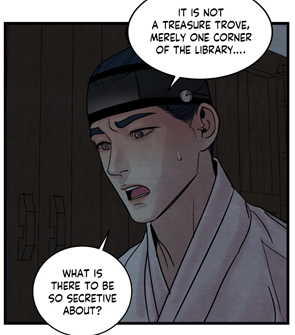 (Chapter 27) Moreover, Kim didn’t report the interrogation to his master. This means that the butler covered up for the teacher’s wrongdoing. But here is the deal:
 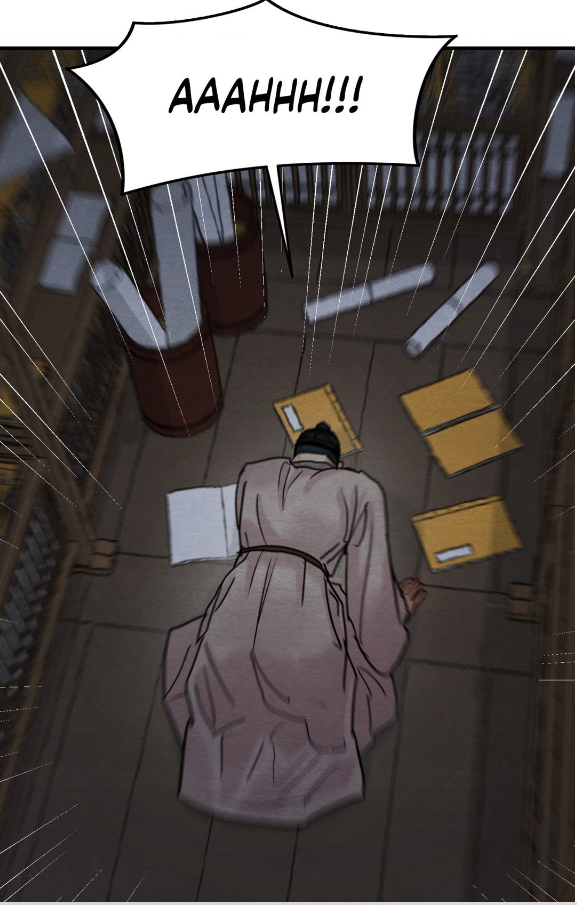 (chapter 120) The library was ransacked, hence this crime is bound to be discovered. Finally, his intervention in the shed is exposing his deception.
  (chapter 83) That’s why I am convinced that these words
 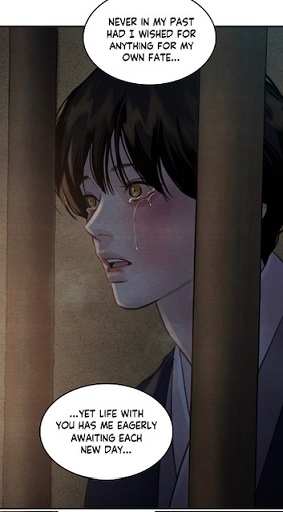 (chapter 126) He is no longer suicidal, in fact he is full of hope! Though he was sent back to hell for a short moment, he came out of this as a winner. My evidence is that the lord has now become a believer.
 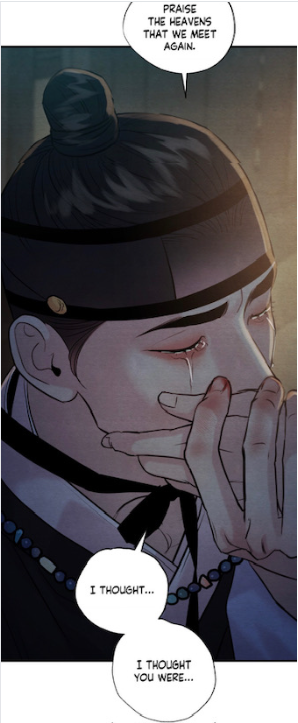 (chapter 126) Yes, episode 126 exposes the return of his faith! And where could we see the atheism of Yoon Seungho in the story? In chapter 92!
  (chapter 92) He didn’t believe in the spring poetry to ward off bad luck! That’s why he was sent back to the past. He needed to lose everything in order to find hope! In his darkest moment, he expressed a wish: to meet his loved one! And where did he pray to the gods? In the shed!
  (chapter 126) Observe how he is kneeling in direction of the bars. He is hoping to meet Baek Na-Kyum again. As you can see, though this scene
  (chapter 126) He was showing resistance and anger towards his father. Moreover, he was no longer shaking in front of the patriarch or the guards.
  (chapter 86) Thus I deduce that though he was mistreated and insulted like in the past, he was no longer suffering from his traumas. He is healed. His will is now really strong, supported by his new found faith.
  (chapter 62) Even if they were hugging, they were not close emotionally and mentally. This stands in opposition to the scene in the jail. They might be separated by the bars, but they are touching each other tenderly.
  (chapter 126) They are able to see each other.
  (chapter 126) Try Meditation
  (chapter 126) or Prayer
  (chapter 126)
 (chapter 126) Quoted from
  (chapter 126) It is relevant, because light represents knowledge and truth. He is now the bearer of the truth. And he got his blessing from Baek Na-Kyum, when he touched his hands.
  (chapter 120) Yes, chapter 126 mirrors 92! This somehow confirms my theory that the butler was the one hiding under the purple hanbok.
  (chapter 92) Moreover, we have another reference to this episode, the pouring of alcohol!
  (chapter 92)
  (chapter 126) It was, as if someone wanted the lord to pay for Min’s insult! That’s the reason why I come to the following conclusion: Yoon Seungho is now opening up to Baek Na-Kyum. He is confessing to the painter about his wishes.
  (chapter 85) The manhwaphiles should keep in mind that the request from the artist in the study was strongly connected to forgiveness. And Baek Na-Kyum could also confess what happened in the past: his guilt and regret asking for the lord’s forgiveness. Right now, both are blaming themselves for the incidents, although they got fooled by many schemers. Because the lord proved his loyalty and blinded trust in the painter, I see the scene in the jail as a new version of this confession:
  (chapter 75) Thus I consider the prison cell as a sacred place, where both characters are about to be freed from their guilt!
  (chapter 11) thus he could escape justice!
  (Chapter 11) Simultaneously, the first definition of life lie corresponds to Yoon Chang-Hyeon. The latter blames his eldest son for the downfall of the Yoons.
  ! (Chapter 86) Secondly, he still thinks that he is powerful. But it is just an illusion.
  (chapter 125). They fail their duty, for they allowed the main lead to barge in the room.
  (Chapter 126) Finally, observe how they keep apologizing without giving any explication.
  (Chapter 125) Their apology is fake. As you can see, the patriarch is living in an allusion. He is powerless, and the best evidence is that he doesn’t have the petition.
  (Chapter 126) He is actually encouraging his son to hate himself and indirectly his own father! However, the son made the exact opposite decision: love!! Hence I am more than certain that the elder master is about to experience a harsh awakening.
  (chapter 101) Thus they got punished. And now, the two main leads are about to face human justice.
  (chapter 65) But strangely, the painter is showing no fear at all.
  (chapter 126) He is ready to sacrifice himself. So why was Yoon Seungho dressed up in the end? One might say that with the topknot and the hanbok, the abuse from the patriarch got covered up. That way, Baek Na-Kyum wouldn’t detect Yoon Chang-Hyeon’s lies and abandonment!
 (chapter 125) The latter brainwashed him to take the fall for everything, implying that way, his loved one would be protected! However, I am suspecting that if the lord were to leave the prison, he could meet someone in the office. That way, this person is not confronted with the reality: the main lead was “abused”. According to the butler, he was supposed to meet his brother at the office.
  (Chapter 92) In episode 92, we have a mysterious man in the background dressed in black, but he is not wearing his gat. Besides, I would like my avid readers to remember this image from the trailer:
  which reminds us of the office:
  (chapter 98) This place symbolizes power and strength. And because episode 126 is a reflection of chapter 7, 11, 29 and 40, I think, Yoon Seungho is about to receive a deal, for these episodes are focusing on the deal between the painter and the protagonist: protection from the father and punishment in exchange for entertainment. He would appear as a fake savior in the end. Remember what in episode 11 the artist said in front of his fated partner:
 (chapter 11) He would do anything except painting!! He was not willing to give up on this principle, which reminds us of faith. So when Yoon Seungho faced his father, he experienced powerlessness for one reason.
  (Chapter 105) Then in episode 122,
  we discover that lord Song employed the pipe to beat the painter. Moreover, I detected a progression. In season 2, Yoon Seungho was still smoking.
  (Chapter 74) But once the painter showed that he didn’t like smoking, Yoon Seungho stopped taking the drug. This explicates why in season 3, he was no longer seen with the item in his hand. Even under stress, he chose to hunt instead of smoking in front of the window. We have two scenes where the pipe is present. One is when the lord is throwing it out of anger,:
 (chapter 86) which reminded me of the incident with the music box.
 (Chapter 85) This shows that this item had no value to the protagonist. Then the pipe appeared in the gibang on the table.
 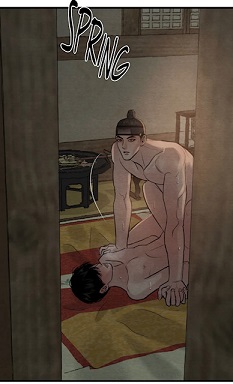 (Chapter 96) However, here the lord had only eyes for the painter or Heena. Hence I have the impression that the pipe could resurface and serve as an tool to identify the perpetrator, just like the glasses were used to recognize the scholar.
  (Chapter 102) Finally, since the pipe appeared in the gibang twice, it indicates that this hobby is linked to the kisaeng house!! And this brings me to my final observation: the pipe is connected to paper
 (Chapter 1)
  (chapter 1) However, there exists two books!! And one has no PIPE! This coincides with the decision of the painter to stop drawing erotic pictures! Yes… dropped amusement! At the same time, Yoon Seungho has long lost his interest for erotic publications. He also dropped this hobby. On the other hand, the books were dropped in front of the painter.
  (Chapter 1) Finally, the petition was dropped in front of lord Song
  (chapter 123) which announced his death sentence. To conclude, the papers have a strong connection to punishment and death.
  (Chapter 126) Yoon Seungho went to the father’s mansion, and it didn’t take him that long! As you can see, I consider this trip with Yoon Seungwon as a diversion.
 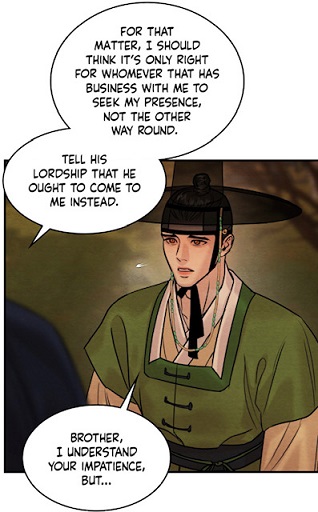 (Chapter 121) So why didn’t the elder master return to his old home? It is to drive the Yoons out of their propriety. In other words, the lies from the past are becoming a reality exposing the liars in the end. Their life lies will be ruined.

 (chapter 103) The shoes were revealing that he was an official! However, the moment Jung In-Hun resurfaced, I suspected him for a moment, because he had been wearing the boots.
  (chapter 111) Nonetheless, episode 115 exposed his true role in the conspiracy. He was just an accomplice, for he had entrusted his glasses to the author of the letter.
  (chapter 115)
  (chapter 103) The ghost is wearing the hat of an elder, a patriarch.
  (chapter 67)
  (chapter 103) This had been truly a manhunt! Because both people are wearing items belonging to the upper class, I come to the deduction that the perpetrators were elders, both officials.
 (chapter 82) and Father Lee wearing one. But I am excluding the patriarch Yoon, as the testimony from the masked guard represents the elder’s innocence.
  (chapter 107) Besides, he doesn’t have any high position and the form of his hat is a little different (3 peaks on the side)
  (chapter 88) Remember what I had written in the essay “The shadow behind the shrine”. This picture exposes betrayal, something lord Shin was not expecting at all. And what is the worst betrayal? The son backstabbed by his own father! And we would have two elders involved! Naturally, this signifies that they were working together during that night.
 (chapter 107) If the king executed his own son, the patriarch Yoon Chang-Hyeon could do the same. It was actually justifying the violation of Confucianism. For me, this topic was brought up, because a father had been put in the very same situation! He had to sacrifice his own son. And note what the gossiping woman criticized on the street:
  (chapter 106) The young nobles would always be protected by their fathers. Therefore it is not surprising why the schemers desired Yoon Chang-Hyeon to experience the same, the abandonment and the loss of a heir! Hence the second young master got targeted first. Thus lord Song only proposed the main lead’s assassination after making this first suggestion:
  (chapter 107) He was initially trying to repeat the same action from the past, but he failed. Therefore he targeted Yoon Seungho, and this time, the elder master gave in:
  (chapter 107) It is because he needed a justification for the meddling in the Yoons’ affair. The document in question is the petition Yoon Seungwon stole from his father:
  (chapter 118) This explicates why the assassination failed, as Yoon Seungho was not the real owner of the paper.
  (chapter 116) In other words, both brothers were protecting each other in a certain sense. But by entrusting the petition to Baek Na-Kyum, Yoon Seungwon turned the painter into a target!
  (chapter 116)
  (chapter 88) In the bedchamber next to Baek Na-Kyum, Yoon Seungho was recalling a memory, but he couldn’t just identify the face, for his memory had been long repressed. The latter had refused to listen to him exactly like with lord Shin in the woods:
 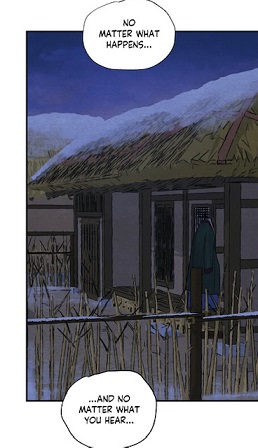 (chapter 88), I come to the conclusion that this shadow was Kim’s.
  (chapter 107) stated that he was no longer an official, we could exclude him as a suspect, unless he is lying. For me, he is not telling the truth. Honestly, he is wearing a purple hanbok which is actually reserved to people close to the royal family. Moreover, the hanbok has a design indicating that he is not poor, living in seclusion. Besides, let’s not forget the comment from the kisaeng welcoming him. He hadn’t come to the gibang for a while.
  (chapter 107) Why? There exist 2 possibilities. Either he lived in exile or he was living in Hanyang and working as an official. I am more tending more towards the second possibility. Why? It is because he spent a lot of money for that night in episode 107:
 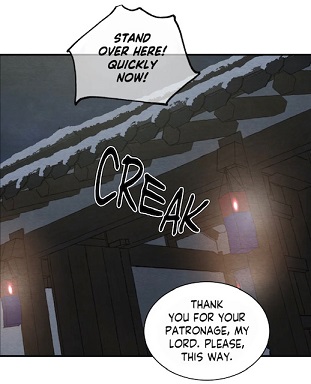 (chapter 107) Hence the kisaengs were asked to welcome the important guest at the gate. He was definitely a rich influential nobleman.
 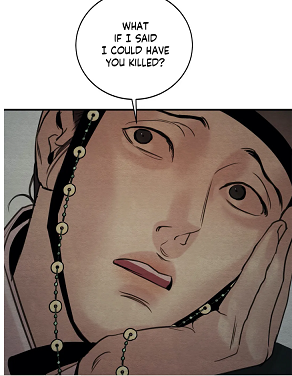 (chapter 76) or he could save Yoon Seungho, even when the latter had assassinated lord Jang
  (chapter 102) Why was he so sure? It is because his father had a high position. He was definitely relying on his father’s influence! And now, observe the evolution of the story. Black Heart is now framed for everything, he has become the scapegoat!
 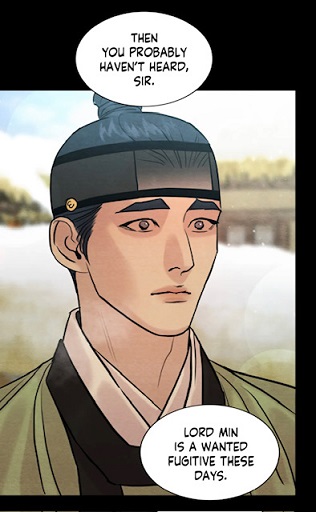 (chapter 113) This explicates why Min was accused of lord Shin’s murder.
  (Chapter 107) The purpose was to hide the intervention of a third party! Note that Yoon Seungho suspected his father immediately after visiting the burned shrine. He is not envisioning the involvement of other elders. Anyway, the blame on Black Heart signifies that the reputation of Min’s family has been tarnished, unless this gossip was created for the learned sir’s ears. If this gossip is circulating around, not only Min’s father lost his heir, but also he failed in his duty to keep the lineage
  (chapter 82) Another interesting aspect is that Byeonduck revealed the names of the perpetrators in the shrine: “Lee Jihwa”, lord Jang, lord Shin, lord Park and Min. Finally, according to my theory, the Webtoonist created different people who looked like “lord Song” from episode 83
 (chapter 83), for the latter had been seen wearing a purple hanbok with a design. However, the hair color, the shape of the beard and the design of the hanbok indicate that we are dealing with different people.
 (chapter 118) They needed him to betray Yoon Seungho.
  (chapter 83) How did Lee Jihwa know his name?
  (chapter 83) And observe what the learned sir said after burning the letter:
  (chapter 115) Min has also been investigating Yoon Seungho’s past in order to find his weaknesses. However, he couldn’t find the person lord Song! As you can see, this name oozes mystery and danger. And this reinforces my theory that people have been impersonating “lord Song” and the latter’s name has become a taboo! And that would fit to No-Name’s situation.
  (chapter 76) He doesn’t possess a name, and as such he has no identity. Moreover, he is wearing a mask indicating that he is playing different roles. Moreover, he often vanishes. He is like a ghost! Exactly like lord Song… Yoon Seungho only knows his name, but he has not been able to identify his face!
  (chapter 86)
  (chapter 103) Another important detail was the absence of footprints in the snow. The imprint would have revealed the identity of the perpetrators: the boots, the evidence of the involvement of officials. To conclude, the elders are responsible for the young lords’ death: Min, lord Jang, lord Park and lord Shin! By tricking Yoon Seungho and Min, the result was that they were forced to dirty their own hands.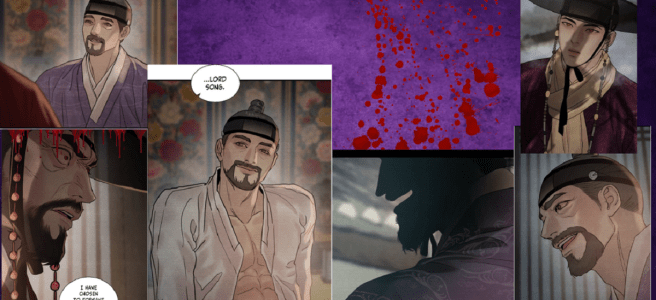
 (chapter 106) How could he abandon his lover like that? For some readers, he acted like a fool. Nevertheless, his reaction was normal, because the man with the purple hanbok represents the cause for Yoon Seungho’s martyrdom. This means that the ghost with the purple hanbok symbolizes danger for the protagonist. And if he gets targeted, his lover will suffer too. Striking is that during the same day and night, there is another person wearing a purple hanbok: Yoon Seungho!
 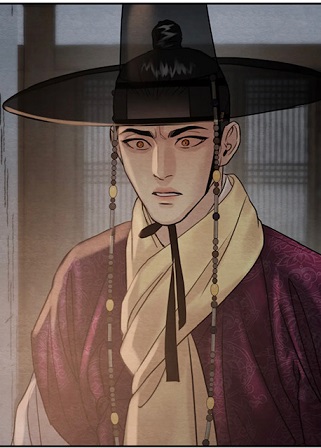 (chapter 107) Therefore it is no coincidence that in chapter 107, he was portrayed as a source of danger for the elder master Yoon and the mysterious “lord Song”.
  (chapter 10) Under this new approach, it becomes comprehensible why the artist was wearing a purple hanbok after the bloodbath.
 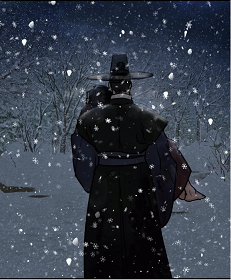 (chapter 102) He was the reason for the “purge”. From my perspective, the artist is cleaning the “place”, hence he is the target of the villains and antagonists. At the same time, this color represents Joseon’s royalty, hence it is no coincidence that the king was mentioned in this very episode.
  (chapter 107) They had the impression that he was abandoning the artist one more time. And that’s how the painter felt the situation either! That’s the reason why Baek Na-Kyum was upset.
  (chapter 107) It was, as if the main lead was acting like the patriarch Yoon. This perception got reinforced, because the lord had a poker face and didn’t talk to his lover.
 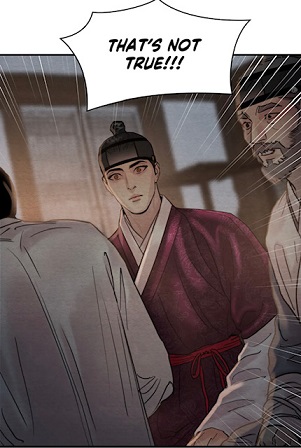 (chapter 107) Yoon Seungho didn’t side with the old bearded man in front of the painter. He thanked the man and sent away him with respect.
 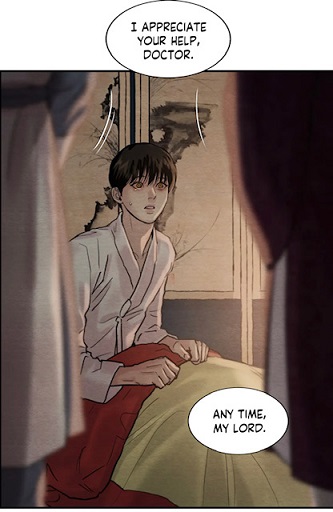 (chapter 107) So he gave the impression that he was listening to the painter. However, the reality was that at the end, he still listened to the doctor thinking that it was for the painter’s best interest. Since Baek Na-Kyum was traumatized from the sexual assault, the main lead thought that he was hiding his illness or he was in denial. What caught my attention is that Yoon Seungho followed the doctor leaving the artist in the bedchamber alone. On the one hand, this could be perceived as a prison, yet I judge his gesture as the opposite. It is to protect Baek Na-Kyum! In Yoon Seungho’s mind, behind the closed door, his lover won’t see or hear what is happening in the courtyard. He will be protected from cruel reality.
 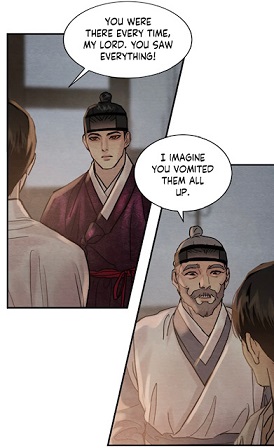 (chapter 107) He showed no real empathy for Baek Na-Kyum. It was, as if he was showing Schadenfreude. But this doesn’t end here. Kim brought a different doctor. It is not the same physician who assisted Baek Na-Kyum a month ago!!
 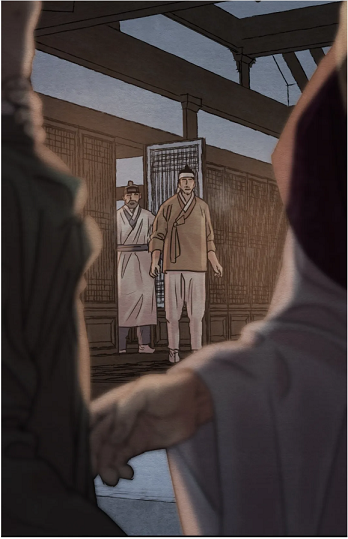 (chapter 107) First, the clothes diverge. The belt is blue, his sleeves are covered with some white protections.
  (chapter 107)
  (chapter 103) Finally, the white hanbok is much longer, and his pants are blue, while the other had white trousers. In my essay
  (chapter 107) How could he say that his health had deteriorated since a month ago? This is how the artist looked like a month ago:
 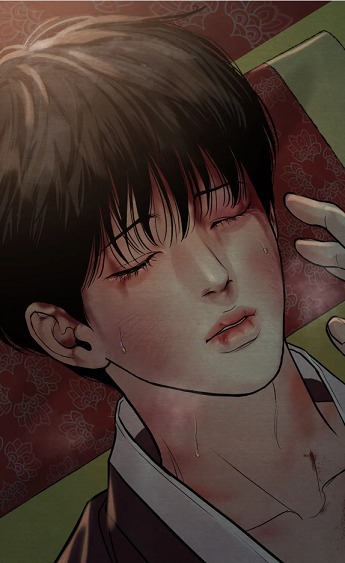 (chapter 103)
  (chapter 103) He was under the influence of the aphrodisiac, and he could have died of an overdose.
  (chapter 103) His face and his body were covered with bruises. How could the doctor say that his condition had worsened? This means that he had not seen the patient a month ago. To sum up, the doctor was impersonating his fellow. Note that he claimed to have prescribed the drug himself.
  (chapter 106) However, this image displays the betrayal from the physician, for I believe that this represents his view The latter had seen the artist in the restroom, but he had not intervened!! Besides, just because the artist had disgorged once, this doesn’t signify that he had done it all the time for one month. This is how the artist looked like, while he was walking through the street:
 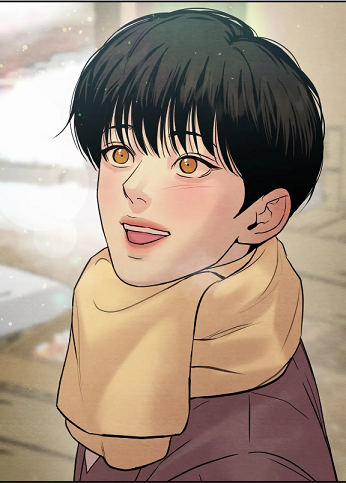 (chapter 104) He looked healthy and happy. The reason for his nervousness was the lord’s actions during that day. Moreover, the painter’s hand had been scratched… yet you see no bandage around his hand.
 (Chapter 107) As you can see, the doctor was exaggerating, as he was generalizing the regurgitation!
 (chapter 107) Yoon Seungho was slowly realizing that his butler has not been telling the truth. He was gritting his teeth exposing his discomfort! This gesture indicates that someone has to endure something unpleasant, has to control himself and persevere. However, he was telling the opposite to his master: he had nothing to worry!! He should do nothing and simply lie low. The authorities had no suspicion about him. That’s the reason why the main lead desired to talk to the valet
 (chapter 107), and he got angry, for his servant was talking back and not answering him properly.
  (chapter 107) We could say that the latter was not obeying his lord. Striking is that the domestic was also lying, for he feigned ignorance first, before giving a more precise answer.
  (chapter 107) It looks like valet Kim and the physician got away with their tricks, for neither the doctor nor the the butler got admonished in the bedchamber. But what caught my attention is that after hearing the words from his lover, he replied that way:
  (chapter 107) This expression (“I see”) is important, because it could be the indication that the noble could discern the truth with his mind’s eye, like this
  (chapter 107) or the opposite, though I am still optimistic. We will see in the next chapter.
  (chapter 106), but we shouldn’t overlook that later the painter had yelled in order to voice his opinion which had caught his companion by surprise.
  (chapter 57) The father was convinced that his son had been ill for a long time. And from the mysterious “lord Song”, the manhwalovers discovered that the main lead was fed with an aphrodisiac:
  (chapter 107)
  (chapter 57) Therefore the doctor’s statement in episode 57 appears in a different light: he knew what he was prescribing! He knew what Yoon Chang-Hyeon desired thanks to the idiom “the wayward yang energies”. It was to provoke an erection. I would like to expose that the physician deceived the painter,
  (chapter 57) for at the end, the physician admitted that he had given the “solution” to the father. The father had received the medicine!! [For more read the essay “
 (chapter 106) He was supposed to get a drink from the physician. So the lord could remember the artist’s words and perceive the doctor as a traitor and liar. He could jump to the conclusion that the man had given his lover a drug. Under this new light, it dawned on me that the artist could have been telling the truth to his lover there:
  (chapter 106) That way, the “doctor” would not be suspected of a crime. Besides, according to me, the couple was actually sitting in the courtyard where the medicine store was!!
  (chapter 33)
  (chapter 65) Furthermore, in season 1, the artist had been forced to drink an aphrodisiac. So far, the main lead has never threatened or suspected a doctor. As you can see, there is a strong connection between the doctor and death! To sum up, we are witnessing the start of the storm… and when the painter was recovering, this represented the calm before the storm!!
  (chapter 107) It is related to the rumors he heard in the street.
  (chapter 106) The woman announced that the sacred tree had burned to the ground!! That’s the reason why it was gone… However, her words were just lies, for the tree is still standing there.
  (chapter 107) But note that she connected the incident to misfortune! In other words, she was denying the intervention of humans!! However, the lord had visited the place of his crime before.
  (chapter 104) This is what he had been told: the intervention of ghosts or spirits!! On the other hand, the unknown speaker had never mentioned the tree! Only the house had burned down. Nonetheless, even this statement was a lie, for the house was still standing too.
  (chapter 106) Since the schemers are mixing a lie with the truth, the lord heard that lord Shin had been killed during that night! However, when the lord had assassinated Black Heart and his friends, the young noble had never met lord Shin! Hence the gossips in town made the lord recognize that something huge is about to happen: a manhunt, and he could get into trouble. Besides, the grapevines are revealing the existence of witnesses and the main lead is aware that the noona is an important « witness ». But the problem is that by mixing each time a lie with a fact, the schemers are not realizing that the truth is coming to the surface, as minus and minus make plus.
  (chapter 50) Here, the butler had tattled on the painter so that the noble would distance himself from his sex partner. And in episode 104, we have a similar situation: through suggestions, the main lead was encouraged to send back the painter to the kisaeng house. Secondly, why would the lord think of the butler, when he saw the sacred tree?
  (chapter 88) During that night, he discovered warmth, loyalty and tenderness! In the darkness, the lord could detect the presence of the light: the painter! During that night, they vowed fidelity to each other. And in the garden next to the shrine, Yoon Seungho made the opposite experience: it was dawning on him that people from his own family, Kim and Yoon Chang-Hyeon,
  (chapter 88) are lying to him and even betraying him, especially if his life is threatened. Let’s not forget that this time, the lord did commit a crime and he is aware of this. In the bedchamber, the lord had criticized his own father, nonetheless he still thought that his father had just made a bad decision.
 (Chapter 86) His words implied that the elder master Yoon had never intended to wound him. It was just because of his stupid believes:
  (chapter 62) the main lead chose not to punish his lover
 (chapter 63), he even swore that he would never let him go.
  (chapter 63) As the manhwalovers can detect, the main lead was always able not to get swallowed by the darkness, thanks to the artist, he could still see the light. However, his father is making the opposite decision, unaware that he is “doomed” to fail! Karma is already waiting for him. And because the patriarch is now living in the darkness, he can not recognize the manipulations, as he is forced to use others to guide him.
  (chapter 107) the branch on the ground is the evidence that someone set fire to the shaman’s shrine and the tree! Secondly, the black guard deceived the patriarch:
  These two men are different, for their mask is white and not black. Besides, their clothes are black and not brown. Finally, the belt diverges as well: a huge purple strip with a different color in the middle, while the other guard is only wearing a simple ribbon. Thus I am inclined to think that the black guard is not only manipulating Yoon Chang-Hyeon, but he is also in truth working for someone else. Moreover, why would the man cover his face in the room, if he is truly working for the patriarch?
 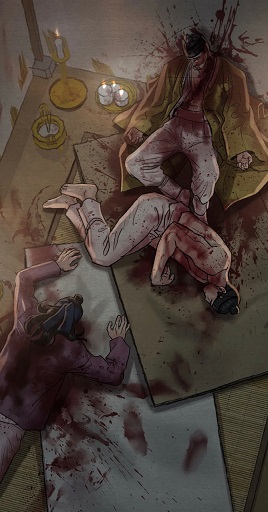 (chapter 102) From my point of view, it is related to Lee Jihwa. My theory is that the elder Lee can frame the main lead for assassinating his son, because during that night, Black Heart was dressed like Lee Jihwa. They needed the corpses to be decomposed so that father Lee could claim that Yoon Seungho had killed his son!! And the hanbok would serve to identify the corpse. In addition, he would use the incident with the sword as an evidence for his lunacy.
  (Chapter 67) It is important that the red-haired master is not perceived as traitor, rather as a victim. Moreover, since some time passed on, people have already forgotten the friend’s confession in the inn. However, the elder master Lee will never report Yoon Seungho to the authorities, it has to come from the father himself. That way, his involvement will never be detected. From my point of view, the schemers are trying to turn father and son against each other so that the Yoons get destructed. One might reject my theory about the implication of father Lee, but let me ask you this… What are “Lord Song”
  (chapter 107) and Lee Jihwa’s colors?
 (chapter 12) Purple and yellow, right? Observe that the lord is wearing the same colors during that night: a purple hanbok with a yellow scarf!
  (chapter 67) Under this new perspective, it becomes comprehensible why I am suspecting that this guard
  (chapter 107) Furthermore, he could be recognized with the purple hanbok.
  (chapter 107) However, if you compare the form of the beard and the nose, the manhwaphiles can quickly recognize that Lee Jihwa saw someone else in the past, although the hanbok seems to have the same pattern than in episode 83.
  (chapter 82) So how can he be wearing a purple hanbok, if he lost his position and home? This color is reserved for important people. In addition, when he entered the kisaeng house, the artist’s noona called him differently:
 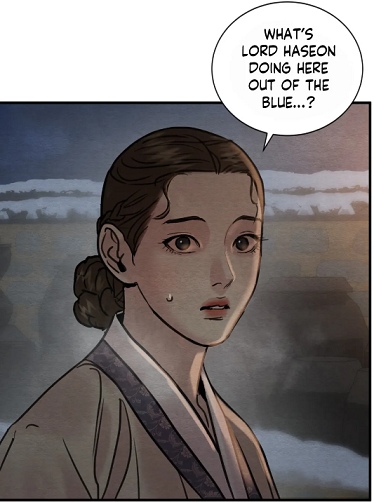 (chapter 107) She called him “lord Haseon” and not “lord Song”! Interesting is that neither the Korean nor the Spanish version utilizes such a name! I don’t think that the translator took the liberty to create a fictional name. Hence I am deducing that the author is trying to leave different clues in each version!! Naturally, Haseon could be his first name, yet there is no ambiguity that this man has a bad reputation among the kisaeng house. He was called “lecher” and in the Spanish version, he was described as sexual maniac.
 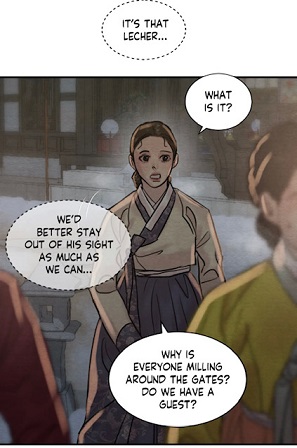 (chapter 107) Hence I doubt that the noona would feel so close to such a man and address him with his “first name”. On the other hand, the kisaeng has a drop of sweat on her face, which is a sign for a lie and deception.
 (chapter 107) Besides, Yoon Chang-Hyeon’s vision of the world is based on the words from lord Song and others. Who informed him about the whereabouts of « lord Song » in the gibang? The man had not come to the kisaeng house for a long time. Because of this information, the patriarch is led to think that he is meeting « lord Song ». His perception of the world and his eldest son is embossed by lord Song. Thus he repeats the same expression from his counterpart: “lowly beast”.
  (Chapter 107)
  (chapter 107) Finally, like outlined above, the main lead imagined that he was meeting the same doctor, while in truth it was not the case. So « old friend » could be deceiving:.
  (Chapter 107) He could be one of the three men! The real « lord Song » who brought pain to Yoon Seungho is someone else. Let’s not forget that Kim fears the man,
  (chapter 56) and his statement implies that Yoon Seungho is usually not allowed to ignore the man’s request:
 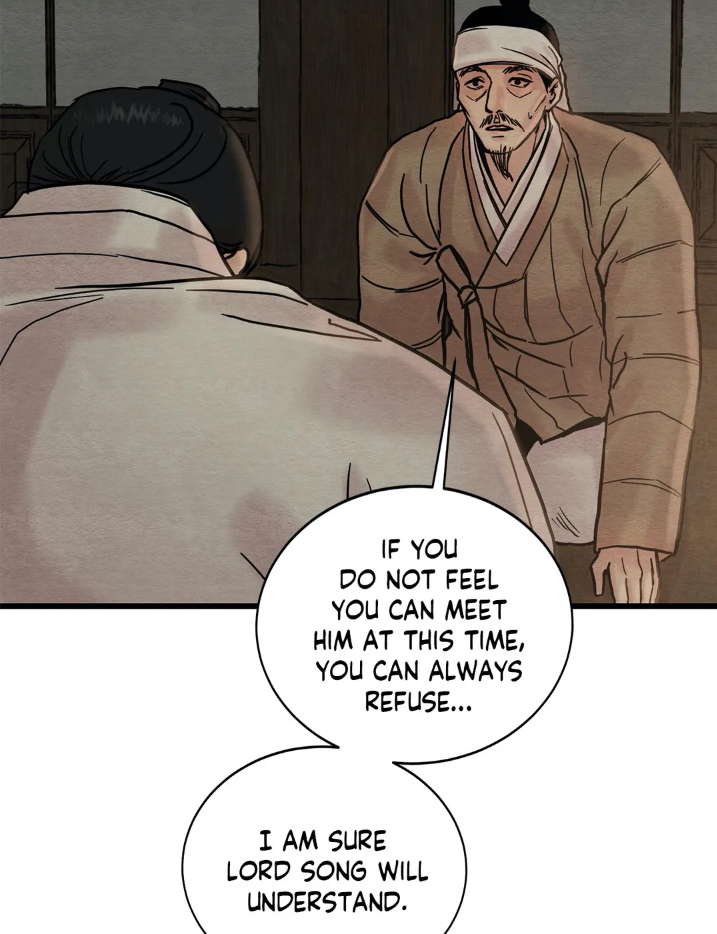 (Chapter 56). « At this time » stands in opposition to « always » which means that he can reject the invitation only because he is sick. To conclude, for me, this is not the lord Song Yoon Seungho hates and fears!
  (Chapter 107) Moreover, he didn’t visit the kisaeng house for a long time,
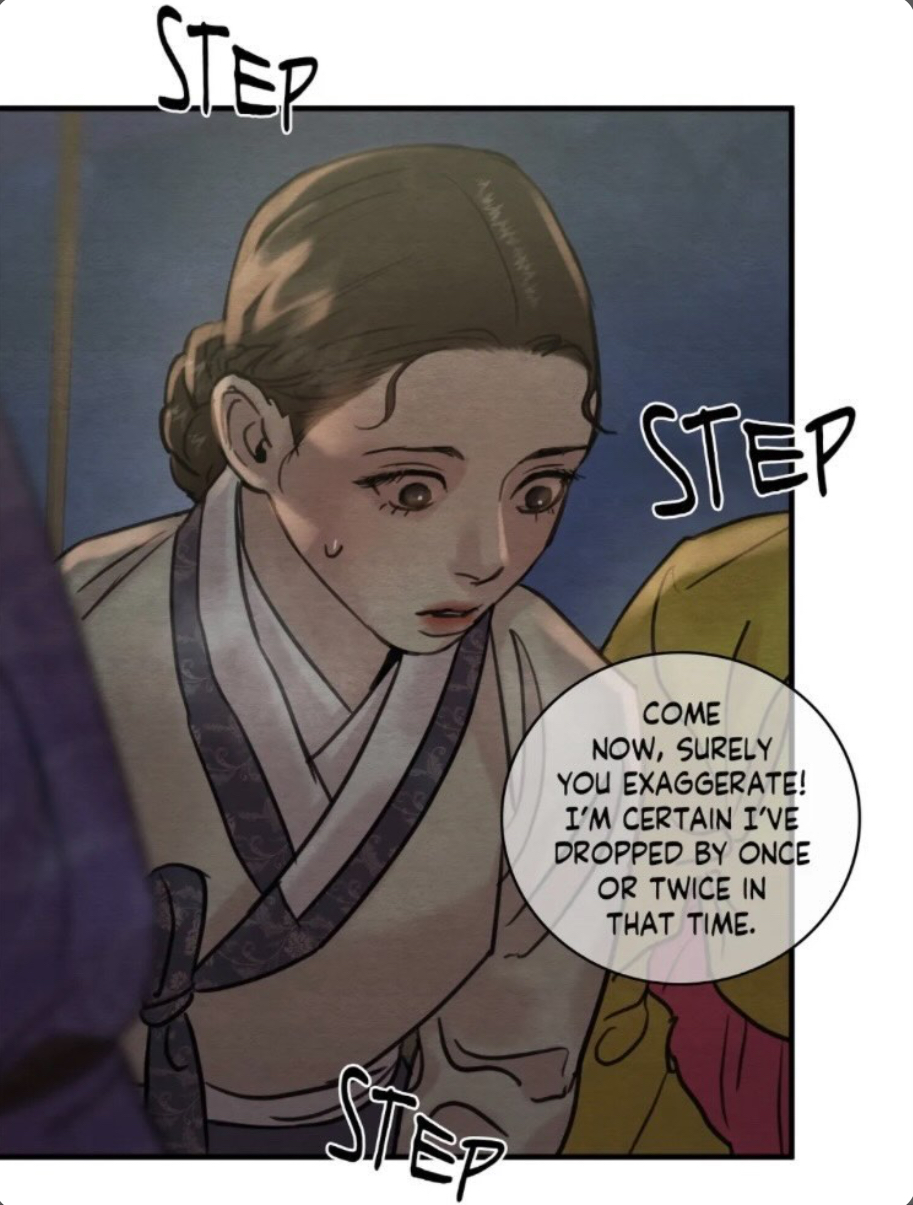 (Chapter 107) Hence they judge him as a pervert. And since the head-kisaeng received him at the gate, this signifies that this man has been in contact with the kisaeng house and in particular with the kisaeng leading him to the room.
 (chapter 37) The fake servant NEVER mentioned the retirement of lord Song. As you already know, for me, No-Name is the real lord Song who took the blame for everything, for he let people use his “name”. The most terrible thing is that “lord Song” puts the blame on Yoon Chang-Hyeon, when he explains his failure about the sexual education.
 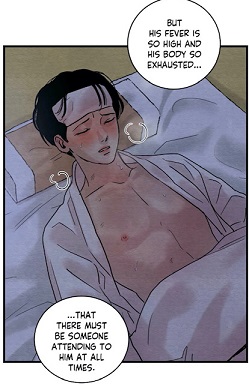 (Chapter 33) Secondly, how does the lord know about the master’s illness, when his fever was only discovered after the straw mat beating?
 (Chapter 77) Besides, no physician had been fetched back then. Finally, how can lord Song remember the lord’s condition so well after 10 years? It is because he is using the diagnosis on the painter from the previous doctor:
  (chapter 103) Here, the man with the purple hanbok was utilizing the painter’s illness to hide his own crime. Under the pretense to help « Yoon Seungho » to become a man, the man abused him not only physically, but also sexually. There is no doubt that this reconversion was fake!
  (chapter 76) But there is another reason why Yoon Chang-Hyeon doesn’t get fooled a second time.
  (Chapter 77) Thus I come to the following deduction: Yoon Seungho was sentenced to the straw mat beating, because after 2 nights, he had not been able to « have an erection ». They mixed a truth with a lie:
  (chapter 52) And what had Black Heart thought during that night? He had wished to taste the artist, while before he had desired his death. This is not random at all. There is a strong connection between death and sex which is also present in the conversation between lord Song and his « old friend ». The former reproached the elder master Yoon to have protected his son for too long.
  (Chapter 78)
  (chapter 107) Hence I am now assuming that this night is a reflection from chapter 67 and 69!! Min’s plan!
  (chapter 69) He had gone to the kisaeng house with the hope that the artist would return with his noona, and back then he had impersonated Lee Jihwa for the first time.
  (chapter 69) As the manhwalovers can detect, the sudden return of lord Haseon is intentional. So who is he targeting here?
  (chapter 86)
  (chapter 86) He was the keeper of his secret!! This explicates why the fake lord Song mentions « lad » and not the main lead. He gaslighted his counterpart, and created a false reality, while for me, it is clear that the real source of threat is Baek Na-Kyum. And who wanted him to be removed from the main lead’s side? Father Lee!
  (Chapter 82) In fact, both schemers have one goal in common: the couple is the victim and witness of their « crimes ».
 (chapter 106) impersonating „lord Song“
  (chapter 94)
  (chapter 97)
  (chapter 97) and
  (chapter 101) Thus I come to the following conclusion that these 3 persons wearing the purple hanbok are not the “real lord Song”, the one who tormented the protagonist. In my eyes, he was watching the protagonist from the tower!
  (chapter 37) The empty street was the indication that the monarch was present in the city. And now pay attention to the situation in episode 105:
  (chapter 105) Why is the street empty, when it was not the case during the night in episode 69?
  (chapter 69) For me, the pedophile was in the kisaeng house. But let’s return our attention to episode 37.
  (chapter 106) To sum up, for me, the 4th “lord Song” was present in this scene, but the protagonist couldn’t detect his presence, for the other “shadows” were there to divert his attention.
 (Chapter 106) As you can see, they used a prank to wound the artist. Their goal was to incite the painter to return to the kisaeng house. He should cut ties with the main lead, as the latter is a man with a fickle nature. Yes, episode 106 was the negative version of chapter 75.
  (chapter 75) That’s the reason why the couple was sent to the same inn. However, I don’t think that they had expected the painter’s fainting.
  (chapter 106) For me, this is a blessing in disguise.
 (Chapter 106) The latter had to be informed not to send the new clothes to the kisaeng house, but to his own mansion. That’s the reason why Baek Na-Kyum asked this question to the butler.
  (chapter 106) That’s how the schemer and his accomplices knew for sure that their original plan had not worked out. And if you read my previous analyses, you are aware that I had discovered the existence of two tailors!!
  (chapter 45) and 74
 (chapter 74) This tailor is wearing the scarf the same way than the artist‘s. Finally, in episode 64, the manhwalovers could see the face of the second tailor. :
  (chapter 64) In the past, I had already outlined the divergences in the body shape and the clothes, but the most visible evidence is the scarf!! Finally, I would like my avid readers to detect that the tailor from chapter 64 has been calling the main lead master Yoon, and not lord Yoon Seungho. This shows that this man is involved not only in the recent prank, but also in the main lead‘s suffering. He is not recognizing Yoon Seungho as a real lord. The usage of different hanboks is the proof that the tailor is an accomplice in the latest trick. But this also explicates why the tricksters had not planned the artist’s fainting. First, he had been able to run after his lover.
  (chapter 105) Besides, this is how Baek Na-Kyum acted, when he saw his lord looking at him:
  (chapter 106) The fake smile from Baek Na-Kyum was hiding his true condition, he was still suffering from PTSD. Nonetheless, for the tailor and the other witnesses, it looked like the artist was strong. Nonetheless, since the main lead had learned in the past to fake his smile, he could detect that his lover was far from feeling well.
  (chapter 106) But there is another reason why they had not predicted such an outcome: the doctor!! They had to ensure that the lord’s path never crosses the physician’s! That’s the reason why the manhwaphiles never saw him in episode 106. He was like a ghost. But there is more to it.
  (chapter 57) Yes in the kitchen of the physician! Then in a different image, you can the kitchen with the stool and the circle with the shamanism drawing right behind the lord’s back.
  (chapter 106) We assumed that the couple was eating in an inn, but it is true? Finally, in the shelves, the manhwalovers can see small packages hanging around,
  (chapter 106), they look exactly like the medicine Kim fetched in episode 55.
  (chapter 55) Because of these parallels, I started wondering if the couple and the readers had not been fooled in the end. They were actually sitting in the medicine store, but due to the butler’s words and episode 75, the manhwalovers had the impression that the couple was in an inn. And the Spanish version seems to confirm my suspicion. I had already outlined that the furniture and shelves in the library had been switched. So it could be the same with the doctor’s office. Besides, the form of the building reminded me a lot of the house from the physician’s.
  (chapter 106)
  (chapter 74) Once you remove the cupboard from the side, you have a patio where you can eat. Under this new light, it explains why Yoon Seungho would say this to the butler:
  (chapter 59) To conclude, there was another ghost in episode 106, the invisible doctor. No matter what, the couple was not supposed to see the physician. Why? It is because he would have noticed the existence of two different doctors. That’s the reason why Kim acted as a mediator!
  (chapter 106) This was not to help his master and the painter at all. Quite the opposite. He had to cover up his own wrongdoings and help the schemer. Therefore it is not surprising that the valet was confronted with the artist’s fainting!
  (chapter 106) The latter had played a mean prank on Baek Na-Kyum!! Yes, you are reading it correctly. Now, you are wondering when the valet fooled the pure painter. Observe that Kim had joined his master
  (chapter 106) He had barely moved… maybe run for 4 meters! How could he be out of breath? Besides, why would he scream like that, when the lord was standing next to him?
  (chapter 106) It is because he needed Baek Na-Kyum to hear his lover’s departure!! Because we see this panel, we assume that the valet was left in the dark, especially after witnessing such a scene.
  (chapter 106) Our brain is trying to fill the blanks. But the moment you realize that Kim didn’t run such a long distance to be out of breath, you will realize that this “abandonment” was staged. This was the reflection of chapter 85, another fake run!
  (chapter 85)
  (chapter 86) Thus the butler got punished for his acting. He has now to take care of an unconscious painter.
  (chapter 106) Besides, I have another evidence that the painter got fooled by the valet. According to my observation, there is always a reflection within the same episode. Since the lord got fooled and was incited to follow the man with the purple hanbok, the artist had to experience the same. However, while the one got scared out of abandonment issues, the other got worried because of “lord Song”‘s obsession! Besides, because neither the butler nor the physician got punished for their crimes (passivity, silence, lies and disobedience), both need to receive their “punishment”. Let’s not forget what Yoon Seungho had said to the artist back then:
  (chapter 58) Kim had usurped his authority, he had made a decision without his master’s permission.
  (chapter 24) The gate serves as the indication.
  (chapter 24) And in that episode, the artist got dragged twice.
  (chapter 24) First, it was the scholar, then the butler. However, in that scene, the butler had lied to the artist, for the noble had never requested to meet the artist in the pavilion. From my point of view, he was still hunting in the woods. As you can see, episode 24 contained all the elements of an abduction, though it was not perceptible. That’s the reason why I am suspecting that Yoon Seungho might think that his lover has been kidnapped again, especially after hearing such horrible gossips. Nonetheless, since the painter fainted, the valet will be forced to take care of Baek Na-Kyum. In addition, observe that the butler brought back the unconscious painter to the mansion, though the doctor was right next to them! This shows that Kim and the physician had not the artist‘s best interests in heart. He should have been treated right away.
  (Chapter 76) Coincidence versus trick! They wished to scare Yoon Seungho, to let him think that „lord Song“ knew about his crime and was about to denunciate him. Yes, in my eyes, the man with the purple hanbok embodies treason and was the reason why Yoon Seungho got arrested and tortured in the past!! Under this new light, it becomes comprehensible why the lord would get so mad at his childhood friend.
  (Chapter 59) But the moment Yoon Seungho’s mother killed herself, it became clear that her son had been unfairly arrested and tormented. So someone had to take the fall for the injustice, the real lord Song.
  (chapter 102), Lee Jihwa was behind the scheme… and what had Lee Jihwa done in the past? He had sent a letter in his name.
 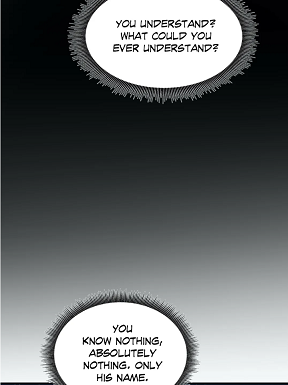 (chapter 59) Back then, Yoon Seungho assumed that his childhood friend knew nothing… but now, he is seeing the ghost lord Song circulating in town. So he could jump to the conclusion that the Lees have been helping lord Song. Finally, the manhwaworms will certainly recall the red-haired master’s confession, he knew everything!!.
 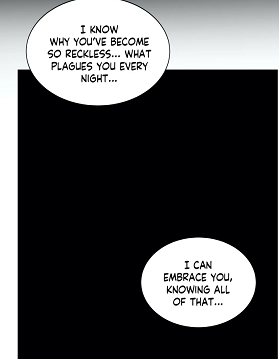 (chapter 57)
 (chapter 106) And this scene is a reflection of episode 64, where the two women were ignorant about the incident of the previous night.
  (chapter 64) Once again, this proves that the tailor is involved in the scheme.
  (chapter 106) The Spring Poem is actually reflected in this scenery:
  (chapter 106), she contradicted her statement right after.
  (chapter 103) As you can see, the schemers are no longer able to control Yoon Seungho and his lover, for both are supported by the gods. Chance stands on their side!
  (chapter 100)
  (chapter 104) Though there is a manhunt, where is he?
  (chapter 106)
  (chapter 98) To conclude, while the schemers thought that due to his crime, Yoon Seungho would lie low and cut ties with his lover, due to their meddling, they achieved the opposite. The lord will request an investigation… something he has never done before. He could even denunciate Lee Jihwa
  (chapter 67), that way he can escape punishment. This means that Black Heart’s last confession (and lie) could help the lord to protect himself and his lover. Finally, if Yoon Seungho were to mention the purple hanbok to his lover, the latter’s memory could get triggered and he could remember this night:

 He is on the ground, his face bruised and bloody, while he is asking an anonymous man for help. He is mentioning the shrine. As he is wearing the same hanbok, we can definitely assume that this scene takes place during the same night. The irony is that each time Byeonduck offers a new piece of a puzzle, she also creates a new riddle or mystery. How did the young master get wounded in the first place? And who is the person facing lord Shin?
  (Chapter 59)
 (chapter 66) The size and length of the protections and the cords around the pants were different. Besides, the masks were also different due to the form of the mouth..
  (Chapter 61)
  (chapter 61) Finally, I had also detected his presence next to the barn because of a time jump. First, the manhwaphiles saw Lee Jihwa sitting on the floor,
  (Chapter 60), then shortly after he was standing at the entrance of the storage room holding a fireplace poker!
  (chapter 60) His position indicated that the young master had shortly left the building. However, the readers had not witnessed his move, for the author had diverted their attention by exposing the character‘s inner thoughts. He was recollecting the past, while talking to himself.
  (chapter 60) However, how did the fire poker end up in his own hand? The last time this tool was seen, it was in the kitchen.
  (chapter 60) As you can see, each image has its importance! However, I doubt that the upset aristocrat had this sudden idea and returned to the kitchen and take the fire iron. His mind and heart were definitely elsewhere, while such an action exposes the intention of hurting someone. Jihwa was acting, as if he was in trance, the moment he saw the hickey and heard the painter’s scream. His long lasting stupor was visible in this image.
  (chapter 60) That’s the reason why I had developed the theory that someone was hiding in the shadow, next to the barn and observing the evolution of the event. [For more read the essay “
 (chapter 57) It is because they serve as a clue for unveiling the truth.
  (chapter 62) It is the same furnace! 😨We all assume that the lord prepared the fireplace, because he put his clothes on his lover. But is it true? We were all jumping to this conclusion, but actually we never saw it. Our brain was led to fill the blanks.
 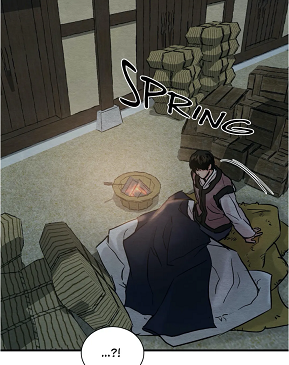 (chapter 61) Finally, the readers were all assuming that the butler had never entered the storage room due to this image and his action before.
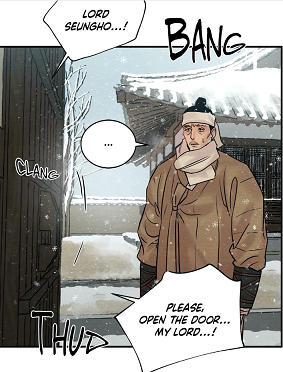 (chapter 61) But is it true? He could have opened the door before, and go to the lord in order to explain his intervention. Faking his concerns for the painter. Why would he place the fireplace there? He wished that the warmth from the fire would wake up the painter. Hence he remained close to the gate of the storage room. That way, he had a reason to visit his master. Moreover, the author exposed that the valet had been keeping an eye on his master for a while too.
  (chapter 62) Because the valet went to his master, we got the impression that the valet had followed his master’s instructions.
  (chapter 61) In fact, this request could be perceived differently. The lord had seen the butler’s intervention, hence he expressed this wish. From my point of view, the butler must have brought the fireplace to the barn, and he left the poker there on purpose. I am quite certain that some people will think that I am again exaggerating. But why did the butler put a fireplace with a fire iron in the lord’s room, when the coal was not properly lit?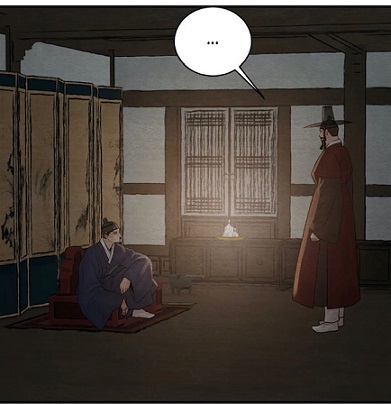
 (chapter 86) Compare the fire to this one:
 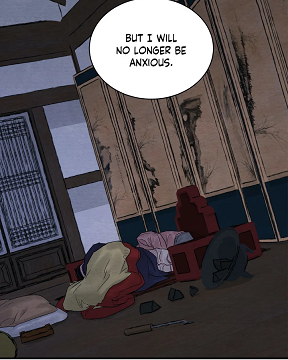 (chapter 88) Consequently, I am suspecting that Kim had expected an outburst from Yoon Seungho. The latter could hurt his father with the fire iron. But none of this happened, for the lord preferred playing a comedy.
  (chapter 65) He had expected that the lord would hurt the main lead. But how was he supposed to harm Baek Na-Kyum in the end? With the fire iron… This signifies that he had been present in the barn during the abduction, and even knew the place of the sequestration. Thus he took the furnace and the fire iron to the shed.
  Compare his face to the painter’s who got wounded by wooden sticks.
  (chapter 99) Besides, this theory also explains why the shrine is set on fire.
  (chapter 103) The fire iron is connected to a stove. Finally, I would like to outline the absence of the furnace in the shrine, though it was very cold outside.
  (chapter 99) So when the lord said this to his lover
 (chapter 60)
  (chapter 60) At no moment, he was told that his childhood friend had been brought to the physician’s. He just heard him leaving. Moreover, the joker never mentioned the place where the couple was fooling around.
  (chapter 60) He didn’t even admit that he had seen them himself. These were memories from someone else! One might assume that these could represent the criminal’s recollection, but I don’t think so. He arrived much later to the physician’s house. If he had been present right from the start, he could have kidnapped Baek Na-Kyum on his way to the restroom.
  (chapter 43) Here, he had visited the place, hence he could imagine what had happened, though he never saw their encounter according to me. [For more read the essay “
 (chapter 58) He had left the bucket of water in the patio! But note that when the painter left the room, the item had simply vanished.
  (chapter 59) The painter was not supposed to detect his presence.
 (chapter 100) The manhwaworms can grasp the similarities. Back then, the lord had refused to help Baek Na-Kyum, thus he was even encouraging Lee Jihwa to return to the shrine. Hence he had acted as a willing accomplice and perpetrator. Thus his karma is to be denied any assistance, he is punished the same way than his friends, Min and the other nobles. Finally, observe that the red-haired master
  (chapter 100) was lowering himself in front of No-Name which reminds me a lot to lord Shin’s situation.
  (chapter 66)
 (chapter 99)
  (chapter 102) He was a survivor. The opposite from this scene. They faked the painter’s desertion,
  (chapter 60) hence in episode 102 they had to mask his escape, for this would have exposed the involvement of other people, like Lee Jihwa, the doctor with the drugs and Heena. And now, you have the explanation why the shadow hidden behind the tree had put mattresses on the soil. The desertion and survival from lord Shin should not be detected. But who is this person facing the weak lord?
  (chapter 7),
  (chapter 65) or boots
  (chapter 13)
  (chapter 77) As you can see, the wooden stocks were present during the first straw mat beating.
  (chapter 83) As you can detect, I see a strong connection between the new panel and the hunt from chapter 83. And here we have 3 people again.
  (chapter 68) She was again a witness, when her brother was tied up in the bedchamber.
  (chapter 66) Finally, when her brother was on the verge of getting abducted, she saw him lying unconscious with a bloody face. However, she never considered it as an abduction, for his hands and feet were not tied up.
  (chapter 99) That’s the reason why she blamed him with her questions. She implied that he shouldn’t have fought back. As you can see, I detect a common thread between Heena and her presence in different scenes: sequestration and a bloody face. But this doesn’t end here. When the young painter got beaten in the gibang, there was a furnace on the left side.
  (chapter 94) For me, this incident was to push the painter to leave the gibang and as such to listen to Heena’s suggestion. Furthermore, the man on the left side was wearing a white headband, though he was dressed like a noble in a hunting outfit! The hair dress and his moustache [for more read the analysis “Painful departures”] led me to the following assumption: He was just a commoner in the end, impersonating a noble.
 (chapter 99) and bothered her, could only be perceived as real at the end. But this means that while Yoon Seungho had murdered the nobles, there was someone hiding in the shadow
  (chapter 61) And according to me
  (chapter 61) the second Joker (Kim) had tried to murder the painter, but he had failed, for he had covered the painter’s head.
  (chapter 66) However, his new attempt to have the painter vanished failed again.
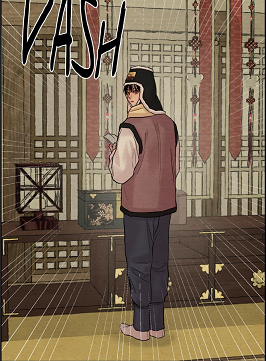 (chapter 97) It could be the same, though I have my doubts. Secondly, I suddenly got aware that the painter had 3 different grey pants at least.
  (chapter 4) This one had a cut just below the knees, though the color is much brighter.
  (chapter 84) This is the third one I detected, as the shape of the pants diverge once again. This explicates why Baek Na-Kyum chose to change his clothes before leaving the mansion.
  (chapter 85) And because his pants are very similar to the painter’s, I deduce that he must be close to Baek Na-Kyum or at least he has a spy informing him about the artist’s clothes. Compare his pants
  (chapter 97)
  (chapter 61)
  (chapter 98) The only difference is that the disguised person is alive contrary to the corpses in the wells. But the problem is that the shoes are betraying him.
  (chapter 83) What did the lord see back then? Three shadows, two men wearing a gat and one caught in the middle with a topknot. Since I consider Yoon Seungho as a shaman, I believe that this vision was not only referring to the past and the incident in the shrine. It exposes the immutable truth, the involvement of three people, either. This is no coincidence. Thus imagine one moment that this illusion was referring to lord Shin’s murder. He is about to get murdered because of a new conspiracy. From my point of view, the man is disguising himself. However, I doubt that he is wearing the lord’s boots. The latter could be “couple boots”, just like the lord and the painter had couple hats.
  (chapter 91) And note during that day, Baek Na-Kyum was called sir due to his hat and clothes.
  (chapter 91) However, if the woman had paid attention to his shoes (mituri), she would have realized that our beloved painter is just a low-born. One might think that I view Kim as the one facing lord Shin.
  Why is Kim wearing a gat with a headband for nobles, when he is dressed like a servant? But there is another detail what caught my attention. He is wearing a bag. It was, as if he had packed his belongings before leaving the mansion. This means, he is taking his brown hanbok, but he is not wearing it. He reminded me of Deok-Jae.
  (chapter 44)
  (chapter 54) But the readers should question themselves this: why did Kim dress like this in the first place? From my point of view, the schemers have already planned to frame Baek Na-Kyum for the murder of the nobles and even of Jung In-Hun. Kim is trying to separate the couple so that the artist can be arrested easily and sentenced immediately. By burning the place, the evidence that Baek Na-Kyum was a victim vanished. That’s how they can manage to turn a victim into a perpetrator. They wanted to erase every trace of the crimes, but then the return of the painter will force them to change their plan. The fire can help them to turn Baek Na-Kyum into a scapegoat. That’s the reason why the anonymous shadow is wearing clothes similar to the painter’s. No one should recognize him. Later, Baek Na-Kyum can be “identified” as the culprit. And any blood trace on his clothes could serve to incriminate the painter. They could use the resemblance of the clothes as a proof for his crime. That’s the reason why lord Shin had to die in the end. And if lord Shin never doubted this person, I am suspecting that the latter is working with the authorities. Kim is not the only suspect, for according to me, there always exist a conspiracy of 3 and even 5 people. This observation leads me to create a list of suspects. First of all, Yoon Seungho’s confession to the learned sir should help us to determine the schemers and culprits.
  (chapter 44). A synonym for old bearded men is “elders”. The latter are supposed to serve as role models. That’s the reason why the young man didn’t suspect the man. With his beard, he must have oozed “responsibility” and even “selflessness”. But who are the suspects?
 from the bureau investigation is definitely involved. Thus he misled Yoon Seungho. Besides, observe that the officers are connected to fire!
  (chapter 94) Secondly, his explanation implied the involvement of a physician.
  (chapter 98) Though he had been found in a well, the lord’s comment insinuates that “Deok-Jae” had been stabbed. Striking is that the lord didn’t show any interest in the violation of clothes and the servant’s death. This reaction surprised the yangban which left him speechless. It is important, because this shows that the schemers were trying to direct the lord’s attention to a certain person: Lee Jihwa. They were trying to instill the thought that Lee Jihwa had planted a professional spy in his household. And after his betrayal, Deok-Jae had run away with the money earned from his work.
 (chapter 75) Finally, why was the doctor never brought to the mansion again after his last visit in chapter 57? And it looks like he was not there to treat Baek Na-Kyum.
  The latter is suffering from PTSD. Thus the painter had a nightmare. Hence I have the impression that the butler’s intervention and suggestion to Yoon Seungho will fail. The lord won’t be able to leave his side. Moreover, I would like the readers to recall that when Baek Na-Kyum got sick, a different physician was fetched.
  (chapter 33) Different clothes displays a different identity. From my point of view, the doctor doesn‘t want to be connected to Yoon Seungho. Finally, don‘t you find it weird that he was not by his side in chapter 57? He literally abandoned the young master in the room with the painter
 (chapter 57), though the latter was a patient too. He had a wounded wrist. The physician should have controlled Yoon Seungho’s fever, brought him water and even an infusion. His absence and passivity caught my attention. So what was he doing in the kitchen? Finally, the doctor is also connected to the shaman. Not only he mentioned him, but also there is the symbol of shamanism in his kitchen. Why did the gods want our couple to have their first “true” love session at the physician’s office? Somehow, it was to confront him with the truth. Finally, don’t you find it weird how Kim reacted
 (chapter 82), when the new version of Deok-Jae made the following suggestion to Kim:
  (chapter 82) Hence the doctor is not off the hook, quite the opposite.
 (chapter 67), and discovered Lee Jihwa’s sodomy which was supposed to be a secret. The father is well aware that the main lead’s suffering is linked to the young master’s sexual orientation, which the father had always denied. His involvement could be detected, when he allowed one of his servants to be dragged to the gibang.
  (chapter 99) Finally, The Joker also heard father Lee’s humiliation and powerlessness.
  (chapter 101) Thus the fire could be seen as a desperate measure to cover the Lees’ culpability.
  (chapter 37) The latter had already disguised himself in season 1, and due to his age, no one would suspect his real nature or power. Then we have this faceless man from chapter 83:
 of season 4 for this essay, though my focus is the past, and more precisely Yoon Seungho’s suffering. It is because the darkness surrounding the protagonist not only refers to his tragic youth, but also it reflects the situation of the manhwalovers. The latter are still in the dark concerning his torment. His terrible secrets have not been totally unveiled. So far, the author allowed the readers to see glimpses of his past, like f. ex. the gangrape or the suicide of his mother. But these were just small pieces of the puzzle, thus it is still impossible to have a complete picture of his martyrdom. There are many reasons for this. The main victim never testified about his suffering, he refused to open up to Baek Na-Kyum.
  (chapter 84) Then many witnesses vanished
  (chapter 86) or the ones alive preferred telling lies in order to hide their own wrongdoings or are simply in denial about their own culpability. Finally, the victim, the perpetrators and accomplices had no idea about the whole truth. They only know or knew certain facts, because many of them were deceived as well. What exactly happened to Yoon Seungho? How could this take place, though he belonged to one of the most powerful noble families? Now, you are probably expecting that I will give you answers to all these questions, and recreate the past. But I have to admit that it is not possible, for I don’t know the whole chronology. Consequently, I added “shadowy” in the title. To conclude, my real intention is more to offer new pieces from the riddle than create a whole new “story”. The main source for this new insight is the painter’s fate which is a reflection from the noble’s past and torment. This means that Byeonduck left traces in season 1, 2 and 3! That’s how I discovered that he had been abandoned and betrayed by everyone, kidnapped, treated as a male kisaeng, robbed, abused, raped and even gangraped at least twice, tortured and finally drugged! But like mentioned above, it is difficult to give the proper order and the persons truly involved in the crimes. On the other hand, what I can guarantee is that Yoon Seungho’s nightmare is linked to conspiracies. I came to this conclusion, because if you compare all the seasons, you will detect the presence of plots. There exists at least 3 main plots in each season, though there definitely exist more. The conspiracies are all connected to incidents.
  (chapter 9), so that the latter visited Lee Jihwa to arouse his jealousy. It was to push him to commit a crime so that Baek Na-Kyum would be removed from the main lead’s side. As you can see, there were 3 people involved, though the readers only saw the result.
  (chapter 12) They had the impression that the red-haired master had acted on his own. However, he had been manipulated, incited to commit a crime. But my point is not to diminish his wrongdoing, rather to expose the involvement of the schemers. Hence at the end of season 1, the author unveiled their true role and as such their identities.
  (chapter 43) However, observe that when Lee Jihwa went to the pavilion, the noble with the mole had other guests. 2 nobles left the place, as they refused to participate in a murder.
  (chapter 43) Funny is that they are now witnesses of Min’s crime. This can have repercussions in season 4. Black Heart had been the one who had suggested the assassination to Lee Jihwa. And the aristocrats were still there, when he had made this proposition.
  (chapter 19) And this is related to Kim and the gibang. Yet, the butler ruined Black Heart’s plan. To conclude, we have two main plotters in season 1, but the butler’s bad intentions were not detected, for Yoon Seungho’s bad actions were more eye-catching. People had the impression that the valet was defending the artist’s best interest. From my point of view, the number of persons involved in the plot kept increasing, as they needed more and more accomplices. The reason is that their plans didn’t work out like expected. At the end of season 3, Min involved the kisaengs in the gibang, while Kim asked the assistance of the staff, the maids
  (chapter 91) and the servants
  (chapter 8) Thus in season 2, he came to this resolution:
  (chapter 56) He had planned to rape him before having him eliminated. This shows his inner conflict. From my point of view, the painter’s death is connected to the incident in the gibang.
  (chapter 16) This doesn’t look like a crime. However, it is one! It was done on purpose, to separate the couple. Someone had intervened in order to interrupt this session, and as such someone had been spying on them. Deok-Jae only revealed his spying activity from chapter 16 in season 2:
  (chapter 53) Yet, the one opening the door had been Kim. This gesture can be considered as trespassing and invasion of privacy, the new version of this scene.
  (chapter 16) But instead of revealing the truth, the butler sided with Lee Jihwa, and allowed him to trespass the propriety again. In my eyes, the butler thought
  (chapter 17) that Yoon Seungho would come to perceive the painter as a man consumed by lust. He imagined that he would caught them fooling around. As you can see, this ruckus was also a plot, though it doesn’t look like one. Why would the maids gossip in the courtyard?
  (chapter 18) From my point of view, the valet expected that the lord would fear people’s gaze and a scandal. Thus he would send away the painter to protect his “reputation”, but the opposite happened. Under this perspective, the manhwalovers can grasp why it is difficult to calculate accurately the number of plots and accomplices. Besides, some were naïve pawns, others not. And since I examined the first season more closely, it is necessary to analyze the vanishing of Jung In-Hun. His disappearance is strongly intertwined with Yoon Seungho’s secret. How so? The learned sir was determined to find the lord’s vulnerability and as such secret.
  (chapter 29) Thus many concluded that he had participated in the prank, faking his death. On the other hand, the manhwalovers believed to have seen Heena’s death!
  (chapter 37) Since Baek Na-Kyum was wearing a hanbok, Yoon Seung-Won thought that the person hidden under the hanbok was no commoner! Thus he called him a fellow. However, this motive is quite thin! Yet, two new details caught my attention. His visit to the “fake shaman” and his request. Notice what he told the man:
 (chapter 86) However, in reality, he was relying on the king’s help and intervention. And this confession to the “fake shaman” represents the learned sir’s karma. He had asked the painter to act like a spy
  (chapter 24), not realizing that he could be spied himself! He didn’t grasp that he exposed his weakness to the commoner: the civil service examination. Thus the man had constantly drops of sweat
 on his face and interrogated Jung In-Hun.
 (chapter 29) The girl was there to create a certain closeness. He was acting like Kim, asking why! But the stupid and arrogant learned sir thought that because the man was a commoner, he was ignorant and could be manipulated like the painter!
  (chapter 29) He thought that the low-born would buy his lie here… but in my eyes, it was the opposite. He had already perceived the learned sir’s true nature. But he acted, as if he was agreeing. In other words, the scholar fell into his own trap. He envisioned that the man was “powerless”, but he overlooked his connections. The manhwalovers can see the contradiction, for he had approached the man due to his connections! .As you can see, I am more than ever convinced that the scholar has long been murdered. He was betrayed, exactly like he had planned to abandon Yoon Seungho! The pedophile must have heard from the servant about Jung’s plan, as he had confided it to the worker!!
  (chapter 37) Yoon Chang-Hyeon was portrayed as a traitor! The “fake servant” implied with his statement that there was a conspiracy, and the patriarch was involved. But in exchange to save his own skin, he had tattled on the others! He was trying to insinuate that if Jung In-Hun interacted more with the Yoons, his reputation could get tainted. He could get suspected of “treason” too, or he could get betrayed too. While the man met the learned sir during the day, the brother went to the villa in a hurry during the night.
  (chapter 36) Hence he chose a different approach: filial duty. And the brother’s observation could only corroborate the pedophile’s perception. The scholar was Yoon Seungho’s lover, but he was also a backstabber. But let’s return our attention to the “mysterious lord Song”‘s statement: Yoon Chang-Hyeon is a denunciator, not a man of honor.
  (Chapter 67) Lee Jihwa had not only been denunciated, but he had been confronted by his friend! And the traitor was right by his side. As you can see, chapter 67 was a reflection from episode 37!! These two episodes have another common denominator: the betrayer had made the following suggestion.
  (chapter 67) In exchange for his “survival”, he should help Black Heart and allow him to act on his behalf. This was the new plan. That’s how he started impersonating Lee Jihwa. That’s the reason why I come to the conclusion that in the past, the impersonation must have happened, but it took place in the beginning. Secondly, I am assuming that a traitor must have suggested to Yoon Chang-Hyeon to leave the mansion and abandon his son behind!
  (chapter 27) Someone had tattled on the Yoons in the past, but the patriarch was turned into the traitor himself which the young main lead came to believe. Thus Yoon Seungho could say this to his father:
  (chapter 82) Note that the aristocrat mentioned “punishment” in this context. So maybe, he denunciated the patriarch so that the whole family would get punished. Father Lee was definitely played in this scene, hence I believe that someone had already anticipated his reactions. He would seek revenge. But this doesn’t end here. I had connected “rash departure” to “treason and spying”. And now, observe what Yoon Seungho said to his butler
  (chapter 50) He had sent Jung In-Hun away in order to get rid of him! However, because of the expression “I thought”, I am quite certain that this idea had been suggested to him by the valet! I would like to underline that in this episode, the valet was acting as a tattler!
  (chapter 50) But in order to hide his own crime, he portrayed it as a rumor (It may not be accurate”). This truly underlines the butler’s MO. He used information and turned it as gossips to hide his spying activities. The shadow… Simultaneously, he turned gossips into a verity!! This is no coincidence that in season 3, the same method was employed. Yoon Seungho was supposed to have murdered the scholar and Deok-Jae! My avid readers can sense the leitmotiv in all these episodes. RUMORS are turned into a reality, and as such a CRIME! Even here…
 (chapter 87) The white bearded man’s words became a reality. However, since the fake servant, the mysterious lord Song, judges the elder master Yoon as a troublemaker and hypocrite, there is no ambiguity that the elder master Yoon will get into trouble. Since he did it in the past, he can only get suspected in the present.
  (chapter 86) But the worst would be that the painter is blamed for his assassination. He did it out of resent! But this would expose the true thoughts of the schemers, the pedophile and Kim. That’s how they act, when they feel offended and bothered.
  For me, the younger brother’s biggest wrongdoings are spying, tattling and badmouthing. And the best evidence for this interpretation is this situation:
  (chapter 44) He had given the ruined painting to his father, putting the blame on his brother, well aware that the latter would get angry. He was observing his father’s reaction.
  (chapter 44) Yet, there is a difference to the past. Here, he had been fooled! He truly believed that this was his brother’s doing, whereas in truth the butler had been the one who had fooled him.
  (chapter 38) And this is important, because when the letter was given to the brother, Jung In-Hun witnessed the wrongdoing from the butler!!
  (chapter 38) And now, you know why the learned sir had to die!! He had caught the valet in the act. He had betrayed Yoon Seungho, though he didn’t realize it. The learned sir tried to discover the content of the letter, and as such was prying on his sponsor’s weakness.
 (chapter 38) Hence I come to the conclusion that KIM played a huge role in the learned sir’s death as well. I would even say that he was the one who pushed the others to have the scholar and the painter killed. Both knew about the butler’s tricks without realizing his significance.
  (chapter 37) Hence I deduce that as the story progressed, the role of the butler started changing. Now, I see him as a the main plotter, while all the others are now his pawns. We could say that the valet has gradually followed the pedophile’s path. However, there is no ambiguity that it was not the same in the past!
  (chapter 37) An idiom that Yoon Seungho constantly utilized: chapter 16, chapter 21
 , chapter 50, chapter 71
  (chapter 71). This means that he couldn’t understand, for he has a different way of thinking. This outlines his narrow-mindedness and his tendency to plan everything. He doesn’t like surprises.
  (chapter 22) Nevertheless, the main lead could have never been involved in commerce, for he lived as a prisoner for many years. And this is what was said about the ruler:
  (chapter 76) He is not so wealthy. How come? Yoon Seungho’s fortune must have a different origin.
  (chapter 102) Min had never predicted that the young master would run to his friend and denunciate him to Yoon Seungho. However, since Black Heart had employed the assistance of servants
 (chapter 95)
  (chapter 96), the officer
 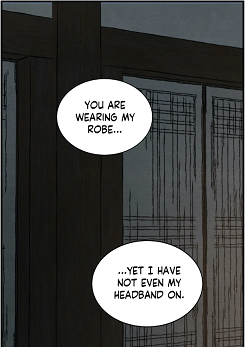 (chapter 71)
  chapter 87) and
  (chapter 36) Here, the painter was forced to take an aphrodisiac under the pretense of his health. This action was repeated in season 2
 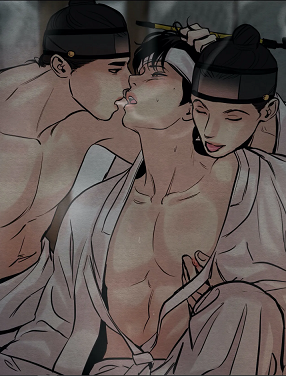 (chapter 54) and 3.
  (chapter 100) The nobles made him smoke opium or drink the aphrodisiac. The purpose of such drugs is to obtain the painter’s submission and control his mind and reactions. Striking is that each time, the perpetrators were “punished”. Kim was insulted and his plan didn’t work out.
  (chapter 37) As for the young lords, they were evicted like commoners and later the others were even killed. As you can see, each time the poison was employed, there was a retaliation.
  (chapter 47)
 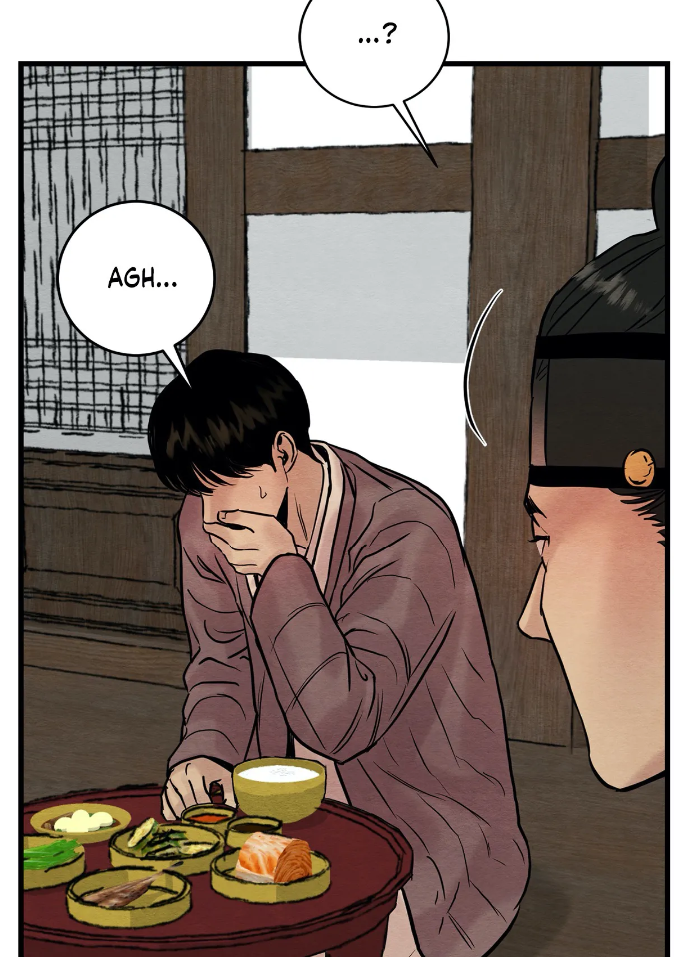 (chapter 47) If the painter had not eaten with the lord, the latter would have never noticed the incident. However, he believed the maids’ words.
  (chapter 47) Hence he never investigated the matter. But this prank represented a serious issue. This could have been judged as an attempt against the owner of the mansion.
 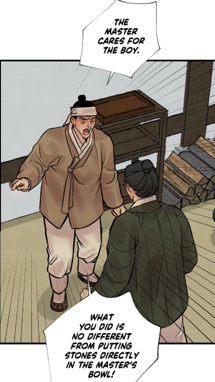 (chapter 47) And now look at this panel:
  (chapter 83) Yoon Seungho had refused to take the drug! The bowl reminded me of the one from chapter 47! Finally, the butler had tried to give his master the drug in season 3
  (chapter 77), but the latter had again rejected it and this twice.
 (chapter 77) Kim calls the drug “medicinal tea”, truly an euphemism. It is also possible that the real target of the poisoning was Yoon Seungho, but since he was protected by the gods, someone ended up taking the “drug”. Because he was wearing a purple hanbok, the investigator mistook his identity, a royal member. Hence the Yoons were suspected of treason. Don’t forget that during this party, there was a kisaeng by their side.
  Bebebisous33s' analyses in K-Dramaland and Manhwas