

This is where you can read the manhwa. https://www.lezhinus.com/en/comic/painter But be aware that this manhwa is a mature Yaoi, which means, it is about homosexuality with explicit scenes. If you want to read more essays, here is the link to the table of contents: https://bebebisous33analyses.wordpress.com/2020/07/04/table-of-contents-painter-of-the-night/
It would be great if you could make some donations/sponsoring: Ko-fi.com/bebebisous33 That way, you can support me with “coffee” so that I have the energy to keep examining manhwas. Besides, I need to cover up the expenses for this blog.
What is the common denominator between all these images? 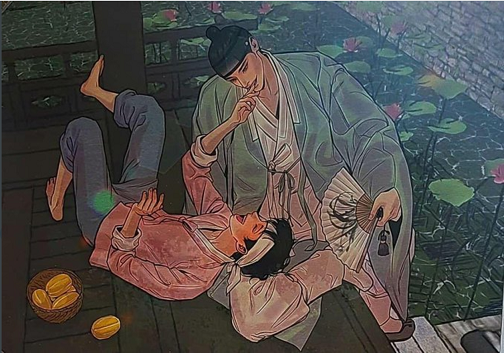

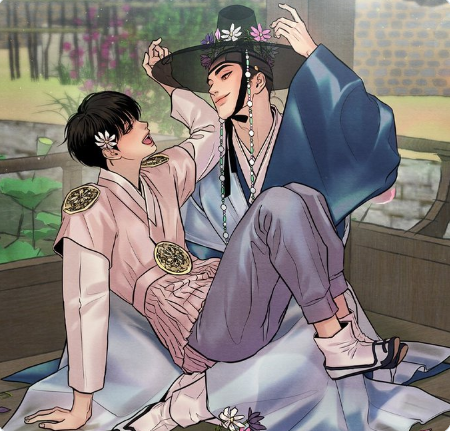

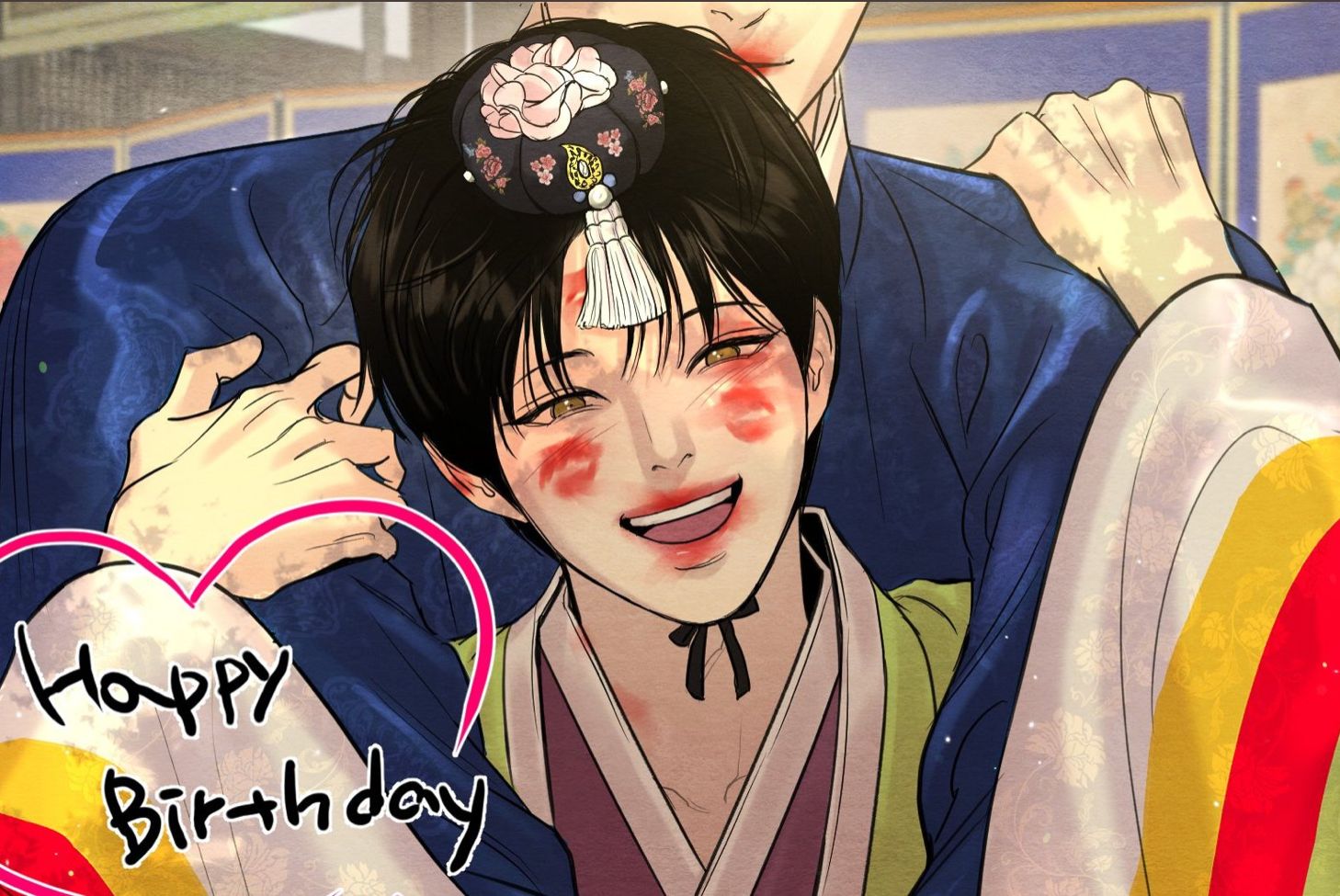 The painter’s mouth is wide open. This implies that the painter is laughing! In other words, these pictures are showing a happy Baek Na-Kyum. The laughter is not just a symbol for joy, but also an indicator for social bonding, cooperation and as such social acceptance. Note that in all these scenes, the painter is not laughing alone. He is either facing his lover and the “witnesses” of his marriage.
On the other hand, what caught my attention is that in the story itself, the manhwaphiles never saw the painter laughing in the present!! The only time, he was caught laughing happened during a dream. 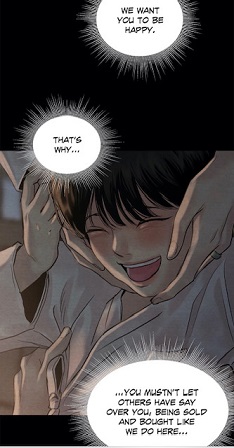 (chapter 87) Naturally, this vision reflected the past due to the presence of the noonas. But if you read my previous analysis, you are aware that the painter’s nocturne visions are always composed of three elements: memory, nightmare and desires which will come true at some point. The readers will certainly recall the painter’s wish in the bedchamber:
  (chapter 81) However, here again, this was not real, for he was imagining it. He had restrained himself, for he felt that his actual life was like an illusion. It was too good to be true. Thus I conclude that in both visions, the painter wished to laugh and as such to be happy. And this observation led me to the following deduction. In season 4, the manhwalovers will witness Baek Na-Kyum’s laughter. But this doesn’t end here. All the quoted pictures share another similarity which is the absence of the sound!! There is no HA, HA, HA…. Thus I deduce that in season 4, the readers will even hear Baek Na-Kyum’s laugh!! 🤣
1. Evidences for this prediction
First, I would like to remind my avid readers the following rules: Yoon Seungho’s actions will always be reflected by the painter’s and the reverse. Secondly, each scene in a season will be mirrored in other seasons. Striking is that the readers could witness Yoon Seungho’s joy and laugh in season 1. Thus this means that the painter should laugh in season 4. Interesting is that the author had separated the lord’s laugher in two different scenes. In episode 1, the protagonist had his mouth wide open, because he was so happy to meet his idol. 
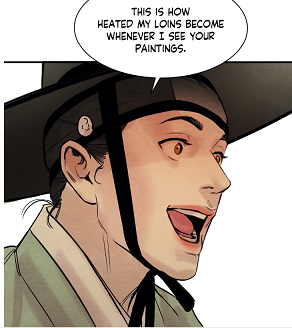 (chapter 1). His mouth was exposing his emotions: happiness. It was, as if he was laughing internally out of joy. Then in the pavilion, the author let us hear Yoon Seungho’s laugh, while we couldn’t see his face.
 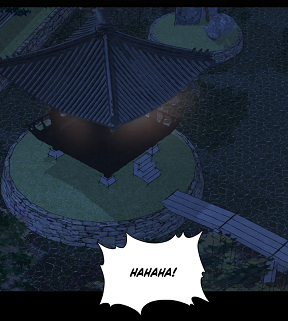 (chapter 25) As you can see, Yoon Seungho was not truly seen “laughing”. This is what we saw right after:
  (chapter 25) Either the sound was missing, or the readers couldn’t see his open mouth. Then in chapter 51, Byeonduck created an ambiguous situation.
 (chapter 51) Who was laughing here? The main lead or Min recognizable with his green hanbok? This confusion was deliberate. It was to give the impression that the lord had moved on, he was not missing his partner. This image served to divulge the reality: this happiness was fake. Another interesting aspect is that we couldn’t see the lord’s mouth, for it was too far away. It was more or less drawn from the painter’s perspective who was walking in the courtyard.
  (chapter 51) The purpose of this trick was to deceive the painter, Yoon Seungho would no longer care for him. However, this trick didn’t work out like imagined due to the maid’s words. She wished that he would remain in the mansion. But let’s return our attention to the laugher in this panel. I would even add that there was no real social bounding, for Black Heart was enjoying about Yoon Seungho’s misery and loss. He believed that the painter had died. And if it was Yoon Seungho who laughed, then this was to mask his pain. Then in chapter 70, he was caught laughing. And observe that the author separated the sound from the face:
  (chapter 70) Yoon Seungho would even hide his face from the painter, as he was looking down. His laugh was barely perceptible, and when the author revealed his face, Yoon Seungho used his hand to mask his smile.
  (chapter 70) It was, as if Yoon Seungho was not allowed to smile or to laugh at all. I would even go so far to say that laughers were actually forbidden in the mansion. Striking is that in season 3, for the first time, we could see and hear the lord’s laughter contrary to season 1 and 2..
  (chapter 78) This illustrates the progression of the lord’s healing. He was getting happier, and he would interact more and more with people. Yet, in this scene, the lord’s laughter was not loud contrary to the one in the pavilion. Then in the gibang, his laugh was also fake, for he was masking his pain.
 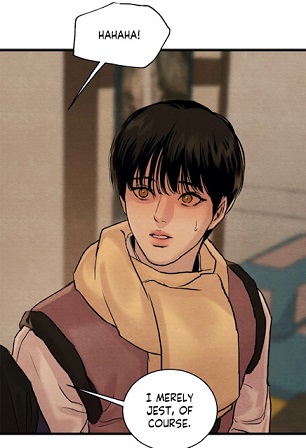 (chapter 93) Thus the author didn’t let us see his mouth once again. But the painter could see the difference between a sincere laughter and a fake one, as he had already heard and see the lord’s true laugher! Because the lord laughed in all 3 seasons, I could only assume the painter’s laughing in season 4. But I have another proof for this prediction. In season 3, the painter’s laughter was shown in visions (chapter 81, 87) or through the testimony of the maid.
 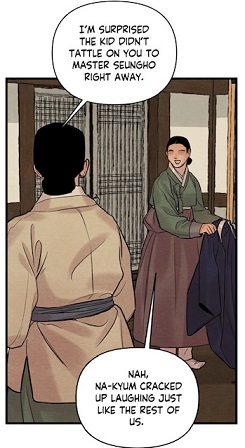 (chapter 91) However, the manhwalovers have to envision that, when he caught the pervert with the maid together, he was totally embarrassed. Hence his laugh was fake! In other words, I am doubting that he truly laughed. That’s the reason why Baek Na-Kyum denied to find the situation funny.
 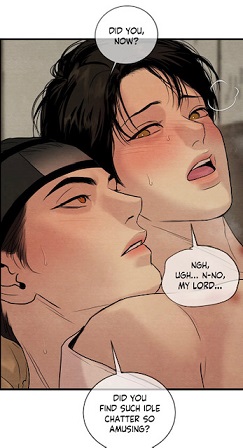 (chapter 91) As a conclusion, expect a picture with Baek Na-Kyum ‘s laughter reflecting his happiness and sincerity. And this is definitely related to his marriage: I have another proof for this expectation, the lord’s mouth in this scene:
 (chapter 87) Here, he was making fun of his father, and used the rumors about his imminent marriage. That’s how I realized that in season 3, the lord had often played the role of the Joker (chapter 78-79; 87; 89-90-91), until he was replaced by Black Heart. That’s the reason why I have been predicting that in season 4, Yoon Seungho will play a huge prank on the old bearded men, especially the mysterious lord Song, with his marriage. But while making this connection between the lord’s laughter and the painter’s, I had another revelation: the mouth wide open is not just the expression for laughter, but also for fear and suffering.
2. Anxiety and torture
Look at this image:  (chapter 102) There is no HAHA, this shows that this situation is not funny. Yet, Black Heart is still smiling, he is even explaining that they were just playing. However, this smile is totally fake, for he is already scared. Hence he is stuttering. Moreover, he is trying to downplay the whole situation, as he describes it as a game. But the closer Yoon Seungho got to him, the more the villain got scared.
 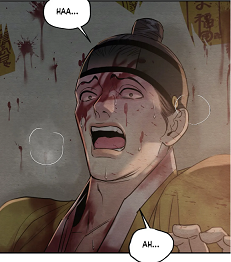 (chapter 102) On the other hand, Black Heart’s mouth remained wide open, but it slowly exposed his true emotions. As the manhwalovers can detect, the sound “Haa,” is not expressing joy or happiness, but huge anxieties. Thus I couldn’t help myself thinking that in season 4, the painter’s laughter will be reflected with the heavy breathing from fear and pain. Someone will have a mouth wide open out of fear!! And this connection was already present in chapter 1: (chapter 1) versus
  (chapter 1) Baek Na-Kyum and Yoon Seungho had both flashbacks
  (chapter 66), while Min was smiling. He was internally laughing, for it found it entertaining. [For more read the essay HAHA Flashbacks”] And this fear was exposed by the sound: HAA
 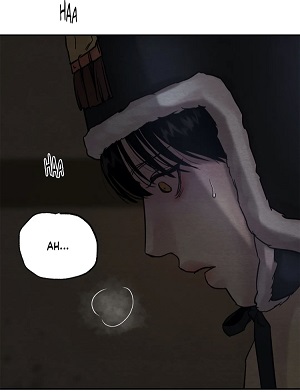 (chapter 99) But this doesn’t end here.
The sound HAA is just associated to anxiety, but also to moan. Hence I couldn’t restrain myself thinking that the wide open mouth can not only express pleasure, but also pain caused by TORTURE! Let’s not forget that the painter had been hiding his moaning out of pleasure in the past 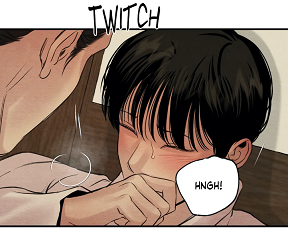 (chapter 84), but in the gibang, he dropped this habit for good: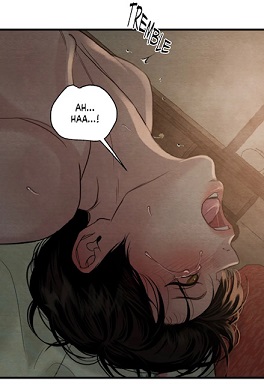
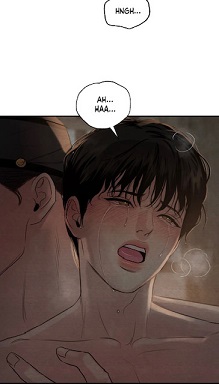 (chapter 96) This connection between pain, pleasure and laughter appeared in chapter 91, as the story is based on the following rule: there is always a reflection within the same episode. I would like the manhwaphiles to observe this image:
 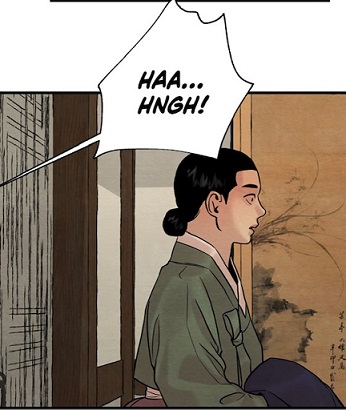 (chapter 91) Here, the lord had changed position provoking pleasure to the artist. Before, the maid had laughed so loudly in order to get the painter’s attention.
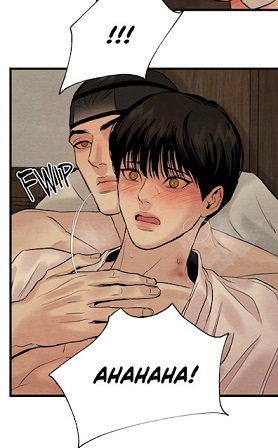 (chapter 91) According to my interpretation, she hoped that Baek Na-Kyum would discover the existence of the kisaeng’s letters so that the painter would feel betrayed by Yoon Seungho. He had ordered to hide the correspondence. But for that, she needed to explain the reason for her loud laughter. Hence she revealed the incident with the pervert. The irony is that due to his pleasure and embarrassment, Baek Na-Kyum didn’t pay attention to her words. He already felt ashamed, after the servant had exposed the situation in the bathroom.
  (chapter 91) Thus he avoided his lover’s gaze. And note that in chapter 25, the lord laughed, before he raped the painter.
 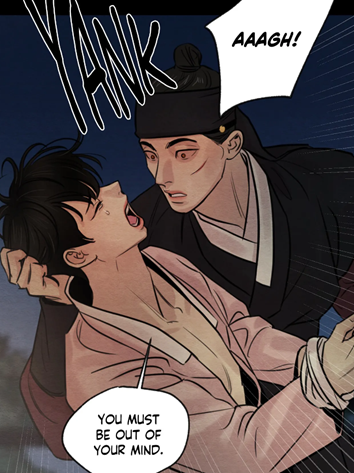 (chapter 25) This episode exposes the connection between laugh and pain. Here, you can see that the painter is also screaming out of pain, the negative reflection of Yoon Seungho’s laugh. Baek Na-Kyum’s mouth was wide open. When people are tortured, they will usually scream their pain and fear.
The last image is taken from Dong-Yi, a historical k-drama, which I am employing as a reference. The beholder can detect a huge difference between this scene  (chapter 37) and the one from Dong-Yi. The absence of the sound. Moreover, the manhwalovers can not see the mouths from the victims either. The torture was already finished, for they had removed the tools and the „suspects“ were covered with blood. And this leads me to the following observation. The author selected a perspective from far away, and didn’t add the sound on purpose. This shows that the pedophile was not present, when the torture took place. He only arrived afterwards. This exposes his cowardice. Secondly, since I had outlined that the author had separated the sound (HA HA) from the lord’s mouth concerning the laughter, I am quite certain that she will use a similar processes for the torture. Naturally, I am also assuming that torture from the past could be slowly revealed. Consequently, my prediction is that the negative reflection of the painter’s laughter will be the yelling combined with fear and pain. This signifies that people will suffer in season 4 and probably die. Another evidence for this prediction is that the author often focused on the characters’ mouth. And this is what we have:
  (chapter 77)
 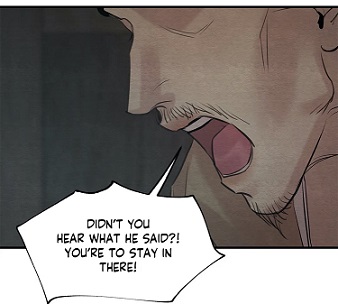 (chapter 86)
  (chapter 98) In the last scene, Heena was sort of “punished”, when she confessed to the main lead. That’s the reason why I believe that in season 4, we will see people screaming out of pain and fear. It can be in the present or in the past. The interrogation and torture should be exposed in my eyes contrary to chapter 37. Why? It is because Baek Na-Kyum needs to know what happened to Yoon Seungho to understand him. There is no ambiguity that the painter will suffer again, for in this work “pain” is necessary to change the painter’s mind and heart. Remember that he was “tormented”, when he finally admitted that he believed in his lover’s innocence.
 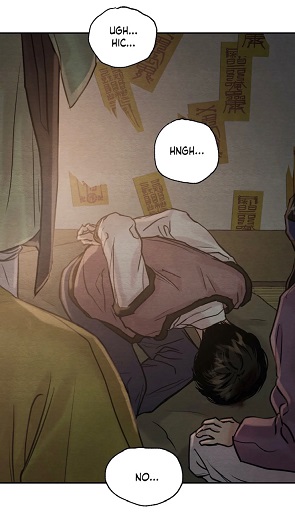 (chapter 99) Despite the “torture”, he still claimed that Yoon Seungho was no murderer. Thus I conclude that in the next season, it should be the reverse. Yoon Seungho has to make a new leap of faith believing in the painter’s innocence and purity. Hence I am expecting an arrest in season 4. Finally, we shouldn’t overlook that each word Yoon Seungho said became the truth, so when he stated this
  (chapter 65), he was already warning the sister. She could face human justice. However, this idiom suddenly caught my attention: “the wrath of humans”. It can be a reference to the authorities, but also to the inhabitants. The latter could get infuriated by the police work and put the officers under pressure or in the worst case, the inhabitants could decide to do their own justice: lynch mob. According to me, many commoners died in season 3. Hence this could upset the town folks who would ask for real justice. And if Yoon Seungho’s fiancée is acknowledged by them, then it will be impossible for the pedophile to use the authorities to achieve his goal, separate the couple and hide his own crimes. Thus his last puppets will have to take the fall. Another important aspect is that when Yoon Seungho warned the kisaeng, Kim was also present, though he still remained in the background.
  (chapter 65) As you can imagine, I am already sensing a bad ending for Heena and Kim. Striking is that in this scene, while the noona was seen constantly with her mouth wide open, yelling at the host and calling for her brother, the latter was having a flashback. This is no coincidence, especially if you recall that Heena was connected to Baek Na-Kyum’s tears:
  (chapter 68)
 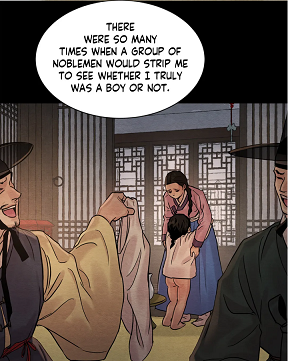 (chapter 94) In fact, this reinforces my conviction that the painter’s laughter will be contrasted with people’s moaning and yells out of agony. At the same time, I think that Heena is connected to scandal, but in season 2 and 3, she failed to create a ruckus. Why? It is because in the past, she had helped to cover up the crimes committed in the kisaeng house.
3. Conclusions
Under this new perspective, the manhwalovers can comprehend why I used the following emojis in the title: 😄😧 Both of them have a open mouth, the only difference are the eyes. Out of fear, the eyes get bigger, because the body is in survival modus.  On the other hand, when these persons got tortured, they closed their eyes out of agony,
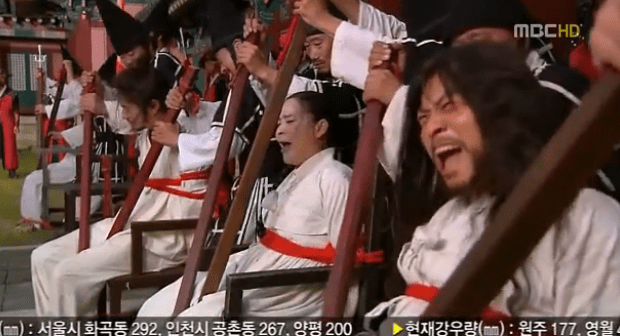
reminding us of the painter’s suffering in the gibang. Yet, the closed eyes and the open mouth is quite similar to the painter’s laughter: The readers can grasp why I made this connection between suffering and happiness in the end.
Feel free to comment. If you have any suggestion for topics or manhwas, feel free to ask. If you enjoyed reading it, retweet it or push the button like. My Reddit-Instagram-Tumblr-Twitter account is: @bebebisous33. Thanks for reading and for the support, particularly, I would like to thank all the new followers and people recommending my blog.

 (chapter 1)
  (chapter 36) In addition, after realizing that each location is associated to a certain event in the past, I came to the conclusion that the inn represents no exception. Hence the tavern is full of symbolism too.
 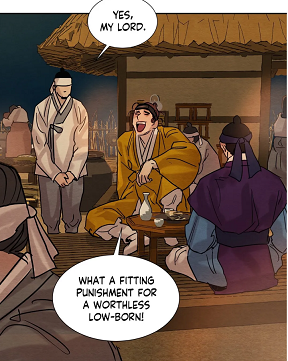 (chapter 12) In episode 36, we have Min, Lee Jihwa and the noble with the mole.
  (chapter 57) In episode 59, the tavern owner asked No-Name to take away Lee Jihwa
 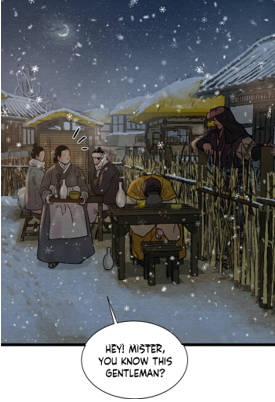 (chapter 59) And in episode 92, Black Heart joined the couple
 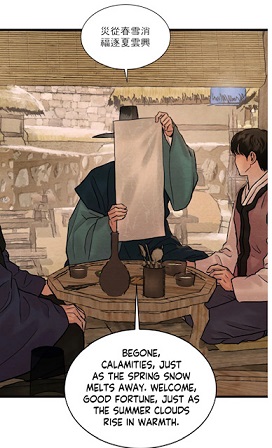 (chapter 92). The only exception seems to be the scene in chapter 75:
  (chapter 75) However, this is just an illusion, for the ghost Jung In-Hun was present. And even before, the painter kept thinking about Heena noona. As you can see, the painter’s words were influenced by his “surrogate parents”, the third party. But let’s return to the major parallel: the confession leading to a rejection.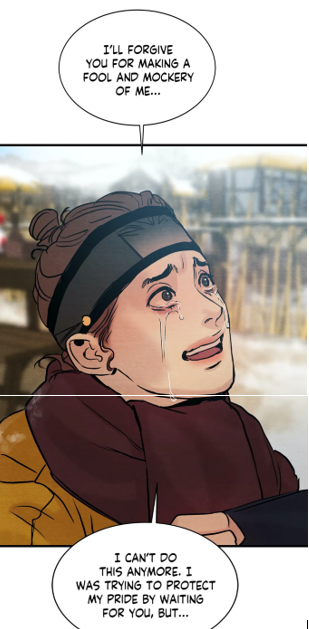
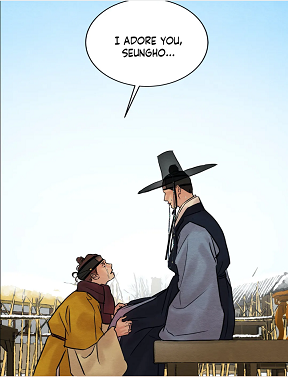 (chapter 57) Though Yoon Seungho had punished his friend for his forged letter, he still listened to his confession before rejecting him properly. He gave an explanation why he would never reciprocate the affection towards his friend.
  (chapter 59) What caught my attention is that Lee Jihwa perceived the rejection as abandonment, while in truth the protagonist was not truly cutting ties with him. The real traitor was someone else: the noble with the mole, who ran away, when Yoon Seungho confronted his friend.
  (chapter 57) In that scene, the young master Jihwa had drunk before the arrival of his friends, though he was in full possession of his mind.
  (chapter 56) As you can detect, in this scene, the author employed the following elements: confession, sanity, tears, sadness, rejection, alcohol and abandonment.
  (chapter 75) He was heartbroken due to the loss of his passion and his loved one. At the same time, he was plagued by guilt. He felt responsible for Jung In-Hun’s failure. This is important, because it shows that guilt is another common denominator. In chapter 57, Yoon Seungho was guilty for the antagonist’s suffering.
 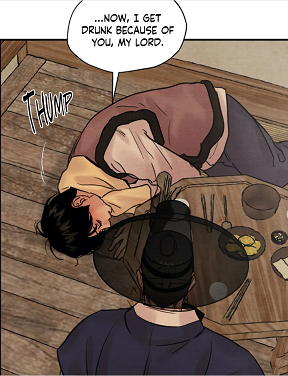 (chapter 75) Why? It is because he was also rejecting the lord. He couldn’t give him his heart, for the lord had such a fickle nature.
 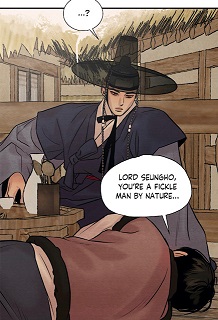 (chapter 75) He was responsible that the painter wouldn’t get close to him. He was judged as not trustworthy. At the same time, the painter’s confession in the tavern mirrors that Baek Na-Kyum was not delirious. Despite the influence of the drug, he could think and speak properly about his feelings and thoughts, similar to Lee Jihwa in chapter 57. To conclude, in season 2, the commoner and the red-haired noble were not stoned during their confession, which stands in opposition to the First Wedding Night::
  (chapter 21) And this common denominator reinforces my theory that when Yoon Seungho got kissed in the study, he was not in full possession of his mind.
  (chapter 77) As you can see, the drug is not only strongly associated to rejection and broken heart, but also to delirium and insanity.
  (chapter 92) Min was voicing his longing for Yoon Seungho, he was implying that he had been abandoned by the protagonist. However, note that the lord utilized water to reject Black Heart!
 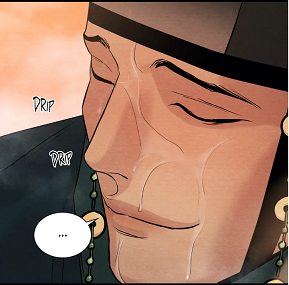 (chapter 92) It was, as if the noble was now crying. The water was displaying the hypocrisy of Min, the “fake tears”. He was not missing the main lead at all, in reality he was yearning for the painter’s gaze. Thus he expressed this in the shaman’s house:
 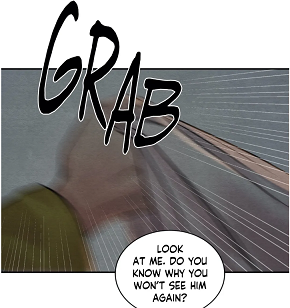 (chapter 99) Striking is that when the lord with the green hanbok complained to his acquaintance, he was also acting as if he was guilt-tripping Yoon Seungho. According to his words, the protagonist had abandoned him. It was, as if he had completely forgotten him.
 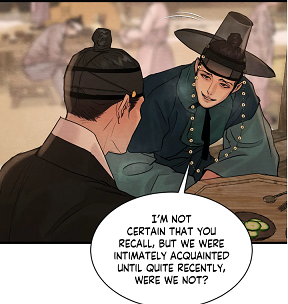 (chapter 92)
  (chapter 92) It was, as if he wanted to bring him back to reality, similar to this gesture:
 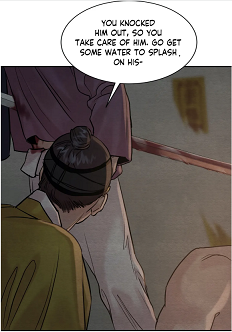 (chapter 102). He explained Black Heart’s attitude with the alcohol. Due to the liquor, Min had become insane and obscene. He was speaking about sodomy in a public place. Striking is that the Joker was portraying himself as a man consumed by lust. He needed the lord’s phallus to feel good. That’s how I detected another similarity: the presence of sex and sensuality in the conversation!
 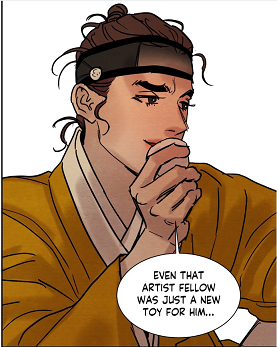 Here, the idiom “toy” was implying sex, though the main characters had not sex together yet.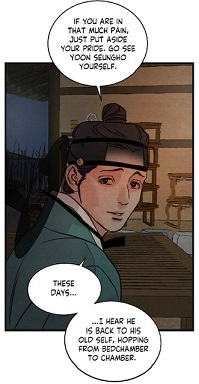

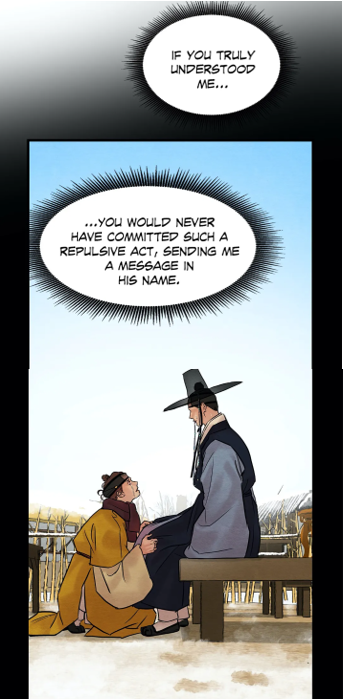
 (chapter 74) As you can see, Baek Na-Kyum was craving for sensuality. But he couldn’t voice it like Min! He was paying attention to social norms.
  (chapter 36) He kept crying, as he couldn’t bear the separation. At the same time, he explained his weeping with the main lead’s past. He was a pitiful creature, for he suffered a lot. Indirectly, he was comparing himself with the main figure. He had gone through a lot too.
  , (chapter 57) On the other hand, with this blame, Yoon Seungho was constantly reminded of the pedophile, lord Song. Thus Yoon Seungho replied this to the antagonist:
  (chapter 56) And observe that Kim never doubted the authenticity of the encounter.
 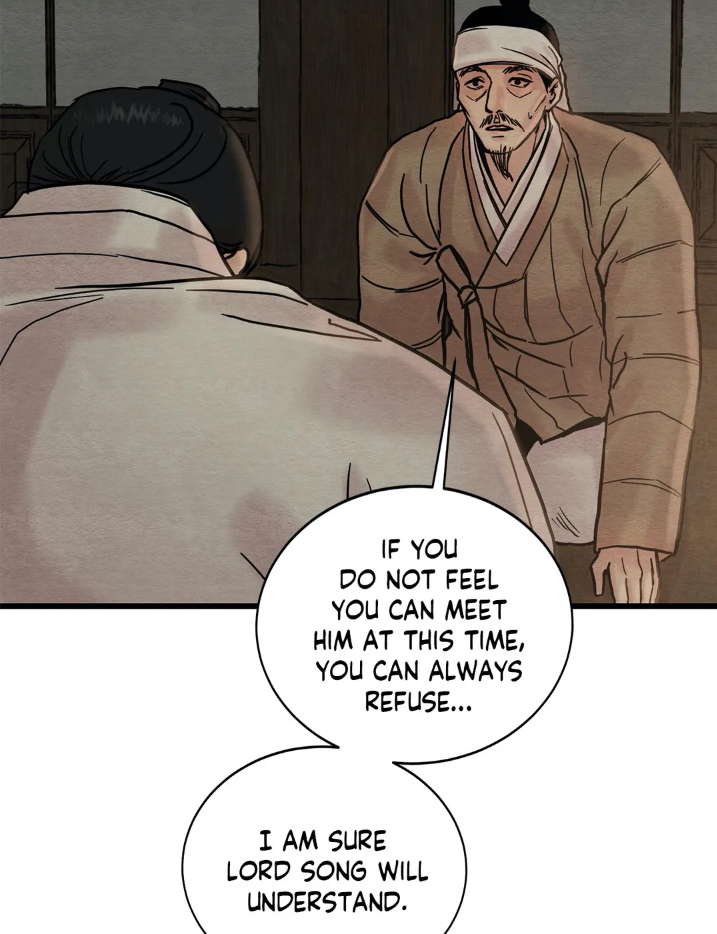 (chapter 56) This signifies that the pedophile must have gone there in the past. 😮
 (chapter 18)
  (chapter 14), whereas in verity, this passion was essential and even vital for Yoon Seungho. In his subconscious, the lord sensed the healing effect. This would make him smile and provoke emotions and arousal!
  (chapter 1) There was no witness for these reasons. No one should notice the execution of the commoner Baek Na-Kyum. Secondly, the book had been switched. The lord had shown this to the butler
 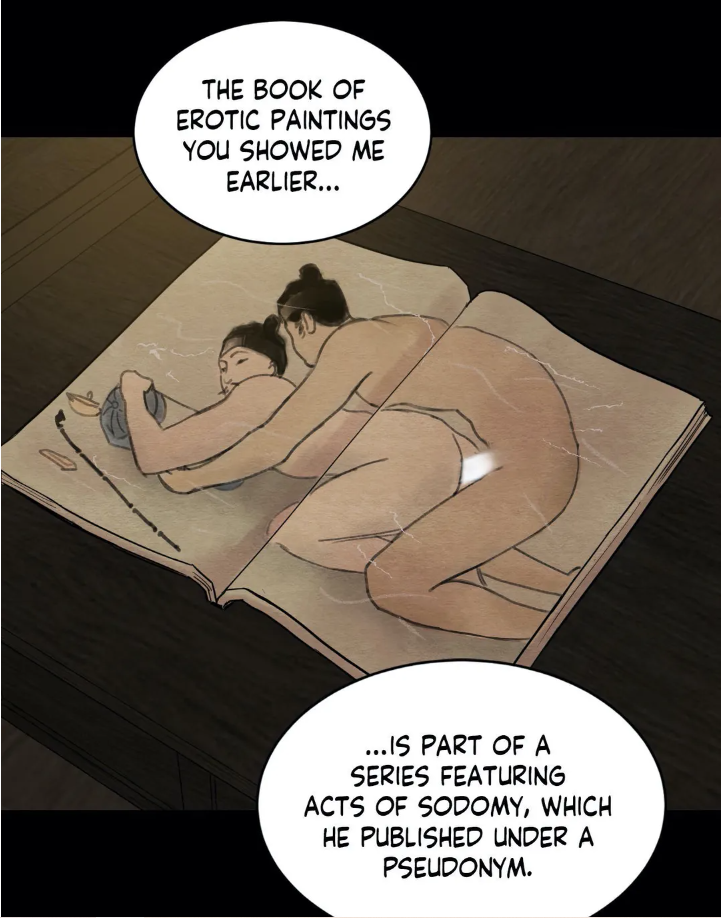 (chapter 1), but when Yoon Seungho interrogated the artist, he exposed a different publication:
  (chapter 1) It was, as if the painter was forced to deny to be the author of this book. There is no ambiguity that the servant had lied to Yoon Seungho, just like the painter was not entirely honest with Yoon Seungho. In my eyes, the painter had not noticed the divergence. As you can see, the meeting was staged. Unknown people were involved in this encounter so that we could say that the protagonists were just pawns during this scene.
 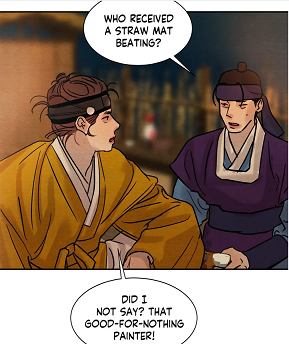 (chapter 12) The drop of sweat on his face clearly indicates that he was just feigning ignorance. This exposes that the noble with the mole was deceiving his friend and as such betraying him.
 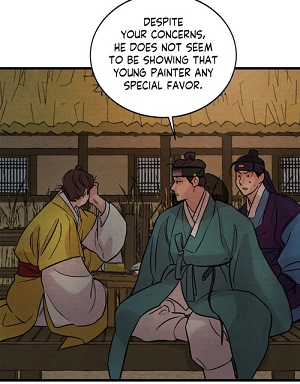 (chapter 36) He was inciting the antagonist to return to the mansion so that he would catch the couple having sex together. That’s the reason why Black Heart made such a comment in the pavilion of his friend:
 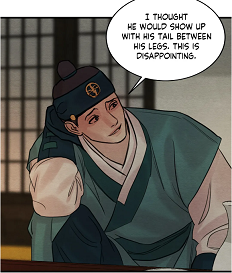 (chapter 43) Yet, this trick didn’t work like Black Heart had anticipated. Why? He imagined that the red-haired noble would resent his friend for his abandonment and betrayal. The reality is that the antagonist reproached The Joker for his lies, he had been manipulating him.
 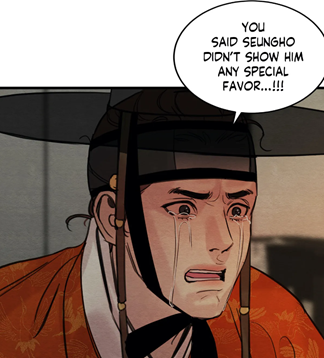 (chapter 43)
  (chapter 59) She wished to get rid of him as soon as possible. Thus she asked the Joker to take care of him.
  (chapter 92) However, he had been informed about the content of the paper, for he could already determine the genre of the text without seeing the writing. At the same time, he also deceived the couple by taking away the Spring poem.
 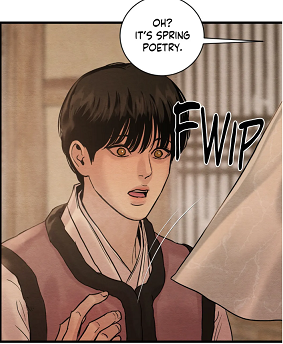 (chapter 92) We never saw him returning it. As for the second trickster, it was naturally Kim who hid under the hanbok which had a similar color than Jung In-Hun’s.
  (chapter 92) He desired to remind the painter of the existence of the scholar. However, this trick failed too. Why? It is because just before the painter had seen a kisaeng wearing the same robe.
 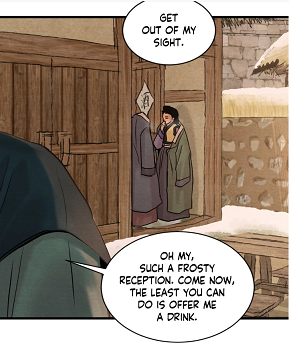 (chapter 92) He was just reminded of his noonas, and not just Heena and Jung In-Hun. Furthermore, the butler had overlooked another aspect: Yoon Seungho had been wearing a similar hanbok.
 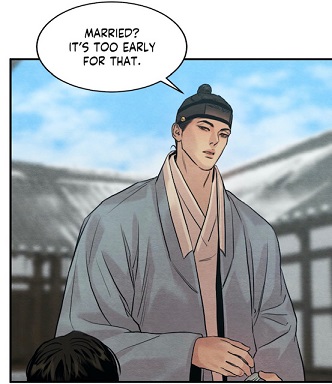 (chapter 78) This means that the painter was no longer associating the lavender color to the learned sir. Slowly, the main lead was replacing the teacher and as such, he was moving on from his crush. Thus such an attitude could be perceived by a malevolent eye as indifference and hatred. My avid readers can already understand who I am referring to with such a statement. However, we are all aware that the painter is still loyal towards the learned sir.
  (chapter 94). Nevertheless, I would like the painterofthenight-stans to take a closer look to this image:
 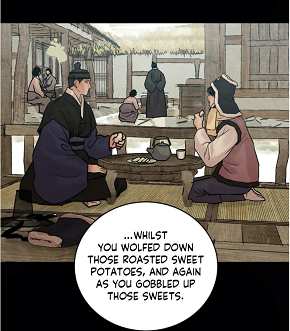 (chapter 92) Yes, the couple was sitting in an inn eating sweet potatoes. When I saw this panel for the first time, the man in black caught my attention. His presence puzzled me, for he was standing next to a kisaeng working in the inn. This is totally unusual, for no noble would remain immobile close to the fire place and as such the kitchen. Secondly, he was not wearing his gat, indicating that he was violating social norms. [For more read the essay Coming-Of-Ages] Back then, I had thought that this was the scholar. However, the latter would always pay attention to his appearances. Moreover, he embodies social norms, so he would never move around without his hat. Was he a Joker spying on the couple? For me yes, especially if you take into consideration that there were always 3 people in each scene taking place in the inn. One thing is sure: Min had been informed about the painter’s desire for a Spring poem and his visit to the calligrapher. This means that during their stay in the tavern, the painter had talked constantly about this. So the kisaeng could have heard about the content of their conversation. One might argue that this stay stands in opposition to the other scenes. In this inn, there was no tear, no alcohol and no “betrayal”. But the manhwalovers shouldn’t forget that during that scene, the lord was actually rejecting the suggestion of the painter. The former saw no reason why they should look for the calligrapher!! Yoon Seungho was on the verge of breaking his promise, a “betrayal”. The irony is that he was so annoyed by the painter’s words, that at the end he gave in.
 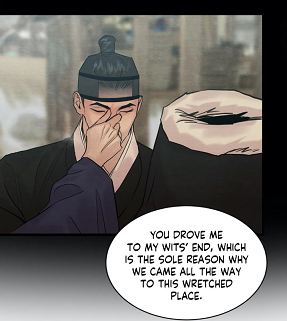 (chapter 91) He was on the verge of losing his “sanity”😉, for the painter kept talking how important it was to protect from bad luck! As you can see, this scene is not different from the others: insanity, longing, trick, betrayal and rejection! The absence of tears and alcohol is easily explainable. The painter was not heartbroken, he just saw this as a necessity. Furthermore, this scene made me realize that the tavern is connected to arts. In almost all the mentioned chapters, the characters implied the erotic publications or arts. The spring poem is compared to a drawing by the painter, the calligraphy reminded him of snow flakes. Once again, the exception of this element is chapter 36! Here, Black Min and Lee Jihwa were only referring to sex and nothing more.
  (chapter 36) From my point of view, Lee Jihwa was aware that his friend had been forced to renounce on his passions. Thus he said this:
 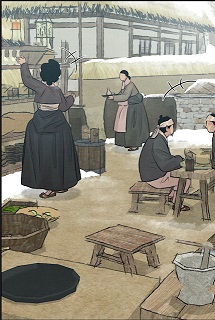 (chapter 74) I had already explained in a different essay that in chapter 75, the painter had been thinking about his noonas and in particular about Heena, because he had seen the kisaeng. Thus he kept thinking about his sister’s words:
 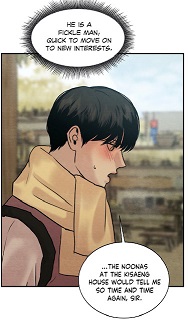 (chapter 75) However, observe that in chapter 92, he was so focused on the Spring poem that he didn’t see the kisaeng in this tavern.
 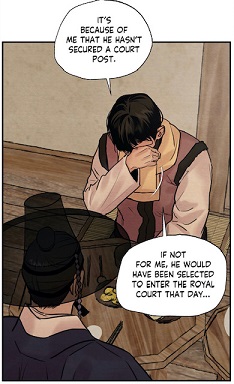 (chapter 75) As for Black Heart, he got insulted in the tavern. He was splashed with water. And what did the noble with the green hanbok reply to this insult? He announced that he would seek revenge on Yoon Seungho
  (chapter 92) Lee Jihwa was also full by resent and revenge, when he realized that the lord had made love to the painter after he had been rejected.
 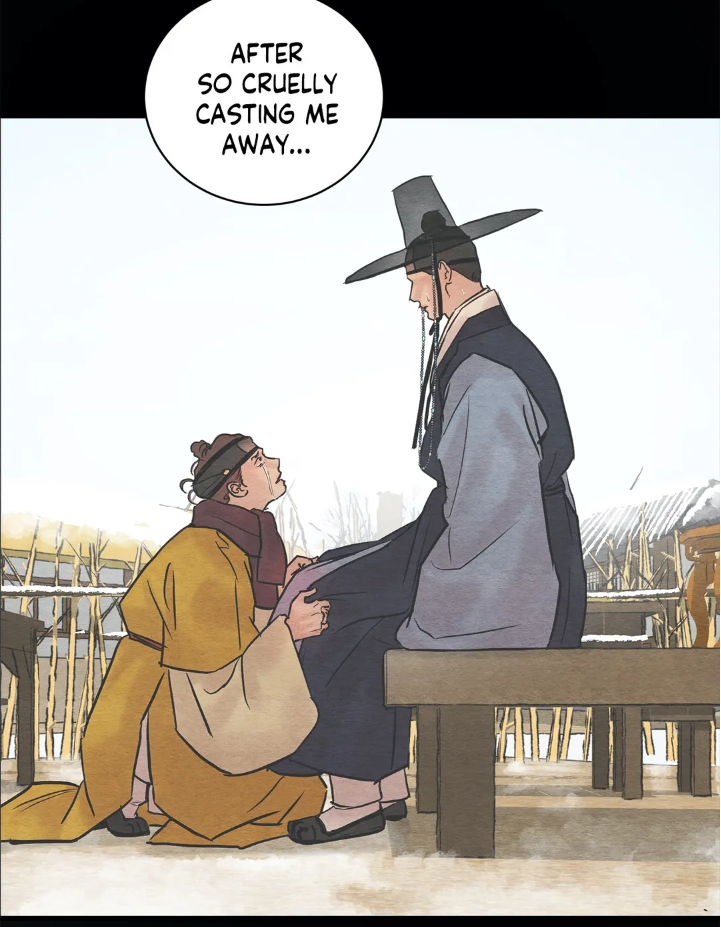 (chapter 60) Thus shortly after, the young man had a weapon in his hand (though according to me, this tool was placed by Kim)
 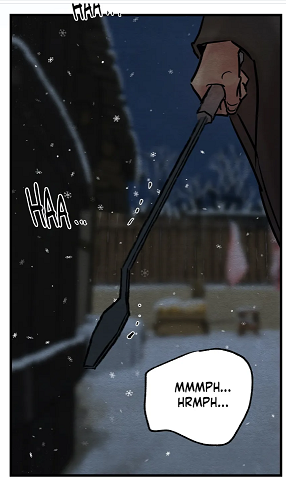 (chapter 60). His intention was to kill the painter, though here he was just acting on affect. As you can see, the inn is in reality connected to a crime, and the desire of revenge! Don’t forget what Yoon Seungho said to the messenger:
 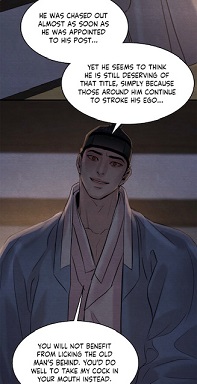 (chapter 80) According to his words, he had insulted the king by not utilizing the correct title. BUT we shouldn’t take this declaration as face-value, for the main lead is just repeating what he has been told. I have always said that the pedophile had been motivated by revenge and lust. The latter had been humiliated! Now, for the first time, I see a strong connection between the tavern and the wrongdoing linked to the mysterious lord. But what is the common denominator between all these scenes? CONFESSION! In chapter 1, Yoon Seungho confessed his admiration for the artist. In chapter 36, Lee Jihwa admitted the existence of a secret and his friend’s torment. In chapter 57 and 75, both ukes confessed their love (the main lead and painting). On the other hand, confession has a different meaning: admission of a crime! Thus I am suspecting that “lord Song” got rejected in this place. Thus he felt humiliated and his thirst for revenge took over. And it is related to arts!!
 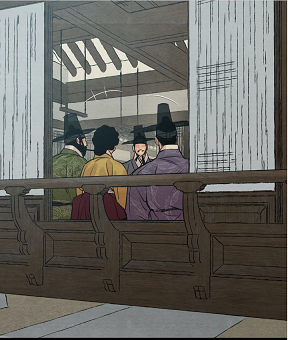 (chapter 83) This reinforces my conviction that lord Song visited the tavern once.
 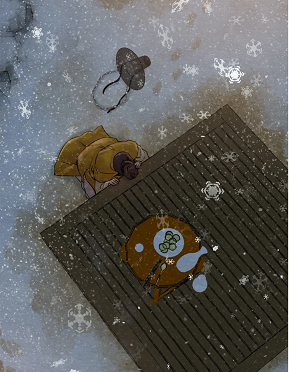 (chapter 59) Then in chapter 75, we should consider Baek Na-Kyum as a servant due to his clothes.
  (chapter 75) And now, if you take into consideration that the servant from episode 1 and 12 were acting on Kim’s behalf, you will realize that the servant in the past can only be KIM. And he was present in episode 92.
 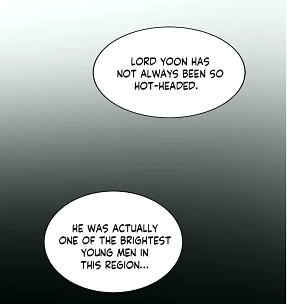 (chapter 57) This incident mirrors the past, the only difference is that the main lead was totally innocent contrary to Lee Jihwa, who had been partially responsible for his friend’s suffering. Under this new perspective, it becomes understandable why the author would start the story more or less in the tavern. But since the place is associated to sanity versus insanity (losing the wits), I am suspecting that the “wrongdoing” from the patriarch never deserved such a “punishment”. This sentence was out of proportion.
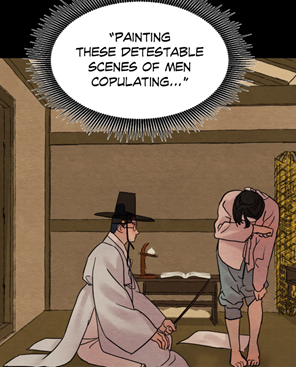 (chapter 34) Technically, he could paint other things (plants, animal etc), like in his childhood. Hence I have the impression that he had been pressured to become a painter of erotic paintings… the former version of season 1. And for me, Heena was behind this. Yet, the painter confessed in the tavern that he could no longer paint.
  (chapter 23) before drawing the orchid!
  (chapter 1) and the element “confession” which is associated to crime. Back then, there was no witness and this scene took place during the night. No ruckus!! People in Joseon were not allowed to walk during the night due to the curfew. This stands in opposition to these scenes: it was not too late, thus the tavern was not closed yet
 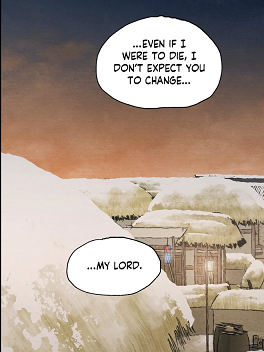 (chapter 75) Finally, I believe that this scene in the tavern is linked to Kim, he will report the painter to the authorities. However, this night won’t end like a nightmare, for the circle is about to get closed, the end of ouroboros, the circle of revenge and hatred!! .
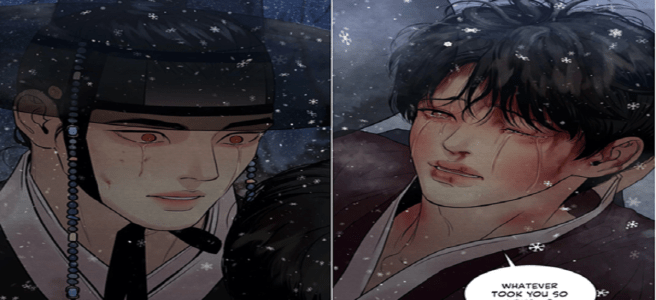

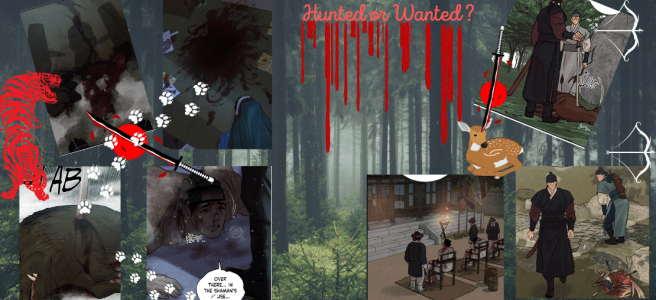


 (Chapter 73)
 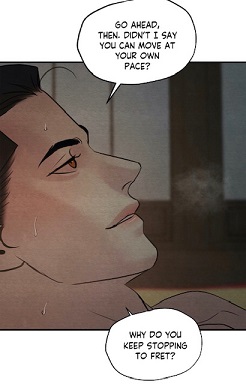 (chapter 73) This is important, because the manhwalovers can sense a connection between sex and hunt. This means that the love session in the bedchamber from season 2 should be perceived as a new version of a hunt. And this link between sex and hunting was also present, when Yoon Seungho and Min were in the woods in chapter 41:
 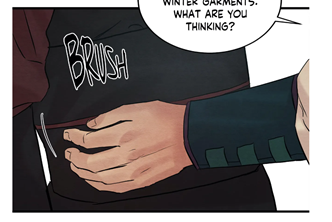 (chapter 41) In this scene, it looked like Black Heart was trying to make a move on Yoon Seungho, while in truth Min was more obsessed with the painter.
  (Chapter 41) The expression „spot“ belongs also to the semantic field of chase.
 (Chapter 11) A murder disguised as an accident, the scholar would have been eaten by a tiger. What caught my attention is that No-Name requested from Deok-Jae that he should make the painter leave the mansion.
  o (chapter 51) It was, as if the rabbit had been chased away from its burrow or the deer had been forced to leave the woods. That way, he would become an easy target for the hunter and butcher Mumyeong. To conclude, we had two hunts in season 2 as well.
  (Chapter 99) First, he was rushing, but the moment he received the crucial tip from his childhood friend, he approached the den silently, just like a tiger. That‘s the reason why neither Black Heart nor lord Jang nor lord Park detected his presence.
  (Chapter 101)
 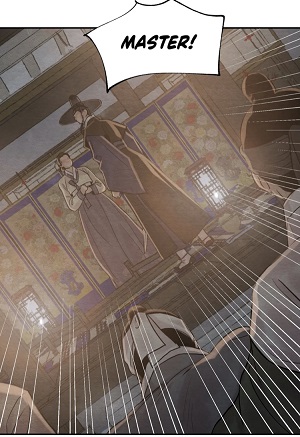 (chapter 99) and Lee Jihwa
 (chapter 100), hence he had not the time to question the veracity of their claims or sense their manipulations. On the other hand, he could detect the difference between the blood in front of the scholar’s house and inside the building.
 (Chapter 100). He was following his instincts. Tigers cautiously stalk their target from the rear in attempt to get as close as possible to their unsuspecting prey.
  (chapter 102)
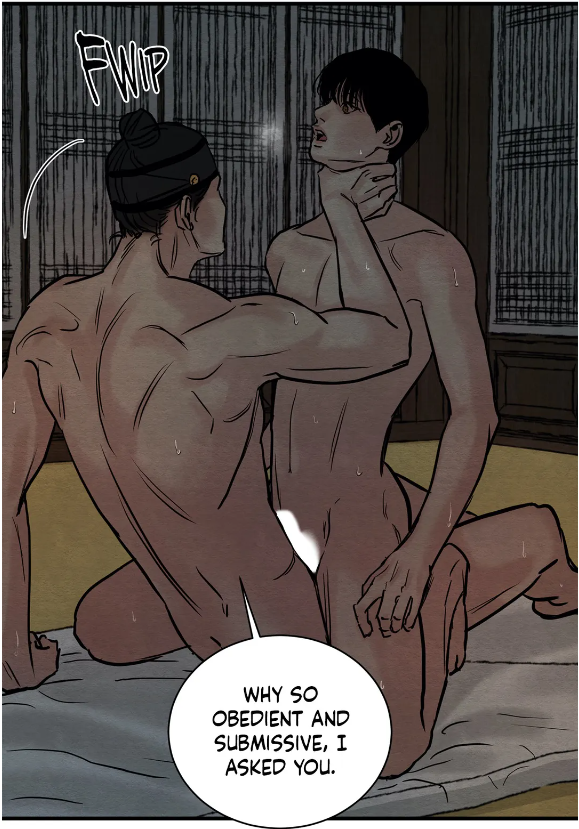 (chapter 48) or the chin
  (chapter 83)
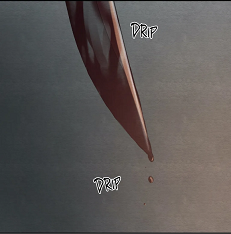
 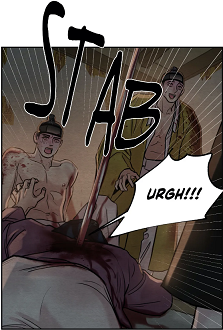 (chapter 102) Even in this panel, the sword resembles a lot to the tiger‘s fang:
  (chapter 102) Another important element is that this predator usually targets large-bodied preys like boar, deer, humans and not rabbit or pheasant. Under this new light, it becomes comprehensible why the main lead went after a boar or the aristocrats in season 3.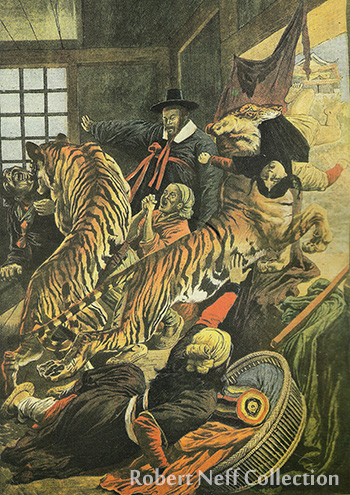
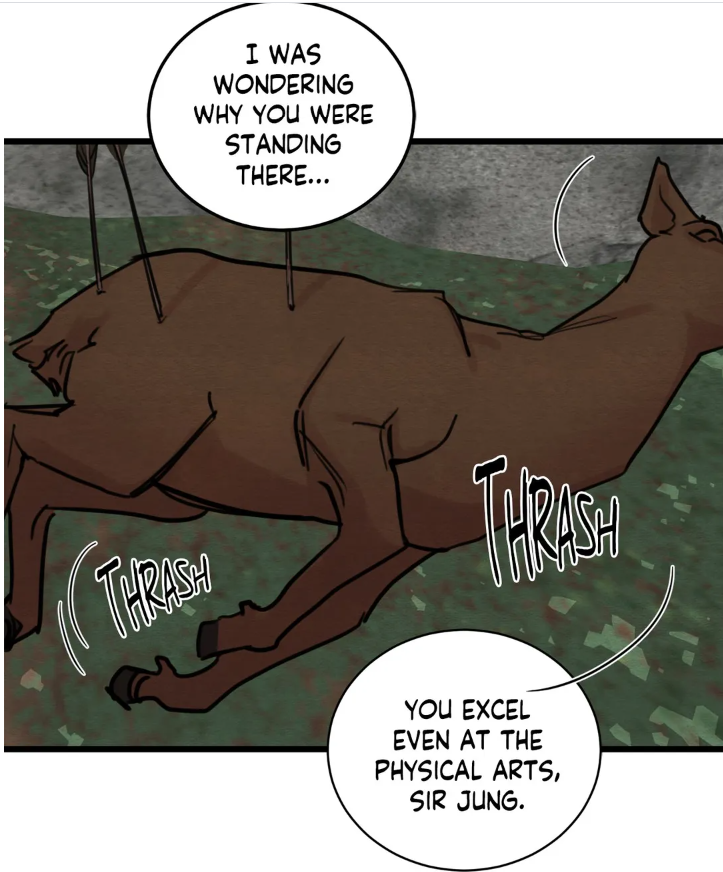 (chapter 22)
 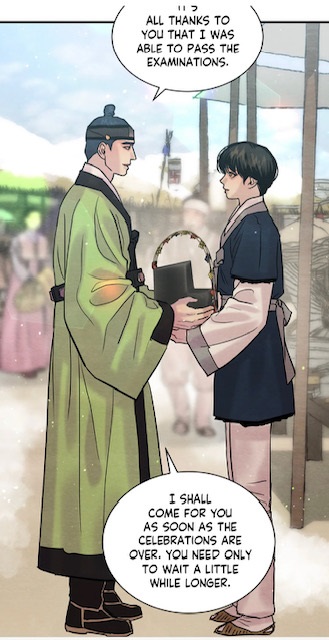 (chapter 111) than the killer in the woods
  (chapter 103), it looks like the learned sir chose to drop his own principle. And if this theory is true, then I come to the conclusion that the learned sir chose to copy the protagonist thinking that he could get away with it.
 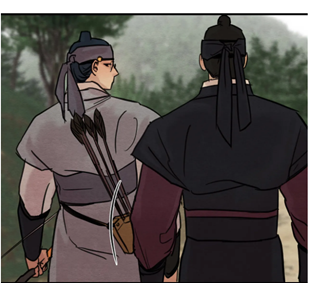 (Chapter 22). And when Black Heart suggested the artist’s assassination, he always kept laughing, making it sound like a game without any terrible consequence.
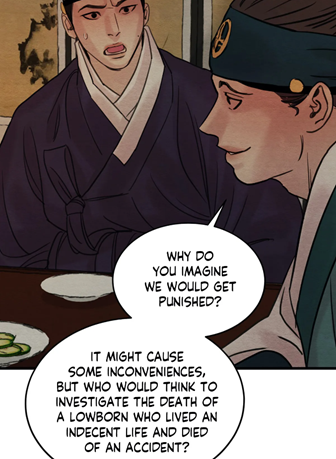 (Chapter 43) Lee Jihwa would remove a witch, and not a human.
  (chapter 43) Only Nameless painted it in all its cruelty and brutality. Not only the person would lose his life, but he would lose his identity.
 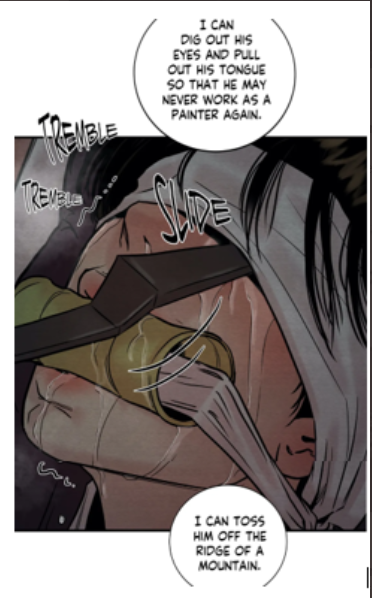 (Chapter 60) By removing his eyes and tongue, the victim’s face would change making him impossible to be recognized. And note that his scarf and headgear had been removed as well. It was not a game, but a deadly matter. Why would he do such a thing? The reason is simple. If no one could identify the victim, there would be no investigation. Astonishing is that hunt is a synonym for investigation and prosecution. Hence I am deducing that in season 4, the investigation should be perceived a new version of the hunt, a new version of this scene.
  (chapter 83) Thus I am deducing that this chase had been suggested to the main lead in order to release his tension and as such in order to divert his attention from the painter. Naturally, Kim was behind this idea faking his concern for his master. The hunt was supposed to procure pleasure to Yoon Seungho, but it couldn’t, because he was afraid of losing the painter. This explains why he selected the boar as his prey. He was fearless in front of that dangerous animal, for it meant nothing to him. He didn’t mind losing his life… revealing his suicidal disposition which resurfaced later, when the father mentioned the authorities.
  (chapter 86)
  (chapter 86) But the moment the servant reminded him to pay more attention to himself
 (chapter 83), he abandoned the boar immediately. This shows that all this time, Baek Na-Kyum had been on his mind. Therefore it is no coincidence that he rushed home on his horse and looked for Baek Na-Kyum.
 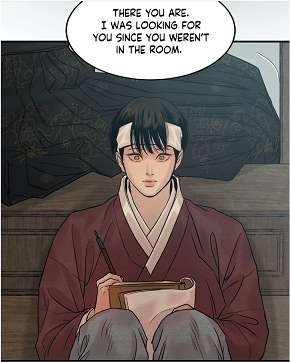 (Chapter 83) He couldn’t forget that he had scared and wounded the painter in his dissociative state. This shows that the chase had not served its true purpose: entertainment. In reality, the domestics had been the ones suffering the most, for them it was definitely more work
 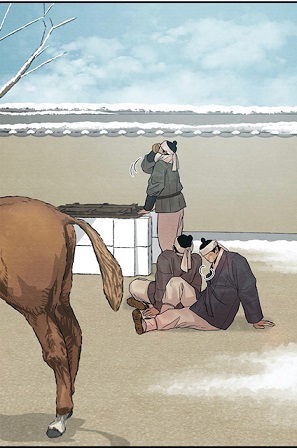 (Chapter 84) compared to the past.
 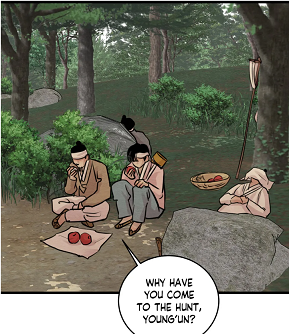 (chapter 23)
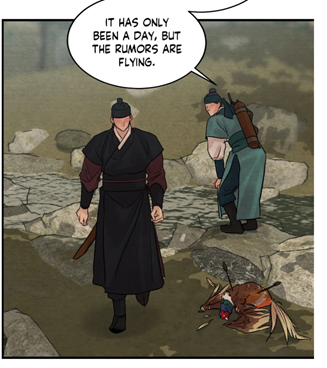 (chapter 41) First, I had feared that he might lose his life, then later I had realized that this death was purely symbolic. He would lose his title and family, therefore he would become a commoner. But I had also expressed my doubts that this scene could be a reference to Black Heart, as from chapter 52 on, I had sensed that he would die. Moreover, observe that during that hunt, Min had wounded the animal himself. This mirrors his own death. He became a victim of his own trick. But if the pheasant is representing two characters, The Joker and Lee Jihwa, then this means that the deer in chapter 22
  (chapter 22) embodies not only the painter, but also someone else. While in the past, I used to believe that it was Kim, now I come to the deduction that it was Jung In-Hun. Note that in this scene, the main lead left the prey and the scholar behind. Both got defeated. This means that by targeting Yoon Seungho, the scholar is not realizing that he is actually endangering his own life. Besides, by hunting the deer, the learned sir offered this prey to the tiger Yoon Seungho, and this was the painter’s case. Furthermore, the deer was carried back home on a horse
 (chapter 24) reflecting the painter’s fate.
 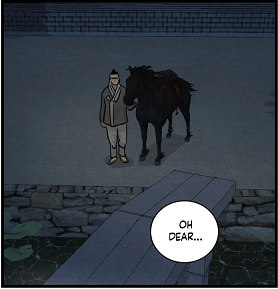 (chapter 25) Who brought the horse to the pavilion? Kim and Deok-Jae! And when the learned sir departed from the mansion, he was followed by the vicious servant and the horse.
 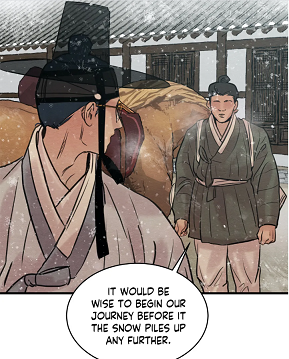 (chapter 44) As you can see, Jung In-Hun is connected to the horse. This observation was even confirmed in season 4.
  (Chapter 111) Thanks to episode 111, I detected another progression. First, Jung In-Hun was walking behind the horse
 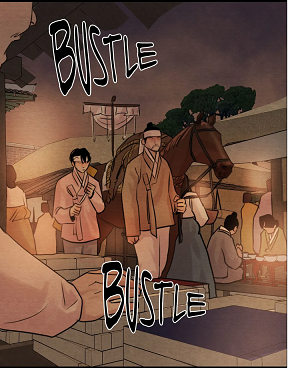 (chapter 24) Thus he could take the artist away unnoticed. Then in episode 44, the learned sir is shown standing in front of the horse. Finally, the manhwaphiles can see the man riding. This reflects his social ascension.
 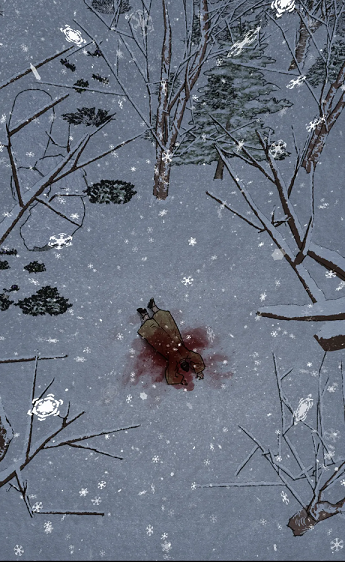 (Chapter 111) Like mentioned above, the shoes could be perceived as the evidence for Jung In-Hun’s crime.
  (chapter 83) The boar symbolizes not only the nobles like Jihwa, Min, Jang or Park, but also the elders Kim, Lee, Yoon Chang-Hyeon, and as such the king. And if you consider the boar as the personification of the pedophile, the ruler, this means that the moment Yoon Seungho hunted down the nobles, he defeated the ruler in a figurative way. I would even say that the nobles like Min or lord Haseon are pushing the main lead to “hunt” the monarch, for the shadows are standing behind the main lead. Due to their tricks, the “schemers” are realizing that they are contributing to give justice to the protagonists. Thus I was wondering if in the end, the main lead would hunt down a human in season 4, Kim or the king. Don’t forget the main lead’s words to the painter:
  (Chapter 103) However, since the manhunt appeared in the first episode from season 4, I deduce that we will have many manhunts in the final season, like here
 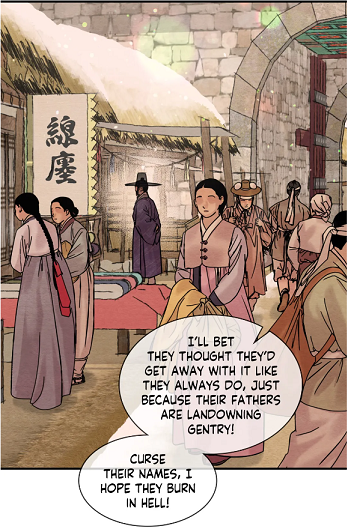 (Chapter 106)
  (chapter 106)
 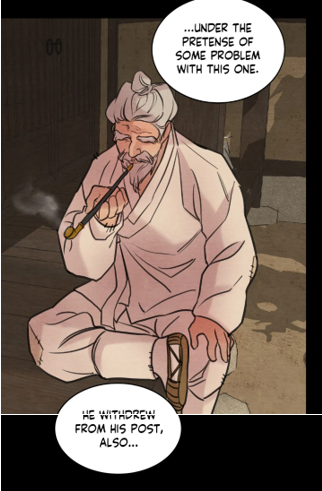 (chapter 37)
 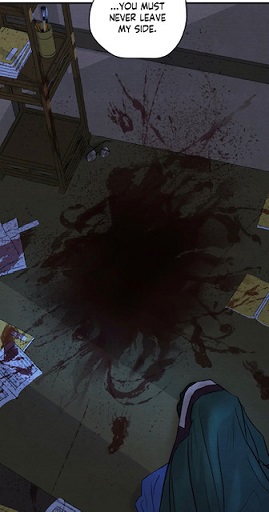 (Chapter 88) On the other hand, the foot print and the glasses were added to give the impression that the learned sir had been murdered. However, after adding blood in the fake crime scene and removing the learned sir’s possessions,
 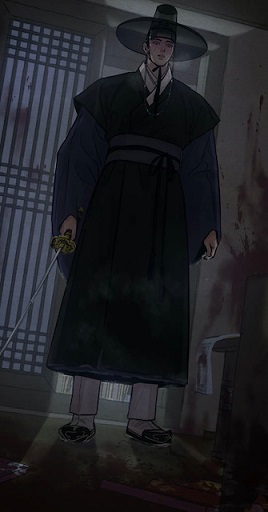 (chapter 100), the place could be interpreted differently. The inhabitant had been attacked by a tiger during the night.
  (chapter 45) the cobweb behind Deok-Jae. Imagine that this scene took place in the middle of winter, thus the spider’s web got covered by frost. However, this indicates that this room had been abandoned for quite some time. But it is close to the gate. So it should have been the place where the doorkeeper is living. Secondly, I had demonstrated that the shrine had been neglected, for the altar had been removed.
  (chapter 18) Because of the presence of the cobweb, I started wondering why the author drew it behind Deok-Jae. In my eyes, it is because he was part of the spider’s web.
  (chapter 18) That’s the reason why Yoon Seungho was not dressed properly.
  (chapter 83) If he lived in a shed and had such a simple attire, no one would ever think that he was a noble in the first place. I believe that neither the patriarch nor the ruler had an interest to reveal his true identity. However, the protagonist had to be monitored, for he could try to escape at any moment. That’s the reason why the butler was still tasked to “take care of him”. But by becoming a male night servant for the king, this meant that the other nobles could claim him as well. He had no right. However, since the main lead was a butterfly, he couldn’t get tamed. Hence violence, manipulations and drugs were used to tame the young master. And remember how the spider kills its target: he empties it of its blood. In other word, he sucks all his energy. Therefore it is not surprising that at the end the main lead had become a wreck, and had no light in his eyes.
 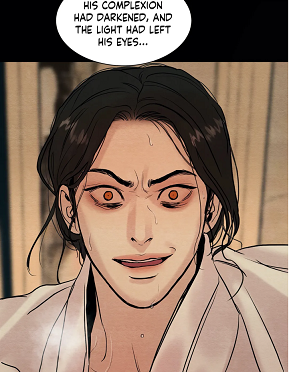 (chapter 57) Naturally, the purge played a huge role in the lord’s suffering reinforcing the huge rift between the pedophile and Yoon Seungho.
 (chapter 57)
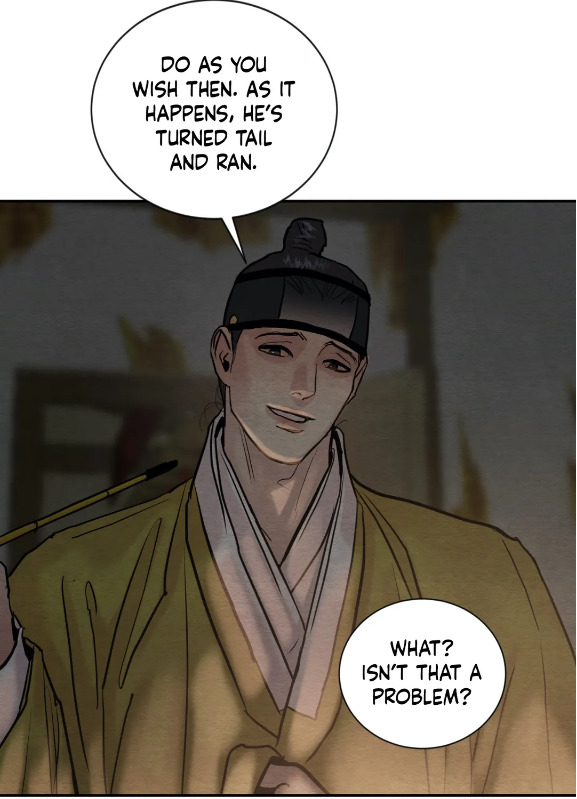 (chapter 101). It was not Min’s task to carry a friend… he was just a fellow puppet brought to the shaman’s house in order to entertain Black Heart. This truly exposes that Black Heart never saw in the aristocrats humans. As the red-haired master, he had been considered as the hunting dog, he had fulfilled his function. That’s why he was abandoned. He had helped Min to corner the painter and brought the kisaeng to the scholar’s home. Moreover, a hunting dog disobeying his master will be killed. Hence it is not surprising that the wild dogs ended up all dead. They were totally defenseless in front of a huge tiger. This feline is difficult to tame.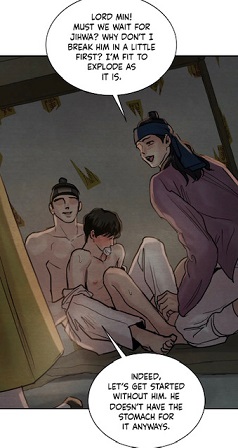
 (chapter 101) They saw in the sexual violence a new form of hunting. I would even go so far to say that they desired to turn the artist into their pet fulfilling all their desires:
  (chapter 101) Thus it is not surprising that Yoon Seungho was compared to an animal by his own father in the past.
 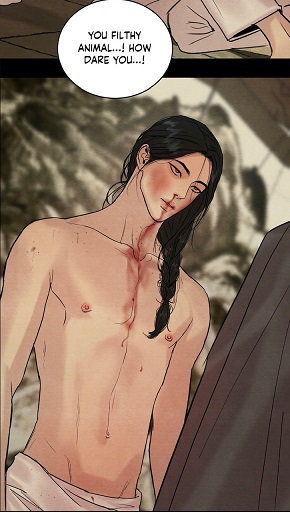 (chapter 83) The pedophile also desired to tame the young master, the beautiful and gentle butterfly. Thus he got brainwashed. He could never refuse anyone, he had to entertain the guests. And now you comprehend why Min said this to the painter.
  (chapter 101) As a punishment, he was given to lord Jang and his friend. Since Min had captured the artist, he viewed himself as his owner who would give order to his pet. Yet, a deer is a shy, but wild animal, difficult to control making it difficult to be tamed.
  (chapter 102) Hence the dogs became the preys of the huge tiger. On the other hand, I am wondering if in the next season, the painter will paint a tiger and show it to his lover. So far, we couldn’t see the pictures from his childhood.
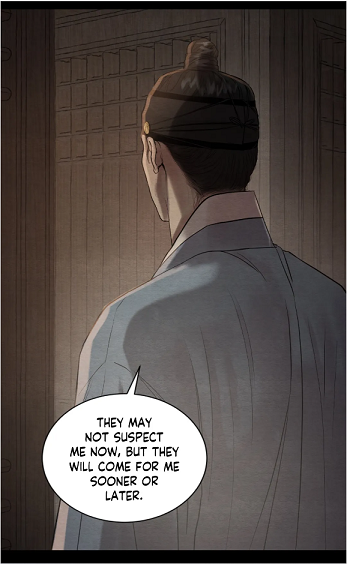 Yoon Seungho has the impression that he could get hunted down, for he killed the nobles. The tiger is now the target of “humans”, and Jung In-Hun will play a crucial role in his prosecution
 (Chapter 10)
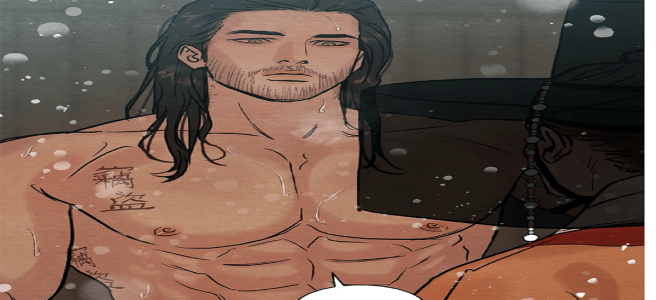
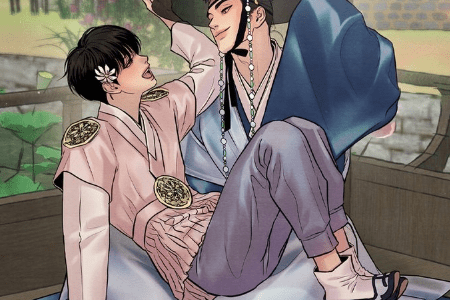

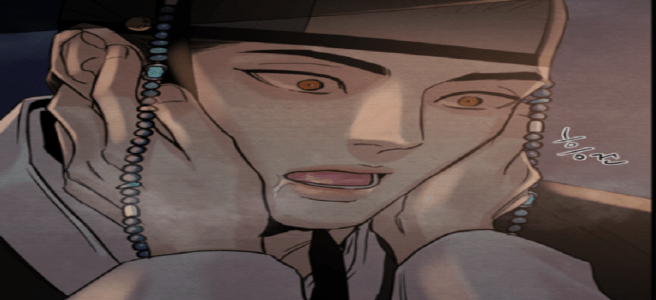

 (chapter 1), and he was no longer living with his single mother and brother Lee Hansoo. He described himself as a small but confident delinquent, as he used to work for a loan shark in order to earn money very easily.
  (chapter 1) And one day, his brother Lee Hansoo met him in order to ask him for money. Their mother was sick and they needed to pay the hospital bills. Lee Yohan agreed to help, thus under pressure, he chose to threaten a debtor’s son. Observe that the main lead chose to use a knife and take the child as hostage. He was walking on a thin line between legality and crime. As you can see, Lee Yohan was no saint. But it didn’t matter to him so far, for he had no faith at all. He refused to believe in karma.
 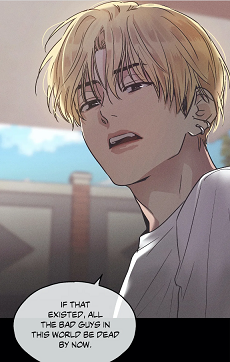 (chapter 1) He was definitely a disillusioned teenager, therefore he was not thinking about the future. However, the fact that he became totally reckless during that day indicates that he still valued his family. He might not have been close to them, but he still cared for them. That’s the reason why he agreed to accept the brother’s request. We can sense his worry here.
  (chapter 1) However, since he had given up on his dreams and had no hope, Yohan didn’t take the threat seriously, until he was confronted with reality.
 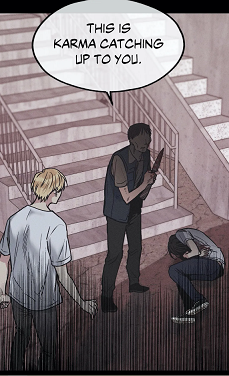 (chapter 1) The same man killed his brother Lee Hansoo in front of the main character. The man had acted like that, for he had lost everything: his home and as such his family. I would add that he had failed to protect his son. Out of despair and anger, he decided to retaliate, to make the young man suffer, like he had been hurt before. An eye for an eye, a tooth for a tooth. The assassination was like a wake-up call for Lee Yohan. From that moment on, he turned a new leaf.
  (chapter 1)Why? He considered himself as the murderer of his own brother.
  (chapter 2) In his eyes, it was, as if he had killed himself the brother and his own mother!
  (chapter 27) He recognized that his actions had been the trigger for the debtor’s crime! At no moment in the manhwa, the main lead blamed the real culprit, not even his own mother who had given up on him. He admitted that in the end, it had always been his own choice to live like a thug! Striking is that he considers himself as responsible for his mother’s death, as because of his terrible way of life, he had caused her worries. As you can see, Lee Yoohan could not be considered as guilty for his relatives’ death, but he had definitely his share of responsibility in his family’s suffering.
  (chapter 27) No, he didn’t cry, hence the owner of the club wept for him.
 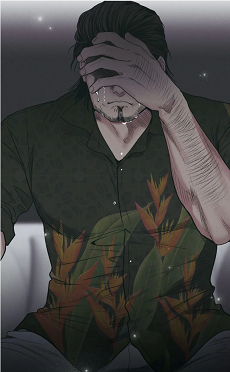 (chapter 27) He could sense Lee Yohan’s agony. He had lost his family at such a young age, he might have been a sinner, but anyone could sense his affection and conscience! He might have lived like a thug, but he was not a bad person per se. It is just that he had made wrong choices, just like the man who had stabbed his brother. In the main lead’s eyes, it was not karma, like the culprit said:
 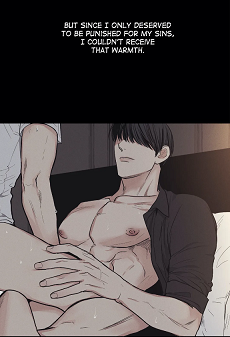 (chapter 15) Thus he rejected the advances from Yoon Jae. In chapter 15, we could sense that the main character was preoccupied about the existence of god. Was there a divine punishment or not?
 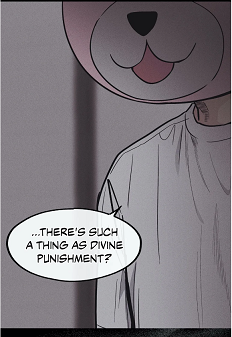 (chapter 15) And Yoon Jae denied such a thing, but added then:
  (chapter 15) But is it not the same? Yes and no… For Yoon Jay, if someone acts badly towards another person, the former will be treated the same way. On the other hand, each kindness will be returned. But one might argue that the gods can interact through humans and use them as pawns to give people their karma. And this is what we are discovering in Payback. Lee Yohan helped Yoon Jae and even showed him a crying man. The famous director Yoon got moved by the main lead’s tears
 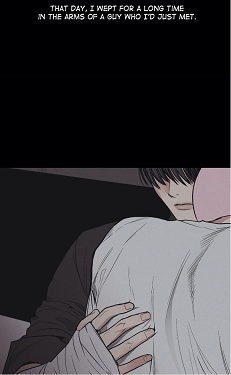 (chapter 15) proving that not all humans were cold and distant. They could express regret and admit their mistake. For the first time, Yoon Jae discovered warmth and sensitivity.
  (chapter 1) The most terrible thing is that the actor had been helped constantly by the protagonist. Since the former had a dream of becoming an actor, the “thug” was generous to help him financially and emotionally. The assassination worked for Song Myungshin, for he had planned to steal the money from Lee Yohan.
  (chapter 1) That’s the reason why he didn’t even call the police. The murder would divert the main lead’s attention from the theft. When Lee Yohan heard this confession, he got upset for two reasons. Song Myungshin showed no remorse and a total indifference towards Lee Hansoo and the main lead.
 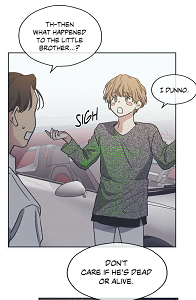 (chapter 1) But most importantly, he never suffered any karma. In fact, he could benefit from his sins and crimes. This could only reinforce his impression that there was no god out there giving punishment to the sinners. The actor took pride of his bad action, as he decided to take Song Yohan as his stage name! Yohan was a reminder that thanks to him, he could enter the entertainment scene. As a conclusion, karma hasn’t punished the actor Song Myungshin yet. Therefore Lee Yohan was determined to take his revenge. What he didn’t realize is that his first encounter with the other main lead would help him to achieve his goal: to give “punishment” to Song Myunshin. So he didn’t know yet that the gods were aware of this injustice, thus they let him meet the famous director Yoon Jay.
  (chapter 15) On the other hand, the existence of Lee Yohan gave the director hope, he could smile again and as such find happiness. The rabbit announced the return of innocence in Yoon Jae’s life. In other words, the two main leads were quite similar in their disposition: both had been wounded by their past, and had no hope. And thanks to the famous and powerful director Yoon Jay, the main lead is slowly starting living again. Little by little, he is interacting with people again, helping others, though he never does it openly. The best example is the actor Lee Hansoo who has the same name than his own brother.
  (chapter 6) In this scene, he refused to be addressed as hyung, as in his eyes, he didn’t deserve such a title. He had not acted like a hyung to his true little brother.
 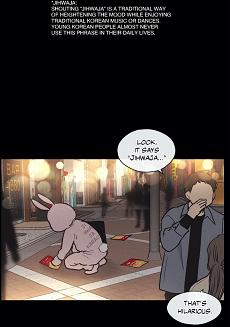 (chapter 14) I couldn’t myself thinking of the antagonist Lee Jihwa, for he was put in a similar situation.
 (chapter 101) Indirectly, he was claiming his innocence. Thus the servant suggested to the young master to go to the police bureau in order to clear his name, but the young master refused to do so. Why? The problem is that Lee Jihwa couldn’t prove his innocence. And deep down, the childhood friend knew this. How could he prove that he was not involved in the scheme, when Min visited him
  (chapter 100) on different occasions, and both went to the scholar’s home together? Yes, this time Min’s threat had become a reality.
 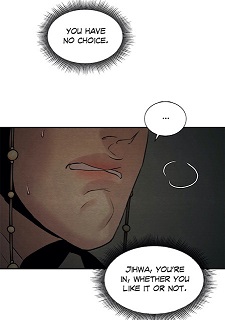 (chapter 76) He could no longer back out. He couldn’t put the whole blame on the Joker, because this means that he would have to admit his own complicity. Yes, Lee Jihwa was trapped. He could sense that he had been framed by Black Heart, but the former couldn’t claim his innocence because of his knowledge! That’s how I realize why the young man was punished this way. Remember how he had blamed his childhood friend for his misery, and had used his knowledge as a proof for his reproach!
  (chapter 57)
  (chapter 57) Thanks to his knowledge, he was above any reproach, while it was not the same for Yoon Seungho. The latter was indeed ignorant, for he had forgotten many things. Consequently, the gods chose to punish Lee Jihwa for his arrogance and passivity. Now, he knows, but this doesn’t help him at all. Hence he decided to forget! This means that he behaved like Yoon Seungho, who repressed everything. The only difference is that contrary to the childhood friend, the main lead had been a real victim the entire time. Thus the second lead imagines that once he forgets and runs away, he will be able to escape punishment. However, he is wrong, for by choosing oblivion and desertion, he has to give up on his name Lee and identity. He can still be addressed as Jihwa, like you could see above. Yet, we have to question this. Is Lee Jihwa truly innocent like he claims it?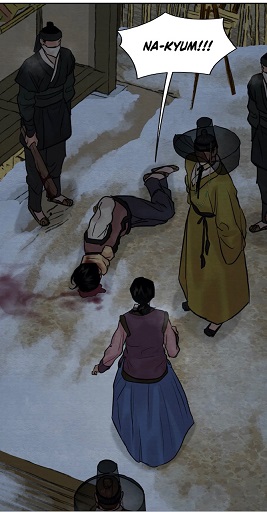
 (chapter 99) But what did he do? Nothing. Secondly, he witnessed how the kisaeng was dragged away to get killed, though it was staged. Here again, he did nothing.
  (chapter 99) I would even say that he even faked ignorance, because he was lying. The drop of sweat is the clue for this interpretation, besides Min contradicted his testimony in the shaman’s house later.
 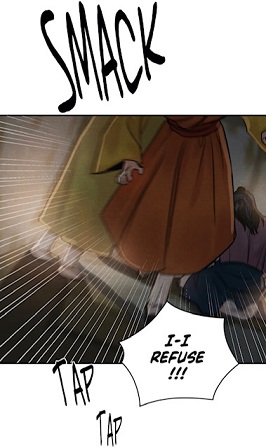 (chapter 100) He turned his back on Baek Na-Kyum. But that means that he abandoned the artist once more time. In three occasions, he was well aware what was happening and he could have intervened. Yet, he let it happen. Besides, he handed over the drugs and dildo to Min. As you can see, he was never an innocent person, but not just a sinner. He was an accomplice. And he knew this, thus he couldn’t go to the bureau of investigation. Min was well aware of this.
  (chapter 101) Naturally, his crime was nothing compared to Min’s.
  (chapter 101) He didn’t see why he should die, when in his eyes, he had done nothing! And the antagonist’s prophecy became a reality.
  (chapter 50) By fleeing, he didn’t stop his friend from committing a murder. Thus he is responsible for their deaths. And he knew that Min and the other nobles would die.
 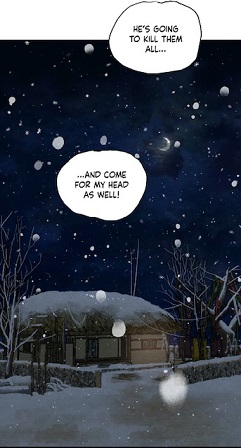 (chapter 101) He chose to save his own skin instead of saving their life, though here he was more fearing the king‘s reaction. During the same night, Lee Jihwa got tested 4 times, and each time, he refused to help. That’s the reason why the gods chose to punish him by making lose his title and name. He will become the culprit of a mass murder, he killed Black Heart and the other two nobles. And this would reflect the truth, for the red-haired master didn’t intervene. He could have acted like Baek Na-Kyum
 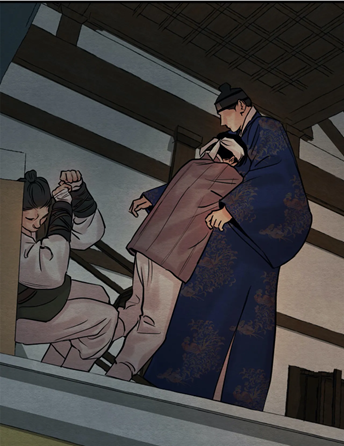 (chapter 53) and even follow his friend. And this distinguishes him from Lee Yohan so much. The latter recognized that each decision he made had consequences. And note that the idiom “choice” was connected to silence and assistance.
  (chapter 50) It was, as if he had murdered the nobles himself. The gods were teaching him a lesson: Knowledge and passivity are crimes. In other words, Lee Jihwa became a sinner and a criminal because of this night. And this because he refused to face reality.
 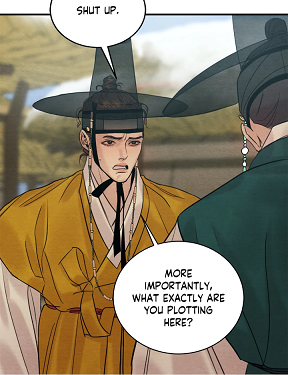 (chapter 83) But was he really ignorant here? I came to a different interpretation recently. How? First, why does the second lead have a drop of sweat in the last picture? This is an indication for a lie. But there exist stronger proofs. Don’t forget the following rules: there’s always a reflection within the same chapter, and each chapter is reflected in the next. In the antagonist’s memory, Lee Jihwa was portrayed as someone who would disobey his father!
  (chapter 83) He would trespass the house of the Yoons and enter the shed, even the lord’s bedchamber!
  (chapter 83) As you can see, Lee Jihwa was acting as a rebellious son in the past. He was not respecting social norms and the elders. This signifies that we have the exact opposite in the present. Observe the seasons: summer versus winter. Thus I come to the following deduction. He is following the order from his father, he is not dragged
 (chapter 83), but he brought Min there. Why would Min say this?
 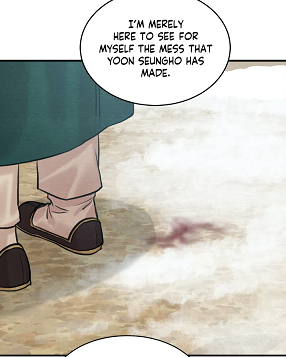 (chapter 83) Why would he come to see the mess? His words are indicating that someone must have told him about the scholar’s death. Since we saw this,
 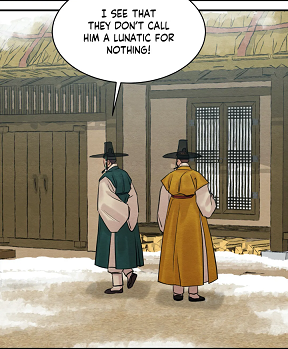 (chapter 83) we thought that when the plotters came, Min was leading the way. But if we take into consideration chapter 76, we realize that back then the childhood friend brought Min to Nameless’ barn.
  (chapter 76) Thus it could have been the same! Lee Jihwa had brought Min to the scholar’s house, then Min was the one giving the signal to leave the humble dwell, just like in chapter 76. The red-haired master let Min meet The Joker, before Min was the one asking Lee Jihwa to follow him, when he realized that Nameless refused to help him.
  (chapter 76) So when we view this,
 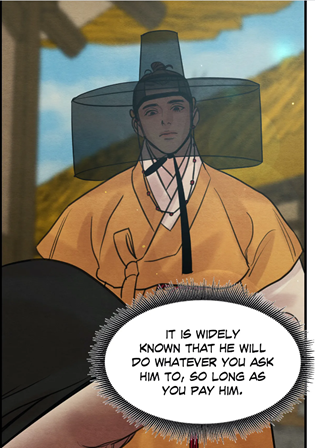 (chapter 43), so from my point of view, we could have a similar situation, someone had asked him to bring lord Min to that mansion! It can not be Min… From my point of view, Lee Jihwa was acting on his father’s orders. That’s the reason why Lee Jihwa never entered the mansion, and he told Min the story about the incident in the bedchamber. Father Lee had been the one who brought it up first.
  (chapter 82) Why would Lee Jihwa suddenly mention this story to Black Heart, when he had remained silent the entire time? Even Min wondered about this!
  (chapter 83) Another clue for this signification is the vocabulary of Black Heart. The latter is speaking like father Lee: lunacy
 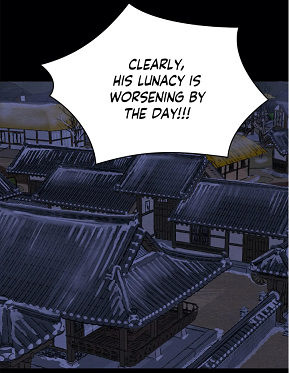 (chapter 82)
 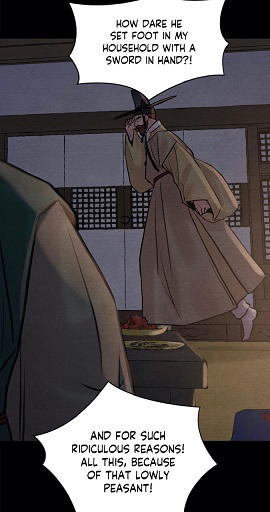 (chapter 82)
  (chapter 92). Finally, don’t forget what Min said about Yoon Seungho.
  (chapter 83) This shows that Black Heart stands for social norms: respecting the elders. But he never realized that in verity he was getting fooled by the Lees. We saw where the main lead was living in the shed, but did Lee Jihwa say this to Min? No, I don’t think, he mentioned it… he was left in the dark about this, just like the readers were not informed, when lord Song was mentioned by Lee Jihwa.
 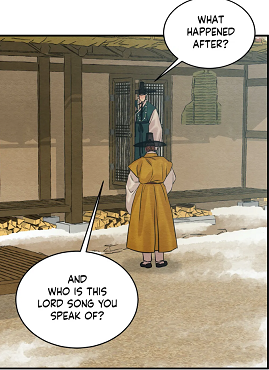 (chapter 83) But Min was not naive like Jihwa, he knew that once involved, someone had to pay for the subterfuge and crime.
  (chapter 93)
 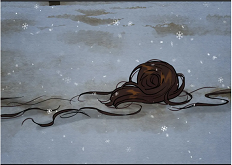 (chapter 101) Each time he spared them. How can father Lee claim that the main lead is behind the murder in the shaman’s house? Secondly, his own son vanished which will be considered as a sign of culpability. Finally, lord Shin is a survivor and his last image is that he got unconscious, when he spoke to Lee Jihwa. This means, Lee Jihwa will become a criminal! Because of this situation, I am hoping that the red-haired master will reflect on his own actions and decisions. He followed the elders’ advice blindly and paid a huge price for this. He would never get loved by the main lead. He came to lose everything: his home, family and title. He is now a commoner. From my point of view, father Lee will be forced to cut ties with his son in order to save his own skin, but it is also possible that he even loses the mansion.
 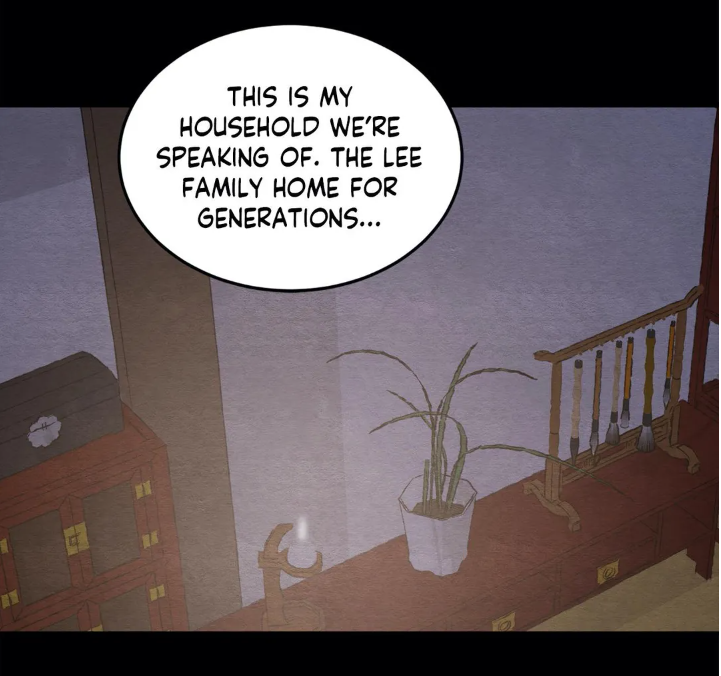 (chapter 82)
  (chapter 27) On the other hand, contrary to Lee Jihwa, he grew up in a poor environment, thus he had to work in order to live. He could never live carefree like the spoiled only son of the Lees. Finally, I would like my readers to question themselves this: Will Lee Jihwa come to admit his responsibility in the death of the nobles and in Yoon Seungho’s suffering? I have to admit that I am hoping for his return, for the two friends need to have a proper talk, and according to me, Lee Jihwa apologized or at least expressed regret in front of his friend, thus he got spared. Yet, I would like very much to see such an apology to the main lead. But before his departure, he still viewed himself as a poor victim who had been wrongly framed exposing that he had not grasped the true nature of his wrongdoings.
 (chapter 01) But after studying the manhwa so closely, I discovered the existence of rules in the manhwa which helped me to dig up new information. I am listing the laws of Painter Of The Night again in order to avoid repeating myself. I will refer to them later in my argumentation (rule 1, 2, eg.). That way the readers can better grasp how I came to new revelations and theories.
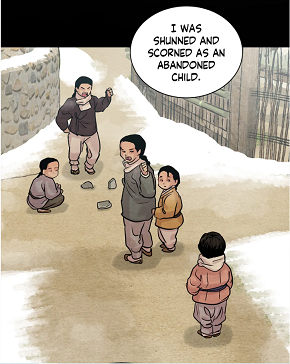 (chapter 94), Yoon Seungho experienced the opposite.
 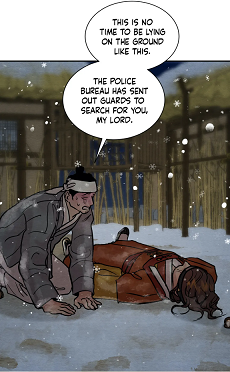 (chapter 101) Striking is that the author used the same method to introduce the memories. First, we see the servant talking before viewing the memories.
  (chapter 101) And now, compare it to chapter 1:
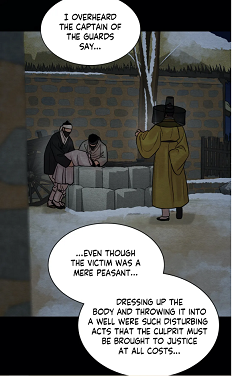 (chapter 101). She was implying that this panel symbolized the vision from the witness, the tailor. This explicates why you see the wall on the left side. The tailor was observing Min in the shadow. This is important, for these images are reflecting the truth, revealing that the servant from episode 101 was actually lying. Thus I deduce that the domestic from chapter 1 was also lying, but contrary to the episode 101, he thought, he was telling the truth. We could say that he was acting as the fake “mirror of truth“. How do I come to this deduction? Simply because the servant in chapter 101 was actually deceiving Lee Jihwa and Yoon Seungho. Note that in the beginning of episode 101, Seokdae tried to defend himself by feigning ignorance.
 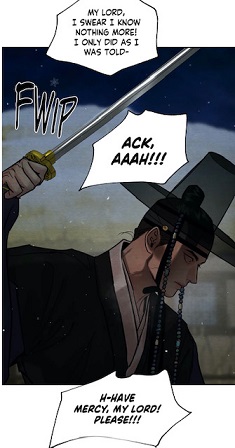 (Chapter 100) He denied his responsibility by putting the blame on someone else („I was told“), yet once facing the young master Jihwa, his declaration exposed his lie.
 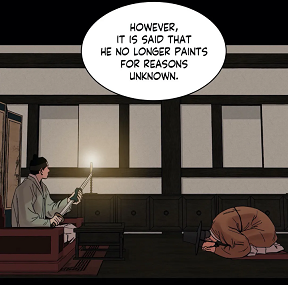 (chapter 1) So in episode 1, the servant was not aware that he was lying to the protagonist, when it comes to the painter’s past. However, the domestic with the brown hanbok lied in one aspect, the publication of the book.
 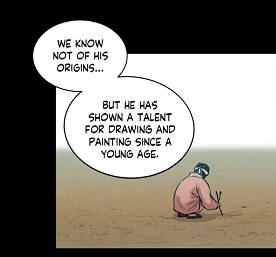 (chapter 1) and later almost a grown-up
 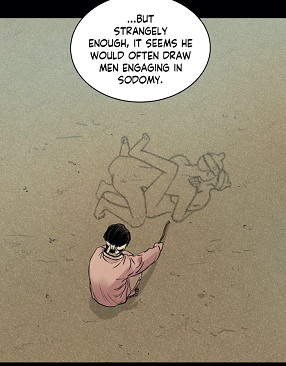 . (chapter 1) This signifies that the witness was close to Baek Na-Kyum which explains why the domestic trusted the source of his information. However, contrary to episode 101, she never divulged the identity of the witness. It is because the person wished to hide in the shadow.
 (chapter 99) The soil and the position of the pillars of the main gate are different. I can now announce the precise location, and this with certainty. Yes, I discovered the place thanks to rule 4!!
 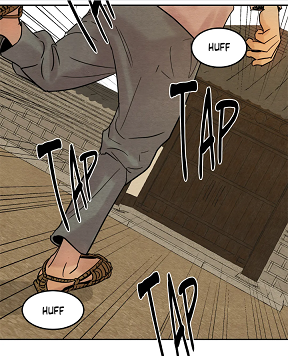 (chapter 4) This is the door! You can recognize it thanks to the pillar on the side.
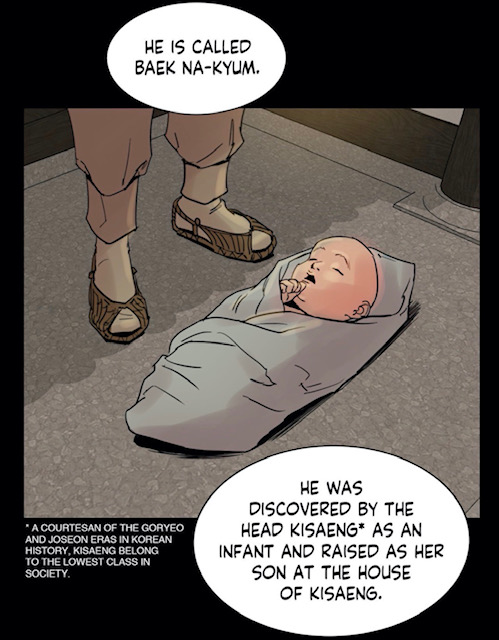
 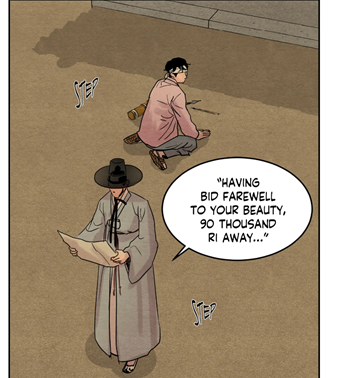 (chapter 4) Here, the shadow was bigger indicating that it was early in the morning. The painter had just woken up. Consequently, I deduce that the baby was brought to the mansion during the day. This signifies that Baek Na-Kyum was never abandoned! He was entrusted to the owner of that mansion!
 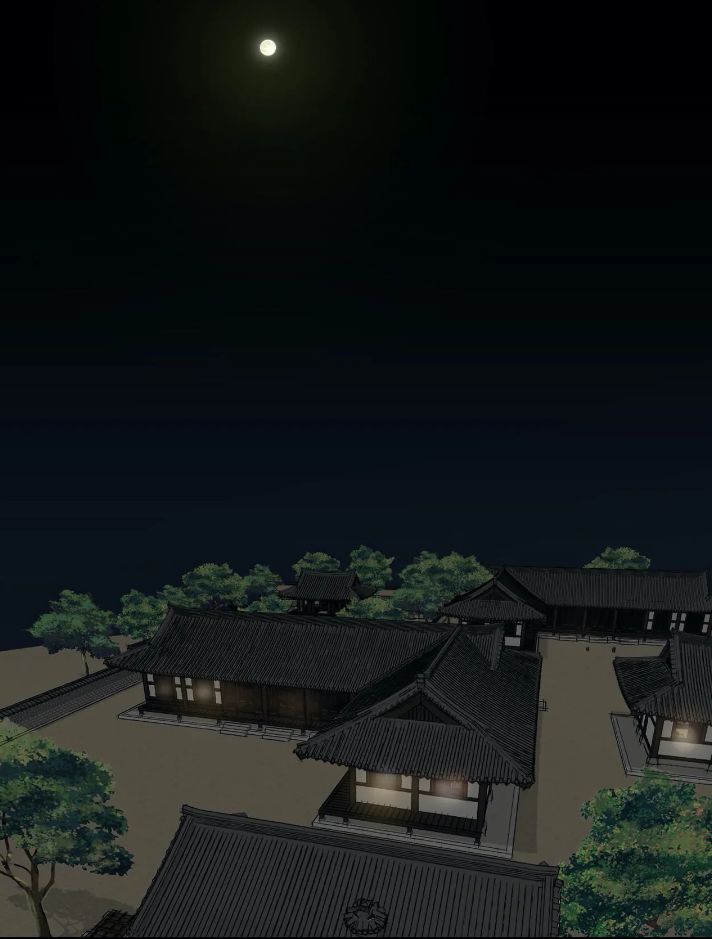 (chapter 1) You can recognize the gate in the background. This is the domain, which you see when the lord is arguing with the painter in the courtyard.
  (chapter 4) Pay attention to the background in this picture. And now, you are probably thinking that the owners of that mansion are the Yoons, as we observed the main lead living there. Nevertheless, I had already pointed out that this was not Yoon Seungho’s mansion. This is the Yoons’ domain:
 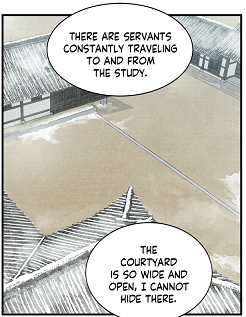 (chapter 51) The courtyard is different. According to me, this is the mansion of the Lees. [For more read the essay 360: Lee Jihwa’s special relationship with Yoon Seungho] And since episode 1 and 101 reflect each other, this can only reinforce my interpretation that the Lees are involved in Baek Na-Kyum’s past, for we have Lee Jihwa present in chapter 101. Baek Na-Kyum was brought to the Lees, thus the scholar Lee keeps calling Baek Na-Kyum a peasant! He knows about his true origins. I had always said that the man was revealing his knowledge with his insult. But does it mean that this was the vision from Lee Jihwa’s father?
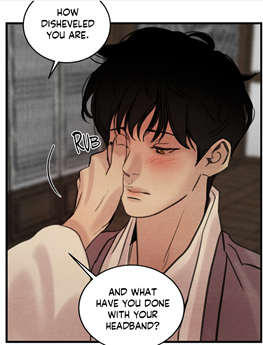 (chapter 38). Besides, father Lee views him as a peasant and not a servant. This observation gets reinforced, when you look at the memories from the painter. In his childhood, he was never wearing a white head-band.
 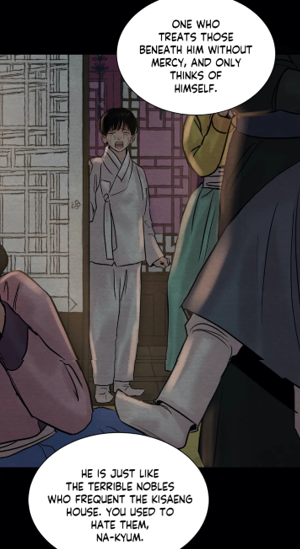 (chapter 68)
  (chapter 70) This means that this panel
 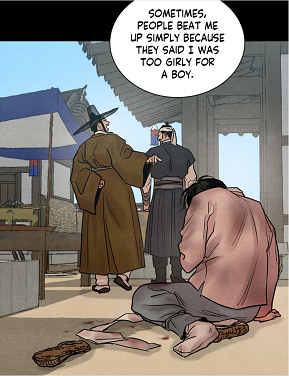 (chapter 94) Thus I assume that it was done on purpose. They used “his girly features“ as a fake excuse to beat him, but the intention behind this violence was to force him to wear the white head-band! As you can see, everything is pointing out that the learned sir and father Lee were somehow involved in this. But I have three more conclusive evidences for this theory. First, it is related to the reflection in chapter 101.
  (chapter 101) Look where the red-haired master and the servant are! It is in front of the teacher’s home! In Painter Of The Night, there is never a coincidence. This is a sign that Jung In-Hun is related to Baek Na-Kyum’s past and knows his true origins. However, by treating him like a low-born, he came to view him as one. But this doesn’t end it. Remember the rule 2: the reflection within the same chapter. The painter remembered the words from the gibang:
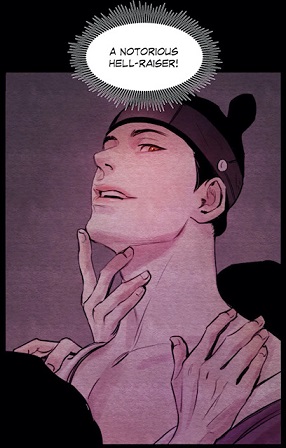 (chapter 1) Jung In-Hun would employ such expressions like fiend and sodomy
  (chapter 18), he was repeating his admired sir’s idioms. Besides, “hell-raiser” is also an indication that the learned sir was a Christian who converted Heena. Thus I deduce that when father Lee received Baek Na-Kyum as a baby, he entrusted him to the learned sir Jung In-Hun who had no connection and no wealth so far. So when the lord described him as such in episode 7, it was not entirely correct. The reality was that the man had been working for the Lees, but he had been “abandoned” at some point. The scholar was his helping hand explaining why he would appear in this scene.
  (chapter 59) Without a topknot, the red-haired master no longer looked like a real noble. He had lost his position. Hence I believe that the painter was forced to wear the headband. As you can detect, there was a chain reaction linked to the social status: lord or not, low-born or not.
  (chapter 87) He was definitely living in comfort. But what was the purpose to let him wear the white tissue? Dressed as a slave, no one would have wondered if he had been killed. Remember the scholar‘s words: a servant is viewed as an object and possession.
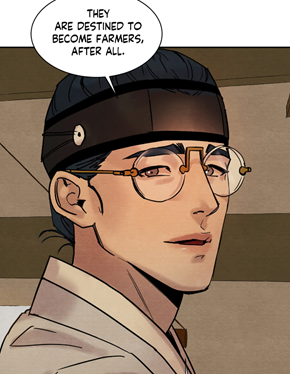 (chapter 6) The painter was never destined to become a farmer. The neglect was done intentionally. And when you recall his words in the library, you can only view his words as pure lies again:
  (chapter 40) He was never born to be a prostitute, but he was sent there on purpose. Under this new perspective, it becomes more comprehensible why Heena sent Baek Na-Kyum to the learned sir. He was the one who had brought the artist to the gibang, and now he was getting older. One might refute this point, for she declared this:
 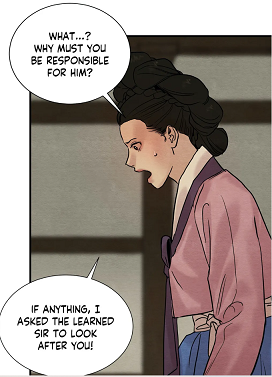 (chapter 68) Nonetheless, the beholder can detect the presence of a drop of sweat on Heena’s cheek. So she was deceiving the artist here. Why? Yes, in her mind, the painter was Jung In-Hun’s son and as such the learned sir should become responsible for the painter, for he was his father. But she had to lie in order to persuade him to leave the mansion. There’s no ambiguity that the head-kisaeng had no idea about the deal between the Lees and Jung In-Hun in the past, I believe that she must have discovered the truth at some point..
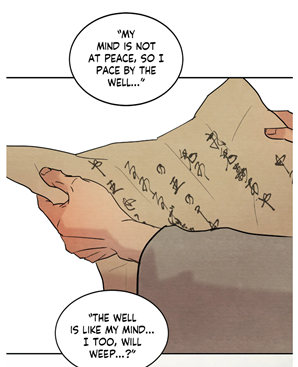 (chapter 4) This was inspired by the poetry from Wang Bang-Yeon!
  (chapter 4) In this poem, the famous author was referring to the death of the young king Danjong who had been killed by his uncle Sejo. Danjong was just a teenager, when he died! As you can see, the text is actually an allusion to royalty and exile. Under this new light, it dawned on me that the scholar Lee had been entrusted to take care of Baek Na-Kyum, but the latter chose to delegate this to the learned sir. There was a reason behind this. For me, he was eyeing at the mansion himself! One might refute this point, for the elder Lee said this:
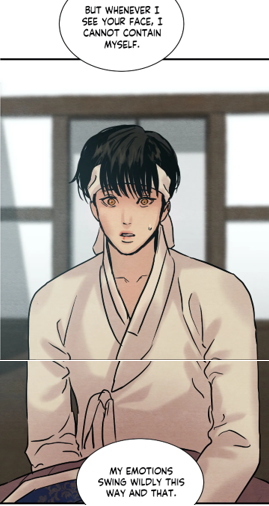
  (chapter 53) How does he know it? In my opinion, it is because Baek Na-Kyum resembles to the king. The only difference is that he has no beard. This would explain why Yoon Seungho said this:
  (chapter 55) Why would he get upset? Why would the painter’s face evoke such emotions? He is reminded of his abuser. This is no coincidence that the main lead had such a flashbulb right after, where you could see Lee Jihwa and his father, as they looked like Yoon Seungwon and his father.
  (chapter 55) They are all related. And now, you comprehend why the author wouldn’t reveal the face of the mysterious lord Song in chapter 83
  (chapter 83) We could have seen the resemblance, as in this picture he was much younger. As the manhwalovers can sense, I detected a strong connection between the Lees and Baek Na-Kyum. Observe that the moment Lee Jihwa lost his topknot (the symbol for nobility and adulthood), the painter received a purple/burgundy hanbok!!
 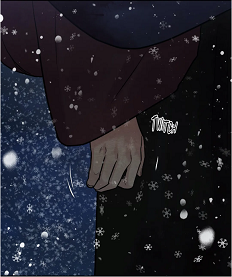 (chapter 102) The colors are already insinuating that the artist belongs to the royalty.
 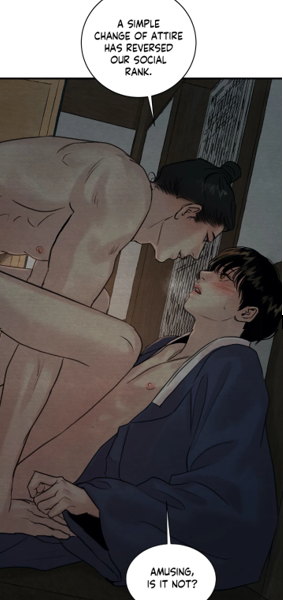 (chapter 71) If the pedophile came to the gibang and crossed the main lead’s path, he couldn’t recognize his relative (son or nephew) due to the hair and the clothes. Besides, I am certain that my avid readers can recall my other theory: the painter was stolen as a child. This new interpretation would corroborate this theory. The painter has been robbed of his true identity, he had been kidnapped, when he was brought to the kisaeng house!! Besides, if he is the true owner of the mansion, then this signifies that Father Lee succeeded in his coup d’Etat (rule 1, rule 3). In season 3, we have an attempted “coup d’Etat” with Yoon Chang-Hyeon eyeing at the seat.
 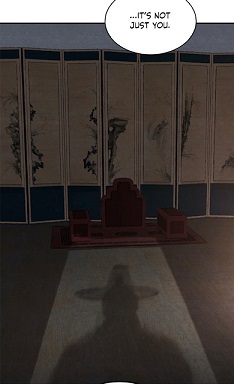 (chapter 86) Moreover, I would like to point out that we have the topic: siblings’ jealousy. This is definitely possible that father Lee is related to the artist, an uncle for example. Finally, if the painter is the king’s son, this is no coincidence that Baek Na-Kyum suffered so much. He was paying for his father’s sins (rule 5). At the same time, if Baek Na-Kyum has to face the infamous lord Song, as his son/nephew, he is put in a position where he can criticize his father/uncle. How could he abandon him and treat Yoon Seungho like that?
  (Chapter 37) They had lost their heir. So far, we still have no idea about the cause for the treason: Coup d’Etat or attempt of assassination on the king or spying or murder of a royal member (here Baek Na-Kyum)? But this purge is associated to inheritance and the loss of a heir. There’s no ambiguity that the painting in Yoon Chang-Hyeon’s bedchamber was used as an evidence that the elder master Yoon was eyeing at the throne
  (chapter 83) imagining that Yoon Seungho through his “marriage” would become the crown prince. Since the author mentioned “torture”, I have the impression that the main lead was brought to the bureau of investigation and got tormented there. He was naturally framed, he had been acting as a spy. He was hoping to become the king’s successor as his “bride”. So once the artist had been executed, the scholar Jung could have claimed that he had been raising the painter the whole time and receive a huge compensation for his benevolence! And the Yoons were the culprits.
  (chapter 102), I am assuming that his visage won’t be bruised again, so that his foot could get hurt, for the lord and the butler had a broken foot in chapter 77. (rule 3)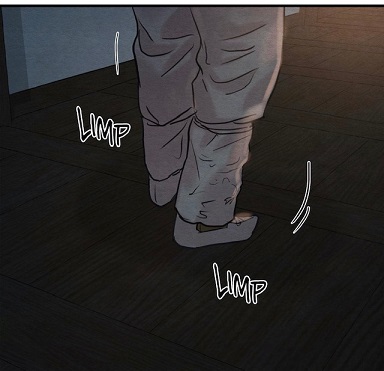
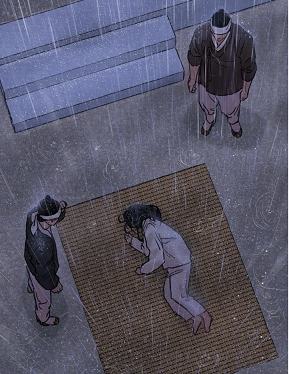 (chapter 77) And that’s how the ruler could discover the truth!! Therefore the culprits would be detected easily: father Lee and naturally Kim, as both knew the real identity of Baek Na-Kyum, but chose to remain silent. Yes, knowledge will become Kim’s downfall in the end. Why do I think so? For me, the feet in this panel are Kim’s
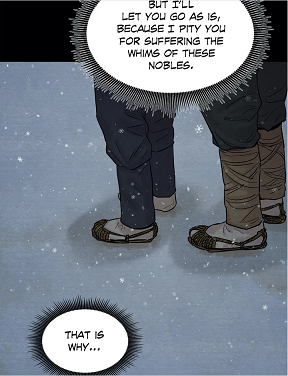 (chapter 66: According to me, this is Kim and not No-Name)
 (chapter 77) Don’t forget rule 1 and 3. Nevertheless, the main point for this interpretation is the way the painter ran:
  (chapter 17)
 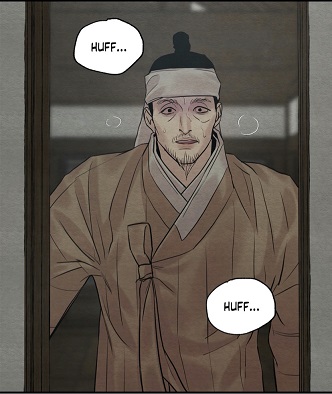 (chapter 85) Here he had faked running. Since he had been introduced with his feet in chapter 1, she needed to create reflections later. Finally, I would like to point out this:
 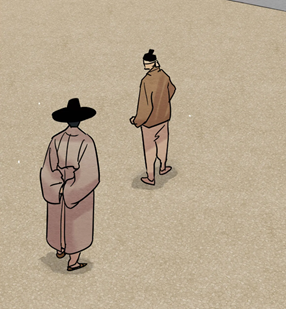 (chapter 7) Their meeting here is an indication that their past must have crossed before because of rule 1!! Since the painter was so devoted to the learned sir, the valet could only jump to the conclusion that the man had truly taken care of Baek Na-Kyum properly.
  (chapter 04) The protagonists’ fate got switched the moment they passed a door. Thus the painter didn’t suffer here contrary to the young master
  (chapter 4) He recognized that the artist was not a servant or slave, but a free man. His words became a reality. He is not embracing a peasant, but a noble, even a member from the royal family. He was speaking the truth, while all the readers were thinking that Yoon Seungho was a hypocrite. We could say that the main lead was under the influence of the spirits/unconscious, thus he caught the artist right on time. At the same time, “peasant” is again a reference to father Lee which reinforces my theory that the scholar Lee is deeply involved in the couple’s suffering.
 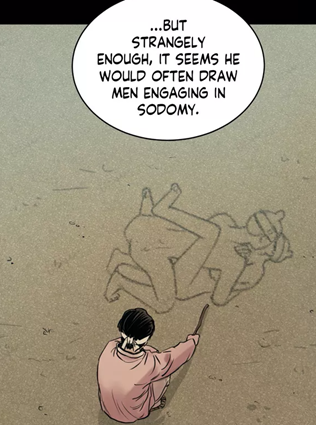 (chapter 1) He had actually painted animals and nature in his childhood, thus the noonas kept his drawings.
  (chapter 94) The man had trusted the learned sir’s testimony without verifying the facts. He had not detected the presence of a blackmail!
  (chapter 1) This truly shows that ignorance is indeed no blessing, and people shouldn’t trust others according to their appearances or social status. At the same time, the servant had forgotten that Yoon Seungho was a noble, though he was dressed like a peasant in the bedchamber.
 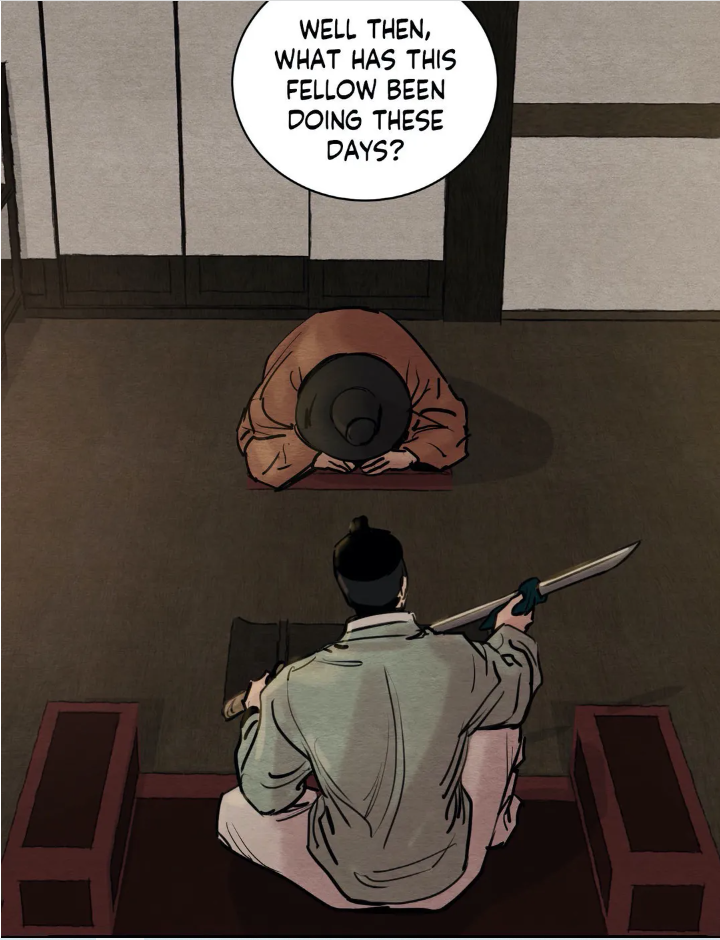 (chapter 1) He was not even wearing a hanbok here, and his head-band was different too. As you can see, both protagonists shared the same experience. They were not treated according to their social status. To sum up, my theory is that the valet Kim brought Baek Na-Kyum to the Lees, who decided to get rid of the painter by entrusting him to the scholar Jung. And Heena became his accomplice, the moment she became his surrogate mother. Let’s not forget that in season 1 and 2, the learned sir was the only one seen with children: girls.
  (chapter 6)
 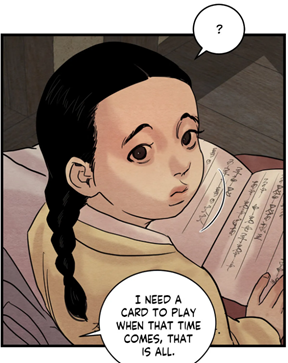 (chapter 29) and Baek Na-Kyum
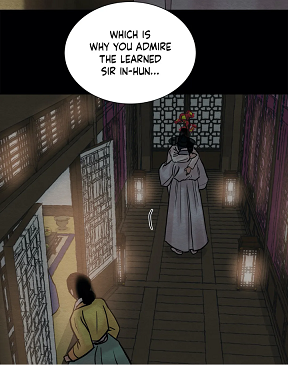 (chapter 68) This shows that the painter embodies the link between the head-kisaeng and the learned sir. Jung In-Hun had entrusted her the baby.
 Bebebisous33s' analyses in K-Dramaland and Manhwas