It would be great if you could make some donations/sponsoring: Ko-fi.com/bebebisous33 That way, you can support me with “coffee” so that I have the energy to keep examining manhwas.Besides, I need to cover up the expenses for this blog.
What is the common denominator between all these images? The painter’s mouth is wide open. This implies that the painter is laughing! In other words, these pictures are showing a happy Baek Na-Kyum. The laughter is not just a symbol for joy, but also an indicator for social bonding, cooperation and as such social acceptance. Note that in all these scenes, the painter is not laughing alone. He is either facing his lover and the “witnesses” of his marriage.
On the other hand, what caught my attention is that in the story itself, the manhwaphiles never saw the painter laughing in the present!! The only time, he was caught laughing happened during a dream. (chapter 87) Naturally, this vision reflected the past due to the presence of the noonas. But if you read my previous analysis, you are aware that the painter’s nocturne visions are always composed of three elements: memory, nightmare and desires which will come true at some point. The readers will certainly recall the painter’s wish in the bedchamber: (chapter 81) However, here again, this was not real, for he was imagining it. He had restrained himself, for he felt that his actual life was like an illusion. It was too good to be true. Thus I conclude that in both visions, the painter wished to laugh and as such to be happy. And this observation led me to the following deduction. In season 4, the manhwalovers will witness Baek Na-Kyum’s laughter. But this doesn’t end here. All the quoted pictures share another similarity which is the absence of the sound!! There is no HA, HA, HA…. Thus I deduce that in season 4, the readers will even hear Baek Na-Kyum’s laugh!! 🤣
1. Evidences for this prediction
First, I would like to remind my avid readers the following rules: Yoon Seungho’s actions will always be reflected by the painter’s and the reverse. Secondly, each scene in a season will be mirrored in other seasons. Striking is that the readers could witness Yoon Seungho’s joy and laugh in season 1. Thus this means that the painter should laugh in season 4. Interesting is that the author had separated the lord’s laugher in two different scenes. In episode 1, the protagonist had his mouth wide open, because he was so happy to meet his idol. (chapter 1). His mouth was exposing his emotions: happiness. It was, as if he was laughing internally out of joy. Then in the pavilion, the author let us hear Yoon Seungho’s laugh, while we couldn’t see his face. (chapter 25) As you can see, Yoon Seungho was not truly seen “laughing”. This is what we saw right after: (chapter 25) Either the sound was missing, or the readers couldn’t see his open mouth. Then in chapter 51, Byeonduck created an ambiguous situation. (chapter 51) Who was laughing here? The main lead or Min recognizable with his green hanbok? This confusion was deliberate. It was to give the impression that the lord had moved on, he was not missing his partner. This image served to divulge the reality: this happiness was fake. Another interesting aspect is that we couldn’t see the lord’s mouth, for it was too far away. It was more or less drawn from the painter’s perspective who was walking in the courtyard. (chapter 51) The purpose of this trick was to deceive the painter, Yoon Seungho would no longer care for him. However, this trick didn’t work out like imagined due to the maid’s words. She wished that he would remain in the mansion. But let’s return our attention to the laugher in this panel. I would even add that there was no real social bounding, for Black Heart was enjoying about Yoon Seungho’s misery and loss. He believed that the painter had died. And if it was Yoon Seungho who laughed, then this was to mask his pain. Then in chapter 70, he was caught laughing. And observe that the author separated the sound from the face: (chapter 70) Yoon Seungho would even hide his face from the painter, as he was looking down. His laugh was barely perceptible, and when the author revealed his face, Yoon Seungho used his hand to mask his smile. (chapter 70) It was, as if Yoon Seungho was not allowed to smile or to laugh at all. I would even go so far to say that laughers were actually forbidden in the mansion. Striking is that in season 3, for the first time, we could see and hear the lord’s laughter contrary to season 1 and 2.. (chapter 78) This illustrates the progression of the lord’s healing. He was getting happier, and he would interact more and more with people. Yet, in this scene, the lord’s laughter was not loud contrary to the one in the pavilion. Then in the gibang, his laugh was also fake, for he was masking his pain. (chapter 93) Thus the author didn’t let us see his mouth once again. But the painter could see the difference between a sincere laughter and a fake one, as he had already heard and see the lord’s true laugher! Because the lord laughed in all 3 seasons, I could only assume the painter’s laughing in season 4. But I have another proof for this prediction. In season 3, the painter’s laughter was shown in visions (chapter 81, 87) or through the testimony of the maid. (chapter 91) However, the manhwalovers have to envision that, when he caught the pervert with the maid together, he was totally embarrassed. Hence his laugh was fake! In other words, I am doubting that he truly laughed. That’s the reason why Baek Na-Kyum denied to find the situation funny. (chapter 91) As a conclusion, expect a picture with Baek Na-Kyum ‘s laughter reflecting his happiness and sincerity. And this is definitely related to his marriage: I have another proof for this expectation, the lord’s mouth in this scene: (chapter 87) Here, he was making fun of his father, and used the rumors about his imminent marriage. That’s how I realized that in season 3, the lord had often played the role of the Joker (chapter 78-79; 87; 89-90-91), until he was replaced by Black Heart. That’s the reason why I have been predicting that in season 4, Yoon Seungho will play a huge prank on the old bearded men, especially the mysterious lord Song, with his marriage. But while making this connection between the lord’s laughter and the painter’s, I had another revelation: the mouth wide open is not just the expression for laughter, but also for fear and suffering.
2. Anxiety and torture
Look at this image: (chapter 102) There is no HAHA, this shows that this situation is not funny. Yet, Black Heart is still smiling, he is even explaining that they were just playing. However, this smile is totally fake, for he is already scared. Hence he is stuttering. Moreover, he is trying to downplay the whole situation, as he describes it as a game. But the closer Yoon Seungho got to him, the more the villain got scared. (chapter 102) On the other hand, Black Heart’s mouth remained wide open, but it slowly exposed his true emotions. As the manhwalovers can detect, the sound “Haa,” is not expressing joy or happiness, but huge anxieties. Thus I couldn’t help myself thinking that in season 4, the painter’s laughter will be reflected with the heavy breathing from fear and pain. Someone will have a mouth wide open out of fear!! And this connection was already present in chapter 1: (chapter 1) versus (chapter 1) Baek Na-Kyum and Yoon Seungho had both flashbacks (chapter 66), while Min was smiling. He was internally laughing, for it found it entertaining. [For more read the essay HAHA Flashbacks”] And this fear was exposed by the sound: HAA (chapter 99) But this doesn’t end here.
The sound HAA is just associated to anxiety, but also to moan. Hence I couldn’t restrain myself thinking that the wide open mouth can not only express pleasure, but also pain caused by TORTURE! Let’s not forget that the painter had been hiding his moaning out of pleasure in the past (chapter 84), but in the gibang, he dropped this habit for good: (chapter 96) This connection between pain, pleasure and laughter appeared in chapter 91, as the story is based on the following rule: there is always a reflection within the same episode. I would like the manhwaphiles to observe this image: (chapter 91) Here, the lord had changed position provoking pleasure to the artist. Before, the maid had laughed so loudly in order to get the painter’s attention. (chapter 91) According to my interpretation, she hoped that Baek Na-Kyum would discover the existence of the kisaeng’s letters so that the painter would feel betrayed by Yoon Seungho. He had ordered to hide the correspondence. But for that, she needed to explain the reason for her loud laughter. Hence she revealed the incident with the pervert. The irony is that due to his pleasure and embarrassment, Baek Na-Kyum didn’t pay attention to her words. He already felt ashamed, after the servant had exposed the situation in the bathroom. (chapter 91) Thus he avoided his lover’s gaze. And note that in chapter 25, the lord laughed, before he raped the painter. (chapter 25) This episode exposes the connection between laugh and pain. Here, you can see that the painter is also screaming out of pain, the negative reflection of Yoon Seungho’s laugh. Baek Na-Kyum’s mouth was wide open. When people are tortured, they will usually scream their pain and fear.
The last image is taken from Dong-Yi, a historical k-drama, which I am employing as a reference. The beholder can detect a huge difference between this scene (chapter 37) and the one from Dong-Yi. The absence of the sound. Moreover, the manhwalovers can not see the mouths from the victims either. The torture was already finished, for they had removed the tools and the „suspects“ were covered with blood. And this leads me to the following observation. The author selected a perspective from far away, and didn’t add the sound on purpose. This shows that the pedophile was not present, when the torture took place. He only arrived afterwards. This exposes his cowardice. Secondly, since I had outlined that the author had separated the sound (HA HA) from the lord’s mouth concerning the laughter, I am quite certain that she will use a similar processes for the torture. Naturally, I am also assuming that torture from the past could be slowly revealed. Consequently, my prediction is that the negative reflection of the painter’s laughter will be the yelling combined with fear and pain. This signifies that people will suffer in season 4 and probably die. Another evidence for this prediction is that the author often focused on the characters’ mouth. And this is what we have: (chapter 77) (chapter 86) (chapter 98) In the last scene, Heena was sort of “punished”, when she confessed to the main lead. That’s the reason why I believe that in season 4, we will see people screaming out of pain and fear. It can be in the present or in the past. The interrogation and torture should be exposed in my eyes contrary to chapter 37. Why? It is because Baek Na-Kyum needs to know what happened to Yoon Seungho to understand him. There is no ambiguity that the painter will suffer again, for in this work “pain” is necessary to change the painter’s mind and heart. Remember that he was “tormented”, when he finally admitted that he believed in his lover’s innocence. (chapter 99) Despite the “torture”, he still claimed that Yoon Seungho was no murderer. Thus I conclude that in the next season, it should be the reverse. Yoon Seungho has to make a new leap of faith believing in the painter’s innocence and purity. Hence I am expecting an arrest in season 4. Finally, we shouldn’t overlook that each word Yoon Seungho said became the truth, so when he stated this (chapter 65), he was already warning the sister. She could face human justice. However, this idiom suddenly caught my attention: “the wrath of humans”. It can be a reference to the authorities, but also to the inhabitants. The latter could get infuriated by the police work and put the officers under pressure or in the worst case, the inhabitants could decide to do their own justice: lynch mob. According to me, many commoners died in season 3. Hence this could upset the town folks who would ask for real justice. And if Yoon Seungho’s fiancée is acknowledged by them, then it will be impossible for the pedophile to use the authorities to achieve his goal, separate the couple and hide his own crimes. Thus his last puppets will have to take the fall. Another important aspect is that when Yoon Seungho warned the kisaeng, Kim was also present, though he still remained in the background. (chapter 65) As you can imagine, I am already sensing a bad ending for Heena and Kim. Striking is that in this scene, while the noona was seen constantly with her mouth wide open, yelling at the host and calling for her brother, the latter was having a flashback. This is no coincidence, especially if you recall that Heena was connected to Baek Na-Kyum’s tears: (chapter 68) (chapter 94) In fact, this reinforces my conviction that the painter’s laughter will be contrasted with people’s moaning and yells out of agony. At the same time, I think that Heena is connected to scandal, but in season 2 and 3, she failed to create a ruckus. Why? It is because in the past, she had helped to cover up the crimes committed in the kisaeng house.
3. Conclusions
Under this new perspective, the manhwalovers can comprehend why I used the following emojis in the title: 😄😧 Both of them have a open mouth, the only difference are the eyes. Out of fear, the eyes get bigger, because the body is in survival modus. On the other hand, when these persons got tortured, they closed their eyes out of agony,
reminding us of the painter’s suffering in the gibang. Yet, the closed eyes and the open mouth is quite similar to the painter’s laughter: The readers can grasp why I made this connection between suffering and happiness in the end.
Feel free to comment. If you have any suggestion for topics or manhwas, feel free to ask. If you enjoyed reading it, retweet it or push the button like. My Reddit-Instagram-Tumblr-Twitter account is: @bebebisous33. Thanks for reading and for the support, particularly, I would like to thank all the new followers and people recommending my blog.
It would be great if you could make some donations/sponsoring: Ko-fi.com/bebebisous33 That way, you can support me with “coffee” so that I have the energy to keep examining manhwas.Besides, I need to cover up the expenses for this blog.
1. Yoon Seungho the king
After the end of season 1, I had been contacted by many followers asking me about the possible ending of Painter Of The Night. Many feared for a depressing ending, as Byeonduck had declared that the protagonists would be happy on their own. In their mind, this meant that the protagonists wouldn’t end up together. My reply was that the couple would become happy without getting too dependent on each other. I meant Yoon Seungho and Baek Na-Kyum would come to give a new sense to their own life, and their love would help them to have a goal and purpose in their life. And that’s how real couples live. Thus while examining season 1 closely, I came to imagine that Yoon Seungho would become the king and Baek Na-Kyum his painter. As you can see, very early on, I connected the noble to royalty. Why? First, we had the lord outlining his powerful position in front of the painter. (chapter 11) Secondly, I had associated the main lead to the eagle which is the symbol for the kings and emperors in Europe. He was seen here flying (chapter 30), and his fingers reminded me of the eagle’s claws. (chapter 18) And this perception got even reinforced, when I saw this panel: (chapter 52) In this scene, he was sitting like a king surrounded by his “court”. The hanbok had such a design that I couldn’t help myself associating it to Joseon’s monarchy.
However, I have to admit my mistake, for this interpretation was strongly influenced by my own culture and as such European history. Yet, here we are dealing with Korean and as such with Joseon culture. Hence the symbol for Joseon’s dynasty is not the eagle, but the dragon. That’s why when I saw this new image on Twitter , I had another revelation. On the one hand, it actually confirmed that Yoon Seungho was somehow destined to become a king, yet he is not represented by the eagle or the phoenix, but by the dragon. Hence the moment I saw this image, one idiom came to my mind: Dragon king!
2. Yongwang
Because of this sudden association, I decided to look more into it. Thus imagine my surprise, when I discovered this:
Yongwang, or Dragon King, is a deity of the river or the sea, overseeing peace in the house, good health and longevity in the family, the harvest, catch and safe sailing. Yongwang is also called Yongsin (Dragon God).
Communities worshipped Yongwang as a water god, holding divine powers to control rainfall. Dragon King worship is closely related to the contemporary practice of staging rituals at village springs or wells that are believed to be dwelling places for Yongwang. Around the country there are also legends regarding dragon springs and dragon wells, created by a dragon that brought rain to repay humans by turning wasteland fertile, which shows that Yongwang is closely related to farming. […] In shamanism, Yongwang oversees not only fishing, but the souls of those who have drowned and died. In the worship of household gods, it is a deity that oversees peace in the household, good health and longevity in the family, the harvest, catch and safe sailing.
Among rituals held for Yongwang in the home by women, the most widely spread is yongwangmeogigi (feeding the dragon king), also referred to as yongsinje (dragon god ritual) and gaetje (fishing ritual). This ritual can take place in three different venues: First is a private well in the backyard; second is the communal well, where, in some cases, a spring ritual (saemje) is held, then water from the well is brought to the home and placed in the kitchen or on the sauce jar terrace for the Dragon King; […] https://folkency.nfm.go.kr/en/topic/detail/2618
The moment I read this article, I couldn’t restrain myself making the parallels between Yoon Seungho and Yongwang. First, the deity in the background reminded me of Yongwang. (chapter 100), though this deity is always accompanied with a dragon and in this picture, the readers couldn’t see one. However, it is possible that the author didn’t desire to reveal too much.
“his most distinctive traits are that his beard, moustache and eyebrows are (usually) “spiky,” protruding in sharp points, sometimes resembling coral, and his eyes are often bulging out like those of a fish. He most often holds the banya-jinju (般若眞珠, flaming pearl of wisdom, a type of ma-niju 摩尼珠), but sometimes a branch of coral or a sword.” quoted from http://www.san-shin.org/EKB-Yongwang-DragonKing.html
Secondly, we have a strong connection between rain and the main lead’s situation and emotional state. It rained, when the lord had sex with Baek Na-Kyum. (chapter 21) Why? It is because the lord was happy. These were the tears of happiness, which Yoon Seungho couldn’t express contrary to the painter. And this is no coincidence that in chapter 58, it started snowing, when the couple was making love: (chapter 58) And we had the same weather, when Yoon Seungho saved his lover. (chapter 102) The weather was expressing the main lead’s emotions: tears of happiness or sadness. We could say that the lord has the “power” to move the sky.
Furthermore, the well plays a huge role in this story. Many people are found dead in a well (chapter 97), and according to me, the messenger was drown there. (chapter 94) In addition, my theory is that Deok-Jae and/or Jung In-Hun’s body were placed in a jar in order to hide the murders. For me, the jar plays a huge role in Painter Of The Night… thus Byeonduck created such a scene in season 2 (chapter 46) and we have so many jars next to the pond: (chapter 94) [For more read the essay “The secret behind the library”]
Furthermore, this story takes place in Jemulpo, a town situated next to the sea, and Yongwang’s realm is supposed to be in the sea. (chapter 91) This is no coincidence. To conclude, all these elements (rain, jar, well, soul of a deceased), connected to the dragon king, are present in Painter Of The Night. Thus I came to the conclusion that Yoon Seungho is like Dragon king. This reinforces my conviction that the main lead is not only connected to shamanism, but also embodies royalty. So he might not be the king of Joseon, but he is powerful in his own way, though he is not aware of this. And note that the moment he wished to commit suicide by drowning in the pond, he was brought back to life. (chapter 102) Water is his true element.
In different temples, you can discover Yongwang accompanied with a woman. She is also dressed in royal clothes with a small crown. What’s unclear is if she’s another Yongwang or if she’s his wife. And this could be a reference to the painter, who will become Yoon Seungho’s bride, but his true identity will remain hidden.
What caught my attention is that the rituals concerning Yongwang are held by women, which stands in opposition to the shrine and Confucianism. (chapter 85) This means that in the Yoons’ mansion, people didn’t venerate this god. And since the aristocrat made such a statement to the elder Yoon Chang-Hyeon, (chapter 86), I have the impression that in season 4, we will assist to a real ritual to ward off evil and back luck, leading the tormenting souls to the afterlife peacefully.
And this leads me to the following observation, the dragon in Korea and Joseon is perceived as a good omen! He would bring good fortune.
Since the release, I realized that the decorated tree (chapter 100) and this altar (chapter 100) were exposing the presence of a ritual. However, my problem was that I couldn’t determine exactly the nature of the ritual. But by making the connection between the dragon and good fortune, I had now more clues. I have to admit that I can not be 100% sure for this, but this is what I found:
“Yonggyeong (Kor. 용경, Chin. 龍耕, lit. dragon’s plowing) is a custom observed on Dongji (Kor. 동지, Chin. 冬至, Winter Solstice) in which people tried to predict the outcome of farming for the upcoming year based on the direction and angle of cracks on the surface of a frozen pond. The custom is also known as yonggari (Kor. 용갈이) or yong-ui batgari (Kor. 용의 밭갈이), both meaning ‘plowing by the dragon.’ When ice covers a pond, there is often a crack that divides the ice sheet into two halves, as though a field were divided along a furrow left after plowing. This phenomenon was considered a trail left by a dragon and, therefore, interpreted as having divinatory power concerning farming success in the year ahead. […]
According to another custom referred to as dongbok (Kor. 동복, Chin. 凍卜, lit. ice fortune-telling), on the eve of the year’s first full moon (the fourteenth of the first lunar month), people left two bowls of fresh water out overnight and positioned them north and south of each other. The next morning, they examined the ice sheet that appeared in the bowls and tried to predict the success of farming in the northern and southern regions. quoted from https://folkency.nfm.go.kr/en/topic/detail/4622
The timing fits to our story, and we have the presence of bowls in front of the deity in the yard. In my eyes, the shaman had prepared a ritual for the dragon king, and was praying for the success of the farming. Don’t forget that it takes place just before Spring. Consequently, this is not surprising that the lord got connected to peasants and this very early on. (chapter 4) (chapter 6) (chapter 82)
This observation leads me to the following conclusion: Yoon Seungho, as a new version of Dragon King, will bring luck to the commoners and peasants. He will help them to improve their living conditions (education and good farming). As you already know, I consider Yoon Seungho as a representative of Sirhak. [For more information read the essay “The scholars’ fight”] And now, you comprehend why very early on, I expected that Yoon Seungho would become a king. He doesn’t need to become a real “king”, yet there is no ambiguity that his fate is to become famous as a spiritual and fair leader.
3. Dragon and imoogi
That’s the reason why I started looking for more information about the dragon. As the readers could see through the deity, this mythical animal is strongly connected to water!
What caught my attention is that the Korean dragon has no wing, yet it can still fly and he has a small beard (hair around the mouth)!! But more importantly, this creature is a combination of different animals: the body of the snake, the antlers of the deer, the forehead of the camel, the nose of a pig, the ears of the cow, the claws of the hawk, the scales of the carp, the fist of a tiger and the eyes of the rabbit! He contains all the strongest features of these animals:
luck for the pig
strength for the tiger
elegance of a deer
stubbornness and resistance of a camel
compassionate and giving nature of a cow
the constant change, the metamorphosis of a snake (cycle of death and rebirth)
the rapidity of a hawk
fertility of a carp
the abundance of the rabbit by sharing its eyes
In other sources, I read that the Korean dragon had also features of the dog, the frog and the sheep. But why does this mythical animal possess so many features from different creatures? It is because this powerful, God-like creature embodies the love and respect Korean people have for the natural world. I would even say that he represents nature, and as such he stands for harmony and justice. By being sharing features of different animals, he can understand their life. This is not surprising that the Joseon kings utilized this animal as their emblem. It symbolizes their power (omnipotence and “immortality”) while substantiating their ability to be fair and just rulers.
Striking is that we have an allusion to these animals in Painter Of The Night. First, the lord was able to kill the boar (chapter 83) and the deer (chapter 22). Then the lord compared Baek Na-Kyum’s eyes to a rabbit. (chapter 78) Since both resemble each other, I deduce that the main lead has the same eyes, the rabbit’s. Like mentioned above, he utilized his fingers similar to claws: (chapter 18) He would fly like a bird, though he has no wing (chapter 30). His fists in this scene reminded me of a tiger’s: (chapter 54) One might argue that this signification is totally impossible, for the lord doesn’t have the body of a snake. This point can be refuted very easily. What is the major characteristic of a snake is molting. A regularly recurrent event during the activity period of all snakes is the shedding of the skin. This coincides with the lord’s change of clothes. The latter reflected his downfall and rising. Furthermore, this animal is linked to death and rebirth. My avid readers are already aware that I had detected different scenes, where we could witness the lord’s spiritual death and rebirth, like for example in the shed: (chapter 62) When he discovered his misjudgment the next morning, he felt like dead. He no longer saw himself as a lord, but came to view the painter as his new lord : (chapter 66) As a conclusion, Yoon Seungho shares so many similarities with the dragon that I came to view him as one. This explicates why even after getting married, he will never wear a beard! The change of dresses and hair dresses of Yoon Seungho represents the different social status in Joseon society: young master, painter, male kisaeng, slave, peasant, executioner, servant, lord, concubine, “wife”/husband” etc. Moreover, since I had detected parallels between the protagonist and the legend of Dangun, this could only reinforce my conviction that Byeonduck is referring to old tales and religions (and as such Dragon King) in her story. The author has already stated that she won’t create a story with the couple set in our time, and this becomes understandable, if she is constantly referring to old traditions and myths.
According to different sources, the Korean dragon is not born as such.
My avid readers will certainly recall my associations for the characters, Yoon Seungho was the phoenix and Baek Na-Kyum a crane. Thus we could say that their union makes them the dragon bringing justice and peace to victims. In another source, I found that the dragons were once said to be Imoogi in the beginning, a giant lizard that resembles sea serpents. They exist several different versions on how Imoogi become Dragons. One said it would take a thousand years for them to become a dragon, while another says they must catch Yeouiju (star) falling from the sky. Thus in temples and in pictures, the Korean dragon is also always represented with a ball.
“Another theory that exists and sounds the most logical to me, says that Imoogi was born in a place where living and dead intermingled. It was created in cave where thousands of people were stuck due to war in 420AD. As more and more people started to die in the cave, their intense agony and suffering led the foundation for Imoogi’s birth and therefore it symbolizes destruction and sadness. Imoogi controls the power of birth, death and rebirth. Ouroboros, a symbol of wholeness/infinity is also represented by a snake(serpent) eating its tail.” quoted from https://rtaori60.medium.com/imoogi-the-great-lizard-aca02c6c9b1e
Since it takes 1000 years for an imoogi to transform into a dragon, we have 10 years of suffering in Painter Of The Night. For me, this is not random at all. This means that after chapter 102, Yoon Seungho turned into a real dragon! This corresponds to his Coming-Of-Age. That’s the reason why I don’t think that he will be manipulated again like in season 2 and 3! My avid readers are already aware of the presence of ouroboros in this manhwa. For me, Kim symbolizes the imoogi and Ouroboros! He could never turn into a real dragon. But why does the imoogi need to wait for so long ? Some say that this is a curse, other traditions hold the idea that Imoogi are “pupae” or “larvae” of dragons. And they will become full-fledged and full-fledged dragons after being in the ocean for 1000 years. This signifies that time, experience and patience are essential for this transformation. Thus not every imoogi can become a dragon in the end, and that’s Kim’s fate. He was not able to recognize Yoon Seungho as his “yeouiji”. The shaman’s house reminds me of the cavern (chapter 102), and thanks to the painter, Yoon Seungho’s soul was able to escape this “mental prison”.
And this leads me to the following aspect: Baek Na-Kyum is the lord’s Yeouiji, his fallen star fulfilling all his wishes. That’s the reason why the dragon is never seen without his star. One might say that this is exaggerated. However, my avid readers should remember that I had associated the painter to a star, the sun, in previous essays, even before making the relation between the dragon and Yoon Seungho! This explicates why the lord is carrying his lover like his bride (chapter 45) (chapter 102), similar to the dragon in the picture above. His “star” serves as his guide, support and his source of life. Thus when the main lead confessed to the painter for the first time, the sun entered the bedchamber (chapter 55) and as such his heart and mind.
Therefore I come to the conclusion that in season 4, the readers will witness a clash between two dragons, the king and Yoon Seungho! The fight between the fake and the real dragon! Thus when the author released this panel recently, (Twitter), she was actually announcing the arrival of the monarch in Joseon. Hence you comprehend why I selected such a title, the rise of the dragon. “Lord Song” can no longer hide his true identity.
4. Dragon king and expulsion
My readers will certainly recall that the starting point of this essay was this expression “dragon king” which came to my mind, when I saw the recent publication. Why? First, the main figure was wearing the gonryongpo (곤룡포), where dragons are sewn on it. This hanbok is the everyday robe for the king which explains why the latter is always wearing the red robe all the time he appears in front of people. Hence I made this association in my mind: dragon king. When Byeonduck published this image, , she was naturally creating a new story, another Alternative Universe. The student Baek Na-Kyum who got bullied by the classmate Deok-Jae was suddenly sent back to Joseon, and appeared in front of the king’s bedchamber, Yoon Seungho.
Striking is that this panel resembles a lot to this picture which the author hasn’t used yet: The painter is sitting inside a room, while Jung In-Hun is standing outside. Nonetheless, the position of the characters are very similar. This indicates that the author’s new alternative story is actually inspired by the main story!! This can only reinforce my perception that Yoon Seungho in the main story is associated to royalty. However, since it is a reflection, I deduce that this image is the positive reflection of this scene: How did the learned sir react here? He criticized the painter by stating that this was “filthy”. In this scene, the characters are caught by surprise, but it becomes obvious that there is no disgust or expulsion. In fact, the fall of man took place before, for Baek Na-Kyum was sent to Joseon. In this encounter, I detect attraction and curiosity. Hence I come to the conclusion that in the original story, when this scene took place, , Yoon Seungho was far from being living like a king. As you already know, according to my interpretation, the protagonist was treated like a male kisaeng. That’s the reason why I believe that this scene played a huge role in Yoon Seungho’s liberation, the physical expulsion from hell in the end. Since in the parallel story, the student experienced time-travel and as such rejection and expulsion, I conclude that in the main story, Yoon Seungho must have made a similar experience! But this doesn’t end here, as the readers should keep in the mind the following rule: The painter’s destiny reflects the lord’s.
On the other hand, the manhwaphiles will complain that so far, Yoon Seungho has never appeared as a dragon. Yet, we shouldn’t overlook that the phoenix is the symbol for the Queen in Joseon. (chapter 50) (chapter 52) This means that the mysterious lord Song was actually claiming the main lead as his wife in the last scene. Min and his friends were sent there in order to entertain the protagonist, but they failed. This explicates why the next day, Black Heart was seen with a hanbok of lower quality. (chapter 56) It was, as if Min had been compensated for his bruised face by the mysterious lord Song. However, for the pedophile, Black Heart was just a concubine, and not his main wife! Hence the hanbok had not such a detailed and expensive design. This would explain the villain’s jealousy. And now, if you look back at the hanboks from the main lead, you will recognize his ascent. First, he is wearing green, which is similar to Yoon Chang-Hyeon’s color. At the same time, his hat resembled a lot to Kim’s. (chapter 1) Then later, he is mostly wearing blue which is actually the color of the Crown prince. (chapter 11) Yet, his robes initially have no design. Slowly, the lord is wearing colors and designs that are actually reserved for a king: blue, red, black and purple. This constant change of hanboks symbolizes the “snake molting” and as such his transformation and rising. This is not astonishing that on the night of the bloodbath, he had such a hanbok: (chapter 102) Here, he was no longer acting like a noble, but as a ruler. Don’t forget that according to me, the mysterious lord Song had proclaimed the main lead as his unofficial Queen by giving him hanboks with phoenixes. However, naturally, this was never mentioned to Yoon Seungho directly. Why? It is because Kim usually selects his clothes. However, this rise was not natural, as the lord had no real saying in this matter. The real metamorphosis took place in the shaman’s house, when the lord was sent back to the past and as such the darkness. (chapter 102) The moment he left the “cave”, he went to the mountain and surrounded by the wind and water, he changed into a dragon. This expulsion corresponds to the final release, the lord’s mind is finally freed from the darkness, while I believe that this scene is linked to the lord’s physical liberation. .
5. Nightmare and dream
Above, I had mentioned that the painter was the dragon’s fallen star and the love sessions were strongly connected to the weather. If so, why did it snow, when the learned sir left the mansion? (chapter 44) It is because the main lead was thinking that the painter would actually run away. Thus the door was left opened, and he was wearing warm clothes. Yoon Seungho never imagined that Baek Na-Kyum would remain by his side. Yet, during the previous night, the lord had consoled his lover by embracing him.
Furtheremore, the manhwalovers could also wonder why the lord had a nightmare in the bedchamber after their second love session? The painter’s presence should have brought relief. Moreover, during that night, there was no rain. (chapter 71) But this can be refuted easily. First, don’t forget that during this love session, the lord was acting like a servant pleasing his new lord. So this had nothing to do with Yoon Seungho’s feelings like sadness or happiness. He was determined to keep the painter by his side, and ignoring his own feelings. He never expected the artist to reciprocate his feelings. Secondly, Yoon Seungho’s nocturne vision is not just a nightmare, but also a DREAM! Yes, you are reading this correctly. Only recently, I discovered that all the artist’s visions are a combination of 3 elements: memory, nightmare and dream! I will give you three examples as illustration, for I am slowly running out of time.
Chapter 28: This vision is a combination of these three elements: memory, nightmare and dream. This had happened during the First Wedding Night (memory) (chapter 21), then we have a similar situation in chapter 49: , , but the painter was rejecting this future. Hence he considered it as a nightmare.
Chapter 34 : Memory ; nightmare the lord becomes a ghost and confronts the painter with his biggest fears (admitting his attraction, passion for erotic paintings and homosexuality) and dream (The painter’s true desire was that the lord would kiss him, he was deeply longing for his lips, yet he was still in denial in this vision.
Chapter 98: Memory, for the painter was remembering the corpse in the courtyard, a dream, as he wished the return of his loved one . He hoped that the lord would take care of him personally. Naturally, the “spirit” is the nightmare .
Since the lord’s fate and personality are similar to the painter’s, I could only come to the conclusion that the lord’s vision in the bedchamber is not just showing the past and the future horror. It also exposes the lord’s dream and hope! 😮
So where were his desires visible? First it was about breaking free from his jail… (chapter 74) This had already happened, but the lord had not grasped the significance. (chapter 53) Besides, he had not opened the door himself. Even when he went to the scholar Lee and opened the door with the his foot, the lord still felt trapped. (chapter 67) Then in season 3, he could break a door, but it was thanks to the painter. (chapter 96) This shows that the lord’s wish to get released had not been fulfilled so far. In my eyes, it is connected to the torture Yoon Seungho suffered and as such to the purge organized by the authorities. That’s the reason why I deduce that the lord will break a door in season 4, and this won’t be by accident and it will be witnessed by many people contrary to chapter 53, 67 and 96! The broken door will reflect the lord’s rise and power, and no one will be able to stop this. In my eyes, this wish is connected to the door in the servants’ quarter. That’s how his imprisonment started.
Moreover, the protagonist was voicing his thoughts, the reproach to Kim and his father! They had abandoned him. (chapter 74) The “dragon” wished to see Kim and his father, and confront them! And this did take place in season 3. Yoon Seungho confronted the butler with his attitude and betrayal (chapter 77), but this argument was just short-lived. He still viewed the valet as a hard-working and trustworthy person. He had just made bad decisions. Then in the bedchamber, the lord could blame the father for his suffering: (chapter 86) As you can see, the lord’s wishes were granted, but the nocturne vision was so difficult to grasp that neither the readers nor the main lead could interpret the message correctly immediately. Besides, the nightmare was mostly silent. But this doesn’t end here.
(chapter 74) In this image, he is floating in the air… a sign that his status is changing. At the same time, this shows that he is escaping from the hands. They are trying to drag the main lead down. Thus I come to the conclusion that the vision was announcing the lord’s transformation (into a dragon) and as such his “rise”. Note that in this image, he is still a teenager, but in the following panel the protagonist has already become an adult. (chapter 74) Simultaneously, the vision also displays the lord’s expulsion from “hell”, the sex orgies (chapter 74). the hands are trying to bring him back. This image displayed that Yoon Seungho would become powerful, and the hands wouldn’t be able to contain him any longer. The pink is a reference to the painter, and not just to the gibang! Thanks to the painter, Yoon Seungho is changing so that he will be able to face the KING, but not only him!! This is what the dream was telling him too. Thus we have this image: (chapter 74) Simultaneously, the dream showed that the lord wished to see this painting again, though deep down, he blames this image for his suffering. As you can see, the vision was revealing the tormented disposition of the lord. He was switching from nightmare to dream and the reverse… a mixture of anxieties and desires.
However, pay attention that the painting was standing behind Yoon Seungho, when the hand grabbed him (chapter 74) This signifies that he was approached by someone from behind, he had not noticed that the “door” had been opened. Thus he never expected his apparition. For me, this perception demonstrates that the painting is not the real cause for Yoon Seungho’s suffering. Since he had turned around, I came to recognize that this scene stands in opposition to the situation in the painter’s nightmare: (chapter 34) The painter had been able to witness the entrance of the ghost contrary to Yoon Seungho. The latter was caught by surprise. This image illustrates the lord’s biggest fear. That’s how I realized that his biggest nightmare is not the pedophile in my opinion, for the main lead in Baek Na-Kyum’s “nightmare” (chapter 34) stands for attraction, honesty and love… thus it should be the opposite in Yoon Seungho’s nightmare: repulsion, betrayal and resent! He fears to admit the truth, the biggest traitor is Kim, but he is still in denial. He has repressed the terrible betrayal from Kim, just like the painter’s, though I think that the biggest traitor in Baek Na-Kyum’s case is not really Jung In-Hun, but Heena. This would explain why Heena noona was not present in the terrible vision in chapter 34. This is not random that we don’t see the face of the owner’s hand. Naturally, the king was involved in this betrayal, for Yoon Seungho is caught between the hand and the painting. He was trapped between two forces.
This means that Baek Na-Kyum will help Yoon Seungho to face the truth: Kim is a traitor and the king is the pedophile. The vision is indicating that the butler will betray him again in the future, backstab him one more time… However, this time he will recognize his action. Why? Because this time, there is light in the room… as Baek Na-Kyum symbolizes the Yeouiju, the fallen star helping the dragon. If the author presents another dream from the main lead, we will definitely get new clues. And this brings me to the following conclusion:
Yoon Seungho had been portrayed as a bird of misfortune on purpose. (chapter 86) In reality, he was a dragon, who could bring luck and fortune to the person who would cherish him. This is no coincidence that the pedophile sent hanboks with the crane (chapter 34), (chapter 45) In his eyes, the main lead brought him luck, as all his wishes got fulfilled, and he was never caught committing a sacrilege or crimes. However, since the presence of Baek Na-Kyum by Yoon Seungho’s side, it looks like nothing is going like planned. The main lead is not only drifting more and more away from him, he even left everything behind. That’s the reason why I believe that the dragon, the king, will vent his anger on many people in season 4, a new version of this scene. (chapter 30), but much more brutal and violent! While this “dragon”, the king, stands for court, and as such civilization and immobility, the Korean dragon embodies nature and hope for commoners who dreamt of ascending the ranks! This is not surprising that Baek Na-Kyum is slowly ascending the ranks, while in the past Kim was acting as the unofficial lord of the Yoons’ mansion.
As a conclusion, in season 4, expect a battle between an “imoogi” and dragons. In addition, it becomes obvious that the winners will be our beloved couple. Since Yoon Seungho was turned into a “dragon”, I am more than ever convinced that he will act like in season 1: confident, perceptive, smart and cheerful! He can not longer be used like a pawn, for the “dragon” can not be tamed! And removing the falling star would signify the dragon’s death!
Feel free to comment. If you have any suggestion for topics or manhwas, feel free to ask. If you enjoyed reading it, retweet it or push the button like. My Reddit-Instagram-Tumblr-Twitter account is: @bebebisous33. Thanks for reading and for the support, particularly, I would like to thank all the new followers and people recommending my blog.
It would be great if you could make some donations/sponsoring: Ko-fi.com/bebebisous33 That way, you can support me with “coffee” so that I have the energy to keep examining manhwas.Besides, I need to cover up the expenses for this blog.
My avid readers are actually aware that Painter Of The Night is constructed like a kaleidoscope. Thus certain incidents keep occurring twice in each season. However, one might argue that this theory is not true, for the author used two hunts in season 1, yet we had no hunt at all in season 2, and only one in season 3.
Chapter 22:
Chapter 41:
Chapter 83:
1. The hidden chases
As you can imagine, I can refute this point very easily. First of all, in the essay „Words“, I had pointed out that in the bedchamber, the lord was acting like a hunter chasing after his prey. I had made this connection, for the main lead would utilize idioms from the lexical field of the hunt. (Chapter 73) (chapter 73) This is important, because the manhwalovers can sense a connection between sex and hunt. This means that the love session in the bedchamber from season 2 should be perceived as a new version of a hunt. And this link between sex and hunting was also present, when Yoon Seungho and Min were in the woods in chapter 41: (chapter 41) In this scene, it looked like Black Heart was trying to make a move on Yoon Seungho, while in truth Min was more obsessed with the painter. (Chapter 41) The expression „spot“ belongs also to the semantic field of chase.
Secondly, the premeditated murder could be viewed as a new version of the hunt. Yoon Seungho was the first one to bring up these two notions together: (Chapter 11) A murder disguised as an accident, the scholar would have been eaten by a tiger. What caught my attention is that No-Name requested from Deok-Jae that he should make the painter leave the mansion. o (chapter 51) It was, as if the rabbit had been chased away from its burrow or the deer had been forced to leave the woods. That way, he would become an easy target for the hunter and butcher Mumyeong. To conclude, we had two hunts in season 2 as well.
As for season 3, the second chase took place, when the painter vanished. Yoon Seungho had to track down himself Baek Na-Kyum. He was like a hunter searching for his prey, following the clues left by the “witnesses”. (Chapter 99) First, he was rushing, but the moment he received the crucial tip from his childhood friend, he approached the den silently, just like a tiger. That‘s the reason why neither Black Heart nor lord Jang nor lord Park detected his presence. (Chapter 101)
2. Yoon Seungho the hunter
Thus I couldn‘t help myself associating Yoon Seungho to a tiger. In one of my first analyses, I had compared him to an eagle and a phoenix, hence this new association seems to contradict my previous interpretation. However, the readers should keep in their mind that each character has been associated to different animals: Min was either a snake or a crow or a magpie, while Jung In-Hun could be perceived as a snake, a peacock or a chameleon. I have already compared the painter to a deer and a butterfly, so Yoon Seungho should be linked to different animals either: the phoenix and the tiger.
This predator is known to be a solitary night hunter, mainly relying on his sense of sight and hearing rather than on smell when hunting prey. This method is also employed by the main character which was particularly perceptible during the last incident. On the one hand, he listened to the words from his staff, the noonas, Seokdae (chapter 99) and Lee Jihwa (chapter 100), hence he had not the time to question the veracity of their claims or sense their manipulations. On the other hand, he could detect the difference between the blood in front of the scholar’s house and inside the building. (Chapter 100). He was following his instincts. Tigers cautiously stalk their target from the rear in attempt to get as close as possible to their unsuspecting prey. (Chapter 101) And the moment I perceived Yoon Seungho as a tiger, I couldn‘t help myself thinking that the main lead was acting like a mother looking for her lost cub!! 🐯 This would explain why the protagonist showed no mercy at all to the nobles. However, the painter is definitely no tiger. In our story, he was symbolized by the deer, which the lord had stabbed with his sword. (Chapter 22) This was an allusion to the rape. Under this new light, it becomes comprehensible why Baek Na-Kyum feared the lord so much, because he had to face his strength and fury right away. From the beginning, the painter saw his dangerous side. A deer can only perceive the tiger as a natural enemy. We could say that Painter Of The Night is a love story between a tiger and a deer!😉 This means that the lord finally showed his real fangs, when he felt that his curb or treasured deer had been wounded. (chapter 102)
And this thought leads me to the following observation, the way Yoon Seungho hurts its targets. The tiger will attempt to take down its prey with a powerful bite to the neck and/ or throat. Now, look at this: (chapter 41) The pheasant was strangled, just like Yoon Seungho used to grab the painter by the throat (chapter 48) or the chin (chapter 11). The main lead‘s hand has the same form than the bite, though it can not cut the flesh… which the sword can. Thus we saw the lord using the sword: (chapter 22) (chapter 83) (chapter 102) Even in this panel, the sword resembles a lot to the tiger‘s fang: (chapter 102) Another important element is that this predator usually targets large-bodied preys like boar, deer, humans and not rabbit or pheasant. Under this new light, it becomes comprehensible why the main lead went after a boar or the aristocrats in season 3.
“Less than a century ago, tigers and leopards prowled the Korean peninsula and ruled the hours of darkness. Their depredations in the desolate regions were so severe that porters and horse-handlers refused to travel at night ― even in fairly large groups. If they were compelled to travel at night (through the promises of more money or threats of violence), they did so with great caution, brandishing torches, striking gongs, and relying on superstitious beliefs.”
According to an old Chinese saying, “The Korean hunts the tiger six months in the year and the tiger hunts the Korean the other six months.” Robert Neff Collection
By comparing all these hunting scenes, I detected the following parallels. The main lead would always do the mercy killing, which stands in opposition to Min or Jung In-Hun. Both disliked dirtying their own hands, it was beneath them to kill the animal themselves. (chapter 22) (chapter 41) We could say that Yoon Seungho was behaving like the tiger, who would always kill his prey in one go. Yet, since Jung In-Hun was seen wearing the same boots (chapter 111) than the killer in the woods (chapter 103), it looks like the learned sir chose to drop his own principle. And if this theory is true, then I come to the conclusion that the learned sir chose to copy the protagonist thinking that he could get away with it.
Simultaneously, this reminded me of the status of No-Name, who is a killer, but a butcher at the same time. (chapter 60) The latter belonged to the lowest ranks of Joseon’s society, because killing an animal was a disgraceful job. On the other hand, the butcher No-Name and the tiger Yoon Seungho have something in common: killing is viewed as a necessity. It is either to survive or to end the animal’s suffering or to punish the criminals.
3. Hunting: hobby or work?
That’s how I realized that hunt and murder are similar in this story, for both are mostly presented as an entertainment. Yoon Seungho invited the scholar for a hunt, as it would give the occasion to go to the woods. (Chapter 22). And when Black Heart suggested the artist’s assassination, he always kept laughing, making it sound like a game without any terrible consequence. (Chapter 43) Lee Jihwa would remove a witch, and not a human. (chapter 43) Only Nameless painted it in all its cruelty and brutality. Not only the person would lose his life, but he would lose his identity. (Chapter 60) By removing his eyes and tongue, the victim’s face would change making him impossible to be recognized. And note that his scarf and headgear had been removed as well. It was not a game, but a deadly matter. Why would he do such a thing? The reason is simple. If no one could identify the victim, there would be no investigation. Astonishing is that hunt is a synonym for investigation and prosecution. Hence I am deducing that in season 4, the investigation should be perceived a new version of the hunt, a new version of this scene. (chapter 37) Because of Jung In-Hun and Min, someone will be put on the wanted list. On the other side, Mumyeong’s other job is to entertain people. To conclude, there is a strong connection between killing and entertaining which the main lead destroyed during that night. He reminded the nobles that hunting means taking away a life.
On the other hand, the hunting in chapter 83 looked the exact opposite: (chapter 83) It was far more serious and deadly. The noble was acting like an obsessed and crazy man. There was no trace of fun on his face, only stress and fear. (chapter 83) Thus I am deducing that this chase had been suggested to the main lead in order to release his tension and as such in order to divert his attention from the painter. Naturally, Kim was behind this idea faking his concern for his master. The hunt was supposed to procure pleasure to Yoon Seungho, but it couldn’t, because he was afraid of losing the painter. This explains why he selected the boar as his prey. He was fearless in front of that dangerous animal, for it meant nothing to him. He didn’t mind losing his life… revealing his suicidal disposition which resurfaced later, when the father mentioned the authorities. (chapter 86) (chapter 86) But the moment the servant reminded him to pay more attention to himself (chapter 83), he abandoned the boar immediately. This shows that all this time, Baek Na-Kyum had been on his mind. Therefore it is no coincidence that he rushed home on his horse and looked for Baek Na-Kyum. (Chapter 83) He couldn’t forget that he had scared and wounded the painter in his dissociative state. This shows that the chase had not served its true purpose: entertainment. In reality, the domestics had been the ones suffering the most, for them it was definitely more work (Chapter 84) compared to the past. (chapter 23)
Another important detail caught my attention in this panel: (chapter 83) the hunter had the impression to become a target himself, thus he turned around. His situation coincides with the tigers in Joseon. The latter were hunted down by professional tiger hunters, for they represented a huge source of danger for the local population.
“Some of Korea’s most dangerous and ferocious tigers were those that dwelt on the slopes of Inwangsan, just outside the Seoul city walls. These tigers often preyed on woodcutters and firewood merchants traveling to and from Goyang city ― especially at Muakjae Pass. In 1893, at least one tiger was reported to be prowling about Gyeongbok Palace ― probably hunting the tame little deer kept there. There are even claims (probably exaggerated) of tigers stalking Seoul’s gloomy, unlit streets ― the silence shattered by the screams of their unwary victims fighting a losing battle for their lives. When the tigers became too much of a nuisance, professional hunters were summoned. These men were highly respected by Koreans and foreigners for their bravery. ” Quoted from http://www.koreatimes.co.kr/www/opinon/2019/10/197_276925.html
To conclude, the hunter can become hunted too.
4. Chased
This is interesting, because the hunter Min became himself a prey to the tiger Seungho. When I started examining this manhwa, I had interpreted this scene as a metaphor for Lee Jihwa’s destiny. (chapter 41) First, I had feared that he might lose his life, then later I had realized that this death was purely symbolic. He would lose his title and family, therefore he would become a commoner. But I had also expressed my doubts that this scene could be a reference to Black Heart, as from chapter 52 on, I had sensed that he would die. Moreover, observe that during that hunt, Min had wounded the animal himself. This mirrors his own death. He became a victim of his own trick. But if the pheasant is representing two characters, The Joker and Lee Jihwa, then this means that the deer in chapter 22 (chapter 22) embodies not only the painter, but also someone else. While in the past, I used to believe that it was Kim, now I come to the deduction that it was Jung In-Hun. Note that in this scene, the main lead left the prey and the scholar behind. Both got defeated. This means that by targeting Yoon Seungho, the scholar is not realizing that he is actually endangering his own life. Besides, by hunting the deer, the learned sir offered this prey to the tiger Yoon Seungho, and this was the painter’s case. Furthermore, the deer was carried back home on a horse (chapter 24) reflecting the painter’s fate. (chapter 25) Who brought the horse to the pavilion? Kim and Deok-Jae! And when the learned sir departed from the mansion, he was followed by the vicious servant and the horse. (chapter 44) As you can see, Jung In-Hun is connected to the horse. This observation was even confirmed in season 4. (Chapter 111) Thanks to episode 111, I detected another progression. First, Jung In-Hun was walking behind the horse (chapter 24) Thus he could take the artist away unnoticed. Then in episode 44, the learned sir is shown standing in front of the horse. Finally, the manhwaphiles can see the man riding. This reflects his social ascension. (Chapter 111) So the learned sir could have the impression, he is getting more powerful. But this is just a deception, for I doubt that he owns the horse. The horse is the evidence that Jung In-Hun is sponsored. And because the deer was carried on the horse back, I am deducing that in reality, the scholar is even more closer to death than before. And by losing the painter, the scholar would lose his power over Yoon Seungho, and this is what truly happened. By leaving the main lead’s side, Jung In-Hun is no longer lucky, though be believes the opposite. He will become a victim of his own tricks. Everything is pointing out that the learned sir was like a deer or better said the hunting dog for the hidden hunter, while he thought of himself as the tiger!! (Chapter 111) Like mentioned above, the shoes could be perceived as the evidence for Jung In-Hun’s crime.
(chapter 83) The boar symbolizes not only the nobles like Jihwa, Min, Jang or Park, but also the elders Kim, Lee, Yoon Chang-Hyeon, and as such the king. And if you consider the boar as the personification of the pedophile, the ruler, this means that the moment Yoon Seungho hunted down the nobles, he defeated the ruler in a figurative way. I would even say that the nobles like Min or lord Haseon are pushing the main lead to “hunt” the monarch, for the shadows are standing behind the main lead. Due to their tricks, the “schemers” are realizing that they are contributing to give justice to the protagonists. Thus I was wondering if in the end, the main lead would hunt down a human in season 4, Kim or the king. Don’t forget the main lead’s words to the painter: (chapter 11) It could be staged as a hunting accident. In other words, I was expecting a new form of hunt in season 4, a human will be chased, either through an interrogation or through a staged hunt. And this expectation got proven correct. (Chapter 103) However, since the manhunt appeared in the first episode from season 4, I deduce that we will have many manhunts in the final season, like here (Chapter 106) (chapter 106)
Because the butler is connected to hunt (chapter 24, 41, 84), I come to the conclusion that Kim’s fate is strongly intertwined with manhunt. Because he has been working for the schemers and as such the pedophile, we have to envision that the puppet masters like the learned sir, Kim, lord “Haseon”/Song will meet their doom in the next season. While the one is prosecuted for murder, the other could be killed during a hunt. Moreover, the manhwaphiles shouldn’t overlook that the king used clothes and impersonation to his advantages in the past, and according to me even in the present. (chapter 37)
Like mentioned in the previous part, Nameless explained to Lee Jihwa that he had to butcher the victim in order to hide the murder. Thus this staged crime scene looked like the scholar had been attacked by a tiger. (Chapter 88) On the other hand, the foot print and the glasses were added to give the impression that the learned sir had been murdered. However, after adding blood in the fake crime scene and removing the learned sir’s possessions, (chapter 100), the place could be interpreted differently. The inhabitant had been attacked by a tiger during the night. Though the painter had been the prey of these vicious nobles, the real target had been Yoon Seungho. That’s the reason why I had developed the theory that the pedophile had been not only lusting after the young master, but also targeting the Yoons.
Then I noticed an element in this image: (chapter 45) the cobweb behind Deok-Jae. Imagine that this scene took place in the middle of winter, thus the spider’s web got covered by frost. However, this indicates that this room had been abandoned for quite some time. But it is close to the gate. So it should have been the place where the doorkeeper is living. Secondly, I had demonstrated that the shrine had been neglected, for the altar had been removed. (chapter 18) Because of the presence of the cobweb, I started wondering why the author drew it behind Deok-Jae. In my eyes, it is because he was part of the spider’s web.
That’s why I came to the conclusion that in the past, Yoon Seungho, had caught the attention of the monarch represented by the spider. Since the lord’s fate resembles the painter’s, I am assuming that we should perceive him as a deer and a butterfly too. And in order to catch its prey, the spider prepared a web, a web made of lies. Even before the start of season 3, I had declared that right from the start, the young master had been targeted. Thanks to this new parallel, I had another revelation. Remember how I had described the schemers as puppet masters, and they would view people as pawns. As the spider has 8 legs, I am thinking that the pedophile has always been using 8 persons to achieve its goal. Some were aware of the scheme, others were just manipulated. In the past, there were Father Lee, Lee Jihwa, Kim, Jung In-Hun, Heena, Yoon Chang-Hyeon, Yoon Seung-Won and No-Name. So when the story started, I believe that there was a new generation of pawns: Kim, Deok-Jae, Lee Jihwa, No-Name, the noble with the mole, Heena, Yoon Seung-Won and Black Heart. I am excluding father Lee for the simple reason that due to the topknot incident, the scholar was well aware that “lord Song” was no longer judging his family in a good light. He definitely lied low for a while. Naturally, the huge change from the past is that this time Kim had become proactive. But let’s examine Yoon Seungho’s downfall.
Since the main lead was protected by his good reputation, the first goal was to taint his reputation to the point that no one would ever remember him. He was idle, disobedient, but more importantly he was a sodomite. He had to make sure that Yoon Chang-Hyeon would abandon him. The main lead needed to become a “commoner” or “low-born” so that the pedophile could claim him. Yes, the exact opposite of this situation: (chapter 18) That’s the reason why Yoon Seungho was not dressed properly. (chapter 83) If he lived in a shed and had such a simple attire, no one would ever think that he was a noble in the first place. I believe that neither the patriarch nor the ruler had an interest to reveal his true identity. However, the protagonist had to be monitored, for he could try to escape at any moment. That’s the reason why the butler was still tasked to “take care of him”. But by becoming a male night servant for the king, this meant that the other nobles could claim him as well. He had no right. However, since the main lead was a butterfly, he couldn’t get tamed. Hence violence, manipulations and drugs were used to tame the young master. And remember how the spider kills its target: he empties it of its blood. In other word, he sucks all his energy. Therefore it is not surprising that at the end the main lead had become a wreck, and had no light in his eyes. (chapter 57) Naturally, the purge played a huge role in the lord’s suffering reinforcing the huge rift between the pedophile and Yoon Seungho.
In addition, the suicide from the main lead’s mother brought an end to this masquerade. The king could no longer feign ignorance about the main lead’s true identity, and naturally he needed to punish Yoon Chang-Hyeon for his “trick”. He had deceived him, whereas in reality he was well aware of the situation. He had to blame someone else, for he didn’t desire to become responsible for this. Besides, by fueling Yoon Seungho’s hatred for the father, “lord Song” definitely hoped to be judged in a different light. Nonetheless, because the protagonist was abused sexually, physically and emotionally, he could only fear and resent the pedophile, but he could never express it. This was a vicious circle, which ended when the main lead tried to commit suicide himself. (chapter 57)
That’s the reason why I believe that little by little, the pedophile is losing his pawns and as such his legs. Why? IT is because the pawns from the past became “puppet masters”. They started acting on their own, copying his method, using naive people in order to achieve his goal. And that’s how the truth will be unveiled in the end. Lee Jihwa was punished with the loss of his topknot, then he left town with No-Name. Since the main lead deserted the mansion at the end of season 3, the ruler lost control over the protagonist in a symbolic way. And this is related to the butterfly Baek Na-Kyum which Yoon Seungho is following faithfully. In other words, he is imitating his lover, his role model. Neither Kim nor Jung In-Hun nor lord Haseon nor the king are able to predict the main lead’s action. Then Yoon Chang-Hyeon has no longer any power and connection, he has to rely on his son Yoon Seung-Won or on Kim. But the elder master Yoon played a trick at the end of season 3. As you can see, the pedophile almost lost all his pawns from the past. Finally, Black Heart and his friends got killed. What started like an entertaining hunt became war in the end, for many people died. And this brings me back to Black Heart and lord Jang again.
The nobles are in truth animals. They are dogs, like Byeonduck indicated it. Therefore it is no coincidence that they don’t make a difference between hunting an animal or a human. This explains why lord Shin was abandoned behind in the cold and why Lee Jihwa was compared to a dog (chapter 101). It was not Min’s task to carry a friend… he was just a fellow puppet brought to the shaman’s house in order to entertain Black Heart. This truly exposes that Black Heart never saw in the aristocrats humans. As the red-haired master, he had been considered as the hunting dog, he had fulfilled his function. That’s why he was abandoned. He had helped Min to corner the painter and brought the kisaeng to the scholar’s home. Moreover, a hunting dog disobeying his master will be killed. Hence it is not surprising that the wild dogs ended up all dead. They were totally defenseless in front of a huge tiger. This feline is difficult to tame.
As for the painter, Min considered him as an animal that should entertain them. Striking is that the aristocrats’ vocabulary is revolving around violence (“break”, “bloodied”) reflecting their cruel and ruthless nature. (chapter 101) They saw in the sexual violence a new form of hunting. I would even go so far to say that they desired to turn the artist into their pet fulfilling all their desires: (chapter 101) Thus it is not surprising that Yoon Seungho was compared to an animal by his own father in the past. (chapter 83) The pedophile also desired to tame the young master, the beautiful and gentle butterfly. Thus he got brainwashed. He could never refuse anyone, he had to entertain the guests. And now you comprehend why Min said this to the painter. (chapter 101) As a punishment, he was given to lord Jang and his friend. Since Min had captured the artist, he viewed himself as his owner who would give order to his pet. Yet, a deer is a shy, but wild animal, difficult to control making it difficult to be tamed.
Min had turned into a dog, because he had been misguided. He never realized that his biggest wish was to be noticed as a human by the painter. (chapter 99) But this was impossible, for Black Heart never treated Baek Na-Kyum as a man. Hence I come to the conclusion that by meeting the painter, Yoon Seungho rediscovered his true nature: he was a free spirit, a tiger! And guess what… In Joseon, the tiger was perceived as a good talisman to chase away the evil spirit!! (chapter 102) Hence the dogs became the preys of the huge tiger. On the other hand, I am wondering if in the next season, the painter will paint a tiger and show it to his lover. So far, we couldn’t see the pictures from his childhood.
But how could the tiger earn the deer’s trust? It is because he treated Baek Na-Kyum as a human. By falling in love, Yoon Seungho rediscovered his humanity. His beating heart was the reason why he didn’t end up completely as a beast. His art moved his heart and healed his eyes. He could forget the violence and blood from his youth. Yet, in episode 104 Yoon Seungho has the impression that he could get hunted down, for he killed the nobles. The tiger is now the target of “humans”, and Jung In-Hun will play a crucial role in his prosecution (Chapter 111) But in order to happen, the painter needs to leave Yoon Seungho’s side and return to the learned sir’s. However, since Yoon Seungho is treasuring the painter, and he spared Heena and the kisaengs, Baek Na-Kyum will believe in the main lead’s innocence. He is not capable to commit such a heinous crime. Why? It is because he has been portrayed as weak-hearted by the butler. He often had a change of heart. When Yoon Seungho executed the servant in episode 1, he was not violating social norms. (Chapter 10)
Before closing this essay, I would like to point out that the pedophile is not just a spider, but also a dragon, for he is the king of Joseon. Hence expect in the next season a battle between a tiger and a dragon…though at some point, the roles will be switched.
Feel free to comment. If you have any suggestion for topics or manhwas, feel free to ask. If you enjoyed reading it, retweet it or push the button like. My Reddit-Instagram-Tumblr-Twitter account is: @bebebisous33. Thanks for reading and for the support, particularly, I would like to thank all the new followers and people recommending my blog.


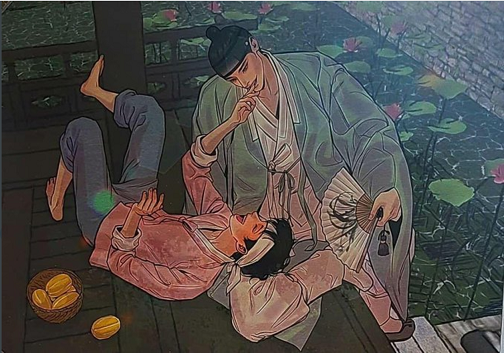

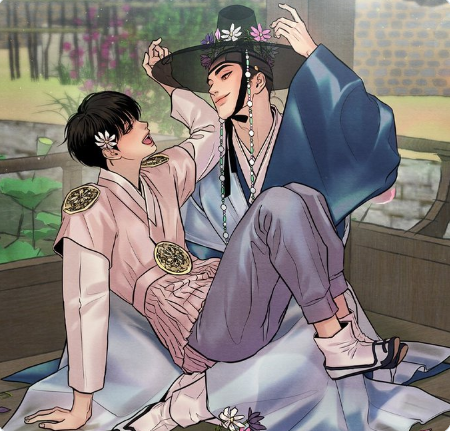

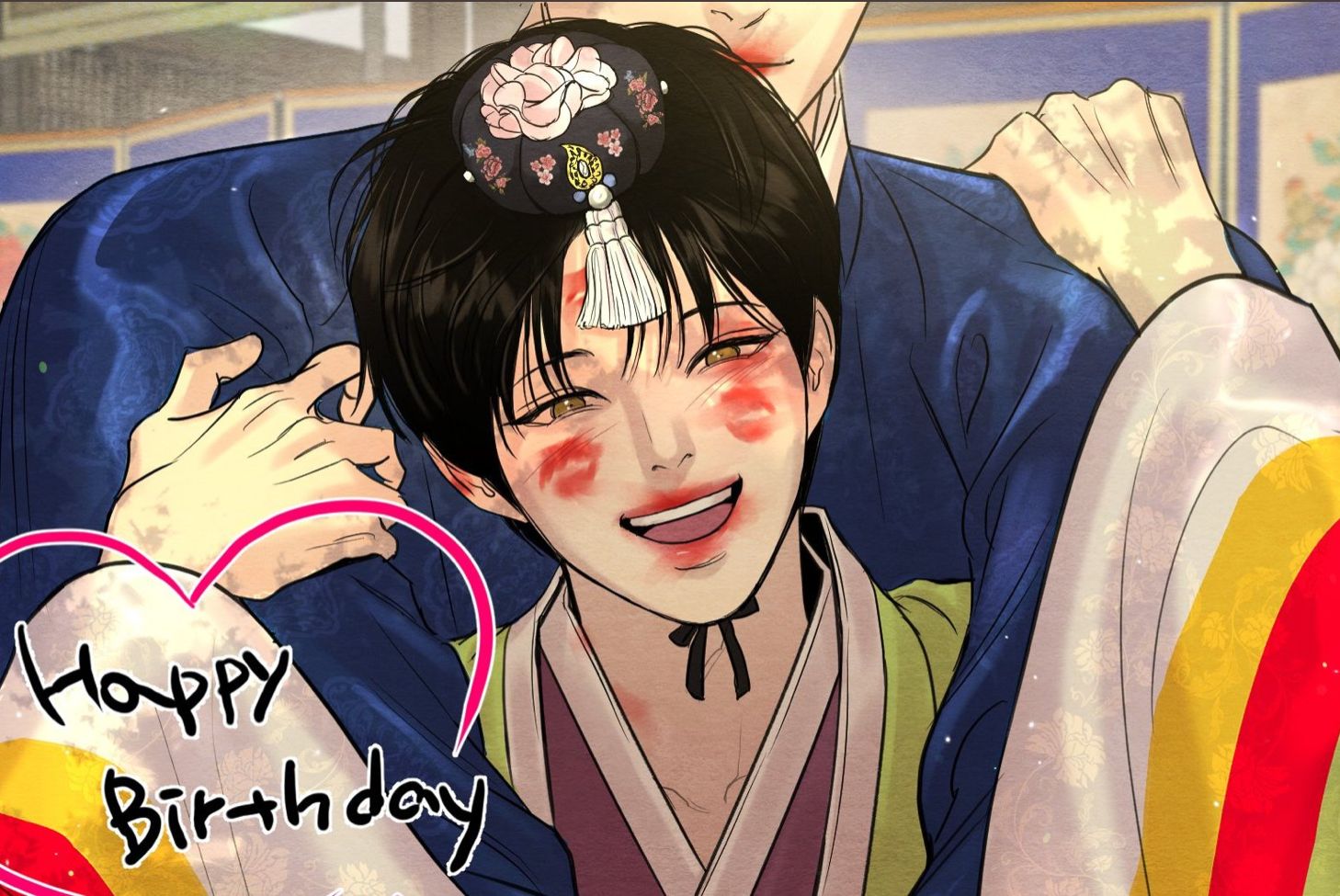 The painter’s mouth is wide open. This implies that the painter is laughing! In other words, these pictures are showing a happy Baek Na-Kyum. The laughter is not just a symbol for joy, but also an indicator for social bonding, cooperation and as such social acceptance. Note that in all these scenes, the painter is not laughing alone. He is either facing his lover and the “witnesses” of his marriage.
 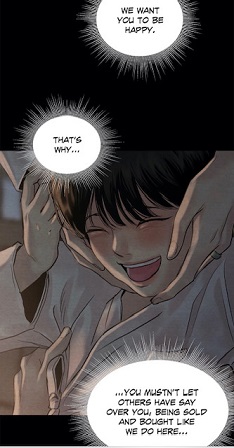 (chapter 87) Naturally, this vision reflected the past due to the presence of the noonas. But if you read my previous analysis, you are aware that the painter’s nocturne visions are always composed of three elements: memory, nightmare and desires which will come true at some point. The readers will certainly recall the painter’s wish in the bedchamber:
  (chapter 81) However, here again, this was not real, for he was imagining it. He had restrained himself, for he felt that his actual life was like an illusion. It was too good to be true. Thus I conclude that in both visions, the painter wished to laugh and as such to be happy. And this observation led me to the following deduction. In season 4, the manhwalovers will witness Baek Na-Kyum’s laughter. But this doesn’t end here. All the quoted pictures share another similarity which is the absence of the sound!! There is no HA, HA, HA…. Thus I deduce that in season 4, the readers will even hear Baek Na-Kyum’s laugh!! 🤣
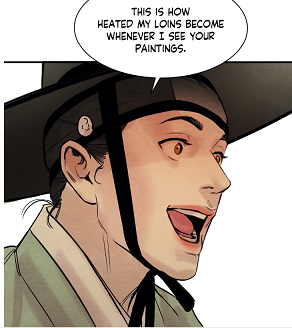 (chapter 1). His mouth was exposing his emotions: happiness. It was, as if he was laughing internally out of joy. Then in the pavilion, the author let us hear Yoon Seungho’s laugh, while we couldn’t see his face.
 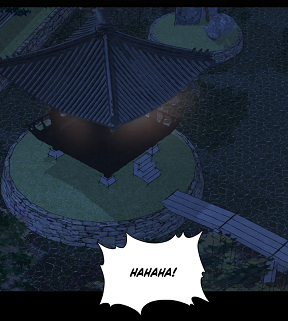 (chapter 25) As you can see, Yoon Seungho was not truly seen “laughing”. This is what we saw right after:
  (chapter 25) Either the sound was missing, or the readers couldn’t see his open mouth. Then in chapter 51, Byeonduck created an ambiguous situation.
 (chapter 51) Who was laughing here? The main lead or Min recognizable with his green hanbok? This confusion was deliberate. It was to give the impression that the lord had moved on, he was not missing his partner. This image served to divulge the reality: this happiness was fake. Another interesting aspect is that we couldn’t see the lord’s mouth, for it was too far away. It was more or less drawn from the painter’s perspective who was walking in the courtyard.
  (chapter 51) The purpose of this trick was to deceive the painter, Yoon Seungho would no longer care for him. However, this trick didn’t work out like imagined due to the maid’s words. She wished that he would remain in the mansion. But let’s return our attention to the laugher in this panel. I would even add that there was no real social bounding, for Black Heart was enjoying about Yoon Seungho’s misery and loss. He believed that the painter had died. And if it was Yoon Seungho who laughed, then this was to mask his pain. Then in chapter 70, he was caught laughing. And observe that the author separated the sound from the face:
  (chapter 70) Yoon Seungho would even hide his face from the painter, as he was looking down. His laugh was barely perceptible, and when the author revealed his face, Yoon Seungho used his hand to mask his smile.
  (chapter 70) It was, as if Yoon Seungho was not allowed to smile or to laugh at all. I would even go so far to say that laughers were actually forbidden in the mansion. Striking is that in season 3, for the first time, we could see and hear the lord’s laughter contrary to season 1 and 2..
  (chapter 78) This illustrates the progression of the lord’s healing. He was getting happier, and he would interact more and more with people. Yet, in this scene, the lord’s laughter was not loud contrary to the one in the pavilion. Then in the gibang, his laugh was also fake, for he was masking his pain.
 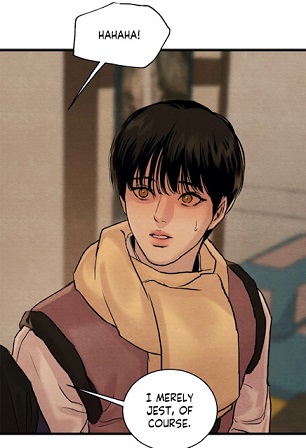 (chapter 93) Thus the author didn’t let us see his mouth once again. But the painter could see the difference between a sincere laughter and a fake one, as he had already heard and see the lord’s true laugher! Because the lord laughed in all 3 seasons, I could only assume the painter’s laughing in season 4. But I have another proof for this prediction. In season 3, the painter’s laughter was shown in visions (chapter 81, 87) or through the testimony of the maid.
 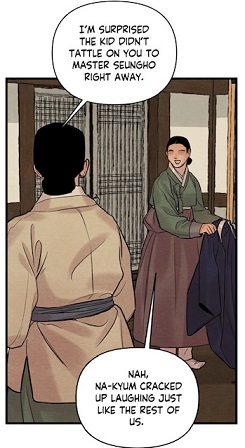 (chapter 91) However, the manhwalovers have to envision that, when he caught the pervert with the maid together, he was totally embarrassed. Hence his laugh was fake! In other words, I am doubting that he truly laughed. That’s the reason why Baek Na-Kyum denied to find the situation funny.
 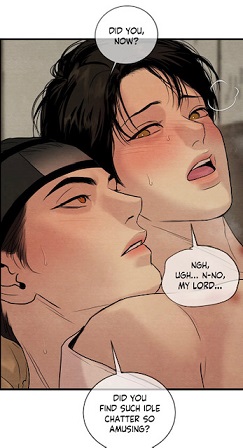 (chapter 91) As a conclusion, expect a picture with Baek Na-Kyum ‘s laughter reflecting his happiness and sincerity. And this is definitely related to his marriage:
 (chapter 87) Here, he was making fun of his father, and used the rumors about his imminent marriage. That’s how I realized that in season 3, the lord had often played the role of the Joker (chapter 78-79; 87; 89-90-91), until he was replaced by Black Heart. That’s the reason why I have been predicting that in season 4, Yoon Seungho will play a huge prank on the old bearded men, especially the mysterious lord Song, with his marriage. But while making this connection between the lord’s laughter and the painter’s, I had another revelation: the mouth wide open is not just the expression for laughter, but also for fear and suffering.
  (chapter 102) There is no HAHA, this shows that this situation is not funny. Yet, Black Heart is still smiling, he is even explaining that they were just playing. However, this smile is totally fake, for he is already scared. Hence he is stuttering. Moreover, he is trying to downplay the whole situation, as he describes it as a game. But the closer Yoon Seungho got to him, the more the villain got scared.
 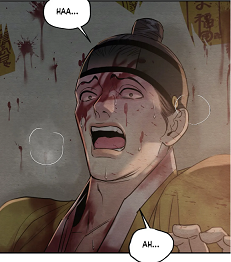 (chapter 102) On the other hand, Black Heart’s mouth remained wide open, but it slowly exposed his true emotions. As the manhwalovers can detect, the sound “Haa,” is not expressing joy or happiness, but huge anxieties. Thus I couldn’t help myself thinking that in season 4, the painter’s laughter will be reflected with the heavy breathing from fear and pain. Someone will have a mouth wide open out of fear!! And this connection was already present in chapter 1:
  (chapter 1) Baek Na-Kyum and Yoon Seungho had both flashbacks
  (chapter 66), while Min was smiling. He was internally laughing, for it found it entertaining. [For more read the essay HAHA Flashbacks”] And this fear was exposed by the sound: HAA
 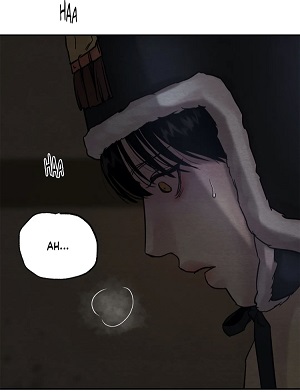 (chapter 99) But this doesn’t end here.
 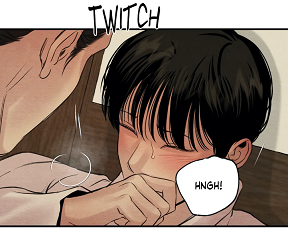 (chapter 84), but in the gibang, he dropped this habit for good: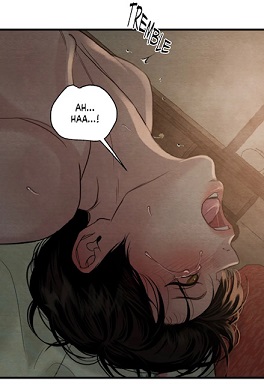
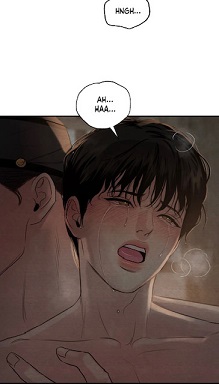 (chapter 96) This connection between pain, pleasure and laughter appeared in chapter 91, as the story is based on the following rule: there is always a reflection within the same episode. I would like the manhwaphiles to observe this image:
 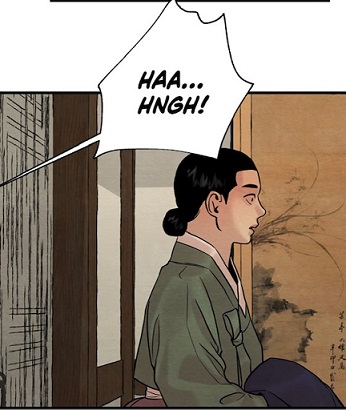 (chapter 91) Here, the lord had changed position provoking pleasure to the artist. Before, the maid had laughed so loudly in order to get the painter’s attention.
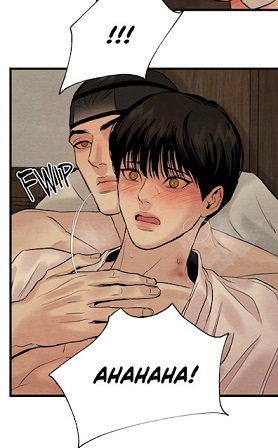 (chapter 91) According to my interpretation, she hoped that Baek Na-Kyum would discover the existence of the kisaeng’s letters so that the painter would feel betrayed by Yoon Seungho. He had ordered to hide the correspondence. But for that, she needed to explain the reason for her loud laughter. Hence she revealed the incident with the pervert. The irony is that due to his pleasure and embarrassment, Baek Na-Kyum didn’t pay attention to her words. He already felt ashamed, after the servant had exposed the situation in the bathroom.
  (chapter 91) Thus he avoided his lover’s gaze. And note that in chapter 25, the lord laughed, before he raped the painter.
 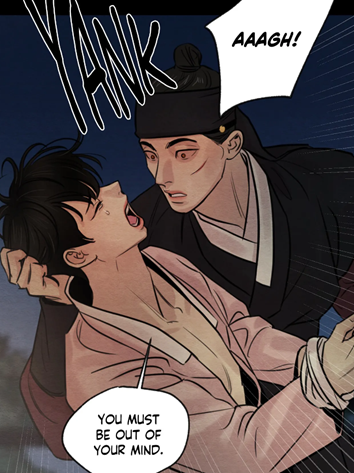 (chapter 25) This episode exposes the connection between laugh and pain. Here, you can see that the painter is also screaming out of pain, the negative reflection of Yoon Seungho’s laugh. Baek Na-Kyum’s mouth was wide open. When people are tortured, they will usually scream their pain and fear.
  (chapter 37) and the one from Dong-Yi. The absence of the sound. Moreover, the manhwalovers can not see the mouths from the victims either. The torture was already finished, for they had removed the tools and the „suspects“ were covered with blood. And this leads me to the following observation. The author selected a perspective from far away, and didn’t add the sound on purpose. This shows that the pedophile was not present, when the torture took place. He only arrived afterwards. This exposes his cowardice. Secondly, since I had outlined that the author had separated the sound (HA HA) from the lord’s mouth concerning the laughter, I am quite certain that she will use a similar processes for the torture. Naturally, I am also assuming that torture from the past could be slowly revealed. Consequently, my prediction is that the negative reflection of the painter’s laughter will be the yelling combined with fear and pain. This signifies that people will suffer in season 4 and probably die. Another evidence for this prediction is that the author often focused on the characters’ mouth. And this is what we have:
  (chapter 77)
  (chapter 86)
  (chapter 98) In the last scene, Heena was sort of “punished”, when she confessed to the main lead. That’s the reason why I believe that in season 4, we will see people screaming out of pain and fear. It can be in the present or in the past. The interrogation and torture should be exposed in my eyes contrary to chapter 37.
 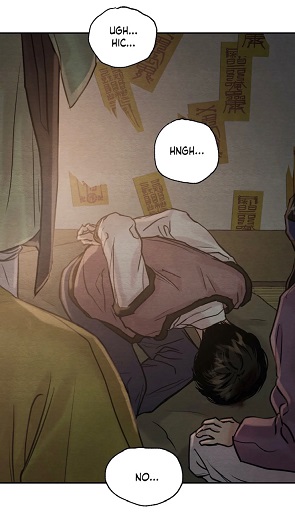 (chapter 99) Despite the “torture”, he still claimed that Yoon Seungho was no murderer. Thus I conclude that in the next season, it should be the reverse. Yoon Seungho has to make a new leap of faith believing in the painter’s innocence and purity. Hence I am expecting an arrest in season 4. Finally, we shouldn’t overlook that each word Yoon Seungho said became the truth, so when he stated this
  (chapter 65), he was already warning the sister. She could face human justice. However, this idiom suddenly caught my attention: “the wrath of humans”. It can be a reference to the authorities, but also to the inhabitants. The latter could get infuriated by the police work and put the officers under pressure or in the worst case, the inhabitants could decide to do their own justice: lynch mob. According to me, many commoners died in season 3. Hence this could upset the town folks who would ask for real justice. And if Yoon Seungho’s fiancée is acknowledged by them, then it will be impossible for the pedophile to use the authorities to achieve his goal, separate the couple and hide his own crimes. Thus his last puppets will have to take the fall. Another important aspect is that when Yoon Seungho warned the kisaeng, Kim was also present, though he still remained in the background.
  (chapter 65) As you can imagine, I am already sensing a bad ending for Heena and Kim. Striking is that in this scene, while the noona was seen constantly with her mouth wide open, yelling at the host and calling for her brother, the latter was having a flashback. This is no coincidence, especially if you recall that Heena was connected to Baek Na-Kyum’s tears:
  (chapter 68)
 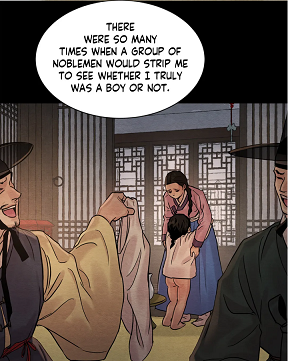 (chapter 94) In fact, this reinforces my conviction that the painter’s laughter will be contrasted with people’s moaning and yells out of agony. At the same time, I think that Heena is connected to scandal, but in season 2 and 3, she failed to create a ruckus. Why? It is because in the past, she had helped to cover up the crimes committed in the kisaeng house.
 On the other hand, when these persons got tortured, they closed their eyes out of agony,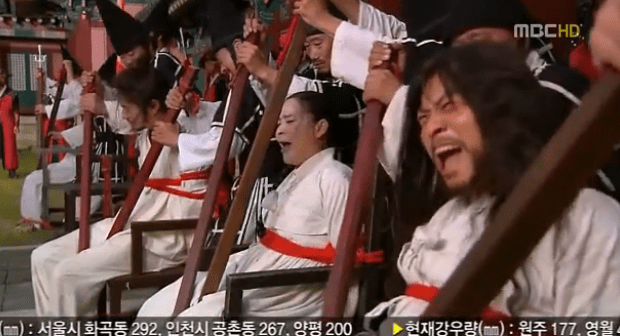
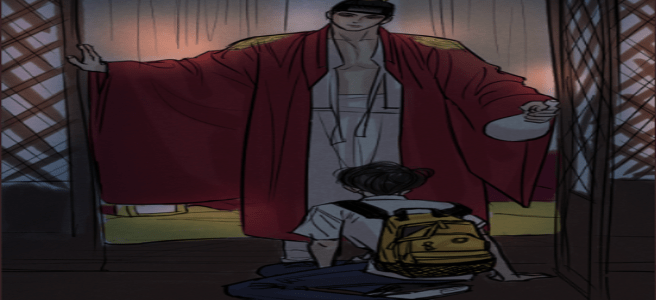
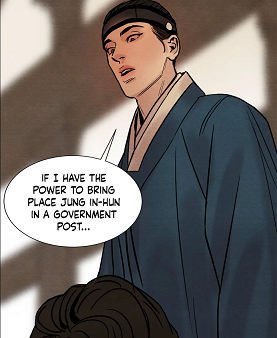 (chapter 11) Secondly, I had associated the main lead to the eagle which is the symbol for the kings and emperors in Europe. He was seen here flying
  (chapter 30), and his fingers reminded me of the eagle’s claws.
 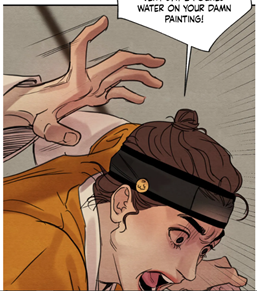 (chapter 18) And this perception got even reinforced, when I saw this panel:
  (chapter 52) In this scene, he was sitting like a king surrounded by his “court”. The hanbok had such a design that I couldn’t help myself associating it to Joseon’s monarchy.
  , I had another revelation. On the one hand, it actually confirmed that Yoon Seungho was somehow destined to become a king, yet he is not represented by the eagle or the phoenix, but by the dragon. Hence the moment I saw this image, one idiom came to my mind: Dragon king!
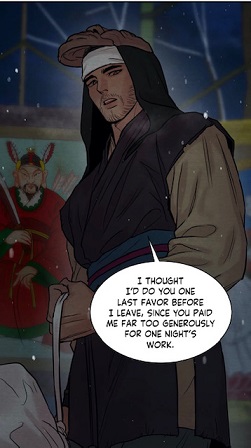 (chapter 100), though this deity is always accompanied with a dragon and in this picture, the readers couldn’t see one. However, it is possible that the author didn’t desire to reveal too much.
 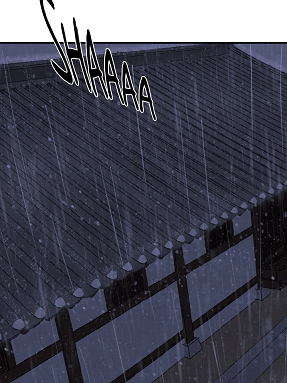 (chapter 21) Why? It is because the lord was happy. These were the tears of happiness, which Yoon Seungho couldn’t express contrary to the painter. And this is no coincidence that in chapter 58, it started snowing, when the couple was making love:
 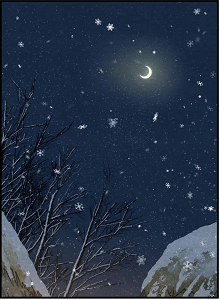 (chapter 58) And we had the same weather, when Yoon Seungho saved his lover.
 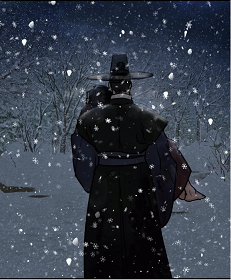 (chapter 102) The weather was expressing the main lead’s emotions: tears of happiness or sadness. We could say that the lord has the “power” to move the sky.
 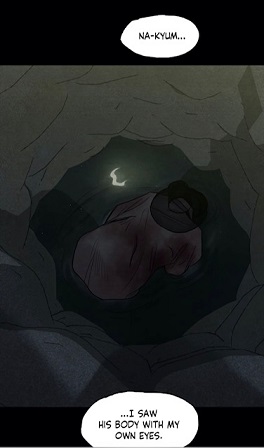 (chapter 97), and according to me, the messenger was drown there.
 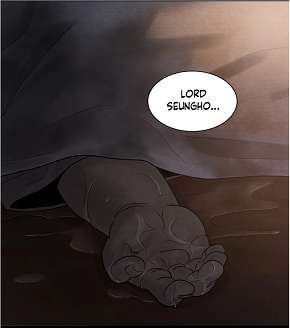 (chapter 94) In addition, my theory is that Deok-Jae and/or Jung In-Hun’s body were placed in a jar in order to hide the murders. For me, the jar plays a huge role in Painter Of The Night… thus Byeonduck created such a scene in season 2
  (chapter 46) and we have so many jars next to the pond:
 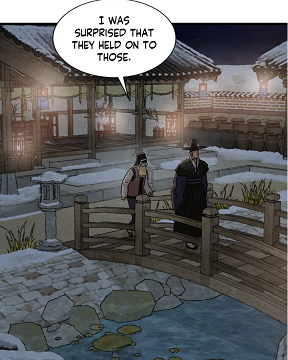 (chapter 94) [For more read the essay “The secret behind the library”]
 (chapter 91) This is no coincidence. To conclude, all these elements (rain, jar, well, soul of a deceased), connected to the dragon king, are present in Painter Of The Night. Thus I came to the conclusion that Yoon Seungho is like Dragon king. This reinforces my conviction that the main lead is not only connected to shamanism, but also embodies royalty. So he might not be the king of Joseon, but he is powerful in his own way, though he is not aware of this. And note that the moment he wished to commit suicide by drowning in the pond, he was brought back to life.
  (chapter 102) Water is his true element.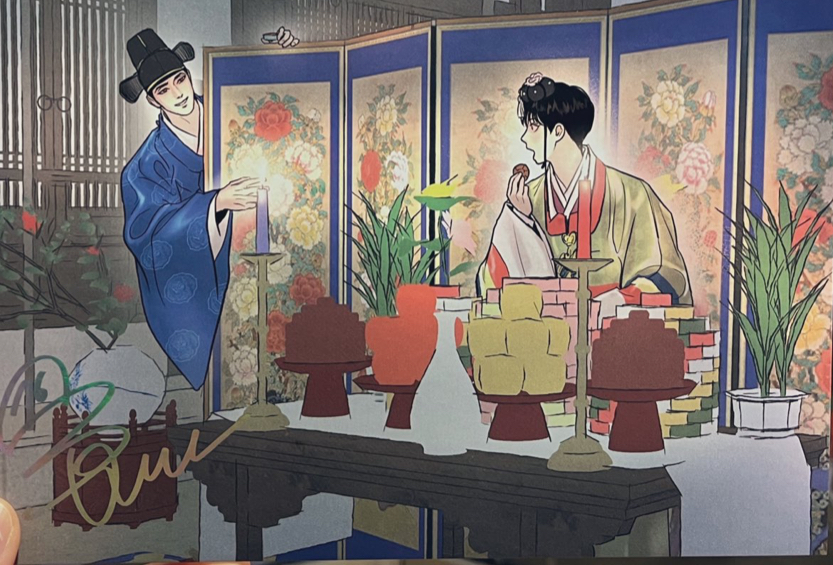
 (chapter 85) This means that in the Yoons’ mansion, people didn’t venerate this god. And since the aristocrat made such a statement to the elder Yoon Chang-Hyeon,
 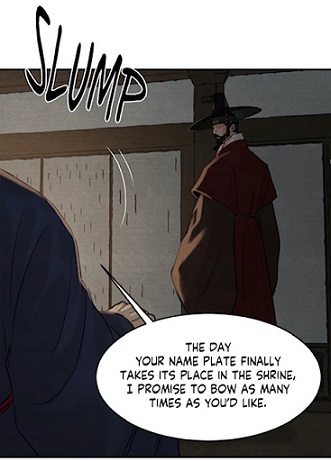 (chapter 86), I have the impression that in season 4, we will assist to a real ritual to ward off evil and back luck, leading the tormenting souls to the afterlife peacefully.
  (chapter 100) and this altar
 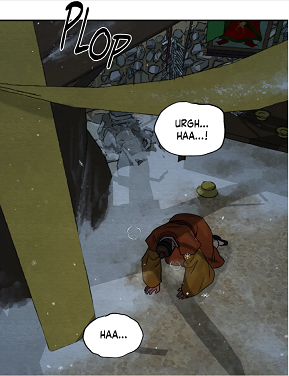 (chapter 100) were exposing the presence of a ritual. However, my problem was that I couldn’t determine exactly the nature of the ritual. But by making the connection between the dragon and good fortune, I had now more clues. I have to admit that I can not be 100% sure for this, but this is what I found:
  (chapter 4)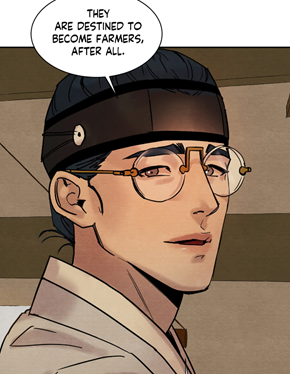
 (chapter 6)
 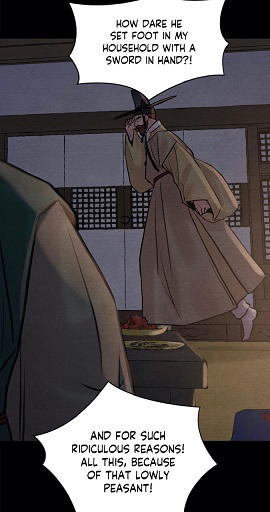 (chapter 82)
  (chapter 83) and the deer
  (chapter 22). Then the lord compared Baek Na-Kyum’s eyes to a rabbit.
  (chapter 78) Since both resemble each other, I deduce that the main lead has the same eyes, the rabbit’s. Like mentioned above, he utilized his fingers similar to claws:
  (chapter 54) One might argue that this signification is totally impossible, for the lord doesn’t have the body of a snake. This point can be refuted very easily. What is the major characteristic of a snake is molting. A regularly recurrent event during the activity period of all snakes is the shedding of the skin. This coincides with the lord’s change of clothes. The latter reflected his downfall and rising. Furthermore, this animal is linked to death and rebirth. My avid readers are already aware that I had detected different scenes, where we could witness the lord’s spiritual death and rebirth, like for example in the shed:
  (chapter 62) When he discovered his misjudgment the next morning, he felt like dead. He no longer saw himself as a lord, but came to view the painter as his new lord :
 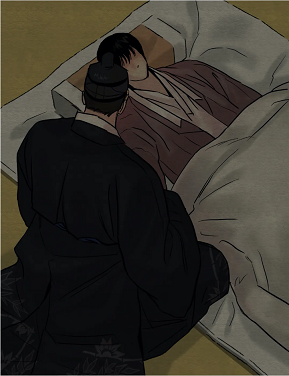 (chapter 66) As a conclusion, Yoon Seungho shares so many similarities with the dragon that I came to view him as one. This explicates why even after getting married, he will never wear a beard!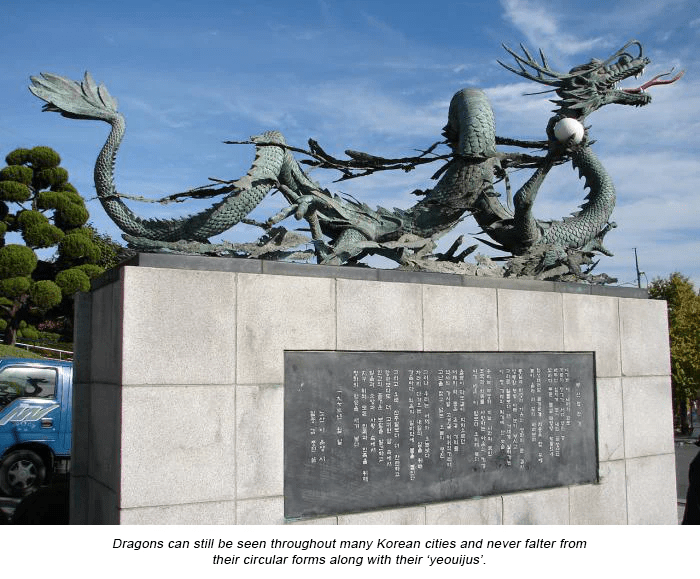
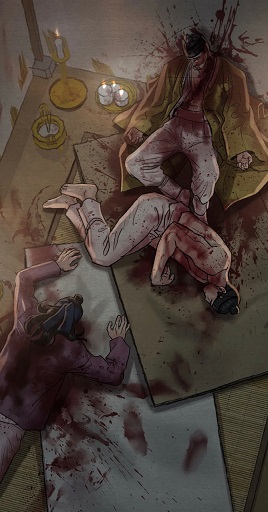 (chapter 102), and thanks to the painter, Yoon Seungho’s soul was able to escape this “mental prison”.
  (chapter 45)
 (chapter 55) and as such his heart and mind.
 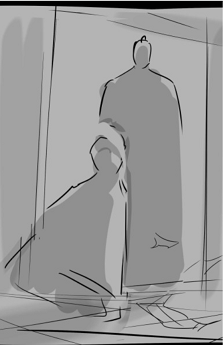 The painter is sitting inside a room, while Jung In-Hun is standing outside. Nonetheless, the position of the characters are very similar. This indicates that the author’s new alternative story is actually inspired by the main story!! This can only reinforce my perception that Yoon Seungho in the main story is associated to royalty. However, since it is a reflection, I deduce that this image
 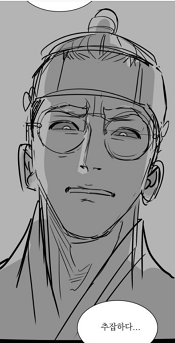 He criticized the painter by stating that this was “filthy”.
  In this scene, the characters are caught by surprise, but it becomes obvious that there is no disgust or expulsion. In fact, the fall of man took place before, for Baek Na-Kyum was sent to Joseon. In this encounter, I detect attraction and curiosity. Hence I come to the conclusion that in the original story, when this scene took place,
  (chapter 50)
  (chapter 52) This means that the mysterious lord Song was actually claiming the main lead as his wife in the last scene. Min and his friends were sent there in order to entertain the protagonist, but they failed. This explicates why the next day, Black Heart was seen with a hanbok of lower quality.
  (chapter 56) It was, as if Min had been compensated for his bruised face by the mysterious lord Song. However, for the pedophile, Black Heart was just a concubine, and not his main wife! Hence the hanbok had not such a detailed and expensive design. This would explain the villain’s jealousy. And now, if you look back at the hanboks from the main lead, you will recognize his ascent. First, he is wearing green, which is similar to Yoon Chang-Hyeon’s color. At the same time, his hat resembled a lot to Kim’s.
  (chapter 1) Then later, he is mostly wearing blue which is actually the color of the Crown prince.
  (chapter 11) Yet, his robes initially have no design. Slowly, the lord is wearing colors and designs that are actually reserved for a king: blue, red, black and purple. This constant change of hanboks symbolizes the “snake molting” and as such his transformation and rising. This is not astonishing that on the night of the bloodbath, he had such a hanbok:
  (chapter 102) Here, he was no longer acting like a noble, but as a ruler. Don’t forget that according to me, the mysterious lord Song had proclaimed the main lead as his unofficial Queen by giving him hanboks with phoenixes. However, naturally, this was never mentioned to Yoon Seungho directly. Why? It is because Kim usually selects his clothes. However, this rise was not natural, as the lord had no real saying in this matter. The real metamorphosis took place in the shaman’s house, when the lord was sent back to the past and as such the darkness.
 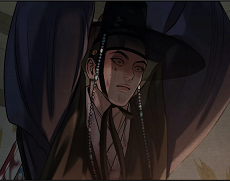 (chapter 102) The moment he left the “cave”, he went to the mountain and surrounded by the wind and water, he changed into a dragon. This expulsion corresponds to the final release, the lord’s mind is finally freed from the darkness, while I believe that this scene
  (chapter 44) It is because the main lead was thinking that the painter would actually run away. Thus the door was left opened, and he was wearing warm clothes. Yoon Seungho never imagined that Baek Na-Kyum would remain by his side. Yet, during the previous night, the lord had consoled his lover by embracing him.
  (chapter 71) But this can be refuted easily. First, don’t forget that during this love session, the lord was acting like a servant pleasing his new lord. So this had nothing to do with Yoon Seungho’s feelings like sadness or happiness. He was determined to keep the painter by his side, and ignoring his own feelings. He never expected the artist to reciprocate his feelings. Secondly, Yoon Seungho’s nocturne vision is not just a nightmare, but also a DREAM! Yes, you are reading this correctly. Only recently, I discovered that all the artist’s visions are a combination of 3 elements: memory, nightmare and dream! I will give you three examples as illustration, for I am slowly running out of time.
  This vision is a combination of these three elements: memory, nightmare and dream. This had happened during the First Wedding Night (memory)
 (chapter 21), then we have a similar situation in chapter 49: ,
 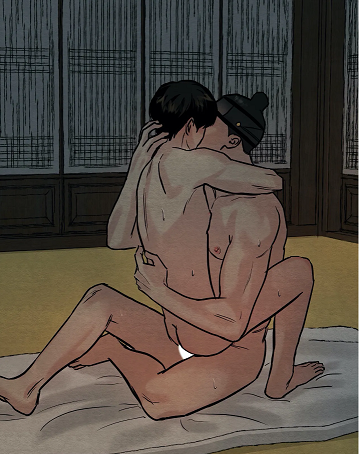 , but the painter was rejecting this future. Hence he considered it as a nightmare.
 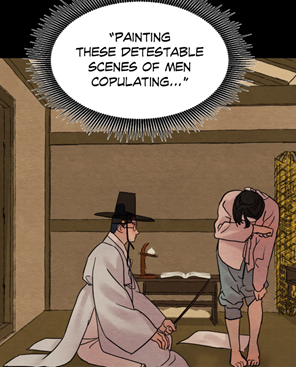 ; nightmare
  the lord becomes a ghost and confronts the painter with his biggest fears (admitting his attraction, passion for erotic paintings and homosexuality) and dream
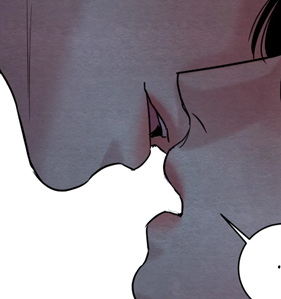 (The painter’s true desire was that the lord would kiss him, he was deeply longing for his lips, yet he was still in denial in this vision.
 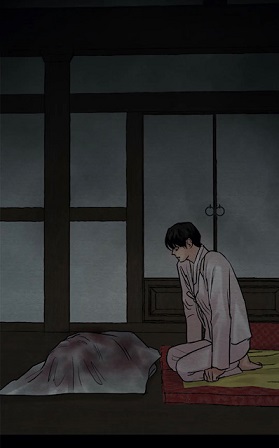 , for the painter was remembering the corpse in the courtyard, a dream, as he wished the return of his loved one
 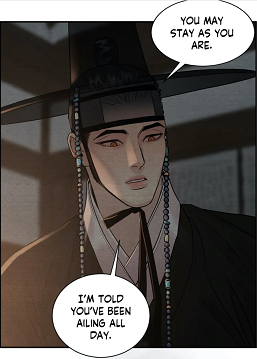 . He hoped that the lord would take care of him personally. Naturally, the “spirit” is the nightmare
  .
. 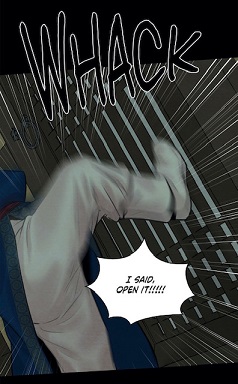 (chapter 74) This had already happened, but the lord had not grasped the significance.
 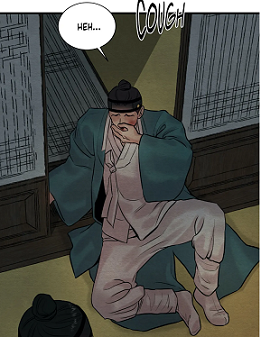 (chapter 53) Besides, he had not opened the door himself. Even when he went to the scholar Lee and opened the door with the his foot, the lord still felt trapped.
 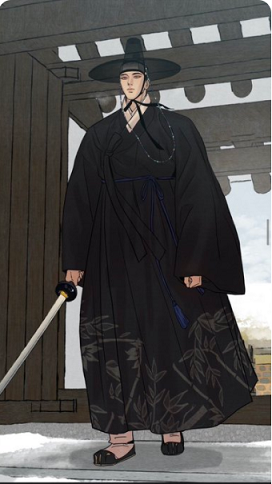 (chapter 67) Then in season 3, he could break a door, but it was thanks to the painter.
 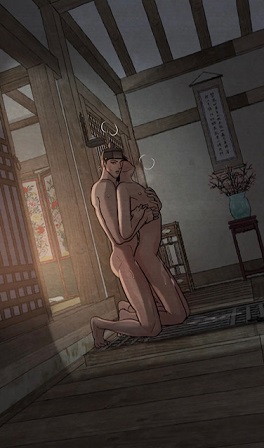 (chapter 96) This shows that the lord’s wish to get released had not been fulfilled so far. In my eyes, it is connected to the torture Yoon Seungho suffered and as such to the purge organized by the authorities. That’s the reason why I deduce that the lord will break a door in season 4, and this won’t be by accident and it will be witnessed by many people contrary to chapter 53, 67 and 96! The broken door will reflect the lord’s rise and power, and no one will be able to stop this. In my eyes, this wish is connected to the door in the servants’ quarter. That’s how his imprisonment started.
 (chapter 74) The “dragon” wished to see Kim and his father, and confront them! And this did take place in season 3. Yoon Seungho confronted the butler with his attitude and betrayal
 (chapter 77), but this argument was just short-lived. He still viewed the valet as a hard-working and trustworthy person. He had just made bad decisions. Then in the bedchamber, the lord could blame the father for his suffering:
 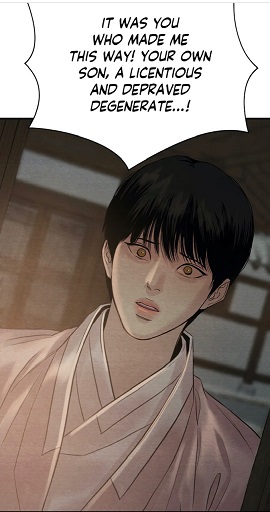 (chapter 86) As you can see, the lord’s wishes were granted, but the nocturne vision was so difficult to grasp that neither the readers nor the main lead could interpret the message correctly immediately. Besides, the nightmare was mostly silent. But this doesn’t end here.
  (chapter 74) In this image, he is floating in the air… a sign that his status is changing. At the same time, this shows that he is escaping from the hands. They are trying to drag the main lead down. Thus I come to the conclusion that the vision was announcing the lord’s transformation (into a dragon) and as such his “rise”. Note that in this image, he is still a teenager, but in the following panel the protagonist has already become an adult.
  (chapter 74) Simultaneously, the vision also displays the lord’s expulsion from “hell”, the sex orgies
 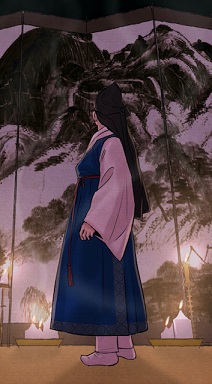 (chapter 74) Simultaneously, the dream showed that the lord wished to see this painting again, though deep down, he blames this image for his suffering. As you can see, the vision was revealing the tormented disposition of the lord. He was switching from nightmare to dream and the reverse… a mixture of anxieties and desires.
  (chapter 74) This signifies that he was approached by someone from behind, he had not noticed that the “door” had been opened. Thus he never expected his apparition. For me, this perception demonstrates that the painting is not the real cause for Yoon Seungho’s suffering. Since he had turned around, I came to recognize that this scene stands in opposition to the situation in the painter’s nightmare:
 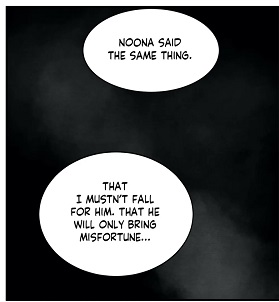 (chapter 86) In reality, he was a dragon, who could bring luck and fortune to the person who would cherish him. This is no coincidence that the pedophile sent hanboks with the crane
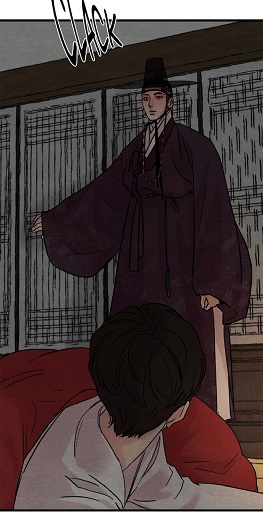 (chapter 34),
  (chapter 30), but much more brutal and violent!
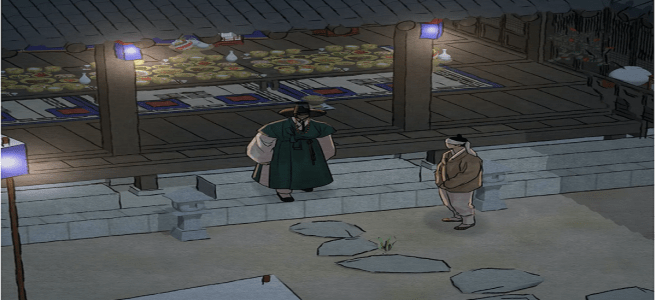
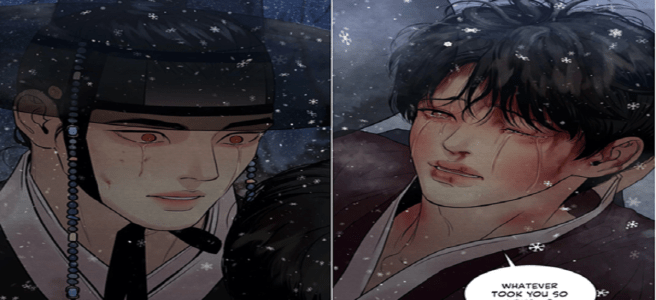
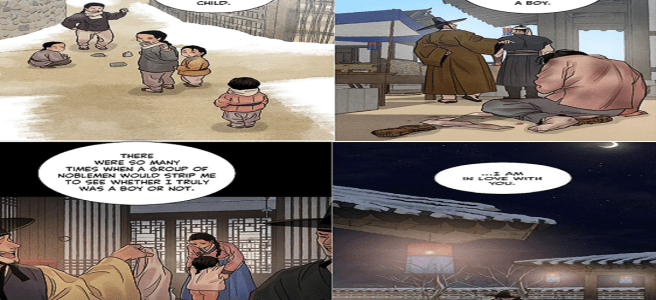


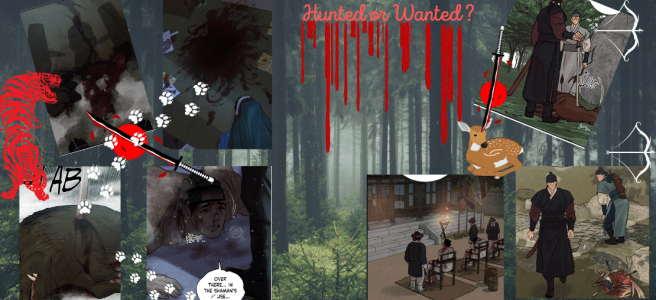


 (Chapter 73)
  (chapter 73) This is important, because the manhwalovers can sense a connection between sex and hunt. This means that the love session in the bedchamber from season 2 should be perceived as a new version of a hunt. And this link between sex and hunting was also present, when Yoon Seungho and Min were in the woods in chapter 41:
 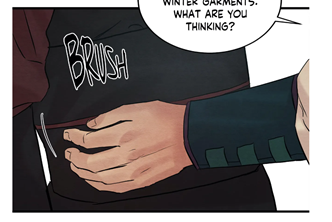 (chapter 41) In this scene, it looked like Black Heart was trying to make a move on Yoon Seungho, while in truth Min was more obsessed with the painter.
  (Chapter 41) The expression „spot“ belongs also to the semantic field of chase.
 (Chapter 11) A murder disguised as an accident, the scholar would have been eaten by a tiger. What caught my attention is that No-Name requested from Deok-Jae that he should make the painter leave the mansion.
  o (chapter 51) It was, as if the rabbit had been chased away from its burrow or the deer had been forced to leave the woods. That way, he would become an easy target for the hunter and butcher Mumyeong. To conclude, we had two hunts in season 2 as well.
  (Chapter 99) First, he was rushing, but the moment he received the crucial tip from his childhood friend, he approached the den silently, just like a tiger. That‘s the reason why neither Black Heart nor lord Jang nor lord Park detected his presence.
  (Chapter 101)
 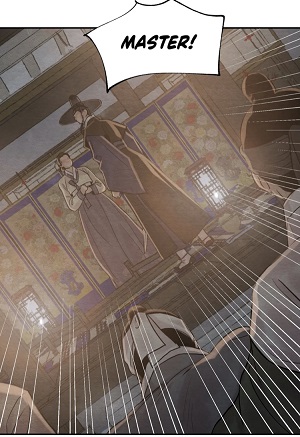 (chapter 99) and Lee Jihwa
 (chapter 100), hence he had not the time to question the veracity of their claims or sense their manipulations. On the other hand, he could detect the difference between the blood in front of the scholar’s house and inside the building.
 (Chapter 100). He was following his instincts. Tigers cautiously stalk their target from the rear in attempt to get as close as possible to their unsuspecting prey.
 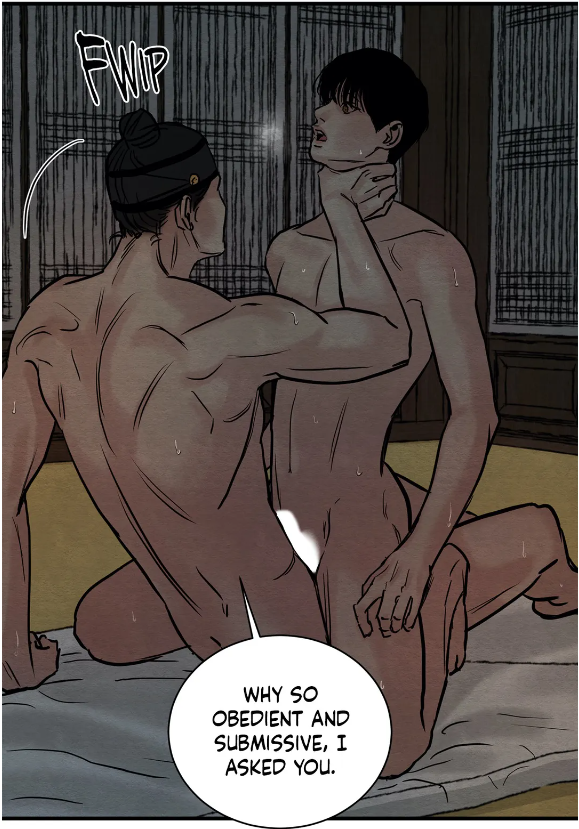 (chapter 48) or the chin
 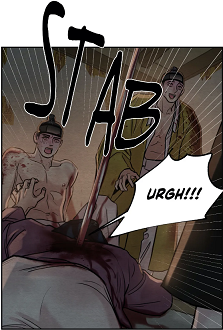 (chapter 102) Even in this panel, the sword resembles a lot to the tiger‘s fang:
  (chapter 102) Another important element is that this predator usually targets large-bodied preys like boar, deer, humans and not rabbit or pheasant. Under this new light, it becomes comprehensible why the main lead went after a boar or the aristocrats in season 3.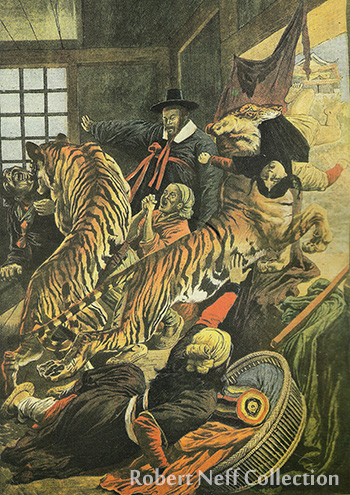
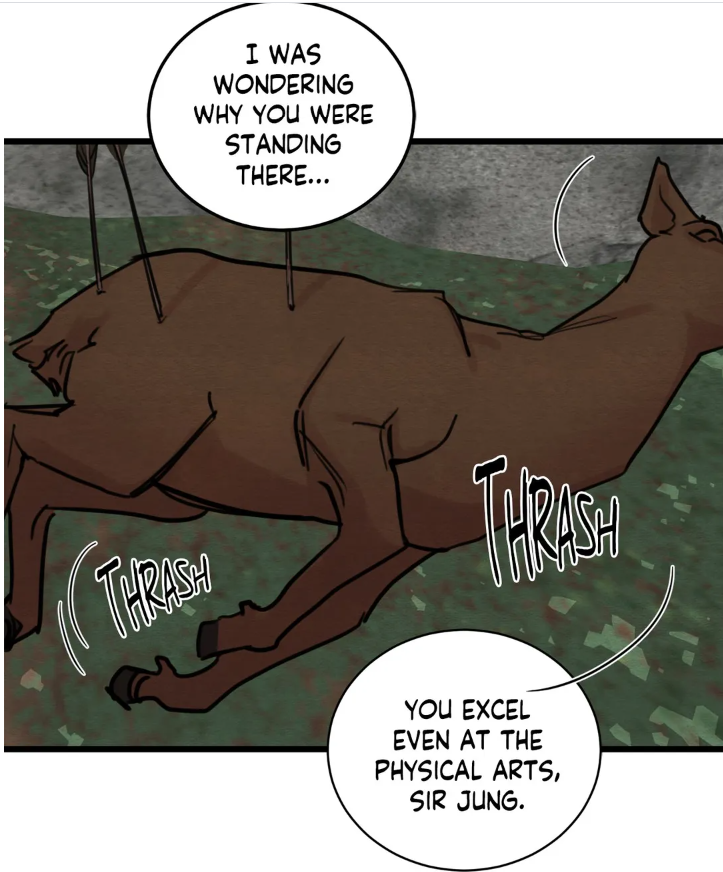 (chapter 22)
 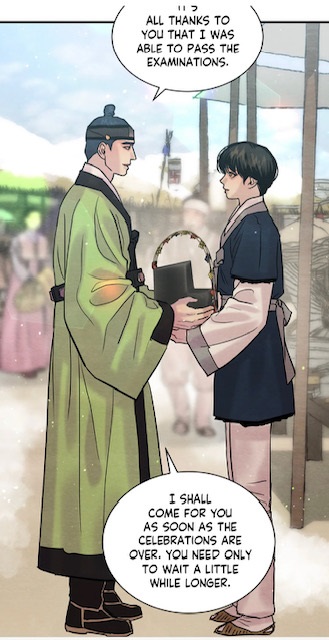 (chapter 111) than the killer in the woods
  (chapter 103), it looks like the learned sir chose to drop his own principle. And if this theory is true, then I come to the conclusion that the learned sir chose to copy the protagonist thinking that he could get away with it.
 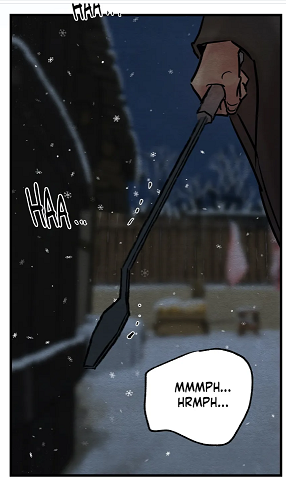 (chapter 60) The latter belonged to the lowest ranks of Joseon’s society, because killing an animal was a disgraceful job. On the other hand, the butcher No-Name and the tiger Yoon Seungho have something in common: killing is viewed as a necessity. It is either to survive or to end the animal’s suffering or to punish the criminals.
 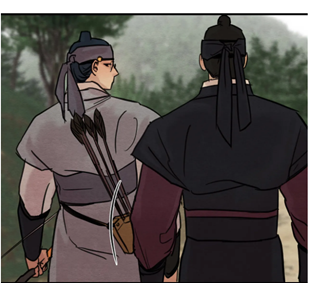 (Chapter 22). And when Black Heart suggested the artist’s assassination, he always kept laughing, making it sound like a game without any terrible consequence.
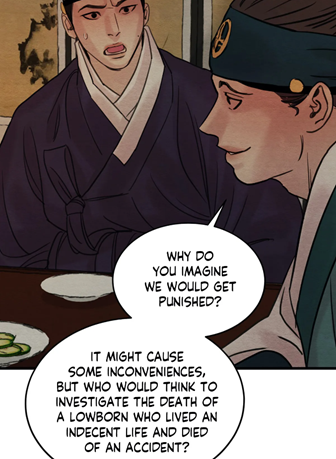 (Chapter 43) Lee Jihwa would remove a witch, and not a human.
  (chapter 43) Only Nameless painted it in all its cruelty and brutality. Not only the person would lose his life, but he would lose his identity.
 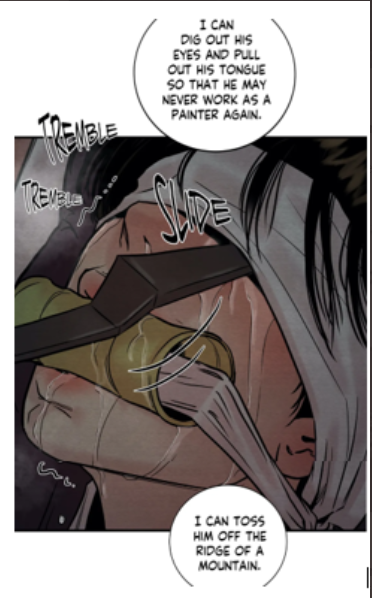 (Chapter 60) By removing his eyes and tongue, the victim’s face would change making him impossible to be recognized. And note that his scarf and headgear had been removed as well. It was not a game, but a deadly matter. Why would he do such a thing? The reason is simple. If no one could identify the victim, there would be no investigation. Astonishing is that hunt is a synonym for investigation and prosecution. Hence I am deducing that in season 4, the investigation should be perceived a new version of the hunt, a new version of this scene.
  (chapter 83) Thus I am deducing that this chase had been suggested to the main lead in order to release his tension and as such in order to divert his attention from the painter. Naturally, Kim was behind this idea faking his concern for his master. The hunt was supposed to procure pleasure to Yoon Seungho, but it couldn’t, because he was afraid of losing the painter. This explains why he selected the boar as his prey. He was fearless in front of that dangerous animal, for it meant nothing to him. He didn’t mind losing his life… revealing his suicidal disposition which resurfaced later, when the father mentioned the authorities.
  (chapter 86)
  (chapter 86) But the moment the servant reminded him to pay more attention to himself
 (chapter 83), he abandoned the boar immediately. This shows that all this time, Baek Na-Kyum had been on his mind. Therefore it is no coincidence that he rushed home on his horse and looked for Baek Na-Kyum.
 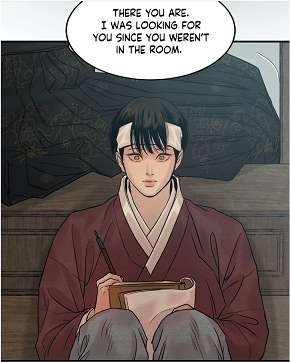 (Chapter 83) He couldn’t forget that he had scared and wounded the painter in his dissociative state. This shows that the chase had not served its true purpose: entertainment. In reality, the domestics had been the ones suffering the most, for them it was definitely more work
 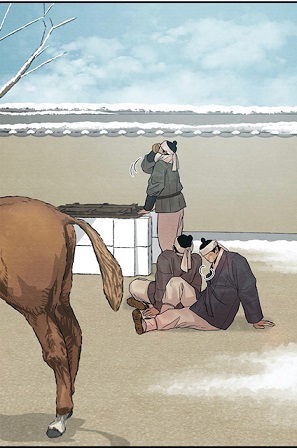 (Chapter 84) compared to the past.
 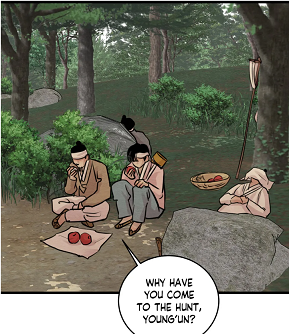 (chapter 23)
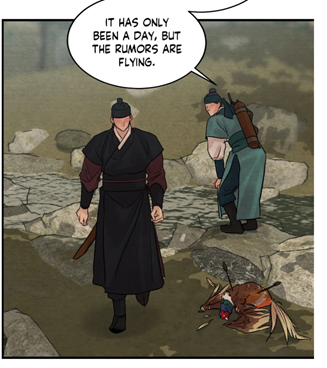 (chapter 41) First, I had feared that he might lose his life, then later I had realized that this death was purely symbolic. He would lose his title and family, therefore he would become a commoner. But I had also expressed my doubts that this scene could be a reference to Black Heart, as from chapter 52 on, I had sensed that he would die. Moreover, observe that during that hunt, Min had wounded the animal himself. This mirrors his own death. He became a victim of his own trick. But if the pheasant is representing two characters, The Joker and Lee Jihwa, then this means that the deer in chapter 22
  (chapter 22) embodies not only the painter, but also someone else. While in the past, I used to believe that it was Kim, now I come to the deduction that it was Jung In-Hun. Note that in this scene, the main lead left the prey and the scholar behind. Both got defeated. This means that by targeting Yoon Seungho, the scholar is not realizing that he is actually endangering his own life. Besides, by hunting the deer, the learned sir offered this prey to the tiger Yoon Seungho, and this was the painter’s case. Furthermore, the deer was carried back home on a horse
 (chapter 24) reflecting the painter’s fate.
 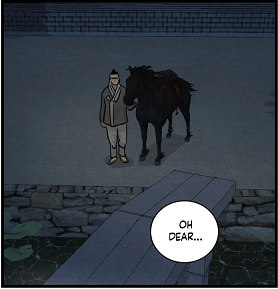 (chapter 25) Who brought the horse to the pavilion? Kim and Deok-Jae! And when the learned sir departed from the mansion, he was followed by the vicious servant and the horse.
 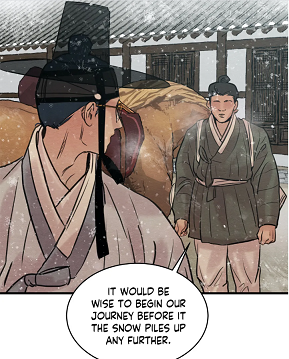 (chapter 44) As you can see, Jung In-Hun is connected to the horse. This observation was even confirmed in season 4.
  (Chapter 111) Thanks to episode 111, I detected another progression. First, Jung In-Hun was walking behind the horse
 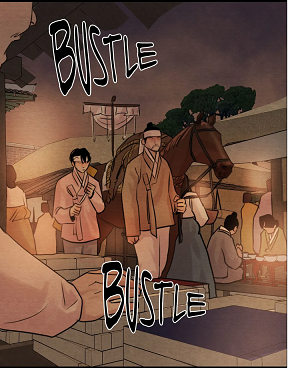 (chapter 24) Thus he could take the artist away unnoticed. Then in episode 44, the learned sir is shown standing in front of the horse. Finally, the manhwaphiles can see the man riding. This reflects his social ascension.
 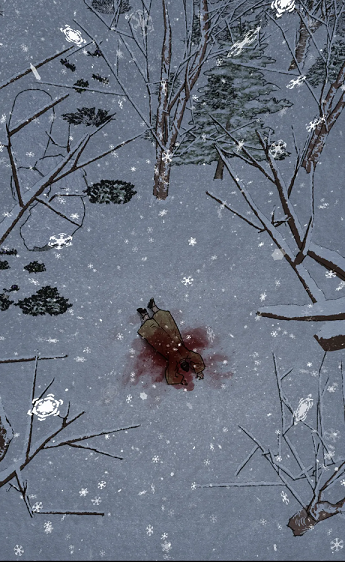 (Chapter 111) Like mentioned above, the shoes could be perceived as the evidence for Jung In-Hun’s crime.
  (chapter 83) The boar symbolizes not only the nobles like Jihwa, Min, Jang or Park, but also the elders Kim, Lee, Yoon Chang-Hyeon, and as such the king. And if you consider the boar as the personification of the pedophile, the ruler, this means that the moment Yoon Seungho hunted down the nobles, he defeated the ruler in a figurative way. I would even say that the nobles like Min or lord Haseon are pushing the main lead to “hunt” the monarch, for the shadows are standing behind the main lead. Due to their tricks, the “schemers” are realizing that they are contributing to give justice to the protagonists. Thus I was wondering if in the end, the main lead would hunt down a human in season 4, Kim or the king. Don’t forget the main lead’s words to the painter:
  (Chapter 103) However, since the manhunt appeared in the first episode from season 4, I deduce that we will have many manhunts in the final season, like here
  (Chapter 106)
  (chapter 106)
  (chapter 37)
  (Chapter 88) On the other hand, the foot print and the glasses were added to give the impression that the learned sir had been murdered. However, after adding blood in the fake crime scene and removing the learned sir’s possessions,
  (chapter 100), the place could be interpreted differently. The inhabitant had been attacked by a tiger during the night.
  (chapter 45) the cobweb behind Deok-Jae. Imagine that this scene took place in the middle of winter, thus the spider’s web got covered by frost. However, this indicates that this room had been abandoned for quite some time. But it is close to the gate. So it should have been the place where the doorkeeper is living. Secondly, I had demonstrated that the shrine had been neglected, for the altar had been removed.
 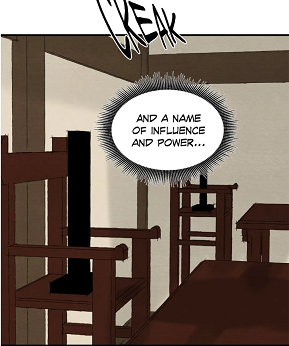 (chapter 18) Because of the presence of the cobweb, I started wondering why the author drew it behind Deok-Jae. In my eyes, it is because he was part of the spider’s web.
  (chapter 18) That’s the reason why Yoon Seungho was not dressed properly.
  (chapter 83) If he lived in a shed and had such a simple attire, no one would ever think that he was a noble in the first place. I believe that neither the patriarch nor the ruler had an interest to reveal his true identity. However, the protagonist had to be monitored, for he could try to escape at any moment. That’s the reason why the butler was still tasked to “take care of him”. But by becoming a male night servant for the king, this meant that the other nobles could claim him as well. He had no right. However, since the main lead was a butterfly, he couldn’t get tamed. Hence violence, manipulations and drugs were used to tame the young master. And remember how the spider kills its target: he empties it of its blood. In other word, he sucks all his energy. Therefore it is not surprising that at the end the main lead had become a wreck, and had no light in his eyes.
 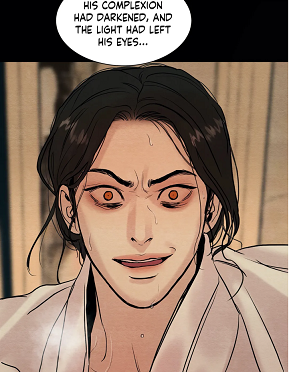 (chapter 57) Naturally, the purge played a huge role in the lord’s suffering reinforcing the huge rift between the pedophile and Yoon Seungho.
 (chapter 57)
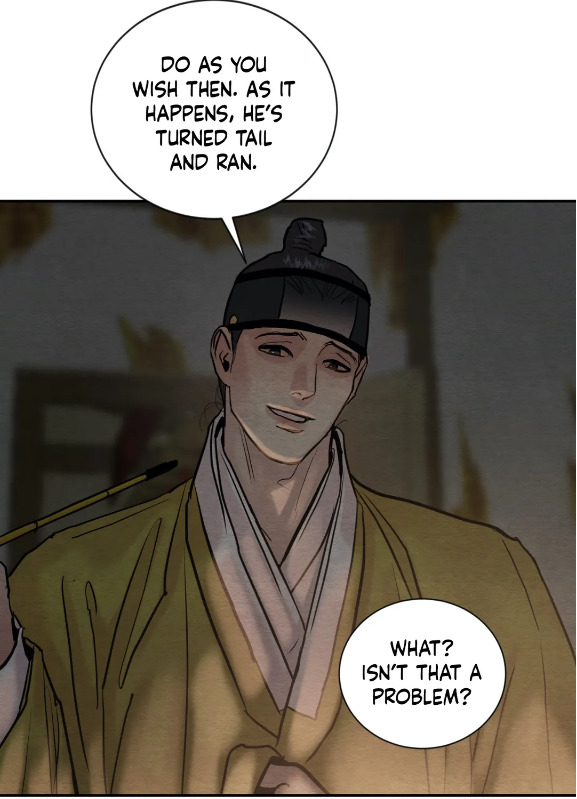 (chapter 101). It was not Min’s task to carry a friend… he was just a fellow puppet brought to the shaman’s house in order to entertain Black Heart. This truly exposes that Black Heart never saw in the aristocrats humans. As the red-haired master, he had been considered as the hunting dog, he had fulfilled his function. That’s why he was abandoned. He had helped Min to corner the painter and brought the kisaeng to the scholar’s home. Moreover, a hunting dog disobeying his master will be killed. Hence it is not surprising that the wild dogs ended up all dead. They were totally defenseless in front of a huge tiger. This feline is difficult to tame.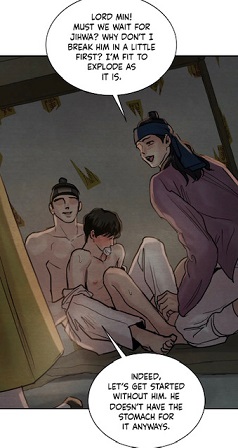
 (chapter 101) They saw in the sexual violence a new form of hunting. I would even go so far to say that they desired to turn the artist into their pet fulfilling all their desires:
  (chapter 101) Thus it is not surprising that Yoon Seungho was compared to an animal by his own father in the past.
 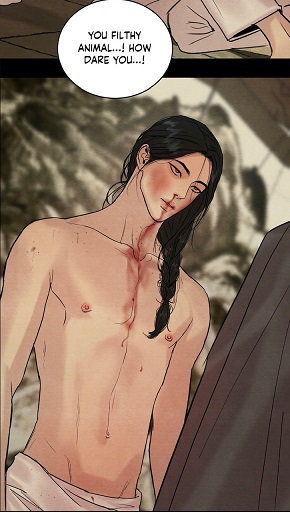 (chapter 83) The pedophile also desired to tame the young master, the beautiful and gentle butterfly. Thus he got brainwashed. He could never refuse anyone, he had to entertain the guests. And now you comprehend why Min said this to the painter.
  (chapter 101) As a punishment, he was given to lord Jang and his friend. Since Min had captured the artist, he viewed himself as his owner who would give order to his pet. Yet, a deer is a shy, but wild animal, difficult to control making it difficult to be tamed.
  (chapter 99) But this was impossible, for Black Heart never treated Baek Na-Kyum as a man. Hence I come to the conclusion that by meeting the painter, Yoon Seungho rediscovered his true nature: he was a free spirit, a tiger! And guess what… In Joseon, the tiger was perceived as a good talisman to chase away the evil spirit!!
 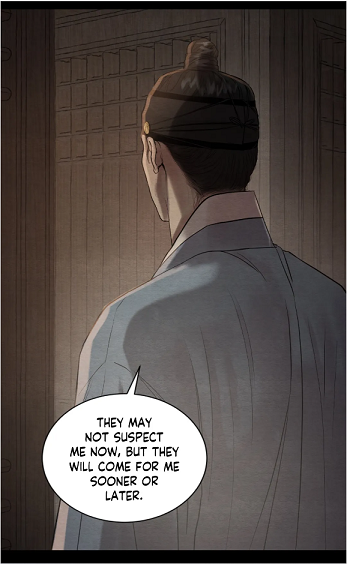 Yoon Seungho has the impression that he could get hunted down, for he killed the nobles. The tiger is now the target of “humans”, and Jung In-Hun will play a crucial role in his prosecution
 (Chapter 10)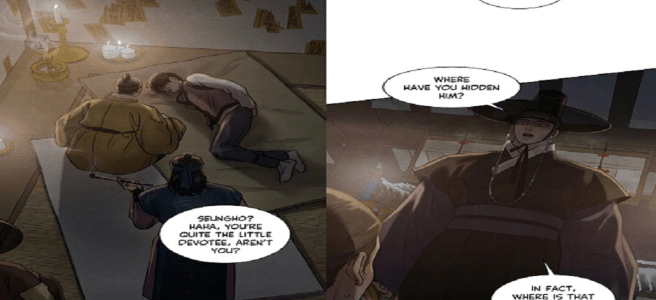
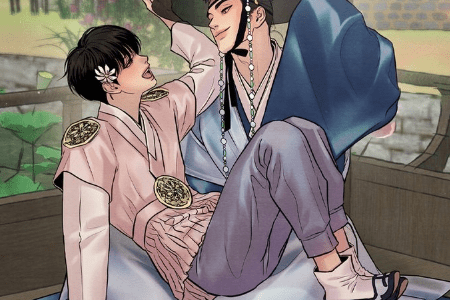
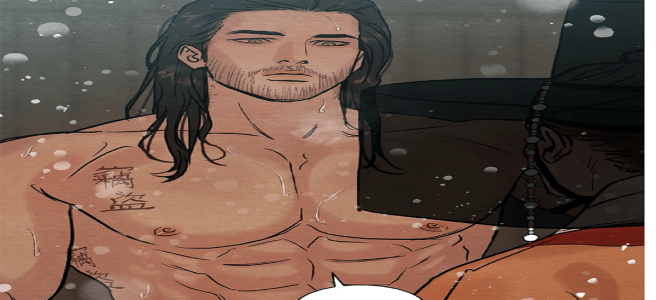
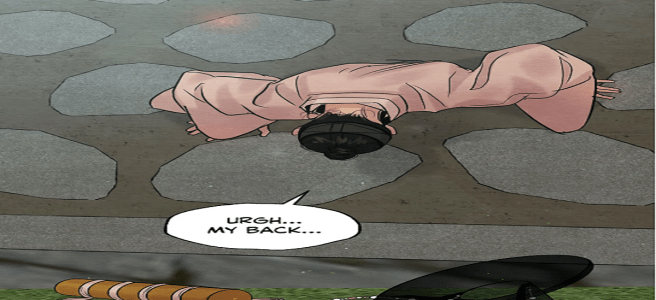
 Bebebisous33s' analyses in K-Dramaland and Manhwas