
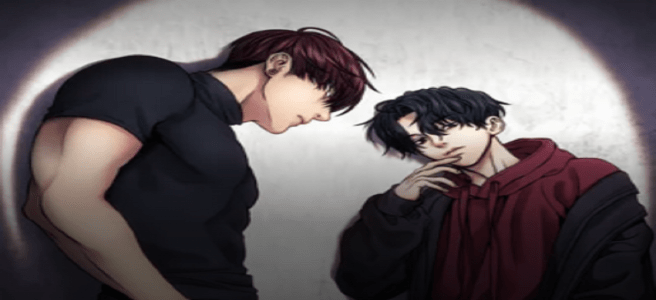
This is where you can read the manhwa. https://www.lezhinus.com/en/comic/pawn But be aware that this manhwa is a mature Yaoi, which means, it is about homosexuality with explicit scenes. Besides, this manhwa is categorized as HARDCORE. Here is the link, if you are interested in more analyses about this manhwa and others https://bebebisous33analyses.com/2021/06/06/table-of-contents-of-analyzed-mentioned-manhwas/
Feel free to make some donations/sponsoring: Ko-fi.com/bebebisous33 That way, you can support me with “coffee” so that I have the energy to keep examining manhwas. It would also cover my expenses for the blog.
 (chapter 34) In episode 34, the criminal Do Seong-Rok announced to his partner Lee Je-Oh that he was releasing him. He was free to go, he could return to his true home. But why did the red-haired man push away his lover? Anyone reading the manhwa will certainly reply that he did it to protect the prostitute. He had just received a message from Jeon Hee-Seong telling him that the police would arrest him soon
  (chapter 33). This explanation is naturally correct, but as you can imagine, the main lead‘s choice is far more complex. I would say that he was not truly aware of the motivations behind his behavior. This will be in the center of this analysis. But for that, I need to elaborate the reasons how Do Seong-Rok came to trust Jeon Hee-Seong in the first place. In the essay “The goldfish and the lamb – part 2“ I had portrayed Do Seong-Rok as naïve, but now I can explicate more precisely why the main lead came to trust the witch first. The author Evy gave us more insight at the end of season 1 and in season 2. As the title lets it transpire, promise stands in the center of this essay.
1. Empty words
What caught my attention is that the red-haired man had been abandoned in an orphanage with the following message:  (chapter 12) The father employed the idiom “promise“ which is a synonym for hope. By leaving such a note behind, not only he gave hope to his son, he would come back to fetch him, but also he gave the impression that he was very serious about his intention. Why? It is because the message was written. It was, as if he had written a contract, where he committed to keep his promise. The note became the symbol for hope and commitment. At the same time, this signified that the note would contradict the expression “empty words“. Therefore it is not surprising that Seong-Rok kept thinking about his biological family, and had many questions.
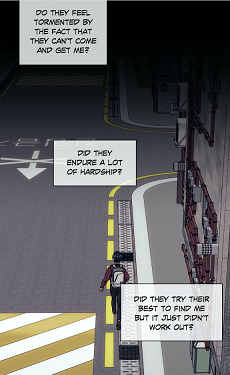 (chapter 38) He was clinching onto this promise. He was not an orphan, he had just been entrusted to the orphanage for the time being. Thus he waited. The problem is that this “contract“ had no name, hence it was void. The main lead never realized it. But as time passed on, the pressure on him kept increasing, as his family had not appeared yet. Slowly, he was cornered. If he had spent more than 12 years without his family, then he was truly an orphan. That’s the reason why he pressured the director of the orphanage and discovered the identity of his father. The latter had definitely sponsored the orphanage in order to lessen his guilt. That’s the reason why the woman knew about the identity of the relative. So when he saw where his father was living, he recognized the falsehood of the note, but he was in denial, till he saw his father. The latter saw his son as a threat, thus he showed his displeasure.
 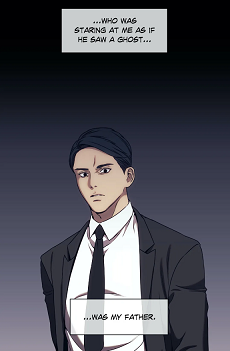 (chapter 38) But to silence him, the relative approached him and begged him to keep his distance from him and his family, for he could hurt innocent people (his wife and his younger son). The father’s behavior exposed to Do Seong-Rok that he had been truly abandoned, and this right from the start, as he was an illegitimate son. His father had married into a wealthy family. His merely existence embodied shame and guilt.
  (Chapter 38) This is important, for it destroyed the main lead’s self-esteem in a certain way. He didn’t feel needed at all. It was, as if his existence had no meaning. This impression got reinforced, when the father gave him money to send him away.
  (Chapter 27) He had only got to his side to push him away. When the father returned to his family, the young boy could sense that he had no one by his side. Not even the orphanage, which had covered up for the father’s cowardice.
From that moment on, he had no goal in his life. 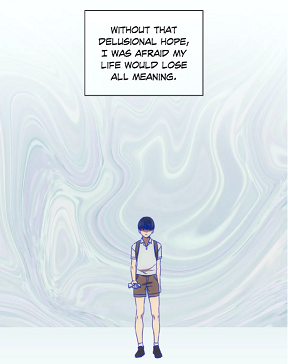 (chapter 27) The hope had kept him alive, but now without any hope, what could he expect from life? Nothing… he was not wanted or needed.
And now, the manhwaphiles are probably wondering why the father left such a note in the first place. Why did he give hope to his son, when he never had the intention to return? In my eyes, the father did it to lessen his remorse. That way, he would create a fake image about himself. He was not a bad person, he had never meant to hurt or abandon his son. Consequently, he had made sure that his son would live in comfort. However, the result was that the man ruined Do Seong-Rok’s life, for the message created the illusion that he had indeed a family waiting for him. This explicates why the protagonist said this:  (chapter 27) He was still hoping, but his despair was always present. Since water is a synonym for life, this means that as an orphan he could live in comfort (exoneration), but he was still missing warmth and affection. There’s no ambiguity that he must have kept thinking about them the whole time. Therefore it is not surprising that for his birthday, he wished a family
  (chapter 27) and not a console or video game. Furthermore, for the son, it meant that he would never be adopted! How could Do Seong-Rok get adopted, if he had been left with such a note? To conclude, the promise in the note was in reality fake. It stood for empty words. Simultaneously, it ruined the main lead’s life, for it pushed him to question his own existence. Why was he born in the first place, if he was not loved or needed? The son got traumatized, when his relative turned his back on him after begging him to vanish from his life. It was, as if he had been abandoned a second time. Do Seong-Rok felt lost, his existence had no meaning at all. Hence it is not surprising that he chose to destroy the letter.
 (chapter 27) It was, as if he was cutting ties with his biological father. In addition, since Do Seong-Rok associated the paper to a promise, this means that he came to the idea that a promise should be expressed in words and not written. At the same time, he learned a terrible lesson:
  (chapter 38) He would never make an empty promise. If he can’t keep a promise, then it was better to never promise, for it would create an illusion and disappoint the person who was clinching onto the promise.
2. Do Seong-Rok’s “promising“ meeting with the femme fatale
What caught my attention is that as a soldier, he got abandoned by his comrades too.  (Chapter 16) He was also left behind, and contrary to the past, this time he was saved by Jeon Hee-Seong.
  (Chapter 16) She protected him from committing a wrongdoing. She talked to him, and showed an interest in him.
  (Chapter 16) She even gave him her address to contact her after he had left the army.
 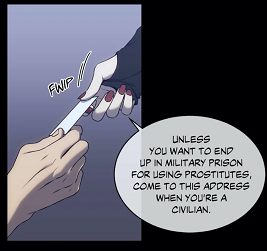 (Chapter 16) This panel even stands in opposition to this one: (chapter 27) As the manhwalovers can sense, the femme fatale behaved the exact opposite of the father. She didn‘t push the main lead away at all. She even recognized him after the separation, so he had left an impression on her. Thus we could say that she gave a meaning to the protagonist‘s life. She even paid an expensive hotel for their encounter. He felt recognized first, then appreciated before feeling needed. Therefore it is not surprising that Do Seong-Rok desired to protect her,
  (chapter 16) and was even willing to risk his life for her.
  (Chapter 16) He was by her side in the street, and he didn’t mind being seen with her. She only pushed him away, when she was cornered implying that she had no other choice. She had to marry Choi Yeong-Gil if she wanted to escape prostitution. In other words, we could say that she never rejected the main lead. She insinuated that he was her source of joy in her life.
 (chapter 16) So technically, she announced that she was leaving him officially, but not emotionally. That way she pushed the main lead to remain by her side, while giving the impression that she was leaving him behind against her own will. She had no other choice. Striking is that in that scene, the prostitute spoke the truth, when she portrayed herself as ruthless. Her justification was that she was a poor victim.
  (Chapter 16) She would do anything to save herself, even use him for her own benefits. The latter didn’t mind, for in his eyes, he was helping himself. (chapter 16) She was still giving a meaning to his life. He would act like a knight in shining armor who needed to defeat his enemies.
  (chapter 16) However, when she suggested the murder, the main lead put a condition on his assistance.
  (Chapter 06) But striking is when the main lead asked her this, he never requested from her that she signed a paper or a contract. This promise was just oral. This was related to his trauma: the left note with the fake promise.
3. The siren’s fake promises
On the other hand, similar to his father, Jeon Hee-Seong left a short message. 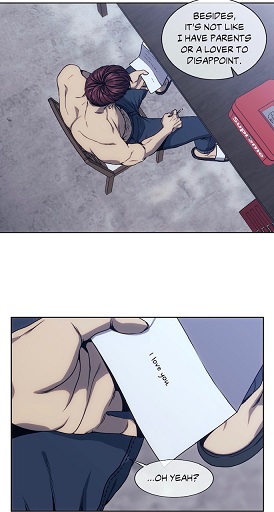 (Chapter 9) Contrary to the father, she confessed her love to him. That way, she created the illusion that her love was sincere. As you can sense it, the fake love confession had the same function than the father‘s message. It gave hope to the main lead. This is no coincidence that the protagonist was acting, as if he was waiting for the return of his lover.
  (Chapter 9) But exactly like in the other message, the love confession contained no name at all. It was totally anonymous, therefore the love confession was fake too. In my eyes, Do Seong-Rok learned the following lesson: a love confession should never be written too. That’s the reason why he cried after he realized that she was already betraying him.
  (chapter 16)
In other words, Do Seong-Rok was put in the same situation 10 years later. The only difference is that this time, the love confession was the motivation for the main lead, while the promise of rescue had been just exchanged orally in the bar. He naturally believed that her affection was genuine, this was the implied condition for his help. The main lead never requested a contract for the promise due to his traumatic past. He had already made the experience that such a promise could be like empty words. But naturally, the protagonist was not entirely stupid. He had strongly internalized that a person can only make a promise, if the latter can keep it! Hence Jeon Hee-Seong was forced to give him an insurance. This was the recorded phone call from Seo Sang-Joon proving that he had been responsible for Lee Soon-Cheol’s death. 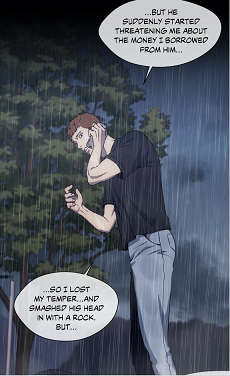 (chapter 40) However what the criminal didn’t know is that he had been played by the femme fatale and her lover. That’s the reason why the protagonist was by her side, when she received Sang-Joon’s call.
 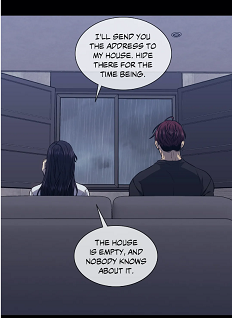 (chapter 40) Another evidence for this theory is that the man with a short temper had the car which actually belonged to Do Seong-Rok. The woman knew about the convict’s bad temper and anticipated his reaction. He was supposed to wound or kill Lee Soon-Cheol, then Do Seong-Rok’s task was to eliminate the others before putting the whole blame on the convict. That’s the reason why the murderer used a stone to assassinate the witch’s husband. Their plan was to frame Seo Sang-Joon, well aware that the red-haired man would become a murder suspect in order to redirect the investigation from her. Both were aware that she would get suspected first, for she had a strong motive.
What caught my attention is that the woman is often seen by the main lead’s side.  (chapter 16)
 (chapter 24) (chapter 40) This is important, for it corresponds to the main lead’s biggest wish.
 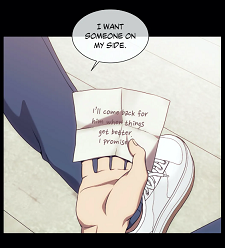 (chapter 27) If she was by his side, she would never turn her back on him. But thanks to Lee Je-Oh, he discovered that her presence by his side was just an illusion, for she was rarely by his side. He had warned him before.
  (chapter 9) He kept reminding him that the woman was not reliable or even trustworthy.
 (chapter 28)
Striking is that after having sex with him, she never faced the young man. She turned her back on him, a sign that she was not honest at all. Her facial expressions would have betrayed her, while her words would reflect her true thoughts. (Chapter 16) Her words in the bed were actually ambiguous: a reproach or a compliment? That‘s the reason why the protagonist couldn‘t detect her deceptive nature. She was speaking the truth the entire time. And after meeting Lee Je-Oh, the red-haired man was forced to face reality. Hence his past with the woman came to haunt him. Gradually, his unconscious forced him to see the reality of his choices and actions. He had been manipulated and become a killer. In his first nightmare, the woman was portrayed without eyes  (chapter 6) while revealing her intentions.
  (Chapter 6) Then when Sang-Joon called the femme fatale, she might have been sitting next to him (chapter 40), but observe the gap between them. She was still not facing him. Besides, I would like the readers to pay attention to the window in the background. The frame symbolized their separation. They were not really together, as there existed a thin wall between them. Moreover, the prostitute was even talking to the convict, so in reality she was not focusing on Do Seong-Rok. Therefore, it is not surprising that Do Seong-Rok saw the truth on the sofa, while he was facing her.
 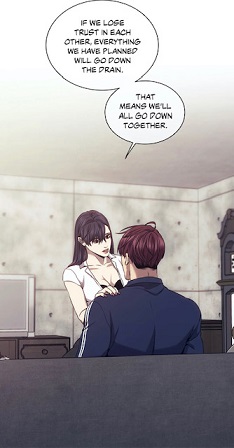 (chapter 27) He was forced to face reality, she was only feeling compassion for him. When she visited him in the mansion, he looked at her properly for the first time:
  (chapter 27) She had the same facial expressions than his father. She was abandoning him. This is no coincidence that right after he questioned her about the depth of her affection.
 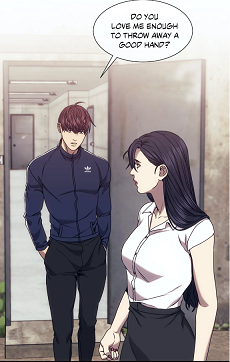 (chapter 27) He was testing her. He could detect her deception, for she never replied to his interrogation.
  (chapter 27) She attempted to divert his attention by criticizing him, something which sounded so natural. And her departure
 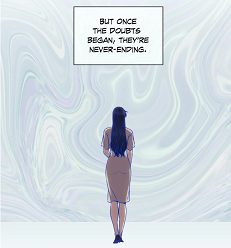 (chapter 27) reminded him of his own father’s desertion. As a conclusion, after rescuing Lee Je-Oh, the main lead discovered his lover‘s true personality. She wouldn‘t keep her promise, for she had never loved him. He realized that her promises were always fake, just like her insurance. The former prostitute had never committed herself to him, she had never been by his side, while he had helped her this entire time.
On the other hand, Jeon Hee-Seong was well aware that Do Seong-Rok was very sensitive to lies, thus she never used lies by commission. That’s the reason why she never replied to his question about her affection for him. Her manipulations were different. Either she lied by omission or she used paltering, revealing the truth in delay or she mixed a truth with a lie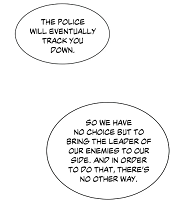 (chapter 27). As a reminder, commissioner Ahn is not the leader of the enemy, he has already abandoned the group leaded by Koo. The witch is hiding the fact that she is representing the third party. But let’s return to our main point, the instruments of Jeon Hee-Seong’s manipulations.
I also think that the messages from the cellphone played a huge role in the deceptions as well. Do Seong-Rok had the impression that he was still close to her, as he was still in contact with her.  (chapter 11) Therefore Lee Je-Oh stopped his lover to respond to her phone calls. He was well aware of the signification of the phone calls. Note that after the kidnapping of Lee Je-Oh, he tried to text her. This is important for two reasons: the texts could hide the true emotions and thoughts of the characters. If Do Seong-Rok had called her during that night, his voice would have revealed his emotions and hesitation, the phone call would have betrayed him. The femme fatale had adopted such an attitude a long time ago. She preferred texting him so that her manipulations wouldn‘t be detected. She wouldn’t be forced to act, her strength was to remain as natural and genuine as possible in front of the red-haired man. Hence her words were often connected to criticisms. (chapter 27) But because of Lee Je-Oh‘s presence, the red-haired man was put in a situation where he had to deceive Jeon Hee-Seong, and that‘s how he discovered the truth little by little. She was throwing him away, for Ahn Jae-Oh could offer her wealth and power, while he had nothing to propose to her:
 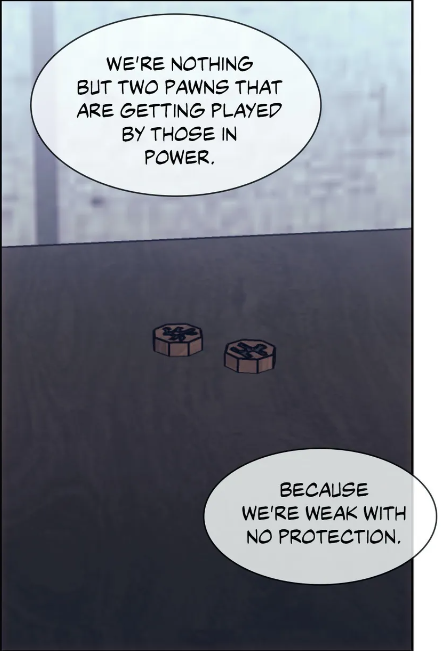 (chapter 38) This scene is important, for it indicates that the killer has adopted Jeon Hee-Seong’s mind-set! Life is like Janggi, and he is just a pawn in the big game.
4. Lee Je-Oh’s promises
The irony is that the prostitute had a totally different childhood. He had been neglected and pushed away by his father constantly!  (chapter 9) He had strongly internalized the slap on the hand as a sign of rejection. Therefore it is not surprising that Do Seong-Rok’s words in episode 9 brought him back to his childhood reliving a certain trauma. Moreover, because the father was neglecting him, the young boy was left to his own devices. Thus he stole the knight in the shop. He learned through his father, that he needed to become proactive, and not wait for someone’s help. If he desired to have his wish fulfilled, he needed to act on his decisions. Furthermore, if he had accepted his father’s reproaches, then he would have become suicidal. Who can bear hearing constantly that you are a “shithead”, a “bastard”? No one… the insults from the father encouraged Lee Je-Oh to reject such insults and to retaliate in the end. He never accepted his living conditions.
  (chapter 26) This explicates why Lee Je-Oh fought against Ma Jong-Seok either. He might have been aware that the pimp had developed an affection for him, but he could clearly see his dishonesty and hypocrisy, for he was not helping him at all. The latter took advantage of the situation. Thus he could detect the falsehood of Jong-Seok’s promise right away in the prison.
  (chapter 10) Consequently, I come to the deduction that Lee Je-Oh was raised to make up his mind. He learned through his bad experiences that life was cruel, and he should never expect anything from anyone. On the other hand, in order to live properly, he needed to have goals in a short-term, and once he made his choice, he would stick to it. Yes, he stands for real promises, but not for illusion or dreams. His words are never empty and never written. He embodies reality. Under this new light, the manhwaphiles can grasp why Lee Je-Oh perceived the murderer as a god.
  (chapter 4) Only a god could show pity and assistance towards a prostitute, not humans.
But let’s return our focus on the prostitute’s promises. You see Lee Je-Oh making deals all the time. He is always serious. It started with this:  (chapter 6) He would be his ally.
 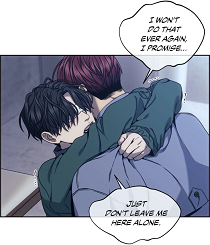 (chapter 12) He promised that he would never betray him again. Then later, he declared himself that he was Do Seong-Rok’s business partner.
  (chapter 28) Then he put conditions to this deal:
 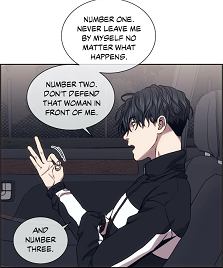 (chapter 28) And once he met the convict Sang-Joon, he introduced himself as his boyfriend.
  (chapter 29)
But why would he clinch onto the killer like that? The latter had indeed saved him, freed him from his condition as a prostitute. He had viewed him as a human before anything. He had not forgotten the man’s words in front of the pimp: 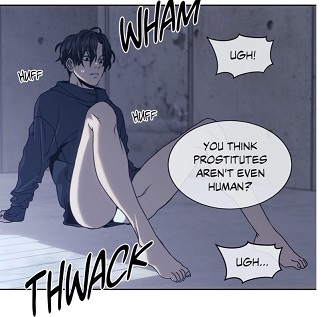 (chapter 3) He had been the first person who had helped him. He would even feed him and take care of him. He would cook for him, dry his hair or give him a bed. For the first time in his life, he felt appreciated and treasured. He discovered gentleness, concern and warmth. Not even Ma Jong-Seok would treat him like that.
 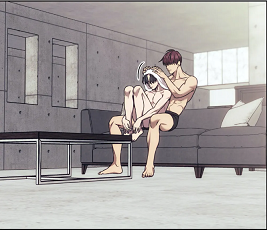 (chapter 21) He could sense that Do Seong-Rok was on his side, though the latter still had a girlfriend. That’s the reason why Lee Je-Oh refused the rejection from Do Seong-Rok in front of the mansion. He knew deep down that the man had a reason to act this way. Even when he had treated him roughly in the car, he was well aware that the man was not entirely himself. Therefore it is not surprising that Lee Je-Oh announced his determination to snatch the killer from Ms. Jeon away, for the red-haired man had not respected their deal, their promise.
  (chapter 34) He had broken his promise, hence Lee Je-Oh would turn his words into a reality.
One might wonder why Do Seong-Rok didn’t explicate his situation before, why he didn’t ask the main lead for help. He had two reasons for this:  (chapter 33) In his eyes, the protagonist wouldn’t be able to keep his promises. All these words were empty. How could he take Lee Je-Oh seriously, when the young man had been living in a cage for so long? He had no idea that Jeon Hee-Seong had played a huge role in the man’s misery.
  (chapter 26) Through this wrong choice, Lee Je-Oh discovered the treacherous side of this woman. Because of her, he suffered a lot. He was trapped in hell for 3 years.
  (chapter 26) She had deceived him with a fake dream, as if he could liberate himself by stabbing the pimp. So since the prostitute was strongly connected to Ma Jong-Seok, Do Seong-Rok could witness how miserable Lee Je-Oh’s life was.
 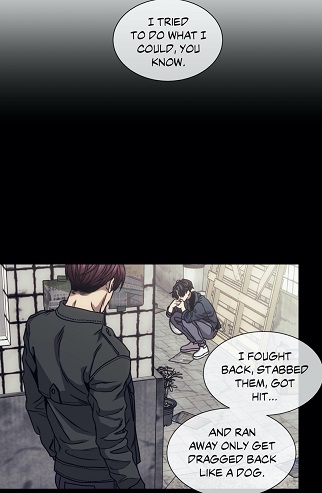 (chapter 7) Though the character claimed to have fought back, he never viewed it. Thus in his mind, the prostitute was powerless. That’s the reason why he didn’t trust the man’s statement:
  (chapter 32)
Besides, Do Seong-Rok couldn’t protect his lover, thus how could he keep Lee Je-Oh by his side? He would put him in danger, thereby he couldn’t make any promise at all.  (chapter 32) He didn’t desire to generate hope. And now, you comprehend why Lee Je-Oh chose to accept the break-up after hearing his lover’s explanation. (chapter 34) He knew that Do Seong-Rok was thinking of Lee Je-Oh’s best interest.
 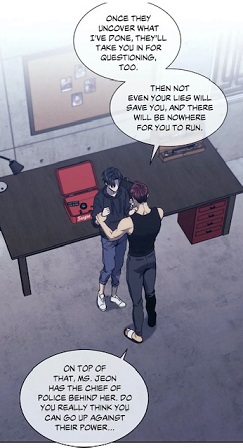 (chapter 34) The protagonist needed to show Do Seong-Rok that every words he had said to him were true and genuine. He was a man of his word, he would assist him. He would keep his promises. Though he left his side physically, he was still thinking about him. And it was the same for the suspected murderer. This break was necessary for Do Seong-Rok to perceive the main lead’s strength and power. He was intelligent and even cunning enough. He was forced to face the reality of his situation. Jeon Hee-Seong would never visit him in jail, for this would be seen as a sign for her involvement.
Through his past experience with Jeon Hee-Seong, the black-haired man knew that the woman was a scammer. He proved his oppa that he would protect him no matter what.  (chapter 39) And he finally did it. He is now Do Seong-Rok’s boyfriend, and the latter is now called “oppa” in front of others. Though they are now separated by the window, they are in verity standing on the same side.
  (chapter 39) They are taking care of each other. He brought him new clothes, while the other offers to pay the fine. Their attachment reached its peak, when the main lead stroke his lover’s hair.
  (chapter 39) He could feel the warmth and affection despite the presence of the glass. He might have debts and no connection, yet with his cunningness, he was still able to ruin Jeon Hee-Seong’s plan. So a pawn still has a value. Each piece in Janggi is indeed important. And now, you are probably wondering how Lee Je-Oh ruined her “perfect crime”?
In my opinion, her intention was to let Seo Sang-Joon and Do Seong-Rok to take the fall. That way, she would be left out of the equation. The two men had worked together. That’s the reason why she asked her future husband Ahn to manipulate the file.  (chapter 36) What she doesn’t know is that a promise was the cause for the destruction of her plan. How so?
 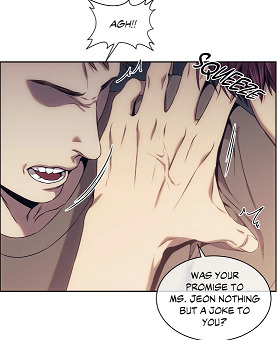 (chapter 31) If Seo Sang-Joon had not made a move on Lee Je-Oh and caused trouble, the prostitute would have never seen this scene:
  (chapter 31) The convict was scared of jail! He was really distressed in front of Lee Je-Oh.
  (chapter 31) The prostitute is well aware that this man just needed to get scared and cornered, then he will commit suicide. As you can see, the femme fatale’s promises are all linked to illusion and downfall, while the dark-haired man embodies reality and real promises.
Thus I couldn’t help myself smirking, when I read Lee Je-Oh’s following promise:  (chapter 16) 😉I believe that he is wrong. His reaction was natural. He had never seen a man crying before. He only had met dishonest, angry and violent men. Note that Lee Je-Oh never said what he had on his mind. He kept his thoughts to himself, hence his words never became a reality. He still embraced the man. This means that he will fall for this kind of moronic love!! 😎 He was already getting more and more jealous towards Jeon Hee-Seong. Though the young man keeps describing Do Seong-Rok as his weapon
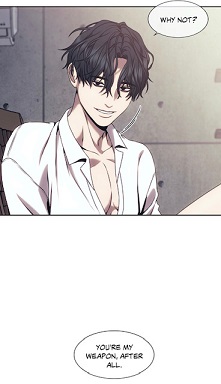 (chapter 21), he still values him as a human. Without him, he has no protection. He is the new knife the femme fatale chose to dump, the new version of this scene
 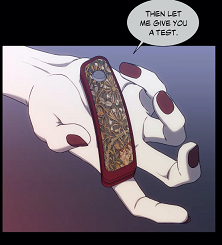 (chapter 26). The only difference is that back then, she won, while now it is the opposite. To sum up, Lee Je-Oh embodies actions, promises and reality, whereas Jeong Hee-Seong stands for the opposite values. She will never get involved herself directly.
Before closing this essay, I would like to reveal a thought I had concerning the evolution of this story: Do Seong-Rok has a wealthy father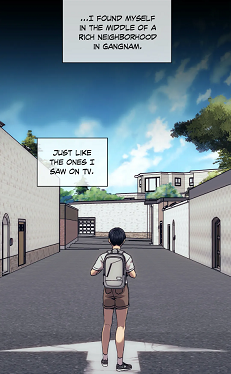 (chapter 38) but neither Lee Je-Oh nor Jeon Hee-Song are aware of this. Back then, the father tried to buy his son’s silence with a few bucks … but technically, he could blackmail his father to get some money in order to pay his lover’s huge debts!! By doing so, he would be able to help his lover to escape from Koo’s claws. On the other hand, I believe that Do Seong-Rok and Lee Je-Oh are fighting the injustice and prostitution in this city, as they are now on the verge of becoming the femme fatale’s enemies.
Feel free to comment. If you have any suggestion for topics or manhwas, feel free to ask. If you enjoyed reading it, retweet it or push the button like. My Reddit-Instagram-Tumblr-Twitter account is: @bebebisous33. Thanks for reading and for the support, particularly, I would like to thank all the new followers and people recommending my blog.
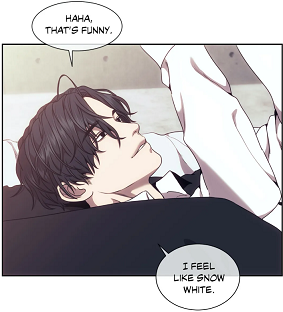 (chapter 22) The protagonist starts viewing himself as the main character from the fairytale Snow White. Hence he comes to the conclusion that since he is Snow White, then there must be a hunter and a witch, the famous stepmother of Snow White.
 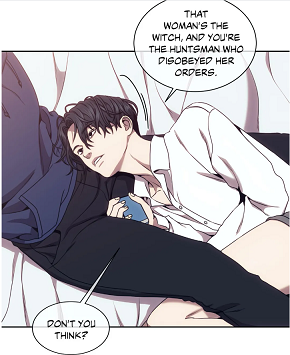 (chapter 22). That’s why he believes that Do Seong-Rok is the huntsman, while Jeon Hee Seong is the witch, because the former didn’t kill him. The former prostitute had planned to get rid of the young man, as he represented a source of danger for her. That’s why she ordered the killing to her lover. Soon after the release, an user asked Evy who was the Prince in this story. The author replied by denying his existence in this story.
 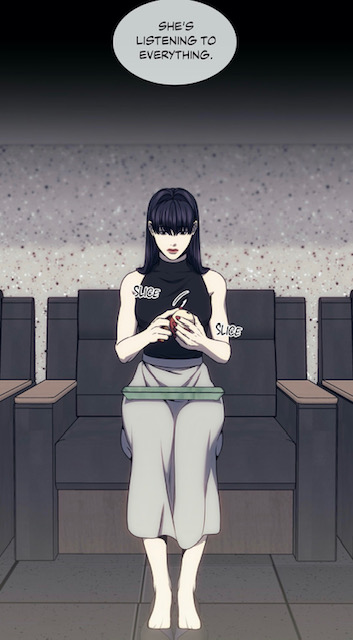 (chapter 24) Thanks to The Pawn’s Revenge, I came to recognize that even Painter Of The Night has so many common denominators with this fairytale.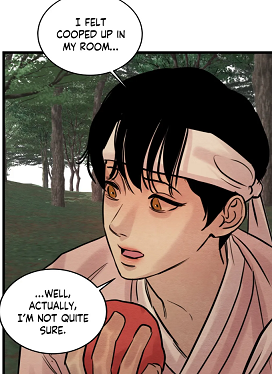
 (chapter 23) That’s the reason why I decided to compare the two manhwas with Snow White. This means, I’ll also explain why they diverge. But for that, it is necessary to explain the fairytale Snow White and its functions.
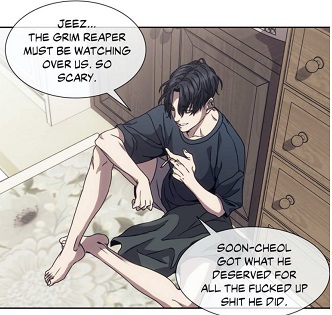 (chapter 1) or
  a god. Then the characters are often associated to animals: dog, mutt,
  snake, horse, pig, elephant, chicken
 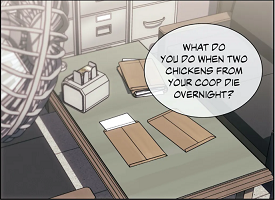 (chapter 2). Furthermore, the figures in this story are perceived as living pawns of Janggi.
  (chapter 12) Finally , I compared Jeon See Heong to a mermaid
  (chapter 6) bewitching her prey. On the other hand, the figures have a precise identity. The time and the place are quite defined. As for Painter Of The Night, it looks like the same. We know the birthdays of Yoon Seungho and Baek Na-Kyum and there’s no magic or supernatural elements. Yet, we sometimes see the presence of magic and a lustful spell.
  Imagine, in this scene we have the impression that the painter’s spirit summoned the Ghost Seungho to approach him. Striking is that this repressed desired got fulfilled. While he had his eyes closed, the lord approached him.
 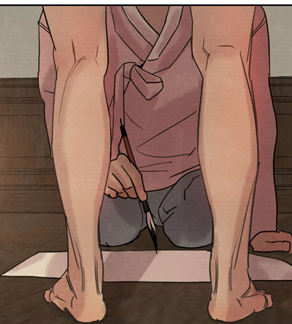 Another positive aspect is that the time and space are not defined. It’s just Joseon period, but that’s it. The mention of Hanyang can not be seen as transgression, because remember that there exists the fairytale Town Musicians of Bremen. The town has no name. Byeonduck said that her manhwa was not a historical story, but she found her inspiration in History. Besides, the trials of the two protagonists are more in the center, while Lee Je-Oh and Do Seong-Rok have already struggled, before the story starts. Consequently, Painter Of The Night resembles a lot more to a fairytale than The Pawn’s revenge, though the sentence “once upon a time” is missing.
 Contrary to the fairytale, they embody not innocence, generosity, selflessness and chastity, but the opposite: sex, hypocrisy, corruption, selfishness, ruthlessness and immorality. They are not owners of mines, but they possess brothels which reminded me of chicken farms
  . They don’t live surrounded by nature and among animals, but in the city. The animals are the humans, they are treated like chickens. In other words, they stand in opposition to the dwarves of the fairytales: corruption, urbanization, poverty and misery. They don’t work themselves, but let others work for them like slaves. Yet they act, as if they were normal citizens abiding laws. This explicates why Ma Jong-Seok hides his affection from Snow White. He can’t be labelled as homosexual. The dwarfs, associated to different vices, symbolize the negative aspects of free market economy and the problems, when the government is not strong enough or too corrupt to stop such an evolution. I could even say, we have here the negative reflection of Snow White and the 7 Dwarves from Walt Disney. Motherhood is no longer sacred, the kids are exposed to any kind of abuse.
 Snow White is now held captive in the mansion of the dwarves! He is exposed to exploitation, the perverted version of Grimes’ version. In the fairytale, the young girl was supposed to take care of the house in exchange of protection, here we have the opposite: Enslavement. The male prostitute has no choice. But what they didn’t realize is that the witch would betray them. Hence I consider the apple
  She just communicates through a cellphone. Besides, even Do Seong-Rok felt uncomfortable after killing two people. Hence I perceive Jeon Hee Seong as less bloodthirsty than she appears to be. She could be more of a coward.
  (chapter 16) With her appearance, her words and this card, she casted a spell on him.
  (chapter 16) This was his desire to resemble her, to get closer to her. Since he was a man, the witch didn’t see him as a rival. This explicates why she didn’t feel jealous at all. But for me, there’s no ambiguity that she filled the void left by the missing mother. Hence, since he was having sex with a surrogate mother, this can not be considered as the real discovery of sex. I conclude that when he met Lee Je-Oh, he discovered real sexuality. That’s the reason why he can no longer have any erection with the Queen. If we judge The Pawn’s revenge as a fairytale, then it teaches, homosexuality is a normality. He didn’t know about this, until he saw the male prostitute having sex with the pimp and felt aroused.
 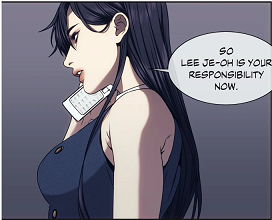 because the huntsman had disobeyed her order. The man could see a glimpse of her true personality. Due to his past experience, he had learned his lesson. In addition, she is underestimating the power of love. Thus she had planned to betray and abandon her lover, but she doesn’t anticipate the killer’s betrayal. Exactly like the stepmother, she is not reflecting on her own actions. She didn’t pay too much attention to her words over the phone and the consequences. The absence of critical thinking will be another reason why she is doomed to fail: too obsessed to reach the top. She has the impression, she is almost there, the presence of the ring offered by Ahn is the proof of her success. And now, you can see why I saw so many parallels with the fairytale.
 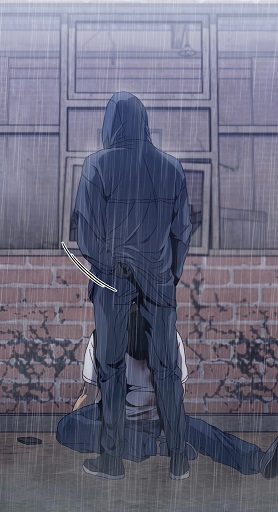 The latter’s actions resemble to the ones from Snow White. Yet, unlike the hunter, the red-haired man has not a weak heart, but a good heart. He is not a coward or a hypocrite. He can feel pity, and doesn’t fear to dirty his hands. On the other hand, he has nightmares
 , as his unconscious is telling him that he made the wrong choice. And in this scene, we have the presence of conscious and unconscious. He shouldn’t have listened to his lover’s suggestions, but he is still in denial. That’s the reason why he keeps starring
 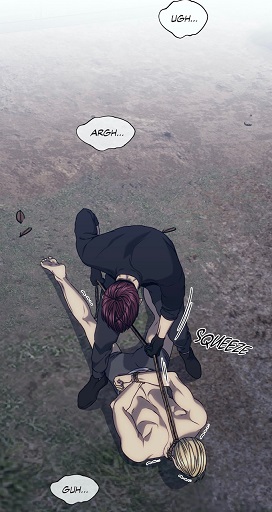 And remember that in the Grimms’ version, we had the presence of a lace in connection to Snow White. And this reinforces my interpretation that the killer is actually more a combination of both characters: the huntsman and Snow White. He has become the “perverted version” due to the Queen’s influence, he is her step-son. Striking is that Lee Je-Oh is giving him another interpretation of his wrongdoings: he liberated him from his prison and misery.
  Exactly like Do Seong-Rok and Snow White, he has dark hair, a white skin and red cheeks. Moreover, similar to the Grimms’ version, the main lead has been neglected and abandoned by his father.
  , questioning his relationship with the witch.
  Just before the pimp is killed, he confronts him with his true personality and sins. He is responsible for the misery and death of many people.
  Once cornered, the “dwarf” is forced to confess his affection to Lee Je-Oh. Both dwarves had something in common: hypocrisy. Hence you can comprehend why I come to the conclusion, Lee Je-Oh is the mirror of truth. He embodies honesty and loyalty, just like the protagonist, he longed for a home and family.
  Right after having sex with him, he considers Do Seong-Rok as his boyfriend. He compliments him and caresses him
 , giving him the warmth and affection the killer had been longing.
  But Lee Je-Oh would see it as delayed justice.
 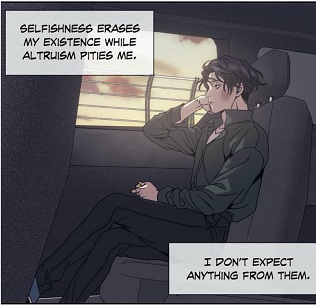 From my point of view, it is related to the huge political scandals South Korea had to face like for example with the president Park Geun-hye, and the economical boom with the development of new districts which doesn’t lead to a diminution of poverty. Then, there was the Sewol ferry incident, where many students died, while the captain and the crew abandoned them. This terrible event caused a huge mistrust in the authorities and the adults’ hypocrisy and selfishness. As the manhwaphiles can detect, I view this story as a mirror of our modern society: the failure of parents as role model, the disintegration of families… Simultaneously, it teaches the same lessons: recognize hypocrisy, selfishness and the importance of reflection. Lee Je-Oh could become the killer’s ally, the moment he recognized his own mistake. He imagined his intelligence made him superior, he underestimated the huntsman’s strong will. He might have felt pity, but he was not a fool, rather a dangerous man because of his strength. He mistook his innocence for stupidity. That’s why Snow White is superior to the witch.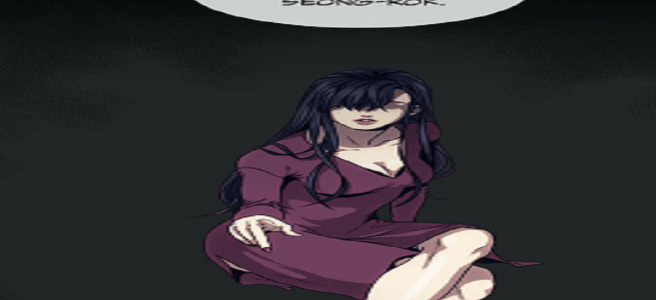
 (chapter 21) As you can detect, both have so many similarities: a memory, an open area, the blue sky with clouds, two people close to each other, a very confidential conversation, a plan and a clear view. When I analyzed the second panel [read for that the essay “Hope”
  This aspect is even reinforced with the choice of color, purple.
  (chapter 11) In her mind, he is just a worker and not a boyfriend. She is unaware that by turning him into a killer, she will change his nature. He can no longer be a lamb or even a simple pawn. That’s why he gets an erection while strangling Ma Jong-Seok.
 (chapter 18) He has become a weapon, and as the ocean, she can never control him. As you can see, if you interpret such an image, you can already anticipate the evolution of the story and realize the villain’s errors. Besides, pay attention to the place of the biggest cloud. It stands next to the main lead.
 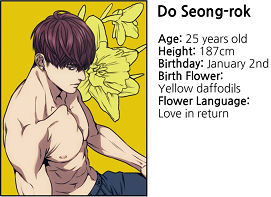 The color yellow! This pigment is often associated to positive features like optimism, cheerfulness, logic and wisdom. [For more information:
  (chapter 1) This negative association comes from the Middle-Age in Europe, where Jews and prostitutes were forced to wear some yellow on their clothes reflecting their social status. This pigment was a warning, and this justifies why in French (yellow=jaune) and in English there exist many negative expressions with yellow: “rire jaune” (two-faced laugh) or “jaune cocu” (cuckold yellow) or “yellow belly” (coward). Therefore yellow represents deception, betrayal, adultery, arrogance, vanity and jealousy. And note that Do Seong-Rok is indeed committing adultery with the main lead,
 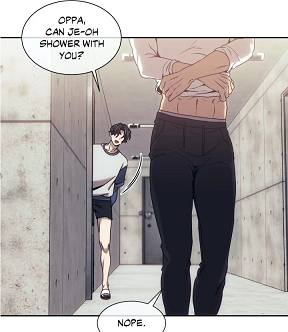 and has the impression that his lover will cheat on him with Jeon Hee-Seong.
 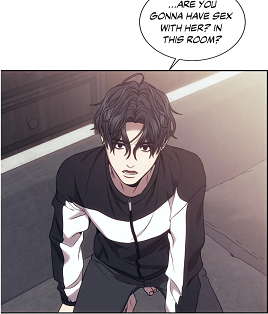 That’s why he gets upset. And now, you comprehend why the femme fatale’s dream is an illusion. She thought, she was deceiving her pawn, while in reality she didn’t recognize her own misjudgment. Her delusion of grandeur is the cause for her future defeat.
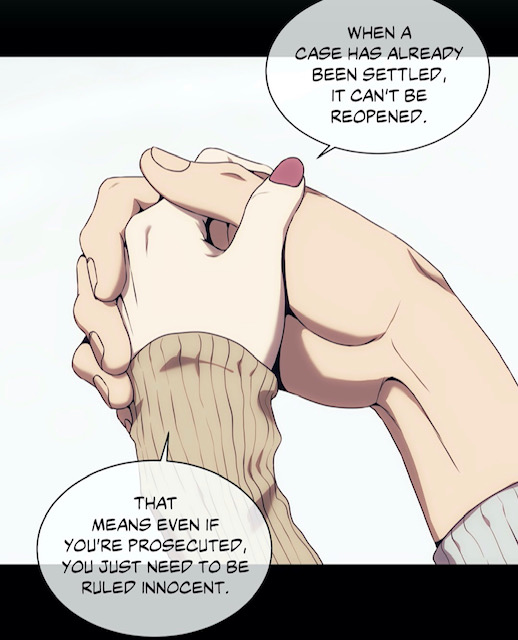 (chapter 24), while the brothers are just sitting next to each other with a certain distance.
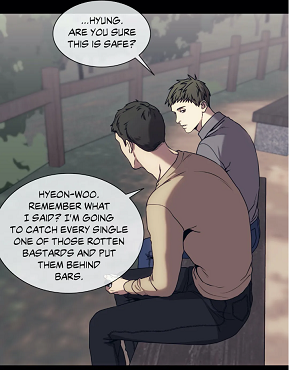 (chapter 21) And when he spoke, he expressed his concern for his brother. This signifies that safety mattered more than his dream back then.
  Yet, this is not visible from behind, for she is wearing a black jacket. The appearance of beige is no coincidence, because this color is associated to loyalty and responsibility.
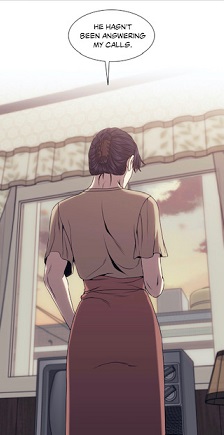 Her bun and her clothes gave the impression that she was just an average married woman, but when she visited her so-called boyfriend, she had dressed up. Her long hair was left in the open, an important sign for seduction, just like the white shirt exudes purity and innocence.
  (chapter 25) At the same time, the black skirt embodies mystery and seduction.
  (chapter 23), while she would let the young man take the fall.
  (chapter 16) He would be her tool. And don’t forget that in that scene, she was trembling on her knees, a sign of huge vulnerability, which could only move his heart. He felt that she needed him, that’s why he accepted to follow her plan. I could use another evidence that truth is her MO. She confided to him this
 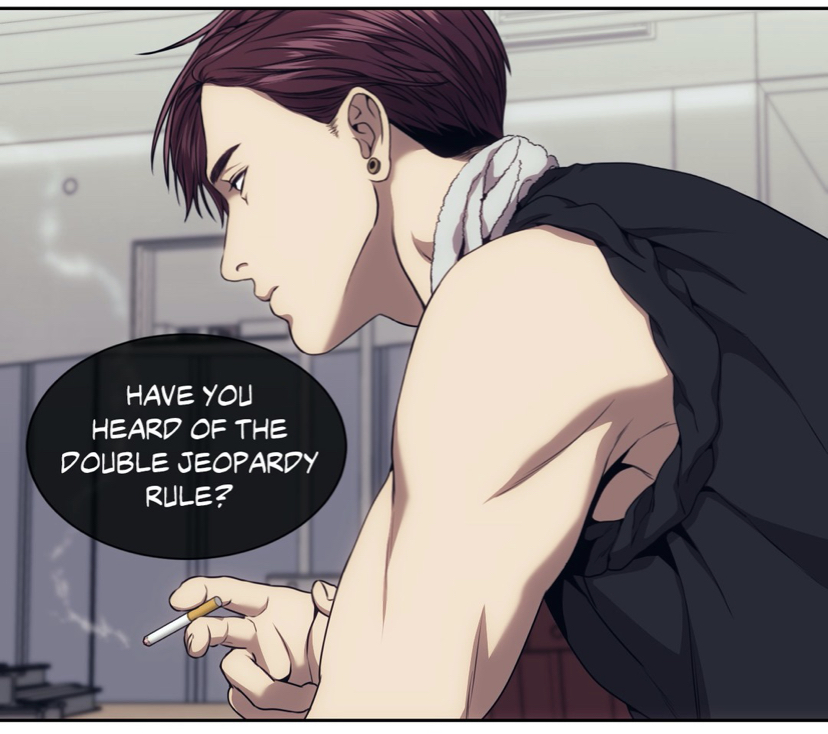 (chapter 24) Once he has been prosecuted and he is proven innocent, he can’t be charged with the same crime. But just because this rule exists, this doesn’t mean that this will be applied in this case.
 (chapter 24) These videos were her weaknesses, therefore the main lead needed to find and erase them. We don’t know for sure that he was tasked with this request as well. That’s my assumption, because she stated that she wanted to erase her past, and the footage was part of her terrible past. Once her husband was removed, she would be able to get rich thanks to the property situated in the redevelopment.
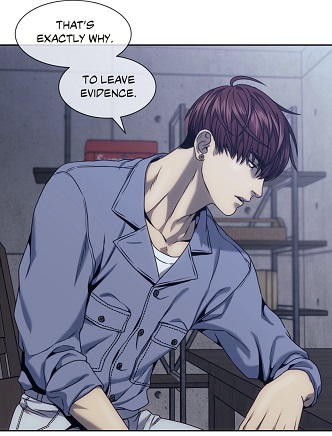
  (chapter 24) She desired to lead the detective to Do Seong-Rok and the pieces of Janggi left on the body would serve as a clue for his involvement in the assassinations. This explicates why Lee Je-Oh wondered about the reason for leaving evidence next to the victims an.
  (chapter 13) The femme fatale has power over his life, because she could reveal the truth. That’s her promise, if his situation worsens, she can save him implying that she has an evidence that could prove Do Seong-Rok’s innocence. However, she knew that once her husband dies, she will become a suspect. Thus she needed the main lead to divert the attention from her. Her plan was to redirect the investigation towards the red-haired man.
 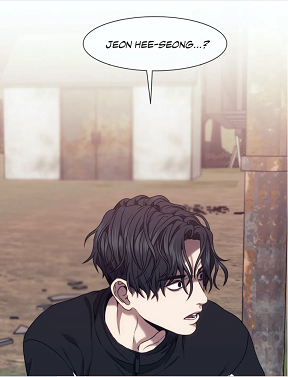 (chapter 25), and has even realized her true goal thanks to Do Seong-Rok’s confession
 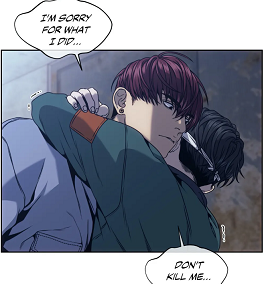 (chapter 12) Do Seong-Rok might not be clever, but he is not weak either. Actually, his major flaw is his innocence, for he is not cunning enough. And remember what I wrote above: she misjudge her lover’s true personality. Therefore she will recognize her error too late.
 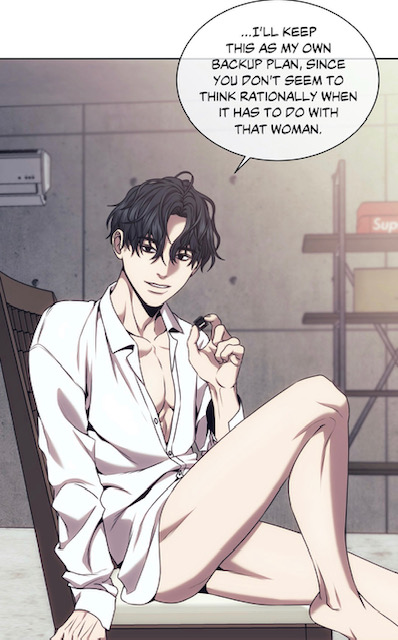 (chapter 23), while the serial killer will become his arm and hand! Besides, don’t forget my recent interpretation. Do Seong-Rok is linked to the ocean, and the manhwalovers will certainly remember how the male prostitute viewed himself:
 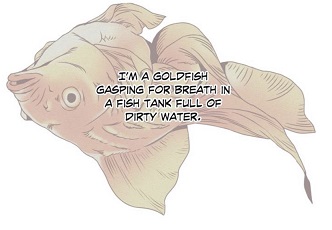 (chapter 1) A fish!! I am well aware that a goldfish is not living in the ocean, but I doubt that the male prostitute could ever afford himself an expensive fish from the ocean. Besides, in the essay “The goldfish and the lamb – part 1”, I had already explained that for me, the young main lead reminded me a lot of the devil firefish / common lionfish.

 For her, humans resemble to the pieces of the chess board, where the weakest are doomed to disappear. Striking is that many chess players have a similar approach than her. They all see many similarities between real life and chess.
  this signifies that only power matters, as it guarantees survival. I would like to point out that EVY confirmed in a tweet that the femme fatale plans to become a king. This truly reveals that for the former prostitute, dominance is her ultimate goal in life. In her mind, strength symbolizes life. Thereby for her, love has no meaning. Moreover, I also think, she doesn’t believe in values like affection, friendship or respect. The evidence for this the following. Note how many times she utilizes the idiom “kill”, while the male authors outline the importance of insight (“insight”, “foresight”, “forethought” “vigilance”) and wisdom (“knowledge”, “knowing”, “insight”). In other words, while Jeon Hee-Seong is focusing more on action (killing), the other players (Franklin, Buxton, Rufus) privilege pondering and reflection. She is already aiming directly at her final goal: removing the former king and replacing him.
 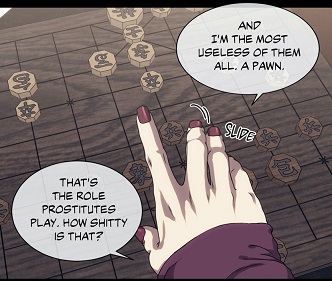 (chapter 6) In her eyes, it has no value at all (“the most useless”), whereas the protagonist and student Seong-Rok views the soldier differently:
 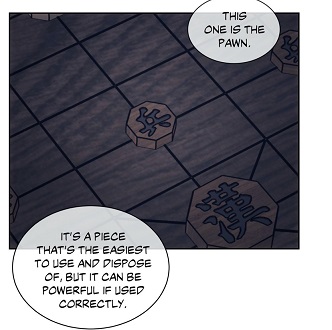 (chapter 13). The latter can be influential, but it depends on its position and the way the general uses it. Sense the contrast between these two descriptions outlining her narrow-mindedness in the end.
 (chapter 18) are removed within a short time. This explicates why the detective Kang Hyeon-Woo suspects her right away.
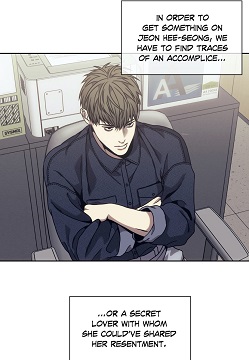 (chapter 8) But why is the femme fatale neglecting reflection, knowledge and foresight in Janggi?
  (chapter 12) and showed no loyalty towards him
 (chapter 12) She has no idea about Do Seong-Rok’s past experience (the fake promise and abandonment).
  (chapter 13), this signifies that her true role in Janggi is different. She is the player. Consequently, she is sitting on the one side and takes the pieces.
 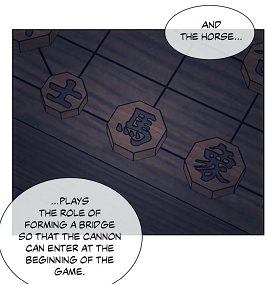 , the elephant
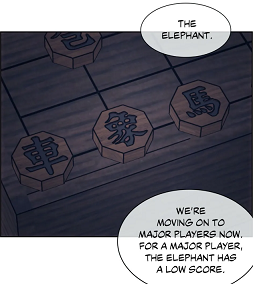 , the counselor/the guard
 , the chariot
  and the cannon
 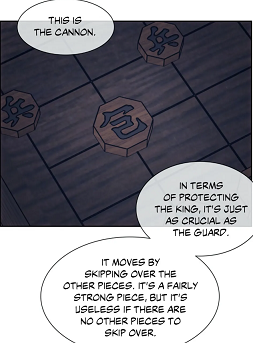 (chapter 13). That’s why I tried to identify the killer’s true role in the game board.
  (chapter 13) The moment the protagonist has eliminated all her targets, he will become useless. Consequently, I deduce that when Jeon Hee-Seong plays chess, she is the “king” and Do Seong-Rok is the cannon.
  (chapter 11). “Some of my guys” is a reference to the lieutenant Park. And remember that the role of the horse is to create a bridge for the cannon. Let’s not forget that Park Gwang-Soo is not really trying to investigate the whole matter, as the victims are all involved in the red-light-district. A real investigation would lead to unveil the corruption among Mijeong police.
  he is not realizing that she is just trying to replace the first team. Jeon Hee-Seong plans to maintain the collaboration between Mijeong police and the red light district, yet the involved parties will be changed.
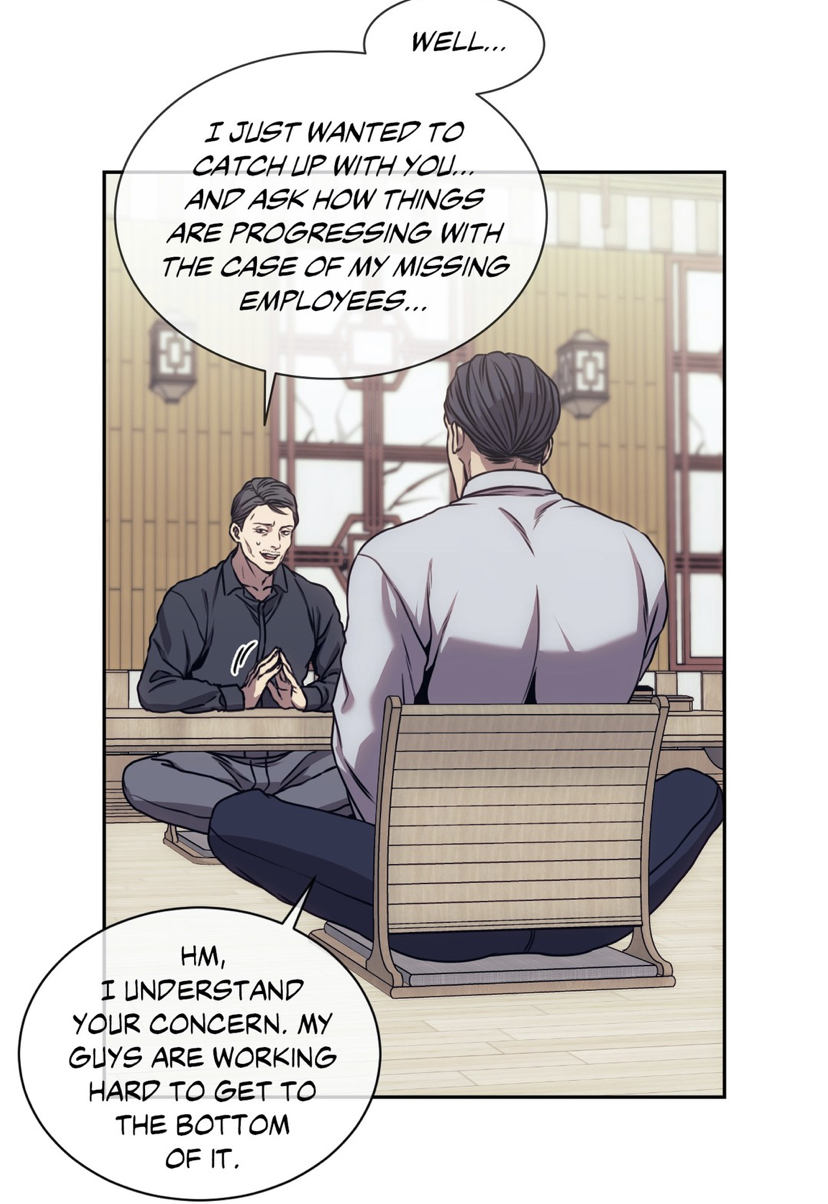 (chapter 11), this signifies that Ahn has been working for this team too. In my opinion, he plays the same role than in the other team: he is the chariot. As for the cannon, I will unveil his identity below. But since we have a whole team, this signifies that there’s a general. Consequently, there exists someone behind the victims, the king and player of the game board. To sum up, Jeon Hee-Seong is playing against a person, whose identity has not been revealed yet. How ironic is that when I was writing this essay, the special episode confirmed my theory:
 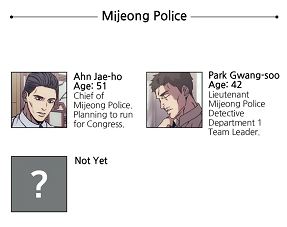 The “not yet” is the player using Koo Jeong-Mo and the others as his pieces. Jeon Hee-Seong entered the game and started a war against the first team. She could win over officer Ahn by appealing to his feelings. She revealed the injustice she was exposed too. That’s why Ahn asks Koo Jeong-Moo about the reason for targeting him.
 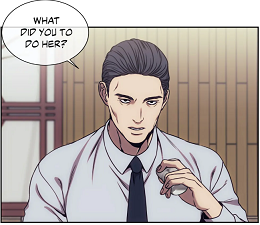 (chapter 11) Ahn could understand her motivation. However, she disguises from him that she is stimulated by her greed and ambition too.
 (chapter 6) It was, as if with the killing, he would go to her side, as in that scene he was facing her.
  (chapter 1). It was, as if he was observing a game and predicting moves. Furthermore, he observed Lee Je-Oh for a long time
 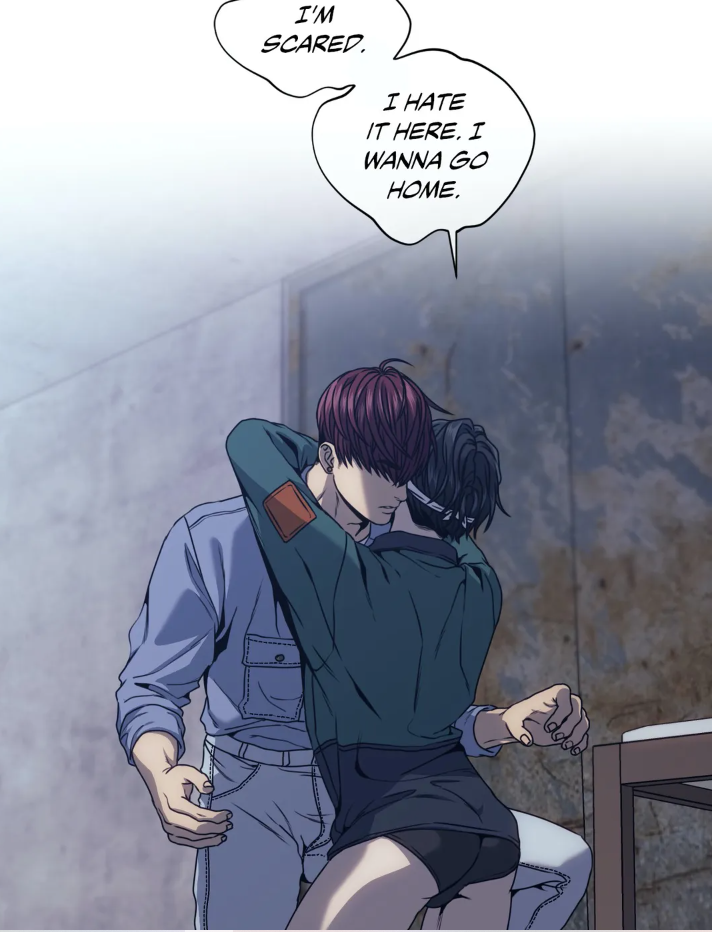 (chapter 12) The latter made the mistake to overestimate his situation and his skills. He imagined with his observation skills and schemes he could prove his superiority and loyalty, but the red-haired protagonist punished him for his “betrayal” and “arrogance”. The red-haired man embodies physical power and is the final authority. Finally, if you observe the way Do seong-Rok taught his new ally Lee Je-Oh about the game, you’ll sense that their position reflects the actual situation: they are sitting on the same side in front of the game.
 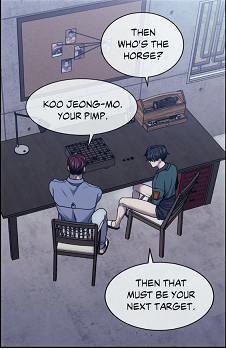 (chapter 13) which contrasts so much to the scene with the former prostitute in episode 6. Since Lee Je-Oh is giving advice to the young criminal (like not leaving any evidence
 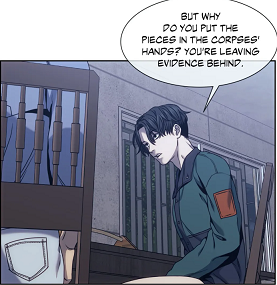 (chapter 13) or not answering Jeon’s calls, I view him as a guard and counsellor. At the same time, he is offering his help to capture the pimp Koo. Hence I consider him as Do Seong-Rok’s horse too. As you can observe, the red-haired man and his lover will play different roles in Janggi. However, right now the two main characters are still working for the femme fatale, but it is only a matter of time, until they build their own team and work for their own survival and ultimate goal.
 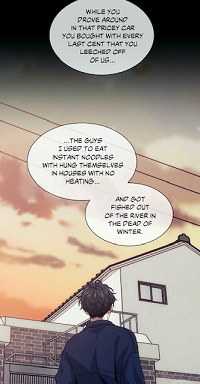 (chapter 18) And strangely, Benjamin Franklin was also involved in American Revolution:
 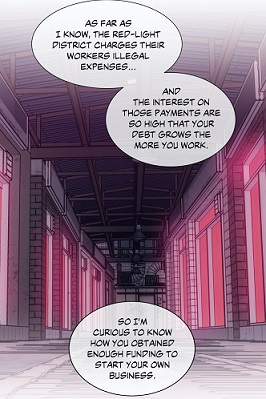 (chapter 8)
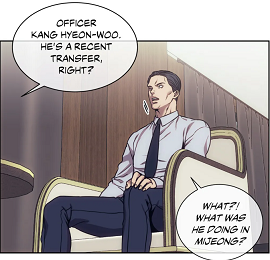 (chapter 11) According to his reaction, the manhwaphiles can deduce that the detective has lived himself in the city before moving out to Seoul. In other words, he is coming back to Mijeong and is determined to remove corruption in the city and police. Since Player 1 (Not Yet) will be aware that officer Ahn has already sided with Jeon Hee-Seong, there’s no doubt that he will try to use Kang Hyeon-Woo to target Jeon Hee-Seong and her helpers. An investigation about the murders in the city is definitely necessary for the player 1. However, since the lieutenant chose to leave the city in the past, this signifies that he suffered himself some injustice in the past and as such was a victim of the king from team 1. Therefore Kang Hyeon-Woo has to ensure that he needs to unveil the whole truth.
  (chapter 11) It is even possible that the femme fatale decides to use the detective for her benefit too, when she believes that it’s time to get rid of Do Seong-Rok. That’s why I believe, the detective will be the lose cannon in the board game. From my perspective, each time they will try to take advantage of his desire for truth and justice in order to divert the attention from their own crimes and wrongdoings.
  And at the end, they will “destroy” this world, just like in the picture. Their reason is simple. They are not aiming at gaining power and wealth. For them, freedom and love matter more.
  Bebebisous33s' analyses in K-Dramaland and Manhwas