

Please support the authors by reading the manhwas on the official websites. This is where you can read the manhwa. https://tapas.io/series/under-the-green-light But be aware that this manhwa is a mature Yaoi, which means, it is about homosexuality with explicit scenes. Here is the link, if you are interested in more analyses about this manhwa and others: https://bebebisous33analyses.com/2021/06/06/table-of-contents-of-analyzed-mentioned-manhwas/ I am also using Doctor Frost as reference again. https://www.webtoons.com/en/mystery/dr-frost/list?title_no=371
It would be great if you could make some donations/sponsoring: Ko-fi.com/bebebisous33 That way, you can support me with “coffee” so that I have the energy to keep examining manhwas. Besides, I need to cover up the expenses for this blog.
Anyone reading Under The Green Light is aware that „Potato“ is Matthew‘s nickname created by Jin, when both lived in the orphanage. 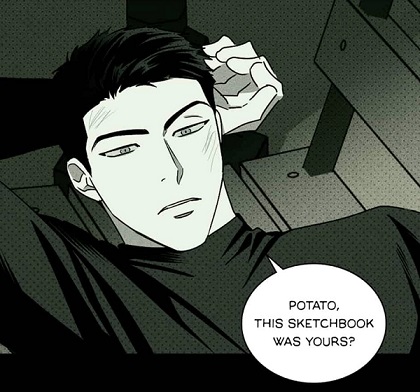 (chapter 39) But why did he give him such a nickname? It is related to the moment he saw clay in the child‘s hand.
 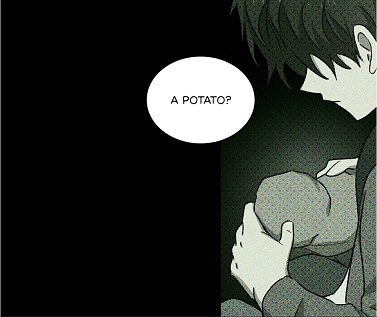 (chapter 29) He couldn‘t recognize what it should represent. At that time, Matthew was attempting to create a sculpture, a rabbit, as the main lead felt attracted to the rabbit that was living at the orphanage. However, the fact that Jin associated this form of clay to a potato reveals much more about Jin‘s personality than the main character realized. How so?
Because the sculpture was not finished, the protagonist had to interpret the form. Since I wished my avid readers to comprehend where this thought came from, I have to refer doctor Frost once again.  (doctor Frost, chapter 2)
  (Doctor Frost, chapter 2)
  (Doctor Frost, chapter 2). Thus I deduce that the potato exposed Jin’s subconscious.
1. The signification of potato
What does a potato symbolize? First, it can symbolize love and warmth, hence there exists this custom to send a potato to a loved one. By doing so, they desired to express their care and concern for the acquaintance. They are nurturing their loved one in a figurative way. And look how he behaved with the young orphan. He would pet his head with his big hand or he would smile to Matthew. 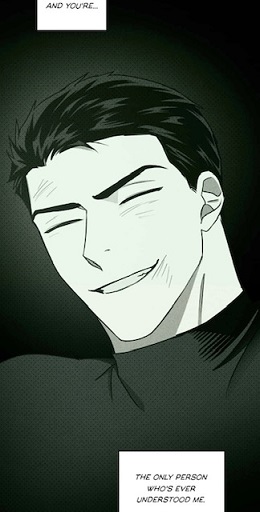 (chapter 29)
Moreover, I associate potato to humbleness and simplicity, for it is connected to agriculture and peasant hood. Naturally, “potato” can signify “stupidity or naivety”, consequently people utilize “potato-head” as an insult. This coincides with the young man’s warning: 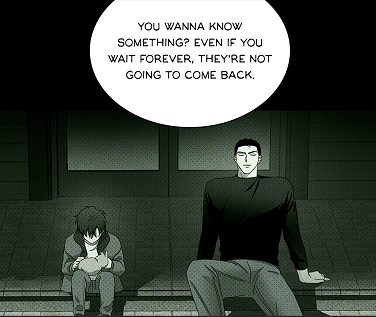 (chapter 29) He desired Matthew not to have any false hope and illusion. He should lose his naivety. Yet, the main character had no idea that the boy had already gone through a terrible experience. The suicide of his parents and the greed expressed from “adoptive parents” had opened his eyes. The adults were superficial, selfish and avid. They all had expectations from him.
  (chapter 29) This explicates why Matthew chose to push people away and remained silent. He just wished to be left alone. To conclude, Matthew was far from being innocent, but his meeting with Jin changed his life. Through him, he discovered that all people weren’t like that. There was hope, which is represented by GREEN,
In addition, potato can also be linked to weakness, for the vegetable is dependent on different elements like warmth through the sunlight, water and the hand of a farmer. Without them, it can not grow properly. That’s how Jin Cheungwoo judged the child.  (chapter 39) He needed to be protected from the abusive priest. Besides, he became angry, for due to the adults’ intervention (they had killed the rabbit), Matthew had stopped drawing. It was, as if they had ruined his talent.
  (chapter 39) Jin saw Matthew as a talented, lovable but weak child who needed advices and protection.
  (chapter 29). He had detected his exclusion, unaware that this was actually his own choice. What caught my attention is that the future director of Shinhae acted like a surrogate parent to Matthew. He stopped the bullying and advised him to change his attitude:
 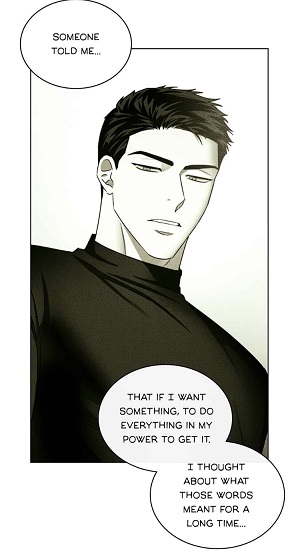 (chapter 31) He should become proactive. He should have desires and try to achieve them. The irony is that the young boy misinterpreted Jin’s recommendation: he should stop to rely on others, and as such to reject the money from his inheritance. He should do things on his own! He pushed him to become a sculptor. On the other hand, this association “potato” exposed Jin’s true desire: he was hungry for warmth and sweetness in his life.
 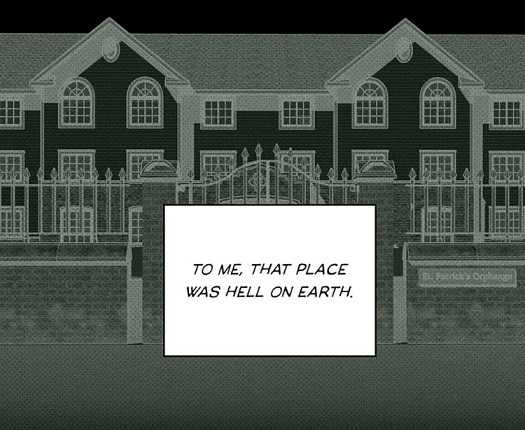 (chapter 39) And this is exactly what Matthew could give him through his drawings. The young man could forget his disenchantment and his suffering thanks to his art.
 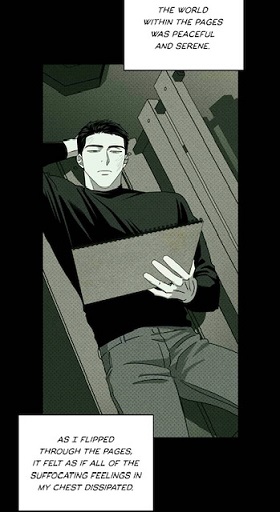 (chapter 39) They represented an escape from his terrible life, it was, as if an breath of fresh air had entered the orphanage. Therefore it is not surprising that the main lead became very protective of the child. Both needed each other.
So when Jin gave him a nickname, Matthew could only feel that he was special to Jin. That’s the reason why the artist was hoping to be called Potato again. And his dream came true, yet the unconscious sculptor couldn’t witness it:  (chapter 39). Consequently, I come to the conclusion that the nickname “Potato” actually reflects Jin’s true personality as well. Thereby he could sleep peacefully in the studio under the green light. Don’t forget that a potato grows in the dark soil. In the beginning, the director is a humble, loyal and warm man who longed to have a family and as such a home!
His hope to have a home was displayed, when he looked at the building. He dreamed to live in a skyscraper 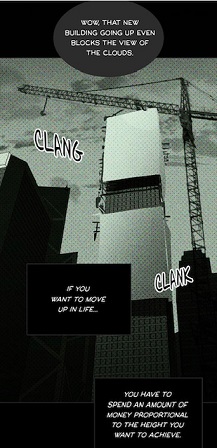 (chapter 5) He imagined that he could only obtain it, if he became wealthy and powerful. This is no coincidence that Brandon Lee gave him as a reward the building. And now, you comprehend why Jin Cheungwoo refused to follow his former boss. He had sold his soul to achieve his dream: a home, and it was for nothing! Why? Once he had the property, Brandon Lee asked him to switch side and follow him to the new company he had founded. However, by acting so, Jin realized the falsehood of his dream. If the home is empty, then it is meaningless. This explicates why Jin said that the scar on his back has no meaning now. And even Brandon had a similar perception:
  (chapter 32) This is no coincidence that we have a reference to food here. Jin has always been longing for a potato, but not for a cup of tea. Simplicity versus sophistication. It also explains why the betrayer bought a cheap wine in order to rekindle with his former “dog”.
The manhwaphile can detect the purity in Jin, because he suffered by dirtying his hands. 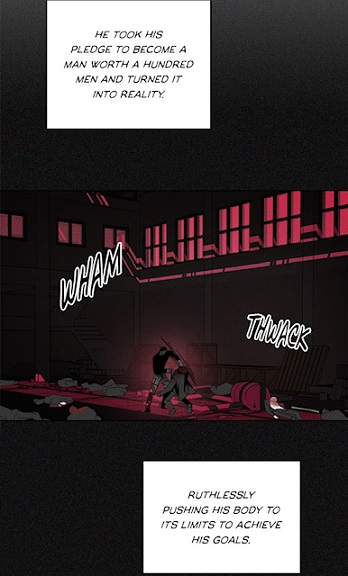 (chapter 32) He needed drugs to forget his sins.
 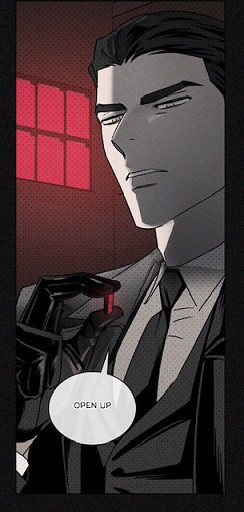 (chapter 32) And that’s how he lost his true self, and became a cynical and cold-hearted man. Yet, he could never mask his true identity. He still values loyalty. The tragedy is that the real sinner was Brandon Lee who would give his orders without dirtying his own hands. Observe that he is always wearing gloves. Now, Jin is full of remorse, hence he has sleeping problems. Therefore, the readers should judge Jin’s following statement as a lie:
 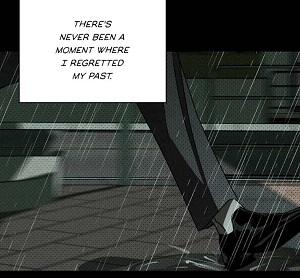 (chapter 39) He has such a negative perception of himself that he describes himself as rotten to the core.
 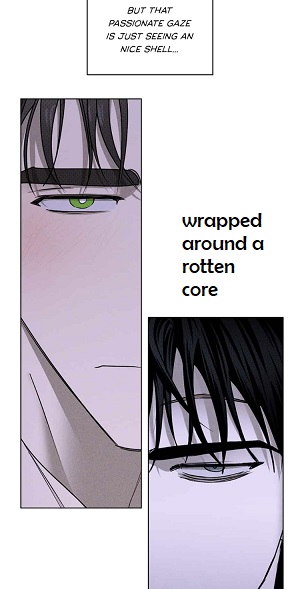 (chapter 35) These words mirror his self-loathing. Therefore I believe that when he called Matthew a psychopath, he was actually projecting his own thoughts onto the artist. He perceives himself a “psychopath”, for he killed so many people. He is so tormented by his sins
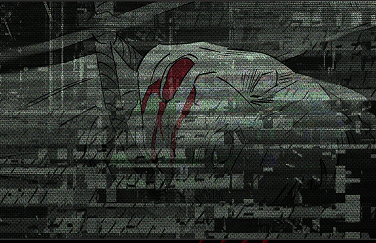 (chapter 4) that he needed sex combined with drugs to distract his mind. However, thanks to Matthew, Jin could slowly keep his distance from drugs. Matthew is nurturing him, he is his sweet potato, his cure to recover his memories and rediscover his true self. That’s the reason why he was willing to sacrifice himself for the artist’s sake.
 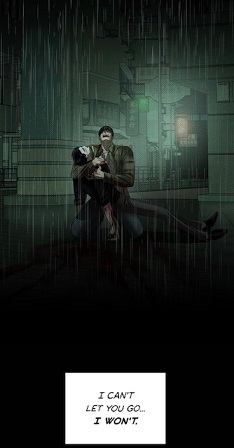 (chapter 39)
We could say that Matthew replaced the drug. Jin could enjoy sex with Matthew and forgetting everything, hence the colors during their last love session was blue and purple. However, when Matthew started confessing to him, Jin felt the need to reject his affection, for he viewed himself as not worthy. Once again, Jin thought that the student was just a “potato-head”, he was too naïve. He had no idea about Jin’s true personality: the latter was a monster who lives in a dangerous and cruel world.
2. Under The Green Light
The irony is that Jin was wrong. Matthew is the one who knows Jin the best. He met the main lead before he got corrupted by Brandon. That’s how I realized the function of “Potato”. Matthew would bring Jin back to nature, so that he could rediscover his true self. Yes, the manhwaphiles shouldn’t forget that the potato is connected to nature. Hence I am connecting Brandon to civilization and corruption (money) (chapter 11), while Matthew is symbolized by nature. This is no coincidence that both are green.
It was, as if Matthew was encouraging the director to view life differently. This explains why Jin saw flowers, when he admired the artist’s handsomeness.  (chapter 31) I had already explained in the previous analysis that Matthew would bring colors into Jin’s life. But now, I would like to be more precise. How did Jin discover serenity and peace of the mind? Through Matthew’s drawings. They were all showing nature.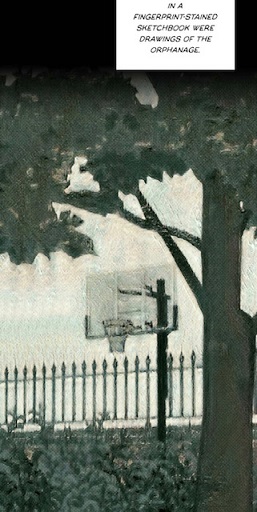
 (chapter 39) One might argue that in these images, the beholder can detect the presence of civilization: the basket hoop, the swings and the bank. However, you will recognize that the tree is in the foreground, the ants and the sunset were the main topics. Matthew had actually focused on these elements, when he had selected the places. Besides, the swing, the bank and the basket hoop have a common denominator: leisure. But this doesn’t end here. In no picture, you can find people. These drawings reflected Matthew’s desire for solitude. This represents his rejection of “civilization”. In fact, he selected places which he associated to the director of Shinhae.
  (chapter 29)
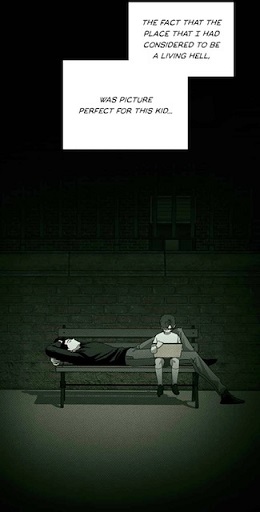 (chapter 39) In other words, since his youth, Jin has always been the protagonist’s muse. Thus Matthew said this concerning the main character: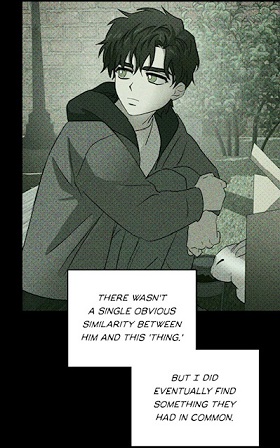
 (chapter 29) And now, you comprehend why Matthew had asked Jin to be his model.
But why could Jin grasp the young boy? It is because the former was exactly like the sculptor. Jin was also a lonely soul, though he was surrounded by people.  (chapter 29) This means that here, the young man was faking a smile. And note how he recalled the orphanage: he connects it to the building and not to people. (chapter 39) This exposes that Jin was never close to anyone except Matthew. The director of Shinhae had a similar dream: keeping distance from people. He wanted to live high up in the sky, far away from people. (chapter 5) The role of Potato is to push Jin to cut ties with the mafia, to be far away from people and corruption. But how can he do that? Through his money, love and art. Yes, his money…
 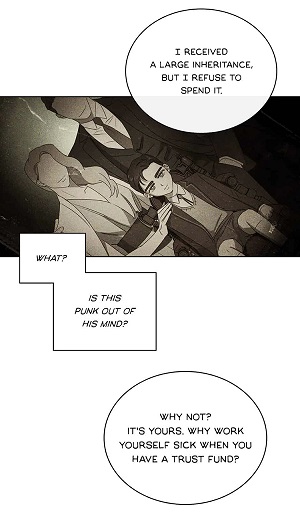 (chapter 31) So far, he saw no need to use it. But if it means that with his money, he can have Jin, then he will spend it. Don’t forget that for Jin, without money, you are powerless. Moreover, in their last love session, Matthew was already forcing the main lead to choose him and to focus on only him.
  (chapter 34) But Jin rejected him by letting him see his “true face”: he would take drugs and he was a murderer, for he would use a knife. In my eyes, this was the main lead’s attempt to resist temptation. He feared to become attached to Matthew, as he had already experienced disappointment and betrayal due to Brandon. Nonetheless, the mafia boss had long forgotten that Matthew knew this side from him. He had witnessed the character’s brutality. Nevertheless, for the sculptor, this was justified, as he was trying to protect him.
  (chapter 39) Matthew was also aware that the priest was abusing Jin too. The latter had explained that he was sacrificing himself for the sake of the other children. That’s the reason why the boy with the green eyes never condemned the protagonist as a sinner. This positive perception was particularly perceptible in this scene. After beating the priest, Matthew feared more Jin’s departure than his violence.
  (chapter 39)
Therefore I see the discovery of the drug in the soil as a metaphor for a turning point in Jin’s life, the drug will be removed and replaced by a museum. And don’t forget that the potato grows under the soil! It was, a field had prepared for potatoes in a symbolic way. But the problem is now that Jin is badly hurt. This is important, for the artist could lose his muse for a second time. (chapter 39) Besides, he hasn’t finished his sculpture yet.  (chapter 27) This would be a huge catastrophe for the artist, he would be more devastated than with the rabbit’s death. (chapter 39) This would literally kill the young man. He wouldn’t be able to create.
But since Jin could finally remember Matthew, he has no longer any reason to push away Matthew. The author wrote in the note that the second season will be less dark. And after reading my interpretation, you can grasp how. We observe the return of nature through art. First, Jin is forced to visit a museum  (chapter 1), then to look at the main lead’s sketches. (chapter 27) The man stands in the center, and not money. This announces the return of Jin’s humanity. That’s the reason why I think that Matthew’s sculpture of Jin could help the protagonist to see himself in a different light. Moreover, since the latter liked the prodigy’s drawings so much, he can only encourage his lover to keep creating and draw landscapes like in the past.
3. The fight between Potato and Gloves
This means that Matthew Raynor will have to fight Brandon Lee, as the latter is the one responsible for Jin’s addiction and misery. This scene (chapter 32) stands in opposition to this one: (chapter 39) First, it is important to outline the similarities. Both are taking place during the night. Then we have two people: while one is waiting (Jin/Brandon), the other is “working” (Matthew/Jin). However, in the first scene, Brandon only arrived after the massacre and gave his “dog” his reward, the drug and the property, whereas the young man on the bank was keeping company to the artist. He could relax waiting for a new drawing from Matthew. With his behavior, he was showing unconditional support to the creator. Brandon criticized his dog, saying that he had never asked him to kill them. But is it true? He could have just given an ambiguous order. But by doing so, he was remaining clean, it was not his responsibility. Moreover, the silence had a different signification: death versus peace. That’s why I am expecting a showdown between the former lover and the young student. Matthew has no problem to dirty his hand contrary to Brandon Lee, who always uses assistants and gloves. Brandon Lee said that since Jin never killed him, then for him, it meant that they would rekindle at some point. Matthew will definitely resent Brandon for changing his muse. He had already experienced the negative impact of wealth: superficiality and hypocrisy which led his parents to commit suicide. But how can Potato represent a danger to Brandon Lee?
People tend to forget that the potato plant is poisonous. Potato plant poisoning occurs when someone eats the green tubers or new sprouts of the potato plant. Hence the boss of Bumyung construction corporation shouldn’t underestimate Matthew Raynor, whom he will definitely consider as a green man. But since his youth, he was the witness of death: his parents, the rabbit, the priest… Potato showed his resistance, when he fought back the assassin sent to remove him. And after witnessing Matthew’s despair at the end of season 1 (chapter 39), there’s no doubt that he will resent the person behind Jin’s injury. During his childhood, he couldn’t protect Jin, but now, he is no longer a child. He is strong and big.
As a conclusion, Matthew and Jin are fated to each other, for they both are represented by the potato. Moreover, they have the similar inclinations: their desire for peace, solitude, sincerity and for warmth. Both enjoy nature, tranquility and peace by keeping their distance from people. But by meeting Jin again, Matthew discovered a side of Jin: sexuality. And that’s how they will be able to create their haven of peace. Yet, before this can even happen, Brandon has to be removed, as he stands in the way.  (chapter 30) The latter wants to return to the past, but not the same one than Matthew’s.
Feel free to comment. If you have any suggestion for topics or manhwas, feel free to ask. If you enjoyed reading it, retweet it or push the button like. My Reddit-Instagram-Tumblr-Twitter account is: @bebebisous33. Thanks for reading and for the support, particularly, I would like to thank all the new followers and people recommending my blog.
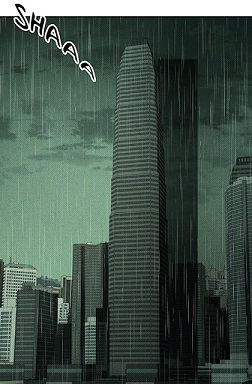 (chapter 11) It was, as if this world was monochrome. However, I started wondering why the author chose green monochrome pictures as process and as such why she selected such a title. As you can imagine, there are many possible answers, and it is up to the readers to give an answer. Thus I will try to give different explanations for the choice of JAXX. Naturally, this is my own interpretation.
 (chapter 5) This is connected to the sign “exit”. From my point of view, this panel could be an indication for the progression of the story. Why? It was, as if this atelier represented the whole world for Matthew, and Jin is the reason why Matthew Raynor decided to leave behind his solidary life for good. Through him, he is forced to interact with other people. Therefore he listens to the minions’ story. Notice that in the atelier, the artist can hide from people’s gaze, he can work in peace and even focus on Jin, his muse. However, for the thug, this panel has a different meaning. It forces him to recall his past, and as such to move on from this traumatizing past with Brandon Lee. Since Matthew’s studio is situated in the basement of the building, he can’t restrain himself thinking about his own past. That’s how the readers can discover that initially both protagonists have a common denominator. The thug would also live in the basement
 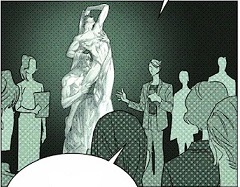 (chapter 1) He feels nothing for this statue. People surrounding the sculpture remain anonymous, for he is not paying attention to them. Every seems to be blank and cold. For him, only money and power matter. However, Jin is in truth a very passionate and strong-willed person. This explicates why his vision changes, when he thinks about sex.
  (chapter 4) And now you comprehend why the author used a different color, red. Jin is still thirsty for love and warmth, but he is in denial. Therefore it is not surprising why he is using drugs to stop his longing. These serve him as a substitute. They create an illusion, the world looks more colorful. Due to Brandon’s treason, Jin learned a terrible lesson. He would never get attached to anyone. However, as you can imagine, through Matthew’s inexperience, Jin discovered sexuality under a new light. The student is linked to purity. Yet Matthew is exactly like him, he has a huge libido, a sign that both are in truth longing for a deep affection.
 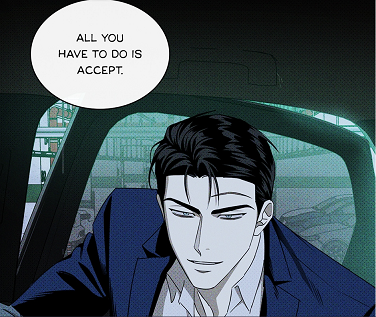 (chapter 20) Consequently, I deduce that the green light “exit” is no coincidence. Observe the parallels with the first sex session and this new sex session: basement, a new sexual experience for Matthew and the presence of the green light. From my point of view, it shows that Matthew symbolizes the exit for Jin. Thanks to him, the director will be able to leave the darkness of his world. This is no surprise that the main lead is gradually changing his attitude towards the student. He has no idea that Matthew has always admired him. But it is the same for Matthew. Thanks to the director, the student’s life will become more colorful and bright. Therefore I perceive this picture full of symbolism.
 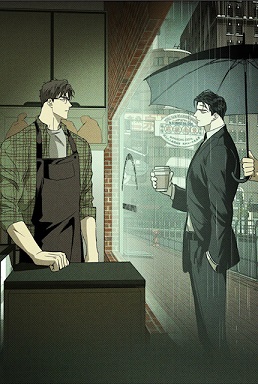 (chapter 1) Both are trapped in their own world, yet the moment Jin entered his world, therefore Matthew was able to leave his seclusion and could follow him.
  and in certain chapters, we discover his own thoughts. It was, as if the story was told from his perspective as well.
 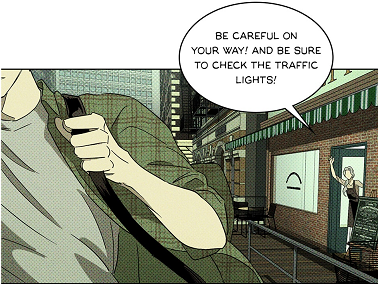 (chapter 1) Her drawings are composed by a multitude of points. So why? I couldn’t help myself connecting these two elements (green and points) to the disease: color-blindness!
  I started wondering if Matthew was not suffering from daltonism, and as such from protanopia.
  This means that he can’t see red. First, this would explain why the café owner asked the student to be prudent on his way to the museum.
  (chapter 1) , why Matthew’s clothes look so plain
  and why he is wearing glasses in the end.
  (chapter 16) There exist glasses that help people to overcome this handicap. Besides, notice that when the minions were talking to Matthew and Alex, the café owner, JAXX used a lot of purple and yellow, which reminded me of the colors perceived by people suffering from protanopia. I know, there is no guarantee that this interpretation is correct. However, I really wondered why the author would use the points in the drawings and why she would create such a panel.
  The manhwalovers can recognize Jin’s tattoo and the smear could be perceived as an indication for blood. Yes, it was, as if the letter was bleeding. However, a person suffering from daltonism can not recognize blood as such. This means that Matthew won’t be scared by a blood trail. Observe that anyone seeing Jin’s minion and even Jin would recognize that he is connected to the mafia. Striking is that this never repulsed the protagonist. In fact, he even desired to join his side. He had been looking for him all this time.
 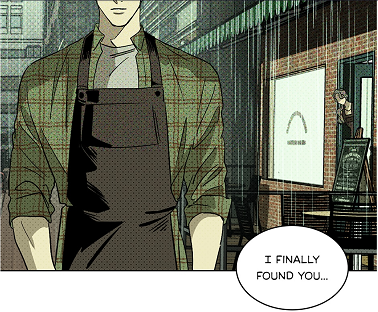 (chapter 1) Striking is that the author refused to let the readers see the character’s gaze. From my point of view, it is related to the other condition why in the artist’s world, there barely exists passion and as such red. If the manhwalovers had seen his gaze, they would have been surprised by the contrast between his words full of hope and warmth and the distant and indifferent gaze. It is already palpable by the absence of the protagonist’s smile. The character has definitely some problems. This is perceptible in the following panel:
 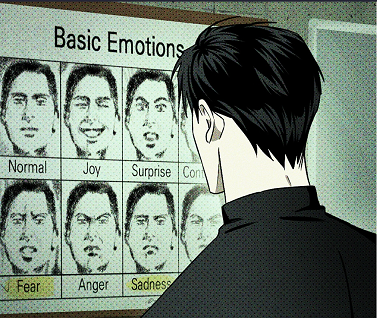 (chapter 16) The artist can not recognize people’s emotions. He needs a manual how to read them. That’s why some readers started wondering if the artist was not suffering from autism or was not a psychopath. Even Jin memorized his number on his cellphone as “psycho”. He even describes him as creepy. Moreover, the readers even imagined that he had killed the rabbit, for he was longing for its closeness. One of the reasons was that they were disturbed by the protagonist’s smile.
 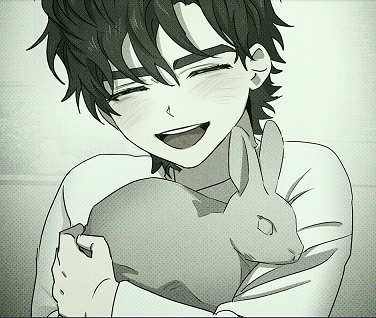 (chapter 27) The latter appeared at the wrong time, when the cute rabbit had died. For an outsider, it really looked like the young boy was rejoicing about the animal’s death. However, I believe that there could be another explanation. He could feel relieved that his rabbit would never abandon him. But autism and psychopathy are not explaining why Matthew would barely express his own emotions. That’s how I come up with this new idea.
 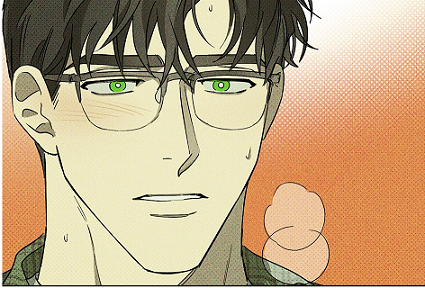 (chapter 1) For the first time, Matthew’s heart is racing, the readers can assist to the resurfacing of Matthew’s emotions which were also buried. Furthermore, the more he looked at his idol, the redder it became:
 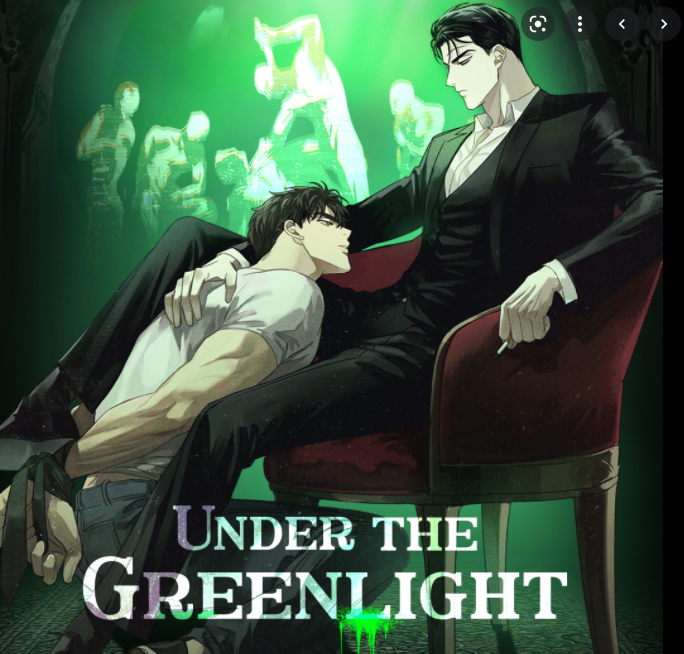 illustrates their relationship. Matthew is trapped, and can’t escape from Jin’s spell. This means that the student enters the world of the mafia because of the director. At the same time, this illustration could show the director’s terrible past. Notice that in the image the sculptor illustrates a murder scene. I detect a strong connection between the art and death. Don’t forget that the rabbit got killed, the moment the artist had finished his work. Consequently, I deduce that the end of their monochrome world is strongly intertwined with blood and death.
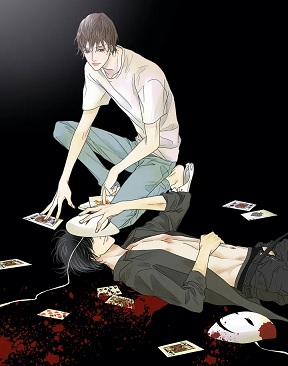
 (chapter 55) He doesn’t want to be recognized, but more importantly he is determined to hide his true feelings from Nam Dong-Gyun, for he believes that he has no chance to be his lover again. Moreover, during the Corona pandemic, people are requested to wear a mask in order to stop the contamination.
 If people knew that he was a psychopath, he would get isolated. His parents are already very distant with him, for they view him as a monster. Due this experience
 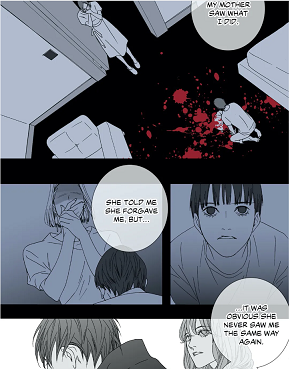 (he killed a dog and his mother caught him), he got aware that he was not allowed to act on his urges. For him, the mask is a necessity, as he is living in society. He doesn’t want to end up in jail. But is it the same for Nameless from Painter Of The Night?
 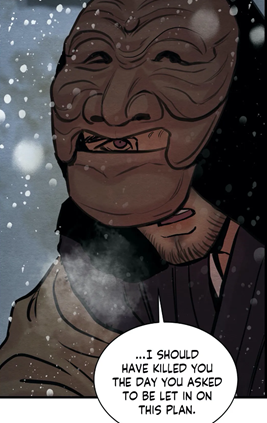 (chapter 54) He is switching his identity to become a killer. In this panel, the manhwaphiles see the transformation of the figure, as his face is already half-covered. He is no longer a joker, but not the ruthless murderer yet. However, when he kills the servant, he has the cover on.
 (chapter 54) By putting a mask, he is protecting himself too, for he is acting as someone else, therefore his heart can’t be wounded.
  In this case, it is more a desire, though in truth it is a combination of both. The “butcher” has to hide his true identity. So when he wears his mask in chapter 44, he is doing his job. He won’t be recognized, but also he won’t feel remorse. He has been paid for that and the mask is helping him not to get emotionally invested. On the other hand when Jihwa met him in chapter 51, the manhwalovers could perceive the low-born’s true personality which coincides with the absence of the mask.
 In that episode, he was literally naked in front of the noble, which explicates why he showed concern and care for his client. He let the noble express his worries. Let’s not forget that the jester is a person with a pure heart, when he is true to himself. Hence I come to the conclusion that the mask serves as a protection for the criminal’s mind and heart. And now, you comprehend why Nameless didn’t feel remorse for hurting the painter. According to me, in this scene, it was Kim who was scaring the painter.
 (chapter 66) This is important, because the mask had two purposes here: to hide the identity of the perpetrator, but also to slip into a role, No-Name’s, the assassin. The main lead’s face was covered and turned around. At no moment, the “butcher” could see the victim’s gaze and facial expressions. The mask helped him to be ruthless, while he threatened Baek Na-Kuym. He might feel pity, but that was it.
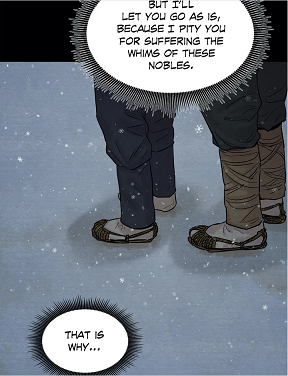 (chapter 66) In that scene, the manhwaphiles thought that they were seeing Mumyeong, hence they imagined that Jihwa’s safety meant more than the artist’s life and possible scars. But if you take my theory seriously, this was Kim, then the words from the butler had a different meaning. He was hiding his action behind the nobles. Only after paying attention to the mask, I realized the existence of two masks.
  (Chapter 61)
  (chapter 61) Smiling mask versus threatening mask. The presence of two masks explicates why No-Name had the impression that after the painter’s return nothing bad had really happened. He was not aware of the butler‘s wrongdoings. Simultaneously, since the artist had not been killed, No-Name imagined that he had done nothing wrong.
  (Chapter 61) Hence the existence of the Joker’s mask outlines the criminal’s duality. He can be a ruthless killer, yet he can be gentle and caring too. At the same time, it implies the presence of a biased view.
 (chapter 73), the moment he is deprived of his powers. It was, as if he became a human. This is particularly perceptible, when he accepts the judgement of Maat and says this.
  Striking is that in this panel, the mask doesn’t appear as a source of advantage, rather as a hindrance. He couldn’t see and hear the consequences of his crimes due to the mask. He was blind and deaf. By removing his mask, he becomes human and can face reality: he is facing his sins and the suffering of his victims, their wounded soul.
 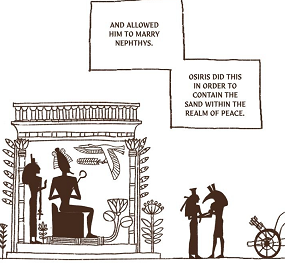 [chapter 35], his son, his title
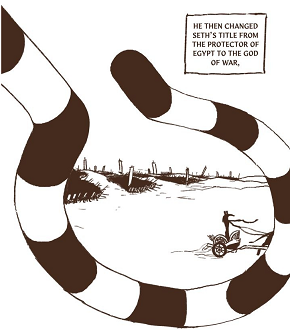 [chapter 35], his power over the desert
 [chapter 35]), he lost his identity. Osiris made sure to imprison his brother, because the former was lusting after him and had the impression that the latter would always escape his control.
  (chapter 35). At the end, he raped him in order to claim him. The latter got literally destroyed, hence he hid his pain behind the mask and chose to hurt others.
 (chapter 37) In other words, the loss of identity was the reason why Seth decided to hide himself under the mask. Who was he in reality? The god was so tormented by his tragic past, Osiris had hurt him with his actions and words. He made sure that his brother would doubt himself. Hence the mask became the only reason to keep living. This item helped him to hide his wounds, but also not to lose himself completely. Hence I conclude that the “evil god” wasn’t just blinded by his heartache, but also by his mask, for the latter hindered him to see the real impact of his terrible actions.
 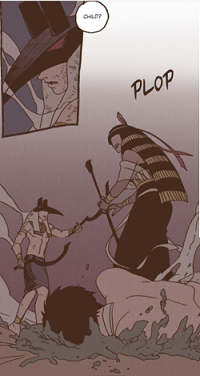 (chapter 37)
  (chapter 73), his son makes the opposite experience. He transforms himself into a god, Anubis, hence he gets a mask.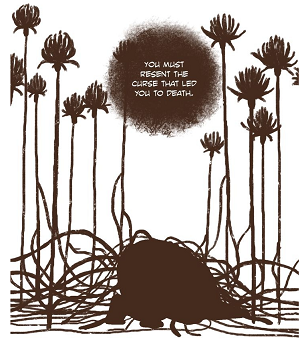
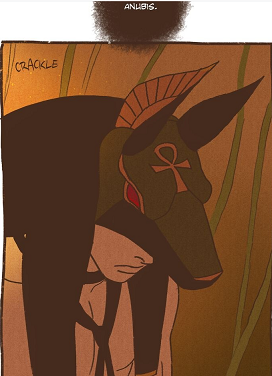 (chapter 73) However, this signifies that he won’t see his wrongdoings too, he will be oblivious to the pain he is causing to others. This time, his blindness will be caused by his resent. While in the past, Anubis was a sensitive and gentle person, but no real god due to Seth’s curse, in chapter 73 he becomes Osiris’ true son, an evil god. Why do I judge him like that? It’s related to Osiris’ words. The latter is encouraging his son to feel hatred for the one responsible for his curse, Seth. Moreover, he asked his son to forget his past signifying that he should cut ties with his previous family. Therefore I believe that in the future, Anubis will fight against Seth and even Horus. Nevertheless, the wounded Anubis doesn’t realize that he has been manipulated by Osiris. The latter used his vulnerability and fear to approach him and appear as his savior.
  (chapter 73) Besides, Osiris was in fact accountable for his injury
 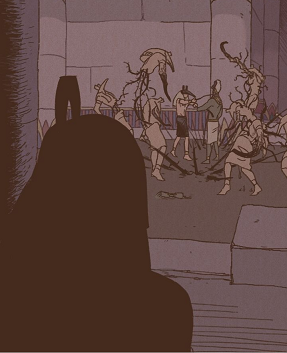 (chapter 37) In other words, the god of the afterlife used a disguise, though his brother had the impression that Osiris was real. Yet, one might argue that in that scene, Osiris was not wearing a mask. However, since he took possession of Anubis’ body, we can clearly see the presence of a cover. Let’s not forget that this terrible god is not allowed to leave the Underworld, hence he needs a subterfuge to enter the world of the living. That’s why I perceive it as a disguise. While the Egyptian god used Anubis as his vessel, Kwon Sungha from Dine With A Vampire took a new identity: he became Sooin’s bodyguard.
  As you can see, in both cases magic provided the villains a new occasion to deceive their target. And this shows that a mask can eventually cover a whole body, when it is to create a new “identity”.
  , just like Ra or Hathor. Yet, note that they are all women. Secondly, if you pay attention to their appearances, you’ll detect the presence of a hair dress and make up, especially around the eyes. This is no coincidence in my opinion. These accessories should be perceived as a “mask”. The make-up and hair dress are a form of disguise. This becomes really obvious in the manhwa “True beauty” from Yaongyi, where the heroine Jugyeong Lim hides her insecurities and true self behind a make-up. This is the real and natural protagonist
 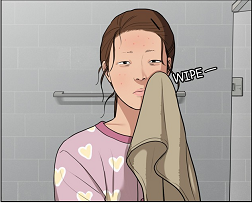 (chapter 7), while we have here the disguised heroine
 (chapter 0). This goes to the point that her boyfriend Sujeon Han has no idea how she really looks like. As a conclusion, the make-up and hair dress should be judged as a mask too. That’s why in traditional Chinese theater, the actors have painted faces. It was, as if they were wearing a mask.
 (Doctor Frost, chapter 2) That’s the reason why the author Black Apricot didn’t drew a mouth, when she presented Song Ji-Sung here.
 (chapter 9). She wanted her readers and the main lead to realize the character’s true personality. The latter was upset, because Kwon Soo-Young was keeping his distance from him and it looked like, he had found a new protector/boyfriend. When the protagonist Kwon Soo-Young had met Song Ji-Sung for the first time, he had only paid attention to his smile. Therefore he had misjudged his personality. And now, if you contrast the previous panel with the following one
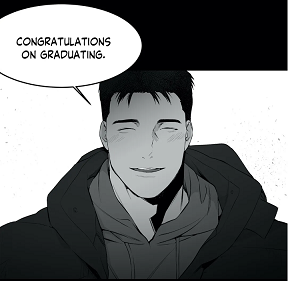 (chapter 16), you’ll notice an important detail: The eyes are closed, when the character is smiling. In this situation, the figure was actually hiding his true thoughts, this explains why the main lead couldn’t correct his false impression about his future lover. He had no idea about his true nature, as the latter keeping concealing his true intentions, he was faking his emotions with his facial expressions. This confirms my interpretation: the face can also be a mask. For me, this character is like Doctor Jekyll and Mr. Hyde. In this picture, Kwon Soo-Young got scared, when he saw this gaze and refused his lover’s advances.
  He is brutal, selfish and very manipulative. And now, you understand why in ENNEAD we had two different kind of masks: Seth and Horus are wearing real masks, while Osiris and Isis use their own face and make-up to conceal their true personality.
 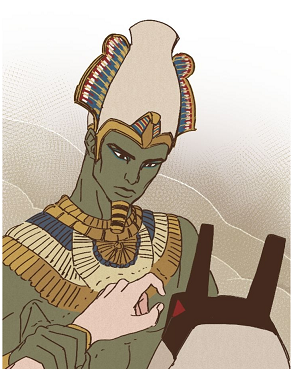 (chapter 7) Sure, the color refers to his death, a decayed body, nonetheless the readers should judge the painting as a cover. Since he is using a whole body to disguise himself, this signifies that he is hiding his true personality and thoughts more than Isis or Ra. That’s why it is not surprising that this god is particularly scheming and deceptive.
 The hair fringe and the shadow serve as a mask. In this scene, she used her body to divert her lover’s attention and hide her true intentions. She was inciting Do Seong-Rok to kill on her behalf. However, this temptation left such a deep impression that the main lead was tormented in his sleep later. His unconscious was telling him that he had been manipulated. As you can see, the absence of eyes in the manhwa can be viewed as the presence of a mask and as such a sign of deception. We have another example in BJ Alex:
  (chapter 10) The mask is a combination of shadow and absence of eyes. Here, Ahn Jiwon was remembering his first love and boyfriend, who faked affection and care for him. As a conclusion, the eyes symbolize honesty and naturality and its absence the presence of a mask.
  and the internist Kwon Sungha
 . While examining their characters, I made a connection between the glasses and their personality. I defined the function of the glasses as a mask, because both almost act the same, as vicious hypocrites. They hide behind their glasses and their fake smiles so that people misjudge them. And remember doctor Frost’s advice:
  Observe that the smile is less pronounced, giving the impression that it is vanishing. Simultaneously, the eyes are shown oozing a rather cold and heartless side. In the scene at the library (chapter 40), he’s finally able to perceive his own reflection in the scholar’s gaze, since the smile has totally disappeared. The gaze exudes coldness, despise and filth.
 Combined with the harsh words “you were born to be a prostitute”, the painter’s identity and personality are literally destroyed. The scholar has reduced Baek Na-Kyum to a prostitute, the lowest rank among the commoner. They have no rights and no real identity as they are forced to do what their clients want.
 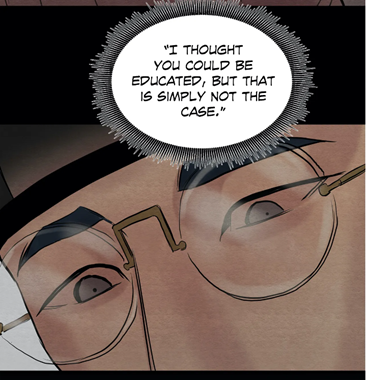 (chapter 41) Hence it is not surprising that the protagonist remembers the cold gaze. His eyes were the other reason why Baek Na-Kyum’s heart was so wounded. He could sense despise and rejection. In other words, the scholar had used two weapons to hurt the main character: the gaze and the words. This connection between the smile and the eyes is visible in Dine With A Vampire too.
 As soon as the smile vanishes, the eyes become visible unveiling their true personality. That’s why it is not surprising that Kwon Sungha has the same behavior towards the main lead Joo Sooin. The former has also destroyed the protagonist and reduced him to a puppet. The villains keeps calling him a pervert. He was even worse than Jung In-Hun in the sense that he kept abusing him mentally and physically after the coercive persuasion. Both are hypocrites hiding behind their glasses and their gaze. Therefore they are portrayed as cruel and mean hypocrites. The other common denominator is their hatred and rejection for homosexuality. Kwon Sungha seems to be even worse than the scholar, as he is in reality a repressed homosexual. He has sex with Joo Sooin, but resents him because he sees in him the reason for his “perverted” sexuality. He rejects sodomy because of the Church and his mother. Both reject this sexual orientation. I could mention Carter Nathan from The Blood of Madam Giselle
 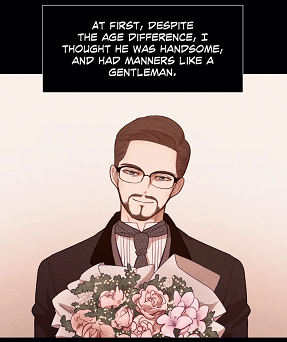 (the fake and the real
 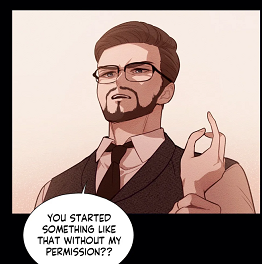 (chapter 13) or Jung from Unintentional Love Story
 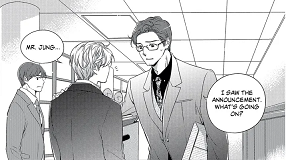 as well as selfish and ruthless hypocrites. In other words, the next time you read a manhwa, be careful with characters wearing glasses, they might be dangerous and their smile might be fake.
  (chapter 16) The main lead explains that he chose to wear glasses, because he desired to avoid rejection and fear. He had noticed that the absence of facial expressions (smile) and his cold gaze would be misjudged by people. Here, Matthew used the glasses as protection. And this illustration reinforces my interpretation: glasses in manhwas have a huge importance in the end, they should be considered as masks too.
  The latter is the only one who can control him.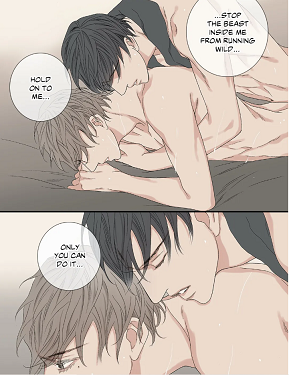
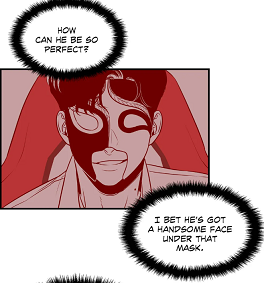 (chapter 1) This is his second identity: BJ Alex. On the one hand, he desires to remain anonymous so that no one can recognize him in real life, on the other hand this signifies that he is living a double life. He would like to protect his privacy, but also his secret life as homosexual. That’s why he said this, when his relationship with Nam Dong-Gyun was revealed:
 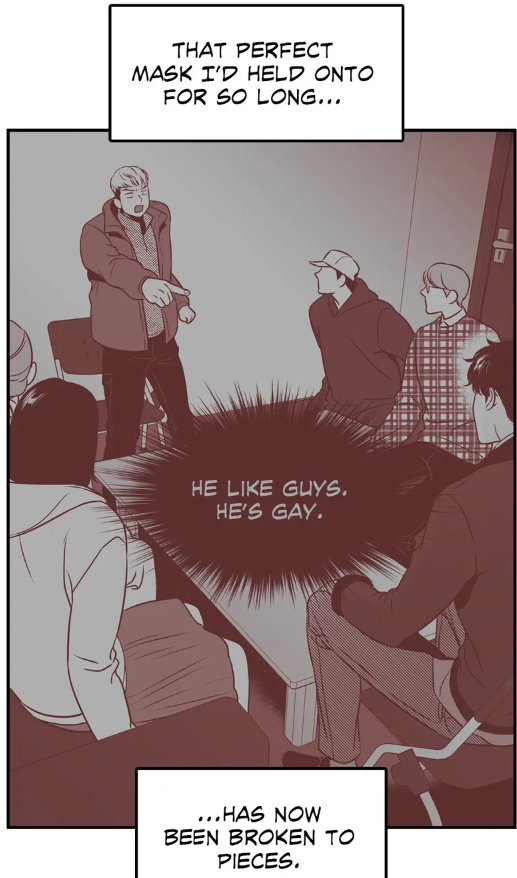 As you can observe, a name and as such notoriety can also serve as a mask. The president of the council was admired by his peers, he was so perfect that some students even wondered, if he was human.
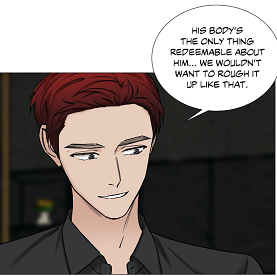 and the president is not recognizing it. But why is reputation a mask? It is, because people often judge others on hearsay and first impressions. The social medias are the perfect example for superficial and quick judgement. But we have to question ourselves about Ahn Jiwon’s initial motivations to hide behind a good notoriety.
 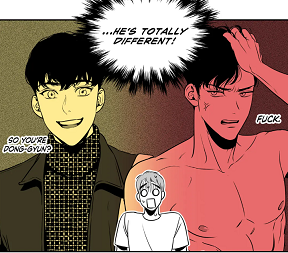 In the beginning of the story, he doesn’t even know the other protagonist very well, yet he is willing to take care of him, when the latter is drunk. The president is seen constantly smiling and has never externalized negative emotions (anger, violence…). This explicates why the uke was so shocked and confused, when he saw a brutal BJ Alex. The latter had discovered his secret, hence the former felt vulnerable. On the other hand, Nam Dong-Gyun wondered about Ahn Jiwon’s true personality. But the uke was not the only one who had no idea about Ahn Jiwon’s true character. The latter was also confused.
  This signifies that the protagonist was never confronted with his own reflection.
  (Doctor Frost, chapter 11). That’s why he became an empty man in the end. He has no idea about his true self (his likes and dislikes). He was forced to follow his parents’ requests and his brother’s shadow. This emptiness is palpable in chapter 49, when the main lead confesses this: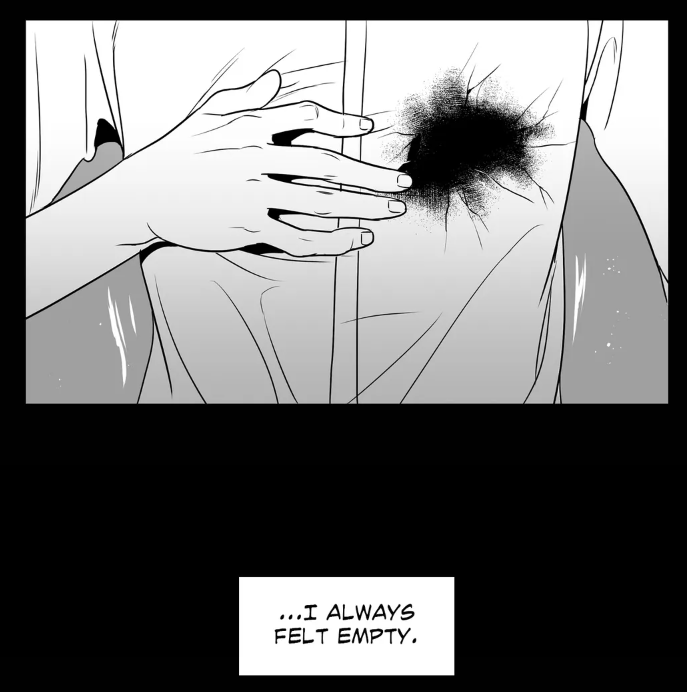
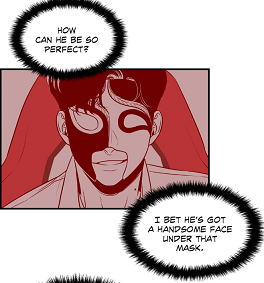 (chapter 1)
 (chapter 49) Since the adults kept criticizing him, he imagined that if he copied his brother, he would get recognition and acceptance. In other words, he forced himself to become a second version of his brother.
  But even copying his hair dress and tastes, he was doomed to failure, for the parents had already categorized him: he would always be inferior to their eldest son. He realized gradually that this wasn’t right, for his parents still didn’t perceive his true identity. That’s why he feels drowning, when he loses his mask.
  He doesn’t have the impression to exist.
 (chapter 49) That’s why he chose a third mask: he tried to be admired at school. He was caring and considerate towards his fellows. However, since he had made this rational decision
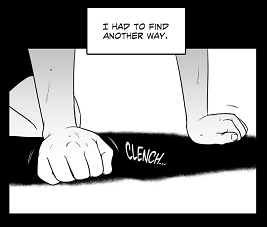 , in his mind he was acting. Hence he didn’t truly enjoy this situation.
 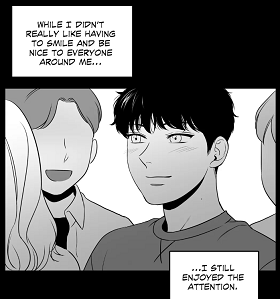 (chapter 49) He felt that he was forced to smile. Besides, I believe as he was fake, this admiration was quite superficial in his mind. Therefore he didn’t feel truly loved. That’s why at some point, he wondered if he would ever be loved…
 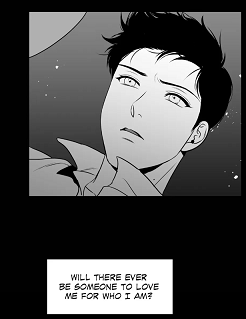 However, the readers should interpret this question differently: he was asking indirectly, when his true self would be recognized by someone. And the one who made him discover his true sexual orientation was unfortunately a player. That’s why the main lead was so devastated and hurt, when he discovered that his relationship was based on deception and fakeness. So after being sent to the army, Ahn Jiwon chose to act like in the past. He became a role model as a student, yet he could no longer hide his homosexuality. Hence he led a double life.
 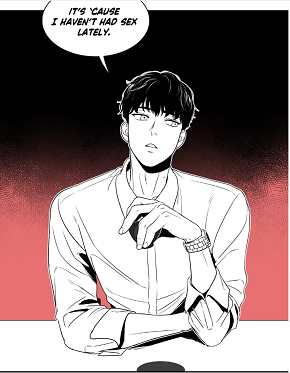 (chapter 08) In this scene, the charater is disguising his true thoughts. The black and red are representing his emotions: he is irritated, because he needs to have sex with Nam Dong-Gyun. Note how Ahn Jiwon is avoiding his counterpart’s gaze. The figure is acting, his mask is his face and the presence of the colors symbolizes the repressed and hidden thoughts and emotions. Mingwa colored one picture in chapter 51 marking a turning point in the protagonist’s life.
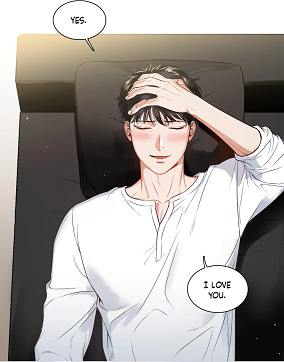 For the first time, he was acknowledging his feelings and as such his own desires. This picture represents the removal of one mask. He is slowly living for real, but in this chapter he still hadn’t found his true personality. The other mask (his reputation as good student) was still existent. Besides, he still believed that his smiling and caring attitude were just an act, while in truth he was genuine and caring. But due to his past, he had already internalized that this was just an act. And now, you comprehend why the latest episodes from BJ Alex are in color. The main lead had finally found his own identity and place.
  (Painter Of The Night, chapter 54), colors, reputation, etc. The protagonists are often hiding their true thoughts and emotions due to their past, while the villains are using masks to deceive people.
  Bebebisous33s' analyses in K-Dramaland and Manhwas