

Please support the authors by reading the Manhwas on the official websites. This is where you can read the Manhwa: The Edge of Ambiguity.  But be aware that this Manhwa is a Yaoi, which means, it is about homosexuality. Here is the link, if you are interested in other Manhwas: Table of Contents of analyzed or mentioned Manhwas (like f. ex. Beta Off Not Dating, The Ghost’s Nocturne eg.)
It would be great if you could make some donations/sponsoring: Ko-fi.com/bebebisous33 That way, you can support me with “coffee” so that I have the energy to keep examining Manhwas. Besides, I need to cover up the expenses for this blog.
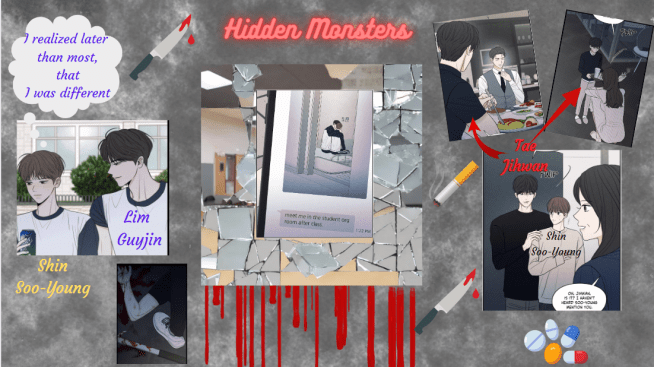
I hope my illustration focusing on the Manhwa “The Edge Of Ambiguity” aroused my avid readers’ curiosity. I discovered the story thanks to @Luzyla’s recommendation. As soon as I started reading it, I fell in love with this Webtoon. It is truly a gem, though the cover on Lezhin is rather gloomy and simple. Moreover, in the beginning, I had troubles to differentiate two characters from each other, Lim Gyujin  (chapter 3) and Tae Jihwan
 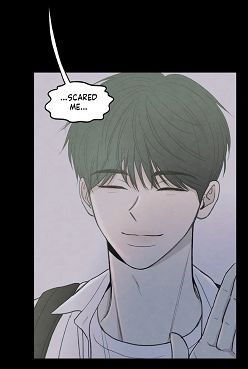 (chapter 1). But this confusion was just short-lived, as soon as I got to know these two figures. They might look similar first, yet their personality diverges so much. That’s how I came to realize why the author had selected the title “The Edge Of Ambiguity”. She is playing with turmoil, double meaning and enigma. She is confusing her readers on purpose. Why? EZ is raising the following questions. Who is normal or not, and as such who is the monster or not? Are their actions or words good or bad? However, for that, the beholder needs to have criteria for judging others. So how do we judge people in the end? Through reputation, rumors, actions, words or because of desires and interests? Through her work, the author is showing that perception is related to perspective and knowledge.
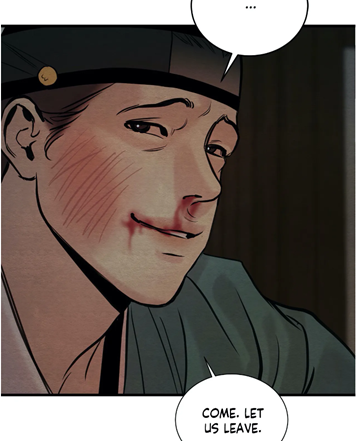
Let me give you an example.  (chapter 32) Here, Tae Jihwan’s smile looks rather creepy and manipulative so that the beholder could view him as a freak or even a psychopath. But is this judgement about the protagonist correct? On the other hand, the smirk from Jihwan was directed at Lim Gyujin
 (chapter 32), who got so mad at the main character that he assaulted the protagonist.
 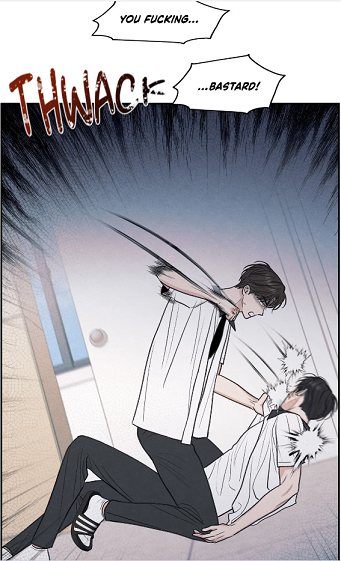 (chapter 32) Gyujin’s dark aura makes him look menacing and weird as well. Who is the “monster” here in the end? In order to judge these characters properly, it is important to put the whole scene into its context, and this action stands for knowledge and understanding. Therefore the Manhwaphiles can grasp why I chose “Hidden Monsters” for this essay. All her characters are moving along a thin line between normality and monstrosity. Yes, even the cute and sensitive protagonist Shin Soo-Young. 😮
 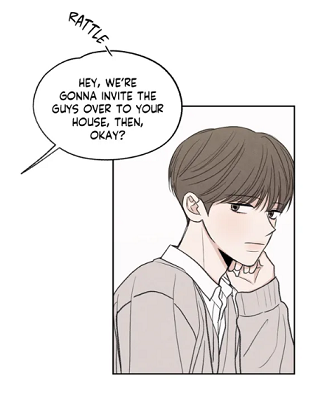 (chapter 1) In this analysis, I would like to present these “hidden monsters”. With the term “monster”, I am referring to “cruel persons” and not supernatural creatures.
1. The “weirdo” Shin Soo-Young
First, it is relevant to know about his family background. He is the son of a single mother which represents a huge stigma in South Korean society. 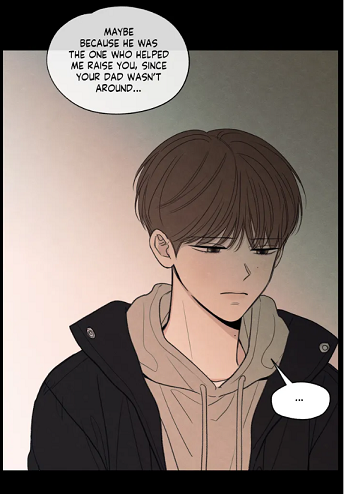 (chapter 2) Why? It is because children are supposed to receive the father’s name. To conclude, his birth represents a huge anomality. This explicates why Soo-Young is not mentioning his family situation to others so easily either. Only when he faced trouble, he confided to Gyujin and Tae Jihwan. As the son of a single mother, he considers himself as a burden and stain. This explicates why he is not living with his mother. Even when they are struggling financially again,
 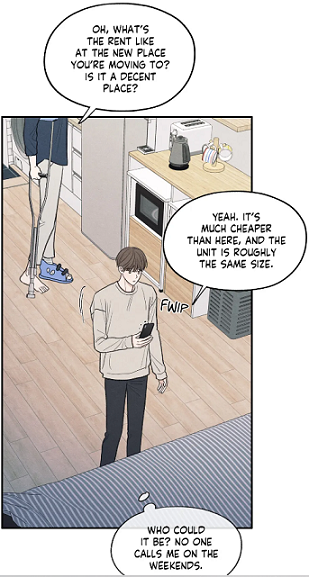 (chapter 23), he prefers moving to a cheaper place than returning home. Observe that he is even admitting that his mother’s place is more comfortable than his new worn out flat.
 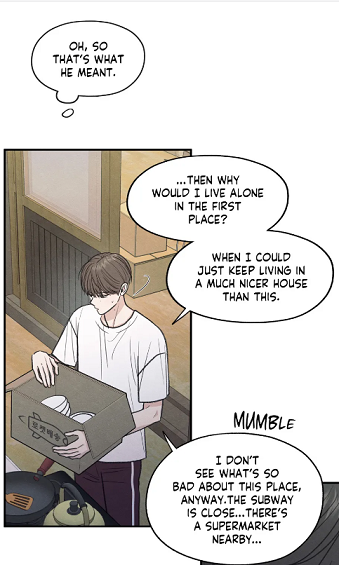 (chapter 27) I am also assuming that since he started visiting high school, he has been living on his own. Under this new perspective, it becomes comprehensible why Soo-Young is trying to act like an adult all the time. He doesn’t desire to add more stress and responsibility on his mother. No wonder why the student is not confiding to his own mother either.
  (chapter 23) He feels that if he let her know about his struggles and problems, he would add more trouble to his parent. Because Soo-Young always sees himself as a burden to his “family” (he would cost money), he feels indebted towards them. He needs to repay them by “becoming a contributing member of society”.
  (chapter 2) This means, he has to become successful at school and get a college degree so that once he gets a job, so that he can become the mother’s pride. However, this means that he is putting himself under pressure. He promised to his family, he would enter Hankuk University, but his counselor is suggesting to apply elsewhere .
 (chapter 28) On the other hand, this imposed exclusion is not entirely voluntary, for this was initially suggested by the mother and uncle.
 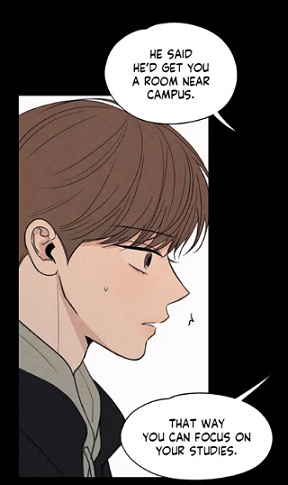 (chapter 2) Moreover, later he confesses that he feels very lonely. The best evidence that Soo-Young’s decisions are the result of the mother and uncle’s manipulations is their conversation at the hospital. Soo-Young didn’t desire to move away.
  (chapter 2) His shaking hand was betraying him. He was upset. But note that the mother portrayed herself as an hindrance to her son.
 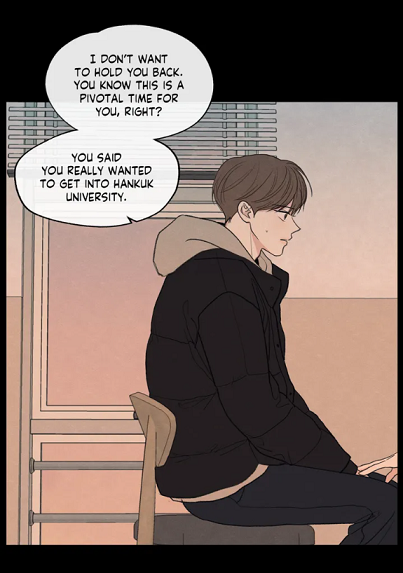 (chapter 2) Moreover, the manhwaphiles should pay attention to her body language. She was closing her eyes, when she convinced her son to move out and to apply for Hankuk university.
  (chapter 2) Finally, during her visit, when her son repeated her wish:
  (chapter 23), she had a similar reaction. She turned away her head and closed her eyes
  (chapter 23) before adding this peculiar comment:
 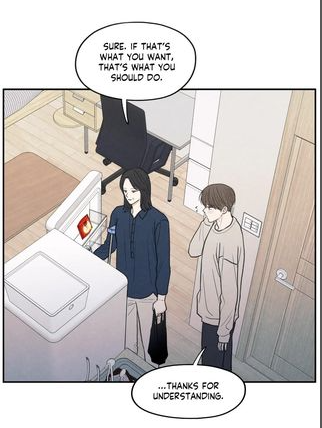 (chapter 23) She insinuated that it was her son’s wish, yet the reality is that these wishes had come first from the mother and uncle! This explicates why she never objected to his desires. In other words, Soo-Young’s negative feelings about himself are caused by the mother and uncle’s advices and behavior. She told her son that she was a burden to him, thus the latter mirrored these feelings. He was a burden for the mother.
But there exists another reason why Soo-Young views himself as a “weirdo”. It is related to his sexual orientation. 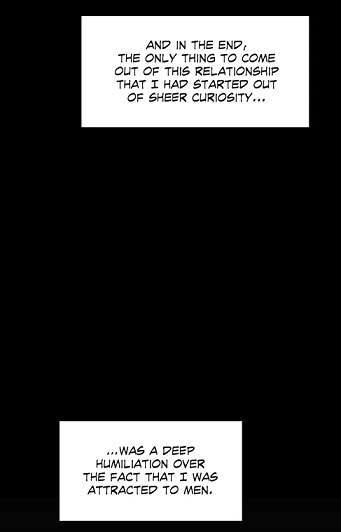 (chapter 6) He is viewing homosexuality as a “stain”, for it is rejected by Korean society. He fears people’s gaze and judgement and in my opinion, this anxiety is also strongly intertwined with his origins, the son of a single mother. This explicates why he rejects to be seen as a homosexual. He doesn’t want to be touched in public or even to kiss. This fear explains also why Soo-Young misinterpreted Tae Jihwan’s words.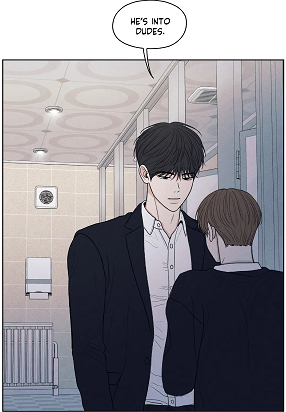
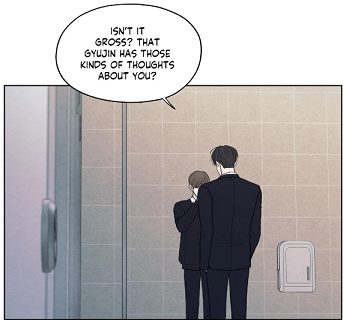 (chapter 18) The latter was not rejecting homosexuality per se, rather Gyujin as partner. Yet, his words were so ambiguous that Soo-Young imagined that Jihwan was repulsed by homosexuality. But here, I have to add that Lim Gyujin played a role in this negative perception of homosexuality.
  (chapter 12) The usage of blackmail is exposing the existence of a taboo, a violation of social norms. And how did Gyujin come to this solution? It is because the latter has been hiding his own attraction to Soo-Young as well. He justified their relationship by stating that Soo-Young had a crush on him.
 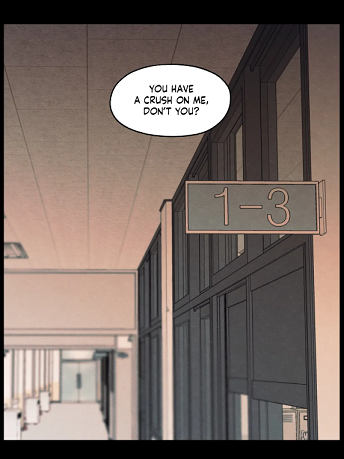 (chapter 5) He went so far as to say that the main lead had been flirting with him.
  (chapter 6). That way, Gyujin was avoiding assuming any responsibility. By acting this way, Gyujin was hiding his own sexual orientation. He appears as a hypocrite and coward. No wonder why Soo-Young saw his sexual orientation as a heavy weight. But since the seme got violent with Soo-Young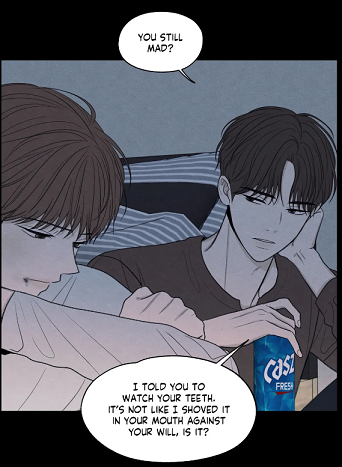
 (chapter 6), the latter decided to break up with him. That’s how the blackmail started.
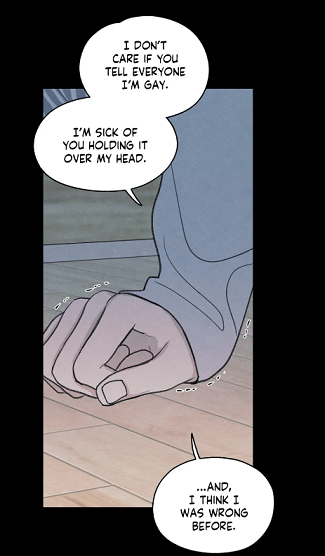 (chapter 6) Gyujin made sure to isolate Soo-Young. The former made the protagonist feel guilty and dirty, the moment Soo-Young pushed him away. Besides, his first sexual experiences
  (chapter 21) with Gyujin were negative, for they were associated to coercion and violence. This explicates why Soo-Young could only see homosexuality as a monstrosity. Therefore he could only view himself as bizarre.
And this brings me to the following observation. Soo-Young was definitely attracted to Tae Jihwan very early on  (chapter 1), but he convinced himself to keep his distance from him, for they were so different.
  (chapter 26) Finally, the uke’s thoughts (chapter 1) are clearly revealing that he connects sodomy to dirt and filth.
Interesting is that by examining Soo-Young, the Manhwa lovers could detect the presence of other “hidden monsters”, Gyujin, the mother and the uncle, for they all have been manipulating the main lead.
2. Soo-Young’s “family”
Since he was raised by his mother, it implies that he doesn’t know his father. (chapter 2) So we could say that he was abandoned by him. Interesting is that Soo-Young’s mother received the support from her brother, the so-called uncle. 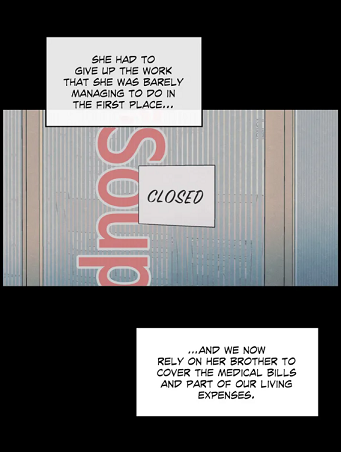 (chapter 2) However, I started doubting this fact for two reasons. First, I would like to point out that Soo-Young has never met his uncle since the beginning of the story. In fact, the latter informs the main lead through the mother (chapter 2)
  (chapter 18) or through the cell phone.
  (chapter 27)
  (chapter 23) There is no direct interaction between them. Moreover, observe that there is no picture of this relative. It was, as if he was a ghost. Additionally, the mother even asked her son to limit their communication.
  (chapter 18) Finally, Soo-Young stated that the uncle provided money to the mother (chapter 2), yet he never raised the nephew personally. He only shows concerns for his school career. Finally, the uncle doesn’t seem to have a family on his own. There is no wife or daughter. Yes, this character is really mysterious and ambiguous. Consequently, it dawned on me that Soo-Young could be an illegitimate son and the faceless “uncle” would be in reality his father. This would signify that the latter could never claim the main lead as his own son, for the mother was just a mistress. Another possibility is that the uncle is simply the “mother’s companion” and the boy is from a past relationship. Moreover, the fact that the “uncle” is slowly pushing away Soo-Young out of the house (chapter 2), asking him to live in a cheaper flat is really suspicious. The official reason is that he has become sick.
  (chapter 18) It was, as if he wanted to get rid of the boy… he was the burden. Thus I can’t help shaking the feeling that there is an ulterior motive behind the uncle’s generosity. Moreover, when Soo-Young was moving in his new apartment, none of the relatives were present. Only Tae Jihwan assisted him. The uncle faked his “support” by calling him.
 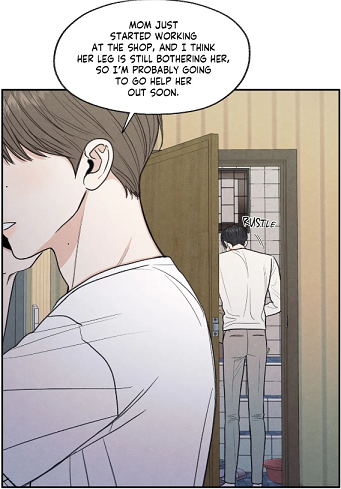 (chapter 27) Interesting that after listening to their conversation, Tae Jihwan asked him this:
 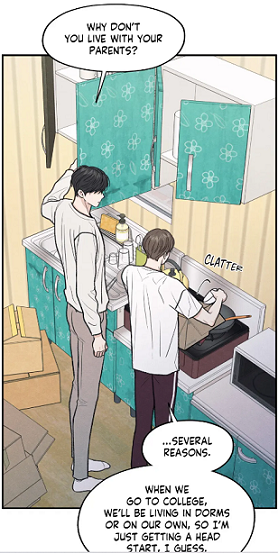 . (chapter 27) He utilized the idiom “parents”, because he thought that Soo-Young had been talking to his father. He had not paid attention to the name “uncle”. As you can see, “the uncle” is really suspicious. For me, he has always been the mother’s companion, but he hid his true identity by the title “uncle”.
As for the mother, she appears as distant and cold towards her son. So far, she has not visited her son’s new stay revealing her selfishness and indifference. What bothered me the most is that she criticized her son in front of Tae Jihwan.  (chapter 23) He is not affectionate, he doesn’t confide to her. (chapter 23) At no moment she praised him. But the reality is that she is the one who pushed her son away, who drew a line… (chapter 2) She is the one who asked him to become detached and as such to become an adult (“steel yourself”). Thus I believe that her advice “put yourself first” was actually reflecting more her own thoughts. She is putting herself first in the end. Soo-Young is forced to be on his own. What we were witnessing is the gradual abandonment. This explicates why after getting almost raped, Soo-Young refused to call his family.
  (chapter 30). He has no one to lean on. Thus the concerns from the mother and uncle appear as superficial and fake, for they are more “empty words”. Their absence in his life is the evidence of their neglect and wrongdoings. They are monsters despite their sweet words, for they are “passive”, putting the whole responsibility on Soo-Young, while they are expecting to get something in return: (chapter 2) Why would the mother feel the need to say that the uncle was fond of him? It was to silence her own son so that the latter wouldn’t question their request. “He is fond of you” signifies that the main lead shouldn’t question the uncle’s request. Finally, I would like to outline that his generosity is limited, for he needs to pay him back later. In other words, it looks like Soo-Young is taking a loan from his so-called relative. Under this new light, it becomes comprehensible why the uke isolated himself and stopped relying on people. Because of his “family” and Gyujin
  (chapter 13) the protagonist learned the following lesson: there is nothing free in this world. Thus he started questioning Tae Jihwan’s assistance.
 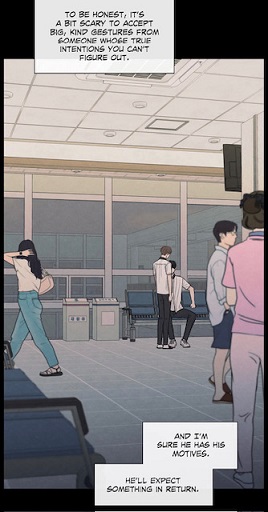 (chapter 33) What does Tae Jihwan want from him? He wants sex!
 (chapter 22) The expression “fuck his brains out” are making the main lead look like a sex monster! 😉
3. Lim Gyujin’s mask
When this character was first introduced in the story, it becomes clear that there exists a secret between him and Soo-Young.  (chapter 2) But the readers are left in the dark about the nature of their past relationship. It was, as if Soo-Young had been a victim of bullying and was coerced to live as an outcast. This panel illustrates his isolation perfectly.
  (chapter 2) However, the moment Guyjin witnesses the exchange of greetings between the two main leads
 (chapter 2), he stayed outside the classroom. Their brief interaction had caught Gyujin by surprise. He was left paralyzed. He.feels frightened, for he has the impression that Soo-Young could escape from his control. This explicates why later he approaches Soo-Young again (chapter 2) and portrays Soo-Young to Jihwan in a very bad light.
  (chapter 2) He desires to separate them. What caught my attention is that his words are actually reflecting his own personality. Gyujin has a good reputation among his peers, but his interaction with Soo-Young exposes that he can not be judged by his cover. This person is very manipulative, and not just with Soo-Young, but also with other school mates, like for example with Hyunwoo. The latter is envious of rich people, especially of Tae Jihwan.
  (chapter 1) Yet he was staying close to the main lead, for he could benefit from this relationship. The girls would approach him, for he was Jihwan’s friend and he got the opportunity to party without spending any money. However, the moment Gyujin noticed that the two protagonists got closer, he chose to use Hyunwoo as his pawn. On purpose, he criticized Hyunwoo in public by siding with Tae Jihwan
 (chapter 14) so that the latter would feel upset and betrayed by Tae Jihwan.
  (chapter 14)
 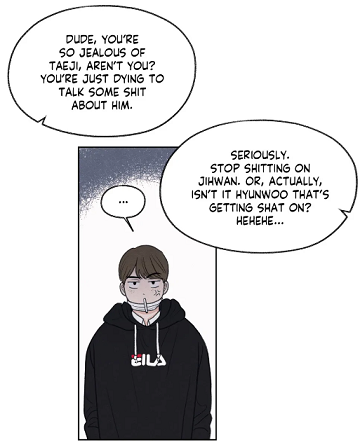 (chapter 14) By confronting him with the truth, he earned Hyunwoo’s trust. Gyujin utilized Hyunwoo’s resent towards Tae Jihwan to blackmail Soo-Young again.
  (chapter 21) Hyunwoo became his spy and that’s how he got the picture with the kiss.
  (chapter 20) Yes… this little monster is exactly like his mentor Gyujin, a hypocrite hiding behind social norms. Thus Hyunwoo condemns homosexuality.
  (chapter 21) and his mentor doesn’t object to this statement.
However, the hypocrite’s deceptive nature can be detected with the way he treated the uke. He noticed that Soo-Young was attracted to him and took advantage of him. 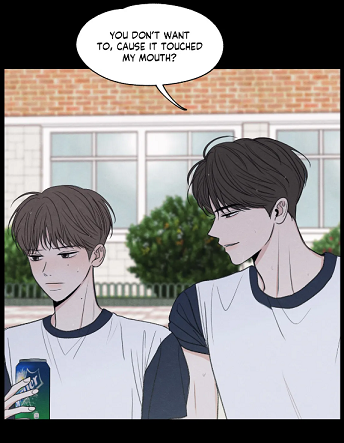 (chapter 6) In this scene, the main lead didn’t desire to drink from the can, because it would have been like an indirect kiss. That’s how the antagonist realized the main lead’s sexual orientation. But like mentioned above, he forced the young boy to kiss him
 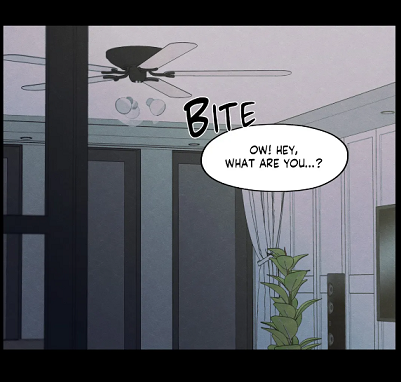 (chapter 21) and to do him a fellatio
  (chapter 6) But why did he act this way? One reason is that Soo-Young was rather innocent and passive. He discovered his sexual orientation rather late.
  (chapter 6) Moreover, Gyujin couldn’t control his urges. Besides, he felt that he had the upper hand, for he had been helping Soo-Young financially. (chapter 13) In other words, his generosity was not for free either. He desired something in return. This explicates why he was controlling the main character too.
  (chapter 6) And his negative attitude towards the uke becomes more obvious, when you compare his visit .
 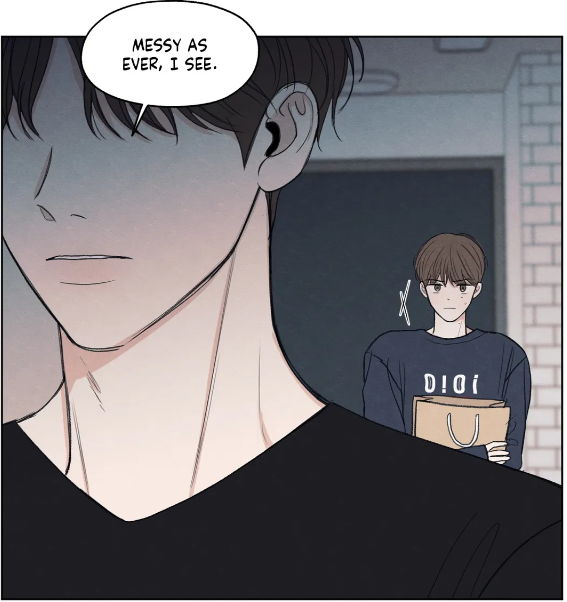 (chapter 5) with Tae Jihwan’s.
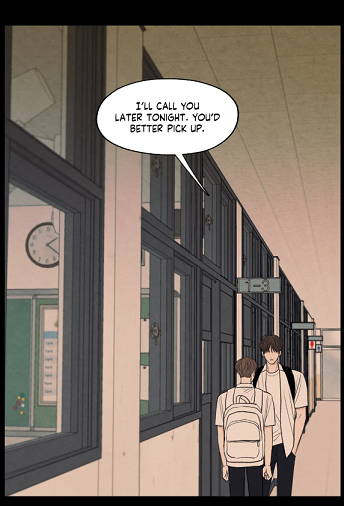
 (chapter 10) Criticism after arriving unannounced versus no comment and planned visit. However, Gyujin was never perceived as a controlling and manipulative freak by his classmates. Why? It is because they met in secret. It was always after school.
 (chapter 5) (chapter 6) Observe that the classroom and the hallway were empty. Their encounters were limited in time and location: his house.
 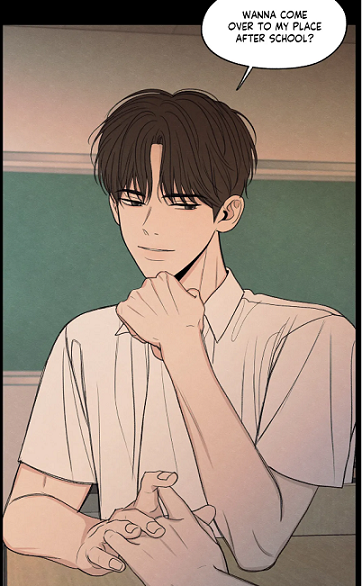 (chapter 5) To conclude, their relationship remained a secret. No one in their class suspected that they were friends, for they were not interacting in the open. However, everything changed the moment Tae Jihwan joined Soo-Young’s class and the former greeted the uke. Because of this small interaction, Gyujin felt insecure and approached Soo-Young again and this was caught by Tae Jihwan.
  (chapter 2) That’s how the latter realized that they were “friends” which led him to ask for Gyujin’s help.
 (chapter 3) However, the latter couldn’t refuse so openly, for the true nature of their relationship was still a secret. On the other hand, this request pushed Gyujin to act behind the back of Tae Jihwan. That’s how his hypocrisy becomes more and more obvious. However, his hideous side reached a new peak, when he trespassed Soo-Young’s house in the middle of the night and tried to rape him.
 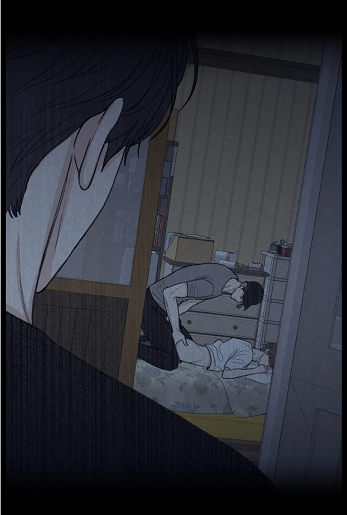 (chapter 35) He became a real criminal, thus he covered his face with a mask. So who is he in the end? For Tae Jihwan, he is a parasite
 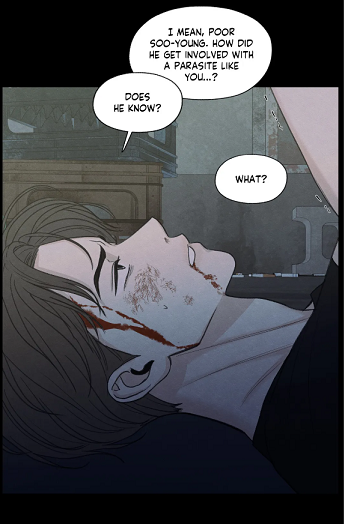 (chapter 35), as he has been clinging onto the poor student while guilt-tripping him. According to Gyujin, Soo-Young used him to discover his sexual orientation. His hypocrisy, manipulations and hidden brutality make him look like a psychopath, or better said as someone suffering from Antisocial Personality Disorder. But he is not, in my eyes he is closer to someone suffering from NPD (Narcissistic Personality Disorder).
According to the DSM-5, individuals who meet the criteria for narcissistic personality disorder have a sense of entitlement, are arrogant, consider themselves to be special, feel self-important, take advantage of others, have a great need for admiration, lack empathy, envy other people, and are obsessed with fantasies of boundless power.1 Quoted from https://www.psychologytoday.com/us/blog/finding-new-home/201905/comparing-narcissistic-and-antisocial-personality
Even Tae Jihwan criticized him for his delusion.  (chapter 22) To conclude, this character is an antagonist, but his monstrosity only comes to the surface, when it comes to Soo-Young.
4. Tae Jihwan: a psycho or a hero?
Right from the start, EZ presented the protagonist under a rather negative light. He mocked Soo-Young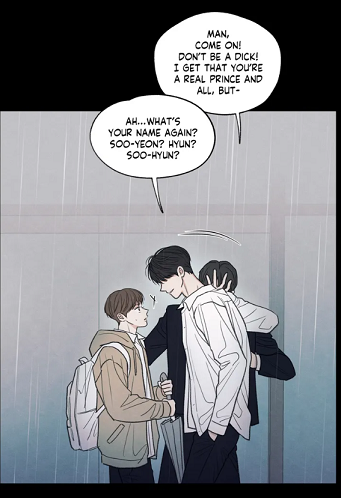 (chapter 1), then he forced him to smoke a cigarette
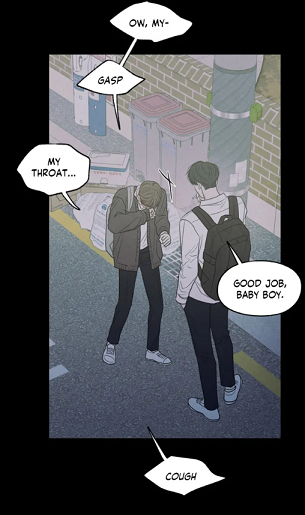 (chapter 1). Finally, he had a rather enigmatic smile. (chapter 1) Thus the readers could only corroborate Soo-Young’s judgement about Tae Jihwan.
  (chapter 1) He was oozing danger and arrogance. We could say that he was introduced as a bad boy, for he arrived late on his first day. On the other hand, he was also described as a very good student.
  (chapter 1), thereby he got admitted to class 1, where all the students are hardworking. Another interesting aspect is that when he arrived late in the classroom, the schoolmates called him a psycho! However, only in episode 41, we discover that he is indeed suffering from Antisocial Personality Disorder.
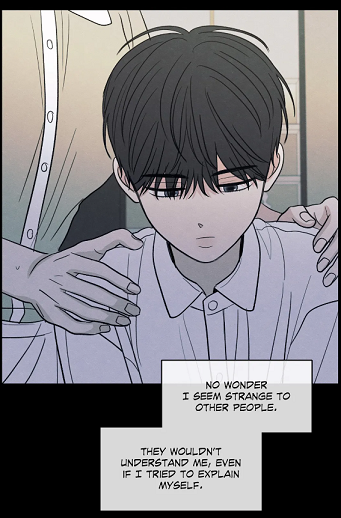 (chapter 41) But why is it only revealed so late? It is because the author desired the readers to get acquainted with him before discovering his illness. He should be judged based on his actions and not on this diagnosis. Through the two seasons, Tae Jihwan got the opportunity to act like the “knight in shining armor” towards Soo-Young.
 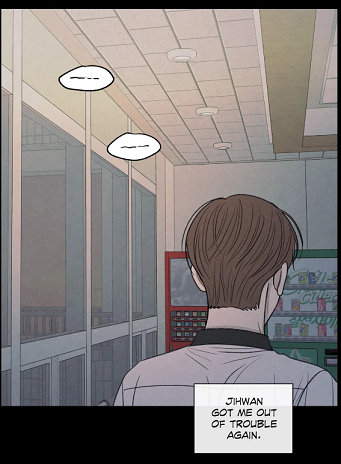 (chapter 33) First, Soo-Young got blackmailed and threatened by Gyujin and Hyunwoo with this picture: (chapter 20) Once the protagonist confronted his former “boyfriend” with reality
 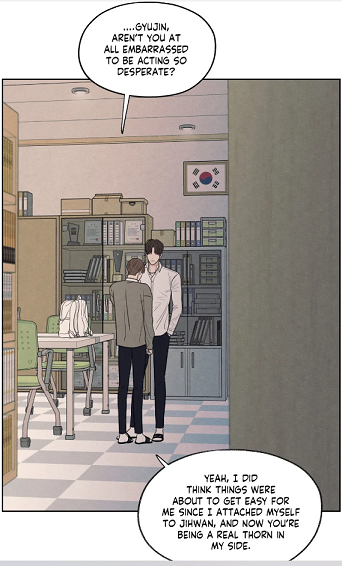 (chapter 21), he got slapped.
  (chapter 21) That’s when Jihwan entered the room, a sign that he was waiting for the right time. With his entrance, he was able to turn the table to his advantage.
 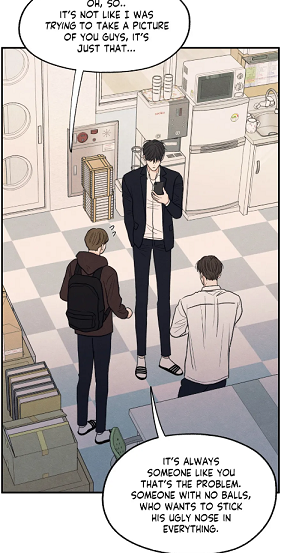 (chapter 22) Then when Gyujin tried to rape Soo-Young, the main lead was able to arrive on time, for they had been talking over the phone. (chapter 35) This shows that Jihwan had not expected such an escalation. However, this night left deep scars on the uke’s heart and soul, therefore he feared Gyujin’s presence and Jihwan knew about this.
  (chapter 32) He chose to take advantage of the situation in order to have Gyujin expelled from school. And now, you comprehend why Jihwan smirked at the perpetrator! (chapter 32) It was to provoke his rival’s ire so that Gyujin would lose his temper and assault him. He had to let himself beat by the “rapist” so that the latter would get expelled. If he had retaliated or tried to protect himself, he would have been suspected. And this bring me to the following observation. Tae Jihwan has always been called a psycho, because his “illness” is not hidden. Thus Guyjin asked him this, when he got assaulted by Jihwan.
 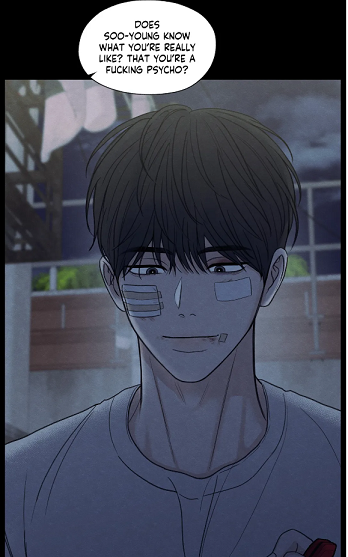 (chapter 35) His mental disorder is no secret and is even circulating among the upper-class. In my opinion, it is related to this incident. When he was younger, he attempted to strangle a playmate, Han Do-Yoon.
 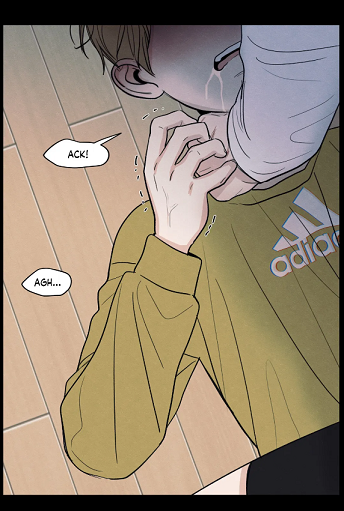 (chapter 41) But why did he do this? He described this as an urge, but when you see his smile directed at his father,
 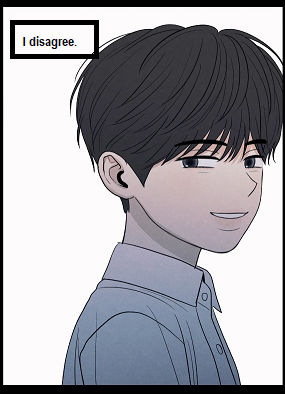 (chapter 41), it becomes obvious that this action was against the father as well. He wanted to show him that he was his true son.
  (chapter 41) How so?
It is because Tae Seong-Jun had acted exactly like Gyujin.  (chapter 39) With money, he had helped Choi Yoojin. However, this generosity was not for free. He wanted to obtain her love. He had coerced to marry him and to have a child with him. He imagined that if they had a child together, she would come to love the child and as such him.
  (chapter 39) Thus he made the promise to release her, once he had a child. He was hoping that time would be on his side. However, the opposite happened. The woman came to resent Tae Jihwan, as he was a constant reminder of the broken promise. Thus she strangled him on a regular basis.
  (chapter 39) Since the father knew that his love was not reciprocated, he imprisoned her. Since she was trapped, she got depressive and aggressive. The worst is that her son was the one who had to take care of his own mother.
 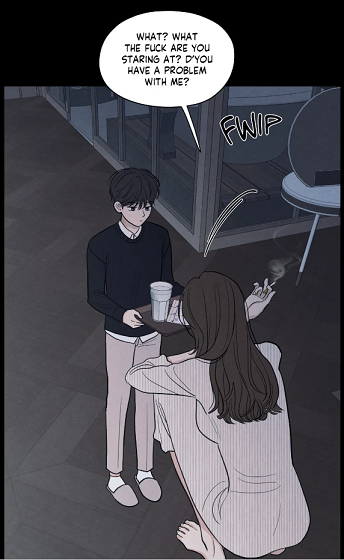 (chapter 39) His task was to deliver her medicine. And in order to justify her absence to others, Choi Yoojin was portrayed as a mentally sick person suffering from schizophrenia.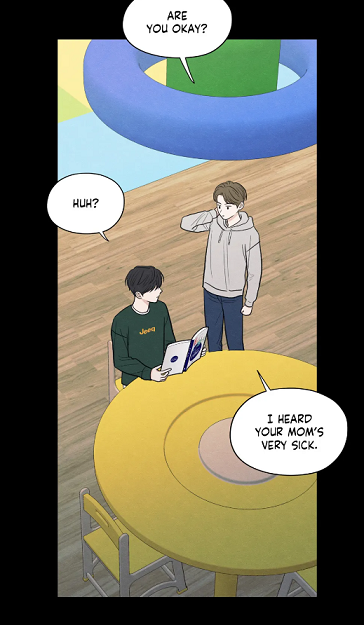
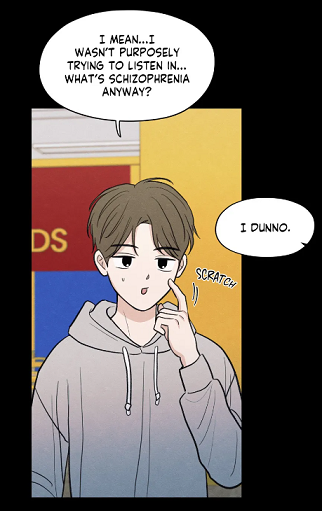 (chapter 39) Seong-Jun hid his crimes behind rumors and deceptions, but his intelligent child was no fool. Yes, he is another monster, but I doubt that his new wife is aware of the true story. This situation escalated to this ultimate threat:
  (chapter 39) That’s the moment the mother chose to kill herself.
  (chapter 41) She cut her wrists in the bed, while her son was sleeping next to her. Tae Jihwan loved his mother despite her harsh treatment. It is perceptible, because he enjoyed sleeping next to her.
 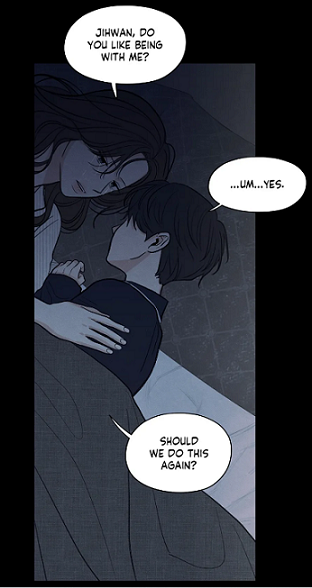 (chapter 39)
 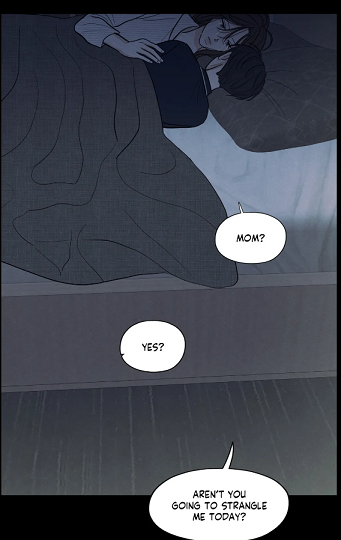 (chapter 39) And now, you comprehend why Tae Jihwan chose to provoke his father. (chapter 41) It was to expose his hypocrisy and lies.
 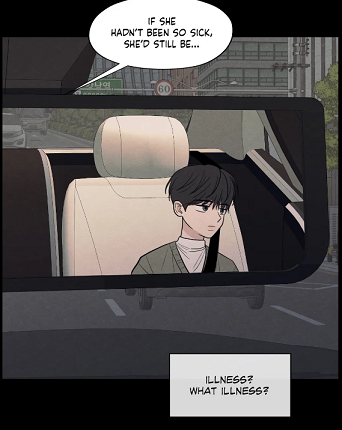 (chapter 40) At the same time, his action was like a reminder to the father. He would be tormented, each time he would see him. This explicates why the father doesn’t like meeting Tae Jihwan and he is already talking about sending him to the USA. He wants him to move out, for he feels his presence as a burden, the reminder of his failure. Let’s not forget that after Yoojin’s suicide, the father cried,
  8chapter 41) but he totally neglected his son.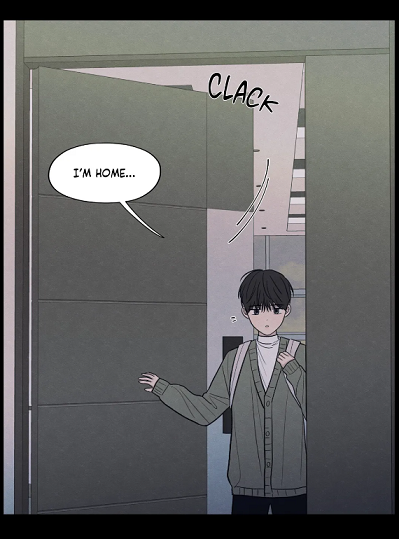
 (chapter 41) This shows that this child had never been the fruit of love, but a mean to control the mother. At the same time, the manhwaphiles can grasp why Tae Jihwan hates lies and hypocrisy more than anything else.
  (chapter 40) That’s the reason why he doesn’t consider people around him as friends. He knows that they are only interested in him because of his father and money. (chapter 2) Here, Gyujin invited himself to Tae Jihwan’s house. And the latter was not allowed to refuse.
 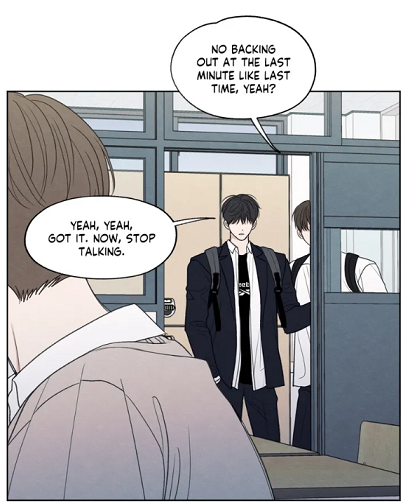 (chapter 2) One detail caught my attention is that his “acquaintances” sometimes call him “Taeji”! Tae is the father’s name. They want to be close to him because of his father. In other words, although he is surrounded by people, he is in reality a lonely person. He is in the same situation than Soo-Young in the end. He is abandoned too.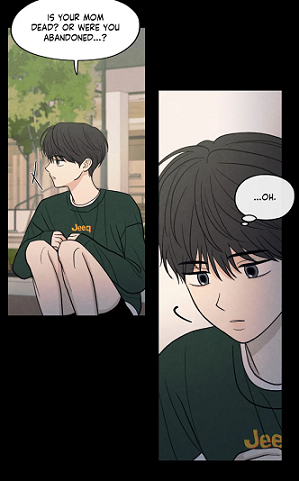
 (chapter 39) The scene with the abandoned cat is exposing that Tae Jihwan is not a cruel and violent person per se. He is capable of taking care of people, but by growing up in a toxic environment, he came to see “love” in a negative light.
 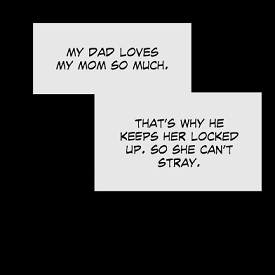 (chapter 39) Back then, he imagined other methods how to keep his mother by their side
 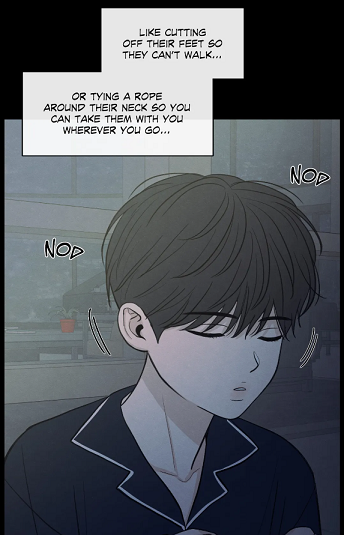 (chapter 39), but her suicide changed everything.
  (chapter 39) This made him realize his powerlessness. For me, her action taught him the following lesson: you can not force your love onto someone! This explicates why Jihwan is not coercing Soo-Young to kiss him
  (chapter 36) or to have sex with him. He wants to have his consent all the time. If the latter rejects his advances and caresses
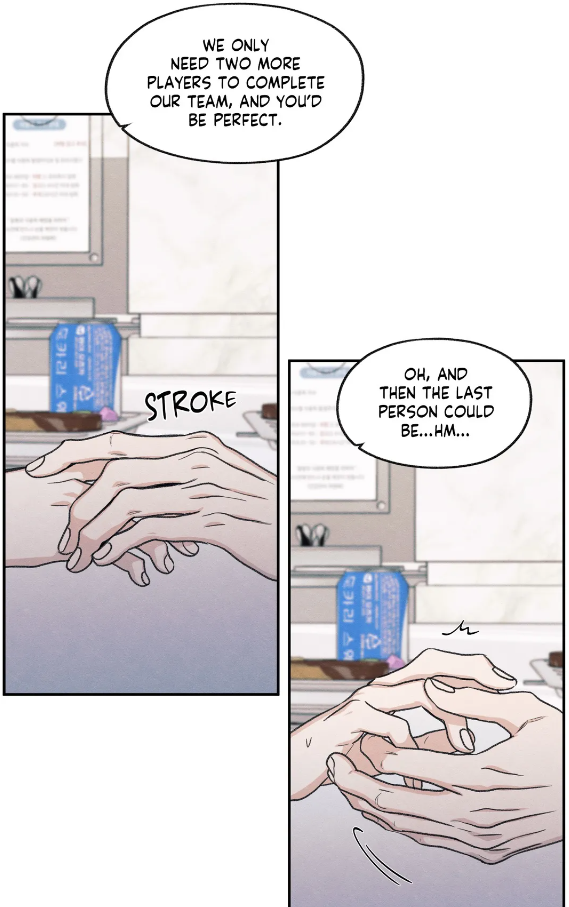 (chapter 25), he accepts his refusal. He gives him his free space. He is trying to move at his love interest’s space. The best illustration is visible in this panel:
 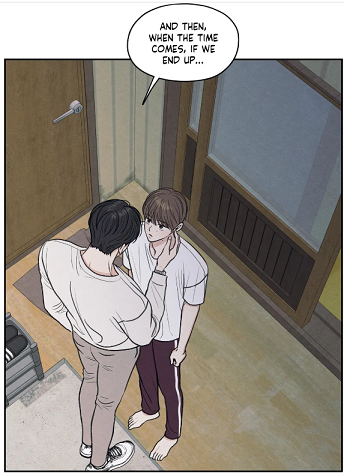 (chapter 27) He wants to live with Soo-Youngas roommates, but it is not to have sex with him immediately. Though he said this to Gyujin (chapter 22), he is controlling his urges. The cigarette at the beginning of the story was an indirect kiss. That’s why he smiled. On the other hand, he doesn’t want to share Soo-Young to others, though he still restrains himself. This means that the mother’s death affected Tae Jihwan a lot more than people could imagine. He learned the notion of consent, the cowardice and hypocrisy of so-called rich and normal people. And this brings me to this scene.
  (chapter 35) Tae Jihwan ruined Gyujin’s hand with the knife his mother used to cut her wrist. This shows that he was seeing his father in Gyujin. But was he a brutal monster here? Yes, because he did himself justice, he was violating the laws.
  (chapter 35) On the other hand, Gyujin didn’t get charged for the sexual assault on Soo-Young. (chapter 35) He had been expelled because of his assault on Jihwan. This explicates why Jihwan was so enraged, when he saw Gyujin in the streets. The latter could still move so freely, hence he could still try to approach Soo-Young. Since Gyujin’s father is quite influential and rich,
 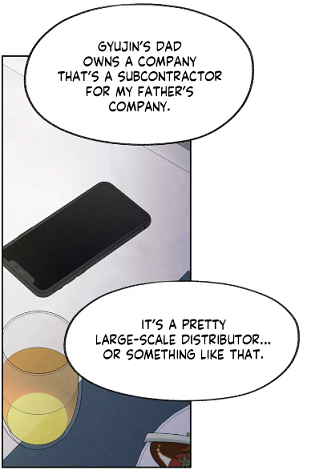 (chapter ), there is no doubt that the latter would have been able to escape from punishment. Just like his father did… he trapped Yoojin, and even drugged her in order to keep her docile and no one intervened. Under this new light, it becomes comprehensible why Jihwan punished him so cruelly. He targeted his fingers, because the antagonist had put them into Soo-Young’s hole.
  (chapter 35) Jihwan couldn’t forget the uke’s fears and tears.
  (chapter 35) On the other hand, we shouldn’t overlook that Jihwan’s extreme action was actually supported by the father’s assistant, Mr. Jeong.
 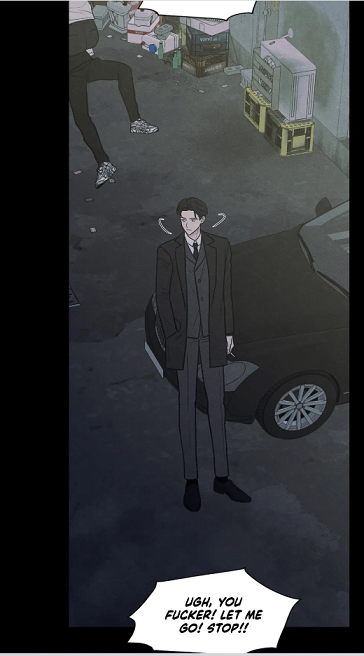 (chapter 35) He was present, when Gyujin got wounded. He even obeyed the young master’s order, to fetch another tool. He was also present, when the mother got trapped and drugged.
  8chapter 41) He was the helping hand of “monsters”. And this makes him a cruel person as well. His lies, participation and passivity are exposing that he plays a huge role in the misery of others. And this leads me to the following observation. Tae Jihwan is receiving the same medication than his own mother
 (chapter 37), a sign that he is not treated properly. Remember that her illness was described as “schizophrenia”. For me, this story is exposing that people shouldn’t be judged based on their reputation, social status or their “illness”. Jihwan is more an antihero, but since he helped Soo-Young so many times, he has been able to move his heart. Thus the latter started desiring to lean more on him.
 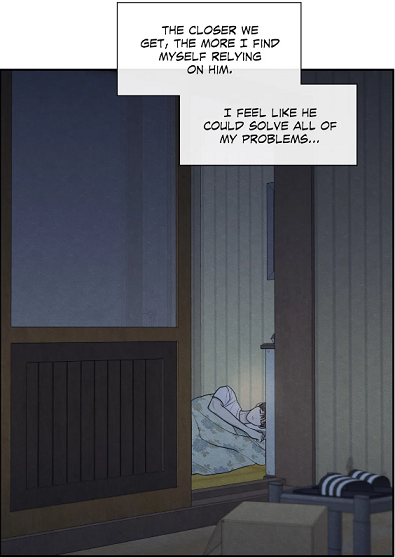 (chapter 28) Finally, in chapter 42, Tae Jihwan’s revelation about his past and mother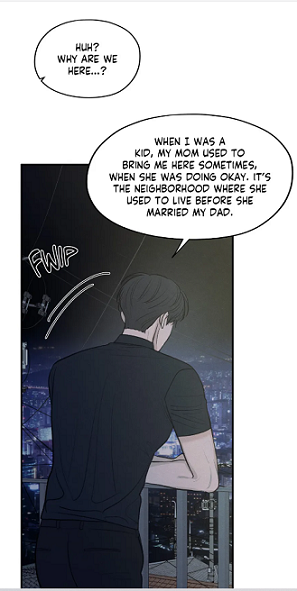
 (chapter 42) surprised Soo-Young. He was moved and got curious about Jihwan.
  (chapter 42) This scene is truly beautiful, because it exposes the huge contrast between Jihwan and his father. (chapter 39) Both are definitely obsessed with one person, but Jihwan chose to act the opposite from his role model: open space, no false promise, no blame… he is showing his vulnerability and not his power and wealth.
I hope that this essay about “The Edge Of Ambiguity” gave you the desire to read the Manhwa. And if this analysis is a success, then I will write about it again.
Feel free to comment. If you have any suggestion for topics or manhwas, feel free to ask. If you enjoyed reading it, retweet it or push the button like. My Reddit-Instagram-Tumblr-Twitter account is: @bebebisous33. Thanks for reading and for the support, particularly, I would like to thank all the new followers and people recommending my blog.


 (chapter 1) He was even called a psychopath, for he resorted to kidnapping
 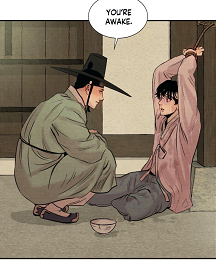 (chapter 1) sequestration, threats
 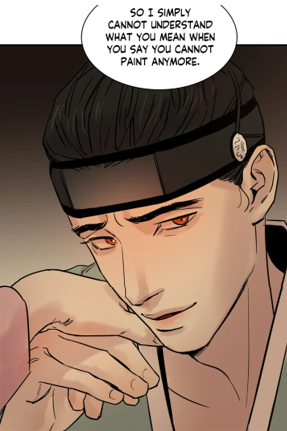 (chapter 2) and blackmail and he initially showed no remorse.
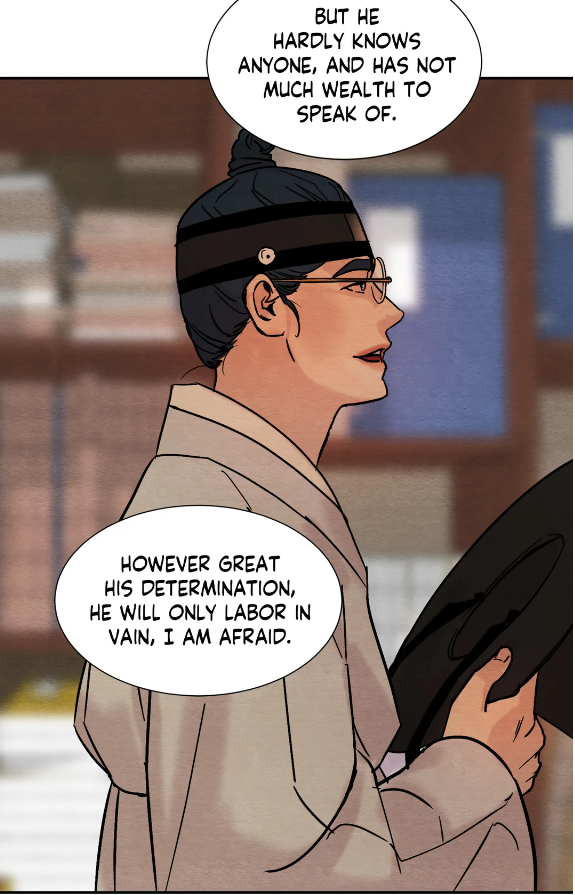 (chapter 7). On the other hand, he never got into trouble for his wrongdoings. Why? It is because he wasn’t violating social norms.
  (chapter 10) It was his right to punish servants, for they are not considered as humans but as propriety. As a lord, he could treat commoners, like it pleased him. Though murder is prohibited, even against a lowborn,
 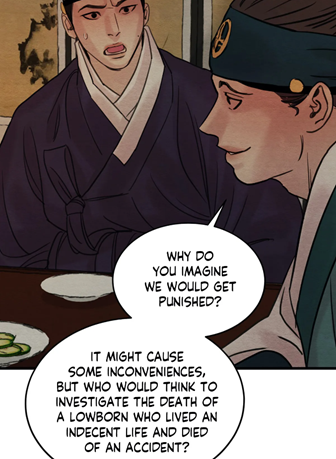 (chapter 43), the reality is that nobles would never get into trouble!! As you can see, there exists a discrepancy between laws on the paper and the reality which was exposed by the rumors in episode 106.
 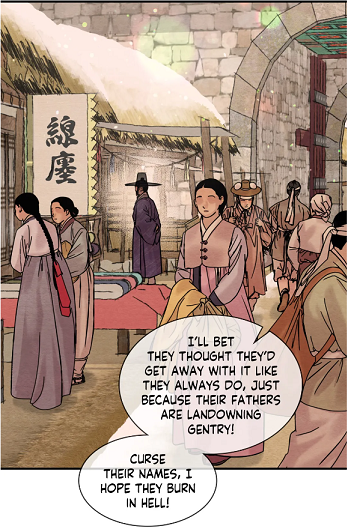 (chapter 107) The fathers would use their position and influence in order to cover up their children’s wrongdoings. And we have the perfect illustration, when the elder master bribes the governor.
  (chapter 127) That’s the reason why the younger generation could do everything! Though the lord appeared as a monster first, he became a “normality”, the more we got to read this story. Under this explication, it becomes comprehensible why lord Min was so sure not to get bothered by the authorities.
 (Chapter 101) He had bought the officers (“the guards”). This explains why Black Heart could threaten No-Name.
 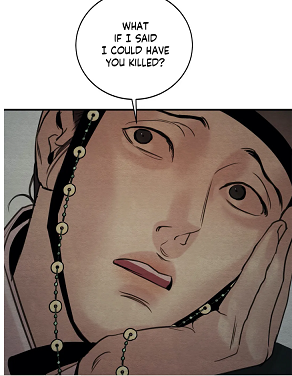 (chapter 76) He didn’t need to dirty his own hands, he could simply frame him. Consequently, I deduce that he had learned this misconduct through the elders’ behavior.
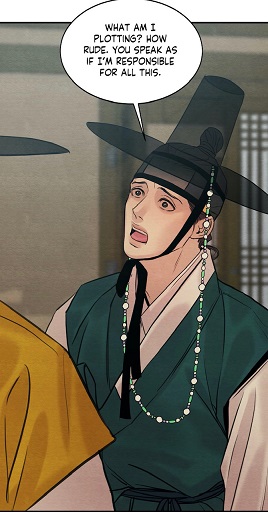
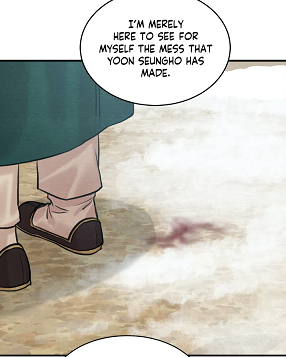
  (chapter 116) This shows that neither Black Heart’s father nor Yoon Chang-Hyeon truly love their children, as according to Erich Fromm, love is knowledge, respect, care and responsibility. However, the elder master Yoon is totally ignorant about his son’s talents and good nature. Thereby, I see lord Seungho from season 1 as the perfect illustration of the corrupted world of the nobility. The monster “Yoon Seungho” was just a reflection from this ruthless and immoral society. Since he committed wrongdoings, his karma was to pay for his sins. It starts with a murder, and the main lead ended up killing people. He might have not broken “traditions” like the disregard of the yangbans against lowborns, but it is considered immoral. He had sinned and now, he is paying for his sins. Therefore his words in the prison resonate differently.
 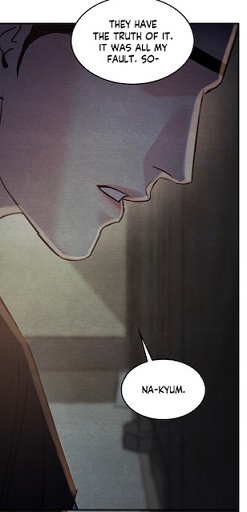 (chapter 126) He expresses regret. He confesses his crimes, he killed people! This means that he is now siding with the lowborns. Their life is as precious as the ones from the nobility. Yet, note that in this image, the author didn’t drew his eyes. Why? It is because in the moment he executed people,
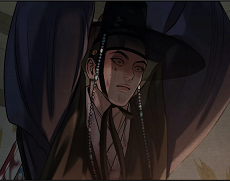 (chapter 102) he was either not himself or he did it out of reflex to protect himself. He was influenced by his past experiences and as such traumas. In the shrine, it becomes more obvious, for he has a lost gaze. He is not even looking at his target. Finally, when he met lord Song, he did it to “protect” himself.
 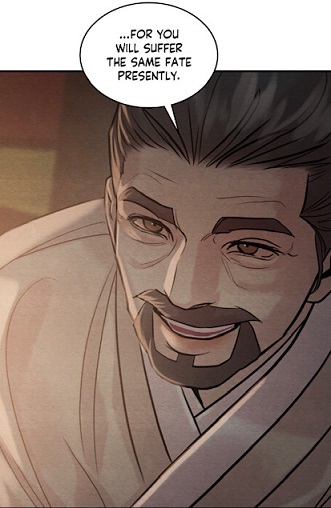 (chapter 123) For me, in episode 1, the execution was triggered by his desire to protect himself and his traumas. And what is the common denominator between these three scenes? The father Yoon Chang-Hyeon! Don’t forget that the petition was the reason for their meeting. And now look at the actions from the patriarch.
 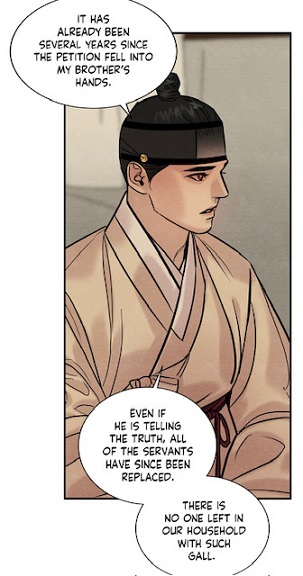 (chapter 116) He had given the order to eliminate all the servants, for they could represent a threat to his “treason”. This explains why the butler describes himself as the only survivor and witness.
 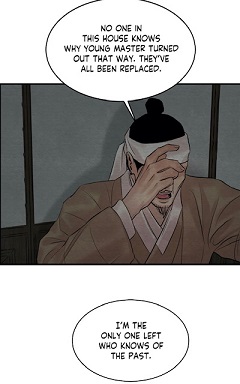 (chapter 86) And we see him giving the order to kill the surviving guard
 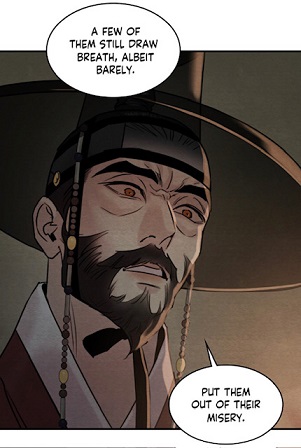 (chapter 125) Besides, he had no problem to order the assassination of his own son which was stopped by the intervention of a helping hand. The father had never asked to spare the main lead’s life.
  (chapter 124). He was his bad role model. But he is not the only one. There is another one…
  (chapter 51) Once a criminal, always a criminal… therefore it is not surprising that the joker chose assassination as second work. By working for the nobles, he would be able to escape punishment, because if he got arrested, he could denunciate them. To conclude, justice is inexistent in Joseon. Yes, we are witnessing the downfall of Joseon, or precisely the king’s bad ruling. The latter is not capable of providing justice to anyone. And this coincides with the purge!
  (chapter 37) What is a purge?
  (chapter 107) “Stepping down” was actually an euphemism for removal. The officials were chased out,
 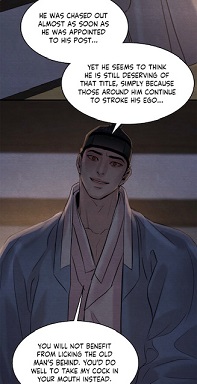 (chapter 80) but their evictions were turned into stepping down.
 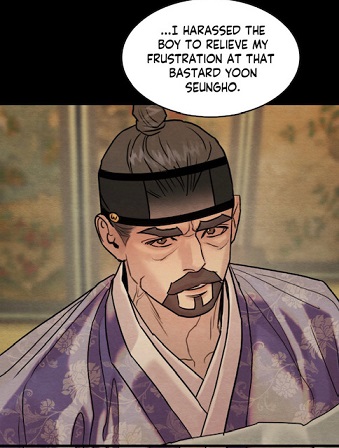 (chapter 122) No wonder why lord Song came to resent the protagonist. Under this new light, it becomes comprehensible why the purge was not noticed by commoners. There was no fire and the staff was sparred.
  (chapter 103) The boots were the indication that this person was working for the government. And it was an elder, for he was wearing this particular headgear.
 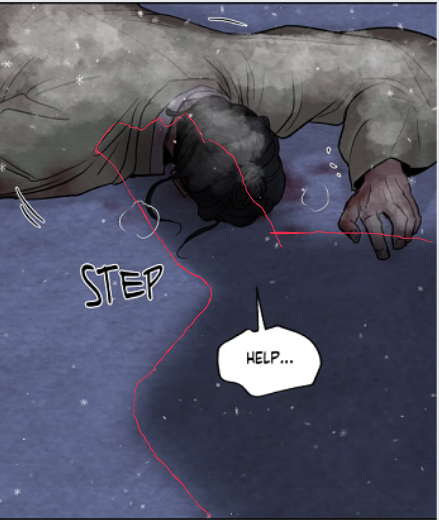 (chapter 103)
  (chapter 67) The murder of lord Shin is the evidence of the anarchy in Joseon. But actually, the monsters are actually everywhere, and not just among the nobility. The Chungin with the scholar and the physicians who have no problem to lie, participate in a kidnapping and drugging people… the kisaengs, the maids, the servants. They are all accomplices, for they feigned ignorance or chose to remain passive, for they preferred avoiding trouble. What people failed to realize is that no one is safe from this tyranny. Hence people could get killed and thrown into a well so easily
 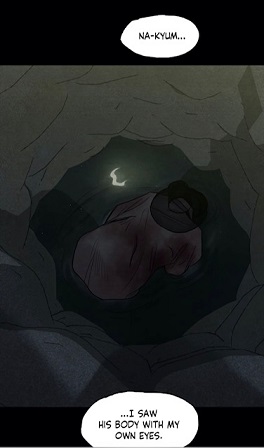 (chapter 97)
 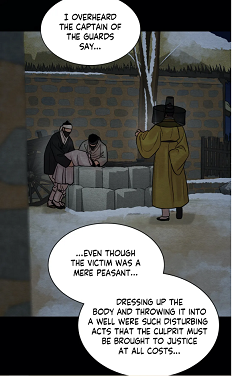 (chapter 101) and their perpetrators got scot-free. Why? It is because the mastermind and the helping hands are protecting each other, like we could see in the Joker’s case. However, the latter in season 3 had no idea that they would face divine retribution and pay with their life.
  (chapter 102) In front of gods, humans are all equal. There is no distinction between gentry, Chungin and commoners. That’s the reason why I come to the conclusion that Yoon Seungho is the divine hand of justice, he is bringing the “divine retribution”. This explicates this vision:
  (chapter 83) Under this new approach, it becomes comprehensible why he is called “the bird of misfortune”. People around him got to suffer, for they received their karma. Funny is that lord Song mocked him by calling him a grim reaper.
 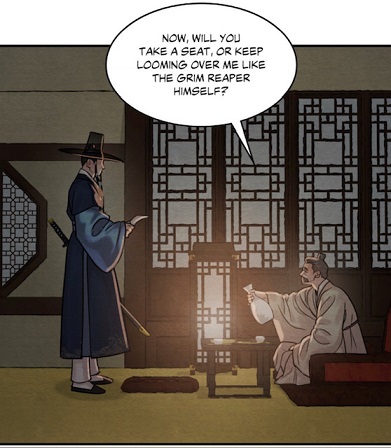 (chapter 123) He underestimated his opponent, not imagining that the latter would use his sword against him. So he became a grim reaper. Lord Song Haseon must have thought that his minions, just like his age and status, would protect him. But no, someone had planned his death and counted on the main lead’s decision.
 (chapter 99) Thus Min’s karma was to die in the total indifference of others. No one is missing him, for he was turned into a brigand himself.
  (chapter 113) But wait… Why did Black Heart get killed in the end? One might say that it was his karma, for he had planned the murder of Baek Na-Kyum in the past. In my opinion, the uke serves as a representative of the divine retribution. The artist is the “judge” and his lover is executing the sentence: death. And we can detect this gods’ intervention through the learned sir’s case as well. Jung In-Hun had looked down on the artist for his origins and education. When the generous main lead chose to accept his apology (attempted rape),
 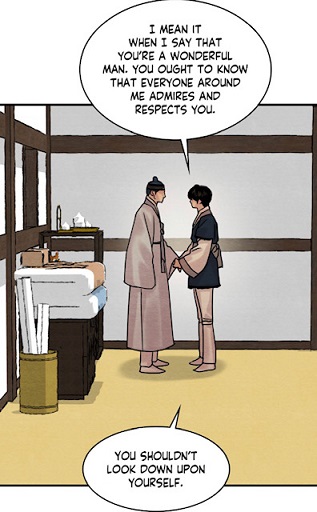 (chapter 120), the latter reminded him that contrary to Yoon Seungho, he was admired. He had such a good notoriety! Since he betrayed the artist and had almost him killed, the scholar ended up losing everything.
 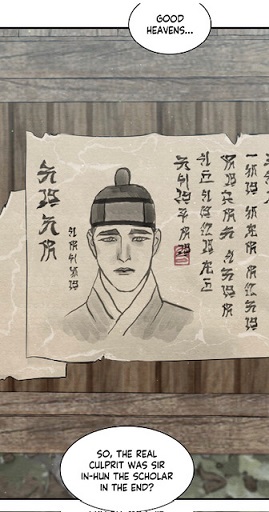 (chapter 127) He became the scapegoat for this incident, for he played a huge role in the painter’s suffering (kidnapping, assault, murder and brainwashing). His success at the civil service examination was erased within a few weeks and now he is viewed as a brigand. How could such a person get selected as an official? His fate gives a bad impression of the civil service examination. And what is the common denominator between these two villains? They both belong to different social classes. Their cases is exposing the king’s negligence and arbitrariness. The latter is the perfect personification of this corruption. Not even Confucianism is respected, for fathers are abusing their own children or even killing them. Season 4 is exposing the chaos in Joseon. Therefore it is not surprising that the sacred tree and the shrine got burned.
  (chapter 106) The gods were using the humans to voice their anger. At the same time, when the woman made this comment, the Manhwa lovers can detect the huge gate in the background, the symbol for royalty. And now, you comprehend why Yoon Seungho was pushed to go to Hanyang. It is his fate to face the king! His task is to clean the palace of these old bearded men.
  (chapter 44) I had already portrayed him as a black shaman in the essay “
 (chapter 65) Don’t forget that the monarch is the only one who stands above the laws, though he is controlled by social norms and his officials. In my opinion, this can only take place, when a new scheme takes place. How so? Note that in the scholar’s case, Jung In-Hun received his karma, but not real human justice. For me, he is not dead. Besides, don’t forget that someone took the petition from lord Song, before Yoon Chang-Hyeon came to the bloody place. There is no ambiguity that the accomplices and schemers didn’t get happy with the last outcome. The couple might be separated physically, but they are attached to each other by their strong love. And since the main lead kept wearing hanboks with the phoenix
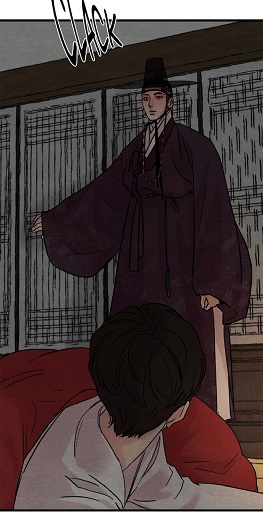 (chapter 34)
  (chapter 45), it indicates that someone saw him as his bird of fortune. And this can not be Yoon Seungho, for the latter was full of self-hatred. Finally, his own father, Kim and Heena called him as a bird of misfortune. As you can see, the king could no longer see the main lead due to the artist’s presence. He is his bird of fortune, for he could live out all his dreams thanks to him, and at no moment he got into trouble. No one is suspecting his intervention.
 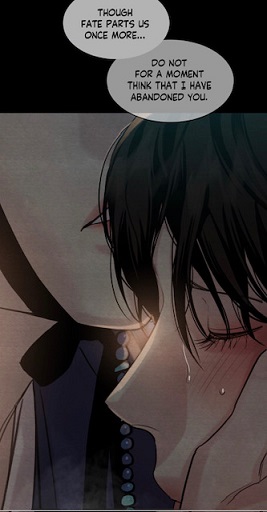 (chapter 127) I recognized why the painter and Yoon Seungho had to go separated ways. It is because the schemers wanted him to return to Hanyang. Remember the learned sir’s suggestion before his departure.
  (chapter 44) Why? It is because now the main lead is an adult. Since my theory is that the pedophile is the ruler, he can no longer approach the protagonist like that. The latter is no longer visiting the gibang. He wants their path to cross again so that they can rekindle. Hence he had to create an opportunity proving that their meeting is not a coincidence. Under this new approach, it becomes comprehensible why Yoon Seungwon encouraged his brother to reconcile with their father.
 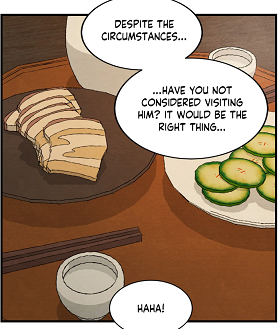 (chapter 37) That way, he would be “following” the tradition and become an official. But since Yoon Seungho developed a fear of “old bearded men”, he had no reason to go there.
 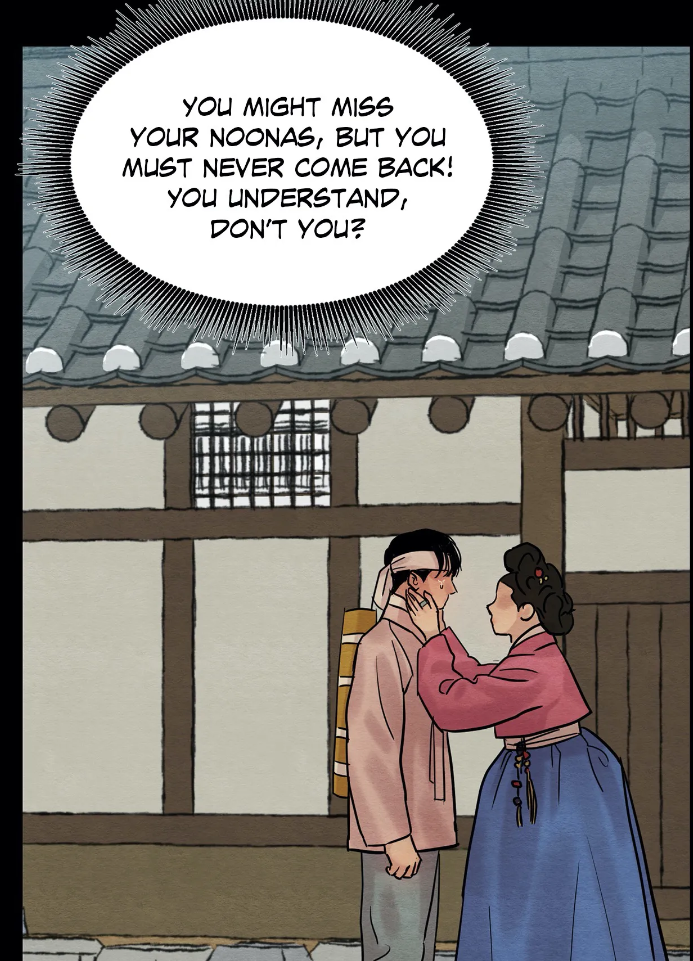 (chapter 46)
 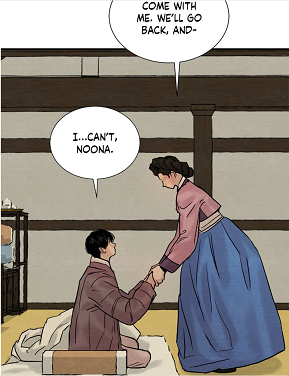 (chapter 68)
  (chapter 97)
 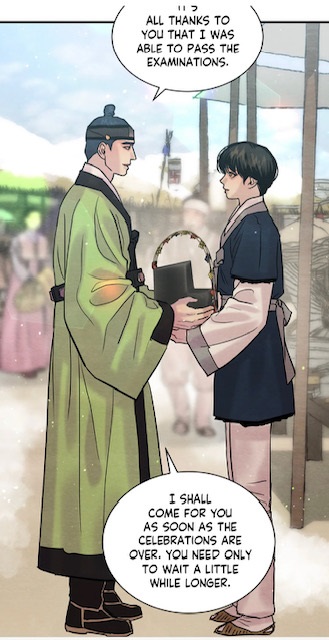 (chapter 111)
  (chapter 120)
 (chapter 127) As you can see, the painter was feverish. Why? From my perspective, he was drugged. He was not allowed to see his loved one, because they don’t want him to remember their departure. The schemers desire him to feel abandoned like in the gibang (chapter 105). The reason why I am suspecting a drug is that this panel
  (chapter 127) is similar to the first Wedding Night:
  (chapter 21) At the same time, this scene is also a reflection from the night after the massacre in the shrine.
  (chapter 103) Back then, he was also under the influence of an aphrodisiac. They don’t want him to remember his last words. And since he didn’t take care of him during that night, though he was unwell, they hope to create the illusion that Yoon Seungho neglected him. He broke his promise. But their trick can no longer work because of the lord’s visitation in the prison and his words.
  (chapter 126)
  (chapter 127) The separation arc is there to prove these plotters wrong. Their affection is not trivial and momentary. He is not a plaything, but his “partner”. In fact, they have absolute trust in each other, and their source of strength will be their short happy moments together. Besides, I am quite certain that the artist will remember the lord’s whisper from that night, since he had problems to recall the First wedding Night and the incident in the shrine. Both are related to his bad conscience. Besides, I have another reason for that, the power of the unconscious knowledge.
 (Chapter 108) Though both were close physically, they still allowed others to manipulate them, for their trust was not complete. In other words, the schemers are thinking that time is working for them!! On the other hand, since Kim is by his side, the painter can only consider his presence as the evidence of the lord’s care.
  (Chapter 127) This coincides with the beginning of the Manhwa, when the lord was seen without his butler.
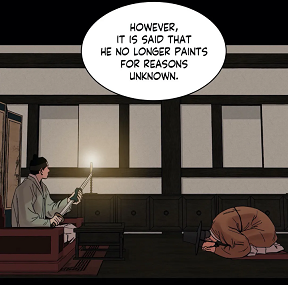 (Chapter 1) The latter only appeared in episode 7, and back then Yoon Seungho had to dress himself.
  (Chapter 7) Finally, I am expecting schemes again.
 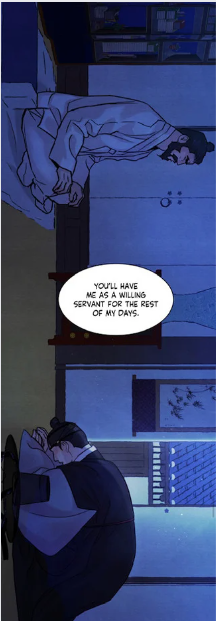 (chapter 127) This means that he is giving up on his status and freedom for Baek Na-Kyum’s sake.
 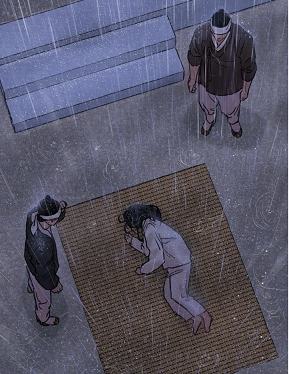 (chapter 127) Here Yoon Seungho had been treated like a servant, because he had been submitted to the straw mat beating. Exactly like in the past, there was a promise. Notice how similar the words are: “No matter”.
 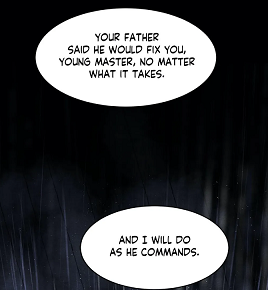 (chapter 77) However, there exists a huge difference. Back then, the vow was made between the butler Kim and Yoon Chang-Hyeon. As you can see, Yoon Seungho is now copying his surrogate father’s behavior.
  (chapter 127) This shows that the young master is following Kim’s path. On the other hand, the domestic employed the future tense in his pledge (“I will do as he commands”), whereas the “spiritual son” is using the present (“I swear to live as you command”). Moreover, the main lead is talking about his way of life and not “order”. And what does the father desire?
  (Chapter 86) Making connections so that the Yoons can become influential again!! But how can he do that? By showing his talent? I have my doubts about it. Why? It is because in season 1, the lord was having sex with his peers, and back then they were like battles… for an exchange of favors. I hope, I might be wrong, but I fear that he is about to become a male kisaeng again. Or if not, then this is what the king is expecting from him. And we have the best example in this scene:
  (chapter 118) Why does he need the protagonist? It is because he needs “connections”. And how can he get these connections? Through his brother. But with the last incident, it looks like Yoon Seungwon jeopardized the remains of his influence, for the noble ignored him.
 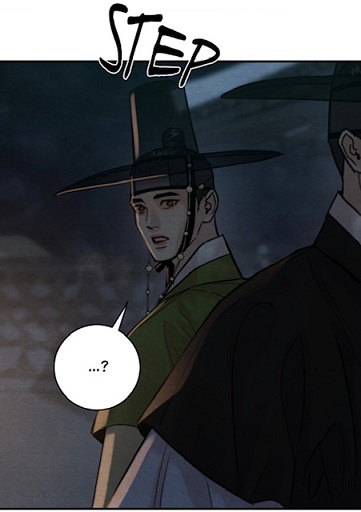 (chapter 127)
 (Chapter 56) Yet, the domestic is only bowing with his head and not his body. The protagonist is dressed exactly like his father. This comparison exposes that my past interpretation was correct: the butler had awakened his master during the night by lighting the candles. And after receiving this letter, Yoon Seungho dressed himself in order to meet his childhood friend, which reinforces my theory that the valet won’t follow the protagonist.
 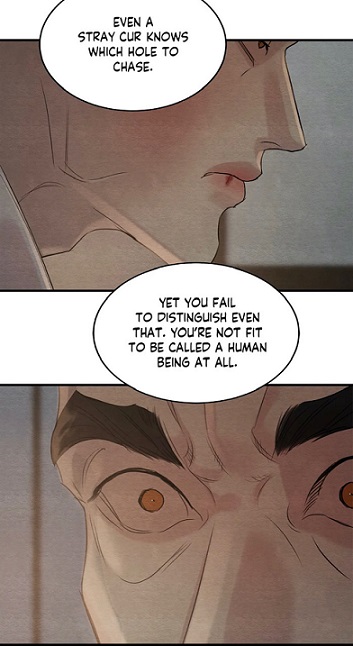 (chapter 86) However, back then, he was considered as the eldest son. One of his duties was to continue the lineage
 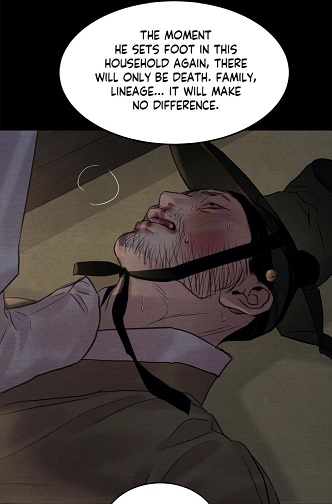 (chapter 82) and because of the stolen kiss, the patriarch became obsessed with sexuality. Observe how lord Song Haseon described the father’s attitude. He knew about the atrocities that the young master was exposed to
 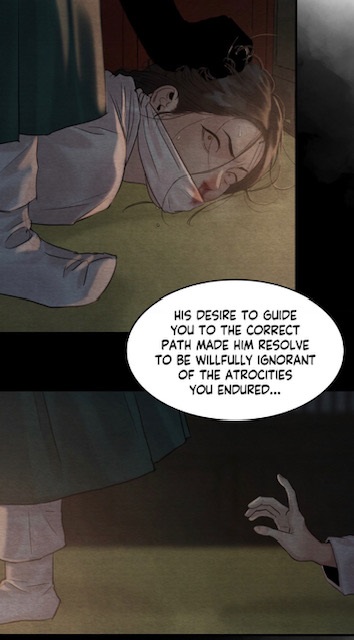 (chapter 123), but he chose to turn a blind eye, for he believed that the end justifies the means. This explicates why he left the room so quickly and abandoned his son. Yoon Chang-Hyeon’s resent for the eldest son came from his high expectations. This can only reinforce my past interpretation that Yoon Seungho is a new version of Prince Sado. Thus the elder master Yoon’s personality is based on king Yeongjo. Moreover, lord Song alluded to the execution of a prince ordered by the monarch.
  (chapter 107)
  (chapter 55) But what did he see in his father’s gaze? Anger and disappointment, for he was never able to satisfy Yoon Chang-Hyeon’s expectations.
  (chapter 55) With the release of episode 127, I had this sudden revelation concerning this memory. In the past, I used to think that he had been submitted to the straw mat beating. But now, I think that in this scene, Yoon Seungho was forced to bow to his father by the servants or guards!! Yes, the former version of this scene.
  (chapter 126) This idea came to my mind, the moment Yoon Seungho emphasized his bowing!
 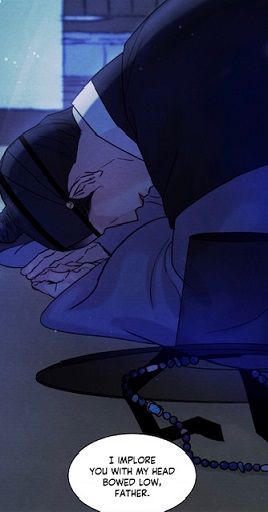 (chapter 127) The protagonist’s words imply that he had never done it before!! And now, you know why Yoon Chang-Hyeon agreed to make a deal with his eldest son.
 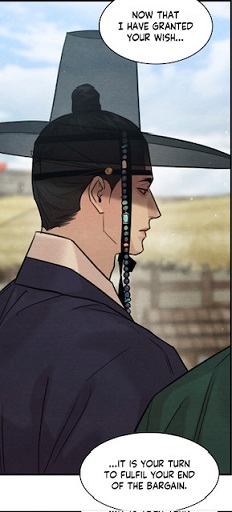 (chapter 127) Yoon Seungho’s bow and oath stand for blind obedience and loyalty. This explicates why the author drew him without eyes.
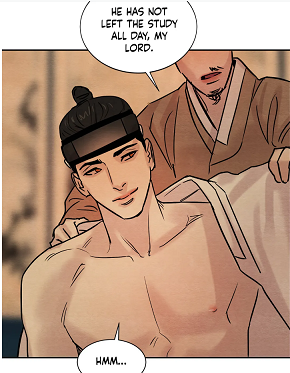
  (chapter 87) That way, he can act, as if the purge and the humiliation had never happened. So by submitting himself to his father’s will, it looks like Yoon Seungho is put in the same position than in the past. He is “exposed” to the harsh judgement from the patriarch. However, it is just an illusion. How so? First, what caught my attention is the absence of the protagonist’s eye.
  (chapter 11)
  (chapter 35) Does it signify that the protagonist has the intention of betraying his own father? I don’t think so, but the manhwaphiles shouldn’t forget the lord’s wish in the kitchen: “I shall remember this moment for as long as I live”.
  (chapter 118) This shows that when the lord bowed to his father, he was thinking of Baek Na-Kyum in the kitchen. His body might be by his father, but his mind and heart were elsewhere. Thus I couldn’t help myself thinking that Yoon Chang-Hyeon will get betrayed and abandoned by his own son. During the same night, he made 2 vows. It was, as though he had two “lords”! His goal is to meet his loved one again.
  (Chapter 127) Finally, don’t forget that the main lead is following Kim’s path. He will have to choose between his father and the painter. Yoon Seungho is actually applying the father’s principle: the end justifies the means. So if necessary, he can break his vow to his father.
 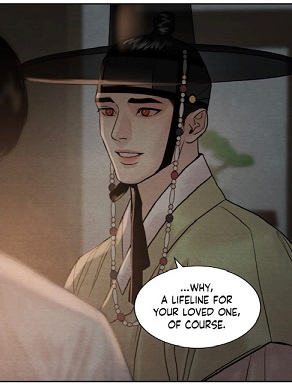 (chapter 116) I still believe that the painter has the original petition. And who is by Baek Na-Kyum’s side? Kim!!
  (Chapter 108) By living by his side, he can lead a quiet life far away from Hanyang. However, this signifies that the artist has become a “prisoner”. As long as he lives in Yoon Chang-Hyeon’s claws, his loved one can not return to his side. Interesting is that a carriage was used to carry away the protagonist.
  (Chapter 78) But where is the painter going? To the mansion? Or to another secluded place? In my eyes, the location is important. His existence is still a source of problems for the schemers. I see a future conflict in the lord’s life, for one oath stands in opposition to the other. Moreover, should the patriarch lose Baek Na-Kyum, he can no longer control his son. He can not suddenly blame the painter for the death of lord Song, for Jung In-Hun has been now convicted for the crime.
  (Chapter 7) Now, the positions are switched. He is the one getting coerced! And this brings me to the following observation. Why did the elder master agree to this deal in the end? First, he refused to assist his son.
 (chapter 127) He believes that he has the petition, therefore he can no longer be blackmailed by his eldest son. The latter has no longer any leverage over him! However, he changed his mind.
 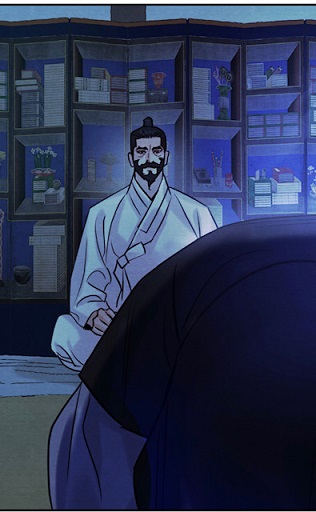 (chapter 127) For me, it is related to the bow. I noticed that the patriarch pays a lot of attention to “manners” and etiquette. Therefore the guards apologized on different occasions, yet the elder master always accepted their excuses
  (chapter 125)
  (chapter 126) Yet, in reality they were fake excuses. I have already pointed out that the servants would act on their own. But more importantly, their fake apology hid their failure as guards. How could they let the young master barge into the lord’s bedchamber? With a simple apology, this wrongdoing was overlooked. And now, observe what happened during the same night:
 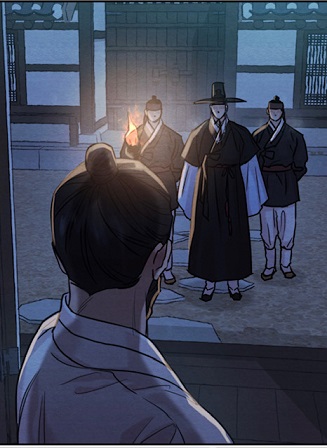 (chapter 127) Yoon Seungho was followed by the guards! It looked like they were serving him. This scene reminded me of the officers’ appearance in front of the mansion.
  (chapter 94) This can only reinforce my theory that the main lead will turn against his father in the end. Keep in mind that there is a deal, so should the situation change (the painter’s desertion or the discovery of the second petition for example), the lord is no longer forced to keep his vow towards his father. Moreover, since Baek Na-Kyum got lied, “brainwashed”
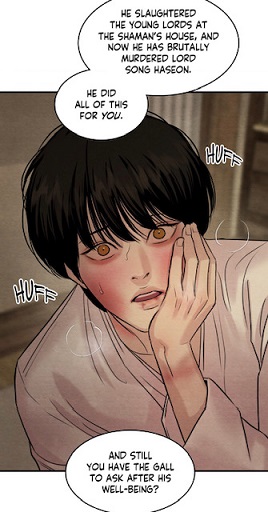 (chapter 125), “drugged” and slapped by Yoon Chang-Hyeon, he is destined to receive his karma through his son. And what was his dream?
  (chapter 125) and paid the governor
 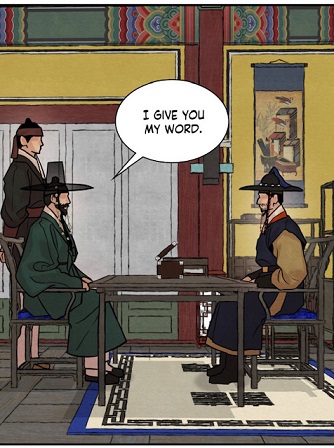 (chapter 127), he could get into trouble for it was, as if he was admitting his responsibility.
 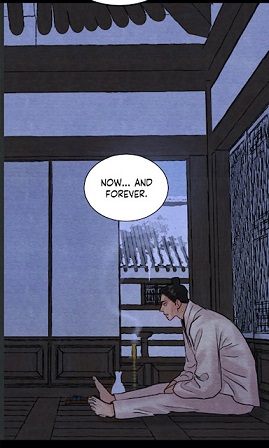 (chapter 87), whereas Yoon Seungho stands for change and hope.
 (chapter 127) Where was Heena noona, when her brother was in prison? This rumor can only create the illusion that the painter is still devoted to the learned sir. Yet, after the last incident, the painter came to regret to have trust the learned sir. Both characters are now healed from their traumas (abandonment issues) and they are in full possession of their mind. This makes them less weak to manipulations.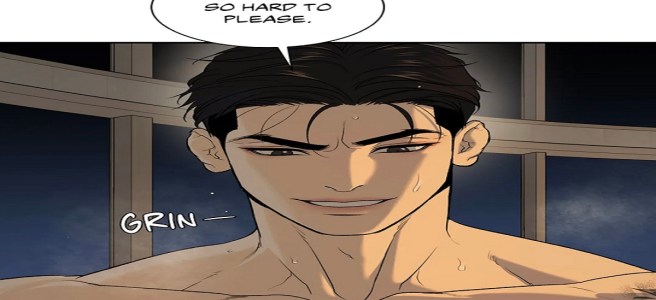
 (chapter 12) He even felt pleasure, thus he didn’t pay attention to the bruise on the doctor’s back. (chapter 12) Due to his lack of sensibility, roughness and selfishness, people are already on the verge of dropping this story. Even the young doctor thought, that guy was crazy.
 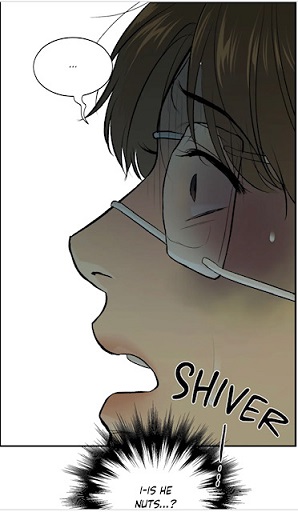 (chapter 12) No average person would behave that way. Thus he was already stigmatized as lunatic and as such as psychopath. Hence in the first part, I will answer to this question.
  (Doctor Frost, chapter 175) And this stands in opposition to the code of conduct of a psychologist. The word psychopath causes so many negative emotions like fears, rejection and hatred. On the other hand, the psychologist’s role is not only to detect the source of the problem, but also to offer a solution. This means that he is not allowed to let emotions cloud his judgement.
 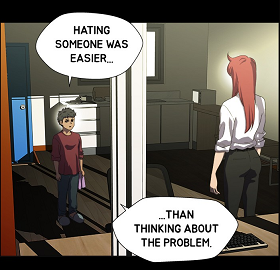 (chapter 216) Moreover, the doctor has to show a certain understanding and empathy to the patient in front of him. And now, you are wondering why I am mentioning Doctor Frost again. It is because the protagonist was himself diagnosed as suffering from ASPD!! This diagnosis scared his parents so much that at the end, they started avoiding their own son. He was sent to a psychiatry. However, his doctor still believed that he had a chance to change. Thus he proposed a way to the young boy how to overcome his handicap!! He should study psychology so that he would come to “understand” the human mind. Because he was not capable to feel “emotions” like the others, he should utilize his mind to grasp them. Hence the more he studied the human mind, the more he was able to “understand” their problems. At the same time, the more he interacted with humans, the more he came to learn how to behave like a normal person. As you can see, “psychopath” is not even a death sentence. There’s still hope.
 (chapter 12) and keeps an eye on the doctor constantly. His plan to “have” Kim Dan was poorly planned, for he kept waiting for a sign from him. At no moment, he even thought that the doctor could block him or keep his distance from him.
 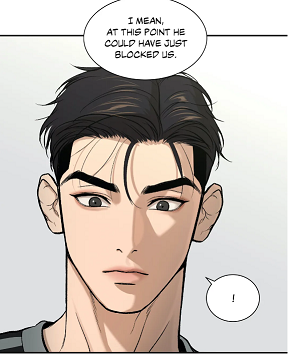 (chapter 5) He doesn’t ooze charisma or superficial charm, for he never hides his strength and power.
 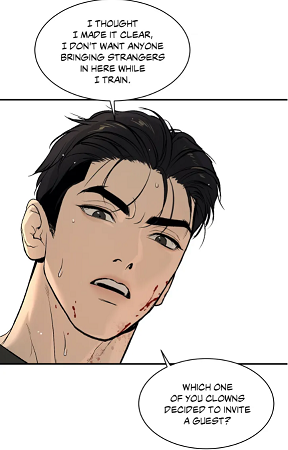 (chapter 1) He even shows disdain, or strong emotions like rage and annoyance.
  (chapter 5) To sum up, he is not detached. Finally, he was still able to feel a certain sympathy for the doctor
 (chapter 10), hence he brought him to his home. He still listened to his request.
 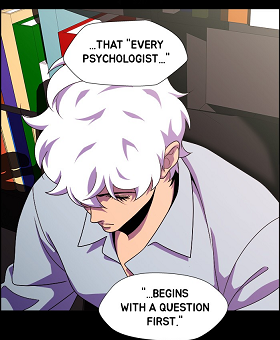 (Doctor Frost, chapter 216) The latter has to observe the patient and question why the person is behaving like that! What are his motivations? So why did Joo Jaekyung propose to try something new with Kim Dan?
 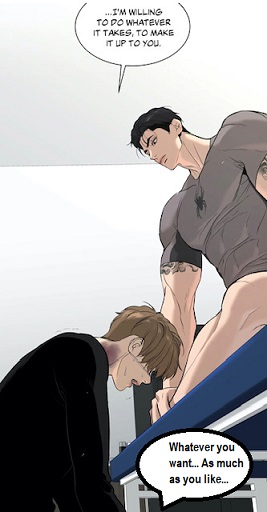 (chapter 11) This means that the athlete had never been able to use it before with his other sex partners.
  (chapter 12) All of them must have definitely refused… too scared! This explains why the athlete proposed alcohol to the doctor in the beginning. (chapter 12) Thus I deduce that the man had long this wish, but he could never outlive it. This displays his selfishness. This was not planned in the long run.
 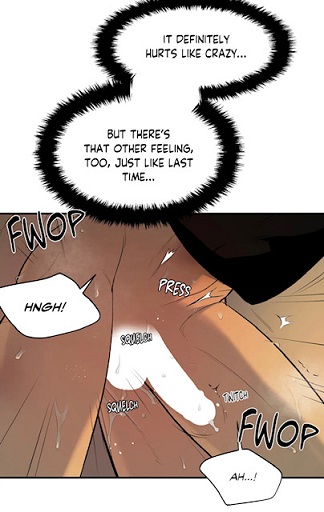 (chapter 12), which the main lead had detected either! (chapter 12) This exposes that during that night, the champion was paying more attention to his partner’s reactions contrary to the first night. He even asked him about his feelings
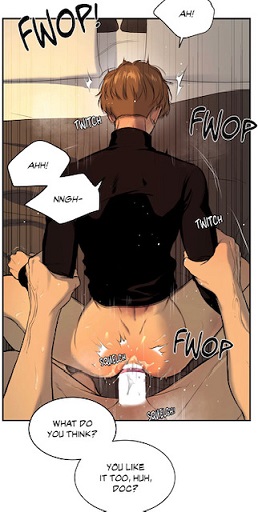 (chapter 12), but the doctor refused to admit it. I consider it as an improvement to the first encounter! Besides, he even let the doctor rest after the first round, which he had not done during the first night.
 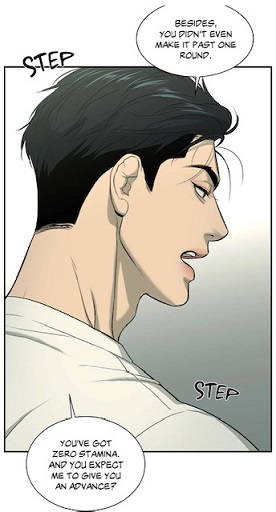 (chapter 12) As you can see, he was mindful to a certain extent. Naturally, it was not enough. However, since his words sounded so harsh and cold, the readers only noticed his lack of sensitivity. And if you read my previous essay, you are aware of the existence of the 4 sides-model. The athlete was voicing his frustration. He had enjoyed their last session so much that he wished to have more sex! Please… do something so that you have more stamina! 😉 This was his karma for giving him alcohol. From my point of view, he will never do it again. But to return to my main point, the readers can see, unnecessary cruelty and sadistic enjoyment can be ruled out validating one more time that he is not suffering from ASPD.
 (chapter 12) How do we explain the discrepancy? It is because deep down, the seme always had the impression that they were more interested in his wealth and fame than in himself. He never trusted them, he believed them to be hypocrites who would offer him presents in exchange for a favor. And now, you have another explanation why Joo Jaekyung is already obsessed with Kim Dan. Their relationship is based on “honesty”. The champion knows that the young physician is only sleeping with him due to his money. But if the doctor came to admit his pleasure right away, the athlete would have the impression that his skills in bed are quite impressive. That’s the reason why when the uke confessed that he hated it
 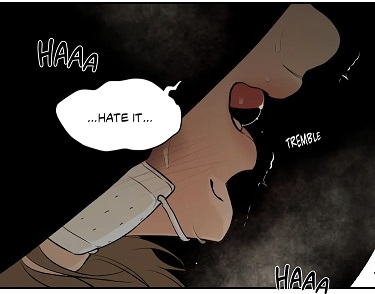 (chapter 12), the champion misunderstood the message.
  (chapter 12) In his mind, he needs to do more so that the young man admits pleasure. However, this relationship is actually based on a lie. Kim Dan deceived his partner by telling him that he was experienced!! This is important, because each objection from the doctor is perceived as a personal rejection. (chapter 12) He wants money and offers his body for sex… yet each time Joo Jaekyung wants to do something, he refuses or makes a remark. That’s the reason why the athlete has to bring up the added condition. Besides, the athlete believes that the young man has always “had sex” for money, therefore he needs to distinguish himself from others. Technically, the doctor could go elsewhere… That’s how Joo Jaekyung thinks! To conclude, I believe that the champion sees the young doctor as a challenge. And as long as the physician doesn’t rectify this lie, the champion will keep misunderstanding the situation. This exposes Joo Jaekyung’s innocence and simplemindedness. He is not able to detect lies or manipulations from Kim Dan validating my diagnosis that he is not suffering from ASPD. For him, the bruises are from a fall, because he trusts his words. That’s the end of the explanation.
  he (chapter 12) Striking is that here he was actually projecting his own thoughts onto the athlete. This displays his incapability to perceive people correctly. He is lacking social skills. Some manhwaphiles criticized the author for such a drawing! The phallus was much too big, this could not be not normal at all. But you have to think that Mingwa drew it from Kim Dan’s perspective. That’s the reason why the poor doctor associated it to a weapon. (chapter 12) That’s how he felt: it was so huge… This childish behavior also explains why he didn’t see the danger of such a sex session with a sick person. And according to my research about Traumatic Brain Injury, it is not abnormal that a patient suffering from TBI starts acting like a teenager or a child.
  (chapter 6) Analyzing a home of a a person can give us clue about his personality.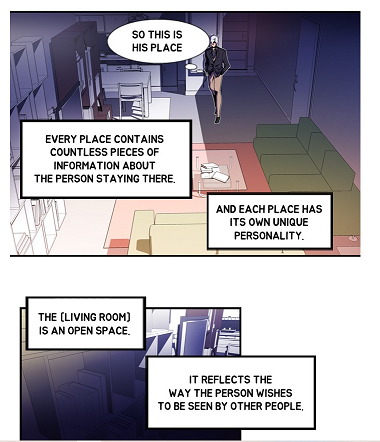
 (doctor frost, chapter 8) There is no trace of his family. Why? This is a sign that he is not close to them. Secondly, I couldn’t help myself thinking of the importance of the parents. The latter serve as a mirror to the child,
  (doctor Frost, chapter 8)
 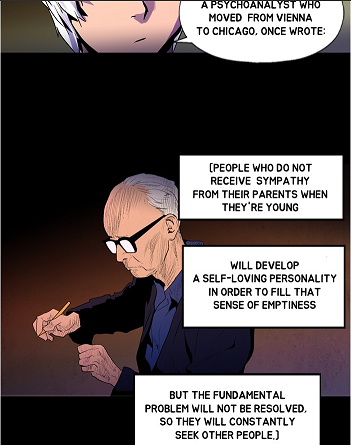 (Doctor frost, chapter 8) This would explain on the one hand Joo Jaekyung’s self-centerness and his desire to obtain fame and recognition. He is compensating the lack of love and sympathy from his relatives. And just because he is “swimming” in money, we shouldn’t judge to the conclusion that he had a happy childhood either. The only adults and role models he has so far are his manager and coach Jeong Yosep.
  (chapter 5) And note that he listens to them, indicating that he is trusting them a lot. That’s the reason why I am even now envisioning that the main lead could have been neglected by his wealthy family.
 (chapter 1) The champion confides to him certain secrets and lets him clean up the mess. However, since the coach likes Kim Dan very much, Joo Jaekyung will receive a huge scolding from his surrogate father. And before closing this analysis, I would like to add two important aspects: Kim Dan’s role is to teach Joo Jaekyung to become responsible and as such to act as a real adult. Thus he received this task from his manager:
  (chapter 9) He needs to recognize that masculinity and manhood shouldn’t be reduced to sex, but to maturity. Secondly, since he associates strength with health, I believe that the halmoni’s sickness will open his eyes. She might be ill and weak, she can still speak up and tell her mind without fear! Finally, since the champion is bothered by the doctor’s lack of stamina, I have the impression that he could decide to train Kim Dan! He shouldn’t just stand there, but also develop his muscles. Like I have already mentioned before, sports will be the reason why the two protagonists will get closer! As a conclusion, the protagonist is not evil in my eyes, he is just an uneducated child who definitely needs some good scolding.

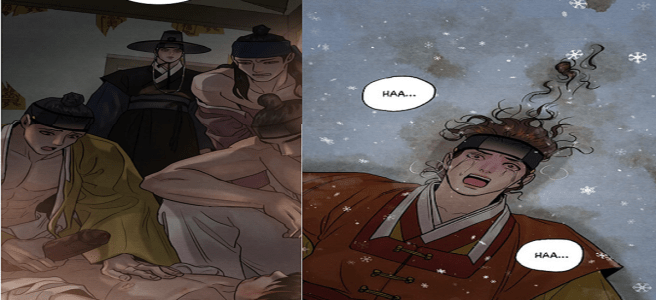
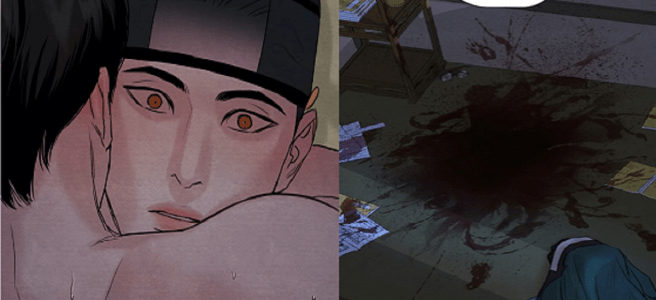

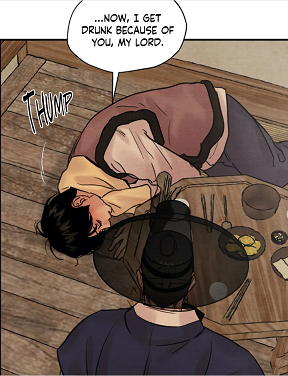 (chapter 75), tobacco
 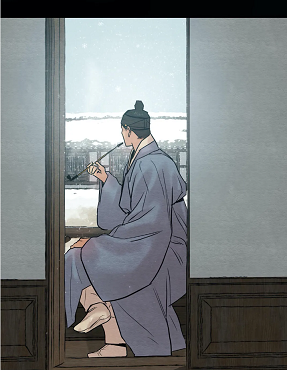 (chapter 61) and opium
  (chapter 52).
  (chapter 52) And this perception got reinforced, when the butler confided this to the physician later:
 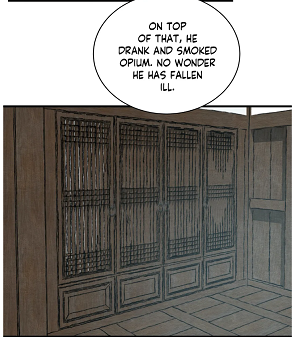 (chapter 55) Many readers had the impression that Yoon Seungho had been smoking opium, many went so far to imagine that he had been smoking opium right from the beginning.
  (chapter 5) However, this was just a lie. Yoon Seungho never smoke opium!!
 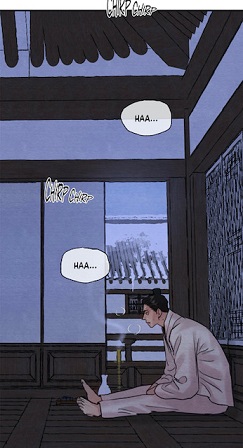 (chapter 74) Hence consuming opium would even instigate his nightmares. In addition, observe that in chapter 5, Yoon Seungho was never euphoric nor sleepy. He could interact with the painter normally.
 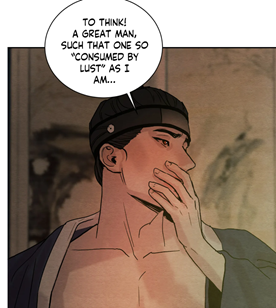 (chapter 05) As you can see, Yoon Seungho had a drug addiction, nitocine.
  (chapter 52) This means, he was conscious and alert. Besides, we saw him later getting in rage
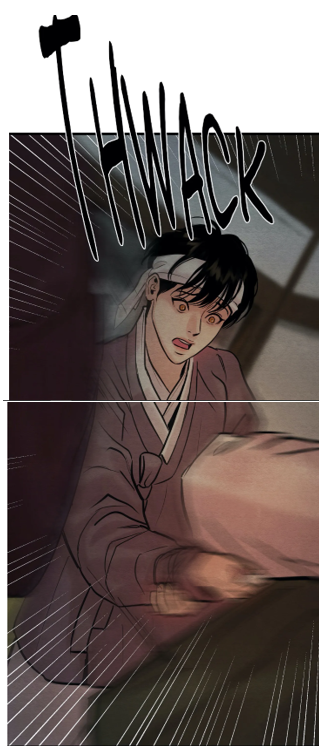 (chapter 53). Here, I would like the manhwaphiles to keep in mind that side effects of opium like euphoria, relaxation and analgesia last for at least 3 to 6 hours. So this outburst of rage is an indication that our protagonist was not under the influence of opium. He was not hallucinating either. He had grasped the whole situation, when he heard Deok-Jae predicting a terrible fate to the artist. In addition, this drug is not considered as a poison inducing psychosis.
  (chapter 52) This explicates why he beat Min and Deok-Jae so furiously, he wasn’t acting under the influence of hallucinations. He was perceptive, he had clearly understood the meaning behind the servant and the noble’s words. As you can see, the lord’s mood swings were more triggered by his addiction to nicotine. This explicates why the main lead had such a violent outburst in the shed after the abduction. He had smoked tobacco the whole day.
  , but hides it under the excuse, he drank too much. He gets in rage, when No-Name calls him a fool.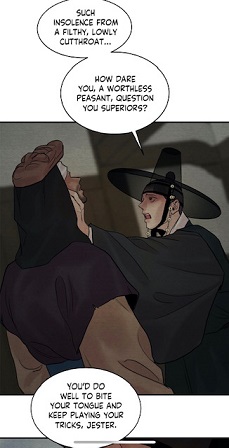
 He can no longer keep his mask contrary to the altercation in episode 41, when Yoon Seungho compared him to a mouse:
 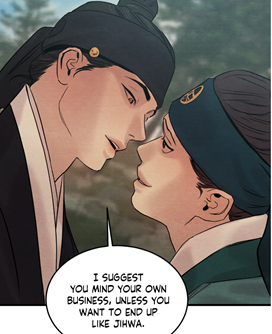 (chapter 41) Besides, we have another evidence that Black Heart has developed an addiction to opium with the following panel:
 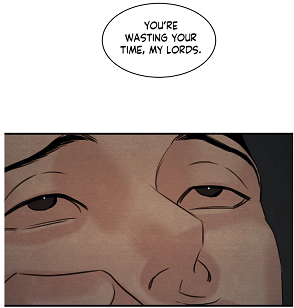 (chapter 76) The gaze is different, an indication of the widened pupils. Furthermore, his restlessness is perceptible the way he approaches The Joker. This time, he has to meet the criminal personally. We could say that he rushes to meet the criminal. Like he said, he was “running out of time”…
 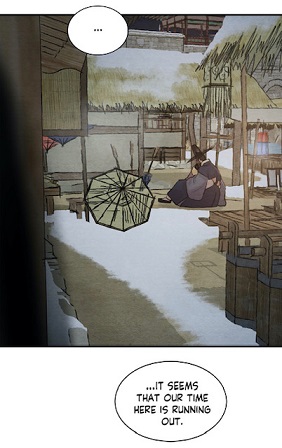 (chapter 76) These words reflect his own troubled mind.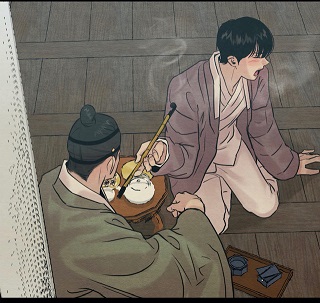
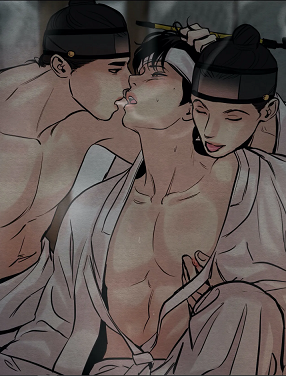
 Note the euphoria and the sedative effect on the artist’s face. This explicates why he didn’t push the rapists away.
  (chapter 53) They wanted to smoke this drug there, for no one would interrupt them. But because Yoon Seungho let them smoke opium, he became guilty by association: he was also an opium smoker. And the readers had fallen into the same trap. As you can see, I believe that the author is using the method on the manhwaphiles. They are misled by what they see and hear without questioning the authenticity of the statement.
  (chapter 55) However, this is another deception. Yoon Seungho is no alcoholic either!! 😲
 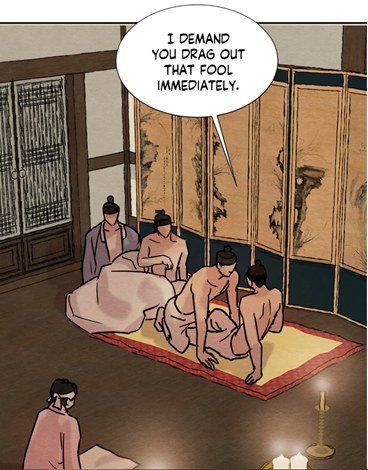 (chapter 08) So his debauchery was linked to sex and nothing more. He would live for sex and nothing else. Furthermore, the manhwalovers will certainly recall the lord’s behavior in the tavern. He ordered wine
 (chapter 75), but notice that he never became drunk like the painter.
  (chapter 1) Notice that each time, Baek Na-Kyum would drink alcohol, he could never stop until he almost lost consciousness and started hallucinating
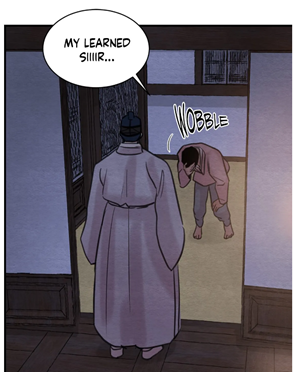 (chapter 19) or he would be so inhibited that he couldn’t walk properly. These were the sign of his addiction. I can’t forget the lord’s words in episode 75:
  (chapter 75) Here, he saw how the alcohol was affecting his lover’s behavior.
  (chapter 53) He was walking straight. When the readers saw the following image, they saw it as a confirmation that Yoon Seungho was a drunk.
 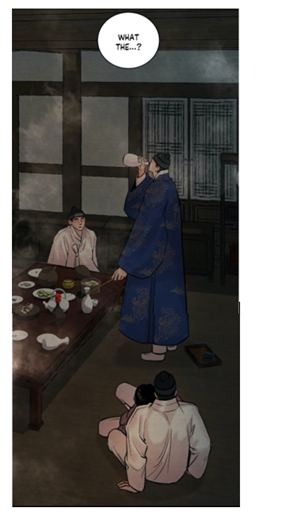 (chapter 54) But in truth, he took some wine in order to overcome his pain, to give himself some “courage” to go through. He had longed for the artist’s warmth after a week of separation, but he knew that Baek Na-Kyum viewed sex as prostitution. He was alert enough to see the consequences of his decision
  (chapter 54), therefore he broke the bottle.
  (chapter 54) This is no coincidence that he destroyed the bottle of wine. He had the impression that this drug was the cause for his “hallucination”, he was seeing the painter in ecstasy which could only remind him of his own past. Besides, he didn’t want his companion to become a shadow of himself:
  (chapter 78), I believe that Yoon Seungho never proposed too much wine to his lover afterwards. He had made the experience that if he did, he would be the reason why Baek Na-Kyum would become a drunk. In my opinion, the painter’s relapse was linked to his own suffering, he was tormented by the idea that Yoon Seungho would abandon him, his affection was not deep. Since they had no longer any sex, he had the impression that Yoon Seungho’s love for him was vanishing. As you can see, the painter’s dependency to wine was linked to his repressed libido and his fear of abandonment.
  (chapter 33) Compare this sex orgy with the following one:
 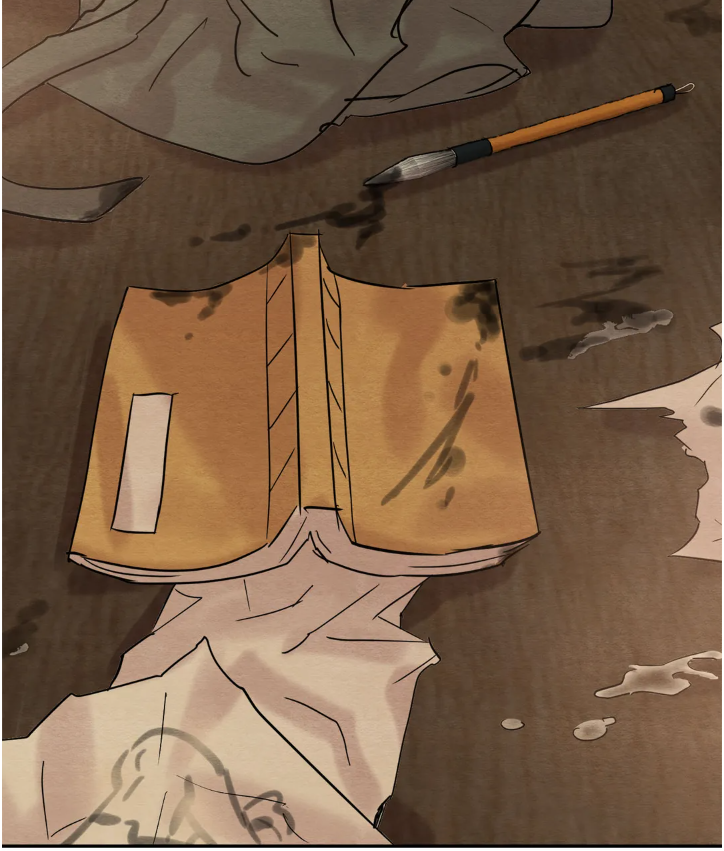 (chapter 8) At Black Heart’s party, wine and tobacco were offered, while in Yoon Seungho’s bedchamber you only had books, pictures and sex. Besides, there were more guests. As you can sense, the parties were totally different: austerity versus luxuriousness. Yes, Min wanted to impress his host Yoon Seungho!! He desired to show him what a true sex orgy was. He desired to prove that he was the real hell-raiser, the real king among nobles.
  (chapter 33) The Joker and the bottle of wine!! The manhwaphiles will certainly recall how the villain offered the expensive alcohol to Yoon Seungho (chapter 19). Moreover, I realized that in episode 33, we have a slight change. While Black Heart is seen first with the pipe full of tobacco,
  (chapter 33), slowly the author brought the villain in connection to the bottle of wine:
  And at the end, we have this:

 .
. 
 (chapter 51), I believe that Black Heart was the main consumer!! And now, you comprehend why Yoon Seungho fell into debauchery.
  (chapter 51) He was far from happy, for his fixation on Baek Na-Kyum had not disappeared at all. Therefore, it is not surprising that he started drowning his sorrow. However, alcohol was no longer effective, he needed something stronger to dull his agony. That’s how he discovered opium. And notice that when the lord got punched in the propriety, he felt no pain.
  (chapter 54) He didn’t protect himself, he had no strength because of the relaxing and sedative effect. He even laughed, a sign that he was under the effect of the drug.
  (Chapter 54)
 (chapter 75) This strong connection between sex and drugs gets even confirmed in the same episode. Notice that in that scene, Yoon Seungho had not sex with the painter for a while, and Baek Na-Kyum was definitely missing it. Naturally, his true desire was to get loved by his companion. For the low-born, sex is a symbol of love. Hence he drunk because of Yoon Seungho.
  (chapter 36) and he drowned his sorrow in wine.
  (chapter 59) However, this association between alcohol and his lust for Yoon Seungho started changing, after Jihwa had sex with Nameless. Notice that in episode 83, he is no longer looking like a wreck.
  (chapter 83) He is still biting his nails, a sign of remorse and fears, but he is no longer obsessed with Yoon Seungho. From my point of view, the torments the second lead suffered in the second season played a huge role. He started drinking alcohol for another reason.
  (chapter 50) This time, he got afraid of the consequences for the murder. As you can perceive it, there was a slight shifting. This shows that the wine became less and less connected to his obsession with his childhood friend, his desire to have him. This explicates why he was so devastated at the end of the second season. Out of guilt and anxiety, he started drinking again.
  (chapter 76)
  (chapter 82) He knows about his father’s plan. If Yoon Seungho is forced to submit himself to his father, he won’t be able to use his wealth and power to attack him. That’s the reason why he is no longer looking like a wreck. In other words, he is well aware what is going to happen to his friend. He witnessed the abuse, but he doesn’t care, for his “life is in danger”. 🙄 As for Min, he looks more healthy again
 (chapter 83), for he had to plot in order to achieve his goal. He needed to find a new puppet, lord Lee, and as such he needed to make a good impression. He had to become proactive and become more directly involved. Hence he needed to be more alert.
  (chapter 45), for he felt something was missing. Consequently, this is not surprising why Yoon Seungho had a sex marathon in the shed after smoking the whole day. It was to contain his rage, but also to mask his strong desire for the painter. What caught my attention is that after their love session, the main lead started smoking again, exactly like in the past.
 (chapter 74)
  (chapter 83) This observation is important, for it shows that he is no longer using tobacco to hide his inner turmoil. That’s why I believe that Yoon Seungho’s addiction was originally linked to his traumas. It was his way to “anesthetize his emotions”, he had the impression that he would become more clear-sighted.
  (chapter 66), a sign that he is not hardworking. He is very sensitive to criticisms, which was underlined in chapter 83 one more time.
  (chapter 83) Therefore I tried to find out if persons suffering from Antisocial Personality Disorder could be suffering emotionally, though they are supposed not to feel any pain and empathy. And yes, such persons are definitely not happy, for they are often lonely.
  (chapter 9) He felt lonely, and hoped that the artist would give him the same gaze, when he looked at the protagonist. He had already snatched Lee Jihwa, but the latter was too obsessed with his childhood friend to look at him in a different way. Min was definitely longing for love, but he could never admit it. Striking is that Min picked his “bride”, exactly like the psychologist Love described it:
 (chapter 66) Hence he could only view the second lead as his puppet. That’s why The Joker had to use “drugs” to mask his emptiness and longing for affection.
 (chapter 83)
 (chapter 55) He doesn’t want to be recognized, but more importantly he is determined to hide his true feelings from Nam Dong-Gyun, for he believes that he has no chance to be his lover again. Moreover, during the Corona pandemic, people are requested to wear a mask in order to stop the contamination.
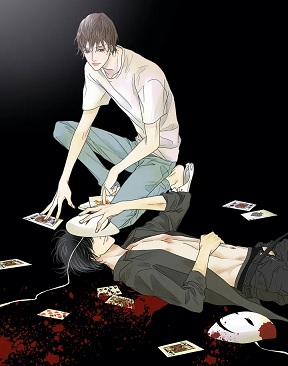 If people knew that he was a psychopath, he would get isolated. His parents are already very distant with him, for they view him as a monster. Due this experience
 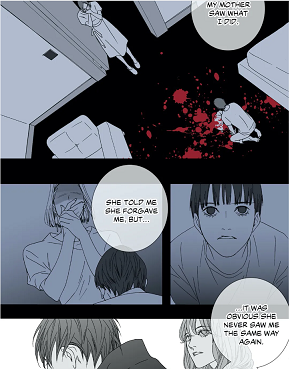 (he killed a dog and his mother caught him), he got aware that he was not allowed to act on his urges. For him, the mask is a necessity, as he is living in society. He doesn’t want to end up in jail. But is it the same for Nameless from Painter Of The Night?
 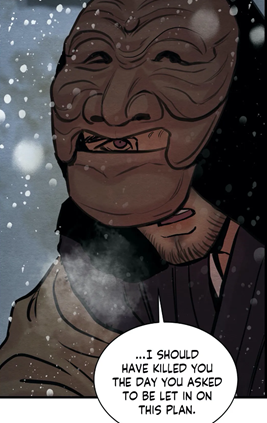 (chapter 54) He is switching his identity to become a killer. In this panel, the manhwaphiles see the transformation of the figure, as his face is already half-covered. He is no longer a joker, but not the ruthless murderer yet. However, when he kills the servant, he has the cover on.
 (chapter 54) By putting a mask, he is protecting himself too, for he is acting as someone else, therefore his heart can’t be wounded.
  In this case, it is more a desire, though in truth it is a combination of both. The “butcher” has to hide his true identity. So when he wears his mask in chapter 44, he is doing his job. He won’t be recognized, but also he won’t feel remorse. He has been paid for that and the mask is helping him not to get emotionally invested. On the other hand when Jihwa met him in chapter 51, the manhwalovers could perceive the low-born’s true personality which coincides with the absence of the mask.
 In that episode, he was literally naked in front of the noble, which explicates why he showed concern and care for his client. He let the noble express his worries. Let’s not forget that the jester is a person with a pure heart, when he is true to himself. Hence I come to the conclusion that the mask serves as a protection for the criminal’s mind and heart. And now, you comprehend why Nameless didn’t feel remorse for hurting the painter. According to me, in this scene, it was Kim who was scaring the painter.
 (chapter 66) This is important, because the mask had two purposes here: to hide the identity of the perpetrator, but also to slip into a role, No-Name’s, the assassin. The main lead’s face was covered and turned around. At no moment, the “butcher” could see the victim’s gaze and facial expressions. The mask helped him to be ruthless, while he threatened Baek Na-Kuym. He might feel pity, but that was it.
 (chapter 66) In that scene, the manhwaphiles thought that they were seeing Mumyeong, hence they imagined that Jihwa’s safety meant more than the artist’s life and possible scars. But if you take my theory seriously, this was Kim, then the words from the butler had a different meaning. He was hiding his action behind the nobles. Only after paying attention to the mask, I realized the existence of two masks.
 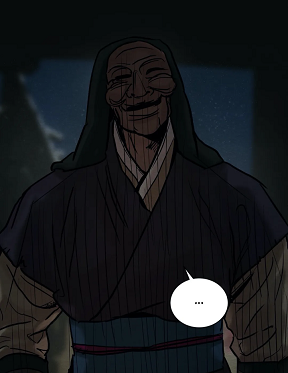 (Chapter 61)
 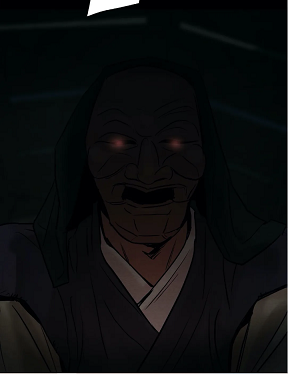 (chapter 61) Smiling mask versus threatening mask. The presence of two masks explicates why No-Name had the impression that after the painter’s return nothing bad had really happened. He was not aware of the butler‘s wrongdoings. Simultaneously, since the artist had not been killed, No-Name imagined that he had done nothing wrong.
 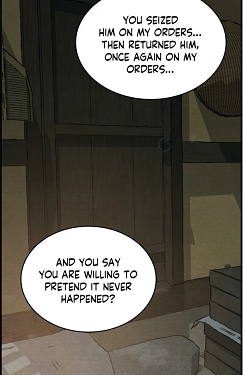 (Chapter 61) Hence the existence of the Joker’s mask outlines the criminal’s duality. He can be a ruthless killer, yet he can be gentle and caring too. At the same time, it implies the presence of a biased view.
 (chapter 73), the moment he is deprived of his powers. It was, as if he became a human. This is particularly perceptible, when he accepts the judgement of Maat and says this.
 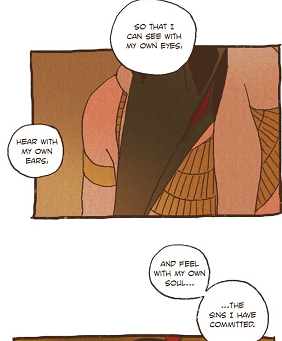 Striking is that in this panel, the mask doesn’t appear as a source of advantage, rather as a hindrance. He couldn’t see and hear the consequences of his crimes due to the mask. He was blind and deaf. By removing his mask, he becomes human and can face reality: he is facing his sins and the suffering of his victims, their wounded soul.
 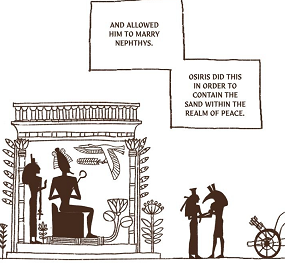 [chapter 35], his son, his title
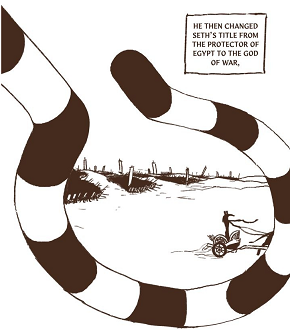 [chapter 35], his power over the desert
 [chapter 35]), he lost his identity. Osiris made sure to imprison his brother, because the former was lusting after him and had the impression that the latter would always escape his control.
  (chapter 35). At the end, he raped him in order to claim him. The latter got literally destroyed, hence he hid his pain behind the mask and chose to hurt others.
 (chapter 37) In other words, the loss of identity was the reason why Seth decided to hide himself under the mask. Who was he in reality? The god was so tormented by his tragic past, Osiris had hurt him with his actions and words. He made sure that his brother would doubt himself. Hence the mask became the only reason to keep living. This item helped him to hide his wounds, but also not to lose himself completely. Hence I conclude that the “evil god” wasn’t just blinded by his heartache, but also by his mask, for the latter hindered him to see the real impact of his terrible actions.
 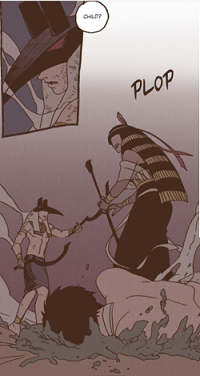 (chapter 37)
  (chapter 73), his son makes the opposite experience. He transforms himself into a god, Anubis, hence he gets a mask.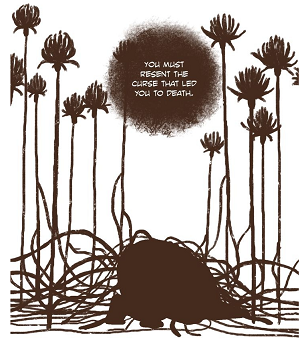
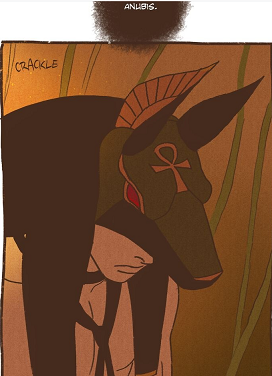 (chapter 73) However, this signifies that he won’t see his wrongdoings too, he will be oblivious to the pain he is causing to others. This time, his blindness will be caused by his resent. While in the past, Anubis was a sensitive and gentle person, but no real god due to Seth’s curse, in chapter 73 he becomes Osiris’ true son, an evil god. Why do I judge him like that? It’s related to Osiris’ words. The latter is encouraging his son to feel hatred for the one responsible for his curse, Seth. Moreover, he asked his son to forget his past signifying that he should cut ties with his previous family. Therefore I believe that in the future, Anubis will fight against Seth and even Horus. Nevertheless, the wounded Anubis doesn’t realize that he has been manipulated by Osiris. The latter used his vulnerability and fear to approach him and appear as his savior.
  (chapter 73) Besides, Osiris was in fact accountable for his injury
 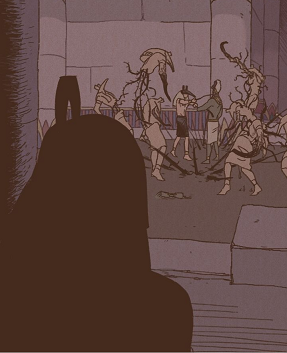 (chapter 37) In other words, the god of the afterlife used a disguise, though his brother had the impression that Osiris was real. Yet, one might argue that in that scene, Osiris was not wearing a mask. However, since he took possession of Anubis’ body, we can clearly see the presence of a cover. Let’s not forget that this terrible god is not allowed to leave the Underworld, hence he needs a subterfuge to enter the world of the living. That’s why I perceive it as a disguise. While the Egyptian god used Anubis as his vessel, Kwon Sungha from Dine With A Vampire took a new identity: he became Sooin’s bodyguard.
  As you can see, in both cases magic provided the villains a new occasion to deceive their target. And this shows that a mask can eventually cover a whole body, when it is to create a new “identity”.
  , just like Ra or Hathor. Yet, note that they are all women. Secondly, if you pay attention to their appearances, you’ll detect the presence of a hair dress and make up, especially around the eyes. This is no coincidence in my opinion. These accessories should be perceived as a “mask”. The make-up and hair dress are a form of disguise. This becomes really obvious in the manhwa “True beauty” from Yaongyi, where the heroine Jugyeong Lim hides her insecurities and true self behind a make-up. This is the real and natural protagonist
 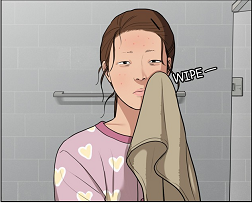 (chapter 7), while we have here the disguised heroine
 (chapter 0). This goes to the point that her boyfriend Sujeon Han has no idea how she really looks like. As a conclusion, the make-up and hair dress should be judged as a mask too. That’s why in traditional Chinese theater, the actors have painted faces. It was, as if they were wearing a mask.
 (Doctor Frost, chapter 2) That’s the reason why the author Black Apricot didn’t drew a mouth, when she presented Song Ji-Sung here.
 (chapter 9). She wanted her readers and the main lead to realize the character’s true personality. The latter was upset, because Kwon Soo-Young was keeping his distance from him and it looked like, he had found a new protector/boyfriend. When the protagonist Kwon Soo-Young had met Song Ji-Sung for the first time, he had only paid attention to his smile. Therefore he had misjudged his personality. And now, if you contrast the previous panel with the following one
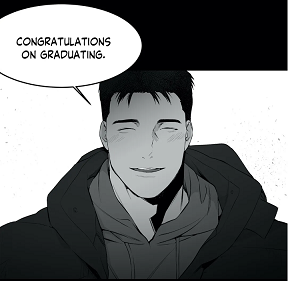 (chapter 16), you’ll notice an important detail: The eyes are closed, when the character is smiling. In this situation, the figure was actually hiding his true thoughts, this explains why the main lead couldn’t correct his false impression about his future lover. He had no idea about his true nature, as the latter keeping concealing his true intentions, he was faking his emotions with his facial expressions. This confirms my interpretation: the face can also be a mask. For me, this character is like Doctor Jekyll and Mr. Hyde. In this picture, Kwon Soo-Young got scared, when he saw this gaze and refused his lover’s advances.
  He is brutal, selfish and very manipulative. And now, you understand why in ENNEAD we had two different kind of masks: Seth and Horus are wearing real masks, while Osiris and Isis use their own face and make-up to conceal their true personality.
 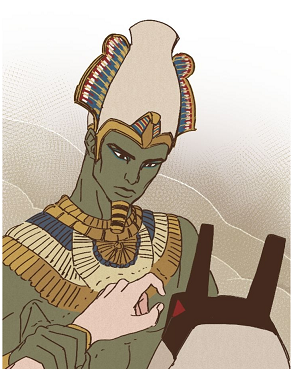 (chapter 7) Sure, the color refers to his death, a decayed body, nonetheless the readers should judge the painting as a cover. Since he is using a whole body to disguise himself, this signifies that he is hiding his true personality and thoughts more than Isis or Ra. That’s why it is not surprising that this god is particularly scheming and deceptive.
 The hair fringe and the shadow serve as a mask. In this scene, she used her body to divert her lover’s attention and hide her true intentions. She was inciting Do Seong-Rok to kill on her behalf. However, this temptation left such a deep impression that the main lead was tormented in his sleep later. His unconscious was telling him that he had been manipulated. As you can see, the absence of eyes in the manhwa can be viewed as the presence of a mask and as such a sign of deception. We have another example in BJ Alex:
  (chapter 10) The mask is a combination of shadow and absence of eyes. Here, Ahn Jiwon was remembering his first love and boyfriend, who faked affection and care for him. As a conclusion, the eyes symbolize honesty and naturality and its absence the presence of a mask.
  and the internist Kwon Sungha
 . While examining their characters, I made a connection between the glasses and their personality. I defined the function of the glasses as a mask, because both almost act the same, as vicious hypocrites. They hide behind their glasses and their fake smiles so that people misjudge them. And remember doctor Frost’s advice:
  Observe that the smile is less pronounced, giving the impression that it is vanishing. Simultaneously, the eyes are shown oozing a rather cold and heartless side. In the scene at the library (chapter 40), he’s finally able to perceive his own reflection in the scholar’s gaze, since the smile has totally disappeared. The gaze exudes coldness, despise and filth.
 Combined with the harsh words “you were born to be a prostitute”, the painter’s identity and personality are literally destroyed. The scholar has reduced Baek Na-Kyum to a prostitute, the lowest rank among the commoner. They have no rights and no real identity as they are forced to do what their clients want.
 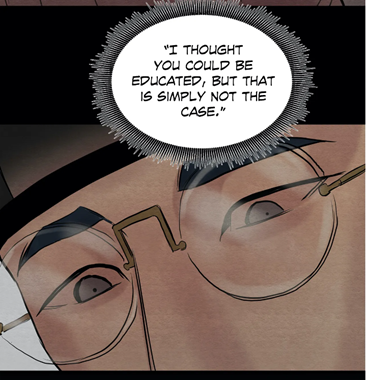 (chapter 41) Hence it is not surprising that the protagonist remembers the cold gaze. His eyes were the other reason why Baek Na-Kyum’s heart was so wounded. He could sense despise and rejection. In other words, the scholar had used two weapons to hurt the main character: the gaze and the words. This connection between the smile and the eyes is visible in Dine With A Vampire too.
 As soon as the smile vanishes, the eyes become visible unveiling their true personality. That’s why it is not surprising that Kwon Sungha has the same behavior towards the main lead Joo Sooin. The former has also destroyed the protagonist and reduced him to a puppet. The villains keeps calling him a pervert. He was even worse than Jung In-Hun in the sense that he kept abusing him mentally and physically after the coercive persuasion. Both are hypocrites hiding behind their glasses and their gaze. Therefore they are portrayed as cruel and mean hypocrites. The other common denominator is their hatred and rejection for homosexuality. Kwon Sungha seems to be even worse than the scholar, as he is in reality a repressed homosexual. He has sex with Joo Sooin, but resents him because he sees in him the reason for his “perverted” sexuality. He rejects sodomy because of the Church and his mother. Both reject this sexual orientation. I could mention Carter Nathan from The Blood of Madam Giselle
  (the fake and the real
  (chapter 13) or Jung from Unintentional Love Story
  as well as selfish and ruthless hypocrites. In other words, the next time you read a manhwa, be careful with characters wearing glasses, they might be dangerous and their smile might be fake.
 (chapter 16) The main lead explains that he chose to wear glasses, because he desired to avoid rejection and fear. He had noticed that the absence of facial expressions (smile) and his cold gaze would be misjudged by people. Here, Matthew used the glasses as protection. And this illustration reinforces my interpretation: glasses in manhwas have a huge importance in the end, they should be considered as masks too.
  The latter is the only one who can control him.
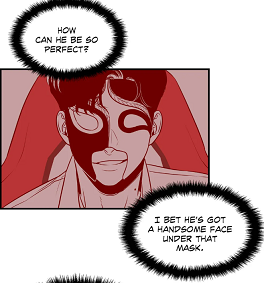 (chapter 1) This is his second identity: BJ Alex. On the one hand, he desires to remain anonymous so that no one can recognize him in real life, on the other hand this signifies that he is living a double life. He would like to protect his privacy, but also his secret life as homosexual. That’s why he said this, when his relationship with Nam Dong-Gyun was revealed:
 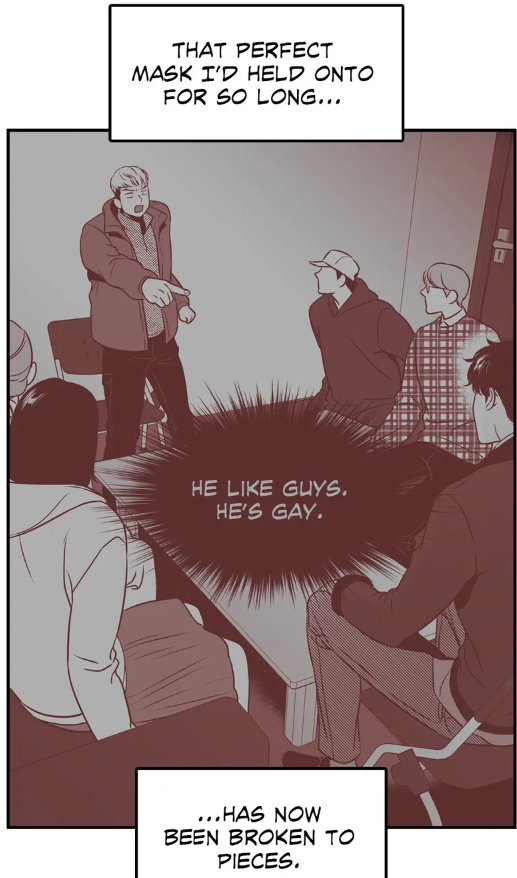 As you can observe, a name and as such notoriety can also serve as a mask. The president of the council was admired by his peers, he was so perfect that some students even wondered, if he was human.
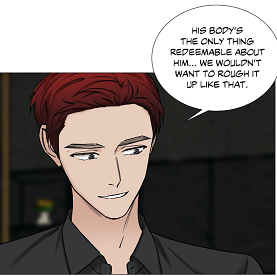 and the president is not recognizing it. But why is reputation a mask? It is, because people often judge others on hearsay and first impressions. The social medias are the perfect example for superficial and quick judgement. But we have to question ourselves about Ahn Jiwon’s initial motivations to hide behind a good notoriety.
 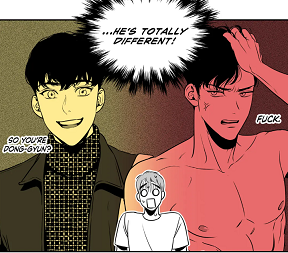 In the beginning of the story, he doesn’t even know the other protagonist very well, yet he is willing to take care of him, when the latter is drunk. The president is seen constantly smiling and has never externalized negative emotions (anger, violence…). This explicates why the uke was so shocked and confused, when he saw a brutal BJ Alex. The latter had discovered his secret, hence the former felt vulnerable. On the other hand, Nam Dong-Gyun wondered about Ahn Jiwon’s true personality. But the uke was not the only one who had no idea about Ahn Jiwon’s true character. The latter was also confused.
  This signifies that the protagonist was never confronted with his own reflection.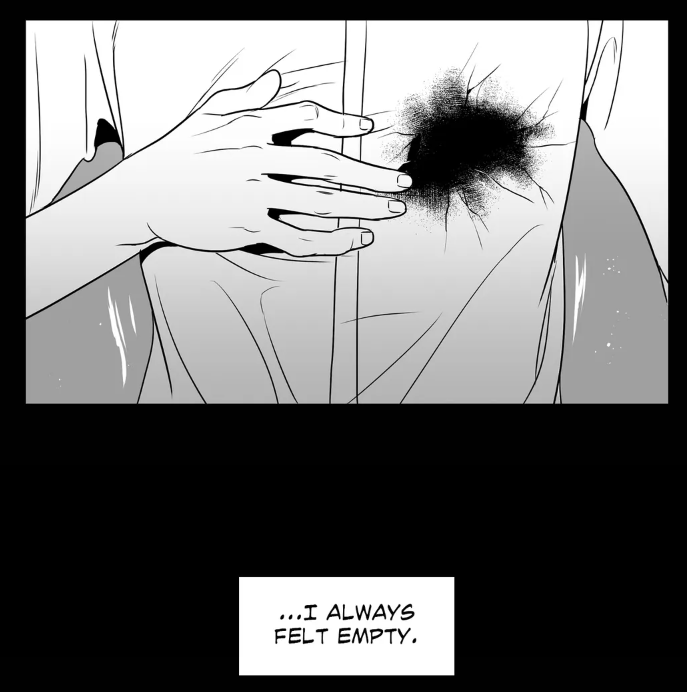
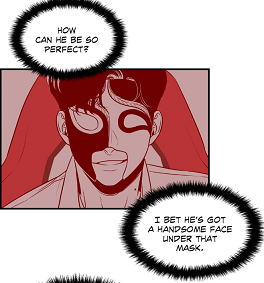 (chapter 1)
 (chapter 49) Since the adults kept criticizing him, he imagined that if he copied his brother, he would get recognition and acceptance. In other words, he forced himself to become a second version of his brother.
  But even copying his hair dress and tastes, he was doomed to failure, for the parents had already categorized him: he would always be inferior to their eldest son. He realized gradually that this wasn’t right, for his parents still didn’t perceive his true identity. That’s why he feels drowning, when he loses his mask.
  He doesn’t have the impression to exist.
 (chapter 49) That’s why he chose a third mask: he tried to be admired at school. He was caring and considerate towards his fellows. However, since he had made this rational decision
 , in his mind he was acting. Hence he didn’t truly enjoy this situation.
 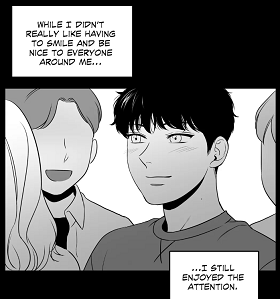 (chapter 49) He felt that he was forced to smile. Besides, I believe as he was fake, this admiration was quite superficial in his mind. Therefore he didn’t feel truly loved. That’s why at some point, he wondered if he would ever be loved…
 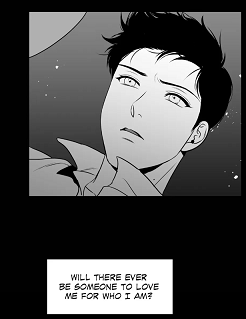 However, the readers should interpret this question differently: he was asking indirectly, when his true self would be recognized by someone. And the one who made him discover his true sexual orientation was unfortunately a player. That’s why the main lead was so devastated and hurt, when he discovered that his relationship was based on deception and fakeness. So after being sent to the army, Ahn Jiwon chose to act like in the past. He became a role model as a student, yet he could no longer hide his homosexuality. Hence he led a double life.
 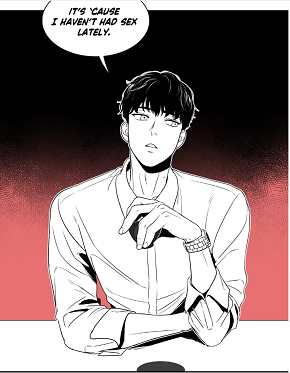 (chapter 08) In this scene, the charater is disguising his true thoughts. The black and red are representing his emotions: he is irritated, because he needs to have sex with Nam Dong-Gyun. Note how Ahn Jiwon is avoiding his counterpart’s gaze. The figure is acting, his mask is his face and the presence of the colors symbolizes the repressed and hidden thoughts and emotions. Mingwa colored one picture in chapter 51 marking a turning point in the protagonist’s life.
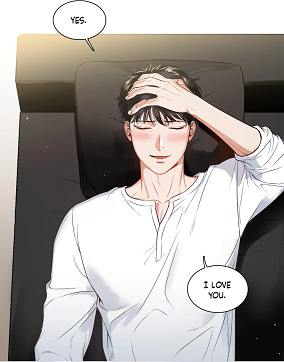 For the first time, he was acknowledging his feelings and as such his own desires. This picture represents the removal of one mask. He is slowly living for real, but in this chapter he still hadn’t found his true personality. The other mask (his reputation as good student) was still existent. Besides, he still believed that his smiling and caring attitude were just an act, while in truth he was genuine and caring. But due to his past, he had already internalized that this was just an act. And now, you comprehend why the latest episodes from BJ Alex are in color. The main lead had finally found his own identity and place.
  (Painter Of The Night, chapter 54), colors, reputation, etc. The protagonists are often hiding their true thoughts and emotions due to their past, while the villains are using masks to deceive people.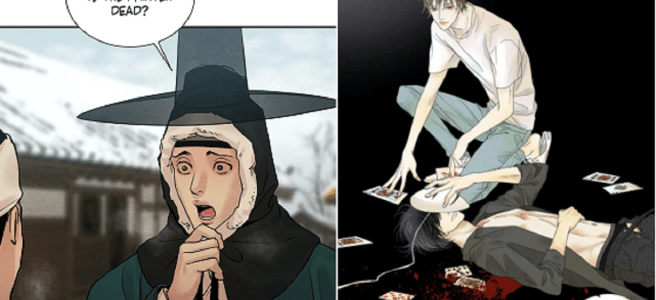
 , I came to realize the lord’s true personality. He doesn’t just want to replace the main lead as the new alpha among the nobles, more importantly he takes pleasure in ruining friendships and as such causing pain to others. As a conclusion, I noticed that he enjoys destruction. Therefore I stated in the first part that Min had a nihilistic mindset: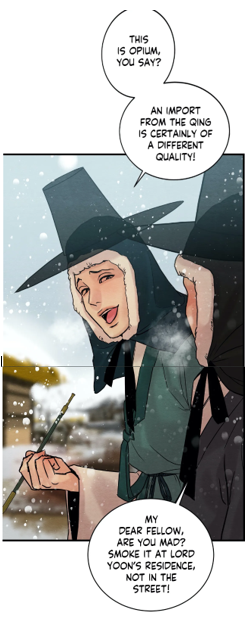
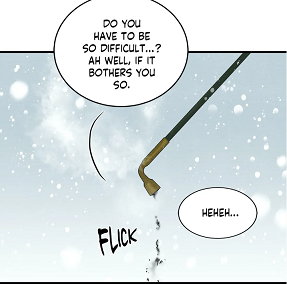 (chapter 52). Then he violates the rights of his host in chapter 43, when he proposes the assassination. Since this is not Min’s pavilion, this means that his friend’s house is transformed into a conspiracy place.
 This will play a huge part in the future, as I am anticipating a purge. At another party, he violates again the rights of his host by mocking and insulting him: chapter 52, 53
  54
54 . I could also add that he disregards the painter by suggesting his murder (43, 56) or by treating him like a sex object (chapter 33/52). Moreover, he often lies (chapter 36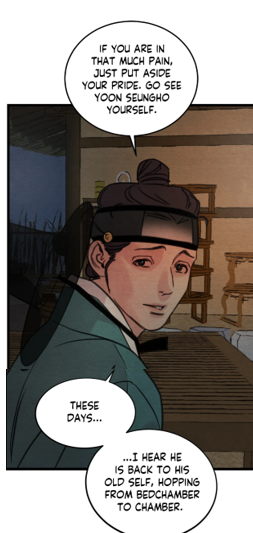
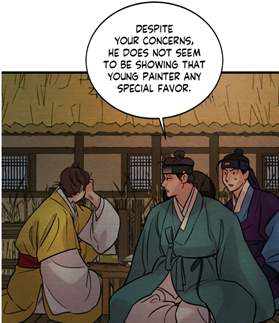 , chapter 43
 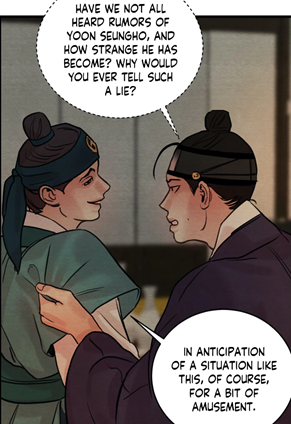 . All these examples expose that he manipulates his surroundings constantly. He influences Jihwa by giving him the idea of the murder (
 chapter 43, chapter 56
  ). He pressures Yoon Seungho to bring the artist to their party so that he can taste him (chapter 33, chapter 52). Observe that although Black Heart is often seen with other aristocrats (chapter 8
 (chapter 52). This is understandable, as during that night, Yoon Seungho was totally vulnerable and tried to hide his weak disposition with his clothes.
 (chapter 52) This explains why Black Heart continues targeting the main lead with his tricks (chapter 52/53/54). Not only he simply can’t get enough, but also he is determined to prove his supremacy. The manhwaphiles comprehend now why in chapter 66, Min even visits directly the protagonist’s mansion on his own indicating that he has been keeping an eye on Yoon Seungho. Observe that for the first time, he comes alone, unlike in chapter 8 and 52.
 He must have heard about the painter’s disappearance and desires to witness Yoon Seungho’s pain. For him, this would represent the best proof of his skill as manipulator. But to his disappointment, Baek Na-Kyum is not dead.
  This mask exposes his lack of empathy and his joy for imagining that the main lead is suffering (“difficulty with showing remorse or empathy“). Since his plan failed, he is disappointed
 . Therefore he enters Yoon Seungho’s mansion. However, pay attention to the last picture which indicates that Min is thinking about Jihwa and his disobedience. The red-haired noble didn’t act like planned. In my perspective, his thoughts indicate that Min will make Jihwa pay for his “disobedience”. At the same time, I believe that Min is already thinking about his next move, this is the other reason why he enters the main lead’s house without a proper invitation (a new version of chapter 12). This image serves as another evidence for his continuous disregard for social norms. And this chapter 66 represents a turning point in my opinion, as it exposes Min’s impulsiveness to the best. Since he didn’t get Yoon Seungho’s defeat by afflicting pain on him, he needs to cause another uproar and inflict pain on Jihwa, who didn’t follow his “order”. Note that Black Heart just reversed the roles, showing that he doesn’t care who wounds whom. His main focus is pain. By revealing the secret, Black Heart is hoping that Yoon Seungho will retaliate against his childhood friend because of the kidnapping.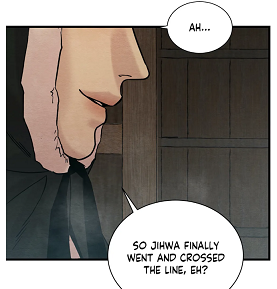
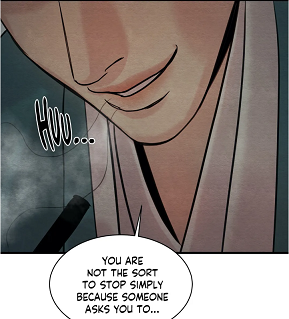
 Hence I come to the conclusion that for Black Heart, the commoner had been a killjoy in that scene. And now, it makes perfect sense why Min chose Jihwa as his pawn in the end. He had witnessed how the latter could turn Yoon Seungho into a “monster”
  and found it so entertaining and funny that he decided to recreate the same situation. This observation explicates why Yoon Seungho put Jihwa and Min in the same bag in chapter 57. Min knew how to provoke the main lead thanks to Jihwa.
 He says the exact opposite of his true thoughts. While begging for the protagonist’s mercy, he is hoping for the opposite reaction. However, his plan can’t work like in chapter 53 because of the painter’s presence. The reason for this is simple. The lord is embracing the unconscious commoner underlining the importance of the hug. Although Baek Na-Kyum is unconcious here, just his presence is now strong enough to stop Yoon Seungho from getting violent and enraged. Baek Na-Kyum is so vulnerable that the lord can only focus on him, whereas it was the opposite in chapter 53. In other words, this episode marks Min’s defeat. He is not able to manipulate Yoon Seungho like in the past and the painter represents his antidote.
  , when he revealed himself the planned assassination in front of Baek Na-Kyum. However, back then he wasn’t caught, as neither the painter nor the powerful protagonist paid attention to his words. And instead of learning from his mistakes (f. ex. the murder didn’t occur like planned or the punches he received from the main lead for his provocations), he continues irritating Yoon Seungho. He notices that the latter is no longer denying his feelings in front of him, hence he can’t humiliate him like in chapter 54.
  Consequently he has to search for another trigger in order to provoke the owner of the mansion. But here, he fails again, as the artist is more important than Jihwa’s wrongdoing. Yoon Seungho is already more focused on his own misdeeds, the afflicted abuse on the painter: the violent sex marathon, the insults and the sequestration. Consequently he has no time for his uninvited guest. He ignores him and leaves him behind, but this won’t do for Min, hence he unveils a secret: Jihwa’s participation.
  Since the chapter 66 stands in opposition to the episodes 53/54, it becomes obvious that the main lead will react differently. He won’t act on his emotions, he learned his lesson due to the painter. He punished the commoner, although the latter was innocent, too blinded by his rage and pain. That’s why I think, we should consider the chapter 66 as Min’s ultimate defeat.
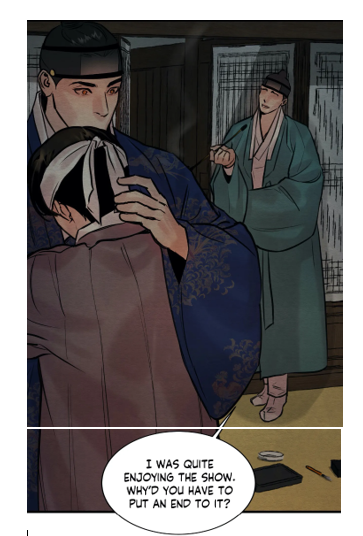 He chose to irritate him again, risking his own life. That’s why he got slapped so violently that the door was destroyed. But note that Black Heart didn’t feel any pain and showed no tears, instead he started laughing and showed pleasure.
 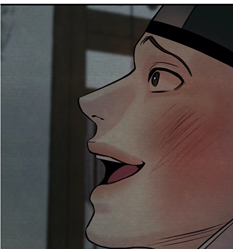 But even after receiving the slap, he continued provoking the host thereby the main lead started punching him so many times.
  However, there exists another explanation why Min kept provoking Yoon Seungho. But this aspect will be elaborated later.
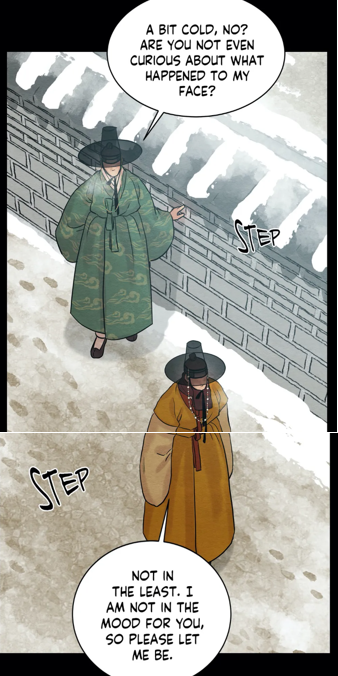 However, this time he adds that he wants to taste the painter before and note that here, he is mentioning the punches he received from Yoon Seungho.
  As the manhwaphiles can detect, Min is here retaliating against the main lead for hurting him. He will make him suffer much more: not only he will lose the commoner, but also the latter will get raped: a double affront. However, just like before, he prefers using the childhood friend so that he can avoid to take any responsibility. If something happens, then only Jihwa will pay for this. We should remember that Min never wrote anything concerning a crime. The idea he proposed was at his friend’s place, and the idea of the rape was also mentioned on the street with no witness.
 Min realized the importance of knowledge. Jihwa knew his friend well, hence he was able to awake the “beast” in the main lead. Besides, he could notice that Jihwa had an immense influence on the main character. He could wound him, yet the latter wouldn’t cut ties with him. Note that in that scene, Min never said a word, yet he was observant and realized that Yoon Seungho had a weakness: “in the most wretched of states”. That’s why he chose to get closer to the protagonist, willing to become an uke, if it was necessary for his plan. He needed to discover more about his prey and the best place was to get closer to Jihwa and Yoon Seungho, slowly and silently exactly like a snake. However, I believe, the real war between the two semes started in chapter 41, which caught my attention during the first season. The hand on the main character’s waist was a sign that the psychopath planned to “screw” the main character.
 (chapter 41) Not only he showed his desire to submit Yoon Seungho, but also he acted, as if he was superior to him. He asked questions and even criticized the main character for his behavior: he was creating a ruckus, exposing his hypocrisy, as Black Heart loves uproar.
  His reason is his thirst for revenge. His sister Lee Seorin was a victim of a gang rape, but since the perpetrators were never prosecuted, the sister killed herself out of despair. The culprits were students coming from wealthy and influential families and members of an organization called “secret fraternity”.
 Because Lee Kirin had no idea about the identities of the culprits and only knew that they belonged to that “secret fraternity”, he decided to get close to Kang Moo in order to investigate and get revenge for his sister’s death. While Lee Ki-Rin believes, he is manipulating Kang Moo, the readers can quickly realize that the opposite is happening. Kang Moo is the one who let Lee Kirin approach him in the end. What Lee Kirin doesn’t know is that Kang Moo is a psychopath. The latter has always hidden his mental illness in front of people.
 Even the members from that “club” had no idea except Lim Joohyuk. There’s a reason for that. When he killed a dog for the first time as a child, he saw his mother’s rejection and disgust.
 As you can detect, in that story Kang Moo has an abnormal low arousal and needed stronger stimuli, as time passed on.
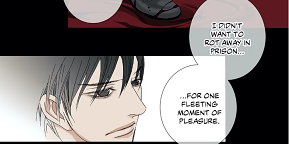 (chapter 32) The manhwaphiles can sense the similarity in the vocabulary: for Min, it is fun/entertainment, while Kang Moor keeps talking about “pleasure”. Since Kang Moo recognized the repercussions of a murder, he chose to fight against it contrasting to Min’s attitude. And there’s reason for that: Min’s social status and historical period. The latter is a noble and can use his superiority to hurt commoners and even break laws, because aristocrats are not prosecuted like low-borns. Secondly, I believe that his family and his surroundings played a huge role. Observe that the nobility is portrayed as corrupt and decadent. Besides, the manhwalovers should remember that Min’s MO is to manipulate others, therefore it reveals that the character had found a way out how to outlive his “urge and need”. He could commit small wrongdoings, as he knew that he wouldn’t get punished for this. But if he had to hurt another noble, he had to use someone else. And this exposes the similarities between Kang Moo and Min. Both are well aware that certain things are not allowed, yet they try to find a different way to move around the rules and laws.
  (chapter 32) the readers shouldn’t take his words as face-value. In my opinion, he felt a similar emotion than Lee Kirin (revenge), because Lee Seorin was the first person who showed understanding and no rejection, when he removed his mask and revealed his true personality.

 (chapter 33) . What caught my attention is that Kang Moo is voicing his fear indicating that he was well aware of his own mental issues. Moreover, it also outlines his despair… he desired to escape from this, but didn’t know how to. Lee Seorin comprehended Kang Moo’s anxiety, therefore she tried to encourage him not to give up, by supporting him that he could continue maintaining a normal life, if he truly wanted it.
  And now, you grasp why Kang Moo snapped, when he heard about the circumstances of her death. It was his club that was responsible for her suicide. Naturally, when Lee Kirin asks him if he loved his sister, the psychopath can’t answer that question, since he is unable to grasp his emotions.
 (chapter 34). However, there’s no doubt that the protagonist had an affection for Lee Kirin’s sister. I believe to perceive an evidence of his attachment to her, when he mentions the suffering of a victim of gang rape.
  (chapter 56) Sure, in this scene he is threatening Mr. Jang to organize a gang rape on Mrs. Hong’s daughter, because the man with the glass was also menacing his lover Lee Kirin. Yet, the fact that he mentioned such a crime indicates that he didn’t forget the crime Lee Seorin suffered from and he could understand her pain. And there’s another proof that Kang Moo is not truly emotionless. It becomes even more obvious that he loves the main lead too. It is shown in two different occasions. First, he states that he will never let Lee Kirin go.
 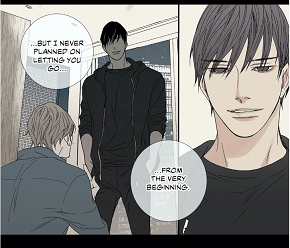 (chapter 34) And latter, he requests from his lover to help him to “stop the beast inside him”.
 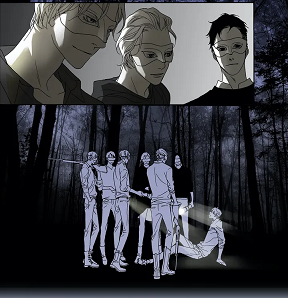 (chapter 1). Here, they hunt someone for fun. Besides, I would like to mention here the k-drama “It’s Okay not to be okay” with Kim Soo-Yun and Seo Yea-Ji. In this terrific drama, the main lead is a famous writer suffering from ASPD and the so-called normal people are actually portrayed in a rather negative way as well: they insult, exclude and hurt the persons suffering from a disorder or disability. This shows that authors in South Korea are trying to change the image about mental disorders and plead for more understanding and open-mindedness. In “The Beast Must Die” and “It’s Okay Not To Be Okay”, the characters help people to comprehend that the boundary between normality and abnormality is thin and I would even say, illusory. Lee Kirin desired to get revenge, yet he doesn’t feel sorry for the death of the culprits, but no one is questioning him. It becomes a different story, when a psychopath is involved. The detective will do anything to catch Kang Moo, but finds excuses for Lee Kirin. But observe that he is not diagnosed as a psychopath. As you can sense, there’s here a double standard. Normal people even call for violence and revenge due to their anger and pain, that’s why there’s still death penalty in so many countries. As a conclusion, being diagnosed as a psychopath doesn’t mean that they are no human and people should treat the patient like a monster. Being excluded from society is not the correct answer, like Kang Moo sensed it. He felt the condemnation in his parents’ gaze hence he felt abandoned and lonely.
 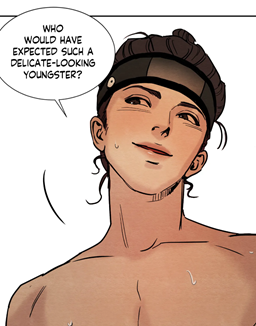 Furthermore, he saw genuine attraction in the painter’s gaze because of Yoon Seungho. Let’s not forget that Min considered the protagonist as a person similar to him. The commoner was not attracted due to his power or wealth but by the person himself… meaning that he didn’t care about his bad reputation and bad habits. That’s how Min got fascinated by the artist. Since he saw the pure desire in Baek Na-Kyum’s eyes during the intercourse
  (chapter 8), the aristocrat imagined that he could get the same gaze, if he had sex with the painter. And that’s how the love triangle started. He wished to be gazed like Yoon Seungho was.
 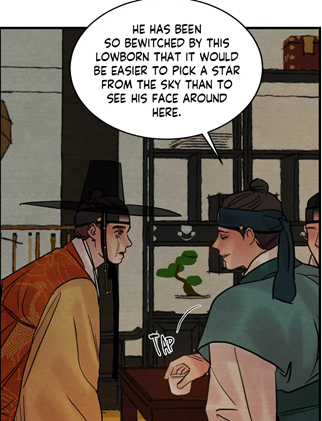 In reality, he is describing his own thoughts. In other words, he is projecting his own thoughts into the protagonist. He explains his desire and obsession with witchcraft, because he feels vulnerable. That’s his way to confess his love in my opinion. Just like Kang Moo, he can’t say these words (“I love you”), as he has no idea what he feels and what love is. With this interpretation, it becomes comprehensible why Min suggested the painter’s murder in the end. If he can’t satisfy his urges (taste the painter) and he is still thinking about it, then he needs to get rid of the source of his obsession. Because the moment the painter disappears, Min will be able to move on. Witnessing Yoon Seungho’s pain will compensate him for the loss. Therefore, the manhwaphiles can comprehend, why Min still associates Baek Na-Kyum to death. Deep down, he fears the painter, as he senses that the former represents a source of danger for him. He can become his weakness. And the best way to remove this is to manipulate Jihwa to commit the crime. I also think, Min had already detected that he couldn’t do it himself.
 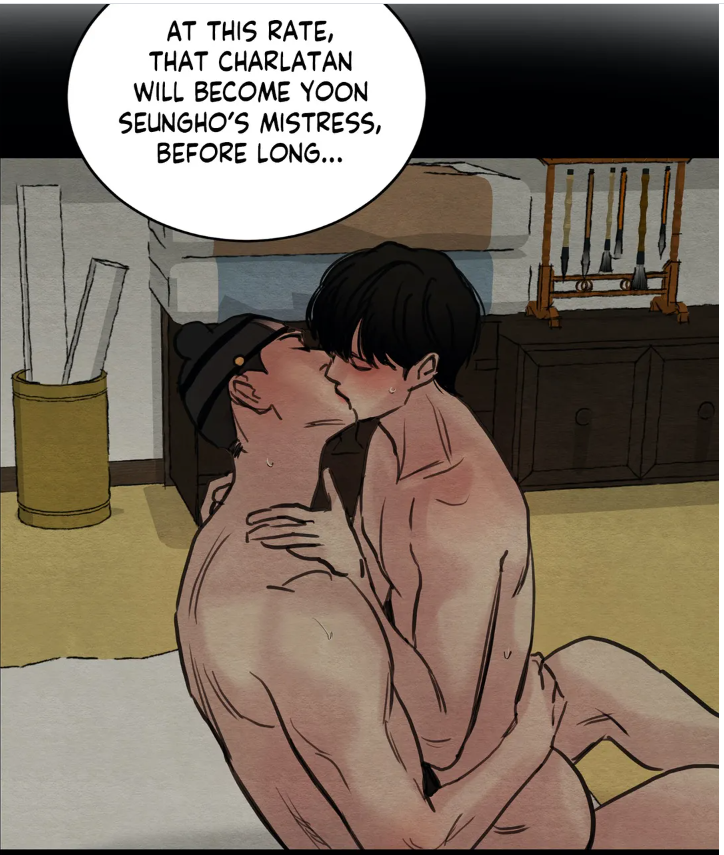 Min was witnessing how Baek Na-Kyum was escaping from him: first a paramour, now a mistress. There’s another evidence for Min’s attachment to the painter. Like my reader @Lahuno66666 pointed it out correctly, Min is always talking about Baek Na-Kyum, exactly like the main lead. Note that in each chapter Min appears, he always mentions the artist:
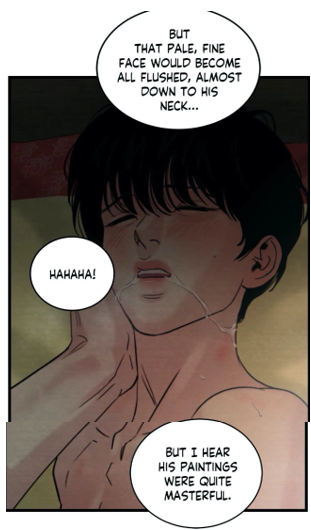 , chapter 36
  chapter 43
  , chapter 53
 , chapter 56
 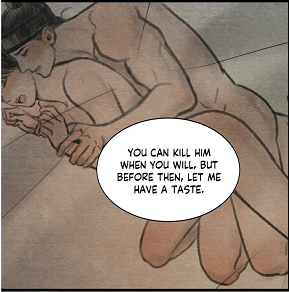 , chapter 66
  And now, it becomes comprehensible why Min chose to walk on the picture
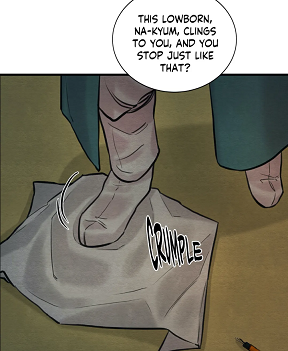 , when he was in the artist’s study. He felt the urge to destroy the image, as he desires to be the one portrayed in that painting. This explains why the next morning when he talks about the Baek Na-Kyum’s assassination and rape, he remembers the drawing.

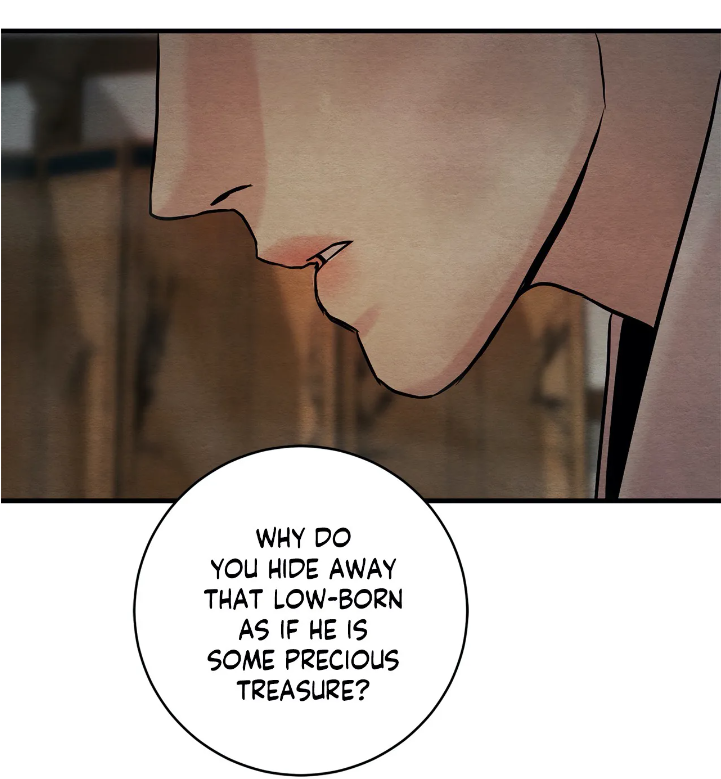
 (chapter 52) And notice that his desire to taste the painter contrasts so much to Jihwa’s words in chapter 18.
  The joker in chapter 52 even insulted Jihwa as sodomite,
 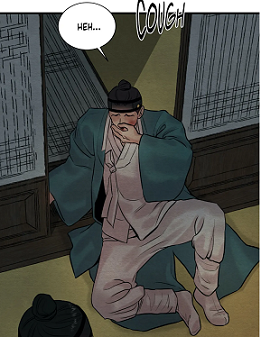 and to his bloody face
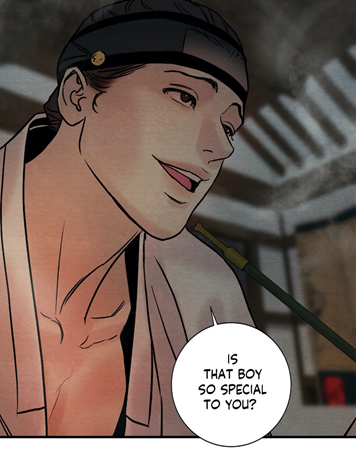 He kept asking rhetorical questions, making comments without waiting for Yoon Seungho’s answer. It was, as if Min was acting like an entertainer. However, we should remember that despite his role as jester, his true goal is not to entertain his host or his friends. He is behaving like that out of selfishness. He is the one who desires to have fun.
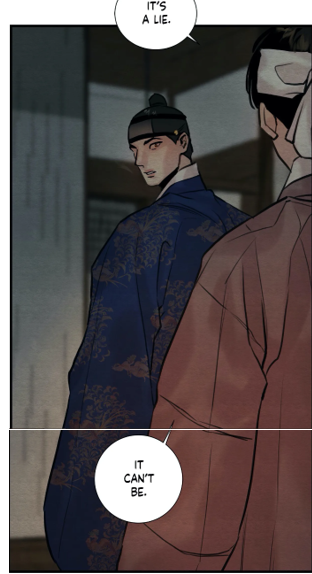 And due to Min’s trick, Yoon Seungho was hurt, as he considered it as a rejection. Note that in that scene, social norms played a huge part in the denial of both protagonists, although they were never directly mentioned. Min as the joker was a reminder of scandal and as such of standard norms.
 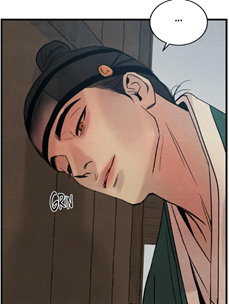 and screamed for his help.
  Yoon Seungho was the last person he was thinking of, when he imagined that he could die. And let’s not forget that the artist was still in denial after the second confession and their second love session. He kept denying the obvious and recognize the noble’s feelings.
 For him, it was also too beautiful and incredible to be true. At the same time, his denial stopped him from realizing his true feelings. Yet in front of death, Baek Na-Kyum couldn’t control his emotions and thoughts pressuring him to voice his deepest desires. And the artist’s disappearance had a similar effect on the main lead in the end. First, in the storage room, he confided his real wish
  before “destroying” the painter with sex. That’s why I view this panel as a parallel to the one where the painter was screaming Yoon Seungho’s name.
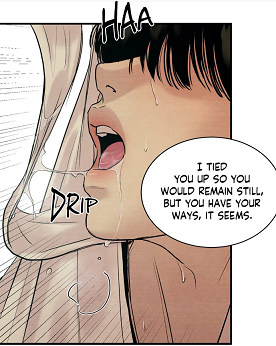 Then he is not even trying to hide the painter in front of Min. He is indeed carrying him like a treasure, while feeling no embarrassment.
 Like my follower @seunghosimp observed it correctly, this gesture symbolizes his capitulation and submission. Due to Min’s intervention, all the secrets were removed so that the relationship between the two protagonists can be rebuilt on a new and real foundation. The noble has no longer the upper hand in their relationship and will always listen Baek Na-Kyum’s words. Now, Yoon Seungho can trust the painter and will never question his behavior and words. What the main lead fails to recognize is the painter will never see himself as superior and as the lord. For him, love is not a synonym for war or defeat. Baek Na-Kyum will teach him the true nature of love.
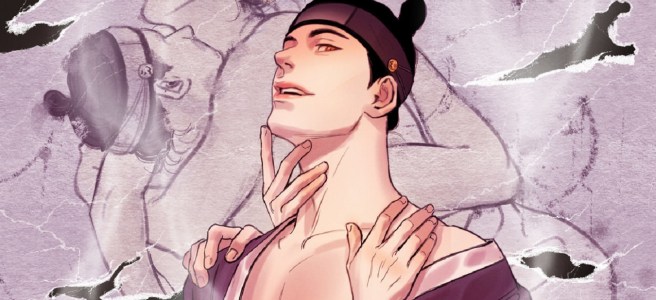
 Bebebisous33s' analyses in K-Dramaland and Manhwas