Protected: Painter Of The Night: Seungho’s kisses 💋 (second version)

Bebebisous33s' analyses in K-Dramaland and Manhwas
Analyses of K-dramas and Manhwas (for the most part Yaoi)


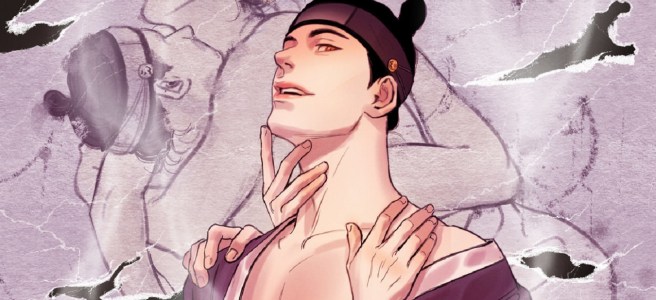
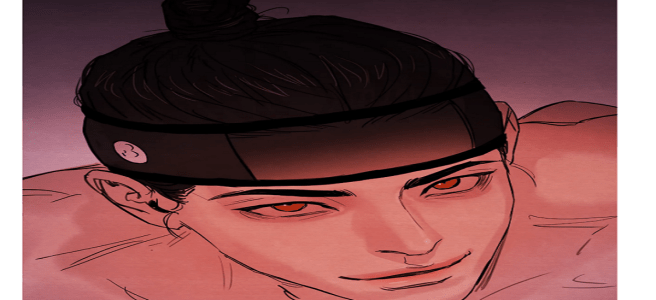
This is where you can read the manhwa. https://www.lezhinus.com/en/comic/painter But be aware that this manhwa is a mature Yaoi, which means, it is about homosexuality with explicit scenes. If you want to read more essays, here is the link to the table of contents: https://bebebisous33analyses.wordpress.com/2020/07/04/table-of-contents-painter-of-the-night/
It would be great if you could make some donations/sponsoring: Ko-fi.com/bebebisous33 That way, you can support me with “coffee” so that I have the energy to keep examining.
The main lead’s father only appears at the end of the first season. Striking is that the beholder can’t see his face as he is looking at the paper on the table. That way he still remains mysterious and somehow anonymous.

However, the father is already mentioned in the first episode through Baek Na-Kyum. Striking is that this character is introduced in a similar way like Jung In-Hun. This indicates that although the father is not present in Seungho’s life, his shadow has left a deep impact on Yoon Seungho. Thus in the first chapter, we hear from the artist that the master Yoon had cut off the topknot of his eldest son. This gesture symbolized the rejection and the abandonment from the father. Furthermore it also ruined the son’s reputation. From that moment on, Yoon Seungho was stigmatized by gossips as a huge sodomite. Since Baek Na-Kyum is even able to remember this story, it shows that the huge scandal hasn’t really died down… it still exists in people’s mind. Consequently, the master Yoon is linked to a scandal which doesn’t leave a good impression for the readers.
Later, we discover that the families close the clan Yoon were all arrested due to a purge and only the family Yoon was able to escape from this extermination. What caught my attention is that the whole family left the mansion leaving the eldest son behind. From this simple information, we can already conclude that the father was running away and dropped all the responsibilities to his eldest son. That’s why I already come to the conclusion that the father is more or less a coward. He literally walked away from everything. In another post, I have already exposed my theory about Seungho’s tragic past hence I won’t repeat myself. Sure, there is no guarantee that my assumptions are correct. Yet even without knowing the whole past, I can discern certain features from the father: his gutlessness and his cruelty.
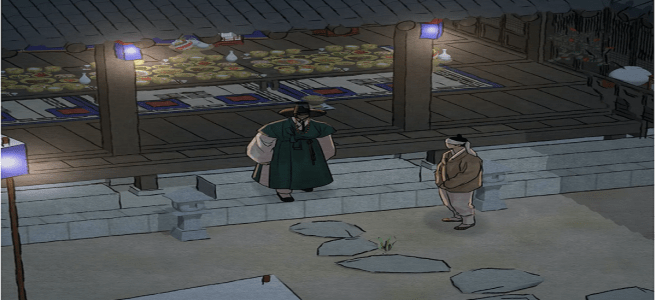
However, the reader feels his presence again, when the younger brother pays a visit to Seungho. The latter had refused to reply to the letter from his brother hence the young man didn’t want to leave the noble alone therefore he visited his brother during the evening and even forced his way into the mansion.

The servants could barely stop the young master to enter the chamber of his eldest brother. The way Seung-Won behaves underlines the urgency. The father and his brother seem to need Seungho. But we don’t know the reason. The brother shows a certain discomfort, when he is finally received, since there is a drop of sweat on his cheek. You can sense that he would like to talk in private but can’t because Baek Na-Kyum is present sitting next to Seungho. He tries to ask his brother to send away the young man but he is interrupted by Seungho. The latter won’t listen to him and he should tell immediately the cause for this late visit.

The excuse is the long health issues of the father. Therefore he begs his eldest brother to pay a visit to the father. But if Yoon Seungho went to visit his father, this would signify that the son wants to be reintegrated into the family. He would show his respect to his father. Consequently, the father could announce his wish to return to the real family’s domain where Seungho is living. In the long term, the father could claim that since he is the head of the family, he is the real master of that mansion.
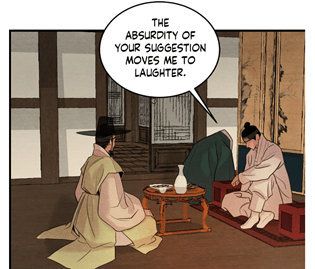
For our protagonist is not stupid, he can only reject the request. Furthermore, this excuse and demand outline two major points:
– The father is using his son Seung-Won as a tool. He knows that he can not ask his eldest son directly, as he was the one who cut ties with him. The father is quite manipulative. He is definitely not ill which the picture in the chapter 44 confirms. The father tried to reach his son much earlier through letters but the son turned a deaf ear.
– The father wants to maintain his good reputation, he doesn’t want to lower himself and beg Seungho for forgiveness. The father truly shows neither regret nor remorse. Now, we can clearly see where Seungho’s selfishness comes from. The father knows that he needs Seungho’s support so that his younger son can become an official. Maybe he wanted from Seungho that Seung-Won is allowed to live at the mansion in the capital.

Seungho doesn’t just refuse the request, he is making fun of his brother and father. The reader feels the resent coming from the protagonist, his reply is full of sarcasm as he is reminding his brother about the past which hasn’t been revealed. Since he mentions that he is already living by the principles father taught him, I came to the conclusion that Seungho was never a homosexual from the start. Because his father abandoned him in the past, this event shouldn’t be changed as the father chose to do such a thing. But this ironic remark reinforces the determination of the seme. He has no inclination to reconnect to his relatives.
As conclusion, he is also abandoning his family. He has no intention to help them. Yet, when the brother leaves the house, he receives a letter from the servant Kim which makes Seung-Won happy. It was as if the late visit was not fruitless. For the first time, Seungho gave a letter for the father.
Only at the end of the first season, we discover the content of the letter. It is the ruined painting, where Seungho is having sex with two partners.
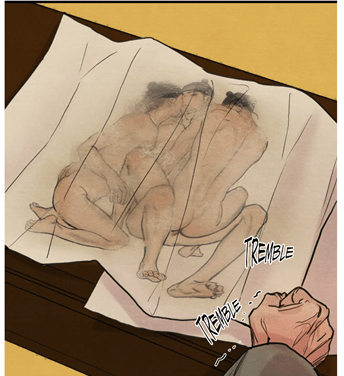
In the first picture above, we could see the hands shaking. This already revealed that the person was not happy at all, quite angry. Sending this picture was a very bold move from the protagonist. He is showing his disrespect to his own father. But at the same time, he is reminding his father that he became a homosexual because of him. He is definitely living the life his father forced upon him. However, if you pay attention, the painting has been ruined by Jihwa therefore this erotic picture is fuzzy. It was as if his life as a hell-raiser and biggest sodomite is about to evaporate. His disappearance coincides with his falling in love with the painter. He is actually no longer living like that. He has become quite monogamous. He hasn’t slept with anyone else after Baek Na-Kyum’s recovery. So the father is left in the dark.
Finally, I would like to point out that the father didn’t even let the brother see the content of the letter. This shows that there is some secrecy kept from Seung-Won. Secondly he didn’t even go outside to say goodbye to Seung-Won, when the latter is about to leave for the capital which shows a certain lack of affection from the father. This actually reinforces my impression that Seung-Won is just a tool for the father and is manipulated by him too. It seems like Seung-Won wants to enter the civil service examination too. Seung-Won and Jung In-Hun will both meet there. I can also imagine that Jung In-Hun will be the one who leaks the info about Baek Na-Kyum to the relatives. I can imagine that the father might try to use the painter in order to force Seungho to give in.
As conclusion, although we didn’t get to see the father’s face and don’t know much about him, he has left a negative impression. Through my analysis, I perceived many flaws. He is selfish, greedy, manipulative, coward, cruel and ruthless. Just like Baek Na-Kyum was living in the shadow of the envious and jealous Jung In-Hun, Yoon Seungho led a similar life, he was burdened by the father’s shadow. Since we could see how the painter could escape from the teacher’s claws, we can assume that Seungho will experience the same. Actually this has already started. Thanks to his love for the painter, Seungho has turned into a different man. But let us not forget that he is suffering from insomnia, his hand was also shaking,  (chapter 37) when the brother asked him to visit the father. His suffering has not ended totally, for that he needs to unveil his past to the artist.
Feel free to comment. If you have any suggestion for topics or manhwas, feel free to ask. If you enjoyed reading it, retweet it or push the button like. My Reddit-Instagram-Tumblr-Twitter account is: @bebebisous33. Thanks for reading and for the support, particularly, I would like to thank all the new followers and people recommending my blog.

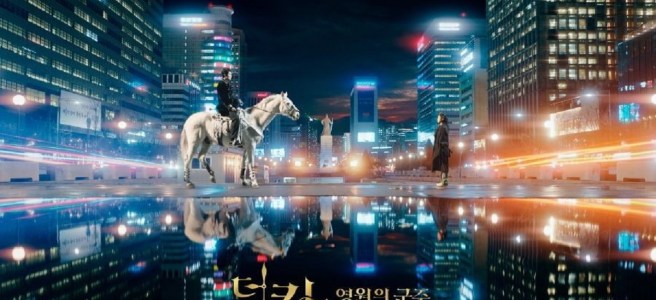
In one of my former analyses, I compared Alice in Wonderland with this k-drama. In the fairy tale written by Lewis Carroll, the Mad Hatter considered time as a person therefore Time was written in capital letters:
“If you knew Time as well as I do, said the Hatter, you wouldn’t talk about wasting it. It’s him. “[…] I daresay you never even spoke to Time”.
Furthermore, time played a huge significance in this story as it was about growth and the passage from childhood to adulthood. Alice’s journey in Wonderland represents her quest for her own identity. And this k-drama is not different: We see Lee Gon, the protagonist changing. From a mathematician and scientist, he has become a true believer of the 4 Tiger Sword and the Manpasijeok. And as such, time is an important factor for growth and making new experiences.
Before analyzing the k-drama under this aspect, we need to remember what time is. Time is composed by past, present and future. And all along these three aspects are always present and relevant for the story and its evolution.
But now let’s go back to the start of The King: Eternal Monarch. Right in the beginning, time is present. We hear our antagonist Lee Rim telling the story dated in 632, then when he is asked, why he doesn’t look like his age (71), he mentions the year 1994, where everything all started. All this underlines the importance of the past. But time doesn’t just exist through the testimony and the reference of the Chronicles of the Three Kingdoms. In the interrogation room, the detectives Kang Sin Jae and Jeong Tae Eul put the records of Lee Rim.

The records about Lee Rim symbolize time. He is supposed to have died, just like he is supposed to be very old. As you can see, the “person” Time never appears as such but is existent in the interrogation room. The past and the present are the elements that are alluding to the supernatural: the story about the mysterious flute, the strange appearance of Lee Rim who doesn’t age.
Then when Lee Gon is saved by the mysterious savior, he catches the ID from the future with the date: 11.11.2019. During the coup d’etat, we have a mixture of past and future. Now (episode 13), it has been confirmed that Lee Gon traveled back to the past (1994) and saved himself from Lee Rim. So here time is embodied by the ID and the mysterious savior. It was as if time could be seen or touched through the objects or the persons. The best example is when Lee Gon and Lee Rim observe that Time stops. Because nothing moves except the two main characters, the latter can sense the lack of time. Nature stands still: the snow flakes or water don’t fall anymore.
The director sometimes tried to even personify Time in different shot, when the persons were not talking about the present, the past or the future. I chose two different takings:

Here, we have the impression due to the lights on the right side that this is not a sequence but a photo. However, when Lee Gon and Jeong Tae Eul hug each other, the viewer can observe their movements, while the lights on the sight are so fuzzy and stretched. It was, as if time had stopped and nature stood still. This taking reflected the inner feelings of our two protagonists: they enjoyed the moment, the present.

Here, Time is also present in the form of the hourglass. Pay attention to its size: it is even bigger than Lee Gon and Jo Young. Through this taking, the director illustrates how powerful time is and it is a main character invisible to the people standing next to it.
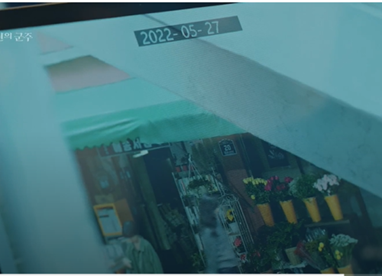
While Lee Gon was looking at the CCTV in order to watch his loved one who was so far away from him, he suddenly discovered this CCTV from the future. The child with the yo-yo lets him know where Jeong Tae Eul will be on the birthday. This scene is important as it shakes the king to the core. There is no science that can explain this. On the other hand, it shows him that Jeong Tae Eul is alive and well which can comfort him. Here, it was as if the child with the yo-yo already knows the end of the story, just like the book about King Arthur. This deity can move from one world to the other, it can also travel to the future which seems to indicate that he can travel to the past as well. The child with the yo-yo has also a strong connection to time as he was the one ensured that Jeong Tae Eul would get a new ID so that the young Lee Gon would be able to receive it. Then he was the one who told Luna that he believed in the existence of god which let her say that she would be punished. So is he a personification of time? I am more inclined to believe that he embodies fate which is related to time. His main duty is to observe that the balance is well maintained. Anyway, the child with the yo-yo uses time (and good timing) so that everything predetermined will happen. Since the flute makes it possible to travel in time, then the balance has been disrupted as we know that Lee Rim travels to the future. He neglected the past as he saw no real meaning in it. The reason is simple: since he is obsessed to become king, his focus was on the future.
Another observation is the strong connection between Jeong Tae Eul and Time. Remember that she is a person who learns through experience and as such, she needs time to acquire her knowledge. We can see this strong link between these two in different occasions. When she waits for Lee Gon in the episode 6, the separation made her realize her longing for Lee Gon. Time was the reason why she realized how much she missed the king. Then in the episode 7, when she is about to confess her love to Lee Gon, her thoughts revolves around the past (“fate”) and the future (“sad premonition”) but this doesn’t stop to declare her love. She wants to enjoy the present to the maximum. This elucidates why Jeong Tae Eul seems so obsessed with the present. She doesn’t want to project herself with Lee Gon in the future as she has a sad premonition. She keeps saying to Lee Gon: Let’s enjoy the moment. Hence she doesn’t answer to his proposal. Strangely, Jeong Tae Eul meets Lee Gon from the future which somehow confirms her sad premonition, yet she doesn’t reveal her strange meeting to the present Lee Gon. In other words, Jeong Tae Eul could be perceived as the personification of the present.
Since Jeong Tae Eul is associated to the present, then which person represents the future? In my opinion, this part is reserved to Lee Gon. The latter appeared in front of Jeong Tae Eul in the episode 10, when he came from the future. But this perception is also confirmed in the episode 13, when Lee Gon looks at his reflection in the mirror.

Here, Lee Gon realizes that he is wearing the same clothes than the mysterious savior in 1994. He gets aware that he saved himself in the past. In the mirror, he sees his own past but also his future as the time travel has not occurred yet. Let us not forget that Lee Gon keeps projecting himself in the future with his girlfriend. He proposes to Jeong Tae Eul, he keeps asking her to come to Kingdom of Corea which annoys our female lead as she is someone who is focused on the present. So the mirror embodies Time as it reflects past and future together.
Since we have described Jeong Tae Eul and Lee Gon as a personification of Time (present, future), we have to wonder which person embodies the past. In my opinion, this is Luna. That’s why she is also seen in the mirror. She represents the past. She has a tragic past (abandoned with no identity) but she has no future, as she is about to die. That’s the reason why she can’t enjoy the present as well. Many have speculated that there were two saviors during the coup d’etat. I have the feeling that Luna could be the second savior if there is a second helper. She could become Lee Gon’s ally and helper in the past. Why?
First, like I mentioned above, the mirror reflect the past and the future. So when he travels back in the past, he could be accompanied by Luna, like in the mirror. Let us not forget that on Jeong Tae Eul’s cellphone there is the inscription: Back to the future and Luna is now in the possession of this precise cellphone. Since the cellphone is in her hands, she could travel back to the past as well. Luna wished, she had grown up differently, so maybe Lee Gon help her to change her fate so that when her future is changed so that she can die in peace, as her time is limited.
All along, we have the impression that the fight between Lee Rim and Lee Gon is a fight against time. It seems that Lee Rim traveled to the future, while Lee Gon will focus on traveling back to the past. Since Lee Rim knows the future, he thinks that he’ll win as he is able to influence the events in the present so that the future is changed in his favor. That’s why he targets specific people, since he knows what they will do in the future. By switching the people from Republic of Korea to Kingdom of Corea, he is able to have the important people siding with him. But changing the past can change the present and as such the future so that all Lee Rim’s efforts become vain.
As conclusion, time is always palpable, visualized or personified in this k-drama. It was as if people could feel time, either through an object or a person.

Since the beginning, Jeong Tae Eul is associated to the following expression: the Earth is flat. This expression is quite important as it reveals Jeong Tae Eul’s personality and the way she perceives the world.
While our protagonist Lee Gon is introduced as a mathematician and scientist, hence he tries to understand the world through numbers and physical laws, our heroine appears to be the opposite, she is a liberal arts person. That’s the reason why Jo Young initially rejects Jeong Tae Eul as he says that JTE is not the science type hence she is not Lee Gon’s type. The fact that she is a liberal arts person is pointed out on many occasions. First, she reveals her lack of knowledge in math, when she tries to reject Lee Gon’s proposal.

She doesn’t realize her mistake, until Lee Gon points out the issue with the 360 degrees. Sure, she corrects herself, yet this incident underlines her disinterest for math and sciences in general. Another example for her lack of interest in these topics is when she doesn’t even try to understand Lee Gon’s explanation about the existence of a parallel world. She doesn’t really pay attention to his explanation about the Quantum mechanic theory, for her it sounds so complex to grasp that she even gives up before really listening. At some point, she gets upset as Lee Gon keeps trying to explain to her about the parallel world that she yells back that for her, the Earth is still flat.
Why does she mean with this? She knows that the Earth is round as it is a planet. In reality, she wants to say that she needs to experience that the earth is round in order to accept this knowledge. She can not understand things through numbers or theories, she needs to live it with all her senses. She is so different from Lee Gon who uses his brain in order to grasp the world, she uses her other senses in order to gain knowledge: the eyes, the hands, the heart… As conclusion, she belongs to the type of people who prefer learning through experience. https://medium.com/@thestempedia/https-medium-com-thestempedia-aristotle-to-feynman-learning-through-experience-304a2d7876bb (if you want to read more about this)
This explains the choice of her career. She could have become a senior inspector much earlier, if she hadn’t opted to work as a detective. She chose to work on the field rather than behind a desk. This also explicates why Jeong Tae Eul is a Taekwondo fighter. This sport worships the following virtues: courtesy, integrity, perseverance, self-control and indomitable spirit. Through her body, our heroine learns these virtues hence she was there to help Kang Sin Jae, when the latter was bullied. First, out of courtesy, she asked the students to stop the bullying. She didn’t give up, when she got threatened (perseverance). Our female lead was able to control the students and showed no fear, when she started fighting against 5 students (self-control and indomitable spirit). That’s the reason why JTE embodies those qualities as well.
But since she met Lee Gon, she was confronted by a dilemma. On the one side, she wanted to believe in Lee Gon’s good nature, on the other side she didn’t believe in his words. Therefore, she remained by his side and even helped him to sell the diamonds or invited him to eat something. But at the same time, she wanted to reveal his lies. Strangely, she needed to use sciences for that. She asked for a fingerprint test, for a DNA test and finally for the help from the Korea Racing Authority because of the horse. Striking is that the sciences she neglected or rejected before proved that Lee Gon was not lying. With her own eyes and ears, she discovers that everything Lee Gon said is correct. While she didn’t believe in his words in the beginning, the sciences are the cause for her change of heart. Little by little, her resolve to see him as a weird or crazy person diminishes. She is more and more doubtful. She is not entirely convinced hence she wants to see Lee Gon’s world in order to believe him entirely. Once there, she wants to discover Monarchy of Corea hence she makes a trip to Seoul. Through her travel, she witnesses all the differences between her world and this world which leads her to admit the truth: the existence of a parallel world.
Just like Lee Gon who had stopped believing in gods, Jeong Tae Eul didn’t believe in the existence of the parallel world but at some point, she realized her mistake. Later, she even conceded to her colleague Kang Sin Jae that she believed Lee Gon and everything from him. She has become a true believer as she experienced the new world on her own.
Since she is a person who acquires knowledge through experience, she is really adamant to know if Lee Gon has been dating before meeting her. That’s why she focused on “first” things: first dating and first girlfriend, first snow, first cooking etc. That’s why Lee Gon asks her on the other hand if her earth has become rounder. She has gained experience and knowledge through what she has lived.

After parting from Lee Gon in the episode 6, she misses him more and more. Her longing lets her realize what Lee Gon means to her. At the end, she has no problem to show her affections to him therefore she hugs him. Step by step, she learns what love is. In another scene, the king complains that her Earth is still flat, which she admits (“It’s as flat as a thin pancake”). In that scene, she didn’t know how to console Lee Gon as she had never done it before. Since Lee Gon is her first love, she lacks experience but due to her love for him, she has changed. She is learning how to love and show love to someone.
While watching JTE all along, I couldn’t help myself thinking about the apostle John who is often called the doubter or sceptic. He refused to believe in the resurrection of Jesus Christ until he saw Christ’s wounds. The reason why I associated JTE with John is because of the painting of Caravaggio

Actually, the other apostles had also a hard time to believe in this miracle, yet only John is considered a sceptic. In reality, John is a stronger believer as he is willing to die for Jesus Christ, he is also a team player (John 20,25; John 14,5), just like our heroine. The latter says that Lee Gon can rely on 5 people next to her. She is willing to do anything for him, she trusts him so much that she doesn’t even doubt that he won’t be able to rescue her. Unlike Lee Gon who rejected faith after that fateful night (coup d’etat of his uncle Lee Rim), JTE has always felt some affinity with the supernatural. She mentions the story about the moon rabbit which our king rejects by saying that the moon is covered with regolits. Then when she is in the passage between the two worlds, she wonders if there is magic there. Magic is a symbol for supernatural.

Lee Gon answers her that space can not be explained scientifically as there is no wind, no air and no time, yet his explications don’t stop her to sow some seeds. She hopes that a plant could grow. Hope has a strong connection to faith. She is different as she feels that this passage shows wonders. Her closeness to legends and myths makes it easier for her to believe in magic. Her hopeful attitude contrasts much more to Lee Gon’s behavior. She starts believing much earlier than him… only in the episode 12, he wants to pray to god with JTE. We see JTE’s praying much earlier, when she talks to the plants.

Notice that Lee Gon also starts talking to the plant after his return. Nonetheless, his talking to the plant doesn’t resemble a prayer as it is an order. He orders the plant to sprout in this world. However, both protagonists have to make the same leap of faith. For JTE, her love confession should be perceived as a leap of faith. She calls it fate.

She believes in fate hence she says:
It took me a long time to realize this. When it’s fate, there is no coincidence. The fate is determined by the choices you made but there are times, when your fate chooses you. Things that are bound to happen are taking place even at this moment. I was struck with a sad premonition that this will be short-lived but I decided to love my fate that chose me.
Since she is a learner through experiences, she needs much more time to understand the world and her own feelings. This explains why Lee Gon wants to marry her as soon as possible and it took her much longer to realize her love for him.
The more she interacts with our hero, the more she is influenced by him. She has already accepted that she is his number 0. In the episode 6, she admits that there was no way she could know what was happening in his world. Because he was a person who was beyond one and zero. With these words, she unveils her longing. She feels the huge distance between herself and Lee Gon. She is no longer rejecting numbers and science at all. Furthermore she keeps asking Lee Gon to appear within 10 minutes.
Notice that she calls the existence of the parallel world “science fiction”. One could claim that she is avoiding the topic “existence of the parallel world” as she feels that KSJ will never come to believe it too. However, I feel that her choice of words reflects her own mentality. Since JTE listens to Lee Gon’s scientific explanations (the time difference e. g.) unlike in the beginning, she has somehow combined the two worlds (science and belief/faith) in one expression. Belief was not really rejected by her, it was just that she somehow neglected it, just like she neglected sciences. With Lee Gon by her side, she has now turned into someone who believes in “sciences” and in fate (faith) as well since she has experienced it.
Lee Gon was able to change her attitude towards math and science because he used many metaphors with mathematical expressions “Root” “0” and “1” so that JTE could visualize and feel it. “I guess, you know now what root you are standing in front of. It’s my hell and my history”. He was not only trapped by his feelings for her (see his love confession) but also by his own situation as a king (his past and his family). He can not escape from his destiny, he is a king and as such he has his duties which he can not deny. Besides, he needs to catch his uncle too. Lee Gon understood very early how JTE thinks hence he changed his words towards her. Unlike our heroine, Lee Gon claims that he is a quick learner, while she needs experiences to acquire knowledge.
But the results are the same: both protagonists have changed and become both true believers. They no longer rejects science or faith. They have accepted that both can complement each other, just like Blaise Pascal wanted.

What caught my attention are the places Lee Rim is often seen. I find it interesting that we often the antagonist in the following places:


Both places give us a huge clue about Lee Rim. In the first picture, the traitor is standing in front of a furnace. Fire is associated to hell, when you look at the different pictures of hell from the European Middle Age. Furthermore, there is also another fire behind the doppelganger who replaces the CEO. This place is illustrating Lee Rim’s true nature: he is like the Devil. Furthermore his place looks like a workshop underlining the artificiality of this hell. This hell is made by a human. It is neither natural nor a godly place. In this “hell”, the son of the CEO is confronted with the final judgement: his death… he is even tormented before his death due to the multiple stabbing. Notice the painting in red in the first picture… it reminds us of dripping blood coming from his victims.
Then the other place is the dark room where his future targets for his big plan are revealed. Even the expression “dark room” is an allusion to the darkness of his plan. The red symbolizes the blood therefore the red announces the future of the pictured people: they all are his victims, even the doppelgangers Lee Rim succeeded to seduce because once they have lost their usefulness, he will get rid of them. The camera and the furnace are both manufactured by humans, they are not natural elements which outshine Lee Rim’s true personality. There is no coincidence that artificial is a synonym for fake and imitation. He is not a real god, rather an idol like the golden calf created by humans in despair hence his realm is artificial. This is the reason why he is so dangerous. Lee Rim is trying to create a fake realm. With his plan, the balance of the world has been disturbed. And this also explains why Lee Rim uses another gate to travel from one world to the other. It is underground, next to a bridge … here again we find again the themes of darkness, artificiality and manufacturing which contrasts to Lee Gon’s gate: the bamboo forest, a natural element, presented at the beginning of this analysis.
Here, the trees are alive, unlike in the workshop of Lee Rim where you only see cut wood. The bamboo forest reminds us of water as well due to the green. Green versus Red; Forest versus Fire (destruction of wood). Lee Gon’s favorite place contrasts so much to Lee Rim’s favorite places.

It is in the open, the pavilion is surrounded by water and the tree is blossoming. Unlike with his uncle’s places, the construction is in harmony with nature. There is light, the tree can live, even if it is surrounded by a building. That’s why Lee Gon is associated to light and his uncle to darkness. And this explains why Lee Gon has chosen Jeong Tae Eul as his Queen who loves planting. JTE is also connected to nature.
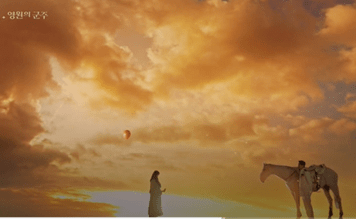

Her gestures show that for her, nature should have its place everywhere, even in a place where there is no wind, no rain, no light and no time. Striking is that both protagonists talked to the plant. Lee Gon ordered to the plant to grow nicely as well. We can observe her influence on him. Both are close to nature, while Lee Rim is often shown in closed and dark rooms, even in a building in constructions underlining the coldness and roughness coming from him.

In one of my past analyses, I had already pointed out that our hero Lee Gon is first a mathematician and physician before a king hence he loves the book “Alice in Wonderland” written by the famous mathematician Lewis Carroll. But if you pay attention to Lee Gon’s world, you will actually notice his obsession for these sciences.
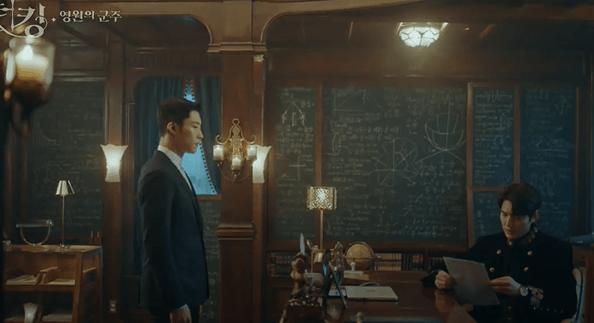
Notice that the walls of his study are actually blackboards full of mathematical and physical formulas. There are not just blackboards full of equations and physics formulas next to his desk but also on different floors. We even learns that he sometimes disappeared in his study for research. This reveals that for Lee Gon, the world can only be explained with math and physics. His head is full of Natural Sciences hence when Jeong Tae Eul mentions MSD (Mixing, Shaking and Drinking), he thinks, she is speaking about Most Significant Digit. His obsession and fixation is also reinforced in another taking.

In Republic of Korea, he doesn’t even abandon his old habit, although it is a new and foreign world. Sure, we could say that when he discovered the existence of the parallel world, he needed science to reassure himself and understand how this could even exist. He needed reason and logic in order not to become crazy. The more rational and logical he was, the more he was perceived by Jeong Tae Eul and the others as weird and crazy. No one could believe him, although he tried to explain this with Einstein and Quantum mechanics Theory. And now you can perceive the dilemma in this story. This is about the conflict between belief and faith against sciences (math and physics). Even theories from Sciences can be rejected by people, although it is proven scientifically. I could mention Global warming or Jeong Tae Eul who keeps denying that Earth is round, as she has never seen it with her own eyes.
And this dilemma (belief versus Sciences) is even underlined in the love confession of our king. Striking is that Lee Gon is using Math to express his feelings. Since Math are considered as a rational and logical science, it actually contrasts with the concept of love as the latter can not be scientifically measured. Furthermore, we shouldn’t forget the famous quote from the French mathematician Blaise Pascal (17th Century):
” The heart has its reasons that reason knows not.” (Le coeur a ses raisons que la raison ne connaît point)
As you can observe, love has nothing to do with logic and rationale… yet Lee Gon is desperately attempting to rationalize his feelings. First, when he asked her to be his queen, he added that she had just become the reason why he should stay in her world. Striking is that Lee Gon connects love with reason all the time. It is clear that he wants to marry her out of love, nevertheless he is rationalizing his decisions. When Jeong Tae Eul was explaining that thanks to the DNA analysis he could find his family, the king associated “family” to his family status (single) and led him to the proposal. As a family member, his future wife, she would be allowed to know his name and his origins. Therefore in this scene prior to the love confession, the viewer sense that Lee Gon is extremely rational and is not led by a huge passion. However, this is actually a mistake to underestimate Lee Gon’s burning passion for Jeong Tae Eul (JTE), despise his calm manners and rational words.
In fact, his love confession proves the exact opposite. Since he has been obsessed with math, he can only describe his own feelings with mathematical formulas. The more math he is using, the deeper his feelings are for her. As you can see, the love confession gives us a good insight about Lee Gon’s personality hence we need to analyze his little speech.
“Among real numbers, zero is my favorite. You have the nature of that number. A zero means there is nothing but it’s actually a number of absolute power. It can nullify any number or take everything away from it. What makes money powerful is not the number at the front but the number of zeros behind it. A number trapped in a root symbol can escape under only 2 circumstances. They need to have a square root or meet the powerful number, zero. You’re standing in front of the root symbol. I’m trapped in. Do you believe me?”
Striking is that just like JTE is a number, Lee Gon considers himself as a number too. While she is the powerful zero, he is one (1). In this love confession, he didn’t mention the number one but he revealed it much later, when they were going through the passage between the two worlds.

Here he told her: “It’s something between 1 and 0 in my world and yours.”
In other words, Lee Gon perceives the world as a composition of numbers and physical formulas. People are numbers, that’s why we have Rose93 e.g.. However, in Lee Gon’s case, only two numbers exist: 1 (my world) and 0 (your world). And this is no coincidence. The combination of 1 and 0 is indeed a reference to the binary numeral system which is used in informatics for computer and computer-based devices. Therefore this reminisces the movie Matrix, a computer world. However, the Matrix, visible in different screens is full of different numbers and signs, where the numbers are sometimes written in reverse, as if there was a mirror in the Matrix. (see my analysis about the significance of mirrors)
That’s why the binary numeral system is also connected to other people, like Jo Young, the closest friend and right-hand man of the king. In the episode 9, we discover that the Unbreakable Sword Jo Young has as password: 10000000000000. In the decimal number system, this number would be 8192. Then in the episode 8, we hear from Goo Seo Ryung the Prime Minister that she was horrible at math hence her answers were either 0 or – 1. And here we could see a clue that GSR could be represented by -1 and could become Lee Gon’s enemy as she is walking on a small path between good and bad. This binary numeral system is shown in different episodes, the director keeps using it as a metaphor for our two main leads.


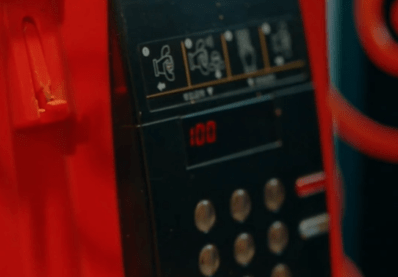
All these shots are actually reflecting the distance between our detective and our protagonist. The more zeros it has, the bigger the gap is. He is much richer than her, but in the episode 5, she is much closer to him than in the episode 4, when he had returned to his world after her rejection.
But let’s go back to the love confession. Lee Gon is not just 1, but √ 1 = 1,000000. He uses the root as a metaphor for his actual situation. He is trapped and can only escape from his “agony”, if she reciprocates his feelings. Since JTE is a zero, she can never get trapped as she is so powerful. She can turn his love into nothing (nullify) with a rejection or she can liberate him with her acceptance, meaning that his feelings will be multiplied (“take everything away”).
But what caught my attention is the ending of his love confession. He asks her if she believes him. Here again, we have a new situation where belief and faith are connected to science. On the surface, both seem to contradict each other. A scientist and mathematician can not be a believer because in faith or belief, things can not be proven and rationalized. Yet, the mathematician Blaise Pascal even used math in order to solve this dilemma. First he presented a pragmatic reason for believing in God: the so called Pascal’s Wager about God. If God exists, the persons gains more when the person believes in God and if there is no god, the person believing in God loses nothing. Besides, the same scientist proposed the hidden God as an unverifiable hypothesis that allows signs to be interpreted in a way that fully satisfies reason. The scientific method becomes a mise en abyme of faith.
In reality, belief doesn’t exclude science but for Lee Gon it has become a principle. He only believes in ratio, in math and physics. It’s his new faith and belief. He rejects any other form of belief at all. That’s why when they are admiring the strange world between MOC and ROK, he ignores JTE’s question, if there is magic here. His only reply is that this is part of a legend. And in this moment, the viewer can realize that he represents the opposite of his uncle. Remember that in the episode 1, he looked down on people who denied the real powers of Manpaseokjik. He declared that disbelievers would call this story a myth. Legend and myth are synonyms. He doesn’t believe in that legend, he is quite skeptical. Before this scene, the viewers could observe his rejection of belief in deity in different occasions.
First, when the time stops, he uses the Euler’s number to count how long the time passed.
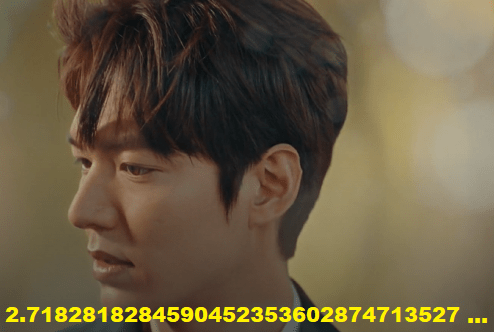
He is trying to observe the phenomenon scientifically. He has no rational explanation and his unique watch can not even resist the phenomenon. But the problem is that he can not prove this phenomenon to Jo Young and Jeong Tae Eul. Both couldn’t feel or see it. Therefore he uses a note in order to prove the reality to Jo Young. When they are in the passage, he explicates that he has already determined that time flows differently here. One minute in the passage means 1 hour in her world or his world. Nonetheless we can feel a certain despair from him: “There is no air, no wind and no light”. With his knowledge and as a scientist, he fails to explain this strange world. The red balloon doesn’t move or disappear… every physical law he knows can not be applied here. Simultaneously he is not admitting that magic exists which he would see as the contradiction to his own belief. That’s why he doesn’t believe that the seeds can grow in this strange world: no light, no air, no water… He has no hope, unlike Jeong Tae Eul. She hopes that the plant will grow that’s why she is definitely deaf to his statement.
Then when he is looking at the autopsy report of his uncle, he is using math and ratio again in order to tell his friend that he thinks that his uncle is alive.
“Sometimes, symbols of mathematics or science are useful when understanding a certain phenomenon. For example, the + sign doesn’t have a meaning itself, since it’s a symbol that means adding something.”
For him, the body is a symbol that Lee Rim used. He is definitely seeking for a logical and rational explanation as his intuition is telling that Lee Rim is not dead. And the more he digs around his uncle, the more desperate he is to prove that every strange phenomenon has a reasonable and logical explication. The following scene from the episode 9 represents the climax of this denial that god or magic could exist:

Actually, the different videos on Jo young’s laptop were recordings from CCTV that were removed by his minion in order to erase every single trace of JTE in his world. Yet, the CCTV is dated in the future… here the numbers in which Lee Gon finds comfort are indeed shaking him and his belief. He can not understand why he has such a video. This defies any logical and reasonable explication. The child in this video is looking at the young king as if he was telling him: “Yes, that’s right… this is from the future. Stop relying on math and physical laws. Open your eyes to the truth”.
Let us summarize what we discover so far: Lee Gon has been obsessed with math and physics because he is a disbeliever. He denies the existence of god and refuses to have faith in a deity and in the existence of supernatural. The origin of his stubbornness comes from his past and the fateful night, where he almost lost his life and lost his father. The boy had learned from his father Lee Ho the duties of the king based on a prayer written on the Four Tiger Sword:

If you pay attention to the clothes, Lee Gon is wearing the same clothes than the night of Lee Rim’s coup d’Etat, just like his father. So this scene is quite important as he reveals the importance of the 4 Tiger Sword.
“The sky bestows the heart upon us, and the ground helps the spirit. The sun and the moon are formed. As the mountains and streams form, lightning strikes. A sage is moved to defeat the evil of the mountains and streams. Wield it with deep thoughts and make things right.”
Only a king is the owner of this sword and striking is that the father was passing his sword onto his son… he is unaware that he will die in a few hours. The father was preparing for the ceremony with the Manpasikjeok and like I said, this only happens every 20 years. It was his fate to die that night… and Lee Gon has already been initiated by his father, Lee Rim knows the prayer but only believes in the supernatural powers from the flute, written in the Memorabilia. Lee Gon did act like his father told him, he used the sword to defeat his uncle but failed. He could only take the half of the flute and was saved by a mysterious savior. This terrible night marked a turning point for Lee Gon: he no longer believed in the prayer written on the sword. He had lost his father due to the sword and he had failed to stop Lee Rim.
This incident explains why the sword is no longer kept in the king’s room, contrary to the past. Only in the episode 4, Lee Gon retrieves the Four Tiger Sword, full of dust, from the temple that has been neglected for many years.
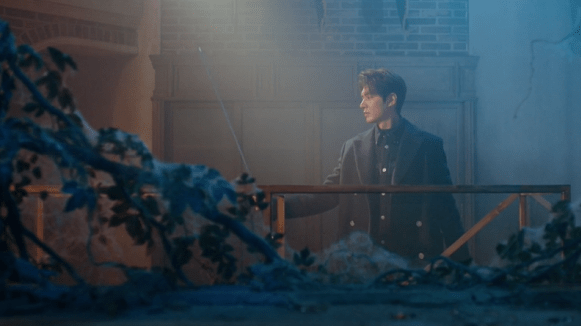

He is still skeptical but since he feels like Lee Rim is alive (episode 4), he has the impression that he will need the sword again. However, he is still a scientist and can not be considered as a believer of the 4 Tiger Sword. To summarize, this will be a fight between two cults: the Manpasikjeok and the Four Tiger Sword. Since he is still doubtful, as he can not explain the scene from the CCTV 2022.05.27), we have to consider the symbols on his shoulder as a warning and reminder of his task as king.

By looking carefully at the form of the burns, you will notice that it looks like “streams” and “mountains” as the streams have relief. This is an illustration of the prayer: “As the mountains and streams form, lightning strikes”. And the special sword is definitely the ultimate weapon against Lee Rim and the flute. Why? The former owner of the flute was the Dragon King of the East Sea. There is a relation between the “mountains/streams” and the “Dragon/Sea”. All streams lead to the sea and Dragons are often associated to mountain (many different fairy tales or e. g. The Hobbit). Like I had mentioned in one of my former analyses, Lee Rim took the words from the Memorabilia too literally. He is a fundamentalist and never questions the authenticity of these words. Since he doesn’t age, he believes that it is connected to the Manpasikjeok, whereas Lee Gon has already figured it out scientifically: it is related to the world between his world (1) and her world (0). At the end, Lee Gon will become a supporter of Blaise Pascal. A leap of faith is possible, even for mathematicians. There is no real contradiction in reality. A scientist can be a believer and the words from the sword will become a prayer again.
Please feel free to comment. Push the button “like” if you enjoyed reading this analysis.
Now, I would like to analyse this taking because I do feel that the director wanted to outline something important.

In this scene, Lee Rim found out the identity of the guest at the palace, he sees Jeong Tae Eul’s ID as police officer. On the left you see the kid with the yo-yo. We don’t know the name of this boy but he has been shown in different scenes. He often appears in front of the book shop where Lee Rim can get info from the palace. Simultaneously, he was the one who made JTE lose her ID.
Here he appears, where the ID tag is revealed to the antagonist. It was as if the boy was following the ID from JTE. From my point of view, the boy with the yo-yo could be a deity, the one who ensures that the balance is maintained. This is no coincidence that he is playing with the yo-yo. Pay attention to the movement of this toy: it goes from one side to the other, you need to maintain a balance in the strength in order to keep the yo-yo to come back and to keep rolling. The yo-yo reflects this balance. And it was the same with the bike. You need to find the right equilibrium in order to ride a bike. The boy fell from the bike indicating that the balance has been shifted.
Remember that I had mentioned that Lee Rim keeps looking down on children as he considers them powerless and even manipulable. But he forgets that a child is linked to innocence and purity which can be seen as strengths as well. The villain is not paying attention to the child as Lee Rim already thinks, he is a god hence strong … yet he has not realized that Luna has already been working for this boy (deity).
In the beginning, I had thought that Luna had worked for Lee Rim therefore on Lee Rim’s orders she was the one who lured Lee Gon to ROK but I was wrong. Lee Rim hasn’t met her yet and he knew nothing about JTE as well. So fate, arranged by the deity, was what brought Lee Gon to ROK. And this is no coincidence that Luna gives the rabbit jacket to the child. It was as if she was giving it back to the rightful owner. Fate was what brought Lee Gon to JTE and Luna was destined to have the jacket and meet the boy in the end. That’s why JTE was able to see her doppelganger and the Prime Minister too. Both were getting warned. Furthermore, we shouldn’t forget about the timing. JTE saw Luna right before Lee Gon and Goo Seo Ryung saw her doppelganger before Lee Rim approached her through the newspapers. Lee Rim is not aware that his fighting is pointless as he is fighting against fate.
Now, let’s go back to this taking. First, notice the similarities between these two rooms: both are full of books (a symbol for knowledge) and both people are put under a light underlining their power and importance. The first difference catching the attention of the beholder is the proportion of Lee Rim’s room compared to the one with the boy’s room. Lee Rim’s room occupies a bigger part of the scene illustrating his actual power. It looks like he is now more powerful than the boy. He has been working for 25 years and his labor has been fruitful. The other difference is that he is not alone. He has his minion by his side which shows that Lee Rim’s power comes from his huge base of supporters.
The boy is on his own, however he is not quite defenseless… his actual “companion” is the yo-yo. This toy represents fate and destiny as the string is often connected to a person’s life. In other words, the boy has his own minions: Lee Gon (LG), Jeong Tae Eul (JTE) and others whose fate is already predestined. JTE is well aware of her own situation hence she chose her destiny… I would even say that she embraced her destiny. We could interpret the shadows (the 4 lines) between the two rooms as a representation of the fight. The boy is fighting against Lee Rim so that Lee Rim’s room doesn’t eat up his “room”. This would mean that Lee Rim had won and would control everything.
Another contrast is the way the books are displayed. Notice the red string surrounding the piles of book… let just say that each red string is a life which means that each stack of books represents a person. If we look at the way the stack of books are displayed, we can come to the conclusion that these people are connected to each other as the stack of books are touching each other. They are all relying on other stacks implying on other people. Furthermore, the color red is significant. Red symbolizes life and love. Love is what connects each person next to the child.
On the other side, in Lee Rim’s book shop, the books are stored on shelves… If we assume that the row of books symbolize a person and as such a doppelganger lured by Lee Rim, we can see that the row of books are not connected to each other. Each life is separated by wood, Lee Rim is the one planning the shelves through his minions. There is no red indicating no real life and love. Here the wood is associated to death (see e. g. coffin). Only order and purpose are what linked them to Lee Rim. The seduced doppelgangers are just pawns and are all relying on Lee Rim in the end.
The red strings remind me of the three Moirai from Greek Mythology: Clotho, Lachesis and Atropos.Clotho is the spinner who spins the thread of life, Lachesis the assignor who measures the length and Atropos who cuts the thread of life. But the yo-yo is different, it is a circle and it moves like an endless loop… from one world (up) to the other (down). So the yo-yo represents a certain person (the eternal Monarch), unlike the red strings behind the boy, those are linked to normal human beings.
There is a disequilibrium reflected in this taking and the boy, a deity, is working to recreate the balance by using people… it’s their destiny. Notice the contrast between Lee Rim and the boy. On both sides, people are asked to choose, yet Lee Rim lures them with temptations and desires for a better life but they are actually deceived, while JTE chose her destiny, although she is well aware that her love could be painful and short-lived. Lee Rim is just an idol, a false god living the illusion that he can take over two worlds, but his fight is pointless as he is limited by time. He might not age but his minions are not eternal and he can not time travel.
Anyone watching the k-drama “The King: Eternal Monarch” knows that Lee Rim is the antagonist in this story, Lee Gon’s uncle who conspired against his own brother, the king, in order to possess a mysterious flute.
Striking is that this k-drama starts right away with the introduction of the villain and not with the protagonists. This unusual move has a rather simple explanation. It exposes the true personality of the antagonist and his motivation behind the “coup d’Etat” which happens later.
However, there is more to it because in the first scene of the first episode, the viewers don’t see the villain immediately but only hear his voice. He is actually telling a story. What caught my attention in this first scene is that the story told by Lee Rim doesn’t initially match the taking. While the beholder sees a forest of bamboo, Lee Rim mentions an event recorded in the Memorabilia of the Three Kingdoms:
“In spring 682, King Sinmun received a bamboo flute from the Dragon King of the East Sea”.
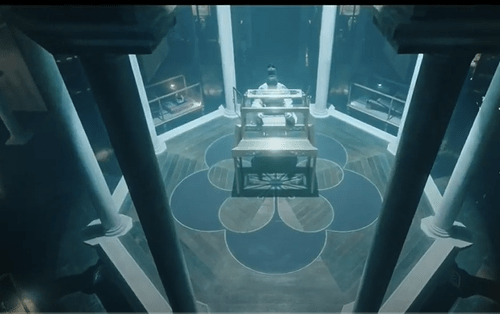
Right after quoting this sentence from the historical Chronicles, the scene changes and viewers witness how the king takes the flute from a shrine. So with this move, the director wants to confirm the veracity of Lee Rim’s words. The flute does exit and it is possessed by the descendants from Silla Dynasty. Then Lee Rim adds:
“When the flute is played, enemies would retreat, diseases would be cured, rain would fall during droughts, the rainy season would end, the wind would stop and strong waves would subside. Seeing its powers, King Sinmun named the flute Manpasikjeok” and designed it as a “national treasure”.
Only after quoting this from the Memorabilia, Lee Rim appears, his face is covered in blood,

which is kind of surprising as he told the story about Manpasikjeok in a very calm manner. The head quotes from the Memorabilia outline that Lee Rim is a strong believer of the powerful flute. For him, the Memorabilia from the Three Kingdoms is similar to the bible. In other words, Lee Rim is an extremely religious man.
I would even add that he treats the Manpasikjeok as an idol. An idol is actually an image or a representation of a god used as an object of worship. So for Lee Rim, the flute has become a new religion and the owner of Manpasikjeok is a god. Interesting is his attitude towards disbelievers. He criticizes them indirectly as the non-believers call this story a myth. As you can observe, Lee Rim appears to be a radical believer, a fundamentalist. Fundamentalism is a form of religion that upholds belief in the strict literal interpretation of scripture. So the quotations from Memorabilia are taken literally by the antagonist. Like I mentioned it above, for him Memorabilia is like a Holy scripture. He believes in the true power of this mysterious flute. But his complain doesn’t stop there. He explains why he took it from his brother. Notice the words he used to legitimate his murder and coup d’Etat.
“I took it from my brother who had it but didn’t believe in it”
So for the antagonist, the king is categorized as non-believer. Nonetheless, if we look at the first picture above, the king is treating the powerful flute very carefully and it is put in a shrine. Only once every 20 years, the Manpasikjeok is revealed to wish peace to the world. This means that it is kept hidden the whole time, while in Lee Rim’s eyes, this flute should be shown to every one. For him, the cult around the Manpasikjeok should be practiced more openly and differently. We can feel his religios fervor, while his brother acts as if it was a hidden cult. I have the impression that while Lee Rim considers the flute as an idol, the king treats it as a relic. The latter is something associated with a saint, which some people regard as holy. A saint is a virtuous person, someone who does good for others. Now, you can better understand the huge gap between the two royals. While Lee Rim considers the flute as a divine object giving godly powers, the king connects it more to the human world and humbleness. This flute has to be used by a virtuous and honest man which elucidates why the flute is not revealed to the public eye.
We can feel his resent and jealousy towards his brother, when he yells to JTE that the king was able to see the Manpasikjeok each day. He didn’t cherish the flute properly. Furthermore, he reproached the king’s ignorance and passivity as he could have grasped the world with the flute. And with these words, it becomes clear that Lee Rim believes that this precious and divine flute can turn the owner into a god as the owner has the possibility to access to another world.
As conclusion, for Lee Rim, becoming the owner of the flute means becoming a god, yet simultaneously it means that Lee Rim will introduce a new religion with new rituals: sovereign’s cult. Since he is a fundamentalist, it also implies that Lee Rim expects a strict obedience to him, the new god, from his followers.
However, we can observe a huge contrast between Lee Rim and his brother. The latter keeps the Four Tiger Sword close to him and his son. Besides, when Lee Rim mentions that Lee Gon will be confronted with the legend and realize its authenticity, the camera zooms to the Four Tiger Sword. For Lee Gon and his father, the sword is far more important than the flute, whereas it is the opposite for Lee Rim. This lack of respect for the sword is actually outlined, when Lee Rim kills the king with the sword. Actually, the villain is soiling the sword. Furthermore, after using it, the uncle let the sword fall onto the ground, where Lee Gon can use it later in order to stop Lee Rim. So here is the question: why isn’t the sword as important as the flute for Lee Rim? Because it is not mentioned in the Memorabilia. Remember that Lee Rim considers it as a Holy scripture. Since Lee Rim is not a legitimate son, he has not been initiated to the secrets linked to the sword and the real story about the Manpasikjeok. He only knows the story through the Chronicles in reality. And he took these words for a reality. And we get another clue that the Four Tiger Sword is actually the real divine item with the following scene:
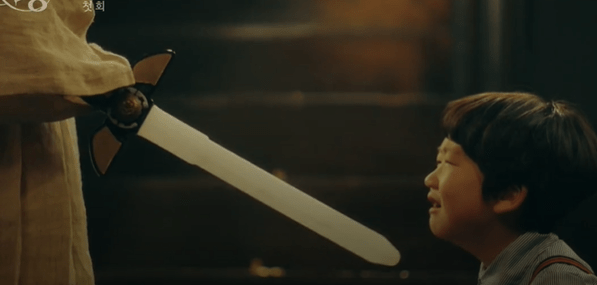
But now, let’s go back to our villain. While fighting with the king, Lee Rim denies the existence of gods (“God never created humans”) which contradicts his own words and belief. This actually underlines his real intention. His true goal is to become a god himself and for that, he needs the powerful flute. The flute will give him divine powers and simultaneously it serves as regalia, just like the sword. And we can clearly see that he uses the cult around the Manpasikjeok to justify his coup d’Etat. Religion in History has always been used as a justification for monarchs, see e. g. the French King Louis XIV called the Sun King. But what differs him from Louis XIV, an absolute monarch, is that Lee Rim intends to install a theocratic monarchy and not just an absolute monarchy. Now, you are wondering: what is the difference between these two? An absolute king is considered as a representative of God on Earth, whereas in a theocratic monarchy the king is considered as a god himself and has connections to gods. Since he denies the existence of god, he needs supporters in order to become a god, just like in a theocratic monarchy therefore he declares to his brother:
“it was the weak who created god”
But he fails so that he is forced to hide. Because he got the half of the magical flute, he is able to escape from Monarchy of Corea (MOF) and appears in Republic of Korea, where he discovers the existence of a parallel word. So this miracle proves him that the Manpasikjeok has godly powers and as such the owner of the flute is powerful. Then he meets by chance his half-brother who is poor and rude in this world. That’s when he realizes what he could do here. If you pay attention to his different actions from that moment, you will realize that Lee Rim as fundamentalist starts considering himself as a god.
All these scenes illustrate Lee Rim’s belief: only weak people create a god. He acts as if he was a powerful god, yet in fact his powers are limited. He can go from one world to the other, he doesn’t age as well, nonetheless he can not turn a sick person into a healthy one. All the prayers are linked to death and punishment. He is not someone who wants happiness and peace for people, he only uses weak humans to achieve his goal. He wants them to see him as a god that’s why he acts like that.
Finally, I would like the readers to remember the story told by Lee Rim in the beginning. He mentioned the Dragon King of the East Sea. Who is this Dragon King? A real dragon or is it the king from Japan as the island is situated in the East sea? Remember that the dragon is seen on Lee Gon’s robe. Striking is that so far Lee Rim has never explained the identity of this Dragon King. For Western countries, dragons are associated to destruction and death, whereas in Asia dragons are linked to positive aspects: great power and fortune hence the dragon is seen on the robe of the king. And here I’ve got the feeling that Lee Rim is influenced by Asian mentality. He considers the Dragon King as someone positive. Yet we heard from Lee Gon that his ancestor Prince Sohyeon became the king Yeongjong and stopped the Qing invasion. While doing some research, I read that prince Sohyeon was influenced by Western ideas and was for a modernization of Joseon. So Lee Rim represents the conservative type (fundamentalism, theocratic monarchy), while Lee Gon and his father are more modern and under the influence of occidental mentality. Therefore I think that this explains why Lee Rim criticized his brother as he saw the Dragon King as someone positive, while Lee Gon and his father have been raised to see the evil nature of the Dragon King from the East Sea.
As conclusion, because of his travel to the parallel world, Lee Rim has come to see that his belief was correct and that he has become a god who could rule over two worlds. However, if we pay attention to his actions, we can conclude that in reality, he is just an “idol”, a false god. He reminds me of the golden calf from the bible symbolizing the false faith.
This is where you can read the manhwa. https://www.lezhinus.com/en/comic/painter But be aware that this manhwa is a mature Yaoi, which means, it is about homosexuality with explicit scenes. If you want to read more essays, here is the link to the table of contents: https://bebebisous33analyses.wordpress.com/2020/07/04/table-of-contents-painter-of-the-night/
What caught my attention in the chapter 43 is the man with the green robe. His name is Min and just like Seungho, he is a noble. 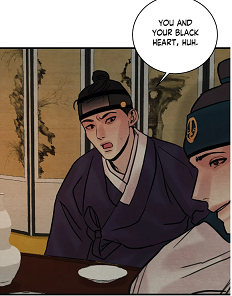 (chapter 43) Here he is described by his friend with a black heart. However, in the first season, he was shown in different chapters (8, 9, 19, 33, 36, 41 and 43), but he was among others and as such, he was never properly introduced. His presence increased until the chapter 43 marking a pivotal moment. In the first version of this essay, I desired to prove that Min would play a bigger part in the second season. And this was proven correct. Nevertheless, I still need to introduce him. But who is this man, what do we know about him in the first season?
But first let’s go back to the chapter 41, where he was shown hunting with Seungho.

This means that he is quite close to Seungho, as the latter spends time with him outside the sex orgies. Striking is that in this chapter, the man with the green robe was tasting the water, when he asked Seungho to confirm the rumor about the incident at the tailor shop. Seungho warned him not to cross the line, as he could share the same fate than Jihwa. During that scene, the author draw two pictures focused on the hands. The man with the green robe grabbed the wrist of our main lead  (chapter 41) and even put his other hand on his waist.

And these pictures are not random as usually. Remember how Seungho reacted, when Jung In-Hun touched his shoulder, he was about to kill the teacher.  (Chapter 30) He was so upset, hence imagine how he felt, when he sensed Min’s hand on his wrist and then waist. With such a gesture, Yoon Seungho could only get more irritated. And here, our main lead only pushed his hand and insulted him by comparing the man with a mouse .
  His gestures towards our seme revealed something in my opinion. The waist is a very intimate place. It gave the impression that Min was interested in Yoon Seungho sexually. It was, as if this man wanted to become Yoon Seungho’s lover as well. The gesture is quite deceiving, which explains why Yoon Seungho thought that lord Min was wooing him. However, the protagonist was misinterpreting the gesture and interest. In truth the noble was lusting after the painter. This explains why Yoon Seungho was not sensing the danger coming from the “friend“. But then why doesn’t Jihwa feel threatened by him? Then remember that he grabbed Seunho’s wrist. A man in Asia will usually grab his girlfriend’s wrist. In other words, the man with the green robe was treating him like a woman (the waist, the wrist). Everything was pointing out that he wanted Seungho to be his uke. Yet, the reality is that he wanted to “screw“ the main lead. He wanted to ruin him out of jealousy. He desired to have the painter. “Screwing“ someone can have two different meanings. But there‘s more to it which I will explain more below
However, like I had really sensed right from the start, Min was in truth a seme, just like the protagonist, hence Jihwa never felt threatened by him. If I look back at chapter 33, his sexual role was implied, as he was smoking and still had his topknot on, just like Seungho, while the ukes in this scene had all their hair down.  (Chapter 33) As conclusion, anyone observing the scene in chapter 41 would come to the conclusion, that this man wanted to have Seungho as lover, just like Jihwa, but in a different role. He would like to be the top. As conclusion, the lord Min was a seme who seemed to be interested in Seungho. Thus he considered Baek Na-Kyum and the red-haired master as rivals, whom he needed to eliminate. And that‘s how Yoon Seungho perceived his gesture and words in the woods. This explicates why he compared him to Lee Jihwa. In the main lead’s mind, Black Heart was paying attention to his every moves and was always updated about his interactions with the painter out of jealousy. The reality is that Min was terribly envious of the main lead. His real center of interest was in truth Baek Na-Kyum. Thus he kept looking at him during their first meeting.
 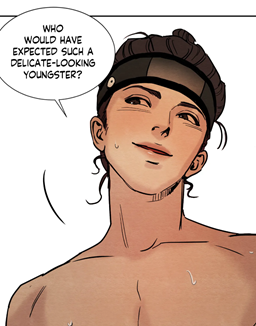 (Chapter 8)
  (chapter 9)
However, the chapter 43 revealed more information about the master Min and his personality.
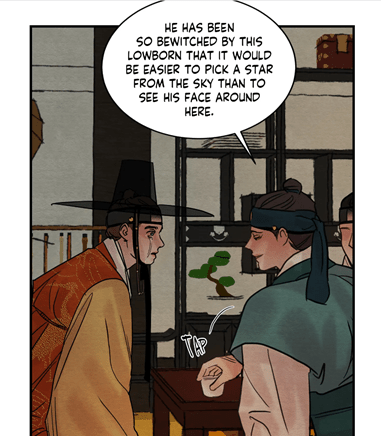
The readers could realize his dangerosity here. Why? First, it was revealed that this seme knew all along about Jihwa’s feelings for Seungho, and he played with them. He enjoyed toying the red-haired aristocrat. Black Heart misled the childhood friend so that the latter would run to Seungho’s mansion, especially if you recall that during the same night, Yoon Seung-Won visited his brother. This explains why he lied in the inn. The noble with the mole knew about the deception, as he had a drop of sweat on his face.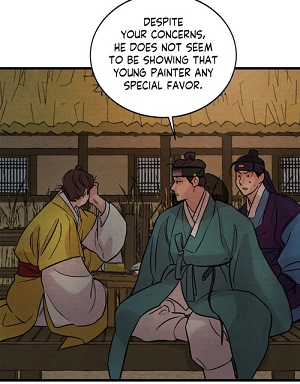 (Chapter 36) Naturally, here Kim had played a huge role in this deception too, as he allowed to leak information to the red-haired master’s servant.
 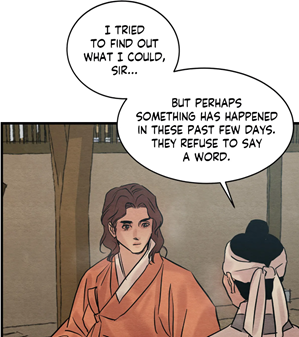 (Chapter 41) Yet, Min knew that Jihwa wouldn’t be able to resist and run to the lord’s mansion. He had already calculated that the childhood friend would discover the truth. He would be hurt and realize his mistake. He even ridiculed Jihwa by comparing him to a dog.
 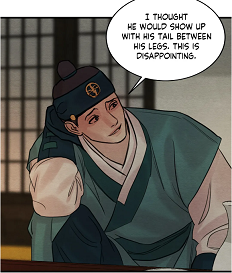 (chapter 43) Here, he reminded me of Seungho with his sarcasm and his ironical comments from chapter 6.
  (chapter 6) He enjoys making fun of Jihwa and is as cunning as Seungho, though in reality the main lead‘s true personality is totally different.
  (Chapter 43)
Consequently, I couldn’t help myself associating Min to a snake… he was like the devil, inciting the stupid Jihwa to commit a murder. I would even say that he was employing the red-haired noble as his hunting dog. In my first version, I had suspected the man before to be jealous, as he was the one who had even asked Seungho to bring the painter to one of their sex parties.  (Chapter 33) It was, as if he wanted to ensure that the artist meant nothing to the protagonist. As you can see, the vicious man gave the impression that he was jealous of the painter. His reproach towards the main lead sounded similar to the childhood friend’s.
  (Chapter 18)
  (chapter 41) It was, as if he wanted to play with Jihwa and get rid of Baek Na-Kyum at the same time. The latter is viewed as a source of danger, for Min keeps thinking about him. The noble considered the artist as a witch who put a spell on him, Here, he was projecting his own thoughts.
  (Chapter 43) It looked like both ukes represented a threat. He was definitely using Jihwa so that if anything would go wrong, only the red-haired aristocrat would be blamed. The man with the black heart tried to diminish the consequences of the murder. He said that the murder should look like an accident, hence this attempted murder can never happen at the mansion. Back then, I had envisioned that they would wait, until Baek Na-Kyum left the mansion, and this expectation was proven correct.
Now it becomes clear why the man with the black heart is doing such a thing. Although Min claims that he wants to be entertained, when he lied to Jihwa in the past, he had already prepared to set the trap for Jihwa. He knew where to hire the killer. 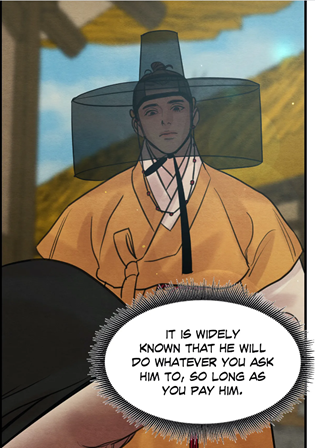 (Chapter 43) He had already anticipated Jihwa’s reaction. While Min declared that it was funny, when Jihwa came crying, he added that he was disappointed that he only saw just tears. He wanted him to “come with his tail between his legs”. (chapter 43) And this outlines his cruelty. It was, as if he was “castrated”, had lost his masculinity and virility. As you can see, the guy was making fun of Jihwa and even insulting him. But the latter didn’t pay attention to these words, too wounded by the scene he had witnessed in the study of his friend. By acting like that, he gave the impression that he didn’t care. In truth, it exposed the antagonist’s naivety. He even didn’t see any danger coming from the man with the black heart.
But striking is that after Jihwa’s arrival, he proposed right away to the noble to have Baek Na-Kyum killed. He was indeed acting like a jealous man. (Chapter 43) Now, Yoon Seungho was neglecting him. But in order to convince the upset red-haired noble, Min added more fuel to the fire with his comments:
– His childhood friend had been bewitched
– At some point Baek Na-Kyum would become Seungho’s mistress
He was implying that the red-haired aristocrat was on the verge of losing his love. All this pointed out that the guy was manipulating Jihwa to ensure that the latter would decide to kill the lowborn. That’s the reason why we saw Jihwa’s imagination of that night. The Joker‘s words distorted the memory from the red-haired master.  (Chapter 43) The words the man with the green robe said had a huge influence on him. Not only his mind is black, but also his heart which outshines this man’s evilness and dangerousness. Let us not forget that he is a seme… but since he has been forced to be the bottom because of Yoon Seungho, all his actions can be judged in a different light. People could see him as someone who has been longing to become the main lead‘s lover. Thus he said this in season 2:
 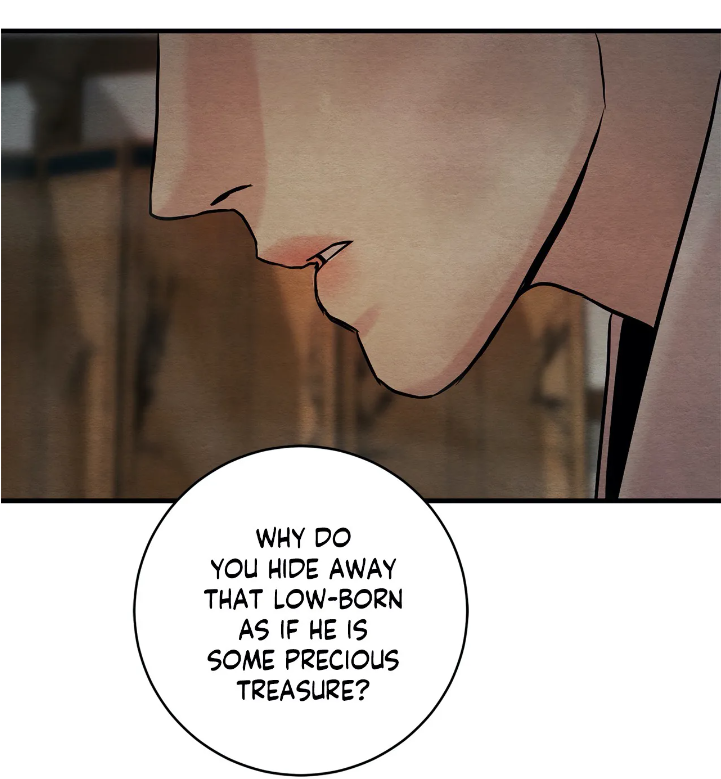 (chapter 52) and in season 3
  (chapter 92) But this was just a deception, his real target was the painter. However, after season 3, I realized that in truth, Black Heart had only been a puppet himself, though Min seemed to be like a personification of the devil… his lies, his words in order to incite Jihwa to commit a crime, his words ridiculising Jihwa and even Seungho.
Some questioned this perception in the beginning, for when Min appeared in chapter 8, he was an uke, he couldn’t be a top.

But the readers were overlooking that the main lead got raped and he even used to be a bottom. So roles can be switched. It becomes obvious, when you read this scene.  (Chapter 16) Here, the main lead desired to discover the painter’s sexual preferences. So when Min stroke the main lead’s waist, he never realized the true signification of his action.
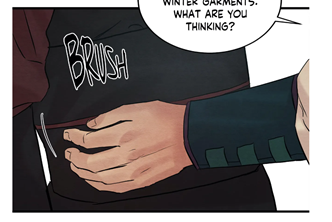 (Chapter 41) The main lead could only assume that Min was interested in him, he wished to become his only partner. Deep down, he desired to become the top, but since Yoon Seungho was not willing to change his position, Black Heart was willing to remain a uke. Note that Min invited the main lead in chapter 19 to the kisaeng house, and offered him wine, right after the main lead had cut ties with his childhood friend.
 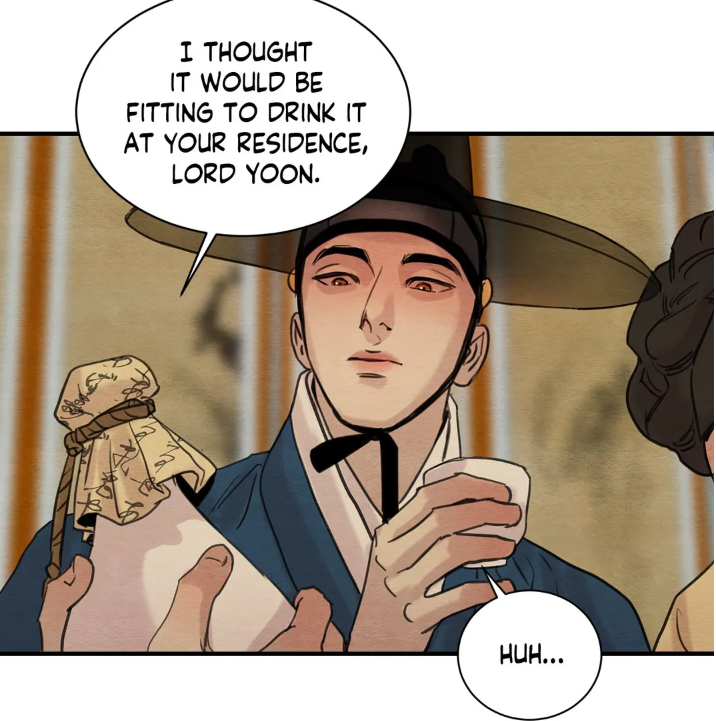 (Chapter 19) It was, as if he was wooing him, hoping to take over Lee Jihwa’s place. Then in chapter 33, Min is the one asking for Baek Na-Kyum.
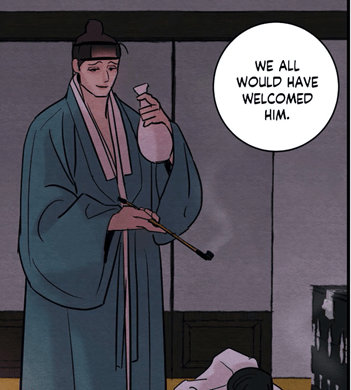
Striking are his words: “We would have all welcome him”… In the first version of this essay, I had demonstrated, that these words were the proof that Min was in fact a seme, but he was only a uke because of Yoon Seungho. The second season proved me right. He wanted Seungho to bring over Baek Na-Kyum so that they could taste him… I doubt that they would have allowed the painter to be a top. especially when sex sessions are viewed as battles. However, every action from Min were in fact ambiguous. He gave the impression that he was happy to be favored by Yoon Seungho  (chapter 33), he would seek his company
  (chapter 51)
  (chapter 52) and he was jealous of the painter, for the protagonist was only paying attention to him.
As you can see, due to his words and actions, Min created the illusion that he wished to taste Yoon Seungho, especially when he acts like a hunter. Imagine how his reputation would change if Min was able to tame Seungho and have him become an uke. Min is a player and hunter because of his behavior and words (hunting scene, his offer, his manipulation with lies etc)… Thus, you comprehend why in my first version, I had the impression that his real target was not the painter, but Seungho. It was caused by the ambiguity of his actions. Striking is that in the shaman’s house, he never tried to taste the painter at all. He even allowed the other nobles to taste the painter first. 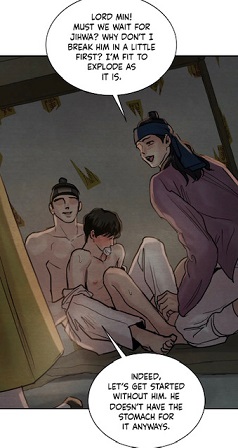 (Chapter 101) Note that he even pushed Lee Jihwa to become a top.
  (Chapter 100) It was, as if Min was not interested in the painter at all. His true goal was to get rid of Lee Jihwa and Baek Na-Kyum, his rivals. But we know the truth… Black Heart wished to be noticed by Baek Na-Kyum, thus he said this to him in the shaman’s house:
 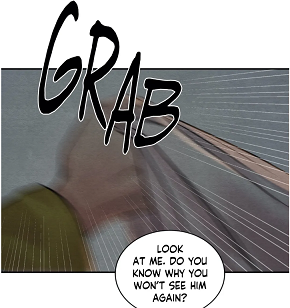 (chapter 99) But if he wanted to become his lover as uke, he would be not different from Jihwa. However, this man is definitely not seeking for Seungho’s love. His actions and words don’t fit the profile of an uke, of a person longing for Seungho’s love, rather he fits the profile of a hunter and player.
After season 3, I came to realize the cause for this contradicting attitude. In my eyes, Black Heart was already acting on the king’s behalf. The mysterious lord Song wished to keep the famous sodomite as his lover/wife, and the painter represented a hindrance. Using Lee Jihwa was the perfect tool to achieve his goal. He would get rid of two rivals at the same time. Yoon Seungho would blame his childhood friend for the painter‘s death, once alone again, the king could approach Yoon Seungho. Thus the latter was treated as a prey by Min in each season. But while he used the artist as an excuse to hunt his prey, the hell-raiser, he couldn‘t admit that he wanted to have the painter for himself. Baek Na-Kyum was a commoner. What appeared as a tool, became slowly a goal. 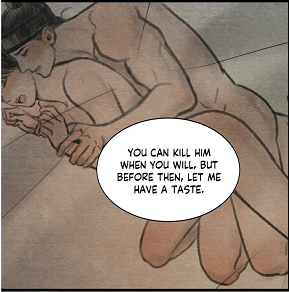 (Chapter 56) But Min was still in denial, hence he justified his requests as an urge, while he was also longing for the painter’s affection.
Due to his words and the color of his robe, master Min reminded me of the snake in the tree of knowledge of good and evil, the one who brought misery to Adam and Eva, here in this case this seme is leading Jihwa to his own demise. Hence I came to develop this theory that Min would become the villain of the second season. My interpretation was just based on my own knowledge and European background. Striking is that this man persuaded Jihwa that nothing would happen to him, Baek Na-Kyum was a commoner and if this looked like an accident, then he wouldn’t get caught. 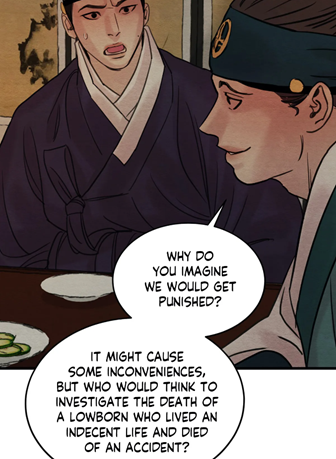 (Chapter 43) And remember that Jihwa is a noble… and in the bible, God got aware of Adam’s original sin, hence the latter was banished from paradise. Thus I had been expecting that Lee Jihwa would lose his title as noble, as his crime would be discovered. And this prediction became true which the author revealed in the creator‘s note.
Finally, I would like to point out that Seungho compared Min to a mouse indicating that Seungho didn’t consider him as a threat, he even saw Min as harmless. 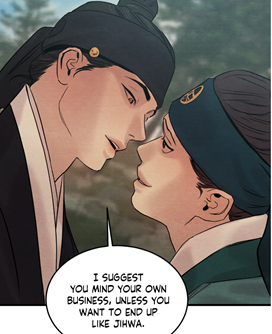 (chapter 41) A mouse is small and has no real claws. This shows that Yoon Seungho was underestimating him, but also was misinterpreting Black Heart’s action. He was acting like a jealous concubine, thus he compared him to Lee Jihwa. Here, we had the impression that the protagonist was well prepared. He thought, he knew why Min asked him to bring the painter for their sex party and why the lord Min asked about the veracity of the rumor about the incident at the tailor shop. But no… he didn‘t detect the longing and envy from Black Heart towards the painter. I compared him to a snake due to his cunning behavior and his cynical and seductive words… But the reality was that he was a fool himself, for he had no idea about Yoon Seungho‘s past. The abduction did occur and this twice, but note that Min had to become involved himself in order to achieve his goal. The irony is that when Min said this to Yoon Seungho
  (chapter 102), he was again giving the impression that he had acted like a jealous man who was longing for Yoon Seungho‘s attention. He had acted like a vicious concubine, but in Joseon, „jealous concubine or queen“ would get sentenced to death, like the Queen Yun and the concubine Jang Ok-Jun.
  (chapter 101) No one in his right mind would torment a loved one like that. Yoon Seungho was not recognizing what jealousy and envy are and what these emotions could trigger people to do! Black Heart would torment Baek Na-Kyum, for the latter was rejecting him. So imagine the king‘s reaction, when he discovers that Min got killed.
 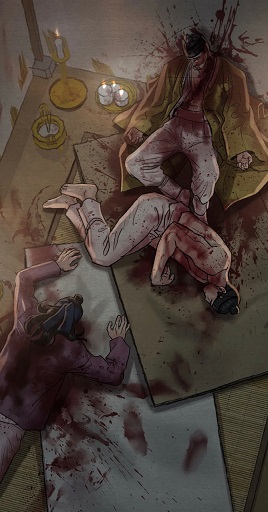 (Chapter 102) First, he lost his loyal helping hand, secondly he got misled and even betrayed by Lee Jihwa. In other words, the opposite had happened. Instead of obtaining Yoon Seungho, the king lost his “wife“ who decided to kill himself. To conclude, the villain from season 2 and 3 was in reality a pawn, the shadow of the true villain, lord Song. This explicates why Min‘s behavior was particularly ambiguous in season 1… All his actions and words could be perceived as a jealous man who desired to become Yoon Seungho‘s top!! The king would have never approved such a thing! And this could be the other reason why he will vent his anger on the Lees.
Feel free to comment. If you have any suggestion for topics or manhwas, feel free to ask. If you enjoyed reading it, retweet it or push the button like. My instagram-tumblr-twitter account is: @bebebisous33. Thanks for reading and for the support, particularly, I would like to thank all the new followers and people recommending my blog.
Before making connections between “Alice in Wonderland”, written by the mathematician Lewis Carroll, and the K-drama “The King: Eternal Monarch”, it is relevant to know about the major topics in that fairy tale. In this story, Alice is getting sleepy on a bench, when she suddenly witnesses a White Rabbit running while holding a clock. She gets curios and decides to follow him and that’s how she enters a new world: Wonderland. This land symbolizes the epitome of craziness and fantasy. Alice discovers strange animals and people like Cheshire Cat, Caterpillar, Mad Hatter and Queen of Hearts. No logical explanation can be applied in this world, like e. g. the baby of the Duchess turns into a pig or the Cheshire Cat appears and disappears or the Mad Hatter drinks tea with Dormouse and March Hare without changing the table. No rational thoughts and physical laws can rationalize the events.
Striking is that a mathematician, a representative of logic and sciences, wrote this book, where creativity knows no boundary and where sciences can not be used. However, at the same time, Alice tries to use sciences and her knowledge in order to understand this strange world because the female protagonist of this fairy tale keeps wondering if her adventure is a dream or a reality. As she attempts desperately to use her knowledge in order to solve this dilemma, she fails. Even the reader keeps wondering the same thing either as there are always allusions that she could be sleeping and as such dreaming.
Coexisting to this dilemma, the reader is following Alice on her journey from childhood to adulthood. Her strange adventure makes her experience different stressful situations (growing, shrinking, having a long neck etc.) and this should be interpret as a symbolization of her future puberty. The transformations of her body are not the only changes operating in Alice, she also questions herself and about her own identity. The Caterpillar asks her about her identity and she can not answer it right away. She even adds, she feels that she has changed since the morning too. And later after eating a mushroom, her neck streches out so that a pigeon calls her a snake. In other words, her identity quest suggests a initiatory journey. On her way to become an adult, she faces difficult and strange experiences which turns her into a different person at the end. When she leaves this land, she is no longer a child. That’s why time plays a huge part in this book. Remember that the White Rabbit held a clock in the beginning, later she meets the Mad Hatter who owns a strange clock as well. Transforming into a adult is definitely linked to time. Just before leaving Wonderland, Alice is put before a trial and the Queen of Hearts wants to condemn her. The latter embodies the adulthood, the parent who appears to teenagers strange, authoritarian and strict. At the end, Alice defies her and leaves Wonderland before getting any punishment. All this represents Alice cutting ties with her parent on her identity quest.
That’s why my comparison between the fairy tale and the k-drama “The King: Eternal Monarch” is not just about the characters, but also about the following topics: dream, reality, fantasy, sciences, identity quest, initiatory voyage, adulthood and time.
First, the fairy tale “Alice in Wonderland” is directly mentioned in the first episode. The main lead, the King of Corea Lee Gon, is reading this book in front of children. He even reads the passage where Alice is following the White Rabbit.
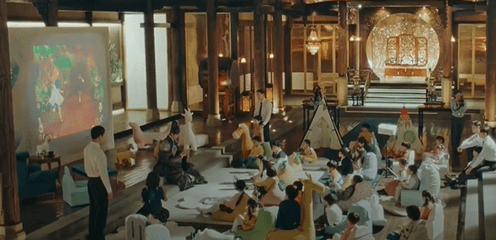
This scene is really important as it serves two purposes. First, it gives a first overview of Lee Gon’s personality. We discover that this story is the king’s favorite and he considers himself as a mathematician therefore he feels connected to the author, Lewis Carroll, who is also a mathematician. Here, our main lead seems to know himself quite well, unlike Alice. Lee Gon is a scientist loving Physics and Maths and even using physic laws and mathematical formulas in order to grasp the world around him. Furthermore, he shares some similarities to Alice. Just like her, he is curios and shows a certain innocence. The second purpose of this scene is to elucidate the reason why Lee Gon will discover the parallel world, Republic of Korea. Since Lee Gon reads the excerpt where Alice is chasing after the White Rabbit, the protagonist is suddenly confronted in a similar situation: he sees a person running with a rabbit costume hence he decides to follow this Rabbit. It was, as if Lee Gon had become Alice.
Since this is an adaptation of this passage from the book, we also need to compare the two scenes. The first difference is the gender. It doesn’t seem to be relevant, yet it gives us an illustration that everyone is like Alice. The second difference is that Alice is a child in the story and changes through the story so that at the end, she is no longer a child. Here Lee Gon is an adult. Yet he sometimes behaves like a child, e. g. when he yells at his captain of security Jo Young that everything in this palace belongs to him. He acts as a spoiled child who doesn’t want to share his belongings. In other words, despite his age, Lee Gon hasn’t lost his innocence completely. Therefore, when he sees a person dressed like a rabbit, he acts like Alice: he chases after the White Rabbit and the clock.

Unlike the fairy tale, the rabbit is not a real rabbit but a person. Besides, the biggest contrast is that the rabbit jacket is not white at all but black. She doesn’t hold any clock but she is followed by thugs, hence she is under pressure. What caught my attention is that once Lee Gon notices her (the person is a woman called Luna), he says that he is chasing after the white rabbit and the clock. His words defy the reality as it is not correct. Then here is the question: why did the writer and director choose a black rabbit jacket? Is it a coincidence and is there a meaning behind it?
In my opinion, this choice could be deliberate as Luna, dressed as rabbit, is supposed to lead Lee Gon to the parallel world: Republic of Corea. Besides, during that first incident, Lee Lim, the villain and uncle of the King, appears at the rowing event. While white is associated to innocence and purity, black embodies the opposite: evil and corruption. Hereafter, this visit in Republic of Korea, is not supposed to be an initiatory voyage, rather a trap for the King.
However, the author of the k-drama has not just associated Lee Gon to Alice. During the 6 first episodes, our main lead has a terrible habit: he keeps threatening everyone to behead them, if they don’t follow his orders or disregard his wishes.

He behaves just like the Queen of hearts who constantly orders the beheading of people when something isn’t to her liking (although these orders apparently never are actually carried out). In Monarchy of Corea, it is the same: no one has ever been beheaded since the beginning of the 20th Century. As I had mentioned above, Queen of Hearts, represents the adulthood and as such the absurdity of the adult world. Lee Gon had to act as an adult, the moment he lost his father. He had to fight his uncle and later assume his function as the next King. That’s why Lee Gon is a combination of Alice and Queen of Hearts. Furthermore, the latter did act like a strange and even childish person… she never wanted to lose a croquet game hence she bent the rules to her liking. However, just like Lee Gon embodying two characters from Alice in Wonderland, Luna doesn’t just resemble the White Rabbit, her actions remind us of Cheshire Cat as the latter keeps appearing and disappearing. Luna pops up in front of Lee Gon twice and in front of JTE in the car once. She just remains there for a few second. There is no logical explanation for her appearance and disappearance, only magic or fantasy can elucidate this. Our female lead JTE is a combination of two characters: the Caterpillar as she keeps asking who Lee Gon is and Alice, when she visits Monarchy of Corea. After her return, she tells her father that she was in Alice in Wonderland.
Once the king arrives in the parallel world, he is surprised and confused, just like our heroine from the novel. Nevertheless, he adjusts himself very quickly as he tries to use his knowledge and sciences to grasp this new world. Strangely, Alice has a similar attitude: just like him, she attempted to use her knowledge in order to distinguish if this world was a dream or a reality. Although their behavior is a little similar, their purpose is different. Lee Gon is not questioning himself if he is dreaming or not. First, he is not alone because he traveled with his horse Maximus. So for him, this is all real. Here, Lee Gon is trying to assess how this world works and how it is different from his own world. He makes different experiences… for the first time, he learns f. ex. the value of money. Just like a spoiled child he was in his world, he doesn’t change his way of life therefore he is too spendthrift with his money. As result, he is left with no money (end of the second episode). Here, for the first time, he makes the experience that there is nothing free in this world.
As you can observe, although Lee Gon has been sent to Republic of Korea with some bad intention, his trip to that parallel world can be seen as an initiatory journey. For the first time, he is on his own… not surrounded by his bodyguards and his Lady Head of court No. That’s why he is able to become more mature. Then he confesses to JTE for the first time. It seems to me that his change from childhood to adulthood is much shorter than the one compared to Alice. First, he is already an adult hence his body doesn’t change so that he doesn’t need to deal with transformations. Secondly, the central topic of the k-drama is to fight against his uncle and not the loss of childhood. The loss of childhood and the initiatory voyage are just side issues.
Then in both works, the quest of identity is present. Contrary to the novel, here Lee Gon is not trying to find his own identity as he is already an adult. In “The King: Eternal Monarch” Jung Tae Eul, the lieutnant, is the one who is attempting to identify the weird man. Since she keeps asking who he is, she could be linked to the Caterpillar. However she fails with every possible method. Her problem is that she doesn’t believe him at all, when he claims that he comes from a parallel universe and he is a king there. On her quest to identify him, she can’t help to find him weird and crazy. The craziness, existent in Alice in Wonderland, is shown in a subtle way in the k-drama. Lee Gon has no current money therefore he uses buttons to get money. Then what he says and the way he acts look weird to JTE and the others. They all keep calling him: “crazy bastard”, “weirdo” or “half-crazy bastard”. JTE even gives him a name connected to “dog excrement”. They sometimes give him a better description: a handsome man with a beautiful white horse. Yet JTE fails to really understand him, until he leaves her world. Only after his departure, his words are proved to be true. His weirdness fades away and JTE is finally able to identify the man.
However, there are two common denominators with the fairy tale in this drama: the importance of time and fantasy. The importance of time is already pointed out in the poster that you can see above. In the title, there are actually two clocks. And it looks like there will be a time loop. Remember in the book that the white rabbit was running with a clock. Secondly, the Mad Hatter owns a strange clock that doesn’t give time but the day of the month. Just like the Mad Hatter, Lee Gon possesses a clock that is unique in both worlds:
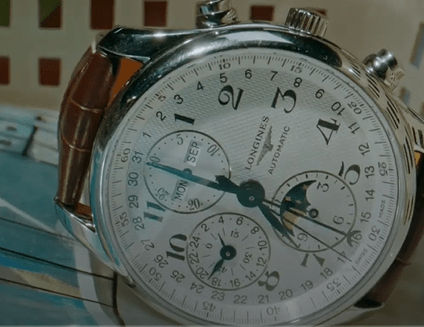
Then while talking to Alice, mad Hatter mentions time as a person: “If you knew Time as well as I do, said the Hatter, you wouldn’t talk about wasting it. It’s him. “[…] I daresay you never even spoke to Time”. He even adds that if Alice talked to Time, then he could help her to change time as she wished. She only needs to whisper to him about the time she would like to have. In my opinion, this excerpt could be seen as an indication that something similar will happen in the future. Lee Gon will time travel.
The time is even so relevant that’s why the writer uses a lot of expressions and situations around the time, like f. ex. The lady No and the prince Byeong are both annoyed by the disappearance of the king and are searching for a good excuse. Each of them keep saying “this time”. I could mention two scenes
1. when Lee Gon confesses how troubled he is. It took him 25 years to find JTE, yet this day felt so long for him. Notice the discrepancy, although 25 years is much longer than a day… Lee Gon pointed out that he felt the exact opposite. He, a scientist, who keeps measuring time in order to know the time difference between the two worlds, is making the experience that sometimes time can not be really measured.
2. when Lee Gon is asked if he has dated before then he kisses her. Indirectly, he is underlining the importance of the present. The kiss marks a turning point between the past (has he been dating before?) and the future (Is he dating now?)
The other common point is fantasy which is linked to time. Lee Gon discovers that time can stop there but first he has no idea why. Then his uncle doesn’t age. In 2020, Lee Rim doesn’t look like a 71 years old man. Then in the passage between the two worlds, Lee Gon the scientist has noted that there is no time there as the red balloon is still remaining at the same place. The air has not disappeared. This space defies the laws of Physics. Hence he wants to discover this world. Furthermore, the ID that was printed in 2019 already existed in 1994.
As conclusion, we find many elements from Alice in Wonderland existent in the k-drama and many characters from “The King” are inspired by different characters from the fairy tale. The viewer need to know the book in order to understand the insider jokes (like the beheading e. g.)
This is where you can read the manhwa. https://www.lezhinus.com/en/comic/painter But be aware that this manhwa is a mature Yaoi, which means, it is about homosexuality with explicit scenes. If you want to read more essays, here is the link to the table of contents: https://bebebisous33analyses.wordpress.com/2020/07/04/table-of-contents-painter-of-the-night/
It would be great if you could make some donations/sponsoring: Ko-fi.com/bebebisous33 That way, you can support me with “coffee” so that I have the energy to keep examining manhwas. Besides, I need to cover up the expenses for this blog.
The seme, Yoon Seungho, in this story is introduced with this expression “a hell-raiser” by the uke Baek Na-Kyum. The latter has heard about Seungho’s bad reputation. Strangely, the more chapters we read, the more we realize that our main lead is different from what he appears to be.
What caught my attention while reading this manhwa was the way Seungho stands, when he interacts with people. First of all, as a wealthy and influential noble, he sits far away from the others, not just from the servants. There is always some distance or a table between him and the others. Let me show you a few examples.
In the chapter 12, Jihwa visits the main lead without any appointment. In this scene, notice that Jihwa doesn’t sit next to the seme but in front of him. This underlines the gap between Seungho’s status and Jihwa. Furthermore, there is no physical contact between them at all. Even Seungho is looking outside the window, while talking to Jihwa, that’s how he sees Baek Na-Kyum and decides to go to him. In other words, although Jihwa is physically closer to Seungho, the reader can sense the existence of an invisible wall between him and Jihwa.
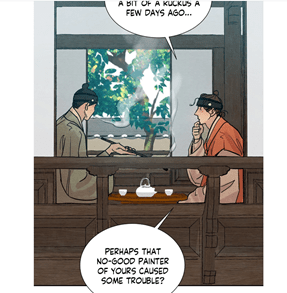
But this doesn’t happen just once. Even after the long night spent with BNK who got so sick, we see Seungho sitting in the center of the room after a sex orgy and it was as if his sex partners would be below him, as if they were all standing at his feet. In this chapter (33), they are all asking for BNK’s presence… their request underlines the special status Seungho has over them. At the end, Seungho decides to leave the room which shows that Seungho is no pushover and makes sure to maintain the distance between him and his sex partners.
This contrasts so much to the interaction between Seungho and BNK. Right from the start, there is no gap and distance. Remember the first chapter where Seungho took BNK’s hands and even let him touch his own loin. Later, you see him always touching the painter’s face. However, there is one scene that caught my eye, it is in the chapter 16. Jihwa and Seungho had just a sex session and Seungho decides to go to BNK’s side.

Notice the contrast between Seungho’s behavior in the chapter 12 and here. Seungho is not even closing his robe, he even lays down next to the painter. And he keeps asking questions. He is very relaxed in opposition to the scene where he is drinking some tea. The way he is dressed contrasts so much: his robe is loose and open, while he is well-dressed with Jihwa. While he maintains an air of nobility and oozes mind control in the chapter 12, here he gives the impression of cheerfulness. It was as if he was playing as he has BNK’s hairband in his hand and keeps looking at it. Notice the huge opposition: Seungho is lying on the ground next to the painter, while with Jihwa he was sitting in front of him. This gives an explanation why Jihwa is furious and jealous. Seungho has never really rushed to go to his side, he even ignores Jihwa who is about to leave.
This behavior outlines Seungho’s curiosity for the painter and his wish to be close to his idol. He definitely shows an interest towards BNk, while he remains quite indifferent to Jihwa and the others. In this scene, there is intimacy and closeness and this is no coincidence that the noble calls the painter Na-Kyum while whispering. He is quite intimate and reveals his need to close the gap between him and the painter. In other words, Seungho has a different attitude towards the painter. While he maintains a gap between him and his sex partners, he is doing the opposite with BNK. He is not indifferent but curios and quite cheerful. He even smiles.
This closeness and intimacy is even underlined one more time, when Seungwon, Seungho’s younger brother, pays him a visit. The latter announced him that their father was ill and our seme should pay him a visit. Although the painter is a low-born, he is actually sitting next to Seungho’s side, while the brother is facing him. This shows that Baek Na-Kyum is even closer to him than his own family. He let the painter hide his face, yet he didn’t even ask him to be dressed. (chapter 37:
Then after this scene, Seungho shared his bed with Baek Na-Kyum for the first time. The lord was even hugging the painter and let us not forget that he always sent his sex partners right away after their love session. Striking is that both chapters 16 and 37 have something in common: the lord is the one pleasuring the low-born and not the other way around. So, here the lord shows rather an “inferior” position, although from his social status he is above Baek Na-Kyum. This indicates that the social norms have disappeared.
Then I observed another phenomenon. I noticed that Seungho was often shown in front of a window (chapter 12, chapter 44) or under a roof (chapter 19 :

chapter 30 :

while he keeps watching BNK who is standing outside. It appears to me that the author has an intention with Seungho’s position. I get the feeling that Seungho had stopped living after the incident with the topknot and the purgery. In the chapters mentioned above, the noble witnesses:
-the disappointment of BNK, when In Hun hears that he was invited due to the deal with the paintings.
– the departure of In Hun from his room, just like he looks at BNK returning from the gate.
– how BNK leaves his bedroom after the punishment.
Striking is that Seungho shows two different kind of behaviors:
– he remains passive and indifferent on the surface but can’t help thinking about the painter
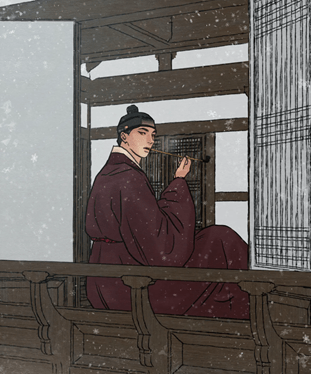
– he rushes to BNK’s side (chapter 12, 30)
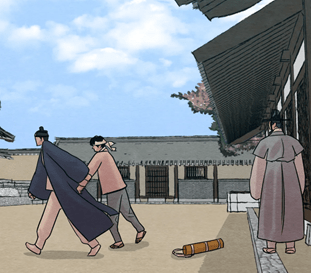
and touches him right away. He grabs his wrist, or touches his head… there is always this physical contact which Yoon Seungho never has even outside their sex sessions. Usually, he acts like that, when he is upset and very emotional. In other words, BNK is able to change Seungho, as the former ignites reactions from Seungho. My interpretation is the following: The noble only watches life from his window, meddles more and more in people’s life due to BNK. Remember that after meeting Seungwon, it looks like Seungho sent a painting of himself with his sex partners to his father. So far, he had ignored his father and his brother.
The lord is less and less indifferent. I have the feeling that for the first time, he is no longer feeling empty. Even after the rape, he can’t help looking for BNK in the bathroom. He is angry, feels guilty and jealous. The violence of his emotions can only be explained by the fact that Seungho felt nothing for so long. He is not able to control his emotions, and this illustrates that Seungho is no longer an indifferent, passive and emotionless person, quite the opposite. Seungho needs to learn to control his emotions, something he forgot. And you can observe that as time passes on, Seungho is able to show more and more affection. The so-called loyal servant Kim told BNK that Seungho had mood swings, which I explain so. Seungho could be either violent and ruthless or indifferent/broody. When he killed the servant, he showed no fear, no remorse… he just did it without feeling anything, though his face lets transpire sadness. While killing the domestic, the lord tried not to take it to heart. But his violence has nothing to do with emotions first, only when Seungho started interacting with the painter. In the first chapter, the noble had even announced that he would kill someone, which outlines his lack of emotions and empathy. And this shows that his brutality is not inherent to Yoon Seungho. His violent outbursts are also linked to his suppressed anger and rage due to his past trauma, as he was forced to accept his fate. Hence he started cutting himself from emotions… but in reality, he was like a dormant volcano, and his eruptions were caused by BNK’s reactions.
From my point of view, Seungho is starting to live for real, and the sex he had before was a way for him to pass time. This would also explain why Seungho had problems with erections before (he needed to be prepared, to have replenishing medicine and even the erotic books in order to get a reaction). This also explains why Seungho refuses to join In Hun in reality. He has been detached from the world for so long, he has no interest in politics and whatsoever. However, I sense that Seungho will be forced to act outside his courtyard in the long run. Being indifferent and detached from the outside world, is not right, as we can see that Jihwa is about to have BNK killed and In Hun might try to hurt BNK in order to weaken Seungho. In Hun has not forgotten the humiliation and I am quite sure, he wants a payback for that. Seungho will be forced to handle.
At the end of this season, Seungho remains passive and indifferent on the surface, yet his gaze never leaves BNK and even with In Hun, he thinks about him. He is no longer a robot, but a human being seeking for love and recognition. He knows that BNK has given up on his crush hence he feels much more confident than before that’s why he mentions BNK to In Hun before the latter leaves for the capital.
But now, you are wondering why Yoon Seungho became such an distant, passive and rather indifferent man, who was feeling rather empty. I mentioned before that Yoon Seungho was suffering from a past trauma. His loyal servant once told our uke that the lord had a tragic and painful past. However, we don’t know anything specific. The reader is just aware that the son is estranged from the father. While reading the manhwa for a third time, I came to the following theory. Naturally, there is no guarantee that this theory is the story imagined by Byeonduck.
From the start, Seungho was not a sodomite but due to the discovered conspiracy, the father decided to have his son to take the blame in order to escape the purge and divert attention. He created the rumor that Seungho was a sodomite and put on a show. This would explain why the father dishonored his son in such a ostentative way: cutting off the topknot which is not just a humiliation but also symbolizes a castration. Another possibility is that the father somehow “sold” his eldest son in order to escape the purge so that Yoon Seungho got raped by a higher-up official. Both theories have in common that the father betrayed his eldest son for his own survival and in order to ensure that his son would never reveal their connection to the conspiracy, he ruined his son’s reputation by declaring him a sodomite and cutting him the topknot. Why not a sodomite from the start? (sorry for the repetition)
We shouldn’t forget that we heard the lord drinks a lot replenishing medicine, which is an aphrodisiac. Now, Baek Na-Kyum is drinking the same thing and notice his reaction: he was hard… The servant was helping his master this way. Notice how happy Seungho was, when he noticed Na-Kyum’s reaction. Seungho was just writing and Na-Kyum was already reacting. Secondly, we read from Jihwa that the latter always had to prepare Seungho (blowjob) in order to get aroused. 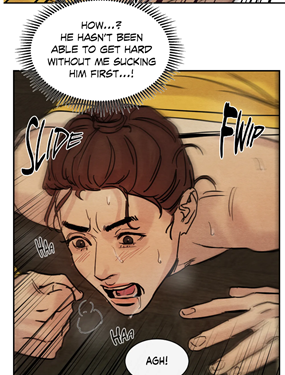 (chapter 3)
Finally, right in the first chapter, Seungho confessed that only with Baek Na-Kyum’s book, he could get aroused right away. (chapter 1)
This would explain why Seungho resents his father and said to Seungwon that he was living by the father’s principle… which is living as a sodomite because his father ruined his reputation and life. The father betrayed the son, when he declared him a sodomite. With this move, the father made it impossible for the son to become an official with a high position.
But now, I would like to add new aspects. Actually, Seungho was not sent away because he was a sodomite. It was actually the opposite. The family left the domain and went to the countryside, leaving Seungho behind. And this new detail is quite important… it was as if the father wanted Seungho to become the head of the family Yoon and if the authorities decided to punish Yoon’s family, then Seungho would have become the target. Since the father had left the property to his son, if the police had come to arrest Yoon, then the family could have said that Seungho was the one responsible as he was living in the courtyard, but the family had cut ties with him as he was a sodomite. In other words, not only the father humiliated his son but he also tried to turn him into a real scapegoat. The father thought that Seungho would be the one to take the fall. Furthermore, while the family left, it is said that all the servants were replaced which is a clue that all of them were killed. And I have the impression that Seungho was forced to get rid of them if he wanted to survive. With no witness, Seungho could survive the purge, however he couldn’t kill the loyal servant who had been by his side all this time.
As conclusion, since the family left the family domain, it means, the father not only pushed all responsibilities on his eldest son Seungho but wanted to sacrifice him. The latter was the one who had to dirty his hand in a way to survive. That’s why he is suffering from insomnia and has often nightmares. This is much more terrible than what I wrote a few days ago. This explains why Seungho really hates his father and had his hand shaking, when the younger brother mentioned the father’s illness. With Seungwon’s visit, it becomes clear that the father has decided that it is time to return to the family domain hence if Seungho visits his father, this represents a reconciliation and marks the return of the Yoon. Since the brother smiled, while receiving the letter, it looks like it was a good sign for the father. At least, Seungho wrote a letter to the father… I can imagine that during all this time, Seungho ignored his family that’s why he never replied to the brother’s letter. I can imagine that the father is asking for a visit and will ask that Seungho helps his brother to become an official. I even suspect that since the father has been so cruel and selfish, that he wants from Seungho another sacrifice. Since Seungho has a bad reputation as a sodomite, he can not become an official, the father ruined his life. However, I have the impression that Seungho might have been close to the deceased grandfather who had a high position in the government. Jihwa mentioned like some others that the Yoon family was declining. The reason is that no one after the grandfather took up a government post, like Seungho mentioned it to In Hun in the chapter 6.
And here is another speculation from my side. Since according to Yoon Seungho, the father never had a position, it looks like the young man has either repressed that his prostitution helped his father to get a high position, or he has no idea that his father sold him as courtesan for his own career. We know for sure that father Yoon had a high position and was forced to resign. 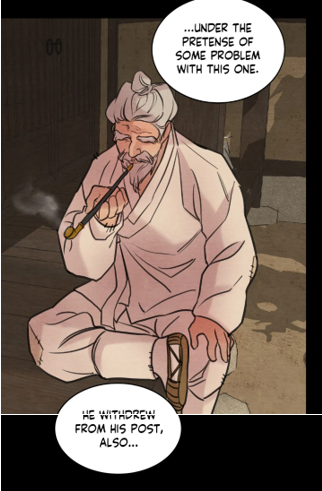 (chapter 37)
I was wondering if the grandfather considered his own son as not suited for a high government post, and wanted his grandson to follow his footsteps. Besides, I had the impression that there’s some secret behind Yoon Seungho’s birth, which would explain why his official father truly loathed him. When Yoon Seungho lost his position as courtesan, because he was framed for an incident, the father used this opportunity to save his skin and get rid of his own son: create the rumor, he was a sodomite, cut off his topknot and leave the domain to Seungho so that he would take the fall. Though the protagonist is smart and cunning, he has never perceived father Yoon’s actions and motivations, for he was always longing for recognition and love. Besides, the long exposure to physical and sexual abuse could only ruin the main lead’s sanity.
But now time has passed on, and the father wants his younger son Seungwon to become an official which would underline one more time the disdain and even hatred between the father and Seungho.  (chapter 37) However, I doubt that Seungho will accept all of this, especially after having been put through all of this. Besides, he will want to protect Baek Na-Kyum. Remember that Seungho decided to take his responsibilities towards the painter. He took Na-Kyum’s virginity which the painter had reserved for the loved one and latter he put the red point on his forehead symbolizing that he was his bride.
 (chapter 40)
And this would explain why at the end of the season 1, it is revealed that the father received an erotic painting of Seungho having sex with 2 men.  (Chapter 44) The eldest son is showing the father the consequences of his past actions. He is a notorious sodomite with no boundary and the father is responsible for this. This gesture illustrates that the young master doesn’t want to reconcile with his own father. Yoon Seungho definitely wants to hurt and infuriate his father. It was as if Seungho was saying: “See… this is what I have become due to you!!” On the other hand, the delivery of the ruined painting was orchestrated by the butler without the main lead‘s knowledge.
  (Chapter 37)
As conclusion, Yoon Seungho seems to be more a tragic figure, especially if my theory is true. The way he had been living was a way to cope his own traumas and suffering.
And this interpretation was confirmed in the second season: he got raped, then drugged and gangraped to finally become the king’s courtesan.
Feel free to comment. If you have any suggestion for topics or manhwas, feel free to ask. If you enjoy reading it, retweet it or push the button like (tumblr- reddit- Instagram- Twitter account: @bebebisous33). Thanks for reading and the support.
 Bebebisous33s' analyses in K-Dramaland and Manhwas