

Please support the authors by reading Manhwas on the official websites. This is where you can read the Manhwa: Jinx But be aware that the Manhwa is a mature Yaoi, which means, it is about homosexuality with explicit scenes. Here is the link of the table of contents about Jinx. Here is the link where you can find the table of contents of analyzed Manhwas. Here are the links, if you are interested in the first work from Mingwa, BJ Alex, and the 2 previous essays about Jinx The Words The Fireworks Stole and The Sweetest Downfall Ever
It would be great if you could make some donations/sponsoring: Ko-fi.com/bebebisous33 That way, you can support me with “coffee” so that I have the energy to keep examining Manhwas. Besides, I need to cover up the expenses for this blog.
Introduction — Dream, Magic, or Something Else?
Many Jinx-lovers were genuinely happy watching how the champion interacted with Doc Dan during that night. He was caring  (chapter 86), gentle, attentive
 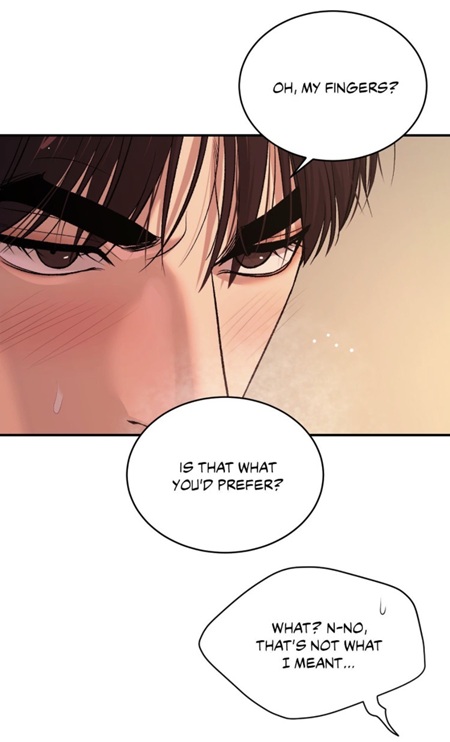 (chapter 86) — asking questions instead of imposing answers
 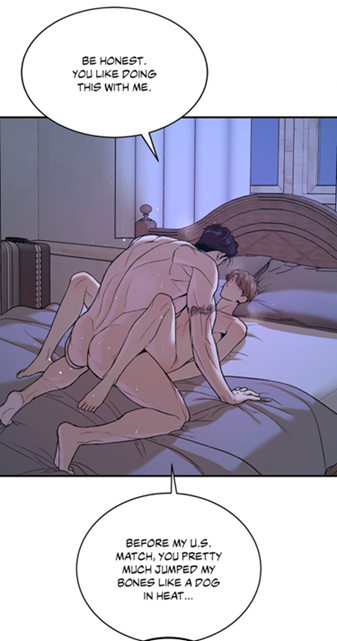 (chapter 64). For Joo Jaekyung’s unconditional stans (and I count myself among them), such an attitude
 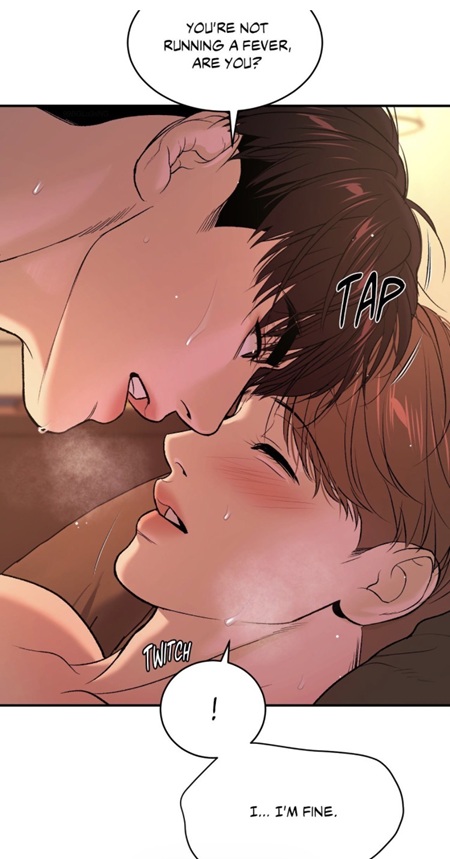 (chapter 86) can easily be read as proof that the protagonist’s good heart has always been existent, but it was barely visible. Compared to earlier chapters, the contrast is now undeniable. And yet, I would like to pause you right there.
Because focusing solely on the champion’s behavior risks missing the most decisive movement of this night. Joo Jaekyung’s transformation did not begin in episode 86. Long before that, he had already started changing — sometimes suddenly  (chapter 61), sometimes awkwardly
 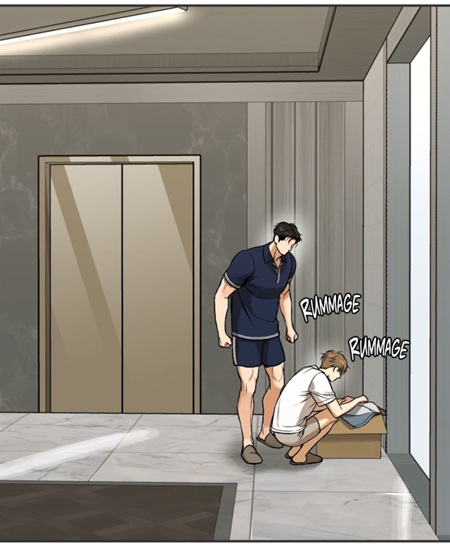 (chapter 80), sometimes inconsistently
  (chapter 79), but unmistakably
 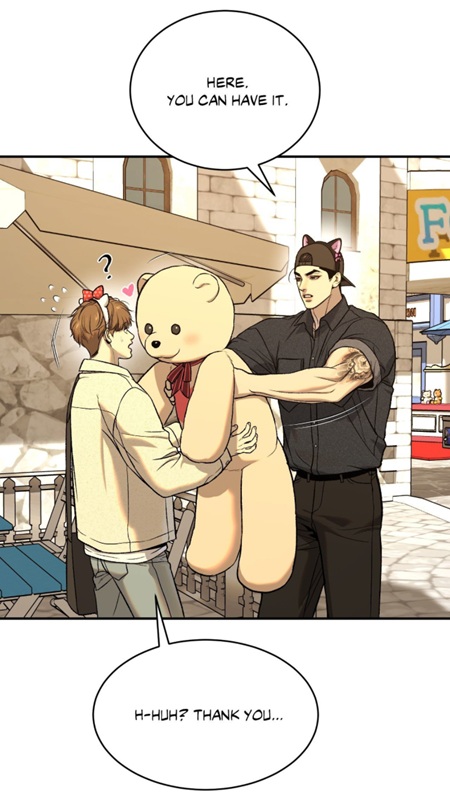 . (chapter 83) Tenderness, concern, even a certain form of devotion had appeared earlier
  (chapter 40), albeit in ways that were often overlooked,
  (chapter 18) misunderstood or poorly timed. This night
 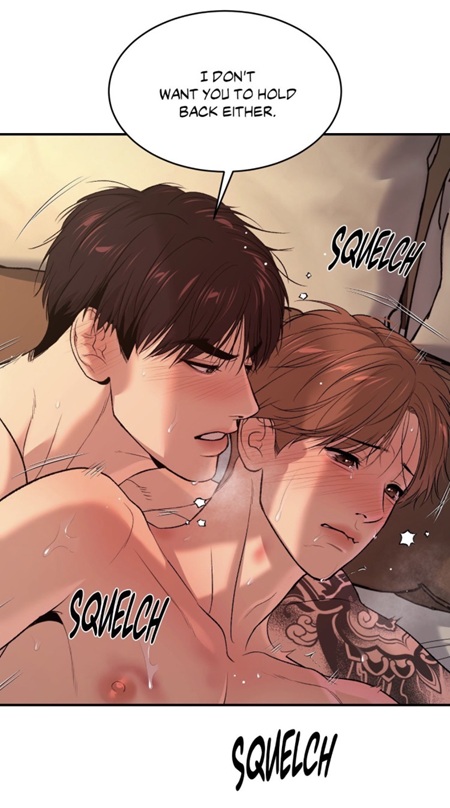 (chapter 86) does not initiate his metamorphosis.
So what, then, makes it feel so different?
When confronted with a night filled with stars 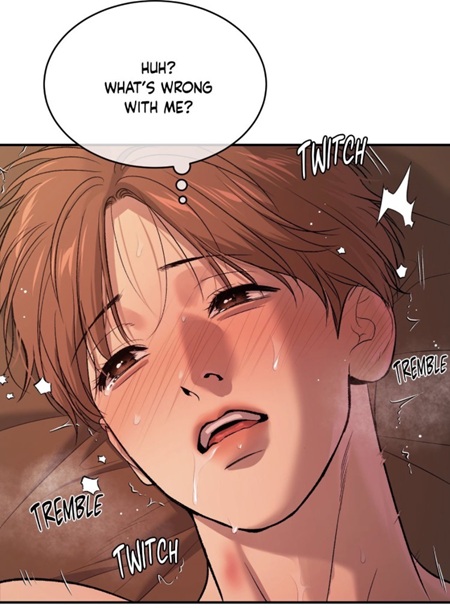 (chapter 86), sparks
 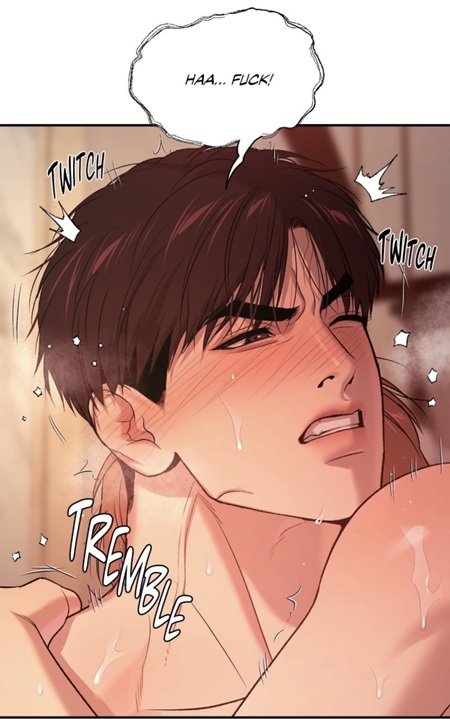 (chapter 86), and softness, many Jinx-philes might instinctively describe it as magical. The imagery invites such a reading. After all, we have seen similar nights before. The night in the States shimmered with illusion
 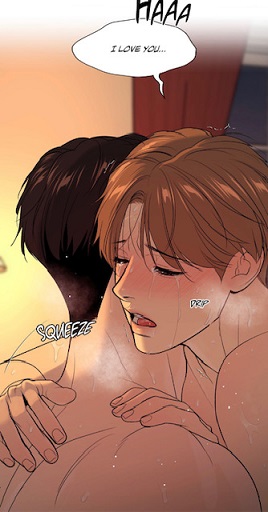 (chapter 39); words were spoken, confessions made — only to dissolve with memory.
  (chapter 41) The penthouse night echoed A Midsummer Night’s Dream
 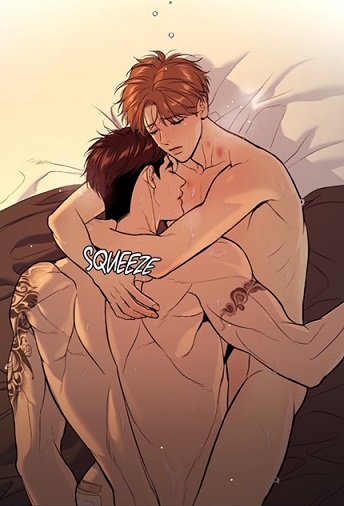 (chapter 44), suspended between intoxication and desire, intense yet fragile. Both nights felt unreal, and both were later reframed as mistakes
 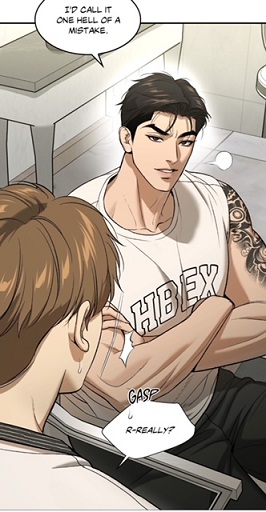 (chapter 41) — moments to be erased rather than carried forward.
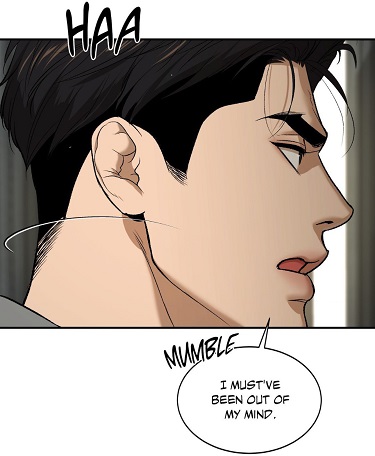 (chapter 45). This raises an essential question. Is episode 86
 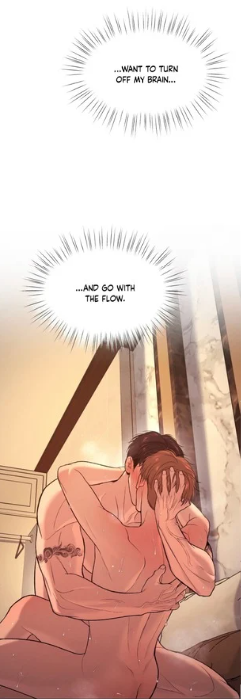 (chapter 86) a renewal of those nights? Another dream layered over the past? A repetition disguised as healing? Or, on the contrary, is this the first night that resists enchantment altogether?
This question matters because in Jinx, nights are never judged by themselves. Their true meaning is revealed afterward — in the morning  (chapter 4), in the return of light
  (chapter 66), in what remains once the sparks fade. A dream dissolves with daylight. Reality does not.
This is why it would be misleading to read episode 86 primarily as evidence of the champion’s improved behavior. Such a perspective encloses the night within its warmth and risks mistaking tenderness  (chapter 86) for final transformation. The real shift occurs elsewhere — more quietly, and perhaps more unsettlingly. To grasp the nature of this night, we must follow more importantly the doctor and his interaction with his fated partner.
What changes here is not only what Joo Jaekyung does, but how Kim Dan perceives 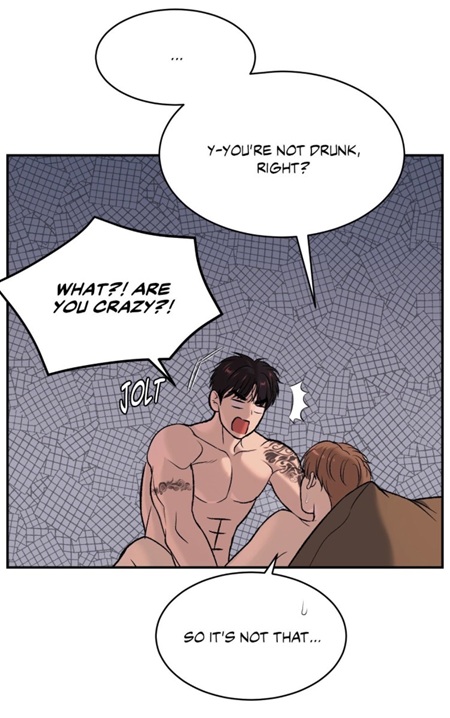 (chapter 86), processes, and responds to it. How he hesitates
 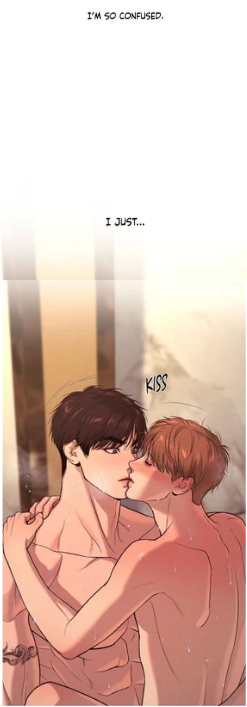 (chapter 86), reflects, and allows himself to reconsider what this moment can mean — and what it can lead to. (chapter 86) It is through this inner recalibration that we can begin to determine whether this night belongs to the realm of dream, repetition, or reality. Only by tracing the doctor’s perception can we understand what truly starts flowing here.
To approach this question, the analysis will move through several successive angles. It will begin with the symbolic and mythological references that frame episode 86, before turning to earlier nights that echo visually or emotionally within it. From there, attention will shift to forms of communication, considering how speech, silence, and gesture are arranged across these scenes. The analysis will then examine repeated actions and how their placement within the narrative differs from one moment to another. Only with such a progression can the nature of this night be reconsidered.
From Solar Heat to Electric Current
Many Jinx-lovers instinctively read episode 86 as a romantic turning point because the night looks “magical”: stars  (chapter 86), sparks, that strange shimmer that seems to hang in the air
 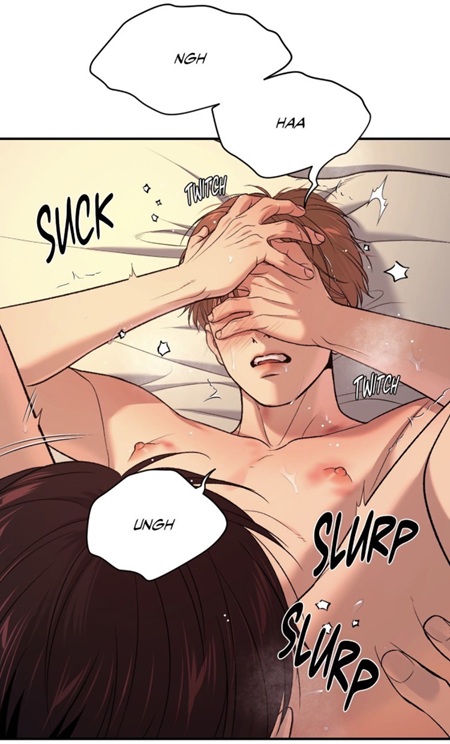 (chapter 86). Why? It was, as if their dream had come true. However, is it correct? Is it not wishful thinking? What if this night is not magical at all? What if its true signature is not enchantment, but electricity—a current that interrupts, tests, and resets? 😮
To grasp this, we must first return to the symbolic regime that used to govern the champion’s presence. In earlier chapters (think of the awe and distance around chapters 40–41 and again later), Joo Jaekyung often appears as a solar figure 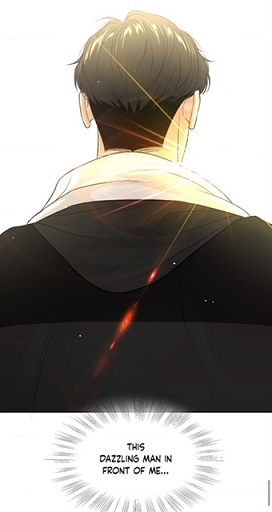 (chapter 40) in Kim Dan’s perception: overwhelming, radiant, dominant, a heat-source that does not negotiate.
 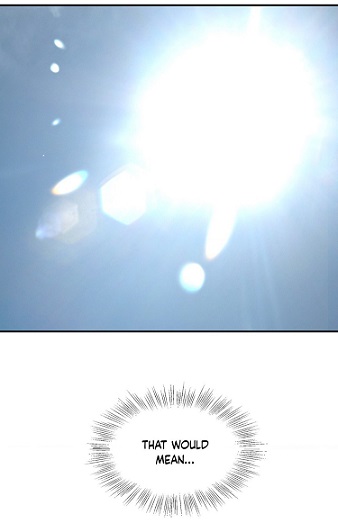 (chapter 41) The sun can be admired, feared, and endured—but it cannot be questioned.
  (chapter 58) It simply shines, and the one who stands in its light adapts. This explicates why the physical therapist would choose silence and submission over communication.
  (chapter 48)
The Invisible Energy
Nevertheless, the excursion in episode 83 and 84 begins to dismantle this solar grammar, though at the time, its meaning is easy to miss. 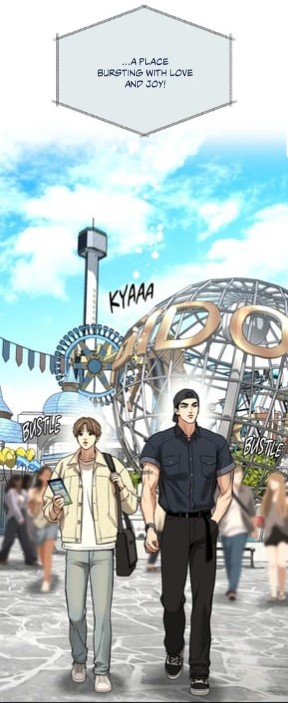 (chapter 83)
The shift away from solar symbolism does not announce itself loudly. It is embedded in the setting itself, almost too obvious to be noticed. An amusement park functions entirely on electricity. 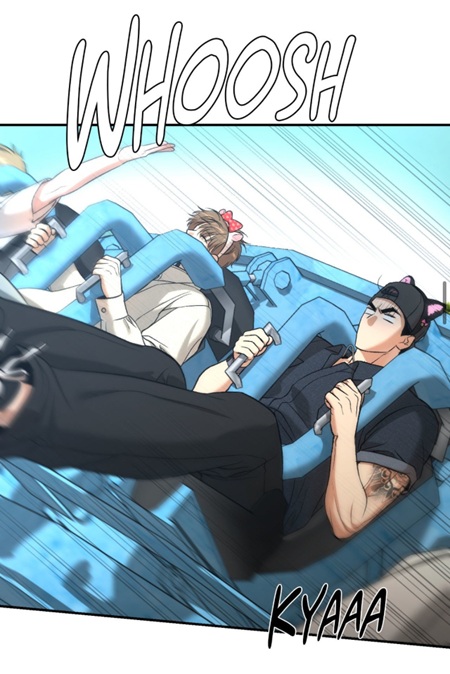 (chapter 83) Every ride, every light, every scream suspended in midair depends on current: motors accelerating and braking, circuits opening and closing, energy stored, released, and cut off.
  (chapter 83) Roller coasters do not move by heat, charisma, or sheer physical force; they move because electricity flows through them. The Viking ship swings
 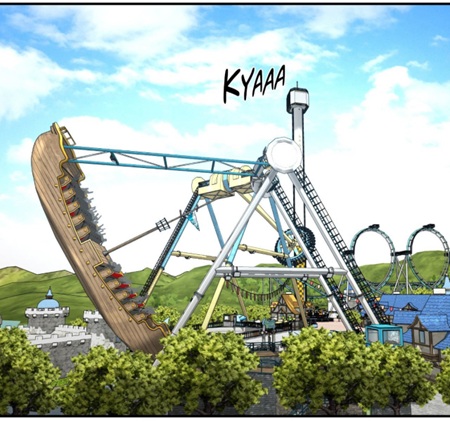 (chapter 83) because current allows it to swing. The Ferris wheel ascends
 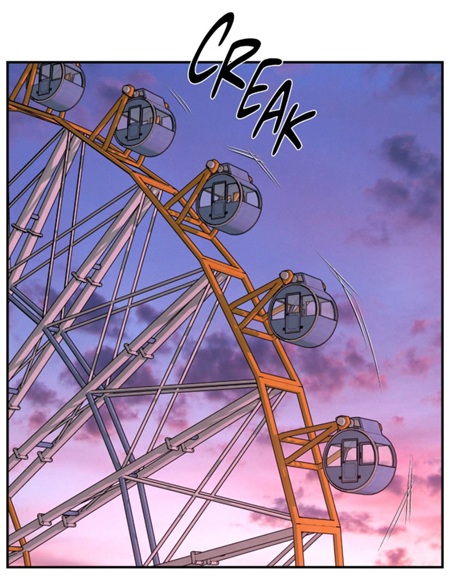 (chapter 83) because circuits hold — and descends because they release.
And yet, precisely because this energy is expected, it becomes invisible.
Neither the characters nor most Jinx-philes initially register electricity as a symbol. It is too familiar, too infrastructural. Electricity does all the work, but it remains background noise. This invisibility is not accidental. Unlike the sun — which imposes itself visually, hierarchically, almost tyrannically — electricity operates silently, relationally, conditionally. It does not dominate the scene; it enables it. It exists only as long as connections hold.
When Electricity Fails
This distinction matters, because electricity only becomes perceptible when it fails. 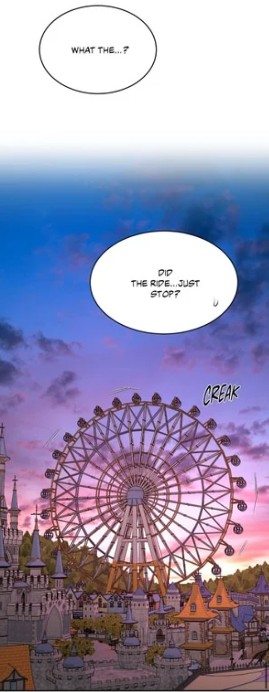 (chapter 84)
The Ferris wheel breakdown in episode 84 is therefore not a minor technical inconvenience but a crucial narrative rupture. The moment the current cuts out, movement stops. Height becomes dangerous. Time suspends. Panic enters the frame. The announcement that “the earlier technical issues have been resolved” 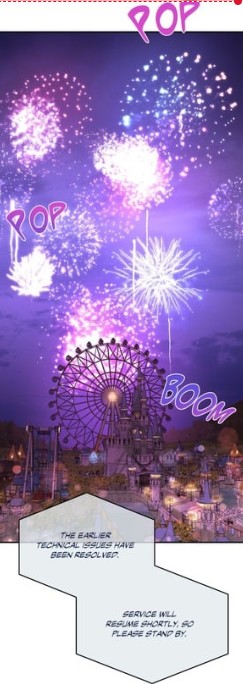 (chapter 84) explicitly names what had previously gone unspoken: the rides function only because current flows. When it disappears, the illusion of effortless motion collapses.
And it is precisely at this moment — when artificial motion halts — that Joo Jaekyung becomes active in an unexpected way.  (chapter 84) The Ferris wheel has stopped. The current is gone. The carefully regulated system that lifted, rotated, and sustained them is no longer in control. Yet movement does not disappear entirely. It mutates. When the champion shifts his weight, grips the structure, reacts instinctively, the cabin begins to shake. Panels emphasize instability: creak, swish, ack. The motion is no longer generated by electricity but by the body itself.
This moment is crucial. The shaking exposes a hierarchy reversal. Human strength now surpasses mechanical control. The ride no longer dictates sensation; the occupant does. And this excess of physical force — uncontrolled, unmediated — becomes unsettling rather than triumphant. Kim Dan immediately responds by asking him to sit down, to stop moving, to restore balance. Stillness, not action, becomes the condition for safety.
From Motion to Speech
What follows is telling. Deprived of the park’s mechanical rhythm, Joo Jaekyung does not compensate by acting more. He compensates by speaking.  (chapter 84) Stranded above ground, stripped of the park’s mechanical rhythm, he apologizes.
 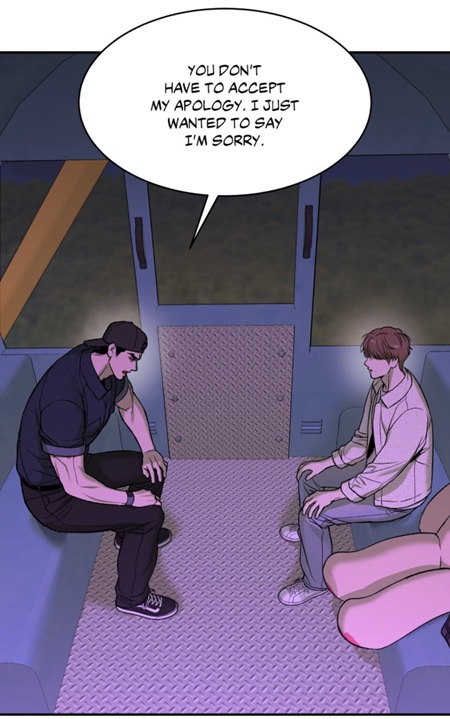 (chapter 84) Not theatrically, not performatively, but awkwardly, haltingly. His body exposes his discomfort
  (chapter 84) and fears. He avoids the doctor’s gaze, crosses his arms
 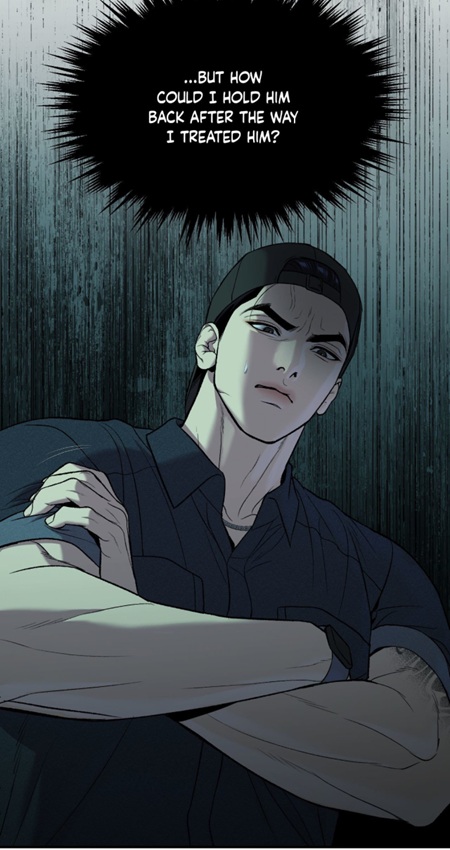 (chapter 84) or squeezes his arm
 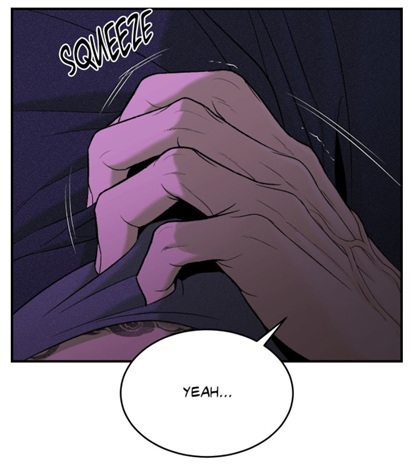 (chapter 84). The cessation of electrical motion coincides with a shift in his own mode of action. Where the park depended on current to keep things moving, he now moves without it. The absence of electricity forces something else to surface: responsibility, attention, presence. Additionally, this sequence anticipates what will later unfold more fully. Proactivity is no longer expressed through force or motion, but through articulation. Words stand for action and have weight. The champion’s future action is announced here, quietly: he will no longer push forward by shaking the structure. He will move by sharing thought, by naming feeling, by allowing himself to be affected.
The interruption of electricity does not merely stop the ride. It forces a change in how agency is exercised. Under this new light, my avid readers can grasp the true life lesson the athlete received at the amusement park, the importance of communication and attentiveness.
As a first conclusion, the amusement park juxtaposes two forms of energy: mechanical electricity and human vitality. The first is regulated, automated, predictable — until it fails. The second is volatile, embodied, responsive. When the Ferris wheel stops, the mechanical system collapses, and a different kind of current emerges: emotional, relational, biological.
Yet, only in retrospect does this moment reveal its deeper logic. I am quite certain my followers are wondering how I came to pay attention to electricity which led to new observations and interpretations. It is related to the “electrical night” in the hotel!
Electricity and Sex
What strikes immediately in episode 86 is not tenderness, nor explicit care, nor even novelty of behavior — but density. The night is saturated with sparks  (chapter 86),
 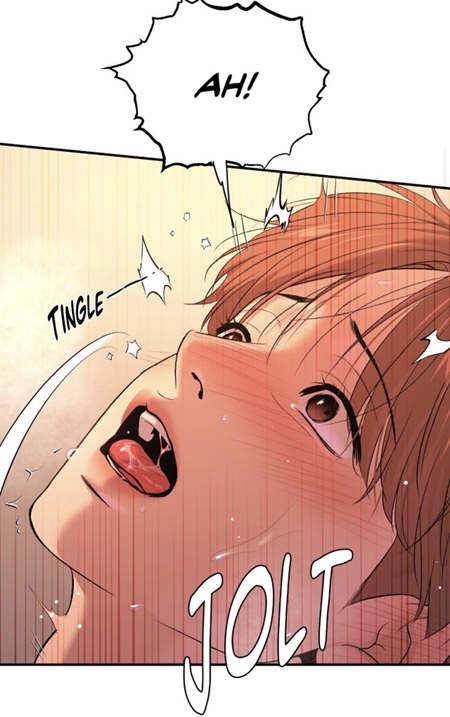 (chapter 86) jolts, sudden contractions of the body
 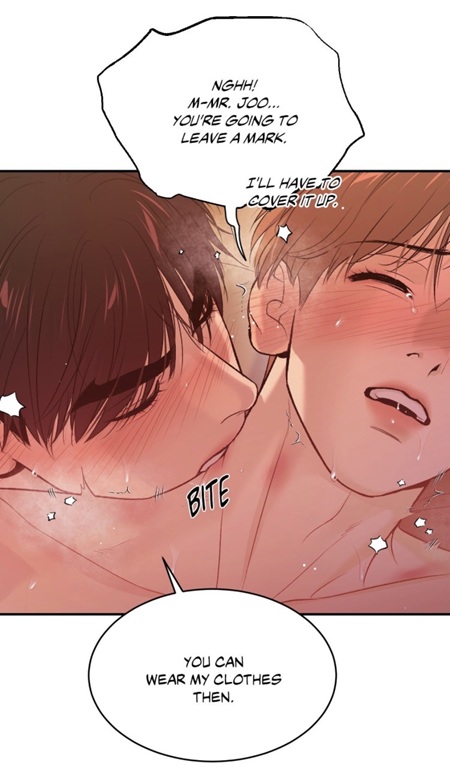 (chapter 86). Kim Dan is repeatedly shown convulsing, gasping, losing linear thought, and it is the same for the MMA fighter. Panels insist on interruption: jolt, tingle, broken breath, aborted sentences. The doctor’s body behaves as if struck, especially in this image.
 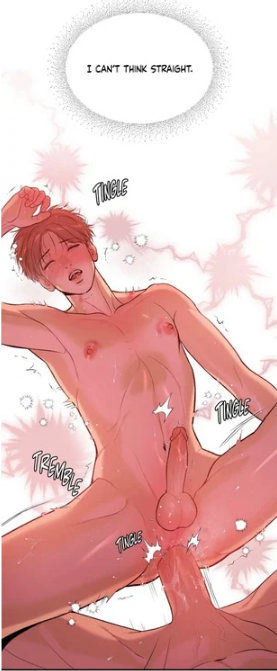 (chapter 86) It is at this point that a phrase surfaced in my mind — instinctively, almost involuntarily. A phrase we use in French when something intangible yet decisive occurs between two people: Le courant passe. Literally, the current passes. Idiomatic meaning: they are on the same wavelength, something connects, communication flows. However, here, the current is not the product of civilization, but of nature. Two people interacting with each other. And it is precisely because of the unusually high frequency of sparks and jolts in the illustrations that a belated realization imposes itself: nature, too, produces electricity — through storms, through thunder.
Joo Jaekyung’s Day and the Thunder
This raises a necessary question: where was the thunder before, as Jinx is working like a kaleidoscope?
One might be tempted to point to episode 69.  (chapter 69) A storm was announced back then. And yet, upon closer inspection, no thunder was ever shown there. There was tension, there was excess, there were dark clouds
  (chapter 69) — but there was no strike, no discharge, no interruption. The imagery remained continuous, fluid, enclosed within the logic of escalation rather than rupture.
The thunder appears in the amusement park. 😮 One detail initially seems insignificant, almost too mundane to merit attention: the day itself.
The excursion in episodes 83–84 takes place on a Thursday. At first glance, this appears to be nothing more than a scheduling detail. And yet, Thursday is not a neutral day. Linguistically and mythologically, it carries a charge. Thursday is Thor’s day. This latent mythology quietly materializes through two objects, the drakkar (Viking boat) (chapter 83) and the hammer  (chapter 83). In Roman terms, Thursday corresponds to dies Iovis — Jupiter’s day — the god of thunder. Both gods are strongly connected to thunder and as such current.
The narrative does not underline this fact. It does not name the god, invoke mythology, or frame the excursion as symbolic. The reference remains dormant. But dormancy is not absence. It is latency. This is where the symbolism stops being latent and becomes functional.
The reference to Thor and Jupiter (which was already palpable in earlier episodes 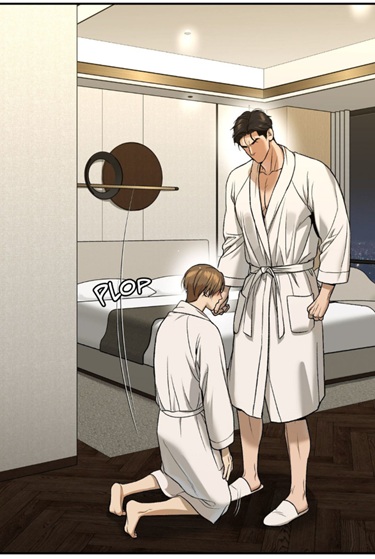 -chapter 67-; for more read my analysis Star-crossed lovers 🌕) is not decorative mythology; it introduces a dual model of power that the narrative begins to test on Joo Jaekyung himself. Thor (chapter 83) is the son: impulsive, embodied, excessive, a god who discharges energy through impact. Jupiter, by contrast, is the father (chapter 83): regulating, sovereign, stabilizing, the god who governs the sky rather than striking it. Thunder belongs to both, but it manifests differently depending on position in the lineage. What matters is not which god the champion “is,” but that he oscillates between them. This oscillation becomes legible through the hammer.
The hammer game appears after the champion’s moment of physical discomfort and jealousy.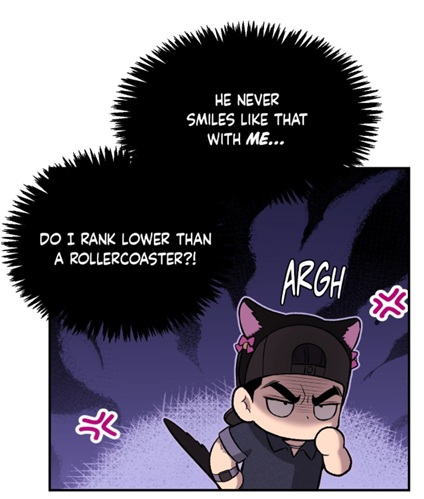 (chapter 83). Before striking anything, he is already unwell: angry overstimulated and complaining, visually reduced to a childlike register. This matters. The hammer does not create excess — it receives it. (chapter 83) It offers a sanctioned outlet for surplus energy that has nowhere else to go. However, contrary to the past, the physical therapist becomes the beneficiary of the athlete’s greed and jealousy. He receives a teddy bear. The hamster doesn’t witness the punching incident, he only sees the result: care and affection. (chapter 83)
Unlike boxing, unlike punching a sandbag  (chapter 34), the hammer gesture is not confrontational, for the machine is immobile. There is no opponent. (chapter 83) The arm rises and comes down. The movement is vertical, not horizontal. It does not engage another body; it obliterates resistance. This is not combat but discharge.
In that moment, Joo Jaekyung performs Thor. Not metaphorically, but structurally. He channels excess into a single, downward strike. The absurd score — 999 — is not triumph; it is overload. 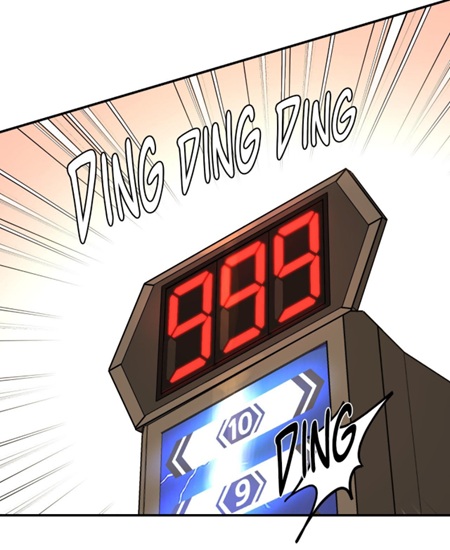 (chapter 83) Too much energy released at once. The system registers it, but cannot contain it. This means, the record won’t be registered and as such “remembered”. In fact what mattered here was the prize, the teddy bear, and restored self-esteem of the athlete. He could offer a present to doc Dan which the latter accepted without any resistance. (chapter 83) The pink heart indicates the presence of affection and gratitude. And crucially, this act restores balance. After the hammer, the champion is no longer visibly overwhelmed. He has expelled what needed to leave. This shows that the champion is learning to manage his jealousy differently.
This prepares the next transition. Once the excess is discharged, he can shift position. The childlike Thor-state gives way to something else: regulation, provision, containment. This is where Jupiter enters — not as domination, but as adaptive authority. The same character who was dazed now intervenes calmly, mediates interaction, hands over the teddy bear, anticipates need. Son and father coexist not as contradiction, but as sequence.
This duality is essential for what follows. Because thunder is not continuous like the sun. It interrupts. It breaks a state, resets a system, and allows a new configuration to emerge. That is its narrative function here. This means that the athlete’s attitude can no longer be generalized, as such reproaches or description wouldn’t reflect reality. But let’s return our attention to the thunder causing a short circuit and reset.
The Ferris wheel breakdown completes the logic. When electricity fails, mechanical motion stops. When motion stops, the champion’s bodily excess becomes dangerous. When excess becomes dangerous, restraint is required. And when restraint is required, speech replaces force. The apology does not come despite the breakdown, but because of it. The system has been reset. This is why the amusement park is not merely foreshadowing but training.
The champion learns, physically and symbolically, that energy must circulate differently depending on context. Sometimes it must be discharged. Sometimes it must be restrained. (chapter 86) Sometimes it must be transmitted through words rather than bodies. This is not moral growth; it is adaptive intelligence.
Doc Dan and the Thunder
And this is precisely what reappears in episode 86. (chapter 86)
There, thunder returns — no longer as mechanical failure, but as biological event. The sparks and jolts saturating the panels are not just erotic embellishment. They reproduce the same logic of interruption and reset as well. Kim Dan’s body reacts as if struck by current. Thought fragments. Linear continuity breaks. “I can’t think straight” is not poetic confusion; it is systemic overload. I would even say, we are witnessing a short circuit which can only lead to a reset.
A thunderstorm does not persuade. It forces a reboot. In other words, this night stands under the sign of reality despite the sparks. Electricity is real and even natural.
The crucial difference is that this time, the current does not come from machines, nor from spectacle, nor from a game. It emerges between two bodies. This is why le courant passe becomes more than metaphor. The current does not dominate; it circulates. It requires two terminals. It only exists because both are present and conductive. And now, you comprehend why the champion was attentive (chapter 86) and asked questions to his sex partner. The current stands for communication.  (chapter 86) Therefore it is not surprising that doc Dan starts looking at his fated lover. Imagine what it means for the athlete, when the “hamster” is staring at him, though he is a little embarrassed. Finally, he is truly looking at him. The champion loves his gaze. And now, you comprehend why the “wolf” listened to the “cute hamster” and stopped leaving marks.
In this sense, the hammer returns one last time — transformed. (chapter 86)
What struck metal in the amusement park now strikes the psyche. Not as violence, not as domination, but as reset. The phallus functions here exactly as the hammer did earlier: a tool of discharge that interrupts an old state and makes a new configuration possible. The result is not surrender, not illusion, but recalibration. Joo Jaekyung is once again releasing his “energy”  (chapter 85), but this time, its nature has changed. It is no longer jealousy or anger, but love and desire. Hence the current is not colored in red, but white and pink. (chapter 86) It is not a flame like here
 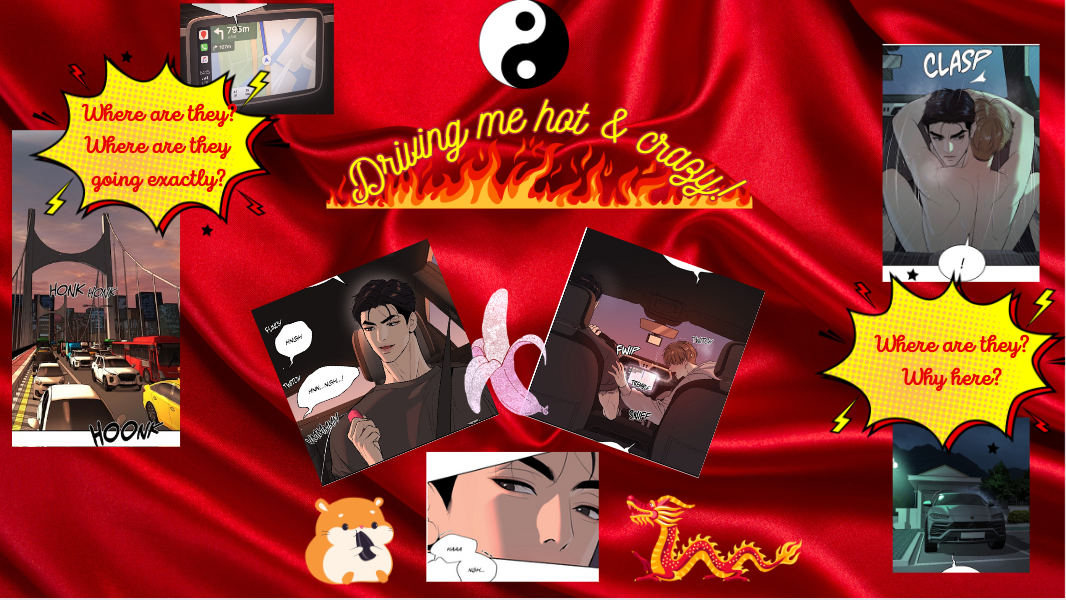 , but a thunder and as such it is still restrained and regulated.
This is why episode 86 does not feel “magical”, once the structure is visible. Magic enchants without consequence. Thunder alters systems. After a strike, nothing resumes exactly as before.
And that is the point.
The champion is no longer a sun that burns from a distance. He has become a figure capable of switching modes — son and father, Thor and Jupiter, discharge and containment. And Kim Dan, having undergone the reset, is no longer operating on inherited assumptions  (chapter 86) or second-hand data. New information must now be gathered. New meanings must be negotiated. Because Joo Jaekyung acts differently (son-father), the doctor is incited to discuss with his fated lover and not to generalize. He is pushed to become curious about the main lead and even adapt himself in the end.
The system has rebooted. What follows will not be repetition — because the thunder forced a reset. What follows will be movement and reciprocity — because current has begun to pass from one side to the other and the reverse. A new circle has been created.
Dream Nights and Drugged Time: Why Chapters 39 and 44 Could Not Last
If episode 86 confronts us with electricity as reset, then we must return to the earlier nights that failed — not because desire was absent, but because time itself was compromised.
Many Jinx-lovers remember the night in the States  (chapter 39) and the penthouse night
 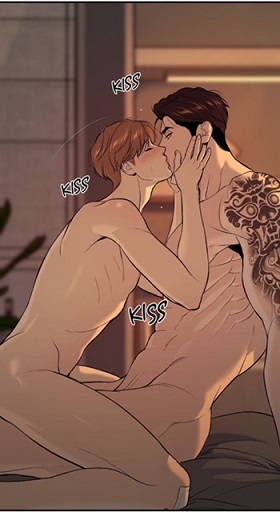 (chapter 44) as emotionally charged, intense, even pivotal. Confessions were made. Bodies responded. Vulnerability appeared to surface. And yet, both nights collapsed almost immediately afterward. What was felt (chapter 44) did not endure. What was said did not bind. What was shared did not accumulate into change.
Why?
The simplest answer would be to blame the champion’s behavior. But this explanation is insufficient — and, in fact, misleading. The deeper issue is not ethical failure alone, but structural impossibility. These nights were built on illusion. And illusion, by definition, cannot sustain time.
Let us begin with the night in the States.
In chapter 39, Kim Dan experiences desire  (chapter 39), arousal, and emotional exposure under the influence of a drugged beverage. His body reacts strongly, almost violently. His speech loosens. He confesses. (chapter 39) He voices feelings that he has never dared to articulate consciously. Many readers interpreted this moment as a breakthrough — the first time the doctor allowed himself to want.
And yet, the morning after reveals the fatal flaw: he does not remember. 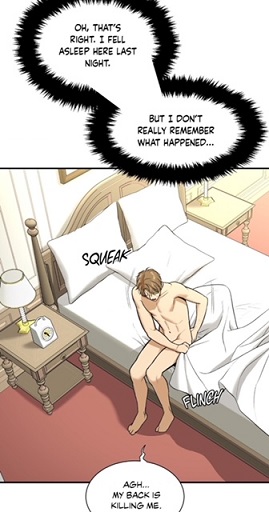 (chapter 40)
Memory loss is not a narrative convenience here. It is the core of the scene’s meaning. Without memory, desire cannot transform into intention. Without intention, intimacy cannot become choice. What remains is sensation without authorship.
In other words, the confession existed — but outside time.
The body spoke, but the self could not claim it. The night produced intensity, not continuity. More importantly, it denied Kim Dan the possibility of return. Because he did not remember, he could not revisit the moment, reinterpret it, or choose it anew. Desire occurred — but never became decision. The night passed through him without granting him authorship. At the same time, Joo Jaekyung made sure with his joke (chapter 41) that doc Dan shouldn’t remember that night. This remark left a deep wound on doc Dan’s soul and mind, thus he hoped not to look like a fool in episode 86. 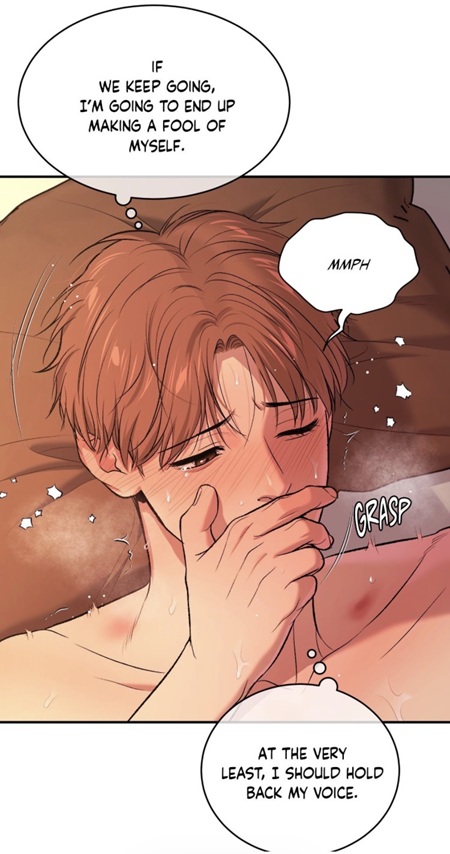 (chapter 86) In this panel, we should glimpse a reference to the night in the States as well, and not just to the night in the penthouse.
The intensity of that night is why the champion’s later obsession with recreating that night is so telling. (chapter 64) Deep down, he hoped that such a night had been real. That’s why he asked shortly after their return about this particular night. (chapter 41) The event floats, unmoored, like a dream recalled only by one participant. I would even add, the amnesia from the doctor even afflicted a wound on the main lead. This explains why in Paris, he keeps asking doc Dan if the later is well and is not suffering from a fever. (chapter 86) He wants to ensure that his fated lover won’t forget this night. He is doing everything to avoid a repetition from that “dream or fake night”, where the physical therapist acted as the perfect lover, but forgot it. However, observe that here, the champion is touching doc Dan’s forehead, a sign that he is making sure that doc Dan is not “lying” by coercion or submission. At the same time, such a gesture reinforces my interpretation: thanks to the “thunder”, heat is generated. “Le courant passe” (the current passes) through physical contact, that’s how they create intimacy and understanding.
The penthouse night in chapter 44 follows a similar structure, though its emotional register differs.
Here, it is Joo Jaekyung who is intoxicated.  (chapter 44) The setting is elevated, luxurious, almost theatrical. The doctor is brought into a space of power that is not his own.
 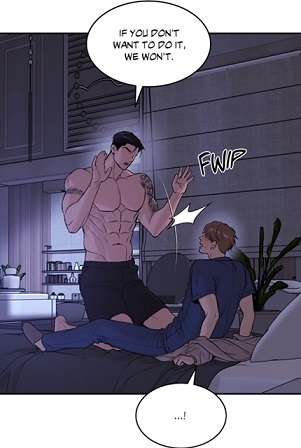 (chapter 44) By acting that way, the athlete created a false impression of himself, as if he was still rational and clear-minded. Again, desire unfolds.
  (chapter 44)
  (chapter 44) Again, closeness occurs. And again, the aftermath reveals the same fracture.
The champion does not remember fully 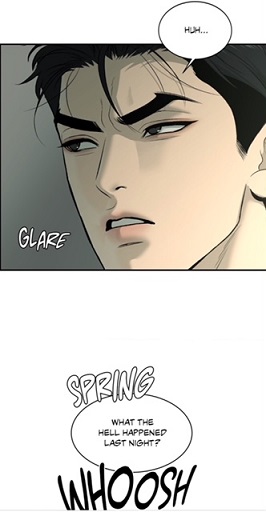 (chapter 45) and later wants to even forget it. (chapter 45) Why? It is because contrary to the night in the States, the MMA fighter left traces on doc Dan’s body
  (chapter 45) and he can not deny his own involvement and actions. Hence the doctor is left alone. Only he can recall this “dream”.
  (chapter 44) But memory alone is not power. Remembering without the other’s participation transforms recollection into isolation. Kim Dan cannot confront, confirm, or renegotiate what happened, exactly like the champion did in the past. Meaning freezes instead of evolving. Striking is that he came to associate feelings with addiction.
  (chapter 46) No wonder why later doc Dan had no problem to reject the athlete. And for him, the next morning became a cruel reality, even a nightmare. It wounded doc Dan’s heart and soul so much that he learned the following lesson: to not get deceived by impressions. Hence in Paris, Doc Dan tries to explain the change of the champion’s attitude with drunkenness. (chapter 86)
What matters is not simply abandonment, but asymmetry of consciousness. While Joo Jaekyung remembers the night in the States, the other remembers the night in the penthouse: 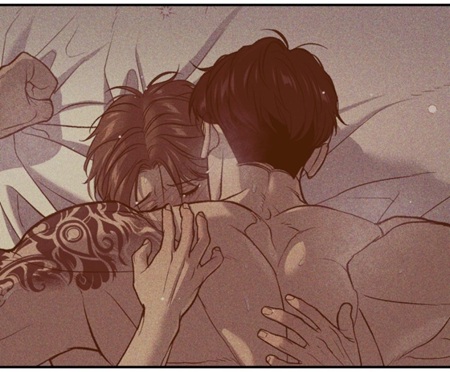 (chapter 44) One participant is altered. The other must carry the weight of meaning alone. The night does not end in shared reflection, but in silence and absence.
In both cases, the problem is not sex. It is not even exploitation or ignorance— though both are present. The problem is that time cannot flow forward from these nights.
Why? Because drugs suspend causality.
Under intoxication, actions do not generate obligation. Words do not demand response. Feelings do not require follow-up. The night becomes sealed — intense within itself, but cut off from before and after. This is why these encounters feel dreamlike in retrospect. Not romantic dreams, but dissociative ones.
And Jinx insists on this reading visually.
In both chapters, speech is unstable. 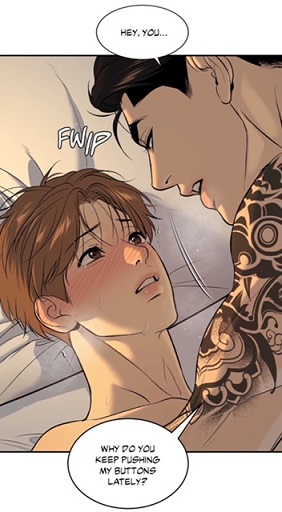 (chapter 44) Words blur, vanish, or are forgotten. Even gestures go unnoticed: a kiss, an embrace or a patting. Memory fractures. The morning after is defined not by continuity but by confusion. The body has moved forward, but the narrative has not.
This logic culminates in the fireworks scene of chapter 84 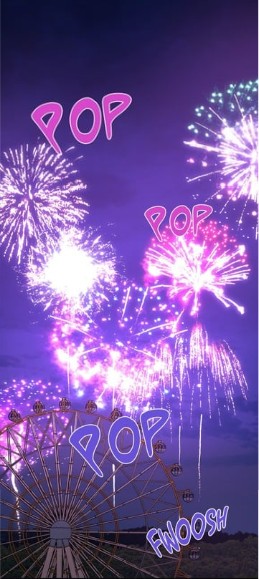 (chapter 84)
Fireworks are often read as romance. But here, they function as warning. Fireworks illuminate the sky briefly, brilliantly — and then disappear. They leave no trace. And crucially, during this display, words are literally blurred. 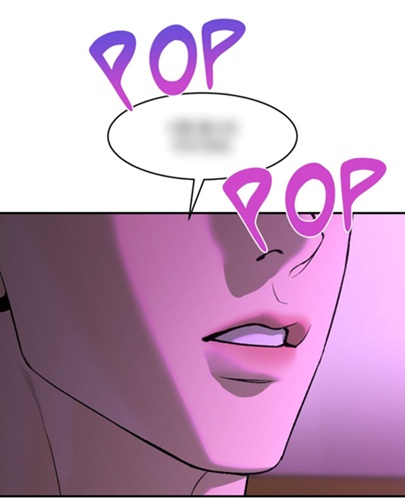 (chapter 84) Speech bubbles lose clarity. Confessions are obscured. The reader is denied access to meaning. Fireworks, like drugs, produce intensity without duration.
This is the crucial distinction that Part I prepared us for: heat versus current. Heat lingers. It can smother. It can burn. But it does not require connection. Current, by contrast, only exists if two points remain linked.
Chapters 39 and 44 are nights of heat. Bodies respond. Desire flares. But no circuit closes. No loop remains intact long enough for time to resume. This is why these nights are doomed — not morally, but structurally.
And this brings us to a crucial observation that many readers overlook.
In both of these earlier nights, questions are absent.
No one asks: “Are you okay?”  (chapter 39)
  (chapter 44) It was as if these nights could only exist under altered states — as if clarity on either side would have made them impossible.
No one asks: “Do you remember?”
No one asks: “Why are you doing it?” “What does that mean to you?”
Speech exists, but it is not dialogic. It does not seek the other’s subjectivity. It spills, confesses, demands, judges or disappears. But it does not circulate. This is why, despite their intensity, these nights do not move the story forward. They collapse inward.
Episode 86, by contrast, will confront us with something radically different: a night that asks questions.  (chapter 86)
But before we get there, we must acknowledge what these dream-nights leave behind.
They teach Kim Dan that desire is dangerous when it appears without agency. That closeness can dissolve overnight. That bodily truth does not guarantee recognition or even knowledge. And perhaps most importantly: that remembering alone is a burden. 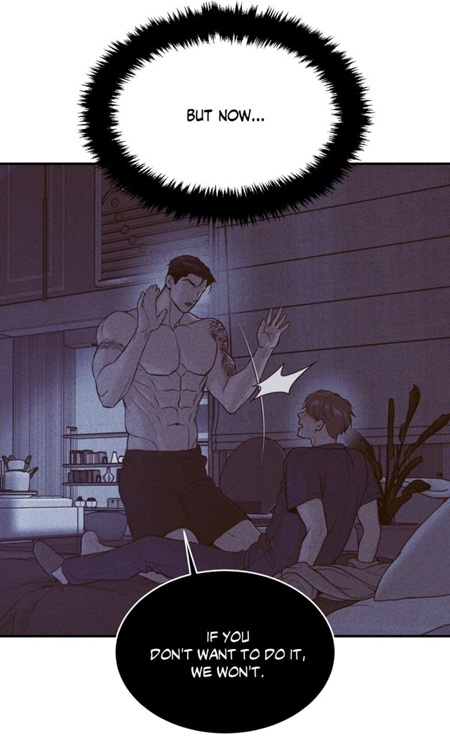 (chapter 86) This is why, when electricity returns in episode 86, it does not revive heat. It interrupts it.
 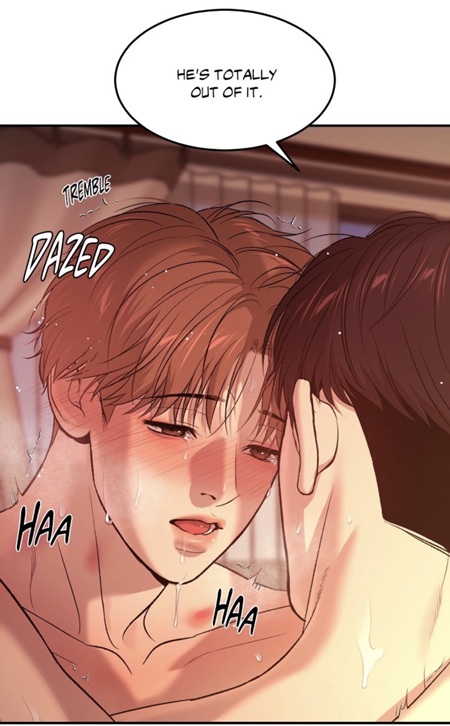 (chapter 86) That’s the reason why the athlete stops for a moment and asks doc Dan, if he needs a break.
  (chapter 86) This question is important because doc Dan admits his confusion and ignorance. He confesses to himself that he “knows nothing” not only about himself, but also about his fated lover. (chapter 86) The night is no longer sealed. It is permeable. Time resumes. (chapter 86) This signifies that thanks to the “champion’s thunder”, doc Dan was able to leave the vicious circle of “depression”. At the same time, such a confession implies that doc Dan’s present is no longer determined by the past and prejudices. And that is precisely why it matters.
From Drugged Time to Embodied Presence
If the earlier nights failed because time itself was compromised, then the question that naturally follows is this: what allows time to resume?
Chapters 39 and 44 taught us that intensity alone is not enough. Desire flared, bodies responded, confessions surfaced — and yet nothing endured. Not because feeling was false, but because consciousness was fractured. Words existed, but they did not circulate. Memory existed, but it was asymmetrical. Each night collapsed into silence the moment it ended.
Episode 86 emerges precisely at this fault line.
At first glance, it might seem quieter. Less dramatic. Less overtly confessional. And yet, this apparent restraint is deceptive. What changes here is not the presence of desire, but the medium through which meaning passes. What circulates between them in this night is not nostalgia, not projection, not even hope — but presence.
The sparks that punctuate episode 86 are not metaphorical excess. 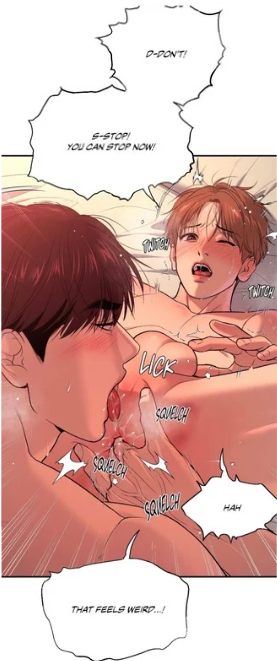 (chapter 86) They function as temporal markers. A spark exists only now. It has no duration. It cannot be stored, recalled, or anticipated. It appears — and vanishes. In this sense, electricity becomes the perfect visual language for the present moment itself.
Unlike heat, which lingers and can smother, current demands simultaneity. It requires two points to be active at the same time. The moment one withdraws, the circuit breaks. Sparks therefore signify not passion remembered or desired, but attention shared. This is why the night in episode 86 feels radically different from earlier encounters. At the end of episode 86, Kim Dan is no longer trapped in the past — replaying humiliation, abandonment or knowledge (as such arrogance). Nor is he projecting into the future at the end — fearing consequences, punishment, or loss. (chapter 86) For once, his thought does not spiral backward or forward. It halts. He decides to follow his heart again. (chapter 86)
The phrase carpe diem applies here not as romantic indulgence, but as psychological fact. To seize the day is not to ignore reality; it is to suspend temporal distortion. (chapter 86) In this night, neither character is reliving an old wound nor rehearsing a future defense. They are not remembering a dream. They are not trying to recreate one. They are simply there.
Electricity makes this visible. The body jolts. Thought fragments. Linear narration breaks. But unlike the drugged nights, this fragmentation does not produce amnesia. It produces grounding. Kim Dan’s repeated confusion — “I can’t think straight” — is not dissociation. (chapter 86) It is the absence of rumination.
This is what distinguishes presence from illusion. Illusion detaches the body from time. Presence anchors the body in time.
The sparks, then, do not represent chaos, rather emancipation and liberation. (chapter 86) Therefore the “hamster” can not control his voice and body. The sparks represent contact without temporal displacement. Both characters inhabit the same instant, without substitution, without rehearsal, without erasure. The present is no longer something to escape or survive. It becomes something that can be shared. That’s the reason why the two main leads are talking to each other.
And this is precisely why meaning finally begins to circulate.
If the first part (From Solar Heat to Electric Current) and second part ( Dream Nights and drugged time) traced how electricity replaces heat, and how illusion breaks time, then the next part turns to the most unsettling shift of all: the disappearance of words — and the emergence of the kiss as language.
No Words, But a Kiss: When Communication Changes Form
One of the most striking features of my illustration for episode 86 is the near absence of visible speech bubbles — even when Joo Jaekyung is clearly speaking. His mouth is open, his body leans in, his posture is attentive, and yet language is visually de-emphasized. Words are present, but they no longer dominate the frame.
By contrast, the star with the cut-off speech bubble appears elsewhere — suspended, incomplete. Language has not disappeared; it has lost its authority. It exists, but it is no longer imposed, no longer unilateral, no longer protected by distance.
This visual shift matters. (chapter 86) In earlier chapters, words often preceded erasure: confessions spoken under intoxication  (chapter 10), statements blurred by drugs
 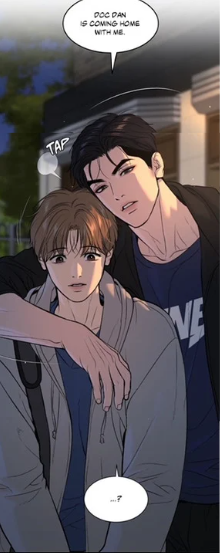 (chapter 43), sentences remembered by only one side. (chapter 39) Language functioned as exposure without continuity. Here, the narrative refuses that pattern. (chapter 86) It withholds verbal dominance so that something else can emerge. Kim Dan’s answer does not come in words. It comes as a kiss. (chapter 86) This gesture must not be misread as avoidance (silencing) or impulsivity. It is neither silence born of fear nor surrender to sensation. It is embodied communication — a mode forged by a history in which words were unsafe, unreliable, or followed by disappearance. The kiss articulates what cannot yet be stabilized in language without being lost again.
It says: I am here. And more importantly: I accept this moment. Not the future. Not the consequences. The present. But this action catches the MMA fighter by surprise, as in the athlete’s mind, Doc Dan has never initiated a kiss before except in the States, but the doctor doesn’t remember it. At the same time, it is clear that the athlete has not been confronted by his own amnesia concerning the night of his birthday: doc Dan had kissed him there too, thus the celebrity had been able to make doc Dan smile  (chapter 44) and even laugh…. if only he could remember that night…
Crucially, this act in episode 86 (chapter 86) cannot be neutralized by Joo Jaekyung’s habitual reflexes — the “it’s nothing” 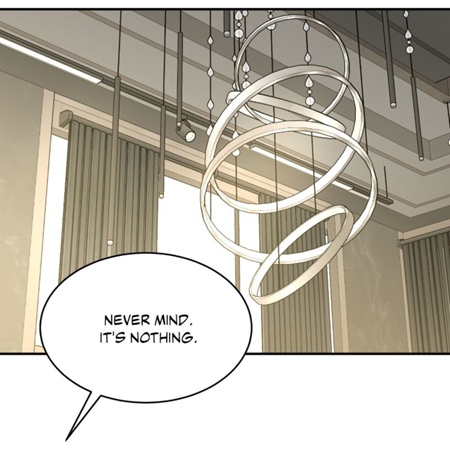 (chapter 79), the “never mind”,
  (chapter 84) or it is a mistake, the easy erasure that once dissolved meaning after the fact. The kiss interrupts that mechanism. It produces a pause that cannot be talked over. It forces reflection. (chapter 86) Joo Jaekyung will have to ponder on the signification of such a kiss.
For the first time, meaning does not vanish once contact is made.
The kiss therefore marks a decisive transformation in how communication functions between them. Words are not rejected; they are postponed. Language is no longer the condition for intimacy, but its consequence. What circulates first is presence.
And this is why the kiss belongs structurally to the logic of current introduced earlier. Current does not explain itself. It passes — or it does not. It requires proximity, consent, and mutual contact. Once established, it cannot be undone by denial. Hence the champion reciprocates the gesture. (chapter 86) He is even kissing with open eyes, as though he desired not forget this wonderful night. In episode 86, communication no longer seeks to protect itself through speech. It risks itself through embodiment. And that risk, precisely because it is accepted rather than anticipated, changes everything.
First Conclusion — When Conditions Change
With the symbolic framework established, the earlier nights revisited, and the forms of communication closely examined, the analysis has already progressed far enough to reconsider the nature of the night in episode 86.
By moving through these successive angles — from mythological and elemental references, to nights compromised by illusion, to the transformation of how meaning is exchanged — one point becomes clear: this night is not just defined by intensity, tenderness, or redemption. It is also defined by changed conditions.
When electricity replaces heat (chapter 86), power ceases to be unilateral and becomes relational (sky and earth). Thunder does not linger or dominate; it strikes, interrupts, and resets. The champion is no longer read as a solar figure imposing force from above, but as a conductor within a circuit that requires reciprocity.
When the earlier nights are reexamined, their failure appears not as emotional insufficiency but as structural impossibility. Desire existed, but time could not flow. Drugs suspended causality, fractured memory, and sealed each encounter inside itself. What remained were dream-nights — vivid, intense, and ultimately unsustainable. Yet, they left wounds. (chapter 86) At the same time, it becomes clear that this moment in Paris embodies the convergence of two memories and two nights which helps them to recreate a new night marked by desires and communication. So this night will generate new memories and push them to redefine their relationship.
Finally, when attention shifts to communication itself, episode 86 reveals a decisive reconfiguration. (chapter 86) Meaning no longer relies on speech that can be blurred, forgotten, or denied. It circulates through presence. The kiss interrupts fear without abolishing clarity. Kim Dan does not forget the future; he accepts the risk of setting it aside. For the first time, current passes while both remain conscious, present, and aware.
One image quietly condenses this transformation. (chapter 86)
Kim Dan almost sits on Joo Jaekyung’s lap. (chapter 86) Earlier in the narrative, this posture belonged to another body. 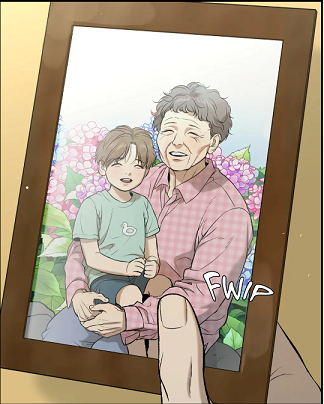 (chapter 19) The grandmother’s lap structured Kim Dan’s understanding of safety, endurance, and knowledge. Sitting there meant being held — but also being taught how to survive through sacrifice, silence, and self-effacement. That worldview sustained him, but it also confined him.
In episode 86, the posture is almost repeated — but the figure has changed.
This is not a romantic substitution. It is a symbolic shift. The body that now supports Kim Dan does not transmit inherited rules or fixed certainties. It asks questions. It pauses. It waits for response. He is actually more sitting between his legs or on his arms. In this moment, Kim Dan is no longer receiving knowledge about how to endure the world; he is participating in how to inhabit it.
From this point, a first answer to the guiding question emerges.
Episode 86 is neither illusion nor culmination. It does not redeem the past, nor does it erase it. It alters the framework within which meaning can circulate. Time resumes not because wounds have healed, but because they are no longer governing the present by default.
What remains unresolved — and what now demands further attention — is what follows from this shift.
If communication has changed form, how does unpredictability change meaning? If presence has been established, how does recognition operate without erasing the past? And if two nights once marked by failure now converge within the same moment, what does that convergence produce?
These questions open the next stage of the analysis.
The following sections will therefore turn away from possibility and toward consequence: how agency is reclaimed, how repetition acquires new ethical weight, and how two previously incompatible trajectories finally begin to add rather than cancel each other out.
Feel free to comment. If you have any suggestion for topics or Manhwa, feel free to ask. If you enjoyed reading it, retweet it or push the button like. My Reddit-Instagram-Twitter-Tumblr account is: @bebebisous33. Thanks for reading and for the support, particularly, I would like to thank all the new followers and people recommending my blog.
 (chapter 81) The plane soars not only above the Alps, but also above a vast river (probably the Rhône)— two landscapes that silently echo the dual composition of breath itself. Breath is made of air and water: oxygen and vapor, wind and moisture.
  (chapter 82) In that sense, the clouds surrounding the aircraft are not mere weather; they are the perfect union of the two elements that sustain life.
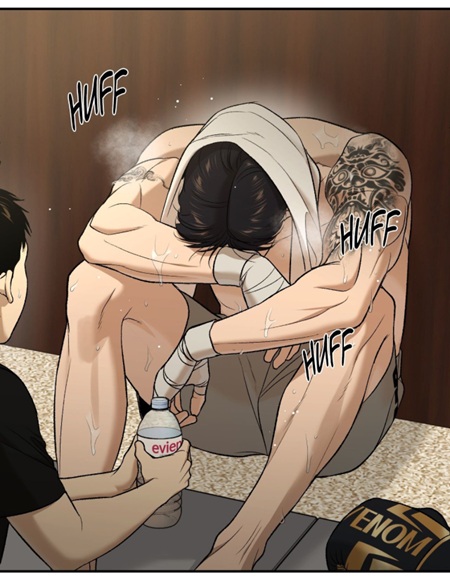 (chapter 82) That’s why, when Potato offers him a bottle of Evian, he doesn’t even look. He doesn’t need the water from the mountain and as such the world; he needs the water of the body — the intimacy, the shared moisture that reconnects him to life itself. What he truly longs for is Kim Dan’s saliva, the living trace of water transformed into affection, into care, into exchange.
 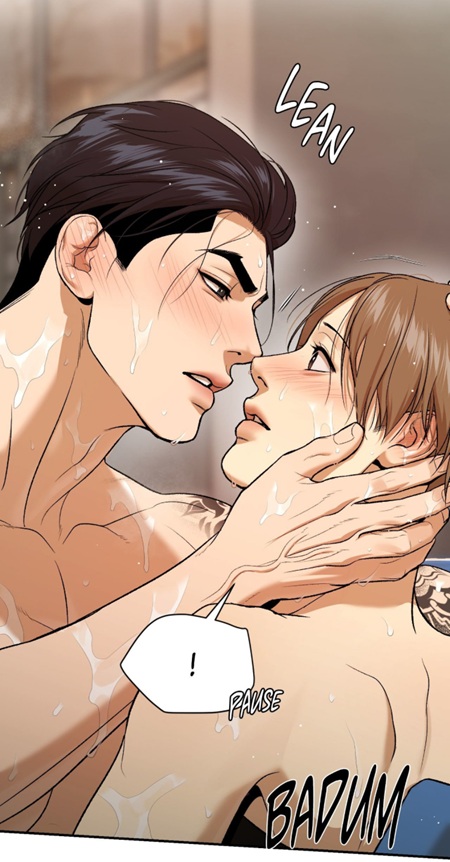 (chapter 81) He is longing for his lips and as such a kiss.
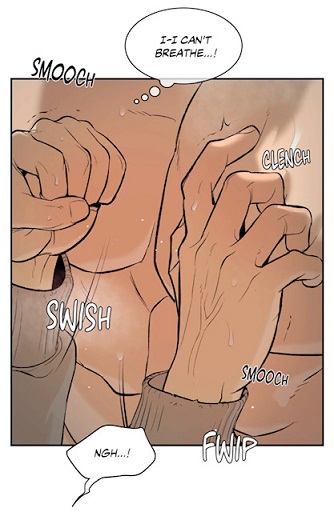 (chapter 15)
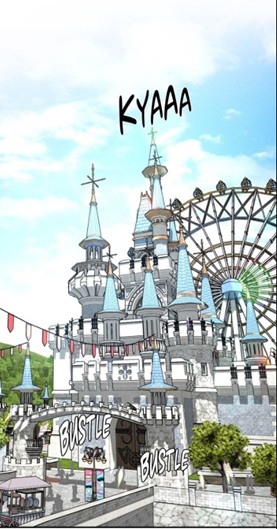 (chapter 82) Many attractions — the Ferris wheel, the fountain rides, the water park zones — combine air and water, height and spray, just like breath itself. And now, you understand why the champion got wounded with the spray
  (chapter 49) It corresponds to the negative version of the “breath”.
 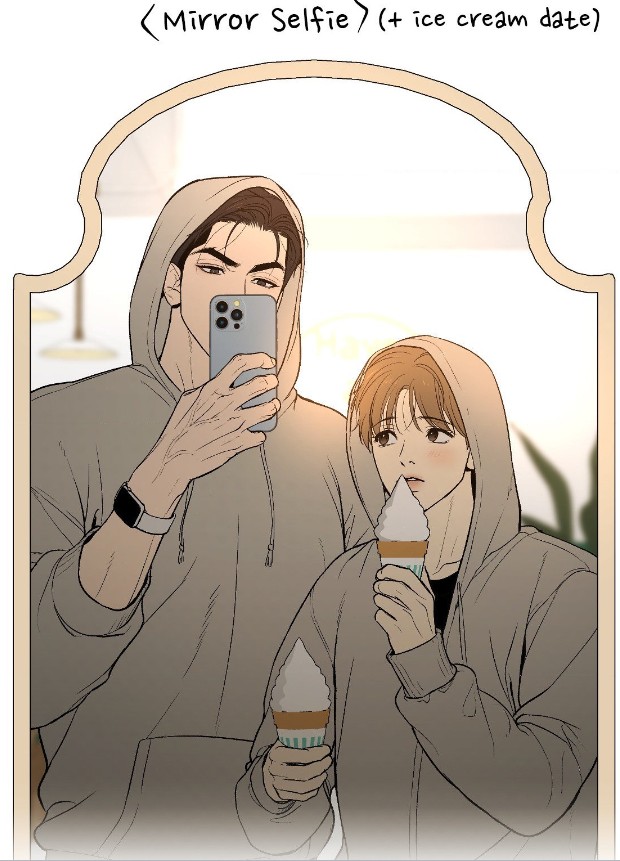 (epilogue), because doc Dan wants to ensure that the drink or the ice cream is okay.
 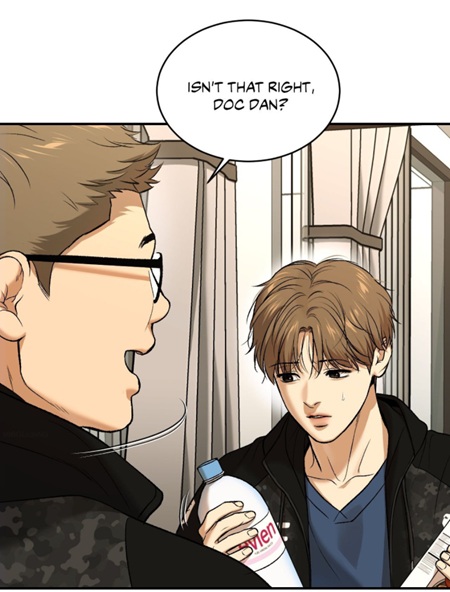 (chapter 82) When Jaekyung and Dan enter the funfair, they’re not simply having fun; they’re reliving the chemistry of respiration and affection — the inhalation of joy, the exhalation of fear, the splash of renewal. The park becomes an externalized lung, a circular world of rides where water and air, play and life, are finally reconciled.
 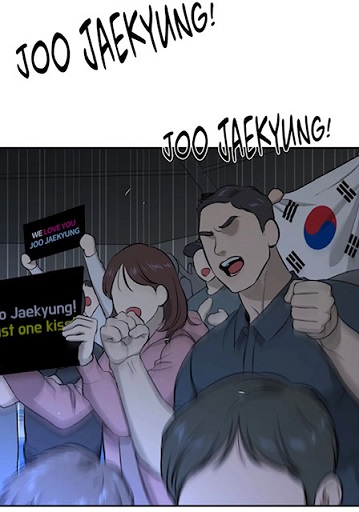 (chapter 15) The arena that once fed on pain, blood, and hierarchy gives way to a landscape of shared laughter, circular motion, and renewal. Here, entertainment is not built upon the exhaustion of bodies but upon their liberation. The crowd no longer watches to see who will fall; they rise and descend together.
 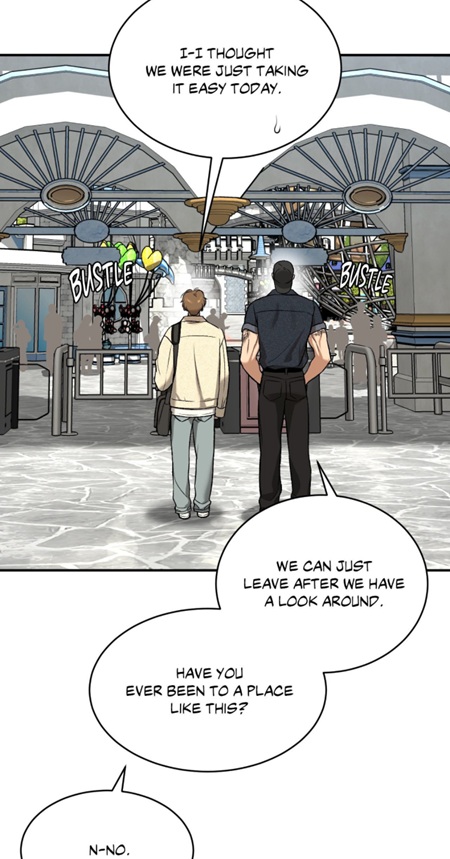 (chapter 82) People are more focused on their own emotions and experiences.
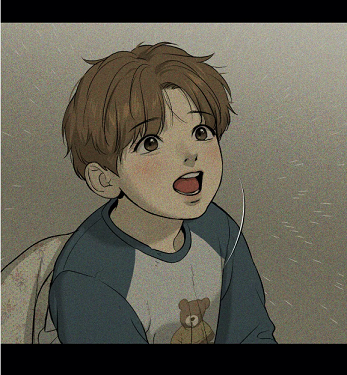
 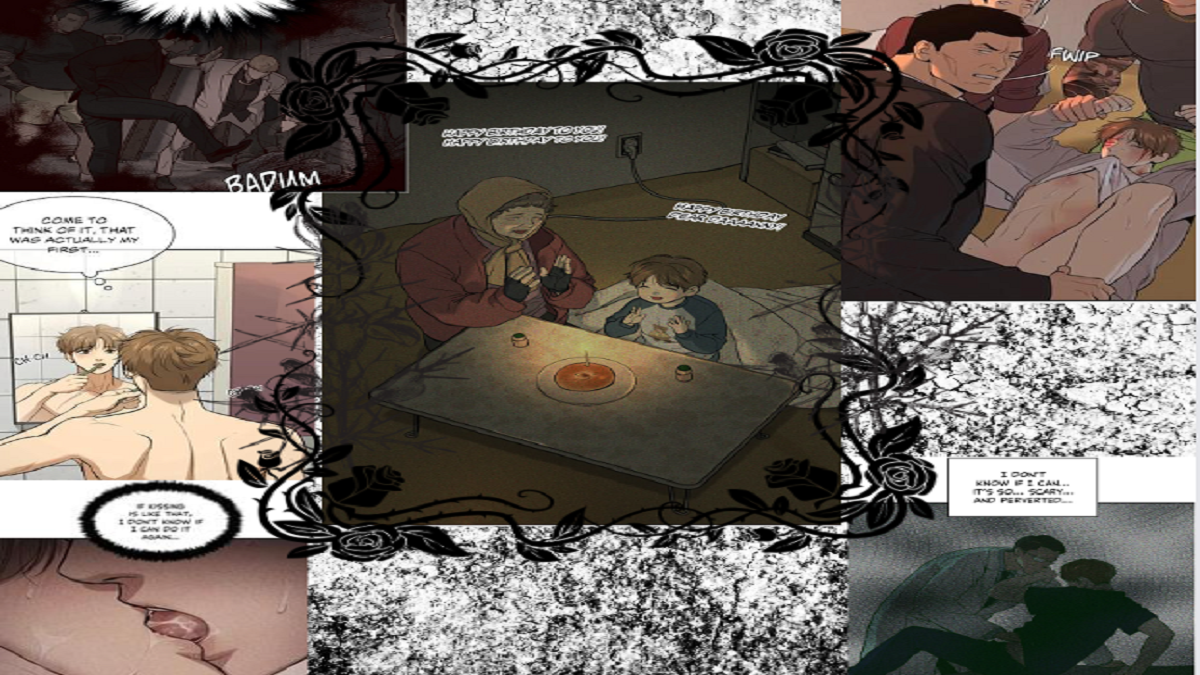 I placed the doctor’s birthday. And that’s how I remembered here the boy’s huge smile and joy.
  (chapter 11) And now, pay attention to the number of the next episode: 83! The two numbers combined together make 11! As you can see, the amusement park is the most natural setting for a smile and kiss. Joo Jaekyung could even speak about his first kiss, an intimate secret that even Kim Dan doesn’t know. Confessing it there would align his personal myth with the fairy-tale architecture around him. This would make doc Dan realize that he is special contrary to the green-haired ex-lover.
  (chapter 42). But there’s more to it. In episode 81, Doc Dan rejects the champion’s advance — he turns his head away
 (chapter 81) letting the lips slip past him like water. Yet, in the very same scene, he allows a kiss on the neck, a place where breath, warmth, and pulse converge.
  (chapter 81) He never pushes him back. The doctor resists with the face — with speech, with identity — but not with the body.
 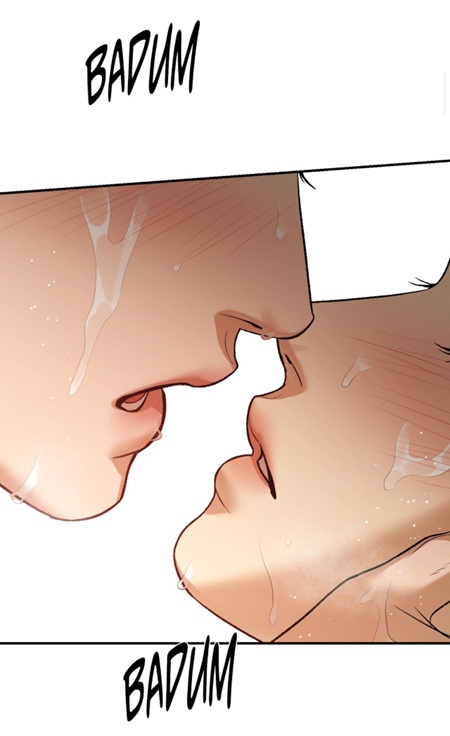 (chapter 81) Why? Because the lips are not mere flesh; for Doc Dan, they are the visible border between desire and love. Jinx-lovers will remember his quiet request in the locker room (chapter 15): he links the lips to the heart — and through it, to the notion of consent.
  (chapter 15) To kiss him there is to ask for entry not into his body, but into his feeling.
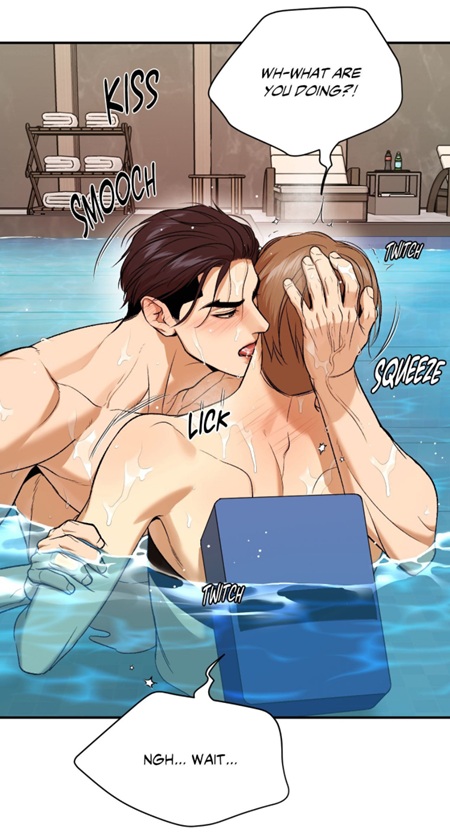 (chapter 81) The water envelops them both — fluid, intimate — yet the final element is still missing: agreement, the meeting of air and will. Until Jaekyung learns to ask, to replace taking with invitation, the kiss will remain suspended, like a breath held underwater, waiting to surface into love. And now, you comprehend why he couldn’t achieve his goal in the swimming pool. It was, as if he was trying to recreate the situation in season 1. In other words, I deduce that there will be a confession before a kiss happens!!
 (chapter 17) and the one in front of the amusement park:
  (chapter 82) The two scenes mirror each other like opposite poles of Joo Jaekyung’s evolution. In both, he is dressed in black — a color that once signified anonymity and danger, but later becomes the mark of calm confidence.
 (chapter 17) When he intervenes to save Kim Dan from the loan sharks, he is first mistaken for one of them — a predator among predators. The irony is sharp: the man who comes to rescue looks indistinguishable from those who harm. The fighters’ world has taught him that power and fame must be hidden; he was encouraged to hide, as if the fans would attack him. He chose anonymity, unaware that this would not only isolate him but also make him appear as a thug. And don’t forget how the manager called him initially:
  (chapter 75) He is a monster. It was, as if the manager wanted to hide the “wolf” from people out of fear that he might attack people randomly. But the problem is that by dressing like that, he was no different from Heo Manwook. Therefore his heroism passes unnoticed, interpreted as violence and intrusion.
 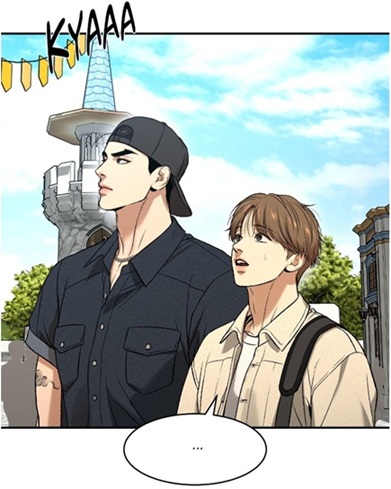 (chapter 82) He still wears black, but the darkness no longer hides him. The cap now sits higher, revealing his eyes and mouth — the organs of emotion and speech. A necklace gleams at his throat, a quiet emblem of openness. He walks beside Kim Dan in daylight, not to fight but to share joy. The man who once lurked in alleys now stands beneath the sky of the amusement park, where black absorbs light rather than extinguishes it.
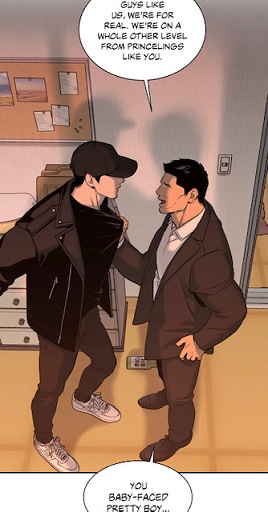 (chapter 17) A princeling! He was mocking him, because he knew that the fights were actually rigged. That’s why he called him fake.
 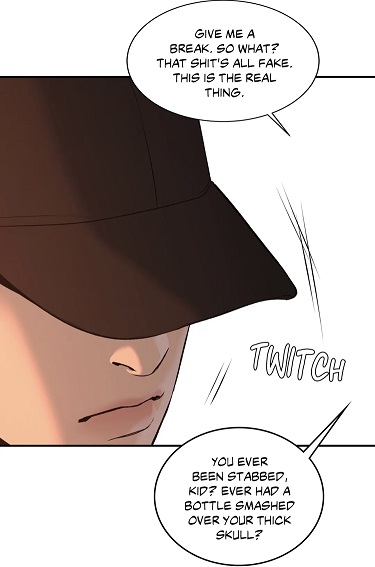 (chapter 17) This new connection reinforces my theory that the schemers are anticipating the Emperor’s demise.
 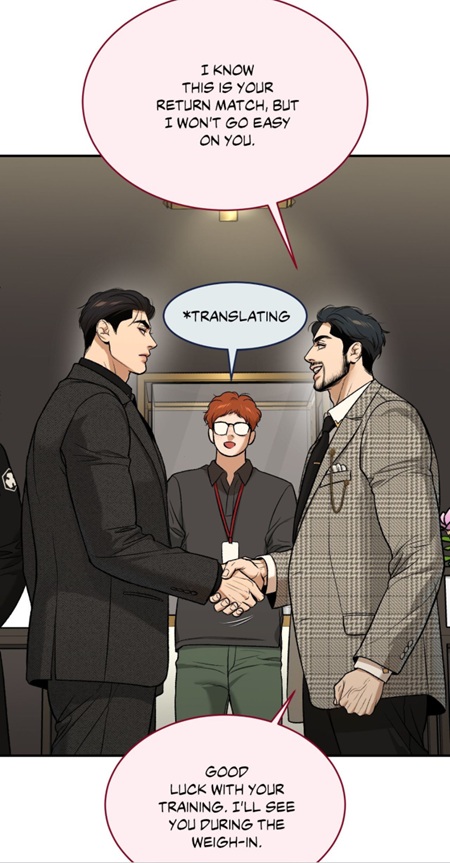 (chapter 82) Thus Arnaud Gabriel’s words are full of irony. There’s no luck in this match. However, the antagonists are not anticipating a metamorphosis. The wolf hides and strikes; the prince reveals and protects. The wolf saves without witnesses; the prince loves in full view. In the ring’s darkness he fought to survive; in the park’s brightness he learns to live and love. And the moment Joo Jaekyung is freed from his curse and can breathe, his next game will be different. Why? It is because the champion has another reason to make doc Dan’s wish to come true: they should work together for a long time! And observe the power of Doc Dan’s angel on the Emperor after spending his first night with his “bride”. He was full of energy!
 (chapter 65) so he is not standing on his own two feet. And remember that according to me, Shin Okja stands for shore. He is smiling as if everything is fine, but the reality is different. When Dan sits on her lap wearing the duck shirt, he seems safe, grounded, “held.” Yet the shore (the halmoni) isn’t truly stable — it’s brittle earth pretending to resist erosion. She gives him the illusion of safety, not the reality of it. The hydrangeas stand for temporality. The body contact replaces emotional transparency. What he learns in that moment is: “If I stay still and quiet, she’ll hold me.” Thus, his first emotional rule becomes immobility and silence. That is how the floating duck is born — not by moving freely in water, but by learning to suppress movement to preserve attachment.
 (chapter 56) He doesn’t yet see the storm and suffering beneath.
 (chapter 82) But in such a place, it is, as if time was stopped. Thanks to the many emotions and sensations, his body and heart will be revived. Through fun, the duck will change. As Kim Dan ascends from floating duck to swimmer and to a flying duck, he moves from hidden suffering to open breath. Thus the Ferris Wheel will have definitely an impact on him. Both arcs revolve around air and water — the two elements that make up breath and emotion. Don’t forget that the doctor embodies the clouds as well, while the athlete stands for steam.
 (chapter 45)
 (chapter 47) and denial for strength
  (chapter 55). Joo Jaekyung, Kim Dan
  (chapter 61), Park Namwook
  (chapter 69), and Shin Okja
  (chapter 53) all operate within survival mechanisms shaped by trauma, guilt, and fear. They choose the illusion of control or calm over genuine healing. But as the story unfolds, these strategies begin to unravel. Each character must confront the truth behind their emotional habits, learning that happiness isn’t the absence of pain—it’s the result of confronting it with clarity and purpose.
  (chapter 54), Joo Jaekyung is cornered by a faceless, overpowering ghost. He is unable to fight or flee; only obedience and silence remain.
 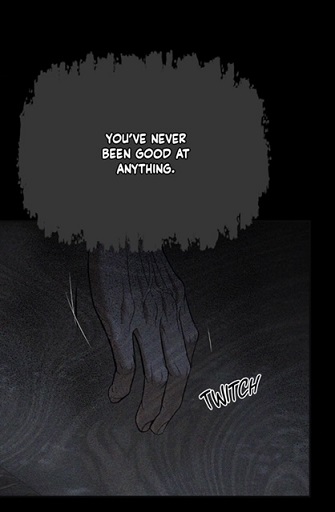 (chapter 54) He could only express his pain and resent through the hand. This moment encapsulates the core of his trauma: as a child, he learned to survive through silence and compliance, not resistance. Yet deep down, the resentment festered—toward himself, and toward the abuser. That psychological pain was redirected into becoming a fighter, as if to prove the abuser wrong.
  (chapter 26)
  (chapter 14) But ironically, he became exactly what the abuser desired: a powerful, obedient puppet. His fame, discipline, and aggression were not signs of freedom, but evidences of emotional and mental captivity. That’s why the past from the champion is surrounded by darkness and mystery.
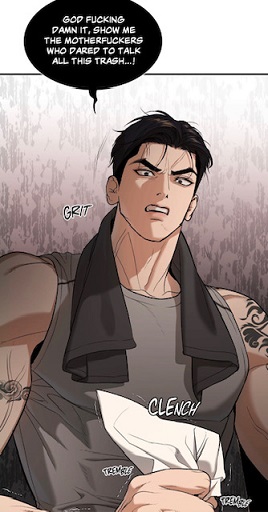 (chapter 36) His language was dominance, not dialogue. He didn’t process his emotions through words—he suppressed them, until they erupted in violence or withdrawal.
  (chapter 1) And crucially, he didn’t leave right away either despite his embarrassment and fears.
 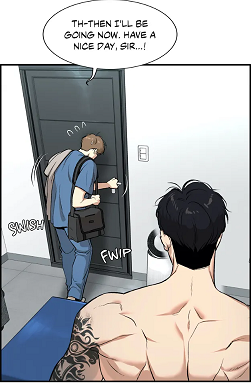 (chapter 1) Thus for the first time, Jaekyung had to develop a new strategy in order to meet him again: one that doesn’t rely on intimidation, but on communication. The problem is that since he saw the physical therapist running away after their first session
  (chapter 1), he knew that he needed to lure him with something: money
  (chapter 1). Under this new light, my avid readers can grasp why the athlete played a trick on the phone, though we have to envision that here the celebrity’s thoughts were strongly influenced by his bias and prejudices. He imagined that Doc Dan had made a move on him.
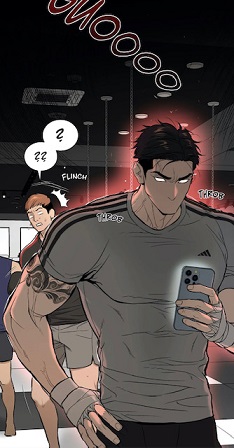 (chapter 5) That retreat doesn’t mean failure—it can be an act of self-preservation. However, the champion experienced that he needed to speak with doc Dan in order to keep him by his side. This lesson became a turning point. Jaekyung started to speak more.
  (chapter 18) Therefore it is no coincidence that in episode 18, right after the celebrity spoke, Kim Dan’s reply was strongly intertwined with flight:
  (chapter 18) The denial of kindness from the champion made the doctor uncomfortable, the latter felt the need to leave the penthouse as soon as possible. The lesson for the star was to realize that words are powerful and can affect people. But Joo Jaekyung didn’t grasp it, as he chose to use sex to „submit“ his fated partner.
 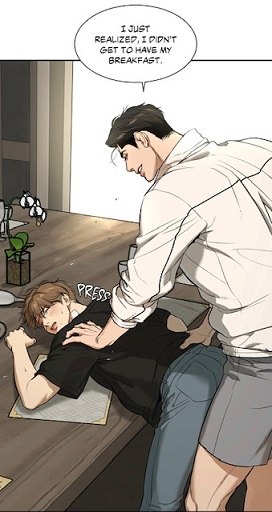 (Chapter 18) Nevertheless, as time passes on, the wolf asks more and more questions. He reacts to emotional discomfort not only with physicality but with hesitation, introspection. He is no longer reacting as the ghost once taught him; he is arguing and as such adapting, growing. Thus we could say, he is less passive.
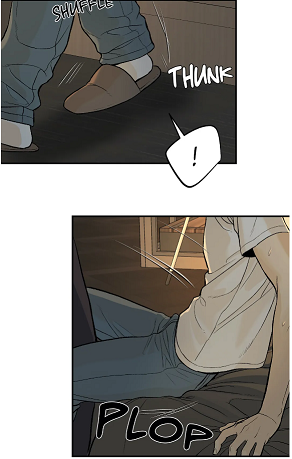 (chapter 3) or table, in showers
 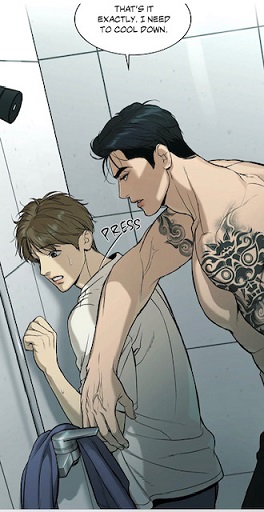 (chapter 7), against doors, or walls
  (chapter 34). On the surface, it may seem like a gesture of dominance or desire, but symbolically, it reflects silencing.
 (chapter 51) They stand in the middle of the room—an open space—symbolizing emotional emancipation. When Dan questions the celebrity
  (chapter 51), the words from doc Dan pierce the champion’s emotional defenses. Thus Joo Jaekyung is destabilized.
 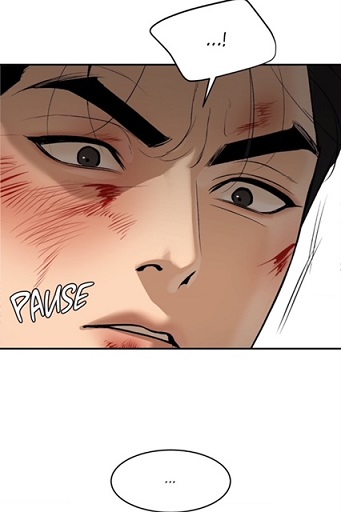 (chapter 51). The latter tries to reassert control
 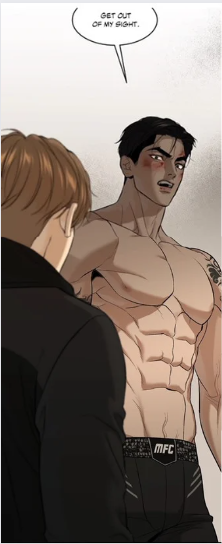 (chapter 51), but this time, when he lashes out, he is the one who leaves. This is cognitive dissonance at work: the fighter cannot reconcile his fear of vulnerability with his emerging need for connection and his perfectionism. So he defaults to a performance of control, even as he runs from it. And while one might mistake this for weakness or regression, it actually displays a progression. First, Jaekyung had finally revealed his thoughts and fears to Dan.
  (chapter 51) Secondly, he left the place which was a new MO for the fighter. His act of fleeing is no longer an escape from confrontation —it follows a moment of emotional vulnerability. It shows that he had finally dared to speak, even if he wasn’t yet ready to stay and endure the emotional aftermath.
 (chapter 69) That silence could easily be mistaken for submission, for the same old performance of the compliant athlete.
  (chapter 69) But that would be a misreading. His silence is no longer a symptom of fear or control. It is a deliberate withholding—a sign that he no longer plays by their emotional rules. He is starting distancing himself from MFC, Park Namwook and the fight-centered identity they crafted for him.
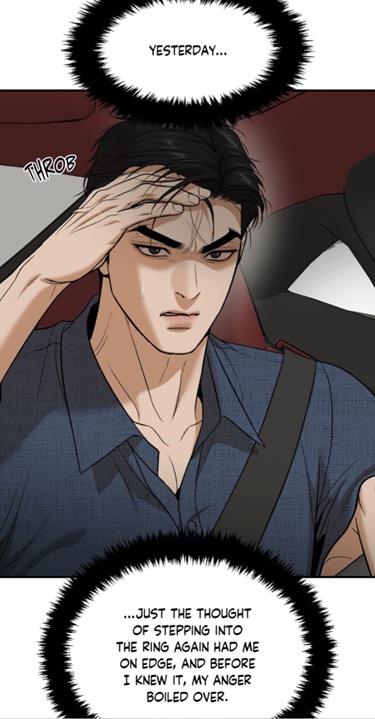 (chapter 69) He is no longer blindly performing the role of the fighter, nor desperately trying to maintain control over the narrative.
  (chapter 69) He is beginning to think critically about his past behavior, his future, and the systems that have defined his identity and life.
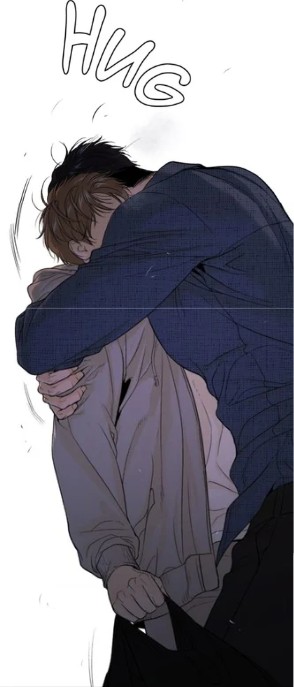 (chapter 69) with “no audience” (he ignores people), no pressure, no script. And in that openness, he lets go—not just physically, but psychologically.
  (chapter 69) The hug marks the collapse of his old beliefs: that emotions are weaknesses, that silence is protection, that strength means standing alone. He is no longer trying to dominate Dan or prove anything. He’s not cornering or fleeing. He’s simply staying—with someone, and with himself.
 (chapter 7) and flight
  (chapter 52), often using blame as a shield. When crisis strikes, he blames the champion’s temper, relies on Doc Dan
  (chapter 36), or MFC’s decisions.
  (chapter 69) He surrounds himself with “assistants” like coach Yosep, Kim Dan or Joo Jaekyung
  (chapter 25: here the protagonist was replacing Yosep and Park Namwook), hires professionals to manage damage
  (chapter 47), and hides behind administrative actions.
  (chapter 66) But he never takes full responsibility. This blame-displacement strategy works—until the champion flees to the West Coast.
 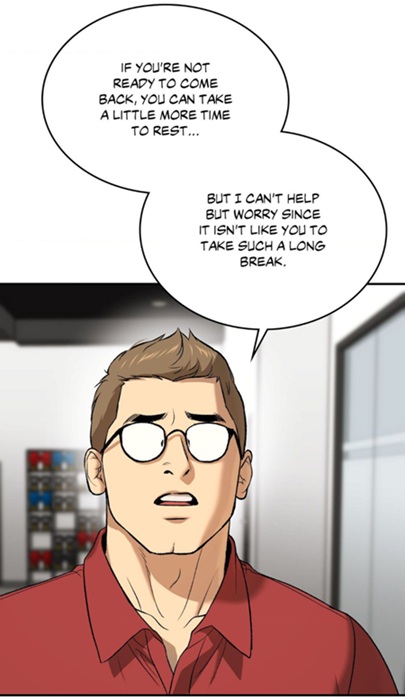 (chapter 66) that cornered the manager.
  (chapter 66) As long as the champion was nearby, Park Namwook could project blame onto him, framing him as unstable, disobedient, or temperamental. But once „his boy“ vanished from Seoul, the hyung was left exposed. Striking is that he is not seen watching over the training of the remaining members.
  (chapter 60)
 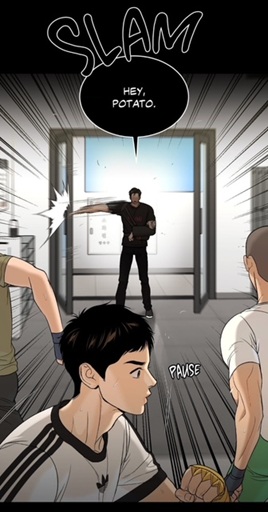 (chapter 60), a sign that he is neglecting the other members. The absence of his star fighter removed his most convenient scapegoat, forcing him to face the consequences of his own mismanagement—though he is not yet ready to truly question it and change his mindset, denial, and dependency. This was not just a geographical disappearance—it was a strategic psychological rupture, meant to destabilize Park’s illusion of authority.
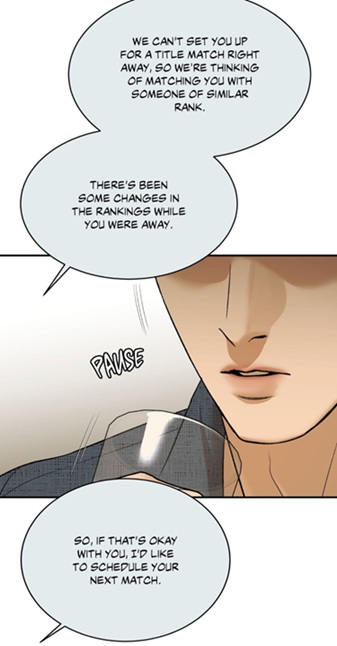 (chapter 69) He continues to speak as though the champion’s future is intact, as if the title is still within reach. But the organization’s actions speak louder: Jaekyung is no longer a contender — he is being gradually abandoned, not promoted. Secondly, Park Namwook assumes that Jaekyung will win the next fight, as if victory is still within his grasp. But this trust is misplaced — not only because the fighter is recovering from surgery, but because the schemers may have already designed this match as a final blow. Another fight right after a surgery, a staged defeat, or a quiet elimination would neatly push Jaekyung out without public controversy. By assigning him a marginal, delayed match, they are not offering redemption — they are orchestrating his exit.
 (chapter 17) They don’t see him as someone with legal or institutional power. But that’s their fatal blind spot. Since Jaekyung co-owns or outright owns Team Black, this makes him: A partner (or even rival) in MFC’s talent pipeline; an employer and a stakeholder in fighter safety. He has the same position than Choi Gilseok. Therefore as the owner of Team Black, he can sue the gym King of MMA and Choi Gilseok. He can take action against the CEO for negligence, corruption or abuse of authority.
 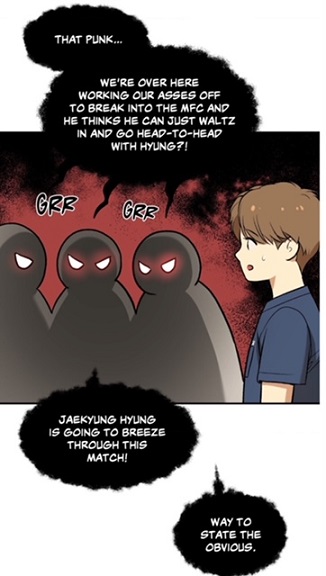 (chapter 47) Finally, he can testify not only as a fighter, but as a representative of the institution they tried to exploit. That elevates his voice: from a disposable athlete to a legal opponent with organizational standing.
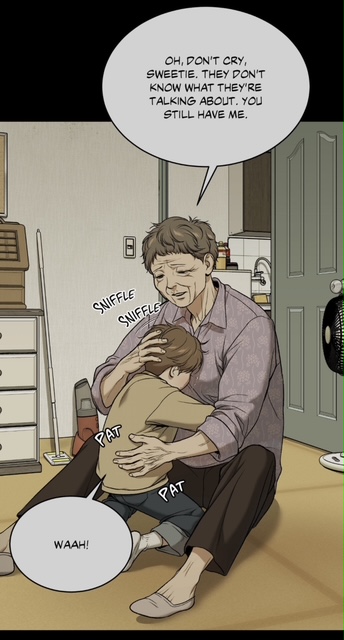 (chapter 57) Secondly, the vanishing of his parents were also swept under the carpet. That’s how he internalized powerlessness. Fleeing
 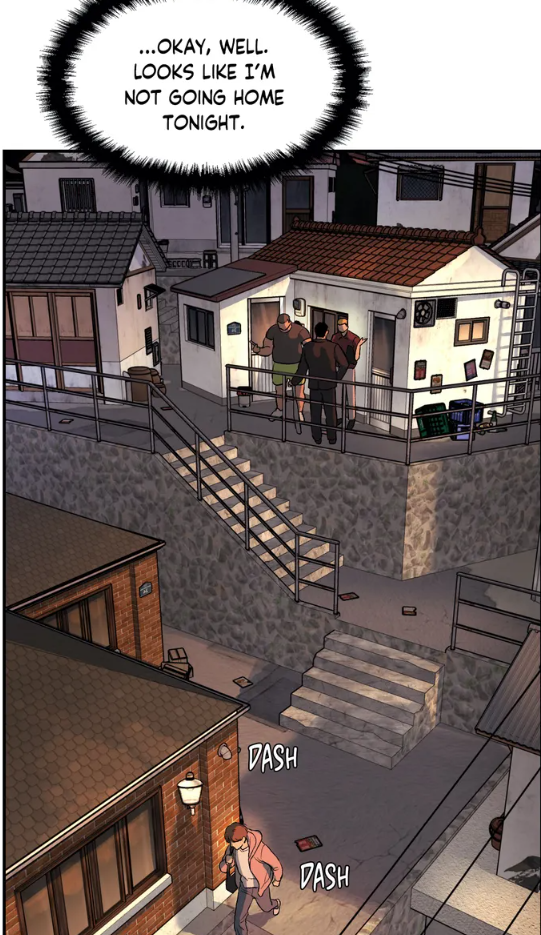 (chapter 1), deflecting, and disappearing became natural. With the grandmother, with doctors
 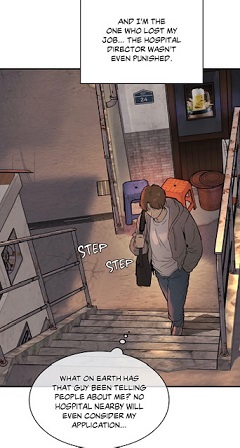 (chapter 1), with institutions—he obeyed. He accepted his fate as a fatality. But with Jaekyung, a new pattern emerged. Slowly, he began to resist: he set boundaries, raised his voice, argued with his boss, even used physical gestures to assert himself.
 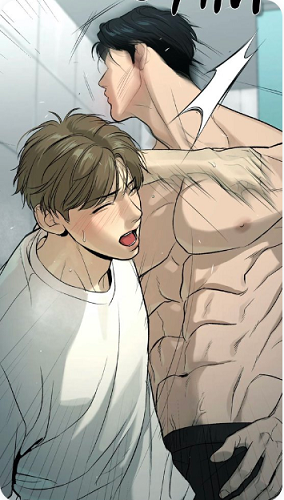 (chapter 7) For a moment, he was fighting.
 (chapter 67) Moreover, in contrast to Season 1, Kim Dan is no longer the invisible caregiver or obedient grandson. Thanks to Joo Jaekyung’s presence—disruptive and painful as it was—he began to form an independent identity
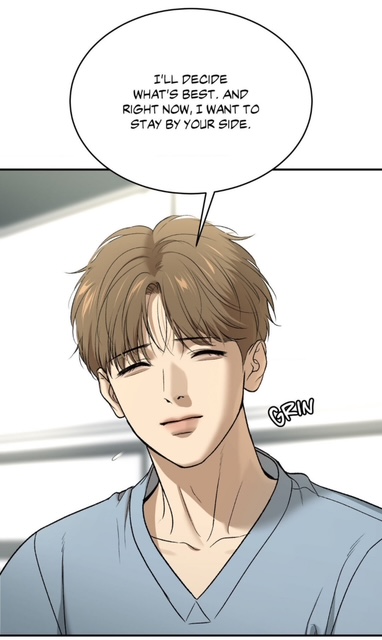 (chapter 57), one no longer shaped entirely by duty or guilt. The grandmother, however, is blind to this change. She continues to speak to him as if he’s the same self-sacrificing boy
  (chapter 65) who followed orders quietly and centered his life around pleasing others. Her suggestion that he “returns to Seoul” assumes he still views that as his place. But Dan refuses.
 (chapter 57) —it is a rejection of the belief that he exists only to serve. In Season 2, Dan says “no” repeatedly:
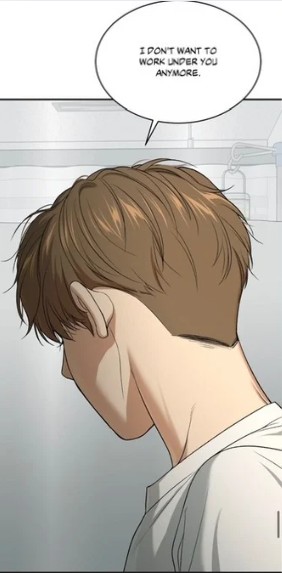 (chapter 60)
  (chapter 67)
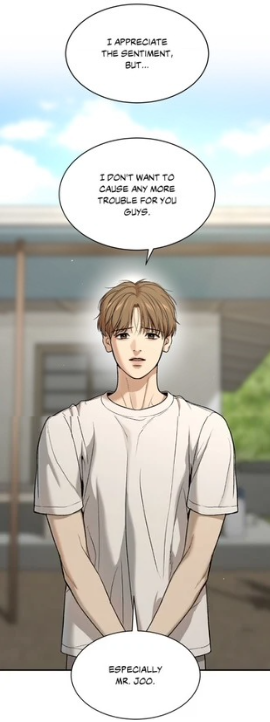 (chapter 58)
  (chapter 57)
 (chapter 65) She uses his past flaws to outline his immaturity and need of guidance. However, she is not taking into consideration the transformation in the doctor due to the recent incidents (switched spray). He is no longer the same than he was 6 months ago or 2 years old. He changed thanks to the athlete and because of unfortunate events (sexual harassment from the hospital director, switched spray). But the halmoni has no idea about such incidents.
  (chapter 53) Unlike Park Namwook who uses blame and delegation in professional settings, she applies emotional avoidance in private and familial spaces. Much like the manager, she outsources responsibility, asking others to step in
 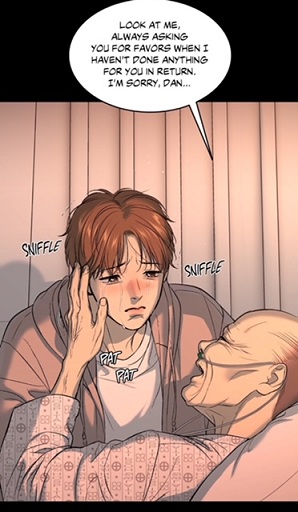 (chapter 53)
  (chapter 65) rather than engaging directly. She avoids difficult conversations, never once asking doc Dan about the nature of his work or why he followed her to the West Coast.
  (chapter 65) Her silence is not protective—it is evasive.
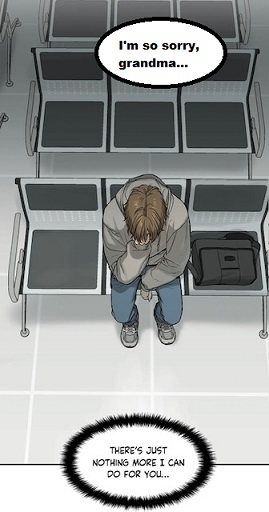 (chapter 5) Her illness becomes a metaphor for her mindset. She relies on external systems: her grandson
 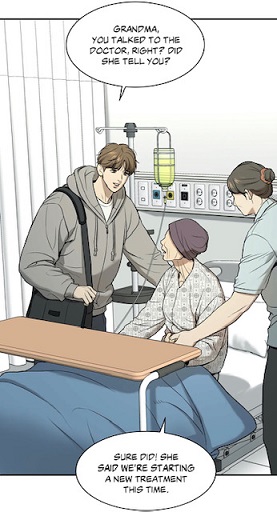 (chapter 7), medication, comfort
 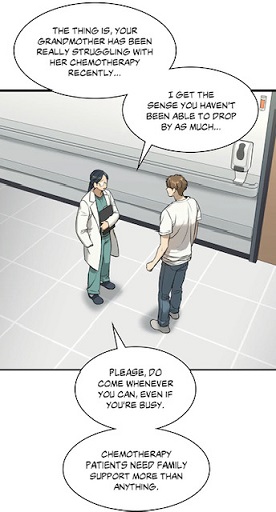 (chapter 21), and other people (nurse, Joo Jaekyung) —to maintain her emotional balance. But as doc Dan himself once observed, she is ultimately on her own in her battle. No system can fight it for her.
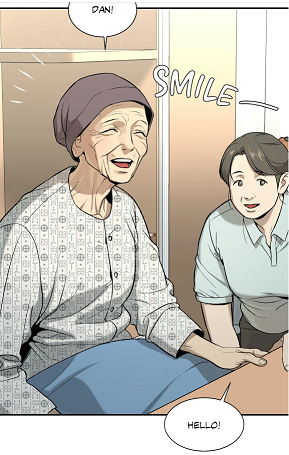 (chapter 7) His grandmother was not truly abandoned; she simply equated his physical absence with neglect, ignoring the emotional and financial burden he already carried. Like Park Namwook, she prefers others to carry the discomfort while maintaining a façade of suffering and sacrifice.
  (chapter 65)
 (chapter 47) , and her narrative of selflessness becomes another form of emotional pressure. She does not yell, she does not accuse directly, but her avoidance is equally powerful in shaping Dan’s self-image as a burden. Doc Dan came to internalize that she suffered because of him.
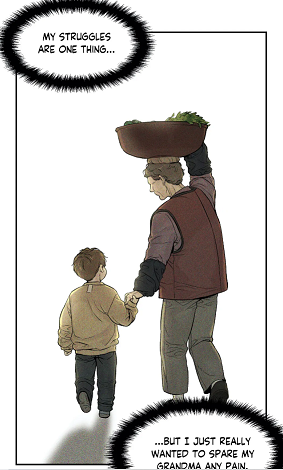 (chapter 5) Hence he made sure to shield her from any pain.
  (chapter 65), protected, comforted. Surrounded by nurses, medication, and routine, she finds temporary peace in an environment that simulates safety. The hospice does not cure her illness, but it cushions it. This illusion allows her to smile again, to relax—but only up to a point. Kim Dan’s gradual deterioration
  (chapter 57) —his visible exhaustion, disconnection, and quiet suffering—becomes a thorn in her eye, a reminder that her peace is not whole. As long as he suffers, she cannot entirely escape the shadow of her own regrets. Sending him away to Seoul represents a new of flight. Out of sight means out of mind. That way the grandmother wouldn‘t have to worry about doc Dan, as he has been entrusted to the athlete.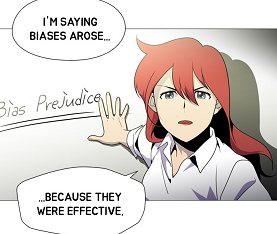
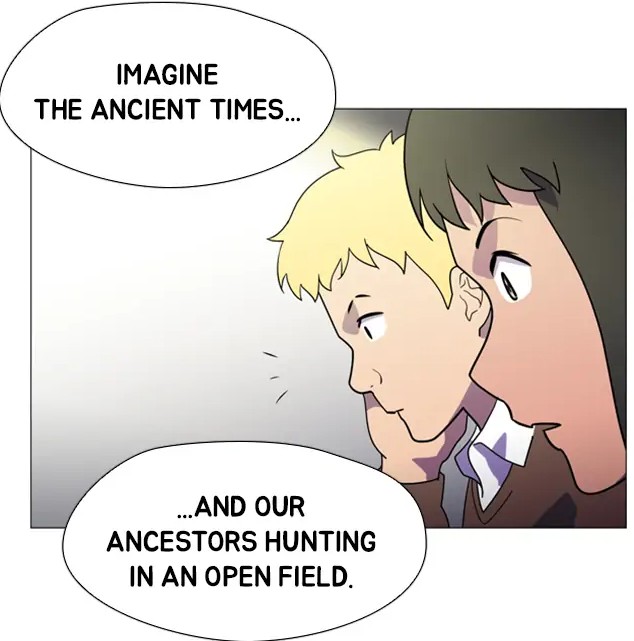
 (chapter 163) and supported by the article on confirmation bias, human survival was deeply dependent on mental shortcuts. Biases were not flaws, but adaptive tools — heuristics that helped our ancestors make quick decisions under threat. Faced with a potential predator, they could not afford the luxury of curiosity or debate. Run first, think later.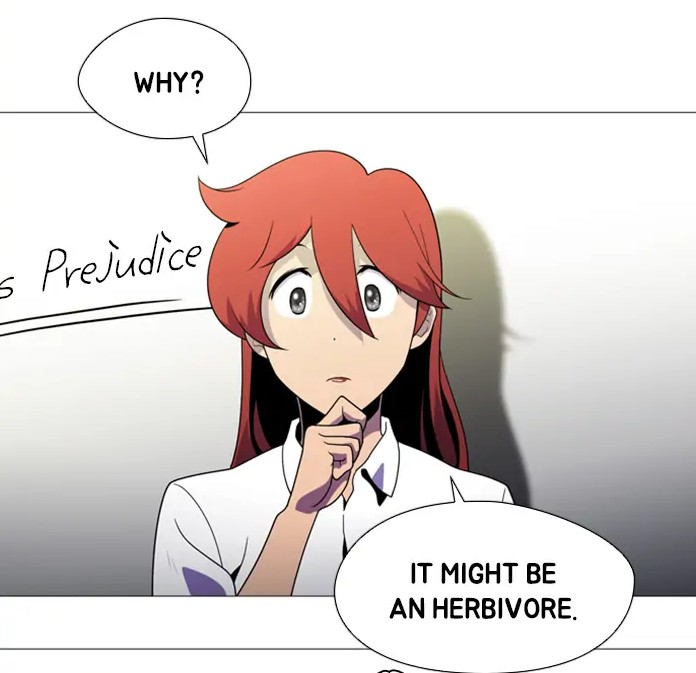
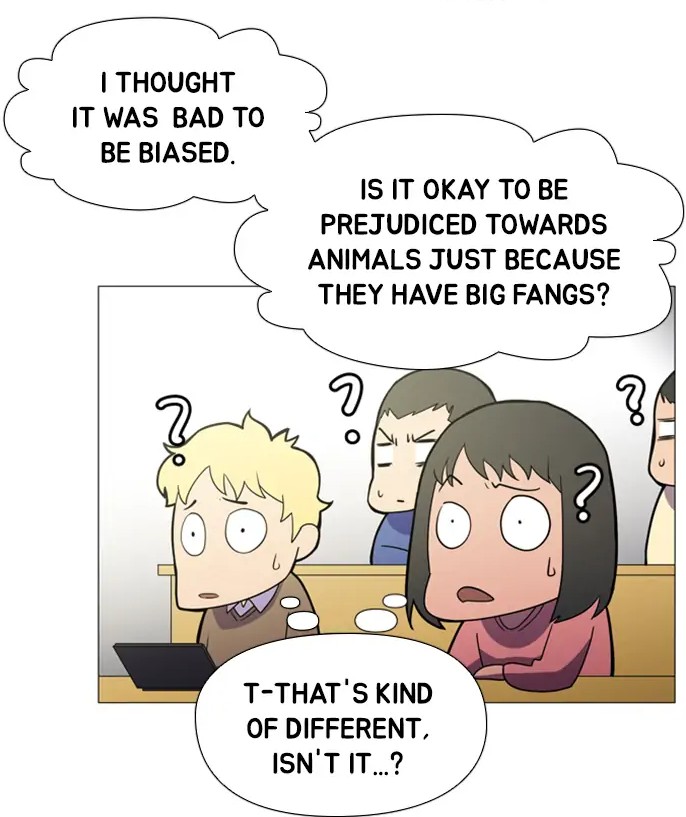 (chapter 163) In this sense, biases were effective precisely because they increased the chance of survival.
 (chapter 9) But once Joo Jaekyung became the target of criticism and scandals, his fear response activated.
  (chapter 41) he recommends the opposite at the restaurant because the idea comes from the CEO!
 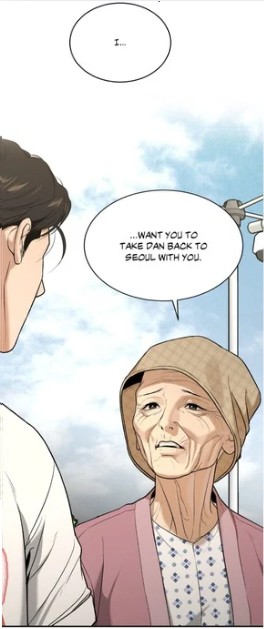 (chapter 65) It was her decision to settle down at the hospice.
  (chapter 67) His survival bias told him: “Don’t trust a man who once treated you violently.” or “Doctors are ignorant, they don’t know me“. It was easier to discredit the source than to weigh the merit of the message. Likewise, in Season 1, the champion dismissed doc Dan’s medical opinions
  (chapter 41), trusting instead in MFC and his agency — despite the fact that those institutions are overtly motivated by money. His bias protected his ego, but at the cost of his health and relationships.
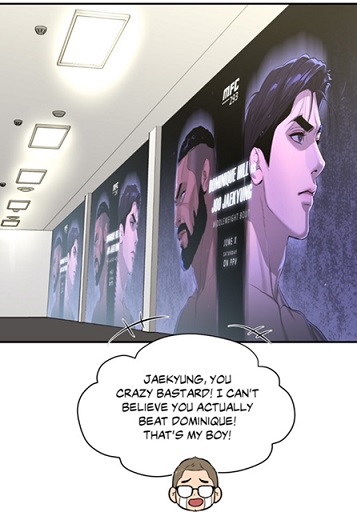 (chapter 40) who needs to fight to prove himself, yet likely doesn’t treat his own family this way.
 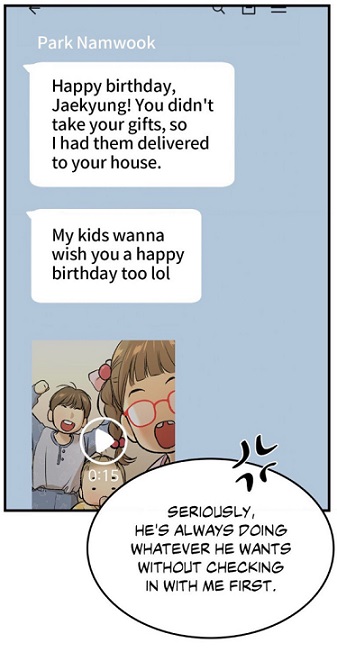 (chapter 45) His double standard is not conscious hypocrisy — it’s a form of selective laziness. He does not challenge his beliefs because doing so would unravel the identity he’s built as a competent, authoritative manager.
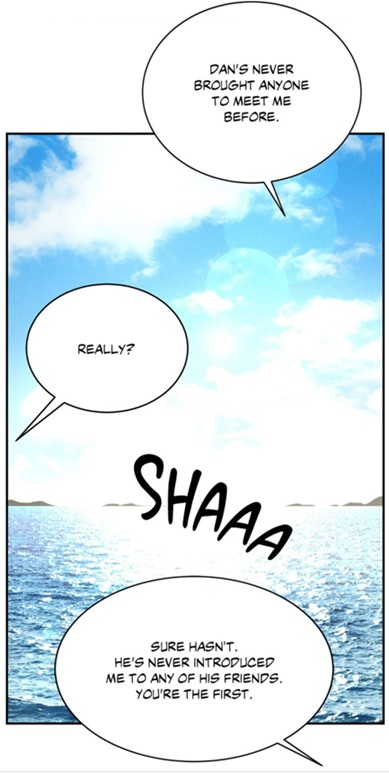 (chapter 65) or a support network. It is not her fault, if she never met doc Dan’s friends in the past while hiding the fact that he had been bullied by his peers. Her request for him to return to Seoul, a place he has no roots, only furthers his habit of isolation. Similarly, when she asked Jaekyung to bring him to Seoul and have him diagnosed, she implicitly discouraged any shared decision-making. Like Park Namwook, she bypassed dialogue in favor of directive control, reinforcing the habit of emotional withdrawal.
 (chapter 67) That shift marks a turning point from survival to conscious thought. The mind cannot reflect when it believes it is under attack. The tragedy is not that these characters are irrational — it’s that they were taught fear before they were taught trust. Thus I come to the following conclusion. As soon as both are curious about each other
 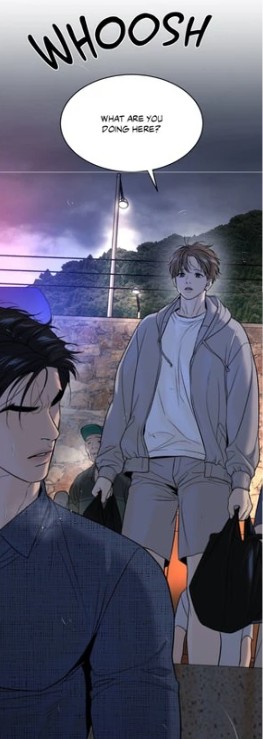 (chapter 69), they are now free from their bias and prejudices.
  (chapter 69) They will be able to communicate which will help them to discover the truth about MFC. Yes, their ability to ponder will lead them to unmask the villains and defeat their opponents. By fighting for justice, both will discover true peace of mind. This hardship at the end of season 1 was necessary to reset their heart and mind: what is the true meaning of life? Money? Work? Duty? Sacrifice?… The answer is happiness which is strongly intertwined with love and selflessness.



 (chapter 55) One might think that the causes for his throbbing head are his depression and insomnia. On the other hand, I am quite certain that many readers had a different explanation for his migraine. He is missing his lover, Kim Dan, as the color red symbolizes the headache and the physical therapist’s name is strongly intertwined with this pigment which was once again confirmed in episoe 56.
  (chapter 56) So it is true that his migraine are caused by the doctor’s absence. It was, as if the main lead was suffering from withdrawal symptoms. The fighter has a love addiction, but he is not aware of the existence of this “sweet poison”. But there’s more to it.

 Thus I consider this image, where the champion is seen
 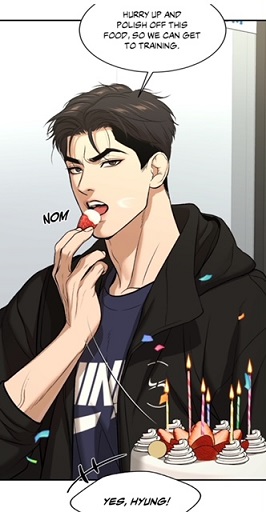 (chapter 43) eating a strawberry with cream as the announcement of the magical night between Kim Dan and his fated partner. The fruit with the cream represented a violation to his strict diet.
  (chapter 55) or the medicine against migraine.
 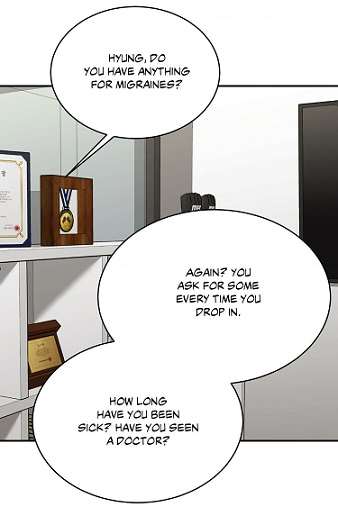 (chapter 54) However, in episode 55, we can observe a huge change in the champion.
  (chapter 55) The latter is finally admitting the inefficiency of the medicine. In other words, in this scene, he was giving up on them. This represents an important step on his way to enlightenment. For me, it signifies that he is stopping relying on pharmaceutical products. Let’s not forget that in the past, he rejected the PT and even neglected them. Why? It is because he trusted more sprays and other medicines than people.
  (chapter 49) Therefore the switch of the spray had to occur. He needed to question his prejudices and attitude. But let’s return our attention to the champion and his throbbing head. One detail in this panel caught my notice.
 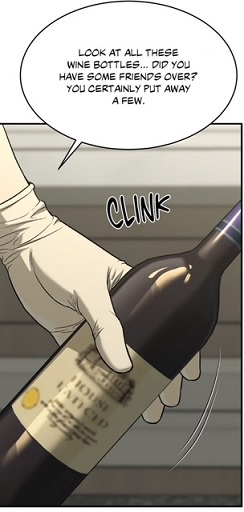 (chapter 55). This means that she had not seen the mess in the master room before:
  (chapter 55) And now, pay attention to the number of the bottles in his room:
 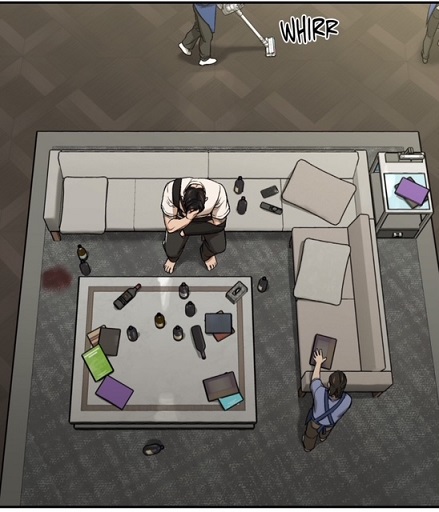 (chapter 55) I count 12 bottles of wine exactly like in the last image from chapter 54. Thus I came to the following deductions:
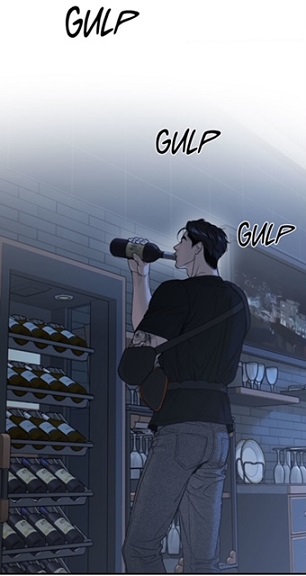 (chapter 54) and the appearance of the staff in chapter 55. It indicates that Jinx-philes can witness time deceleration in season 2. From one month in one chapter, then a week in the next episode, finally we have a reference to a day: Monday. Thus I deduce that in episode 56, only 2 or 3 days elapsed. I have already announced that the couple should meet each other around 25th:
  (chapter 56), for the day Kim Dan wired his money to his “loved one” took place after 10th of the month: XX = two digits.
  (chapter 55)
 (chapter 55) Consequently, I judge the cleaning lady as the positive version of Park Namwook. Though she uses social norms, she doesn’t use them against her employee. She didn’t condemn him, it is a mixture of teasing and reminder. At the same time, her intervention implies that she must have noticed changes in her boss after the arrival of Kim Dan in the flat and his departure. That’s the reason why I have the impression that this image is announcing another turning point in the champion’s life either:
  (chapter 55) He won’t drink like before. However, I don’t think that he will behave like in the past: reject any alcohol entirely.
 (chapter 55), his migraine vanished. Though he is holding his head the next morning and hiding his gaze
  (chapter 55), the Webtoonist didn’t add any red or “throb” as an indication for a migraine. As you can see, his headache is strongly intertwined with repressing the physical therapist and as such locking away memories. However, there exists another cause. What had the doctor done in the past?
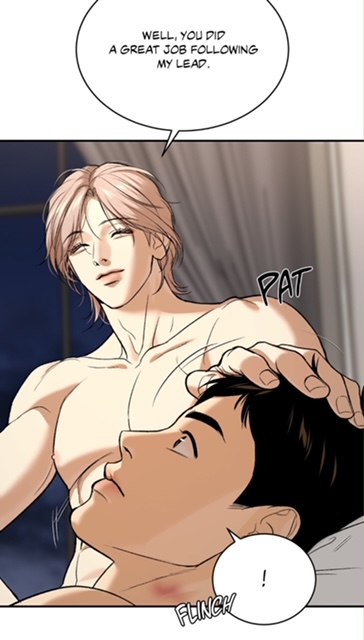
  (chapter 44) Yes, the main lead had patted his lover’s head, while the champion had his eyes close. In my opinion, his unconscious had registered this gesture and loved it. However, the champion had not seen it himself. He was drunk and had his eyes closed. This stroke on the head symbolizes appreciation, affection and recognition.
 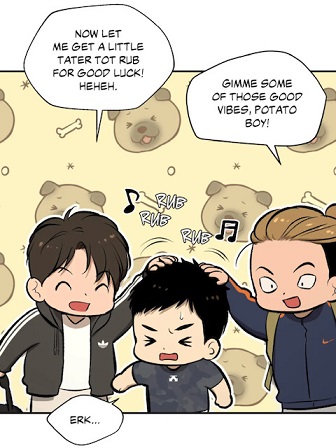 (chapter 23) That’s how little kids are admired and loved. This stands in opposition to the abuser’s behavior:
  (chapter special 2) The same way than Kim Dan with the patting! In other words, the champion is deep down longing for such a gesture, but he has not realized it yet. Nevertheless, I believe that he just needs a trigger.
 (chapter 55) With his left opened eye!! The exact opposite from this picture:
 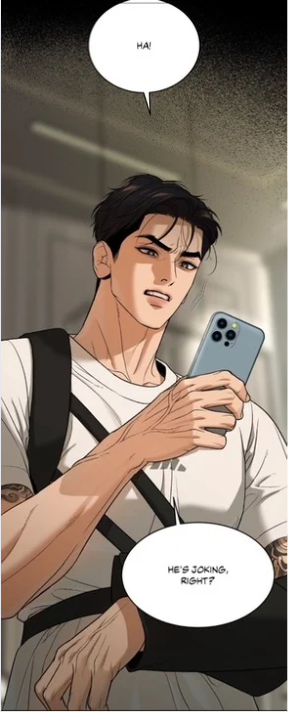 (chapter 55) This observation got confirmed in episode 56, though I couldn’t expose it before the release of the new chapter.
  (chapter 56) As long as the fighter thinks of his fated partner, he is not plagued with a throbbing head. This shows that it has something to do with repressing memories. However, his physical condition is still not improving:
 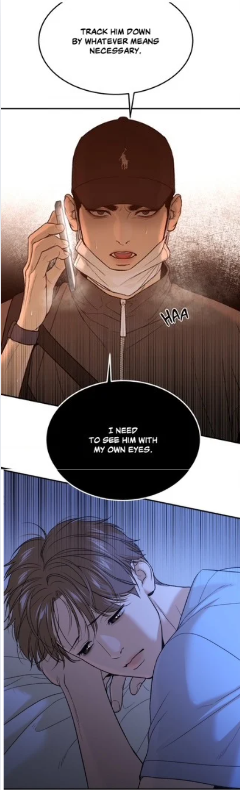 (chapter 56) He even looks worse than before: exhausted and malnourished. There is no one by his side taking care of him: his only interaction with his manager is through the phone. At no moment, the guy felt the need to pay a visit to his boss and champion.
  (chapter 56) Because I discovered the connection between memories and the physical therapist, it is important to examine the interaction between the main lead and the new uke.
 (chapter 55) This signifies that in reality, the uke is the one benefiting more from this relationship, while the “Gucgi guy” is a placebo for Joo Jaekyung. He can not replace the true medicine: Dan’s love. But Joo Jaekyung chose to close an eye to the truth forgetting his “insight” from chapter 2:
  (chapter 2) However, back then, he had just stated it in order to get rid of the mint-goblin. He needed a justification for switching his partner. In other words, this was reflecting more the protagonist’s corrupted mind and heart. Therefore he is designed eyeless, the symbol for ignorance, lies and blindness.
 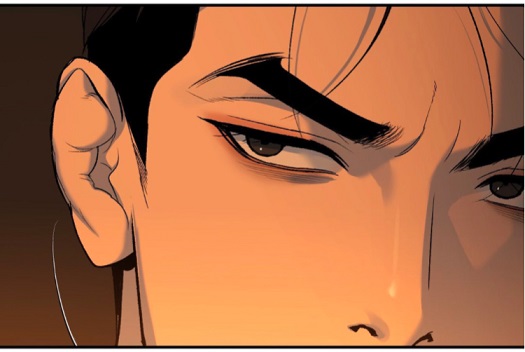 (chapter 55) And where did he have his migraine exactly?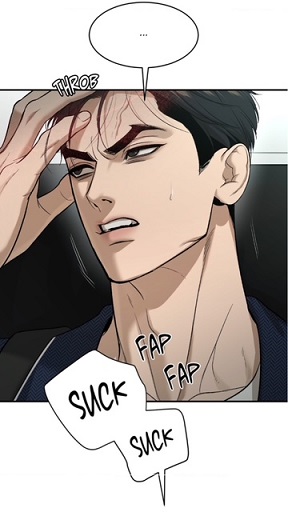
 (chapter 55) It was on the right side and eye! It truly exposes that Joo Jaekyung was getting punished for his attitude. He is not allowed to bury and forget Kim Dan. The star’s open eyes in this episode symbolize denial, lack of self-awareness and as such the absence of insight. He is also punished for his lies in episode 2. His words might have reflected the truth, but his words didn’t expose a change of heart. He was taking advantage of this situation as well. So when the pain intensified pushing him to close his right eye, we should consider this image as a short moment of reflection and realization. In the restroom, he was forced to admit that only Kim Dan could kiss him. Is it a coincidence that just before Mingwa presented this image
 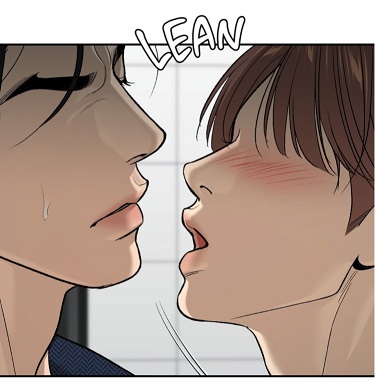 (chapter 55) Naturally no, she was mirroring the attitude of both figures: both were in denial!! Notice that though the star had no reaction in front of the “replacement”, the latter chose not to give up at all. This man was not expecting a rejection, in fact he was in total denial as well. He didn’t notice the star’s passivity and silence.
 (chapter 55) He was just standing there and avoiding his gaze.
 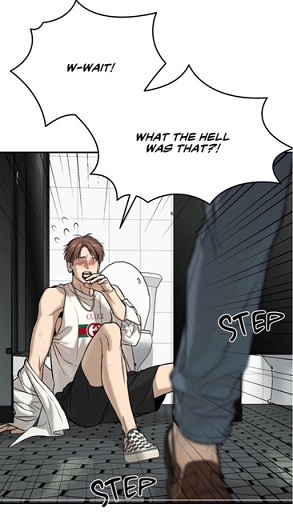 (chapter 55) How can the MMA fighter reject him? This displays his huge confidence or arrogance. There’s no doubt that he will put the blame on Joo Jaekyung. At the same time, I believe that his blindness was also caused by his greed.
 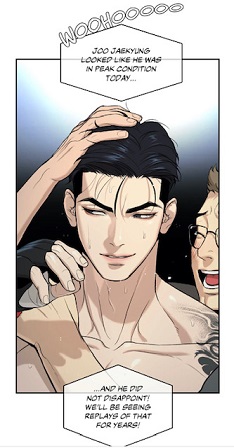 (chapter 5) Therefore he was in a happy mood after that match. A simple gesture with a lot of power! He has been missing this hand or better said this gesture. This action was the main lead’s true motivation.
  (chapter 54) Don’t forget that Dominic Hill had expressed his admiration in a similar way, patting on the back:
  (chapter 40) No wonder why he felt so lost and empty after the last fight.
 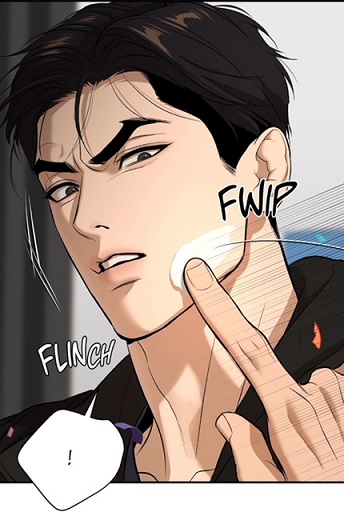 (chapter 43) this was the coach’s hand. In other words, the athlete felt more close to the coach than to the manager. This would explain why he would listen to the coach and even entrust him with huge tasks like the charity event. Strangely, in season 1, we can observe how more or more he is distancing himself from the fighter. Probably related to his secret relationship with Kim Dan. According to my theory, the coach is aware of their relationship. They are more than just boss and employee. As you can see, I don’t think that the champion is right now just missing the doctor’s sweet lips. Deep down, he would like to be patted by his loved one, exactly like Potato.
 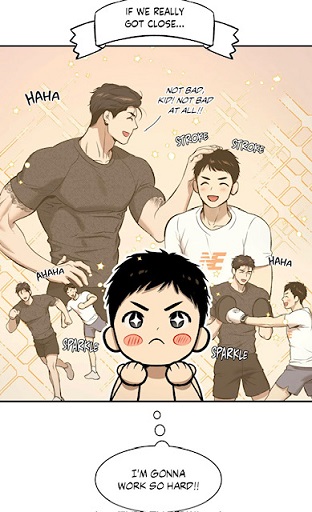 (chapter 23)
 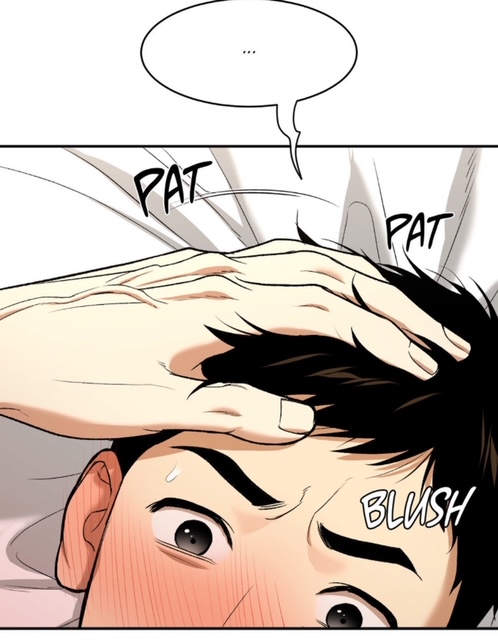 (special episode 2) But this is what he received after the last match:
  (chapter 2) The champion’s reaction is quite telling. He is not easily swayed. But we have another bigger evidence that his intercourses were replacement for “fights”. In The States, the fighter asked Kim Dan to join him at 11:00.
  (chapter 38) He needed to prepare himself mentally, to visualize how he would screw his opponent Dominic Hill. He was just taking the expression “fuck/screw” too literally. The latter idiom has the following synonyms: to cheat, oppress, bleed, coerce, wrest and to tighten. Just before the doctor came to his door, what was the athlete doing? He was watching a video from his challenger:
  (chapter 38) Therefore it is not surprising that he rejected Kim Dan’s request first.
 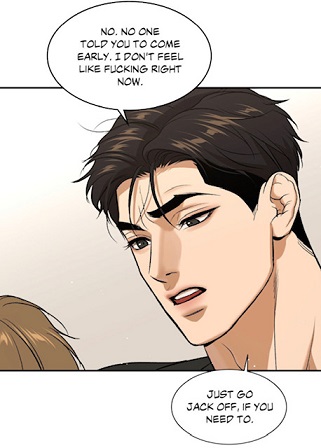 (chapter 39) He didn’t feel like it, because he was not aroused at all. Imagine that he needed two hours for that erection, a sign that during that night, Kim Dan was in reality a replacement for the American fighter.
 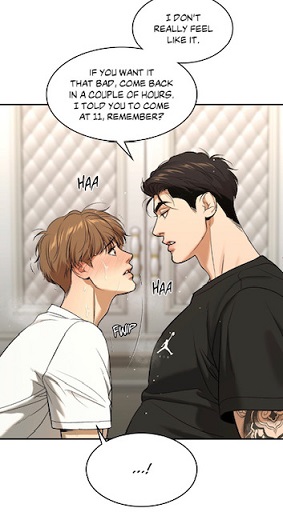 (chapter 39) Even when the doctor rubbed his hand against his sex, he had no reaction.
 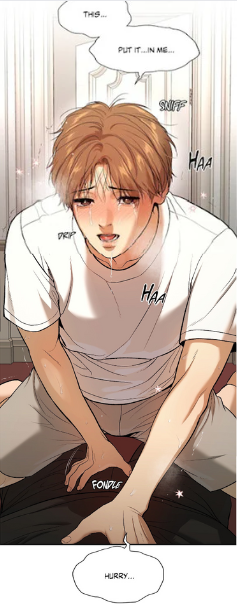 (chapter 38) In fact, he needed a fellatio to get an erection, and he only started getting excited, when he saw the doctor’s gaze. That’s the reason why he remembered this image under the shower:
 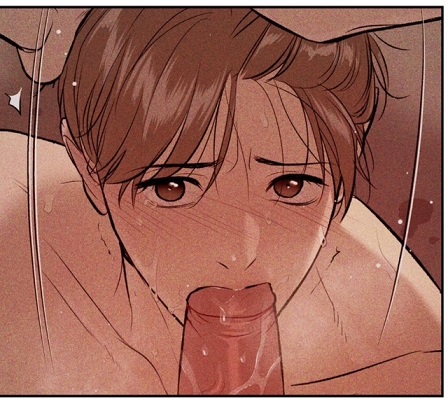 (chapter 55) However, the more time the champion spent time with his physical therapist, the more he came to violate his own rules and principles: It started with their first meeting, when he crossed the line by mixing private and professional life together:
 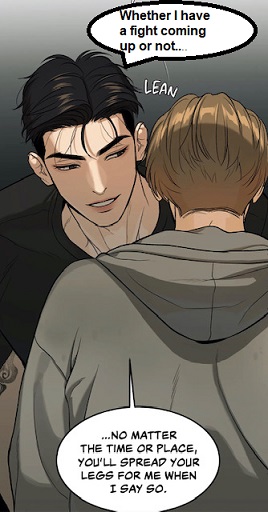 (chapter 6), Sex was no longer linked to matches, but to his own desires. To conclude, for the first time, the fighter connected sex to pleasure and desires and not “work and fighting”. Because of the deal and Joo Jaekyung’s strange behavior (sex shower scene, …) the PT had the impression that his boss was a man obsessed with sex.
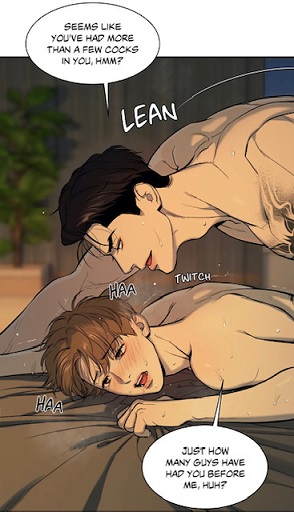
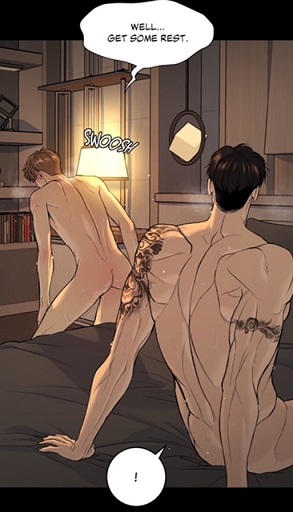 (chapter 53) The latter didn’t feel the need to have more sex with Kim Dan, he let his partner leave the place. Why? This contrasts so much to their First Wedding Night:
  (chapter 4)
  (chapter 53) Pay attention to the behavior from the fighter during their last night together. He is looking away, he is not paying attention to his fated companion. His mind was elsewhere, focused on Baek Junmin! In my opinion, during that night, the champion had been able to differentiate between the physical therapist and his opponent. Fighting was more important than sex and as such his sex partner. To conclude, the physical therapist had been able to win Joo Jaekyung’s belief and heart. He was no longer a replacement at all. He had become a person close the fighter.
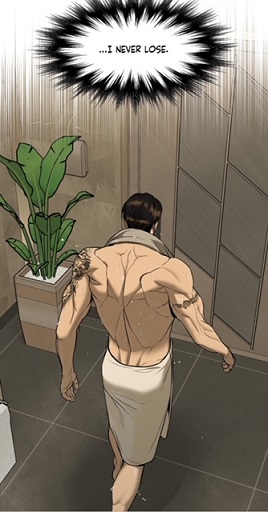 (chapter 49) he wanted to screw Baek Junmin for real. In this image, the athlete oozes confidence and strength. This means that he was no longer dependent on the good fuck before the match.
  (chapter 53) However, the main lead never realized this huge change, he kept his old belief as a tradition out of habit. This explicates why the fighter tried to replace with a new uke
 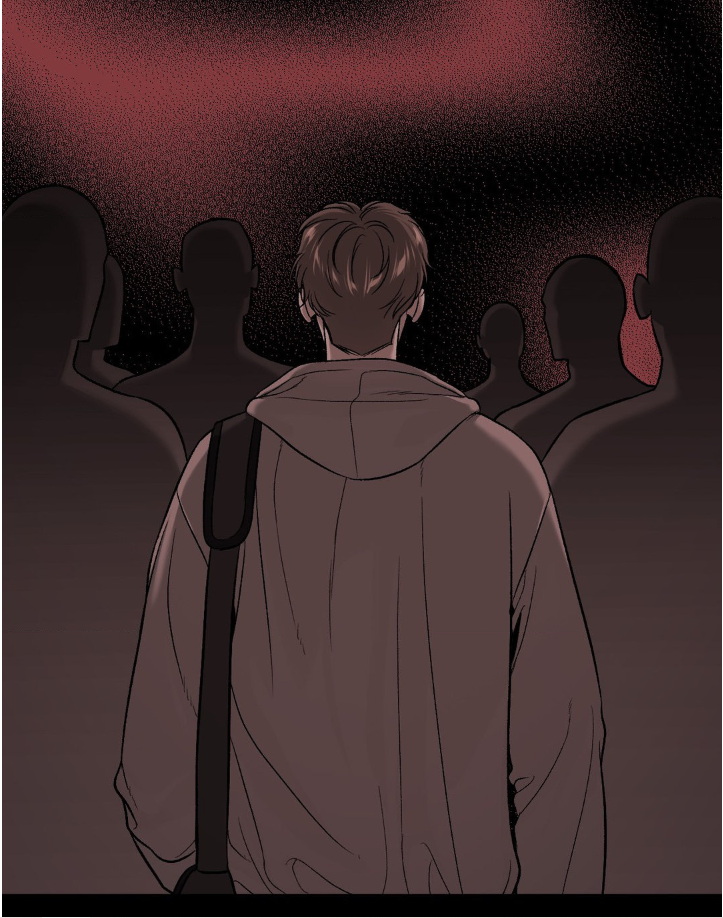 (chapter 55), but here the sex was longer connected to a match, rather to fun. Finally, observe how the champion is now blaming his PT for his ruined match:
 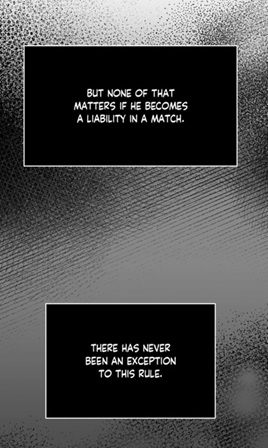 (chapter 56). I don’t think, he was referring to the spray incident, rather to their night before the match. The doctor had not behaved like a real opponent, he had admitted his “defeat” quite easily. He had left the ring before procuring him a good fuck. He was blaming his partner for violating his rule:
 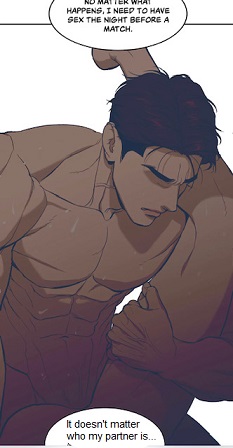 (chapter 2) But here is the thing. Kim Dan had just accepted the deal because of his grandmother. Secondly, he learned an important lesson during that magical night: consent!
  (chapter 44) Sex is a synonym for love and as such it is about giving pleasure and affection to his partner. It is a two-way street. And this is something that the champion has to admit and accept. Thus I deduce that the fighter still has a long way to go before dropping all his fake principles. Like mentioned before, he needs to ponder on the following question: what matters to him the most? His championship or his happiness? Or what is sex to him? Why does he think that he is jinxed? He needs to face his own painful past and remember the face of his tormentor.
 (chapter 49) Baek Junmin and the abusive parent.
  (chapter 54) But the masturbation had taken place before. So who did he have in mind, when he was jerking off? I might shock my avid readers, but I would say: Baek Junmin.
 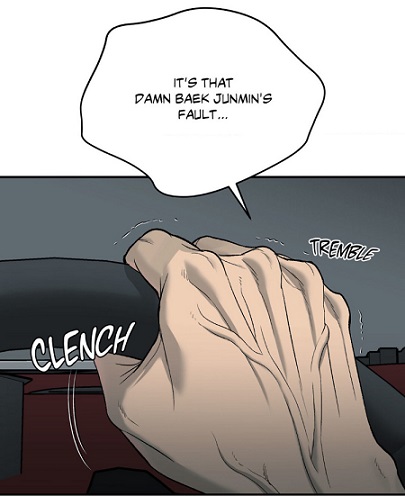 (chapter 54) However, this gesture had the opposite signification: rage, resent… but also sweet revenge! He must have recalled the Shotgun’s face.
 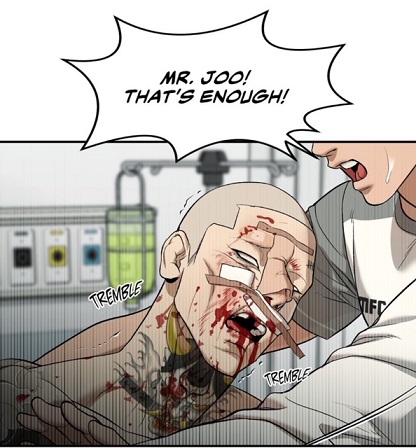 (chapter 52) There’s no doubt that thanks to the doctor, the champion will learn that he can get “justice” and satisfaction through other means. He can defeat the ghosts from the past, not just thanks to his fists and hard work, but also thanks to his surroundings and knowledge. Lawsuit and media!
 (chapter 1) The physical therapist is not only his reward and price, but also his “second shoulder” and as such his pillar. The new PT won’t be able to replace him. Joo Jaekyung is not just a champion, but also a team: Kim Dan as his PT and his lover. As for Kim Dan, the celebrity is his “energy drink”, his source of comfort and joy. He is also his home, for he is the first one who invited him to stay with him! Yes, the grandmother didn’t invite her grandson to live with her, he was just dumped at her place. And because the celebrity is like a home and family, it explicates why the doctor is once again “living like a ghost”.
 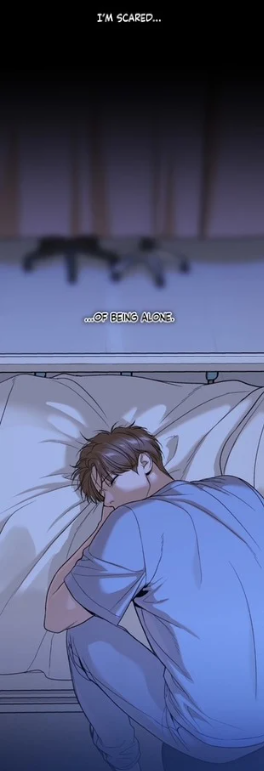 (chapter 56) He feels lonely, but contrary to his fated partner, he is not truly looking for replacement. He might use work to divert his mind, yet he is not erasing Joo Jaekyung from his memory due to his promise: he needs to repay him. So his MO is slightly different. He is just using work and his halmoni to survive. Yes, he is also suffering from depression. In other words, when both main leads will meet each other again, they should have reached the bottom so that they can see each other’s misery and both are willing to listen to each other.

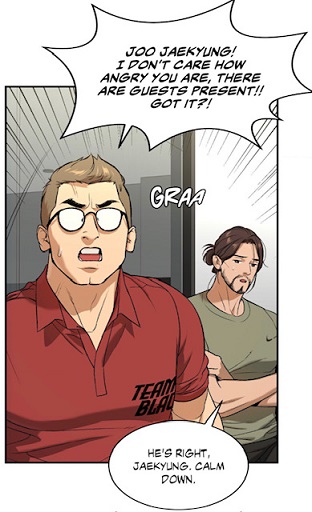 (chapter 36), slaps
 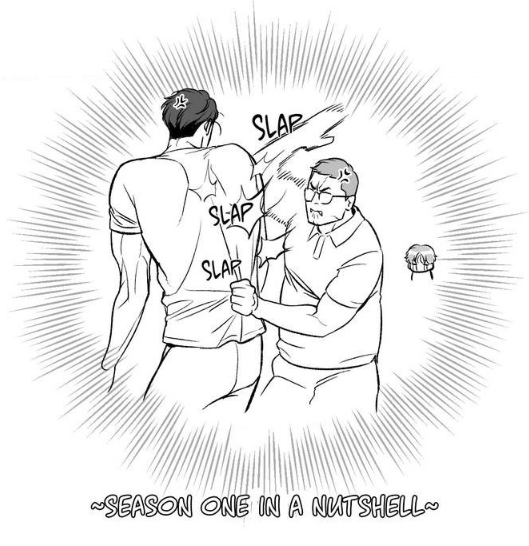 (note) and punches. But how do psychologists explain this creation?
 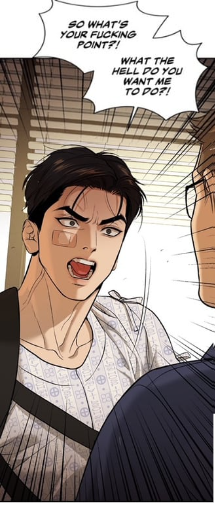 (chapter 45) The Emperor had voiced his thoughts and emotions. This shows that he was trying to have a discussion with his hyung. He desired to be heard too: he voiced his powerlessness and questioned the coach’s intention behind his previous reproach.
 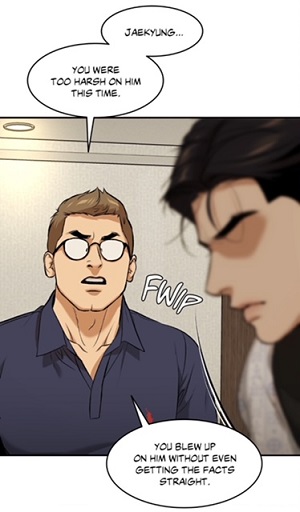 (chapter 52) Why would he destroy the punching machines constantly? Hence I come to the conclusion that he has no idea about the past from Joo Jaekyung: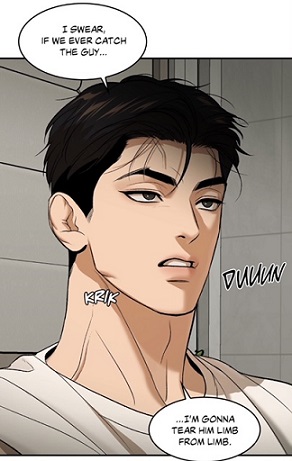

 (chapter 1) The champion was confronted with this new fact, when he saw Kim Dan for the first time. It signifies that when the story starts, the Keinshorm Effect is already deeply rooted. No wonder why there’s only one message from the hyung during the whole season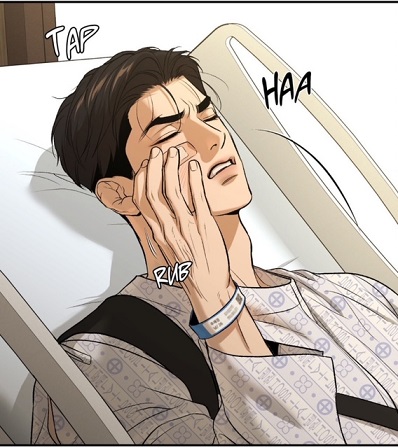
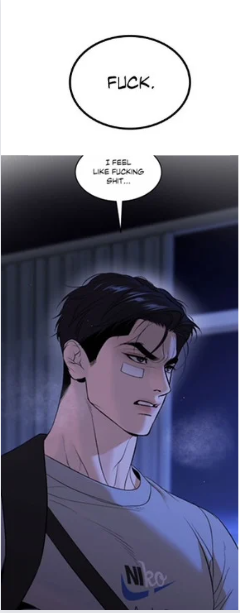
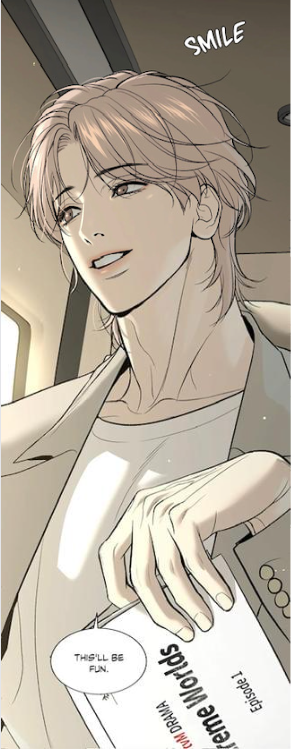 (chapter 29)
  (chapter 30) In the past, I used to think that this title were referring to the existence of two worlds: celebrity versus criminal world. But now I am thinking that these extreme worlds should be seen as “emotions” versus “reason” and “love versus hate” too. Idols are exposed to such extreme emotions (stalking, adoration versus hate).
  (chapter 36) In the second case, Joo Jaekyung could experience it twice during the first season. Whereas he got upset with the article from Shim Yoon-Seok
  (chapter 35), in the second one he was more composed.
  (chapter 52) He was already learning that the media were not reflecting verity. He was already distancing himself from social media. He had slowly realized that his image as star was not his true identity. At the same time, the letter contrasts with the short messages from haters. It outlines that Kim Dan’s admiration and recognition is sincere and deep. He didn’t get influenced by the media.
  (chapter 52) For him, Joo Jaekyung deserved to be suspended… he had punched his opponent at the hospital. Imagine the irony of the situation. Later, the manager used violence too, but it was excusable:
  (chapter 52) Consequently, it is understandable why Park Namwook didn’t fight against the suspension or organize a conference in order to save his star’s reputation. He had the same view about his boy. In addition, it exposes the shortsightedness and lack of reflection from Park Namwook. That’s why he shouldn’t be allowed to be the star’s manager. While he accuses his pupil of being hot-tempered, the former never checked the facts either:
  (chapter 52) Why was Baek Junmin place next to his opponent? Someone will have to confront this man for his negligence, unfairness, stupidity and incompetence.
 (chapter 1) However, despite his biased perception about the athlete, he came to overcome all his prejudices about his boss and came to truly love the fighter. And this brings me back to this comparison:
 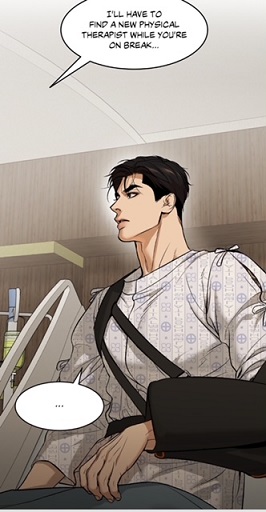 (chapter 53) However, later the champion thought otherwise:
 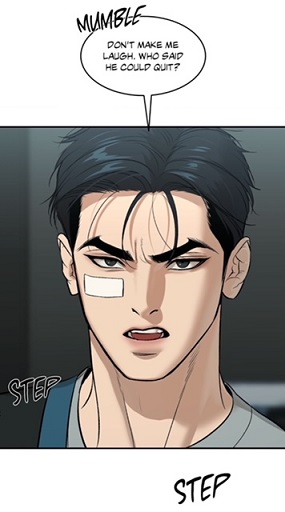 (chapter 53) This shows that he is now making his own decisions and this in the absence of his mentor. It somehow implies that the champion also stops communicating to Park Namwook. Finally, notice how he reacted after reading the letter: he truly felt bad. He was already attached emotionally and mentally to Kim Dan. As a conclusion, the season ends with the switch of the position between Kim Dan and Park Namwook. The former has already come to replace the manager. Indifference versus guilt and pain.
 (chapter 36) He wouldn’t have been allowed to voice his opinion. He would have been even suspected of spying and leaking information (lawyer and manager from the Entertainment agency). Kim Dan needed to realize and admit his love and admiration for the athlete. first in order to stop Keinshorm Effect. He needed to be a confident and competent PT and become a friend for the protagonist. Since Kim Dan stands for communication, tolerance, respect and openminded-ness, the former hyung embodies the opposite notions: silence, dislike, clouded judgement and mental rigidity. Thus I deduce that in the future, the discussions about fights will take place differently. Involvement from all the members, opening listening and Kim Dan as a PT will have the decisive right for allowing a fight or not.

 (chapter 26) are talking about Joo Jaekyung’s past. In this episode, Jinxphiles discover through the testimonies from Oh Daehyun
  (chapter 27)
  (chapter 27)
  (chapter 43) The moment this expression “darker path” grabbed my interest, I wondered why the manager and coach would employ such an expression. It implies that he still saw the athlete’s career as a dark path.
 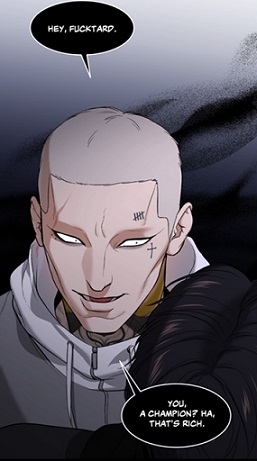 (chapter 49), it signifies that Joo Jaekyung could have become involved in this type of games:
  (chapter 47) And from my perspective, Park Namwook is aware of this. As you know, for me, Joo Jaekyung became the official face of MFC, the one covering up the dark side. He stands in the light to mask the true nature of that organization. For me, “darker” is the indication that the manager is aware of the connections.
 (chapter 46) In this picture, I detected a contradiction from the hyung. If the star is bringing a lot of money, why would he become a target? In fact, people would rather bet on the man, as his victory seems more probable than his defeat. No one has an interest to bet against him, unless the schemers are malicious and malevolent. The word “target” is not random, it implies the existence of a scheme. Hence the manager should have been even more prudent concerning his star’s safety. Yet, he allowed him to return home alone during the night and he had no guard by his side.
  (chapter 48) This remark outlines the manager’s neglect. His boy has no protection, though he had already become the target of a “malicious fan” according to the “fake investigation”. Moreover, in the office, Park Namwook is finally admitting the existence of illegal gambling, a topic which was never brought up before.
  (chapter 46) He is explaining this, as if that was something new. However, even the members from TEAM Black already knew about them.
  (chapter 49) The drop of his face is not only indicating his discomfort, but also his lie. It is because if he had met the director from King Of MMA, he could have been suspected of being a traitor or a spy. Thus I come to the following theory: Park Namwook knew about the meeting between the director of Choi Gilseok and Kim Dan. Let’s not forget that the physical therapist encountered the villain right in front of the gym and Kwak Junbeom was a witness of their meeting.
  (chapter 48) This raises the following question: did he know about the anonymous message?
  (chapter 48) It is difficult to say, but this incident is revealing the manager’s complicity. How so? It is his job as a manager to protect his boy from the public. No personal information should be so easily accessible. He has to make sure that his cellphone number is not given to any random guy. Yes, his cellphone number was leaked not only to journalists, but also to rival gyms. I am suspecting that the leaking could be linked to „favors“ and free PR. One might say that the Entertainment agency could be behind the leak. However, my avid readers shouldn’t forget that the person who pushed Joo Jaekyung to sign a contract with the agency was Park Namwook.
 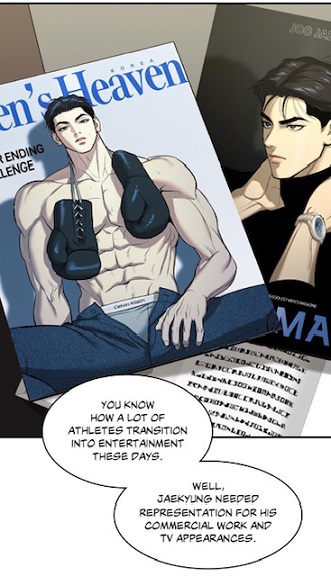 (chapter 30) He explained this choice by saying that many athletes would sign such contracts. His justification outlines his herd mentality. That way, he would delegate his responsibility to the agency. Hence Park Namwook is accountable for the signature of this contract. Thus it dawned on me that the manager has played the same role than the halmoni’s in the end. Both put a leash to their “relative’s neck”, though it had never been their intention. There is no ambiguity that these two characters were definitely motivated by their selfishness, greed and dream. Finally, we should question ourselves why the manager and coach is so obsessed with money and is treating his “boy” like a doll. His mentality was definitely influenced by his surroundings. However, at the gym, most of the fighters were portrayed as little kids who got corrupted over time. Since I detected similarities between the two main leads, I can only come to the deduction that Kim Dan is the champion’s emancipator. While the doctor needed money to get liberated from debts, the other needs to find a true family in order to be free from fighting restlessly. But there is more to it.
 (Painter Of The Night, chapter 7) Jung In-Hun from Painter Of The Night is the perfect illustration. The latter had the impression to be superior to others due to his knowledge. He imagined to have fooled Yoon Seungho. Thus he envisioned that he had been able to manipulate the main lead, whereas the opposite had happened. Finally, the scholar had the tendency to dream big, which led him to his doom. On the other hand, since Matthew Rayner
  from Under The Green Light decided to wear spectacles in order to avoid rejection and fear, I deduce that Park Namwook represents a combination of both metaphors. On the one hand, he is hiding his true thoughts behind the spectacles. He also has high ambitions and he is not entirely honest to his “boss”, like I exposed it in the last composition. On the other hand, there is no doubt that the man is also motivated by fears.
  (chapter 53) They serve him as shield literally and figuratively. No one would punch or slap a man wearing glasses. Furthermore, he is protecting his own heart and mind that way. It was, as if he was closing his eyes to reality. That’s the other reason why I believe that the coach is not entirely ignorant about the existence of corruption in MFC. Yet, I couldn’t help myself noticing the absence of Park Namwook’s eyes, especially at the end of the season 1. Jinx-philes could only see them, when he voiced his anger towards his “champion”:
  (chapter 52) After that outburst, they vanished behind the glasses.
  (chapter 26) The shadow is eyeless, mirroring his mentor’s mentality. In other words, the man with glasses symbolizes emptiness and lack of compassion and even morality.
  (Chapter 52) By putting them back, he is displaying that he is acting again. His hidden eyes may also hint at an emotional or moral blindness, as though he either cannot or chooses not to see the deeper consequences of his actions or the corruption around him. And now, you comprehend why he stands for fake gratitude and fake compassion. His mouth is not reflecting his mind.
 (chapter 52) Park Namwook removed his spectacles, when he cried. However, notice that he still protected his eyes by using his arm. A sign for his dishonesty in my opinion. Moreover, it indicates how guarded and mistrustful this man is. At the same time, it becomes clear why he had to remove them. It is because the glasses are a mask. The tears would not have been visible. I would even add that this man was mimicking a crying person, as his weeping stopped very quickly. He needed to awake compassion or sympathy, for he had acted like a ruffian at the hospital. He had used violence on a patient.
 Bebebisous33s' analyses in K-Dramaland and Manhwas