
Please support the authors by reading Manhwas on the official websites. This is where you can read the Manhwa: Jinx But be aware that the Manhwa is a mature Yaoi, which means, it is about homosexuality with explicit scenes. Here is the link of the table of contents about Jinx. Here is the link where you can find the table of contents of analyzed Manhwas. Here are the links, if you are interested in the first work from Mingwa, BJ Alex, and the 2 previous essays about Jinx the Birth of A Flower (part 1) and The Beginning of the End
It would be great if you could make some donations/sponsoring: Ko-fi.com/bebebisous33 That way, you can support me with “coffee” so that I have the energy to keep examining Manhwas. Besides, I need to cover up the expenses for this blog.
The Hand That Says Everything and Nothing
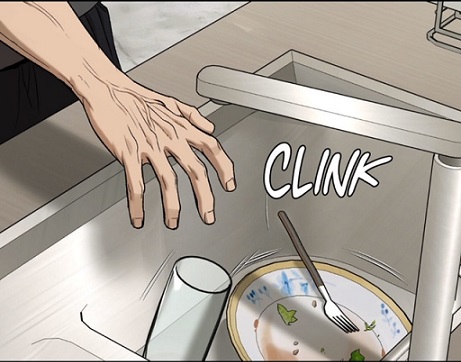
There is a gesture in episode 90 that unsettles me more than any act of violence, any argument, any explicit rejection. Joo Jaekyung reaches out 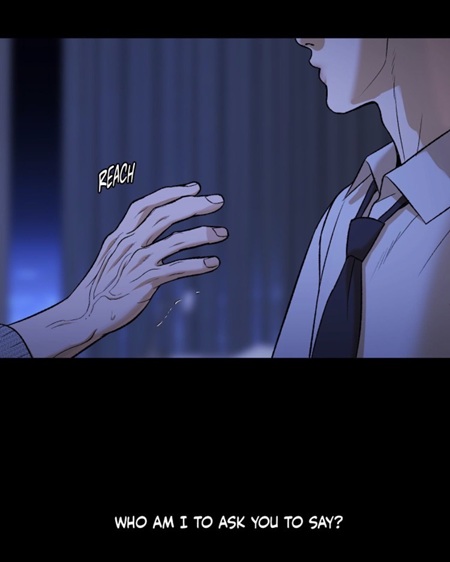 (chapter 90) — and then he pulls his hand back.
 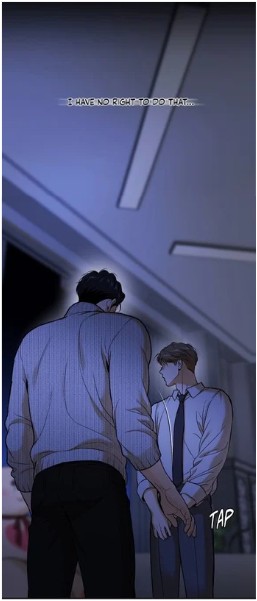 (chapter 90) No words are spoken to stop him. His hand is not even pushed away, like doc Dan did it before.
 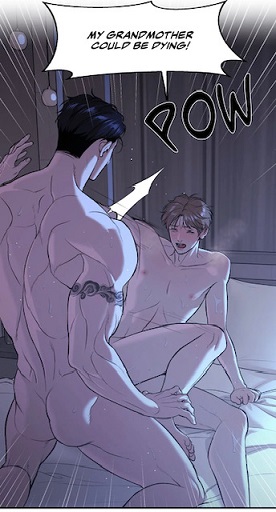 (chapter 21) Everything happens in silence. The interruption comes entirely from within.
As readers, we could be tempted to read this as restraint, perhaps even growth. Yet the text itself resists that interpretation. The thought accompanying the gesture is not “I need you”, but “Who am I to ask you to stay?” The question is not directed at Kim Dan. It is directed at himself.
This hand says everything and nothing at once. It reveals a conviction without explaining it, a decision without justification and dialogue. In this moment, Joo Jaekyung no longer sees himself as a person capable of care, protection, or repair. He sees himself as the origin of harm — not merely someone who committed mistakes, but someone whose presence has become synonymous with violence and sin. It is, as if he has absorbed every accusation, every outcome, every imbalance of power, until he no longer distinguishes between what he did and what was done through him. He does not fear becoming abusive; he believes he already embodies it. To conclude, Joo Jaekyung has reached a point where he positions himself as the origin of Kim Dan’s suffering.  (chapter 90) In his mind, everything that followed the hiring — the money, the contract, the protection, the conflicts — converges back onto him. Faced with this conclusion, he rewrites the past. The good moments lose their weight.
  (chapter 26)
 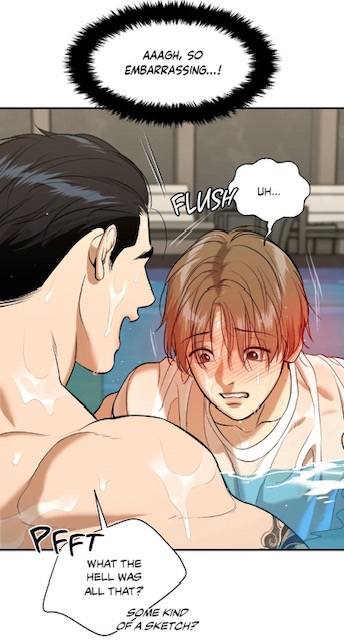 (chapter 27)
 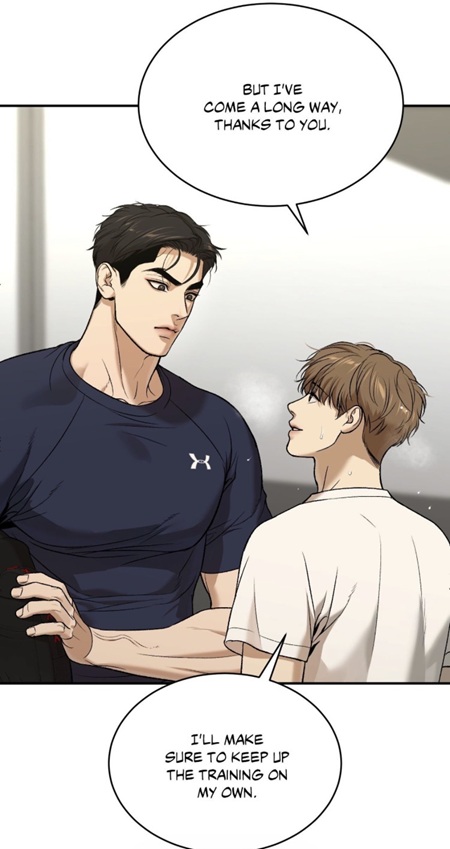 (chapter 88)
 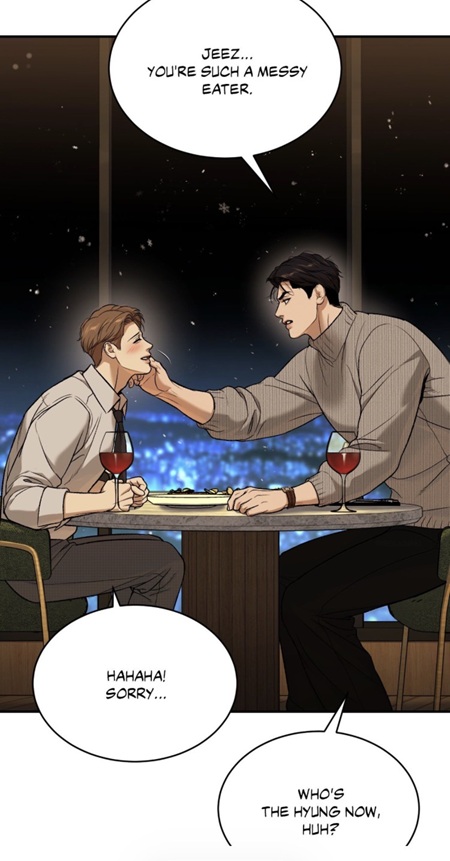 (chapter 89) The help he provided becomes irrelevant. What remains is a single narrative: meeting him caused harm.
To grasp the logic of this withdrawal, it is not enough to examine this scene in isolation. We must also contrast it with earlier scenes, with figures who shaped his thinking, and with patterns of responsibility and shame that predate Kim Dan. Only then does the withdrawn hand reveal its meaning: not respect, not restraint, but the first visible sign of self-erasure and sacrifice — a silence chosen in the belief that presence itself has become a form of wrongdoing.
The Art of Letting Go
What is striking in this scene is not only what Joo Jaekyung does, but what Mingwa deliberately withholds from view. (chapter 90) We never see his face while listening to his thoughts. The panels deny us access to his facial expression (chapter 90), his eyes, any visible articulation of emotion. Instead, we are positioned behind him, aligned with his back and his outstretched hand, while his inner thoughts unfold in silence. Meaning is displaced from facial expression to bodily interruption. Jinx-philes must infer everything from posture, movement, and absence.
The hand he extends is open, hesitant, and trembling. (chapter 90) In Mingwa’s visual language, this matters. An open hand is not an instrument of control but of appeal. It does not seize; it exposes vulnerability. He needs help and support. The tremor is equally significant. This is not the vibration of contained rage or adrenaline before a fight. It is a body that no longer commits itself fully to action. For the first time, Joo Jaekyung’s physical certainty fractures before a gesture is completed.
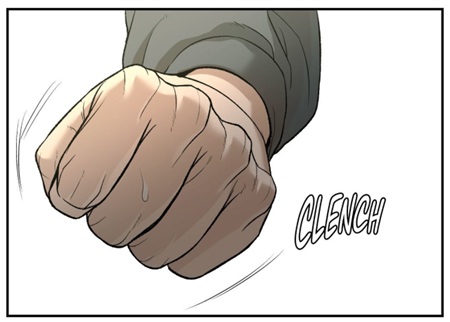
At that moment, what collapses is not his strength, but his fighting spirit. It becomes obvious, when you compare this gesture (chapter 90) to his old habit, 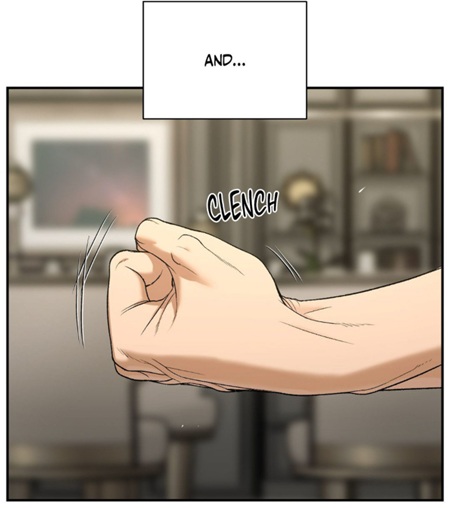 (chapter 61) the clenched fist, when he expressed determination to achieve his goal (bringing back doc Dan or winning a fight).
  (chapter 81)
Until now, Joo Jaekyung has always responded to crisis through resistance. Even when cornered, he pushed forward—by clenching his fists, facing confrontation  (chapter 74), or converting conflict into challenge.
 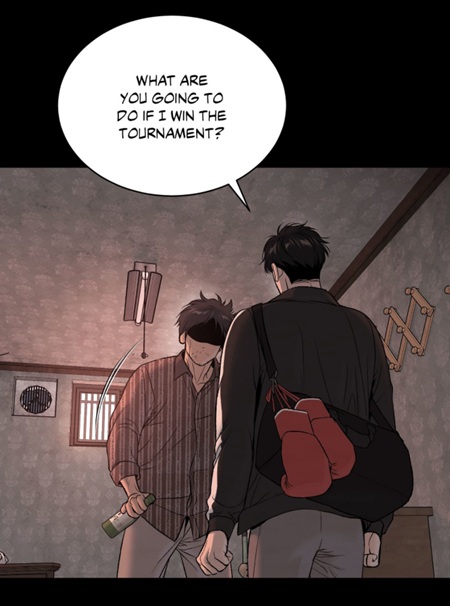 (chapter 73) Fighting was not only his profession; it was his primary mode of being in the world. Here, however, the impulse to fight dissolves. (chapter 90) The hand does not harden into a grip. It falters. The will to confront, insist, or endure gives way to resignation.
It is precisely this loss that recalls another scene—not because the gestures are identical, but because the logic of bodily collapse suddenly aligns. In episode 16, Kim Dan does not begin by pleading in front of Heo Manwook, the loan shark.  (chapter 16) His hand is first crushed. The antagonist targets the very instrument of his livelihood, injuring what allows him to work, to treat, to survive. Only after this act of violence does Kim Dan cling to his aggressor.
 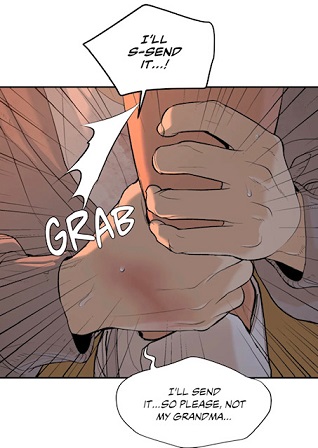 (chapter 16) The grasp that follows is not an invitation, but a reaction to damage already inflicted. Resistance has been broken through the body before appeal becomes possible. It symbolizes submission, exactly like in the penthouse.
Mingwa stages this sequence carefully: injury precedes supplication. Kim Dan’s grip is not a sign of agency, but of desperation. He does not extend his hand freely; he clutches because he has been made vulnerable. Survival no longer depends on strength or refusal, but on mercy extracted after harm.
The echo in episode 90 is therefore not visual symmetry, but structural reversal. Joo Jaekyung’s hand has not been crushed. (chapter 90) No external force has targeted his body, his career, or his means of survival. And yet the gesture falters all the same, as the damage has already occurred.
The violence here is not enacted through force, but through language. Heesung’s words on the rooftop —accusations of brutality 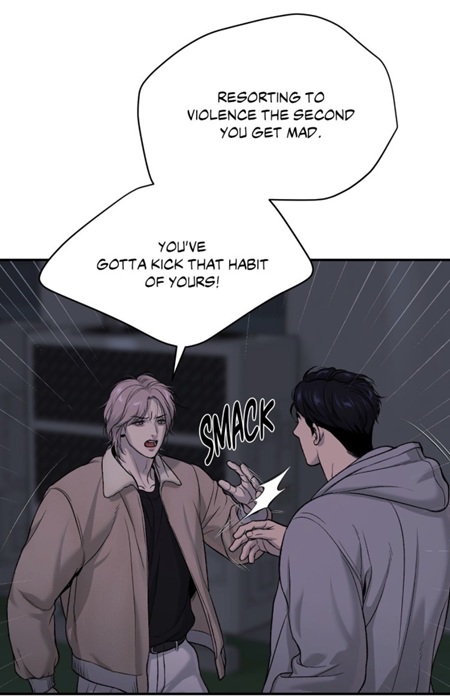 (chapter 89), unlovability, moral contamination
 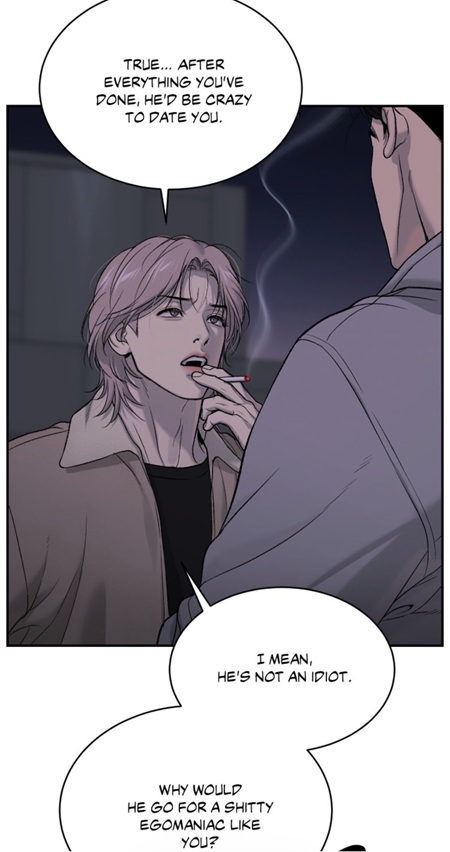 (chapter 89) — do not introduce a foreign judgment. They articulate what Joo Jaekyung already believes about himself.
 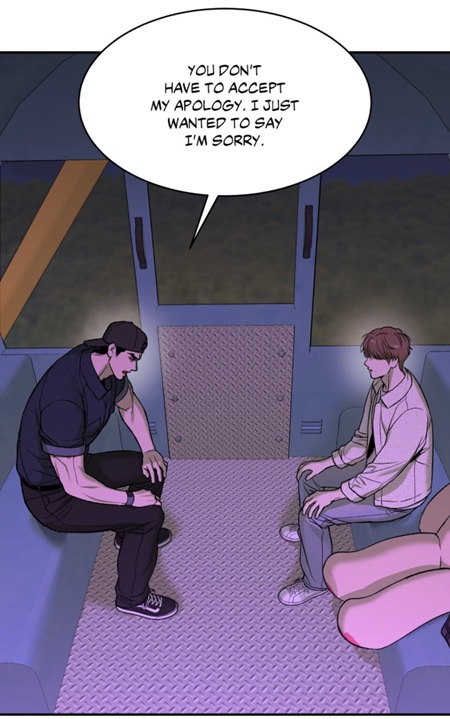 (chapter 84) Deep down, he thinks that he can not be forgiven and even loved. This is precisely why they take hold. Spoken aloud, they acquire the authority of truth. Once internalized, they no longer need to be repeated.
Mingwa makes this internalization visible not through dialogue, but through a remembered image. 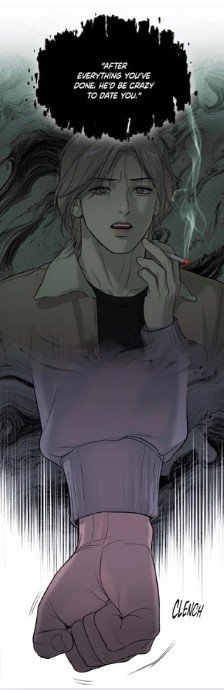 (chapter 89) The panel does not show Heesung speaking again; it shows Joo Jaekyung’s clenched fist, isolated, rigid, suspended in recollection. This is not the fist of imminent action. It does not precede a strike. It does not convert pain into confrontation. Instead, it freezes.
In earlier scenes, the clenched fist functioned as a promise—to endure, to retaliate, to win. Here, it marks the opposite. The body remembers the accusation, but no longer translates it into resistance. The fist no longer gathers force; it contains it, uselessly. What we witness is not suppressed violence, but the final struggle and imminent collapse of the impulse to fight at all.
This is the decisive shift. The accusation has done its work. Joo Jaekyung does not respond by proving Heesung wrong; he responds by accepting the premise. If violence defines him, then restraint is no longer ethical struggle—it becomes erasure. The fighting spirit does not turn inward. It simply disappears.
Unlike Kim Dan, whose resistance is broken by injury, Joo Jaekyung arrives at surrender through “self-recognition”, another false belief. His hand retreats not because it has been harmed, but because he has accepted the premise that his presence itself is harmful. The violence has migrated inward. It no longer needs an aggressor.
In this sense, Joo Jaekyung mirrors Kim Dan not at the moment of physical injury, but at the moment after domination has succeeded—when resistance feels illegitimate, and appeal itself begins to seem like an act of transgression.
The contrast, however, is just as important as the resemblance. Unlike Kim Dan in episode 16, Joo Jaekyung is not on his knees. (chapter 90) He is not physically lowered, cornered, or framed from above. His body remains upright, broad, and imposing. From the outside, he still appears strong, yet deep down, he is falling apart. The withdrawal of the hand is not restraint, but surrender. A strong body remains standing while the will to fight quietly disappears.
What deepens the tragedy of this moment is that Kim Dan does not witness the champion’s action. (chapter 90) His gaze drifts elsewhere, toward the teddy bear. He is oblivious to the trembling, the hesitation, or the aborted appeal. Nor does he meet Joo Jaekyung’s eyes—because the eyes are never shown. The scene is structured around a double absence: a plea that is never fully expressed, and a witness who never sees it. To conclude, the physical therapist has no idea about the inner turmoil of his fated lover.
After revealing his past with the perverted hospital director, Kim Dan had tried to calm Joo Jaekyung by touching his arm 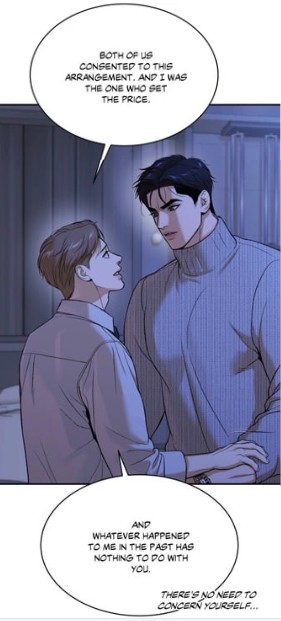 , (chapter 90) offering reassurance. That attempt failed, not because Kim Dan lacked care, but because reassurance can only reach someone who is still willing to fight for their place. Joo Jaekyung is no longer asking how to endure. He is asking whether he should exist in this space at all.
What blocks Kim Dan’s words from reaching him is not their content, but the position from which they are received. Joo Jaekyung hears them through a familiar filter — one that reduces Kim Dan to someone who must be protected from himself. In doing so, he unconsciously aligns himself with the very figures who shaped Kim Dan’s silence: the grandmother who decided for him  (chapter 65), and Heesung who dismissed his agency
 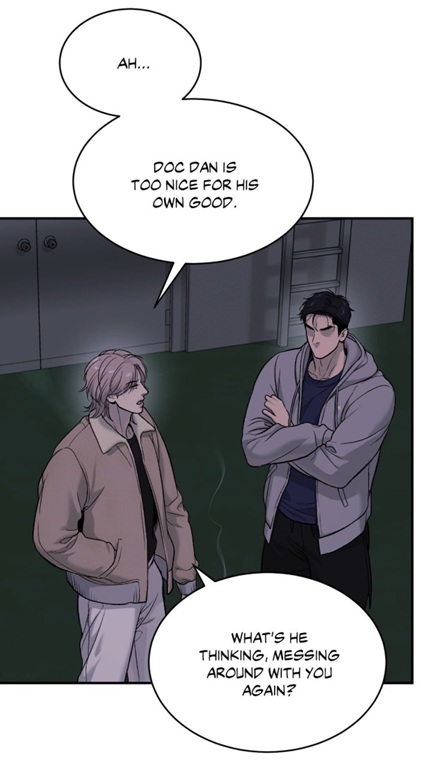 (chapter 89) under the guise of concern.
Yet Kim Dan’s words are neither naïve nor dependent. He states them clearly: the arrangement was consensual; the price was his to set; what followed was his responsibility. He does not ask to be spared, corrected, or guided. He asserts authorship over his own choices. (chapter 90) But this assertion cannot be heard by someone who has already decided that Kim Dan must be shielded — even from himself.
The rooftop scene before that night exposes the same logic from another angle. Heesung, too, frames Kim Dan as “too nice for his own good,” implying that he does not know what is right for him, and that any involvement with Joo Jaekyung must therefore be exploitation. In both cases, concern becomes a form of erasure. Kim Dan’s agency is acknowledged in words  (chapter 65), but denied in structure.
Faced with this, Joo Jaekyung does not challenge Kim Dan’s claim. (chapter 90) He does something more drastic: he removes himself. If Kim Dan cannot be recognized as an equal subject capable of choosing him, then the only ethical position left, in Joo Jaekyung’s mind, is disappearance. By refusing to claim a right, Joo Jaekyung does return choice to Kim Dan. But he does so by removing himself from the field of choice altogether. There is no negotiation. What appears as liberation is inseparable from abandonment, because it is grounded not in trust, but in the belief that his presence is illegitimate.
This is why the scene cannot be read as growth. It marks the moment when the champion loses the impulse that once defined him. The withdrawal of the hand is not restraint, but surrender. A strong body remains standing while the will to fight quietly disappears. At this point, the language of the jinx quietly inverts. Earlier, Joo Jaekyung spoke of it as something he had—a misfortune attached to him 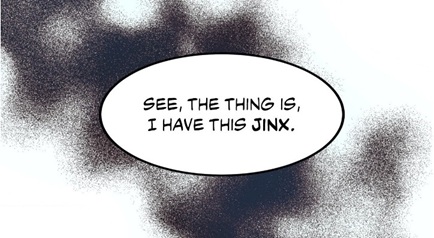 (chapter 2), an external curse that followed his steps. Here, that distinction collapses. He no longer experiences the jinx as an event or condition, but as an identity. He does not fear what might happen because of him; he accepts that he himself is what causes harm. The curse is no longer something he carries. It is something he has become. Once internalized in this way, it no longer requires rituals to contain it.
  (chapter 75) Practices that once functioned as talismans—gestures meant to ward off misfortune or secure victory—lose their meaning.
  (chapter 75) What collapses is not only belief in luck, but belief in the necessity of striving at all.
A Space Marked by Collapse
This collapse does not occur in a neutral space. (chapter 90) The room in which Joo Jaekyung withdraws his hand is not simply Kim Dan’s bedroom, nor a private refuge removed from the world. It is a place already marked by interruption, illness, and loss. Again and again, this room has functioned as a site where bodies fail, where care becomes urgent, and where stability quietly dissolves. Fainting, sleeplessness, sickness, drinking, and disappearance have all passed through it. Long before episode 90, this space had been associated not with recovery, but with moments when endurance gives way and something must be endured instead. What unfolds here does not begin with the withdrawn hand. The room has been preparing it all along.
The pattern begins early. In episode 10  8episode 10), Kim Dan wakes up there after drinking excessively, confused why he is sleeping in the penthouse. He doesn’t know that the night before in his drunkenness, his thoughts were turning toward his grandmother. He was mistaking the athlete for his relative.
  (chapter 10) He feared getting abandoned. When the doctor realized his whereabouts, he imagined that he had sex with the champion. As you can see, the bedroom is strongly intertwined with longing and sin, where consciousness returns only after collapse. This association deepens in episode 20, when sexual intimacy is immediately followed by a phone call announcing his grandmother’s critical condition.
 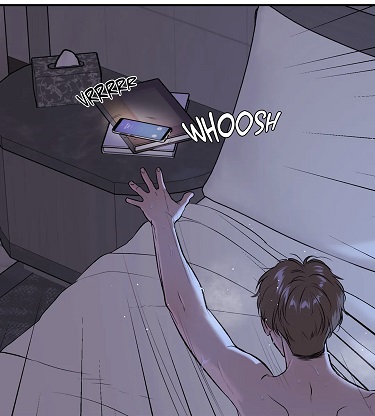 (chapter 20) Pleasure and threat coexist in the same space, binding the room to the anticipation of loss.
Later, in episode 29, Kim Dan wakes up there after fainting 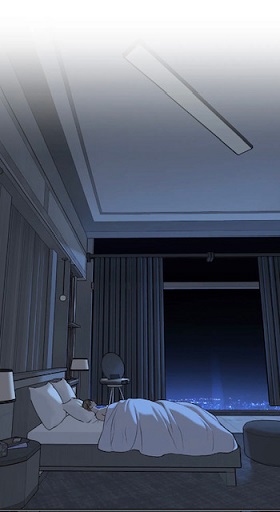 (chapter 29), his body once again giving way under accumulated strain. The room is no longer merely where exhaustion manifests; it is where it becomes undeniable. In episode 61, the association shifts again: Joo Jaekyung comes to the room seeking sex, but Kim Dan is unwell, unable to voice his own thoughts, unable to refuse.
 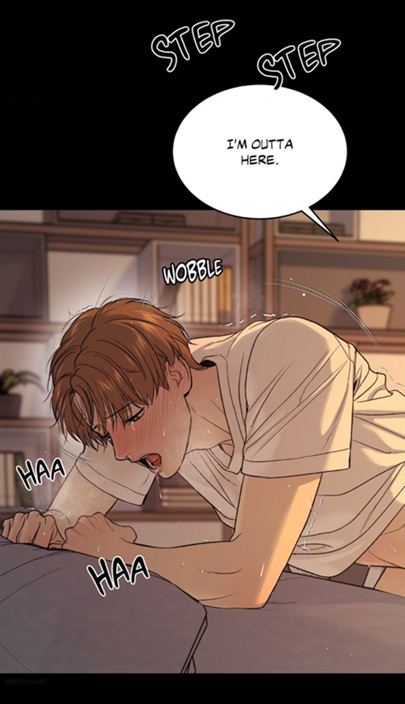 (chapter 61) Illness interrupts desire, and the room marks the moment where agency falters.
The most alarming incident occurs when Kim Dan sleepwalks and nearly falls from the railing  (chapter 79). Once more, it is this room that frames the danger.
  (chapter 79) The body moves without consciousness, hovering at the edge between presence and disappearance. The room becomes a liminal space where life is not actively threatened by violence, but quietly endangered by exhaustion and dissociation (suicidal thoughts).
This accumulation reaches a turning point in episode 53, after Kim Dan leaves. Joo Jaekyung enters the now deserted room and finds the jacket left behind. 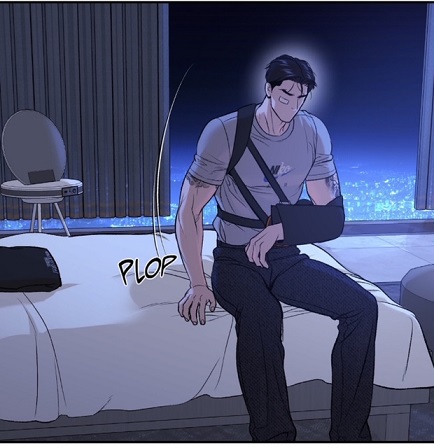 (chapter 53) The object becomes a trace of absence, and the room transforms into a container of loss. Standing by the window, Joo Jaekyung is portrayed without eyes.
  (chapter 53) The visual choice is crucial: it does not indicate blindness in a literal sense, but an inability to see forward, to orient himself. He is present in the room, but detached from direction and purpose. This scene announces the falling apart of the athlete.
What follows does not mean that Joo Jaekyung begins to deteriorate inside this room. On the contrary. After Kim Dan’s departure, he avoids it. 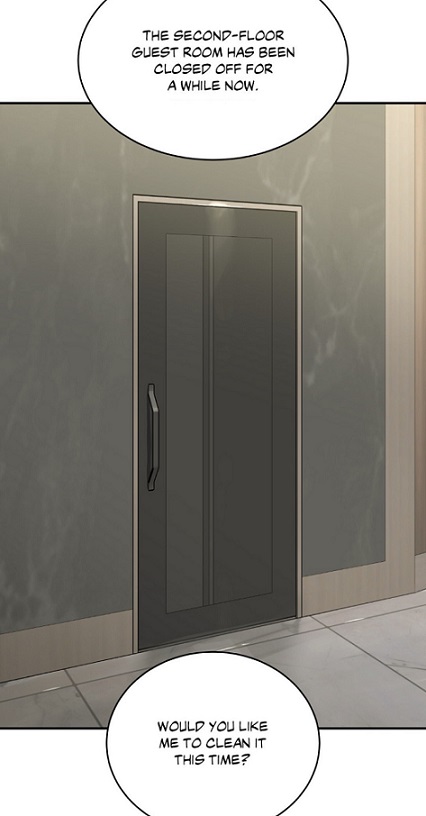 (chapter 55) The space is sealed off, preserved, treated almost as a forbidden zone. The cleaning staff is not allowed to enter. Nothing is moved, corrected, or neutralized. The room becomes a reliquary rather than a dwelling — a place frozen in the moment of loss. Joo Jaekyung does not confront what happened there; he keeps it intact, untouched, and therefore unresolved. At the same time, he imagines that avoiding that place will help him to forget doc Dan’s gaze and face.
Therefore it is logical that his collapse unfolds elsewhere. The displacement is visible. In episode 53, the jacket is thrown in the direction of the couch. 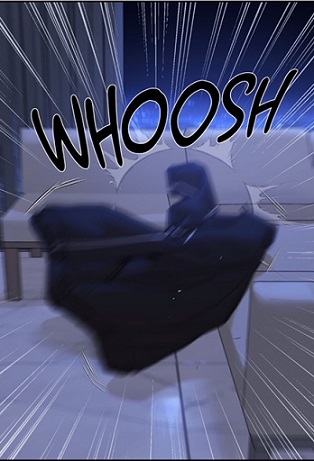 (chapter 53)
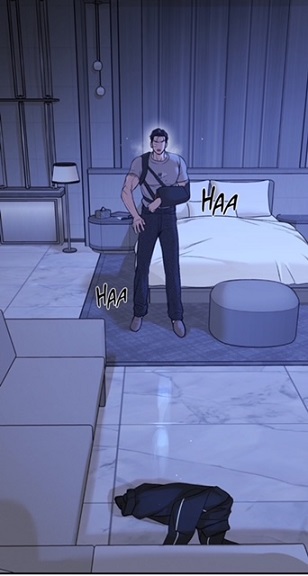 (chapter 53) In episode 54, wine bottles begin to accumulate beside the couch
 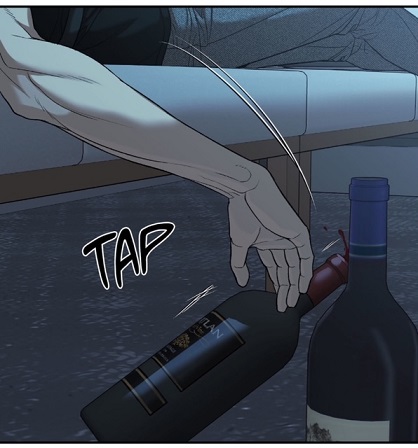 (chapter 54) in his own bedroom leaving a huge red wine stain on the carpet.
 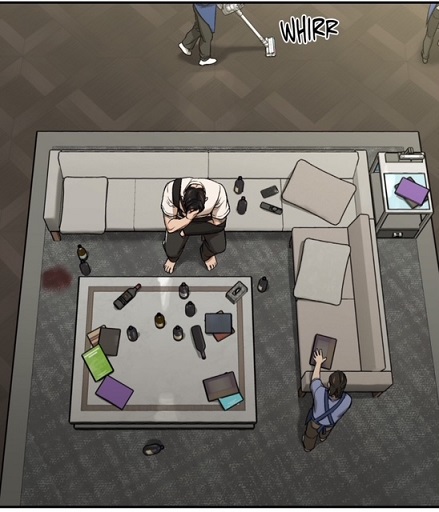 (chapter 55) And in episode 90, the teddy bear now rests on the couch in Kim Dan’s room
 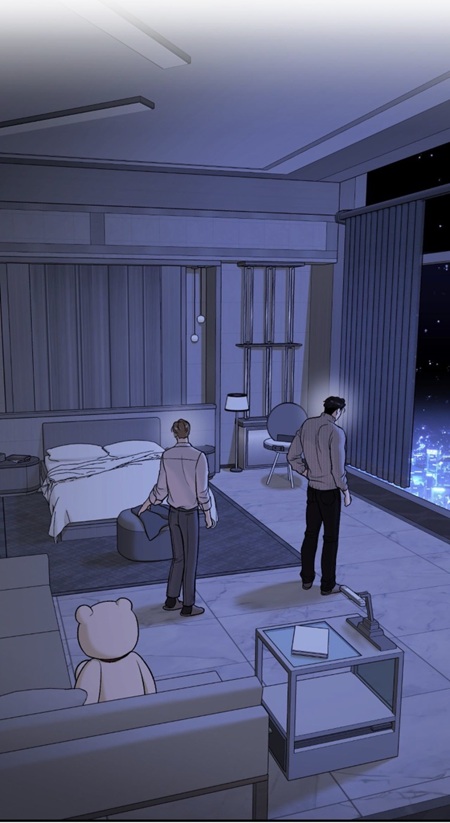 (chapter 90) — occupying the very place toward which the jacket once flew. Across these scenes, the hand and couch emerge as a recurring site of impact, exhaustion, and surrender. It is where bodies fall, where frustration lands, where the weight of what cannot be said is deposited. One detail caught my attention: because they are not sitting on the couch, the main leads are discussing together. They are able to face each other and as such to listen to each other.
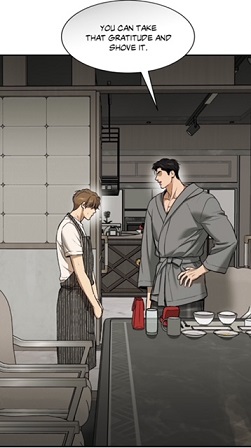
 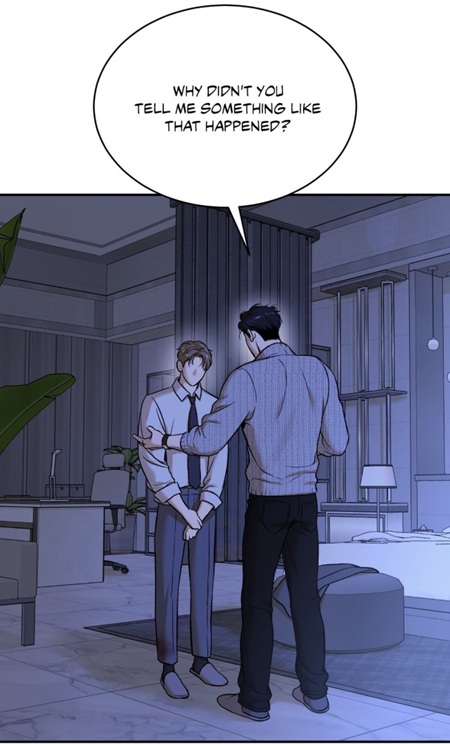 (chapter 90) Their respective position in this room reminded me of their previous arguments.
  (chapter 45)
  (chapter 51)
 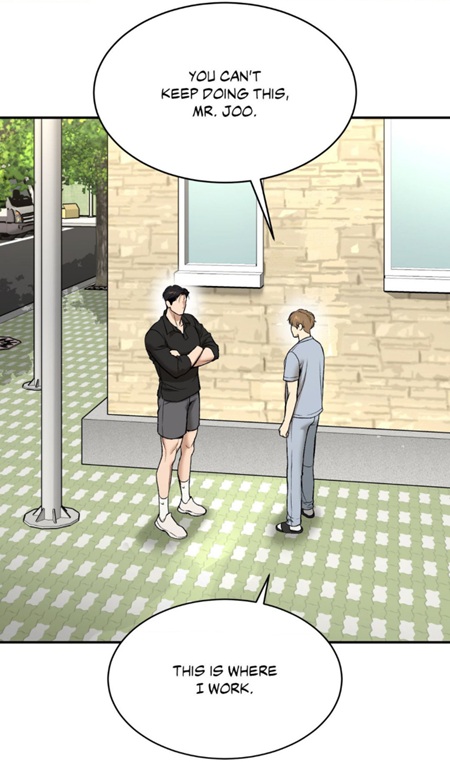 (chapter 61)
 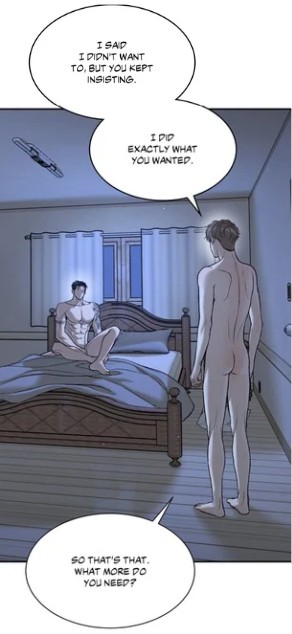 (chapter 64) Only when they would truly face each other, they would be more honest and expose their thoughts and emotions. As soon as there is a table, a bed or a couch, I detected some restrain and silence. In other words, the presence of the teddy bear and the couch in that scene explains why Kim Dan is silent and passive after their conversation. He is definitely remembering the day and conversation at the amusement park. (chapter 90) I am hoping that he finally talks about his past and childhood in the next chapter. But honestly, I am a little skeptical, as doc Dan has no idea how Joo Jaekyung suffered, while he was away (loss of money and contracts, members, reproaches from Potato and Park Namwook, the slap, no one showed a true concern for his well-being). They all expected him to return to his old self and become a champion again. He only learned recently that members had abandoned him.
 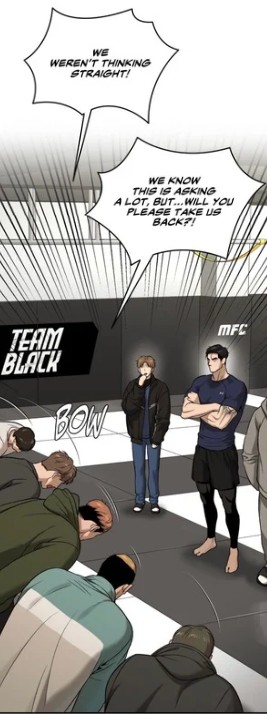 (chapter 88) On the other hand, it is about time that doc Dan becomes proactive so that they finally become a real team.
But let’s return our attention to the room. (chapter 90) The latter itself remains suspended, untrespassed. (chapter 55) But the logic it contains spreads. What cannot be processed there resurfaces around the couch: drinking replaces training; avoidance replaces discipline; headaches replace resolve. Insomnia leads to inertia and passivity. Joo Jaekyung does not resign, and he does not openly collapse. Yet something essential fractures. Here, the fighter remains active in form, but disengaged in spirit. His depression does not announce itself through breakdown, but through relocation — from the preserved space of loss to the furniture that absorbs its aftermath.It is a space where suffering does not explode but accumulates, where the narrative repeatedly returns to show that unwell-being is not an exception, but a condition that has been waiting to be acknowledged.
Within The Silent Friend in the Blue Light, this room becomes one of depression’s many disguises: familiar, enclosed, outwardly calm, yet saturated with vulnerability. It does not announce danger. It hosts it quietly.
The Hidden Mirror of Sacrifice
What emerges after this displacement is not merely grief, but inversion. Without naming it, the narrative stages a quiet exchange of positions. Joo Jaekyung begins to occupy the place Kim Dan once held — not in circumstance, but in moral posture. The champion who once advanced through force, certainty, and entitlement now adopts the logic of self-erasure (chapter 90) that defined the doctor’s earlier life.
For a long time, Kim Dan lived under the conviction that his presence imposed a burden. He apologized  (chapter 79) for everything. He was to blame for everything.
 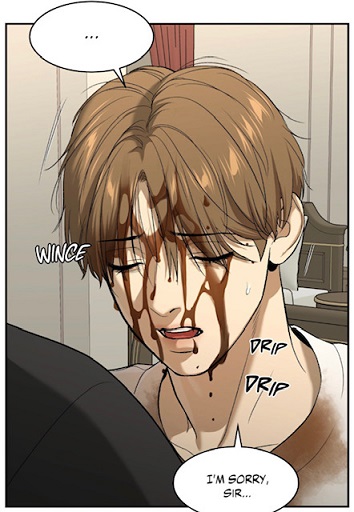 (chapter 37) He endured before being asked. He accepted harm as a condition of acceptance and staying. His silence was not passivity, but a learned ethics: if I ask for less, if I take up less space, if I disappear when necessary, others, in particular his grandmother, might be spared.
 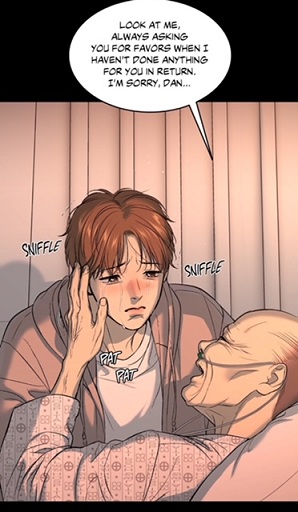 (chapter 53) That posture did not originate with Joo Jaekyung. It preceded him. It was shaped by debt, obligation, omission, and by figures who decided on Kim Dan’s behalf what he could endure and what he deserved.
In episode 90, that posture reappears — but it is no longer Kim Dan’s. Joo Jaekyung does not lash out. 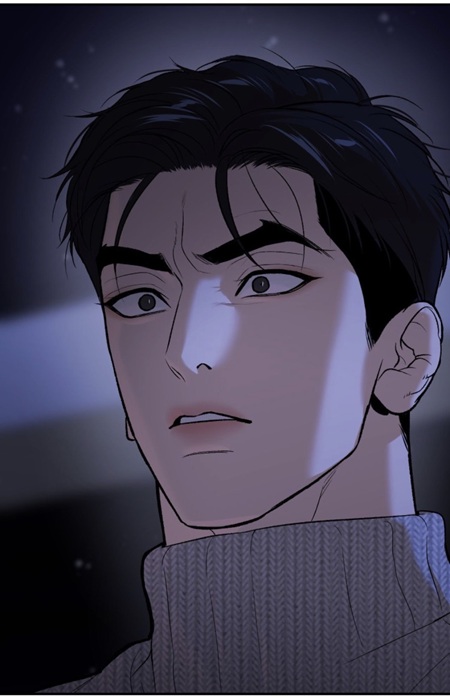 (chapter 90) He does not argue. He does not demand. Instead, he blames himself for everything, thus he withdraws. He refuses to claim a right. He positions himself as the problem that must be removed so that something better might follow.
 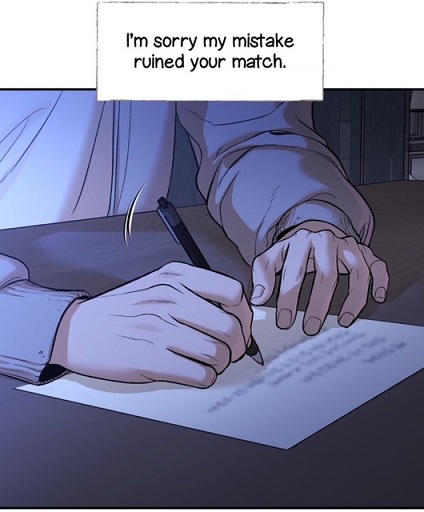 (chapter 53) This is the same moral calculus Kim Dan once applied to himself: the belief that care becomes ethical only when it is accompanied by sacrifice, and that love, if it exists at all, must be proven through disappearance. The only difference is that he can not apologize as his existence has become the synonym of wrongdoing. Thus Kim Dan can not hear the distress from his “loved one”.
The mirroring is not obvious, because the bodies do not look alike. Kim Dan’s earlier suffering was visible: exhaustion, malnourishment, fainting, tears. Joo Jaekyung’s is not. He stopped crying a long time ago.  (chapter 74) He remains upright. His posture holds. Yet, he is now voiceless exactly like the physical therapist in the past. From the outside, he still appears powerful, but the loss of cry or sound indicates loss of agency and choice. But structurally, the positions have reversed. The one who once endured now asserts authorship over his choices. (chapter 90) The one who once claimed authority now doubts his right to remain.
This inversion does not arise in a vacuum. It is prepared by encounters with figures who mistake projection for truth. Both Heesung 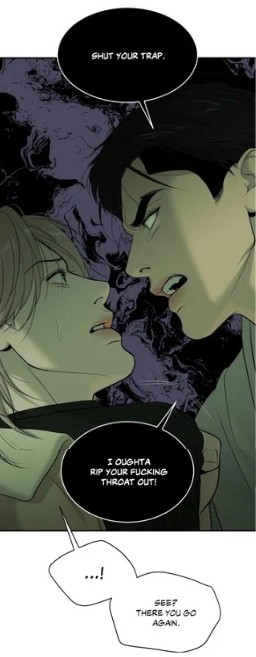 (chapter 89) and the green-haired man
  (chapter 42) operate through the same mechanism: they reduce complexity into a single verdict. Like false mirrors, they collapse months into moments, gestures into essence, and relationships into accusations. They speak as if they own the truth — not because they see clearly, but because jealousy and greed demand certainty. Hence they are connected to the color green. Their words are not reflective (chapter 89); they are consumptive.
As I argued in my earlier essay on deceptive mirrors, the green-haired man is not a mirror at all, but a monster revealed by one. He does not reflect; he distorts. Kim Dan, by contrast, functions as the Ungaikyō — the mirror beyond the clouds — which does not invent monstrosity, but exposes it. In his presence, hidden motives surface: envy, entitlement, moral resentment. This is why certain figures cannot bear his gaze, and why others attempt to shatter the reflection by attacking the one who stands beside him.
This reversal also explains why Kim Dan cannot recognize what is happening. (chapter 90) He continues to address Joo Jaekyung as an athlete, a patient, a man who needs reassurance. He speaks clearly, claims responsibility, and insists on consent. He does everything that would have saved him in the past. But those words reach someone who is no longer negotiating endurance. Joo Jaekyung is not asking how to stay. He has already concluded that by keeping him by his side is wrong.
Here lies the fatal misalignment: because Joo Jaekyung possesses such a damaged self-image, he interprets his ability to expose corruption as proof that he belongs to it. He detects the hospital director’s moral rot instantly 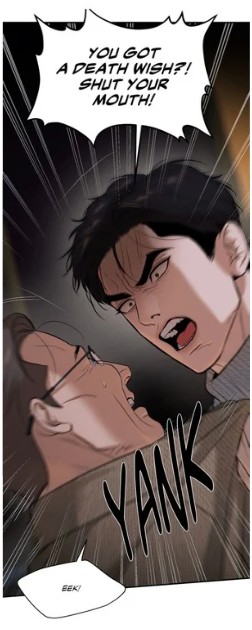 (chapter 90) — not because he shares it, but because the mirror he has become reveals it. Yet instead of recognizing this capacity as ethical clarity, he mistakes it for contamination. He equates himself with the very figures whose cruelty is laid bare in his presence. However, he is making a huge mistake, he is accepting this projection forgetting that he had it all wrong for one reason:
 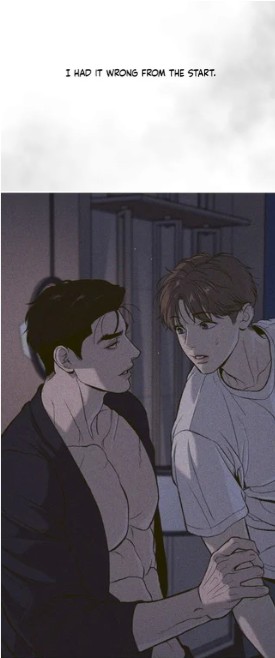 (chapter 90) During their first meeting, the “hamster” had grabbed his “anaconda”.
 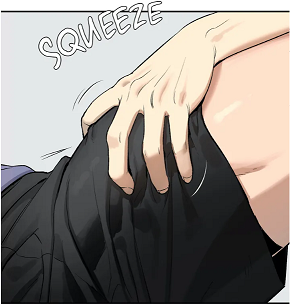 (chapter 1) Such a gesture could be interpreted as a seduction, and don’t forget that the previous physical therapist had rubbed him the wrong way:
  (chapter 1) Finally, observe that after this incident, Joo Jaekyung was looking at the embarrassed doc Dan
 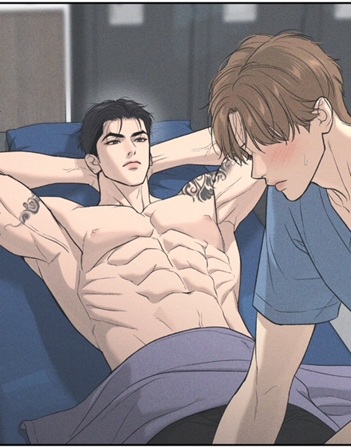 (chapter 56) and thinking that they could have fun together in bed.
  (chapter 56) So doc Dan has his share of responsibility in the champion’s misjudgment.
In this sense, the mirror remains hidden because it reflects an earlier version of Kim Dan that the latter himself has begun to leave behind. That’s why he is looking at the teddy bear. (chapter 90) Earlier, in Paris, Kim Dan took its hand and squeezed it, drawing steadiness from what it represented rather than from struggle.  (chapter 84) This gesture symbolized their reconciliation in the end,
  (chapter 84) the return of trust and faith in the “champion”. What Joo Jaekyung mirrors is not who the doctor is now, but who he once had to be in order to survive. The tragedy lies precisely there: the champion adopts a posture the doctor has already outgrown thanks to him.
And as with all mirrors in this story, the reflection is imperfect. Joo Jaekyung’s withdrawal is framed as ethics, not necessity. He believes he is restoring balance by removing himself. But this belief rests on the same flawed premise that once governed Kim Dan’s silence — that one person can decide alone what harm is, and who must vanish to prevent it. The mirror reveals continuity, not resolution.
What appears as role reversal is therefore also a warning. When responsibility becomes indistinguishable from self-removal, the structure of harm does not disappear; it simply changes hands.
The Inherited Horizon (Living for Others)
Joo Jaekyung’s collapse and resignation in episode 90 are not a new development. (chapter 90) It is the reactivation of an older logic — one learned long before Kim Dan entered his life. What surfaces that night is not a crisis born of romance, but the return of a childhood structure in which existence is justified only through sacrifice, and value is always deferred to someone else’s future.
From the beginning, Joo Jaekyung was never taught how to live for himself. Though he was initially encouraged to fight for himself (earning money) 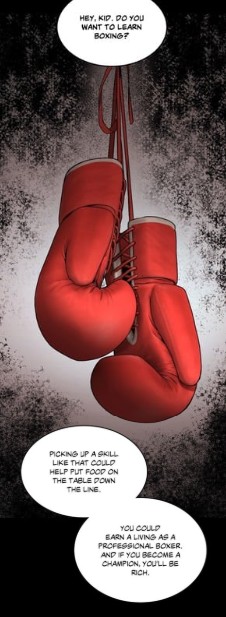 (chapter 72), the reality was that he longed for a home, which he came to associate with his mother. Thus over the phone, he promised to become strong
  (chapter 72) and earn a lot of money so that his mother could return home. As you can see, fighting was strongly intertwined with his mother and his longing for a family.
His entire horizon is shaped by adults who frame life as endurance in service of others. His father beats him and argues with him by asking for respect. (chapter 72), as if the boy’s role was to validate the father’s existence. Joo Jaewoong does not ask his son what he wants
  (chapter 73); he mocks his ambition
  (chapter 73) and reduces his dream to delusion. Yet even in conflict, Joo Jaekyung seeks recognition. (chapter 73) He does not reject his father’s gaze — he argues within it, hoping to prove him wrong through success.
 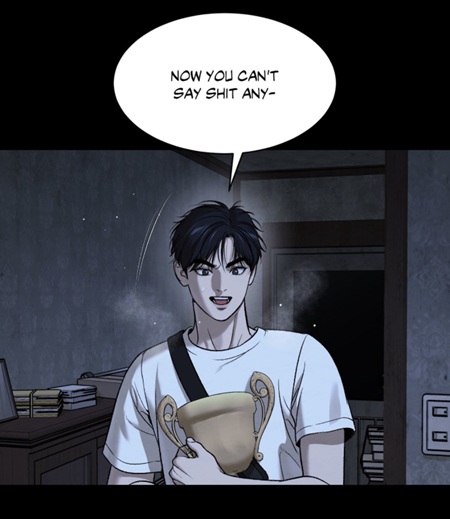 (chapter 73) As you can see, his life is always focused on the future, on one goal and as such one person: the mother, then the father.
Later, Hwang Byungchul reinforces the same structure. He offers MMA fighting not as a way to find joy or self-discovery, but as a means to “honor his mother’s sacrifice”  (chapter 74) He warns against becoming like the father, to change for the sake of his own mother
  (chapter 74), not by encouraging freedom, but by replacing one obligation with another: win, endure, don’t disgrace the dead. Many years later, he encourages him to change his mind-set, because he could end up alone.
 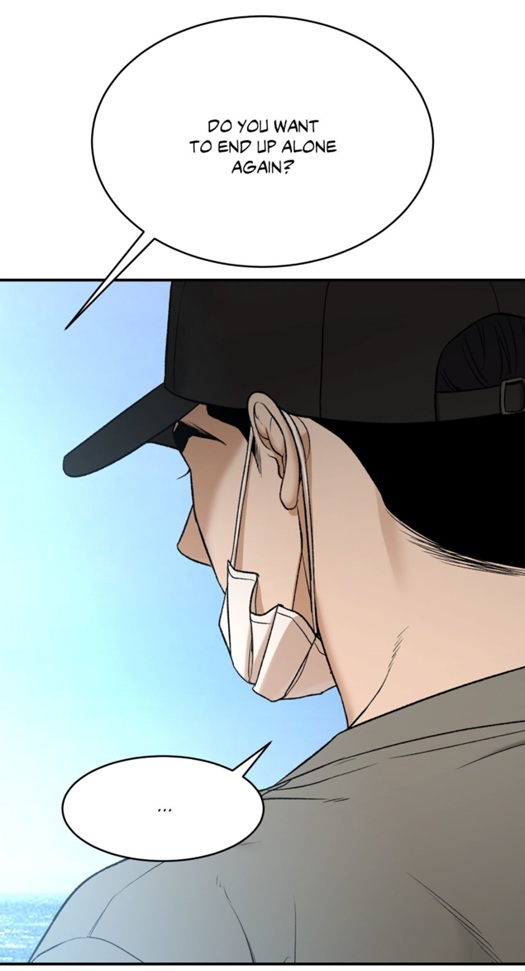 (chapter 75) For the first time, it is no longer about winning or enduring.
 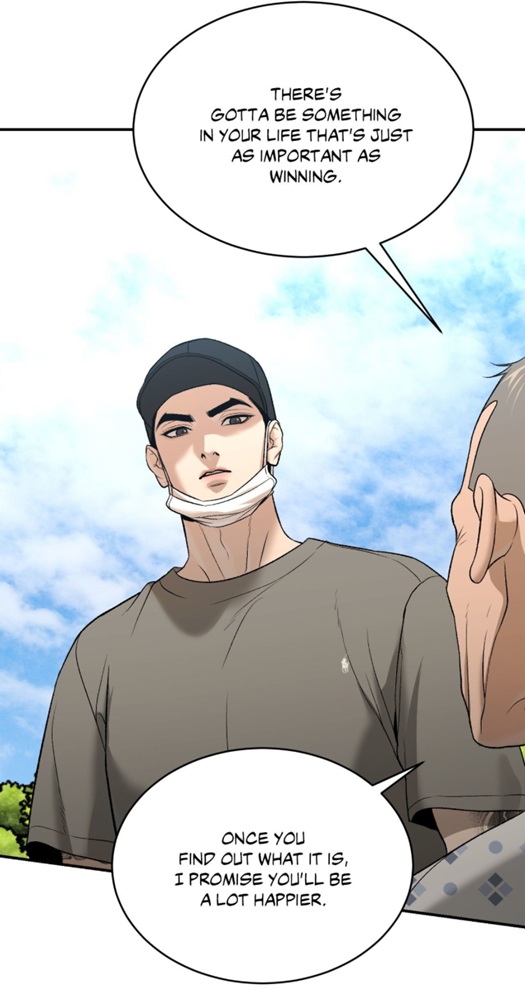 (chapter 75) However, observe how the main lead reacts to this well-meant advice:
  (chapter 75) He starts visualizing Doc Dan as his goal. It is once again focused on one person and future-oriented.
Striking is that the grandmother in Kim Dan’s life articulates the same ethic from another angle. Kim Dan stays for her sake. (chapter 65) He grows up too fast for her sake. 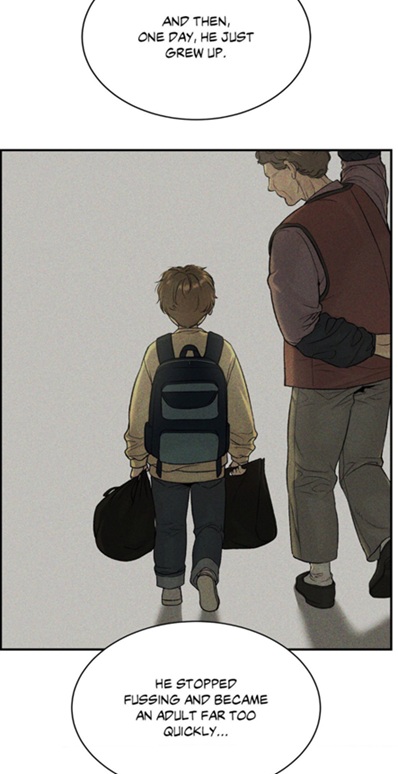 (chapter 65) He suppresses desire, health, and rest for her sake. The moral lesson is identical: if your presence risks harm, reduce yourself; if your absence protects others, endure it.
This is the philosophy Joo Jaekyung inherits — and internalizes. This observation leads me to the following conclusion: the MMA fighters treats doc Dan the same way than doc Dan took care of Shin Okja. They both prioritize the well-being of a loved one over themselves. And could this happen? One might say that it is because of the grandmother’s request  (chapter 65), because she did the same in the past with doc Dan: (chapter 53), but the truth is that this reversal of position started taking place, the moment the athlete paid the loan. It is no coincidence that the new contract is based on the debts.
 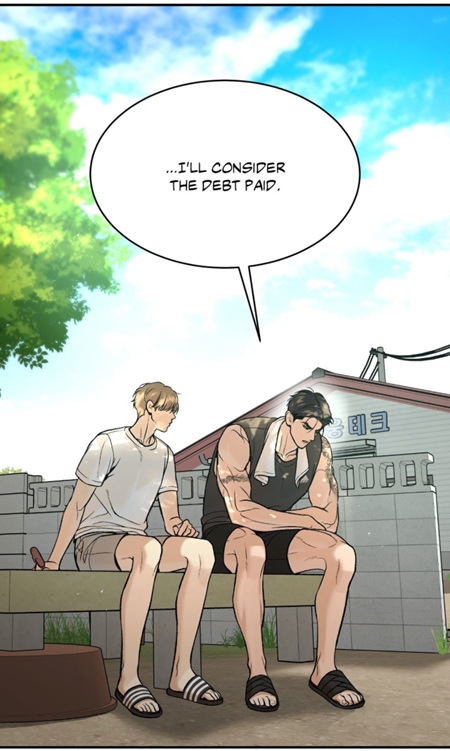 (Chapter 77) This means, the debts bring the terrible mind-set to the surface.
The night of episode 74 crystalizes this structure. Joo Jaekyung wins a title, believing victory might finally justify his sacrifices. Instead, he loses both parents at once: his father through death, his mother through abandonment. 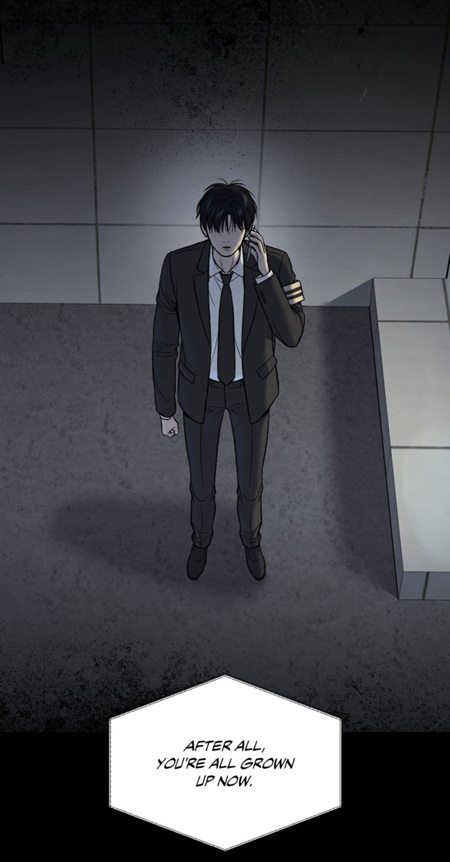 (chapter 74) The latter justifies her betrayal by saying that he is too late, as he is already too old. The promise that sustained him collapses. Winning no longer guarantees return. The future he fought for vanishes. And in the penthouse, we have the same thought again: (chapter 90)
Episode 90 repeats this pattern with devastating precision. Once again, Joo Jaekyung believes that his presence is harmful. Once again, he concludes that removal is ethical. Once again, he lives for someone else’s sake — this time Kim Dan’s. He withdraws not out of desire, but out of obligation. He does not ask what doc Dan wants; he questions himself whether he has the right to keep him by his side. But the gesture represents the answer: He has no right to hope that doc Dan will still live by his side.
Crucially, this is not about winning anymore. The logic of victory has already collapsed. Joo Jaekyung no longer believes that success can restore what was lost. He has internalized the jinx not as misfortune, but as identity. In his mind, Kim Dan has every reason to leave — not because Joo Jaekyung failed, but because he is the failure.
This is why episode 90 does not mirror Kim Dan’s past alone. It repeats Joo Jaekyung’s own childhood logic.
- In episode 73, he claims to fight in order to escape the house.
- In episode 74, he learns that victory costs him everything.
- In episode 90, he stops fighting — because fighting no longer promises return.
The core belief remains unchanged: if you cannot guarantee a good outcome, remove yourself. The hand gesture symbolizes the loss of hope in the end. (chapter 90)
That belief once governed Kim Dan’s life. Now, it governs Joo Jaekyung’s. The tragedy is not that he lets go — but that he does so for the same reason he once fought: not for himself, but to justify his existence through sacrifice. He has never been taught another way to live. Heesung’s words poison him precisely because they echo this logic, arriving at the moment when he had just begun to enjoy life with Kim Dan.
The Silent Friend
At first glance, one might search for the silent friend in the room itself — perhaps in the teddy bear, quietly placed on the sofa where the jacket almost once landed. (chapter 90) The object evokes childhood, comfort, and a softened version of intimacy. It almost invites the idea that this silent presence could be something benign: a substitute for words, a witness that does not judge.
However, with silent friend I am referring to something else. It did not appear in episode 90. It has been there all along. Long before Kim Dan entered his life, Joo Jaekyung was already living with an unnamed mental burden — one he never recognized as such.
It is guilt and self-loathing 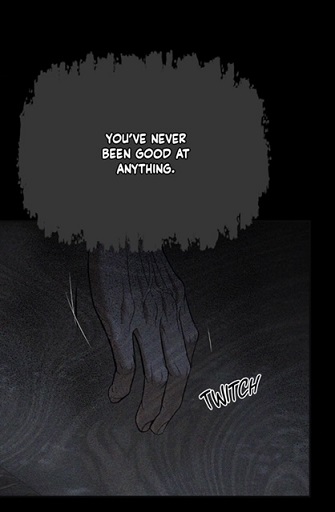 (chapter 54) — longstanding, cumulative, and corrosive.
 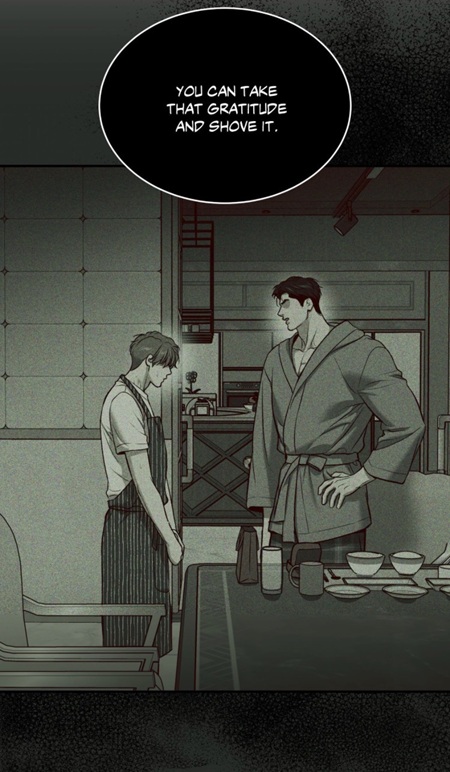 (chapter 90) And these two “friends” return during that night. What inhabits the room in episode 90 is not nostalgia, nor an unprocessed sadness that merely needs to be named. The same shame that has structured his life since childhood resurfaces here, stripped of all justifications. Joo Jaekyung is not suffering because he feels abandoned in the present. He is suffering because he believes himself to be the reason others leave. (chapter 90) This conviction predates Kim Dan. It is rooted in the unresolved grief surrounding his father’s death, the mother’s disappearance, and the belief that he arrived too late — that he failed at the very moment success was supposed to redeem everything. That night taught him a lesson he never unlearned: love is fragile, and your existence may be what destroys it. So the childhood traumas led him to develop depression, the silent friend.
The clearest indication is his own confession in episode 29. 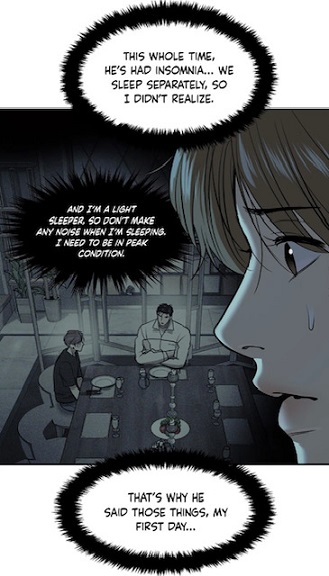 (chapter 29) He cannot sleep. He cannot relax. His body remains permanently alert because, in his words, he could “be killed” at any moment.
  (chapter 29) For him, this is not a symptom. It is simply part of being a fighter. Insomnia is normalized, rationalized, and dismissed as a professional hazard. Yet his listener immediately senses otherwise.
Kim Dan does not react with admiration or resignation. He worries. He asks himself how he could help. 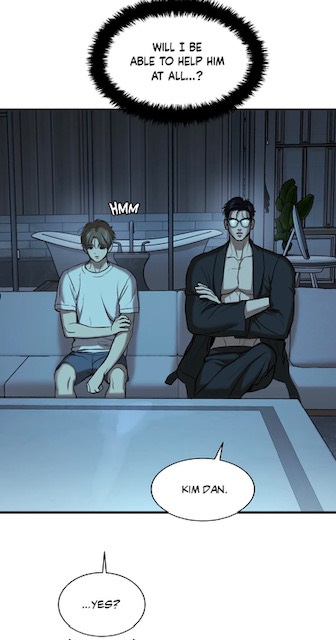 (chapter 29) He understands that this state is unsustainable — that it is only a matter of time before something gives way. What Joo Jaekyung treats as discipline, Kim Dan recognizes as danger.
This asymmetry matters. It reveals something essential: the champion cannot perceive his own depression, while the doctor can perceive it in others. That is precisely why Kim Dan becomes its mirror.
When Kim Dan later decides to leave, the gesture reads as abandonment — even betrayal. But the motivation is the opposite. Blinded by his own low self-esteem, he believes he has failed as a physical therapist. He takes Joo Jaekyung’s harsh words literally and imagines that if he removes himself, the athlete will remain strong. The last memory he carries with him is not intimacy, but rejection.  (chapter 53) In his mind, he is obeying a command.
And yet, Kim Dan never truly leaves. He remains present through memory. The abandoned jacket in episode 53 is not a simple object. It becomes the first catalyst. Joo Jaekyung interprets it as rejection, as loss of status — no longer a fan, no longer part of his team. He throws it away in anger. (chapter 53) Read superficially, this looks like karmic reversal for his cruelty on his birthday. 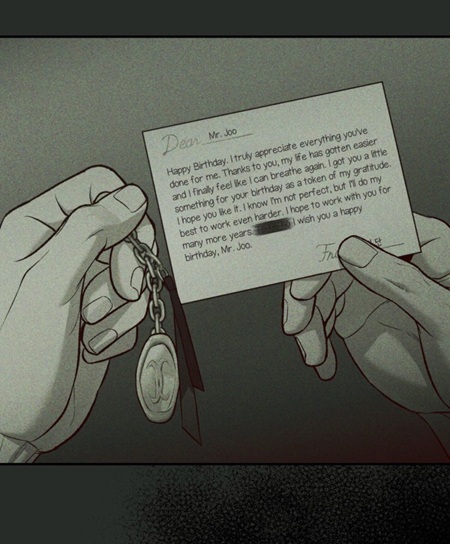 (chapter 90) But that explanation is insufficient. What actually begins after is grief and recognition.
The memories associated with Kim Dan do not punish Joo Jaekyung — they unsettle him. They force him to confront something he has never allowed himself to name: that he is unhappy, unmoored, and profoundly insecure. He has never been at peace with himself. He has never known how to live outside of obligation and performance. This is why he has never truly lived.
This is where my earlier interpretation deepens rather than changes. After season one, the “hamster” functioned as a personification of the champion’s jinx.  (chapter 54) Now the logic sharpens: Kim Dan does not merely embody bad luck. He embodies the champion’s mental state — depression, trauma, and chronic self-devaluation. He becomes the surface onto which Joo Jaekyung’s inner instability is projected.
This insight is inseparable from depressive realism.
What struck me when I first encountered this concept was how closely it resembled the main leads’ thinking. The absence of “pink-tinted glasses,” the accurate — sometimes brutally accurate — assessment of control, responsibility, and limitation. Kim Dan and Joo Jaekyung does not exaggerate hope. He minimizes it. And paradoxically, this allows Joo Jaekyung to justify not changing. His arguments in episode 29 are coherent, logical, and devastatingly persuasive. Kim Dan ends up convinced that the champion should not rest, should not slow down, should not alter course. 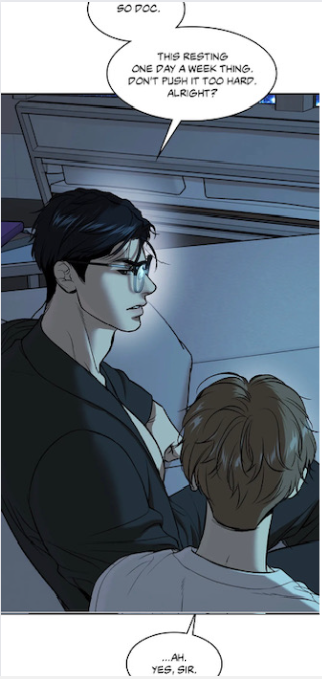 (chapter 29) And now, in episode 90, Jinx-philes can sense that the athlete is wearing the glasses “depressive realism” once again, where everything seems so true. He recalls all his misdeeds and can only perceive himself as the source of unhappiness for doc Dan. And like mentioned above, during that night, he is just only recalling his wrongdoings. He is overlooking that thanks to him, Doc Dan’s mental and physical conditions
 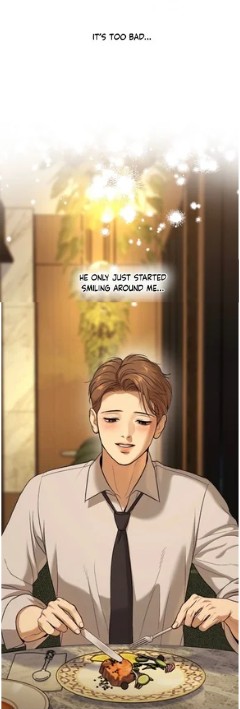 (chapter 89) improved, that he could make doc Dan smile. Meeting the hospital director made him see everything in a bad light. As you can see, he still has a black and white mentality. However, the truth is that right from the start, the champion had not just been a terrible person. He could be generous, help someone in need.
  (chapter 17) He saved doc Dan’s life twice.
 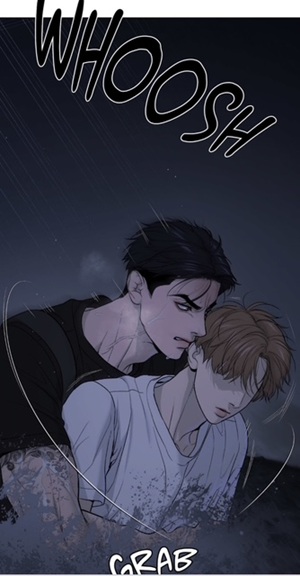 (chapter 59) He is reducing everything to one single moment and emotion: pain. And his reasoning is resembling a lot to the grandmother‘s: (chapter 65) The only difference is that the grandmother doesn’t express guilt or responsibility for doc Dan’s suffering. For her, it is fate, as she is not responsible for the doctor’s childhood.
  (chapter 65)
Depression thus becomes mutually reinforcing — invisible to the one who carries it, hyper-visible to the one who mirrors it.
This is why the chapter numbers ending in 9 matter.
- 19 introduces absence and the first rupture linked to family and death.
 (chapter 19) This image announces the vanishing of the parents.
 - 29 stages bodily collapse and unrecognized danger.
- 59 flirts with disappearance through dissociation. Back then, the puppy died leading doc Dan to walk into the ocean.
- 69
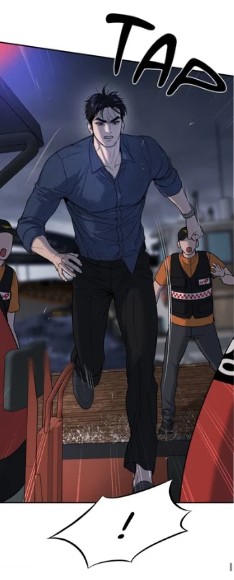 , when Joo Jaekyung imagines that doc Dan has once again fallen into the ocean and fears to lose him.
 - 79 when Joo Jaekyung stops him from falling.
 (chapter 79) gestures toward falling, both physically and psychologically.
None of these chapters announce suicide. But all of them circle it. They trace the gravitational field of depression — the slow erosion of self-preservation, the normalization of exhaustion, the quiet flirtation with vanishing. However, observe that in episode 89, the notion “suicide” is brought up for the first time by Choi Heesung. 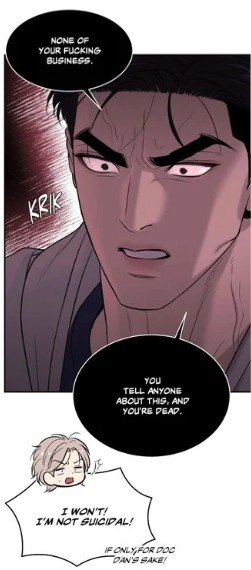 (chapter 89) Secondly, he is the only one referring to mental illness: (chapter 89): crazy, egomaniac. As you can see, the last arc linked to the number 9 seems to be focusing on depression and mental issues. Joo Jaekyung’s mental state as an athlete was never treated so far by doctors. And now, you understand my interpretation. The celebrity is now placed in the same situation than the physical therapist for another reason: it is to confront both men with their self-loathing and childhood traumas.
Episode 54 ( 54 = 5+4= 9) is the pivotal transfer point. It is the moment when Jinx-philes are confronted with reality, his mental issues and their origins. No wonder, why he started drinking. 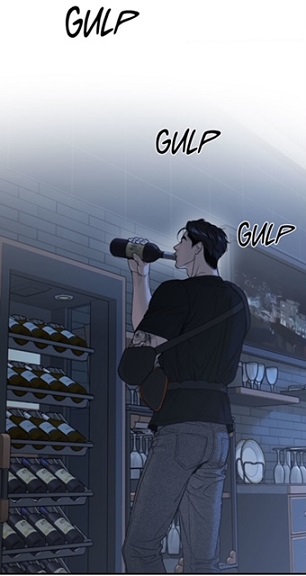 (chapter 54)
The dream seals this logic. Joo Jaekyung does not dream himself crying. He dreams Kim Dan crying. (chapter 54) The image functions as guilt, interrogation, and reflection all at once. It asks: Is he still suffering because of me? But the champion chose back then to read it differently: I am in pain because of you. Thus he tried to find a new “toy” shortly after. But it also reveals something more disturbing: those tears are the champion’s own. He feels them — but cannot express them.
He cannot cry because vulnerability still reads as danger. This is why episode 90 is so alarming.
The silent friend — depression, guilt, self-loathing — no longer needs a proxy. Joo Jaekyung internalizes it fully. He no longer misrecognizes it as insomnia or discipline. He recognizes himself as the problem. The jinx is no longer something that follows him. It is something he has become. But in order to be freed from this immense weight, he needs the support of a friend and a family.
And this is where the unspoken risk emerges. So far, Joo Jaekyung has never spoken about Kim Dan’s suicidal episodes. He has never named them. 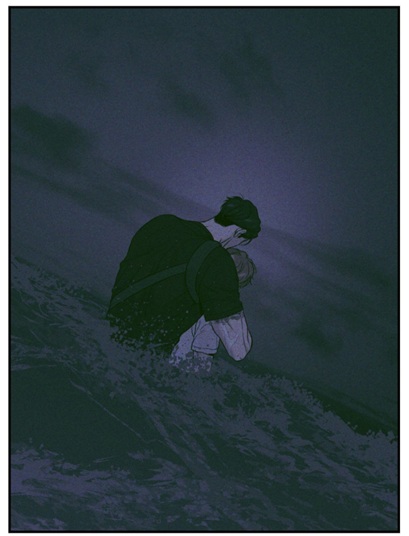 (chapter 78) Now, he is blaming himself for everything — and the narrative quietly aligns him with the same numbers, the same silences, the same logic of disappearance.
This does not mean he is suicidal. But it means the silent friend has returned — no longer mirrored, no longer shared, no longer displaced. And now, look at his eyes once again, (chapter 90) you will notice the redness, a sign that until that night, he is still suffering from insomnia. His insomnia and depression were never treated, and he took care of doc Dan all this time. He never rested properly, especially that there is another match around the corner.
And this belief — more than sadness, more than despair — is what makes episode 90 so dangerous. It marks the point where suffering no longer seeks relief, and responsibility turns inward, demanding disappearance as proof of care. But someone needs to notice how fragile Joo Jaekyung is. But why did the author choose to switch the character’s positions? Doc Dan assumes that during his absence, nothing changed in the athlete’s life. But the reality is that Joo Jaekyung lost contracts  (chapter 54), while he tells the opposite to his partner.
  (chapter 80) Secondly, he doesn’t know how the champion was blamed for everything and was treated by the other members of Team Black:
  (chapter 52) No one listened to his unwell-being, they rather silenced him. They showed no support and didn’t take care of him. Thus later the athlete started drinking. The physical therapist has no idea what Potato heard either:
  (chapter 52) At the same time, I am suspecting that Mingwa is putting doc Dan in a similar situation than in the past, so that repressed memories about the parents will come to the surface. Keep in mind that the athlete is actually mirroring the parents’ behavior (abandonment and sacrifice as a sign of love and respect). Thus the teddy bear is placed on the couch and the physical therapist is looking at it.
  (chapter 21) A teddy bear was present in his childhood, until it vanished. (chapter 19) Let’s not forget that in episode 90, money plays a huge role and so far, the champion still thinks, the debts truly belong to the physical therapist. Finally, I believe that both could connect emotionally, when they talk about their respective past. In my eyes, it is now Doc Dan’s turn to assist Joo Jaekyung… by offering his hand as a friend.
 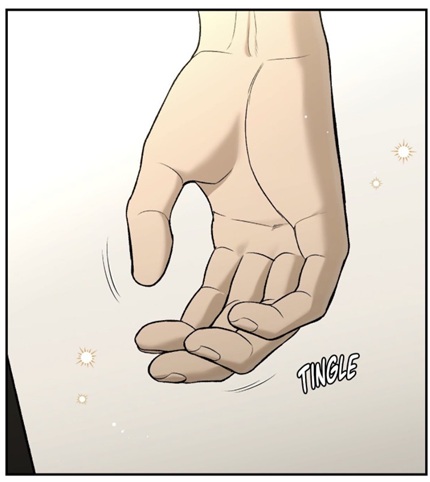 (chapter 87)
Feel free to comment. If you have any suggestion for topics or Manhwa, feel free to ask. If you enjoyed reading it, retweet it or push the button like. My Reddit-Instagram-Twitter-Tumblr account is: @bebebisous33. Thanks for reading and for the support, particularly, I would like to thank all the new followers and people recommending my blog.

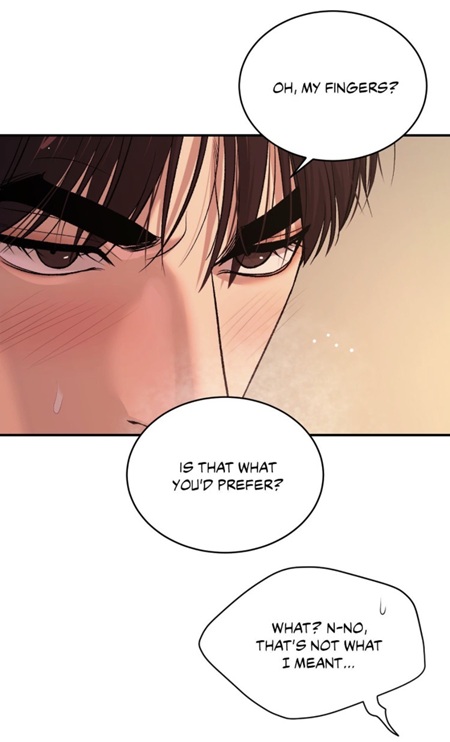
 (chapter 86), gentle, attentive
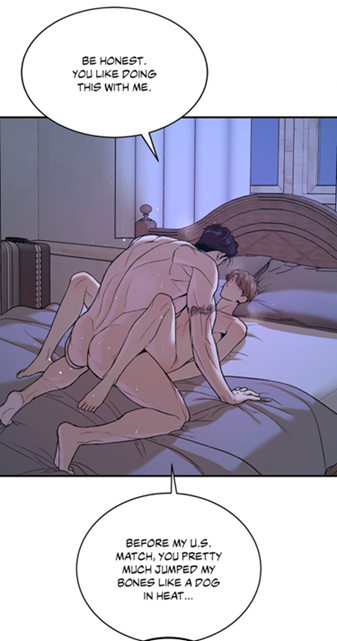
  (chapter 86) — asking questions instead of imposing answers
  (chapter 64). For Joo Jaekyung’s unconditional stans (and I count myself among them), such an attitude
 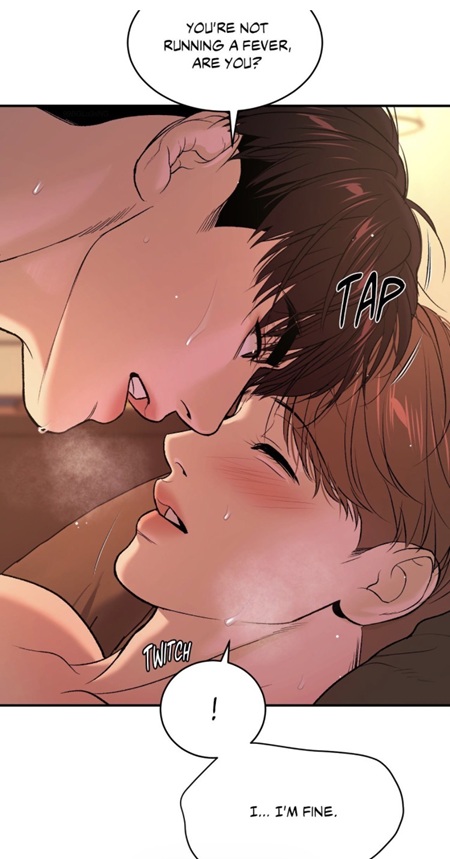 (chapter 86) can easily be read as proof that the protagonist’s good heart has always been existent, but it was barely visible. Compared to earlier chapters, the contrast is now undeniable. And yet, I would like to pause you right there.
 (chapter 61), sometimes awkwardly
 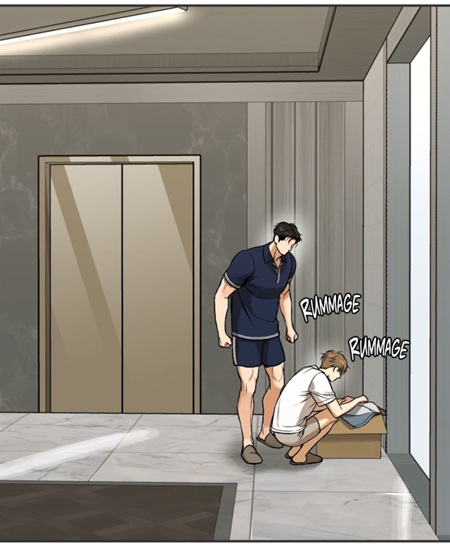 (chapter 80), sometimes inconsistently
  (chapter 79), but unmistakably
 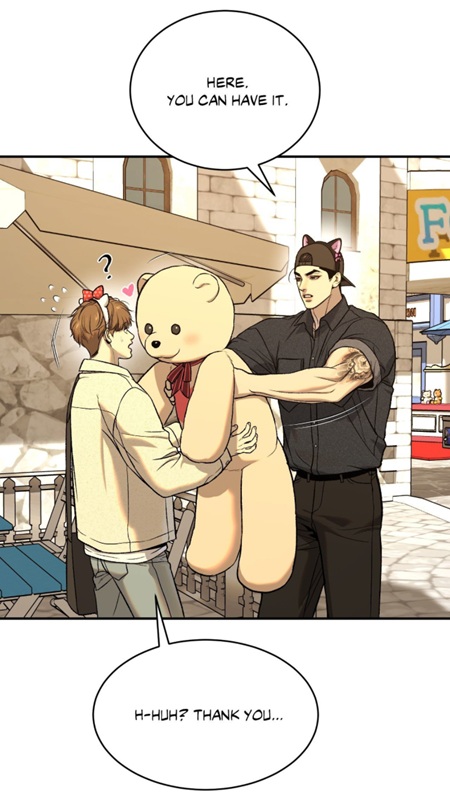 . (chapter 83) Tenderness, concern, even a certain form of devotion had appeared earlier
  (chapter 40), albeit in ways that were often overlooked,
  (chapter 18) misunderstood or poorly timed. This night
 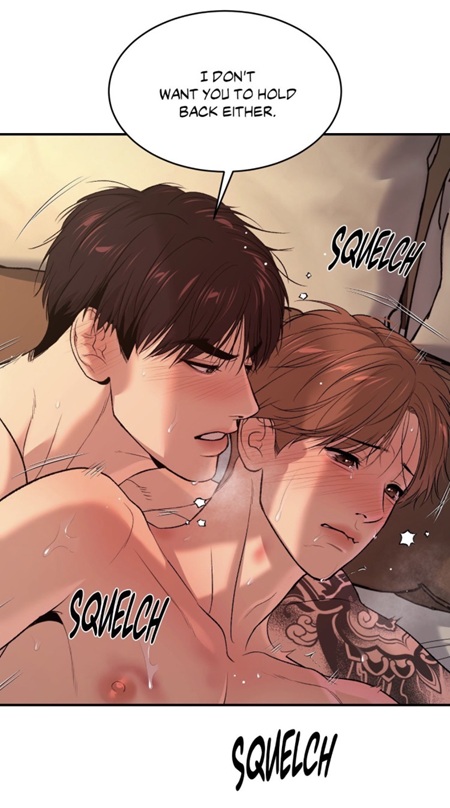 (chapter 86) does not initiate his metamorphosis.
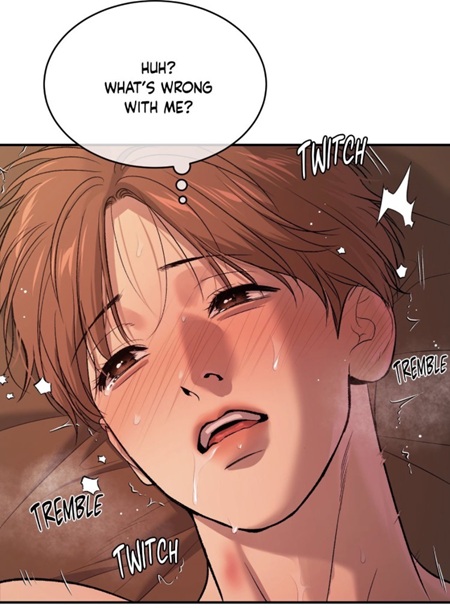 (chapter 86), sparks
 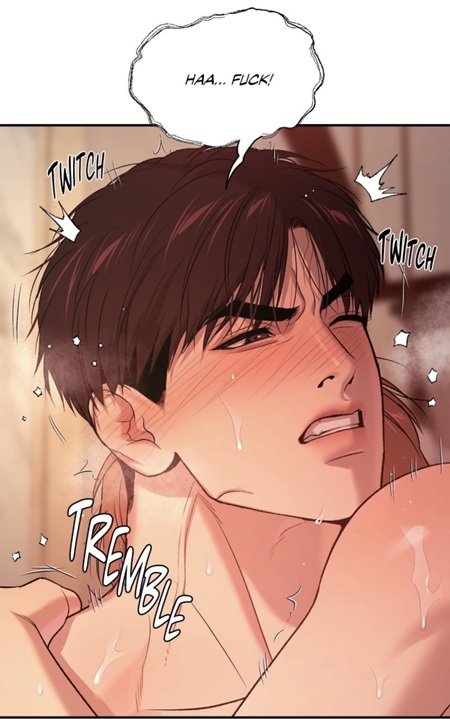 (chapter 86), and softness, many Jinx-philes might instinctively describe it as magical. The imagery invites such a reading. After all, we have seen similar nights before. The night in the States shimmered with illusion
 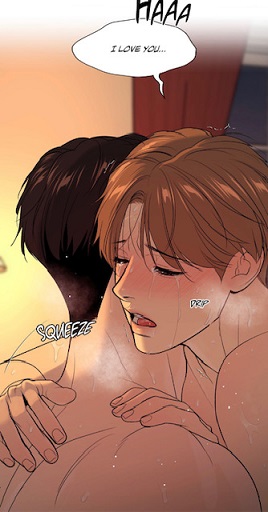 (chapter 39); words were spoken, confessions made — only to dissolve with memory.
  (chapter 41) The penthouse night echoed A Midsummer Night’s Dream
 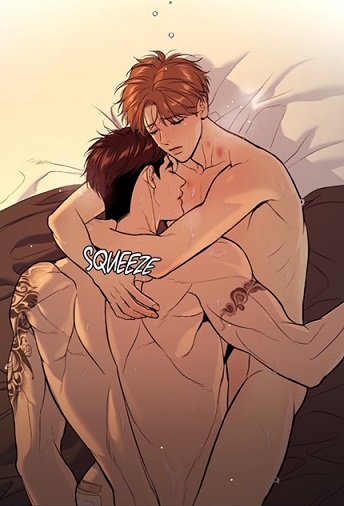 (chapter 44), suspended between intoxication and desire, intense yet fragile. Both nights felt unreal, and both were later reframed as mistakes
 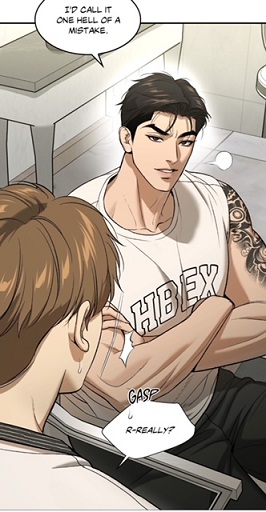 (chapter 41) — moments to be erased rather than carried forward.
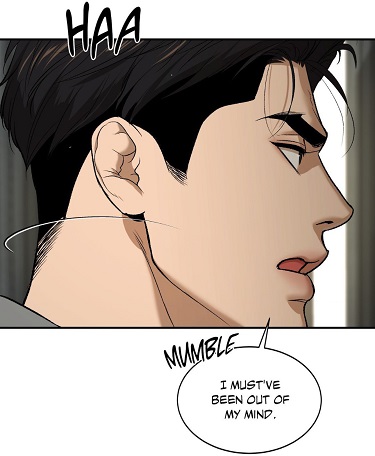 (chapter 45). This raises an essential question. Is episode 86
 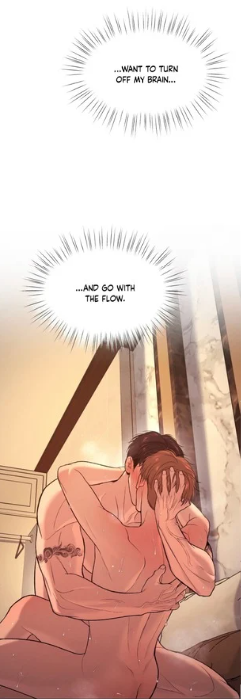 (chapter 86) a renewal of those nights? Another dream layered over the past? A repetition disguised as healing? Or, on the contrary, is this the first night that resists enchantment altogether?
 (chapter 4), in the return of light
  (chapter 66), in what remains once the sparks fade. A dream dissolves with daylight. Reality does not.
 (chapter 86) for final transformation. The real shift occurs elsewhere — more quietly, and perhaps more unsettlingly. To grasp the nature of this night, we must follow more importantly the doctor and his interaction with his fated partner.
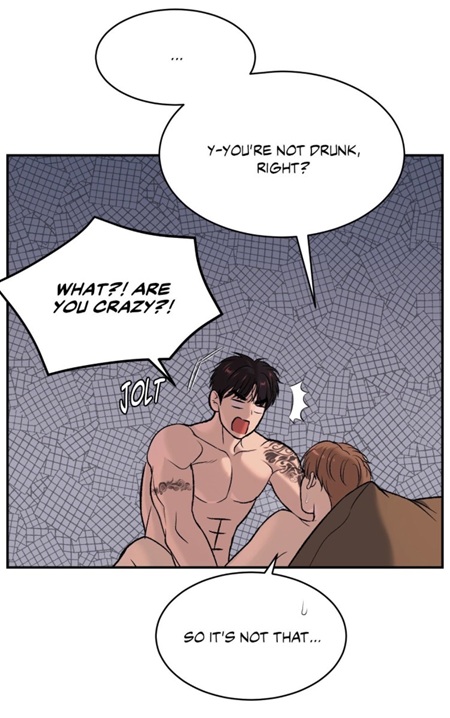 (chapter 86), processes, and responds to it. How he hesitates
 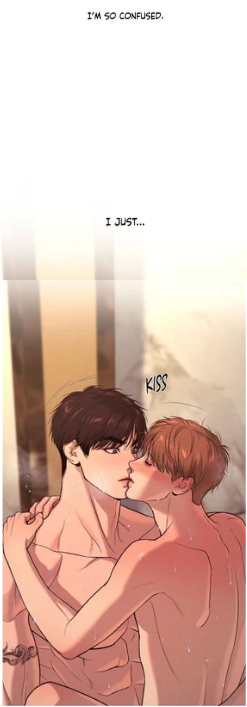 (chapter 86), reflects, and allows himself to reconsider what this moment can mean — and what it can lead to.
  (chapter 86), sparks, that strange shimmer that seems to hang in the air
 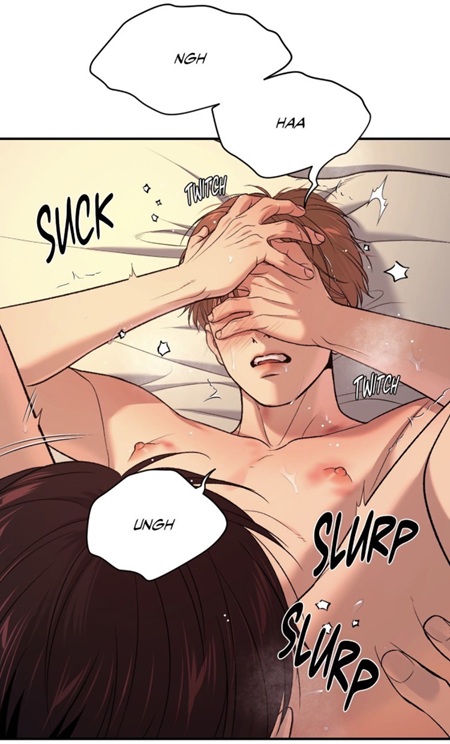 (chapter 86). Why? It was, as if their dream had come true. However, is it correct? Is it not wishful thinking? What if this night is not magical at all? What if its true signature is not enchantment, but electricity—a current that interrupts, tests, and resets? 😮
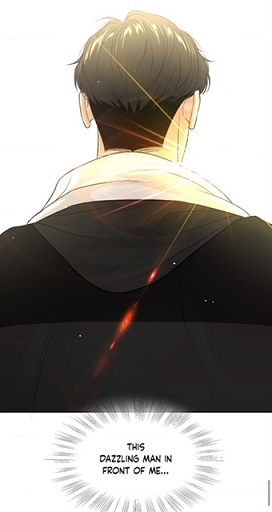 (chapter 40) in Kim Dan’s perception: overwhelming, radiant, dominant, a heat-source that does not negotiate.
 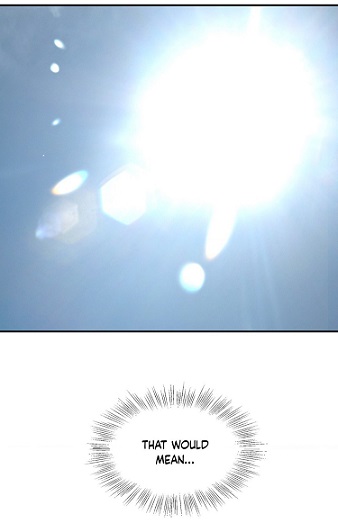 (chapter 41) The sun can be admired, feared, and endured—but it cannot be questioned.
  (chapter 58) It simply shines, and the one who stands in its light adapts. This explicates why the physical therapist would choose silence and submission over communication.
  (chapter 48)
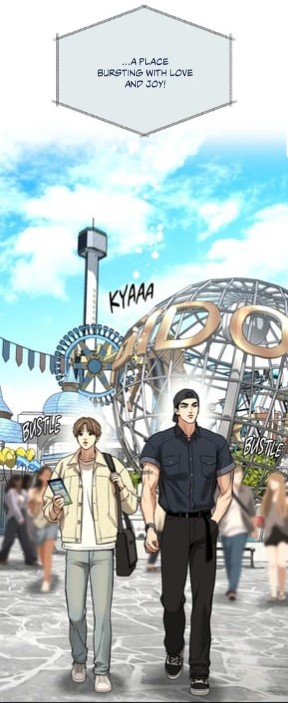 (chapter 83)
 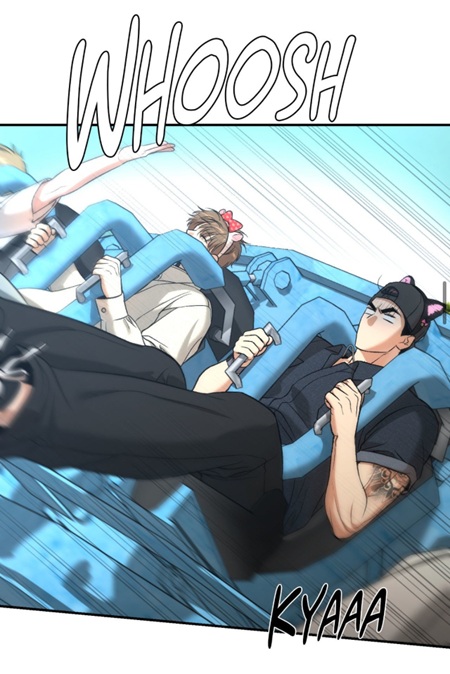 (chapter 83) Every ride, every light, every scream suspended in midair depends on current: motors accelerating and braking, circuits opening and closing, energy stored, released, and cut off.
  (chapter 83) Roller coasters do not move by heat, charisma, or sheer physical force; they move because electricity flows through them. The Viking ship swings
 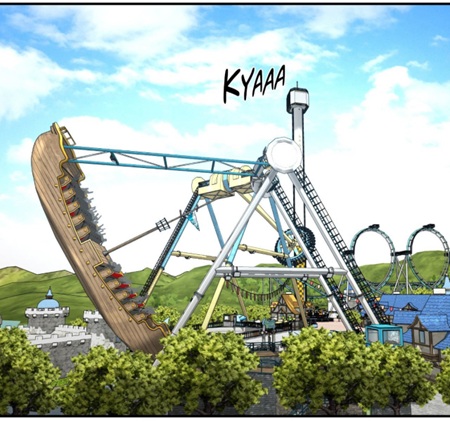 (chapter 83) because current allows it to swing. The Ferris wheel ascends
 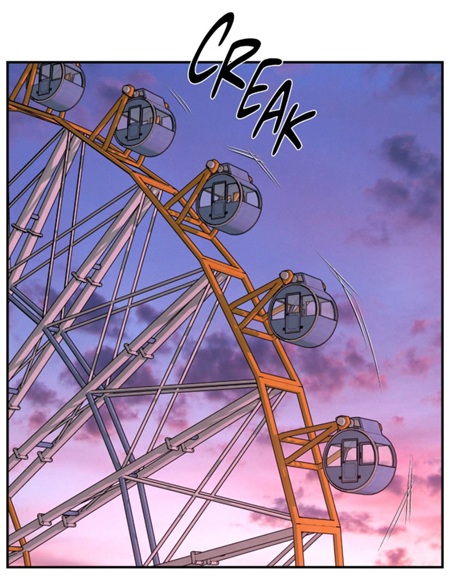 (chapter 83) because circuits hold — and descends because they release.
 (chapter 84)
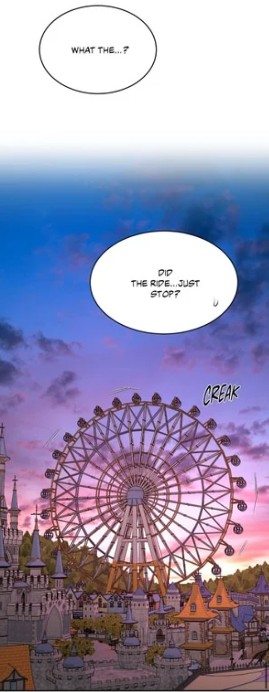
 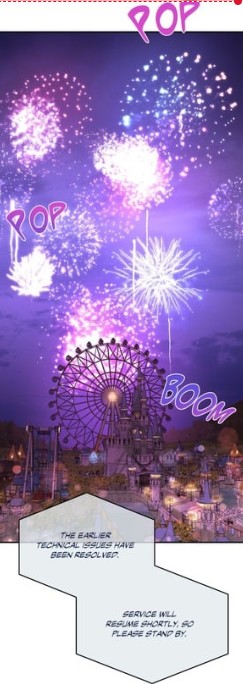 (chapter 84) explicitly names what had previously gone unspoken: the rides function only because current flows. When it disappears, the illusion of effortless motion collapses.
 (chapter 84) The Ferris wheel has stopped. The current is gone. The carefully regulated system that lifted, rotated, and sustained them is no longer in control. Yet movement does not disappear entirely. It mutates. When the champion shifts his weight, grips the structure, reacts instinctively, the cabin begins to shake. Panels emphasize instability: creak, swish, ack. The motion is no longer generated by electricity but by the body itself.
 (chapter 84) Stranded above ground, stripped of the park’s mechanical rhythm, he apologizes.
  (chapter 84) and fears. He avoids the doctor’s gaze, crosses his arms
 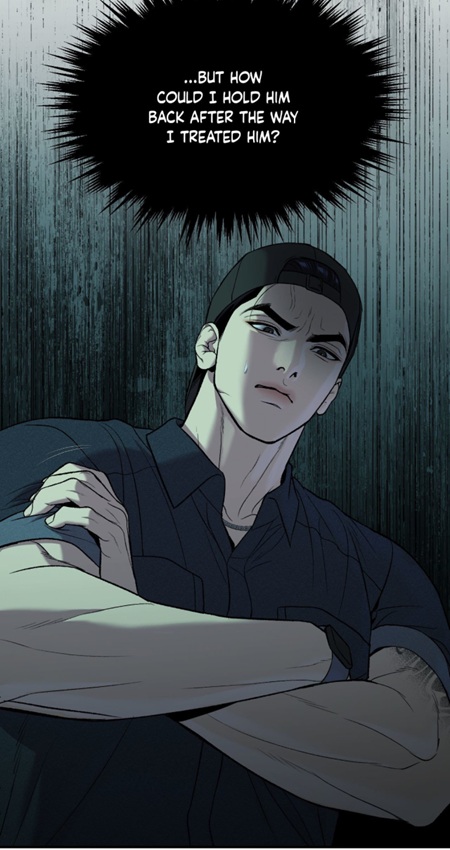 (chapter 84) or squeezes his arm
 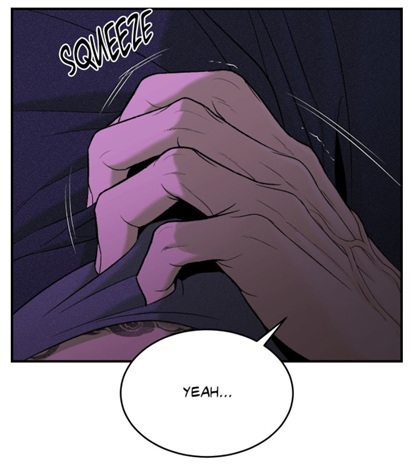 (chapter 84). The cessation of electrical motion coincides with a shift in his own mode of action. Where the park depended on current to keep things moving, he now moves without it. The absence of electricity forces something else to surface: responsibility, attention, presence. Additionally, this sequence anticipates what will later unfold more fully. Proactivity is no longer expressed through force or motion, but through articulation. Words stand for action and have weight. The champion’s future action is announced here, quietly: he will no longer push forward by shaking the structure. He will move by sharing thought, by naming feeling, by allowing himself to be affected.
  (chapter 86),
 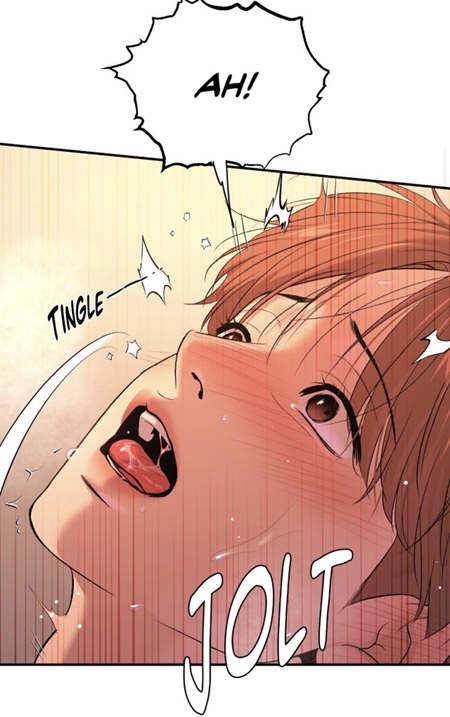 (chapter 86) jolts, sudden contractions of the body
 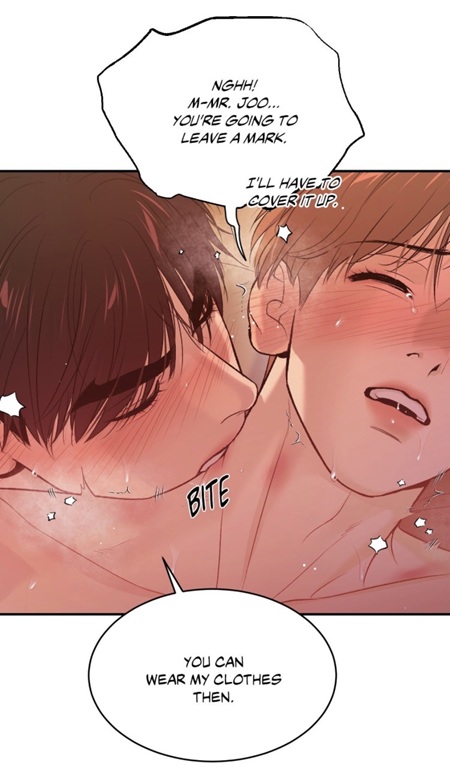 (chapter 86). Kim Dan is repeatedly shown convulsing, gasping, losing linear thought, and it is the same for the MMA fighter. Panels insist on interruption: jolt, tingle, broken breath, aborted sentences. The doctor’s body behaves as if struck, especially in this image.
 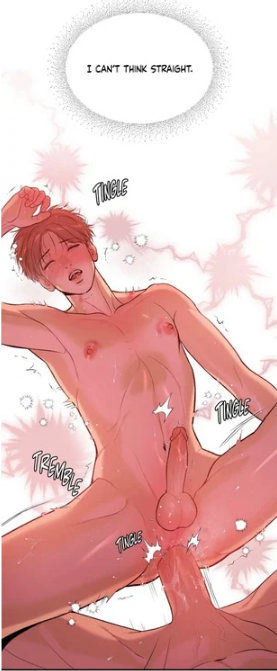 (chapter 86) It is at this point that a phrase surfaced in my mind — instinctively, almost involuntarily. A phrase we use in French when something intangible yet decisive occurs between two people: Le courant passe. Literally, the current passes. Idiomatic meaning: they are on the same wavelength, something connects, communication flows. However, here, the current is not the product of civilization, but of nature. Two people interacting with each other. And it is precisely because of the unusually high frequency of sparks and jolts in the illustrations that a belated realization imposes itself: nature, too, produces electricity — through storms, through thunder.
 (chapter 69) A storm was announced back then. And yet, upon closer inspection, no thunder was ever shown there. There was tension, there was excess, there were dark clouds
  (chapter 69) — but there was no strike, no discharge, no interruption. The imagery remained continuous, fluid, enclosed within the logic of escalation rather than rupture.
 (chapter 83). In Roman terms, Thursday corresponds to dies Iovis — Jupiter’s day — the god of thunder. Both gods are strongly connected to thunder and as such current.
 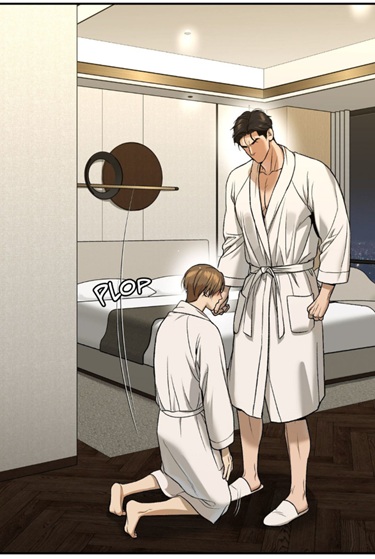 -chapter 67-; for more read my analysis
 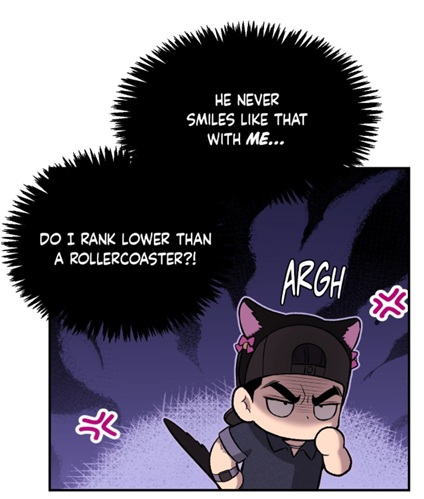 (chapter 83). Before striking anything, he is already unwell: angry overstimulated and complaining, visually reduced to a childlike register. This matters. The hammer does not create excess — it receives it.
  (chapter 34), the hammer gesture is not confrontational, for the machine is immobile. There is no opponent.
 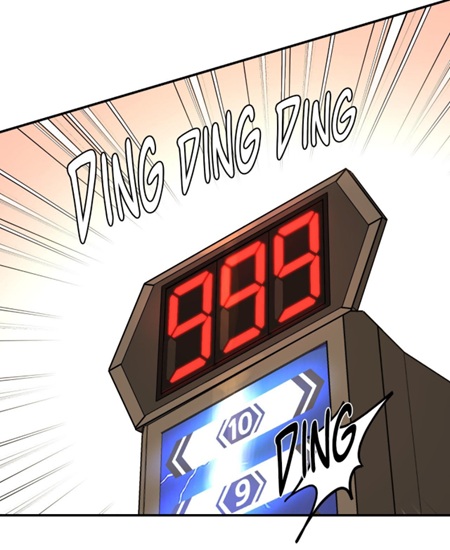 (chapter 83) Too much energy released at once. The system registers it, but cannot contain it. This means, the record won’t be registered and as such “remembered”. In fact what mattered here was the prize, the teddy bear, and restored self-esteem of the athlete. He could offer a present to doc Dan which the latter accepted without any resistance.
  (chapter 86) Therefore it is not surprising that doc Dan starts looking at his fated lover. Imagine what it means for the athlete, when the “hamster” is staring at him, though he is a little embarrassed. Finally, he is truly looking at him. The champion loves his gaze. And now, you comprehend why the “wolf” listened to the “cute hamster” and stopped leaving marks.
 (chapter 85), but this time, its nature has changed. It is no longer jealousy or anger, but love and desire. Hence the current is not colored in red, but white and pink.
  , but a thunder and as such it is still restrained and regulated.
 (chapter 86) or second-hand data. New information must now be gathered. New meanings must be negotiated. Because Joo Jaekyung acts differently (son-father), the doctor is incited to discuss with his fated lover and not to generalize. He is pushed to become curious about the main lead and even adapt himself in the end.
 (chapter 39) and the penthouse night
 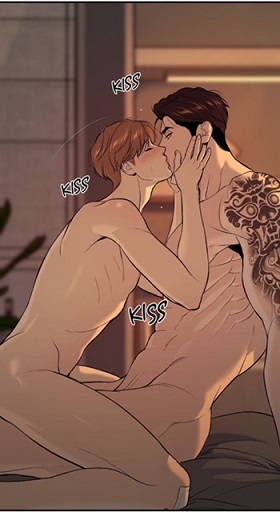 (chapter 44) as emotionally charged, intense, even pivotal. Confessions were made. Bodies responded. Vulnerability appeared to surface. And yet, both nights collapsed almost immediately afterward. What was felt
  (chapter 39), arousal, and emotional exposure under the influence of a drugged beverage. His body reacts strongly, almost violently. His speech loosens. He confesses.
 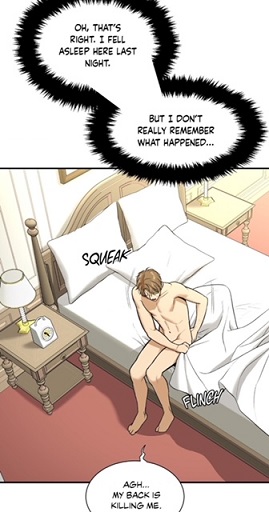 (chapter 40)
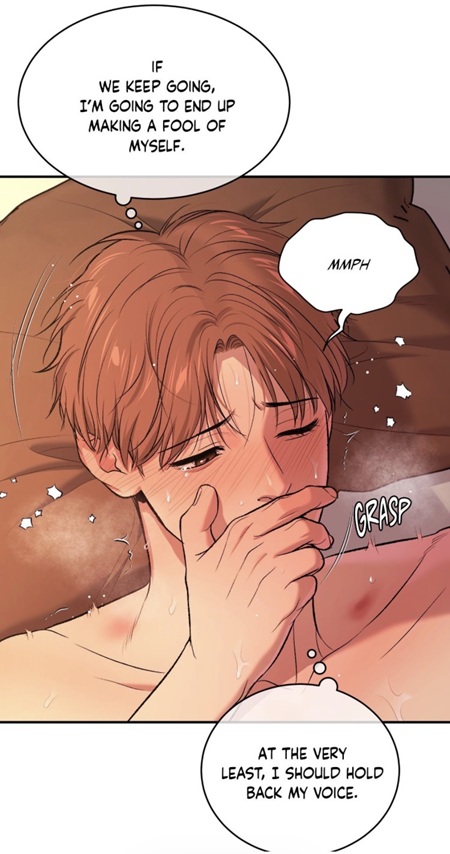 (chapter 86) In this panel, we should glimpse a reference to the night in the States as well, and not just to the night in the penthouse.
  (chapter 44) The setting is elevated, luxurious, almost theatrical. The doctor is brought into a space of power that is not his own.
 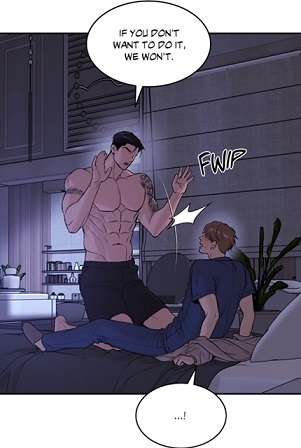 (chapter 44) By acting that way, the athlete created a false impression of himself, as if he was still rational and clear-minded. Again, desire unfolds.
  (chapter 44)
  (chapter 44) Again, closeness occurs. And again, the aftermath reveals the same fracture.
 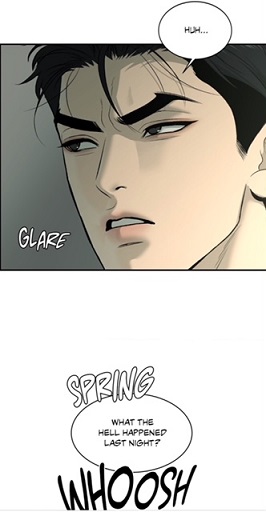 (chapter 45) and later wants to even forget it.
  (chapter 45) and he can not deny his own involvement and actions. Hence the doctor is left alone. Only he can recall this “dream”.
  (chapter 44) But memory alone is not power. Remembering without the other’s participation transforms recollection into isolation. Kim Dan cannot confront, confirm, or renegotiate what happened, exactly like the champion did in the past. Meaning freezes instead of evolving. Striking is that he came to associate feelings with addiction.
  (chapter 46) No wonder why later doc Dan had no problem to reject the athlete. And for him, the next morning became a cruel reality, even a nightmare. It wounded doc Dan’s heart and soul so much that he learned the following lesson: to not get deceived by impressions. Hence in Paris, Doc Dan tries to explain the change of the champion’s attitude with drunkenness.
 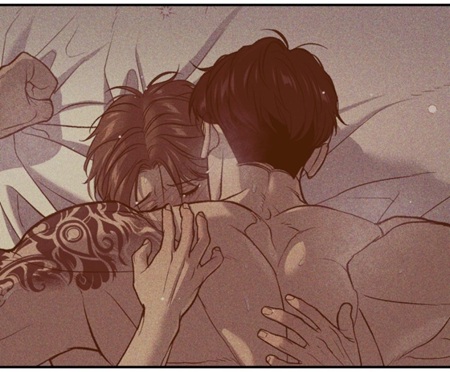 (chapter 44) One participant is altered. The other must carry the weight of meaning alone. The night does not end in shared reflection, but in silence and absence.
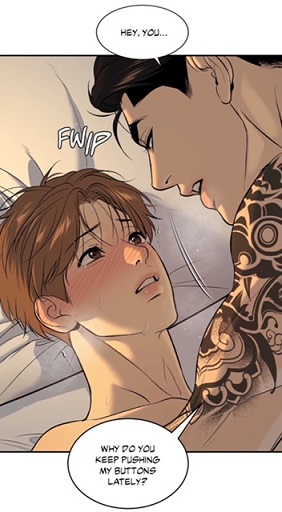 (chapter 44) Words blur, vanish, or are forgotten. Even gestures go unnoticed: a kiss, an embrace or a patting. Memory fractures. The morning after is defined not by continuity but by confusion. The body has moved forward, but the narrative has not.
  (chapter 84)
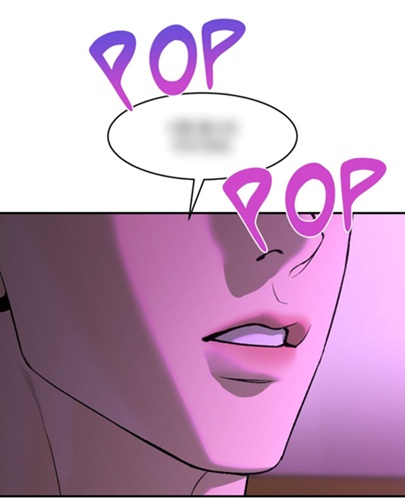 (chapter 84) Speech bubbles lose clarity. Confessions are obscured. The reader is denied access to meaning. Fireworks, like drugs, produce intensity without duration.
 (chapter 39)
  (chapter 44) It was as if these nights could only exist under altered states — as if clarity on either side would have made them impossible.
  (chapter 86)
 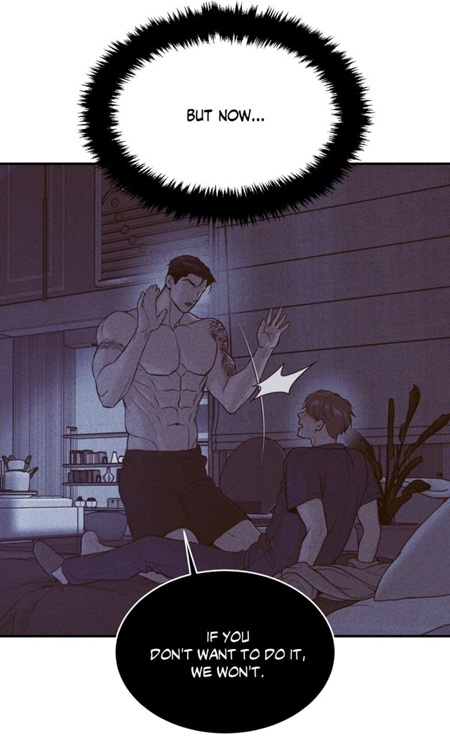 (chapter 86) This is why, when electricity returns in episode 86, it does not revive heat. It interrupts it.
 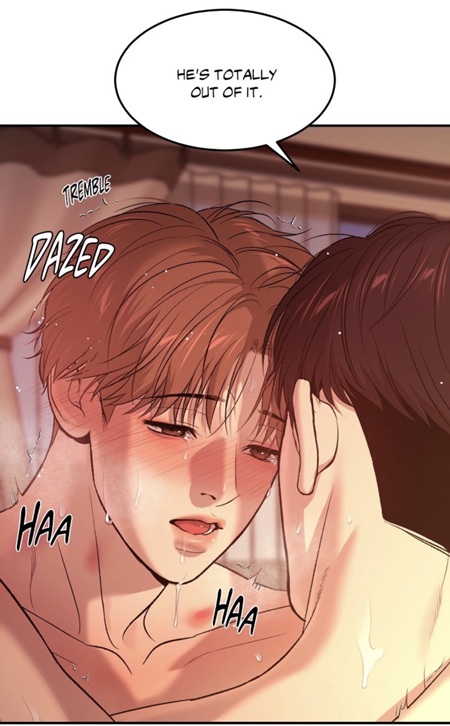 (chapter 86) That’s the reason why the athlete stops for a moment and asks doc Dan, if he needs a break.
  (chapter 86) This question is important because doc Dan admits his confusion and ignorance. He confesses to himself that he “knows nothing” not only about himself, but also about his fated lover.
  (chapter 86) They function as temporal markers. A spark exists only now. It has no duration. It cannot be stored, recalled, or anticipated. It appears — and vanishes. In this sense, electricity becomes the perfect visual language for the present moment itself.
 (chapter 10), statements blurred by drugs
 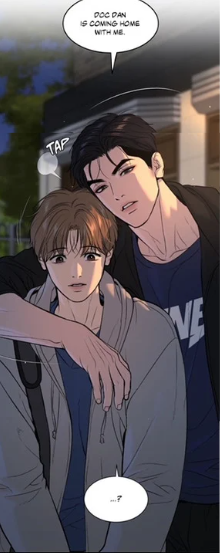 (chapter 43), sentences remembered by only one side.
  (chapter 44) and even laugh…. if only he could remember that night…
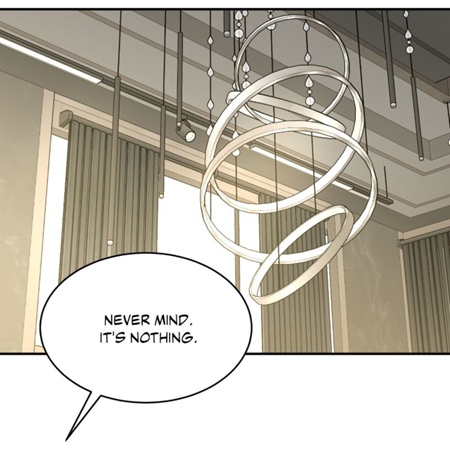 (chapter 79), the “never mind”,
  (chapter 84) or it is a mistake, the easy erasure that once dissolved meaning after the fact. The kiss interrupts that mechanism. It produces a pause that cannot be talked over. It forces reflection.
 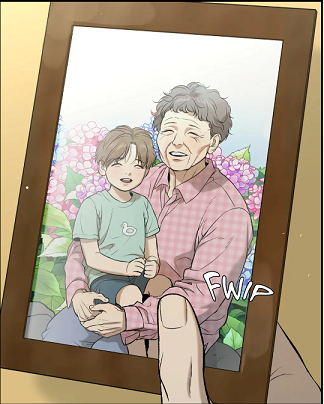 (chapter 19) The grandmother’s lap structured Kim Dan’s understanding of safety, endurance, and knowledge. Sitting there meant being held — but also being taught how to survive through sacrifice, silence, and self-effacement. That worldview sustained him, but it also confined him.

 (chapter 81) No airport appears, no greeting, no applause — only movement, silent noise, and distance. The scene refuses arrival. It’s as if the air itself has become unwelcoming, unsure whether to receive or reject the traveler.
 (chapter 74) What does it mean that a man who once reached for his mother’s voice is now suspended between clouds, unreachable himself?
  (chapter 74) Why does the same stillness that once followed a farewell now fill the air around his flight?
 (chapter 65) Let’s not forget that the last poster of chapter 81
 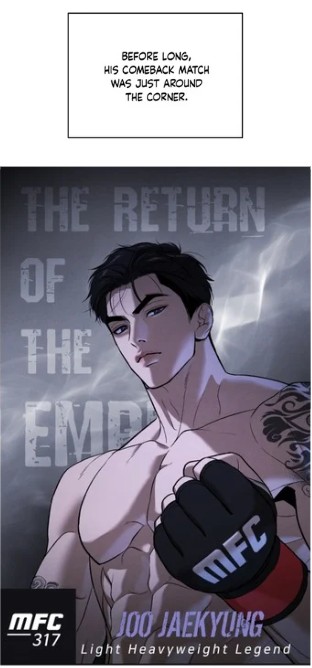 (chapter 81) echoes Joo Jaewoong’s burial in chapter 74.
 (chapter 74) In that earlier scene, the smoke rises from burning incense sticks which is linked to scent — the invisible bridge between the living and the dead. Here, it reappears as the airplane’s exhaust
 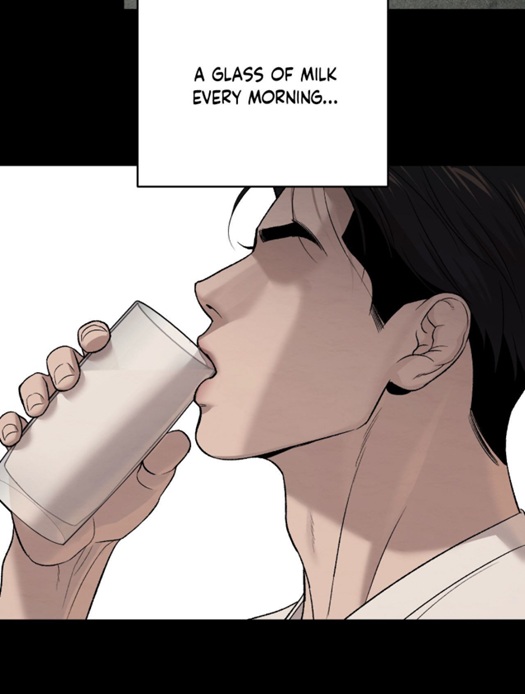 (chapter 75), perfume
 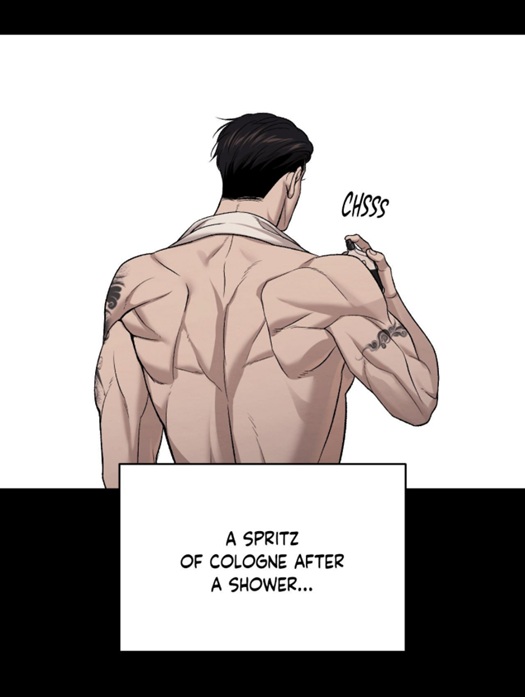 (chapter 75), sweat and sex
 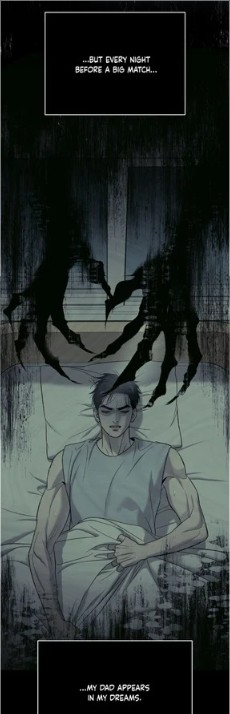 (chapter 75) Every muscle, every breath, every instinct reminded him of the man he swore never to become. The body was a mirror of lineage, and lineage meant failure. In his dreams, that failure still reached for him: black hands emerging from the dark, the father who had lost everything.
 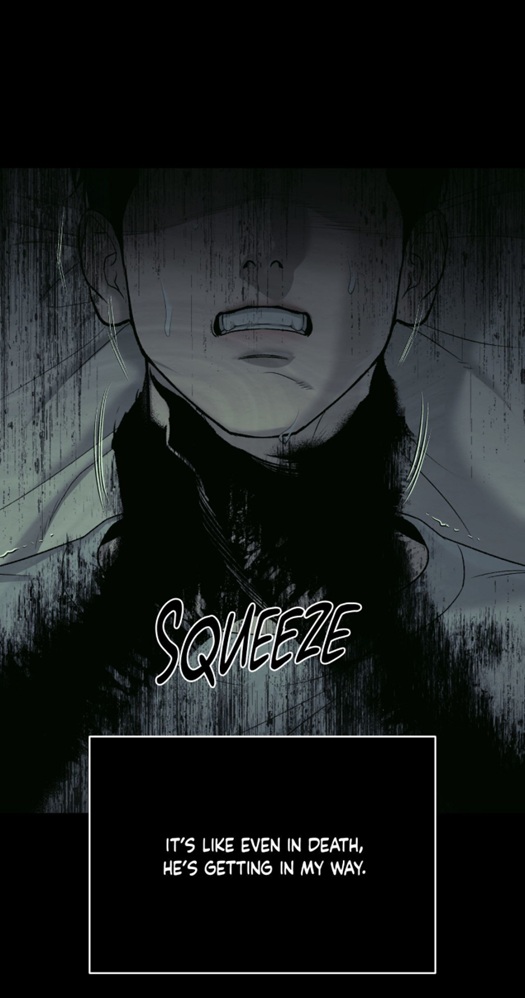 (chapter 75) The fighter calls it a “dream,” not a nightmare, because fighting was once his father’s dream — a dream of escape, of being seen, of proving that poverty was not fate. But for the son, that same dream turned into a curse. To fight was to repeat what had already destroyed the family.
 (chapter 75), the forbidden comfort that ended in scolding.
  (chapter 72) When he finally received it, it was not from a mother but from the director — a man whose gift could fill the stomach but not the heart. From that day, nourishment and submission became one.
 (chapter 72) And yet every attempt at purification only buried the rot more deeply. The more he washed, the more the stain spread inward — invisible, odorless, yet consuming.
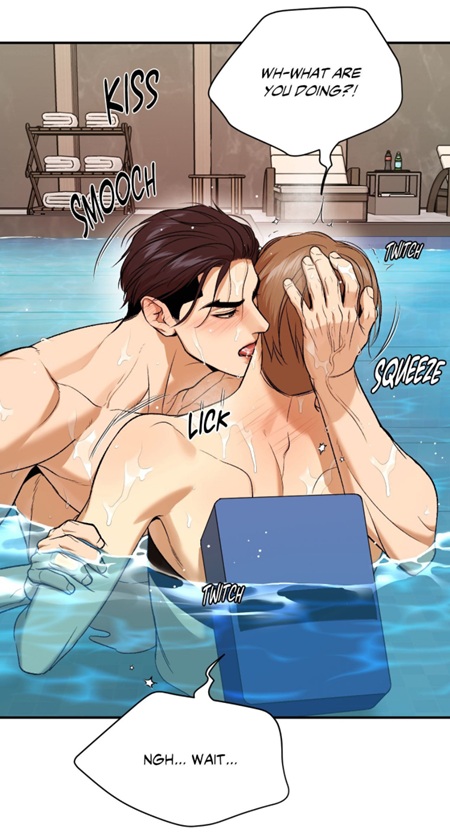 (chapter 81) — the same spot where he once sprayed his perfume
  (chapter 40) — it is more than desire: it is instinct, possession, and search. The gesture blurs the line between hunger and recognition, as if he were trying to inhale and keep what had always eluded him. The scent he once sought in bottles and rituals now breathes through another body, one that refuses to be contained. So when Jaekyung breathes against Dan’s skin, he is no longer trying to mask the stench of loss but to find the source of something living. The doctor’s scent does not erase hunger; it answers it. For the first time, the wolf eats without devouring.
  (chapter 44) — nuzzling the one destined to become his anchor. Jinx-philes can observe not only the presence of steam (which is similar to smoke), but also the effect of the scent. Back then, the champion had calmed down thanks to the hamster’s scent.
  (chapter 65) He will make sure that doc Dan doesn’t smoke again and his scent remains pure. This signifies that the wolf will pursue its source through the smoke of deception, through the perfume of luxury and corruption. The doctor becomes both compass and contrast — the pure odor that exposes every false aroma around him. Through Dan’s scent he will breathe again—through that fragile, living fragrance the wolf begins to track the truth that stinks beneath luxury and lies.
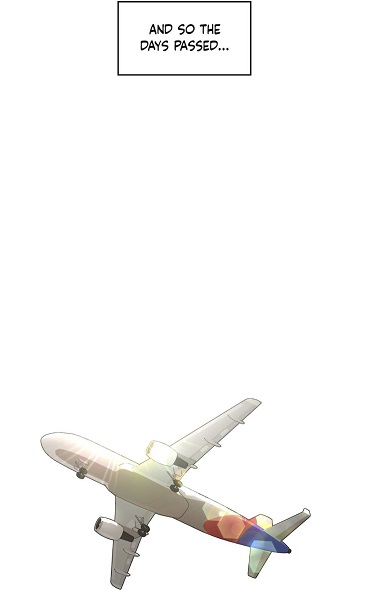 (chapter 36) When the champion left South Korea for the United States in episode 36, the plane glided through a void of light. There was no sky, no earth, no horizon — only a white expanse pierced by the sun’s glare. Even the boundaries of air and space seemed dissolved. The image radiated purity but felt sterile, stripped of texture. The machine was rising, not toward a destination but away from attachment itself.
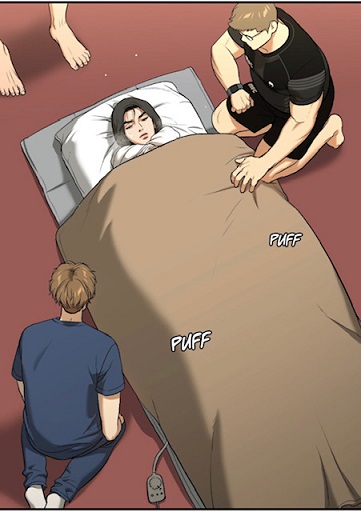 (chapter 37), the heart disinfected of need. Hence the bed became an instrument of “torture”. The upward flight marked a beginning, yet it already smelled of exhaustion and futility. A life built on departure cannot land anywhere.
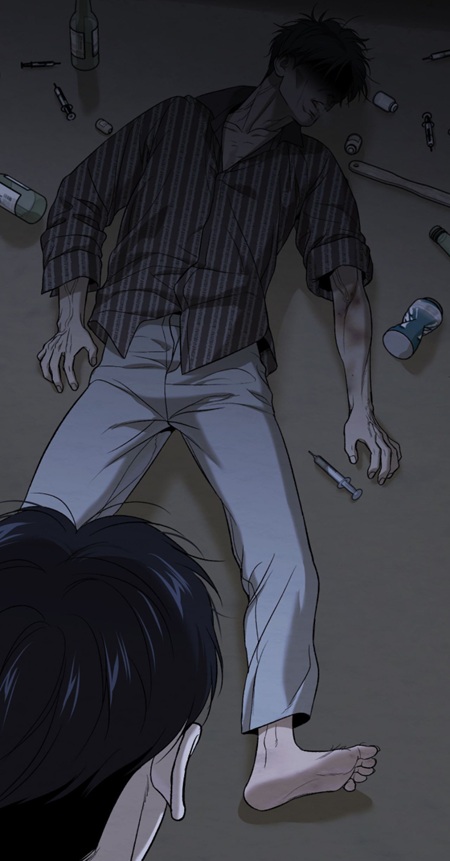 (chapter 73) His origins—the father who once fought, gambled, and collapsed into addiction before dying of an overdose— will no longer remain hidden. The revelation will spread like a smell the public (Team Black) cannot ignore. Yet this descent is not disgrace alone; it is the beginning of embodiment. Exposure will give him weight. But what did the director say?
  (chapter 78) Through Hwang Byungchul’s blunt words, the Emperor finally realized that he possessed an identity of his own—one not confined by inheritance or shame. The insults that once defined him,
 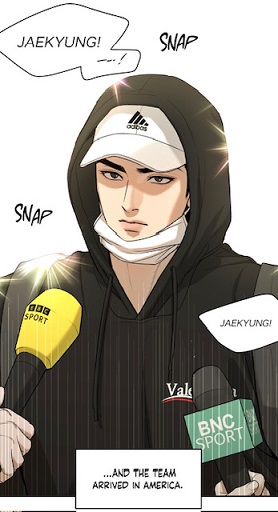 (chapter 36) instead of naming Joo Jaekyung himself. He might have stood beside the MMA fighter the entire time, yet he preferred to disappear behind collective language, as if the plural could shield him from personal involvement. It was a professional gesture, an attempt to efface the self, to stand beside the fighter without belonging to him. His role was service, not solidarity; his language confirmed distance. Thus his karma was that he got abandoned by the team after the match, while rescued by the celebrity himself!!
 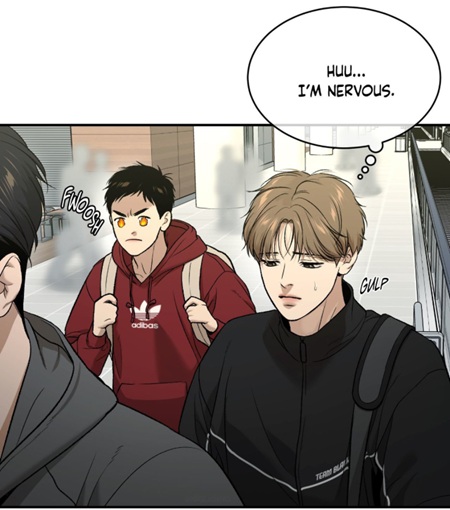 (chapter 81) translates that awareness into sensation. It’s no longer the passivity of a bystander but the heartbeat of someone invested. The count of days becomes a shared horizon between doctor and fighter, a bridge of feeling.
  (chapter 81) When Jaekyung exhales the same “huu,” their anxiety synchronizes, transforming fear into connection. The loop of repetition (“days passed”) has turned into a countdown of empathy (“eight days left”). Time itself has begun to belong to both of them. The same “team” has become real, but contrary to the past: there are only 2 members, Kim Dan and Joo Jaekyung. At the airport he wears the Team Black jacket, a subtle but deliberate signal that he has accepted inclusion. The jacket is not uniform; it is recognition. Both form 8, which is a symbol for balance and infinity.
 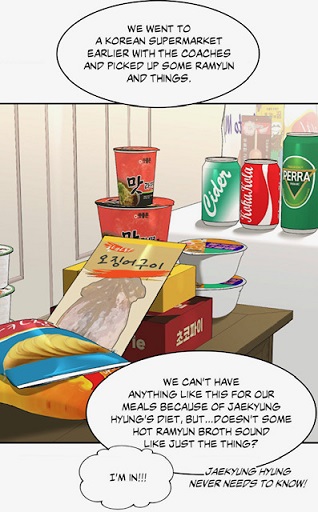 (chapter 37) The others indulge in small pleasures — snacks, shopping, light rebellion — but the champion and his doctor remain trapped in routine, orbiting one another inside sterile rooms. I am suspecting that doc Dan must have bought the scarf at the airport, a small act of thoughtfulness before departure.
  (chapter 41) Yet the gesture, though sincere, carries a quiet irony. The scarf is printed with flowers, mostly roses, but as a piece of fabric it has neither scent nor warmth. It imitates life without containing it. What he gives her, in truth, is a copy of affection, not its essence — a bouquet that cannot breathe.
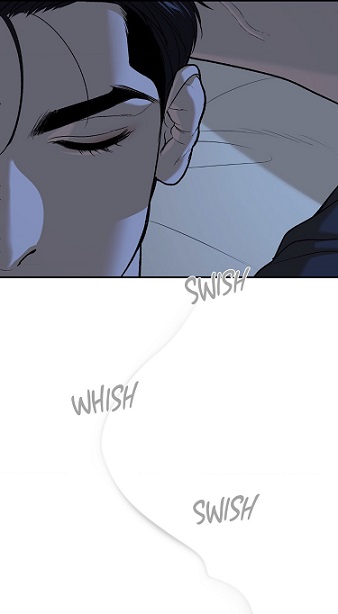 (chapter 37) The answer lies in the contrast between the smell of life and the smell of emptiness. While others seek flavor in hot ramen or the sweetness of snacks, the champion’s room remains odorless, air-conditioned, antiseptic. Then, in the quiet of night, a faint aroma drifts toward him, the flavor of hot ramen. And now observe the progression of scents through Jinx.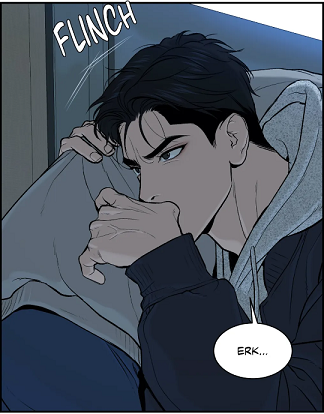
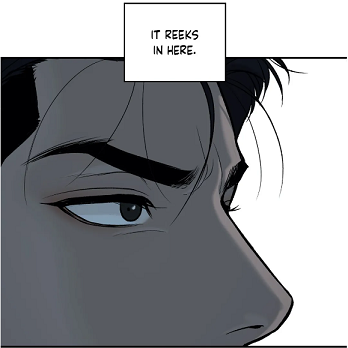


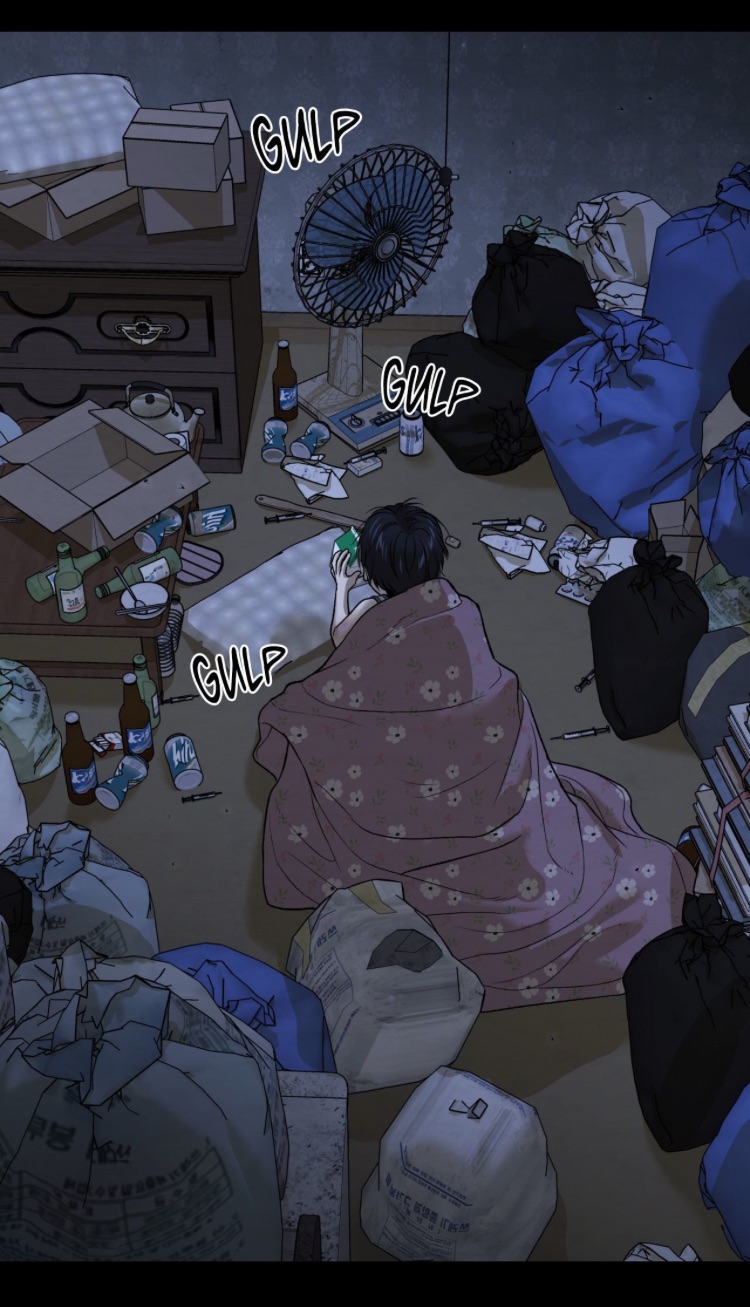 (chapter 72) — the garbage, the spoiled food, the stale air of neglect. What he truly covers is not his nose, but his fear of returning there. Later, in episode 22, when Dan cooks for him, the champion instinctively associates food with corruption:
  (chapter 22) Interesting is that here fish has a negative connotation: intrusion and thoughtlessness. This shows how detached the champion was from his true self: water and the ocean. Moreover, cooking, warmth, nourishment—all evoked garbage, the chaos of his first home.
 (chapter 54) couldn’t nourish him. Hence he replaced it with wine for a while.
 (chapter 74) Their fragrance became the perfume of loss. To his senses, flowers never meant beauty or love or nice smell; they mean burial and as such pain. Every petal recalls the suffocating smell of the funeral room, the smoke, the artificial but painful peace of goodbye.
 (chapter 32) The blue tie contains 3 striped colors: red, white and blue, which are quite similar to French flag, though the order has been switched. Secondly, Choi Heesung purchased
 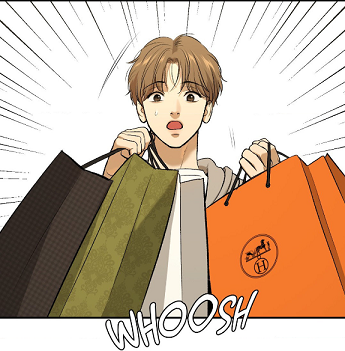 (chapter 32) Hermès’ item, a French company famous its bags, scarfs and perfumes. So I am quite certain that once Jinx-philes discovered the identity of the next fighter
 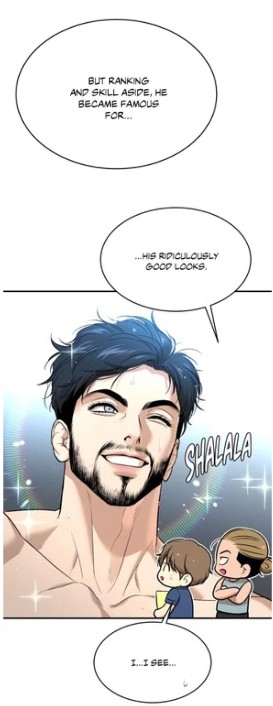 (chapter 81) and saw the plane, they must have jumped to the conclusion that the next fight will take place in Paris! But France is more just than the capital. This country is called the Hexagon due to its form, and this name stands in opposition to the MMA ring, which is an octagon!
  (chapter 40) Interesting is that the team at the airport is composed of 6 people.
  (chapter 81) So we could say that despite the disadvantage being in a foreign country, they are “equal”, 6 colors against the team from the Hexagon, the blue light from the MMA ring. But let’s return our attention to Paris. The latter is widely recognized as the symbol of love, the global center for fashion, art, and stardom. The city has a deep historical connection to these fields, being the birthplace of haute couture and home to many of the world’s leading fashion houses and luxury conglomerates. Its cultural scene is equally rich, with a long history as a hub for artists and a more recent reputation for being a center for music and film stars. However, the image with the landing plane is actually revealing the truth.
 (chapter 81) and “splash”
  (chapter 14) Here, exactly like in the States, his trip to Busan never gave him the opportunity to visit the city and the beach, exactly like the athlete. The next airport to Cannes is Nice- Côte d’Azur and it looks more like the one in the Manhwa. Furthermore, the South of France has a milder climate in the fall, hence it is still possible to swim in September. Besides, in my last essay, I had connected the champion to Bruce Lee and water:
  Finally, Naturally, here I could be wrong with Cannes. Nevertheless, Cannes, with its glittering shorelines and film festival glamour, symbolizes the marriage of money (millionaires, yachts) and illusion — the theater of appearances. It is where contracts are made, where bodies are displayed, traded, and consumed through the gaze, the very economy that has always governed the champion’s existence. The wolf, once born among garbage and hunger, now finds himself surrounded by luxury, in a world perfumed with artificial success. Yet beneath the surface of that “breeze” and “splash” lingers the scent of corruption. The coastal light hides what the smoke once revealed: exploitation, manipulation, and the unspoken violence of commerce.
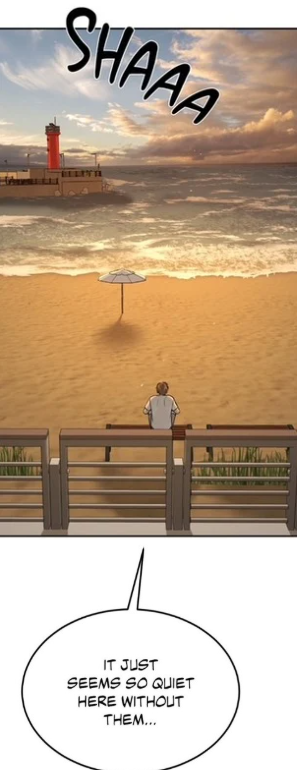 (chapter 59); silence had replaced air; life was drained of flavor. None of them truly enjoyed the nature: the ocean or the mountain. The seaside town was strongly intertwined with work
  (chapter 77) or danger. Then, when they returned to that place, their time was limited to visit the grandmother and the landlord.
  (chapter 81) They had no time to walk through the woods or visit the hills. They had no time for themselves. Consequently, I believe that in The French Riviera, the two of them will discover “savoir vivre”. Everything breathes, glows, and stirs. It is a land overflowing with color, aroma, and taste — precisely the senses that the wolf had long sought to erase through ritual. Doc Dan had led a similar life too, dedicated to his grandmother and work. If they are close to the sea, they might decide to walk on the beach together.
 (chapter 69); the scandal there had linked the previous incident to the infiltration of a Korean gang. The American branch was compromised, its credibility tainted. France, on the other hand, offers a mask of neutrality — refinement, culture, and distance from scandal. By choosing it, they manufacture the illusion of glamour and innocence, pretending that Baek Junmin and his former hyungs have nothing to do with the coming event.
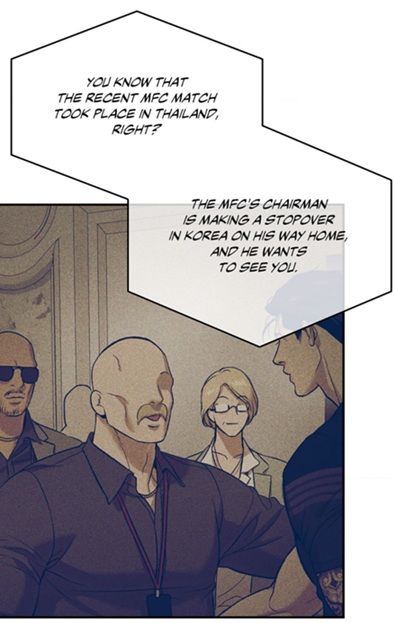 (chapter 69), where Baek Junmin once fought for the championship belt. Thailand in Jinx is not a paradise but a mirror of corruption — the place where victory turns into prostitution, where the body becomes currency. There, the Shotgun won a crown but not respect; his triumph was drenched in manipulation, spectacle, and moral decay. He was admired by no one, celebrated by ghosts.
 (chapter 69) He was crowned, yet unseen. In his bitterness, he mistakes vengeance for validation. If Jaekyung falls publicly, perhaps the Shotgun’s own shame will finally be understood. Thus, France becomes his stage of revenge — not through direct confrontation, but through orchestration. The game he once lost in Thailand, he now rewrites from the shadows.
 (chapter 36), the transition from flight to arrival unfolds with seamless precision: no airport, no customs, no luggage — only the honk of city traffic and the flags fluttering over a hotel entrance. Everything about that journey screams logistics. It was a corporate trip, arranged, timed, and contained. The athletes passed through invisible gates, their movement stripped of individuality. The champion, like cargo, was transported rather than welcomed. His arrival, though triumphant
  (chapter 81)
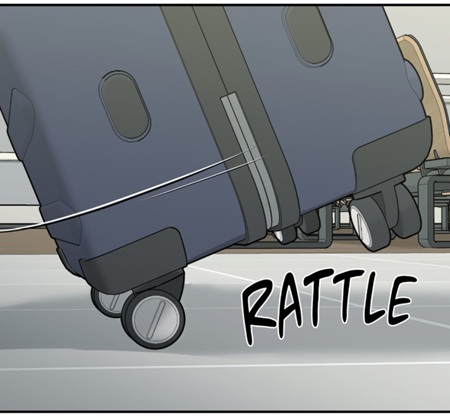 (chapter 81) The suitcase becomes the true protagonist of this threshold. In that small vibration lies all the instability the white air once denied. It is his portable home, his compressed past, the fragile proof that he finally has something to lose. In the earlier arc, he could have vanished mid-flight and no one would have noticed; now, if the suitcase disappears, another heart will break. That difference measures his evolution. Yet it also marks new vulnerability: any hand can touch what he carries.
 (chapter 41) and the wedding cabinet
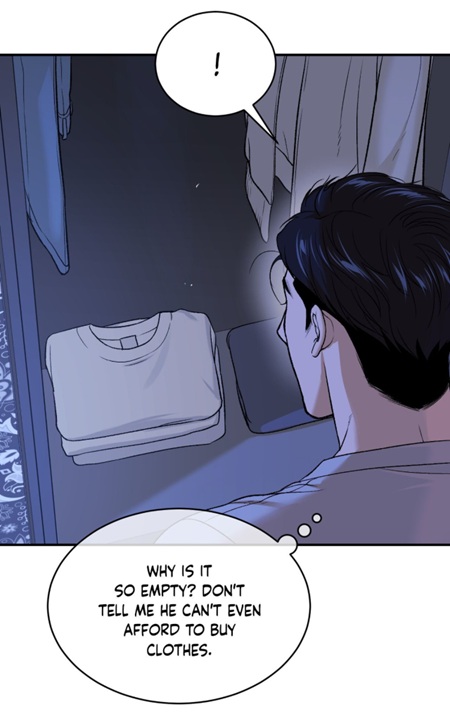 (chapter 80) before it, the suitcase belongs to the same symbolic lineage. It is the container of intimacy — filled with clothes, precious items like pictures or books, with the silent evidence of presence. But unlike its predecessors, it moves. The wardrobe once stood still, rooted in the domestic; the wedding cabinet invited intrusion within a private world, as it was once discarded. The suitcase, however, carries that vulnerability into the public realm. It is exposure on wheels — the private made portable.
 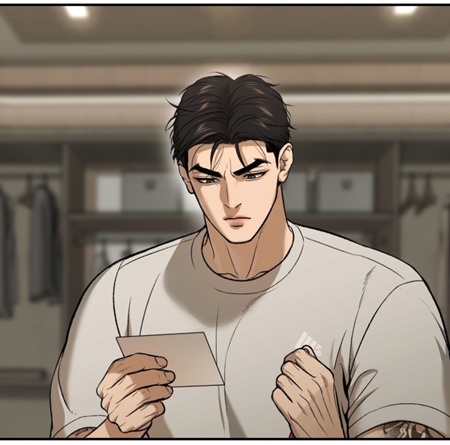 (chapter 81)
  (chapter 81) and Kim Dan has still no idea that the athlete has kept them like cherished relics. He might have placed the notebook from Hwang Byungchul as well. However, the person carrying the suitcase is the manager:
 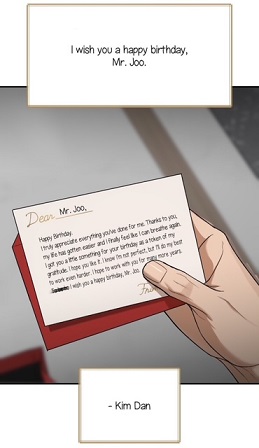 (chapter 55), where he expressed his desire to work for Joo Jaekyung for a long time. What would be the manager’s reaction, when he recalls this incident with the switched spray and Doc Dan’s sudden departure? Moreover, we have here “erased words”: to be ho… The timing of the discovery is really important. This could generate some tension and confrontation between the manager and the physical therapist. Besides, such a birthday card could generate negative feelings (like jealousy), Kim Dan is gradually taking more and more place in the athlete’s life. The violation that once occurred behind closed doors (the penthouse) now could happen in plain sight. The line between private and public collapses, just as the boundary between success and loss blurs.
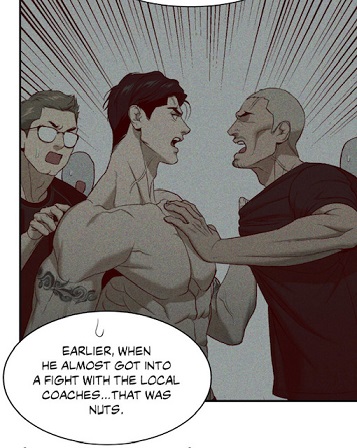 (chapter 37). So when the manager says this,
 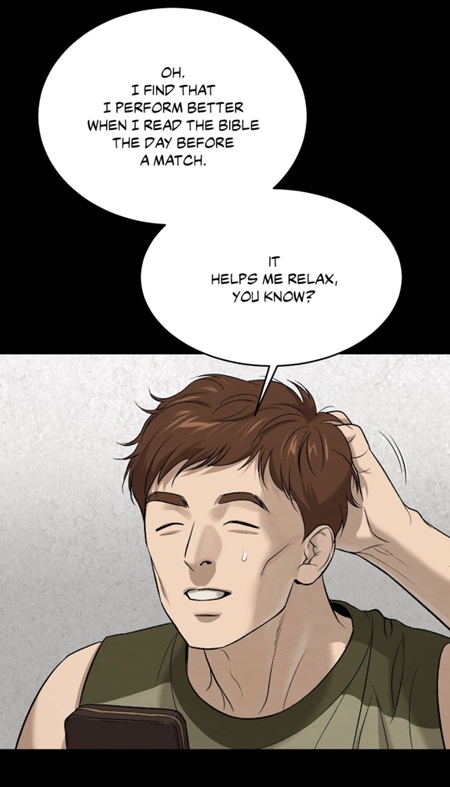 (chapter 75) While he was sick, he could recall this scene.
 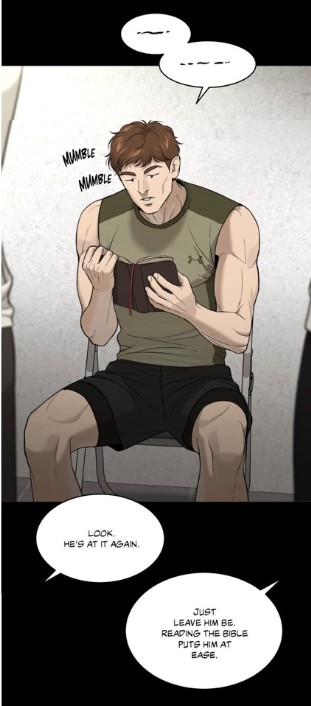 (chapter 75) where the fighter could stay focused, though he was surrounded by noise and people. The advice had seemed trivial, when first given. Now it re-emerges as revelation. The emperor, once incapable of rest, now reads
  (chapter 81) beside someone who represents safety. The book becomes a bridge between wakefulness and sleep, a ritual that does not erase consciousness but calms it. Where his earlier practices sought to block sensation, this one restores it.
 (chapter 81) The paper bends, absorbs scent, bears traces of fingers and warmth; the metal resists, reflects light, carries weight. Together they represent the balance between tenderness and strength — precisely what his life has lacked. In contrast to the mechanical milk and odorless perfume, these objects are human, imperfect, touchable.
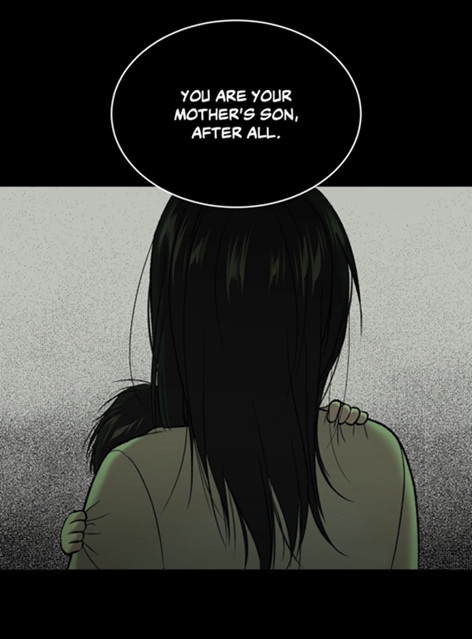 (chapter 73), which should have offered nourishment, attention and peace, had been replaced by absence and deceit. Her warmth was an illusion, a posture mimicked but never felt.
 (chapter 80) And here, I had imagined that the mother had offered this t-shirt as a birthday present.
  (chapter 72) He did not sleep like a child but like an object kept near for safety. The woman lying beside him was a mother in name only — emotionally distant, physically present. No stroke, no kiss, hence the boy had to clinch onto her.
 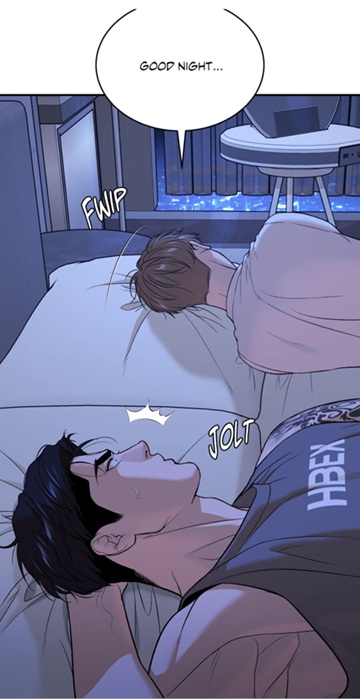 (chapter 78), without the good night! That missing intimacy was not a void but a distortion — a tenderness twisted into survival. The mother’s touch, meant to console, existed only to protect herself. She kept the child close not out of affection but out of anxieties and resent, turning him into a living barrier between her and the man she resented. What he experienced as warmth was, in truth, defense and rejection; what seemed like closeness was the choreography of avoidance. Hence she never looked at her child. The body that should have been cradled for its own sake was held as cover, its value defined by its usefulness.
 (chapter 29) which reminds us of breastfeeding. And now, look at the embrace in the swimming pool:
  (chapter 80). The hamster was imitating the behavior of the little Jaekyung in the past, clinching onto the “parent” like his life depended on him. But how did the athlete react to this embrace? He looked at his fated partner
 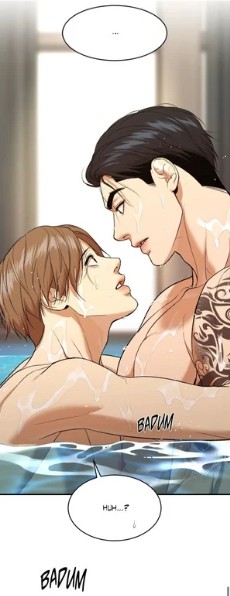 (chapter 80) and got all warm and fuzzy by looking at him:
  (chapter 81) A sign that the mother had never reacted the way her son is doing now, the feel to kiss the loved one! The problem is that in the swimming pool, the doctor’s scent and taste are covered by chlorine.
 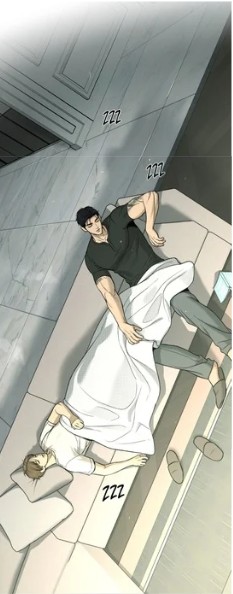 (chapter 81) The wolf falls asleep next to someone, not on top of or apart from them. That small preposition — next to — carries the weight of redemption. The couch, once a site of violation
 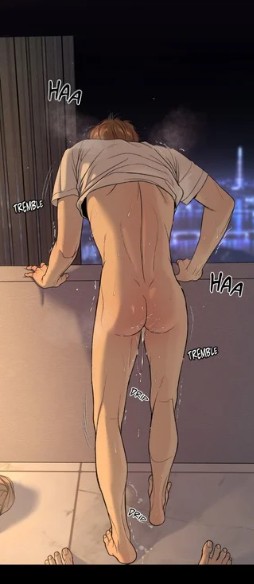 (chapter 61) or solitude, becomes again what it was meant to be: a place of rest and tenderness. Thus he touches his fated partner’s legs over the cover, showing his care and respect.
 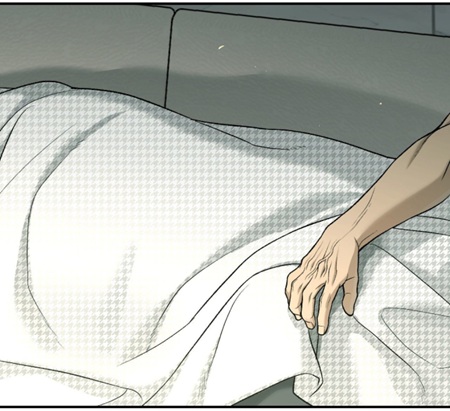 (chapter 81)
 (chapter 81), he can recognize the false nature of his mother’s affection. What she offered was conditional, deceptive and self-centered; what the doctor gives is ordinary and consistent. No grand gestures, no promises — only presence. The doctor does not rehearse concern; he lives it through routine. And this ordinariness, paradoxically, becomes sacred. It was, as if the athlete was treating his own inner child through the physical therapist.
  (chapter 37)
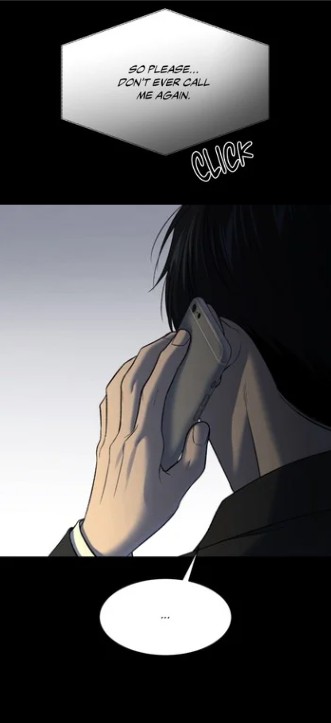 (chapter 74) At this moment, the page itself turns black, veined with smoky whorls of gray — as though her words had burned into the air rather than spoken. “I can’t live with you… please understand… let’s just go our separate ways.” The sentences rise like vapors, leaving behind the faint residue of a scent that refuses to vanish. This visual texture — half smoke, half ink — captures her true condition: she dissolves herself with every attempt at escape.
 France itself mirrors her — beautiful, perfumed, wrapped in silk and secrecy. She definitely climbed the social ladders through her second marriage, hence she could offer toys to her second son. The nation of couture and fragrance becomes the stage for the mother’s unmasking. Once the name of Joo Jaewoong rises again, questions about her will inevitably follow. And here, she can no longer hide behind silence or excuses. The myth of refinement — both hers and France’s — collapses under the weight of exposure.
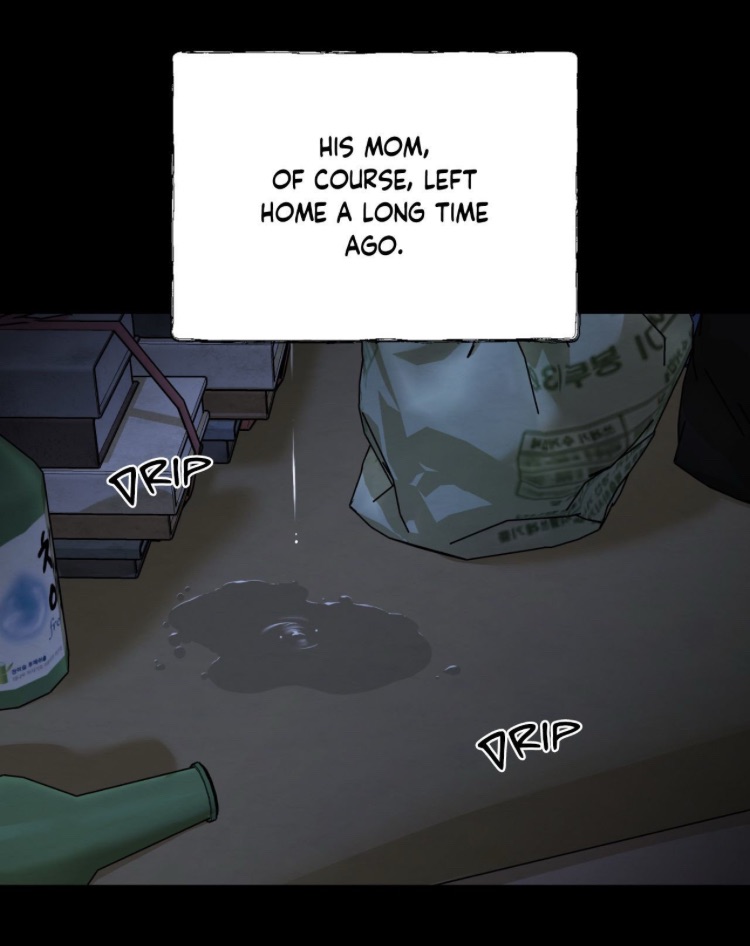 (chapter 72)

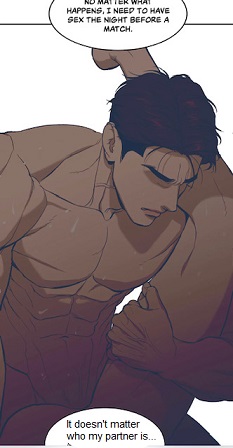 (chapter 2) his ritualistic sex before fights, his fear of losing control,
 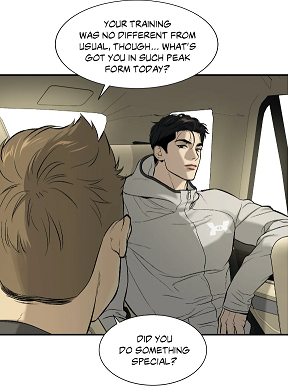 (chapter 5) his reliance on routine. Yet there is another jinx in this story, one far less visible and perhaps even more tragic: Kim Dan’s.
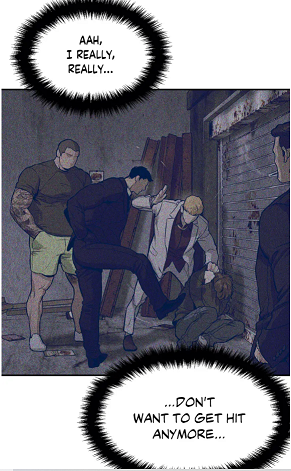 (chapter 1) was seen as the core expression of a man who believed he was doomed.
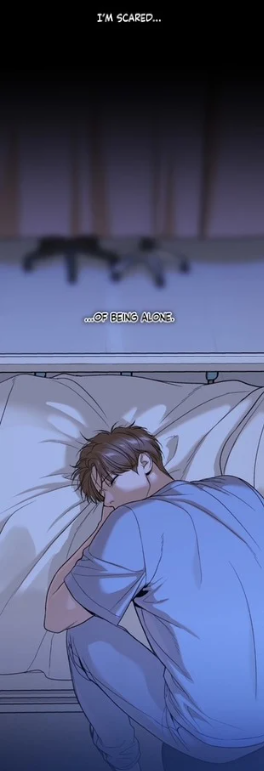 (chapter 56) In Chapter 56, Kim Dan is seen curled up next to a bed, whispering: “I’m scared… of being alone.” What makes this moment especially revealing is that he is not physically alone, for he is resting next to his grandmother. The presence of the very person who raised him should, in theory, offer comfort. And yet, the fear persists.
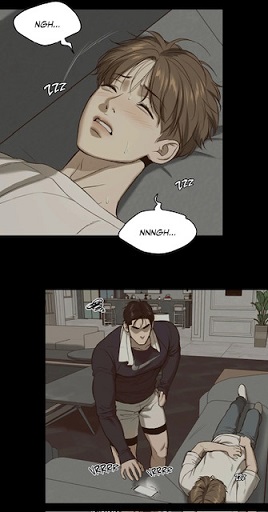 (chapter 21) It weaves together absence, silence, and the specter of loss. What’s striking is that the nightmare surfaces, not when he’s alone in the present, but after he has just returned from watching over his hospitalized grandmother.
 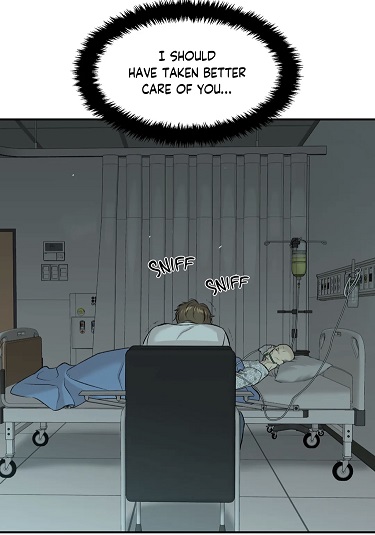 (chapter 21) He lies on the couch and dreams of a night when she vanished from their shared bed.
 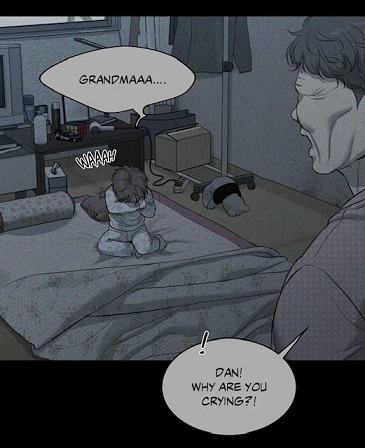 (chapter 21) This reveals how, in Kim Dan’s subconscious, the night and an empty bed have become synonymous with death. The trauma is deeply embedded, where even temporary absence is tied to the irreversibility of loss. For Kim Dan, solitude at night
  (chapter 67) is not mere loneliness—it is abandonment, it is death, it is the erasure of home. It is repressed, hidden beneath his quiet demeanor and years of survival-based behavior. Rather than a rational belief, it is a subconscious wound that only surfaces in moments of extreme vulnerability—especially at night.
  (chapter 2), the doctor’s is secret and involuntary. His actions—his fearful expressions
  (chapter 57), his pattern of emotional detachment
  (chapter 67), and his obsessive loyalty to his grandmother
 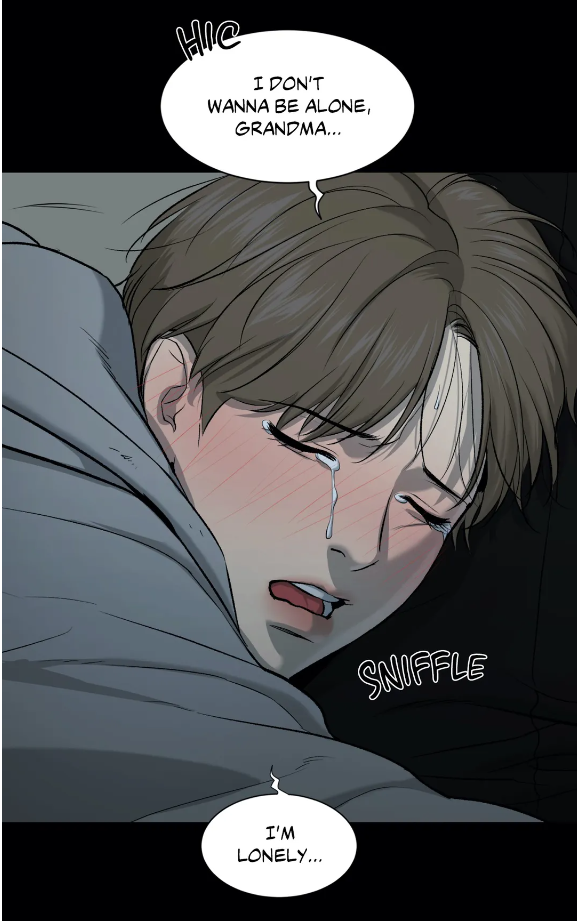 (chapter 10) signal a suppressed conviction: that he is destined to be left behind. What seemed like devotion now appears as coping; what appeared stoic was survival. And with the impending death of his grandmother, the anchor holding this hidden jinx in place is slipping away.
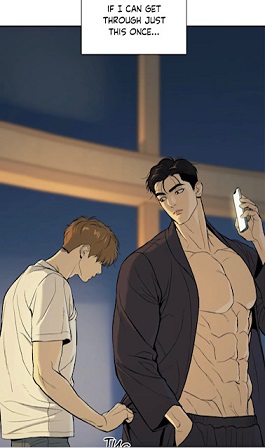 (chapter 2), the trembling kiss
 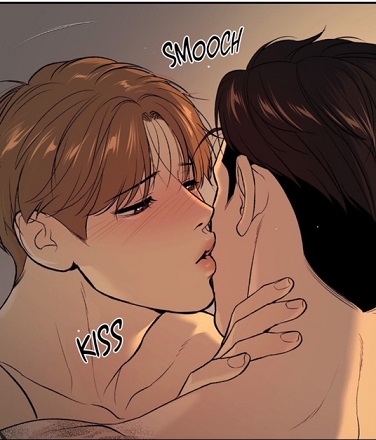 (chapter 44) and touch
  (chapter 44) in Chapter 44, the complete breakdown
 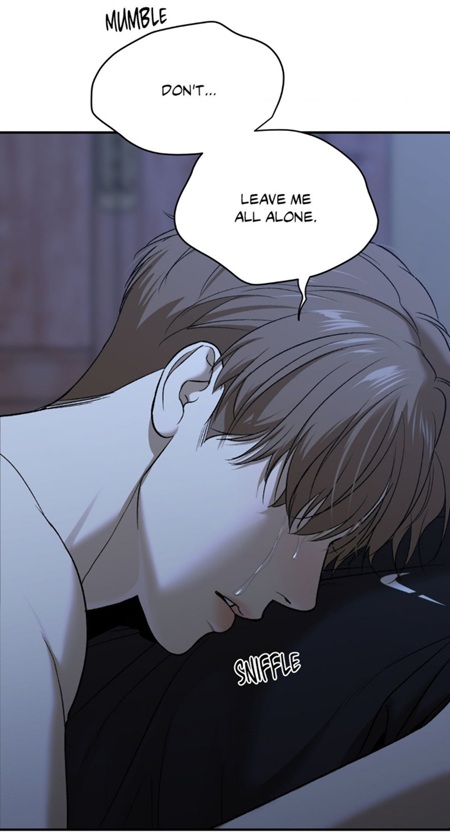 (chapter 66) in Chapter 66, or the transactional submission
 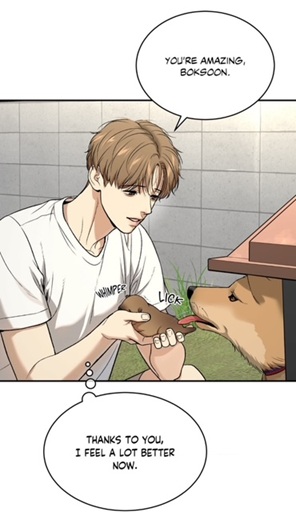 (chapter 57) A puppy needs at least eight weeks with its mother to grow emotionally secure. By drawing this parallel
 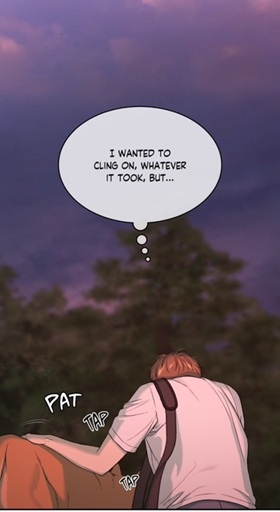 (chapter 59), the story tells us: Kim Dan was separated too soon. He was not ready.
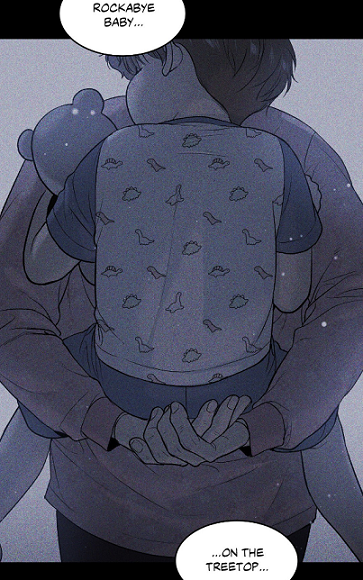 (chapter 47) the one person whose presence could keep the jinx at bay. As long as she was there, he could suppress the trauma, function, survive. She was his talisman. But she was never a healer, for she never spoke about his parents. She never addressed the core of his abandonment, like we could witness in the doctor’s nightmare:
 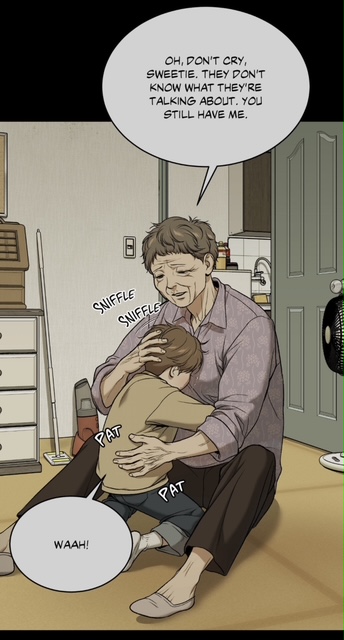 (chapter 57) And silence, when it comes to trauma, does not protect—it festers.
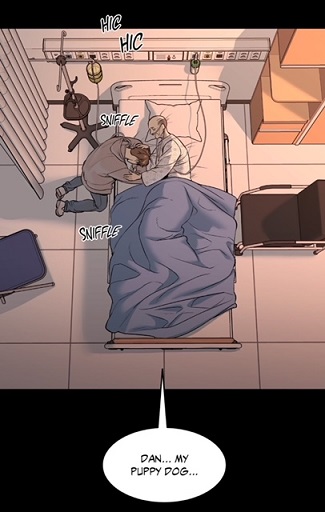 (chapter 53)
 (Chapter 56) he tucks her in. Their roles are reversed. He behaves like a parent, whereas in truth, he is reverting emotionally to a child terrified of being alone. This reversal highlights the internal dissonance between his outward behavior and emotional reality. Though he was forced to grow up quickly
  (chapter 67) This reinforces my hypothesis that his bad drinking habits are related to the absence of a loved one next to him.
  (chapter 56) Imagine what it means for her: her grandson is already 29 years old and he can not sleep alone. Under this perspective, Jinx-philes can grasp the relative’s reasoning. The problem is that her knowledge is actually wrong! How so? It is because the protagonist was able to sleep so well alone in the penthouse, to the point that the athlete was envious of him.
  (chapter 29) That’s how it dawned on me why Shin Okja was so determined to send back her grandson to Seoul.
 (chapter 19) The latter is obsessed with work, while he is suffering from insomnia.
  (chapter 65) And the best evidence for her selfishness and neglect is her ignorance about her grandson’s plan for his future. She is not discussing with him about what he likes or dislikes. She is directing his life, like she did it in the past in the end. And while she may think she’s doing what’s best, her silence about his fears, her ignorance about his true conditions (no home, blacklisted in Seoul) and her refusal to discuss his emotional future reveal a lingering discomfort with the very idea of dependence — perhaps because it reminds her of her own failures or helplessness as a parent figure.
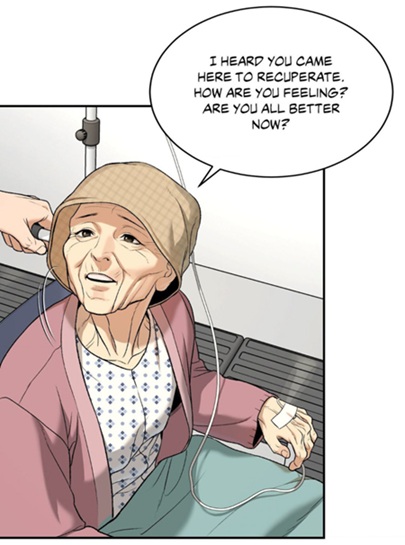 (chapter 65)
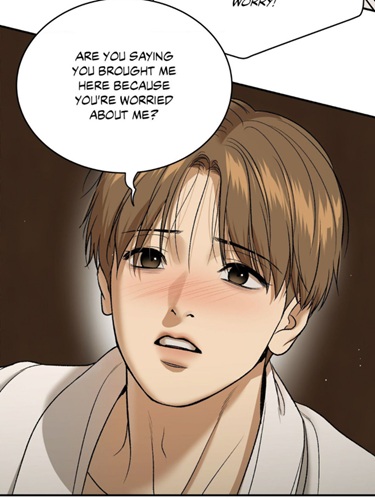 (chapter 67) when Kim Dan, eyes wide and voice trembling, asks Joo Jaekyung: “Are you saying you brought me here because you’re worried about me?” His expression reveals everything — a fragile hope for genuine concern. But the only response he gets is silence.
 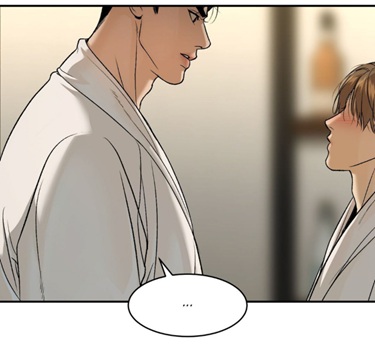 (chapter 67) This unspoken answer reverberates with painful familiarity: from his vanished mother, from his halmoni who rarely expressed love (rather gratitude and pity), and from a world that reduced him to his usefulness. What he really wants to know is: “Do I matter to you as a person?” And just like his grandmother, the champion fails to offer direct emotional reassurance. Yet unlike her, Joo Jaekyung is still learning. His silence isn’t rejection, but emotional illiteracy — a work in progress.
 (chapter 65) And when we remember that Kim Dan tried to call her, she
 (chapter 44) These gestures suggest he had once received such kisses, most likely from his mother. It means he remembers love, even if he doesn’t know how to process its loss.
 He is carrying the sins of “adults”. By likening him to an angel, Mingwa frames his pain not as weakness, but as unjust burden. He embodies purity, sacrifice, and resilience, not because he was allowed to thrive, but because he endured. The angel metaphor becomes even more striking when you think about traditional symbolism: angels don’t belong to Earth, yet they walk among the living, often suffering in silence and helping others. That’s exactly Kim Dan — out of place, bearing the consequences of others’ choices, carrying guilt, debt, and unspoken grief that were never his to begin with.
 (Chapter 67) Observe how Joo Jaekyung called the penthouse: not home, but his place. Due to the last altercation, the emotional safety collapsed. This experience reactivated his fear of abandonment and solidified the belief that he has no home.
  (chapter 65) Even the family photo (where and by whom it was taken is unclear) emphasizes the fragility and incompleteness of his sense of belonging.
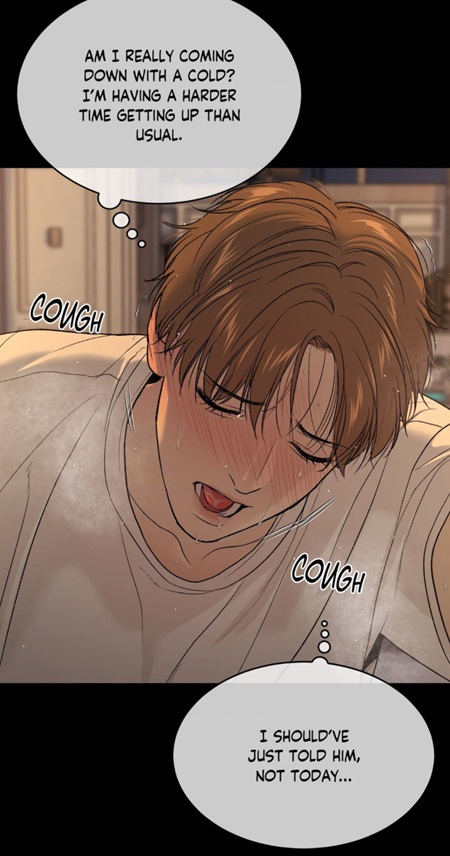 (chapter 61) that he must sacrifice his “needs” and identity to be accepted.
 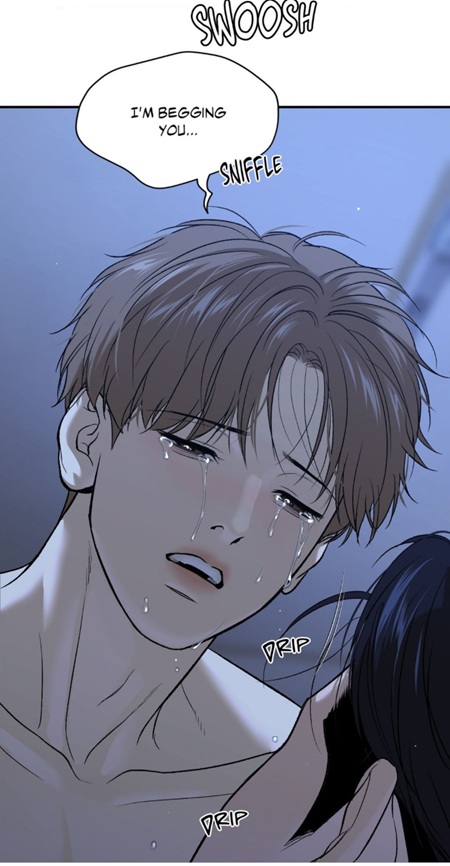 (chapter 66) he cries, begs,
 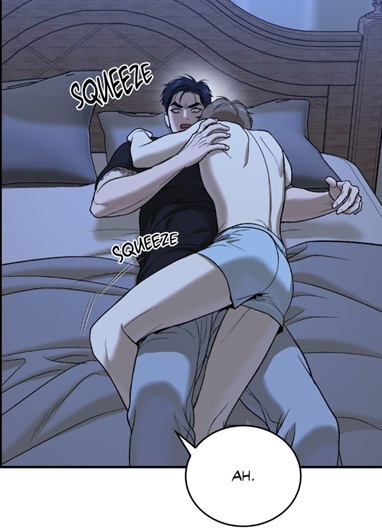 (chapter 66) holds on—“Don’t leave me.”
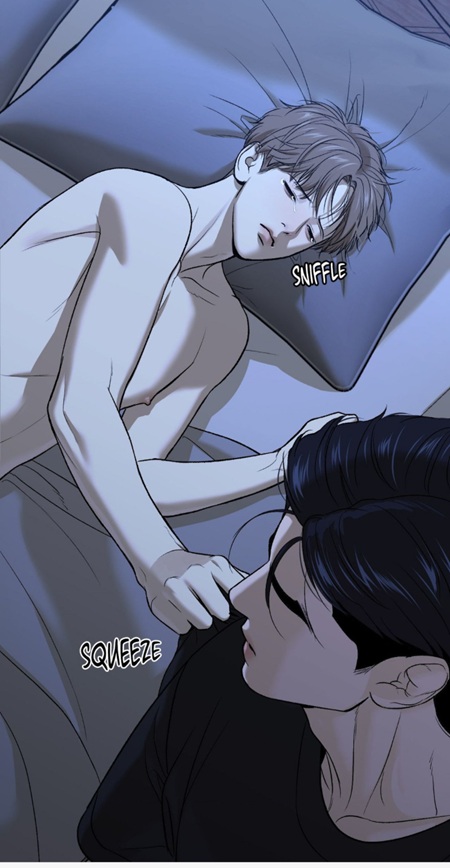 (chapter 66) and desperate pleas are not about romance—they’re about survival, longing and regret. Deep down, he wished, he had hold onto his “mother” in the past, stopped her from leaving him. Is it a coincidence that this gesture from that night mirrors the one during their first night?
 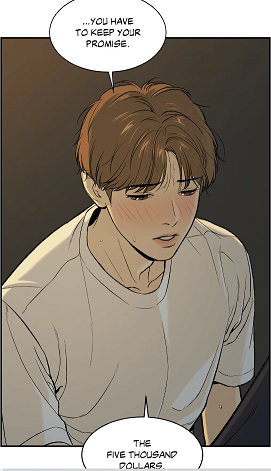 (chapter 2) He wanted the champion to keep his promise. From my point of view, the parent’s vanishing is strongly intertwined with a broken promise… And that’s exactly what the grandmother did to her own grandson: she didn’t keep her words either.
  (chapter 11)
  (chapter 53)
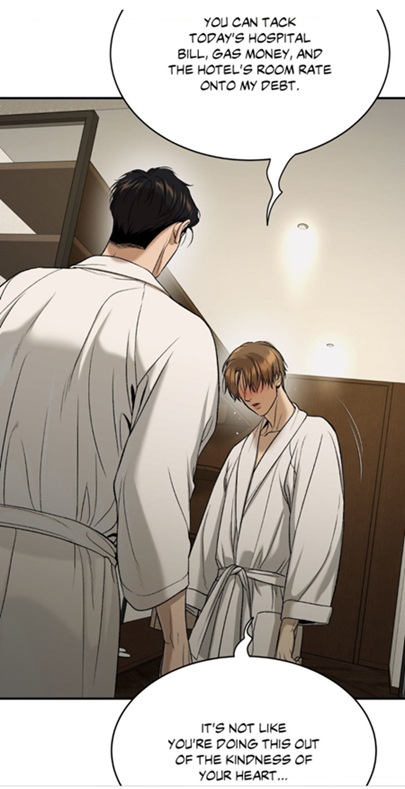 (chapter 67), but this time, with eerie detachment. He kneels before Joo Jaekyung like a servant,
 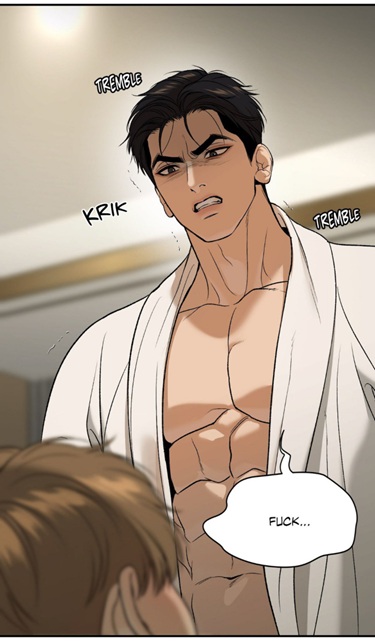 (chapter 67) his arousal betrays a loss of emotional control. Though he is on his knees, it is Joo Jaekyung who is emotionally yielding. His body betrays his composure, responding to Kim Dan’s touch and gaze. Kim Dan, watching the tremble in the fighter’s expression and the rising heat in his body, feels the shift. His soft blush is not simply one of affection or embarrassment—it’s a flicker of recognition.
  (chapter 67) He senses that the one usually in control is now unraveling. Appearances deceive: beneath this scene lies a quiet reversal of power. The blush on his cheeks is a trace of a brief moment of clarity: he sees that the person who once held all the control is now faltering.
 (chapter 66), his body is still a vessel for mourning. Hence there is no kiss during that blue night. Each night carries the residue of that first trauma: the night he was left alone. Whether his mother disappeared or passed away in the night, the result is the same—nighttime became synonymous with loss.
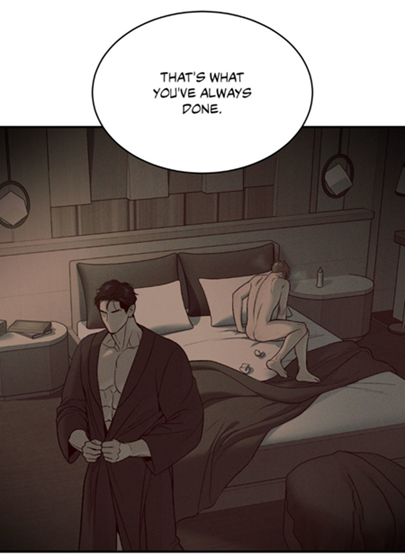 (chapter 63) His so-called jinx is not some irrational superstition. It’s a scar. It’s the quiet belief that the people he loves will vanish the moment he lets his guard down.
 (chapter 67), it’s resignation. Hence he is not expecting to be cured with the pills.
  (chapter 67) he offers sex to “settle up,” citing his own preparations like a transaction.
  (chapter 67) while he drank alcohol with the medicine.
 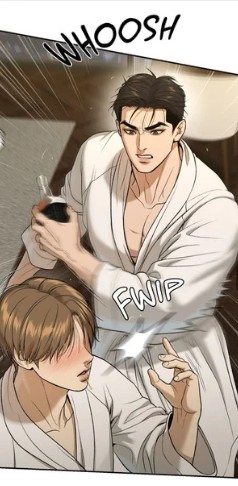 (Chapter 67) Until now, the champion has a blind faith in drugs, just like the grandmother.
 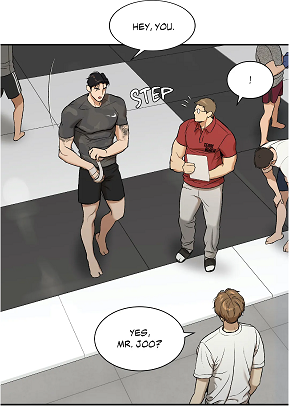 (chapter 7), while Kim Dan becomes a child during the night.
 (chapter 47), when the “wolf” was portrayed as a thug, though the latter had assisted him on multiple occasions.


 (chapter 13), who had been awakened by the champion, though contrary to the fairy tale, this arising was associated with pain. [For more read the analysis
 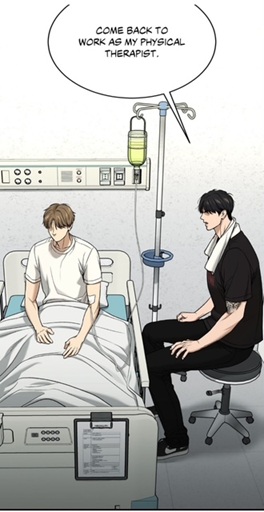 (chapter 60) But how did they ended up both cursed by the same spell? The reason is simple. They were either halted by guilt and self-loathing or distorted by the desperate need to escape a traumatic past. Yet, amidst this stasis, small cracks are beginning to appear, suggesting that the flow of time cannot be denied forever. The past can not be repeated
  (chapter 59), reflecting his selfless role as a caregiver. As someone who has long allowed others to define his time—whether as a physical therapist or as a prostitute—Kim Dan has yet to acknowledge his own mortality. Even during the lavender-tinted night, while he determined the length
  (chapter 64) and nature of the encounter
 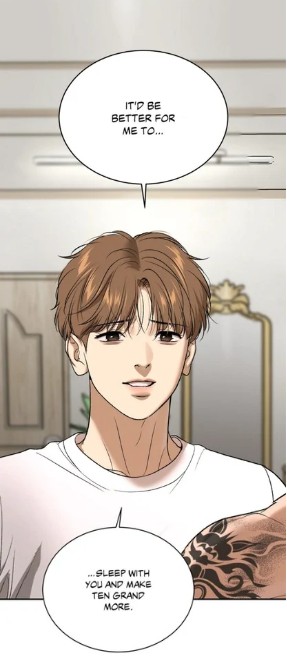 (chapter 62), he did so for the sake of debts, not for himself.
  (chapter 64) The recent death of the puppy serves as a stark reminder
  (chapter 59) that he is not exempt from time’s reach, that he too is aging and vulnerable. But the doctor failed to recognize this warning. He only viewed it as a sign of his own powerlessness, reducing it from his own perception. He overlooked the fragility of life as such.
  (chapter 35), he created an illusion of freedom that only masked his deeper confinement—his glass prison. When Kim Dan closed the door and left
 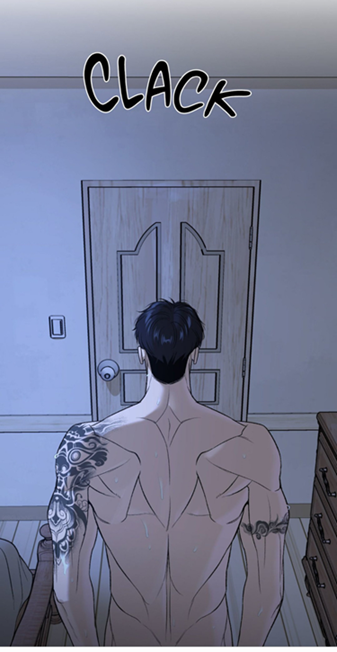 (chapter 64), the illusion shattered, revealing the reality of his loneliness. The jinx,
  (chapter 55) once confined to the bedroom, now permeates his entire life, binding him to a past shaped by his abuser’s cruel words.
 (chapter 55) The view created an illusion of openness and freedom, masking the reality of his confinement. Glass, by its very nature, is transparent—a barrier that is invisible yet unbreakable, creating a false sense of freedom. The window’s clarity hid the fact that it was, in truth, an impassable wall that confined him, turning the promise of escape into a cruel irony. By focusing on the horizon, he could avoid looking inward, denying the unresolved trauma left by his anonymous abuser.
  (chapter 54) The ghost’s words, ‘
 (chapter 54) were designed to create the illusion of eternity—as if time itself was under the phantom’s control. This assertion not only sought to freeze Joo Jaekyung in a perpetual state of inadequacy but also to distort his perception of change as impossible. Trapped in a cycle of hatred and self-loathing, the athlete’s vision of freedom was limited to the false infinity of the horizon.
 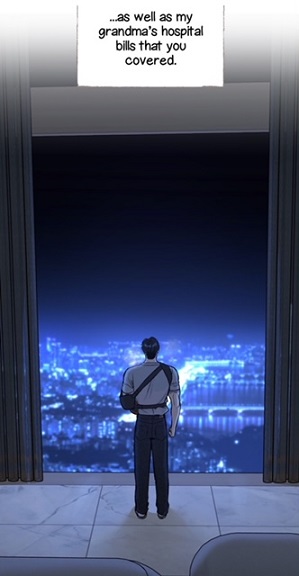 (chapter 53) And now, you comprehend why the champion chose not to look for Kim Dan after his departure. He was so close to the window, making him think that he had a “choice”. That’s how I realized that the closer he would stand to the window, the less he would get Enlightenment. Hence he is portrayed eyeless here.
 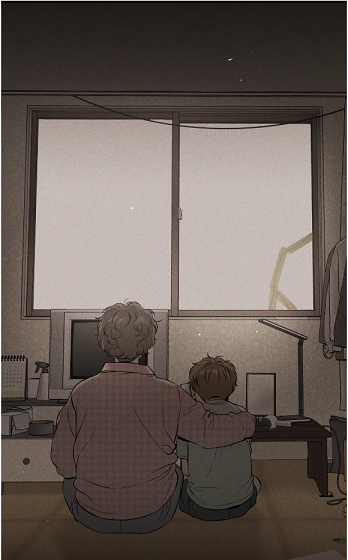 (chapter 19) —a window that offered no view of the outside world. This reflected his entrapment in a life defined by guilt and sacrifice, unable to envision a future beyond repaying debts and fulfilling duties. The window’s visible cracks and makeshift repairs represent not only the physical deterioration of their environment but also the psychological fragmentation within Kim Dan himself. By choosing to patch the window rather than replace it, Shin Okja’s actions reflect a mentality of denial and resignation—an unwillingness to confront the full extent of their impoverishment and suffering.
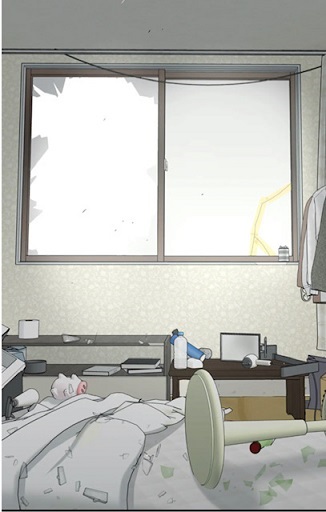 (chapter 19) suggests a deeper symbolic resistance to change or moving forward. In a sense, the grandmother’s decision to live with the broken window mirrors her acceptance of a life defined by limitations and unspoken grief.
 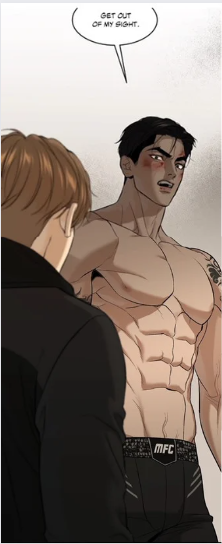 (chapter 51) served as the key that triggered Kim Dan’s abandonment trauma. How so? While “get out of my sight” implied that Kim Dan should leave him, the reality is that the champion left the locker room first.
 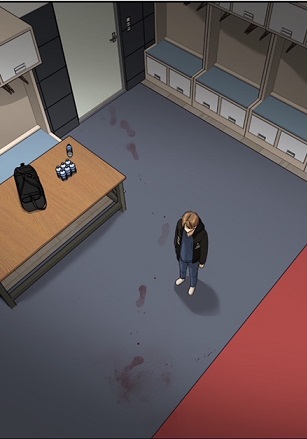 (chapter 51) Observe how the “hamster” is once again turning his back to the door. However, the bloody footprints became an evidence for Kim Dan that he had been abandoned and left behind. And now, you comprehend why the main lead took the athlete’s request seriously and literally. It is because the door in the past was the symbol of betrayal and abandonment. This explicates why he is so sensitive to the sound of a closing door and could recognize it, even if his ears and eyes were covered.
  (chapter 35)
  (chapter 19) When he was standing here, he must have sensed it as a betrayal against his own grandmother. Hence he employed the expression “goodbye” and not “farewell” to diminish his guilt. No wonder why he chose to hide his move from his relative and bring the Wedding Cabinet to the penthouse. Under this new perspective, my avid readers can grasp why Kim Dan’s nightmares in season 2 were linked to the opened door:
  (chapter 57) His unconscious was telling him this: Shin Okja had broken her promise. She was about to abandon him. He had the impression that he was reliving the past. That’s the reason why he was scared and suffering.
  (chapter 57) In addition, I believe that his unconscious was pushing him to come clean with the past, to reveal the changes in his life. It was impossible for both of them to keep such unreal promises.
  (chapter 56) revealed the existence of a past trauma. It highlighted his own fear of abandonment and rejection—an emotion he had long denied. The door, a supposed barrier against the outside world, now stood as a reminder of all he had pushed away, including his own need for connection. Therefore he never left his door open in the penthouse:
  (chapter 55) That’s why I perceive this scene as an important step for Kim Dan himself:
  (chapter 64) By opening and closing the door, he is overcoming his abandonment issues. He becomes the ruler of his own life (time and relationship). He is freeing himself from the mental torment which readers could witness in earlier episodes.
  (chapter 24) The physical therapist has kept his past trauma a secret. And what is the synonym for “secret”? Key! So when the main lead leaves the champion behind
  (chapter 24), yet the latter didn’t get fooled at all. He found out the true nature of their relationship.
  (chapter 19) the Wedding Cabinet in Kim Dan’s home functioned both as a mirror and a false window, preserving an illusion of timelessness.
  (chapter 19) Unlike the rest of the dilapidated house
  (chapter 10), the cabinet remained pristine, suggesting a futile attempt to halt the passage of time and maintain the status quo.
  (chapter 53) By throwing it away, Kim Dan unknowingly released time from its prison, breaking the spell that his grandmother’s control had cast over him. This act was not just a rejection of his past but an unconscious acknowledgment that time was moving forward—that he could no longer live as if he were already dead. Simultaneously, this gesture symbolizes his separation from his grandmother, breaking the illusion of perpetuity that she maintained. So while he might have been by her side physically
  (chapter 53), he was deep down miles away from her emotionally and mentally. This observation explains why he could object to her suggestion.
 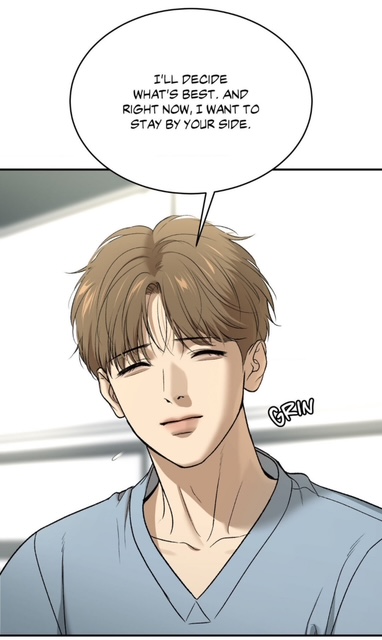 (chapter 57) On the one hand, it shows that he was maturing, on the other hand as a young adult, it is clear that he is destined to make mistakes. He has always defined himself as the caregiver, but he forgot his own true nature: he is a human before anything else. And what is the definition of humanity? I would say, the capacity of benevolence and the inevitability of mistakes. It reflects the dual nature of human existence—the potential for compassion, kindness, and altruism on one side, and the propensity for mistakes, weaknesses, and moral failings on the other. And that’s exactly what the doctor has been mirroring to the champion in the lavender-tinted bedroom:
  (chapter 64) Joo Jaekyung was in his eyes a human, and not a champion. The irony is that with this idiom “always”, he is implying that he had hopes and expectations. The athlete would change and treat him better. Since the doctor has always been the embodiment of “selflessness”, the gods made sure to remind him of his own true nature: “mistakes”. That’s why he is often making blunders
  (chapter 1) to the point that I called him “Mister Mistake”.
  (chapter 43) On the other hand, his missteps are there to teach the fighter to drop his perfectionism and to bring the notion of entertainment in his fated partner’s life. Kim Dan is funny in his own way.
  (chapter 64) He doesn’t respect humans in general. The irony is that by criticizing Joo Jaekyung, the doctor is overlooking his own nature. He is also a sinner.
 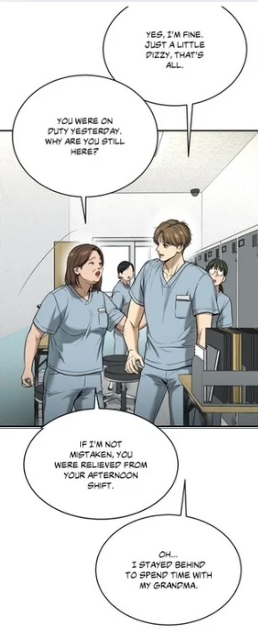 (chapter 57) Is it a coincidence that the doctor’s cold attitude takes place in chapter 60 -64?
 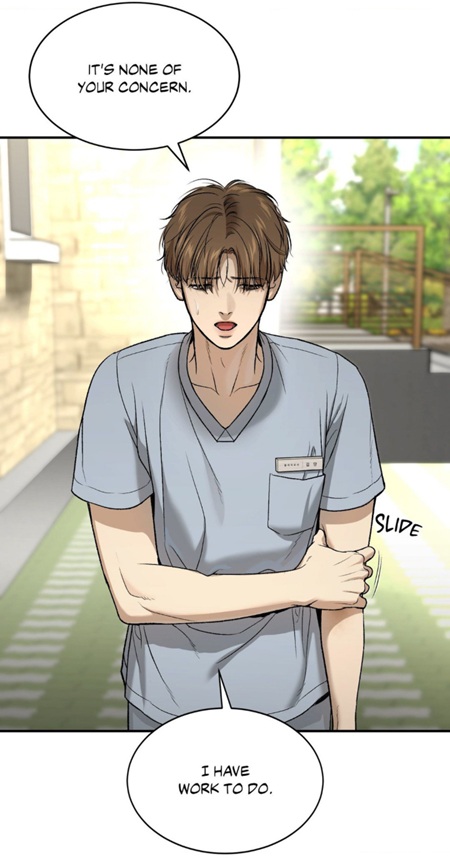 (chapter 61) No, as the number 6 sounds similar to sex. Moreover, don’t forget that Satan’s number is strongly associated with 6 (666 or 616). From my point of view, the “hamster” is on his way to become an adult and as such a sinner as well. The physical therapist’s stubbornness reminded me of the behavior of a teenager who believes to know everything about life, while in verity, such people lack experiences. And what did the nurse say about the main lead?
 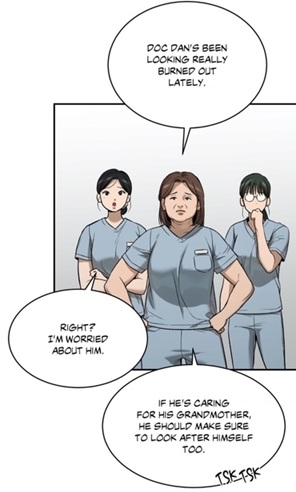 (chapter 57) He should nurse himself for his halmoni’s sake so that the latter wouldn’t worry. From my point of view, if doc Dan gets sick, he could be the catalysator for her deteriorating health. But now, it is time to return our attention to the “champion”.
 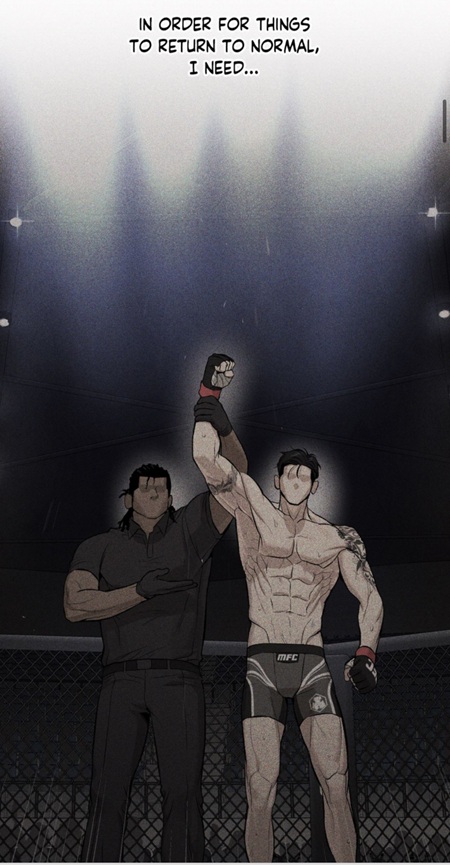 (chapter 61) But why did he want to return to the past? It is because of the ghost’s criticism
 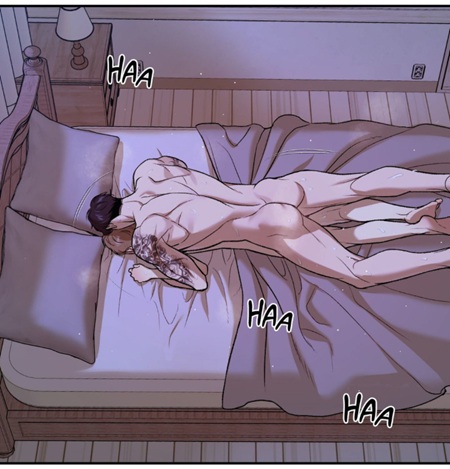 (chapter 64)
 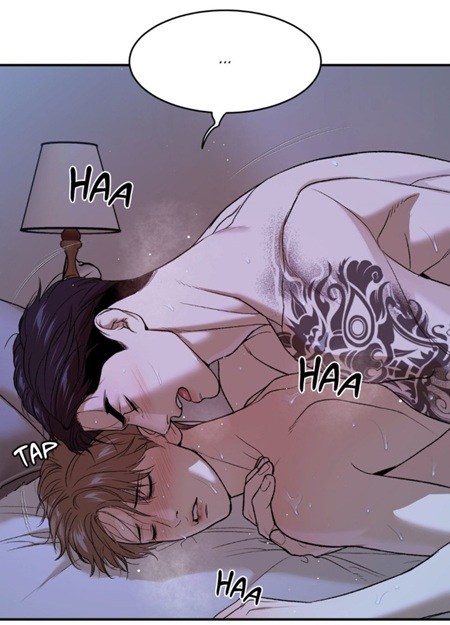 (chapter 64) That’s why the door
  (chapter 64) Hence the author focused on his wide opened gaze. Kim Dan’s intervention was painful but necessary, because through this reflection, the athlete’s motivation to fight is bound to change. In the future, the fight won’t be deadly serious like before, he won’t act like a tyrant in the ring where he couldn’t control his rage.
 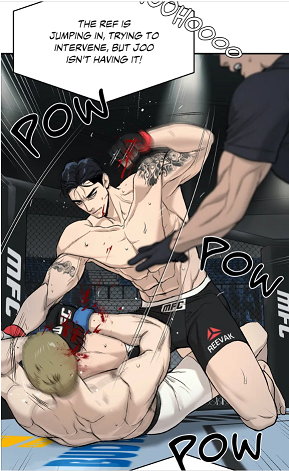 (chapter 1) He will see his opponent as an artist too.
 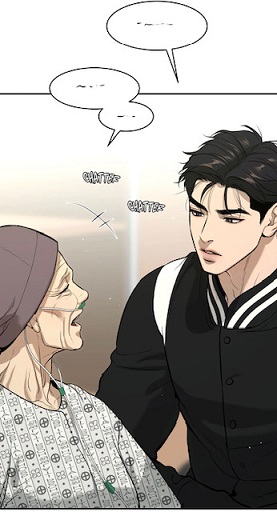 (chapter 21) with her, because he felt treasured.
  (chapter 61)
  (chapter 63) —no matter how reluctantly—represents the second turn. With the doctor’s cold rejection, he is forced to choose: What does he want in life? Only the champion title or something else?
  Hence the latter will become his hyung. For me, there’s no doubt that through this confrontation, the athlete’s respect for Kim Dan can only increase.
  (chapter 27), and he noticed the quietness of the ocean
 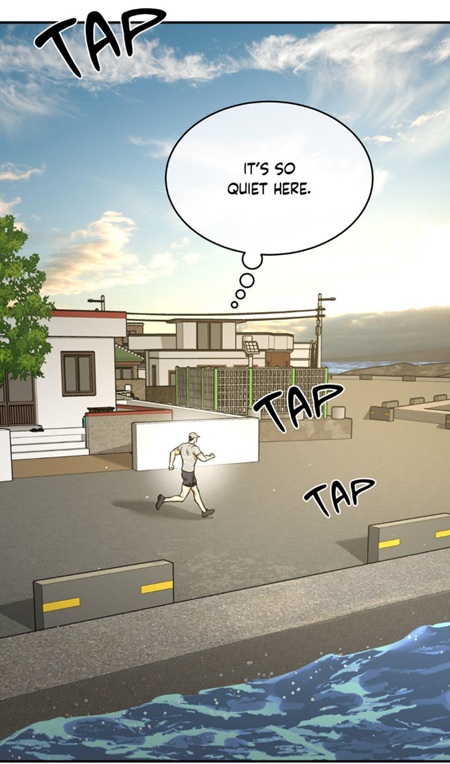 (chapter 62), I am expecting that he will go to the beach. A new version of this scene:
  (chapter 59) But this time, that would be a conscious choice. That’s how he will reconnect with his true self for good. But strangely, I am expecting that he won’t be on his own. I am quite certain that this man will make a similar experience than the grandmother:
 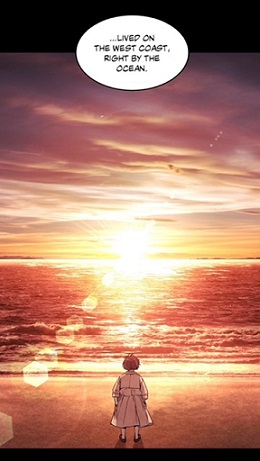 (chapter 53) However, from my point of view, Joo Jaekyung should witness the sunrise and not sunset… which would announce his rebirth. There was only one sunset in season 1, which was linked to Shin Okja’s mortality:
  (chapter 47). Moreover, in season 1 and 2, the doctor was often connected to the sunset:
  (chapter 1)
  (chapter 17) And we had the beach here in the background.
 (chapter 48) This was an ominous sign for the champion’s symbolic “death” and rebirth. Sun and moon are natural tools to determine the flow of time.

 (chapter 62), as his actions increasingly reflect a willingness to embrace his own fragility and build meaningful ties with those around him. Through his growing interactions with others and his immersion in the rhythms of town life, the champion begins to redefine his sense of identity and purpose, moving beyond dominance to discover the power of connection. From a man defined by strength, dominance, and transactional relationships
  (chapter 62)
  (chapter 62) and, more importantly, to himself.
  (chapter 62) Thus in this essay I will explore the symbolic meaning behind his actions in the town, the interplay of nature and community in his transformation, and how these moments reflect his internal growth. The analysis begins with his transformative experience in the ocean during his rescue of Kim Dan
  (chapter 60), followed by his newfound attentiveness to his surroundings—jogging in silence and responding to the natural rhythms of life.
  (chapter 62) and community service. His gradual acceptance of simplicity, represented by his clothing and the symbolism of cucumbers and potatoes, signals his reconnection to nature and humanity.
  (chapter 62)
 (chapter 60) In many ways, this moment functions as a symbolic baptism, reflecting a deeper narrative of renewal and change. In Chapter 28, Kim Dan’s immersion in water during a pool scene
 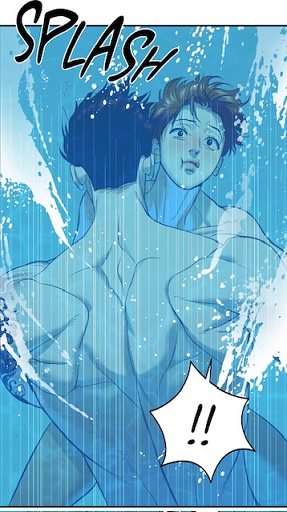 (chapter 28) was symbolic of his acceptance of intimacy, reshaping his view of sex from something “filthy”
 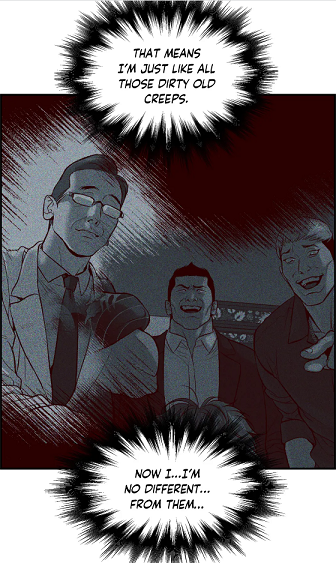 (chapter 20) into something natural and human.
 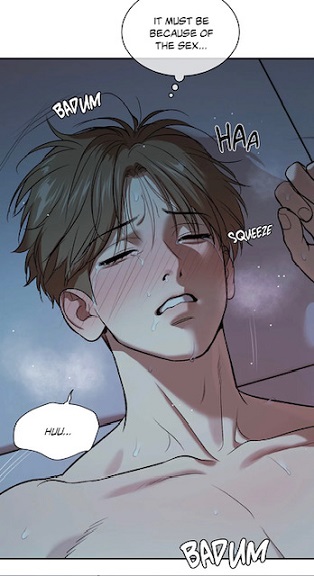 (chapter 29) Similarly, Joo Jaekyung’s dive into the ocean can be interpreted as his baptism into a new “religion”: love and vulnerability.
 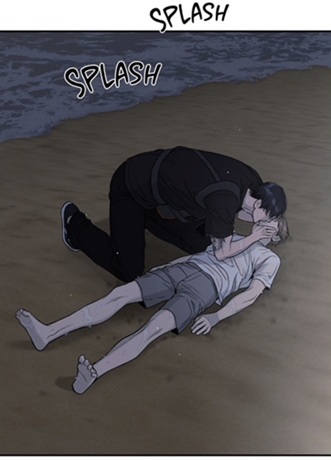 (chapter 60) His gesture is not just about saving his loved one, but also showing care to humans in general. He can no longer be indifferent to someone in pain or in danger.
 (chapter 62) He might complain, but in the end he accepts the presents. This change is reinforced by his willingness to accept gratitude in the form of vegetables and food rather than monetary gain, showing a newfound appreciation for simple, heartfelt exchanges over transactional relationships.
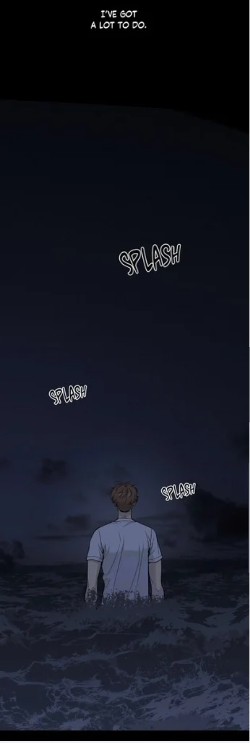 (chapter 59) caused by his grandmother’s neglect, indifference and rejection. The rescue, while focused on saving Kim Dan, also represents the birth of a new understanding for Joo Jaekyung—a recognition of the transformative power of vulnerability and connection.
  (chapter 60), not the natural world around him. The rescue planted a subconscious seed, setting the stage for his later behavior. When Kim Dan denies his assistance in Episode 60
 (chapter 60), it’s as if the doctor erases that defining moment, refusing to acknowledge the champion’s care. Yet Joo Jaekyung does not react with anger or frustration. Instead, he takes the doctor’s rejection as challenge.
  (chapter 60) However, contrary to the past, money and influence seems to have no impact on the physical therapist’s mind and heart. He is keeping the athlete at arms-length.
  (chapter 61), he begins to demonstrate his growth through quiet, consistent actions—helping others without expecting gratitude in return.
 (chapter 62) For the first time, he is not merely running for fitness or competition; he is paying attention to his surroundings.
  (chapter 62), and the natural rhythm of life around him.
  (chapter 62) Running along the ocean, a setting that profoundly influences his state of mind, Joo Jaekyung demonstrates a newfound openness.
  (chapter 62) This moment underscores his growing ability to connect with others sincerely, without suspicion or defensiveness. His willingness to engage reflects a broader transformation—one that prioritizes meaningful connections over dominance or transactional relationships. This newfound awareness signifies a major shift in his character. His senses are becoming attuned to the world beyond himself, and he is learning to differentiate between what truly matters and what does not.
  (chapter 62) Thus I deduce that he never accepted any kind of compensation in the end. But none of the inhabitants could accept such a generosity, therefore they brought vegetables or dishes. Unlike his previous life, defined by detachment and impermanence, these acts of community-oriented labor mark a significant shift in how he values his strength—not as a tool for control
  (chapter 62), but as a way to support and uplift others. The admiration from the inhabitants is genuine
  (chapter 62) One might think, he is doing all of this against his will and heart. In my opinion, it is related to his past behavior:
 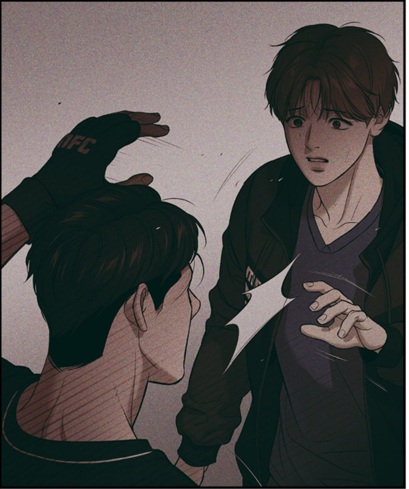 (chapter 62) The champion feels really bad for his rejection after the incident with the spray. And since he believes that Kim Dan comes from that town, he thinks that he can redeem himself by helping his “community”.
 (chapter 47), she rarely prioritized Kim Dan’s nourishment. The grandmother’s actions were driven by financial survival. Joo Jaekyung, on the other hand, receives food as a form of gratitude and recognizes the significance of nourishment beyond monetary gain.
  (chapter 58) with the reality of his evolving personality and his behavior toward others. Choi Heesung’s dismissive remark that Joo Jaekyung would “flip his shit” if he knew the living conditions of Kim Dan implies a static, unchanging view of the champion, one that aligns with a superficial understanding of him as merely ruthless and violent. However, this chapter reveals the fallacy in such an interpretation, exposing the actor’s arrogance and lack of true insight into Joo Jaekyung’s character.
 (chapter 23), they could have succeeded. Potato, the youngest member of the team, embodies this missed opportunity.
  (chapter 9) His nickname, “Potato,” while intended as lighthearted and affectionate, is something he despises because he perceives it as demeaning. Yet the reality is quite the opposite—nicknames like these often carry affection and camaraderie. Yet he rejects it out of insecurity or an internalized belief in its inferiority.
 (chapter 52) reveal a missed opportunity for bonding. The champion, who is evolving into a more open and empathetic individual, might have been an unexpected source of support and connection had Potato not listen to others and chosen to embrace this chance instead of harboring negative assumptions.
  (chapter 62) underscores the gap between perception and reality, showing how preconceived notions can prevent genuine relationships from forming. It also reinforces the theme of growth and transformation, as Joo Jaekyung continues to break away from the static image others have of him, proving that even the most misunderstood individuals can surprise us with their capacity for change. The interplay between the nickname “Potato” and its underlying affection further echoes the theme of finding value and beauty in simplicity—a motif central to the champion’s journey as he embraces humility and authenticity.
 (chapter 62) , while he had put on his expensive jeans and CK tee-shirt.
  (chapter 62). This stands in opposition to the previous scene in front of the hospice:
  (chapter 61) The focus on Joo Jaekyung’s feet
  (chapter 62) The hospital or Kim Dan’s presence may provide him with a sense of stability and calmness, allowing him to adopt a more casual and relaxed appearance. Additionally, the contrast between his expensive jeans and branded t-shirt and his unassuming sandals reveals a division between his public image and private self. While his clothing aligns with his status as a wealthy and successful individual, the casual footwear hints at a simpler, more authentic side of him that is emerging in this setting. It reflects his willingness to shed some of the societal expectations tied to his identity.
 (chapter 62) Feet often represent movement or progress, and wearing casual footwear like sandals might signify that he is in a state of personal transformation. The lack of socks further emphasizes this shedding of layers—he is slowly allowing himself to be more vulnerable and introspective, stepping away from his usual, controlled persona. Finally, sandals reflect his connection to the environment. His footwear choice underscores that the hospital is a place where he feels secure and unthreatened. The focus on his feet could symbolize his groundedness in the moment, highlighting that this environment allows him to pause and reflect, rather than act or defend.
 (chapter 62), he is immediately approached by the town chief.
  (chapter 02) The penthouse, perched high above the city, served as a symbol of isolation and self-reliance—an ivory tower of sorts, detached from the world below. In contrast, the town’s hostel
  (chapter 62) reflects shared experiences and human connection, embodying a shift toward groundedness and humility.
 (chapter 30) This evolution from animalistic aggression
  (chapter 30) to floral gentleness mirrors his inner journey—from a man who thrived on dominance to one who values connection and vulnerability. By choosing practicality over intimidation, he signals a readiness to embrace his humanity and shed the pretensions of his past. Moreover, the hat has here a different function: it serves as a real protection from the sun, hence his neck is covered.
 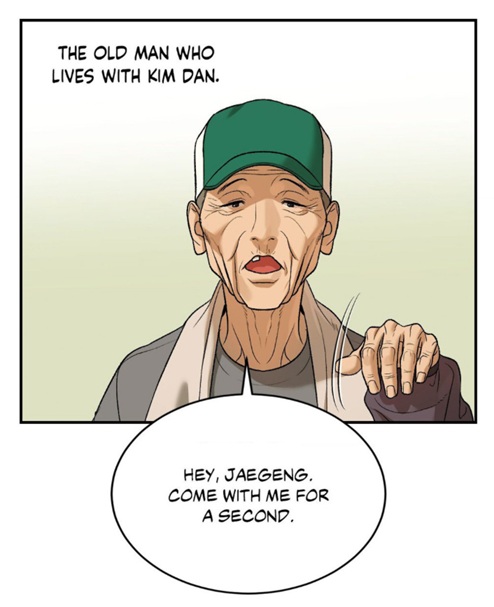 (chapter 62) “Jaegeng.” While this may initially appear as a simple mistake due to the landlord’s poor hearing, it holds deeper symbolic weight. This renaming can be interpreted as part of Joo Jaekyung’s rebirth in the town—a reflection of his evolving identity.
 (chapter 7) Yet here, in the quiet simplicity of the town, he is seen not for his image but for his actions. The landlord’s care and warmth
  (chapter 54) Like mentioned above, his stay in this little town is teaching him to become immune to manipulations in the end. His self-esteem is getting boosted, hence he doesn’t mind being called “Jaegeng”.
  (chapter 62) So far, the champion has not paid attention to Boksoon. He has not even looked at her, because his eyes are always directed at Kim Dan:
  (chapter 61)
 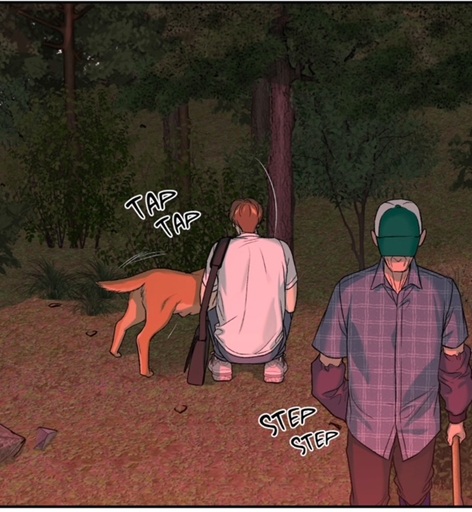 (chapter 59) Hence I have the impression, she could be the one leading him there, if not Kim Dan. Let’s not forget that the doctor’s deepest wish is to go on a walk through the woods:
 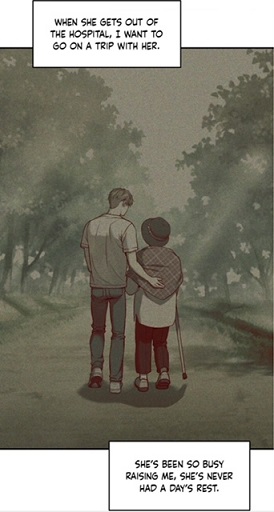 (chapter 47) Another interesting aspect is that the trip to the forest is connected to rest in the physical therapist’s mind. Striking is that though the champion helped the community, he still worked. So technically, he has never had a day’s rest either. But this is what he said to the landlord:
 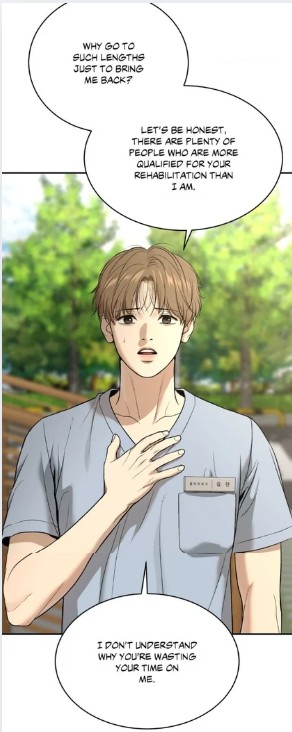 (chapter 62) Ultimately, Joo Jaekyung’s journey is not just one of self-improvement but a quiet challenge to societal values. True strength is not about control, but about the ability to grow, connect, and embrace change. Blooming muscles signifies not just physical power, but a strength nourished by care, community, and the courage to evolve. Finally, I would like my readers to pay attention to the sky, when the champion approached his fated lover:
 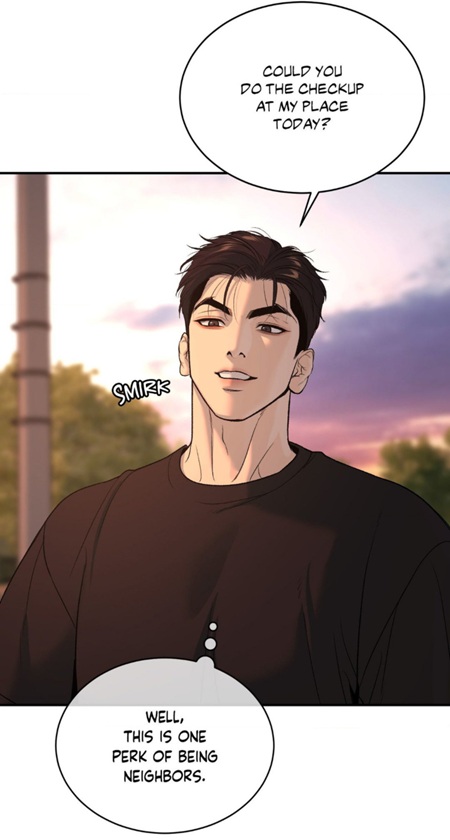 (chapter 62) It was a mixture of white, purple, pink and orange, a sign that not only the champion’s life has become more colorful, but also the night stands under the sign of love, enlightenment and life. At the same time, it reminded me of the night when the puppy was buried:


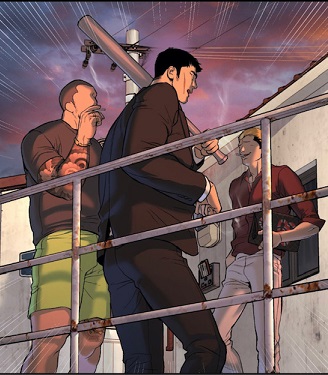

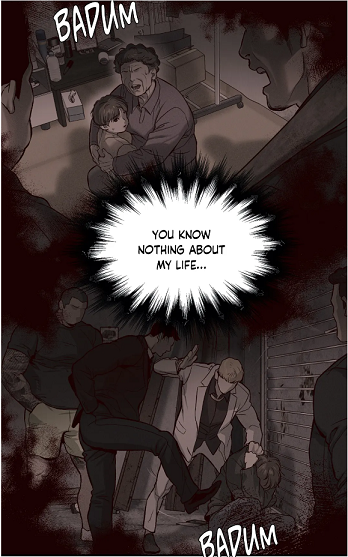





 (chapter 49) These 3 men and The Shotgun have to be seen as a team. Moreover, 4 is a synonym for death. Then, observe that the image from episode 20 contains two villains, the loan shark and the perverted hospital director. 1 +1 = 2. So when we see the number 10, 11, 16, 17 and 18, we could perceive it as an allusion to Heo Namwook, the villain.
 (chapter 11) and indirectly the persons involved in the redevelopment. However, I have to admit that I have a different explanation.
 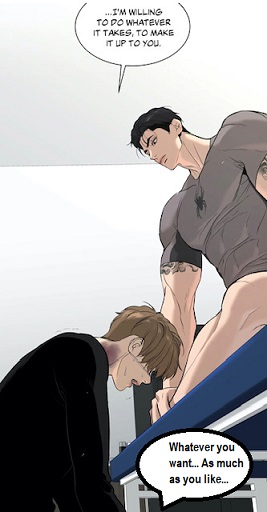 (chapter 11) Let’s not forget that in Jinx-Fandom, many Jinx-addicts calls him a “red flag”. Here, he was abusing his position. Furthermore, this theory could be seen as validated with the first episode with this image:
 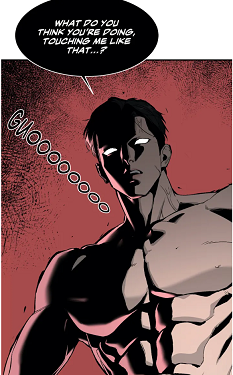 (chapter 1) The main lead appears as a beast, triggering the doctor’s fears. He seems to be like an antagonist. However, I believe that it is just a deception. First, Mingwa has clearly stated that the champion is the protagonist of Jinx. As such, he can be neither a villain nor an antagonist. Secondly, though he seems to serve as a barrier, the reality is that Kim Dan is incited to mature and overcome his own fears. In fact, the celebrity represents the opposite notions of “conformity” and “immobility”. He embodies verity, maturity, transformation and progression. The evidence of this perception is the gradual transformation of Kim Dan as an inexperienced PT to a very professional and performant physical therapist. According to my interpretation, the Emperor works as the mirror of truth. He confronts the delusional physical therapist with his mental and emotional issues, like here:
  (chapter 45) as a good trigger for the 29 years old man to turn into a good PT. From that moment on, he only focused on the sportsman, and stopped asking the help from colleagues or listening to them.
 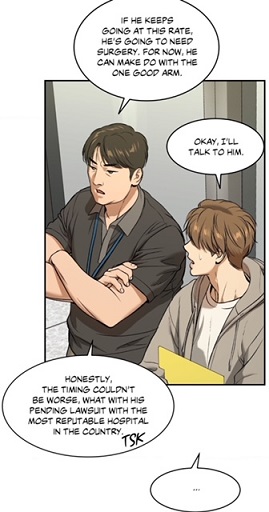 (chapter 42) He only relied on his hands. He was forced to become a serious and confident PT!!
 (chapter 1) The star was just waiting, and not threatening the doctor. As you can see, Joo Jaekyung doesn’t appear like a threat or a monster. But this doesn’t end here. One detail caught my interest. The champion is associated with blue. It is his true color, whereas Kim Dan is “red”, like a sweet strawberry. So why does this young man ooze a red aura, when his true shade is blue like water
 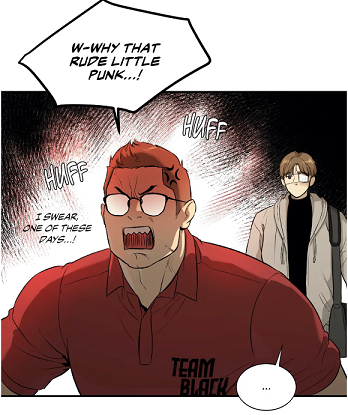 (chapter 11) The coach is yelling for Joo Jaekyung’s comment, yet the reality is that the manager didn’t treat Kim Dan at all. In fact, he feigned ignorance. Moreover, look at the champion’s t-shirt:
  (chapter 26) In this composition, I compared the MMA star with a leopard and Park Namwook to a spider:
  (chapter 17) or in episode 46
  (chapter 46) He represents regression or the hurdle to overcome.
 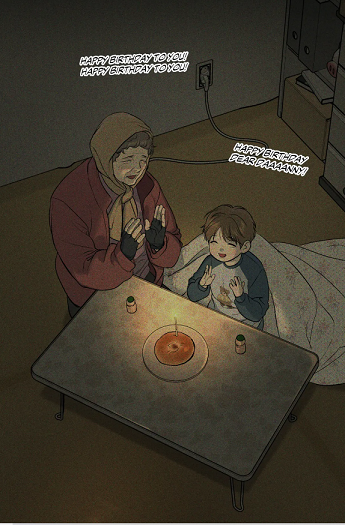 (chapter 11) And I can prove my statement by showing the episode where she appears:
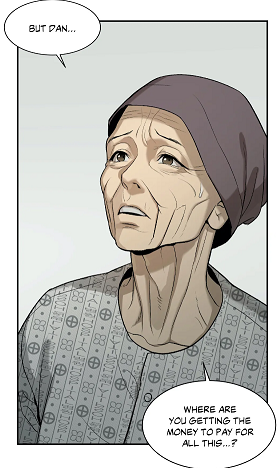


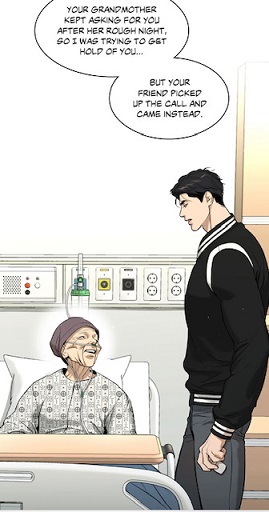

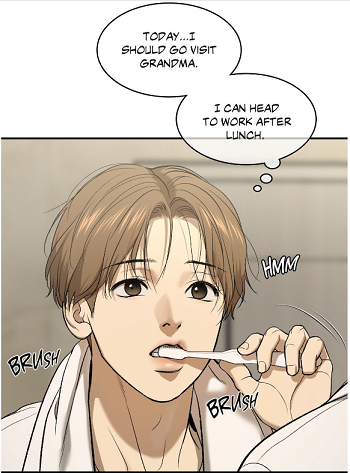
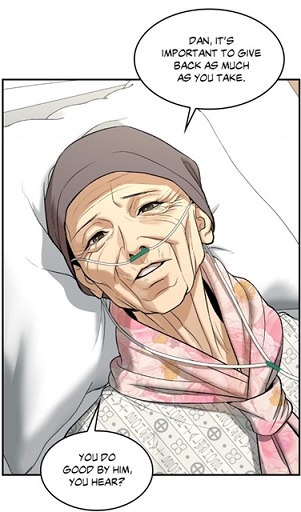
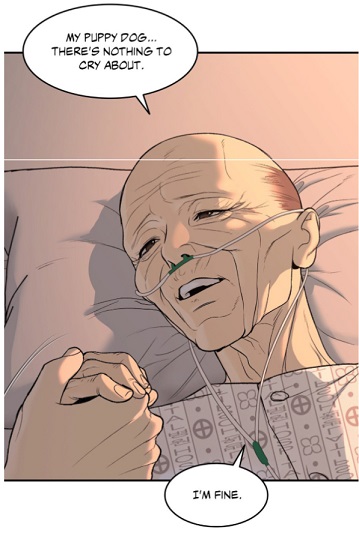
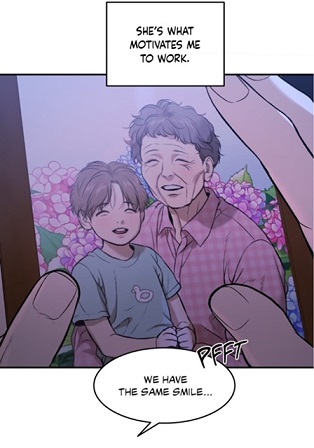


 (chapter 9) or other events like this one:
  (chapter 1)
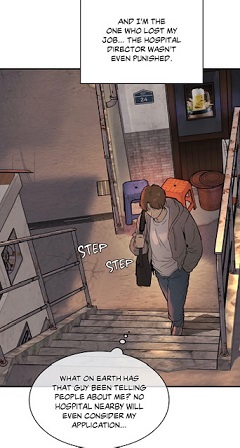 (chapter 1) But it is the same for the champion who got his “gym” stolen from his hyung:
  (chapter 22) He is acting here like a tyrant.
  I came to this revelation thanks to this article:
 . (chapter 46) This would explain the champion’s emptiness and darkness:
  (chapter 21) and Kim Miseon’s reproach to Kim Dan could be seen as an indirect allusion. And if my interpretation about her number is correct, then we would have a good explanation why Kim Dan was unable to perceive her true nature, but also why she is so selfish.
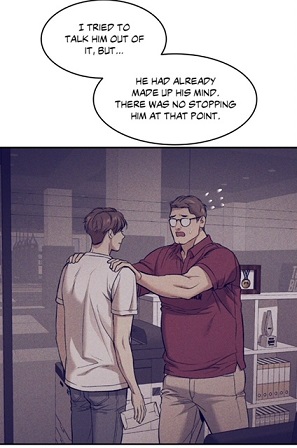 (chapter 53) Only the logo is red.
 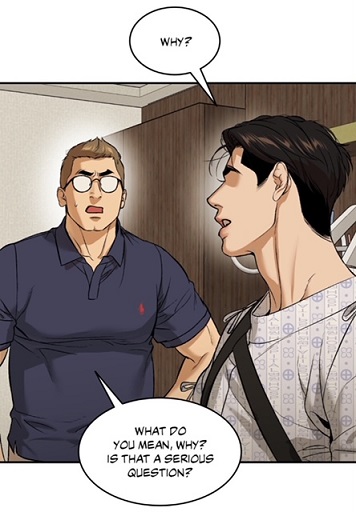 (chapter 53) It is important, because it announces the manager’s resignation. He doesn’t want to become responsible for the mess. Unconsciously, he is no longer claiming to be the owner of the gym. Furthermore, notice that the grandmother desires to return to the West Coast in order to see an ocean of “fire”.
 (chapter 35) In episode 16 and 17, the presence of the sun is a reference to the MMA fighter, it is announcing his arrival. This corresponds to the color I had detected with the first scheme:
 MFC with the blue “ring” embodies this pigment, just like the ocean. In other words, blue should be the dominant color in season 2, and in Taoism blue stands for YIN! On the other hand, Kim Dan also represents red with his name. Moreover, if you look at the numbers of the quoted episodes again, you will realize that the villains are strongly connected to the number 10 and as such one and zero. Thus Director Choi Gilseokf’s phone number is 010-1….
 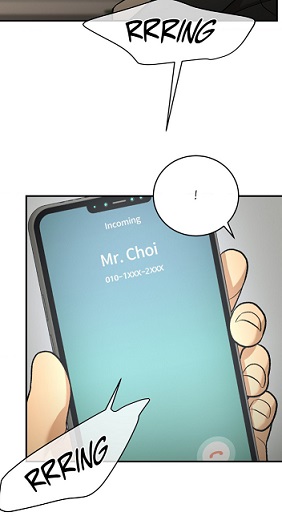 (chapter 46)
  (chapter 37) He never complimented him for his hard work at all.
  (chapter 46) With these words, the manager creates a negative atmosphere, therefore there is no longer any trust and loyalty among the members.
  (chapter 46), however Park Namwook refused to accept such a behavior from his boss. Therefore he put his pupil under pressure.
 (chapter 46) He avoided a confrontation. This number symbolizes how the lead feels burdened by obligations imposed by his oppressor, who positions himself as provider of “stability” while actually fostering dependence and draining his victim. And naturally, in the same chapter, we have a similar interaction between Heo Manwook, the minion and his hyung, the real boss:
  (chapter 46) Here, the director was reminding him of his mistakes and obligations. However, this time the boss chose to become proactive and responsible.
  (chapter 1)
  (chapter 13) They are strongly intertwined with the color green and as such blue. In literature, art, and psychology, the color blue often represents calmness, loyalty, and introspection.This fits to the description made by the author concerning season 2. The latter would focus more on emotions and thoughts than on the plot. And now, it is time to reveal why in the illustration I added the number 9.
 (chapter 9) The leopard agreed and that’s how they came to argue about his home the next morning:
  (chapter 10)- So from 9 to 18, the story is focusing on the doctor’s home. In episode 18, Joo Jaekyung invites the poor physical therapist to his home.
  (chapter 18) In this episode, both main leads refuse the assistance from the other. Kim Dan is bothered that Joo Jaekyung paid off the debts, while the other dismissed the worries from the PT:
  (chapter 18) Then in episode 19, Joo JAekyung is not asking for his “help”, until he calls him. But even here, he is refusing to prepare his partner:
  (chapter 19) As for Kim Dan, the latter doesn’t feel truly needed as PT, hence he is already thinking about taking another job:
  (chapter 19) Then in episode 27, Kim Dan offers his assistance.
  (chapter 27) He encourages his VIP client to take a break by remaining by his side. However, this attempt fails, as in episode 29
  (chapter 36) it shows his passivity and neglect. He doesn’t feel responsible for the champion’s career or safety. His concerns earlier were rather superficial. This explicates why he is also treated like a doll. Then in episode 39, for the first time, the doctor is requesting his help and assistance.
  (chapter 39) The problem is that it is related to a drug and sex. This has nothing to do with his job or career. Interesting is that in episode 45, for the first time, Joo Jaekyung voiced his needs to have him as a PT:
  (chapter 49) This means that in that scene, Joo Jaekyung refused to let Kim Dan treat him out of doubts and mistrust which were triggered by the manager’s words and the pictures. As you can see, the number 9 is strongly intertwined with help, but also with a change. The beginning of a new circle. Thus I am expecting in the new season, chapter 54, that for the first time, Joo Jaekyung will ask for help and support. But he can not ask Park Namwook or others from Team Black… he has only one true friend and that would be Cheolmin, unless he finds the protagonist immediately. At the same time, I would like to point out another observation. What is the opposite of 9? Naturally 6, which represents the end of a circle. And now, look at this:
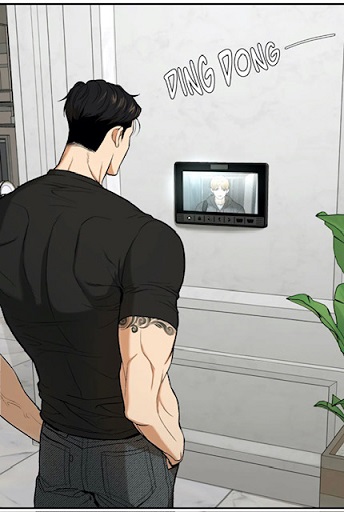 The end of Joo Jaekyung’s torment. He doesn’t need to chase after him.





 (chapter 53). Because the latter is slowly vanishing into the light, it looks like the champion will have difficulties to find his soulmate. However, if you pay attention to this picture, you will perceive that Kim Dan’s shadow is huge. In fact, we have to envision that the closer he gets to the “sun”, the bigger his shadow becomes. This metaphor is implying that the cute hamster is leaving a trail behind. This represents the traces he left in Joo Jaekyung’s life and heart. The farer he is, the clearer the fighter can only realize the importance of his roommate in his life. However, I believe that though Kim Dan is about to become a ghost, the huge shadow is implying that Joo Jaekyung will be able to find him quickly.
 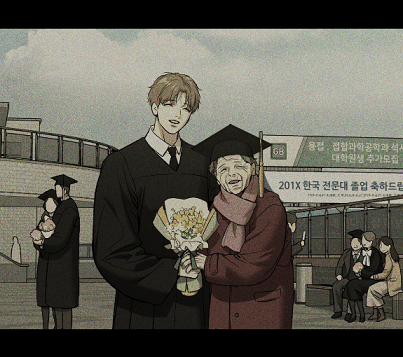 (chapter 47) You might find it strange, but everything started with the following question: where is the grandmother’s cellphone? One might argue that as an elderly woman, she doesn’t possess one. I can only reply that all the seniors I know (even my grandmother who is much older than Shin Okja) have one. Besides, let’s not forget that according to me, this image or this one
 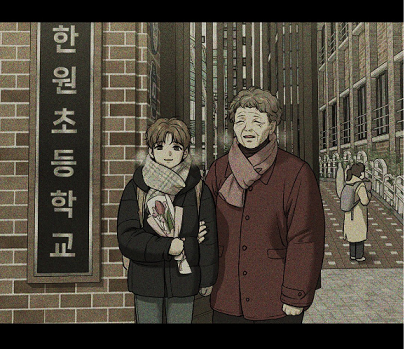 (chapter 47) represent moments where pictures were taken. I doubt that the grandmother had a camera. Then in the last picture, Kim Dan was definitely too young to have on his own cellular telephone. Finally, observe that in this panel
  (chapter 47) Before he was practically inexistent, only famous in the underground fighting ring
  (chapter 47).Interesting is that disappearing without traces implies the notion of “the right to be forgotten”. But why would people make such a decision? Either they want to escape from their environment (abusive husband, debts, …) or they desire starting a new life afresh. So when we look back at Shotgun, it becomes clear that his new identity is to mask his dark past.
  (chapter 47) It was, as if this man had not existed before. That’s how a star got born, or better said, he was a new-born man.
  (chapter 22) He doubted her existence. Why? It is because he never heard Kim Dan talking with his grandmother over the phone. He had only mentioned her in his drunken state.
  (chapter 11) There is no ambiguities that she was registered there as a resident. But if she got rid of her phone, the authorities are forced to call her closest relative. Secondly, observe that Kim Dan used the cellphone to pay bills and have a look at his bank account:
  (chapter 11) In other words, by refusing to have any phone, she dropped all the debts on her grandchild. He was now responsible for their household and expenses. Yes, the question with the grandmother’s phone led me to the following observation. Little by little, Shin Okja was vanishing which reminded me of the action from Kim Dan’s parents. At the same time, with no cellphone, she forced her grandchild to visit her, to keep in touch with her. Hence I can’t stop restraining myself from feeling that the grandmother used the hospital and the nurse to control her grandchild’s moves. No wonder why Kim Miseon complained to Kim Dan about his neglect
  (chapter 21) The senior could express her distress to the doctor, for she couldn’t see her grandchild so often. That way, Shin Okja wouldn’t appear as a whiny person. If my perception is correct, this means that the elderly woman utilized social norms and conventions to achieve her goal. The absence of a cellphone made her dependable on her grandson. Under this perspective, Jinx-philes can grasp why I am suspecting that her behavior is strongly intertwined with the abandonment in chapter 19. There is no doubt that with her illness, she could feel like she had become a burden herself to Kim Dan, and the latter could decide to leave her too. If you read all my previous analyses, you are aware of the existence of two theories concerning the parents:
 (chapter 22) Yes, by paying the bills, he got access to this information. However, for that he needs a person who can have access to such information:
  (chapter 13) Cheolmin who is also a doctor. Medical professionals often use the Resident Registration Number (RRN) or equivalent patient IDs provided by hospitals to manage medical records. Access to sensitive personal data like RRNs is restricted and regulated under South Korean privacy laws such as the Personal Information Protection Act (PIPA). This ensures that sensitive data is protected and only accessed when absolutely necessary for healthcare purposes. Only a doctor could detect the move to the Hospice “Light Of Hope”.
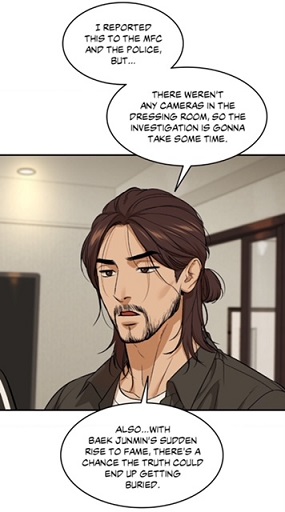 (chapter 52) If the champion doesn’t return to the gym and moves to the place where Kim Dan is without informing Team Black, they could fear the worst. The champion is the target of criminals. Finally, it is important to recall that Heo Manwook only knew how to contact Kim Dan with his address.
 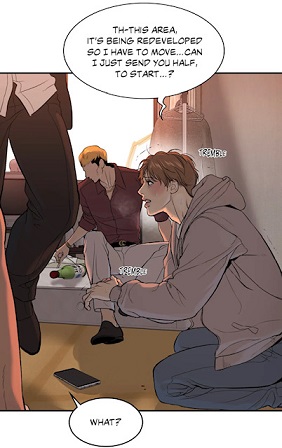 (chapter 16)
  (chapter 48) Besides, these persons seemed to know about the champion’s habits (being awakened late, being home) I had already pointed out that “the cellphone” represents the negative side of “sharing is caring”. And now imagine that Joo Jaekyung decides to leave his cellular telephone behind or even he decides to switch his phone with the one from a friend.
  (chapter 16) is an incorporated business. This means that Joo Jaekyung is the shareholder. So he is hiding his true power and identity behind Team Black. And since the Emperor was the victim of a hatred campaign in the media
  (chapter 52), his vanishing wouldn’t be surprising at all. It would be actually a normal reaction to be fed up of being online, and of being defined by the last match. What the schemers didn’t realize is that they pushed indirectly Joo Jaekyung to make the opposite decision than Baek Junmin. To disappear from the spotlight. But this can only lead him to create a whole new identity.
  (chapter 24), his relative could detect his whereabouts and moves. That’s why it is important if you desire to avoid of being detected, you need to use cash or prepaid cards to limit traceable transactions. That way, it reduces the risk of financial links to your old identity.
  . He is wearing piercing, jewels and rings, and his clothes don’t look like designer clothes. Finally, remember how Kim Dan imagined his soulmate:
  (chapter 35) Choi Heesung made a terrible mistake, he attracted the attention from the guests at the café by covering his face. In order not to be detected as a star, the athlete has to act and dress like an average person: no fancy dress or car. And this leads me to my final point: using public transportation or the bike would represent a huge change for the Emperor. Once again, no one would suspect that a biker is a celebrity, similar to this scene:
 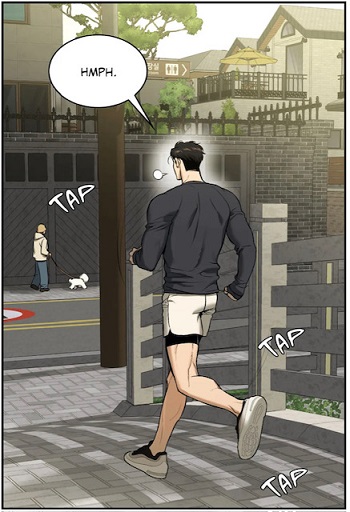 (chapter 21)
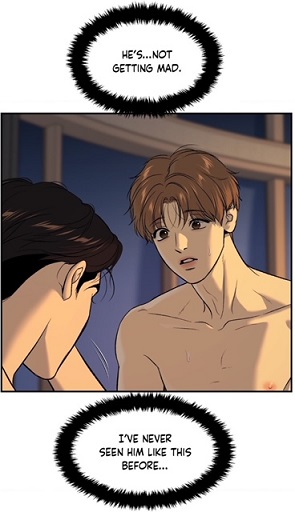 (chapter 44) This made the physical therapist’s laugh.
  (chapter 44) His genuine laugh combined with the following realization
  (chapter 44) shows that in that moment, the physical therapist rediscovered his youth again. I would even add that Jinx-philes were witnessing in this panel how Kim Dan reconnected with his inner child.
 (chapter 44) Thanks to Tinker Bell, he could fly: he was brought to Nirvana.
  (chapter 44) The problem is that the physical therapist was reducing love to sex (“making love”). True love has to be expressed in a lot of different ways (spiritual intimacy, experiential closeness, responsibility etc) and not just through sex.
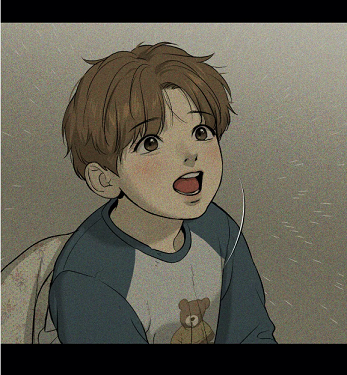 (chapter 11)
 (chapter 47) By saying that he was a puppy dog, she was implying that she would be responsible for him. Keep in mind that pet are linked to care and accountability. However, her wish is strongly connected to one single moment:
  (chapter 53) She is not thinking about the future at all. For her, it doesn’t matter, for her time is limited. Dog can be abandoned in the end, especially when the responsibility becomes a burden. That’s the reason why I believe that in verity, she was treating the protagonist more like an object than like an animal. Moreover, Jinx-philes should keep in their mind she used to describe him as a little boy, which also represents responsibility and care. Therefore I conclude that this scene didn’t stand for Kim Dan’s true home, it was just an illusion.
  (chapter 19), very territorial and disliking surprises. In literature, leopards often symbolize strength, courage, agility, and stealth. They are seen as solitary and powerful hunters, often representing independence or mystery. In totemic traditions, the leopard can symbolize resilience, adaptability, and personal power, often embodying a person’s inner strength and ability to face challenges.
  (chapter 26) One might argue that he laughed with Potato and Oh Daehyun in the States. But are you sure? We never saw him laughing. Only Joo JAekyung heard their laughs, but did it also belong to the hamster?
 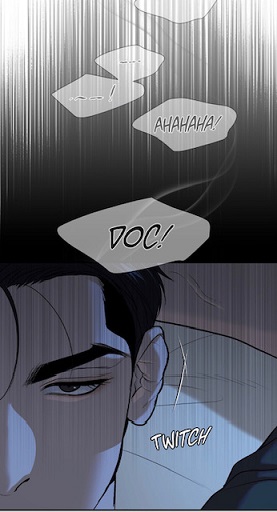 (chapter 37) Moreover, observe that during that terrible night, the athlete was wearing an t-shirt with a feline on it:
  (chapter 37) Puma was designed on it. As you can see, everything is pointing out that this man is a leopard which was mistaken to a sulky cat or a puma.
  (chapter 44) So since the champion was naked during this night, we could say that his true nature was slowly coming to the surface. As a predator, his annoyance to the strokes and kisses appears more normal and understandable:
 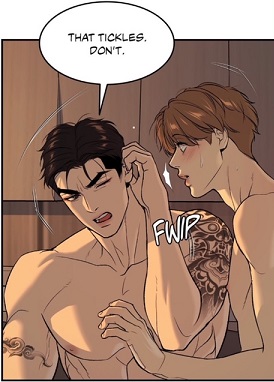 (chapter 44) Kim Dan is teaching him how to control his strength and discover playfulness. And now, imagine Kim Dan patting a leopard 😉
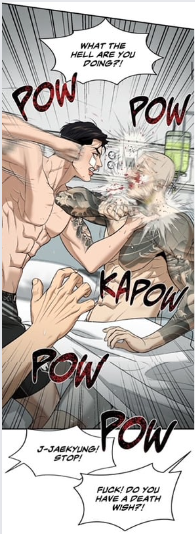 (chapter 52) But what had triggered the champion?
  (chapter 52) Eye-contact! Making direct eye contact with a leopard can be dangerous. Leopards may interpret prolonged eye contact as a threat or challenge, triggering an aggressive response. In the wild, they rely on stealth and avoid open confrontation, so they may react defensively if they feel they are being stared at. This behavior is common among many predators, as eye contact often signals dominance or confrontation. It’s generally advised to avoid direct eye contact and back away slowly if you encounter a leopard in close proximity. Baek Junmin had totally underestimated the true nature of his opponent. This could explain as well why Park Namwook is wearing his glasses all the time and even avoiding eye-contact with the emperor.
 (chapter 24), Oh Daehyun the eagle…
 (chapter 9)
  (chapter 7) indicates that she was not senile or totally oblivious of the truth. She raised her voice out of fear that Kim Dan might have signed a lease behind her back. In that case, she would have become responsible for the new debts. Note the drop of sweat on her cheek, a sign of discomfort. Since I started examining Manhwas, I noticed the strong correlation between the drop of sweat and hypocrisy. Thus I conclude that the halmeoni was living after the following principle: “What the eye does not see, the heart does not grieve over”. For me, her gentleness and smiles are masking her true personality: greedy, selfish and even heartless.
  (chapter 16) the loan shark and the old lady. He knew where she was (hospital), and notice that her grandson had been paying the loan from his own account and cellphone.
  (chapter 16) As you can see, the debt was strongly connected to the grandmother’s house. But who had moved out from the small dwelling? The grandmother. Interesting is that this district was about to get redeveloped. The thugs could have noticed it… there were everywhere banners announcing the new construction.
  (chapter 9) But who was not aware of the redevelopment? The grandmother… She had been living at the hospital for 3 years. I came to this deduction because of Choi Heesung’s remark about his k-drama:
  (chapter 30) As you can see, I have the feeling that Shin Okja is not so innocent either. She must have known that her grandson was exposed to violence. In my eyes, her MO is always to leave her mess behind and let others take the burden.
 (chapter 21) Her MO is to wait for some change, as if she was waiting for a miracle. It was the same with the house: the latter had mold, a broken window… not because of her, but because of life and other circumstances. It was not her fault, if the house was not well-maintained. She couldn’t change it, but the presence of the huge Wedding Cabinet exposes this lie. She could have sold it and with the money, either pay back the loan and move to a smaller but better house. Moreover, she was able to watch a K-drama during the weekend, a sign that she definitely had time.
  (chapter 30) She was not working non-stop. Another important aspect is that such persons are passive, because they are waiting for the right time or for the outside help. They somehow imagine that a prince charming will suddenly appear and remove all their problems. Consequently, I conclude that the elderly woman views herself as “Sleeping Beauty”, hence the doctor adopted her mentality. The athlete must have appeared like a knight in shining armor for the grandmother that day.

 (chapter 46) On the other hand, chapter 47 exposes that the doctor didn’t lose his interest and attention towards his boss.
  (chapter 47) This exposes that Kim Dan didn’t choose resent or indifference towards Joo Jaekyung despite the inflicted pain. On the other hand, why did I write that the celebrity is Kim Dan’s reflection? Why is the athlete the doctor’s mirror of truth? It is because Joo Jaekyung embodies his negative reflection: independency and toxic negativity. But what is the latter exactly?
 (chapter 31) It is because when the psychologist met the patient with her boyfriend for the first time, he paid attention to his micro-expressions, and more particularly to his mouth. He saw his smirk. Here, I feel the need to give an explanation how these micro-expressions were discovered.
 (chapter 30) As my avid readers can detect, the expression from the boyfriend’s mouth displeased the white-haired psychologist. He could recognize his emotion, though such facial expressions are very short-lived
 .(chapter 30) So what was the “jerk” feeling, when he was conversing with Sihyun? Cynicism.
  (chapter 31) And the reason why he stated that as soon as cynicism or scorn was present in a relationship, the couple would end up breaking up is because of John Gottham’s observations and conclusions.
 (chapter 45) We could sense it in different scenes, though I would say that his cynicism was slowly vanishing:
  (chapter 3)
 (chapter 40) This is the so-called toxic negativity. Therefore it was to expect that the champion would reject the doctor’s present. He could only doubt the sincerity behind his gesture. How so? Remember how the team desired to celebrate his birthday: a surprise party. They bought a cake…
  (chapter 43) but what happened afterwards? Yosep spoke in the name of the gym’s owner: the latter would pay for the dinner (beef restaurant)
  (chapter 43) So technically, they offered a cheap cake and got in exchange a super expensive dinner. One might say that this was just a joke. But cynical people are taking things very seriously. This is what the champion learned from this experience, the cake in exchange for a super expensive meal … and now imagine that the next morning, he received an „expensive“ present from Kim Dan which was similar to the gifts from fans (exchange of favors). It is normal that he doubted the genuineness from his doctor, not only because of his past experiences, but also because of the parties before. But there exists another reason why he had to refuse the gift: Cynicism… the end of relationship. Thus dating for the athlete was impossible.
  (chapter 45) He is not ready yet. But was it Cynicism exactly and how does it represent a hindrance for a healthy relationship?
 (chapter 8), in the office, in the car, in front of a mirror, in front of Heesung in the living room… Don’t forget that Diogenes would even masturbate in public.
  (chapter 46)
  (chapter 46) Consequently, he never tried to get close to his members either. In fact, he is expecting from the staff to follow his lead. Potato could only get rejected with such a request.
  (chapter 23) The latter had to act like a true disciple and follow the champion’s recommendation.
  (chapter 23) The gym is like his sacred temple. Yet, the gym is just a simulacre of “nature”, as it is in the middle of Seoul. Therefore I realized why after their argument, Joo Jaekyung avoided the penthouse and Kim Dan in the end.
  (chapter 47) It is because deep down, the champion sensed that his flat had become a home. He wanted to ensure that the penthouse was still a workplace or a hotel room. Thus he refused to eat the breakfasts prepared from his PT. In his eyes, these meals must have appeared as a violation of his self-imposed discipline. It was more than self-sufficiency. Under this new light, Jinx-philes can grasp why he rejects presents and prefers donating money.
 (chapter 41) He is looking for freedom and self-sufficiency, detached from any material need. This explains why the golden keychain from Kim Dan could only offend him.
  (chapter 45) It symbolized everything he hates: a reminder of wealth, superficiality, attachment, secrecy and silence. It also exposed the huge difference in their mind-set. Kim Dan is not his disciple! He imagined that he had found a kindred spirit, especially after that night:
  (chapter 10) He is not resigning on designer clothes.
  (chapter 45) He might advocate autonomy and self-sufficiency, the reality is that he likes luxury. Hence he is unable to live in harmony with nature. This shows that the fighter is in denial and is living in an illusion. Thus he can not find true happiness, for his freedom is not real. He is attached to the gym which is also strongly connected to his career as the Emperor.
  (chapter 46) With his brutal attitude, he is doing himself a disservice. Exactly like Kim Dan, he is even ruining his career and own reputation. Not only he lost 4 athletes (I am including Seonho), but also his loyal admirers are calling him a thug now:
  No one can survive on his own. This explicates why Cynics had disciples in the end. And now, you comprehend the role of Kim Dan in Joo Jaekyung’s life. It is to remind him of his true nature. He is a human and not a dog-wolf. Thus the champion recommended his PT to live elsewhere, a sign that he was indeed a human.
  (chapter 10)
 (chapter 2) This explicates why the champion was crossing his arms while confronting the goblin. He was on the defensive. That’s how it dawned on me why the celebrity fell in love with Kim Dan at first sight, and why he enjoyed their first night together. The “hamster’s fear” was genuine. His desertion displayed respect towards the celebrity. He was recognizing his strength and power.
  (chapter 1) Then the micro-expressions from Kim Dan exposed his lie
  (chapter 3) On the one hand, the champion’s worldview about humans got reinforced, on the other hand the doctor’s deception symbolized his purity. He was a virgin, which was contradicting his “theory” too.
 (chapter 11) He even looked like a ruler abusing his authority.
  (chapter 11) Here, the champion thought that Kim Dan had been gambling. An emperor or ruler, especially one characterized by a lack of idealism, may embody the cynical belief that individuals are primarily driven by self-interest and that altruistic motives are rare. Therefore the celebrity rejects the notion of soulmate
  (chapter 33) or even the idea of friendship
  (chapter 30) Heesung was not just taking advantage of his reputation, he was also teasing the sportsman. Joo Jaekyung has such a negative perception of humans.
  (chapter 33) Hence he looks down on poor people.
  (chapter 42), Park Namwook
  (chapter 36)
 (chapter 45) was showing the doctor’s golden heart. He was just judging his lover based on his past experiences and his negative worldview. And this brings me to list the cause for Cynicism:
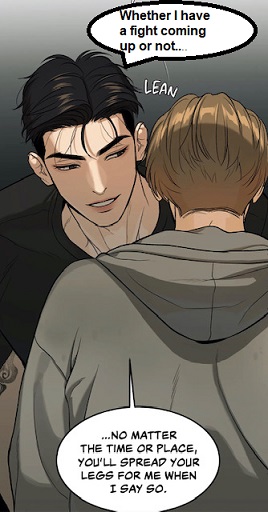 (chapter 6)
  (chapter 26)
  (chapter 2) He learned through Cheolmin that he could kill him. This shows his good nature in verity. Hence he resorted to such gestures, when his cynical depression resurfaced:
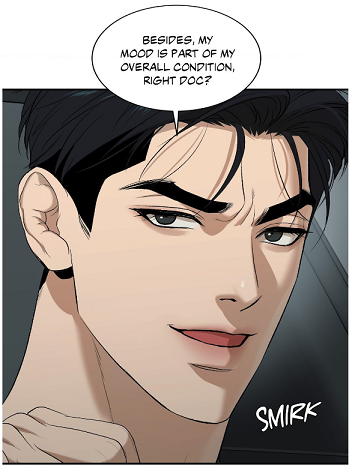 (chapter 32)
  (chapter 36)
  (chapter 45) As you can see, little by little, the champion is learning to control his rage and “cynicism”. During the last argument, he didn’t touch the physical therapist at all. He still allows him to stay at his place and he is shown as caring later.
 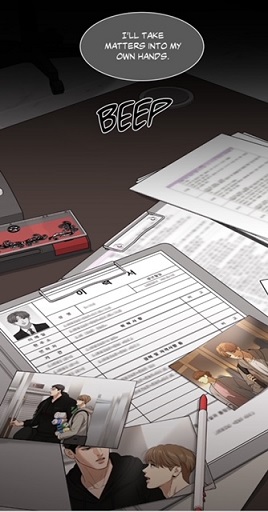 (chapter 46) The irony is that Joo Jaekyung is not recognizing his own transformation. The most obvious evidence for his metamorphosis is the absence of his jealousy towards the doctor.
 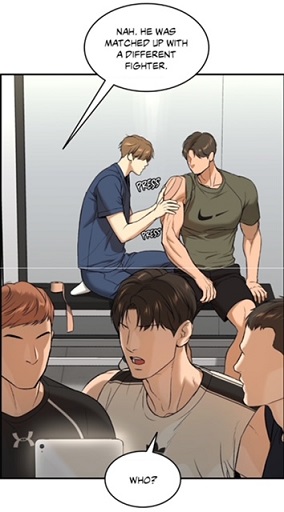 (chapter 47) It shows a certain trust. One might argue about this interpretation. This could be seen as indifference. However, I believe that his altercation with Seonho must have been quite an eye-opening for the champion.
  (chapter 46) It is because Kim Dan had not talked back to Joo Jaekyung during their argument. He had accepted his criticism silently contrary to Seonho. Right now, he has the impression that he still has the upper hand, but he couldn’t be more wrong.
  (chapter 26) He has the impression that he can control people, since he is wealthy. Yet, he is not realizing that he can get stabbed because of money as well. We have two perfect examples. Because of the drug incident, the MFC security guys betrayed him, as they protected the organization
  (chapter 40) Then in episode 47, the emperor got manipulated by his so-called loyal advisors.
  (chapter 47) First, I would like to outline that neither the manager from the Entertainment agency nor his acolyte brought up the underground fighting ring and Baek Junmin’s dubious success.
  (chapter 47) With their video, they presented him as an average and reliable fighter.
  (chapter 47) Observe the divergence between the advisors’ words and the members’ from Team Black.
  (chapter 47) The latter portrayed Baek Junmin as dangerous, for he would use any mean to win the fight. He doesn’t stand for fairness and responsibility. The champion didn’t get to hear anything about these rumors.
  (chapter 22) This is what psychologists recommend to overcome Cynicism:
 (chapter 41) He never heard her recognition. In addition, until now, Kim Dan spoke in the name of others or didn’t defend his own point. Team Black’s loyalty would be the evidence that it is dangerous to judge people based on prejudices and past experiences. He needs to reflect on his own actions as well. If the Emperor heard “his members”, he would realize that MFC as an organization is corrupted and is even involved with criminality. He is already sensing something, but he can not identify the problem.
  (chapter 47), he would prove his faithfulness and sincerity to the fighter. And the vicious circle would be broken. Though he is broke, he would give up on an opportunity to earn some money easily. To conclude, as long as the champion is still a cynical character, he can not enter a relationship with Kim Dan. For that, he needs to open up his heart and third eye so that he can recognize his partner’s selflessness and honesty. Finally, he will realize that he needs the assistance of others in order to be able to keep his reputation intact (witnesses, supporters). There is no doubt that the Emperor will be badmouthed again.
 (chapter 14) On the other hand, some readers might wonder why I am connecting Kim Dan to princess (Prince S). I have many reasons for this association.
 (chapter 30) This woman, named Sihyun, is suffering from Dependent Personality Disorder. And the author of the Webtoon Doctor Frost called her story: “The tears of Princess Pyeonggang”. Due to her personality, she was linked to the famous “princess”. She would do everything for her companions, yet she kept getting dumped. What caught my attention is that both women defined themselves through their partner. Their ultimate goal in life is to assist them, to make the other happy or recognized. But how is it a problem?
 (chapter 33) What appeared as caring turned out to be a load, for the partners were all forced to be responsible for her and in every aspect of her life. They definitely felt asphyxiated, hence they could only get sick of her. Interesting is that this person would find shortly after the separation a new boyfriend, a sign that she could not live on her own.
  (chapter 33) And now, you are wondering how Sihyun is similar to Kim Dan, who only had one person in his life before he met the champion. It is related to traumas in their childhood.

 (Doctor Frost, chapter 39) After reading this, Jinx-philes can realize that Kim Dan is also suffering from Dependent Personality Disorder, though it is less obvious. He got abandoned by his parents making him feel insecure.
 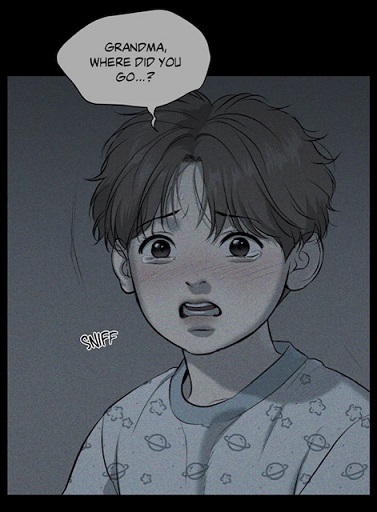 (chapter 21) We could detect his low self-esteem
 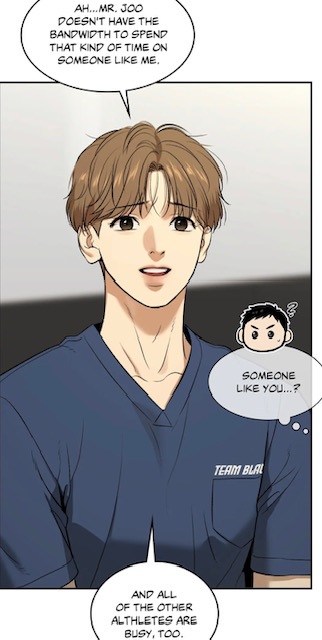 (chapter 25)
  (chapter 46) and his overprotectiveness
  (chapter 26)
  (chapter 42) on many occasions. He was risking his livelihood and health for the sake of others (his halmoni, Potato and Joo Jaekyung). His selflessness is actually the sign of his DPD. He had no purpose or ambition in his life… That’s why he is not able to project himself in the future. Until chapter 45, his life and future was determined by the celebrity,
  (chapter 42) and before it was by his halmoni’s fate.
 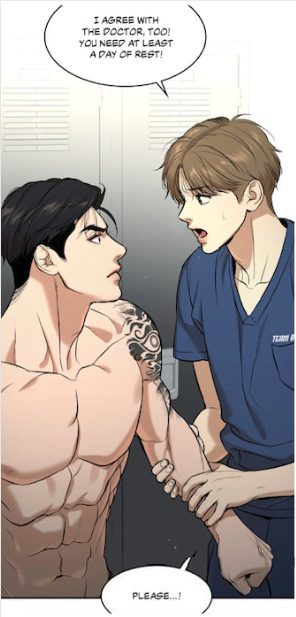 (chapter 27)
  (chapter 31) Here, we get an explanation why he couldn’t detect the trick from Choi Heesung. He feared to make a diagnosis on his own, as he didn’t desire to question the words from the comedian. The hospital seems to be the sacred place in the doctor’s eyes.
 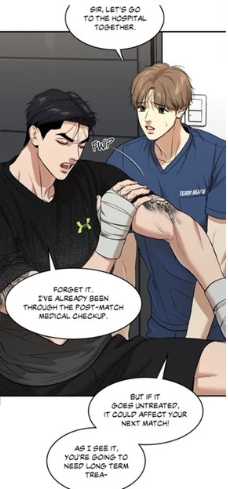 (chapter 41) There, nothing can go wrong. But by entrusting his patients to hospitals, he didn’t realize that he was appearing as untrustworthy or even “incompetent”. His lack of confidence and hesitation explicate why the athlete replied to his suggestion like this:
  (chapter 41) How could he question the doctor from MFC, when he kept hiding behind a hospital or the words from other physicians? That’s how the physical therapist got silenced. He couldn’t confront the athlete with his diagnosis. Interesting is that he never gave him the file later!
  (chapter 42) Consequently, it is not surprising why the champion complained about the doctor’s negligence. The latter was avoiding any responsibility in the end. On the other hand, the report is the symbol of his hard work, but also of his knowledge. That’s the reason why I am still considering the dispute in chapter 45 as a good omen for the physical therapist. He needs to develop his own identity. They are two different people. He needs to live for himself, to give a meaning to his life and not:
  (chapter 27) That’s how it dawned on me why the doctor reverted to his old habits (not participating to the meeting, taking odd jobs, not voicing his own judgment, relying on others) after the night, when he was treated as sex toy. However, in my eyes, the trigger for this switch was the release of the tabloid article.
  (chapter 27) It is because his self-esteem had been boosted by Dr. Lee. The latter had complimented him which didn’t fall on deaf ears. However, the relationship between the respectable hospital and the athlete went sour due to his article.
 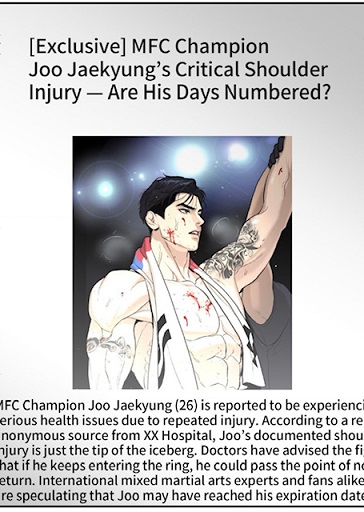 (chapter 35) Imagine what it meant for Kim Dan. He could only remain passive, as he is called “doctor”. He views himself as a member from the medical field. Furthermore, observe what the sports therapist told him during the treatment session:
  (chapter 46) This is not surprising that Mingwa zoomed on his feet.
  (chapter 46) It is full of symbolism. For the first time, he is standing on his own feet. His walk in direction to the trash bin illustrates his choice.
 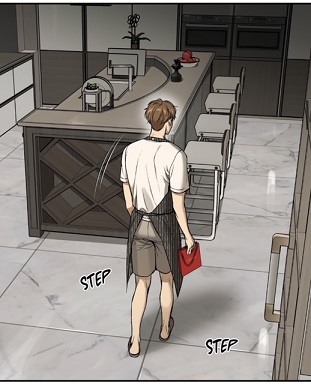 (chapter 46) Besides, he is using the personal pronoun “I”.
  (chapter 46) It is his Coming-Of-Age. He is on the verge to become independent. On the other hand, he didn’t fight back verbally against his boss. He accepted his reproach.
  (chapter 46) He was just a physical therapist and nothing more. This shows his lack of criticism. He is still not mentally strong enough to question the champion’s words and argue back. In the past, he could do it, for he was identifying himself with his grandmother and her values.
  (chapter 42) The latter was also dependent on the champion, but his “addiction” was money and not love or recognition. Therefore he picked up the money before leaving the flat
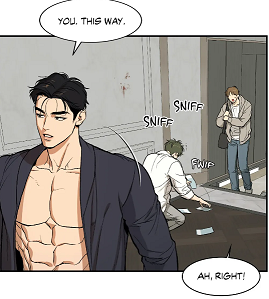 (chapter 2), while the other threw away the expensive keychain
  (chapter 46). This scene exposes the return of Kim Dan’s dignity. This comparison reinforces my interpretation that the champion misjudged the doctor’s present and actions. He imagined that Kim Dan had been acting like his “previous sex-partners” or stans. They would offer him some gifts in exchange of favors. Another contrast with the goblin is the absence of a fight and discussion.
 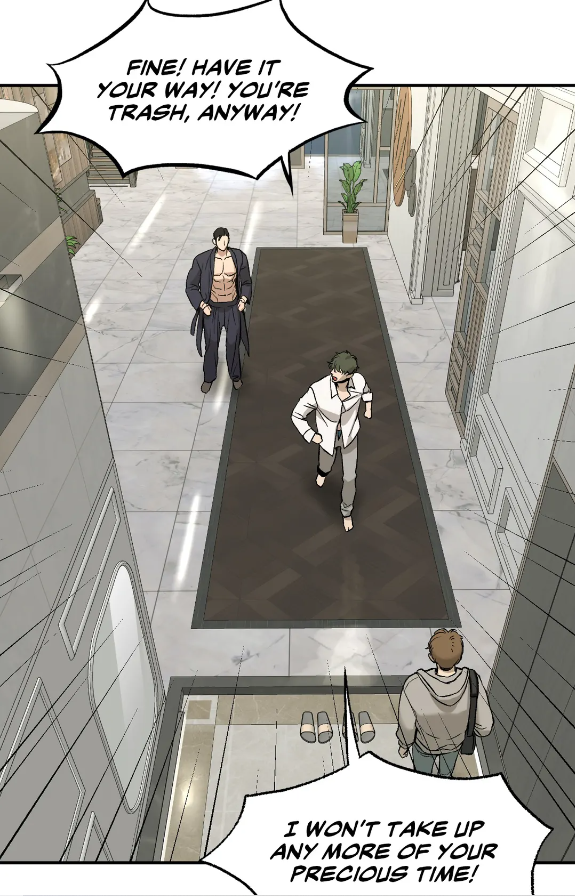 (chapter 2) I would even add that contrary to the green-haired guy, the doctor is not judging his patient’s personality, he is blaming himself.
  (Doctor Frost, chapter 32) Interesting is that doctor Frost revealed to her later that her condition made her an easy target, as she kept relying on others.
  (Doctor Frost, chapter 39) And this observation brings me to my next conclusion: he will be approached by really bad guys, the mysterious Mr. Choi!
  (chapter 1) He even needs to learn the difference between good guy and nice guy, but this remark applies to the grandmother.
  (chapter 21), yet their actions were not truly selfless.
  (chapter 44) He found fulfilment in sex, which stands in opposition to the recommendation of zackbeach. Moreover, I would like to underline that the doctor reduced knowledge to sex:
 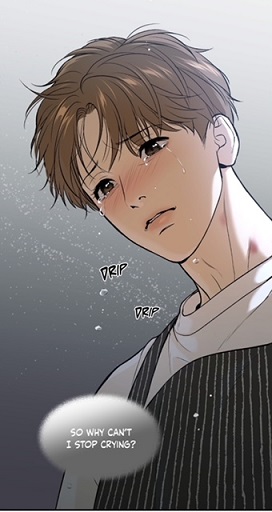 (chapter 46) He allows himself to cry, to grieve and to admit his pain and loneliness.
 (chapter 46) It helps him to face reality. He is on his own, he needs to stop relying on others. I would even say, he is encouraged to make decisions and as such to become responsible for his own life. It is important, because this means that he will have to fight back, if he wants to survive. He can not make any desperate and hasty decisions, like this one:
  (chapter 1) However, since he listened to the champion’s reproach and became submissive again, their relationship seems to have returned to normality. They even appear as close.
  (chapter 41) reminded me of the ending of a fairy tale: they lived happily ever after. But the doctor was forgetting that life doesn’t end after the match in the States. Life ends with death. In verity, the champion is destined to be challenged, until he retires. What the doctor saw was not the end. This exposes his naivety. How could he have such a view? It is influenced by his grandmother.
  (chapter 10) At no moment he pondered about himself. Happiness was never his goal, exactly like in fairy tales. Sleeping Beauty is rather passive. She sleeps, until the prince charming appears and kisses her. After that, they have kids. Interesting is that they don’t get married right away, so that the princess initially has the status of a mistress or concubine. Once the prince can secure his position, he marries her. Then the moment her husband leaves her side for war, she is tormented by her mother-in-law, the ogress. She can only escape death thanks to the intervention of her husband. We could say that happiness fell on her lap. Sleeping Beauty stands for passivity, dependence on her parents and husband and lack of critical thinking. Why? It is because the princess in fairy tales, in particular Sleeping Beauty, embodies toxic positivity.
 (chapter 21) She rejected her grandson’s fear and tears. She didn’t allow him to express his abandonment issues. She diminished his anxiety by questioning his behavior: “It’s okay, grandma was just in the kitchen getting a glass of water.” Then in the present, we could use his visit at the hospital:
  (chapter 41) While the halmoni didn’t mention her suffering, the doctor gave expensive gifts to the nurse and his grandmother. He acted, as if money was no longer a problem… as if everything was fine, as if she would recover soon. Yet, he never mentioned his problems with the champion during his stay in the States (no drug incident, the humiliation, the harsh words). He is never voicing his problems to his grandmother. Both are putting smiles on their face. And the moment, I connected Kim Dan to Toxic positivity, I had another revelation. The best example for this negative attitude is actually his own birthday. 😱
 (chapter 45) With this contrast, the fear from the champion becomes more palpable. Joo Jaekyung got angry, for he had been put in the same situation. But the latter was never influenced by Toxic Positivity. Besides, he was fighting against his own inner demons. Nevertheless, this new interpretation of the birthday made me recognize why the author chose this chronology concerning Kim Dan’s past:
 (chapter 11), as he imagined that he could pay off the debts, he recalled his birthday. He had a nice “souvenir”… convincing himself that everything was fine. He would be able to do it, like his grandmother had told him.
 (chapter 12) Therefore I understand why the doctor didn’t fight back against Heo Manwook and his minions.
  (chapter 1)
  (chapter 11) But the moneylender and his minions are no honest bankers, but criminals. They enjoy using their strength, that makes them feel powerful. It boosts their ego.



 (chapter 1) He was even called a psychopath, for he resorted to kidnapping
  (chapter 1) sequestration, threats
  (chapter 2) and blackmail and he initially showed no remorse.
 (chapter 7). On the other hand, he never got into trouble for his wrongdoings. Why? It is because he wasn’t violating social norms.
  (chapter 10) It was his right to punish servants, for they are not considered as humans but as propriety. As a lord, he could treat commoners, like it pleased him. Though murder is prohibited, even against a lowborn,
  (chapter 43), the reality is that nobles would never get into trouble!! As you can see, there exists a discrepancy between laws on the paper and the reality which was exposed by the rumors in episode 106.
  (chapter 107) The fathers would use their position and influence in order to cover up their children’s wrongdoings. And we have the perfect illustration, when the elder master bribes the governor.
  (chapter 127) That’s the reason why the younger generation could do everything! Though the lord appeared as a monster first, he became a “normality”, the more we got to read this story. Under this explication, it becomes comprehensible why lord Min was so sure not to get bothered by the authorities.
 (Chapter 101) He had bought the officers (“the guards”). This explains why Black Heart could threaten No-Name.
  (chapter 76) He didn’t need to dirty his own hands, he could simply frame him. Consequently, I deduce that he had learned this misconduct through the elders’ behavior.
  (chapter 116) This shows that neither Black Heart’s father nor Yoon Chang-Hyeon truly love their children, as according to Erich Fromm, love is knowledge, respect, care and responsibility. However, the elder master Yoon is totally ignorant about his son’s talents and good nature. Thereby, I see lord Seungho from season 1 as the perfect illustration of the corrupted world of the nobility. The monster “Yoon Seungho” was just a reflection from this ruthless and immoral society. Since he committed wrongdoings, his karma was to pay for his sins. It starts with a murder, and the main lead ended up killing people. He might have not broken “traditions” like the disregard of the yangbans against lowborns, but it is considered immoral. He had sinned and now, he is paying for his sins. Therefore his words in the prison resonate differently.
  (chapter 126) He expresses regret. He confesses his crimes, he killed people! This means that he is now siding with the lowborns. Their life is as precious as the ones from the nobility. Yet, note that in this image, the author didn’t drew his eyes. Why? It is because in the moment he executed people,
 (chapter 102) he was either not himself or he did it out of reflex to protect himself. He was influenced by his past experiences and as such traumas. In the shrine, it becomes more obvious, for he has a lost gaze. He is not even looking at his target. Finally, when he met lord Song, he did it to “protect” himself.
  (chapter 123) For me, in episode 1, the execution was triggered by his desire to protect himself and his traumas. And what is the common denominator between these three scenes? The father Yoon Chang-Hyeon! Don’t forget that the petition was the reason for their meeting. And now look at the actions from the patriarch.
  (chapter 116) He had given the order to eliminate all the servants, for they could represent a threat to his “treason”. This explains why the butler describes himself as the only survivor and witness.
  (chapter 86) And we see him giving the order to kill the surviving guard
  (chapter 125) Besides, he had no problem to order the assassination of his own son which was stopped by the intervention of a helping hand. The father had never asked to spare the main lead’s life.
  (chapter 124). He was his bad role model. But he is not the only one. There is another one…
  (chapter 51) Once a criminal, always a criminal… therefore it is not surprising that the joker chose assassination as second work. By working for the nobles, he would be able to escape punishment, because if he got arrested, he could denunciate them. To conclude, justice is inexistent in Joseon. Yes, we are witnessing the downfall of Joseon, or precisely the king’s bad ruling. The latter is not capable of providing justice to anyone. And this coincides with the purge!
  (chapter 37) What is a purge?
  (chapter 107) “Stepping down” was actually an euphemism for removal. The officials were chased out,
  (chapter 80) but their evictions were turned into stepping down.
  (chapter 122) No wonder why lord Song came to resent the protagonist. Under this new light, it becomes comprehensible why the purge was not noticed by commoners. There was no fire and the staff was sparred.
  (chapter 103) The boots were the indication that this person was working for the government. And it was an elder, for he was wearing this particular headgear.
  (chapter 103)
  (chapter 67) The murder of lord Shin is the evidence of the anarchy in Joseon. But actually, the monsters are actually everywhere, and not just among the nobility. The Chungin with the scholar and the physicians who have no problem to lie, participate in a kidnapping and drugging people… the kisaengs, the maids, the servants. They are all accomplices, for they feigned ignorance or chose to remain passive, for they preferred avoiding trouble. What people failed to realize is that no one is safe from this tyranny. Hence people could get killed and thrown into a well so easily
  (chapter 97)
  (chapter 101) and their perpetrators got scot-free. Why? It is because the mastermind and the helping hands are protecting each other, like we could see in the Joker’s case. However, the latter in season 3 had no idea that they would face divine retribution and pay with their life.
  (chapter 102) In front of gods, humans are all equal. There is no distinction between gentry, Chungin and commoners. That’s the reason why I come to the conclusion that Yoon Seungho is the divine hand of justice, he is bringing the “divine retribution”. This explicates this vision:
  (chapter 83) Under this new approach, it becomes comprehensible why he is called “the bird of misfortune”. People around him got to suffer, for they received their karma. Funny is that lord Song mocked him by calling him a grim reaper.
  (chapter 123) He underestimated his opponent, not imagining that the latter would use his sword against him. So he became a grim reaper. Lord Song Haseon must have thought that his minions, just like his age and status, would protect him. But no, someone had planned his death and counted on the main lead’s decision.
 (chapter 99) Thus Min’s karma was to die in the total indifference of others. No one is missing him, for he was turned into a brigand himself.
  (chapter 113) But wait… Why did Black Heart get killed in the end? One might say that it was his karma, for he had planned the murder of Baek Na-Kyum in the past. In my opinion, the uke serves as a representative of the divine retribution. The artist is the “judge” and his lover is executing the sentence: death. And we can detect this gods’ intervention through the learned sir’s case as well. Jung In-Hun had looked down on the artist for his origins and education. When the generous main lead chose to accept his apology (attempted rape),
  (chapter 120), the latter reminded him that contrary to Yoon Seungho, he was admired. He had such a good notoriety! Since he betrayed the artist and had almost him killed, the scholar ended up losing everything.
  (chapter 127) He became the scapegoat for this incident, for he played a huge role in the painter’s suffering (kidnapping, assault, murder and brainwashing). His success at the civil service examination was erased within a few weeks and now he is viewed as a brigand. How could such a person get selected as an official? His fate gives a bad impression of the civil service examination. And what is the common denominator between these two villains? They both belong to different social classes. Their cases is exposing the king’s negligence and arbitrariness. The latter is the perfect personification of this corruption. Not even Confucianism is respected, for fathers are abusing their own children or even killing them. Season 4 is exposing the chaos in Joseon. Therefore it is not surprising that the sacred tree and the shrine got burned.
  (chapter 106) The gods were using the humans to voice their anger. At the same time, when the woman made this comment, the Manhwa lovers can detect the huge gate in the background, the symbol for royalty. And now, you comprehend why Yoon Seungho was pushed to go to Hanyang. It is his fate to face the king! His task is to clean the palace of these old bearded men.
  (chapter 44) I had already portrayed him as a black shaman in the essay “
 (chapter 65) Don’t forget that the monarch is the only one who stands above the laws, though he is controlled by social norms and his officials. In my opinion, this can only take place, when a new scheme takes place. How so? Note that in the scholar’s case, Jung In-Hun received his karma, but not real human justice. For me, he is not dead. Besides, don’t forget that someone took the petition from lord Song, before Yoon Chang-Hyeon came to the bloody place. There is no ambiguity that the accomplices and schemers didn’t get happy with the last outcome. The couple might be separated physically, but they are attached to each other by their strong love. And since the main lead kept wearing hanboks with the phoenix
 (chapter 34)
  (chapter 45), it indicates that someone saw him as his bird of fortune. And this can not be Yoon Seungho, for the latter was full of self-hatred. Finally, his own father, Kim and Heena called him as a bird of misfortune. As you can see, the king could no longer see the main lead due to the artist’s presence. He is his bird of fortune, for he could live out all his dreams thanks to him, and at no moment he got into trouble. No one is suspecting his intervention.
  (chapter 127) I recognized why the painter and Yoon Seungho had to go separated ways. It is because the schemers wanted him to return to Hanyang. Remember the learned sir’s suggestion before his departure.
  (chapter 44) Why? It is because now the main lead is an adult. Since my theory is that the pedophile is the ruler, he can no longer approach the protagonist like that. The latter is no longer visiting the gibang. He wants their path to cross again so that they can rekindle. Hence he had to create an opportunity proving that their meeting is not a coincidence. Under this new approach, it becomes comprehensible why Yoon Seungwon encouraged his brother to reconcile with their father.
  (chapter 37) That way, he would be “following” the tradition and become an official. But since Yoon Seungho developed a fear of “old bearded men”, he had no reason to go there.
  (chapter 46)
  (chapter 68)
  (chapter 97)
  (chapter 111)
  (chapter 120)
 (chapter 127) As you can see, the painter was feverish. Why? From my perspective, he was drugged. He was not allowed to see his loved one, because they don’t want him to remember their departure. The schemers desire him to feel abandoned like in the gibang (chapter 105). The reason why I am suspecting a drug is that this panel
  (chapter 127) is similar to the first Wedding Night:
  (chapter 21) At the same time, this scene is also a reflection from the night after the massacre in the shrine.
  (chapter 103) Back then, he was also under the influence of an aphrodisiac. They don’t want him to remember his last words. And since he didn’t take care of him during that night, though he was unwell, they hope to create the illusion that Yoon Seungho neglected him. He broke his promise. But their trick can no longer work because of the lord’s visitation in the prison and his words.
  (chapter 126)
  (chapter 127) The separation arc is there to prove these plotters wrong. Their affection is not trivial and momentary. He is not a plaything, but his “partner”. In fact, they have absolute trust in each other, and their source of strength will be their short happy moments together. Besides, I am quite certain that the artist will remember the lord’s whisper from that night, since he had problems to recall the First wedding Night and the incident in the shrine. Both are related to his bad conscience. Besides, I have another reason for that, the power of the unconscious knowledge.
 (Chapter 108) Though both were close physically, they still allowed others to manipulate them, for their trust was not complete. In other words, the schemers are thinking that time is working for them!! On the other hand, since Kim is by his side, the painter can only consider his presence as the evidence of the lord’s care.
  (Chapter 127) This coincides with the beginning of the Manhwa, when the lord was seen without his butler.
 (Chapter 1) The latter only appeared in episode 7, and back then Yoon Seungho had to dress himself.
  (Chapter 7) Finally, I am expecting schemes again.
  (chapter 127) This means that he is giving up on his status and freedom for Baek Na-Kyum’s sake.
  (chapter 127) Here Yoon Seungho had been treated like a servant, because he had been submitted to the straw mat beating. Exactly like in the past, there was a promise. Notice how similar the words are: “No matter”.
  (chapter 77) However, there exists a huge difference. Back then, the vow was made between the butler Kim and Yoon Chang-Hyeon. As you can see, Yoon Seungho is now copying his surrogate father’s behavior.
  (chapter 127) This shows that the young master is following Kim’s path. On the other hand, the domestic employed the future tense in his pledge (“I will do as he commands”), whereas the “spiritual son” is using the present (“I swear to live as you command”). Moreover, the main lead is talking about his way of life and not “order”. And what does the father desire?
  (Chapter 86) Making connections so that the Yoons can become influential again!! But how can he do that? By showing his talent? I have my doubts about it. Why? It is because in season 1, the lord was having sex with his peers, and back then they were like battles… for an exchange of favors. I hope, I might be wrong, but I fear that he is about to become a male kisaeng again. Or if not, then this is what the king is expecting from him. And we have the best example in this scene:
  (chapter 118) Why does he need the protagonist? It is because he needs “connections”. And how can he get these connections? Through his brother. But with the last incident, it looks like Yoon Seungwon jeopardized the remains of his influence, for the noble ignored him.
  (chapter 127)
 (Chapter 56) Yet, the domestic is only bowing with his head and not his body. The protagonist is dressed exactly like his father. This comparison exposes that my past interpretation was correct: the butler had awakened his master during the night by lighting the candles. And after receiving this letter, Yoon Seungho dressed himself in order to meet his childhood friend, which reinforces my theory that the valet won’t follow the protagonist.
  (chapter 86) However, back then, he was considered as the eldest son. One of his duties was to continue the lineage
  (chapter 82) and because of the stolen kiss, the patriarch became obsessed with sexuality. Observe how lord Song Haseon described the father’s attitude. He knew about the atrocities that the young master was exposed to
  (chapter 123), but he chose to turn a blind eye, for he believed that the end justifies the means. This explicates why he left the room so quickly and abandoned his son. Yoon Chang-Hyeon’s resent for the eldest son came from his high expectations. This can only reinforce my past interpretation that Yoon Seungho is a new version of Prince Sado. Thus the elder master Yoon’s personality is based on king Yeongjo. Moreover, lord Song alluded to the execution of a prince ordered by the monarch.
  (chapter 107)
  (chapter 55) But what did he see in his father’s gaze? Anger and disappointment, for he was never able to satisfy Yoon Chang-Hyeon’s expectations.
  (chapter 55) With the release of episode 127, I had this sudden revelation concerning this memory. In the past, I used to think that he had been submitted to the straw mat beating. But now, I think that in this scene, Yoon Seungho was forced to bow to his father by the servants or guards!! Yes, the former version of this scene.
  (chapter 126) This idea came to my mind, the moment Yoon Seungho emphasized his bowing!
  (chapter 127) The protagonist’s words imply that he had never done it before!! And now, you know why Yoon Chang-Hyeon agreed to make a deal with his eldest son.
  (chapter 127) Yoon Seungho’s bow and oath stand for blind obedience and loyalty. This explicates why the author drew him without eyes.
  (chapter 87) That way, he can act, as if the purge and the humiliation had never happened. So by submitting himself to his father’s will, it looks like Yoon Seungho is put in the same position than in the past. He is “exposed” to the harsh judgement from the patriarch. However, it is just an illusion. How so? First, what caught my attention is the absence of the protagonist’s eye.
  (chapter 11)
  (chapter 35) Does it signify that the protagonist has the intention of betraying his own father? I don’t think so, but the manhwaphiles shouldn’t forget the lord’s wish in the kitchen: “I shall remember this moment for as long as I live”.
  (chapter 118) This shows that when the lord bowed to his father, he was thinking of Baek Na-Kyum in the kitchen. His body might be by his father, but his mind and heart were elsewhere. Thus I couldn’t help myself thinking that Yoon Chang-Hyeon will get betrayed and abandoned by his own son. During the same night, he made 2 vows. It was, as though he had two “lords”! His goal is to meet his loved one again.
  (Chapter 127) Finally, don’t forget that the main lead is following Kim’s path. He will have to choose between his father and the painter. Yoon Seungho is actually applying the father’s principle: the end justifies the means. So if necessary, he can break his vow to his father.
  (chapter 116) I still believe that the painter has the original petition. And who is by Baek Na-Kyum’s side? Kim!!
  (Chapter 108) By living by his side, he can lead a quiet life far away from Hanyang. However, this signifies that the artist has become a “prisoner”. As long as he lives in Yoon Chang-Hyeon’s claws, his loved one can not return to his side. Interesting is that a carriage was used to carry away the protagonist.
  (Chapter 78) But where is the painter going? To the mansion? Or to another secluded place? In my eyes, the location is important. His existence is still a source of problems for the schemers. I see a future conflict in the lord’s life, for one oath stands in opposition to the other. Moreover, should the patriarch lose Baek Na-Kyum, he can no longer control his son. He can not suddenly blame the painter for the death of lord Song, for Jung In-Hun has been now convicted for the crime.
  (Chapter 7) Now, the positions are switched. He is the one getting coerced! And this brings me to the following observation. Why did the elder master agree to this deal in the end? First, he refused to assist his son.
 (chapter 127) He believes that he has the petition, therefore he can no longer be blackmailed by his eldest son. The latter has no longer any leverage over him! However, he changed his mind.
  (chapter 127) For me, it is related to the bow. I noticed that the patriarch pays a lot of attention to “manners” and etiquette. Therefore the guards apologized on different occasions, yet the elder master always accepted their excuses
  (chapter 125)
  (chapter 126) Yet, in reality they were fake excuses. I have already pointed out that the servants would act on their own. But more importantly, their fake apology hid their failure as guards. How could they let the young master barge into the lord’s bedchamber? With a simple apology, this wrongdoing was overlooked. And now, observe what happened during the same night:
  (chapter 127) Yoon Seungho was followed by the guards! It looked like they were serving him. This scene reminded me of the officers’ appearance in front of the mansion.
  (chapter 94) This can only reinforce my theory that the main lead will turn against his father in the end. Keep in mind that there is a deal, so should the situation change (the painter’s desertion or the discovery of the second petition for example), the lord is no longer forced to keep his vow towards his father. Moreover, since Baek Na-Kyum got lied, “brainwashed”
 (chapter 125), “drugged” and slapped by Yoon Chang-Hyeon, he is destined to receive his karma through his son. And what was his dream?
  (chapter 125) and paid the governor
  (chapter 127), he could get into trouble for it was, as if he was admitting his responsibility.
 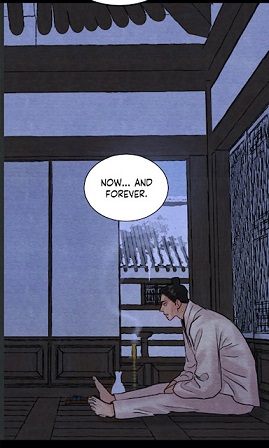 (chapter 87), whereas Yoon Seungho stands for change and hope.
 (chapter 127) Where was Heena noona, when her brother was in prison? This rumor can only create the illusion that the painter is still devoted to the learned sir. Yet, after the last incident, the painter came to regret to have trust the learned sir. Both characters are now healed from their traumas (abandonment issues) and they are in full possession of their mind. This makes them less weak to manipulations.
 Bebebisous33s' analyses in K-Dramaland and Manhwas