

Please support the authors by reading Manhwas on the official websites. This is where you can read the Manhwa: Jinx But be aware that the Manhwa is a mature Yaoi, which means, it is about homosexuality with explicit scenes. Here is the link of the table of contents about Jinx. Here is the link where you can find the table of contents of analyzed Manhwas. Here are the links, if you are interested in the first work from Mingwa, BJ Alex, and the 2 previous essays about Jinx The Loser’s Mother: Fragments of a Mother and The Birth of The Shotgun – part 1
It would be great if you could make some donations/sponsoring: Ko-fi.com/bebebisous33 That way, you can support me with “coffee” so that I have the energy to keep examining Manhwas. Besides, I need to cover up the expenses for this blog.

For my avid readers, the title and illustration give the impression that I will focus on Joo Jaewoong’s death and its signification in the protagonist’s life. They are not wrong, yet it covers only one aspect of this analysis. Jinx-philes have already sensed that this moment was not only the night that ended a life, but the one that birthed a weight Joo Jaekyung would carry forward: guilt that refused to fade, and a self-loathing that no victory could silence. If these are the roots of the curse, then “Emperor” names the crown — a crown whose origin is far murkier than the public believes. However, people shouldn’t forget that in that moment, the main lead was just a teenager, who belonged to a boxing studio. He was not a MMA fighter, he was not the Emperor either.
Like readers who thought they knew the main lead (a psychopath, a jerk…), fans in Jinx believe they know their idol.  (chapter 26) They have watched his fights
  (chapter 23), memorized his moves and titles, and repeated the anecdotes told in gyms and on TV. They’ve heard how he was “saved” by sports from a darker path, and cheered for him as the “Emperor” — the handsomest fighter, the man who broke the arcade’s punching machine
  (chapter 26), the champion who stands above the rest. But if the champion’s life is already an open book, why did Mingwa wait so long to reveal his childhood and family? The answer is simple. It is because Joo Jaekyung has been called the Emperor till his fight against Baek Junmin! These public portraits — the friendly banter in the gym, the theatrical ring intros — show us the merchandise, not the man. They are the carefully polished surface presented to fans and fellow fighters alike, repeated so often that even those closest to him believe them. Yet behind this image
 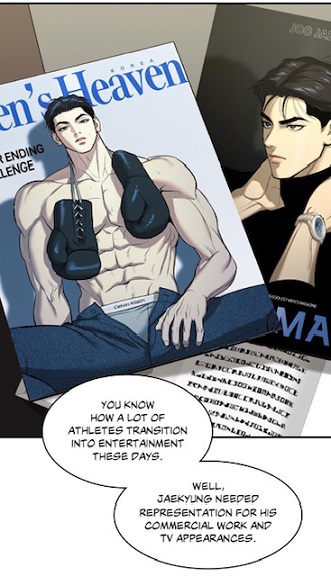 (chapter 30) lies a past left unspoken, a silence so complete that his own history became an empty space others could fill as they wished. This essay brings these two “stories” together — the Emperor and the boy. And now, you may be wondering how I came to connect the champion’s trauma to his future career as an MMA fighter. The answer lies in Joo Jaekyung’s own voice. 😮
The Emperor in The News
When the news broke in chapter 70,  (chapter 70), Hwang Byungchul’s anger fell squarely on the champion.
 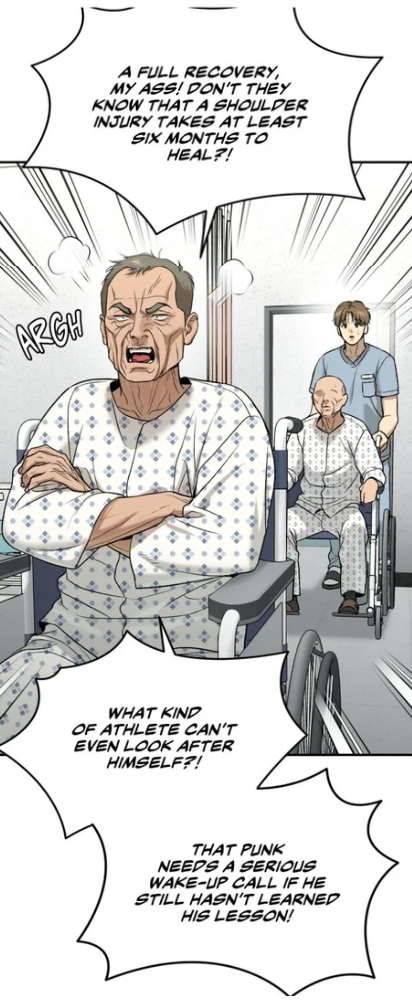 (chapter 70) To him, it looked as though Jaekyung had made the reckless choice to return to the ring so soon. That was the trap: the headline and phrasing were designed to make it appear that the decision was the fighter’s own. The opening line alone
  (Chapter 70) created the illusion that this break had been perceived as a punishment, and that Jaekyung was eager to prove himself once again. No wonder the director assumed he had given his consent.
The visuals reinforced the illusion. The entertainment agency recycled old images not just because they lacked recent photos, but because they wanted to tap into the nostalgia of his earlier popularity, before the match against the Shotgun. It was as if someone wanted to overwrite the present and rewrite his history, packaging him in the glow of past victories. Even within the same news segment, there were two distinct “voices”: the official announcer highlighting his return, and an unseen voice quietly bringing up the suspension again — a reminder meant to frame his comeback as a personal mission rather than a corporate decision. In truth, the match was arranged by “Joo Jaekyung’s team” and MFC — a convenient shield for those actually pulling the strings. (chapter 70) Thus I conclude that the first comment (chapter 70) was to divert attention from the other persons involved in the decision for the next fight.
Notice what the journalist does not say. The CEO’s name is absent. There is no mention of the closed-door meeting between Park Namwook, Jaekyung, and the CEO where the fight was proposed. 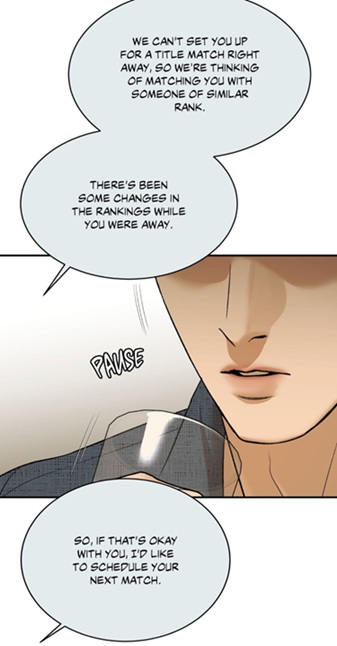 (chapter 69) By erasing these details, the public sees only two players: the Emperor and his anonymous “team.”
 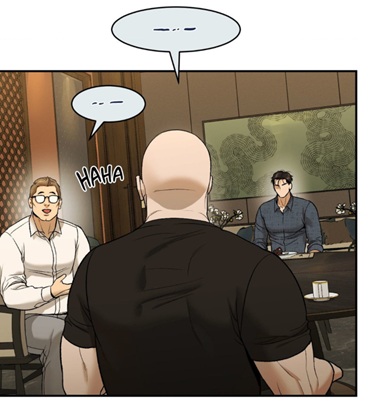 (chapter 69) It was as if the main lead, backed by his team, had personally approached MFC to request the match — an illusion strengthened by the opening line, “MFC’s former champion Joo Jaekyung will be returning to the ring this fall after serving his suspension.” This way, if the decision draws criticism, the CEO can retreat behind the fighter and his team, like they did in the past.
  (Chapter 54) Back then, the champion had not reacted to this comment. Even in the worst case, the CEO can hide behind one of the MFC match managers or doctors.
  (chapter 41) But that excuse would be a fiction: Jaekyung hasn’t even met those doctors or talked to the MFC match manager
  (chapter 05). He has been chasing after his fated partner. Finally, he hasn’t even signed any paper or agreed at the meeting. In fact, he remained silent for the most part of the time and the reason for this urgent meeting was his request for proper investigation concerning the switched spray:
  (chapter 67) That’s the reason why this suggestion from the CEO appeared the very next day.
  (chapter 69)
When the orthopedic surgeon Park Junmin cleared him to remove the cast in chapter 61  (chapter 61), it was paired with a recommendation for rehabilitation — not an immediate return to competition. This was actually a condition for his total recovery. On the other hand, the doctor imagined or suggested that his patient wished to return to the ring so soon. No medical professional ever signed off on an autumn fight. Yet the date is already set, and the headlines frames it as a confident comeback without any medical backup. The Emperor’s name is splashed everywhere, but none of the words belong to him.
And this is not the first time we’ve seen this sleight of hand. Back in chapter 57, a television broadcast featured an “exclusive interview”  (chapter 57) with one of his close associates — a man whose face was hidden, speaking as though he were the athlete’s voice. That interview was accompanied by a familiar victory image
 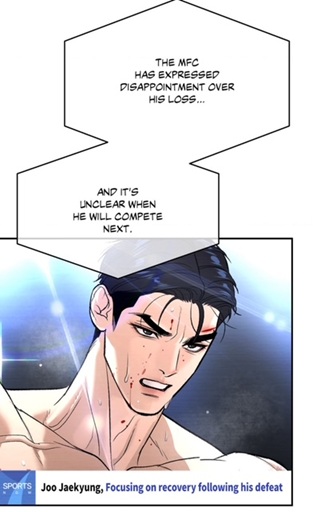 (chapter 57), a stock photo already used in other press pieces. This picture comes from after the fight in the States:
  (chapter 41), while the image released with the fall match announcement was the one from when he first won his champion title. (chapter 70) Since MFC and the journalist are recycling old images, they unwittingly revealed their own deception — dressing up the present in the clothes of the past. LOL!
The message is the same in every case: Jaekyung “speaks,” but only through others. His former stage name mirrored his situation, as he owned the champion belt for quite some time. The title “Emperor” 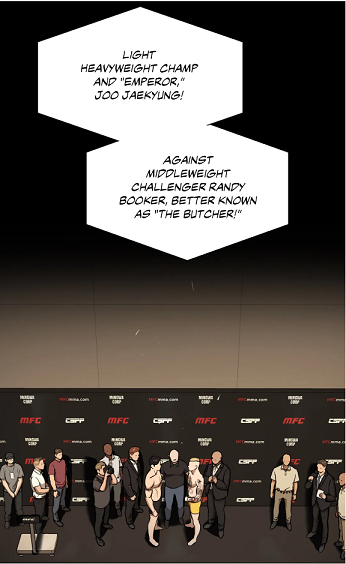 (chapter 14) seems to radiate absolute power — the kind of authority that commands armies, bends laws, and answers to no one. It is meant to ooze charisma and control, a name that suggests the bearer acts on his own will. Yet, in truth, emperors have rarely ruled alone. Behind every throne stand ministers, advisors, generals, and family factions, each shaping decisions from the shadows. An emperor who ignores these forces risks losing his crown.
In Joo Jaekyung’s case, the irony is sharper still. Far from being the all-powerful figure his stage name implies, the “Emperor” is a role built and sustained by others — MFC executives, Park Namwook, the entertainment agency — each serving as both his court and his cage. They decide when he fights, how he is presented, and even the tone of the stories told in his name. Once he tried to complain about his tight schedule, this is what he got to hear:  (chapter 17) He was blamed for his popularity. The man inside the crown does not act or speak freely; his words are filtered, scripted, or replaced entirely.
This makes the title “Emperor” less a badge of sovereignty and more a mask for dependence. Like a ruler hemmed in by court protocol and political intrigue, Jaekyung’s every public move is mediated by the hands of others. The grandeur of the title hides the quiet truth: the Emperor is voiceless, and the crown he wears is one that demands obedience rather than granting freedom. That’s his curse. His identity is filtered, packaged, and sold by those who stand in his shadow – so much so that people send him bottles of alcohol because that’s what one offers a champion, 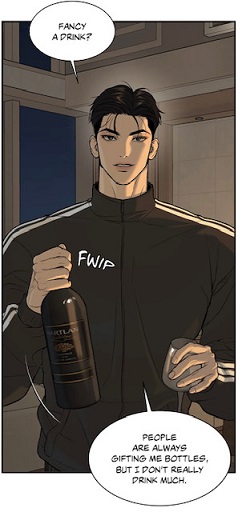 (chapter 12), never mind that he hardly drinks. The gesture fits the fantasy they’ve built around him, not the reality of a man who rejects alcohol due to his addicted father, a reminder that even the tokens of admiration are shaped by the image, not the truth. So who is this so-called close associate or “Joo Jaekyung’s team” exactly that decides for him, speaks for him, and hides behind his title? Besides, why did the journalist change from “one of his close associates” to “Joo Jaekyung’s team”?
The Voice Behind the Crown
In chapter 57, the television broadcast introduced “one of his close associates” — (chapter 57) a figure whose face and name were hidden, speaking on behalf of the Emperor. In the essay Craving Mama’s Shine – part 1 (locked) I had presented different possibilities about the identity of this “close associate”. But with the new announcement, it becomes clear that figure can only be Park Namwook. He is the only one who arranged the meeting between the CEO and Joo Jaekyung. The anonymity was not a courtesy; it was a shield. By keeping his face and identity off the record, he could shape the narrative without owning it, avoiding any direct responsibility for the words attributed to him. Yet the choice of “close associate” was deliberate — it positioned him as the man closest to Jaekyung, someone with privileged access and authority to speak for him. It was a claim of proximity and influence, the sort of title that sells the image of a trusted confidant, even as it erases the fighter’s own voice.
The broadcast itself set the tone even before his segment began. Just prior to the “interview,” the anchor announced:  (chapter 57) The nickname, played for entertainment value, was another way of turning the champion into a caricature — a marketable, amusing persona instead of a man with a past and agency. It is quite telling that Park Namwook’s interview aired immediately after the anchor referred to Jaekyung as “Mama Joo Jaekyung Fighter.” This was not the lofty “Emperor” title repeated in gyms and ring intros — it was more a mocking nickname, a deliberate jab meant to provoke. In that moment, the Emperor was verbally pulled down from his pedestal, yet the images shown alongside the segment told a different story: carefully chosen shots of him as a champion, a visual echo of his marketable persona. The dissonance was striking.
Equally telling is that the “Emperor” title had already vanished from the conversation. Its disappearance suggests that Jaekyung was never the one who chose it — it was a label assigned to him by others, to be used or dropped at their convenience. Park Namwook made no attempt to restore it or defend his fighter’s dignity, like mentioning the drug incident in the States or the spray incident in Seoul. The cause for his “silence” is simple: he doesn’t want to admit his failures and responsibility. He prefers the champion taking the blame. Hence this interview was not brought up by the manager:  . (chapter 54) In my opinion, the man is trying to return to the past, thinking that his “popularity” can come back, not realizing that he is being manipulated himself. On the contrary, he stepped into the role of spokesperson without hesitation, speaking as if he were Jaekyung’s voice while keeping his own face and name hidden. He only speaks, when he feels safe. He can not be responsible for the champion’s recovery. (chapter 57) The message was clear: he had no issue with his fighter being framed this way (“Mama Fighter Joo Jaekyung”), so long as the interview served its purpose. Park Namwook may not be a cynical manipulator, but his silence in the face of mockery speaks volumes. In his mind, any coverage is better than none; to vanish from the public eye is worse than being nicknamed “Mama Fighter.” By stepping into the media slot, he believes he’s keeping Jaekyung alive in the public consciousness. Yet in doing so, he stands shoulder to shoulder with another, unseen voice — the one that coined the nickname in the first place. In both chapter 57 and chapter 70, this pairing repeats itself: Namwook’s loyalty becomes indistinguishable from complicity. Whether he realizes it or not, he’s lending his presence to a narrative that diminishes the man he claims to represent.
By chapter 70, the personal title “close associate” had shifted to the more generic “Joo Jaekyung’s team.” On the surface, the word “team” suggests equity, collaboration, and shared responsibility. But in Park Namwook’s vocabulary, “team” has never meant equality. His idea of a team mirrors the hierarchy he operates in — a boss who directs, and subordinates who follow without question, like we could observe at the hospital.  (Chapter 52) This framing lets him claim the prestige of leadership while leaving himself room to withdraw if things go wrong. Yosep was the one notifying MFC and reporting the incident to the police, Potato explaining his discovery to Joo Jaekyung and blaming the star.
And yet, the choice of this term also reveals a subtle shift. By saying “Joo Jaekyung’s team,” he is placing the athlete’s name in front — not his own, not MFC’s. That way, he believes that he can avoid accountability behind the team. However, he is not grasping that gradually, he is stepping down from his self-proclaimed ownership of the gym. Whether intentionally or not, the manager is acknowledging that the gym’s growing identity will eventually crystallize around the fighter himself. The name “Team Black” hasn’t appeared yet, but its logic is already here: a team that exists for the athlete and with the athlete’s consent, not a faceless collective that speaks over him. When that name finally surfaces, it will function as a boundary—an institutional “enough”—marking the end of treating the man like merchandise.
Here, the article “You Don’t Have to Put Up With Everything” offers a revealing lens. The article warns against confusing empathy with passive tolerance. While it’s important to understand that people may have difficult histories or traumas, compassion should not be used as a justification for allowing someone to mistreat or disrespect you. Understanding someone’s struggles does not mean accepting harmful gestures, words, or behaviors. Setting limits is not selfish or arrogant, but an act of self-respect and emotional protection. Boundaries are not rejection — they are self-care, a way to protect one’s well-being without guilt. This is exactly what the manager expected from Kim Dan. 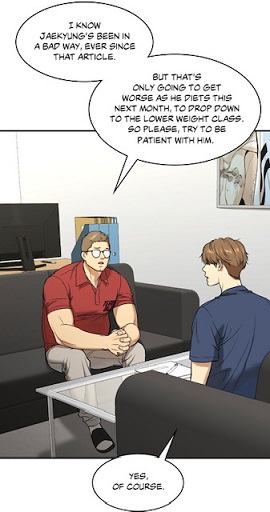 (Chapter 36) He should tolerate the celebrity’s moods and put up with everything. The manager didn’t mind, as long as he didn’t get affected. But what is the consequence of such a passive tolerance? An individual’s self-esteem can slowly erode, leading to a gradual loss of their sense of self. They may stop recognizing their own desires, needs, and rights, often without even realizing this is happening. This is because emotional exhaustion often develops subtly over time, rather than appearing as a sudden, dramatic event.
Thus, what begins with a hurtful remark can end in emotional blackmail. What was once a pointed criticism turns into contempt. And you, who at first knew what you wouldn’t tolerate, end up justifying the unjustifiable, in the name of empathy or the fear of loneliness. The result is a slow erosion of your self-esteem. You gradually disappear, ceasing to recognize your desires, needs, and rights. And the worst part is that you don’t even realize it. Because often, emotional exhaustion doesn’t come as an explosion, but rather as a steady trickle. Quoted from https://psychology-spot.com/you-do-not-have-to-put-up-wiht-everything/
As you can see, it can lead to depression. That has been Jaekyung’s position for years as well— enduring decisions made without his real consent, swallowing public criticism and badmouthing, and staying silent 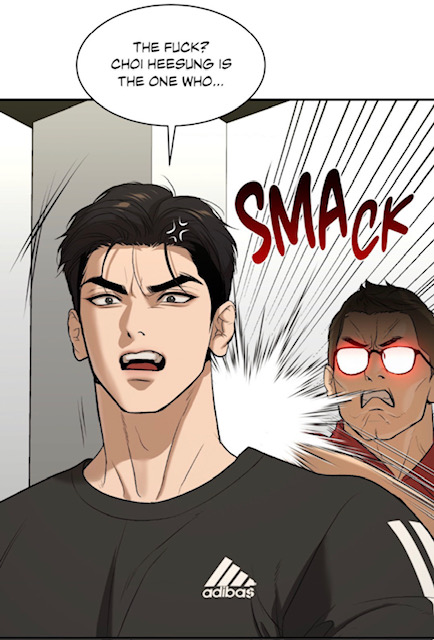 (chapter 31) when punished. In this light, Park Namwook embodies the very dynamic the article warns against: a figure who benefits from another’s compliance, maintaining control not through open dialogue, but through unspoken rules and the threat of exclusion.
The First Curse of the Manufactured Emperor
And now, you may be wondering why I am focusing so much on the absence of voice from Joo Jaekyung — the Emperor and the man. It is because he has been used as a tool, more precisely as an ATM machine for MFC. According to the teacher in Jinx 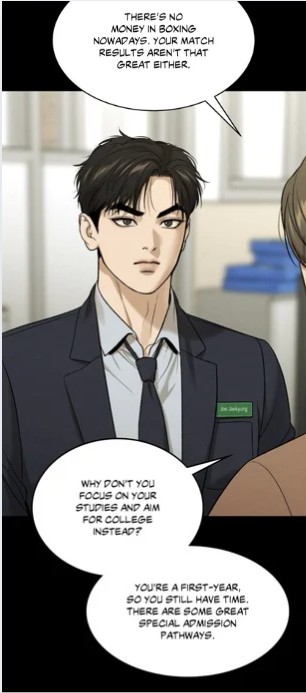 (chapter 73), by becoming a boxer, the champion wouldn’t make a lot of money. With this comment, he implied that boxing in South Korea had been losing popularity 10 years ago. This explicates why gradually, the members from Hwang Byungchul left the studio. And it was likely the same in the illegal fighting circuit.
  (chapter 73) The popularity of MMA in the States gave them the opportunity to revive fighting sports, a figure who could draw crowds and sponsors, making such events fashionable again.
For me, the Emperor was created for that reason. His public image was rewritten — he was called a “genius” 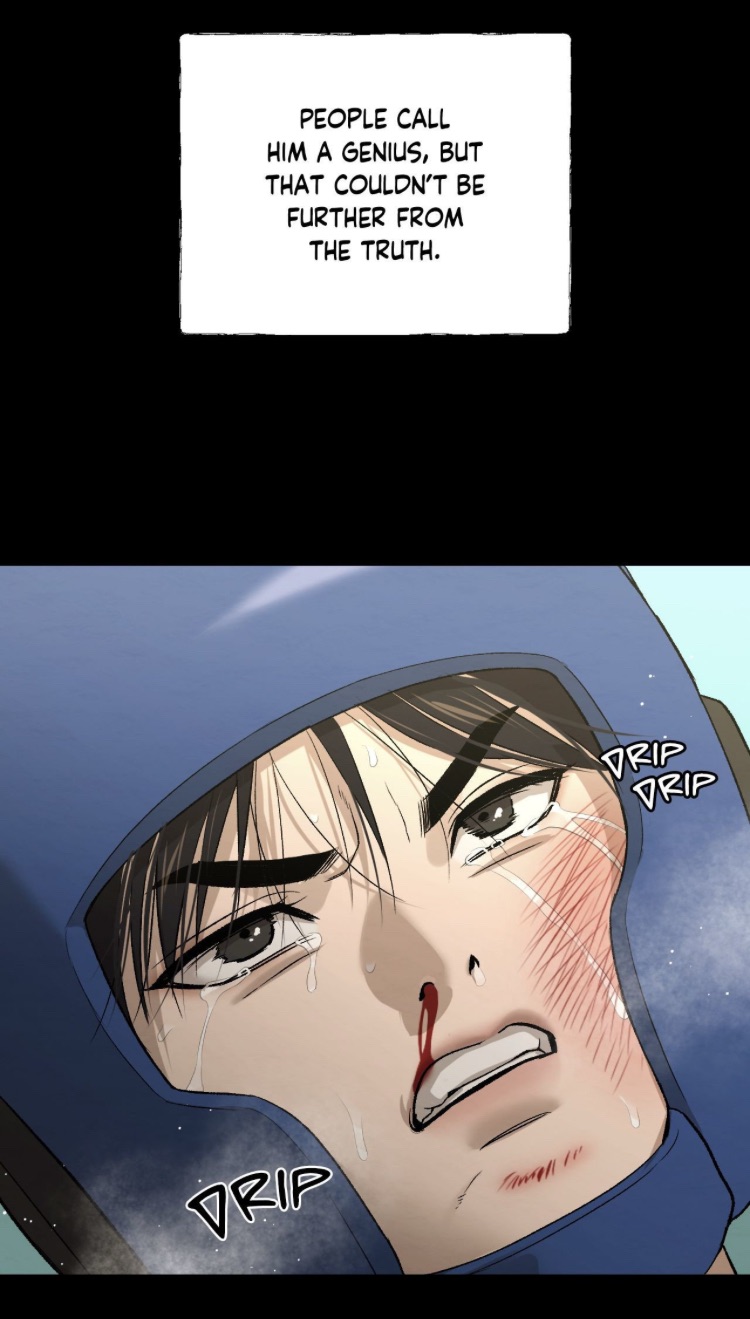 (chapter 72) instead of “hard-working,” a man who “chose sports over a dark path.” Yet if you look closely, this celebrated “ascension”
 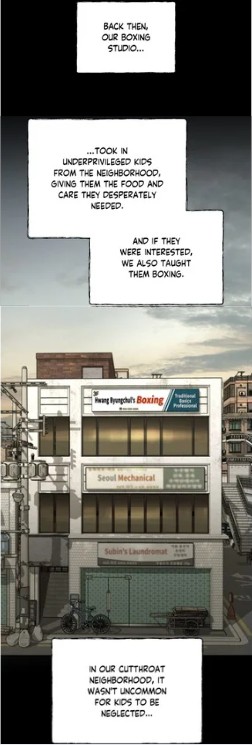 (chapter 72) isn’t tied to the director’s boxing studio at all — it’s linked to the arcade’s punching machine incident. (chapter 26) This moment, trivial in reality, became the origin story of the Emperor, as though the broken machines had revealed a prodigy destined for greatness. That’s the reason the star rejects this intro. In fact, this incident contributed to create the champion as a spoiled brat. In truth, the director had suggested that Jaekyung enter the sport professionally so that he could feed himself, but his reasoning had nothing to do with arcade games or instant legend. That pragmatic nudge was later overwritten with a glamorous tale that erased the long hours in a run-down boxing studio
  (chapter 72), the scars of his family history, and the years of survival before the cage. This is history rewritten, his boxing past and family erased. Why? His origins could expose the ugly verity: the link between criminality and boxing (as such fighting sports). Secondly, because his real story, though moving, lacked the glamorous allure needed to market him. His real story would have revealed that to rise to the top, you need relentless work, not a miraculous moment. That version was never going to sell as well as the “genius” myth.
With his success, his “gym” soon attracted members from different martial arts — judo, jiu-jitsu — all chasing the dream of becoming rich and famous like him. 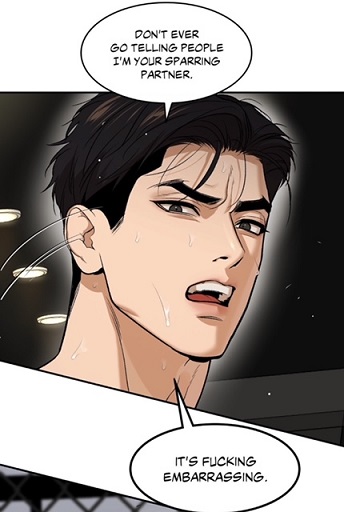 (chapter 46) Most of them thought that by staying close to him, they could benefit from his popularity. To conclude, for many of them proximity to the Emperor wasn’t about learning discipline or technique; it was about absorbing his fame by osmosis. Hence they complained and accepted the gifts and money so easily.
 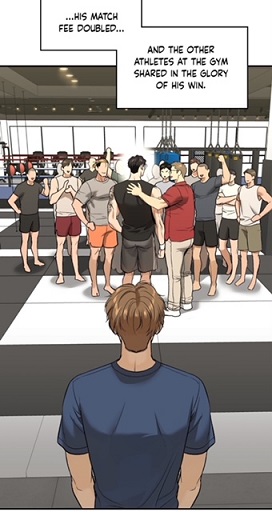 (chapter 41) Observe how the manager is acting here. He is speaking, touching the star like his prize and possession. The Emperor became the merchandise, the illusion, the bait to draw both viewers and fighters. However, being “labeled as genius” can only push desperate fighters to take a short-cut: bribes and drugs. Hence Seonho couldn’t last a whole round.
  (chapter 46) And, like any product, once it was seen as damaged, its value plummeted. The moment he “lost” his title and suffered injury (chapter 52), the dream began to unravel.
  (chapter 52) This panel captures this shift perfectly: two fighters casually dismiss him over dinner. In those words, the Emperor isn’t a mentor, a champion, or even a man — he’s a broken commodity, no longer worth the investment. The same people who once fed off his popularity are the first to abandon him when the promise of easy gain disappears.
This served more than publicity. Through him, they could obscure their crimes and build a parallel market in the underground fighting world. And here, the lesson from “You Don’t Have to Put Up With Everything” becomes vital: understanding Jaekyung’s difficult past or the pressures on the industry should not excuse the way his dignity and history have been trampled. His compassion for the system that raised him has been turned into passive tolerance — exactly the dynamic the article warns against.
And now, you see why I chose to postpone the second part of The Birth of the Shotgun. Without Baek Junmin — his shadow in the ring — Joo Jaekyung would never have been made to shine so brightly. No wonder why he was so jealous. He believed that his victories were rigged too.
Yet the irony is that Park Namwook is no mastermind. As we’ve seen time and again, he follows the lead of others — the CEO, the entertainment agency, perhaps even unseen backers — rather than setting the agenda himself. He is the mouthpiece, not the brain. The “close associate” title flattered him with the appearance of authority; the “team” label protects him when that authority becomes risky. Both are masks, worn depending on the circumstances, to keep himself valuable to the system. On the other hand, he is gradually revealing his real position: he is not the owner of the gym!  (chapter 22) He is even disposable. He is gradually giving more rights to his “boy”, the real director of Team Black. And the moment you perceive the manager as the main lead’s voice, you can grasp the true significance of the slap at the hospital:
 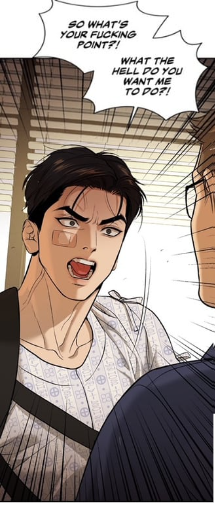 (chapter 52) For the first time, the main lead had voiced his own thoughts and emotions. He had used his real “voice”, revealed his unwell-being:
  (chapter 52) To this outburst, Park Namwook slapped Jaekyung in front of others (chapter 52).
  (chapter 52) That was not the act of a coach correcting an athlete — it was the gesture of an owner disciplining a pet or a possession, a reminder of who controlled the narrative. In that moment, the Emperor did not protest.
 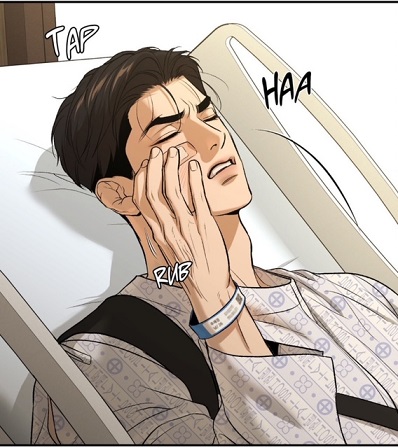 (chapter 52) He chose silence, and later avoidance, staying away from the gym. That silence was not weakness, but choice: he would listen less and less to his hyung.
From then on, the champion’s public image — whether filtered through the “close associate” or the “team” — was not his own. Park Namwook treated him less like an athlete 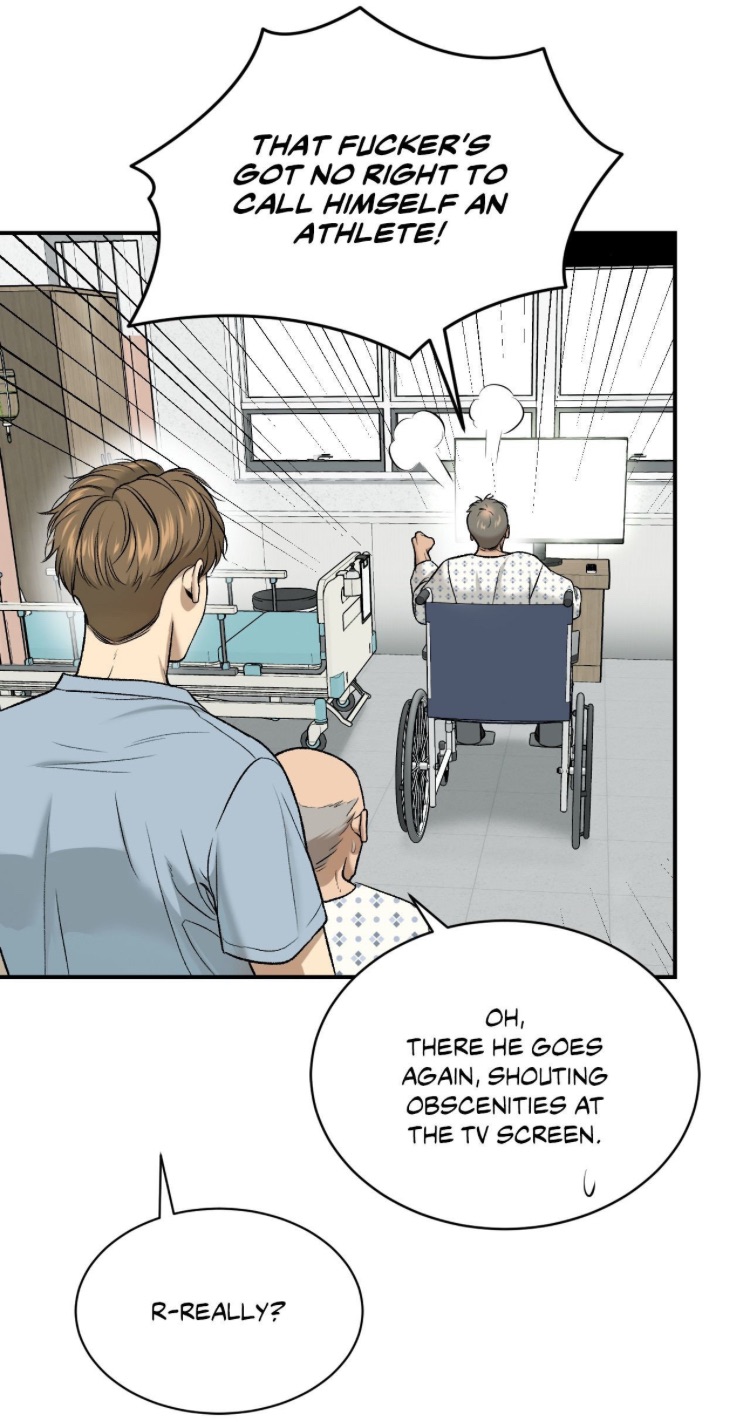 (chapter 70) and more like a product: something to be displayed, sold, and, when necessary, handled roughly to keep in line. The shift in labels is just another layer of that merchandising process — a packaging change to suit the current market, not a recognition of the man inside. To conclude, the champion has always been voiceless all this time, even here:
 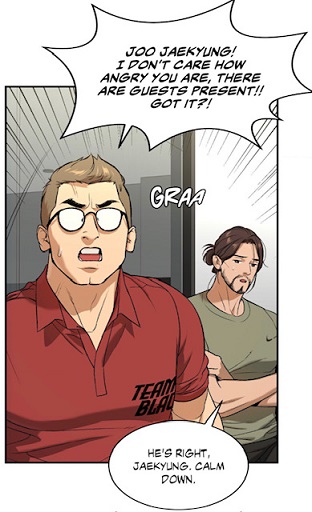 (chapter 36) All he needed to do was to fight:
 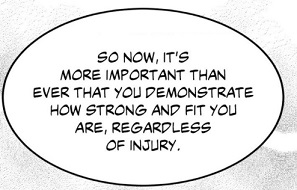 (chapter 36)
And yet, if you compare the Emperor in the present with the teenager in the past, you’ll see a stark reversal. The Joo Jaekyung of today has his voice mediated, silenced, or replaced by others; the boy of yesterday dared to speak for himself. In the confrontation with his father, he voiced his own desires and defiance directly  (chapter 73) — unfiltered, unmarketed, unprotected. It was raw, dangerous honesty, and it came at a cost: the loss of his voice!
The Night That Stole His Voice
If you compare the Emperor to the boy he once was, the contrast is striking. As a teenager confronting his father, Joo Jaekyung still voiced his own desires.  (chapter 73) Six years earlier, however, his voice had already been battered by silence. After his mother’s abandonment at age six, the only connection he retained with her was a phone number —
 (chapter 72) We don’t know how many times he called, but each time we see him do it, his face is injured.
  (chapter 72) The phone calls are therefore intertwined with the boxing studio, as though pain itself pushed him toward her. At ten, he picked up the receiver and let it ring only a few times before hanging up. The next time, in the dead of winter, he finally spoke, promising that if she returned, he would protect her from his father and make enough money to keep her safe.
  (chapter 72) Each time what answered him was not her voice, but a machine: “ (chapter 72) His words met a recording, his promise suspended in a vacuum. Whether she listened to his words or not, the outcome was the same — she never came back. No reply, no echo. Her silence told him the truth: his wish would never be heard. From that point on, she vanished not only from his life but from his speech; he no longer mentioned her. That silence became his default — speaking desires aloud was pointless if no one would answer.
By the time of the morning argument with his father at sixteen, we can conclude that the nightly calls had long stopped. The boy had given up on being heard. (chapter 73) Six years later, at sixteen, he finally raised his voice again — this time to his father. He wouldn’t give up on boxing. Unlike the mother, the father answered. But his “reply” came in the form of insults, blows, and a dark prophecy: that Jaekyung would never amount to anything, 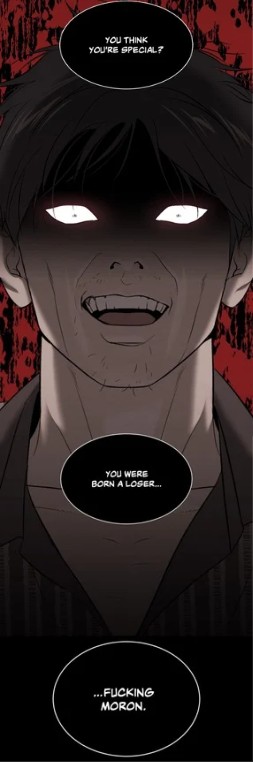 (chapter 73) that he was born a loser, that his dream was a joke. Here, the voice met not silence but resistance, mockery, and humiliation. And unlike with his mother, Jaekyung did not retreat — he cursed back. (chapter 73) He swore he would prove the man wrong, that he would win, and spat the most dangerous line of all: “If I win, you can keel over and die for all I care.” That evening, he saw his father’s corpse —
 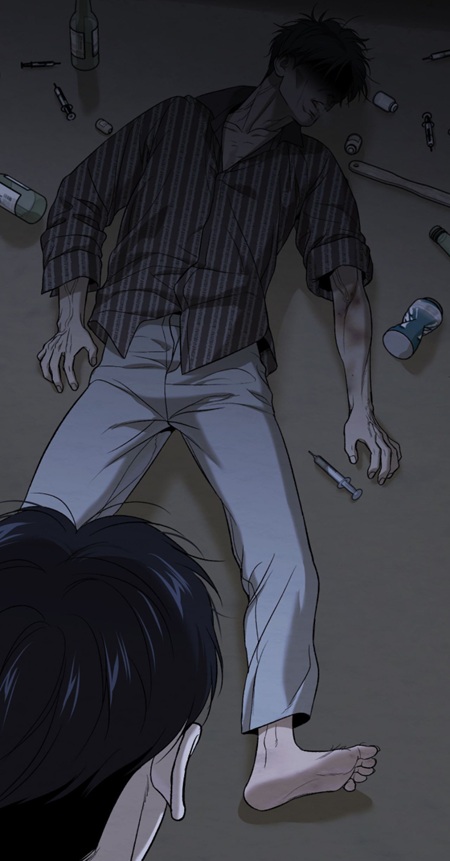 (chapter 73) and with it, another layer of his voice disappeared. He had the impression, he had killed his father. His words had been more dangerous than his punches. Hence he could only come to resent his own voice and words. And now, you comprehend why the Emperor allowed the hyung to become his voice. To conclude, the silence of those nights became the silence of the man. As you can see, the curse did not fall on Joo Jaekyung’s voice in one night — it was built, in stages, over years. But the death of his father linked to the argument represented the final straw that broke the camel’s back.
This is the pivotal difference: with the mother, voicing a wish had no consequence because it dissolved into nothingness. With the father, voicing a wish carried weight — it provoked, it struck back, and, in Jaekyung’s eyes, it cursed. When his father died that same evening, the boy was left to carry the unbearable suspicion that his words had somehow brought it about. That night became the night his voice was poisoned: one parent had taught him that speaking was useless; the other had taught him that speaking could kill. From then on, his voice retreated into the ring, where the only “speaking” he did was with his fists. And now, you comprehend why he is using his sex partners as surrogate fighters, why he treats them as toys.  (chapter 55)
The Birth of the Jinx
The two formative wounds — his mother’s unanswered call and his father’s cursed reply — shaped the way Joo Jaekyung would handle intimacy for years to come. With his mother, speaking led to nothing; his voice dissolved into silence. With his father, speaking led to too much; his words became a curse, followed by guilt and grief. From these experiences, he learned that words in close relationships were unpredictable weapons. They could vanish, leaving him abandoned, or strike deep, leaving him ashamed.
Sex became his remedy to fight against loneliness and his refuge from this danger 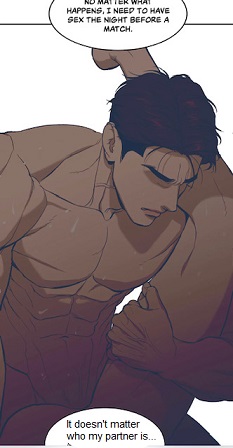 (chapter 2) — a space where he could act without having to speak. In the bedroom, as in the ring, the body could carry the conversation. Here, he could dominate, control, and release tension without the risk of verbal damage. His partners became surrogate opponents: sparring substitutes in a non-lethal match. Treating them as “toys” wasn’t only objectification; it was a form of control that, in his mind, protected both sides. Toys don’t demand answers, don’t talk back, and don’t leave you cursed with regret. They remain safely outside the territory where his voice had once done harm.
But this logic, built to keep others safe from his voice and himself safe from their silence, begins to falter with Kim Dan. The latter embodies not only the mother (abandonment, silence- I believe that he resembles her too) and father (argument, drinking), but also the child. Dan cries, shows his vulnerability and admits his mistakes.  (chapter 1) He embodies innocence and as such lack of experiences. Moreover, he talks, makes suggestions for the champion’s sake
  (chapter 27), spent time with him, asks questions, confronts, and refuses to be reduced to a body in the room. He breaks the rule of silence. With him, Jaekyung can no longer hide behind the physical alone; he is forced to speak, to explain, to voice desires and fears. He pushes Jaekyung to engage in ways he’s spent years avoiding. In this way, Kim Dan becomes the first real threat to the system the champion built after those two curses — and possibly the first person who could prove that words can be safe again. And now, you comprehend why Joo Jaekyung was moved by the birthday card
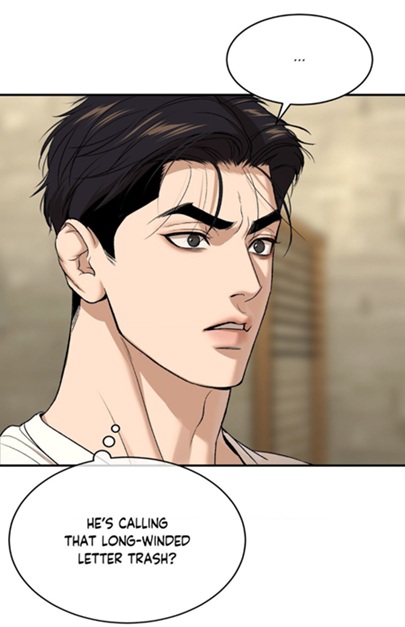 (chapter 62) To most, it might look like a simple gesture, but for him, it was a rare and precious thing — a voice that had taken the time to shape itself into words just for him.
 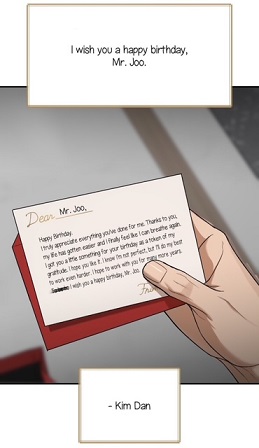 (chapter 55) After years of associating speech with either silence or harm, receiving a long-winded, carefully written message felt almost unreal. He saw the effort behind it, the deliberate choice to put thoughts and emotions into language instead of letting them fade away or turn into weapons. In that card, Kim Dan offered something neither of his parents had managed: a voice that reached him without wounding. No silence, no insult. For the champion, it wasn’t just a card — it was proof that words could be built into a gift, not a curse. The latter expressed his dreams and gratitude. Thus I deduce that the Emperor’s curse will be broken by a spell: words!
 (chapter 55) The “spell” to break it is not some grand external event, but the simple, sustained act of honest communication — something that has been denied to him since childhood.
By linking this to Kim Dan, it becomes obvious that the Emperor’s liberation won’t come from winning another fight or reclaiming a title, but from restoring his own voice in a relationship where speaking is safe, heard, and reciprocated. Boxing was the only language he ever learned from his parents (chapter 72) — a vocabulary of fists, jabs, and physical dominance as a way to earn money and recognition— but with Dan, the champion is slowly acquiring a new language. His hands, once trained only for striking and defending, begin to communicate through gentle gestures: an embrace  (chapter 68), a kiss, a pat, a caress or by simply holding hands
 . In this way, the curse that began when his voice was silenced and his hands were weaponized will only be broken when those same hands learn to speak tenderness. Look how doc Dan reacted to his public embrace:
  (chapter 71) He saw affection in the hug, but he still doubted the champion’s action.
The Prison of the Boy
And now, you are probably wondering why I selected a tree for the background illustration of The Night-Cursed Emperor.  Until now, the design’s images have played a secondary role, yet the answer lies in a single scene from chapter 41.
  (chapter 41) Under the bright sunlight, Kim Dan reached out toward the leaves, his hand open and unguarded, as he silently thought of the man he loved. This gesture, so simple yet so revealing, became the unspoken confession that marked the start of a different kind of freedom—the freedom to feel.
In my earlier analysis Prison of Glass , Key Of Time , I had argued that Joo Jaekyung’s habit of meditating before the expansive glass window in his penthouse was more than a moment of calm — it was a ritual of self-confinement. 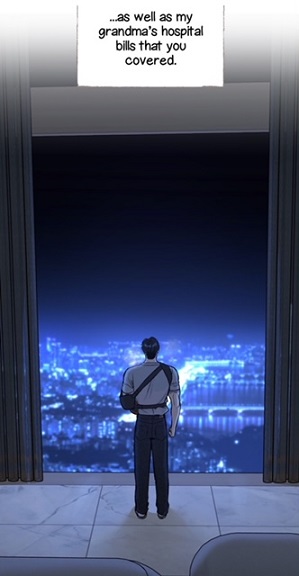 (chapter 53) The glass was an invisible barrier, offering the illusion of freedom while keeping him trapped in the moment of his unresolved trauma. The closer he stood to it, the further he was from true release, his gaze fixed outward to avoid looking inward. That’s why he had no eye in that scene:
  (chapter 55)
This new scene 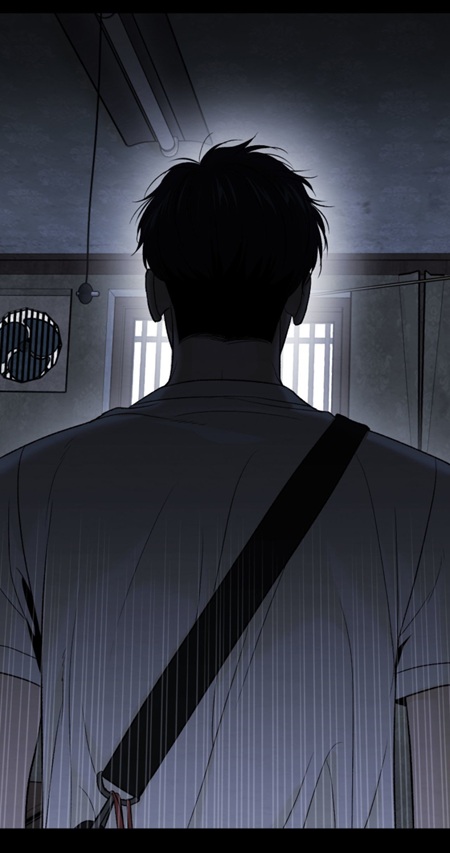 (chapter 73) reveals why that reading was correct: the penthouse window is not just a symbolic device of the present — it is the direct heir of a far older image burned into his memory. Here, as a teenager, he stands before a small barred window in the room where his father’s corpse lies. The resemblance is not visual coincidence but emotional continuity. Both windows let in light without granting escape; both present the outside world as something visible yet forever out of reach.
In this panel, the confinement is literal. The bars fragment the daylight, reducing it to slivers, making the outside world seem even more inaccessible. He is facing the window and he corpse, his eyes fixed on the narrow frame of light, as if distance could make the reality behind him vanish. But the truth is locked in place — the body on the floor, the night’s events, the words exchanged. This is the night that froze him.
From that point on, every window in his life — no matter how large, modern, or luxurious — became a reenactment of that first prison. (chapter 55) The penthouse’s vast glass wall is just a polished version of this barred opening, a reminder that while his circumstances changed, the barrier never truly fell. The trauma stayed intact, shaping the way he saw the world and himself. The boy who stared through those bars never left that room; the man still carries that gaze. But there’s more to it.
Observe how he is standing in front of the window: (chapter 73) he is not only frozen, but also silent! Not only he lost his voice that night, but also he could never talk about it to anyone! He was forced to carry this huge burden alone. Who would feel empathy or attachment to such a man, when he was famous for his bad behavior? But deep down, the boy had come to love his father despite his flaws. This is his deepest secret which is coming to the surface: his love and guilt!
Even the window denies him solace. He could never see the moon behind that small window, just as he failed to notice the snow falling, when he attempted to contact his mother: (chapter 72) Nature was invisible to him; his world was defined by conflict, neglect, and survival, not by moments of beauty. He was never taught to enjoy the present moment.
Chapter 73 signals a shift. Like in chapter 71, where he shields his gaze, his “third eye” — the inner sight that perceives emotional truth — is beginning to open and recall his “sins”. His fever is not just physical; it’s the body’s acknowledgment of pain long repressed. He is starting to allow himself to feel, to admit vulnerability.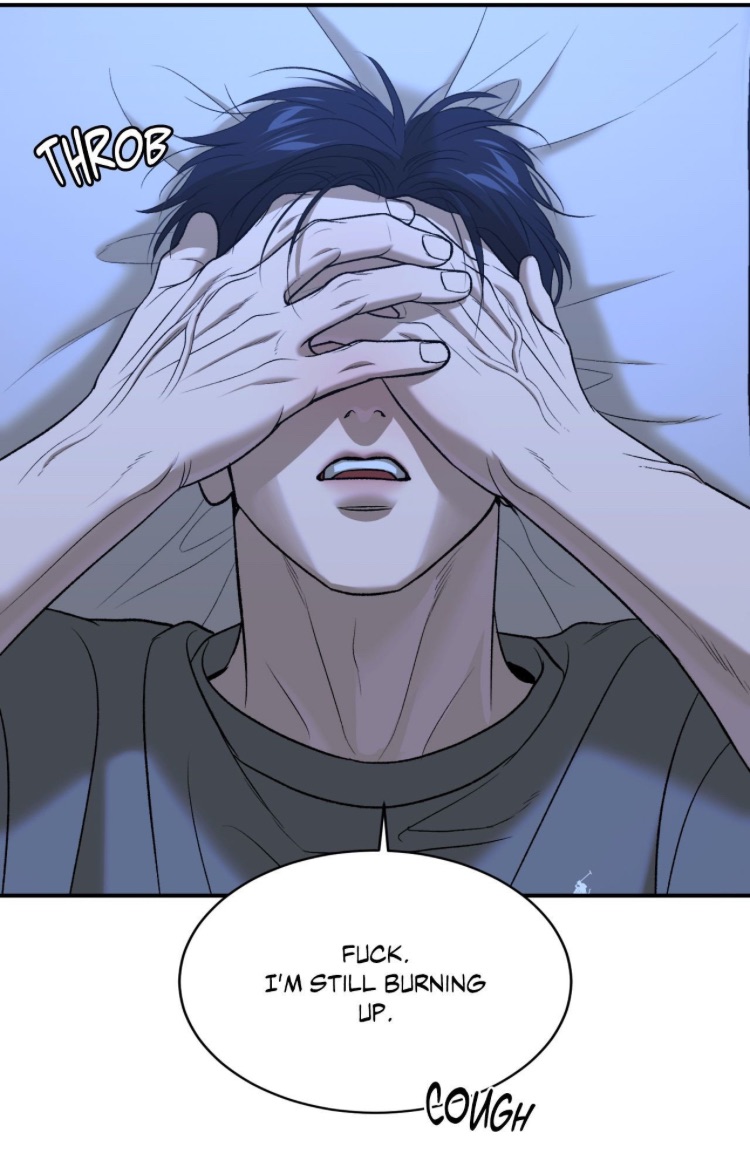 (chapter 71)
And this is where the night changes meaning. Until now, darkness for him was bound to abandonment and death. But in chapter 70, the owl’s call pierces the silence —  (chapter 70) the night can also be alive, communicative, protective. In that moment, the moon becomes more than a distant light in the sky: it is a patient witness, a calm listener in the stillness, reflecting the truth he has yet to voice.
 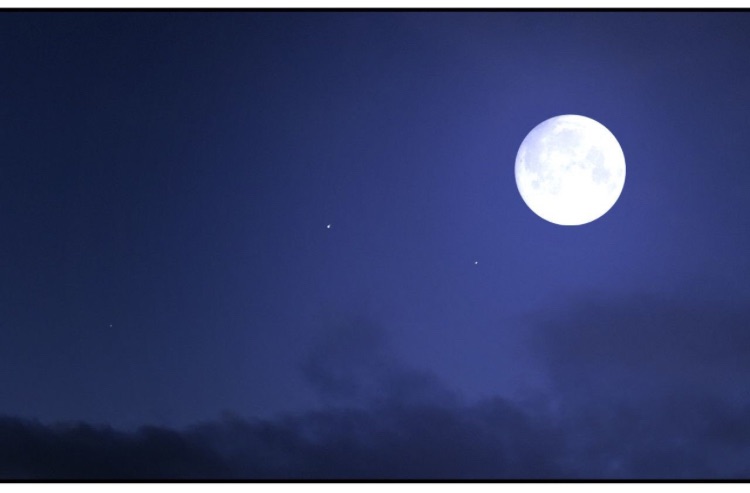 (chapter 70) Its soft glow contrasts with the blinding glare of the cage lights, suggesting that under the moon, there is space for gentleness, for hearing one’s own heartbeat and another’s words. Just as the moon guides travelers through darkness, it can guide him toward a night that does not suffocate him with loss, but offers orientation and connection.
This reframes his past behavior: his repeated night rescues of Kim Dan were not merely impulsive heroics;  (chapter 60) they were his own form of therapy. In saving someone else in the night,
 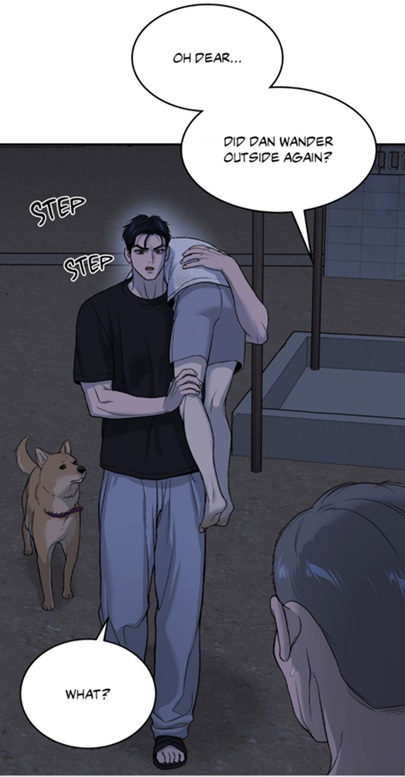 (chapter 65) he could prove to himself he was not powerless, he was valuable, capable of protecting what mattered.
 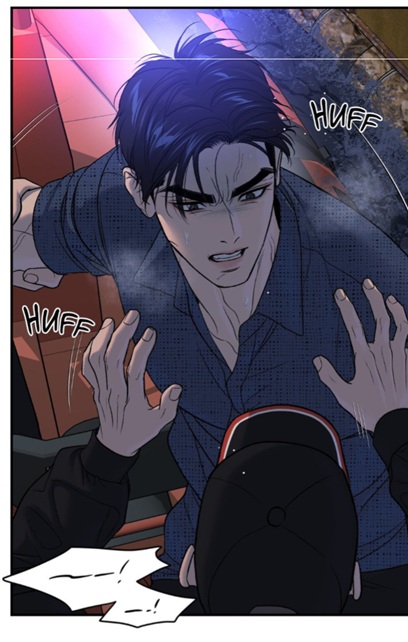 (chapter 69) He was not too late either. And the moment doc Dan discovers what the silent hero has done for him so many times, the former will realize that he has always been special to the Emperor. Moreover, the latter had never abandoned him in the end.
The curse of the Night-Cursed Emperor — the depression, the insomnia, the silence — will only break when he can walk through the night not as a rescuer masking his own wounds, but as a man who voices his emotions to the one person who has truly shared those nights with him. And now, Jinx-philes can grasp my illustration. The moment Joo Jaekyung starts confiding to doc Dan about his inner world, he will not only regain his voice, but also his life! He will be free and no longer the merchandise “Joo Jaekyung the fighter”. He will become a man with a history that is finally his to tell. And if his mother is still alive… she can be criticized for her actions. How so? It is because she was not by his side. She believed the “myth”. She probably imagined that he was “happy”. With his regained voice, the schemers will lose their hold over him; they will no longer be able to manipulate the silence that once kept him bound. Park Namwook has thrived in the shadow of his trauma — reframing the scars of that night as “mania” , (chapter 9) as if the champion’s volatility were a quirk (the actions of a spoiled child) to be managed rather than a wound to be healed. It is because he never talked to the champion or investigated his past. It was only about money and glory. The manufactured image of the erratic, temperamental fighter served Namwook well; it excused rough handling, justified bad press, and kept Joo Jaekyung dependent. Once the Emperor can name the truth of that night, the fiction collapses — and with it, Namwook’s control. He can only be judged as a liar and even a traitor, but we know that Joo Jaekyung has a big heart. He could love his father despite the abuse. Now, the missing link is Cheolmin!
  (chapter 13) Observe that this name is a combination between Hwang Byungchul and Baek Junmin! Under this light, my avid readers can grasp why the athlete kept his existence in the dark for so long! It is because the latter belongs to his past and knows the truth behind the Emperor! He was aware of his suffering. For him, he is not just a fighter, but someone who needed FUN in his life!
Feel free to comment. If you have any suggestion for topics or Manhwa, feel free to ask. If you enjoyed reading it, retweet it or push the button like. My Reddit-Instagram-Twitter-Tumblr account is: @bebebisous33. Thanks for reading and for the support, particularly, I would like to thank all the new followers and people recommending my blog.



 (Chapter 63) The presence—or absence—of clothing during their encounters symbolized the gradual dismantling of their emotional walls. Now, shifting the perspective to the champion, another layer of complexity emerges. Joo Jaekyung’s evolving approach to intimacy is not just a reflection of his growing feelings but also a silent, deeply ingrained struggle with dependence and control.
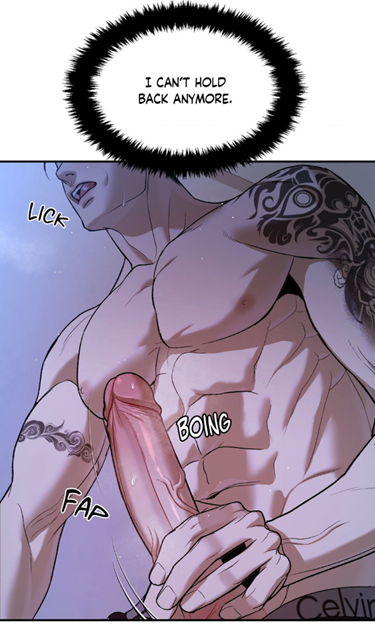 (chapter 63) Why does he hesitate to strip entirely, even as he succumbs to desire? Notice that he released his erected phallus before removing his cloth.
  (chapter 63) To answer this, a comparative analysis of earlier sex scenes is necessary, unraveling the hidden dialogue between physical exposure and emotional vulnerability.
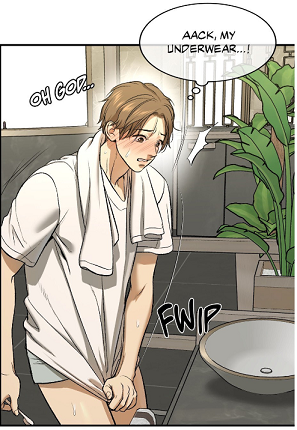 (chapter 30) The doctor instinctively tried to cover his gray boxer shorts with his t-shirt, prompting the champion to question his reaction:
  (chapter 30) In Episode 63, this dynamic appears subtly reversed.
 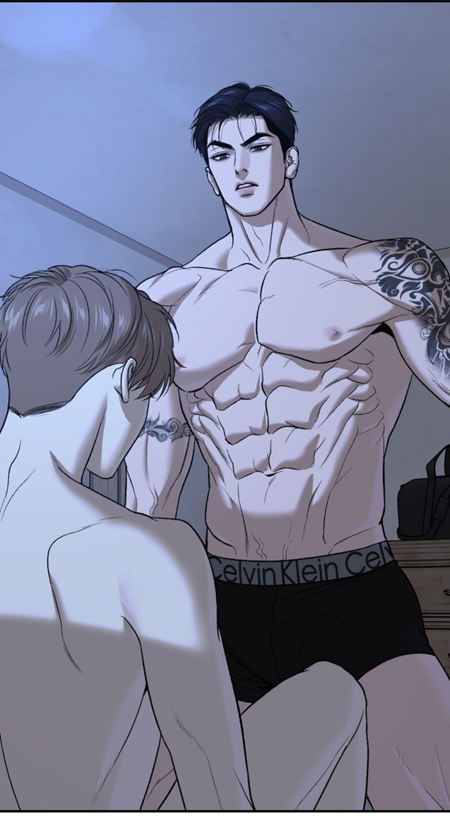 (chapter 63) The champion, despite holding the dominant role, is now the one retaining a piece of clothing. This suggests an unconscious act of concealment—not of shame in the traditional sense, but of a growing dependency on Kim Dan.
 (chapter 62) with a zoom-in shot on his erection still hidden by gray sweatpants. Striking is that on the one hand he let the doctor feel his reaction to his naked body, when he embraced the doctor:
  (chapter 62) The “hamster” could sense with his leg the excitement. On the other hand, these pants were only removed once he entered the bedroom and was on the bed
  (chapter 63), reinforcing the idea that vulnerability, for him, is confined to this private space. Moreover, the choice of attire in Episode 62
  (chapter 62) —ridiculous floral-patterned pants—serves as an indirect reference to shame (in a good way), an unfamiliar emotion for the undefeated fighter. This pattern culminates in Episode 63, where Jaekyung’s thoughts confirm his internal battle:
 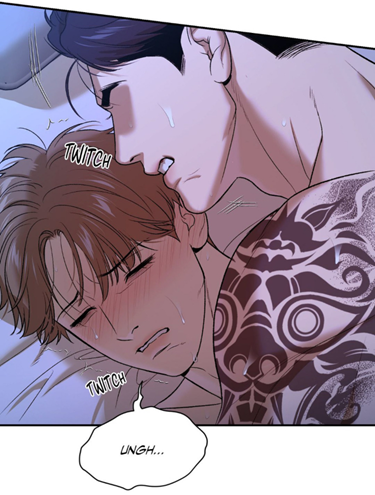 (chapter 63) Thus I deduce that exactly like the presence of the black underwear, the athlete’s low self-esteem hasn’t been removed completely. He still expects fear and rejection.
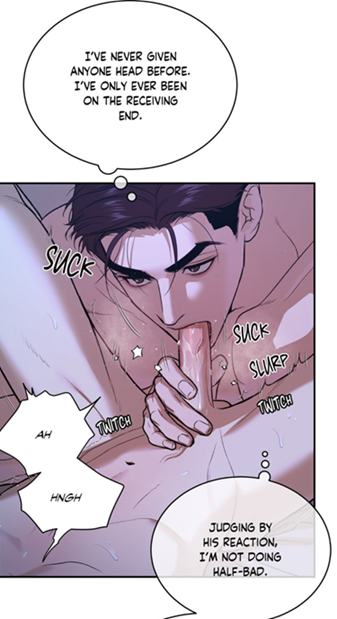 (chapter 63), dominates without seeking connection
  (chapter 55), and ensures that every encounter follows his carefully constructed narrative. However, in Episode 63, a subtle but undeniable shift occurs. For the first time, Jaekyung’s actions reflect something deeper than mere desire or dominance. They reveal his growing emotional investment in Kim Dan, exposing a side of him that even he does not fully comprehend.
  (chapter 63)
 (chapter 12) In the earlier encounter, Jaekyung presented himself as a generous partner, offering Kim Dan a so-called privilege—an opportunity to enter a whole new world, thanks to him. However, his so-called generosity was nothing more than a facade, a way to conceal his inexperience in genuine intimacy. The tool he used was not just an object of pleasure but a mask for his own shortcomings as a lover. He did not know how to pleasure Kim Dan, nor did he care to learn. His focus was not on Kim Dan’s enjoyment but on reinforcing his own power and dominance.
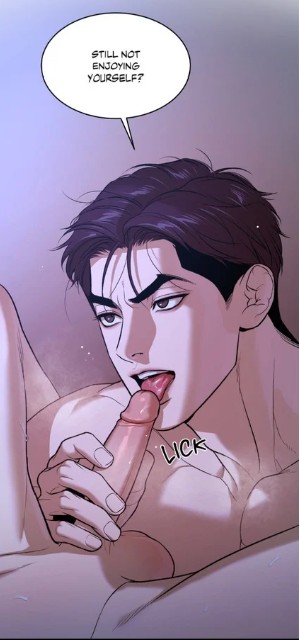 (chapter 63) Here, he no longer portrays himself as the benevolent provider of an experience.
 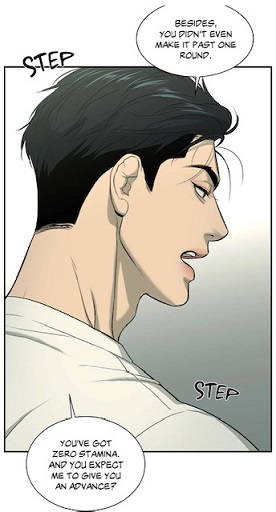 (chapter 12) – seeking both to display dominance and to elicit validation
 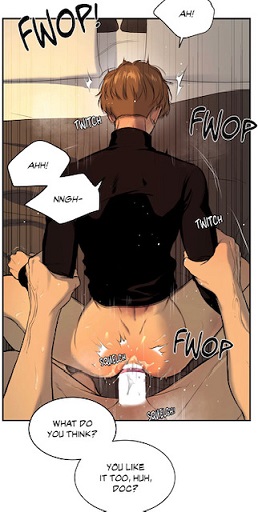 (chapter 12) —this time, in Episode 63, he prioritizes Kim Dan’s pleasure without explicitly expecting anything in return.
  (chapter 63) Up until this point, Jaekyung has never truly faced rejection.
 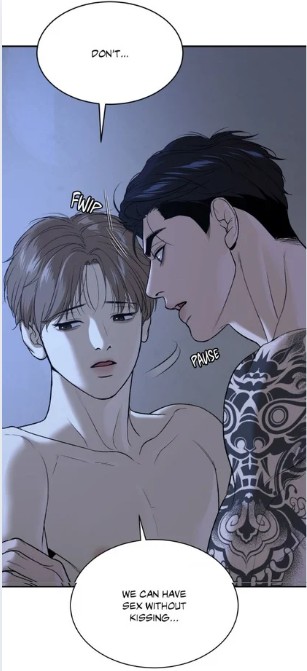 (chapter 63) His wealth, power, and physical prowess have ensured that people comply with his desires. However, in Episode 63, Kim Dan does not simply comply—he resists on an emotional level. While he consents to sex, he actively rejects any deeper connection. He avoids eye contact, creates physical distance, and refuses to acknowledge Jaekyung beyond the act itself. This rejection unsettles Jaekyung because, for the first time, his usual methods of control no longer work. He cannot use money to bridge the emotional gap, nor can he rely on his dominance to make Kim Dan want him.
  (chapter 63) This moment forces him to confront an uncomfortable truth: power and status cannot buy emotional intimacy.
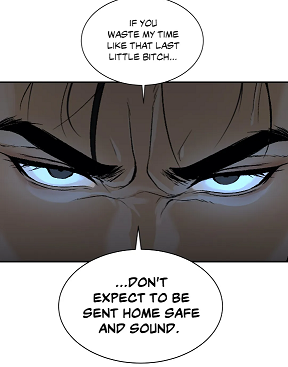 (chapter 03) or passive-aggressive remarks.
 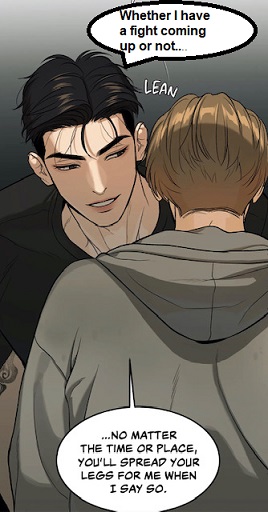 (chapter 6) However, in this moment, he does not react with anger or coercion.
  (chapter 63) While he does voice his frustration, he does so without force, showing an unprecedented level of emotional regulation. Instead of demanding compliance, he chooses a different approach—he focuses on Kim Dan’s pleasure, attempting to bridge the emotional gap through physical intimacy
 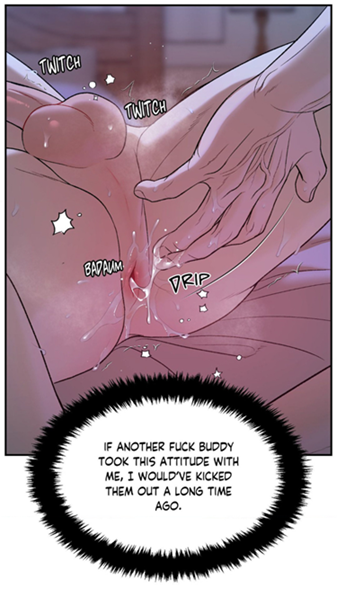 (chapter 63) rather than control. This decision is not merely about sex; it is an unconscious attempt to regain Kim Dan’s attention, to re-establish a connection that he does not yet fully understand but deeply craves.
 (chapter 29) This remark exemplified his detachment, his refusal to acknowledge Kim Dan as a person rather than just a body. Once again, the intercourse was linked to achievement and work. However, in Episode 63, he actively seeks Kim Dan’s gaze, subtly pleading for recognition.
  (chapter 63) This reversal is crucial because it indicates that he no longer sees Kim Dan as just a means to an end. However, his desire for recognition still lingers beneath the surface—just as he once sought validation through dominance, he now seeks it through Kim Dan’s acknowledgment. He wants something more, though he cannot yet articulate what that is, and his actions reflect a subconscious craving for emotional reassurance.
  (chapter 13)
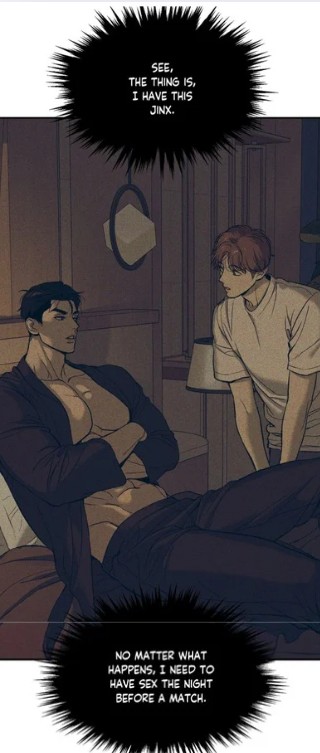 (chapter 62) the sportsman welcomes the physical therapist in blue pajamas and a robe—an overt attempt to maintain distance and control. Even as the encounter begins, he leaves his pajamas on
  (chapter 3), removing them only
  (chapter 3) – this image marks the change) when the doctor’s back is turned. Then in Episode 8, during the shower, he continues wearing shorts and underwear
  (chapter 8), and his choice of the doggy style further reinforces his desire to avoid direct, face-to-face vulnerability.
  (chapter 12) before removing it and adding the pink sex toy.
 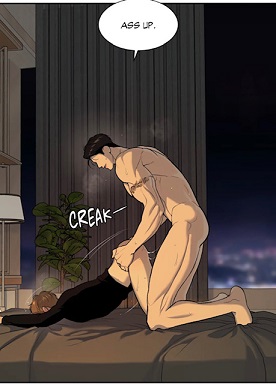 (chapter 12) Their bodies might have been close, but their minds remained divided. That’s why he couldn’t detect the huge bruises on his companion’s body.
  (chapter 12) This guarded approach is further underlined in Episode 20
  (chapter 20), where even in the midst of nakedness, the athlete deliberately positions the doctor in the dog stance. At the same time, he uses another MO: the darkness of the room to hide himself. This calculated arrangement maintains an emotional buffer, allowing him to remain physically exposed yet emotionally detached—a recurring theme in his behavior.
 (chapter 29) while still cloaked in his familiar blue robe and pajamas. Interesting is that the room is not totally dark like in episode 20, the bedroom is illuminated by the huge TV screen. Importantly, this episode marks the first time they face each other in the bedroom, signaling a significant shift in their dynamic and announcing a switch in position. This newfound mutual visibility lays the groundwork for later developments.
 (chapter 33) —a deliberate act imbued with symbolism. Unlike earlier encounters, the champion remains fully clothed throughout this episode,
 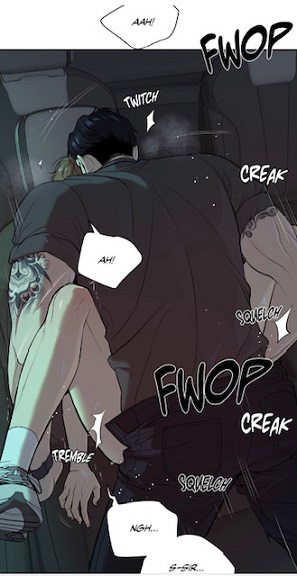 (chapter 33) contrasting sharply with previous moments of exposure. The car scene, where they are now facing each other, reinforces the announced switch in intimacy; the light not only illuminates the scene but also serves as a metaphorical spotlight on his desire to see the doctor’s face and body
  (chapter 33) —a silent assertion that only he can truly satisfy the physical therapist. Let’s not forget that before having sex together, the fighter resorted to a dildo
  (chapter 33) rather direct physical intimacy, because he felt insecure after witnessing the actor’s advances toward Kim Dan. His goal? To reaffirm his dominance and make Kim Dan admit that he needed him for pleasure. It is important because it exposes that deep down, the champion views himself as a bad lover. There is no doubt that Heesung‘s criticism resonated with him.
 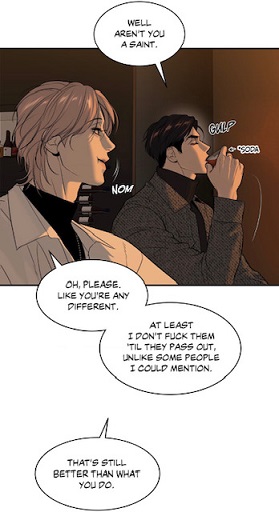 (chapter 33)
 (chapter 39) While receiving fellatio, the champion keeps his t-shirt on, only removing it later when he invites the doctor into bed.
 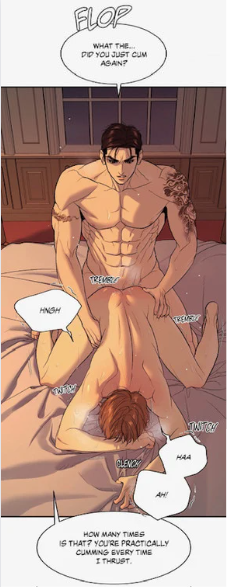 (chapter 39) Maintaining the doggy style during this phase, he uses such intimate acts to mask his true longing and attraction—an effort to control the encounter while keeping his emotions under wraps. Then I noticed that they switched positions, when doc Dan asked for a break.
 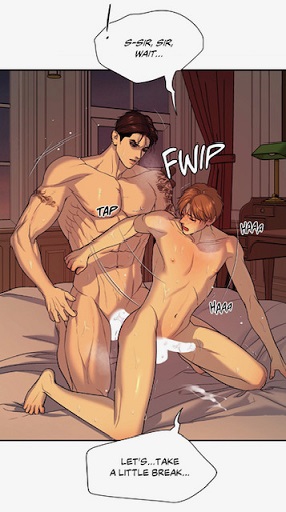 (chapter 39) The wolf chose to lie down on the bed:
 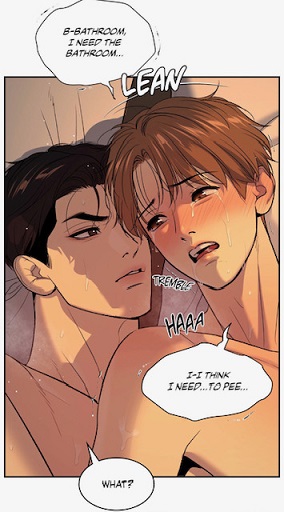 (chapter 39) As you can see, through the different intercourses, we can see the different methods the star used to conceal himself, to hide his “weakness”, his growing feelings for the doctor.
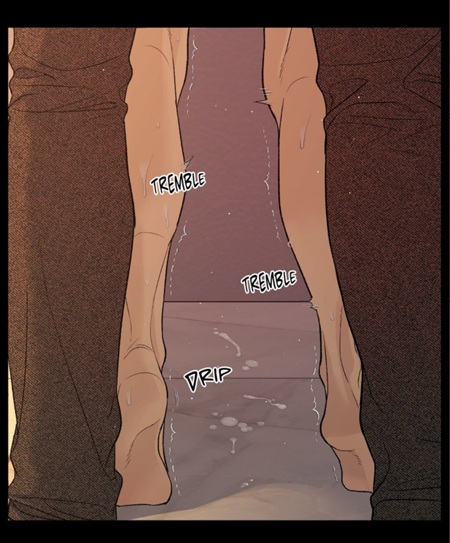 (chapter 61) The physical therapist remembers an encounter bathed in bright light, where they stood before a couch: the doctor had removed his pants while the champion remained fully clothed, positioned behind him.
 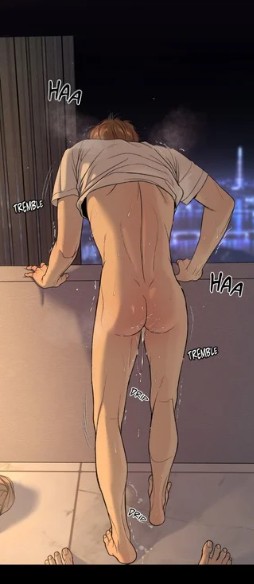 (chapter 61) After both reached climax, the sportsman swiftly departed—a stark demonstration of his habitual retreat into distance and fear, even as he ensures the doctor’s pleasure.
 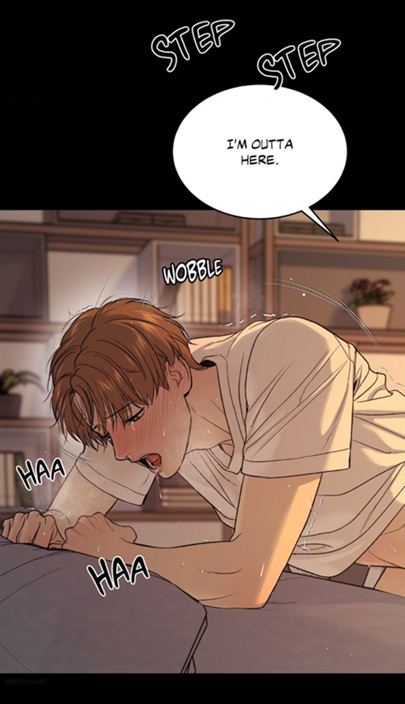 (chapter 61) This calculated “running away” underscores the return of old insecurities and the persistent need to assert control. Since the doctor was still living in the penthouse and as such was still working as the star’s physical therapist, it becomes comprehensible why the athlete could only resort to strength to keep his fated companion by his side. He had rejected his “gratitude” and “emotions” before.
  (chapter 63) Now lying on the bed facing each other, the pair’s physical closeness appears more genuine. Yet, even in this seemingly intimate configuration, they avoid locking eyes during penetration.
 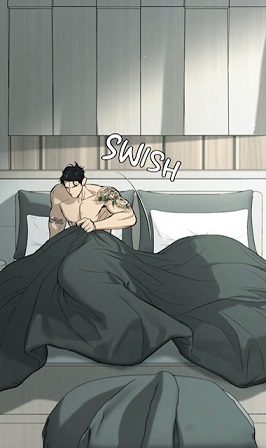 (chapter 4), we do not see whether he is wearing anything the morning after. After their “magic night” in the United States (Episode 39), the next morning, he is only shown taking a shower
  (chapter 40) —meaning the audience never sees him leaving the bed. However, in Episode 45, the author deliberately includes a shot of Jaekyung leaving the bed while still wearing his black boxer briefs.
 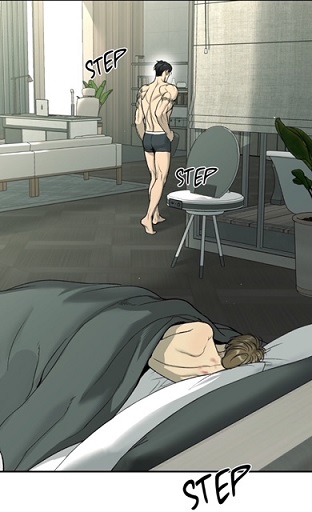 (chapter 45)
 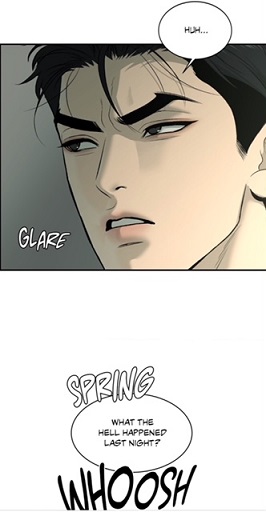 (chapter 45). This is just a rhetorical question, as he clearly remembers the night.
  (chapter 45) In reality, he was wondering why he had acted this way. This contradiction—pretending to forget while consciously recalling their time together—reflects his internal denial. His next thought,
  (chapter 45) is a transparent excuse to avoid confronting his emotions. The presence of the black underwear in this scene confirms that he had not fully lowered his guard; he still maintained a psychological barrier between himself and Kim Dan.
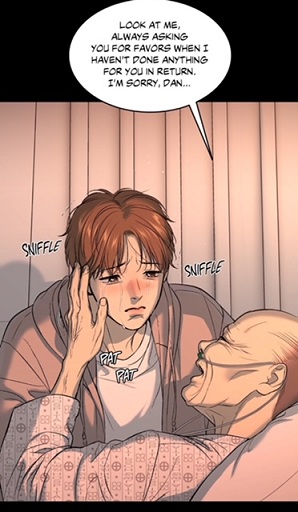 (chapter 53), Jaekyung was conditioned through shame and rigid expectations. His worth was not inherent but conditional, entirely dependent on his performance.
 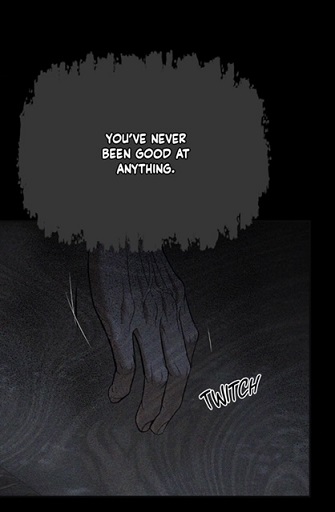 (chapter 54) If he was not good enough, if he did not win, he was nothing.
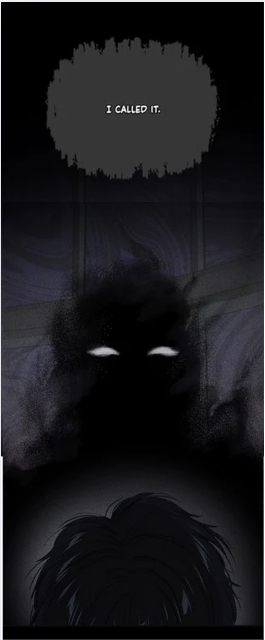 (chapter 54) The specter that haunts him—an unnamed figure whose words still echo in his nightmares—was the architect of his relentless pursuit of strength. Striking is that in his nightmare, he is facing the mysterious ghost, a sign that he saw hatred and rejection in his counterpart’s eyes. While Kim Dan’s halmoni took his hand and provided warmth
  (chapter 22), Jaekyung’s guardian likely did the opposite.
 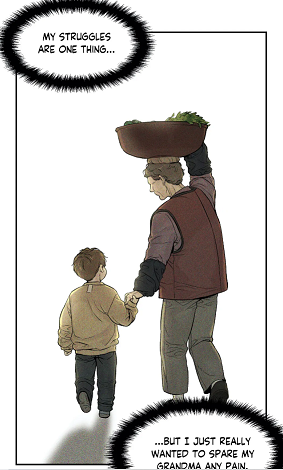 (chapter 5) This represented a source of support for the elderly woman. Secondly, during the intercourse in the lavender-tinted bedroom, neither the champion nor the doctor are trying to take each other’s hand:
  (chapter 63) In the beginning, the champion grabbed doc Dan’s wrist. This shows that the athlete was not used to touch Kim Dan’s hand. And notice how the “hamster” reacted
  (chapter 63) He pushed it away. This means that taking the doctor’s hand represents the biggest challenge for Joo Jaekyung right now. In addition, the last panel indicates the champion’s transformation, he is now willing to seek the doctor’s closeness. It also implies the vanishing influence from his past guardian.
 (chapter 54) There was no room for imperfection, no tolerance for hesitation. Thus I deduce that the champion’s choice of career could have been decided by the guardian, similar to the grandmother’s attitude with Kim Dan. Remember that he loves water and swimming.
  (chapter 27) Under this new light, it could explain why the fighter forgot his passion. They made sure that he would train restlessly. In this environment, vulnerability was a defect to be eradicated, not a human trait to be acknowledged. This description reminded me think of Park Namwook and his family. The manager is a former national wrestler who is married to an athlete too.
  (chapter 5) At the same time, it would highlight the potential danger of Park Namwook’s vision for the gym: an institution that might perpetuate the same cycle of control, shame, and expectation rather than fostering true passion and individuality in young athletes. That’s how I realized why the manager slapped his “boy” after the funny sparring:
  (chapter 26) He explained that the main lead was just a doctor. However, I am quite certain, underneath, the manager thought that doc Dan was not fit to spare: so small and weak. He doesn’t fit the criteria to become a sparring partner. Look at his reaction, when Seonho faced the champion:
 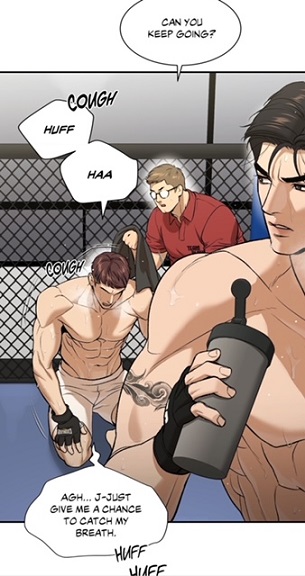 (chapter 46) Under this new light, it becomes comprehensible why Potato was also neglected by the manager. The young maknae belongs to a different weight category. There is this invisible rule that only strong people can become member from the gym. However, the purpose of such an institution shouldn’t be reduced to titles, strong and muscular men or boys. The gym should be opened to anyone who desires to have fun and improve their health.
 (chapter 1), until he received the doctor’s massage in chapter 1. His attitude toward sex mirrors his training in the gym—focused on endurance, performance, and control. His body is a tool, a machine honed for efficiency.
  (chapter 63) Pleasure is secondary; the real goal is lasting, enduring, proving his stamina. Even in his most intimate moments, he is competing against an invisible opponent—his own ingrained fear of inadequacy.
 (chapter 63), why he keeps barriers between himself and Kim Dan, even when his body betrays his true desires.
 (chapter 62)
 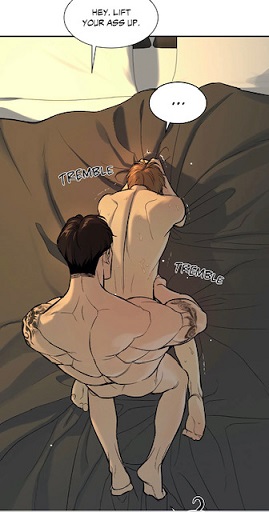 (chapter 4) nudity was a tool of dominance, a means of asserting control. Now, it has become a sign of submission—not in the physical sense, but in the way he is slowly relinquishing the emotional armor he has always relied upon.
  (chapter 44) His decision to keep his underwear on for as long as possible in Episode 63 is not a sign of detachment
  (chapter 63), but of his silent battle against the vulnerability he is beginning to feel.


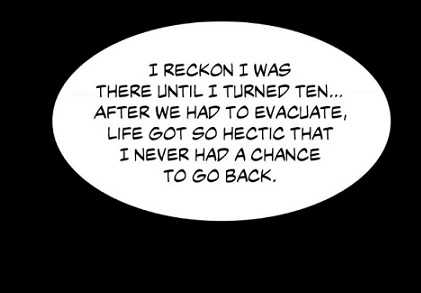 (chapter 53) for not realizing her biggest wish: to return to the West Coast. With her words, she implies that she never had any choice. Hence she is not responsible for her “misery”. However, after reading Erich Fromm’s philosophy, it becomes clear that she must have always followed social norms and listened to authority figures (parents, husband, doctors, …). That’s how she gave up on her own freedom. One might argue that her scoop of maneuver was limited due to her poverty. However, the Mother Of Pearl Wedding Cabinet is definitely expensive and no junk
 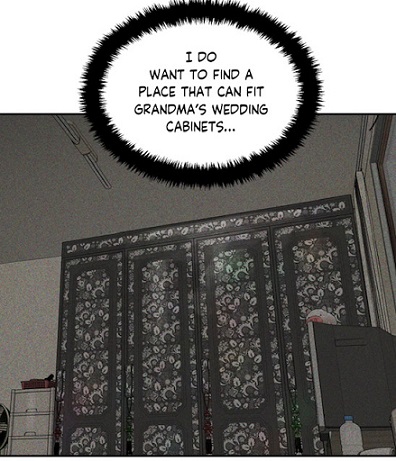 (chapter 16), especially since the latter is rather old. The grandmother could have sold it, but she never did, for the latter has a sentimental value. Consequently, I would say that she had missed her chance, and naturally her misery is the result of her own wrong choices. Under this new light, it becomes comprehensible why the grandmother portrays herself as poor who has nothing to give to her grandchild.
  (chapter 53) (filial duty), a sign that he is not able to break free from social norms. At the same time, it displays that his feelings for Joo Jaekyung are much stronger than the ones for Shin Okja. His short time spent in the penthouse left a deep impression on him.
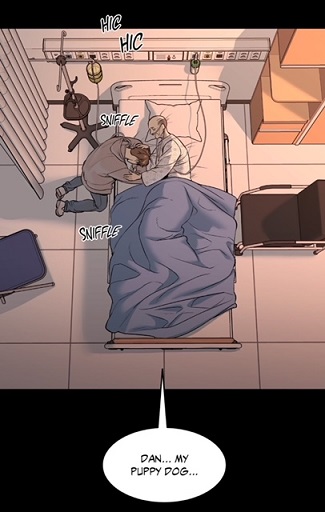 (chapter 53) Her vocabulary exposes that she became a master and in her mind, the puppy dog has to follow her owner. Therefore it is no coincidence that Mingwa created such an image:
  (chapter 53) The grandmother is now the master of her own life and Kim Dan’s. On the one hand, just before her death, she is learning to become accountable for her own life, even though I still have my doubts that she is really realizing the consequences of her choice. She is still chasing after after an illusion. As you already know, I am anticipating a rude awakening fron her part, as she can not escape from reality and her own mortality. On the other hand, with her request, she gets responsible for her grandchild’s career, and someone could criticize her for making him quit. She didn’t take his job’s obligations into consideration. Simultaneously, this image illustrates a relapse of Kim Dan. He is once again trapped, though he wished to be freed. Thus he wrote this to Joo Jaekyung:
  (chapter 53) Deep down, he would like to be recognized as a competent physical therapist. Moreover, my avid readers should recall that the champion had already noticed the change of heart in the doctor before the scheme took place.
 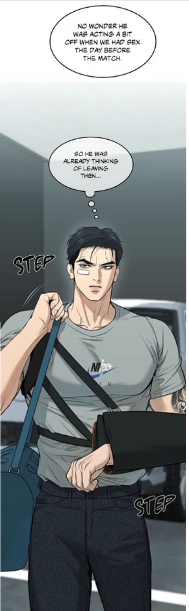 (chapter 53) So the athlete could come to the realization that his departure was related to the grandmother’s sickness and dying wish, a new version of episode 20 and 21. However, even if the fighter helps the grandmother, he can not entirely free the physical therapist. How so? It is because the doctor has to free himself, breaking free from conformity and his own psychological constraints (lack of confidence and as such courage). And the best evidence for his servitude mentality is the absence of his love confession to the athlete. He disguised it behind gratitude.
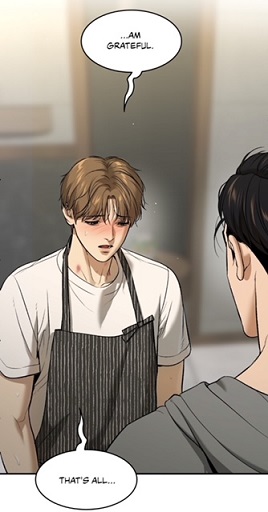 (Chapter 45) But how can he change his condition? I will give the answer below.
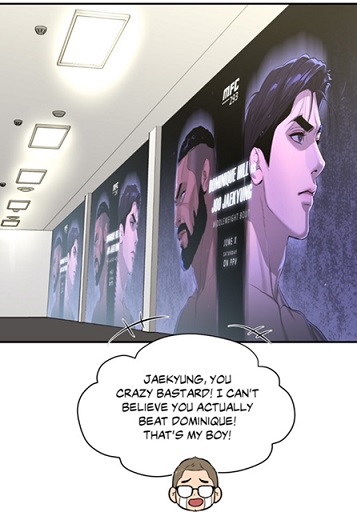 (chapter 40), though the gym belongs to the celebrity. But let’s return our attention to the American-German philosopher. The latter pointed out the importance of self-awareness and the rejection of materialism and social pressures (authority figures, conformity) in order to become truly free.
 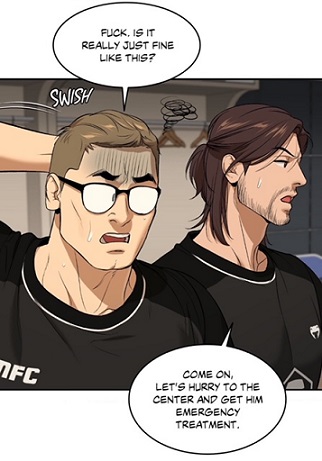 (chapter 50) Hence the last match was not cancelled in the last minute. The athlete is not fighting out of fun and passion, but out of obligation and survival. He is trapped in a world where money is everything. Thus he was always pushed to accept any challenger despite his injuries. That’s how I realized why the athlete always suspected Kim Dan of being greedy. It is because he projected his own thoughts onto his partner. However, this negative perception was definitely influenced by his “hyung”, we have the best example in episode 46. Due to Park Namwook, Joo Jaekyung was the one who was constantly thinking and talking about money in front of Kim Dan.
  (chapter 26) No wonder why he got so surprised by Kim Dan’s reaction in the locker room:
 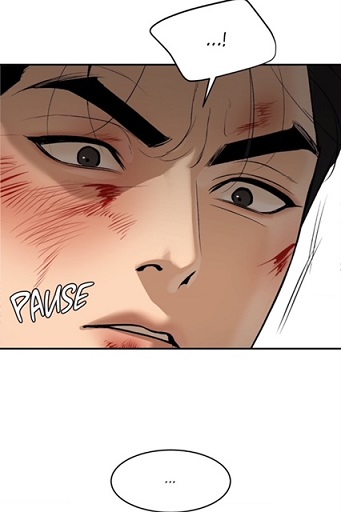 (chapter 51) He was disarmed by a single question and a shocked and disappointed face:
  (chapter 51) The question implied that the doctor had been trusting him.
 (chapter 43), yet he added shortly this comment: :
 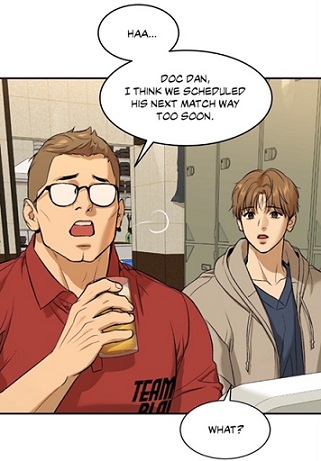 (chapter 43) The hypocrite coach utilized the personal pronoun “WE” indicating that he and his peers had played a role in the athlete’s decision. Funny is that though he complained about the schedule, he still accepted the switch of the fighter later. But he could have voiced his fears and objections. Nevertheless, he did nothing. Since I connected the halmeoni to past, I suddenly realized that the “lanista” embodies the opposite notion. He is trapped in the future, thus he is always anxious. Imagine that in that scene, they were celebrating Joo Jaekyung’s birthday, it should have been a good time. Yet, the manager kept talking about work and the future.
 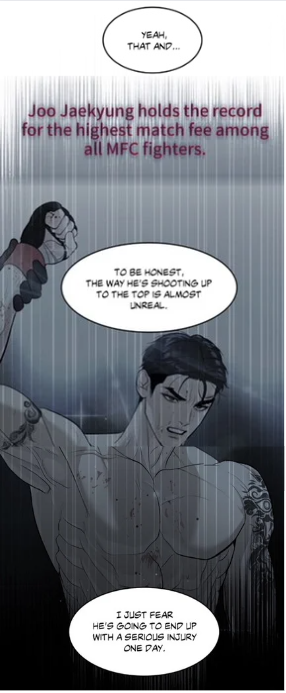 (chapter 43)
  (chapter 43) This is a sign that he was not “enjoying the present”. In my eyes, with his comments, he was actually ruining the party. Fortunately, no one paid attention to his words except the physical therapist and Yosep. By talking like that, he gives the impression that he is caring and paying attention to the fighter. Yet this is just an illusion, for he is not focused on the present. He neglected his duties, therefore the schemers were able to bring drugs to the champion’s rooms.
 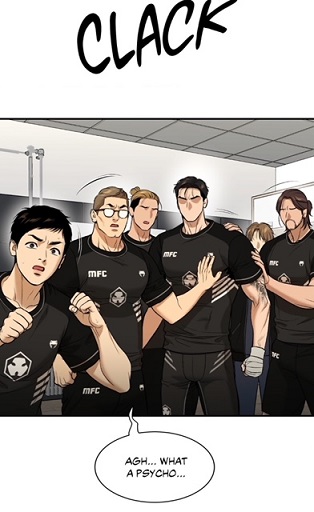 (chapter 49) Notice that he was afraid of an outburst from Joo Jaekyung in the locker room, therefore they were restraining him. This was no real protection. I am suspecting that the manager is trusting MFC and its organization. In addition, his obsession with the future explains why the athlete’s mental health has been neglected by the coach and manager. As a conclusion, Park Namwook is himself trapped in his own world: money, fear of the future and the champion‘s retirement which means the end of his own career as manager and coach. Therefore he is pushing his fighter to race against time. It is only a matter until his boy gets injured!!
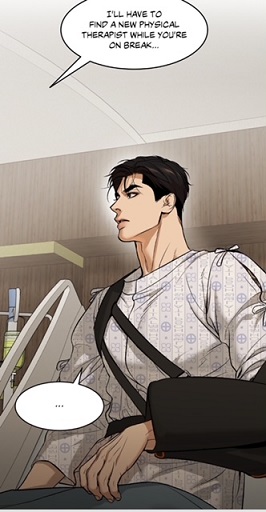 (chapter 53). The latter announces that his “boy” can take a break. What caught my attention is his idiom. The suspension got turned into a break which sounds much more positive. Interesting is that break is not only a synonym for “rest”, but also for “opportunity, chance”. This new discovery reinforces my previous interpretation: the loss of his “title” and his suspension are in verity an escape to freedom. Why? It is because he is no longer exposed to manipulations and external pressure like in episode 36:
  (chapter 36) money, social media, the agency, the lawyer, Park Namwook and Jeong Yosep. For the first time, Joo Jaekyung can think of something else other than work. Nevertheless, the athlete had not realized it yet. Striking is that the longer the fighter thought about the PT’s resignation, the longer he came to object to it.
 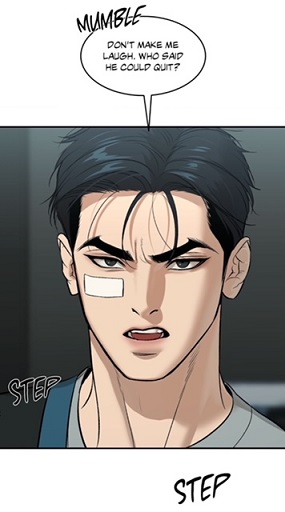 (chapter 53) This means that the fighter was acknowledging the “uke” as an important member of Team Black. In addition, he was recognizing Kim Dan’s effort and talent as PT. Moreover, it exposes the absence of change in Joo Jaekyung’s mentality. He was still “thinking” of work and fighting. It displays that the protagonist had not realized the true signification of his suspension yet. Hence the doctor’s departure was necessary. Joo Jaekyung is forced to think about his fated partner, making him forget his work and his career. His “obsession” with Kim Dan will push him to stop being a workaholic. But there is more to it.
 (chapter 21) to this
 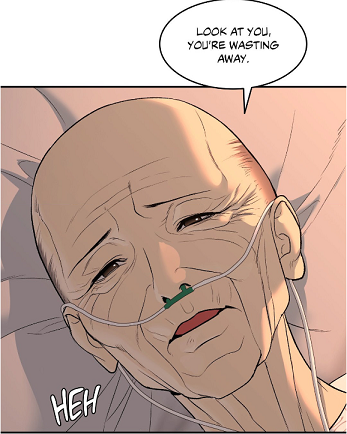 (chapter 47) Money is powerless in front of death and terrible injuries. Therefore he is lucky that his shoulder is not ruined forever. Moreover a trip represents a good metaphor for an escape, a travel is a synonym for freedom and the end of “routine”.
 (chapter 35). However, since he didn’t spend much time in his own home, he never took the time to take care of his soulmate. By leaving the city and Team Black behind, he would become truly alone (as opposition to his trips to Busan, the States) which would give him an opportunity to become more honest to himself and to Kim Dan.
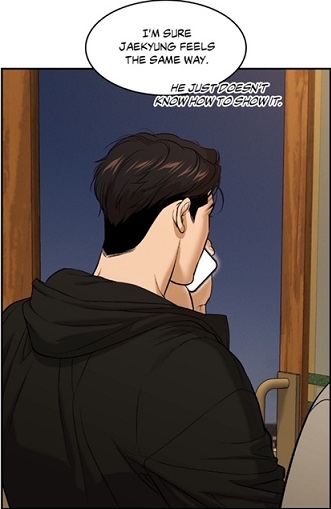 (chapter 43) In episode 1, he gave a positive feedback
 (chapter 1). Nonetheless, his words sounded more negative due to the usage of negation. Moreover, Kim Dan was too scared to take his words seriously. Consequently, it becomes obvious that Kim Dan needs to hear praises from the athlete himself. It is not just about an apology about his misjudgment, the “hamster” needs to hear from his own patient that he trusts him and his hands. Thus he wants to be needed:
  (chapter 53) This explicates why the young man kept questioning the actor’s intentions behind his gifts. He could see that the man didn’t need him. This thought displays his desire to give a meaning to his own existence as well. If he is needed, he has a reason to exist. This desire of being needed can be expressed by words, but also with the hands:
  or like this:
 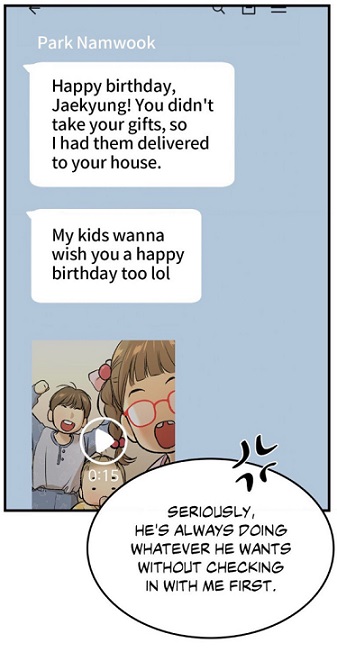 (chapter 45) so much and preferred organizing a charity event for his birthday .
  (chapter 41) Being on the receiving side makes him feel weak and powerless. He is reduced to become a passive man. Furthermore, we shouldn’t overlook that such presents are not entirely selfless. Companies or admirers have expectations from Joo Jaekyung, earning some money or getting his attention. At the same time, these presents are strongly connected to his title and fame as champion. Thus they are not taking into consideration about the athlete’s dislikes and likes. Thus he was offered a bottle of wine
  (chapter 41) The fact that the athlete organized a charity event for his birthday exposes not only his huge heart, but also that he had long recognized the power of generosity. Under this new light, it becomes comprehensible why the champion was willing to pay off the doctor’s debts.
  (chapter 18) Here, he hoped to see gratitude on his fated partner’s face, but it didn’t happen like he imagined. Yet, notice that despite their argument, Joo Jaekyung proposed to the main lead to live with him in the penthouse:
 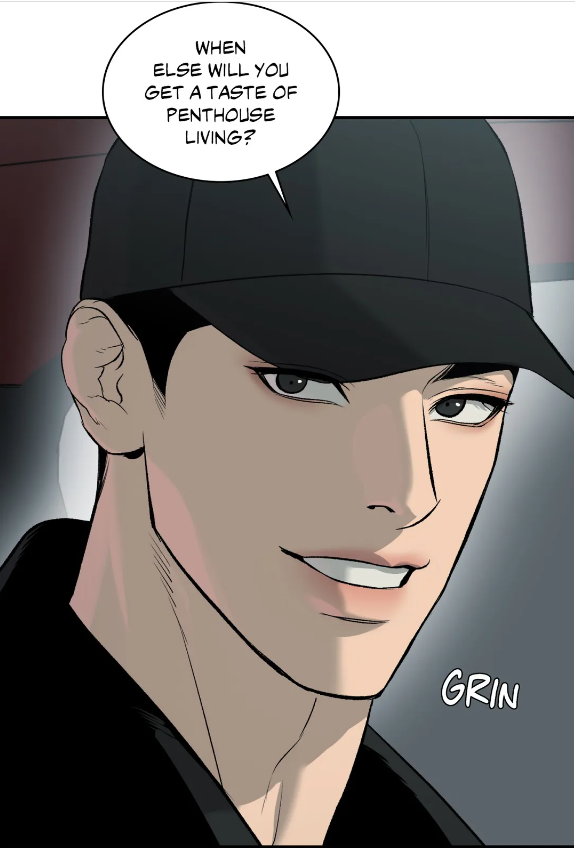 (chapter 18) His facial expression is exposing his true thoughts. He was definitely happy to help the doctor. The reason is simple. He is in control of his heart and life. This shows that deep down, the man has always had a soft heart and could find fulfillment in giving. However, the problem is that the champion had also internalized that there is nothing free in this world. Due to his past experiences, he realized that receivers would exploite his goodness. The green-haired guy was the perfect example.
  (chapter 2) Therefore it is not surprising that he kept denying his kindness to the doctor: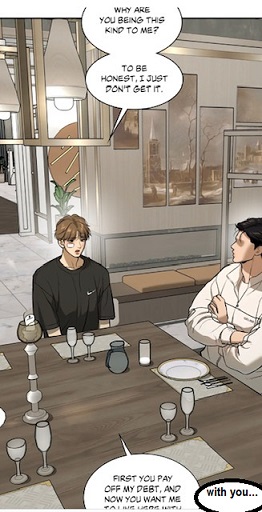
 (chapter 18) He had to, because the man was now living with him. Joo Jaekyung feared that his roommate could come to take advantage of his new position and even consider this place as his own. As you can see, the champion had long discovered the power of giving to others. Yet his problem was that he couldn’t live out this principle: he was either exploited or he has no family or close friend so far.
 (chapter 30) They both desire to be acknowledged and appreciated.
  (chapter 45) With this image, it was, as if Kim Dan wanted to be distinguished from all the stans. Yes, I do think that this has something to do their own negative feelings. However, there is a difference between Choi Heesung and Kim Dan. Note that the gifts are related to his sponsors and the agency. They were related to his work. Moreover, the gumiho rarely gave the meals or the presents personally.
  (chapter 31)
 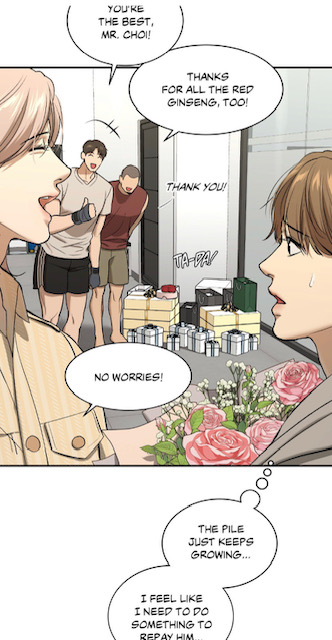 (chapter 31) Furthermore, the actor gave these things for one reason: it was to obtain the doctor’s heart or to maintain his good image as a celebrity. In other words, these gestures were not selfless at all. This explains why the athlete was so weary of such “gifts”: a return of favor or a service. But the comedian is not the only one donating things. Naturally, it is the manager Park Namwook.
  (Chapter 26)
  (chapter 36) However, my avid readers should ponder on the following aspect: how did he buy the jackets and the junk food?
 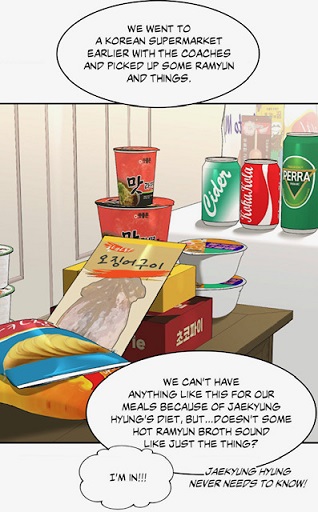 (Chapter 37) This last scene is terrible, for this purchase happened behind the boss’ back. Naturally, everything was bought with the company card!! In other words, Park Namwook’s generosity is fake, for he is not spending his own money. After this new realization, I started wondering if the athlete’s negative attitude towards Kim Dan is not the consequence of Park Namwook’s behavior as well who takes it for granted to spend money on the athlete’s account. Why did the champion anticipate an expectation from Kim Dan, when he received the keychain?
  (Chapter 45) It is because his relationship with his coach has always been based on „conditional love and expectations“. Don’t forget that the coach was particularly nice to the athlete after winning his match in Busan. He was willing to be his „servant“ in that moment. Furthermore, there exists another evidence that in episode 45 the fighter latched out on the doctor because of his unresolved feelings towards his hyung.
  (chapter 41) This frenzy was portrayed as something positive. Jinxworms can observe that the manager is mentioning the existence of „favors“. For me, it is no coincidence that in episode 45, the arrival from presents coming from his hyung coincides with the present with Kim Dan. It shows the underlying conflict between the celebrity and the former wrestler. Nevertheless, the fighter has not grasped it yet. So far, Joo Jaekyung has not tried to defy Park Namwook openly, to claim his place as the true owner of Team Black. We should see his words here as a first attempt to act as the boss
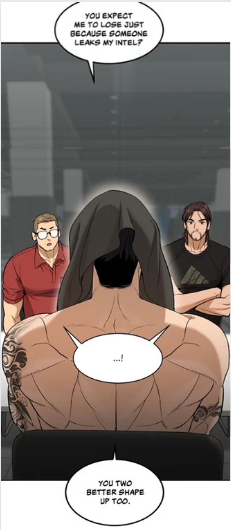 (Chapter 46) The tension reached its peak in that scene:
 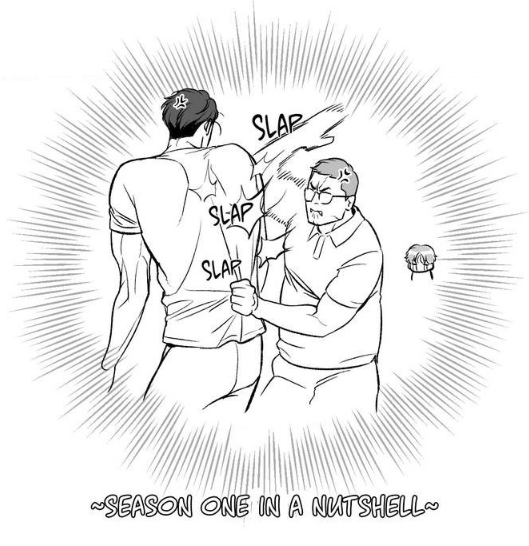 That’s where the generosity from Park Namwook comes from: he gives his punches to Joo Jaekyung and takes Joo Jaekyung‘s company for granted. And now, you comprehend why I selected such a title for this essay.
 (Chapter 26) The sparring in episode 26 represents the positive version of giving a punch and taking it. The fighter was not upset about his defeat, moreover he was acting like a real teacher asking the physical therapist to overcome his own fears. On the hand, the slap at the hospital embodies the opposite notions: resent, no real teaching, no reflection, no listening, the one slapping is not overcoming his own fears and vents his anger. The give and take in episode 26 was happiness, true generosity, self-awareness, while this slap displays misery, anger, ignorance:
  (Chapter 26) The contrast not only exposes Park Namwook’s fake generosity, but also his greed and selfishness. For me, he missed the opportunity, as at the gym, Kim Dan took the chance, when the athlete was distracted. Hence in my opinion, chapter 52 was the turning point in their toxic relationship. Moreover, it signifies that the manager lost his special position as hyung. Far away from the gym, Joo Jaekyung will see Kim Dan under a different light, maybe even as a true role model, for he is wearing his heart in his hand.
 (chapter 7)
 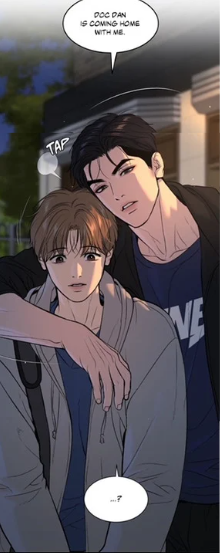 (chapter 43) He needed to seclude him from the others. But where does this possessiveness come from? In my opinion, it is not just the result of his own insecurities, but also the influence of the bad role model he had: Park Namwook. First, only in chapter 45, the manager sent congratulations from his family:
  (chapter 22) This scene at the hospital displays that the fighter had been mirroring the behavior of his counterpart: Shin Okja is sweet and kind. And who is moody, yelling, brutal ? Park Namwook:
  (chapter 43)
  (chapter 7) Therefore I conclude that this possessiveness and obsession with Kim Dan is the result of the manager’s influence. Park Namwook treated him like a possession. And this brings me to my next part. How to become happy? One might reply: by loving someone. However, how can Joo Jaekyung drop his insecurities and open his heart like that? As you can see, we need another explanation.
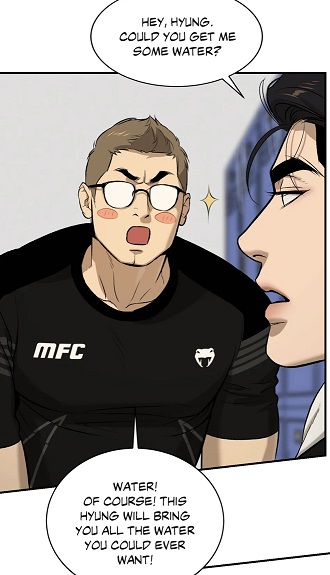 (chapter 15), but as soon as his idol lost his title and got even suspended, he yelled and slapped his fighter:
 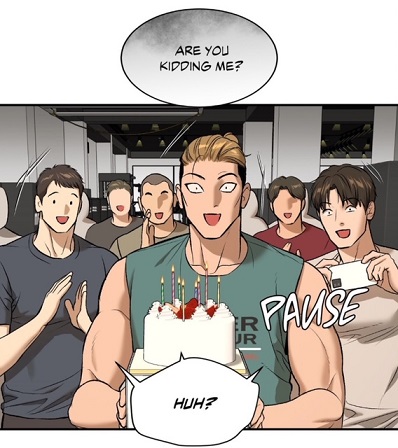 (chapter 43) This exposes his lack of engagement and indifference in the end, but this becomes even more obvious during the night:
  (chapter 43) Where was he, when his star was drunk? It was, as though he had vanished.
 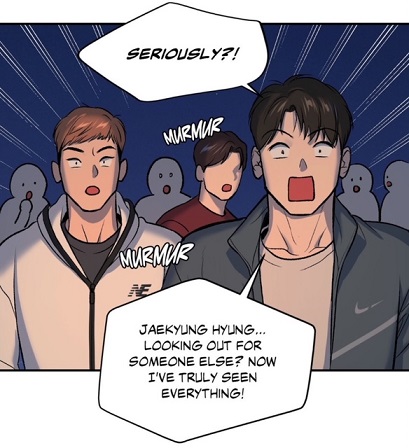 (chapter 43) But the best evidence for this interpretation is this image:
  (chapter 52) The manager is upset, because his boy lost his title and his reputation is ruined. Moreover, many members left the gym which means that the company lost a lot of money.
 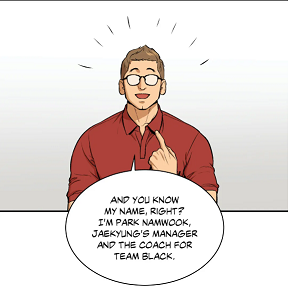 (chapter 9) However, he never presented himself as a father or a husband. It was, as if his children or wife were not a source of his happiness. Why? It is because they don’t bring money, but rather cost money. Thanks to Joo Jaekyung’s popularity, the manager could stand in the spotlight
  (chapter 40), yet notice that no fans or fighter know his name as a successful coach or manager. He is not a famous manager in the end. His income depends on the athlete’s career and victories. No wonder why he put so much pressure on his celebrity. Thus I had the following revelation: he was actually exposing his true self in front of the doctor at the restaurant.
 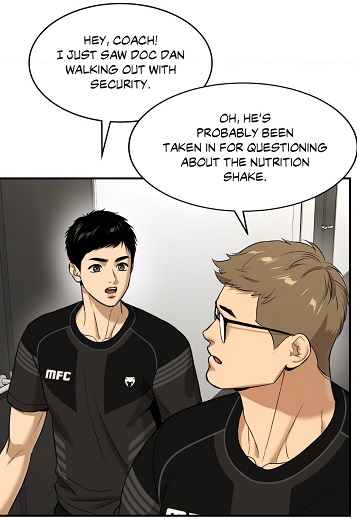 (chapter 40) in the States and even at the gym?
  (Chapter 43) It is because he doesn’t view the uke as a possession contrary to his „boy“. Why? It is because the young man doesn’t bring money or contribute to boast the manager’s self-esteem. In fact, Kim Dan is an expensive PT and the manager is aware of his high salary. Moreover, contrary to the hamster, Park Namwook was never seen in the penthouse, and the celebrity refused to invite the members. This is a clue that the champion could have refused to invite his coach there. The doctor’s stay at the penthouse is something Park Namwook discovered by accident.
 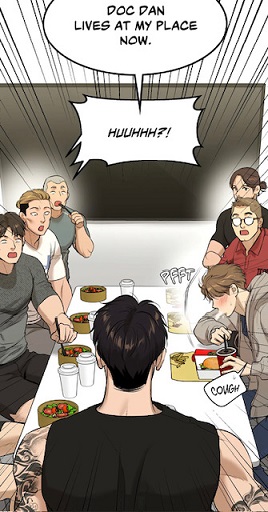 (Chapter 22) And now, it is important to recall that in the mode of Having, rivalry and competition are predominant. Therefore I deduce that deep down, the coach and manager sensed the physical therapist as a source of threat and rival. Therefore Jinx-philes shouldn’t be surprised that the coach did nothing to keep Kim Dan.
 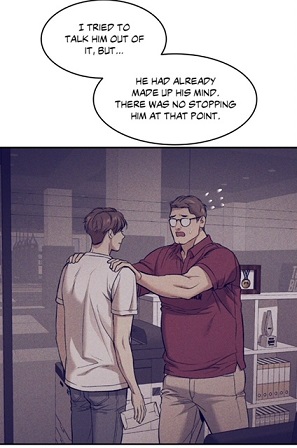 (Chapter 53) Here his gestures and words should be judged as lip-services. He can even rationalize his departure: bad luck, they save a lot of money, for the next PT will have a lower salary. In addition, Kim Dan was treated as the celebrity’s possession, therefore he used him as a tool in order to compensate the actor. The manager is definitely imagining that once the break ends, things will work like before.
  (chapter 41) In his eyes, possessions and money determine someone’s values. Hence he bought an expensive keychain for his fated partner. Furthermore, I have been wondering if this spending is not related to Shin Okja, the latter could have been a spendthrift. In the essay „
 (Chapter 19). Another possibility is that she made sure that her grandchild would spend money on her:
 (chapter 22) after the departure of Joo Jaekyung, but notice how the halmeoni thanked the benefactor:
 (chapter 21) One might argue that the poor woman couldn’t do much to express her gratitude. However, this is just a deception. Shin Okja could have written a letter to express her gratitude to Joo Jaekyung. Why do you think Mingwa created two scenes with a letter or card?
  (chapter 45)
  (chapter 53) The comparison lets transpire the importance of words. The champion might have judged the keychain differently, if he had read the card. But he didn’t. Another parallel between these two scenes is the rejection of a gift! However, in the final episode, Kim Dan voiced genuine gratitude towards his benefactor. The latter had allowed him to work as his PT. With the letter, he could voice his thoughts and emotions much better. And now, you realize that Shin Okja could have acted the same way. This made me realize that deep down, she resents being poor. She likes Dan spending money on her.
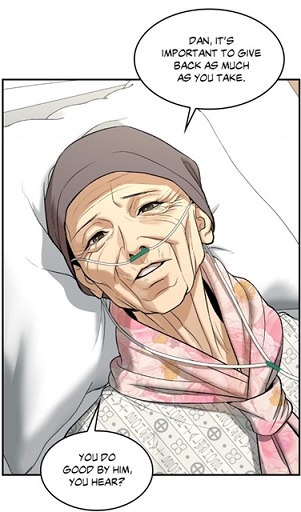 (chapter 41). He should treat the sportsman nicely (“do good”). Kim Dan is the one who should be indebted to Joo Jaekyung. However, observe what she said in front of her grandchild before: she was the one who was grateful to the main lead, and not Kim Dan!!
 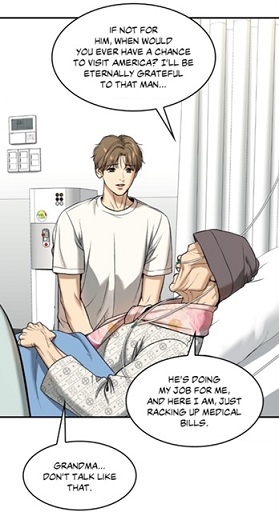 (chapter 41) She should have been the one who expressed her gratitude to Joo Jaekyung, but not Kim Dan for the trip (it was work related anyway). One might argue that the poor woman is trapped in the hospital, she can not do much. But you are wrong. She could have written a letter to her benefactor which means that she would have sacrificed some of her time for the athlete. Imagine that she had sent a message to the athlete, the latter might have decided to pay a visit to her. He is not truly heartless. With this silence, she created the impression that his assistance had changed her situation.
 (chapter 22)
  (chapter 1) In other words, he was not passionate about his profession. This means that he didn’t define himself as PT due to his lack of engagement and low self-esteem. Besides, let’s not forget that he judges people based on their social status and seniority. I would even add, the main lead had not recognized the existence of his own skills (knowledge, genuineness and dedication). But by working for Joo Jaekyung, he came to enjoy his job. This explicates why he kept buying books.
 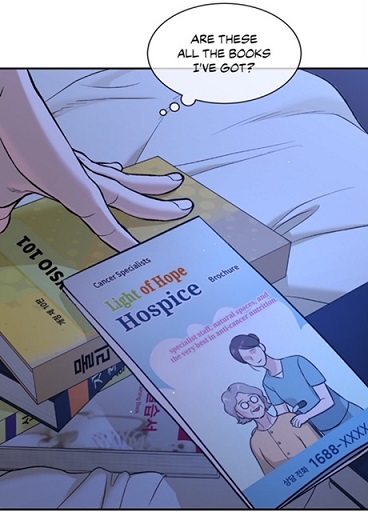 (chapter 53) He likes not only his job now, but also learning as such. This is no coincidence that education in the mode of “being” means that the focus is on learning and developing skills. Hence I still see a change in the hamster at the end of season 1:
 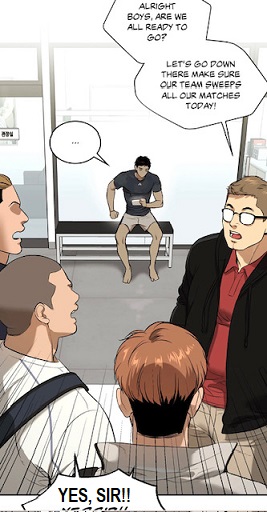 (chapter 23) Then he only focused on the “outcome” and not on the process. Hence he neglected them, delegated his task on the pressured athlete. The latter had to train them:
  (chapter 25) and
 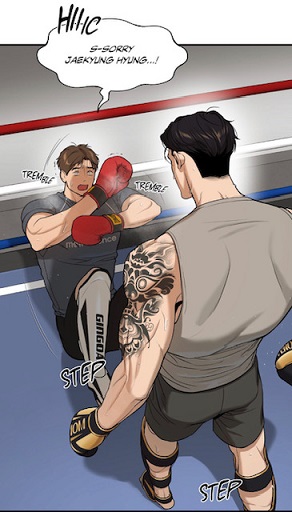 (chapter 36) In my eyes, he didn’t want to play the bad guy. The meeting or his worries were more important
 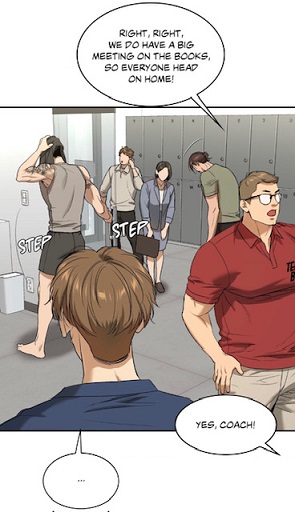 (chapter 36) than their training and career. Moreover, he kept bribing them with junk food
 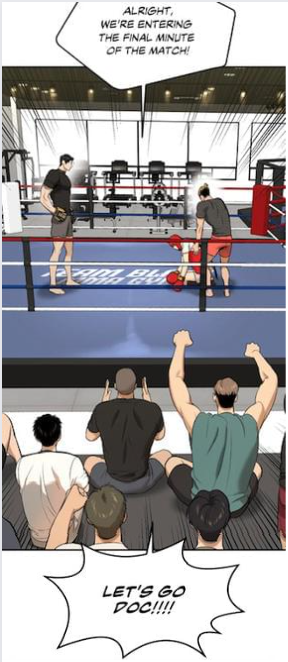 (chapter 26) and became more obsessed with possessions and fame. Potato and the remaining members represent the exceptions. They enjoyed the lessons despite the pain and struggles. The other members became dependent on external tools which led them to lose their integrity. To conclude, the reason for their disloyalty is that at the end, they had long internalized the mode of having and were just interested in getting successful.
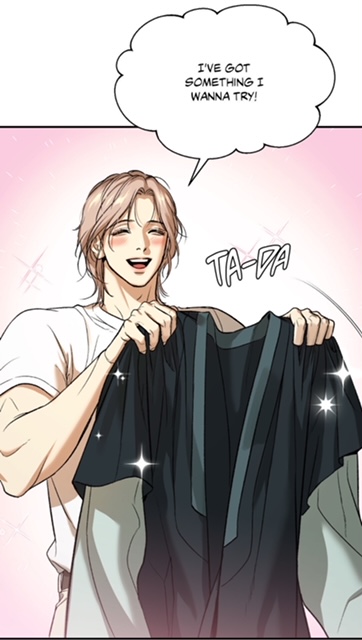 (special episode2 ), but also Cheolmin
 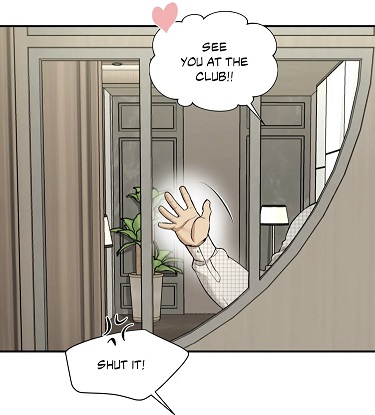 (chapter 13)
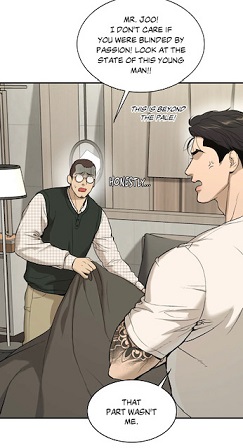 (Chapter 13) when the latter denied his responsibility. This shows that the man doesn’t mistrust people. He has faith in humans. And in this short scene, the doctor shows alle positive notions mentioned above: love, empathy, joy and creativity. Therefore I come to the following interpretation: he embodies the being mode. No wonder why he was not present in season 1. The main lead was definitely obsessed with work. Hence the moment Cheolmin’s path crosses Kim Dan’s, the funny doctor should become the hamster’s new role model.
 (chapter 48) are full of greedy people who have no problems to commit crimes in order to achieve their goals (more fame, more wealth, revenge, more connections). Baek Junmin became a champion by cheating.
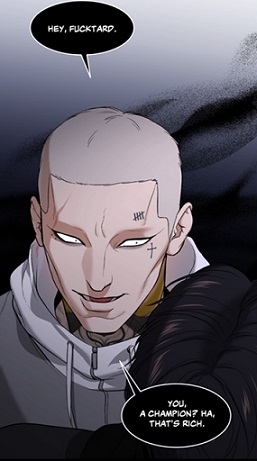 (Chapter 49) Thus he thought, the athlete had earned his title the same way. His fights were rigged, yet the verity is that the idol worked hard to achieve this level. The irony is that The Gunshot experienced much too late that his assumption was wrong.
 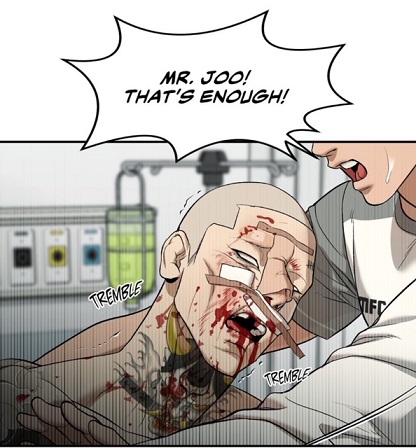 (Chapter 52) His shaking is exposing his fears. Like mentioned in the past, I am anticipating that The Shotgun will avoid a new fight with the celebrity.
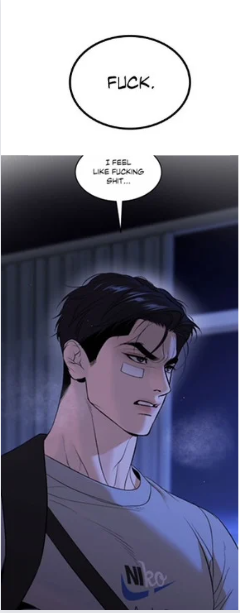 (chapter 53) He is standing at a crossroad. What does he truly want in life? Fame? More money? Or happiness and as such love and fun?
 (chapter 48) Why did the Webtoonist gave us the time, when the next episode starts another day? On the one hand, it exposes that the schemers knew about the champion’s nightly activities. He wouldn’t sleep much and he would keep his cellphone next to him.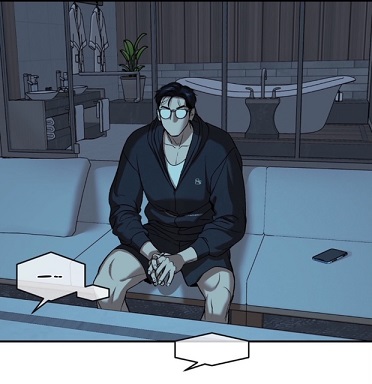
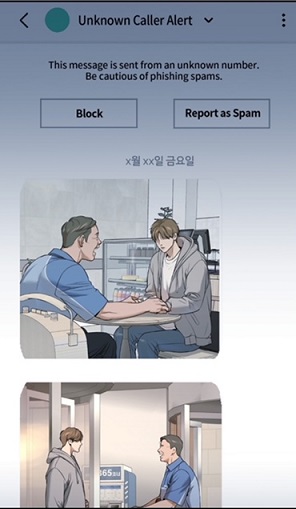 (chapter 48) It shows once again that the traitor is close to the athlete, for he knows about his way of life. Furthermore, the unknown person could text to the champion, hence this means that his cellphone number got leaked by a person close to him. On the other hand, I am quite certain, the Webtoonist desired to fool her readers making them anticipate a confrontation between the two protagonists. However, nothing happened indicating that Joo Jaekyung didn’t react, like the plotters had anticipated it. Thus they had to create a new scheme. First, let’s not forget that they had used a similar method in the past.
 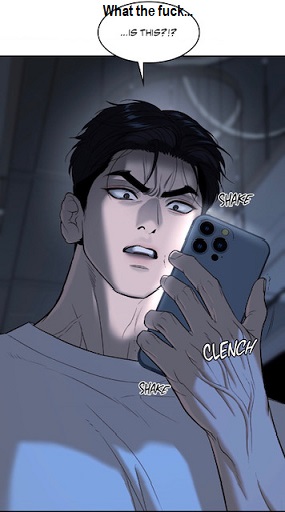 (chapter 35) This made me think of Painter of The Night and No-Name’s advice:
  (chapter 76) “A deed once foiled has no chance of success the second time around”.The criminal was referring to learning through experience. After going through such an event once, the athlete is no longer caught by surprise. We could say that he learned not to jump to conclusions and control his emotions. That’s the reason why in episode 48 he remained level-headed. Because the champion didn’t get angry, he could be more attentive.
 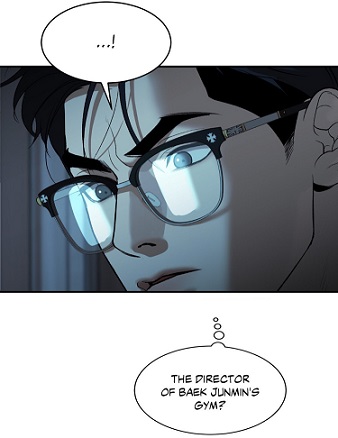 (chapter 48) Secondly,
 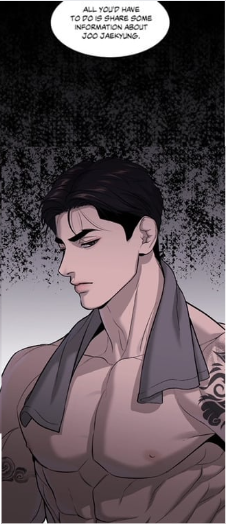 (Chapter 48) The irony is that the doctor had been able to treat the star’s injury. For me, the Summer Night’s Dream played a huge role, as during that night, Joo Jaekyung felt treasured and loved. Therefore the pictures could only expose the duplicity of the director of King of MMA. Under this new light, it becomes understandable why the celebrity didn’t fall into their trap and why they had to turn doc Dan into a traitor by giving him a weapon without his knowledge. Finally, I believe that Joo Jaekyung had another reason not to confront the physical therapist. How so? It is because he had sent away his soulmate, while the latter had approached him.
  (chapter 48) He had missed the opportunity.
 (chapter 30) Here, he wished to seek the doctor’s closeness. Nonetheless, if he had gone to Kim Dan’s bedroom during that night, he would have achieved the opposite: he would have created distance and caused an argument. The latter could have told him that he was looking out for himself, for Joo Jaekyung had threatened to fire him. Through these observations, it becomes visible why the athlete couldn’t ask Kim Dan at all. Consequently, I come to the conclusion that the clock
 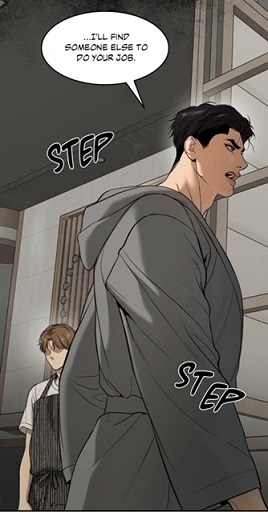 (chapter 45) Then in the bedroom, he had rejected all his requests (massage, conversation). It was, as if he no longer needed him. He was no longer eating his breakfasts too.
 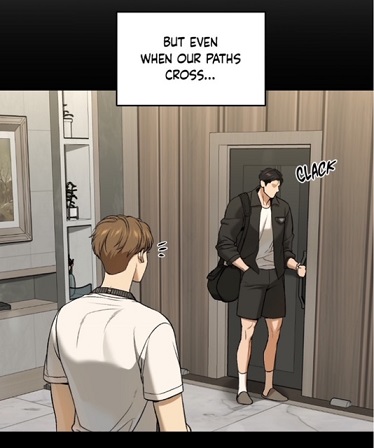 (chapter 47) Under this new light, Manhwa-lovers can comprehend why he looked annoyed in the hallway.
 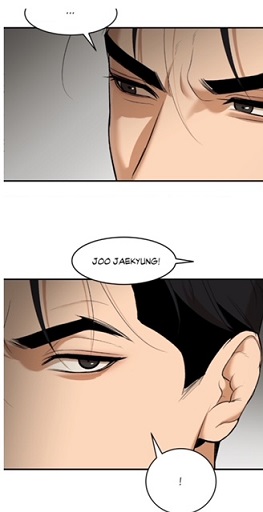 (chapter 49) The gaze displays not only worry and anxiety, but also regret. It was too late to ask the doctor. For me, he chose silence, for he was regretting his reactions in the penthouse. He feared to ask Kim Dan, because if he brought up the meeting with Choi Gilseok, this could push the hamster to quit his job. However, thanks to Kim Dan, the star’s condition improved greatly. That’s how it dawned on me why the champion became a beast and why he is hiding his past:
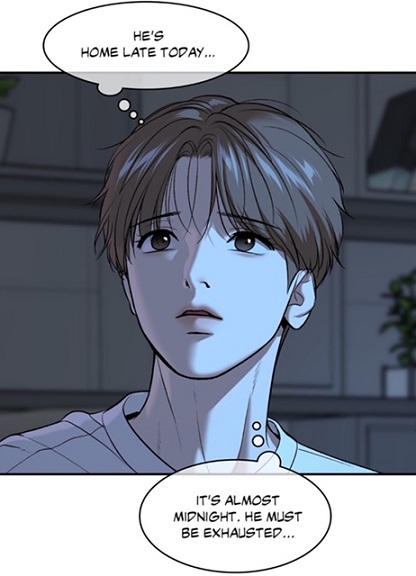 (chapter 48) But why is midnight so important? It is because the number 12 carries religious, mythological and magical symbolism, generally representing perfection, entirety, or cosmic order.
 (chapter 48), when he noticed doc Dan’s presence too late. But nothing happened to him, that’s how he got incited to trust Kim Dan. The latter wouldn’t backstab him. Under the blue light, the champion got transformed.
 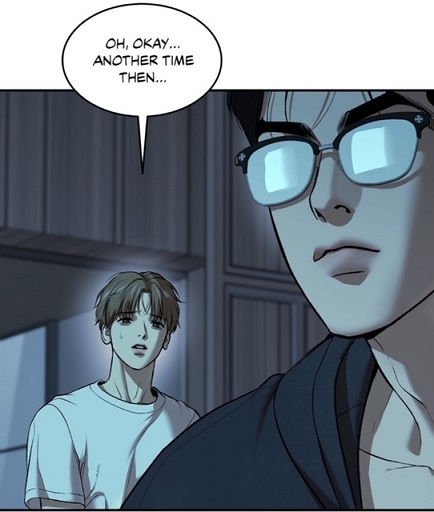 (chapter 48) On the other side, the fact that the champion is always targeted during the night is a sign that the villains desired to approach him, when he was isolated. So they know not only about his insomnia, but also about his solitude. I would even add that the plotters are aware of his association between the night and danger. Remember how he described relaxation: he would give an opportunity to his enemies to attack him
  (chapter 29) This new observation reinforces my past theory: he would be suffering from Somniphobia due to traumas. [For more read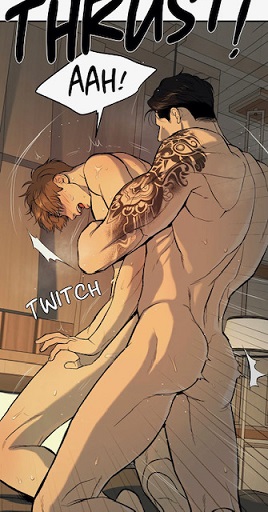


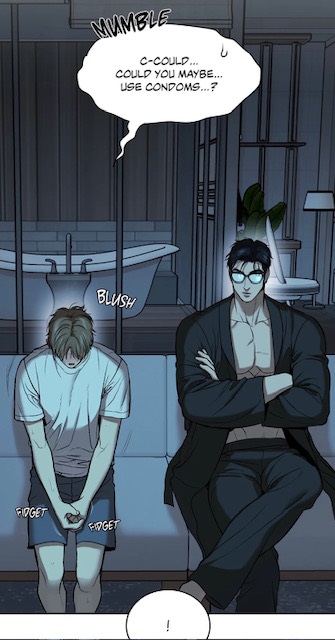

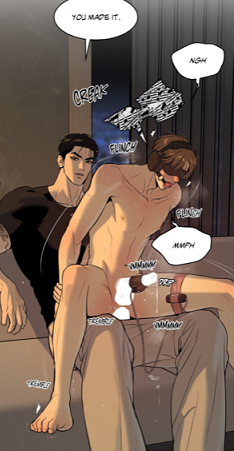




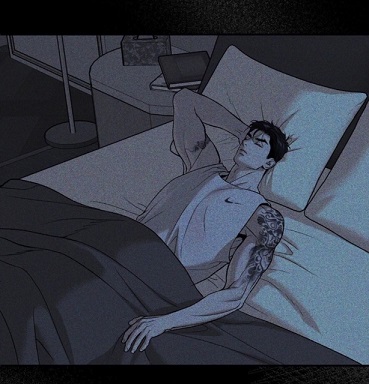
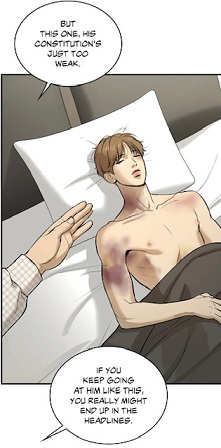 (chapter 13) It is important, because through this terrible experience, Joo Jaekyung came to internalize the connection between sex and danger. This would explain why he has been so rough in bed before. He came to see it as a normality, a sign that his perception of sex had been negatively influenced. And this can only come from bad experiences. It had nothing to do with “enjoying the moment”, until the protagonist met the shy hamster. We can see his gradual transformation. In episode 12, he definitely saw the night as “carpe diem”
  (chapter 49) In the previous essay, I had mentioned the theory that the champion might have been raped and even gangraped which would fit the criteria (sex, danger and urgency). Finally, the recurrence of “delicacy” during the night is an indication that the athlete must have been like Kim Dan in the past! Vulnerable and alone!
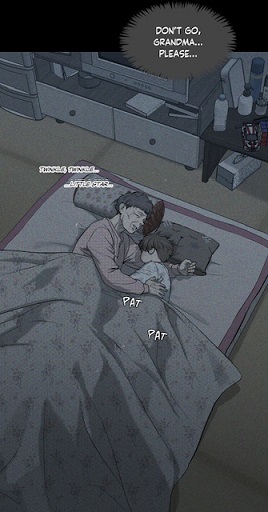 (chapter 21) Furthermore, the champion exposed why he could never relax:
 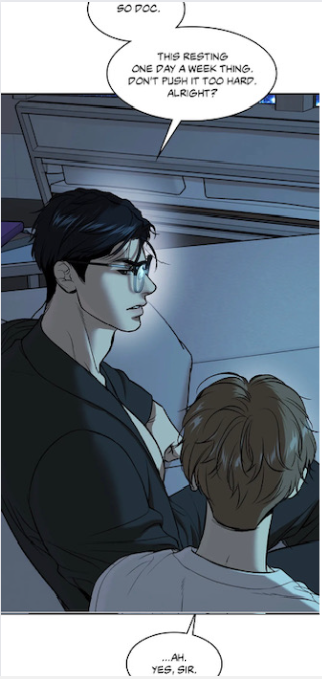 and 48:
 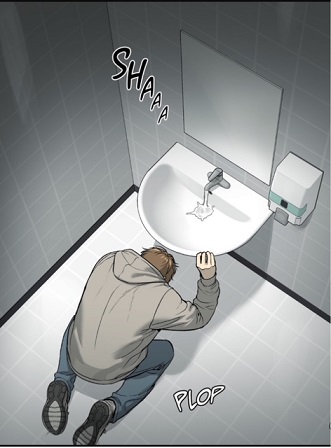 , for he had been recollecting the diagnosis from Kim Miseon and kept thinking of his grandmother. After this painful meditation, he came to recognize his selfishness and his relative’s love and generosity
 (chapter 47). And what was the main lead feeling after that terrible night? Regret, for he had not been able to notice his relative’s suffering and sacrifice!
 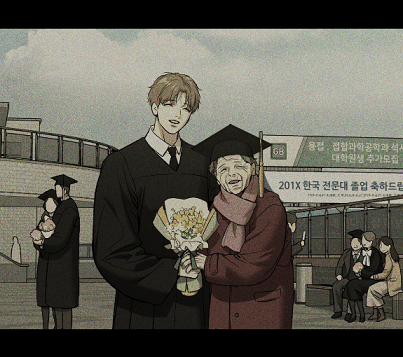 (chapter 47)
 (chapter 19) or a new request like swallowing the sperm
 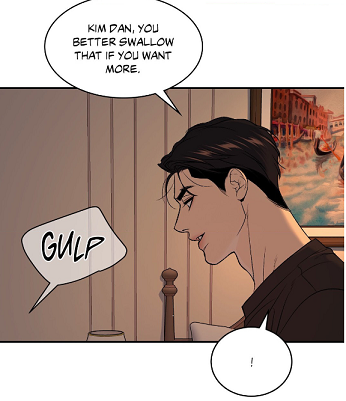 (chapter 39) or kissing the champion’s ruined ears
  (chapter 44)
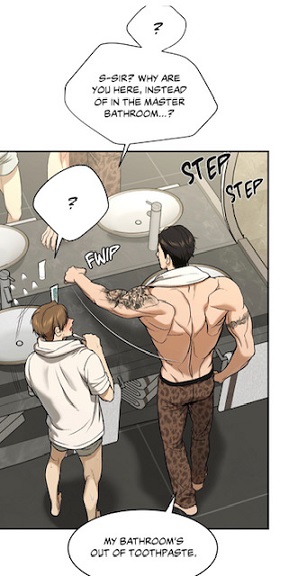 (chapter 30) He was rough and used the toothpaste as an excuse.
 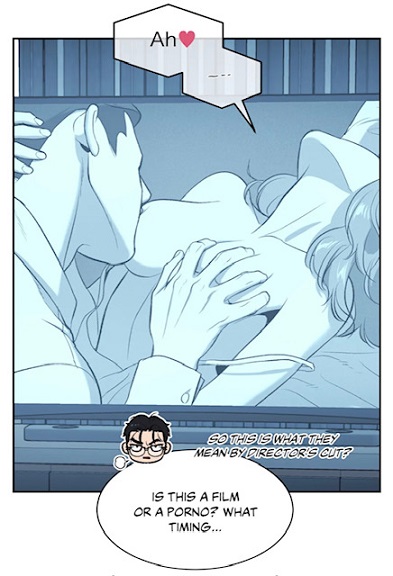 (Chapter 29)
 (Chapter 40) That’s the moment he stopped considering the hamster as a prostitute, while from chapter 2 to 18, he viewed Kim Dan as a tool, as a talisman against his jinx. However, I detected a transition after he kissed the physical therapist. From that moment on, the doctor was connected to food and sweetness.
  (Chapter 18) And now, observe that during the night in the bathroom, doc Dan was associated with a baby receiving food:
 (chapter 20) As you can see, here the champion started viewing him as a human being. It exposes that little by little, his perception of the physical therapist improved. So from chapter 30 to 39, Joo Jaekyung was forced to question the nature of his relationship with Kim Dan: a PT or a prostitute or a pet?
  (Chapter 34) Here, he was in denial, he described the main lead as a possession, but he couldn’t fool the actor. Under this new light, it becomes comprehensible why the nights in chapter 19, 29 and 39 were so magical, they announced a transition or better the end of viewing Kim Dan as an object (tool for his jinx) and possession. From 41 to 49, the champion was cornered to recognize Kim Dan as a physical therapist and not just as a member from Team Black. Don’t forget his attitude in the car, when the main lead suggested him not to train.
 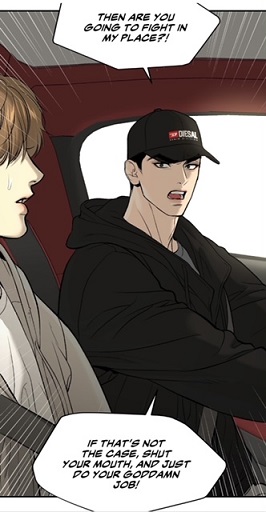 (Chapter 42) He rejected his advice, a sign that he was doubting doc Dan’s skills and competences. That’s the reason why I come to the conclusion that with the pictures, the champion was pushed to admit that Kim Dan is his physical therapist
  (Chapter 49)
 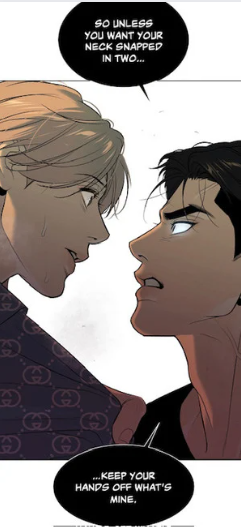 (chapter 34), then the fake star Baek Junmin
 (chapter 34) “Don’t get in the way” and “make sure you give her a good polish”.
  (chapter 49) The sportsman is viewed as a hindrance to their dreams, he should clear the way for them. I deduce that in his youth, people must have treated him the same way. He represented an obstacle, therefore these two figures must have challenged him in the past too. Their confidence comes from their past experiences with the athlete. Both must have defeated Joo Jaekyung, but naturally they must have tricked him.
  (chapter 33)
  (chapter 49) Then I noticed another parallel between the two plots: the presence of a scapegoat, and the involvement of a third person. Heesung faked his injury by putting the blame on the athlete, while he asked Kim Dan as compensation. In the second plot, the roles are switched. Kim Dan is now the perpetrator, while the athlete is the victim! Baek Junmin is the beneficiary of this scheme. And what do these plots have in common? Joo Jaekyung is the victim of a trick, though Heesung’s manipulation was rather benign. First, he acted on his own.
  (Chapter 31) Moreover, he utilized the genuine concern and innocence of his surroundings. In other words, he used his image as a good and honest man to his advantage. Thus I come to the conclusion that the artist’s sin in their youth was rather minor, as the artist tends to violate social norms. So though it was no illegal, the actor’s wrongdoing definitely left scars on the protagonist’s heart.
  (chapter 29) Probably, Heesung utilized Joo Jaekyung’s innocence to his advantage in order to maintain his good reputation, like for example he was not supposed to be smoking or he took away a friend from him, as the topic of their conversation was about the theft of a person
  (chapter 33)
  (chapter 30), because it always makes him appear as a well-mannered and honest man. He gets fun at his frenemy’s expense. In addition, he could play tricks without getting caught… and the other would appear as the bad guy and take the blame, like we could observe at the gym with the manager’s judgement.
  (Chapter 30) Another common denominator between The Shotgun and Heesung is their envy and greed.
  (chapter 5) Joo Jaekyung destroyed the sandbag, when he imagined that doc Dan had blocked him! This signifies that the former could no longer contact the shy hamster. Joo Jaekyung saw it as an affront, a challenge!
  (chapter 46) could be seen as a reflection from the arcade and the star’s past. And since Kim Dan wounded Joo Jaekyung in the locker room
  (chapter 49), I deduce that such an action must have happened in the champion’s youth. He got not only hurt by people, but also betrayed by a friend. There exists many reasons for this hypothesis.
 (Chapter 04) and be rude towards others.
  (Chapter 7)
  (chapter 37) But Mingwa left many clues that the celebrity’s personality shouldn’t be judged by impressions. During their first night together, Manhwa-lovers could see books next to the bed.
 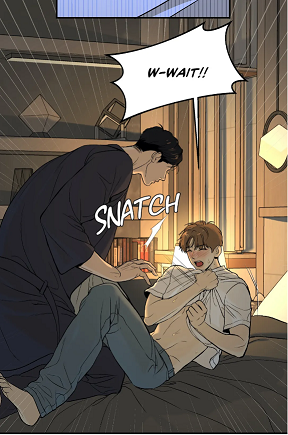 (Chapter 3) Some of them are not written in Korean or English. Moreover, the Webtoonist revealed that one of his hobbies is reading. This explains why he can talk prettily.
 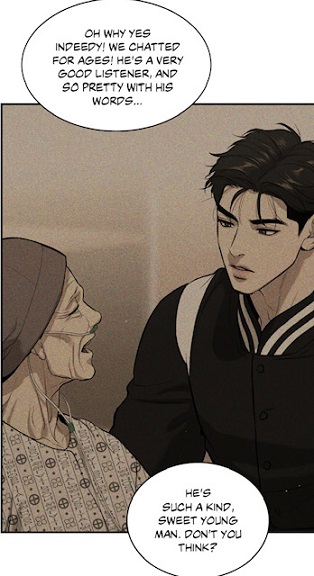 (chapter 22) This shows that his behavior mirrors the counterpart’s. Consequently, it is not surprising that the champion is rough with his own body, as Park Namwook is not treating him like a delicate child.
  (Chapter 37) Even stressed and filled with anger, he could understand and speak fluently in English.
 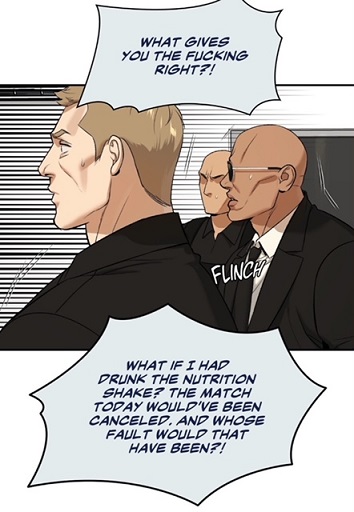 (Chapter 40) Compare Kim Dan’s English skills in the same scene:
  (chapter 40) Besides, Jinx-philes should question why Mingwa is not divulging his scores as a student contrary to Kim Dan or Jinwon from BJ Alex. It is because she wants to create a certain image about the champion: he is a bad boy. In my eyes, she is playing with prejudices about MMA fighters. People often imagine, they lack social manners and education. They chose this path, for they could do nothing else. And this brings me to my next remark. We know that Kim Dan selected PT because of his halmoni.
 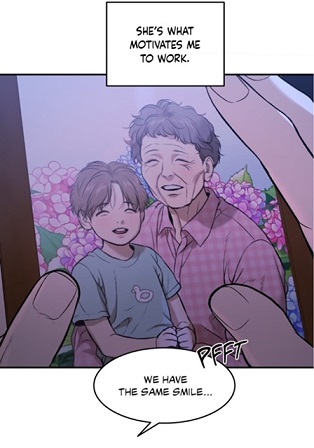 (chapter 47) So what was the protagonist’s motivation to become a MMA fighter? In my eyes, this question represents the core of the mystery. My idea is that the suffering in his youth led him to become a boxer. It is definitely related to his experienced powerlessness and loneliness. So when he suggested the sparring to Kim Dan, we should see it as a reflection from the past:
  (chapter 26) Joo Jaekyung was also an amateur in the past, but his motivations were his rage and resent. On the other hand, contrary to his soulmate, the athlete likes sports as well. His other hobbies are jogging and swimming. Thus I am suspecting that Joo Jaekyung might have been part of a swimming club in the past. Striking is that he forgot his passion due to his career as a MMA champion.
 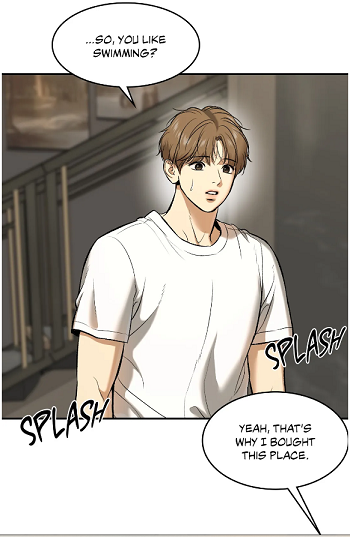 (chapter 27) I see a contrast between these two sports: swimming which is related to relaxation, pleasure and fun and MMA fighting which stands for challenge, pain and seriousness. This contrast is even more present in the following panel:
 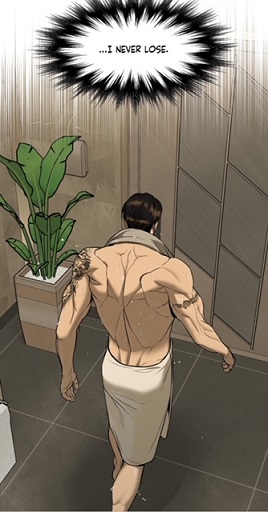 (chapter 49) Is it a coincidence that this Enlightenment took place under the shower? For me, no! I see a strong link between water, swimming and the champion’s job. It looked like swimming represents a source of danger for the athlete’s job, as it is an entertainment! Hence I can’t shake the feeling that in the past, Joo Jaekyung might have shown aptitude for becoming a natation athlete! Let’s not forget that for the calendar 2024, the champion was seen carrying swimming googles and not “MMA gloves”. This detail caught my attention and made me wonder why Mingwa selected these items.
  (chapter 49) He is a hyena, hence his color is brown.
  (Chapter 48) And The Shotgun has a similar attitude:
  (chapter 49) Interesting is that his description of the challengers fits the situation in the new plot perfectly. The Shotgun imagines that he will fight against a diminished champion. His shoulder is injured and they have planned to add a new injury. The hyena stands for balance and cleansing as their task is to remove the weak ones.
 (chapter 49) As an old man, Choi Heesung is revealing vulnerability and senility. Due to his old age, he could be replaced by another hyena, a younger hyena!
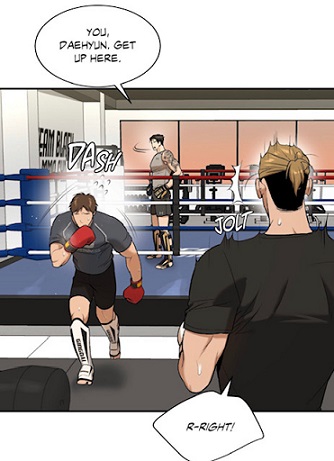 (chapter 36) which could only affect the members from Team Black. Their loyalty could waver. Then he got to hear bad comments from the Internet
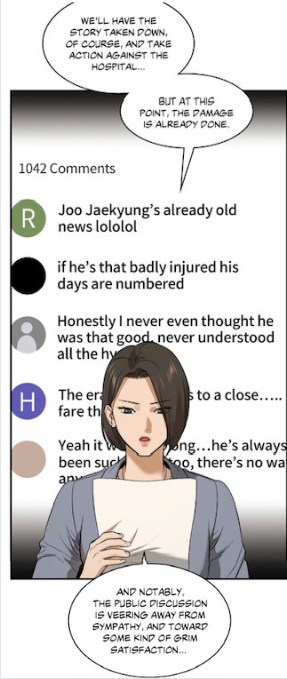 (chapter 36), creating the illusion that he was losing popularity. That’s how the lawyer could convince the champion to accept a new match in such a short-time. Finally he got reprimanded for his outburst.
  (chapter 13) This could have ended badly. Another wrongdoing could be the rejection of his birthday present and his harsh reaction.
  (chapter 47) At no moment, the physical therapist brought up his misdeeds and asked for an apology. His silence became the symbol for his tolerance and even forgiveness. In addition, the doctor and his halmoni embody both vulnerability and poor health, which is strangely connected to crime and scandal.
  (chapter 48) Through them, the champion is learning that hunting weak and pitiful creatures is not only a sin, but also a crime! In the first case, he could be accused of hurting an innocent.
 (chapter 45) He wanted Kim Dan to look at him and take care of him. In other words, he wished to be seen and not neglected! He has not realized it yet, but he is longing for a companion, a playmate. He desires to have someone by his side who would talk to him and listen to him. From my point of view, the champion must have received on his birthdays many presents, but he was all alone. He had no one by his side. The gifts couldn’t replace the warmth from a loving parent. The moment I made this connection, it dawned on me what the nightly desertions could have meant for the star.
  (chapter 11) He wished to receive attention and to have a normal conversation. Consequently, I assume that the champion has been copying his role model. That’s how he was pushed to grow up too quickly. For me, he had no childhood at all, hence when he met Kim Dan, he was encouraged to develop his inner child!
 (chapter 26) For the first time, he had fun sparring. Hence he kept smiling. It is no coincidence that soon after he chose to accept to take a day-off, when Kim Dan made the suggestion.
  (chapter 27) That’s how he remembered that he liked swimming and he could play a prank on his lover.
  (chapter 27) Here, he could smile, because it was fun and there was no real expectation. It was not truly connected to money.
  (chapter 35) and not in episode 48. It is because Kim Dan had paid him a visit during that night, a sign that he was thinking of him as his patient and VIP client.
 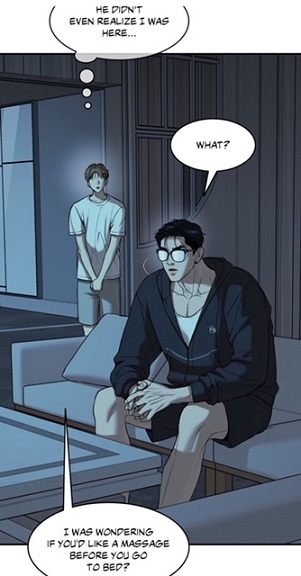 (Chapter 48) On the other hand, I am inclined to think that when a terrible incident in his youth occurred, he couldn’t contact his family or guardian. Hence he keeps his cellphone by his side constantly. Yes, I was thinking of the doctor’s assault in the street and his failed rape:
  (Chapter 16) Heo Namwook’s minions had confiscated his cellphone. Hence it was impossible for him to call for help. And now take a closer look at this scene:
 (Chapter 16) Though he had been on the phone and it was daylight, no one stopped the thugs from kidnapping the main lead or reported the incident to the police. Hence I am also suspecting that Joo Jaekyung must have faced a similar situation: he was surrounded by malicious people and no one had assisted him. So he could have been targeting at school due to his grads or his social status. And his isolation at home could push to seek company outside, to look for friends at school.
  (chapter 37)
  (chapter 49) And the anonymous person on the other side of the phone was definitely calling in order to be updated about Joo Jaekyung, for his coach asked him about his physical conditions.
 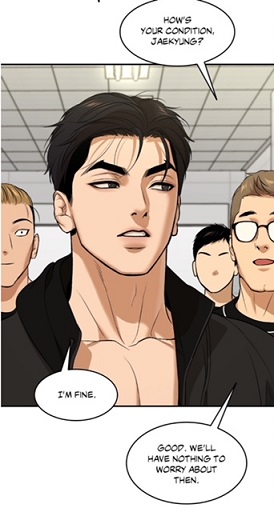 (chapter 49) That could be the hidden guardian who has not showed up yet, I am thinking of Seo Gichan. And now it is time to close this long essay.

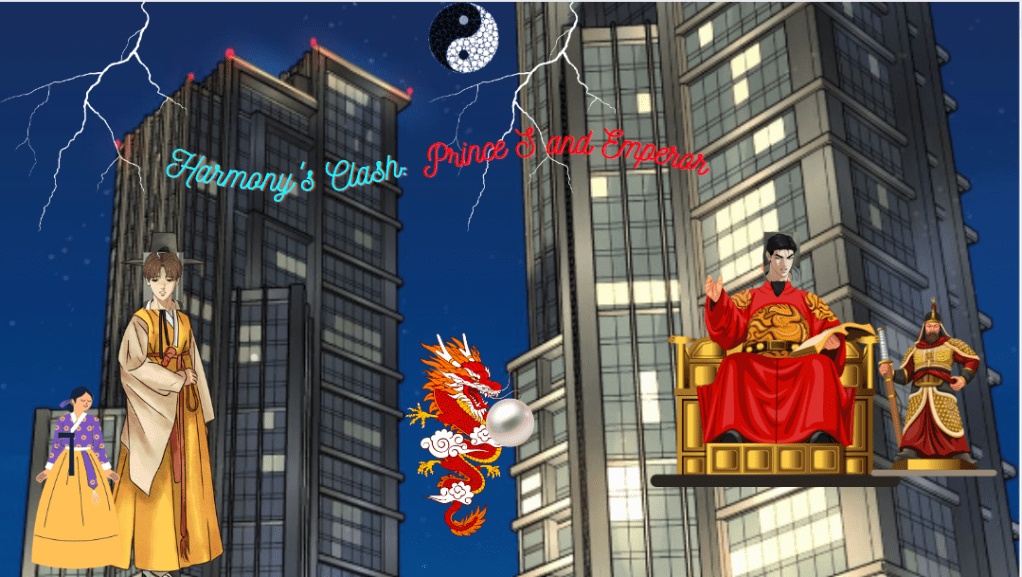
 (chapter 30) This woman, named Sihyun, is suffering from Dependent Personality Disorder. And the author of the Webtoon Doctor Frost called her story: “The tears of Princess Pyeonggang”. Due to her personality, she was linked to the famous “princess”. She would do everything for her companions, yet she kept getting dumped. What caught my attention is that both women defined themselves through their partner. Their ultimate goal in life is to assist them, to make the other happy or recognized. But how is it a problem?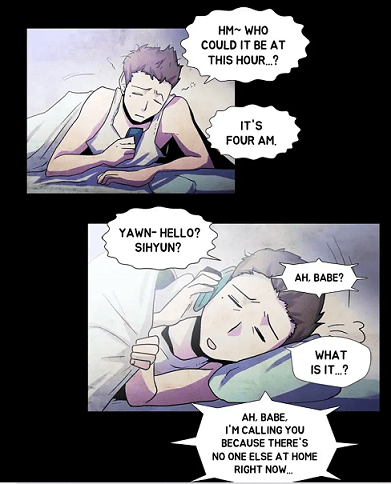
 (chapter 33) What appeared as caring turned out to be a load, for the partners were all forced to be responsible for her and in every aspect of her life. They definitely felt asphyxiated, hence they could only get sick of her. Interesting is that this person would find shortly after the separation a new boyfriend, a sign that she could not live on her own.
  (chapter 33) And now, you are wondering how Sihyun is similar to Kim Dan, who only had one person in his life before he met the champion. It is related to traumas in their childhood.

 (Doctor Frost, chapter 39) After reading this, Jinx-philes can realize that Kim Dan is also suffering from Dependent Personality Disorder, though it is less obvious. He got abandoned by his parents making him feel insecure.
 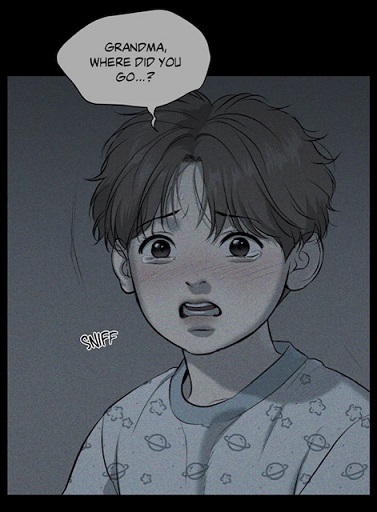 (chapter 21) We could detect his low self-esteem
 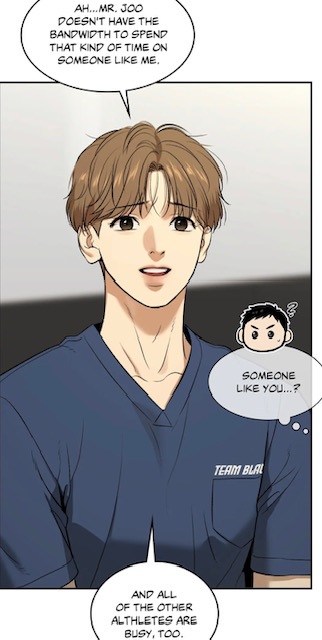 (chapter 25)
  (chapter 46) and his overprotectiveness
 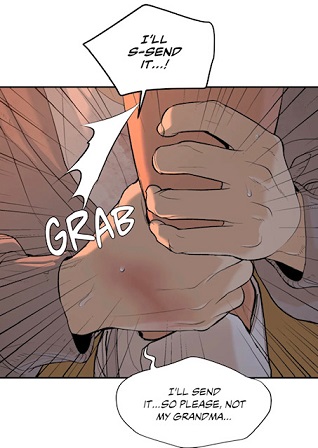 (chapter 16)
  (chapter 26)
  (chapter 42) on many occasions. He was risking his livelihood and health for the sake of others (his halmoni, Potato and Joo Jaekyung). His selflessness is actually the sign of his DPD. He had no purpose or ambition in his life… That’s why he is not able to project himself in the future. Until chapter 45, his life and future was determined by the celebrity,
  (chapter 42) and before it was by his halmoni’s fate.
  (chapter 19) However, here please don’t get me wrong. For me, the athlete is the physical therapist’s emancipator. This huge argument in the dining room pushed him to differentiate himself from the champion. In my eyes, Kim Dan would have returned to his old bad habits… relying on someone else, sacrificing himself for someone’s else sake. He would have neglected his career in the end.
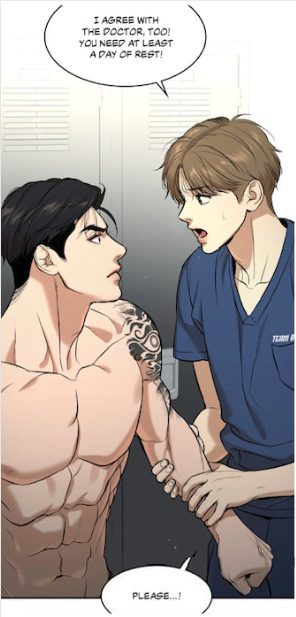 (chapter 27)
  (chapter 42) or he delegated the examination to a hospital.
  (chapter 31) Here, we get an explanation why he couldn’t detect the trick from Choi Heesung. He feared to make a diagnosis on his own, as he didn’t desire to question the words from the comedian. The hospital seems to be the sacred place in the doctor’s eyes.
 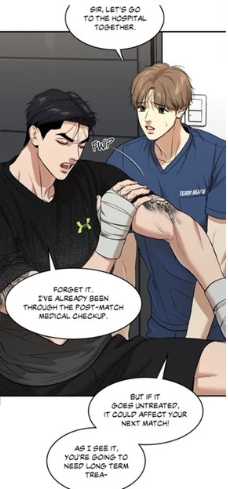 (chapter 41) There, nothing can go wrong. But by entrusting his patients to hospitals, he didn’t realize that he was appearing as untrustworthy or even “incompetent”. His lack of confidence and hesitation explicate why the athlete replied to his suggestion like this:
  (chapter 42) Consequently, it is not surprising why the champion complained about the doctor’s negligence. The latter was avoiding any responsibility in the end. On the other hand, the report is the symbol of his hard work, but also of his knowledge. That’s the reason why I am still considering the dispute in chapter 45 as a good omen for the physical therapist. He needs to develop his own identity. They are two different people. He needs to live for himself, to give a meaning to his life and not:
  (chapter 27) That’s how it dawned on me why the doctor reverted to his old habits (not participating to the meeting, taking odd jobs, not voicing his own judgment, relying on others) after the night, when he was treated as sex toy. However, in my eyes, the trigger for this switch was the release of the tabloid article.
  (chapter 35). Why did the doctor appear so confident in front of his client to the point that he could reject his hand after going to the hospital?
  (chapter 27) It is because his self-esteem had been boosted by Dr. Lee. The latter had complimented him which didn’t fall on deaf ears. However, the relationship between the respectable hospital and the athlete went sour due to his article.
 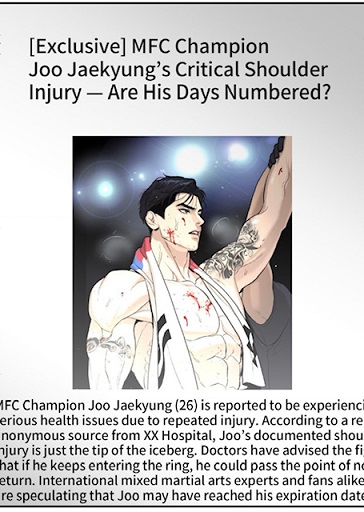 (chapter 35) Imagine what it meant for Kim Dan. He could only remain passive, as he is called “doctor”. He views himself as a member from the medical field. Furthermore, observe what the sports therapist told him during the treatment session:
 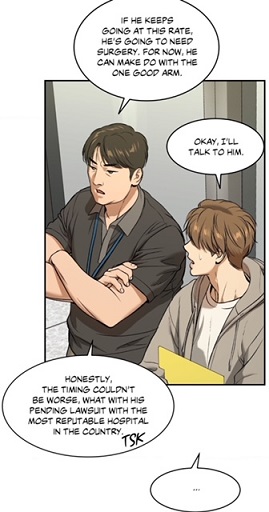 (chapter 42) He mentioned the lawsuit against the most reputable hospital. The dispute could only diminish his self-esteem. As time passed on, there is no ambiguity that this lawsuit must have burdened more and more the physical therapist. Besides, there is no doubt that he felt some loyalty towards doctor Lee who had been complimenting him. Secondly, let’s not forget that despite his “efforts”, he had not been able to convince his patient to stop training for one day.
  (chapter 46) It is full of symbolism. For the first time, he is standing on his own feet. His walk in direction to the trash bin illustrates his choice.
  (chapter 46) Besides, he is using the personal pronoun “I”.
  (chapter 46) It is his Coming-Of-Age. He is on the verge to become independent. On the other hand, he didn’t fight back verbally against his boss. He accepted his reproach.
  (chapter 46) He was just a physical therapist and nothing more. This shows his lack of criticism. He is still not mentally strong enough to question the champion’s words and argue back. In the past, he could do it, for he was identifying himself with his grandmother and her values.
  (chapter 18) This signifies that he needs to develop his own philosophy and values. What does he treasure in his life?
 (chapter 42) The latter was also dependent on the champion, but his “addiction” was money and not love or recognition. Therefore he picked up the money before leaving the flat
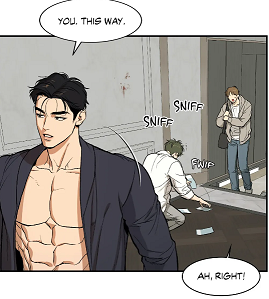 (chapter 2), while the other threw away the expensive keychain
  (chapter 46). This scene exposes the return of Kim Dan’s dignity. This comparison reinforces my interpretation that the champion misjudged the doctor’s present and actions. He imagined that Kim Dan had been acting like his “previous sex-partners” or stans. They would offer him some gifts in exchange of favors. Another contrast with the goblin is the absence of a fight and discussion.
 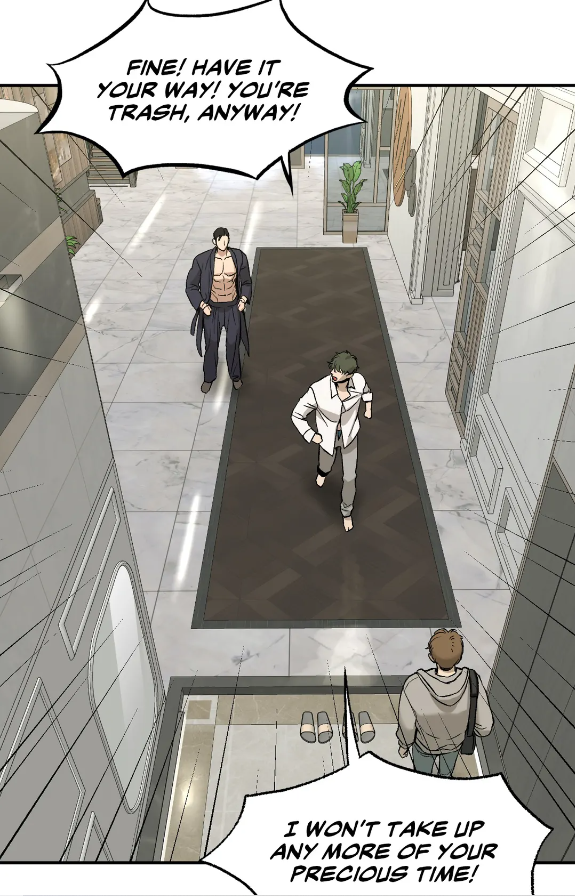 (chapter 2) I would even add that contrary to the green-haired guy, the doctor is not judging his patient’s personality, he is blaming himself.
  (Doctor Frost, chapter 32) Interesting is that doctor Frost revealed to her later that her condition made her an easy target, as she kept relying on others.
  (Doctor Frost, chapter 39) And this observation brings me to my next conclusion: he will be approached by really bad guys, the mysterious Mr. Choi!
 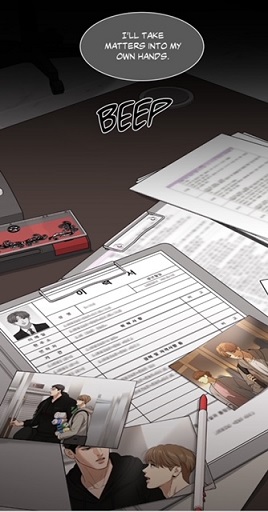 (chapter 46) Thus I assume that his next lesson is to judge people correctly, to question their true motivation. So far, he fell into the same trap twice:
  (chapter 1) He even needs to learn the difference between good guy and nice guy, but this remark applies to the grandmother.
  (chapter 45) is random, for it stands for “attachment”.
 (chapter 44) He found fulfilment in sex, which stands in opposition to the recommendation of zackbeach. Moreover, I would like to underline that the doctor reduced knowledge to sex:
  (chapter 44) How could he get to know the champion better, when the latter was supposed to be drunk and they would have sex? Getting closer to someone means communication and not really sensuality. Hence his happiness could only be short-lived and illusory. He didn’t take the reality into consideration. Thus I see the physical therapist’s tears as a therapy session:
 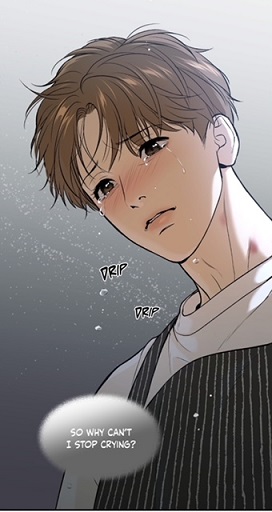 (chapter 46) He allows himself to cry, to grieve and to admit his pain and loneliness.
 (chapter 46) It helps him to face reality. He is on his own, he needs to stop relying on others. I would even say, he is encouraged to make decisions and as such to become responsible for his own life. It is important, because this means that he will have to fight back, if he wants to survive. He can not make any desperate and hasty decisions, like this one:
  (chapter 1) However, since he listened to the champion’s reproach and became submissive again, their relationship seems to have returned to normality. They even appear as close.
  (chapter 41) reminded me of the ending of a fairy tale: they lived happily ever after. But the doctor was forgetting that life doesn’t end after the match in the States. Life ends with death. In verity, the champion is destined to be challenged, until he retires. What the doctor saw was not the end. This exposes his naivety. How could he have such a view? It is influenced by his grandmother.
  (chapter 10) At no moment he pondered about himself. Happiness was never his goal, exactly like in fairy tales. Sleeping Beauty is rather passive. She sleeps, until the prince charming appears and kisses her. After that, they have kids. Interesting is that they don’t get married right away, so that the princess initially has the status of a mistress or concubine. Once the prince can secure his position, he marries her. Then the moment her husband leaves her side for war, she is tormented by her mother-in-law, the ogress. She can only escape death thanks to the intervention of her husband. We could say that happiness fell on her lap. Sleeping Beauty stands for passivity, dependence on her parents and husband and lack of critical thinking. Why? It is because the princess in fairy tales, in particular Sleeping Beauty, embodies toxic positivity.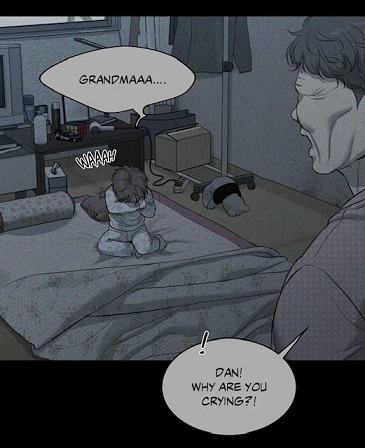
 (chapter 21) She rejected her grandson’s fear and tears. She didn’t allow him to express his abandonment issues. She diminished his anxiety by questioning his behavior: “It’s okay, grandma was just in the kitchen getting a glass of water.” Then in the present, we could use his visit at the hospital:
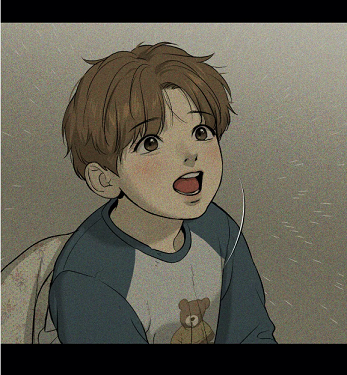
 (chapter 45) With this contrast, the fear from the champion becomes more palpable. Joo Jaekyung got angry, for he had been put in the same situation. But the latter was never influenced by Toxic Positivity. Besides, he was fighting against his own inner demons. Nevertheless, this new interpretation of the birthday made me recognize why the author chose this chronology concerning Kim Dan’s past:


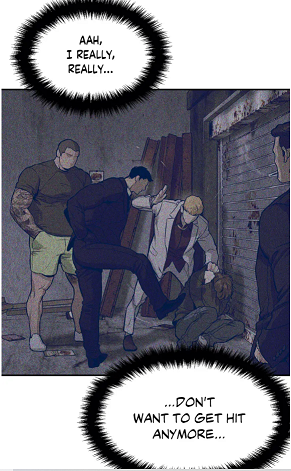 (chapter 1) However, he could never confide to his grandmother about the physical abuse from the loan shark. However, the moment his hope got up
  (chapter 11), as he imagined that he could pay off the debts, he recalled his birthday. He had a nice “souvenir”… convincing himself that everything was fine. He would be able to do it, like his grandmother had told him.
  (chapter 18) Nevertheless, the moment he was forced to move out, he couldn’t help himself to recall how he got abandoned by his parents. And the moment he saw his halmoni fighting for her life, his abandonment issues resurfaced. Hence this terrible memory came through a nightmare. The betrayal from the parents is what had been deeply buried by the grandmother’s philosophy. The fact that the halmoni never allowed Kim Dan to talk about his parents and the circumstances of his arrival to the humble mansion, is the evidence of Toxic Positivity. In my eyes, the relative was already struggling herself, for she had also been left behind. But here it is important not to mix Toxic Positivity with Gaslighting.
 (chapter 12) Therefore I understand why the doctor didn’t fight back against Heo Manwook and his minions.
  (chapter 1)
  (chapter 11) But the moneylender and his minions are no honest bankers, but criminals. They enjoy using their strength, that makes them feel powerful. It boosts their ego.


 (chapter 22) It shows that ring does not necessarily possess a negative connotation. To conclude, ring is a reference to marriage (Kim Dan will become the champion’s official partner), to the MMA arena, to Team Black, but also to Mafia. We had an allusion to criminality during the sparring
  (chapter 18) The doctor is unaware of this, but one of his purposes in the champion’s life is to clean the scene, MFC and its corruption. On the other hand, the illustration contains many pictures of the two main leads having sex.
  Why? It is because the characters are acting like fighters. At bottom left, the doctor’s embrace resembles a lot to the one he used during the sparring (see the image in the middle). Their gestures are sudden and quite abrupt, which contrasts to the image on the right bottom. The kiss from the doctor holding Joo Jaekyung’s face represents the exception from all the selected panels. This shows that this Summer Night’s Dream indicates a huge transition in the sex sessions. But let’s return our attention to the images illustrating roughness. Right from the start I detected a strong connection between fighting and sex. [For more read
 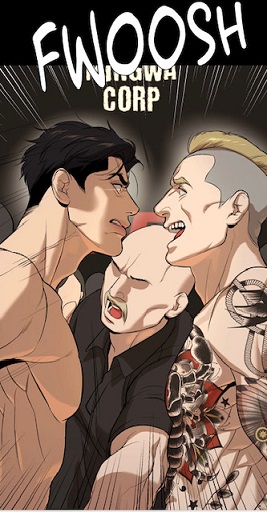 (chapter 14)
  (chapter 36)
 (chapter 29)
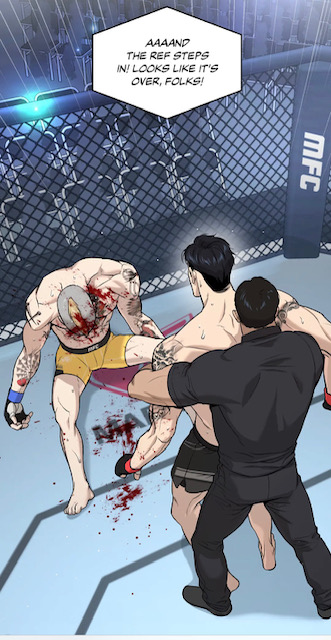 (chapter 15) This means that if the fighter is on his own. He can not rely on others. If he is not able to return without the assistance of spectators or his seconds, he is declared as defeated. So we could say that any interruption is condemned, as it is ruining the flow of the fight.
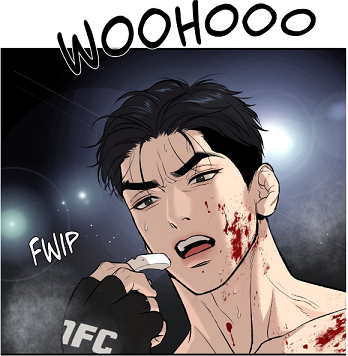 (chapter 15) Funny is that conversation is permitted, yet mouth gear hinders the fighters to talk. Should they remove it constantly, the referee can judge it as a violation (“Timidity”), for the fighters can not fight, as long as they don’t wear the mouthpiece. This signifies that the sportsmen are encouraged to express their thoughts through the hands.
 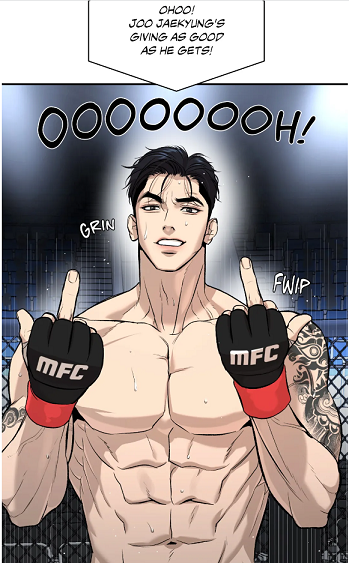 (chapter 15)
  (chapter 41) That’s the reason why Mixed Martial fighters are called artists, a synonym for actor.
  (Chapter 6)
  (chapter 5) Their gestures were seductive, a sign that they were not fearing the champion. The challenge was here the difference of weight. On the other hand, by approaching Joo Jaekyung, they looked confident about their skills. That’s the reason why he would have sex with them, until they passed out.
  (chapter 1)
  (chapter 4)
  (chapter 8)
  (chapter 36)
  (chapter 2) The champion’s ecstasy served as a measurement to view himself as victorious. This statement implies that he was not only the fighter, but also the arbiter. This corroborates my previous statement. During sex, he was the fighter and the referee. He acted as the MFC matchmaker.
 (chapter 43) In my opinion, during that night
  (chapter 2) The goblin might have not voiced his thoughts to the celebrity before, but Joo Jaekyung could perceive his soul through the gaze and facial expressions. Hence the star’s domination was quite superficial. In fact, as time passed on, the athlete could only get bored of the goblin.
 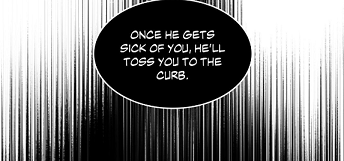 (chapter 42) It is because there was no challenge. The guy was accustomed to the champion’s roughness. Hence he never feared the star. He could only judge him as weak. Because Joo Jaekyung was missing the thrill, he came to look for the “wimp”! On the one hand, the latter would treat him with respect
 (chapter 1), on the other hand, he would cry and tremble in his presence. Then right after the session, he left the room in a hurry.
 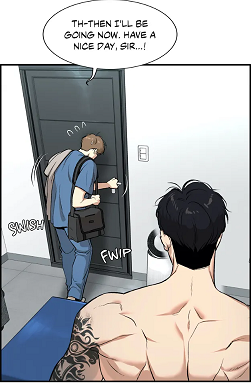 (chapter 1) That’s how I realized why during that night, the champion felt the need to call Kim Dan.
 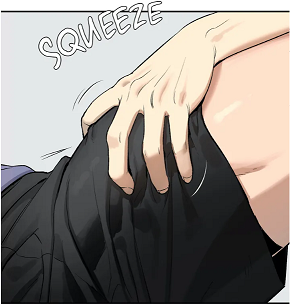 (chapter 1) He had grabbed his anaconda!! But this represents a breach of rules in MMA! That’s how I realized that the doctor’s action pushed the fighter to violate many of his own rules: interruption of the flow!
  (chapter 21) Then after facing Heesung, he stopped the intercourse too,
  (chapter 35) indicating that little by little, the champion’s mind-set was changing. At the same time, it exposes his hypocrisy. But why is he forced to accept the change of flow? It is because life is trying to teach the champion that he is not god, he is not the owner of time. This explicates why the star couldn’t determine the start of their “Wedding Night”, the doctor’s suggestion represented a new challenge.
  (chapter 3) He was defying the champion’s authority.
  (chapter 3) Despite his fear, the hamster wouldn’t become submissive like the others. While the green-haired uke faked submission and the others got defeated by KO, Kim Dan remained true to himself. He embodies honesty and modesty, the opposite values of the “goblin”.
 (chapter 2) Let’s not forget that during a match, they are supposed wear a sex gear. Interesting is that he grabbed the doctor by the hair
  (chapter 4). It is important, as it represents a real transgression of MMA rules indicating how powerful the doctor was. The champion needed to break rules in order to get him. Funny is that he thought that after such a long night, he had been able to submit the cute hamster, but he was totally wrong. The latter chose to ignore him.
 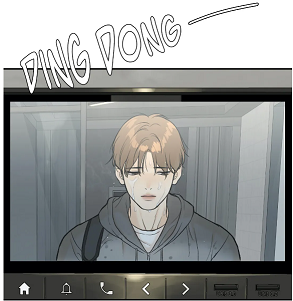 (chapter 6) Under this new light, it becomes comprehensible why the athlete offered this deal to the physical therapist:
  (chapter 7), while he kept his distance from the champion. This scene made him realize that he was still powerless.
  (Chapter 39) Hence I come to the conclusion that Kim Dan’s role in the champion’s life is to teach the champion that he doesn’t own time. The reason behind this lesson is simple. It is to show him how pointless it is to race against time.
  (chapter 12) or having sex in front of a mirror
  (chapter 20) or anal masturbation in a car
  (chapter 32) I could mention other defies linked to sexuality, having sex without getting noticed, either in the shower room
  (chapter 8) or during a phone call
  (chapter 24). Then we have this bet concerning the doctor’s sensitivity.
  (chapter 29), thus the champion tried an experiment:
  (chapter 29) Furthermore, notice that each time they had sex, the doctor was pressured to have sex with the champion. Kim Dan felt that he could never refuse.
  (chapter 12) On the other hand, the athlete always met some resistance
 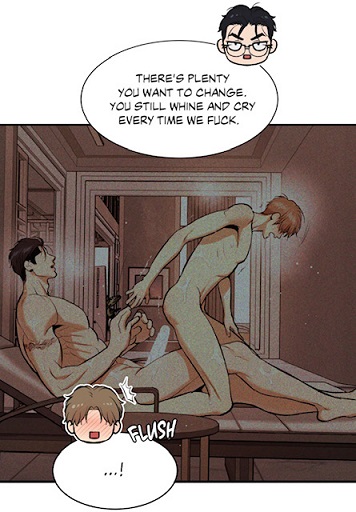 (chapter 27) Kim Dan would never agree to the champion’s requests immediately. They would fight about the time, location and position. Furthermore, note that Kim Dan went so far to punch the protagonist:
 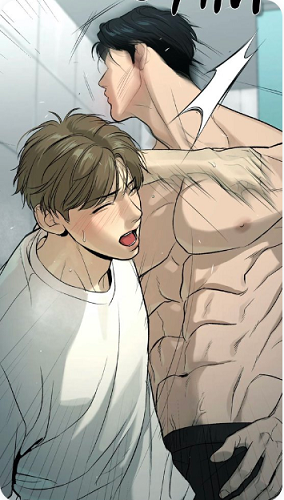 (chapter 7) This could only increase the athlete’s interest and obsession for the physical therapist. Although he was getting paid, the latter would never admit submission. He thought, he had achieved his goal in that scene
 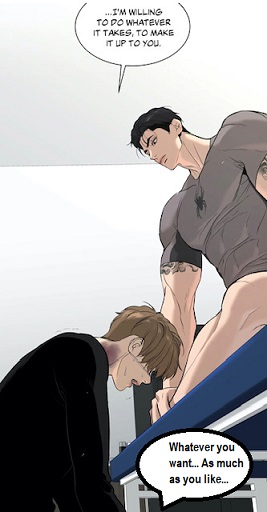 (chapter 11), yet the reality taught him a tough lesson. He got to hear something terrible:
 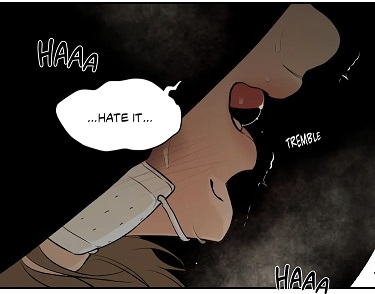 (chapter 12) With his words, he was telling the sportsman that he was a terrible lover. He denied any admiration for him. And since sex is a synonym for wrestling in Joo Jaekyung’s eyes, doc Dan’s declaration signified that his title as champion was questioned. Though the champion came to enjoy their intercourse
  (chapter 12), it was short-lived, as the doctor fainted after one round.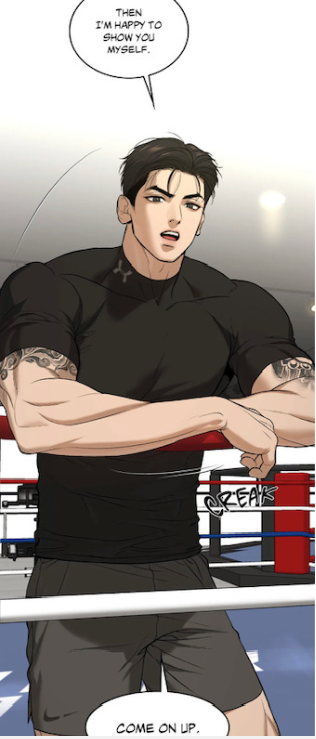
 (chapter 26) Observe how the doctor reacted after the sparring took place. .
  (chapter 44) Why? It is because this sex session will have an impact in their work, MMA. During that night, they became real fuck buddies. Sex was not related to work and fighting. But why did the notion come to the surface for the sparring? It is because MMA fight consists of challenges, which implies consent. Striking is that so far the champion never rejected a challenge. Yes, Joo Jaekyung was put in the same situation than Kim Dan in the end, but the one putting under pressure was the MFC Matchmaker and naturally the agent from Entertainment agency. Don’t forget that both are earning money thanks to events. And how did the champion got convinced by them? “You think, you can do it?” With their words, they doubted his talents
  (chapter 36) or questioned his title:
  (chapter 41) He is treated like a doll, but he is not realizing the manipulation. How can he, when Park Namwook is not detecting it either? Under this new light, Jinx-philes can grasp the real root of the argument in the car.
  (chapter 12) And because the doctor never reacted the way the champion expected it, the latter was forced to infringe more and more MMA rules, like this one
  (grabbing the groins is forbidden). To conclude, the doctor is there to teach the champion to distinguish between love and fighting. This explicates why the physical therapist embodies violation of MMA rules. We have the perfect example in this scene:
  (chapter 25) Potato made a mistake which could have made the doctor unconscious. That way, he can expose the corruption within MFC and its implication with the mob. That’s the reason why I am more than ever convinced that Kim Dan is destined to become a MMA fighter in the end. Why? It is because he is the champion’s reflection. The moment Joo Jaekyung is no longer the fighter in the ring, but the spectator or assistant, he is forced to witness how his loved one is risking his life. So far, he never showed any interest in the fights of other members. He needs to understand why Doc Dan would advise him not to fight. And this brings me to the next remark: Kim Dan is a strong believer, like we could observe it in this scene.
 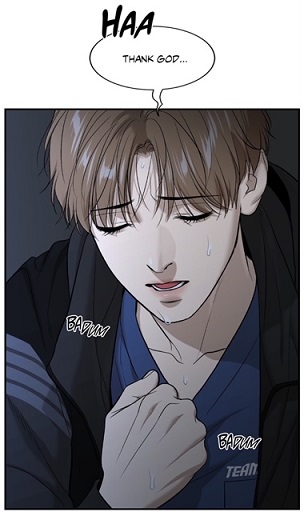 (chapter 40) This explicates why he was willing to risk his life for his sick grandmother.
 (chapter 36)
 (chapter 44) By taking the initiative, the physical therapist is teaching his “mentor” how to express love. Interesting is that during that scene, the athlete remained passive. It displays his consent and trust towards the doctor. He knows that the latter won’t hurt him. That’s how I realized that the kisses are strongly connected to consent. Let’s not forget that when Joo Jaekyung smooched the hamster for the first time, he took him by surprise. Because the latter felt uncomfortable, he made the following request:
  (chapter 15) This request insinuated consent. Then when the doctor smooched the champion’s ear, the latter objected to it.
 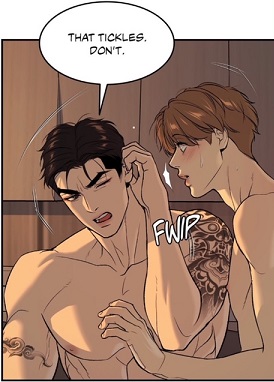 (chapter 44) Hence the physical therapist stopped. Consequently, I come to the deduction that the more they will kiss, the closer and the more respectful the protagonists will become, for the kiss symbolizes consent.
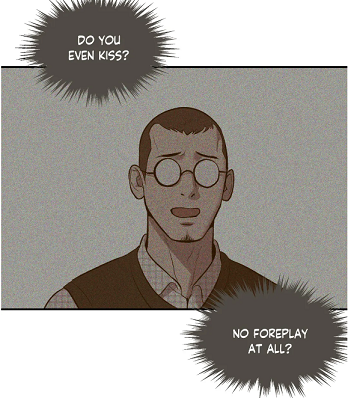 (chapter 14) Then it was out of desire
  (chapter 24) and out of excitement and attraction.
  (chapter 27) However, I noticed that it is linked to their position. They face each other. In chapter 15, Kim Dan was turned around, hence they were no longer having sex from behind.
  (chapter 15) In chapter 24, first it was from behind, but then it changed, as the star desired to see the hamster‘s erected phallus.
  (chapter 24) He wanted to make sure that the doctor would enjoy this break. Yet, what caught my attention is that in chapter 39, Kim Dan initiated the kisses and embraces, because this is what he likes.
  (chapter 39) Here, the athlete was caught by surprise, and protested, but he got silenced very quickly.
  (chapter 39) Finally, so far, it was not a ritual, hence we only had smooches in chapter 14, 24, 28 and 39. This signifies that Kim Dan is the one who will introduce kisses and embraces as rituals. Moreover, if someone were to kiss one of the protagonists, the other would view this gesture as a crime against his partner.
 (chapter 32) Joo Jaekyung entrusted his neck to the doctor. The latter stroke it for a long time. And now, you comprehend the initial hesitation from Joo Jaekyung in the hotel room:
  (chapter 44) He felt safe. This explicates why he could fall asleep so easily.
 (chapter 39). On the other hand, since the doctor was under the influence of the drug, the champion couldn’t take the confession seriously. It is important that the champion doesn’t recognize the doctor’s feelings right away, for he needs to feel insecure. That way, he is pushed to change his behavior, to become more proactive and protective of Kim Dan. Hence I consider this Summer Night
  (chapter 44) as the positive reflection from the sex session in the living room:
  (chapter 44) contrasts so much to this one:
  (chapter 44), though the doctor had not sex in mind at all. He brought him there to rest. However, the presence of fighting has not vanished totally in episode 44:
  (chapter 44). Joo Jaekyung still provoked his lover
 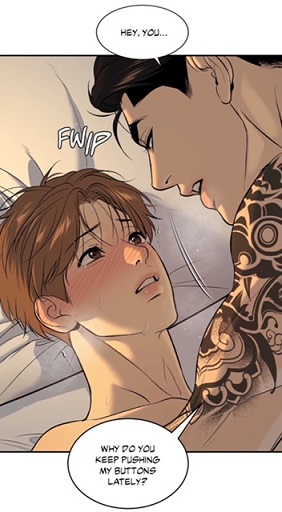 (chapter 44), but the latter was able to reject his defy by asking a question. One might think that he did that out of habit. On the other hand, I believe that Joo Jaekyung doesn’t know his partner that well, hence he is bothered. He can never predict his actions and decisions. He was definitely worried about his recent change of behavior too. Moreover, note that Kim Dan was the one leading the intercourse, for he determined the time flow:
  (Chapter 44)
  (chapter 44) It shows that the power is shifting, Kim Dan is slwoly getting the upper hand in their relationship. He can control time and place.
  (chapter 29) The celebrity refused to have sex every day, for he considered it as work. Why? It is because he is associating it with fighting. This is what he had in his mind:
 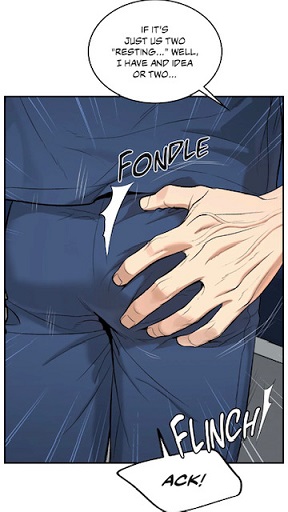 (chapter 27) But he got rejected by Kim Dan back then, because the physical therapist considered sexuality as shameful. As you can see, the doctor’s actions are changing the champion’s perception of sex. It is no longer fighting, but resting. On the other hand, the doctor can seize the occasion to express his love through his caresses and kisses. At the same time, he could use it as a treatment for his insomnia.
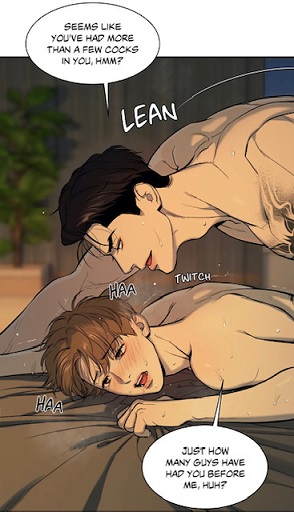 (chapter 4)
  (chapter 10)
 (chapter 42)
 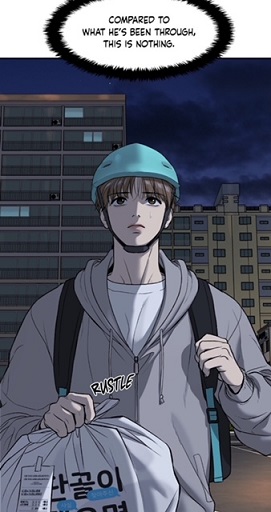 (chapter 42) Interesting is that the champion was also thinking a lot about the main lead, as the latter was worried by his exhaustion and his lack of appetite.
  (chapter 44) See the contrast to the night on the couch:
  (chapter 29) Contrary to the past
  (chapter 4) Joo Jaekyung is not hiding his pleasure. He is moaning loudly, as he has his mouth wide open. It exposes once again the increasing trust in Kim Dan. He no longer mistrusts him, in his eyes, he is no longer a prostitute. That’s how the doctor won the champion’ s heart. Now, his heart is truly beating for the doctor. Little by little, the hamster is taming the wolf. The latter needs to recognize that by loving the doctor, he will become powerful.






 (chapter 28) and his attitude
  (chapter 28) Hence he grabbed the doctor and brought him back to the swimming pool
  (chapter 28) He wanted to make sure that Kim Dan wouldn’t escape from him and ruin the flow.
  (chapter 28) He was taking advantage of his fear of the water! For certain readers, the champion had not changed at all. He was still rude and selfish. However, these manhwaphiles were overlooking two important aspects. First, the athlete’s selfish attitude was necessary! How so? It was to teach Kim Dan to become more selfish! Don’t forget that Mingwa is applying the philosophy yin and yang. Secondly, certain manhwaworms took all the champion’s words at face-value! I would like to point out if the doctor had truly hurt him with his teeth, his phallus would no longer be erected!! Moreover, he wouldn’t have some precum on his phallus
  (chapter 28) From my perspective, he needed an excuse to stop the fellatio, as he could no longer wait for the penetration. Thus he asked if the doctor was already loose right after.
  (chapter 28) He wanted more. Finally, observe that he had kissed the doctor and asked for a blow-job before. Why? It is because he had experienced Kim Dan’s rejection at the gym!
  (chapter 8)
 (chapter 24) As you can see, the different intercourses expose the fighter’s transformation. He is getting gentler despite his roughness. Exactly like I had anticipated in the previous essay, the couple is now facing each other while having sex. And Joo Jaekyung prefers facing his lover
  (chapter 28) in the end despite this statement.
  (chapter 28). He gets a climax each time he sees his partner oozing sensuality and pleasure. In other words, Joo Jaekyung learned an important lesson in the swimming pool, he might be enjoying such a view
  (chapter 28), yet he favors this position
 (chapter 27), Kim Dan always appears as calm and indifferent towards him. Hence he keeps rejecting him or he is passive during the intercourses. That’s the reason why the champion asked from the doctor to become more active next to the swimming pool.
  (chapter 28) This shows that the boxer has sensed that Kim Dan has not truly accepted him. It is no coincidence that the physical therapist chose to turn his back to the champion, when he was on his lap.
  (chapter 28) This made his heart race!
  (chapter 28) Too overwhelmed by such a view, he decided to show his back to the champion. He wanted to remain level-headed. This was the negative version of this panel:
  (chapter 27)
  (chapter 28) The idiom “mess around with foreplay” divulges the champion’s deficiency. He is really bad at foreplay. He knows about his lack of dexterity and gentleness! Hence he asked the doctor to prepare himself!
  (chapter 28) However, Joo Jaekyung got impatient
  (chapter 27) One might say that this had been suggested by the fighter.
  (chapter 27) What we were witnessing is a new version of the past with the halmoni. Because she had adopted him, he felt obligated to dedicate his whole life for her! Everything in his life was evolving around her: his career, his emotions, his home, his meals, his money, his time eg. By putting the whole burden on her grandchild, Kim Dan internalized this pattern. Hence the moment the “goddess” praised the protagonist to her grandson
  (chapter 21) and the champion made his grandmother smile
 chapter 22), the doctor felt also indebted towards the athlete. He could see the generosity from Joo Jaekyung. The consequence was that he acted the same way with the athlete than with his halmoni. He would cook for Joo Jaekyung without eating with him
  (chapter 22), he would sacrifice his day-off for the champion etc. Selflessness was repaid by selflessness. However, this means that he is still neglecting his own life and as such his own desires and needs. It is not by chance that this expression from episode 22
  (chapter 22) appears in episode 28: look alive!
  (chapter 28) This exposes that he was still in denial about his own life! And because the athlete acted like a selfish person, the doctor is encouraged to behave the same way. Consequently, I conclude that this scene at the swimming pool corresponds to the doctor’s spiritual awakening. He is alive, he is a man on his own! He is now making choices for himself. Like my friend @becalmandhappy_1111 realized, this scene
  (chapter 28) at the swimming pool corresponds to the moment the imoogi is grabbing the yeouiju!
  or enjoys kissing his partner. Observe that the swimming pool is situated in the penthouse which is close to the sky. And exactly like I had predicted in the essay “The duck and the dragon in the bathroom”, in this scene Manhwa lovers could assist to a new metamorphosis of the protagonists. Another spiritual awakening! Their true self comes back to the surface! On the other hand, this signifies that the characters are slowly moving away from their old believes! Hence I come to the conclusion that chapter 28 announces the slow emergence of a new religion. Therefore the character went under the water 3 times:
 (chapter 28) It was, as if he got baptized! Don’t get me wrong: the new religion is not truly developed yet. But where was the transformation of the couple visible? We could detect a change in these two panels
  (chapter 28)
  (chapter 28)
 (chapter 4)
  (chapter 7)
 (chapter 20) Joo Jaekyung never wanted to stop after one round! However, after his first climax, he wishes Kim Dan to leave his side. This is a true novelty! The moment I detected this modification, I began wondering why the fighter would ask Kim Dan this:
  (chapter 28) One might argue that the doctor is unconscious! However, I don’t think that he has truly fainted yet. The evidences for this interpretation are the way he is holding onto the fighter. Observe that he has already moved his head, as we can see his hair now, whereas before his head was resting on the champion’s shoulder
  (chapter 12) In fact, his arms would relax and he would fall in the water. Finally, he was thinking, when he was in the boxer’s embrace:
  (chapter 2) That’s how his time was defined. He would only think in a short term, one fight after another!
 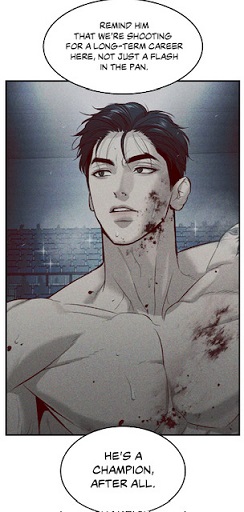 (chapter 27) Furthermore, I would like to underline this expression “I barely have enough time to train” which contrasts to Park Namwook
  (chapter 27) and Dr. Lee’s statement
 (chapter 27) As you can see, Joo Jaekyung had the impression that he was always running out of time. He always feared his jinx and as such the night before the fight, as he needed to have sex with someone! Moreover, I would like to outline that Kim Dan as his mirror and teacher is constantly referring to time: day, week, saturday, minute, second.
  (chapter 28)
  (chapter 28) Why? It is because Joo Jaekyung has no life outside the gym! All his days looked the same, until the protagonist entered his life! Besides, if you’ve already read my essay
  (chapter 05) The words “Today and something special” from Park Namwook triggered the champion’s memory: the presence of Kim Dan at his penthouse.
  (chapter 5) And right after, he expressed this wish:
  (chapter 5) Interesting is that there exists a strong link between time, time perspective and self-esteem! Someone with no notion of time and no time perspective has a poor self-esteem! Therefore it is not surprising that the athlete doesn’t trust his own talent. Hence I deduce that this sex session played a huge importance in the champion’s life. He could see with all his senses (touch, sight, hearing, taste) that he had pleased Kim Dan!
  This signifies that he will treat Joo Jaekyung as a lone wolf and Kim Dan will keep acting as a hamster, whereas he has already turned into a real duck! But why? It is because the doctor has been advocating pure love so far. Loving someone more than yourself yet in return not expecting anything is pure love. Hence the Webtoonist had mentioned 🤍 in the tweet too. But by saying this
 (chapter 28) Then he complained about his lack of competence in bed
  (chapter 28), he was marking him as his lover! His decision is contradicting his own actions! It is because he still fears sex!
 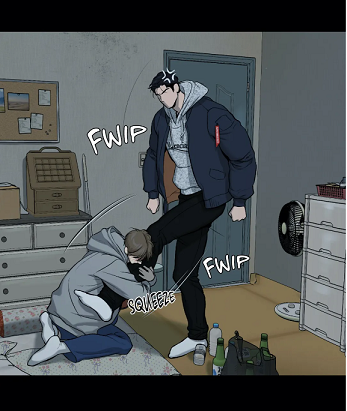 (chapter 10) And remember that after this embrace, Joo Jaekyung brought the doctor to his penthouse, for his heart got moved!! From my point of view, the athlete’s heart is little by little warming up to the idea of affection! In other words, he is slowly adopting the doctor’s philosophy (love)!
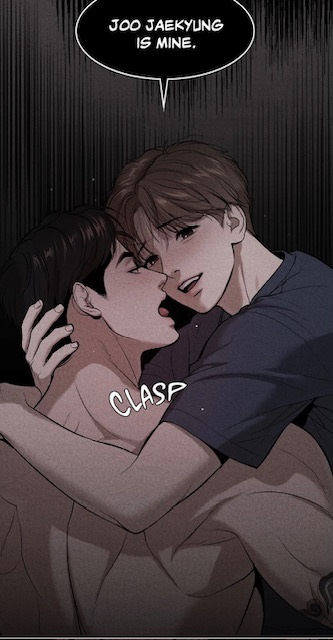 (chapter 25) Kim Dan would be on the champion’s lap, the latter would long for his lips, and the doctor would hug his companion. It was announcing how Kim Dan would get the upper hand in the relationship!
  (chapter 28) Don’t forget that according to the champion’s belief, the sex sessions are all like surrogate fights. By putting the doctor on his lap, he was admitting his inferiority! This shows that he is moving on from his fake faith. Thus I deduce that we should have a new version of this position in the future which will reflect the doctor’s increasing power over the fighter and his gradual transformation.
  (chapter 20) Here, the champion was comparing the doctor’s hole to a baby!
  (chapter 19) His reasoning is the following. The champion likes having sex and he has been treating him more or less like a sex toy, the doctor will try to find a subterfuge to divert attention from himself. Because I detected many similarities between episode 12/13
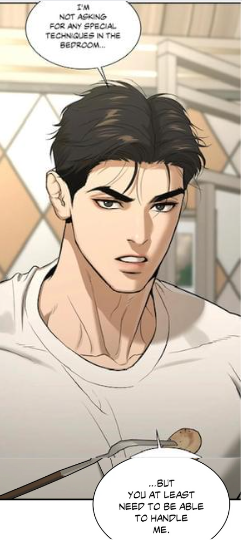 (chapter 13) and episode 28
  (chapter 11) And that’s how Kim Dan will discover the existence of the club!!
 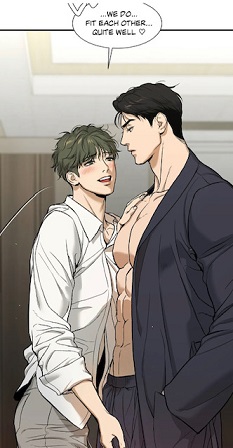 (chapter 2)There is not ambiguity that the champion will never bring the physical therapist to the club on his own. He has already marked the doctor as his partner. And the result can only be that Joo Jaekyung declares Kim Dan as his boyfriend! The emoji 💙 would get a new meaning: the heart of the dragon! This means that the doctor’s decision in episode 28 will push Joo Jaekyung to question his fake belief: the jinx, the existence of a line and the rejection of love in his life. Keep in mind that the champion always makes decisions by instincts, he never ponders on things like the doctor! Similar to this scene, where he paid off the doctor’s debts.

 (chapter 24) So for me, their sexual interactions will push the champion to speak differently about their intercourse again… like in the bathroom!
  Bebebisous33s' analyses in K-Dramaland and Manhwas