

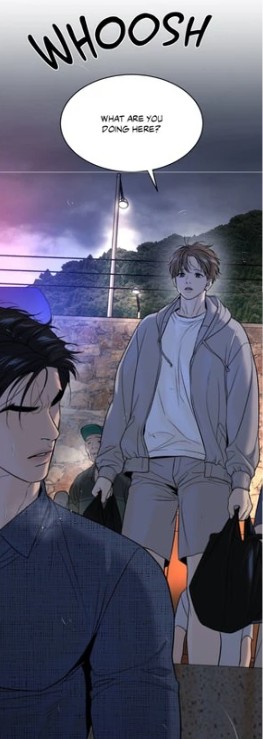
Please support the authors by reading Manhwas on the official websites. This is where you can read the Manhwa: Jinx But be aware that the Manhwa is a mature Yaoi, which means, it is about homosexuality with explicit scenes. Here is the link of the table of contents about Jinx. Here is the link where you can find the table of contents of analyzed Manhwas. Here are the links, if you are interested in the first work from Mingwa, BJ Alex, and the 2 previous essays about Jinx “What Are You Doing here? Between Crisis and Opportunity” and The Director 🐺 🐐 and Me 🐺(part 1) (locked)
It would be great if you could make some donations/sponsoring: Ko-fi.com/bebebisous33 That way, you can support me with “coffee” so that I have the energy to keep examining Manhwas. Besides, I need to cover up the expenses for this blog.
In the two most recent chapters of Jinx, Kim Dan finds himself caught between two “directors.”: one from the hospice where he works  (chapter 70), the other a former “boxing” coach and Jaekyung’s ghostly mentor figure, now terminally ill and confined to a shared room.
 (chapter 71)These two older men mirror different systems of power: the current director, a seemingly kind authority figure who represents institutional control masked as care; and the former coach, a fallen patriarch whose past decisions shaped Jaekyung’s identity and pain. This part of the essay focuses first on the hospice director, and how his interaction with Kim Dan reveals the young man’s invisible burden and social isolation. In the final section, we will turn to the old coach, now reduced to a ghost in his own story, and explore how the symbolism of owls, coots, and crickets illuminates his emerging relationship with Kim Dan.
A Sick Day or a Day Off?
The hospice director’s words to Kim Dan may seem caring at first glance. He comments on his exhaustion—  (chapter 70) his dark circles, his nodding off—and suggests him to take a day off.
  (Chapter 70) But look closely: he notes that Dan has never used a sick day, and yet deliberately avoids recommending one now. Instead, he offers the less costly alternative: a personal day off, unpaid.
This language shift is strategic. A formal sick day would require the hospice to compensate Dan for rest. By subtly placing the burden back on him—“Why don’t you take better care of yourself?”—the director protects the institution’s budget while maintaining a façade of concern. His framing pathologizes Dan’s exhaustion as a personal failure (chapter 70), not a consequence of institutional neglect or overwork.
The very conversation betrays that Dan’s employment terms are different from those of the full-time staff. Unlike the nurses, who are likely on standard contracts with structured shifts, Dan is spoken to as someone expected to self-manage his workload and well-being. He’s the one deciding when he picks up a shift.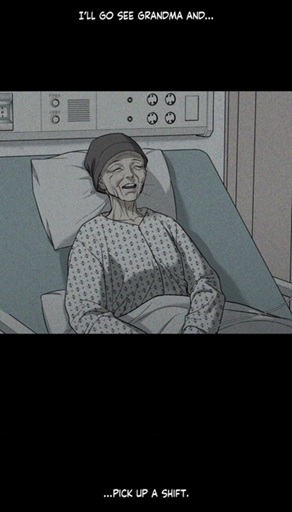 (Chapter 70) The director doesn’t say, “We’ll adjust your schedule,” or, “Let me talk to HR.” He simply tells Dan to take a day off (chapter 70), as if the responsibility for that decision—both logistically and financially—rests solely on him. This means that he is working exactly like he did in the past as a waiter or courier: paid by the hour.
 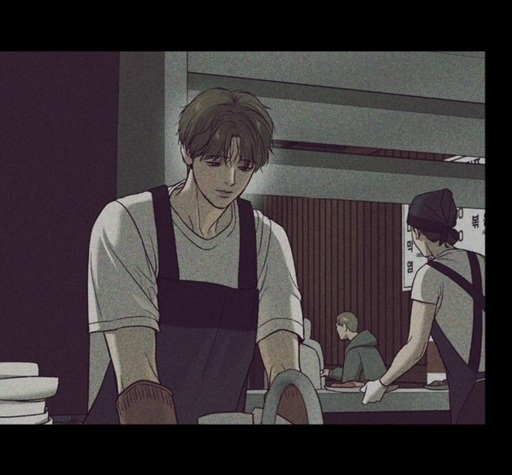 (Chapter 59) This reinforces the idea that Dan is not covered by the same protections, and that he operates outside the stable framework of regular employment.
Ironically, the director’s comment comes after Kim Dan has already taken a first step toward recovery. (Chapter 70) In episode 66, Jaekyung dragged Dan to Seoul over the weekend  (chapter 66) to visit a sleep specialist, where Dan received a diagnosis and first treatment for his “sleepwalking” condition. The two spent the night in Seoul. Upon returning to the seaside town, Jaekyung received a call
  (chapter 69) and left again the next morning for Seoul in order to meet the CEO, marking a separation between the two after their return.
During this gap, Kim Dan must have returned to work, most likely resuming his afternoon shift. In episode 71, his presence is later noted during both afternoon  (chapter 71) and night hours
  (chapter 71), suggesting his ongoing pattern of overworking. In episode 71, Kim Dan is seen walking alone through the hospice hallway—unaccompanied, unnoticed. This quiet image stands in stark contrast to the earlier scene when, after nearly drowning, he was carried in by Joo Jaekyung and immediately met by a nurse and the hospice director, both actively working together that night.
  (chapter 60) Back then, his suffering was visible, his crisis institutionalized. Striking is that after that night, the hospital director never asked doc Dan to take a sick leave or to a day off. In fact, it took some time before making such a suggestion. Moreover, as if a single day off would make a huge difference. But now, despite his clear exhaustion and illness, doc Dan moves through the same space in silence (chapter 71) Nothing has changed: no one beside him, no one monitoring him. This comparison exposes the hospice director’s hypocrisy and superficial care.
His loneliness has been institutionalized. That he is left to walk alone, reflects how thoroughly his pain has been folded into the daily background noise of the hospice—a place that is supposed to care, yet chooses to remain passive. Finally, don’t forget that the nurse 1 blamed doc Dan for not taking care of himself properly, because 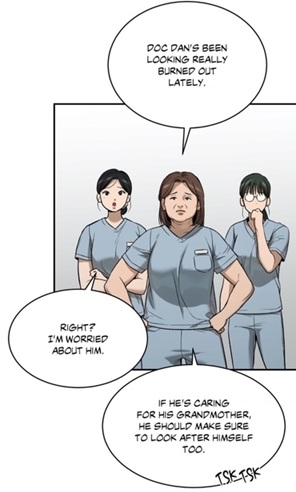 (Chapter 57) his grandmother would worry about him. Yet, during that night, Shin Okja doesn’t seem to be plagued by worries for her own grandson’s health. She sleeps peacefully.
But let’s return our attention to the conversation between the physical therapist and his boss. When did this recommendation take place? The timeline becomes crucial here. We learn that Kim Dan told his landlord he was taking the day off 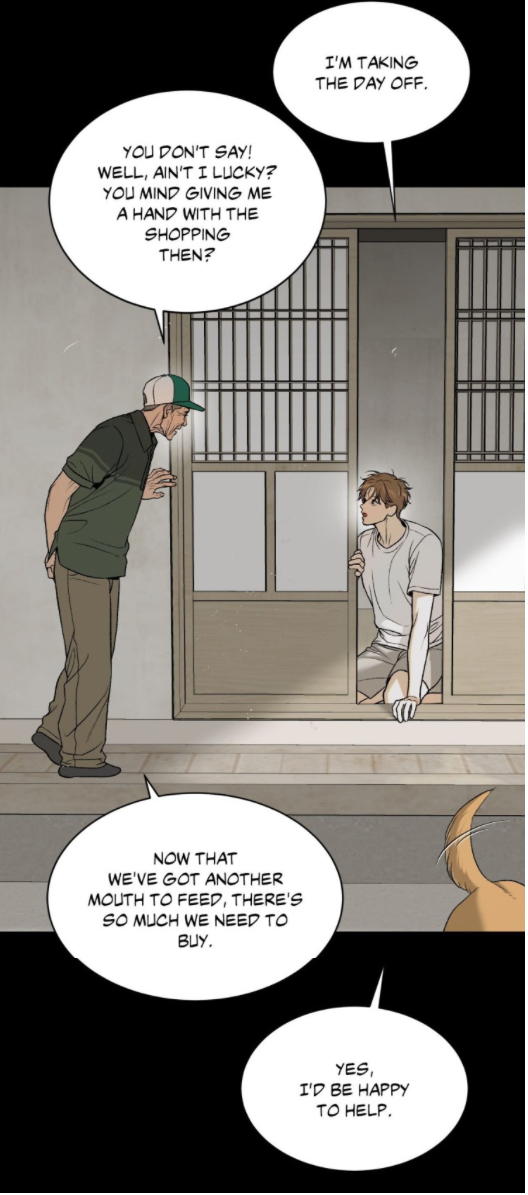 (chapter 70) only after the Seoul trip. This must mean that his conversation with the hospice director—where he was urged to rest—took place between his return from Seoul and the announced day off. We also know that
 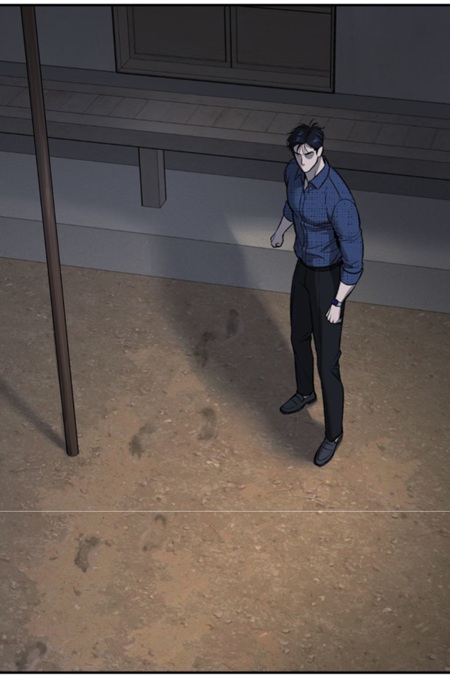 (chapter 69) the champion came back from Seoul in the evening and found footprints near the house, suspecting Dan had wandered to the ocean while drunk. These prints were left that same day
  (chapter 70), when Kim Dan chased the puppies that had stolen the shoes. Based on the shadows and the position of the sun
 (chapter 70), I am deducing that this scene took place during the afternoon. I used these images as a contrast, where the author made it clear that these scenes took place in the morning.
  (Chapter 65)
  (chapter 57) We can determine the time based on the position of the sun and the shadows.
Thus, it is clear: the director judged Dan as neglectful after he had met the sleep specialist and as such sought medical treatment. (Chapter 70) Thus his reproach is not entirely correct.
Furthermore, observe the vocabulary the man employed in front of his employee. They are all revolving around visual symptoms (dark circles, nodding off) but he does not ask questions. His response is based entirely on appearances—looking instead of examining, noticing instead of investigating. I also noticed that he is using the same expressions than his own staff. (Chapter 57) My idea is that the staff are his eyes and ears. Hence he doesn’t examine the physical therapist closely. He never offers a health check or having him tested. 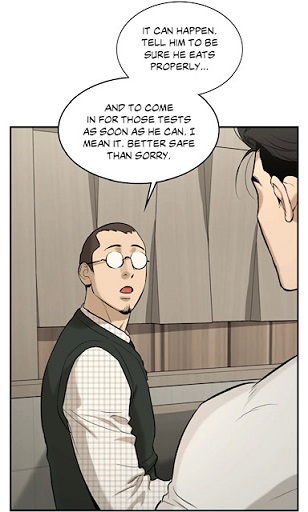 (Chapter 13) But when Kim Dan drops a patient Dan by mistake
  (chapter 59), the director acts immediately—not because of concern for the elderly man,
  (chapter 59) but because he fears that the patient’s family might sue the hospice. The elderly man’s condition was formally assessed, documented, and protected. This scene exposes that they can act in an emergency (taking tests). In contrast, Kim Dan—who is visibly unwell—is not offered even a basic check-up. His illness is reduced to tired eyes and missed sleep, framed as personal negligence rather than systemic failure. He is looked at, not truly seen. While the patient is treated as a legal liability, Dan is treated as disposable labor—an expendable worker whose wellbeing doesn’t justify institutional resources. Thus in my opinion, the director of the hospice suggested that doc Dan took a day off in order to ensure that he had done his duty, taking care of his employee.
Another striking detail appears when we notice that the elderly patient (chapter 59) who fell due to Kim Dan’s dissociative state in episode 59 seems to reappear in episodes 70 and 71. 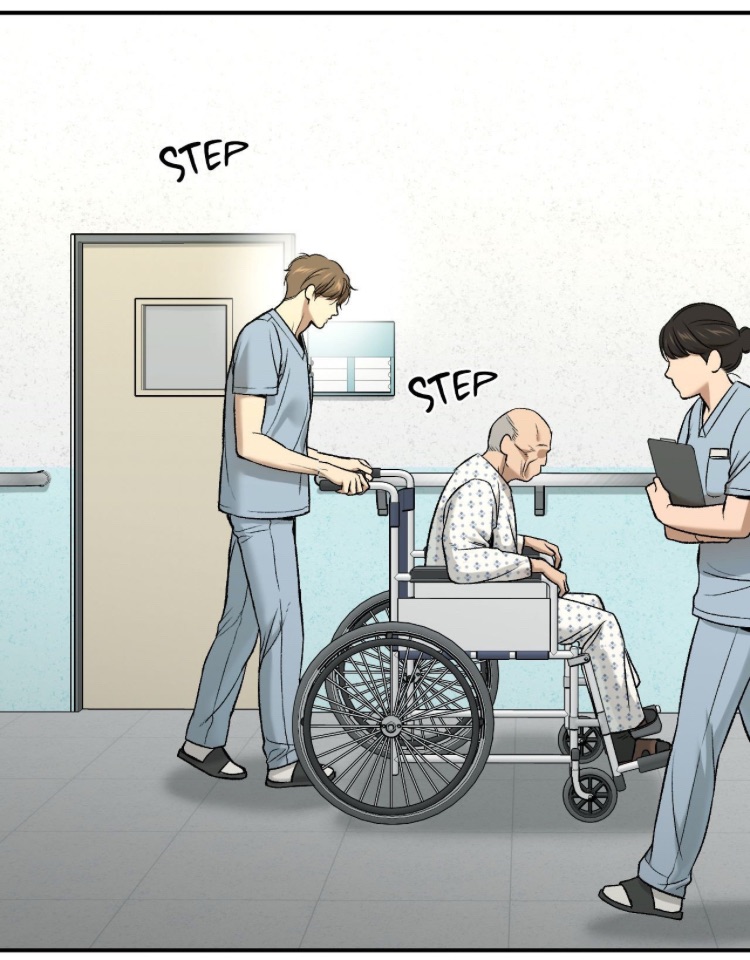 (Chapter 70) His distinct appearance—bald with tufts of grey hair—makes him easily recognizable. What stands out this time is not the accident, but the aftermath of it.
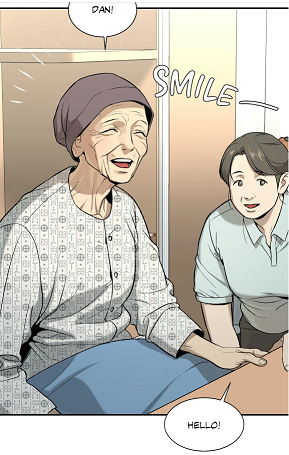
  (Chapter 70) When Kim Dan, again lost in thought, almost bypasses his room, it is this very patient who gently brings him back to reality with the teasing words, “Earth to Doc Dan.” His tone is not accusatory. On the contrary, it’s forgiving—light-hearted even.
This interaction subtly reshapes the narrative of the earlier fall. Rather than harboring resentment, the patient acknowledges Kim Dan’s humanity and affirms his worth with humor and patience. He doesn’t define the physical therapist by his mistakes. This response contrasts sharply with the institutional culture around Dan, where overwork and exhaustion are framed as incompetence and emotional suffering is ignored.
The recurrence of this particular patient also bridges episode 59 with the present, suggesting that we are circling back—this time not just to repeat the past, but to re-examine it. The closer we get to this patient, the closer we move to the emotional core of the narrative: that dignity and recognition are often found not in the powerful, but in those who share space quietly and see clearly. Moreover, this elderly man, like the old coach, becomes another unexpected mirror—reminding both Dan and the viewer that grace can come from unexpected places, and that sometimes, even in a failing system, individuals choose not to perpetuate its cruelty.
2. The Reality of Double Shifts and a Different Contract
Dan’s return to work was not just symbolic—it was physically demanding. Clues throughout the chapters suggest that Dan has been working double shifts. In episode 62, the champion came to the hospice thinking that his morning shift had ended. :  (chapter 62) However, the main lead was still working, thus the athlete concluded that he had made a mistake. He probably assumed that he had the afternoon shift. Hence Joo Jaekyung only returned to the landlord’s house at sunset! So during that day, he must have worked for the morning and afternoon shift. Even here, the doctor was suggested to give a special treatment to the star.
  (Chapter 62) Then in episode 71, we see him working in both afternoon
  (chapter 71) and night scenes, (chapter 71) always present, never resting. This points to a likely hourly contract with minimal protection. He is not integrated into the regular team of nurses.
  (Chapter 71) Therefore we see him in company of different nurses.
  (Chapter 57) He moves between teams, unanchored and isolated. This also explicates why the nurses still have no name. To conclude, his contract implies that Dan is paid by the hour or per shift, without salary-based benefits. I am suspecting, the regular nurses likely operate under different contracts, which could include fixed shifts, team integration, and better protections.
This difference is subtly confirmed in the way the director speaks to him—not as a protected employee, but as a freelancer or temp worker who must self-regulate. The fact that the director doesn’t mention adjusting his workload or seeking support through institutional channels reinforces this. Dan is expected to disappear and reappear without institutional backup, like a shadow on call.
How could this happen? For me, there exist different causes. First, we shouldn’t forget the impact of the incident with the switched spray, doc Dan definitely blamed himself. Thus it undermined his confidence to ask for a higher salary. In addition, in the locker room, the celebrity had made the following reproach. He was obsessed with money, he was greedy.  (Chapter 51) Then the main lead was thinking that he was only staying there temporarily.
  (Chapter 57) Finally, we shouldn’t overlook that his job is strongly intertwined with his grandmother’s situation. He needed to get a job there, hence he couldn’t negotiate his contract. As long as he had a job as physical therapist, he could only be “happy”.
And crucially, he is funding someone else’s comfort.
His grandmother, Shin Okja, lives alone 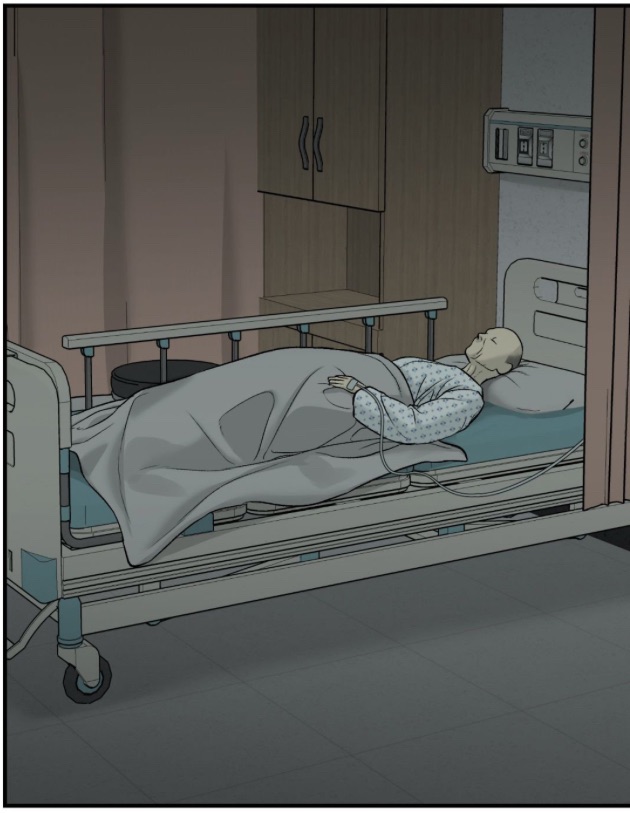 (Chapter 71) in a room designed for six patients—indicated by the six plastic protections outside the door. (Chapter 71) She has her own care taker
 (chapter 65), while the former coach shares a room with three others and lacks personal care.
  (Chapter 71) Shin Okja lives like a VIP. Yes, the new version of this situation:
 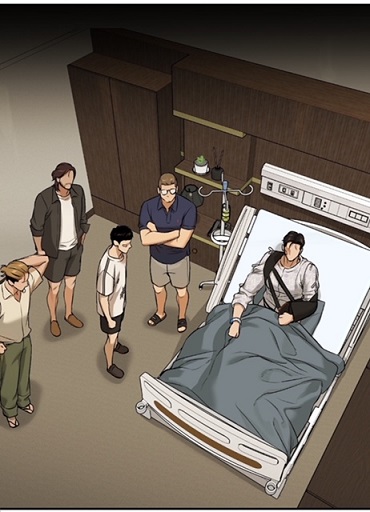 (chapter 52) That’s the reason why Mingwa made another allusion to this particular scene (chapter 52) in episode 71:
 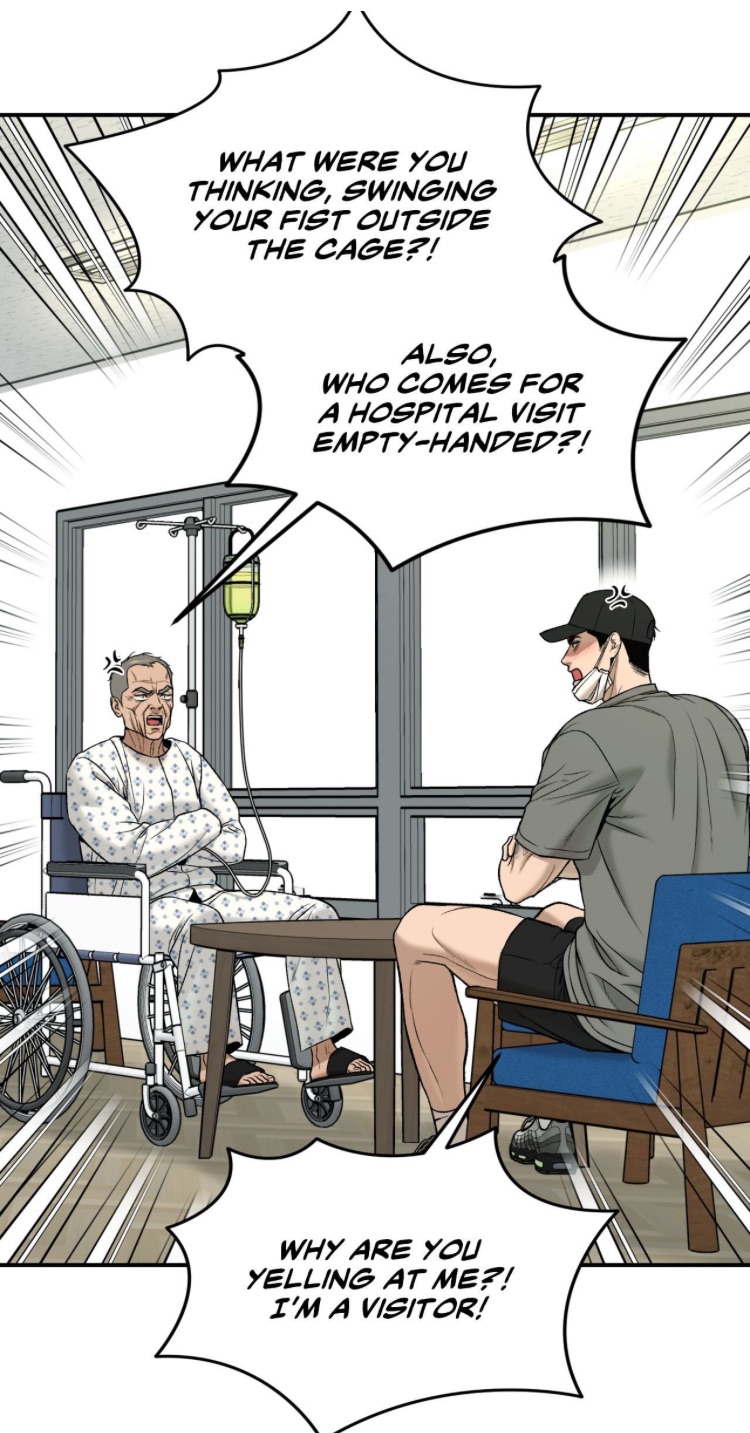 (chapter 71) The members from Team Black visited him not only empty-handed, but didn’t try to cheer him up at all. This shows the rudeness from Park Namwook and the others. But let’s return our attention to the gentle grandmother.
This kind of arrangement requires money—and Kim Dan is paying for it with his body. The overwork, the lack of sleep, the burnout—it all goes to ensure that she is kept comfortable, while he is silently collapsing.
And yet, when the director lectures him about self-care (chapter 70), overlooking the burden doc Dan is going through. No one is asking him about his finances.
Dan, in contrast, has no one yelling for him. Not even his grandmother advocates on his behalf. Instead, she goes around him and asks Joo Jaekyung for help—ignoring the staff and the institution altogether. 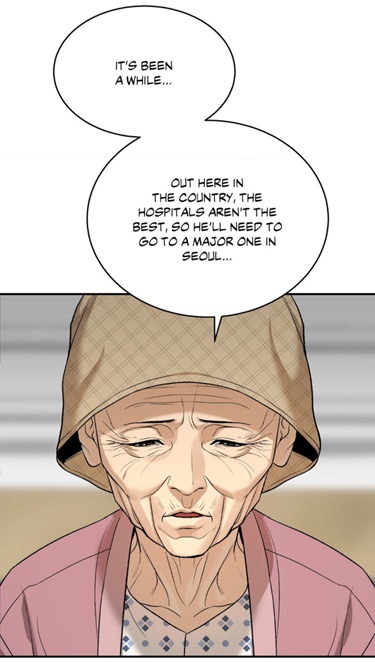 (Chapter 65) She even portrays the hospital in a rather negative light. The irony is that she asked someone who was in recovery
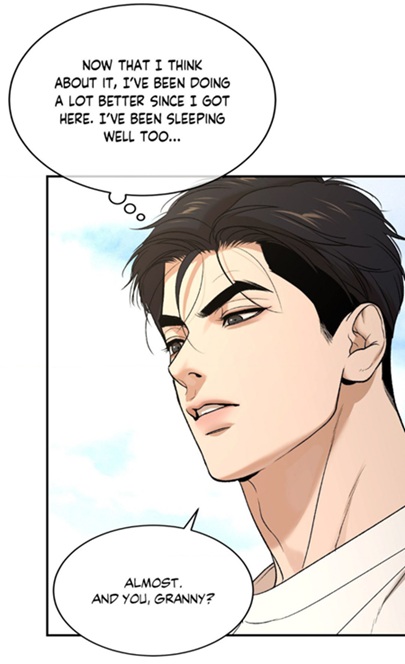 (chapter 65), and he has now a cold.
 (Chapter 70) If something were to happen to the physical therapist, who is responsible? This means, there’s no one at the Light of Hope paying attention to doc Dan. It is, as if Dan has no family, and within the hospice structure, no voice. Yet, I saw a change in the following panel.
 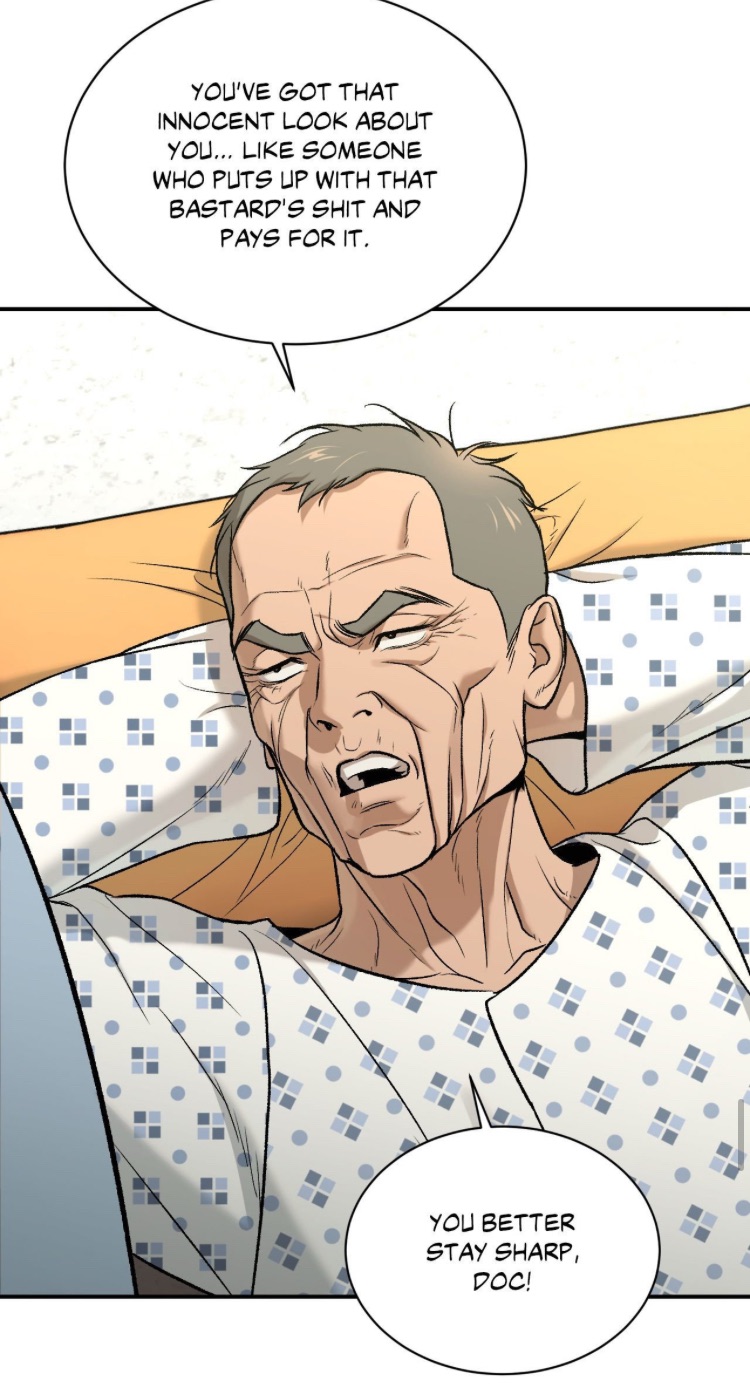 (Chapter 70) For the first time, someone spoke on the physical therapist’s behalf. He should make sure not to be taken advantage of. Secondly, when he pointed out
  (chapter 70) that the star was staying there because of him, he was already implying that doc Dan had power over the athlete. He should voice his own opinion and thoughts to ensure to protect his own interests. From my point of view, this “former fighter” will definitely side with the young man and protect him.
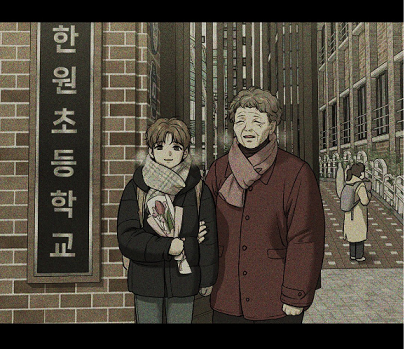
The conversation between Kim Dan and the hospice director might, at first glance, read as kind-hearted concern. The reality is that the day off allows the institution to appear humane while avoiding any financial or legal responsibility for Dan’s well-being. At the same time, this situation appears to confront Shin Okja with a bitter truth: that even though her grandson became a physical therapist—a role associated with education, skill, and respectability—his social standing hasn’t changed. He still works long hours, earns little, and lives on the margins of the system. His body is as exploited as when she sold vegetables on the street. 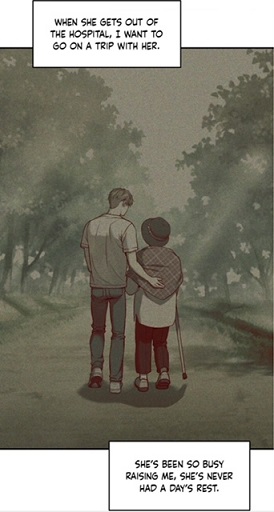 (Chapter 47) The uniform may be different, but the precarity remains the same.
  (Chapter 65) This revelation may fuel her decision to send him back to Seoul—not just out of care, but as a reflection of her lifelong obsession with money and upward mobility. Crushed by the burden of the loan and haunted by her own failures, she sees Seoul not only as a place of opportunity but as the only terrain where financial survival is possible. In her logic, professional success is meaningless without wealth, and in the seaside town, doc Dan’s work brings neither. So she urges him to leave—not because she doesn’t care, but because she has equated worth with earning power. Her mindset, forged by debt and despair, blinds her to the emotional and physical toll this cycle continues to take on her grandson.
Blamed for His Own Collapse
In this way, Dan becomes the perfect target for blame. (Chapter 70) Everyone—from the director to the celebrity 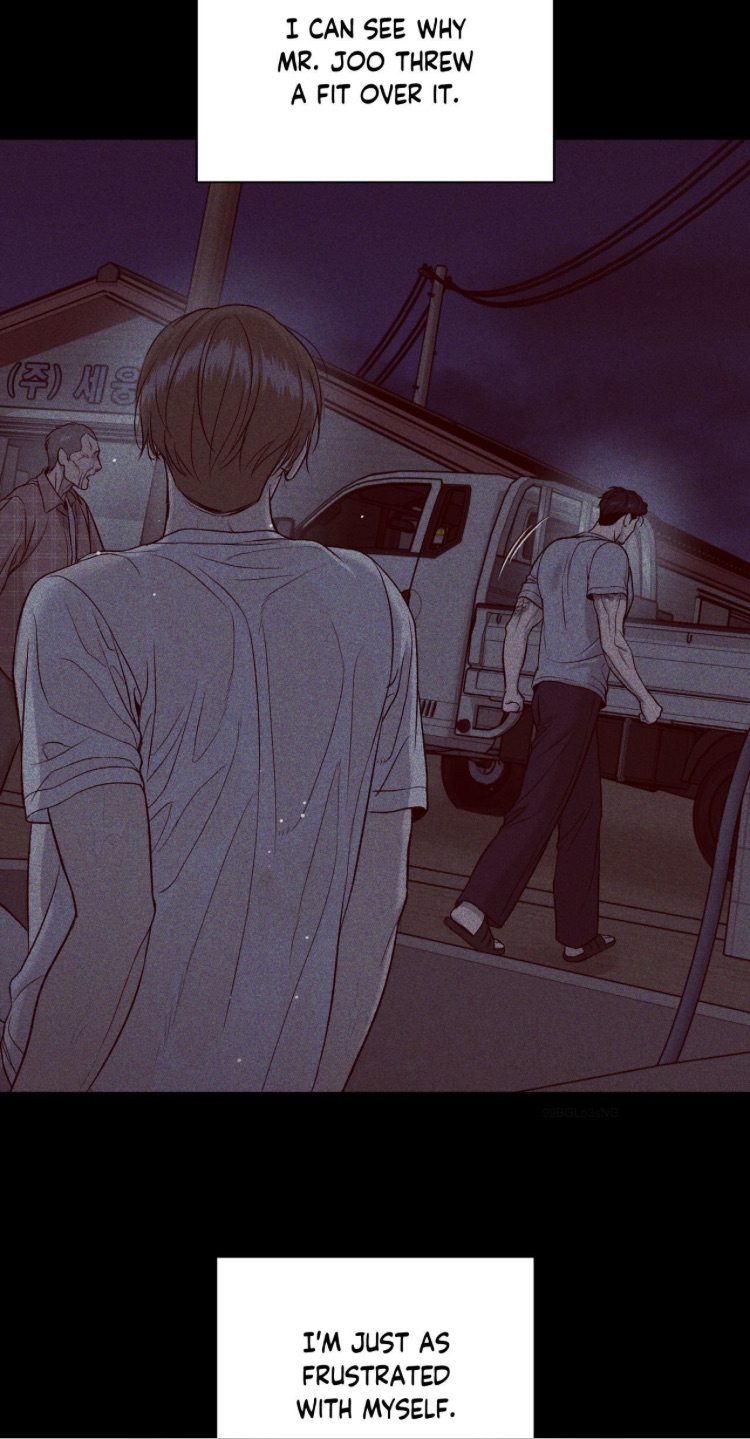 (chapter 71) to even the grandmother—assumes he is responsible for his condition. They blame him for drinking, for being tired, for looking unwell. But no one looks beyond the surface and investigates the causes. No one is wondering about the financial burden, the trigger for his fears
  (chapter 71), the emotional isolation, or the systemic overwork that drive him there. Let’s not forget that the young man drank again after hearing that Joo Jaekyung would return to the ring soon. This shows that the incident with the switched spray and its consequences left deep wounds in his heart and soul.
This is the core injustice: Dan is punished for the symptoms of a system that depends on his silence. He is structurally invisible, morally judged, and emotionally abandoned. And he accepts it—because he believes he has no right to ask for more.
A Misread Life: Misinterpretation from All Sides
The tragedy is that no one fully understands Dan’s emotional or physical condition:
- The hospice director, while not malicious, interprets Dan’s exhaustion as neglect rather than the result of a crushing schedule, sickness and unresolved traumas
- Joo Jaekyung, still unaware of Dan’s grueling double shifts, wrongly assumes that Dan returns home at the end of the day. (Chapter 71) This explains why, after returning sick, he told Dan not to share the bed that night—he thought Dan was coming home to rest. In reality, Dan was remaining at the hospice for his second shift.
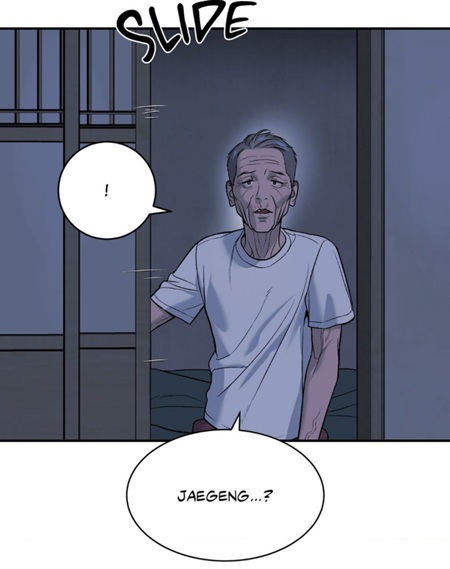
- Even the former athlete, now living at the hospice, overlooks Dan completely (chapter 71) when his former student takes him to the rooftop, too focused to nagging to Joo Jaekyung. Dan, standing in the hallway, is ignored—another ghost drifting through an institution that doesn’t truly see him. He doesn’t wonder why this young man is working during the night later.
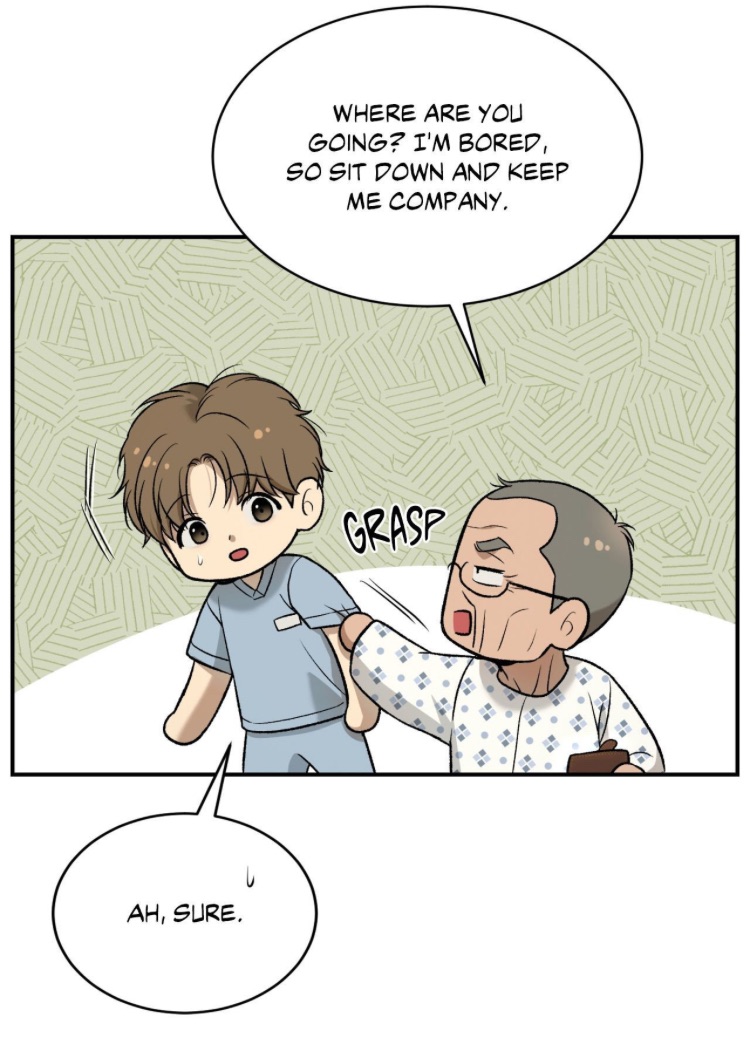 (Chapter 71) He even asks him to stay by his side, not noticing his dark circles and paleness.
This lack of recognition is not incidental. It stems from Kim Dan’s quiet, damaging belief that love must be earned through sacrifice. His philosophy confuses devotion with self-erasure, service with affection.
There’s a kind of loneliness that hurts more than being alone: feeling invisible when surrounded by people you’ve helped countless times. You’re there, you do everything possible to be present and available. To make life easier for others. But no one asks how you’re doing. No one stops to thank you. It’s not that you don’t exist… it’s that they’ve become so accustomed to your presence that you’ve become invisible. If you feel this way, you’re not overreacting or being “overly sensitive.” You’re experiencing a real form of emotional burnout that occurs when you give so much, so unconditionally, that others begin to take it for granted. They don’t mean any harm – or at least, not always – but the effect is the same: your value goes unnoticed, your needs fade into the background, and you begin to disappear. Quoted from https://psychology-spot.com/being-unconditional-makes-you-invisible/
But being constantly available—emotionally, physically, professionally—without acknowledgment carries a cost. As the article “Being Unconditional Makes You Invisible” explains, this kind of unreciprocated availability leads to silent emotional fatigue, internalized resentment, and, most painfully, a growing disconnection from the self. Dan is always the one listening, giving, enduring. But in doing so, he becomes invisible in the very systems he sustains. His self-esteem quietly erodes under the weight of one-sided expectations. His relationships, especially with the hospice and his grandmother 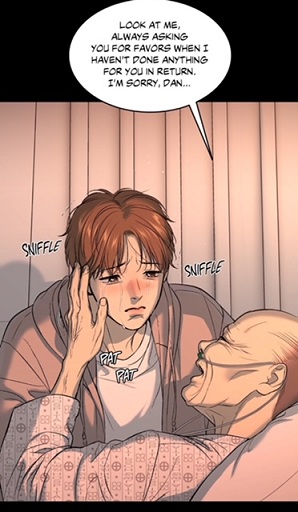 (chapter 53), become lopsided forms of dependency. And his unspoken needs—his own exhaustion, grief, and longing—are never tended to, not even by himself. He is present for everyone, yet no one is truly present for him. That’s the reason why Shin Okja knows nothing about her own grandson’s interests and dreams.
  (Chapter 65)
The hospice director’s mistake is not his tone, but his timing and framing. He tells Dan to rest after Dan has already taken responsibility for his condition—after he has gone to Seoul, received a diagnosis, and returned to work. The true mistake lies not in what the director says, but in what he doesn’t offer:
- No formal sick leave
- No referral to an in-house physician
- No acknowledgment of Dan’s effort to heal
- And most importantly, no long-term security—no shift to a better contract or stable position
Instead, Dan receives a moral correction disguised as care. And that is perhaps the most painful form of erasure—when a system offers you compassion only after it has ensured your exhaustion was cost-free.
An Old Coot, a Cricket, and an Owl
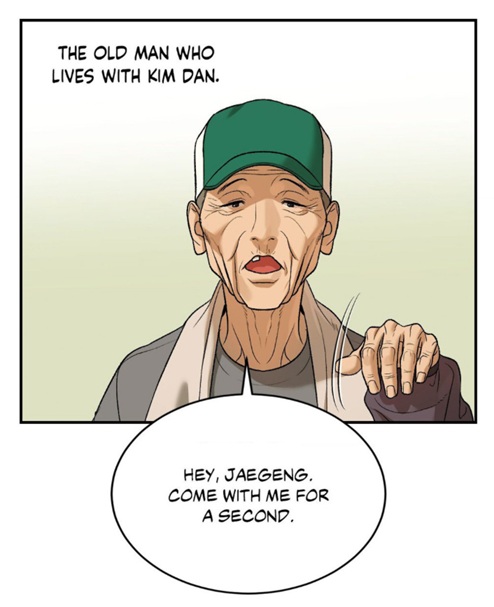
In the first part, I had compared the nameless coach to a wolf and ibex. Strangely, in translation, the former coach is called an “old coot” (in English), (chapter 71) or a cricket (in Japanese). 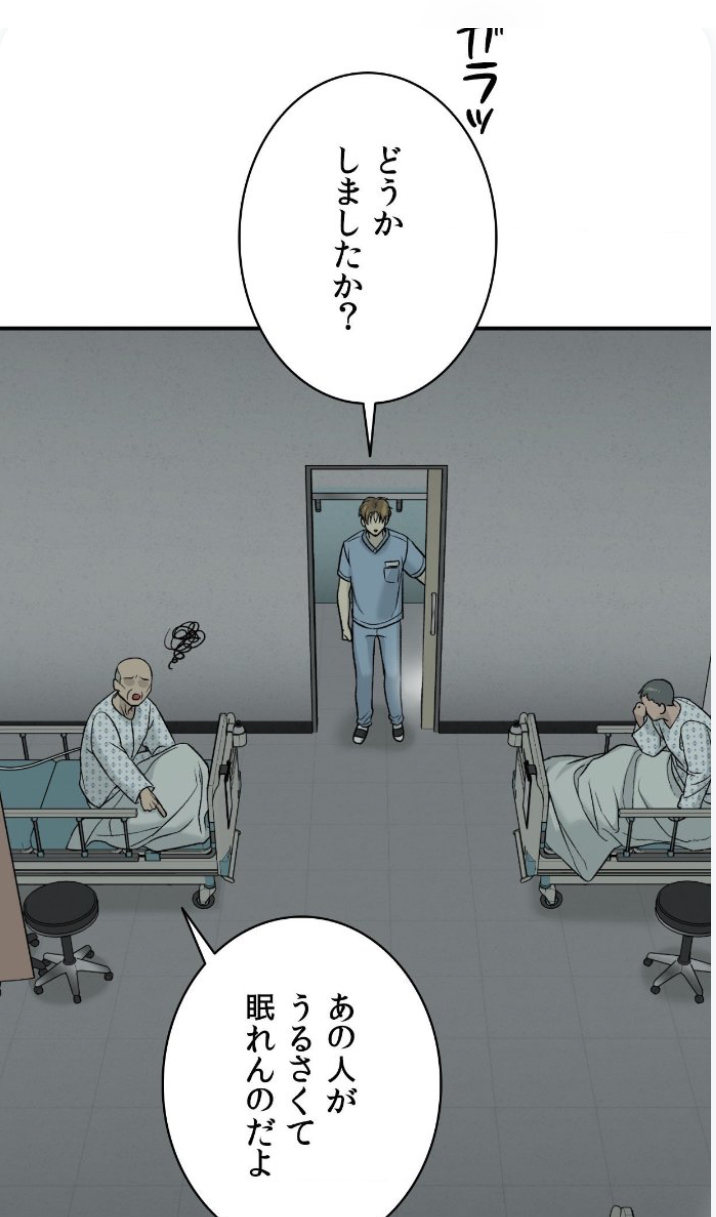 (Chapter 71) In German, he would be an “alter Kauz”—an eccentric owl. But this metaphor reaches deeper than mere strangeness or aging.
The owl is a nocturnal bird, often linked to solitude, silent observation, and hidden knowledge. In chapter 71, an owl is heard in the seaside town next to the champion’s hostel—an eerie presence that coincides with Kim Dan’s visible exhaustion and isolation.  (Chapter 71) The constant appearance of the owl connected with the champion’s house implies that Joo Jaekyung is now connected to this nightbird, as if the latter was his guardian of the night. In addition, in chapter 65,
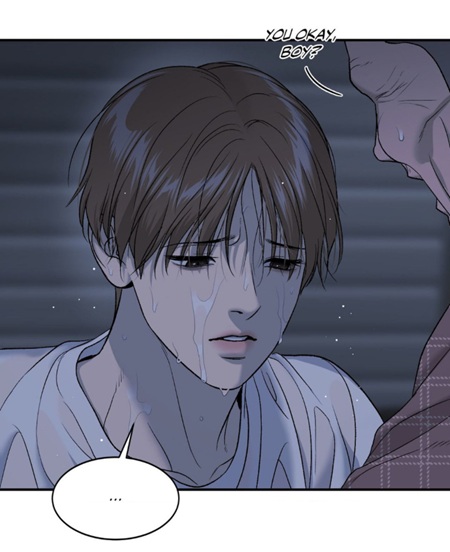
 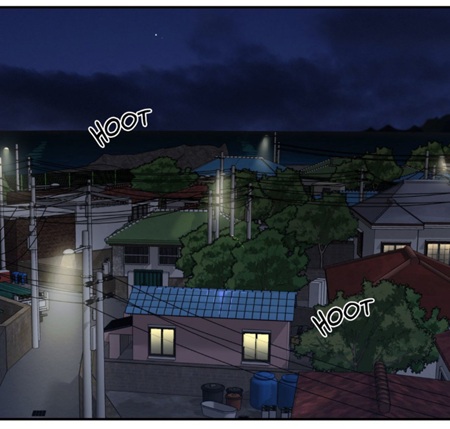 (chapter 65) Dan was found wandering the night in his sleep, pulled by unconscious fears.
 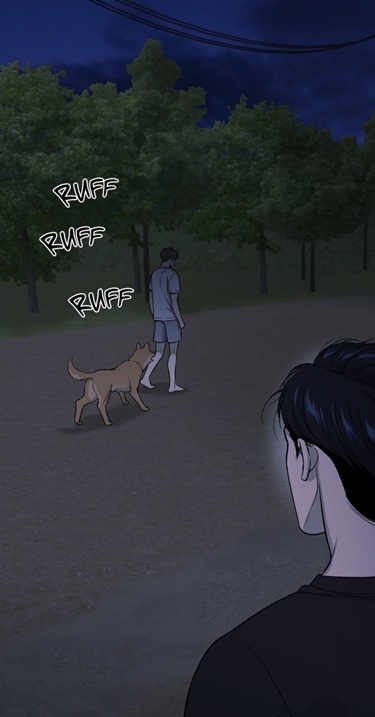 (Chapter 65) These moments mirror the owl’s behavior: navigating darkness, moving alone, and being misunderstood. Thus, the owl becomes a powerful symbol not only of the former coach but of Kim Dan himself—both are creatures of the night, shaped by what they see and endure in silence. In contrast to the chattering coot, the owl watches and remembers. And perhaps, the presence of both birds suggests that the coach, once a loud and reckless coot, is beginning to see with the quiet eyes of the owl—finally noticing the suffering he once overlooked. Their shared nocturnality ties them together: one hoots and curses, the other drifts wordlessly—but both are left behind by the daylight world.Doc Dan’s nightly behavior made me think of an owl. (Chapter 65) during that night, Joo Jaekyung caught him wandering in sleep outside. In addition, Moreover, I interpret the presence of the owl as an allusion to the presence of the former director in the couple’s life. As you can see, I have already made a parallel between the physical therapist and the nameless coach. These metaphors evoke not only eccentricity but specific traits tied to nocturnal birds and fragile aging.
The coot,  (quoted from https://www.oiseaux.net/birds/eurasian.coot.html) though a water bird like the duck, is a poor flyer, often flapping frantically just above the water’s surface. It tends to migrate or travel by night, preferring the cover of darkness to avoid predators. The coot is socially awkward yet persistent—an outsider among graceful birds. In this sense, the coach mirrors the coot: once active, now awkwardly grounded, watching from the margins, no longer able to soar.
Yet the coach’s resemblance to the Eurasian coot extends beyond his weakened condition. This bird stands for versatility, adaptability, or hidden talents, attributes similar to the ibex because of their long slender toes with round lobes of skin on them.
These lobes allow the Coot to swim through the water similarly to a duck, but whilst on land these feet are much more effective for navigating terrain. Quoted from https://worldbirds.com/coot-symbolism/
Coots are noisy 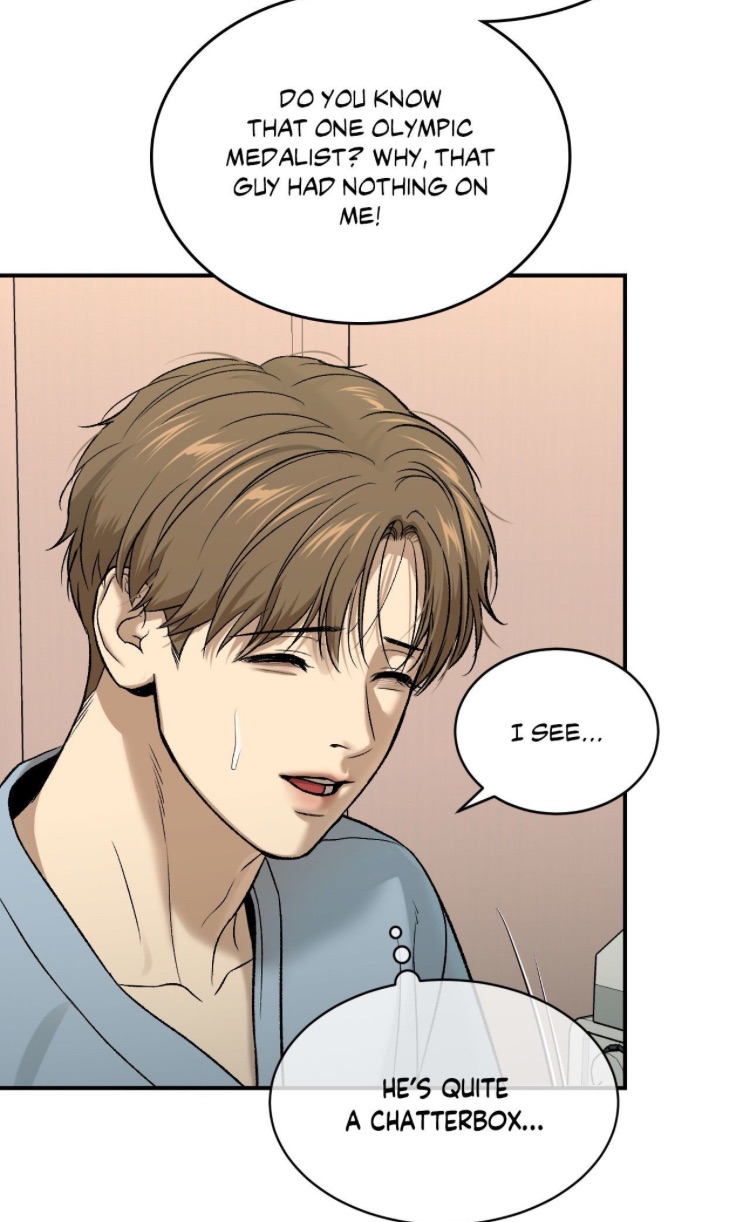 and socially awkward birds—notorious for their harsh, repetitive calls that sound more like chiding than song. Unlike the poetic silence often associated with owls, the coot communicates through blunt, raspy cries. This parallels the coach’s incessant chatter and verbal outbursts. Kim Dan even refers to him as a “chatterbox,” a man who yells, curses, and grumbles without reserve. And yet, strangely, Dan is not repulsed. On the contrary—he appears comforted by the company. For perhaps the first time, someone talks to him without judgment or restraint. (Chapter 71) The coach, in asking Dan to stay and keep him company, reveals a loneliness behind the noise—a need for genuine presence, not just a match on TV. And Dan, who so often listens in silence, responds and is interested in his past..
The Eurasian coot, with its stark black plumage and distinctive white frontal shield, is not merely an odd, noisy water bird—it carries deep symbolic resonance. Visually, it evokes the image of yin within Taoist philosophy: the dark feathered body representing shadow, receptivity, and introspection, while the bright beak and forehead suggest presence, guidance, and emergent clarity. This interplay of black and white echoes the taijitu, the yin-yang symbol, where opposing forces coexist, define, and balance each other. In this metaphorical framework, Kim Dan has long embodied yin: passive in appearance, enduring in silence, emotionally responsive, and often eclipsed by the assertive, solar force of Jaekyung—his yang counterpart. The coot, then, becomes an avatar of Kim Dan’s latent feminine principle, one often neglected or undervalued in the harsh masculine domains of fighting, survival, and ambition.
But the coot is not merely passive. Across several Native American traditions, it plays the mythic role of the “earth-diver”—the humble, overlooked creature who succeeds where stronger animals fail. Diving to the bottom of primordial waters, the coot resurfaces with the vital clump of mud that births new land. This act of grounding creation through immersion in emotional depths positions the coot—and by extension, the coach—as a quiet redeemer. If we follow this myth, then the coach, once the yelling coot who flapped at the surface of a hypermasculine world, now dives inward through his illness and regret. And by getting acquainted with Kim Dan, he begins to recover something essential: the knowledge that nurturing, not domination, is what builds real legacy. A side that he has all this time neglected.
Just as the coot in myth brings forth land from formless water, the coach now nudges Kim Dan to settle—to plant roots, recognize his own value, and reimagine his path. This is the deeper function of their encounter: not only to pass on knowledge, but to give Dan permission to claim space, stop drifting, and become whole.
This raw vocality—the coot’s instinct to call out, the coach’s refusal to quiet down—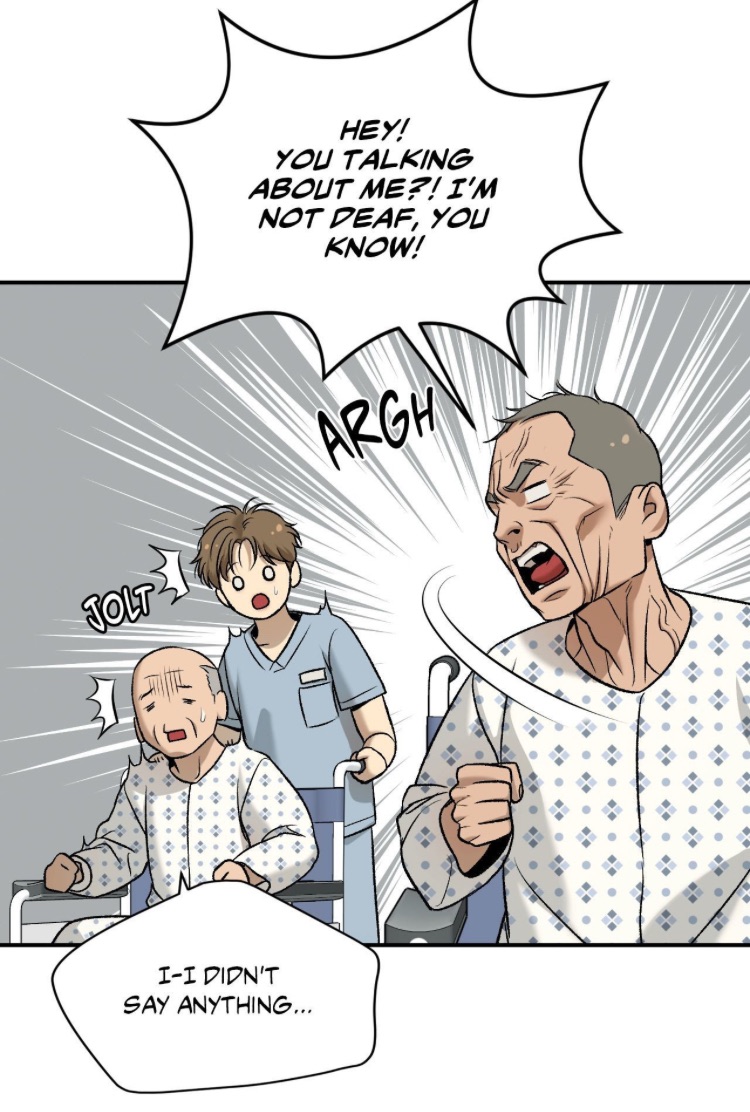 (chapter 71) suggests that communication doesn’t always have to be soft to be sincere. It is precisely the coach’s lack of elegance that makes him relatable to Dan.
 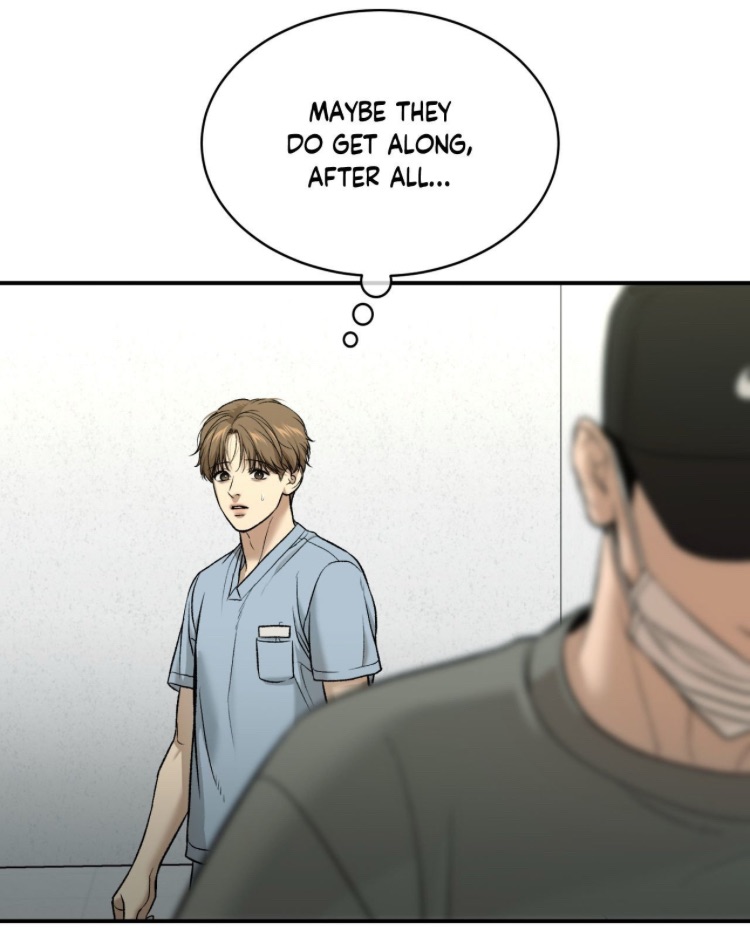 (Chapter 71) This dynamic becomes especially meaningful when we recall that Kim Dan’s symbolic animal is the duck—a creature often seen as passive or domesticated, gliding over water while paddling furiously underneath. As discussed above, the duck stands for Dan’s silent endurance, his ability to move between unstable emotional terrains without ever making a splash.
In contrast, the coot is noisy and awkward, incapable of flight yet unwilling to be silent. In a world that expects the duck to swim gracefully through silence, the coot becomes a strange, stuttering guide—blunt, awkward, but unmistakably alive.
This is especially interesting because, as previously argued, Kim Dan’s symbolic animal is the duck— (chapter 65) a creature that moves between water, land, and air. While he is still learning to navigate the spaces between systems, he too lacks institutional power. If the former coach is a coot, then his narrative function may be to pass on his remaining knowledge to the duck—turning his interactions with the coach and his use of the notebook into an unofficial MMA trainer seminar he once wished to attend
  (chapter 22).
Like the ibex metaphor used in Part I—creatures tied to rocky isolation and dangerous heights—the coot further enriches the theme of aged survivors perched on the margins of community. But unlike the ibex, the coot may still transmit wisdom before its final flight.
The cricket, (chapter 71) on the other hand, introduces a different symbolic register. Crickets are night creatures, associated with melancholy songs and liminal moments—summer nights, silence interrupted by delicate rhythm. In literature, the cricket is often the last to speak when others fall silent. Beyond eccentricity or noise, this insect also evokes themes of temporality and mortality. It is a creature of the twilight—its song a reminder of fleeting seasons, of warmth that will pass. In many cultures, the cricket’s chirping signals the passage of time, each note a marker of transience. Its presence in literature often accompanies deathbeds, soliloquies, or irreversible turning points. If the coach is a cricket, then he is not merely a grumbler—he is a living metronome, ticking down the last hours of his own life, while reminding those around him—like Kim Dan—that time is limited. And perhaps this is why he talks so much: not to annoy, but to assert his presence before the silence swallows him.
In this light, the coach becomes a kind of dying bell—a cracked oracle whose purpose is not clarity but urgency. His role is to remind Dan that life cannot be deferred forever. Settling down, speaking up, asking for more—these are not things to postpone. The cricket’s metaphor, then, marks the threshold between invisibility and emergence, between survival and meaning. Though overlooked, its chirping suggests persistence and a strange form of endurance. To conclude, if the coach is a cricket, then his voice—grating, unwanted, but steady—becomes a metaphor for what remains when relevance fades. Crickets continue to sing even when ignored, echoing the idea that the coach, however diminished, still has something to say. His grumbling is the residue of meaning in a life otherwise stripped of its stage. And for Kim Dan, who has been rendered voiceless by respectability, the cricket’s harsh cadence may sound like truth.
These metaphors evoke age, eccentricity, and irrelevance. A coot is a harmless, grumpy old man. A cricket sings into the void, unheard. An owl is wise, but solitary and ignored.
These metaphors tell us how others see him: a relic, a burden (chapter 71), a joke. But there’s another side to the owl—the side that watches the night, that sees what others do not. And in this hospice, maybe for the first time, the former coach becomes something more: a witness who is no longer silent. An old man who still has eyes.
And perhaps, in seeing Dan, he finally sees what was lost when he failed to protect Jaekyung. 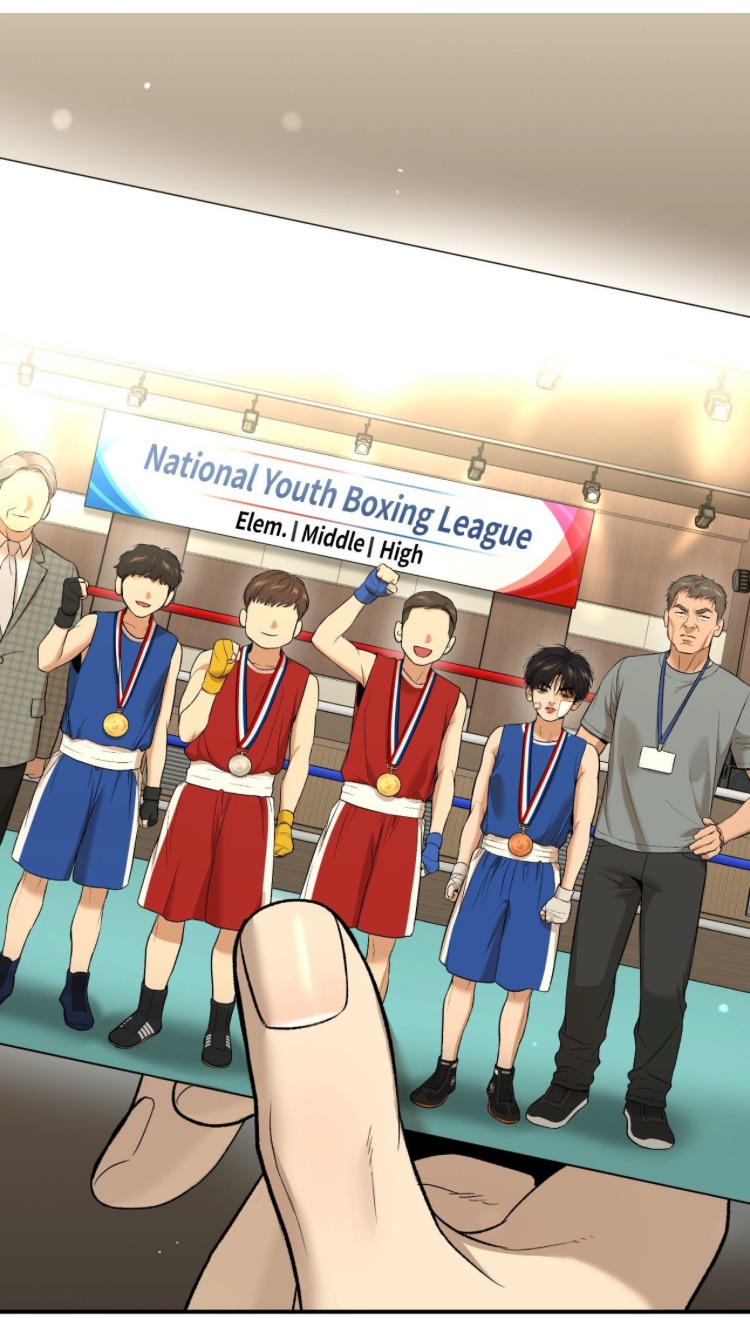 (Chapter 71) The latter didn’t receive proper treatment for his woundsAnd this brings me to my final interpretation, the absence of a physical therapist or doctor in the director’s world and life! His body got broken so many times, indicating that he never had a doctor by his side! .
 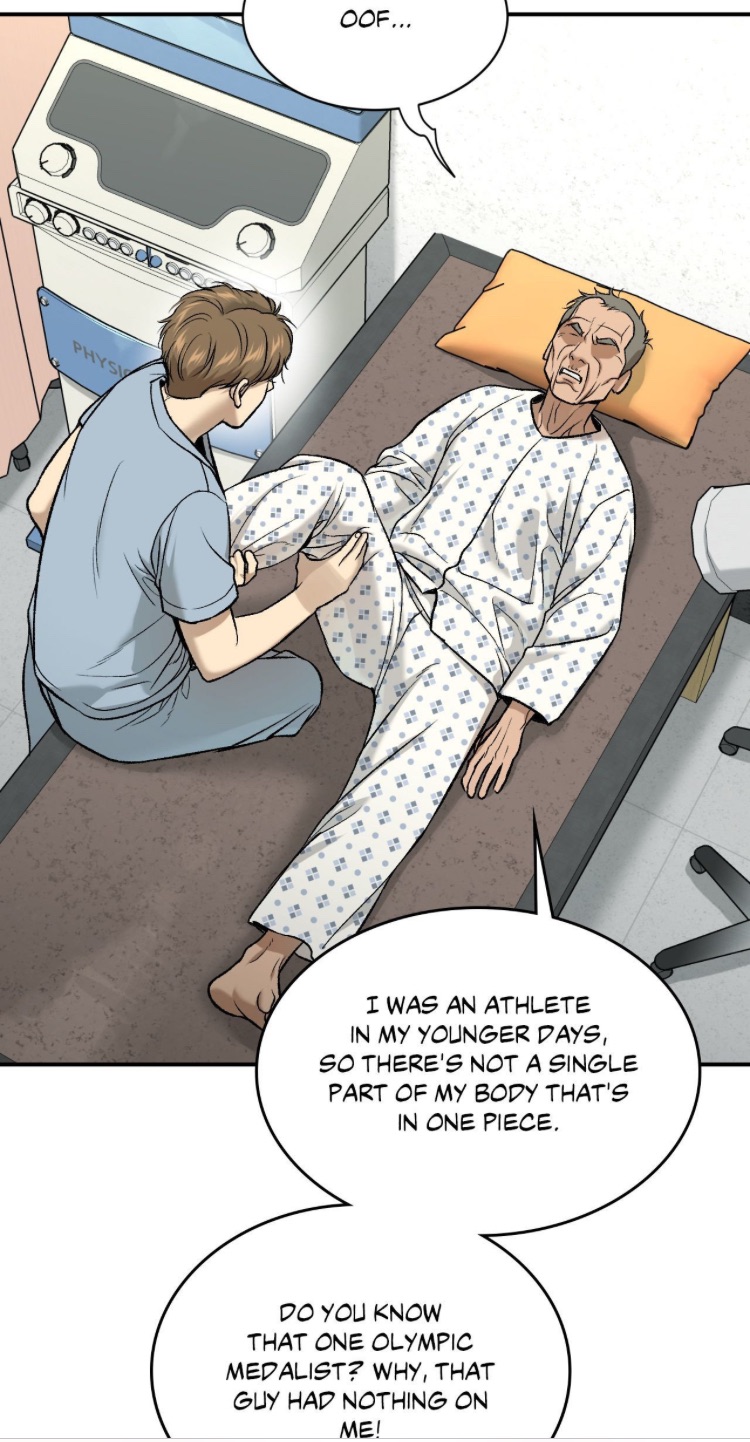 (Chapter 70)He never had a companion or friend in his life, which is also mirrored in the picture.
Together, these two owls—the worker and the watcher—form a quiet alliance of the unseen. One carries the weight of silence. 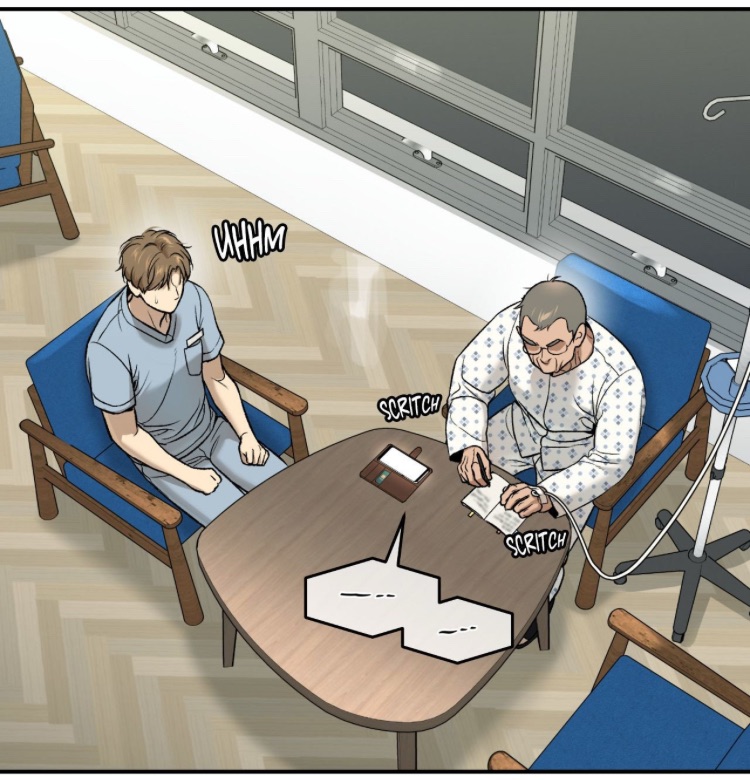 (Chapter 71) The other carries bitterness and the guilt of watching too long without speaking. In this dim hallway of illness and endurance, their connection becomes a muted call for dignity.
And maybe, this time, someone will hear it.
Feel free to comment. If you have any suggestion for topics or Manhwa, feel free to ask. If you enjoyed reading it, retweet it or push the button like. My Reddit-Instagram-Twitter-Tumblr account is: @bebebisous33. Thanks for reading and for the support, particularly, I would like to thank all the new followers and people recommending my blog.
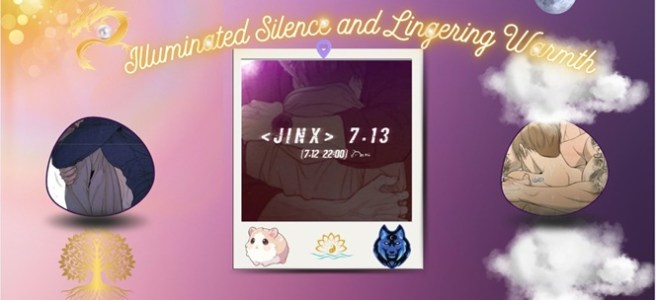
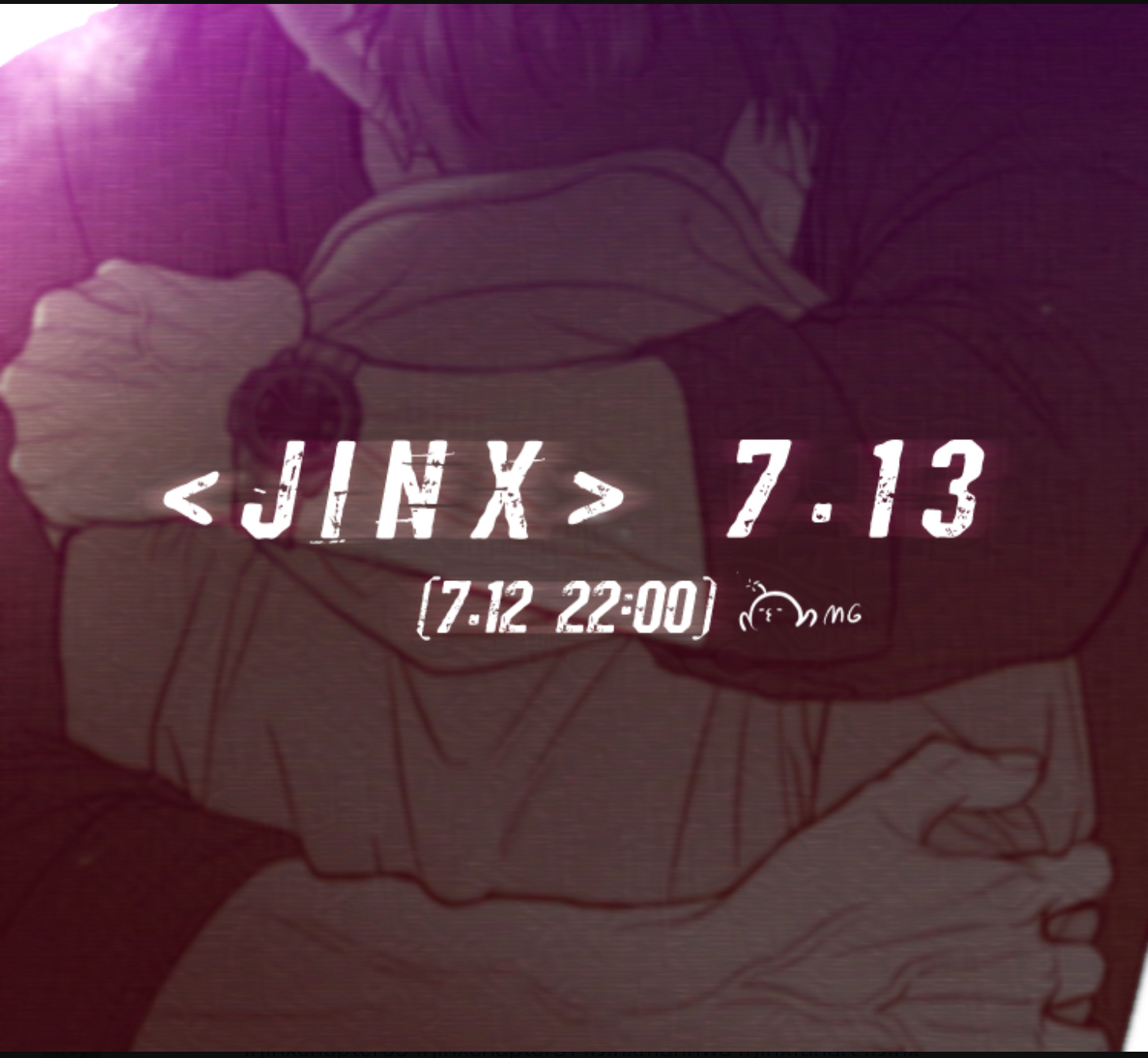 , released in anticipation of Chapter 70, is more than a promotional teaser. It is a moment frozen in time, yet brimming with motion—emotional, symbolic, and narrative. We see Joo Jaekyung embracing Kim Dan with both arms, pressing him tightly against his chest. There is no resistance, no distance, no tension in the frame. The palette moves from gray and brown fading into violet and pink, blooming into soft light. There is vapor, there is breath, an allusion to life. And most strikingly, there is stillness.
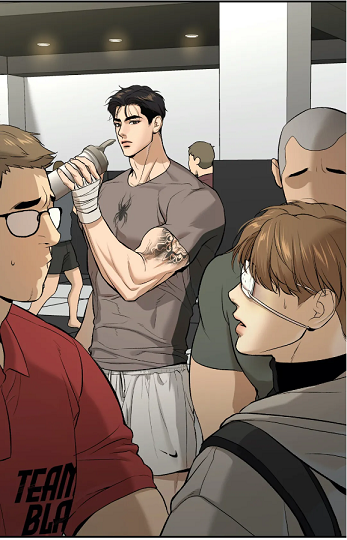 (chapter 11), every glare, and every awkward silence
 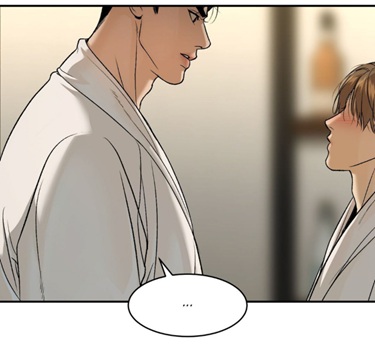 (chapter 67) between these two, this hug feels monumental.
  (chapter 58)
  (chapter 29) —the constant possibility of being challenged, of losing ground, of falling from his throne. Time meant pressure. It meant movement. But now, in this image,
  (chapter 68) and the public hug on the dock in Chapter 69.
  (chapter 69)
  (chapter 68) He rests his chin not on Dan, but on his own hand, his arm propped on the edge of the bathtub. This detail is telling: even in a moment of supposed closeness, Jaekyung relies on himself for support, not on Dan. He is physically near but emotionally braced—still holding himself apart. His thoughts are private, tender, and possessive. In a rare moment of introspection, he confesses that
 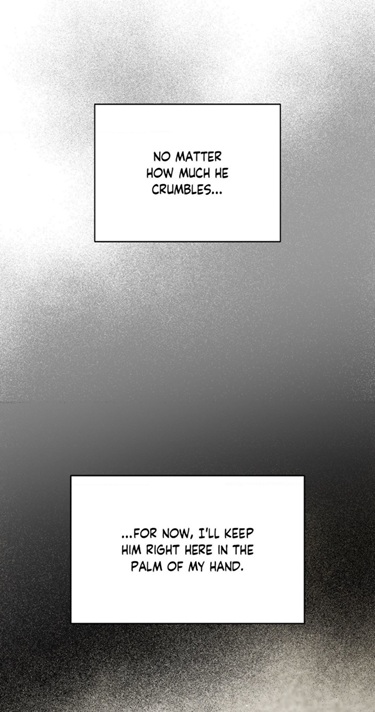 (chapter 68) This line (“I’ll keep him right here in the palm of my hand”) is deeply revealing. The champion frames care through the language of possession. The palm is open but hierarchical; it suggests that Dan is small, fragile, and dependent on Jaekyung’s will to hold or release. He does not yet see Dan as an equal. Even as he softens, his emotional vocabulary is shaped by superiority and containment. The hug is real, the sentiment sincere, but the dynamics remain unbalanced. And since Dan is asleep—unable to reciprocate, respond, or challenge—the embrace becomes more about the wolf’s soothing himself than forming a mutual bond. Furthermore, Dan is not even facing Jaekyung.
  (chapter 68) In the next panel, we see Dan’s head from behind. This small but deliberate movement suggests a dynamic effort to hold onto him more firmly—to assert closeness, perhaps, but also to reposition him as something to protect and possess. The scene is filled with motion, both physical and psychological. And this motion, this shifting, stands in direct contrast to the stillness of the teaser image.
  (chapter 69) Yet, when faced with renewed pressure and stress, he falters—leaving Dan behind.
 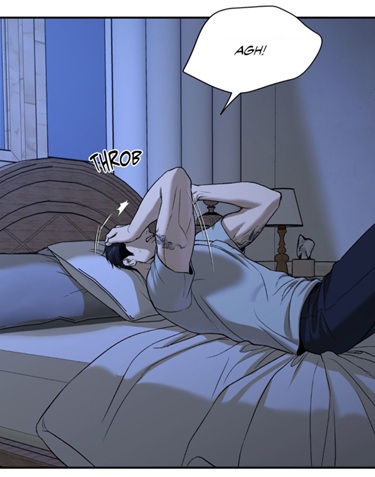 (chapter 69) The illusion of control dissipates, revealing that his earlier vow, however heartfelt, was not yet unshakable.
 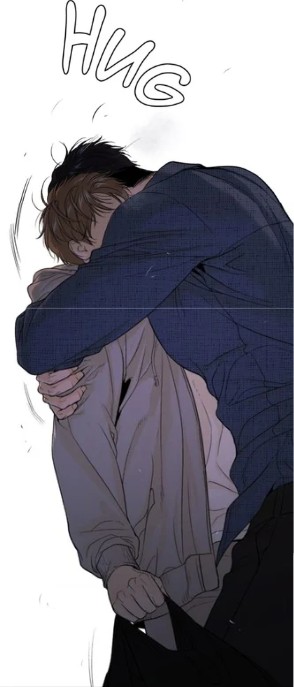 (chapter 69) rather than a moment of mutual resolution. Jaekyung offers no words, yet a silent gesture of care and vulnerability.
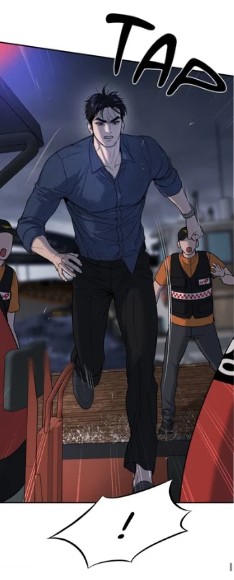 (chapter 69) that Jaekyung is wearing it, the change in angle—viewing the hug from behind—deliberately conceals it.
 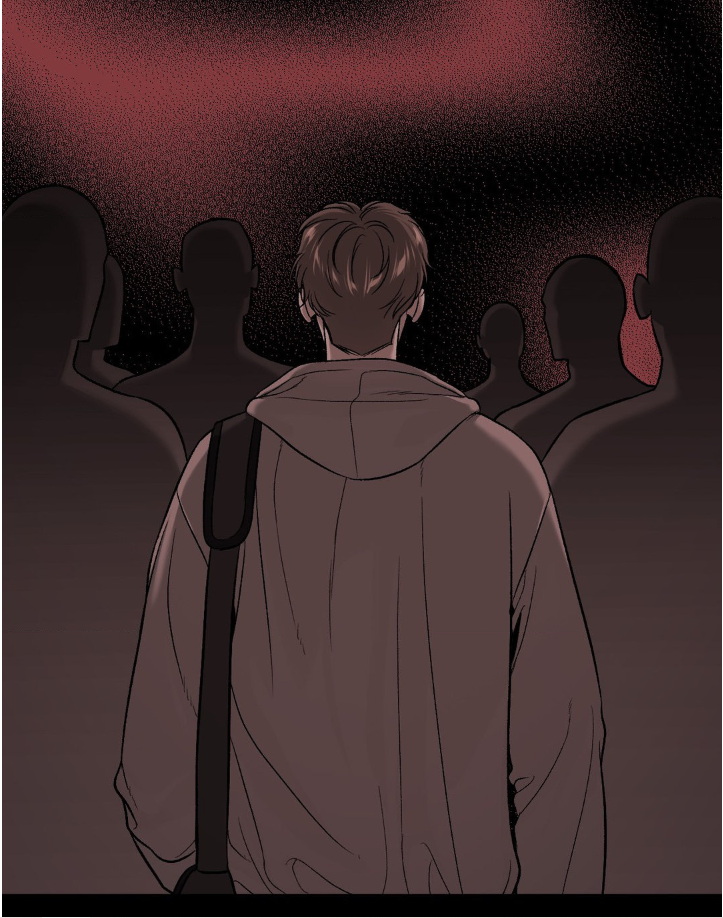 (chapter 55) In the new illustration, the hamster’s back is no longer representing anonymity and indifference, but visibility and care, for the champion is now facing his fated partner. In other words, doc Dan’s back in the teaser stands for uniqueness and high value. He can not be replaced. Moreover, doc Dan is not walking away, nor is he asleep.
 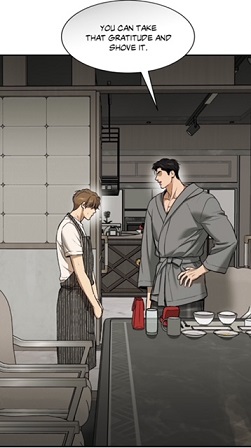 (chapter 45) Back then, the champion refused the expensive key chain, symbolizing a missed opportunity for emotional connection. Both men yearned for attention and affection, but failed to express it. Here, in contrast, the champion offers something far more meaningful than a 14,000₩ and free lodging —his unguarded embrace. And Dan, by remaining still, appreciates the moment.
  (chapter 21) Dan became fluent in a silent, physical language of care. She often asked him not to cry
 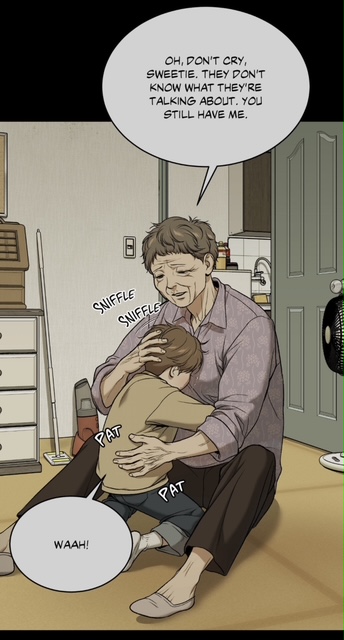 (chapter 57), unable or unwilling to face his vulnerability. To her, composure meant strength, and emotion—especially in the form of tears—was something to be managed or tucked away. Her love came in the form of caresses, pats
 (chapter 47) and composed embraces—gestures repeated with calm precision. These touches were predictable, rhythmic, and soothing, but they also suppressed genuine emotional exchange, the symbol of toxic positivity.
 (chapter 57) the momentary pause of a hand
 (chapter 19), the direction of a gaze. Here, she was not looking at her grandchild who was talking on the phone. It was, as if she was excluding herself from the conversation. These gestures became his emotional compass—not because they were transparent, but because they were all he had.
 (chapter 5) never still—giving the impression of involvement, of care in action. But this motion avoided vulnerability and responsibility in reality. She never clung, never trembled. Her gestures conveyed comfort but not surrender, presence but not change, and not support either. They were not truly emotionally together.
  (chapter 47) to hold her hand, to initiate closeness
  (chapter 47)
 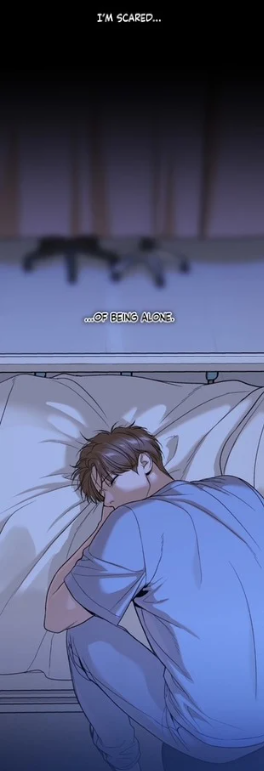 (chapter 56). This reversal of roles placed the burden of emotional stability on his young shoulders.
 (chapter 57); I’ll come back home, once I am all better”
 (chapter 11) —promises that sounded protective but masked emotional denial. Her words were spoken to soothe, not to reassure with truth. These assurances were emotional illusions—comforting on the surface, but hollow in substance. They created the illusion that she was always strong, ever-present, even immortal—an anchor that would never be lost. Over time, this illusion cemented itself in Dan’s mind. She became a fixed point of emotional gravity,
  (chapter 35) Instead of recoiling in fear or admiring his strength, Dan quietly states, “I think I really need to focus on Mr. Joo right now.” He does not focus on the strength or aggression, but on the pain beneath it. The burst sandbag, for him, is not a threat—it is a symbol of Jaekyung’s emotional unraveling. This silent recognition mirrors Dan’s interpretive skills developed in childhood. Just as he once learned to read a shift in his grandmother’s hand or the silence after a broken promise, he now interprets the damage to the sandbag as an unspoken plea for help. This sensitivity continues to define his bond with Jaekyung.
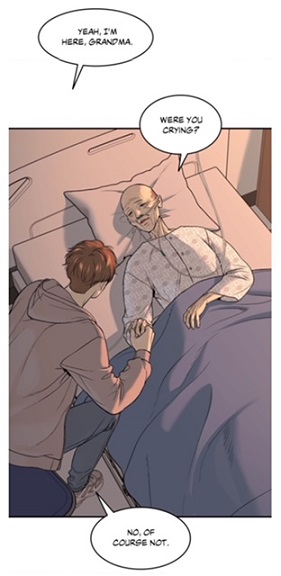 (chapter 47), to stabilize the person meant to support him. Now, he is receiving without shame or hesitation. The Emperor’s silent desperation, his refusal to hide behind ritual or false strength, creates the space for Dan to feel treasured—not pitied, but wanted.
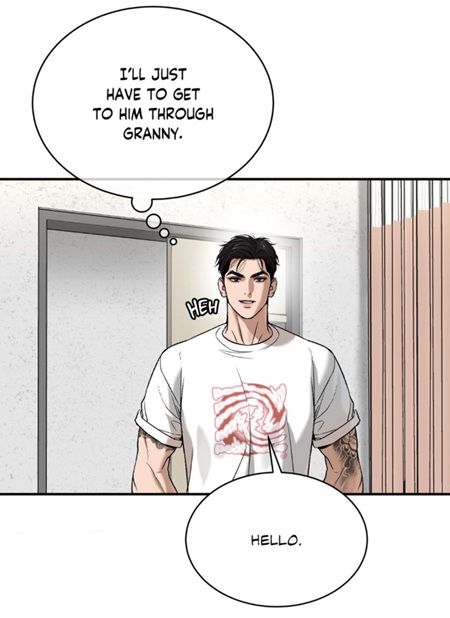 (chapter 65) or stand-ins
 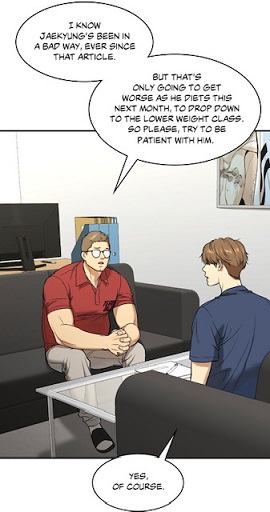 (chapter 36) for affection has ended. The spotlight now belongs solely to Jaekyung and Dan, who no longer require mediation to reach one another. This shift becomes particularly evident when contrasting the teaser with earlier moments of evasion, silence, and misplaced dominance—especially through the lens of Park Namwook’s slap and Jaekyung’s own past deflections.
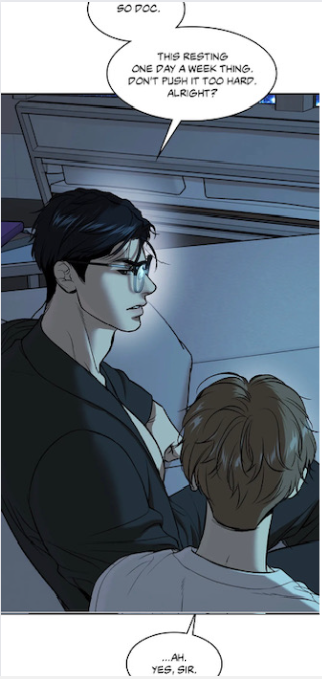 (chapter 29), ignoring Dan’s presence and concern. His rejection of the doctor’s offer of comfort or companionship underscores not only his emotional detachment but also the absence of true support from his supposed team. The manager, Park Namwook, is nowhere to be seen,
 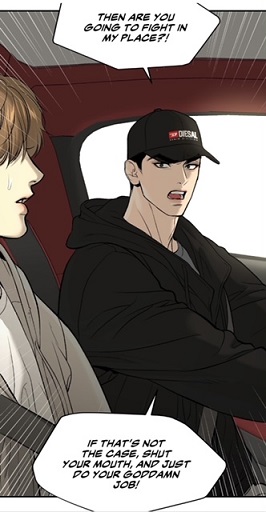 (chapter 42) or offered silence in return. He had no teamwork ability in the end contrary to the hamster who “assisted” his grandmother. But it is not surprising, since Park Namwook has always relied on his boy.
 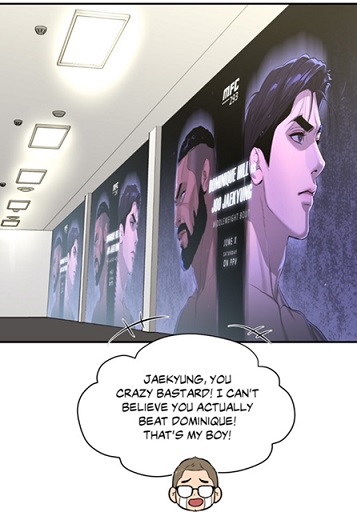 (chapter 40) Each time, they faced a problem, the athlete had to resolve it. He was the problem and the solution for everything.
  (chapter 17)
  (chapter 52) Surrounded by others, the manager attempted to discipline Jaekyung not with understanding, but through force. The slap was not an act of care—it is an assertion of dominance. It reduced Jaekyung to a volatile asset and spoiled child, not a man in pain. Striking is that this gesture actually exposed the manager’s weakness and anxiety. He was the one reacting as a spoiled child, for he masked his wrongdoing with tears.
  (chapter 52) The reason is that he couldn’t face the terrible outcome and his own responsibility. He needed a scapegoat. Thus he blamed the champion for everything. But by doing so, he refused to share the burden and the athlete’s unwell-being. Striking is that this slap served as a wake-up for the athlete. From that moment on, he stopped relying entirely on his “hyung”. He was pushed to make decisions on his own. This harsh gesture mirrors Shin Okja’s attitude toward Kim Dan,
 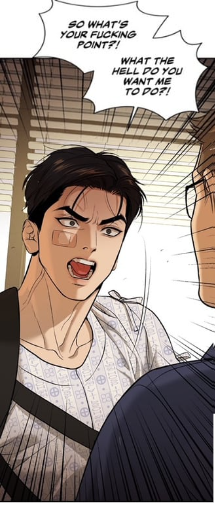 (chapter 52), seeing it as disruptive or shameful. Their guidance demanded emotional control, not emotional honesty.
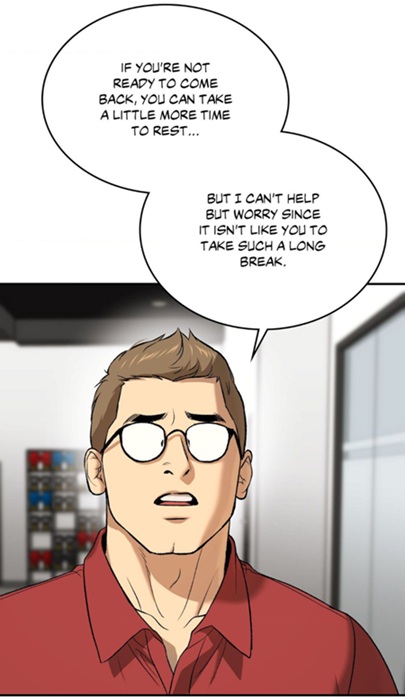 (chapter 66) or use violence to “tame the wolf”. That’s the reason why he is accepting the offer from the CEO of MFC. He is pushing the Emperor to return to the ring, but the problem is now that doc Dan was officially recognized as a member from Black Team.
 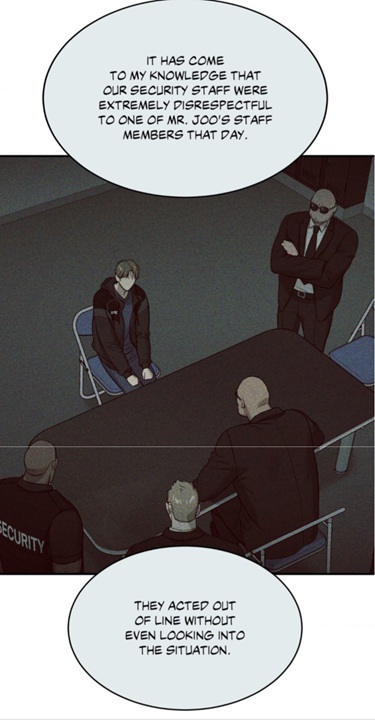 (chapter 69)
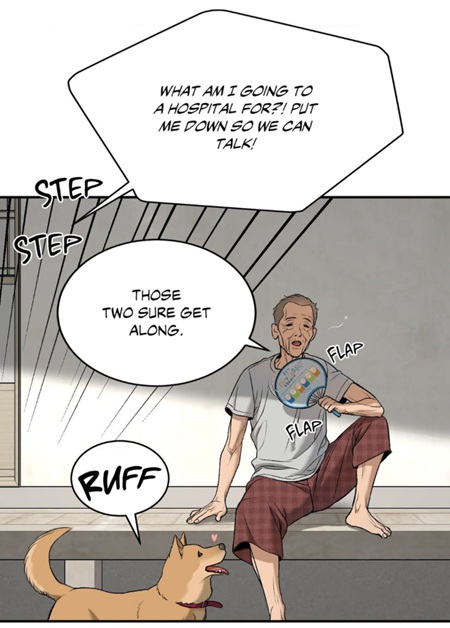 (chapter 66) the moment the Emperor carried away doc Dan. This looks like an “embrace”.

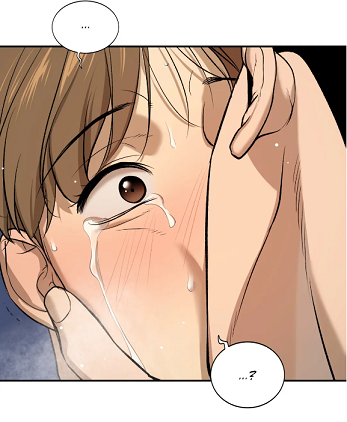 (chapter 14) For the physical therapist, this moment would later be confirmed.
 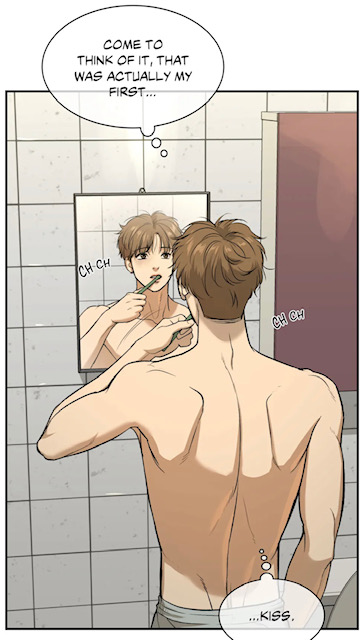 (chapter 16) —haltingly and with a trace of disbelief visible thanks to the points of suspension —as his first kiss ever. His stunned reaction and eventual admission offer a compelling lens through which to explore the symbolism of kissing in Jinx, but also the emotional landscape the two men must navigate.
  (chapter 55) Still, some readers have theorized the existence of a “special lover” in his past
 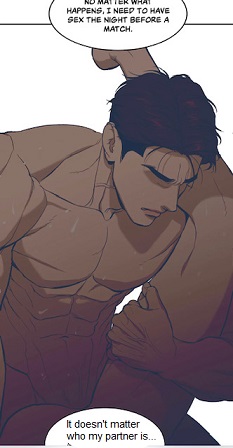 (chapter 2), someone who might have earned a different kind of intimacy. One cause for this hypothesis is that in the champion’s first memory, he was facing his partner, which contrasts so much to the way he had sex with his partners (from behind). This possibility casts the locker room kiss in a new light.
  (chapter 14) If it was his first, the gesture carries a far deeper meaning than either man realizes in the moment. And if it wasn’t, then why does this kiss—with Kim Dan—resonate so differently?
 (chapter 15) she showed more than the physical therapist’s confusion with the interrogation marks, she added his inner thoughts. This question (“What’s this?”) already hinted that he had never experienced a kiss before. The ambiguity of his reaction suggested that the moment was unfamiliar, and not immediately recognizable as a kiss at all.
  (chapter 30) Recognizing his face, Dan mentions that his grandmother used to watch the drama A Fine Line, and that he had seen it with her.
 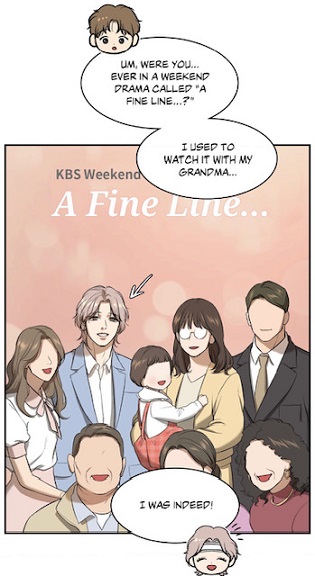 (chapter 30) The author even includes a framed shot from the fictional show, depicting Heesung as the smiling son-in-law in a multigenerational family. This visual insert is subtle, but telling: it wasn’t the story that stayed with Dan, but the faces—the aesthetics of family structure and polite emotional decorum.
 (chapter 16) it frightened him. The kiss broke an invisible boundary—one his upbringing had silently enforced. That’s the reason why he wasn’t sure if he could do it again.
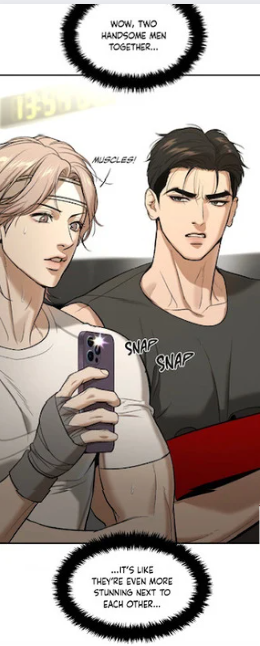 (chapter 30) He blushes and wonders why.
  (chapter 30) It’s a telling moment: Dan isn’t used to feeling attraction and desire, let alone recognizing it. He never bought posters of celebrities, never fantasized. That world—the glamorous world of affection, attention, and beauty—was never his.
 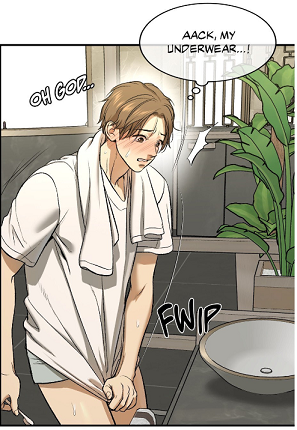 (chapter 30) —despite already having been seen naked by Jaekyung
  (chapter 30) —suggests something deeper than modesty. When he rushes to hide his underwear and blushes merely at brushing his teeth next to someone
 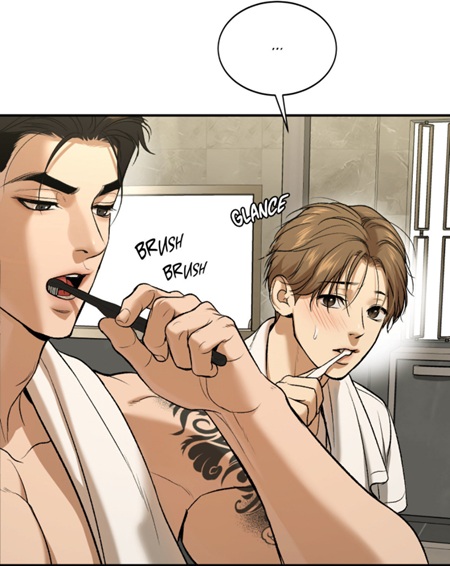 (chapter 30), it becomes evident: Dan is not accustomed to physical closeness or shared domestic spaces. These are not reactions of a man with just sexual trauma—they point to someone raised without the warmth of daily intimacy.
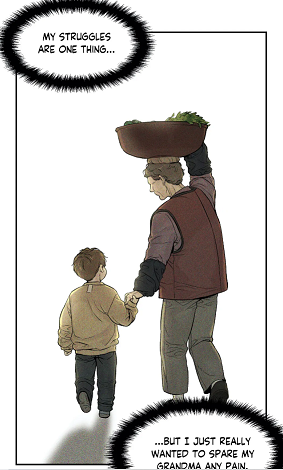 (chapter 5) He had to take care of himself, dressed on his own. He had to act like an adult, as his role was to assist his grandmother:
 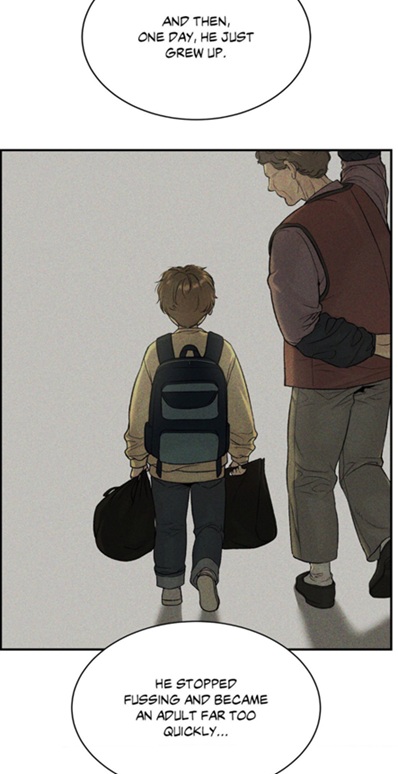 (chapter 65) This raises the possibility that someone else—most likely his mother—was his primary caregiver in early childhood. She would have changed his diapers, held him close, and kissed him gently.
  (chapter 65) This hypothesis and interpretation gets reinforced with the champion’s first kiss on his cheek
  (chapter 44) and ear
  (chapter 44) For me, without realizing it, Dan reproduced those gestures. These actions can not come from Shin Okja, as we only see her caressing or patting her grandson. The progression is striking. It moves away from eroticism (kiss from the lips)
  (chapter 44) and toward something far more intimate and protective. These are not the kisses of seduction, but of affection—almost maternal in their tone. Hence the MMA fighter got patted later:
  (chapter 44) They suggest care, comfort, and emotional presence. This is crucial, because it reveals that for Dan, a kiss is not about arousal or conquest. It is a language of love. They carry the flavor of instinct. These are the kinds of kisses a child might have once received, or given, in moments of safety and connection.
 (chapter 44) is a behavior shared by felines and wolves alike: a subtle act of comfort, trust, and bonding. Wolves nuzzle to soothe and reassure. Leopards nudge to display affection without threatening dominance. Dan’s pecks
  (chapter 57) (chapter 57)—licking them not out of instinct alone, but to reassure and bond.
 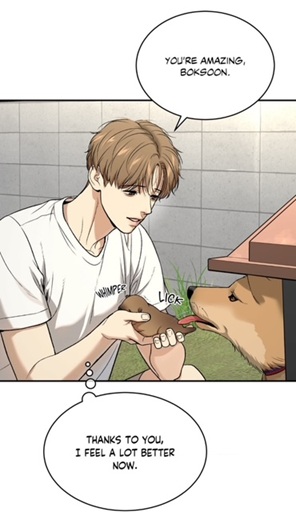 (chapter 57) During that summer night’s dream, Dan’s body mirrored this wordless care. That’s why he could laugh so genuinely like a child after witnessing his “pet’s reaction”.
  (chapter 44)
  (chapter 14) Therefore the physical therapist astonishment, “What’s this?” was not naïve; it was disoriented. Somewhere deep within, Dan had internalized a different model of kissing: one that reflected comfort, not conquest; affection, not arousal. The kiss he received was too strange, too fierce—it violated a definition he didn’t even know he had. His body knew how to kiss, but it remembered a different type of kiss altogether. The latter stands for love and as such emotions. Under this new light, my avid readers can comprehend why the physical therapist made the following request from his fated partner:
  (chapter 15) He needed to be “warned” in order to control his “heart”. As you can see, doc Dan had an innocent definition of the kiss. Therefore it is not astonishing that the wolf’s first kiss confused him so deeply: it shattered the only blueprint he had for intimacy.
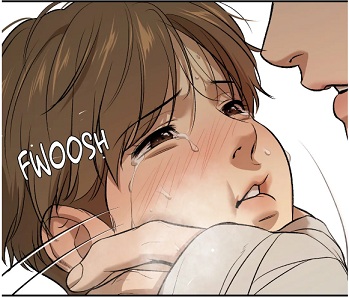 (chapter 14) Jaekyung repeated such a gesture, as seen in chapters 24
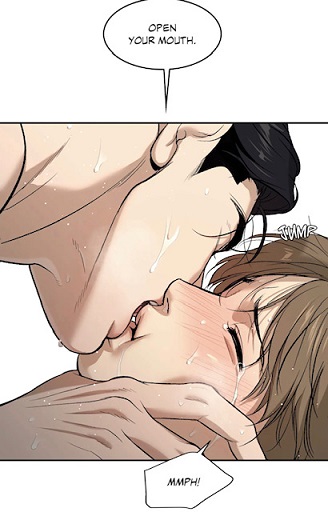 (chapter 24), and again in 64
  (chapter 64). These gestures were not expressions of tenderness, but acts of dominance, mirroring how the celebrity was taught to treat intimacy: not as an exchange, but as an imposition. His behavior echoes Cheolmin’s earlier suggestion
  (chapter 13) where a little touch was functional. On the other hand, the suggestion framed “affection” as a form of fun and entertainment, meant to soften the experience and shift the focus toward the partner. While Cheolmin’s comment was not malicious—in fact, it encouraged Jaekyung to become gentler and more attentive—it still fell short of true emotional connection. Why? It was a medical suggestion, meant to protect Dan’s fragile state. The kisses in episodes 14 were to protect the physical therapist. They were initially functional, a mean to achieve a goal before becoming a habit.
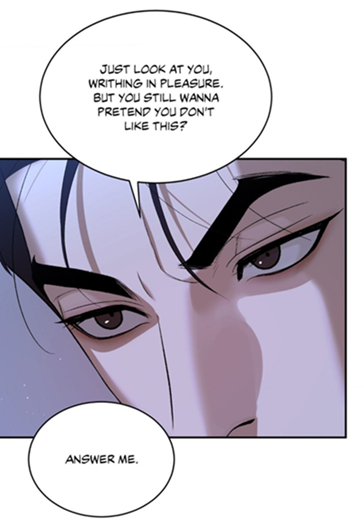 (chapter 63) Fun is not the same as love, and this distinction matters deeply for someone like Kim Dan, who associates kissing with emotional safety and love, not performance or play. This explicates why he refused to be kissed in episode 63:
 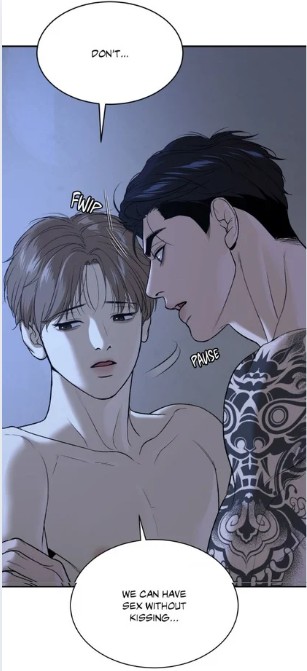 (chapter 63)
 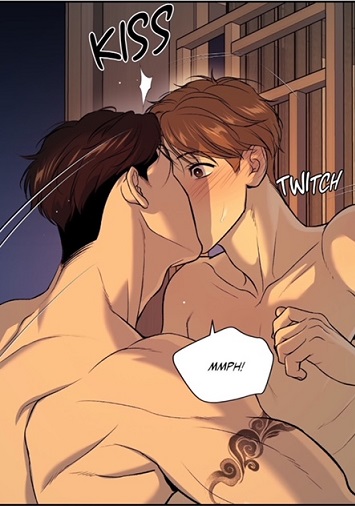 (chapter 44), Dan’s were soft, exploratory, almost reverent. His lips touched not just his lover’s mouth, but his cheek and ear—tender sites that bypass eroticism in favor of emotional intimacy. These weren’t prolonged, devouring kisses. They were pecks, small and deliberate. They mirrored affection, not possession.
 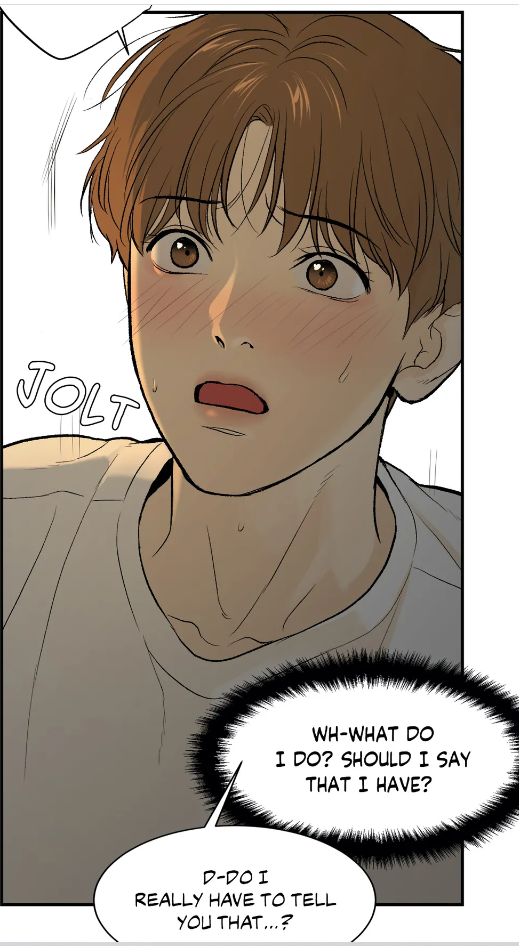 (chapter 3) —it forces the wolf to ponder on the meaning of a kiss and his relationship with the physical therapist.
 In that iconic artwork, the man does not kiss the woman on the mouth, the traditional locus of erotic desire. Instead, his lips are placed upon her cheek—a gesture that suggests reverence, not possession; vulnerability, not domination.
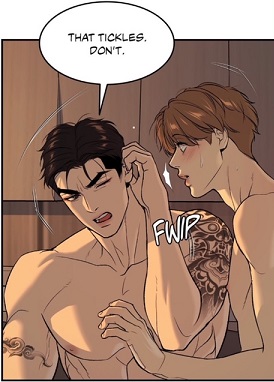 (chapter 44)
  (chapter 45)
 (chapter 54) When he was young, he had to face an abuser. Notice that the man’s face was very close to the champion’s
  (chapter 54). Thus I interpret that for the champion, the face represents not only his vulnerability, but also a source of danger. That’s the reason why he couldn’t hide his displeasure and frustration, when he faced this “lover”.
  (chapter 44) He couldn’t hide his joy by the champion’s funny reaction and laughed. And how did the protagonist react to this? Not only his face expressed his dissatisfaction, but also he silenced his partner with a kiss right away:
  (chapter 44) Joo Jaekyung is leading the kiss, he is regaining control over their relationship. It reinforces the idea that the wolf’s kiss was not merely about passion, but about reclaiming dominance and halting a shift in power. Just moments earlier, Kim Dan’s laughter had opened a space of emotional intimacy and lightness, which the champion was not prepared to face. The kiss, now prolonged and intensified, becomes the sportsman’s way of reasserting control over a situation that was slipping into unfamiliar emotional territory.
 (chapter 45) The marks on the doctor’s body were evidence that he was no longer in control. They weren’t just signs of a physical encounter—they were witnesses to something far more threatening: vulnerability, softness, and reciprocity. In the night, swept up by instinct and unspoken longing, the wolf had allowed himself to be touched—not just physically, but emotionally. But by morning, the spell was broken. His gaze didn’t linger on Kim Dan with affection—it darted instead to the bruises and scratches as though they were accusations.
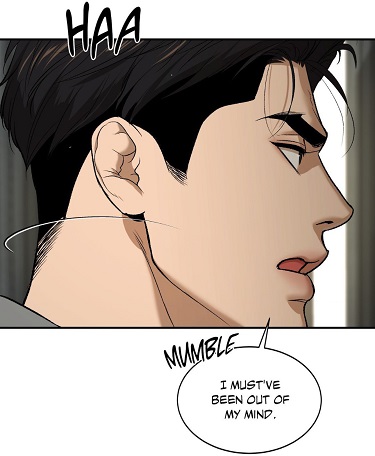 (chapter 45) wasn’t just the pain he might have inflicted—it was the realization that the balance of power had subtly shifted. The man who had always dictated the terms of their relationship had surrendered to something unfamiliar: tenderness, emotional closeness, and shared desire. The fact that Kim Dan initiated affection, even kissed him voluntarily, shattered Jaekyung’s script. For someone who conflated feelings with threat, and dominance with safety, this reversal was unbearable.
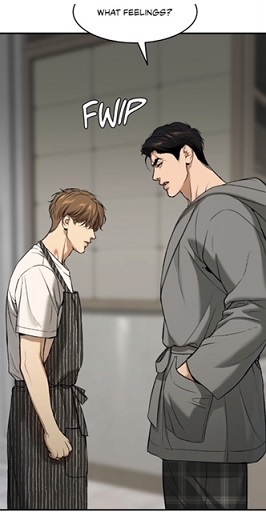 (chapter 45) —and that he, in turn, had wanted Dan back. This terrified him more than any bruise ever could.
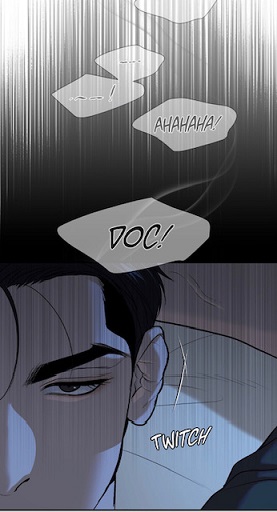 (chapter 37), and kissing becomes his emotional brake pedal. It’s not simply an act of love, but a means to regulate, or even drown out, what he cannot yet name or accept: that he is being loved. It is not random that I included the scene from episode 37: he heard laughs from the other room. For him, such a noise must have sounded like a disrespect and mockery, triggering his past trauma. And he was not entirely wrong in the sense that they were eating behind his back
  (chapter 37) It was, as if they were mocking him because of his forced “diet”. No wonder why the champion is barely seen laughing and prefers seriousness. At the same time, I can grasp why the athlete feels close to Park Namwook, as the latter stands for these exact notions: work, money and seriousness. Fun is not part of his world and vocabulary, therefore he punished Joo Jaekyung for sparring with doc Dan.
 (chapter 2) Though his face was close to the star’s, he didn’t attempt to kiss him. In fact, he proposed him a fellatio, a sign that the champion had never allowed anyone to get close to his “face”. Finally, observe how he reacted, when the uke in episode 55 attempted to kiss him:
 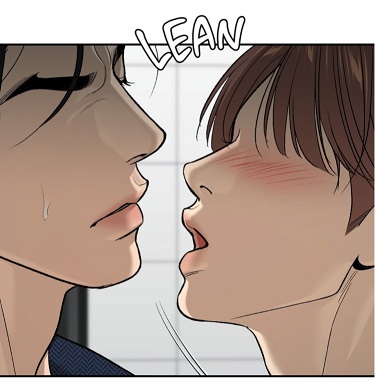 (chapter 55) Not only he rejected him, but also he pushed him violently so that the latter was on the floor.
 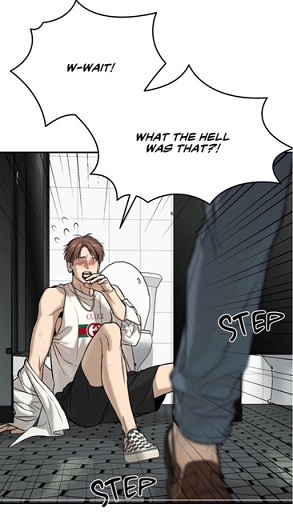 (chapter 55) The celebrity even ran away: a sign that the allowing someone approaching his face is perceived as something uncomfortable and threatening. At the same time, that moment exposes the kiss as something sacred—one that cannot be duplicated without emotional violation. This shows that for the champion, the meaning of a smooch has evolved. It is no longer perceived as a source of fun and a mean to gain something.
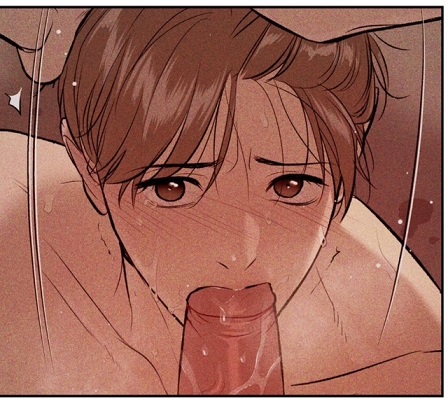 (chapter 55) He couldn’t forget doc Dan’s face, the latter excited him, a sign that for the champion, the face in general has been a source of pain, yet thanks to doc Dan, the latter has become a source of “comfort and joy”.
  (chapter 66) When he saw his face for the first time, he didn’t realize that he was already under the hamster’s spell. Striking is that he even focused on his chin and lips, a sign that he desired to kiss them. One thing is sure. The champion treasured the doctor’s face. After their separation, it is not surprising that the wolf felt the need to see his face.
 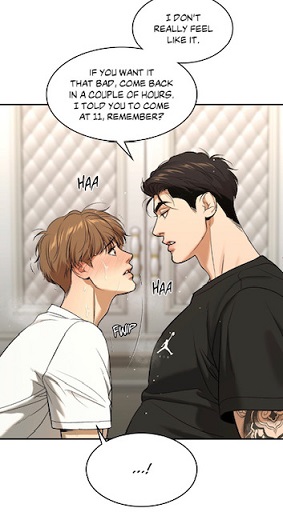 (chapter 39) before requesting a fellatio:
  (chapter 39) The main lead’s head was very close to the champion’s face, thus he must have felt uncomfortable. Secondly by acting this way, the doctor was gradually gaining power over their relationship. For the wolf, dominance is everything, an indication that in his past he felt defenseless and weak. His “opponent”, the mysterious ghost, had the upper hand. Moreover, the fellatio created a distance between them, where the fighter could expose his superiority. And note how doc Dan behaved under the influence of the drug:
  (chapter 39) He caught his fated partner by surprise, when he suddenly kissed him, mirroring the champion’s past behavior. This panel corroborates that for the doctor, a kiss is the symbol of love. The champion was not happy with this kiss too, for the latter meant that he was no longer controlling their relationship. Yet, after hearing the doctor’s confession during that night, the athlete no longer resisted his partner’s kisses.
  (chapter 39) For the first time, he accepted Dan’s initiative—both physically and emotionally. Compare it to his attitude before:
  (chapter 39) here, he still has his eyes wide open, a sign of vigilance. These kisses from doc Dan
  (chapter 39) mark a turning point in Jaekyung’s arc: he begins to lower his defenses, allowing Dan not only into his personal space but also into a position of gentle agency within their relationship. The kiss no longer represents a threat; it becomes an opening and a sign of trust.
  (chapter 55) These memories represent the moment where the athlete felt strong and had the upper hand in their relationship. These images reveal that Joo Jaekyung hasn’t realized the signification of the kiss yet. For him, they don’t seem important. This exposes that the athlete has not associated kiss with love and affection yet. At the same time, we have to envision that a smooch is strongly intertwined with equity and trust.
  (chapter 28) And in episode 14, it was clear that the star still felt superior to his companion, therefore the kiss had no special meaning. As you can see, everything is pointing out that Joo Jaekyung had never been kissed before. And what does a kiss symbolize? Not only attachment, but also purity and innocence.
  (chapter 42) According to him, doc Dan was not different from him. However, he was wrong. It is because the champion had kissed him!! Moreover, the celebrity had allowed doc Dan to kiss him as well. Besides, how did the champion name his past lovers? They were toys… normally people don’t kiss playthings. And now, imagine that doc Dan were to discover that Joo Jaekyung had his first kiss with him. This revelation would not only make him realize that Joo Jaekyung loves him, but also he could be wondering why the athlete had never done such a thing before, though he had past lovers. YES, the “first kiss” could be the trigger for both characters to question their respective past and perceive their fated partner correctly.
  (chapter 15)
 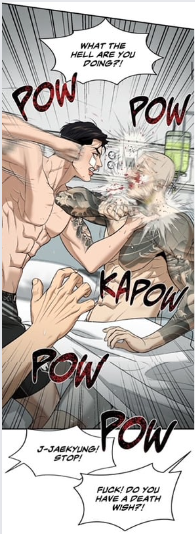 (chapter 52) In that context, a kiss could never be affection, but vulnerability. A risk.
 (chapter 3), based on Dan’s vague claim of prior partners. Yet Dan has never kissed anyone before. The kiss becomes his true moment of loss, a quiet confession through action. Conversely, Jaekyung’s own discomfort shows that he, too, is untouched in this particular way. When Dan tries to kiss Jaekyung again, and he instinctively rejects it, it reveals just how unprepared he is for affection. They are both unaware that the other is emotionally “pure” in this regard, and that makes the kiss a shared revelation.
 (chapter 67), Jaekyung must reinvent his approach. He cannot rely on dominance, strength, or sexual performance to win Dan’s heart. If he wants true connection, he must learn a new language—one built on gestures of affection, softness, and presence. This process also involves separating his public persona from his private longing. Joo Jaekyung, the champion, cannot seduce with spectacle. But Jaegeng, the man, might learn to express love through a simple touch, or a well-timed kiss. The redefinition of seduction is not just about Dan’s healing; it is about the wolf’s reclaiming his own right to feel and give love. And in my opinion, that process has already started:
  (chapter 65) nor his past partners provided him with genuine and affectionate touch, Jaekyung must look elsewhere.
 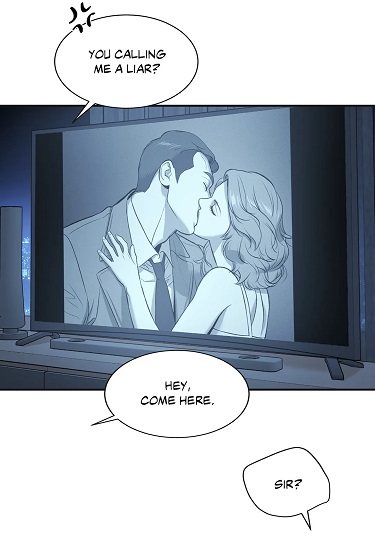 (chapter 29: note that he did not select this scene to rekindle with the doctor, but the other scene) He will learn it from life, from watching how the innocent express care without shame or purpose.
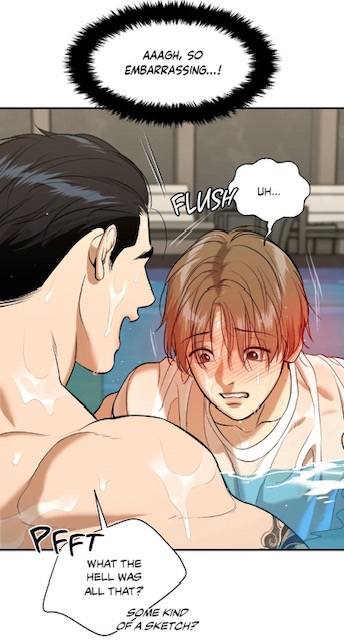 (chapter 27) In Jaekyung’s past, laughter had been a weapon—an expression of ridicule and cruelty from an abuser.
  (chapter 62) If someone had laughed in front of him and made fun of him, this would have reopened his old wounds.
 (chapter 47) and denial for strength
  (chapter 61), Park Namwook
  (chapter 69), and Shin Okja
  (chapter 53) all operate within survival mechanisms shaped by trauma, guilt, and fear. They choose the illusion of control or calm over genuine healing. But as the story unfolds, these strategies begin to unravel. Each character must confront the truth behind their emotional habits, learning that happiness isn’t the absence of pain—it’s the result of confronting it with clarity and purpose.
 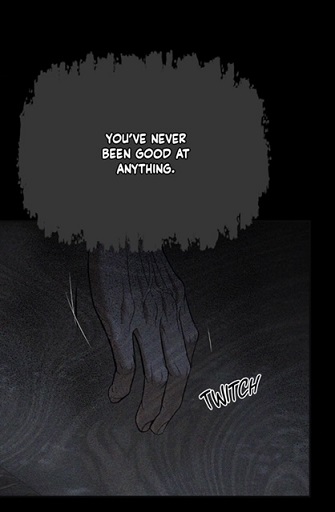 (chapter 54) He could only express his pain and resent through the hand. This moment encapsulates the core of his trauma: as a child, he learned to survive through silence and compliance, not resistance. Yet deep down, the resentment festered—toward himself, and toward the abuser. That psychological pain was redirected into becoming a fighter, as if to prove the abuser wrong.
  (chapter 26)
 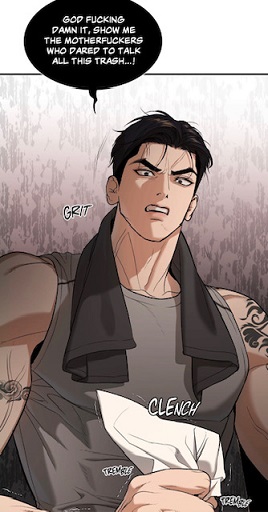 (chapter 36) His language was dominance, not dialogue. He didn’t process his emotions through words—he suppressed them, until they erupted in violence or withdrawal.
  (chapter 34)
  (chapter 1) And crucially, he didn’t leave right away either despite his embarrassment and fears.
 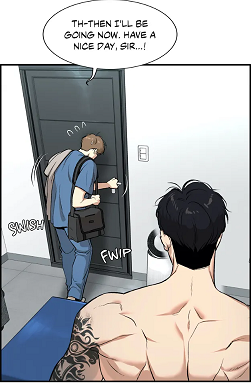 (chapter 1) Thus for the first time, Jaekyung had to develop a new strategy in order to meet him again: one that doesn’t rely on intimidation, but on communication. The problem is that since he saw the physical therapist running away after their first session
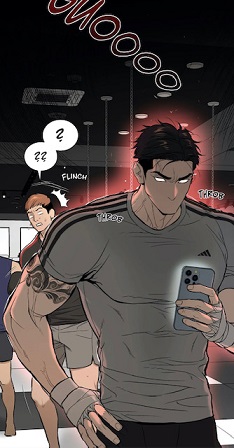
  (chapter 1), he knew that he needed to lure him with something: money
  (chapter 1). Under this new light, my avid readers can grasp why the athlete played a trick on the phone, though we have to envision that here the celebrity’s thoughts were strongly influenced by his bias and prejudices. He imagined that Doc Dan had made a move on him.
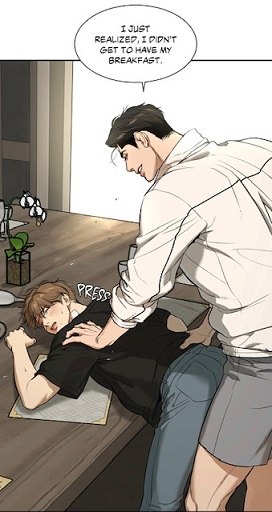
 (chapter 5) That retreat doesn’t mean failure—it can be an act of self-preservation. However, the champion experienced that he needed to speak with doc Dan in order to keep him by his side. This lesson became a turning point. Jaekyung started to speak more.
  (chapter 18) Therefore it is no coincidence that in episode 18, right after the celebrity spoke, Kim Dan’s reply was strongly intertwined with flight:
  (chapter 18) The denial of kindness from the champion made the doctor uncomfortable, the latter felt the need to leave the penthouse as soon as possible. The lesson for the star was to realize that words are powerful and can affect people. But Joo Jaekyung didn’t grasp it, as he chose to use sex to „submit“ his fated partner.
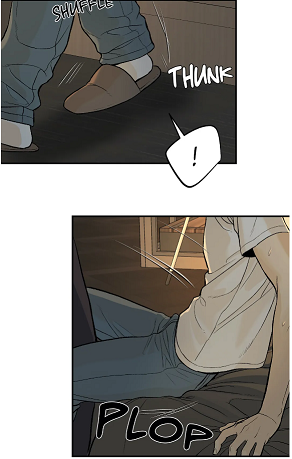
  (Chapter 18) Nevertheless, as time passes on, the wolf asks more and more questions. He reacts to emotional discomfort not only with physicality but with hesitation, introspection. He is no longer reacting as the ghost once taught him; he is arguing and as such adapting, growing. Thus we could say, he is less passive.
 (chapter 3) or table, in showers
 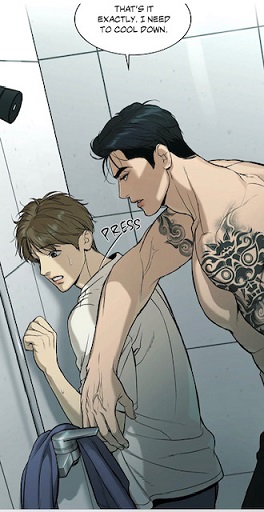 (chapter 7), against doors, or walls
  (chapter 34). On the surface, it may seem like a gesture of dominance or desire, but symbolically, it reflects silencing.
 (chapter 51) They stand in the middle of the room—an open space—symbolizing emotional emancipation. When Dan questions the celebrity
  (chapter 51), the words from doc Dan pierce the champion’s emotional defenses. Thus Joo Jaekyung is destabilized.
 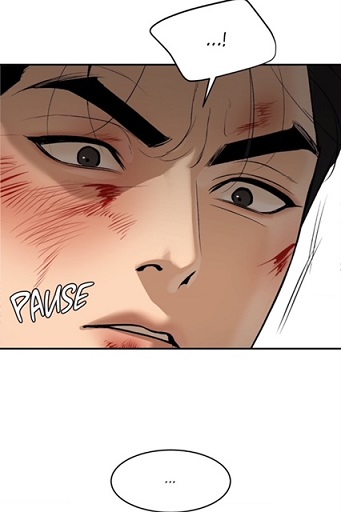 (chapter 51). The latter tries to reassert control
 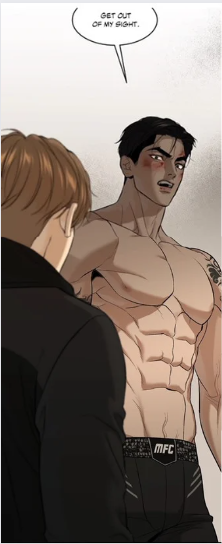 (chapter 51), but this time, when he lashes out, he is the one who leaves. This is cognitive dissonance at work: the fighter cannot reconcile his fear of vulnerability with his emerging need for connection and his perfectionism. So he defaults to a performance of control, even as he runs from it. And while one might mistake this for weakness or regression, it actually displays a progression. First, Jaekyung had finally revealed his thoughts and fears to Dan.
  (chapter 69) That silence could easily be mistaken for submission, for the same old performance of the compliant athlete.
  (chapter 69) But that would be a misreading. His silence is no longer a symptom of fear or control. It is a deliberate withholding—a sign that he no longer plays by their emotional rules. He is starting distancing himself from MFC, Park Namwook and the fight-centered identity they crafted for him.
 (chapter 69) After all, to those still invested in dominance hierarchies, leaving the capital after a public defeat seems like the behavior of someone who’s been defeated mentally as well. But the truth is the opposite. This “retreat” is actually an act of autonomy. For the first time, Jaekyung is giving himself space—not to run, but to reflect.
 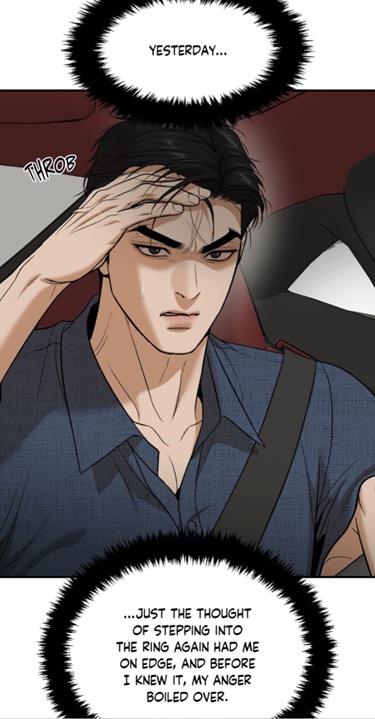 (chapter 69) He is no longer blindly performing the role of the fighter, nor desperately trying to maintain control over the narrative.
  (chapter 69) He is beginning to think critically about his past behavior, his future, and the systems that have defined his identity and life.
 (chapter 7) and flight
  (chapter 36), or MFC’s decisions.
  (chapter 25: here the protagonist was replacing Yosep and Park Namwook), hires professionals to manage damage
  (chapter 47), and hides behind administrative actions.
  (chapter 66) But he never takes full responsibility. This blame-displacement strategy works—until the champion flees to the West Coast.
  (chapter 66) As long as the champion was nearby, Park Namwook could project blame onto him, framing him as unstable, disobedient, or temperamental. But once „his boy“ vanished from Seoul, the hyung was left exposed. Striking is that he is not seen watching over the training of the remaining members.
  (chapter 60)
 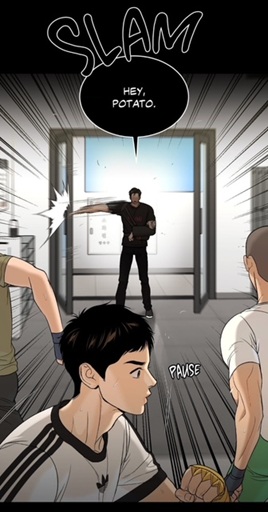 (chapter 60), a sign that he is neglecting the other members. The absence of his star fighter removed his most convenient scapegoat, forcing him to face the consequences of his own mismanagement—though he is not yet ready to truly question it and change his mindset, denial, and dependency. This was not just a geographical disappearance—it was a strategic psychological rupture, meant to destabilize Park’s illusion of authority.
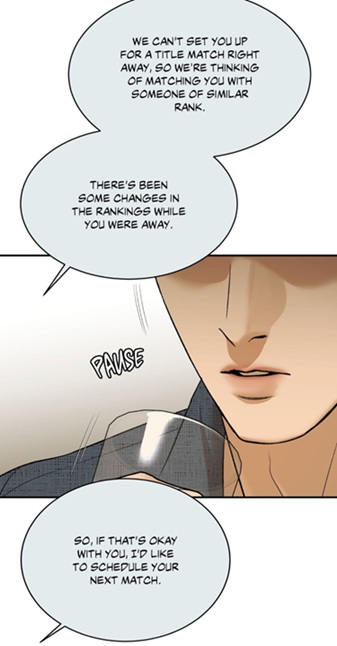 (chapter 69) He continues to speak as though the champion’s future is intact, as if the title is still within reach. But the organization’s actions speak louder: Jaekyung is no longer a contender — he is being gradually abandoned, not promoted. Secondly, Park Namwook assumes that Jaekyung will win the next fight, as if victory is still within his grasp. But this trust is misplaced — not only because the fighter is recovering from surgery, but because the schemers may have already designed this match as a final blow. Another fight right after a surgery, a staged defeat, or a quiet elimination would neatly push Jaekyung out without public controversy. By assigning him a marginal, delayed match, they are not offering redemption — they are orchestrating his exit.
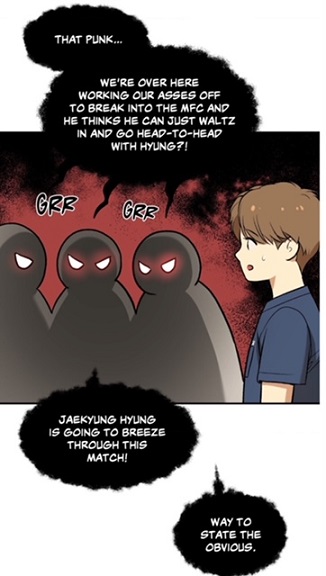 (chapter 47) Finally, he can testify not only as a fighter, but as a representative of the institution they tried to exploit. That elevates his voice: from a disposable athlete to a legal opponent with organizational standing.
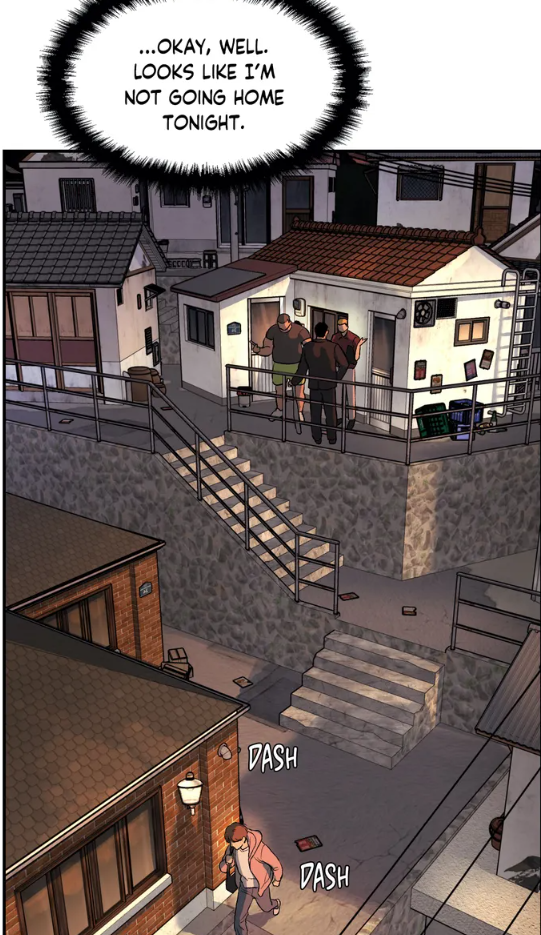 (chapter 1), deflecting, and disappearing became natural. With the grandmother, with doctors
 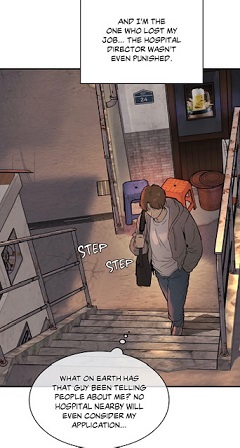 (chapter 1), with institutions—he obeyed. He accepted his fate as a fatality. But with Jaekyung, a new pattern emerged. Slowly, he began to resist: he set boundaries, raised his voice, argued with his boss, even used physical gestures to assert himself.
 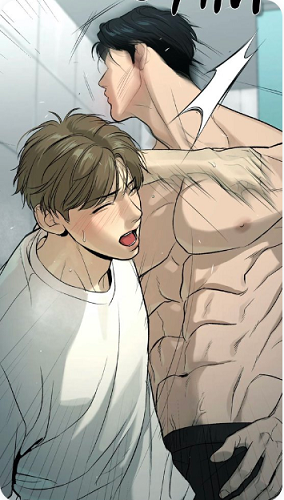 (chapter 7) For a moment, he was fighting.
 (chapter 67) Moreover, in contrast to Season 1, Kim Dan is no longer the invisible caregiver or obedient grandson. Thanks to Joo Jaekyung’s presence—disruptive and painful as it was—he began to form an independent identity
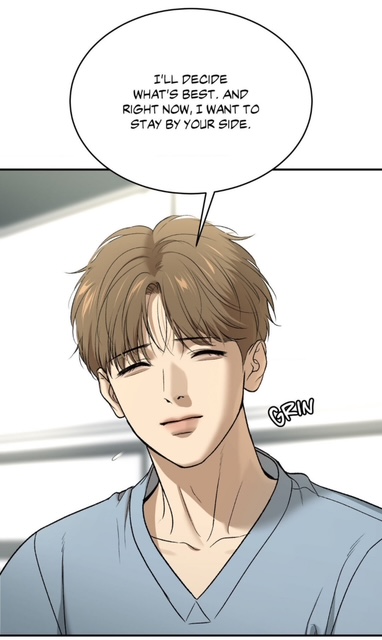 (chapter 57), one no longer shaped entirely by duty or guilt. The grandmother, however, is blind to this change. She continues to speak to him as if he’s the same self-sacrificing boy
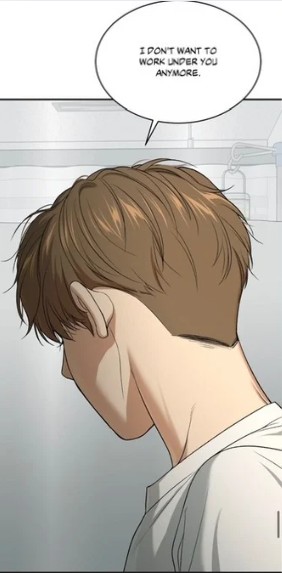
  (chapter 57) —it is a rejection of the belief that he exists only to serve. In Season 2, Dan says “no” repeatedly:
 (chapter 60)
  (chapter 67)
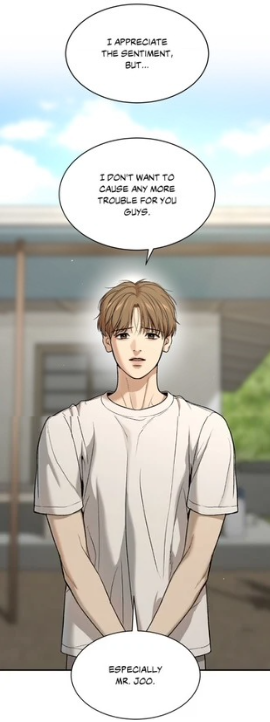 (chapter 58)
  (chapter 57)
 (chapter 65) She uses his past flaws to outline his immaturity and need of guidance. However, she is not taking into consideration the transformation in the doctor due to the recent incidents (switched spray). He is no longer the same than he was 6 months ago or 2 years old. He changed thanks to the athlete and because of unfortunate events (sexual harassment from the hospital director, switched spray). But the halmoni has no idea about such incidents.
  (chapter 53) Unlike Park Namwook who uses blame and delegation in professional settings, she applies emotional avoidance in private and familial spaces. Much like the manager, she outsources responsibility, asking others to step in
 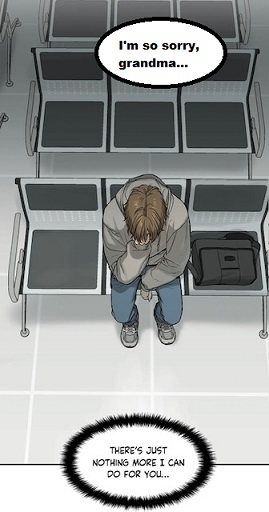 (chapter 5) Her illness becomes a metaphor for her mindset. She relies on external systems: her grandson
 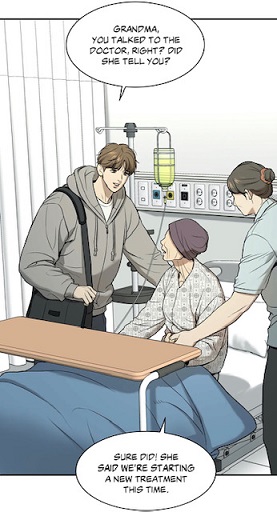 (chapter 7), medication, comfort
 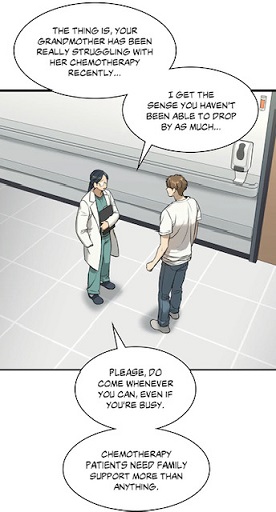 (chapter 21), and other people (nurse, Joo Jaekyung) —to maintain her emotional balance. But as doc Dan himself once observed, she is ultimately on her own in her battle. No system can fight it for her.
 (chapter 7) His grandmother was not truly abandoned; she simply equated his physical absence with neglect, ignoring the emotional and financial burden he already carried. Like Park Namwook, she prefers others to carry the discomfort while maintaining a façade of suffering and sacrifice.
  (chapter 65)
 (chapter 47) , and her narrative of selflessness becomes another form of emotional pressure. She does not yell, she does not accuse directly, but her avoidance is equally powerful in shaping Dan’s self-image as a burden. Doc Dan came to internalize that she suffered because of him.
 (chapter 65), protected, comforted. Surrounded by nurses, medication, and routine, she finds temporary peace in an environment that simulates safety. The hospice does not cure her illness, but it cushions it. This illusion allows her to smile again, to relax—but only up to a point. Kim Dan’s gradual deterioration
  (chapter 57) —his visible exhaustion, disconnection, and quiet suffering—becomes a thorn in her eye, a reminder that her peace is not whole. As long as he suffers, she cannot entirely escape the shadow of her own regrets. Sending him away to Seoul represents a new of flight. Out of sight means out of mind. That way the grandmother wouldn‘t have to worry about doc Dan, as he has been entrusted to the athlete.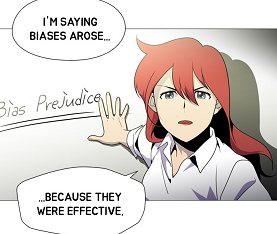
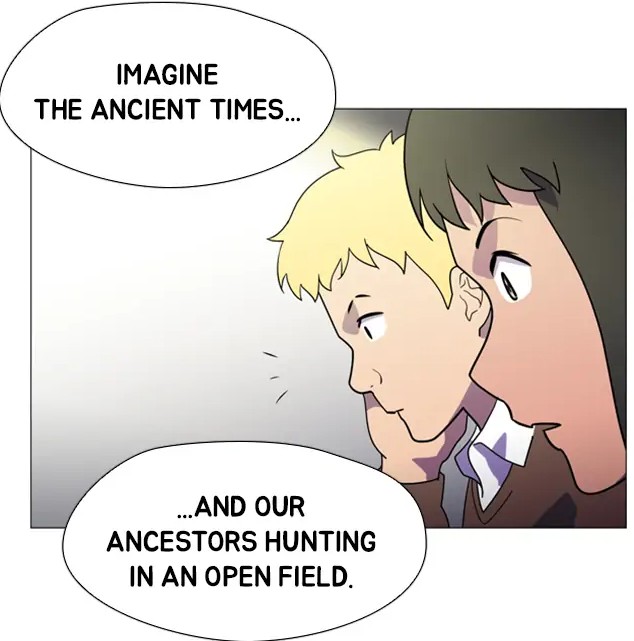
 (chapter 163) and supported by the article on confirmation bias, human survival was deeply dependent on mental shortcuts. Biases were not flaws, but adaptive tools — heuristics that helped our ancestors make quick decisions under threat. Faced with a potential predator, they could not afford the luxury of curiosity or debate. Run first, think later.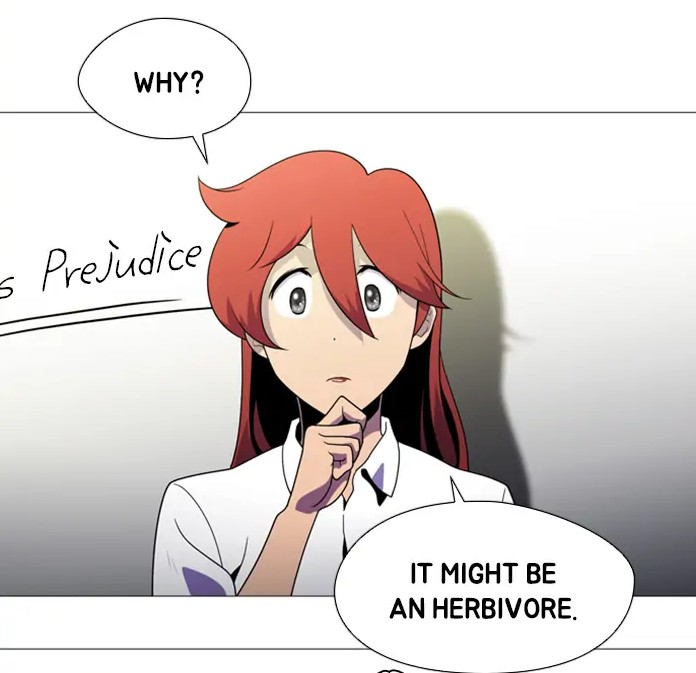
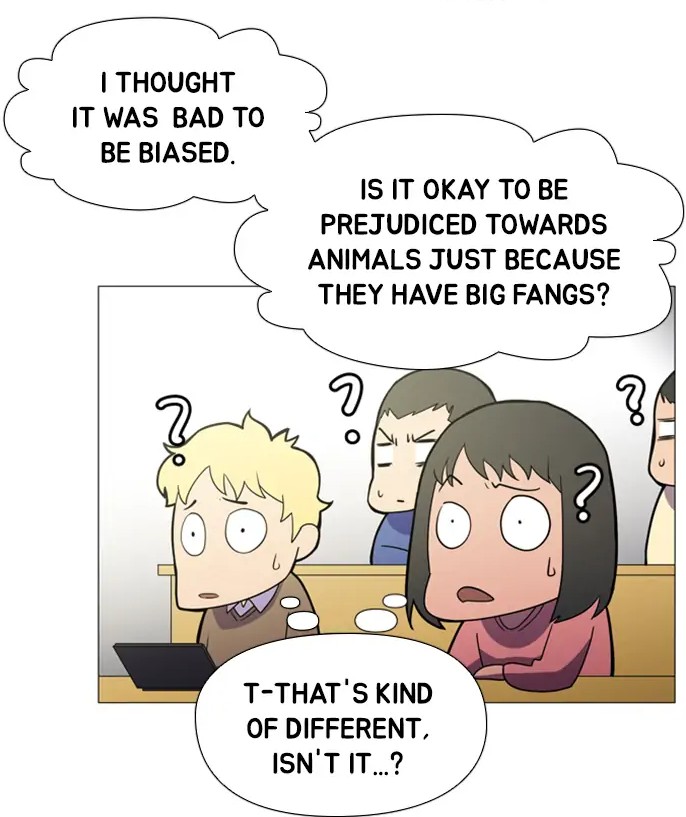 (chapter 163) In this sense, biases were effective precisely because they increased the chance of survival.
 (chapter 9) But once Joo Jaekyung became the target of criticism and scandals, his fear response activated.
  (chapter 41) he recommends the opposite at the restaurant because the idea comes from the CEO!
 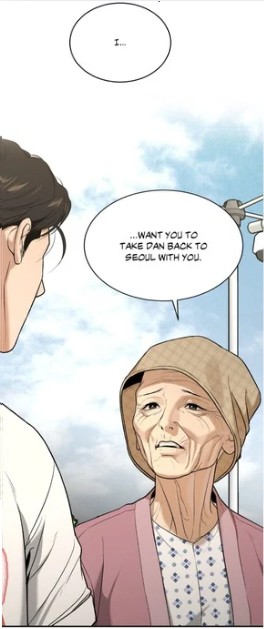 (chapter 65) It was her decision to settle down at the hospice.
  (chapter 67) His survival bias told him: “Don’t trust a man who once treated you violently.” or “Doctors are ignorant, they don’t know me“. It was easier to discredit the source than to weigh the merit of the message. Likewise, in Season 1, the champion dismissed doc Dan’s medical opinions
  (chapter 41), trusting instead in MFC and his agency — despite the fact that those institutions are overtly motivated by money. His bias protected his ego, but at the cost of his health and relationships.
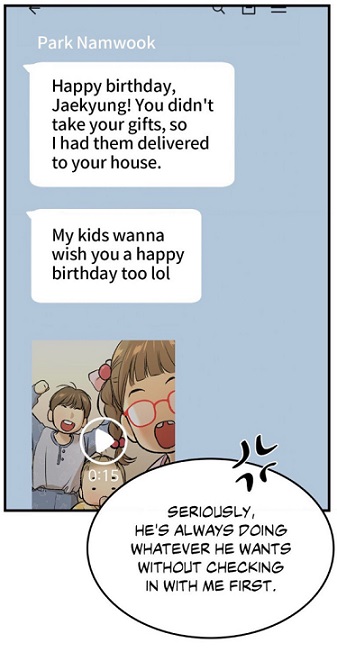 (chapter 45) His double standard is not conscious hypocrisy — it’s a form of selective laziness. He does not challenge his beliefs because doing so would unravel the identity he’s built as a competent, authoritative manager.
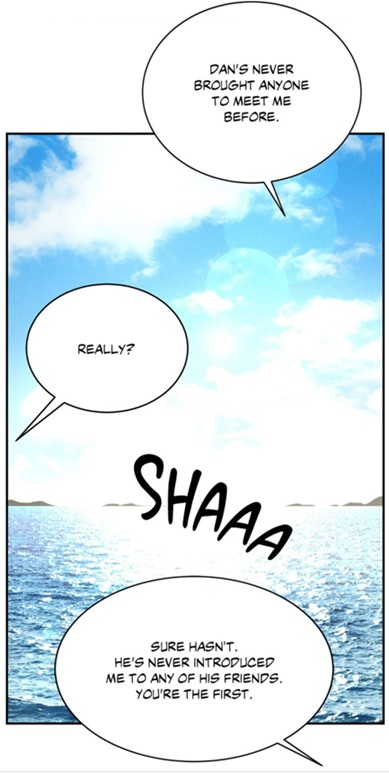 (chapter 65) or a support network. It is not her fault, if she never met doc Dan’s friends in the past while hiding the fact that he had been bullied by his peers. Her request for him to return to Seoul, a place he has no roots, only furthers his habit of isolation. Similarly, when she asked Jaekyung to bring him to Seoul and have him diagnosed, she implicitly discouraged any shared decision-making. Like Park Namwook, she bypassed dialogue in favor of directive control, reinforcing the habit of emotional withdrawal.
 (chapter 67) That shift marks a turning point from survival to conscious thought. The mind cannot reflect when it believes it is under attack. The tragedy is not that these characters are irrational — it’s that they were taught fear before they were taught trust. Thus I come to the following conclusion. As soon as both are curious about each other
  (chapter 69), they are now free from their bias and prejudices.
  (chapter 69) They will be able to communicate which will help them to discover the truth about MFC. Yes, their ability to ponder will lead them to unmask the villains and defeat their opponents. By fighting for justice, both will discover true peace of mind. This hardship at the end of season 1 was necessary to reset their heart and mind: what is the true meaning of life? Money? Work? Duty? Sacrifice?… The answer is happiness which is strongly intertwined with love and selflessness.

 (chapter 69)
  (chapter 69) These silent, parallel compositions reveal the landlord’s symbolic position as an enduring guardian: not static, but responsive. Therefore his position shifts constantly, either
  (chapter 65) in front of the couple, or behind Kim Dan in one scene, behind the champion in another.
 (chapter 65) He is like the wind, fluid and unobtrusive, adapting to the needs of the moment. His position is never rigid, therefore in the final panel he seems to have vanished.
  (chapter 46) or authority
  (chapter 65), the landlord responds to what is needed, not what is expected. His flexibility does not stem from indecision—it is born from humility and care. Another aspect contributing to this perception is his ignorance. However, the latter should not be viewed negatively. Since he doesn’t know the champion’s profession or the doctor’s familial and financial situation, he is not projecting expectations or judgments onto them. Rather than acting out of assumption, he simply observes. This is precisely why he doesn’t come across as arrogant. His lack of knowledge becomes a quiet strength—it allows him to respond with presence, not prejudice. Just as the wind moves through open spaces without imposing form or judgment, his unknowing presence allows room for others to breathe and unfold, free from predefined roles or assumptions.
 (chapter 65) He does not try to define the protagonists by their past or their titles. He lets them define themselves. While he tried to encourage doc Dan to drink and work less, as time passed on, he came to notice his suffering and accept him with his illness.
  (chapter 69), it is plausible that the landlord is calmly scanning the horizon, sensing the approach of the tempest. After all, he is a farmer
  (chapter 69) They are murmuring, yes, but their attention is absorbed by the incident at the shore. This led me to reconsider: perhaps the purchase was not consciously connected to the weather after all. And yet, one man quietly stood apart from the crowd—the landlord, his silence and gaze directed not toward the commotion, but toward the open horizon.
 (chapter 62) He is a farmer—a man who reads the sky, the wind, and the rhythm of the land. Hence I am inclined to think that his awareness of the approaching storm stems not from a broadcast but from instinct. The wind carries signs, and he is attuned to them. It is even possible that while talking with the coast guards, he learned more about the forecast—not through digital alerts, but through human connection.
 (chapter 69) had already been shown earlier together in the crowd, I suspect that one of them might informed Kim Dan about the incident and the champion’s presence. This would align with the narrative’s kaleidoscopic structure, where certain scenes are reflected in different timelines.
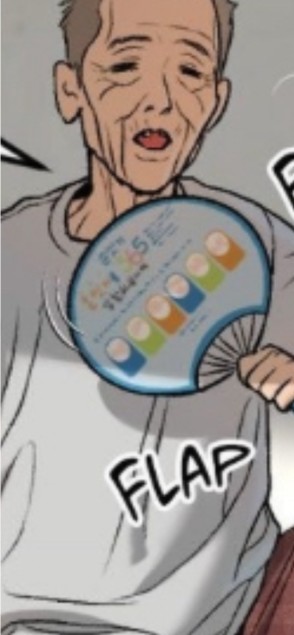 (chapter 66) Under this new light, it dawned on me that the fan was most likely handed out by a local institution—perhaps even the hospice Light of Hope, during a public health campaign or examination event. This means that he is taking good care of himself. One might argue with this interpretation, yet there exists another evidence for this perception.
  (Chapter 62) He is constantly wearing the green cap, a sign that he knows about the danger of the sun. This stands in opposition to the grandmother who would sell her vegetables without any hat.
  (chapter 57) These types of fans are typically distributed by hospitals or clinics: practical items with subtle promotional intent. But once in the landlord’s hands, it takes on symbolic weight. The number “365” does not simply represent a calendar year; it represents consistency, time, and the daily rhythm of care.
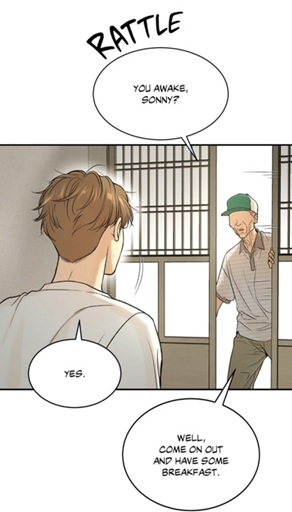 (chapter 57), white,
  (chapter 61) and brown. Yet, his clothes tend to lean toward brown hues, evoking earth and soil—symbols of rootedness and stability.
 (chapter 65) words and wind share the same pathway—the ear. We do not see them; we hear or feel them. Just like the wind, the landlord’s influence often goes unnoticed unless we attune ourselves. Interestingly, in the English version of Jinx, he refers to Joo Jaekyung as “son”
 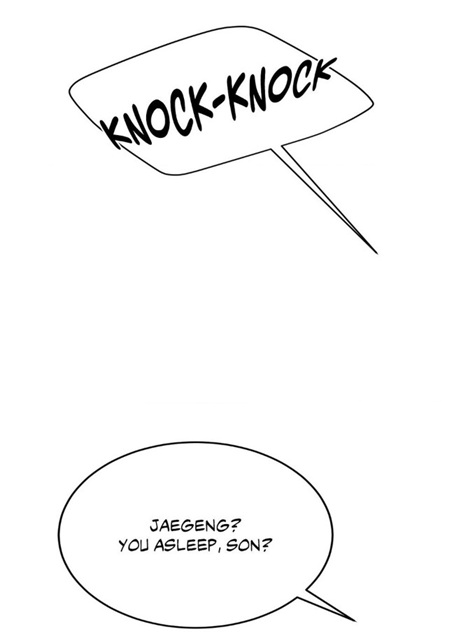 (chapter 69) and Kim Dan as “sonny”
 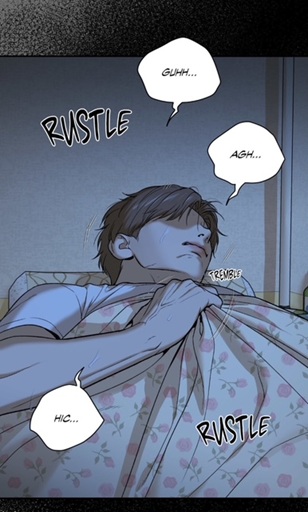 (chapter 59) Whether it’s due to panic, malnutrition, exhaustion, or psychological collapse, suffocation is one of the defining sensations of Kim Dan’s arc. In this context, the landlord, with his unassuming fan and grounded demeanor, emerges as a breath of fresh air—the very opposite of the heiße Luft, or “hot air,” surrounding the champion’s fabricated scandals and media distortions.
  (chapter 52)
  (chapter 69) the atmosphere grows heavier—not from external scandal, but from inner turmoil. Then Kim Dan’s puzzled reaction,
  (chapter 69) The scene becomes emotionally charged, echoing classic storm symbolism: emotional intensity, uncertainty, and the prospect of sudden change.
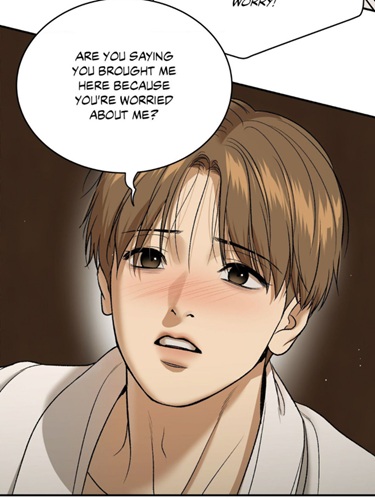 (chapter 67) Doc Dan got finally his answer to this question. Joo JAekyung is more a man of action than of pretty words. So awakening and flourishing are not something that occurs behind glass or sealed doors. It is born in the open, amidst uncertainty and confrontation. And under this new light, I reached a final insight: growth in Jinx does not happen behind closed doors or sealed windows. It happens in the open, where storms rage and air can finally circulate.
  (chapter 59) The landlord doesn’t shelter people from pain or storms. He makes sure they’re equipped to face them. And once they do, the wind is no longer a threat, but a form of grace. And now, you comprehend why the death of the puppy has not been discovered by the athlete yet. For the landlord, death is something natural and inevitable, and since doc Dan has been working at the hospice, I am quite certain that the old man imagined that doc Dan was well-equipped to deal with this situation. He must have been envisaging that Doc Dan was accustomed to it. The problem is that he doesn’t know the protagonist’s past and family.
  (chapter 58), who plays the victim while hiding his own culpability, the landlord does not engage in gossip or vilification. His silence isn’t ignorance—it is grace.
  (chapter 58) and from media
 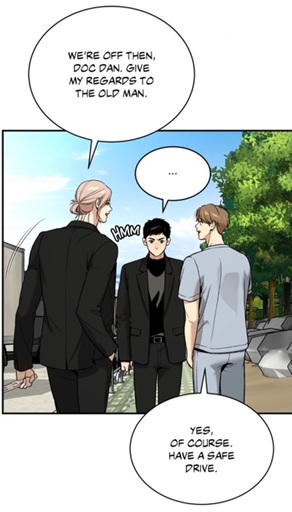 (chapter 59) He felt so comfortable around him.
 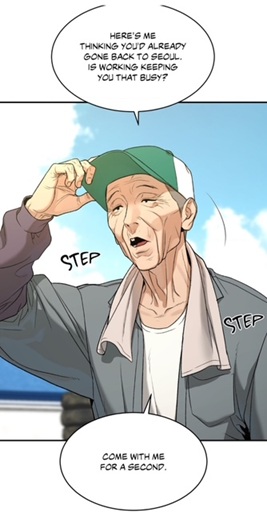 (chapter 57), but someone who understands the balance between labor and rest. He may not have a name, but he has a function. And sometimes, in storytelling, function is identity enough.
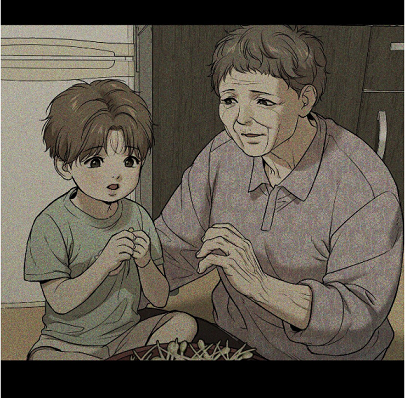
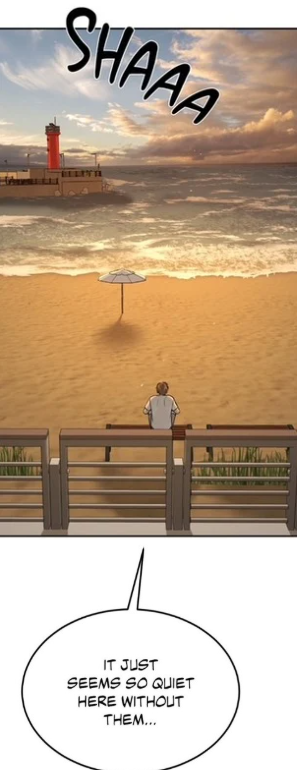 (chapter 59) there’s only one poor sun umbrella in front of him and a wall far behind him. His back is turned to the world, wrapped in solitude and silence. That’s how I was reminded of his childhood. There, the grandmother often stood beside him
  (chapter 47)
  (chapter 47)
  (chapter 49) explains why he got abandoned in the locker room. It gains even more poignancy when viewed against his past. In Episode 47, while the grandmother was carrying him on her back, Kim Dan’s back is left unprotected.
 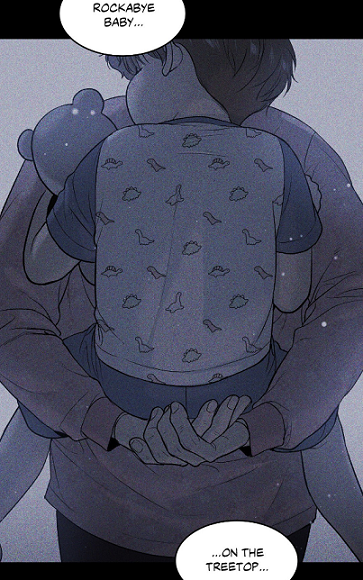 (chapter 47) Her proximity is visible, yet it lacks the symbolic protection associated with standing at someone’s back.
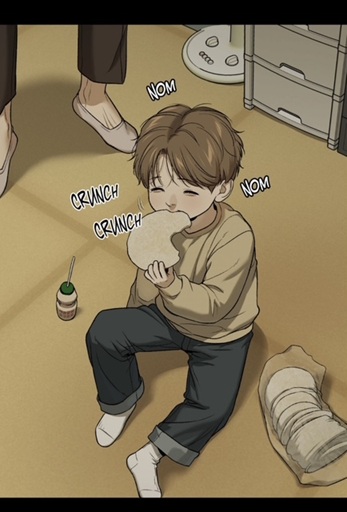 (chapter 57) The moment she offered him a snack, she distanced herself from him. Now, she is standing by his side.
  (chapter 62) Their presence—especially the landlord’s—is the embodiment of silent guardianship.
  (chapter 69) His consistent yet unobtrusive presence stands in opposition to the grandmother’s inconsistent gestures. One acted out care; the other lives it.
 (chapter 47)
 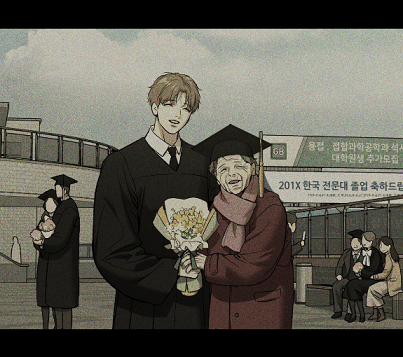 (chapter 47) Despite the rare instance of closeness captured in a photo, most scenes depict Kim Dan standing next to his grandmother, and he is the one supporting her.
 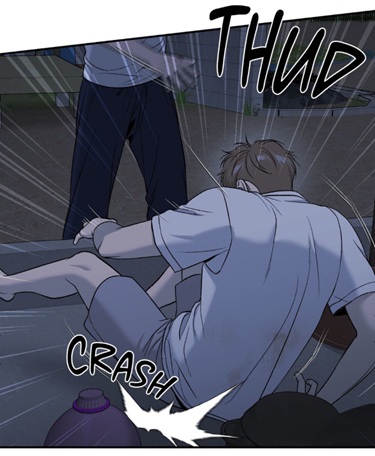 (chapter 69) This gesture, though seemingly violent, reveals something deeper—it forced Kim Dan to feel what he had been missing all along: there were people around him, he was not alone. I would even add, someone was finally standing behind him.
 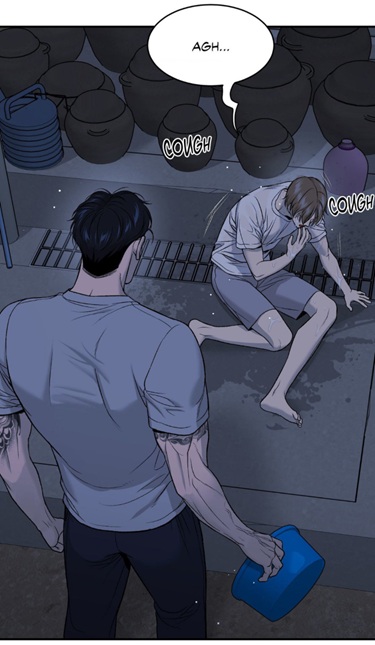 (chapter 69) In that brief moment, Kim Dan is no longer alone. The landlord, as a silent guardian, and Joo Jaekyung, as a fierce protector, are both behind him—symbolically and literally.
  (chapter 56)
  (chapter 65) while seated in a wheelchair or lying in a hospital bed—entirely dependent on others to move her. Her self-image as a strong and autonomous elder clashes sharply with her visible reliance on those around her.
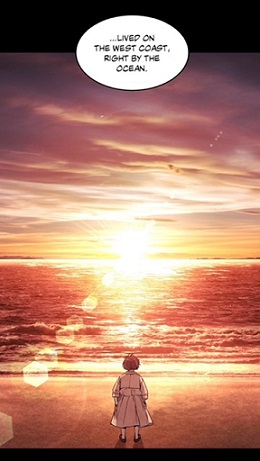 (chapter 53), I doubt that she anticipated the existence of dangers by living on the coast: storms and typhoons. So her beautiful town could get devastated,
  (chapter 69), while the star becomes the son. This trio, for now, are merely neighbors. But with the storm approaching, I am expecting that their separation may dissolve, drawing them into shared space and daily life.
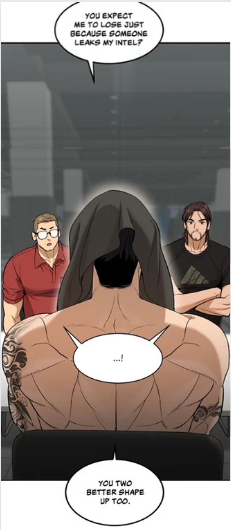 (chapter 46) Coach Yosep, Joo Jaekyung, and Park Namwook—a trio marked by authority without dialogue, control without care. In that group, the manager sowed distrust while avoiding accountability.
 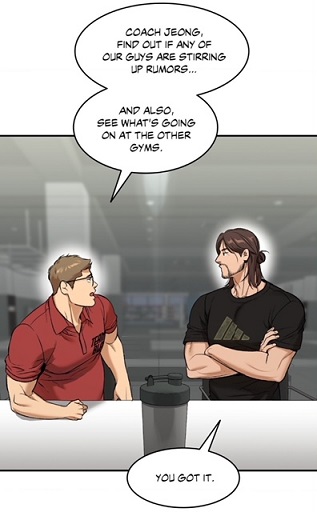 (chapter 46) In the new trio, no one holds dominion over the other. There are no contracts, no strings. The landlord has no financial stake in the fighter’s success.
 (chapter 66)


 (chapter 66) they saw it as further confirmation of their perception—reinforcing the idea that he is terribly flawed. However, a deeper analysis suggests that this term reflects not just his character but also his evolving mindset and struggle with emotional vulnerability. This essay will explore the paradox at the heart of their dynamic—how both men refuse to acknowledge the emotional weight of their relationship, leading to a cycle of denial and misperception. It will examine how the concept of the jinx evolves, the continued influence of Park Namwook’s manipulations on Joo Jaekyung, and the role that mutual ingratitude plays in their emotional stagnation.
 (chapter 65), the nature of his principle has changed:
  (chapter 65)The athlete is admitting his dependency on doc Dan. The jinx is now directly tied to Kim Dan, not just as a concept but as a tangible element of Joo Jaekyung’s career stability. The second switch is that sex is no longer a condition to ward off bad luck. In fact, the celebrity is recognizing the importance of his daily training and, as such, his hard work.
  (chapter 65) The inner thoughts of the sportsman reveal that the champion is feeling less powerless than before. His champion status is no longer reliant on superstition but on tangible efforts—his “old routine” and, crucially, Kim Dan’s expertise as a physical therapist. This marks a significant transformation in his perception of Kim Dan, whom he now values for his professional skills rather than as a mere tool for maintaining a ritual. Thus, Joo Jaekyung should be less inclined to request Doc Dan’s sexual services. Then, in episode 66, a new change became visible.
 (chapter 11), a tool to generate money and maintain the gym’s reputation. Hence he blames him, when members leave the gym.
  (chapter 46) The manager used the incident with Seonho to justify the desertion of the other athletes. However, it is clear that some left the gym because they didn’t become successful like Joo Jaekyung. However, their lack of success is explained by their lack of talent
  (chapter 46) exposing the lack of ambition and commitment from the two hyungs. It is clear that Joo Jaekyung’s wealth and fame was used to attract the sportsmen creating a myth that they could experience the same success. Nevertheless, as time passed on, the fighters were confronted with reality. It was, as if the athlete’s achievement had become a curse for Team Black. Nonetheless, neither the manager nor the coach can admit it, the champion’s bad temper is utilized to cover the mismanagement within the gym. Striking is that by portraying the protagonist as a person with a bad temper and personality
  (chapter 54)
 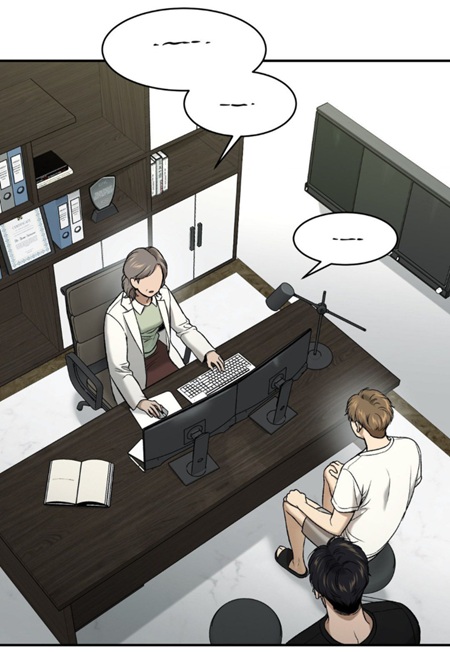 (chapter 66) In calling Kim Dan ‘defect,’ Joo Jaekyung is unknowingly projecting his own self-perception onto him. The term suggests something broken but also something that can be repaired, reflecting an unconscious shift in his perspective. Instead of simply using Kim Dan as part of a superstition, he is beginning to see his vulnerability, perhaps even recognizing a parallel to his own struggles. His choice of words also reveals his deeply ingrained belief in self-reliance.
 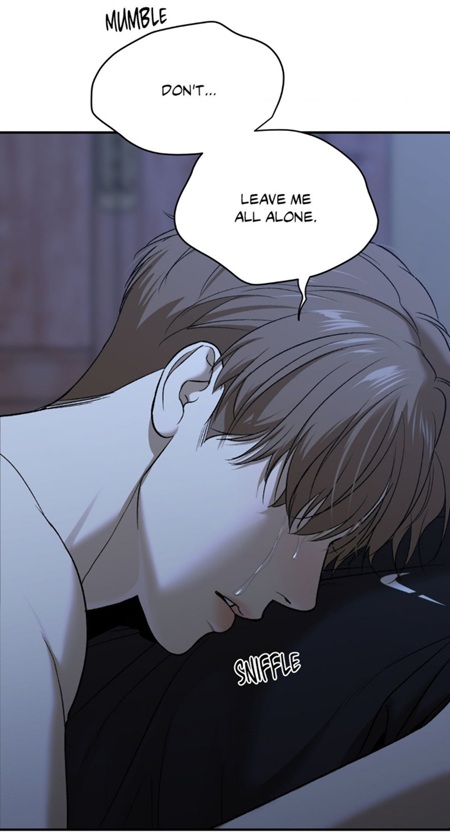 (chapter 66) Kim Dan’s nighttime distress contradicts this principle, as it suggests an inability to be alone. This mirrors Joo Jaekyung’s own realization in the garden
  (chapter 66) Nevertheless, the idiom (“he’s got a defect”) reveal that Joo Jaekyung is still under the manager’s influence. This means that this shift is not immediate or conscious; it is restrained by his continued loyalty to Park Namwook and his ingrained avoidance of emotional vulnerability.
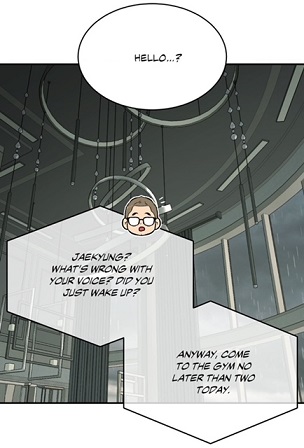 (chapter 54)
  (chapter 66) Striking is that by each meeting, the champion was alone with the manager. The latter was no longer followed by coach Yosep. It was, as if Park Namwook wanted to have some privacy with the celebrity. However, through this contrast, Jinx-lovers can detect a certain MO from the manager: he is isolating the champion, limiting his interactions with other members. This explicates why he remains a pivotal force in Joo Jaekyung’s stagnation.
  (chapter 27) This double standard highlights Park Namwook’s true role: he is not a supportive figure but a handler, ensuring that Joo Jaekyung remains under control and fulfilling his duties as a fighter. His words are not meant to provide genuine support but to keep Joo Jaekyung tethered to a system where his worth is defined solely by his success in the ring.
  (chapter 54) or (un)favorable interviews about the athlete.
  (chapter 54)
  (Chapter 57) As a manager, Park Namwook’s role involves overseeing Joo Jaekyung’s career, securing contracts, and ensuring his reputation remains intact. Yet, as seen in Chapter 66, his actual concerns seem remarkably narrow in scope.
  (chapter 48) Back then, there was a witness, Kwak Junbeom and the latter could have reported to the “hyung”. These incidents indicate a consistent effort to control what the champion knows, raising the critical question: why?? His silence on this matter suggests not only a strategic decision to keep the star uninformed, but also an attempt to avoid responsibility. The supervisor often hesitates to make decisive choices
 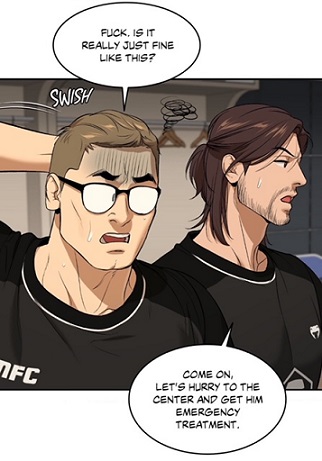 (chapter 50), preferring instead to remain passive so that any negative outcomes can be blamed on the champion. At the same time, this passivity helps him maintain control—as if Joo Jaekyung, without his guidance, would be left ‘alone’ and directionless. In this way, the man with the glasses sustains a dynamic in which the champion feels dependent on his presence, even as he is subtly undermined. By neglecting to inform him of these events, Park Namwook ensures that the champion remains unaware of external factors that could influence his choices. This pattern reinforces the possibility that Park Namwook was aware of the meeting with Choi Gilseok and deliberately ignored it, likely expecting that Joo Jaekyung would take care of it, while absolving himself of responsibility.
 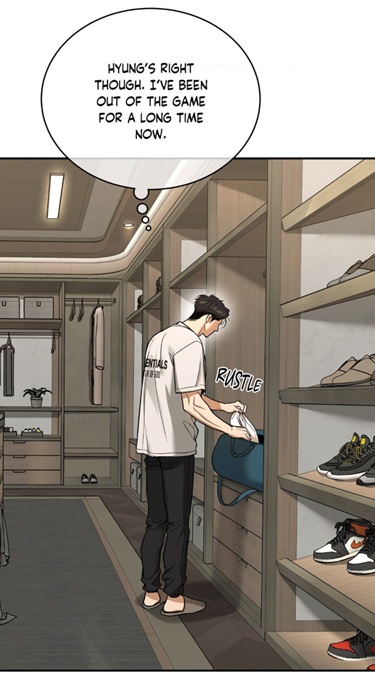 (chapter 66) This hesitation stems from deeply ingrained beliefs about relationships and fidelity. His loyalty to Park Namwook prevents him from fully confronting the possibility that his manager may not have his best interests at heart. Moreover, his own emotional repression makes it difficult for him to recognize his evolving dependency on Kim Dan as something beyond physical necessity.
 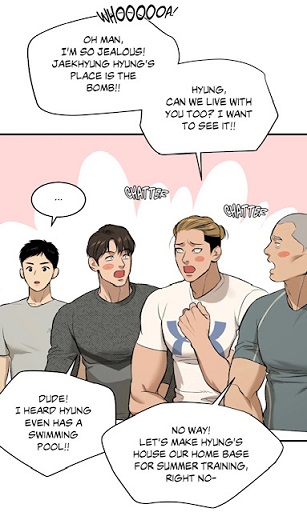 (chapter 22) They had heard about his place, for the manager must have talked about it. The protagonist is not someone who will talk about his private life to others. The manager must have dangled promises in front of them, making them believe that if they’re lucky enough, they too could live like the champion. However, their reactions reveal something crucial—they are not motivated by greed but by genuine admiration. They simply want to experience the luxury once in a while, reinforcing that their bond with Joo Jaekyung is rooted in camaraderie rather than material envy. This further highlights the contrast between Park Namwook’s manipulation and the sincere regard his teammates have for him. This scene is important, because it exposes the manager’s prejudices and lack of discernment.
  (chapter 46) Not everyone is the same and more importantly like him! It is clear that the man is projecting his own principles onto others and in particular onto the champion.
  (chapter 66) Neither of them fully understands how to acknowledge care or support. Just as Joo Jaekyung struggles to recognize his actions as stemming from concern
 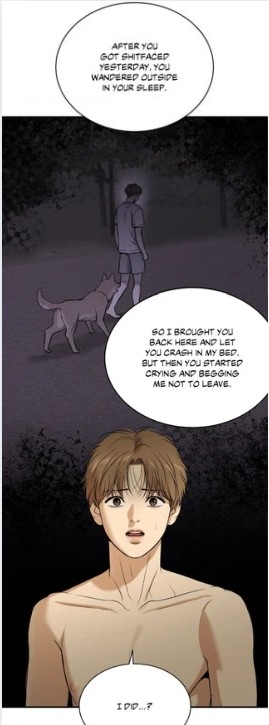 (chapter 66) rather than routine, Kim Dan fails to see Joo Jaekyung’s interventions as genuine help. This mutual misunderstanding deepens the emotional rift between them, ensuring that both remain trapped in their own perceptions of obligation rather than connection. In Chapter 66, he openly expresses frustration, stating,
 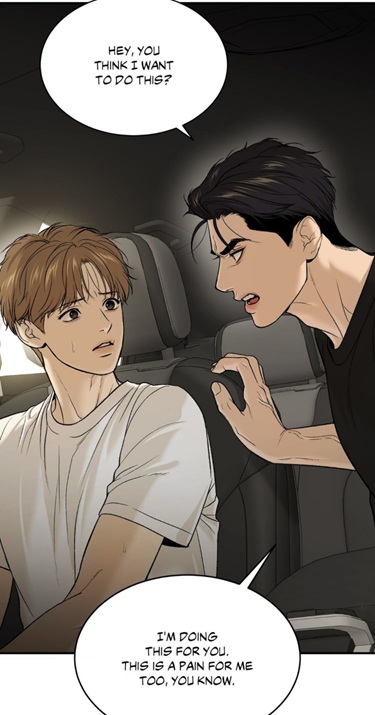 (chapter 66). This moment highlights a rare glimpse of honesty: he is not acting purely out of self-interest, but he frames it as an obligation rather than a choice. From my point of view, such a statement could only reach the physical therapist’s mind, for in the latter’s eyes, the champion has always been a “demon”: self-centered and inconsiderate. Observe the absence of reply from the “hamster”. He couldn’t contradict the star, as the latter was using this negative image: bad tempered and selfish.
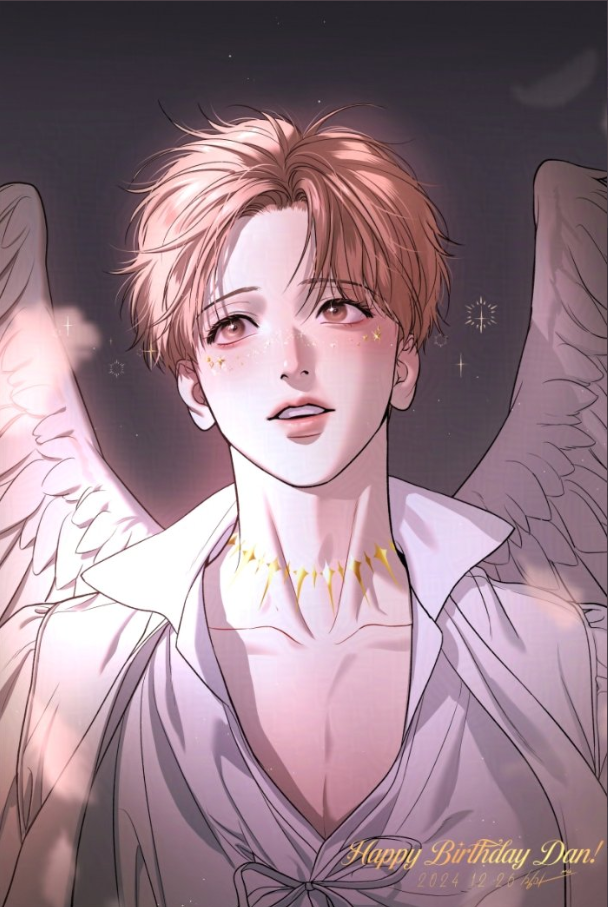 . The reason is simple. He was portrayed as someone who would do favors to people constantly: his grandmother
  (chapter 7) and even Choi Heesung. Hence the latter called him like that:
 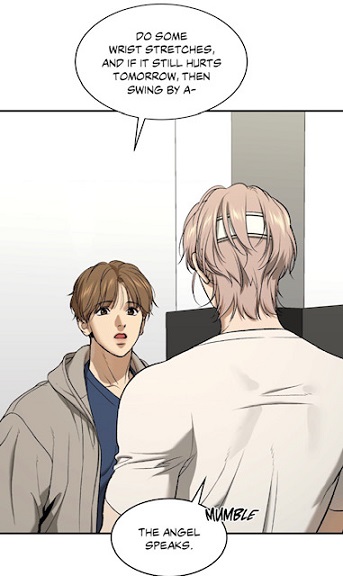 (chapter 30) Kim Dan’s perception of himself as an “angel” has long shaped the way he interprets his relationship with Joo Jaekyung. Reinforced by his upbringing and Park Namwook’s subtle manipulation
  (chapter 1), selfish, and emotionally stunted. However, this self-perception is deeply flawed. By believing himself to be inherently better
  (chapter 64) than the champion, Kim Dan avoids confronting his own emotional repression, his weaknesses, and his own form of “defectiveness.” He fails to see that he is just as human—just as fragile—as the man he silently judges.
  (chapter 66) The expression “Really…?” is not just about disbelief but also about a moment of confrontation with reality. Up until this point, Kim Dan has been dismissing his own suffering, suppressing his struggles, and functioning on autopilot. However, hearing a professional confirm that he is indeed sick forces him to acknowledge what he has been denying.
 (chapter 60) or exaggerations.
  (chapter 66) It also forces him to consider that others—especially Joo Jaekyung—were right to be concerned, which in turn may lead to a shift in his perception of the champion’s actions.
 (chapter 20) with shame, something impure that should be avoided or hidden. This internalized belief made it difficult for him to separate his own experiences from moral judgment. When he encountered the champion —who treated sex as nothing more than a professional ritual
 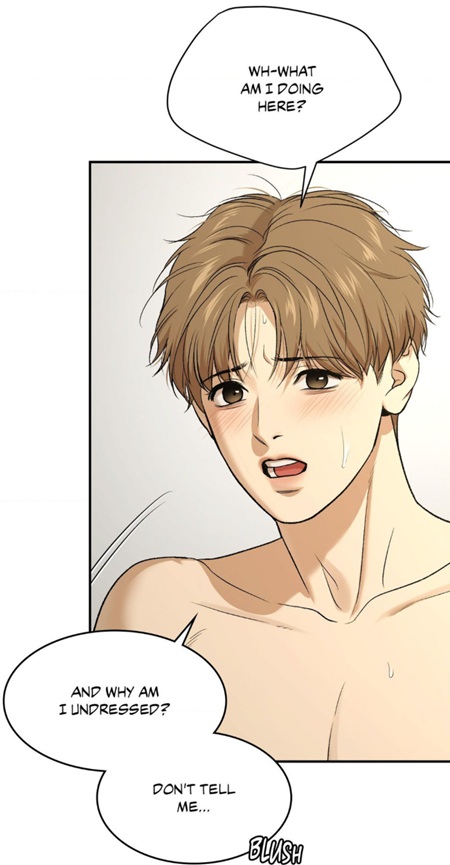 (chapter 66) He assumed once again that the star had taken advantage of his “drunkenness”, something Kim Dan had done himself in the past.
 (chapter 66) because Kim Dan does not recognize his efforts, while Kim Dan cannot see past his own survival instincts to notice that Joo Jaekyung’s actions are slowly shifting from obligation to care. Kim Dan, conditioned by years of neglect and survival-driven thinking, does not see Joo Jaekyung’s actions as genuine care.

 (chapter 36), his tendency to retreat rather than challenge his own doubts
 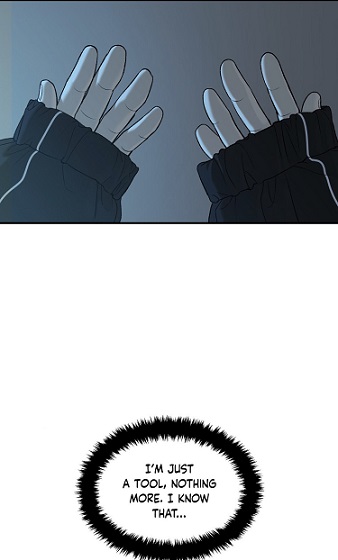 (chapter 36), and his overwhelming fear of disappointing others
  (chapter 62), Joo Jaekyung does not. The evidence for this interpretation is the champion’s nightmare:
 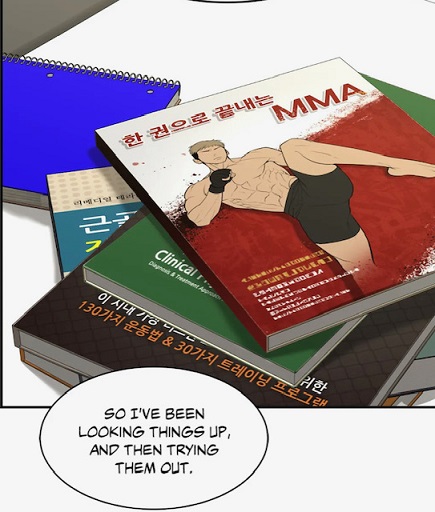 (chapter 25) Therefore the physical therapist bought books. Moreover, we should consider this argument
  (chapter 45) as a revocation of the star’s statement in episode 18. Kim Dan was no longer perceived as a tool, but as a real physical therapist. On the one hand, this request boosted the “angel’s ego”, on the other hand, he was put under immense pressure, for he was compared to his colleagues.
 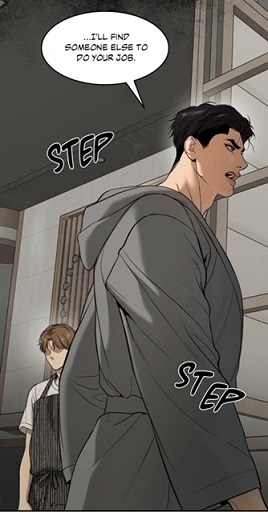 (chapter 45) Since in Seoul, Kim Dan has only been hired because of sex (Joo Jaekyung, the perverted hospital director)
 (chapter 6), he came to accept that he was not truly talented. The champion had no trust in him and later, the word jinx triggered a repressed bad memory.
  (chapter 62) Due to his bad past experiences, he concluded deep down that his CV was not reflecting the truth.
  (chapter 56) That’s the reason why he was devaluing himself and as such not looking for a high position.
 (chapter 48) exemplifies this pattern:
  (chapter 48) It was not the right time. He assumed his voice held no weight, reflecting years of learned helplessness. It shows how Kim Dan internalizes responsibility for things beyond his control. He thinks that withholding information is an act of protection rather than avoidance. Yet in doing so, he denies himself agency in his own life.
 (chapter 62) completely devastated Kim Dan’s already fragile self-esteem.
  (chapter 62) First, he considers himself as waste. While in the past, he was at least a tool, he is now garbage. Hence his feelings are “trash”.
  (chapter 62) This means that in episode 62, he felt worse than in episode 18! The idioms “trash” and “waste” revealed the doctor’s own self-perception in episode 62: he saw himself as totally useless. He belonged to the “wastebasket”, just like the golden key chain.
  (chapter 46) Thus I deduce that the fate of this item echoes the doctor’s.
  (chapter 47) He had selected this profession because of her. This shows that until now, he has never developed any ambition on his own. The loss of faith from someone he relied on for motivation made him feel completely worthless. This reinforces that his confidence and sense of direction were never self-sustained: they depended on others’ recognition. This pattern suggests that Kim Dan has never truly asked himself what he wants. His entire existence has revolved around meeting expectations, whether from his grandmother, Joo Jaekyung, or even his profession. His current crisis—feeling like waste—stems from the realization that without someone to validate his worth, he sees himself as nothing.
 (chapter 59) However, observe that he is using the expressions “do” and “now”. This has nothing to do with the future and dreams. It is not a reflection on his own desires but rather an immediate reaction to his circumstances. His mindset is still trapped in survival mode, seeking a course of action rather than contemplating what he truly wants. His words reflect an urgency to act rather than an opportunity to dream. This highlights that he has spent his entire life making decisions based on necessity rather than personal fulfillment. Even when faced with uncertainty, he does not ask himself what he wants—only what he must do next. His transformation will only be complete when he begins to question not just how to survive, but how to live on his own terms. That’s how I realized why Mingwa put this question in front of the window covered with Venetian blinds [which made me think of this scene
  (chapter 39 – Venice, a travel to Italy]. The window with the Venetian blinds represents a metaphor for the doctor’s trapped dreams. This interpretation made me recognize another aspect. Kim Dan is pushed to meditate, when he is front of a window or better said close to the sky! Hence the hamster started thinking about his own future in the penthouse
  (chapter 19) or when he looked at the sun and sky:
  (chapter 41)
  (chapter 41) And the best evidence for this interpretation and expectation is doc Dan’s cellphone screen display.
  (chapter 38) My avid readers will certainly recall that clouds embody dreams! Why? It is because in verity, doc Dan is a dreamer, an ambitious man. What caught my attention is that his contact Joo Jaekyung was not saved with a picture!! And what had motivated Kim Dan in the past?
 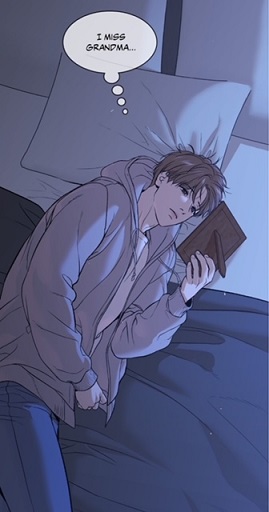 (chapter 47) The picture from his childhood: himself with his grandmother.
  (chapter 66) But the latter was not related to work, but to fun and nature. Striking is that Joo Jaekyung has an empty phone screen display indicating that he has no real dream on his own either:
  (chapter 38) No wonder why he questioned the meaning of his champion title:
  (chapter 54). He saw the belt as something rather “meaningless”.
  (chapter 43) This would boost the doctor’s self-esteem. He is not trash, but an acknowledged fan and friend. The picture would encourage the physical therapist to develop his own ambitions. As soon as I made this discovery, another detail caught my notice:
  (chapter 66) The celebrity has no picture of Park Namwook in his contacts divulging the superficiality of their relationship.
  (chapter 42) The problem is that the athlete took this recommendation personally. He felt as if his job as fighter was questioned.
 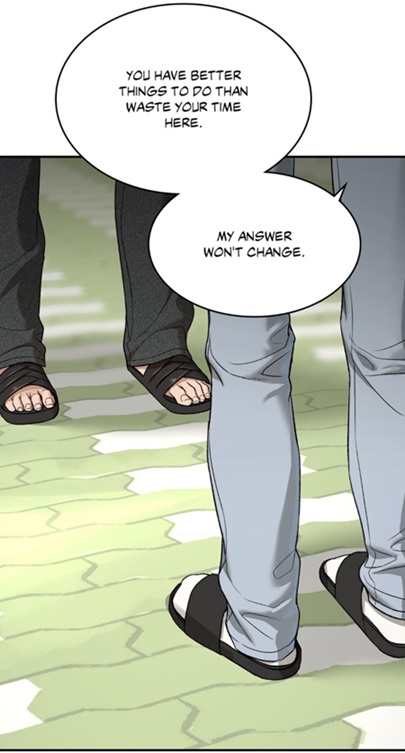 (chapter 62) According to the main lead, the champion is “wasting his time here”.
 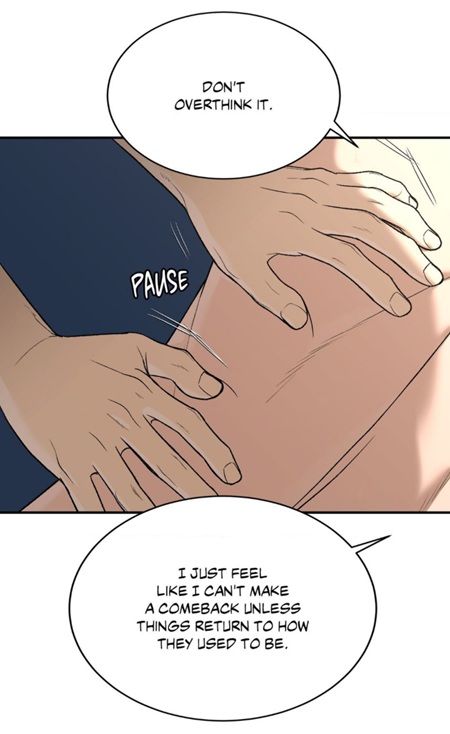 (chapter 62)
 (chapter 57) Hence it is clear that in the future, the physical therapist would refuse to use any kind of spray. On the other hand, it is important to recall that back then, Joo Jaekyung had made the request himself:
  (chapter 49) So in the doctor’s mind, if he agreed to the champion’s request, he would be treated like in the past. He would have to simply to follow the athlete’s lead. That’s why he is imagining that he might be put in a similar situation than in the past. But there exists another reason why he refused the champion’s offer right from the start. It is because he has always perceived himself as “hands” which stand for selflessness and generosity. The latter defined doc Dan. Hence he looked at them, when he declared himself as a tool:
 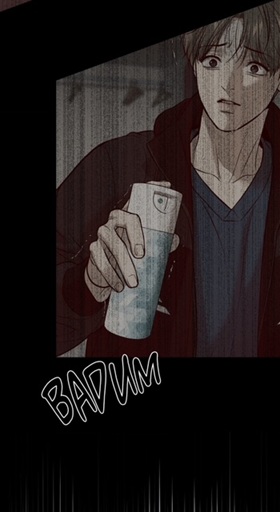 (chapter 57)
  (chapter 1) with a previous PT like the spray? No wonder why he called himself “trash” in the end.
  , people might wonder why I selected dandelions as a frame for the selected.. It’s clear that the dandelions aren’t just there for aesthetic balance. Their symbolism is profound. Dandelions are often associated with childhood innocence, wishes, and fleeting moments of beauty, yet they also wither quickly, easily scattered by the wind. In the context of Jinx, they represent a transitory force—something that struggles to take root, much like the intangible and fleeting elements in Kim Dan’s life. But there’s more to it. Before delving into deeper analysis, consider this: what is the common denominator in all these scenes?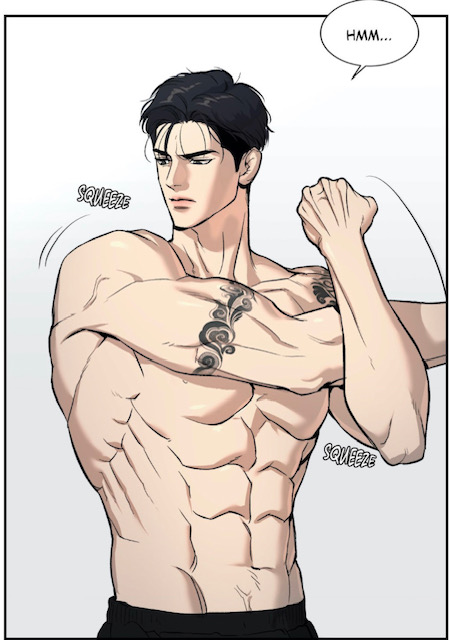


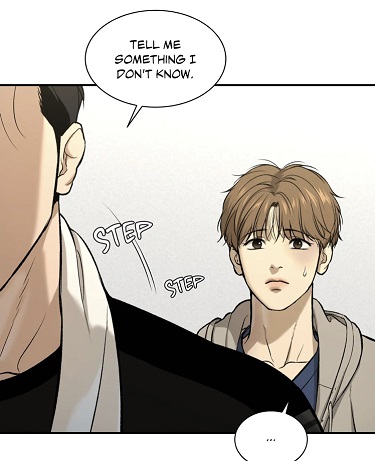

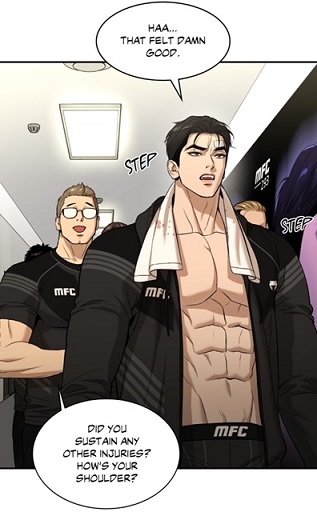
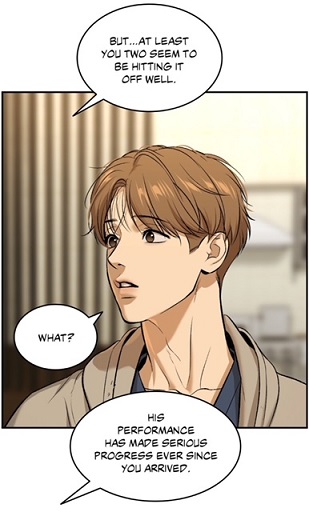
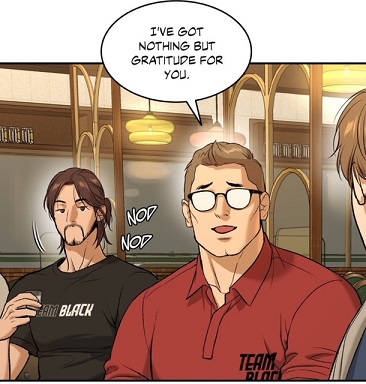
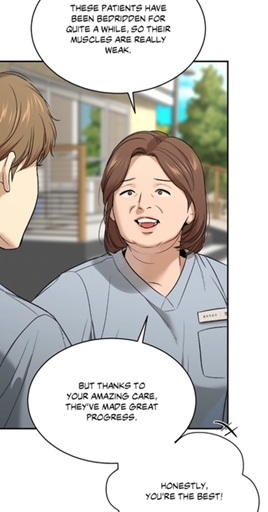

 (chapter 37) Therefore it is not surprising that the main lead couldn’t view the members as friends in the end.
  (chapter 41) And now, you comprehend why Joo Jaekyung has always disliked his birthday and the “congratulations” from people in general. The gifts and words were like poisoned praises to his soul. They were pushing him to live like a “god”.
  (chapter 59) While this photography was not a personal and intimate picture, it also symbolizes his first root in the little community: Light of Hope Hospice. He is part of the staff and as such of the little town. On the other side, we could say, he is gradually entering the scene as a PT. Note the contrast to the food truck:
  (chapter 30) In other words, it exposes the actor’s hypocrisy and wrongdoings. And now, you understand why I wrote genuine in parentheses above [proof of (genuine) human connection]. Photography in Jinx also represents the evidence of wrongdoing
 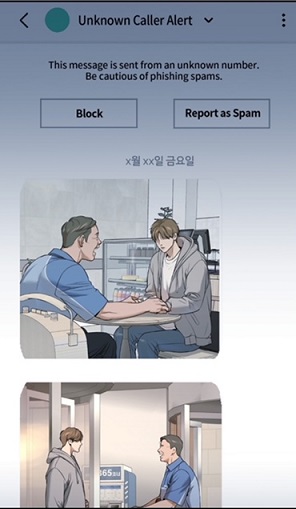 (chapter 48) and deception:
 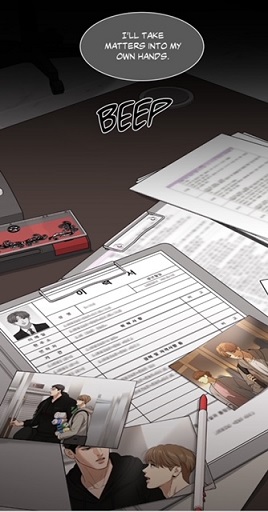 (chapter 46) The exact opposite of the dandelions.
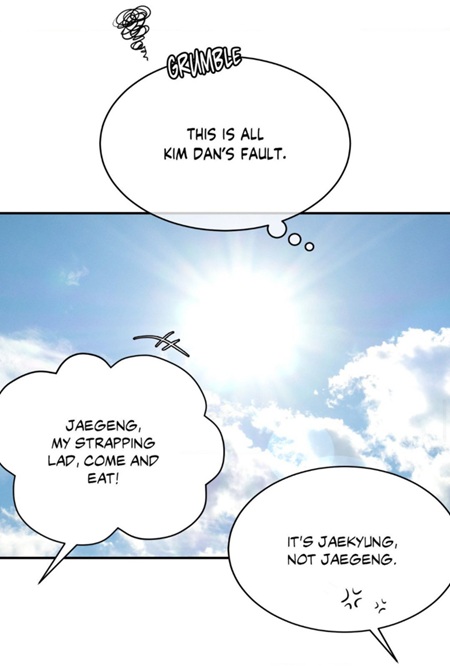 (chapter 62) This shows that deep down, he desires to obtain doc Dan’s gratitude. No wonder why he got so upset after hearing the displeased comment from Kim Dan.
  (chapter 66) reveals Kim Dan’s elevation in the champion’s life. The dressing room symbolizes privacy and closeness. No longer seen as a mere tool, Kim Dan has become an integral part of Joo Jaekyung’s world, not because of what he can do but because of who he is.
 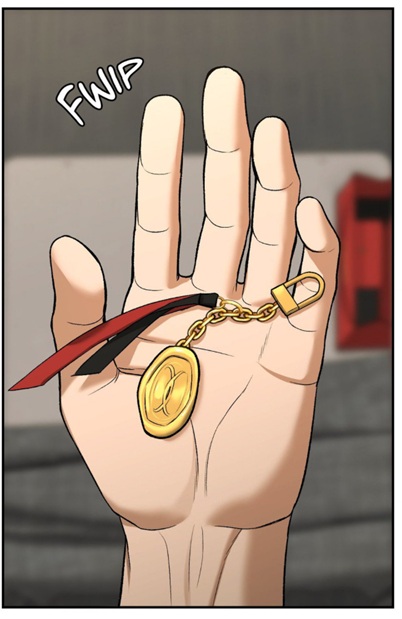 (chapter 66) Therefore the champion is holding the expensive gift with his whole hand contrary to the past:
  (chapter 55) As a conclusion, by bringing him to the sleep specialist, the star proved doc Dan’s words wrong! He told him something that doc Dan didn’t know: he is precious. He needs to pay attention to his health and body.
 (chapter 32) And now, you comprehend why the athlete didn’t fall for Park Namwook’s manipulations afterwards.
 (chapter 65) At the same time, such a disapproval
  (chapter 1), hence his true desire was to run away from that place. For praise to be effective, the recipient must be open to receiving it, either by looking forward to feedback or having expectations of validation. Since Kim Dan was in a state of distress, he was unable to internalize the champion’s words, reinforcing his long-standing belief that he was invisible or unworthy of acknowledgment. That’s how the champion’s praise became a dandelion seed in the end.
 (chapter 18)
  (chapter 45)
  (chapter 64)
 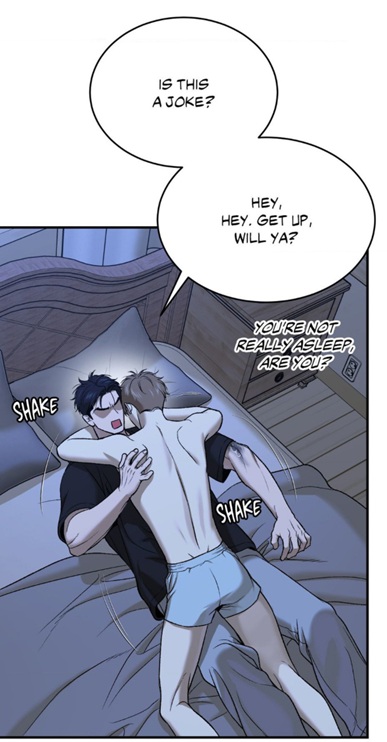 (chapter 66) Is this a joke?
 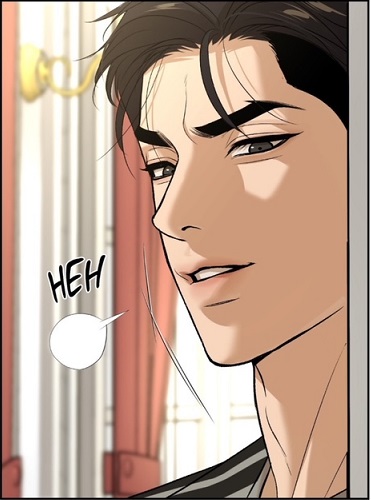 (chapter 40) However, Kim Dan has never realized it. Either he was sleeping or totally out of it (fear of sex)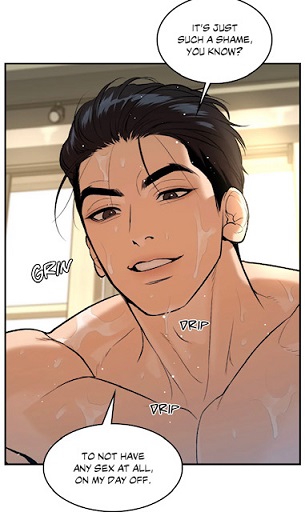
 (chapter 27) It is important to recall the importance of the receiver’s mind-set. The latter has to perceive the sincerity from the speaker. Hence I come to the following deduction: The moment Kim Dan notices Joo Jaekyung’s smile and laugh, then he should come to the conclusion that he matters to the protagonist. I would even say, the two protagonists are destined to make each other laugh and smile:


 (chapter 62) He now includes his entire routine with Kim Dan—not just sex, but also his physical therapy and treatment—as part of this so-called jinx. This shift is crucial because it implies an unconscious recognition of Kim Dan’s significance in his life. What once was purely about his career and success has now expanded to include a specific person and their role in his well-being.
 (chapter 62), the doctor’s memory got triggered. Because of his past experiences, he has long associated the jinx exclusively with sex. This contrast in understanding highlights both Jaekyung’s lack of self-awareness and Kim Dan’s tendency to filter reality through his own expectations and trauma. However, the deeper significance lies in Jaekyung’s evolving perception of dependency. His jinx is no longer just a superstition tied to his performance in bed. It now subtly acknowledges that his success has been intertwined with Kim Dan’s intervention.
 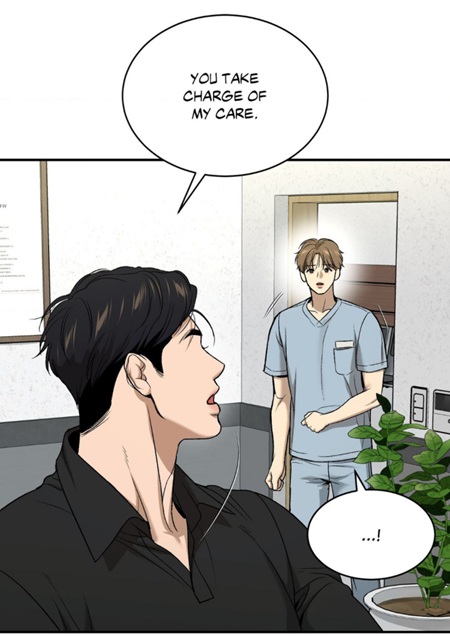 (chapter 61) By entrusting his care to Kim Dan, he was insinuating that the main lead was trustworthy and competent, yet his inability to verbally express appreciation keeps the doctor unaware of his true feelings. This struggle resurfaced in front of the hospice, where Jaekyung could only bring himself to admit that Kim Dan was not responsible for the incident with the switched spray.
 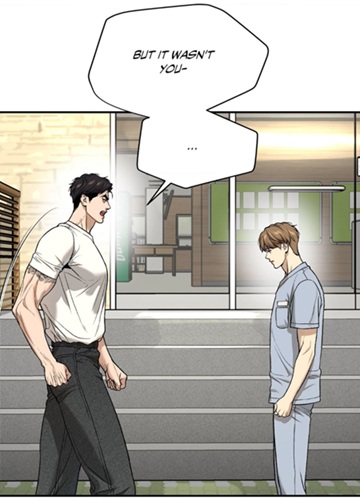 (chapter 62) His reluctance to openly acknowledge his gratitude suggests a deeper internal conflict—one that hints at a growing but unspoken emotional reliance on Kim Dan.
  (chapter 62) It was, as if he was warding off bad luck by repeating the last match. For him, past choices are justified by their results—he has built a successful career through sheer discipline and sees no reason to question his trajectory. His mentality reflects the belief that one’s past is a stable structure upon which the present and future rest. This perception explains his resistance to self-reflection and emotional vulnerability; admitting a mistake would mean disrupting the stability he relies upon.
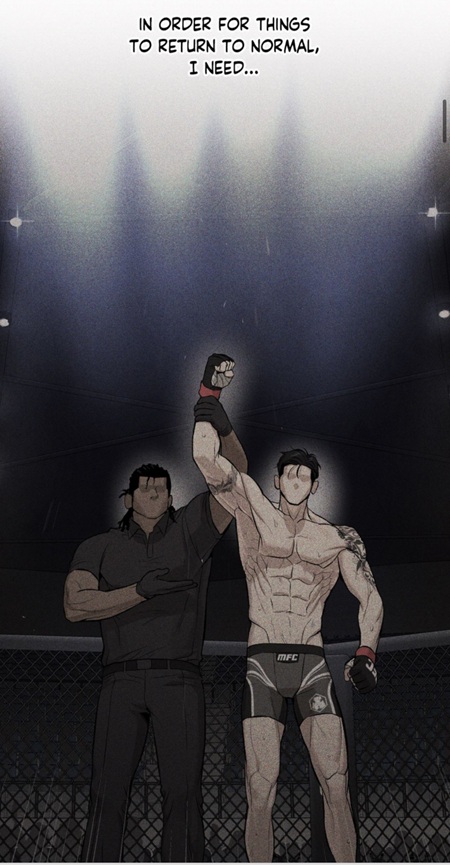 (chapter 61) This rigid perception prevents him from questioning his past choices or embracing change, reinforcing the illusion that repeating past patterns will restore stability. However, as his reliance on Kim Dan grows, the boundaries between his personal and professional life blur, challenging his belief that he can control his future by clinging to his past.
 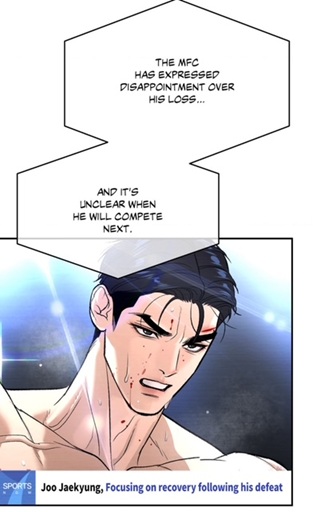 (chapter 57) and Park Namwook
  (chapter 41) In one case, he refused to listen to his friend’s advice, whereas he trusted the words from MFC, MFC doctors and his hyung. When the foundation he has relied upon begins to crack, Jaekyung’s entire mindset is shaken, forcing him to question whether his past truly holds the answers he seeks. We could say, the athlete needs to be betrayed by his own past in order to throw his old belief. The latter is strongly intertwined with the organization MFC and authorities in general. Questioning his past equals challenging the company MFC and his past “guardians”: the terrifying ghost and even his two hyungs.
  (chapter 61), he expresses the belief that reclaiming his championship title will rid him of his headaches, nightmares, and sleepless nights. However, the reality is different—he was already suffering from insomnia long before he lost his title.
 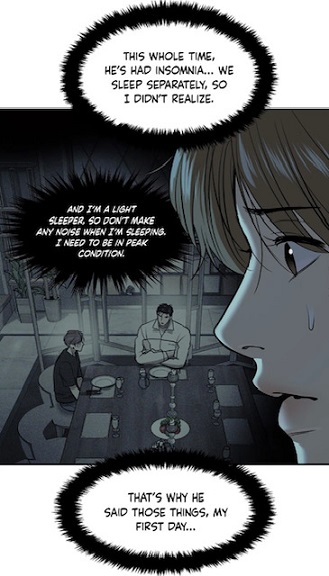 (chapter 29) The origins of his struggles existed before his recent failures, suggesting that his belief in a simple solution—reclaiming his title—is an illusion. This disconnect reveals how deeply his professional and personal life are entangled; his need for control in the ring has masked his deeper emotional vulnerabilities. He isn’t merely striving for victory—he is chasing the illusion of stability, believing that his success is the sole factor that determines his well-being.
 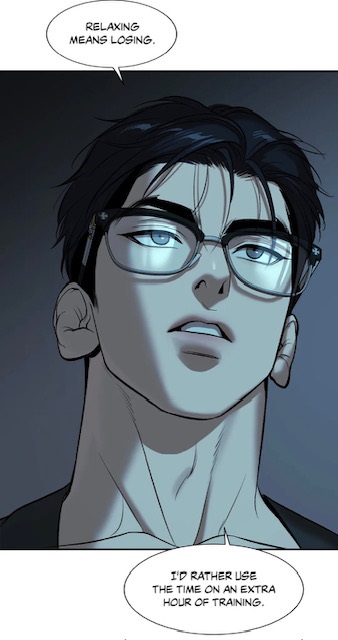 (chapter 29), you will realize that alone in his penthouse, Joo Jaekyung was actually admitting the importance of sleep and rest. His earlier belief in relentless training as the key to success now clashes with his realization that exhaustion is affecting him. This shift signifies an unconscious admission that his well-being is not just tied to physical endurance but also to recovery and relaxation—something he previously dismissed. This realization subtly parallels his growing dependence on Kim Dan, reinforcing the theme of blurring lines between his professional and personal life. And what had occurred after this magical blue night in the penthouse?
  (chapter 30) The athlete woke up later than usual. In fact, he was rather late, for he was still wearing his pajamas, while the doctor had already taken his shower. But back then, observe how he opened the door! Like a clumsy beast, grump leopard! Why? In the past, I explained that he was seeking the champion’s closeness, but didn’t know how to approach his partner. I am now adding another aspect. He was actually annoyed, because he had not been following his daily routine!! Under this new light, it becomes comprehensible why the champion had such a “angry” facial expression, while deep down he was happy. The older version of this scene:
  (chapter 44) However, this means that in episode 30, he never acknowledged his dependency on the physical therapist for his rest loudly. On the other hand, it explains why the champion felt threatened, when the actor approached his “lavender-tinted pillow” or “sleeping pill”.
  (chapter 31) In fact, he used guilt to create a link between him and his roommate. That’s the reason why I am more than ever convinced that the champion will sleep better after this lavender-tinted night.
  (chapter 63) But contrary to the past, the athlete should come to recognize his lover’s great sleeping power officially. This made me laugh, imagining Kim Dan’s reaction, when the latter sees that his wish
  (chapter 62) won’t come true at all. 😉 He will stay longer and ask for Kim Dan’s presence during the night.
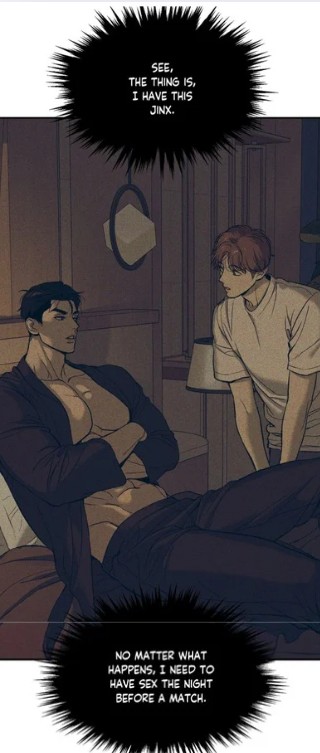 (chapter 62)
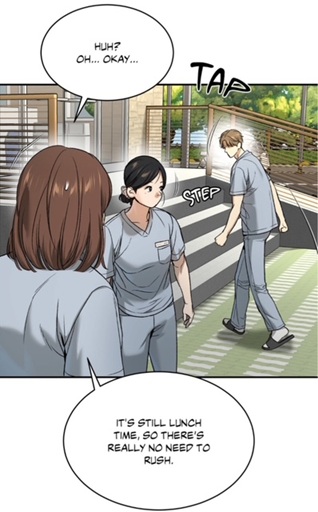 (chapter 56) and opportunities that could offer him security, convincing himself that he is protecting his independence when, in truth, he is reacting to past trauma rather than making an intentional choice.
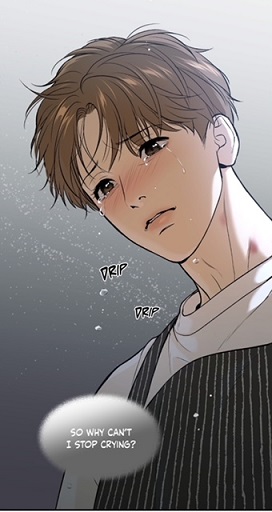 (chapter 46)
 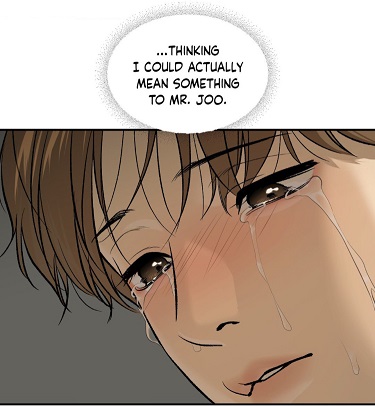 (chapter 46)
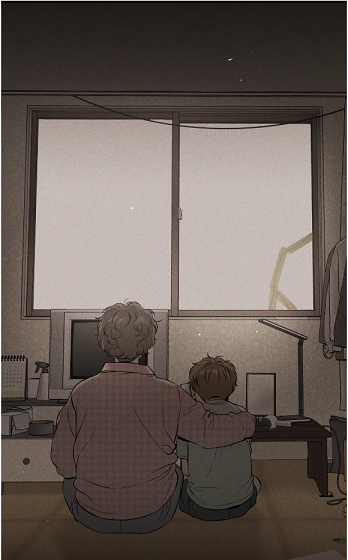 (chapter 19) She became terribly sick, while the other had to get surged and risked his career. There is no doubt that the halmoni is hiding her pain as well. Kim Dan’s declining physical and emotional state further reflects the consequences of living in avoidance.
 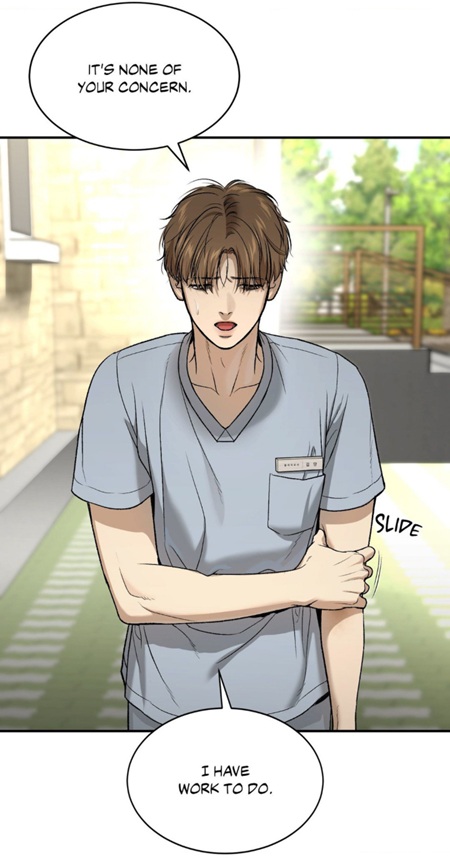 (chapter 61) He is endangering his life. Instead of taking action to improve his well-being, he isolates himself, refusing help even when it is necessary. His reluctance to accept care—be it medical, emotional, or relational—mirrors the very trap Delgado describes: mistaking survival for true agency.
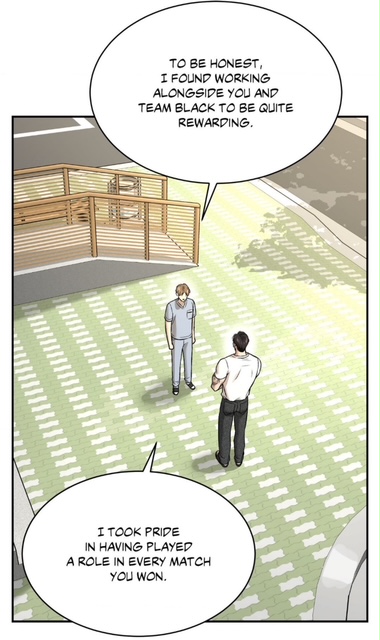 (chapter 62) If he continues making decisions based on past fears, he will remain trapped in the same cycle, unable to experience true growth or emotional fulfillment.
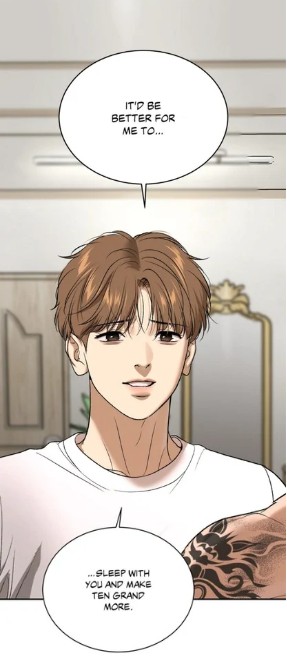 (chapter 62) Here, he is actually facing his past which he has strongly connected to regret and remorse. Don’t forget that after this night, he is expecting Joo Jaekyung’s departure.
 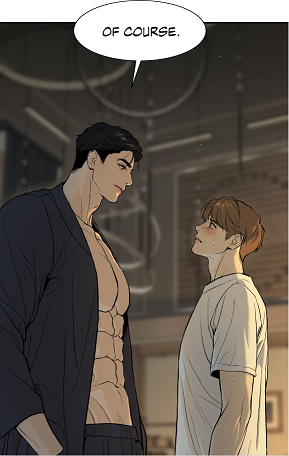 (chapter 3), which has been the setting of power imbalances, physical dominance, and silence, the living room represents a shared space—a place where dialogue and openness can exist. But why is the bedroom linked to silence? It is because of the TV, the third invisible companion!
  (chapter 48) Hence during that night, none of the protagonists talked sincerely to each other. And now pay attention to the living room at the hostel:
  (chapter 54) He needed to get rid of this poor habit: watching TV or cellphone. He had to realize that the TV or cellphones were never real companions and never brought him peace of mind! This was the invisible “love” triangle. Back then, the athlete deceived himself by thinking that he was truly self-reliant, while in verity he was dependent on his cellphone and the TV.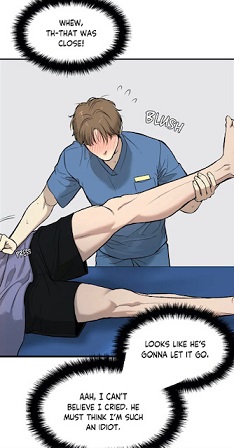


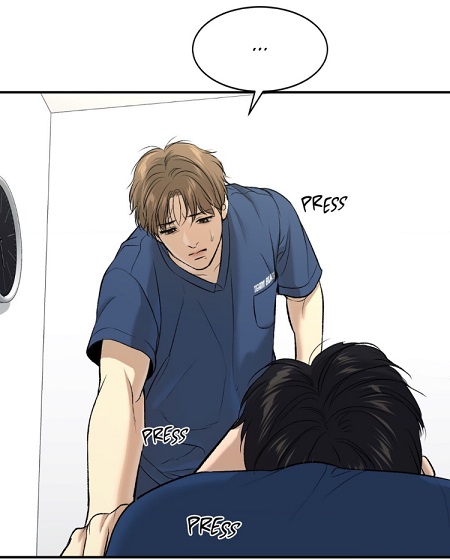

 (chapter 59)
 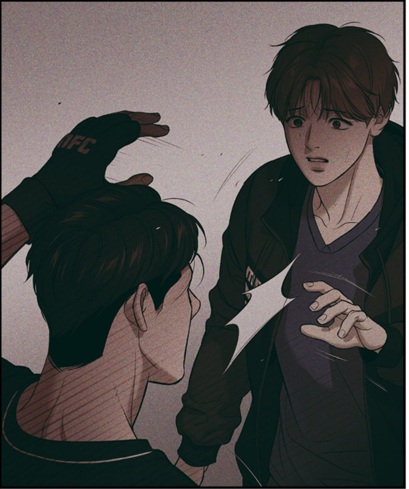 (chapter 62) – which is quite understandable in my eyes. The ones who failed the couple were the two other hyungs from my perspective. The past affected the doctor so much that he views himself and his feelings as “trash” now, yet it is clear that neither Park Namwook nor the coach are suffering from guilt or remorse. The star’s follow-up statement,
  (chapter 62) further reinforces that Kim Dan has become an integral part of his preparation. Although Jaekyung does not yet frame this as emotional reliance, his words betray an unconscious attachment—one that Kim Dan himself does not recognize. Moreover, by including him in his jinx, the champion is only one step closer to include him in his “success”. Should the doctor be the target of malicious comments, the star will consider it as a personal assault or as his responsibility.
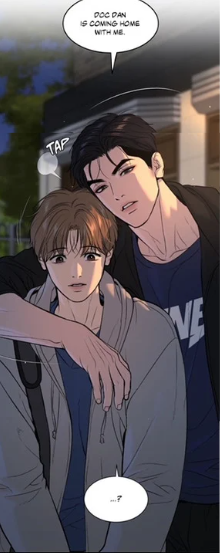 (chapter 43) Someone needs to remind the athlete of his own “statement”. Simultaneously, since the doctor never got curious about the fighter’s past and family, his presence could only be seen as a bandage covering a rotten body. In order to heal completely, he needs to expose his traumatic past and vulnerabilities.
 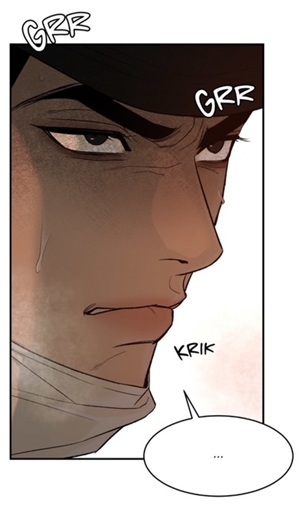 (chapter 56), but about something deeper. Here he felt the need to see his beloved “companion” again.
  (chapter 27) At the same time, this confession displays that his past was far from being perfect, the evidence of a distorted memory. After working so hard for the community, he came to receive a treatment from Kim Dan:
 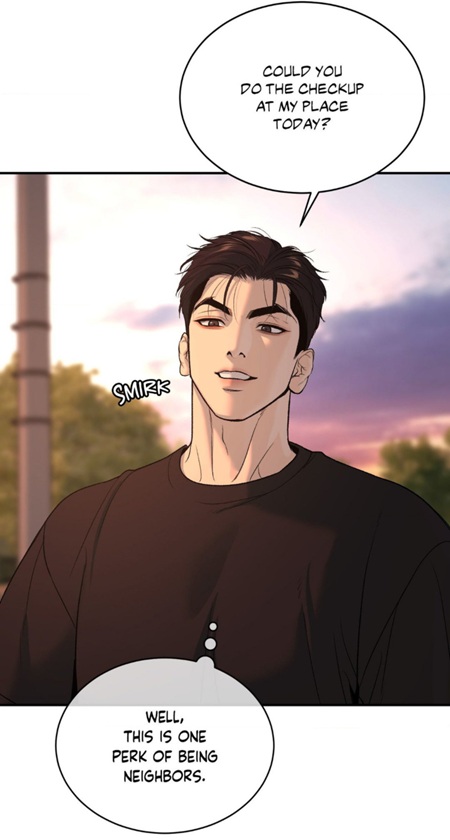 (chapter 62) That’s why I come to the following conclusion: The athlete must have felt happy in the living room, for he felt comfortable and safe.
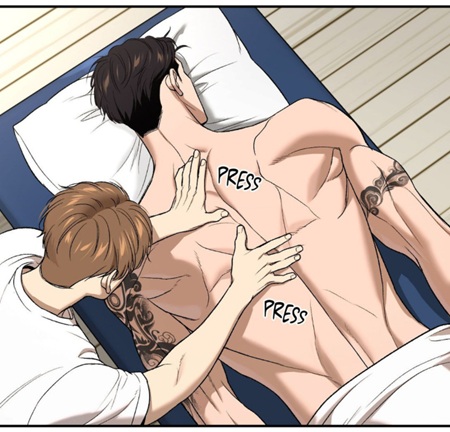 (chapter 62) But why did he show his back? One might say that he desired to hide his “satisfaction” and his “reliance” on his fated partner. Or he didn’t feel the need to watch the doctor’s facial reaction, when he would confide his new intentions and the transformation of his jinx. He didn’t expect the physical therapist to mock him for his absurd belief contrary to episode 2:
  (chapter 2) He trusted the doctor. Yet, in my opinion, there exists a bigger reason behind this change. It is related to his manager:
 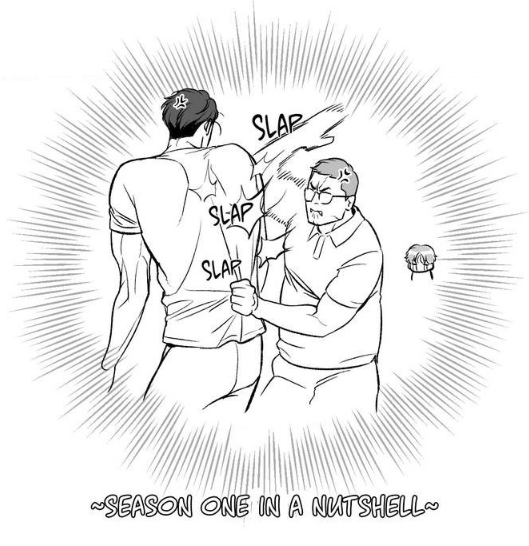 The doctor is treating the star
  (chapter 22) when he is not, using his seniority and past influence to assert dominance. His attitude is related to his past decision: from his perspective, he saved the athlete from turning into a criminal.
  (chapter 26) His dependence on Jaekyung’s achievements makes him resistant to any shift in the fighter’s trajectory
 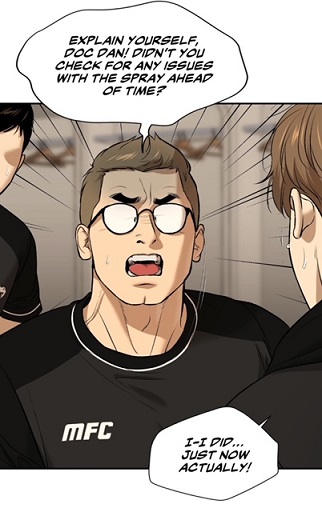 (chapter 50), allowing others to step in instead. Later, rather than addressing his inaction,
 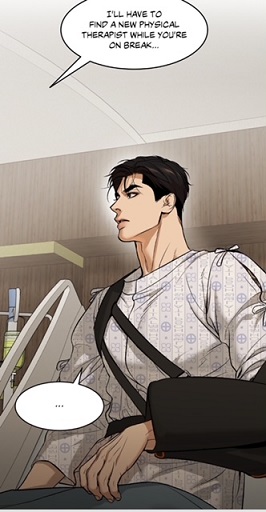 (chapter 53), as if the past never happened. By doing so, he reinforces Jaekyung’s belief in his so-called ‘jinx,’ manipulating the fighter’s perception of events and contributing to a distorted memory of reality. Meanwhile, the manager must face the reality that change is inevitable and that Jaekyung’s evolution does not mean his own irrelevance. However, his position must change.
 (chapter 59)
 (chapter 5) He felt so empowered that he won very quickly.
 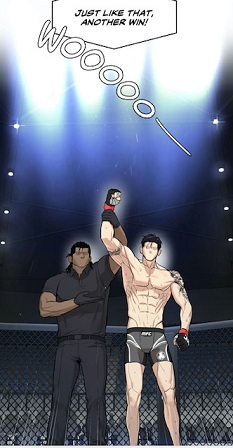 (chapter 5) But this good vibe was attributed to the sex with Kim Dan and unfortunately linked to his match. The reality was that he had slept better and longer. So by recreating the past, Kim Dan places the athlete in front of a choice. What matters in his life? His title or his peace of mind? He is correcting the champion’s distorted memory. Kim Dan is the reason why he can rest properly and not the title. Don’t forget that he was suggesting to go separate ways during the massage. But if he sleeps better before gaining his title, he won’t feel the urge to return quickly to the ring. In the living room, he was still acting as the celebrity, but in the bed chamber he is now gradually pushed to leave his title out of the bedroom. Now, in the bedroom he becomes a man and can almost make a mistake as a lover.
 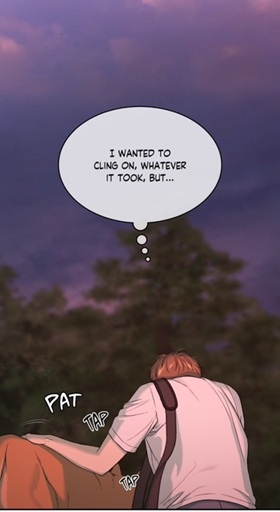 (chapter 59) However, he needs to realize that his physical and mental recovery can only happen, if he truly wishes it. From my perspective, the doctor has to sense that he is not on his own, he has someone by his side who supports him emotionally and mentally.


 (chapter 62)
  (chapter 62) and, more importantly, to himself.
  (chapter 62) Thus in this essay I will explore the symbolic meaning behind his actions in the town, the interplay of nature and community in his transformation, and how these moments reflect his internal growth. The analysis begins with his transformative experience in the ocean during his rescue of Kim Dan
  (chapter 60), followed by his newfound attentiveness to his surroundings—jogging in silence and responding to the natural rhythms of life.
  (chapter 62) This heightened awareness paves the way for his burgeoning integration into the town through labor
  (chapter 62) and community service. His gradual acceptance of simplicity, represented by his clothing and the symbolism of cucumbers and potatoes, signals his reconnection to nature and humanity.
  (chapter 60) In many ways, this moment functions as a symbolic baptism, reflecting a deeper narrative of renewal and change. In Chapter 28, Kim Dan’s immersion in water during a pool scene
  (chapter 28) was symbolic of his acceptance of intimacy, reshaping his view of sex from something “filthy”
 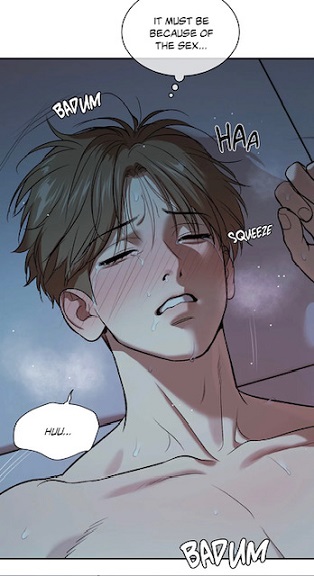 (chapter 29) Similarly, Joo Jaekyung’s dive into the ocean can be interpreted as his baptism into a new “religion”: love and vulnerability.
 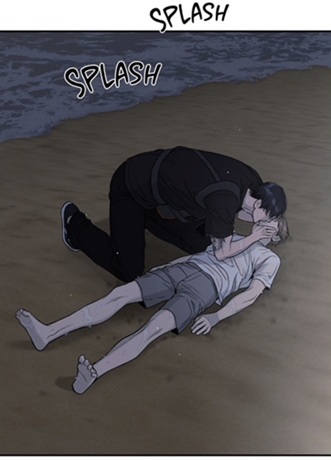 (chapter 60) His gesture is not just about saving his loved one, but also showing care to humans in general. He can no longer be indifferent to someone in pain or in danger.
 (chapter 62) He might complain, but in the end he accepts the presents. This change is reinforced by his willingness to accept gratitude in the form of vegetables and food rather than monetary gain, showing a newfound appreciation for simple, heartfelt exchanges over transactional relationships.
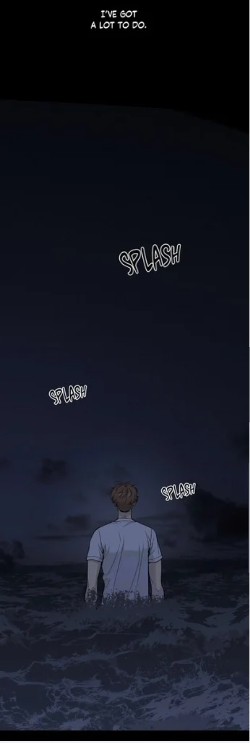 (chapter 59) caused by his grandmother’s neglect, indifference and rejection. The rescue, while focused on saving Kim Dan, also represents the birth of a new understanding for Joo Jaekyung—a recognition of the transformative power of vulnerability and connection.
 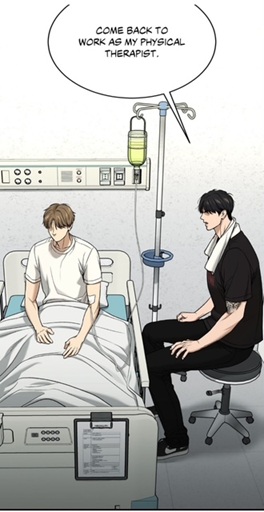 (chapter 60) At the time, his eyes were fixed solely on Kim Dan
 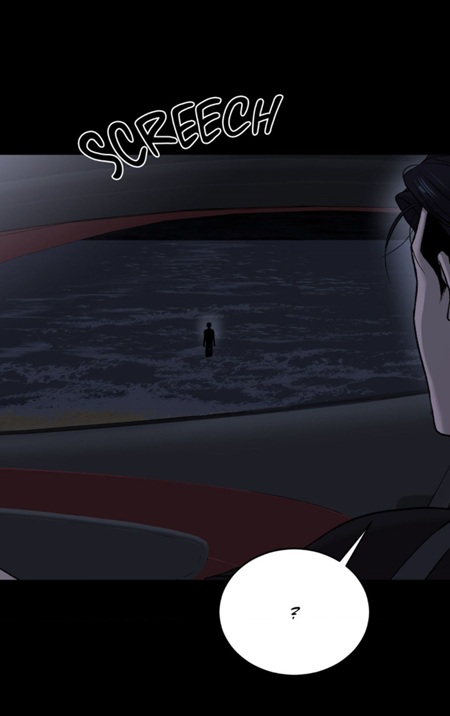 (chapter 60), not the natural world around him. The rescue planted a subconscious seed, setting the stage for his later behavior. When Kim Dan denies his assistance in Episode 60
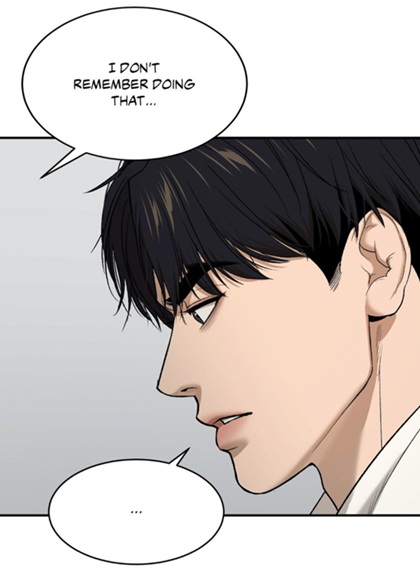 (chapter 60), it’s as if the doctor erases that defining moment, refusing to acknowledge the champion’s care. Yet Joo Jaekyung does not react with anger or frustration. Instead, he takes the doctor’s rejection as challenge.
 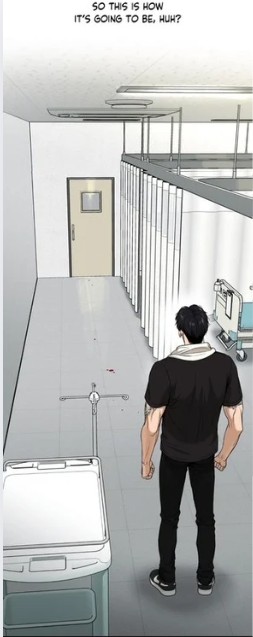 (chapter 60) However, contrary to the past, money and influence seems to have no impact on the physical therapist’s mind and heart. He is keeping the athlete at arms-length.
 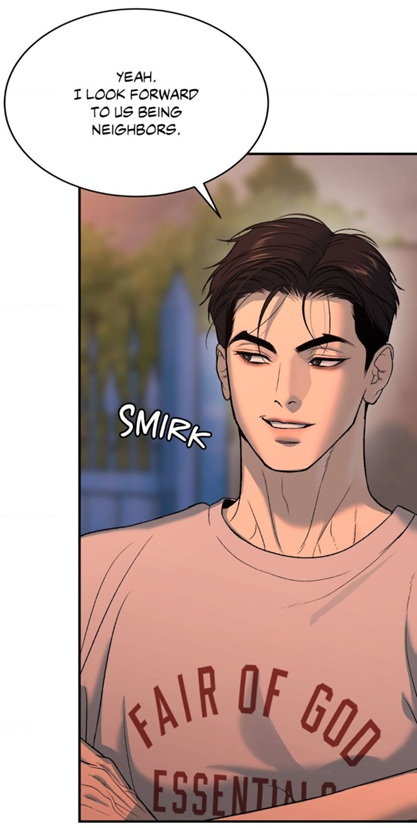 (chapter 61), he begins to demonstrate his growth through quiet, consistent actions—helping others without expecting gratitude in return.
 (chapter 62) For the first time, he is not merely running for fitness or competition; he is paying attention to his surroundings.
  (chapter 62), and the natural rhythm of life around him.
  (chapter 62) Running along the ocean, a setting that profoundly influences his state of mind, Joo Jaekyung demonstrates a newfound openness.
  (chapter 62) This moment underscores his growing ability to connect with others sincerely, without suspicion or defensiveness. His willingness to engage reflects a broader transformation—one that prioritizes meaningful connections over dominance or transactional relationships. This newfound awareness signifies a major shift in his character. His senses are becoming attuned to the world beyond himself, and he is learning to differentiate between what truly matters and what does not.
  (chapter 10), seeing only the “overpowering stench of poverty.”
  (chapter 10) At that time, his perception was clouded by indifference and a focus on material circumstances. Now, however, his response to the elderly woman’s request reflects empathy and an awareness of human vulnerability.
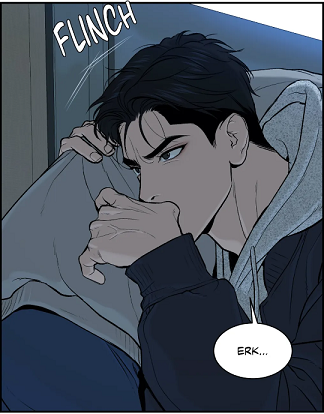 (chapter 10), evoking a sense of cold detachment and judgment. In contrast, the moment where Joo Jaekyung is asked to repair the roof is bathed in daylight
 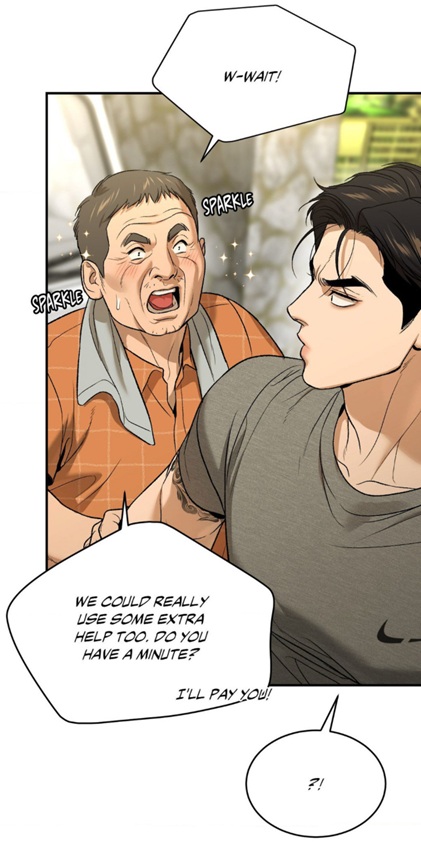 (chapter 62) Thus I deduce that he never accepted any kind of compensation in the end. But none of the inhabitants could accept such a generosity, therefore they brought vegetables or dishes. Unlike his previous life, defined by detachment and impermanence, these acts of community-oriented labor mark a significant shift in how he values his strength—not as a tool for control
  (chapter 62), but as a way to support and uplift others. The admiration from the inhabitants is genuine
  (chapter 58) with the reality of his evolving personality and his behavior toward others. Choi Heesung’s dismissive remark that Joo Jaekyung would “flip his shit” if he knew the living conditions of Kim Dan implies a static, unchanging view of the champion, one that aligns with a superficial understanding of him as merely ruthless and violent. However, this chapter reveals the fallacy in such an interpretation, exposing the actor’s arrogance and lack of true insight into Joo Jaekyung’s character.
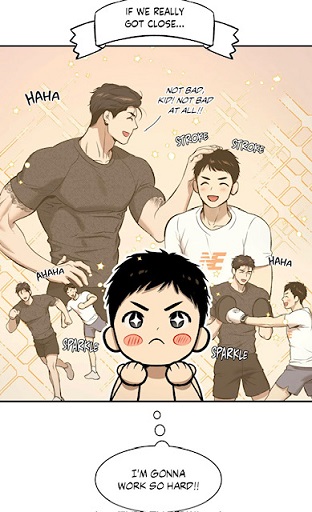 (chapter 23), they could have succeeded. Potato, the youngest member of the team, embodies this missed opportunity.
  (chapter 9) His nickname, “Potato,” while intended as lighthearted and affectionate, is something he despises because he perceives it as demeaning. Yet the reality is quite the opposite—nicknames like these often carry affection and camaraderie. Yet he rejects it out of insecurity or an internalized belief in its inferiority.
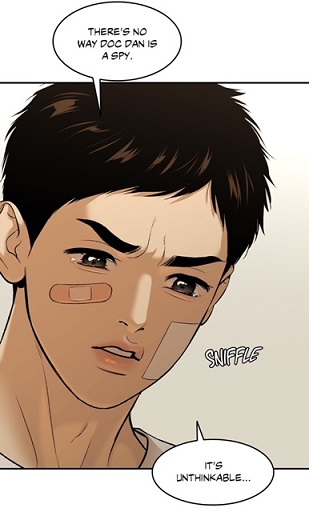 (chapter 52) reveal a missed opportunity for bonding. The champion, who is evolving into a more open and empathetic individual, might have been an unexpected source of support and connection had Potato not listen to others and chosen to embrace this chance instead of harboring negative assumptions.
  (chapter 61) The focus on Joo Jaekyung’s feet
 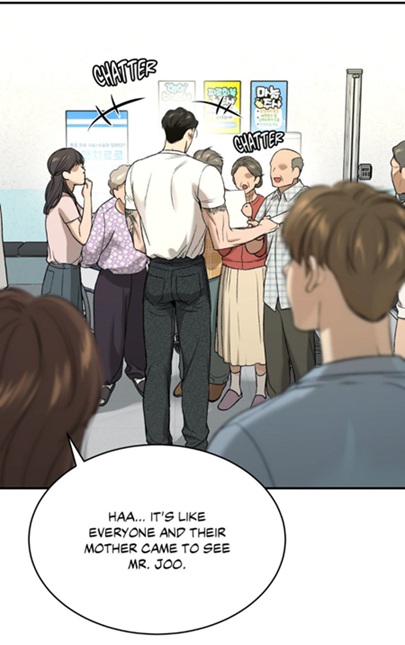 (chapter 62) The hospital or Kim Dan’s presence may provide him with a sense of stability and calmness, allowing him to adopt a more casual and relaxed appearance. Additionally, the contrast between his expensive jeans and branded t-shirt and his unassuming sandals reveals a division between his public image and private self. While his clothing aligns with his status as a wealthy and successful individual, the casual footwear hints at a simpler, more authentic side of him that is emerging in this setting. It reflects his willingness to shed some of the societal expectations tied to his identity.
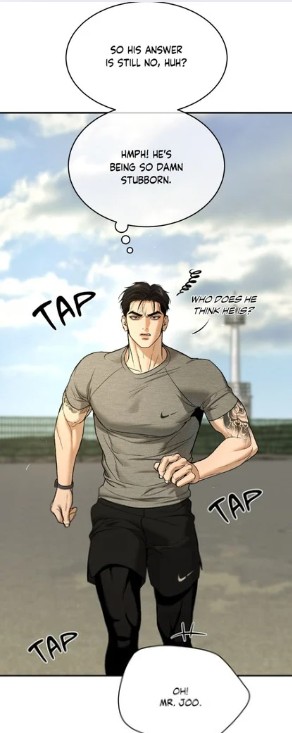 (chapter 62), he is immediately approached by the town chief.
  (chapter 42), where appearances and dominance once took precedence over community and connection.
  (chapter 02) The penthouse, perched high above the city, served as a symbol of isolation and self-reliance—an ivory tower of sorts, detached from the world below. In contrast, the town’s hostel
 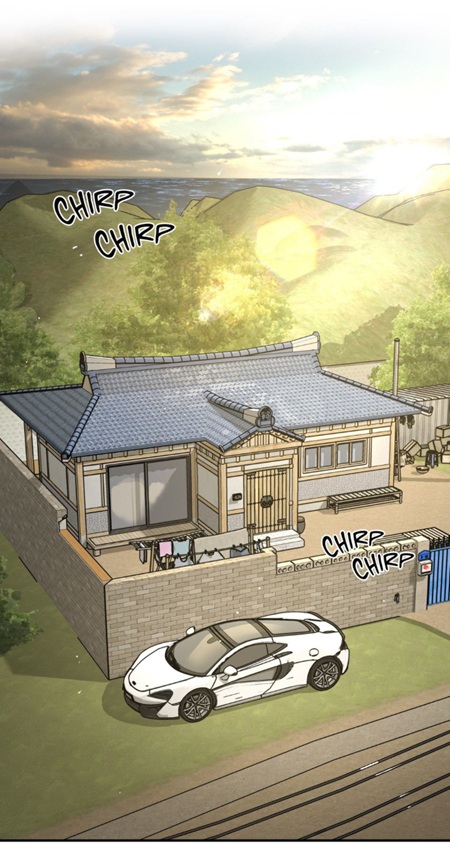 (chapter 62) reflects shared experiences and human connection, embodying a shift toward groundedness and humility.
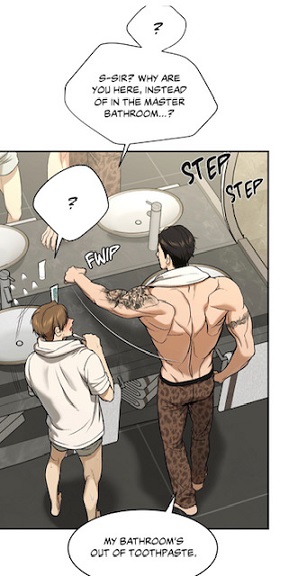 (chapter 30) This evolution from animalistic aggression
  (chapter 54) Like mentioned above, his stay in this little town is teaching him to become immune to manipulations in the end. His self-esteem is getting boosted, hence he doesn’t mind being called “Jaegeng”.
  (chapter 62) So far, the champion has not paid attention to Boksoon. He has not even looked at her, because his eyes are always directed at Kim Dan:
 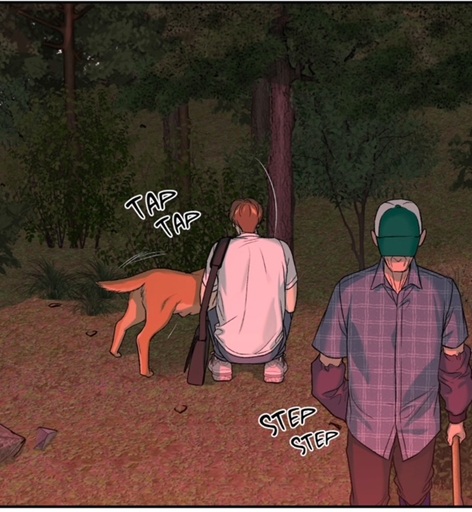 (chapter 59) Hence I have the impression, she could be the one leading him there, if not Kim Dan. Let’s not forget that the doctor’s deepest wish is to go on a walk through the woods:
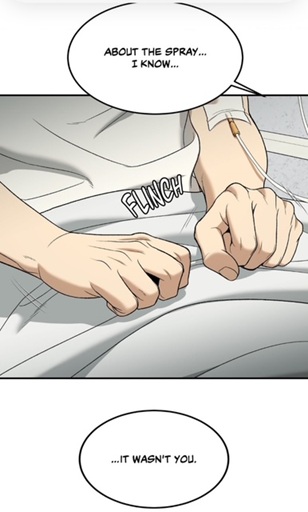 (chapter 60) However, this revelation sheds light on a deeper issue: his unquestioned reliance on the spray over Kim Dan’s expertise.
 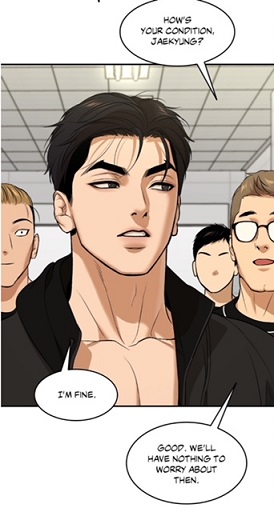 (chapter 49), Joo Jaekyung chose to rely on external medicine rather than the “power of hands” that the nurse in the hospice later praises.
  (chapter 55) But why was he thinking like that? He came to this judgement for two reasons. On the one hand, he was recalling the physical therapist’s nightly desertions. The latter chose to work as a courier instead of focusing on his main job. Moreover, the fact that he hadn’t checked the spray right before using it
  (chapter 51) This explains why the athlete imagined that Kim Dan had resigned due to his mistake.
  (chapter 55) However, this assumption is not only incorrect but unjust, as Kim Dan’s quick and effective treatment of his shoulder clearly demonstrates the contrary.
 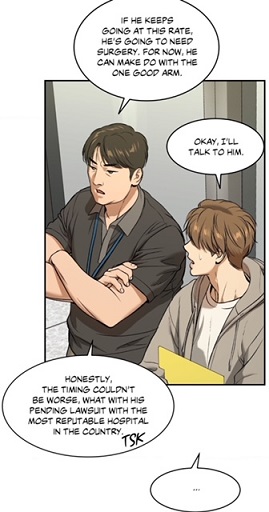 (chapter 42) Finally, note that Baek Junmin was not able to defeat the dragon despite targeting his fragile shoulder.
  (chapter 50) The match ended up as a tie.
  (chapter 60) and his failure to shield Kim Dan from blame. The clenched hands symbolize the internal struggle between an internal conflict between anger, indifference and lingering hurt caused by the lack of trust. What caught my attention is the sound of his jaw, KRIK, which reminded me of the star’s behavior.
  (chapter 52) By failing to provide a full explanation, Joo Jaekyung created the illusion that the matter was resolved. This lack of transparency leaves Kim Dan burdened with guilt and confusion, unable to find closure.
 (chapter 54), he is unaware that The Shotgun was merely a pawn used by Choi Gilseok, who had larger, more manipulative intentions.
 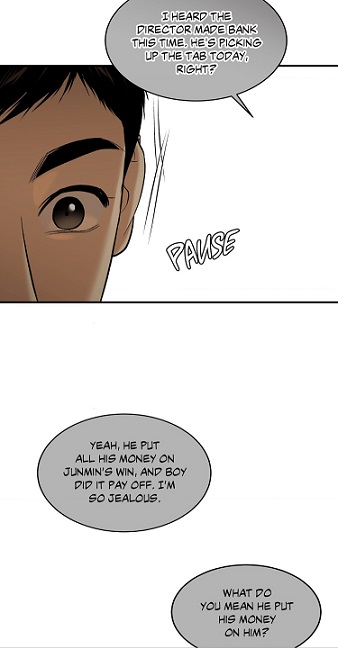 (chapter 52) I doubt that Potato told him about the director’s bet, too upset to discover the switched spray. The fighter’s ignorance mirrors Kim Dan’s in a way, highlighting how both are victims of deceit. This conversation further reflects their lack of communication, as it seems Joo Jaekyung deliberately avoids sharing his thoughts and knowledge with Kim Dan.
  (chapter 52), where Joo Jaekyung’s team visits him after the surgery at the hospital. Notably, the team members only address him when they need him to take the blame for the situation. Through this comparison, I noticed another aspect. They were all standing at a certain distance from the star’s bed. This exposes that none of them had the intention to spend time there and to give company to the athlete. At the same time, their position divulges their arrogance, lack of empathy or worries! Yes, no one is assuming that the athlete’s career is in danger. They are all somehow expecting that he will return to the ring. No wonder why their focus is entirely on the job, ignoring his well-being. When Joo Jaekyung finally voices his frustration and unwell-being
  (chapter 52), he is silenced with a slap.
 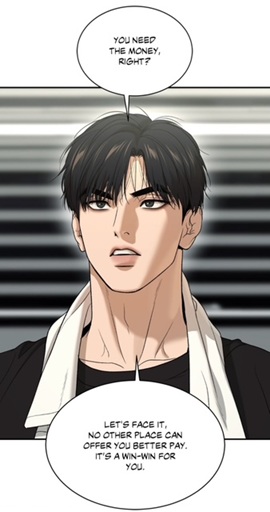 (chapter 60) Having grown up in an environment where emotional needs were consistently invalidated, he is blind to the damage his actions cause. Consequently, Kim Dan’s rejection and refusal to listen to him are understandable.
  (chapter 60) He is no longer willing to accept anything from Joo Jaekyung, hence he removes the needle.
  (chapter 60) The treatment is the symbol of the champion’s generosity and rescue. However, this is no longer working. So we could say that this gesture reflects the fate of the golden key chain.
 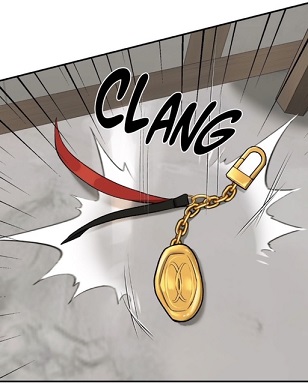 (chapter 45) After being blamed in the past, Kim Dan has reached his limit and chosen to stop engaging with Joo Jaekyung. However, this reaction risks exacerbating Kim Dan’s denial of his own mental illness, as he suppresses his emotions and isolates himself further. Contrary to the keychain, he can not be replaced. If he doesn’t get treated properly, his life could be in danger.
  (chapter 54) reveals a deeper issue: his belief that drugs can compensate for his mistreatment of his own body.
  (chapter 56), stands in stark contrast to Joo Jaekyung’s belief that medication is the only solution for treatment. Is it a coincidence that the doctor changed his prognostics about grandmother’s life span? No. It shows that without the new medication, she is supposed to live longer. Secondly it is clear that the grandmother is living well, because she is not plagued with remorse or guilt. In my opinion, through Shin Okja, the fighter should discover the power of mental health.
  (chapter 26)
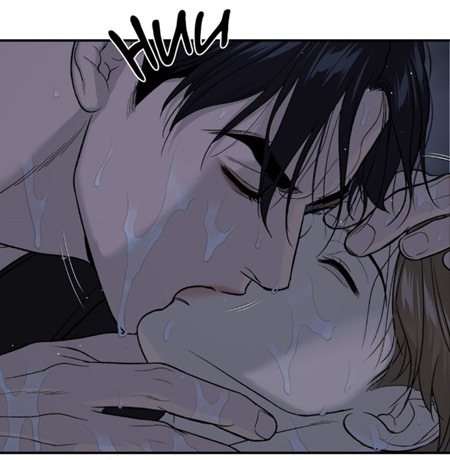 (Episode 60). Both moments carry significant emotional weight but reflect different facets of their dynamic, from selfishness to selflessness, secrecy to openness, and miscommunication to recognition. The setting and circumstances surrounding these kisses not only highlight the characters’ growth but also underscore the unresolved struggles they face.
 (chapter 14), acted particularly rough with Kim Dan
  (chapter 14), only snapping back to reality when he felt Kim Dan’s body trembling.
  (chapter 14) This moment of realization, coupled with the doctor’s tears and plea
  (chapter 14), served as the trigger for Joo Jaekyung to recall Cheolmin’s recommendation
  (chapter 14) of using foreplay and gentler methods, such as a kiss. While the kiss reflected care in the moment
  (chapter 16) Moreover, he never wondered why Joo Jaekyung had asked for sex in the locker room, which represented a change in his behavior. If he had done it before, then he would have forced the physical therapist to travel with him to Busan.
  (chapter 13) As you can see, through the comparison with the kiss on the beach, I realized the doctor’s passivity and lack of critical thinking in season 1. He never asked why the athlete was so rough during sex. He took this for a normality. His attitude exposed the doctor’s biased perception of his boss: a spoiled and rough man obsessed with sex. I would even add that the kiss had a positive effect on the protagonist
  (chapter 15), a confined space symbolizing Joo Jaekyung’s need to keep his relationships private. Picking up partners at a VIP club
 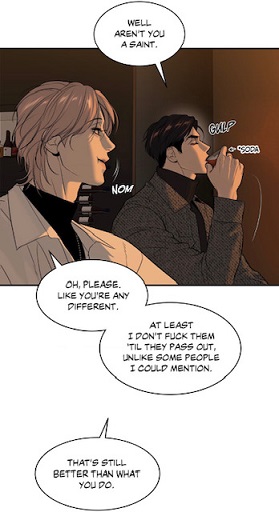 (chapter 33) was another extension of his desire to maintain secrecy. By contrast, the beach in Episode 60 is a public, open space, reflecting a significant shift.
  (chapter 14) was always filled with people surrounding the champion. However, once Kim Dan entered his life, this dynamic began to change. In Episode 14, Joo Jaekyung asked everyone to leave the locker room,
  (chapter 14) even excluding Park Namwook, who was even seen before stationed outside the bathroom door,
 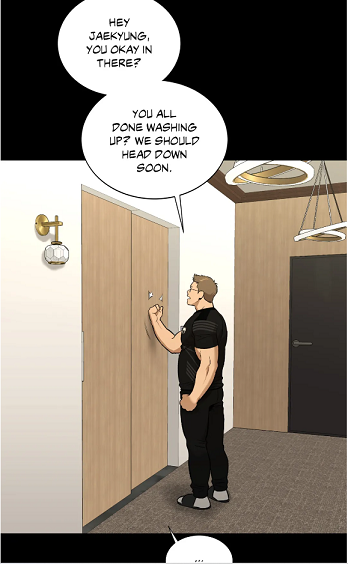 (chapter 14) signaling a gradual exclusion of others from his private life and emotions. By Episode 15, Joo Jaekyung explicitly sent away his manager to have a private conversation with Kim Dan.
 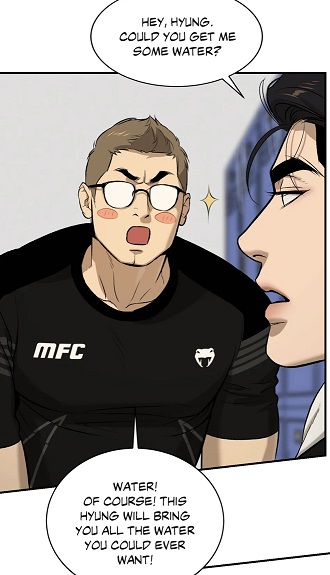 (chapter 14) This shift highlights the increasing importance of Kim Dan in Joo Jaekyung’s personal sphere. Interestingly, this progression is contrasted by Episode 49, where Joo Jaekyung deliberately ensured
  (chapter 49) he was not left alone with Kim Dan. This means that this place was no longer the synonym for privacy and secret. This reflects why director Choi could intrude with his minions. Following the incident with the switched spray, Kim Dan was left behind
  (chapter 50) in the locker room twice
 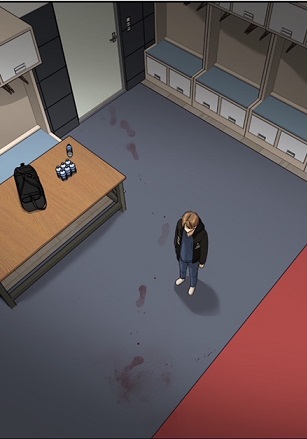 (chapter 51), which could only increase the physical therapist’s feelings that he didn’t belong to Team Black. He was not part of that “family”. And this coincides with the moment where Kim Dan cries for the last time:
 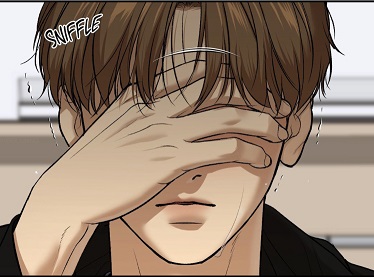 (chapter 51) From that moment on, the main lead won’t show his vulnerability and pain to others. This gesture announces the return of his “blue friend”, the depression.
  (chapter 47) And now, you are wondering how this is relevant to the scene on the beach. Joo Jaekyung got shocked and scared, but he didn’t cry later and it is the same for Kim Dan. Hence the latter could deny his presence on the beach and even ignore the athlete’s words:
  (chapter 60)
 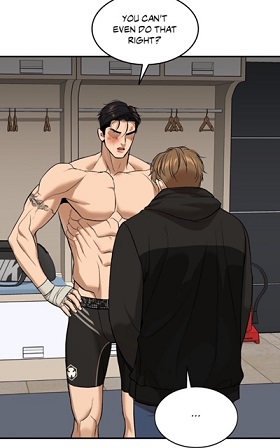 (chapter 51), his lack of loyalty, his greed and obsession for money.
  (chapter 51) Though the champion was restraining himself, he didn’t realize that his words were like punches to Kim Dan. The latter got to hear what he didn’t know.
 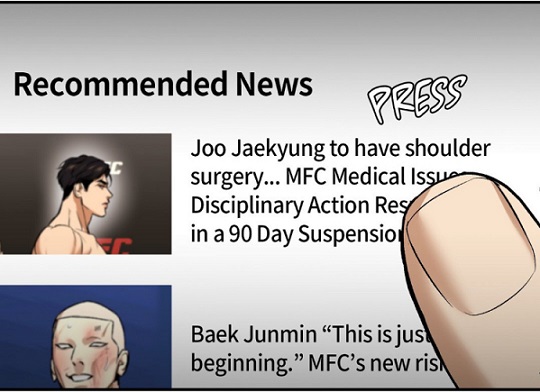 (chapter 52) The conversation in the locker room symbolically announced the champion’s private struggles to the media, as his bad temper was made public shortly after.
  (chapter 15) , representing his need for mental and emotional support, which his team and entourage failed to provide. While the CPR kiss could be dismissed as a rescue, it symbolically represents a step toward Joo Jaekyung revealing his true self. The kiss marks a moment where he unconsciously begins to acknowledge his feelings and his homosexuality, even in a setting where others could witness it.
 (chapter 60) was surrounded by nature. Hence they could show their true self: their exhaustion, desire and emotions. While the doctor was suicidal due to his depression and fatigue, the champion’s worries were genuine. Yet Kim Dan was not able to hear them.
  (chapter 60) This means that on the beach, Kim Dan could only detect one thing: Joo Jaekyung’s presence. But he didn’t sense his kisses and hear his words. That’s the reason why I come to the conclusion that this scene stands under the sign of “dream and illusion”.
  (chapter 60) Hence he came to reject his “intervention” as a lie and deception. The reality is that Joo Jaekyung does care for him, but he doesn’t know how to show it. He fears attachment. Because of his misjudgement, Kim Dan is not capable to notice the transformation in his former boss.
 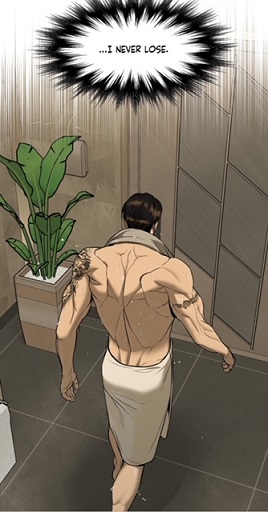 (chapter 49) His muscles are less pronounced. He is also wasting away.
 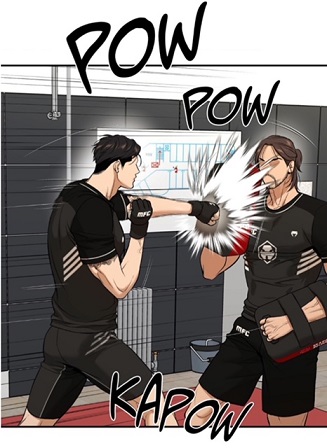 (chapter 49), who believed that physical strength alone would solve his problems. This environment denied him the mental and emotional support he truly needed.
  (chapter 44) on, Kim Dan never got kissed again. The absence of a kiss in the locker room was revealing Joo Jaekyung’s lack of faith in Kim Dan. His mistrust left such an emotional wound, which is only visible to the third eye.
  (chapter 54) Because Joo Jaekyung saw it in a vision, it becomes clear that the athlete is still in denial about his wrongdoing. Therefore he didn’t apologize for his false accusations and his bad perception of the physical therapist:
  (chapter 60, reducing his identity to his need for money, while Kim Dan rejects his offer, his help and conceals his pain. It is not surprising that Kim Dan left the treatment room.
  (chapter 60) The lies and miscommunication fade in the face of the life-and-death situation. However, this recognition is short-lived, as the events at the hospice reveal Joo Jaekyung’s lingering selfishness
  (chapter 27) and mental well-being.
  , his words reveal frustration and a superficial understanding of the situation. Rather than addressing the underlying psychological distress driving Kim Dan’s actions, Joo Jaekyung perceives them as reckless behavior. His focus remains on immediate danger rather than the deeper cause, showcasing his emotional detachment and inability to grasp the full seriousness of Kim Dan’s mental state. This misinterpretation underscores how Joo Jaekyung is still projecting his own coping mechanisms onto Kim Dan, assuming that sheer willpower and physical strength can resolve emotional struggles. This moment serves as a stark reminder of Joo Jaekyung’s ongoing growth and the gaps in his understanding of Kim Dan’s suffering. His denial of having gone to the beach, despite clear evidence, points to the depth of his trauma.
  (chapter 60) at the end of episode 60 as something negative. How so? It is because Kim Dan never said this:
  (chapter 44)
 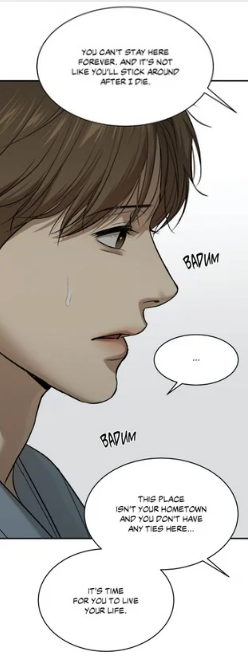 (chapter 57) However, Jinx-philes should detect the divergence: she is not using the word “home”, but Seoul. That’s the reason why in the end, Shin Okja’s confession to her grandchild will come back to bite her, as she described her own grandson as a stranger in this little town. It was, as if he had been an orphan all his life. He had no home all along.
 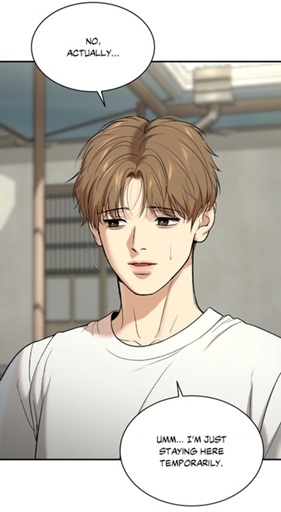 (chapter 58) Where are the parents? Who is the man where he is staying? Where did he plan to go after his stay there? The idiom “temporarily” could be perceived as an evidence that the doctor plans to end his life. According to my interpretation, Heesung believed that the landlord was Kim Dan’s grandfather. He was just denying his origins out of shame.
  (chapter 9) The athlete has now every reason to stay there and that’s how he will discover all the doctor’s secrets and misery.
 (chapter 15) kiss represents selfishness, secrecy, and miscommunication, while the beach kiss

 (chapter 23) Potato initially admires the champion, aspiring to be like him
 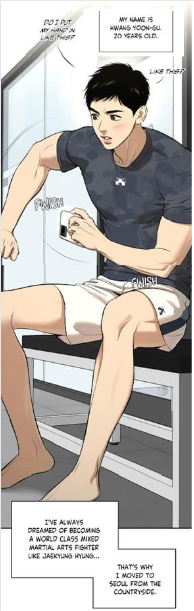 (chapter 23) and dreaming of recognition as his sparring partner.
  (chapter 23) Joo Jaekyung, much like the prince in Andersen’s story, projects an image that masks the reality of his life. His success, while celebrated, represents years of hard work and immense personal sacrifices. At the gym, Park Namwook undermines these efforts by slapping the athlete
  (chapter 52), the amateur starts distancing himself from his former idol. This exposes the fragility of Potato’s dream. Therefore it is not surprising that he starts taking a different path: acting, though I still think, it is temporary. However, behind the glamorous facade of the show business, there exists a dark side as well.
  (chapter 59) Heesung’s fate is similar to the champion’s. Despite his popularity, the actor is deeply unhappy. He feels lonely, for people only know the actor and not the man behind the mask. That’s the reason why he is looking for his soulmate.
  (chapter 33) That’s how I realized why Potato and Heesung are destined to be together. They are both self-centered, dishonest and blind, but more importantly they are chasing after an illusion which is strongly intertwined with immortality. In addition, my avid readers should keep in mind what Potato truly expressed, when Mingwa introduced this “chow chow”.
  (chapter 23). In reality, he wanted to use the athlete as his servant. The closeness
  (chapter 23) he was seeking was self-serving. While the amateur and the actor are searching for the “perfect companion”, the other couple has no expectation from others. They both have no longer any dream or hope. That’s the reason why Kim Dan was putting this vision of Joo Jaekyung behind a veil:
  (chapter 58) He was giving up on his dream expressed in the birthday card,
 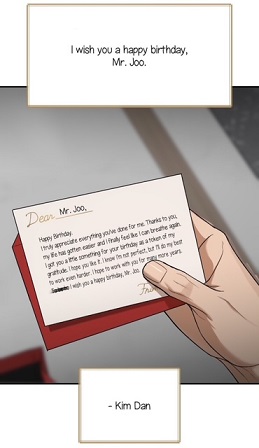 (chapter 55) though I believed that he had another bigger wish, but due to his low self-esteem, he didn’t dare to express it:
  (chapter 55) My newest theory is that he wanted Joo Jaekyung to teach him fighting, but not for himself, but in order to help the fighters and in particular to protect the champion’s body:
 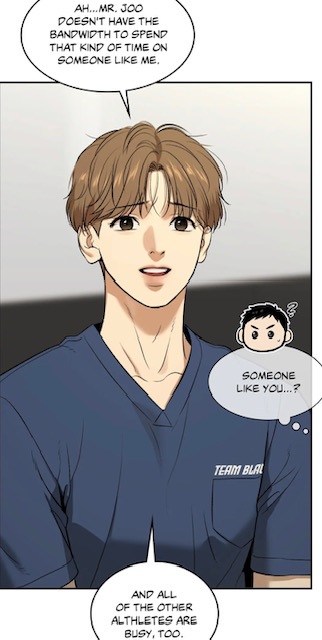 (chapter 25) To develop a training where injuries are minimized. In season 2, it is clear that Joo Jaekyung and Kim Dan have reached the bottom. Both feel empty and exhausted. They were crushed by harsh reality, and they had no one by their side to listen to their pain. Therefore it is not astonishing why the doctor could not confide to the actor and the amateur fighter. They arrived too late.
 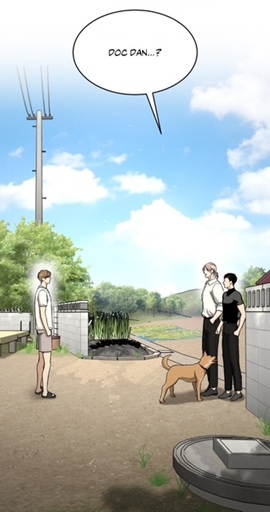 (chapter 58) Their presence definitely diverted the doctor’s attention, lessening his pain.
  (chapter 25) he learns the true nature of the relationship between Kim Dan and Joo Jaekyung. This revelation forces him to confront his own repressed feelings, as he unconsciously realizes his attraction to the fighter.
  (Chapter 25) Heesung’s involvement further complicates matters, as Potato confesses his love for Joo Jaekyung
  (chapter 35) while simultaneously vowing to sacrifice his feelings for the sake of the couple’s happiness. This act demonstrates Potato’s pure and selfless definition of love,
  (chapter 35) contrasting with the conditional love depicted in Andersen’s tale.
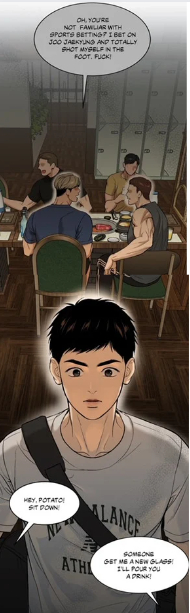 (chapter 52) and the switched spray the
 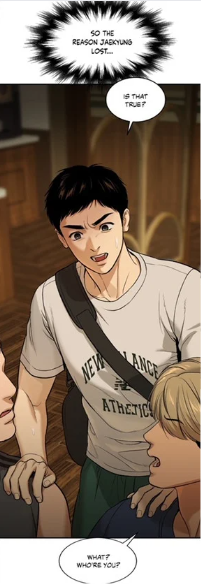 (chapter 52) which is strongly intertwined with the departure of disloyal members from Team Black marks another step in his journey toward disillusionment. While Potato initially views this as an isolated incident, it exposes the broader corruption within the MMA world, including the betrayal, greed, and lack of loyalty that undermine its integrity. While he views himself as loyal to doc Dan and Team Black, for he remained at the gym, his heart was not. He is becoming like his hyungs, Park Namwook and Heesung. In Andersen’s tale, the mermaid’s journey to the sea witch represents a pivotal moment of transformation. By sacrificing her voice and enduring physical pain, she gains entry into the human world, but at the cost of her identity. Similarly, Potato’s journey is marked by painful discoveries that force him to confront uncomfortable truths. Through Kim Dan, he will begin to see his own flaws before he is able to recognize them in those he once trusted.
  (chapter 23)
  (chapter 25)
 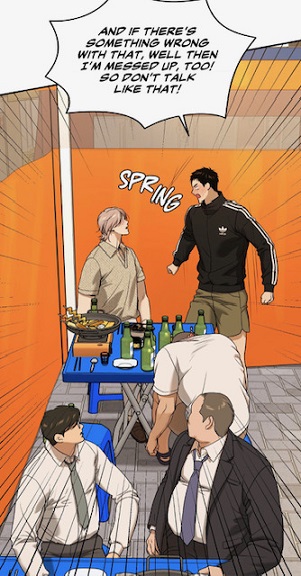 (chapter 35) The latter doesn’t mind breaking social norms by yelling or causing a fight at a restaurant. But let’s return to the actor’s confession at a bar. It’s not surprising that Heesung appears indifferent to the affection of those who cared for him. The last partner was described as too clingy. This means that Heesung places himself as the judge. In addition, it was, as if he was a god destined to live forever. He is forgetting his human condition, just like his partner’s. And that’s exactly how the prince in The Little Mermaid views life.
 (special episode 1) With this request, he implies that he will never become responsible for the amateur fighter. Therefore he can hide his homosexuality behind the young fighter. He used Potato’s mistake to his advantage.
  (special episode 1) By asking Potato to take care of all his needs and desires, Heesung placed himself in a position where he had power and could control Potato. That’s how the young fighter made a dangerous deal with the gumiho. No wonder why his sex role play was a prince interacting with a guard.
 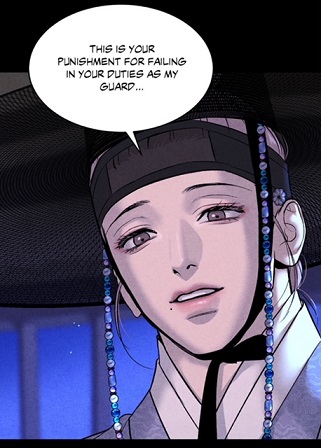 (special episode 2) Hwang Yoon-Gu didn’t realize that by taking responsibility for the actor, he lost his freedom and as such his voice. Is it a coincidence that Mingwa portrayed the young maknae as someone who would raise his voice due to his emotions in the past?
 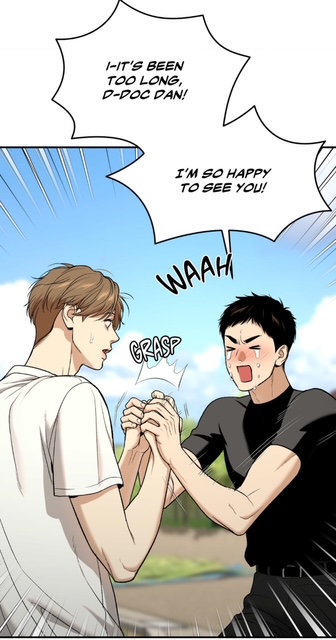 (chapter 58) his behavior is totally different than with the actor:
  (chapter 58) Tears, touch, raising his voice with Kim Dan, but not with the comedian. With the actor, he looks more calm, distant and mature. Heesung’s selfishness is evident in his treatment of Potato, whom he manipulates into becoming an extension of his own image. Hence he is no longer wearing shorts and tee-shirts.
  (chapter 59) One might say that he is gradually elevating Potato’s status through his suggestions.
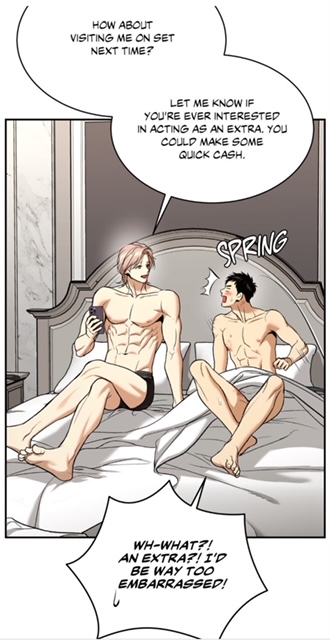 (special episode 2) By encouraging Potato to work as an actor and shaping him into a version of himself, Heesung prioritizes his own desires over Potato’s individuality. He is not asking what Potato’s true dream is. But this was his dream originally:
  (chapter 23) Why? It was due to his low self-esteem.
  (chapter 23) He was not confident enough, for he was the only one with such a weight-category.
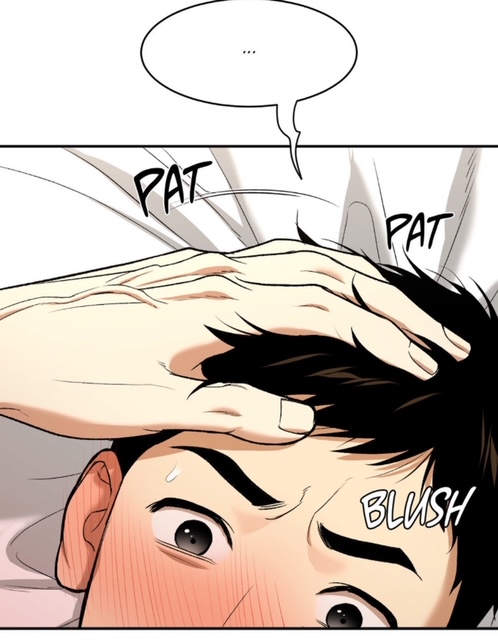 (special episode 2) played a huge influence in Potato’s decision to take the offer as an extra. It was, as if one of his dreams had come true. But is this what he truly wanted?
  (chapter 58) underscores his indifference, symbolizing the unbalanced dynamic in their relationship. Like the prince, Heesung offers no genuine commitment, leaving Potato to grapple with the consequences of his dependency. Thus I perceive Potato’s tears
  (chapter 59) as a signal that he is not truly happy.
  (chapter 58) However, this is about to change. Heesung who likes novelty and change is not realizing that his wish is becoming true. The picture with his last work announces the end of his “friendship” with Potato. How so?
 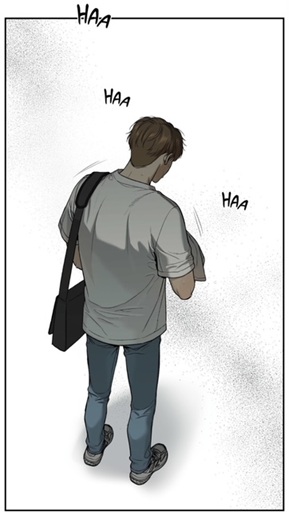 (chapter 59) Kim Dan once referred to Potato as a puppy
  (chapter 29), drawing a connection between the character’s innocence and loyalty.
 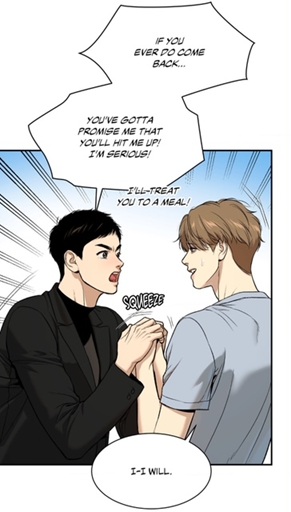 (chapter 59) However, Potato’s departure reveals an underlying superficiality and disloyalty—he merely asks Kim Dan to call him when he visits Seoul, failing to acknowledge the depth of their bond. This reminded me of the prince’s fake promise:
 (chapter 35) This shows that Heesung has long internalized this pattern: assistance will be only given, if he is called. That’s why he has no true friend in the end. He shows no interest in others. But by doing so, he is putting the whole responsibility on his counterpart. Through the actor and the manager’s behavior, the former errand boy has long adopted this pattern. Hence he didn’t call Kim Dan in the end. He waited for a signal from his part. This behavior mirrors the little mermaid’s sisters, who only realize her absence when it is almost too late to act. Similarly, Potato’s casual farewell highlights a betrayal of Kim Dan’s friendship, further emphasizing Potato’s struggle with emotional awareness. That’s why I mentioned above that Potato is about to discover his true nature: he is also a sinner. This growth parallels the biblical narrative of Adam and Eve, where the acquisition of knowledge leads to the loss of innocence. Heesung, like Eve, introduces Potato to a new world of experiences, including his sexual orientation. However, this newfound knowledge comes with its own burdens, as Potato must reconcile his identity with the harsh realities of the world around him.
 (chapter 5) Heesung could no longer express his needs and desires.
 (chapter 58) Just because one is happy, this doesn’t mean that the other is. For that to happen, communication and honesty are necessary.
 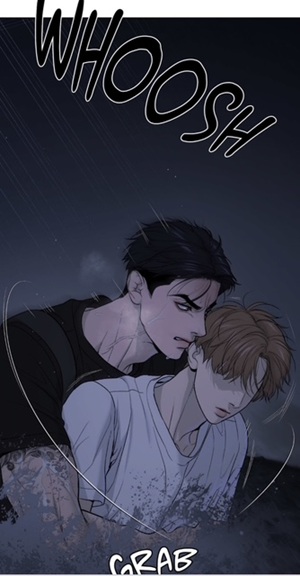 (chapter 59) Potato’s journey is to discover and embrace the principle of “self-reliance” and autonomy. Only when Potato becomes independent in his thoughts and decisions, can he truly help the main couple.
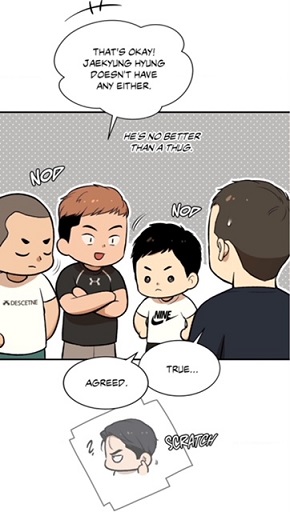 (chapter 47) and 52. Initially, he believed in his hyungs’ description of Joo Jaekyung as a thug, but later he criticized the same fighters for abandoning the athlete
 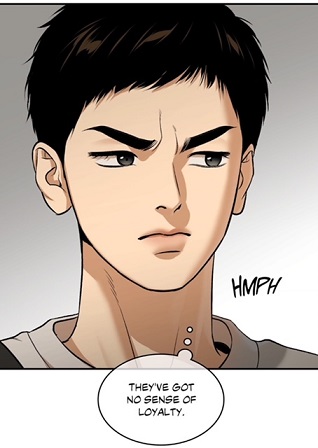 (chapter 52), accusing them of lacking loyalty and dismissing their claim that they had nothing to learn from him. Yet, in episode 52, Potato does not reproach Park Namwook or Yosep for their passivity and naivety,
 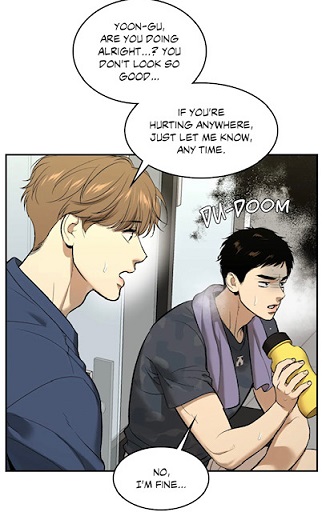 (chapter 23) —taking over his tasks and noticing his unhappiness
 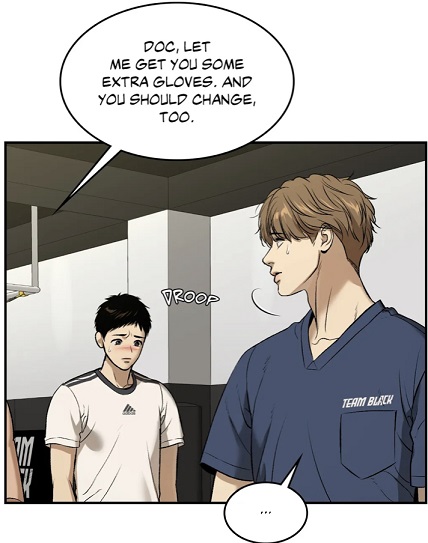 (chapter 25) —demonstrates his capacity for genuine care. This contrasts sharply with Heesung’s selfishness and serves as a reminder of the value of mutual support in relationships. Potato’s potential return to the place where he met Kim Dan could symbolize a rediscovery of authentic connections, marking the beginning of his path toward independence and self-realization.
  (chapter 58) And like mentioned above, this could become a serious problem for Yoon-Gu. He could be perceived as someone selling himself for a gig. And Heesung is not even realizing the consequences of his intervention and meddling. That’s why it is important for Yoon-Gu to become independent. This lesson resonates with Potato’s journey in Jinx. By recognizing Heesung’s selfishness and breaking free from his influence, Potato has the potential to rediscover his own dreams and individuality. Like Erich Fromm mentioned it, true love is respect, care, knowledge and responsibility. However, Heesung has no idea about the importance of these notions, as everything is evolving around his own needs and dreams.
  (chapter 58) That’s how it dawned on me that little by little Yoon-Gu had been losing his senses:
  (chapter 31), his smell, then his ears
 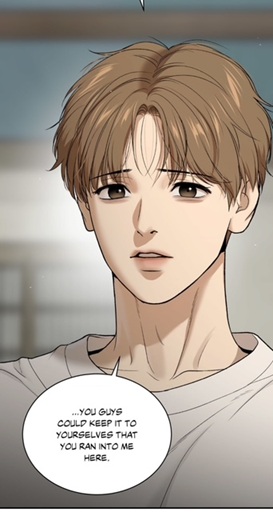 (chapter 58) He forgot the danger coming from Heesung’s words, he could not hear the suffering from the champion due to his bias, and finally he couldn’t see Kim Dan’s distress due to his own feelings and prejudices. We could say that because of the influence from others, he was no longer able to see reality. However, like mentioned before, I sense the return of Potato’s senses in the following panel:

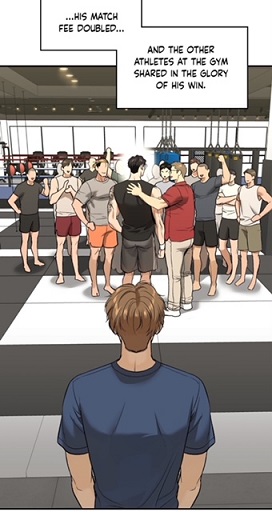 (chapter 41), and the mermaid, as he grapples with voicelessness and the pressures of his world.
  (chapter 36) Choi Heesung, representing another prince with Potato as his bride, benefits from others’ sacrifices
 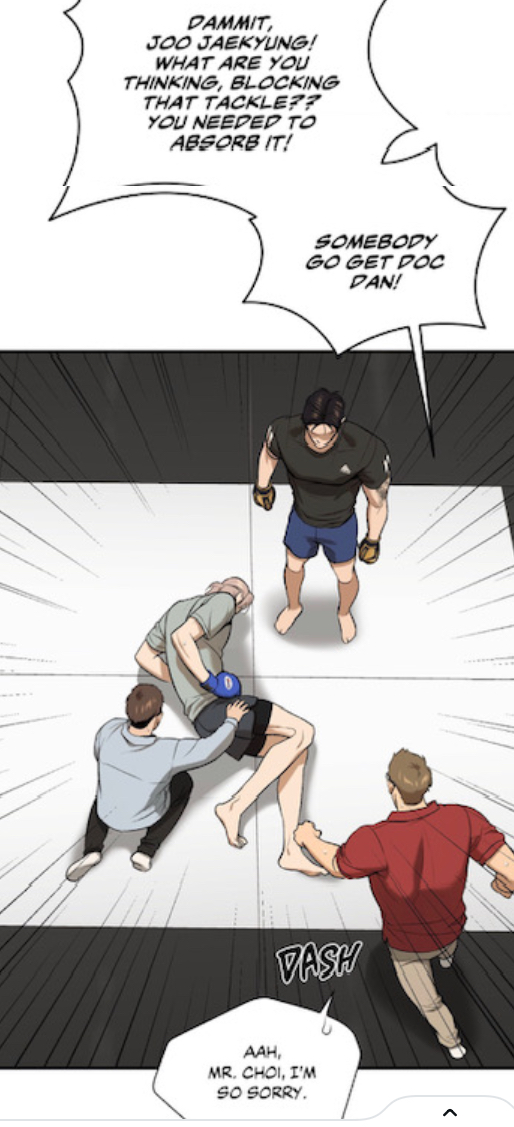 (chapter 31)
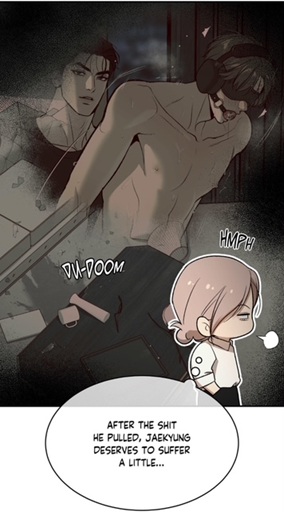 (chapter 58) while remaining oblivious to their struggles. These parallels reveal layers of self-discovery, mutual transformation, and the pursuit of meaning. By analyzing these similarities, we uncover deeper layers of self-discovery and transformation within the narrative.
 (chapter 53) Joo Jaekyung, representing the “new world,” acts as both a source of transformation and a mirror reflecting Kim Dan’s sacrifices.
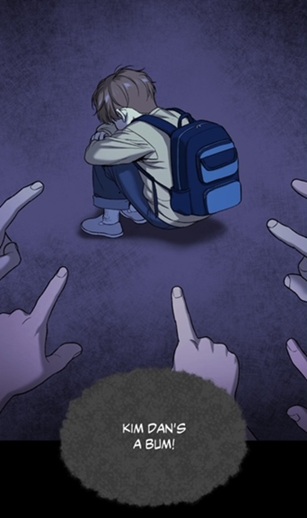 (chapter 57)
  (chapter 59) Like the mermaid, he has always lived disconnected from his own needs, burdened by the expectations of others—his grandmother, Heo Manwook, the doctors
  (chapter 59), he is not capable of crying. It is because he has been living like a ghost for the last two months. Depression, for both the mermaid and Kim Dan, manifests as a silent struggle, making their eventual transformations even more poignant.
 (chapter 1) hiding his true self behind a facade of strength and success. On the other hand, Joo Jaekyung also embodies the mermaid’s longing and sacrifice. Living in the world of MMA, a high-pressure environment where he is constantly pushed to perform, he resembles the mermaid in the underwater kingdom—a place of death and materialism where the mermaids feed on drowned humans. It is no coincidence that the fighters are displayed like mermaids in the water full of blood.
  (chapter 27) reflects his connection to the mermaid. Water is his natural element, a place where he feels at peace, yet he has been forced to conform to a fiery world of intensity and relentless ambition.
  (chapter 19) Hence he never went to the swimming pool in his own penthouse, until Kim Dan triggered his memory and longing. This interplay of water and fire
  (chapter 52)
  (chapter 41) Joo Jaekyung’s image was exploited to lure these individuals down a darker path, highlighting how his light has been misused by those around him.
 (chapter 19)
 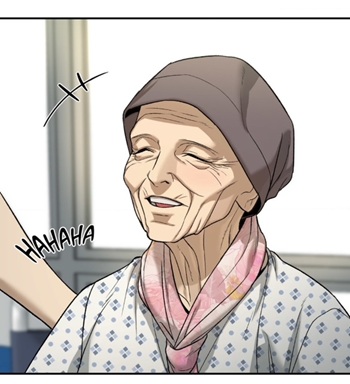 (chapter 56) as long as they were not associated with burden or suffering, while the mermaid’s grandmother celebrates the beauty and decorum of their underwater realm.
  (chapter 52) This dynamic parallels the members of Team Black in Jinx. Although they are treated like Joo Jaekyung’s co-workers
  (chapter 7), in reality, he is their boss and the foundation of their success. Their indifference mirrors the mermaid sisters’ behavior; they only notice his struggles and absence when his winning streak falters, prompting many to leave the gym for the rival King of MMA. However, if we take Andersen’s fairy tale as a source of inspiration, it signifies that at some point, the remaining members of Team Black might come to “sacrifice” themselves for their “little sister,” symbolically representing Kim Dan and Joo Jaekyung. This potential act of loyalty could mirror the mermaid sisters’ gesture, showing that even belated recognition and care can lead to transformative redemption for those involved.
 (chapter 1), attracting others seeking the same level of fame and fortune.
  (chapter 22) and a “neglected child”
  (chapter 58) Feeling lost without Kim Dan, he initially requests his return so that they can be together again. This longing for a companion reflects Potato’s deeper need for guidance and connection, much like the mermaid sisters who briefly visit the surface but ultimately return to their underwater world when the novelty fades. Yet, when they reach maturity and are allowed to visit the surface, the novelty of the human world quickly fades, and they return to their underwater realm indifferent to human suffering. However, notice that on his day of the departure, Potato tells Kim Dan that he won’t call him, the mermaid has to initiate the first step.
 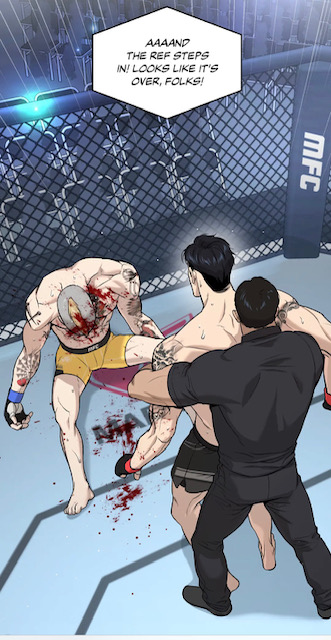 (chapter 15) strongly parallel the detached, high-pressure environment of MMA fighting. Joo Jaekyung, trained relentlessly since youth, embodies this world’s harshness, where vulnerability is a luxury rarely afforded.
 (chapter 59) suggests that Joo Jaekyung might reclaim his authentic self through activities like swimming, reconnecting with nature, and symbolically planting the seeds for a new life. Kim Dan, who cannot swim, learns from Joo Jaekyung, and together, they forge a path toward mutual healing and immortality—not in the literal sense but through finding their “soul” and purpose.
 (chapter 56) The city represents the oppressive expectations and artificial constructs that have shaped Joo Jaekyung and Kim Dan’s lives. By meeting again in the ocean, they reconnect with a more authentic and unburdened version of themselves. This transition echoes the little mermaid’s connection to the natural world as a place of solace and transformation.
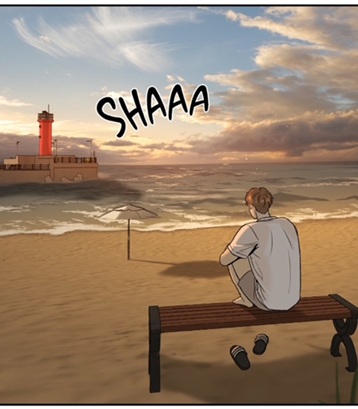 (chapter 59) finding light not in others but within himself. Through his hardships, he gains the strength to pursue his own identity and agency.


 (chapter 54) and penthouse
  (chapter 54) in Seoul—a city symbolizing anonymity, invisibility, and corruption—to the hospice “Light of Hope”
  (chapter 56) in a small town on the West Coast
  (chapter 56), where people know each other. This essay builds upon my previous interpretations of the series, which led me to develop these predictions for the upcoming season. By comparing the visual depictions of the gym and penthouse in Seoul with the hospice and small town on the West Coast, the divergence in weather becomes a powerful symbol of the changes Joo Jaekyung will undergo. The rainy, overcast settings of the gym and penthouse reflect the fighter’s inner turmoil and sadness, highlighting the oppressive atmosphere of a city rife with anonymity and corruption. In contrast, the sunny and open environment of the hospice and town by the ocean represents a space of hope and renewal, where human connections thrive. This comparison underscores the significant role the hospice and small town will play in fostering Joo Jaekyung’s self-discovery and healing. The gym and penthouse in Seoul symbolize anonymity, invisibility, and corruption. This anonymity stems from the city’s indifference to individual suffering, as seen when Kim Dan was dragged
  (chapter 16)
  (chapter 16) through the streets by loan sharks in broad daylight without anyone intervening. Invisibility is further exemplified by the perverted hospital director,
  (chapter 1) who harassed Kim Dan without facing any consequences, though he was caught, and by Kim Miseon’s unethical actions, such as leaking patient information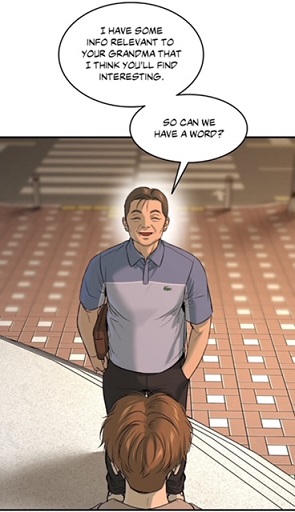
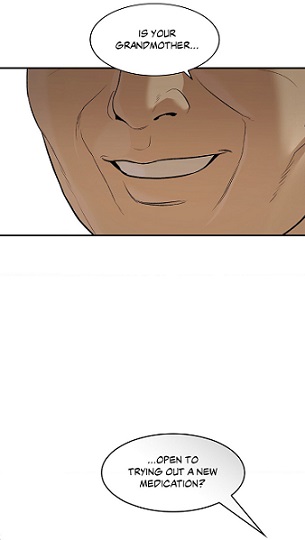 (chapter 48) and using Shin Okja as a guinea pig for trial treatments
 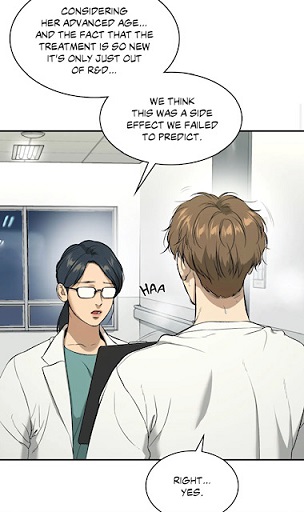 (chapter 21) —none of which led to accountability. In contrast, the hospice represents a counterpoint:
  (chapter 36)
  (chapter 35)
  (chapter 57), prompting him to recognize that his so-called career end does not symbolize his real death.
  (chapter 57). This environment challenges him to confront the indifference of figures like Yosep and Park Namwook, whose neglect, blind trust, passivity, naivety, neglect and selfishness have shaped his struggles. Notice that the nurses are often seen together and exchanging thoughts about doc Dan symbolizing unity and harmony
  (special episode 1) In other words, the presence of Kim Dan’s friends (Joo JAekyung, Potato and Heesung) could make her realize her true nature, which would impact her mental health. She led a life full of missed chances and regrets.
  (chapter 26)
 (chapter 56), a place where Joo Jaekyung finds relaxation through swimming, the setting introduces an opportunity for him to teach Kim Dan how to swim, addressing the latter’s fear of water
  (chapter 27). Swimming could become a shared activity that rebuilds their relationship on a foundation of trust, mutual learning, and growth. Engaging in this physical activity would not only strengthen their bond but also boost Kim Dan’s confidence and help him rediscover his own resilience.
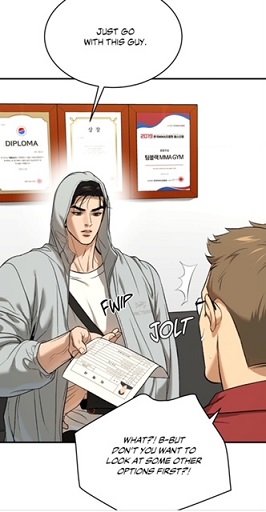 (chapter 54), his connection with Kim Dan is no longer defined by a boss-employee relationship. Their interactions, now free of financial obligations, offer the fighter a clearer view of Kim Dan’s selfless and angelic nature. The physical therapist’s unwavering care, even at the expense of his own well-being, highlights his ungreedy and altruistic character. This realization will deepen Joo Jaekyung’s respect and affection for Kim Dan, further cementing the transformative journey they both embark on.
 (chapter 56) “Nurse Mind” and “Nurse Heart,” provide another layer of mentorship. They could act as the champion’s eyes and ears, teaching him to observe and understand Kim Dan’s mental state. Though the nurse 1 started reproaching Kim Dan to neglect himself
 (chapter 13) She already noticed his unusual fatigue, so in my opinion, this third woman could be the one detecting that the main lead is not eating properly. If this assumption is correct, then she stands for food and body, like in the Korean saying: “If your heart is not in it, you can’t see if you look. You can’t even hear if you listen, and you can’t taste even if you eat.” Their guidance should help Joo Jaekyung cultivate a nurturing side, showing him that strength is not solely physical but also emotional and relational. In this way, the nurses become pivotal in his journey from a lone wolf to a leader who values and protects his pack.
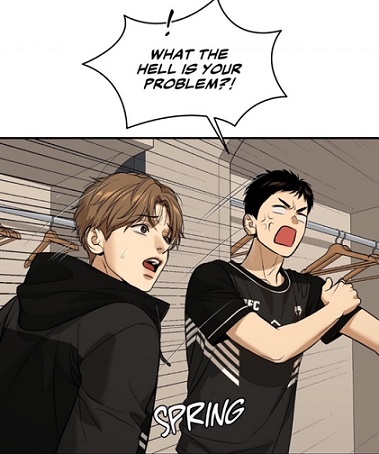 (chapter 49), though their positions are absolutely opposite. The patient’s reaction in Chapter 57 echoes this dynamic, as he accuses Joo Jaekyung of being ill-tempered (this means that he remembers the suspension), a perspective shaped by the media’s manipulations. His criticism reflects the behavior of a sheep, falling prey to misinformation and failing to see the larger truths. On the other hand, it indicates that this man also knows a part of the truth: the suspension which is no longer mentioned, but also escaped Kim Dan’s notice, as he was dealing with his departure. In contrast, Potato’s response in Chapter 49, where he courageously questioned Director Choi despite the latter being an elder, showcases independence and critical thinking. This juxtaposition highlights the patient’s potential to awaken Joo Jaekyung, Kim Dan, and Potato to the damaging impact of media narratives. Over time, the patient himself must confront the wrongfulness and cold-heartedness of his accusations, fostering growth and understanding on all sides. These characters reflect the flaws of Yosep and Namwook, enabling Joo Jaekyung to see the neglect and indifference he has endured and inspiring him to redefine his role in the gym and in Kim Dan’s life.
  The illustration’s inclusion of the hamster—symbolizing Kim Dan’s fun, fragile, and nurturing nature—along with the chow chow and the gumiho, emphasizes the roles of protectors and mediators. The chow chow’s loyalty and the gumiho’s cunning serve as essential forces guarding the hamster and navigating the complexities of this “pure community,” where lies and selfishness can still exist. These characters highlight the intricate dynamics within the hospice, where Joo Jaekyung must balance strength with empathy.
 (chapter 13) This newfound appreciation allows him to form fond memories of the place, associating it with peace and renewal despite the grandmother’s inevitable passing. By metaphorically taking over her place at the hospice, Joo Jaekyung symbolically builds his family there, grounding himself in the values of compassion and community. These lessons ultimately empower him to take over the gym with a renewed perspective, ready to lead with strength and empathy. Finally, I deduce that the main couple will initially navigate between the Light of Hope Hospice and the doctor’s rented room before visiting other places (like the beach and the mountain) The more places they will visit together, the more they will become true to themselves, inciting them to open their mind and heart to each other. Surrounded by nature, all the characters will get purified and discover the true source of happiness.
 Bebebisous33s' analyses in K-Dramaland and Manhwas