
Please support the authors by reading Manhwas on the official websites. This is where you can read the Manhwa: Jinx But be aware that the Manhwa is a mature Yaoi, which means, it is about homosexuality with explicit scenes. Here is the link of the table of contents about Jinx. Here is the link where you can find the table of contents of analyzed Manhwas. Here are the links, if you are interested in the first work from Mingwa, BJ Alex, and the 2 previous essays about Jinx The Red Flags Behind The Flowers and The Painful Mermaid’s Aspiration. This is where you can read the original version The Little Mermaid from Hans Christian Andersen
It would be great if you could make some donations/sponsoring: Ko-fi.com/bebebisous33 That way, you can support me with “coffee” so that I have the energy to keep examining Manhwas. Besides, I need to cover up the expenses for this blog.

Hans Christian Andersen’s The Little Mermaid offers a nuanced exploration of love, conditional relationships, and the struggle for independence. In a previous essay, The Painful Mermaid’s Aspiration, I explored parallels between Andersen’s tale and Jinx, focusing on themes of sacrifice and transformation. However, deeper analysis has revealed additional layers to these parallels, particularly in the dynamics of conditional love, independence, and the pursuit of dreams, which merit further exploration here. The little mermaid’s yearning is expressed poignantly in her dialogue with her grandmother:
“So I shall die,” said the little mermaid, “and as the foam of the sea I shall be driven about never again to hear the music of the waves, or to see the pretty flowers nor the red sun. Is there anything I can do to win an immortal soul?” Quoted from http://hca.gilead.org.il/li_merma.html
This statement reflects the mermaid’s desperation and her willingness to sacrifice everything for her dream. The old woman’s response highlights the impossibility of her aspiration without absolute devotion from the prince:
“No, unless a man were to love you so much that you were more to him than his father or mother; and if all his thoughts and all his love were fixed upon you, and the priest placed his right hand in yours, and he promised to be true to you here and hereafter, then his soul would glide into your body and you would obtain a share in the future happiness of mankind. He would give a soul to you and retain his own as well; but this can never happen.” Quoted from http://hca.gilead.org.il/li_merma.html
The unattainable condition imposed by the old woman underscores the imbalance in the mermaid’s love. The grandmother’s description of the prince’s hypothetical love suggests it would transcend familial bonds, symbolizing a selflessness so profound that he would give a part of himself to his partner. However, this ideal of love contrasts sharply with the mermaid’s sacrifices, as in verity her yearning for the prince is intertwined with her desire for an immortal soul. Her physical attributes, cherished in her own world, are deemed unattractive on land, symbolizing the rejection of her true self. Her conditional love requires her to give up her voice, her identity, and even endure physical pain. This duality—a love that demands selflessness yet is rooted in conditional aspiration—reveals the inherent imbalance in her quest for acceptance and fulfillment. The matriarch’s final remark—“Let us be happy and dart and spring about during the three hundred years that we have to live, which is really quite long enough; after that we can rest ourselves all the better”—urges the mermaid to embrace her current existence rather than chase an impossible dream. However, if she had followed her grandmother’s advice, she wouldn’t have truly lived at all, for she has always been feeling miserable deep inside.
This tension between illusion, aspiration and self-acceptance mirrors the emotional struggles in Jinx, particularly the relationships between Heesung, Potato, and Kim Dan. Moreover, as I delved deeper into the story, I realized that Andersen’s fairy tale carries an even more poignant message: dreams, while often a source of aspiration, can also be illusions that shatter upon collision with harsh realities, like for example the broken promise (“The prince said she should remain with him always“) from the prince who denied the existence of death in their life. This essay builds on these reflections, delving deeper into the overlooked dimensions of dependency and conditional love, revealing how these dynamics shape the characters’ paths toward independence and self-realization. The little mermaid’s yearning, intertwined with her desire for an immortal soul and as such for her own identity, mirrors the characters’ pursuit of validation and dreams, often at the cost of their individuality. Like the mermaid, these characters grapple with the conflict between their dreams and the realities of conditional relationships. While Andersen’s tale portrays the little mermaid’s yearning for the prince and the human world as both a source of aspiration and tragedy, Jinx reinterprets these themes through the lens of modern relationships, showing how dependency and idealization can hinder self-discovery and fulfillment. The parallels extend further, as each character’s journey reveals deeper truths about love, independence, and personal growth.
The Illusion of the Prince: Joo Jaekyung and Potato
In The Little Mermaid, the prince represents the little mermaid’s idealized dream of the human world. However, her love for him is deeply intertwined with her desire for an immortal soul. This duality—a mix of genuine affection and conditional aspiration—renders her relationship with the prince inherently unbalanced.
As the days passed, she loved the prince more fondly, and he loved her as he would love a little child, but it never came into his head to make her his wife; yet, unless he married her, she could not receive an immortal soul; and, on the morning after his marriage with another, she would dissolve into the foam of the sea. Quoted from
Similarly, Joo Jaekyung serves as an illusion in Potato’s life.  (chapter 23) Potato initially admires the champion, aspiring to be like him
 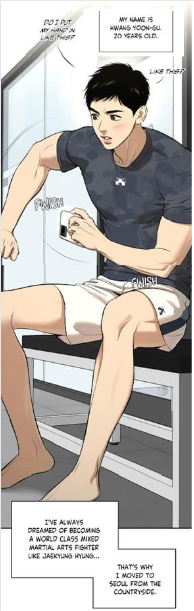 (chapter 23) and dreaming of recognition as his sparring partner.
 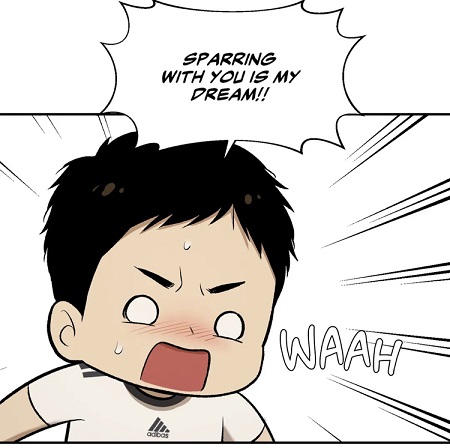 (chapter 23) Joo Jaekyung, much like the prince in Andersen’s story, projects an image that masks the reality of his life. His success, while celebrated, represents years of hard work and immense personal sacrifices. At the gym, Park Namwook undermines these efforts by slapping the athlete
  (chapter 7) and calling him “my boy,”
 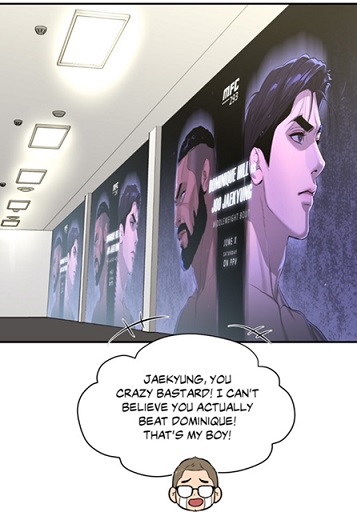 (chapter 40) effectively denying Joo Jaekyung the acknowledgment he deserves for his achievements. Potato is misled by this fabricated image (chapter 23), drawn to the champion’s public persona rather than understanding the struggles beneath it. Moreover, Joo Jaekyung can also be viewed as a mixture of both the prince and the mermaid, embodying the illusion of grandeur while simultaneously bearing the silent pain of sacrifice and transformation. This duality deepens the parallels between Andersen’s tale and Jinx, highlighting the complexities of admiration, dependency, and self-realization. To conclude, this admiration is rooted in superficial qualities: Joo Jaekyung’s public persona, his success, and the light he projects to the world. Furthermore, Potato’s physical differences—his smaller frame and lighter weight category—highlight the impossibility of truly becoming like Joo Jaekyung. (chapter 23) This realization mirrors the little mermaid’s struggle to reconcile her nature as a seductress of the sea with her dream of becoming human.
Potato, drawn to this carefully curated public persona, aspires to emulate the champion 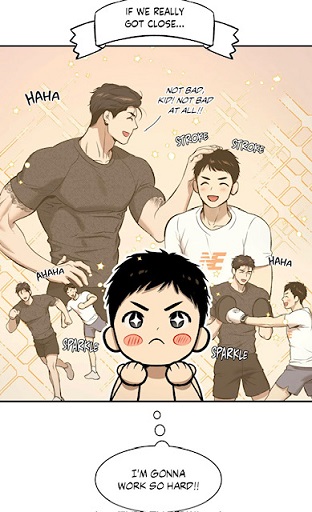 (chapter 23) without understanding the profound struggles beneath his image, failing to perceive Joo Jaekyung’s unhappiness, struggles, and loneliness. Like the image is exposing it, Potato views the athlete as a companion as well whose efforts should serve to keep him company. This dynamic mirrors the little mermaid’s conditional love for the prince, as Potato’s idealization is rooted in his own aspirations rather than genuine understanding. Just as the prince remains oblivious to the mermaid’s sacrifices, Potato overlooks the reality of Joo Jaekyung’s burdens, emphasizing a dependency that hinders true recognition and connection. Once his reputation as a champion is tarnished
 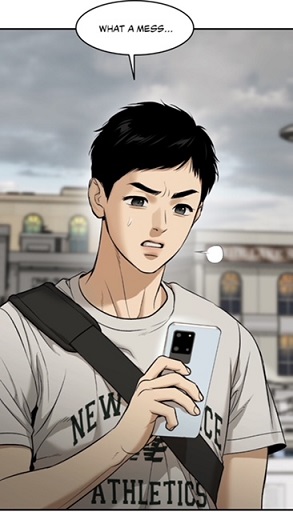 (chapter 52), the amateur starts distancing himself from his former idol. This exposes the fragility of Potato’s dream. Therefore it is not surprising that he starts taking a different path: acting, though I still think, it is temporary. However, behind the glamorous facade of the show business, there exists a dark side as well.
  (chapter 59) Heesung’s fate is similar to the champion’s. Despite his popularity, the actor is deeply unhappy. He feels lonely, for people only know the actor and not the man behind the mask. That’s the reason why he is looking for his soulmate.
  (chapter 33) That’s how I realized why Potato and Heesung are destined to be together. They are both self-centered, dishonest and blind, but more importantly they are chasing after an illusion which is strongly intertwined with immortality. In addition, my avid readers should keep in mind what Potato truly expressed, when Mingwa introduced this “chow chow”.
  (chapter 23). In reality, he wanted to use the athlete as his servant. The closeness
  (chapter 23) he was seeking was self-serving. While the amateur and the actor are searching for the “perfect companion”, the other couple has no expectation from others. They both have no longer any dream or hope. That’s the reason why Kim Dan was putting this vision of Joo Jaekyung behind a veil:
  (chapter 58) He was giving up on his dream expressed in the birthday card,
 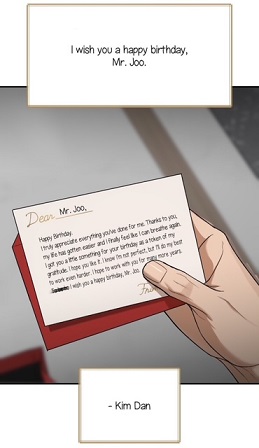 (chapter 55) though I believed that he had another bigger wish, but due to his low self-esteem, he didn’t dare to express it:
 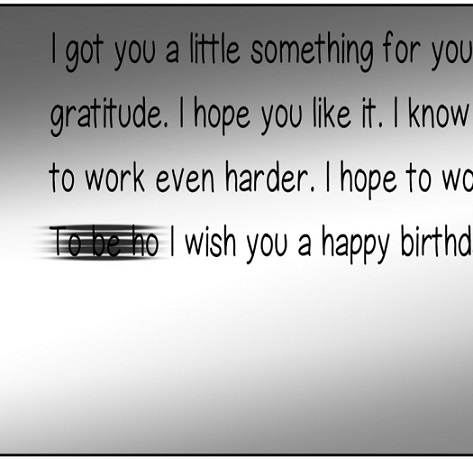 (chapter 55) My newest theory is that he wanted Joo Jaekyung to teach him fighting, but not for himself, but in order to help the fighters and in particular to protect the champion’s body:
 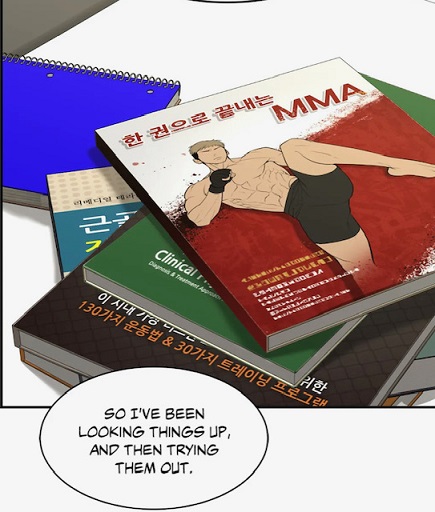 (chapter 25)
 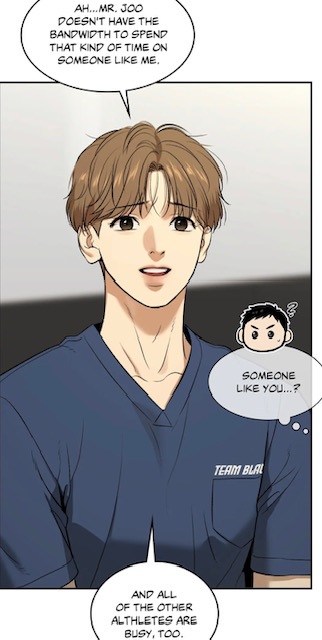 (chapter 25) To develop a training where injuries are minimized. In season 2, it is clear that Joo Jaekyung and Kim Dan have reached the bottom. Both feel empty and exhausted. They were crushed by harsh reality, and they had no one by their side to listen to their pain. Therefore it is not astonishing why the doctor could not confide to the actor and the amateur fighter. They arrived too late.
 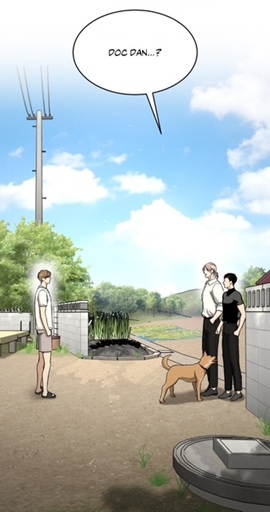 (chapter 58) Their presence definitely diverted the doctor’s attention, lessening his pain.
Initially, Potato views the champion as an infallible figure, a symbol of success and strength. However, his perception begins to shift as he confronts the realities of the MMA world and his own identity. Potato’s loss of innocence is closely tied to the discovery of secrets. In Episode 25,  (chapter 25) he learns the true nature of the relationship between Kim Dan and Joo Jaekyung. This revelation forces him to confront his own repressed feelings, as he unconsciously realizes his attraction to the fighter.
 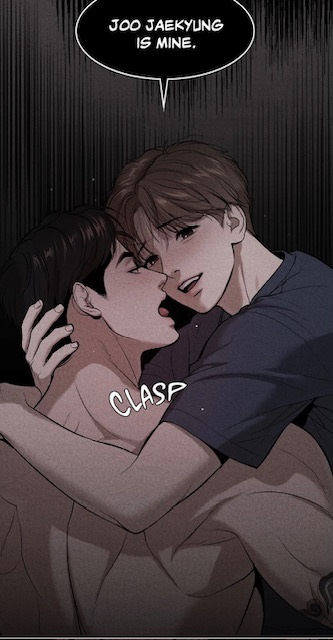 (Chapter 25) Heesung’s involvement further complicates matters, as Potato confesses his love for Joo Jaekyung
  (chapter 35) while simultaneously vowing to sacrifice his feelings for the sake of the couple’s happiness. This act demonstrates Potato’s pure and selfless definition of love,
  (chapter 35) contrasting with the conditional love depicted in Andersen’s tale.
However, Potato’s understanding of love remains naive. He fails to grasp the distinction between love and physical relationships, unaware of the darker realities of one-night stands and transactional connections. (Special episode 1) His discovery of sports gambling 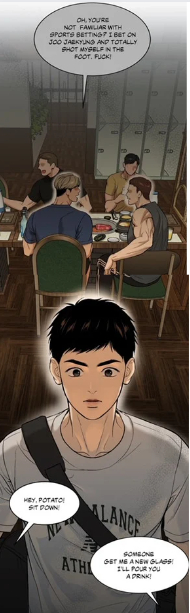 (chapter 52) and the switched spray the
 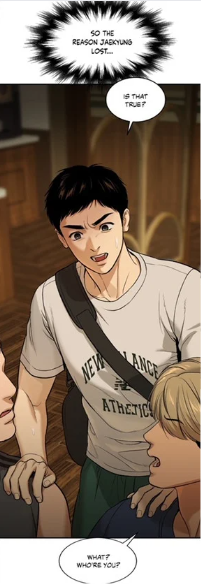 (chapter 52) which is strongly intertwined with the departure of disloyal members from Team Black marks another step in his journey toward disillusionment. While Potato initially views this as an isolated incident, it exposes the broader corruption within the MMA world, including the betrayal, greed, and lack of loyalty that undermine its integrity. While he views himself as loyal to doc Dan and Team Black, for he remained at the gym, his heart was not. He is becoming like his hyungs, Park Namwook and Heesung. In Andersen’s tale, the mermaid’s journey to the sea witch represents a pivotal moment of transformation. By sacrificing her voice and enduring physical pain, she gains entry into the human world, but at the cost of her identity. Similarly, Potato’s journey is marked by painful discoveries that force him to confront uncomfortable truths. Through Kim Dan, he will begin to see his own flaws before he is able to recognize them in those he once trusted.
Heesung and Conditional Love
In the fairy tale, the prince represents the mermaid’s idealized dream—a vision of love and immortality. However, the prince’s love is conditional and superficial. While he admires the mermaid’s devotion and affection, he remains blind to her true identity and sacrifices. This dynamic is epitomized in his words:
“Yes, you are dear to me, for you have the best heart, and you are the most devoted to me; you are like a young maiden whom I once saw, but whom I shall never meet again.”
The prince’s affection is rooted in comparison and memory, not in genuine understanding. And that’s exactly how the actor is thinking. He compared his sex partners to his ideal.
Heesung embodies the concept of conditional love in Jinx. (chapter 33) He can only love his soulmate, and the latter has to be perfect. By seeking perfection in his “soulmate”, he doesn’t realize that he is exposing his darkness and inhumanity. How so? It is because imperfection defines humans. He is denying the existence, error is human. Funny is that his fated partner embodies mistake and imperfection!  (chapter 23)
  (chapter 25)
 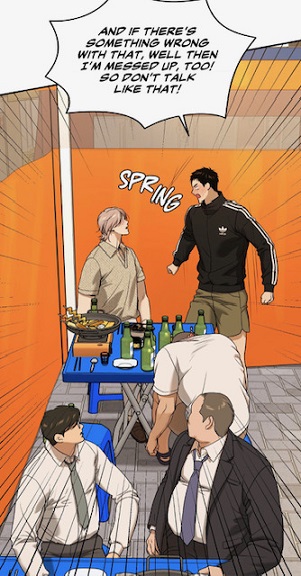 (chapter 35) The latter doesn’t mind breaking social norms by yelling or causing a fight at a restaurant. But let’s return to the actor’s confession at a bar. It’s not surprising that Heesung appears indifferent to the affection of those who cared for him. The last partner was described as too clingy. This means that Heesung places himself as the judge. In addition, it was, as if he was a god destined to live forever. He is forgetting his human condition, just like his partner’s. And that’s exactly how the prince in The Little Mermaid views life.
“The prince said she should remain with him always, […] I must see this beautiful princess; my parents desire it; but they will not oblige me to bring her home as my bride. I cannot love her; she is not like the beautiful maiden in the temple, whom you resemble.” Quoted from http://hca.gilead.org.il/li_merma.html
For him, it looks like death or change don’t exist, though he doesn’t realize that his fate got changed through the intervention of the mermaid. Had she not rescued him, he wouldn’t have been able to have a companion and a wife. His perfect happiness is paid by the efforts and sacrifices of others. He is surrounded by beautiful slaves who have no voice and as such no freedom:
Beautiful female slaves, dressed in silk and gold, stepped forward and sang before the prince and his royal parents: […] The slaves next performed some pretty fairy-like dances, to the sound of beautiful music. Then the little mermaid raised her lovely white arms, stood on the tips of her toes, and glided over the floor, and danced as no one yet had been able to dance. […] The prince said she should remain with him always, and she received permission to sleep at his door, on a velvet cushion. Quoted from http://hca.gilead.org.il/li_merma.html
Through this quote, readers can grasp why the prince didn’t see the mermaid as a possible love interest. She was not his equal socially. Therefore it is not surprising that he chose to have an arranged marriage. I would even add that her voicelessness is viewed as a sign of stupidity, because she can not express her opinion. She is forced to follow the prince’s requests. The prince’s failure to recognize the mermaid’s true nature and the depth of her sacrifices underscores the fragility of dreams built on illusions. His promises, though well-meaning, are symbolic of fleeting ideals that crumble under societal and familial pressures. We could say that in the end, he refuses to become responsible for the mermaid.
And this remark brings me back to Heesung and his relationship with Potato:  (special episode 1) With this request, he implies that he will never become responsible for the amateur fighter. Therefore he can hide his homosexuality behind the young fighter. He used Potato’s mistake to his advantage.
  (special episode 1) By asking Potato to take care of all his needs and desires, Heesung placed himself in a position where he had power and could control Potato. That’s how the young fighter made a dangerous deal with the gumiho. No wonder why his sex role play was a prince interacting with a guard.
 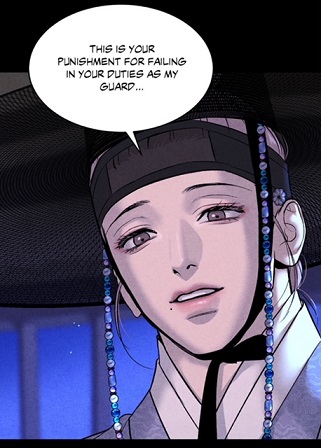 (special episode 2) Hwang Yoon-Gu didn’t realize that by taking responsibility for the actor, he lost his freedom and as such his voice. Is it a coincidence that Mingwa portrayed the young maknae as someone who would raise his voice due to his emotions in the past? (chapter 25) (chapter 35) No, and it becomes obvious that when he is reunited with Kim Dan,
 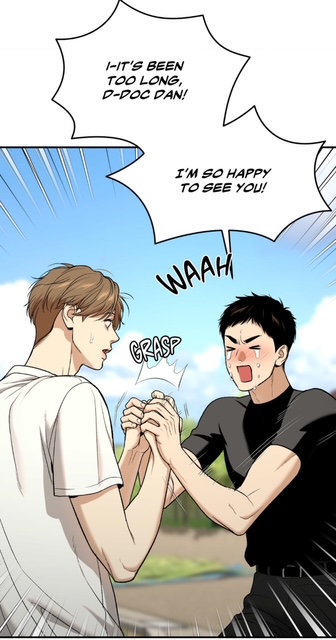 (chapter 58) his behavior is totally different than with the actor:
  (chapter 58) Tears, touch, raising his voice with Kim Dan, but not with the comedian. With the actor, he looks more calm, distant and mature. Heesung’s selfishness is evident in his treatment of Potato, whom he manipulates into becoming an extension of his own image. Hence he is no longer wearing shorts and tee-shirts.
  (chapter 59) One might say that he is gradually elevating Potato’s status through his suggestions.
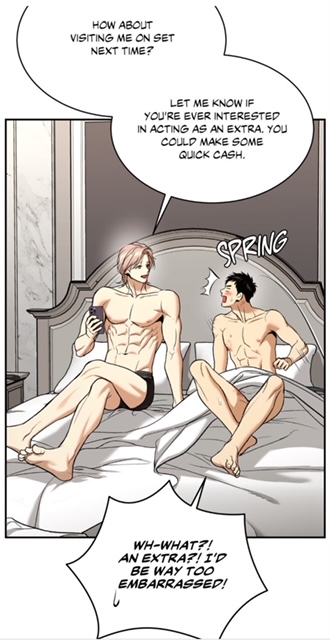 (special episode 2) By encouraging Potato to work as an actor and shaping him into a version of himself, Heesung prioritizes his own desires over Potato’s individuality. He is not asking what Potato’s true dream is. But this was his dream originally: (chapter 23) The problem is that in the past, he was too passive, waiting for the right opportunity.
  (chapter 23) Why? It was due to his low self-esteem.
  (chapter 23) He was not confident enough, for he was the only one with such a weight-category.
And why did the prince suggest Potato to become an extra? On the one hand, it was an easy way to make money, on the other hand, Heesung didn’t want to reveal his true thoughts. He desired a companion by his side too. However, giving him the opportunity to be an extra, Potato could get criticized that he got this acting job through connections. And this reminds me of the little mermaid, who received people’s admiration and the prince’s superficial admiration, yet in reality, the latter had no one by her side to talk about her pain. She was never given a name or a status, her position was defined by her relationship with the prince.
Potato’s growing dependency on Heesung reflects the little mermaid’s surrender of her voice and identity for the prince. In both cases, the individual sacrifices their true self for a love that is neither reciprocal nor nurturing. The prince might have developed an affection for the mermaid, but he never recognized her as worthy to be his bride. I believe that this gesture 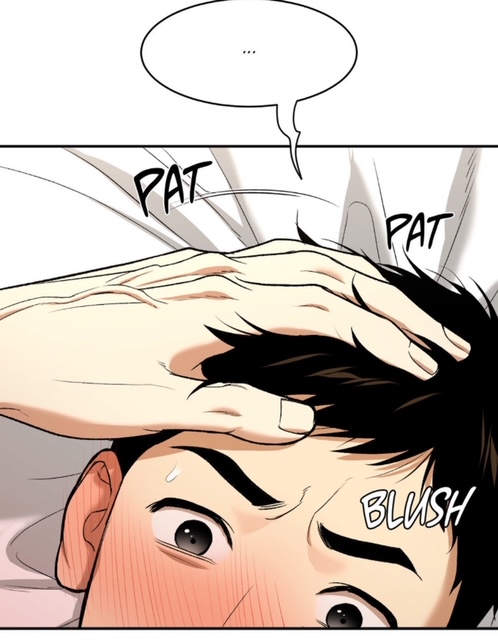 (special episode 2) played a huge influence in Potato’s decision to take the offer as an extra. It was, as if one of his dreams had come true. But is this what he truly wanted?
Heesung’s refusal to wait for Potato after leaving Kim Dan  (chapter 58) underscores his indifference, symbolizing the unbalanced dynamic in their relationship. Like the prince, Heesung offers no genuine commitment, leaving Potato to grapple with the consequences of his dependency. Thus I perceive Potato’s tears
  (chapter 59) as a signal that he is not truly happy.
  (chapter 58) However, this is about to change. Heesung who likes novelty and change is not realizing that his wish is becoming true. The picture with his last work announces the end of his “friendship” with Potato. How so? (chapter 58) The actor chose to become responsible for hiding information from Joo Jaekyung. And he used the mermaid Kim Dan for his decision. He created the impression that he truly cared for the main lead. And how did the prince react to the vanishing of the mermaid? He got caught by surprise and definitely hurt.
“On the ship, in which she had left the prince, there were life and noise; she saw him and his beautiful bride searching for her; sorrowfully they gazed at the pearly foam, as if they knew she had thrown herself into the waves. “ quoted from Quoted from http://hca.gilead.org.il/li_merma.html
He realized too late that his marriage could have consequences with his relationship with the voiceless mermaid. Through her vanishing, she actually revealed her independence and expressed her thoughts. She was not the prince’s eternal companion. She was an independent human being.
Kim Dan: A Mirror to the Little Mermaid
Kim Dan’s experiences parallel the little mermaid’s journey in profound ways. Raised in an environment defined by conditional love, 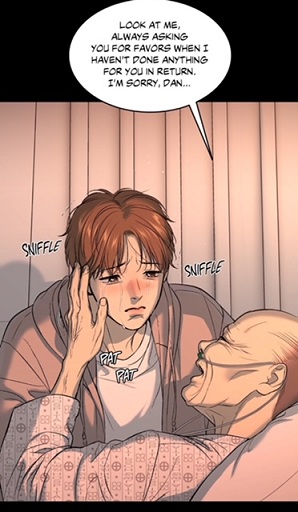 (chapter 53) Kim Dan learned to prioritize the needs of others over his own. His grandmother’s reliance on him mirrored the traditions and expectations imposed on the mermaid by her underwater world. Just as the little mermaid longed for the human world’s light and freedom, Kim Dan yearned for an escape from his oppressive circumstances.
The death of a puppy in Jinx adds another symbolic layer to these parallels. 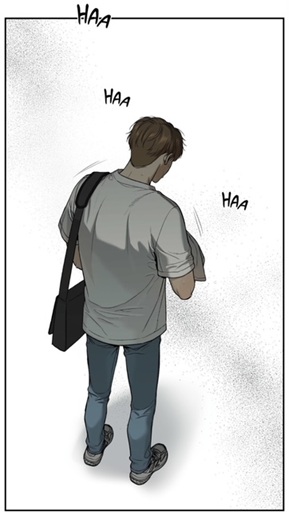 (chapter 59) Kim Dan once referred to Potato as a puppy
  (chapter 29), drawing a connection between the character’s innocence and loyalty.
 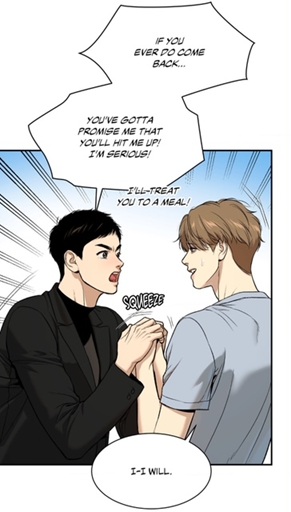 (chapter 59) However, Potato’s departure reveals an underlying superficiality and disloyalty—he merely asks Kim Dan to call him when he visits Seoul, failing to acknowledge the depth of their bond. This reminded me of the prince’s fake promise:
I must travel,” he had said to her; “I must see this beautiful princess; my parents desire it; but they will not oblige me to bring her home as my bride. I cannot love her; she is not like the beautiful maiden in the temple, whom you resemble. If I were forced to choose a bride, I would rather choose you, my dumb foundling, with those expressive eyes.” And then he kissed her rosy mouth, … Quoted from http://hca.gilead.org.il/li_merma.html
He is here actually mimicking Heesung’s behavior who had made a similar offer to the physical therapist:  (chapter 35) This shows that Heesung has long internalized this pattern: assistance will be only given, if he is called. That’s why he has no true friend in the end. He shows no interest in others. But by doing so, he is putting the whole responsibility on his counterpart. Through the actor and the manager’s behavior, the former errand boy has long adopted this pattern. Hence he didn’t call Kim Dan in the end. He waited for a signal from his part. This behavior mirrors the little mermaid’s sisters, who only realize her absence when it is almost too late to act. Similarly, Potato’s casual farewell highlights a betrayal of Kim Dan’s friendship, further emphasizing Potato’s struggle with emotional awareness. That’s why I mentioned above that Potato is about to discover his true nature: he is also a sinner. This growth parallels the biblical narrative of Adam and Eve, where the acquisition of knowledge leads to the loss of innocence. Heesung, like Eve, introduces Potato to a new world of experiences, including his sexual orientation. However, this newfound knowledge comes with its own burdens, as Potato must reconcile his identity with the harsh realities of the world around him.
This raises the following question: what if Potato blocks Heesung’s phone number after their break up or argument?  (chapter 5) Heesung could no longer express his needs and desires.
The death of the puppy, occurring shortly after Potato’s departure, symbolizes a loss of innocence and marks his transition into adulthood. Yoon-Gu is slowly becoming a new version of Joo Jaekyung, he hides things from Oh Daehyun and the other hyungs. He is blinded by the smiles and gentle gestures of the gumiho. Naturally, there’s no doubt that Heesung is falling in love with the maknae. The latter has become the perfect lover, but his dream is about to get crashed by reality.  (chapter 58) Just because one is happy, this doesn’t mean that the other is. For that to happen, communication and honesty are necessary.
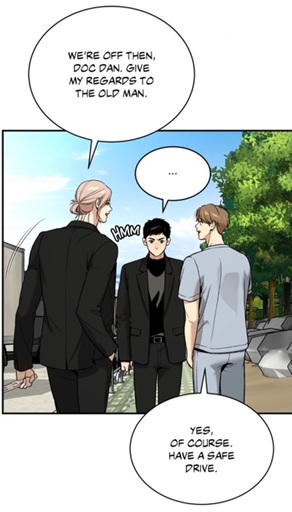 (chapter 59) This event underscores the contrasting paths of Joo Jaekyung and Potato. While Joo Jaekyung is forced to give up his principle of “self-reliance,”
 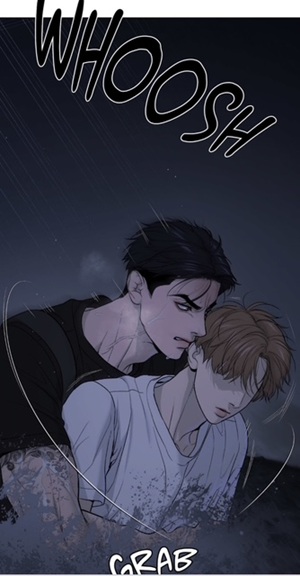 (chapter 59) Potato’s journey is to discover and embrace the principle of “self-reliance” and autonomy. Only when Potato becomes independent in his thoughts and decisions, can he truly help the main couple.
So far, Potato has relied heavily on the guidance and judgment of others: his hyungs, Park Namwook, Yosep, and Heesung. This dependency is evident when contrasting his behavior in episodes 47 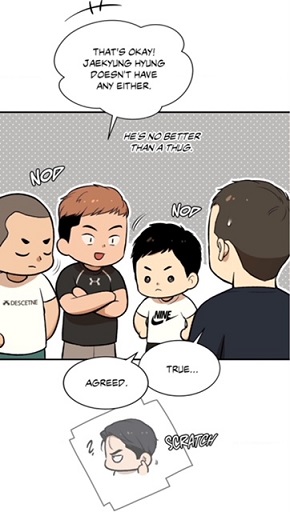 (chapter 47) and 52. Initially, he believed in his hyungs’ description of Joo Jaekyung as a thug, but later he criticized the same fighters for abandoning the athlete
 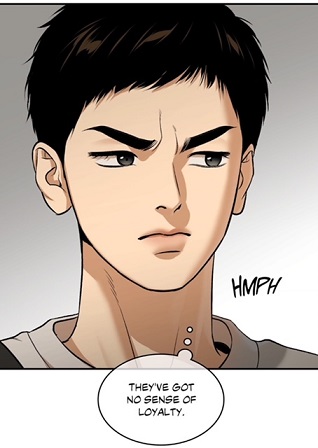 (chapter 52), accusing them of lacking loyalty and dismissing their claim that they had nothing to learn from him. Yet, in episode 52, Potato does not reproach Park Namwook or Yosep for their passivity and naivety,
 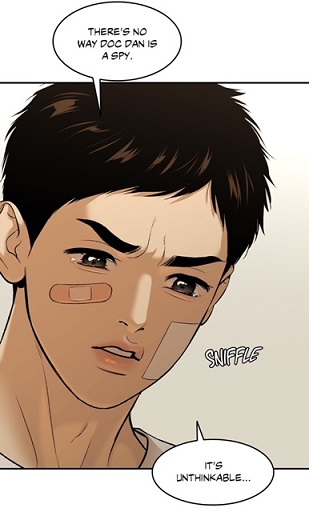 (chapter 52) instead solely blaming Joo Jaekyung for not trusting Kim Dan and causing his departure. This selective criticism reveals that Potato still views the older men as inherently good and fails to recognize his own shortcomings. In this way, he mirrors Park Namwook’s superficial loyalty, further emphasizing his dependence on external validation.
Another significant detail is Potato’s absence during the birthday party, where Park Namwook expressed gratitude toward Kim Dan. 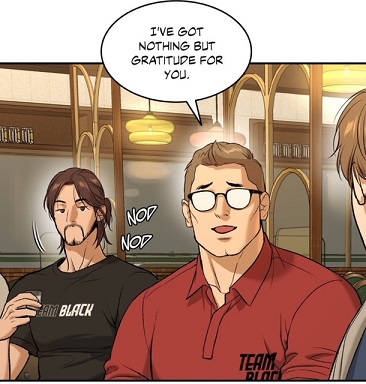 (chapter 43) This absence highlights how Potato has missed key moments of reflection and acknowledgment, which are essential for his growth. It suggests that Potato is destined to detect the flaws in his hyungs—Park Namwook, Yosep and Heesung’s superficiality, passivity, hypocrisy and selfishness—before he can achieve true independence and contribute meaningfully to the lives of Joo Jaekyung and Kim Dan.
Kim Dan’s attentiveness to Potato’s emotions 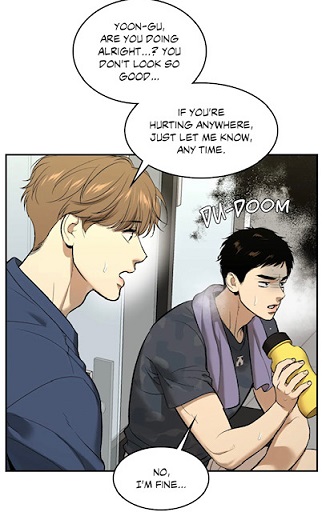 (chapter 23) —taking over his tasks and noticing his unhappiness
 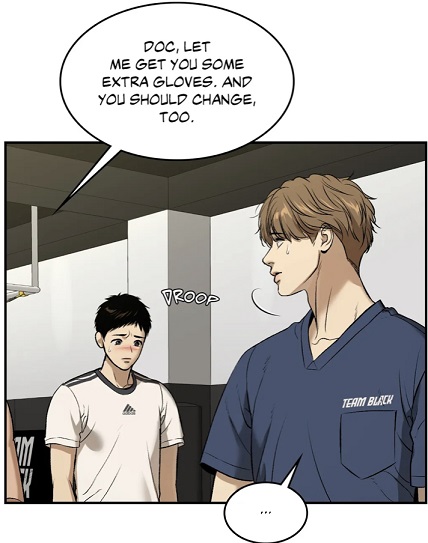 (chapter 25) —demonstrates his capacity for genuine care. This contrasts sharply with Heesung’s selfishness and serves as a reminder of the value of mutual support in relationships. Potato’s potential return to the place where he met Kim Dan could symbolize a rediscovery of authentic connections, marking the beginning of his path toward independence and self-realization.
Independence and Rediscovery of Dreams
The little mermaid’s transformation into a daughter of the air signifies her liberation from heartbreak and physical pain. While she loses the prince, she gains something far more significant: a purpose independent of him. Her ascension represents the realization that true fulfillment comes from within, not from external validation. (chapter 58) Notice that Potato is embarrassed here, a sign that he is not happy. And he has a reason for that. Neither Heesung nor Yoon-Gu are coming out, they are still following social norms which reminds us of the prince’s marriage. Furthermore, when the actor is complimenting on Potato’s acting, the latter doesn’t acknowledge it, because deep down he knows that he got this gig through Heesung and their relationship 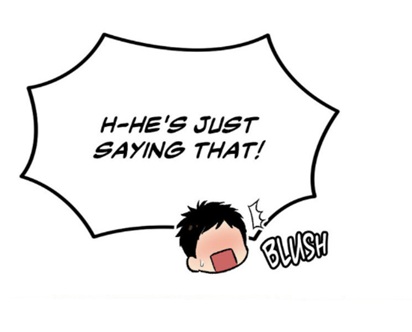 (chapter 58) And like mentioned above, this could become a serious problem for Yoon-Gu. He could be perceived as someone selling himself for a gig. And Heesung is not even realizing the consequences of his intervention and meddling. That’s why it is important for Yoon-Gu to become independent. This lesson resonates with Potato’s journey in Jinx. By recognizing Heesung’s selfishness and breaking free from his influence, Potato has the potential to rediscover his own dreams and individuality. Like Erich Fromm mentioned it, true love is respect, care, knowledge and responsibility. However, Heesung has no idea about the importance of these notions, as everything is evolving around his own needs and dreams.
Besides, if Potato’s dream is still to seek wealth and fame like in the past (chapter 23), he should be aware of the danger in the MMA world, like for example death and bad injuries. Moreover, if we take into consideration that he wanted to be like his role model, it signifies that Yoon-Gu associates fortune and celebrity with happiness which is a real illusion, like Heesung and Joo Jaekyung’s hidden misery and loneliness expose it. But I doubt that the actor ever talked about Yoon-Gu about it.
Finally, Yoon-Gu hasn’t met his former idol yet, so he was not able to see his suffering:  (chapter 58) That’s how it dawned on me that little by little Yoon-Gu had been losing his senses:
  (chapter 31), his smell, then his ears
 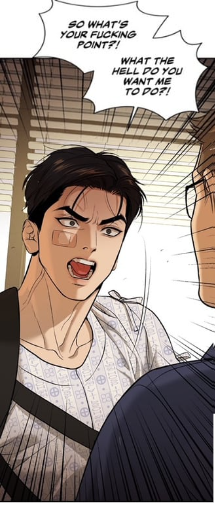 (chapter 52) and finally his eyes:
 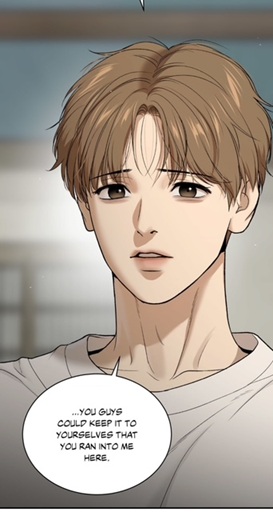 (chapter 58) He forgot the danger coming from Heesung’s words, he could not hear the suffering from the champion due to his bias, and finally he couldn’t see Kim Dan’s distress due to his own feelings and prejudices. We could say that because of the influence from others, he was no longer able to see reality. However, like mentioned before, I sense the return of Potato’s senses in the following panel: (chapter 59) His silence and hesitation shows that he detected something was wrong, but he couldn’t determine that this was related to the actor’s cold and distant goodbye.
In my opinion, Kim Dan has always helped Yoon-Gu to mature and voice his own thoughts and desires. If Potato were to return to the place where he met Kim Dan or learn about Kim Dan’s struggles, it could serve as a pivotal moment in his transformation. Reconnecting with Kim Dan, who genuinely cared for him, might inspire Potato to forge a new path. This could parallel the little mermaid’s ultimate realization that her dreams and identity are separate from the prince.
The Role of the Number Six and Maternal Symbolism
Another significant layer in Andersen’s fairy tale is the little mermaid’s identity as the sixth child. The number six, often associated with motherhood and the heart, highlights her nurturing qualities and selflessness. Her distinctiveness among her siblings is reflected in her unique garden, designed in the shape of the sun, symbolizing her longing for light and individuality. Despite these efforts, no one paid attention to her garden, mirroring how her inner world and emotions were overlooked. And this coincides with my observation about the numbers in Jinx. 6 announces the beginning of a new relationship.
This parallels Kim Dan’s experience in Jinx, where his well-being and emotions are ignored by those around him. He, too, acts as a maternal figure, selflessly caring for others while receiving little in return. This maternal role further emphasizes the weight of his sacrifices and his struggle to be seen as an individual.
The death of the puppy 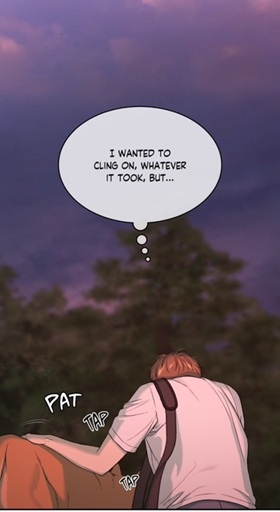 (chapter 59), coinciding with Potato’s departure, underscores this theme of overlooked emotions and unreciprocated care. As Joo Jaekyung reflects on Kim Dan’s comparison of Potato to a puppy, it may catalyze a pivotal shift, prompting him (chapter 29) to adopt a puppy for the doctor’s sake and bring him to their new home.
Conclusion: Love, Dependency, and the Pursuit of Dreams
The Little Mermaid and Jinx both explore the complexities of love, conditional relationships, and the search for independence. Andersen’s tale warns against losing oneself in the pursuit of another’s love, emphasizing the importance of self-discovery and personal growth. In Jinx, these themes are echoed through the dynamics between Heesung, Potato, and Kim Dan. Joo Jaekyung, as an illusionary prince, represents the dangers of idolization, while Heesung’s selfishness highlights the pitfalls of conditional love. Ultimately, the journeys of these characters underscore the importance of finding one’s own voice, embracing individuality, and pursuing dreams on one’s own terms.
Feel free to comment. If you have any suggestion for topics or manhwas, feel free to ask. If you enjoyed reading it, retweet it or push the button like. My Reddit-Instagram-Tumblr-Twitter account is: @bebebisous33. Thanks for reading and for the support, particularly, I would like to thank all the new followers and people recommending my blog.


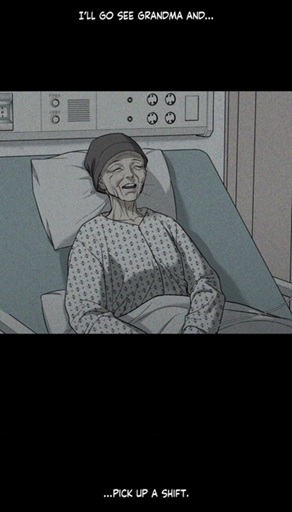 (chapter 59) —a representation of the mermaids’ song—drifts into a state of surrender, much like the prince. This act of salvation becomes a pivotal moment, connecting both characters to the themes of water, transformation, and rediscovery of purpose.
 (chapter 54), performance, and the longing for a deeper connection.
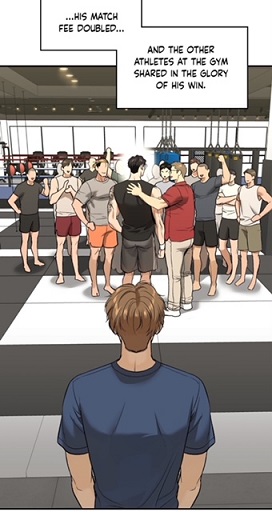 (chapter 41), and the mermaid, as he grapples with voicelessness and the pressures of his world.
 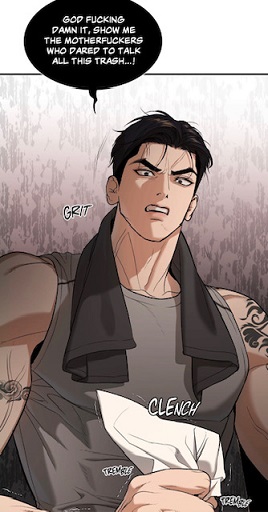 (chapter 36)
  (chapter 36) Choi Heesung, representing another prince with Potato as his bride, benefits from others’ sacrifices
 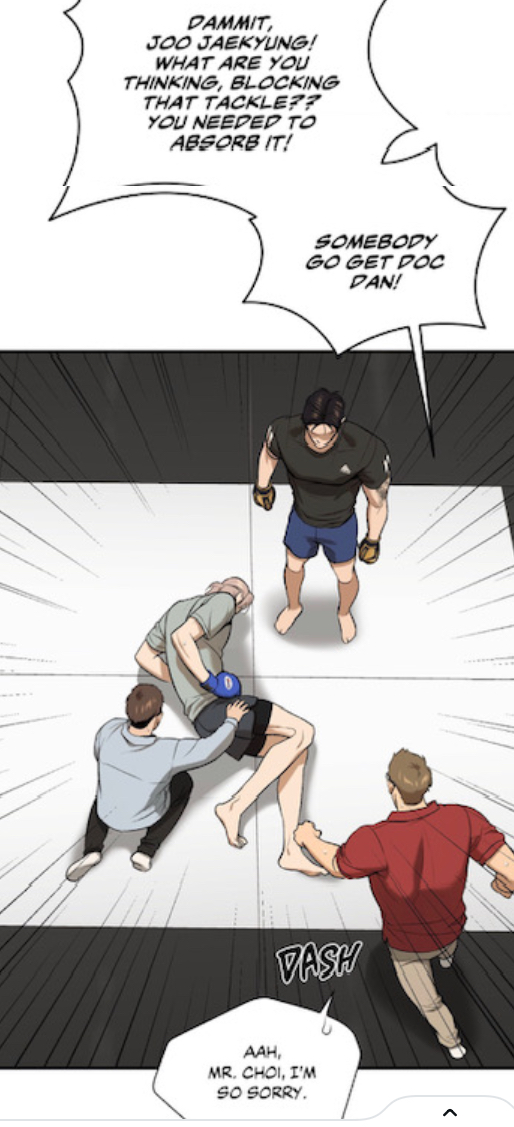 (chapter 31)
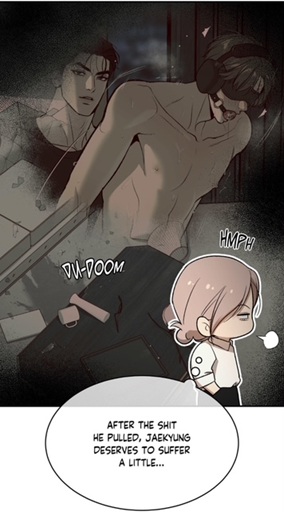 (chapter 58) while remaining oblivious to their struggles. These parallels reveal layers of self-discovery, mutual transformation, and the pursuit of meaning. By analyzing these similarities, we uncover deeper layers of self-discovery and transformation within the narrative.
 (chapter 53) Joo Jaekyung, representing the “new world,” acts as both a source of transformation and a mirror reflecting Kim Dan’s sacrifices.
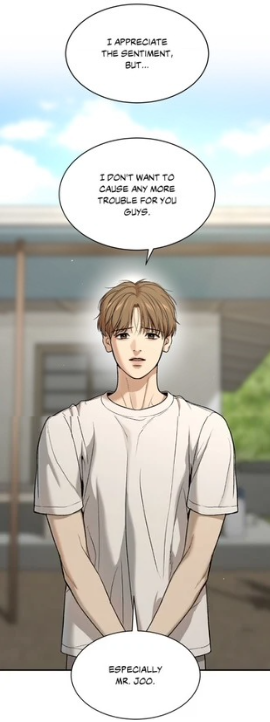 (chapter 58), yet it serves as the catalyst for his growth. Just as the little mermaid’s journey leads her to a higher spiritual purpose as a daughter of the air, Kim Dan’s experiences with Joo Jaekyung force him to confront his own worth, identity, and emotional needs. Just before he went to the ocean, he wondered about his own future and desires, a sign that he was standing at a crossroad:
 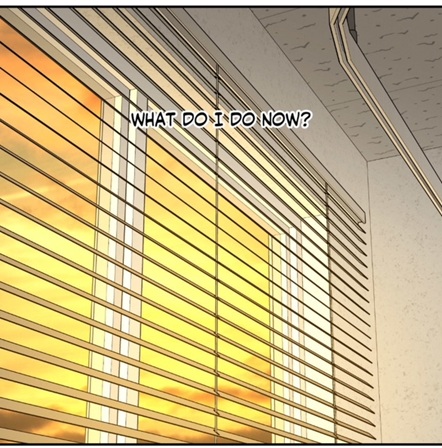 (chapter 59) However, let’s not forget that Kim Dan’s profession had been determined by Shin Okja, as the latter desired to have her grandchild taken care of her. Therefore his own desires and needs were overlooked. Traditions and social norms were used to decide about the protagonist’s life and future. His journey from voiceless suffering to self-realization echoes the mermaid’s transformation.
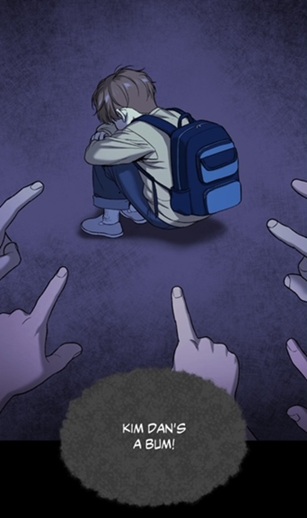 (chapter 57)
  (chapter 59) Like the mermaid, he has always lived disconnected from his own needs, burdened by the expectations of others—his grandmother, Heo Manwook, the doctors
 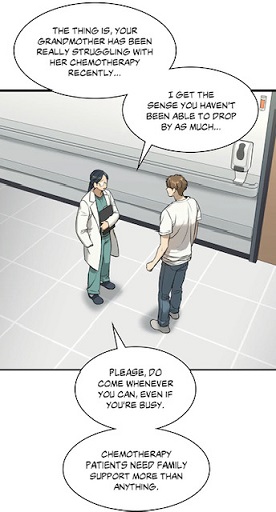 (chapter 21) , and even Joo Jaekyung.
  (chapter 45)
  (chapter 59), he is not capable of crying. It is because he has been living like a ghost for the last two months. Depression, for both the mermaid and Kim Dan, manifests as a silent struggle, making their eventual transformations even more poignant.
 (chapter 1) hiding his true self behind a facade of strength and success. On the other hand, Joo Jaekyung also embodies the mermaid’s longing and sacrifice. Living in the world of MMA, a high-pressure environment where he is constantly pushed to perform, he resembles the mermaid in the underwater kingdom—a place of death and materialism where the mermaids feed on drowned humans. It is no coincidence that the fighters are displayed like mermaids in the water full of blood.
  (chapter 29) This zombie-like existence leaves him voiceless; the entertainment agency and MFC dictate his actions
 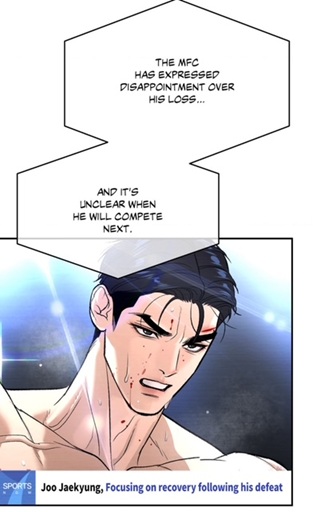 (chapter 57), only allowing him to speak when it benefits them financially.
 (chapter 27) reflects his connection to the mermaid. Water is his natural element, a place where he feels at peace, yet he has been forced to conform to a fiery world of intensity and relentless ambition.
  (chapter 19) Hence he never went to the swimming pool in his own penthouse, until Kim Dan triggered his memory and longing. This interplay of water and fire
  (chapter 52)
  (chapter 41) Joo Jaekyung’s image was exploited to lure these individuals down a darker path, highlighting how his light has been misused by those around him.
 (chapter 19)
 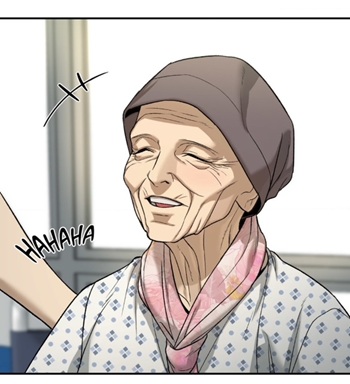 (chapter 56) as long as they were not associated with burden or suffering, while the mermaid’s grandmother celebrates the beauty and decorum of their underwater realm.
 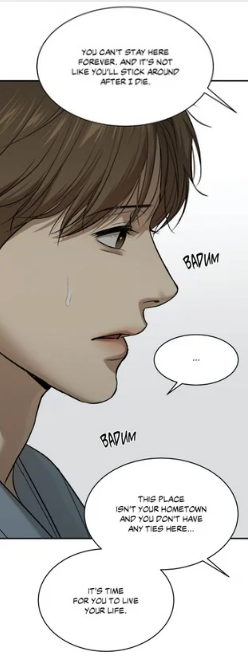 (chapter 57) Shin Okja, noticing Kim Dan’s figurative slow death under the weight of her request, subtly pushes him to seek his own path. However, this act is not entirely selfless. For Shin Okja, it represents an escape from the guilt of causing her grandson’s unhappiness, a way to absolve herself of responsibility.
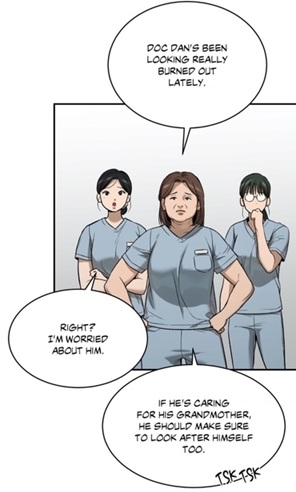 (chapter 57) He even gets blamed for his illness. These elements further emphasize how the suppression of individuality leads to yearning and eventual transformation.
 (chapter 52) This dynamic parallels the members of Team Black in Jinx. Although they are treated like Joo Jaekyung’s co-workers
  (chapter 7), in reality, he is their boss and the foundation of their success. Their indifference mirrors the mermaid sisters’ behavior; they only notice his struggles and absence when his winning streak falters, prompting many to leave the gym for the rival King of MMA. However, if we take Andersen’s fairy tale as a source of inspiration, it signifies that at some point, the remaining members of Team Black might come to “sacrifice” themselves for their “little sister,” symbolically representing Kim Dan and Joo Jaekyung. This potential act of loyalty could mirror the mermaid sisters’ gesture, showing that even belated recognition and care can lead to transformative redemption for those involved.
 (chapter 1), attracting others seeking the same level of fame and fortune.
 (chapter 46) However, the gym’s inability to produce another champion reveals its “fake gardening” nature—focused on maintaining an image rather than fostering true growth.
 (chapter 52) while merely using Joo Jaekyung’s success to boost his own ego. His plans to set up a kids’ program at the gym further underscore this self-serving nature. While presented as an effort to expand the gym’s reach, Park Namwook’s true motivation lies in financial gain, as he tries to persuade Joo Jaekyung by stating, “Kids are where the money is at.” On the one hand, this reflects his obsession with money and contrasts with the deeper, transformative intentions associated with true gardening. On the other hand, since he has himself kids, it is clear that he would like to send his own children to the kids’ program.
  (chapter 22) and a “neglected child”
  (chapter 58) Feeling lost without Kim Dan, he initially requests his return so that they can be together again. This longing for a companion reflects Potato’s deeper need for guidance and connection, much like the mermaid sisters who briefly visit the surface but ultimately return to their underwater world when the novelty fades. Yet, when they reach maturity and are allowed to visit the surface, the novelty of the human world quickly fades, and they return to their underwater realm indifferent to human suffering. However, notice that on his day of the departure, Potato tells Kim Dan that he won’t call him, the mermaid has to initiate the first step.
 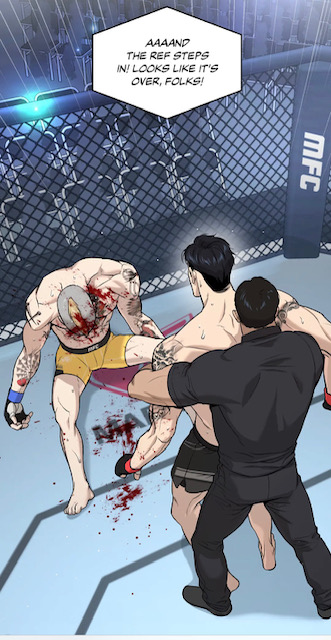 (chapter 15) strongly parallel the detached, high-pressure environment of MMA fighting. Joo Jaekyung, trained relentlessly since youth, embodies this world’s harshness, where vulnerability is a luxury rarely afforded.
 (chapter 59) suggests that Joo Jaekyung might reclaim his authentic self through activities like swimming, reconnecting with nature, and symbolically planting the seeds for a new life. Kim Dan, who cannot swim, learns from Joo Jaekyung, and together, they forge a path toward mutual healing and immortality—not in the literal sense but through finding their “soul” and purpose.
 (chapter 56) The city represents the oppressive expectations and artificial constructs that have shaped Joo Jaekyung and Kim Dan’s lives. By meeting again in the ocean, they reconnect with a more authentic and unburdened version of themselves. This transition echoes the little mermaid’s connection to the natural world as a place of solace and transformation.
 (chapter 59) They imagined that Kim Dan would be better off without Joo Jaekyung
 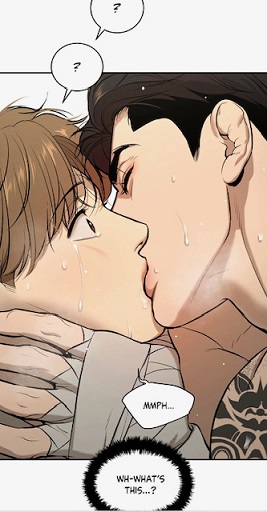 (chapter 15) his kiss with Joo Jaekyung, shared in the locker room, was both an act of protection and a pivotal moment in their dynamic. Like the mermaid’s unforgettable first kiss with the prince (when he was rescued), Joo Jaekyung’s kiss in the locker room was an act of initiation, driven by his “fears” and sense of responsibility, reflecting his growing attachment to Kim Dan. The kiss symbolized his struggle to connect and protect, even as he grappled with his emotional restraint. The locker room, a symbol of physical endurance and vulnerability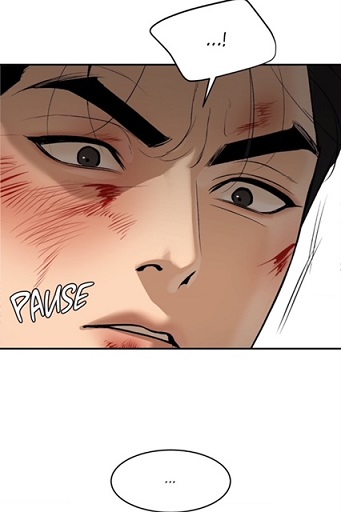
 (chapter 51), mirrors the mermaid’s longing to break free of her limitations and find meaning in her suffering.
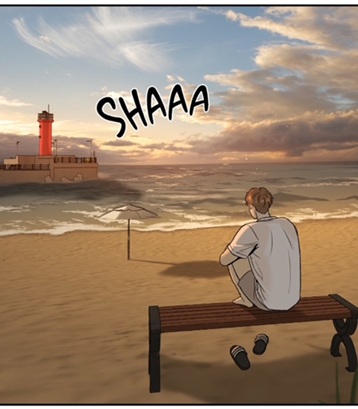 (chapter 59) finding light not in others but within himself. Through his hardships, he gains the strength to pursue his own identity and agency.
 (chapter 49) The maknae’s tears are an indication that he is no mermaid, but a human, I would even say, he still has the soul of an innocent boy.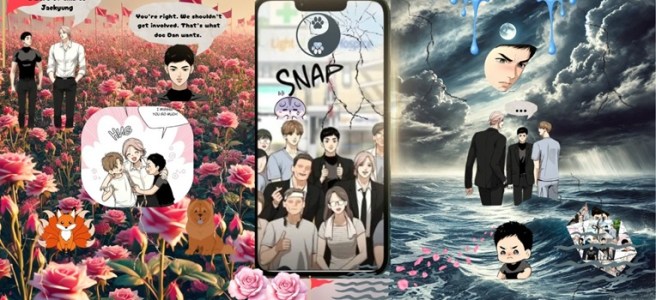
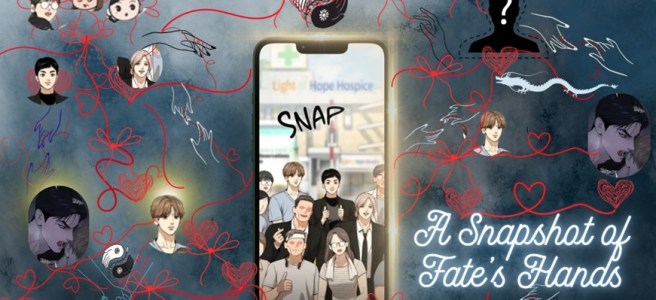

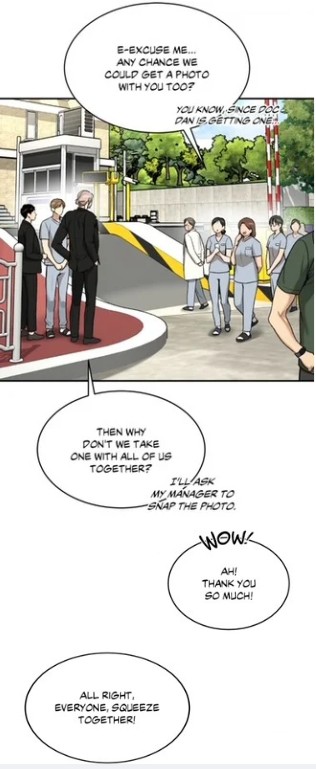 (chapter 59) —which becomes the pivotal clue leading Joo Jaekyung to Kim Dan. Through a careful analysis of the timeline and the use of contrasting events, it becomes clear that Mingwa’s narrative mirrors a kaleidoscope, reflecting positive and negative elements rooted in Taoist principles. While the doctor’s unconscious
 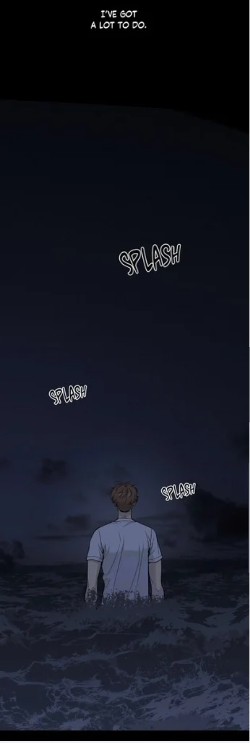 (chapter 59) led him to the shore, driven by despair and suicidal intent, the MMA fighter’s journey stands as its opposite:
 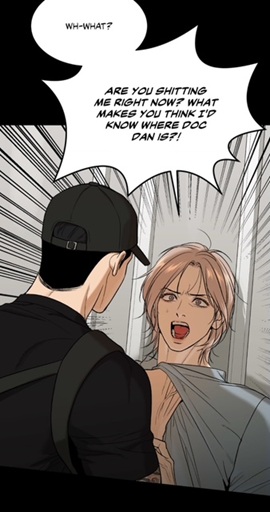 (chapter 59 ) a conscious choice to follow his heart, hence he was full of anger and frustration. Joo Jaekyung was no longer repressing his feelings, even if he had yet to fully recognize his affection.
 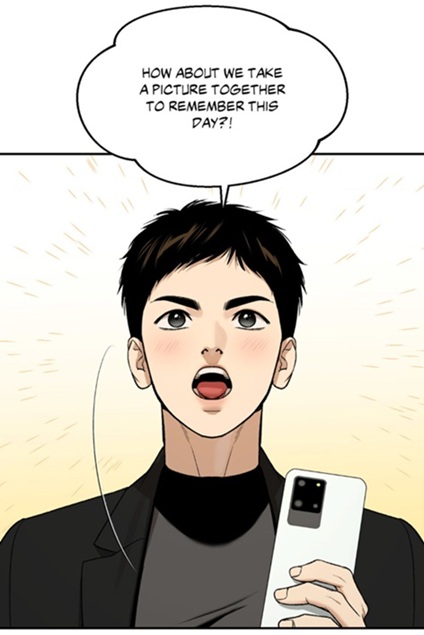 (chapter 59), it simultaneously signifies the first crucial clue in Joo Jaekyung’s search. This marked the turning point where his ongoing efforts were given direction, transforming his pursuit into a decisive journey toward discovery.
 (chapter 59) —each of whom had interacted with Kim Dan
  (chapter 57) during his time at Light of Hope. While these individuals appear as potential candidates for revealing Kim Dan’s location, the true helper remains shrouded in mystery. This ambiguity emphasizes the layered narrative of Jinx, where each small action—no matter how mundane—contributes to the larger theme of fate’s intricate web, offering insight into the power of both intentional and unintentional intervention. If Potato had not suggested the picture
 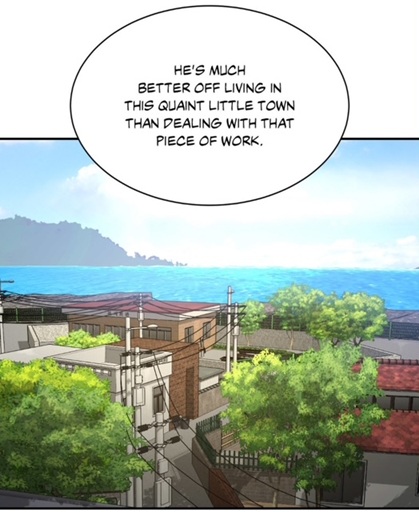 (chapter 58)
 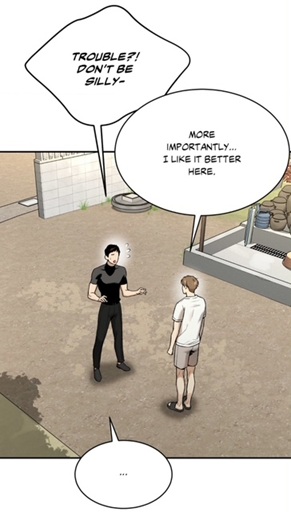 (chapter 58), ignorance and superficiality
  (chapter 58), becomes the shadowed reflection of the proactive search by Joo Jaekyung. This interplay of light and dark is central to unraveling how fate unfolded.
 (chapter 58), came to the same conclusion: they should not reveal Kim Dan’s whereabouts to Joo Jaekyung. Heesung argued that Kim Dan was better off in his secluded life, away from the chaos of Joo Jaekyung. Potato, deeply trusting his lover’s seniority and judgment, chose to follow Heesung’s lead. Their decision reflects not only their loyalty to Kim Dan’s expressed wishes but also their passive adherence to the belief that avoiding intervention was a form of help which reminds us of Potato’s former principle:
 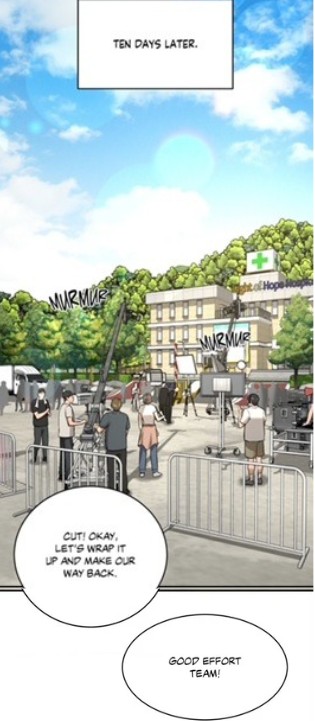 (chapter 59) Importantly, Joo Jaekyung did not arrive during this period, further affirming their resolve. The photograph taken just before their departure was the key turning point. However, the timeline—marked by the sunsets
  (chapter 59)
 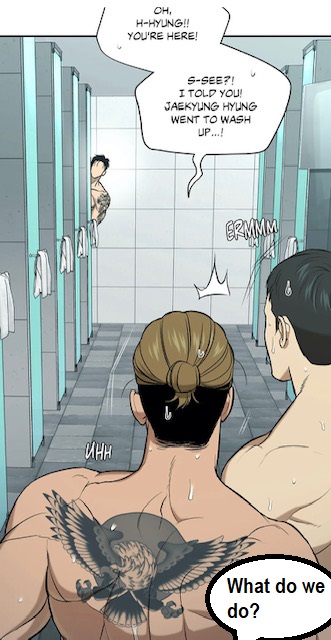 (chapter 8)
 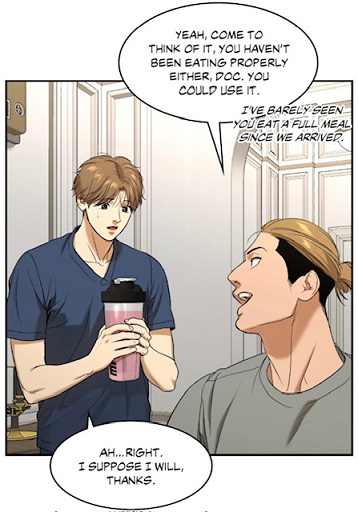 (chapter 37) and Kwak Junbeom was a witness of the encounter between Kim Dan and director Choi Gilseok.
  (Chapter 48) Nonetheless, there exist significant points against this theory. Despite their fondness for the actor
  (chapter 30) and their interactions with Heesung and Potato
  (chapter 35), they are unaware of the actor’s relationship with Potato. The author left many clues for this interpretation. They didn’t notice the maknae’s absence at the champion’s birthday
 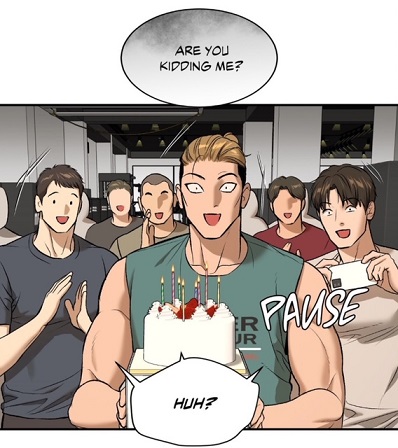 (chapter 43), but more importantly the presence of Yoon-Gu‘s embarrassment in front of his hyung indicates secrecy. .
  (chapter 56), or his emotional state. They think, he has not come to the gym due to his recovery. Furthermore, they don’t use his cellphone number to contact him. The hiring of a new physical therapist and
  (chapter 57) the interview suggested that Joo Jaekyung was taking a break to recover from his injury, leaving no indication of his active search for Kim Dan. However, Yoon-Gu got informed through Heesung that Joo Jaekyung was desperately looking for him:
  (chapter 58), but probably saw this as another “negative reaction” (bad temper) of a spoiled child. This makes it unlikely that members of Team Black could have provided the critical information.
  (chapter 50)
 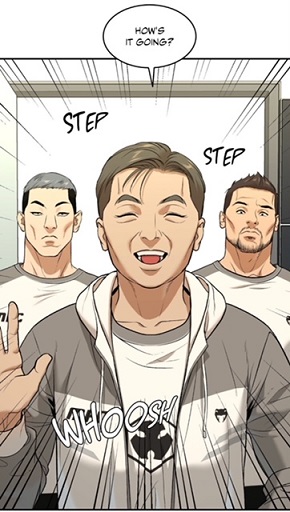 (chapter 49), highlighting the failures of relying solely on fate. The champion’s eventual discovery of Kim Dan underscores the necessity of teamwork and active intervention. Notably, this also reflects the flaws in Team Black, whose inaction and superficiality limited their understanding of both Joo Jaekyung’s struggles and Kim Dan’s situation. While Heesung’s stardom and blog
 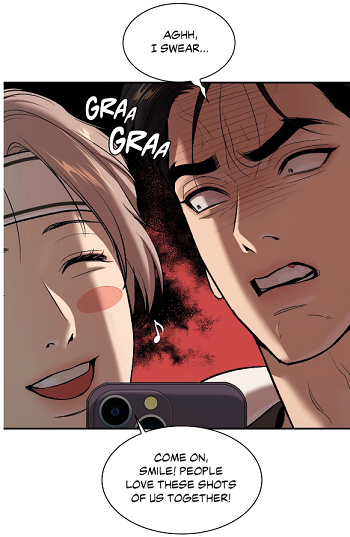 (chapter 30) could have amplified the picture’s reach, it’s unlikely Joo Jaekyung relied on such sources directly. I can not imagine him spying on the actor’s blog. Instead, the role of the helpers — the nurse and her acquaintance— emerge as crucial to piecing together the connection. The inadvertent role of the nurses Mind and Heart, urging Heesung to take the picture, becomes an integral part of the story’s progression.
  (chapter 13) who played pivotal roles in lifting the curse, as Mingwa’s narrative often draws on such reflections. Here, the nurses’ actions, though seemingly minor, echo the same themes of fate and intervention.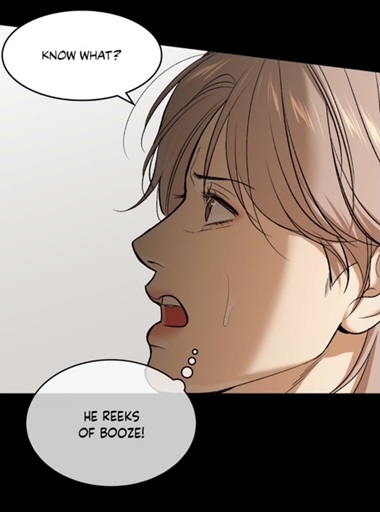
 (chapter 13) The latter knew the PT’s face,
  (chapter 13) but didn’t know his identity. He mistook him for someone who was selling his body for money.
  (chapter 13) In addition, Kim Dan never got to know the intervention of this hyung: he was the invisible helping hand in season 1. And now, if you reread the scene in episode 13, you will notice that this conversation between Joo Jaekyung and his friend contains all the ingredients in episode 59: the use of the phone, fainting, malnutrition, secrecy, neglect, secret suffering, pictures and public knowledge
  (chapter 13), the death of a man and finally urgency. Moreover, remember what his friend told him before: the importance of rest and
 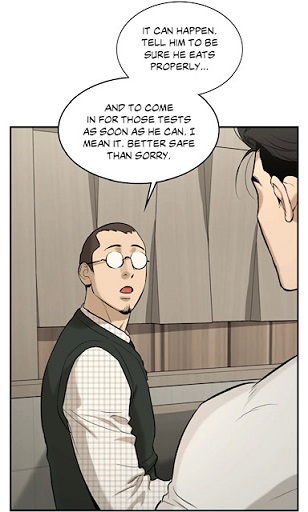 (chapter 13) He should send him to the hospital for tests, but the fighter refused. Why? It is because the latter feared his “chingu”. The doctor seemed rather interested in Kim Dan, therefore he feared that the PT might dump him for a “colleague”. That’s why Heesung was sent later to his gym. Karma was punishing him for not listening to his friend’s advice. Finally, it is important to recall his advice:
 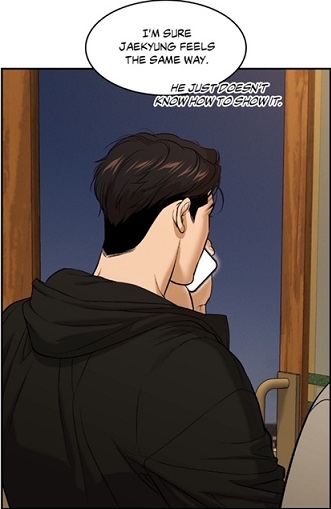 (chapter 43) And during that evening, the champion called his penthouse with the doc “Home” for the first time. Finally, in season 2, Joo Jaekyung started visiting each hospital or Sports Rehabilitation Center in Seoul in order to find Kim Dan.
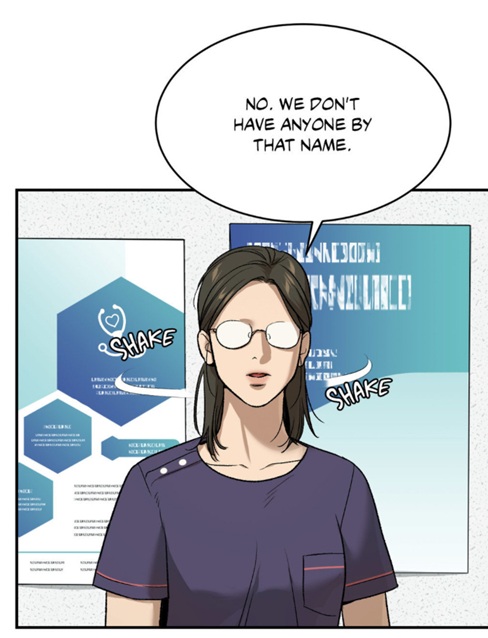 (chapter 56) And there’s no doubt that Joo Jaekyung got recognized by people forcing him to use a mask to hide his identity. So this frenetic search must have reached the mysterious doctor’s ears, but I doubt that he made the connection between the star’s lover and the physical therapist right away. Since he‘s a guest of XY club,
  (Chapter 13), it is also possible that he could have heard about the last incident in the restroom with doc Dan’s replacement. Since Cheolmin found Dan cute, it is very likely that he was also drawn to the surrogate „Dan“. But I don‘t think, this was enough to intervene, as Joo Jaekyung didn‘t ask for his help.
 and to Neptune
  and strangely, the doctor moved to a place next to the coast. So maybe Cheolmin comes from that little town and the green-haired nurse is his relative. I had already outlined their similarities. Finally, look at the numbers, we have 4 in both episodes, 13 and 59 (13: 1+3 = 4 / 59: 5-9= -4) The -4 would coincide with Kim Dan’s vanishing, but also with the intervention of Cheolmin. And if my theory is correct, this means that the champion will come to regret his past decision
  (Chapter 19) and the group photograph at the hospice

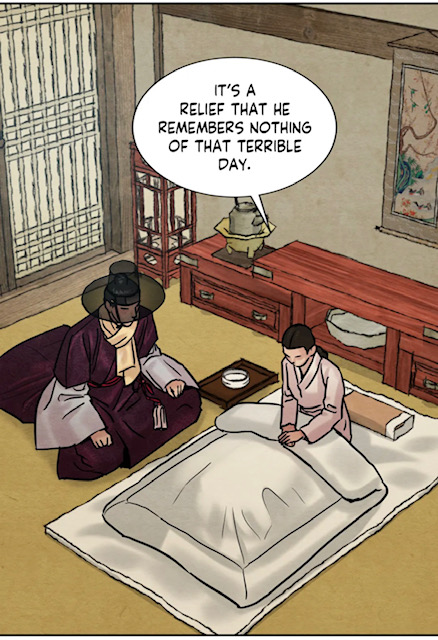 (chapter 105) „Thank god, he didn’t see nor hear a thing about that awful matter“. This is what Heena said in the original version. [Here I would like to thank my follower @katamins again for her help]
  (chapter 105) He desired to spare his heart. To conclude, “that awful matter” is referring to the whole prank and its consequences.
 (Chapter 97) At the same time, the idiom includes the staff‘s tricks as well: the corpse in front of the gate and the maids‘ badmouthing
  (Chapter 97)
  (chapter 98), because it happened during the day and at downfall. Due to this expression, the readers can detect the presence of Yoon Seungho’s white lie. The painter had clearly mentioned what he had heard before.
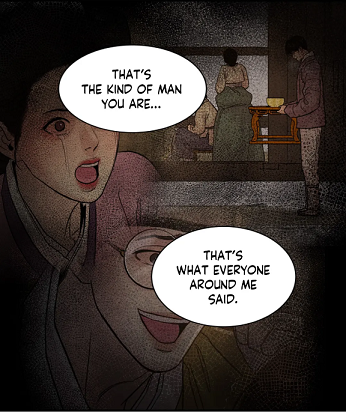 (Chapter 104) However, he had been silenced by his lover, when the latter suggested to him to view everything as a nightmare. The lord made the mistake not to listen to the victim and witness.
 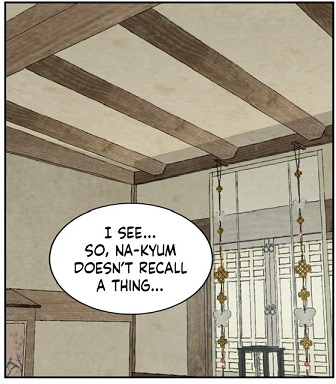 (chapter 105) With such a contrast, the manhwalovers can detect the link between ignorance and absence of memories. To conclude, in both versions, the main lead is “lying” out of ignorance. This is the positive version of “ignorance is a blessing”. Hence the noona thinks herself safe.
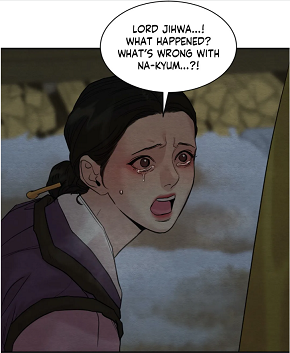 (Chapter 99) It was clear that her brother would meet the noble, as their meeting didn’t surprise her. She was more upset that Baek Na-Kyum was unconscious.
  (chapter 99) However, her question „What’s wrong with Na-Kyum?“ divulges her hypocrisy and acting. How could she not realize that her sibling had been beaten?
 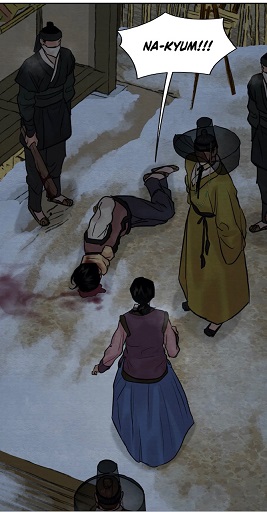 (Chapter 99) His head was bleeding, and the black guards were carrying sticks. It was clear that his state was not caused by an illness. To conclude, the calling “lord Jihwa” is the proof of her complicity, though in front of Yoon Seungho it serves as an excuse to portray herself as a victim.
 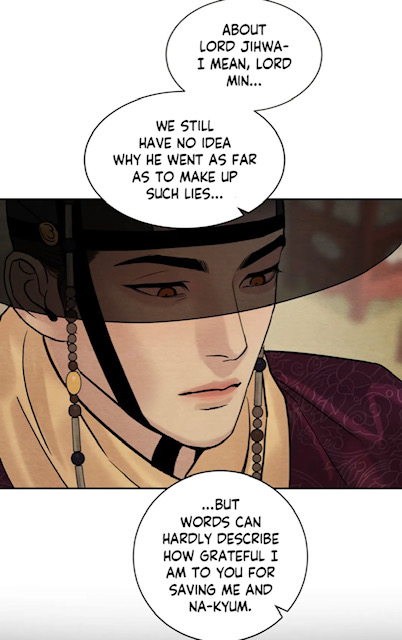 (chapter 105) Thus I deduce that Heena thinks, the painter could not witness her acting in front of the scholar’s house, for his head was turned around and he was not moving. She feels secure concerning that night, while I am expecting the opposite. Nonetheless, her past behavior in the kisaeng house represents a source of danger for her. That’s the reason why she has to hide the “attempted murder” from her brother. The moment Heena mentions that she has been hurt, the painter won’t believe her. Why? It is because in the kisaeng house, he has not forgotten her words:
  (chapter 97) Even if she was “fooled”, the artist can only reproach her stupidity. Remember her harsh words, she had called him stupid:
  (chapter 97) She had helped Min, and she can not claim ignorance. As you can see, Yoon Seungho was encouraged to hide the “attempted murder” from Baek Na-Kyum for selfish reasons. Therefore it is no coincidence that when the lord visited Heena, he made sure that his lover wouldn‘t see Heena in bed.
 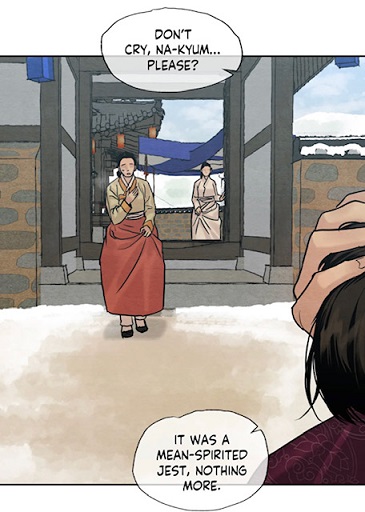 (chapter 105) She has now the perfect excuse to avoid nobles. She has been hurt, hence she can not work. The lord never questioned her attitude, for he wished himself that the painter would take a rest and remain in bed.
  (Chapter 104) This explicates why later the lord was hugging his lover under the cover.
  (Chapter 104) Hence I conclude that Heena must have thought the same way about Yoon Seungho. „Thank god, he didn’t see or hear a thing about that awful matter“. He has no idea about her altercations with her brother in the kisaeng house. It is important, because our beloved seme has the impression that the noona has her brother’s best interests at heart, but actually he is wrong. In my opinion, the relationship between Heena and his lover serves as a mirror to his relationship with Yoon Seungwon. So far, the young noble doesn’t suspect his brother to have betrayed him. Note that he blames his father more than his younger sibling.
  (chapter 105) Yet, this incident was presented as Yoon Seungho’s memory. This panel could be used as an evidence that my theory, Heena was present next to the shaman’s shrine during the bloodbath, was wrong. Nonetheless, this image didn’t make me change my mind. Why? I paid attention to details and judged this rescue as “fake” again. The servants had a drop of sweat on their face, the symbol for deception. Secondly, the kisaeng was wet, while the staff’s clothes weren’t damp. How did they save her then? Besides, where are the foot prints? Moreover, where was the head cover?
 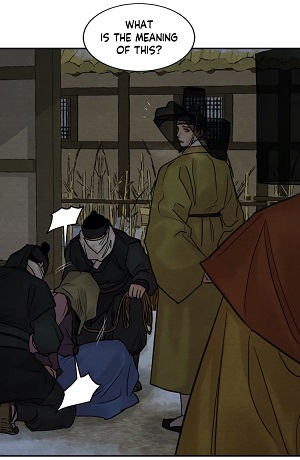 (chapter 99) Finally, her hands and feet were not tied. So where did the items go? Since we saw her “execution”, we are the witnesses, and as such we know the truth about that “awful matter”, but it is not the case for the lord. This image contains so many errors, hence it can not reflect reality.
  (chapter 103) Hence he could have never been outside the mansion. That’s how I realized that the author was presenting us a false memory. This means that the manhwalovers are facing an implanted memory. But how could this happen? First, false memory is quite normal and is often of no consequence. But a false memory relayed during criminal testimony might lead to the conviction of an innocent person. As the manhwalovers can detect, it represents a serious problem.
  (chapter 58), it makes him particularly vulnerable to false memories.
 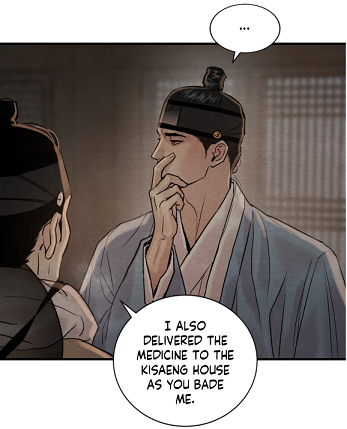 (chapter 104), the lord and even the readers imagined to see medicine in the white bowl!
  (chapter 105) Besides, the author had always connected the drug with the tray.
  (chapter 23) As you can see, the readers interpreted this scene due to associations. Nonetheless, like mentioned in the previous analysis, the different color and the traces on the edge were the evidences that it was ink.
  (chapter 36) Besides, Heena was in bed indicating that she was still weak. The circumstances led people to have a different perception of “verity”!! Only through the mind’s eye, the manhwalovers can detect that this scene was staged.
 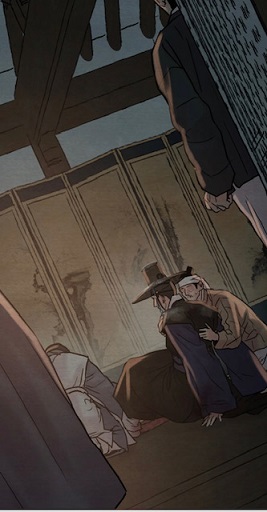 (chapter 103) The protagonist projected his own thoughts and emotions onto one servant: shock!
 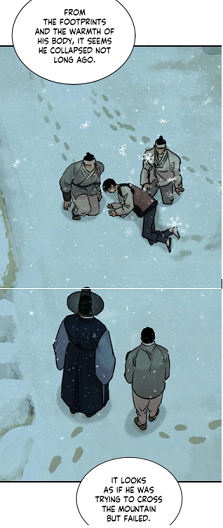 (chapter 61) This was interference by excellence. Besides, emotions can affect your memories. Since the lord was so under shock after witnessing the painter’s unconsciousness, it is not surprising that he imagined to have witnessed this scene. At the same time, when he left the shrine in trance, he could have overlooked the presence of a third person… similar to Lee Jihwa next to the shed. That’s how he doesn’t recall anything from that night except his crime. He didn’t see and hear the person by his side. Where is the sword? Where did he get the hanbok from?
 (chapter 102) Therefore it is not astonishing that he imagined a similar scenery.
  (chapter 1) Baek Na-Kyum thought to have seen “Yoon Seungho” as huge sodomite, yet he only connected the name to the face after meeting the lord for the first time.
  (chapter 1) This shows that the artist had only heard his name without seeing his face before. This explicates why the main lead’s gaze and facial expressions were similar
 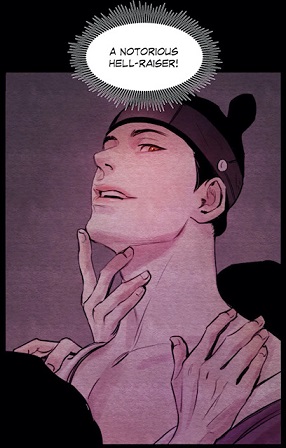 (chapter 1)
  (chapter 1)
  (chapter 103)
 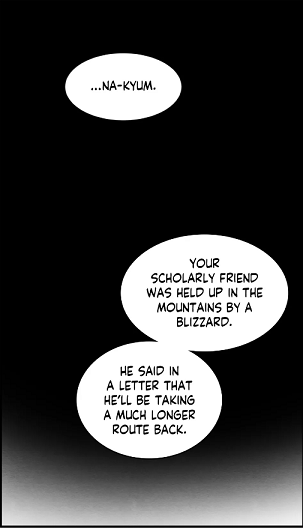 (chapter 104) My avid readers can certainly recall the rule I had detected: each chapter will be reflected in the next!
  (chapter 105) How is it possible? Especially, when the painter said this:
 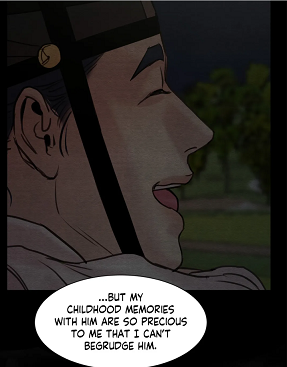 (chapter 94) Furthermore, the painter is associating the learned sir to the moon and as such the night.
  (chapter 94) Thus I am now suspecting that this image
  is a false memory. But I have another reason to think that the painter’s idolization was more the result of “brainwashing” and as such “false memories”.
  (chapter 105) How can she date this incident so precisely? The moment I read her testimony, I discovered that in episode 94 the author had never shown us the painter crying!
 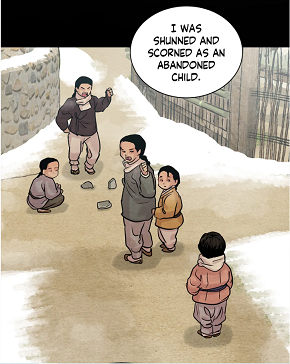 (chapter 94)
 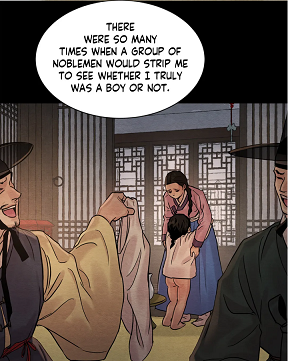 (chapter 94)
 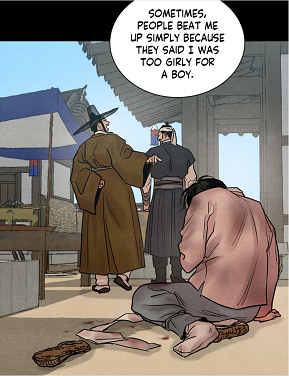 (chapter 94) It was, as if the noonas had never been informed about the painter’s suffering and tears. This shows that Heena has been hiding many things from her colleagues. But there is more to it! The manhwaphiles saw the artist’s tears in his childhood.
 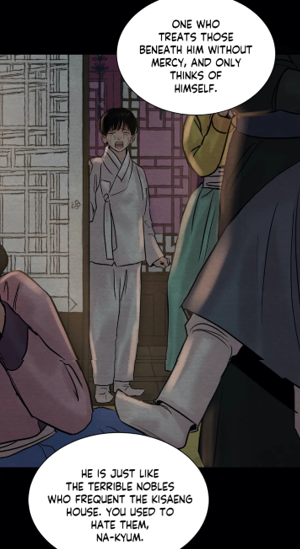 (chapter 68) But here he was much older!! Under this new perspective, I realized that the following image could have been a false memory:
  (chapter 68) Heena was misremembering that night, and she was misattributing the painter’s tears. In other words, she was confusing two incidents.
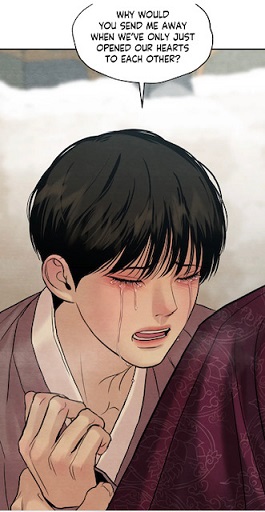 (chapter 105) It is the same facial expression, though the redness around the eyes is more pronounced. This observation confirms that the noona’s memories in the kisaeng
 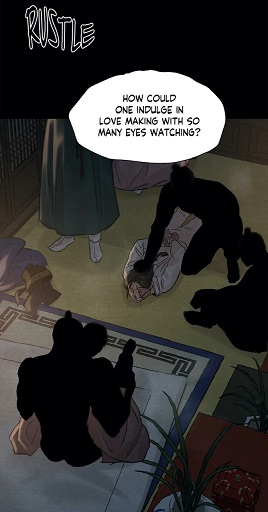 (chapter 86), so the painter must have made a similar experience. In my analysis “
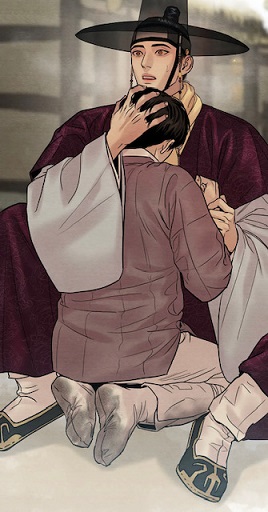 (chapter 105) He had run after his lover in socks. While in “Baek Na-Kyum’s foot”, I thought that this memory was true, I come now to a different signification. It was a false memory in order to hide a crime related to Heena. I would like to outline that in the kisaeng’s comment, we have the notion of “shame” and as such “guilt”. First, I thought of rape, but then it could be much simpler. The painter could have witnessed his noona having sex with the learned sir. But because he was too young, he misjudged the situation… as a virgin, she had to bleed. Because he saw blood, he imagined that the learned sir had hurt Heena. This would explain why the artist was afterwards anxious around the teacher. One might think that this is not terrible. But let’s not forget that as a kisaeng, she can not have sex like that.
 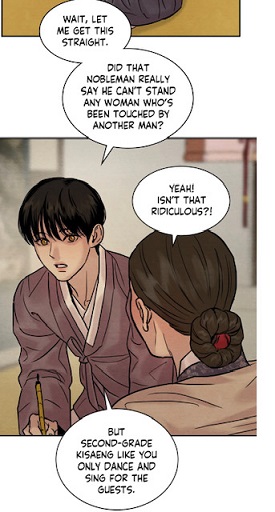 (chapter 105)
  (chapter 96) A similar situation had happened in the past.But because of her brother’s reaction, his huge tears, she got scared.
 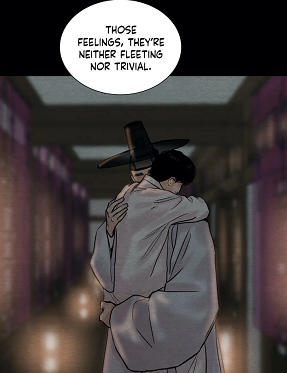 (chapter 68) Through suggestions, she had been able to convince her brother that the learned sir was a nice person. This explicates why the caresses and hugs were used to silence the artist. By repeating to her brother, he liked Jung In-Hun, he came to develop such feelings. The kisaeng’s statement implies that the admiration for the teacher was not constant.
  (chapter 46) A change of heart versus “eternity”. This shows that the painter’s decision to go to the learned sir’s house was never his choice. He had simply followed Heena’s suggestion. She was definitely distorting his past. Furthermore I detected a strong connection between love and memory.
 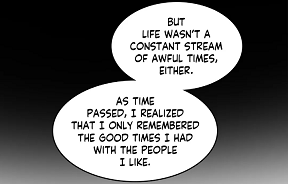 (chapter 94) If it is a loved one, then it can only be a good memory. Therefore it is not surprising that by saying constantly saying that the painter likes the scholar, he is repressing the bad memories with the scholar (the beating in episode 34, the betrayal in chapter 29, his words in the library and his reproach about his job). So far, he only mentioned one negative incident.
 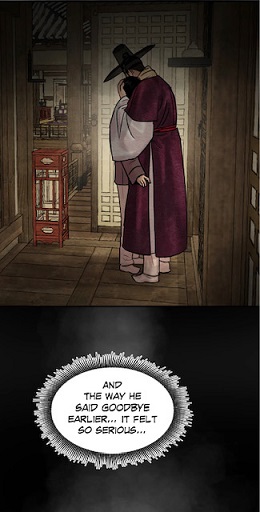 (chapter 105) In the original version, this is what the artist thought:
 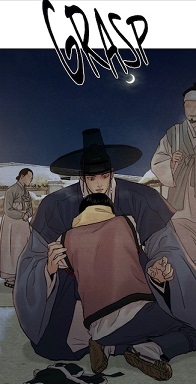 (chapter 76) So while the painter was following his lover, the latter turned around and hugged him. Afterwards, he asked him to go to his noonas, for he needed to talk to Heena. Moreover, contrary to Yoon Seungho, Baek Na-Kyum paid attention to time. He was not lost in thoughts or had lost the sense of time
 (chapter 105) But the latter acted, as if his hand was not wounded.
  (chapter 105) He ignored his physical pain and heartache.
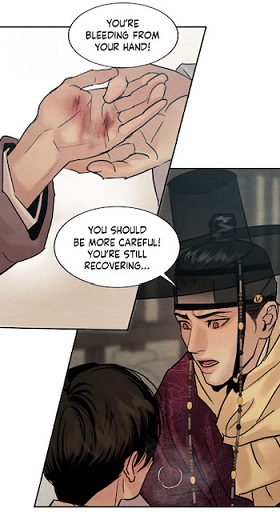 (chapter 105) This is important, because the stumbling symbolizes the intervention of the gods… We have the perfect example at the end of season 3. The lord fell on his knees in front of the scholar’s house, hence there is a hand print on the snow.
  (chapter 100) That’s how he refused to view Lee Jihwa as the murderer of his lover, Baek Na-Kyum”. YES, the falling is the real manifestation of CHANCE! How so? I would like the manhwaphiles to keep in mind that chance is the antonym of trick and scheme! The latter are connected to plan and organization. Thus I come to the conclusion that the noble will decide to go to the doctor’s office in order to treat his lover’s hand.
  (chapter 57) he was feverish so that he couldn’t pay attention to the physician. Besides, the man never remained by his side. Finally, in episode 74, the man never left the office!!
  (chapter 74) I conclude that Yoon Seungho never saw the physician for commoners! Besides, I doubt that he remembers him from his childhood. But this is not the same, when Baek Na-Kyum was ill. He met the other doctor twice.
  (chapter 33)
  (chapter 103) On the other hand, the artist assumes that the man in the office is Yoon Seungho’s doctor!! He heard his confession:
  (chapter 57) There exist two physicians in the city at least. That’s how a part of the truth will come to the surface! And who had fetched the doctor?
 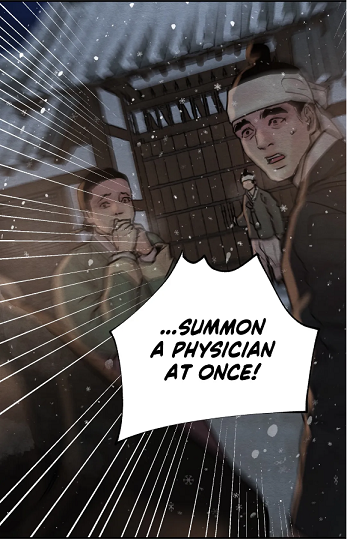 (chapter 103) The staff… I would like to outline that in this panel, Kim was no longer seen next to the couple.
 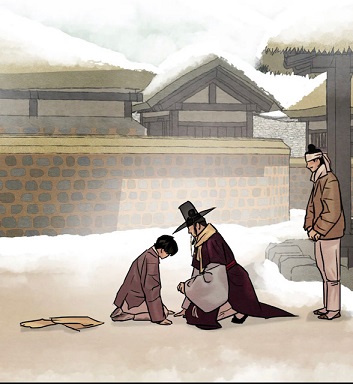 (chapter 105) So where did he vanish? Probably to the mansion, for he had to warn the domestics that the artist would be returning! But if he left the couple behind, this means that he can’t witness what Yoon Seungho and Baek Na-Kyum will do next. And if they don’t go to the doctor, there is no ambiguity that the main lead will send for the doctor again. But according to me, the man disappeared.
  (chapter 103) To conclude, I am expecting that Yoon Seungho will make a huge discovery in the next episode… just like the painter did in the gibang.
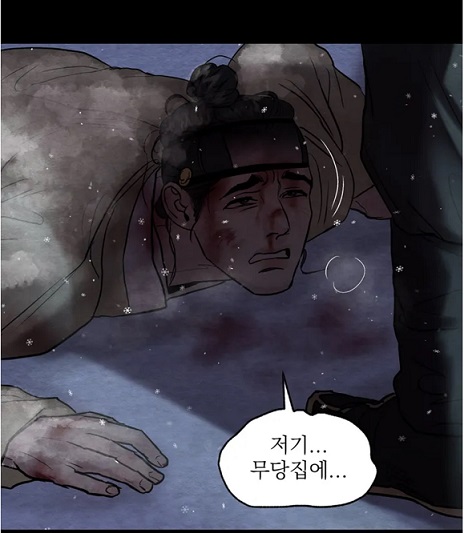 He is on the ground, his face bruised and bloody, while he is asking an anonymous man for help. He is mentioning the shrine. As he is wearing the same hanbok, we can definitely assume that this scene takes place during the same night. The irony is that each time Byeonduck offers a new piece of a puzzle, she also creates a new riddle or mystery. How did the young master get wounded in the first place? And who is the person facing lord Shin?
  (Chapter 59)
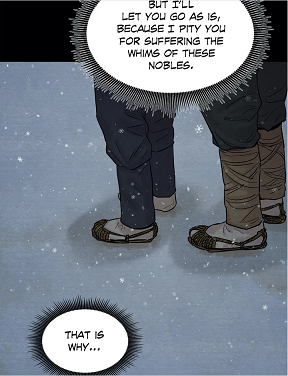 (chapter 66) The size and length of the protections and the cords around the pants were different. Besides, the masks were also different due to the form of the mouth..
 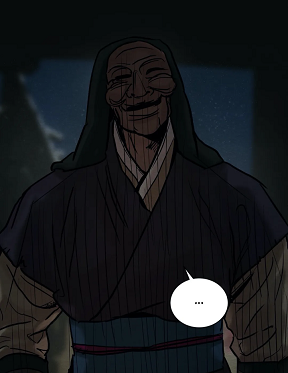 (Chapter 61)
 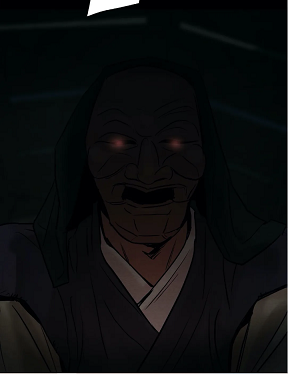 (chapter 61) Finally, I had also detected his presence next to the barn because of a time jump. First, the manhwaphiles saw Lee Jihwa sitting on the floor,
  (Chapter 60), then shortly after he was standing at the entrance of the storage room holding a fireplace poker!
 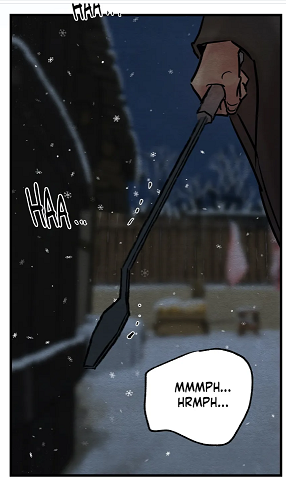 (chapter 60) His position indicated that the young master had shortly left the building. However, the readers had not witnessed his move, for the author had diverted their attention by exposing the character‘s inner thoughts. He was recollecting the past, while talking to himself.
 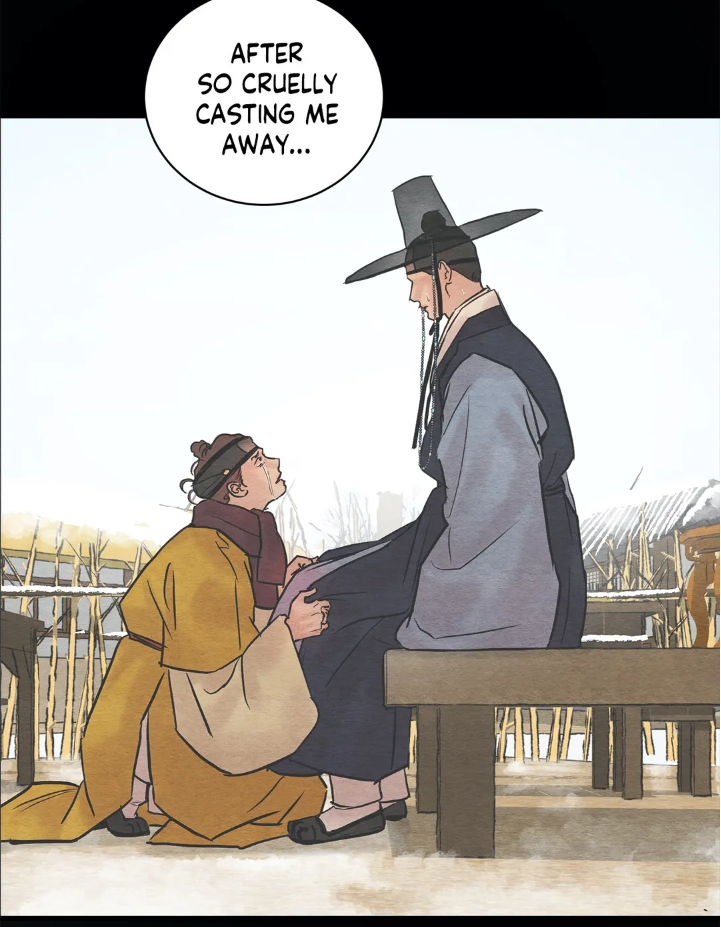 (chapter 60) However, how did the fire poker end up in his own hand? The last time this tool was seen, it was in the kitchen.
 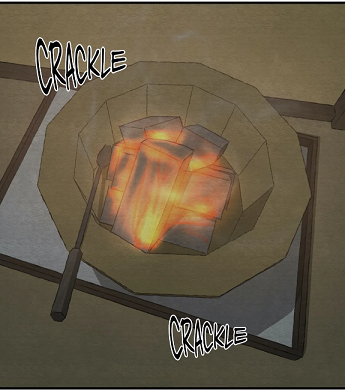 (chapter 60) As you can see, each image has its importance! However, I doubt that the upset aristocrat had this sudden idea and returned to the kitchen and take the fire iron. His mind and heart were definitely elsewhere, while such an action exposes the intention of hurting someone. Jihwa was acting, as if he was in trance, the moment he saw the hickey and heard the painter’s scream. His long lasting stupor was visible in this image.
 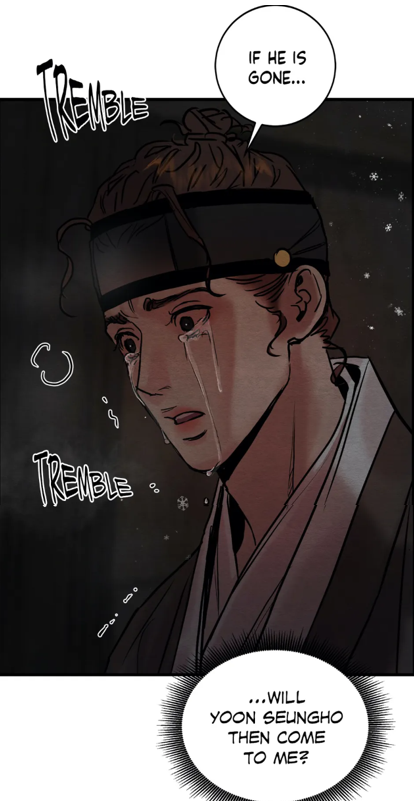 (chapter 60) That’s the reason why I had developed the theory that someone was hiding in the shadow, next to the barn and observing the evolution of the event. [For more read the essay “
 (chapter 57) It is because they serve as a clue for unveiling the truth.
  (chapter 62) It is the same furnace! 😨We all assume that the lord prepared the fireplace, because he put his clothes on his lover. But is it true? We were all jumping to this conclusion, but actually we never saw it. Our brain was led to fill the blanks.
 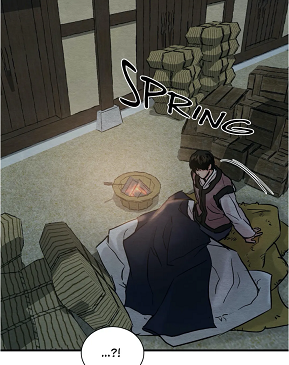 (chapter 61) Finally, the readers were all assuming that the butler had never entered the storage room due to this image and his action before.
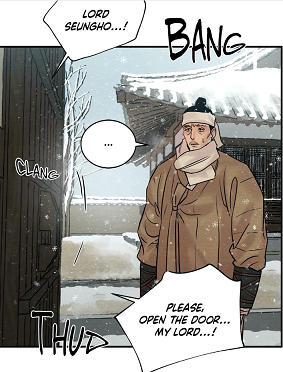 (chapter 61) But is it true? He could have opened the door before, and go to the lord in order to explain his intervention. Faking his concerns for the painter. Why would he place the fireplace there? He wished that the warmth from the fire would wake up the painter. Hence he remained close to the gate of the storage room. That way, he had a reason to visit his master. Moreover, the author exposed that the valet had been keeping an eye on his master for a while too.
  (chapter 62) Because the valet went to his master, we got the impression that the valet had followed his master’s instructions.
  (chapter 61) In fact, this request could be perceived differently. The lord had seen the butler’s intervention, hence he expressed this wish. From my point of view, the butler must have brought the fireplace to the barn, and he left the poker there on purpose. I am quite certain that some people will think that I am again exaggerating. But why did the butler put a fireplace with a fire iron in the lord’s room, when the coal was not properly lit?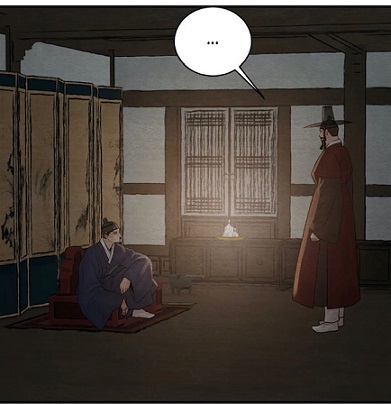
 (chapter 86) Compare the fire to this one:
  (chapter 88) Consequently, I am suspecting that Kim had expected an outburst from Yoon Seungho. The latter could hurt his father with the fire iron. But none of this happened, for the lord preferred playing a comedy.
  (chapter 65) He had expected that the lord would hurt the main lead. But how was he supposed to harm Baek Na-Kyum in the end? With the fire iron… This signifies that he had been present in the barn during the abduction, and even knew the place of the sequestration. Thus he took the furnace and the fire iron to the shed.
  Compare his face to the painter’s who got wounded by wooden sticks.
  (chapter 99) Besides, this theory also explains why the shrine is set on fire.
  (chapter 103) The fire iron is connected to a stove. Finally, I would like to outline the absence of the furnace in the shrine, though it was very cold outside.
  (chapter 99) So when the lord said this to his lover
 (chapter 88), we could interpret it the following way. It was once again a vision from the future, he was seeing from lord Shin’s perspective the betrayal.
  (chapter 60)
  (chapter 60) At no moment, he was told that his childhood friend had been brought to the physician’s. He just heard him leaving. Moreover, the joker never mentioned the place where the couple was fooling around.
  (chapter 60) He didn’t even admit that he had seen them himself. These were memories from someone else! One might assume that these could represent the criminal’s recollection, but I don’t think so. He arrived much later to the physician’s house. If he had been present right from the start, he could have kidnapped Baek Na-Kyum on his way to the restroom.
  (chapter 59) To conclude, the person with such memories
 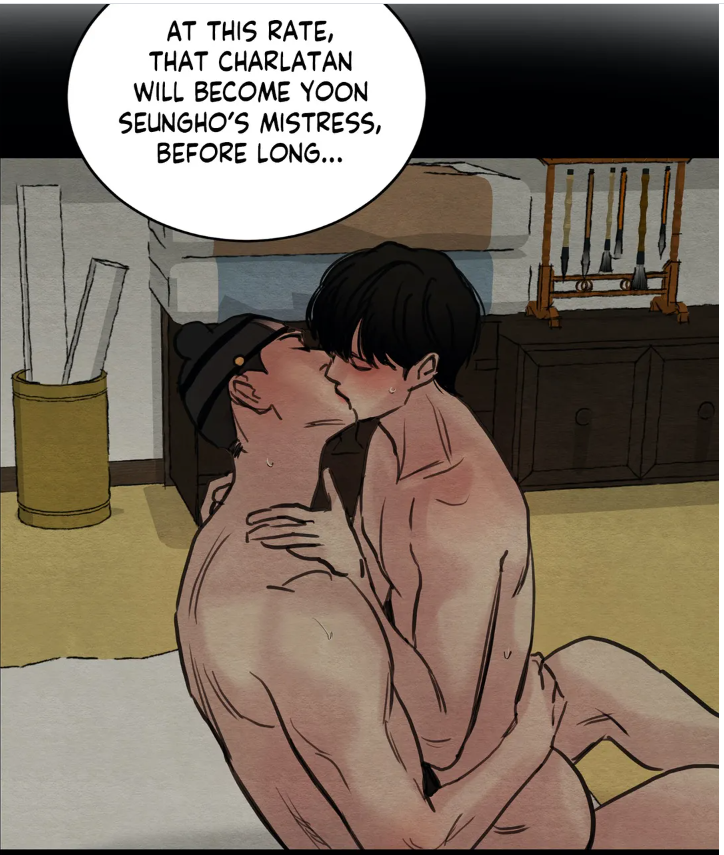 (chapter 43) Here, he had visited the place, hence he could imagine what had happened, though he never saw their encounter according to me. [For more read the essay “
 (chapter 58) He had left the bucket of water in the patio! But note that when the painter left the room, the item had simply vanished.
 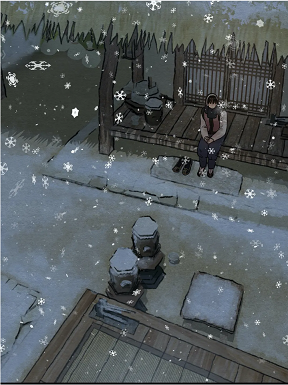 (chapter 59) The painter was not supposed to detect his presence.
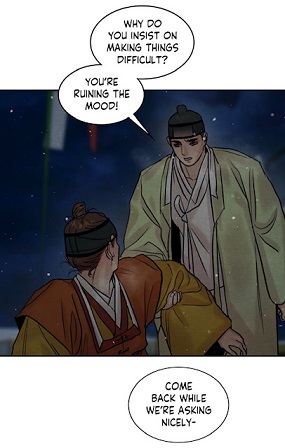 (chapter 100) The manhwaworms can grasp the similarities. Back then, the lord had refused to help Baek Na-Kyum, thus he was even encouraging Lee Jihwa to return to the shrine. Hence he had acted as a willing accomplice and perpetrator. Thus his karma is to be denied any assistance, he is punished the same way than his friends, Min and the other nobles. Finally, observe that the red-haired master
 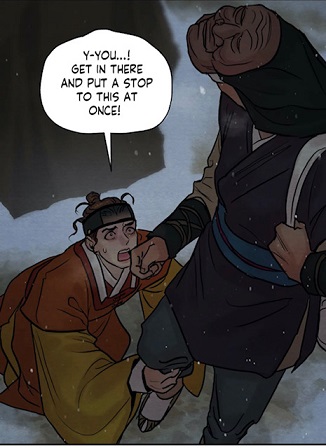 (chapter 100) was lowering himself in front of No-Name which reminds me a lot to lord Shin’s situation.
  (chapter 66)
 (chapter 88) Abandonment and rejection versus embrace and acceptance. And what had Yoon Seungho said during that fateful night?
 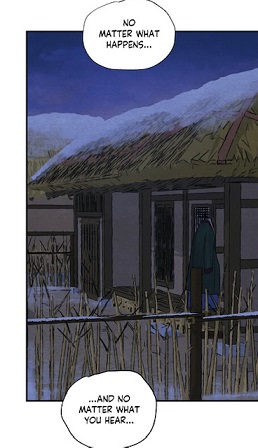 (chapter 88)
 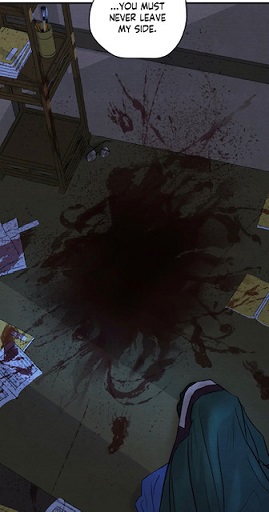 (chapter 88) But while the painter was exposed to sexual abuse, lord Shin had indeed left his friend’s side. In my eyes, lord Shin embodies treason. As you can see, I conclude that lord Shin is about to get assassinated and from the person he expected the least. Why? It is because no one has to realize that lord Shin ran away from the shaman’s shrine.
  (chapter 102) He was a survivor. The opposite from this scene. They faked the painter’s desertion,
  (chapter 60) hence in episode 102 they had to mask his escape, for this would have exposed the involvement of other people, like Lee Jihwa, the doctor with the drugs and Heena. And now, you have the explanation why the shadow hidden behind the tree had put mattresses on the soil. The desertion and survival from lord Shin should not be detected. But who is this person facing the weak lord?
 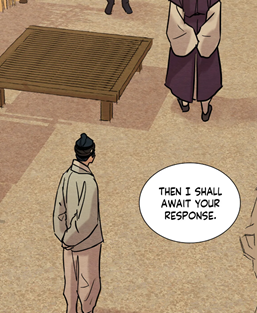 (chapter 7),
 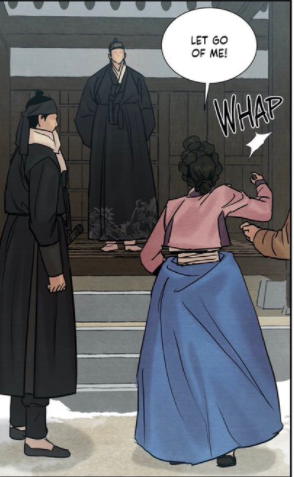 (chapter 65) or boots
  (chapter 86), a sign for a high position. They even had all a sword. Why would the guards from chapter 99 use a wooden stick? In my eyes, it is because they are no real black guards. Besides, I detected that one man had a scarf similar to the butler’s, from lower quality. Thus I am suspecting that these two men are more servants than trained black guards. In other words, they are commoners. This would explicate why they didn’t know how to tie Heena properly. Her mouth was not covered, her feet were not tied. Thus they covered their face. That way, Baek Na-Kyum wouldn’t recognize them. And if he were to survive, then he could blame it on Yoon Chang-Hyeon, as their uniform was similar. During the assault, he couldn’t pay attention to such details and question their true origins. Besides, don’t forget that so far, the beating was tasked to the staff:
 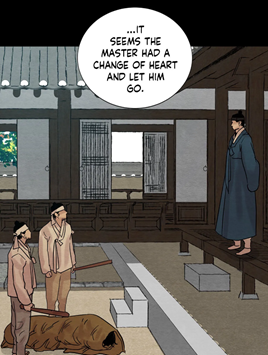 (chapter 13)
 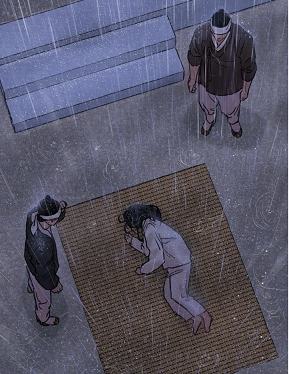 (chapter 77) As you can see, the wooden stocks were present during the first straw mat beating.
 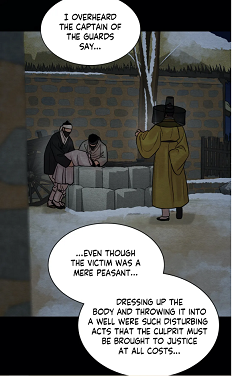 (chapter 101), but here Min thought that he was capable to frame the Lees. The other evidence for this interpretation is the presence of two servants during the main lead’s hunt, while he was wearing the suspicious boots.
  (chapter 83) As you can detect, I see a strong connection between the new panel and the hunt from chapter 83. And here we have 3 people again.
  (chapter 66) Finally, when her brother was on the verge of getting abducted, she saw him lying unconscious with a bloody face. However, she never considered it as an abduction, for his hands and feet were not tied up.
 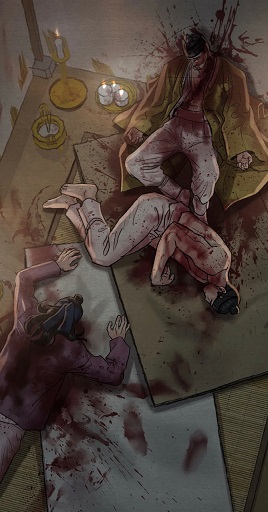 (chapter 102) This is the evidence that someone had manipulated the crime scene. The clothes from the painter could serve as evidence of her brother’s curtains. Heena could come to the conclusion that Min had gone back on his words, and her fake death, which had definitely shocked
  (chapter 99) and bothered her, could only be perceived as real at the end. But this means that while Yoon Seungho had murdered the nobles, there was someone hiding in the shadow
  (chapter 61) the second Joker (Kim) had tried to murder the painter, but he had failed, for he had covered the painter’s head.
 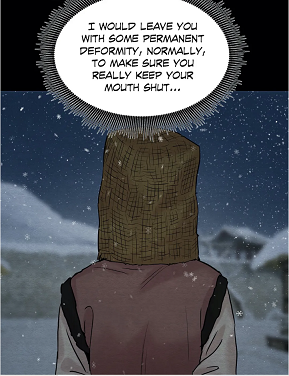 (chapter 66) However, his new attempt to have the painter vanished failed again.
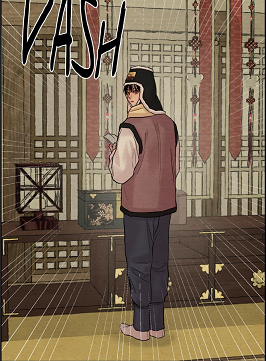 (chapter 97) It could be the same, though I have my doubts. Secondly, I suddenly got aware that the painter had 3 different grey pants at least.
 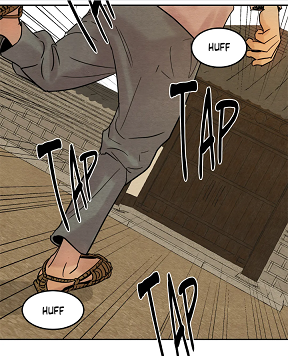 (chapter 4) This one had a cut just below the knees, though the color is much brighter.
  (chapter 84) This is the third one I detected, as the shape of the pants diverge once again. This explicates why Baek Na-Kyum chose to change his clothes before leaving the mansion.
  (chapter 85) And because his pants are very similar to the painter’s, I deduce that he must be close to Baek Na-Kyum or at least he has a spy informing him about the artist’s clothes. Compare his pants
  (chapter 97)
  (chapter 61)
 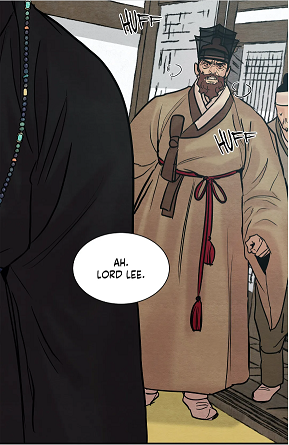 (chapter 67)
  (chapter 67) Their pants have either a different pigment (white, black, khaki, or light grey) or the shape is different. That’s the reason why I am assuming that the person was wearing these trousers on purpose. A new version of this scene:
  (chapter 98) The only difference is that the disguised person is alive contrary to the corpses in the wells. But the problem is that the shoes are betraying him.
  (chapter 83) What did the lord see back then? Three shadows, two men wearing a gat and one caught in the middle with a topknot. Since I consider Yoon Seungho as a shaman, I believe that this vision was not only referring to the past and the incident in the shrine. It exposes the immutable truth, the involvement of three people, either. This is no coincidence. Thus imagine one moment that this illusion was referring to lord Shin’s murder. He is about to get murdered because of a new conspiracy. From my point of view, the man is disguising himself. However, I doubt that he is wearing the lord’s boots. The latter could be “couple boots”, just like the lord and the painter had couple hats.
  (chapter 91) And note during that day, Baek Na-Kyum was called sir due to his hat and clothes.
  (chapter 91) However, if the woman had paid attention to his shoes (mituri), she would have realized that our beloved painter is just a low-born. One might think that I view Kim as the one facing lord Shin.
  Why is Kim wearing a gat with a headband for nobles, when he is dressed like a servant? But there is another detail what caught my attention. He is wearing a bag. It was, as if he had packed his belongings before leaving the mansion. This means, he is taking his brown hanbok, but he is not wearing it. He reminded me of Deok-Jae.
  (chapter 44)
  (chapter 54) But the readers should question themselves this: why did Kim dress like this in the first place? From my point of view, the schemers have already planned to frame Baek Na-Kyum for the murder of the nobles and even of Jung In-Hun. Kim is trying to separate the couple so that the artist can be arrested easily and sentenced immediately. By burning the place, the evidence that Baek Na-Kyum was a victim vanished. That’s how they can manage to turn a victim into a perpetrator. They wanted to erase every trace of the crimes, but then the return of the painter will force them to change their plan. The fire can help them to turn Baek Na-Kyum into a scapegoat. That’s the reason why the anonymous shadow is wearing clothes similar to the painter’s. No one should recognize him. Later, Baek Na-Kyum can be “identified” as the culprit. And any blood trace on his clothes could serve to incriminate the painter. They could use the resemblance of the clothes as a proof for his crime. That’s the reason why lord Shin had to die in the end. And if lord Shin never doubted this person, I am suspecting that the latter is working with the authorities. Kim is not the only suspect, for according to me, there always exist a conspiracy of 3 and even 5 people. This observation leads me to create a list of suspects. First of all, Yoon Seungho’s confession to the learned sir should help us to determine the schemers and culprits.
  (chapter 44). A synonym for old bearded men is “elders”. The latter are supposed to serve as role models. That’s the reason why the young man didn’t suspect the man. With his beard, he must have oozed “responsibility” and even “selflessness”. But who are the suspects?
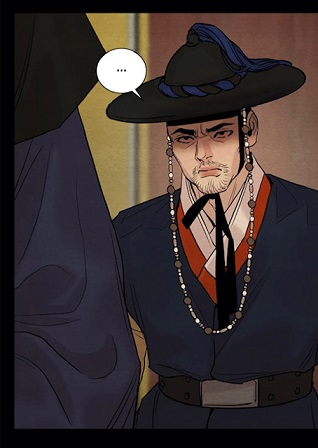 from the bureau investigation is definitely involved. Thus he misled Yoon Seungho. Besides, observe that the officers are connected to fire!
  (chapter 94) Secondly, his explanation implied the involvement of a physician.
 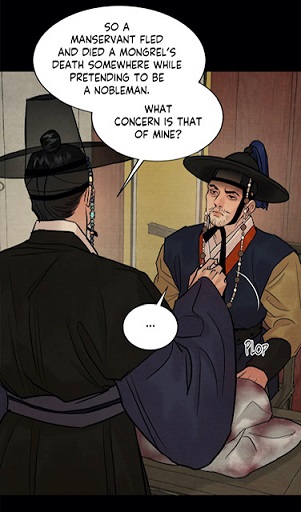 (chapter 98) Though he had been found in a well, the lord’s comment insinuates that “Deok-Jae” had been stabbed. Striking is that the lord didn’t show any interest in the violation of clothes and the servant’s death. This reaction surprised the yangban which left him speechless. It is important, because this shows that the schemers were trying to direct the lord’s attention to a certain person: Lee Jihwa. They were trying to instill the thought that Lee Jihwa had planted a professional spy in his household. And after his betrayal, Deok-Jae had run away with the money earned from his work.
 (chapter 57) Finally, the painter met the Joker again on the same day he visited the physician.
 (chapter 75) Finally, why was the doctor never brought to the mansion again after his last visit in chapter 57? And it looks like he was not there to treat Baek Na-Kyum.
  The latter is suffering from PTSD. Thus the painter had a nightmare. Hence I have the impression that the butler’s intervention and suggestion to Yoon Seungho will fail. The lord won’t be able to leave his side. Moreover, I would like the readers to recall that when Baek Na-Kyum got sick, a different physician was fetched.
  (chapter 33) Different clothes displays a different identity. From my point of view, the doctor doesn‘t want to be connected to Yoon Seungho. Finally, don‘t you find it weird that he was not by his side in chapter 57? He literally abandoned the young master in the room with the painter
 (chapter 57), though the latter was a patient too. He had a wounded wrist. The physician should have controlled Yoon Seungho’s fever, brought him water and even an infusion. His absence and passivity caught my attention. So what was he doing in the kitchen? Finally, the doctor is also connected to the shaman. Not only he mentioned him, but also there is the symbol of shamanism in his kitchen. Why did the gods want our couple to have their first “true” love session at the physician’s office? Somehow, it was to confront him with the truth. Finally, don’t you find it weird how Kim reacted
 (chapter 82), when the new version of Deok-Jae made the following suggestion to Kim:
  (chapter 82) Hence the doctor is not off the hook, quite the opposite.
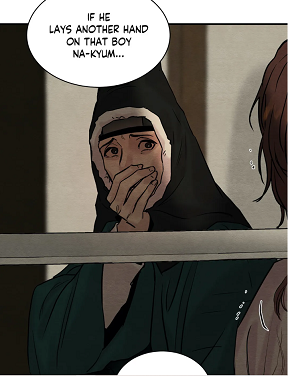 (chapter 67), and discovered Lee Jihwa’s sodomy which was supposed to be a secret. The father is well aware that the main lead’s suffering is linked to the young master’s sexual orientation, which the father had always denied. His involvement could be detected, when he allowed one of his servants to be dragged to the gibang.
 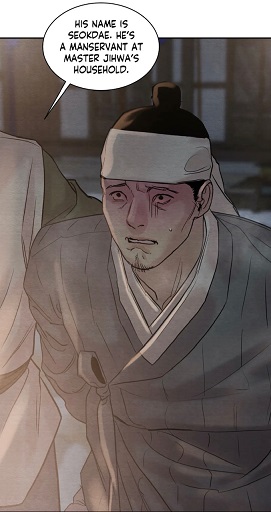 (chapter 99) Finally, The Joker also heard father Lee’s humiliation and powerlessness.
 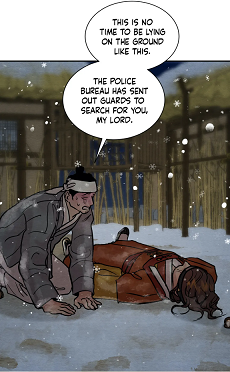 (chapter 101) Thus the fire could be seen as a desperate measure to cover the Lees’ culpability.
 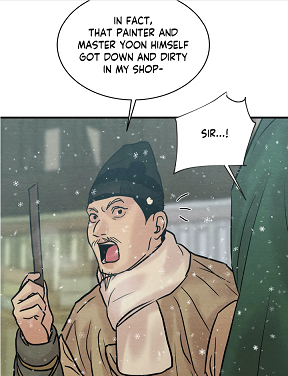 (chapter 64) He can play a huge role by making a false testimony, as he can recognize the clothes ordered by the clients.
 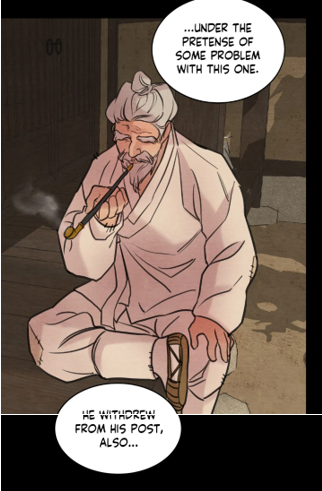 (chapter 37) The latter had already disguised himself in season 1, and due to his age, no one would suspect his real nature or power. Then we have this faceless man from chapter 83:
  (chapter 83) I am not including Yoon Chang-Hyeon in this list, for he is not intelligent and cunning enough to develop such a plan. For me, he is just a pawn. Thus he never intervened on his own. He was always pushed by others’ suggestions. Yet, there is no ambiguity that the elder Yoon will be involved in a new plot.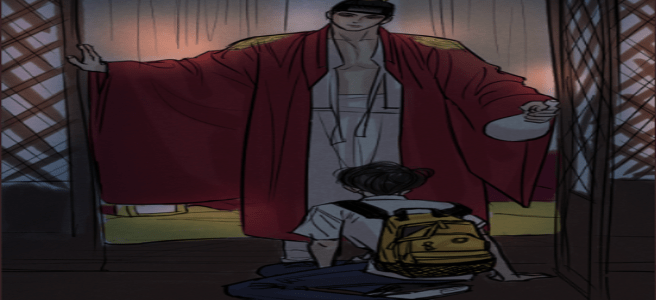
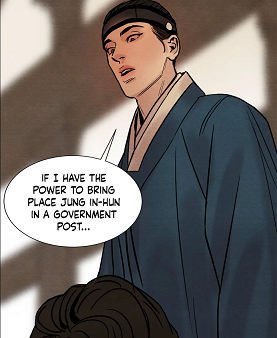 (chapter 11) Secondly, I had associated the main lead to the eagle which is the symbol for the kings and emperors in Europe. He was seen here flying
  (chapter 30), and his fingers reminded me of the eagle’s claws.
 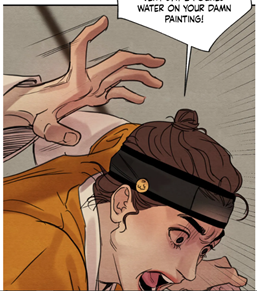 (chapter 18) And this perception got even reinforced, when I saw this panel:
  (chapter 52) In this scene, he was sitting like a king surrounded by his “court”. The hanbok had such a design that I couldn’t help myself associating it to Joseon’s monarchy.
  , I had another revelation. On the one hand, it actually confirmed that Yoon Seungho was somehow destined to become a king, yet he is not represented by the eagle or the phoenix, but by the dragon. Hence the moment I saw this image, one idiom came to my mind: Dragon king!
 (chapter 100), though this deity is always accompanied with a dragon and in this picture, the readers couldn’t see one. However, it is possible that the author didn’t desire to reveal too much.
  (chapter 21) Why? It is because the lord was happy. These were the tears of happiness, which Yoon Seungho couldn’t express contrary to the painter. And this is no coincidence that in chapter 58, it started snowing, when the couple was making love:
  (chapter 58) And we had the same weather, when Yoon Seungho saved his lover.
  (chapter 102) The weather was expressing the main lead’s emotions: tears of happiness or sadness. We could say that the lord has the “power” to move the sky.
 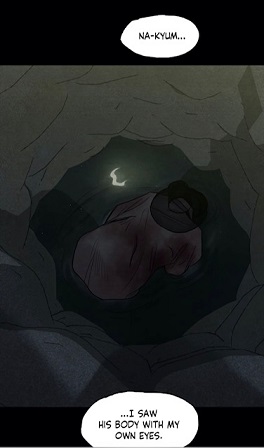 (chapter 97), and according to me, the messenger was drown there.
 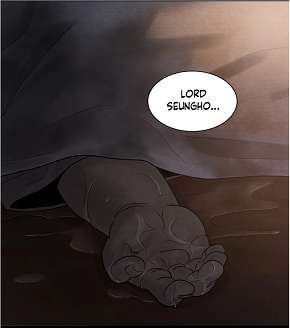 (chapter 94) In addition, my theory is that Deok-Jae and/or Jung In-Hun’s body were placed in a jar in order to hide the murders. For me, the jar plays a huge role in Painter Of The Night… thus Byeonduck created such a scene in season 2
  (chapter 46) and we have so many jars next to the pond:
 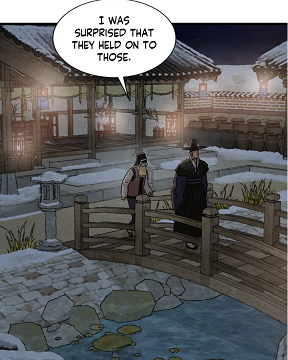 (chapter 94) [For more read the essay “The secret behind the library”]
 (chapter 91) This is no coincidence. To conclude, all these elements (rain, jar, well, soul of a deceased), connected to the dragon king, are present in Painter Of The Night. Thus I came to the conclusion that Yoon Seungho is like Dragon king. This reinforces my conviction that the main lead is not only connected to shamanism, but also embodies royalty. So he might not be the king of Joseon, but he is powerful in his own way, though he is not aware of this. And note that the moment he wished to commit suicide by drowning in the pond, he was brought back to life.
 (chapter 85) This means that in the Yoons’ mansion, people didn’t venerate this god. And since the aristocrat made such a statement to the elder Yoon Chang-Hyeon,
  (chapter 86), I have the impression that in season 4, we will assist to a real ritual to ward off evil and back luck, leading the tormenting souls to the afterlife peacefully.
  (chapter 100) and this altar
  (chapter 100) were exposing the presence of a ritual. However, my problem was that I couldn’t determine exactly the nature of the ritual. But by making the connection between the dragon and good fortune, I had now more clues. I have to admit that I can not be 100% sure for this, but this is what I found:
  (chapter 4)
 (chapter 6)
  (chapter 82)
  (chapter 83) and the deer
  (chapter 22). Then the lord compared Baek Na-Kyum’s eyes to a rabbit.
  (chapter 78) Since both resemble each other, I deduce that the main lead has the same eyes, the rabbit’s. Like mentioned above, he utilized his fingers similar to claws:
  (chapter 54) One might argue that this signification is totally impossible, for the lord doesn’t have the body of a snake. This point can be refuted very easily. What is the major characteristic of a snake is molting. A regularly recurrent event during the activity period of all snakes is the shedding of the skin. This coincides with the lord’s change of clothes. The latter reflected his downfall and rising. Furthermore, this animal is linked to death and rebirth. My avid readers are already aware that I had detected different scenes, where we could witness the lord’s spiritual death and rebirth, like for example in the shed:
  (chapter 62) When he discovered his misjudgment the next morning, he felt like dead. He no longer saw himself as a lord, but came to view the painter as his new lord :
  (chapter 66) As a conclusion, Yoon Seungho shares so many similarities with the dragon that I came to view him as one. This explicates why even after getting married, he will never wear a beard!
 (chapter 45)
 (chapter 55) and as such his heart and mind.
  The painter is sitting inside a room, while Jung In-Hun is standing outside. Nonetheless, the position of the characters are very similar. This indicates that the author’s new alternative story is actually inspired by the main story!! This can only reinforce my perception that Yoon Seungho in the main story is associated to royalty. However, since it is a reflection, I deduce that this image
  He criticized the painter by stating that this was “filthy”.
  In this scene, the characters are caught by surprise, but it becomes obvious that there is no disgust or expulsion. In fact, the fall of man took place before, for Baek Na-Kyum was sent to Joseon. In this encounter, I detect attraction and curiosity. Hence I come to the conclusion that in the original story, when this scene took place,
  (chapter 50)
  (chapter 52) This means that the mysterious lord Song was actually claiming the main lead as his wife in the last scene. Min and his friends were sent there in order to entertain the protagonist, but they failed. This explicates why the next day, Black Heart was seen with a hanbok of lower quality.
  (chapter 56) It was, as if Min had been compensated for his bruised face by the mysterious lord Song. However, for the pedophile, Black Heart was just a concubine, and not his main wife! Hence the hanbok had not such a detailed and expensive design. This would explain the villain’s jealousy. And now, if you look back at the hanboks from the main lead, you will recognize his ascent. First, he is wearing green, which is similar to Yoon Chang-Hyeon’s color. At the same time, his hat resembled a lot to Kim’s.
  (chapter 1) Then later, he is mostly wearing blue which is actually the color of the Crown prince.
  (chapter 11) Yet, his robes initially have no design. Slowly, the lord is wearing colors and designs that are actually reserved for a king: blue, red, black and purple. This constant change of hanboks symbolizes the “snake molting” and as such his transformation and rising. This is not astonishing that on the night of the bloodbath, he had such a hanbok:
  (chapter 102) Here, he was no longer acting like a noble, but as a ruler. Don’t forget that according to me, the mysterious lord Song had proclaimed the main lead as his unofficial Queen by giving him hanboks with phoenixes. However, naturally, this was never mentioned to Yoon Seungho directly. Why? It is because Kim usually selects his clothes. However, this rise was not natural, as the lord had no real saying in this matter. The real metamorphosis took place in the shaman’s house, when the lord was sent back to the past and as such the darkness.
  (chapter 102) The moment he left the “cave”, he went to the mountain and surrounded by the wind and water, he changed into a dragon. This expulsion corresponds to the final release, the lord’s mind is finally freed from the darkness, while I believe that this scene
  (chapter 44) It is because the main lead was thinking that the painter would actually run away. Thus the door was left opened, and he was wearing warm clothes. Yoon Seungho never imagined that Baek Na-Kyum would remain by his side. Yet, during the previous night, the lord had consoled his lover by embracing him.
  (chapter 71) But this can be refuted easily. First, don’t forget that during this love session, the lord was acting like a servant pleasing his new lord. So this had nothing to do with Yoon Seungho’s feelings like sadness or happiness. He was determined to keep the painter by his side, and ignoring his own feelings. He never expected the artist to reciprocate his feelings. Secondly, Yoon Seungho’s nocturne vision is not just a nightmare, but also a DREAM! Yes, you are reading this correctly. Only recently, I discovered that all the artist’s visions are a combination of 3 elements: memory, nightmare and dream! I will give you three examples as illustration, for I am slowly running out of time.
  This vision is a combination of these three elements: memory, nightmare and dream. This had happened during the First Wedding Night (memory)
 (chapter 21), then we have a similar situation in chapter 49: ,
  , but the painter was rejecting this future. Hence he considered it as a nightmare.
  ; nightmare
  the lord becomes a ghost and confronts the painter with his biggest fears (admitting his attraction, passion for erotic paintings and homosexuality) and dream
 (The painter’s true desire was that the lord would kiss him, he was deeply longing for his lips, yet he was still in denial in this vision.
  , for the painter was remembering the corpse in the courtyard, a dream, as he wished the return of his loved one
  . He hoped that the lord would take care of him personally. Naturally, the “spirit” is the nightmare
  .
.  (chapter 74) This had already happened, but the lord had not grasped the significance.
  (chapter 53) Besides, he had not opened the door himself. Even when he went to the scholar Lee and opened the door with the his foot, the lord still felt trapped.
  (chapter 67) Then in season 3, he could break a door, but it was thanks to the painter.
  (chapter 96) This shows that the lord’s wish to get released had not been fulfilled so far. In my eyes, it is connected to the torture Yoon Seungho suffered and as such to the purge organized by the authorities. That’s the reason why I deduce that the lord will break a door in season 4, and this won’t be by accident and it will be witnessed by many people contrary to chapter 53, 67 and 96! The broken door will reflect the lord’s rise and power, and no one will be able to stop this. In my eyes, this wish is connected to the door in the servants’ quarter. That’s how his imprisonment started.
 (chapter 74) The “dragon” wished to see Kim and his father, and confront them! And this did take place in season 3. Yoon Seungho confronted the butler with his attitude and betrayal
 (chapter 77), but this argument was just short-lived. He still viewed the valet as a hard-working and trustworthy person. He had just made bad decisions. Then in the bedchamber, the lord could blame the father for his suffering:
  (chapter 86) As you can see, the lord’s wishes were granted, but the nocturne vision was so difficult to grasp that neither the readers nor the main lead could interpret the message correctly immediately. Besides, the nightmare was mostly silent. But this doesn’t end here.
  (chapter 74) In this image, he is floating in the air… a sign that his status is changing. At the same time, this shows that he is escaping from the hands. They are trying to drag the main lead down. Thus I come to the conclusion that the vision was announcing the lord’s transformation (into a dragon) and as such his “rise”. Note that in this image, he is still a teenager, but in the following panel the protagonist has already become an adult.
  (chapter 74) Simultaneously, the vision also displays the lord’s expulsion from “hell”, the sex orgies
  (chapter 74) Simultaneously, the dream showed that the lord wished to see this painting again, though deep down, he blames this image for his suffering. As you can see, the vision was revealing the tormented disposition of the lord. He was switching from nightmare to dream and the reverse… a mixture of anxieties and desires.
  (chapter 74) This signifies that he was approached by someone from behind, he had not noticed that the “door” had been opened. Thus he never expected his apparition. For me, this perception demonstrates that the painting is not the real cause for Yoon Seungho’s suffering. Since he had turned around, I came to recognize that this scene stands in opposition to the situation in the painter’s nightmare:
  (chapter 86) In reality, he was a dragon, who could bring luck and fortune to the person who would cherish him. This is no coincidence that the pedophile sent hanboks with the crane
 (chapter 34),
  (chapter 30), but much more brutal and violent!



 Bebebisous33s' analyses in K-Dramaland and Manhwas