
Please support the authors by reading Manhwas on the official websites. This is where you can read the Manhwa: Jinx But be aware that the Manhwa is a mature Yaoi, which means, it is about homosexuality with explicit scenes. Here is the link of the table of contents about Jinx. Here is the link where you can find the table of contents of analyzed Manhwas. Here are the links, if you are interested in the first work from Mingwa, BJ Alex, and the 2 previous essays about Jinx The Hot Sparks and Feverish Reality part 1 – part 2
It would be great if you could make some donations/sponsoring: Ko-fi.com/bebebisous33 That way, you can support me with “coffee” so that I have the energy to keep examining Manhwas. Besides, I need to cover up the expenses for this blog.

Since a new chapter is released today, this analysis can not be long. I started composing just before the release of episode 86. Yet I was not able to finish it on time, hence I postponed it, as I knew that my avid readers would be more interested in the interactions between doc Dan and Joo Jaekyung in the bedroom.  🌶️😂
🌶️😂
Introduction — Why Floors Matter When Everyone Looks at the Couple
Most readers of Jinx focus on the obvious: the central couple, their attraction, their conflicts, their intimacy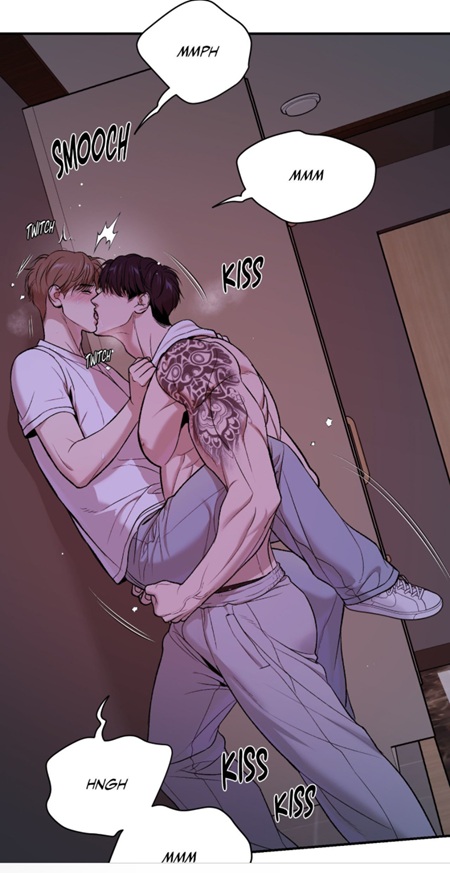 (chapter 85). Against this emotional core, elements such as carpets, hallways, floors, and room layouts may seem secondary, even irrelevant.
 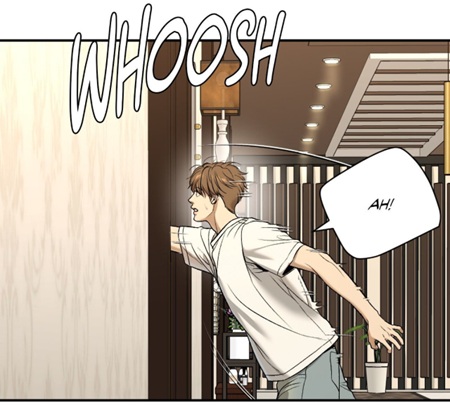 (chapter 85) Why care about the color of a carpet or the direction a door opens
  (chapter 85), when the real story unfolds between Joo Jaekyung and Kim Dan?
Yet it is precisely through these overlooked details that the narrative reveals something essential.  (chapter 82) Floors and patterns are not neutral decoration. They function as a parallel narrative system—one that tracks changes in status
 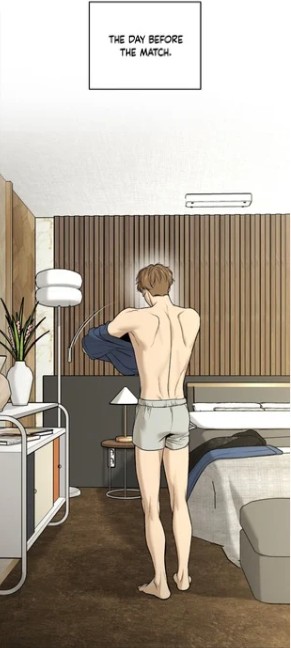 (chapter 85), exposes the actual situations in which the characters are placed
  (chapter 85), and helps us locate spaces and relationships within the hotel architecture itself. In other words, the floors do not merely frame the story; they add a spatial depth that sharpens our understanding of the “characters.”
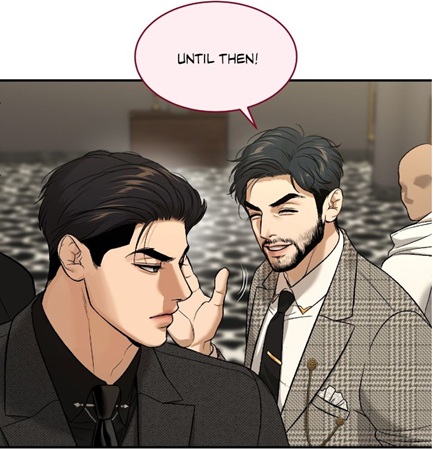 (chapter 82)
My attention was first drawn to this system through a seemingly trivial observation: the carpet in the restaurant where the team dines at the restaurant of the hotel. (chapter 85) Its ornate red-and-gold pattern had already reappeared in the press conference venue, though here, it was covered by a black staircase leading to the stage.  (chapter 82)
  (chapter 82) One might think, the only information we get is that MFC had booked a conference room at the hotel where Team Black is staying. However, in the States, the carpet of the hallway at the hotel had a similar pattern.
 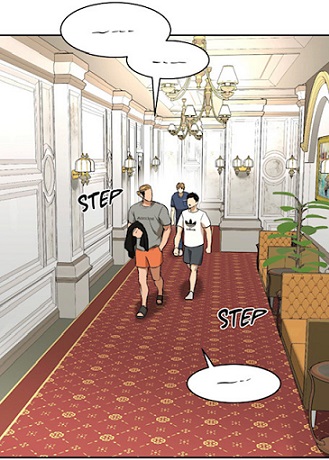 (chapter 37) This similarity and repetition caught my attention. It suggests continuity between public spectacle and private space, between what is shown and what is concealed. Following this thread led to a broader realization: the floors simultaneously signal elevation and confinement. They show who appears powerful—and who is, in fact, enclosed.
From that moment on, it became impossible to ignore what the architecture was doing. The story of Jinx is not only written on bodies and faces, but also under the characters’ feet.  (chapter 37)
The Carpet as a Double Register: Status and Situation
The first function of the recurring floor patterns is to mark status. The restaurant and conference carpets belong to spaces of visibility and performance. They are the domains of reputation, hierarchy, and spectacle. Fighters shine, journalists observe, managers negotiate. The gold tones evoke prestige, success, and imperial grandeur—fitting for a man nicknamed The Emperor. (chapter 82)
But this is only half of the story.
The same patterns also describe the actual situation of the characters. (chapter 85) The intersecting lines resemble a net or wire fence. Because of their golden color, the danger is masked by luxury. What looks like elevation can also be read as enclosure. The higher the status appears, the more invisible the constraints become. And now, you comprehend why at the conference, the red-golden carpet was covered with a black stage. (chapter 82) It was to mask the true fate of fighters in general, they are trapped in a system where they are exploited. They can only exit such a system, where their career reach their end.
This dual function—status marker and situational indicator—becomes clearer, when we compare the French hotel to the American one. In the United States, a similar pattern appears in the hallway near the rooms, but there the lines are not fully closed, are less rigid and oppressive.  (chapter 37) It is in that hallway that Kim Dan collapses after drinking a drugged beverage. He literally falls onto the carpet, on his knees. The trap activates—but not on its intended target.
This detail is crucial. The beverage was delivered by someone connected to Choi Gilseok and Heo Manwook 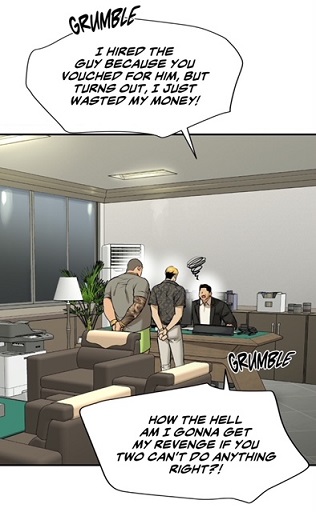 (chapter 46), not by MFC directly. The scheme exists, but it is imperfect. Joo Jaekyung is not truly “caught” in that moment, which explains why the plan ultimately fails.
When the same visual language reappears in France, now under the umbrella of MFC itself, the implication changes. The trap is no longer improvised. It is institutional. (chapter 85) Don’t forget that this match had been presented as an invitation from the CEO. 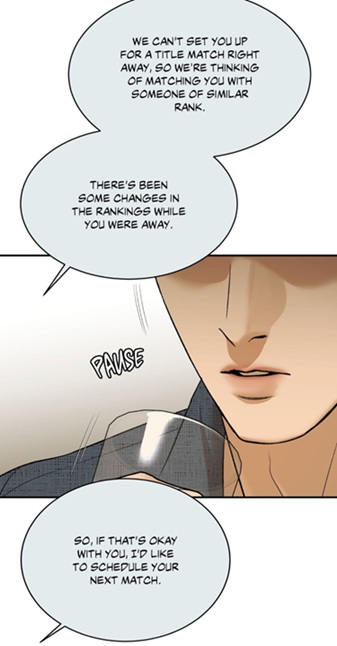 (chapter 69) As you can see, the pattern of the carpet could be seen as an evidence for a trap, and the “Emperor” is their target once again. Their plan is to end his career so that all the incidents and crimes from the past can be buried.
Another detail reinforces how central the floor patterns are to the scene: there are two distinct carpet designs present linked to the conference. Alongside the geometric, fence-like pattern associated with luxury and institutional order, a second pattern appears in the hallway (chapter 82) —one that unmistakably recalls an animal skin, resembling a leopard or panther coat. This is not an abstract association, but a visual continuity within the story itself.
It is precisely on the geometric carpet that Arnaud Gabriel approaches Kim Dan 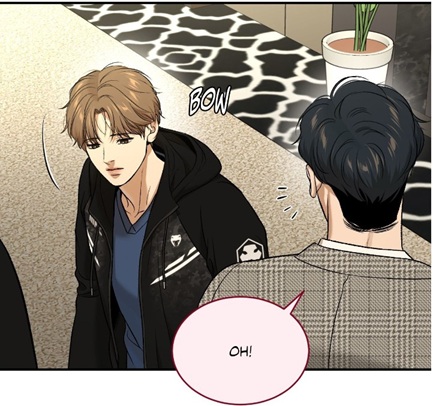 (chapter 82). The opponent stands on the surface that embodies order, hierarchy, and control, and behaves accordingly. He flirts, comments on the doctor’s eyes, and treats the moment as harmless. Then he turns his back.
 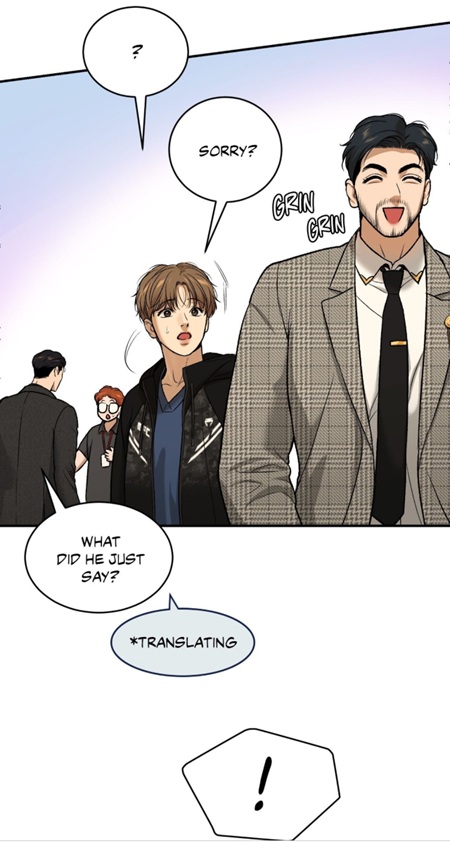 (chapter 82) He never steps onto, nor does he seem to register, the animal-patterned carpet nearby, as doc Dan was standing on a white-off carpet. In other words, Arnaud Gabriel interacts only with the space that reflects the institution’s worldview.
The champion’s reaction exposes what that worldview ignores. Once the official from MFC translates the remark, Joo Jaekyung’s response is immediate, physical and almost uncontrollable. 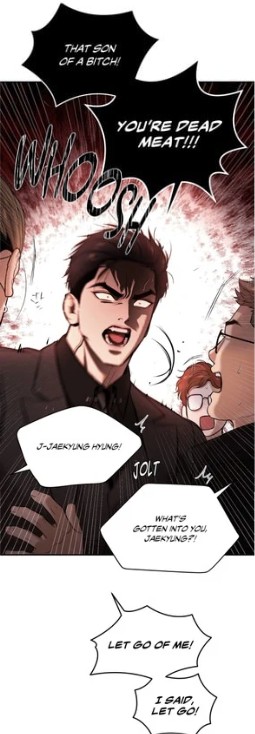 (chapter 82) This is not the response of a neutralized Emperor, but the instinctive surge of a predator whose territory has been violated. The scene echoes an earlier, more intimate image from the bathroom in chapter 30,
 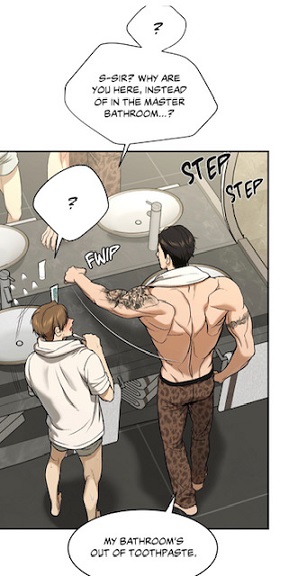 (chapter 30), where Joo Jaekyung appeared wearing leopard-patterned pajamas. The animal imagery was already present then, but dormant. Here, it reawakens.
This is where MFC’s miscalculation becomes visible. They mistake enclosure for domestication, hence we have the golden cage: (chapter 85) They believe that status, luxury, and isolation are enough to tame the Emperor. Yet the leopard has never been erased—only restrained. The golden cage does not eliminate his dangerousness; it merely hides it from those who assume obedience has replaced instinct. By turning his back, the opponent symbolically aligns himself with the institution’s blindness. He believes the champion is contained and probably diminished. He is wrong. (chapter 82)
Thus, the carpet reveals more than a trap. It exposes a false sense of control. While the fence appears tight and escape seems impossible, the presence of Kim Dan at the table changes the equation entirely.  (chapter 85) The champion is not alone inside the cage. He is supported, grounded, and no longer isolated. What MFC fails to see is that this support does not weaken the predator—it stabilizes him. And a stabilized predator is far more dangerous than a cornered one. For years, Joo Jaekyung’s violence was reactive, triggered by threat, humiliation, or loss of control. Such a fighter is powerful, but predictable. He can be provoked, exhausted, and manipulated.
Kim Dan changes this equilibrium. By anchoring the champion emotionally and physically, he removes the constant background noise of fear, resentment, and isolation. Joo Jaekyung no longer needs to fight the environment itself. His aggression is no longer dispersed; it is focused. This is precisely what MFC miscalculates. They believe possession equals control. They assume that calming the fighter makes him easier to manage. In reality, it makes him harder to deceive. Kim Dan’s role is decisive here. He has become the true owner of the “beast”, but MFc has not detected this change. Moreover, his closeness and experience with other fighters allows him to gain knowledge. 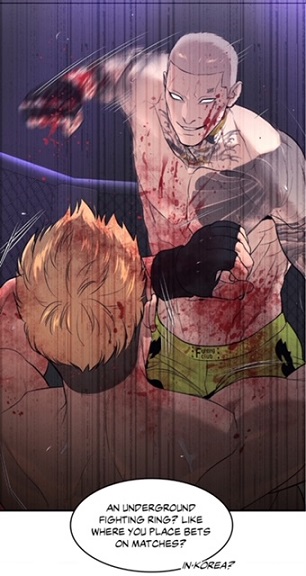 (chapter 47) Through him, Joo Jaekyung gains access to a form of knowledge the institution does not control. The beast is no longer driven blindly forward; it is guided.
In this sense, ownership shifts. Not legally, not contractually, but functionally. MFC may hold the paperwork, but Kim Dan holds the leash — not to restrain the predator, but to direct its attention where it truly matters. That is why this support is threatening. Not because it domesticates Joo Jaekyung, but because it makes him lucid.
This exposes how significant the pattern in Jinx are. While the geometric design signals status, enclosure, and the institutional trap, the animal pattern points to instinct, territoriality, and latent violence. Together, they show the limits of MFC’s control. The champion may be placed inside a golden cage, but his nature has not been erased. It has merely been ignored by those who believe that prestige and containment are enough.
Floors as Spatial Evidence: Mapping the Hotel
The patterns do more than symbolize. They also locate.
By following changes in carpets, tiles (chapter 85), wall colors, corridor width, and interior layout, it becomes possible to reconstruct the hotel’s internal geography with considerable accuracy.  (chapter 84) These visual cues distinguish floors, mark thresholds between zones, and separate different kinds of isolation. The hotel ceases to function as an abstract backdrop and instead reveals itself as a structured environment in which hierarchy is materially inscribed.
This becomes particularly clear when examining Kim Dan’s room. His corridor shares certain elements with Park Namwook’s room, for example, his door is opening outwards  (chapter 85) (chapter 82) and he has no cupboard in the corridor of his room. However, if you look carefully, you will notice that doc Dan’s room has three different types of floor: in the corridor, (chapter 85)
  (chapter 84)
 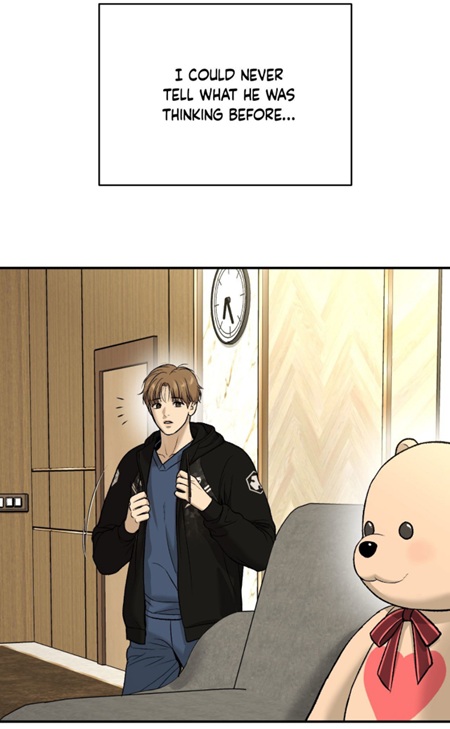 (chapter 85) The corridor seems to have white linoleum covered a dark brown carpet, similar to the one in his bedroom. However, observe that the manager’s entrance has the same tiles than in the hallway. (chapter 82) Finally, the wooden or gray walls and the rich brown carpet
 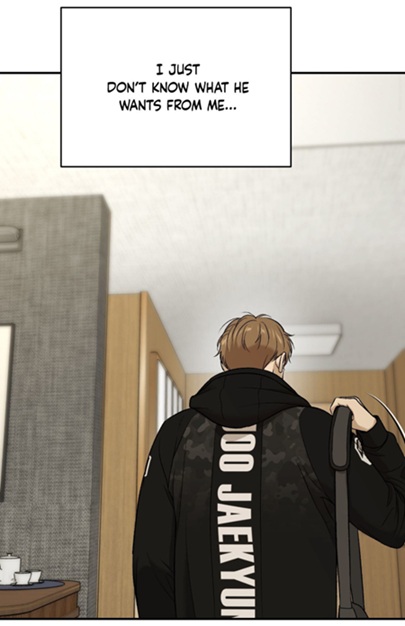 (chapter 85) reminds us of the champion’s living room in the hotel.
  (chapter 82) This clearly exposes that doc Dan’s room is not a normal room. It exceeds that basic category. It is larger, brighter, and arranged for comfort. The interior layout is particularly revealing: the bathroom is located close to the bedroom (chapter 85), while the entrance to the room is set at a noticeable distance from both the bed and the couch. (chapter 85) This spatial separation creates a protected inner zone, shielding the sleeping and living areas from the corridor. Combined with the presence of a couch, a large window (chapter 84), and abundant light, the room reads as a space designed for rest and continuity rather than mere overnight use. While it is not a suite, it is unmistakably superior to the manager’s accommodation.
Park Namwook’s room, by contrast, is located at the end of a corridor , a position that at first glance might suggest privilege but here functions very differently. The hallway leading to it is narrower and visually compressed, framed by dark tiles both at the bottom and the top of the walls. The color palette is heavier, and the space feels closed in rather than elevated. The end-of-corridor placement does not open onto a decorated or transitional space; instead, it reinforces isolation and marginality. The fact that he was carrying toilet paper in his hand indicates that his bathroom is right next to the entrance of the room. Everything is pointing out that his room is much smaller and less comfortable, as the floor is the same than in the corridor. This means that he can hear noises coming from the hallway. There is no architectural generosity, no suggestion of comfort or expansion. Even before any narrative confrontation occurs, the architecture signals decline. The manager’s authority is no longer supported by space; it is spatially undermined.
Then there is the champion’s suite. Room 1704 occupies a categorically different position within the building. Situated on the top floor, it combines vertical elevation with spatial separation. Since the door is opening inwards, it indicates that the space in the corridor is larger than the physical therapist and the manager’s. Secondly, observe that the floor in front of his suite is different, a combination of marmor and white tiles. There’s a pattern. (chapter 85) (chapter 85) And now look at the bottom on the right, you can recognize the same floor in the corridor. Joo Jaekyung has a cupboard in his corridor. The corridor leading to it changes again in both flooring and framing, and the area outside the door is treated almost like a private antechamber, as there is an opened area with decorative elements rather than bare walls. (chapter 85) Inside, the suite unfolds across multiple rooms, 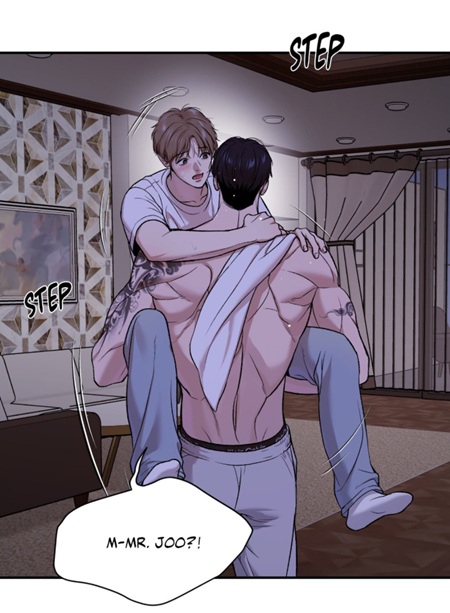 (chapter 85) clearly separating living space from bedroom
 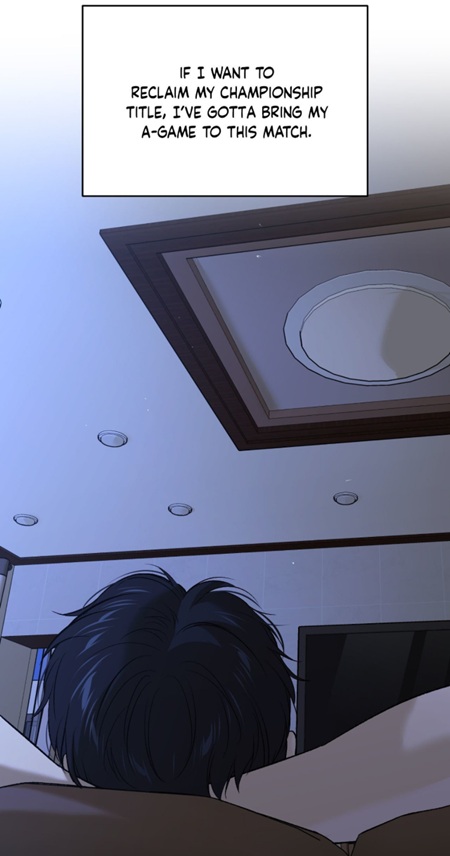 (chapter 82), and extending outward through more than one balcony.
  (chapter 82)
The suite’s scale and elevation construct Joo Jaekyung as both privileged and isolated. He is placed above the rest of the team not only symbolically, but physically. Crucially, the floors and layouts allow us to perceive this isolation long before the characters articulate it themselves. The architecture expresses hierarchy, separation, and solitude in advance of dialogue, making the champion’s position within the system visible before it is ever named.
Through these observations, I could determine the rising of doc Dan and downfall of the manager. Because of doc Dan, Park Namwook has been relegated to the average staff, he is no longer a close advisor of Joo Jaekyung. His room is situated far away from the emperor, which also explains why the former would often ask for the physical therapist’s advice. 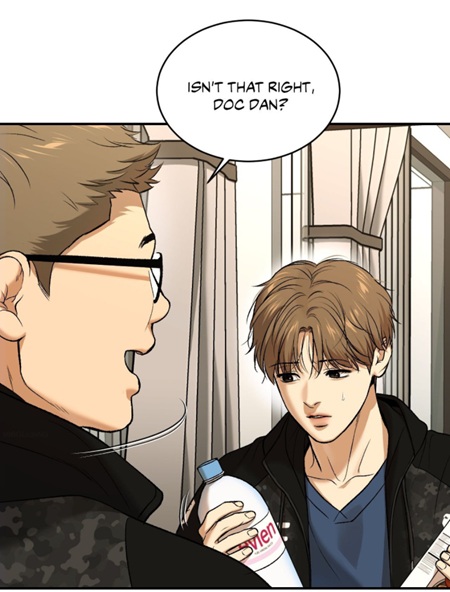 (chapter 82) And the moment I had this realization, architecture, once again, speaks first, my attention returned to the hotel in the States.
  (chapter 37)
Two Hotels, One Logic: The Abuse of the Suite
The comparison between the French and American hotels reveals a repeating structural injustice. To understand it, one must first recall where the champion’s room was located in the United States. In chapter 37, Joo Jaekyung is shown sleeping in the same hallway as Kim Dan and the other fighters.  (chapter 37) This detail is crucial. It explains why he can hear their laughter and smell the food they are eating.
 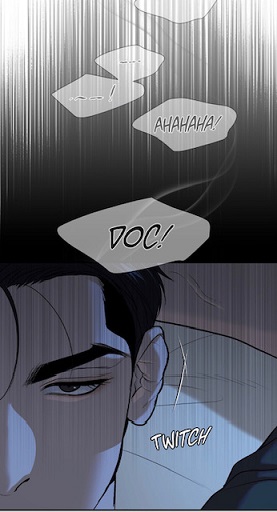 (chapter 37) Architecturally, he was not isolated. Despite his status, he remained embedded within the collective space of the team.
At first glance, one might therefore conclude that no suite had been booked for him. That assumption would be wrong. In the United States, a suite had indeed been reserved for the champion.  (chapter 37) Besides, Episode 40 confirms that Joo Jaekyung did occupy an imperial suite: the interior layout includes a door separating the bedroom from another room
  (chapter 40), a feature characteristic of a suite rather than a standard hotel room. The issue, therefore, is not the absence of a suite, but how that suite was positioned and managed.
In the American hotel, the imperial suite was located on the same floor and corridor as the fighters and staff. This spatial choice stripped the suite of its primary function: protection through distance. Anyone circulating in the hallway could approach the champion’s door without obstruction. Access was not controlled by elevation or separation, but normalized through proximity. This is why the suite’s title proves misleading. It signaled privilege, but did not enforce insulation. I would even say, the name of the room was a subterfuge. In truth, he is not really treated like an Emperor, rather as a special fighter..
This lack of isolation becomes particularly problematic when considering the later incident involving a drugged beverage.  (chapter 37) Because the suite was embedded within a shared corridor, an intruder could approach the champion’s room without attracting attention. (chapter 37) The danger did not require exceptional access. It was enabled by the layout itself.
The situation is further aggravated by what the suite already contained. Alcohol was present in a room officially  (chapter 37) intended for weight-cutting and post–weight-cut recovery. This detail exposes a managerial failure rather than a hotel failure. The environment was not curated around the champion’s physical needs. Discipline was demanded of his body, but not enforced in his space. Meanwhile, fighters and coaches purchased junk food behind the champion’s and Kim Dan’s back, reinforcing the gap between stated goals and actual practice.
When the incident was discovered, responsibility became easy to deflect precisely because the environment had been left porous. Blame could be shifted onto individuals, while the structural decision that enabled access remained unaddressed. (chapter 37) The hotel itself cannot be held fully responsible; the problem lies primarily with MFC’s room allocation and the manager’s acceptance of that configuration. Yet the American hotel reveals an additional layer of vulnerability that complicates the picture.
The rooms in the United States appear to lack basic security features.  (chapter 37) There is no visible keycard system, and no clear indication of an interior lock.
 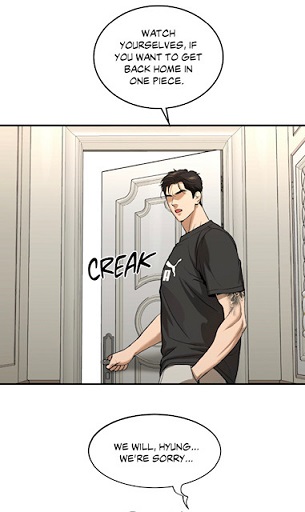 (chapter 37) This absence is striking, especially when contrasted with the Paris hotel
  (chapter 85), where doors are equipped with keycards and locks on both sides (chapter 82). While this could be attributed to an artistic omission, the consistency of the Paris depiction suggests otherwise. The difference feels deliberate.
This lack of security would explain several narrative details. It clarifies how Joo Jaekyung could barge into the room shared by Kim Dan, Potato, and Oh Daehyun without resistance. 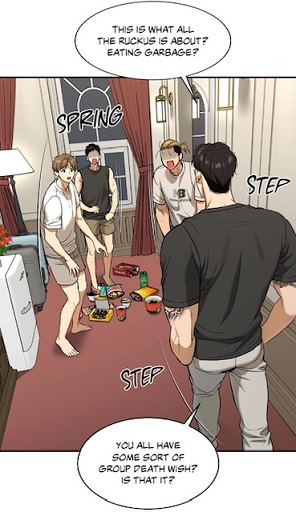 (chapter 37) Access was not negotiated; it was simply taken. The architecture allowed it. The space did not protect its occupants.
It also invites a reevaluation of the hotel’s status. Despite hosting a star athlete, the American hotel does not appear to be particularly upscale. Its corridors are shared, its rooms unsecured, and its boundaries easily crossed. This also casts new light on an earlier detail that initially seemed contradictory. Joo Jaekyung is described as occupying an imperial suite (chapter 37), and yet he can hear the fighters laughing, drinking, even smell what they are eating late into the night.  (chapter 37) At first glance, this appears implausible. A suite, by definition, should insulate its occupant from such disturbances. His bedroom is not situated next to the corridor. (chapter 37) But once we recognize that the American hotel is not an upscale establishment, the contradiction dissolves. Thin walls, poorly insulated doors, and shared corridors would allow sound to travel easily. The problem is no longer proximity alone, but material insufficiency. The suite’s title promises prestige, but the building itself cannot sustain it.
This detail matters. The champion is not merely irritated by noise; he is physically prevented from resting, from isolating himself, from preparing properly. His authority is symbolically affirmed, yet materially undermined. He is expected to perform discipline in a space that does not protect him from others’ excess. (chapter 37) This stands in sharp contrast to the Paris hotel, whose layered security and spatial hierarchy signal both wealth and control. (chapter 85) Back then, Kim Dan was treated materially like the fighters, regardless of the manager’s verbal insistence that he was a senior figure. 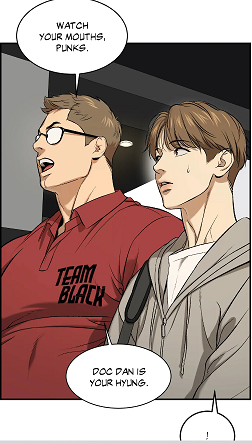 (chapter 7) Status was asserted rhetorically, but not enforced spatially, exactly with Joo Jaekyung.
Not only does the hotel in the States fail to protect the Emperor’s rest — it fails to support his training. Another telling omission confirms that the American hotel was never designed to host an elite athlete. There is no dedicated training space. No gym. No room adapted to a champion preparing for a return match. This absence explains several scenes that might otherwise appear excessive or out of character.
In the United States, Joo Jaekyung is forced to train outside the hotel  (chapter 37), negotiating access with local coaches and nearly getting into a physical altercation before being allowed to use their facilities
 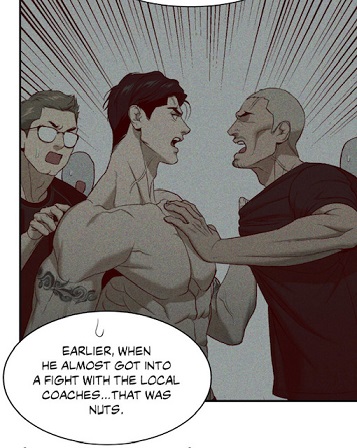 (chapter 37). Only after asserting himself does he gain permission to train. Even then, the gym he ultimately uses is unremarkable — functional, crowded, and indistinguishable from what any average fighter might access. There is nothing exceptional about it.
Paris exposes the contrast. There, Joo Jaekyung can train directly at the hotel.  (chapter 82) The infrastructure finally aligns with the demands placed on his body. This shift is not a luxury; it is a correction. It reveals retroactively how deficient the American setup was — and how little institutional care surrounded the champion at the time.
This context reframes the mockery from Arnaud Gabriel in Paris. 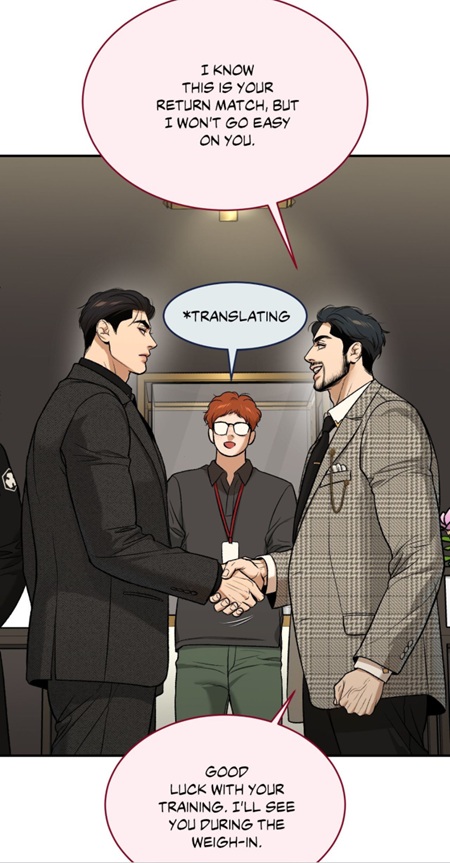 (chapter 82) The remark does not stem from arrogance alone; it is grounded in observation. The training space available to Joo Jaekyung at the hotel is not designed for an elite athlete, even less for MMA fighters.
  (chapter 82) It is a generic fitness room intended for ordinary guests. There are no heavy bags, no proper equipment, no environment suited to the demands of a reigning champion.
 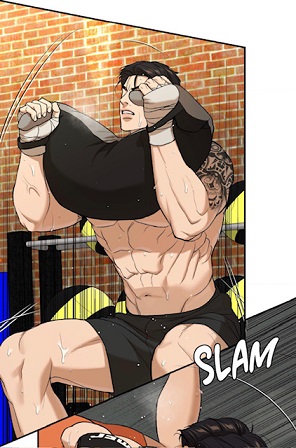 (chapter 37) This is precisely why his training must be adapted, restrained, and partially improvised.
In this sense, Paris does not represent a full correction of the American situation. The champion receives a better room, greater isolation, and visible markers of prestige, but not an infrastructure tailored to his profession. He is accommodated as a celebrity, not prepared as an athlete. The hotel offers comfort, discretion, and image management — not performance support.
This distinction is crucial. In the United States, Joo Jaekyung was treated as neither: neither celebrity nor protected asset, merely another fighter exposed to noise, intrusion, and neglect. In Paris, he is finally elevated — but only halfway. The space now safeguards his image, not his craft. (chapter 82) The mockery from Arnaud Gabriel therefore strikes a nerve, because it exposes the gap between how the champion is presented and how he is actually supported.
What changes, then, is not the logic of neglect, but its form. In America, the failure was crude and structural. In France, it is refined and symbolic. The champion is displayed, isolated, and celebrated — yet still required to adapt himself to spaces that were never designed for someone like him. In other words, he is treated like a celebrity, but not as an athlete!!
This shift becomes visible in the body itself, through the exercises Joo Jaekyung performs. In the United States, his training relies heavily on brute force (chapter 37): heavy weights, aggressive repetitions, exercises that strain joints and demand endurance through pain. The body is treated as something to be pushed, exhausted, and dominated. In Paris, by contrast, his leg training changes. (chapter 82) The movement is more controlled, more fluid, and visibly gentler on the joints. The goal is no longer to overpower the body, but to preserve it.
This contrast is not incidental. It reflects a deeper transformation in the nature of his fighting practice. Through Joo Jaekyung, MMA itself begins to shift away from its earlier association with brutality and borderline criminality. The introduction of a dedicated physical therapist, the adjustment of training routines, and the emphasis on longevity over raw destruction all point in the same direction. Fighting is no longer framed as survival at any cost, but as a profession that requires care, planning, and restraint.
This also casts doubt on the manager’s claim that Joo Jaekyung had always been supported by the “best” specialists.  (chapter 5) MMA is not baseball or soccer
  (chapter 54); it does not benefit from the same institutional prestige or resources. Earlier in his career, the champion was more likely trained to endure damage than to prevent it. What we see now is not the continuation of an elite system, but its gradual construction — one in which Kim Dan plays a central role.
 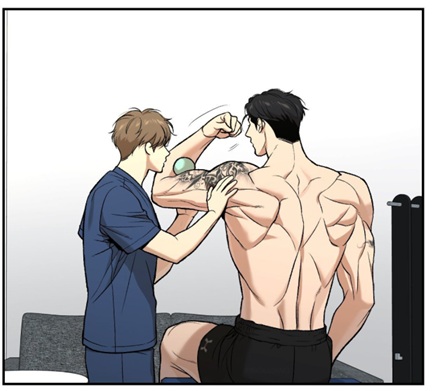 (chapter 81)
In this sense, the American hotel exposes a recurring contradiction: authority is proclaimed, but not supported by infrastructure. Protection is expected, but not provided. The environment mirrors the broader logic governing the team at that point—one in which discipline is demanded of individuals, while the system itself remains careless. Hence such an incident could take place. Here, they were not protecting their “Emperor”, 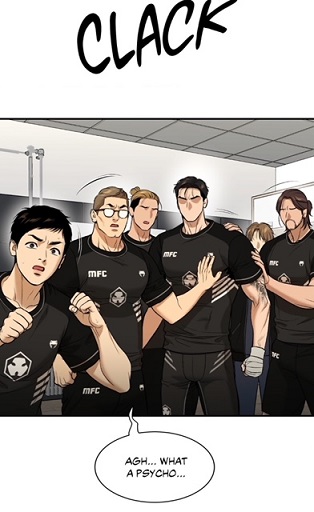 (chapter 49), rather restraining him and as such exposing him to danger.
Seen this way, the incident is not merely the result of personal negligence or malice. It is the product of a space that fails to distinguish between ranks, fails to secure its occupants, and ultimately fails those it claims to serve. I would even add, it exposes the blind trust in MFC.
Paris marks a clear contrast. In France, Joo Jaekyung’s suite is no longer embedded within the team’s circulation space. It is situated at the top of the building, separated from the fighters and coaches, and placed at the end of a corridor. (chapter 85) This time, his room is not described as suite, but the number 1704 (chapter 85) reveals its true position. The hotel has maximum 9 floors, so the number 17 is a reference to a wing. Elevation produces isolation. Distance produces control. He is treated like a star, but not like an athlete.
The logic, however, remains the same. Space is still used as a managerial tool. What changes is the position of the actors within it. Park Namwook is relegated to a lesser floor, visually and architecturally diminished. (chapter 82) Kim Dan, unexpectedly, receives a room that is larger, brighter, and more comfortable than the manager’s. This redistribution of space signals a redistribution of importance within the team. This indicates that his status is not only superior to the fighters, but also to the other hyungs (coach Yosep and the manager Park Namwook).
To conclude, the floors tell the story before the characters do. In the States, the injustice is not shouted. It is built. The suite was intended for a very specific function: the weight-cutting session (chapter 37) and the post–weight-cut recovery. (chapter 37) It was never designed for comfort, while in Paris the suite exists to deceive Joo Jaekyung and his team. It is there to make him think, he is receiving special treatment. That’s why in France, the logic persists, but the positions shift. Joo Jaekyung finally occupies the suite that matches his status. Park Namwook, relegated to a lesser floor, experiences a visual and narrative downfall. Kim Dan, unexpectedly, receives a room that is larger, brighter, and more comfortable than the manager’s. This reversal is not accidental. It marks a redistribution of importance within the team.
Doors, Access, and Delegated Authority
Not everything about access in Paris is restrictive. One detail complicates the picture in a productive way. How could the doctor barge in the athlete’s suite, if there is a lock? 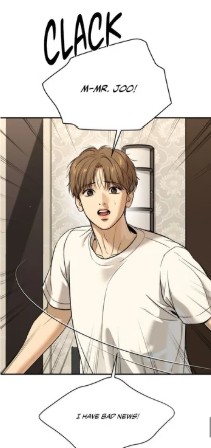 (chapter 82) Kim Dan may indeed possess a keycard to Joo Jaekyung’s suite. If so, this is not a minor convenience. It constitutes a symbolic transfer of access. The physical therapist is granted proximity not merely to the champion’s body, but to his private space. Hence the athlete is not caught by surprise, he doesn’t even mind this intrusion or interruption. (chapter 82)
This possibility helps explain several managerial behaviors. Park Namwook repeatedly seeks Kim Dan’s opinion  (chapter 82) and support (chapter 82), even in situations that should fall under his own responsibility. When he becomes sick, he does not contact Joo Jaekyung directly. (Chapter 82) Instead, he uses Kim Dan as a messenger. This choice is not neutral. It allows the manager to avoid direct criticism from the champion while simultaneously delegating responsibility onto the physical therapist.
If Park Namwook knows that Kim Dan holds access to the suite, this delegation becomes logical. (chapter 85) Kim Dan is positioned as an intermediary — not officially in charge, but functionally indispensable. Should the protagonists fail to appear the next morning, the manager’s first instinct would not be to confront Joo Jaekyung, but to look for Kim Dan. Control is pursued indirectly. At the same time, when the manager announces the schedule for the next day 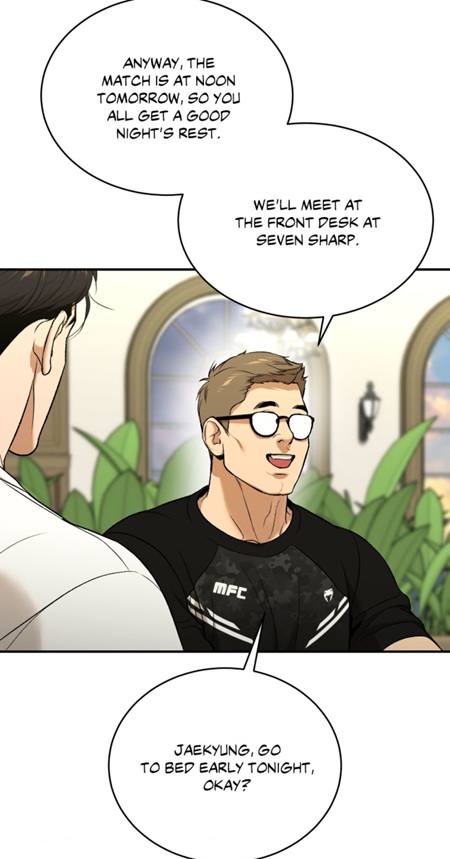 (chapter 85), he expects everyone to wake up on time and appear at seven sharp. He doesn’t see it as his “task” to wake up the champion. Once again, he is delegating responsibility onto others. However, it is clear that he expects Joo Jaekyung to be awake early like he did before. So if the champion doesn’t appear on time, the manager’s decision should be to call doc Dan or visit his room. In his eyes, he is the one responsible for the champion!!
At the same time, access does not equal absence of boundaries. The existence of keycards and interior locks in the Paris hotel makes this clear. (chapter 82) Kim Dan’s ability to enter the suite in episode 82 does not imply unrestricted entry. It is situational. It is tolerated, perhaps even expected, but not automatic. (chapter 82) This is confirmed by contrast: on the night when Joo Jaekyung explicitly asks Kim Dan to come, Kim Dan waits outside. He knocks. He does not let himself in. The boundary holds.
This distinction is crucial. What matters is not who possesses a keycard, but who authorizes its use. In Paris, access is no longer governed by hierarchy or managerial convenience alone. It is regulated by consent. Joo Jaekyung decides when his space opens and when it remains closed.
Yet the system remains vulnerable. If Kim Dan does not answer, and if there is no Do Not Disturb sign, Park Namwook could still invoke institutional authority and ask hotel staff to open the doctor’s door. Let’s not forget that the night before, the doctor is not seen carrying his cellphone to the champion’s bedroom. Secondly, he had claimed to feel sick. (chapter 85) The couple’s absence and silence could generate panic. The potential for intrusion, in particular the doctor’s room, persists. Once again, conflict would not unfold through confrontation, but through space — through who is allowed to cross a threshold, and under what pretext.
The floors make this tension legible in advance. They do not erase boundaries; they reveal how fragile and contested those boundaries remain.
The Golden Cage and the End of the Emperor
Joo Jaekyung’s nickname, The Emperor, only makes sense as long as MFC supports him. An emperor without an empire is not powerful; he is isolated. The golden carpets, the luxury halls, and the elevated suite all contribute to this illusion of sovereignty. But they also define the boundaries of a cage. Hence they have planned his downfall, the hotel and its luxury (chapter 82) are there to deceive the main lead and his team.
The tragedy—and the irony—is that MFC forgets one thing: Joo Jaekyung is no longer alone in that cage.
Kim Dan is inside with him, therefore he is the only one wearing the jacket Joo Jaekyung. (chapter 85) And Kim Dan is the only person in this structure who is not part of the trap, 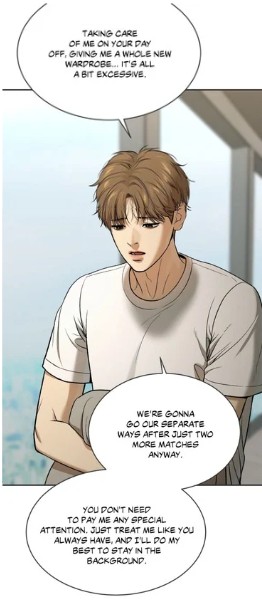 (chapter 80) for his contract is limited not only to Joo Jaekyung, but also in time. He was never a fighter, hence he is not part of MFC at all contrary to the other hyungs.
The Unnamed Role — When Care Replaces Authority
This brings us to the question that runs quietly through the story: why can Joo Jaekyung not define Kim Dan’s role? 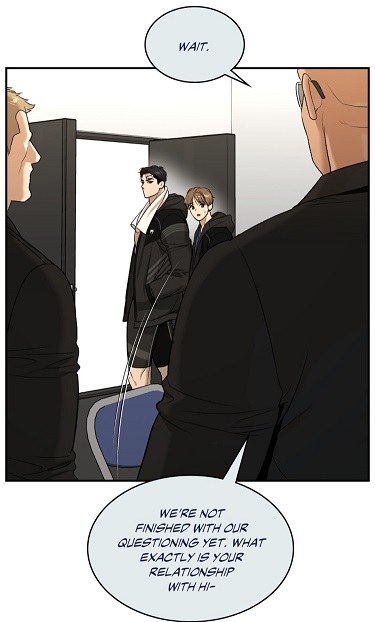 (chapter 40)
It is tempting to answer: because he is a sex partner. But that explanation is insufficient. Kim Dan is also his physical therapist, officially responsible for his body. Over time, he becomes something more: the person who regulates stress, controls access and his food (chapter 82), manages recovery, mediates between the champion and the outside world, and quite literally holds the key. He even controls his image. 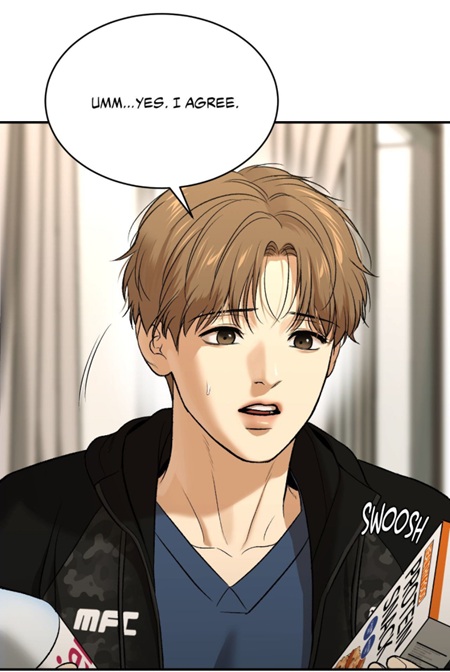 (chapter 82) These are managerial functions.
But naming Kim Dan as a manager would expose the failure of Park Namwook and, by extension, MFC itself. It would mean admitting that institutional authority has been replaced by personal care. That is why the role remains unnamed. It exists in practice, but not in language. Thus expect a new version of this scene soon: (chapter 40) And if this comes true, then the athlete’s answer will be totally different:  (chapter 40) Doc Dan is not one among others, but the BEST physical therapist. He is also a champion (chapter 86), for he helped him to recover and maintain his form in such a short time. He is the only one who can assist him to regain his title. The athlete will reveal doc Dan’s gift and special status to others.
The floors reveal this displacement long before the characters can. 😮
Conclusion — What the Floors Foretell
By reading the floors as markers of status, indicators of situation, and tools of spatial orientation, a coherent pattern emerges across both hotels. Elevation coincides with enclosure. Luxury disguises control and manipulation. And institutional power repeatedly misreads its own architecture.
The likely next move is already written into the building. (chapter 85) When the manager goes looking for control, he can look for Kim Dan due to the warning DND. And when he does, he will discover that the structure he relied on no longer answers to him.
The secrets behind the floors are not just secrets. They are warnings.
Feel free to comment. If you have any suggestion for topics or Manhwa, feel free to ask. If you enjoyed reading it, retweet it or push the button like. My Reddit-Instagram-Twitter-Tumblr account is: @bebebisous33. Thanks for reading and for the support, particularly, I would like to thank all the new followers and people recommending my blog.

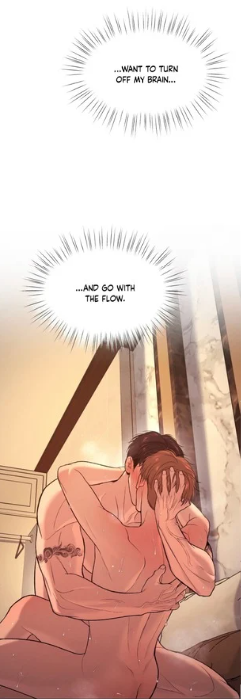 (chapter 86), it does not close the night through narrative resolution. There is no statement, no promise, no verbal seal. And yet, for many Jinx-philes, the final panel refuses to let the scene dissolve. What remains is not heat, not tension, not even tenderness — but circulation.
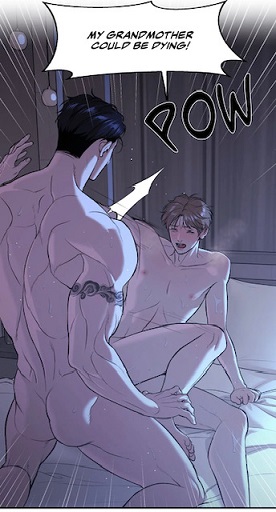 (chapter 21), overload
  (chapter 33), short circuit
  (chapter 51),
 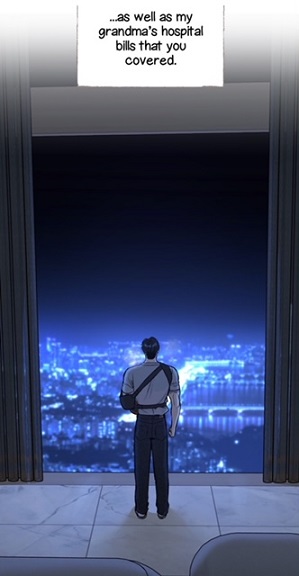 (chapter 53) reset. And once that lens is adopted, it becomes impossible to limit the consequences of episode 86 to the couple alone. Because a closed circuit does not only affect those directly connected to it. It alters the surrounding system.
 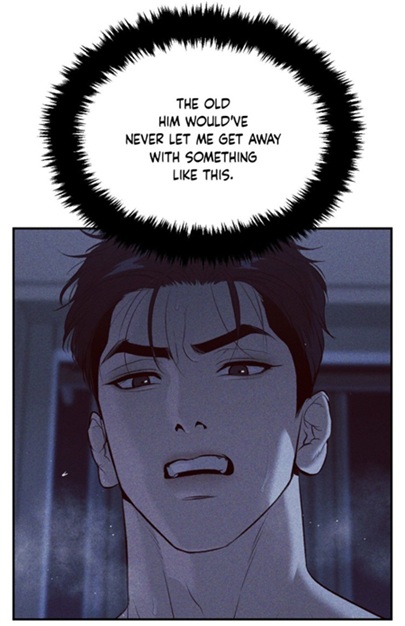 (chapter 86). This section will explore how acknowledging change without denying past harm opens a new ethical position — one that prevents memory from being weaponized, while still preserving responsibility. Third, the analysis will turn to conversion, revisiting earlier nights marked by failure, asymmetry, and isolation. Rather than cancelling them, episode 86 absorbs and transforms them. This is where forgiveness, reflection, and the first true encounter with consequence quietly enter the narrative. Finally, a new section will widen the lens further by examining shared experience and memory
  (chapter 53), particularly through Kim Dan’s relationship with his grandmother. Here, the focus will not be accusation, but contrast: between memories carried alone and memories held together; between cycles of repetition and moments of presence; between a worldview structured around endurance and one shaped by circulation. The Paris night does not only affect how Kim Dan sees Joo Jaekyung
 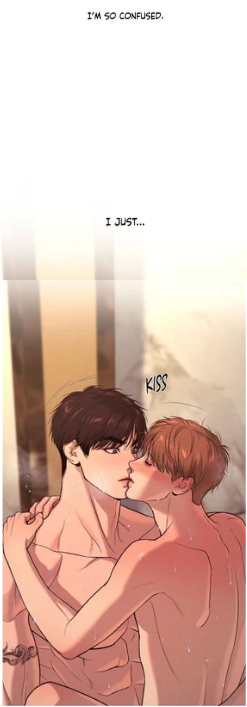 (chapter 86) carries such weight, we must return to the origin of kissing itself in Jinx. Because surprise, in this story, is not an abstract theme. It has a history. And that history begins with a body being caught off guard.
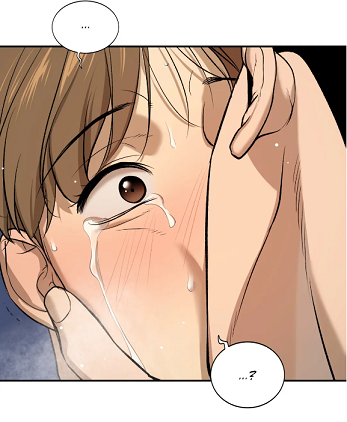 (chapter 14) There is no warning, no verbal cue, no time to prepare. The kiss arrives as interruption. It is not negotiated; it is imposed. Hence the author focused on the champion’s hand just before the smooch.
 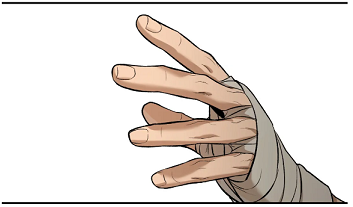 This moment matters far more than it initially appears, because it establishes the template through which Kim Dan first encounters intimacy.
  (chapter 15) Affection does not emerge gradually. It breaks in.
 (chapter 15) He needs preparation. He needs time to brace himself emotionally. This request reveals two aspects. First, he connects a kiss with love. On the other hand, the request is not really about romance; it is rather about survival. Surprise, for Kim Dan, has already been coded as something that overwhelms the body before the mind can intervene.
 (chapter 39), he violates his own request.
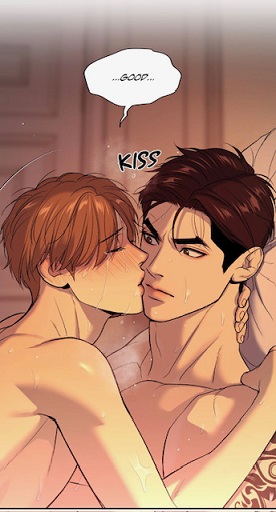 (chapter 39) They are unannounced, often landing on unusual places (cheek or ear)
  (chapter 44). They often take place under asymmetrical conditions — when one of them is intoxicated, confused, or emotionally exposed. Sometimes they occur without full consent, sometimes without clarity. In chapters 39 and 44, kisses surface precisely when language fails or consciousness fractures. It is as if Kim Dan has internalized a rule he never chose: a kiss must be sudden. Observe how the champion replies to the doctor’s smile and laugh: he kissed him, as if he was jealous of his happiness.
  (chapter 44) That’s how I came to realize that the kiss in the Manhwa is strongly intertwined with “surprise”. This is the missing link.
 (chapter 2), he comes to reproduce interruption as intimacy. He knows that surprise destabilizes him — that is why he asked for warning — but he has no other model. What overwhelms him also becomes what he reaches for. Surprise is both threat and language.
 (chapter 3): the sudden call from the athlete,
  (chapter 1), the offer of sex in exchange for money
 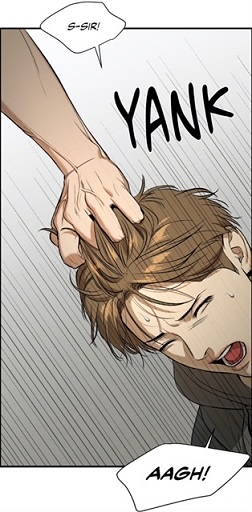 (chapter 6), the switched spray
  (chapter 49), the sudden changes in rules. These moments strip Kim Dan of anticipation and agency. His body reacts before his will can engage. Surprise equals exposure.
 (chapter 1) His life is governed by “always”: always working, always returning, always responsible. He lives for his grandmother. Nothing unexpected is allowed to happen, because nothing unexpected can be afforded. This is safety through stasis. Presence without experience.
 (chapter 5)
  (chapter 1) They shattered routine rather than enriching it. Surprise, in that context, did not open possibility; it threatened survival. It meant debt, coercion, fear. And precisely because of that, it could not be integrated into memory as experience — only repressed as trauma.
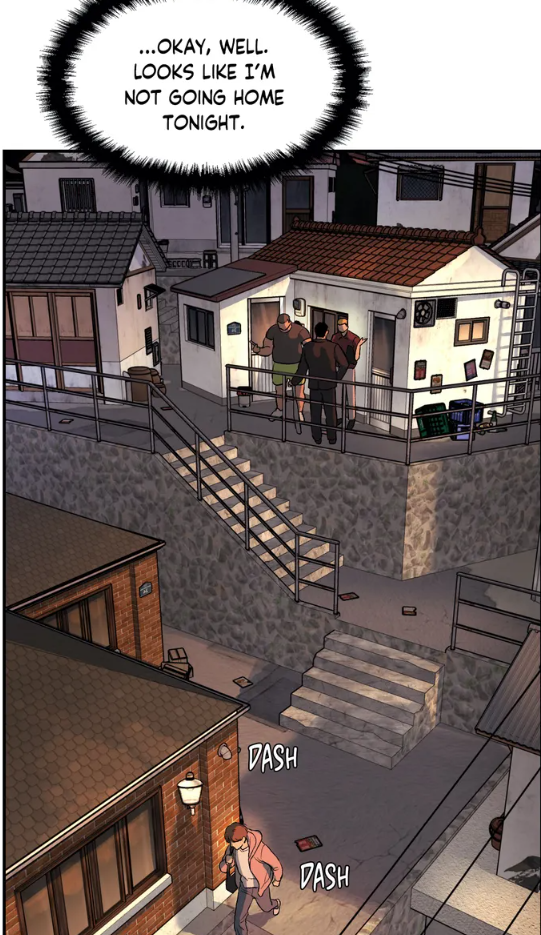 (chapter 1), if he doesn’t return home. Surprise, in its earlier form, is excised from the household. What remains is a world of repetition and endurance — safer, but lifeless.
 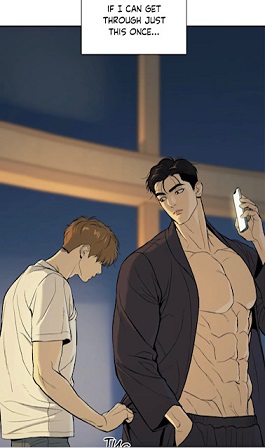 (chapter 2) but in a fundamentally different form.
 (chapter 11)
 (chapter 11) His appearances are sudden, his demands non-discussable, his violence immediate. He does not ask; he enforces. Surprise, under his rule, eliminates speech. It leaves no space for argument, no room for clarification, no possibility of consent. One endures, or one is punished.
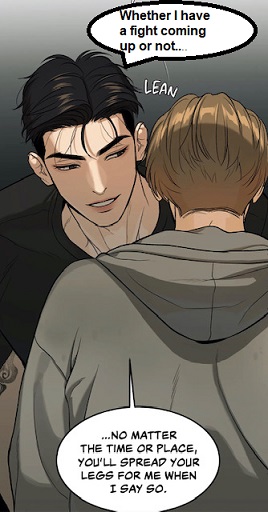 (chapter 6) Even when power is asymmetrical, even when the terms are coercive, speech is required. Conditions are stated. Rules are articulated. Kim Dan is forced to listen, to answer, to argue, to object. He must speak.
 (chapter 17) The two figures cannot coexist because they represent mutually exclusive regimes of surprise: one that annihilates speech, and one that forces it into being. In other words, only one allows experience to be lived rather than survived.
 (chapter 51) — yet they are unmistakably his. They mark the moment when something begins to circulate.
  (chapter 27) Experiences accumulate instead of disappearing. They demand response, speech, negotiation. Life no longer consists in enduring impact, but in processing it.
 (chapter 65) and as such neutralization: suffering must be absorbed, pain must be justified, disruption must be folded back into endurance. There is no place for charge there — only for dissipation. What Kim Dan lives through with Joo Jaekyung follows a different logic altogether: not sacrifice, but circulation; not repetition, but conversion.
 (chapter 41) not despite surprise, but through it. Not because dominance is romanticized, but because surprise is the first force that treats him as someone to whom things can happen. And don’t forget that for him, a kiss symbolizes affection. Even negative experiences generate subjectivity. They prove that he exists beyond function.
 (chapter 85) Kim Dan either endures it or reproduces it under unstable conditions. Agency is partial. Meaning collapses afterward.
 (chapter 39), irony
 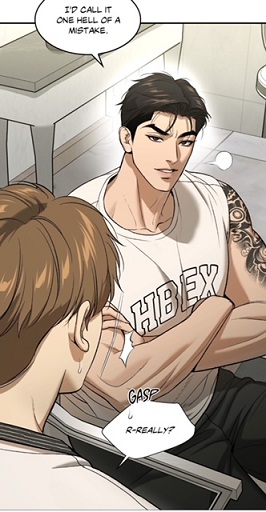 (chapter 41) or rejection
 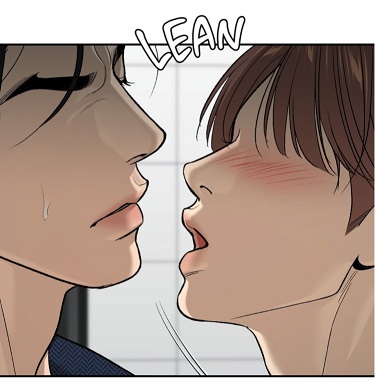 (chapter 55). He does not retreat into his habitual “it’s nothing” or “never mind.” He does not reinterpret the gesture as convenience or reflex.
  (chapter 86) He kisses back while looking tenderly at his partner. He holds Kim Dan’s head gently. He can only see such a gesture as a positive answer to his request: acceptance and even desire. Surprise is not punished. It is received.
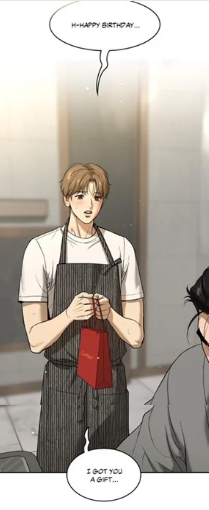 (Chapter 45) This time, the athlete not only accepts the present (the kiss), but but also expresses “gratitude” by kissing back actively.
  (chapter 65) In her eyes, she has never changed, just like her grandson.
  (chapter 52), justify behavior
  (chapter 57), and foreclose change. The champion’s violence is explained through reputation.
  (chapter 1) Kim Dan’s endurance is explained through obedience and debt. The grandmother’s authority is explained through sacrifice. In every case, the same logic applies: this is how it has always been; therefore this is how it must remain.
 (chapter 65) If the past is absolute, it can be endlessly invoked to invalidate the present. We have a perfect example on the beach.
  (chapter 65)
 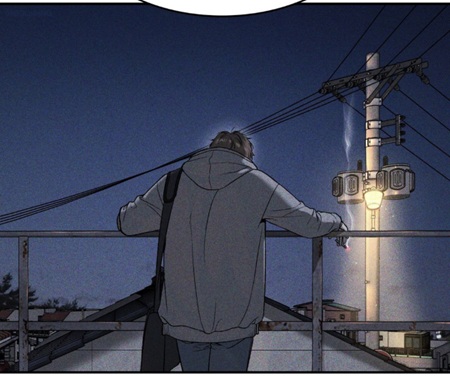 (chapter 65) They are evaluated exclusively through a moral lens. Smoking and drinking are not responses; they are flaws. And because they are framed as flaws, they retroactively define his character rather than his situation. This is where agency collapses.
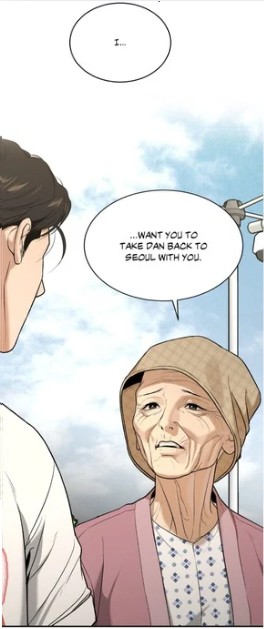 (chapter 65) Her behavior does not contradict her claim that she wants Kim Dan to “live his own life.”
  (chapter 65) It reveals how she understands such a life should be arranged. She sees herself as superior, as if she had never done any mistake, as if she had lived as a saint.
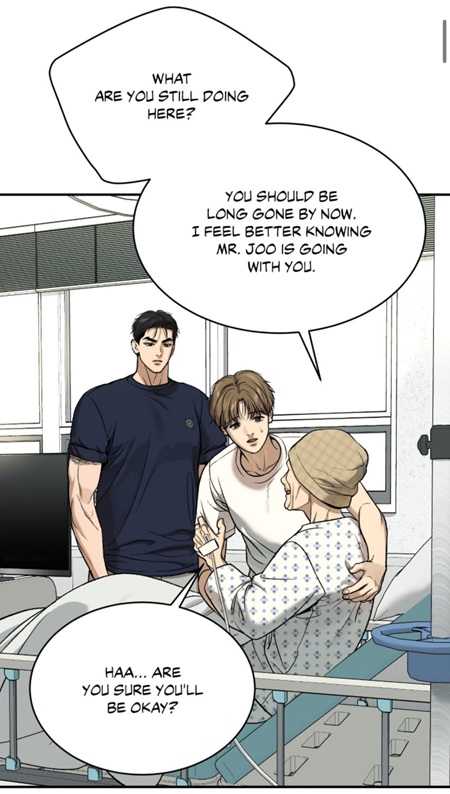 (chapter 78)
 (chapter 86) Once again, the “hamster” is given the opportunity not only to decide, but also to follow his heart. Where the Paris night allows difference to coexist with memory, Shin Okja’s framework collapses difference back into judgment. Where electricity requires polarity, her logic insists on sameness. Under this new light, it becomes comprehensible how doc Dan came to neglect himself. Self-care is inseparable from choice — from the belief that one’s decisions can meaningfully alter the present. If change is denied, care loses its purpose. Attending to oneself becomes optional, even suspect, because it implies a future different from the one already prescribed.
 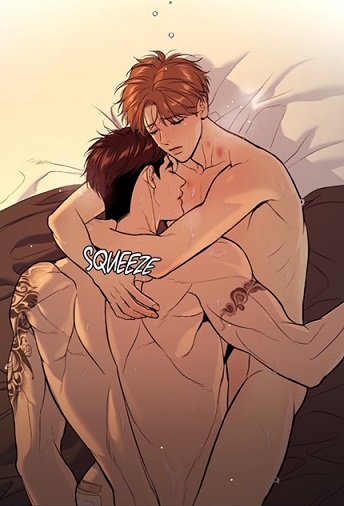 (chapter 44) The one who remembers bears the – alone, while the other continues forward unmarked. That imbalance is corrosive. It distorts perception. It turns even good memories sour.
 (chapter 65), but she remembers it in a way that flattens time. Pain becomes proof of virtue. Sacrifice becomes identity.
  (chapter 65) Change is allowed only insofar as it returns to the same point. Electrically speaking, her system is grounded — all charge dissipates into endurance. There is no polarity, only repetition.
 (chapter 65) Even though the word jinx is never spoken during the Paris night, its logic quietly collapses there.
 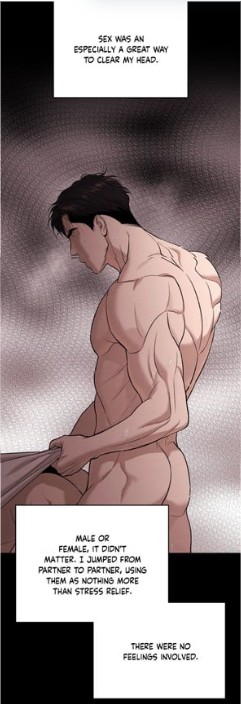 (chapter 75) In chapter 75, it is explicitly framed as a way to “clear the head”: an act designed to release pressure and return the system to zero. Partners were interchangeable. Feelings were excluded. Electricity existed only as a spark — brief, violent, and self-extinguishing. Energy was expelled, not circulated. That is the true mechanics of the jinx: power without continuity, intensity without consequence.
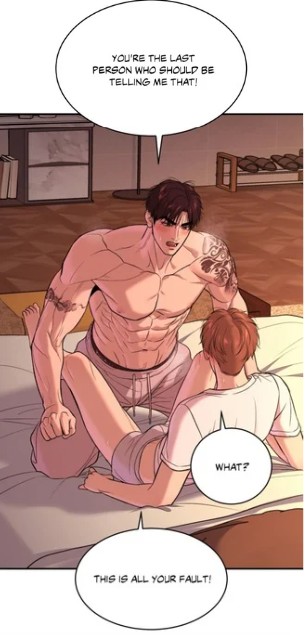 (chapter 85) Desires matter, not the match the next morning. Besides, the identity of the partner matters — not just romantically, but also structurally. Current requires two poles. It requires response. It cannot flow through an object, only between 2 subjects.
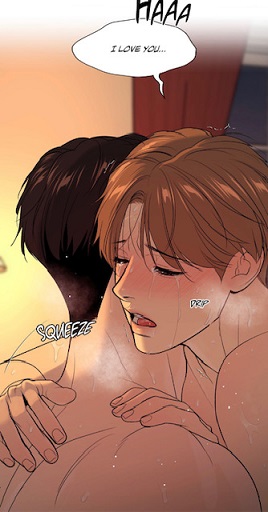 (chapter 39) and chapter 44
 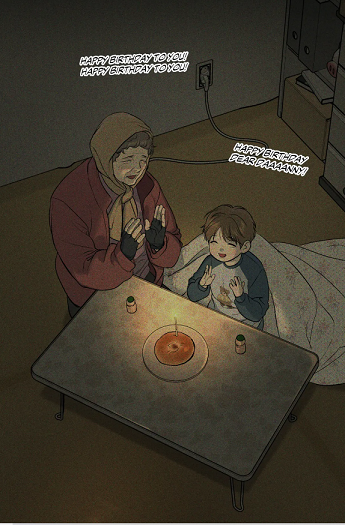 (chapter 11), the care – even if he had hurt himself –
 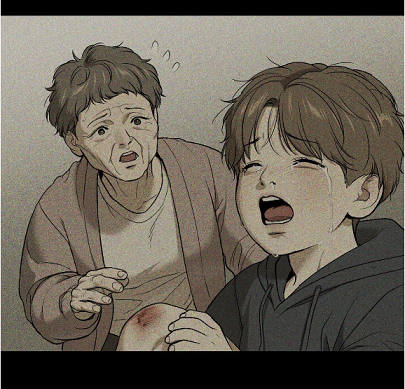 (chapter 47), the shared smiles
 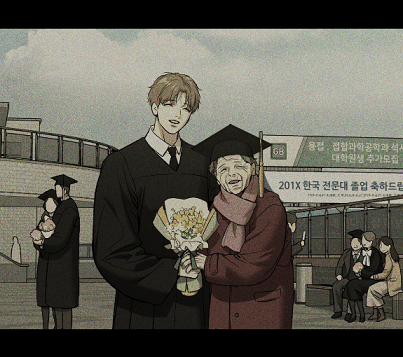 (chapter 47). Thus this photograph
  (chapter 65) becomes a talisman — not a record of reality, but a distilled image of safety. Painful dimensions are filtered out. Conflict, coercion, and silent pressure recede into the background. Memory protects him by idealizing. Because of this picture, he projected himself in the future, making unrealistic plans.
 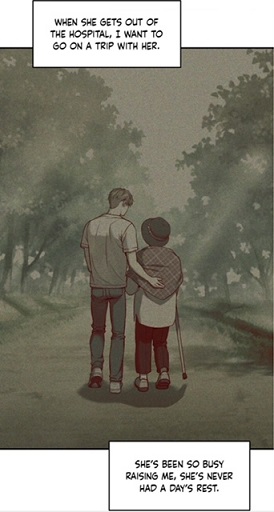 (chapter 47) It was, as if he only had good times with his grandmother.
 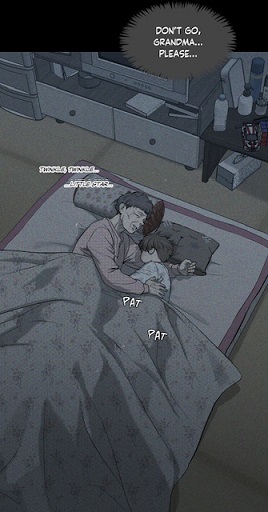 (chapter 21)
  (chapter 47) and memories.
 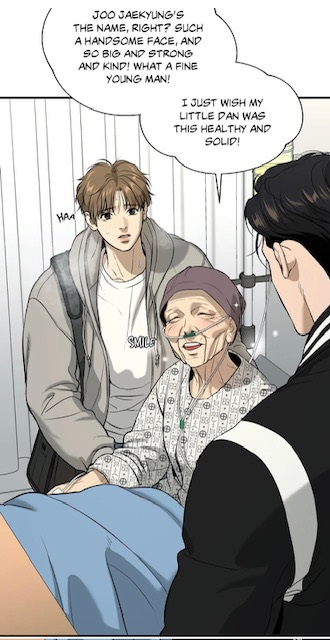 (chapter 21)
 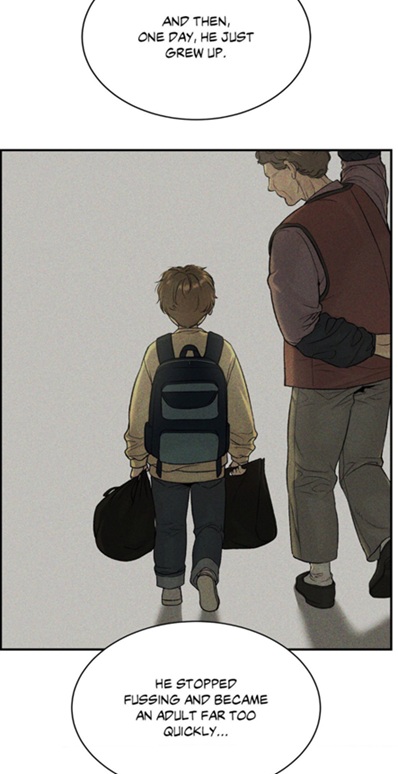 (chapter 65). While sleeping, memories come to the surface.
  (chapter 85) I believe that its appearance does not function as decoration. Its imagery — figures suspended among clouds, bodies neither falling nor grounded — introduces a different register of time. Not urgency. Not performance. Not spectacle. Stillness. Interval. A space where movement pauses without collapsing. Under this new light, the reference is Morpheus.
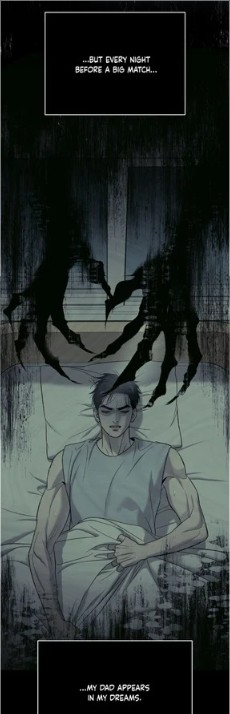 (chapter 75) Until now, rest had been replaced by discharge: sex as erasure, violence as exhaustion, ritual as compulsion. The Paris night does not abolish wakefulness through collapse; it introduces the conditions under which sleep might finally be possible.
 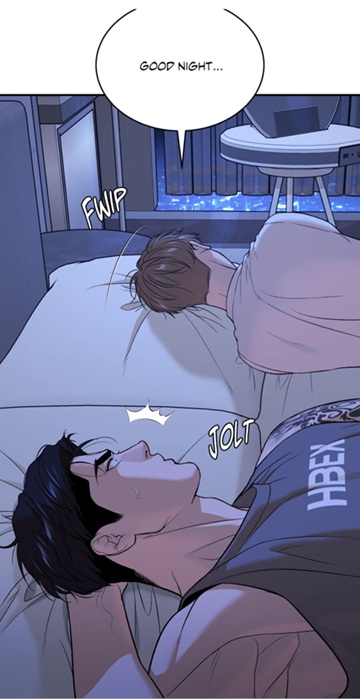 (Chapter 78) Here, he reduced it to the absence of sex, but I am sure that deep down, he would have been satisfied, if the “hamster” had given him a good night kiss.
 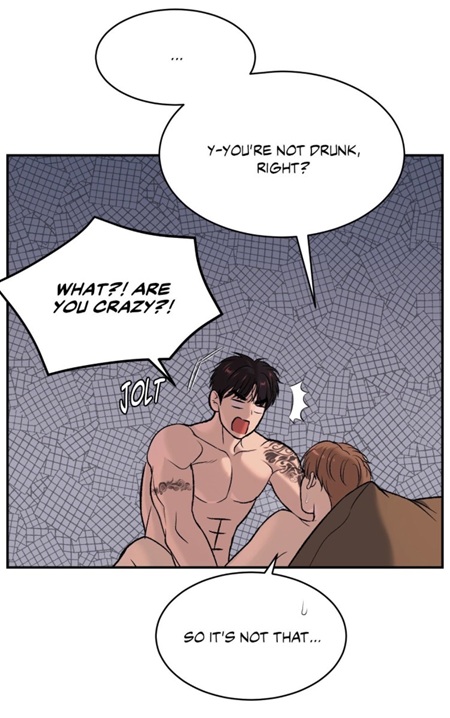 (chapter 86) The charge redistributes. Memory ceases to isolate and begins to circulate. Hence it creates a new memory.
  (chapter 86) was a reflection of the picture.
  (chapter 86) No one is erased or reduced to an object. Nothing is overlooked or forgotten. But repetition loses its hold. And from here, the story can no longer proceed as before.
 (chapter 86), gentle, attentive
 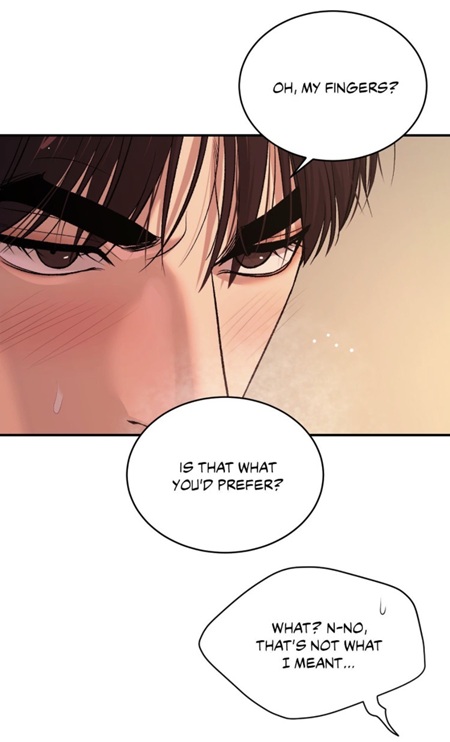 (chapter 86) — asking questions instead of imposing answers
 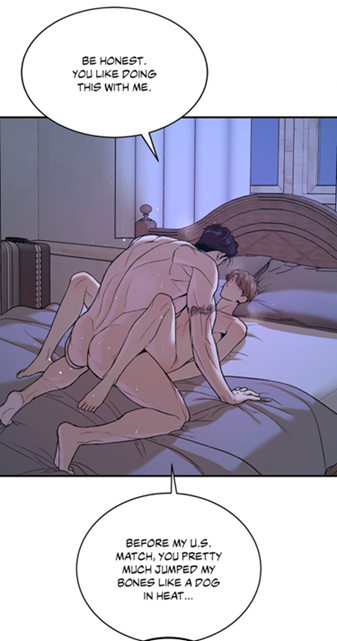 (chapter 64). For Joo Jaekyung’s unconditional stans (and I count myself among them), such an attitude
 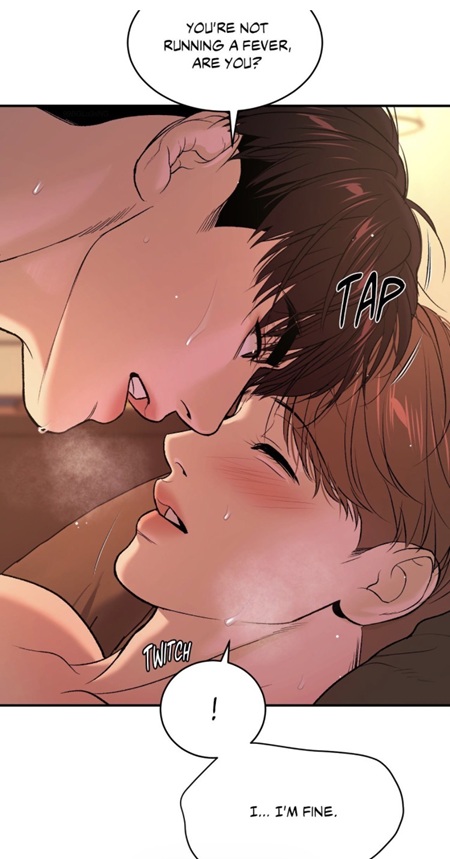 (chapter 86) can easily be read as proof that the protagonist’s good heart has always been existent, but it was barely visible. Compared to earlier chapters, the contrast is now undeniable. And yet, I would like to pause you right there.
 (chapter 61), sometimes awkwardly
 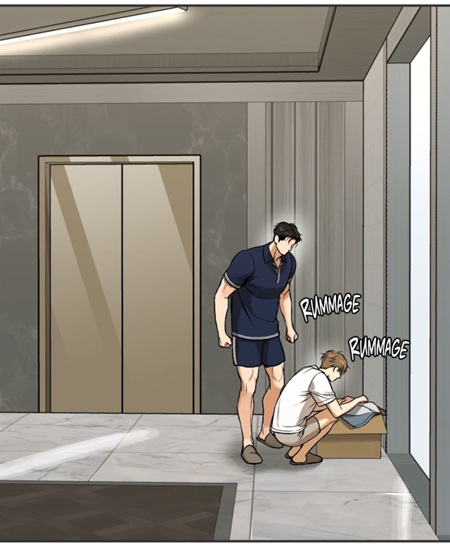 (chapter 80), sometimes inconsistently
  (chapter 79), but unmistakably
 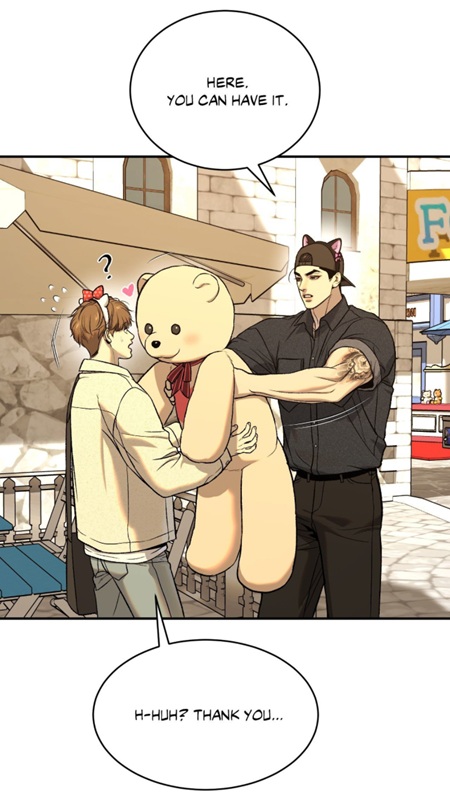 . (chapter 83) Tenderness, concern, even a certain form of devotion had appeared earlier
  (chapter 18) misunderstood or poorly timed. This night
 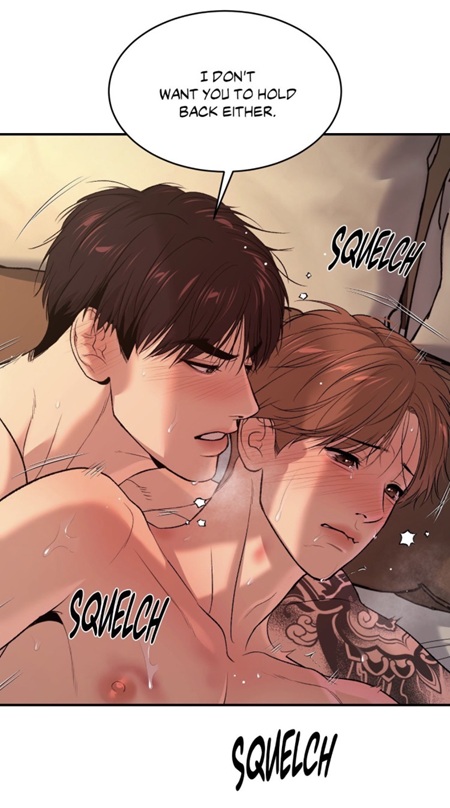 (chapter 86) does not initiate his metamorphosis.
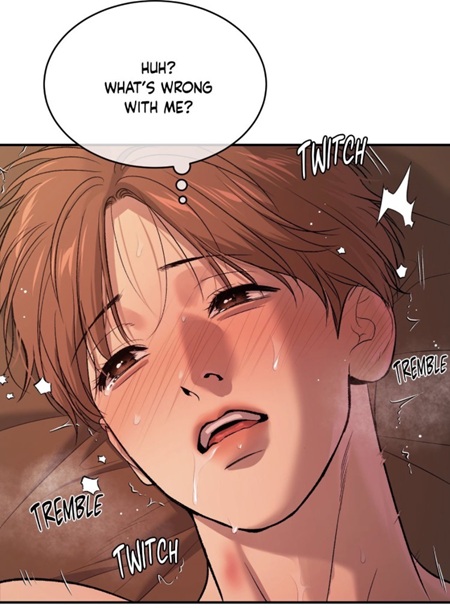 (chapter 86), sparks
 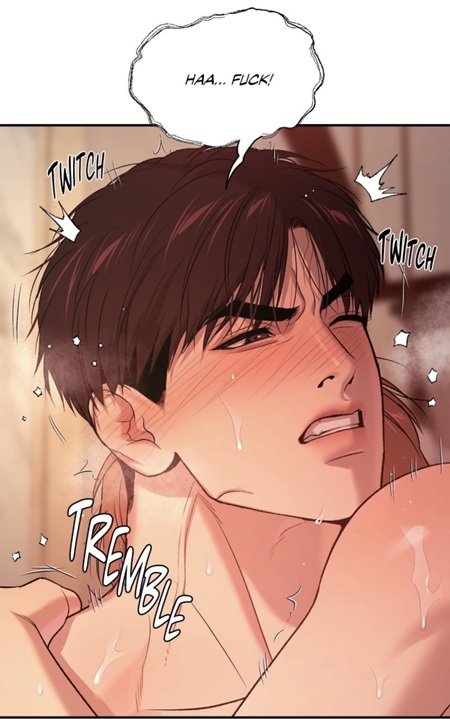 (chapter 86), and softness, many Jinx-philes might instinctively describe it as magical. The imagery invites such a reading. After all, we have seen similar nights before. The night in the States shimmered with illusion
  (chapter 41) The penthouse night echoed A Midsummer Night’s Dream
 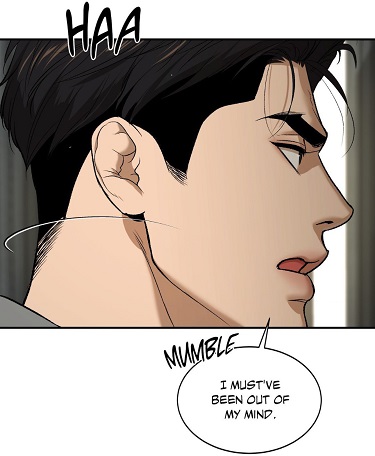 (chapter 45). This raises an essential question. Is episode 86
  (chapter 4), in the return of light
  (chapter 66), in what remains once the sparks fade. A dream dissolves with daylight. Reality does not.
 (chapter 86), sparks, that strange shimmer that seems to hang in the air
 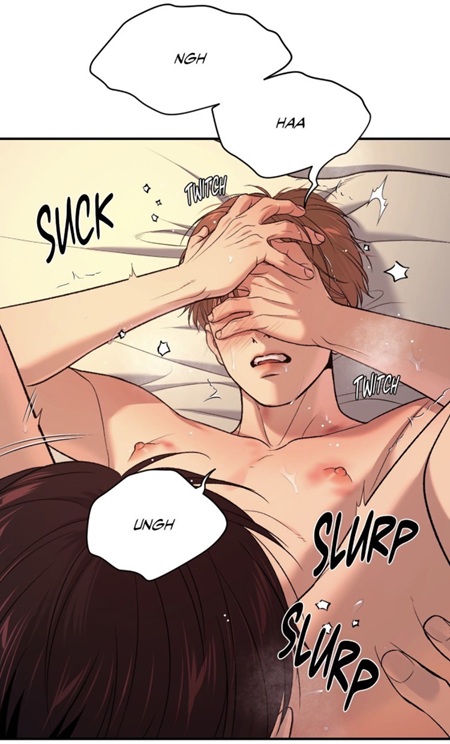 (chapter 86). Why? It was, as if their dream had come true. However, is it correct? Is it not wishful thinking? What if this night is not magical at all? What if its true signature is not enchantment, but electricity—a current that interrupts, tests, and resets? 😮
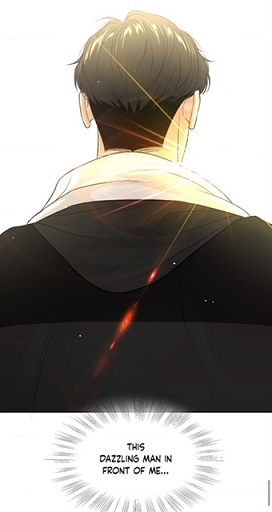 (chapter 40) in Kim Dan’s perception: overwhelming, radiant, dominant, a heat-source that does not negotiate.
 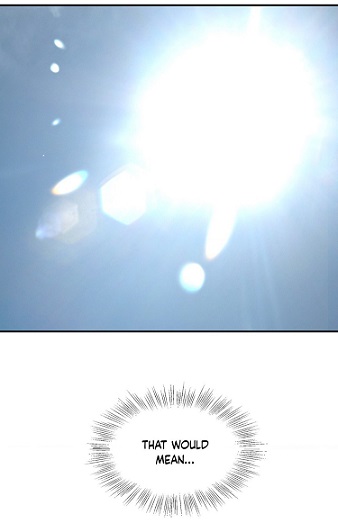 (chapter 41) The sun can be admired, feared, and endured—but it cannot be questioned.
  (chapter 58) It simply shines, and the one who stands in its light adapts. This explicates why the physical therapist would choose silence and submission over communication.
  (chapter 48)
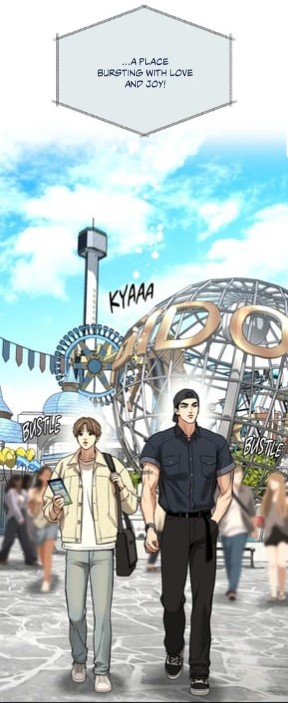 (chapter 83)
 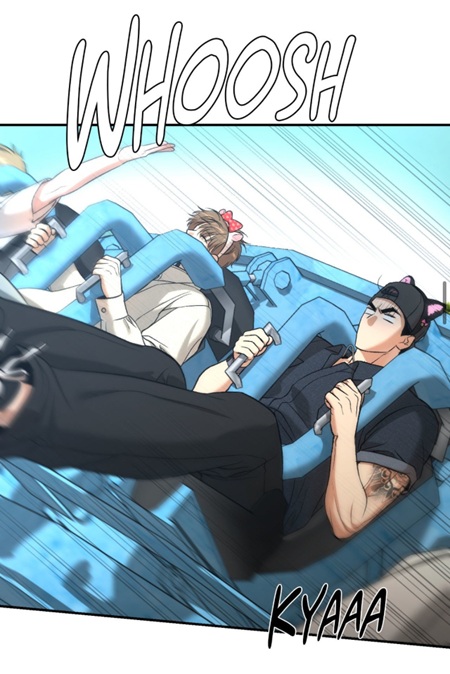 (chapter 83) Every ride, every light, every scream suspended in midair depends on current: motors accelerating and braking, circuits opening and closing, energy stored, released, and cut off.
  (chapter 83) Roller coasters do not move by heat, charisma, or sheer physical force; they move because electricity flows through them. The Viking ship swings
  (chapter 83) because current allows it to swing. The Ferris wheel ascends
 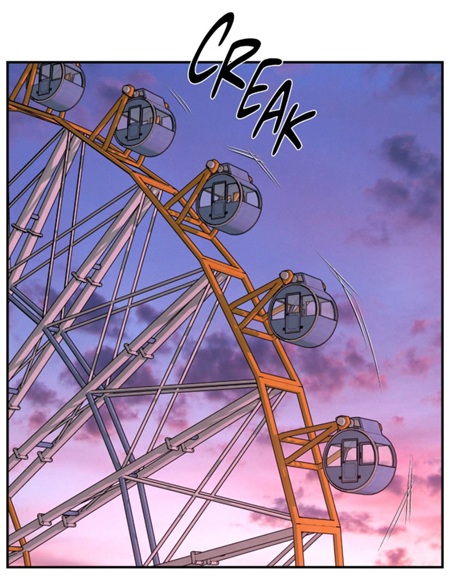 (chapter 83) because circuits hold — and descends because they release.
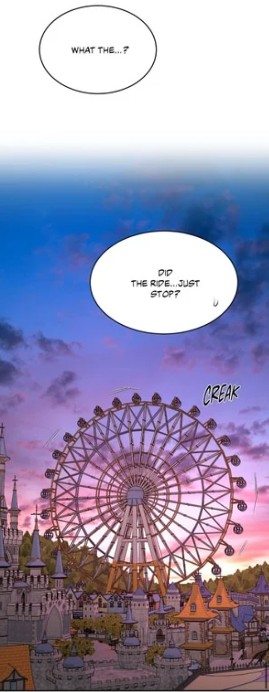 (chapter 84)
 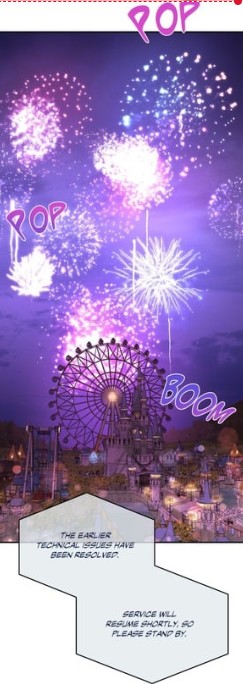 (chapter 84) explicitly names what had previously gone unspoken: the rides function only because current flows. When it disappears, the illusion of effortless motion collapses.
 (chapter 84) The Ferris wheel has stopped. The current is gone. The carefully regulated system that lifted, rotated, and sustained them is no longer in control. Yet movement does not disappear entirely. It mutates. When the champion shifts his weight, grips the structure, reacts instinctively, the cabin begins to shake. Panels emphasize instability: creak, swish, ack. The motion is no longer generated by electricity but by the body itself.
 (chapter 84) Stranded above ground, stripped of the park’s mechanical rhythm, he apologizes.
 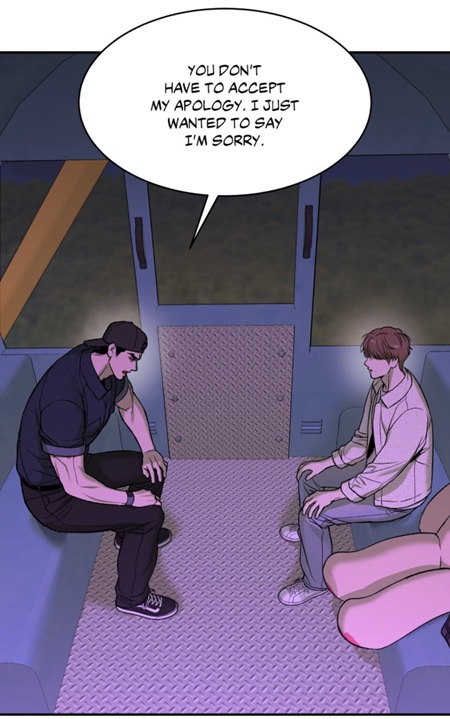 (chapter 84) Not theatrically, not performatively, but awkwardly, haltingly. His body exposes his discomfort
  (chapter 84) and fears. He avoids the doctor’s gaze, crosses his arms
 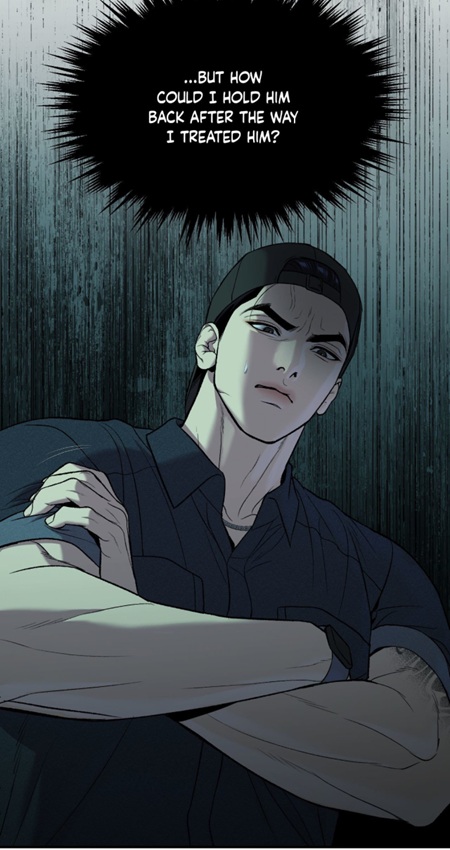 (chapter 84) or squeezes his arm
 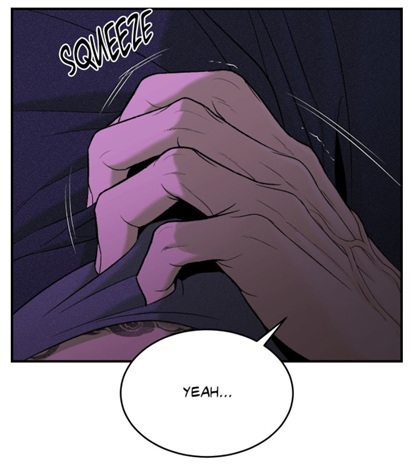 (chapter 84). The cessation of electrical motion coincides with a shift in his own mode of action. Where the park depended on current to keep things moving, he now moves without it. The absence of electricity forces something else to surface: responsibility, attention, presence. Additionally, this sequence anticipates what will later unfold more fully. Proactivity is no longer expressed through force or motion, but through articulation. Words stand for action and have weight. The champion’s future action is announced here, quietly: he will no longer push forward by shaking the structure. He will move by sharing thought, by naming feeling, by allowing himself to be affected.
  (chapter 86),
 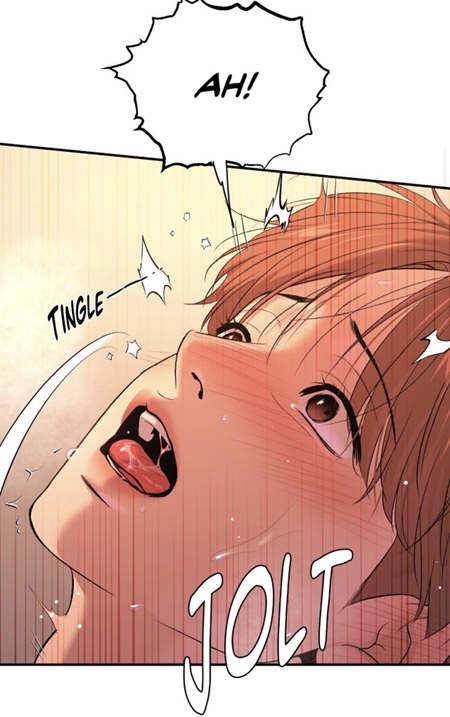 (chapter 86) jolts, sudden contractions of the body
 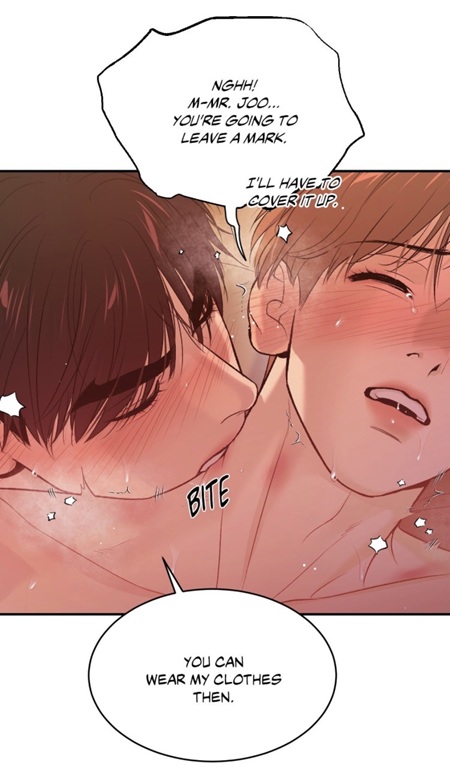 (chapter 86). Kim Dan is repeatedly shown convulsing, gasping, losing linear thought, and it is the same for the MMA fighter. Panels insist on interruption: jolt, tingle, broken breath, aborted sentences. The doctor’s body behaves as if struck, especially in this image.
 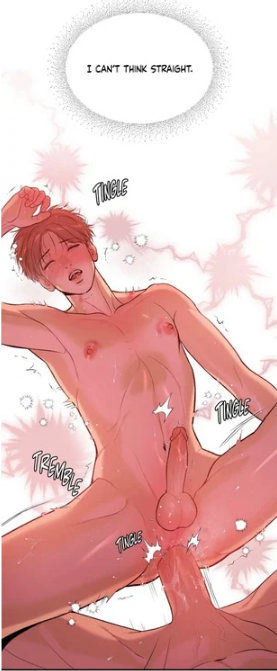 (chapter 86) It is at this point that a phrase surfaced in my mind — instinctively, almost involuntarily. A phrase we use in French when something intangible yet decisive occurs between two people: Le courant passe. Literally, the current passes. Idiomatic meaning: they are on the same wavelength, something connects, communication flows. However, here, the current is not the product of civilization, but of nature. Two people interacting with each other. And it is precisely because of the unusually high frequency of sparks and jolts in the illustrations that a belated realization imposes itself: nature, too, produces electricity — through storms, through thunder.
 (chapter 69) A storm was announced back then. And yet, upon closer inspection, no thunder was ever shown there. There was tension, there was excess, there were dark clouds
  (chapter 69) — but there was no strike, no discharge, no interruption. The imagery remained continuous, fluid, enclosed within the logic of escalation rather than rupture.
 (chapter 83). In Roman terms, Thursday corresponds to dies Iovis — Jupiter’s day — the god of thunder. Both gods are strongly connected to thunder and as such current.
 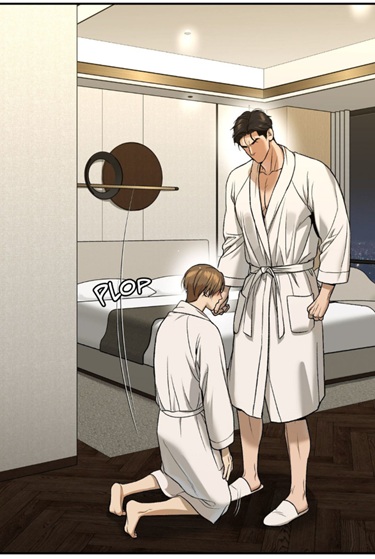 -chapter 67-; for more read my analysis
 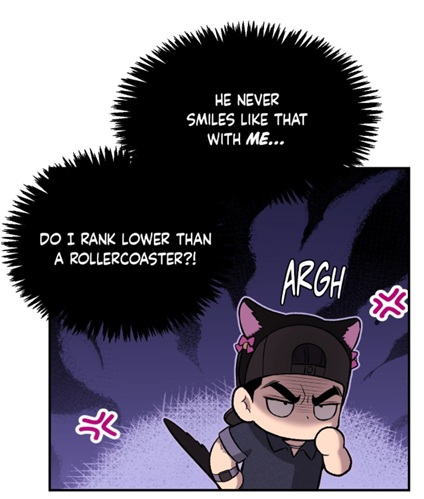 (chapter 83). Before striking anything, he is already unwell: angry overstimulated and complaining, visually reduced to a childlike register. This matters. The hammer does not create excess — it receives it.
  (chapter 34), the hammer gesture is not confrontational, for the machine is immobile. There is no opponent.
 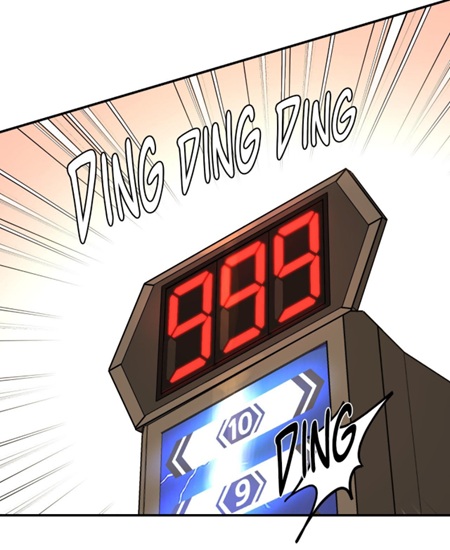 (chapter 83) Too much energy released at once. The system registers it, but cannot contain it. This means, the record won’t be registered and as such “remembered”. In fact what mattered here was the prize, the teddy bear, and restored self-esteem of the athlete. He could offer a present to doc Dan which the latter accepted without any resistance.
  (chapter 86) Therefore it is not surprising that doc Dan starts looking at his fated lover. Imagine what it means for the athlete, when the “hamster” is staring at him, though he is a little embarrassed. Finally, he is truly looking at him. The champion loves his gaze. And now, you comprehend why the “wolf” listened to the “cute hamster” and stopped leaving marks.
 (chapter 85), but this time, its nature has changed. It is no longer jealousy or anger, but love and desire. Hence the current is not colored in red, but white and pink.
  , but a thunder and as such it is still restrained and regulated.
 (chapter 44) as emotionally charged, intense, even pivotal. Confessions were made. Bodies responded. Vulnerability appeared to surface. And yet, both nights collapsed almost immediately afterward. What was felt
 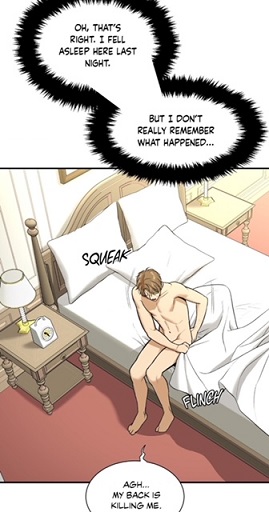 (chapter 40)
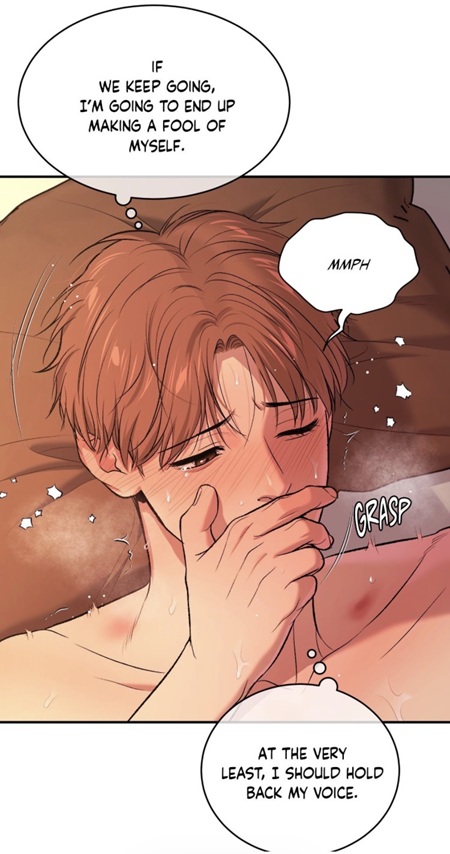 (chapter 86) In this panel, we should glimpse a reference to the night in the States as well, and not just to the night in the penthouse.
  (chapter 44) The setting is elevated, luxurious, almost theatrical. The doctor is brought into a space of power that is not his own.
 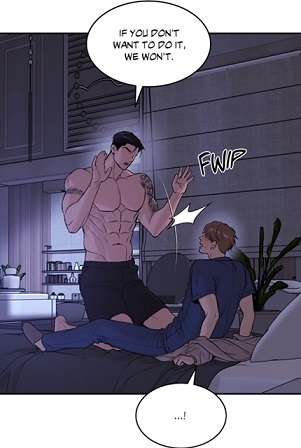 (chapter 44) By acting that way, the athlete created a false impression of himself, as if he was still rational and clear-minded. Again, desire unfolds.
  (chapter 44)
  (chapter 44) Again, closeness occurs. And again, the aftermath reveals the same fracture.
 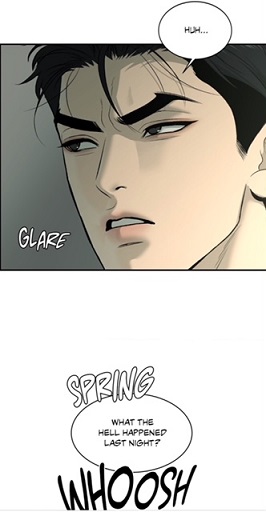 (chapter 45) and later wants to even forget it.
  (chapter 45) and he can not deny his own involvement and actions. Hence the doctor is left alone. Only he can recall this “dream”.
  (chapter 44) But memory alone is not power. Remembering without the other’s participation transforms recollection into isolation. Kim Dan cannot confront, confirm, or renegotiate what happened, exactly like the champion did in the past. Meaning freezes instead of evolving. Striking is that he came to associate feelings with addiction.
  (chapter 46) No wonder why later doc Dan had no problem to reject the athlete. And for him, the next morning became a cruel reality, even a nightmare. It wounded doc Dan’s heart and soul so much that he learned the following lesson: to not get deceived by impressions. Hence in Paris, Doc Dan tries to explain the change of the champion’s attitude with drunkenness.
 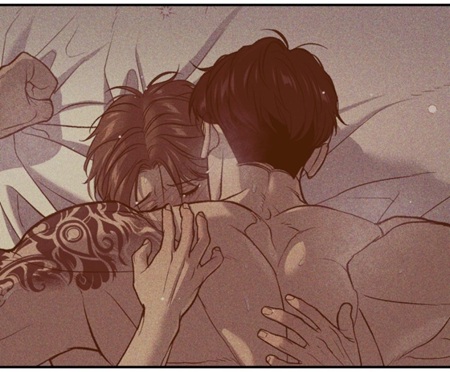 (chapter 44) One participant is altered. The other must carry the weight of meaning alone. The night does not end in shared reflection, but in silence and absence.
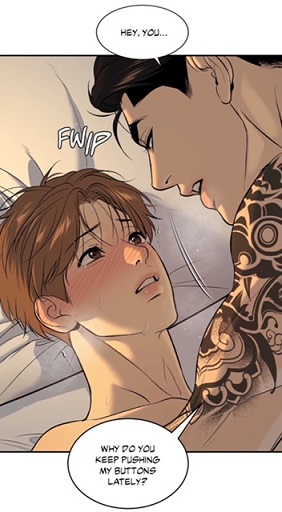 (chapter 44) Words blur, vanish, or are forgotten. Even gestures go unnoticed: a kiss, an embrace or a patting. Memory fractures. The morning after is defined not by continuity but by confusion. The body has moved forward, but the narrative has not.
  (chapter 84)
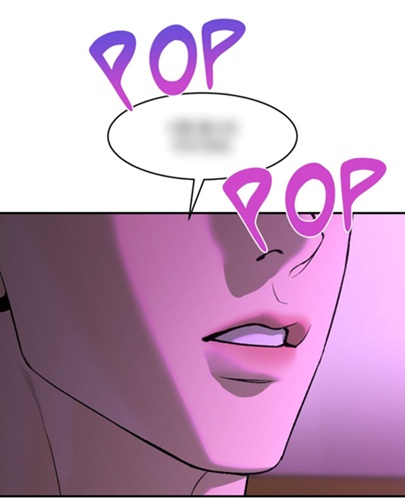 (chapter 84) Speech bubbles lose clarity. Confessions are obscured. The reader is denied access to meaning. Fireworks, like drugs, produce intensity without duration.
 (chapter 39)
  (chapter 44) It was as if these nights could only exist under altered states — as if clarity on either side would have made them impossible.
 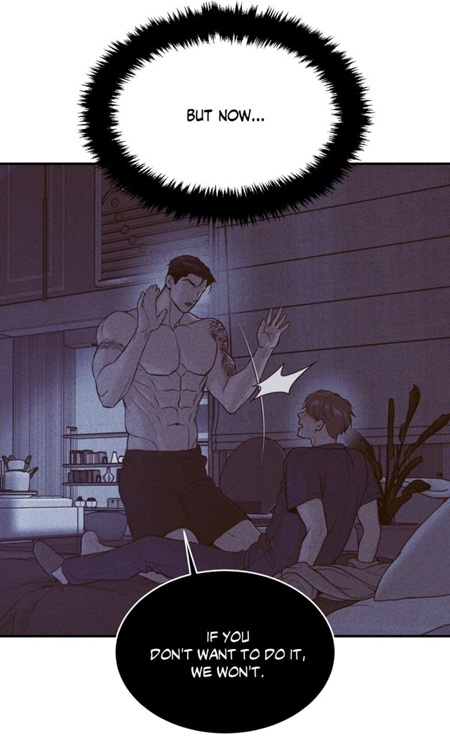 (chapter 86) This is why, when electricity returns in episode 86, it does not revive heat. It interrupts it.
 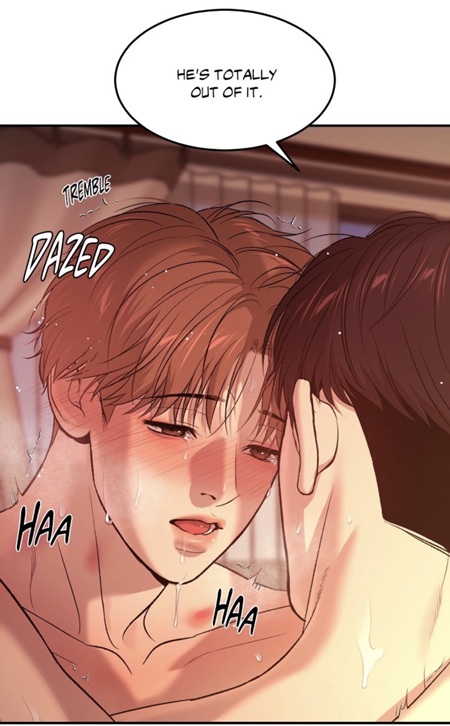 (chapter 86) That’s the reason why the athlete stops for a moment and asks doc Dan, if he needs a break.
  (chapter 86) This question is important because doc Dan admits his confusion and ignorance. He confesses to himself that he “knows nothing” not only about himself, but also about his fated lover.
 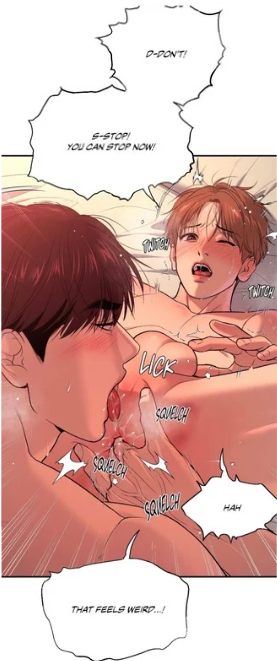 (chapter 86) They function as temporal markers. A spark exists only now. It has no duration. It cannot be stored, recalled, or anticipated. It appears — and vanishes. In this sense, electricity becomes the perfect visual language for the present moment itself.
 (chapter 10), statements blurred by drugs
 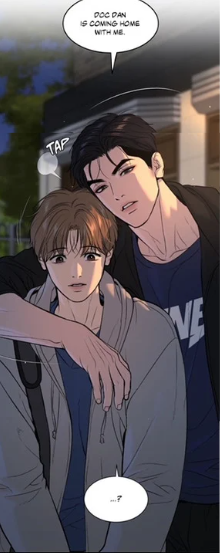 (chapter 43), sentences remembered by only one side.
  (chapter 44) and even laugh…. if only he could remember that night…
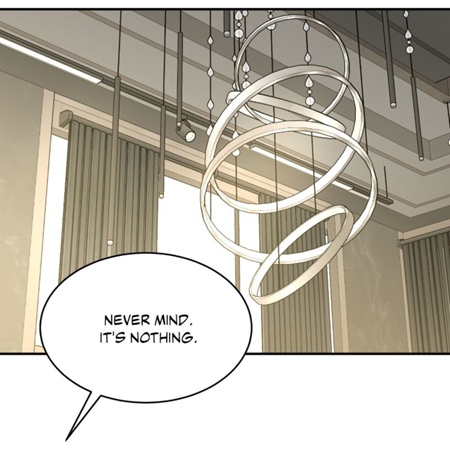 (chapter 79), the “never mind”,
  (chapter 84) or it is a mistake, the easy erasure that once dissolved meaning after the fact. The kiss interrupts that mechanism. It produces a pause that cannot be talked over. It forces reflection.
 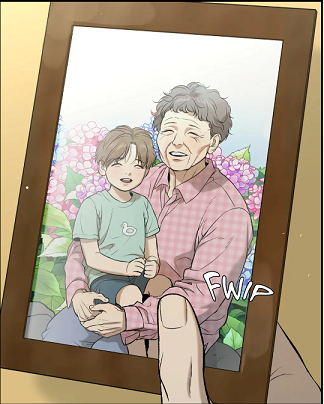 (chapter 19) The grandmother’s lap structured Kim Dan’s understanding of safety, endurance, and knowledge. Sitting there meant being held — but also being taught how to survive through sacrifice, silence, and self-effacement. That worldview sustained him, but it also confined him.

 (chapter 131) Hence the police officers found the governor’s seat deserted.
 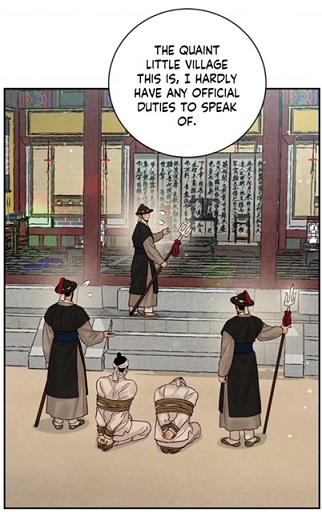 (chapter 131) By contrasting the statement from the governor and the panel, the readers could easily catch his lie. He was a lazy governor, preferring to keep his lover company rather than attend to his official duties. On the one hand, it exposes the main lead’s true mind-set. He is not longing for power or glory. To conclude, he has no ambition. This implies that he is not determined to gain attention either. One might add that he selected this region on purpose. No one would willingly go to that place. The norm was that officials would go there, because they were demoted.
 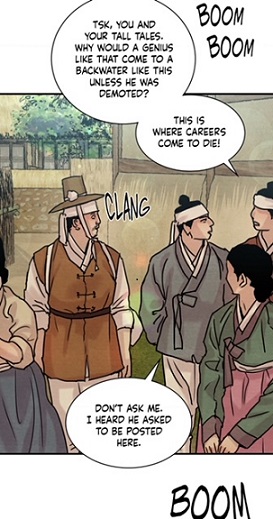 (episode 129) Thus I deduce that Yoon Seungho made the opposite choice to his father. The latter longed for a high position at the government so that the family’s reputation would become famous and powerful again.
  (chapter 86) It is because Yoon Chang-Hyeon was thinking of getting the attention or support from noble families. What he truly wanted was to get recognition from people among his own social class. But with such a decision (join the painter’s side), Yoon Seungho seems to have turned the former patriarch’s nightmare into a reality. Yoon Seungho is about to ruin the family. The name “Yoon” is destined to become forgotten, right? However, I believe that this interpretation is not correct. How so? Let me ask you this.
 (chapter 127) No one has such a wealth! That’s the reason why no official would select such a place. Yes, Jung In-Hun’s words from chapter 6
  (chapter 6)
  (chapter 37). It is about a crime, treason. In season 4, we know that the plot was true and there was an evidence, the paper with the signatures from lord Yoon and lord Song. Since in season 1 the wrongdoing was true and heavy, I deduce that it is not the case in the final chapter. Because there is an evidence of the crime in the past, I can’t help myself thinking that in the final chapter, there was no evidence. Additionally, I feel the need to expose my other interpretation about this man:
 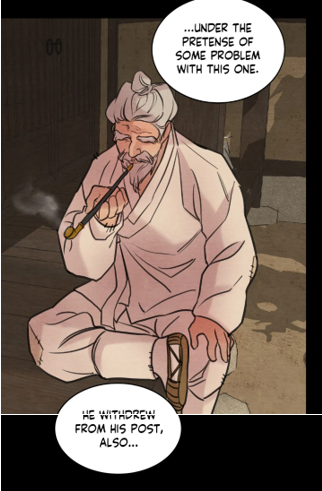 (chapter 37) I have always stated that this man couldn’t be a servant, for he was smoking a pipe and we saw a glimpse of his memory. No commoner would be allowed to enter the courtyard, when three noblemen are tortured and interrogated. Moreover, notice that in both scenes (37 and 131), the magistrate is absent. That’s how it dawned on me that this nameless man could have been a former “governor” who lost his position.
 (chapter 94) Here, the officers went to the mansion before visiting him at the gibang.
  (chapter 97) Back then, it was about the death of a commoner, a servant. If there’s an urgency, they would look for him. The comparison exposes that the “wrongdoing” from the peasants in the final chapter was no huge deal. Yet, many readers already condemned them due to the guards and the protagonist’s behavior. Funny is that the lord was portrayed as a huge liar, but not “the officers”.
  (chapter 101) His statement displays another aspect: the governor and the guards are not working together. Jihwa would have been sent to jail without being able to talk to the superior, similar to this scene:
  (chapter 126) The guards’ own interests are not necessarily aligned with the governor’s. And now, take a closer look at this scene:
 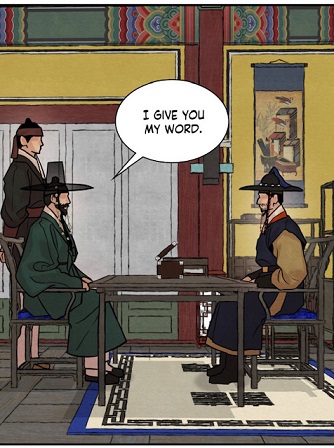 (chapter 127) The official received the patriarch in his office alone. The reason is simple. That way, he wouldn’t have to share the money with others.
 (chapter 129). He was not sitting on a horse with a few musicians contrary to Jung In-Hun. He was carried by four men, and other people were announcing his arrival with flags and music.
  (chapter 111) Moreover, Yoon Seungho had a inauguration banquet organized, where the local inhabitants could join.
 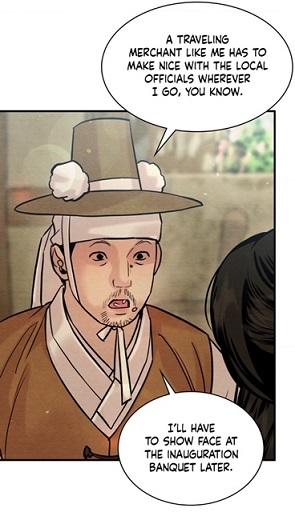 (chapter 129) There was no social exclusion at all. This stands in such opposition to the lord’s statement in season 1, where he distinguished between nobles and commoners.
 (chapter 129) This signifies that the arrest could lead to trouble to the guards too. So was the lord lazy in the end?
  (chapter 131) Yes and no… By acting that way, he put an end to the abuse of authority in that place!! Thus I deduce that the governor is destined to gain recognition and admiration from the local inhabitants. He is generous (inauguration banquet where anyone could join), humble, loyal (he is not forgetting his lover)
  (chapter 131), but also well organized! He had planned to join this place a long time ago. The peach trees were planted about 3 years ago. He is no longer making any distinction between nobles and commoners, and that’s how he will get the respect from the peasants. As a conclusion, we should envision that the lord will become famous. Therefore the son didn’t turn the father’s nightmare into a reality. He didn’t contribute to the family’s ruin at all. Yet, there exists a huge divergence. Yoon Seungho is about to make a name on his own. It is not about the Yoons. On the one hand, the father’s dream was illusory and superficial, especially due to the treason
 (chapter 86). Since Lord Song had been forced to resign, there’s no doubt that the man would resent the Yoons to become successful again. This explicates why lord Song saw Yoon Seungwon as a problem
  (chapter 107) and tried to tarnish the younger son’s reputation. But let’s return our attention to the patriarch. His vision was based on Confucianism. However, he had a very narrow-minded perception of it.
 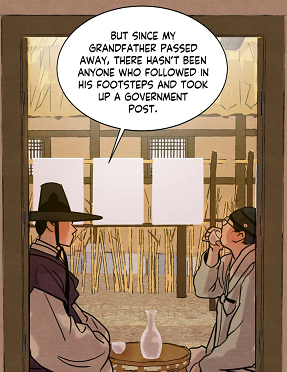 (chapter 7) This shows that the tradition was to “vanish behind the family name, the Yoons”. Under this new light, my avid readers can grasp why the main lead was destined to suffer immensely
  (chapter 57). His reputation was already outshining his father’s. Secondly, by being stigmatized as a homosexual, he was endangering this principle. His role was to continue the lineage and as such produce a heir.
  (chapter 116) or even Min could commit crimes in the open. They felt safe, for they knew that the authorities belonged to the same social class than them. However, this could only work, as long as the nobles would cover for each other. Should a yanbang denunciate a noble family, it was a different story. Therefore I assume that lord Lee was the one who reported the treason to the authorities (the painting in the bedroom was the evidence). But such a painting couldn’t represent a proof. However, since human justice was corrupted, the gods decided to give justice to the protagonists. That’s how Yoon Seungho became the hand of justice. Everyone involved in the protagonists’ suffering had to pay for their crimes.
  (chapter 102) That’s the reason why Baek Na-Kyum’s martyrdom was strongly intertwined with the young master’s. Yoon Seungho only received this power through Baek Na-Kyum, the character embodying fairness, sincerity, hard work, home and equity. This was particularly perceptible in this scene:
  (chapter 27) The lord couldn’t kill anyone randomly.
 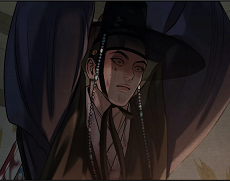 (chapter 102) However, I consider it as a first step to the lord’s emancipation and life lesson. The latter is indirectly learning not to pay attention to status and power. That’s why the author portrayed him as blind and deaf to their plea and special status. While his behavior in the shrine was rather impulsive and influenced by deeply rooted fears, we should consider lord Song’s execution as a true act of justice.
  (chapter 123)
  (chapter 123) The latter had confessed all his crimes: the ones from the past (the lies in order to fool the father)
 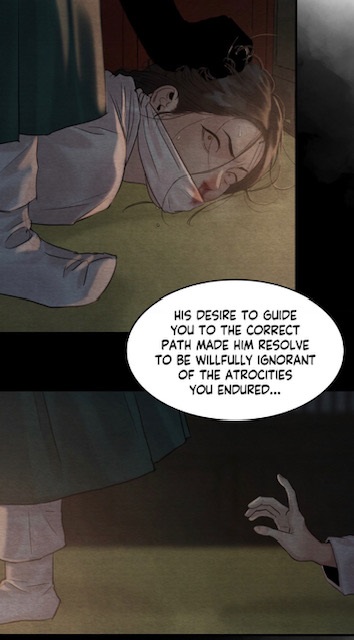 (chapter 123) and the painter’s murder. Funny is that lord Song didn’t feel threatened by the young master at all despite the sword.
 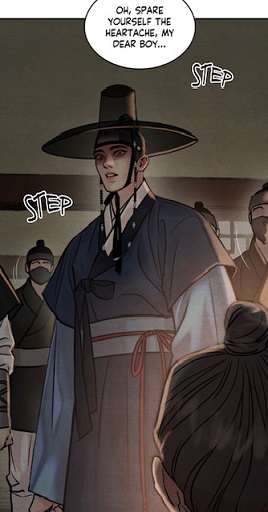 (chapter 123) Why? It is because he feels, he is the one with the upper hand. First, he has the petition, hence he is already projecting himself in the future (he can get a high position again). Secondly, he thinks, Yoon Seungho is outnumbered. He is surrounded by 4 guards. But more importantly, he views himself superior to the main character due to his age. He is an elder. That’s the reason why he calls “my dear boy”. This implies that he is underestimating the main figure. The latter would never dare to raise his hand against a senior!! However, true justice is also blind to age.
 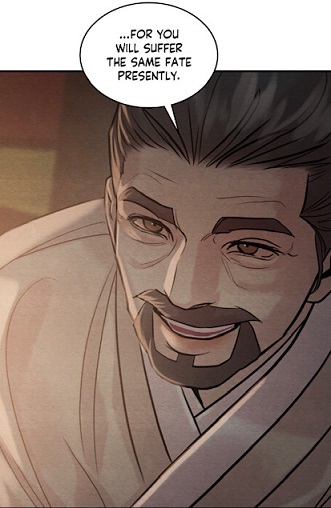 (chapter 123) His smile at the end of the episode should be perceived as a reflection from Min’s vanishing.
  (chapter 103) One might even add that the lord’s action could have been seen as self-defense. However, don’t forget that we are here in Joseon, where a commoner’s life means nothing. Because of this new association, I came to the following deduction: lord Song was the one behind lord Shin’s death.
  (chapter 103) The latter couldn’t imagine that an elderly yanbang, an official, would raise the sword against another noble. After this new realization, it dawned on me why Yoon Seungho had to get separated from his loved one.
 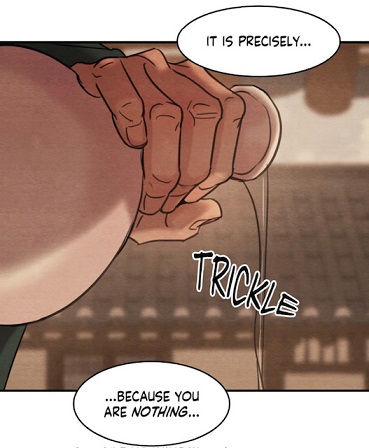 (chapter 126) This humiliation made Yoon Seungho realize that he needed to have his power on his own. He learned through the hard way that he was not just a Yoon, but Seungho. Yes, this helped him to differentiate himself from his father and to become stronger mentally. His religion was now his lover, Baek Na-Kyum, whom he needed to protect. But he could only do it, if he had himself a powerful position. But he needed to witness the corruption of the authorities to realize that in Joseon, there exists no justice.
  (chapter 6): neglect and indifference towards the commoners. And this new observation brings me to my other topic, Jung In-Hun.
 (chapter 129), therefore he couldn’t select one position contrary to the main lead. This means that when he celebrated his “victory” in episode 111, it was not official. He had no post. I would even add, his name had not been announced on the official board, like we could witness it in this scene.
 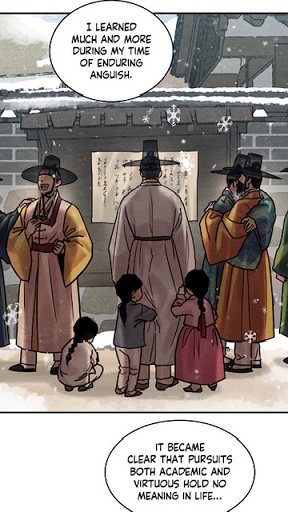 (chapter 121) Here, he is informed that he didn’t pass the exam, for his name was not written there. We can detect this, because people are congratulating each other. His name was left out due to the intervention from lord Song. This means that when Yoon Seungho made him this offer
 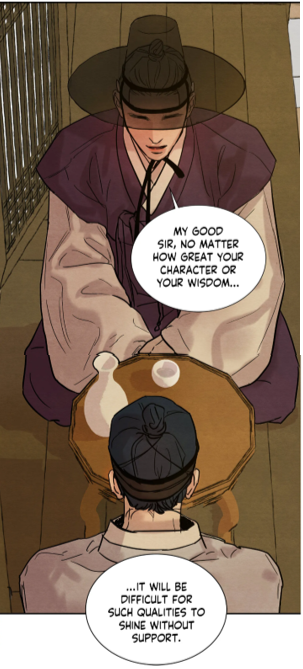 (chapter 7), these were not empty words. He did help the learned sir to pass the civil service exam. But the scholar didn’t succeed like anticipated. The absence of his success explicates why Jung In-Hun received such an offer from lord Song later.
 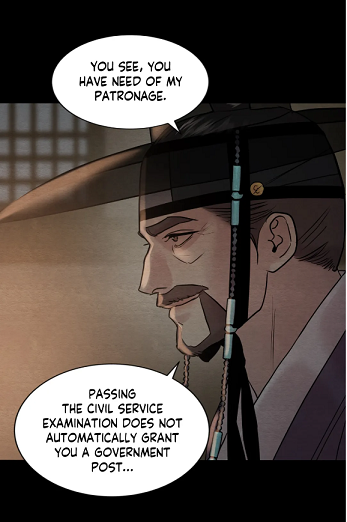 (chapter 117) He had no post, he couldn’t choose it, for he was not the best. Thus I deduce that the scholar had just proven his mediocrity. He was just an average man. That’s how it dawned on me that the ceremony in the street was more a simulacre!
 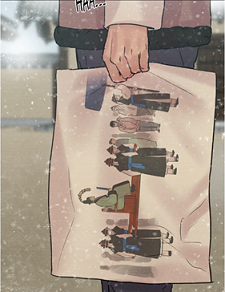 (chapter 44) Only one thing was real: Jung In-Hun was wearing an official uniform, that way no one would doubt his “victory”. Moreover, observe that lord Song only approached the learned sir after the parade. So he was not behind the parade. Besides, keep in mind that the main couple was informed about the parade through the tailor
 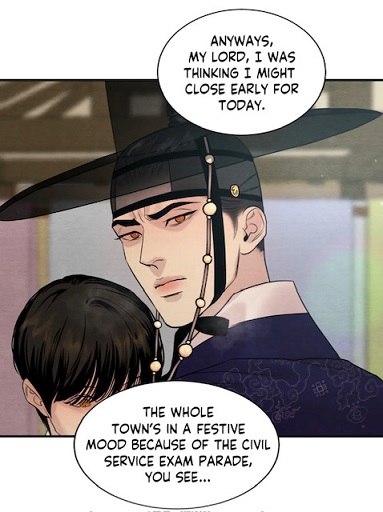 (chapter 111) and not from the official board. His reaction shows not only his displeasure, but also his ignorance. If he had known about the cortege, he would have avoided the place in the first place. Thus I suspect that the tailor had been encouraged to leak this information in front of the couple. Let’s not forget, as a tailor, he was definitely involved in the cortege. It is no coincidence that he informed Yoon Seungho about this “sudden parade”. At the same time, I come to the following deduction: someone must have paid for this spectacle, and it was not Yoon Seungho, for he had been kept in the dark until the last moment. I doubt that the learned sir had the connections and money for this. This new perception corroborates my previous interpretation: the show was sponsored by someone, and it was definitely inspired by the drawing (the hat and the green uniform).
  (chapter 111). Yet this was just a cheap trick, for the person didn’t send a sedan chair with carriers. Under this new light, I realized why Jung In-Hun ended up stigmatized as a criminal.
 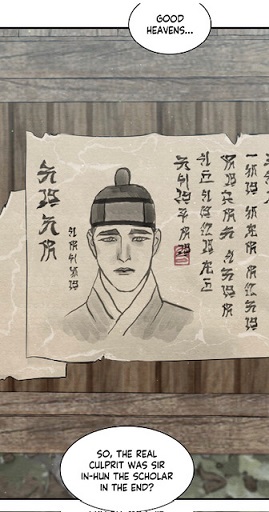 (chapter 127) It was his karma, for he had deceived the painter with his lies. His success was not his own.
 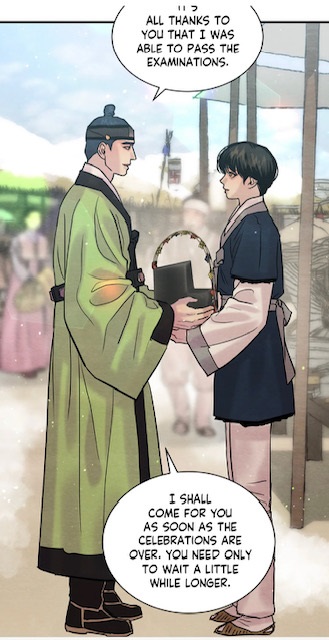 (chapter 111) He realized that even after passing the exam, he needed the assistance of people, a sponsor for the spectacle, a noble with connections. Besides, when in season 1, the painter was accused of a crime (ruining the picture), the learned sir did nothing at all. He didn’t protect his student, for he desired to keep his sponsor. When the latter was sick, he neglected him as well. He wouldn’t have sent a doctor for him. Hence in season 4, the sponsor Na-Kyum decides to end his “sponsorship” for the learned sir. We could say that the former teacher is confronted with a similar situation. He ends up being abandoned and framed for a crime, which he didn’t commit. Yet, contrary to his pupil, he is not entirely blameless, for he played a huge role in the death of the nobles lord Song, lord Shin, lord Min and others. Because Baek Na-Kyum embodies hard work, justice, equity, love and honesty, I deduce that his surrogate father embodies the negative notions: laziness, corruption, partiality, hierarchy, ambition and hypocrisy. That’s why his face ended up on the official board, while the painter’s accusation just remained rumors.
  : (chapter 125) versus
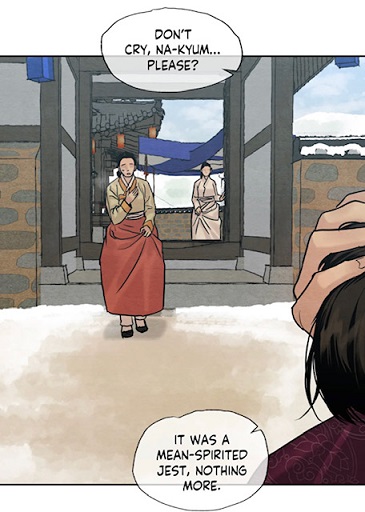 (chapter 105) IMO, she had to use another mean in order to achieve her goal: the scholar. Let’s not forget that the artist had confided to her this:
  (chapter 68) He was simply waiting for the learned sir’s return. And she was present during the cortege.
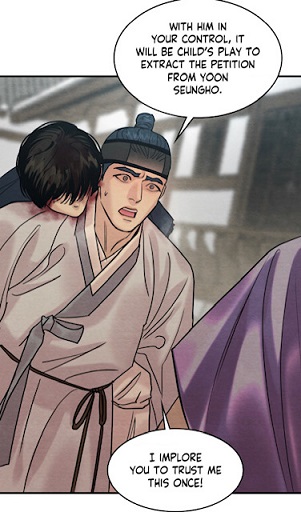 (chapter 121), he put the painter in a position which led him to take for the fall for his loved one. It was like framing an innocent. Exactly like in season 3
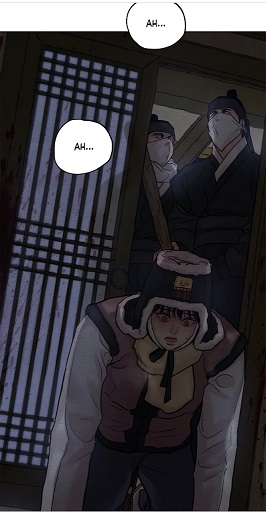 (chapter 99), Yoon Seungho had been forced to take the sword because of the scholar. And the trigger for the massacre
 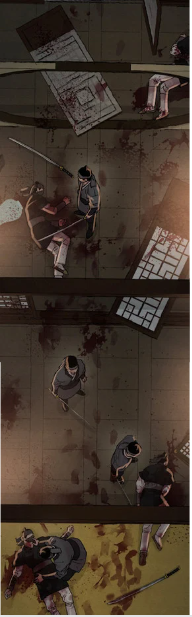 (chapter 124) was always Jung In-Hun. And now, you comprehend why Jung In-Hun became the scapegoat for the last incident. But there’s more to it.
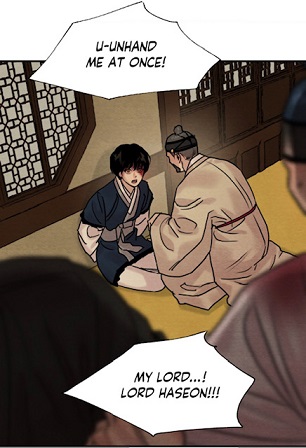 (chapter 121) His final lesson was to learn that he was exactly like the others: he is just a human despite his education. All humans are equal in front of death. In fact, during his confrontation with lord Song, he came to give up on his integrity. His true face came to the surface: he was just an opportunist, a lazy scholar who relied on fate and his arrogance.
  (chapter 6) This brings me to my next interpretation. Jung In-Hun learned through the hard way that there is nothing like fate (“right time”), but life is the result of decisions. However, because the scholar always regretted all his past choices, he decided to blame others for his wrong choices. That’s the reason why he ends up to take the whole crime. We should see this paper
 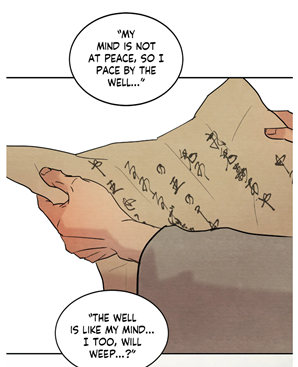 The author from this sijo was the poet and official Wang Bang-Yeon who is said to have lived in the time of Joseon’s sixth king Danjong (1441-1457) and his successor king Sejo (1417-1468). As the official of the state tribunal, he followed the young king Danjong into his exile and gave him poison to drink by royal command. Yes, both are symbols of power, corruption, partiality and injustice. Yet, there exists one divergence. While Wang Bang-Yeon left a poem revealing his yearning for the king, the learned sir had no deep attachment towards the artist. Hence it is no wonder why the paper “Wanted” is not connected to affection. It really reflects the emotions and thoughts of Baek Na-Kyum. Due to the last incident, the latter no longer cares for this man.
 (chapter 6) He couldn’t enjoy it at all. It is no coincidence that the synonyms for ambitious person are “busy person” and “workhorse”. Yes, this mirrors the expression “laziness”. A true ambitious person is actually proactive and not really relying on sponsors and bribes. So when we see the learned sir on the horse
  (chapter 107) Though he passed the civil service exam too, he is not able to fulfil his father’s wish either.
 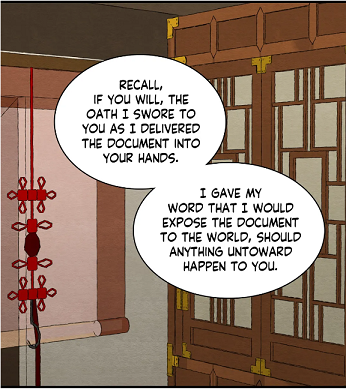 (chapter 118) His intention was to protect not only his brother, but also their family. It was to ensure that lord Song would get blackmailed. That’s how this investigation
  (chapter 118) It is because he knows that with the petition in his brother’s hands, lord Song represents a hindrance to his own career. The latter can only see the Yoons as a threat. Besides, he can only resent the family, if they are able to gain reputation and power, while he can not return to Hanyang and occupy a high position. As you can see, the young master’s success can only irritate lord Song. You can sense a rivalry between Seungwon and lord Song Haseon
  (chapter 116) in this scene:
  (chapter 116) The latter has already sensed that the traitor is sitting next to them, thus he raised this question. That’s why I come to the following conclusion that the young master must have realized that he also needed his brother’s assistance. First, if Yoon Seungho returns the petition to the father, the investigation about the traitor in the mansion would be no longer necessary. Secondly, Yoon Seungwon needs to create new connections in Hanyang, but he can only achieve it with his elder brother. Under this new light, you comprehend why Seungwon asked his relative to move on from the past and as such “forgive their father”
 . (chapter 118) In other words, the young man embodies the notion of “fake forgiveness, fake promise, fake understanding”. He is an opportunist, exactly like the scholar. Yet, there exists a huge divergence between them. His affection for Yoon Seungho was not fake. He is feeling sympathy for his brother. But that’s it. This explains why he didn’t help his brother before. In my eyes, Seungwon represents a different notion of family: bloodline. In my eyes, he embodies traditions and Confucianism. His goal is to turn his father’s dream and life motto into a reality: glory and power for the Yoons. Besides, he must have experienced himself the downfall for the family. And this observation leads to my next interpretation. This means that Yoon Seungwon must have lied to his father by omission as well.
  (chapter 128) What about Yoon Seungwon then? Though he succeeded too, there is no mention about engagement or marriage proposals. However, it is clear that this achievement is connected with adulthood and marriage, therefore the elder Song Haseon brought up the topic sex!
 What was the reason for Yoon Seungwon’s embarrassment? First, it is because his brother selected the backward place, though he had passed the exam with flying colors. Yoon Seungwon imagined that once his brother had passed the exam, he would get married and establish new connections. That way, Seungwon would be able to get married with a properous and famous family. In other words, Yoon Seungho would turn the father’s dream into a reality: the return of the Yoons’ glory and power. And Seungwon would benefit a lot from this. So in the gibang, his advices might have sounded well meant,
 (chapter 126), his karma is not only to end up alone, but also not to receive any support from his brother.
 (chapter 117), because his career was still insecure due to lord Song’s influence. He needed his brother’s help in the end. At the same time, Seungwon had already long internalized the values from his father: Yoons’ honor and reputation were top priorities. In other words, the younger brother stands for social norms and fake righteousness. He desires to maintain his perfect image (loyalty, filial piety),
 (chapter 118), hence he left the document at the mansion. He wanted his brother to return the papers on his own so that his past action would remain undetected. Returning the paper was like an admission that he had stolen it in the first place. Yet he still barged in his brother’s house twice.
 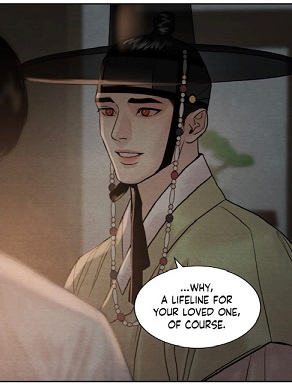 (chapter 117) Here, he exposed the existence of the “petition” to Baek Na-Kyum for one reason. The latter should be used as a way to pressure the main lead to give up on the paper. Notice that this topic was brought up in the gibang:
 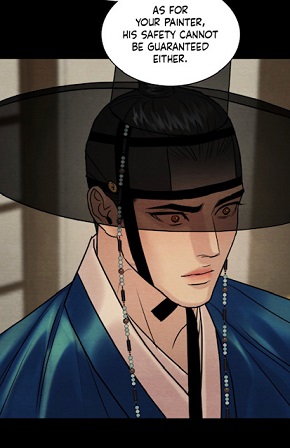 (chapter 119) However, the reality is that Seungwon is not just trying to fulfil his father’s dream, but also he has his own ambition. He wants to make a name on his own. That’s why he confessed this to his brother:
  (chapter 119) He doesn’t associate himself with the father and his sins. In his eyes, he is blameless. The reality is that he is guilty like his father, for he failed to care for Yoon Seungho. He failed to listen to him and his suffering. He didn’t try to understand him. Like mentioned above, he only sympathized with him and that’s it. Thus he condemned him for his debauchery in the gibang, but this was no longer the case.
 (chapter 127)
  (chapter 127) the former only made a promise to his father and not to the brother. With his death, Yoon Seungho is no longer bound by a promise. Since the main lead had been living properly for 3 years and even passed the civil service exam, it is clear that for the brother, Yoon Seungho must have forgotten his past lover. He must have judged his brother based on appearances, just like he was behaving himself. However, this was just a subterfuge. He was waiting for the right time too. He had no change of heart, he had just been copying his brother’s behavior.
  (chapter 78) Let’s not forget that at the gibang, Yoon Seungwon never revealed his true intentions towards his brother. The latter always said that his advices were for his best interests. He should become involved in the government. But everything was for the Yoons, or better said, for Yoon Seungwon’s sake. And there exists another reason why the sibling must have been embarrassed: This marriage!
  To conclude, Yoon Seungwon embodies the opposite values of Baek Na-Kyum and Yoon Seungho: ambition, corruption, forgetfulness, hierarchy/social norms, traditions and reality versus understanding, forgiveness, simplicity, closeness, modern family and happiness. Selfishness versus Selflessness. This explicates why the main lead gave up his success for the artist. However, though it looks like an exile, the reality is that he will gain popularity and admiration among the inhabitants. Why? It is because he is no longer making distinctions between nobles and commoners, he doesn’t see this place as a punishment, but as a heaven and as such he has a better perception of humans in general. In my eyes, he is bringing progress and change in the region. Baek Na-Kyum is already teaching the kids how to draw… so it is only a matter of time, until his lover takes care of the education for these children. This means that these words will become a reality:
  (chapter 6) He will think of the futures of those children because of his lover.

 (chapter 126) to another
  (chapter 126). He allowed his father to humiliate and abuse him
  (Chapter 126) once again. It was, as if the story was back to square one and the protagonist had learned nothing at all. Under this perception, my avid readers can comprehend why I selected such a title. However, instead of thinking that the author was a bad writer, I decided to ponder on the following question. Why did the author choose such an evolution?
  (chapter 7) Like Baek Na-Kyum, he rushed to his loved one’s side. However, he was first stopped
  (chapter 125), but he never followed him to the bureau of investigation. And the same happened later. Why didn’t he go to his shed, when he was trapped there? Where was he, when the eldest son visited the father?
  (chapter 126) His absence exposed his passivity and betrayal. However, at no moment, Yoon Seungho noticed this. To conclude, Yoon Seungho was so worried for the painter that he didn’t pay attention to his surroundings, just like the painter didn’t see the learned sir’s disdain expressed through the cold gaze.
  (chapter 07) Therefore Yoon Seungho didn’t notice the presence of a civilian next to the governor.
  (chapter 126). Striking is that the governor knew about Yoon Seungho’s whereabouts before his arrival: the coast. As you can see, I am detecting a link between the governor and the younger master Seungwon. Yet, it was disguised as a rumor behind the expression “I had heard”. My assumption is that Seungwon came from the bureau of investigation in order to inform his brother. Therefore it is not surprising that Seungho was invited by his brother to visit the prison during the night.
  (chapter 126) And the moment I perceived the protagonist as a fool in love, I realized that chapter 126 is a reflection of episode 7, 29
  (chapter 29) and 40
  (chapter 40). Here, the painter was trying his best to protect Jung In-Hun’s interests (life, high position). Moreover, in episode 40, the painter had a dream, when he saw the announcement for the civil service examination. He smiled, for he was looking forward for the future.
  (chapter 40) And what have these episodes more in common? A betrayal, abandonment from a loved one and a paper (painting, poem). Hence I am more than ever convinced that the petition will resurface very soon and play a huge role in the downfall of the schemers and haters. Besides, chapter 40 represents the negative reflection of the conversation in the prison.
  (chapter 126) Though they are in a tough situation, Yoon Seungho is not leaving his side contrary to episode 40.
 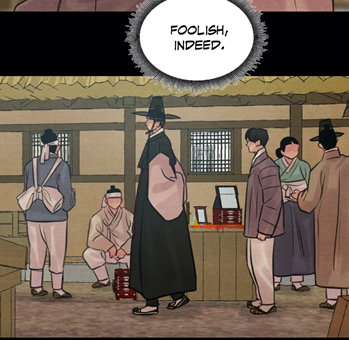 (chapter 40) There is neither disdain nor mockery. The mentioned scenes are similar, for the present resembles the past. And this brings me to the second reason for the Webtoonist’s decision.
 (chapter 123), Yoon Chang-Hyeon considered Yoon Seungho as a human, for he employed the personal pronoun “he”. He was still his son. Then in episode 77, he judged him as a slave
  (chapter 77), hence he was submitted to the straw mat beating and was held captive. He even refused to send for a physician.
  (chapter 83) Here, the father is denying his humanity, he is just an animal. In their next confrontation, he describes him as a monster, hence he wished that he had never been born.
 (chapter 86) However, his words exposed that he was still viewing him as a living being. Therefore it is not surprising that he accepted lord Song’s request to order the murder of his son! In the gibang, he decided to no longer acknowledge Yoon Seungho as his son.
  (chapter 107) The tragedy is that the protagonist still viewed the Yoons as his family because of Yoon Seungwon, who keeps calling him “brother”. This explicates why Yoon Seungho sponsored his brother to have an official position.
  (chapter 115) Therefore it is not surprising that he followed Yoon Seungwon’s advice again.
  (chapter 120). He would bring the petition to his own father. This means that he is acting like the painter who listened to his noona Heena so well.
  (chapter 46) But now, Yoon Chang-Hyeon believes to have the petition.
  (chapter 125) This explicates why the patriarch is now calling the main lead “nothing”.
  (chapter 126) It was, as if he had become a merchandise. Or we could say that the elder master had been using him as a tool, which he can now abandon.
  (chapter 126) Interesting is that the idiom “plaything” has for antonyms tool, implement, instrument and utensil. And this brings me to the following remark. The father’s words are reflecting the last scheme. Yoon Seungho was used as the sword to get rid of an enemy, lord Song. It was, as if someone had decided to get rid of lord Song, for he represented a danger or threat. It also mirrors the trick in the shrine. Min and the others got killed, because Lee Jihwa went to his childhood friend. And who had seen the main lead using this sword, when he was enraged? Father Lee!
  (chapter 67) But let’s return our attention to the patriarch and his son. Yoon Seungho is no longer recognized as a Yoon member. Therefore I come to the conclusion that Yoon Seungho will make the following decision: to become an orphan. And this is symbolized by the loss of hair. I am expecting him to cut off his hair, something the painter has been doing for a long time. That’s why Byeonduck showed us the lord without a topknot.
  (chapter 126) This would coincide with my previous statement. The lord is going through the same experience than his loved one. However, people will come to the conclusion that this was done by the father. How so? Remember how each rumor became a reality.
  (chapter 1) I had already demonstrated that Yoon Seungho was not a fiend for sodomy with no regard for time and place, until he met Baek Na-Kyum. But once a deed is done, it can never be repeated.
  (chapter 101) So should Father Lee claim that he has long disowned Jihwa by cutting off his topknot, no one will believe him, for the young master was still seen with a topknot after confessing his feelings in public.
  (chapter 57) In other words, the topknot incident at the kisaeng would be brought up. It is impossible for 2 fathers to act the same way. Besides, the loss of the topknot has another signification: Yoon Seungho would cut off ties with valet Kim, for the latter was the one who gave him the topknot. And episode 126 reflected one more time his position:
  (chapter 126) He is the one dressing him. It was, as if he was the pope.
 (chapter 116) It is because someone had reported to him the conversation between lord Song and the painter.
  (chapter 122) There was a spy listening to their conversation. Since all the guards died
  (chapter 124)
  (chapter 125: I am assuming that the survivor got executed), I am suspecting the scholar. Moreover, why would Yoon Chang-Hyeon accuse his son to have abandoned Baek Na-Kyum? It is related to this departure of the staff and Yoon Seungho.
  (chapter 120) And who was present there? Jung In-Hun! But there is more to it. Since leaving Baek Na-Kyum behind is considered as an abandonment, it means that the patriarch abandoned his son too.
 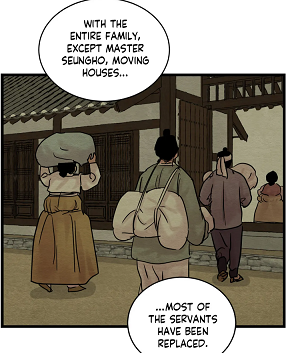 (chapter 27) By speaking to Yoon Seungho, the elder master Yoon didn’t realize that he was admitting his own wrongdoings. Actually, he had abandoned him many times… like here for example
  (chapter 87) Therefore his words will come back to bite him. But these words are also exposing the valet’s betrayal and abandonment towards Yoon Seungho!! How so?
 (chapter 122), then he should have been at the patriarch’s house. The absence of the valet is the evidence of his treason. For me, he is now working for Jung In-Hun which explains why he never mentioned his presence in the mansion, only lord Song. Besides, keep in mind that once deed done can not be repeated. In episode 27, the lord was too angry and busy to notice the learned sir’s spying activities.
 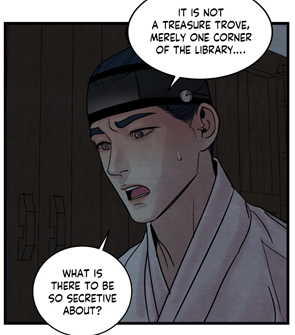 (Chapter 27) Moreover, Kim didn’t report the interrogation to his master. This means that the butler covered up for the teacher’s wrongdoing. But here is the deal:
 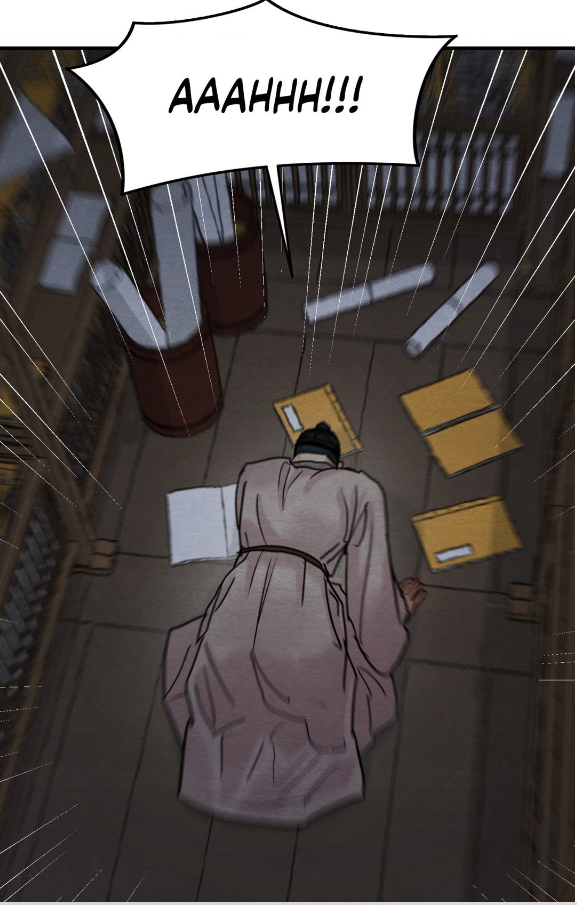 (chapter 120) The library was ransacked, hence this crime is bound to be discovered. Finally, his intervention in the shed is exposing his deception.
  (chapter 83) That’s why I am convinced that these words
 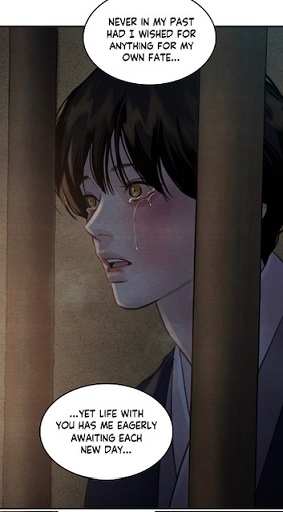 (chapter 126) He is no longer suicidal, in fact he is full of hope! Though he was sent back to hell for a short moment, he came out of this as a winner. My evidence is that the lord has now become a believer.
  (chapter 126) Yes, episode 126 exposes the return of his faith! And where could we see the atheism of Yoon Seungho in the story? In chapter 92!
  (chapter 92) He didn’t believe in the spring poetry to ward off bad luck! That’s why he was sent back to the past. He needed to lose everything in order to find hope! In his darkest moment, he expressed a wish: to meet his loved one! And where did he pray to the gods? In the shed!
  (chapter 126) Observe how he is kneeling in direction of the bars. He is hoping to meet Baek Na-Kyum again. As you can see, though this scene
  (chapter 126) He was showing resistance and anger towards his father. Moreover, he was no longer shaking in front of the patriarch or the guards.
  (chapter 86) Thus I deduce that though he was mistreated and insulted like in the past, he was no longer suffering from his traumas. He is healed. His will is now really strong, supported by his new found faith.
  (chapter 62) Even if they were hugging, they were not close emotionally and mentally. This stands in opposition to the scene in the jail. They might be separated by the bars, but they are touching each other tenderly.
  (chapter 126) They are able to see each other.
  (chapter 126) Try Meditation
  (chapter 126) or Prayer
  (chapter 126)
 (chapter 126) Quoted from
  (chapter 126) It is relevant, because light represents knowledge and truth. He is now the bearer of the truth. And he got his blessing from Baek Na-Kyum, when he touched his hands.
  (chapter 120) Yes, chapter 126 mirrors 92! This somehow confirms my theory that the butler was the one hiding under the purple hanbok.
  (chapter 92) Moreover, we have another reference to this episode, the pouring of alcohol!
  (chapter 92)
  (chapter 126) It was, as if someone wanted the lord to pay for Min’s insult! That’s the reason why I come to the following conclusion: Yoon Seungho is now opening up to Baek Na-Kyum. He is confessing to the painter about his wishes.
  (chapter 85) The manhwaphiles should keep in mind that the request from the artist in the study was strongly connected to forgiveness. And Baek Na-Kyum could also confess what happened in the past: his guilt and regret asking for the lord’s forgiveness. Right now, both are blaming themselves for the incidents, although they got fooled by many schemers. Because the lord proved his loyalty and blinded trust in the painter, I see the scene in the jail as a new version of this confession:
 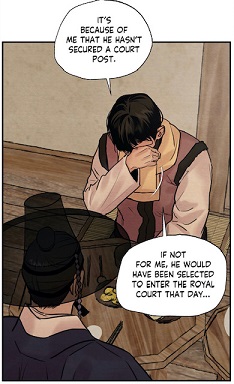 (chapter 75) Thus I consider the prison cell as a sacred place, where both characters are about to be freed from their guilt!
 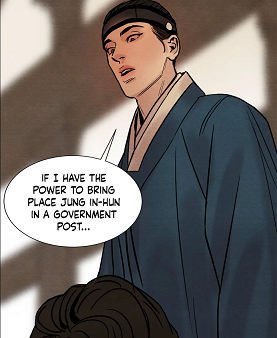 (chapter 11) thus he could escape justice!
  (Chapter 11) Simultaneously, the first definition of life lie corresponds to Yoon Chang-Hyeon. The latter blames his eldest son for the downfall of the Yoons.
 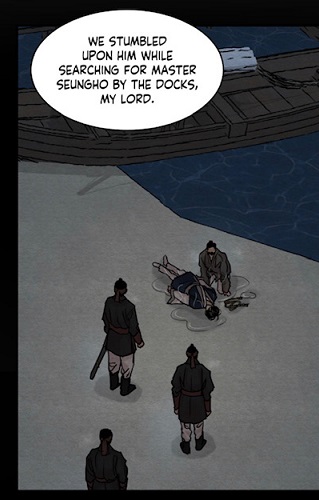 (chapter 125). They fail their duty, for they allowed the main lead to barge in the room.
  (Chapter 126) Finally, observe how they keep apologizing without giving any explication.
  (Chapter 125) Their apology is fake. As you can see, the patriarch is living in an allusion. He is powerless, and the best evidence is that he doesn’t have the petition.
  (Chapter 126) He is actually encouraging his son to hate himself and indirectly his own father! However, the son made the exact opposite decision: love!! Hence I am more than certain that the elder master is about to experience a harsh awakening.
  (chapter 101) Thus they got punished. And now, the two main leads are about to face human justice.
  (chapter 65) But strangely, the painter is showing no fear at all.
  (chapter 126) He is ready to sacrifice himself. So why was Yoon Seungho dressed up in the end? One might say that with the topknot and the hanbok, the abuse from the patriarch got covered up. That way, Baek Na-Kyum wouldn’t detect Yoon Chang-Hyeon’s lies and abandonment!
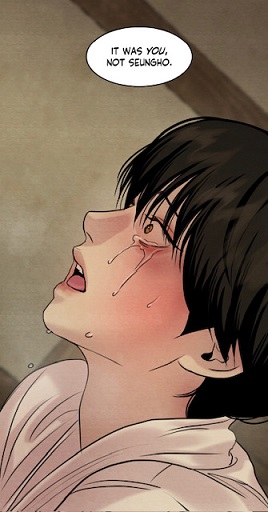 (chapter 125) The latter brainwashed him to take the fall for everything, implying that way, his loved one would be protected! However, I am suspecting that if the lord were to leave the prison, he could meet someone in the office. That way, this person is not confronted with the reality: the main lead was “abused”. According to the butler, he was supposed to meet his brother at the office.
 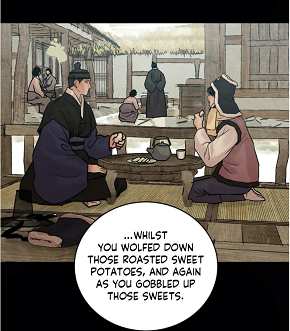 (Chapter 92) In episode 92, we have a mysterious man in the background dressed in black, but he is not wearing his gat. Besides, I would like my avid readers to remember this image from the trailer:
  which reminds us of the office:
 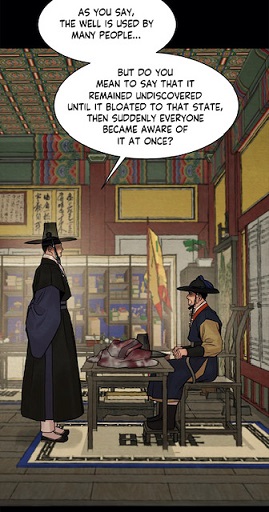 (chapter 98) This place symbolizes power and strength. And because episode 126 is a reflection of chapter 7, 11, 29 and 40, I think, Yoon Seungho is about to receive a deal, for these episodes are focusing on the deal between the painter and the protagonist: protection from the father and punishment in exchange for entertainment. He would appear as a fake savior in the end. Remember what in episode 11 the artist said in front of his fated partner:
 (chapter 11) He would do anything except painting!! He was not willing to give up on this principle, which reminds us of faith. So when Yoon Seungho faced his father, he experienced powerlessness for one reason.
  (Chapter 105) Then in episode 122,
  we discover that lord Song employed the pipe to beat the painter. Moreover, I detected a progression. In season 2, Yoon Seungho was still smoking.
 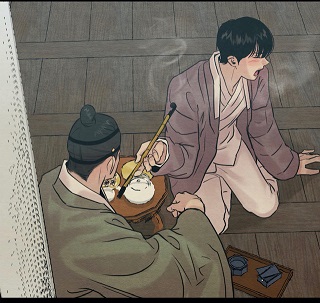 (Chapter 74) But once the painter showed that he didn’t like smoking, Yoon Seungho stopped taking the drug. This explicates why in season 3, he was no longer seen with the item in his hand. Even under stress, he chose to hunt instead of smoking in front of the window. We have two scenes where the pipe is present. One is when the lord is throwing it out of anger,:
 (chapter 86) which reminded me of the incident with the music box.
 (Chapter 85) This shows that this item had no value to the protagonist. Then the pipe appeared in the gibang on the table.
  (Chapter 96) However, here the lord had only eyes for the painter or Heena. Hence I have the impression that the pipe could resurface and serve as an tool to identify the perpetrator, just like the glasses were used to recognize the scholar.
  (Chapter 102) Finally, since the pipe appeared in the gibang twice, it indicates that this hobby is linked to the kisaeng house!! And this brings me to my final observation: the pipe is connected to paper
 (Chapter 1)
  (chapter 1) However, there exists two books!! And one has no PIPE! This coincides with the decision of the painter to stop drawing erotic pictures! Yes… dropped amusement! At the same time, Yoon Seungho has long lost his interest for erotic publications. He also dropped this hobby. On the other hand, the books were dropped in front of the painter.
  (Chapter 1) Finally, the petition was dropped in front of lord Song
  (chapter 123) which announced his death sentence. To conclude, the papers have a strong connection to punishment and death.
  (Chapter 126) Yoon Seungho went to the father’s mansion, and it didn’t take him that long! As you can see, I consider this trip with Yoon Seungwon as a diversion.
  (Chapter 121) So why didn’t the elder master return to his old home? It is to drive the Yoons out of their propriety. In other words, the lies from the past are becoming a reality exposing the liars in the end. Their life lies will be ruined.
 (chapter 119), they got worried and nervous, as they considered the expression „as long as I live“ as a clue for a sad ending. Why? It is because the lord was referring to his own death. Under this light, it becomes comprehensible why I selected „heavenly“ in the title. I was naturally alluding to the afterlife. However, I perceived his words in a positive light. He expressed his desire to live. He is no longer suicidal, he wishes to live a long life next to the painter and treasure his moments with him. That’s the reason why the author included the refraction in the scene. A dream had come true, the lord was finally able to escape the darkness.
  (Chapter 119) He is now truly alive. This explicates either why he smiled and laughed at the end. But why was he so happy? It is because Baek Na-Kyum had just confessed that he loved him not for his wealth or power, but for himself.
  (Chapter 119) He even described him as a treasure. Yoon Seungho had finally achieved his goal: to win the painter’s heart. His presence and love bring happiness to Baek Na-Kyum which stands in opposition to his reputation as bird of misfortune. Moreover, this description contrasts so much to Jung In-Hun
  (Chapter 119) and Yoon Seungwon’s.
  (chapter 102) In episode 102, he was renouncing on everything (life, mansion, wealth and connection), because he imagined that the artist had died. Consequently, I deduce that in episode 119, the painter’s life is attached to the lord’s for good. If the artist got into trouble, Yoon Seungho would side with him and the reverse. Thereby, I come to the conclusion that this moment in the kitchen represents their union, as they are no longer tied to the mansion. They are now a family no matter where they are. Let’s not forget that the painter expressed his wish to run away with his lover.
  (Chapter 119) It is important, because such a departure symbolizes that the bird “Yoon Seungho” is leaving the nest. He is now starting a family on his own.
 (chapter 85) and put a glass and that was it. This exposes the father’s hypocrisy, ignorance and greed. By acting on his own, he was exposing his true mindset. He views himself as the family. The sons are just the extension of himself, for they are his reflections.
  (Chapter 45) On the other hand, Yoon Seungwon is his golden child, for he represents his positive reflection.
  (chapter 86), whereas he put the other on a pedestal
 Under this new light, it becomes comprehensible why the father could only reject the offer from lord Song in the gibang. Doubting Yoon Seungwon’s sexuality meant to question about the father’s sexual orientation. At the same time, it is not surprising why the elder master would blame Yoon Seungho for everything, for he couldn’t admit his responsibility for the purge. Consequently, the Manhwaphiles can grasp why Yoon Chang-Hyeon came alone to the shrine. If he had brought Yoon Seungwon, the father would have been reminded of the elder son, as both can not be separated. This explicates why the younger master asked his elder brother to submit to his father.
 (Chapter 119) I couldn’t help myself smirking when the brother attempted to make him believe that.
 (Chapter 119) the protagonist could ever gain the father’s favor. Yoon Seungwon was definitely playing with his brother’s feelings, as if he could hope that their father would change.
  (Chapter 77)
 (Chapter 119) First, by returning the petition to the father, Yoon Seungho would become the culprit. He was not only a traitor, but also a blackmailer of the Yoons and lord Song.
 (Chapter 107), for he had stolen the petition. Yoon Seungwon would hide his wrongdoing, he betrayed their father.
  (Chapter 116) The elder master would no longer seek the truth, similar to the kidnapping in season 2 which was turned into a desertion and later Lee Jihwa’s abduction occulting the instigator and the helping hands. Simultaneously, Yoon Seungwon needs his brother as scapegoat, because the pressure coming from the patriarch and lord Song must have definitely increased.
  (Chapter 37) He is even implying that he needs to sacrifice himself in order to protect Baek Na-Kyum!! Moreover, he is distorting the reality, because he implies that his father is still powerful.
  (Chapter 116) Thus I come to the conclusion that the meeting between the brothers in the gibang represents an offering. For the Yoons’ sake, Yoon Seungho should admit his wrongdoings
  (Chapter 55) People had played with his hopes and longing for acceptance and recognition. Interesting is that offerings is a synonym for atonement and sacrifice. But why is Yoon Seungwon so sure that he can repeat the same action from the past? It is because Kim and Yoon Seungwon have known for a long time that Yoon Seungho was longing for acceptance and love from his family, just like the scholar knew about the painter’s love for him.
  (Chapter 119) But everything changed, when the painter met the lord. So who is worse here? Jung In-Hun who tried to rape the painter or Yoon Seungwon who is sentencing his elder brother to death? Let’s say that the valet convinced the younger master to suggest this solution, this doesn’t diminish Seungwon’s responsibility at all. He knows that his father abused his elder brother. In my opinion, he is copying his father, like the former tried to diminish the responsibility of the patriarch.
  (Chapter 119) Yoon Seungho got hurt because of lord Song and not because of Yoon Chang-Hyeon. This means that the younger master was denying the existence of the patriarch’s choice and the helping hands. And if the brother listened to his advise and the father hurt or killed the main lead afterwards, the younger master could put the blame on the elder master, for the decision and responsibility belonged to the patriarch. Moreover, he heard from lord Song that killing Yoon Seungho was just a matter of time.
  (Chapter 119) So technically, this situation could have triggered the protagonist’s insecurities like in season 1
  (chapter 28), 2
 (chapter 60) and 3
  (chapter 98). However, through these constant exposures, Yoon Seungho came to learn not to jump to conclusions and to have faith in Baek Na-Kyum. He knew that he would return to the mansion. Hence he ran to the bedchamber first.
  (Chapter 119) Another important detail is that we don’t see any staff in the courtyard or in the kitchen. It was, as if the propriety had been deserted.
  (Chapter 119) This implies that at no moment, he relied on the domestics’ testimonies which contrasts to the following scenes:
  (chapter 104)
  (chapter 107) and
  (chapter 116) However, observe that in episode 116, Yoon Seungho had witnessed how his lover had taken care of him, while he was unconscious. Furthermore, the petition had been handed over to the painter and not Kim, a sign that the artist had become the protagonist‘s confident. As you can see, as time passed on, the main protagonist learned the following lessons: he should stop relying on servants, he should only trust his partner. I would even add that he was taught the following principle: “If you want something done right, you have to do it yourself”. In my eyes,
  (Chapter 103) Here, they never expected the return of Yoon Seungho and the painter. The staff ‘s absence in episode 119 is the evidence of their desertion! Moreover, I consider Yoon Seungho’s search for his lover as a new version from episode 28/29/30:
  (chapter 28) Back then, they feigned ignorance, but they never anticipated a punishment from Yoon Seungho.
 (chapter 115) And now you are wondering how the painter’s gesture can be considered as an offering. It is because the kitchen hearth is considered as sacred due to the fire. First, in shamanism, there exists the god of fire named Jowangshin.
  (Chapter 115)
 (Chapter 59)
 (Chapter 98)
 (Chapter 115)
  (Chapter 47)
 (chapter 102) who was a traitor, for he had tattled on Black Heart and his friends to Yoon Seungho. And now, you comprehend why I connected the shrine to the kitchen hearth. Both places are considered as sacred, for they are connected to gods and spirits.
  (Chapter 85) The absence of his sons and of food as offerings reveals that he was not showing true respect to his ancestors. He used religion and social norms to hide his true intentions. He wanted to take over the mansion. Hence the black guards were standing at the entrance of the sacred house. Their presence symbolizes violence. Therefore it is not surprising that the gods chose to punish the elder master through Yoon Seungho. The former was not received properly
  (chapter 86): no bow, no food and no seat.
  (Chapter 86) Let’s not forget that the elder master had entered the lord’s chambers without the permission of his owner. No wonder why he was left speechless. And now, you are wondering if I am not drifting away from the topic, as these chapters from season 3 don’t seem to be connected to episode 119. However, it is important to realize that these chapters have many common denominators
 Here, we could detect the suicidal tendencies of the protagonist. He wouldn’t fight back.
 The seat looks like a throne.






 Baek Na-Kyum freed himself.
  (Chapter 85) The study is even close to the gate.
  (Chapter 51) He could have reached the study before the father entered the shrine. Finally, observe that the patriarch even arrived to the bedchamber before Yoon Seungho,
  (Chapter 117) The painter wants to leave everything behind too.
  (Chapter 119) Thus I am deducing that the authorities will be involved very soon.
  (chapter 119) They are not expecting the lord‘s resistance, for he remained passive all this time (season 2 and 3). The scholar has now the means to do so, and the necessary motivation. Imagine that he got wounded and humiliated by the couple! Besides, we have this broken promise due to Yoon Seungwon
  (Chapter 94) The gibang is connected to money, power, pleasure, artificiality, sensuality and lack of privacy.
 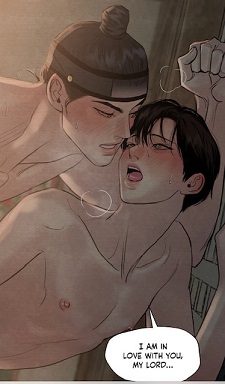 (Chapter 96) I am sure that you can detect all the contrasts (night, door close, spies, confession outside and inside, no fire, only light). Thus I am deducing that the painter’s words in the kitchen were not heard by others. As you can see, this scene in the kitchen is full of symbolism. In my previous essay “The true face of family”, I had already pointed out that sharing meals represented a criteria to define a real family. Therefore I had demonstrated that Yoon Seungho and Baek Na-Kyum were excluded from the mansion, for they wouldn’t eat their meals in the kitchen like the staff.
  (Chapter 17) Moreover, the hearth doesn’t just provide warmth, but also light! The latter embodies knowledge and as such Enlightenment.
  (Chapter 119) Hence they were clueless about the wrongdoings from the staff. Only in the kitchen, the lord could finally grasp the depth of Baek Na-Kyum’s love for him. It is an unconditional love contrary to Yoon Seungwon’s. The latter would only recognize him, if he listened to him. And he only seeks his assistance, when he needs him. It shows that Yoon Seungho is only approached, when he has power.
  (Chapter 118)
 (Chapter 119) I would like to outline that during their conversation, Yoon Seungwon remained calm and indifferent, when he talked about the assassination attempt from Yoon Chang-Hyeon.
 (Chapter 116) But the biggest difference is the absence of fire in the kisaeng house.
  (Chapter 104)
  (chapter 105) Finally, we saw him in the courtyard standing next to a horse and a servant indicating that he had given him a task, and the latter needed to leave.
  (Chapter 108) Hence you comprehend why I am full of optimism in the end. Yoon Seungho has already made some preparations in my opinion. On the other hand, I am quite certain that their love will be tested. Can they face together trouble? Yes, because through their pain, they learned their lessons and changed.
  (Chapter 119) It is because in the past, he was never allowed to join the kitchen hearth. This place was either beneath him or he was not worthy of entering the place. Thus he employed the expression scullery boy to Yoon Seungho.
 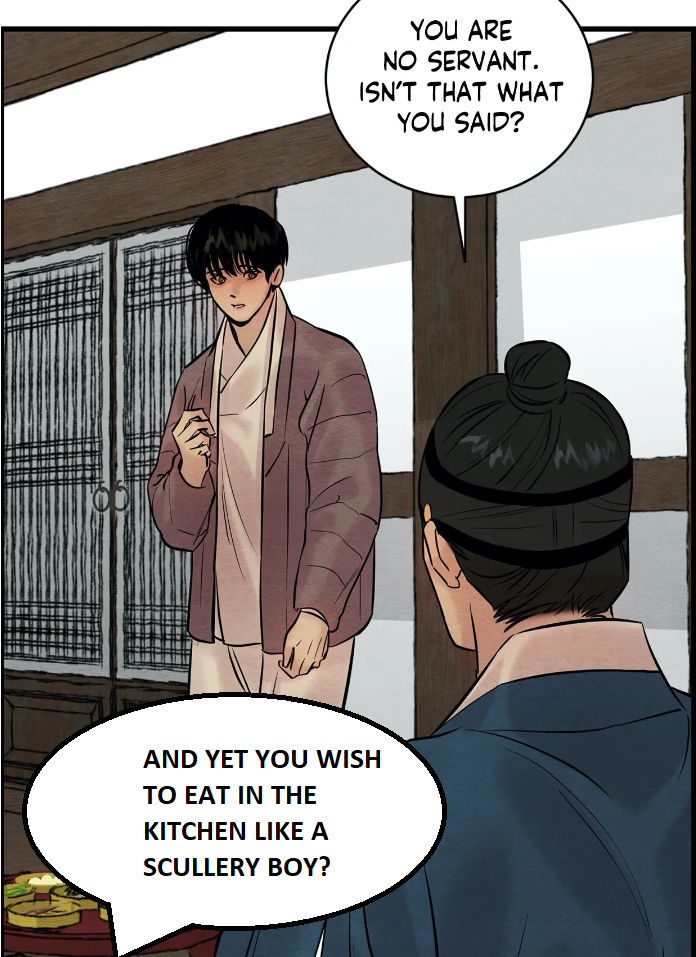 (Chapter 47) Here, I would like to outline that when the protagonist was held in the shed, someone brought him food .
 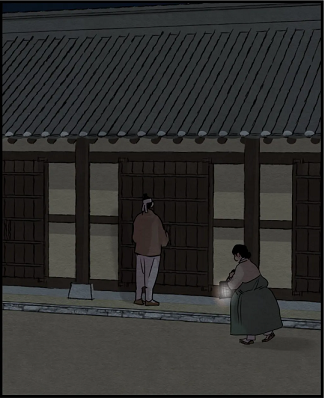 The maid had just brought water to the couple.
 During that night, Baek Na-Kyum had been held captive in a shed.

 (chapter 38) Yoon Seungho remained outside on the door step. Consequently, I started comparing scenes where the kitchen hearth appeared and that’s how I discovered a pattern:
 (Chapter 46)
  (chapter 47)
  (Chapter 110)
 (Chapter 77)
  (chapter 38)
 (chapter 59)
  (chapter 119)
 (chapter 38)
  (chapter 47)
 (chapter 77)
 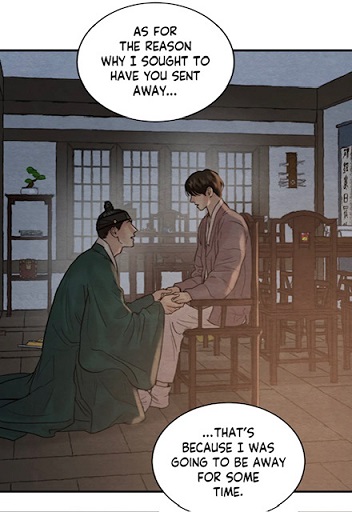 ( Chapter 110)
  (chapter 119)
  (chapter 47)
  (Chapter 77) For me, Kim must have looked down on the other domestics. I consider this scene as the best example what Kim should have done in the past.
  (Chapter 119)
  (Chapter 98) One door leads to the backyard and the other to the smaller courtyard. And this scene confirms my previous assumption
 (Chapter 87) Baek Na-Kyum is there to prove him wrong. He had other opportunities, like giving him a good meal.
  (Chapter 63) He should have sided with his master and even remained by his side. This signifies that this scene
  (chapter 7) the artist is not only cleansing the kitchen, but also cutting off ties with the scholar. The latter is no longer protected. The spirits will intervene through chance. As a conclusion, the hearth has a spiritual and healing power, for it is connected to „Heaven“. Yoon Seungho‘s paradise is to have a family.


 (chapter 87) Not only the painter and the 3 noonas were sharing the same bed, but also they were taking their meals together.
 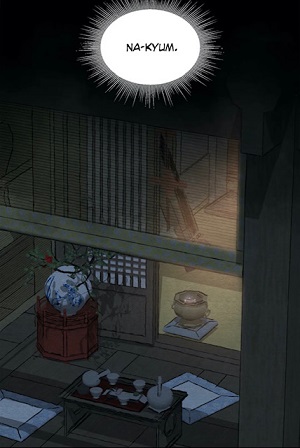 (chapter 87) They would even caress each other and laugh together. This scene oozes happiness. Consequently, it is no coincidence that during that night, they shared their honest thoughts to Baek Na-Kyum giving him good advices. But more importantly, the painter was there, when his noonas were struggling.
  (chapter 94) He cried in front of them. His tears symbolized his compassion and love for his noonas. He regarded them as his family. And it was the same for the artist. He had the noonas by his side, when he was in trouble or agony.
  (chapter 94)
 (chapter 107) However, at some point, it changed!
  (chapter 94) Jung In-Hun entered his life and consoled him. Thus I deduce that this image
  (chapter 68) represents a turning point in Baek Na-Kyum’s life. During that night, the scholar took away the young painter from Heena, hence he couldn’t help her. And now, observe the learned sir’s reaction. He didn’t allow the painter to cry. He shouldn’t share his pain.
  (chapter 70) In fact, he diverted Baek Na-Kyum’s attention from the incident to the moon. The learned sir was smiling the whole time.
  (chapter 70) He was acting, as if nothing had happened. The fact that he didn’t bear the tears from the painter exposes that the learned sir never considered him as a family. Therefore it is not surprising that he got abandoned, when the learned sir struggled:
  (chapter 19), he pushed away the painter.
  (chapter 19) He was mad, because Baek Na-Kyum was the cause for his sponsoring.
  (chapter 19) However, the family serves as pillar and protection. When the scholar’s pride got hurt, he rejected Baek Na-Kyum. He only approached the painter, when he needed him
  (chapter 10)
  (chapter 24)
 (chapter 35).
  (chapter 111) For me, in episode 10, he was definitely aware of the existence of a plot, thus he led the painter to the pavilion. Then in episode 24 and 35, he wanted the artist to spy on his benefactor. Finally, in episode 111, he knew that by taking away his former pupil, he would hurt Yoon Seungho, for he was aware of his affection for Baek Na-Kyum. Under this new light, it becomes comprehensible why Jung In-Hun didn’t bid farewell to the main lead in episode 44. Baek Na-Kyum’s presence was not necessary for the preparation for the civil service examination. And this brings me to the last scene between the learned sir and the painter.
  (chapter 118) He is now crying in front of him, as if he was considering him as a part of his family. He is trying to create the illusion that he shares his suffering, just like he shared his happiness during the parade.
  (chapter 117) It was, as if the former was starting his family. Baek Na-Kyum is now his “bride”. But naturally, everything is just an illusion. Why? It is because the Manhwaphiles never saw Jung In-Hun share his bed or room with the artist!
  (chapter 27)
 ) But more importantly, he is not sharing his true thoughts and emotions to the young man.
  (chapter 118) He never explained how his face got bruised! This shows that he approached Na-Kyum for one reason. He was in trouble and he needed him. But he acted, as if he was becoming responsible for him.
  (chapter 118)
  (chapter 118) He didn’t expect a rejection. Why? It is because now, he was treating the main lead as family member. Nonetheless, don‘t get me wrong. In Joseon, servants were considered as a part of the household and as such of the „family“. I don‘t believe that the teacher views Baek Na-Kyum as an equal. Yet, the latter is in reality a free man.
  (chapter 118) Thus out of fear, he made a false love confession which resembles a lot to obsession and possessiveness. His words display his worries and despair. Another important aspect is the absence of the personal pronoun “we” in their conversation. We only have “you” and “me”.
  (chapter 118)
  (chapter 40), the latter learned the following lesson: Jung In-Hun had never been his new family. That’s the reason why he was so wounded. Therefore it is no coincidence that his karma is to be abandoned the moment he needs Baek Na-Kyum the most. But why did he not consider the painter as a family member? It is because he came from the gibang. Moreover, he was blinded by his desire to succeed on his own, not realizing the true role of a family.
  (chapter 107) The sexual abuse is something they hid from Baek Na-Kyum! They could never share such a burden with the protagonist. But there is more to it. In fact, Byeonduck illustrated the slow deterioration of Na-Kyum’s s family in season 2, 3 and 4. First, the painter couldn’t talk to his noonas like in the past:
  (chapter 46) He could only express his sadness with his tears. Then when Heena reentered his life, she was seen next to his bed while hugging. by his side
  (chapter 66) This means that she would no longer share his cover. This is no coincidence that in the gibang, the noona could no longer enter her brother’s room.
  (chapter 96) Little by little, Heena got excluded from the painter’s life. She could no longer share her meals with him.
  (chapter 93) This explicates why in season 4, Baek Na-Kyum can not penetrate Heena’s room.
  (chapter 105) She is hiding more and more things from her brother: her “illness”, her involvement in the murder of nobles and her lies. On the other hand, the painter still considered her as a part of his family because of her intervention in episode 68/69:
 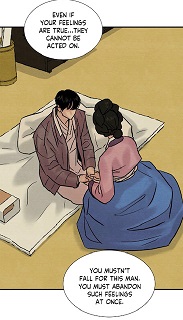 (chapter 68) Their argument was reflecting their trust, though here the kisaeng was questioning her brother’s maturity. Due to her concerns, Baek Na-Kyum felt that they were still a family. However, I sense a rupture, when they argued in the kisaeng house. The artist was no longer trusting Heena’s words:
 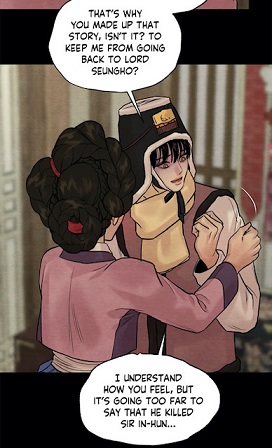 (chapter 97) Interesting is that from that moment on, Baek Na-Kyum and Heena never faced each other! She didn’t join his side during the parade. This means that their argument in the kisaeng house represents their last reunion. And what did Heena do in this scene? She cried
  (chapter 97), while the painter didn’t, though he looked disturbed.
  (chapter 97) He lost all his colors. However, such a scene could be perceived as a sign of indifference, especially for the kisaeng. And this observation made me realize why the kisaeng asked Yoon Seungho not to reveal his suspicions about Jung In-Hun’s involvement to her brother.
  (chapter 105) Here, she implied that Baek Na-Kyum would cry out of pain and shock. But she had seen that he had shared no tears, when he heard about his murder: And it happened again in the shrine.
 (chapter 99) Simultaneously, the request from Heena exposes that they are no longer sharing agony and as such struggles. Moreover, this made me realize why the artist left the mansion after the nightmare. It was out of fear and obligation. For me, he had sensed that Heena liked the learned sir and as she was still part of his family, he had to make sure that this was not true. Yet, even after witnessing the faked crime scene, he still trusted Yoon Seungho. Hence I am deducing that the absence of tears is the trigger for their separation which stands in opposition to their embrace in the mansion:
  (chapter 66)
  . (chapter 68) And what was her reaction, when she saw her brother in tears and yelling at his lover?:
 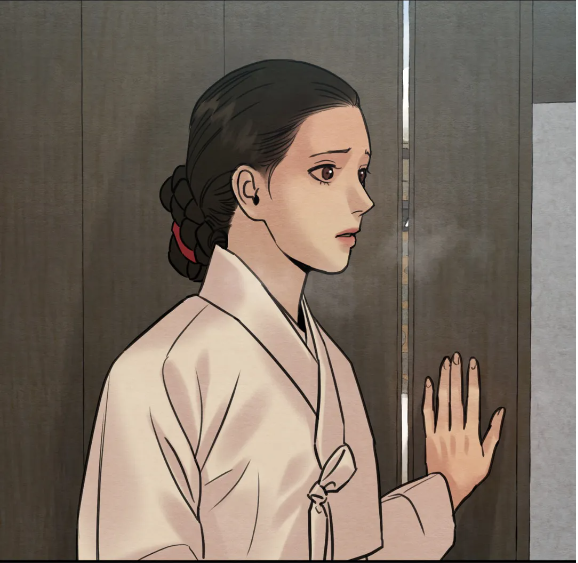 (chapter 105) She remained silent, passive and rather indifferent. This impression gets reinforced, when she is lying next to her colleagues. She is not sharing her thoughts and emotions, rather pensive contrary to these kisaengs:
  (chapter 105) She is even turning her back to them. This displays the dissolution of this family. The kisaeng is no longer sharing her fears, her tears and emotions to others. Therefore she can not sense “happiness or relief” like the others.
  (chapter 93), but the moment the lord joined his side, the honesty started vanishing. Notice that the painter couldn’t talk about his past (how he met Yoon Seungho and how he got abandoned by Jung In-Hun). It was reduced to “I was caught up with something”. He had so many secrets that he couldn’t share to his noonas. And it was the same for the kisaengs.
 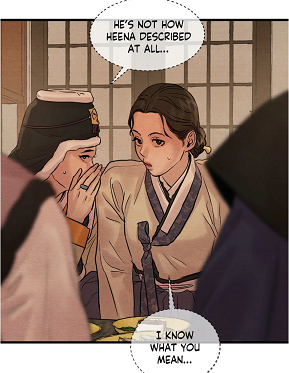 (chapter 93) They also had secrets, hence they were seen whispering. Baek Na-Kyum could confide less to Heena. Why? He sensed that the kisaengs might show no understanding. And note how the painter reacted, when he met his noonas in episode 105.
  (chapter 105) He lied to his noona, he didn’t voice his worries. He didn’t enjoy his time spent by the kisaengs’ side. He didn’t eat with them either. This is the sign that he was moving on, he was on the verge of starting his new family. In other words, this scene
  (chapter 105), the kisaeng’s words are a reference to loss of virginity. Yet the painter didn’t grasp the true meaning. Only in his dream and nightmare, he realized the significance of her words:
  (chapter 109) Hence I come to the conclusion that we are witnessing to the birth of Baek Na-Kyum’s new family: Yoon Seungho.
  (chapter 118) That’s the reason why the painter decided to run away with his lover.
  (chapter 118) However, in order to become a real family, the painter needs to call his husband like this:
  (chapter 72) Under this new light, it becomes comprehensible why the noonas were no longer entirely honest with Baek Na-Kyum in the gibang. They couldn’t share their thoughts and secrets to the artist, as they had played a role in the separation of the couple
  (chapter 99) and the nobles’ execution. Besides, they also had secrets which they had to hide from their donsaeng.
  (chapter 57) I believe that it is related to the protagonist’s sensibility and intelligence. My assumption is that Yoon Seungho is a
  (chapter 26) The latter was not allowed to cry! Therefore the artist heard the same reproach from the main lead.
  (chapter 26) The valet disliked the tears, because he refused to share the suffering. The reason is simple. If he did, this would have increased his guilt. Furthermore, Kim never shared the cover or his meals with Yoon Seungho in the past
  (chapter 108) So we could assume that he was starting to view the main lead as a family member. But no… for me, it is just an illusion. First, note that he never let the lord see his gaze while weeping. Besides, the noble’s heart was not moved either. They were not crying together, a sign that the two were drifting apart. Moreover, in the shed, the valet never shared the information about the fire at the shrine.
  (chapter 108) Moreover, like exposed above, family in the poem symbolizes trust, love, responsibility, comfort and protection, but the valet failed to fulfil his duties which he admitted in the shed. As a conclusion, the butler didn’t keep such a promise. Moreover, what did the butler do after the painter’s abduction?
  (chapter 64)
  (chapter 64) He ran away. He never saved the painter, just like he didn’t argue with his master in that moment. But he could have, since the latter had no sword by his side. Imagine that he had a heated discussion with Yoon Seungho the very next day, and in the courtyard, the protagonist had the sword in the hand.
  (chapter 68) A sign that he knew that the noble would never slay him! And in the past, the valet had not come to his rescue, shared his suffering or defended his honor. And now, you comprehend why I am more than ever convinced that the valet was never Yoon Seungho’s family: no tear, no joy or no secret shared! His expression “bird of misfortune” embodies the gap between the two characters.
  (chapter 109) The latter would even get the opportunity to eat sweets and sit in the patio
 (chapter 109), while the lord was relegated to the courtyard.
 (chapter 109) And the poem mirrors perfectly the birth of Yoon Seungho’s first family. Baek Na-Kyum is his very first family. Thus he could share his pain, his fears, his resent,
  (chapter 62) and his hope to be happy for one moment:
  (chapter 63) I selected the terrible scene in the shed for two reasons. It symbolizes the verse “how to become a family”. This explicates why in season 3, the artist was slowly using the personal pronoun “we”.
  (chapter 78) This means that the two protagonists were learning how to become a true family. And one of this important step was “crying together” which occurred after the sexual abuse in the shrine,
  (chapter 102) However, Yoon Seungho had to learn the importance of “secrecy”! He kept his crime from his loved one hidden, not understanding that a real family is to “endure all hardships” together. Consequently, I judge this night
  (chapter 110), their happiness
  (chapter 110), they sit together while eating
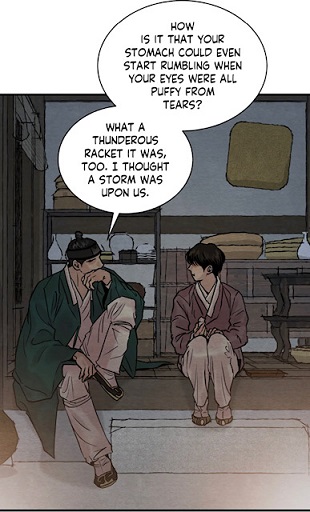 (chapter 110), they embrace each other, they share the same bed. And the lord makes the following promise: there won’t be any secret between them. He will share everything with his lover.
  (chapter 110) So when the brother gave the petition to the artist
 (chapter 117) Therefore, it is not surprising that during that same night, the couple slept under the same blanket while hugging each other.
 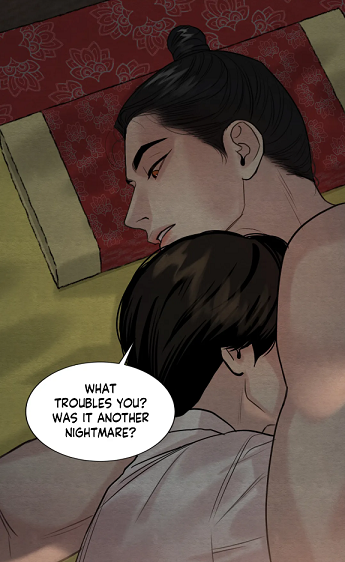 (chapter 117) The symbol for the new family! But a family is not made just of two members! Is Yoon Seungwon a part of Yoon Seungho’s family? Let’s not forget that he considered the artist as his brother’s wife.
  (chapter 116) What caught my attention is that Yoon Seungho was not followed by his lover, when he met his brother in the gibang.
  (chapter 118) And this reminded me of this scene:
  (chapter 37) He wished to send away the artist, but the host refused. Then if you pay attention to his behavior, you will notice that none of them were seen eating together!
  (chapter 118) Compare it to Black Heart’s behavior:
 (chapter 43) In fact, the two guests were drinking on their own! Yoon Seungwon had even started drinking before the protagonist’s arrival.
  (chapter 118) Moreover, exactly like the scholar, Yoon Seungwon is just employing the pronouns “you”, “I” and “father”. There is no WE at all.
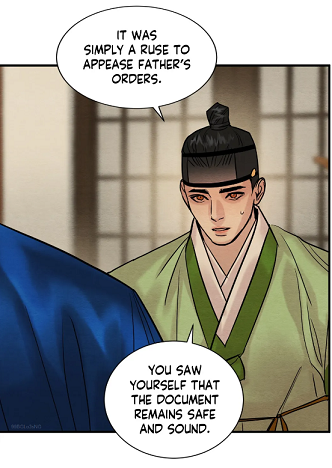 (chapter 118)
  (chapter 118), but it is only a name! In reality, he desires to use the main lead. He needs him more than ever! Let’s not forget that the patriarch could discover Yoon Seungwon’s betrayal at any moment. Finally, I would like to outline that family stands for effort and understanding, nevertheless the younger master never showed compassion or worries for his brother, who had just recovered from a stabbing. His speech was full of blame.
  (chapter 22), the physical therapist still views her as his family. This corresponds to the verse “no matter where you are”. This explains why he listened to her and started treating the champion differently. From my point of view, they became a family, because they slept under the same cover
 (chapter 5) and their happiness together, though this needs to be relativized.
  (chapter 05) She is happy, when she hears good news from her grandson.
  (chapter 07) When she feels lonely or miserable, she asks for his presence.
 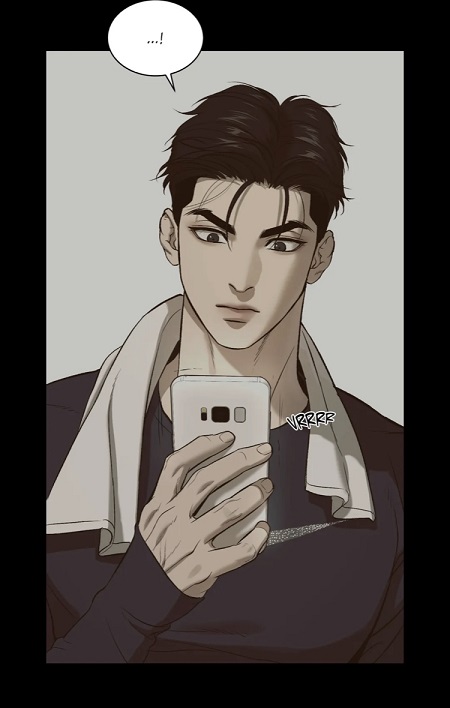 (chapter 21)
  (chapter 5) Nevertheless, there exist two negative aspects. First, I noticed that she didn’t question Kim Dan about his career, only when it was necessary.
  (chapter 07) She is not that involved in his current life.
  (chapter 05) Secondly, what caught my attention is that the halmoni is not letting her grandson weep. With her attitude, she implied that he had overreacted (“Now, now none of that”).
  (chapter 21) Moreover, the poem outlined the necessity of crying together (“be able to cry together”), yet the halmoni was not upset, when she found the little Dan in tears. She didn’t understand his abandonment issues. Thus I deduce that the shared agony was only in one way! If the grandmother was scared or suffering, her grandson should feel the same.
  (chapter 5) This explicates why Kim Dan was willing to sacrifice himself for his halmoni.
  (chapter 16) It is because he knew that her grandmother disliked tears. Besides, in a previous essay, I had already outlined that such an attitude was considered as abusive, for such a young child should have been shielded from harm. However, he was exposed to violence very early on. Under this new perspective, it becomes comprehensible why Kim Dan started having secrets from her. Finally, the family portrayed in the poem implied the notion of effort and work. But the moment the grandmother refused to share his agony, she stopped putting energy in her relationship with Kim Dan. This means that as time passed on, she became more and more passive and relied more and more on the main lead. Another interesting aspect is that Kim Dan came to enjoy K-dramas because of his grandmother.
  (chapter 30) This shows that Kim Dan’s preferences are all influenced by the halmoni. We could say that he didn’t truly develop his own identity. It was, as if he had become the second version of “grandma”. And now, you comprehend why he rejected sex:
  (chapter 20)
 (chapter 30) Because the grandmother didn’t allow her grandson to share his struggles (no tears), Kim Dan has been hiding many things from his grandmother
 (chapter 07): the beatings from Heo Manwook, his firing from the hospital, the sexual assault from the perverted hospital director and the moneylender, his deal with Joo Jaekyung and the fact that he moved to the penthouse. This means that little by little, the physical therapist is sharing less and less his happiness with her. I doubt that he told her about his trip to Busan, his first MMA fight as spectator
  (chapter 15) and his first sparring with Joo Jaekyung
  (chapter 26). But this is a sign that Kim Dan is maturing. Therefore it is no coincidence that after their first day off spent together, Kim Dan is already under the champion’s spell.
 (chapter 30) And at some point, the grandma will notice her little boy’s transformation and the growing distance. And Choi Heesung could be the trigger for a first quarrel
  (chapter 22)
  (chapter 26), they get support from each other
  (chapter 14)
  (chapter 23) or they argue
  (chapter 07). Moreover, they call the older members “hyung”
  (chapter 5)
  (chapter 23) which is another evidence that Team Black functions more like a family than like a company. What caught my attention is that the doctor is not addressed as hyung
  (chapter 30) but as Doc Dan or doc.
  (chapter 23), though the manager Park Namwook had introduced him as hyung.
  (chapter 22) It exposes that the physical therapist occupies a particular position at the gym. On the one hand, it could be interpreted that he has not been entirely adopted as a family member. On the other hand, the physical therapist didn’t exclude that he could have other clients.
  (chapter 25) This means that his “adoption” is not definitive and official. Nevertheless, I would like to outline that though Team Black’s structure resembles a lot to a family, we can not say that it is a true family. Why? It is because Joo Jaekyung is hiding many things from his hyungs and members. He is not sharing his problems to his coach (his insomnia, his jinx, his sexual orientation, his insecurities eg). Imagine that he preferred deceiving his admirer
  (chapter 15) than admitting that his shoulder had been plaguing him. And it is the same for Potato. He didn’t talk about the incident with the office room and the sofa.
  (chapter 25) According to me, Jeong Yosep knows about the true relationship between the physical therapist and the alpha black wolf. But he kept this information to himself as well. However, like pointed out before, family stands for communication and not secrecy! Moreover, so far, we only saw the fighters share their happiness. And what about their struggles or defeat? To conclude, Jinx is actually showing us the transformation of Team Black as company into a family. How they “become” a WE! Park Namwook does consider Team Black as his gym, but he has his own family. However, this is not the case for Jeong Yosep or Joo Jaekyung, who lives as a loner wolf! In my opinion, Team Black will turn into a real family, the moment Kim Dan loses his halmoni. Remember the quote from the poem: “If you can’t say you’re hurt when you feel hurt you’re not family“. Kim Dan won’t be able to hide his sadness and broken heart. In the beginning of the story, he lied to the coach and Kwak Junbeom about the reason for his injuries:
  (chapter 11), because he considered them as superior and colleagues. In other words, the fighters will share their pain with doc Dan helping him to overcome the loss. But this change can only happen, when the owner of Team Black has a change of heart himself as well. Remember how he pushed Oh Daehung and the other members away.
  (chapter 22) He didn’t want them to come to his house.
  (chapter 22) So far, he didn’t want people to cross the line, but thanks to the physical therapist, this will change. That’s how both protagonists will come to view more and more Team Black as a family. They will share their struggles and happy moments together. I have one evidence that Kim Dan is the key to turn Team Black into a real family. It is because Joo Jaekyung came to the gathering
 (chapter 9), though he had been avoiding such events in the past.
  (chapter 30) But he is there an employee. Thus I am suspecting that the talent agency is working differently from Team Black. If there is a scandal, I doubt that the company would side with the star in trouble or they would try to find ways to get rid of the issue, like finding a scapegoat in order to bury the truth. As a conclusion, I am expecting to see companies run differently so that the readers can perceive Team Black as a family company, although it is an incorporation.
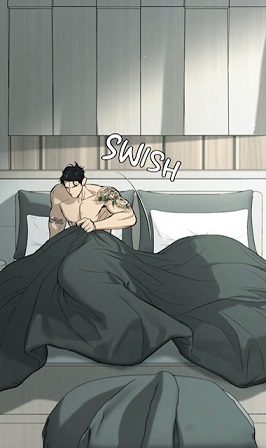 (chapter 4) This was a reference to the blanket in the poem, though here Kim Dan slept in a cocoon. This was a sign that he didn’t feel safe. However, as time passed on, I detected a change in Kim Dan’s sleeping position. He is lying on his back and even in the middle of the bed.
 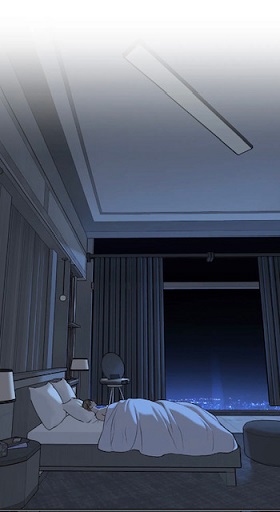 (chapter 29) It is because Joo Jaekyung always put him there! This exposes that the champion is still thinking that he represents a disturbance to the Sleeping beauty. One thing is sure: Joo Jaekyung will become the blanket taking over the grandmother’s past role:
  (chapter 1) This was the reaction from the champion:
  (chapter 1) He questioned the cause for the tears. He was naturally annoyed (“the hell”), but he didn’t make fun of the doctor. And now, pay attention to the memory Joo Jaekyung had from their first night. He remembered his tears which had moved him deeply:
 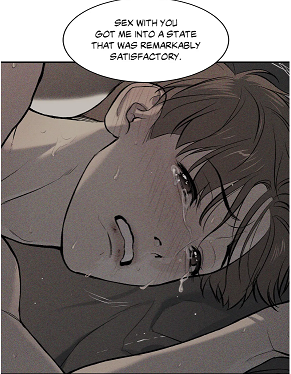 (chapter 6) This shows that the celebrity is not judging the physical therapist as weak due to his tears. In episode 28, he even showed concerns, when he heard the doctor crying.
  (chapter 28)
  (chapter 28) He questioned the doctor once again, why he was in tears. However, he didn’t ask the doctor to stop weeping or to wipe his tears. He wanted to understand him. This exposes the fighter’s tolerance and interest in Kim Dan. For me, it reveals that Joo Jaekyung is willing to share the pain or fears with Kim Dan. Therefore it is not surprising that Kim Dan is remembering this moment!
 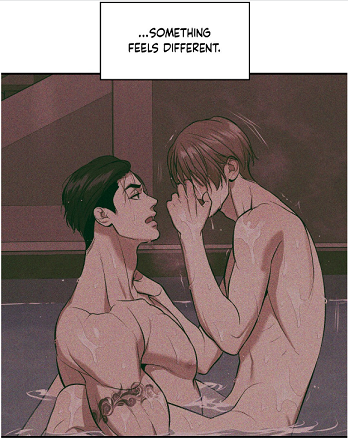 (chapter 30) He was allowed to express his emotions. Interesting is that this image is now connected to red, not to grey/black.
  (chapter 30) The switch of color indicates the doctor’s increasing feelings and sensuality for Joo Jaekyung. That’s the reason why I am expecting that one day, the two protagonists will cry together, something that the grandma hasn’t done until now.
  (chapter 13), it doesn’t signify that they are a family now. And it is the same for the penthouse.
 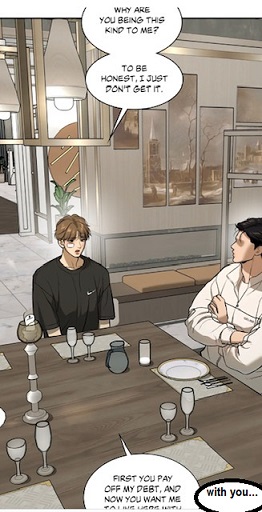 (chapter 18) They might share the same flat, but the penthouse is so huge that they can technically live apart. Joo Jaekyung and Kim Dan are slowly spending more and more time together, either because the champion feels like it
 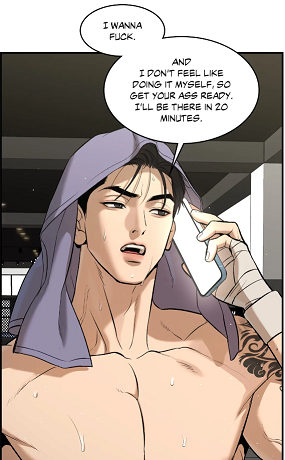 (chapter 19) or it is necessary
  . (chapter 27) During the day off, they shared their thoughts,, their emotions
  (chapter 27)
  (chapter 27), their happiness
  (chapter 28) and their fears
  (chapter 27)
  (chapter 29) Because Joo JAekyung confessed his fears and health issues to Kim Dan, it shows that he was trusting him. For me, this night represents another step how to become a true family. “If you can’t say you’re hurt when you feel hurt you’re not family.” This day and night were so magical that it affected the protagonists’ life forever. From that moment on, Kim Dan is feeling more attracted to the champion, hence he is peeping at him.
 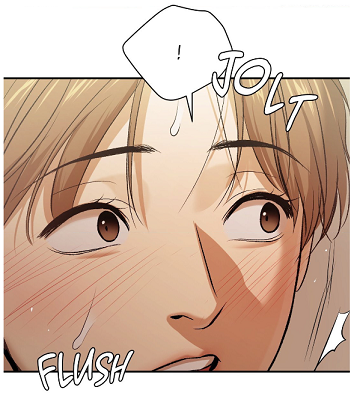 (chapter 30) And it is the same for the champion. Now, he is slowly regretting that they live in two different rooms and they have their own bathroom. Therefore he came to the doctor’s bathroom under the fake excuse that he had run out of toothpaste.
  (chapter 30) This shows that little by little, the champion is regretting his words to Kim Dan in the master’s room.
  (chapter 29) For me, he will be forced to recognize that work is not bringing him closer to Kim Dan, especially after Choi Heesung met the main lead.
  (chapter 30) For me, this scene is the bathroom represents another step how to become a true family.
  (chapter 30) However, like Mingwa voiced it, they have a long way to go, for Joo Jaekyung and Kim Dan are hiding their true thoughts and emotions from each other.
  (chapter 30) Kim Dan had to hide his blushing, while the champion had to lie for his appearance. Moreover, the fact that he tried to hide his underwear
 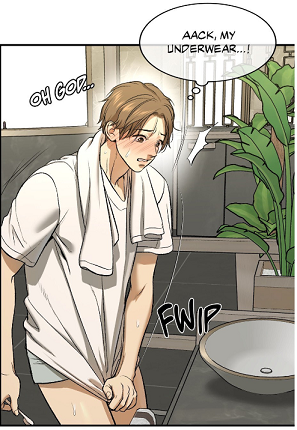 (chapter 30) indicates that their intimacy has not reached its peak. He doesn’t feel comfortable around the athlete to be seen in underwear. Moreover, the champion is also hiding his jealousy and possessiveness towards the main character.
  (chapter 30) But like I said, they need to open up their hearts and mind in order to become a true family. From my point of view, the halmoni could play a huge role in their union. How so? It is because she entrusted her grandson to Joo Jaekyung. The latter also conversed with her
 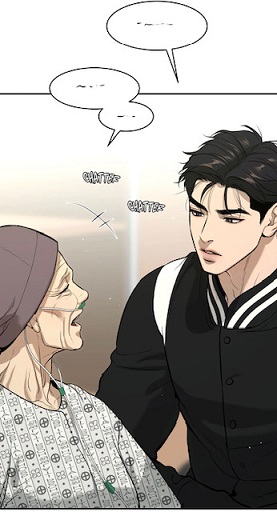 (chapter 21) and even paid her hospital bills. She even took his hand
  (chapter 22) and gave him a yoghurt.
 (chapter 21) So the moment the grandma vanishes, it could also wound the champion’s heart, especially when his sex partner is so heartbroken. It would be interesting if the champion came to voice his feelings about her. If you can’t say you’re hurt when you feel hurt you’re not family.“

 (chapter 117) The learned sir was tasked by the mysterious noble wearing a purple hanbok to retrieve the document. I would like to call my avid readers’ attention that we never saw the man introducing himself to the former teacher. He could have definitely impersonated someone, for this trick has often been used in this story. Anyway, in exchange for this favor, Jung In-Hun got promised a high position in the government.
  (chapter 115) Thus Jung In-Hun has only one option left. He needs to utilize a spy and traitor in order to get the document. Because Jung In-Hun has known the painter since his childhood, it is not surprising that he chose to approach Baek Na-Kyum. As you can imagine, episode 117 is a new version of episode 24
  (chapter 24), where the angry learned sir asked the naive artist to spy on their benefactor and episode 35
  (chapter 35) He hoped for the painter’s understanding. All this because he needed the low-born more than ever. He had not renounced on discovering Yoon Seungho’s weakness yet. However, in season 1, he failed to achieve his goal, because after the night spent with the main lead, Baek Na-Kyum refused to divulge any information about the meeting between the host and his brother Yoon Seungwon.
 (chapter 117) Hence we should consider the scholar’s kiss as the kiss of Judas. The latter, known as the Betrayal of Christ, is the act with which Judas identified Jesus to the multitude with swords and clubs who had come from the chief priests and elders of the people to arrest him. Thus I am expecting an arrest of the painter in the future. Since he is the love interest of Yoon Seungho, he has once again become the target of the next plot.
 (chapter 115) However, this is impossible. Time is the proof for the lord’s innocence. 7 days have already passed since Yoon Seungho’s violent outburst in front of the learned sir’s home. Don’t forget that it took Yoon Seungho 6 days to regain consciousness.
  (chapter 116) And the manhwaphiles saw that the painter spent the night with his lover after their conversation at the pavilion.
  (chapter 117) This means that Na-Kyum’s visit to the gibang could only take place after that night. That’s how I came to the conclusion that the meeting took place after 1 week (6 days+ 1 night). However, the swollen cheek will easily vanish within one week contrary to the stabbing.
  (chapter 117) Therefore after the release of episode 117, I had imagined that the wound from the learned sir was faked with the rouge from the noonas. Yet in episode 118, I detected the busted lip which can not be faked. The scratch is the evidence that the wound is real. Jung In-Hun knew too well that he couldn’t frame his previous sponsor for this. Hence he avoided to reply to the painter’s interrogation.
  (Chapter 117) This must have happened on his way to the gibang or in the gibang itself! So who would do this? Yoon Chang-Hyeon? The noble with the purple hanbok? I will answer to this question further below.
 (chapter 57) It is less pronounced, for Jung In-hun only met this mysterious man once contrary to the main lead. Even Baek Na-Kyum noticed the transformation, hence he got scared.
  (Chapter 118) He couldn’t recognize his former teacher. The learned sir had become like a violent beast. But why would he be so frantic and hopeless that he became violent in his gestures and words? It is because he had been threatened again. The wounded lip and cheek are the evidences that he has been coerced to convince the painter that the latter should return to his side.
  (chapter 117) However, observe that in their meeting, Jung In-Hun spoke about affection
  (Chapter 118) and this doesn’t belong to this man’s world (power, lineage, yin/yang, education). And it is the same for Yoon Chang-Hyeon. The latter embodies hatred and rejection for sodomy!
  (chapter 95) The artist had kissed the main lead for two reasons. He desired to convey the sincerity of his attachment and to prove that this was real. Yoon Seungho shouldn’t imagine that this was just an illusion, as he often questioned his own senses and sanity. In the gibang, the learned sir changed the chronology: first the smooching, then the confession. Why? It is because he thought that the painter still loved him, when Baek Na-Kyum showed concern for him.
  (Chapter 118) Due to his arrogance and vanity (the negative aspects of self-love), he jumped to the conclusion that nothing had changed. The painter seemed to be still naive.
  (chapter 118) Hence his surrogate father smirked. The irony is that there exist different kind of love: friendship, family… At the beginning, the artist was still viewing Jung In-Hun as a friend. Thus he got worried about his wounds. Yet observe that he had no intention to bid farewell to the former teacher.
  (chapter 118) Baek Na-Kyum, as the mirror of truth, is not only confronting the scholar with his bigotry and dishonesty, but also the mastermind behind this encounter. This explicates why the learned sir spoke about love:
  (chapter 118) This was the same for Yoon Seungho. The sexual abuser had only been obsessed with his own reflection and desires to the point that he never paid attention to his sex partner’s gaze… the loss of light in the gaze, the absence of tears … Besides, there was no agreement, everything was based on coercion and Kim knows that. That’s the reason why Jung In-Hun had tears in his eyes! It is because the main lead used to cry as well… asking for his pity and mercy. Since the scholar never cried before, I believe that the latter had asked to shed some tears in order to move the heart of the counterpart.
  (chapter 118) Baek Na-Kyum was never his young protégé, only his student. Why? It is he never protected him, he just consoled him!
  (Chapter 11) Back then, the painter had the burst lip and the glowing cheek too.
  (Chapter 11)
  (chapter 118) Not even “lord Song” or lord Haseon from episode 107 couldn’t pull such a trick.
  (Chapter 107) He had announced his visit and the kisaengs had to gather next to the gate. There, the mysterious man selected only one woman.
  (Chapter 107) However, in episode 118, the kisaeng talking to Baek Na-Kyum expressed that there were different parties. Each kisaeng was participating in a different festivity (“It’s not usually this busy”). She would have mentioned it, if there was a huge party in the gibang. But there is another clue for the king’s intervention: the pipe is no longer visible in the noonas’ room
  (Chapter 118) Finally, this painting, Hokjado, is actually mocking the monarch.
  (chapter 103) And what is the common denominator between these two scenes? Both protagonists rejected the help from the staff, especially from butler Kim.
  (chapter 107), whereas the main lead had decided to protect his family despite their betrayal and abandonment. Under this new light, it becomes comprehensible why Yoon Seungwon has no interest to expose the petition contrary to the past.
  (chapter 76)
  (chapter 117) He was only happy by the painter’s side.
  (chapter 25) On the other hand, I had made this connection, even before the release of episode 118. Why? It is because through deductions, I had already come to the conclusion that this was a stolen kiss.
  (chapter 24), then he hugged him
  (chapter 29). While the first embrace took place in a deserted area (close to the port), the second hug was witnessed by many people. It was in the open, moreover the so-called “hero” had jumped off the horse during the parade which could only catch the attention from the crowd.
  (chapter 34) His kiss is displaying his hypocrisy, which the artist could only feel. Hence he didn’t reciprocate the smooching. His lips remained immobile.
  (chapter 19) Therefore I come to the conclusion that this kiss is like the embrace from episode 29: fake! It is because the learned sir needs him! This statement stands in opposition to the protagonist’s love confession.
  (chapter 111) His gaze oozed not only arrogance, but also blindness. Imagine that he was smirking in front of the painter while looking at the wealthy aristocrat. It was, as though he thought that the artist wouldn’t notice his disdain and vanity. He imagined that the artist was still naive and ignorant like in season 1. This explains why the painter expressed his disapproval about the learned sir with a smile later:
  (chapter 111)
 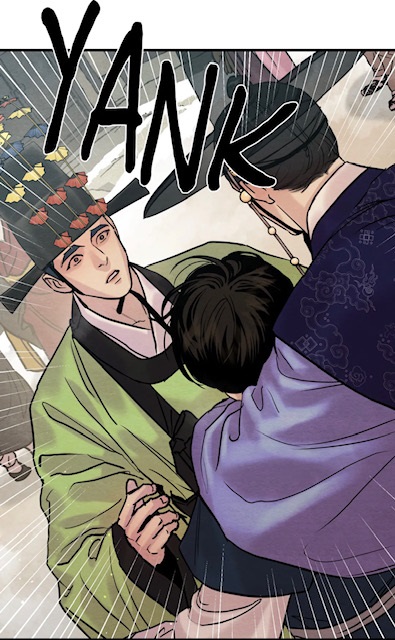 (chapter 111), for Baek Na-Kyum is always accompanied by his soul mate (chapter 40, 45, 74-75, 91-97, 104-105) In addition, people would have recognized him due to the previous parade and noticed his interaction with the artist. Nevertheless, the villain needed privacy, as he was inciting the main lead to commit a wrongdoing: betrayal towards Yoon Seungho. So their meeting could never be mere coincidence and happen in the open. Their reunion had to be planned properly and in secrecy. Thus it signifies that it had to happen behind the dark knight’s back. I would even add that the beloved couple needed to be separated! And now, you comprehend why their meeting had to take place in the gibang! In season 3 and 4, the kisaeng house is the place where the main leads got separated from each other, though the intervention from the noonas didn’t always work like expected.
  Here we witnessed his return. However, the kisaengs badmouthed Yoon Seungho
  (chapter 93) Their attempt was to create a riff between the couple.
 (chapter 94), when the painter thought that they would go to the pond.
  (chapter 94) Why didn’t the artist follow his partner right away?
  (chapter 97) But it can not be the officers, for they were carrying torches.
  (chapter 19) We have two possibilities left: the kisaeng Heena or the butler.
  (chapter 98) This confrontation didn’t occur in episode 93, for the kisaeng’s back was illuminated by the candle light, whereas the room was darker in episode 93.
  (chapter 93) The light was standing further away from her in this picture. Hence I deduce that the lord must have revisited the kisaeng during that night. Because she was not holding the candle light, I can only deduce that the person witnessing this second conversation was butler Kim! Besides, we have another allusion to him through the reflection of episode 19 and the first Wedding night. Then later, Heena tried to convince her brother to leave Yoon Seungho’s side
  (chapter 97) by blaming him for Jung In-Hun’s murder, but her intervention failed. In reality, the separation could only take place thanks to the intervention of Yoon Seungho’s staff. In episode 97, the servants were definitely manipulating the painter with this corpse
  (chapter 97), whereas in episode 98, the maids had to play their role as well: badmouthing their master
  (chapter 105: Heena was strong enough to follow her brother to the door, and this quite quickly, for she witnessed their argument), the other cast doubts in Baek Na-Kyum
  (chapter 105) Yoon Seungho had mentioned that he would return to the kisaeng house in order to fetch his lover.
  (chapter 118) However, I believe that Jung In-Hun was lying, for his visit could be leaked to the owner of the mansion. He has no idea that no one is siding with the main lead. But by saying this, he was covering up for the gibang, and as such Heena. She was definitely her source of information.
  (chapter 68) Why? It is because she has always loved the learned sir and projected her own thoughts and emotions onto the artist. In my eyes, this encounter is to prove the kisaeng wrong, to confront her with reality and her prejudices. What caught my attention is that each time, the painter couldn’t meet Heena, her absence was justified that she was serving a nobleman outside.
  (chapter 93)
  (chapter 118) Notice that the painter is already thinking that she was not expecting him. Yet, it is clear that he would come to the kisaeng house, for Yoon Seungho had been invited by his brother. The invitation had already been proceeded the day before:
 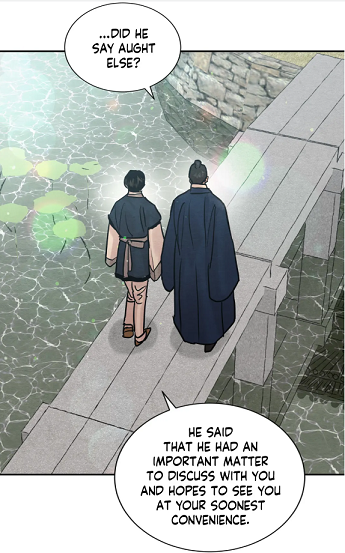 (chapter 117) So if something were to happen, Heena could feign ignorance and as such innocence. After their last argument, the noble has learnt that he shouldn’t keep his distance from the artist and he should confide to him, hence he talked about elopment at the pavilion.
  (chapter 25)
  (chapter 77) in a previous analysis. However, I will only focus on the comparison between episode 19 and 118, for both represent a first kiss!
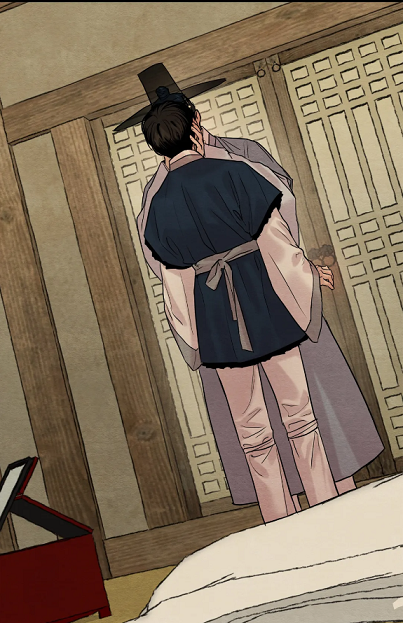 (chapter 118) And remember that in episode 19, the painter had caught the main lead by surprise, when he entered the room.
 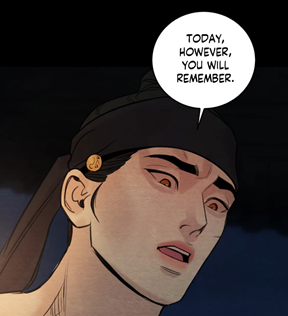 (chapter 25) Thus I am deducing that this scene
 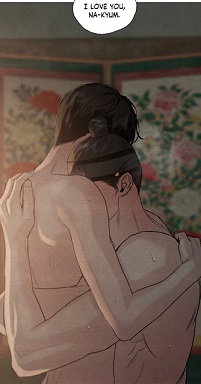 (chapter 96), this means that he has finally accepted his homosexuality. Consequently, the sexual abuser could have the impression that he just needs to remove the painter from the main lead’s side and that’s it. He can replace the artist… impersonation once again!
 (chapter 96) These notions are all reflected in the confrontation between Baek Na-Kyum and Jung In-Hun:
  (chapter 115) In my opinion, he will be framed for the incident in the shaman’s house.
  (chapter 115) Hence I have the impression that this stolen kiss will have huge repercussions not only for the learned sir, but also for Heena.
  (chapter 118) Observe that the painter wanted to ignore the words from the fake teacher. So he could have a change of heart and report the incident to the authorities. He doesn’t know that his lover killed Black Heart and his friends. The learned sir was admitting that his nightmare had truly happened.
  (chapter 83)
  (chapter 88) From my point of view, the schemers are projecting their own thoughts and emotions on Yoon Seungho. Moreover I am quite certain that they have already calculated the possibility of a rejection. The painter’s so-called wrongdoings from season 1 (chapter 11: the ruined painting, chapter 29: desertion) and season 2 (chapter 61: the desertion) were all perceived as rejections. If he is caught with Jung In-Hun alone, they anticipate that Yoon Seungho will react like his father. He won’t be able to discern the truth. Baek Na-Kyum is not faithful and is now tainted. Or even worse… Yoon Seungho might commit a crime. This thought seems to contradict my previous statement: Jung In-Hun is acting on the pedophile’s order. Nonetheless, my theory is that there exist two conspiracies:
 (chapter 115)
 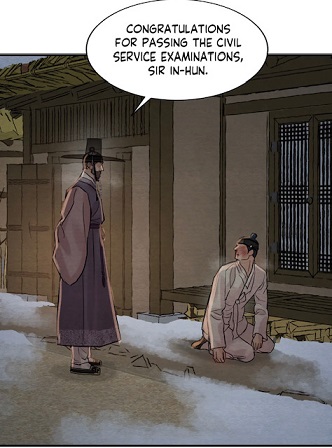 (chapter 115: flower pattern and no sleeve, the beard covers the jaw )
  (chapter 117: no pattern, the lips are covered by the moustasch, straight)
  (chapter 117) There are simply too many divergences to say that it is a mistake from the author. This would actually mean that she is quite sloppy. Furthermore, I decided to rely on my eyes and not a belief: there is only one lord Song. Thus you comprehend why I never called the man talking to Jung In-Hun lord Song. So if my theory is true, this would signify that these men represent the previous gang “dogs of Joseon”, the older version of this:
  (chapter 107) Far away from the protagonist, he had to rely on his helping hands and his advisors. He trusted their words. Finally, we have the vision from Lee Jihwa:
  (chapter 101) That’s the moment when the truth will come to light. Someone will get angry, because he got confronted with the painful reality: he was a man consumed by lust, he was selfish, cruel, abusive, ignorant, coward, and even naive. He was never destined to be the protagonist’s life companion.
  , I detected a strong connection between chapter 10 and 117. The common denominator was the pavilion. The learned sir brought the artist under the pretense for a walk in order to seek seclusion and privacy. While he faked his worries
  (chapter 10), he wanted the painter to stop working for Yoon Seungho. He desired him to leave the propriety, for he saw Baek Na-Kyum as a rival. Unlike the painter, the scholar had not been invited to join the party the night before. Hence he had to portray Yoon Seungho in such a bad light!
 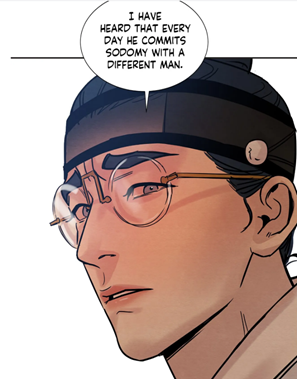 (chapter 10) Back then, the vain and stupid man thought that the main lead had truly liked his poem. Thus he imagined that he could get the attention from the protagonist, once he got rid of his competitor.
 (chapter 10) This is not surprising that the author employed a panel from that chapter.
  (chapter 118) Back then, the artist had not detected the manipulation. Hence he had protected his former teacher, when the latter got accused of ruining the painting. This confession from the scholar
 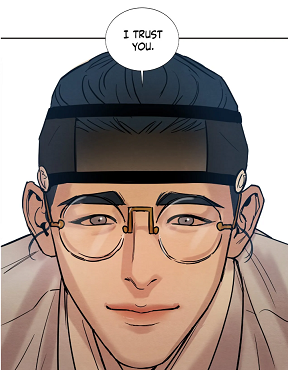 (chapter 10) stands in opposition to Yoon Seungho’s. The latter has no expectation from the artist.
  (chapter 117) The latter is the one deciding about the lord’s fate. But why did he go to the pavilion with the painter? For privacy and intimacy! They needed to discuss the matter about the brother and the petition, a dangerous matter.
 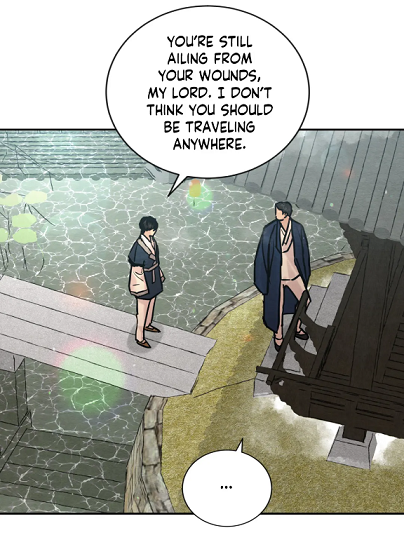 (chapter 117) Here, the painter was acting as the main lead’s right-hand and advisor. He is taking over the butler’s function. He was full of concern for his loved one asking him to postpone the reunion (chapter 117) And the moment the artist voiced his fears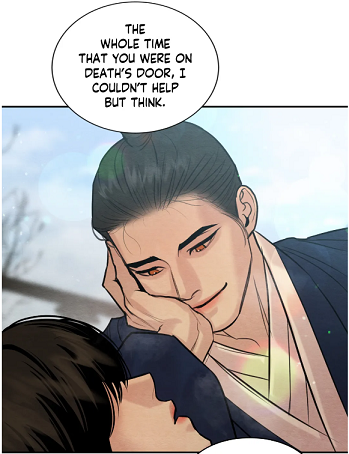
 (chapter 117), the noble suggested to leave everything behind.
  (chapter 117) And what would people see from far away? 2 people showing closeness and attachment, they wouldn’t expect a desertion, an abandonment!! And now you comprehend why Yoon Chang-Hyeon was sitting in the pavilion in town
 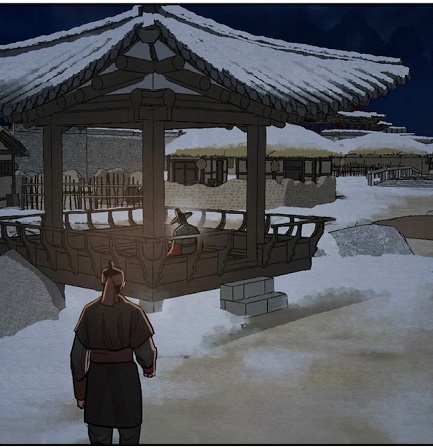 (chapter 116) It was, as if he was trying to get an alibi for his crime: he had planned to have his son killed, but it didn’t happen as expected. Thus he was forced to join his son.
  (chapter 116) This means that he was exposing his crime to people in town. Furthermore, he even confessed his hatred for his own son. He yelled this:
  (chapter 116) Yet, by stating this, he was admitting that he was violating social norms (Confucianism). That’s how I realized that the pavilion is not only the place where Yoon Seungho’s emancipation takes place, it is also the symbol for betrayal and abandonment.
 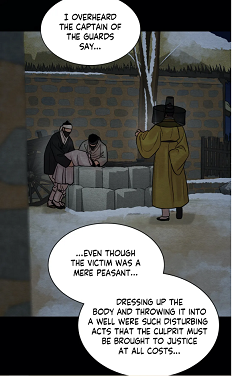 (chapter 101) Finally, a long time ago, I had developed the theory that the pavilion was the place where Yoon Seungho got abused.
  It is the same pavilion than Yoon Chang-Hyeon’s. This means that the couple will purify this place. At some point, the lord and his knight will come to admire the pond with the lotus flowers:
  (chapter 117) Byeonduck let us see a glimpse of their future.

 (chapter 83) Besides, don‘t forget that Black Heart got fooled himself and ended up dead. But like I outlined it before, their plan won‘t work because of the butterfly „Baek Na-Kyum“.
  (Chapter 115) The reality was too painful, hence he chose the illusion, thinking that with his new position, he would be able to do anything, especially if he is getting the support from lord Song. In my opinion, he is falling into a trap. He would realize it, if he pondered and didn‘t let his emotions cloud his judgement. Lord Song waited for his suffering and humiliation. By rejecting reality, the learned sir chose the nightmare, a very unpleasant and frightening experience.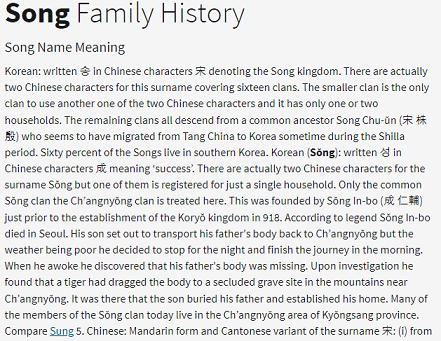


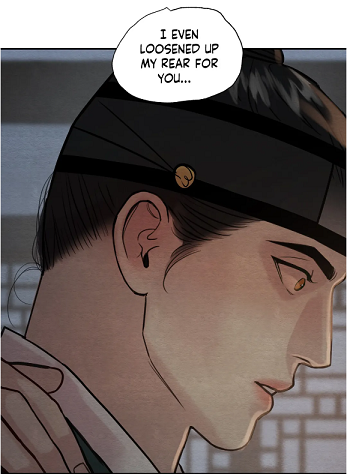 (chapter 109) He discovers that Baek Na-Kyum has already prepared himself, as he is longing for him.
  (chapter 109) He never expected such a reaction. The reason why the evolution of Painter Of The Night is flowing at a snail’s pace is that season 4 is now focusing more on the past. First, Byeonduck needs to divulge the lord’s suffering and its causes. And this can only happen, if memories are brought up. Hence in episode 109, the painter’s memories stood in the center. Why? It is because he is trying to understand why his loved one is now avoiding him. Thus he is remembering what happened just before. The readers are actually put in the same situation than the artist. On the one hand, the focus on recollection is a method to unveil how the young master was turned into a “sodomite and pariah”, for the painter is going through the same experience than his partner. In episode 109, he is isolated from his “lover” and as such from his family, for he has now maids by his side. The latter are supposed to be his new “family”. On the other hand it helps the manhwaphiles to anticipate the future main events,. as the progression is in slow motion. This means, the Webtoonist left all the elements in the previous seasons in order to decode the past, the present and the future. That way, the manhwalovers are capable to unveil the mystery. Besides, the author has to answer all the questions the beholders had while reading the previous seasons, like this one:
  (chapter 27) What book was the scholar looking for? Up to now, we have no clue, though I had developed the following theory: Jung In-Hun was a Christian and had a bible.
  (chapter 109) How did this happen? One might reply that the book fell from the shelf, when the painter kissed his lover.
  (chapter 109) This interpretation can be easily refuted, for the noble stood next to the shelf and not in front of it. Besides, the counter stands on the noble’s left, while the ledger was on his right. However, one detail caught my notice, the beholder can not see Yoon Seungho’s hands!! That’s how I realized that the book came from the protagonist! He had carried it hidden in his right sleeve. This explicates why the book stands on the right side.
 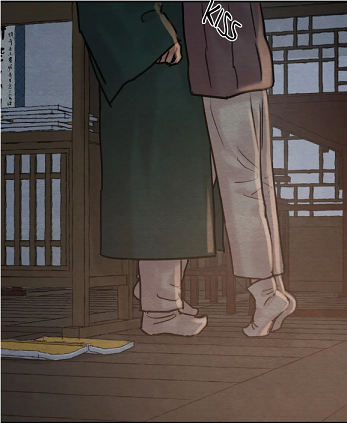 (chapter 109) Besides, contrary to the previous panel, now the lord’s hand is visible! This is no coincidence. But if he was hiding the copy from Baek Na-Kyum, I deduce that it is related to the painter. But there is another person associated to manuscripts in this story, Jung In-Hun!! But what have the low-born and the scholar in common then? The erotic publications!
  (chapter 94) However, Yoon Seungho is suspecting that the learned sir was behind the trick in the shaman’s house due to the glasses Min had in his hand before dying.
  However, there exist two reasons why I came to this deduction. I detected similarities with the first encounter between Yoon Seungho and his nemesis in the scholar’s home and the painter’s kisses.
  (chapter 6) Both were standing in front of the cupboard, while the learned sir suddenly took away the copy and closed it to put it back on the cupboard. This made the protagonist smirk. Due to the characters’ reaction,
  (chapter 6), I had assumed that the protagonist was making fun of Jung In-Hun. He had played a prank on the host, especially after asking about his occupation. I have always wondered about the content of the volume. Therefore I had developed the idea that this could be the bible. However, it was clear that the book was not for children which is visible due to the writing.
  (chapter 6) In fact, the learned sir should have the manual Thousand Character Classic (Chinese: 千字文; pinyin: Qiānzì Wén), also known as the Thousand Character Text.
 (chapter 6) This means that the book represents the evidence of learned sir’s betrayal and abandonment. He is responsible for his illiteracy. To conclude, this scene contains the following elements: a prank, a lie, a confession which was triggered by a book that Yoon Seungho had picked up by chance. But wait… it could be the book from the scholar’s home!
  (chapter 06) But this image can be used to refute this theory. How so? It is because this book has a title, hence there is a white rectangle!! However, take a closer look at the copy on the floor.
  (chapter 50) Finally, I would like the readers to keep in mind that they could only see the content of the books
  (chapter 6) He proposed him to sit and have a cup of tea to divert his attention from the books on the cupboard. Besides, I would like to outline the huge contrast between these two scenes. The scholar needed the assistance of the prestigious family Yoon, while the protagonist replied this to his loved one:
  (chapter 109) Needed versus not necessary!
  (chapter 6) He was here very vague (“bizarre and vulgar”), he spoke of a scolding, but never of rejection and abandonment!! This is important, because Yoon Seungho also experienced something similar in the shed:
  (chapter 77) Back then, the butler’s words must have wounded him terribly, he must have felt dirty either. Under this new perspective, it becomes comprehensible why I came to this conclusion that the book is related to the learned sir and to the erotic publication. But this doesn’t end here. In my eyes, episode 109 clearly outlined the importance of the library in the protagonists’ life. This is the place where both main leads got betrayed and abandoned.
  (chapter 40) When the scholar wounded the artist with his words, he implied that the artist was responsible for his lack of education. With the idiom “I thought, you could be educated”, he gave the impression that he had put some effort, but due to the artist’s disposition, he had failed. We had another scene where the learned sir was blaming Baek Na-Kyum.
  (chapter 70) He would fall asleep instead of studying. And who knows about the learned sir’s hypocrisy? Yoon Seungho!! That’s the reason why the goddess Byeonduck let them meet in the library. It is to heal their wounds. In this room, Yoon Seungho’s suffering started and later, the painter got betrayed by his former teacher, someone whom he viewed as his “family and mentor”.
  When Yoon Seungho got kissed by the painter
  (chapter 109), he got surprised, and he had the same gaze and facial expression than the one during the First wedding night
  (chapter 42), though here the artist kissed his companion twice!
  (chapter 49) And what had these scenes in common? Paintings and the artist’s confession. And now, you comprehend how I made the connection between the book and painting.
  (chapter 19) This scene could only break the artist’s heart, because he was reminded of the learned sir’s reaction: his rejection. The latter got angry and jealous that the low-born would be treated as someone special. Furthermore, Jung In-Hun had only got the noble’s sponsorship thanks to Baek Na-Kyum and not thanks to his own talent! In verity, the learned sir had been the tool to submit Baek Na-Kyum. Shortly after the exposition, the protagonist went to the study. There he got confused for Jung In-Hun, hence he received a wonderful confession
  (chapter 19) before getting kissed and embraced!
  (chapter 42) Yet, the artist was unable to explain the situation, for he had internalized Jung In-Hun’s criticism.
  (chapter 42) So we could say that the yangban tried to get a confession from the painter, but he failed. Hence they had just sex. The artist’s heartbreak was the reason why he never got to confess the truth! And what had happened in the study after the painter kissed the main lead? The lord saw the inauguration illustration and got jealous of Jung In-Hun
  (chapter 48), and the painting had exposed the main lead’s uneasiness and pain. The drawing was not refined, barely finished.
  (chapter 47) The behavior from the painter and the new painting had not only wounded the main lead, but also pushed the lord to discover why the artist was behaving this way. After the rough sex session, the artist had made a confession: he was dropping the rules he had been raised.
  (chapter 49) He was admitting his sexual orientation and his own pleasure, but he still kept his distance from Yoon Seungho. Why? It is because he was reminded of the learned sir’s fake embrace and betrayal.
  (chapter 49)
  (chapter 94) which incited the artist to recall his childhood. That’s how he came to unveil his past and confess his love to the noble!
 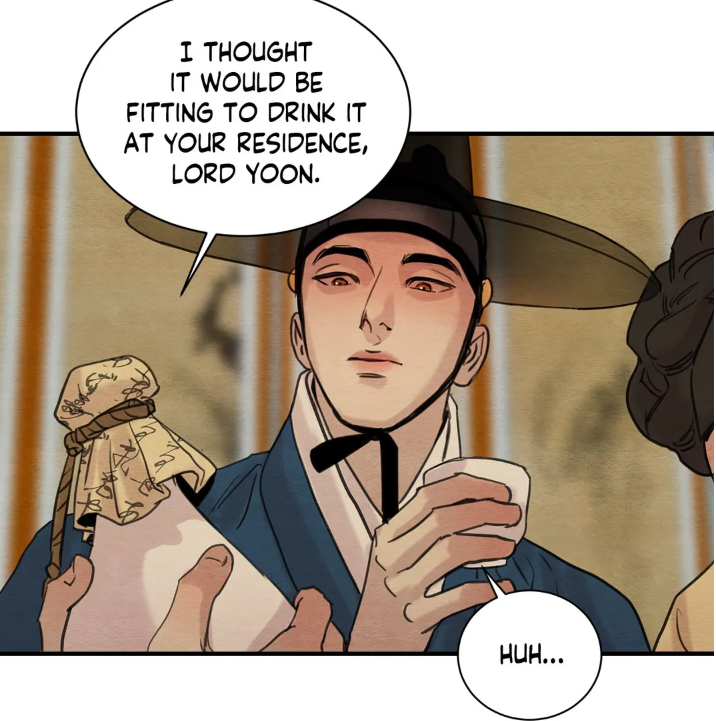 (chapter 19), the parties after the separation
  (chapter 51), his visit in the gibang and his tricks
  (chapter 96). In episode 109, the painter confused Yoon Seungho’s shadow with Black Heart’s. In his nightmare, he was brought back to the shaman’s house and the lord’s smile was similar to Min’s.
 (chapter 109)
  (chapter 99) Besides, let’s not forget that during that terrible night, Black Heart never touched the artist himself, as if he didn’t want to touch a trinket sullied by another man”. On Twitter, the author revealed that Min would help Yoon Seungho. Through this comparison, the beholder can confirm this. Thanks to Black Heart, the couple got closer in the end.
 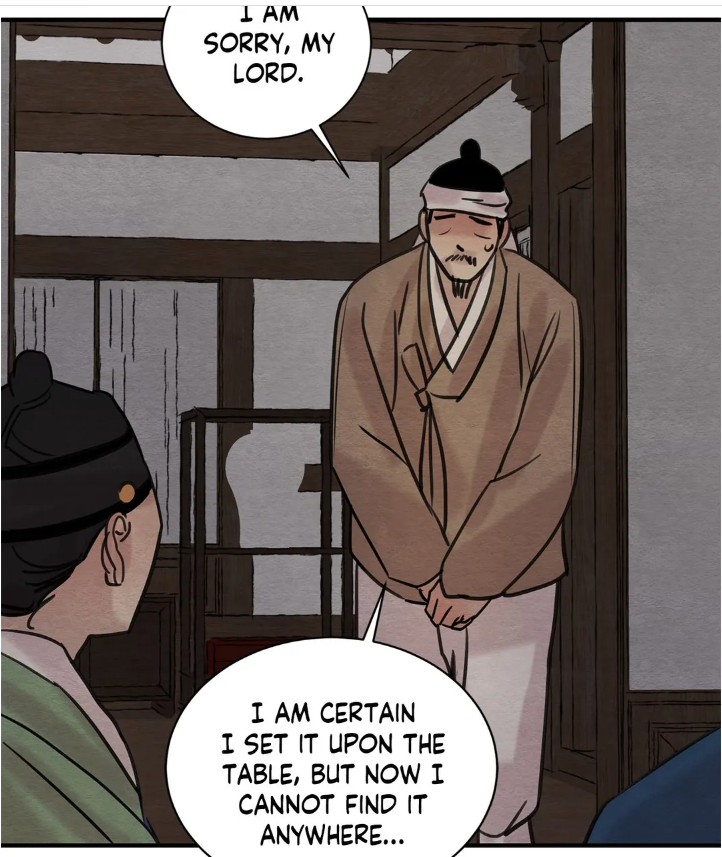 (chapter 19), the spying on the painter – though here it appears like a good thing –
  (chapter 41), the stones in the rice
  (chapter 109). She was acting, as if Baek Na-Kyum was not present, but in reality she knew that he could listen to her. How do I know this? The evidence are the sweets on the windowsill.
  (chapter 108) Why is the room dark? Where are the maids during that night, as they are supposed to sleep next to the painter?
  (chapter 109) The absence of the light is truly noticeable, an indicator that they are not in the bedchamber. Moreover, I had detected that the brown bed cover symbolizes the meddling of Kim. [For more read the essay
  (chapter 20) and it was during the first Wedding Night. And oil comes from the kitchen, the lord had fetched it from that room!! Naturally, there is an exception, and it is the kiss in the gibang. Yet, here the kisaengs had just replaced the maids. In other words, they had played a role in the confession. And this explains why the noona’s words are superposed with the maids.
  (chapter 109) That’s the reason why I am convinced that the book is strongly connected to the learned sir. In my eyes, it can only be the erotic publication of sodomy!! Why? It is because it represents the painter’s biggest wound. It explains his low self-esteem. Consequently, I am expecting the appearance of this panel:
  (tweet) The teacher told him “It’s dirty”, and wounded him the most with his gaze full of hatred, the symbol of rejection! Note that in episode 109, the painter always focused on the mouth and not the gaze,
  (chapter 109)
  (chapter 109)
  (chapter 25) Moreover, during that night, we have the same elements: a painting, a confession, sex, a book that the scholar was looking for. From my point of view, in chapter 34, Baek Na-Kyum only recalled the beating from Jung In-Hun.
  (chapter 34) But like I wrote above, this place is also where Yoon Seungho got betrayed and in my opinion, the schemers are planning to use this place to ruin the protagonist!!
 (chapter 106)
  (chapter 106) And if Yoon Seungho gets caught having sex with the painter and he has an erotic publication of sodomy, he can be framed for the murder of lord Shin and the other nobles. He will be guilty by association. Thus I deduce that the schemers needed the father to report him to the authorities.
  (Chapter 105) As you can see, the staff had encouraged the lord to keep his distance from his companion on purpose, to create a misunderstanding… they used the painter’s anxieties. Why? That way, the artist would be more inclined to betray his lover, if the latter was in difficulty. He could put the blame on him. In my opinion, the book was planted there on purpose. Remember how the artist denied that he was the author of the erotic publications.
  (Chapter 1) Besides, there is no doubt that the father refuses to take any responsibility in his son’s suffering. And now, you comprehend why this copy was put on the lord’s desk. He was supposed to be the owner of the erotic book and even the author! I am suspecting that he was accused of the „same crime“ in the past. Then this observation raises the following question. Which erotic publication is it? The original
  (chapter 1) This would stand in opposition to the scholar’s rejection (dirty), as the artist was just the helping hand. Besides, there is no ambiguity that Yoon Seungho blames himself due to the erotic book. If he had not brought the painter to his mansion, none of this would have happened. But the painter’s confession would make him realize that his misery started long before he met Yoon Seungho. And how did the puppetmaster come up with such an idea? From my point of view, this plan was inspired by the learned sir.
  I am still waiting for this picture. Yoon Seungwon had definitely tattled on his brother out of jealousy in the past. Don’t forget this flashbulb.
  (chapter 84) Finally, the childhood paintings could be used as an evidence. But what about the book in the library? Both could decide to burn it…
 the burned letter
 the shrine
 (chapter 109) Note that there is no rejection from the lord, just surprise and shock. Besides, in the kisaeng house, the artist’s confession had led the main lead to confess as well.
  (tweet), the latter can only come to the conclusion that the scholar would have no problem to hurt Baek Na-Kyum and even get revenge on the artist, for he received the favors from the protagonist. Yoon Seungho would no longer feel obliged to respect Heena’s wish, for her words wouldn’t reflect reality.
  (chapter 27) The goddess Byeonduck is on their side. But the problem is that the readers have the impression that both are followed by misfortune due to their misery. The reality is that they are both victims of manipulations and tricks. That’s their tragedy. But by repeating that the two figures are “birds of misfortune”, the accomplices are trying to deny their own involvement and as such responsibility. The maids are the perfect example. They blame Baek Na-Kyum for his own illness. He eats like a bird and he would hide his illness.
  (chapter 108) To sum up, he was responsible for his own suffering, for he was in denial and the maids could do nothing to help. But the lord can see the truth, when he touches his lover’s butt.
 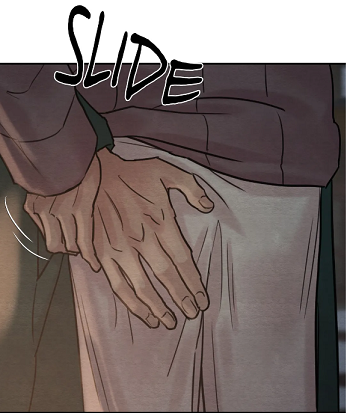 (chapter 109) He lost weight in such a short time. And their presence by Baek Na-Kyum’s side was supposed to help him. They were responsible for his well-being, but the women never realized it.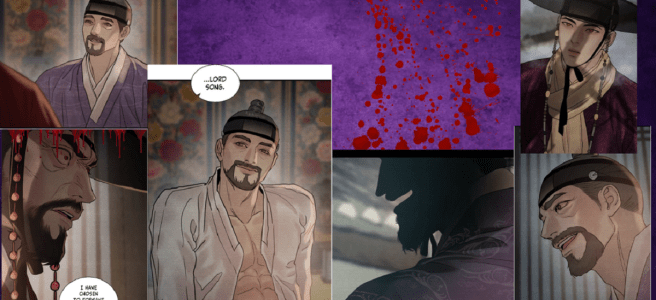
 (chapter 106) How could he abandon his lover like that? For some readers, he acted like a fool. Nevertheless, his reaction was normal, because the man with the purple hanbok represents the cause for Yoon Seungho’s martyrdom. This means that the ghost with the purple hanbok symbolizes danger for the protagonist. And if he gets targeted, his lover will suffer too. Striking is that during the same day and night, there is another person wearing a purple hanbok: Yoon Seungho!
  (chapter 107) Therefore it is no coincidence that in chapter 107, he was portrayed as a source of danger for the elder master Yoon and the mysterious “lord Song”.
  (chapter 10) Under this new approach, it becomes comprehensible why the artist was wearing a purple hanbok after the bloodbath.
  (chapter 107) They had the impression that he was abandoning the artist one more time. And that’s how the painter felt the situation either! That’s the reason why Baek Na-Kyum was upset.
  (chapter 107) It was, as if the main lead was acting like the patriarch Yoon. This perception got reinforced, because the lord had a poker face and didn’t talk to his lover.
  (chapter 107) Yoon Seungho didn’t side with the old bearded man in front of the painter. He thanked the man and sent away him with respect.
  (chapter 107) So he gave the impression that he was listening to the painter. However, the reality was that at the end, he still listened to the doctor thinking that it was for the painter’s best interest. Since Baek Na-Kyum was traumatized from the sexual assault, the main lead thought that he was hiding his illness or he was in denial. What caught my attention is that Yoon Seungho followed the doctor leaving the artist in the bedchamber alone. On the one hand, this could be perceived as a prison, yet I judge his gesture as the opposite. It is to protect Baek Na-Kyum! In Yoon Seungho’s mind, behind the closed door, his lover won’t see or hear what is happening in the courtyard. He will be protected from cruel reality.
  (chapter 107) He showed no real empathy for Baek Na-Kyum. It was, as if he was showing Schadenfreude. But this doesn’t end here. Kim brought a different doctor. It is not the same physician who assisted Baek Na-Kyum a month ago!!
  (chapter 107) First, the clothes diverge. The belt is blue, his sleeves are covered with some white protections.
  (chapter 107)
  (chapter 103) Finally, the white hanbok is much longer, and his pants are blue, while the other had white trousers. In my essay
  (chapter 107) How could he say that his health had deteriorated since a month ago? This is how the artist looked like a month ago:
  (chapter 103)
  (chapter 103) He was under the influence of the aphrodisiac, and he could have died of an overdose.
  (chapter 103) His face and his body were covered with bruises. How could the doctor say that his condition had worsened? This means that he had not seen the patient a month ago. To sum up, the doctor was impersonating his fellow. Note that he claimed to have prescribed the drug himself.
  (chapter 106) However, this image displays the betrayal from the physician, for I believe that this represents his view The latter had seen the artist in the restroom, but he had not intervened!! Besides, just because the artist had disgorged once, this doesn’t signify that he had done it all the time for one month. This is how the artist looked like, while he was walking through the street:
  (chapter 104) He looked healthy and happy. The reason for his nervousness was the lord’s actions during that day. Moreover, the painter’s hand had been scratched… yet you see no bandage around his hand.
 (Chapter 107) As you can see, the doctor was exaggerating, as he was generalizing the regurgitation!
 (chapter 107) Yoon Seungho was slowly realizing that his butler has not been telling the truth. He was gritting his teeth exposing his discomfort! This gesture indicates that someone has to endure something unpleasant, has to control himself and persevere. However, he was telling the opposite to his master: he had nothing to worry!! He should do nothing and simply lie low. The authorities had no suspicion about him. That’s the reason why the main lead desired to talk to the valet
 (chapter 107), and he got angry, for his servant was talking back and not answering him properly.
  (chapter 107) It looks like valet Kim and the physician got away with their tricks, for neither the doctor nor the the butler got admonished in the bedchamber. But what caught my attention is that after hearing the words from his lover, he replied that way:
  (chapter 107) This expression (“I see”) is important, because it could be the indication that the noble could discern the truth with his mind’s eye, like this
  (chapter 107) or the opposite, though I am still optimistic. We will see in the next chapter.
  (chapter 106), but we shouldn’t overlook that later the painter had yelled in order to voice his opinion which had caught his companion by surprise.
  (chapter 57) The father was convinced that his son had been ill for a long time. And from the mysterious “lord Song”, the manhwalovers discovered that the main lead was fed with an aphrodisiac:
  (chapter 57) Therefore the doctor’s statement in episode 57 appears in a different light: he knew what he was prescribing! He knew what Yoon Chang-Hyeon desired thanks to the idiom “the wayward yang energies”. It was to provoke an erection. I would like to expose that the physician deceived the painter,
  (chapter 57) for at the end, the physician admitted that he had given the “solution” to the father. The father had received the medicine!! [For more read the essay “
 (chapter 106) He was supposed to get a drink from the physician. So the lord could remember the artist’s words and perceive the doctor as a traitor and liar. He could jump to the conclusion that the man had given his lover a drug. Under this new light, it dawned on me that the artist could have been telling the truth to his lover there:
  (chapter 106) That way, the “doctor” would not be suspected of a crime. Besides, according to me, the couple was actually sitting in the courtyard where the medicine store was!!
  (chapter 33)
  (chapter 65) Furthermore, in season 1, the artist had been forced to drink an aphrodisiac. So far, the main lead has never threatened or suspected a doctor. As you can see, there is a strong connection between the doctor and death! To sum up, we are witnessing the start of the storm… and when the painter was recovering, this represented the calm before the storm!!
  (chapter 107) It is related to the rumors he heard in the street.
  (chapter 106) The woman announced that the sacred tree had burned to the ground!! That’s the reason why it was gone… However, her words were just lies, for the tree is still standing there.
  (chapter 107) But note that she connected the incident to misfortune! In other words, she was denying the intervention of humans!! However, the lord had visited the place of his crime before.
  (chapter 104) This is what he had been told: the intervention of ghosts or spirits!! On the other hand, the unknown speaker had never mentioned the tree! Only the house had burned down. Nonetheless, even this statement was a lie, for the house was still standing too.
 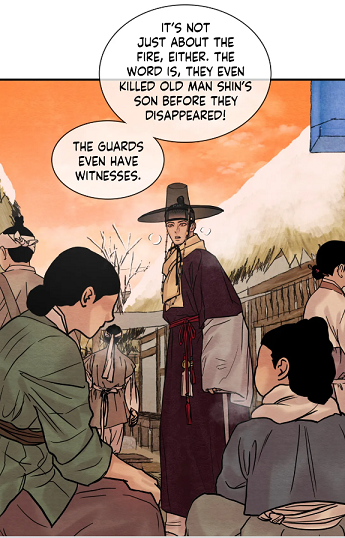 (chapter 106) Since the schemers are mixing a lie with the truth, the lord heard that lord Shin had been killed during that night! However, when the lord had assassinated Black Heart and his friends, the young noble had never met lord Shin! Hence the gossips in town made the lord recognize that something huge is about to happen: a manhunt, and he could get into trouble. Besides, the grapevines are revealing the existence of witnesses and the main lead is aware that the noona is an important « witness ». But the problem is that by mixing each time a lie with a fact, the schemers are not realizing that the truth is coming to the surface, as minus and minus make plus.
  (chapter 50) Here, the butler had tattled on the painter so that the noble would distance himself from his sex partner. And in episode 104, we have a similar situation: through suggestions, the main lead was encouraged to send back the painter to the kisaeng house. Secondly, why would the lord think of the butler, when he saw the sacred tree?
  (chapter 88) During that night, he discovered warmth, loyalty and tenderness! In the darkness, the lord could detect the presence of the light: the painter! During that night, they vowed fidelity to each other. And in the garden next to the shrine, Yoon Seungho made the opposite experience: it was dawning on him that people from his own family, Kim and Yoon Chang-Hyeon,
 (chapter 88) are lying to him and even betraying him, especially if his life is threatened. Let’s not forget that this time, the lord did commit a crime and he is aware of this. In the bedchamber, the lord had criticized his own father, nonetheless he still thought that his father had just made a bad decision.
 (Chapter 82) Preserving the continuity of the lineage and ensuring that the Yoons remain powerful and wealthy. However, in front of the tree, the lord is slowly recognizing that his father is about to ruin him for his own sake.
  (chapter 107), and abandon his own son. This
  (chapter 63) As the manhwalovers can detect, the main lead was always able not to get swallowed by the darkness, thanks to the artist, he could still see the light. However, his father is making the opposite decision, unaware that he is “doomed” to fail! Karma is already waiting for him. And because the patriarch is now living in the darkness, he can not recognize the manipulations, as he is forced to use others to guide him.
  (chapter 107) the branch on the ground is the evidence that someone set fire to the shaman’s shrine and the tree! Secondly, the black guard deceived the patriarch:
  (chapter 107) Lord Shin was murdered afterwards and not before Black Heart and his friend!! The word “later” is relevant, for it implies that the young yangban was killed close to the place where the nobles Min and his friends were sentenced. But his body is lying elsewhere!
 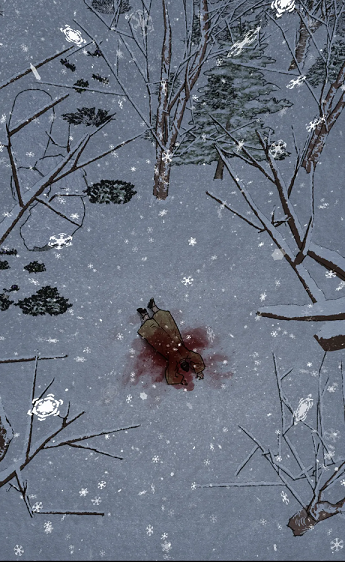 (chapter 103) This signifies that Yoon Chang-Hyeon is innocent! He never murdered Lord Shin in the woods, for he relied on the assistance of the helping hands. He never visited himself the scene of the crime.
 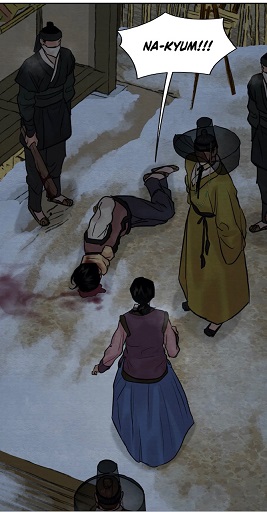 These two men are different, for their mask is white and not black. Besides, their clothes are black and not brown. Finally, the belt diverges as well: a huge purple strip with a different color in the middle, while the other guard is only wearing a simple ribbon. Thus I am inclined to think that the black guard is not only manipulating Yoon Chang-Hyeon, but he is also in truth working for someone else. Moreover, why would the man cover his face in the room, if he is truly working for the patriarch?
 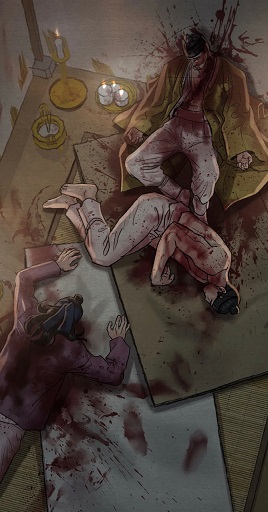 (chapter 102) From my point of view, it is related to Lee Jihwa. My theory is that the elder Lee can frame the main lead for assassinating his son, because during that night, Black Heart was dressed like Lee Jihwa. They needed the corpses to be decomposed so that father Lee could claim that Yoon Seungho had killed his son!! And the hanbok would serve to identify the corpse. In addition, he would use the incident with the sword as an evidence for his lunacy.
  (Chapter 67) It is important that the red-haired master is not perceived as traitor, rather as a victim. Moreover, since some time passed on, people have already forgotten the friend’s confession in the inn. However, the elder master Lee will never report Yoon Seungho to the authorities, it has to come from the father himself. That way, his involvement will never be detected. From my point of view, the schemers are trying to turn father and son against each other so that the Yoons get destructed. One might reject my theory about the implication of father Lee, but let me ask you this… What are “Lord Song”
  (chapter 107) and Lee Jihwa’s colors?
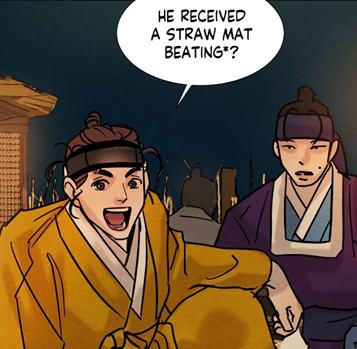 (chapter 12) Purple and yellow, right? Observe that the lord is wearing the same colors during that night: a purple hanbok with a yellow scarf!
  (chapter 67) Under this new perspective, it becomes comprehensible why I am suspecting that this guard
  (chapter 107) Furthermore, he could be recognized with the purple hanbok.
  (chapter 83) Besides, another divergence is that the faceless lord Song has a rebellious strand in the neck which is not the same with “lord Song” from episode 107. As you can see, I deduce that we are dealing with two different “lord Song”. But this doesn’t end here. Secondly, according to father Lee, the man lost his home!
  (chapter 82) So how can he be wearing a purple hanbok, if he lost his position and home? This color is reserved for important people. In addition, when he entered the kisaeng house, the artist’s noona called him differently:
  (chapter 107) Hence I doubt that the noona would feel so close to such a man and address him with his “first name”. On the other hand, the kisaeng has a drop of sweat on her face, which is a sign for a lie and deception.
 (Chapter 107) This signifies that « lord Haseon » is true, while « out of the blue » is the lie.
 (chapter 107) Besides, Yoon Chang-Hyeon’s vision of the world is based on the words from lord Song and others. Who informed him about the whereabouts of « lord Song » in the gibang? The man had not come to the kisaeng house for a long time. Because of this information, the patriarch is led to think that he is meeting « lord Song ». His perception of the world and his eldest son is embossed by lord Song. Thus he repeats the same expression from his counterpart: “lowly beast”.
  (Chapter 107)
  (chapter 107) Finally, like outlined above, the main lead imagined that he was meeting the same doctor, while in truth it was not the case. So « old friend » could be deceiving:.
  (Chapter 107) He could be one of the three men! The real « lord Song » who brought pain to Yoon Seungho is someone else. Let’s not forget that Kim fears the man,
  (chapter 56) and his statement implies that Yoon Seungho is usually not allowed to ignore the man’s request:
  (Chapter 56). « At this time » stands in opposition to « always » which means that he can reject the invitation only because he is sick. To conclude, for me, this is not the lord Song Yoon Seungho hates and fears!
  (Chapter 107) Hence they judge him as a pervert. And since the head-kisaeng received him at the gate, this signifies that this man has been in contact with the kisaeng house and in particular with the kisaeng leading him to the room.
 (chapter 37) The fake servant NEVER mentioned the retirement of lord Song. As you already know, for me, No-Name is the real lord Song who took the blame for everything, for he let people use his “name”. The most terrible thing is that “lord Song” puts the blame on Yoon Chang-Hyeon, when he explains his failure about the sexual education.
  (Chapter 33) Secondly, how does the lord know about the master’s illness, when his fever was only discovered after the straw mat beating?
 (Chapter 77) Besides, no physician had been fetched back then. Finally, how can lord Song remember the lord’s condition so well after 10 years? It is because he is using the diagnosis on the painter from the previous doctor:
  (chapter 103) Here, the man with the purple hanbok was utilizing the painter’s illness to hide his own crime. Under the pretense to help « Yoon Seungho » to become a man, the man abused him not only physically, but also sexually. There is no doubt that this reconversion was fake!
  (chapter 107) However, the trick doesn’t work, exactly like No-Name’s prediction:
  (chapter 76) But there is another reason why Yoon Chang-Hyeon doesn’t get fooled a second time.
  (Chapter 77) Thus I come to the following deduction: Yoon Seungho was sentenced to the straw mat beating, because after 2 nights, he had not been able to « have an erection ». They mixed a truth with a lie:
  (chapter 52) And what had Black Heart thought during that night? He had wished to taste the artist, while before he had desired his death. This is not random at all. There is a strong connection between death and sex which is also present in the conversation between lord Song and his « old friend ». The former reproached the elder master Yoon to have protected his son for too long.
  (chapter 69) He had gone to the kisaeng house with the hope that the artist would return with his noona, and back then he had impersonated Lee Jihwa for the first time.
  (chapter 69) As the manhwalovers can detect, the sudden return of lord Haseon is intentional. So who is he targeting here?
  (Chapter 82) In fact, both schemers have one goal in common: the couple is the victim and witness of their « crimes ».
 (chapter 105) He desired to spare his heart. To conclude, “that awful matter” is referring to the whole prank and its consequences.
 (Chapter 104) However, he had been silenced by his lover, when the latter suggested to him to view everything as a nightmare. The lord made the mistake not to listen to the victim and witness.
  (chapter 105) With such a contrast, the manhwalovers can detect the link between ignorance and absence of memories. To conclude, in both versions, the main lead is “lying” out of ignorance. This is the positive version of “ignorance is a blessing”. Hence the noona thinks herself safe.
 (Chapter 99) It was clear that her brother would meet the noble, as their meeting didn’t surprise her. She was more upset that Baek Na-Kyum was unconscious.
  (chapter 99) However, her question „What’s wrong with Na-Kyum?“ divulges her hypocrisy and acting. How could she not realize that her sibling had been beaten?
  (chapter 105) Thus I deduce that Heena thinks, the painter could not witness her acting in front of the scholar’s house, for his head was turned around and he was not moving. She feels secure concerning that night, while I am expecting the opposite. Nonetheless, her past behavior in the kisaeng house represents a source of danger for her. That’s the reason why she has to hide the “attempted murder” from her brother. The moment Heena mentions that she has been hurt, the painter won’t believe her. Why? It is because in the kisaeng house, he has not forgotten her words:
  (chapter 97) Even if she was “fooled”, the artist can only reproach her stupidity. Remember her harsh words, she had called him stupid:
  (chapter 97) She had helped Min, and she can not claim ignorance. As you can see, Yoon Seungho was encouraged to hide the “attempted murder” from Baek Na-Kyum for selfish reasons. Therefore it is no coincidence that when the lord visited Heena, he made sure that his lover wouldn‘t see Heena in bed.
  (Chapter 104) This explicates why later the lord was hugging his lover under the cover.
  (Chapter 104) Hence I conclude that Heena must have thought the same way about Yoon Seungho. „Thank god, he didn’t see or hear a thing about that awful matter“. He has no idea about her altercations with her brother in the kisaeng house. It is important, because our beloved seme has the impression that the noona has her brother’s best interests at heart, but actually he is wrong. In my opinion, the relationship between Heena and his lover serves as a mirror to his relationship with Yoon Seungwon. So far, the young noble doesn’t suspect his brother to have betrayed him. Note that he blames his father more than his younger sibling.
  (chapter 105) Yet, this incident was presented as Yoon Seungho’s memory. This panel could be used as an evidence that my theory, Heena was present next to the shaman’s shrine during the bloodbath, was wrong. Nonetheless, this image didn’t make me change my mind. Why? I paid attention to details and judged this rescue as “fake” again. The servants had a drop of sweat on their face, the symbol for deception. Secondly, the kisaeng was wet, while the staff’s clothes weren’t damp. How did they save her then? Besides, where are the foot prints? Moreover, where was the head cover?
  (chapter 99) Finally, her hands and feet were not tied. So where did the items go? Since we saw her “execution”, we are the witnesses, and as such we know the truth about that “awful matter”, but it is not the case for the lord. This image contains so many errors, hence it can not reflect reality.
  (chapter 103) Hence he could have never been outside the mansion. That’s how I realized that the author was presenting us a false memory. This means that the manhwalovers are facing an implanted memory. But how could this happen? First, false memory is quite normal and is often of no consequence. But a false memory relayed during criminal testimony might lead to the conviction of an innocent person. As the manhwalovers can detect, it represents a serious problem.
  (chapter 58), it makes him particularly vulnerable to false memories.
  (chapter 104), the lord and even the readers imagined to see medicine in the white bowl!
  (chapter 105) Besides, the author had always connected the drug with the tray.
  (chapter 23) As you can see, the readers interpreted this scene due to associations. Nonetheless, like mentioned in the previous analysis, the different color and the traces on the edge were the evidences that it was ink.
  (chapter 36) Besides, Heena was in bed indicating that she was still weak. The circumstances led people to have a different perception of “verity”!! Only through the mind’s eye, the manhwalovers can detect that this scene was staged.
 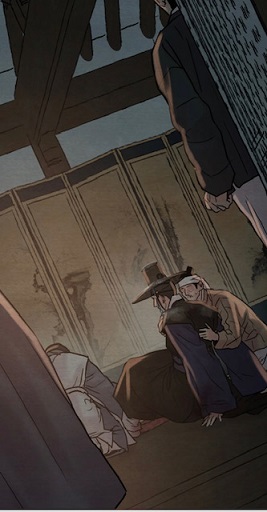 (chapter 103) The protagonist projected his own thoughts and emotions onto one servant: shock!
 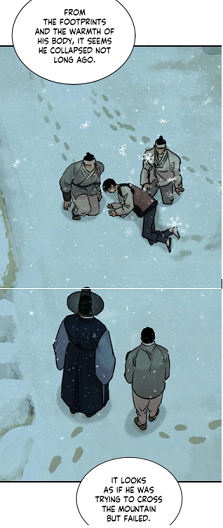 (chapter 61) This was interference by excellence. Besides, emotions can affect your memories. Since the lord was so under shock after witnessing the painter’s unconsciousness, it is not surprising that he imagined to have witnessed this scene. At the same time, when he left the shrine in trance, he could have overlooked the presence of a third person… similar to Lee Jihwa next to the shed. That’s how he doesn’t recall anything from that night except his crime. He didn’t see and hear the person by his side. Where is the sword? Where did he get the hanbok from?
 (chapter 102) Therefore it is not astonishing that he imagined a similar scenery.
  (chapter 1) This shows that the artist had only heard his name without seeing his face before. This explicates why the main lead’s gaze and facial expressions were similar
 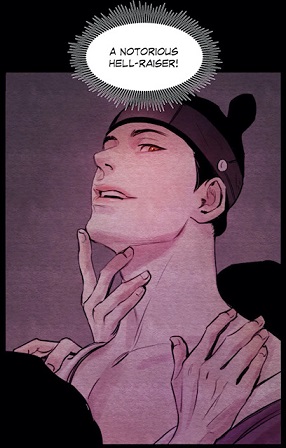 (chapter 1)
  (chapter 1)
  (chapter 103)
  (chapter 104) My avid readers can certainly recall the rule I had detected: each chapter will be reflected in the next!
  (chapter 105) How is it possible? Especially, when the painter said this:
  (chapter 94) Furthermore, the painter is associating the learned sir to the moon and as such the night.
  (chapter 94) Thus I am now suspecting that this image
  (chapter 94)
  (chapter 94) It was, as if the noonas had never been informed about the painter’s suffering and tears. This shows that Heena has been hiding many things from her colleagues. But there is more to it! The manhwaphiles saw the artist’s tears in his childhood.
  (chapter 68) Heena was misremembering that night, and she was misattributing the painter’s tears. In other words, she was confusing two incidents.
 (chapter 105) It is the same facial expression, though the redness around the eyes is more pronounced. This observation confirms that the noona’s memories in the kisaeng
  (chapter 105) He had run after his lover in socks. While in “Baek Na-Kyum’s foot”, I thought that this memory was true, I come now to a different signification. It was a false memory in order to hide a crime related to Heena. I would like to outline that in the kisaeng’s comment, we have the notion of “shame” and as such “guilt”. First, I thought of rape, but then it could be much simpler. The painter could have witnessed his noona having sex with the learned sir. But because he was too young, he misjudged the situation… as a virgin, she had to bleed. Because he saw blood, he imagined that the learned sir had hurt Heena. This would explain why the artist was afterwards anxious around the teacher. One might think that this is not terrible. But let’s not forget that as a kisaeng, she can not have sex like that.
  (chapter 46) A change of heart versus “eternity”. This shows that the painter’s decision to go to the learned sir’s house was never his choice. He had simply followed Heena’s suggestion. She was definitely distorting his past. Furthermore I detected a strong connection between love and memory.
  (chapter 94) If it is a loved one, then it can only be a good memory. Therefore it is not surprising that by saying constantly saying that the painter likes the scholar, he is repressing the bad memories with the scholar (the beating in episode 34, the betrayal in chapter 29, his words in the library and his reproach about his job). So far, he only mentioned one negative incident.
  (chapter 76) So while the painter was following his lover, the latter turned around and hugged him. Afterwards, he asked him to go to his noonas, for he needed to talk to Heena. Moreover, contrary to Yoon Seungho, Baek Na-Kyum paid attention to time. He was not lost in thoughts or had lost the sense of time
 (chapter 105) But the latter acted, as if his hand was not wounded.
  (chapter 105) He ignored his physical pain and heartache.
 (chapter 105) This is important, because the stumbling symbolizes the intervention of the gods… We have the perfect example at the end of season 3. The lord fell on his knees in front of the scholar’s house, hence there is a hand print on the snow.
  (chapter 100) That’s how he refused to view Lee Jihwa as the murderer of his lover, Baek Na-Kyum”. YES, the falling is the real manifestation of CHANCE! How so? I would like the manhwaphiles to keep in mind that chance is the antonym of trick and scheme! The latter are connected to plan and organization. Thus I come to the conclusion that the noble will decide to go to the doctor’s office in order to treat his lover’s hand.
  (chapter 57) he was feverish so that he couldn’t pay attention to the physician. Besides, the man never remained by his side. Finally, in episode 74, the man never left the office!!
  (chapter 74) I conclude that Yoon Seungho never saw the physician for commoners! Besides, I doubt that he remembers him from his childhood. But this is not the same, when Baek Na-Kyum was ill. He met the other doctor twice.
  (chapter 33)
  (chapter 103) On the other hand, the artist assumes that the man in the office is Yoon Seungho’s doctor!! He heard his confession:
  (chapter 103) The staff… I would like to outline that in this panel, Kim was no longer seen next to the couple.
  (chapter 105) So where did he vanish? Probably to the mansion, for he had to warn the domestics that the artist would be returning! But if he left the couple behind, this means that he can’t witness what Yoon Seungho and Baek Na-Kyum will do next. And if they don’t go to the doctor, there is no ambiguity that the main lead will send for the doctor again. But according to me, the man disappeared.
  (chapter 105) Imagine that despite his rush, he was clear-minded enough to take the yellow scarf, a present that the noble had just bought him before. 😢 The item had more value than the mituri (shoes). Thus he was running in socks. His gesture displayed how much the lord means to the painter. He cherishes everything the lord does for him. At the same time, it indicates his heartache. He was so desperate and scared, for he felt that he was about to get abandoned one more time.
  (chapter 105) According to my follower @katamins, in the Korean version, this is what Baek Na-Kyum yells:
  (chapter 105) it works like a spell or a prayer. The artist is clinching onto this phrase hoping that the noble is remembering his promise. The irony is that the low-born was smiling like a fool,
  (chapter 83)
 (chapter 85) This means that Baek Na-Kyum was put in the same situation than his lover who wished to keep the artist by his side, but feared to open up to him out of self-hatred and guilt. The painter could get burdened or horrified by his revelations. Hence the painter’s reaction at the end mirrors the yangban’s in the study. Both were or are pleading the partner to stay by their side,.
  (chapter 85)
  (chapter 105) Nevertheless, their behavior diverges so much. The aristocrat couldn’t raise his voice or become violent by using his hand, because he could scare the artist and as such break his previous promise. Finally, by destroying the music box, he had already witnessed that he had pushed his lover further away.
  (chapter 85) At the same time, since he had been taught that no noble should lower himself in front of commoners, it is normal that he couldn’t beg Baek Na-Kyum on his knees. To sum up, the noble had to restrain himself extremely, his face and words were the only way to show his emotions and despair. And the artist sensed it, though the lord was not weeping. The proof is that when the father appeared, the artist changed his mind. He was no longer willing to leave, in fact he chose to look for his lover.
  (chapter 87) This shows that through communication, the lord had been able to affect the painter‘s mind and heart. On the other hand, we shouldn’t underestimate the lord’s flashback and Na-Kyum’s conversation with the butler which played a huge part in the artist‘s decision to vow loyalty to Yoon Seungho despite the secret.
 (chapter 105) Why did he change his mind? Is he responsible for this? As you can see, the painter came to voice his guilt and the remains of his deeply rooted self-hatred.
  (chapter 105) He must have committed a wrongdoing, he is responsible for the situation. He feels like a burden, for the lord had to take care of him each night.
  (chapter 104) He wished to help, that way he wouldn’t be seen as a spoiled child. He has to justify his presence in the mansion. Who is he exactly that he is sleeping in the lord’s bed? I am suspecting that there is a rumor circulating within the propriety, a new version of this scene:
  (chapter 38) which I will explain more in details below. Thus the artist is making sure to cause no trouble to Yoon Seungho and the staff, especially the maids. Hence he folds the cover and clean the bedroom.
  (chapter 104) Then he washes clothes. He makes sure that he is no burden to anyone. Yet, my impression is that the staff is taking advantage of the artist’s goodness. That’s how they fuel his guilt and shame.
  (chapter 104) This intention was again verbalized in the gibang.
  (chapter 104) He was told not to question what he had heard… he should simply consider everything like a nightmare. However, this method is actually wrong.
  (chapter 07)
  (chapter 104) Not only he knows about the lord’s traumatic past, but it is the same for the painter. In addition, we have another explanation for Yoon Seungho’s insomnia and dissociative state.
  (chapter 104) Naturally, Kim, because he is now the only one in the mansion who knows his past. Besides, why do you think that the lord’s past is coming to the surface as a nightmare? It is because he was incited to repress everything. But since the painter is going through the same experiences, this is not surprising that the noble’s memory is triggered and the past emerges again.
 (chapter 27), when the other domestics left the propriety. This was his memory. Besides, like the servant confessed to Jung In-Hun, a huge part of the staff got replaced. This means that the lord was suddenly surrounded by people he didn’t know. Because my theory is that the young man was treated as a male kisaeng, this signifies that the new staff could never view the main lead as a noble. Besides, despite the betrayal, the elder master and Yoon Seungwon were his real family. Finally, Yoon Seungho had no saying in this, and I can imagine that the reason for this decision was not explained immediately. This must have been a huge blow for him as well. He must have felt lost and homeless. The result was that from that moment on, he became more dependent on the butler. And we have to question ourselves what the butler did with this huge responsibility, when the elder master moved to the second house.
 Since this phrase appears in connection with the staff (maids and servants) in the courtyard, I come to the conclusion that the authors of this gossip are in the domain. “Fellows” indicate that they are speaking among themselves. But I have two more clues proving that the traitors are the domestics. First, observe how they call the protagonist: Young Master Yoon.
  So far, people in town only calls the protagonist lord Yoon
  (chapter 45)
  (chapter 45) or lord Yoon Seungho
  (chapter 39) or my lord.
  (chapter 76) Only the staff addresses him as “young master”.
  (chapter 103), and this since season 3. This coincides with the meddling of the Yoons. The servants treat him, as if he was not an adult, no real lord. But they are wrong, because he is wearing the topknot with the gat. Hence he is a lord. Finally, only people close to the couple could know about the painter’s tragedy.
  , because in the village and town, there exists another gossip:
 He is responsible for the lord’s lunacy. Under this new perspective, it explains why the painter is leaving the bed and working. He wishes to prove the words wrong. On the other hand, I think that Yoon Seungho also heard a grapevine in the domain, but a different one:
  (trailer). “He has many enemies”. How did I come to this idea? It is because he is addressed as Yoon Seungho! By underlining the painter as his weakness, the author of this rumor wishes to separate the couple. If he were to place the painter elsewhere, not only the latter would no longer be targeted, but also the lord would have no longer any weakness. Since there is always a reflection within the same chapter, I conclude that a second grapevine was spread in episode 104. This happened, while the lord was away. Thus the painter smiled like a “fool”, when he saw the lord:
  (chapter 104) As you can imagine, for me the maids were the perpetrators, a new version of episode 79
 (here, the woman implied that the artist was responsible for Yoon Seungho’s insomnia, thus the painter has a drop of sweat on his face, a sign for shame) and chapter 98
  (chapter 103) Finally, the staff has every reason to get rid of the artist, for he is the witness of their wrongdoings. They definitely played a major role in the “prank”. They didn’t learn their lesson.
 (chapter 29) This time, the one smiling like a fool
  (chapter 29) was Jung In-Hun who acted, as if he knew nothing and had seen nothing.
  (chapter 29) However, I have already pointed out that he was present, when the rape took place, for he knew where Yoon Seungho would meet the artist: the pavilion. And what have all these episodes in common? The first thought would be to say: abandonment and betrayal. The painter in front of the gibang felt “betrayed” and abandoned, but what shocked the lord so much was when the artist started blaming himself:
  (chapter 105) “I had known, I would have never confessed” Nonetheless, he never finished his phrase, for in reality, he had no regret!! He was sure that he had made the right decision. It is because he had pondered a long time about this. He had observed his lover. That’s the reason why he mentioned their mutual love confession and as such their promise to stay together. And this brings me to the next observation. All these scenes have another common denominator: BAD DECISIONS!! The lord had made the wrong decision to entrust the painter to the kisaengs. Thus he came to regret this. He had made his lover cry, and even wounded him, though he desired to do the opposite. Therefore it is not surprising that he apologized to his lover.
  (chapter 105) This shows that the painter is showing him what true love and loyalty are. Moreover, he is teaching to make good decisions.
 (chapter 246), I realized why Yoon Seungho suffered so much. Self-made decision implies a conscious choice. It is made deliberately and thoughtfully, considers and includes all relevant factors, is consistent with the individual’s philosophy and values. As you can see, it implies knowledge. This definition exposes that making a choice for the sake of another person without his consent or knowledge can never be a good decision. One might argue about this, because children are too young to make decisions. In Doctor Frost, this man
  (Doctor Frost 246) decided to support a terror attack, and justified this by saying that this was for his daughter’s sake. But like the counterpart pointed out, he questioned his decision. Was it truly his choice, or was he simply following the leader’s suggestion? As you can see, the daughter was used as an excuse, it was never for her sake. This shows that children are the exception, besides they are often raised by two parents. Thus they are making deliberations together. But like the author revealed in Twitter, Yoon Seungho’s mother hated her husband so much that she neglected her eldest son. The patriarch made decisions on his own, but observe that it was always for the Yoons’ sake. This means that the father never took his son’s well-being into consideration, he never asked him about his opinion. He imposed his will, but he listened to others, like we could see in different occasions.
  (chapter 82) Here, the red-haired bearded man was encouraging the elder master Yoon to return to the mansion and claim his rights. Finally, the young master admitted this to the messenger:
  (chapter 80) If someone stroke his ego, he would follow their advice and never doubt their words.
  (chapter 77) Since it backfired, then the protagonist was responsible for everything. And this is what Kim has always been preaching in season 1, 2 and 3: it was the best for Yoon Seungho, or Baek Na-Kyum etc. Nonetheless, since he let others make the decision, he was able to escape “responsibility”, thus the elder master Yoon was blamed for everything.
  (chapter 104) But he simply employed reverse psychology.
  (Chapter 85) Yoon Seungho was coerced to open up. If he did not, he wouldn’t be forgiven. Naturally, the painter meant it well, yet the main lead was pressured to reveal his „bad action“. The main lead feared his negative judgement and rejection. We could say that the artist had made this request for the lord’s sake, however this was not a conscious and long deliberated decision. And now, you comprehend why the main leads suffered both so much!! Yoon Seungho’s mother neglected her eldest son, but she kept her distance from her husband. They never talked to each other, and as such never made decisions together. And it was the same for the painter. The kisaeng Heena was the one who made the decision without the noonas’ consent and her brother‘s opinion.
  (chapter 105) She is still viewing the painter’s decision as a bad choice. But she is simply wrong, for the painter listened to her advice and after deliberations, he chose to open his heart. His confession was not made in the heat of the moment.
  (chapter 62) The lord’s vision
  (chapter 62) became a reality
 (chapter 105) This signifies that the noble will decide not to follow the noona’s advice:
  (chapter 105) with the noona’s statement, the painter looks happy with Yoon Seungho despite the tears, it looks like the noona is slowly coming to terms with her brother’s relationship. But I have to admit that I believe that her “decision” is just short-lived. First, in season 2, the noona had accepted to let her brother stay at the Yoons’
  (chapter 69) But then she had changed her mind after hearing the menace from the servant. However, I have three other reasons to expect a change of heart from the head-kisaeng. First, Heena is the younger reflection of the butler. The manhwaphiles shouldn’t forget that the valet had almost come to terms with the painter’s presence
 (chapter 65), but the ruckus caused by the kisaeng had provoked a change of heart in the valet. Then, the lord had made the following condition to the kisaeng:
  (chapter 105) The lord is keeping his lover by his side, as long as nothing happens to him. So if he gets into trouble… she could achieve her goal, the painter is returned to her. But the most important clue is for me the bowl!
  (chapter 36)
 (chapter 77) Besides, it never leaves traces on the edge.
  (chapter 36) The painter used white bowls while painting. On the other hand, the lord wrote a letter during that time. As you can see, in episode 36, we have the combination of painting, seduction (touching) and medicine… exactly like in episode 105. The artist tried to paint a lucky charm, a tiger, but he didn’t finish it. He got interrupted… which is very similar than in chapter 36. So the letter should represent another common denominator.
 (chapter 105) onto Yoon Seungho. Will she come to regret her action or not? One thing is sure, the painter accepted the sincere apology from his lover. How could he not forgive him after calling „Nakyumah“ and embracing him!
 (chapter 98), although he was wearing clothes similar to the learned sir’s. What caught my attention is the expression Yoon Seungho employed: “pretending”. With such an idiom, he was implying that the servant had not only violated social norms, but also he had been acting. As you can sense, these two situations have one common denominator: playing a role and the clothes served as a disguise. It was, as if both victims of a murder had been playing in a theater play. This explicates why in the fanart, the author is portraying Baek Na-Kyum and Yoon Seungho as actors who are working in a sageuk.
  And this made me think of the famous poem from Shakespeare who describes life as a stage, where a person plays different roles all along his life: an infant, a school boy, a lover, a soldier, etc., until he dies, which is symbolized by an eternal sleep.
  (chapter 98) Why? From my point of view, they were trying to scare the main lead, to remind him that he could never replace Jung In-Hun in the painter’s heart, to shake his belief. But the problem is that the schemers had missed the right timing, for the artist had already confessed his love for Yoon Seungho and this twice. Therefore the latter couldn’t doubt his lover’s words, and mistake it for an illusion. As a conclusion, the clothes were used tools to trick the couple, they had become costumes!! However, because the author is using karma as poetic justice, this signifies that the hanboks and shirts can serve as a clue to perceive the truth too. The ones who tried to deceive the protagonists with clothes and words, should be fooled by their own manipulations.
  were different from the head-maid and her colleague?
  (chapter 94) Their clothes were almost identical, yet their body shapes and the cut of the shirts diverged. That’s the reason why I deduced that in episode 98, the author had the intention to manipulate the manhwaphiles. But in order to escape the trap, the readers needed to look carefully at the characters’ clothes. This was the clue that Byeonduck had left for the readers to discern the truth. And now, look at this:
  (chapter 98) What was the painter wearing on his way to the bedchamber? White pants with his Mountbatten pink jacket. But how did he show up at the learned sir’s home?
  (chapter 98) He was dressed differently. 😮 He had changed his pants, put on his scarf and hat. But when he went to the lord’s study, he was not carrying them!! How do we explain the difference? The answer is quite simple. He had returned to his room in order to fetch his clothes. And since Baek Na-Kyum took the lord’s clothes, this signifies that he had the intention to return to the domain. The readers will certainly recall the artist’s behavior, when he had threatened the main lead to leave Yoon Seungho. He had switched his clothes, and put on his old clothes.
  (chapter 98) Thus if the lord had gone to the study, he would had realized that the painter had not deserted the propriety, for he had not taken his belongings with him. The hat and scarf were signalizing that Baek Na-Kyum considered himself as a member of the Yoons‘ household.
 (rule 3) If only Yoon Seungho had left a word… The servants served as his messenger. Hence I am convinced that Baek Na-Kyum must have talked to the maids and told them where he was going!! He copied his lover, yet contrary to him, he must have given a precise information. (Rule 5) This means that he had informed the staff about his departure!! Moreover, in chapter 98, the maids acted, as if they had not detected the painter’s presence while badmouthing Yoon Seungho.
  (chapter 100) And now observe that after Lee Jihwa’s departure, the artist’s clothes except the white shirt vanished too.
  (chapter 102) Where did they go? The readers saw Black Heart leaving the building, but we should question this: WHY? He never went there to fetch lord Shin, since he abandoned him outside. We all imagined that he left the room empty-handed. But it is true? Now, I don‘t think so. He had to get rid of the clothes in order to mislead the main lead!! A new version of chapter 61
  and
and 97! Furthermore, was Min talking to himself, when he said this?
  (chapter 101) Because the readers could detect the presence of a shadow in episode 102
  , I am now envisioning that Min was not alone outside during that night. In fact, someone had misled Black Heart telling him that lord Jihwa had ran away. However, the unconscious lord Shin should have made him think that Lee Jihwa had fought back… Hence he had not fled, rather betrayed them. Moreover, he was not looking at the direction of the entrance and gate. In fact, he was turning his gaze in the direction to the shrine.
  (chapter 98) They were waiting for his return to fake their anger and search. And now, you comprehend why the servants mentioned the kisaeng in front of Yoon Seungho. It was to stop him from going to the study… to divert his attention. Under this new approach, the artist’s last words get a new meaning.
  (chapter 102) Since he had informed Yoon Seungho through the maids about his whereabouts, Baek Na-Kyum was expecting that he would come to his side. I would like the manhwalovers to keep in their mind that the artist was not conscious, when he moved to the shaman’s house. So in his mind, he was not far away from the learned sir’s house. Finally, since he had informed the maids, he could anticipate that the lord wouldn’t get mad at him, and wouldn‘t imagine that he had abandoned him
  (chapter 101) He trusted his lover’s heart in the end. That’s the reason why Black Heart’s superficial promise had no effect on Baek Na-Kyum. The latter truly believed that Yoon Seungho had been informed. But how could they play such a trick on the couple?
 This is an indication of their involvement, though we need to discern the head-maid from the women in chapter 98. That’s the reason why the moment the maid appears, observe her clothes and try to discern her identity. Is this the head-maid or one maid from season 3? The preview displayed the arrival of the doctor.
 (chapter 103)
  The form of the beard is also similar. But now, I have another evidence that this doctor from season 4 is not the physician from season 2!!!
  (chapter 63) The shoes are also different! That’s the reason why in the trailer, the beholders are seeing the physician’s shoes!!
  He doesn’t possess mituri like the other. Moreover, he is wearing a hanbok under his apron
  , while the other is dressed more like a commoner, a shirt with pants. And note that in chapter 33, we had the following combination: Min’s party, the visit of the doctor, Baek Na-Kyum’s illness, the maids and Yoon Seungho who “ran away” after his mistake. (rule 1 and 4)
  (chapter 33) And what had Kim done during his examination? He had not only threatened the physician
  (chapter 33) However, here the butler had simply lied to hide his own wrongdoings: his passivity and silence. And note the doctor’s words addressed to the “beholder”:
  (chapter 57) The latter was introduced to Yoon Chang-Hyeon through the butler. The protagonist must have had a doctor in the past. Can you imagine a life without a doctor for 13 years? And this assumption was proven correct after the release. But let’s return our attention to the physician from season 4.
  (chapter 33) (rule 1-2-3) But why would he do such a thing? Simply, because he had been helping Min. He needed the protection of a powerful lord, since Kim had abused his position by threatening him. After seeing the new pictures from chapter 103, I had this sudden revelation. What did Min do after getting beaten by Yoon Seungho?
  (chapter 54) He certainly didn’t let his wounds untreated. Thus the next morning his face
  (chapter 56) looked much better. He had no swelling and the redness was already vanishing. From my point of view, he asked for the doctor’s assistance and that’s how the both came to an understanding. But since Min is now dead, the physician could get into trouble, for he helped the lord and now he is dead. But why am I so sure that the physician is about to run away? Look at all these images:
  (chapter 44)
  (chapter 44)
  (chapter 45)
  (chapter 100)
  They are all carrying the white bag on their back… and they are about to depart! Kim wished to leave the propriety with his master under the pretense that he was bringing misfortune to the painter. All this proves that the doctor is far from being innocent. Hence he wishes to run away. However, if he does this, this means that he exits the “play”. So he could die. Moreover, how did he know that the lord would return to the mansion with the wounded painter? I can not answer to this question with certainty. However, I would like to point out that since Min talked to someone in the shadow, it is very likely that this person had long planned Black Heart and his friend’s demise. Nonetheless, the schemers had not foreseen two three elements:
  (chapter 61) [For more read the essay “No matter what… Baek Na-Kyum must vanish”]
 (chapter 59) Lord Jang had disguised himself as Black Heart’s friend, the hanboks looked very similar.
  (chapter 99)
  (chapter 59) The schemers mistook him for the noble with the mole.
 (chapter 61), for the colors grey-white off are only seen at the Lee’s.
  (chapter 9)
  (chapter 18, Lee Jihwa’s spy)
  (chapter 41)
  (chapter 50)
  (chapter 100) And now compare these servants to the staff from chapter 97:
  (chapter 33) Yet, the painter survived, hence the doctor has every reason to run away. His complicity could come to light… on the other hand, the moment he leaves Yoon Seungho’s side, he is no longer protected. The reason is simple. He owns a part of the truth, and what the schemers are attempting to do is the exact opposite: burying the truth so that their act is not discovered. And now who participated in this huge “drama”? The list of the suspects is quite long… Father Lee
  (chapter 82), lord Yoon Chang-Hyeon
 (chapter 74), “lord Song”
  (chapter 64) All have one common denominator: the BEARD. They are OLD BEARDED MEN!
 He is on the ground, his face bruised and bloody, while he is asking an anonymous man for help. He is mentioning the shrine. As he is wearing the same hanbok, we can definitely assume that this scene takes place during the same night. The irony is that each time Byeonduck offers a new piece of a puzzle, she also creates a new riddle or mystery. How did the young master get wounded in the first place? And who is the person facing lord Shin?
  (Chapter 59)
 (chapter 66) The size and length of the protections and the cords around the pants were different. Besides, the masks were also different due to the form of the mouth..
  (Chapter 61)
  (chapter 61) Finally, I had also detected his presence next to the barn because of a time jump. First, the manhwaphiles saw Lee Jihwa sitting on the floor,
  (Chapter 60), then shortly after he was standing at the entrance of the storage room holding a fireplace poker!
  (chapter 60) His position indicated that the young master had shortly left the building. However, the readers had not witnessed his move, for the author had diverted their attention by exposing the character‘s inner thoughts. He was recollecting the past, while talking to himself.
  (chapter 60) However, how did the fire poker end up in his own hand? The last time this tool was seen, it was in the kitchen.
  (chapter 60) As you can see, each image has its importance! However, I doubt that the upset aristocrat had this sudden idea and returned to the kitchen and take the fire iron. His mind and heart were definitely elsewhere, while such an action exposes the intention of hurting someone. Jihwa was acting, as if he was in trance, the moment he saw the hickey and heard the painter’s scream. His long lasting stupor was visible in this image.
  (chapter 60) That’s the reason why I had developed the theory that someone was hiding in the shadow, next to the barn and observing the evolution of the event. [For more read the essay “
 (chapter 57) It is because they serve as a clue for unveiling the truth.
  (chapter 62) It is the same furnace! 😨We all assume that the lord prepared the fireplace, because he put his clothes on his lover. But is it true? We were all jumping to this conclusion, but actually we never saw it. Our brain was led to fill the blanks.
  (chapter 61) Finally, the readers were all assuming that the butler had never entered the storage room due to this image and his action before.
 (chapter 61) But is it true? He could have opened the door before, and go to the lord in order to explain his intervention. Faking his concerns for the painter. Why would he place the fireplace there? He wished that the warmth from the fire would wake up the painter. Hence he remained close to the gate of the storage room. That way, he had a reason to visit his master. Moreover, the author exposed that the valet had been keeping an eye on his master for a while too.
  (chapter 62) Because the valet went to his master, we got the impression that the valet had followed his master’s instructions.
  (chapter 61) In fact, this request could be perceived differently. The lord had seen the butler’s intervention, hence he expressed this wish. From my point of view, the butler must have brought the fireplace to the barn, and he left the poker there on purpose. I am quite certain that some people will think that I am again exaggerating. But why did the butler put a fireplace with a fire iron in the lord’s room, when the coal was not properly lit?
  (chapter 88) Consequently, I am suspecting that Kim had expected an outburst from Yoon Seungho. The latter could hurt his father with the fire iron. But none of this happened, for the lord preferred playing a comedy.
  (chapter 65) He had expected that the lord would hurt the main lead. But how was he supposed to harm Baek Na-Kyum in the end? With the fire iron… This signifies that he had been present in the barn during the abduction, and even knew the place of the sequestration. Thus he took the furnace and the fire iron to the shed.
  Compare his face to the painter’s who got wounded by wooden sticks.
  (chapter 99) Besides, this theory also explains why the shrine is set on fire.
  (chapter 99) So when the lord said this to his lover
 (chapter 60)
  (chapter 60) At no moment, he was told that his childhood friend had been brought to the physician’s. He just heard him leaving. Moreover, the joker never mentioned the place where the couple was fooling around.
  (chapter 60) He didn’t even admit that he had seen them himself. These were memories from someone else! One might assume that these could represent the criminal’s recollection, but I don’t think so. He arrived much later to the physician’s house. If he had been present right from the start, he could have kidnapped Baek Na-Kyum on his way to the restroom.
  (chapter 59) To conclude, the person with such memories
  (chapter 43) Here, he had visited the place, hence he could imagine what had happened, though he never saw their encounter according to me. [For more read the essay “
 (chapter 58) He had left the bucket of water in the patio! But note that when the painter left the room, the item had simply vanished.
  (chapter 59) The painter was not supposed to detect his presence.
 (chapter 100) The manhwaworms can grasp the similarities. Back then, the lord had refused to help Baek Na-Kyum, thus he was even encouraging Lee Jihwa to return to the shrine. Hence he had acted as a willing accomplice and perpetrator. Thus his karma is to be denied any assistance, he is punished the same way than his friends, Min and the other nobles. Finally, observe that the red-haired master
  (chapter 66)
 (chapter 7),
  (chapter 65) or boots
  (chapter 13)
  (chapter 83) As you can detect, I see a strong connection between the new panel and the hunt from chapter 83. And here we have 3 people again.
  (chapter 66) Finally, when her brother was on the verge of getting abducted, she saw him lying unconscious with a bloody face. However, she never considered it as an abduction, for his hands and feet were not tied up.
  (chapter 99) and bothered her, could only be perceived as real at the end. But this means that while Yoon Seungho had murdered the nobles, there was someone hiding in the shadow
  (chapter 66) However, his new attempt to have the painter vanished failed again.
 (chapter 97) It could be the same, though I have my doubts. Secondly, I suddenly got aware that the painter had 3 different grey pants at least.
  (chapter 4) This one had a cut just below the knees, though the color is much brighter.
  (chapter 97)
  (chapter 91) And note during that day, Baek Na-Kyum was called sir due to his hat and clothes.
  (chapter 91) However, if the woman had paid attention to his shoes (mituri), she would have realized that our beloved painter is just a low-born. One might think that I view Kim as the one facing lord Shin.
  (chapter 54) But the readers should question themselves this: why did Kim dress like this in the first place? From my point of view, the schemers have already planned to frame Baek Na-Kyum for the murder of the nobles and even of Jung In-Hun. Kim is trying to separate the couple so that the artist can be arrested easily and sentenced immediately. By burning the place, the evidence that Baek Na-Kyum was a victim vanished. That’s how they can manage to turn a victim into a perpetrator. They wanted to erase every trace of the crimes, but then the return of the painter will force them to change their plan. The fire can help them to turn Baek Na-Kyum into a scapegoat. That’s the reason why the anonymous shadow is wearing clothes similar to the painter’s. No one should recognize him. Later, Baek Na-Kyum can be “identified” as the culprit. And any blood trace on his clothes could serve to incriminate the painter. They could use the resemblance of the clothes as a proof for his crime. That’s the reason why lord Shin had to die in the end. And if lord Shin never doubted this person, I am suspecting that the latter is working with the authorities. Kim is not the only suspect, for according to me, there always exist a conspiracy of 3 and even 5 people. This observation leads me to create a list of suspects. First of all, Yoon Seungho’s confession to the learned sir should help us to determine the schemers and culprits.
  (chapter 44). A synonym for old bearded men is “elders”. The latter are supposed to serve as role models. That’s the reason why the young man didn’t suspect the man. With his beard, he must have oozed “responsibility” and even “selflessness”. But who are the suspects?
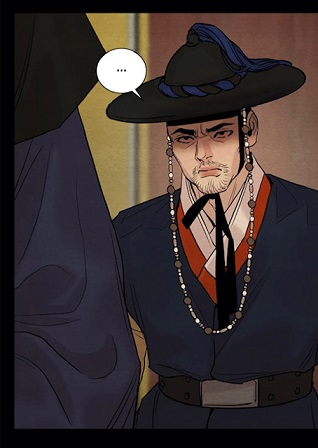 from the bureau investigation is definitely involved. Thus he misled Yoon Seungho. Besides, observe that the officers are connected to fire!
  (chapter 94) Secondly, his explanation implied the involvement of a physician.
  (chapter 57) Finally, the painter met the Joker again on the same day he visited the physician.
 (chapter 75) Finally, why was the doctor never brought to the mansion again after his last visit in chapter 57? And it looks like he was not there to treat Baek Na-Kyum.
  The latter is suffering from PTSD. Thus the painter had a nightmare. Hence I have the impression that the butler’s intervention and suggestion to Yoon Seungho will fail. The lord won’t be able to leave his side. Moreover, I would like the readers to recall that when Baek Na-Kyum got sick, a different physician was fetched.
  (chapter 33) Different clothes displays a different identity. From my point of view, the doctor doesn‘t want to be connected to Yoon Seungho. Finally, don‘t you find it weird that he was not by his side in chapter 57? He literally abandoned the young master in the room with the painter
 (chapter 57), though the latter was a patient too. He had a wounded wrist. The physician should have controlled Yoon Seungho’s fever, brought him water and even an infusion. His absence and passivity caught my attention. So what was he doing in the kitchen? Finally, the doctor is also connected to the shaman. Not only he mentioned him, but also there is the symbol of shamanism in his kitchen. Why did the gods want our couple to have their first “true” love session at the physician’s office? Somehow, it was to confront him with the truth. Finally, don’t you find it weird how Kim reacted
 (chapter 82), when the new version of Deok-Jae made the following suggestion to Kim:
  (chapter 82) Hence the doctor is not off the hook, quite the opposite.
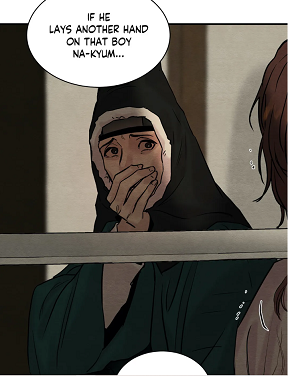 (chapter 67), and discovered Lee Jihwa’s sodomy which was supposed to be a secret. The father is well aware that the main lead’s suffering is linked to the young master’s sexual orientation, which the father had always denied. His involvement could be detected, when he allowed one of his servants to be dragged to the gibang.
 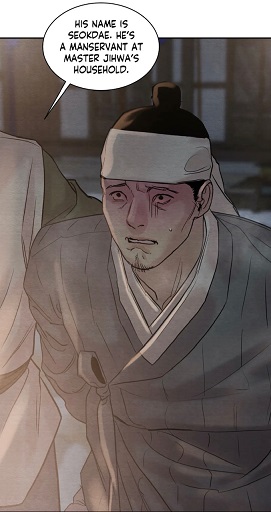 (chapter 99) Finally, The Joker also heard father Lee’s humiliation and powerlessness.
 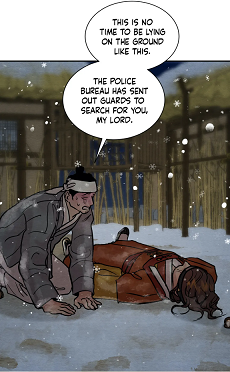 (chapter 101) Thus the fire could be seen as a desperate measure to cover the Lees’ culpability.
 of season 4 for this essay, though my focus is the past, and more precisely Yoon Seungho’s suffering. It is because the darkness surrounding the protagonist not only refers to his tragic youth, but also it reflects the situation of the manhwalovers. The latter are still in the dark concerning his torment. His terrible secrets have not been totally unveiled. So far, the author allowed the readers to see glimpses of his past, like f. ex. the gangrape or the suicide of his mother. But these were just small pieces of the puzzle, thus it is still impossible to have a complete picture of his martyrdom. There are many reasons for this. The main victim never testified about his suffering, he refused to open up to Baek Na-Kyum.
  (chapter 84) Then many witnesses vanished
  (chapter 86) or the ones alive preferred telling lies in order to hide their own wrongdoings or are simply in denial about their own culpability. Finally, the victim, the perpetrators and accomplices had no idea about the whole truth. They only know or knew certain facts, because many of them were deceived as well. What exactly happened to Yoon Seungho? How could this take place, though he belonged to one of the most powerful noble families? Now, you are probably expecting that I will give you answers to all these questions, and recreate the past. But I have to admit that it is not possible, for I don’t know the whole chronology. Consequently, I added “shadowy” in the title. To conclude, my real intention is more to offer new pieces from the riddle than create a whole new “story”. The main source for this new insight is the painter’s fate which is a reflection from the noble’s past and torment. This means that Byeonduck left traces in season 1, 2 and 3! That’s how I discovered that he had been abandoned and betrayed by everyone, kidnapped, treated as a male kisaeng, robbed, abused, raped and even gangraped at least twice, tortured and finally drugged! But like mentioned above, it is difficult to give the proper order and the persons truly involved in the crimes. On the other hand, what I can guarantee is that Yoon Seungho’s nightmare is linked to conspiracies. I came to this conclusion, because if you compare all the seasons, you will detect the presence of plots. There exists at least 3 main plots in each season, though there definitely exist more. The conspiracies are all connected to incidents.
  (chapter 9), so that the latter visited Lee Jihwa to arouse his jealousy. It was to push him to commit a crime so that Baek Na-Kyum would be removed from the main lead’s side. As you can see, there were 3 people involved, though the readers only saw the result.
  (chapter 12) They had the impression that the red-haired master had acted on his own. However, he had been manipulated, incited to commit a crime. But my point is not to diminish his wrongdoing, rather to expose the involvement of the schemers. Hence at the end of season 1, the author unveiled their true role and as such their identities.
  (chapter 43) However, observe that when Lee Jihwa went to the pavilion, the noble with the mole had other guests. 2 nobles left the place, as they refused to participate in a murder.
  (chapter 43) Funny is that they are now witnesses of Min’s crime. This can have repercussions in season 4. Black Heart had been the one who had suggested the assassination to Lee Jihwa. And the aristocrats were still there, when he had made this proposition.
  (chapter 91) and the servants
  (chapter 8) Thus in season 2, he came to this resolution:
  (chapter 56) He had planned to rape him before having him eliminated. This shows his inner conflict. From my point of view, the painter’s death is connected to the incident in the gibang.
  (chapter 16) This doesn’t look like a crime. However, it is one! It was done on purpose, to separate the couple. Someone had intervened in order to interrupt this session, and as such someone had been spying on them. Deok-Jae only revealed his spying activity from chapter 16 in season 2:
  (chapter 53) Yet, the one opening the door had been Kim. This gesture can be considered as trespassing and invasion of privacy, the new version of this scene.
  (chapter 17) that Yoon Seungho would come to perceive the painter as a man consumed by lust. He imagined that he would caught them fooling around. As you can see, this ruckus was also a plot, though it doesn’t look like one. Why would the maids gossip in the courtyard?
  (chapter 18) From my point of view, the valet expected that the lord would fear people’s gaze and a scandal. Thus he would send away the painter to protect his “reputation”, but the opposite happened. Under this perspective, the manhwalovers can grasp why it is difficult to calculate accurately the number of plots and accomplices. Besides, some were naïve pawns, others not. And since I examined the first season more closely, it is necessary to analyze the vanishing of Jung In-Hun. His disappearance is strongly intertwined with Yoon Seungho’s secret. How so? The learned sir was determined to find the lord’s vulnerability and as such secret.
  (chapter 29) Thus many concluded that he had participated in the prank, faking his death. On the other hand, the manhwalovers believed to have seen Heena’s death!
 on his face and interrogated Jung In-Hun.
 (chapter 29) The girl was there to create a certain closeness. He was acting like Kim, asking why! But the stupid and arrogant learned sir thought that because the man was a commoner, he was ignorant and could be manipulated like the painter!
  (chapter 29) He thought that the low-born would buy his lie here… but in my eyes, it was the opposite. He had already perceived the learned sir’s true nature. But he acted, as if he was agreeing. In other words, the scholar fell into his own trap. He envisioned that the man was “powerless”, but he overlooked his connections. The manhwalovers can see the contradiction, for he had approached the man due to his connections! .As you can see, I am more than ever convinced that the scholar has long been murdered. He was betrayed, exactly like he had planned to abandon Yoon Seungho! The pedophile must have heard from the servant about Jung’s plan, as he had confided it to the worker!!
  (chapter 37) But this doesn’t end here.
  (chapter 37) Yoon Chang-Hyeon was portrayed as a traitor! The “fake servant” implied with his statement that there was a conspiracy, and the patriarch was involved. But in exchange to save his own skin, he had tattled on the others! He was trying to insinuate that if Jung In-Hun interacted more with the Yoons, his reputation could get tainted. He could get suspected of “treason” too, or he could get betrayed too. While the man met the learned sir during the day, the brother went to the villa in a hurry during the night.
  (chapter 36) Hence he chose a different approach: filial duty. And the brother’s observation could only corroborate the pedophile’s perception. The scholar was Yoon Seungho’s lover, but he was also a backstabber. But let’s return our attention to the “mysterious lord Song”‘s statement: Yoon Chang-Hyeon is a denunciator, not a man of honor.
  (Chapter 67) Lee Jihwa had not only been denunciated, but he had been confronted by his friend! And the traitor was right by his side. As you can see, chapter 67 was a reflection from episode 37!! These two episodes have another common denominator: the betrayer had made the following suggestion.
  (chapter 67) In exchange for his “survival”, he should help Black Heart and allow him to act on his behalf. This was the new plan. That’s how he started impersonating Lee Jihwa. That’s the reason why I come to the conclusion that in the past, the impersonation must have happened, but it took place in the beginning. Secondly, I am assuming that a traitor must have suggested to Yoon Chang-Hyeon to leave the mansion and abandon his son behind!
  (chapter 27) Someone had tattled on the Yoons in the past, but the patriarch was turned into the traitor himself which the young main lead came to believe. Thus Yoon Seungho could say this to his father:
  (chapter 82) Note that the aristocrat mentioned “punishment” in this context. So maybe, he denunciated the patriarch so that the whole family would get punished. Father Lee was definitely played in this scene, hence I believe that someone had already anticipated his reactions. He would seek revenge. But this doesn’t end here. I had connected “rash departure” to “treason and spying”. And now, observe what Yoon Seungho said to his butler
  (chapter 50) He had sent Jung In-Hun away in order to get rid of him! However, because of the expression “I thought”, I am quite certain that this idea had been suggested to him by the valet! I would like to underline that in this episode, the valet was acting as a tattler!
  (chapter 50) But in order to hide his own crime, he portrayed it as a rumor (It may not be accurate”). This truly underlines the butler’s MO. He used information and turned it as gossips to hide his spying activities. The shadow… Simultaneously, he turned gossips into a verity!! This is no coincidence that in season 3, the same method was employed. Yoon Seungho was supposed to have murdered the scholar and Deok-Jae! My avid readers can sense the leitmotiv in all these episodes. RUMORS are turned into a reality, and as such a CRIME! Even here…
  (chapter 87) The white bearded man’s words became a reality. However, since the fake servant, the mysterious lord Song, judges the elder master Yoon as a troublemaker and hypocrite, there is no ambiguity that the elder master Yoon will get into trouble. Since he did it in the past, he can only get suspected in the present.
  (chapter 44) He had given the ruined painting to his father, putting the blame on his brother, well aware that the latter would get angry. He was observing his father’s reaction.
  (chapter 44) Yet, there is a difference to the past. Here, he had been fooled! He truly believed that this was his brother’s doing, whereas in truth the butler had been the one who had fooled him.
  (chapter 38) And this is important, because when the letter was given to the brother, Jung In-Hun witnessed the wrongdoing from the butler!!
  (chapter 38) And now, you know why the learned sir had to die!! He had caught the valet in the act. He had betrayed Yoon Seungho, though he didn’t realize it. The learned sir tried to discover the content of the letter, and as such was prying on his sponsor’s weakness.
 (chapter 38) Hence I come to the conclusion that KIM played a huge role in the learned sir’s death as well. I would even say that he was the one who pushed the others to have the scholar and the painter killed. Both knew about the butler’s tricks without realizing his significance.
  (chapter 37) Hence I deduce that as the story progressed, the role of the butler started changing. Now, I see him as a the main plotter, while all the others are now his pawns. We could say that the valet has gradually followed the pedophile’s path. However, there is no ambiguity that it was not the same in the past!
 (chapter 37) An idiom that Yoon Seungho constantly utilized: chapter 16, chapter 21
 , chapter 50, chapter 71
  (chapter 71). This means that he couldn’t understand, for he has a different way of thinking. This outlines his narrow-mindedness and his tendency to plan everything. He doesn’t like surprises.
  (chapter 22) Nevertheless, the main lead could have never been involved in commerce, for he lived as a prisoner for many years. And this is what was said about the ruler:
  (chapter 76) He is not so wealthy. How come? Yoon Seungho’s fortune must have a different origin.
 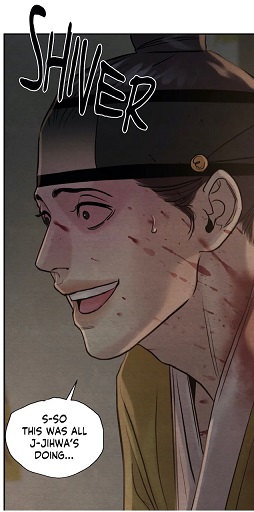 (chapter 102) Min had never predicted that the young master would run to his friend and denunciate him to Yoon Seungho. However, since Black Heart had employed the assistance of servants
 (chapter 95)
  (chapter 71)
  chapter 87) and
  (chapter 54) and 3.
  (chapter 100) The nobles made him smoke opium or drink the aphrodisiac. The purpose of such drugs is to obtain the painter’s submission and control his mind and reactions. Striking is that each time, the perpetrators were “punished”. Kim was insulted and his plan didn’t work out.
  (chapter 37) As for the young lords, they were evicted like commoners and later the others were even killed. As you can see, each time the poison was employed, there was a retaliation.
  (chapter 47)
 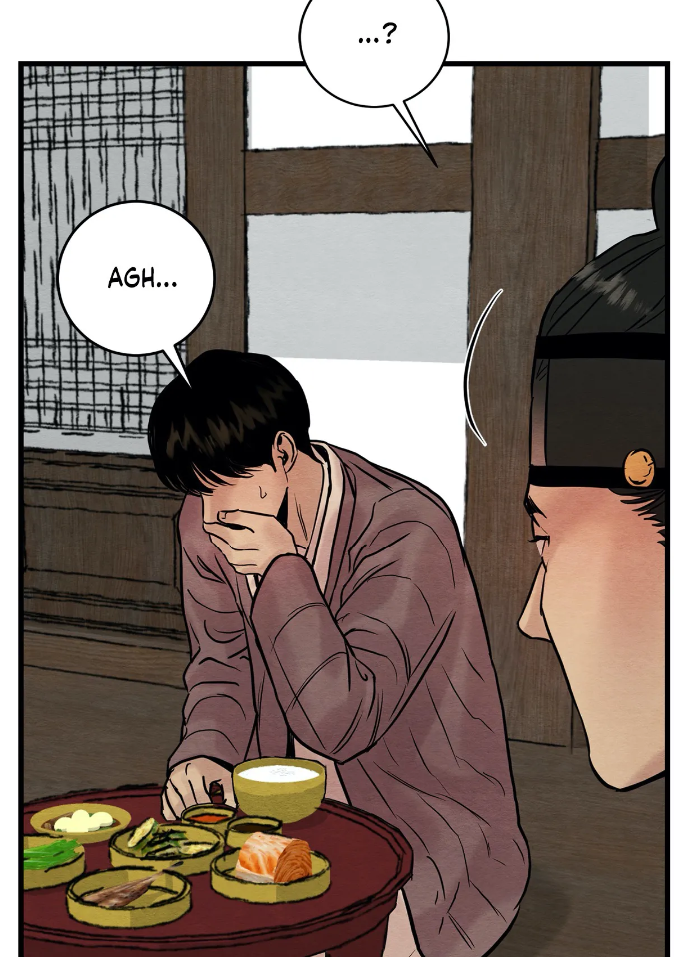 (chapter 47) If the painter had not eaten with the lord, the latter would have never noticed the incident. However, he believed the maids’ words.
  (chapter 47) Hence he never investigated the matter. But this prank represented a serious issue. This could have been judged as an attempt against the owner of the mansion.
  (chapter 83) Yoon Seungho had refused to take the drug! The bowl reminded me of the one from chapter 47! Finally, the butler had tried to give his master the drug in season 3
  (chapter 77) Kim calls the drug “medicinal tea”, truly an euphemism. It is also possible that the real target of the poisoning was Yoon Seungho, but since he was protected by the gods, someone ended up taking the “drug”. Because he was wearing a purple hanbok, the investigator mistook his identity, a royal member. Hence the Yoons were suspected of treason. Don’t forget that during this party, there was a kisaeng by their side.
  The manhwalovers could barely see Yoon Seungho’s face, for he was surrounded by darkness. When I saw it, my first thought was to associate the protagonist to “Sleeping beauty”. He had the same expression than in the bedchamber, when he was sleeping totally relaxed.
  (chapter 87) He was not tormented by a nightmare, like the painter discovered it in chapter 38:
  And the darkness reminded me of the forest of thorns and as such of the curse put on the princess. The darkness, the metaphor for the forest of thorns, is the reason why the lord felt trapped and suffocating in his torment.
  (chapter 94) I would like to point out that the artist has always associated this satellite to a source of joy and love, like we can detect it here.
  (chapter 94) Finally, Talia could get liberated from her curse thanks to her children. The splinter of flax got removed from her finger, the moment the babies were sucking on them. This signifies that she got revived thanks to love and life. Moreover, she woke up, the moment the source of her pain was removed. This observation leads me to the following conclusion: the noble can only be completely freed from this darkness, the moment his suffering is removed and as such revealed!! This means that Yoon Seungho will be able to voice his misery and denunciate the crimes he was exposed to. He will be able to identify the persons responsible for his suffering. He might know a name, lord Song, but he has no idea about his true identity. That’s how his burden will be erased. Like mentioned above, the noble’s physical and sexual assault will be brought up to light. That’s the reason why the new image announcing season 4 is so dark. They represent a reflection from Yoon Seungho’s past and torment.
  (chapter 38) I thought that the couple would share the bed, thus the lord could relax. He felt protected by his lover. In other words, I was already envisioning that this scene is a reflection from chapter 97/98, for the couple had not been able to sleep together.
  (chapter 97) However, the moment Lezhin published the second panel
 (chapter 83) In Painter Of The Night, the hunts were always used to provoke a quarrel and as such a separation, but it never worked. This is important, because this shows that the couple from the Italian story had to separate. It is now time to reveal the whole quote from Milner:
  (chapter 97) Back then, the lord was scared, for he still doubted the artist’s love confession. It was too beautiful to be true! However, back then, the artist never doubted his own resolution, thus he gave comfort to his lover by giving him his hand.
  (chapter 97)
  (chapter 97) In other words, he desired that the painter would follow his requests and as such he should vow him loyalty and trust one more time. The irony is that the lord was actually the one breaking his vow, for he left his lover without saying goodbye. Thus I conclude that in this scene,
  (chapter 78) This means that the lord is smelling his partner’s hair helping him to remain strong and calm. He is now trying to memorize his lover’s odor so that he can forget this stench, a remain from the past:
  (chapter 86) This can only help him to defeat his “opponents”. Finally, in different analyses, I had already interpreted that Baek Na-Kyum was embodying memory, whereas the lord stands for truth. The image is actually a reference to recollection and as such honesty. There is no ambiguity that both men are trusting each other, but the painter is crying, for he fears for his lover’s life either. Yoon Seungho is leaving him in order to protect him in my eyes. And this leads me to the following deduction. When the lord is about to leave, Baek Na-Kyum is not left in the dark contrary to episode 97. He knows the whole truth, for the lord must have confessed to him. We could say that he is not leaving without a word
  (chapter 23)
  (chapter 24) In other words, this announces the return of Yoon Seungho’s passion for painting! And it is the same for the painter. The erotic picture should reflect their love for each other, created based on memories. At the same time, this can only push the noble to demonstrate his talents to others refuting all the negative rumors about him: he is intelligent and possessing his whole mind. Furthermore, this can help him to reminisce his tragic past, what led him to his downfall and suffering. This signifies that he will be able to confront his past and his memories. He will be able to identify the rape, and Kim already exposed the truth to Yoon Seungho, when the former suggested him to ensure the painter’s consent. This shows that Kim was well aware of the sexual abuse, but he chose to never divulge the verity. On the other hand, the pedophile thought in the past that the young master would never forget him due to his position, thus he had no problem to leave Yoon Seungho behind and make no real promise. Departure was never painful for him… hence this quote (“Promise me you’ll never forget me because if I thought you would, I’d never leave.”) will become a reality for the mysterious lord Song, but it is already too late. In fact, the gods punished him by making Yoon Seungho suffering from amnesia. He is not attached by loyalty to the pervert.
  (chapter 57) That’s the reason why I believe that when an incident occurred during that night
 (chapter 11) However, there is no ambiguity that the painter can only fear for his lover’s life. The closed eye contradicts the haunted gaze in the shaman’s house.
  (chapter 21) This gesture symbolizes the epitome of the noble’s affection and the desire to give “happiness”. Then in the bedchamber, he did it in order to console his partner.
  (chapter 82) With his kiss, he was asking for his forgiveness. This means that the kiss on the eye serves as reassurance and comfort either. Thus we had this scene in the study:
  (chapter 84) The lord had kissed his lover there, because he was voicing his attachment and desire to redeem himself and to comfort the artist. As you can see, it was a combination of all the previous significations. Yet, the lord had not grasped the “gravity” of his “wrongdoing”. Thus the kiss was associated a certain playfulness in the study. As a conclusion, this image
 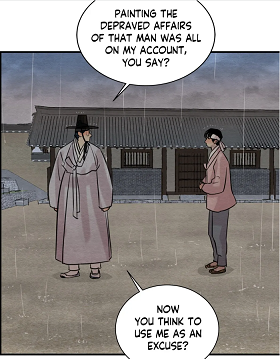 (chapter 19) He came to feel more safe during the night, until he met Yoon Seungho in season 1. From that moment on, his night life got slowly affected. That’s how he discovered that night could be associated to pain and agony too. Yet, deep down, he still felt safe by the noble’s side. As you can see, the new illustration
 Yes, when people read juicy deeds, they were already imagining that I would describe a love session like this one
  (chapter 96), because of the expression „to do the deed“:
  (chapter 87) However, the deed is not just related to intercourse, like the manhwaphiles could discover it in chapter 51.
  With „deed“, Deok-Jae was referring to murder and assassination. As you can see, deed has other meanings than sex. Thus it has for synonyms action, accomplishment and reality!! So when I selected this name for the essay, I was thinking of the relationship between action and word. And this connection came to my mind, when Byeonduck released the last picture, because the painter’s action symbolizes a conversation and as such words.
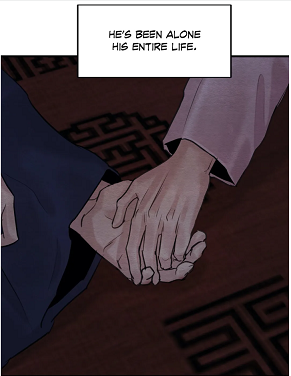 (Chapter 88) By reaching his hand, the painter was letting him know that he was no longer alone in this world. He was not only joining his side, but he was willing to try to understand the main lead.
 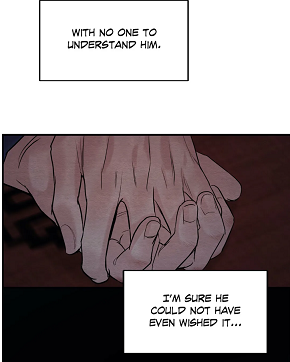 (Chapter 88) This gesture stands in opposition to the situation with Yoon Chang-Hyeon.
 (Chapter 86) During that fateful night, the father neither talked to his son nor looked at him. He even turned his back to him, when the young master attempted to grab his father‘s hanbok. Both scenes from chapter 88 and 86 have two common denominators: an action accompanied with silence!! Yet, what distinguishes them from each other is the nature of the deed, the action. Alliance and empathy versus abandonment and estrangement! This is no coincidence that after reaching his hand, Baek Na-Kyum started confessing his thoughts and emotions to his lover:
  (Chapter 88) As you can sense, the hand gesture delivered a message, but the painter still felt the need to clarify the meaning of his hand. He was willing to remain by his side, but he was still afraid of him. He didn’t want to create a misunderstanding, like for example that he wouldn’t argue with him or that his loyalty was now unconditional or total. That way, Yoon Seungho wouldn’t come to view him as a hypocrite or as dishonest, if an argument would appear. Thus he needed words to explain his position. He would remain by his side and attempt to sympathize with him, but he still felt insecure and had doubts. In other words, his action (his hand gesture) was not truly reflecting his mind and heart.
  (Chapter 88) Later he even asked his lover not to leave his side no matter what.
  (Chapter 88) To conclude, the hand gesture in episode 88 was connected to insecurities and as such fear, yet the painter had shown no hesitation to take his hand. The anxiety was not visible.
 (Chapter 30) His fingers barely grabbed his hand, so when he made the following vow, he was not entirely sincere or better said, truly determined to keep his promise.
  (Chapter 30) The words were not truly in unison with the gesture either. Therefore he once tried to leave the mansion in season 2. When he pledged loyalty, his intention was to protect his teacher. To conclude, fear has always been present, when the painter took Yoon Seungho’s hand. Even in chapter 88, but contrary to the scene in the courtyard, his hand was not shaking.
  (Chapter 82) This explicates why the artist chose to remain by his side, though the lord had broken his promise.
 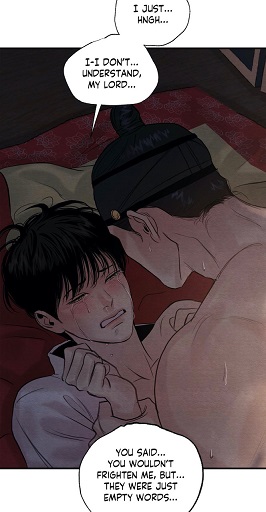 (Chapter 82) On the other hand, in this scene
  (chapter 82), the lord was grabbing his lover’s hand out of fear. He was recognizing his mistake and was trying to beg for his forgiveness, though he couldn’t express it directly. Striking is that during the lord’s flashback, his hand was trembling as well, grabbing onto his partner’s body.
 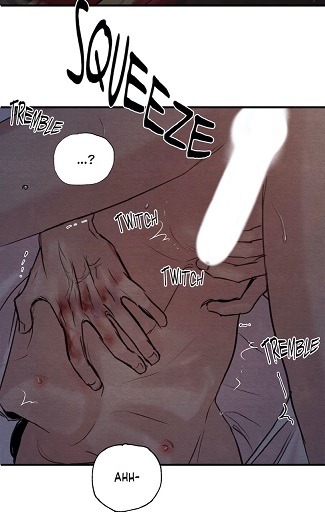 (Chapter 81) It was, as if Baek Na-Kyum was his rescue buoy, helping him not to be swallowed by the darkness. Thus I came to the conclusion that the protagonists’ hand gestures are all connected to anxiety and pain. 😲 Hence I am deducing that in this scene, Baek Na-Kyum is holding his lover’s hand,
  (Chapter 98) Back then, he had been waiting for his lover‘s return and explanations. He wanted to hear him and get his reassurance and comfort. .
 (Chapter 98) The latter couldn’t reassure the painter with his hand contrary to the previous night.
  (chapter 97) Striking is that in the gibang, the lord confessed his biggest fear to his future “spouse”. He feared to lose him, though one of his biggest desires had been finally fulfilled. This means that Yoon Seungho felt even more insecure and frightened than before after receiving the artist’s love confession. That’s the reason why I believe that the new picture is standing in opposition to the scene in the gibang. The lord will feel relief after his admission. As a conclusion, the image is announcing
  (Chapter 89) While the painter was sitting on his partner’s lap
 (chapter 89), he was massaging the wounded fingers. It was, as if he was treating his companion’s wound. Note that after his terrible flashback, the painter had avoided to grab his hand out of fear that he might hurt Yoon Seungho even more.
  (Chapter 84) Therefore I conclude that the new panel is an allusion to treatment. While in episode 89, the painter was acting as a doctor, in the new image, the young man is working more like a counselor or psychologist. The aristocrat’s hand might not be wounded in that scene, but this is not the case for his heart and mind. So for me, this scene is connected to mental treatment.
  (Chapter 84) However, the lord had refused to open up. This is no coincidence that the author had not created such a picture during that chapter. As the manhwalovers can detect, I believe that in that scene,
  (chapter 75) And because I detected a discrepancy between words and gestures, I recognized the presence of another trick from Byeonduck.✨
 (chapter 91), the latter denied this with the following statement.
  (chapter 91) But when did the painter admit that he liked embracing him? In this panel!
  (chapter 88) That’s the reason why the lord got surprised and moved. As you can see, the author never revealed this whispering to the manhwalovers! The latter had the impression that the lord’s reaction was related to the loving embrace, but it was only partially correct.
  (chapter 62), when the lord had confessed to adore him.
  (chapter 62) This explicates why Yoon Seungho was so pained in season 2. He got embraced, but there were no words. Consequently, when the painter vanished during that night, the lord could only perceive the embrace as hypocrisy and fakeness. That’s how I realized that the story is developed on the contradiction between words and actions. But not only that, there exists a strong link between silence and passivity. Thus after the abduction in season 2, Baek Na-Kyum remained more or less silent
 (chapter 62), and as such he was totally passive. He never stood up and begged the lord for his leniency. He stayed there on the bed giving the impression that he was indifferent. That’s the reason why Yoon Seungho got more enraged, for he felt fooled. This means that the absence of words represent inaction… This explains why Yoon Seungho had to corner the main lead in chapter 48
  (chapter 48) to say something, as he had sensed his passivity behind his „submissive attitude“. This is no coincidence that during this night, the painter felt extreme pleasure to the point that he peed. Therefore he could voice his wish to Yoon Seungho during the love session from season 2.
  (chapter 73) That’s how the lord concluded that the painter liked riding him, while in reality such a climax had appeared for the first time, when both were facing each other!
  (chapter 49)
  (chapter 86) Yoon Seungho had acted the opposite, he had tried to speak up, but he had been muted. I am also thinking that the young master must have attempted to converse to his father
  (chapter 77) Silence was considered as an admission. This is no hazard that the butler didn’t take care of his young master. This scene symbolizes the quote “Actions speak louder than words”
  (chapter 77) The butler had betrayed the young master’s trust, for he had not intervened. He should have defended Yoon Seungho, but no in fact he had sided with the elder master Yoon once again. Not only he had not reminded Yoon Chang-Hyeon of his promise, but also he had assisted the ruthless father by giving himself the straw mat beating!
  (chapter 77), but backstabbed him in the shadow. Besides, we shouldn’t forget that a narcissist’s words don’t match their action, because they are pathological liars. And so far, I had portrayed father Yoon (overt), Kim (covert) and even Jung In-Hun (overt) as people suffering from NPD. And I am assuming that the mysterious lord Song is not different from them, though I am suspecting that he must be a covert type.
  (chapter 76)
  (chapter 53)
  (chapter 87), while the same extremity symbolizes the opposite with the villains and antagonists: violence, silence, submission
  (chapter 83), hatred and resent
  (chapter 97) Here, Heena was hurting her brother, because she wanted him to face “reality”. What caught my attention is that we never saw the father’s hand in chapter 86!

 , episode 19
 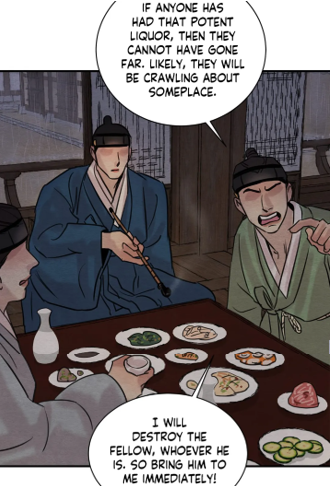 , chapter 33
 and episode 43
 , in chapter 96
  , in episode 100
 and finally in chapter 102
  or 43, or 52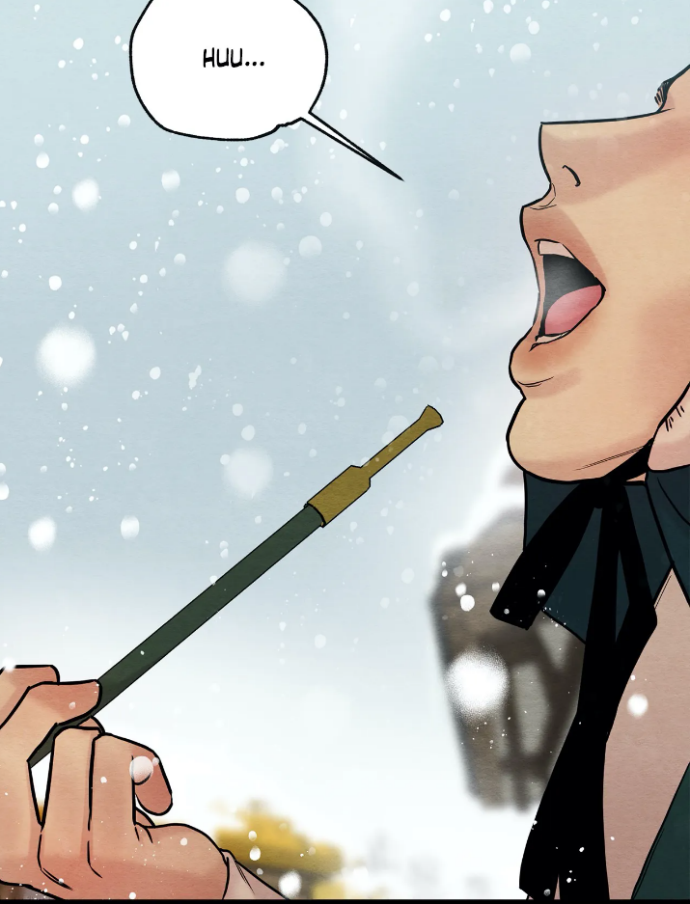
 , he used his right hand! Thus one might argue that Min was simply ambidextrous. However, I can prove 100% that Black Heart is left-handed!😮 The evidence is the usage of the bow.
  (chapter 22) This is how a right-handed man shoots an arrow. On the other hand, we never saw Min using the bow. The bird was already wounded by the arrows, when the scene of the second hunt took place.
  (chapter 41) However, the manhwaphiles can discover the verity thanks to one detail: the bag of arrows.
  (chapter 22) As you can see, the bag is carried on the right side, but the arrows are almost touching the left shoulder. They need to be on the other side, since the scholar needs his right hand to grab the item. And now compare the position of Min’s bag. It is inclined in the opposite direction, hence the arrows are visible on his right side!
  (chapter 41) Thus the noble is carrying the bag
  (chapter 41) differently from the painter too.
  (chapter 22) Under this new light, it becomes comprehensible why Byeonduck never showed the Joker’s hunting skills. People would have noticed that he is left-handed immediately. She made sure to hide this important fact, thus within the same chapter Min was often portraying as using both hands. In episode 43, he employed his left hand to pour the alcohol in the glass
 (chapter 9) Here, he was still present, but even before the end of the sex session, he had already vanished.
  (chapter 9) Finally, when the noble with the mole visited Lee Jihwa, the latter claimed that he had spent a long time at Yoon Seungho’s.
  (chapter 9), and his friend never denied it. As you can see, the characters made sure to confuse the readers with the change of the chronology. As you can see, it took me a long time before noticing the bruised face (only during season 3), then to bring up the conclusive evidence that Min was the culprit of the slap. Then in the shaman’s house, he took the dildo with his left hand, because he was angry and frustrated.
  (chapter 100) too. This shows that he could barely control himself here. And once he faced the main lead’s sword, he got so scared that he showed Jung In-Hun’s glasses with his left hand again.
  (chapter 92) The irony is that in this scene, the main lead employed his left hand too, the positive reflection from the night in the pavilion (chapter 43). While here it was to bring him back to reality, in the pavilion, the Joker had the opposite intention: to lure Lee Jihwa to believe in illusions.
 (chapter 74) They announce the future events, though the information is not given properly. On the other hand, since they are memories either, this signifies that they contain insight about the lord’s tragedy. Thus I noticed that the anonymous perpetrator used his left hand to grab his hanbok!! I deduced that the perpetrator in the past is also left-handed!! Secondly, since this vision can also be seen as the announcement of the painter’s second kidnapping, this is no coincidence that Byeonduck created such panels during the painter’s last torment.
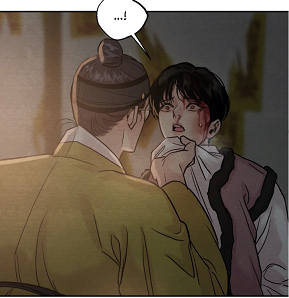 (chapter 99) However, in the shaman’s temple, Black Heart grabbed Baek Na-Kyum with his right hand. He was trying to manipulate the artist, he was acting. He was not showing his true self. Yet, the vision was revealing the truth: the future mastermind of the last scheme was in reality left-handed!! It didn’t matter, because at the end, the main lead was able to discern the truth. He sentenced Black Heart, for he believed that he had killed his loved one! That’s how I realized why the author would focus so much on the hands and on the distinction between unconscious and conscious! The hand in Painter Of The Night represents the crucial clue to identify the culprits!!
  In season 1, we had the hands in the illustration. The hands were revealing the crime committed against the main lead. The latter was totally passive in this picture. The hands are touching and unclothing the immobile man. It also shows that Yoon Seungho was at the center of the conspiracy, in the past and in the present! The painting in the background indicates the presence of a hidden painter. Thus Baek Na-Kyum was not drawn in the cover. The painter of the night was in truth someone else, the painter from the past! Nevertheless, the main lead was looking at the readers, indirectly at Baek Na-Kyum, the young painter of the night. This describes the arrival of Baek Na-Kyum in his life. Striking is that the painting in the background was destroyed… indicating that the portrayed relationship was no longer existent. This represents another clue that the lord’s suffering is linked to a previous relationship. Then in season 2,
  the author revealed Baek Na-Kyum as the painter, who had now become the target of the plot. Yet behind him we see Yoon Seungho’s foot. The latter symbolizes the main lead feared to get close to him, but he wouldn’t leave his side. Moreover, this corresponds to the lord’s impulsive decisions, he let his foot guide him. Thus during the first night of the failed gangrape, he walked towards the study and stopped unconsciously, when he was next to the room.
  (chapter 53) Due to his strong denial, he was strolling not realizing that his feet were under the influence of his subconscious. And it was the same, when he opened the door with his foot at the Lees’
 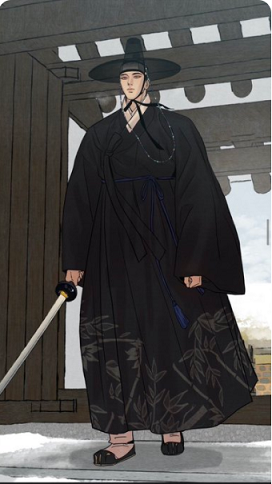 (chapter 67) Nonetheless, I believe that the author had another reason to draw the foot in the cover. The foot prints are the evidence of the crime, and as such the deceptions and the culprits.
  (chapter 59)
  (chapter 61) The shoes were the clues how to recognize the perpetrators and accomplices. That’s why I compared these feet
  (chapter 56), but also to the theft of the painting
 (chapter 56) and the painter’s break! At the end of season 2, he was no longer painting and in the beginning, he had also stopped due to his heartbreak. Simultaneously, we have the presence of water which serves as a connection to season 1 with the ruined painting and to season 3 with the well and drowning. The dark shades were an allusion to the lord’s darkness and suffering. The latter would come to the surface. However, since the cover only showed the lord’s foot, it exposes that the lord would not divulge his traumatic past.
  (chapter 78) In season 3, this time the main leads were facing each other, they were recognizing each other: their true self! But this stands in opposition to the deceased people without identity!
  , the back
  Here, we have 3 men, and don’t forget the left hand from before.
  (chapter 99) That’s the reason why I am anticipating a cover with the gibang. It would be the perfect place to find closure for the couple. It is a place where both suffered. Moreover, I think, belongings should serve as an evidence for the identification of the schemers and accomplices. Remember that we had the glasses as the evidence of a murder in season 3, yet I am sensing that the possession should serve to identify the perpetrators from the past and the present. Since the clothes were used to confuse people in season 3, I am assuming that in season 4, they should help to recognize people, but at the same time, it is totally possible that our main leads decide to employ the same method to fool the schemers and accomplices. And now, we have the cover for season 4. Both protagonists are not only facing each other, but also touching each other. They are no longer hiding their emotions and thoughts.
 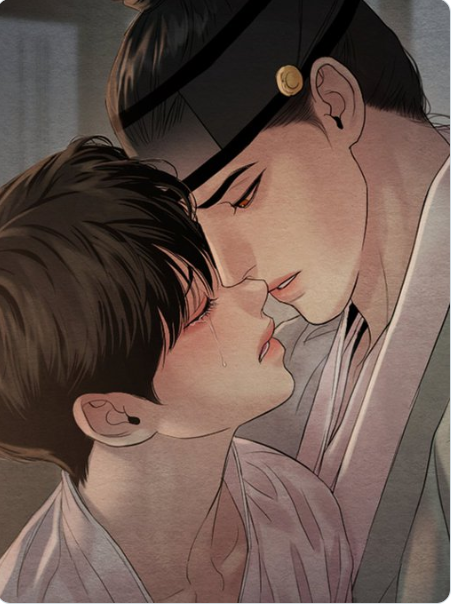 This image represents the opposite to the other seasons. At the same time, the author is again referring to the bedchamber indicating that this place is strongly connected to the protagonists’ suffering. On the other side, since the painter is wearing a silk white shirt, it implies that he is not a commoner. This panel indicates that the main lead was able to the true owner of the study and even bed. However, due to the tears, the beholder can sense that this season will be painful as well. Striking is that in the cover, they were either alone, or they were just looking at each other, hence they didn’t pay attention to their surroundings. Consequently, they couldn’t sense the presence of a plot and the schemers. This indicates that the couple is still not prepared to face new schemes. To sum up, the author selected such covers because she had planned to leave clues there about the mystery! But wait… I had outlined that the person who grabbed the young master Seungho was left-handed, and he played a huge role in the main lead’s downfall and suffering! But who is left-handed in this story?
  (chapter 12)
  (chapter 56). But then I noticed that he carried his master on the left side.
  (chapter 66) and since it is for me the butler, he was not the person from the nightmare. That’s the reason why I am excluding him from the suspect list. For me, if he was involved in the past, it is because he lit the candles
  (chapter 74). Furthermore, don’t forget that in his nightmare, the author exposed the presence of plates with 3 candles
 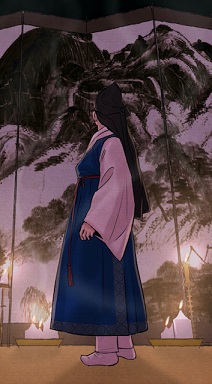 (chapter 74) which were also used in the shaman’s house. Finally, in this picture, we have a right-handed person.
  (chapter 74) So Kim could have been the one silencing him with his hand.
 (chapter 86) On the other hand, at the doctor’s office, he employed his right-hand to keep his son by his side.
  (chapter 83), then with the left! Striking is that the author never showed, when the patriarch employed his left hand. The readers could only hear the sound, and see the result of the beating. Both cheeks were wounded. From my point of view, he was conditioned exactly like Min! He was not allowed to use his left hand, but the angrier he got, the less he could hide his true self: he was left-handed and he was a stupid and brutal father!!
  (Chapter 74) I don’t believe in hazard. Besides, the lord had his nightmare during the same chapter. This means that he could have leaked this information about Yoon Seungho to an outsider, like he did with the painter. As the manhwalovers can grasp, the physician is more suspicious than before.
  (chapter 92) Besides, observe that the angry man put the brush on the left side.
  (chapter 92) The man is left-handed! And what did Yoon Seungho do?
  (chapter 92) He grabbed him by the collar! Exactly like in the dream!!
  (chapter 44) or patio of his mansion, similar to Heena’s. And since the young main lead suffered so much, it is normal that he doesn’t have such believes. IT is also possible that the young master Seungho played a prank which made the man angry and humiliated. As you can see, I come to the conclusion that jealousy and resent were the reasons why he got involved in the first place. Moreover, we shouldn’t forget that the calligrapher is linked to the kisaengs! He even recognized Baek Na-Kyum, as he called him a peasant.
  (chapter 92) Yet, he was either perceived as servant, a noblewoman or as a sir so far! He was never recognized as a peasant. Since he could identify the artist, it is also possible that he was also able to identify Yoon Seungho. But he thought that he was not well educated after living as a male kisaeng for so long. From my point of view, the man could have decided to get revenge on Yoon Seungho and participated in his abduction and gangrape!! Thus his karma was to lose his home!
  (chapter 86) Let’s not forget that in season 3, clothes were used to deceive Yoon Seungho, and the authorities played along. Besides, as the painter had become the love interest of Yoon Seungho and Black Heart, it is very likely that in the past, the victim was exposed to two different abusers, but they all hid behind the name: lord Song. Note that during this feast, one man had a moustache beard which is in Painter Of The Night the sign that he is no yanbang, not even chungin, the upper-middle class. He could be a rich merchant. Just because they are all wearing hanboks
  (chapter 87), this doesn’t mean that these men belong to the aristocracy. Furthermore, Kim never said “nobles”, he just said “visitors”!! Finally, I would like to point out that since Yoon Seungho lived secluded for 10 years, I doubt that he had the means and the knowledge to be involved in the trade:
  (chapter 39) Thus I am deducing that the barn in season 2
  (chapter 51) could have belonged to the tailor or the owner of this shop. And note the couple was in the same position than with the kisaeng with No-Name in episode 51!
  (chapter 51) This was the negative reflection from episode 39: no penetration versus penetration, no interruption versus interruption, no rumor versus rumor etc. And this contrast clearly displays that the tailor shop is involved in Yoon Seungho’s suffering. And the best evidence for this is the nightmare. The main lead’s clothes had a design.
  Bebebisous33s' analyses in K-Dramaland and Manhwas