
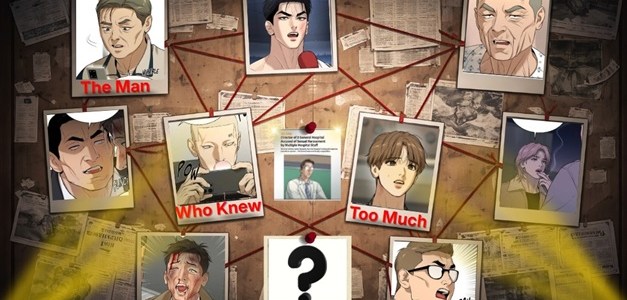
Please support the authors by reading Manhwas on the official websites. This is where you can read the Manhwa: Jinx But be aware that the Manhwa is a mature Yaoi, which means, it is about homosexuality with explicit scenes. Here is the link of the table of contents about Jinx. Here is the link where you can find the table of contents of analyzed Manhwas. Here are the links, if you are interested in the first work from Mingwa, BJ Alex, and the 2 previous essays about Jinx The Hidden Predators (Part 2) and The Man Who Knew Too Much – part 1
It would be great if you could make some donations/sponsoring: Ko-fi.com/bebebisous33 That way, you can support me with “coffee” so that I have the energy to keep examining Manhwas. Besides, I need to cover up the expenses for this blog.
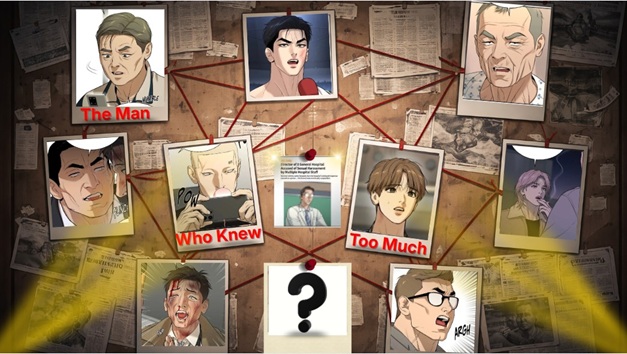
I know that my avid readers were expecting an analysis of episode 94, especially because the conversation between the two main leads was so moving. Actually, the illustration and the title are already prepared.  Beautiful, right? Yet I could not help myself returning once again to the criminals. My fascination with thrillers and investigations probably gives it away: when I read this story, I instinctively begin to examine every image, words and event like a detective reconstructing a case.
You may therefore wonder what triggered this sudden return to the question of conspiracy.
Surprisingly, it started with a very quiet panel. 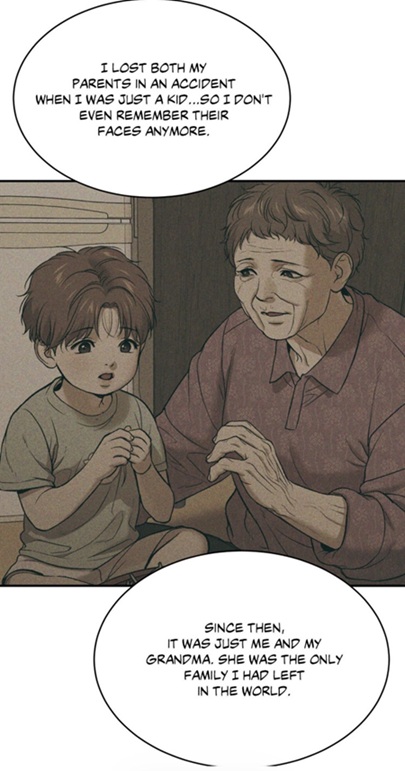 (chapter 94) In this moment we learn that Kim Dan lost his parents in an accident when he was a child, though we shouldn’t trust this confession as the truth due to the debts. Anyway, the word “accident” immediately resonates with a principle that has appeared again and again throughout the story: someone being at the wrong time, at the wrong place.
In Kim Dan’s case, however, the catastrophe is natural. It is not the result of manipulation or conspiracy. Fate simply intervened. The tragedy shaped his life, leaving him alone with his grandmother and forcing him to grow up prematurely. This explains the origins of his powerlessness and passivity. His entire existence is marked by the consequences of that accident. Yet precisely because this accident is natural, it casts a revealing light on the world of the criminals.
In their world, accidents are manufactured. 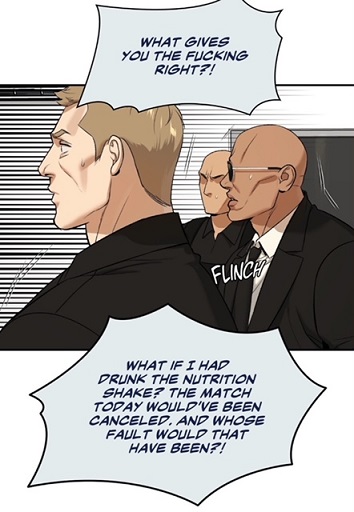 (chapter 40) What appears to be coincidence is often carefully engineered.
The Criminal Method
When we examine the schemes surrounding Joo Jaekyung and Kim Dan, a recurring structure becomes visible. The antagonists rarely attack their targets directly. Instead, they create situations where events unfold in such a way that someone appears to have been caught at the wrong place, at the wrong time.
The pattern is remarkably consistent. First, the media narrative is prepared. Hence an article about his shoulder injury was leaked to the press. 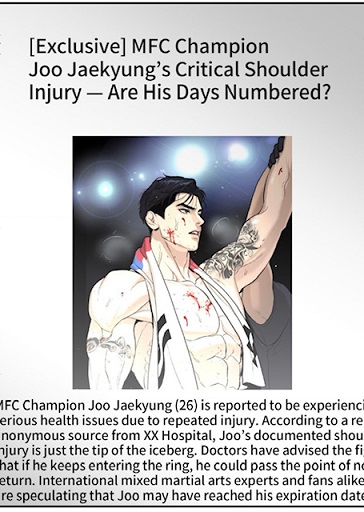 (chapter 36) At the same time, social medias were manipulated in order to stir public pressure and push the champion toward accepting the match in the States.
 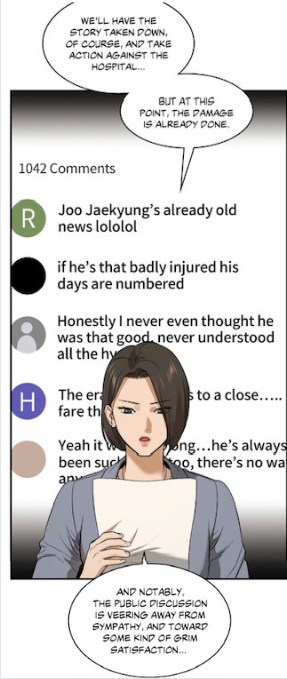 (chapter 36) But we only discover this MO thanks to the match with Arnaud Gabriel and the Entertainment agency’s involvement.
  (chapter 81)
After the incident in the United States, the manipulation did not stop. On the contrary, it entered a new phase. The media reported that Joo Jaekyung had been suspended because of his temperament. 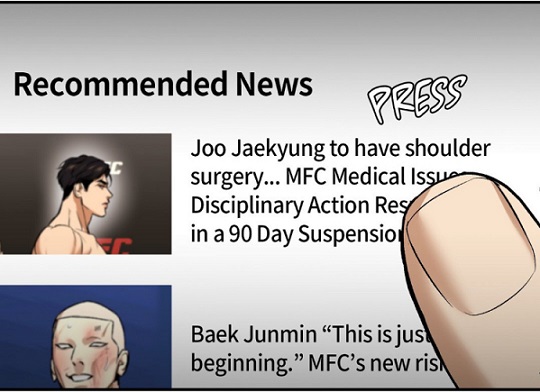 (chapter 52) Officially, the story suggested that his own behavior had caused the problem. In reality, however, this removal also had another function: it cleared space for Baek Junmin’s rise. That’s the reason why the article with The Shotgun was placed directly below the star’s and why the director Hwang Byungchul accepted easily the disqualification of his former pupil.
  (chapter 71)
At the same time, the public image of the champion was gradually reframed. (chapter 54) He was increasingly portrayed as reckless and irresponsible for continuing to fight despite his condition.
  (chapter 54) In this new narrative, the original leak of confidential medical information was no longer treated as the real wrongdoing. The focus shifted entirely onto the athlete himself.
Rumors about the champion’s injuries, his unstable recovery, and his arrogance could now circulate in advance, so that any later setback—including a possible defeat in Paris—would appear understandable, even inevitable.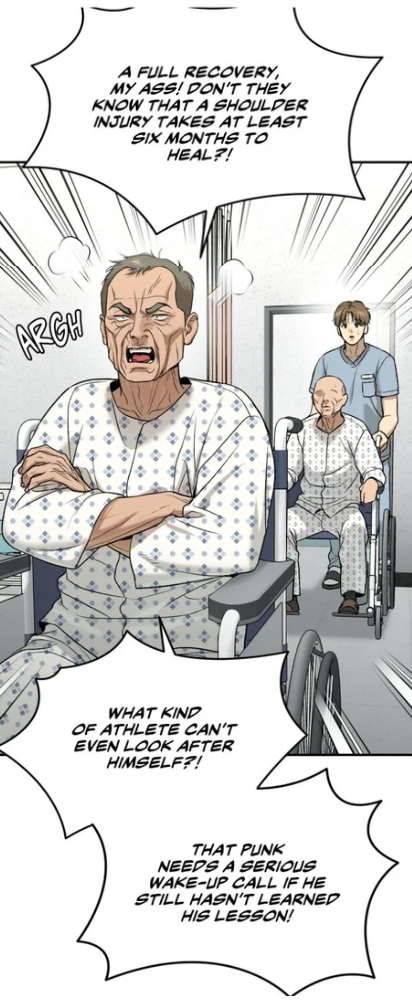 (chapter 70) Once such stories enter public discourse—injury, temper, arrogance—every later incident can be read as confirmation. The narrative becomes self-reinforcing. The media no longer merely reports events; it prepares the framework through which future events will be judged.
Second, a destabilizing trigger is introduced. Often this takes the form of drugs or pharmaceutical substances. The drugged beverage in the United States  (chapter 37) and the suspicious spray
  (chapter 49) used during the manipulated match both belong to this category. These substances create uncertainty about the athlete’s physical condition and about the legitimacy of his treatment. But this implies the involvement of the pharmaceutical industry.
  (chapter 41)
The third step in this pattern is the involvement of authorities and institutions. Once the destabilizing event has occurred, official actors step in: security personnel, referees, medical staff, health centers, or the sports organization itself. Their intervention transforms a chaotic incident into an officially documented event.
This stage is essential, because institutions possess something criminals do not: legitimacy. The incident in the United States reveals how institutional authority can be used to control the narrative. After the incident with the drugged beverage was reported to the MFC, security personnel intervened and brought Kim Dan into an interrogation room. 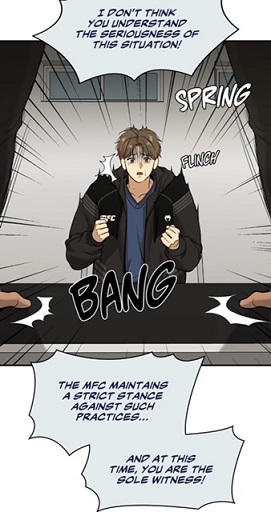 (chapter 40) The scene resembled a police investigation, yet these men were not representatives of the state. Hence there was no translator and lawyer. They were dressed-up employees of a private organization whose primary objective is to protect the company from scandal and as such from losing money
During the interrogation, the agents attempted to frame Kim Dan by focusing on the “nutrition shake” he had allegedly consumed. He seemed to be part of a scheme.  (chapter 40) At first glance, this strategy appears effective. By redirecting attention toward the therapist, the organization can distance itself from the real problem: the suspicious beverage that had been introduced into the environment of the fight.
However, the scheme overlooks an important detail. The incident did not remain entirely undocumented.  (chapter 40) A doctor took a blood sample from Kim Dan, and the laboratory later produced a component analysis report. (chapter 41) This report becomes significant for two reasons. First, it confirms that the contamination was real. The substance had indeed been introduced into the environment surrounding the fight. Such a finding inevitably raises questions about how the drink entered the system controlled by the MFC. In order to avoid institutional responsibility, the organization therefore needed a convenient explanation—someone outside its sphere of influence who could be blamed for the incident, antis.
 (chapter 41)
Second, the timing of the report is revealing. The results of the component analysis appear in the very same episode in which the MFC doctors give their approval for the next fight.  (chapter 41) This coincidence exposes another layer of the mechanism. While the laboratory analysis confirms that an illicit substance had been present, the medical authorities simultaneously authorize the champion to continue fighting. The two decisions cannot easily be separated. Together, they suggest that the involvement of the doctors helps stabilize the narrative: the suspicious beverage becomes a secondary issue, while the focus shifts toward the champion’s physical condition and his decision to fight despite his shoulder injury.
In this way, medical authority does not simply clarify the situation. It contributes to transforming a troubling incident into a new plot and manageable story. To conclude, the MFC medical authorities approving the fight are now part of the scheme, accomplices of the set up as well. Doctors have entered the chain of events. But why did all the employees (security agents, doctors) started helping? The fear of a scandal and the involvement of the media … and naturally loss of money 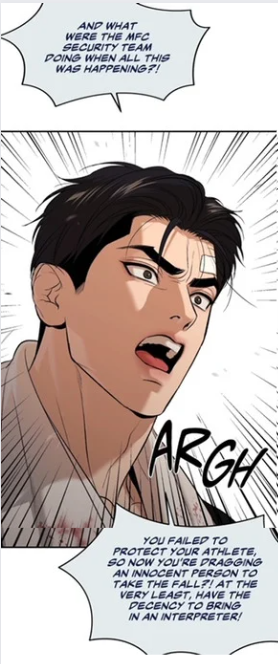 (chapter 40) That’s why they needed a scapegoat. First Kim Dan, later antis and finally the athlete himself. And who fears a scandal in Jinx? One might say Park Namwook
 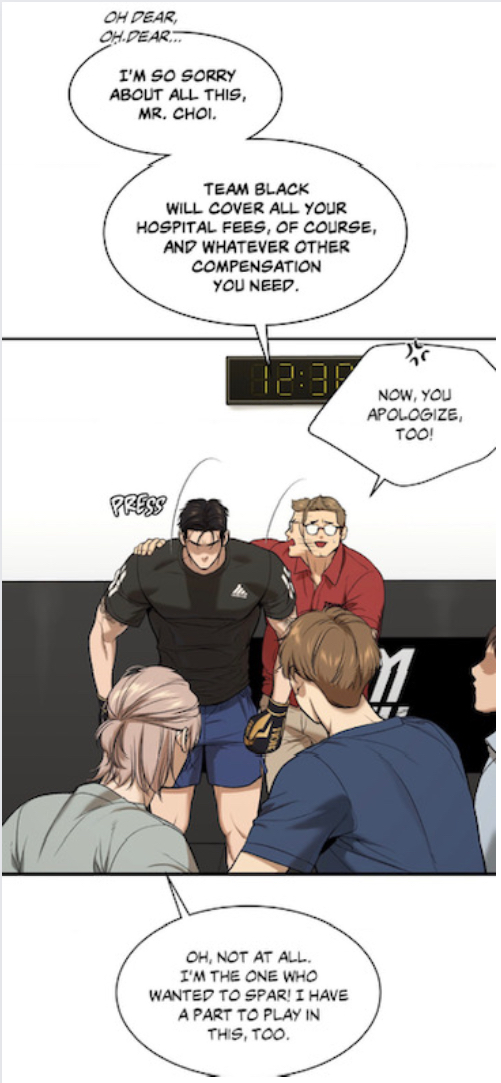 (chapter 31) who always hides behind authorities and shows distrust toward fighters. But he is just reflecting the attitude of the other MFC accomplices.
The same mechanism appears during the events surrounding the manipulated match and the switched spray. Joo Jaekyung’s ankle got injured after the substance had been used. 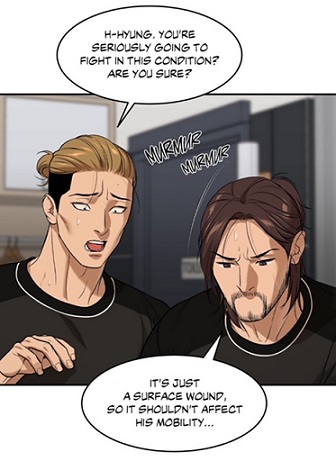 (chapter 50) Observe that in the locker room, the coach declares the athlete as fit despite the injury before going to the health center. The chronology is important, as the MFC doctors have the final saying. So when the champion is taken to the health center before the fight. the responsibility is shifted.
By examining the athlete and clearing him for the match despite the injury, the medical authorities effectively became responsible for the decision that allowed the fight to proceed. In principle, such a medical examination should have resulted in documentation of several elements: the condition of the ankle, the treatment administered, and the circumstances surrounding the injury. But I am suspecting that the documentation was either ignored or deliberately minimized the ankle injury. Why?
Keep in mind that the narrative that later circulated in the media tells a different story. Instead of focusing on the injured ankle and the suspicious spray, the discussion shifted almost entirely toward the champion’s shoulder injury. (chapter 54) The public narrative portrayed him as reckless for continuing to fight despite his physical condition. The responsibility for the situation was therefore redirected toward the athlete himself. MFC’s notoriety remained clean, the employees were all safe, they were not facing any financial or legal repercussion contrary to the star.  (chapter 54) Hence Park Namwook remained passive.
The later meeting at the restaurant confirms this strategy of containment. The CEO of the MFC  (chapter 69) apologized for the behavior of the security staff toward one of Joo Jaekyung’s team members.
 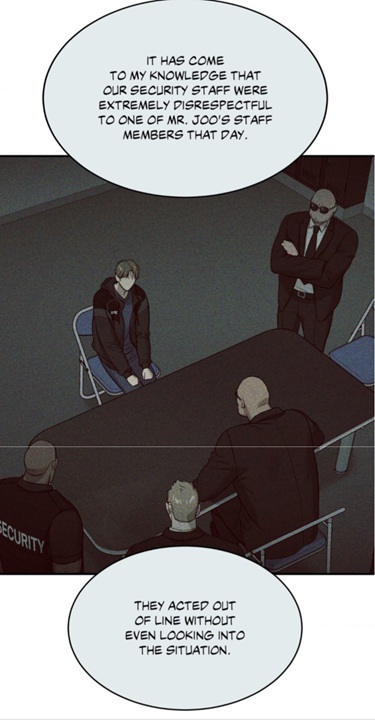 (chapter 69) Significantly, this apology took place behind closed doors, not in front of the media, and doc Dan is still left in the dark about it. The goal was therefore not transparency but damage control. They were in reality attempting to bury everything, to buy some time, until the athlete would lose his next match.
By presenting the incident as the result of overzealous security agents, the organization could deflect attention from the more troubling questions raised by the drugged beverage and the switched spray, the lack of security and neglect.  (chapter 69) The problem was reduced to a matter of manners rather than a potential security failure or institutional complicity. In this way, the apology functioned less as an admission of guilt than as a mechanism to close the case quietly before it reached the public sphere.
Interestingly, the executive describes the substance as a “fake supplement.” This terminology already reveals a subtle shift in language. The laboratory analysis had identified the compound as an aphrodisiac. In other words, a drug that can exist within the legal pharmaceutical sphere. By presenting the substance as a “fake supplement,” the organization avoids raising uncomfortable questions about the origin and distribution of the compound. The problem is no longer framed as the misuse of a pharmaceutical drug but as the circulation of a counterfeit product introduced by an external criminal actor. In this way, the language protects not only the organization itself but also the broader pharmaceutical system from scrutiny. And don’t forget that Doc Dan got informed about the connection between the rival gym and the parent pharmaceutical company in the States. 
And now, the modus operandi of the villains and schemers becomes clear. When these incidents are considered together, a consistent criminal method emerges. The antagonists try to trap their targets like hunters. Instead, they construct situations in which events appear to unfold naturally while responsibility is quietly redirected elsewhere.
The structure remains remarkably stable: first a compromised situation is created, then a destabilizing act of sabotage is introduced, and finally responsibility is redirected toward a convenient scapegoat. In this way, institutions remain intact while the blame falls on expendable individuals.
This is how the underworld functions. Someone is always placed in the wrong place at the wrong time, and the lowest figures in the hierarchy—the minions—are left to take the fall. For this very reason, criminal organizations and drug cartels are notoriously difficult to dismantle: the system protects itself by sacrificing those at the bottom while the structures above remain untouched.
If this pattern truly governs the criminal strategy, then the attack against Kim Dan cannot be limited to a single incident. The physical therapist represents the most vulnerable element in the entire situation: he comes from poverty, lacks institutional protection, and his professional credibility can easily be questioned. For this reason, it is likely that the conspirators will attempt not one manipulation but several. And the last one will force them to expose their true nature: they are criminals and no doctors, directors or athletes (kidnapping).
These stunts will almost certainly revolve around the same thematic field that has already appeared in the story: wrongdoings, drugs and substances. Whether through medication 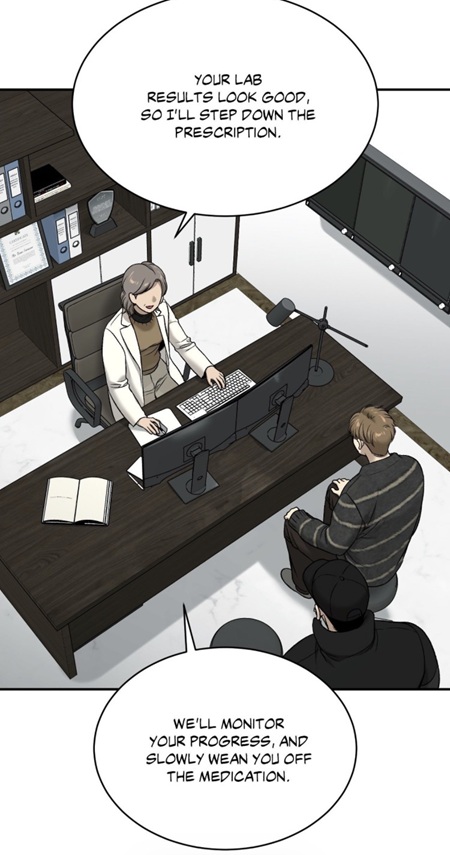 (chapter 91), drinks , smoking,
  (chapter 65), or other forms of contamination, each incident would undermine Kim Dan’s credibility as a medical professional. If the therapist can be portrayed as irresponsible, incompetent, or compromised by substances, the institutional narrative could once again shift responsibility onto him.
Kim Dan and The Medical Trap
Once this mechanism becomes visible, the events in the locker room acquire a different meaning. At the very moment when the scheme reaches its decisive phase 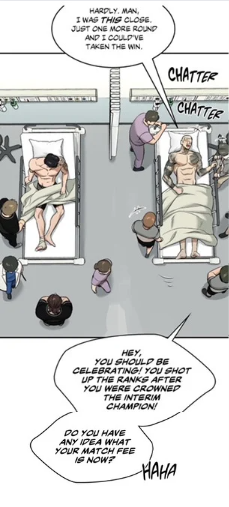 (chapter 52), Kim Dan is no longer present. After confronting him and suspecting a betrayal
 (chapter 51), Joo Jaekyung leaves the locker room alone and goes to the health center. And don’t forget that before, he even refused his treatment for the ankle injury before.
  (chapter 50)
As a result, Kim Dan is absent when the champion is treated at the MFC medical center and at the health center. 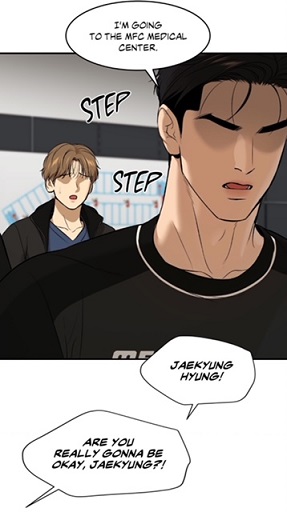 (chapter 50) He therefore has no knowledge of what happens there: the medical examination, the decisions taken by the doctors, and the institutional narrative that later emerges from this encounter.
This absence is crucial. The criminal method described above requires the presence of a convenient scapegoat at the moment when the official version of events is constructed. 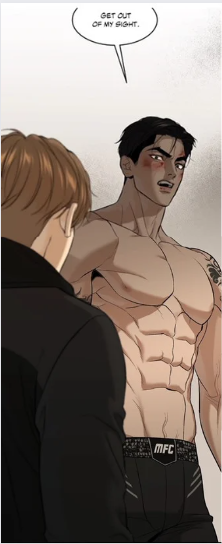 (chapter 51) But this time, the pattern is disrupted. Kim Dan is not there when the institutions intervene.
Paradoxically, the accusation that drove Joo Jaekyung to distance himself from his therapist also removes him from the very situation in which he might once again have been blamed. The scapegoat has disappeared from the scene.
That’s why Joo Jaekyung had to take the blame for the outcome and the “scandal”, the brawl burying the incident with the switched spray!!  (chapter 52)
To understand the consequences of this absence, we must therefore return to the locker room itself—where suspicion, photographs, and accusations first triggered the rupture between the two men. The confrontation in the locker room marks the moment when this criminal mechanism nearly achieves its objective. At this point in the story, suspicion has already begun to circulate around Kim Dan. 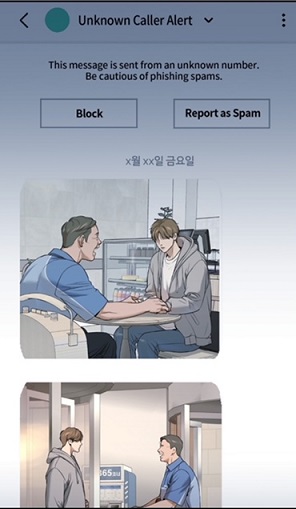 (chapter 48) Photographs of him had been sent to Joo Jaekyung, suggesting that the physical therapist might have been communicating with Baek Junmin through the director of the other gym.
 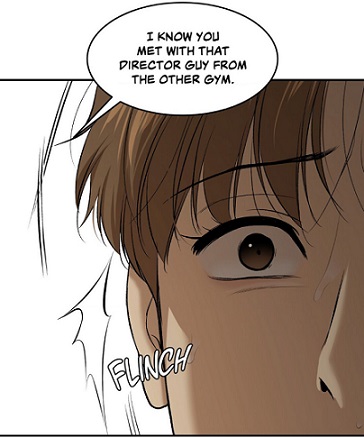 (chapter 51) Confronted with these images and the growing confusion surrounding the match, the champion reaches a painful conclusion: that his roommate may have betrayed him.
In the locker room, this suspicion finally erupts into open accusation. (chapter 51) Joo Jaekyung confronts Kim Dan directly and demands an explanation. For the first time, the therapist is placed in the exact position that the criminal schemes had been preparing all along: the position of the possible traitor.
From the champion’s perspective, the logic seems simple. The photographs appear to show a connection between Kim Dan and his rival. While Joo Jaekyung believes he has finally uncovered the truth behind the sabotage, he is in fact reacting to a carefully constructed illusion. He is not realizing that the match was rigged, the jury and moderator had been bought. They had planned the tie. That way, MFc appears as a legitimate sports organization. The images and circumstances that appear to implicate Kim Dan are themselves part of the larger mechanism designed to redirect suspicion toward the most vulnerable figure in the entire situation. 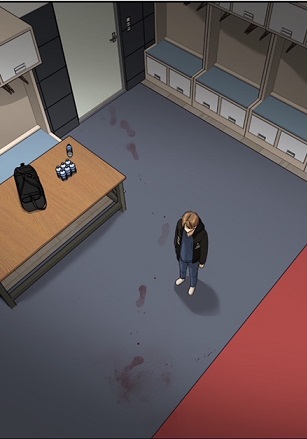 (chapter 51)
Timing, however, remains the key element in the criminals’ strategy: everything depends on placing someone at the wrong time and at the wrong place. Yet in this instance, the timing fails. The report of the incident surfaces only much later, after Potato hears about the situation.  (chapter 52) By that point, the circumstances have already changed. The use of the switched spray introduces a new dimension to the case, and with it the possibility that another authority must intervene.
For the first time, the matter can no longer remain confined within the internal structures of the MFC. 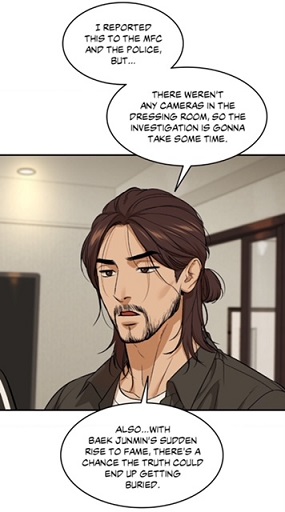 (chapter 52) The situation now risks attracting the attention of the police. As you can see, by remaining passive, Joo Jaekyung in his own way protected the physical therapist from real trouble. If he had truly blamed him, he could have “called” the police, but he did not.
In other words, the conspirators would have obtained their perfect scapegoat. The champion’s rejection therefore becomes a blessing in disguise. By removing Kim Dan from the scene, he prevents the therapist from being trapped inside the very mechanism designed to destroy him.
Baek Junmin and the Shadow of the Police
The appearance of the police in chapter 52 introduces an element that cannot be ignored. Up to this point, the incidents surrounding Joo Jaekyung have largely been contained within private structures: the MFC, its security personnel, and its medical institutions. These actors possess authority, but they remain part of a controlled environment where scandals can be managed internally.
The police represent a very different kind of authority. Interestingly, the narrative later reveals that Joo Jaekyung himself had previously spent time at a police station following an incident involving damaged property and a street fight. 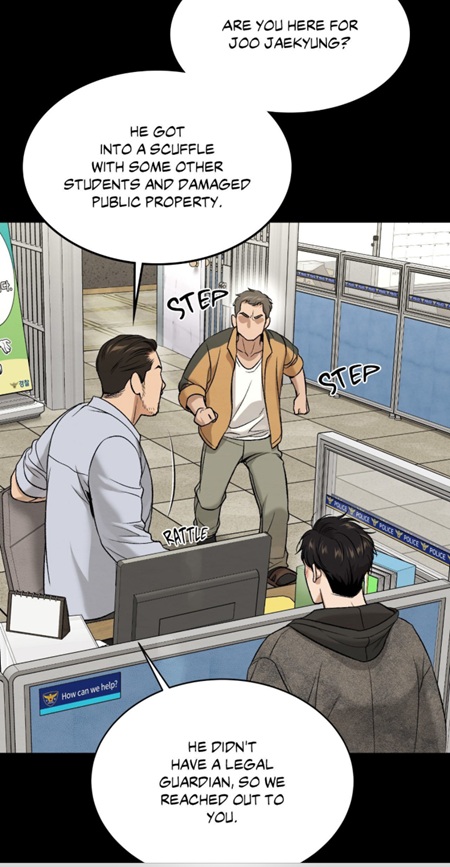 (chapter 74) The coincidence between these two moments—chapter 52 and chapter 74—suggests more than a simple narrative repetition. Both situations involve the same institutional actor: the police.
This connection raises an important question. Why does Joo Jaekyung immediately suspect Baek Junmin with the switched spray (chapter 51), when the pictures only show Choi Gilseok and he was not even present in the locker room?
The answer may lie in his own past experience. When the champion finds himself at the police station in the earlier incident, the situation appears similar to the pattern we have already observed elsewhere: a chaotic confrontation, witnesses present, and a narrative that quickly identifies him as the responsible party. Moreover, observe that during that night, the future champion 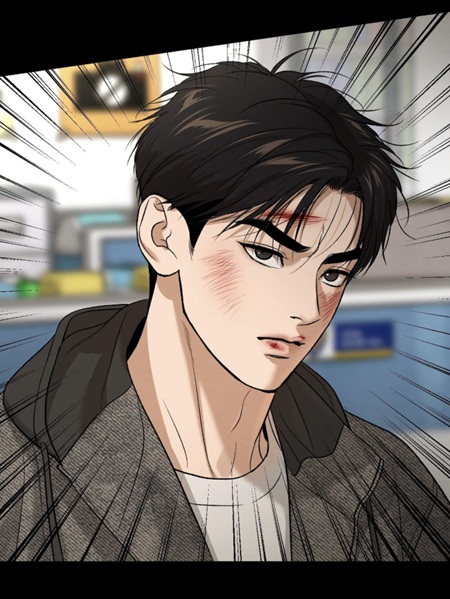 (chapter 74) has a similar wound on the forehead than The Shotgun.
 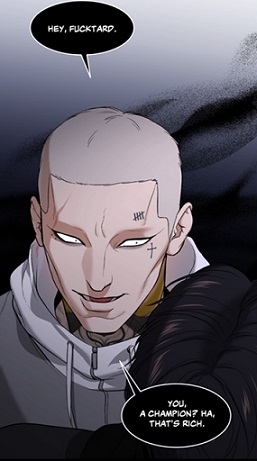 (chapter 74) If Baek Junmin had orchestrated that earlier event, the strategy would have been simple but effective. Instead of attacking his rival directly, he could create circumstances that forced the authorities themselves to intervene. But why would he involve the police, when he is involved in the criminal world? Such a tactic would allow him to remove or weaken Joo Jaekyung without openly violating the protection imposed by his hyung
 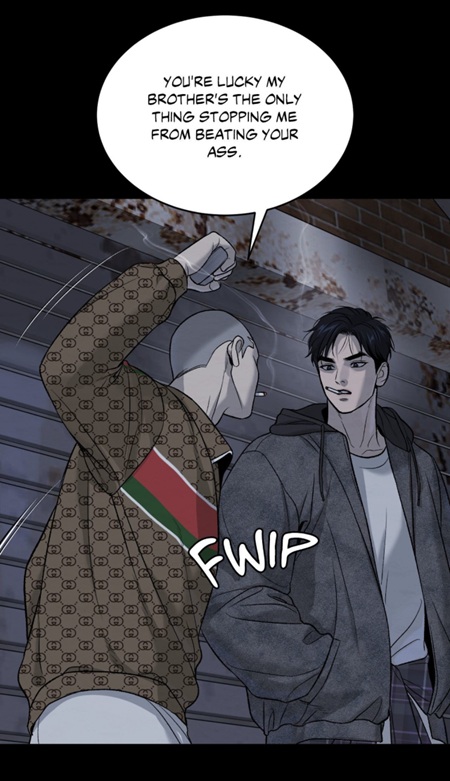 (chapter 74), who had explicitly forbidden him from harming the champion.
In this scenario, the police become an instrument. By manipulating witnesses—perhaps even paying students who had previously been bullied 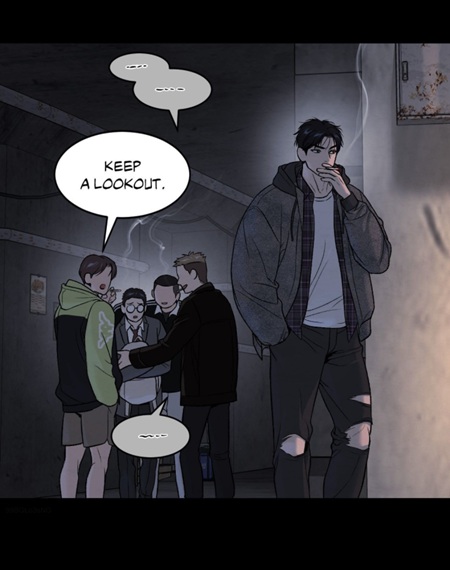 (chapter 74) —Junmin could ensure that the story presented to the authorities pointed toward Joo Jaekyung. For the students involved, the arrangement would offer a practical advantage: financial compensation and a chance to escape their own precarious situation. But for that stunt, The Shotgun got to pay a heavy price: not only the scar on his forehead
 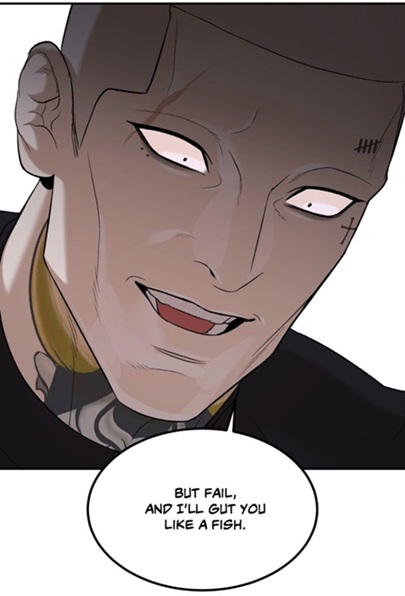 (chapter 93), but also a life in the shadow forever. It is clear that he could never get rich and famous through his illegal fights. Hence he resents the main lead so deeply.
The result would be a classic example of the principle that governs the criminal world depicted in the story: placing someone at the wrong time and the wrong place. His suspicion toward Baek Junmin does not arise from speculation alone. It is grounded in experience.
If this interpretation is correct, Baek Junmin’s strategy becomes clear. By orchestrating a situation that attracts police intervention, he can remove his rival without ever directly attacking him. IMO, he is on his way to play a similar trick than in the past. Hence he looks at the calendar, timing is essential. 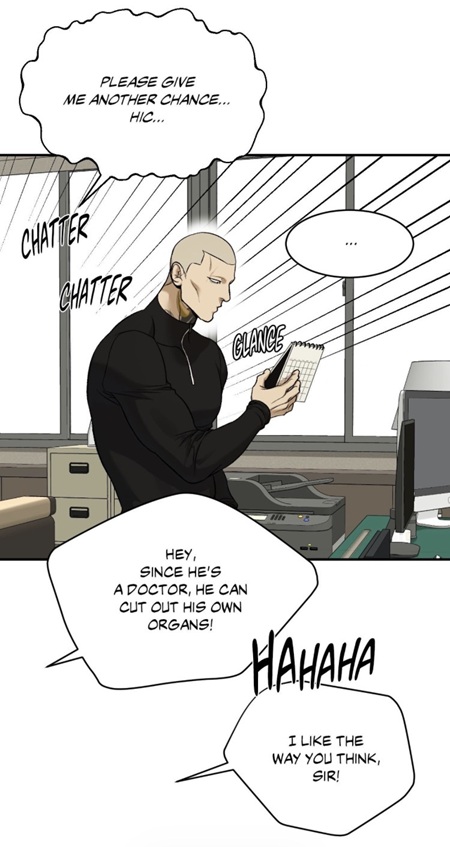 (chapter 93) The authorities perform the task that Junmin himself is forbidden to carry out.
Moreover, the champion understands another important rule of the criminal world: organized crime usually avoids the police whenever possible. The mob prefers to settle conflicts quietly through money, intimidation, or internal arrangements. Calling the authorities risks exposing the entire network. This interpretation also explains why Joo Jaekyung doesn’t report the trespassing and assault to the authorities.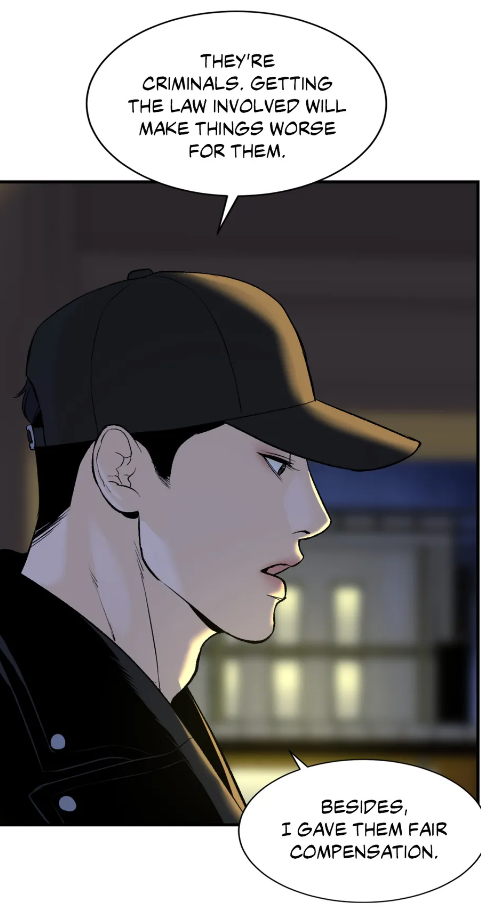 (chapter 18) He knows how the criminal world functions.
Thus I deduce that with this new offer to the former hospital director, the Shotgun is involving not only the medical world more deeply into the scheme, but also the police. 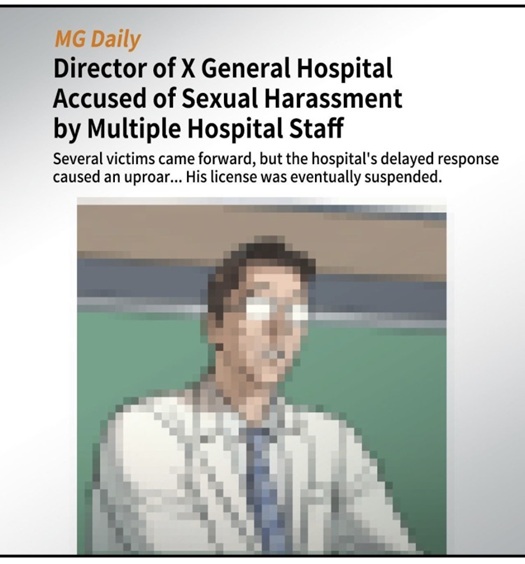 (chapter 91) The article reports that the director of X General Hospital was accused of sexual harassment by several members of the hospital staff. The scandal eventually forced the institution to suspend his medical license. Yet the wording of the report also exposes an important detail: the hospital reacted slowly, and the affair was handled primarily as an internal disciplinary matter.
In principle, repeated sexual harassment by a hospital director should not remain merely an administrative issue. Such actions constitute criminal offenses and could have led to a police investigation. Instead, the institution appears to have contained the scandal within its own structures.
In other words, the hospital followed the same logic that we have already observed in the MFC and within the criminal world itself: avoid the police whenever possible. The reasons are obvious. Once law enforcement becomes involved, internal arrangements lose their power and other crimes could come to the surface. Reports are reopened, testimonies are examined, and the entire chain of responsibility may become visible.
Another important ingredient of this plot is silence. The scandals are not denied outright; they are contained, privatized, and buried. The MFC admits the set-up only behind closed doors. The hospital treats criminal behavior as an internal disciplinary matter. The underworld, for its part, prefers money and intimidation to police reports. In each case, silence becomes a tool of power. What remains unspoken protects the system. That’s why the witnesses and victims need to speak up and report the crimes. Doc Dan has not reported the assault yet: 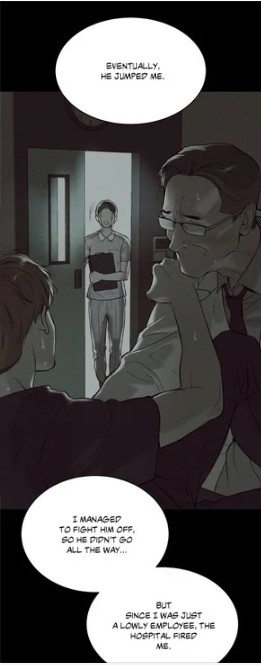 (chapter 90)
Seen from this perspective, the Shotgun’s proposal to the disgraced director acquires a new meaning. By recruiting a figure who already stands at the intersection of scandal and institutional cover-up, he introduces another fragile element into the situation. The director represents a man whose career collapsed precisely because a scandal nearly escaped the control of the institution that protected him. But in his eyes, he stands for “respectability and trust”, as he is called doctor. (chapter 93)
If such a person becomes involved in the scheme against Joo Jaekyung and Kim Dan, the consequences could extend beyond the criminal underworld or the sports organization. The medical world itself—and potentially the legal system—may be drawn into the conflict.
In that sense, the Shotgun’s move does not merely deepen the conspiracy. It risks bringing the one actor that all these systems usually try to avoid: the police. A lesson that he didn’t learn from the past.
And now you may wonder why I remain so focused on the earlier episodes instead of concentrating entirely on episode 94. The reason lies precisely in what this scene reveals.
The conversation between Joo Jaekyung and Kim Dan makes something suddenly clear: together, they embody the opposite principle of the one that has governed the criminal schemes throughout the story. 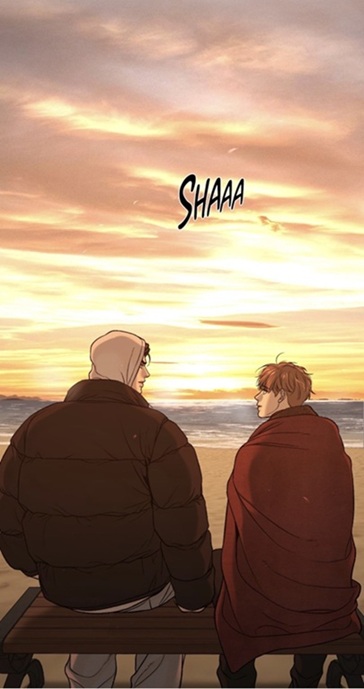 (chapter 94) Up to this point, the antagonists have relied on a simple but effective strategy. By manipulating circumstances, they repeatedly place others at the wrong place and at the wrong time. Each incident—whether involving the media, drugs, or institutional authorities—follows this logic. Someone is caught in a situation carefully arranged by others and must carry the consequences.
Episode 94 breaks this pattern. 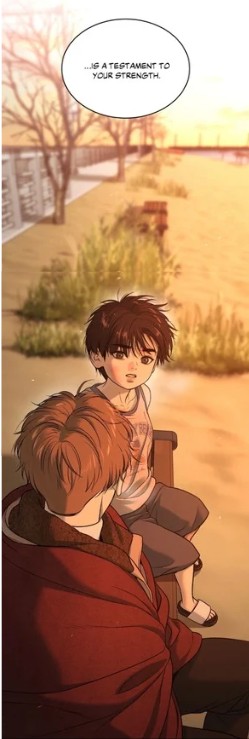 (chapter 94) There is trust, recognition, admiration and open-mindedness. In their mutual confession, the two protagonists do something that none of the criminals ever achieve: they seize the moment at the right time and in the right place. They speak and listen to each other. Instead of being manipulated by circumstances, they recognize the opportunity before them and act upon it.
The result is not merely emotional reconciliation. It quietly undermines the very mechanism that has been used against them. For the first time, the logic of coincidence and manipulation no longer dictates the outcome.
Turning the Method Against the Criminals
Yet the story introduces an important twist. The main couple gradually learns to use the same modus operandi against their enemies: at the right time and the right place. 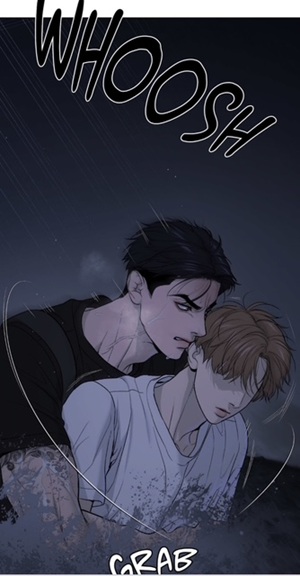 (chapter 59)
  (chapter 79)
 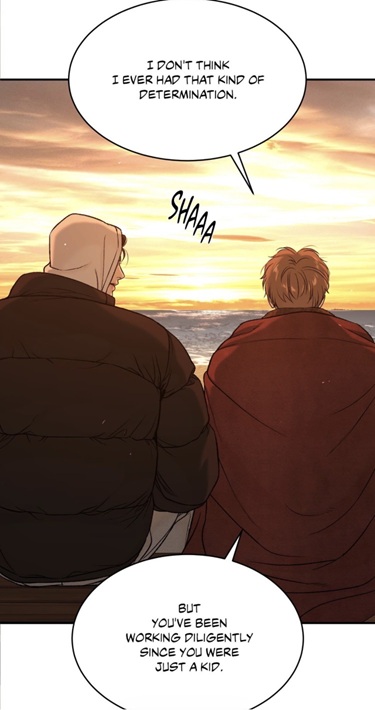 (chapter 94)
A revealing example occurs when Joo Jaekyung publicly challenges Baek Junmin after the fight against Arnaud Gabriel. 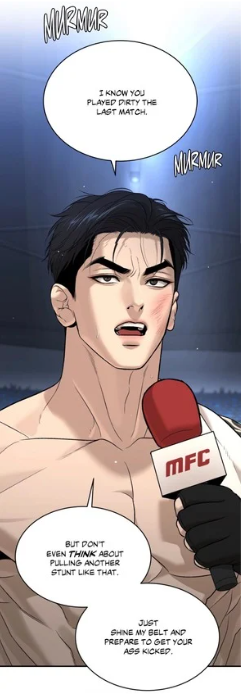 (chapter 87) By issuing the challenge in front of the cameras, the champion forces the MFC to respond. Even though the season had effectively ended, the public nature of the declaration creates pressure that the organization and the media cannot easily ignore.
In that moment, Joo Jaekyung takes control of the narrative.
Baek Junmin suddenly finds himself in the same position that his victims usually occupy: he cannot escape the situation. Instead of manipulating time and circumstances, he must react to them. His glance toward the calendar reveals his awareness that the timing is no longer in his control. (chapter 93)
The antagonists attempt to regain that control by scheduling events close to Christmas, a moment when institutions and public attention may be distracted. Time itself becomes another instrument within the conflict. A second possibility also emerges from the same logic of timing. If the grandmother were to pass away soon 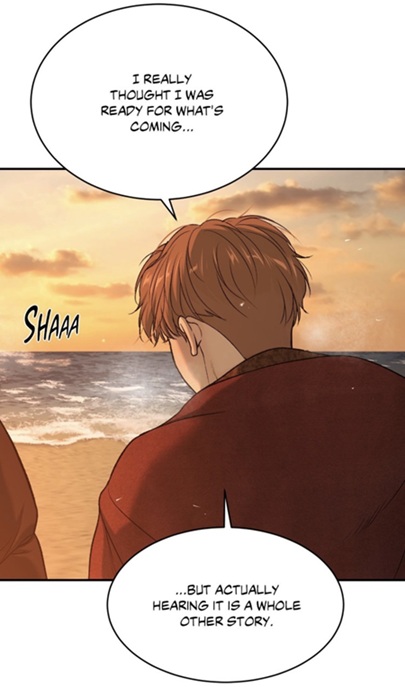 (chapter 94), the situation could disrupt the plans surrounding the anticipated fight with Baek Junmin.
A funeral represents the ultimate example of being at the wrong place and at the wrong time. Death does not follow the schedules of sports organizations or criminal schemes. It interrupts them. In such circumstances, Joo Jaekyung might decide not to appear at the match himself and instead send a replacement fighter, much as similar substitutions have already occurred in the past. (chapter 47)
But the champion’s public statement has already changed the balance of power. By drawing the attention of the media and the authorities, he forces figures like Choi Gilseok to operate under pressure and make mistakes. The latter must begin bribing officials and manipulating the environment simply to buy time. The system that once protected the criminals begins to turn against them.
The Man Who Knew Too Much
This development also explains the deeper meaning behind the title “The Man Who Knew Too Much.”
Knowledge in this story does not come from theory or speculation. It comes from experience. 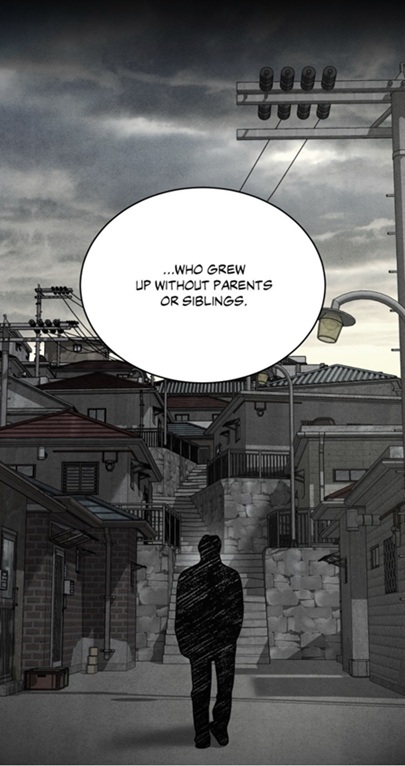 (chapter 94) Joo Jaekyung has survived the criminal world long enough to understand how its mechanisms operate. Through his actions, he gradually passes this knowledge on to Kim Dan.
 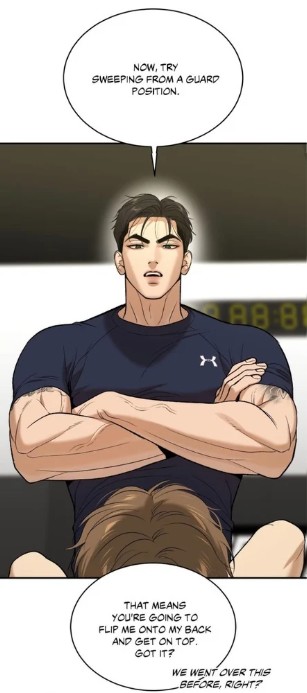 (chapter 88)
He taught him how to swim. He taught him how to fight. He taught him how to take care of himself and to express his opinion and desires. In other words, Kim Dan came to internalize that he also deserved respect. 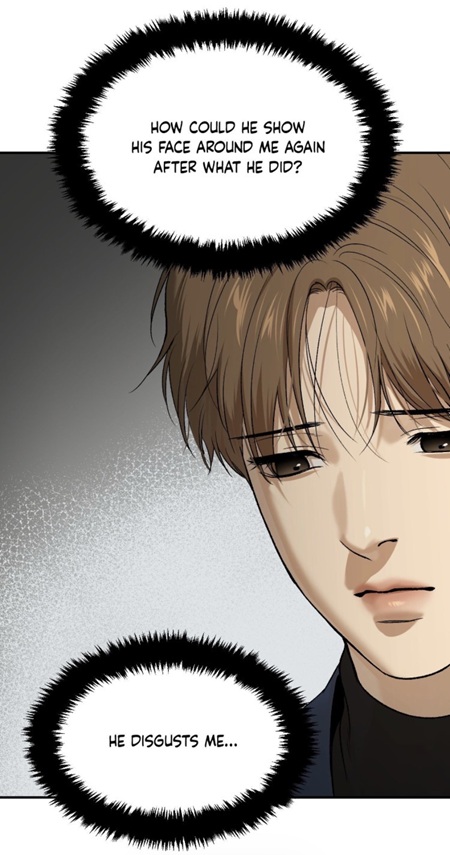 (chapter 91) The athlete exposed him to situations that forced him to grow stronger and more independent. He shared his thoughts and philosophy to his “pupil” as well
 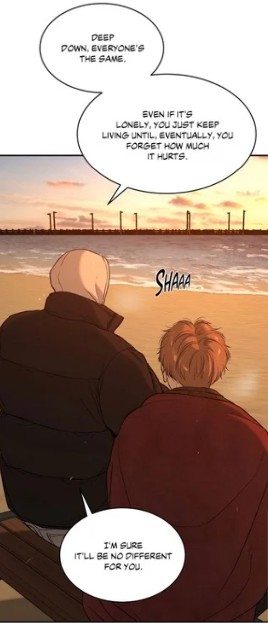 (chapter 94) so that at the end, Kim Dan admits to see him as a “younger sibling”. (donsaeng in Korean)
 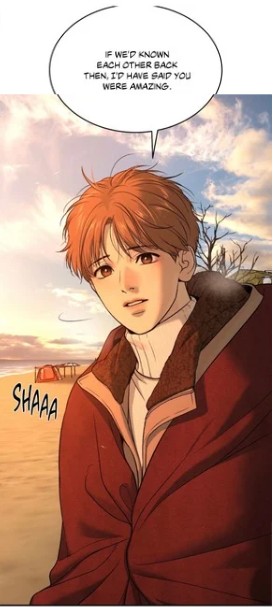 (chapter 94)
Yet his transformation has another consequence. Kim Dan has also become both a witness and a target of the champion’s jinx. By standing beside Joo Jaekyung, he has been drawn into the very chain of manipulations that once isolated the athlete. He can expose the existence of money laundering.
For the first time, the couple begins to grasp wrongdoings and even understand how this mechanism works. And once someone understands the trap, the outcome of the game can change.
The criminals may continue to rely on their favorite principles— money and placing others at the wrong place and at the wrong time. But the situation has now changed. In fact, the schemers will end up being caught at the wrong time and at the wrong place.
Until recently, however, Joo Jaekyung himself was unable to expose Baek Junmin openly. One reason lies in a more personal burden: shame. 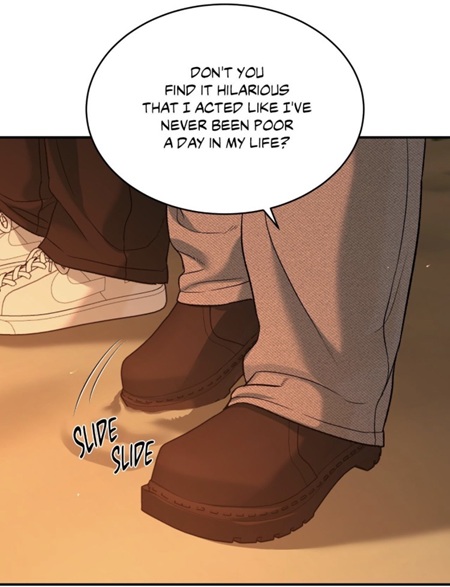 (chapter 94) The champion carried the weight of his past—his violent environment, the humiliation he endured, and the circumstances that shaped his rise. Speaking about these events would have meant revealing parts of his life he preferred to bury.
 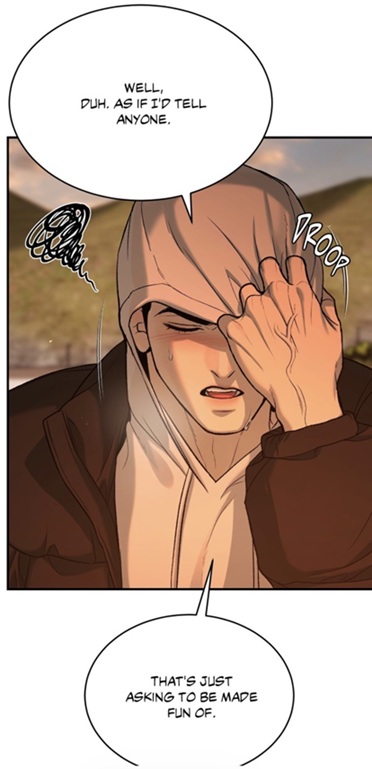 (chapter 94) The conversation on the beach changes this dynamic. By confessing his past to Kim Dan, Joo Jaekyung frees himself from the silence that had protected his enemies. The shame that once prevented him from speaking begins to lose its power.
And once the athlete is no longer bound by shame, he can finally do something he had avoided for a long time: he can speak and reveal his knowledge to the media.
Feel free to comment. If you have any suggestion for topics or Manhwa, feel free to ask. If you enjoyed reading it, retweet it or push the button like. My Reddit-Instagram-Twitter-Tumblr account is: @bebebisous33. Thanks for reading and for the support, particularly, I would like to thank all the new followers and people recommending my blog.
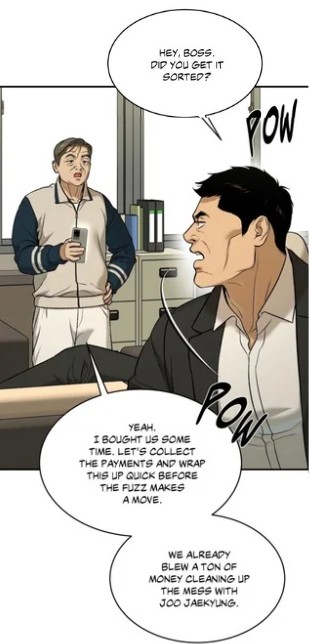 (chapter 93) Beneath the apparent calm of the chapter lies a growing tension: secrets circulate quietly, alliances remain uncertain, and certain characters may already know more than they should.
 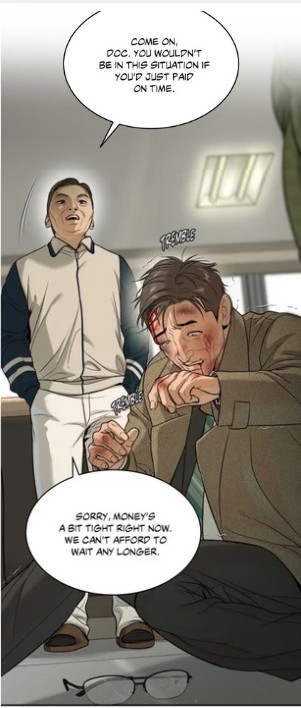 (chapter 93)
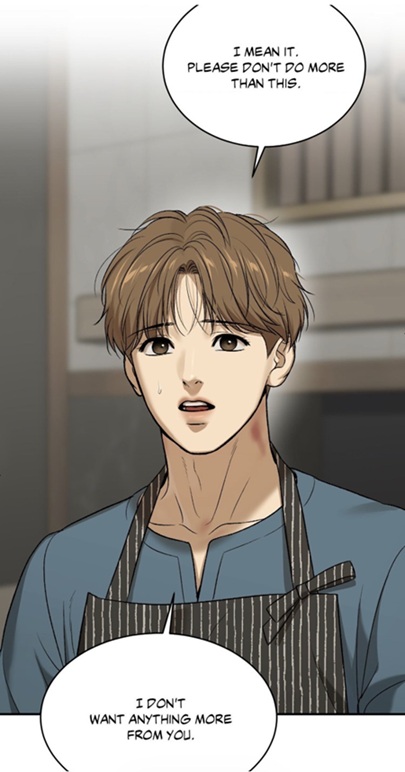 (chapter 93) linked to their previous night together. During the night they shared, the invisible wall that once separated them seemed to disappear completely. Their intimacy was no longer defined by domination or obligation. Instead, the encounter suggested equality (position of 69)
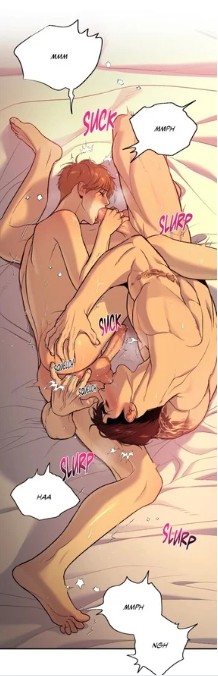 (chapter 92) and reciprocity—an exchange, as Joo Jaekyung himself described it, of “give and take.”
 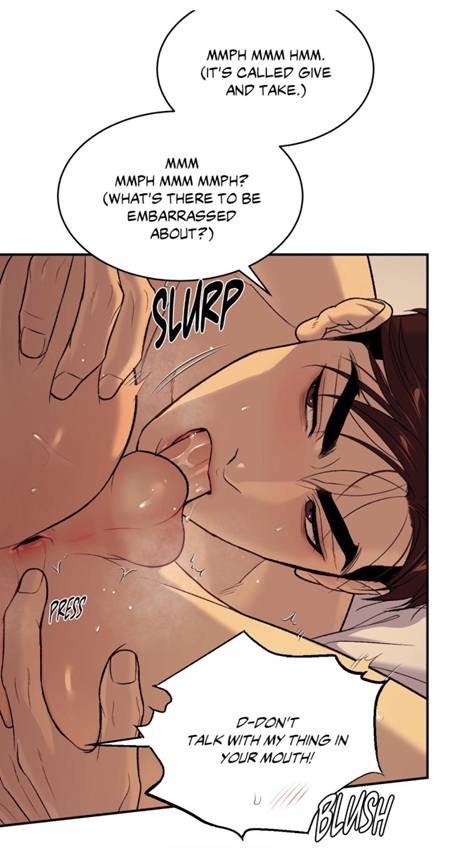 (chapter 92) In a striking reversal, Kim Dan took the initiative
 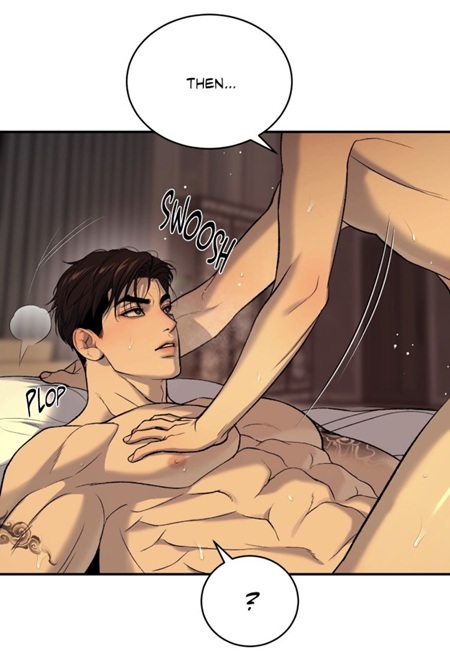 (chapter 92), after being asked about his own desires.
 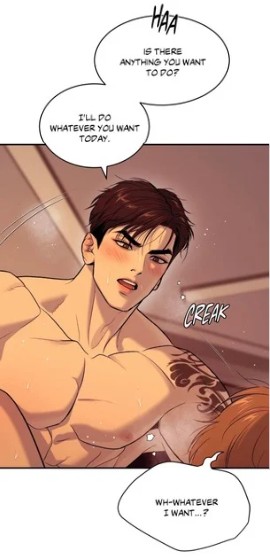 (chapter 92) He was no longer driven by shame, debt or obligation.
 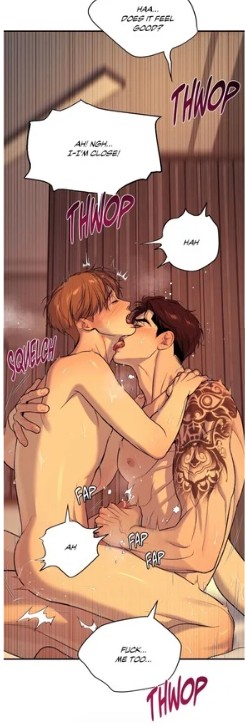 (chapter 92) For the champion, the moment carried the weight of something deeper than physical pleasure
 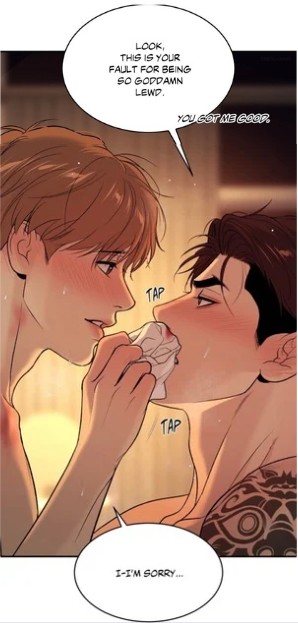 (chapter 92), for he was able to give pleasure to his partner. Thus his self-esteem could only be boosted. For Kim Dan, however, it remained simply sex.
 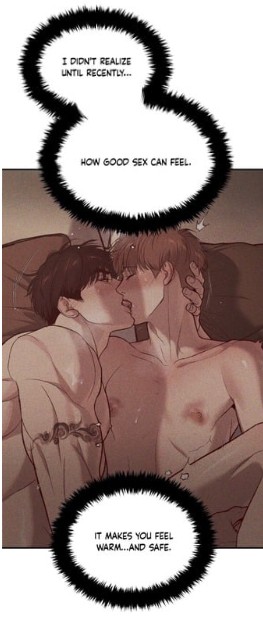 (chapter 92) The imbalance between their interpretations already foreshadowed the tension that would emerge the following morning.
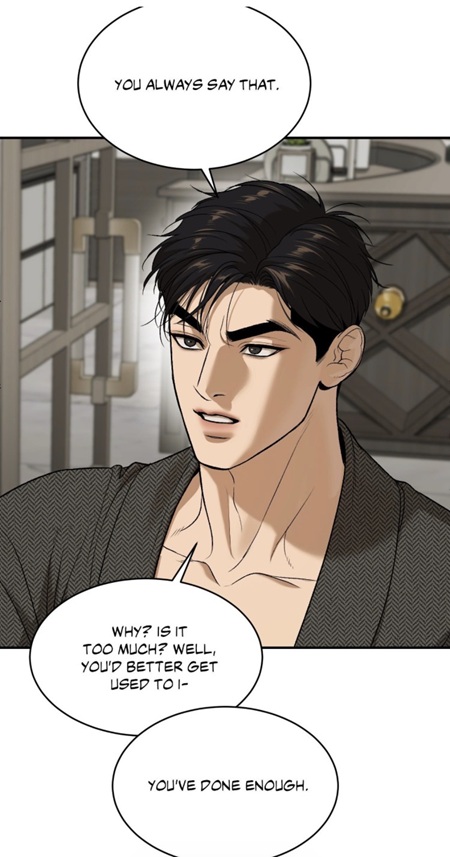 (chapter 93) For the first time, he establishes a clear boundary. The gesture signals a new stage in his personal development: for the first time, Doc Dan speaks as a professional, as a physical therapist
 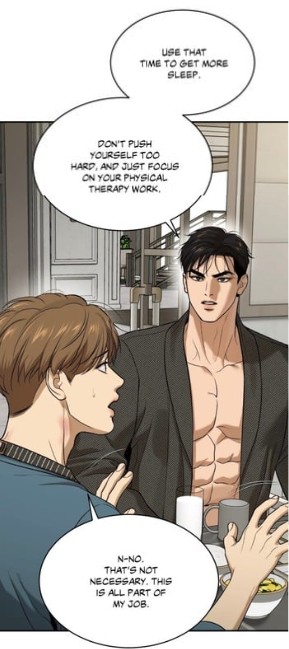 (chapter 93) who knows his role and his responsibilities. He refuses the help with the meals not out of pride, but because he clearly frames it as part of his job. In the past, he would have simply listened, letting others decide or speak in their name
  (chapter 42); now he asserts his own authority and expertise. But just as this moment seems to mark a quiet step forward in their dynamic
 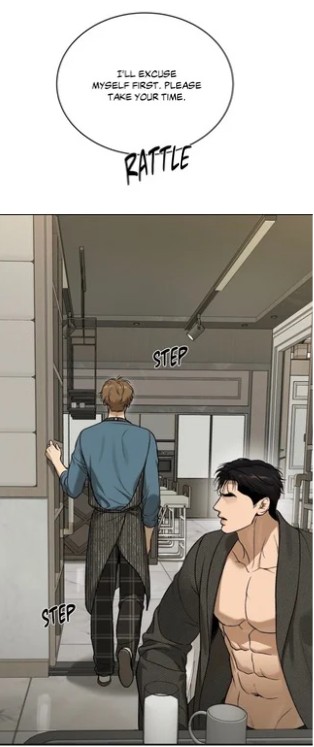 (chapter 93), the narrative abruptly widens its focus, drawing the reader away from this personal shift toward a far more ominous development unfolding elsewhere.
 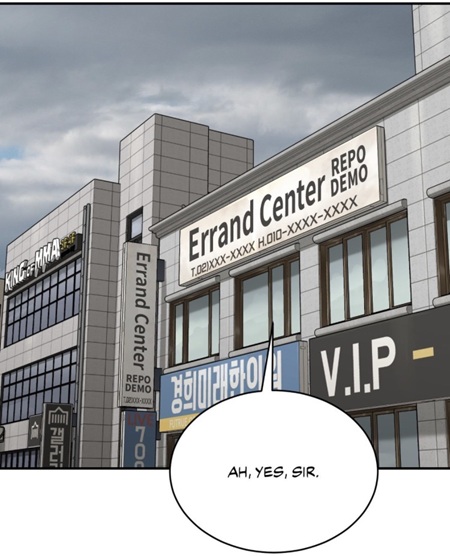 (chapter 93)
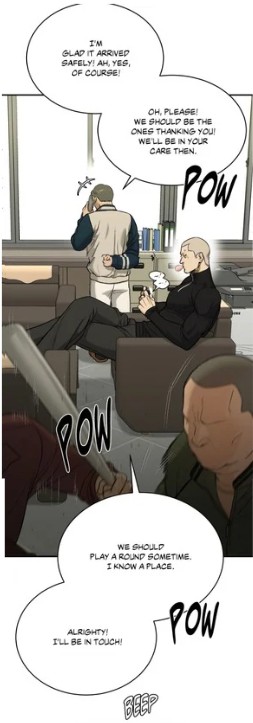 (chapter 93) separating him from Choi Gilseok and Heo Manwook. The atmosphere of that scene is strangely detached. Junmin seems unconcerned with the financial urgency discussed around him; his attention is fixed instead on the cellphone. Yet the readers cannot see what he is watching
 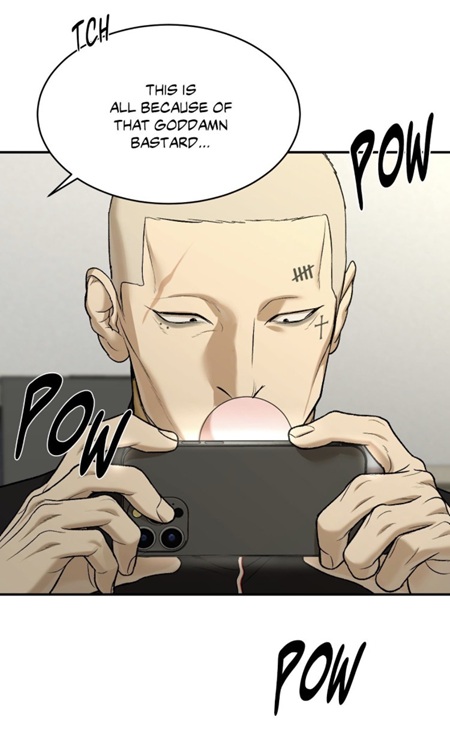 (chapter 93), while he casually blows a bubble of gum, creating a small moment of distraction that contrasts with the tension of the conversation around him. Only when he eventually reaches for the calendar on the desk,
 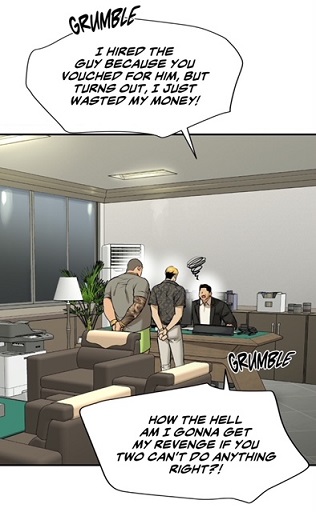 (chapter 46) Yet even before examining the room itself, the exterior sign already introduces an intriguing ambiguity. The building is labeled
 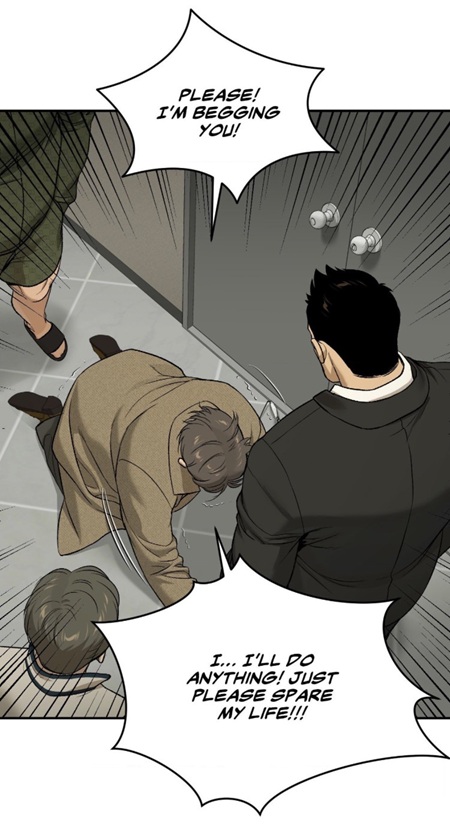 (chapter 93) The furniture thus reinforces the same strategy as the office name itself: it maintains the appearance of a respectable business while the violence of the operation is carefully kept out of sight.
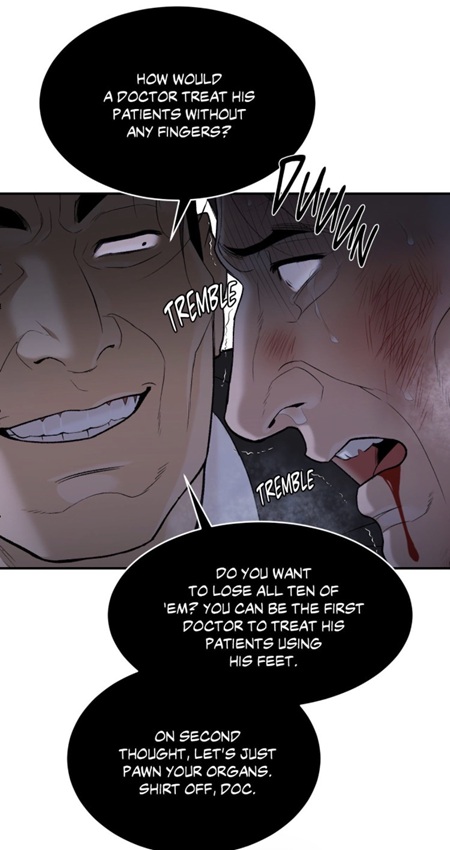 (chapter 93), who confronts victims and manages the loan shark operation. Yet the scene gradually reveals that he is less a true mastermind than a frontman—a visible intermediary who handles the dirty work.
  (chapter 46) Hence he calls Choi Gilseok “boss” and asks about the current situation.
 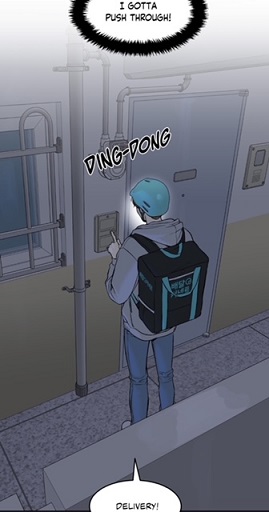 (chapter 42), delivering food or packages across the city during the night. His work is built on the same basic principle: completing tasks and transporting items for others which exposed him to dangers and shame.
  (chapter 42) The parallel is subtle but revealing. While Kim Dan runs legitimate errands for the athlete’s sake, the criminals in the Errand Center perform their own “services” within the shadow economy. Both operate within a system of delivery and obligation—yet one side does so out of feelings, while the other exploits the structure for predatory purposes. Gratitude versus Greed.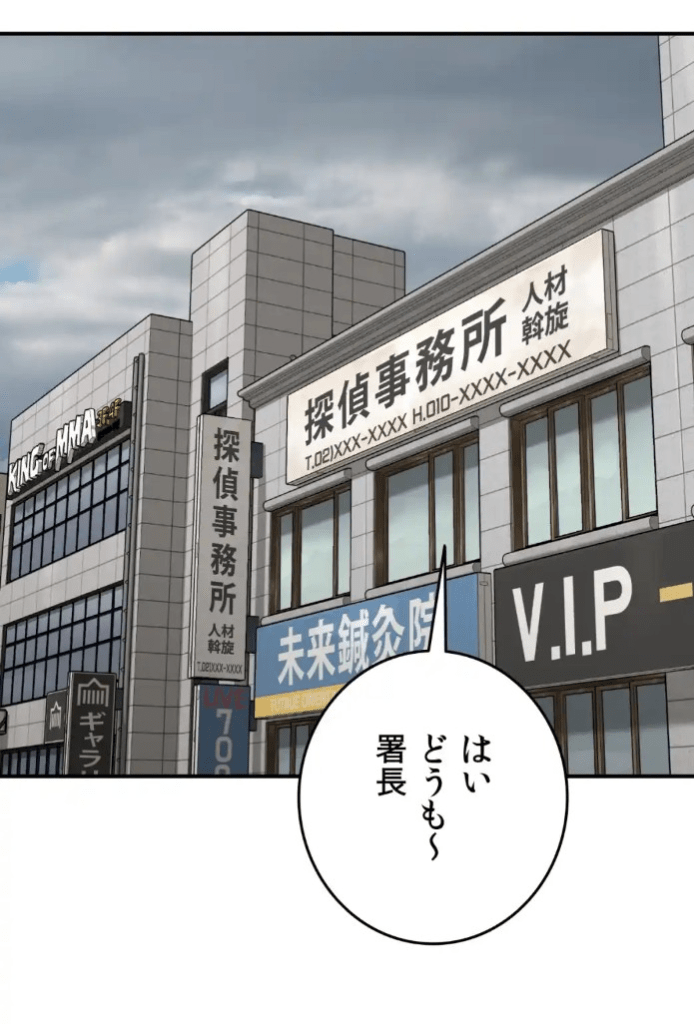
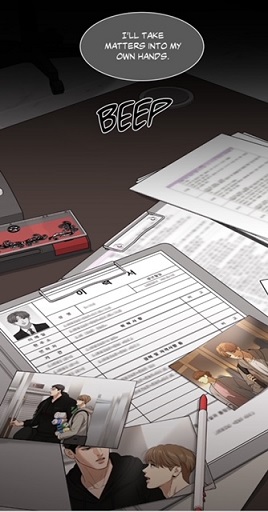 (chapter 46). The operation looked methodical, almost professional, as if a genuine investigative agency had been hired to monitor the champion’s environment.
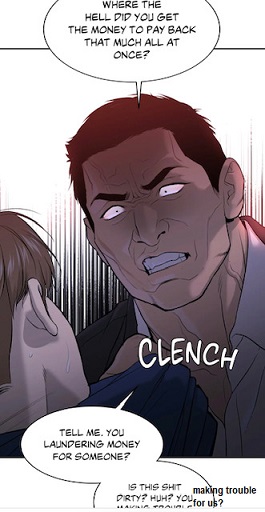 (chapter 11) At that moment, the loan shark explicitly raised the possibility of money laundering. This detail suddenly casts the entire network in a different light. The illegal gambling operations visible on Heo Manwook’s computer are therefore not merely a source of profit; they may also serve as a mechanism through which larger sums of money circulate and are quietly reintegrated into the legal economy.
 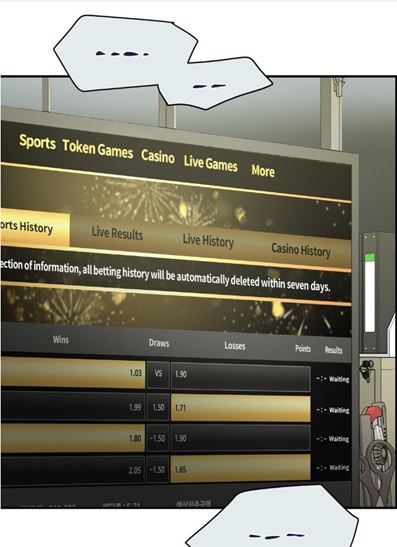 (chapter 46) In this structure, Choi Gilseok himself appears less like the true mastermind than another intermediary in a much larger financial chain.
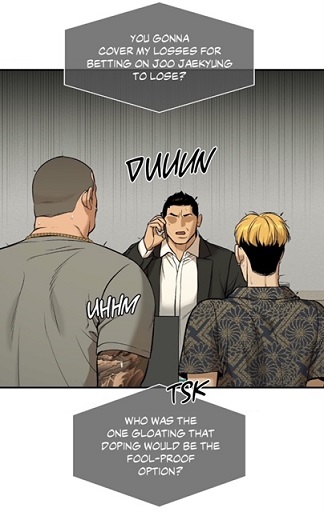 (chapter 46) In chapter 46, he was already acting behind the back of that parent company, manipulating events to influence the outcome of the fight. Later developments—such as the conversation at the café with Kim Dan and the suspicious use of the spray—suggest that he may eventually have received support from that higher structure.
  (chapter 52) and manipulating the situation through the switched spray, he appears to have pursued his own strategy within the system.
 (chapter 46) In other words, the champion was originally the system’s most valuable asset. His visibility and reputation attracted attention, betting activity, and therefore profit. However, once he disrupted the carefully orchestrated mechanisms behind the fights, that same visibility became dangerous. The athlete who once generated the most revenue suddenly turned into the network’s greatest liability. From that moment onward, the logic of profit shifted into the logic of elimination.
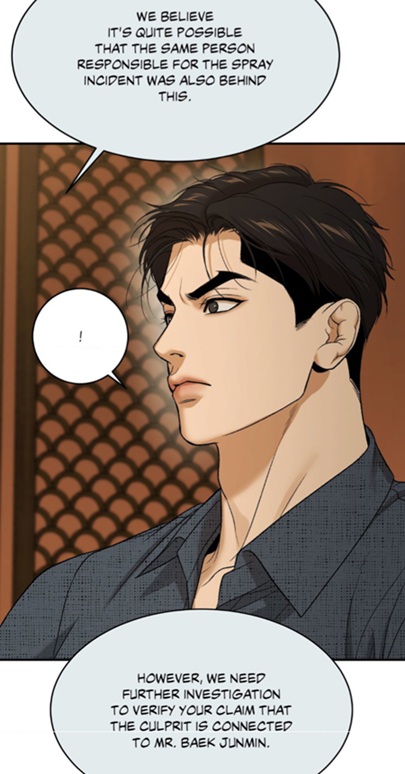 (chapter 69). They know, for instance, that Heo Manwook once misunderstood the name “Team Black,” interpreting it as a brothel rather than a gym
  (chapter 16). Jinx-Lovers have seen fragments of the schemes unfolding behind the scenes and can therefore begin to assemble the existence of several overlapping plots.
 (chapter 33)
 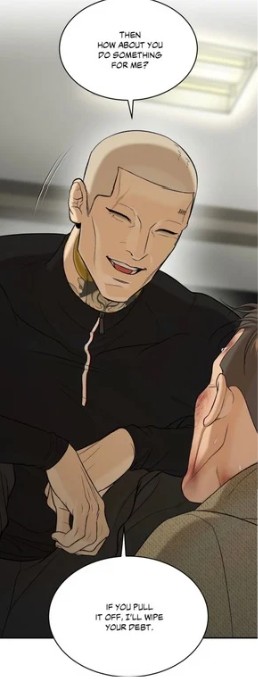 (chapter 93) He speaks himself. Addressing the disgraced hospital director, he offers to erase the man’s debt—on the condition that he carries out a task for him.
 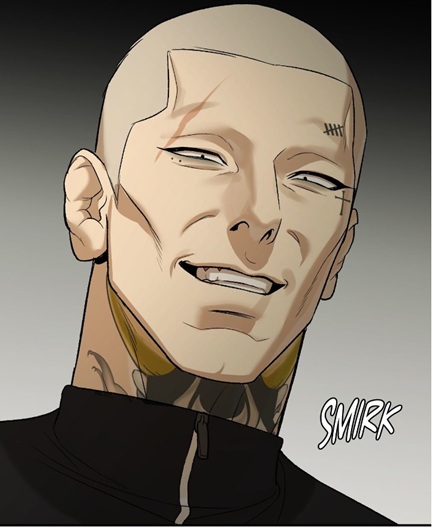 (chapter 93) That’s why he is smirking. The wrongdoing will be carried out by someone else, allowing him to stay in the shadows as he always has. Yet Junmin underestimates the weight of his own words.
 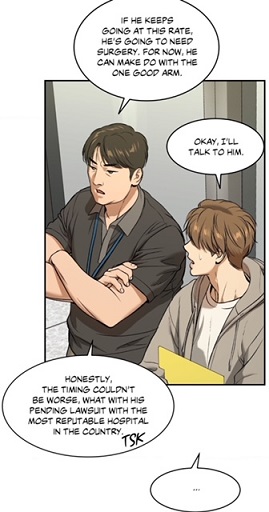 (chapter 42)
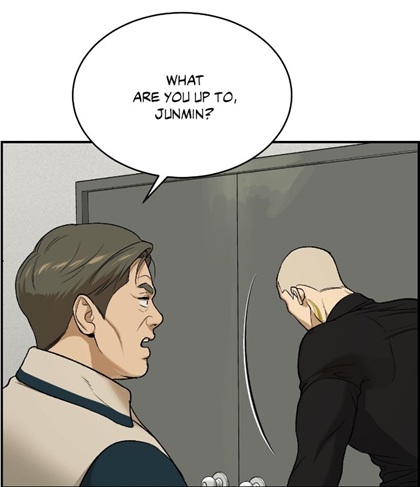 (chapter 93) Hence the director asks him this question. He is now taking the lead. Knowledge and liability become inseparable. Once the doctor accepts the offer, Junmin’s words effectively pull the trigger: the moment the deal is spoken aloud, the hidden system that sustained the illegal fights begins to lose its stability. By drawing the corrupted medical world directly into the operation, the fighter who once thrived in the shadows may in fact become the spark that accelerates the collapse of the entire machine. I would even add, with this new stunt, he is not realizing that he could be blamed for the past crimes (drugged beverage, switched spray etc.).
 (chapter 16) Doc Dan’s hand got crushed and the former hospital warden is warned that he might lose his fingers; thus he might no longer be able to work.
  (chapter 46), collect debts
  (chapter 11), intimidate victims, and ensure that money continues to circulate through the laundering mechanism. In this sense, the repeated focus on hands and fingers becomes meaningful.
 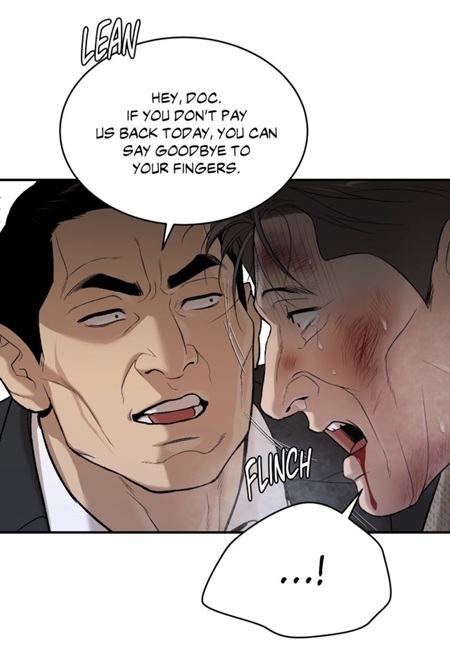 (chapter 93) —the part of the body that allows people to work and generate the very income he seeks to extract. By threatening to destroy his victims’ hands, however, Heo Manwook undermines that capacity himself. The gesture exposes a certain narrow-mindedness: his violence contradicts the economic logic he is supposed to enforce, revealing not only his cruelty but also him as an enforcer who acts impulsively rather than strategically.
 (chapter 16) rather than locating him through documentation or surveillance. This observation corroborates my previous deduction: he is not the one following the physical therapist in secret and taking pictures of him. Secondly, observe his reaction, when he reads the money transfer:
 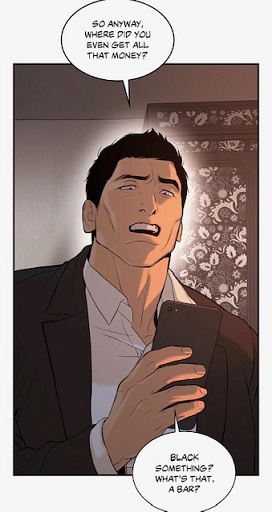 (chapter 16) The loan shark reads the name quickly or without interest, so that he can only remember the most striking word. In this case, “Black” stands out, while “Team”—a generic word—disappears from his memory. So his phrasing suggests he did not pay attention to the full name. This displays his lack of professionalism. He doesn’t investigate carefully.
 (chapter 16) Instead of verifying the information, he projects his own criminal assumptions onto the situation.
 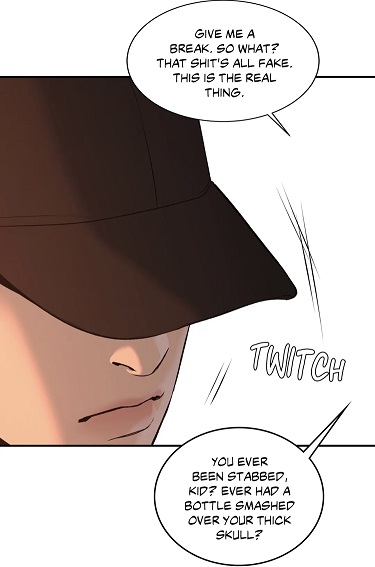 (chapter 17) Instead of investigating carefully, he interprets every new piece of information through the lens of his past encounters and knowledge. His boss is rigging fights, so the others must do the same. When confronted with the name “Team Black,” he immediately assumes it must refer to a bar or brothel. What appears to be practical experience therefore becomes a liability. The man who believes he knows reality best may in fact be the one most vulnerable to misreading it.
  (chapter 16) demonstrate that Heo Manwook was already operating within that gray zone where medicine, crime, and financial exploitation overlap. It is therefore not surprising that the disgraced hospital director later appears within this environment. The medical world has long been entangled with the loan shark’s activities and this through Choi Gilseok who has a connection to a pharmaceutical company.
  (chapter 46) The “hand” of the organization may execute violence, but it does not decide the strategy.
 (chapter 16), emphasizing the asymmetry between predator and prey. Yet when he threatens the disgraced hospital director, the composition changes subtly.
 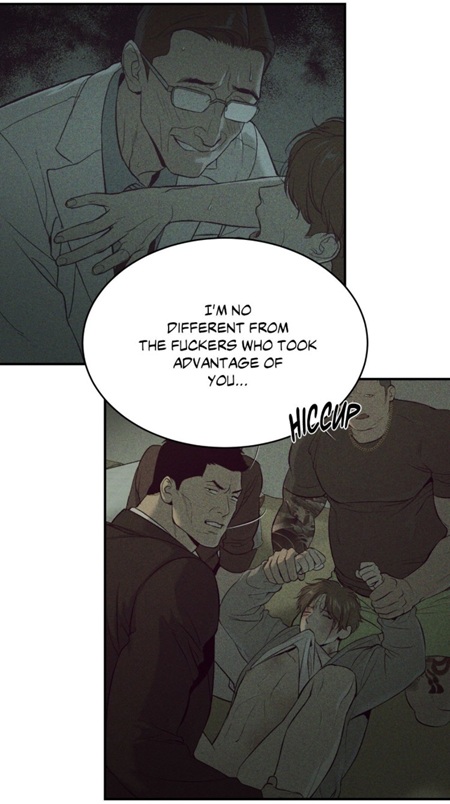 (chapter 91) Reflecting on the men who had abused Kim Dan, the champion bitterly admits that he is “no different from the fuckers who took advantage of you.” Although Jaekyung is still unaware that Heo Manwook actually attempted to rape Kim Dan earlier in the story, the scene nevertheless establishes an unsettling parallel between different forms of abuse of power. The disgraced hospital director exploited his authority as a physician, while the loan shark uses violence and intimidation to dominate his victim. Both belong to the same shadow world where institutional positions become instruments of exploitation.
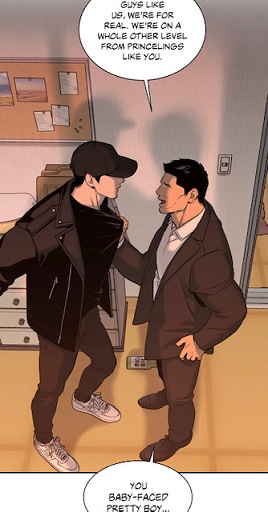 (chapter 17) he possesses extensive knowledge about the hidden mechanisms of the criminal network — rigging fights, illegal betting, debt collection, organ trafficking, and even the exploitation of vulnerable individuals. Yet this knowledge does not grant him control; instead, it entangles him more deeply in the system’s corruption. The more he knows about its secrets, the less clearly he perceives reality. Years of operating within the criminal network have isolated him from the logic of the legal world. Surrounded by corruption, intimidation, and bribery, he gradually begins to believe that these mechanisms can shield him from any real consequences. The knowledge that once gave him power therefore becomes a distortion: it convinces him that he can act with impunity, imagining that the system protecting him will always remain intact. What once appeared to be power gradually reveals itself as liability. I would even add. This protection could only function as long as the system itself continued to run smoothly. It depended on the uninterrupted flow of money circulating through the laundering network. The moment that flow is endangered—when bets collapse, scandals emerge, and funds begin to disappear—the shield of protection weakens. Figures such as the director of the gym and the loan shark suddenly become far more exposed than before.
 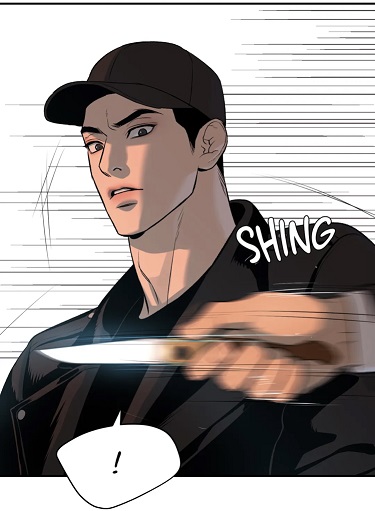 (chapter 17) The weapon signals impulsive violence rather than calculated strategy.
 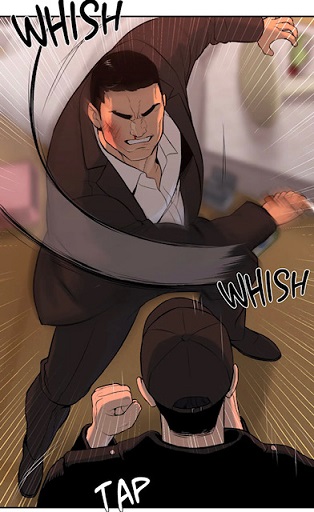 (chapter 17) The knife belongs to the realm of direct physical force—the crude instrument of someone who acts rather than plans. At the same time, this weapon reveals why Heo Manwook believes that his power and strength are real. The latter stands for ultimate violence, someone can die with such a weapon. However, like exposed in a previous essay, MMA fighters can still die with bare hands. A wrong move or a mistake …
  (chapter 25)
 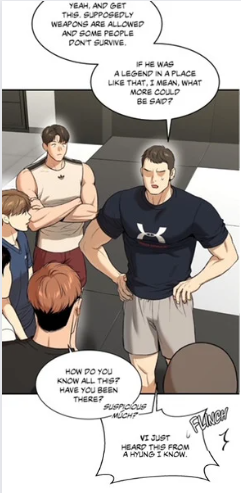 (chapter 47) The underground arena operates according to entirely different rules, where knives are not anomalies but part of the environment. In this sense, Junmin’s threat does more than intimidate the former hospital director—it exposes the violent logic of the system that produced him.
 (chapter 11) the loan shark refuses to rely on the transaction itself. Instead of trusting the digital record, he personally visits Kim Dan and continues the physical abuse. In his worldview, confirmation must come through intimidation rather than documentation.
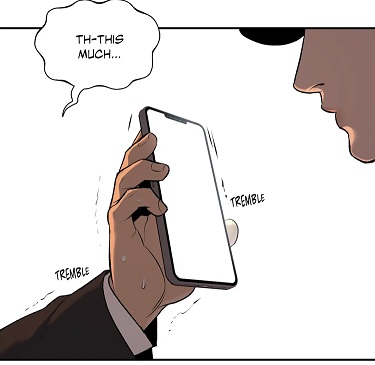 (chapter 17) When Joo Jaekyung later transfers the money directly to him using his own phone
  (chapter 17), the transaction itself becomes a form of evidence. What Heo Manwook perceives merely as a convenient payment leaves behind a record — one that cannot be erased by violence. The phone quietly transforms the power dynamic: intimidation may silence witnesses, but it cannot erase a transaction history.
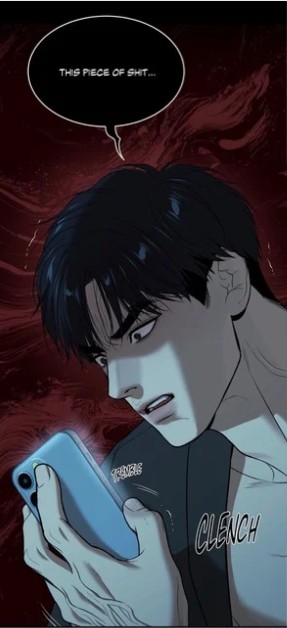 (chapter 91) The champion carefully reads the news article exposing the former hospital director’s crimes.
 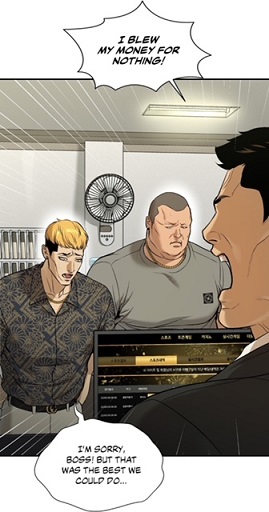 (chapter 46) The computer visible on Heo Manwook’s desk quietly contains a record of the entire operation. The illegal betting site displayed on the screen is not merely a tool for profit; it is also a potential archive of evidence—transactions, accounts, and financial flows that could expose the laundering system. In other words, the machine that allows the network to generate money simultaneously preserves the traces of its crimes.
 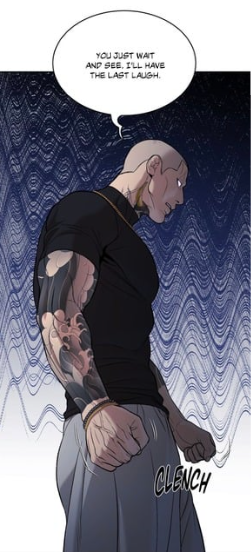 (chapter 87) Joo Jaekyung’s public exposure of the stunt did not merely create financial problems for the organization. It inflicted a fresh narcissistic wound on Junmin himself. The humiliation was public, visible, and impossible to ignore. In that sense, the upcoming match is not only a sporting deadline but also a symbolic countdown: a chance to reverse the humiliation, reclaim his standing, and restore a damaged image. Time, for Junmin, does not move forward in a stable or mature way. It circles obsessively around injury, revenge and shame; he stores it.
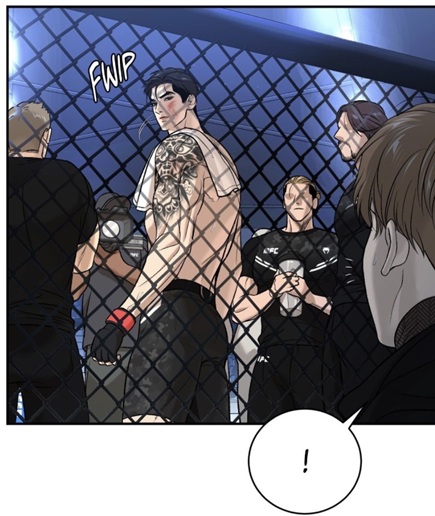 (chapter 87) The moment appears insignificant to most spectators. Yet for someone who already knew the identity of the person standing there, the gesture could reveal something important.
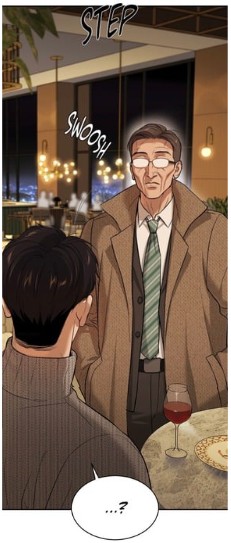 (chapter 90) The only difference is the loss of his spectacles. They are not only broken, but also lying next to him. The loss of his glasses mirrors his situation: he is forced to face reality and as such he is discovering the true reasons behind doc Dan’s greed: despair and fear in front of the loan shark.
 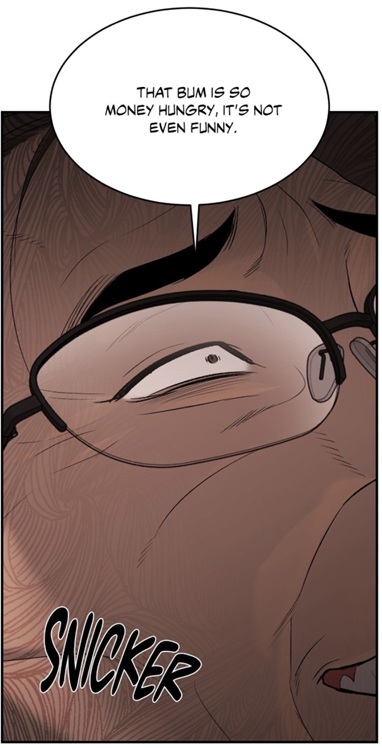 (chapter 90) One could say, he is now receiving his karma. Like mentioned above, the behavior and words of the men
 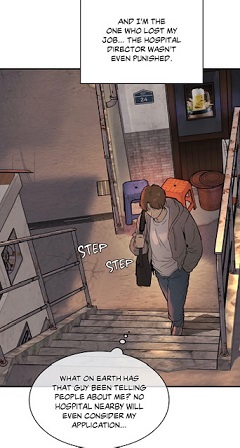 (chapter 1) So what did he hear at the office the whole time?
 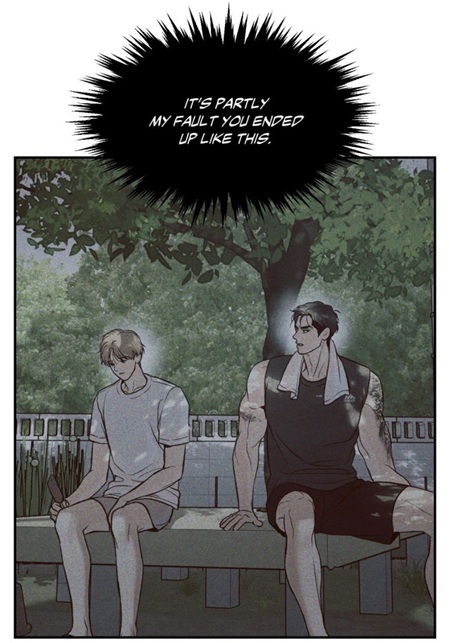 (chapter 91) Thus I deduce that the physical therapist has become the real target of the next plot.
 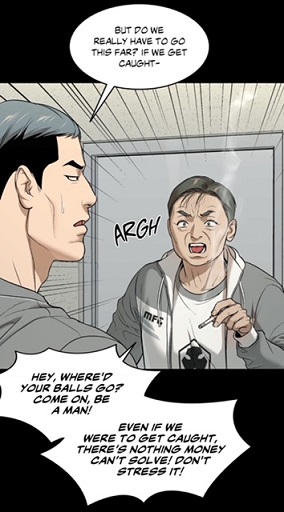 (chapter 50)
 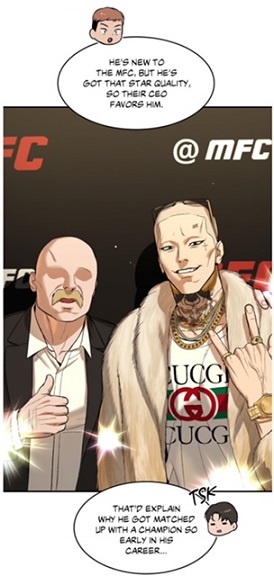 (chapter 47) Junmin’s “star quality” and supports his rapid rise within the organization. Such endorsement provides him with a form of institutional legitimacy that shields him from direct scrutiny. His authority does not come from discipline or merit alone but from the structures that elevate and protect him. And observe how the lady in red protected the “champion’s reputation”.
 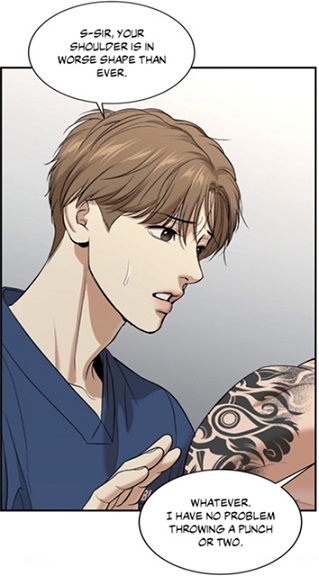 (chapter 41) The official report contradicts the observations of the physical therapist. Moreover, they had allowed the fight, though the athlete’s foot had been injured.
 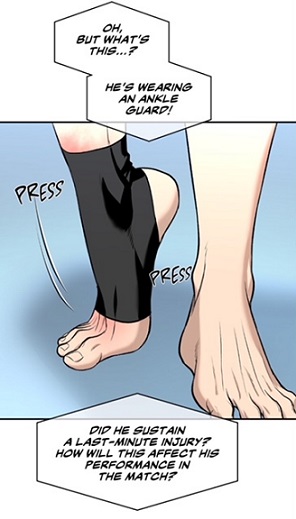 (chapter 50) Later, after the match, the examination of the fighters at the health center takes place in conditions that clearly lack privacy
 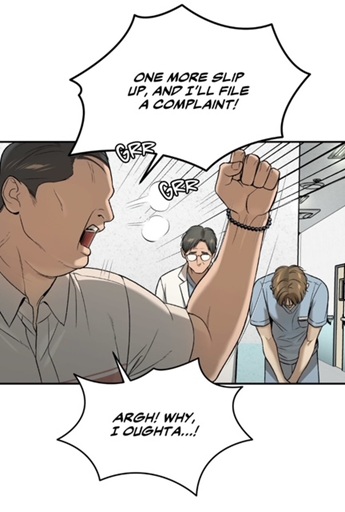 (chapter 59) Finally, because of the perverted hospital warden’s assault, the main lead ended up blacklisted. He could never get hired at another hospital. If the narrative surrounding the injury were manipulated, the responsibility for Joo Jaekyung’s worsening condition and the schedules could easily be redirected toward him.
  (chapter 46) Throughout the story, the coach frequently appears wearing glasses—a visual symbol traditionally associated with knowledge and clarity. Yet despite this apparent vision, he repeatedly fails to recognize the dangers surrounding Joo Jaekyung. As the champion’s manager, Park Namwook is responsible for organizing his schedule and protecting his long-term career. In principle, this role should place him in the position of a guardian. But he does not intervene
  (chapter 41), he just stands by his side.
  (chapter 17) Instead of acting as a protective barrier between the athlete and the pressures of the industry, Park Namwook frequently defers to the logic of the organization. When the CEO of MFC later invites the champion to an important meeting, the coach encourages him to attend, once again placing institutional expectations above caution.
  (chapter 69) In this sense, Park Namwook’s authority begins to resemble the same pattern visible in Baek Junmin’s behavior: responsibility is repeatedly shifted upward toward the organization MFC or Joo Jaekyung as the owner of Team Black
 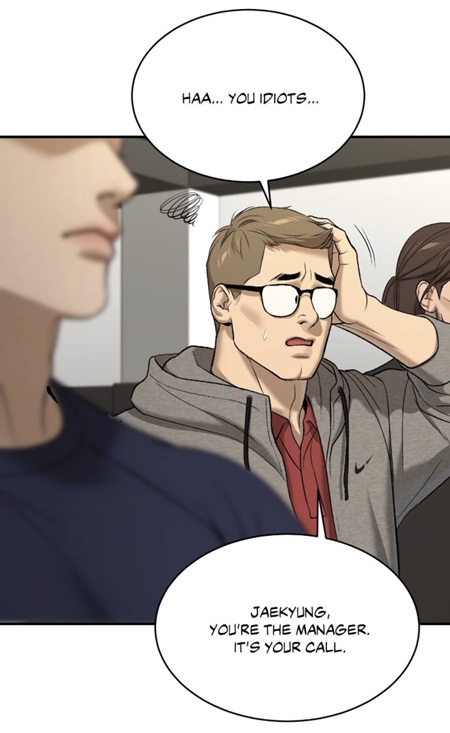 (chapter 88)
 (chapter 61). Each layer appears authoritative, yet together they create a system in which accountability becomes blurred.
 (chapter 49) A shotgun is not a weapon designed for precision. When fired, it releases multiple pellets that spread across a wide area, striking several targets at once. Junmin’s strategy follows a similar logic. Rather than confronting Joo Jaekyung directly, he destabilizes the structures surrounding him: the media narrative, the medical establishment, the leadership of MFC, and potentially even the champion’s personal relationships. Each move strikes a different layer of the system protecting the fighter. The goal is not a single decisive blow but a gradual weakening of the entire structure around the champion.
 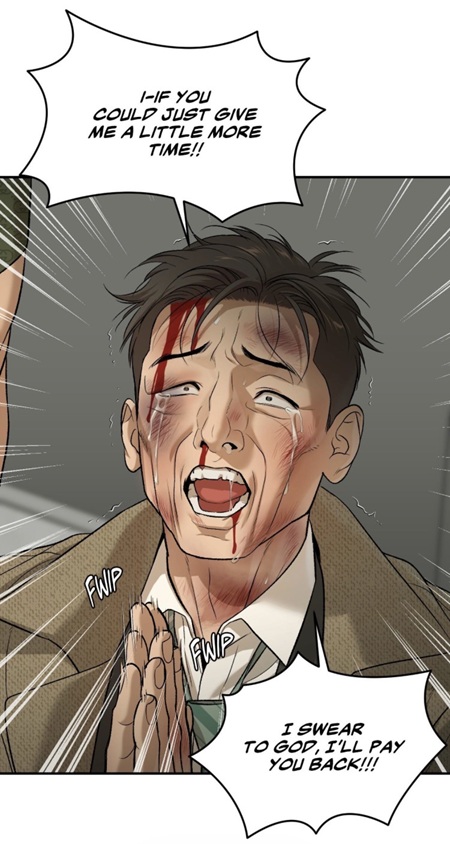 (chapter 93) Unlike the other men in the room, this individual already stands at the intersection of several narrative threads. He knows Kim Dan.
 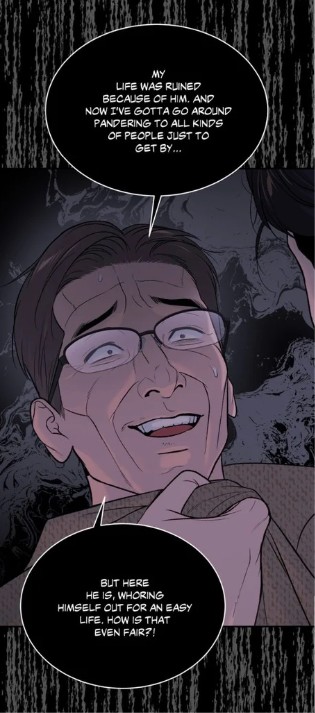 (chapter 90) He has encountered Joo Jaekyung. And he has personally witnessed the dynamics between them.
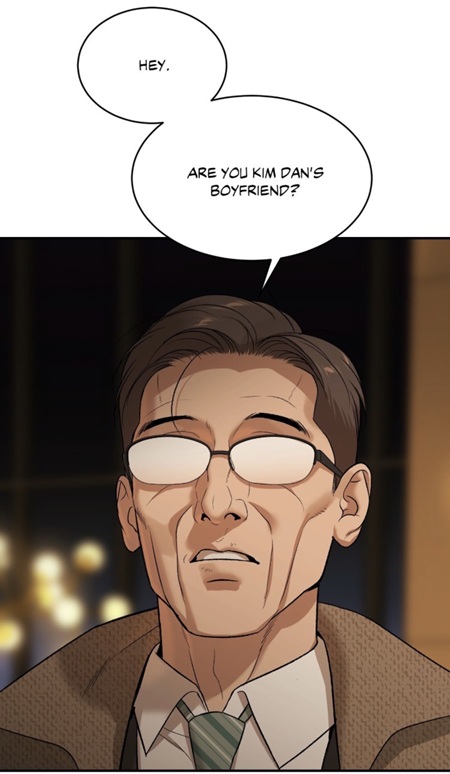 (chapter 90) Secondly, he was doing it for the money, hence he called him a slut.
 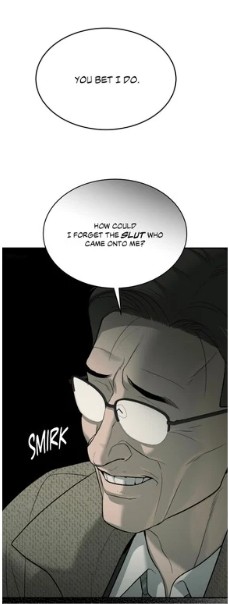 (chapter 90) This misunderstanding fundamentally shapes how he interprets the situation. In this sense, the disgraced director resembles Heo Manwook. Both men rely heavily on their past experiences when judging others. The loan shark assumes that Kim Dan must have obtained the money through prostitution or some other illicit activity, while the former hospital director interprets the closeness between the athlete and the therapist as evidence of a romantic relationship. In both cases, what appears to be practical knowledge becomes a source of blindness. Their experience allows them to recognize familiar patterns, but it also prevents them from seeing the complexity of the reality before them. The relationship between Joo Jaekyung and Kim Dan does not fit into a simple category such as business, manipulation, or romance. Their bond evolves gradually and reflects a far more complex emotional dynamic.
 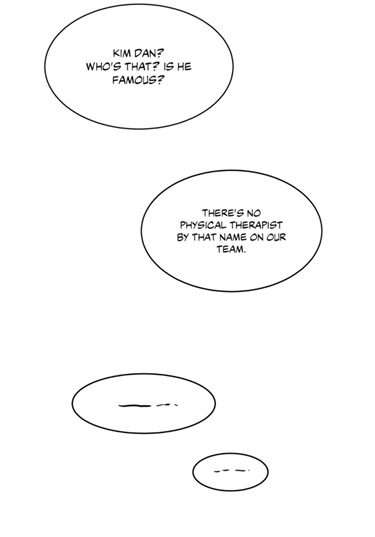 (chapter 56), hospitals repeatedly responded that they had never heard of anyone by that name.
 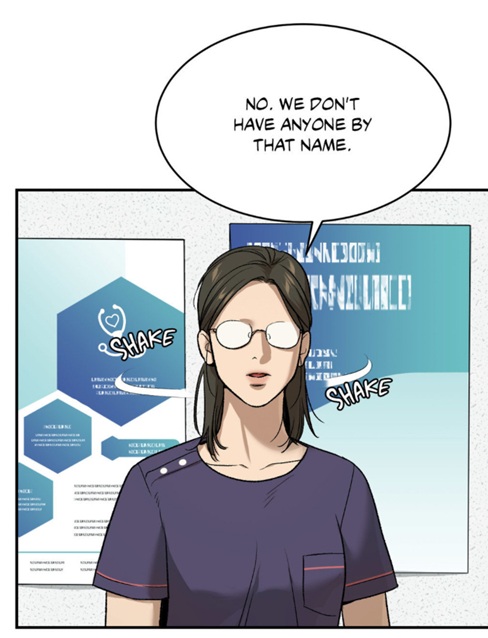 (chapter 56) This reaction suggests that the young therapist had already been erased from the professional network in Seoul. Far from protecting him, this invisibility places him in an extremely fragile position: without institutional recognition, he has no professional community capable of defending him.
 (chapter 5) The athlete might realize that the narrative emerging around Kim Dan does not match the reality he previously encountered while searching for him. What appears at first as professional criticism could therefore reveal the existence of a coordinated attempt to manipulate the story.
 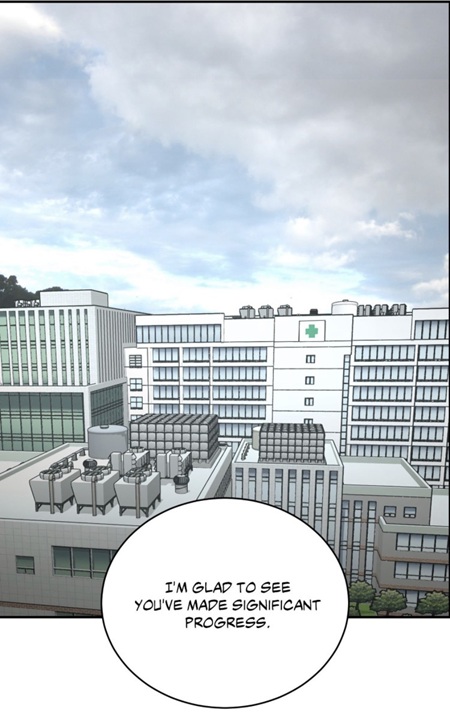 (chapter 91)
  (chapter 36)
 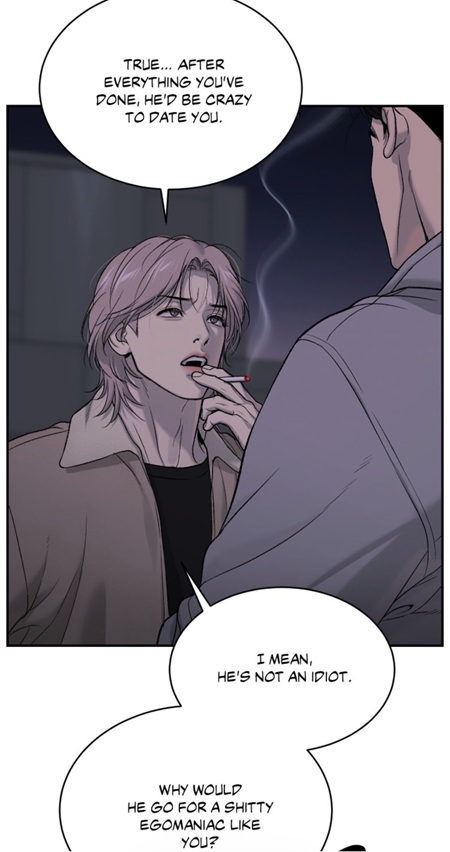 (chapter 89) In such a scenario, the young therapist would not simply be accused of incompetence. His entire credibility could be undermined, before he even had the chance to defend himself.
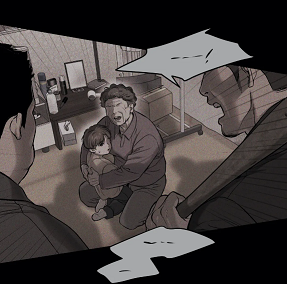 (chapter 5) or attacked in the street
 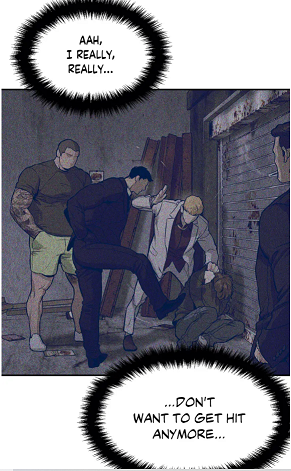 . (chapter 1) His office functioned as a hidden lair, carefully separated from the violence carried out by his subordinates. The presence of the disgraced director inside that office therefore represents a significant rupture in Heo Manwook’s usual methods.
 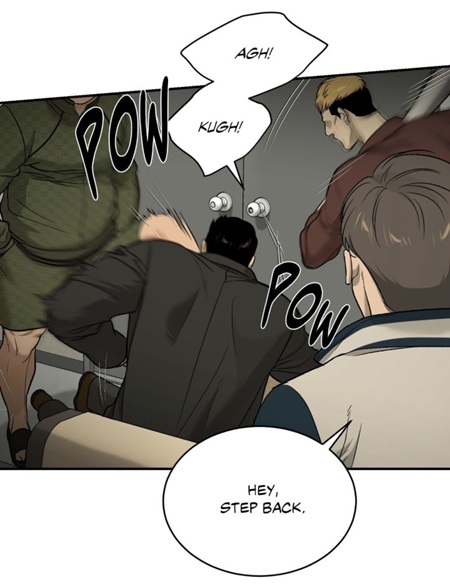 (chapter 93) Moreover, this time he is the one beating the victim, while one of his minions is standing.
 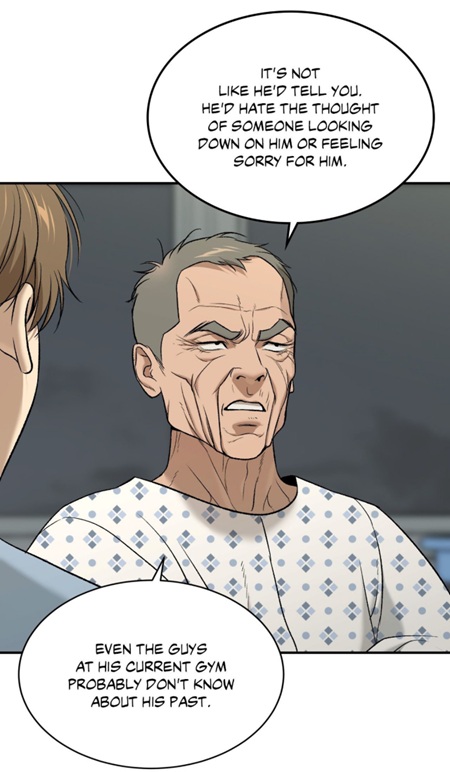 (chapter 74) Joo Jaekyung represents yet another form of knowledge: the knowledge of experiences. Through hardship, defeat, and survival, he has learned to recognize the realities of the world step by step. By living next to doc Dan, he learned to listen and observe so that he is now more aware of the world surrounding him. The true tension of this arc therefore lies not simply between ignorance and knowledge, but between three different ways of understanding reality. One man believes he understands everything, another quietly carries knowledge that could expose it all without realizing it, while the third slowly learns the truth through experience.That is precisely why, in the illustration, they now stand facing each other.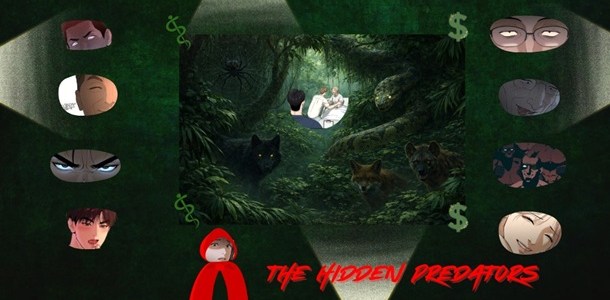
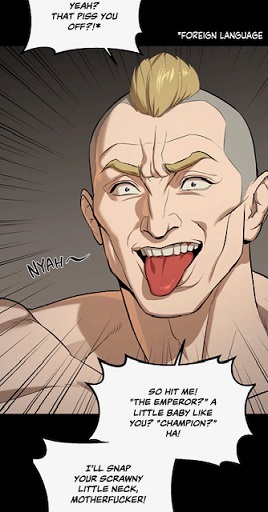 (chapter 14) Others hide behind systems.
 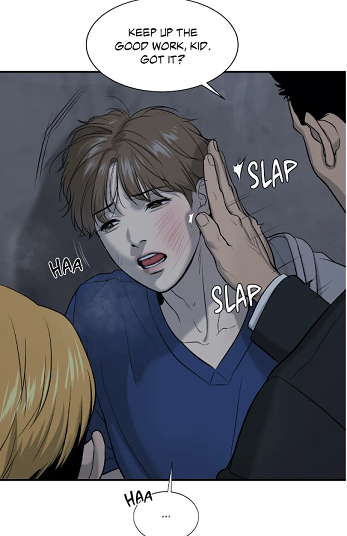 (chapter 11) Others exploit labor, fear, loyalty, or belief. The forest contains them all.
  (chapter 42). When he speaks of Joo Jaekyung, his language is explicit: the champion was a source of milk, a body that could be “milked” for money, favors, and reflected status. In biological terms, this is parasitism rather than hunting — survival not through direct attack, but through prolonged attachment to a stronger host. As long as the host remains productive, the parasite thrives. When the bloodsucker is removed, flow stops, hunger turns first into regret
 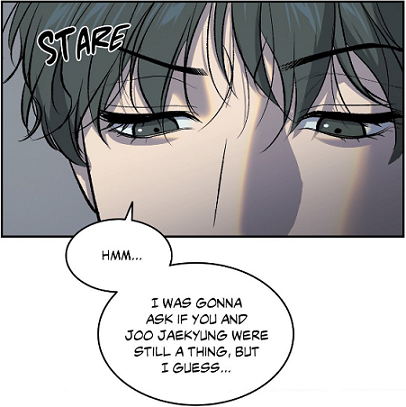 (chapter 42) before resentment.
 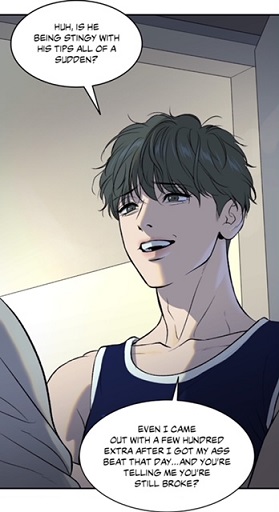 (chapter 42)
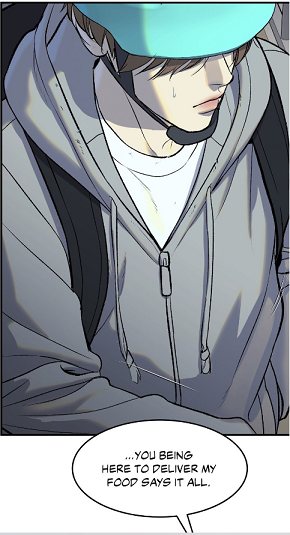 (chapter 42), but why he does so at the precise moment he does.
  (chapter 42) His hostility does not emerge from poverty alone, nor from moral outrage. It is triggered by a rupture in his expectations.
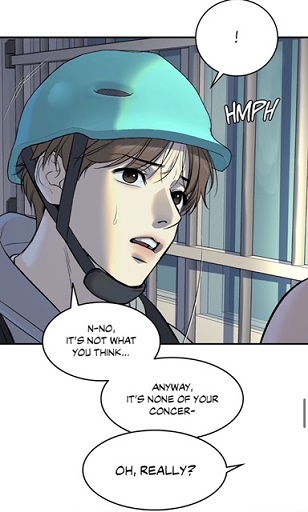 (chapter 42) In that moment, the green-haired man realizes that closeness still exists without visible profit. This is intolerable to him. It contradicts the logic through which he has justified his own past behavior: the belief that proximity to power must be monetized, that relationships exist to be exploited, that affection without gain is either naive or dishonest.
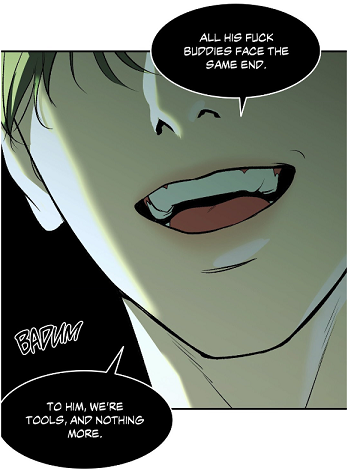 (chapter 42) Something used and discarded. In other words, he reframes Kim Dan’s loyalty as delusion and reasserts predation as the only intelligible model of intimacy.
 (chapter 02) and that the exchange of attention and money implied mutuality. Joo Jaekyung’s refusal shattered that illusion. What Kim Dan represents now is not competition, but refutation: proof that closeness does not require extraction, and that survival does not have to pass through exploitation.
 (chapter 42) The green-haired man refuses to pay for food this, while implying that his roommate is taking advantage of him, as if he would barely contributes. On the surface, the image suggests exploitation: one man living off another’s labor. Yet the scene refuses to clarify who truly benefits. The roommate remains largely invisible, economically opaque, almost spectral. Is he a dependent quietly feeding off the green-haired man’s remaining resources? Or is the green-haired man himself the parasite, overstaying, consuming, and justifying his presence through grievance? The narrative does not resolve this tension — deliberately so. Predation here is not readable at a glance. It hides in everyday arrangements, in domestic negotiations, in the language of fairness and contribution.
 (Chapter 31), the contract is made visible: the manager’s income depends entirely on the star’s uninterrupted productivity. When work stops, pay stops. Yet neither the star nor the agency appears exposed. Heesung himself, who proposed the risky sparring, shows no empathy for his caring manager. He doesn’t feel concerned for this arrangement and makes no attempt to renegotiate it for his manager’s sake. Financial risk is displaced downward, onto the least protected figure. The manager is not the predator here, but a human buffer, absorbing the instability produced by a structure that benefits the star and the Entertainment agency while refusing to insure those who sustain them.
 (chapter 34) or on Saturdays
 (chapter 32), treating the physical therapist’s work and time as indefinitely available. This is not an isolated lapse but a recurring pattern, later reproduced with Potato as well.
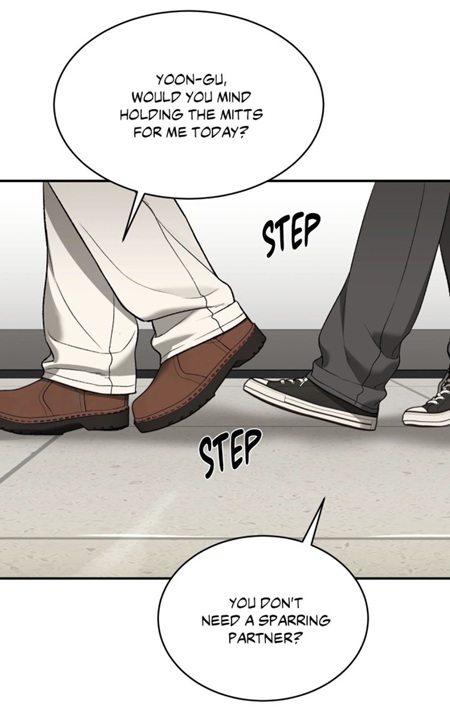 (Chapter 88) In both cases, access replaces consent: labor and care are extracted on polite request, while the cost—fatigue, intrusion, and loss of private time—is borne entirely by the subordinate.
 (chapter 70) but “Take better care of yourself.” Not “We failed to protect you,” but “You caused inconvenience.” This is the core of economic predation: the harm is real, but the blame is displaced downward so the system remains clean.
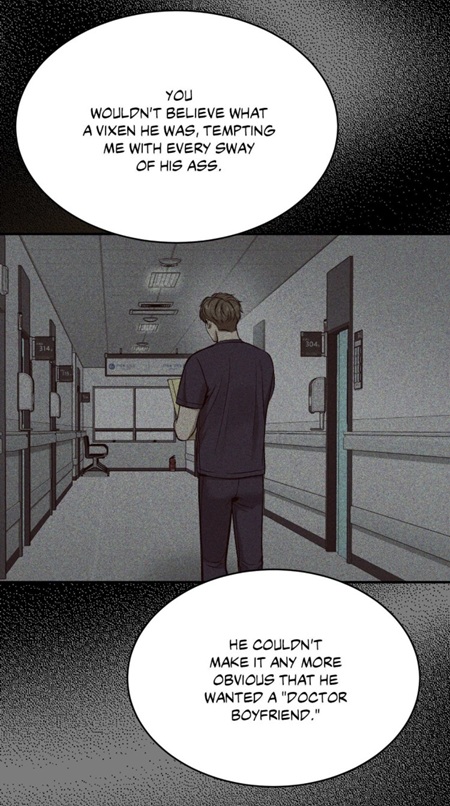 (Chapter 90) A sexual predator targets someone whose circumstances make refusal impossible or costly — socially, economically, professionally, physically, psychologically. The predator does not need to use overt violence to be dangerous; often the strategy is precisely to stay close to the border where the victim can later be blamed: You wanted it. You tempted me. You misled me. You didn’t say no clearly enough. This is why victim-blaming belongs structurally to sexual predation: it is a technique of retroactive absolution. This logic does not remain abstract in Jinx. It finds a concrete site where authority, legitimacy, and bodily access converge.
 (chapter 29) Rival fighters do not need to engineer the champion’s collapse; they only need to anticipate it. What defines them is not ambition alone, but timing.
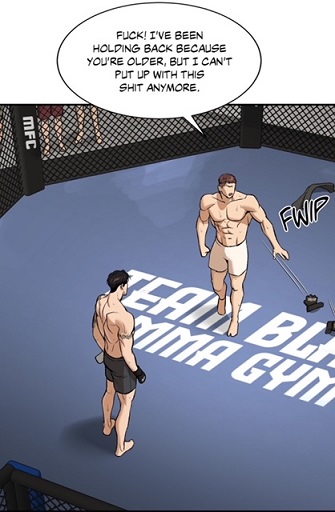 (chapter 46) His words are exposing not restraint, but accusation. The implication is clear: the champion’s body is already failing; respect has become optional. Seonho is not trying to overthrow Jaekyung through skill alone. He is announcing that the moment of vulnerability has arrived, and that patience is no longer required.
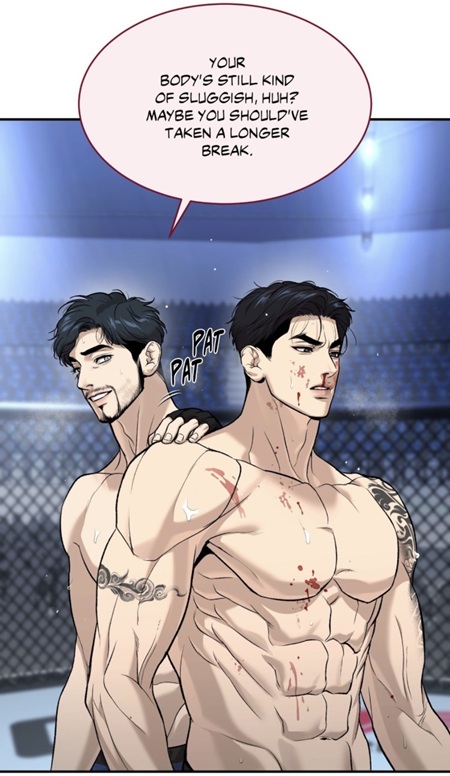 (chapter 87) He thought, he had found his perfect “meal”. To conclude, Arnaud Gabriel articulates the same logic even more coldly.
  (chapter 87) There is no personal animosity here, only inevitability. The statement is not a threat; it is a forecast. Power, in this worldview, is temporary by nature, and the role of rivals is not to prevent collapse, but to be present when it happens. Like hyenas, they do not waste energy on the kill. They wait for age, injury, scandal, or exhaustion to do the work.
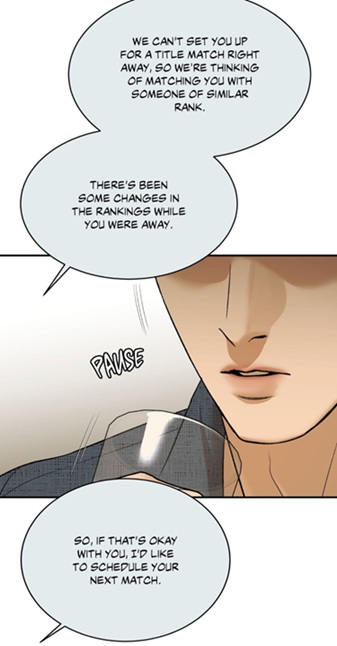 (chapter 69) A new match is organized. An invitation is extended. Noise is generated. Attention is redirected. The spectacle resumes.
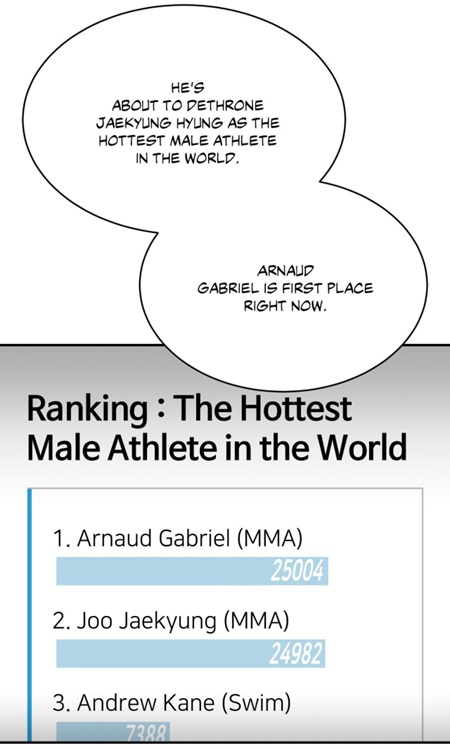 (chapter 81) The distinction matters. An athlete is managed for performance and longevity; a celebrity is managed for visibility. Injury is a problem in the first case. Scandal is profitable in the second.
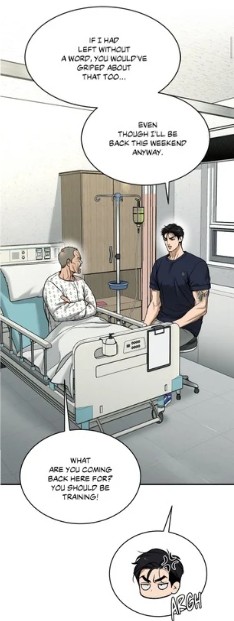 (chapter 78) The latter has always blamed the “boxer Joo Jaewoong”, but not the boxing world, the institution.
  (chapter 74) He never saw the ties between boxing and mafia. And this raises the following question: how can the Little Red Riding Hood discover the predator in MFC before getting eaten?
  (chapter 52) The hyenas wait, the institution schedules, and the risk is displaced downward—onto the athlete, onto his body—while the structure that benefits from him remains untouched.
 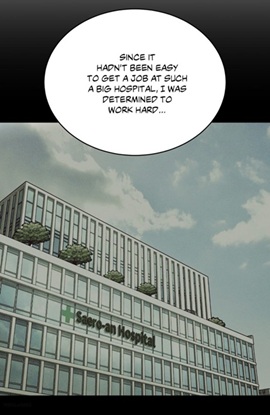 (chapter 90) is the first figure in Jinx who embodies all three dimensions of predation at once. He is a biological predator in logic, an economic predator in practice, and a sexual predator in effect — yet none of these appear as transgression. They are exercised under license.
 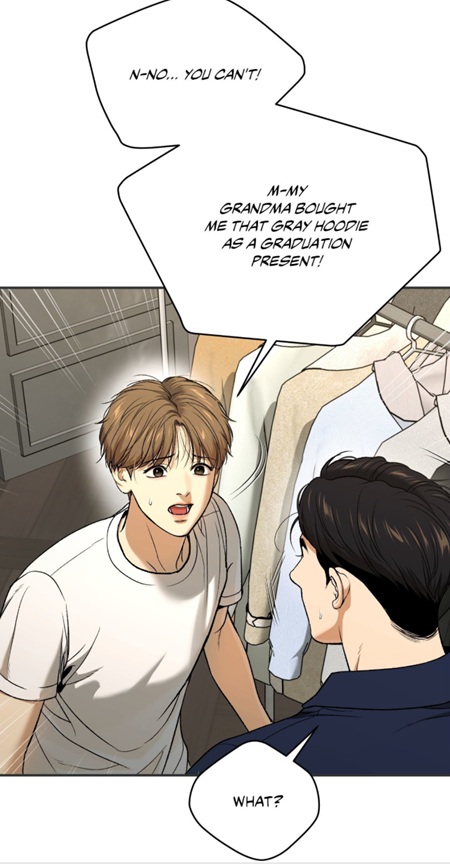 (chapter 80) In this environment, appearance is not superficial. It is a language of rank. To arrive without fluency in that language is already to be classified as provisional.
  (chapter 54)
  (chapter 1) The expression matters. It implies opportunity rather than integration: freelance labor, paid by hours or shifts, without institutional protection. In such conditions, negotiation is not expected. The contract is accepted, not discussed.
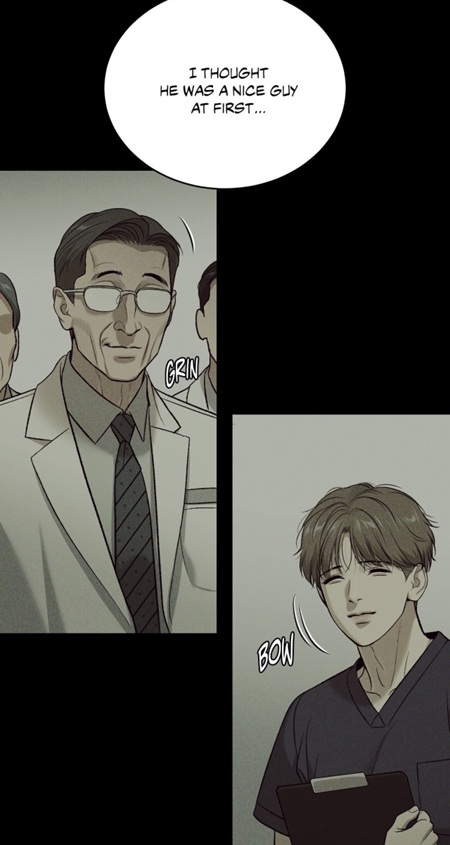 (chapter 90) — the same signs previously associated with the hospice.
 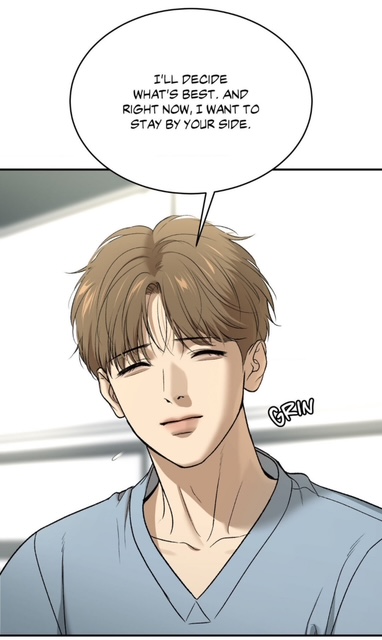 (chapter 57)
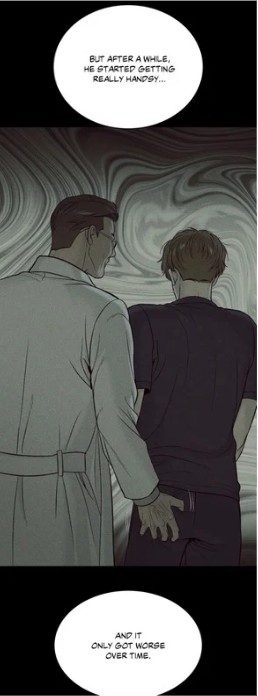 (chapter 90) The contact is quiet, progressive, and deniable. It blends into routine movement, into institutional normalcy. “After a while, he started getting really handsy… and it only got worse over time.” Each tolerated touch becomes precedent. Boundary erosion is not sudden; it is cumulative.
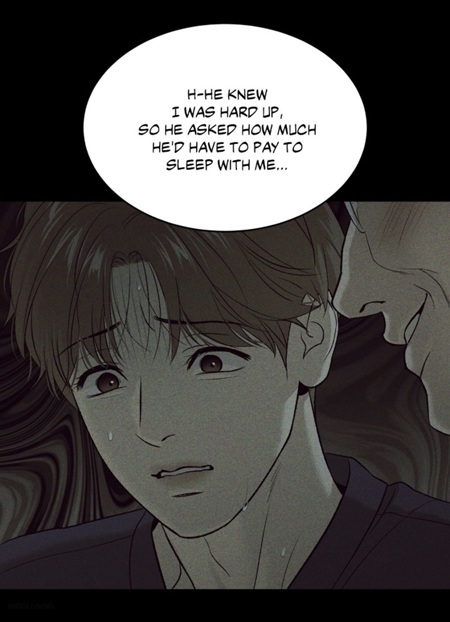 (chapter 90) In the doctor’s eyes, the predator knew about Kim Dan’s difficult financial situation, then he asked how much he would have to pay to sleep with him. The timing is crucial. The offer does not initiate desire; it tests whether vulnerability can be converted into consent. Payment reframes coercion as transaction, need as availability, and silence as something that can be bought in advance.
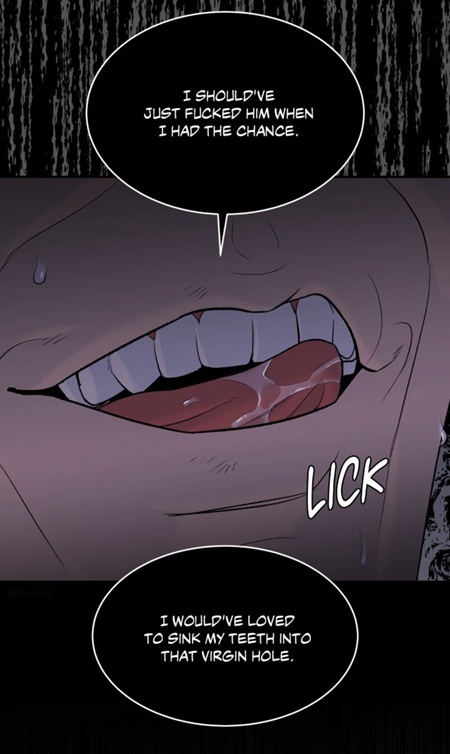 (chapter 90) His regret is not moral but tactical — that he did not take Kim Dan “when he had the chance.” Value resides in the moment of breaking resistance, not in the person afterward. Once the prey yields, interest vanishes.
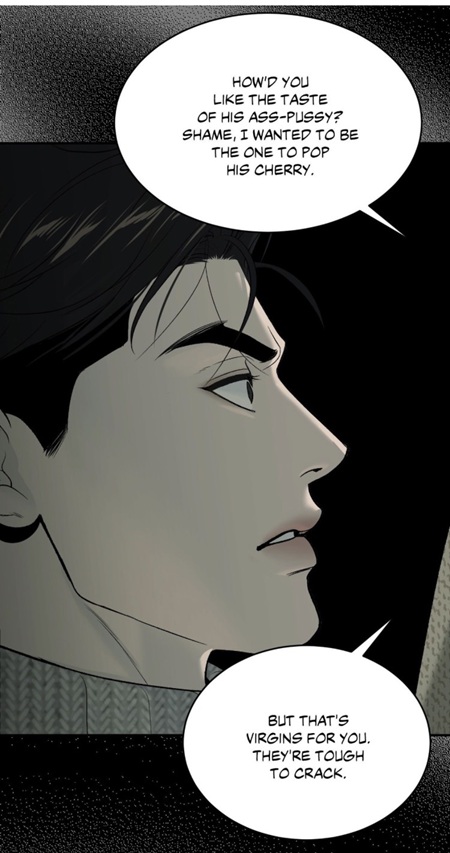 (chapter 90) as bodies that are “tough to crack,” with the confidence of repetition. The metaphor is consumptive: a shell broken to reach what is inside, then discarded. Once resistance is broken, interest disappears. This is practiced predation. The hospital is not merely the setting of abuse; it is his hunting territory — a space where authority guarantees access, exhaustion weakens refusal, and legitimacy ensures silence.
 (chapter 21) The juxtaposition of two buildings, the rooftop park, the sterile façade, and above all the near-identical hallways collapse
 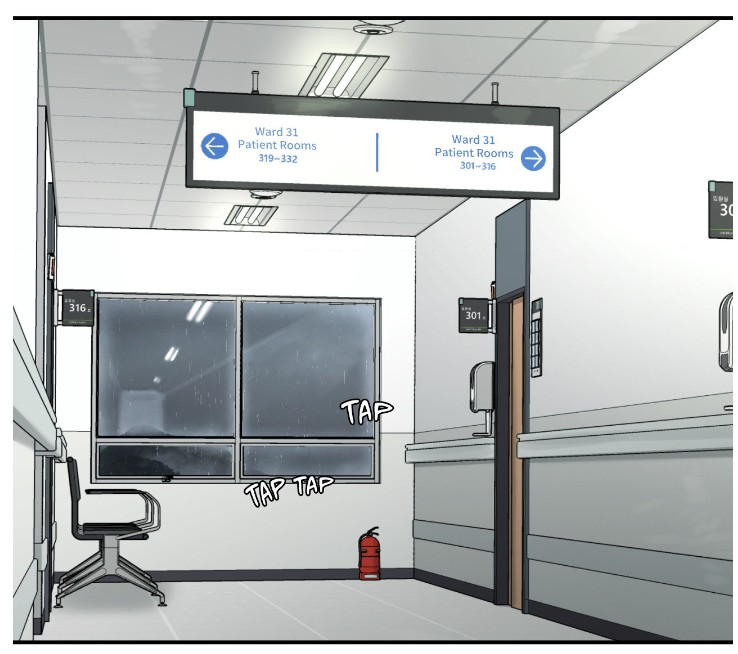 (chapter 5) Professional and personal life are folded into the same architectural body. This is not decorative repetition; it signals circulation — of staff, of protocols, of information.
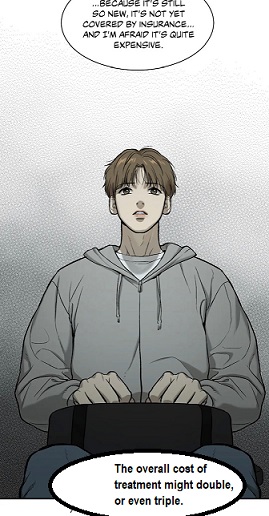 (chapter 5) — professional legitimacy, research success, advancement within a system that rewards results over outcomes. Progress functions as an absolute good, one that authorizes human cost without requiring personal cruelty. Harm is acceptable so long as it produces data.
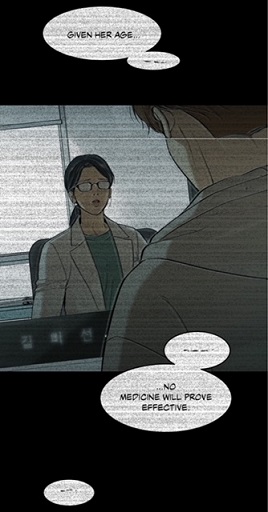
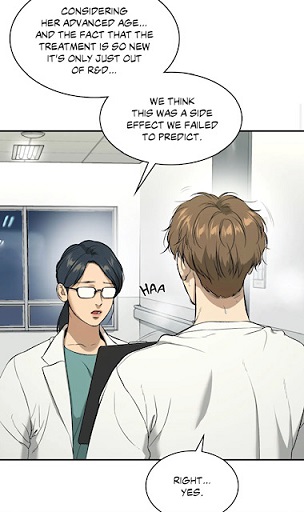 (chapter 21), age and vulnerability become a risk factor, endurance becomes a resource. When the new drug fails and the grandmother deteriorates, the explanation is procedural: side effects, unpredictability, regulatory timelines. Failure is framed as scientific, not ethical.
  (chapter 47)
 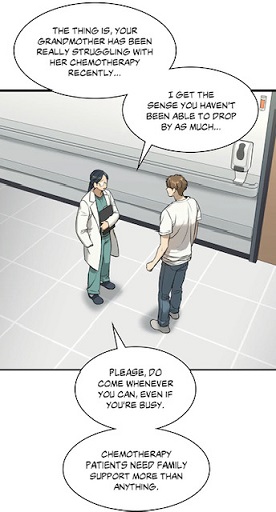 (chapter 21) Treatment patients “need family support,” she says — a statement that sounds compassionate, but functions as deflection. Psychological care is outsourced; responsibility for deterioration quietly migrates away from the institution (“we”). The setting of her disclosures reinforces this posture. She does not speak in a protected office, but in the hallway — a transitional, impersonal space governed by efficiency rather than care, as if she had nothing to hide. However, by behaving like that, she violated the confidentiality rights. Unlike the Saero-An director, who relies on enclosure and isolation, Kim Miseon operates through openness and institutional flow.
  (chapter 48) It is no coincidence.
  (chapter 56)
 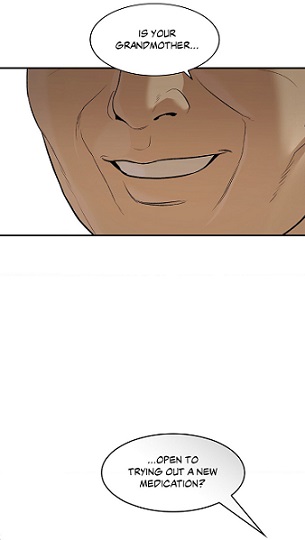 (chapter 48) That knowledge could only have reached him through leakage — informal, normalized, unremarked. Bodies are not the only things consumed here; information is too.
 (chapter 49) In both cases, harm is delivered chemically, not physically — quietly, indirectly, and in ways that can later be reframed as accident, misuse, or personal failure. This symmetry matters. The same mechanism governs the grandmother’s fate.
  (chapter 56) Unlike Saero-An or Sallim, this space does not extract profit or prestige; it operates under scarcity. Kim Dan works there as a freelancer, not as protected staff. When he collapses, he is advised to take a day off, not sick leave — a telling detail.
  (chapter 70) It confirms that, even here, labor is contingent, negotiability absent, protection minimal. The vocabulary of care masks the reality of precarity.
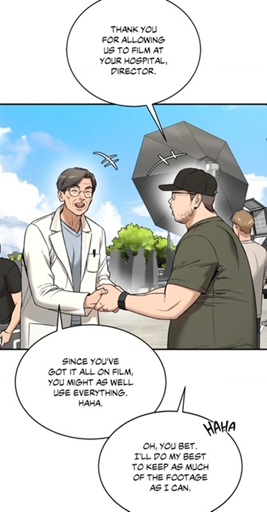 (chapter 59) Thus he is happy to let a film crew use his building for a movie. This is why he sometimes works night shifts himself.
 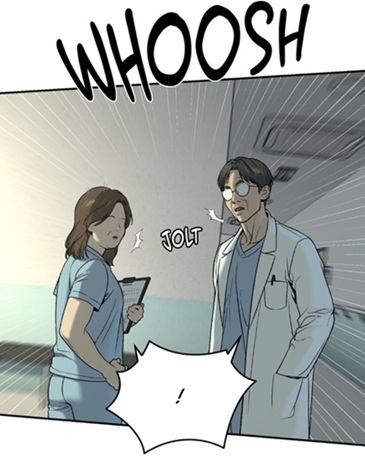 (chapter 60) His authority does not shield him from exhaustion; it exposes him to it. He enforces discipline because collapse anywhere threatens survival everywhere.
 (chapter 59) And yet, harm still occurs. Responsibility is displaced not upward, but sideways — onto the most vulnerable worker present. Kim Dan becomes the buffer once again, not because the director is powerful, but because he is trapped. Predation here is no longer driven by appetite, but by attrition.
 (chapter 61), preserving the impression of treatment rather than end-of-life care. This semantic slippage matters. For Joo Jaekyung, who has been treated there himself, the space remains associated with improvement.
 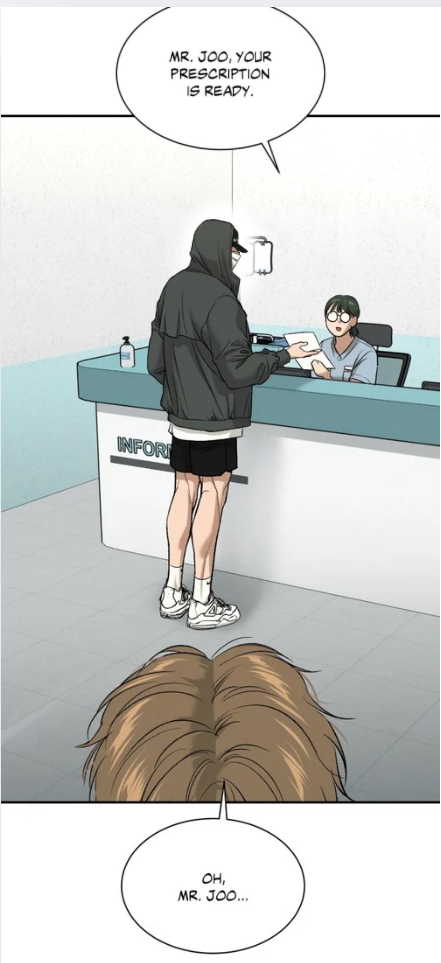 (chapter 70) He thinks, Hwang Byungchul is treated properly, as he still looks lively and strong.
 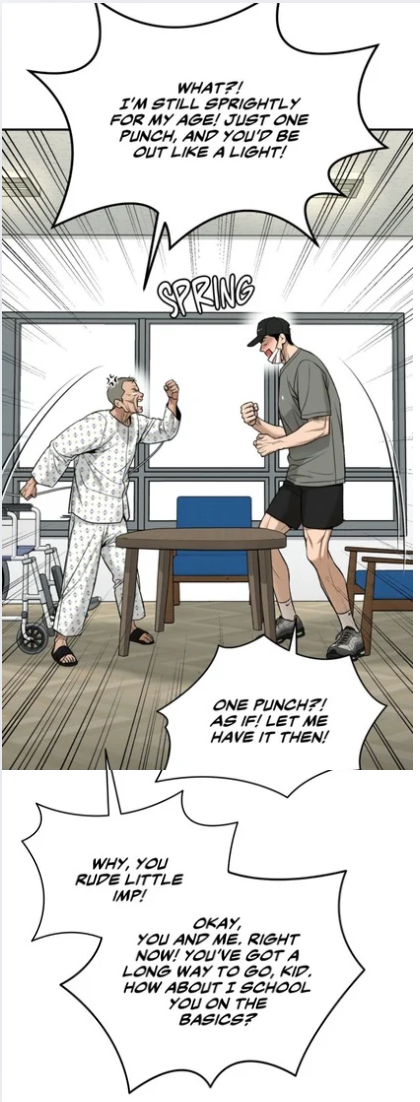 (chapter 71) The champion does not fully register that it is a place at the threshold of death. Care and closure blur. This confusion is not accidental; it mirrors the broader system’s refusal to name limits. By calling a hospice a hospital, death is softened into treatment. By calling resignation progress, responsibility is deferred.
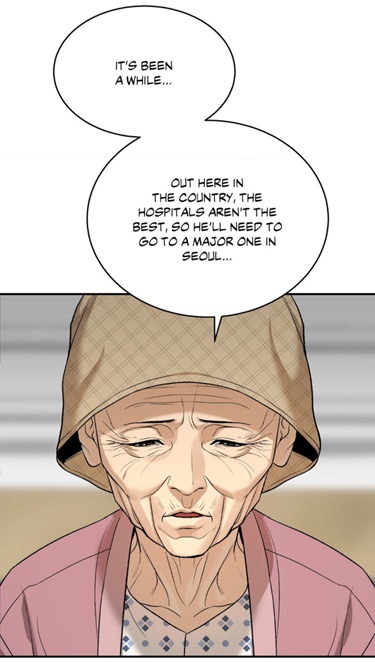 (chapter 65) For her, medicine is sacred and progress meaningful.
 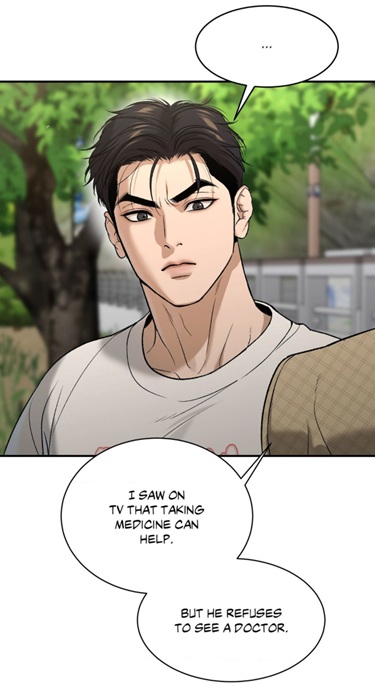 (chapter 65) This belief is not naïve in the childish sense; it is aspirational. It is tied to the idea of success, of legitimacy, of having “made it.” And in her mind, that idea has a name: Seoul.
 (chapter 65) It is where competent doctors work, where advanced hospitals stand, where progress happens, where you can earn a lot of money. This belief structures her entire horizon. Corruption, abuse, and institutional predation do not register there, because acknowledging them would mean admitting that the space she has invested with hope is also capable of harm. Within Seoul, institutions are not suspect; they are self-justifying.
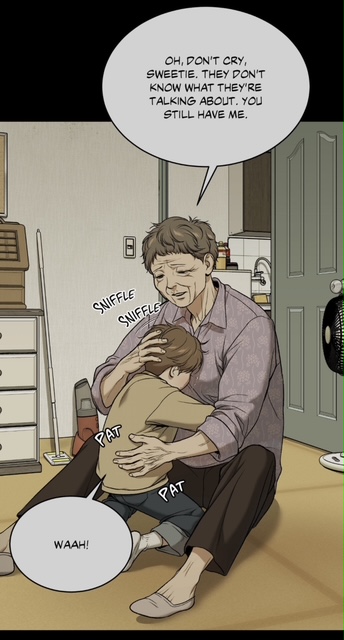 (chapter 57), she did not confront teachers. Her answer was always the same: he still had her. The implication was clear — institutions were there to protect him. To intervene would have meant questioning the very structures she depended on to make sense of the world.
 (chapter 65) as if it was recent, temporary, and situational. The wording matters. What has been chronic is compressed into the present. Duration disappears. Suffering becomes recent, temporary, and therefore manageable. This is temporal minimization — not denial of harm, but deferral of its cause.
  (chapter 57) Only then does his condition become visible. Not because it is new, but because it now implicates her. Before that moment, his endurance could remain unnamed. After it, it must be explained. This is not cruelty; it is belief colliding with responsibility.
 (chapter 7) This exposes her lack of trust in him, as she views him as too naive and trusting. This is where the irony crystallizes. Financial precarity is erased from discourse because acknowledging it would expose her responsibility. Money resurfaces, when Kim Dan presents an expensive gift. But she doesn’t mind, she is even aware of his lie:
  (chapter 41) He spends so much for her that he doesn’t have anything left for himself.
 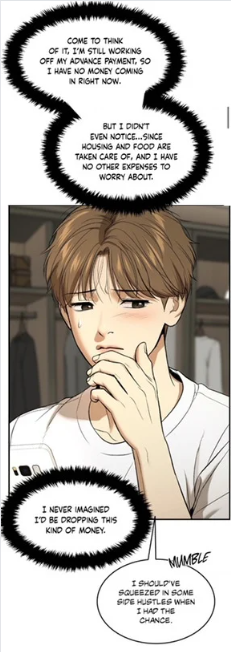 (chapter 42)
  (chapter 22)
  (chapter 13) This reached its peak, when after sending his whole salary
 (chapter 16), Heo Manwook intended to rape him. As you can see, the more they got money, the more abusive they became… and all this time, the grandmother has no idea. But the best evidence is when Joo Jaekyung pays the loan in full, the pattern repeats at a higher level.
  (chapter 17) The debt is erased — and the danger escalates. Kim Dan might become free, but now the target is the champion. He becomes visible. Settling the debt marks him as someone worth targeting, someone who can be extracted from again.
  (chapter 46) What Shin Okja imagines as closure functions, in reality, as a signal.
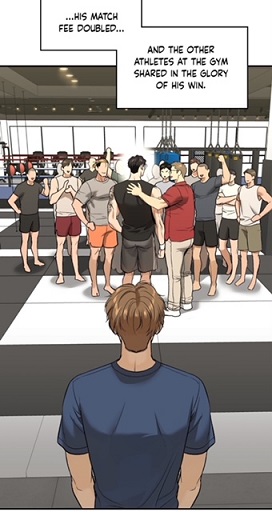 (chapter 41) A champion who keeps winning cleanly, visibly, and on his own terms becomes difficult to manage. His victories increase his market value, distribute prestige and income to others, and create expectations of legitimacy. At that point, success stops being profitable in a controllable way. It begins to threaten both institutional authority and informal economies that rely on predictability, influence, and narrative control.
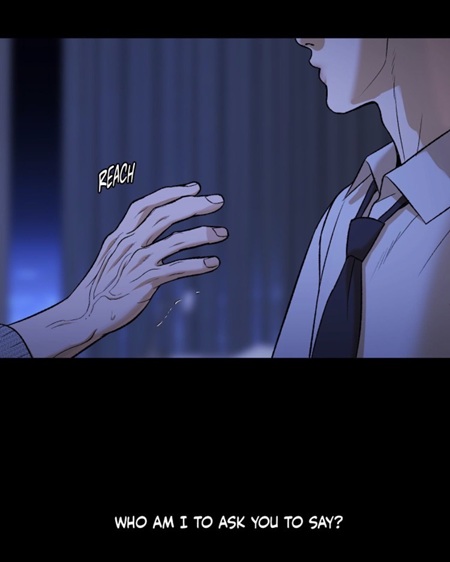 (chapter 90) — and then he pulls his hand back.
 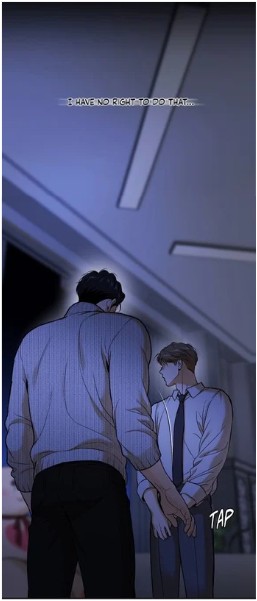 (chapter 90) No words are spoken to stop him. His hand is not even pushed away, like doc Dan did it before.
 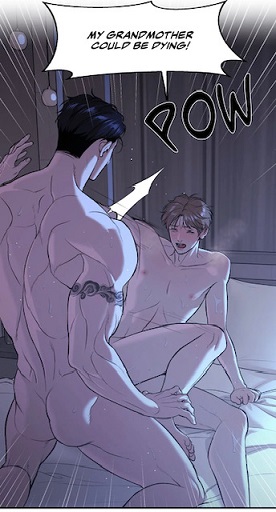 (chapter 21) Everything happens in silence. The interruption comes entirely from within.
  (chapter 90) In his mind, everything that followed the hiring — the money, the contract, the protection, the conflicts — converges back onto him. Faced with this conclusion, he rewrites the past. The good moments lose their weight.
  (chapter 26)
 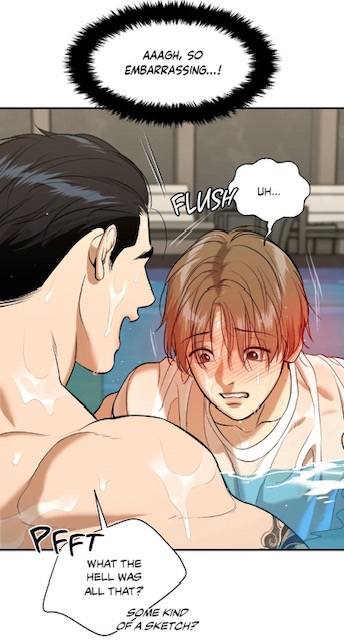 (chapter 27)
 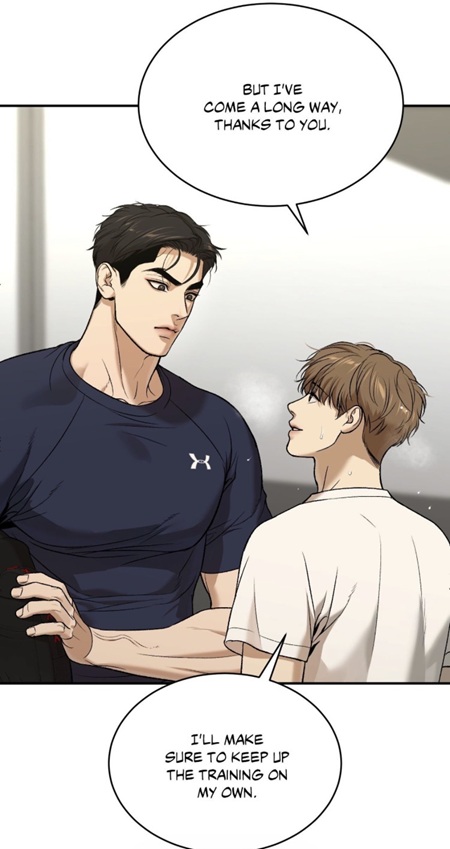 (chapter 88)
 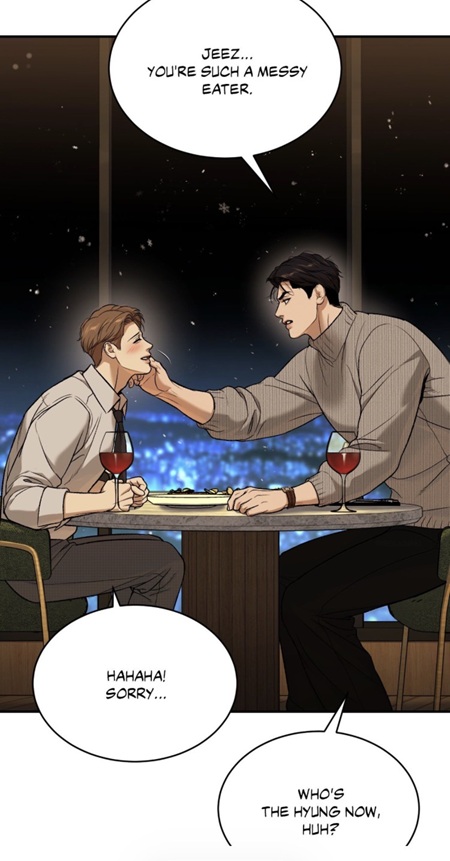 (chapter 89) The help he provided becomes irrelevant. What remains is a single narrative: meeting him caused harm.
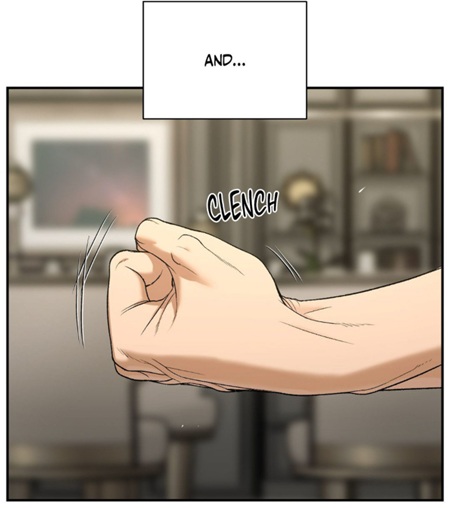 (chapter 61) the clenched fist, when he expressed determination to achieve his goal (bringing back doc Dan or winning a fight).
 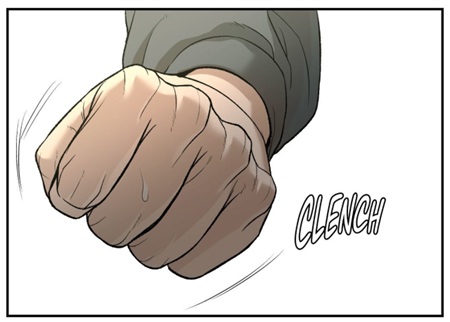 (chapter 81)
  (chapter 74), or converting conflict into challenge.
 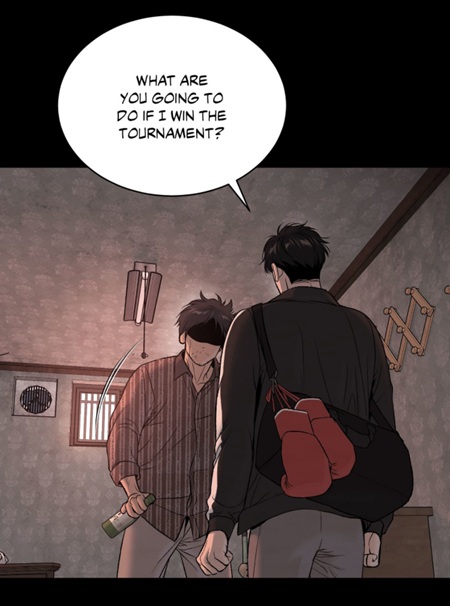 (chapter 73) Fighting was not only his profession; it was his primary mode of being in the world. Here, however, the impulse to fight dissolves.
 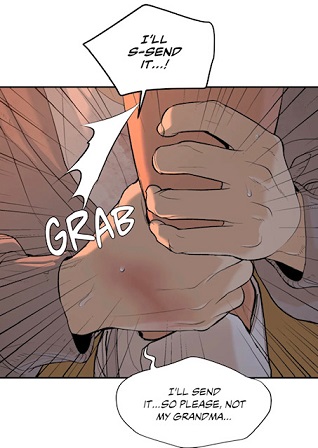 (chapter 16) The grasp that follows is not an invitation, but a reaction to damage already inflicted. Resistance has been broken through the body before appeal becomes possible. It symbolizes submission, exactly like in the penthouse.
 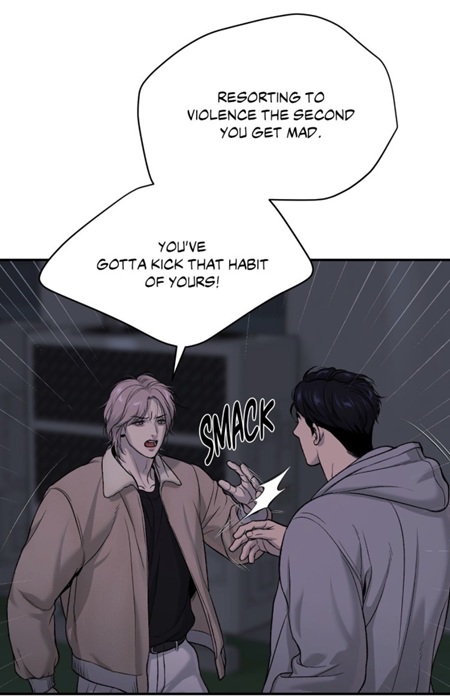 (chapter 89), unlovability, moral contamination
 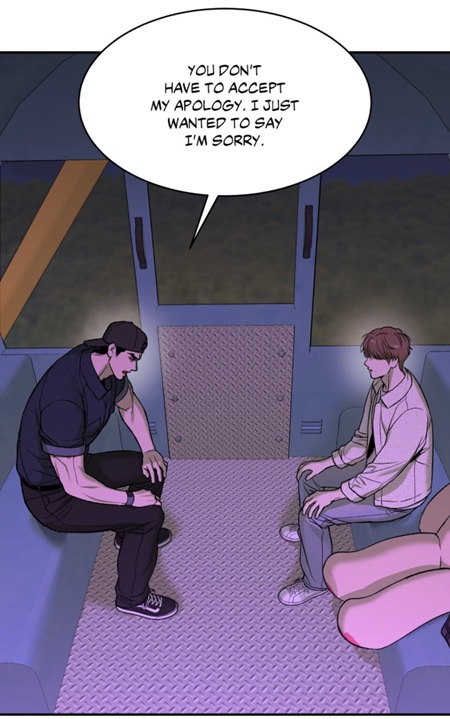 (chapter 84) Deep down, he thinks that he can not be forgiven and even loved. This is precisely why they take hold. Spoken aloud, they acquire the authority of truth. Once internalized, they no longer need to be repeated.
 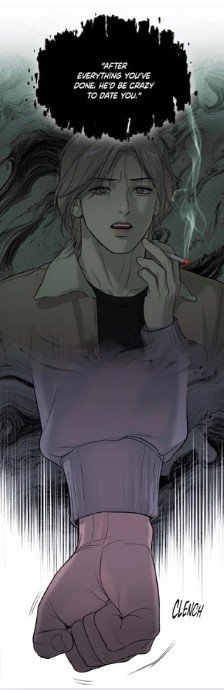 (chapter 89) The panel does not show Heesung speaking again; it shows Joo Jaekyung’s clenched fist, isolated, rigid, suspended in recollection. This is not the fist of imminent action. It does not precede a strike. It does not convert pain into confrontation. Instead, it freezes.
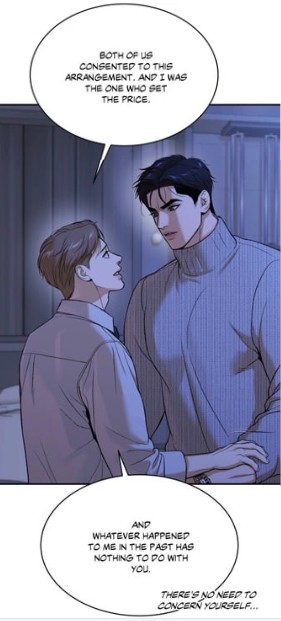 , (chapter 90) offering reassurance. That attempt failed, not because Kim Dan lacked care, but because reassurance can only reach someone who is still willing to fight for their place. Joo Jaekyung is no longer asking how to endure. He is asking whether he should exist in this space at all.
 (chapter 65), and Heesung who dismissed his agency
 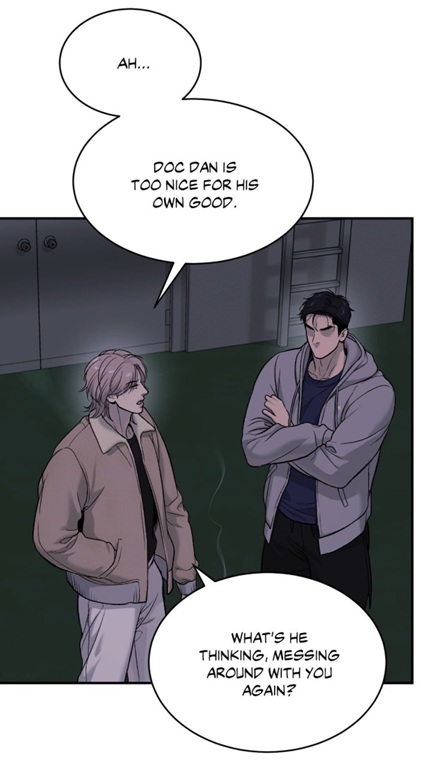 (chapter 89) under the guise of concern.
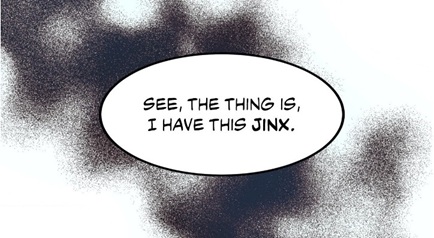 (chapter 2), an external curse that followed his steps. Here, that distinction collapses. He no longer experiences the jinx as an event or condition, but as an identity. He does not fear what might happen because of him; he accepts that he himself is what causes harm. The curse is no longer something he carries. It is something he has become. Once internalized in this way, it no longer requires rituals to contain it.
  (chapter 75) Practices that once functioned as talismans—gestures meant to ward off misfortune or secure victory—lose their meaning.
  (chapter 75) What collapses is not only belief in luck, but belief in the necessity of striving at all.
 8episode 10), Kim Dan wakes up there after drinking excessively, confused why he is sleeping in the penthouse. He doesn’t know that the night before in his drunkenness, his thoughts were turning toward his grandmother. He was mistaking the athlete for his relative.
  (chapter 10) He feared getting abandoned. When the doctor realized his whereabouts, he imagined that he had sex with the champion. As you can see, the bedroom is strongly intertwined with longing and sin, where consciousness returns only after collapse. This association deepens in episode 20, when sexual intimacy is immediately followed by a phone call announcing his grandmother’s critical condition.
 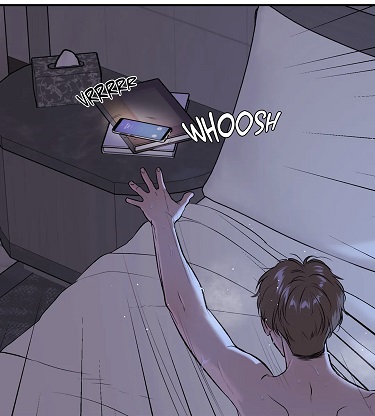 (chapter 20) Pleasure and threat coexist in the same space, binding the room to the anticipation of loss.
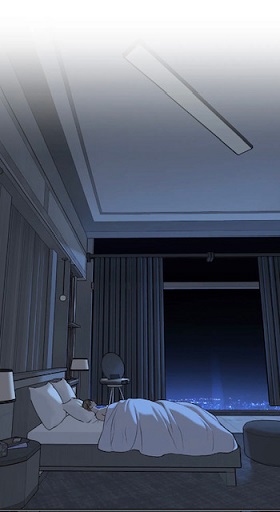 (chapter 29), his body once again giving way under accumulated strain. The room is no longer merely where exhaustion manifests; it is where it becomes undeniable. In episode 61, the association shifts again: Joo Jaekyung comes to the room seeking sex, but Kim Dan is unwell, unable to voice his own thoughts, unable to refuse.
 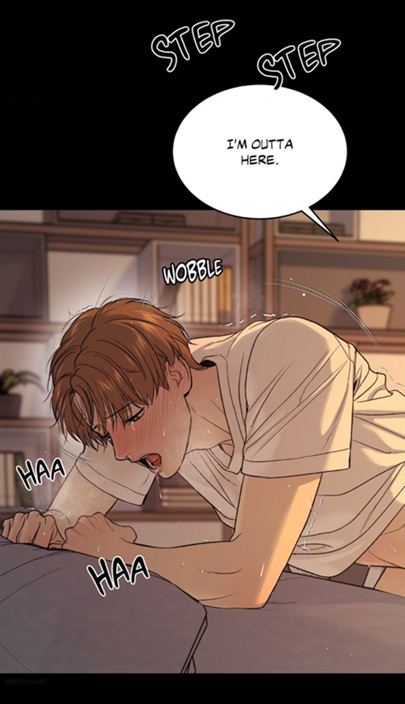 (chapter 61) Illness interrupts desire, and the room marks the moment where agency falters.
 (chapter 79). Once more, it is this room that frames the danger.
  (chapter 79) The body moves without consciousness, hovering at the edge between presence and disappearance. The room becomes a liminal space where life is not actively threatened by violence, but quietly endangered by exhaustion and dissociation (suicidal thoughts).
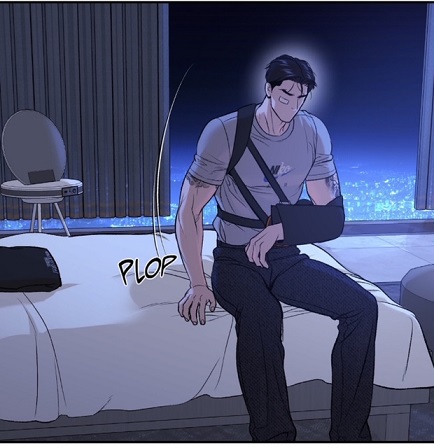 (chapter 53) The object becomes a trace of absence, and the room transforms into a container of loss. Standing by the window, Joo Jaekyung is portrayed without eyes.
  (chapter 53) The visual choice is crucial: it does not indicate blindness in a literal sense, but an inability to see forward, to orient himself. He is present in the room, but detached from direction and purpose. This scene announces the falling apart of the athlete.
 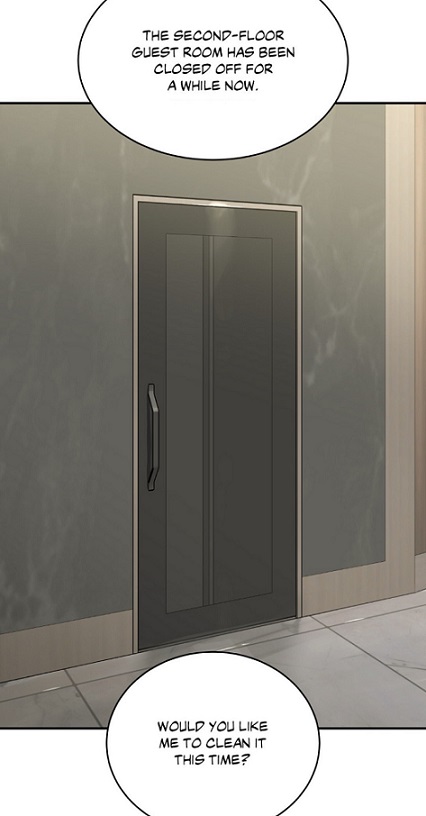 (chapter 55) The space is sealed off, preserved, treated almost as a forbidden zone. The cleaning staff is not allowed to enter. Nothing is moved, corrected, or neutralized. The room becomes a reliquary rather than a dwelling — a place frozen in the moment of loss. Joo Jaekyung does not confront what happened there; he keeps it intact, untouched, and therefore unresolved. At the same time, he imagines that avoiding that place will help him to forget doc Dan’s gaze and face.
 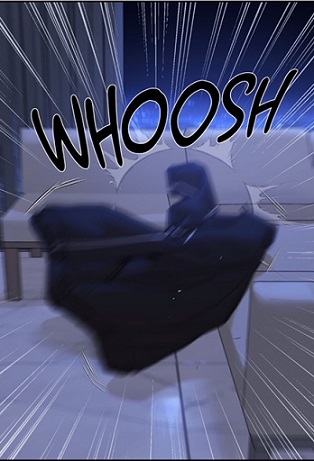 (chapter 53)
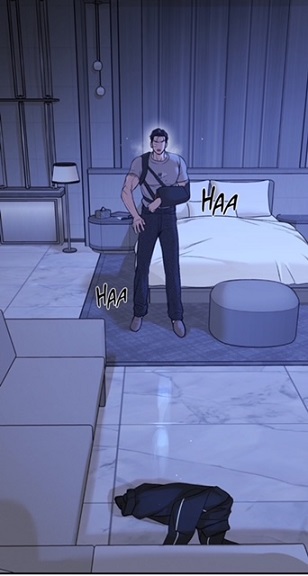 (chapter 53) In episode 54, wine bottles begin to accumulate beside the couch
 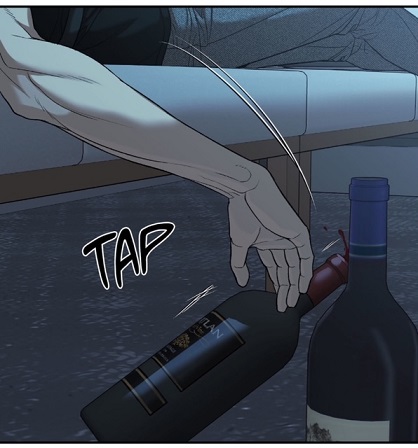 (chapter 54) in his own bedroom leaving a huge red wine stain on the carpet.
 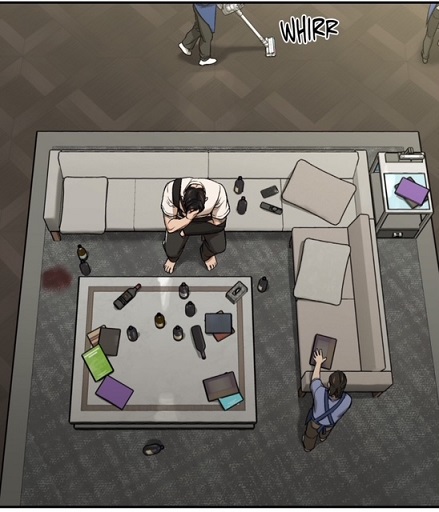 (chapter 55) And in episode 90, the teddy bear now rests on the couch in Kim Dan’s room
 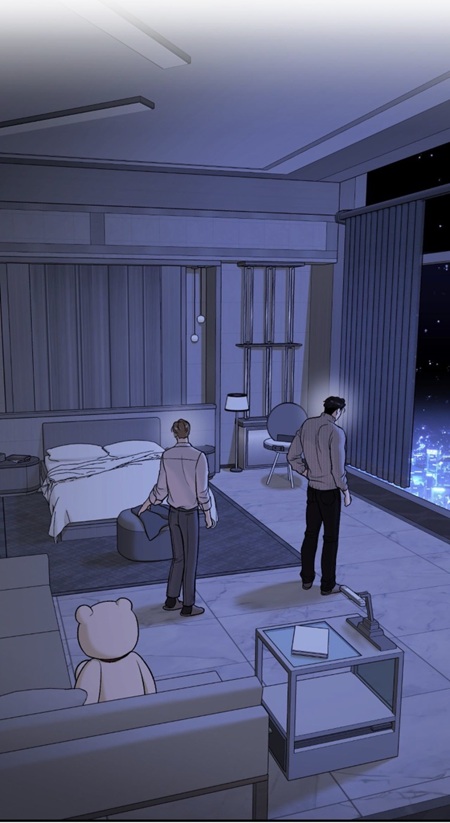 (chapter 90) — occupying the very place toward which the jacket once flew. Across these scenes, the hand and couch emerge as a recurring site of impact, exhaustion, and surrender. It is where bodies fall, where frustration lands, where the weight of what cannot be said is deposited. One detail caught my attention: because they are not sitting on the couch, the main leads are discussing together. They are able to face each other and as such to listen to each other.
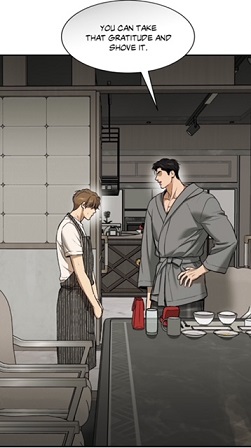
 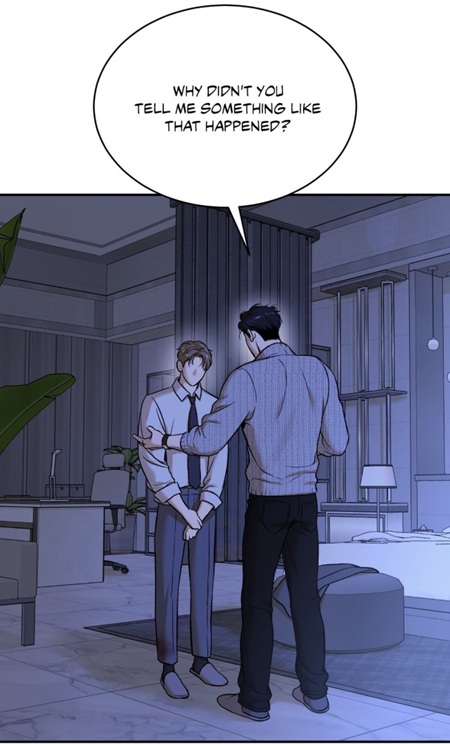 (chapter 90) Their respective position in this room reminded me of their previous arguments.
  (chapter 45)
 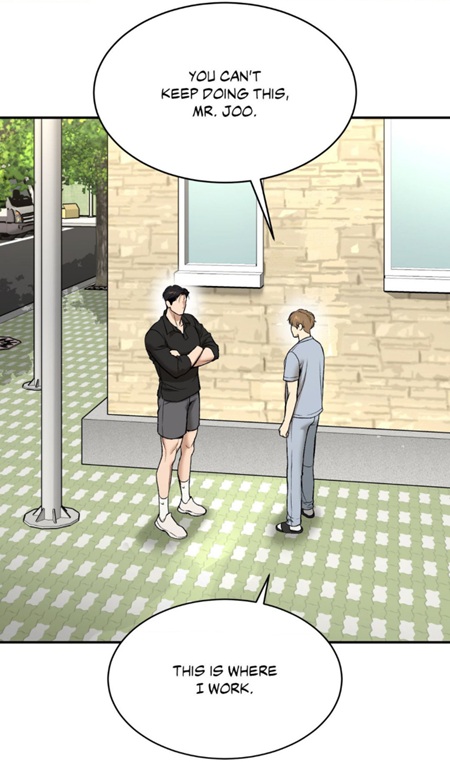 (chapter 61)
 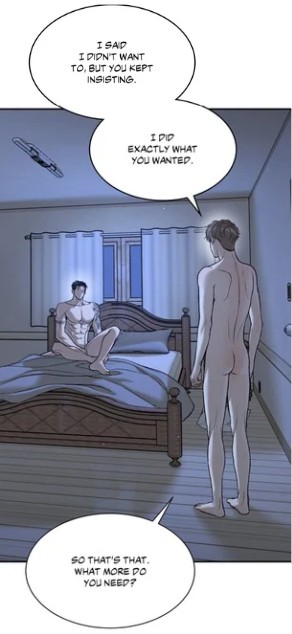 (chapter 64) Only when they would truly face each other, they would be more honest and expose their thoughts and emotions. As soon as there is a table, a bed or a couch, I detected some restrain and silence. In other words, the presence of the teddy bear and the couch in that scene explains why Kim Dan is silent and passive after their conversation. He is definitely remembering the day and conversation at the amusement park.
 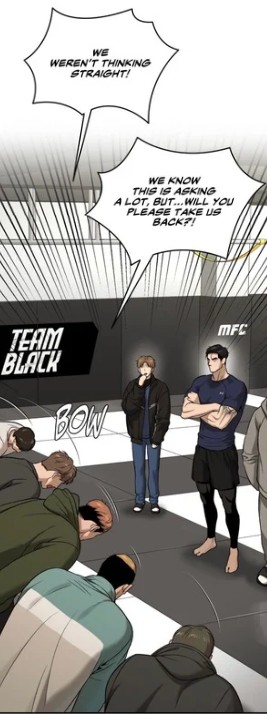 (chapter 88) On the other hand, it is about time that doc Dan becomes proactive so that they finally become a real team.
 (chapter 79) for everything. He was to blame for everything.
 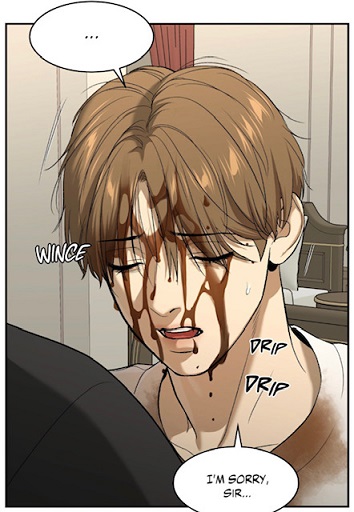 (chapter 37) He endured before being asked. He accepted harm as a condition of acceptance and staying. His silence was not passivity, but a learned ethics: if I ask for less, if I take up less space, if I disappear when necessary, others, in particular his grandmother, might be spared.
 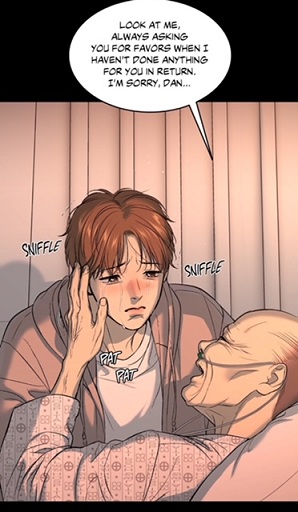 (chapter 53) That posture did not originate with Joo Jaekyung. It preceded him. It was shaped by debt, obligation, omission, and by figures who decided on Kim Dan’s behalf what he could endure and what he deserved.
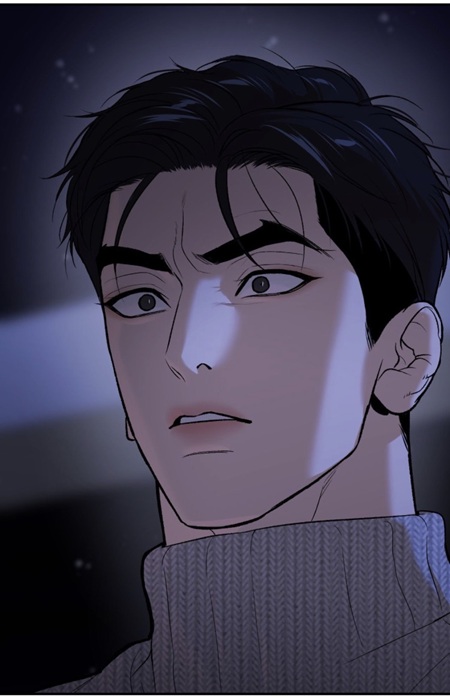 (chapter 90) He does not argue. He does not demand. Instead, he blames himself for everything, thus he withdraws. He refuses to claim a right. He positions himself as the problem that must be removed so that something better might follow.
 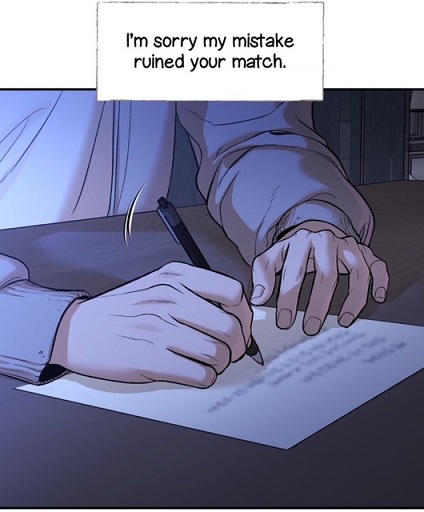 (chapter 53) This is the same moral calculus Kim Dan once applied to himself: the belief that care becomes ethical only when it is accompanied by sacrifice, and that love, if it exists at all, must be proven through disappearance. The only difference is that he can not apologize as his existence has become the synonym of wrongdoing. Thus Kim Dan can not hear the distress from his “loved one”.
 (chapter 74) He remains upright. His posture holds. Yet, he is now voiceless exactly like the physical therapist in the past. From the outside, he still appears powerful, but the loss of cry or sound indicates loss of agency and choice. But structurally, the positions have reversed. The one who once endured now asserts authorship over his choices.
 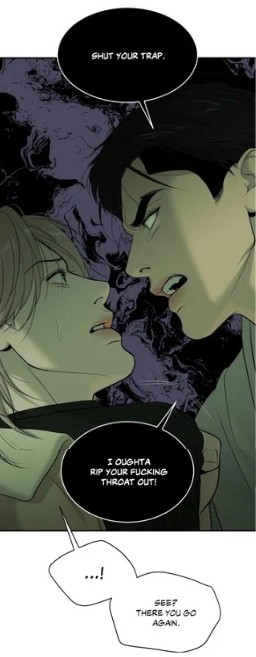 (chapter 89) and the green-haired man
 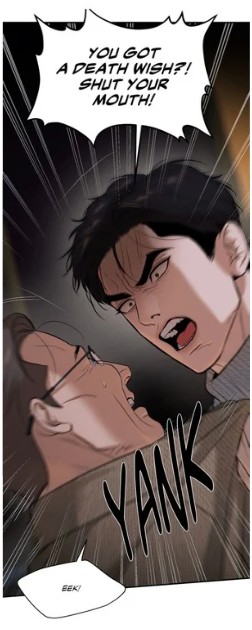 (chapter 90) — not because he shares it, but because the mirror he has become reveals it. Yet instead of recognizing this capacity as ethical clarity, he mistakes it for contamination. He equates himself with the very figures whose cruelty is laid bare in his presence. However, he is making a huge mistake, he is accepting this projection forgetting that he had it all wrong for one reason:
 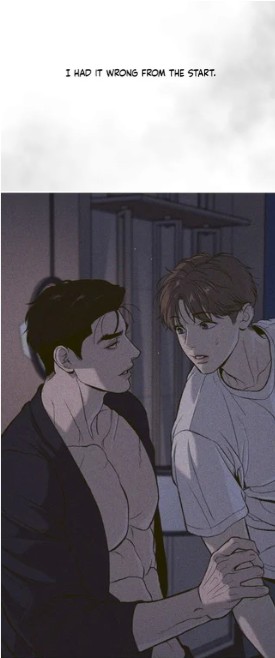 (chapter 90) During their first meeting, the “hamster” had grabbed his “anaconda”.
 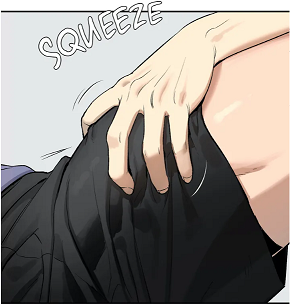 (chapter 1) Such a gesture could be interpreted as a seduction, and don’t forget that the previous physical therapist had rubbed him the wrong way:
  (chapter 1) Finally, observe that after this incident, Joo Jaekyung was looking at the embarrassed doc Dan
 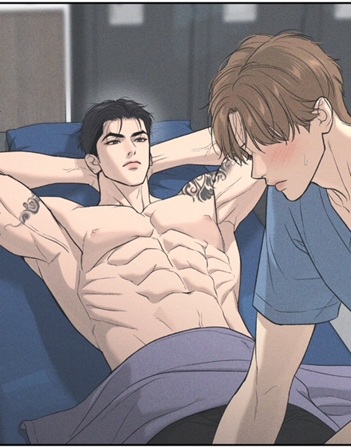 (chapter 56) and thinking that they could have fun together in bed.
  (chapter 56) So doc Dan has his share of responsibility in the champion’s misjudgment.
  (chapter 84) This gesture symbolized their reconciliation in the end,
  (chapter 84) the return of trust and faith in the “champion”. What Joo Jaekyung mirrors is not who the doctor is now, but who he once had to be in order to survive. The tragedy lies precisely there: the champion adopts a posture the doctor has already outgrown thanks to him.
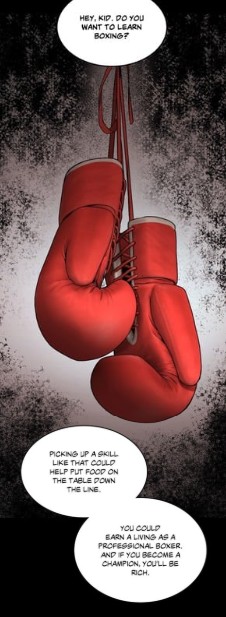 (chapter 72), the reality was that he longed for a home, which he came to associate with his mother. Thus over the phone, he promised to become strong
  (chapter 72) and earn a lot of money so that his mother could return home. As you can see, fighting was strongly intertwined with his mother and his longing for a family.
  (chapter 72), as if the boy’s role was to validate the father’s existence. Joo Jaewoong does not ask his son what he wants
  (chapter 73); he mocks his ambition
  (chapter 73) and reduces his dream to delusion. Yet even in conflict, Joo Jaekyung seeks recognition.
 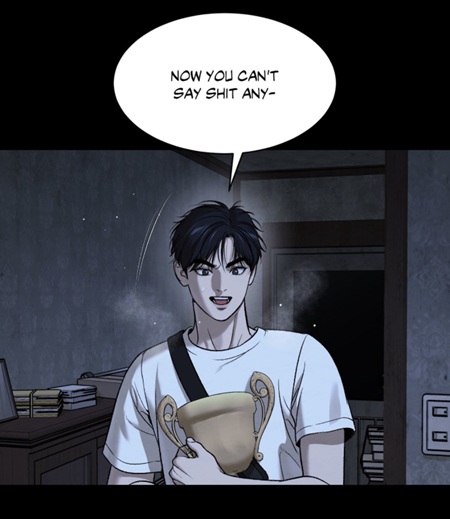 (chapter 73) As you can see, his life is always focused on the future, on one goal and as such one person: the mother, then the father.
  (chapter 74) He warns against becoming like the father, to change for the sake of his own mother
  (chapter 74), not by encouraging freedom, but by replacing one obligation with another: win, endure, don’t disgrace the dead. Many years later, he encourages him to change his mind-set, because he could end up alone.
 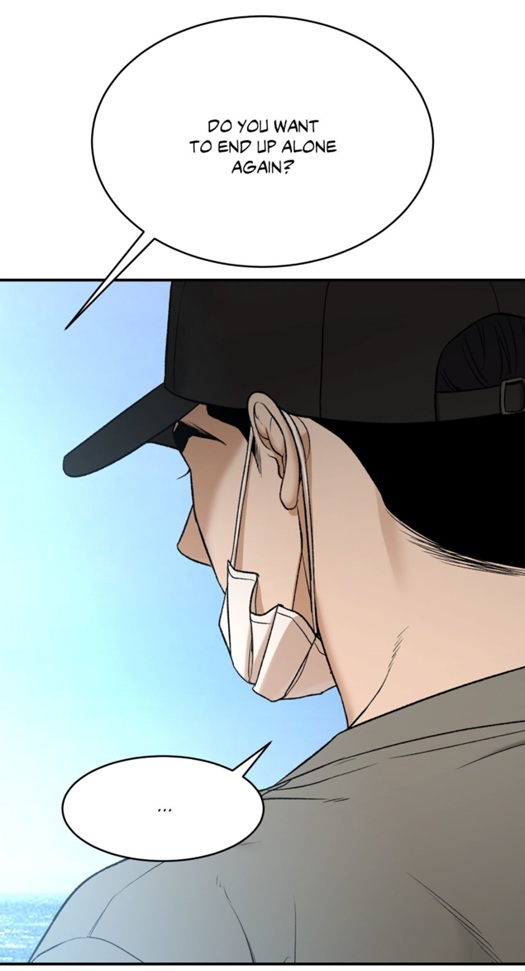 (chapter 75) For the first time, it is no longer about winning or enduring.
 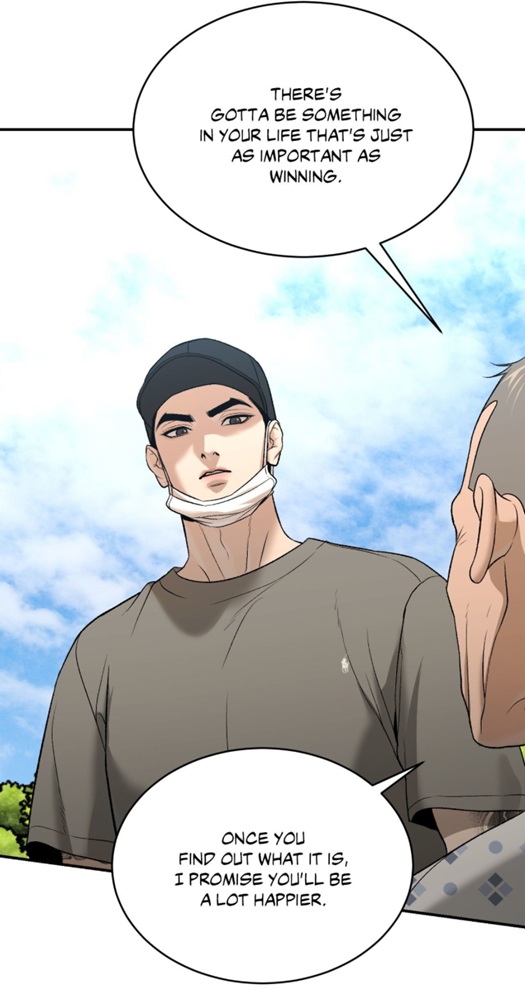 (chapter 75) However, observe how the main lead reacts to this well-meant advice:
  (chapter 75) He starts visualizing Doc Dan as his goal. It is once again focused on one person and future-oriented.
 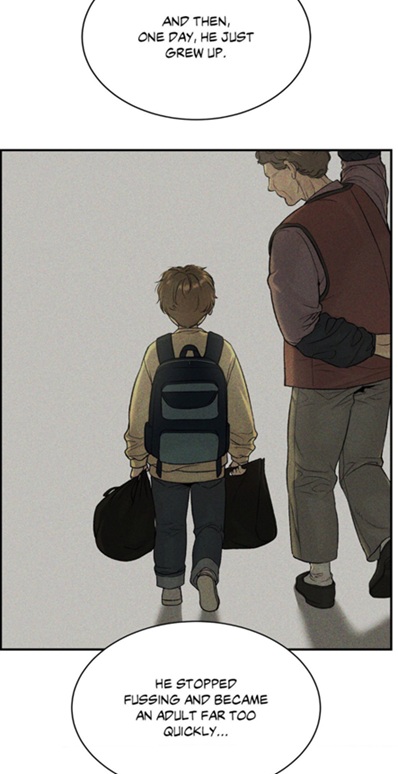 (chapter 65) He suppresses desire, health, and rest for her sake. The moral lesson is identical: if your presence risks harm, reduce yourself; if your absence protects others, endure it.
 (chapter 65), because she did the same in the past with doc Dan:
 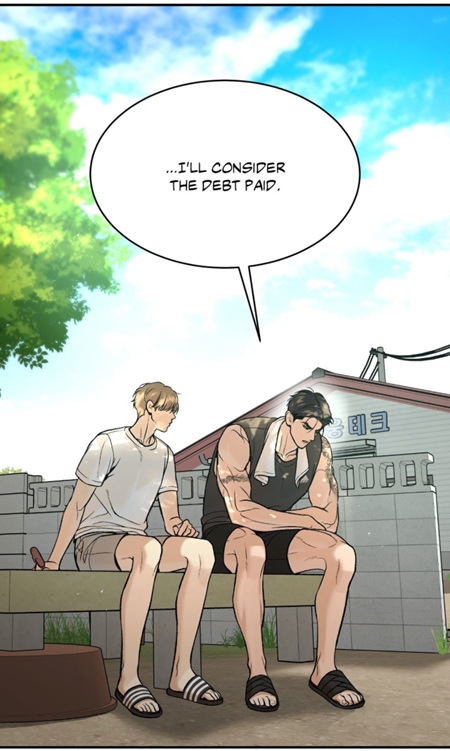 (Chapter 77) This means, the debts bring the terrible mind-set to the surface.
 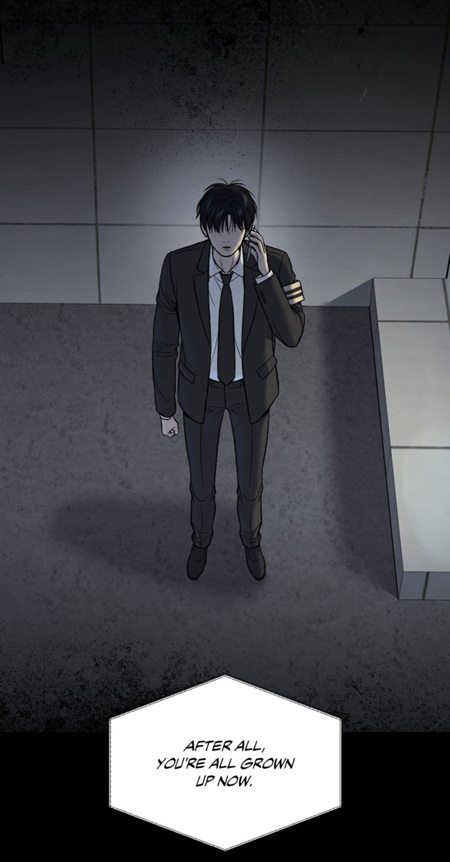 (chapter 74) The latter justifies her betrayal by saying that he is too late, as he is already too old. The promise that sustained him collapses. Winning no longer guarantees return. The future he fought for vanishes. And in the penthouse, we have the same thought again:
 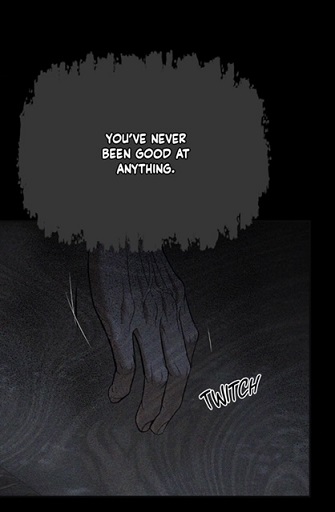 (chapter 54) — longstanding, cumulative, and corrosive.
 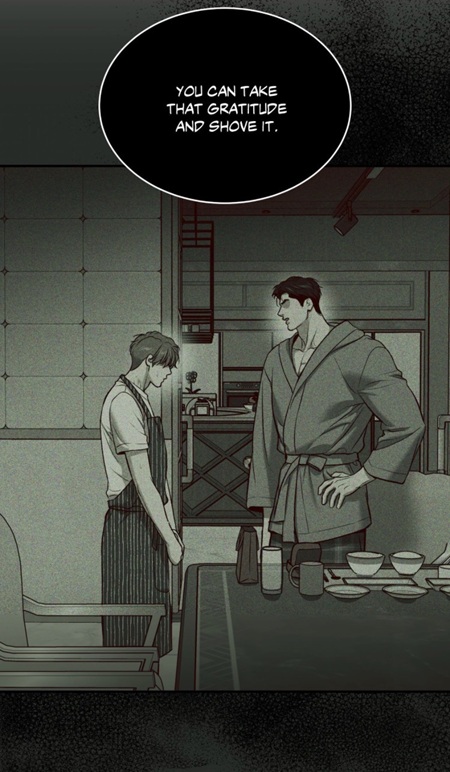 (chapter 90) And these two “friends” return during that night. What inhabits the room in episode 90 is not nostalgia, nor an unprocessed sadness that merely needs to be named. The same shame that has structured his life since childhood resurfaces here, stripped of all justifications. Joo Jaekyung is not suffering because he feels abandoned in the present. He is suffering because he believes himself to be the reason others leave.
 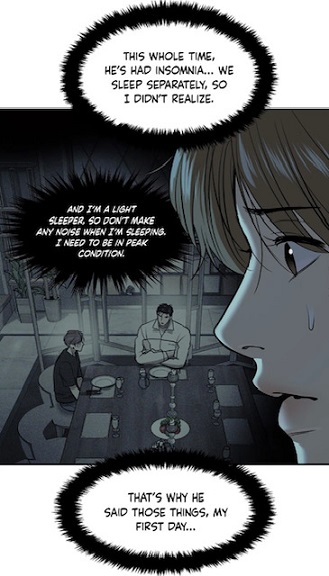 (chapter 29) He cannot sleep. He cannot relax. His body remains permanently alert because, in his words, he could “be killed” at any moment.
 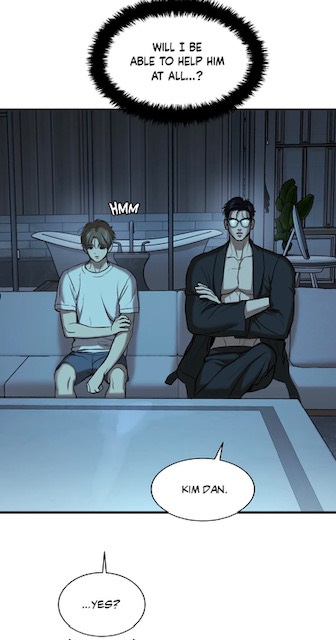 (chapter 29) He understands that this state is unsustainable — that it is only a matter of time before something gives way. What Joo Jaekyung treats as discipline, Kim Dan recognizes as danger.
 (chapter 53) In his mind, he is obeying a command.
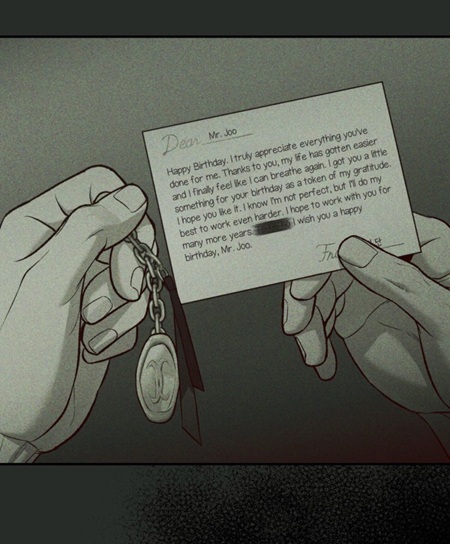 (chapter 90) But that explanation is insufficient. What actually begins after is grief and recognition.
 (chapter 54) Now the logic sharpens: Kim Dan does not merely embody bad luck. He embodies the champion’s mental state — depression, trauma, and chronic self-devaluation. He becomes the surface onto which Joo Jaekyung’s inner instability is projected.
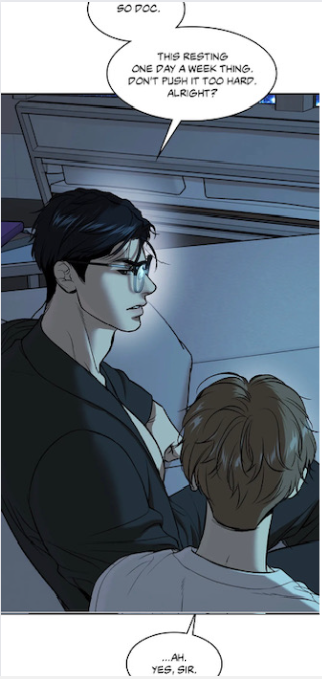 (chapter 29) And now, in episode 90, Jinx-philes can sense that the athlete is wearing the glasses “depressive realism” once again, where everything seems so true. He recalls all his misdeeds and can only perceive himself as the source of unhappiness for doc Dan. And like mentioned above, during that night, he is just only recalling his wrongdoings. He is overlooking that thanks to him, Doc Dan’s mental and physical conditions
 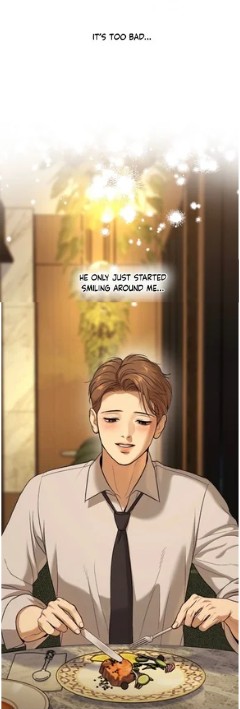 (chapter 89) improved, that he could make doc Dan smile. Meeting the hospital director made him see everything in a bad light. As you can see, he still has a black and white mentality. However, the truth is that right from the start, the champion had not just been a terrible person. He could be generous, help someone in need.
  (chapter 17) He saved doc Dan’s life twice.
  (chapter 65)
 (chapter 19) This image announces the vanishing of the parents.
 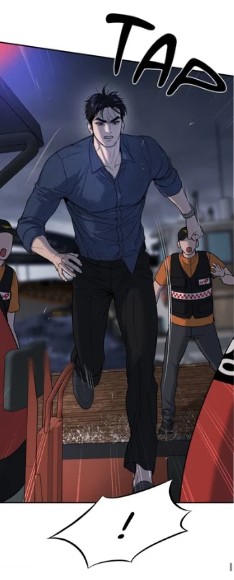 , when Joo Jaekyung imagines that doc Dan has once again fallen into the ocean and fears to lose him.
 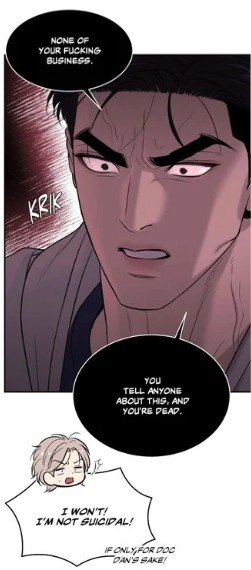 (chapter 89) Secondly, he is the only one referring to mental illness:
 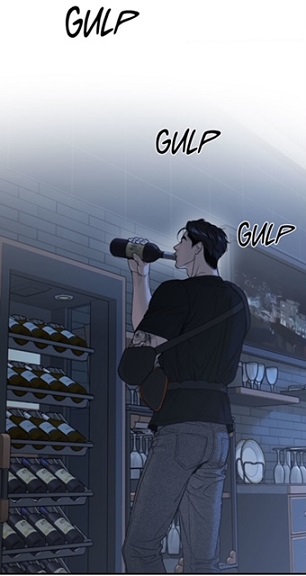 (chapter 54)
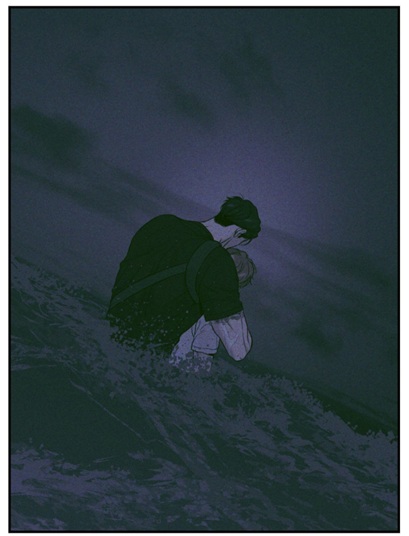 (chapter 78) Now, he is blaming himself for everything — and the narrative quietly aligns him with the same numbers, the same silences, the same logic of disappearance.
 (chapter 80) Secondly, he doesn’t know how the champion was blamed for everything and was treated by the other members of Team Black:
  (chapter 21) A teddy bear was present in his childhood, until it vanished.
  (chapter 87)

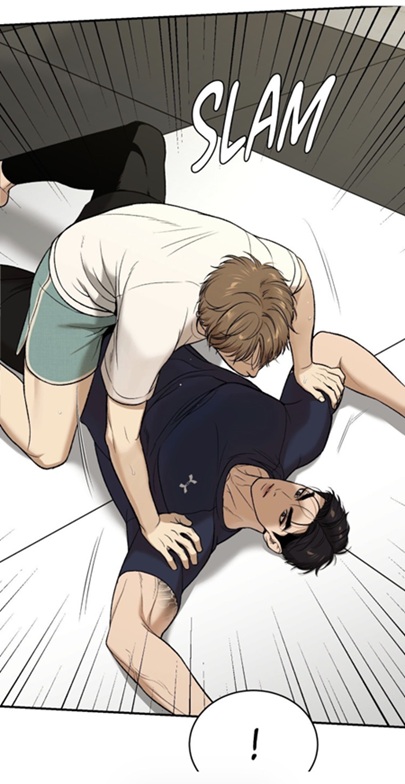 (chapter 88), and the final panel hinting at an imminent confrontation with Choi Heesung.
 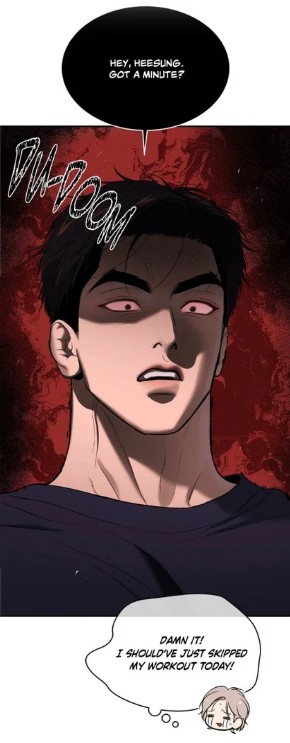 (chapter 88) Discussions largely revolved around physical proximity, discipline, and anticipation — around bodies in motion and the promise of conflict to come. At first glance, the episode seemed to oscillate between intimacy and tension
 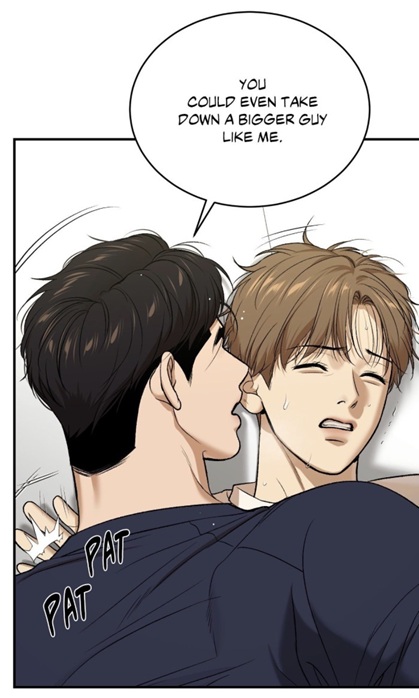 (chapter 88), between preparation
 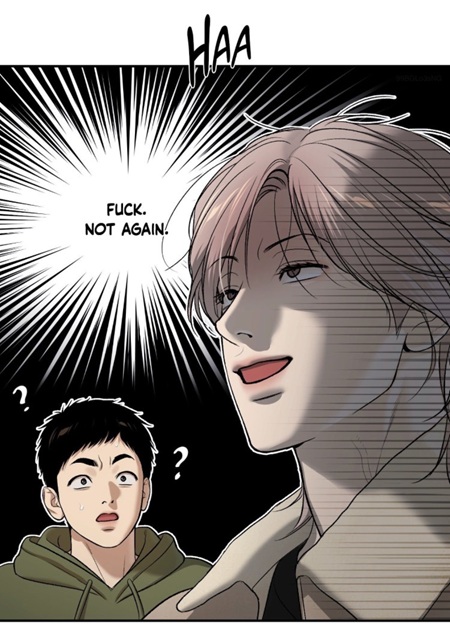 (chapter 88).
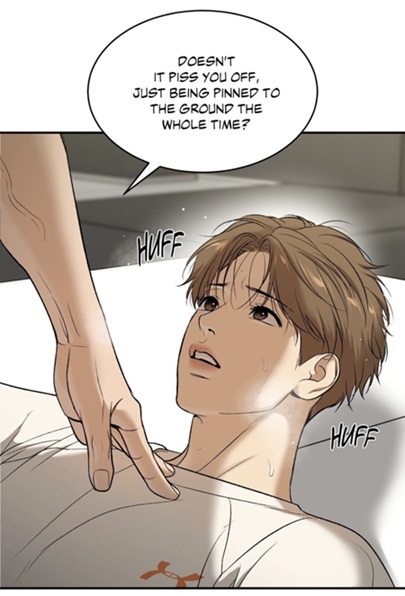 (chapter 88) are structured around restraint
 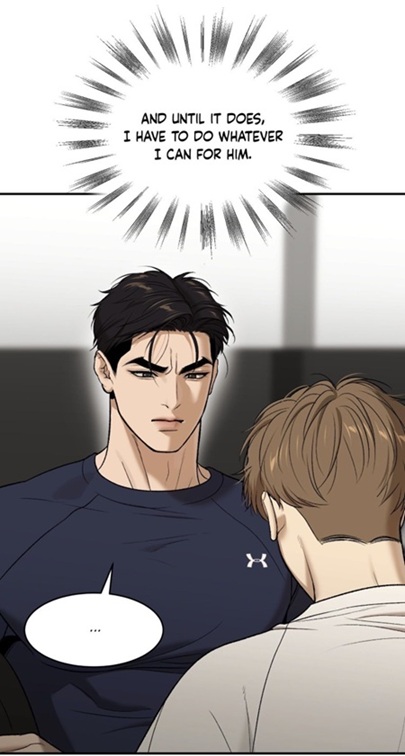 (chapter 88), delayed, or redirected. Words are measured, authority is redistributed, and decisions are deferred
 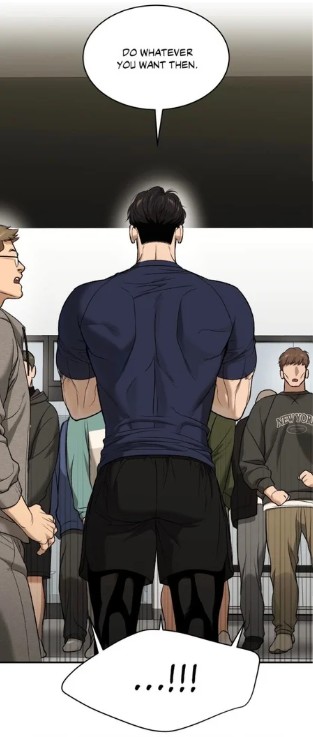 (chapter 88) rather than imposed. What initially appears as physical intensity and narrative suspense begins to reveal a deeper reconfiguration of roles, responsibility, and choice.
 (chapter 70)—most likely in November— in late autumn.
 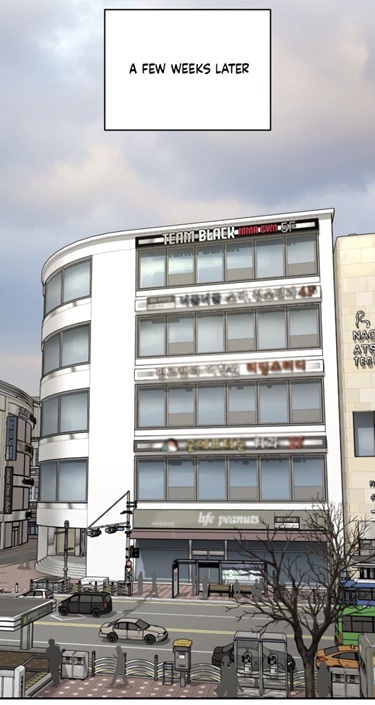 (chapter 88) This temporal setting is visually reinforced by the environment itself: in the opening sequence marked “a few weeks later,” the tree is already bare, its leaves gone. Nature offers no spontaneous image of growth or renewal. If a flower were to appear in this chapter, it couldn’t belong to the season. It must be cultivated, protected, and sustained in a green house—something that emerges not from natural abundance, but from deliberate care. So where does this idea of a flower come from?
 : a closed circuit which we could witness once again in the training room: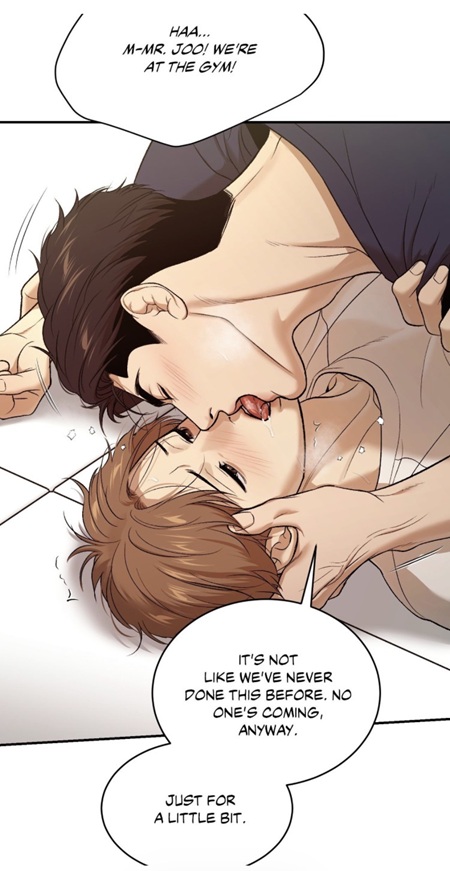
 (chapter 88) There are once again sparks between them. The number 8 is not just related to doc Dan [for more read
  (chapter 58) Two trajectories —long separated, repeatedly missing one another—intersect at last. When two eights overlap, they form neither a loop nor a knot, but a new shape: a flower-like figure, suggestive of opening rather than closure. This crossing does not resolve everything; instead, it creates the conditions for growth for all the characters.
  (chapter 88), white
  (chapter 88) purple
  (chapter 88), blue, gray,
  , (chapter 88) red
 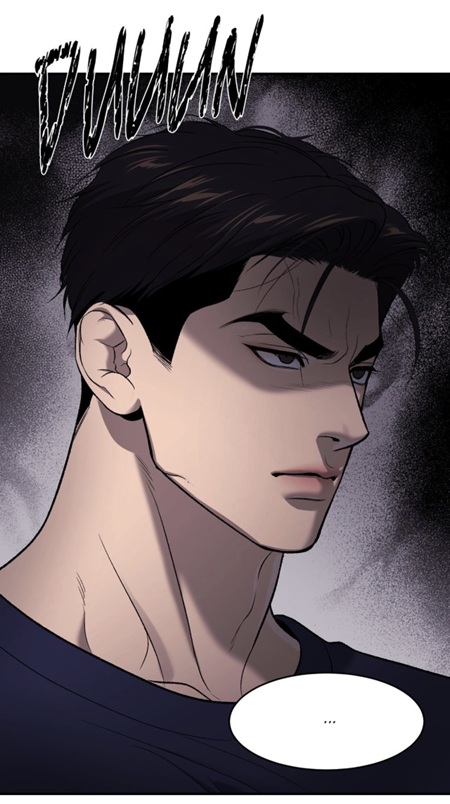 (chapter 88) Pink frames tenderness and mutual awkwardness; purple marks embarrassment and heightened awareness; red signals suppressed anger and looming confrontation; black absorbs fear, silence, and unresolved tension.
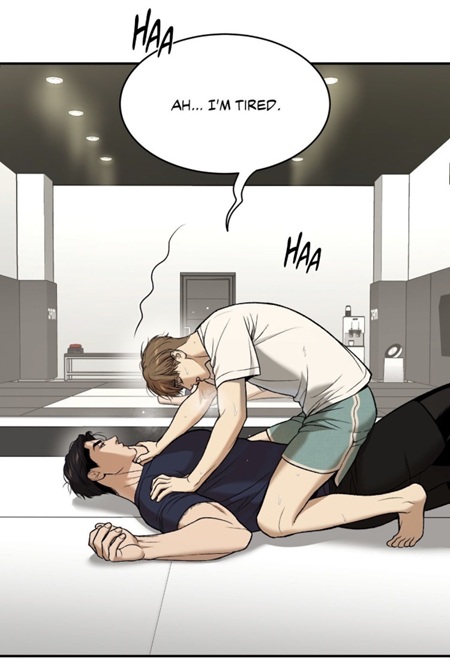 (chapter 88) are dressed in green
 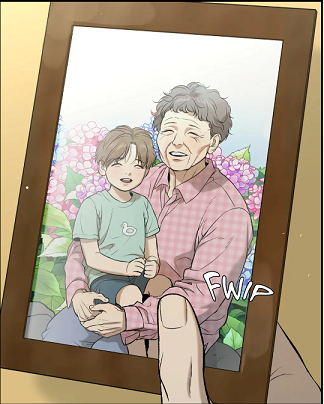 (chapter 19), where green and floral elements once functioned as a silent language of care and containment. The repetition is not accidental. By wearing a similar tone in the present, Kim Dan does not merely revisit the past; he carries it forward.
 (chapter 35), which tend to assert a singular message (love, passion, beauty), hydrangeas communicate multiplicity and emotional ambivalence; they speak in clusters rather than declarations. This visual language mirrors Kim Dan’s inner world at the time
 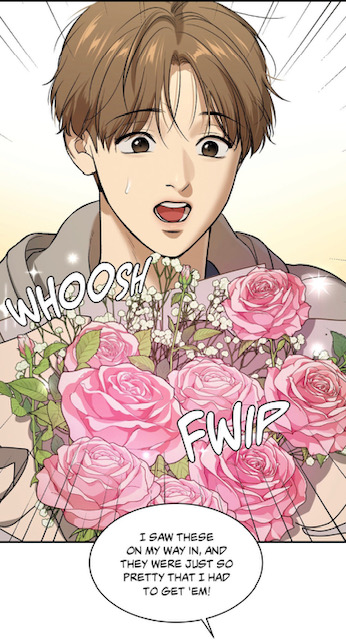 (chapter 31). Here, the symbolism shifts. Pink roses convey affection and admiration, while baby’s breath suggests innocence and fragility. Yet the arrangement is excessive, overwhelming, and mismatched to its recipient. The bouquet does not listen; it speaks at Kim Dan rather than with him. Significantly, Heesung comes to associate Kim Dan himself with the flower—something delicate, beautiful, and deserving of protection, but also something to be handled, displayed, and possessed.
 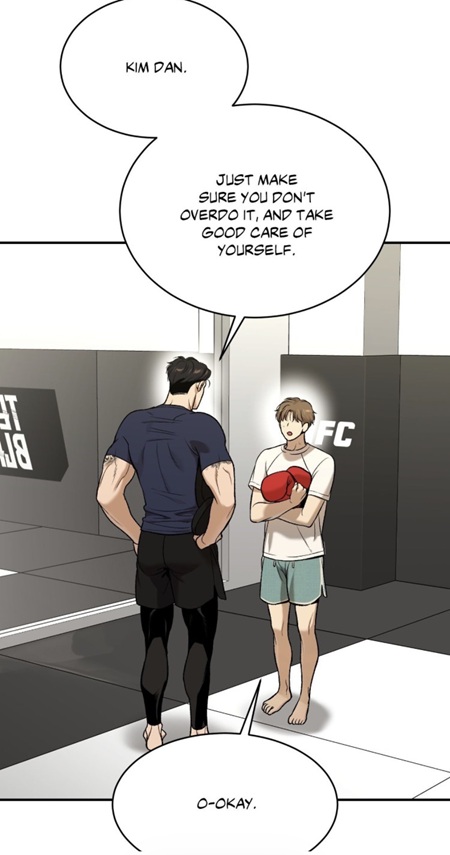 (chapter 88) Kim Dan’s green training clothes—visually echoing the green shirt he wore in the photograph with his grandmother—signal continuity rather than regression. This is not a retreat into childhood dependency, but the reappearance of an inner child now disentangled from obligation and fear. The flower that reemerges here is not gifted, not arranged, not imposed—it grows. In this sense, episode 88 introduces a missing element in the dynamic between the two protagonists: not desire, not care, but communication. And it is here that Choi Heesung becomes central—not as a rival or antagonist, but as a structural bridge, as in reality he represents the rose, “La vie en rose”
  . He embodies speech, playfulness, and visibility, yet also reveals their limits when they are severed from responsibility and respect. I will elaborate about this more below.
 (chapter 88), but the moment in which the conditions for happiness are finally put into place. And now let me ask you this. What is the symbol of happiness? Smiles and laughs. During the training session, Kim Dan smiles. These moments are brief
  (chapter 83) What is striking is that neither of them recognizes this fulfillment.
  (chapter 31)
 (chapter 88) What appears at first glance as coercion
 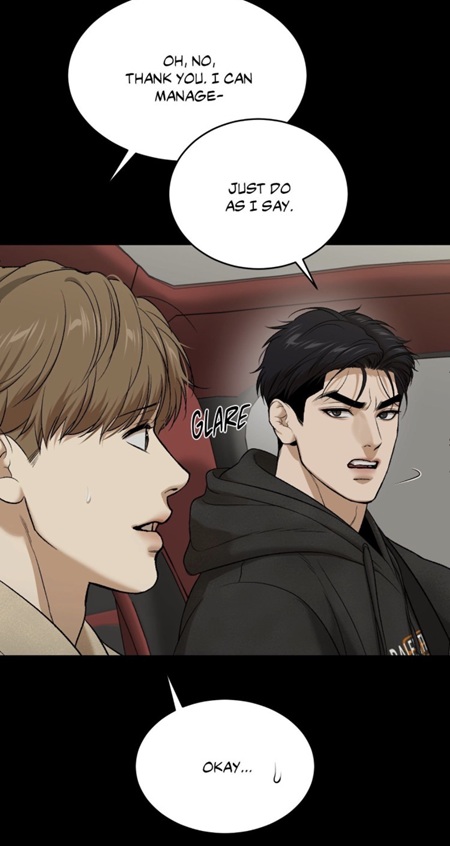 (chapter 88) or discipline is in fact a negotiation shaped by habit, fear of burdening the other, and an inability—on both sides—to articulate desire outside professional roles.
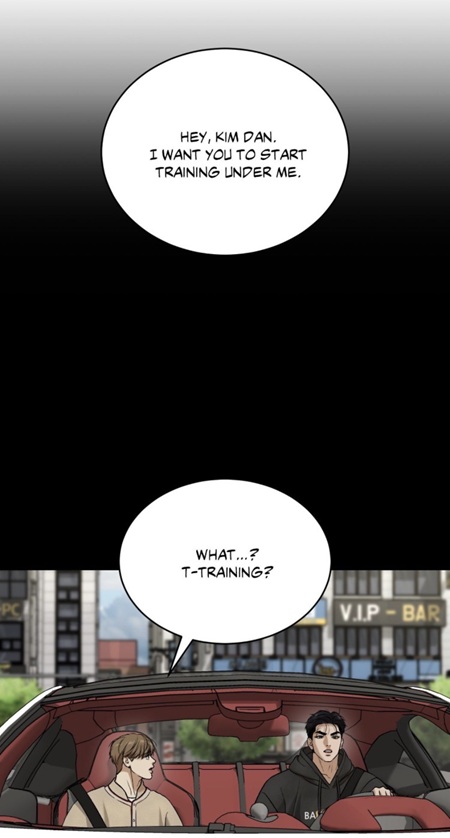 (chapter 88), a space that is never neutral in Jinx. A car has one driver, one direction, one authority. By placing the conversation there, Mingwa signals that the relationship is still structurally asymmetrical at this point: Joo Jaekyung leads, Kim Dan follows.
 (chapter 17) Therefore it is not surprising that instead of asking permission or explaining concern, he imposes the idea—because that is how he has learned to act as a captain, a fighter, and later a manager. Authority precedes dialogue.
 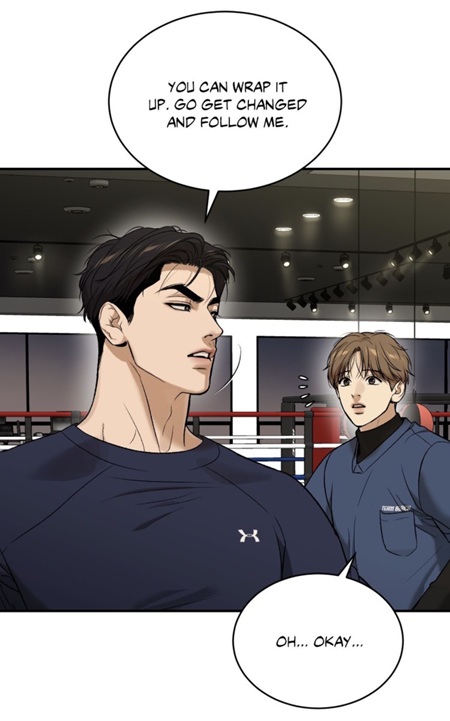 (chapter 88) In other words, the request from Joo Jaekyung appears as a memory from the physical therapist. Why?
  (chapter 88) Because Mingwa refuses the “clean” sequence in which an order is issued and immediately executed. The narration inserts a gap—an interval of off-panel time that we are forced to reconstruct from Kim Dan’s recall.
  (chapter 88) Instead Kim Dan no longer insists on his own sufficiency. He no longer says “I can manage., but doc Dan admits not only his own lacking.
  (chapter 88), but also his own desire. He finally expresses his desire to improve, to learn more.
  (chapter 88) creates a temporal bridge that enables this recognition. Only once change is named from the outside can Kim Dan cautiously acknowledge it from within.
 (chapter 88) The problem is that his form of care was influenced by his own mindset and emotions: his physical limitations.
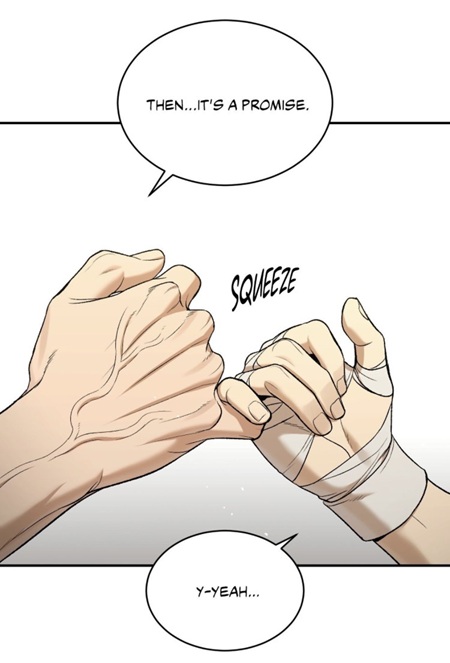 (chapter 88)
 (chapter 88). He teases.
  (chapter 88)
 (chapter 88), not rest. Thus the doctor mistakes the embrace for a technique and not the expression of love.
  (chapter 88) And observe that the athlete still refuses to express the true meaning of his hug. His explanation still remains technical, defensive, and strategically framed:
 (chapter 88) This sentence is crucial. It reduces contact to function. The closeness of bodies, the pressure of weight, the proximity of breath are translated into instruction. What could be acknowledged as reassurance or care is instead displaced into pedagogy. Joo Jaekyung does not deny intimacy; he relabels it.
  (chapter 88) of breath held too long, of proximity charged with something unnamed. The technical explanation arrives after that awareness, not before it. This confirms that the instructional language functions as a shield — not against intimacy itself, but against having to speak it.
 (chapter 88) Directly after warning against lowering one’s guard, Joo Jaekyung kisses him.
 (chapter 26) Back then, Doc Dan had accepted the challenge due to Potato, though deep down he desired to have the champion as his teacher.
  (chapter 25) That’s how it dawned on me that doc Dan has gradually taken over Yoon-Gu’s previous place at the gym. He is an “unofficial member” of Team Black. Thus he mops the floor and Yoon-Gu is not there to stop him or reclaim this position.
  (chapter 88) Yoon-Gu’s position within the gym has improved. He is now considered as a real fighter.
  (chapter 88)
  (chapter 87) For him, this trip was related to work, while in reality it was a date in disguise.
  (Chapter 88) The answer restores hierarchy without acknowledging the transformation that has already occurred. Secondly, the answer closes the future by appealing to a supposedly objective limit. Yoon-Gu can never be his sparring partner. The best he can do is hold the mitts and nothing more. The fox is using his seniority and body to have the final say.
  (chapter 88) Under that framework, Yoon-Gu is not disqualified; he is qualified. He has trained. He belongs. So technically, Yoon-Gu could indeed beat the actor, as the “puppy” has trained for a long time at Team Black.
  (special episode 1) He knows people’s patterns.
 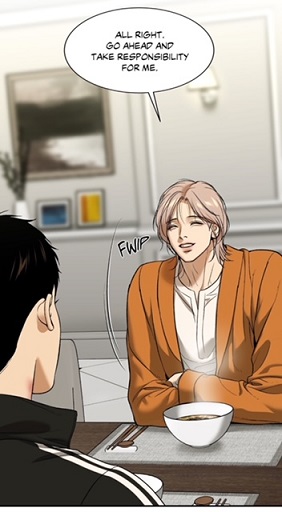 (special episode 1) He knows how relationships fail.
  (chapter 33)
 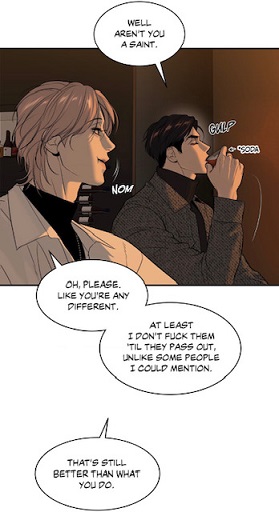 (chapter 33) He knows what he does not want. His language is saturated with judgment shaped by past experiences: lovers who become “too clingy,” attachments that turn inconvenient, people who should remain “better off” elsewhere
  (chapter 58). This knowledge is not neutral; it is retrospective and comparative. It is built from what has disappointed him before, and it governs how he evaluates others in the present. He views himself as superior to the champion morally.
  (chapter 33) Heesung’s orientation is never toward what is unfolding, but toward what might be better elsewhere—another partner, another configuration, another future. His repeated invocation of a “soulmate” is revealing: it displaces intimacy into a hypothetical horizon. By looking at the grass, he is overlooking the flower. Love, for him, is something to be found later, once the conditions are ideal. What exists now is always provisional, always lacking, always subject to replacement. He needs the “perfect” lover, and in his eyes, Potato doesn’t meet his conditions: too innocent and too young.
  (special episode 1) This explicates why the young fighter is only considered as “fuck buddy”.
 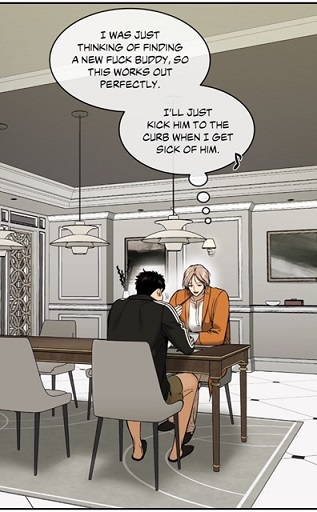 (special episode 1)
  (special episode 1), he is present, available, even emotionally invested—but he is never treated as sufficient. He is smaller
  (chapter 58) Heesung’s use of the pronoun “we” is, on the surface, inclusive. Linguistically, it frames his relationship with Potato as mutual, shared, and consensual. But pragmatically, it does the opposite. The “we” is spoken over Potato’s head, not with him. Thus Potato is physically present but discursively absent. He does not confirm, nuance, or reciprocate the statement verbally. The pronoun thus becomes a rhetorical appropriation rather than a sign of partnership.
  (chapter 31) He denies the existence of feelings and attachment.
  (special episode 1) or humiliate the other.
 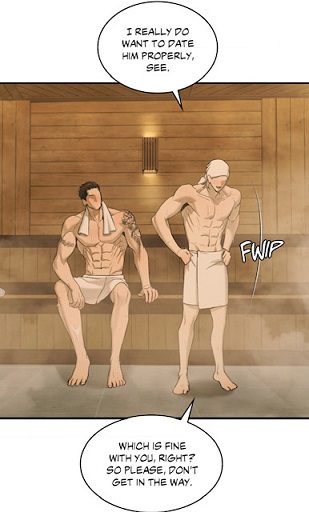 (chapter 34) Heesung, by contrast, is fluent. He can name, joke, insinuate. What he lacks is restraint and responsibility. His ease with words does not signal emotional intelligence; it signals control.
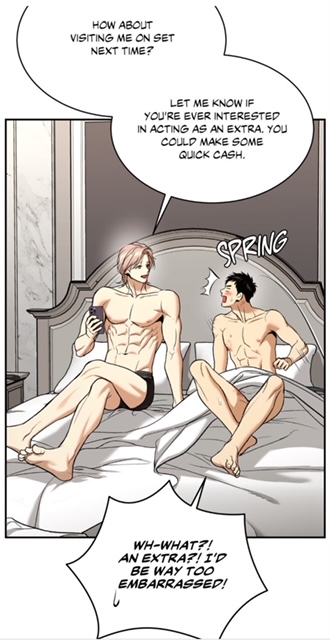 (special episode 2), corrected.
 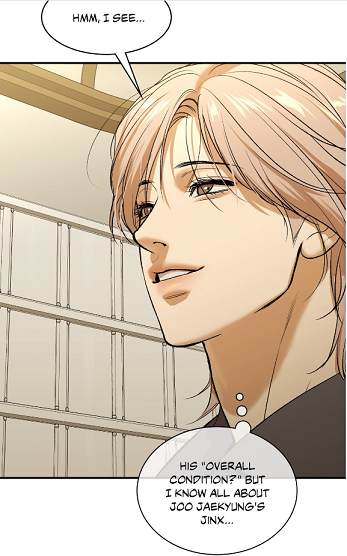 (chapter 32). It has no declared endpoint, no moral clarity
  (chapter 34) Heesung enters fully aware of what he is likely to witness. He is not naïve, nor totally surprised. Hence he doesn’t flee right away. Yet instead of acknowledging the reality before him, Doc Dan is not someone the fighter fucks, until he passes out,
  (chapter 34) Joo Jaekyung becomes the problem, the one who “deserves to suffer.”
 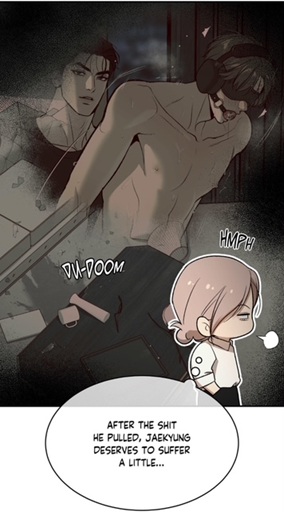 (chapter 58) This moral displacement allows Heesung to maintain distance: if Jaekyung is guilty, then no self-examination is required. Forgiveness—central to this arc (from 79 to 89)—is rendered impossible, because forgiveness would require recognizing shared vulnerability rather than assigning blame.
 (chapter 25), accepts deferral. Later, he is displaced entirely. Unlike Kim Dan, who gradually moves from imposed participation to earned agency, Potato is never given a space where effort leads to recognition.
  (chapter 85) However, this panel implies that the young man has already been able to enter competition. Striking is that his promise at the seaside sounds like commitment
 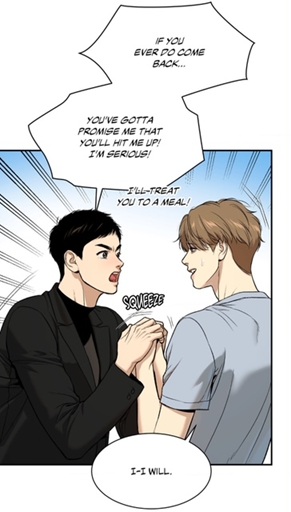 (chapter 59), but the reality diverges. It only binds doc Dan. If the latter returns to Seoul, he has to promise to train with Potato. The reason is simple. He is already committed to the actor, he is already at his beck and call. Potato’s promise echoes the earlier promise forced upon Kim Dan by his grandmother: a future-oriented vow that justifies present sacrifice while guaranteeing nothing in return.
  (chapter 11)
 (chapter 78), he didn’t remind doc Dan of his promise. At the same time, observe that none of the fighters apologized or promised something. When they hugged the doctor, they didn’t pay attention to the physical therapist’s reaction: his passivity and silence. The “laugh” lacked genuineness and felt wrong at the time.
  (chapter 78)
  (Chapter 88) This is how it dawned on me why Mingwa recreated such a situation for Heesung. Observe his reaction, when he opened the door. He never answered the question to Potato. In fact, he slammed the door and kept his thoughts to himself.
  (chapter 35). In both cases, Heesung benefits from proximity without assuming responsibility for the other person’s risk. Silence, here, is not neutral—it is the mechanism by which that asymmetry is maintained.
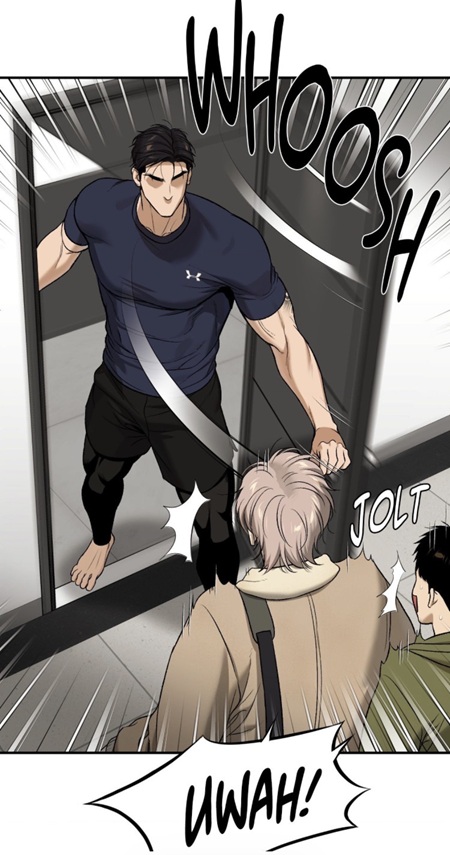 (chapter 88) Forgiveness, responsibility, and mutual recognition—central to the arc unfolding elsewhere—are entirely absent from his conduct. Where Joo Jaekyung begins to redistribute choice and accountability, Heesung consolidates control by refusing to speak.
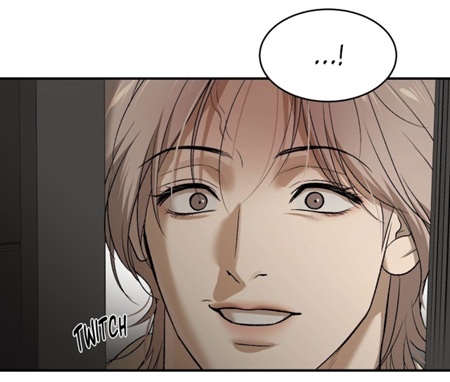 (chapter 88) The irony is that the actor didn’t realize this. He had the impression to be exposed to a similar scene than in the penthouse.
  (chapter 35) And now, pay attention to the logo on the doctor’s t- shirt.
  (chapter 88) First, it appears on the left side, positioned close to the hamster’s heart. Moreover, it looks like an orange eye. Orange is not only the color of Heesung the fox
  (chapter 79) Besides, it is the same logo than when Yoon-Gu was spying behind the closed door.
 (chapter 23) That’s the moment Potato realized the truth about the couple: they were intimate. That’s the reason why I am convinced that Heesung will play the role of the messenger and mediator between the wolf and the hamster.

 (chapter 87), and the destruction of black glass under Baek Junmin’s foot.
 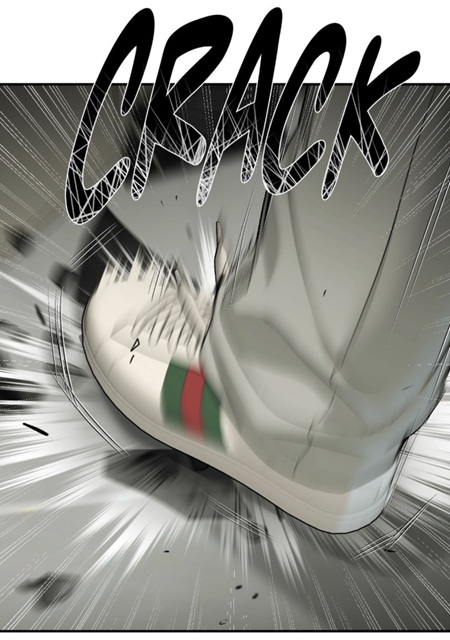 (chapter 87) Both moments operate under pressure, yet they belong to radically different economies. One gathers force inward to protect, contain, and care. The other expels force outward to fracture, dominate, and erase. The biggest difference is not intensity, but direction—and whether the other is held, or destroyed.
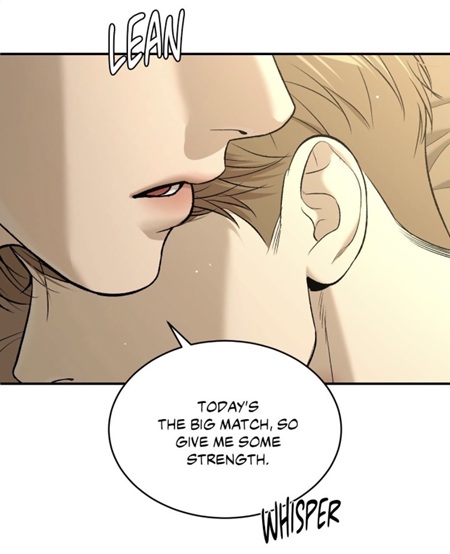 (chapter 87) He asks for strength and luck
  (chapter 87). Kim Dan answers with a gesture, the offered hand accompanied with a wish:
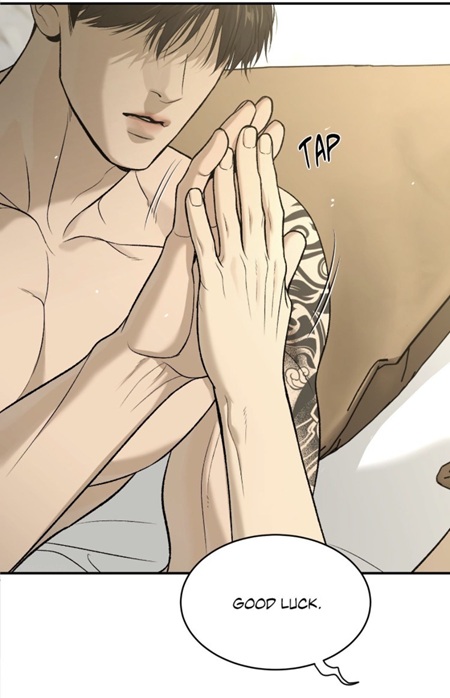 (chapter 87). Only then does the squeeze occur. Words initiate connection; the body confirms it. Speech and gesture align. Pressure becomes care.
 (chapter 87) —but they are refused. Baek Junmin is denied any possibility of reply—no space to answer, to justify himself, or even to speak back.
  (chapter 87) The screen interposed between them
 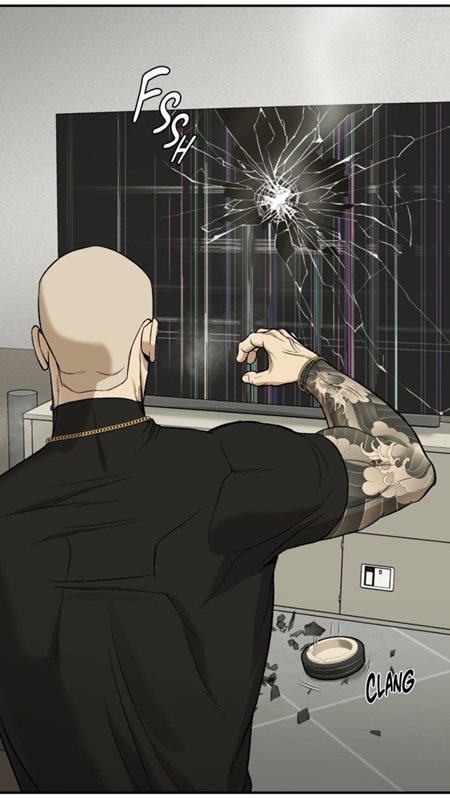 (chapter 87) functions as both a physical and symbolic barrier: it delivers judgment without permitting response. Deprived of dialogue, Junmin is pushed out of language altogether. What remains available to him is not speech, but the body. His answer therefore does not come in words, but through the hand
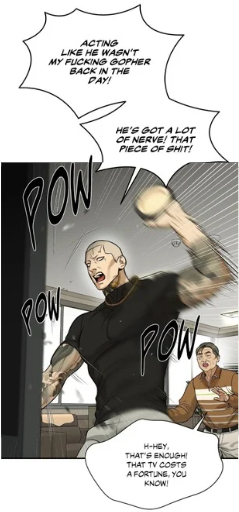 (chapter 87) and then through the foot.
  (chapter 87) The violence is not misdirected; it is precisely directed at the medium that silences him. The screen is the site of exclusion,
  (chapter 87), before the challenge
 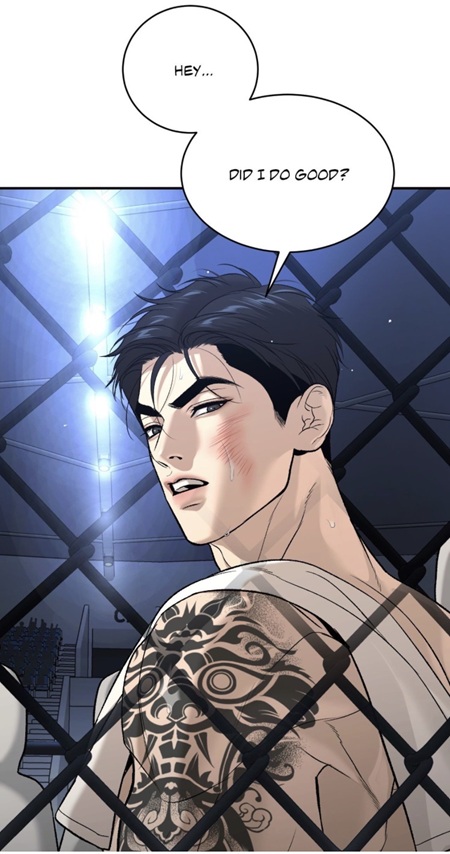 (chapter 87) Here again, language and body are aligned.
  (chapter 87) Kim Dan answers—first with a nod, then with words. The response is clear, immediate, and embodied. And what follows is decisive: the champion raises his arm.
  (chapter 87)
 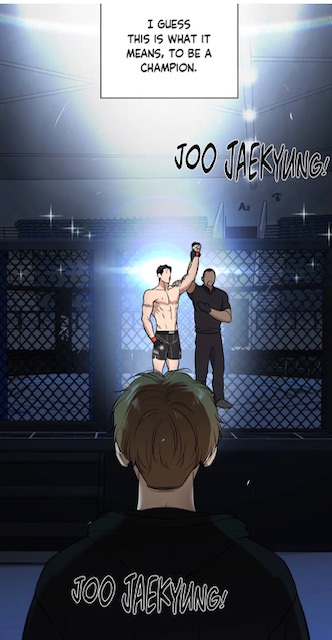 (chapter 15)
 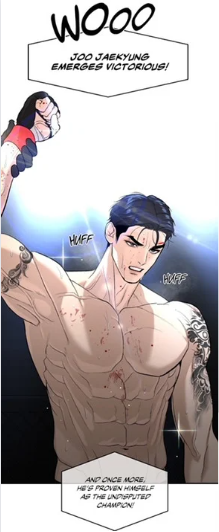 (chapter 40)
  (chapter 51), its meaning sharpens. For the first time, Kim Dan no longer occupies the position of fan or witness. He functions as judge and jury. 😮 And the champion acts accordingly. He declares himself the winner.
  (chapter 87) Joo Jaekyung is no longer a puppet or zombie, but a man with a heart and voice.
 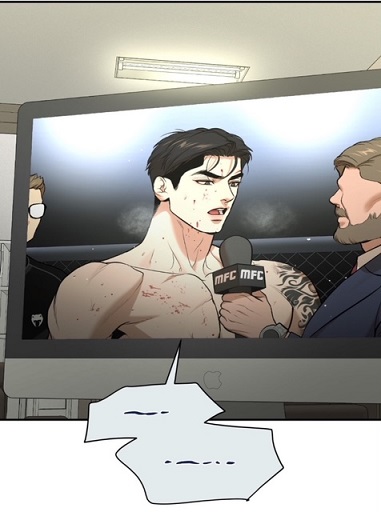 (chapter 46) It regulates turn-taking, determines who may speak, in what order, and under which framing. As long as it remains in the moderator’s hand, speech is mediated, filtered, and contextualized. Questions lead; answers follow. Meaning circulates vertically.
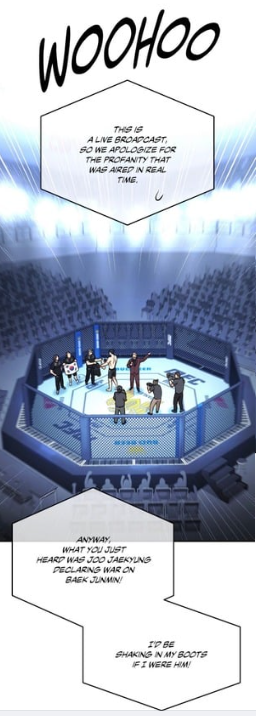 (chapter 87) He no longer moderates; he reacts. He cannot redirect the statement, soften it, or translate it into spectacle. He can only acknowledge that something has escaped containment. The apology is not moral—it is procedural. It marks the moment the institution loses authorship.
 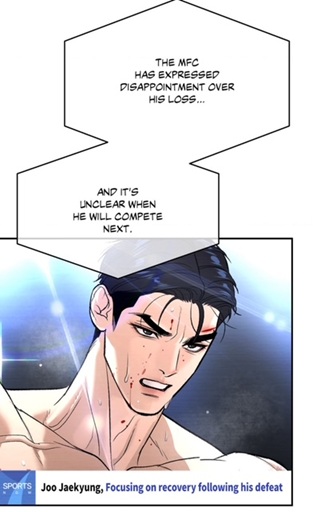 (chapter 57); he is narrating. He does not answer a question
 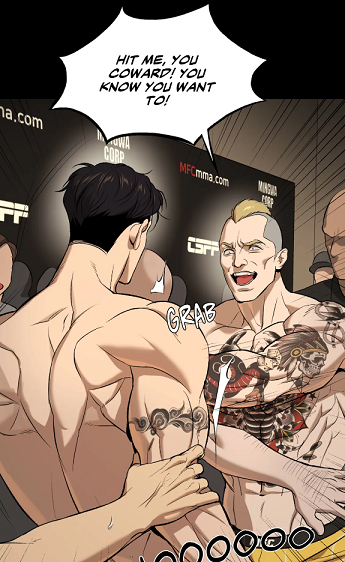 (chapter 14) Yet, CSPP
  appears more and more insistently
 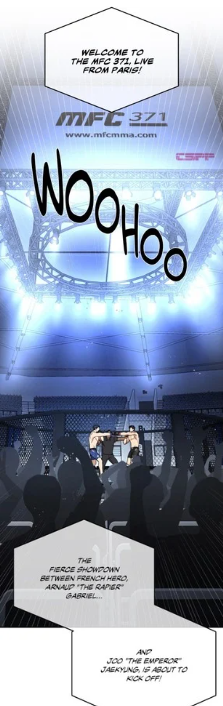 (chapter 87), even in the cage
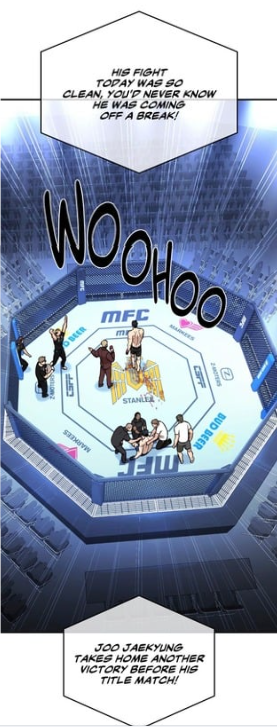 (chapter 87), contrary to before.
  (chapter 15) Either you only see the C or the name is placed out of the frame.
  (chapter 40) Yet it remains unexplained. What does it stand for in the world of Jinx? A sponsor? A broadcaster? The story never defines it explicitly—and that absence matters. What goes unnamed is often what exercises the most power. I will elaborate about it further.
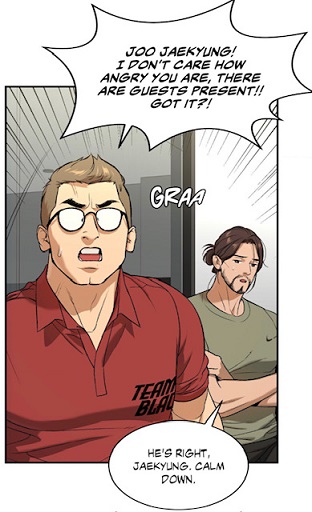 (chapter 36) —depends on mediation. Delay. Scoring. Interpretation. The quiet redistribution of meaning after the fact. As long as nothing is said outright
  (chapter 87), people in the seaside town, a public that exists before commentary can shape it.
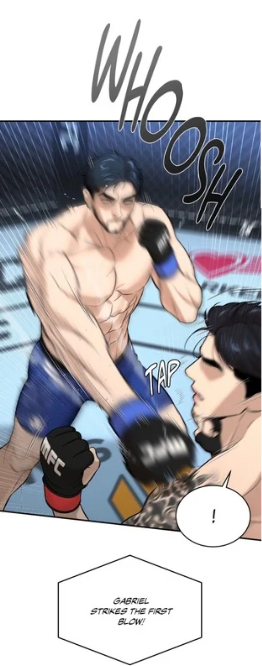 (chapter 87) And the fight already answers the questions the system hopes to postpone. What we see in the cage is not merely a contest of strength, but a clash of communicative regimes. How one fights here is inseparable from how one speaks, evades, provokes, or withholds.
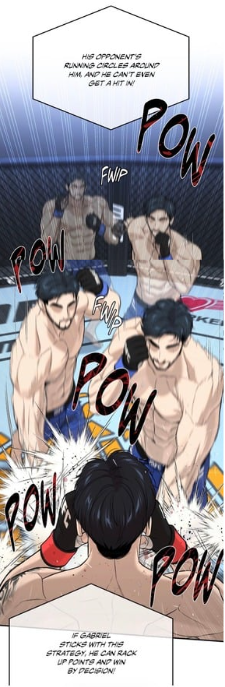 (chapter 87) His movement privileges distance, tempo
 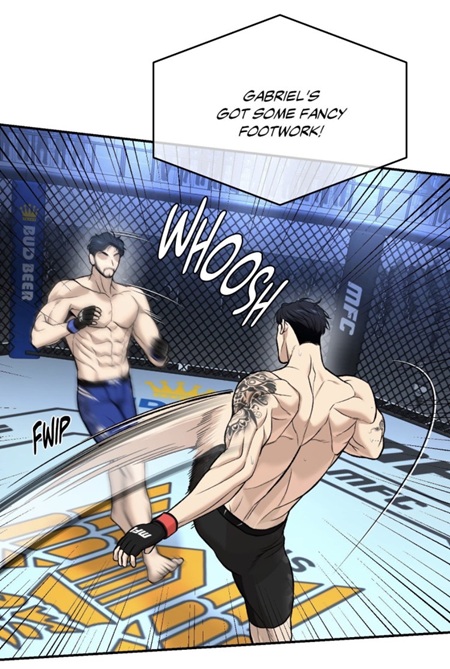 (chapter 87) and visibility. That way he gives the impression that he is superior to the former champion. The middle kick appears not as a finishing tool
 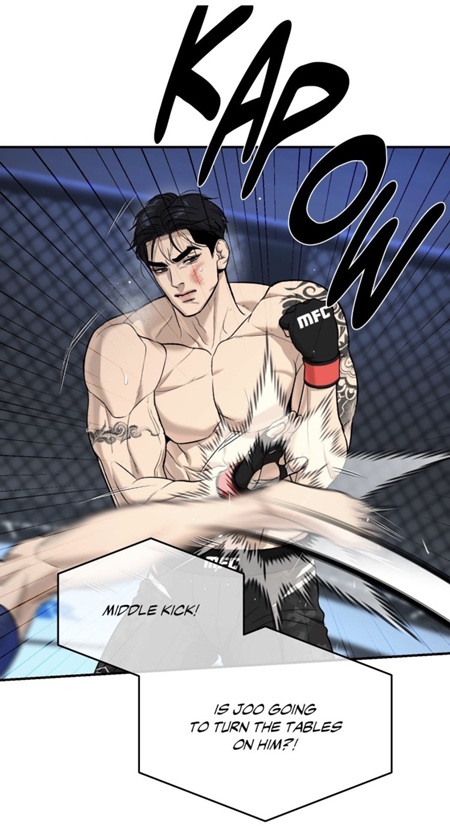 (chapter 87), but as an instrument of disruption—enough to score, enough to interrupt rhythm, never enough to end the exchange. The rest of his offense follows the same logic: repeated punches to the face
  (chapter 87), the hands, the shoulder. Targets chosen not for collapse, but for points. Not to silence the opponent, but to keep him talking through damage. The choice of targets is not arbitrary. The hands and the shoulder are not neutral zones. They are sites of vulnerability that presuppose knowledge. Arnaud Gabriel does not fight, as if he were discovering his opponent in real time; he fights as if he were acting on prior information.
 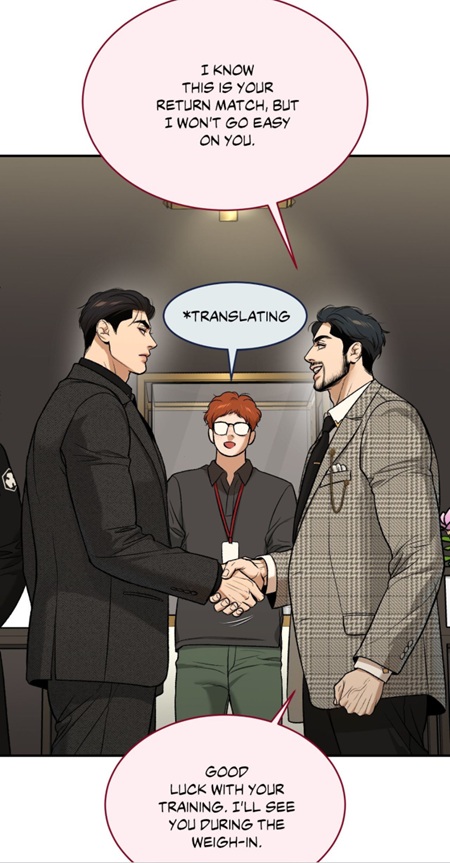 (chapter 82) He anticipated a diminished MMA fighter at the end of his career who would train at the hotel gym. His punches repeatedly return to the same areas—not to finish, but to aggravate. Not to silence, but to extract fatigue.
 (chapter 82)—noticed earlier during training—signals something even more fragile: limits that are physiological, not tactical.
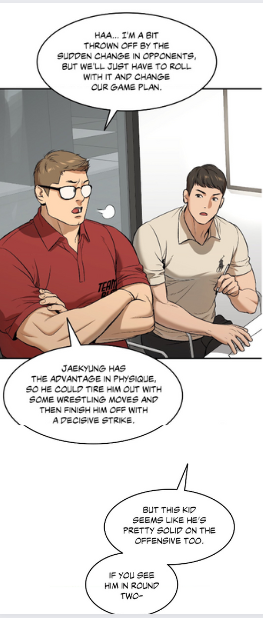 (chapter 47) Already discussed. Already framed. Gabriel’s reliance on point accumulation is inseparable from this logic.
  (chapter 87) He does not need to dominate the body; he needs to activate its known limits and let the scoring apparatus do the rest.
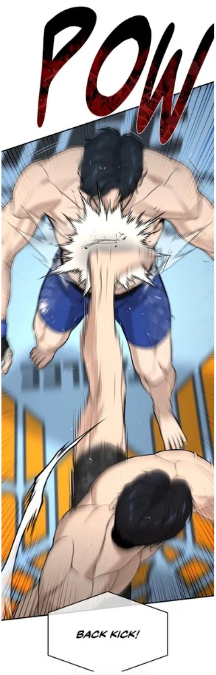 (chapter 87) —his decision to close distance, to counter decisively, to end the exchange rather than prolong it—appears less like impatience than resistance. He does not correct the narrative. He interrupts it.
 (chapter 51) The fight is no longer about what happens between bodies, but about who controls evaluation. And that’s how they could rig the match between Baek Junmin and Joo Jaekyung.
 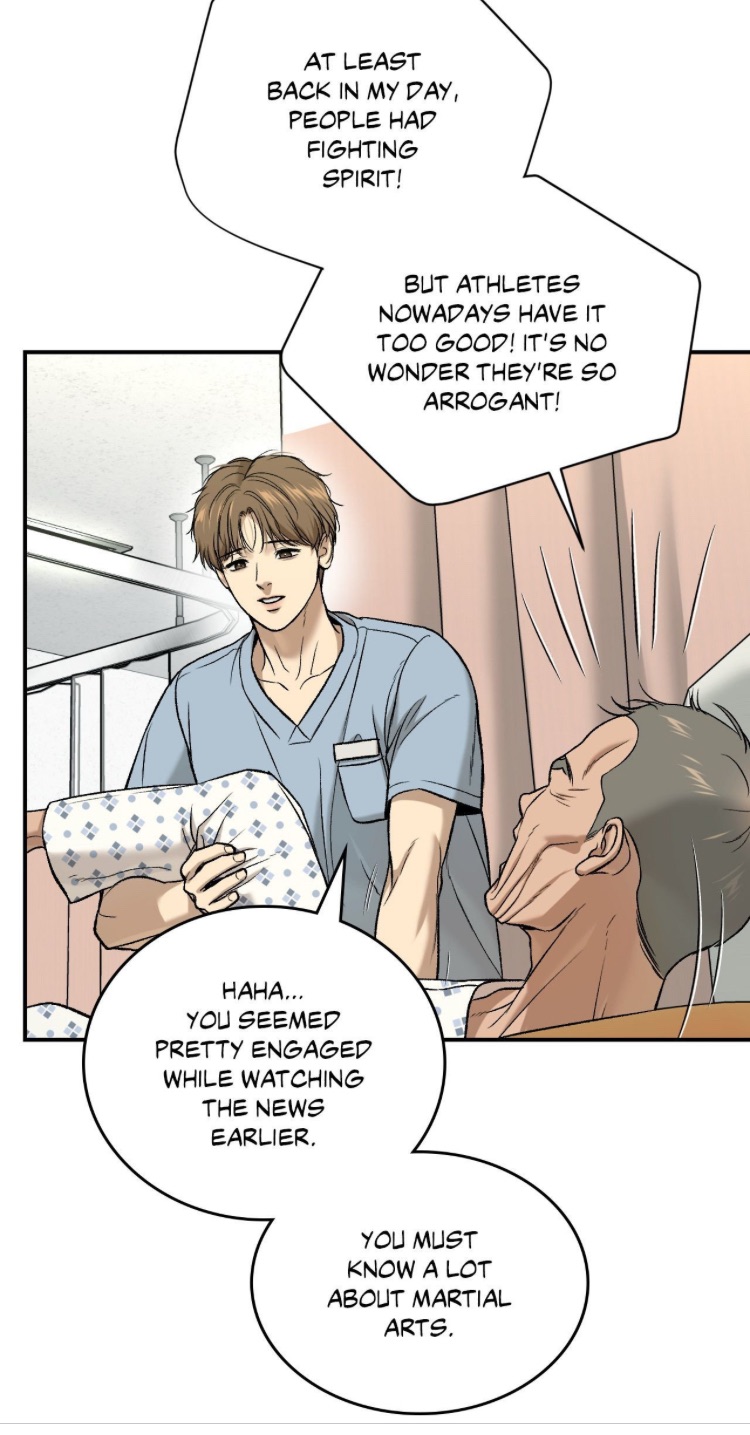 (chapter 70) acquires a different meaning. What he condemns as arrogance is not a moral failure, but a structural adaptation. These fighters have learned that they do not need to finish fights with a knockout. They only need to prolong them—to survive them—because the system will finish the sentence for them. Therefore, the moderator’s commentary during the match introducing the new Korean fighter takes on a clearer function.
 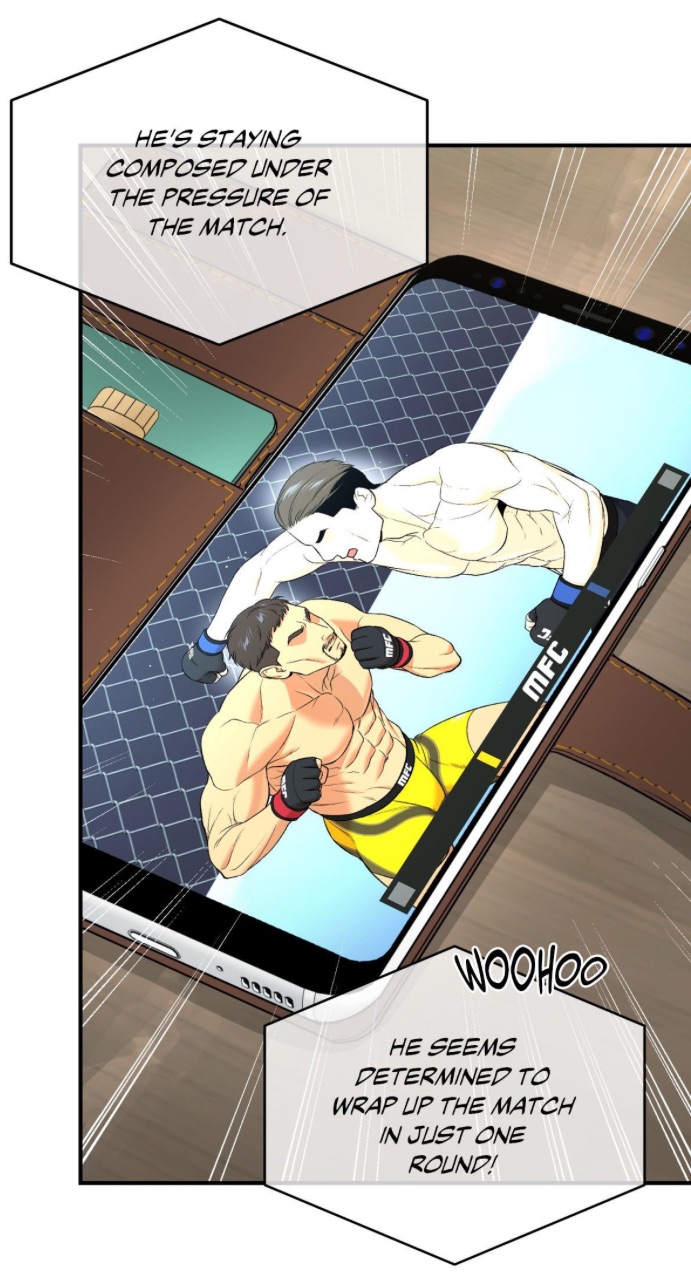 (chapter 71) He frames the rookie as someone “waiting for the right timing,” subtly suggesting a coming knockout rather than prolonged survival. The language is important: it reassures the audience that decisiveness still exists within the system, that power is merely deferred—not absent.
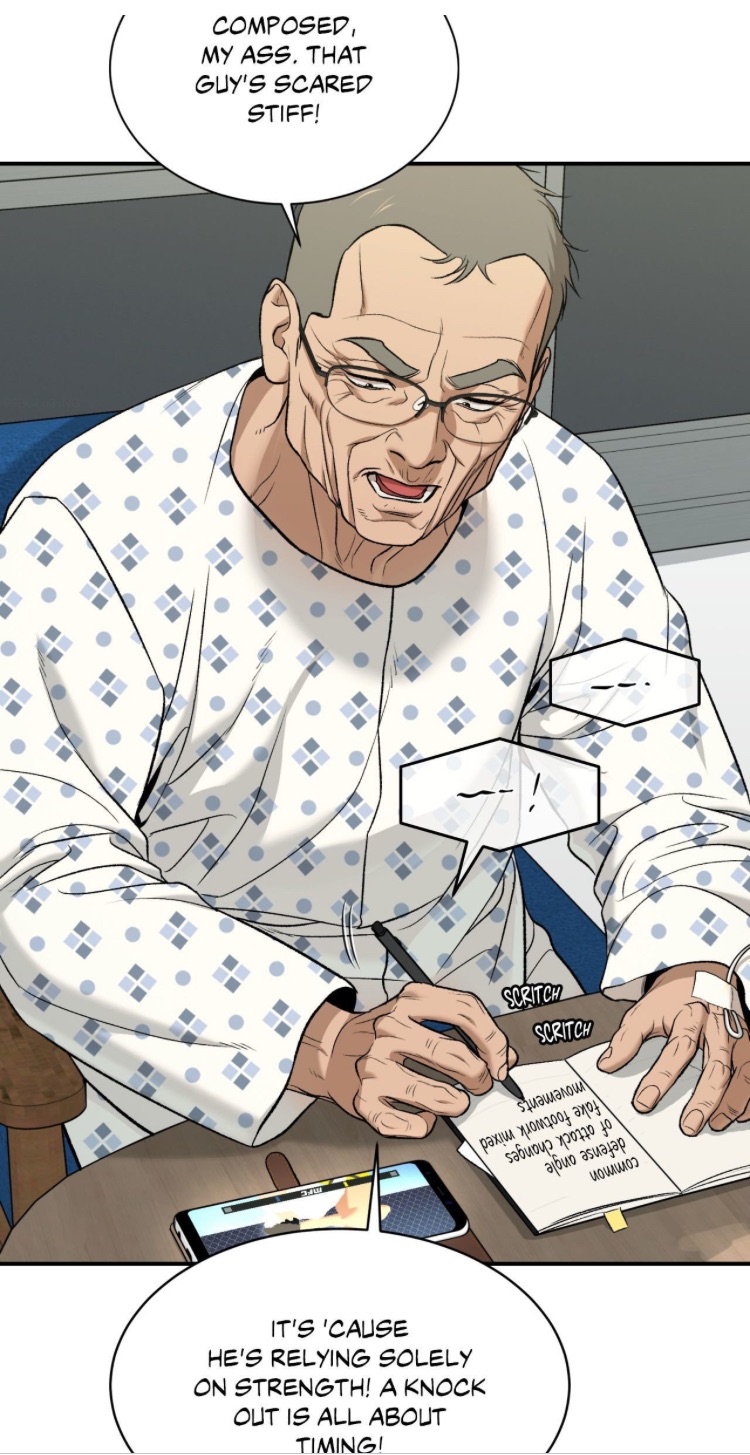 (chapter 71) The director is not persuaded. Hwang Byungchul reads the situation differently. He recognizes stiffness, fear, and overreliance on structure—not composure, not strategy. Where the moderator sees patience, the director sees hesitation. Where commentary insists on strategy, experience detects rigidity and lack of instincts.
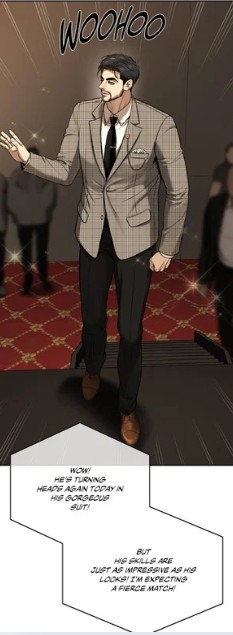 (chapter 82) and inside the cage.
 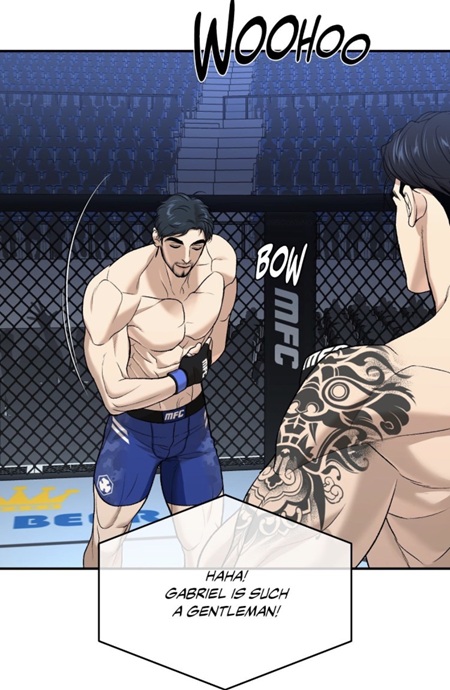 (chapter 87) Publicly, he is courteous. Measured. Even complimentary.
 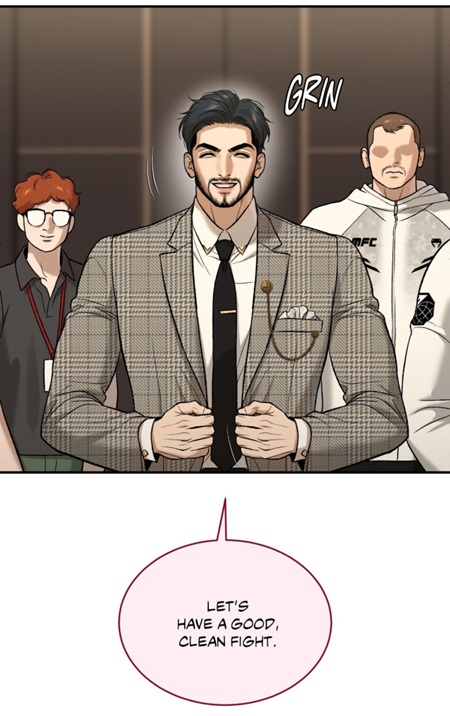 (chapter 82), gentle and polite gestures, and tactical distance— away from the spotlight, away from overt confrontation. His restraint is not humility, but alignment. He performs civility so that judgment, narration, and authority can be outsourced to the institution. That’s why for him, fighting is strongly intertwined with fun and he sees himself more as a star than as an athlete. He is definitely influenced by MFC. Hence we can say that his suit mirrors his mind-set. Gabriel’s suit does not soften his presence; it disciplines it. The patterned fabric signals rigidity rather than elegance—structure over fluidity. It mirrors his fighting style: calibrated, rule-bound, resistant to improvisation. Nothing about his appearance invites rupture. Everything is designed to hold form.
 (chapter 49) It is to smirk, to whisper, to apply pressure obliquely. In both cases, the logic is identical: control is preserved by never being fully present.
 (chapter 87) It is more observation. He allows the opponent to speak first—to reveal the structure of the exchange.
  (chapter 87) When it lands, it collapses distance. It forces the opponent inward. And crucially, it targets the center of the body—not the face that earns applause, but the core that sustains movement.
 (chapter 87) and delivers an uppercut.
  (chapter 87) This is not escalation; it is completion. Where Gabriel sought to keep the fight open, Joo Jaekyung compresses it. He refuses the long exchange. He refuses circulation. He refuses to wait for judgment. His strategy is not to be evaluated later, but to be undeniable now.
 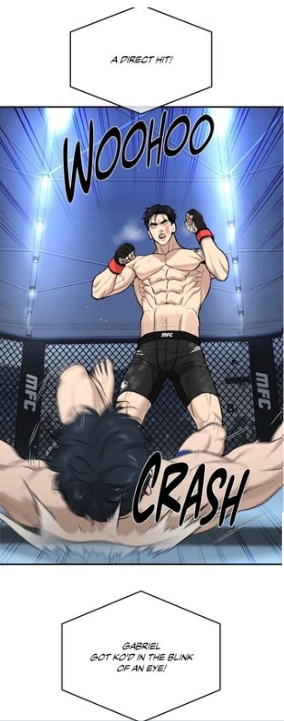 (chapter 87) This is not silence imposed from outside, but silence produced by gravity. Once the body crashes, breath cannot return, and speech has nowhere to perch.
  (chapter 87)
 (chapter 87)
  (chapter 2) While the jinx held, action could still occur, but speech could not carry consequence. Words dissipated, were deferred, or were absorbed by systems designed to neutralize them. Powerlessness expressed itself as speechlessness.
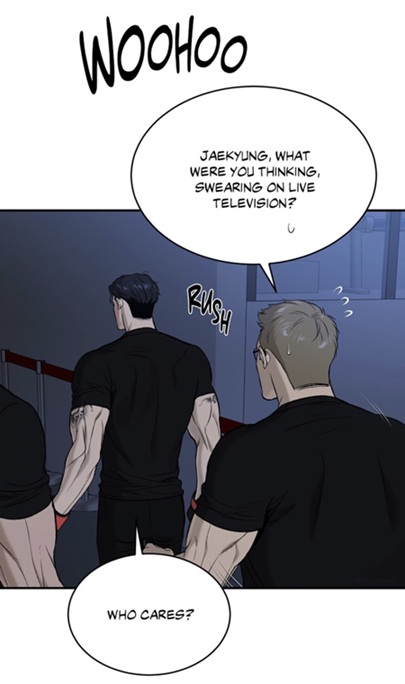 (chapter 87) His actions arrive before meaning can be reassigned. His words arrive where no answer is prepared. In this sense, episode 87 marks the moment Joo Jaekyung becomes fluent in his own discipline. Not merely competent, not merely dominant, but articulate. His movements surprise
  (chapter 5) which had surprised his manager Park Namwook.
 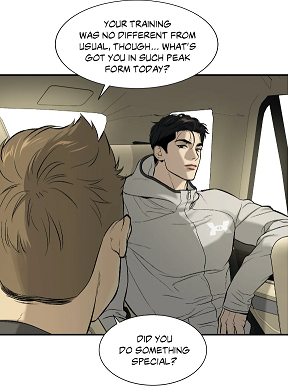 (chapter 5)
 (chapter 62) They are not close enough to trust the system blindly.
 (chapter 57)
 (chapter 69), by allowing attention to cluster around foreign misconduct
 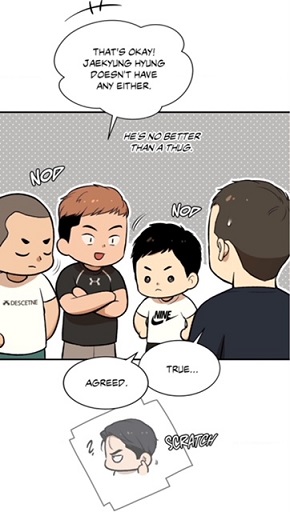 (chapter 47) Nothing new needs to be invented. Only reassembled. They know about the dragon’s past, because they brought Baek Junmin, someone who resented the celebrity for his wealth and fame.
 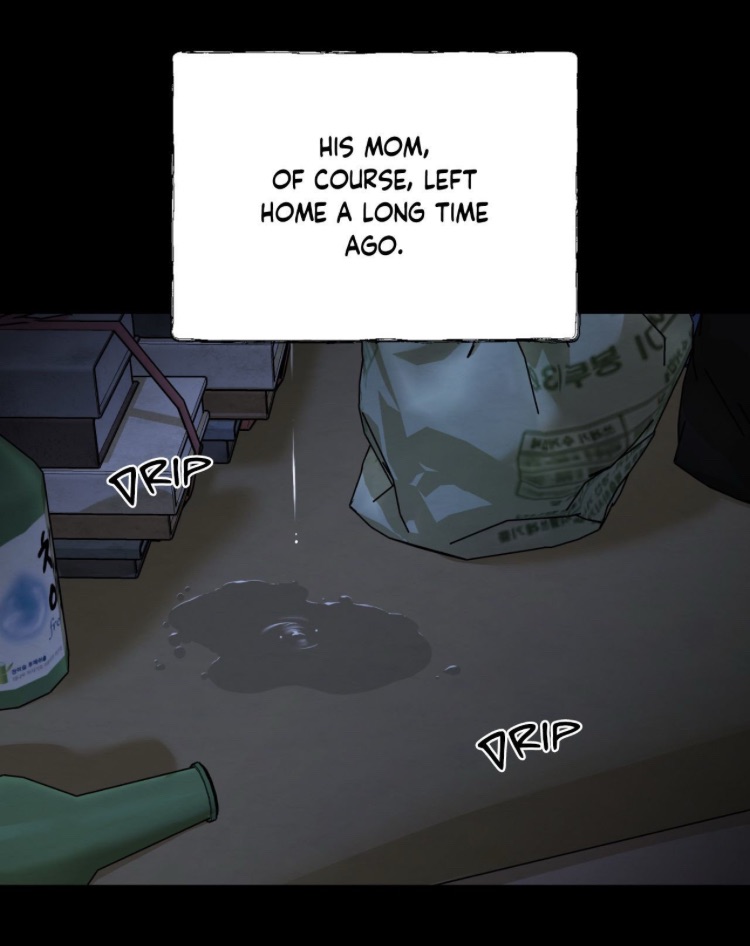 (chapter 72) It only needs to repeat an already accepted story: abandonment as necessity, violence as justification, disappearance as victimhood. A story the system knows how to circulate. And Hwang Byungchul never questioned her decision so far.
  (chapter 78) Secondly, Kim Dan is now able to distinguish the past from the present. Finally, thanks to doc Dan
  (chapter 62), he did so many good deeds in the seaside town that the inhabitants and the patients from the hospice won’t accept such accusations. I believe that such people won’t see “motherfucker” as a problem at all, they will rather see it as a part of his role after the match. What will remain in their mind is rather the accusation and riddle he voiced: the stunt Baek Junmin played.
  (chapter 87), which already tells us that CSPP does not function as a simple broadcaster. My idea is that CSPP operates as an intermediary apparatus: a company that packages events, sells broadcasting rights, coordinates visibility, and transforms violence into consumable spectacle. In other words, CSPP does not show fights; it produces events. This explicates why CSPP was present right from the start
  (chapter 14), but barely visible. But the moment it caught my attention in Paris, I realized that its increasing visibility displays the success of MFC as company. Observe that when the champion faced Randy Booker, the weight-in took place on the same day than the fight and in the arena, not at a prestigious hotel like in Paris. Here, the champion held a conference many days before the weight-in, and the latter took place the night before the match with Arnaud Gabriel. Secondly, you can observe the success of MFC through the banners. In Busan, the website of MFC was posed in the background next to CSPP.
  (chapter 50), only MFC and CSPP. But in Paris, it is now totally different.
  (chapter 35), his suspension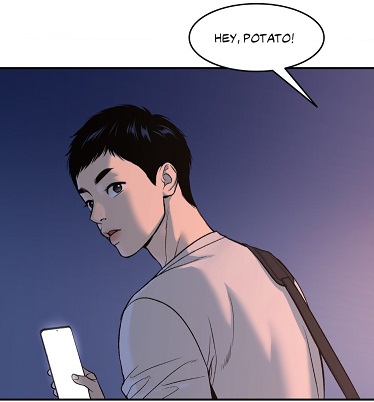
 (chapter 57)
 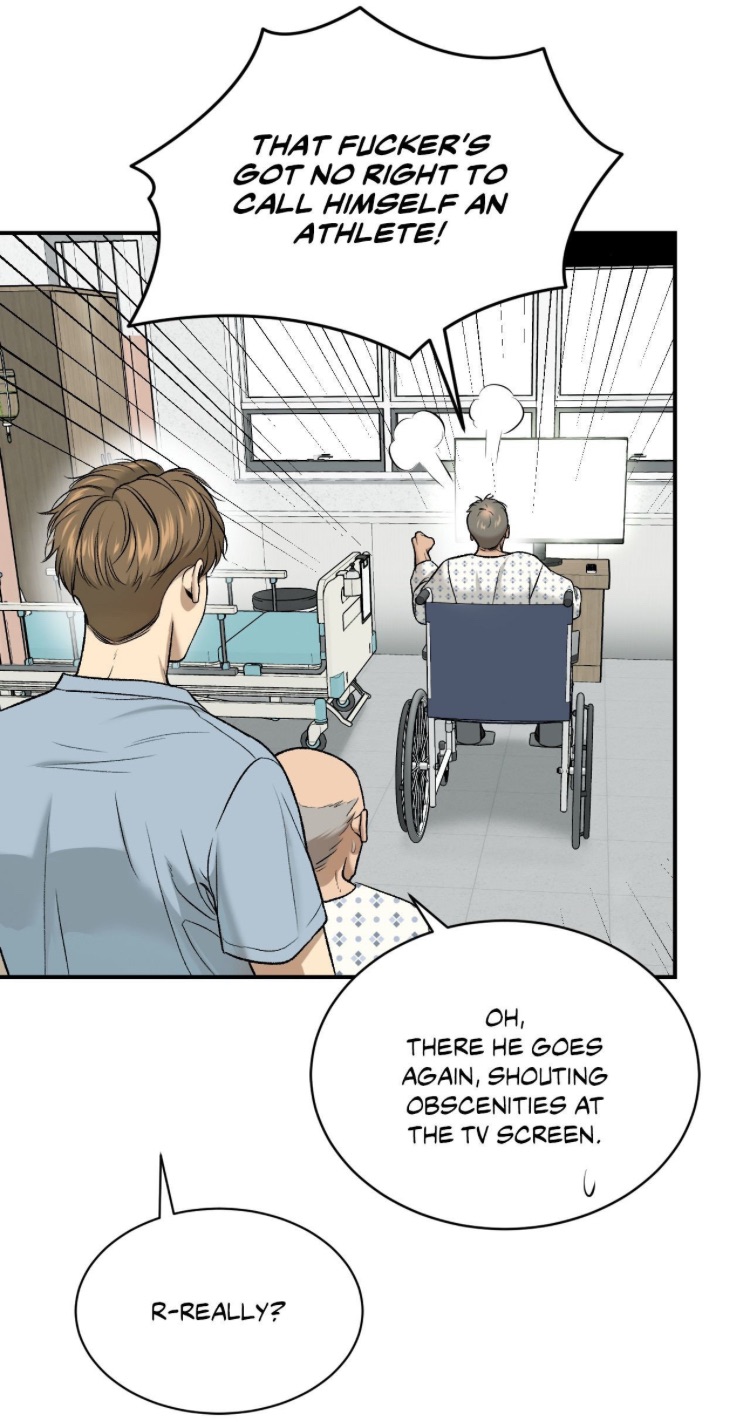 (chapter 70) His matches are scheduled at hours accessible even to a Korean hospital
  (chapter 41) or hospice patients.
 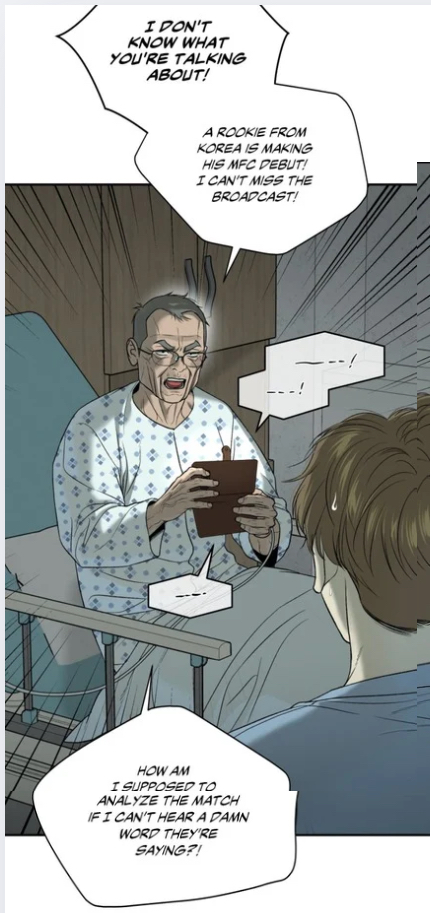 (chapter 71) becomes intelligible. It is not a mark of anticipation, but of expendability. The match is placed where attention is thinnest, where failure or success carries minimal consequence. By contrast, Joo Jaekyung’s fights are positioned to be seen. The asymmetry exposes how dependent MFC’s visibility economy is on him—not as a competitor, but as the primary organizer of audience attention.
 (chapter 47) His presence circulates through curated highlights and controlled conference footage rather than open broadcast.
  (chapter 47) His rise is engineered through selective visibility.
  (chapter 47) Weak opponents are chosen.
  (chapter 47) His image is inflated before he ever faces Joo Jaekyung. CSPP does not need to expose him fully; it needs only to prepare recognition. However, CSPP is an official company, they can not control rumors among fighters.
 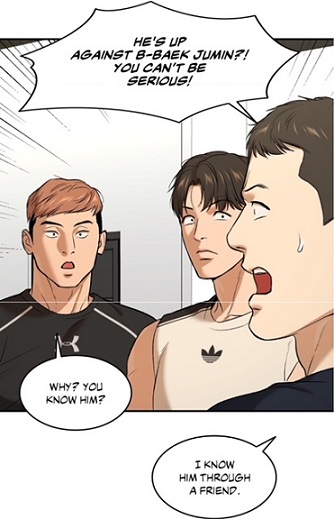 (chapter 47) Thus the manager suggested this to his boss just before:
  (chapter 46) By mentioning the existence of spies, he incited the main lead to keep his distance from the doctor and the members so that the rumors about the underground fighting wouldn’t reach his ears.
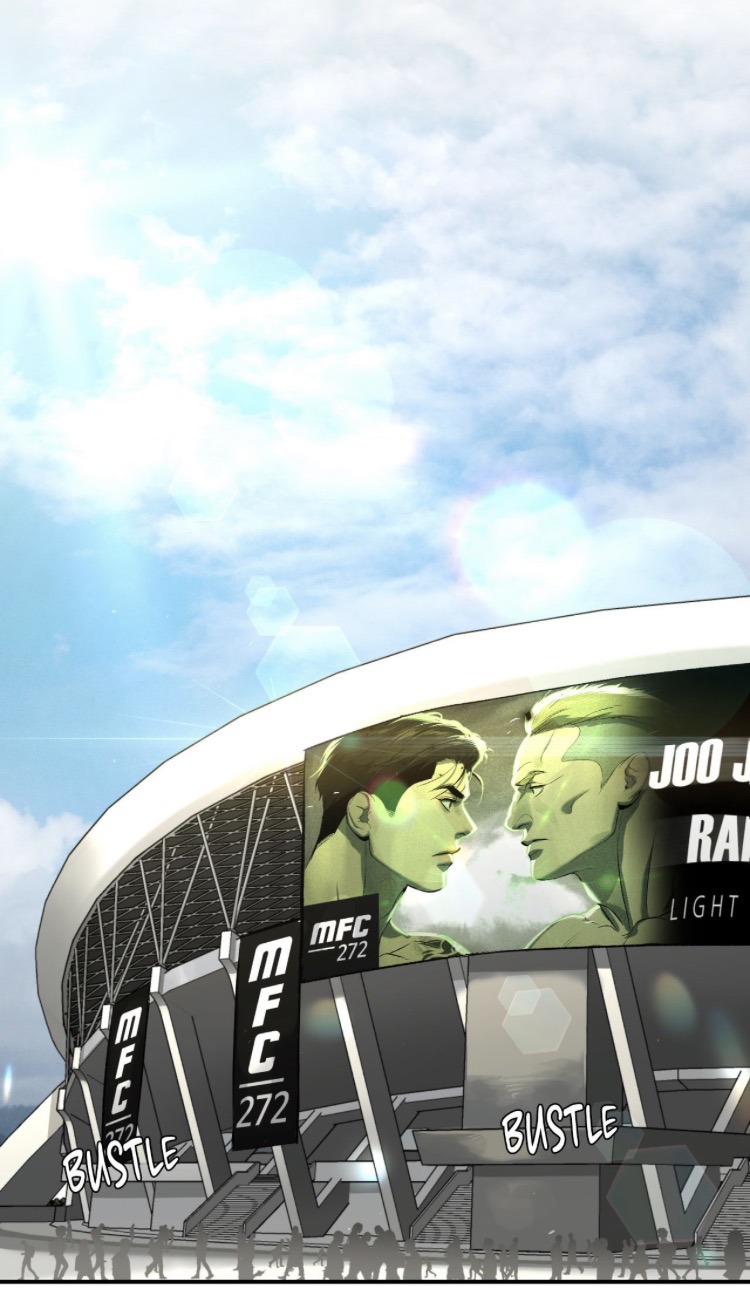 (chapter 14), the United States, Paris—the fights are placed in high-visibility slots. Loss must be witnessed. Decline must be shared. By contrast, the fight between Baek Junmin and Joo Jaekyung takes place in the morning
  (chapter 49), a time of dispersed attention, private viewing, and reduced collective response. Visibility is not maximized; it is managed.
  (chapter 49) CSPP’s role, then, is not neutral mediation. It is temporal governance. It decides when exposure becomes dangerous and when it becomes profitable. It does not silence events; it times them.
 (chapter 77) Once Joo Jaekyung does not contest the loss of his title—once he does not sue, demand more investigation, or interrupt the administrative process— MFC and CSPP no longer need to justify anything. Delay becomes normalization. Silence becomes confirmation.
 (chapter 49) Under normal medical protocol, this should have stopped the fight immediately.
 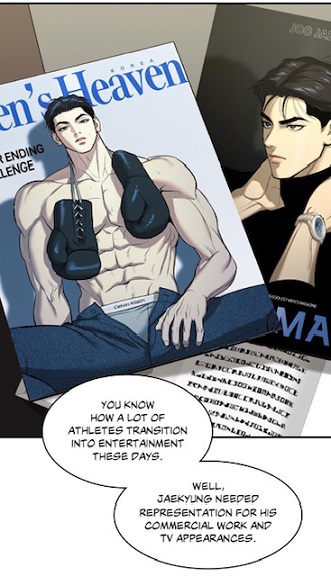 (chapter 30) This implies that he won’t remain passive and silent like in the past, relying on structure and institutions (Entertainment agency…) and accepting to become a scapegoat.
  (chapter 84) and the progression of their relationship, attuning readers to intimacy
 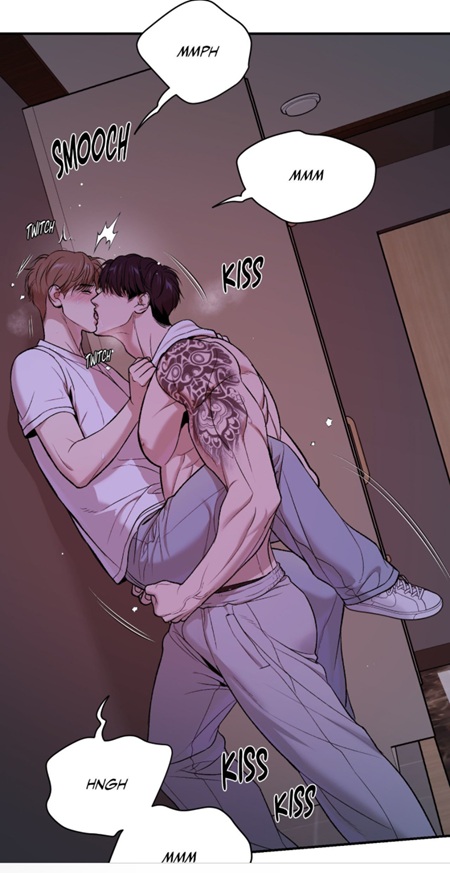 (chapter 85), care, and emotional release. When the chapter opens with a tactile, reassuring gesture, it naturally confirms that reading mode. The squeeze feels like a culmination.
 (chapter 87) This sentence marks a limit. It is not indifference, but acceptance. The champion has just registered the doctor’s surprise
  (chapter 87) — the slight jolt, the hesitation—and he responds by stopping. The restraint is not automatic; it is chosen. He does not ask for more reassurance, more certainty, or more support, even though he clearly desires it. Instead, he recognizes sufficiency.
 (chapter 87) So the doctor’s support was indeed limited in time. So the stop of the champion ‘s squeeze
 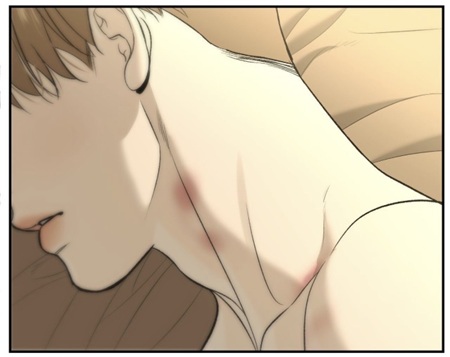 (chapter 87) The opening scene unfolds in a space that feels inhabited and shared, composed in softer shades that emphasize stillness and presence. The final scene is colder, darker, sharper.
 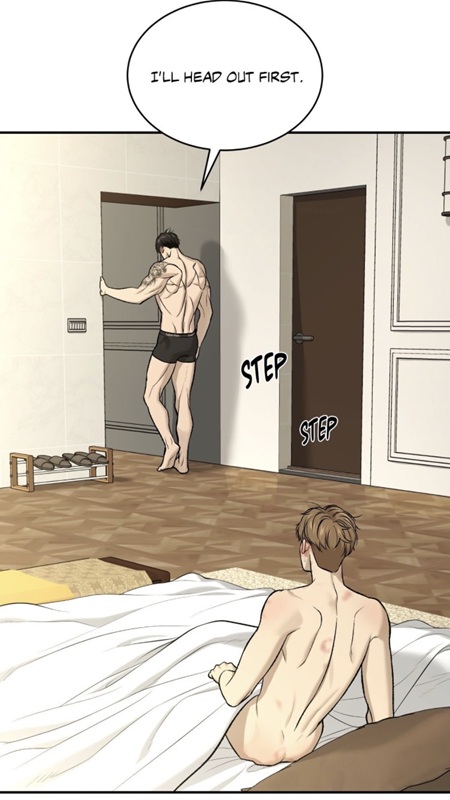 (chapter 87) —the second collapses time inward. Baek Junmin does not act toward what is coming; he reacts toward what has already been. His violence is not exploratory but recursive.
 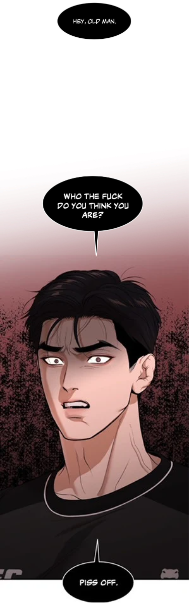 (chapter 49) When Joo Jaekyung addresses him with open disrespect, the breach of seniority provokes immediate outrage.
  (chapter 49) Intervention follows quickly. The insult is not tolerated
 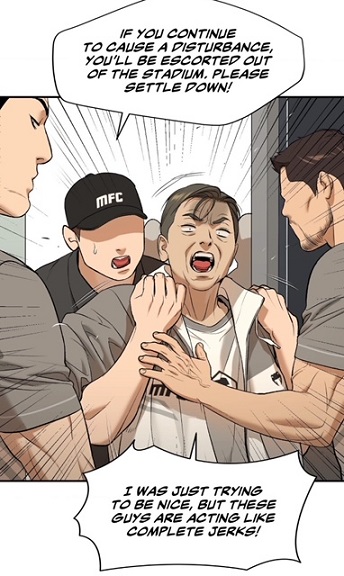 (chapter 49) because it threatens hierarchy itself. Choi’s anger is genuine in that moment and it reveals what he truly guards: status, order, and the visibility of respect.
 (chapter 87), and continues escalating without repercussion
  (chapter 78) Both continue to perceive Joo Jaekyung as nothing more than a fighter
  (chapter 87) This assumption governs how they speak to him, how they threaten him
 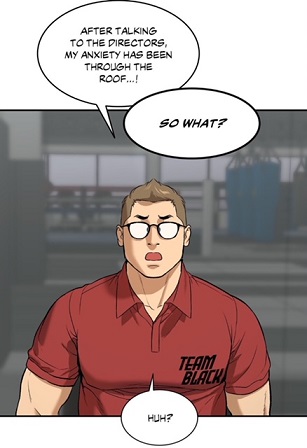 (chapter 46) His presence creates a convenient fiction: those around the table come to believe that he is the owner, or at least the one who truly governs the gym. Joo Jaekyung’s absence is interpreted not as autonomy, but as immaturity or dependence. Authority, once again, attaches itself to performance rather than reality.
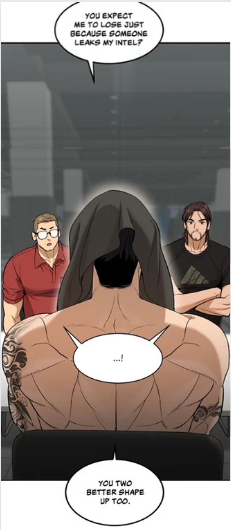 (chapter 46) Even after boundaries are formally stated, Park Namwook continues to rely on seniority to address the champion
  (chapter 49), handshakes, and private humiliation
  (chapter 49), the gesture becomes clearer still. He is accustomed to violence without witnesses, to domination shielded by proximity and secrecy. He was always the man in the shadow. The live broadcast deprives him of that refuge.
 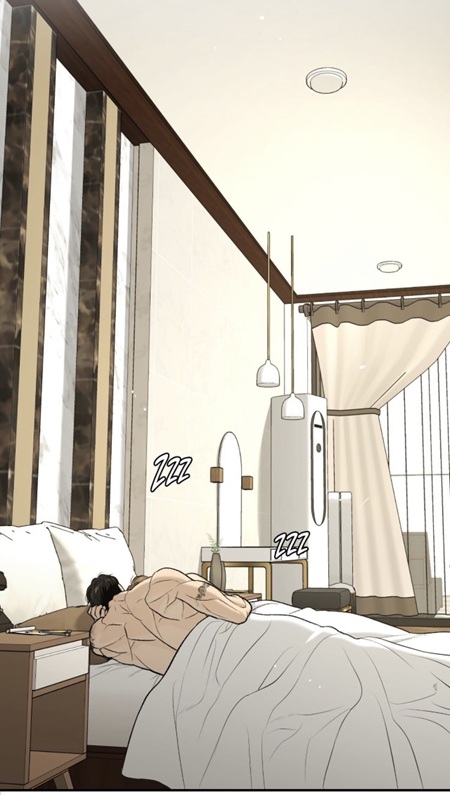 (chapter 87) also unfold under the sign of privacy.
 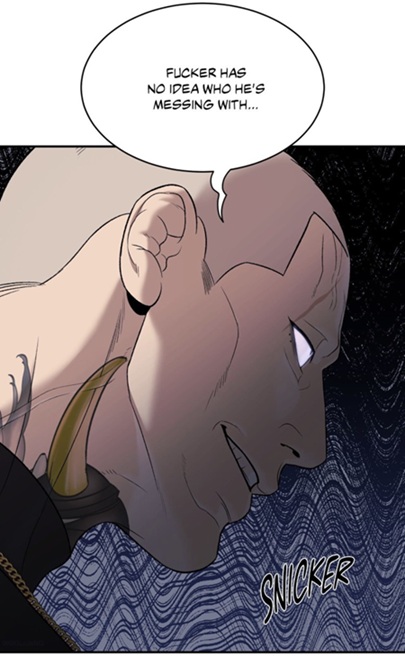 (chapter 87) He is announcing a shift of identity.
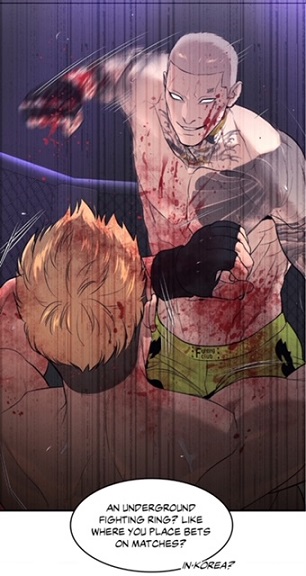 (chapter 47). The broken screen already signaled that he no longer cares about how he is seen.
  (chapter 87) Kim Dan sleeping openly, showing his face, remaining there without fear—this is read by the champion as tacit trust. That trust becomes energy. In other words, this scene serves as the positive reflection of the argument in the locker room:
  (chapter 51)
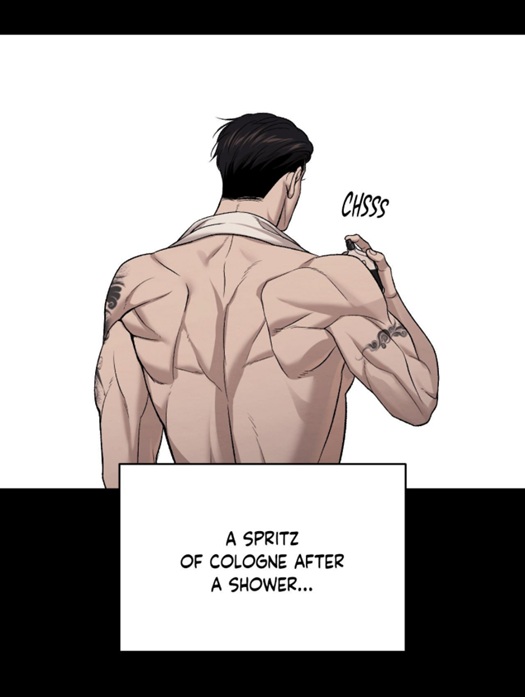 (chapter 75) —showering, cologne, self-regulation before a match. Here, that sequence is conspicuously absent.
 (chapter 69), recognition, and above all visibility. Yet this visibility is curiously incomplete. Despite his victory, Baek Junmin is not immediately present as a public figure. He appears as a result
 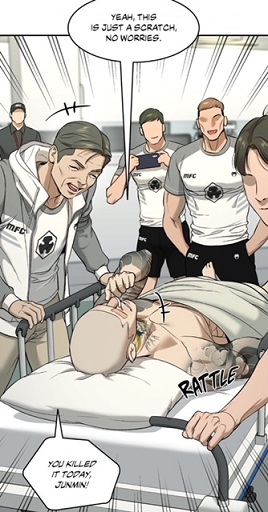 (chapter 52) In practice, hierarchy barely functions. Authority exists without discipline, protection without accountability. Baek Junmin is not positioned among other fighters, nor anchored in a collective. Thus he is not truly celebrated at the restaurant after the tie. Thus the fighters mentioned the director Choi Gilseok’s financial success or the odd behavior of Joo JAekyung.
  (chapter 52) Besides, he watches the match alone

 (chapter 126) to another
  (chapter 126). He allowed his father to humiliate and abuse him
  (Chapter 126) once again. It was, as if the story was back to square one and the protagonist had learned nothing at all. Under this perception, my avid readers can comprehend why I selected such a title. However, instead of thinking that the author was a bad writer, I decided to ponder on the following question. Why did the author choose such an evolution?
  (chapter 7) Like Baek Na-Kyum, he rushed to his loved one’s side. However, he was first stopped
  (chapter 126), because it was not the right time. How so? Notice that his brother had fetched him at the port
 (chapter 125), but he never followed him to the bureau of investigation. And the same happened later. Why didn’t he go to his shed, when he was trapped there? Where was he, when the eldest son visited the father?
  (chapter 126) His absence exposed his passivity and betrayal. However, at no moment, Yoon Seungho noticed this. To conclude, Yoon Seungho was so worried for the painter that he didn’t pay attention to his surroundings, just like the painter didn’t see the learned sir’s disdain expressed through the cold gaze.
  (chapter 07) Therefore Yoon Seungho didn’t notice the presence of a civilian next to the governor.
  (chapter 126). Striking is that the governor knew about Yoon Seungho’s whereabouts before his arrival: the coast. As you can see, I am detecting a link between the governor and the younger master Seungwon. Yet, it was disguised as a rumor behind the expression “I had heard”. My assumption is that Seungwon came from the bureau of investigation in order to inform his brother. Therefore it is not surprising that Seungho was invited by his brother to visit the prison during the night.
  (chapter 126) And the moment I perceived the protagonist as a fool in love, I realized that chapter 126 is a reflection of episode 7, 29
  (chapter 29) and 40
  (chapter 40). Here, the painter was trying his best to protect Jung In-Hun’s interests (life, high position). Moreover, in episode 40, the painter had a dream, when he saw the announcement for the civil service examination. He smiled, for he was looking forward for the future.
  (chapter 40) And what have these episodes more in common? A betrayal, abandonment from a loved one and a paper (painting, poem). Hence I am more than ever convinced that the petition will resurface very soon and play a huge role in the downfall of the schemers and haters. Besides, chapter 40 represents the negative reflection of the conversation in the prison.
  (chapter 126) Though they are in a tough situation, Yoon Seungho is not leaving his side contrary to episode 40.
  (chapter 40) There is neither disdain nor mockery. The mentioned scenes are similar, for the present resembles the past. And this brings me to the second reason for the Webtoonist’s decision.
 (chapter 123), Yoon Chang-Hyeon considered Yoon Seungho as a human, for he employed the personal pronoun “he”. He was still his son. Then in episode 77, he judged him as a slave
  (chapter 77), hence he was submitted to the straw mat beating and was held captive. He even refused to send for a physician.
  (chapter 83) Here, the father is denying his humanity, he is just an animal. In their next confrontation, he describes him as a monster, hence he wished that he had never been born.
 (chapter 86) However, his words exposed that he was still viewing him as a living being. Therefore it is not surprising that he accepted lord Song’s request to order the murder of his son! In the gibang, he decided to no longer acknowledge Yoon Seungho as his son.
  (chapter 107) The tragedy is that the protagonist still viewed the Yoons as his family because of Yoon Seungwon, who keeps calling him “brother”. This explicates why Yoon Seungho sponsored his brother to have an official position.
  (chapter 115) Therefore it is not surprising that he followed Yoon Seungwon’s advice again.
  (chapter 120). He would bring the petition to his own father. This means that he is acting like the painter who listened to his noona Heena so well.
  (chapter 46) But now, Yoon Chang-Hyeon believes to have the petition.
  (chapter 125) This explicates why the patriarch is now calling the main lead “nothing”.
  (chapter 126) He is not even a thing. This means that he is actually discarding him. This explicates why he sent him to the shed.
  (chapter 126) It was, as if he had become a merchandise. Or we could say that the elder master had been using him as a tool, which he can now abandon.
  (chapter 126) Interesting is that the idiom “plaything” has for antonyms tool, implement, instrument and utensil. And this brings me to the following remark. The father’s words are reflecting the last scheme. Yoon Seungho was used as the sword to get rid of an enemy, lord Song. It was, as if someone had decided to get rid of lord Song, for he represented a danger or threat. It also mirrors the trick in the shrine. Min and the others got killed, because Lee Jihwa went to his childhood friend. And who had seen the main lead using this sword, when he was enraged? Father Lee!
  (chapter 67) But let’s return our attention to the patriarch and his son. Yoon Seungho is no longer recognized as a Yoon member. Therefore I come to the conclusion that Yoon Seungho will make the following decision: to become an orphan. And this is symbolized by the loss of hair. I am expecting him to cut off his hair, something the painter has been doing for a long time. That’s why Byeonduck showed us the lord without a topknot.
  (chapter 126) This would coincide with my previous statement. The lord is going through the same experience than his loved one. However, people will come to the conclusion that this was done by the father. How so? Remember how each rumor became a reality.
  (chapter 1) I had already demonstrated that Yoon Seungho was not a fiend for sodomy with no regard for time and place, until he met Baek Na-Kyum. But once a deed is done, it can never be repeated.
  (chapter 101) So should Father Lee claim that he has long disowned Jihwa by cutting off his topknot, no one will believe him, for the young master was still seen with a topknot after confessing his feelings in public.
  (chapter 57) In other words, the topknot incident at the kisaeng would be brought up. It is impossible for 2 fathers to act the same way. Besides, the loss of the topknot has another signification: Yoon Seungho would cut off ties with valet Kim, for the latter was the one who gave him the topknot. And episode 126 reflected one more time his position:
  (chapter 126) He is the one dressing him. It was, as if he was the pope.
 (chapter 116) It is because someone had reported to him the conversation between lord Song and the painter.
  (chapter 122) There was a spy listening to their conversation. Since all the guards died
  (chapter 124)
  (chapter 125: I am assuming that the survivor got executed), I am suspecting the scholar. Moreover, why would Yoon Chang-Hyeon accuse his son to have abandoned Baek Na-Kyum? It is related to this departure of the staff and Yoon Seungho.
  (chapter 120) And who was present there? Jung In-Hun! But there is more to it. Since leaving Baek Na-Kyum behind is considered as an abandonment, it means that the patriarch abandoned his son too.
  (chapter 27) By speaking to Yoon Seungho, the elder master Yoon didn’t realize that he was admitting his own wrongdoings. Actually, he had abandoned him many times… like here for example
  (chapter 87) Therefore his words will come back to bite him. But these words are also exposing the valet’s betrayal and abandonment towards Yoon Seungho!! How so?
 (chapter 122), then he should have been at the patriarch’s house. The absence of the valet is the evidence of his treason. For me, he is now working for Jung In-Hun which explains why he never mentioned his presence in the mansion, only lord Song. Besides, keep in mind that once deed done can not be repeated. In episode 27, the lord was too angry and busy to notice the learned sir’s spying activities.
  (Chapter 27) Moreover, Kim didn’t report the interrogation to his master. This means that the butler covered up for the teacher’s wrongdoing. But here is the deal:
  (chapter 120) The library was ransacked, hence this crime is bound to be discovered. Finally, his intervention in the shed is exposing his deception.
  (chapter 83) That’s why I am convinced that these words
 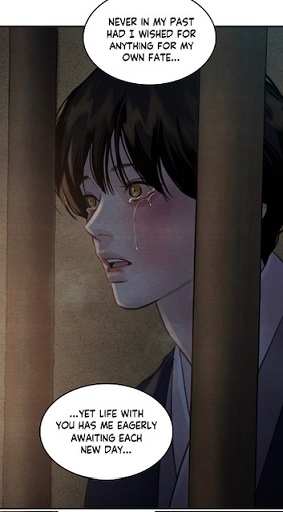 (chapter 126) He is no longer suicidal, in fact he is full of hope! Though he was sent back to hell for a short moment, he came out of this as a winner. My evidence is that the lord has now become a believer.
 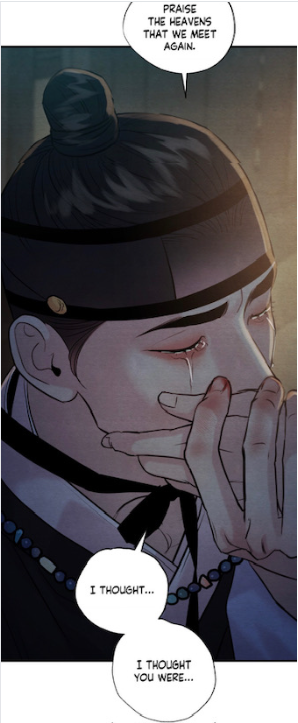 (chapter 126) Yes, episode 126 exposes the return of his faith! And where could we see the atheism of Yoon Seungho in the story? In chapter 92!
  (chapter 92) He didn’t believe in the spring poetry to ward off bad luck! That’s why he was sent back to the past. He needed to lose everything in order to find hope! In his darkest moment, he expressed a wish: to meet his loved one! And where did he pray to the gods? In the shed!
  (chapter 126) Observe how he is kneeling in direction of the bars. He is hoping to meet Baek Na-Kyum again. As you can see, though this scene
  (chapter 126) He was showing resistance and anger towards his father. Moreover, he was no longer shaking in front of the patriarch or the guards.
  (chapter 86) Thus I deduce that though he was mistreated and insulted like in the past, he was no longer suffering from his traumas. He is healed. His will is now really strong, supported by his new found faith.
  (chapter 62) Even if they were hugging, they were not close emotionally and mentally. This stands in opposition to the scene in the jail. They might be separated by the bars, but they are touching each other tenderly.
  (chapter 126) They are able to see each other.
  (chapter 126) Try Meditation
  (chapter 126) or Prayer
  (chapter 126)
 (chapter 126) Quoted from
  (chapter 126) It is relevant, because light represents knowledge and truth. He is now the bearer of the truth. And he got his blessing from Baek Na-Kyum, when he touched his hands.
  (chapter 120) Yes, chapter 126 mirrors 92! This somehow confirms my theory that the butler was the one hiding under the purple hanbok.
  (chapter 92) Moreover, we have another reference to this episode, the pouring of alcohol!
 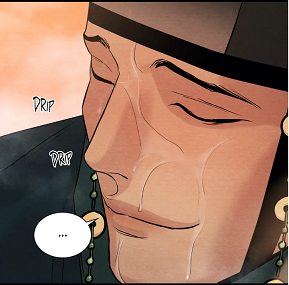 (chapter 92)
  (chapter 126) It was, as if someone wanted the lord to pay for Min’s insult! That’s the reason why I come to the following conclusion: Yoon Seungho is now opening up to Baek Na-Kyum. He is confessing to the painter about his wishes.
  (chapter 85) The manhwaphiles should keep in mind that the request from the artist in the study was strongly connected to forgiveness. And Baek Na-Kyum could also confess what happened in the past: his guilt and regret asking for the lord’s forgiveness. Right now, both are blaming themselves for the incidents, although they got fooled by many schemers. Because the lord proved his loyalty and blinded trust in the painter, I see the scene in the jail as a new version of this confession:
  (chapter 75) Thus I consider the prison cell as a sacred place, where both characters are about to be freed from their guilt!
  (chapter 11) thus he could escape justice!
  (Chapter 11) Simultaneously, the first definition of life lie corresponds to Yoon Chang-Hyeon. The latter blames his eldest son for the downfall of the Yoons.
  ! (Chapter 86) Secondly, he still thinks that he is powerful. But it is just an illusion.
  (chapter 125). They fail their duty, for they allowed the main lead to barge in the room.
  (Chapter 126) Finally, observe how they keep apologizing without giving any explication.
  (Chapter 125) Their apology is fake. As you can see, the patriarch is living in an allusion. He is powerless, and the best evidence is that he doesn’t have the petition.
  (Chapter 126) He is actually encouraging his son to hate himself and indirectly his own father! However, the son made the exact opposite decision: love!! Hence I am more than certain that the elder master is about to experience a harsh awakening.
  (chapter 101) Thus they got punished. And now, the two main leads are about to face human justice.
  (chapter 65) But strangely, the painter is showing no fear at all.
  (chapter 126) He is ready to sacrifice himself. So why was Yoon Seungho dressed up in the end? One might say that with the topknot and the hanbok, the abuse from the patriarch got covered up. That way, Baek Na-Kyum wouldn’t detect Yoon Chang-Hyeon’s lies and abandonment!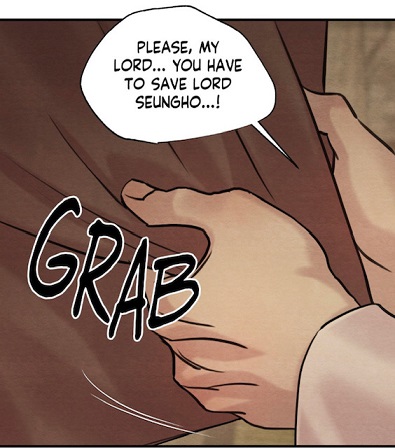
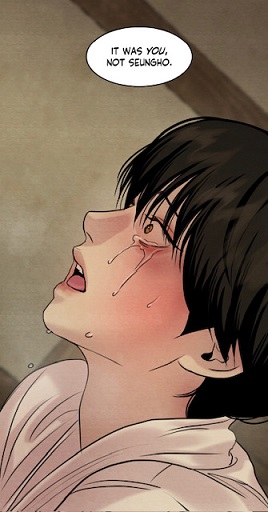 (chapter 125) The latter brainwashed him to take the fall for everything, implying that way, his loved one would be protected! However, I am suspecting that if the lord were to leave the prison, he could meet someone in the office. That way, this person is not confronted with the reality: the main lead was “abused”. According to the butler, he was supposed to meet his brother at the office.
  (Chapter 92) In episode 92, we have a mysterious man in the background dressed in black, but he is not wearing his gat. Besides, I would like my avid readers to remember this image from the trailer:
  which reminds us of the office:
  (chapter 98) This place symbolizes power and strength. And because episode 126 is a reflection of chapter 7, 11, 29 and 40, I think, Yoon Seungho is about to receive a deal, for these episodes are focusing on the deal between the painter and the protagonist: protection from the father and punishment in exchange for entertainment. He would appear as a fake savior in the end. Remember what in episode 11 the artist said in front of his fated partner:
 (chapter 11) He would do anything except painting!! He was not willing to give up on this principle, which reminds us of faith. So when Yoon Seungho faced his father, he experienced powerlessness for one reason.
  (Chapter 105) Then in episode 122,
  we discover that lord Song employed the pipe to beat the painter. Moreover, I detected a progression. In season 2, Yoon Seungho was still smoking.
 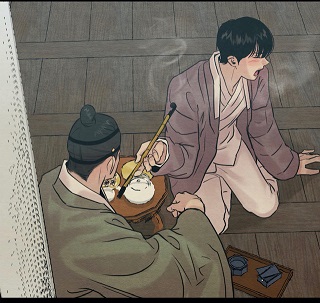 (Chapter 74) But once the painter showed that he didn’t like smoking, Yoon Seungho stopped taking the drug. This explicates why in season 3, he was no longer seen with the item in his hand. Even under stress, he chose to hunt instead of smoking in front of the window. We have two scenes where the pipe is present. One is when the lord is throwing it out of anger,:
 (chapter 86) which reminded me of the incident with the music box.
 (Chapter 85) This shows that this item had no value to the protagonist. Then the pipe appeared in the gibang on the table.
  (Chapter 96) However, here the lord had only eyes for the painter or Heena. Hence I have the impression that the pipe could resurface and serve as an tool to identify the perpetrator, just like the glasses were used to recognize the scholar.
  (Chapter 102) Finally, since the pipe appeared in the gibang twice, it indicates that this hobby is linked to the kisaeng house!! And this brings me to my final observation: the pipe is connected to paper
 (Chapter 1)
  (chapter 1) However, there exists two books!! And one has no PIPE! This coincides with the decision of the painter to stop drawing erotic pictures! Yes… dropped amusement! At the same time, Yoon Seungho has long lost his interest for erotic publications. He also dropped this hobby. On the other hand, the books were dropped in front of the painter.
  (Chapter 1) Finally, the petition was dropped in front of lord Song
  (chapter 123) which announced his death sentence. To conclude, the papers have a strong connection to punishment and death.
  (Chapter 126) Yoon Seungho went to the father’s mansion, and it didn’t take him that long! As you can see, I consider this trip with Yoon Seungwon as a diversion.
 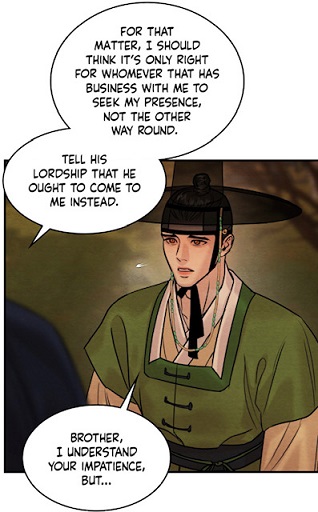 (Chapter 121) So why didn’t the elder master return to his old home? It is to drive the Yoons out of their propriety. In other words, the lies from the past are becoming a reality exposing the liars in the end. Their life lies will be ruined.
 (chapter 119), they got worried and nervous, as they considered the expression „as long as I live“ as a clue for a sad ending. Why? It is because the lord was referring to his own death. Under this light, it becomes comprehensible why I selected „heavenly“ in the title. I was naturally alluding to the afterlife. However, I perceived his words in a positive light. He expressed his desire to live. He is no longer suicidal, he wishes to live a long life next to the painter and treasure his moments with him. That’s the reason why the author included the refraction in the scene. A dream had come true, the lord was finally able to escape the darkness.
  (Chapter 119) He is now truly alive. This explicates either why he smiled and laughed at the end. But why was he so happy? It is because Baek Na-Kyum had just confessed that he loved him not for his wealth or power, but for himself.
  (Chapter 119) He even described him as a treasure. Yoon Seungho had finally achieved his goal: to win the painter’s heart. His presence and love bring happiness to Baek Na-Kyum which stands in opposition to his reputation as bird of misfortune. Moreover, this description contrasts so much to Jung In-Hun
  (Chapter 119) and Yoon Seungwon’s.
  (Chapter 118) where both portrayed the main lead as a man consumed by lust and revenge. In other words, he was presented as a huge sinner. This implies that he stands so far away from heaven. But all these words were erased the moment the painter confessed his love for Yoon Seungho once again. What Baek Na-Kyum didn’t realize is that his love confession is pushing the protagonist to fight for the painter.
 (chapter 102) In episode 102, he was renouncing on everything (life, mansion, wealth and connection), because he imagined that the artist had died. Consequently, I deduce that in episode 119, the painter’s life is attached to the lord’s for good. If the artist got into trouble, Yoon Seungho would side with him and the reverse. Thereby, I come to the conclusion that this moment in the kitchen represents their union, as they are no longer tied to the mansion. They are now a family no matter where they are. Let’s not forget that the painter expressed his wish to run away with his lover.
  (Chapter 119) It is important, because such a departure symbolizes that the bird “Yoon Seungho” is leaving the nest. He is now starting a family on his own.
 (chapter 85) and put a glass and that was it. This exposes the father’s hypocrisy, ignorance and greed. By acting on his own, he was exposing his true mindset. He views himself as the family. The sons are just the extension of himself, for they are his reflections.
  (Chapter 45) On the other hand, Yoon Seungwon is his golden child, for he represents his positive reflection.
  (chapter 86), whereas he put the other on a pedestal
 Under this new light, it becomes comprehensible why the father could only reject the offer from lord Song in the gibang. Doubting Yoon Seungwon’s sexuality meant to question about the father’s sexual orientation. At the same time, it is not surprising why the elder master would blame Yoon Seungho for everything, for he couldn’t admit his responsibility for the purge. Consequently, the Manhwaphiles can grasp why Yoon Chang-Hyeon came alone to the shrine. If he had brought Yoon Seungwon, the father would have been reminded of the elder son, as both can not be separated. This explicates why the younger master asked his elder brother to submit to his father.
 (Chapter 119) I couldn’t help myself smirking when the brother attempted to make him believe that.
 (Chapter 119) the protagonist could ever gain the father’s favor. Yoon Seungwon was definitely playing with his brother’s feelings, as if he could hope that their father would change.
  (Chapter 118) It is because as a golden child, he is also suffering, but it is naturally nothing compared to Yoon Seungho’s position who could have died.
 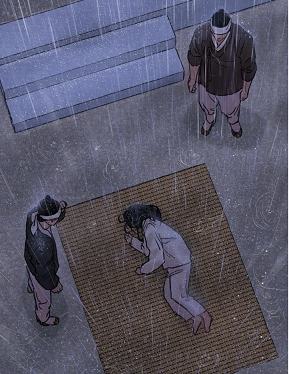 (Chapter 77)
 (Chapter 119) First, by returning the petition to the father, Yoon Seungho would become the culprit. He was not only a traitor, but also a blackmailer of the Yoons and lord Song.
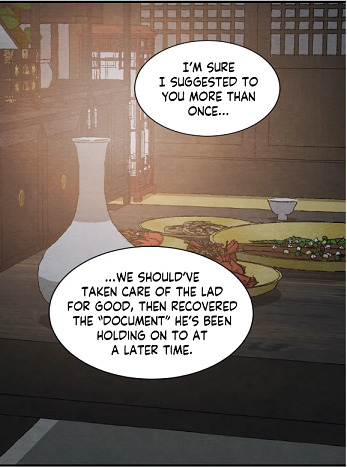 (Chapter 107), for he had stolen the petition. Yoon Seungwon would hide his wrongdoing, he betrayed their father.
 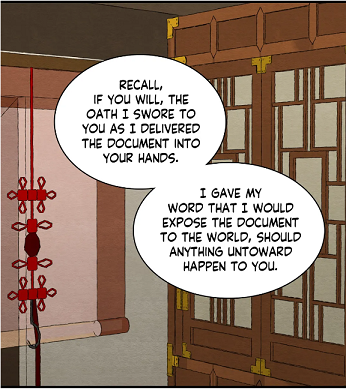 (Chapter 118) There is no doubt that Kim played a role in this as well. In other words, the brother and the valet would bury the truth by diverting the attention of the patriarch towards the main lead, if Yoon Seungho followed this suggestion.
  (Chapter 116) The elder master would no longer seek the truth, similar to the kidnapping in season 2 which was turned into a desertion and later Lee Jihwa’s abduction occulting the instigator and the helping hands. Simultaneously, Yoon Seungwon needs his brother as scapegoat, because the pressure coming from the patriarch and lord Song must have definitely increased.
 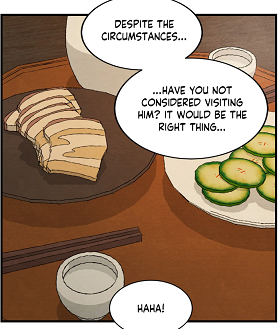 (Chapter 37) He is even implying that he needs to sacrifice himself in order to protect Baek Na-Kyum!! Moreover, he is distorting the reality, because he implies that his father is still powerful.
  (chapter 37) like the memories from episode 37 are exposing it. It becomes clear that if Yoon Seungho returned the petition, he would die.
  (Chapter 116) Thus I come to the conclusion that the meeting between the brothers in the gibang represents an offering. For the Yoons’ sake, Yoon Seungho should admit his wrongdoings
  (Chapter 55) People had played with his hopes and longing for acceptance and recognition. Interesting is that offerings is a synonym for atonement and sacrifice. But why is Yoon Seungwon so sure that he can repeat the same action from the past? It is because Kim and Yoon Seungwon have known for a long time that Yoon Seungho was longing for acceptance and love from his family, just like the scholar knew about the painter’s love for him.
  (Chapter 119) But everything changed, when the painter met the lord. So who is worse here? Jung In-Hun who tried to rape the painter or Yoon Seungwon who is sentencing his elder brother to death? Let’s say that the valet convinced the younger master to suggest this solution, this doesn’t diminish Seungwon’s responsibility at all. He knows that his father abused his elder brother. In my opinion, he is copying his father, like the former tried to diminish the responsibility of the patriarch.
  (Chapter 119) Yoon Seungho got hurt because of lord Song and not because of Yoon Chang-Hyeon. This means that the younger master was denying the existence of the patriarch’s choice and the helping hands. And if the brother listened to his advise and the father hurt or killed the main lead afterwards, the younger master could put the blame on the elder master, for the decision and responsibility belonged to the patriarch. Moreover, he heard from lord Song that killing Yoon Seungho was just a matter of time.
  (Chapter 119) So technically, this situation could have triggered the protagonist’s insecurities like in season 1
  (chapter 28), 2
 (chapter 60) and 3
  (chapter 98). However, through these constant exposures, Yoon Seungho came to learn not to jump to conclusions and to have faith in Baek Na-Kyum. He knew that he would return to the mansion. Hence he ran to the bedchamber first.
  (Chapter 119) Another important detail is that we don’t see any staff in the courtyard or in the kitchen. It was, as if the propriety had been deserted.
 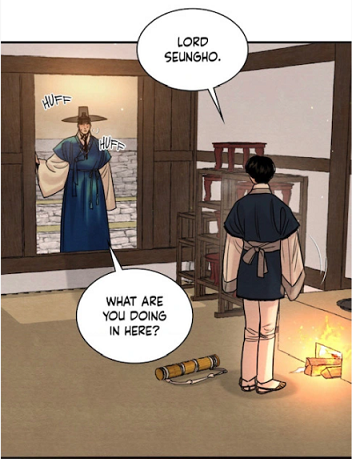 (Chapter 119) This implies that at no moment, he relied on the domestics’ testimonies which contrasts to the following scenes:
  (chapter 104)
  (chapter 107) and
  (chapter 116) However, observe that in episode 116, Yoon Seungho had witnessed how his lover had taken care of him, while he was unconscious. Furthermore, the petition had been handed over to the painter and not Kim, a sign that the artist had become the protagonist‘s confident. As you can see, as time passed on, the main protagonist learned the following lessons: he should stop relying on servants, he should only trust his partner. I would even add that he was taught the following principle: “If you want something done right, you have to do it yourself”. In my eyes,
  (Chapter 103) Here, they never expected the return of Yoon Seungho and the painter. The staff ‘s absence in episode 119 is the evidence of their desertion! Moreover, I consider Yoon Seungho’s search for his lover as a new version from episode 28/29/30:
  (chapter 28) Back then, they feigned ignorance, but they never anticipated a punishment from Yoon Seungho.
 (chapter 115) And now you are wondering how the painter’s gesture can be considered as an offering. It is because the kitchen hearth is considered as sacred due to the fire. First, in shamanism, there exists the god of fire named Jowangshin.
  (Chapter 115)
 (Chapter 59)
 (Chapter 98)
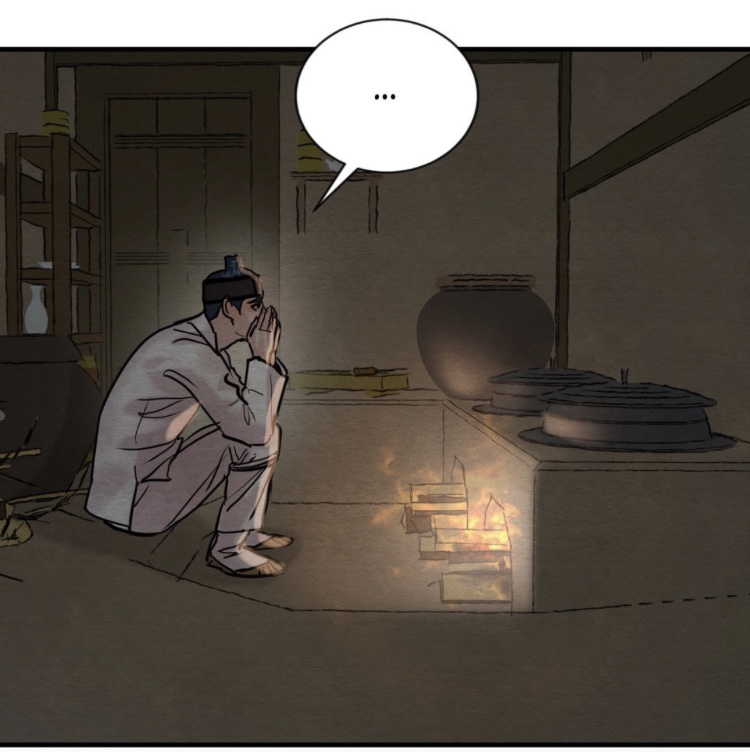 (Chapter 115)
 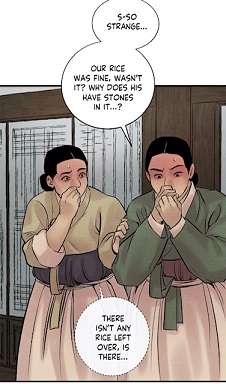 (Chapter 47)
 (chapter 102) who was a traitor, for he had tattled on Black Heart and his friends to Yoon Seungho. And now, you comprehend why I connected the shrine to the kitchen hearth. Both places are considered as sacred, for they are connected to gods and spirits.
  (Chapter 85) The absence of his sons and of food as offerings reveals that he was not showing true respect to his ancestors. He used religion and social norms to hide his true intentions. He wanted to take over the mansion. Hence the black guards were standing at the entrance of the sacred house. Their presence symbolizes violence. Therefore it is not surprising that the gods chose to punish the elder master through Yoon Seungho. The former was not received properly
 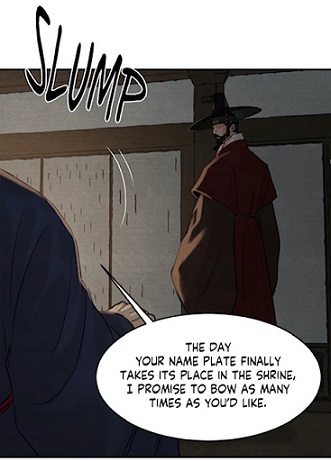 (chapter 86): no bow, no food and no seat.
 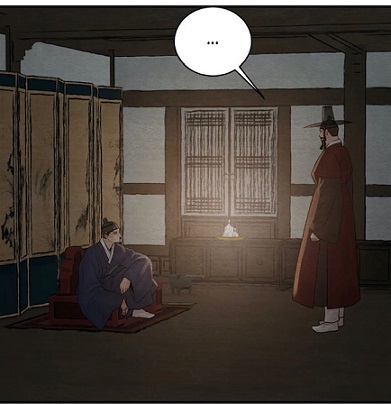 (Chapter 86) Let’s not forget that the elder master had entered the lord’s chambers without the permission of his owner. No wonder why he was left speechless. And now, you are wondering if I am not drifting away from the topic, as these chapters from season 3 don’t seem to be connected to episode 119. However, it is important to realize that these chapters have many common denominators
 Here, we could detect the suicidal tendencies of the protagonist. He wouldn’t fight back.
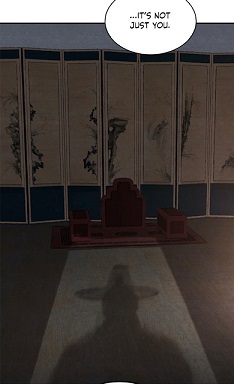 The seat looks like a throne.

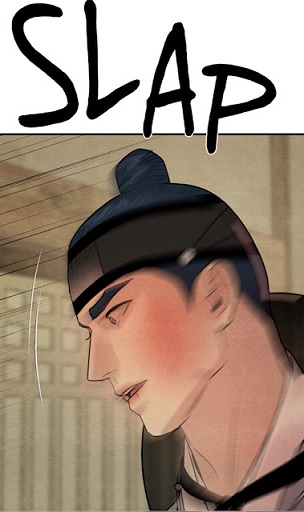
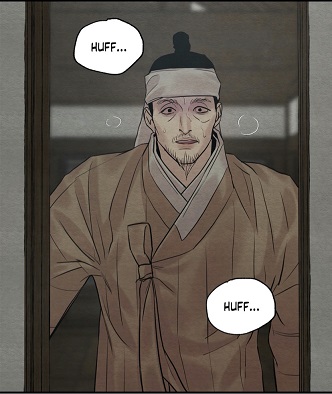

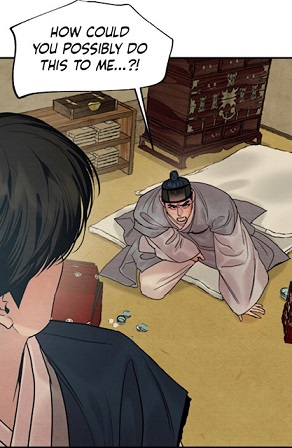

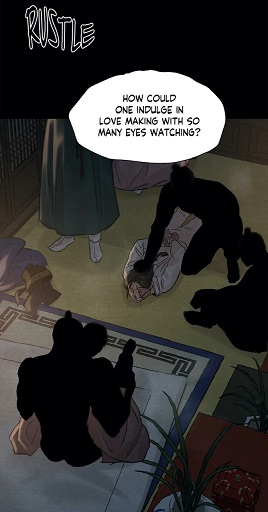


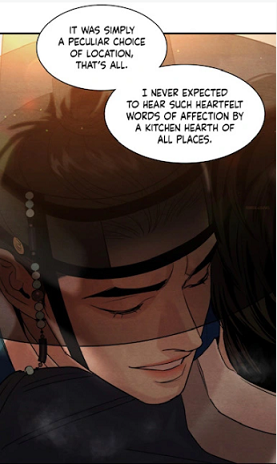
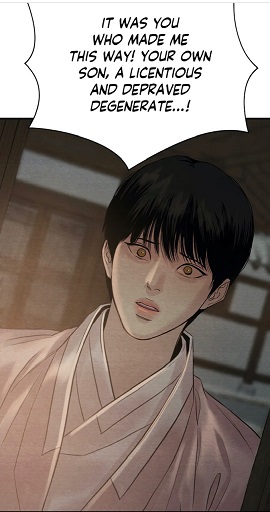


 Baek Na-Kyum freed himself.
  (Chapter 85) The study is even close to the gate.
 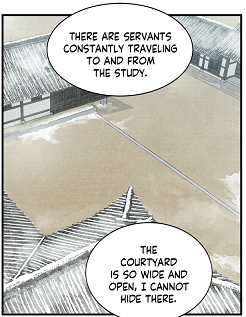 (Chapter 51) He could have reached the study before the father entered the shrine. Finally, observe that the patriarch even arrived to the bedchamber before Yoon Seungho,
 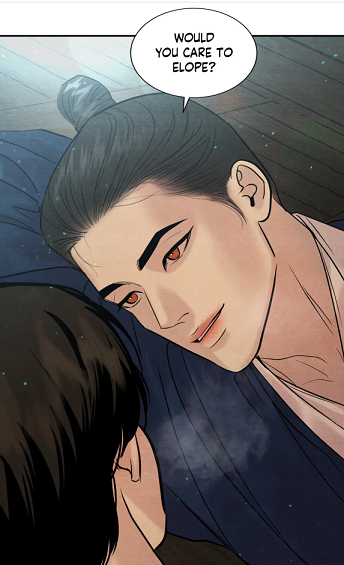 (Chapter 117) The painter wants to leave everything behind too.
  (Chapter 119) Thus I am deducing that the authorities will be involved very soon.
  (chapter 119) They are not expecting the lord‘s resistance, for he remained passive all this time (season 2 and 3). The scholar has now the means to do so, and the necessary motivation. Imagine that he got wounded and humiliated by the couple! Besides, we have this broken promise due to Yoon Seungwon
  (Chapter 94) The gibang is connected to money, power, pleasure, artificiality, sensuality and lack of privacy.
 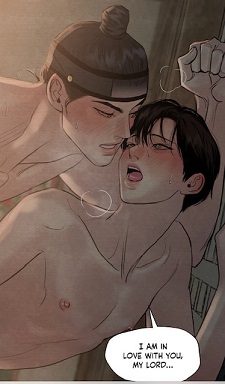 (Chapter 96) I am sure that you can detect all the contrasts (night, door close, spies, confession outside and inside, no fire, only light). Thus I am deducing that the painter’s words in the kitchen were not heard by others. As you can see, this scene in the kitchen is full of symbolism. In my previous essay “The true face of family”, I had already pointed out that sharing meals represented a criteria to define a real family. Therefore I had demonstrated that Yoon Seungho and Baek Na-Kyum were excluded from the mansion, for they wouldn’t eat their meals in the kitchen like the staff.
  (Chapter 17) Moreover, the hearth doesn’t just provide warmth, but also light! The latter embodies knowledge and as such Enlightenment.
  (Chapter 119) Hence they were clueless about the wrongdoings from the staff. Only in the kitchen, the lord could finally grasp the depth of Baek Na-Kyum’s love for him. It is an unconditional love contrary to Yoon Seungwon’s. The latter would only recognize him, if he listened to him. And he only seeks his assistance, when he needs him. It shows that Yoon Seungho is only approached, when he has power.
  (Chapter 118)
 (Chapter 119) I would like to outline that during their conversation, Yoon Seungwon remained calm and indifferent, when he talked about the assassination attempt from Yoon Chang-Hyeon.
 (Chapter 116) But the biggest difference is the absence of fire in the kisaeng house.
  (chapter 78) Furthermore, he tried to leave before
 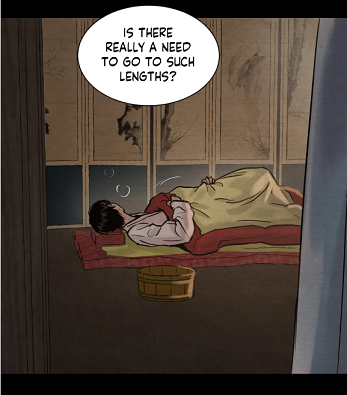 (Chapter 104)
  (chapter 105) Finally, we saw him in the courtyard standing next to a horse and a servant indicating that he had given him a task, and the latter needed to leave.
  (Chapter 108) Hence you comprehend why I am full of optimism in the end. Yoon Seungho has already made some preparations in my opinion. On the other hand, I am quite certain that their love will be tested. Can they face together trouble? Yes, because through their pain, they learned their lessons and changed.
  (Chapter 119) It is because in the past, he was never allowed to join the kitchen hearth. This place was either beneath him or he was not worthy of entering the place. Thus he employed the expression scullery boy to Yoon Seungho.
 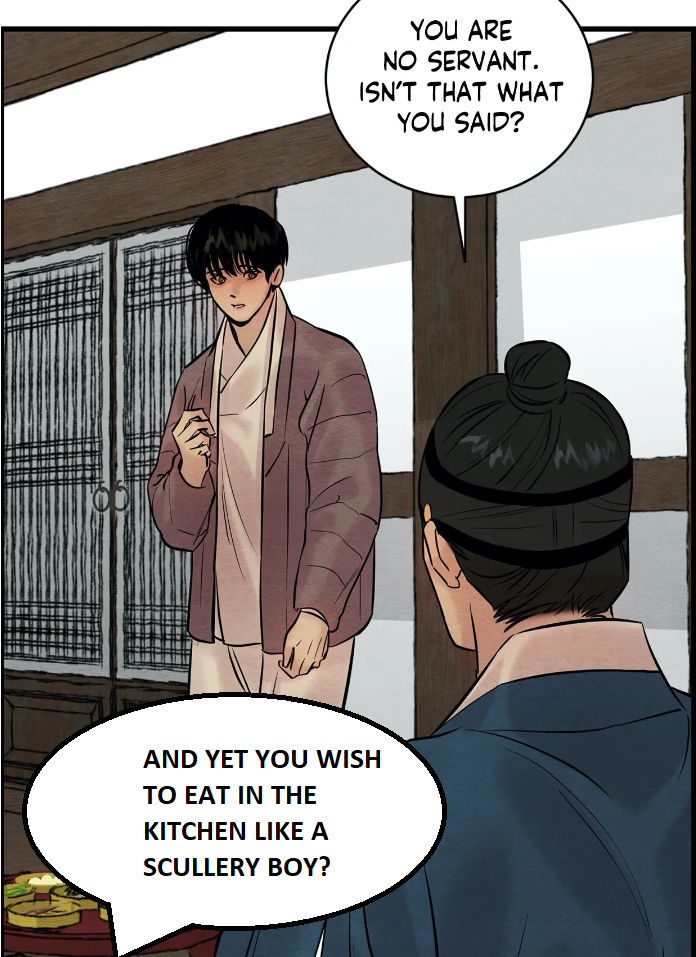 (Chapter 47) Here, I would like to outline that when the protagonist was held in the shed, someone brought him food .
  The maid had just brought water to the couple.
 During that night, Baek Na-Kyum had been held captive in a shed.

 (chapter 38) Yoon Seungho remained outside on the door step. Consequently, I started comparing scenes where the kitchen hearth appeared and that’s how I discovered a pattern:
 (Chapter 46)
  (chapter 47)
  (Chapter 110)
 (Chapter 77)
  (chapter 38)
 (chapter 59)
  (chapter 119)
 (chapter 38)
  (chapter 47)
 (chapter 77)
  ( Chapter 110)
  (chapter 119)
  (chapter 47)
  (Chapter 77) For me, Kim must have looked down on the other domestics. I consider this scene as the best example what Kim should have done in the past.
  (Chapter 119)
  (Chapter 98) One door leads to the backyard and the other to the smaller courtyard. And this scene confirms my previous assumption
 (Chapter 87) Baek Na-Kyum is there to prove him wrong. He had other opportunities, like giving him a good meal.
  (Chapter 63) He should have sided with his master and even remained by his side. This signifies that this scene
  (chapter 7) the artist is not only cleansing the kitchen, but also cutting off ties with the scholar. The latter is no longer protected. The spirits will intervene through chance. As a conclusion, the hearth has a spiritual and healing power, for it is connected to „Heaven“. Yoon Seungho‘s paradise is to have a family.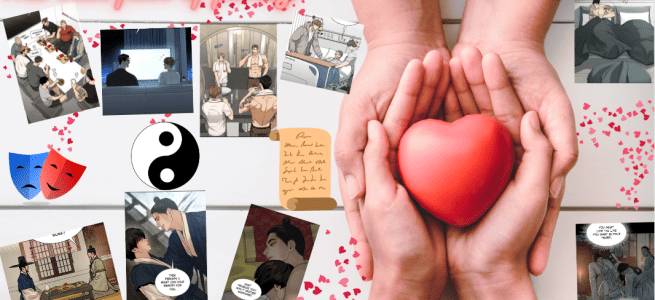


 (chapter 87) Not only the painter and the 3 noonas were sharing the same bed, but also they were taking their meals together.
 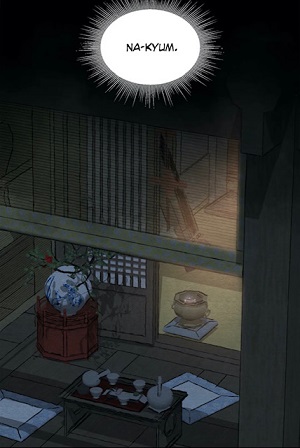 (chapter 87) They would even caress each other and laugh together. This scene oozes happiness. Consequently, it is no coincidence that during that night, they shared their honest thoughts to Baek Na-Kyum giving him good advices. But more importantly, the painter was there, when his noonas were struggling.
  (chapter 94) He cried in front of them. His tears symbolized his compassion and love for his noonas. He regarded them as his family. And it was the same for the artist. He had the noonas by his side, when he was in trouble or agony.
 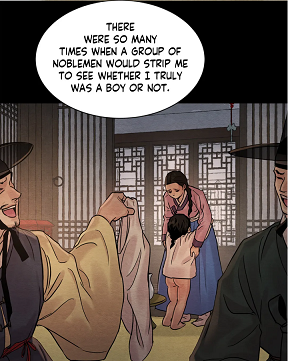 (chapter 94)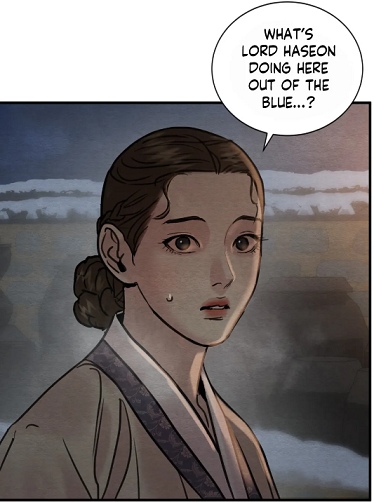
 (chapter 107) However, at some point, it changed!
  (chapter 94) Jung In-Hun entered his life and consoled him. Thus I deduce that this image
  (chapter 68) represents a turning point in Baek Na-Kyum’s life. During that night, the scholar took away the young painter from Heena, hence he couldn’t help her. And now, observe the learned sir’s reaction. He didn’t allow the painter to cry. He shouldn’t share his pain.
  (chapter 70) In fact, he diverted Baek Na-Kyum’s attention from the incident to the moon. The learned sir was smiling the whole time.
  (chapter 70) He was acting, as if nothing had happened. The fact that he didn’t bear the tears from the painter exposes that the learned sir never considered him as a family. Therefore it is not surprising that he got abandoned, when the learned sir struggled:
  (chapter 19), he pushed away the painter.
  (chapter 19) He was mad, because Baek Na-Kyum was the cause for his sponsoring.
  (chapter 19) However, the family serves as pillar and protection. When the scholar’s pride got hurt, he rejected Baek Na-Kyum. He only approached the painter, when he needed him
  (chapter 10)
  (chapter 24)
 (chapter 35).
  (chapter 111) For me, in episode 10, he was definitely aware of the existence of a plot, thus he led the painter to the pavilion. Then in episode 24 and 35, he wanted the artist to spy on his benefactor. Finally, in episode 111, he knew that by taking away his former pupil, he would hurt Yoon Seungho, for he was aware of his affection for Baek Na-Kyum. Under this new light, it becomes comprehensible why Jung In-Hun didn’t bid farewell to the main lead in episode 44. Baek Na-Kyum’s presence was not necessary for the preparation for the civil service examination. And this brings me to the last scene between the learned sir and the painter.
  (chapter 118) He is now crying in front of him, as if he was considering him as a part of his family. He is trying to create the illusion that he shares his suffering, just like he shared his happiness during the parade.
  (chapter 111) But in the gibang, the learned sir changed his attitude towards his former pupil, for he kissed the painter.
  (chapter 117) It was, as if the former was starting his family. Baek Na-Kyum is now his “bride”. But naturally, everything is just an illusion. Why? It is because the Manhwaphiles never saw Jung In-Hun share his bed or room with the artist!
  (chapter 27)
 ) But more importantly, he is not sharing his true thoughts and emotions to the young man.
  (chapter 118) He never explained how his face got bruised! This shows that he approached Na-Kyum for one reason. He was in trouble and he needed him. But he acted, as if he was becoming responsible for him.
  (chapter 118)
  (chapter 118) He didn’t expect a rejection. Why? It is because now, he was treating the main lead as family member. Nonetheless, don‘t get me wrong. In Joseon, servants were considered as a part of the household and as such of the „family“. I don‘t believe that the teacher views Baek Na-Kyum as an equal. Yet, the latter is in reality a free man.
  (chapter 118) Thus out of fear, he made a false love confession which resembles a lot to obsession and possessiveness. His words display his worries and despair. Another important aspect is the absence of the personal pronoun “we” in their conversation. We only have “you” and “me”.
  (chapter 118)
  (chapter 40), the latter learned the following lesson: Jung In-Hun had never been his new family. That’s the reason why he was so wounded. Therefore it is no coincidence that his karma is to be abandoned the moment he needs Baek Na-Kyum the most. But why did he not consider the painter as a family member? It is because he came from the gibang. Moreover, he was blinded by his desire to succeed on his own, not realizing the true role of a family.
  (chapter 107) The sexual abuse is something they hid from Baek Na-Kyum! They could never share such a burden with the protagonist. But there is more to it. In fact, Byeonduck illustrated the slow deterioration of Na-Kyum’s s family in season 2, 3 and 4. First, the painter couldn’t talk to his noonas like in the past:
 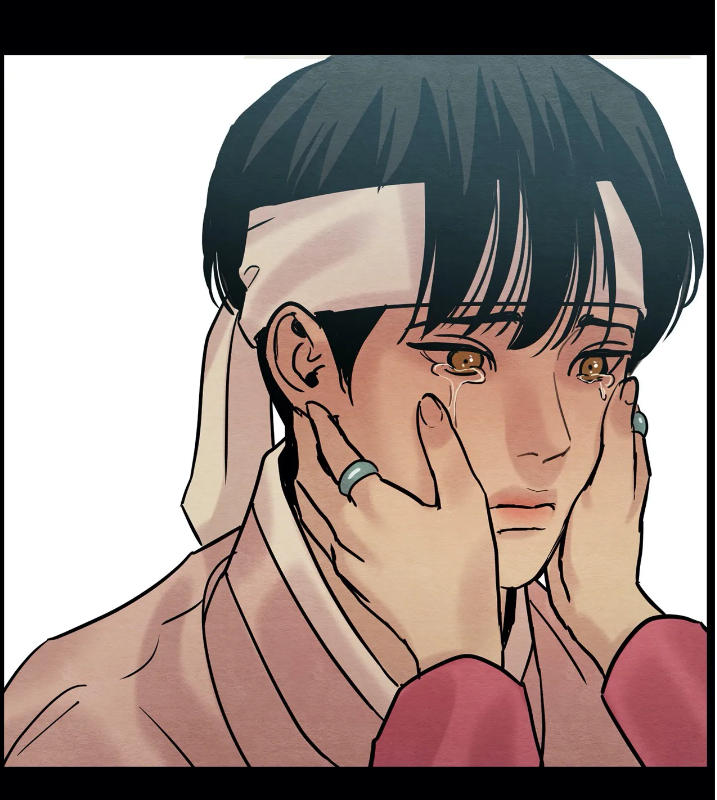 (chapter 46) He could only express his sadness with his tears. Then when Heena reentered his life, she was seen next to his bed while hugging. by his side
 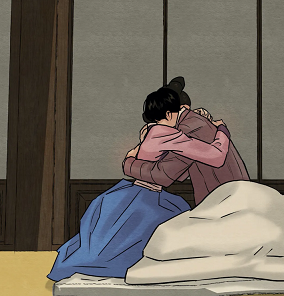 (chapter 66) This means that she would no longer share his cover. This is no coincidence that in the gibang, the noona could no longer enter her brother’s room.
  (chapter 96) Little by little, Heena got excluded from the painter’s life. She could no longer share her meals with him.
  (chapter 93) This explicates why in season 4, Baek Na-Kyum can not penetrate Heena’s room.
 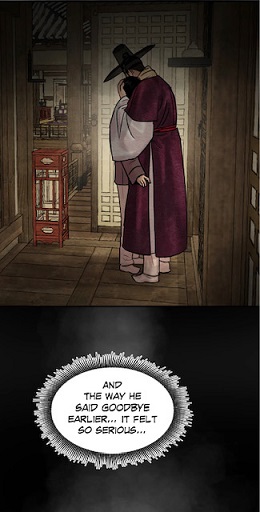 (chapter 105) She is hiding more and more things from her brother: her “illness”, her involvement in the murder of nobles and her lies. On the other hand, the painter still considered her as a part of his family because of her intervention in episode 68/69:
 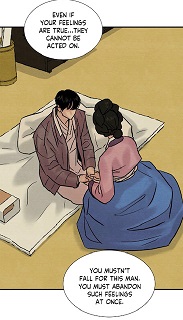 (chapter 68) Their argument was reflecting their trust, though here the kisaeng was questioning her brother’s maturity. Due to her concerns, Baek Na-Kyum felt that they were still a family. However, I sense a rupture, when they argued in the kisaeng house. The artist was no longer trusting Heena’s words:
  (chapter 97) Interesting is that from that moment on, Baek Na-Kyum and Heena never faced each other! She didn’t join his side during the parade. This means that their argument in the kisaeng house represents their last reunion. And what did Heena do in this scene? She cried
  (chapter 97), while the painter didn’t, though he looked disturbed.
  (chapter 97) He lost all his colors. However, such a scene could be perceived as a sign of indifference, especially for the kisaeng. And this observation made me realize why the kisaeng asked Yoon Seungho not to reveal his suspicions about Jung In-Hun’s involvement to her brother.
  (chapter 105) Here, she implied that Baek Na-Kyum would cry out of pain and shock. But she had seen that he had shared no tears, when he heard about his murder: And it happened again in the shrine.
 (chapter 99) Simultaneously, the request from Heena exposes that they are no longer sharing agony and as such struggles. Moreover, this made me realize why the artist left the mansion after the nightmare. It was out of fear and obligation. For me, he had sensed that Heena liked the learned sir and as she was still part of his family, he had to make sure that this was not true. Yet, even after witnessing the faked crime scene, he still trusted Yoon Seungho. Hence I am deducing that the absence of tears is the trigger for their separation which stands in opposition to their embrace in the mansion:
  (chapter 66)
  . (chapter 68) And what was her reaction, when she saw her brother in tears and yelling at his lover?:
  (chapter 105) She remained silent, passive and rather indifferent. This impression gets reinforced, when she is lying next to her colleagues. She is not sharing her thoughts and emotions, rather pensive contrary to these kisaengs:
  (chapter 105) She is even turning her back to them. This displays the dissolution of this family. The kisaeng is no longer sharing her fears, her tears and emotions to others. Therefore she can not sense “happiness or relief” like the others.
  (chapter 93), but the moment the lord joined his side, the honesty started vanishing. Notice that the painter couldn’t talk about his past (how he met Yoon Seungho and how he got abandoned by Jung In-Hun). It was reduced to “I was caught up with something”. He had so many secrets that he couldn’t share to his noonas. And it was the same for the kisaengs.
  (chapter 93) They also had secrets, hence they were seen whispering. Baek Na-Kyum could confide less to Heena. Why? He sensed that the kisaengs might show no understanding. And note how the painter reacted, when he met his noonas in episode 105.
  (chapter 105) He lied to his noona, he didn’t voice his worries. He didn’t enjoy his time spent by the kisaengs’ side. He didn’t eat with them either. This is the sign that he was moving on, he was on the verge of starting his new family. In other words, this scene
  (chapter 105) corresponds to the bird flying from the nest which was witnessed by Heena and the kisaengs. Because the painter was not sincere to his noonas, it is not surprising that they acted the same way. Here,
 (chapter 105), the kisaeng’s words are a reference to loss of virginity. Yet the painter didn’t grasp the true meaning. Only in his dream and nightmare, he realized the significance of her words:
  (chapter 109) Hence I come to the conclusion that we are witnessing to the birth of Baek Na-Kyum’s new family: Yoon Seungho.
  (chapter 118) That’s the reason why the painter decided to run away with his lover.
  (chapter 118) However, in order to become a real family, the painter needs to call his husband like this:
  (chapter 72) Under this new light, it becomes comprehensible why the noonas were no longer entirely honest with Baek Na-Kyum in the gibang. They couldn’t share their thoughts and secrets to the artist, as they had played a role in the separation of the couple
  (chapter 99) and the nobles’ execution. Besides, they also had secrets which they had to hide from their donsaeng.
  (chapter 57) I believe that it is related to the protagonist’s sensibility and intelligence. My assumption is that Yoon Seungho is a
  (chapter 26) The latter was not allowed to cry! Therefore the artist heard the same reproach from the main lead.
 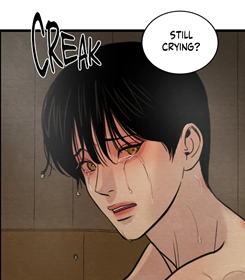 (chapter 26) The valet disliked the tears, because he refused to share the suffering. The reason is simple. If he did, this would have increased his guilt. Furthermore, Kim never shared the cover or his meals with Yoon Seungho in the past
  (chapter 108) So we could assume that he was starting to view the main lead as a family member. But no… for me, it is just an illusion. First, note that he never let the lord see his gaze while weeping. Besides, the noble’s heart was not moved either. They were not crying together, a sign that the two were drifting apart. Moreover, in the shed, the valet never shared the information about the fire at the shrine.
  (chapter 108) Moreover, like exposed above, family in the poem symbolizes trust, love, responsibility, comfort and protection, but the valet failed to fulfil his duties which he admitted in the shed. As a conclusion, the butler didn’t keep such a promise. Moreover, what did the butler do after the painter’s abduction?
 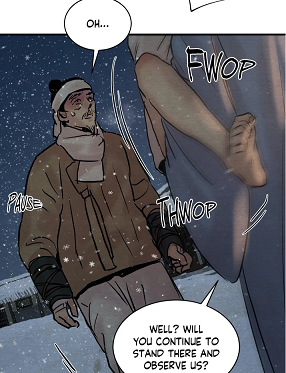 (chapter 64)
  (chapter 64) He ran away. He never saved the painter, just like he didn’t argue with his master in that moment. But he could have, since the latter had no sword by his side. Imagine that he had a heated discussion with Yoon Seungho the very next day, and in the courtyard, the protagonist had the sword in the hand.
 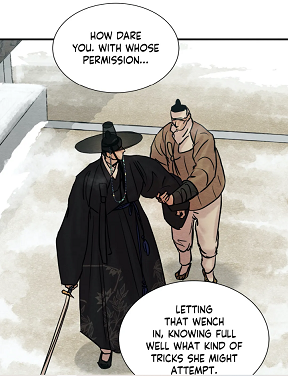 (chapter 68) A sign that he knew that the noble would never slay him! And in the past, the valet had not come to his rescue, shared his suffering or defended his honor. And now, you comprehend why I am more than ever convinced that the valet was never Yoon Seungho’s family: no tear, no joy or no secret shared! His expression “bird of misfortune” embodies the gap between the two characters.
  (chapter 109) The latter would even get the opportunity to eat sweets and sit in the patio
 (chapter 109), while the lord was relegated to the courtyard.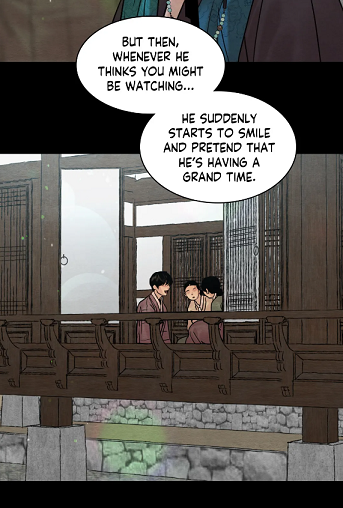
 (chapter 109) And the poem mirrors perfectly the birth of Yoon Seungho’s first family. Baek Na-Kyum is his very first family. Thus he could share his pain, his fears, his resent,
  (chapter 62) and his hope to be happy for one moment:
  (chapter 63) I selected the terrible scene in the shed for two reasons. It symbolizes the verse “how to become a family”. This explicates why in season 3, the artist was slowly using the personal pronoun “we”.
  (chapter 78) This means that the two protagonists were learning how to become a true family. And one of this important step was “crying together” which occurred after the sexual abuse in the shrine,
 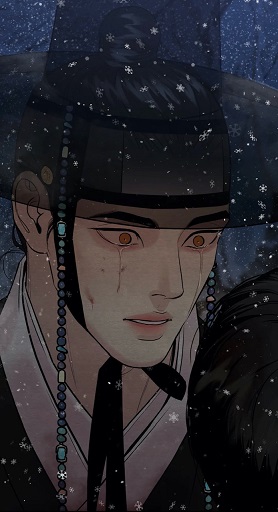 (chapter 102) However, Yoon Seungho had to learn the importance of “secrecy”! He kept his crime from his loved one hidden, not understanding that a real family is to “endure all hardships” together. Consequently, I judge this night
 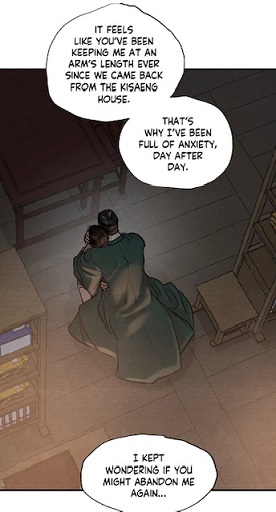 (chapter 110), their happiness
 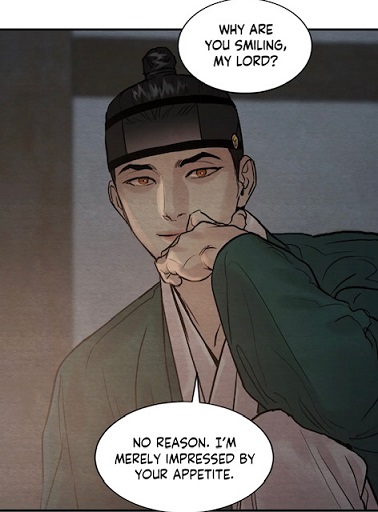 (chapter 110), they sit together while eating
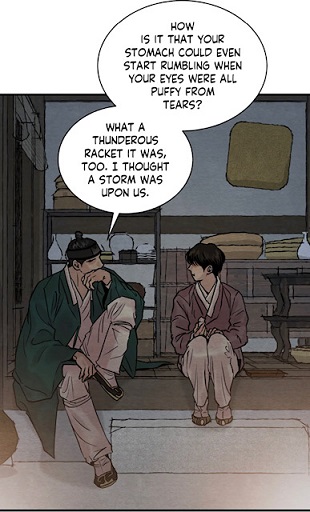 (chapter 110), they embrace each other, they share the same bed. And the lord makes the following promise: there won’t be any secret between them. He will share everything with his lover.
  (chapter 110) So when the brother gave the petition to the artist
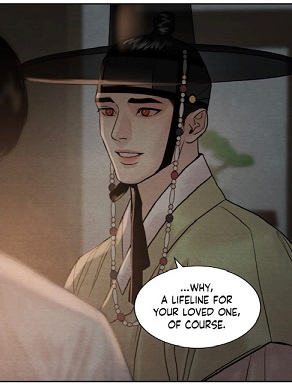 (chapter 116), he even reinforced their bond. It was, as if they had no longer any secret between them. Thus they talked about the document in the pavilion making sure that no one would listen to their discussion.
  (chapter 117) Therefore, it is not surprising that during that same night, the couple slept under the same blanket while hugging each other.
 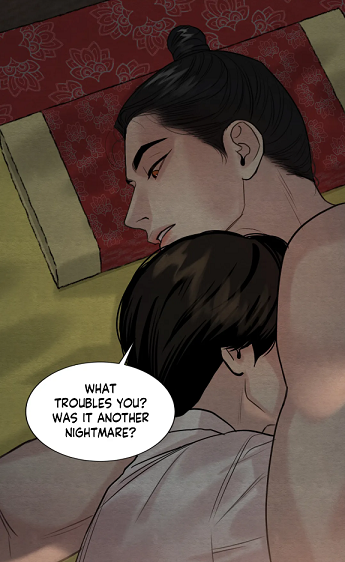 (chapter 117) The symbol for the new family! But a family is not made just of two members! Is Yoon Seungwon a part of Yoon Seungho’s family? Let’s not forget that he considered the artist as his brother’s wife.
  (chapter 116) What caught my attention is that Yoon Seungho was not followed by his lover, when he met his brother in the gibang.
  (chapter 118) And this reminded me of this scene:
  (chapter 37) He wished to send away the artist, but the host refused. Then if you pay attention to his behavior, you will notice that none of them were seen eating together!
  (chapter 118) Compare it to Black Heart’s behavior:
 (chapter 43) In fact, the two guests were drinking on their own! Yoon Seungwon had even started drinking before the protagonist’s arrival.
  (chapter 118) Moreover, exactly like the scholar, Yoon Seungwon is just employing the pronouns “you”, “I” and “father”. There is no WE at all.
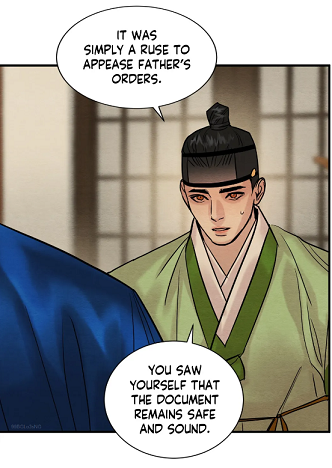 (chapter 118)
 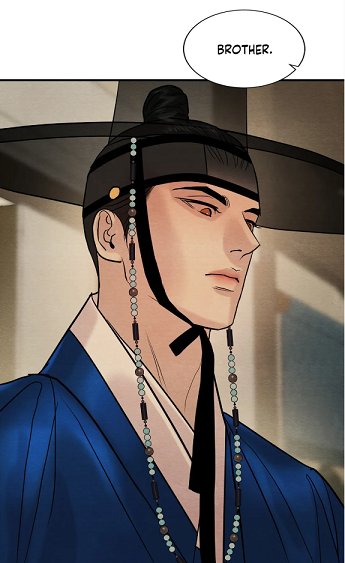 (chapter 118), but it is only a name! In reality, he desires to use the main lead. He needs him more than ever! Let’s not forget that the patriarch could discover Yoon Seungwon’s betrayal at any moment. Finally, I would like to outline that family stands for effort and understanding, nevertheless the younger master never showed compassion or worries for his brother, who had just recovered from a stabbing. His speech was full of blame.
  (chapter 22), the physical therapist still views her as his family. This corresponds to the verse “no matter where you are”. This explains why he listened to her and started treating the champion differently. From my point of view, they became a family, because they slept under the same cover
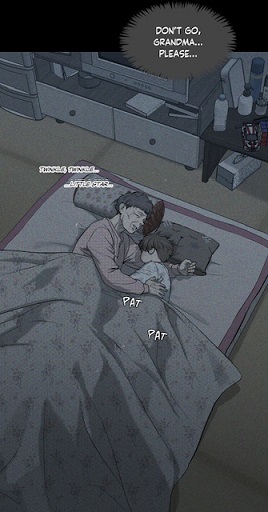 (chapter 21), shared their agony, fears
 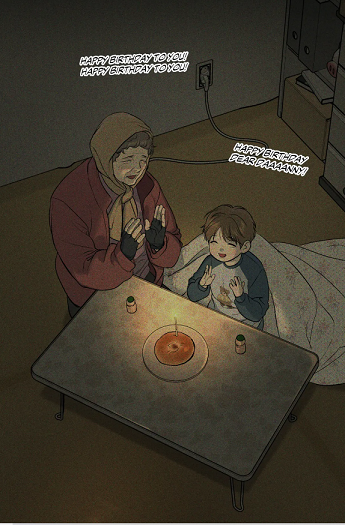 (chapter 11). I will give more details later. Another evidence that they are family is that the grandmother would often sing him songs. Then we could say that the grandmother shares her meals with the doctor, for she is often saving yoghurts for her grandson.
  (chapter 05) She is happy, when she hears good news from her grandson.
 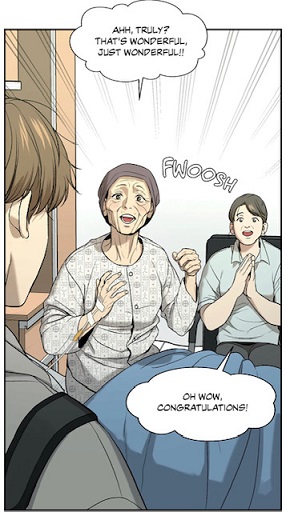 (chapter 07) When she feels lonely or miserable, she asks for his presence.
 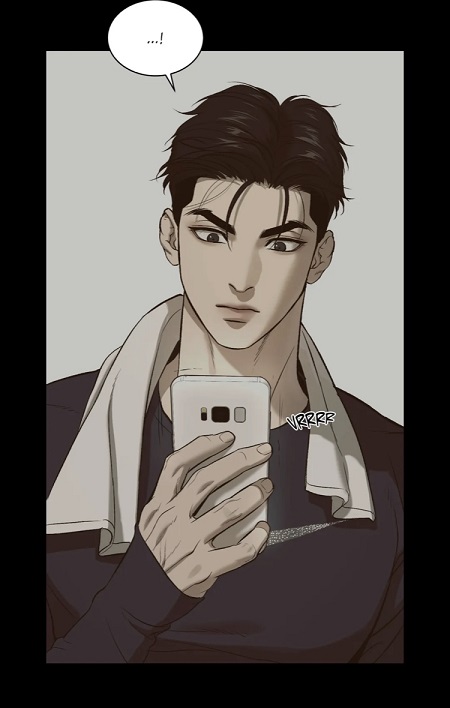 (chapter 21)
  (chapter 5) Nevertheless, there exist two negative aspects. First, I noticed that she didn’t question Kim Dan about his career, only when it was necessary.
 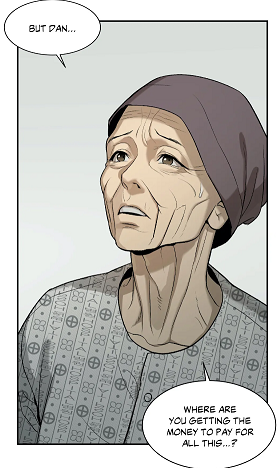 (chapter 07) She is not that involved in his current life.
  (chapter 05) Secondly, what caught my attention is that the halmoni is not letting her grandson weep. With her attitude, she implied that he had overreacted (“Now, now none of that”).
  (chapter 21) Moreover, the poem outlined the necessity of crying together (“be able to cry together”), yet the halmoni was not upset, when she found the little Dan in tears. She didn’t understand his abandonment issues. Thus I deduce that the shared agony was only in one way! If the grandmother was scared or suffering, her grandson should feel the same.
  (chapter 5) This explicates why Kim Dan was willing to sacrifice himself for his halmoni.
  (chapter 30) This shows that Kim Dan’s preferences are all influenced by the halmoni. We could say that he didn’t truly develop his own identity. It was, as if he had become the second version of “grandma”. And now, you comprehend why he rejected sex:
 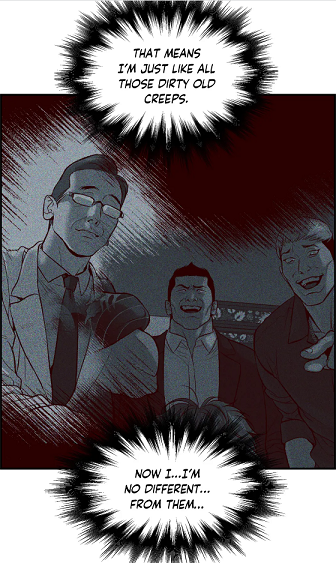 (chapter 20)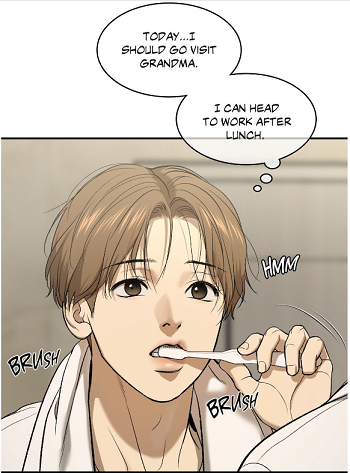
 (chapter 30) Because the grandmother didn’t allow her grandson to share his struggles (no tears), Kim Dan has been hiding many things from his grandmother
 (chapter 07): the beatings from Heo Manwook, his firing from the hospital, the sexual assault from the perverted hospital director and the moneylender, his deal with Joo Jaekyung and the fact that he moved to the penthouse. This means that little by little, the physical therapist is sharing less and less his happiness with her. I doubt that he told her about his trip to Busan, his first MMA fight as spectator
  (chapter 26). But this is a sign that Kim Dan is maturing. Therefore it is no coincidence that after their first day off spent together, Kim Dan is already under the champion’s spell.
 (chapter 30) And at some point, the grandma will notice her little boy’s transformation and the growing distance. And Choi Heesung could be the trigger for a first quarrel
  (chapter 22)
  (chapter 26), they get support from each other
  (chapter 14)
 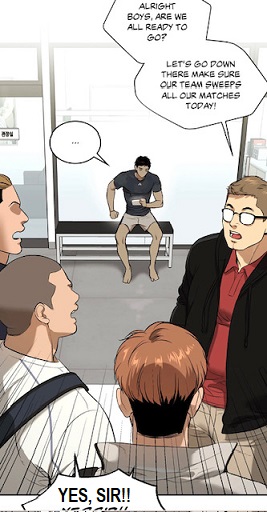 (chapter 23) or they argue
  (chapter 07). Moreover, they call the older members “hyung”
 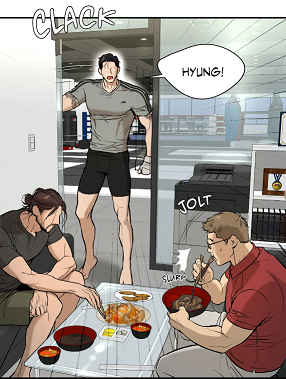 (chapter 5)
  (chapter 23) which is another evidence that Team Black functions more like a family than like a company. What caught my attention is that the doctor is not addressed as hyung
  (chapter 30) but as Doc Dan or doc.
  (chapter 23), though the manager Park Namwook had introduced him as hyung.
 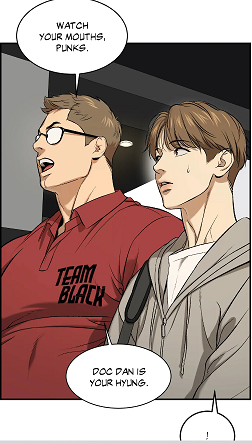 (chapter 07) The reason behind this different title is the champion. The latter addressed him like that:
  (chapter 22) It exposes that the physical therapist occupies a particular position at the gym. On the one hand, it could be interpreted that he has not been entirely adopted as a family member. On the other hand, the physical therapist didn’t exclude that he could have other clients.
  (chapter 25) This means that his “adoption” is not definitive and official. Nevertheless, I would like to outline that though Team Black’s structure resembles a lot to a family, we can not say that it is a true family. Why? It is because Joo Jaekyung is hiding many things from his hyungs and members. He is not sharing his problems to his coach (his insomnia, his jinx, his sexual orientation, his insecurities eg). Imagine that he preferred deceiving his admirer
  (chapter 15) than admitting that his shoulder had been plaguing him. And it is the same for Potato. He didn’t talk about the incident with the office room and the sofa.
  (chapter 25) According to me, Jeong Yosep knows about the true relationship between the physical therapist and the alpha black wolf. But he kept this information to himself as well. However, like pointed out before, family stands for communication and not secrecy! Moreover, so far, we only saw the fighters share their happiness. And what about their struggles or defeat? To conclude, Jinx is actually showing us the transformation of Team Black as company into a family. How they “become” a WE! Park Namwook does consider Team Black as his gym, but he has his own family. However, this is not the case for Jeong Yosep or Joo Jaekyung, who lives as a loner wolf! In my opinion, Team Black will turn into a real family, the moment Kim Dan loses his halmoni. Remember the quote from the poem: “If you can’t say you’re hurt when you feel hurt you’re not family“. Kim Dan won’t be able to hide his sadness and broken heart. In the beginning of the story, he lied to the coach and Kwak Junbeom about the reason for his injuries:
  (chapter 11), because he considered them as superior and colleagues. In other words, the fighters will share their pain with doc Dan helping him to overcome the loss. But this change can only happen, when the owner of Team Black has a change of heart himself as well. Remember how he pushed Oh Daehung and the other members away.
  (chapter 22) He didn’t want them to come to his house.
 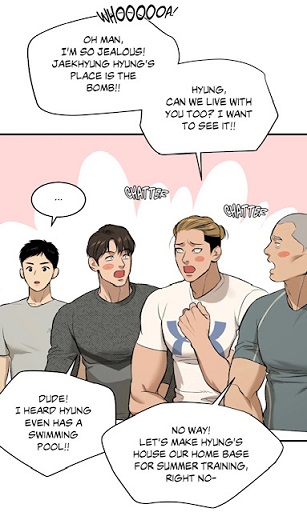 (chapter 22) So far, he didn’t want people to cross the line, but thanks to the physical therapist, this will change. That’s how both protagonists will come to view more and more Team Black as a family. They will share their struggles and happy moments together. I have one evidence that Kim Dan is the key to turn Team Black into a real family. It is because Joo Jaekyung came to the gathering
 (chapter 9), though he had been avoiding such events in the past.
 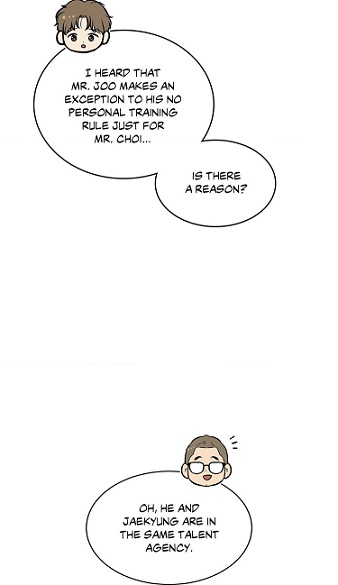 (chapter 30) But he is there an employee. Thus I am suspecting that the talent agency is working differently from Team Black. If there is a scandal, I doubt that the company would side with the star in trouble or they would try to find ways to get rid of the issue, like finding a scapegoat in order to bury the truth. As a conclusion, I am expecting to see companies run differently so that the readers can perceive Team Black as a family company, although it is an incorporation.
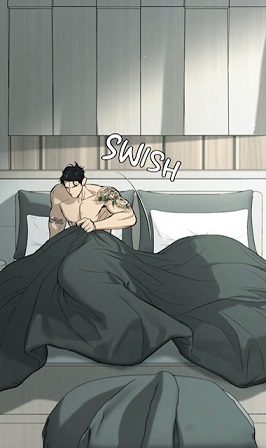 (chapter 4) This was a reference to the blanket in the poem, though here Kim Dan slept in a cocoon. This was a sign that he didn’t feel safe. However, as time passed on, I detected a change in Kim Dan’s sleeping position. He is lying on his back and even in the middle of the bed.
  (chapter 1) This was the reaction from the champion:
  (chapter 1) He questioned the cause for the tears. He was naturally annoyed (“the hell”), but he didn’t make fun of the doctor. And now, pay attention to the memory Joo Jaekyung had from their first night. He remembered his tears which had moved him deeply:
 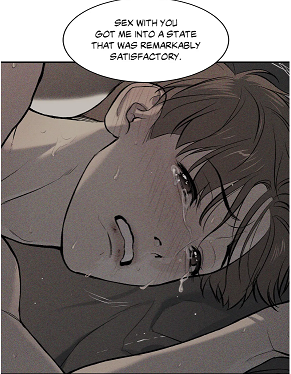 (chapter 6) This shows that the celebrity is not judging the physical therapist as weak due to his tears. In episode 28, he even showed concerns, when he heard the doctor crying.
  (chapter 28)
  (chapter 28) He questioned the doctor once again, why he was in tears. However, he didn’t ask the doctor to stop weeping or to wipe his tears. He wanted to understand him. This exposes the fighter’s tolerance and interest in Kim Dan. For me, it reveals that Joo Jaekyung is willing to share the pain or fears with Kim Dan. Therefore it is not surprising that Kim Dan is remembering this moment!
 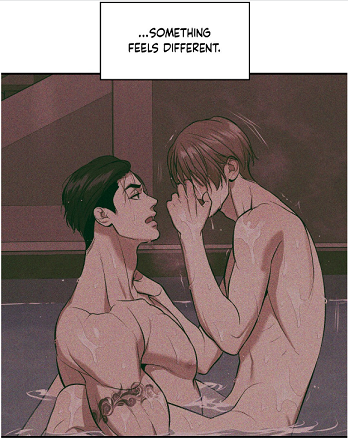 (chapter 30) He was allowed to express his emotions. Interesting is that this image is now connected to red, not to grey/black.
  (chapter 30) The switch of color indicates the doctor’s increasing feelings and sensuality for Joo Jaekyung. That’s the reason why I am expecting that one day, the two protagonists will cry together, something that the grandma hasn’t done until now.
 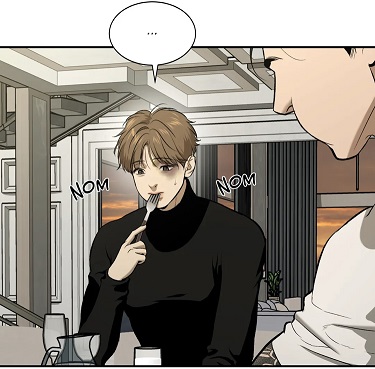 (chapter 13), it doesn’t signify that they are a family now. And it is the same for the penthouse.
 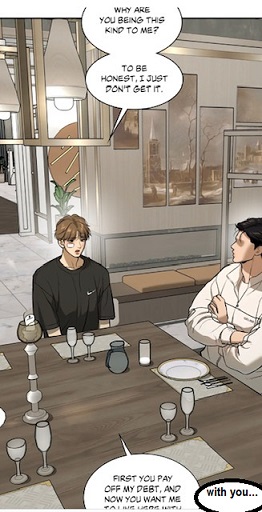 (chapter 18) They might share the same flat, but the penthouse is so huge that they can technically live apart. Joo Jaekyung and Kim Dan are slowly spending more and more time together, either because the champion feels like it
 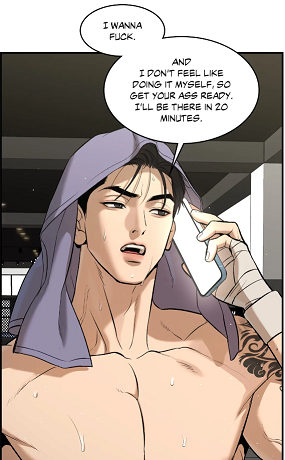 (chapter 19) or it is necessary
  . (chapter 27) During the day off, they shared their thoughts,, their emotions
  (chapter 27)
  (chapter 27), their happiness
 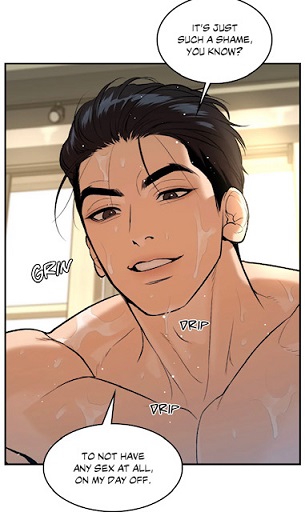 (chapter 28) and their fears
  (chapter 27)
 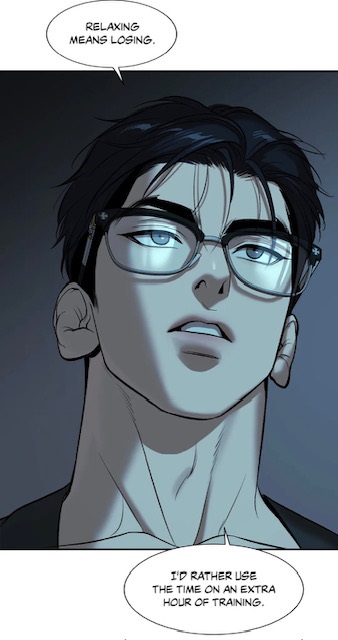 (chapter 29) Because Joo JAekyung confessed his fears and health issues to Kim Dan, it shows that he was trusting him. For me, this night represents another step how to become a true family. “If you can’t say you’re hurt when you feel hurt you’re not family.” This day and night were so magical that it affected the protagonists’ life forever. From that moment on, Kim Dan is feeling more attracted to the champion, hence he is peeping at him.
  (chapter 30) And it is the same for the champion. Now, he is slowly regretting that they live in two different rooms and they have their own bathroom. Therefore he came to the doctor’s bathroom under the fake excuse that he had run out of toothpaste.
 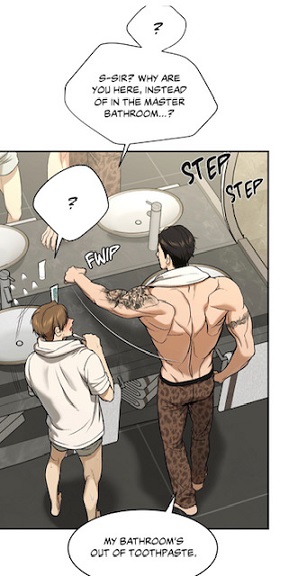 (chapter 30) What was so funny is that he had opened the door like a huge bear. Why? It is because he was so annoyed how to explain his intrusion.
  (chapter 30) This shows that little by little, the champion is regretting his words to Kim Dan in the master’s room.
  (chapter 30) For me, this scene is the bathroom represents another step how to become a true family.
  (chapter 30) However, like Mingwa voiced it, they have a long way to go, for Joo Jaekyung and Kim Dan are hiding their true thoughts and emotions from each other.
  (chapter 30) Kim Dan had to hide his blushing, while the champion had to lie for his appearance. Moreover, the fact that he tried to hide his underwear
  (chapter 30) indicates that their intimacy has not reached its peak. He doesn’t feel comfortable around the athlete to be seen in underwear. Moreover, the champion is also hiding his jealousy and possessiveness towards the main character.
  (chapter 30) But like I said, they need to open up their hearts and mind in order to become a true family. From my point of view, the halmoni could play a huge role in their union. How so? It is because she entrusted her grandson to Joo Jaekyung. The latter also conversed with her
 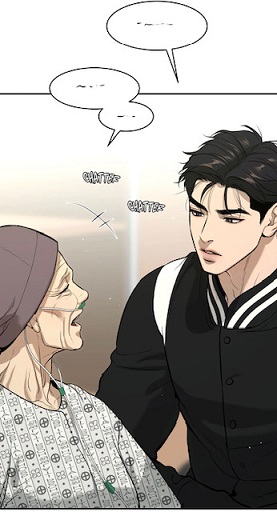 (chapter 21) and even paid her hospital bills. She even took his hand
  (chapter 22) and gave him a yoghurt.
 (chapter 21) So the moment the grandma vanishes, it could also wound the champion’s heart, especially when his sex partner is so heartbroken. It would be interesting if the champion came to voice his feelings about her. If you can’t say you’re hurt when you feel hurt you’re not family.“

 (chapter 109) He discovers that Baek Na-Kyum has already prepared himself, as he is longing for him.
  (chapter 109) He never expected such a reaction. The reason why the evolution of Painter Of The Night is flowing at a snail’s pace is that season 4 is now focusing more on the past. First, Byeonduck needs to divulge the lord’s suffering and its causes. And this can only happen, if memories are brought up. Hence in episode 109, the painter’s memories stood in the center. Why? It is because he is trying to understand why his loved one is now avoiding him. Thus he is remembering what happened just before. The readers are actually put in the same situation than the artist. On the one hand, the focus on recollection is a method to unveil how the young master was turned into a “sodomite and pariah”, for the painter is going through the same experience than his partner. In episode 109, he is isolated from his “lover” and as such from his family, for he has now maids by his side. The latter are supposed to be his new “family”. On the other hand it helps the manhwaphiles to anticipate the future main events,. as the progression is in slow motion. This means, the Webtoonist left all the elements in the previous seasons in order to decode the past, the present and the future. That way, the manhwalovers are capable to unveil the mystery. Besides, the author has to answer all the questions the beholders had while reading the previous seasons, like this one:
  (chapter 27) What book was the scholar looking for? Up to now, we have no clue, though I had developed the following theory: Jung In-Hun was a Christian and had a bible.
  (chapter 109) How did this happen? One might reply that the book fell from the shelf, when the painter kissed his lover.
  (chapter 109) This interpretation can be easily refuted, for the noble stood next to the shelf and not in front of it. Besides, the counter stands on the noble’s left, while the ledger was on his right. However, one detail caught my notice, the beholder can not see Yoon Seungho’s hands!! That’s how I realized that the book came from the protagonist! He had carried it hidden in his right sleeve. This explicates why the book stands on the right side.
  (chapter 109) Besides, contrary to the previous panel, now the lord’s hand is visible! This is no coincidence. But if he was hiding the copy from Baek Na-Kyum, I deduce that it is related to the painter. But there is another person associated to manuscripts in this story, Jung In-Hun!! But what have the low-born and the scholar in common then? The erotic publications!
  (chapter 34) Note that in the background, there’s a book open on the desk, and it has the exact opposite position than in episode 109! And now, you comprehend why Yoon Seungho rejected the painter’s company next to his table. He didn’t want him to see the publication, for he feared that the painter would be reminded of Jung In-Hun. In the lord’s mind, the young artist still treasures his former teacher. He heard his confession on the bridge next to the pavilion.
  (chapter 94) However, Yoon Seungho is suspecting that the learned sir was behind the trick in the shaman’s house due to the glasses Min had in his hand before dying.
  However, there exist two reasons why I came to this deduction. I detected similarities with the first encounter between Yoon Seungho and his nemesis in the scholar’s home and the painter’s kisses.
  (chapter 6) Both were standing in front of the cupboard, while the learned sir suddenly took away the copy and closed it to put it back on the cupboard. This made the protagonist smirk. Due to the characters’ reaction,
  (chapter 6), I had assumed that the protagonist was making fun of Jung In-Hun. He had played a prank on the host, especially after asking about his occupation. I have always wondered about the content of the volume. Therefore I had developed the idea that this could be the bible. However, it was clear that the book was not for children which is visible due to the writing.
  (chapter 6) In fact, the learned sir should have the manual Thousand Character Classic (Chinese: 千字文; pinyin: Qiānzì Wén), also known as the Thousand Character Text.
 (chapter 6) In reality, he wasn’t teaching them reading and writing at all. But Yoon Seungho had feigned ignorance with this discovery. With his indifference and praises, the false teacher had the impression that he was supporting his attitude. This scene is relevant, because the learned sir had lied to the protagonist about the painter’s education.
  (chapter 6) This means that the book represents the evidence of learned sir’s betrayal and abandonment. He is responsible for his illiteracy. To conclude, this scene contains the following elements: a prank, a lie, a confession which was triggered by a book that Yoon Seungho had picked up by chance. But wait… it could be the book from the scholar’s home!
  (chapter 06) But this image can be used to refute this theory. How so? It is because this book has a title, hence there is a white rectangle!! However, take a closer look at the copy on the floor.
  (chapter 50) Finally, I would like the readers to keep in mind that they could only see the content of the books
  (chapter 6) He proposed him to sit and have a cup of tea to divert his attention from the books on the cupboard. Besides, I would like to outline the huge contrast between these two scenes. The scholar needed the assistance of the prestigious family Yoon, while the protagonist replied this to his loved one:
  (chapter 109) Needed versus not necessary!
  (chapter 6) He was here very vague (“bizarre and vulgar”), he spoke of a scolding, but never of rejection and abandonment!! This is important, because Yoon Seungho also experienced something similar in the shed:
  (chapter 77) Back then, the butler’s words must have wounded him terribly, he must have felt dirty either. Under this new perspective, it becomes comprehensible why I came to this conclusion that the book is related to the learned sir and to the erotic publication. But this doesn’t end here. In my eyes, episode 109 clearly outlined the importance of the library in the protagonists’ life. This is the place where both main leads got betrayed and abandoned.
  (chapter 40) When the scholar wounded the artist with his words, he implied that the artist was responsible for his lack of education. With the idiom “I thought, you could be educated”, he gave the impression that he had put some effort, but due to the artist’s disposition, he had failed. We had another scene where the learned sir was blaming Baek Na-Kyum.
 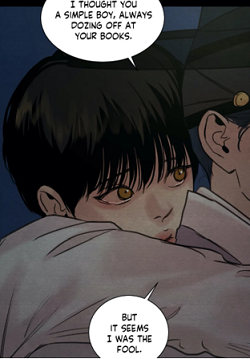 (chapter 70) He would fall asleep instead of studying. And who knows about the learned sir’s hypocrisy? Yoon Seungho!! That’s the reason why the goddess Byeonduck let them meet in the library. It is to heal their wounds. In this room, Yoon Seungho’s suffering started and later, the painter got betrayed by his former teacher, someone whom he viewed as his “family and mentor”.
  When Yoon Seungho got kissed by the painter
  (chapter 109), he got surprised, and he had the same gaze and facial expression than the one during the First wedding night
  , in the gibang
  and in the study
  (chapter 42), though here the artist kissed his companion twice!
 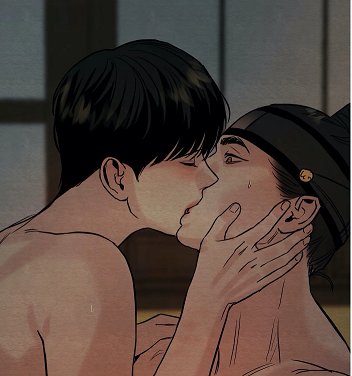 (chapter 49) And what had these scenes in common? Paintings and the artist’s confession. And now, you comprehend how I made the connection between the book and painting.
  (chapter 19) This scene could only break the artist’s heart, because he was reminded of the learned sir’s reaction: his rejection. The latter got angry and jealous that the low-born would be treated as someone special. Furthermore, Jung In-Hun had only got the noble’s sponsorship thanks to Baek Na-Kyum and not thanks to his own talent! In verity, the learned sir had been the tool to submit Baek Na-Kyum. Shortly after the exposition, the protagonist went to the study. There he got confused for Jung In-Hun, hence he received a wonderful confession
  (chapter 19) before getting kissed and embraced!
 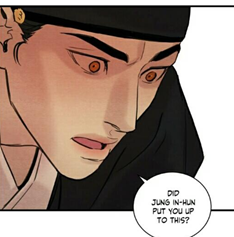 (chapter 42) Yet, the artist was unable to explain the situation, for he had internalized Jung In-Hun’s criticism.
 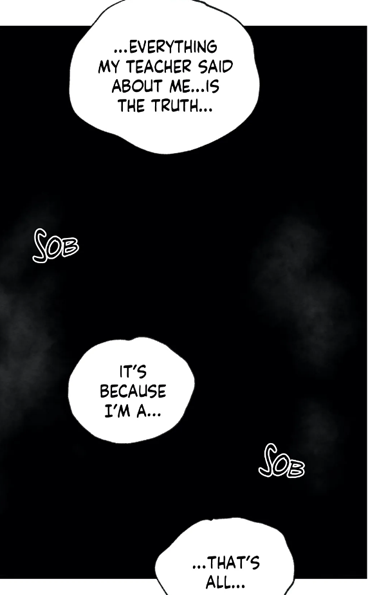 (chapter 42) So we could say that the yangban tried to get a confession from the painter, but he failed. Hence they had just sex. The artist’s heartbreak was the reason why he never got to confess the truth! And what had happened in the study after the painter kissed the main lead? The lord saw the inauguration illustration and got jealous of Jung In-Hun
  (chapter 48), and the painting had exposed the main lead’s uneasiness and pain. The drawing was not refined, barely finished.
  (chapter 47) The behavior from the painter and the new painting had not only wounded the main lead, but also pushed the lord to discover why the artist was behaving this way. After the rough sex session, the artist had made a confession: he was dropping the rules he had been raised.
 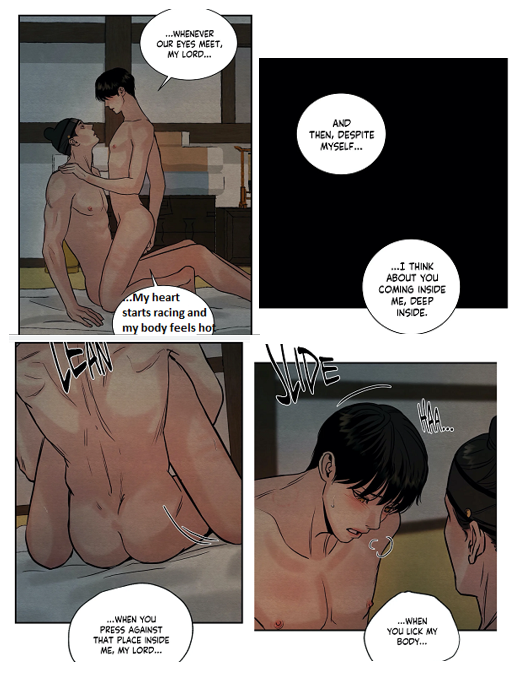 (chapter 49) He was admitting his sexual orientation and his own pleasure, but he still kept his distance from Yoon Seungho. Why? It is because he was reminded of the learned sir’s fake embrace and betrayal.
 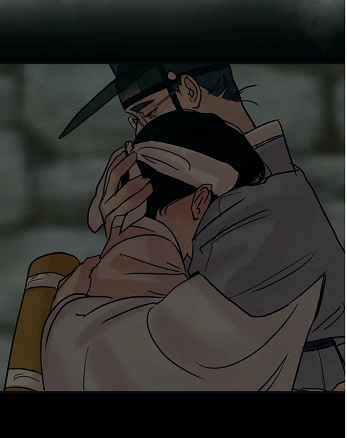 (chapter 49)
  (chapter 94) which incited the artist to recall his childhood. That’s how he came to unveil his past and confess his love to the noble!
  (chapter 19), the parties after the separation
  (chapter 51), his visit in the gibang and his tricks
  (chapter 96). In episode 109, the painter confused Yoon Seungho’s shadow with Black Heart’s. In his nightmare, he was brought back to the shaman’s house and the lord’s smile was similar to Min’s.
 (chapter 109)
  (chapter 99) Besides, let’s not forget that during that terrible night, Black Heart never touched the artist himself, as if he didn’t want to touch a trinket sullied by another man”. On Twitter, the author revealed that Min would help Yoon Seungho. Through this comparison, the beholder can confirm this. Thanks to Black Heart, the couple got closer in the end.
 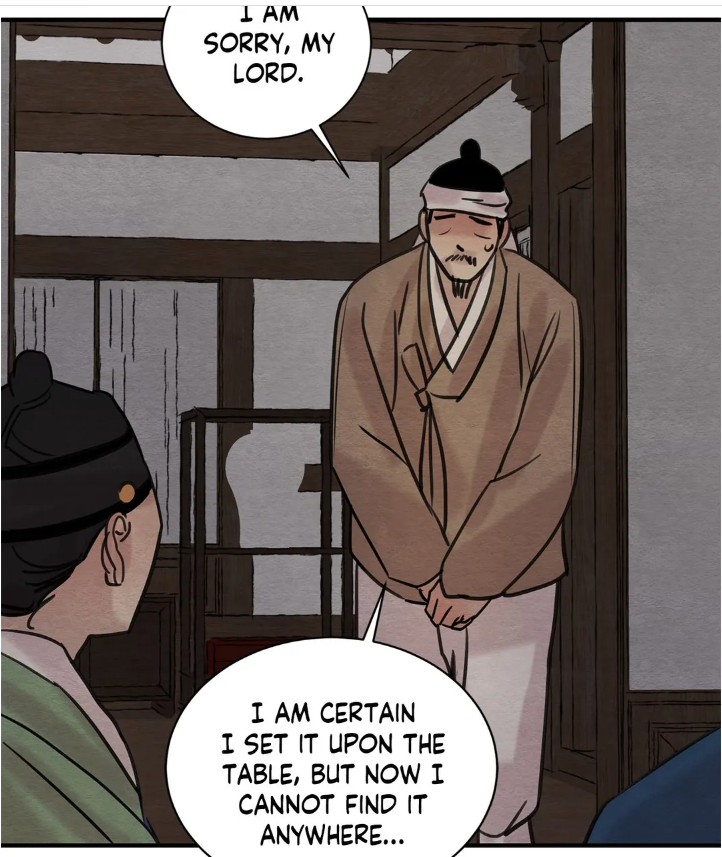 (chapter 19), the spying on the painter – though here it appears like a good thing –
  (chapter 41), the stones in the rice
  (chapter 109). She was acting, as if Baek Na-Kyum was not present, but in reality she knew that he could listen to her. How do I know this? The evidence are the sweets on the windowsill.
  (chapter 108) Why is the room dark? Where are the maids during that night, as they are supposed to sleep next to the painter?
  (chapter 109) The absence of the light is truly noticeable, an indicator that they are not in the bedchamber. Moreover, I had detected that the brown bed cover symbolizes the meddling of Kim. [For more read the essay
  (chapter 20) and it was during the first Wedding Night. And oil comes from the kitchen, the lord had fetched it from that room!! Naturally, there is an exception, and it is the kiss in the gibang. Yet, here the kisaengs had just replaced the maids. In other words, they had played a role in the confession. And this explains why the noona’s words are superposed with the maids.
 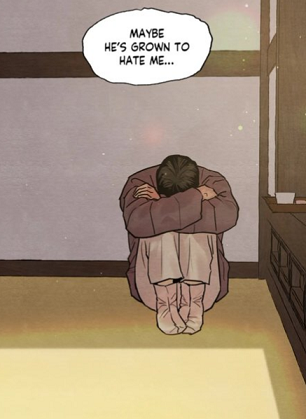 (chapter 109) That’s the reason why I am convinced that the book is strongly connected to the learned sir. In my eyes, it can only be the erotic publication of sodomy!! Why? It is because it represents the painter’s biggest wound. It explains his low self-esteem. Consequently, I am expecting the appearance of this panel:
  (tweet) The teacher told him “It’s dirty”, and wounded him the most with his gaze full of hatred, the symbol of rejection! Note that in episode 109, the painter always focused on the mouth and not the gaze,
 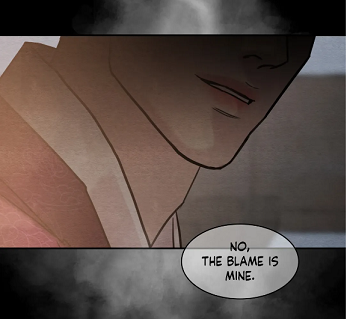 (chapter 109)
  (chapter 109)
  (chapter 25) Moreover, during that night, we have the same elements: a painting, a confession, sex, a book that the scholar was looking for. From my point of view, in chapter 34, Baek Na-Kyum only recalled the beating from Jung In-Hun.
  (chapter 34) But like I wrote above, this place is also where Yoon Seungho got betrayed and in my opinion, the schemers are planning to use this place to ruin the protagonist!!
 (chapter 106)
  (chapter 106) And if Yoon Seungho gets caught having sex with the painter and he has an erotic publication of sodomy, he can be framed for the murder of lord Shin and the other nobles. He will be guilty by association. Thus I deduce that the schemers needed the father to report him to the authorities.
  (Chapter 105) As you can see, the staff had encouraged the lord to keep his distance from his companion on purpose, to create a misunderstanding… they used the painter’s anxieties. Why? That way, the artist would be more inclined to betray his lover, if the latter was in difficulty. He could put the blame on him. In my opinion, the book was planted there on purpose. Remember how the artist denied that he was the author of the erotic publications.
  (Chapter 1) Besides, there is no doubt that the father refuses to take any responsibility in his son’s suffering. And now, you comprehend why this copy was put on the lord’s desk. He was supposed to be the owner of the erotic book and even the author! I am suspecting that he was accused of the „same crime“ in the past. Then this observation raises the following question. Which erotic publication is it? The original
  (chapter 1) This would stand in opposition to the scholar’s rejection (dirty), as the artist was just the helping hand. Besides, there is no ambiguity that Yoon Seungho blames himself due to the erotic book. If he had not brought the painter to his mansion, none of this would have happened. But the painter’s confession would make him realize that his misery started long before he met Yoon Seungho. And how did the puppetmaster come up with such an idea? From my point of view, this plan was inspired by the learned sir.
  I am still waiting for this picture. Yoon Seungwon had definitely tattled on his brother out of jealousy in the past. Don’t forget this flashbulb.
  (chapter 84) Finally, the childhood paintings could be used as an evidence. But what about the book in the library? Both could decide to burn it…
 the burned letter
 the shrine
 (chapter 109) Note that there is no rejection from the lord, just surprise and shock. Besides, in the kisaeng house, the artist’s confession had led the main lead to confess as well.
 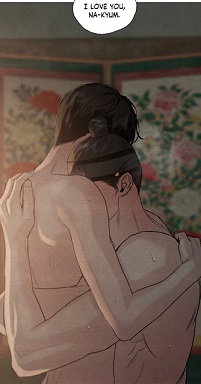 (chapter 96) Striking is that he had hidden his gaze from the artist first. As if love was a sin…Hence I am expecting a confession from Yoon Seungho in that very room too, something he has never done before! Why? It is because he was not the owner of his own past. Kim acted, as if he possessed his memories. Finally, the moment the painter divulges this incident to his companion,
  (tweet), the latter can only come to the conclusion that the scholar would have no problem to hurt Baek Na-Kyum and even get revenge on the artist, for he received the favors from the protagonist. Yoon Seungho would no longer feel obliged to respect Heena’s wish, for her words wouldn’t reflect reality.
  (chapter 27) The goddess Byeonduck is on their side. But the problem is that the readers have the impression that both are followed by misfortune due to their misery. The reality is that they are both victims of manipulations and tricks. That’s their tragedy. But by repeating that the two figures are “birds of misfortune”, the accomplices are trying to deny their own involvement and as such responsibility. The maids are the perfect example. They blame Baek Na-Kyum for his own illness. He eats like a bird and he would hide his illness.
  (chapter 108) To sum up, he was responsible for his own suffering, for he was in denial and the maids could do nothing to help. But the lord can see the truth, when he touches his lover’s butt.
 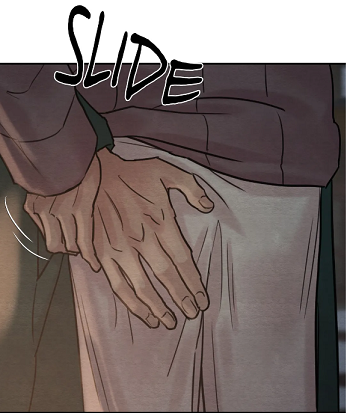 (chapter 109) He lost weight in such a short time. And their presence by Baek Na-Kyum’s side was supposed to help him. They were responsible for his well-being, but the women never realized it.
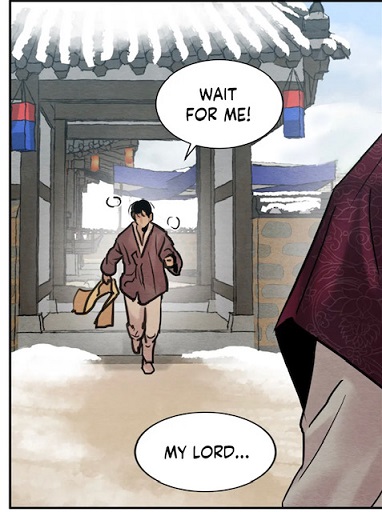 (chapter 105) Imagine that despite his rush, he was clear-minded enough to take the yellow scarf, a present that the noble had just bought him before. 😢 The item had more value than the mituri (shoes). Thus he was running in socks. His gesture displayed how much the lord means to the painter. He cherishes everything the lord does for him. At the same time, it indicates his heartache. He was so desperate and scared, for he felt that he was about to get abandoned one more time.
  (chapter 105) According to my follower @katamins, in the Korean version, this is what Baek Na-Kyum yells:
  (chapter 105) it works like a spell or a prayer. The artist is clinching onto this phrase hoping that the noble is remembering his promise. The irony is that the low-born was smiling like a fool,
  (chapter 105) masking his anxieties and huge pain… out of fear that Yoon Seungho would still reject him. He acted, as if nothing had happened: he had not hurt his hand, and the lord had done nothing wrong. The smile became the symbol of his agony which reminds us of Yoon Seungho’s.
  (chapter 83)
 (chapter 85) This means that Baek Na-Kyum was put in the same situation than his lover who wished to keep the artist by his side, but feared to open up to him out of self-hatred and guilt. The painter could get burdened or horrified by his revelations. Hence the painter’s reaction at the end mirrors the yangban’s in the study. Both were or are pleading the partner to stay by their side,.
  (chapter 85)
  (chapter 105) Nevertheless, their behavior diverges so much. The aristocrat couldn’t raise his voice or become violent by using his hand, because he could scare the artist and as such break his previous promise. Finally, by destroying the music box, he had already witnessed that he had pushed his lover further away.
 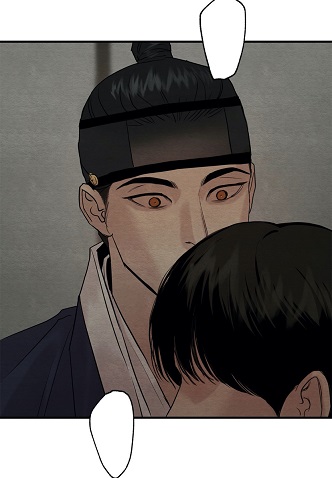 (chapter 85) At the same time, since he had been taught that no noble should lower himself in front of commoners, it is normal that he couldn’t beg Baek Na-Kyum on his knees. To sum up, the noble had to restrain himself extremely, his face and words were the only way to show his emotions and despair. And the artist sensed it, though the lord was not weeping. The proof is that when the father appeared, the artist changed his mind. He was no longer willing to leave, in fact he chose to look for his lover.
  (chapter 87) This shows that through communication, the lord had been able to affect the painter‘s mind and heart. On the other hand, we shouldn’t underestimate the lord’s flashback and Na-Kyum’s conversation with the butler which played a huge part in the artist‘s decision to vow loyalty to Yoon Seungho despite the secret.
 (chapter 105) Why did he change his mind? Is he responsible for this? As you can see, the painter came to voice his guilt and the remains of his deeply rooted self-hatred.
  (chapter 105) He must have committed a wrongdoing, he is responsible for the situation. He feels like a burden, for the lord had to take care of him each night.
  (chapter 104) He wished to help, that way he wouldn’t be seen as a spoiled child. He has to justify his presence in the mansion. Who is he exactly that he is sleeping in the lord’s bed? I am suspecting that there is a rumor circulating within the propriety, a new version of this scene:
  (chapter 38) which I will explain more in details below. Thus the artist is making sure to cause no trouble to Yoon Seungho and the staff, especially the maids. Hence he folds the cover and clean the bedroom.
  (chapter 104) Then he washes clothes. He makes sure that he is no burden to anyone. Yet, my impression is that the staff is taking advantage of the artist’s goodness. That’s how they fuel his guilt and shame.
  (chapter 104) This intention was again verbalized in the gibang.
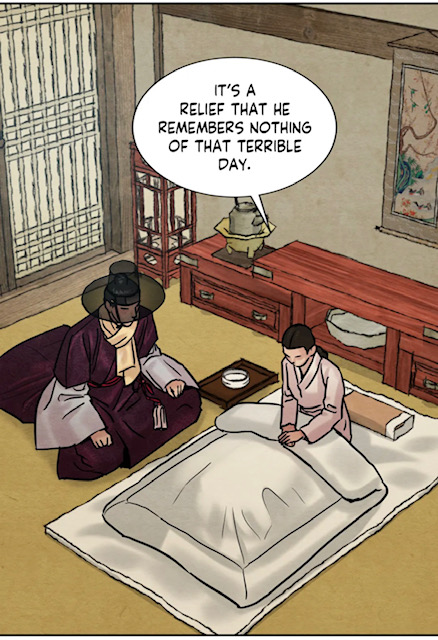 (chapter 105) In the Korean version, this is what Heena says:
  (chapter 104) He was told not to question what he had heard… he should simply consider everything like a nightmare. However, this method is actually wrong.
  (chapter 07)
  (chapter 104) Not only he knows about the lord’s traumatic past, but it is the same for the painter. In addition, we have another explanation for Yoon Seungho’s insomnia and dissociative state.
  (chapter 57) Not only the latter was turned into the scapegoat for the downfall of the Yoons, but also he was not allowed to reveal the incident, the so-called treason. Why? It is because if he had spoken, the truth would have come to the surface. He was simply a victim. And now, the schemers and accomplices are repeating the same MO. Who suggested to Yoon Seungho to say this to his lover?
  (chapter 104) Naturally, Kim, because he is now the only one in the mansion who knows his past. Besides, why do you think that the lord’s past is coming to the surface as a nightmare? It is because he was incited to repress everything. But since the painter is going through the same experiences, this is not surprising that the noble’s memory is triggered and the past emerges again.
 (chapter 27), when the other domestics left the propriety. This was his memory. Besides, like the servant confessed to Jung In-Hun, a huge part of the staff got replaced. This means that the lord was suddenly surrounded by people he didn’t know. Because my theory is that the young man was treated as a male kisaeng, this signifies that the new staff could never view the main lead as a noble. Besides, despite the betrayal, the elder master and Yoon Seungwon were his real family. Finally, Yoon Seungho had no saying in this, and I can imagine that the reason for this decision was not explained immediately. This must have been a huge blow for him as well. He must have felt lost and homeless. The result was that from that moment on, he became more dependent on the butler. And we have to question ourselves what the butler did with this huge responsibility, when the elder master moved to the second house.
 Since this phrase appears in connection with the staff (maids and servants) in the courtyard, I come to the conclusion that the authors of this gossip are in the domain. “Fellows” indicate that they are speaking among themselves. But I have two more clues proving that the traitors are the domestics. First, observe how they call the protagonist: Young Master Yoon.
  So far, people in town only calls the protagonist lord Yoon
  (chapter 45)
  (chapter 45) or lord Yoon Seungho
  (chapter 39) or my lord.
  (chapter 76) Only the staff addresses him as “young master”.
  (chapter 103)
  (chapter 103), and this since season 3. This coincides with the meddling of the Yoons. The servants treat him, as if he was not an adult, no real lord. But they are wrong, because he is wearing the topknot with the gat. Hence he is a lord. Finally, only people close to the couple could know about the painter’s tragedy.
  , because in the village and town, there exists another gossip:
 (chapter 104) Thus I conclude that the gossip from the trailer is spread among the staff on purpose. They wished Baek Na-Kyum to hear it so that he will feel responsible, especially after hearing this.
  He is responsible for the lord’s lunacy. Under this new perspective, it explains why the painter is leaving the bed and working. He wishes to prove the words wrong. On the other hand, I think that Yoon Seungho also heard a grapevine in the domain, but a different one:
  (trailer). “He has many enemies”. How did I come to this idea? It is because he is addressed as Yoon Seungho! By underlining the painter as his weakness, the author of this rumor wishes to separate the couple. If he were to place the painter elsewhere, not only the latter would no longer be targeted, but also the lord would have no longer any weakness. Since there is always a reflection within the same chapter, I conclude that a second grapevine was spread in episode 104. This happened, while the lord was away. Thus the painter smiled like a “fool”, when he saw the lord:
 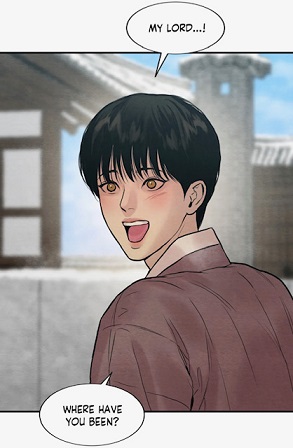 (chapter 104) As you can imagine, for me the maids were the perpetrators, a new version of episode 79
 (here, the woman implied that the artist was responsible for Yoon Seungho’s insomnia, thus the painter has a drop of sweat on his face, a sign for shame) and chapter 98
 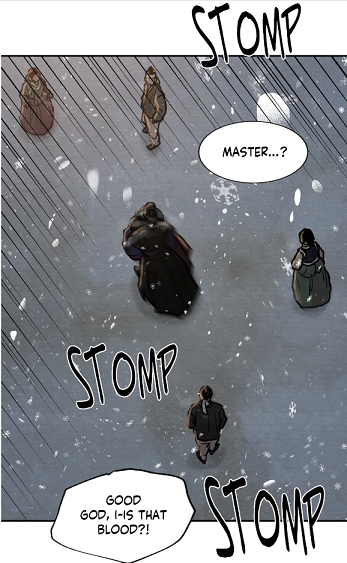 (chapter 103) Finally, the staff has every reason to get rid of the artist, for he is the witness of their wrongdoings. They definitely played a major role in the “prank”. They didn’t learn their lesson.
 (chapter 29) This time, the one smiling like a fool
  (chapter 29) was Jung In-Hun who acted, as if he knew nothing and had seen nothing.
 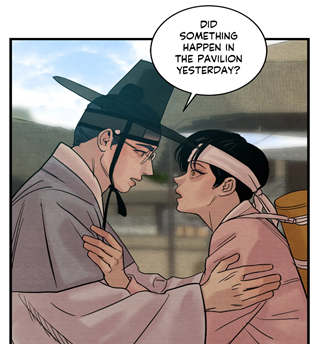 (chapter 29) However, I have already pointed out that he was present, when the rape took place, for he knew where Yoon Seungho would meet the artist: the pavilion. And what have all these episodes in common? The first thought would be to say: abandonment and betrayal. The painter in front of the gibang felt “betrayed” and abandoned, but what shocked the lord so much was when the artist started blaming himself:
 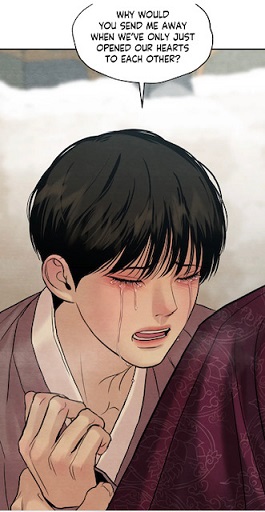 (chapter 105) We have to imagine that the painter wanted to say that he regretted to have opened his heart to the protagonist. Thus he said this:
  (chapter 105) “I had known, I would have never confessed” Nonetheless, he never finished his phrase, for in reality, he had no regret!! He was sure that he had made the right decision. It is because he had pondered a long time about this. He had observed his lover. That’s the reason why he mentioned their mutual love confession and as such their promise to stay together. And this brings me to the next observation. All these scenes have another common denominator: BAD DECISIONS!! The lord had made the wrong decision to entrust the painter to the kisaengs. Thus he came to regret this. He had made his lover cry, and even wounded him, though he desired to do the opposite. Therefore it is not surprising that he apologized to his lover.
  (chapter 105) This shows that the painter is showing him what true love and loyalty are. Moreover, he is teaching to make good decisions.
 (chapter 246), I realized why Yoon Seungho suffered so much. Self-made decision implies a conscious choice. It is made deliberately and thoughtfully, considers and includes all relevant factors, is consistent with the individual’s philosophy and values. As you can see, it implies knowledge. This definition exposes that making a choice for the sake of another person without his consent or knowledge can never be a good decision. One might argue about this, because children are too young to make decisions. In Doctor Frost, this man
  (Doctor Frost 246) decided to support a terror attack, and justified this by saying that this was for his daughter’s sake. But like the counterpart pointed out, he questioned his decision. Was it truly his choice, or was he simply following the leader’s suggestion? As you can see, the daughter was used as an excuse, it was never for her sake. This shows that children are the exception, besides they are often raised by two parents. Thus they are making deliberations together. But like the author revealed in Twitter, Yoon Seungho’s mother hated her husband so much that she neglected her eldest son. The patriarch made decisions on his own, but observe that it was always for the Yoons’ sake. This means that the father never took his son’s well-being into consideration, he never asked him about his opinion. He imposed his will, but he listened to others, like we could see in different occasions.
  (chapter 57) He fed his son with the drug prescribed by the physician, though the latter stated that he had no idea about the illness. Then he listened to father Lee’s complains and reproaches. He never questioned the intentions behind his actions and words.
  (chapter 82) Here, the red-haired bearded man was encouraging the elder master Yoon to return to the mansion and claim his rights. Finally, the young master admitted this to the messenger:
  (chapter 80) If someone stroke his ego, he would follow their advice and never doubt their words.
  (chapter 77) Since it backfired, then the protagonist was responsible for everything. And this is what Kim has always been preaching in season 1, 2 and 3: it was the best for Yoon Seungho, or Baek Na-Kyum etc. Nonetheless, since he let others make the decision, he was able to escape “responsibility”, thus the elder master Yoon was blamed for everything.
  (chapter 104) But he simply employed reverse psychology.
  (Chapter 85) Yoon Seungho was coerced to open up. If he did not, he wouldn’t be forgiven. Naturally, the painter meant it well, yet the main lead was pressured to reveal his „bad action“. The main lead feared his negative judgement and rejection. We could say that the artist had made this request for the lord’s sake, however this was not a conscious and long deliberated decision. And now, you comprehend why the main leads suffered both so much!! Yoon Seungho’s mother neglected her eldest son, but she kept her distance from her husband. They never talked to each other, and as such never made decisions together. And it was the same for the painter. The kisaeng Heena was the one who made the decision without the noonas’ consent and her brother‘s opinion.
  (chapter 105) She is still viewing the painter’s decision as a bad choice. But she is simply wrong, for the painter listened to her advice and after deliberations, he chose to open his heart. His confession was not made in the heat of the moment.
  (chapter 62) The lord’s vision
  (chapter 62) became a reality
 (chapter 63) Because the painter has always been betrayed and abandoned himself too, such words could only move the artist. There was someone willing to be by his side and to give him a home. Therefore it is no coincidence that the artist brought up these words from that night.
  (chapter 99) and her “fake death”, but as you already know, I think, he heard her during that night. Note that the painter didn’t meet his noona Heena during that day. Since Heena and the staff played tricks so that Baek Na-Kyum ended up going to the scholar’s house, it is not surprising why the staff is putting the whole blame on the painter. However, who is responsible for this? Naturally, the staff, Kim and Heena. The latter made bad choices blinded by her arrogance and prejudices. Thus I deduce that Yoon Seungho learned a good lesson in front of the gibang. He should never make a decision without consulting his partner.
 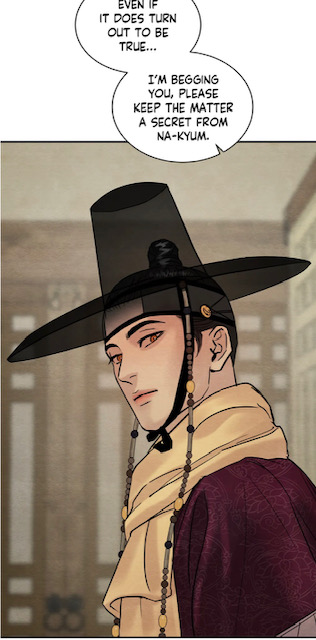 (chapter 105) This signifies that the noble will decide not to follow the noona’s advice:
 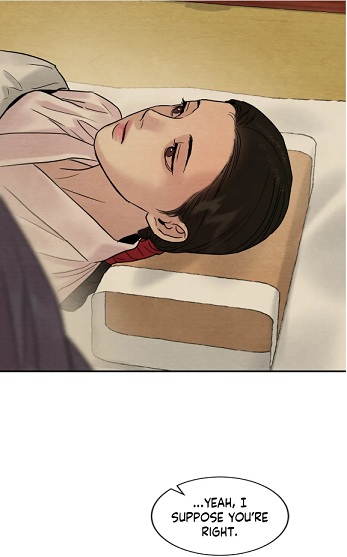 (chapter 105) with the noona’s statement, the painter looks happy with Yoon Seungho despite the tears, it looks like the noona is slowly coming to terms with her brother’s relationship. But I have to admit that I believe that her “decision” is just short-lived. First, in season 2, the noona had accepted to let her brother stay at the Yoons’
  (chapter 69) But then she had changed her mind after hearing the menace from the servant. However, I have three other reasons to expect a change of heart from the head-kisaeng. First, Heena is the younger reflection of the butler. The manhwaphiles shouldn’t forget that the valet had almost come to terms with the painter’s presence
 (chapter 65), but the ruckus caused by the kisaeng had provoked a change of heart in the valet. Then, the lord had made the following condition to the kisaeng:
  (chapter 105) The lord is keeping his lover by his side, as long as nothing happens to him. So if he gets into trouble… she could achieve her goal, the painter is returned to her. But the most important clue is for me the bowl!
  (chapter 105) While many jumped to the conclusion that this was the medicine sent by the physician, I had a totally different impression. For me, this bowl was used to write a letter!! First, the color is different from the normal “medicine”.
  (chapter 23) Most of them look dark brown and not black.
  (chapter 36)
 (chapter 77) Besides, it never leaves traces on the edge.
  (chapter 36) The points on the border are the traces left by the brush. She wrote a letter. And I have another evidence for this:
  (chapter 36) The painter used white bowls while painting. On the other hand, the lord wrote a letter during that time. As you can see, in episode 36, we have the combination of painting, seduction (touching) and medicine… exactly like in episode 105. The artist tried to paint a lucky charm, a tiger, but he didn’t finish it. He got interrupted… which is very similar than in chapter 36. So the letter should represent another common denominator.
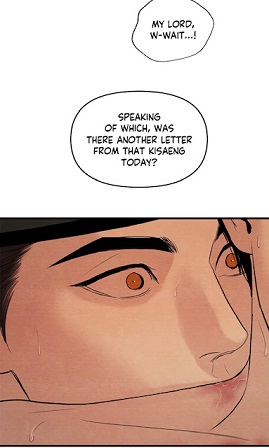
 (chapter 105) onto Yoon Seungho. Will she come to regret her action or not? One thing is sure, the painter accepted the sincere apology from his lover. How could he not forgive him after calling „Nakyumah“ and embracing him!
  (chapter 105) Both left the gibang together, while the artist was removing his tears. And this leads me to the final observation.
 (Chapter 76) By making the same decisions, it is not surprising that the same deed can never succeed. It was not a real self-made decision. They simply followed a pattern.
 of season 4 for this essay, though my focus is the past, and more precisely Yoon Seungho’s suffering. It is because the darkness surrounding the protagonist not only refers to his tragic youth, but also it reflects the situation of the manhwalovers. The latter are still in the dark concerning his torment. His terrible secrets have not been totally unveiled. So far, the author allowed the readers to see glimpses of his past, like f. ex. the gangrape or the suicide of his mother. But these were just small pieces of the puzzle, thus it is still impossible to have a complete picture of his martyrdom. There are many reasons for this. The main victim never testified about his suffering, he refused to open up to Baek Na-Kyum.
 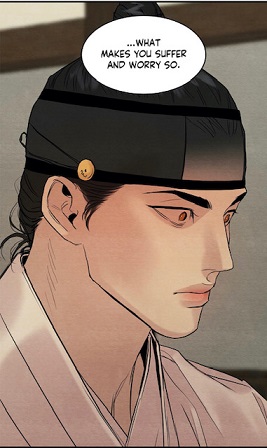 (chapter 84) Then many witnesses vanished
 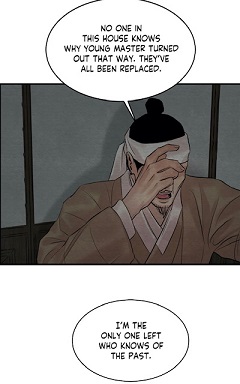 (chapter 86) or the ones alive preferred telling lies in order to hide their own wrongdoings or are simply in denial about their own culpability. Finally, the victim, the perpetrators and accomplices had no idea about the whole truth. They only know or knew certain facts, because many of them were deceived as well. What exactly happened to Yoon Seungho? How could this take place, though he belonged to one of the most powerful noble families? Now, you are probably expecting that I will give you answers to all these questions, and recreate the past. But I have to admit that it is not possible, for I don’t know the whole chronology. Consequently, I added “shadowy” in the title. To conclude, my real intention is more to offer new pieces from the riddle than create a whole new “story”. The main source for this new insight is the painter’s fate which is a reflection from the noble’s past and torment. This means that Byeonduck left traces in season 1, 2 and 3! That’s how I discovered that he had been abandoned and betrayed by everyone, kidnapped, treated as a male kisaeng, robbed, abused, raped and even gangraped at least twice, tortured and finally drugged! But like mentioned above, it is difficult to give the proper order and the persons truly involved in the crimes. On the other hand, what I can guarantee is that Yoon Seungho’s nightmare is linked to conspiracies. I came to this conclusion, because if you compare all the seasons, you will detect the presence of plots. There exists at least 3 main plots in each season, though there definitely exist more. The conspiracies are all connected to incidents.
 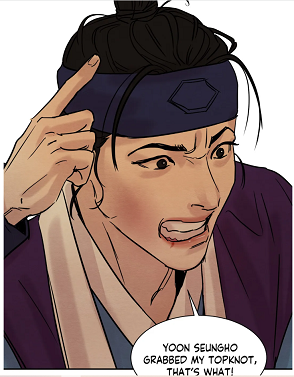 (chapter 9), so that the latter visited Lee Jihwa to arouse his jealousy. It was to push him to commit a crime so that Baek Na-Kyum would be removed from the main lead’s side. As you can see, there were 3 people involved, though the readers only saw the result.
  (chapter 12) They had the impression that the red-haired master had acted on his own. However, he had been manipulated, incited to commit a crime. But my point is not to diminish his wrongdoing, rather to expose the involvement of the schemers. Hence at the end of season 1, the author unveiled their true role and as such their identities.
  (chapter 43) However, observe that when Lee Jihwa went to the pavilion, the noble with the mole had other guests. 2 nobles left the place, as they refused to participate in a murder.
 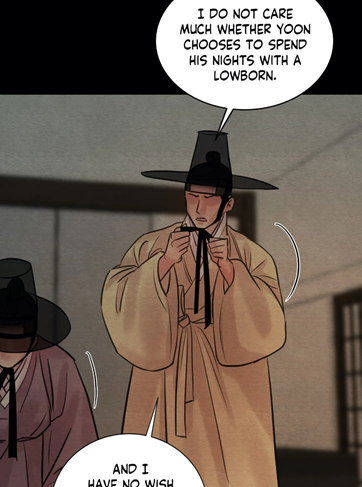 (chapter 43) Funny is that they are now witnesses of Min’s crime. This can have repercussions in season 4. Black Heart had been the one who had suggested the assassination to Lee Jihwa. And the aristocrats were still there, when he had made this proposition.
  (chapter 91) and the servants
  (chapter 97). Thus I deduce that in the past, the same must have happened. Many people were involved in the downfall of Yoon Seungho and his family. But who was the real target in the end? It is difficult to say with 100% certainty.
  (chapter 8) Thus in season 2, he came to this resolution:
  (chapter 56) He had planned to rape him before having him eliminated. This shows his inner conflict. From my point of view, the painter’s death is connected to the incident in the gibang.
  (chapter 16) This doesn’t look like a crime. However, it is one! It was done on purpose, to separate the couple. Someone had intervened in order to interrupt this session, and as such someone had been spying on them. Deok-Jae only revealed his spying activity from chapter 16 in season 2:
  (chapter 53) Yet, the one opening the door had been Kim. This gesture can be considered as trespassing and invasion of privacy, the new version of this scene.
  (chapter 16) But instead of revealing the truth, the butler sided with Lee Jihwa, and allowed him to trespass the propriety again. In my eyes, the butler thought
  (chapter 17) that Yoon Seungho would come to perceive the painter as a man consumed by lust. He imagined that he would caught them fooling around. As you can see, this ruckus was also a plot, though it doesn’t look like one. Why would the maids gossip in the courtyard?
  (chapter 18) From my point of view, the valet expected that the lord would fear people’s gaze and a scandal. Thus he would send away the painter to protect his “reputation”, but the opposite happened. Under this perspective, the manhwalovers can grasp why it is difficult to calculate accurately the number of plots and accomplices. Besides, some were naïve pawns, others not. And since I examined the first season more closely, it is necessary to analyze the vanishing of Jung In-Hun. His disappearance is strongly intertwined with Yoon Seungho’s secret. How so? The learned sir was determined to find the lord’s vulnerability and as such secret.
  (chapter 88) Thus many readers jumped to the conclusion that the learned sir had already switched sides and was plotting against the main lead. They had his following words in their mind:
  (chapter 29) Thus many concluded that he had participated in the prank, faking his death. On the other hand, the manhwalovers believed to have seen Heena’s death!
  (chapter 99) However, observe that we never saw her corpse. She was still alive in this panel. I had already pointed out that her murder was actually faked. Her mouth was not covered, hence she could have screamed, but she remained silent (blank speech bubble). Secondly, she never moved her legs… contrary to Yoon Seungho’s behavior in the gibang.
  (chapter 37) who is the king in my eyes. [For more read the essay “
 (chapter 24), not realizing that he could be spied himself! He didn’t grasp that he exposed his weakness to the commoner: the civil service examination. Thus the man had constantly drops of sweat
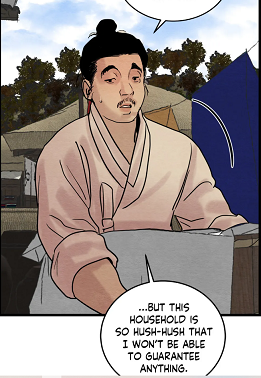 on his face and interrogated Jung In-Hun.
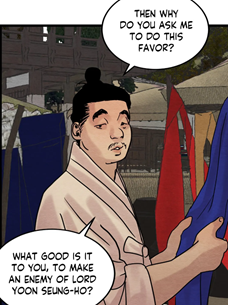 (chapter 29) The girl was there to create a certain closeness. He was acting like Kim, asking why! But the stupid and arrogant learned sir thought that because the man was a commoner, he was ignorant and could be manipulated like the painter!
 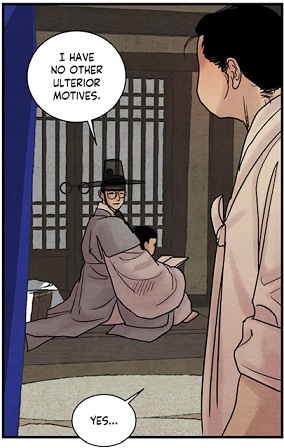 (chapter 29) He thought that the low-born would buy his lie here… but in my eyes, it was the opposite. He had already perceived the learned sir’s true nature. But he acted, as if he was agreeing. In other words, the scholar fell into his own trap. He envisioned that the man was “powerless”, but he overlooked his connections. The manhwalovers can see the contradiction, for he had approached the man due to his connections! .As you can see, I am more than ever convinced that the scholar has long been murdered. He was betrayed, exactly like he had planned to abandon Yoon Seungho! The pedophile must have heard from the servant about Jung’s plan, as he had confided it to the worker!!
  (chapter 37) But this doesn’t end here.
  (chapter 37) Yoon Chang-Hyeon was portrayed as a traitor! The “fake servant” implied with his statement that there was a conspiracy, and the patriarch was involved. But in exchange to save his own skin, he had tattled on the others! He was trying to insinuate that if Jung In-Hun interacted more with the Yoons, his reputation could get tainted. He could get suspected of “treason” too, or he could get betrayed too. While the man met the learned sir during the day, the brother went to the villa in a hurry during the night.
  (chapter 36) Hence he chose a different approach: filial duty. And the brother’s observation could only corroborate the pedophile’s perception. The scholar was Yoon Seungho’s lover, but he was also a backstabber. But let’s return our attention to the “mysterious lord Song”‘s statement: Yoon Chang-Hyeon is a denunciator, not a man of honor.
  (Chapter 67) Lee Jihwa had not only been denunciated, but he had been confronted by his friend! And the traitor was right by his side. As you can see, chapter 67 was a reflection from episode 37!! These two episodes have another common denominator: the betrayer had made the following suggestion.
  (chapter 67) In exchange for his “survival”, he should help Black Heart and allow him to act on his behalf. This was the new plan. That’s how he started impersonating Lee Jihwa. That’s the reason why I come to the conclusion that in the past, the impersonation must have happened, but it took place in the beginning. Secondly, I am assuming that a traitor must have suggested to Yoon Chang-Hyeon to leave the mansion and abandon his son behind!
 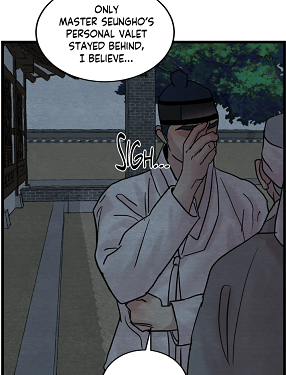 (chapter 27) Someone had tattled on the Yoons in the past, but the patriarch was turned into the traitor himself which the young main lead came to believe. Thus Yoon Seungho could say this to his father:
 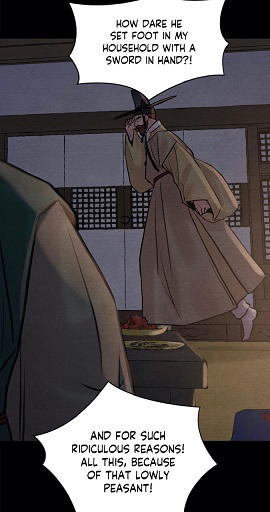 (chapter 82) If the lord Seungho had truly committed a crime, he should have reported it to the authorities. The stupid Yoon Chang-Hyeon never wondered why the elder Lee visited him during the night and asked for his assistance. Furthermore, the elder Lee had been allowed to enter the bedchamber and see the huge drawing which could have been perceived as a sign of treason. He was eyeing at the throne.
  (chapter 82) Note that the aristocrat mentioned “punishment” in this context. So maybe, he denunciated the patriarch so that the whole family would get punished. Father Lee was definitely played in this scene, hence I believe that someone had already anticipated his reactions. He would seek revenge. But this doesn’t end here. I had connected “rash departure” to “treason and spying”. And now, observe what Yoon Seungho said to his butler
  (chapter 50) He had sent Jung In-Hun away in order to get rid of him! However, because of the expression “I thought”, I am quite certain that this idea had been suggested to him by the valet! I would like to underline that in this episode, the valet was acting as a tattler!
  (chapter 50) But in order to hide his own crime, he portrayed it as a rumor (It may not be accurate”). This truly underlines the butler’s MO. He used information and turned it as gossips to hide his spying activities. The shadow… Simultaneously, he turned gossips into a verity!! This is no coincidence that in season 3, the same method was employed. Yoon Seungho was supposed to have murdered the scholar and Deok-Jae! My avid readers can sense the leitmotiv in all these episodes. RUMORS are turned into a reality, and as such a CRIME! Even here…
  (chapter 37)
 (chapter 94) This means that he acted as a traitor, tattling on his own relative. Finally, observe that once confronted with brutal reality, the father did run away.
  (chapter 87) The white bearded man’s words became a reality. However, since the fake servant, the mysterious lord Song, judges the elder master Yoon as a troublemaker and hypocrite, there is no ambiguity that the elder master Yoon will get into trouble. Since he did it in the past, he can only get suspected in the present.
  (chapter 44) He had given the ruined painting to his father, putting the blame on his brother, well aware that the latter would get angry. He was observing his father’s reaction.
  (chapter 44) Yet, there is a difference to the past. Here, he had been fooled! He truly believed that this was his brother’s doing, whereas in truth the butler had been the one who had fooled him.
  (chapter 38) And this is important, because when the letter was given to the brother, Jung In-Hun witnessed the wrongdoing from the butler!!
  (chapter 38) And now, you know why the learned sir had to die!! He had caught the valet in the act. He had betrayed Yoon Seungho, though he didn’t realize it. The learned sir tried to discover the content of the letter, and as such was prying on his sponsor’s weakness.
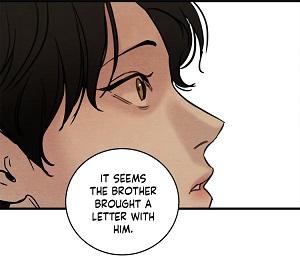 (chapter 38) Hence I come to the conclusion that KIM played a huge role in the learned sir’s death as well. I would even say that he was the one who pushed the others to have the scholar and the painter killed. Both knew about the butler’s tricks without realizing his significance.
  (chapter 37) Hence I deduce that as the story progressed, the role of the butler started changing. Now, I see him as a the main plotter, while all the others are now his pawns. We could say that the valet has gradually followed the pedophile’s path. However, there is no ambiguity that it was not the same in the past!
 (chapter 83) How can he be the same than the one from episode 37? The change of his hair color could be explained by a huge shock. But this is rather thin as a justification. Besides, now I am more inclined to think that these are two different persons, and that the main culprit is the one from episode 37. Why? It is because he smoked and utilized the same expression: “strange”.
  (chapter 37) An idiom that Yoon Seungho constantly utilized: chapter 16, chapter 21
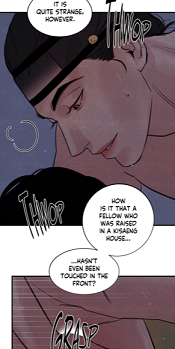 , chapter 50, chapter 71
  (chapter 71). This means that he couldn’t understand, for he has a different way of thinking. This outlines his narrow-mindedness and his tendency to plan everything. He doesn’t like surprises.
  (chapter 69) Hence I started wondering if the mysterious man with the beard was not impersonating someone, for example “lord Song” and in reality he was just a merchant. Why merchant? It is related to the shungas and the hanboks. The king can not be involved in trading directly. However, this is what Yoon Seungho told to the learned sir:
  (chapter 22) Nevertheless, the main lead could have never been involved in commerce, for he lived as a prisoner for many years. And this is what was said about the ruler:
  (chapter 76) He is not so wealthy. How come? Yoon Seungho’s fortune must have a different origin.
  (chapter 102) Min had never predicted that the young master would run to his friend and denunciate him to Yoon Seungho. However, since Black Heart had employed the assistance of servants
 (chapter 101) , the kisaengs
  (chapter 95)
 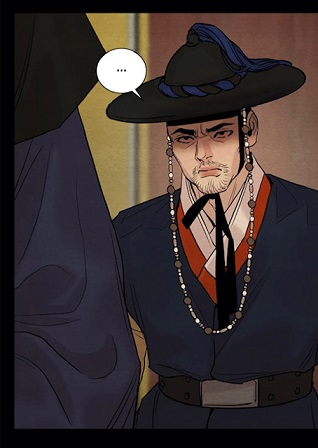 (chapter 98), No-Name, the doctor with the drugs and butler Kim, this signifies that behind the name Lee Jihwa stand many people! As you can see, the name “lord Song” doesn’t refer to one person, but many… My theory is that No-Name is the true owner of the title, but that’s how he ended up losing his home and his name! That’s the reason why I believe that in this image
  (chapter 71)
  chapter 87) and
  (chapter 82)
 (chapter 54) and 3.
  (chapter 100) The nobles made him smoke opium or drink the aphrodisiac. The purpose of such drugs is to obtain the painter’s submission and control his mind and reactions. Striking is that each time, the perpetrators were “punished”. Kim was insulted and his plan didn’t work out.
  (chapter 37) As for the young lords, they were evicted like commoners and later the others were even killed. As you can see, each time the poison was employed, there was a retaliation.
  (chapter 47)
 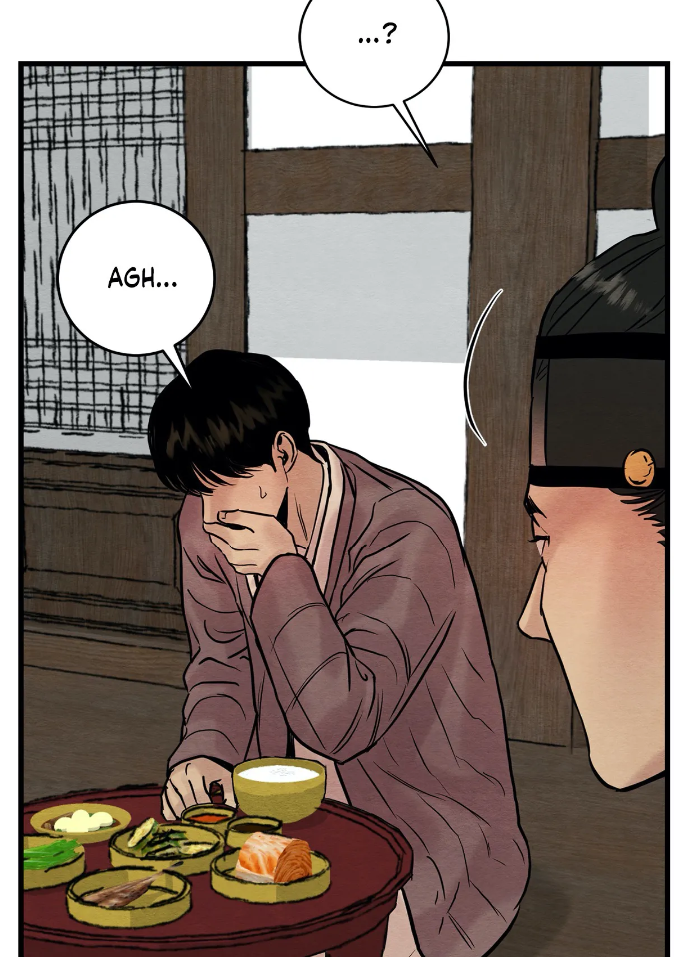 (chapter 47) If the painter had not eaten with the lord, the latter would have never noticed the incident. However, he believed the maids’ words.
  (chapter 47) Hence he never investigated the matter. But this prank represented a serious issue. This could have been judged as an attempt against the owner of the mansion.
  (chapter 83) Yoon Seungho had refused to take the drug! The bowl reminded me of the one from chapter 47! Finally, the butler had tried to give his master the drug in season 3
  (chapter 77) Kim calls the drug “medicinal tea”, truly an euphemism. It is also possible that the real target of the poisoning was Yoon Seungho, but since he was protected by the gods, someone ended up taking the “drug”. Because he was wearing a purple hanbok, the investigator mistook his identity, a royal member. Hence the Yoons were suspected of treason. Don’t forget that during this party, there was a kisaeng by their side.
  (chapter 56), he came to adopt this title in order to hide his identity and actions. Byeonduck explained in her notes that Baek Na-Kyum had no idea about Min’s name. And this is the same for Yoon Seungho. The pedophile could continue hiding behind “lord Song”, as the latter was blamed for everything. The pedophile could divert attention from his own tricks. That’s the reason why he would never write any letter to Yoon Seungho under this name. This means that at the end, the main culprit, the king, will be perceived as the main responsible for Yoon Seungho’s torment, similar to Min’s situation, just before got killed. Though many other people were involved, Yoon Seungho was able to judge the joker’s actions correctly, he was the main mastermind behind the plots. This explicates why the gods made Yoon Seungho forget the old bearded men’s face.
  (chapter 44) This was a blessing in disguise. The moment the main lead faces the king, Yoon Seungho will be able perceive the truth. The king was behind his torment, and the butler had been his helping hand all along, the professional spy planted in his family. However, I don’t think that the monarch will admit his crimes and apologize for his wrongdoings. He will need a scapegoat, and this can only be the butler, the only one who knows the truth!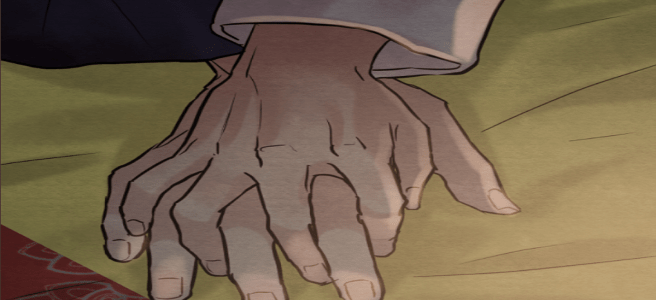
 Yes, when people read juicy deeds, they were already imagining that I would describe a love session like this one
  (chapter 96), because of the expression „to do the deed“:
  (chapter 87) However, the deed is not just related to intercourse, like the manhwaphiles could discover it in chapter 51.
  With „deed“, Deok-Jae was referring to murder and assassination. As you can see, deed has other meanings than sex. Thus it has for synonyms action, accomplishment and reality!! So when I selected this name for the essay, I was thinking of the relationship between action and word. And this connection came to my mind, when Byeonduck released the last picture, because the painter’s action symbolizes a conversation and as such words.
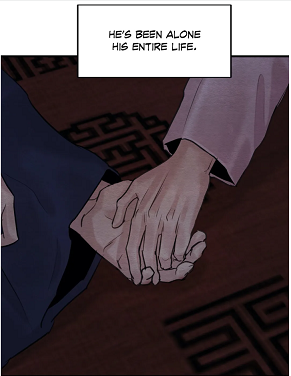 (Chapter 88) By reaching his hand, the painter was letting him know that he was no longer alone in this world. He was not only joining his side, but he was willing to try to understand the main lead.
 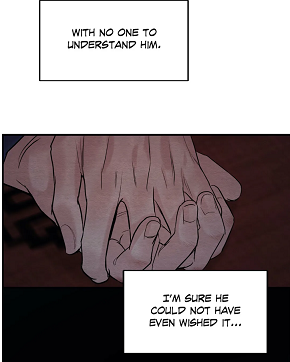 (Chapter 88) This gesture stands in opposition to the situation with Yoon Chang-Hyeon.
 (Chapter 86) During that fateful night, the father neither talked to his son nor looked at him. He even turned his back to him, when the young master attempted to grab his father‘s hanbok. Both scenes from chapter 88 and 86 have two common denominators: an action accompanied with silence!! Yet, what distinguishes them from each other is the nature of the deed, the action. Alliance and empathy versus abandonment and estrangement! This is no coincidence that after reaching his hand, Baek Na-Kyum started confessing his thoughts and emotions to his lover:
 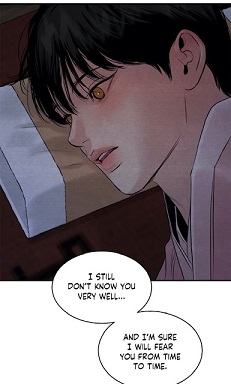 (Chapter 88) As you can sense, the hand gesture delivered a message, but the painter still felt the need to clarify the meaning of his hand. He was willing to remain by his side, but he was still afraid of him. He didn’t want to create a misunderstanding, like for example that he wouldn’t argue with him or that his loyalty was now unconditional or total. That way, Yoon Seungho wouldn’t come to view him as a hypocrite or as dishonest, if an argument would appear. Thus he needed words to explain his position. He would remain by his side and attempt to sympathize with him, but he still felt insecure and had doubts. In other words, his action (his hand gesture) was not truly reflecting his mind and heart.
  (Chapter 88) Later he even asked his lover not to leave his side no matter what.
  (Chapter 88) To conclude, the hand gesture in episode 88 was connected to insecurities and as such fear, yet the painter had shown no hesitation to take his hand. The anxiety was not visible.
 (Chapter 30) His fingers barely grabbed his hand, so when he made the following vow, he was not entirely sincere or better said, truly determined to keep his promise.
  (Chapter 30) The words were not truly in unison with the gesture either. Therefore he once tried to leave the mansion in season 2. When he pledged loyalty, his intention was to protect his teacher. To conclude, fear has always been present, when the painter took Yoon Seungho’s hand. Even in chapter 88, but contrary to the scene in the courtyard, his hand was not shaking.
  (Chapter 82) This explicates why the artist chose to remain by his side, though the lord had broken his promise.
 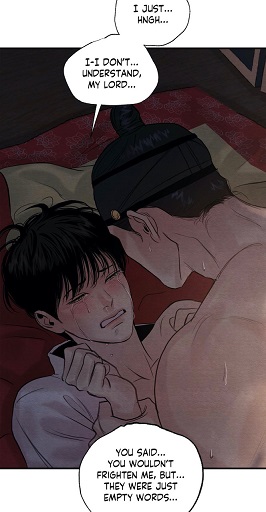 (Chapter 82) On the other hand, in this scene
  (chapter 82), the lord was grabbing his lover’s hand out of fear. He was recognizing his mistake and was trying to beg for his forgiveness, though he couldn’t express it directly. Striking is that during the lord’s flashback, his hand was trembling as well, grabbing onto his partner’s body.
  (Chapter 81) It was, as if Baek Na-Kyum was his rescue buoy, helping him not to be swallowed by the darkness. Thus I came to the conclusion that the protagonists’ hand gestures are all connected to anxiety and pain. 😲 Hence I am deducing that in this scene, Baek Na-Kyum is holding his lover’s hand,
 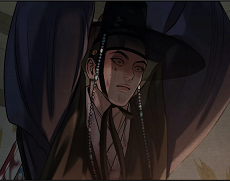 (Chapter 102). This would have definitely scared Baek Na-Kyum, especially Yoon Seungho’s haunted gaze. On the other hand, since the painter had been himself the victim of physical and sexual abuse, the artist can only grasp why the noble reacted that way: fear, anger, despair and heartache. The artist had also been desperate, in pain and scared in the shrine, though this time, he had not screamed for his help. Since the lord had not returned to the mansion, how could he expect him to come to his rescue?
 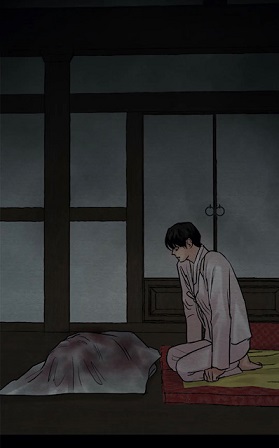 (Chapter 98) Back then, he had been waiting for his lover‘s return and explanations. He wanted to hear him and get his reassurance and comfort. .
 (Chapter 98) The latter couldn’t reassure the painter with his hand contrary to the previous night.
  (chapter 97) Exactly like mentioned above, the painter’s hand gesture is connected to fear and conversation.
 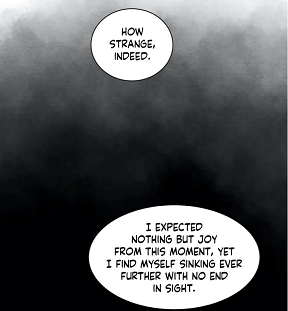 (chapter 97) Striking is that in the gibang, the lord confessed his biggest fear to his future “spouse”. He feared to lose him, though one of his biggest desires had been finally fulfilled. This means that Yoon Seungho felt even more insecure and frightened than before after receiving the artist’s love confession. That’s the reason why I believe that the new picture is standing in opposition to the scene in the gibang. The lord will feel relief after his admission. As a conclusion, the image is announcing
  (Chapter 89) While the painter was sitting on his partner’s lap
 (chapter 89), he was massaging the wounded fingers. It was, as if he was treating his companion’s wound. Note that after his terrible flashback, the painter had avoided to grab his hand out of fear that he might hurt Yoon Seungho even more.
  (Chapter 84) Therefore I conclude that the new panel is an allusion to treatment. While in episode 89, the painter was acting as a doctor, in the new image, the young man is working more like a counselor or psychologist. The aristocrat’s hand might not be wounded in that scene, but this is not the case for his heart and mind. So for me, this scene is connected to mental treatment.
 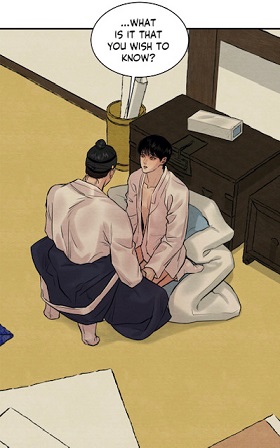 (Chapter 84) However, the lord had refused to open up. This is no coincidence that the author had not created such a picture during that chapter. As the manhwalovers can detect, I believe that in that scene,
 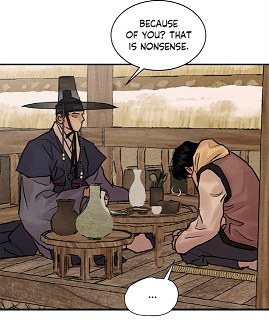 (chapter 75) And because I detected a discrepancy between words and gestures, I recognized the presence of another trick from Byeonduck.✨
 (chapter 91), the latter denied this with the following statement.
  (chapter 91) But when did the painter admit that he liked embracing him? In this panel!
  (chapter 88) That’s the reason why the lord got surprised and moved. As you can see, the author never revealed this whispering to the manhwalovers! The latter had the impression that the lord’s reaction was related to the loving embrace, but it was only partially correct.
  (chapter 62), when the lord had confessed to adore him.
 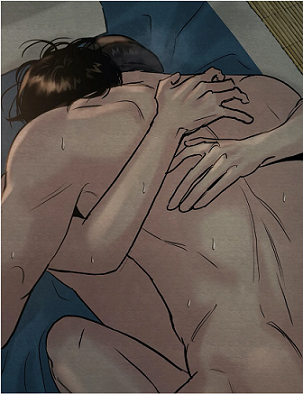 (chapter 62) This explicates why Yoon Seungho was so pained in season 2. He got embraced, but there were no words. Consequently, when the painter vanished during that night, the lord could only perceive the embrace as hypocrisy and fakeness. That’s how I realized that the story is developed on the contradiction between words and actions. But not only that, there exists a strong link between silence and passivity. Thus after the abduction in season 2, Baek Na-Kyum remained more or less silent
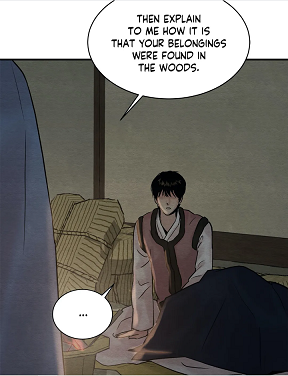 (chapter 62), and as such he was totally passive. He never stood up and begged the lord for his leniency. He stayed there on the bed giving the impression that he was indifferent. That’s the reason why Yoon Seungho got more enraged, for he felt fooled. This means that the absence of words represent inaction… This explains why Yoon Seungho had to corner the main lead in chapter 48
  (chapter 48) to say something, as he had sensed his passivity behind his „submissive attitude“. This is no coincidence that during this night, the painter felt extreme pleasure to the point that he peed. Therefore he could voice his wish to Yoon Seungho during the love session from season 2.
 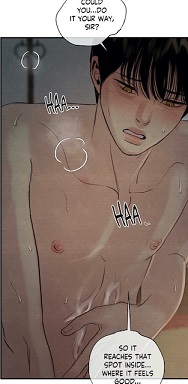 (chapter 73) That’s how the lord concluded that the painter liked riding him, while in reality such a climax had appeared for the first time, when both were facing each other!
  (chapter 49)
  (chapter 4) than season 2. He was encouraged by his future partner to speak up, yet the moment he got heartbroken, he was left speechless. And note that when the lord played his prank in the bedchamber, he never said anything to his father.
 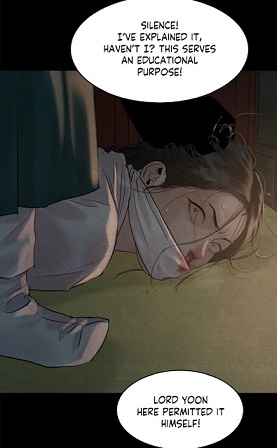 (chapter 86) Yoon Seungho had acted the opposite, he had tried to speak up, but he had been muted. I am also thinking that the young master must have attempted to converse to his father
 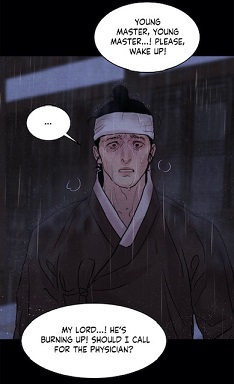 (chapter 77) Silence was considered as an admission. This is no hazard that the butler didn’t take care of his young master. This scene symbolizes the quote “Actions speak louder than words”
  (chapter 77) The butler had betrayed the young master’s trust, for he had not intervened. He should have defended Yoon Seungho, but no in fact he had sided with the elder master Yoon once again. Not only he had not reminded Yoon Chang-Hyeon of his promise, but also he had assisted the ruthless father by giving himself the straw mat beating!
  (chapter 77), but backstabbed him in the shadow. Besides, we shouldn’t forget that a narcissist’s words don’t match their action, because they are pathological liars. And so far, I had portrayed father Yoon (overt), Kim (covert) and even Jung In-Hun (overt) as people suffering from NPD. And I am assuming that the mysterious lord Song is not different from them, though I am suspecting that he must be a covert type.
  (chapter 102) He is no longer following social norms. This could only happen, because the lord had just committed a huge crime. What is the point to respect laws and tradition, when he became a murderer? Any other transgression can only appear as harmless. That’s the reason why I am expecting that Yoon Seungho decides to disregard social norms from that moment on and play a prank on the “villains” of this story.
  (chapter 76)
  (chapter 53)
  (chapter 87), while the same extremity symbolizes the opposite with the villains and antagonists: violence, silence, submission
 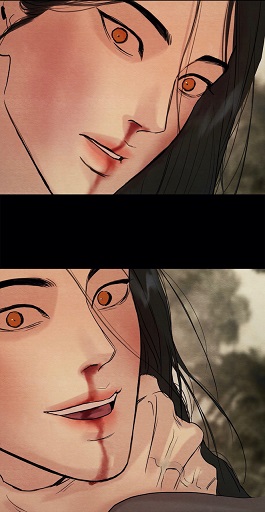 (chapter 83), hatred and resent
  (chapter 97) Here, Heena was hurting her brother, because she wanted him to face “reality”. What caught my attention is that we never saw the father’s hand in chapter 86!
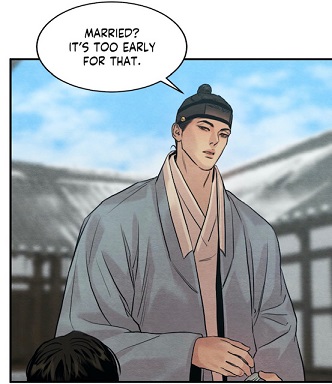 , as Baek Na-Kyum was still viewed as a boy. Moreover, according to social norms, it was impossible, for his lover is a man. Then in front of Yoon Chang-Hyeon, he made fun of his father.
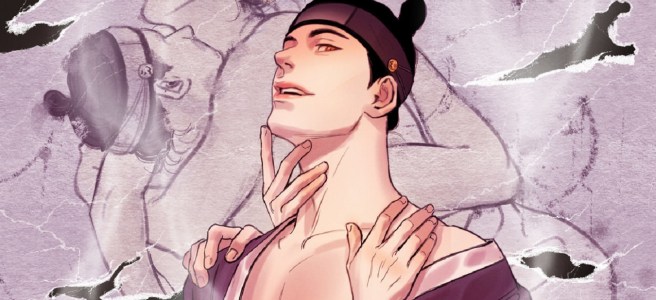
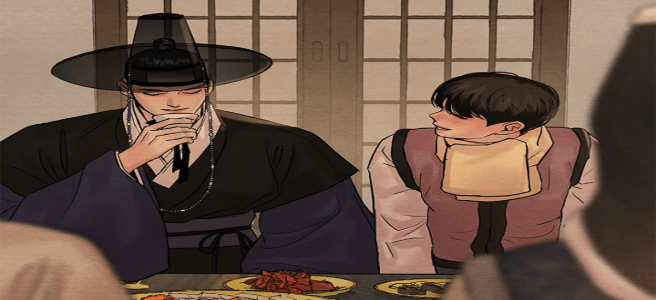
 (chapter1) Or was she simply the noona?
 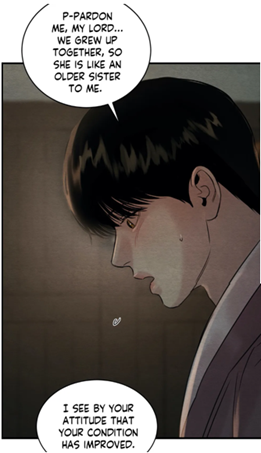 (chapter 70) At some point, I came to realize that Heena had acted as the surrogate mother, but she had never clearly stated that she was the painter’s mother. In other words, his adoption was never official, which explicates why the main lead only considered her as his older sister. This is important, because her ambiguous status can not only generate problems, but also expose her betrayal towards Baek Na-Kyum. Note that in chapter 97, the noona treated Baek Na-Kyum as her “child” who wouldn’t listen to her
  (Chapter 97), while later she implied that they were both equal, for she employed the personal pronoun “us”.
  (chapter 97) On the other hand, she used her seniority as status, when she called him a fool
  (Chapter 97). He lacked experiences, hence he was too naïve, and as such he would trust the protagonist too easily. As you can see, Heena herself had an ambiguous relationship with her brother. Nonetheless, thanks to chapter 93, I got finally a definitive answer about Heena’s true identity. She is indeed the head-kisaeng in the gibang. I realized that the protagonists were invited to stay in Heena’s personal room.
  (Chapter 93) That’s the reason why the seat of the host was empty and why Yoon Seungho didn’t go there. He would have violated social norms, if he had taken her seat.. Moreover, by doing so, he would have revealed that he knew where the woman was. This could have raised questions.
 (Chapter 93) This means that the figures were not sitting in the room shown in the last panel. On the other hand, their voices in the hallway exposed their location. The noonas and Heena were not far away from that door hidden by the veil. That’s how I got aware where Heena’s room was situated. In the last picture, the readers are turning their back from Heena’s study, which is right after the corner. Thus I could recognize the design of the building: ][ In the center, there is this huge hallway with the purple veils, but at its end, on each both sides, there exists a corridor perpendicular to the one with the purple curtains. What the beholder imagined as a door at the end of the hallway,
  (Chapter 68) was in truth a huge window. How do I know this? First, in this scene, the scholar was hiding a huge white vase with red flowers. Hence I deduced that Jung In-Hun couldn’t have walked through that “gate”, it was just a window. Therefore I assumed that he had to walk past the flowers, either turn to the right or the left. Secondly, observe that next to the lantern on the left, there is a small white panel. This means that the view from chapter 93 was more or less taken from the right corner. Moreover, in the next chapter, Heena is not facing this “window”, when she is in the same building.
  (Chapter 69) This time, the white vase with the flowers is standing in front of a wall. That’s how I deduced that Heena had to turn to the left in order to go to the hallway.
  (chapter 69) On the other hand, another element caught my notice. In this picture,
  (chapter 93) which is not present in episode 69.
  (chapter 93) Since I came to the conclusion that Heena’s private room was on the right side after the corner, I deduce that the kisaeng was not on her way to her room. Moreover, since the kisaeng was walking in the same direction than the scholar, I can only conclude that Heena was actually approaching the entrance of the building. I believe that she had turned around, but the author didn’t reveal this. One might argue that it is possible that in chapter 68, the learned sir could have gone with the painter to Heena’s bedroom. However, back then the latter was not the head-kisaeng. We know this due to the presence of a kisaeng standing right behind Yoon Chang-Hyeon during the sexual lesson.
  (chapter 69) It was done on purpose!! She wished that Min would take care of her brother. Under this new light, it becomes comprehensible why the noona has a drop of sweat on her cheek. She is faking ignorance, she is acting, as if she was very protective of her brother. She uses illusion to manipulate people. In reality, she was acting here. One might argue that I am overthinking again. This is not possible, for Heena didn’t know Min at all. Hence she couldn’t manipulate him. The latter had heard of her for the first time in Yoon Seungho’s mansion.
  (chapter 66) But let me ask you this. How could Heena have never met Min, when she was the head-kisaeng? Secondly, just because the servant had never heard of the noona, this doesn’t mean that it was the case for Black Heart. The domestic assumed Black Heart’s ignorance, just like the readers. Moreover, recently I had detected that Heena had been standing in front of a mansion belonging to a noble.
  (chapter 67) diverge. Moreover, Min has been seen in the kisaeng house in so many chapters
  , (chapter 19)
  (chapter 59). Here, I would like to point out that in episode 59, Lee Jihwa had visited the kisaeng house on different occasions, for his hair was slowly growing.
 (chapter 59) Moreover, note that his visits took place during the day and not during the night. Why? It was for privacy and so far, during the day, the manhwaphiles never saw any kisaeng in the gibang.
  (chapter 1)
  (chapter 94) Lee Jihwa was not supposed to meet kisaengs. As you can see, Min had strong connections with the gibang, just like Lee Jihwa. Hence Black Heart should have known Heena, for she was the head-kisaeng. But I would like to bring up a more conclusive proof for this interpretation.
  (chapter 19) This image was showing us that Yoon Seungho was visiting the gibang. However, pay attention to the pattern of the doors in the last picture and the next:
  (chapter 19) The motive diverges, it looks like the one from the hallway with the purple veils. This means that the party was not taking place in the room shown in the former picture. What caught my notice is the presence of the white vase with the red flowers in front of the building. It was present in each scene taking place in the gibang.
  (chapter 93) For me, the red flowers symbolize Heena noona. This explicates why during the painter’s dream, the flowers were not present.
  (chapter 19) Striking is that the kisaeng had a similar hair dress than Heena, This is no coincidence. She was acting as the head-kisaeng. The manhwalovers will certainly remember that only two kisaengs had no braided bun or braids: this one
  and Heena. Look at all the others:
  (chapter 51)
  (chapter 93)
  (chapter 93)
  (chapter 95) The extravagant hair dress was exposing the kisaeng’s status. And now, you comprehend why the other noona explained the disappearance of Heena during that night.
  (chapter 19) But how could she sense that the noble was in a good mood? The latter was silent and not even smiling.
  (chapter 19) How could she claim this? In reality she was actually spying on him. Heena had no idea why the lord would come to the gibang, especially after suffering there so much. The kisaeng’s task was to dig up information. This visitation must have bothered the head-kisaeng.
  (chapter 99) He was wearing a veiled hat, yet in chapter 69, this was not the case.
  (chapter 88)
  (chapter 99) He was implying that they knew each other for a long time! The irony is that the manhwaphiles had the impression that their relationship was recent, and his cynical tone contributed to it. Secondly, he called her Heena, a sign that they were close to each other. Note that Lee Jihwa never mentioned her name.
  (chapter 99) His words even insinuate that Black Heart had just given the following order. The red-haired master should just fetch a kisaeng and in my opinion, Heena was waiting for Lee Jihwa’s arrival to leave the gibang. According to his words, he had no idea about the kisaeng’s identity. But is it true? I have my doubts now, and this for two reasons. Why would he ask about her identity, when he already knows that she is a kisaeng? The drop of sweat on his face is an indication that he is lying. But the problem is to determine if the deception is only referring to “I heard not a word” and to all the questions. Let’s not forget that he knew about Min’s initial intention. The moment Lee Jihwa arrived in the gibang, she just followed him. That way, they would avoid to attract attention, and with her new hair dress
  (chapter 93), the gibang had lost its “leader”. This explains why this noona as her right-hand had to explain the absence of the owner.
  (chapter 93) To conclude, the surrogate mother and the patriarch made a similar experience in season 3. Both got deceived by manipulations and in both cases, letters played a huge role.
  (chapter 94), definitely thinking that he was doing the right thing. He thought that he could never get into trouble. But this is just a deception in my opinion. As for the former head-kisaeng, she has to run away, for she did something wrong! In the past and in the present! She definitely plotted, and she is aware that her actions will have terrible repercussions.
  (chapter 102) That’s why I come to the deduction that her murder will be questioned. Why? There is no blood contrary to the bloodbath in the shaman’s house and there is no corpse!! Since Black Heart used different corpses in order to deceive Heena and the couple, there is no ambiguity that the head-kisaeng’s curtains will be doubted. Striking is that Heena staged her death out of cowardice and selfishness, while Yoon Seungho made the opposite decision. He was resolute to commit suicide in order to follow his lover in his death. During that night, Heena and Yoon Seungho lost their “home”, but at the end, he found his true home: the painters embrace.
  (chapter 96)
  (chapter 52) It is because Black Heart knew Heena! I even believe that he had already met the scholar. Note that the man with the black hanbok was repeating the rumors about the learned sir. And the other questioned the main lead’s action exposing that he had never heard about this grapevine before. Hence I am deducing that the one spreading this rumor could only be MIN!! That’s the reason why he just said this
 (chapter 52) That means that the noble knew the teacher in the end. Therefore it is no coincidence that Min was aware where the learned sir lived!!
  (chapter 83) And now, if you connect the two scenes
  (chapter 94)
  (chapter 97)
  (chapter 97)
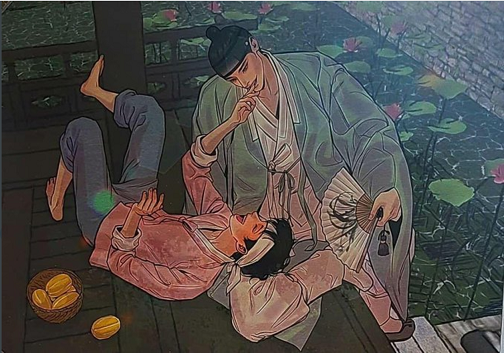


 The painter’s mouth is wide open. This implies that the painter is laughing! In other words, these pictures are showing a happy Baek Na-Kyum. The laughter is not just a symbol for joy, but also an indicator for social bonding, cooperation and as such social acceptance. Note that in all these scenes, the painter is not laughing alone. He is either facing his lover and the “witnesses” of his marriage.
 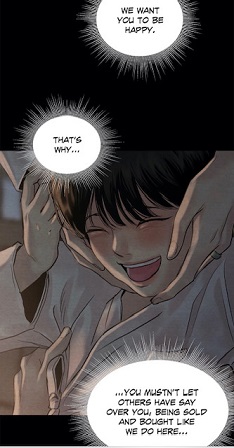 (chapter 87) Naturally, this vision reflected the past due to the presence of the noonas. But if you read my previous analysis, you are aware that the painter’s nocturne visions are always composed of three elements: memory, nightmare and desires which will come true at some point. The readers will certainly recall the painter’s wish in the bedchamber:
  (chapter 81) However, here again, this was not real, for he was imagining it. He had restrained himself, for he felt that his actual life was like an illusion. It was too good to be true. Thus I conclude that in both visions, the painter wished to laugh and as such to be happy. And this observation led me to the following deduction. In season 4, the manhwalovers will witness Baek Na-Kyum’s laughter. But this doesn’t end here. All the quoted pictures share another similarity which is the absence of the sound!! There is no HA, HA, HA…. Thus I deduce that in season 4, the readers will even hear Baek Na-Kyum’s laugh!! 🤣
 (chapter 1). His mouth was exposing his emotions: happiness. It was, as if he was laughing internally out of joy. Then in the pavilion, the author let us hear Yoon Seungho’s laugh, while we couldn’t see his face.
  (chapter 25) As you can see, Yoon Seungho was not truly seen “laughing”. This is what we saw right after:
  (chapter 25) Either the sound was missing, or the readers couldn’t see his open mouth. Then in chapter 51, Byeonduck created an ambiguous situation.
 (chapter 51) The purpose of this trick was to deceive the painter, Yoon Seungho would no longer care for him. However, this trick didn’t work out like imagined due to the maid’s words. She wished that he would remain in the mansion. But let’s return our attention to the laugher in this panel. I would even add that there was no real social bounding, for Black Heart was enjoying about Yoon Seungho’s misery and loss. He believed that the painter had died. And if it was Yoon Seungho who laughed, then this was to mask his pain. Then in chapter 70, he was caught laughing. And observe that the author separated the sound from the face:
  (chapter 70) Yoon Seungho would even hide his face from the painter, as he was looking down. His laugh was barely perceptible, and when the author revealed his face, Yoon Seungho used his hand to mask his smile.
  (chapter 70) It was, as if Yoon Seungho was not allowed to smile or to laugh at all. I would even go so far to say that laughers were actually forbidden in the mansion. Striking is that in season 3, for the first time, we could see and hear the lord’s laughter contrary to season 1 and 2..
  (chapter 78) This illustrates the progression of the lord’s healing. He was getting happier, and he would interact more and more with people. Yet, in this scene, the lord’s laughter was not loud contrary to the one in the pavilion. Then in the gibang, his laugh was also fake, for he was masking his pain.
  (chapter 93) Thus the author didn’t let us see his mouth once again. But the painter could see the difference between a sincere laughter and a fake one, as he had already heard and see the lord’s true laugher! Because the lord laughed in all 3 seasons, I could only assume the painter’s laughing in season 4. But I have another proof for this prediction. In season 3, the painter’s laughter was shown in visions (chapter 81, 87) or through the testimony of the maid.
  (chapter 91) As a conclusion, expect a picture with Baek Na-Kyum ‘s laughter reflecting his happiness and sincerity. And this is definitely related to his marriage:
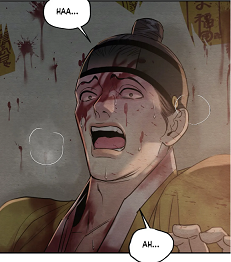 (chapter 102) On the other hand, Black Heart’s mouth remained wide open, but it slowly exposed his true emotions. As the manhwalovers can detect, the sound “Haa,” is not expressing joy or happiness, but huge anxieties. Thus I couldn’t help myself thinking that in season 4, the painter’s laughter will be reflected with the heavy breathing from fear and pain. Someone will have a mouth wide open out of fear!! And this connection was already present in chapter 1:
  (chapter 1) Baek Na-Kyum and Yoon Seungho had both flashbacks
  (chapter 66), while Min was smiling. He was internally laughing, for it found it entertaining. [For more read the essay HAHA Flashbacks”] And this fear was exposed by the sound: HAA
  (chapter 99) But this doesn’t end here.
  (chapter 84), but in the gibang, he dropped this habit for good:
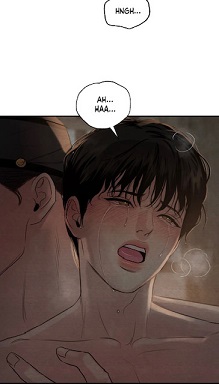 (chapter 96) This connection between pain, pleasure and laughter appeared in chapter 91, as the story is based on the following rule: there is always a reflection within the same episode. I would like the manhwaphiles to observe this image:
  (chapter 91) Here, the lord had changed position provoking pleasure to the artist. Before, the maid had laughed so loudly in order to get the painter’s attention.
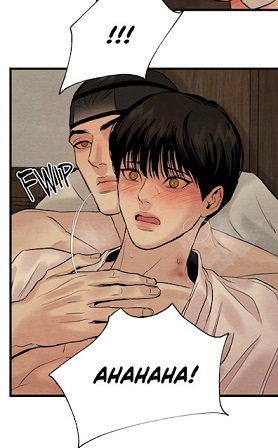 (chapter 91) According to my interpretation, she hoped that Baek Na-Kyum would discover the existence of the kisaeng’s letters so that the painter would feel betrayed by Yoon Seungho. He had ordered to hide the correspondence. But for that, she needed to explain the reason for her loud laughter. Hence she revealed the incident with the pervert. The irony is that due to his pleasure and embarrassment, Baek Na-Kyum didn’t pay attention to her words. He already felt ashamed, after the servant had exposed the situation in the bathroom.
  (chapter 91) Thus he avoided his lover’s gaze. And note that in chapter 25, the lord laughed, before he raped the painter.
 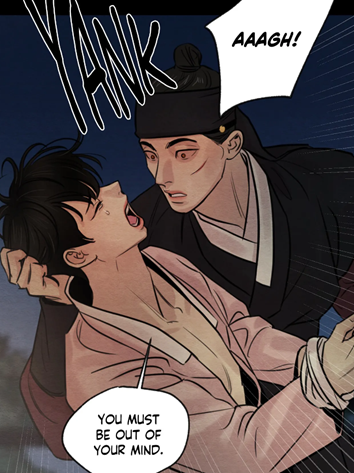 (chapter 25) This episode exposes the connection between laugh and pain. Here, you can see that the painter is also screaming out of pain, the negative reflection of Yoon Seungho’s laugh. Baek Na-Kyum’s mouth was wide open. When people are tortured, they will usually scream their pain and fear.
 (chapter 77)
 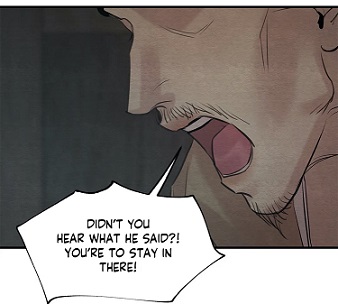 (chapter 86)
  (chapter 98) In the last scene, Heena was sort of “punished”, when she confessed to the main lead. That’s the reason why I believe that in season 4, we will see people screaming out of pain and fear. It can be in the present or in the past. The interrogation and torture should be exposed in my eyes contrary to chapter 37.
 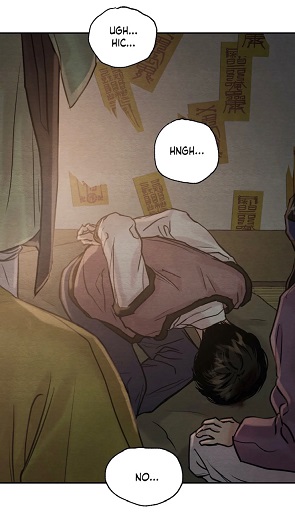 (chapter 99) Despite the “torture”, he still claimed that Yoon Seungho was no murderer. Thus I conclude that in the next season, it should be the reverse. Yoon Seungho has to make a new leap of faith believing in the painter’s innocence and purity. Hence I am expecting an arrest in season 4. Finally, we shouldn’t overlook that each word Yoon Seungho said became the truth, so when he stated this
  (chapter 65) As you can imagine, I am already sensing a bad ending for Heena and Kim. Striking is that in this scene, while the noona was seen constantly with her mouth wide open, yelling at the host and calling for her brother, the latter was having a flashback. This is no coincidence, especially if you recall that Heena was connected to Baek Na-Kyum’s tears:
  (chapter 68)
  On the other hand, when these persons got tortured, they closed their eyes out of agony,
 Bebebisous33s' analyses in K-Dramaland and Manhwas