

Please support the authors by reading Manhwas on the official websites. This is where you can read the Manhwa: Jinx But be aware that the Manhwa is a mature Yaoi, which means, it is about homosexuality with explicit scenes. Here is the link of the table of contents about Jinx. Here is the link where you can find the table of contents of analyzed Manhwas. Here are the links, if you are interested in the first work from Mingwa, BJ Alex, and the 2 previous essays about Jinx The Director and Me (Part 2) and Following the Teddy Bear (part 1)
It would be great if you could make some donations/sponsoring: Ko-fi.com/bebebisous33 That way, you can support me with “coffee” so that I have the energy to keep examining Manhwas. Besides, I need to cover up the expenses for this blog.

I have to admit that chapter 72 contains so much insight that the essay “Following the Teddy Bear” didn’t contain all my observations, yet after writing almost 9000 words, I decided to close it. It was definitely getting too long. The problem is that today Mingwa is releasing a new episode and I wanted to share all my thoughts before we get new information.
Questioning the Teddy Bear’s past
In the first part, I questioned whether the champion had truly been raised only in poverty — or if there were traces of another world in his past, a hidden legacy that went beyond mere survival. At the time, I focused on the presence of the wrapped books in his childhood environment 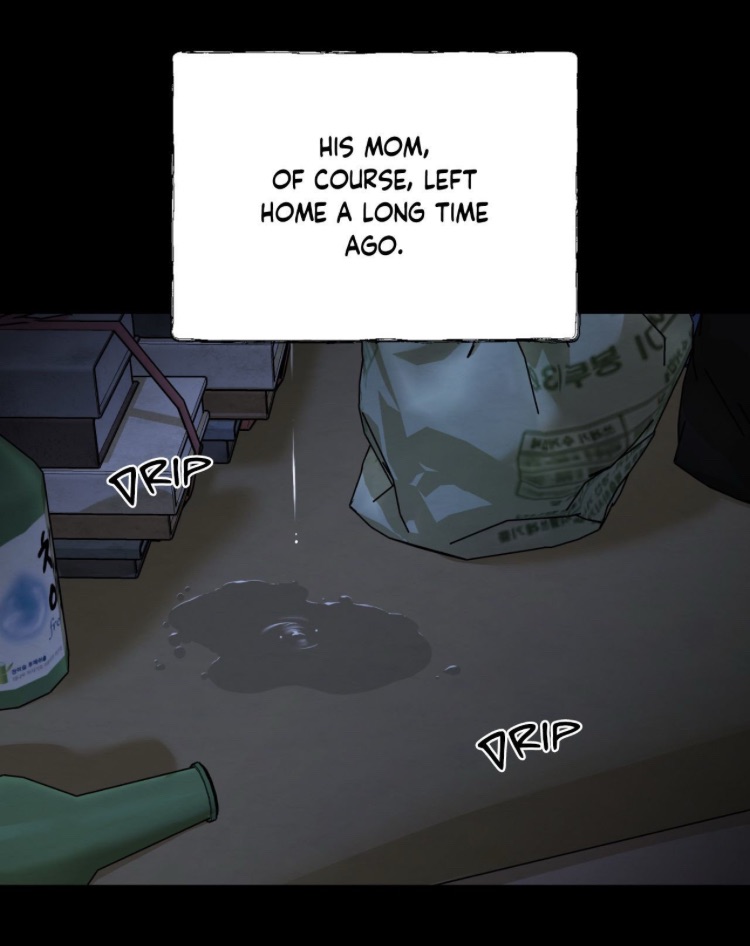 (chapter 72) — subtle symbols of education, possibility, and restraint, hinting at something more structured, perhaps even noble, behind his harsh upbringing.
But there is another reason to doubt the simplicity of his origin story, and it appears quietly in chapter 27:  (chapter 27) Where and how did he learn swimming? Moreover, observe that he connected it to relaxation and fun. “This feels good”. This contrasts so much to the interaction between Hwang Byungchul and the little boy with the teddy bear.
  (Chapter 72) The man doesn’t know that the athlete can swim, he only knows the boxer, as he was only able to see him on TV.
  (chapter 71) Interesting is that Jinxphiles followed Kim Dan’s school career
 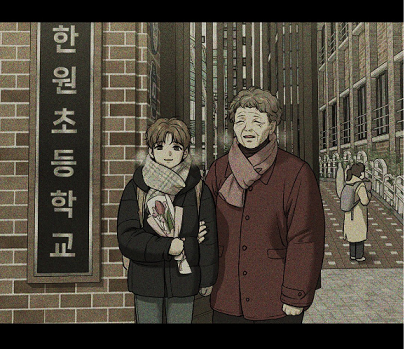 (chapter 47)
  (chapter 47), yet the latter can not swim!
  (Chapter 47)
Treading Water: The Symbolism of Near-Drowning
This means that doc Dan never received swimming lessons at school. Here I would like to thank my friend @Rin_de_eegana 😘🙏 for her great help. She brought my attention to the fact that in Japan swimming became a core part of school education after the Shiun Maru disaster in 1955, where many schoolchildren drowned. The government responded by installing pools and integrating swimming into physical education to prevent such tragedies. South Korea, on the other hand, only made survival swimming mandatory after the Sewol ferry disaster in 2014.
The South Korean ferry MV Sewol capsized off the southwestern coast of the peninsula on the morning of April 16, 2014. Sewol’s departure from the port of Incheon the night before had been delayed by nearly two-and-a-half hours, due to a thick, persistent fog. Sewol commenced its journey shortly after the low visibility warning was lifted; it was the only commercial vessel to set sail from the port that evening. Of the 443 passengers and 33 crew members on board, 304 lost their lives in the sinking. 250 of the victims were students from Danwon High School in Ansan, on their second-year field trip to Jeju Island.
As evidence of gross negligence, dereliction of duty, and breach of regulations piled up, citizens took to the streets out of grief and rage. The South Korean government and subsidiary bodies’ failure to respond as a “control tower” in a moment of acute crisis had already made the authorities a target of public censure; their ensuing attempts to suppress criticism, including arrests of peaceful protesters, tipped the scales.
The Sewol disaster ended up laying a crucial foundation for the first-ever impeachment of a democratically elected president in South Korea. When then-President Park Geun-hye’s flagrant scandal involving her confidante came to light in late 2016, leading to the largest mobilizations South Korea had seen since the Democratic Uprising in 1987, the Sewol families and allied citizens had already been holding weekly protests for months, demanding truth and accountability for the disaster from the administration. Quoted from https://thediplomat.com/2024/04/how-the-sewol-sinking-changed-south-korea/
By 2019, children from grades 3 to 6 were supposed to receive survival swim training, and by 2020, this extended to grades 1 through 6. But as often happens with policy, the reality didn’t match the intention — many schools lacked pools, instructors, or resources. In poorer regions, survival swimming remained an ideal on paper rather than a guaranteed experience.
In fact, only 122 out of 6,300 elementary schools nationwide have swimming pools. Although there are swimming pools where students can receive survival swimming, such as the education office’s operating facilities, about 2.5 million elementary school students nationwide are far from learning to swim. For this reason, more and more schools are replacing them with VR (virtual reality) classes without going to swimming pools. Experts point out that survival swimming education needs to be improved qualitatively. In Japan, the rate of securing swimming pools in public elementary, middle, and high schools is 60%. In addition, first graders in elementary school teach how to put their faces in the water for the first time. Overall qualitative improvements such as survival swimming education for the first and second graders of elementary schools in Korea, which focuses on theoretical classes, are needed. Quoted from https://www.mk.co.kr/en/society/11369658?utm_source=chatgpt.com
In episode 72, we briefly see the date May 16th  (chapter 72), though the year is deliberately blurred. At first glance, it’s a simple timestamp anchoring the timeline of a major fight. It took place one month before his birthday. But May 16th also falls exactly one month after April 16th, the day of the Sewol ferry disaster. This connection may not be overt, but it echoes thematically in the physical therapist’s life: Kim Dan, born too early to benefit from those reforms, never learned how to swim. I will explain more further below.
Unveiling Joo Jaekyung’s secret
Since Joo Jaekyung’s childhood is more connected to the gym and not to the school, it implies that back then, school didn’t play a huge role in his life.  (Chapter 72) Nevertheless, with this panel, Mingwa indicates that the protagonist was visiting the Elementary school. The neighborhood he grew up in — as described by Hwang Byungchul — was “cutthroat.”
 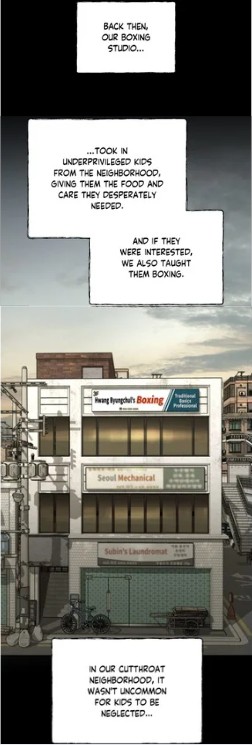 (Chapter 72) In such a place, swimming lessons would have been a luxury. Thus I deduce that the champion likely never learned to swim at school. The public school system there likely didn’t have the funds or infrastructure to build pools or train children in water safety. And yet, he did learn — and he swims confidently (chapter 27). He has no problem to jump onto a boat or to go into the ocean in order to save Kim Dan from drowning.
 (Chapter 60) He even knows how to give first aid too.
 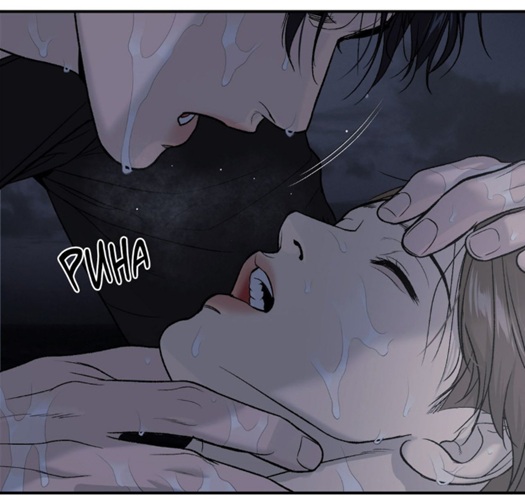 (Chapter 60) These aren’t casual skills. They’re not the product of school curriculum or street wisdom, especially not in a neighborhood described as “cutthroat.” These are taught skills — and not by someone who saw Jaekyung merely as a fighter. Swimming and first aid reflect something else entirely: a commitment to preparedness, not just for survival, but for helping others.
This implies that someone in Jaekyung’s past — perhaps a doctor, nurse, or medically trained adult — took the time to teach him, not to toughen him, but to give him tools to protect and support others. In contrast to the ideology of “fight your way up,” 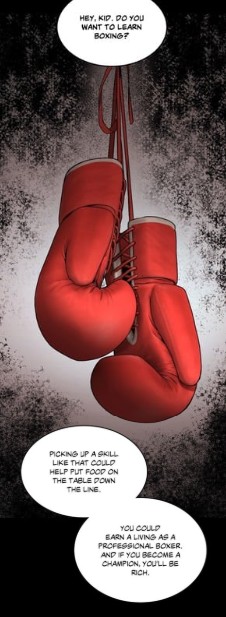 (chapter 72) this unnamed figure offered a radically different message: you have value not just in your fists, but in your capacity to protect life. And contrary to Hwang Byungchul, this person stands for “shadow and humbleness” and not “spotlight or wealth”!
The act of learning first aid is not about aggression — it is a selfless skill, rooted in presence of mind and compassion. And yet it also builds self-reliance: it teaches a person to stay calm under pressure, to act precisely when others freeze.  (Chapter 27) That Jaekyung carries this knowledge — and uses it without hesitation — reveals a deeper emotional structure. (chapter 60) Someone in his past gave him a moment of true help: not transactional, not conditional, not tied to victory — but human.
This quietly counters the narrative set by Hwang Byungchul, who taught Jaekyung how to fight, but never how to care. The presence of this unknown mentor—someone who offered real, dignified support—suggests that not all of Jaekyung’s emotional development came from brutality. Part of it came from someone who believed he could be more than a fighter and a weapon. After this realization, it dawned on me that this could be Cheolmin hyung, the mysterious doctor.  (Chapter 13) His vocabulary revolves around water: “pond”, “fish”! Besides, I have already connected to him Poseidon, the god of the ocean. Moreover, this man is strongly intertwined with fun, a notion that doesn’t belong in Hwang Byungchul’s world! And now, you understand why this man could touch Joo Jaekyung’s shoulder
  (chapter 13) and even make jokes in front of him.
  (Chapter 13) He knew about the existence of the Teddy Bear inside the champion. And is it a coincidence that both men have the same name “Chul=Cheol”, though the order diverges: Cheolmin versus Byungchul? And both are connected to the color “green”.
  (chapter 72)
By contrast, Kim Dan never learned to swim — and even imagined that he would drown in the swimming pool. (Chapter 27) This small but powerful moment reveals a deeper social reality. He did go to school, and he lived in a more stable home environment with his grandmother. But here is the thing. Kim Dan is already 29 years old which means that he was born in the 90’s. It places him at the very edge of a generation caught between silence and reform. When the Sewol ferry disaster occurred on April 16, 2014, Dan was already too old to be involved with the reform. He belongs to the group of young adults for whom no institutional safety net existed. The survival swimming curriculum that was introduced in the aftermath of the tragedy — starting around 2019 for elementary students — came far too late for him.
This is why he never learned to swim. It wasn’t just due to poverty or a lack of parental support. It was the product of structural and societal abandonment which is also reflected in his unconscious suicidal attempt.  (chapter 60) There was no witness, no coast guard, no institutional figure involved in his rescue. He was alone, only saved by one person. His generation was expected to take responsibility — to succeed, to repay debts, to endure hardship — but they were given no tools to survive when crisis struck. They were neither protected nor prepared.
Dan’s near-drowning in the story isn’t just a dramatic beat — it’s a reflection of this historical failure. He’s not weak or helpless. He’s simply someone no one thought to train, someone who slipped through the cracks of a society, because he was taught to only rely on his grandmother — a woman who, in the end, couldn’t truly protect him either. Why? It is because she just relies on one person as well. By not intervening against the bullies, she contributed to the protagonist’s isolation. Hence both were forced to rely on each other for years! The fact that he’s now a healthcare professional only deepens the irony. He is helping others breathe while no one taught him how to float.
The swimming scene reveals an unspoken truth about their pasts. The child Jaekyung, though bruised and abandoned, was prepared like a predator — taught to master his body and environment. (chapter 72) Dan, who grew up in silence and guilt, was taught only to endure and adapt — not to assert himself or survive in a crisis. What the text doesn’t show directly — how they each learned (or didn’t learn) to swim — is part of Jinx’s deeper architecture. To see it, we must use the third eye: the intuitive sense that reads meaning between the panels.
Swimming here becomes symbolic. It represents their upbringing, their visibility, and the kind of support they received. One was trained, perhaps even watched over. The other was forgotten, floating just below the threshold of recognition — until someone finally pulled him out. According to me, doc Dan’s true personality is the duck.  (chapter 65) So teaching him how to swim will help him to reconnect with his true self and to find a meaning to his life.
And before closing this short second part, I would like to point out this observation:  (chapter 14) This fight took place in April… the same month than the Sewol ferry tragedy. And the color of the poster is once again green. Is it a coincidence? I have my doubt here. And what did Randy Booker say to his opponent? He called him a baby
 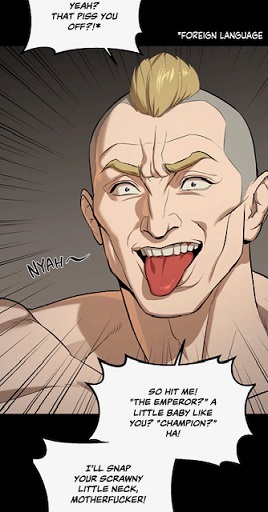 (chapter 14) which led the protagonist to seek refuge in the bathroom, but here he couldn’t relax.
  (chapter 14) That’s how I realized that water is an element linked to childhood and as such motherhood!
  (chapter 72) Hence water was leaking from the ceiling at the boy’s feet: drip, drip… We need to ask ourselves why Joo Jaekyung learned how to swim in the end.
  (chapter 72) I have the impression that it is related to his mother… she could have died by drowning as well or the woman is connected to this sport. And the champion learned it as a legacy, a way to grieve, to cope with his loss. This would explain why he came to neglect swimming in the long run.
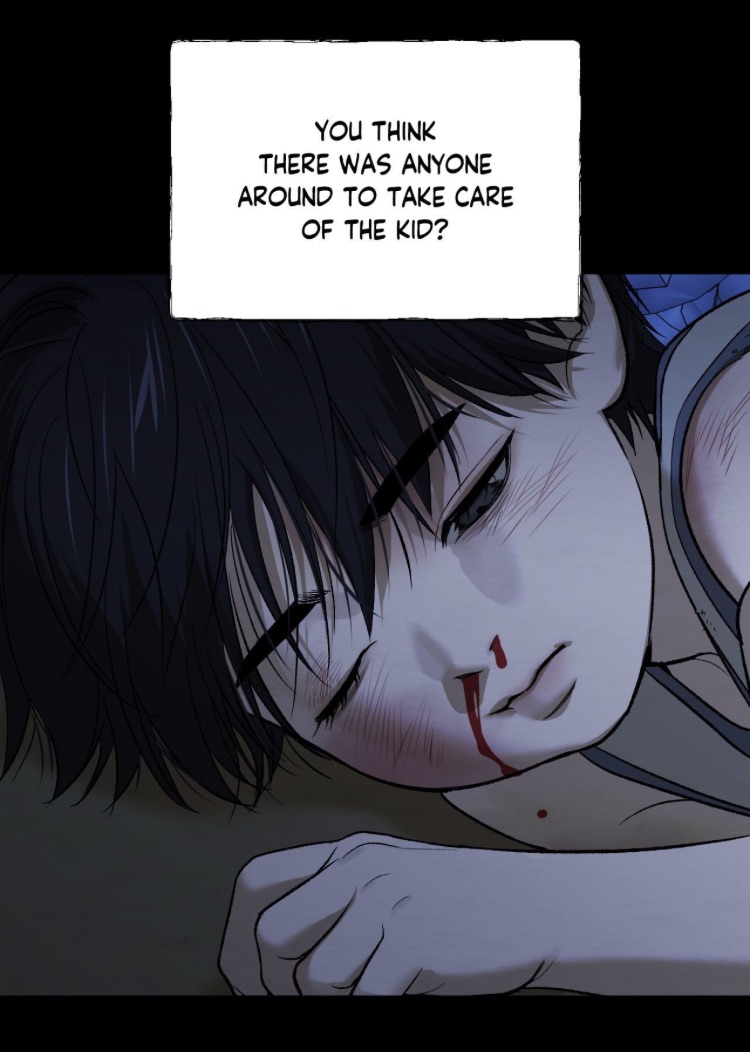
In the first part, I portrayed the mother in a relative negative light. Nevertheless, like mentioned before, we should never simplify life and persons. Humans are living beings, they are full of contradictions. The woman could have been selfish, but she could have been a good worker. I criticized Park Namwook for the way he treats the protagonist. Yet it is clear that he is a wonderful father and husband. The proof is that he has 3 children and they are all smiling. 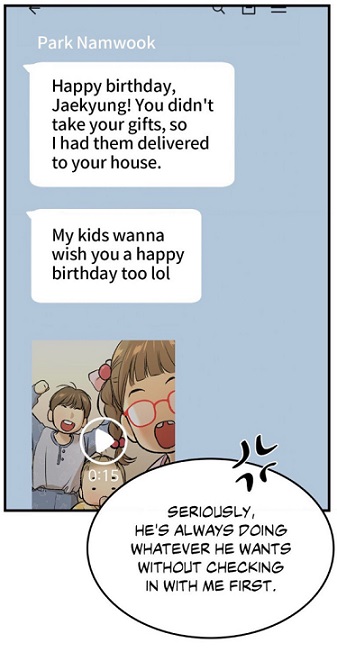 (chapter 45) And this brings me to my final thought: Kim Dan had to meet Hwang Byungchul for an important reason: to learn how to survive on his own, as he is still depressive. He is lectured how to become independent and how to find a real goal in his life. By confessing the terrible youth about the Emperor, the physical therapist gets to hear that he wasn’t the only one abandoned and in pain!!
  (chapter 72)
  (chapter 56) Moreover, he gets the opportunity to understand why “usefulness” became so important in the MMA fighter’s life. Through this confession, the other teddy bear gets to perceive that he has so many things in common with his fated partner. Both experienced abandonment, loss, poverty, bullying and only worked in their life too! They never got the opportunity to enjoy life to the fullest.
PS: And now, you know why I wanted to write the second part as quickly as possible, as 73 should be connected to episode 13 and 37!
Feel free to comment. If you have any suggestion for topics or Manhwa, feel free to ask. If you enjoyed reading it, retweet it or push the button like. My Reddit-Instagram-Twitter-Tumblr account is: @bebebisous33. Thanks for reading and for the support, particularly, I would like to thank all the new followers and people recommending my blog.
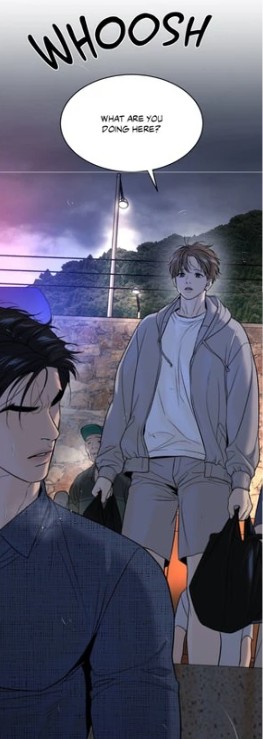 (Chapter 69) from the physical therapist is more than a startled greeting — it marks a critical shift in the psychological and emotional trajectory of both Kim Dan and Joo Jaekyung. Standing at the dock, doc Dan, still recovering from his depression and trauma of the switched spray incident, sees the champion not as an invincible athlete, but as someone equally unmoored. He is surprised and confused by such a behavior. Why would he act that way? Hence the author added right after this image:
  (chapter 69) Striking is that the champion has a similar reaction. He never expected that he had misjudged his fated partner. Both characters are forced to face their own prejudices and bias.
  (Chapter 69) This moment is less about resolution and more about recognition: two men, shaped by different paths of burnout, collide again — but this time not as patient and caregiver, predator and prey, but as human beings in crisis.
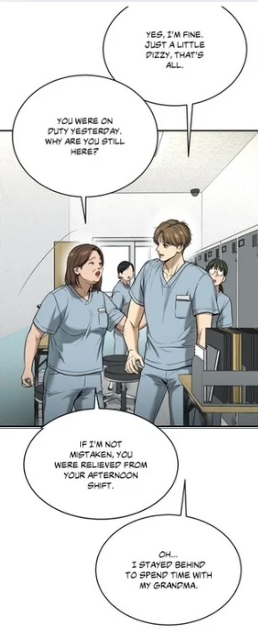 (chapter 57) that go unnoticed to dealing with the emotional numbness of detachment, Kim Dan begins to resemble the article’s description of someone silently breaking down.
  (Chapter 59) Although he didn’t face difficult patients at the hospice
 (chapter 57), he approaches his work like a robot, emotionally disconnected from those in his care. The burnout is not only shaped by the hospital environment — it’s also deeply tied to his role with Joo Jaekyung. The champion became, in many ways, his most demanding patient
 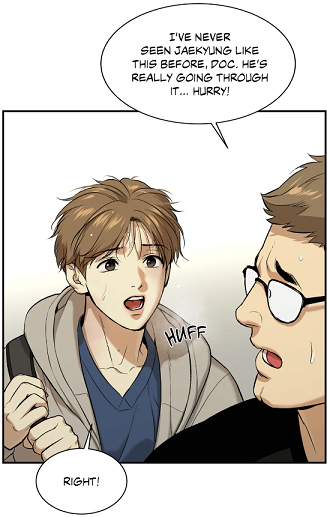 (Chapter 14), with unrealistic expectations
  – chapter 41 (such as pushing for a premature return to the ring), and an emotional climate of pressure and perfectionism
  f (chapter 45) rom superiors, he fits the article’s description of someone burdened by a toxic professional environment. More importantly, in episode 57, a nurse casually mentions that he might be suffering from burnout.
 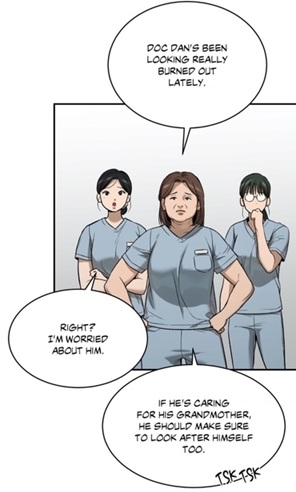 (Chapter 57) This offhand remark reveals that within the medical setting, the symptoms are visible to trained observers. And yet, the insight never reached the “hamster” or the “wolf.”
 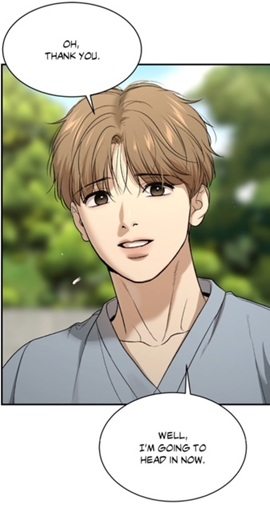 (chapter 56) and isolates himself emotionally. Therefore he doesn’t engage in a conversation with the nurses.
 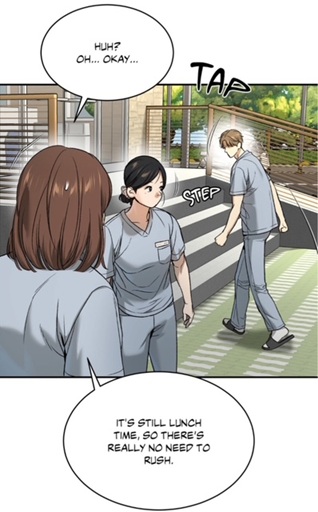 (Chapter 56) No wonder why the readers still don’t know the names of the three “angels in blue”’. Their presence is functional, but remains impersonal. They remain silent observants.
  (Chapter 57) Likewise, Jaekyung — despite not being in healthcare — he fits the article’s description of someone burdened by a toxic professional environment.
  (Chapter 27) He operates in an industry with crushing expectations, where performance is equated with survival.
  (Chapter 29) That’s why he doesn’t allow himself to rest.
  (chapter 49), or that in the aftermath of the suspicious match, he blames him
 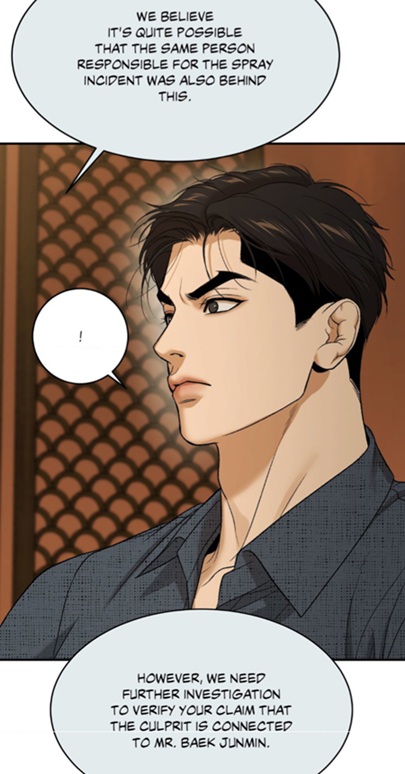 (chapter 69) and avoids speaking with Shotgun altogether. Instead of engaging in conversation, he contacts MFC — preferring institutional action over personal interaction.
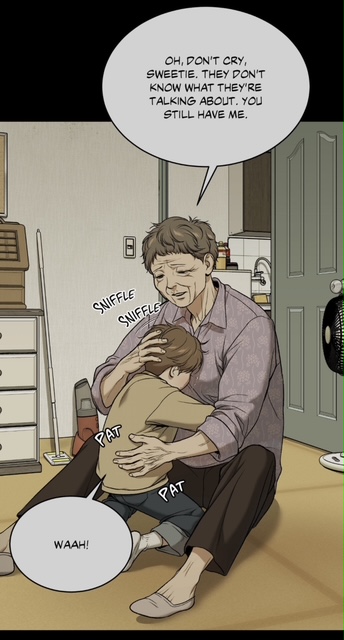 (Chapter 57) Since people don’t know them, they can not trust their judgement and perception. Both navigate high-stakes worlds that punish vulnerability and reward detachment. And both, when overwhelmed, retreat from human relationships rather than reaching out. They are, in different costumes, performing the same coping script — one that the article identifies as characteristic of fixed mindsets operating under systemic pressure and emotional isolation.
  (chapter 19) and relational isolation all echo the article’s diagnosis:
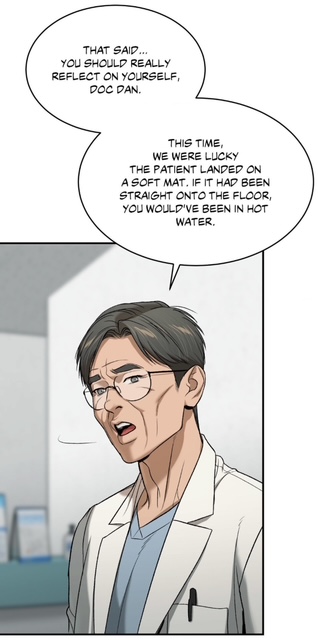 (chapter 59) — and any deviation from it is interpreted as personal failure. Here, it’s important that the hospice took advantage from the overworked protagonist. No one paid attention to the double shift. (Naturally, I am not saying that the main lead is blameless either). For Kim Dan, the patient’s fall in episode 59
  (chapter 59) and the sabotage incident destroyed his self-perception as “doctor” and “helper”.
 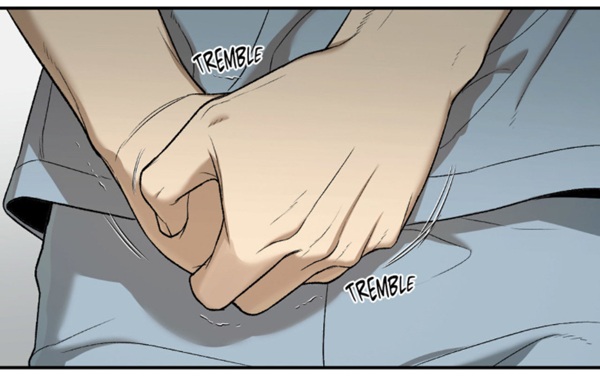 (Chapter 59) This is reflected in the image where the author zoomed on the “main lead’s” hands or when he is holding the dead puppy.
 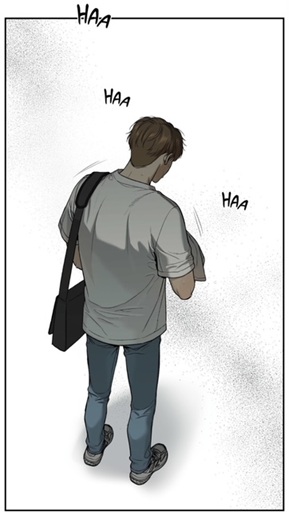 (Chapter 59) The hands have become the symbol of his powerlessness. For the wolf, the tie in his last match is perceived not as resilience, but as loss.
 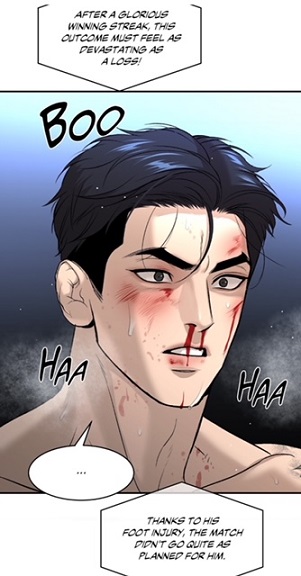 (Chapter 51) Neither of them has been taught to see difficulty as an invitation to adapt. They both cling to a fixed mindset — until crisis breaks the pattern.
 (Chapter 64) This deeper entanglement explains why Dan ultimately rejects the celebrity.
 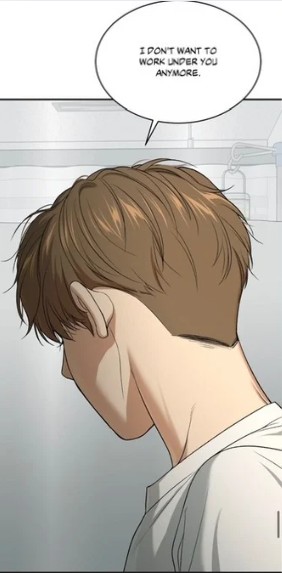 (Chapter 60) Though Dan has long suffered from low self-esteem, he has never questioned his sacrificial identity. It is as if he were destined — or conditioned — to care for others without regard for himself.
  (Chapter 29) He sees selflessness not as a virtue but as a default mode of survival. This explicates why he blames himself for the puppy’s death. Observe how Mingwa implied the relevance of the doctor’s hands while he was holding the poor puppy.
  (Chapter 1) — a way to repay debts. And it is the same, when he accepts his contract with the wolf.
  (Chapter 6) His grandmother reinforces this belief by reducing his worth to his earning capacity. This mindset is plainly illustrated in two key moments. In the first, she expresses her gratitude to the champion, because he gave him “a roof over his head and a salary.”
  (Chapter 65) These words reveal what truly matters to her: material provision and financial compensation. She does not seem to register the emotional toll the job may be taking on Dan, nor does she question the ethics of the contract or his living conditions. What she values is that her grandson is being paid and housed — signs of visible, quantifiable success.
 (chapter 65) Dan has “only lived for her” so far, and that he surely has a “ton of things he wants to accomplish” now. This comment, which at first sounds like encouragement, in fact exposes her own worldview: a life worth living is one centered on achievement, productivity, and external validation. The idea of simply resting, recovering, or living quietly does not even occur to her. When she urges that Dan should go back to Seoul to pursue his “best life,”
 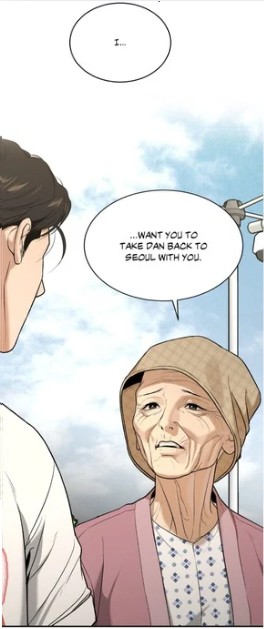 (Chapter 65) it becomes clear that for her, the capital is more than a location — it is a symbol of success, of competition, of visibility. She cannot imagine a fulfilling life outside that framework, and thus unknowingly erases Dan’s internal world: his trauma, exhaustion, and grief. To conclude, all her ideas are revolving around career, success and wealth. Work, in this logic, is not about pride, passion, or healing — it is about obligation. This began to shift when he started working with Jaekyung and discovers a different kind of validation:
 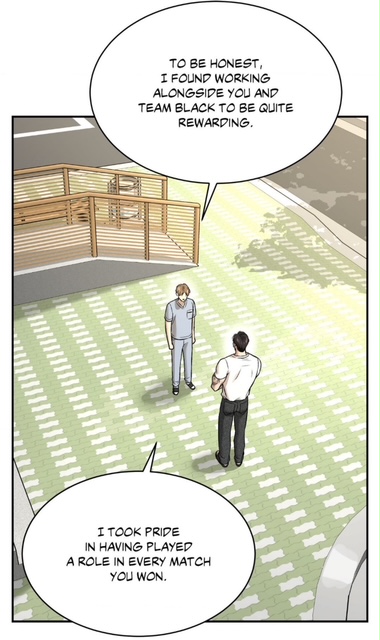 (chapter 62) the athlete’s success gave him a sense of purpose. No wonder why he took everything so personally.
  (chapter 51), this fragile new identity got shattered. Dan loses not just a client or income source — he loses the first glimpse of professional dignity.
  (Chapter 51) The rejection didn’t just hurt emotionally; it disoriented him existentially. In that light, it is no coincidence that he ends up working at a hospice — a place symbolically linked to endings, quiet resignation, and the final stages of life.
 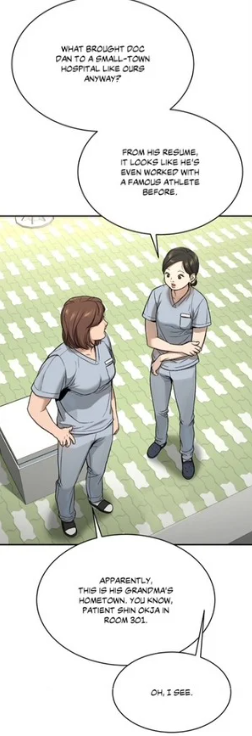 (Chapter 56) The hospice marks not just a physical retreat from his past, but a psychological one: a setting that echoes his emotional state. While his body continues to function, his inner life has entered a form of dormancy. His role in this environment reflects how deeply detached he has become — professionally, emotionally, and existentially. The job had become more than money, but now that it’s gone, he can no longer look forward. He feels lonely and rootless.
 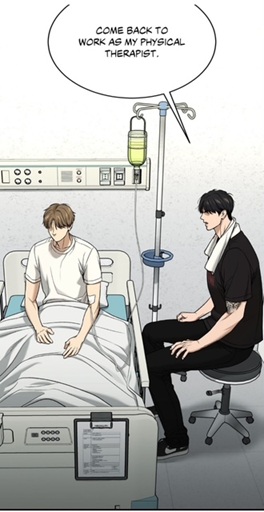 (chapter 60), functions as a form of emotional absolution, though doc Dan is not aware of it. This job offer is an indirect proof that he is still seen as competent and trustworthy.
 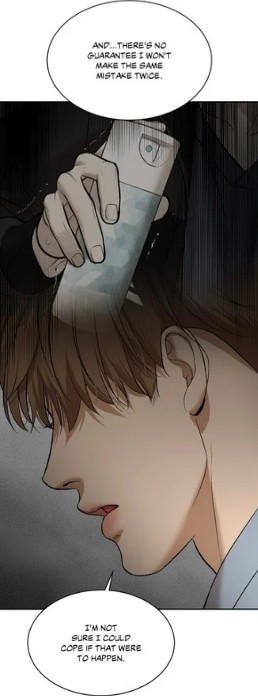 (Chapter 62) If Jaekyung had not come himself, it would have confirmed Dan’s worst fears: that he was to blame, that he was discarded. The first crack in his fixed mindset comes from this gesture — an external acknowledgment that the so-called “sin” may not have been his at all. This explicates why Kim Dan can give him the cold shoulder and even ignore him.
  (Chapter 61) It helps him to boost his strength and confidence. From that moment on, he is capable to express his own thoughts and as such criticize the star.
  (Chapter 69) His stunned reaction — “
 (chapter 69) with the title instilled by his hyung, the constant bodily strain, and his emotional isolation. Most crucially, he interprets his last match — a tie — as a personal failure. For someone with a fixed mindset, a tie is not balance; it’s inadequacy. Therefore it is not surprising that the athlete is not realizing that the outcome of his match has been changed from tie to loss.
  (Chapter 69) Dan’s very presence communicates something new: emotional steadiness, however tentative. And for the first time, Jaekyung doesn’t respond with control, but with vulnerability.
 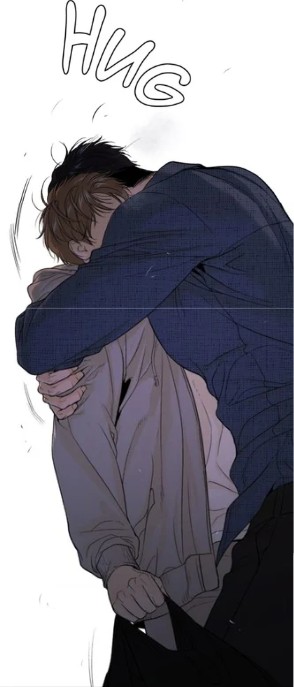 (Chapter 69) The hug becomes a form of speech — an action that acknowledges fear, relief and desire for connection.
 (Chapter 65) — yet she changes nothing. How so? She could have talked to the nurse, and the latter would have brought up the possibility of “burnout”. She frames her grandson as a victim
  (chapter 65) and herself as helpless, yet her only move is to push him away under the guise of concern
  (Chapter 65) Instead, she subtly enlists the champion as a parental substitute, urging him to care for the “sick” Dan.
 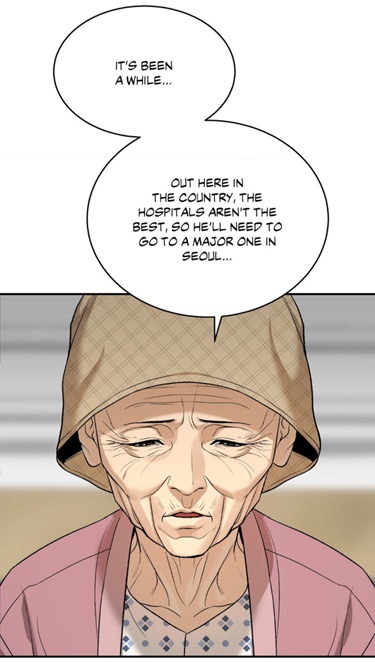 (Chapter 65) She imagines, pills will work their magic.
  (Chapter 65) and repair.
 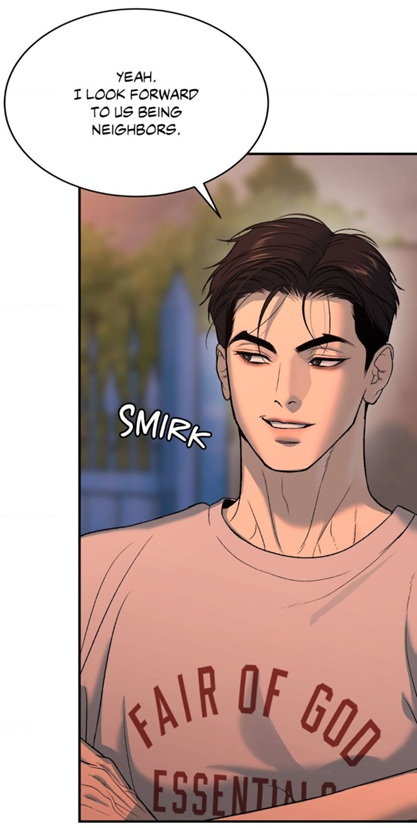 (chapter 61) , and approaches Dan not as a star reclaiming property, but as a person reaching out.
 (Chapter 69) He no longer focuses only on the next fight or media appearance — instead, he chooses emotional repair. Dan also learns to value life over denial. Hence we see him holding bags, certainly containing food. During the episode 69, the incident in the courtyard served as a wake-up call that he could no longer deny his mental illness. After his collapse, he gets back up, and is seen wearing his sports shoes.
  (Chapter 69) These items indicate the transformation in the doctor’s life. From my point of view, it announces the arrival of sports in his life.
 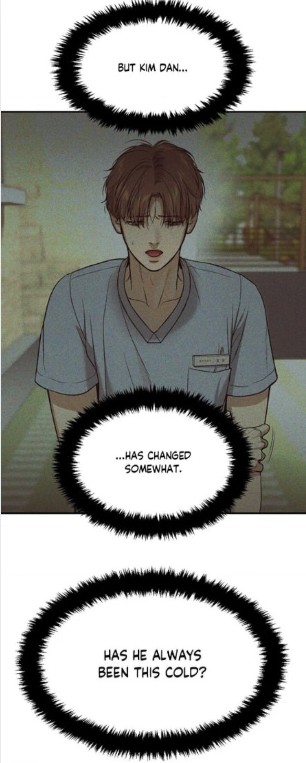 (chapter 62), not annihilation. Jaekyung’s emptiness and misery after the tie becomes the emotional opening that allows him to ask for connection, the more the hamster pushes him away.
  (Chapter 67) Meanwhile, Jaekyung drops his script of invincibility and openly acknowledges his need for Dan. Neither of them says the perfect thing — but they are no longer using self-talk to punish themselves.
 (Chapter 68) For him, vulnerability and empathy are no longer rejected, rather embraced and accepted.
 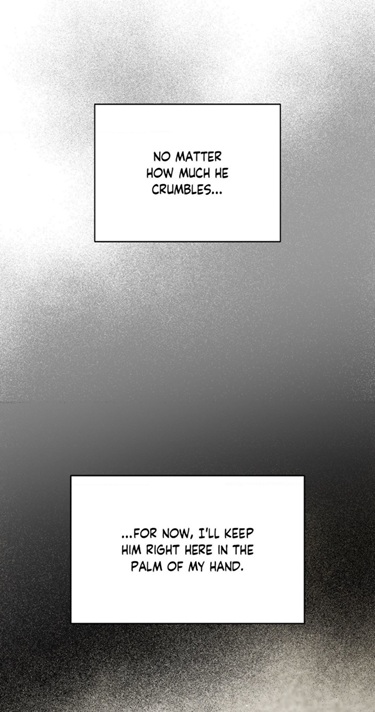 (Chapter 68) Dan, who once viewed care as something he must earn,
  (Chapter 69) begins to receive it. It is not a grand declaration, but a quiet shift: you can fail or cause a ruckus, and still be loved. Hence he doesn’t push away the wolf on the dock.
  (chapter 69), the star begins to extend that care inward. Each gesture of empathy toward Dan becomes a step closer to self-compassion. In learning to protect someone else without demanding perfection, the wolf is learning, perhaps for the first time, that he too deserves kindness — not just from others, but from himself. He models what the article calls a true “growth mindset” — one that sees failure not as final, but as a catalyst for relational and emotional evolution.
 Bebebisous33s' analyses in K-Dramaland and Manhwas