

Please support the authors by reading Manhwas on the official websites. This is where you can read the Manhwa: Jinx But be aware that the Manhwa is a mature Yaoi, which means, it is about homosexuality with explicit scenes. Here is the link of the table of contents about Jinx. Here is the link where you can find the table of contents of analyzed Manhwas. Here are the links, if you are interested in the first work from Mingwa, BJ Alex, and the 2 previous essays about Jinx Between A Squeeze And A Crack – part 1 and Between A Squeeze And A Crack – part 2
It would be great if you could make some donations/sponsoring: Ko-fi.com/bebebisous33 That way, you can support me with “coffee” so that I have the energy to keep examining Manhwas. Besides, I need to cover up the expenses for this blog.

Where is a Flower in Episode 88?
Episode 88 of Jinx immediately drew readers’ attention to two moments in particular: the training session between Kim Dan and Joo Jaekyung 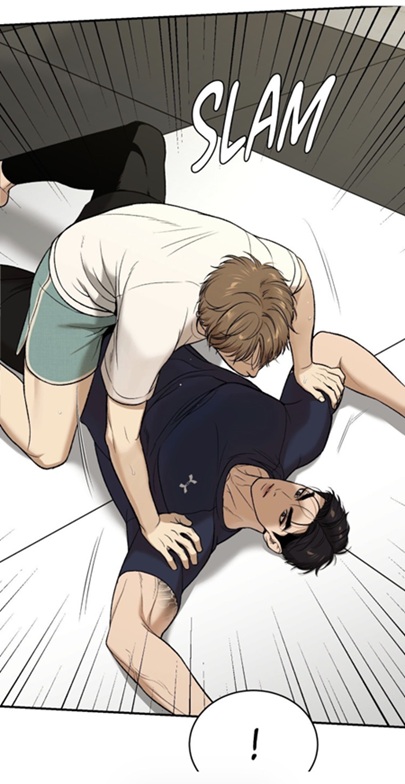 (chapter 88), and the final panel hinting at an imminent confrontation with Choi Heesung.
 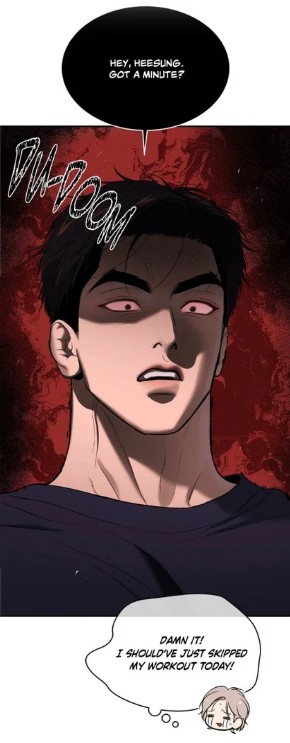 (chapter 88) Discussions largely revolved around physical proximity, discipline, and anticipation — around bodies in motion and the promise of conflict to come. At first glance, the episode seemed to oscillate between intimacy and tension
 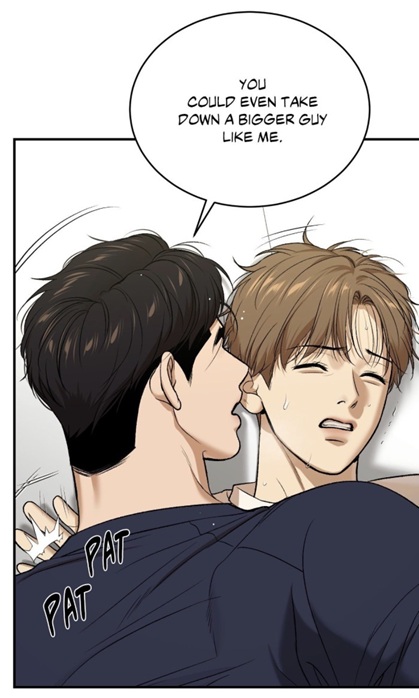 (chapter 88), between preparation
 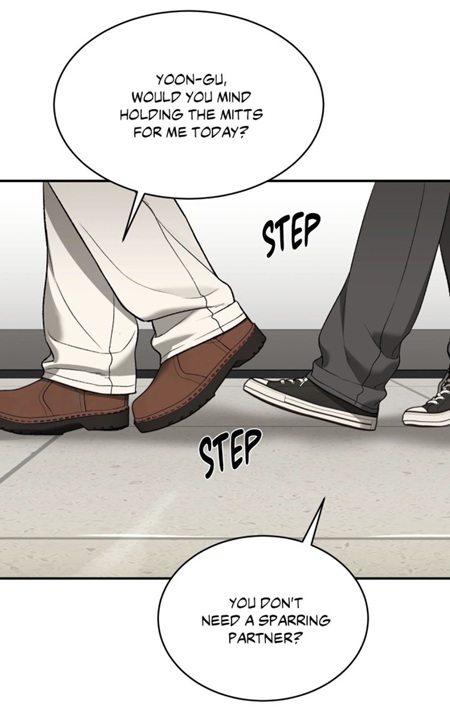 (chapter 88) and interruption
 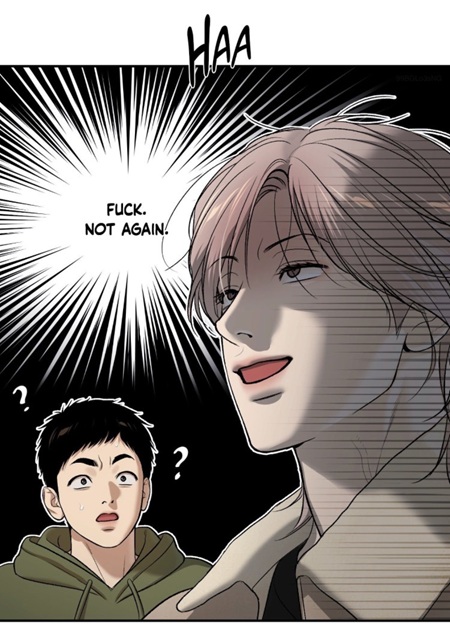 (chapter 88).
Only on closer reading does another layer emerge — one that does not oppose these moments, but reframes them. The training session is not merely about discipline or proximity, and the final panel is not only a promise of confrontation. Both scenes 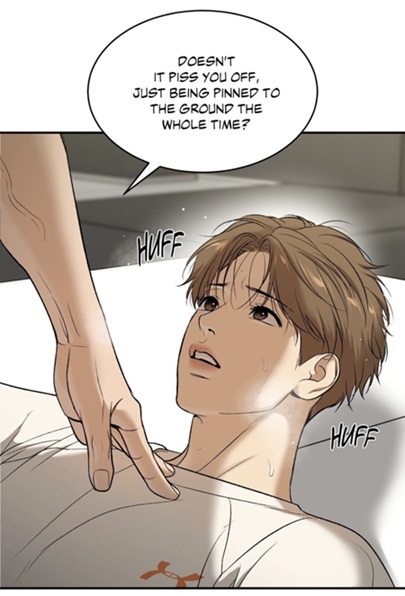 (chapter 88) are structured around restraint (chapter 88): what is held back
 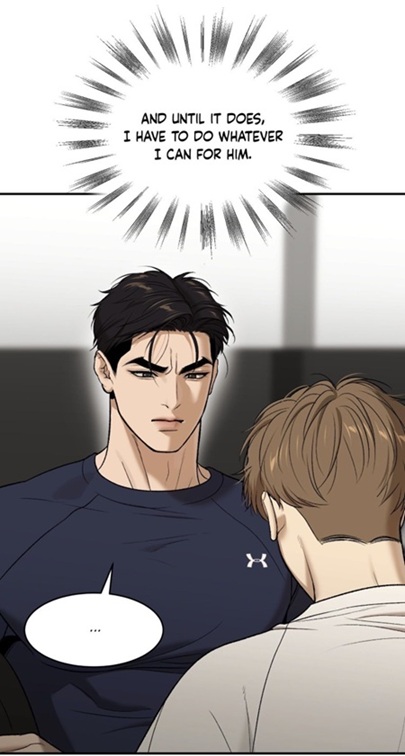 (chapter 88), delayed, or redirected. Words are measured, authority is redistributed, and decisions are deferred
 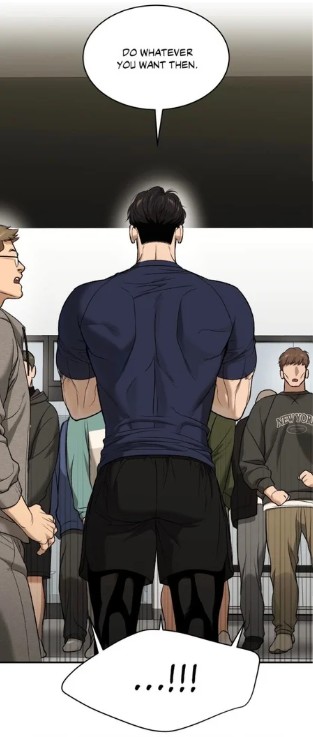 (chapter 88) rather than imposed. What initially appears as physical intensity and narrative suspense begins to reveal a deeper reconfiguration of roles, responsibility, and choice.
At first glance, the title may seem paradoxical. The episode takes place a few weeks after October  (chapter 70)—most likely in November— in late autumn.
 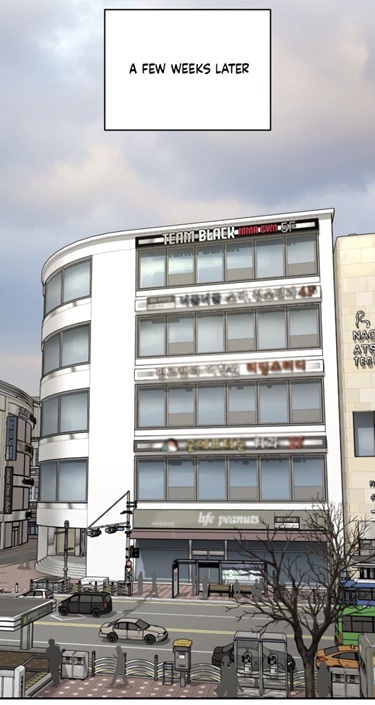 (chapter 88) This temporal setting is visually reinforced by the environment itself: in the opening sequence marked “a few weeks later,” the tree is already bare, its leaves gone. Nature offers no spontaneous image of growth or renewal. If a flower were to appear in this chapter, it couldn’t belong to the season. It must be cultivated, protected, and sustained in a green house—something that emerges not from natural abundance, but from deliberate care. So where does this idea of a flower come from?
Closed Circuits and the Logic of the Number Eight
The title emerged from a visual and structural observation. Chapter 88 is built around the number eight: a chapter defined by two closed circuits that finally cross. Remember how I described the relationship of the main couple in the essay  : a closed circuit which we could witness once again in the training room: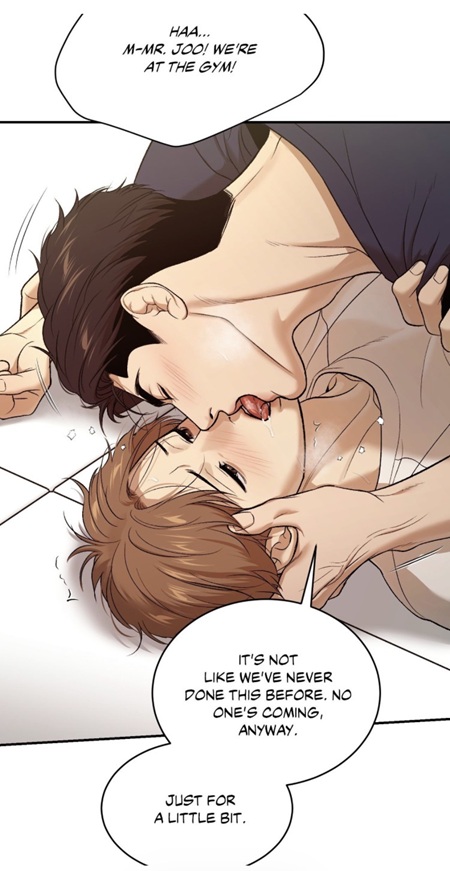
 (chapter 88) There are once again sparks between them. The number 8 is not just related to doc Dan [for more read The Magic Of Numbers ] and his relationship with the athlete, but also to the other couple: Heesung and Yoon-Gu. This means, the latter represent the other closed circuit. Hence the other couple appeared in episode 35 and 58.
  (chapter 58) Two trajectories —long separated, repeatedly missing one another—intersect at last. When two eights overlap, they form neither a loop nor a knot, but a new shape: a flower-like figure, suggestive of opening rather than closure. This crossing does not resolve everything; instead, it creates the conditions for growth for all the characters. We could say that each closed circuit forms two petals so that their interaction with each other will affect them positively.
Color as Emotional Structure
The flower, however, is not only numerical or temporal. It is also chromatic. A flower is never defined by form alone, but by shading—by gradients, transitions, and the coexistence of multiple tones within a single structure. Thus in French certain flowers serve to define pigments: rose for pink, violet for purple. In this sense, episode 88 does not merely contain colors; it behaves like a flower unfolding through shades. Episode 88 is saturated with color: pink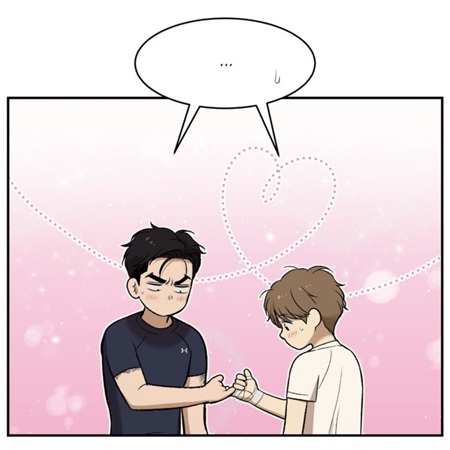 (chapter 88), white
 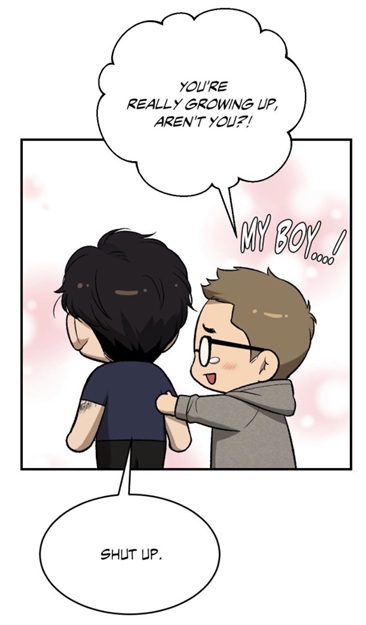 (chapter 88) purple
 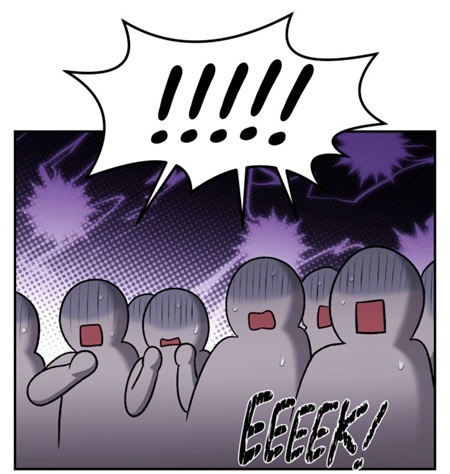 (chapter 88), blue, gray,
 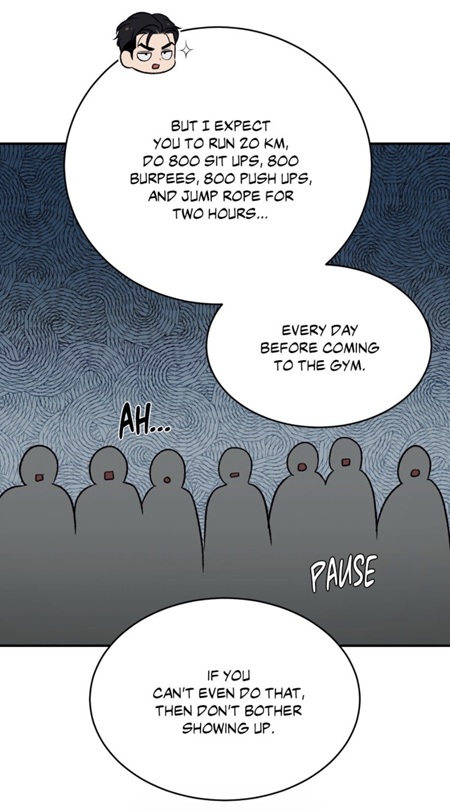 , (chapter 88) red (chapter 88) and black
 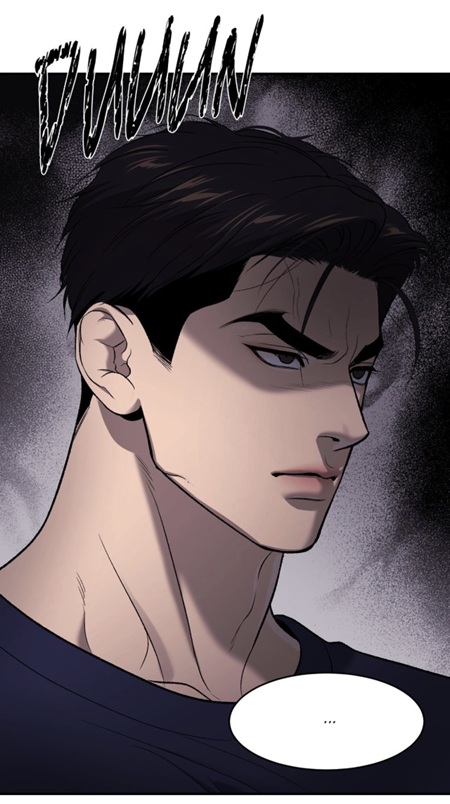 (chapter 88) Pink frames tenderness and mutual awkwardness; purple marks embarrassment and heightened awareness; red signals suppressed anger and looming confrontation; black absorbs fear, silence, and unresolved tension.
White, notably associated with Park Namwook, carries a more ambivalent meaning. (chapter 88) It evokes innocence on the surface, but also ignorance—an unexamined moral comfort that allows him to retreat from responsibility while claiming authority. His lightness contrasts sharply with the weight of the decision he refused to make: visually underlined by the black-lined spiral hovering near his head—an emblem of irritation without accountability.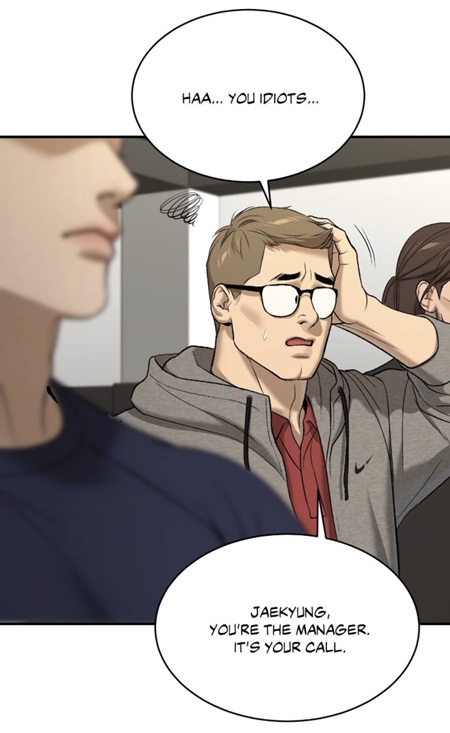
Blue and gray dominate the scene in which Joo Jaekyung announces his seemingly excessive training demands. (chapter 88) On the surface, the atmosphere feels cold and authoritarian. Yet the exaggeration itself reveals something else: the demand is deliberately absurd, almost teasing. Joo Jaekyung is testing resolve, not imposing punishment. The joke —visible thanks to the chibi and the brief spark within the athlete’s gaze— goes unnoticed. No one laughs. The room’s muted colors reflect this misrecognition—care and fun are present, but not yet legible to those receiving it.
At first glance, the setting itself seems to resist any floral reading. (chapter 88) The scene unfolds not in nature, but in a gym in Seoul—an urban, enclosed space associated with discipline, repetition, and control rather than growth or renewal. This tension may explain the readers’ initial surprise: a flower appears where one would expect only concrete, steel, and hierarchy. Yet in Jinx, the flower does not belong to nature as landscape, but to nature as process—to emergence, care, and relational change.
This process is not introduced through scenery, but through bodies marked by green. And the latter symbolizes nature. In episode 88, two characters 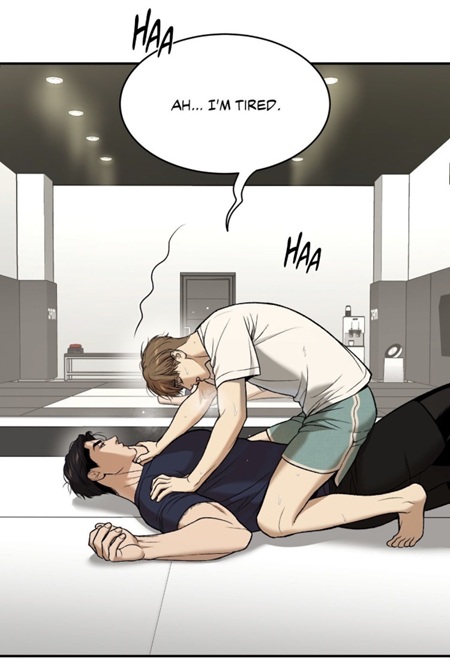 (chapter 88) are dressed in green (chapter 88), a choice that appears unobtrusive—almost practical—yet is unmistakable within Mingwa’s chromatic language. Green here does not function as pure nature or renewal, but as transition: a sign of growth that is still constrained, negotiated, and incomplete. It is not a vivid, liberating green, but a muted one—ranging from green sheen to subdued olive—closer to endurance than vitality, to steadiness rather than expansion. Growth is present, but it has not yet broken free; it remains embedded in effort, restraint, and adaptation.
Crucially, this shorts’ shade recalls the photograph of Kim Dan with his grandmother 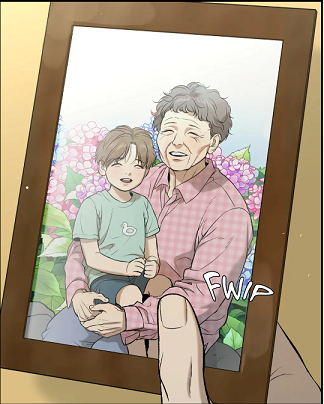 (chapter 19), where green and floral elements once functioned as a silent language of care and containment. The repetition is not accidental. By wearing a similar tone in the present, Kim Dan does not merely revisit the past; he carries it forward. (chapter 88) The color no longer signifies dependency or shelter alone, but continuity of self. It marks a return to an inner disposition that predates trauma—a self capable of care, persistence, and quiet resilience. This means that he is closer to his true self.
Placed within the gym’s dominant blues and grays, this green does not signal leisure or escape. It signals cultivation. Growth here is neither spontaneous nor decorative; it must be trained, maintained, and protected. The flower does not bloom despite the city—it blooms through care, discipline and recognition. What initially appears paradoxical becomes coherent: in Jinx, growth is not opposed to structure. It is shaped by it.
From Flower to Language: Communication Deferred
Crucially, the flower also functions as a metaphor for communication. (chapter 19) Flowers are not passive decorations; they carry meaning, intent, and symbolism. The background is composed of hydrangeas in blue, pink, and pale violet—colors traditionally associated with gratitude, tenderness, apology, and emotional nuance.
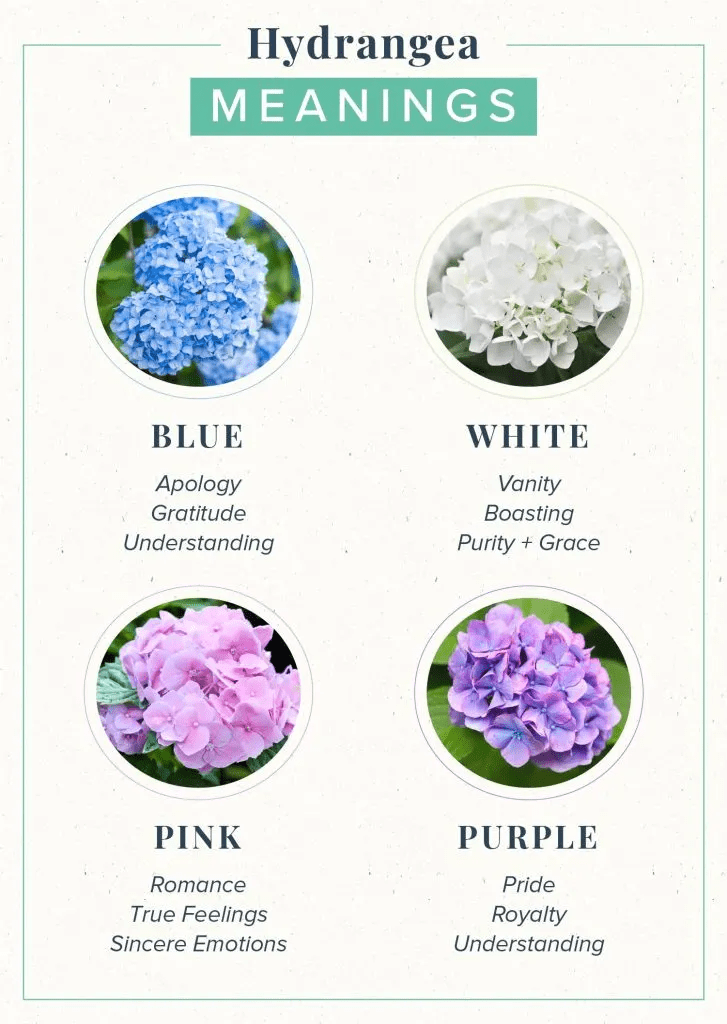
Unlike roses  (chapter 35), which tend to assert a singular message (love, passion, beauty), hydrangeas communicate multiplicity and emotional ambivalence; they speak in clusters rather than declarations. This visual language mirrors Kim Dan’s inner world at the time (chapter 19): affection entwined with dependency and sorrow, care mixed with silence, love present but unspoken.
This chromatic memory resurfaces later through a different floral gesture: the bouquet Choi Heesung offers Kim Dan —pink roses paired with baby’s breath 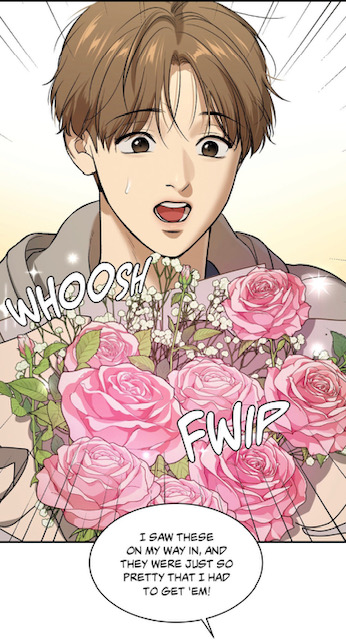 (chapter 31). Here, the symbolism shifts. Pink roses convey affection and admiration, while baby’s breath suggests innocence and fragility. Yet the arrangement is excessive, overwhelming, and mismatched to its recipient. The bouquet does not listen; it speaks at Kim Dan rather than with him. Significantly, Heesung comes to associate Kim Dan himself with the flower—something delicate, beautiful, and deserving of protection, but also something to be handled, displayed, and possessed.
Episode 88 reframes this logic entirely. The “birth of a flower” no longer refers to being perceived as fragile or decorative, but to a return to growth from within. 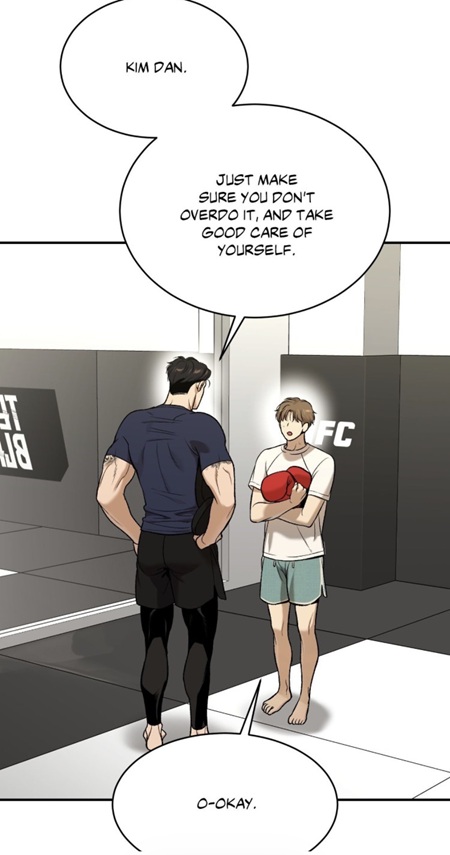 (chapter 88) Kim Dan’s green training clothes—visually echoing the green shirt he wore in the photograph with his grandmother—signal continuity rather than regression. This is not a retreat into childhood dependency, but the reappearance of an inner child now disentangled from obligation and fear. The flower that reemerges here is not gifted, not arranged, not imposed—it grows. In this sense, episode 88 introduces a missing element in the dynamic between the two protagonists: not desire, not care, but communication. And it is here that Choi Heesung becomes central—not as a rival or antagonist, but as a structural bridge, as in reality he represents the rose, “La vie en rose”
  . He embodies speech, playfulness, and visibility, yet also reveals their limits when they are severed from responsibility and respect. I will elaborate about this more below.
The illustration accompanying this essay includes a fifth, shadowed petal inspired by the Mugunghwa—the Rose of Sharon, a national symbol of Korea often associated with endurance, justice, and continuity. This fifth petal does not yet fully bloom. It signals something incomplete, something still forming: a question of justice, choice, and mutual recognition that the narrative has only begun to articulate.
Finally, this essay reads episode 88 through the lens of Erich Fromm’s definition of love—care, responsibility, respect, and knowledge. For me, these 4 notions are represented by the 4 petals. In this chapter, Joo Jaekyung visibly embodies care, responsibility, and a growing respect for others’ autonomy. What remains absent is knowledge: a true understanding of Kim Dan’s inner life, just as Kim Dan himself has yet to fully understand Jaekyung beyond his role and past. The flower, then, is not the endpoint. It is the beginning of a process in which these missing elements may finally emerge.
What follows is not an analysis of victory or defeat, but of growth—quiet, fragile, and cultivated under constraint. This is not the celebration of happiness already achieved 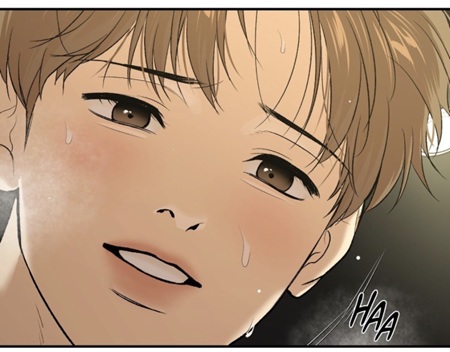 (chapter 88), but the moment in which the conditions for happiness are finally put into place. And now let me ask you this. What is the symbol of happiness? Smiles and laughs. During the training session, Kim Dan smiles. These moments are brief
 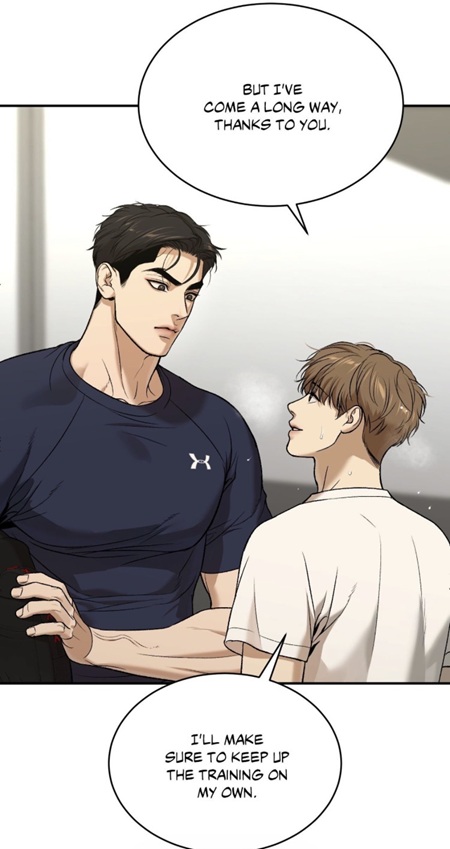 (chapter 88) and goes unnoticed by him (chapter 88) and his fated partner, yet it directly answers what Joo Jaekyung has repeatedly expressed as his desire: to be the source for Kim Dan’s smile and to smile together.
 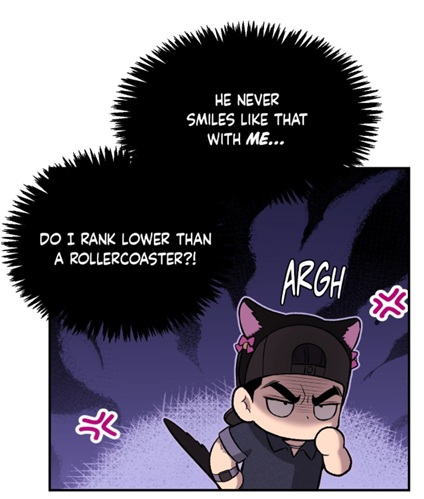 (chapter 83) What is striking is that neither of them recognizes this fulfillment. (chapter 88) Kim Dan does not register his own smile as happiness, and Joo Jaekyung does not realize that he is already producing what he seeks. As elsewhere in Jinx, happiness precedes awareness. It exists before it is acknowledged—by both sides.That’s why I selected the title: the flower embodies happiness, as its life is just as short as happiness.
  (chapter 31)
A. Joo Jaekyung × Kim Dan: The First two Petals
The training sequence in episode 88 cannot be read as a simple exercise scene, nor as a sudden moment of equality or mutual play. It is, instead, the continuation of a long-standing relational pattern in which care is expressed indirectly (chapter 88), asymmetrically, and through the only language both characters know how to use: work.  (chapter 88) What appears at first glance as coercion
 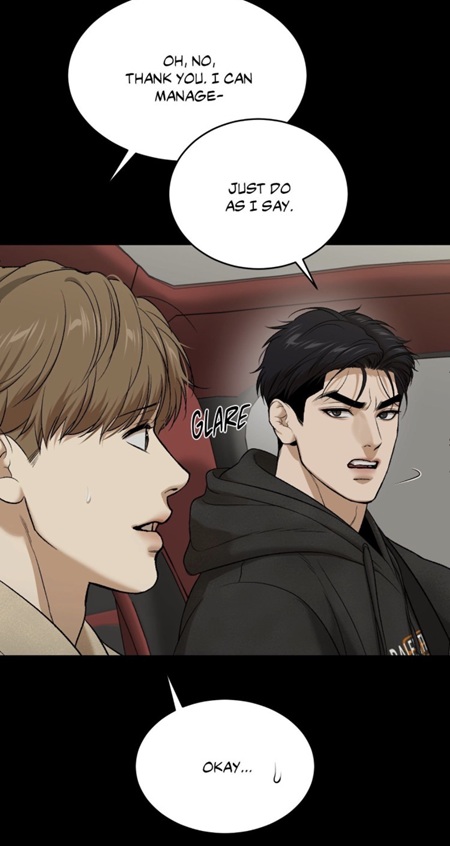 (chapter 88) or discipline is in fact a negotiation shaped by habit, fear of burdening the other, and an inability—on both sides—to articulate desire outside professional roles.
1. How the training is suggested: care disguised as necessity
Crucially, the idea of training does not emerge in the gym itself. It is first introduced in the car 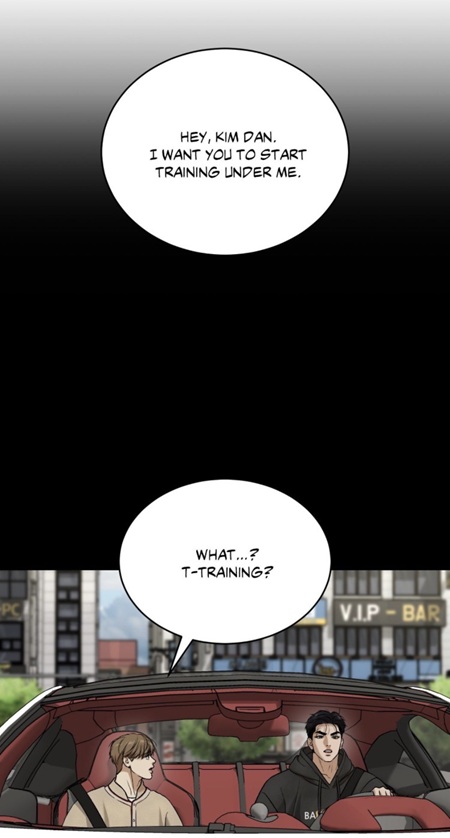 (chapter 88), a space that is never neutral in Jinx. A car has one driver, one direction, one authority. By placing the conversation there, Mingwa signals that the relationship is still structurally asymmetrical at this point: Joo Jaekyung leads, Kim Dan follows.
Joo Jaekyung frames the proposal as a matter of stamina and work. (chapter 88) Training will help him in his career. This framing is not accidental. Joo Jaekyung does not yet know how to say: “I want to spend time with you“, or “I’m afraid you won’t be safe, once you leave my side“. He knows only how to justify closeness through usefulness. Training becomes a rational excuse for proximity, a legitimate reason to demand time without admitting emotional dependence.
At the same time, this proposal is deeply protective. Joo Jaekyung has seen Kim Dan collapse from exhaustion in the past. He knows his physical limits better than Kim Dan himself. 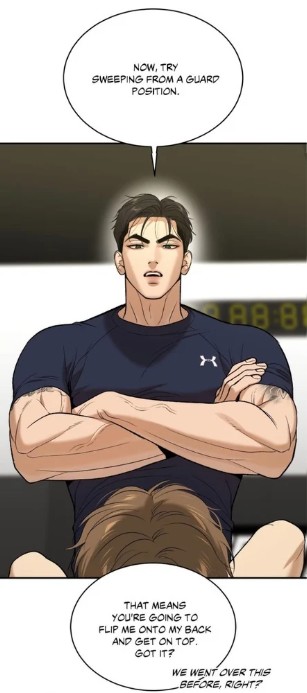 (chapter 88) Secondly, such a training suggests that the athlete is gradually remembering this scene of the almost-rape. (chapter 88) In his subconscious, he knows that this was not prostitution.
 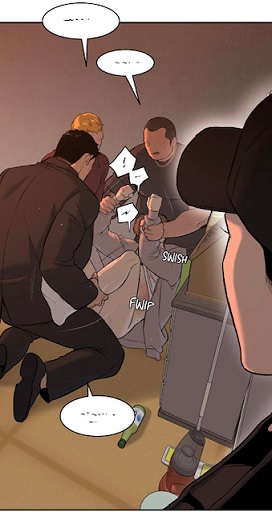 (chapter 17) Therefore it is not surprising that instead of asking permission or explaining concern, he imposes the idea—because that is how he has learned to act as a captain, a fighter, and later a manager. Authority precedes dialogue. (chapter 88)
2. The first refusal: self-neglect disguised as strength
Kim Dan’s first response is immediate: (chapter 88) He refuses. This is not politeness. It is not consideration for Joo Jaekyung’s fatigue. It is a reflex rooted in long-standing self-erasure. Kim Dan genuinely believes he is strong enough. More importantly, he believes that needing care is illegitimate.
This refusal is governed by habit:
- the habit of minimizing himself,
- the habit of overestimating endurance,
- the habit of believing that receiving attention makes him a burden.
At this stage, Kim Dan is not yet protecting Joo Jaekyung; he is protecting the structure that allows him to remain useful and unobtrusive. Accepting training would mean admitting vulnerability—and worse, accepting time, effort, and concern directed at him.
The sportsman ignores this refusal. This moment is important because it reveals both the problem and the intention. Joo Jaekyung acts like a parental figure, not a partner. He overrides consent not out of cruelty, but out of conviction that he knows better. His care still takes the form of command. This explicates why the physical therapist’s agreement is accompanied with a drop of a sweat. “Okay” indicates more discomfort than joy and gratitude. He doesn’t feel indebted toward the athlete, rather embarrassed.
Thus the asymmetry is intact. The training is not born out of his own desire.
3. The pause: time passing, resistance softening
Striking is that this conversation is revealed, after the champion asked doc Dan to get changed. 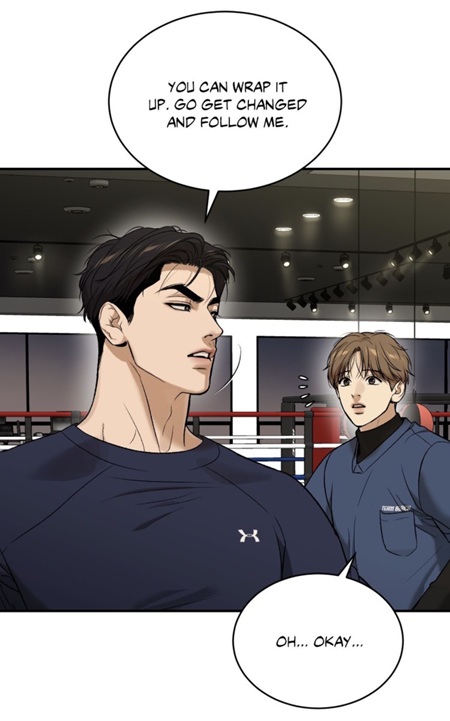 (chapter 88) In other words, the request from Joo Jaekyung appears as a memory from the physical therapist. Why?
 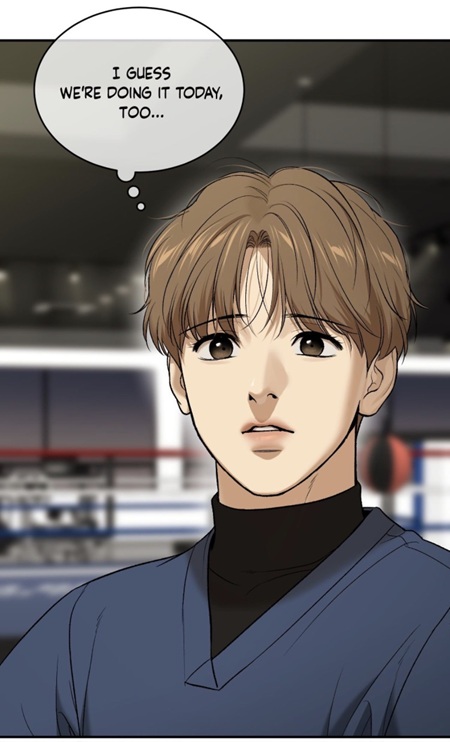 (chapter 88) Because Mingwa refuses the “clean” sequence in which an order is issued and immediately executed. The narration inserts a gap—an interval of off-panel time that we are forced to reconstruct from Kim Dan’s recall. (chapter 88) The narrative does not jump immediately into physical training, because the temporal gap is supposed to mirror the time jump as well. There were other training sessions. This temporal gap matters. The doctor’s inner thoughts (chapter 88) “I guess we’re doing it today, too…” implies routine without inner desire and daily regularity. This means that the training sessions only took place, when the champion asked doc Dan to change his clothes. Doc Dan was not looking forward for the training sessions or reminded the athlete of his promise or request.
That pause changes the meaning of consent and compliance. If the scene were immediate, Kim Dan’s earlier refusal (“Oh no, thank you, I can manage—”) would read as a clear boundary and Joo Jaekyung’s “Just do as I say” as a straightforward override. (chapter 88) But because the chapter returns to the topic through memory, the refusal is not portrayed as a decisive line—rather, it becomes the first phase of a negotiation Kim Dan does not yet know how to conduct. His resistance softens not because he suddenly “wants” the training, but because habit takes over: he is used to accommodating authority, used to re-framing his own limits as irrelevant, used to translating pressure into “normal.” The break between the command and the actual session is precisely where that old reflex does its quiet work.
By the time they appear in the practice room, Kim Dan is showing no hesitation. He is training eagerly. 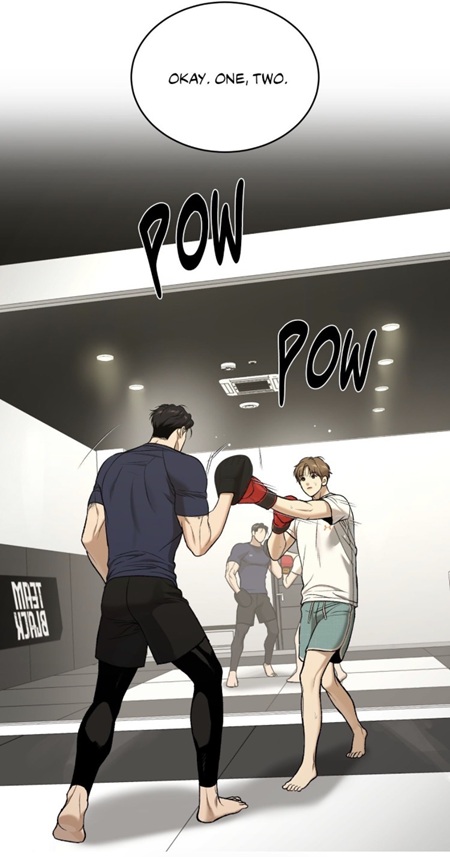 (chapter 88) Instead Kim Dan no longer insists on his own sufficiency. He no longer says “I can manage., but doc Dan admits not only his own lacking.
 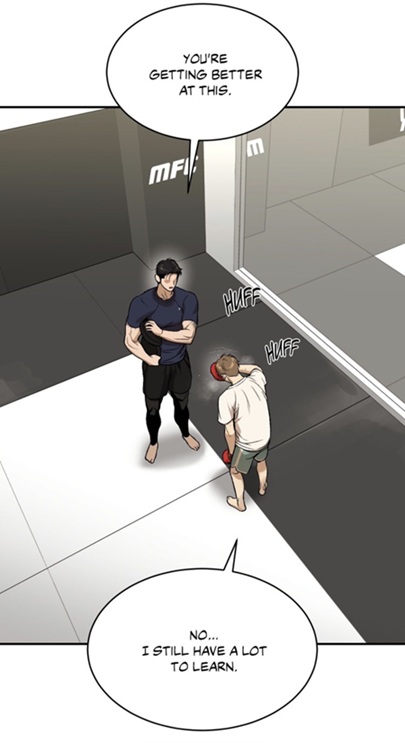 (chapter 88), but also his own desire. He finally expresses his desire to improve, to learn more.
This admission marks a decisive internal shift. In earlier chapters, “I can manage” functioned as a shield: a way to deny need and avoid dependence. Here, Kim Dan allows himself to recognize that improvement exists precisely because limits existed before. The champion’s explicit comparison with the past  (chapter 88) creates a temporal bridge that enables this recognition. Only once change is named from the outside can Kim Dan cautiously acknowledge it from within.
At the same time, this acknowledgment remains fragile. Kim Dan does not fully accept the implications of Joo Jaekyung’s praise. (chapter 88) His response — “I still have a lot to learn” — both accepts growth and reinscribes distance. He recognizes the fighter’s effort and dedication, yet still fears relying on the athlete’s benevolence. (chapter 88) This is why he immediately reframes the future in terms of independence: he will “keep up the training on [his] own.” Gratitude is present, but it remains incomplete, protective rather than connective. He still experiences himself as a potential burden. But why?
It’s because he tried to care for the athlete in his own way by suggesting a rest, but the champion denied it. 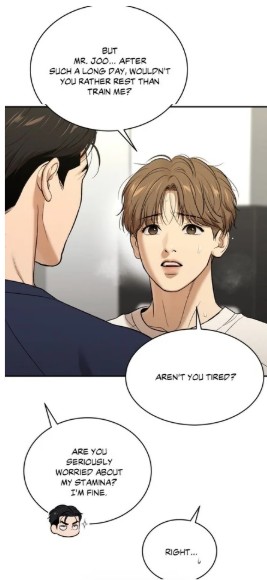 (chapter 88) The problem is that his form of care was influenced by his own mindset and emotions: his physical limitations.
This attempt at care fails not because it is insincere, but because it is misaligned. Kim Dan does not ask whether Joo Jaekyung wants to rest; he assumes that rest must be what is needed, because that is what he himself would need in the same situation. His concern is genuine, yet it is filtered through his own bodily limits and emotional economy. Fatigue, for him, is something that must be managed cautiously, avoided, negotiated. When he encounters a body that does not obey those rules — a body that still has stamina, that refuses the logic of depletion — his offer of care is quietly rejected.
This rejection is decisive. It reveals a gap Kim Dan cannot yet bridge: the realization that Joo Jaekyung’s needs do not mirror his own. (chapter 88) The athlete does not require rest in the same way, and more importantly, he does not articulate his needs through physical exhaustion at all. What Kim Dan fails to perceive is that the training itself is Joo Jaekyung’s way of staying regulated, present, and emotionally grounded. It is also his source of joy. By denying the necessity of rest, the champion is not dismissing care; he is refusing a form of care that does not correspond to him.
Confronted with this mismatch, Kim Dan retreats. If his attempt to care is ineffective, then the safest response is to minimize his demands. This is where gratitude hardens into distance. He thanks Joo Jaekyung for his help with a smile, acknowledges his progress, and immediately insists on autonomy: he will continue alone. The logic is protective. If he does not rely, he cannot burden. If he does not ask, he cannot be refused again.
What emerges here is not self-confidence, but a familiar defense. Kim Dan is not asserting independence from strength; he is withdrawing from uncertainty. His insistence on training alone does not signal rejection of connection, but fear of asymmetry — fear that he cannot offer something equivalent in return. Because he interprets care primarily through physical effort and endurance, he cannot yet recognize that his presence, attention, and willingness to engage already matter.
In this sense, the moment exposes the limits of projection. Kim Dan’s care is sincere, but it remains anchored in his own survival strategies. Until he can decouple care from exhaustion, and need from weakness, he will continue to misread situations where what is required is not restraint, but accompaniment. The training, then, is not only about building strength. It is the first site where Kim Dan begins to confront the possibility that care does not always flow from managing limits — but sometimes from staying, even when one feels unnecessary.
This is significant. It shows that Kim Dan is beginning to speak, but still cannot speak for himself. His old habit remains: if something feels wrong, it must be because the other person needs rest, not because he is tired, scared, or overwhelmed. In other words, care is emerging—but it is displaced.
This is precisely why the gesture that follows (chapter 88) carries such weight. For the first time in this exchange, care is directed back at Kim Dan without condition. It is not framed as instruction, correction, or evaluation. It is neither command nor test. It is a simple, protective statement that mirrors Kim Dan’s earlier concern — but without projection. Joo Jaekyung does not deny Kim Dan’s limits. He acknowledges them. There is no reproach, only concern. 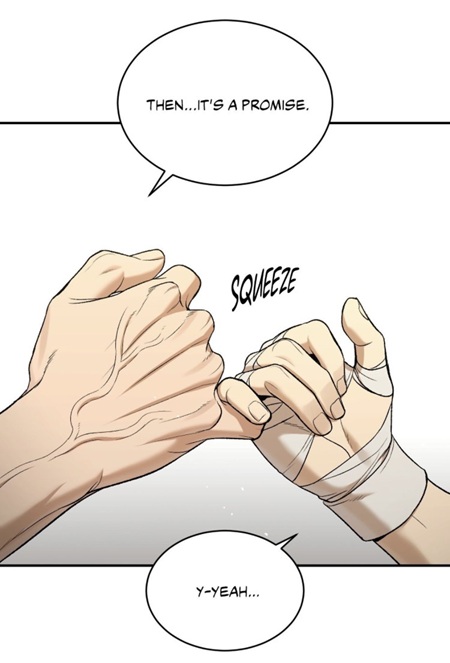 (chapter 88)
Here, the asymmetry softens without disappearing. Joo Jaekyung remains physically dominant, emotionally inarticulate, and structurally in control of the situation. Yet the direction of care shifts. He does not accept Kim Dan’s attempt to exit the dynamic under the guise of independence. Instead, he counters it with responsibility: you matter enough to be protected. The pinky promise that visually accompanies this exchange reinforces the meaning. Promises in Jinx have often functioned as burdens or traps — obligations that freeze people in place. This one is different. It does not demand performance. It does not extract sacrifice. It asks only for self-preservation. (chapter 88)
This is where the flower begins to appear — not as harmony, not as symmetry, but as mutual misrecognition slowly correcting itself. Kim Dan still does not fully grasp that Joo Jaekyung’s desire to train him is also a desire to spend time with him. Joo Jaekyung, in turn, still cannot articulate that desire outside the language of work. (chapter 88) Training becomes the only acceptable medium through which closeness can occur. Pleasure and intimacy surface unintentionally — in teasing, in competition, in shared breath — but remain unnamed.
Crucially, this is not rigidity. It is habit. Both men operate within deeply ingrained routines shaped by survival rather than joy. Rest, breaks, and leisure have only ever been framed in relation to the champion’s career: recovery after injury, distraction after stress, sanctioned release after pressure. They know how to stop working; they do not know how to share fun. There is no vocabulary yet for casual togetherness — no restaurant, no cinema, no idle wandering. Training fills the gap because it is the only space where proximity feels justified.
Thus, the training is neither purely imposed nor fully shared. It begins as Joo Jaekyung’s initiative, shaped by authority and concern, but it gradually becomes a site where Kim Dan starts to renegotiate his self-image. By acknowledging both his limits and his desire to improve, Kim Dan takes a first step away from the logic of endurance alone. He still retreats into self-sufficiency, but the retreat is no longer absolute. He speaks more. He hesitates less. He accepts care, even if he cannot yet rely on it.
The flower here is not bloom, but formation. It is the slow emergence of a relationship that must unlearn the equation between care and burden, strength and isolation, desire and duty. Nothing is resolved. But something has shifted: care is no longer one-directional, even when it remains uneven. And for the first time, both characters participate — imperfectly, awkwardly, but genuinely — in sustaining it.
4. Where pleasure enters—and why it is unspoken
As the training progresses, something shifts subtly. Joo Jaekyung smiles 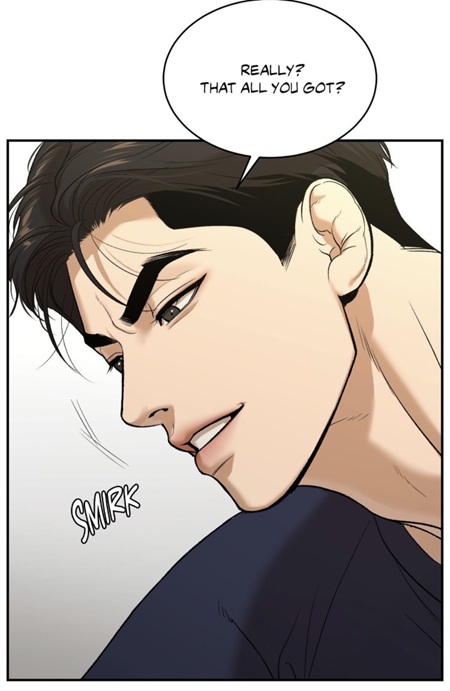 (chapter 88). He teases. (chapter 88) He challenges. He praises:
  (chapter 88)
These are not neutral compliments. They are moments where discipline slips into enjoyment. Joo Jaekyung is no longer training only to prepare Kim Dan for a future without him; he is enjoying the present interaction. And yet, he cannot name this enjoyment.
Pleasure appears within work, not alongside it. Intimacy emerges through exertion 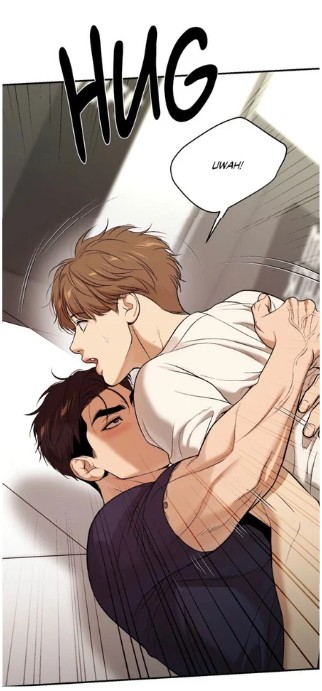 (chapter 88), not rest. Thus the doctor mistakes the embrace for a technique and not the expression of love.
 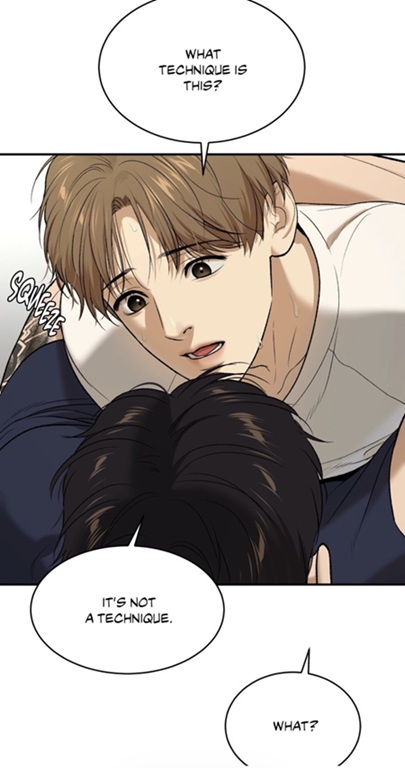 (chapter 88) And observe that the athlete still refuses to express the true meaning of his hug. His explanation still remains technical, defensive, and strategically framed:
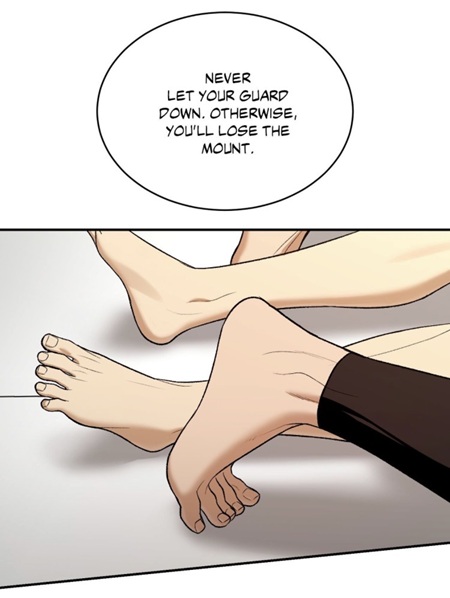 (chapter 88) This sentence is crucial. It reduces contact to function. The closeness of bodies, the pressure of weight, the proximity of breath are translated into instruction. What could be acknowledged as reassurance or care is instead displaced into pedagogy. Joo Jaekyung does not deny intimacy; he relabels it.
What the image reinforces is not distance, but deferral. The focus on bodies — on interlocked legs, grounded feet, balanced weight — emphasizes control and stability rather than vulnerability. Affection is allowed to exist only when it can be defended as functional. The mount is maintained not because Joo Jaekyung wants to keep Kim Dan close, but because losing it would constitute failure.
And yet, the sequence immediately preceding this moment shows both characters acutely aware of their racing hearts,
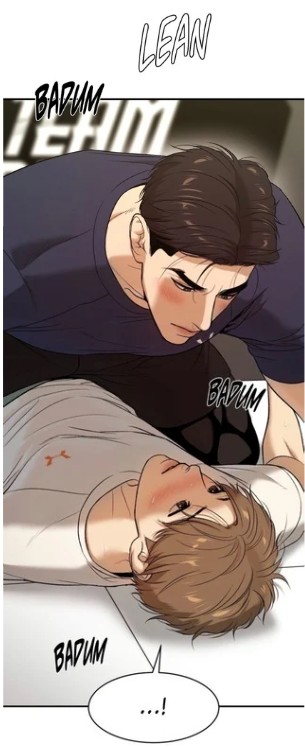 (chapter 88) of breath held too long, of proximity charged with something unnamed. The technical explanation arrives after that awareness, not before it. This confirms that the instructional language functions as a shield — not against intimacy itself, but against having to speak it.
Yet the narrative immediately undermines this technical framing.  (chapter 88) Directly after warning against lowering one’s guard, Joo Jaekyung kisses him.
The kiss is not furtive, accidental, or one-sided. Both characters are fully present. They look at each other. Neither pulls away. The contradiction is deliberate: the body does what the language refuses to acknowledge. Vigilance and intimacy coexist in the same gesture. The warning about control does not prevent closeness; it becomes the pretext through which closeness is allowed.
This is the crucial correction: Joo Jaekyung is not simply disguising intimacy as technique. He is containing it. The kiss does not negate the instructional frame; it slips through it. Pleasure is permitted only insofar as it does not require verbal recognition. Love is enacted, but not named.
For Kim Dan, this ambiguity poses no immediate problem. He has been kissed before. Physical intimacy is not new to him, and he has learned — through prior encounters — not to interrogate its meaning unless forced to do so. He does not question whether the kiss signifies affection, reassurance, desire, or attachment. Instead, he relocates intimacy spatially rather than emotionally. His only objection is not that the kiss happens, but where: (chapter 88) This line is telling. Kim Dan does not resist closeness itself. He resists its placement. Intimacy, in his understanding, belongs elsewhere — to the penthouse, to private space, to moments already coded as sexual or domestic. What unsettles him is not the kiss, but the fact that it occurs inside the domain of work.
In other words, Kim Dan does not yet read intimacy as something that can coexist with discipline. He accepts affection when it appears in designated zones, but not when it disrupts functional categories. The gym is a place of training; therefore, what happens there must remain legible as training. Joo Jaekyung’s technical explanation gives him exactly that permission.
This is why Kim Dan accepts the justification without protest. He does not reinterpret the embrace as love because he does not yet need to. The structure remains intact: work is work, intimacy is intimacy, and when the two overlap, the overlap is attributed to technique rather than feeling.
In this sense, Joo Jaekyung’s restraint protects both of them. It protects Kim Dan from having to reinterpret the gesture emotionally, and it protects Joo Jaekyung from articulating feelings he has no vocabulary for outside the grammar of training. Care is real, but its meaning is postponed. Love is present, but encoded as vigilance.
This postponement explains why the “flower” has not yet opened. It exists, but inwardly folded. Growth is happening, but it is constrained by the only relational language both men currently share: effort, endurance, correction, control.
They know how to train together.
They know how to recover.
They know how to endure crisis.
They know obligation.
They do not yet know how to choose pleasure together — how to eat, rest, shop, watch a movie, or enjoy time without purpose. Even their earlier “break” at the amusement park existed because Joo Jaekyung needed rest, not because they mutually chose leisure. Fun, like intimacy, has always been instrumental.
What episode 88 reveals is not the absence of love, but its confinement. Pleasure appears — undeniably — yet remains untranslated. Sensation does not yet become knowledge. The flower is there, but it has not learned how to open outside the discipline that first allowed it to grow.
5. The slow reversal: from imposed care to accepted challenge
The most important moment comes when Kim Dan manages to reverse positions and pin Joo Jaekyung. (chapter 88) The shock and joy are mutual. Joo Jaekyung is genuinely surprised. Kim Dan is genuinely proud—though he barely allows himself to register it. (chapter 88) This is not equality yet. But it is the first time Kim Dan experiences himself as capable, not merely compliant. The training that began as imposed authority becomes a shared test and experience. Importantly, Kim Dan did not ask for this moment. It emerged because he stayed. This stands in opposition to the sparring in front of the fighters. 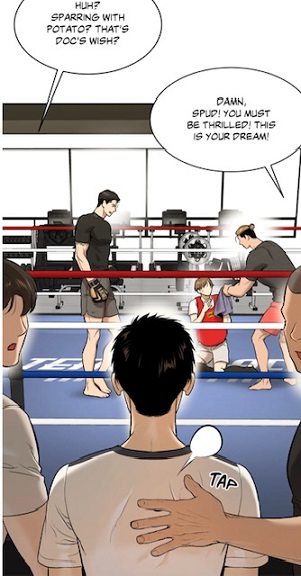 (chapter 26) Back then, Doc Dan had accepted the challenge due to Potato, though deep down he desired to have the champion as his teacher.
  (chapter 25) That’s how it dawned on me that doc Dan has gradually taken over Yoon-Gu’s previous place at the gym. He is an “unofficial member” of Team Black. Thus he mops the floor and Yoon-Gu is not there to stop him or reclaim this position.
 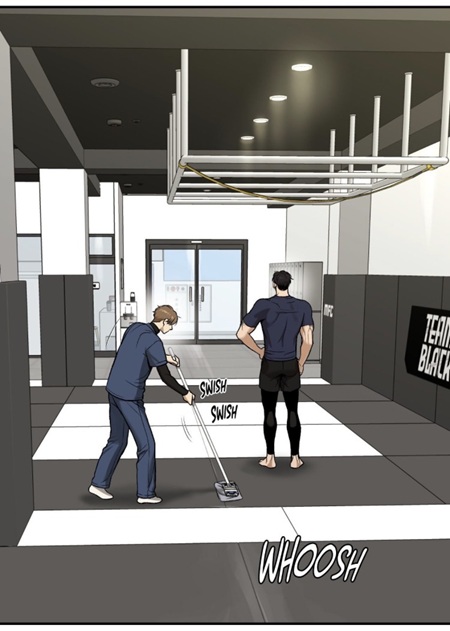 (chapter 88) Yoon-Gu’s position within the gym has improved. He is now considered as a real fighter.
6. Where the flower is
If the previous sections trace a movement, this final observation names its limit. To understand why the flower in episode 88 has only begun to appear, it is necessary to return to Erich Fromm’s definition of love, which rests on four inseparable elements: care, responsibility, respect, and knowledge. [For more read:“The Art Of Loving” (locked)] Love, in this framework, does not exist where only one or two of these are present. It requires all four to be active at once in order to become sustaining, conscious, and mutual.
Episode 88 makes one thing unmistakably clear: in the relationship between Joo Jaekyung and Kim Dan, three of these elements are already in place. One is not.
Care is not what this relationship lacks. (chapter 88) Joo Jaekyung’s care is visible throughout the episode, even when it is expressed awkwardly or through misdirection. His insistence on training, his attention to Kim Dan’s stamina, his refusal to let Kim Dan dismiss his own physical limits (chapter 88), and his final reminder to “take good care of yourself” all belong to the same logic. This care is protective and practical, but it is still delivered under the cover of training—phrased as guidance, risk-management, and performance maintenance rather than as attachment. He is capable of saying “take care,” but he still cannot say what the care ultimately means: I want you close; I worry about losing you; I don’t know how to keep you besides making you stronger. For someone like Jaekyung, whose life has been organized around performance and endurance, this is the only available language of concern. Kim Dan, too, expresses care, though in a displaced form. He worries about Jaekyung’s exhaustion, (chapter 88), minimizes his own needs and tries not to become a burden. Care moves in both directions, even if it rarely reaches its intended target.
Responsibility is equally present, and equally heavy. Jaekyung assumes responsibility for Kim Dan’s safety and future (chapter 88), particularly in light of his own awareness that their time together is limited. The training is not arbitrary; it is oriented toward what comes after him. Kim Dan, meanwhile, takes responsibility in another way: by insisting on self-sufficiency (chapter 88), by promising to continue training on his own, by framing improvement as something he must manage independently. What stands out is that responsibility exists on both sides, but it is carried separately. Each assumes it alone, without yet allowing it to become shared.
Respect, too, is not absent. Jaekyung respects Kim Dan’s capacity to grow. (chapter 88) He challenges him not because he sees him as weak, but because he believes resistance is possible. (chapter 88) His praise, rare and restrained, signals recognition rather than indulgence. Kim Dan, in turn, respects Jaekyung’s discipline and endurance, sometimes to the point of idealization. This respect remains asymmetrical, but it is real. It has begun to shift from hierarchy toward recognition.
What is missing, and what keeps the flower from fully appearing, is knowledge—not information, not memory, but Fromm’s sense of active understanding of the other as a subject with inner needs, fears, and desires. In The Art of Loving, knowledge means seeing the other as they are, which requires two things at once:
- Honesty toward oneself (recognizing one’s own needs, fears, and desires), and
- Articulation toward the other (making that inner reality available rather than acting it out indirectly).
This is why words matter so much. Without words, care can exist, responsibility can exist, and even respect can exist — but they remain opaque. Joo Jaekyung knows exactly what he wants: time, proximity, continuity. He is acutely aware that his time with Kim Dan is running out. 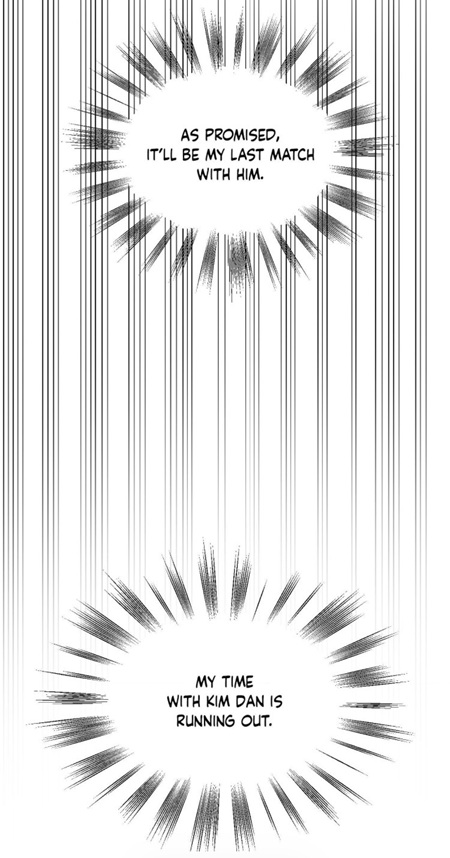 (chapter 88)
What he lacks is not intention, but translation and even courage. He does not know how to express his desire outside the vocabulary of work, discipline, and physical instruction. He can insist, challenge, and protect, but he cannot yet name why he does so. He still thinks, it is not possible to be loved due to his huge flaws and past wrongdoings. Kim Dan, on the other hand, does not yet know how to read care when it is not framed as sacrifice or obligation. He interprets insistence as burden, closeness as technique, affection as something that must be relocated elsewhere—into private space, into the penthouse, into moments that feel safer and more legible.
Their misunderstanding does not stem from a lack of feeling. It stems from a lack of confidence and shared language. Love is enacted rather than understood. Care, responsibility, and respect circulate between them, but knowledge—the capacity to see and articulate the other’s inner reality—has not yet entered the relationship. The reason is that both underestimate themselves. Thus both don’t speak the truth. This is why the flower in episode 88 is real but incomplete. It exists in the slow shift from refusal to engagement, from habit-driven self-denial to cautious participation. It exists in the fact that Kim Dan accepts the training not because he must, but because he begins to recognize the results from Jaekyung’s effort and insistence. He gradually accepts that Joo Jaekyung is genuinely concerned about him. He is gradually enjoying this, thus he voices his desire to learn more. Another problem is that both still think, they know each other. They have not recognized the importance of “words” and “honesty” yet. Nevertheless until knowledge emerges—until what is enacted can also be spoken—the flower remains folded inward. Not absent. Not broken. Simply unfinished.
Heesung × Potato: The Other Two Petals — Knowledge Without Responsibility
If the bond between Joo Jaekyung and Kim Dan exposes a surplus of care constrained by poor articulation, the dynamic between Heesung and Potato reveals the opposite imbalance:: knowledge without responsibility, and therefore without respect. The actor is able to express his thoughts and emotions all the time, yet he is not taking Potato’s feelings and thoughts into consideration. Thus he simply asks Yoon-Gu to hold the mitts and not be his sparring partner. (chapter 88) The way the “gumiho” speaks to the chow-chow is quite telling. He expects an agreement. Striking is that the young fighter doesn’t agree to the actor’s request, he answers with another question: “You don’t need a sparring partner?”. This question reveals that Yoon-Gu had already imagined himself differently. He had pictured a future moment in which he would not merely assist the actor’s training, but share it. In other words, he had already crossed an internal threshold: from helper to potential partner. The question exposes a private projection — a hope — that had not yet been verbalized until this moment.
That is why this exchange marks Yoon-Gu’s transformation. That’s why he is wearing a olive green sweater. (chapter 88) Olive green is not the vivid green of aspiration or idealization, nor the cold institutional green associated with discipline and hierarchy. It is a grounded, muted green — a color of transition. Symbolically, it sits between admiration and autonomy. By wearing it at this moment, Yoon-Gu visually signals a shift away from the champion’s gravitational pull. He is no longer oriented upward, toward an untouchable figure, but sideways, toward a peer relationship he is beginning to imagine. The green does not announce arrival; it marks movement. Growth here is not explosive but cautious, uneven, and still uncertain.
Crucially, this transformation does not stem from insecurity. Yoon-Gu is not suffering from low self-esteem. On the contrary, he speaks easily, moves freely, and voices his expectations without hesitation. What he lacks is not confidence, but self-awareness. He does not yet understand the structure he is entering, nor the asymmetry embedded in it. He mistakes proximity for reciprocity, access for acknowledgment. And the chow chow’s lack of self-awareness is also present, when he imagined that he could have followed to the amusement park. 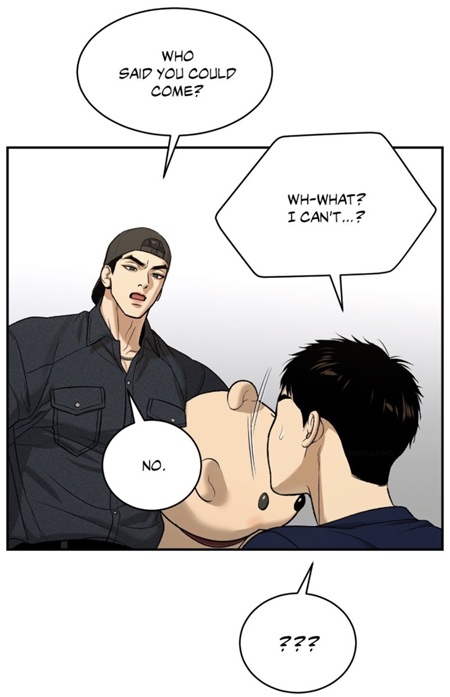 (chapter 87) For him, this trip was related to work, while in reality it was a date in disguise.
This becomes clearer when contrasted with the main couple. Between Kim Dan and Joo Jaekyung, communication is constrained, indirect, and often misaligned, as both are suffering from a low self-esteem and their past traumas. Desires are hidden behind habit, duty, or technical language. By contrast, the dialogue between Yoon-Gu and Choi Heesung is strikingly explicit. Both second leads speak readily. They articulate preferences, make requests, and voice dissatisfaction without visible hesitation. The only difference is that Heesung allows misunderstanding to persist. Joo Jaekyung abruptly corrects it. Neither approach is emotionally generous—but only one produces shock rather than slow erosion.
To conclude, this apparent fluency masks a deeper problem. What is missing here is not expression, but reflection.
Earlier, Yoon-Gu’s actions were shaped by obligation, imitation, or conditional promises (cleaning the floor, holding equipment or a bottle, proving usefulness). Here, the initiative is internal. He is no longer reacting to instructions; he is testing the possibility of recognition. (chapter 88) The desire precedes permission.
The tragedy of the moment lies not in the refusal itself, but in how it is answered. Heesung does not respond to the desire embedded in the question. He bypasses it with a technical explanation — size difference — which neutralizes the emotional risk Yoon-Gu has taken. 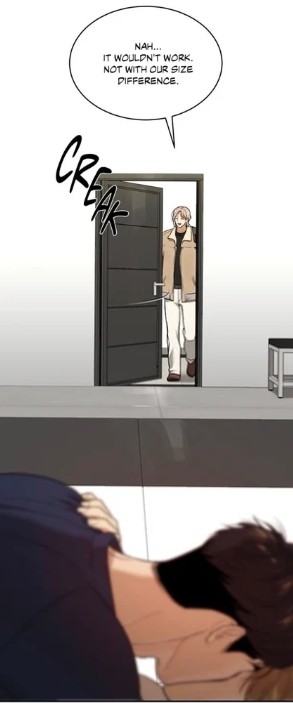 (Chapter 88) The answer restores hierarchy without acknowledging the transformation that has already occurred. Secondly, the answer closes the future by appealing to a supposedly objective limit. Yoon-Gu can never be his sparring partner. The best he can do is hold the mitts and nothing more. The fox is using his seniority and body to have the final say.
This is where Heesung’s pride in knowing turns into arrogance. His explanation contradicts the very logic that governs the gym itself. Joo Jaekyung has just demonstrated explicitly that technique outweighs physical size, that discipline and practice can reverse power relations. 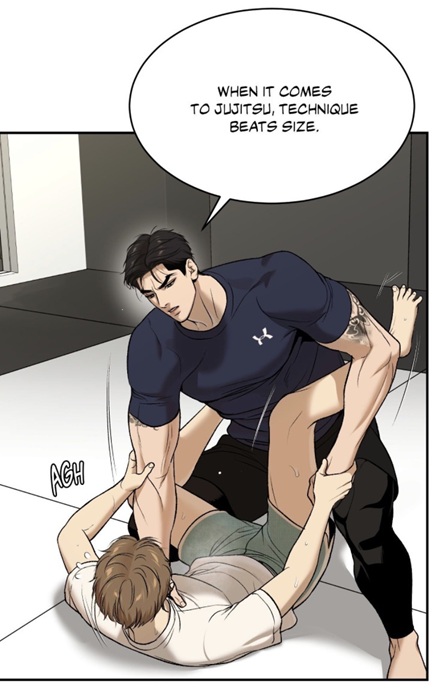 (chapter 88) Under that framework, Yoon-Gu is not disqualified; he is qualified. He has trained. He belongs. So technically, Yoon-Gu could indeed beat the actor, as the “puppy” has trained for a long time at Team Black.
Yet Heesung’s knowledge is not grounded in the present conditions of Team Black. It is grounded on his past experience: he received special training from Joo Jaekyung. In other words, he is biased. Heesung prides himself on knowing.  (special episode 1) He knows people’s patterns.
 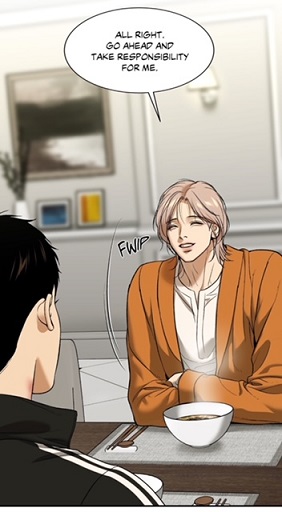 (special episode 1) He knows how relationships fail.
  (chapter 33)
 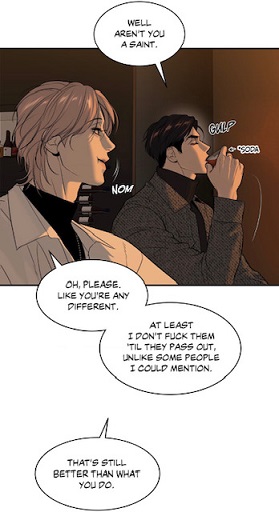 (chapter 33) He knows what he does not want. His language is saturated with judgment shaped by past experiences: lovers who become “too clingy,” attachments that turn inconvenient, people who should remain “better off” elsewhere
 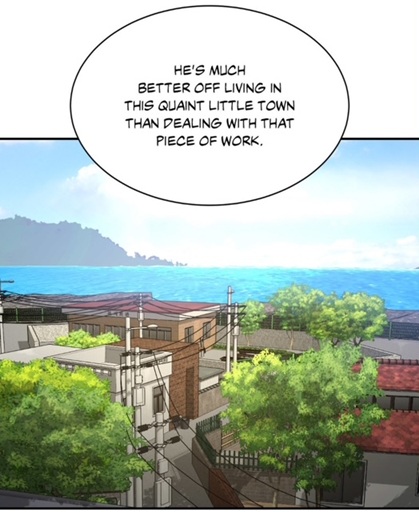 (chapter 58). This knowledge is not neutral; it is retrospective and comparative. It is built from what has disappointed him before, and it governs how he evaluates others in the present. He views himself as superior to the champion morally.
This is where the symbolism of the “grass being greener on the other side” becomes essential.  (chapter 33) Heesung’s orientation is never toward what is unfolding, but toward what might be better elsewhere—another partner, another configuration, another future. His repeated invocation of a “soulmate” is revealing: it displaces intimacy into a hypothetical horizon. By looking at the grass, he is overlooking the flower. Love, for him, is something to be found later, once the conditions are ideal. What exists now is always provisional, always lacking, always subject to replacement. He needs the “perfect” lover, and in his eyes, Potato doesn’t meet his conditions: too innocent and too young.
  (special episode 1) This explicates why the young fighter is only considered as “fuck buddy”.
 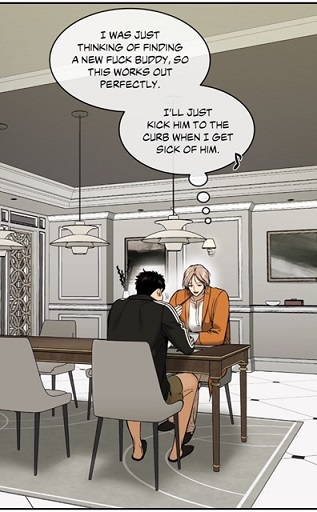 (special episode 1)
Potato exists precisely within this gap. Because he wanted to take responsibility.  (special episode 1), he is present, available, even emotionally invested—but he is never treated as sufficient. He is smaller (chapter 88), younger and as such less experienced, he is positioned as someone who does not yet qualify as a sparring partner, or even less as a boyfriend. Observe how he presented his relationship to doc Dan.
  (chapter 58) Heesung’s use of the pronoun “we” is, on the surface, inclusive. Linguistically, it frames his relationship with Potato as mutual, shared, and consensual. But pragmatically, it does the opposite. The “we” is spoken over Potato’s head, not with him. Thus Potato is physically present but discursively absent. He does not confirm, nuance, or reciprocate the statement verbally. The pronoun thus becomes a rhetorical appropriation rather than a sign of partnership.
What makes the remark particularly uncomfortable is the context: Heesung is not speaking to Potato, but to Kim Dan. The sentence is not meant to communicate within the relationship; it is meant to display the relationship to a third party. In that sense, “we” functions as a prop. It allows Heesung to stage intimacy without assuming responsibility for how that staging affects the person he claims to include. He is not saying that he is dating Yoon-Gu either. In other words, he is behaving like Joo Jaekyung in season 1.  (chapter 31) He denies the existence of feelings and attachment.
The embarrassment of Potato is not accidental. It is structurally produced by the asymmetry of the situation. Heesung controls the narrative, the tone, and the implication. By adding “in more ways than one,” he sexualizes the bond implicitly, while maintaining plausible deniability. Nothing explicit is said; everything is insinuated. This is knowledge without accountability. Heesung knows exactly how the line will land—on Kim Dan, and on Potato—but he does not take responsibility for either impact.
On the other hand, Heesung feels so comfortable around doc Dan, that he is willing to divulge more. He assumes Kim Dan will “understand” him. He is speaking in a coded register, relying on shared cultural assumptions: that closeness implies sexuality, that sexuality implies connection. In doing so, he treats Kim Dan as a potential ally in interpretation, not as a moral interlocutor. He expects recognition, perhaps even complicity, rather than reprimand or judgment.
This is where the contrast with Joo Jaekyung becomes sharp. Joo Jaekyung struggles to name intimacy and often hides it behind work or discipline—but he does not instrumentalize language to control  (special episode 1) or humiliate the other.
 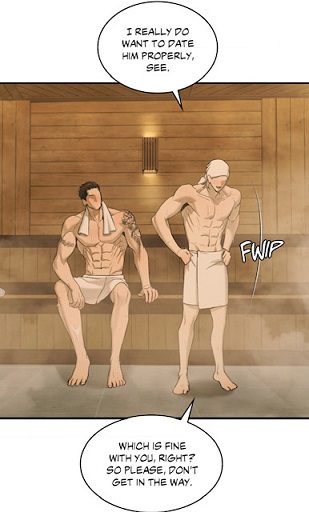 (chapter 34) Heesung, by contrast, is fluent. He can name, joke, insinuate. What he lacks is restraint and responsibility. His ease with words does not signal emotional intelligence; it signals control.
Heesung does not call Yoon-Gu weak outright, but the hierarchy is unmistakable: Potato is handled (chapter 88), redirected 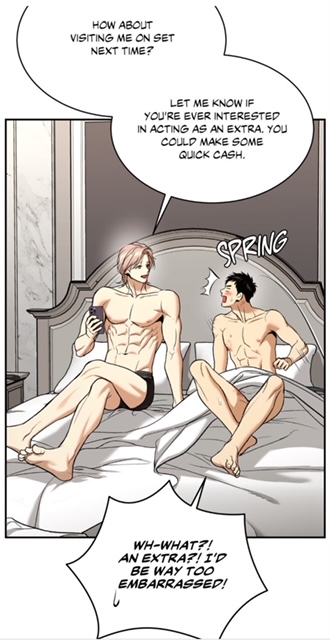 (special episode 2), corrected. (chapter 88) Even when Heesung intervenes on his behalf, it is not through shared responsibility but through dismissal—deciding what is best for him without asking what he truly wants.
This lack of responsibility is crucial. Responsibility, in Fromm’s sense, is not obligation imposed from above; it is the willingness to respond to the other as a subject whose needs and presence matter now. Heesung does not assume this stance. He neither commits nor withdraws cleanly. Instead, he hovers—knowing enough to judge, but refusing the burden of staying.
This explains why Heesung reacts so strongly to the relationship between Kim Dan and Joo Jaekyung. He does not simply misunderstand it; he rejects it (chapter 31) because it violates his model of love. Doc Dan is not introduced or claimed as his boyfriend. For him, it is simply related to the athlete’s jinx. 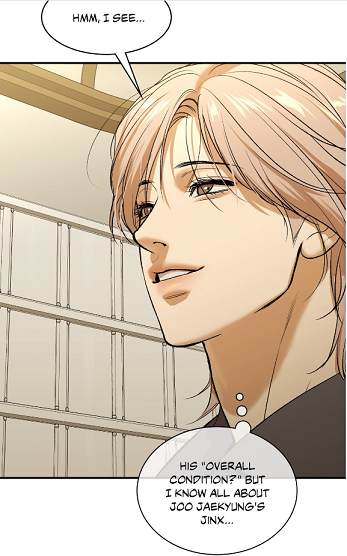 (chapter 32). It has no declared endpoint, no moral clarity (chapter 34), no soulmate label. Rather than engaging with what the relationship is doing —how it functions, how it transforms both participants—Heesung tries to name it away: a jinx, a mistake, a lack of feelings. Naming, here, becomes a defense against involvement.
The scene in the penthouse crystallizes this refusal.  (chapter 34) Heesung enters fully aware of what he is likely to witness. He is not naïve, nor totally surprised. Hence he doesn’t flee right away. Yet instead of acknowledging the reality before him, Doc Dan is not someone the fighter fucks, until he passes out, (chapter 33), he reframes the encounter as an accusation. The man is crazy.
  (chapter 34) Joo Jaekyung becomes the problem, the one who “deserves to suffer.”
 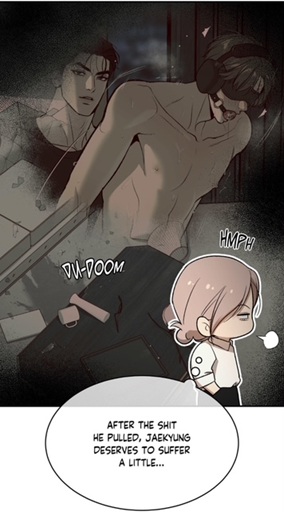 (chapter 58) This moral displacement allows Heesung to maintain distance: if Jaekyung is guilty, then no self-examination is required. Forgiveness—central to this arc (from 79 to 89)—is rendered impossible, because forgiveness would require recognizing shared vulnerability rather than assigning blame.
Potato, by contrast, is repeatedly asked to adapt. Earlier, he cleans, waits  (chapter 25), accepts deferral. Later, he is displaced entirely. Unlike Kim Dan, who gradually moves from imposed participation to earned agency, Potato is never given a space where effort leads to recognition.
  (chapter 85) However, this panel implies that the young man has already been able to enter competition. Striking is that his promise at the seaside sounds like commitment
 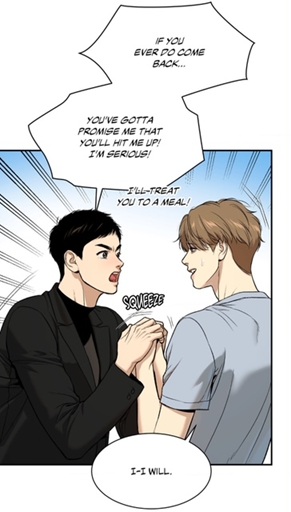 (chapter 59), but the reality diverges. It only binds doc Dan. If the latter returns to Seoul, he has to promise to train with Potato. The reason is simple. He is already committed to the actor, he is already at his beck and call. Potato’s promise echoes the earlier promise forced upon Kim Dan by his grandmother: a future-oriented vow that justifies present sacrifice while guaranteeing nothing in return.
  (chapter 11)
This is the structural tragedy of the Heesung–Potato dynamic. There is confidence and knowledge—sharp, observational, even insightful—but it is not paired with responsibility. And without responsibility, respect and care collapse into condescension. Potato is not met as an equal in becoming, but as someone perpetually not-yet-ready. While Yoon-Gu had been deeply affected by doc Dan’s departure. 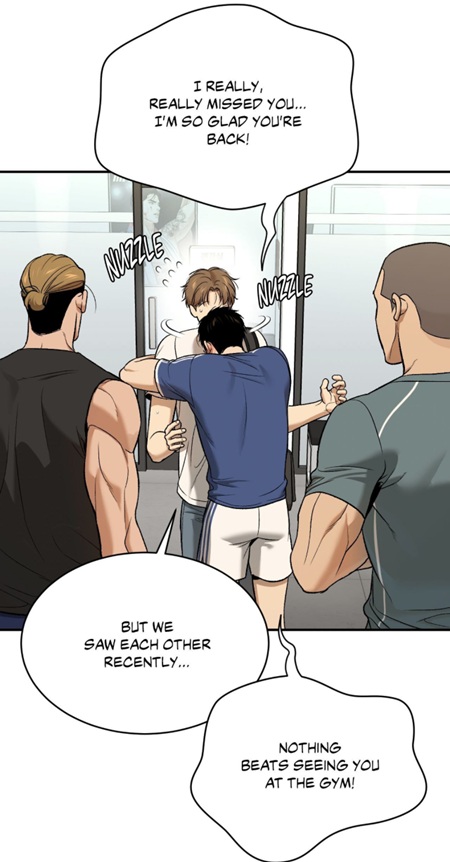 (chapter 78), he didn’t remind doc Dan of his promise. At the same time, observe that none of the fighters apologized or promised something. When they hugged the doctor, they didn’t pay attention to the physical therapist’s reaction: his passivity and silence. The “laugh” lacked genuineness and felt wrong at the time.
  (chapter 78)
But let’s return our attention to the petals Heesung and Potato. Placed beside Joo Jaekyung and Kim Dan, the contrast is stark. Jaekyung lacks fluency, but not commitment. He does not know how to speak love, yet he stays. Heesung knows how to speak about dating and love, hence he offers a bouquet of roses. But he does not remain when love demands endurance rather than evaluation.
Secondly, Heesung embodies selfishness, which is also perceptible the way he appears at the gym. (Chapter 88) He had planned to use the gym without the champion’s consent and knowledge. And Potato was not expecting the presence of the main couple either. 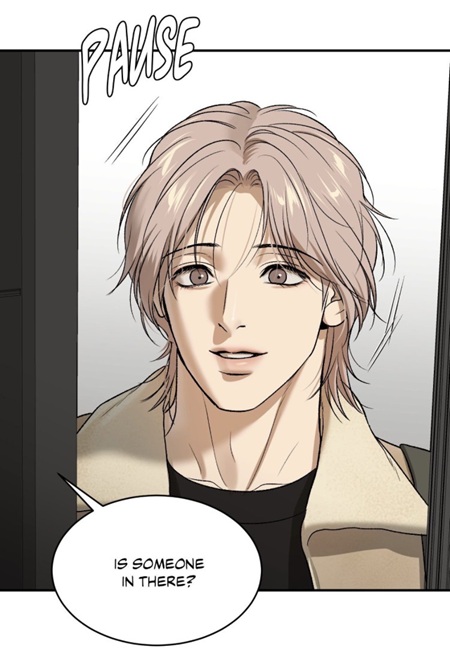 (Chapter 88) This is how it dawned on me why Mingwa recreated such a situation for Heesung. Observe his reaction, when he opened the door. He never answered the question to Potato. In fact, he slammed the door and kept his thoughts to himself. (chapter 88) As you can detect, he remained silent the whole time. It was, as though he was ignoring his lover.
What ultimately exposes the asymmetry in Heesung and Yoon-Gu’s relationship is not overt exploitation, but silence. Episode 88 stages this with remarkable precision. Heesung enters the gym without coordination (chapter 88), without consent from its owner, and without paying any visible cost. He does not announce himself as a guest, does not ask permission, and does not explain his presence. Instead, the intrusion is normalized through omission. Silence becomes the mechanism by which power circulates unnoticed.
Crucially, Yoon-Gu is excluded from the truth of the situation. Readers understand why Heesung is there; Yoon-Gu does not. The actor’s internal reaction (chapter 88) can be read as a moment of comic frustration. In fact, it reveals something far more consequential: this visit was never conceived as a shared activity with Yoon-Gu at all. The training session was not planned for him, nor with him. Yoon-Gu was not included as a subject in Heesung’s intention. He was a means.
This internal monologue exposes the logic of the intrusion. Heesung did not come to train with Yoon-Gu, nor to support him, nor to acknowledge his aspirations. He came to work off his own emotional agitation, to use the gym as a private outlet. Therefore it is not surprising that Yoon-Gu’s presence is reduced to him holding the mitts. His presence is incidental—useful, but not constitutive. When the situation threatens to escalate (chapter 88), Heesung does not think, What will happen to Yoon-Gu? He thinks only of himself: his inconvenience, his exposure, his embarrassment.
That omission is decisive. It confirms that Yoon-Gu is positioned not as a partner in training, but as an accessory to Heesung’s fitness and fun. He provides access, labor, and cover, yet remains excluded from knowledge and from choice. This mirrors an earlier pattern: just as Kim Dan once provided unpaid care under the guise of compensation (chapter 32), Yoon-Gu now provides unpaid labor and institutional access under the guise of familiarity and generosity
 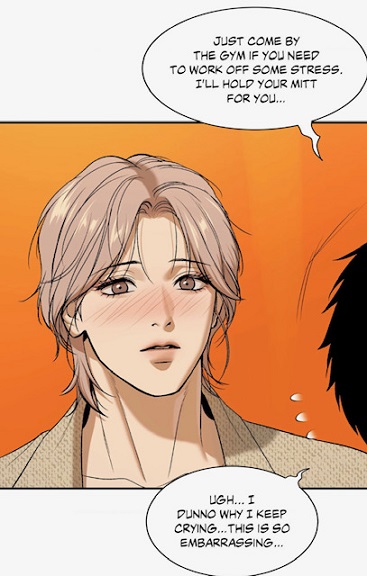 (chapter 35). In both cases, Heesung benefits from proximity without assuming responsibility for the other person’s risk. Silence, here, is not neutral—it is the mechanism by which that asymmetry is maintained.
At the same time, this regret (chapter 88) confirms that Heesung knows he has crossed a boundary. Yet this awareness produces no corrective action. He does not warn Yoon-Gu, does not acknowledge the risk he is creating for him, and does not assume responsibility for the consequences of being discovered. His concern remains entirely self-directed: embarrassment, inconvenience, exposure. Yoon-Gu’s position is not considered.
The irony is that this silence is beneficial for the chow chow . (chapter 88) It actively conceals Yoon-Gu’s complicity while simultaneously depending on it. Heesung could not have accessed the gym without Yoon-Gu. The most plausible inference is that Yoon-Gu provided entry—either by unlocking the space or by lending legitimacy to Heesung’s presence. Yet when the moment of confrontation approaches, Heesung does not speak. (chapter 88) He does not answer Yoon-Gu’s question—“Is there someone in there?”—because answering would reveal responsibility. Another important detail is that though Yoon-Gu provided the access, he simply followed the actor. The latter is the one opening the door to PT Room and not the member of Team Black. It exposes that the fox is really the one committing the wrongdoing, and he can not blame the chow chow for it.
Silence, here, is not absence of speech but a strategy of avoidance. (special episode 1) Heesung does not negotiate, explain, or repair. He doesn’t give any excuse. He moves through spaces as though access were guaranteed and consequences optional. However, this time, his silence is used against him. 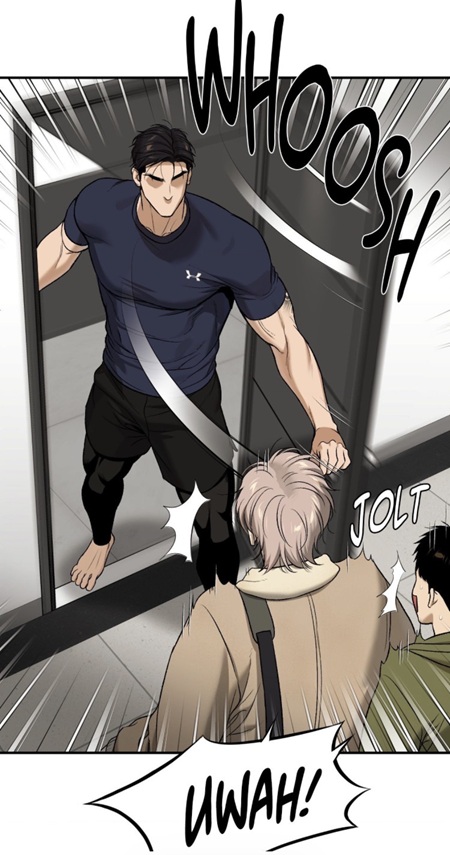 (chapter 88) Forgiveness, responsibility, and mutual recognition—central to the arc unfolding elsewhere—are entirely absent from his conduct. Where Joo Jaekyung begins to redistribute choice and accountability, Heesung consolidates control by refusing to speak.
This is why Heesung cannot embody forgiveness in this arc. Forgiveness requires acknowledgment; acknowledgment requires speech; speech requires responsibility. Heesung chooses none of these. Instead, he preserves his self-image by leaving others to absorb the impact of his actions. Yet, in episode 88, it is no longer possible.
In this sense, the flower associated with Heesung and Yoon-Gu never opens. Knowledge is present. While Heesung understands dynamics, motives, and outcomes, the chow chow heard all the information  (chapter 52) about the switched spray, but he only reported one thing: Kim Dan is innocent. So while insight is present, responsibility is systematically deferred. Without responsibility, respect cannot follow. And without respect, what appears as connection is merely use, quietly sustained by silence.
In the end, the other two petals do not fail because of ignorance. They fail because knowledge, when severed from responsibility, becomes a tool of avoidance. Love is postponed indefinitely—always imagined, never practiced. On the other hand, since he knows about the champion’s past sexual habits, it signifies that the actor became the witness of TRUE LOVE. Joo Jaekyung is kissing doc Dan. 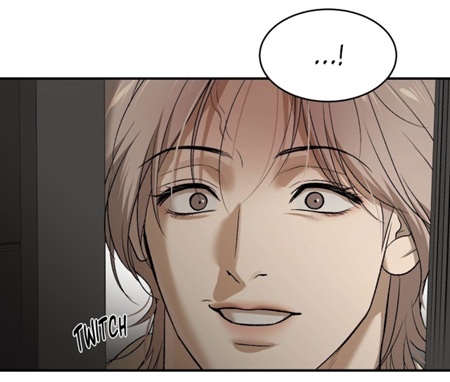 (chapter 88) The irony is that the actor didn’t realize this. He had the impression to be exposed to a similar scene than in the penthouse. (chapter 88) It is important because with this knowledge, he can expose the truth to doc Dan: the athlete loves him. In the past, he could say this without explaining his statement.
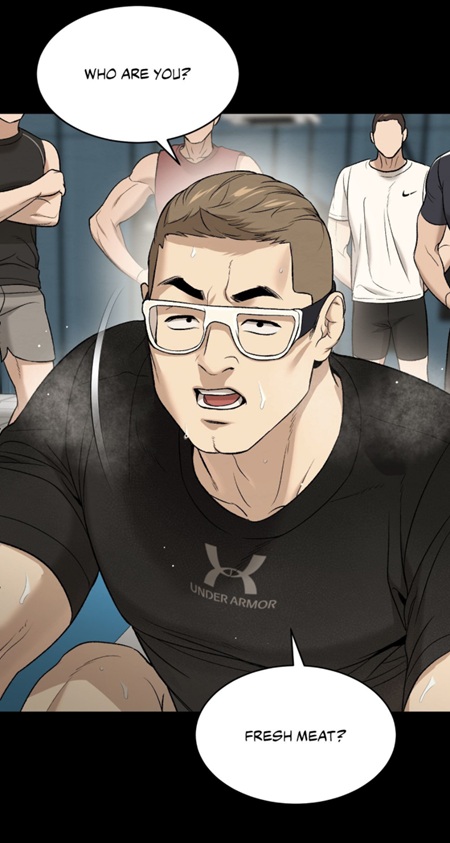
  (chapter 35) And now, pay attention to the logo on the doctor’s t- shirt.
  (chapter 88) First, it appears on the left side, positioned close to the hamster’s heart. Moreover, it looks like an orange eye. Orange is not only the color of Heesung the fox
  (chapter 34), but also of friendship and social communication and interaction.
Orange Represents
Adventure and risk taking: Orange promotes physical confidence and enthusiasm – sportsmen and adventure-seekers relate well to orange.
Social communication and interaction: Orange stimulates two-way conversation between people – in a dining room when entertaining it stimulates conversation as well as appetite. Friendship: Group socializing, parties, the community – wherever people get together to have fun and socialize orange is a good choice.
Divorce: The optimism of the color orange helps people move on – it is forward thinking and outward thinking. https://www.empower-yourself-with-color-psychology.com/color-orange.html
That means, doc Dan is on the verge of having true friends. Joo Jaekyung will stop demanding exclusivity by isolating doc Dan from the others.  (chapter 79) Besides, it is the same logo than when Yoon-Gu was spying behind the closed door.
 (chapter 23) That’s the moment Potato realized the truth about the couple: they were intimate. That’s the reason why I am convinced that Heesung will play the role of the messenger and mediator between the wolf and the hamster.
To conclude, I perceive the actor as the bridge between the two main leads. He embodies language, knowledge, love as feeling, but more importantly he stands for friendship and fun, notions which don’t exist in the main couple’s world yet.
That’s it for the first part. In the second part, I will examine the final panel and the significance of the fighters’ return.
Feel free to comment. If you have any suggestion for topics or Manhwa, feel free to ask. If you enjoyed reading it, retweet it or push the button like. My Reddit-Instagram-Twitter-Tumblr account is: @bebebisous33. Thanks for reading and for the support, particularly, I would like to thank all the new followers and people recommending my blog.



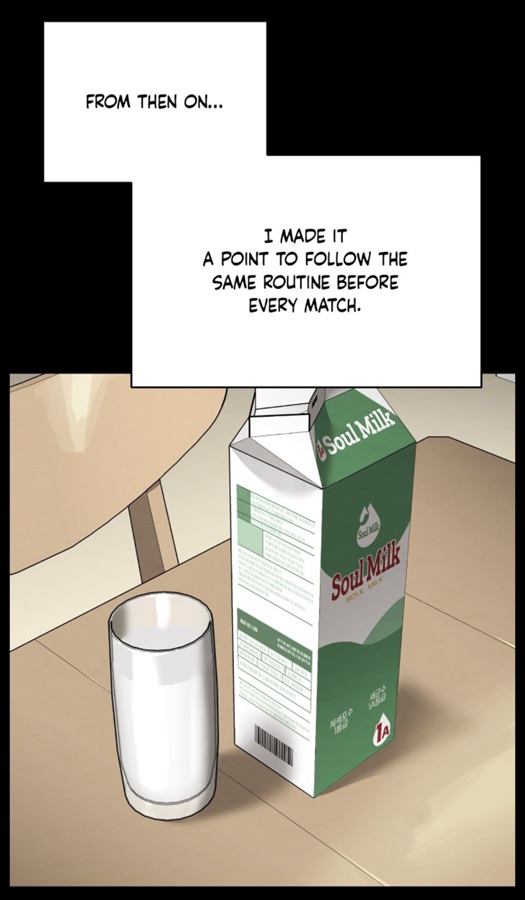 (chapter 75), the perfume
  (chapter 75), the nights of sex before a fight
  (chapter 75). His words seemed like a confession, a key to the riddle of the Night Emperor. But do we truly know him now? Yes and no. Yes, because his testimony reveals patterns we had only noticed before. No, because those patterns are only the ones he decided to share. The tattoos
 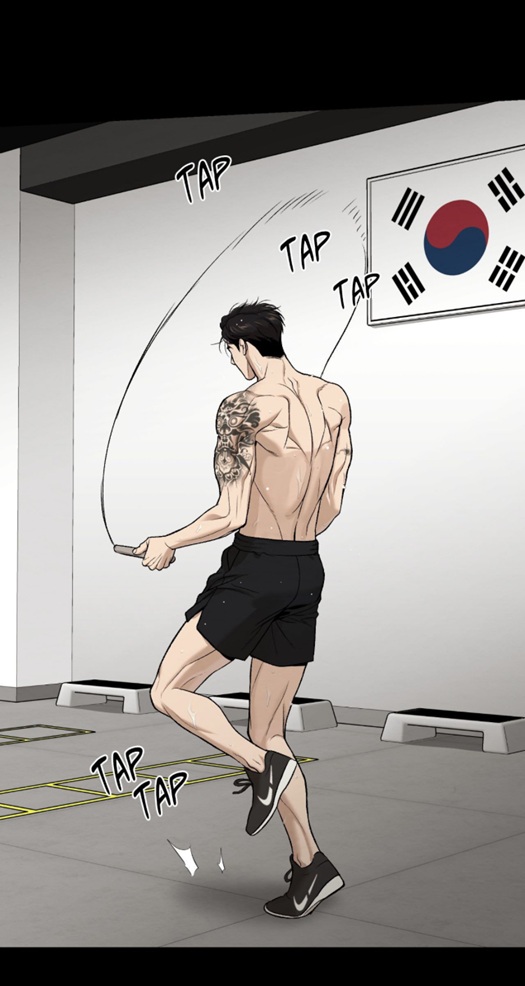 chapter 75) that suddenly appeared on his body
 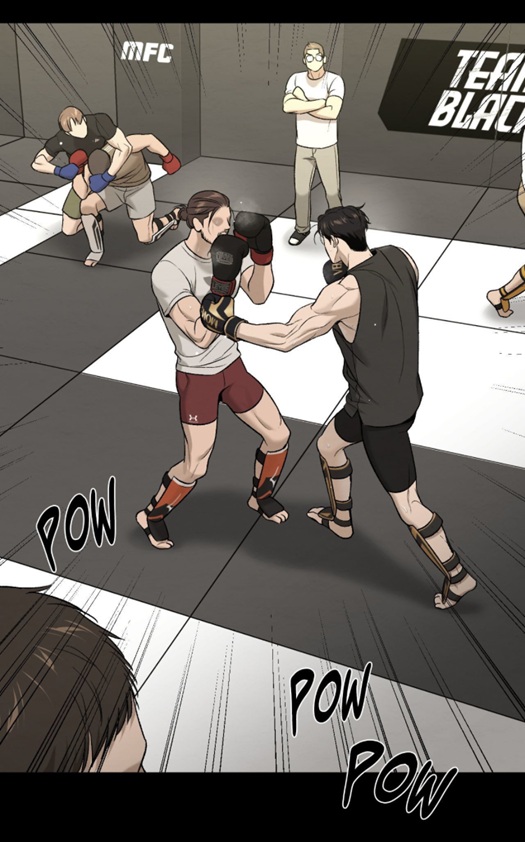 (chapter 75), for example, were left unmentioned — proof that silence still surrounds him.
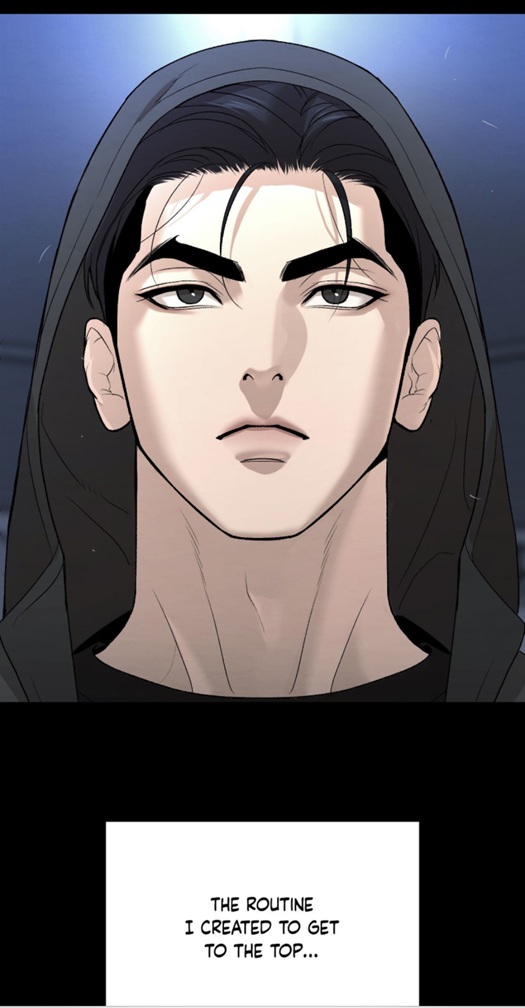 (chapter 75) Why fight as though every match were a matter of life and death? Why keep repeating the same acts, long after survival was secured?
  (chapter 75) What does the jinx truly represent for him — mere superstition, a ritual of control, or something he himself has not yet dared to name? For Jaekyung himself cannot fully explain it. He confesses what he knows — that sex steadies him, that milk soothes him, that perfume sharpens him — but he does not grasp what lies beneath these habits. The origin of the jinx remains hidden, lodged somewhere between memory and trauma, where even he cannot follow. Are these rituals mere superstition, a desperate bid for control? Or are they fragments of something deeper — pieces of a story he has never fully told, even to himself?
 .(chapter 75) They are the product of a long chain of humiliations, betrayals, and systemic exploitation, each layering onto the next until a young man’s raw talent was encased in a carapace of compulsions. To understand the jinx is to understand how the protagonist’s life collapsed around the word loser, and how the fighting industry transformed his private shame into public myth.
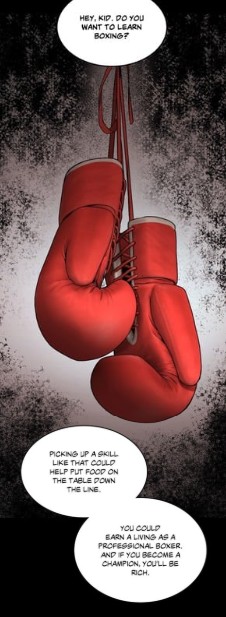 (chapter 72) Even before stepping into a professional cage, his life had been a series of trials to prove he was not worthless.
  (chapter 74) Hunger, poverty, bullying, insults— each branded his body with a language of violence. Among them came his father’s words, spat like a curse: loser.
 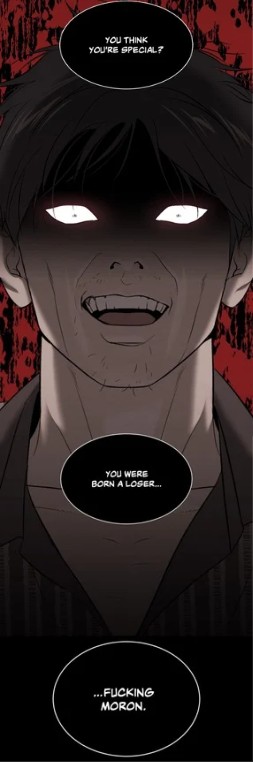 (chapter 73) That insult crystallized everything. The young boy absorbed it as truth, so much so that every later fight would be less about victory and more about silencing that single syllable.
 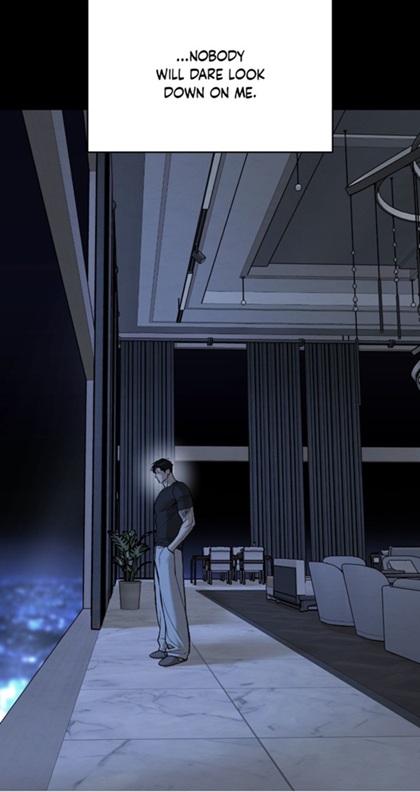 (chapter 75)
 (chapter 69)
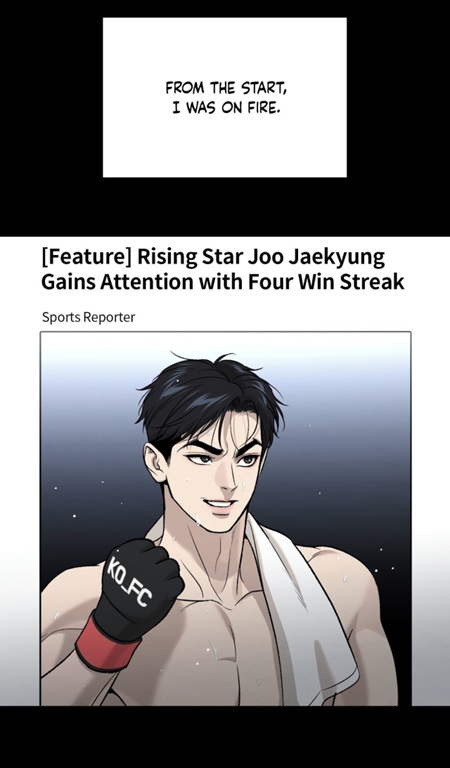 (chapter 75) — a boy who fought with the desperation of someone who had nothing else. Victory after victory gave him the illusion that he had escaped his father’s shadow. As long as he was winning, he could suppress the pain, bury the insult loser, and silence the memory of that cursed night when his father died and his mother abandoned him. Triumph became his shield, proof that he was not what he had said he was.
 (chapter 75)
  (chapter 75) To them, a fighter’s struggles had only one explanation: weakness. Park Namwook and the other coach dismissed his losses as nerves
  (chapter 75), as if the only measure of worth were what happened under the spotlight. They never thought to ask what kind of weight he was carrying, what kind of nights he was surviving before he entered the cage. While the other fighters were well aware of the champion’s insomnia
 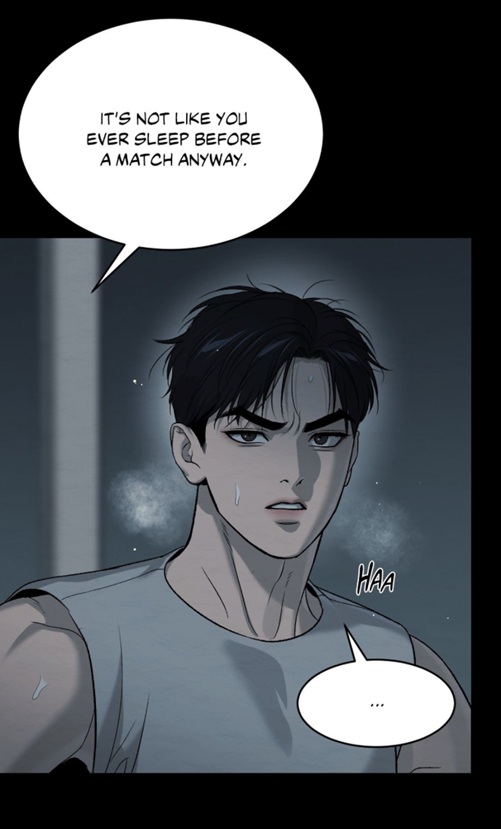 (chapter 75), Park Namwook still has no idea of the champion’s struggles. This shows how disconnected he is from his “boy”.
 (chapter 74) bodies to be tested, pushed, and discarded if they broke. Where Jaekyung’s defeat cracked open childhood trauma, they saw only performance failure. What he lived as suffocation and despair
  (chapter 75), they reduced to cowardice, bad luck or lack of discipline.
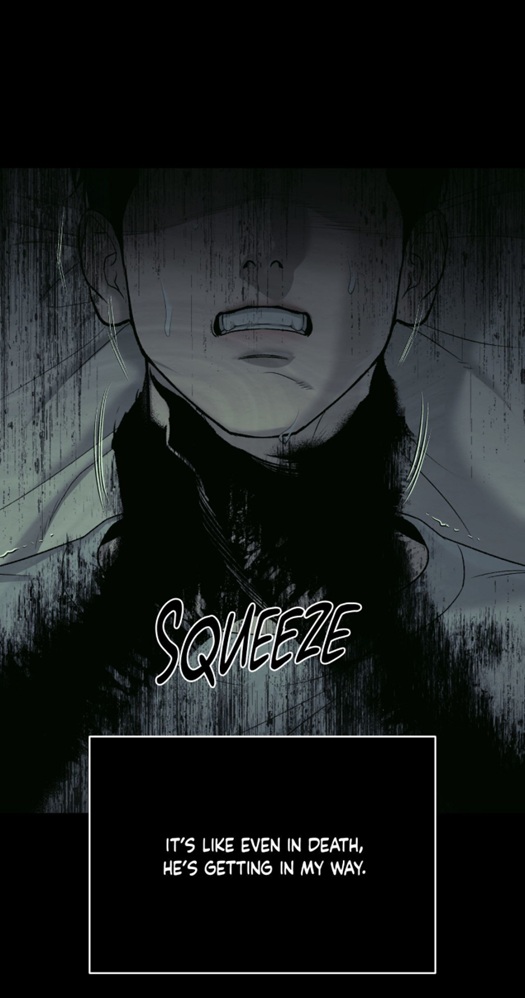
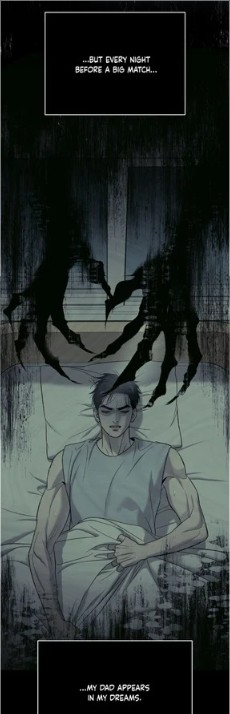 (chapter 75) Shadowed hands stretched over his body, pressing down, suffocating him as he tried to sleep. The man was dead, but still he choked the air from his son. It was, as if the father wanted to bring his son to the afterlife.
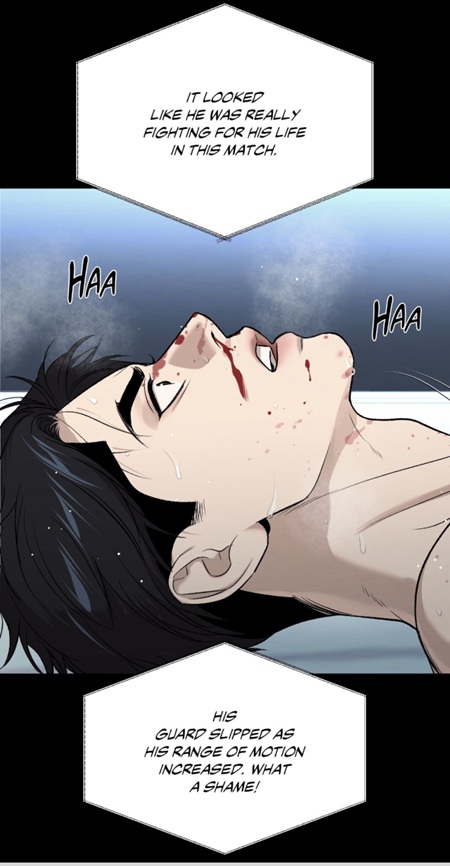 (chapter 75) Even before his first loss, Jaekyung fought like a cornered animal, pouring every ounce of strength into proving he could not be beaten. That’s why he rose so fast. But why? The reason is that all his opponents were reflections of his “father”.
  (chapter 29) Hence all the challengers have empty eyes and a smirk on their face, just like Joo Jaewoong.
  (chapter 75) Consequently, his matches always looked like life-and-death struggles. He wasn’t strategizing against a specific fighter; he was exorcising a ghost. That’s why he never refused a challenge. His opponent never mattered. Besides, as long as he could win, it didn’t matter.
  (chapter 75), the more the cracks showed — and the ghosts of his father and mother made every fight feel like a replay of abandonment and accusation. The five losses
  (chapter 75) were not just setbacks in his career; they were the repeated reopening of a wound that would never heal. Each one confirmed his father’s curse. Each one reinforced the sense that he was marked, that no matter how high he climbed, he would always be dragged down again.
 (chapter 73) To the boy, it was a cry for pain and survival — an instinctive urge to escape despair and criticism. To the father, it was betrayal. Already emasculated by failure and drink, he was reminded of his wife’s discontent, the specter of another abandonment. He lashed out the only way he knew:
  (chapter 73), and that the man’s final judgment on him would never be undone. Love and hatred, longing and guilt fused in that moment. He loved his father despite the abuse. And yet he would forever wonder if leaving — even just threatening to leave — had killed him. Worse, because death came so suddenly, there was no time left.
 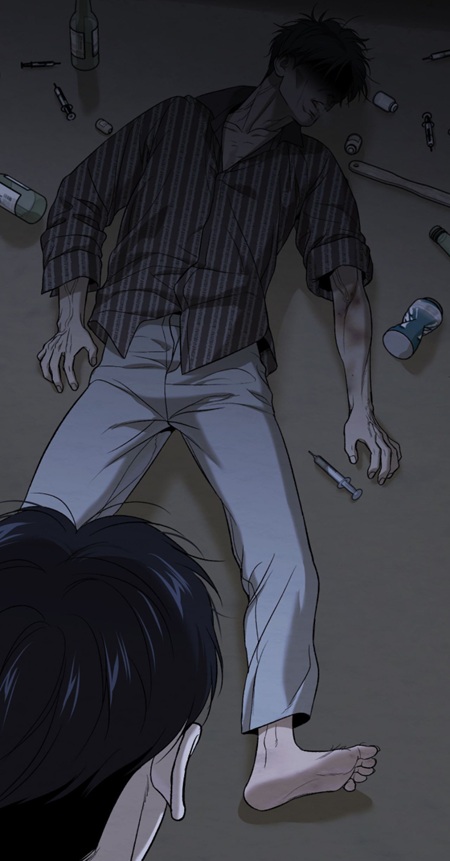 (chapter 73) The clock had stopped before forgiveness could be spoken, before the boy could say he had not meant it. From that moment on, time itself became his opponent: every match another countdown, every victory an attempt to outrun that night.
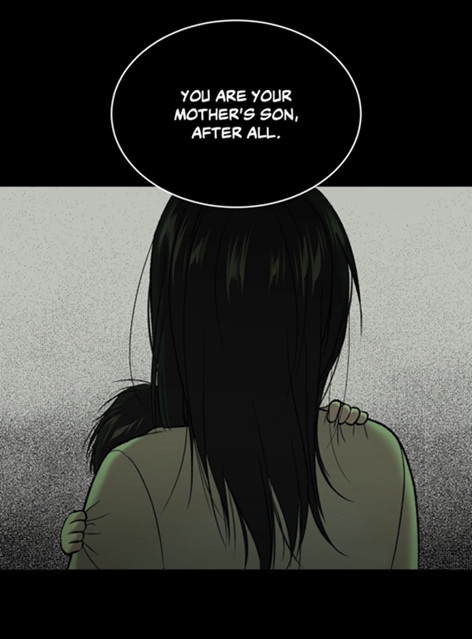 (chapter 73), unable to voice his own vulnerability.
 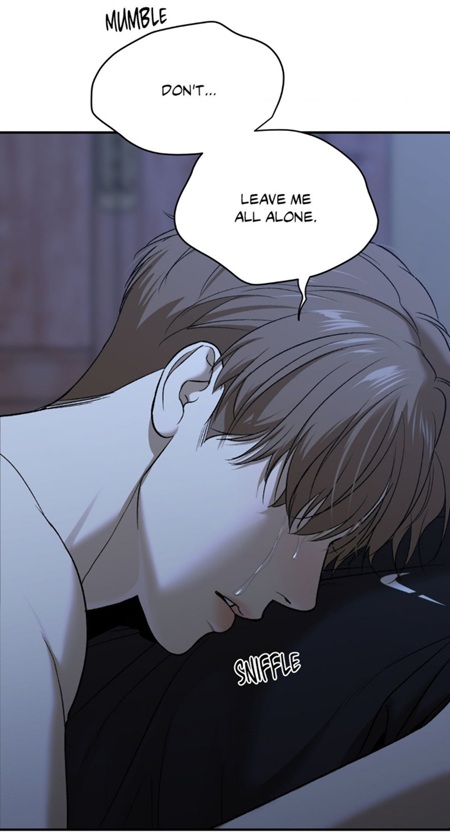 (chapter 66) — speaking not with fists or insults but with tears and an embrace.
  (chapter 66) His sleepwalking reacting to a simple touch
 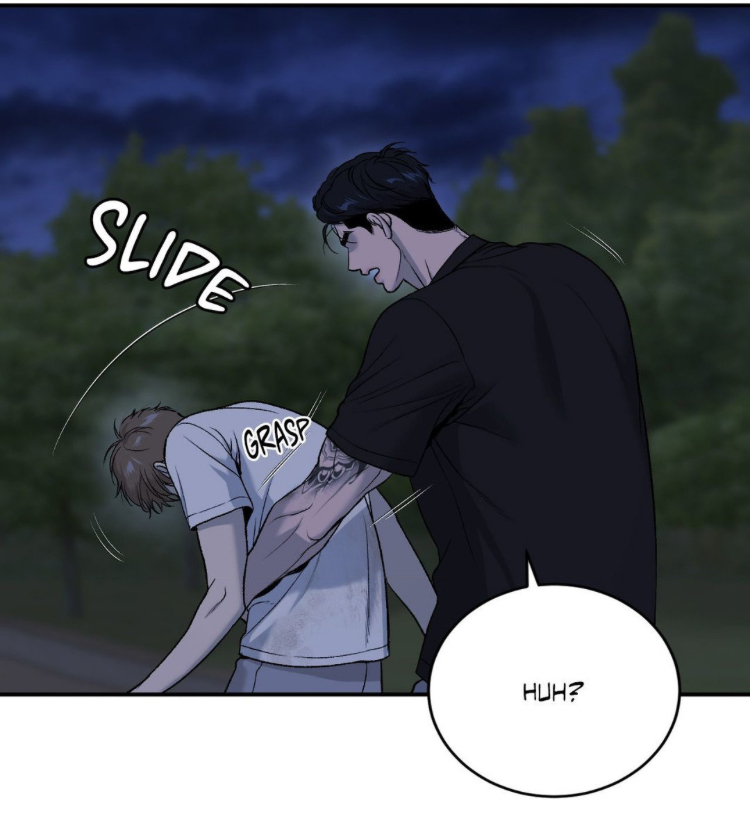 (chapter 65), his dissociative pleas
 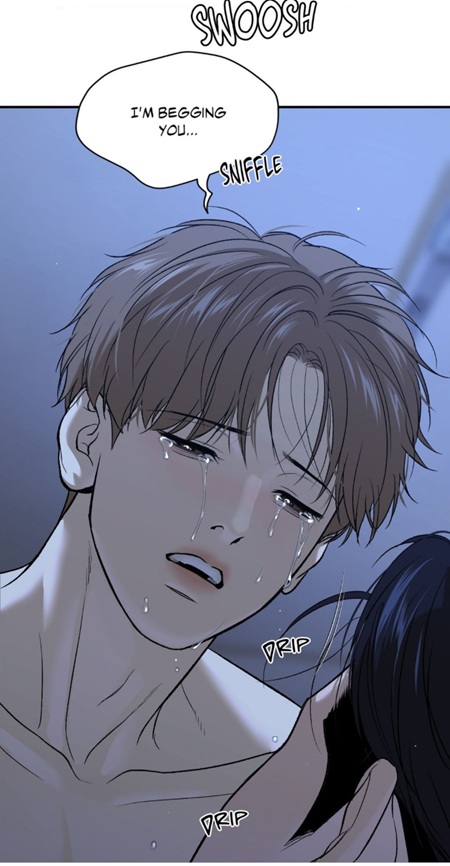 (chapter 66) give Jaekyung the words his father could not say. Where the father’s unconscious leaked out in aggression, Dan’s unconscious offers gentleness and honesty. Both men speak from a place deeper than reason; one chained Jaekyung to guilt, the other opens the possibility of release. In Dan’s trembling body, Jaekyung sees the tender reflection of his father’s hidden plea
  (chapter 73) Why does the champion have no grand-parents?
 (chapter 74) With no parents, no siblings, and eventually no wife, he had nothing to fall back on and saw in the criminal world another form of “family”. The family he created became his one fragile shelter — and when that shelter cracked, there was nothing left to hold him.
 (chapter 72) His violence expressed his powerlessness. And when his son shouted his desire to leave the “dump of a house,”
  (chapter 57) Violence and insult became his only idiom. “Loser” was not simply an accusation, but the displaced confession of his own defeat: I was abandoned. I failed. I have nothing.
 (chapter 73) The boy’s boxing talent was a source of pride — proof of strength — but also a threat. Strength meant escape. Escape meant abandonment. The father, who had already lost his wife and his dignity, projected onto his son the terror of losing everything once again. His resentment was not born of disappointment alone but of recognition (unconsciously): you are me, and you will leave me too.
 (chapter 65) The absence is not an oversight but a theme. Jaekyung comes from severed roots: no grandparents, no siblings, no extended family to lean on. Hence he was alone at the funeral.
 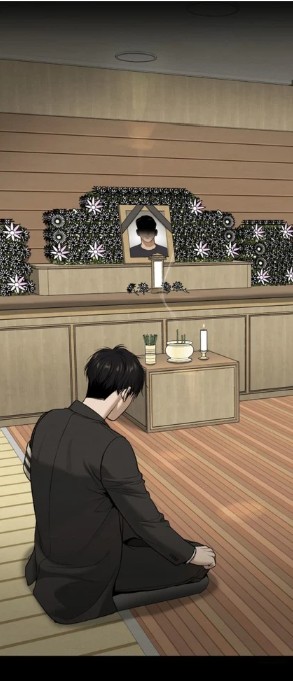 (chapter 74) His father may have been an orphan, just like his mother too. Therefore the latter was emotionally unavailable, and so he inherited not only trauma but also silence. By contrast, Dan has at least one surviving figure — flawed as she is — who keeps the family thread intact. That contrast makes Jaekyung’s bond with Dan all the more significant: it is not just romance, but an attempt to build a family line that never existed before him.
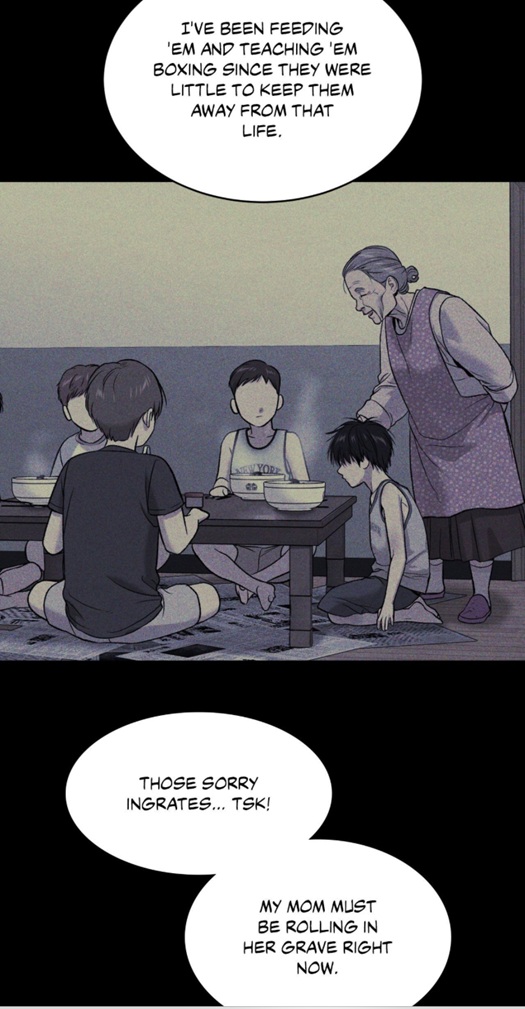 (chapter 73), while keeping Jaewoong’s own origins shrouded. Hwang had someone by his side — gentle, quiet, but present — while Jaewoong had no one, as according to me, the mother was counting on her “husband”‘s success and dream. The director’s stability, however fragile, was rooted in that maternal figure. Jaewoong had no such guide, and without it, he simply made the wrong choice.
 (chapter 74), she never once spoke to her son about it, never asked what he felt. She did not grieve with him, nor allow him to grieve. Besides, the main lead’s words were ambiguous: Was the father dead or had he abandoned his son too? The fact that she never asked exposes that it didn’t matter to her. She was not interested in the truth, her only concern was herself — her new life, her fear of losing it. Where the father left him branded, the mother left him erased.
 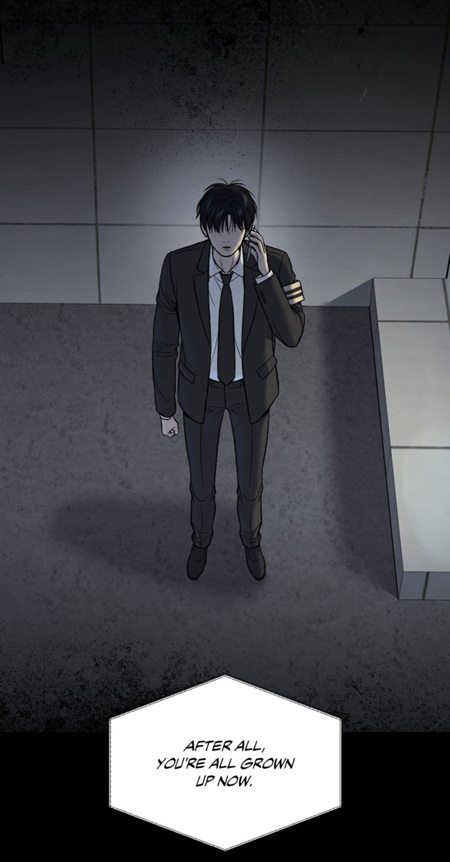 (chapter 75) One condemned him, the other abandoned him, and between them Jaekyung was left with neither recognition nor belonging.
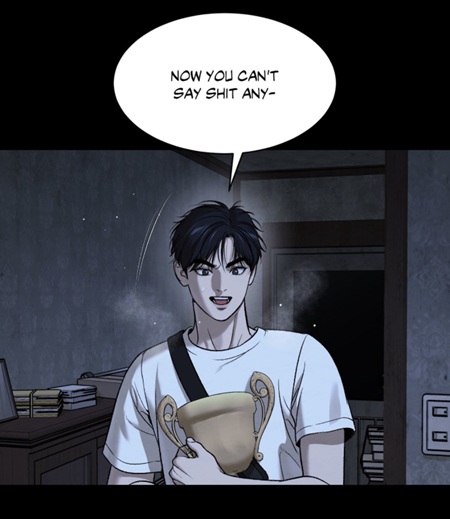 (chapter 73); every triumph, by the echo of rejection
 (chapter 73). To win was to prove his father wrong, but to stand alone in victory was to prove his mother right. Success and emptiness became inseparable.
 (chapter 56), seemingly fragile and dependent. But unlike her, he stays. Where the mother left, Dan endures. He only left because of the champion’s final words:
 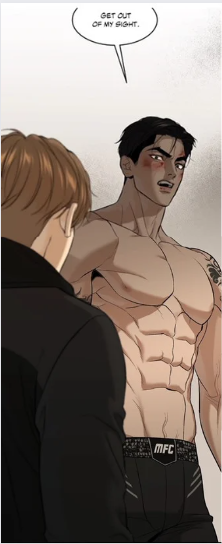 (chapter 51)
  (chapter 73) mirrors what the director later whispers to Jaekyung:
 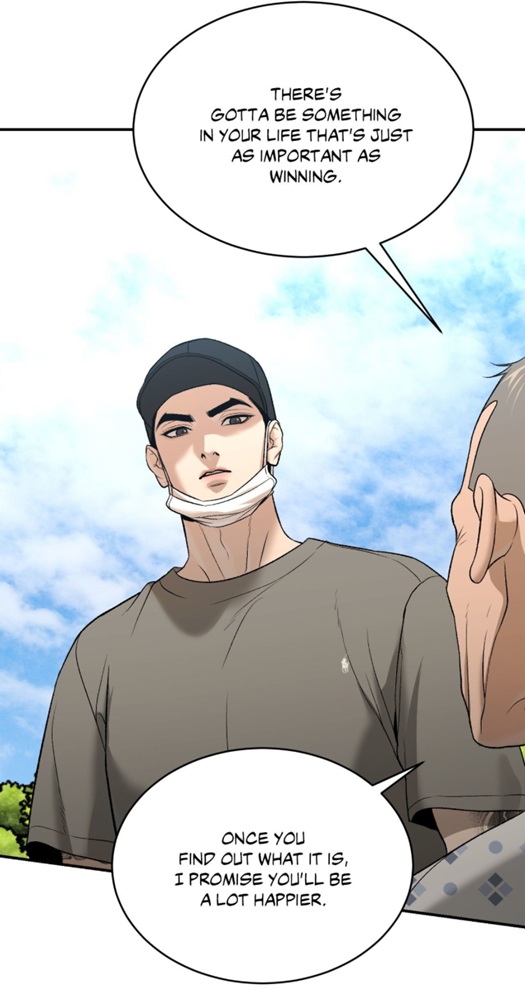 (chapter 75) Both men — the broken father and the regretful coach — carry the same hidden insight: that fighting cannot be the whole of life, and that reducing yourself to fists and violence only leads to ruin.
 (chapter 75) This is the wolf’s ritual in front of the tender mirror: the fighter who lived by curses and silence finally meeting their reflection transformed into gentleness and endurance.
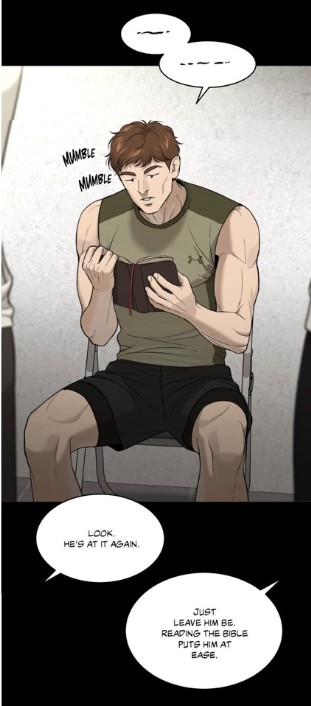 (chapter 75) This man’s jinx was startlingly simple: he read the Bible before every match. One book, one ritual, one anchor. To outsiders, it may have seemed quaint, even laughable, but to Jaekyung it was enviable.
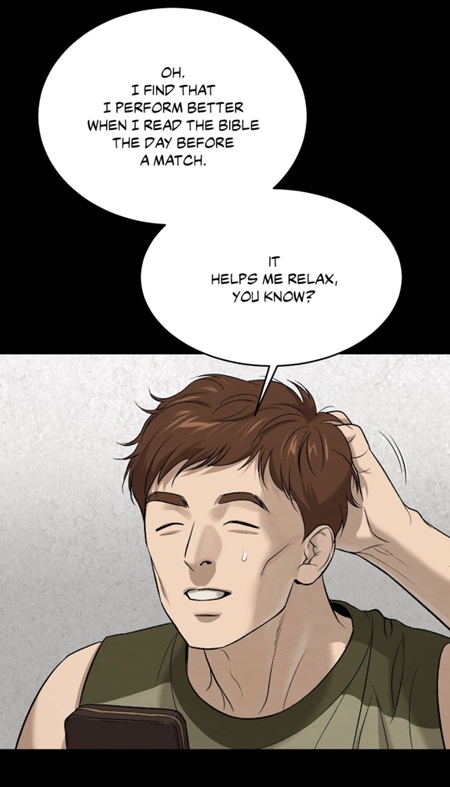 (chapter 75) When he prayed, it was not only for victory, but for coherence. Win or lose, the ritual bound him to a sense of belonging that Jaekyung had never tasted.
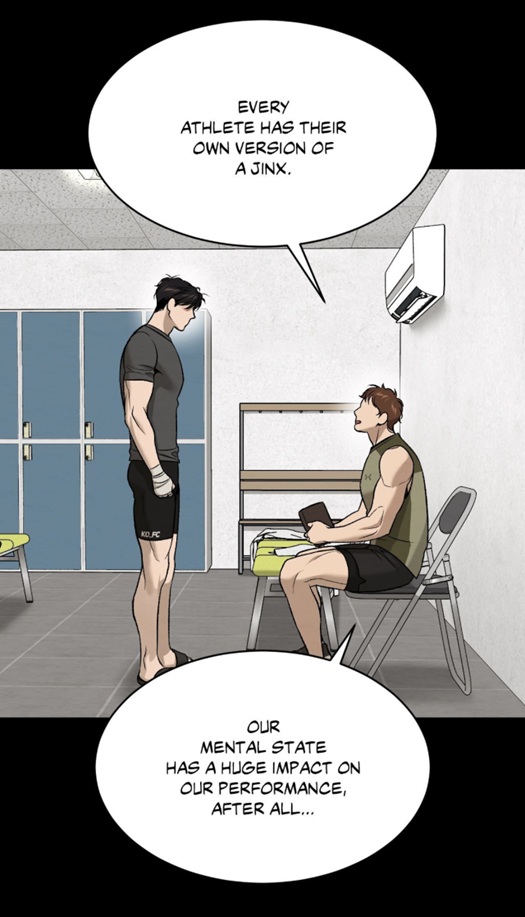 (chapter 75) If ritual could bend fate, he would build his own. But where the Bible fighter had a single, unifying story — scripture, God, fellowship — Jaekyung had nothing to draw on. No faith to lean on, no parental blessing to inherit, no safe home to return to. Instead, he began to stitch together a mosaic of rituals, each one disguising a different childhood wound. To outsiders it looked obsessive, neurotic, almost superstitious. To him, it was survival. Each gesture was both repression and remembrance, a scar disguised as armor. And this is the paradox: the rituals made him strong enough to survive, but too broken to live.
 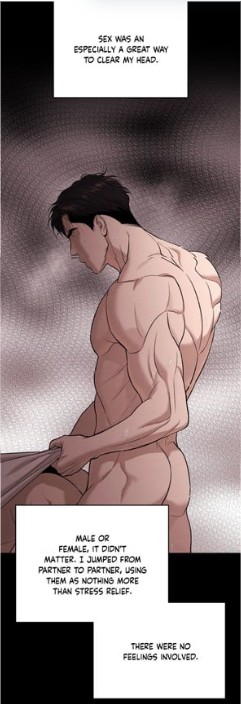 (chapter 75) By using another body, he cleared his head, numbed the loneliness, and convinced himself he was in control. But it was also a grim reenactment of abandonment: he could take without being left, dominate rather than risk being deserted. At the same time, he considered his sex partners as toys in order to avoid guilt. A toy can not die, it can be “thrown away”.
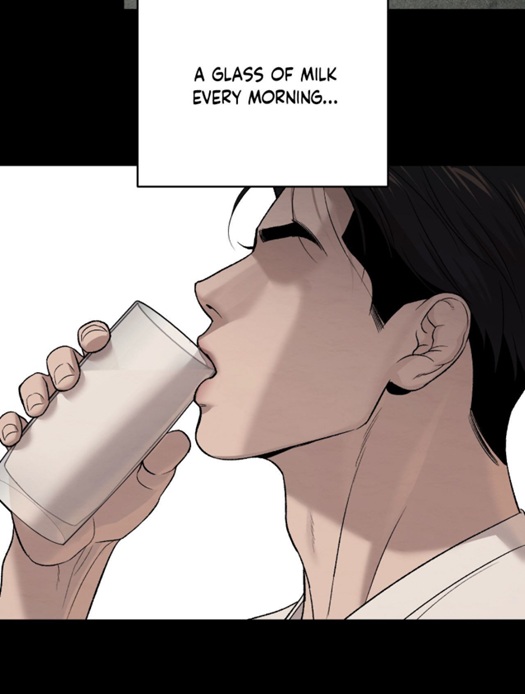 (chapter 75) But in truth it was a disguised memory of hunger
  (chapter 72), of nights when there was nothing to eat, of shame attached to poverty.
  (chapter 75) To drink milk was to rewrite the past: I will not go hungry again. Yet the act was also a reminder that he once had.
 (chapter 27) , self-punishment, the willingness to suffer endlessly for the cage. He didn’t fear pain. Their sudden appearance
  (chapter 75), a reminder that he had entered a machine in motion, a system that swallowed fighters whole and spat out statistics. From that point, the acceleration was merciless: by April, he was in the 272nd bout against Randy Booker
  (chapter 14); by June, the 293rd against Dominic Hill
  (chapter 40); and by July, the 298th against Baek Junmin.
  (chapter 50)
 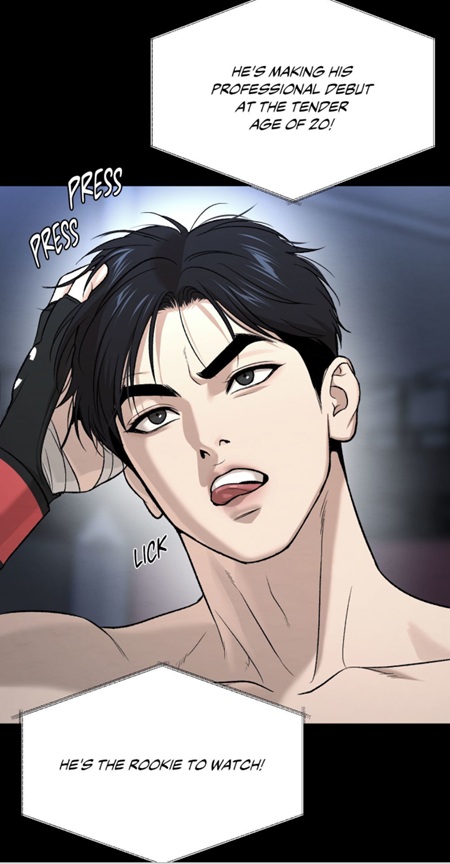 (chapter 75), he had not merely “built” a career, he had been consumed by one. There was no time to recover from injuries, no space to process victory, no room to integrate defeat. No wonder why his shoulders were in bad shape.
  (chapter 75) Every fight blurred into the next, every opponent older, stronger, more experienced. And yet Jaekyung fought them all with the same desperate, survival-driven ferocity.
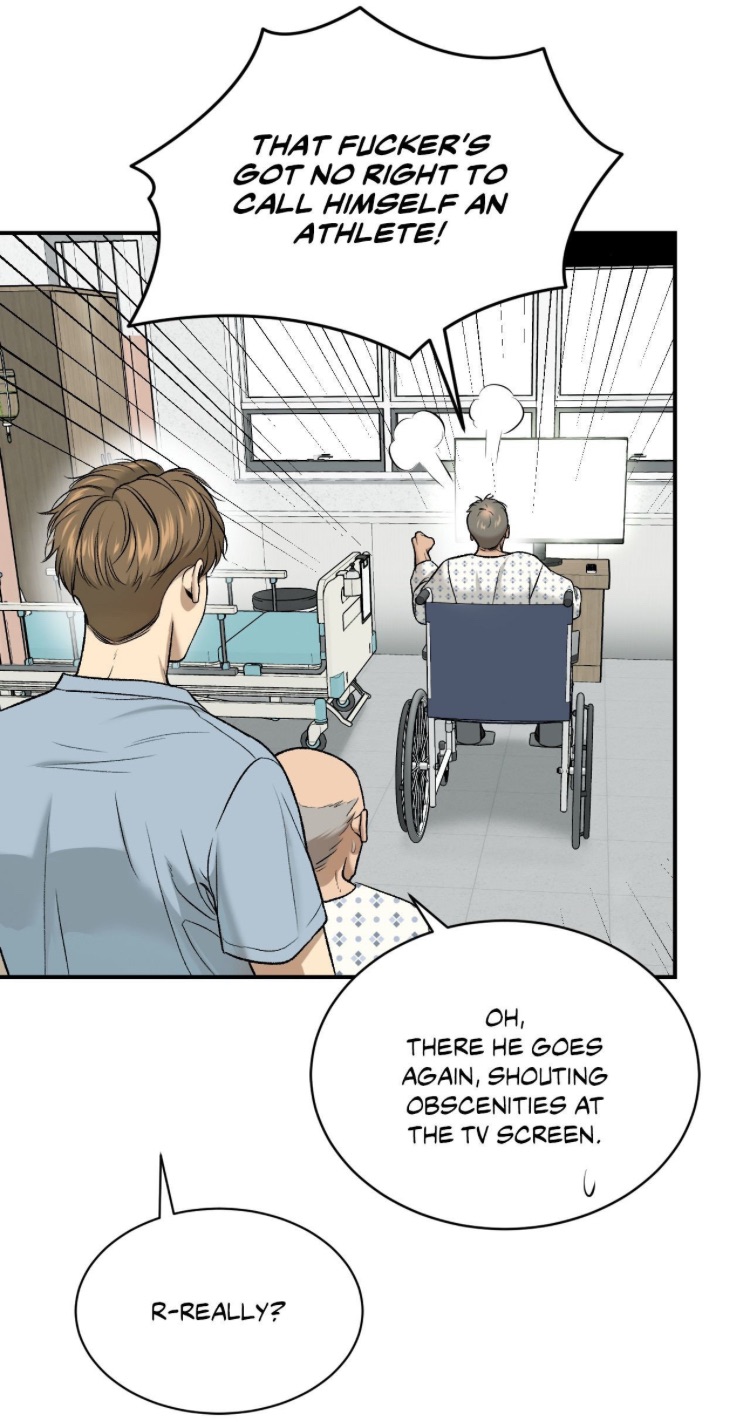 (chapter 71) and Dr. Lee
  (chapter 27) still called him an athlete — someone whose body required balance, protection, recovery. But MFC and KO-FC never did. For them, the main lead or his colleagues were addressed as
 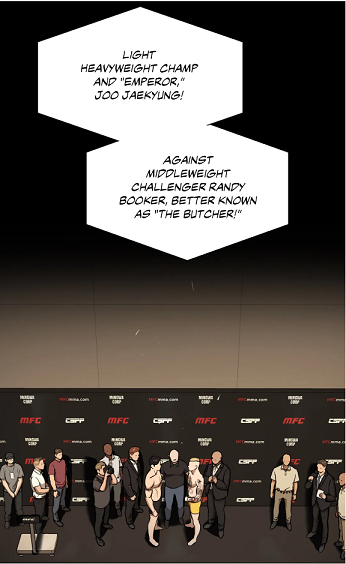 (chapter 14) “The Emperor”, “a crazy bastard”
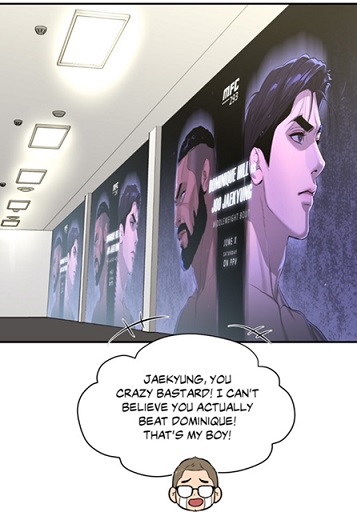 (chapter 40), “my boy”,
 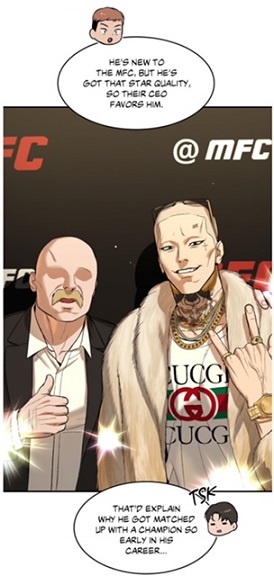 (chapter 47) “a potential star.” Not a person, not even a professional, but branding material — a body to be consumed by audiences and discarded once spent. The absence of the word athlete marks what he lost: recognition as a human being. And guess what?
 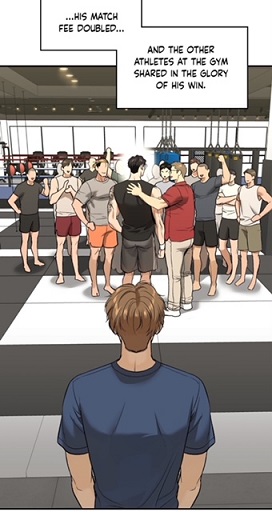 (chapter 41) Only doc Dan at the gym saw the fighters as athletes!
 (chapter 47). Thus only doctors are allowed to do them officially. But Jaekyung’s rise shifted that meaning. As “The Emperor,” he normalized tattoos for the new generation of fighters, transforming what once marked marginality into a badge of visibility. This is why even Oh Daehyun, one of his admirers and members of Team Black, now carries one:
  (chapter 8) The celebrity’s suffering literally redefined the aesthetic of the sport. His body, turned billboard, became part of the league’s branding.
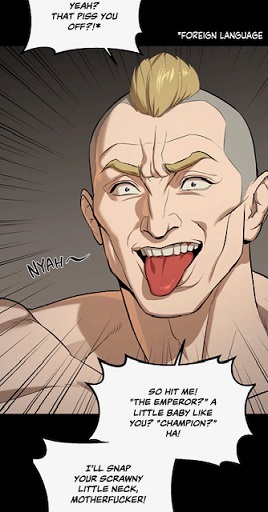 (chapter 14) ripping open the scar of his father’s “loser” and his mother’s absence and silent parentification. Not long after, an article exposed his shoulder injury
 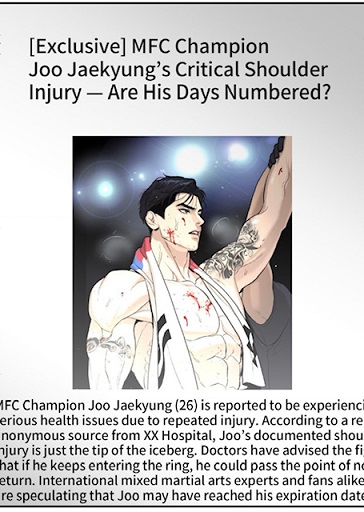 (chapter 35), reducing years of discipline to a liability on the page. Later came the suspension narrative
  (chapter 54), his temper framed not as the product of exploitation and scheme but as proof of unfitness, as if his rage were a crime instead of a symptom.
  (chapter 54) Even the match with Baek Junmin was twisted against him — accepted under pressure, then reframed as recklessness. To the system, his crown had been too secure, his presence too dominant. He had been champion for “too long.”
 (chapter 5) the name Seo Gichan appeared here for the first time… a faceless name!
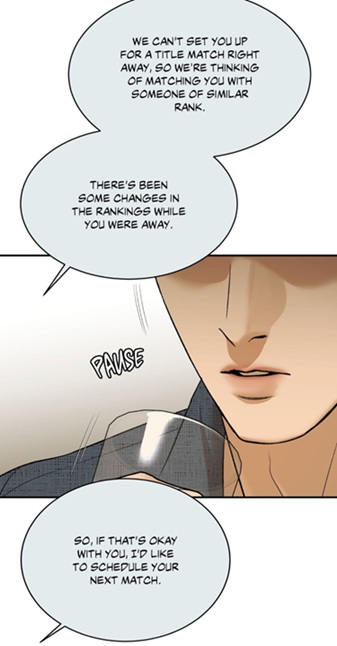 (chapter 69) The danger lay in the very identity of his next challenger. If they pitted him against a newcomer who had rocketed through the ranks as quickly as Baek Junmin once did
 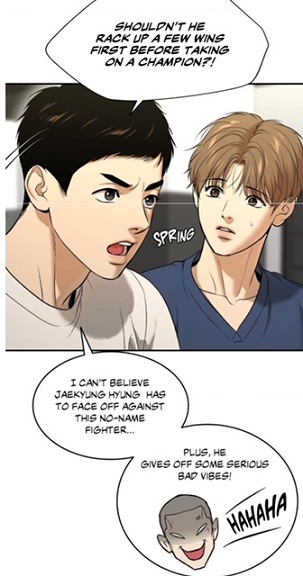 (chapter 47), questioning the selection of Baek Junmin, is so crucial. It shows that the manipulation of opponents was no accident — it was systemic. Matches were not about fair combat but about narrative management: making sure the emperor’s story served the company’s balance sheet.
 (chapter 51) On paper, it was a draw. In practice, it was soon reframed as a loss
 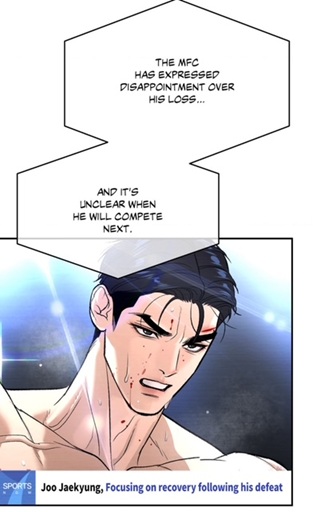 (chapter 57). By late August, Jaekyung had slipped to third place.
  (chapter 69) And strikingly, no one questioned it. Not Park Namwook, not the officials, not even Joo Jaekyung or the commentators who had once praised his streak. The silence was louder than any insult.
 (chapter 75) Here, it looks like a mirror, but naturally it is a fake one. It was not earned with fists alone; it could be stripped, reassigned, reshaped at will. One tie, one whisper, one adjustment in the rankings, and the Night Emperor was dethroned without ceremony.
 (chapter 75), not for intimacy but to clear his head and stave off loneliness, emptiness and his abandonment issues.
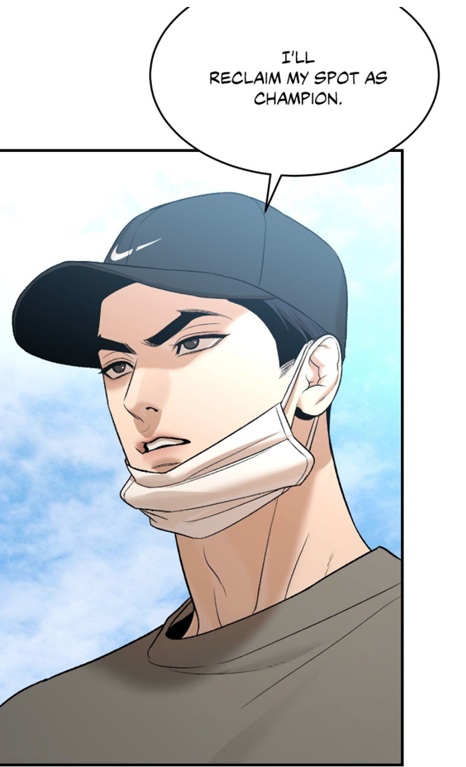 (chapter 75) must be read in this light. It is not a relapse into the system’s treadmill, nor a blind return to the pitfall laid before him. Notice that he does not say he will fight in the fall, nor does he mention the upcoming match that everyone else is waiting for.
  (chapter 71) Instead, he frames his goal with a word that changes everything: reclaim.
 (chapter 73), but he lost his father and his mother abandoned him.
  (chapter 51) When his world threatened to collapse again — the tie with Baek Junmin, the looming humiliation — he erupted in rage. He screamed at Dan, he let the words spill out violently, breaking the silence that had once shackled him. It was an act of defiance against the curse: if he could not silence the nightmare, he would shout it down.
 “Don’t you trust me?” (chapter 54) That moment reverses the old script entirely. Where his father’s last word was condemnation, Dan’s is invitation. Where his father’s voice ended the dialogue forever, Dan opens one. Where his father made trust impossible, Dan asks for it. Besides, the latter encouraged him to reflect on himself.
 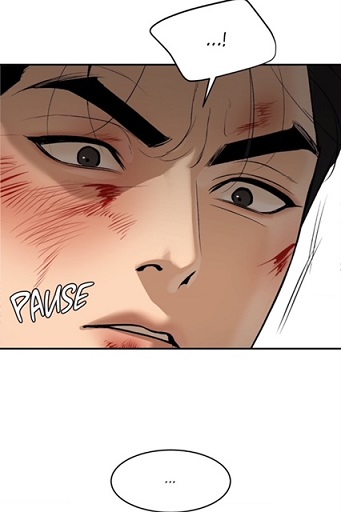 (chapter 51) The mirror is clear: the cycle can be broken, but only if he dares to answer the question that was never asked of him before. Therefore it is not surprising that the physical therapist’s question appeared in the champion’s vision:
  (chapter 54) His unconscious was telling him to have faith in his “doctor”. Thus later, the champion told the director of the hospital this:
 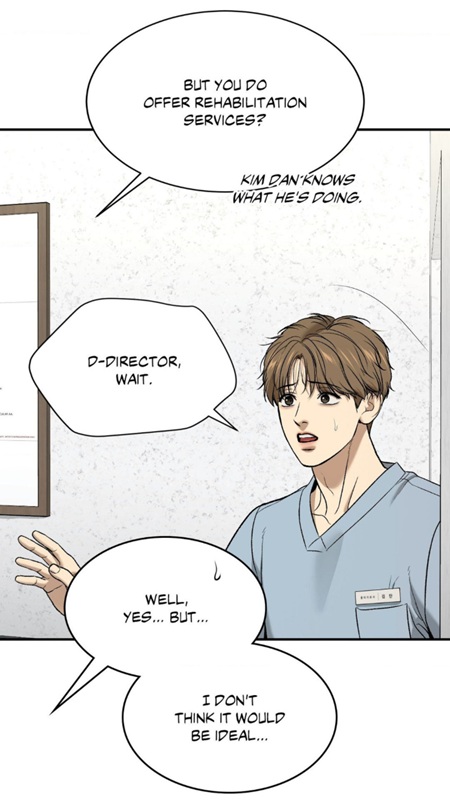 (chapter 61) He was acknowledging the main lead as a real physical therapist.
 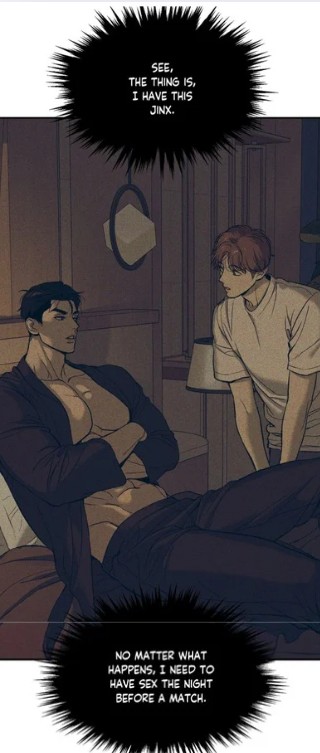 (chapter 62)— and even to those closest to his body — it looks like nothing more than sex. That was all the uke from chapter 2 saw, and it was enough for him to sneer:
 (chapter 2) The insult landed with devastating familiarity, not as a new wound but as an echo of his father’s curse: “loser.” Both words reduced Jaekyung to nothing — not a man, not an athlete, just a fraud kept alive by crutches.
 (chapter 2) In slamming his former partner against the wall, he was not merely silencing a lover’s cruelty. He was fighting the ghost of his father, the voice that had branded him weak, cursed, unworthy. The jinx that kept him alive was being twisted into proof of his failure, and he could not bear it.
  (chapter 2)
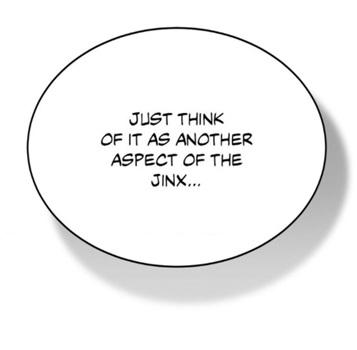 (chapter 62), Dan recoiled.
 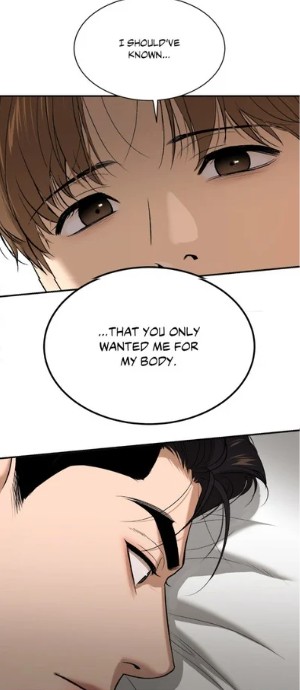 (chapter 62) To him, “jinx” meant objectification, a reduction of their bond to sex.
 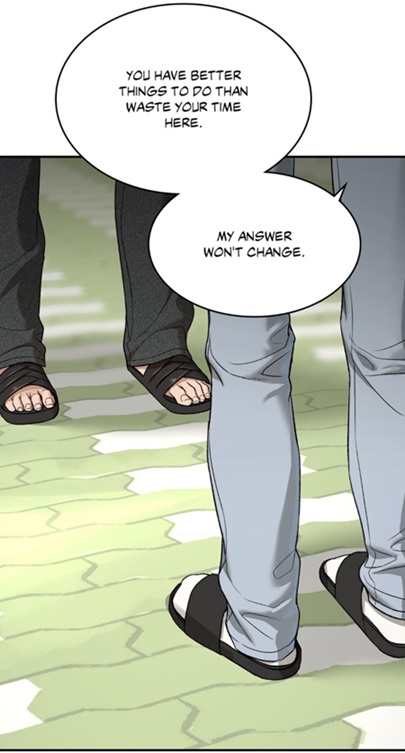 (chapter 62) but as a therapist he trusted. His words about wanting to return to the “usual pre-match routine”
  (chapter 62) were, in his mind, a way of saying: I need you to bring back wholeness, to help me steady myself again. But because Dan only knew fragments of the jinx, the message landed with devastating distortion.
  (chapter 41) but not the others. He had never seen how layered and fragmented Jaekyung’s survival system truly was: the shower and perfume, the milk, the tattoos, the obsessive fight schedule. Thus, when Jaekyung invoked the jinx, Dan heard only objectification: you want me for my body. However, this is not what the “wolf” meant. Thus he got surprised by such a statement.
  (chapter 62) For Jaekyung, the plea was about coherence; for Dan, it sounded like reduction.
 (chapter 22) He cooks breakfast for Jaekyung, offering something warm, homemade, human — a substitute for the cold, industrial glass of milk.
  (chapter 22) or cry out of joy.
 (chapter 54) throws the plate away
  (chapter 54), or sits at a vast table in silence.
  (chapter 54) But when Dan cooks, Jaekyung is surprised, even touched. For once, nourishment is not consumption but connection. The milk was always a disguised memory of deprivation; Dan’s meal becomes the antidote — food as presence. So for him, the prematch-routine was also referring to the meals prepared by his fated partner. And I feel the need to bring another aspect. Since there was no “family” in the athlete’s life, he never got the chance to discover the joy of the table.
  (chapter 22) Hence it is not surprising that he looked at his phone, while the others were eating and discussing. He never had a real conversation with a family member around the table.
  (chapter 40) Perfume was one of Jaekyung’s protective rituals — masking shame, creating an armor against the memory of bullying and ridicule. Yet Dan shows that none of this is necessary. The panel where he clings to the bedsheets after their Summer Night’s Dream together
  (chapter 45), whispering that he misses Jaekyung’s warmth, reveals that the champion’s natural scent is already enough. He never gets to see this — Jaekyung doesn’t know how deeply Dan treasures his smell.
 (chapter 40) Here he turned around and placed his lover in the middle of the bed. He even let him rest.
  (chapter 2), and not the other rituals? Because to admit the rest would be to expose the origin of the jinx: the father’s insult, the mother’s abandonment, the hunger, the bullying. Sex was the only ritual that could be spoken without directly dragging the past into the room. It was the “safe” shorthand — though tragically, it became the most dangerous. Homosexuality is definitely a stigma among boxers and MMA fighters.
 (chapter 68) In his own way, he was showing him that he did care! He was more than just a body… or even a physical therapist!!
 (chapter 35) It is the steady mirror of Kim Dan.
 (chapter 13) — helpless, cornered, often pleading. Thus the champion taught the doctor to overcome his fear and fight back:
  (chapter 26) This imbalance was no accident. It replayed Jaekyung’s own childhood roles: he became what his father had been to him (the better version naturally, for he is the mirror of truth), and forced Dan into the position he had once held himself. Through Dan, Jaekyung unconsciously re-enacted his trauma, reversing their positions as if to master what had once mastered him. That way, he was pushed to mature emotionally! That’s why he could connect with the main lead unconsciously. His trembling words in Chapter 51
  (chapter 71) He believes to know the truth, while he is ignorant. He is insecure, extreme in his behavior (drinking)
 (chapter 71), but also selfish and questioning, still fragile yet capable of protest. He is struggling with his own emotions and thoughts.
  (chapter 71) How can he trust the athlete, when he doubts himself so much? From my point of view, he is on the verge of become “mature mentally” and as such “responsible”. At the same time, Jaekyung is revealed as the adult in crisis. His exhaustion
  (chapter 70)
 (chapter 74) It is because thanks to the director’s confession, the “hamster” is able to see the champion as a “a kindred spirit“, an orphan and as such as the younger “boy”.
 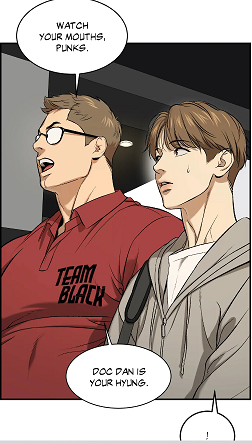 (chapter 7)
  (chapter 26), because it is play, because it is chosen.
 (chapter 69) It is not about treatment or jinx, but about presence. This hug reframes the meaning of strength. True strength is not the ability to fight endlessly, but the ability to hold and be held, to mirror” is like touching oneself! Let’s not forget that the mirror represents the reflection of a person. Respecting the physical therapist signifies respecting oneself!
 (chapter 36) He can remain indifferent to their “provocations”, as he has long matured emotionally.
 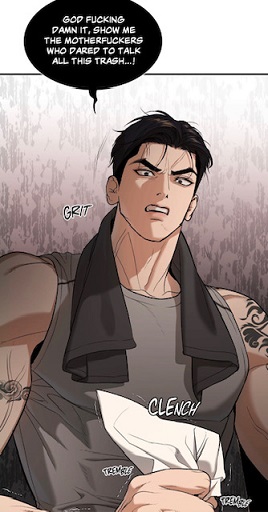 (chapter 36) He can retaliate differently. With his money and power, he can prove to them, he is no loser!
 (chapter 48) Why did the Webtoonist gave us the time, when the next episode starts another day? On the one hand, it exposes that the schemers knew about the champion’s nightly activities. He wouldn’t sleep much and he would keep his cellphone next to him.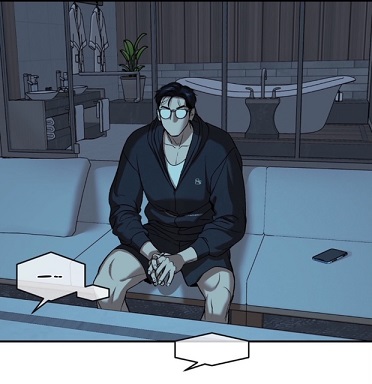
 (chapter 48) It shows once again that the traitor is close to the athlete, for he knows about his way of life. Furthermore, the unknown person could text to the champion, hence this means that his cellphone number got leaked by a person close to him. On the other hand, I am quite certain, the Webtoonist desired to fool her readers making them anticipate a confrontation between the two protagonists. However, nothing happened indicating that Joo Jaekyung didn’t react, like the plotters had anticipated it. Thus they had to create a new scheme. First, let’s not forget that they had used a similar method in the past.
 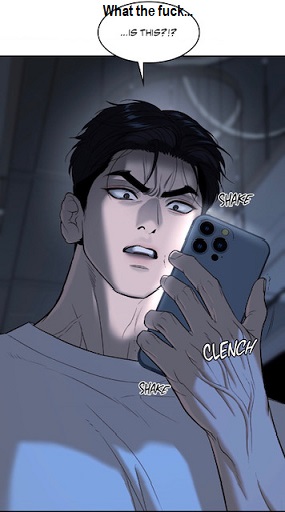 (chapter 35) This made me think of Painter of The Night and No-Name’s advice:
  (chapter 76) “A deed once foiled has no chance of success the second time around”.The criminal was referring to learning through experience. After going through such an event once, the athlete is no longer caught by surprise. We could say that he learned not to jump to conclusions and control his emotions. That’s the reason why in episode 48 he remained level-headed. Because the champion didn’t get angry, he could be more attentive.
 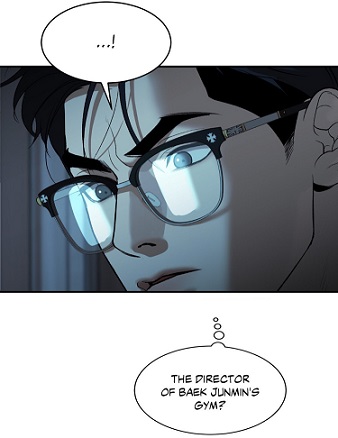 (chapter 48) Secondly,
 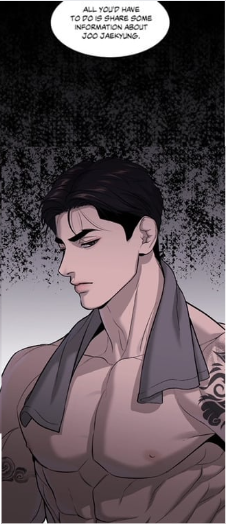 (Chapter 48) The irony is that the doctor had been able to treat the star’s injury. For me, the Summer Night’s Dream played a huge role, as during that night, Joo Jaekyung felt treasured and loved. Therefore the pictures could only expose the duplicity of the director of King of MMA. Under this new light, it becomes understandable why the celebrity didn’t fall into their trap and why they had to turn doc Dan into a traitor by giving him a weapon without his knowledge. Finally, I believe that Joo Jaekyung had another reason not to confront the physical therapist. How so? It is because he had sent away his soulmate, while the latter had approached him.
  (chapter 48) He had missed the opportunity.
 (chapter 30) Here, he wished to seek the doctor’s closeness. Nonetheless, if he had gone to Kim Dan’s bedroom during that night, he would have achieved the opposite: he would have created distance and caused an argument. The latter could have told him that he was looking out for himself, for Joo Jaekyung had threatened to fire him. Through these observations, it becomes visible why the athlete couldn’t ask Kim Dan at all. Consequently, I come to the conclusion that the clock
 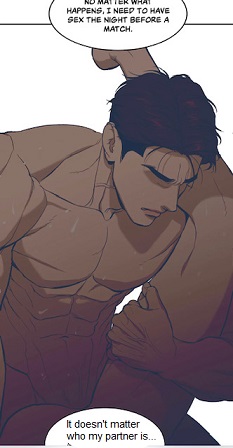 (chapter 2) He is not jinxed, but his failures are the result of his bad choices, like for example trusting the wrong people or not listening to the trustworthy ones or keeping secrets. Or we could say that he is just the product of his education and childhood. He is cursed, for he was not properly raised. He refused to listen to his PT, when the latter wished to tell him something.
 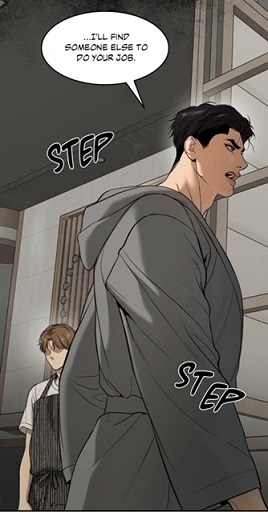 (chapter 45) Then in the bedroom, he had rejected all his requests (massage, conversation). It was, as if he no longer needed him. He was no longer eating his breakfasts too.
 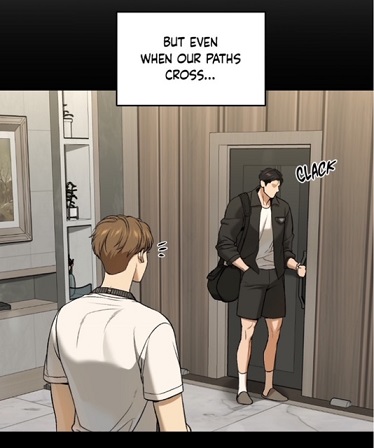 (chapter 47) Under this new light, Manhwa-lovers can comprehend why he looked annoyed in the hallway.
  (chapter 49) The gaze displays not only worry and anxiety, but also regret. It was too late to ask the doctor. For me, he chose silence, for he was regretting his reactions in the penthouse. He feared to ask Kim Dan, because if he brought up the meeting with Choi Gilseok, this could push the hamster to quit his job. However, thanks to Kim Dan, the star’s condition improved greatly. That’s how it dawned on me why the champion became a beast and why he is hiding his past:
 (chapter 26) It is because the man is full of regrets and resent. But by creating new regrets, the champion is incited to focus more on the present so that he stops missing the timing. Because of his immense regrets and frustration, he was still trapped in the past. So he was unable to move on. To conclude, Kim Dan and Baek Junmin pushed him to face his youth and the source of his own unhappiness. His biggest suffering is a secret, because he would appear as weak and pitiful which would ruin his image as the strongest man in the world.
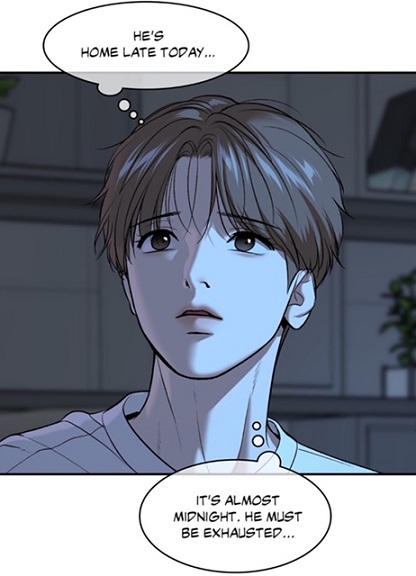 (chapter 48) But why is midnight so important? It is because the number 12 carries religious, mythological and magical symbolism, generally representing perfection, entirety, or cosmic order.
 (chapter 12) the couple was supposed to reach Nirvana, but the athlete failed terribly. Under this new light, it becomes comprehensible why the protagonist chose not to confront Kim Dan in episode 48. It was, as if the champion was closer to the heavens. This represents the champion’s leap of faith. Don’t forget that the star got scared for one moment
 (chapter 48), when he noticed doc Dan’s presence too late. But nothing happened to him, that’s how he got incited to trust Kim Dan. The latter wouldn’t backstab him. Under the blue light, the champion got transformed.
 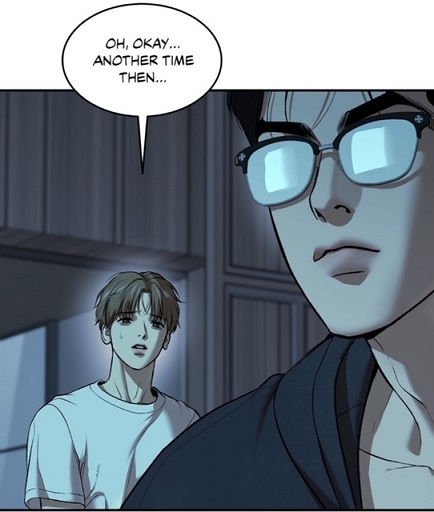 (chapter 48) On the other side, the fact that the champion is always targeted during the night is a sign that the villains desired to approach him, when he was isolated. So they know not only about his insomnia, but also about his solitude. I would even add that the plotters are aware of his association between the night and danger. Remember how he described relaxation: he would give an opportunity to his enemies to attack him



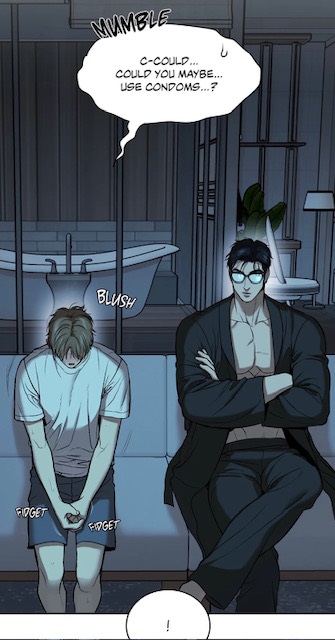






 (chapter 13) It is important, because through this terrible experience, Joo Jaekyung came to internalize the connection between sex and danger. This would explain why he has been so rough in bed before. He came to see it as a normality, a sign that his perception of sex had been negatively influenced. And this can only come from bad experiences. It had nothing to do with “enjoying the moment”, until the protagonist met the shy hamster. We can see his gradual transformation. In episode 12, he definitely saw the night as “carpe diem”
  (chapter 49) In the previous essay, I had mentioned the theory that the champion might have been raped and even gangraped which would fit the criteria (sex, danger and urgency). Finally, the recurrence of “delicacy” during the night is an indication that the athlete must have been like Kim Dan in the past! Vulnerable and alone!
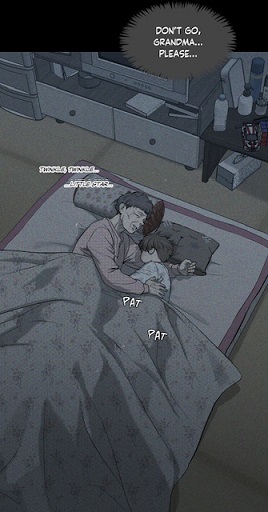 (chapter 21) Furthermore, the champion exposed why he could never relax:
 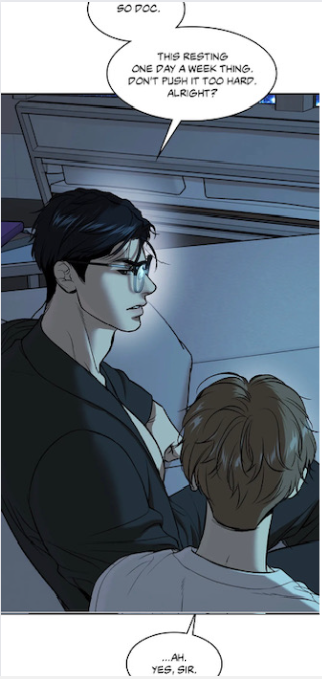 and 48:
 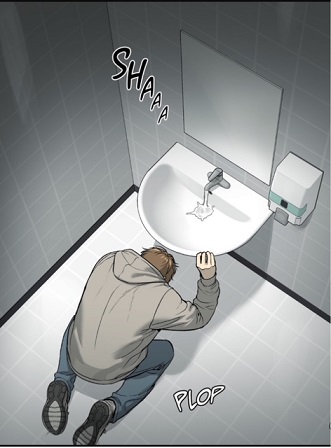 , for he had been recollecting the diagnosis from Kim Miseon and kept thinking of his grandmother. After this painful meditation, he came to recognize his selfishness and his relative’s love and generosity
 (chapter 47). And what was the main lead feeling after that terrible night? Regret, for he had not been able to notice his relative’s suffering and sacrifice!
 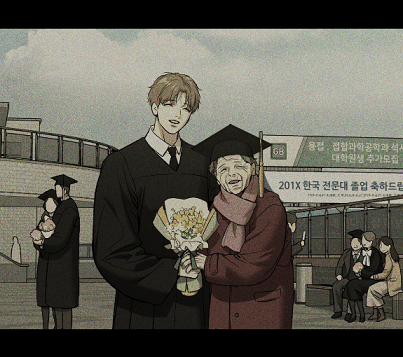 (chapter 47)
 (chapter 19) or a new request like swallowing the sperm
 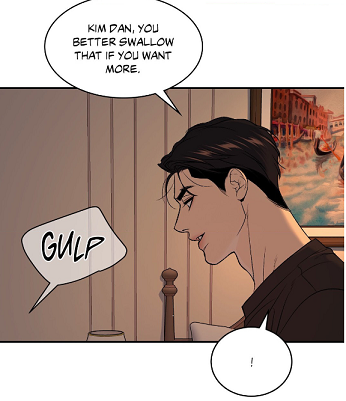 (chapter 39) or kissing the champion’s ruined ears
  (chapter 44)
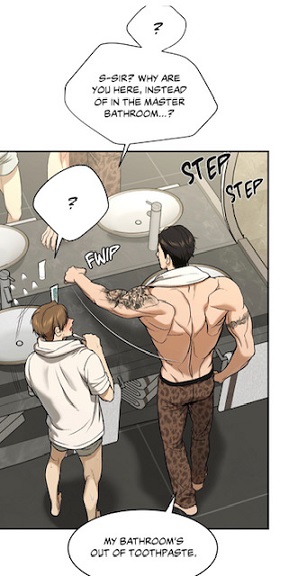 (chapter 30) He was rough and used the toothpaste as an excuse.
  (Chapter 29)
 (Chapter 40) That’s the moment he stopped considering the hamster as a prostitute, while from chapter 2 to 18, he viewed Kim Dan as a tool, as a talisman against his jinx. However, I detected a transition after he kissed the physical therapist. From that moment on, the doctor was connected to food and sweetness.
  (Chapter 18) And now, observe that during the night in the bathroom, doc Dan was associated with a baby receiving food:
 (chapter 20) As you can see, here the champion started viewing him as a human being. It exposes that little by little, his perception of the physical therapist improved. So from chapter 30 to 39, Joo Jaekyung was forced to question the nature of his relationship with Kim Dan: a PT or a prostitute or a pet?
  (Chapter 34) Here, he was in denial, he described the main lead as a possession, but he couldn’t fool the actor. Under this new light, it becomes comprehensible why the nights in chapter 19, 29 and 39 were so magical, they announced a transition or better the end of viewing Kim Dan as an object (tool for his jinx) and possession. From 41 to 49, the champion was cornered to recognize Kim Dan as a physical therapist and not just as a member from Team Black. Don’t forget his attitude in the car, when the main lead suggested him not to train.
 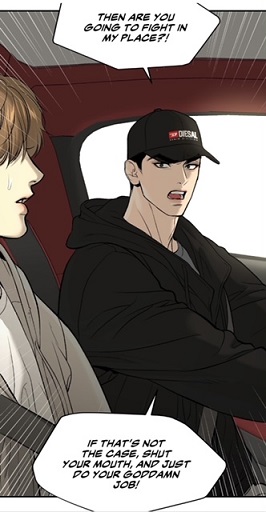 (Chapter 42) He rejected his advice, a sign that he was doubting doc Dan’s skills and competences. That’s the reason why I come to the conclusion that with the pictures, the champion was pushed to admit that Kim Dan is his physical therapist
  (Chapter 49)
 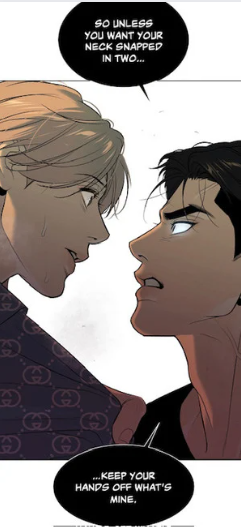 (chapter 34), then the fake star Baek Junmin
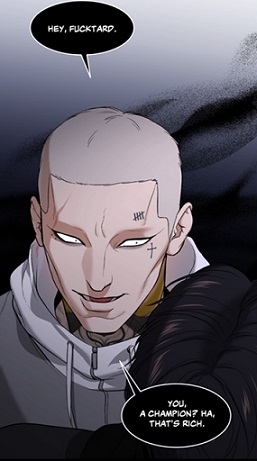 (chapter 49). These meetings are not random at all, a sign that someone knows about the athlete’s hidden suffering very well. Observe that both characters challenged the celebrity by giving him an order:
  (chapter 49) The sportsman is viewed as a hindrance to their dreams, he should clear the way for them. I deduce that in his youth, people must have treated him the same way. He represented an obstacle, therefore these two figures must have challenged him in the past too. Their confidence comes from their past experiences with the athlete. Both must have defeated Joo Jaekyung, but naturally they must have tricked him.
  (chapter 33)
  (chapter 49) Then I noticed another parallel between the two plots: the presence of a scapegoat, and the involvement of a third person. Heesung faked his injury by putting the blame on the athlete, while he asked Kim Dan as compensation. In the second plot, the roles are switched. Kim Dan is now the perpetrator, while the athlete is the victim! Baek Junmin is the beneficiary of this scheme. And what do these plots have in common? Joo Jaekyung is the victim of a trick, though Heesung’s manipulation was rather benign. First, he acted on his own.
  (Chapter 31) Moreover, he utilized the genuine concern and innocence of his surroundings. In other words, he used his image as a good and honest man to his advantage. Thus I come to the conclusion that the artist’s sin in their youth was rather minor, as the artist tends to violate social norms. So though it was no illegal, the actor’s wrongdoing definitely left scars on the protagonist’s heart.
 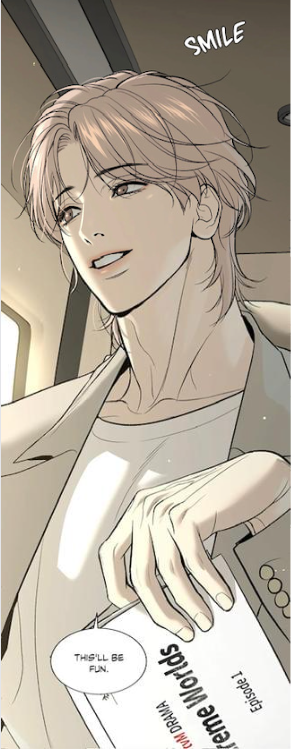 (chapter 29) Probably, Heesung utilized Joo Jaekyung’s innocence to his advantage in order to maintain his good reputation, like for example he was not supposed to be smoking or he took away a friend from him, as the topic of their conversation was about the theft of a person
  (chapter 33)
 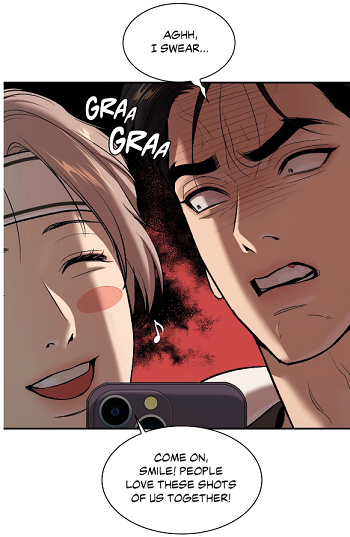 (chapter 30), because it always makes him appear as a well-mannered and honest man. He gets fun at his frenemy’s expense. In addition, he could play tricks without getting caught… and the other would appear as the bad guy and take the blame, like we could observe at the gym with the manager’s judgement.
  (Chapter 30) Another common denominator between The Shotgun and Heesung is their envy and greed.
  (chapter 5) Joo Jaekyung destroyed the sandbag, when he imagined that doc Dan had blocked him! This signifies that the former could no longer contact the shy hamster. Joo Jaekyung saw it as an affront, a challenge!
  (chapter 46) could be seen as a reflection from the arcade and the star’s past. And since Kim Dan wounded Joo Jaekyung in the locker room
  (chapter 49), I deduce that such an action must have happened in the champion’s youth. He got not only hurt by people, but also betrayed by a friend. There exists many reasons for this hypothesis.
 (Chapter 04) and be rude towards others.
 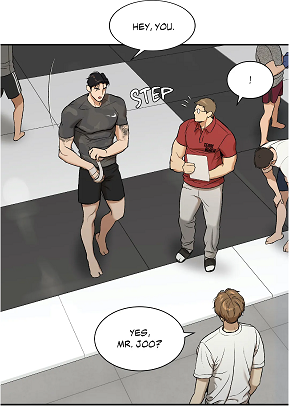 (Chapter 7)
  (chapter 37) But Mingwa left many clues that the celebrity’s personality shouldn’t be judged by impressions. During their first night together, Manhwa-lovers could see books next to the bed.
 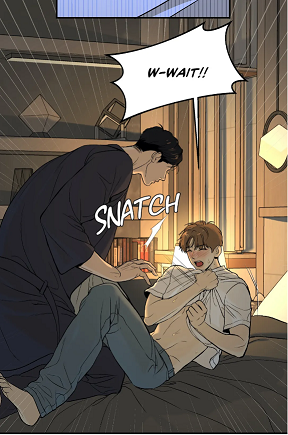 (Chapter 3) Some of them are not written in Korean or English. Moreover, the Webtoonist revealed that one of his hobbies is reading. This explains why he can talk prettily.
  (chapter 22) This shows that his behavior mirrors the counterpart’s. Consequently, it is not surprising that the champion is rough with his own body, as Park Namwook is not treating him like a delicate child.
 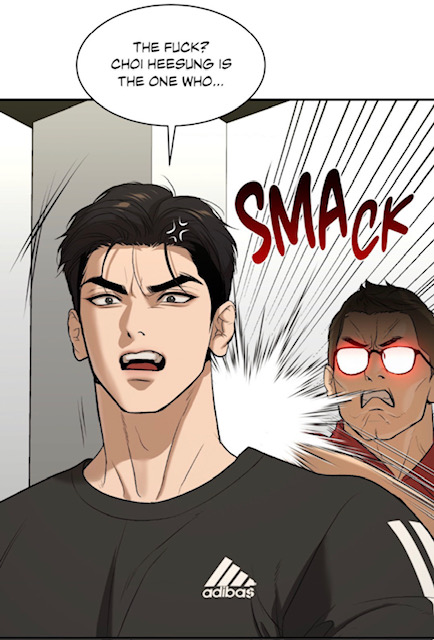 (chapter 31) But there exists another proof for his intelligence. The celebrity is capable to lead an interview in English on his own.
  (Chapter 37) Even stressed and filled with anger, he could understand and speak fluently in English.
 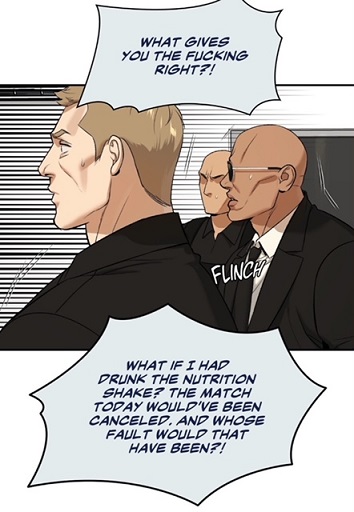 (Chapter 40) Compare Kim Dan’s English skills in the same scene:
  (chapter 40) Besides, Jinx-philes should question why Mingwa is not divulging his scores as a student contrary to Kim Dan or Jinwon from BJ Alex. It is because she wants to create a certain image about the champion: he is a bad boy. In my eyes, she is playing with prejudices about MMA fighters. People often imagine, they lack social manners and education. They chose this path, for they could do nothing else. And this brings me to my next remark. We know that Kim Dan selected PT because of his halmoni.
 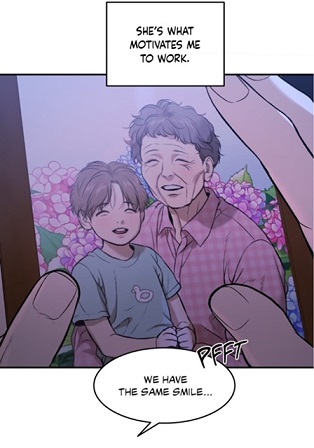 (chapter 47) So what was the protagonist’s motivation to become a MMA fighter? In my eyes, this question represents the core of the mystery. My idea is that the suffering in his youth led him to become a boxer. It is definitely related to his experienced powerlessness and loneliness. So when he suggested the sparring to Kim Dan, we should see it as a reflection from the past:
 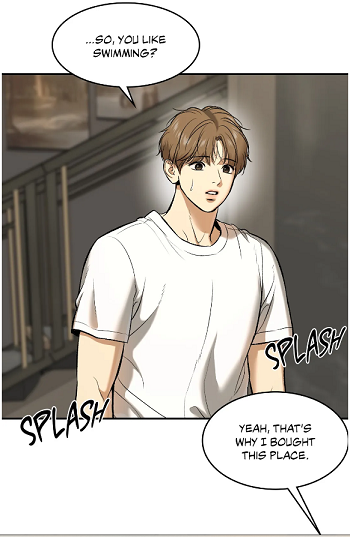 (chapter 27) I see a contrast between these two sports: swimming which is related to relaxation, pleasure and fun and MMA fighting which stands for challenge, pain and seriousness. This contrast is even more present in the following panel:
 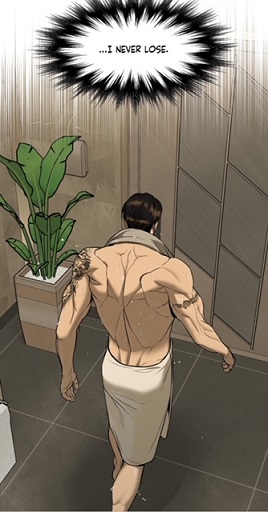 (chapter 49) Is it a coincidence that this Enlightenment took place under the shower? For me, no! I see a strong link between water, swimming and the champion’s job. It looked like swimming represents a source of danger for the athlete’s job, as it is an entertainment! Hence I can’t shake the feeling that in the past, Joo Jaekyung might have shown aptitude for becoming a natation athlete! Let’s not forget that for the calendar 2024, the champion was seen carrying swimming googles and not “MMA gloves”. This detail caught my attention and made me wonder why Mingwa selected these items.
  (chapter 49) He is a hyena, hence his color is brown.
  (Chapter 48) And The Shotgun has a similar attitude:
  (chapter 49) Interesting is that his description of the challengers fits the situation in the new plot perfectly. The Shotgun imagines that he will fight against a diminished champion. His shoulder is injured and they have planned to add a new injury. The hyena stands for balance and cleansing as their task is to remove the weak ones.
 (chapter 49) As an old man, Choi Heesung is revealing vulnerability and senility. Due to his old age, he could be replaced by another hyena, a younger hyena!
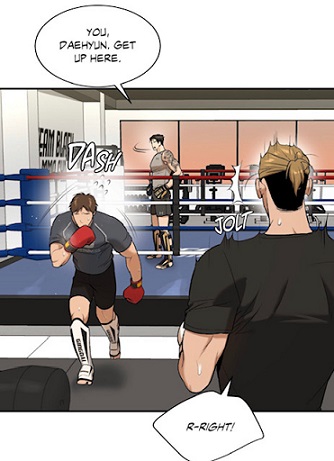 (chapter 36) which could only affect the members from Team Black. Their loyalty could waver. Then he got to hear bad comments from the Internet
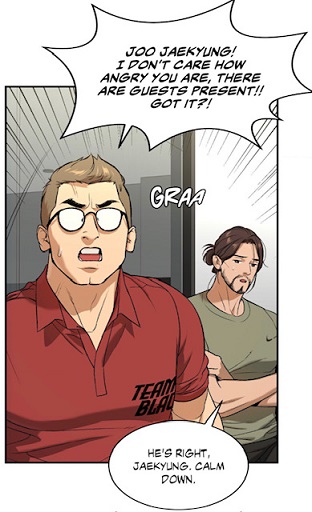 (chapter 36) Under this new perception, Manhwaphiles can grasp why the MFC manager offered him a new defy right away. They needed to exploit his injury!
  (chapter 41) With the pictures
  (chapter 13) This could have ended badly. Another wrongdoing could be the rejection of his birthday present and his harsh reaction.
  (chapter 47) At no moment, the physical therapist brought up his misdeeds and asked for an apology. His silence became the symbol for his tolerance and even forgiveness. In addition, the doctor and his halmoni embody both vulnerability and poor health, which is strangely connected to crime and scandal.
 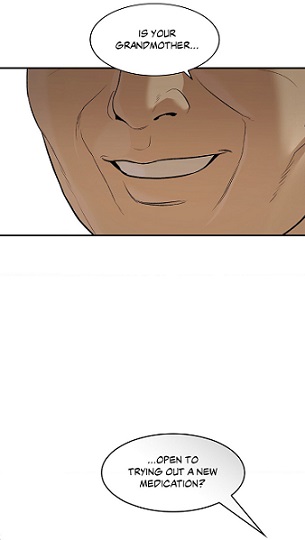 (chapter 48) Through them, the champion is learning that hunting weak and pitiful creatures is not only a sin, but also a crime! In the first case, he could be accused of hurting an innocent.
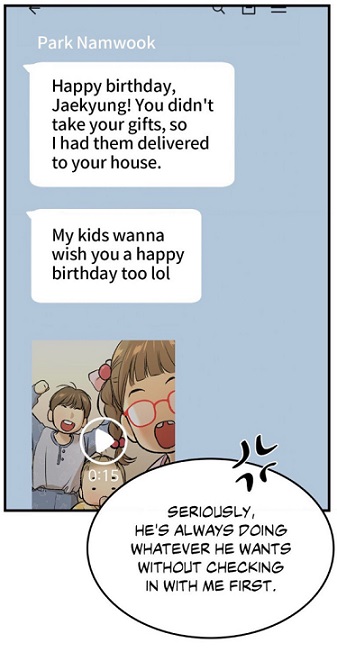 (chapter 45) At no moment, the author let us see the celebrity receiving a gift or a message from a family member! It was, as if he was an orphan and had no family. Their absence and silence are the evidences of neglect. But one might argue that his parents could be dead, something I had already envisaged in the past. However, if so, as a teenager and young man, he needed to have a guardian by his side, exactly like the doctor with his halmoni. And Park Namwook is not acting as his guardian, for he doesn’t visit him in the penthouse or calls him there. So where was the guardian in episode 45? Invisible, silent and passive! Like mentioned above, I am suspecting the mysterious Seo Gichan. Thus I consider the champion’s criticism as the expression of deep scars which came to the surface:
  (chapter 45) He wanted Kim Dan to look at him and take care of him. In other words, he wished to be seen and not neglected! He has not realized it yet, but he is longing for a companion, a playmate. He desires to have someone by his side who would talk to him and listen to him. From my point of view, the champion must have received on his birthdays many presents, but he was all alone. He had no one by his side. The gifts couldn’t replace the warmth from a loving parent. The moment I made this connection, it dawned on me what the nightly desertions could have meant for the star.
 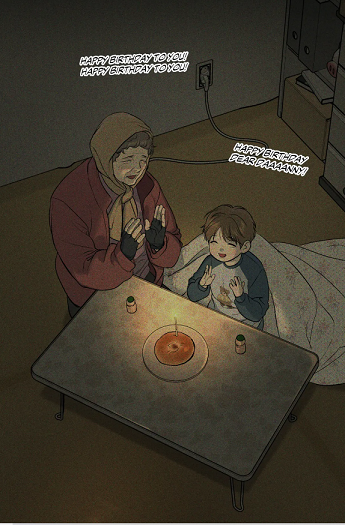 (chapter 11) He wished to receive attention and to have a normal conversation. Consequently, I assume that the champion has been copying his role model. That’s how he was pushed to grow up too quickly. For me, he had no childhood at all, hence when he met Kim Dan, he was encouraged to develop his inner child!
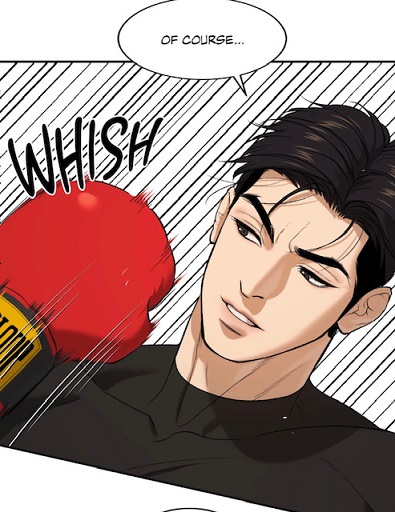 (chapter 26) For the first time, he had fun sparring. Hence he kept smiling. It is no coincidence that soon after he chose to accept to take a day-off, when Kim Dan made the suggestion.
 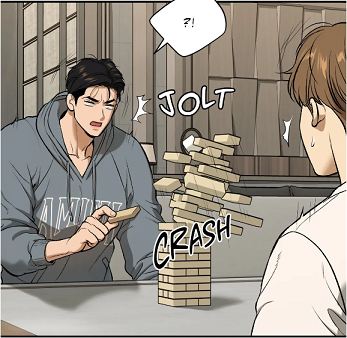 (chapter 27) That’s how he remembered that he liked swimming and he could play a prank on his lover.
  (chapter 27) Here, he could smile, because it was fun and there was no real expectation. It was not truly connected to money.
  (chapter 35) and not in episode 48. It is because Kim Dan had paid him a visit during that night, a sign that he was thinking of him as his patient and VIP client.
 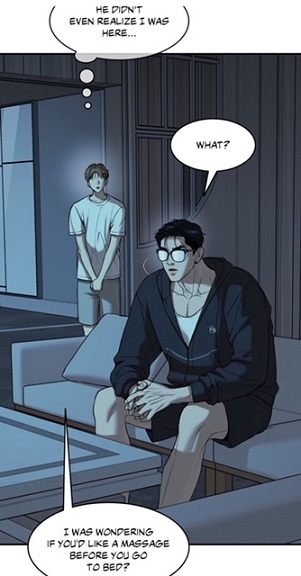 (Chapter 48) On the other hand, I am inclined to think that when a terrible incident in his youth occurred, he couldn’t contact his family or guardian. Hence he keeps his cellphone by his side constantly. Yes, I was thinking of the doctor’s assault in the street and his failed rape:
  (Chapter 16) Heo Namwook’s minions had confiscated his cellphone. Hence it was impossible for him to call for help. And now take a closer look at this scene:
 (Chapter 16) Though he had been on the phone and it was daylight, no one stopped the thugs from kidnapping the main lead or reported the incident to the police. Hence I am also suspecting that Joo Jaekyung must have faced a similar situation: he was surrounded by malicious people and no one had assisted him. So he could have been targeting at school due to his grads or his social status. And his isolation at home could push to seek company outside, to look for friends at school.
  (chapter 37)
  (chapter 49) And the anonymous person on the other side of the phone was definitely calling in order to be updated about Joo Jaekyung, for his coach asked him about his physical conditions.
 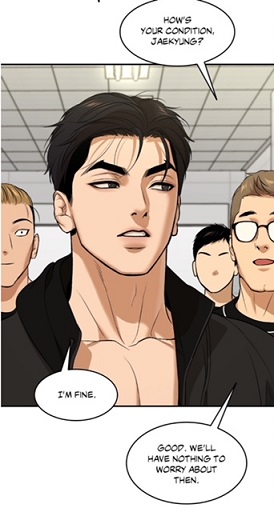 (chapter 49) That could be the hidden guardian who has not showed up yet, I am thinking of Seo Gichan. And now it is time to close this long essay.
 Bebebisous33s' analyses in K-Dramaland and Manhwas