
Please support the authors by reading Manhwas on the official websites. This is where you can read the Manhwa: Jinx and Doctor Frost But be aware that the Manhwa is a mature Yaoi, which means, it is about homosexuality with explicit scenes. Here is the link of the table of contents about Jinx. Here is the link where you can find the table of contents of analyzed Manhwas. Here are the links, if you are interested in the first work from Mingwa, BJ Alex, and the 2 previous essays about Jinx While They Embrace 🫂: The Western Coast 🌬️🍃🌊🐦 and Where the Heart Heart💓 Spoke 💓🎶
It would be great if you could make some donations/sponsoring: Ko-fi.com/bebebisous33 That way, you can support me with “coffee” so that I have the energy to keep examining Manhwas. Besides, I need to cover up the expenses for this blog.

In the psychology article “How does confirmation bias push us to make bad decisions in life?”, author Jennifer Delgado analyzes how our minds instinctively defend core beliefs when confronted with contradictory evidence. This defense, she explains, stems from the discomfort of cognitive dissonance—a tension we feel when facts challenge our identity or worldview. To avoid this discomfort, people tend to seek psychological safety over factual accuracy. When destabilizing information arises—especially involving self-concept, loyalty, or trauma—they fall back on defense mechanisms: denial, deflection, aggression, or withdrawal.
“When the evidence threatens our core beliefs, we activate our psychological defenses to protect our identity.” Quoted from https://psychology-spot.com/confirmation-bias/
This behavior is not purely mental; confronting such dissonant facts activates brain regions linked to physical pain. As a result, the individual unconsciously opts for survival behaviors—either fight (blame, control, projection) or flight (avoidance, submission, denial)—instead of reasoned analysis.
We prefer to preserve our inner balance, even at the cost of truth. Quoted from https://psychology-spot.com/confirmation-bias/
This concept is deeply relevant to the world of Jinx, where characters often mistake emotional avoidance for peace  (chapter 47) and denial for strength
  (chapter 55). Joo Jaekyung, Kim Dan
  (chapter 61), Park Namwook
  (chapter 69), and Shin Okja
  (chapter 53) all operate within survival mechanisms shaped by trauma, guilt, and fear. They choose the illusion of control or calm over genuine healing. But as the story unfolds, these strategies begin to unravel. Each character must confront the truth behind their emotional habits, learning that happiness isn’t the absence of pain—it’s the result of confronting it with clarity and purpose.
Joo Jaekyung: When Strength Masks Submission
In his recurring nightmare  (chapter 54), Joo Jaekyung is cornered by a faceless, overpowering ghost. He is unable to fight or flee; only obedience and silence remain.
 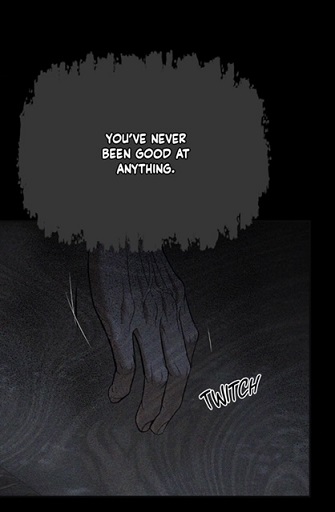 (chapter 54) He could only express his pain and resent through the hand. This moment encapsulates the core of his trauma: as a child, he learned to survive through silence and compliance, not resistance. Yet deep down, the resentment festered—toward himself, and toward the abuser. That psychological pain was redirected into becoming a fighter, as if to prove the abuser wrong.
  (chapter 26)
  (chapter 14) But ironically, he became exactly what the abuser desired: a powerful, obedient puppet. His fame, discipline, and aggression were not signs of freedom, but evidences of emotional and mental captivity. That’s why the past from the champion is surrounded by darkness and mystery.
This also explains why Jaekyung never learned how to speak to others or negotiate emotionally. 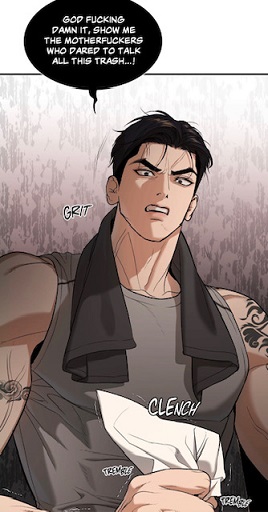 (chapter 36) His language was dominance, not dialogue. He didn’t process his emotions through words—he suppressed them, until they erupted in violence or withdrawal.
  (chapter 34)
But his dynamic with Kim Dan began to disrupt this cycle. Doc Dan, being physically weaker and more emotional, didn’t respond to force like the others. He didn’t fight back with fists. He showed his vulnerability and as such his tears.  (chapter 1) And crucially, he didn’t leave right away either despite his embarrassment and fears.
 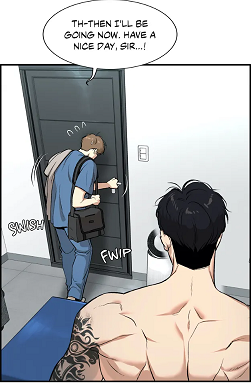 (chapter 1) Thus for the first time, Jaekyung had to develop a new strategy in order to meet him again: one that doesn’t rely on intimidation, but on communication. The problem is that since he saw the physical therapist running away after their first session
 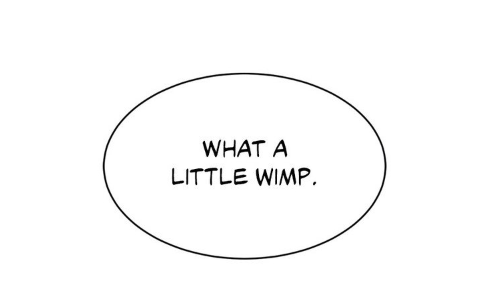 (chapter 1), he knew that he needed to lure him with something: money
  (chapter 1). Under this new light, my avid readers can grasp why the athlete played a trick on the phone, though we have to envision that here the celebrity’s thoughts were strongly influenced by his bias and prejudices. He imagined that Doc Dan had made a move on him.
Dan has been teaching him, without lecturing, that flight can be strength. 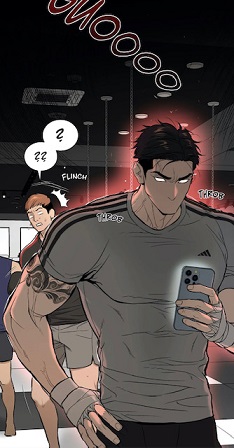 (chapter 5) That retreat doesn’t mean failure—it can be an act of self-preservation. However, the champion experienced that he needed to speak with doc Dan in order to keep him by his side. This lesson became a turning point. Jaekyung started to speak more.
  (chapter 18) Therefore it is no coincidence that in episode 18, right after the celebrity spoke, Kim Dan’s reply was strongly intertwined with flight:
  (chapter 18) The denial of kindness from the champion made the doctor uncomfortable, the latter felt the need to leave the penthouse as soon as possible. The lesson for the star was to realize that words are powerful and can affect people. But Joo Jaekyung didn’t grasp it, as he chose to use sex to „submit“ his fated partner.
 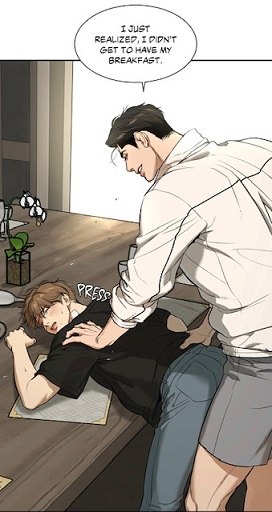 (Chapter 18) Nevertheless, as time passes on, the wolf asks more and more questions. He reacts to emotional discomfort not only with physicality but with hesitation, introspection. He is no longer reacting as the ghost once taught him; he is arguing and as such adapting, growing. Thus we could say, he is less passive.
On the other hand, I noticed that Joo Jaekyung displayed a clear behavioral pattern in season 1: he cornered Dan physically—pinning him onto the bed 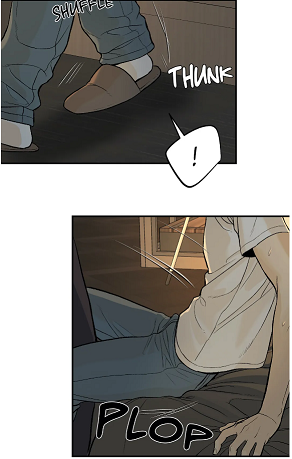 (chapter 3) or table, in showers
 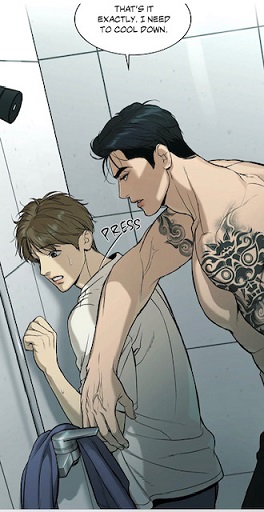 (chapter 7), against doors, or walls
  (chapter 34). On the surface, it may seem like a gesture of dominance or desire, but symbolically, it reflects silencing.
This repetition links back to Jaekyung’s trauma. In his youth, he was trapped between the abuser and a bed or a wall (chapter 54), unable to escape or speak. He was physically and emotionally silenced by someone more powerful. As a result, cornering became his unconscious language of control—a reenactment of power where he was once powerless. It’s not just about physical space; it’s about suppressing the other’s voice so he doesn’t have to face emotional exposure himself. In other words, he never learned how to flee, until he met his new mentor Doc Dan.
That’s why the locker room scene in episode 51 stands out. There, they are no longer pressed into corners.  (chapter 51) They stand in the middle of the room—an open space—symbolizing emotional emancipation. When Dan questions the celebrity
  (chapter 51), the words from doc Dan pierce the champion’s emotional defenses. Thus Joo Jaekyung is destabilized.
 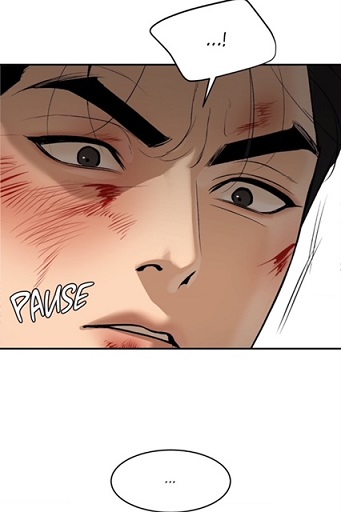 (chapter 51). The latter tries to reassert control
 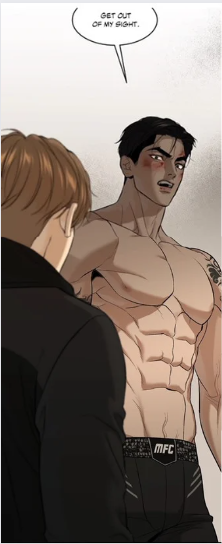 (chapter 51), but this time, when he lashes out, he is the one who leaves. This is cognitive dissonance at work: the fighter cannot reconcile his fear of vulnerability with his emerging need for connection and his perfectionism. So he defaults to a performance of control, even as he runs from it. And while one might mistake this for weakness or regression, it actually displays a progression. First, Jaekyung had finally revealed his thoughts and fears to Dan.
  (chapter 51) Secondly, he left the place which was a new MO for the fighter. His act of fleeing is no longer an escape from confrontation —it follows a moment of emotional vulnerability. It shows that he had finally dared to speak, even if he wasn’t yet ready to stay and endure the emotional aftermath.
Then in episode 69, Jinx-philes can detect a huge metamorphosis in the star. On the surface, he still appears obedient—he remains largely silent during the tense meeting with Park Namwook and the CEO.  (chapter 69) That silence could easily be mistaken for submission, for the same old performance of the compliant athlete.
  (chapter 69) But that would be a misreading. His silence is no longer a symptom of fear or control. It is a deliberate withholding—a sign that he no longer plays by their emotional rules. He is starting distancing himself from MFC, Park Namwook and the fight-centered identity they crafted for him.
His choice to return to the West Coast might look like a retreat to the schemers.  (chapter 69) After all, to those still invested in dominance hierarchies, leaving the capital after a public defeat seems like the behavior of someone who’s been defeated mentally as well. But the truth is the opposite. This “retreat” is actually an act of autonomy. For the first time, Jaekyung is giving himself space—not to run, but to reflect.
 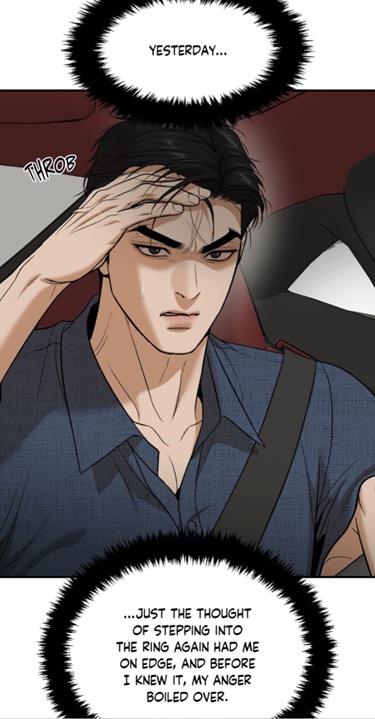 (chapter 69) He is no longer blindly performing the role of the fighter, nor desperately trying to maintain control over the narrative.
  (chapter 69) He is beginning to think critically about his past behavior, his future, and the systems that have defined his identity and life.
That’s what makes the embrace at the dock so powerful. It doesn’t take place in a ring, in a hallway, or in a cornered room. It happens in an open space, 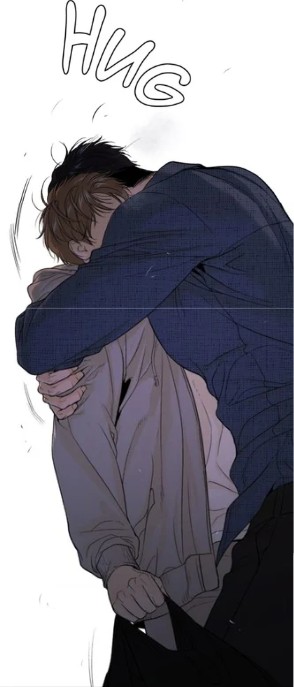 (chapter 69) with “no audience” (he ignores people), no pressure, no script. And in that openness, he lets go—not just physically, but psychologically.
  (chapter 69) The hug marks the collapse of his old beliefs: that emotions are weaknesses, that silence is protection, that strength means standing alone. He is no longer trying to dominate Dan or prove anything. He’s not cornering or fleeing. He’s simply staying—with someone, and with himself.
It’s a moment that doesn’t fit the binary of fight or flight. It is something more radical: connection.
It is vulnerability without fear. Stillness without paralysis. Silence without suppression.
In this context, the hug is not just affection—it is emotional rebellion. The sportsman reclaims his body not as a weapon, but as a vessel for intimacy. He reclaims silence not as submission, but as peace. And perhaps for the first time in his life, he doesn’t need to perform. He just is.
That’s why this hug is a fight. Not against Dan. Not against MFC. But against everything that taught him that love and respect must be earned through violence, that silence must come from fear, and that warmth and dependency are weaknesses.
This is the moment he stops surviving and starts living. When Jaekyung embraces Dan without shame, he does not speak—but for the first time, his silence is not imposed. It is chosen. He allows his body to express his emotions differently: longing and affection. He is not voiceless anymore—he simply no longer needs to explain or defend. The hug becomes his first true act of emotional agency. He is not reacting to fear. He is not controlling or escaping. He is staying. That is the fight.
And in this moment, he reclaims what “fight” really means. Not overpowering others. Not performing masculinity. Not obeying trauma. But overcoming his trauma, standing one’s ground for connection, for truth, for love. The hug is his first fight that isn’t about winning—it’s about not running away.
What begins as survival now becomes healing. And how are prejudices dismantled? Through communication. This means that from episode 70 on, the star will talk to doc Dan. Jaekyung, who once avoided words, who let others speak for him, who was branded and silenced by MFC, the entertainment agency and Park Namwook—is now ready to speak for himself. The hug is not the end of that journey (chapter 69), but the door finally opening. He is on his way to reconnect with his true self surrounded by nature and the people who truly respect and love him.
“I’m done surviving. Done being alone.
I want to live — and I want you to live with me.”
Park Namwook: Delegating Blame to Escape Collapse
Park Namwook relies heavily on both fight  (chapter 7) and flight
  (chapter 52), often using blame as a shield. When crisis strikes, he blames the champion’s temper, relies on Doc Dan
  (chapter 36), or MFC’s decisions.
  (chapter 69) He surrounds himself with “assistants” like coach Yosep, Kim Dan or Joo Jaekyung
  (chapter 25: here the protagonist was replacing Yosep and Park Namwook), hires professionals to manage damage
  (chapter 47), and hides behind administrative actions.
  (chapter 66) But he never takes full responsibility. This blame-displacement strategy works—until the champion flees to the West Coast.
Now, Park has no one left to blame but himself. In fact, it was Joo Jaekyung’s very act of fleeing 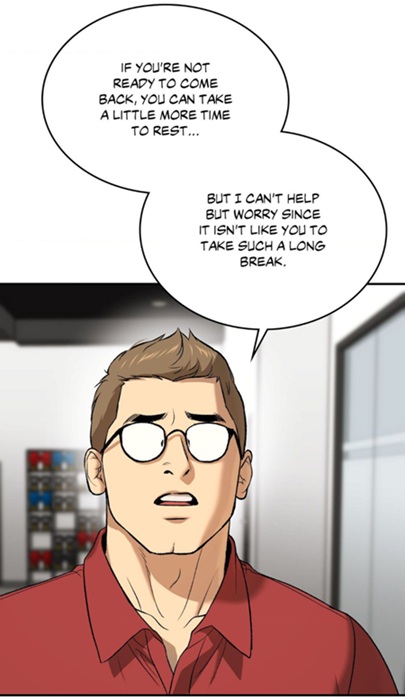 (chapter 66) that cornered the manager.
  (chapter 66) As long as the champion was nearby, Park Namwook could project blame onto him, framing him as unstable, disobedient, or temperamental. But once „his boy“ vanished from Seoul, the hyung was left exposed. Striking is that he is not seen watching over the training of the remaining members.
  (chapter 60)
 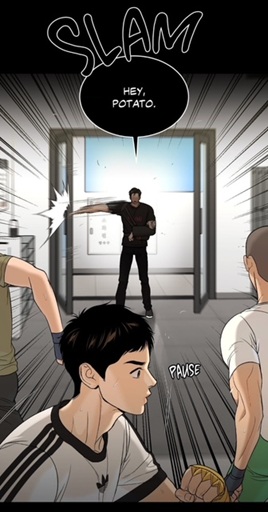 (chapter 60), a sign that he is neglecting the other members. The absence of his star fighter removed his most convenient scapegoat, forcing him to face the consequences of his own mismanagement—though he is not yet ready to truly question it and change his mindset, denial, and dependency. This was not just a geographical disappearance—it was a strategic psychological rupture, meant to destabilize Park’s illusion of authority.
And this is where the illusion breaks. He is forced to realize: he is not the real owner of the gym. He needs Joo Jaekyung’s signature for major decisions. He needs the champion’s public image to draw sponsors. When the fighter disappears, the manager’s relevance disappears too. That’s why he pushes for a new match (chapter 69) —not for the protagonist’s career and sake, but as a desperate attempt to re-anchor himself to glory, Joo Jaekyung and MFC. This means that he is choosing avoidance and as such flight. He lets his puppet fight for him.
But this can only backfire. In his mind, he is imagining that with a new fight, everything will return to normality and as such it will be like in the past. But he is overlooking two aspects: (chapter 69) The announcement that MFC will “line up a match” for Joo Jaekyung after the fall competition marks a pivotal moment — not of triumph, but of quiet exclusion. The phrasing itself is telling. The main lead is not invited to compete in the main event. He is not allowed to fight for the title. His role has been reduced to a postscript — a gesture, not a priority. For a fighter who once carried the brand’s identity, this is not simply a delay. It is a symbolic sidelining. In other words, the new champions and the CEO fear the star. (chapter 69) So with this new request, the manager ignores the reality that Jaekyung has been removed from the competitive spotlight. 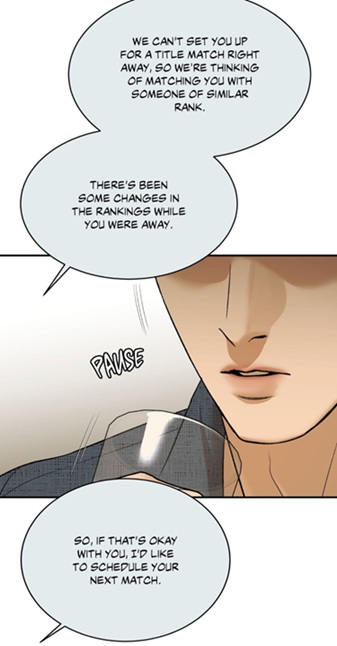 (chapter 69) He continues to speak as though the champion’s future is intact, as if the title is still within reach. But the organization’s actions speak louder: Jaekyung is no longer a contender — he is being gradually abandoned, not promoted. Secondly, Park Namwook assumes that Jaekyung will win the next fight, as if victory is still within his grasp. But this trust is misplaced — not only because the fighter is recovering from surgery, but because the schemers may have already designed this match as a final blow. Another fight right after a surgery, a staged defeat, or a quiet elimination would neatly push Jaekyung out without public controversy. By assigning him a marginal, delayed match, they are not offering redemption — they are orchestrating his exit.
MFC manipulates the manager’s selfishness and uses him as a tool to cover up the previous scandals. They feed him the illusion that he’s still in control, but the fall match is just a distraction—a public reset. I would even add that the manager seems to know that the ranking is not reflecting reality and even that the ranking is manipulated. . (chapter 69) The causal link here is suspect. Rankings in professional fighting aren’t determined solely by inactivity, especially when medical suspension is publicly known. So the manager tries to blame ranking drop on inactivity, but the inactivity isn’t prolonged enough to justify such a steep fall — from 1st to 3rd within 1 month and half. Besides, observe the drop of sweat on his face, a sign of discomfort and as such deception. Moreover, he is hesitating, visible with the points of suspension. indicating his awkwardness and lack of honesty. In addition, he is speaking exactly like MFC (he lost the last match, while it was just a tie) and finally he shouldn’t be employing the expression “it’s been a while”, as barely two months passed since his match with Baek Junmin. In other words, the man is delivering the message from MFC. He becomes a complicit agent, cloaking corporate strategy in soft euphemisms. This signifies, he is no longer acting as the owner of Team Black, though on the surface, it still looks like the man has the title of gym owner. The deeper irony lies in the fact that the true owner of Team Black is Joo Jaekyung. It is his money and name that built the gym’s reputation. It is his popularity, victories, and public image that attracted members, sponsors, and influence. Legally, financially, and symbolically, Jaekyung is the one holding the structure together.
That’s how it dawned on me that the schemers could be deceived too. I think, the CEO from MFC and Choi Gilseok still perceive Joo Jaekyung as “just a fighter” because of Park Namwook’s attitude: an asset, a brand face, a body to manage.  (chapter 17) They don’t see him as someone with legal or institutional power. But that’s their fatal blind spot. Since Jaekyung co-owns or outright owns Team Black, this makes him: A partner (or even rival) in MFC’s talent pipeline; an employer and a stakeholder in fighter safety. He has the same position than Choi Gilseok. Therefore as the owner of Team Black, he can sue the gym King of MMA and Choi Gilseok. He can take action against the CEO for negligence, corruption or abuse of authority.
 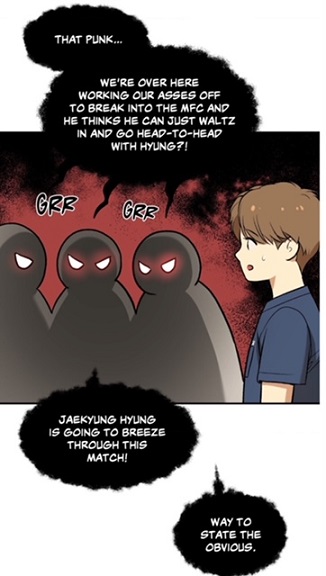 (chapter 47) Finally, he can testify not only as a fighter, but as a representative of the institution they tried to exploit. That elevates his voice: from a disposable athlete to a legal opponent with organizational standing.
Worse, if anything goes wrong, Park Namwook is now positioned as the scapegoat and spy. He didn’t reveal certain things to his boss, like for example how his members could never win. This character shows how fight (blame, control) and flight (denial, delegation. omission) are merely two faces of the same cowardice. His false peace rests on borrowed time and power—and it’s collapsing.
Kim Dan: From Submission to Resistance—and Back Again
Kim Dan’s survival mechanism was silence as well. As a child, he learned that speaking up would change nothing. 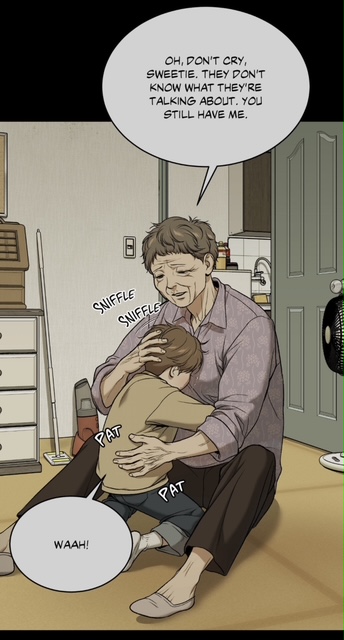 (chapter 57) Secondly, the vanishing of his parents were also swept under the carpet. That’s how he internalized powerlessness. Fleeing
 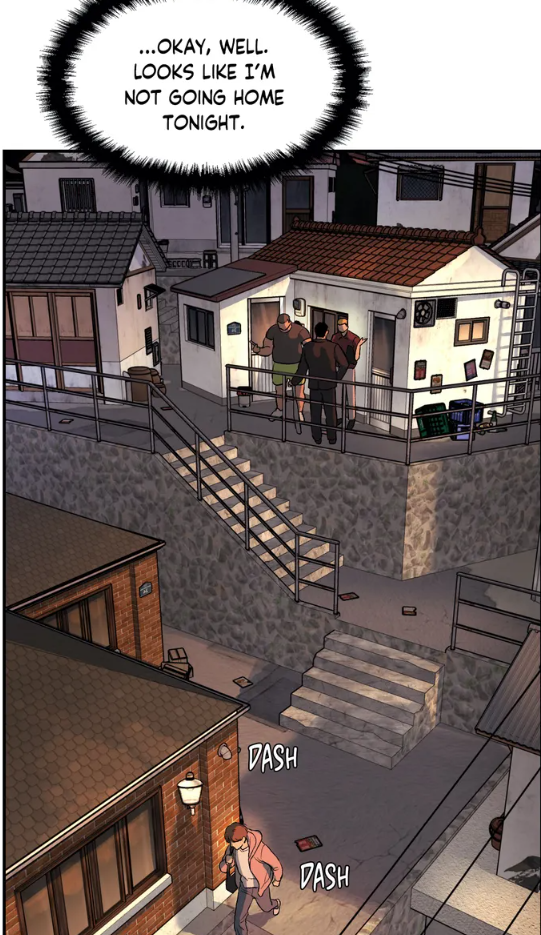 (chapter 1), deflecting, and disappearing became natural. With the grandmother, with doctors
 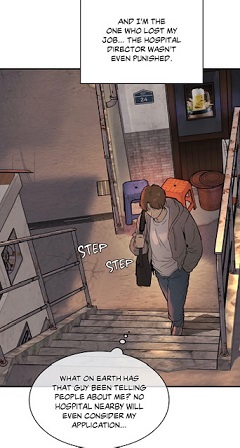 (chapter 1), with institutions—he obeyed. He accepted his fate as a fatality. But with Jaekyung, a new pattern emerged. Slowly, he began to resist: he set boundaries, raised his voice, argued with his boss, even used physical gestures to assert himself.
 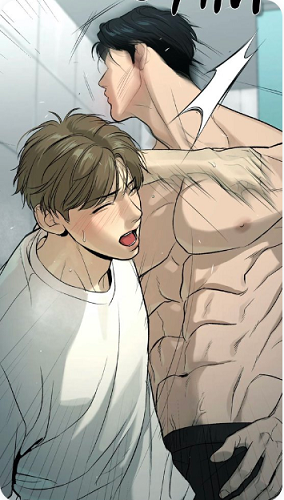 (chapter 7) For a moment, he was fighting.
But without mutual trust (chapter 51), this resistance could not hold. His boss and client never fully opened up, and so Dan, sensing instability, retreated again. (chapter 53) The brief flicker of agency collapsed. And this reflects a deeper psychological truth: resistance is not sustainable unless it is met with recognition. Otherwise, it begins to feel dangerous. Dan learned how to fight—but he never learned that he was allowed to win. Because deep down, Dan has internalized a belief shaped by trauma and lifelong submission:
Even if I speak, I will not be heard. Even if I resist, I will lose.
So why try to win?
Doc Dan has begun to resist, to speak, and even to walk away—but deep down, he still struggles to believe that success, safety, or love are things he’s truly entitled to. He acts, but with hesitation. He asserts himself, but doubts linger. He’s not powerless anymore—but the belief that he must always yield hasn’t fully let go of him either. That’s why he keeps mentioning the debts.  (chapter 67) Moreover, in contrast to Season 1, Kim Dan is no longer the invisible caregiver or obedient grandson. Thanks to Joo Jaekyung’s presence—disruptive and painful as it was—he began to form an independent identity
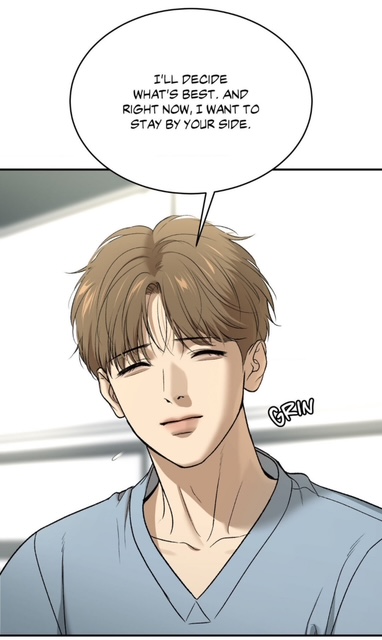 (chapter 57), one no longer shaped entirely by duty or guilt. The grandmother, however, is blind to this change. She continues to speak to him as if he’s the same self-sacrificing boy
  (chapter 65) who followed orders quietly and centered his life around pleasing others. Her suggestion that he “returns to Seoul” assumes he still views that as his place. But Dan refuses.
This refusal is significant. It is not only a rejection of her directive  (chapter 57) —it is a rejection of the belief that he exists only to serve. In Season 2, Dan says “no” repeatedly:
- He refuses Jaekyung’s offer of support.
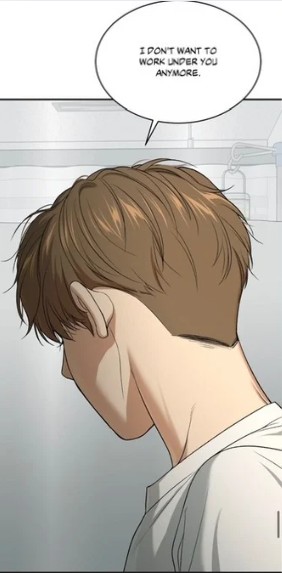 (chapter 60)
  (chapter 67)
 - He ignores the sleep specialist’s recommendations and denies the seriousness of his condition.
- He rejects Potato’s suggestion to return to the gym.
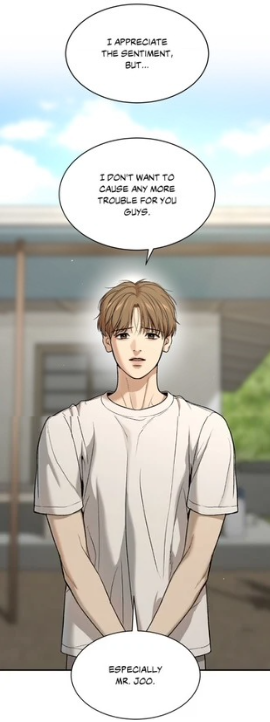 (chapter 58)
 - He only listens to the nurse, when the latter uses her authority on him.
 (chapter 57)
Although he is clearly struggling emotionally, there is something new about his detachment: it is not just trauma withdrawal—it is the first fragile assertion of selfhood. For the first time, he is choosing himself, even if that choice leads him into making bad decisions and a quiet depression. He is not clinging to roles that once gave him safety—he is testing the silence between identities.
And this is precisely what the grandmother fails to understand: Dan is no longer a reflection of her expectations. He is trying to become someone who belongs to himself. And her ignorance can be perceived, when she brings up the past.  (chapter 65) She uses his past flaws to outline his immaturity and need of guidance. However, she is not taking into consideration the transformation in the doctor due to the recent incidents (switched spray). He is no longer the same than he was 6 months ago or 2 years old. He changed thanks to the athlete and because of unfortunate events (sexual harassment from the hospital director, switched spray). But the halmoni has no idea about such incidents.
And so he, too, begins to confuse avoidance (chapter 61) with peace. He gives in to silence in front of Shin Okja again, not because he believes it is right, but because he believes it is safer. So far, he has not confronted his grandmother’s decisions yet.
The Grandmother: Avoidance Disguised as Selflessness
The grandmother represents the clearest embodiment of the flight response.  (chapter 53) Unlike Park Namwook who uses blame and delegation in professional settings, she applies emotional avoidance in private and familial spaces. Much like the manager, she outsources responsibility, asking others to step in
 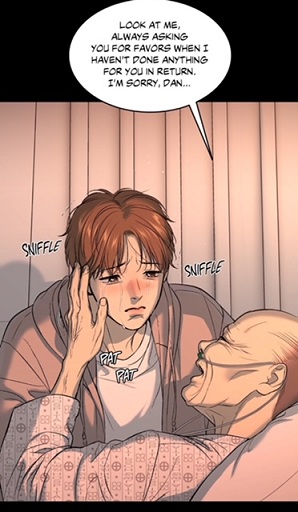 (chapter 53)
  (chapter 65) rather than engaging directly. She avoids difficult conversations, never once asking doc Dan about the nature of his work or why he followed her to the West Coast.
  (chapter 65) Her silence is not protective—it is evasive.
As someone who is not a fighter by temperament or experience, she avoids confrontation and choices. Hence she asks for help from the champion behind her grandson’s back. This internalized passivity is mirrored in her body: she cannot fight back against cancer. 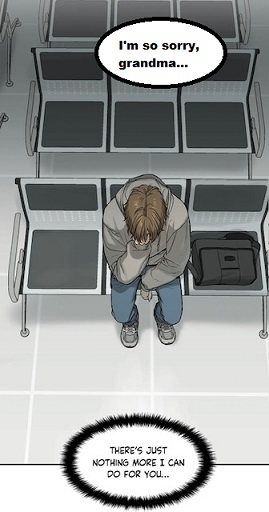 (chapter 5) Her illness becomes a metaphor for her mindset. She relies on external systems: her grandson (chapter 53), doctors
 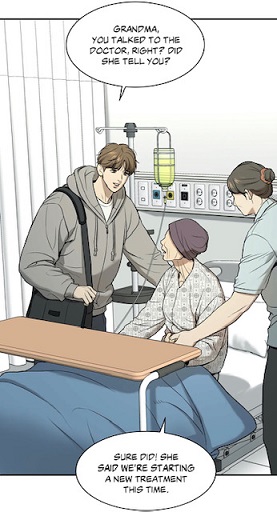 (chapter 7), medication, comfort
 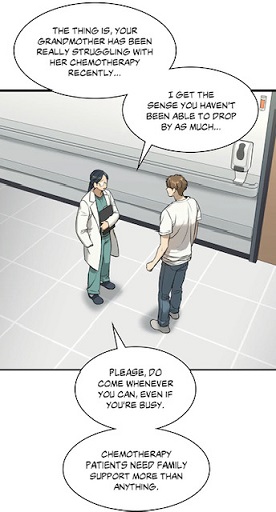 (chapter 21), and other people (nurse, Joo Jaekyung) —to maintain her emotional balance. But as doc Dan himself once observed, she is ultimately on her own in her battle. No system can fight it for her.
This mindset surfaces again when the oncologist, Dr. Kim Miseon, reproaches doc Dan for not visiting his grandmother. The implication is blame. However, this accusation is not entirely grounded: doc Dan had arranged for a nurse to provide care and companionship. 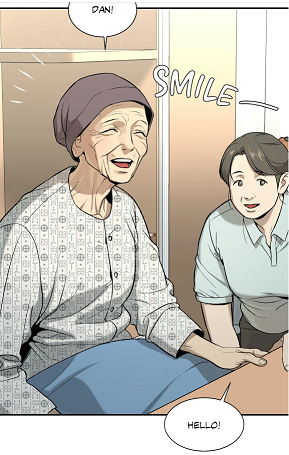 (chapter 7) His grandmother was not truly abandoned; she simply equated his physical absence with neglect, ignoring the emotional and financial burden he already carried. Like Park Namwook, she prefers others to carry the discomfort while maintaining a façade of suffering and sacrifice.
  (chapter 65)
Her passivity is cloaked in martyrdom—”I did everything for you”—yet it deprives doc Dan of emotional reciprocity. In her world, emotional closeness is conditional  (chapter 47) , and her narrative of selflessness becomes another form of emotional pressure. She does not yell, she does not accuse directly, but her avoidance is equally powerful in shaping Dan’s self-image as a burden. Doc Dan came to internalize that she suffered because of him.
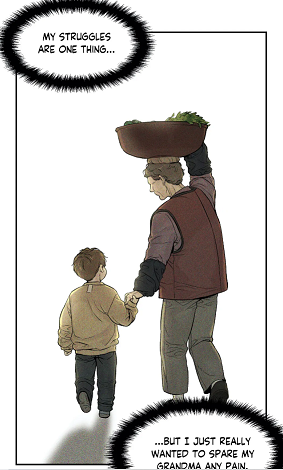 (chapter 5) Hence he made sure to shield her from any pain.
Her return to her hometown and her stay at the hospice reflect a deeper psychological strategy: she is not preparing to die, but attempting to escape death—to feel young again  (chapter 65), protected, comforted. Surrounded by nurses, medication, and routine, she finds temporary peace in an environment that simulates safety. The hospice does not cure her illness, but it cushions it. This illusion allows her to smile again, to relax—but only up to a point. Kim Dan’s gradual deterioration
  (chapter 57) —his visible exhaustion, disconnection, and quiet suffering—becomes a thorn in her eye, a reminder that her peace is not whole. As long as he suffers, she cannot entirely escape the shadow of her own regrets. Sending him away to Seoul represents a new of flight. Out of sight means out of mind. That way the grandmother wouldn‘t have to worry about doc Dan, as he has been entrusted to the athlete.
Survival Mode and Selective Laziness: The Blind Spots of Belief
As explained in Dr. Frost 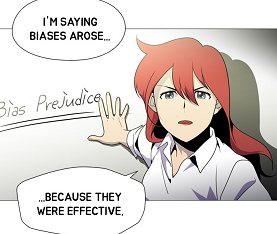
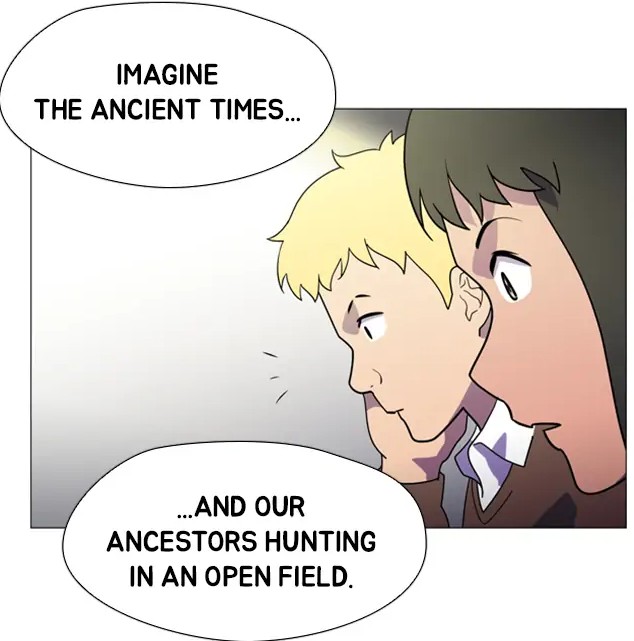
 (chapter 163) and supported by the article on confirmation bias, human survival was deeply dependent on mental shortcuts. Biases were not flaws, but adaptive tools — heuristics that helped our ancestors make quick decisions under threat. Faced with a potential predator, they could not afford the luxury of curiosity or debate. Run first, think later.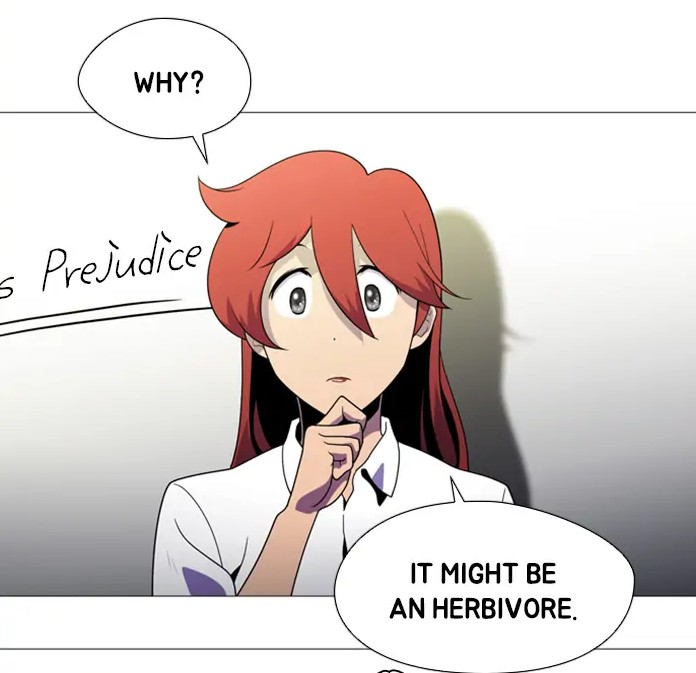
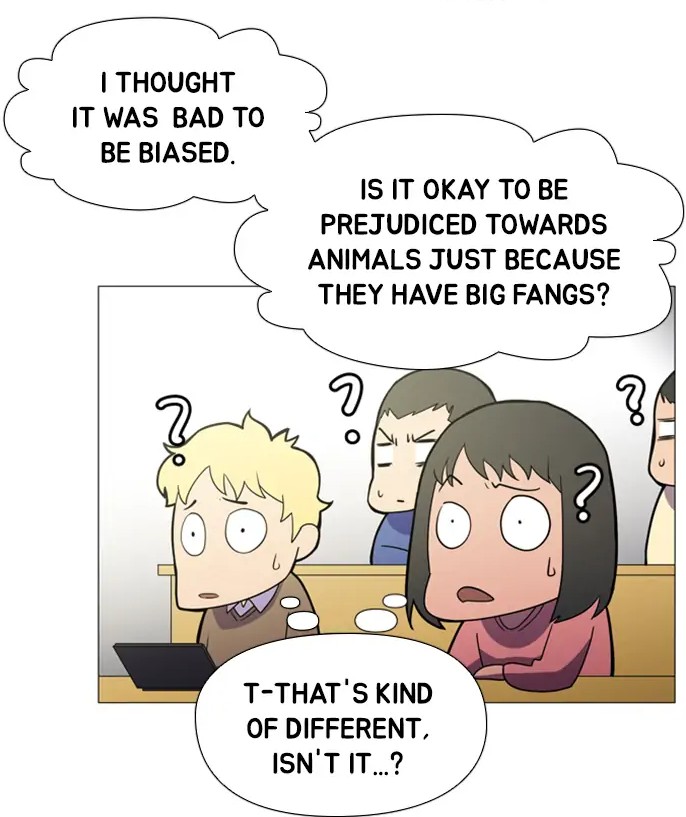 (chapter 163) In this sense, biases were effective precisely because they increased the chance of survival.
This explains why all four characters in Jinx behave irrationally at times — not because they are inherently flawed, but because they are trapped in survival mode. Joo Jaekyung, Kim Dan, Park Namwook, and the grandmother all exhibit narrow thinking and emotional rigidity because their nervous systems are wired for defense, not reflection. They are biased — not out of malice, but because their minds are trying to protect them.
For example, Park Namwook began as a cheerful, strategic manager.  (chapter 9) But once Joo Jaekyung became the target of criticism and scandals, his fear response activated. (chapter 52) He grew rigid, controlling, and increasingly biased. The infamous slap in the hospital was not a calculated choice — it was the culmination of fear, the eruption of unresolved stress and repressed blame. His mind no longer could no longer hide behind fake understanding; it sought a target.
The article on selective laziness explains how people apply critical thinking unevenly, questioning what threatens them while blindly trusting what confirms their worldview.
A recent study conducted at Lund University showed that most people would reject their own arguments 60% of the time if they were presented by someone else. […] What happens is that when we search for arguments to support our ideas, we are driven by selective laziness; we don’t evaluate the pros and cons of that idea, but rather resort to intuitive responses. In short, we don’t become judges of our own reasoning. However, we are harsh judges of the reasoning of others. Quoted from https://psychology-spot.com/selective-laziness/
The result of this study is visible in Jinx. While, the manager thought that the next match was too soon in episode 41,  (chapter 41) he recommends the opposite at the restaurant because the idea comes from the CEO! (chapter 69)
In addition to the earlier exploration of confirmation bias, Jennifer Delgado’s article “5 cognitive biases limit our potential” offers another compelling extension. She explains how biases don’t just distort perception—they actively constrain personal growth. She introduces 5 different cognitive biases and one of them is “Hindsight bias”.
Hindsight bias is the tendency to look back on a decision and reinterpret it as better, wiser, or more inevitable than it actually was. To reduce discomfort or self-doubt, we modify our memory of past motives, downplay any hesitation or contradiction, and reframe our choice as the best one all along. This can be observed in this image: (chapter 65) The grandmother quietly rewrites the past to preserve her emotional comfort. Her statement — “I told him I wanted to see the ocean, but I never imagined he’d end up settling down here” — seems reflective on the surface, but it is a clear case of hindsight bias. She reframes her earlier decision as simple and innocent (as if it was a trip), downplaying the emotional pressure she placed on Kim Dan to follow her. By minimizing her role in shaping his circumstances, she subtly shifts responsibility onto him, as if his decision to stay was entirely his own, disconnected from her influence. This distortion allows her to avoid guilt and maintain the illusion of benevolence. However, if she truly meant, she desired to go on a trip (chapter 53), she should have voiced before that the doctor had misunderstood her. However, she claims that this place is her hometown, and with her request to the champion, she implies that she desires to stay in that little town: 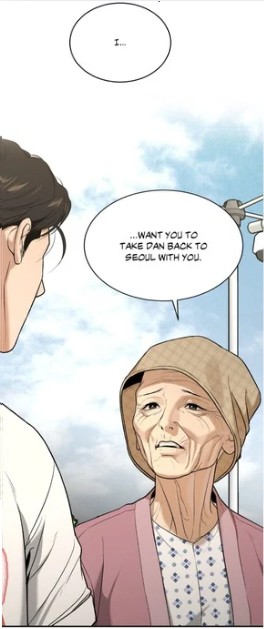 (chapter 65) It was her decision to settle down at the hospice.
Even more revealing is her next comment: “I really don’t know what that boy plans to do with his life.” This confession exposes her emotional detachment. Despite being the one who uprooted his life, she has made no effort to understand his goals, his work, or his emotional needs. Her words reflect not only a lack of curiosity, but also a passive disavowal of responsibility. She speaks as if Dan were a stranger, even though she has shaped his life through silent expectation and unspoken control. The peaceful ocean backdrop masks this deeper avoidance. Her worldview remains rooted in survival logic and emotional self-preservation — not genuine connection or growth.
By reinforcing outdated beliefs, we avoid novelty, risk, and the emotional labor required for change.
When we have deep-seated beliefs, we stop questioning them and simply assume they are true. This limits our ability to grow, learn, and discover new perspectives. This insight sheds further light on the characters’ emotional stagnation in Jinx. Park Namwook clings to obsolete narratives about leadership and discipline, failing to acknowledge how the landscape—and Jaekyung—have changed. His insistence on orchestrating a comeback fight is not strategic foresight, but cognitive rigidity disguised as professionalism.
The grandmother is likewise restricted by inherited beliefs: that safety, solitude, and hard work (chapter 65) are the cornerstones of survival. She only has friends, when she needs them (see for example the champion). These assumptions once protected her, but now they prevent her from evolving—from supporting Dan emotionally, from engaging in reciprocal dialogue, and from allowing herself to face death consciously rather than evade it.
Even Joo Jaekyung’s belief that strength equals stoicism prevented him from confronting the truth of his own vulnerability. Only through Kim Dan’s influence did he begin to question this inner script—and once he did, the false foundations began to crumble. He has just started healing emotionally; he is starting questioning the corrupt systems surrounding him, including MFC’s exploitation. This means, the existence of his jinx is vanishing.
This second article reinforces a deeper truth: that healing requires not only confronting pain, but also dismantling the faulty reasoning that keeps us blind. As long as the characters were clinging to biases, they remained paralyzed—unable to process what had happened to them, or recognize the larger forces at play. Hence they could never be happy. But the moment they begin to question themselves and speak honestly with one another, they also begin to see clearly—not just inwardly, but outwardly.
This explains why doc Dan ignored Jaekyung’s advice about medication and health.  (chapter 67) His survival bias told him: “Don’t trust a man who once treated you violently.” or “Doctors are ignorant, they don’t know me“. It was easier to discredit the source than to weigh the merit of the message. Likewise, in Season 1, the champion dismissed doc Dan’s medical opinions
  (chapter 41), trusting instead in MFC and his agency — despite the fact that those institutions are overtly motivated by money. His bias protected his ego, but at the cost of his health and relationships.
Park Namwook falls into the same trap: he considers Jaekyung a “spoiled child” (chapter 7) 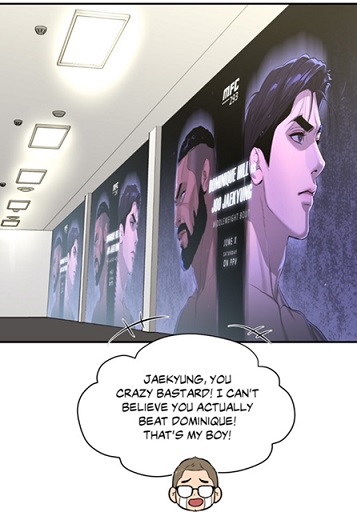 (chapter 40) who needs to fight to prove himself, yet likely doesn’t treat his own family this way.
 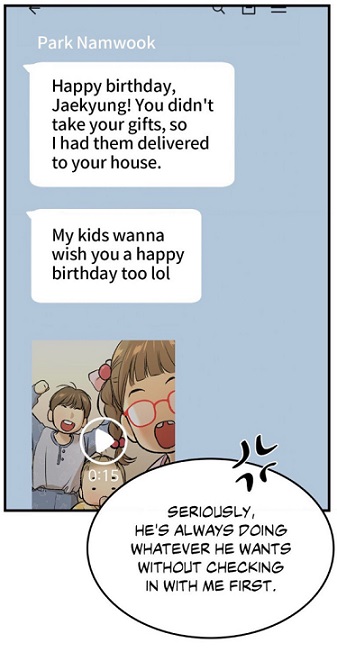 (chapter 45) His double standard is not conscious hypocrisy — it’s a form of selective laziness. He does not challenge his beliefs because doing so would unravel the identity he’s built as a competent, authoritative manager.
The grandmother also embodies survival-driven bias. She believes that working hard and seeking fame are acts of love and stand for happiness— but she never questions the emotional cost. (chapter 65) She doesn’t help her grandson build friendships (chapter 57) 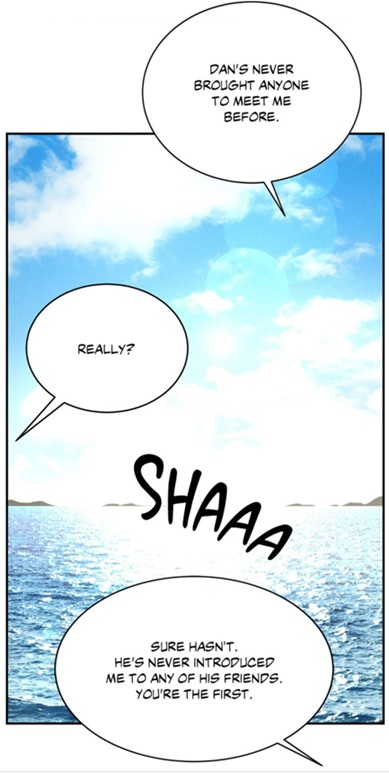 (chapter 65) or a support network. It is not her fault, if she never met doc Dan’s friends in the past while hiding the fact that he had been bullied by his peers. Her request for him to return to Seoul, a place he has no roots, only furthers his habit of isolation. Similarly, when she asked Jaekyung to bring him to Seoul and have him diagnosed, she implicitly discouraged any shared decision-making. Like Park Namwook, she bypassed dialogue in favor of directive control, reinforcing the habit of emotional withdrawal.
As the article states, “
“Selective laziness isn’t necessarily a negative thing. In fact, in group settings it can spark debate and enrich conversation.” https://psychology-spot.com/selective-laziness/
But her attitude blocks precisely that — there is no exchange of ideas, no real conversation. Only avoidance wrapped in concern and requests.
This is why neither Jaekyung nor Kim Dan were “thinking properly” earlier in the story. They were not free to. Their brains were in survival mode, stuck in flight or fight, not reflection. But once the champion saw Dan again — saw that he was still there, still himself — his anxiety softened. He began to press MFC for answers.  (chapter 67) That shift marks a turning point from survival to conscious thought. The mind cannot reflect when it believes it is under attack. The tragedy is not that these characters are irrational — it’s that they were taught fear before they were taught trust. Thus I come to the following conclusion. As soon as both are curious about each other
 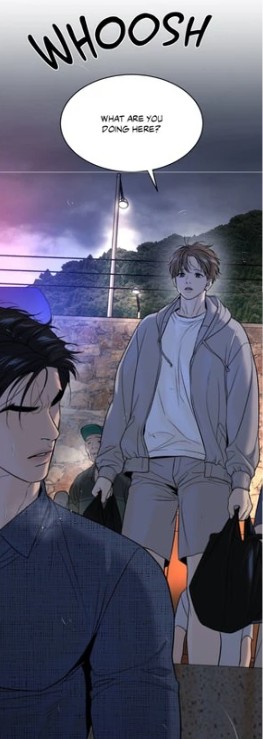 (chapter 69), they are now free from their bias and prejudices.
  (chapter 69) They will be able to communicate which will help them to discover the truth about MFC. Yes, their ability to ponder will lead them to unmask the villains and defeat their opponents. By fighting for justice, both will discover true peace of mind. This hardship at the end of season 1 was necessary to reset their heart and mind: what is the true meaning of life? Money? Work? Duty? Sacrifice?… The answer is happiness which is strongly intertwined with love and selflessness.
The topic for the next essay is: 
Feel free to comment. If you have any suggestion for topics or Manhwa, feel free to ask. If you enjoyed reading it, retweet it or push the button like. My Reddit-Instagram-Twitter-Tumblr account is: @bebebisous33. Thanks for reading and for the support, particularly, I would like to thank all the new followers and people recommending my blog.


 (chapter 31)
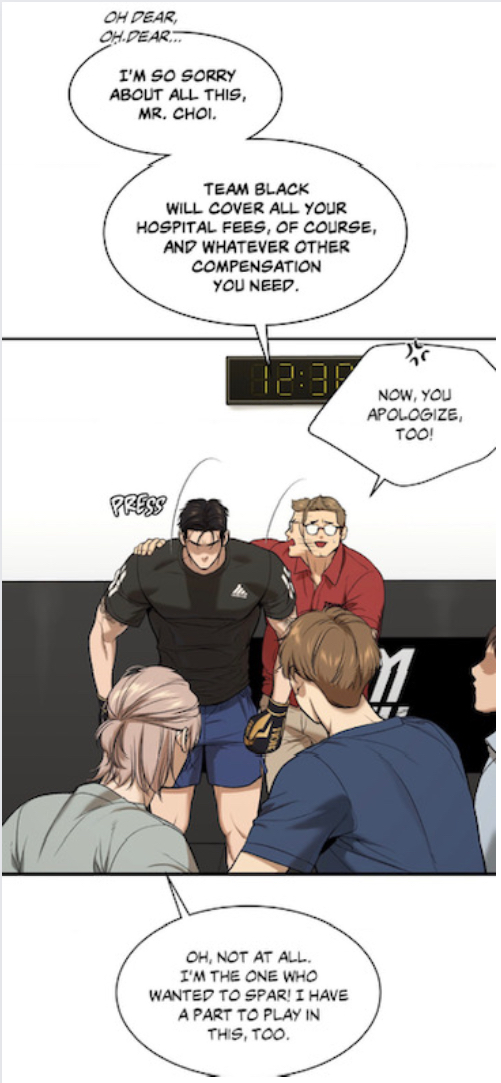
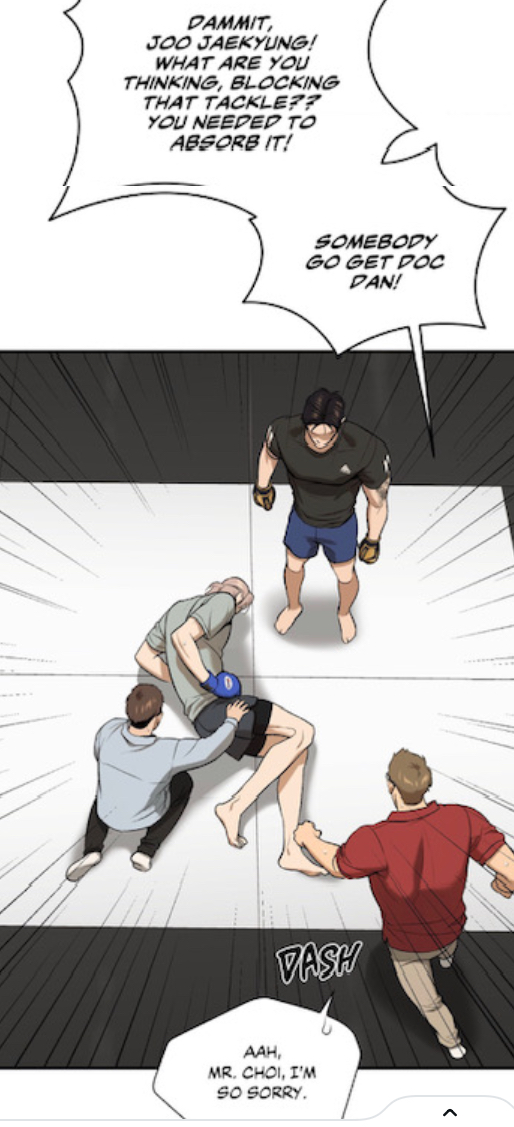 (chapter 31) As you can see, as soon as the actor was lying on the floor, the manager was already blaming his “boy”. This exposes that the man was not interested in the truth in the end. He had already given the judgement. But notice that Park Namwook chastised the protagonist for blocking the tackle. He reproached his star that he should have absorbed the comedian’s tackle.
  (chapter 31) He used his whole weight and strength to take down his counterpart. This corresponds to a low-speed car accident and Mingwa let us see the effect of this terrible impact:
  (chapter 31) His facial expression was betraying him: he was in pain. This means that in verity the one who had caused an injury was not the champion, but Heesung. But there is more to it.
  (chapter 46) If the manager had been that worried, why didn’t he confront the fighters from Team Black directly? Instead, he sent Yosep on an errand. In other words, he did nothing.
 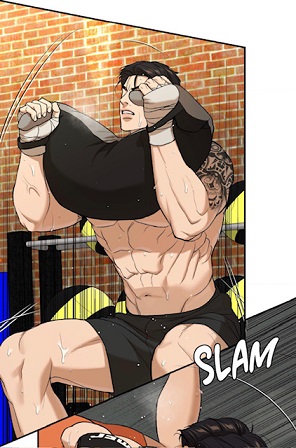 (chapter 37) Look at this: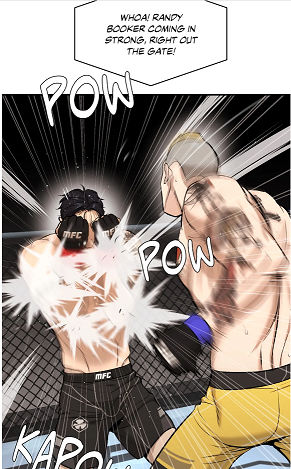
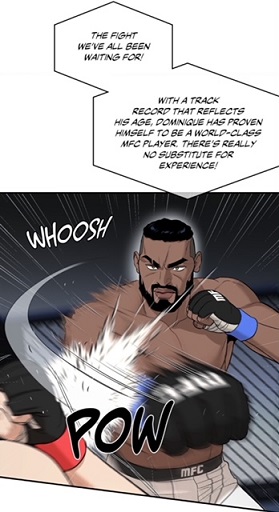
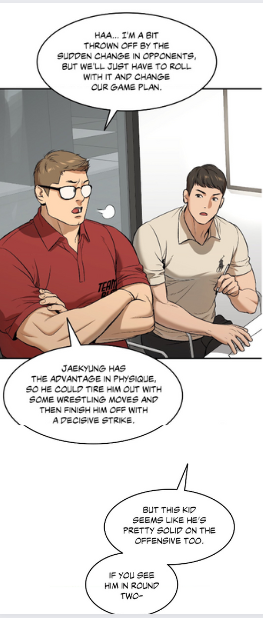

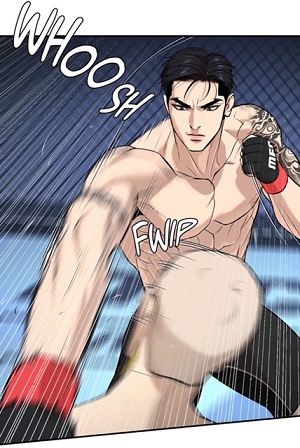 In the second case, the athlete had to change his strategy, for he was already wounded. In other words, Kim Dan’s mistake was to teach Joo Jaekyung to trust his instincts and as such himself. He needs to stop using his body as a shield, but as a weapon, like he did in the doctor’s home: become proactive and anticipate his opponent’s moves.
 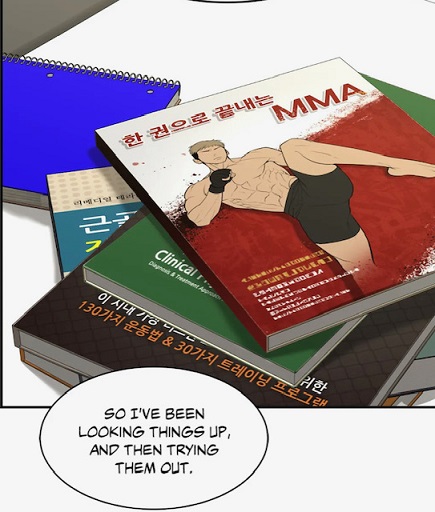 (chapter 25) The latter desired to learn the moves from MMA fighting
  (chapter 25) in order to understand the involvement of the muscles and the possible consequences on the body. This scene displays the lack of expertise from Park Namwook. How did he become a manager and even a coach? Perhaps a crash course organized by MFC
  (chapter 22), but the latter is definitely influenced by the criminal underworld. This new observation reinforces my previous theory that Kim Dan will come to replace the manager and coach’s position. What distinguishes them from each other is their attitude to knowledge. Kim Dan keeps learning, reading and watching, whereas the other has the impression, he already knows everything. I guess, he has never heard from the concept “lifelong learning”.The latter promotes the idea of continuously acquiring knowledge and skills throughout a person’s life. This approach values education beyond formal schooling, emphasizing that learning can happen in various settings
  (chapter 42), including personal, professional, and community experiences. The goal is to adapt to changes, meet evolving job requirements, and stay mentally engaged. In Germany and other countries, lifelong learning is promoted to foster personal growth, social inclusion, and employability, especially as technology and society rapidly evolve. I am myself a follower from this concept. Hence I am still looking for new things (learning new cultures, new languages, reading about psychology, …).
  (chapter 27) Yet, he was chastised. I had always stated the coach’s responsibility before, but I had only found indirect evidences for this interpretation. Since he should have absorbed the impact, it implies that the latter should accept the pain as a normality. However by blocking Heesung’s assault, the athlete had tried to protect his own body. Thanks to Kim Dan, the fighter was learning how to treasure his own body. Moreover, it displays another flaw from Park Namwook: his risky attitude by making a bad recommendation. I would even add that his slap on the fighter’s neck is revealing his recklessness and thoughtlessness.
 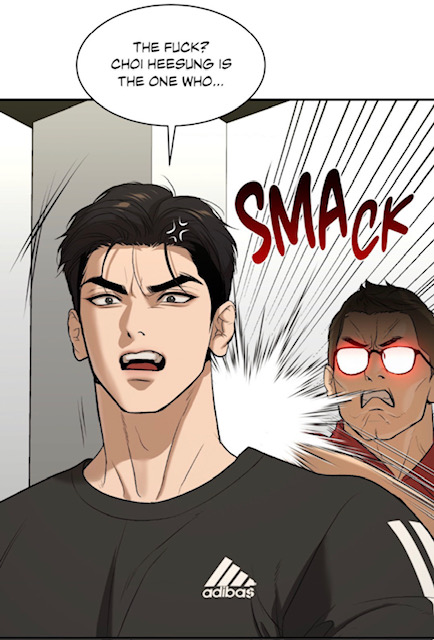 (chapter 31)
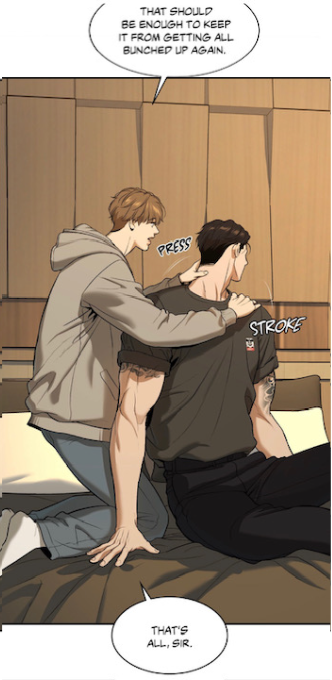 (chapter 32) Joo Jaekyung was finally receiving his treatment for his injury, the consequence of Heesung’s tackle. No one checked on his body, just because the other was faking his injury. While writing this, I can’t stop my blood from boiling out of anger. To conclude, I am confirming once again that Park Namwook is a bad coach and manager. He shouldn’t be allowed to become one for the other fighters. He would treat them like toys or even “punching bags”. Imagine that he would also recommend such a strategy to Potato as fighter. That would be very dangerous. In addition, why was he treating his star so badly and privileging the actor? It is because the latter brings money forgetting that the champion is the source of his own income! And this brings me back to the initial picture:
 (chapter 43) Interesting is the idiom is a synonym for deceitfulness. And this brings me to my next observation. Why did he add “whatever other compensation you need”? The moment I asked myself this question, I couldn’t restrain myself from thinking that the manager might have known about the true intention from Choi Heesung. Is it a coincidence that Kim Dan was used as compensation for the athlete’s mistake? Moreover, the latter was supposed to meet the actor on a Saturday, his own day-off.
  (chapter 32) And this proves that Park Namwook is the reason why the athlete never took a day-off. He was forcing an employee to work during his day-off and the latter wouldn’t even be paid for this. It was included in the “salary”. It was, as if the manager was using the PT as his servant.
 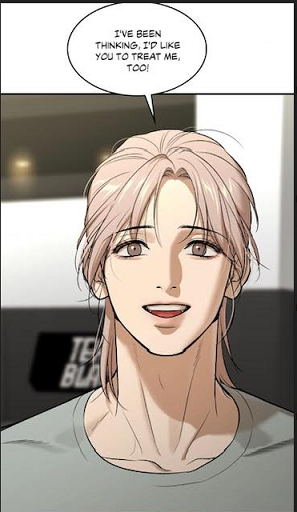 (chapter 31) in the hallway, next to the meeting room and office. So technically, Park Namwook could have heard them talking behind the door, a new version of this scene:
 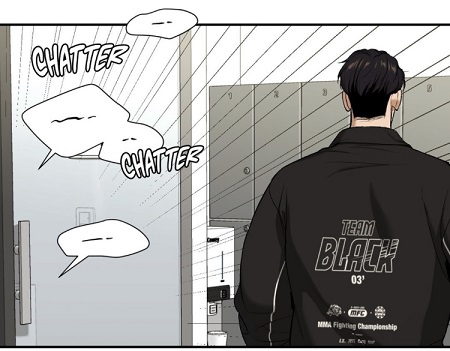 (chapter 36) Was he truly ignorant about the actor’s intentions with all this wooing and sponsoring?
  (chapter 31) In addition, he had heard the comment from the gumiho’s manager.
  (chapter 30) Just because we didn’t see this, it doesn’t mean that it didn’t happen. And maybe that’s the other reason why he was more than willing to use Kim Dan. The latter was bringing a huge client to the gym.
  (chapter 31) He would come on a regular basis. Naturally, I have no more proof for this theory than the remark “whatever other compensation you need” and its timing. Nevertheless, one thing is sure. Kim Dan was treated the exact same way than Joo Jaekyung, a doll and servant at his disposal.
  (chapter 37) It is because Park Namwook had become his voice. And we can observe this with the apology at the gym:
 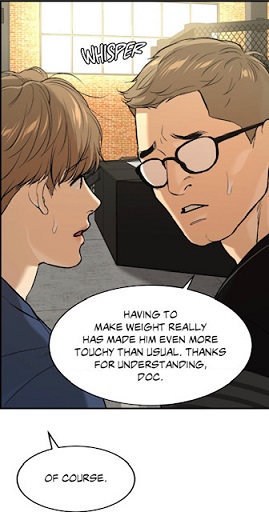 (chapter 37) are just lip-services because at the end, he has no problem to replace Kim Dan.
 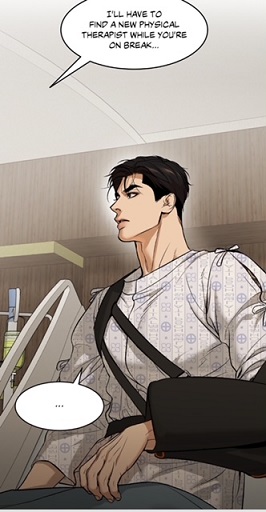 (chapter 53) That’s the reason why I have been wondering if the last incident was not the trigger for the coach to drop his “boy” and find a new “star and champion”. Since he is so obsessed with money and fame, I can’t help myself wondering if he will take a new pupil and torment him so that the latter only becomes a shadow of himself. Let me know what you think about this.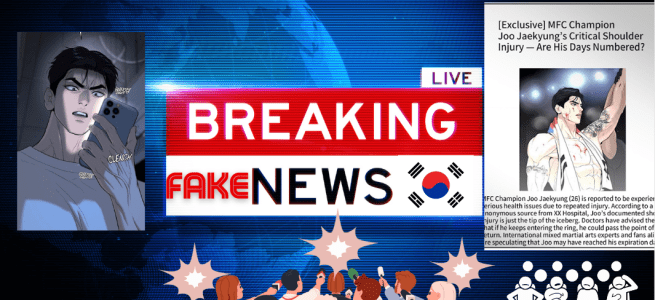

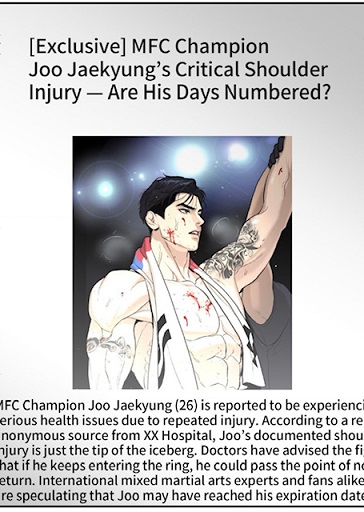 (chapter 35) What caught my attention first is the difference between the title and the content in the article. On the one hand, the author is revealing Joo Jaekyung’s injured shoulder, on the other hand, he is implying with the expression “the tip of the iceberg” that the champion has other injuries. Dr. Lee had pointed out the joints and his shoulder as problems.
  (chapter 27) But his diagnosis in English wasn’t clear enough. Was he referring to the joints of the shoulder or to others? Nonetheless, based on the X-rays and the therapy
 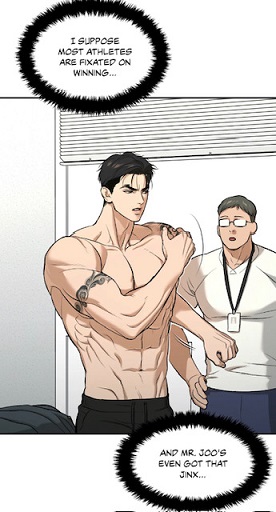 (chapter 27), it is clear that Joo Jaekyung’s real issue is his shoulder in bad shape. Hence we see him constantly touching his right shoulder.
 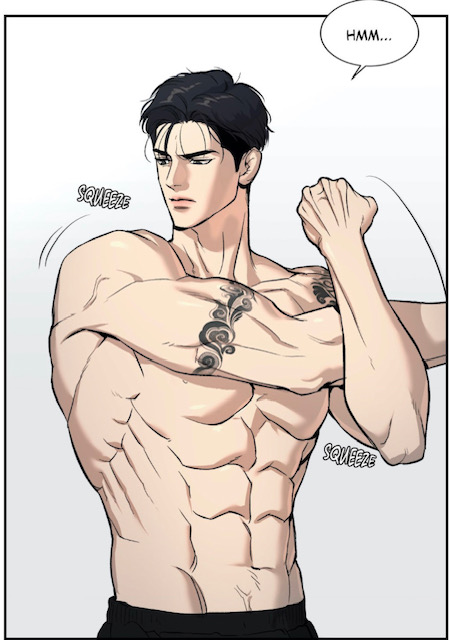 (chapter 1) Because of this contrast between title and content, the Manhwaphiles can grasp the writer’s true intentions behind the article. He was looking for sensationalism, hence he exaggerated the champion’s physical condition. But there is more to it. The columnist attempted to create the illusion of a proper and serious investigation by employing the idiom “the doctors”. With this term, he insinuated that he had consulted different doctors and they would all come to the same verdict. Moreover by including the fans, he gave the impression that this topic had been long discussed among the supporters. In reality, he was mixing the cause and consequence. The moment people will read this news, they will start speculating about his future. However, since this was a secret till this publication, I doubt that the lovers had already speculated whether the champion had reached his zenith. That’s the reason why I consider this column as a fake news. It was a hype created on a truth mixed with lies.
 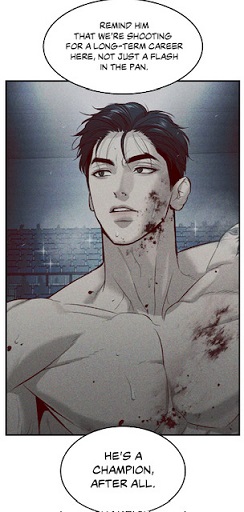 (chapter 27), if he changed his way of life and training. Hence he recommended rest.
 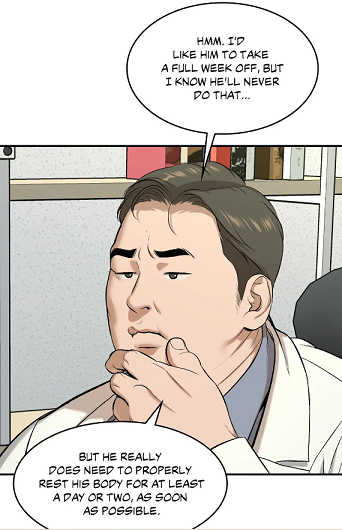 (chapter 27) Another evidence for this tabloid journalism is the reference to the hospital and the anonymous source. It was, as if the personal from that hospital was not trustworthy, for the “anonymous source” had leaked information from the files. Though the name of the hospital was not mentioned, it is clear that Dr. Lee will feel concerned, for such a divulgation to the public can endanger the champion’s career and his own reputation. He could be held responsible for the main lead. Now, his opponents know his weakness. So such an article can lead to an investigation from that hospital and the chaebol. Who is the anonymous source? Dr. Lee will certainly vouch for his employees, and that’s where Kim Dan comes in. Notice that this article was released shortly, after Kim Dan met the doctor for the first time!
 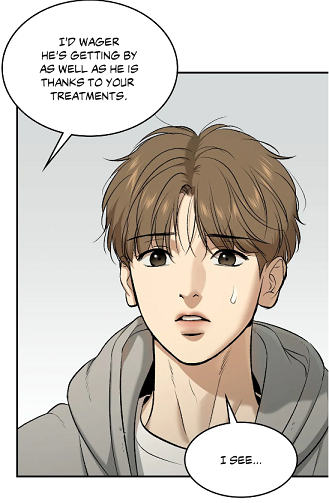 (chapter 27) Moreover, he is the only doctor who read the files!
 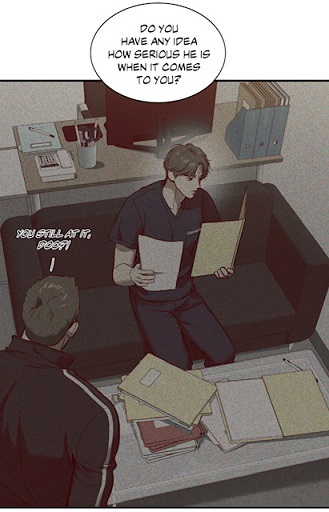 (chapter 17) People will start suspecting the protagonist and if his past with the perverted hospital director is exposed,
  (chapter 1) it is clear that his reputation will suffer. Furthermore, Kim Dan was seen with bruises too
  (chapter 11) which could lead to the discovery of the debts and the loan sharks. He had financial problems and a sick halmoni. Finally, let’s not forget that the boxer is the first client of the physical therapist. So people will question the champion’s choice for picking Kim Dan as his personal physical therapist. He lacks credentials. Consequently, the doctor’s integrity and competences will be questioned by public opinion. In other words, Kim Dan could bring bad PR to Black Team and this could create some frictions between the champion, the doctor and Park Namwook. To conclude, it is clear that the target of this article is not just the athlete, but also Kim Dan. The allusion to the “anonymous source” was done on purpose, so that people would ask for his identity. He betrayed the hero and emperor! Someone violated the confidentiality clause. Nevertheless, divulging the existence of an anonymous source was to divert attention from the real issue! The real traitor is the author of this article who broke a rule. He shouldn’t have leaked this to the public! He is responsible, if Joo Jaekyung gets really injured by his opponent. But I would like to outline that the files were left in the office of Team Black and they allowed strangers to enter the gym because of Heesung!
  (chapter 30) As you can see, anyone could have access to the files, especially because the physical therapist was absent in the morning. He only joined the company much later. As the Jinx-lovers can observe, this article should be seen as a lesson for the physical therapist, Park Namwook and Joo Jaekyung. They should be more careful, due to money, this rule “bringing strangers” had not been followed.
 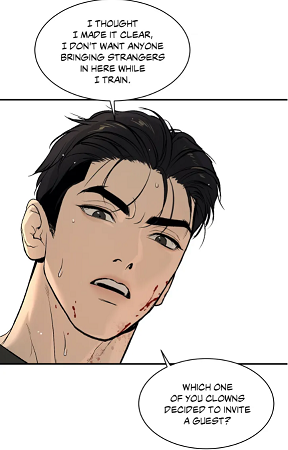 (chapter 1)
  (chapter 35) He is not a greedy, immoral and selfish bump. He embodies true loyalty
  (chapter 35) That’s the reason why I believe that this article was written to drive an edge between Joo Jaekyung and Kim Dan. The former should suspect his lover. However, what the schemers don’t know is that the doctor is living with the champion and he already knows about his suffering (insomnia, his fear of losing). Yet, this was not revealed in the article. I think that this breaking fake news will push Kim Dan to become more proactive towards his VIP client.
  (chapter 34) This shows that the doctor is slowly realizing the importance of welfare in such a career. Anger is a sign for stress. The latter is also the cause for damaged “joints”.
 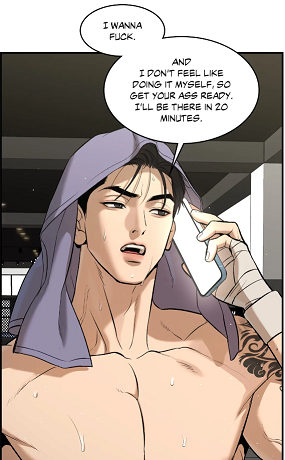 (chapter 19) 😂
 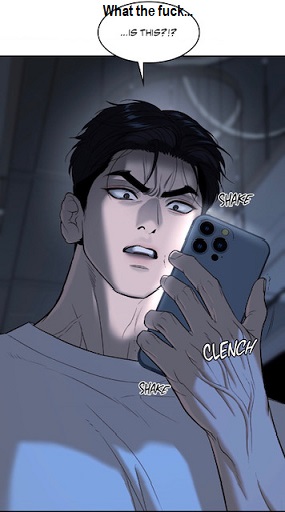 (chapter 35) Therefore he got angry. I am quite certain that he was thinking like this:
  (chapter 29) He shouldn’t have lowered his guard… he shouldn’t have taken a day off. He was already wondering why he had done such a prank to Heesung
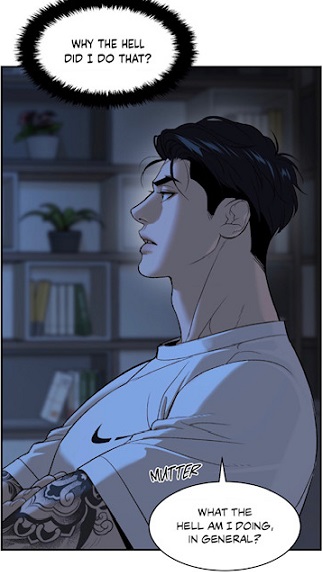 (chapter 35) In his eyes, he had focused too much on Kim Dan. Like explained in the previous essay, I am expecting a relapse from the athlete, but this time, he will be stopped by the main lead, for the latter is now well acquainted with his mental and physical condition. Furthermore, since this news resembles to a challenge, I think that Joo Jaekyung will organize a match in order to prove this exclusive announcement wrong. I see parallels between chapter 35
  (chapter 20) For Kim Dan, it was back then a matter of life and death. Now during this night, Joo Jaekyung is put in the same situation. It was, as if someone was attempting to kill him. If he loses his title, he has the impression that he will die, he will vanish into thin air. But why is it so important to him? It is necessary to recall that in his childhood, the athlete was an invisible and silenced child! With this title, he has the impression to “exist”, though he is not truly living. So how will he react to this article? Rush to the hospital and throw a tantrum? Or go to Kim Dan and wake him up?
  (chapter 35) Striking is that the latter had the cellphone number from the athlete.
  (chapter 35) On the other hand, the content of the message clearly indicates that the two characters didn’t know each other. How did this reporter get the cellphone number from the champion? This shows that there is someone behind pulling the strings. Moreover, note that he was contacted during the night. Since my essay “Magic hours”, my avid readers know that this night sky
  is indicating that it is rather late.
  (chapter 35) Why did the reporter send this message and article at this hour? For me, there is no doubt that they knew that the champion wouldn’t be asleep. It was, as if they knew about his insomnia. Besides, Joo Jaekyung never leaves his cellphone behind… and a sign that they expected him to see the message very quickly. As a conclusion, this breaking news expose the involvement of people close to the champion. Moreover, notice that he was contacted directly and not through his gym, Team Black. This proves to me that there is a conspiracy in the end. Someone leaked information to this reporter.
 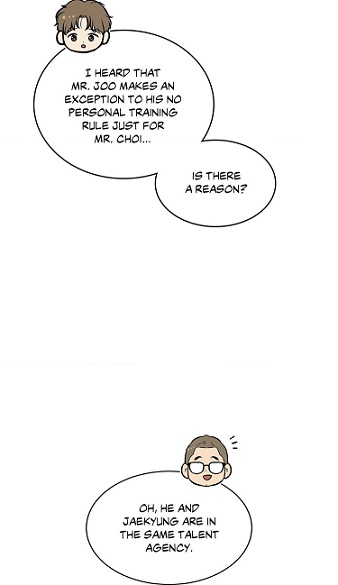 (chapter 30) Hence I deduce that the agency will get involved too very soon and the owner could ask for the identity of the anonymous source. Who leaked this information to the author of the article? Since Kim Dan is the newest member, he would be the biggest suspect and the perfect scapegoat, for he doesn’t belong to a hospital and he has no agency protecting him. And this brings me to the following conclusion. Romeo and Juliet is a tragic love story, because these two young people’s families were in a feud! Hence I sense the birth of a conflict between Team Black and the agency. But we have Choi Heesung who is also represented by this agency.
 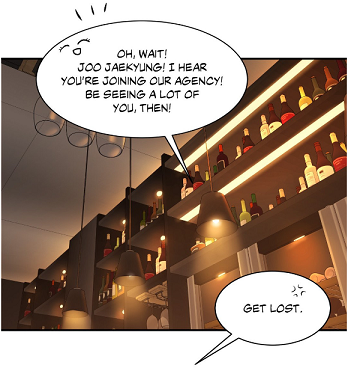 (chapter 33) In the English and Korean version, the actor employed the possessive pronoun “our” and not “my”, this could be an evidence that the agency could belong to Heesung’s family. So because of this breaking fake news, Heesung would be brought in a position, where he can help the physical therapist.
  (Chapter 35) If he helps the angel, then he would keep his promise and appear as reliable. And that’s how he would become more responsible and selfless. That way he would learn how to practice “true love”: a choice, a judgement and promise! He would give without expecting anything in return! This is real selfless love.
  (chapter 1) The previous physical therapist!! Moreover, the latter got hurt by the athlete. One of my theories was that the man had not treated the champion properly.
  (chapter 1) Besides, he would have another interest to have Kim Dan fired. How could he get hired, when he lacked experience? By mentioning the anonymous source and the hospital, the reporter would divert attention from the real traitor. No one would suspect a former employee. The schemers are hoping that the hospital and Kim Dan would put the blame on each other. In other words, we shouldn’t forget this mysterious person. Finally, the author has to expose the truth about this incident. What had happened exactly? I doubt that Joo Jaekyung truly beat him, for the latter could have sued the man. Besides, we know now that Park Namwook is biased and has the tendency to put the blame on his star.
  Bebebisous33s' analyses in K-Dramaland and Manhwas