
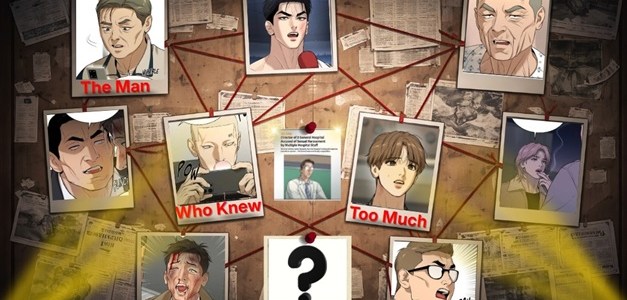
Please support the authors by reading Manhwas on the official websites. This is where you can read the Manhwa: Jinx But be aware that the Manhwa is a mature Yaoi, which means, it is about homosexuality with explicit scenes. Here is the link of the table of contents about Jinx. Here is the link where you can find the table of contents of analyzed Manhwas. Here are the links, if you are interested in the first work from Mingwa, BJ Alex, and the 2 previous essays about Jinx The Hidden Predators (Part 2) and The Man Who Knew Too Much – part 1
It would be great if you could make some donations/sponsoring: Ko-fi.com/bebebisous33 That way, you can support me with “coffee” so that I have the energy to keep examining Manhwas. Besides, I need to cover up the expenses for this blog.
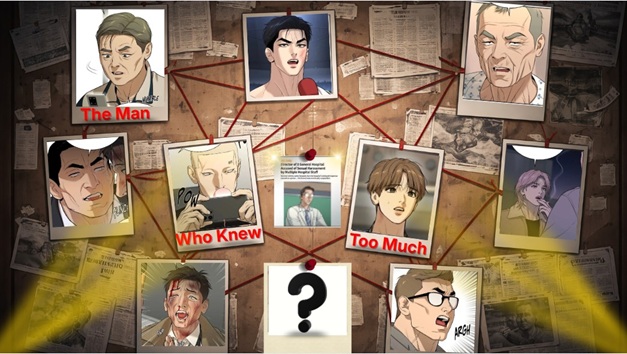
I know that my avid readers were expecting an analysis of episode 94, especially because the conversation between the two main leads was so moving. Actually, the illustration and the title are already prepared.  Beautiful, right? Yet I could not help myself returning once again to the criminals. My fascination with thrillers and investigations probably gives it away: when I read this story, I instinctively begin to examine every image, words and event like a detective reconstructing a case.
You may therefore wonder what triggered this sudden return to the question of conspiracy.
Surprisingly, it started with a very quiet panel. 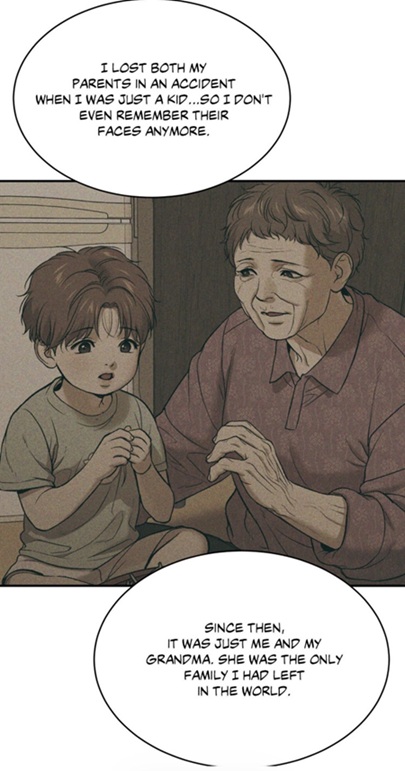 (chapter 94) In this moment we learn that Kim Dan lost his parents in an accident when he was a child, though we shouldn’t trust this confession as the truth due to the debts. Anyway, the word “accident” immediately resonates with a principle that has appeared again and again throughout the story: someone being at the wrong time, at the wrong place.
In Kim Dan’s case, however, the catastrophe is natural. It is not the result of manipulation or conspiracy. Fate simply intervened. The tragedy shaped his life, leaving him alone with his grandmother and forcing him to grow up prematurely. This explains the origins of his powerlessness and passivity. His entire existence is marked by the consequences of that accident. Yet precisely because this accident is natural, it casts a revealing light on the world of the criminals.
In their world, accidents are manufactured. 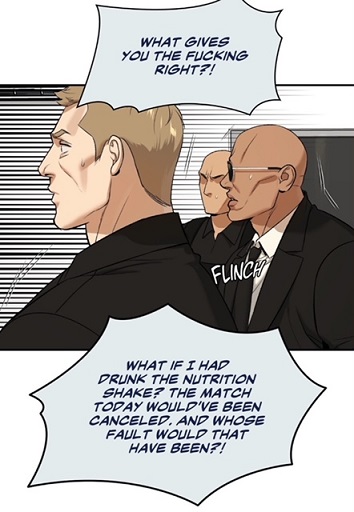 (chapter 40) What appears to be coincidence is often carefully engineered.
The Criminal Method
When we examine the schemes surrounding Joo Jaekyung and Kim Dan, a recurring structure becomes visible. The antagonists rarely attack their targets directly. Instead, they create situations where events unfold in such a way that someone appears to have been caught at the wrong place, at the wrong time.
The pattern is remarkably consistent. First, the media narrative is prepared. Hence an article about his shoulder injury was leaked to the press. 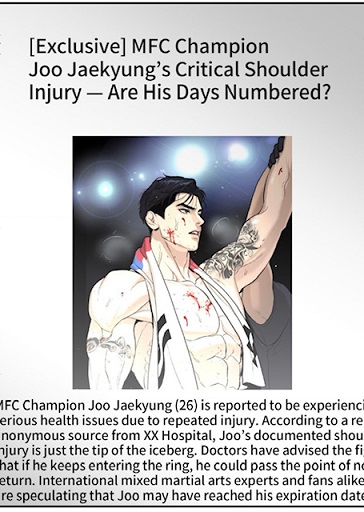 (chapter 36) At the same time, social medias were manipulated in order to stir public pressure and push the champion toward accepting the match in the States.
 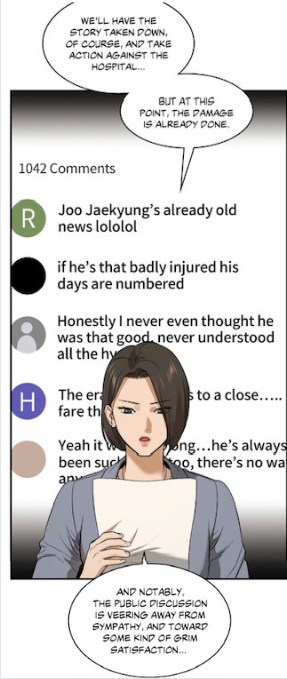 (chapter 36) But we only discover this MO thanks to the match with Arnaud Gabriel and the Entertainment agency’s involvement.
  (chapter 81)
After the incident in the United States, the manipulation did not stop. On the contrary, it entered a new phase. The media reported that Joo Jaekyung had been suspended because of his temperament. 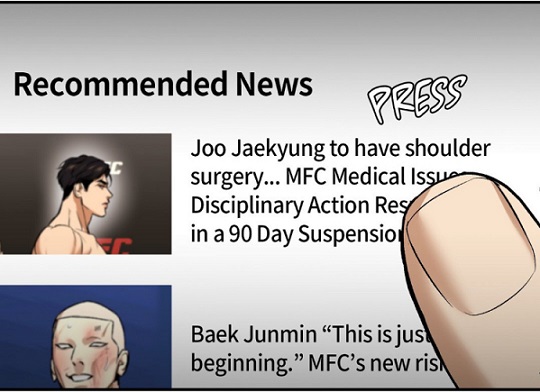 (chapter 52) Officially, the story suggested that his own behavior had caused the problem. In reality, however, this removal also had another function: it cleared space for Baek Junmin’s rise. That’s the reason why the article with The Shotgun was placed directly below the star’s and why the director Hwang Byungchul accepted easily the disqualification of his former pupil.
  (chapter 71)
At the same time, the public image of the champion was gradually reframed. (chapter 54) He was increasingly portrayed as reckless and irresponsible for continuing to fight despite his condition.
  (chapter 54) In this new narrative, the original leak of confidential medical information was no longer treated as the real wrongdoing. The focus shifted entirely onto the athlete himself.
Rumors about the champion’s injuries, his unstable recovery, and his arrogance could now circulate in advance, so that any later setback—including a possible defeat in Paris—would appear understandable, even inevitable.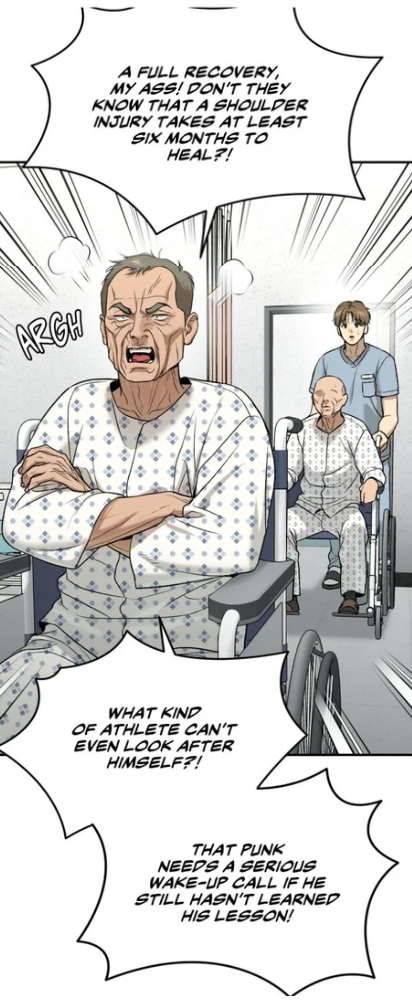 (chapter 70) Once such stories enter public discourse—injury, temper, arrogance—every later incident can be read as confirmation. The narrative becomes self-reinforcing. The media no longer merely reports events; it prepares the framework through which future events will be judged.
Second, a destabilizing trigger is introduced. Often this takes the form of drugs or pharmaceutical substances. The drugged beverage in the United States  (chapter 37) and the suspicious spray
  (chapter 49) used during the manipulated match both belong to this category. These substances create uncertainty about the athlete’s physical condition and about the legitimacy of his treatment. But this implies the involvement of the pharmaceutical industry.
  (chapter 41)
The third step in this pattern is the involvement of authorities and institutions. Once the destabilizing event has occurred, official actors step in: security personnel, referees, medical staff, health centers, or the sports organization itself. Their intervention transforms a chaotic incident into an officially documented event.
This stage is essential, because institutions possess something criminals do not: legitimacy. The incident in the United States reveals how institutional authority can be used to control the narrative. After the incident with the drugged beverage was reported to the MFC, security personnel intervened and brought Kim Dan into an interrogation room. 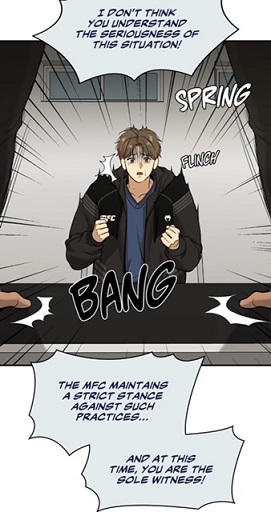 (chapter 40) The scene resembled a police investigation, yet these men were not representatives of the state. Hence there was no translator and lawyer. They were dressed-up employees of a private organization whose primary objective is to protect the company from scandal and as such from losing money
During the interrogation, the agents attempted to frame Kim Dan by focusing on the “nutrition shake” he had allegedly consumed. He seemed to be part of a scheme.  (chapter 40) At first glance, this strategy appears effective. By redirecting attention toward the therapist, the organization can distance itself from the real problem: the suspicious beverage that had been introduced into the environment of the fight.
However, the scheme overlooks an important detail. The incident did not remain entirely undocumented.  (chapter 40) A doctor took a blood sample from Kim Dan, and the laboratory later produced a component analysis report. (chapter 41) This report becomes significant for two reasons. First, it confirms that the contamination was real. The substance had indeed been introduced into the environment surrounding the fight. Such a finding inevitably raises questions about how the drink entered the system controlled by the MFC. In order to avoid institutional responsibility, the organization therefore needed a convenient explanation—someone outside its sphere of influence who could be blamed for the incident, antis.
 (chapter 41)
Second, the timing of the report is revealing. The results of the component analysis appear in the very same episode in which the MFC doctors give their approval for the next fight.  (chapter 41) This coincidence exposes another layer of the mechanism. While the laboratory analysis confirms that an illicit substance had been present, the medical authorities simultaneously authorize the champion to continue fighting. The two decisions cannot easily be separated. Together, they suggest that the involvement of the doctors helps stabilize the narrative: the suspicious beverage becomes a secondary issue, while the focus shifts toward the champion’s physical condition and his decision to fight despite his shoulder injury.
In this way, medical authority does not simply clarify the situation. It contributes to transforming a troubling incident into a new plot and manageable story. To conclude, the MFC medical authorities approving the fight are now part of the scheme, accomplices of the set up as well. Doctors have entered the chain of events. But why did all the employees (security agents, doctors) started helping? The fear of a scandal and the involvement of the media … and naturally loss of money 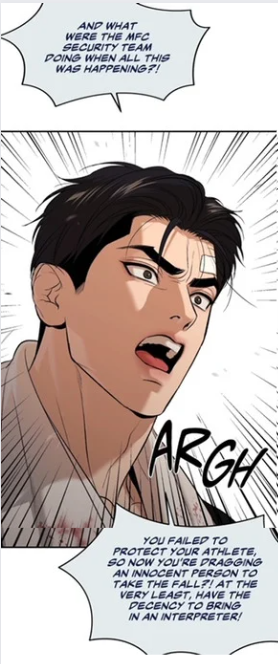 (chapter 40) That’s why they needed a scapegoat. First Kim Dan, later antis and finally the athlete himself. And who fears a scandal in Jinx? One might say Park Namwook
 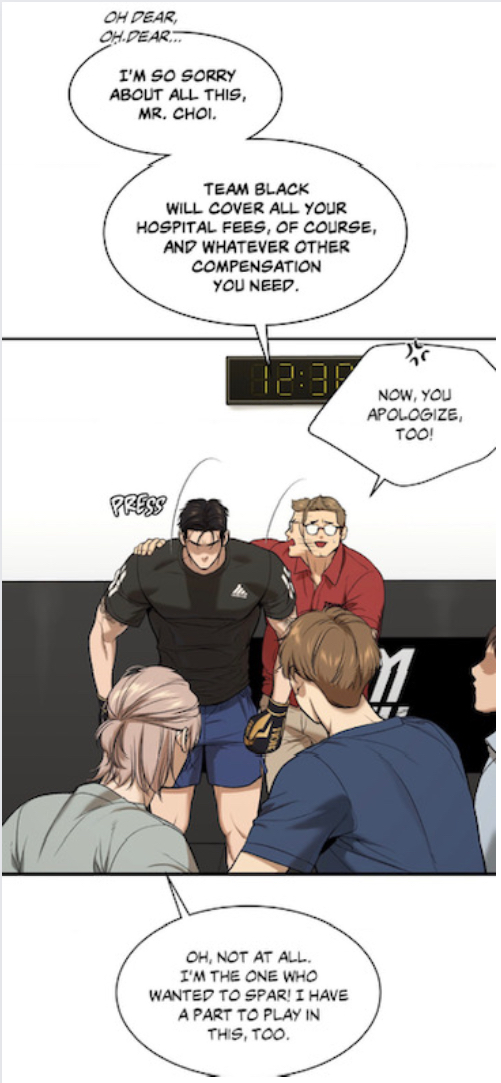 (chapter 31) who always hides behind authorities and shows distrust toward fighters. But he is just reflecting the attitude of the other MFC accomplices.
The same mechanism appears during the events surrounding the manipulated match and the switched spray. Joo Jaekyung’s ankle got injured after the substance had been used. 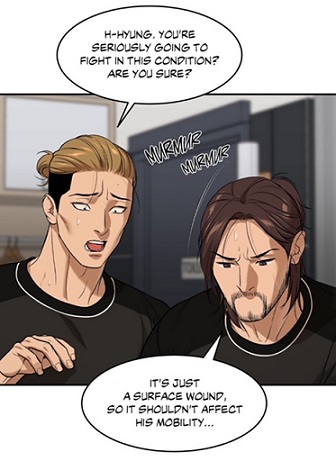 (chapter 50) Observe that in the locker room, the coach declares the athlete as fit despite the injury before going to the health center. The chronology is important, as the MFC doctors have the final saying. So when the champion is taken to the health center before the fight. the responsibility is shifted.
By examining the athlete and clearing him for the match despite the injury, the medical authorities effectively became responsible for the decision that allowed the fight to proceed. In principle, such a medical examination should have resulted in documentation of several elements: the condition of the ankle, the treatment administered, and the circumstances surrounding the injury. But I am suspecting that the documentation was either ignored or deliberately minimized the ankle injury. Why?
Keep in mind that the narrative that later circulated in the media tells a different story. Instead of focusing on the injured ankle and the suspicious spray, the discussion shifted almost entirely toward the champion’s shoulder injury. (chapter 54) The public narrative portrayed him as reckless for continuing to fight despite his physical condition. The responsibility for the situation was therefore redirected toward the athlete himself. MFC’s notoriety remained clean, the employees were all safe, they were not facing any financial or legal repercussion contrary to the star.  (chapter 54) Hence Park Namwook remained passive.
The later meeting at the restaurant confirms this strategy of containment. The CEO of the MFC  (chapter 69) apologized for the behavior of the security staff toward one of Joo Jaekyung’s team members.
 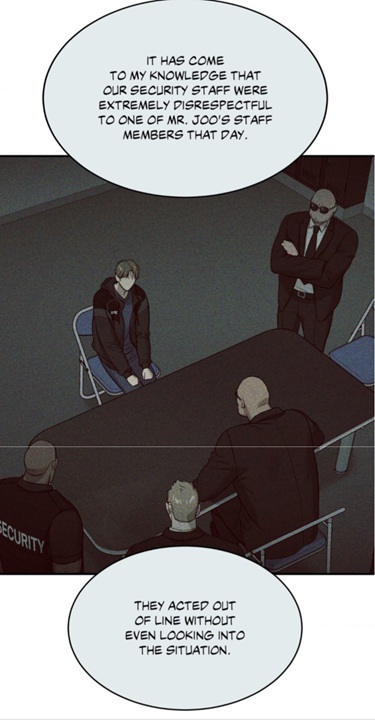 (chapter 69) Significantly, this apology took place behind closed doors, not in front of the media, and doc Dan is still left in the dark about it. The goal was therefore not transparency but damage control. They were in reality attempting to bury everything, to buy some time, until the athlete would lose his next match.
By presenting the incident as the result of overzealous security agents, the organization could deflect attention from the more troubling questions raised by the drugged beverage and the switched spray, the lack of security and neglect.  (chapter 69) The problem was reduced to a matter of manners rather than a potential security failure or institutional complicity. In this way, the apology functioned less as an admission of guilt than as a mechanism to close the case quietly before it reached the public sphere.
Interestingly, the executive describes the substance as a “fake supplement.” This terminology already reveals a subtle shift in language. The laboratory analysis had identified the compound as an aphrodisiac. In other words, a drug that can exist within the legal pharmaceutical sphere. By presenting the substance as a “fake supplement,” the organization avoids raising uncomfortable questions about the origin and distribution of the compound. The problem is no longer framed as the misuse of a pharmaceutical drug but as the circulation of a counterfeit product introduced by an external criminal actor. In this way, the language protects not only the organization itself but also the broader pharmaceutical system from scrutiny. And don’t forget that Doc Dan got informed about the connection between the rival gym and the parent pharmaceutical company in the States. 
And now, the modus operandi of the villains and schemers becomes clear. When these incidents are considered together, a consistent criminal method emerges. The antagonists try to trap their targets like hunters. Instead, they construct situations in which events appear to unfold naturally while responsibility is quietly redirected elsewhere.
The structure remains remarkably stable: first a compromised situation is created, then a destabilizing act of sabotage is introduced, and finally responsibility is redirected toward a convenient scapegoat. In this way, institutions remain intact while the blame falls on expendable individuals.
This is how the underworld functions. Someone is always placed in the wrong place at the wrong time, and the lowest figures in the hierarchy—the minions—are left to take the fall. For this very reason, criminal organizations and drug cartels are notoriously difficult to dismantle: the system protects itself by sacrificing those at the bottom while the structures above remain untouched.
If this pattern truly governs the criminal strategy, then the attack against Kim Dan cannot be limited to a single incident. The physical therapist represents the most vulnerable element in the entire situation: he comes from poverty, lacks institutional protection, and his professional credibility can easily be questioned. For this reason, it is likely that the conspirators will attempt not one manipulation but several. And the last one will force them to expose their true nature: they are criminals and no doctors, directors or athletes (kidnapping).
These stunts will almost certainly revolve around the same thematic field that has already appeared in the story: wrongdoings, drugs and substances. Whether through medication 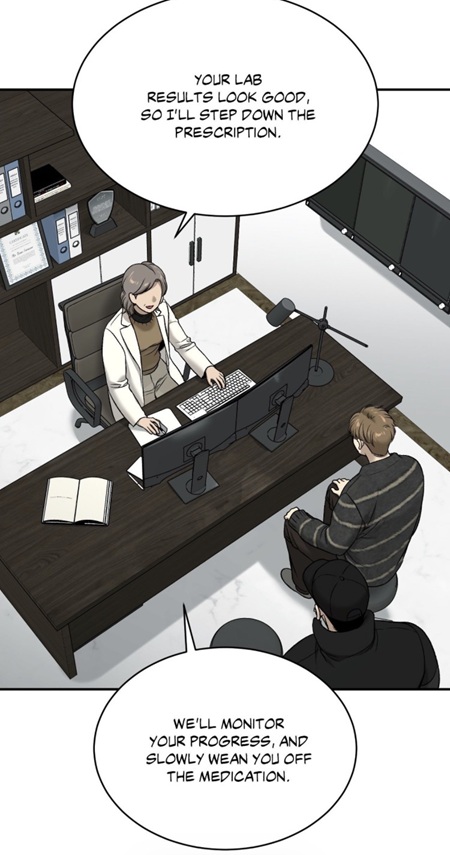 (chapter 91), drinks , smoking,
  (chapter 65), or other forms of contamination, each incident would undermine Kim Dan’s credibility as a medical professional. If the therapist can be portrayed as irresponsible, incompetent, or compromised by substances, the institutional narrative could once again shift responsibility onto him.
Kim Dan and The Medical Trap
Once this mechanism becomes visible, the events in the locker room acquire a different meaning. At the very moment when the scheme reaches its decisive phase 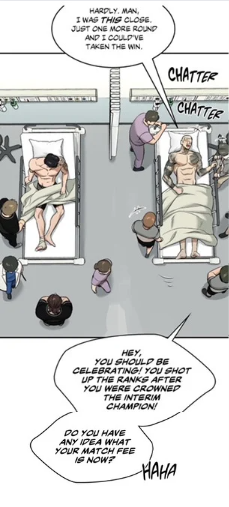 (chapter 52), Kim Dan is no longer present. After confronting him and suspecting a betrayal
 (chapter 51), Joo Jaekyung leaves the locker room alone and goes to the health center. And don’t forget that before, he even refused his treatment for the ankle injury before.
  (chapter 50)
As a result, Kim Dan is absent when the champion is treated at the MFC medical center and at the health center. 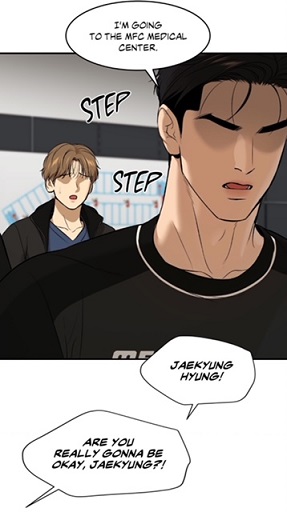 (chapter 50) He therefore has no knowledge of what happens there: the medical examination, the decisions taken by the doctors, and the institutional narrative that later emerges from this encounter.
This absence is crucial. The criminal method described above requires the presence of a convenient scapegoat at the moment when the official version of events is constructed. 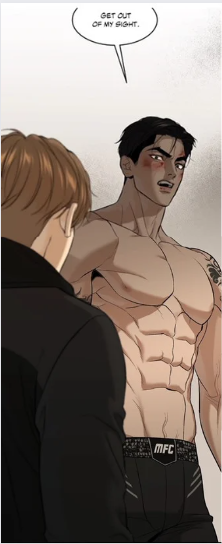 (chapter 51) But this time, the pattern is disrupted. Kim Dan is not there when the institutions intervene.
Paradoxically, the accusation that drove Joo Jaekyung to distance himself from his therapist also removes him from the very situation in which he might once again have been blamed. The scapegoat has disappeared from the scene.
That’s why Joo Jaekyung had to take the blame for the outcome and the “scandal”, the brawl burying the incident with the switched spray!!  (chapter 52)
To understand the consequences of this absence, we must therefore return to the locker room itself—where suspicion, photographs, and accusations first triggered the rupture between the two men. The confrontation in the locker room marks the moment when this criminal mechanism nearly achieves its objective. At this point in the story, suspicion has already begun to circulate around Kim Dan. 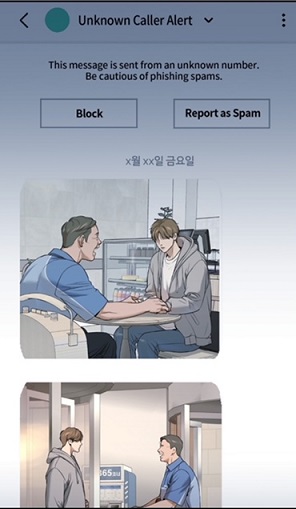 (chapter 48) Photographs of him had been sent to Joo Jaekyung, suggesting that the physical therapist might have been communicating with Baek Junmin through the director of the other gym.
 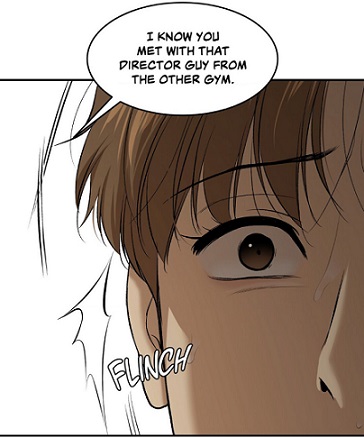 (chapter 51) Confronted with these images and the growing confusion surrounding the match, the champion reaches a painful conclusion: that his roommate may have betrayed him.
In the locker room, this suspicion finally erupts into open accusation. (chapter 51) Joo Jaekyung confronts Kim Dan directly and demands an explanation. For the first time, the therapist is placed in the exact position that the criminal schemes had been preparing all along: the position of the possible traitor.
From the champion’s perspective, the logic seems simple. The photographs appear to show a connection between Kim Dan and his rival. While Joo Jaekyung believes he has finally uncovered the truth behind the sabotage, he is in fact reacting to a carefully constructed illusion. He is not realizing that the match was rigged, the jury and moderator had been bought. They had planned the tie. That way, MFc appears as a legitimate sports organization. The images and circumstances that appear to implicate Kim Dan are themselves part of the larger mechanism designed to redirect suspicion toward the most vulnerable figure in the entire situation. 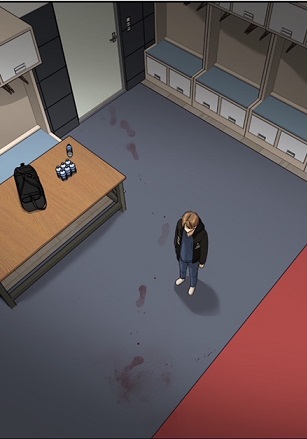 (chapter 51)
Timing, however, remains the key element in the criminals’ strategy: everything depends on placing someone at the wrong time and at the wrong place. Yet in this instance, the timing fails. The report of the incident surfaces only much later, after Potato hears about the situation.  (chapter 52) By that point, the circumstances have already changed. The use of the switched spray introduces a new dimension to the case, and with it the possibility that another authority must intervene.
For the first time, the matter can no longer remain confined within the internal structures of the MFC. 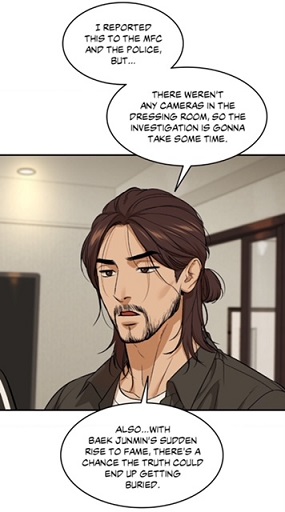 (chapter 52) The situation now risks attracting the attention of the police. As you can see, by remaining passive, Joo Jaekyung in his own way protected the physical therapist from real trouble. If he had truly blamed him, he could have “called” the police, but he did not.
In other words, the conspirators would have obtained their perfect scapegoat. The champion’s rejection therefore becomes a blessing in disguise. By removing Kim Dan from the scene, he prevents the therapist from being trapped inside the very mechanism designed to destroy him.
Baek Junmin and the Shadow of the Police
The appearance of the police in chapter 52 introduces an element that cannot be ignored. Up to this point, the incidents surrounding Joo Jaekyung have largely been contained within private structures: the MFC, its security personnel, and its medical institutions. These actors possess authority, but they remain part of a controlled environment where scandals can be managed internally.
The police represent a very different kind of authority. Interestingly, the narrative later reveals that Joo Jaekyung himself had previously spent time at a police station following an incident involving damaged property and a street fight. 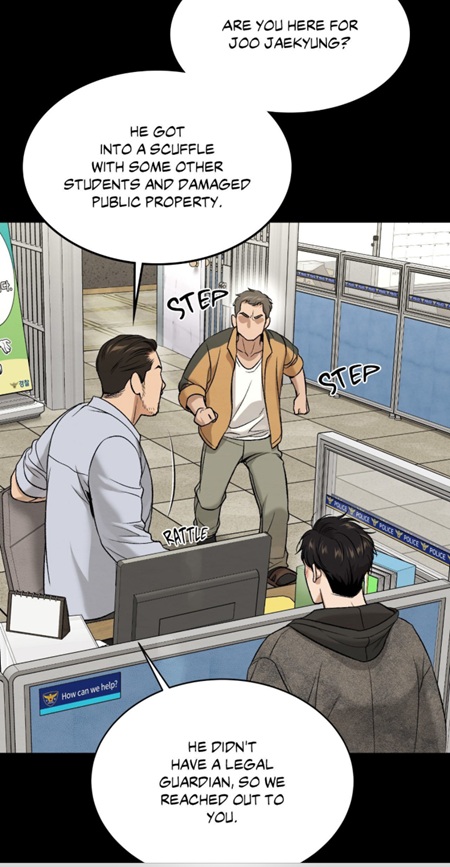 (chapter 74) The coincidence between these two moments—chapter 52 and chapter 74—suggests more than a simple narrative repetition. Both situations involve the same institutional actor: the police.
This connection raises an important question. Why does Joo Jaekyung immediately suspect Baek Junmin with the switched spray (chapter 51), when the pictures only show Choi Gilseok and he was not even present in the locker room?
The answer may lie in his own past experience. When the champion finds himself at the police station in the earlier incident, the situation appears similar to the pattern we have already observed elsewhere: a chaotic confrontation, witnesses present, and a narrative that quickly identifies him as the responsible party. Moreover, observe that during that night, the future champion 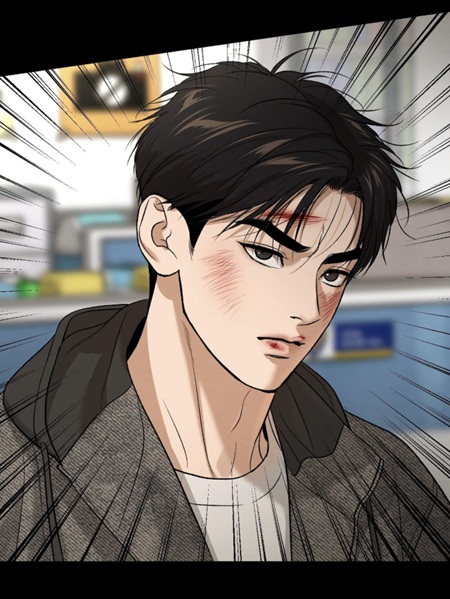 (chapter 74) has a similar wound on the forehead than The Shotgun.
 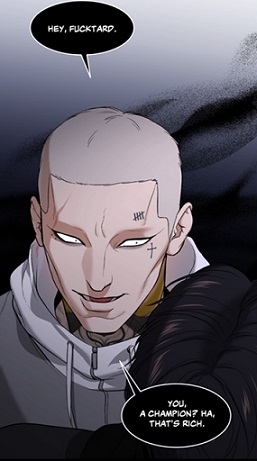 (chapter 74) If Baek Junmin had orchestrated that earlier event, the strategy would have been simple but effective. Instead of attacking his rival directly, he could create circumstances that forced the authorities themselves to intervene. But why would he involve the police, when he is involved in the criminal world? Such a tactic would allow him to remove or weaken Joo Jaekyung without openly violating the protection imposed by his hyung
 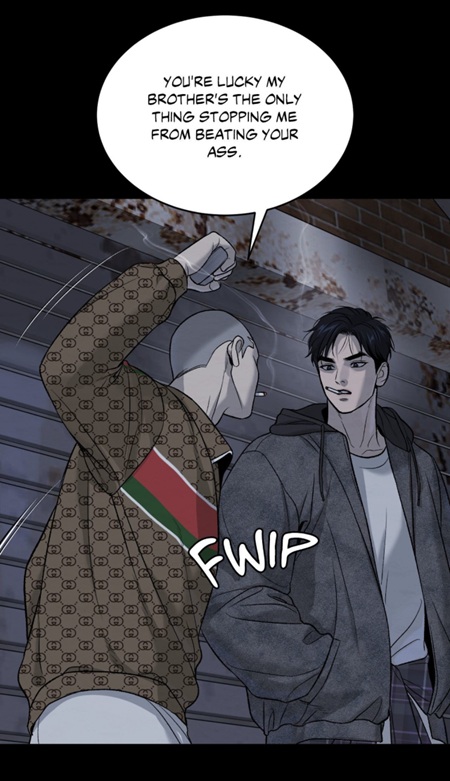 (chapter 74), who had explicitly forbidden him from harming the champion.
In this scenario, the police become an instrument. By manipulating witnesses—perhaps even paying students who had previously been bullied 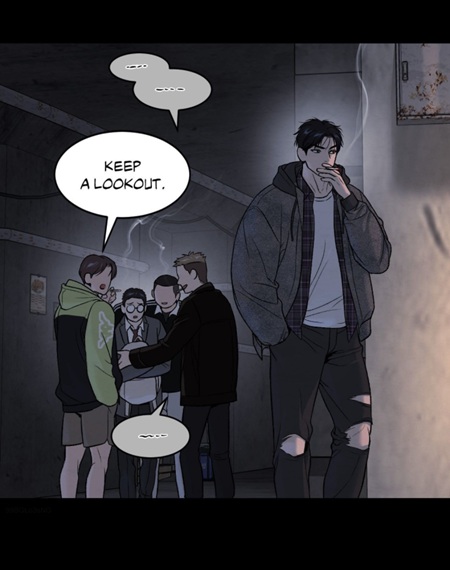 (chapter 74) —Junmin could ensure that the story presented to the authorities pointed toward Joo Jaekyung. For the students involved, the arrangement would offer a practical advantage: financial compensation and a chance to escape their own precarious situation. But for that stunt, The Shotgun got to pay a heavy price: not only the scar on his forehead
 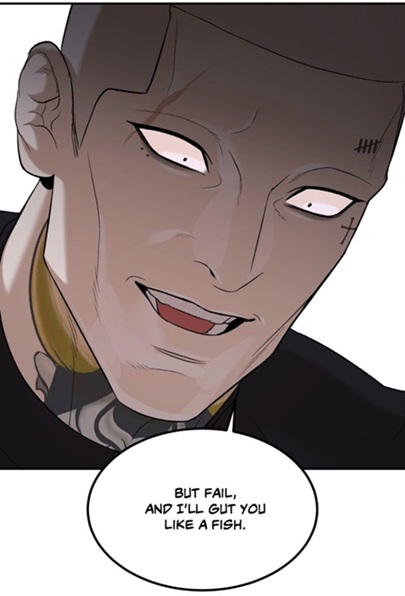 (chapter 93), but also a life in the shadow forever. It is clear that he could never get rich and famous through his illegal fights. Hence he resents the main lead so deeply.
The result would be a classic example of the principle that governs the criminal world depicted in the story: placing someone at the wrong time and the wrong place. His suspicion toward Baek Junmin does not arise from speculation alone. It is grounded in experience.
If this interpretation is correct, Baek Junmin’s strategy becomes clear. By orchestrating a situation that attracts police intervention, he can remove his rival without ever directly attacking him. IMO, he is on his way to play a similar trick than in the past. Hence he looks at the calendar, timing is essential. 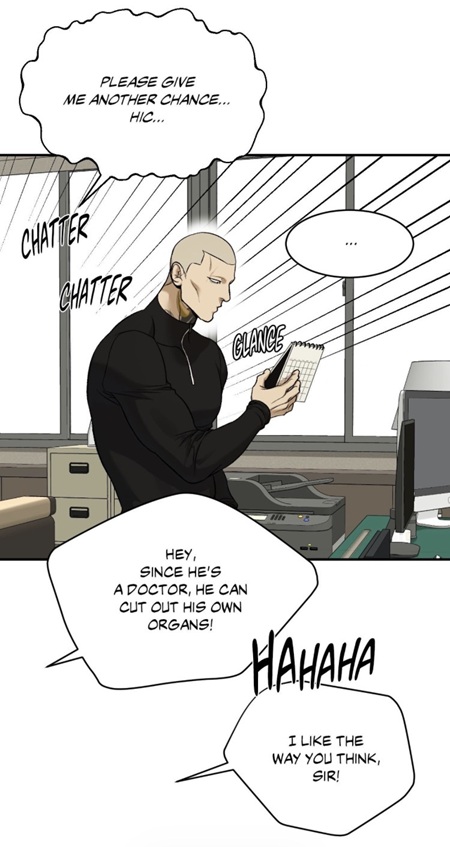 (chapter 93) The authorities perform the task that Junmin himself is forbidden to carry out.
Moreover, the champion understands another important rule of the criminal world: organized crime usually avoids the police whenever possible. The mob prefers to settle conflicts quietly through money, intimidation, or internal arrangements. Calling the authorities risks exposing the entire network. This interpretation also explains why Joo Jaekyung doesn’t report the trespassing and assault to the authorities.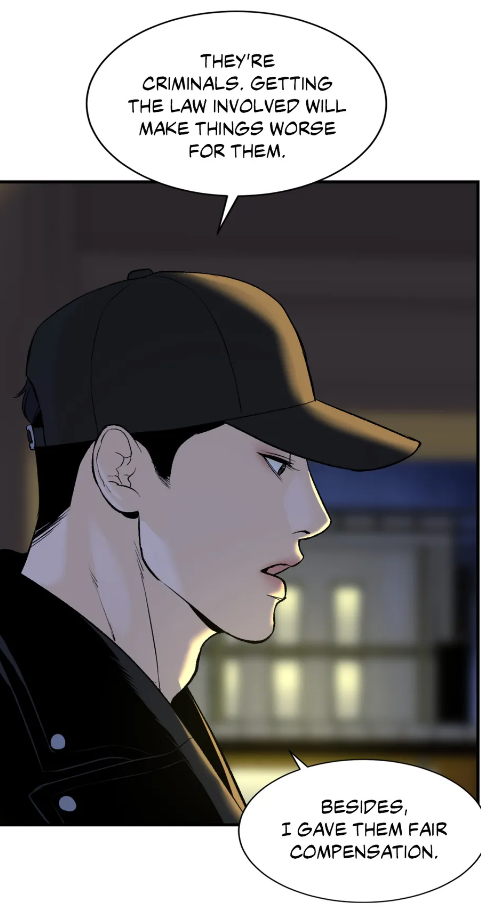 (chapter 18) He knows how the criminal world functions.
Thus I deduce that with this new offer to the former hospital director, the Shotgun is involving not only the medical world more deeply into the scheme, but also the police. 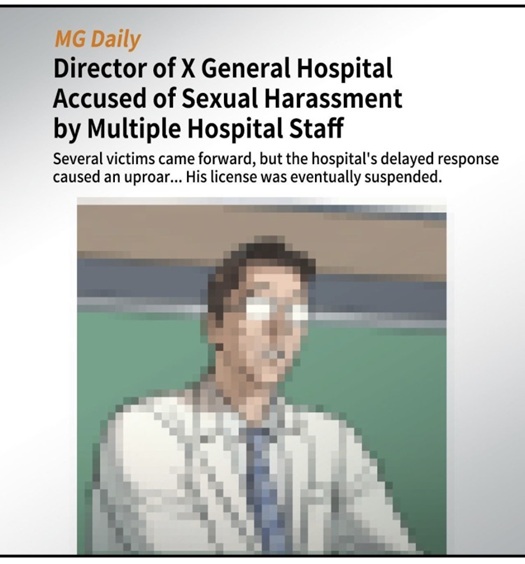 (chapter 91) The article reports that the director of X General Hospital was accused of sexual harassment by several members of the hospital staff. The scandal eventually forced the institution to suspend his medical license. Yet the wording of the report also exposes an important detail: the hospital reacted slowly, and the affair was handled primarily as an internal disciplinary matter.
In principle, repeated sexual harassment by a hospital director should not remain merely an administrative issue. Such actions constitute criminal offenses and could have led to a police investigation. Instead, the institution appears to have contained the scandal within its own structures.
In other words, the hospital followed the same logic that we have already observed in the MFC and within the criminal world itself: avoid the police whenever possible. The reasons are obvious. Once law enforcement becomes involved, internal arrangements lose their power and other crimes could come to the surface. Reports are reopened, testimonies are examined, and the entire chain of responsibility may become visible.
Another important ingredient of this plot is silence. The scandals are not denied outright; they are contained, privatized, and buried. The MFC admits the set-up only behind closed doors. The hospital treats criminal behavior as an internal disciplinary matter. The underworld, for its part, prefers money and intimidation to police reports. In each case, silence becomes a tool of power. What remains unspoken protects the system. That’s why the witnesses and victims need to speak up and report the crimes. Doc Dan has not reported the assault yet: 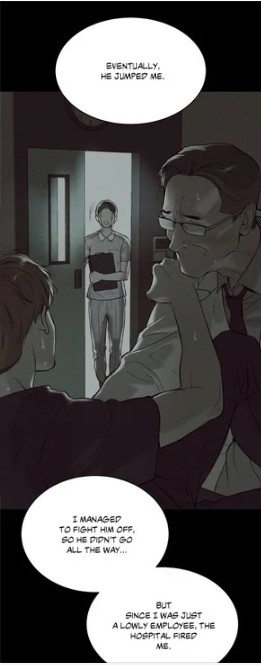 (chapter 90)
Seen from this perspective, the Shotgun’s proposal to the disgraced director acquires a new meaning. By recruiting a figure who already stands at the intersection of scandal and institutional cover-up, he introduces another fragile element into the situation. The director represents a man whose career collapsed precisely because a scandal nearly escaped the control of the institution that protected him. But in his eyes, he stands for “respectability and trust”, as he is called doctor. (chapter 93)
If such a person becomes involved in the scheme against Joo Jaekyung and Kim Dan, the consequences could extend beyond the criminal underworld or the sports organization. The medical world itself—and potentially the legal system—may be drawn into the conflict.
In that sense, the Shotgun’s move does not merely deepen the conspiracy. It risks bringing the one actor that all these systems usually try to avoid: the police. A lesson that he didn’t learn from the past.
And now you may wonder why I remain so focused on the earlier episodes instead of concentrating entirely on episode 94. The reason lies precisely in what this scene reveals.
The conversation between Joo Jaekyung and Kim Dan makes something suddenly clear: together, they embody the opposite principle of the one that has governed the criminal schemes throughout the story. 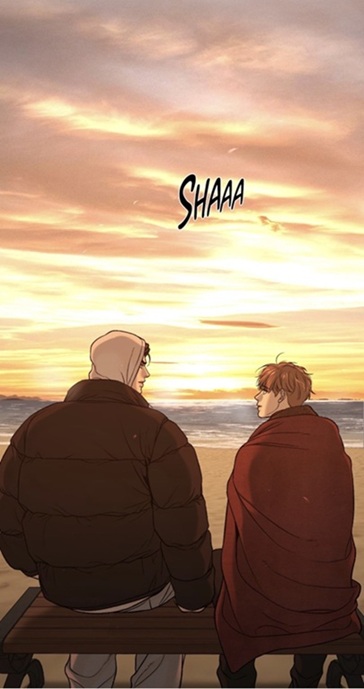 (chapter 94) Up to this point, the antagonists have relied on a simple but effective strategy. By manipulating circumstances, they repeatedly place others at the wrong place and at the wrong time. Each incident—whether involving the media, drugs, or institutional authorities—follows this logic. Someone is caught in a situation carefully arranged by others and must carry the consequences.
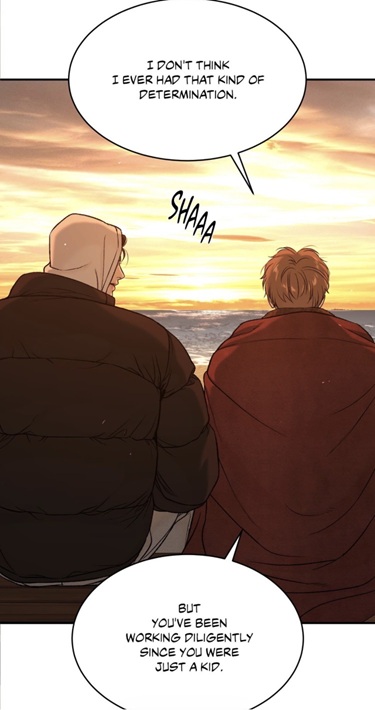
Episode 94 breaks this pattern. 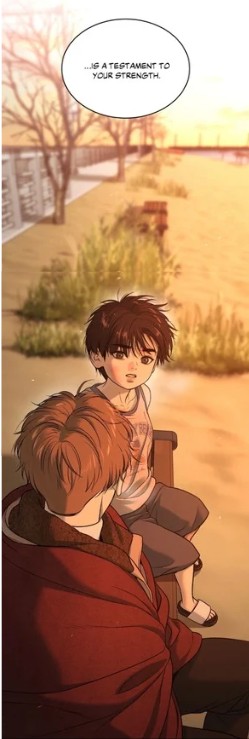 (chapter 94) There is trust, recognition, admiration and open-mindedness. In their mutual confession, the two protagonists do something that none of the criminals ever achieve: they seize the moment at the right time and in the right place. They speak and listen to each other. Instead of being manipulated by circumstances, they recognize the opportunity before them and act upon it.
The result is not merely emotional reconciliation. It quietly undermines the very mechanism that has been used against them. For the first time, the logic of coincidence and manipulation no longer dictates the outcome.
Turning the Method Against the Criminals
Yet the story introduces an important twist. The main couple gradually learns to use the same modus operandi against their enemies: at the right time and the right place. 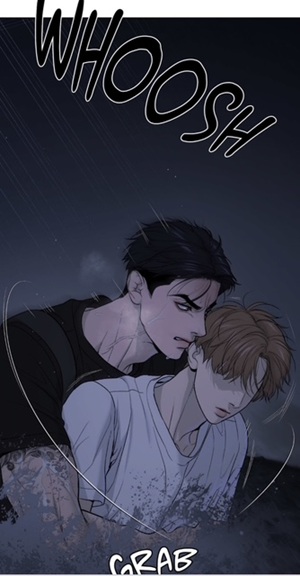 (chapter 59)
  (chapter 79)
  (chapter 94)
A revealing example occurs when Joo Jaekyung publicly challenges Baek Junmin after the fight against Arnaud Gabriel. 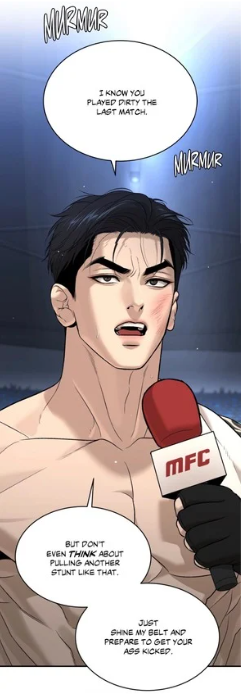 (chapter 87) By issuing the challenge in front of the cameras, the champion forces the MFC to respond. Even though the season had effectively ended, the public nature of the declaration creates pressure that the organization and the media cannot easily ignore.
In that moment, Joo Jaekyung takes control of the narrative.
Baek Junmin suddenly finds himself in the same position that his victims usually occupy: he cannot escape the situation. Instead of manipulating time and circumstances, he must react to them. His glance toward the calendar reveals his awareness that the timing is no longer in his control. (chapter 93)
The antagonists attempt to regain that control by scheduling events close to Christmas, a moment when institutions and public attention may be distracted. Time itself becomes another instrument within the conflict. A second possibility also emerges from the same logic of timing. If the grandmother were to pass away soon 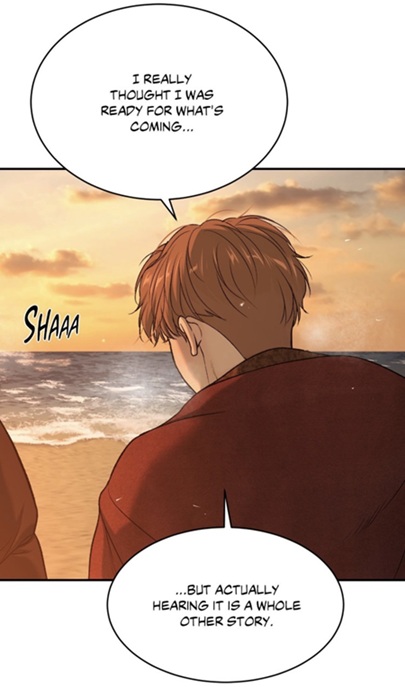 (chapter 94), the situation could disrupt the plans surrounding the anticipated fight with Baek Junmin.
A funeral represents the ultimate example of being at the wrong place and at the wrong time. Death does not follow the schedules of sports organizations or criminal schemes. It interrupts them. In such circumstances, Joo Jaekyung might decide not to appear at the match himself and instead send a replacement fighter, much as similar substitutions have already occurred in the past. (chapter 47)
But the champion’s public statement has already changed the balance of power. By drawing the attention of the media and the authorities, he forces figures like Choi Gilseok to operate under pressure and make mistakes. The latter must begin bribing officials and manipulating the environment simply to buy time. The system that once protected the criminals begins to turn against them.
The Man Who Knew Too Much
This development also explains the deeper meaning behind the title “The Man Who Knew Too Much.”
Knowledge in this story does not come from theory or speculation. It comes from experience. 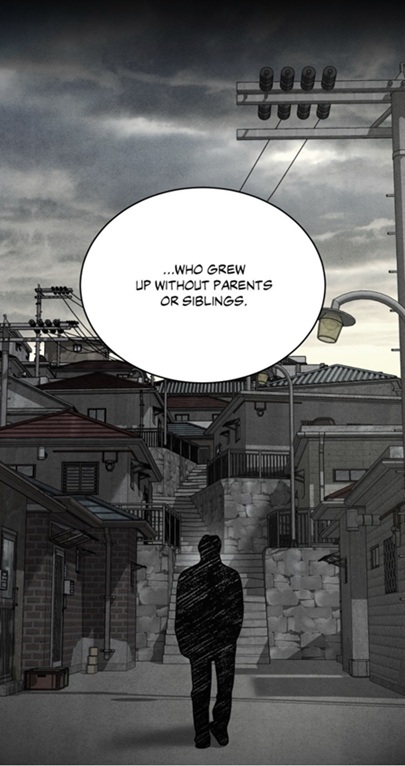 (chapter 94) Joo Jaekyung has survived the criminal world long enough to understand how its mechanisms operate. Through his actions, he gradually passes this knowledge on to Kim Dan.
 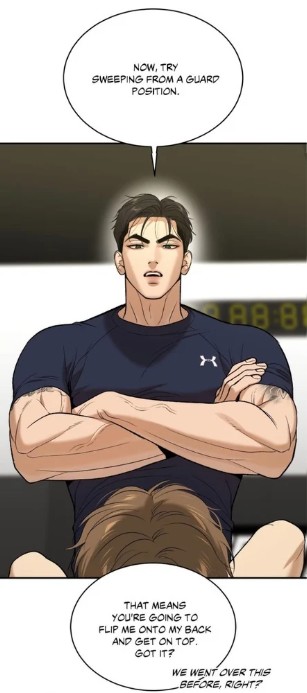 (chapter 88)
He taught him how to swim. He taught him how to fight. He taught him how to take care of himself and to express his opinion and desires. In other words, Kim Dan came to internalize that he also deserved respect. 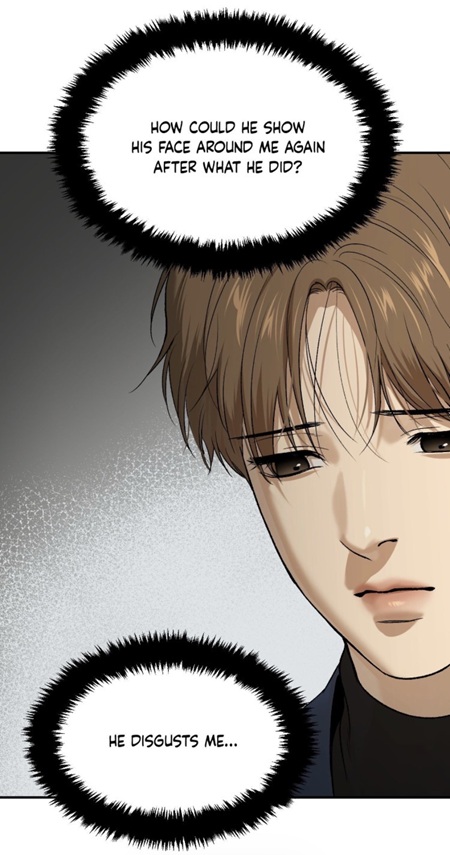 (chapter 91) The athlete exposed him to situations that forced him to grow stronger and more independent. He shared his thoughts and philosophy to his “pupil” as well
 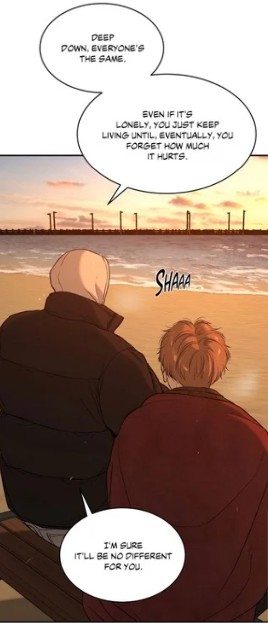 (chapter 94) so that at the end, Kim Dan admits to see him as a “younger sibling”. (donsaeng in Korean)
 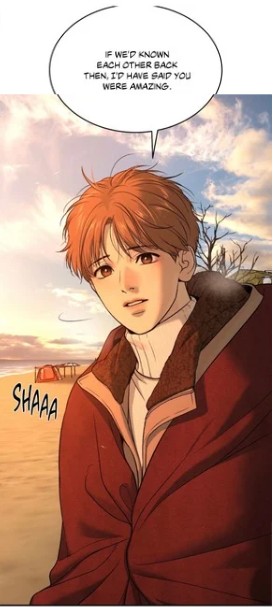 (chapter 94)
Yet his transformation has another consequence. Kim Dan has also become both a witness and a target of the champion’s jinx. By standing beside Joo Jaekyung, he has been drawn into the very chain of manipulations that once isolated the athlete. He can expose the existence of money laundering.
For the first time, the couple begins to grasp wrongdoings and even understand how this mechanism works. And once someone understands the trap, the outcome of the game can change.
The criminals may continue to rely on their favorite principles— money and placing others at the wrong place and at the wrong time. But the situation has now changed. In fact, the schemers will end up being caught at the wrong time and at the wrong place.
Until recently, however, Joo Jaekyung himself was unable to expose Baek Junmin openly. One reason lies in a more personal burden: shame. 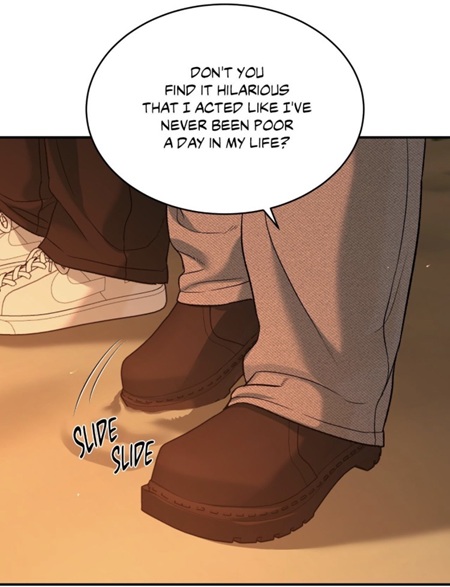 (chapter 94) The champion carried the weight of his past—his violent environment, the humiliation he endured, and the circumstances that shaped his rise. Speaking about these events would have meant revealing parts of his life he preferred to bury.
 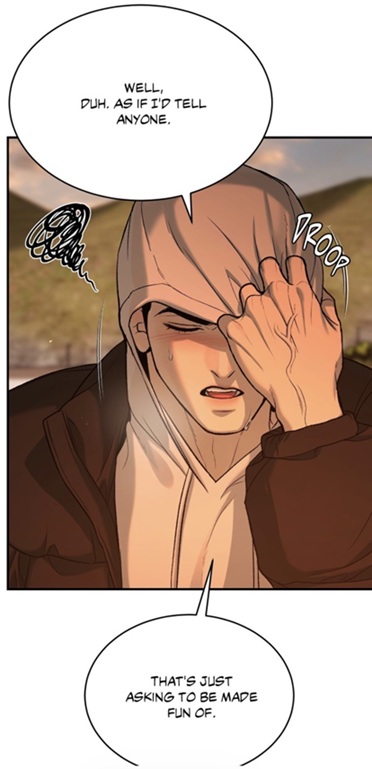 (chapter 94) The conversation on the beach changes this dynamic. By confessing his past to Kim Dan, Joo Jaekyung frees himself from the silence that had protected his enemies. The shame that once prevented him from speaking begins to lose its power.
And once the athlete is no longer bound by shame, he can finally do something he had avoided for a long time: he can speak and reveal his knowledge to the media.
Feel free to comment. If you have any suggestion for topics or Manhwa, feel free to ask. If you enjoyed reading it, retweet it or push the button like. My Reddit-Instagram-Twitter-Tumblr account is: @bebebisous33. Thanks for reading and for the support, particularly, I would like to thank all the new followers and people recommending my blog.


 🌶️😂
🌶️😂 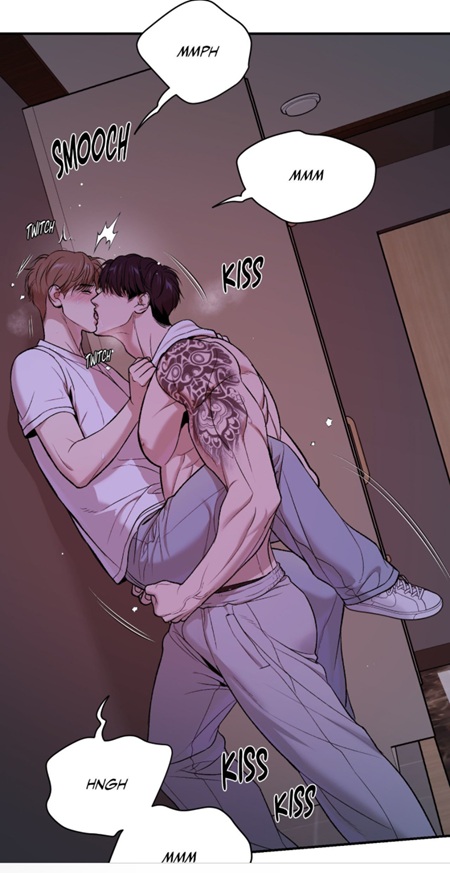 (chapter 85). Against this emotional core, elements such as carpets, hallways, floors, and room layouts may seem secondary, even irrelevant.
 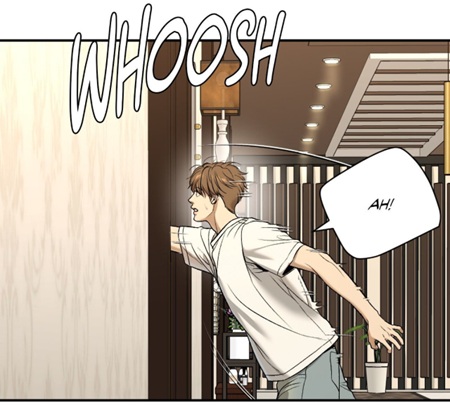 (chapter 85) Why care about the color of a carpet or the direction a door opens
  (chapter 85), when the real story unfolds between Joo Jaekyung and Kim Dan?
 (chapter 82) Floors and patterns are not neutral decoration. They function as a parallel narrative system—one that tracks changes in status
 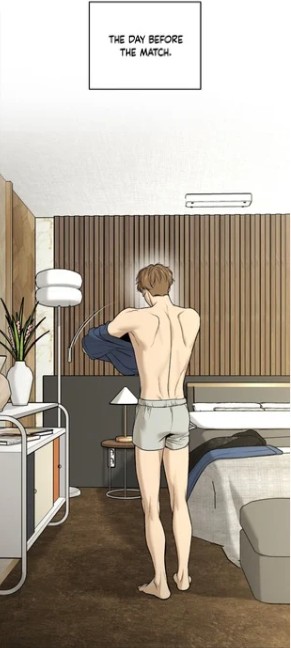 (chapter 85), exposes the actual situations in which the characters are placed
  (chapter 85), and helps us locate spaces and relationships within the hotel architecture itself. In other words, the floors do not merely frame the story; they add a spatial depth that sharpens our understanding of the “characters.”
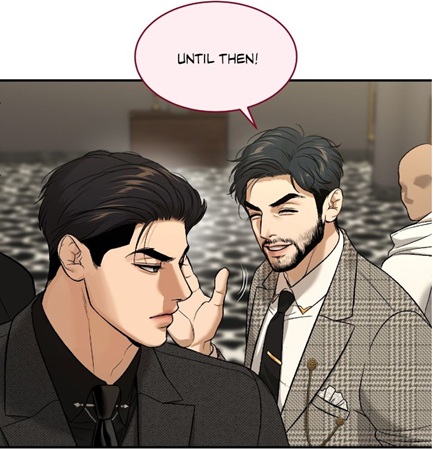 (chapter 82)
 (chapter 82)
  (chapter 82) One might think, the only information we get is that MFC had booked a conference room at the hotel where Team Black is staying. However, in the States, the carpet of the hallway at the hotel had a similar pattern.
 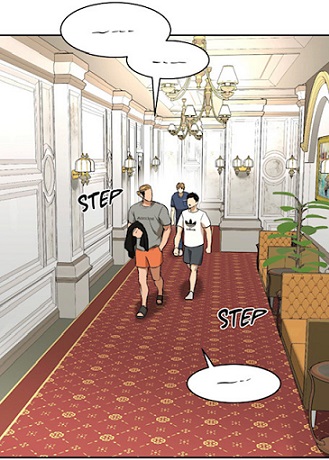 (chapter 37) This similarity and repetition caught my attention. It suggests continuity between public spectacle and private space, between what is shown and what is concealed. Following this thread led to a broader realization: the floors simultaneously signal elevation and confinement. They show who appears powerful—and who is, in fact, enclosed.
 (chapter 37)
 (chapter 37) It is in that hallway that Kim Dan collapses after drinking a drugged beverage. He literally falls onto the carpet, on his knees. The trap activates—but not on its intended target.
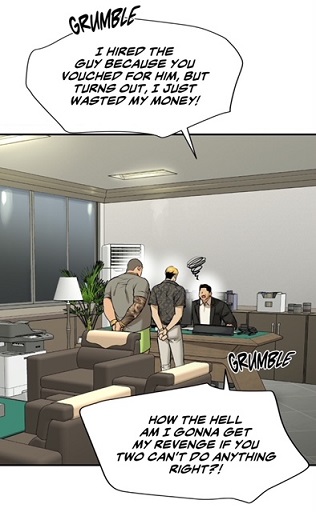 (chapter 46), not by MFC directly. The scheme exists, but it is imperfect. Joo Jaekyung is not truly “caught” in that moment, which explains why the plan ultimately fails.
 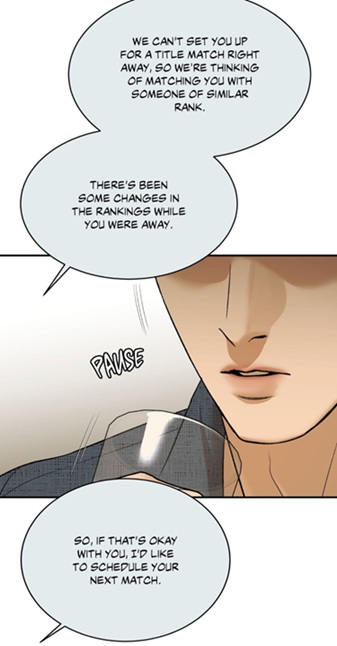 (chapter 69) As you can see, the pattern of the carpet could be seen as an evidence for a trap, and the “Emperor” is their target once again. Their plan is to end his career so that all the incidents and crimes from the past can be buried.
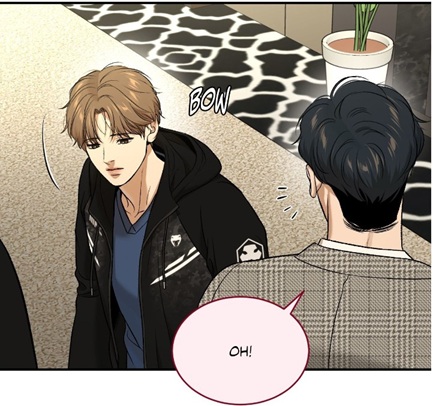 (chapter 82). The opponent stands on the surface that embodies order, hierarchy, and control, and behaves accordingly. He flirts, comments on the doctor’s eyes, and treats the moment as harmless. Then he turns his back.
 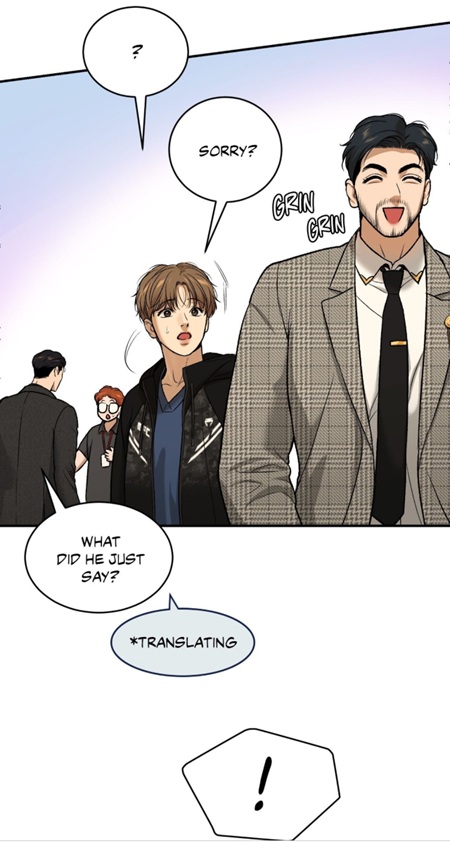 (chapter 82) He never steps onto, nor does he seem to register, the animal-patterned carpet nearby, as doc Dan was standing on a white-off carpet. In other words, Arnaud Gabriel interacts only with the space that reflects the institution’s worldview.
 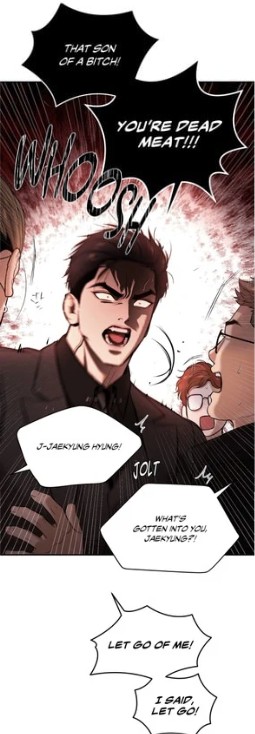 (chapter 82) This is not the response of a neutralized Emperor, but the instinctive surge of a predator whose territory has been violated. The scene echoes an earlier, more intimate image from the bathroom in chapter 30,
 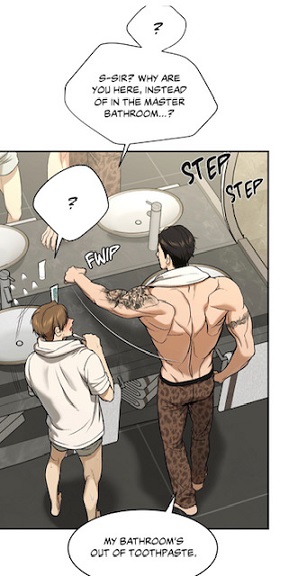 (chapter 30), where Joo Jaekyung appeared wearing leopard-patterned pajamas. The animal imagery was already present then, but dormant. Here, it reawakens.
 (chapter 85) The champion is not alone inside the cage. He is supported, grounded, and no longer isolated. What MFC fails to see is that this support does not weaken the predator—it stabilizes him. And a stabilized predator is far more dangerous than a cornered one. For years, Joo Jaekyung’s violence was reactive, triggered by threat, humiliation, or loss of control. Such a fighter is powerful, but predictable. He can be provoked, exhausted, and manipulated.
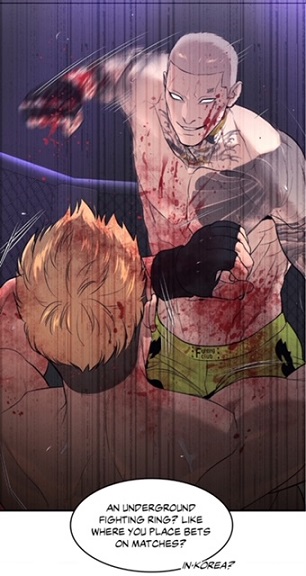 (chapter 47) Through him, Joo Jaekyung gains access to a form of knowledge the institution does not control. The beast is no longer driven blindly forward; it is guided.
 (chapter 84) These visual cues distinguish floors, mark thresholds between zones, and separate different kinds of isolation. The hotel ceases to function as an abstract backdrop and instead reveals itself as a structured environment in which hierarchy is materially inscribed.
 (chapter 85)
  (chapter 84)
  (chapter 85) The corridor seems to have white linoleum covered a dark brown carpet, similar to the one in his bedroom. However, observe that the manager’s entrance has the same tiles than in the hallway.
  (chapter 85) reminds us of the champion’s living room in the hotel.
  (chapter 82) This clearly exposes that doc Dan’s room is not a normal room. It exceeds that basic category. It is larger, brighter, and arranged for comfort. The interior layout is particularly revealing: the bathroom is located close to the bedroom
  (chapter 85) clearly separating living space from bedroom
  (chapter 82), and extending outward through more than one balcony.
  (chapter 82)
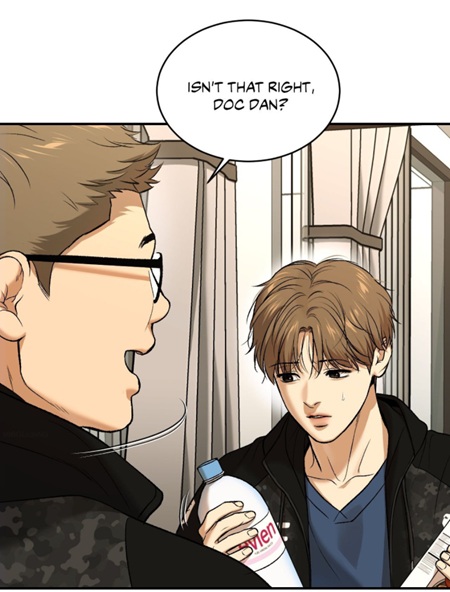 (chapter 82) And the moment I had this realization, architecture, once again, speaks first, my attention returned to the hotel in the States.
  (chapter 37)
 (chapter 37) This detail is crucial. It explains why he can hear their laughter and smell the food they are eating.
 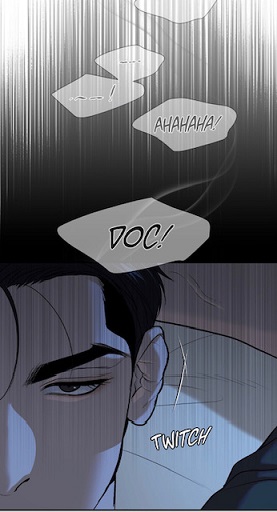 (chapter 37) Architecturally, he was not isolated. Despite his status, he remained embedded within the collective space of the team.
  (chapter 37) Besides, Episode 40 confirms that Joo Jaekyung did occupy an imperial suite: the interior layout includes a door separating the bedroom from another room
  (chapter 40), a feature characteristic of a suite rather than a standard hotel room. The issue, therefore, is not the absence of a suite, but how that suite was positioned and managed.
 (chapter 37) Because the suite was embedded within a shared corridor, an intruder could approach the champion’s room without attracting attention.
  (chapter 37) intended for weight-cutting and post–weight-cut recovery. This detail exposes a managerial failure rather than a hotel failure. The environment was not curated around the champion’s physical needs. Discipline was demanded of his body, but not enforced in his space. Meanwhile, fighters and coaches purchased junk food behind the champion’s and Kim Dan’s back, reinforcing the gap between stated goals and actual practice.
 (chapter 37) There is no visible keycard system, and no clear indication of an interior lock.
 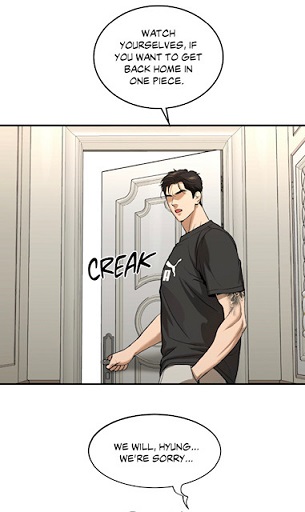 (chapter 37) This absence is striking, especially when contrasted with the Paris hotel
  (chapter 85), where doors are equipped with keycards and locks on both sides
 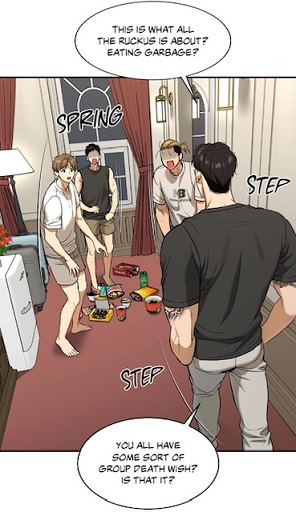 (chapter 37) Access was not negotiated; it was simply taken. The architecture allowed it. The space did not protect its occupants.
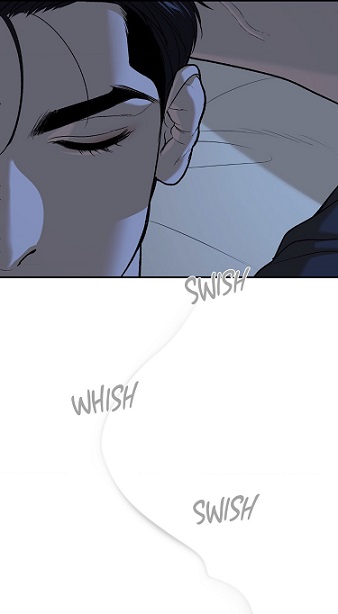 (chapter 37) At first glance, this appears implausible. A suite, by definition, should insulate its occupant from such disturbances. His bedroom is not situated next to the corridor.
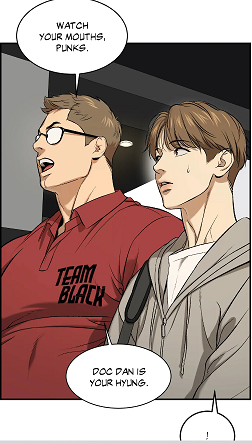 (chapter 7) Status was asserted rhetorically, but not enforced spatially, exactly with Joo Jaekyung.
 (chapter 37), negotiating access with local coaches and nearly getting into a physical altercation before being allowed to use their facilities
 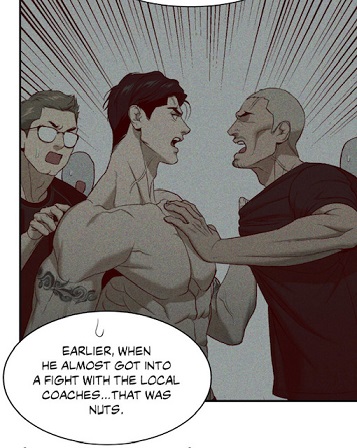 (chapter 37). Only after asserting himself does he gain permission to train. Even then, the gym he ultimately uses is unremarkable — functional, crowded, and indistinguishable from what any average fighter might access. There is nothing exceptional about it.
 (chapter 82) The infrastructure finally aligns with the demands placed on his body. This shift is not a luxury; it is a correction. It reveals retroactively how deficient the American setup was — and how little institutional care surrounded the champion at the time.
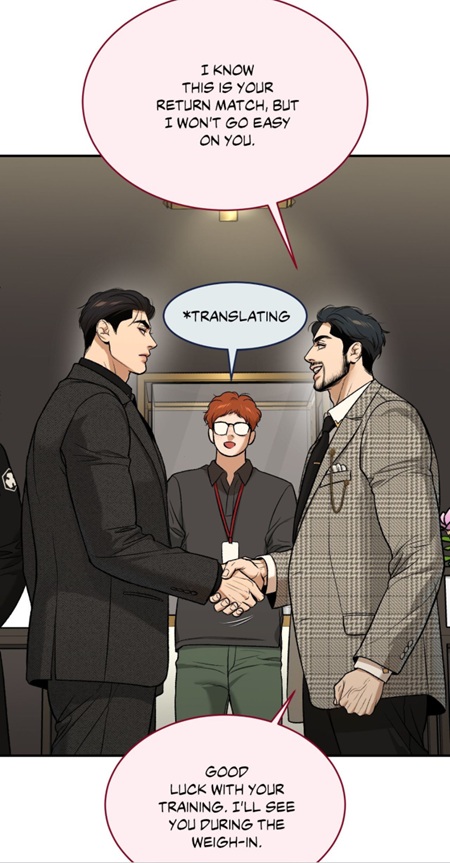 (chapter 82) The remark does not stem from arrogance alone; it is grounded in observation. The training space available to Joo Jaekyung at the hotel is not designed for an elite athlete, even less for MMA fighters.
  (chapter 82) It is a generic fitness room intended for ordinary guests. There are no heavy bags, no proper equipment, no environment suited to the demands of a reigning champion.
 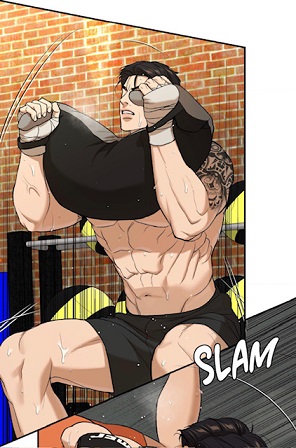 (chapter 37) This is precisely why his training must be adapted, restrained, and partially improvised.
 (chapter 5) MMA is not baseball or soccer
  (chapter 54); it does not benefit from the same institutional prestige or resources. Earlier in his career, the champion was more likely trained to endure damage than to prevent it. What we see now is not the continuation of an elite system, but its gradual construction — one in which Kim Dan plays a central role.
 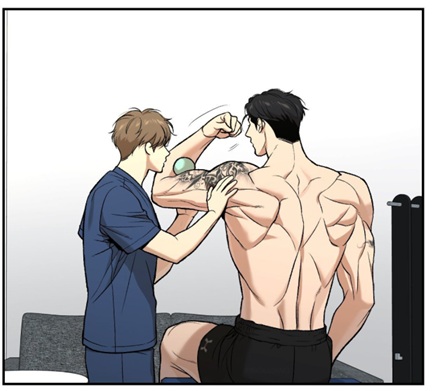 (chapter 81)
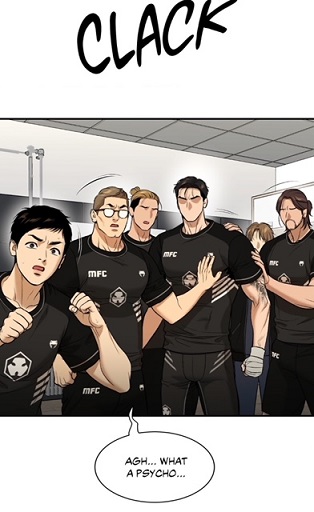 (chapter 49), rather restraining him and as such exposing him to danger.
 (chapter 37) and the post–weight-cut recovery.
 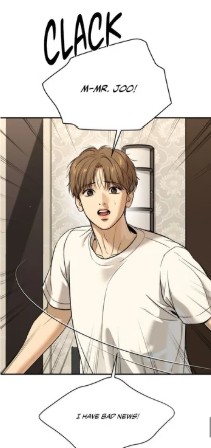 (chapter 82) Kim Dan may indeed possess a keycard to Joo Jaekyung’s suite. If so, this is not a minor convenience. It constitutes a symbolic transfer of access. The physical therapist is granted proximity not merely to the champion’s body, but to his private space. Hence the athlete is not caught by surprise, he doesn’t even mind this intrusion or interruption.
 (chapter 82) and support
 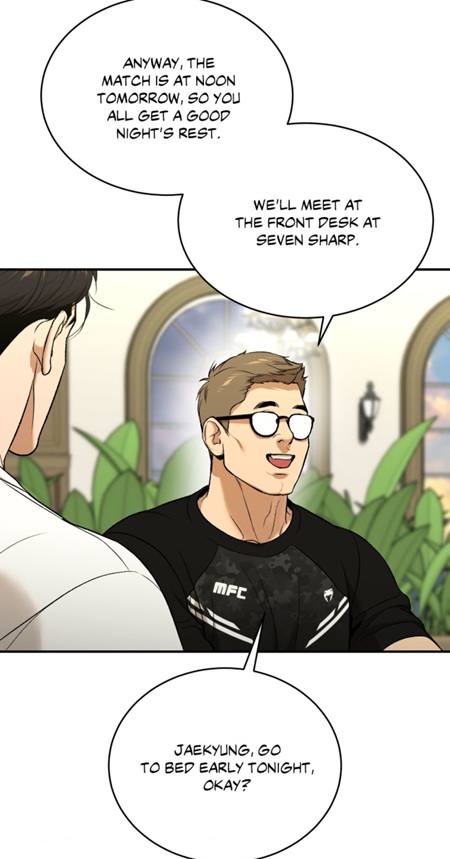 (chapter 85), he expects everyone to wake up on time and appear at seven sharp. He doesn’t see it as his “task” to wake up the champion. Once again, he is delegating responsibility onto others. However, it is clear that he expects Joo Jaekyung to be awake early like he did before. So if the champion doesn’t appear on time, the manager’s decision should be to call doc Dan or visit his room. In his eyes, he is the one responsible for the champion!!
 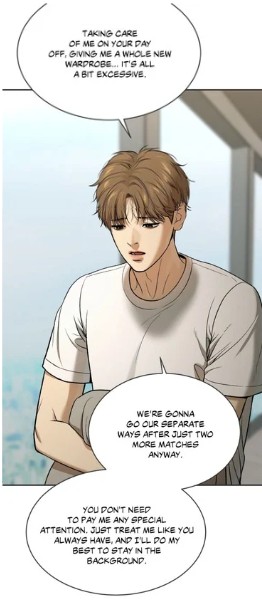 (chapter 80) for his contract is limited not only to Joo Jaekyung, but also in time. He was never a fighter, hence he is not part of MFC at all contrary to the other hyungs.
 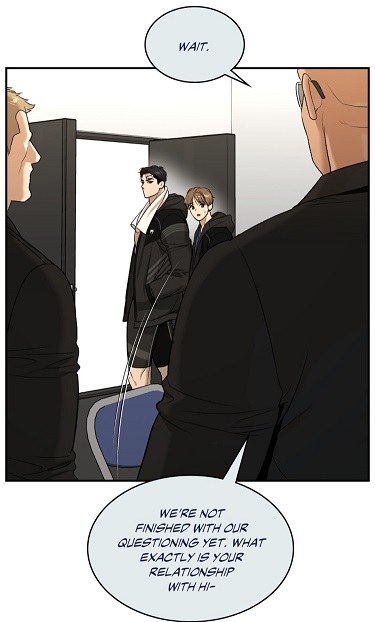 (chapter 40)
 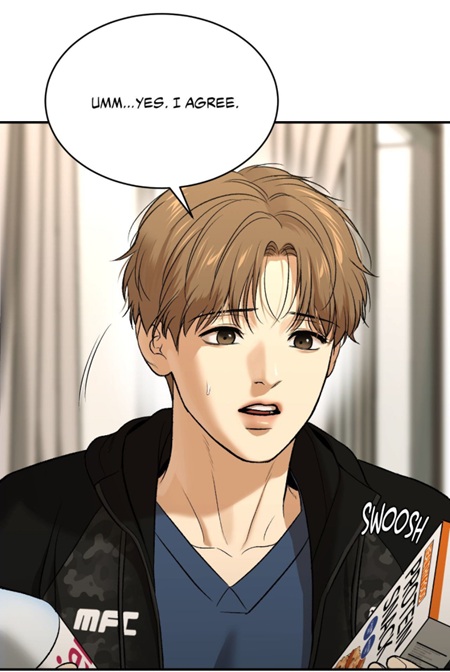 (chapter 82) These are managerial functions.
 (chapter 40) Doc Dan is not one among others, but the BEST physical therapist. He is also a champion

 (chapter 81) The plane soars not only above the Alps, but also above a vast river (probably the Rhône)— two landscapes that silently echo the dual composition of breath itself. Breath is made of air and water: oxygen and vapor, wind and moisture.
  (chapter 82) In that sense, the clouds surrounding the aircraft are not mere weather; they are the perfect union of the two elements that sustain life.
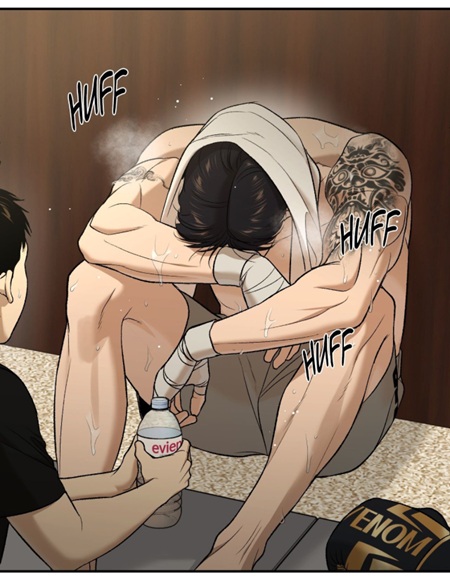 (chapter 82) That’s why, when Potato offers him a bottle of Evian, he doesn’t even look. He doesn’t need the water from the mountain and as such the world; he needs the water of the body — the intimacy, the shared moisture that reconnects him to life itself. What he truly longs for is Kim Dan’s saliva, the living trace of water transformed into affection, into care, into exchange.
 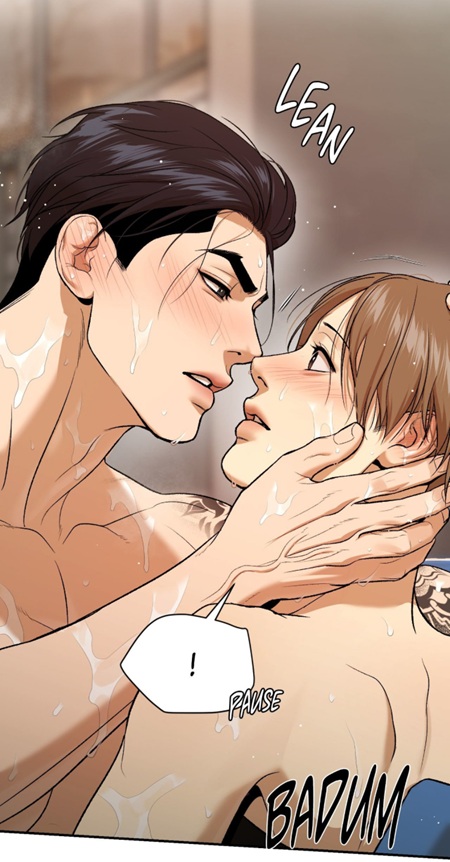 (chapter 81) He is longing for his lips and as such a kiss.
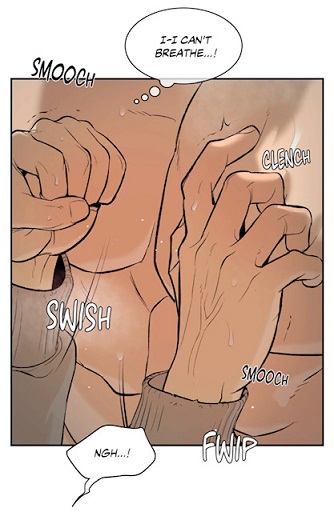 (chapter 15)
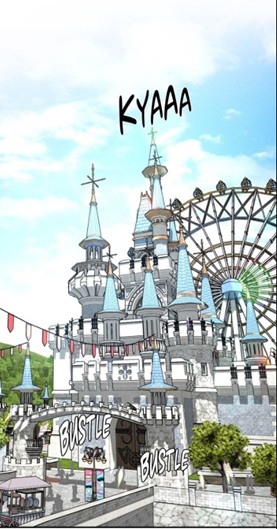 (chapter 82) Many attractions — the Ferris wheel, the fountain rides, the water park zones — combine air and water, height and spray, just like breath itself. And now, you understand why the champion got wounded with the spray
  (epilogue), because doc Dan wants to ensure that the drink or the ice cream is okay.
 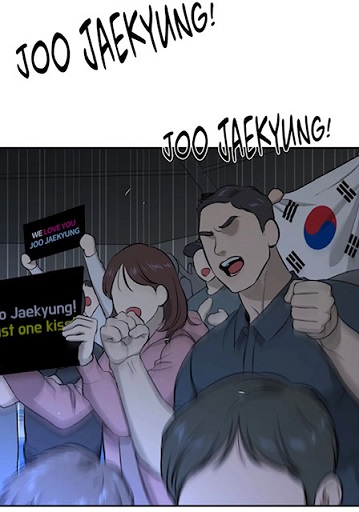 (chapter 15) The arena that once fed on pain, blood, and hierarchy gives way to a landscape of shared laughter, circular motion, and renewal. Here, entertainment is not built upon the exhaustion of bodies but upon their liberation. The crowd no longer watches to see who will fall; they rise and descend together.
 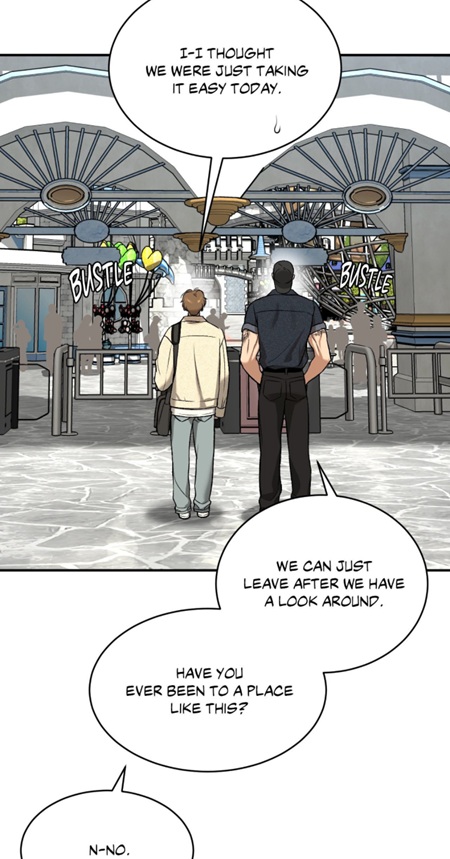 (chapter 82) People are more focused on their own emotions and experiences.
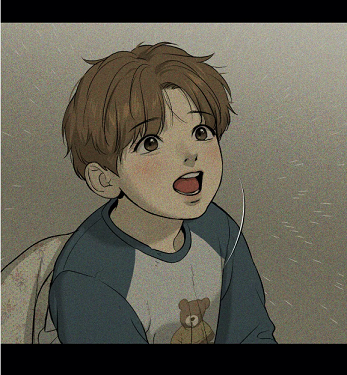
 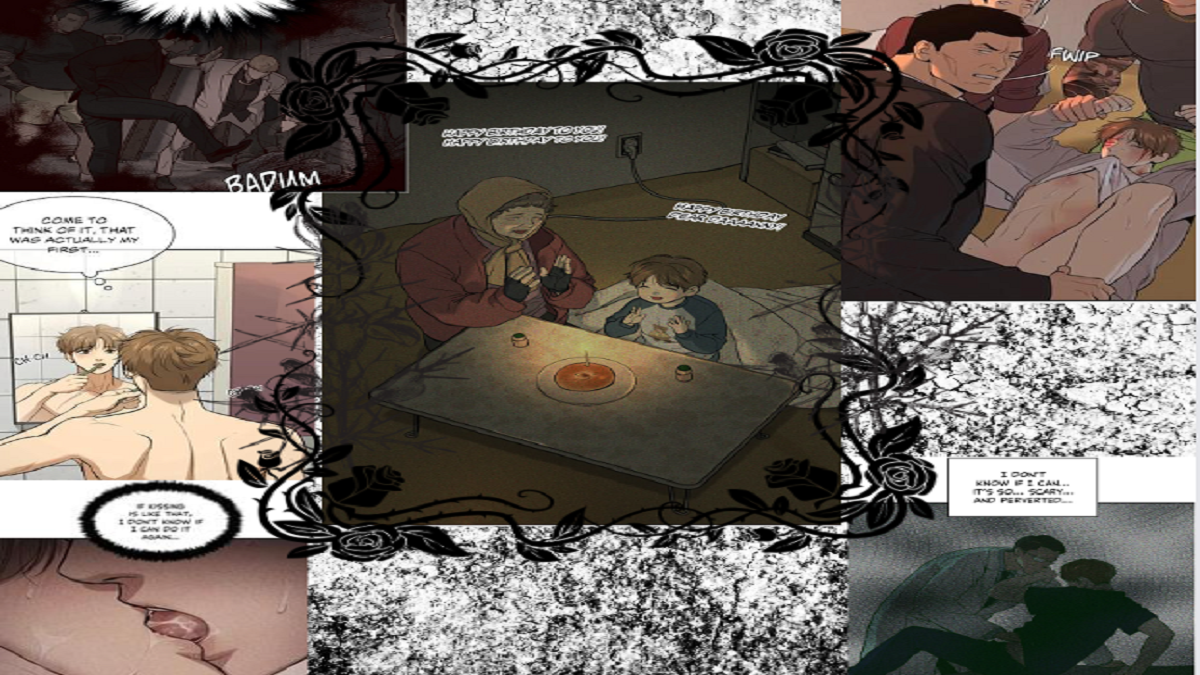 I placed the doctor’s birthday. And that’s how I remembered here the boy’s huge smile and joy.
  (chapter 11) And now, pay attention to the number of the next episode: 83! The two numbers combined together make 11! As you can see, the amusement park is the most natural setting for a smile and kiss. Joo Jaekyung could even speak about his first kiss, an intimate secret that even Kim Dan doesn’t know. Confessing it there would align his personal myth with the fairy-tale architecture around him. This would make doc Dan realize that he is special contrary to the green-haired ex-lover.
  (chapter 42). But there’s more to it. In episode 81, Doc Dan rejects the champion’s advance — he turns his head away
 (chapter 81) letting the lips slip past him like water. Yet, in the very same scene, he allows a kiss on the neck, a place where breath, warmth, and pulse converge.
  (chapter 81) He never pushes him back. The doctor resists with the face — with speech, with identity — but not with the body.
 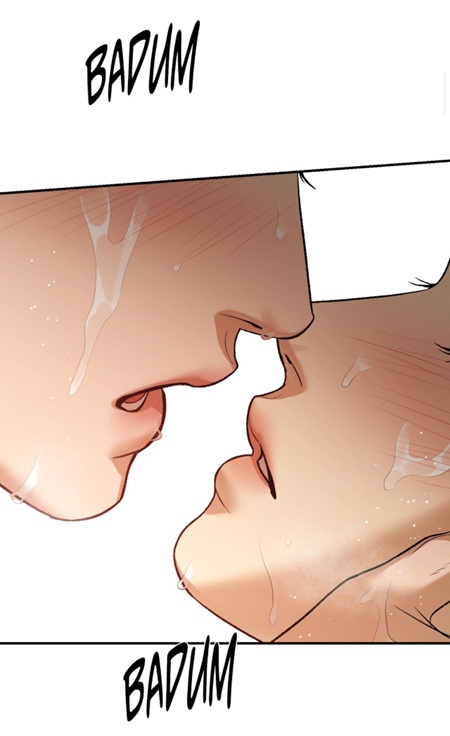 (chapter 81) Why? Because the lips are not mere flesh; for Doc Dan, they are the visible border between desire and love. Jinx-lovers will remember his quiet request in the locker room (chapter 15): he links the lips to the heart — and through it, to the notion of consent.
  (chapter 15) To kiss him there is to ask for entry not into his body, but into his feeling.
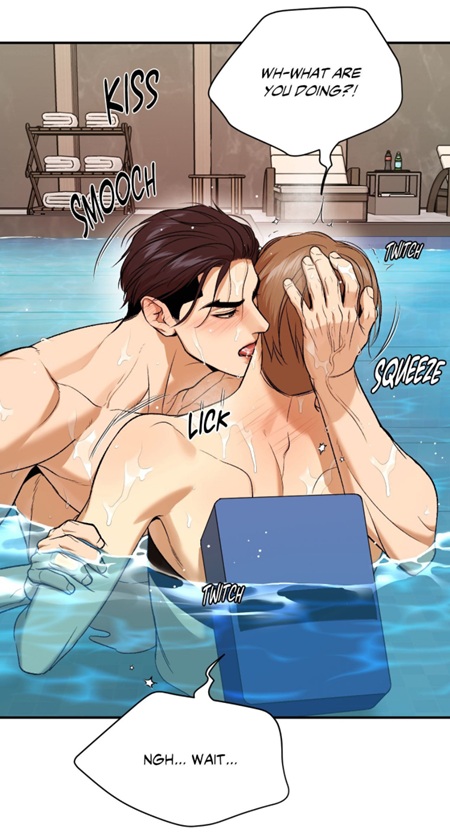 (chapter 81) The water envelops them both — fluid, intimate — yet the final element is still missing: agreement, the meeting of air and will. Until Jaekyung learns to ask, to replace taking with invitation, the kiss will remain suspended, like a breath held underwater, waiting to surface into love. And now, you comprehend why he couldn’t achieve his goal in the swimming pool. It was, as if he was trying to recreate the situation in season 1. In other words, I deduce that there will be a confession before a kiss happens!!
 (chapter 17) and the one in front of the amusement park:
  (chapter 82) The two scenes mirror each other like opposite poles of Joo Jaekyung’s evolution. In both, he is dressed in black — a color that once signified anonymity and danger, but later becomes the mark of calm confidence.
 (chapter 17) When he intervenes to save Kim Dan from the loan sharks, he is first mistaken for one of them — a predator among predators. The irony is sharp: the man who comes to rescue looks indistinguishable from those who harm. The fighters’ world has taught him that power and fame must be hidden; he was encouraged to hide, as if the fans would attack him. He chose anonymity, unaware that this would not only isolate him but also make him appear as a thug. And don’t forget how the manager called him initially:
  (chapter 75) He is a monster. It was, as if the manager wanted to hide the “wolf” from people out of fear that he might attack people randomly. But the problem is that by dressing like that, he was no different from Heo Manwook. Therefore his heroism passes unnoticed, interpreted as violence and intrusion.
  (chapter 18) Like Batman, he moves in secrecy, protecting without ever being thanked. The outfit explains why his good deed leaves no trace of gratitude — the savior looks like the aggressor.
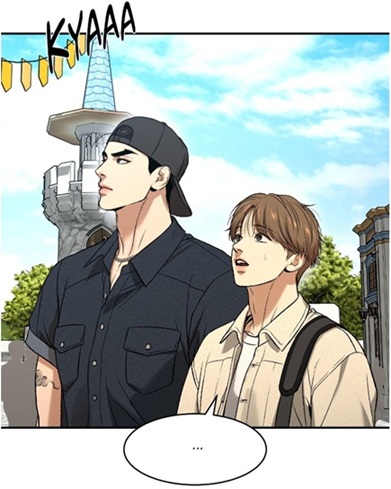 (chapter 82) He still wears black, but the darkness no longer hides him. The cap now sits higher, revealing his eyes and mouth — the organs of emotion and speech. A necklace gleams at his throat, a quiet emblem of openness. He walks beside Kim Dan in daylight, not to fight but to share joy. The man who once lurked in alleys now stands beneath the sky of the amusement park, where black absorbs light rather than extinguishes it.
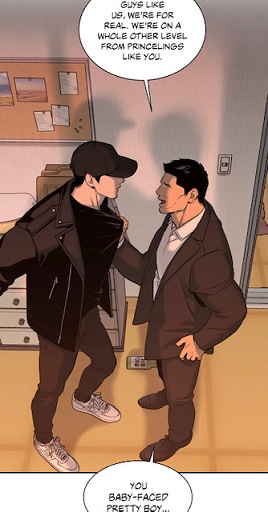 (chapter 17) A princeling! He was mocking him, because he knew that the fights were actually rigged. That’s why he called him fake.
 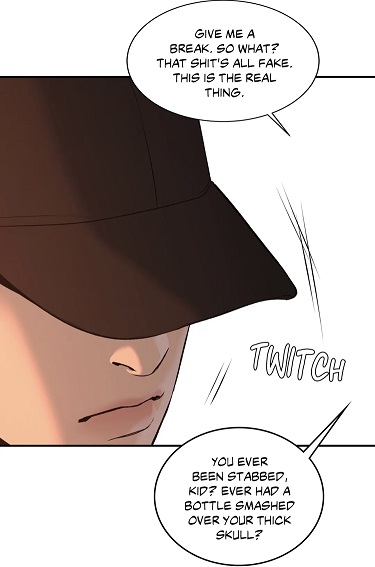 (chapter 17) This new connection reinforces my theory that the schemers are anticipating the Emperor’s demise.
 (chapter 65) so he is not standing on his own two feet. And remember that according to me, Shin Okja stands for shore. He is smiling as if everything is fine, but the reality is different. When Dan sits on her lap wearing the duck shirt, he seems safe, grounded, “held.” Yet the shore (the halmoni) isn’t truly stable — it’s brittle earth pretending to resist erosion. She gives him the illusion of safety, not the reality of it. The hydrangeas stand for temporality. The body contact replaces emotional transparency. What he learns in that moment is: “If I stay still and quiet, she’ll hold me.” Thus, his first emotional rule becomes immobility and silence. That is how the floating duck is born — not by moving freely in water, but by learning to suppress movement to preserve attachment.
 (chapter 56) He doesn’t yet see the storm and suffering beneath.
 (chapter 82) But in such a place, it is, as if time was stopped. Thanks to the many emotions and sensations, his body and heart will be revived. Through fun, the duck will change. As Kim Dan ascends from floating duck to swimmer and to a flying duck, he moves from hidden suffering to open breath. Thus the Ferris Wheel will have definitely an impact on him. Both arcs revolve around air and water — the two elements that make up breath and emotion. Don’t forget that the doctor embodies the clouds as well, while the athlete stands for steam.
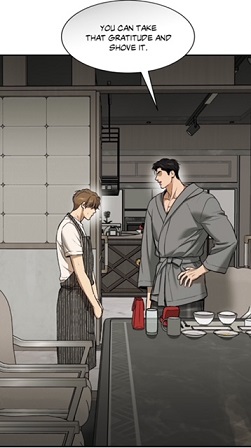 (chapter 45)


 (chapter 55) One might think that the causes for his throbbing head are his depression and insomnia. On the other hand, I am quite certain that many readers had a different explanation for his migraine. He is missing his lover, Kim Dan, as the color red symbolizes the headache and the physical therapist’s name is strongly intertwined with this pigment which was once again confirmed in episoe 56.
  (chapter 56) So it is true that his migraine are caused by the doctor’s absence. It was, as if the main lead was suffering from withdrawal symptoms. The fighter has a love addiction, but he is not aware of the existence of this “sweet poison”. But there’s more to it.

 Thus I consider this image, where the champion is seen
 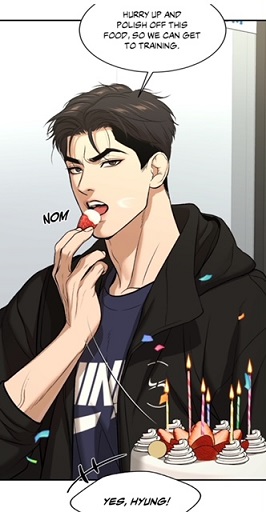 (chapter 43) eating a strawberry with cream as the announcement of the magical night between Kim Dan and his fated partner. The fruit with the cream represented a violation to his strict diet.
  (chapter 55) or the medicine against migraine.
 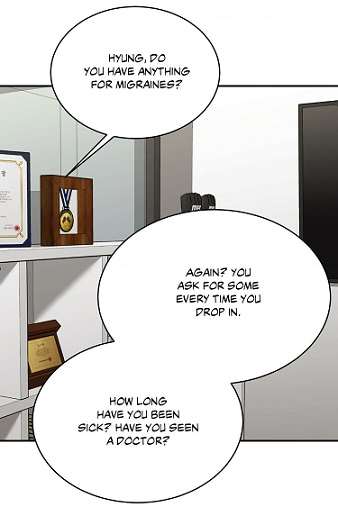 (chapter 54) However, in episode 55, we can observe a huge change in the champion.
  (chapter 55) The latter is finally admitting the inefficiency of the medicine. In other words, in this scene, he was giving up on them. This represents an important step on his way to enlightenment. For me, it signifies that he is stopping relying on pharmaceutical products. Let’s not forget that in the past, he rejected the PT and even neglected them. Why? It is because he trusted more sprays and other medicines than people.
  (chapter 49) Therefore the switch of the spray had to occur. He needed to question his prejudices and attitude. But let’s return our attention to the champion and his throbbing head. One detail in this panel caught my notice.
 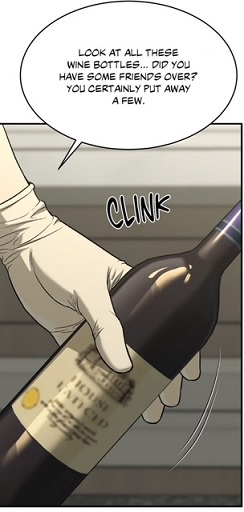 (chapter 55). This means that she had not seen the mess in the master room before:
  (chapter 55) And now, pay attention to the number of the bottles in his room:
 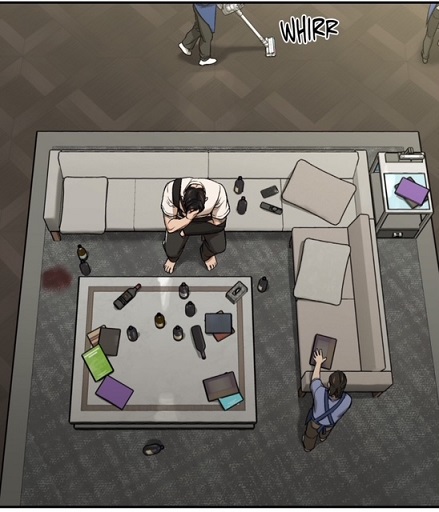 (chapter 55) I count 12 bottles of wine exactly like in the last image from chapter 54. Thus I came to the following deductions:
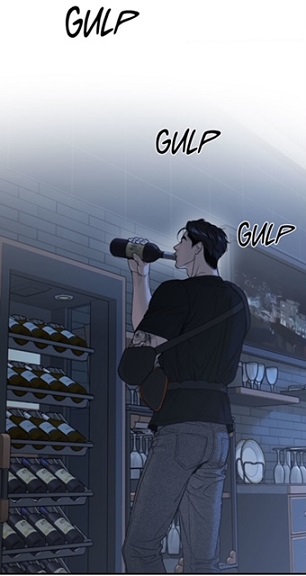 (chapter 54) and the appearance of the staff in chapter 55. It indicates that Jinx-philes can witness time deceleration in season 2. From one month in one chapter, then a week in the next episode, finally we have a reference to a day: Monday. Thus I deduce that in episode 56, only 2 or 3 days elapsed. I have already announced that the couple should meet each other around 25th:
  (chapter 56), for the day Kim Dan wired his money to his “loved one” took place after 10th of the month: XX = two digits.
  (chapter 55)
 (chapter 55) Consequently, I judge the cleaning lady as the positive version of Park Namwook. Though she uses social norms, she doesn’t use them against her employee. She didn’t condemn him, it is a mixture of teasing and reminder. At the same time, her intervention implies that she must have noticed changes in her boss after the arrival of Kim Dan in the flat and his departure. That’s the reason why I have the impression that this image is announcing another turning point in the champion’s life either:
  (chapter 55) He won’t drink like before. However, I don’t think that he will behave like in the past: reject any alcohol entirely.
 (chapter 55), his migraine vanished. Though he is holding his head the next morning and hiding his gaze
  (chapter 55), the Webtoonist didn’t add any red or “throb” as an indication for a migraine. As you can see, his headache is strongly intertwined with repressing the physical therapist and as such locking away memories. However, there exists another cause. What had the doctor done in the past?
  (chapter 44) Yes, the main lead had patted his lover’s head, while the champion had his eyes close. In my opinion, his unconscious had registered this gesture and loved it. However, the champion had not seen it himself. He was drunk and had his eyes closed. This stroke on the head symbolizes appreciation, affection and recognition.
 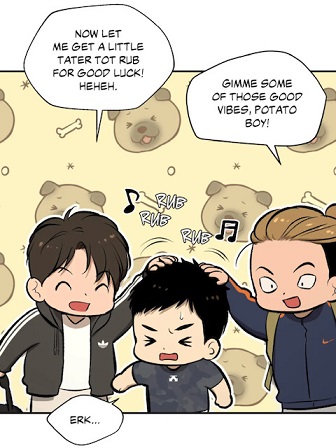 (chapter 23) That’s how little kids are admired and loved. This stands in opposition to the abuser’s behavior:
  (chapter 54) parental criticism and absence of contact. And how did Choi Heesung express his “love” to Yoon Gu?
 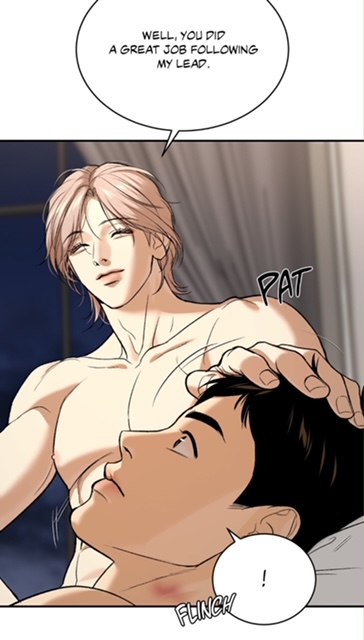 (chapter special 2) The same way than Kim Dan with the patting! In other words, the champion is deep down longing for such a gesture, but he has not realized it yet. Nevertheless, I believe that he just needs a trigger.
 (chapter 55) With his left opened eye!! The exact opposite from this picture:
 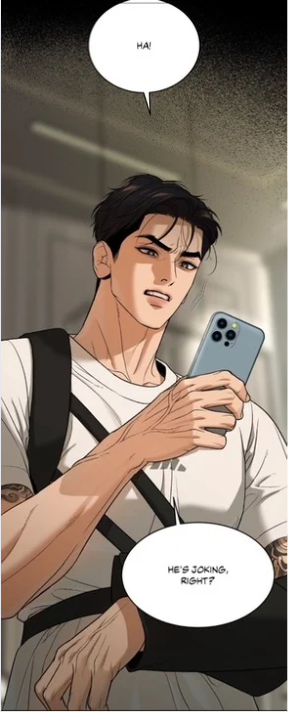 (chapter 55) This observation got confirmed in episode 56, though I couldn’t expose it before the release of the new chapter.
  (chapter 56) As long as the fighter thinks of his fated partner, he is not plagued with a throbbing head. This shows that it has something to do with repressing memories. However, his physical condition is still not improving:
 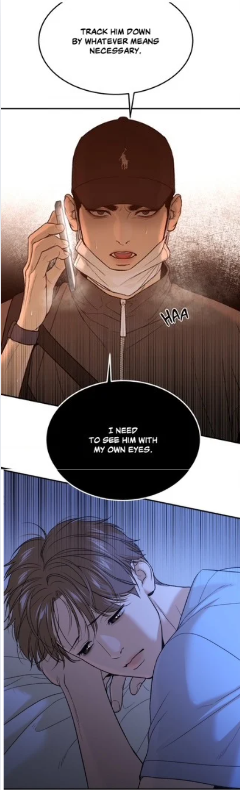 (chapter 56) He even looks worse than before: exhausted and malnourished. There is no one by his side taking care of him: his only interaction with his manager is through the phone. At no moment, the guy felt the need to pay a visit to his boss and champion.
  (chapter 56) Because I discovered the connection between memories and the physical therapist, it is important to examine the interaction between the main lead and the new uke.
 (chapter 55) This signifies that in reality, the uke is the one benefiting more from this relationship, while the “Gucgi guy” is a placebo for Joo Jaekyung. He can not replace the true medicine: Dan’s love. But Joo Jaekyung chose to close an eye to the truth forgetting his “insight” from chapter 2:
  (chapter 2) However, back then, he had just stated it in order to get rid of the mint-goblin. He needed a justification for switching his partner. In other words, this was reflecting more the protagonist’s corrupted mind and heart. Therefore he is designed eyeless, the symbol for ignorance, lies and blindness.
 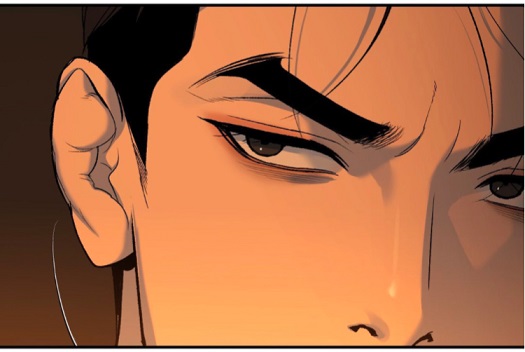 (chapter 55) And where did he have his migraine exactly?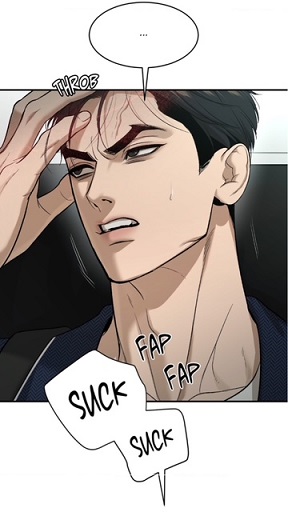
 (chapter 55) It was on the right side and eye! It truly exposes that Joo Jaekyung was getting punished for his attitude. He is not allowed to bury and forget Kim Dan. The star’s open eyes in this episode symbolize denial, lack of self-awareness and as such the absence of insight. He is also punished for his lies in episode 2. His words might have reflected the truth, but his words didn’t expose a change of heart. He was taking advantage of this situation as well. So when the pain intensified pushing him to close his right eye, we should consider this image as a short moment of reflection and realization. In the restroom, he was forced to admit that only Kim Dan could kiss him. Is it a coincidence that just before Mingwa presented this image
 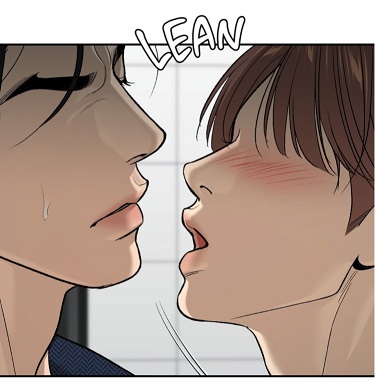 (chapter 55) Naturally no, she was mirroring the attitude of both figures: both were in denial!! Notice that though the star had no reaction in front of the “replacement”, the latter chose not to give up at all. This man was not expecting a rejection, in fact he was in total denial as well. He didn’t notice the star’s passivity and silence.
 (chapter 55) He was just standing there and avoiding his gaze.
 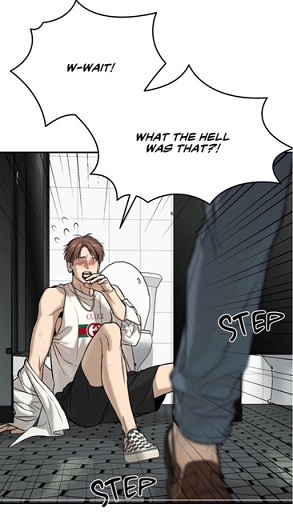 (chapter 55) How can the MMA fighter reject him? This displays his huge confidence or arrogance. There’s no doubt that he will put the blame on Joo Jaekyung. At the same time, I believe that his blindness was also caused by his greed.
 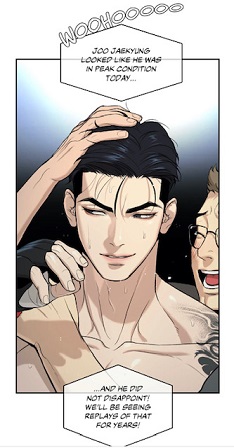 (chapter 5) Therefore he was in a happy mood after that match. A simple gesture with a lot of power! He has been missing this hand or better said this gesture. This action was the main lead’s true motivation.
  (chapter 54) Don’t forget that Dominic Hill had expressed his admiration in a similar way, patting on the back:
  (chapter 40) No wonder why he felt so lost and empty after the last fight.
 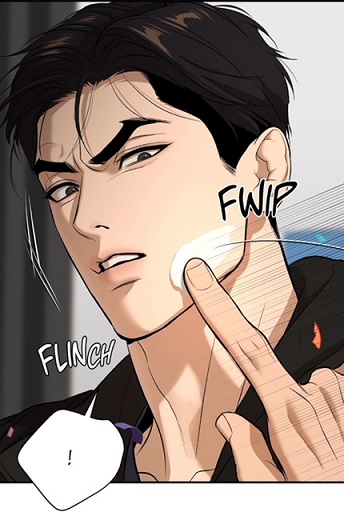 (chapter 43) this was the coach’s hand. In other words, the athlete felt more close to the coach than to the manager. This would explain why he would listen to the coach and even entrust him with huge tasks like the charity event. Strangely, in season 1, we can observe how more or more he is distancing himself from the fighter. Probably related to his secret relationship with Kim Dan. According to my theory, the coach is aware of their relationship. They are more than just boss and employee. As you can see, I don’t think that the champion is right now just missing the doctor’s sweet lips. Deep down, he would like to be patted by his loved one, exactly like Potato.
 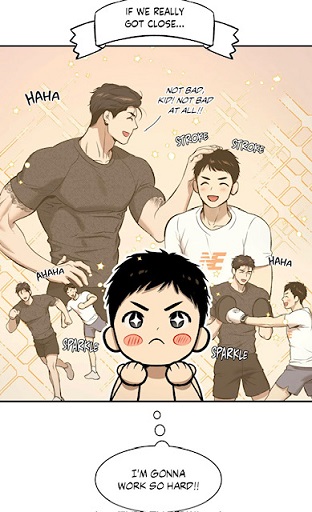 (chapter 23)
 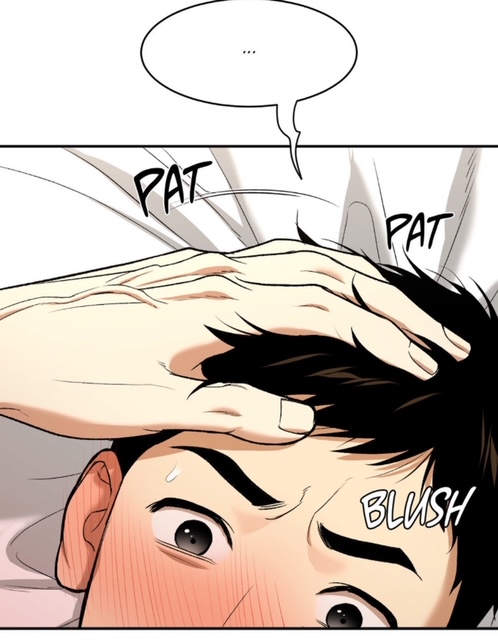 (special episode 2) But this is what he received after the last match:
  (chapter 2) The champion’s reaction is quite telling. He is not easily swayed. But we have another bigger evidence that his intercourses were replacement for “fights”. In The States, the fighter asked Kim Dan to join him at 11:00.
  (chapter 38) He needed to prepare himself mentally, to visualize how he would screw his opponent Dominic Hill. He was just taking the expression “fuck/screw” too literally. The latter idiom has the following synonyms: to cheat, oppress, bleed, coerce, wrest and to tighten. Just before the doctor came to his door, what was the athlete doing? He was watching a video from his challenger:
  (chapter 38) Therefore it is not surprising that he rejected Kim Dan’s request first.
 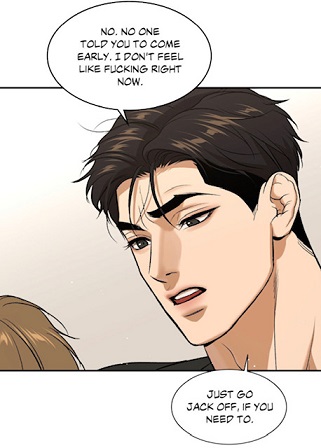 (chapter 39) He didn’t feel like it, because he was not aroused at all. Imagine that he needed two hours for that erection, a sign that during that night, Kim Dan was in reality a replacement for the American fighter.
 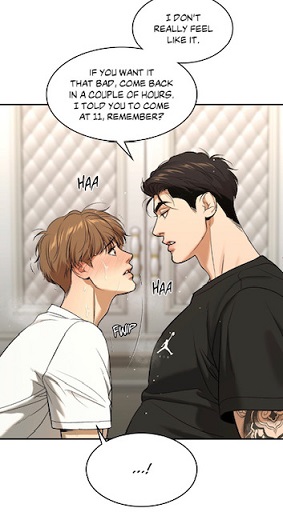 (chapter 39) Even when the doctor rubbed his hand against his sex, he had no reaction.
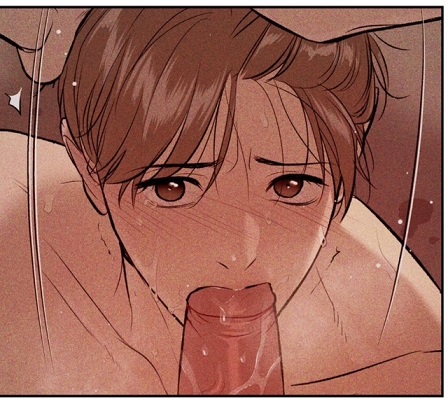
 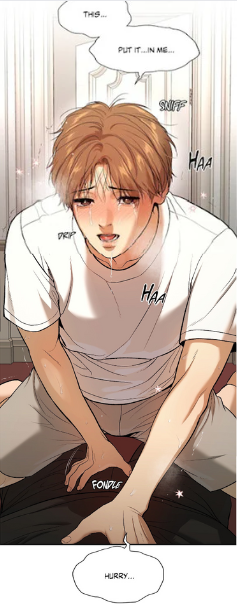 (chapter 38) In fact, he needed a fellatio to get an erection, and he only started getting excited, when he saw the doctor’s gaze. That’s the reason why he remembered this image under the shower:
  (chapter 55) However, the more time the champion spent time with his physical therapist, the more he came to violate his own rules and principles: It started with their first meeting, when he crossed the line by mixing private and professional life together:
 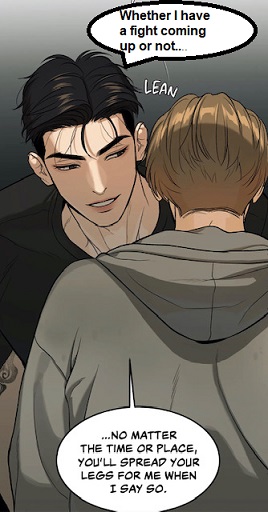 (chapter 6), Sex was no longer linked to matches, but to his own desires. To conclude, for the first time, the fighter connected sex to pleasure and desires and not “work and fighting”. Because of the deal and Joo Jaekyung’s strange behavior (sex shower scene, …) the PT had the impression that his boss was a man obsessed with sex.
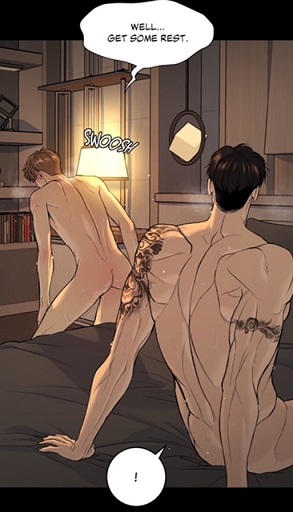 (chapter 53) The latter didn’t feel the need to have more sex with Kim Dan, he let his partner leave the place. Why? This contrasts so much to their First Wedding Night:
 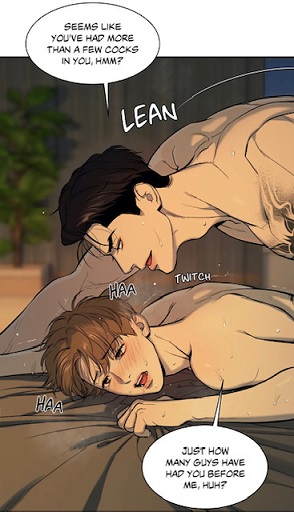 (chapter 4)
  (chapter 53) Pay attention to the behavior from the fighter during their last night together. He is looking away, he is not paying attention to his fated companion. His mind was elsewhere, focused on Baek Junmin! In my opinion, during that night, the champion had been able to differentiate between the physical therapist and his opponent. Fighting was more important than sex and as such his sex partner. To conclude, the physical therapist had been able to win Joo Jaekyung’s belief and heart. He was no longer a replacement at all. He had become a person close the fighter.
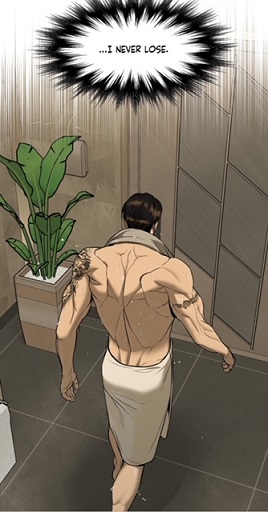 (chapter 49) he wanted to screw Baek Junmin for real. In this image, the athlete oozes confidence and strength. This means that he was no longer dependent on the good fuck before the match.
  (chapter 53) However, the main lead never realized this huge change, he kept his old belief as a tradition out of habit. This explicates why the fighter tried to replace with a new uke
 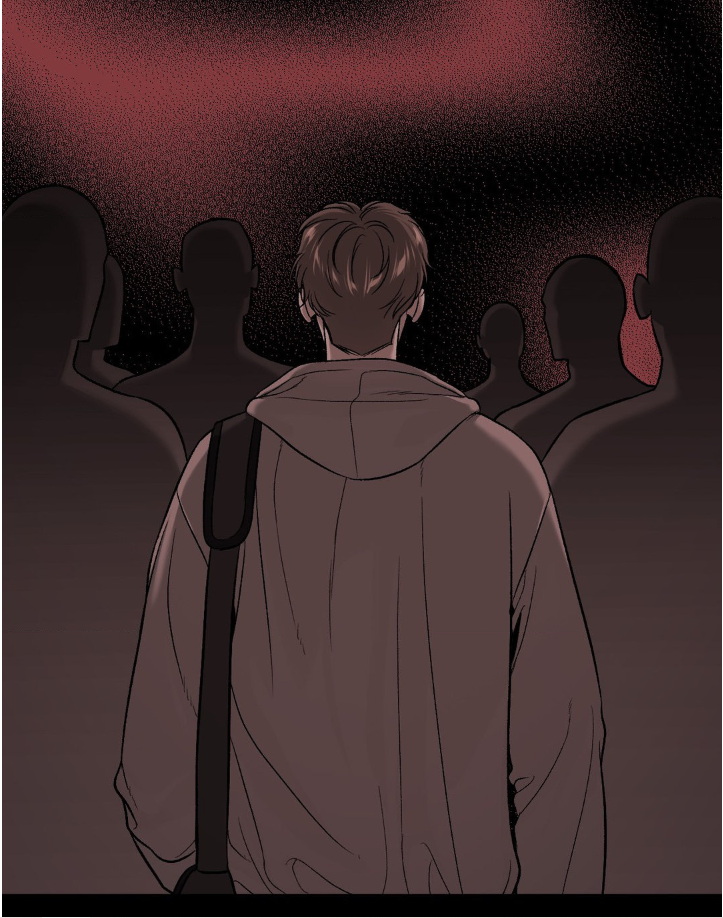 (chapter 55), but here the sex was longer connected to a match, rather to fun. Finally, observe how the champion is now blaming his PT for his ruined match:
 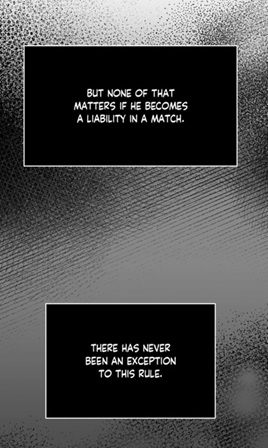 (chapter 56). I don’t think, he was referring to the spray incident, rather to their night before the match. The doctor had not behaved like a real opponent, he had admitted his “defeat” quite easily. He had left the ring before procuring him a good fuck. He was blaming his partner for violating his rule:
 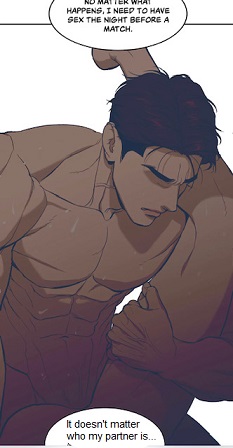 (chapter 2) But here is the thing. Kim Dan had just accepted the deal because of his grandmother. Secondly, he learned an important lesson during that magical night: consent!
  (chapter 44) Sex is a synonym for love and as such it is about giving pleasure and affection to his partner. It is a two-way street. And this is something that the champion has to admit and accept. Thus I deduce that the fighter still has a long way to go before dropping all his fake principles. Like mentioned before, he needs to ponder on the following question: what matters to him the most? His championship or his happiness? Or what is sex to him? Why does he think that he is jinxed? He needs to face his own painful past and remember the face of his tormentor.
 (chapter 49) Baek Junmin and the abusive parent.
  (chapter 54) But the masturbation had taken place before. So who did he have in mind, when he was jerking off? I might shock my avid readers, but I would say: Baek Junmin.
 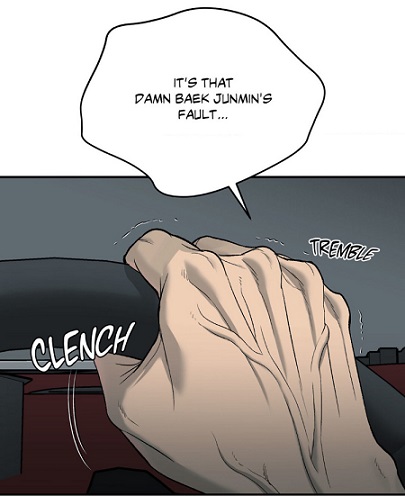 (chapter 54) However, this gesture had the opposite signification: rage, resent… but also sweet revenge! He must have recalled the Shotgun’s face.
 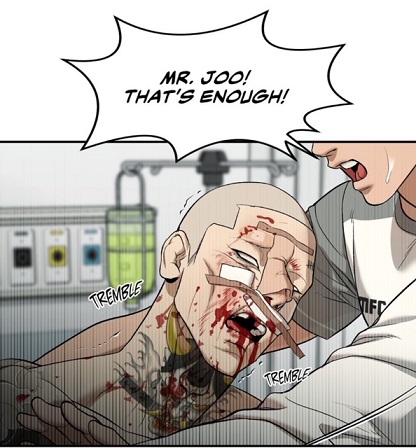 (chapter 52) There’s no doubt that thanks to the doctor, the champion will learn that he can get “justice” and satisfaction through other means. He can defeat the ghosts from the past, not just thanks to his fists and hard work, but also thanks to his surroundings and knowledge. Lawsuit and media!
 (chapter 1) The physical therapist is not only his reward and price, but also his “second shoulder” and as such his pillar. The new PT won’t be able to replace him. Joo Jaekyung is not just a champion, but also a team: Kim Dan as his PT and his lover. As for Kim Dan, the celebrity is his “energy drink”, his source of comfort and joy. He is also his home, for he is the first one who invited him to stay with him! Yes, the grandmother didn’t invite her grandson to live with her, he was just dumped at her place. And because the celebrity is like a home and family, it explicates why the doctor is once again “living like a ghost”.
  (chapter 56) He feels lonely, but contrary to his fated partner, he is not truly looking for replacement. He might use work to divert his mind, yet he is not erasing Joo Jaekyung from his memory due to his promise: he needs to repay him. So his MO is slightly different. He is just using work and his halmoni to survive. Yes, he is also suffering from depression. In other words, when both main leads will meet each other again, they should have reached the bottom so that they can see each other’s misery and both are willing to listen to each other.
 Bebebisous33s' analyses in K-Dramaland and Manhwas