

Please support the authors by reading Manhwas on the official websites. This is where you can read the Manhwa: Jinx But be aware that the Manhwa is a mature Yaoi, which means, it is about homosexuality with explicit scenes. Here is the link of the table of contents about Jinx. Here is the link where you can find the table of contents of analyzed Manhwas. Here are the links, if you are interested in the first work from Mingwa, BJ Alex, and the 2 previous essays about Jinx The Mermaid’s Illusion of Love and A Luminous Kiss Amid Shadows This is where you can watch the K-drama Love Scout
It would be great if you could make some donations/sponsoring: Ko-fi.com/bebebisous33 That way, you can support me with “coffee” so that I have the energy to keep examining Manhwas. Besides, I need to cover up the expenses for this blog.

Hope often implies the promise of a tomorrow, a continuation of life and opportunity. Yet in Jinx, the depiction of Kim Dan’s condition—his unconscious attempted suicide  (chapter 60), deteriorating physical health
  (chapter 60), and the ominous setting of the hospice
  (chapter 60) — challenges this notion. The photographs from episode 60 subtly introduce the fifth puppy’s death as a poignant symbol of Kim Dan’s precarious fate.
  (chapter 60) The puppy’s appearance in only one photo (the second one from left) among many mirrors Kim Dan’s fragile existence,
 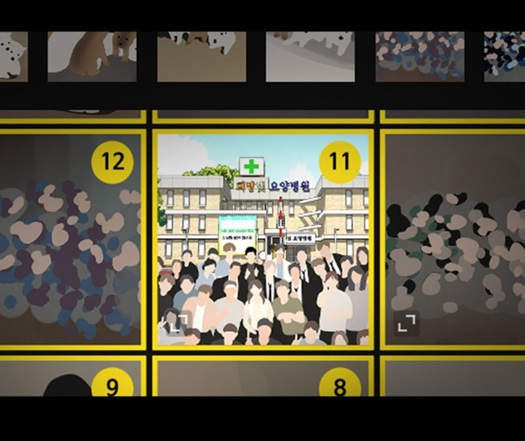 (chapter 60) deepening the parallel between them. This connection becomes even more striking when recalling that the grandmother once likened Kim Dan to a puppy
 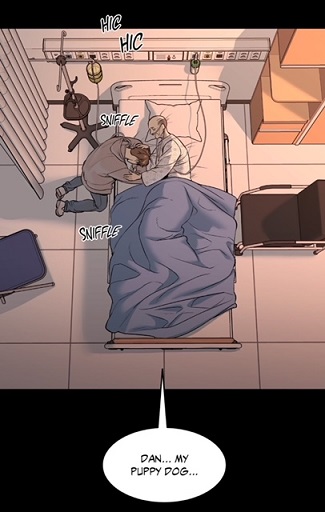 (chapter 53), emphasizing his vulnerability and dependence on others.
Without intervention, Kim Dan’s condition—both physical and emotional—could spiral into irreparable harm, reflecting the unnoticed demise of the puppy. 😭This essay will examine these events chronologically, beginning with Joo Jaekyung’s urgent rescue and arrival at the hospice. The narrative will then explore the symbolic meaning of the photographs, including the fifth puppy’s fleeting presence and its absence in subsequent images, as well as the profound symbolism of the room where Kim Dan is placed. This analysis will reveal how both elements intertwine to foreshadow Kim Dan’s increasingly tenuous grip on life and the unspoken realities of his condition.
The Rescue and the Green Cross
Joo Jaekyung rushed to the hospice with Kim Dan in his arms  (chapter 60), he rested him on his healthy shoulder to provide support. This method of carrying, while practical in the moment, placed uneven strain on Jaekyung’s body. The weight resting on one side risked injury to his back and disrupted his balance, subtly reflecting the physical toll of his desperation to save Kim Dan. This small but significant detail underscores the sacrifices Jaekyung was willing to make in his attempt to protect him. However, since Kim Dan was unconscious, he couldn’t see the wolf’s kindness and selflessness.
Moreover, we have to imagine that while looking around for help on the beach,  (chapter 60) the green cross and the name “Light of Hope” likely caught his attention, inspiring him to believe the hospice could offer immediate assistance. Jaekyung’s desperation was evident in his drenched appearance after rescuing Kim Dan from the ocean (chapter 60), coupled with his labored breathing as he hurried into the hospice. His question
 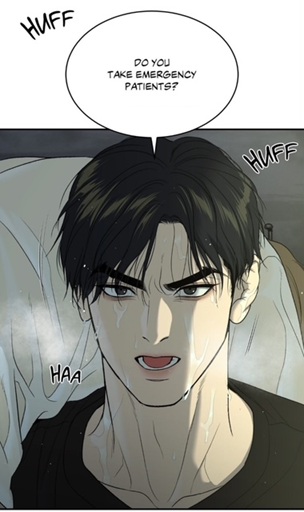 (chapter 60) reflected not only his uncertainty about whether the hospice could offer assistance but also the sheer urgency of his actions. This moment underscores the physical and emotional toll of his determination to save Kim Dan. Jaekyung risked worsening his own physical condition, driven by the hope that help would be available Yet the irony of this moment lies in the true purpose of the hospice: it is not a place for treatment or healing but a program dedicated to end-of-life care.
  (chapter 57)
This observation invites deeper reflection on why a small town would have a hospice rather than a hospital. The answer may lie in the demographic realities of the region. The aging population is evident in scenes depicting the town’s streets, where Potato and Heesung encounter primarily elderly individuals  (chapter 58), such as two older women
  (chapter 58). Yes, there were two small details, yet full of meaning. Even the landlord
  (chapter 58) nicknamed “old man”
 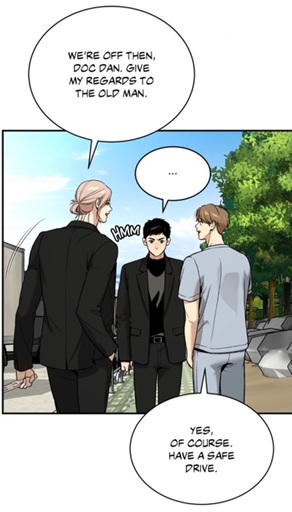 (chapter 59) by Heesung, symbolizes this demographic trend. The hospice’s focus on senior care reflects a broader societal issue in South Korea: a declining birth rate coupled with an increasing elderly population.
People aged 65 and older took up nearly 20 percent of South Korea’s population this year amid rapid aging and the ultra-low birthrate, data showed Thursday.
The number of senior citizens stood at 9.94 million in 2024, accounting for 19.2 percent of the country’s 51.75 million population, according to the data from Statistics Korea.
The proportion is forecast to surpass 20 percent in 2025, which will make South Korea a “super-aged society,” and is to rise further to 30 percent in 2036 and over 40 percent in 2050. Quoted from https://en.yna.co.kr/view/AEN20240926004100320?utm_source=chatgpt.com
Concurrently, the country recorded the world’s lowest fertility rate, with an average of 0.72 births per woman in 2023. This demographic trend is anticipated to continue, with projections indicating that by 2072, the population could decline by 30%, reducing the current 51.7 million to approximately 36.2 million. Quoted from https://time.com/6488894/south-korea-low-fertility-rate-trend-decline/?utm_source=chatgpt.com
These statistics underscore the challenges South Korea faces in balancing an increasing elderly population with a shrinking workforce, impacting economic growth, healthcare systems, and social services. While “Light of Hope” caters to the growing number of seniors, this approach inadvertently reinforces the exodus of younger generations. This migration from the countryside to Seoul or other major cities is subtly reflected in Jinx. Yoon-Gu, for instance, comes from the province of Gangwon-Do, embodying the trend of younger people leaving rural areas in search of opportunities. 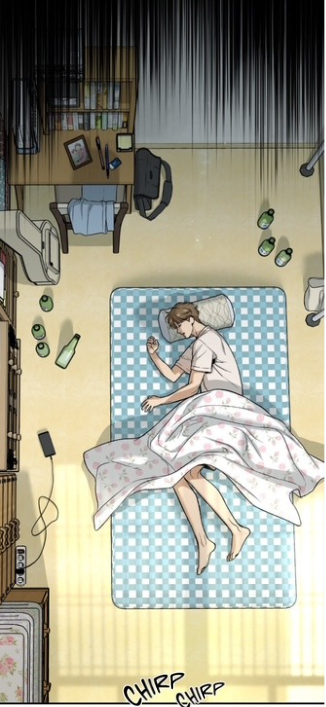 (chapter 57) In addition, the empty bedroom where Kim Dan is staying—with its untouched guitar, furniture, and books—suggests it once belonged to a teenager who left home and never returned. The unchanged state of the room symbolizes the stagnation and loss felt in these regions, further highlighting the broader societal issues at play. This shows that Jinx is not merely a classic love story; it also paints a nuanced portrait of South Korean society and its challenges. By prioritizing elder care without addressing the needs of the youth, the hospice embodies a false promise of hope—one that may ultimately exacerbate the very demographic crisis it seeks to alleviate. (chapter 57) This observation is further supported by the panel depicting the hospice’s exterior, which highlights its offer of free health checks. This detail suggests that the hospice is actively trying to attract new patients and has the necessary resources to conduct thorough medical examinations. For instance, when one of Kim Dan’s patients fell, the hospice staff were able to examine him properly
  (chapter 59), indicating their capacity for medical intervention. However, this approach reveals an underlying paradox: while the hospice caters primarily to an aging population, it lacks a sustainable strategy to address the exodus of younger generations, whose departure threatens its long-term viability. This issue is further illustrated by the hospice director’s decision to allow the facility to be used as a location for a movie shoot,
 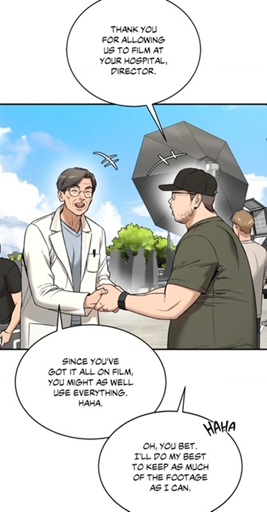 (chapter 59) seemingly as an attempt to garner attention and improve its reputation. However, relying on such strategies means any potential benefits will only materialize months later, when the movie is released. This delay highlights the limitations of the hospice’s current approach to sustaining itself. In this context, Joo Jaekyung’s presence could play a pivotal role. It is possible he may become the driving force in revitalizing not only the hospice but also the town itself, potentially pushing the director to transform the hospice into a full-fledged hospital, addressing both immediate and long-term needs of the community. And this would fit his personality, as I connected him to a dragon. Let’s not forget that in season 1, the MMA fighter was introduced as a benefactor who organized a charity event
  (chapter 41), yet we never got to hear where the money went. This potential transformation underscores the underlying complexities of the hospice’s current operations, as it navigates between providing care for the elderly and responding to broader societal challenges. By situating Jaekyung in this dynamic, the narrative subtly hints at his capacity to influence change, bridging the gap between the hospice’s limitations and the community’s evolving needs.
This stark reality mirrors Kim Dan’s mental and physical state. The trail of blood he left behind 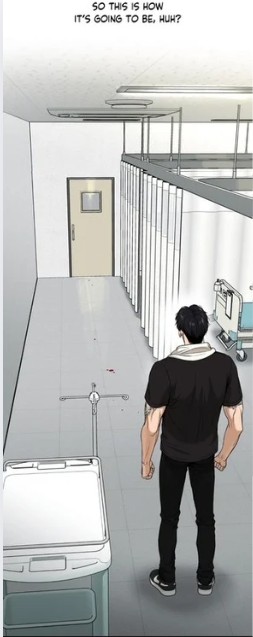 (chapter 60) —a consequence of removing his IV needle—symbolizes his quiet surrender and deteriorating health. When Kim Dan arrived at the hospice, he carried the faint hope of finding solace
  (chapter 56), particularly from his grandmother, who had promised to go to the beach with him.
  (chapter 53) However, this hope was met with disappointment
 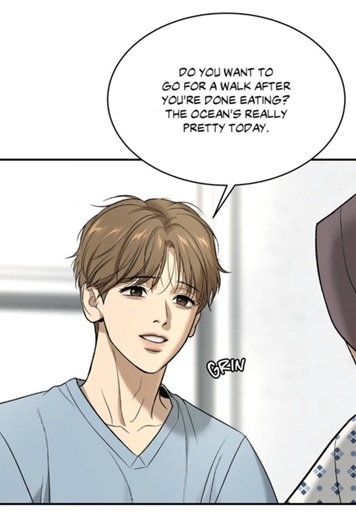 (chapter 57) – which he never expressed -, reflecting the deceptive promise of the hospice itself. Kim Dan’s fate seems to mirror not only the unnoticed death of the fifth puppy
 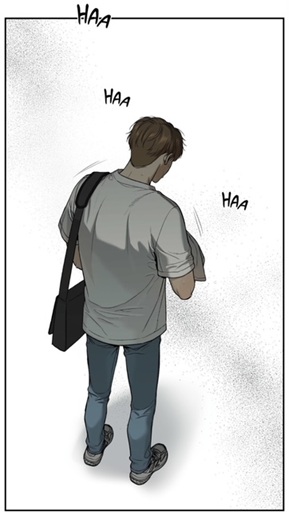 (chapter 59) but also his grandmother’s diminishing expectations of him.
  (chapter 56) She expressed twice that she no longer needed him.
  (chapter 57) However, all this time, she had been his motivation and reason to live. Once likened to a puppy, Kim Dan’s vulnerability and struggle for recognition remain central to his story, highlighting the fragility of his existence. His malnutrition, possibly linked to a deficiency in vitamin K and compounded by his alcohol dependency, exacerbates his fragility, making his situation increasingly perilous. Vitamin K, essential for blood clotting and bone health, is derived primarily from leafy green vegetables and produced by gut bacteria. A deficiency can result in symptoms such as dizziness
  (chapter 57), easy bruising
  (chapter 13), excessive bleeding and slow wound healing—all of which align with Kim Dan’s deteriorating condition and the trail of blood he left after removing his IV needle. (chapter 60) Is it a coincidence that a company with the green logo K was shown in different panels, like this one?
  (Chapter 54) Like mentioned before, this logo could be referring to a pharmaceutical company.
The Room and Its Symbolism
The room (chapter 60) where Kim Dan is placed raises significant questions about its purpose within the hospice. The presence of curtains, indicating multiple beds, contrasts with the lack of personal belongings or cupboards (see as a comparison, Shin Okja’s room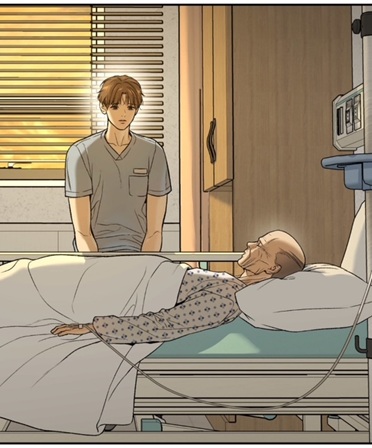 – episode 59), suggesting a temporary space for patients nearing the end of life. Moreover, observe that the colors of the curtains in the patients’ room is orange
  (chapter 56)
 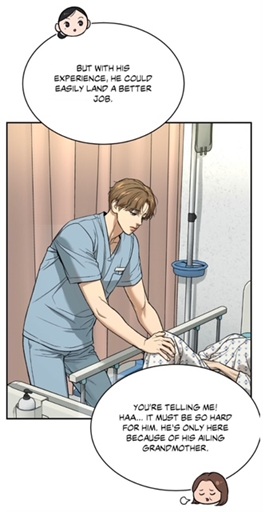 (chapter 56) and not white. This observation aligns with the assumption that this room is reserved for those on the verge of dying, shielding terminally ill patients from witnessing another’s death. 😨
This interpretation becomes clearer when contrasted with the emergency room depicted in the K-drama Love Scout.  In the drama, a character searches for his CEO and friend Kang by pulling back closed curtains in an emergency room,
 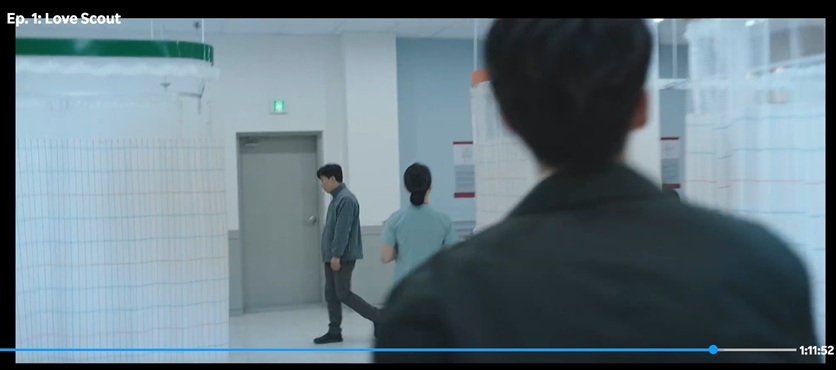 discovering different patients behind each one until finding the right person.
  This reinforces the notion that closed curtains signify the presence of others, even if their identities remain hidden. In addition, when the doctor treated the patient Park Jinchul, the curtains were closed. (chapter 56) (chapter 60) Like in Love Scout, the room in Jinx also has closed curtains, but instead of revealing activity or connection, it implies abandonment and isolation for those behind them. How so? Contrary to the transparent, automatic doors of the emergency room in Love Scout, the door in this scene is closed, manual, and opaque. Such a door symbolizes privacy and secrecy, further emphasizing the room’s association with isolation and death. In addition, the lack of anyone visibly attending to them suggests desertion. Everything is indicating that this space is not dedicated to immediate care and life-saving measures contrary to the emergency room. This contrast emphasizes that the room in Jinx symbolizes abandonment and death rather than rescue.
But there’s more to it. In Episode 52, the curtains in the health center were removed between two patients 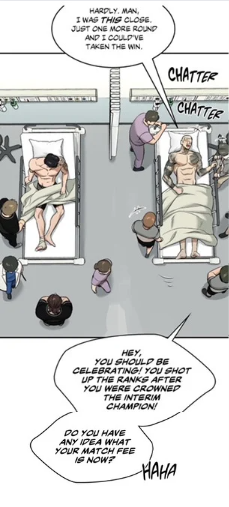 (chapter 52) to signify absence of confidentiality, contrasting with the closed-off nature of this space. This comparison not only exposes the manipulation of the staff at the health center, but also reinforces my interpretation that the emergency room at the hospice stands for danger and challenge. This detail underscores Joo Jaekyung’s assumption that he and Kim Dan are alone, but it also raises the possibility that their conversation could have been overheard by someone lying behind the curtains, such as the patient from Episode 57.
  (chapter 57) or the mysterious Park Jinchul
  (chapter 56)
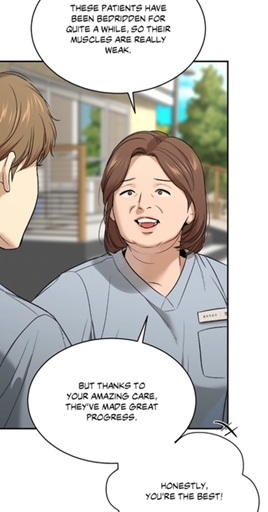 (chapter 56) If others are indeed present, their isolation hints at a bleak reality: death would occur behind closed curtains, without companions or acknowledgment. This setting forces Joo Jaekyung to confront the fragility of life and the limits of money, as even wealth cannot shield anyone from the inevitability of death. (chapter 60) The room’s atmosphere intensifies this realization, as the symbolism of abandonment permeates its design and the interactions within. Moreover, since many people could see parallels between this scene with the doctor’s situation in the locker room,
 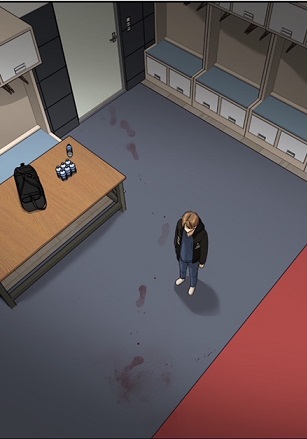 (chapter 51), they should remember that people were listening to their conversation behind the closed door, but they chose not to intervene.
 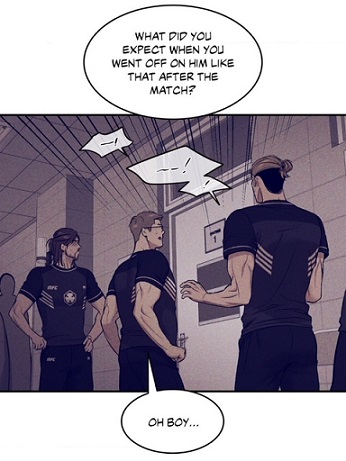 (chapter 53) That’s the reason why I am inclined to think that someone was /is present behind the curtain, but chose to remain silent. However, contrary to Team Black, such a person should intervene, if my theory is correct. And there is another evidence for this hypothesis. Since in episode 60 Joo Jaekyung offers a new contract
 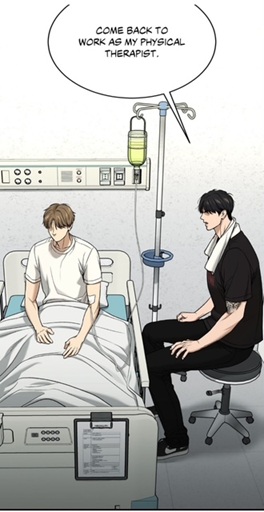 (chapter 60), it signifies that it is a reflection from chapter 6:
 (chapter 6) Nevertheless, back then, the deal was made without any witness. That’s the reason why I come to the conclusion that someone else was present in that room, yet contrary to the past, this person will intervene which stands in opposition to the symbolism of the room: death, secrecy and abandonment. And that can only be a patient who experienced the talent and care from Kim Dan. Joo JAekyung has never met any previous patient from Kim Dan before, but this is what readers got to hear from the nurse: (chapter 56) Only a bedridden person on the verge of dying can express such a gratitude towards the physical therapist.
If this interpretation is correct, the room’s symbolism is intertwined with death rather than rescue, then it conveys a sense of abandonment, as though the staff had already given up on Kim Dan. Furthermore, the decision not to place Kim Dan near his grandmother suggests an effort to keep the incident hidden from her (if she is not in the room), emphasizing the isolation surrounding his condition. On the other hand, the champion’s presence in that room could represent a chance for the athlete as well. This could represent the moment of his “rebirth”. Through a honest but painful conversation, the fighter would be encouraged to judge Kim Dan in a different light and nurture his maternal instincts. Moreover, he could give some comfort to a dying patient, similar to this scene: 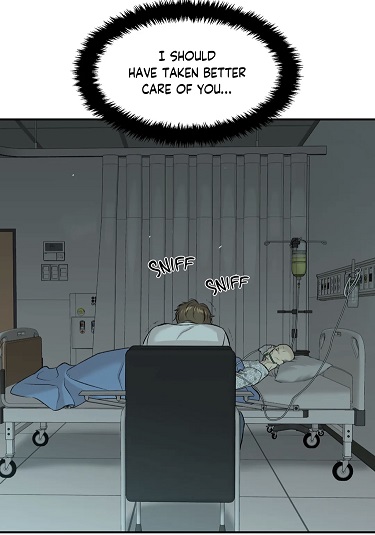 (chapter 21) which would push him to have a change of heart and show his vulnerability. What can he fear from a dying or terminally ill person? Nothing… hence he can only listen to the confidence and advice from such a patient.
And if my deductions based on observations are true, this signifies that the brochure from Light Of Hope 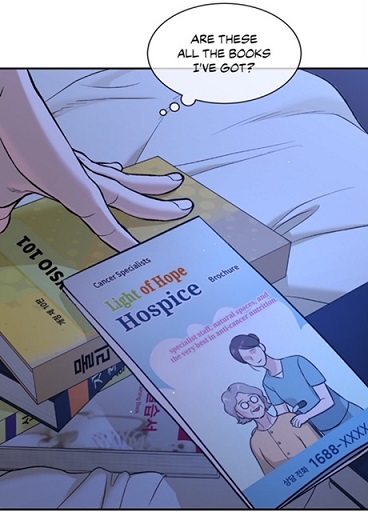 (chapter 53) is indeed an illusion and deception, for the senior on the paper is portrayed as being accompanied by a nurse. The reality is different, for the patients are facing death alone.
Between Lies and Misconceptions
Kim Dan’s interaction with Joo Jaekyung in this room is marked by lies and unspoken truths, which define the fragile dynamic between them. 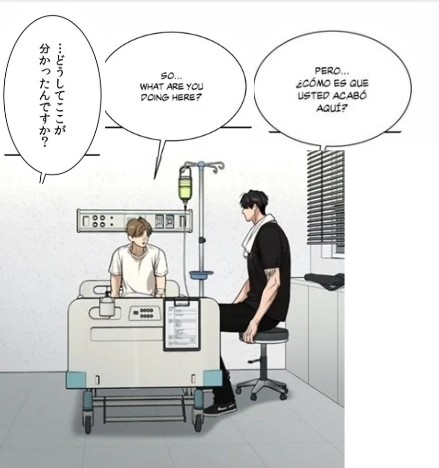 Their conversation begins with Kim Dan’s simple yet loaded question about how Jaekyung discovered his whereabouts. This moment, better captured in the Japanese, and Spanish translations, underscores Kim Dan’s curiosity and underlying desire for clarity. In the Japanese version, Kim Dan asks, “どうしてここがわかったんですか?” (“How did you find out about this place?”), while the Spanish translation reads, “¿Cómo es que usted acabó aquí?” (“How did you end up here?”). Both translations emphasize Kim Dan’s direct inquiry about how Jaekyung discovered his whereabouts, making Jaekyung’s evasive response even more significant. It is clear that he is trying to protect Potato here. However, Jaekyung’s response
  (chapter 60) immediately sets the tone for their interaction. His refusal to answer and his deliberate avoidance of Kim Dan’s gaze reflect a lie by omission. This evasive behavior not only highlights Jaekyung’s reluctance to reveal his vulnerability but also creates a significant divide between them, making it clear that they are not functioning as a unified team.
Kim Dan’s body language mirrors this emotional disconnection. 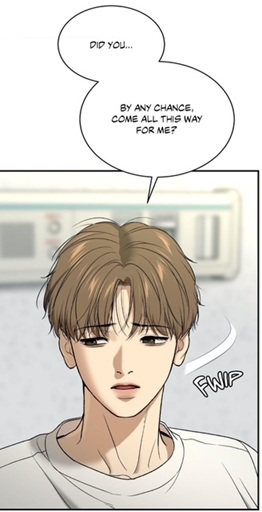 (chapter 60) Initially, he avoids Jaekyung’s gaze, signaling his own fear and insecurity. This avoidance reveals his worry about rejection and his deeper emotional vulnerability. On the one hand, he hopes deep down that the athlete would admit that he came looking for him, yet their last two interactions were arguments and rejections which the doctor didn’t forget.
 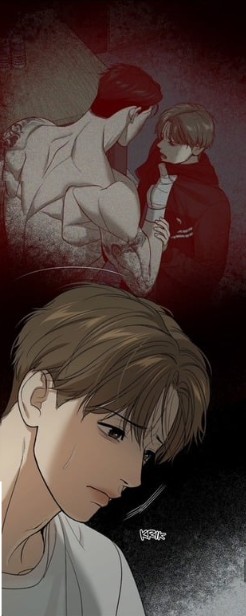 (chapter 60) Moreover, the idiom “by any chance” is exposing his low self-esteem. His words are exposing his internal struggles: between hope and despair. Later, his subtle act of turning his head away—a gesture often linked to dishonesty—indicates an effort to conceal his true feelings.
 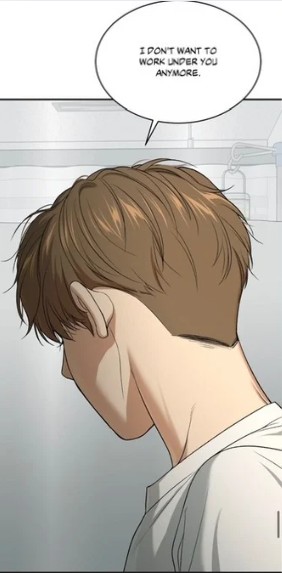 (chapter 60) He is still in love with Joo Jaekyung, but he is no longer hoping for any attachment and feelings from the fighter. On the other hand, his words are reflecting a different opinion: he is no longer trusting the athlete. This means that when the champion admitted his mistake indirectly, it was already too late.
 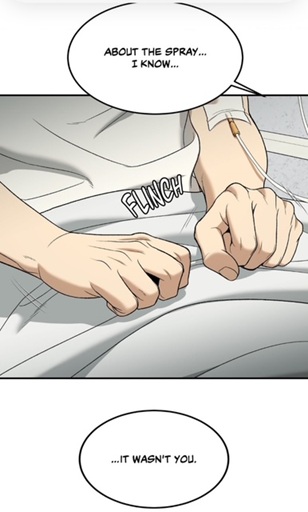 (chapter 60) The damage was done. In addition, he is rejecting the job offer because of the champion’s money.
 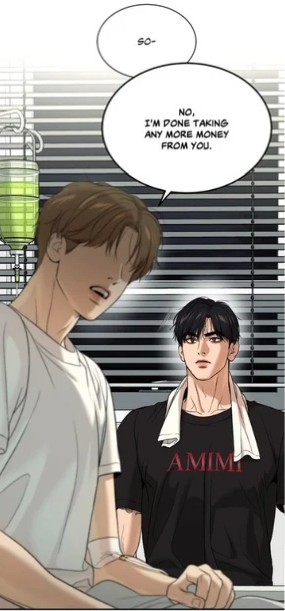 (chapter 60) He doesn’t want this fake generosity, since the athlete is reminding him of his “debts” towards him:
  (chapter 60) How ironic is that with his last remark, he ruined all his chances with Kim Dan. He was still viewing the physical therapist as someone below him. However, keep in mind that such an arrogance and “confidence” are just subterfuges from the MMA fighter. This act of concealment parallels Jaekyung’s guarded demeanor, as both characters are ensnared in a cycle of avoidance and denial.
Jaekyung, for his part, struggles with acknowledging his dependency on Kim Dan. 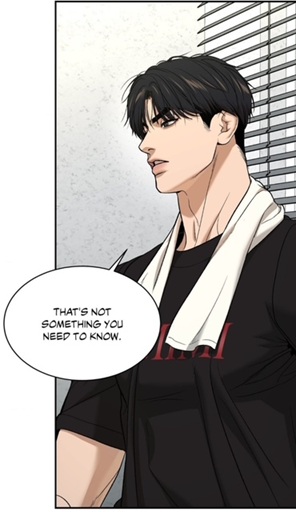 (chapter 60) This evasive remark suggests that Jaekyung believes keeping Kim Dan ignorant of his intentions is for the best. By withholding the truth, he feels he is protecting himself and Kim Dan from unnecessary burdens or complexities, reinforcing his perception that their relationship is better managed with clear boundaries. However, this attempt at concealment only deepens the divide between them, as it denies Kim Dan the clarity and emotional connection he seeks. In fact, he is not realizing that he is even afflicting more pain on his fated partner.
This dynamic is further emphasized when comparing their positions in Episode 6 and Episode 60. In Episode 6, Kim Dan was standing while Jaekyung sat (chapter 6), reflecting the power imbalance between them. Kim Dan momentarily held the upper hand by negotiating his terms, but once Jaekyung agreed, their positions shifted  (chapter 6), with Kim Dan ending up on the floor—a physical manifestation of his subservience. Later, in the locker room, both were shown facing each other
  (chapter 51), symbolizing a superficial moment of equality. In Episode 60, however, both are seated:
  (chapter 60) Kim Dan in bed and Jaekyung on a chair. Yet, this apparent parity hides a reversal of dependency. While Kim Dan is physically and mentally weaker, neglecting his own health to leave the bed, (chapter 60) it is Jaekyung who has become emotionally reliant on him. Kim Dan’s stubbornness to push through his fragility mirrors the fighter’s own traits, exposing an ironic role reversal that neither of them fully acknowledges.
Despite his outward confidence, (chapter 60) his refusal to engage truthfully exposes his internal conflict and fear of reliance. But why does he fear so much closeness and dependency? Naturally, Jinx-philes should keep in their mind his terrible childhood where he suffered emotional abuse. Moreover, he had been taken advantage from his previous sex partners.  (chapter 42) Despite the appearances, such relationships could only deepen his wounds and reinforce his anxieties. Thirdly, let’s not forget that the athlete read the doctor’s birthday card where the latter expressed the hope to work for him for a long time:
 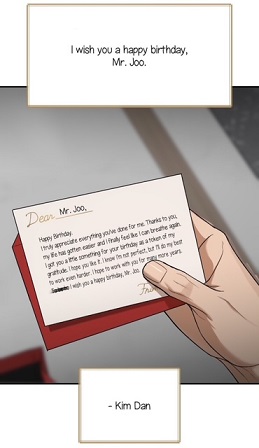 (chapter 55) That’s why he imagined that once he made his offer, the other would agree immediately. However, what he failed to realize is that he read the note too late. Besides, there were these erased words which left the fighter in the ignorance. Finally, he continues to misunderstand Kim Dan’s motivations
 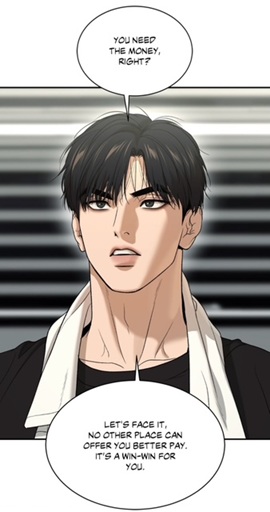 (chapter 60), as he did in episode 6.
 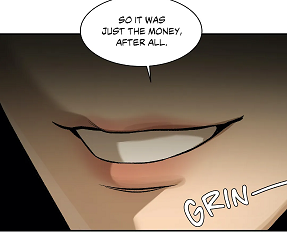 (chapter 6) Back then, Jaekyung assumed money was the sole driving force behind Kim Dan’s actions, and in the current interaction, he still believes this to be true. His internal monologue reveals this misconception:
  (chapter 60) I would even add, he believes to know Kim Dan so well, hence he mentions his grandmother:
 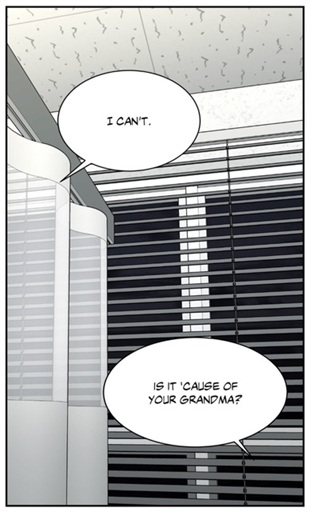 (chapter 60) However, Jaekyung is terribly wrong because he never talked to his lover. His interest and curiosity were quite superficial. Therefore he fails to grasp that Kim Dan’s longing is not for material wealth or familial obligation, but for genuine companionship and a place to call home. Kim Dan’s rejection of a boss-employee dynamic (chapter 60) underscores his desire for a deeper, more meaningful connection—something Jaekyung is unable to see due to his own emotional barriers.
But there is another reason why he got rejected. Fate wanted to punish the athlete for putting his own selfish desires over the doctor’s. He had seen the physical therapist in a dangerous situation  (chapter 60). Moreover he got to hear from the doctor that Kim Dan needed rest: (chapter 60). Yet, the first thing he talked about with the doctor was work (chapter 60), once Kim Dan asked him for the reason of his visit: (chapter 60) In other words, with his request, he implied that he had not been longing for Kim Dan’s company. With his attitude, he could only give the impression that he was not interested in the man Kim Dan, rather in the physical therapist, and that’s not what the main lead truly desires. To conclude, his behavior and words generated the impression that the fighter was only superficially interested in him. It was, as if his rescue on the beach had never taken place. He was definitely undermining his own “good deed”.
Their interaction becomes a poignant dance of unspoken fears and withheld truths, illustrating how deeply both characters are entrenched in their insecurities. From the very start, the conversation is undermined by these concealed emotions, dooming it to failure and highlighting the isolation each character feels despite their physical proximity.
Potato’s Role and the Symbolism of Photos
Potato’s involvement adds another layer to the narrative. While the readers can notice the photo of Kim Dan in front of the hospice, they also detect the pictures of the puppies, which were captured later. (chapter 60) These images reveal that Potato visited the old man’s house to bid farewell to the animals. Among the photos, only one shows the fifth puppy—a small, brown one on the left—who appears less active than the others, symbolizing its declining condition. This shows that he was present, when the puppy was showing signs of being sick, but he did nothing. He was too focused on the moment cheering these animals on  (chapter 35) for his own “happiness”. Through Potato, the author is criticizing the attitude of fans who are only projecting their own emotions onto their idols. Their wish for happiness is quite rather superficial. This subtle oversight reflects Potato’s growing detachment, as his focus shifted to capturing moments for posterity rather than addressing the realities in front of him. The absence of the fifth puppy becomes a poignant symbol of unnoticed fragility and foreshadows Kim Dan’s own vulnerability. And how did Kim Dan react to the death of the small dog? (chapter 60) He blamed himself.
Additionally, Potato’s farewell request to treat Kim Dan to a meal if he ever returns to Seoul reveals his underlying doubt. 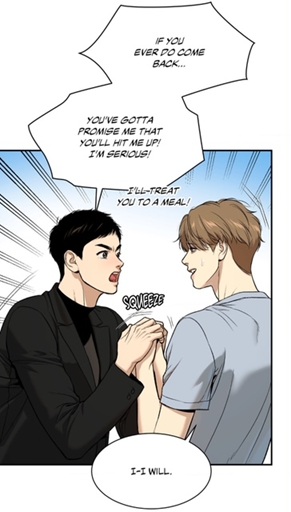 (chapter 59) Deep down, Potato does not expect Kim Dan to come back, reflecting his resignation to their fading relationship. Notably, Potato only asked for a picture of Kim Dan at the very end, never taking photos of him during their time together. (chapter 60) This lack of sensitivity and focus on celebrities, flowers, or the puppies instead of his friend underscores the growing emotional distance between them. Interestingly, while Potato returned to the old man’s house to bid farewell to the puppies, he has no intention of returning to the hospice. This contrast highlights how his farewell request serves as an acknowledgment that they are unlikely to meet again. This detachment mirrors Jaekyung and Heesung’s superficial connections, emphasizing how work relationships often overshadow genuine bonds.
Lies, Betrayal, and Ignorance
Potato’s secret visit concerning the puppies and his silence regarding Kim Dan’s whereabouts reveal his growing resemblance to Heesung. 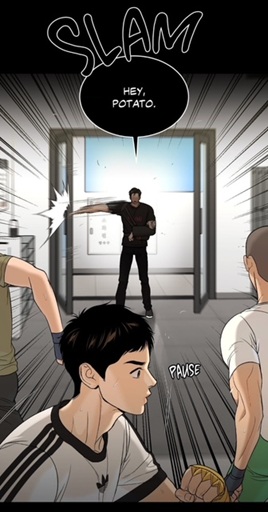 (chapter 60) When he got caught with his silence, Mingwa never showed us Potato’s justification. Yet, it becomes clear that the young fighter decided to give the following explanation: he respected Kim Dan’s wish to remain undiscovered
  (chapter 58) The reason for this interpretation is the champion’s reaction, when he was asked how he knew about his whereabouts (chapter 60) He deliberately avoided revealing that Potato was the one who disclosed Kim Dan’s location, shielding Potato’s role and perhaps attempting to protect the fragile connection they all share. This omission reflects Jaekyung’s misguided belief that ignorance might shield Kim Dan from further pain or complications. However, claiming he respected Kim Dan’s wish to remain undiscovered—was a lie, as his true motivation was Heesung’s request. (chapter 58) Therefore it is not surprising that through this omission, the main couple got affected. The lie from the chow chow had consequences for it increased the gap between the two protagonists. That’s how it dawned on me why Mingwa revealed the photo library of Potato. (chapter 60) The latter would serve as an evidence of his passivity and blindness towards Kim Dan, for the 5th puppy was still alive back then. The latter represents the fate of the doctor’s. These layers of deception highlight how characters like Potato become increasingly absorbed in their own worlds, blinded by their focus on superficial priorities.
This theme of being “too late” is also mirrored in Kim Dan’s experience with the puppy’s fate 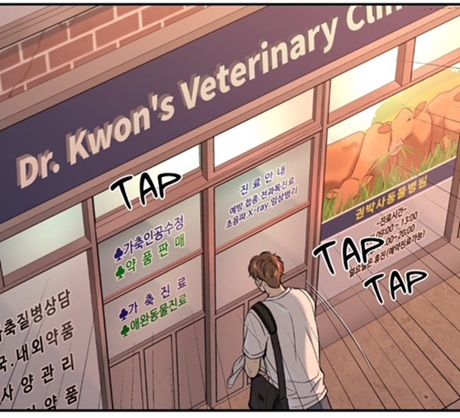 (chapter 59) and Joo Jaekyung’s rescue of Kim Dan. (chapter 59) In the case of the puppy, Kim Dan arrived too late to save the small animal, reflecting his self-doubt and hesitance to trust his abilities. Conversely, Joo Jaekyung arrived just in time to rescue Kim Dan from the ocean, demonstrating his decisive action. However, his failure to keep Kim Dan in a safe environment afterward suggests a broader inability to provide sustained support, echoing the narrative’s overarching theme of fragility and impermanence.
  (chapter 60) Though he is the one left behind, he is not realizing that by not following him, he is failing to protect Kim Dan.
The imagery of the fifth puppy serves as a poignant commentary on the consequences of neglect and inaction. The puppy’s decline—evident but unaddressed—parallels Kim Dan’s own struggles. Just as the fifth puppy’s fading presence is overshadowed by the activity of its siblings, (chapter 60) Kim Dan’s vulnerability risks being overlooked amid the chaos of the narrative. The missing puppy becomes a haunting reminder of what happens when fragility is ignored: a slow, quiet decline that ultimately goes unnoticed until it is too late. With too late comes regrets and remorse: 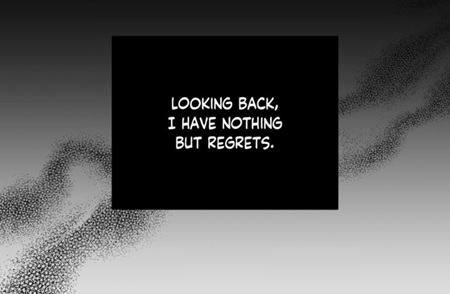 (chapter 57) Cheolmin already warned his friend in episode 13:
 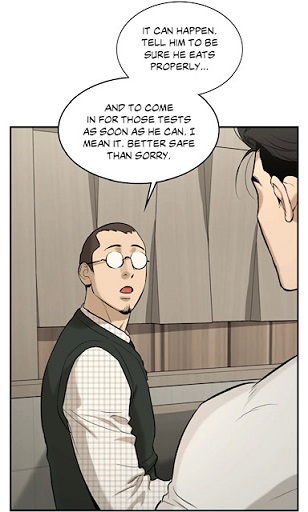 (chapter 13) But the man refused to listen to his advice, and now Kim Dan is leaving a trail of blood on the floor (chapter 60) indicating that his blood is not coagulating correctly. The last comment from the athlete implies that he is now accepting the challenge, he will do anything to have Kim Dan come back to him. Nevertheless, there exists one problem in my opinion: he is running out of time due to Kim Dan‘s physical and emotional deterioration, while he needs time to regain the physical therapist‘s trust.
Conclusion: The Fragility of Hope
The title, “The Deceptive Light of Hope,” encapsulates the essence of these intertwined narratives. The hospice’s name promises healing and solace, yet it masks the harsh reality of end-of-life care. On the other hand, since the couple reunited there, their relationship can be built on better foundations. They are surrounded by people who are definitely more attentive and less passive than at the gym. Moreover, the athlete has been living as a zombie all this time, the latter needs to die in order to be reborn as a human being. But it is the same for Kim Dan who has been living as a ghost for the last one and half month. On the other hand, rebirth is strongly intertwined with suffering, which reinforces my conviction that something bad to Kim Dan will happen. Since a beating heart is the symbol for humanity, it signifies that both will have to open up and confess their feelings. Similarly, the brightly lit hospital room, symbolizing purity, conceals the lies and unspoken truths exchanged between Jaekyung and Kim Dan. Potato’s photographs, seemingly innocent, betray a certain selfishness, ignorance and detachment, symbolized by the missing puppy. Each element contributes to the overarching theme: the fragile and often deceptive nature of hope in a world where appearances rarely align with reality. It is only a matter of time, until the wrongdoers realize their mistakes and apologize properly.
Feel free to comment. If you have any suggestion for topics or manhwas, feel free to ask. If you enjoyed reading it, retweet it or push the button like. My Reddit-Instagram-Tumblr-Twitter account is: @bebebisous33. Thanks for reading and for the support, particularly, I would like to thank all the new followers and people recommending my blog.

 (Chapter 15) and the life-saving kiss on the beach
 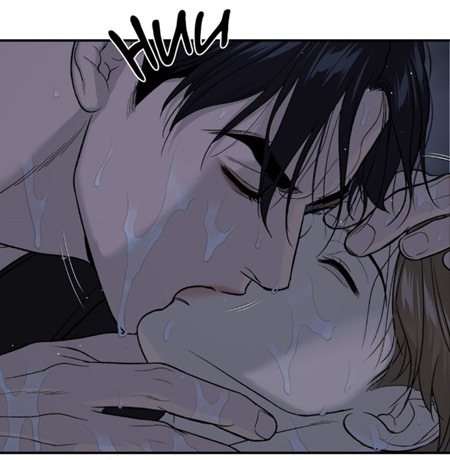 (Episode 60). Both moments carry significant emotional weight but reflect different facets of their dynamic, from selfishness to selflessness, secrecy to openness, and miscommunication to recognition. The setting and circumstances surrounding these kisses not only highlight the characters’ growth but also underscore the unresolved struggles they face.
 (chapter 14), acted particularly rough with Kim Dan
 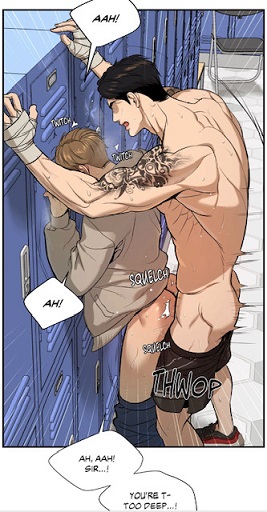 (chapter 14), only snapping back to reality when he felt Kim Dan’s body trembling.
 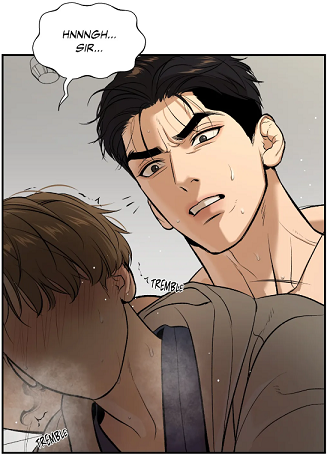 (chapter 14) This moment of realization, coupled with the doctor’s tears and plea
  (chapter 14), served as the trigger for Joo Jaekyung to recall Cheolmin’s recommendation
 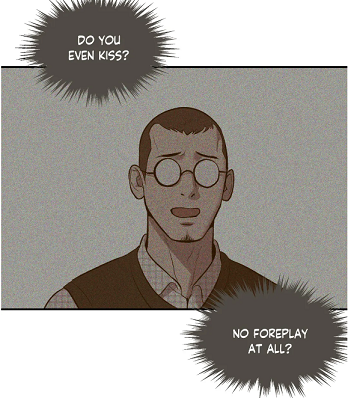 (chapter 14) of using foreplay and gentler methods, such as a kiss. While the kiss reflected care in the moment
 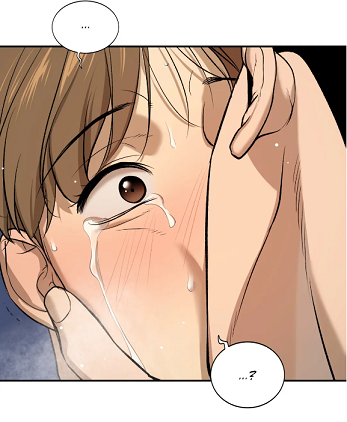 (chapter 14), selfish motives lingered in the shadows, as Joo Jaekyung sought to prevent causing visible harm that could lead to questions or even a scandal. It was, as if he wanted to silence his partner. Moreover, this decision was influenced by external suggestions, particularly from his friend, and not entirely by his own intentions. It was a calculated action to prevent immediate harm but lacked genuine emotional depth.
 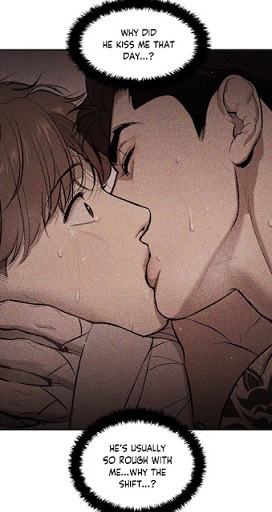 (chapter 16) Moreover, he never wondered why Joo Jaekyung had asked for sex in the locker room, which represented a change in his behavior. If he had done it before, then he would have forced the physical therapist to travel with him to Busan.
  (chapter 13) As you can see, through the comparison with the kiss on the beach, I realized the doctor’s passivity and lack of critical thinking in season 1. He never asked why the athlete was so rough during sex. He took this for a normality. His attitude exposed the doctor’s biased perception of his boss: a spoiled and rough man obsessed with sex. I would even add that the kiss had a positive effect on the protagonist
  (chapter 15), because for the first time, Kim Dan made a request. With his remark, he implied that the kiss was strongly associated with emotions. However, exactly like Joo Jaekyung pointed out
 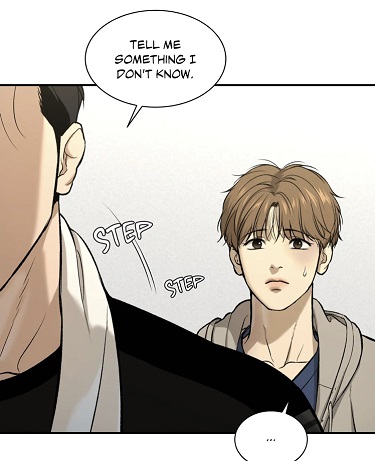 (chapter 15), the physical therapist omitted something important in the locker room. First, he didn’t share all his thoughts about the athlete, in particular his prejudices. Finally, he should have talked about his behavior before the kiss. What was he thinking, when he was having sex with him? In verity, he had been used as a substitute. In other words, the champion’s selfishness was rubbing on the doctor. Both were selfish, both had their heart and mind closed. And this remark brings me to the kiss on the beach.
  (chapter 15), a confined space symbolizing Joo Jaekyung’s need to keep his relationships private. Picking up partners at a VIP club
 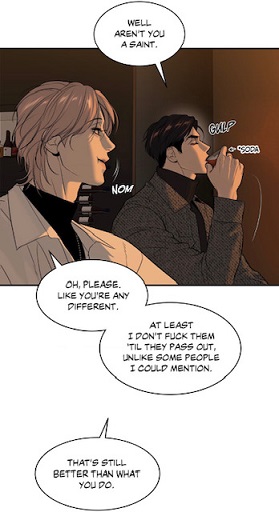 (chapter 33) was another extension of his desire to maintain secrecy. By contrast, the beach in Episode 60 is a public, open space, reflecting a significant shift.
 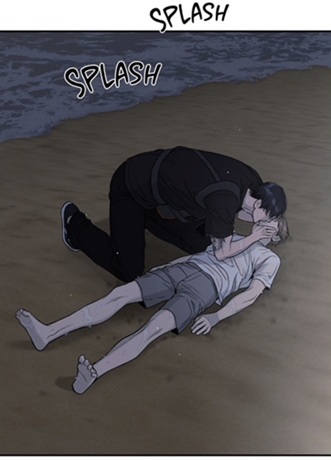 (chapter 60) Moreover, in the past, the locker room
  (chapter 14) was always filled with people surrounding the champion. However, once Kim Dan entered his life, this dynamic began to change. In Episode 14, Joo Jaekyung asked everyone to leave the locker room,
  (chapter 14) even excluding Park Namwook, who was even seen before stationed outside the bathroom door,
 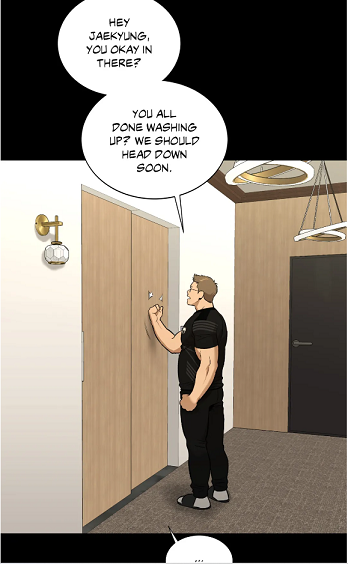 (chapter 14) signaling a gradual exclusion of others from his private life and emotions. By Episode 15, Joo Jaekyung explicitly sent away his manager to have a private conversation with Kim Dan.
 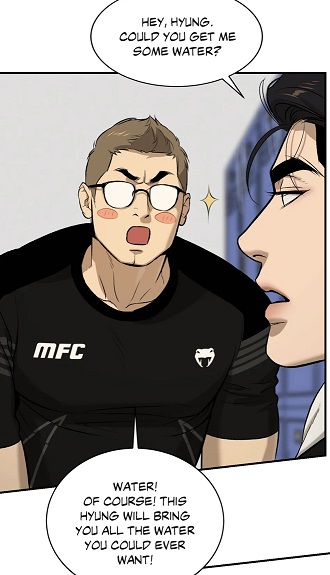 (chapter 14) This shift highlights the increasing importance of Kim Dan in Joo Jaekyung’s personal sphere. Interestingly, this progression is contrasted by Episode 49, where Joo Jaekyung deliberately ensured
  (chapter 49) he was not left alone with Kim Dan. This means that this place was no longer the synonym for privacy and secret. This reflects why director Choi could intrude with his minions. Following the incident with the switched spray, Kim Dan was left behind
  (chapter 50) in the locker room twice
 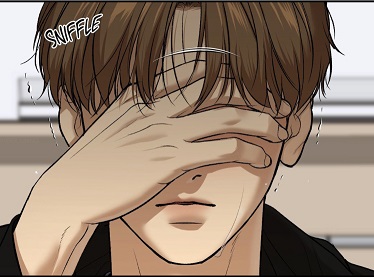 (chapter 51) From that moment on, the main lead won’t show his vulnerability and pain to others. This gesture announces the return of his “blue friend”, the depression.
 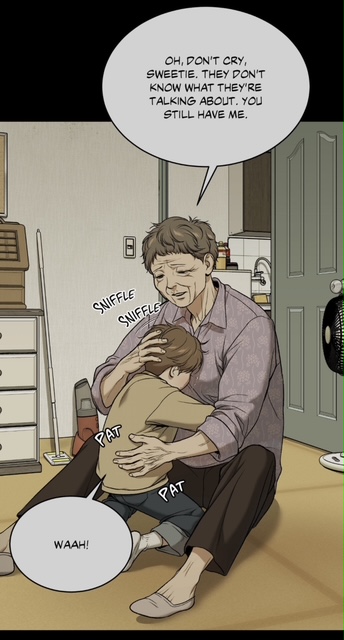 (chapter 57) Shin Okja must have felt uncomfortable with his tears and pain, therefore the doctor internalized not to show his struggling and burdens in front of his grandmother. This explicates why he denied his weeping in front of her first.
  (chapter 47) And now, you are wondering how this is relevant to the scene on the beach. Joo Jaekyung got shocked and scared, but he didn’t cry later and it is the same for Kim Dan. Hence the latter could deny his presence on the beach and even ignore the athlete’s words:
  (chapter 60) The absence of tears or a trembling body from the main leads indicate that both are hiding their emotions from each other.
 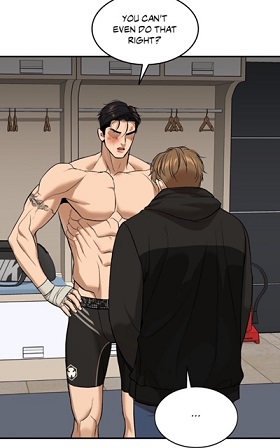 (chapter 51), his lack of loyalty, his greed and obsession for money.
  (chapter 51) Though the champion was restraining himself, he didn’t realize that his words were like punches to Kim Dan. The latter got to hear what he didn’t know.
  (chapter 51) Despite living together in the penthouse, he didn’t trust his room mate. After divulging his mistrust and anger to the physical therapist in the locker room, the former left Kim Dan behind and went to the health center with his hyungs.
 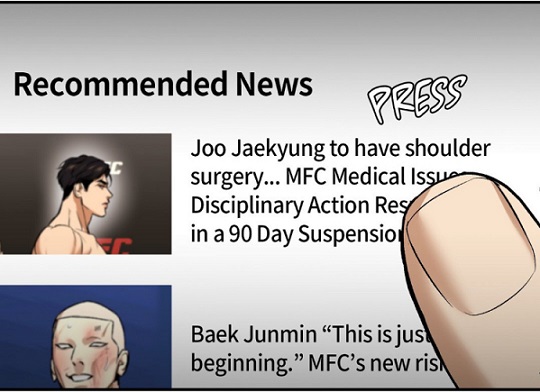 (chapter 52) The conversation in the locker room symbolically announced the champion’s private struggles to the media, as his bad temper was made public shortly after.
  (chapter 15) , representing his need for mental and emotional support, which his team and entourage failed to provide. While the CPR kiss could be dismissed as a rescue, it symbolically represents a step toward Joo Jaekyung revealing his true self. The kiss marks a moment where he unconsciously begins to acknowledge his feelings and his homosexuality, even in a setting where others could witness it.
 (chapter 60) This means that on the beach, Kim Dan could only detect one thing: Joo Jaekyung’s presence. But he didn’t sense his kisses and hear his words. That’s the reason why I come to the conclusion that this scene stands under the sign of “dream and illusion”.
  (chapter 60) Hence he came to reject his “intervention” as a lie and deception. The reality is that Joo Jaekyung does care for him, but he doesn’t know how to show it. He fears attachment. Because of his misjudgement, Kim Dan is not capable to notice the transformation in his former boss.
 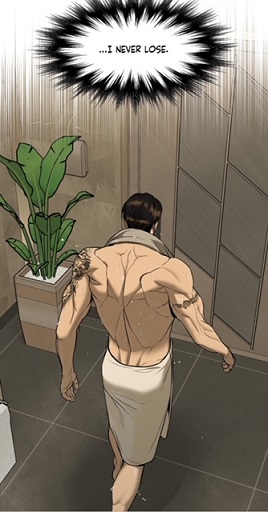 (chapter 49) His muscles are less pronounced. He is also wasting away.
 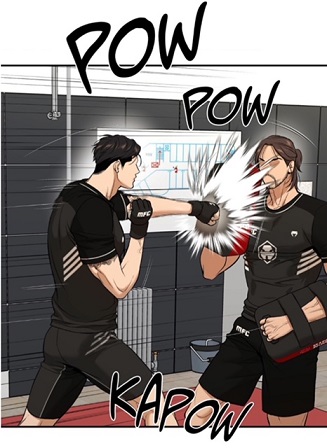 (chapter 49), who believed that physical strength alone would solve his problems. This environment denied him the mental and emotional support he truly needed.
  (chapter 44) on, Kim Dan never got kissed again. The absence of a kiss in the locker room was revealing Joo Jaekyung’s lack of faith in Kim Dan. His mistrust left such an emotional wound, which is only visible to the third eye.
  (chapter 54) Because Joo Jaekyung saw it in a vision, it becomes clear that the athlete is still in denial about his wrongdoing. Therefore he didn’t apologize for his false accusations and his bad perception of the physical therapist:
  (chapter 60) By doing so, he is denying his rescue and assistance. It was, as if this night and as such the kiss had never happened.
  (chapter 60) The lies and miscommunication fade in the face of the life-and-death situation. However, this recognition is short-lived, as the events at the hospice reveal Joo Jaekyung’s lingering selfishness
  (chapter 27) and mental well-being.
  (chapter 27) When Kim Dan removed the needle carelessly
 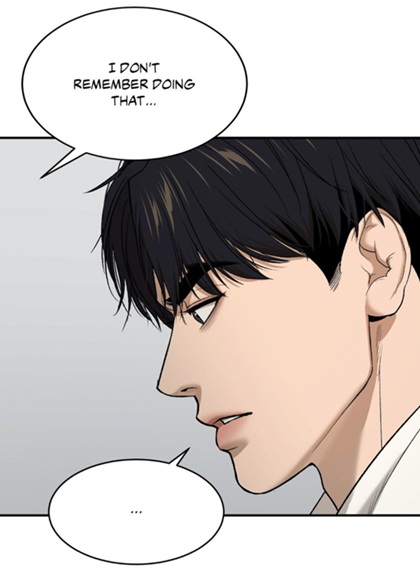 further highlight his mental fragility. This fragility contrasts sharply with Joo Jaekyung’s reaction during their interaction at the hospice. When the champion angrily asks,
  (chapter 60) at the end of episode 60 as something negative. How so? It is because Kim Dan never said this:
 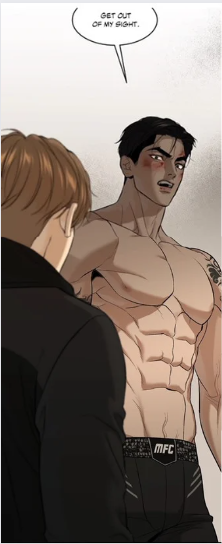 (chapter 51) He never wished to never see Joo Jaekyung again. Moreover, he never regretted their meeting either.
 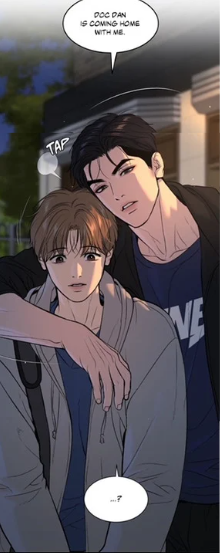 (chapter 43) No wonder why he thought that it was time to get to know the fighter during that night:
  (chapter 44)
 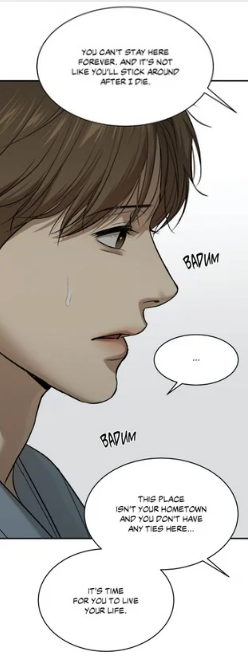 (chapter 57) However, Jinx-philes should detect the divergence: she is not using the word “home”, but Seoul. That’s the reason why in the end, Shin Okja’s confession to her grandchild will come back to bite her, as she described her own grandson as a stranger in this little town. It was, as if he had been an orphan all his life. He had no home all along.
 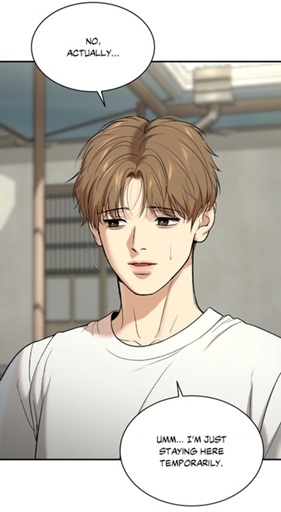 (chapter 58) Where are the parents? Who is the man where he is staying? Where did he plan to go after his stay there? The idiom “temporarily” could be perceived as an evidence that the doctor plans to end his life. According to my interpretation, Heesung believed that the landlord was Kim Dan’s grandfather. He was just denying his origins out of shame.
  (chapter 9) The athlete has now every reason to stay there and that’s how he will discover all the doctor’s secrets and misery.
 (chapter 15) kiss represents selfishness, secrecy, and miscommunication, while the beach kiss

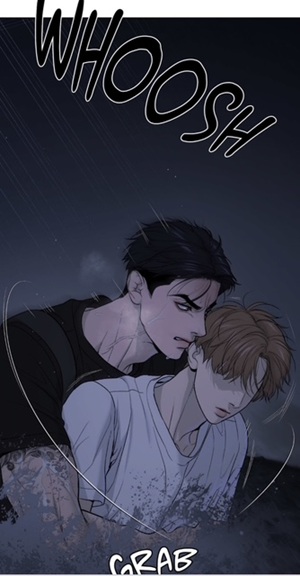 (chapter 59) is a masterful interplay of symbolism, reflection, and narrative breadcrumbs laid out by Mingwa. Central to this exploration is a photograph
  (chapter 59) —an innocent request by the nurses at the hospice
 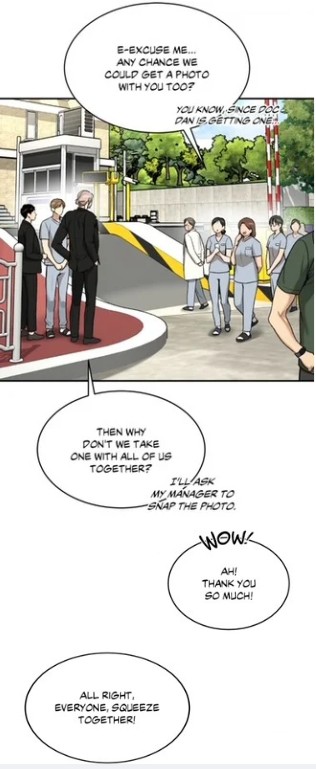 (chapter 59) —which becomes the pivotal clue leading Joo Jaekyung to Kim Dan. Through a careful analysis of the timeline and the use of contrasting events, it becomes clear that Mingwa’s narrative mirrors a kaleidoscope, reflecting positive and negative elements rooted in Taoist principles. While the doctor’s unconscious
 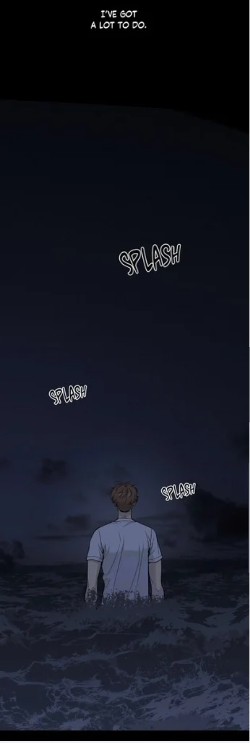 (chapter 59) led him to the shore, driven by despair and suicidal intent, the MMA fighter’s journey stands as its opposite:
 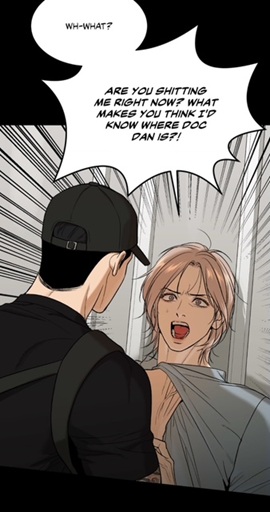 (chapter 59 ) a conscious choice to follow his heart, hence he was full of anger and frustration. Joo Jaekyung was no longer repressing his feelings, even if he had yet to fully recognize his affection.
 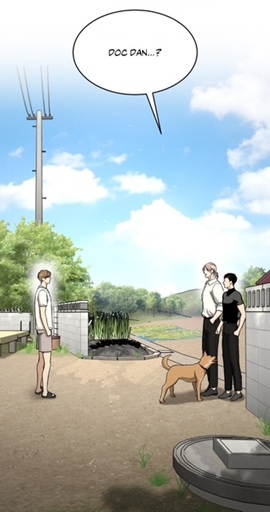 (chapter 59) embodies the negative reflection of Joo Jaekyung’s purposeful arrival. We can detect the divergences: day versus night, work versus break, healthy versus unhealthy etc. Through the juxtaposition of images and situations, Mingwa provides profound insight into the characters’ thoughts, desires, and intentions. The photograph’s role becomes pivotal: while it marks the end of Heesung and Potato’s visit
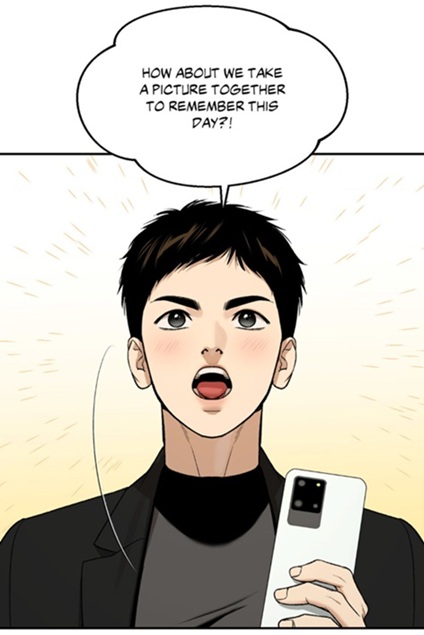 (chapter 59), it simultaneously signifies the first crucial clue in Joo Jaekyung’s search. This marked the turning point where his ongoing efforts were given direction, transforming his pursuit into a decisive journey toward discovery.
 (chapter 59) —each of whom had interacted with Kim Dan
  (chapter 57) during his time at Light of Hope. While these individuals appear as potential candidates for revealing Kim Dan’s location, the true helper remains shrouded in mystery. This ambiguity emphasizes the layered narrative of Jinx, where each small action—no matter how mundane—contributes to the larger theme of fate’s intricate web, offering insight into the power of both intentional and unintentional intervention. If Potato had not suggested the picture
 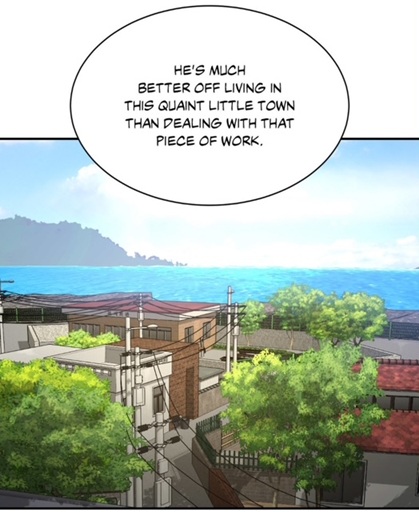 (chapter 58)
  (chapter 58)
  (chapter 58), ignorance and superficiality
  (chapter 58), becomes the shadowed reflection of the proactive search by Joo Jaekyung. This interplay of light and dark is central to unraveling how fate unfolded.
 (chapter 58) and Potato, despite their contrasting motivations
 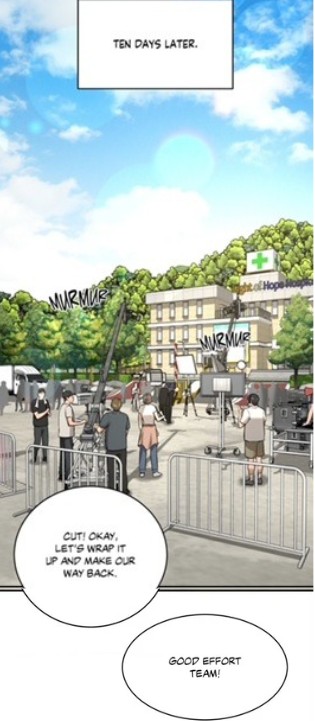 (chapter 59) Importantly, Joo Jaekyung did not arrive during this period, further affirming their resolve. The photograph taken just before their departure was the key turning point. However, the timeline—marked by the sunsets
  (chapter 59)
  (chapter 59) —suggests that Joo Jaekyung arrived only two days after Heesung and Potato left. This indicates that neither Potato nor Heesung leaked the information to Joo Jaekyung, as the champion would have sought Kim Dan immediately if informed by them. Instead, this photograph—seemingly public rather than private—became the clue he needed. Moreover, since the two friends knew where Kim Dan lived, I am assuming that he would have gone right to the doctor‘s rented room. But he did not. He went to the beach. Since the nurses didn‘t notice that Kim Dan was a friend of Potato and Heesung and mistook him for a fan, I am assuming that only the two friends know his address.
  (chapter 8)
 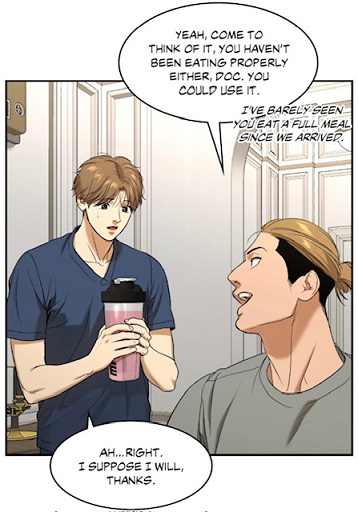 (chapter 37) and Kwak Junbeom was a witness of the encounter between Kim Dan and director Choi Gilseok.
  (Chapter 48) Nonetheless, there exist significant points against this theory. Despite their fondness for the actor
  (chapter 30) and their interactions with Heesung and Potato
  (chapter 35), they are unaware of the actor’s relationship with Potato. The author left many clues for this interpretation. They didn’t notice the maknae’s absence at the champion’s birthday
 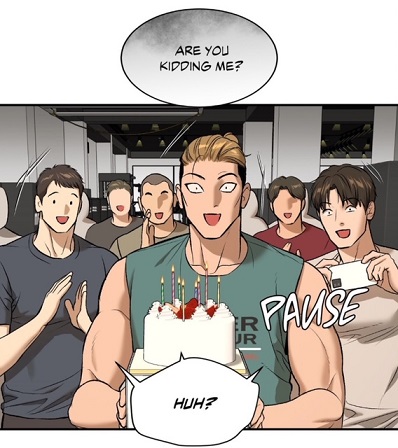 (chapter 43), but more importantly the presence of Yoon-Gu‘s embarrassment in front of his hyung indicates secrecy. .
  (chapter 58) His “redness” indicates that he doesn’t want to expose his special relationship with Heesung. Therefore I believe that he didn’t mention this trip to other members. Consequently, I doubt that the members were looking for Potato in such a photograph. Furthermore, from my perspective, members of Team Black are still left in the dark about Joo Jaekyung’s struggles. They are unaware of his drinking habits
  (chapter 56), or his emotional state. They think, he has not come to the gym due to his recovery. Furthermore, they don’t use his cellphone number to contact him. The hiring of a new physical therapist and
  (chapter 57) the interview suggested that Joo Jaekyung was taking a break to recover from his injury, leaving no indication of his active search for Kim Dan. However, Yoon-Gu got informed through Heesung that Joo Jaekyung was desperately looking for him:
  (chapter 58), but probably saw this as another “negative reaction” (bad temper) of a spoiled child. This makes it unlikely that members of Team Black could have provided the critical information.
 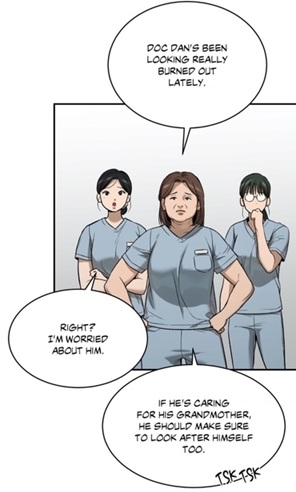 (chapter 57), her positioning reflects Mingwa’s deliberate storytelling, emphasizing her subtle yet crucial role in connecting the threads of fate. She is also unlikely to have directly contacted Joo Jaekyung. As an average nurse living far from Seoul, she would not have access to the champion’s contact information or knowledge of his search for Kim Dan. However, this does not exclude her influence entirely. My idea is that she shared the photograph with someone close to her—a family member or friend—turning what was initially a public image into a private clue. Through this intermediary, the picture may have reached someone who recognized Kim Dan and understood his connection to the MMA fighter. This chain of events underscores the role of chance and intervention in the narrative and suggests that another, yet unknown, individual helped guide Joo Jaekyung to his destination.
 (chapter 50)
 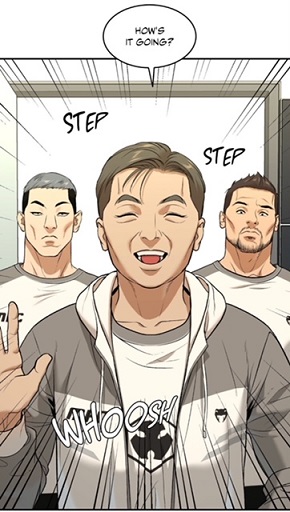 (chapter 49), highlighting the failures of relying solely on fate. The champion’s eventual discovery of Kim Dan underscores the necessity of teamwork and active intervention. Notably, this also reflects the flaws in Team Black, whose inaction and superficiality limited their understanding of both Joo Jaekyung’s struggles and Kim Dan’s situation. While Heesung’s stardom and blog
  (chapter 30) could have amplified the picture’s reach, it’s unlikely Joo Jaekyung relied on such sources directly. I can not imagine him spying on the actor’s blog. Instead, the role of the helpers — the nurse and her acquaintance— emerge as crucial to piecing together the connection. The inadvertent role of the nurses Mind and Heart, urging Heesung to take the picture, becomes an integral part of the story’s progression.
  (chapter 13) who played pivotal roles in lifting the curse, as Mingwa’s narrative often draws on such reflections. Here, the nurses’ actions, though seemingly minor, echo the same themes of fate and intervention.
 (chapter 13) The latter knew the PT’s face,
  (chapter 13) but didn’t know his identity. He mistook him for someone who was selling his body for money.
  (chapter 13) In addition, Kim Dan never got to know the intervention of this hyung: he was the invisible helping hand in season 1. And now, if you reread the scene in episode 13, you will notice that this conversation between Joo Jaekyung and his friend contains all the ingredients in episode 59: the use of the phone, fainting, malnutrition, secrecy, neglect, secret suffering, pictures and public knowledge
  (chapter 13), the death of a man and finally urgency. Moreover, remember what his friend told him before: the importance of rest and
  (chapter 43) And during that evening, the champion called his penthouse with the doc “Home” for the first time. Finally, in season 2, Joo Jaekyung started visiting each hospital or Sports Rehabilitation Center in Seoul in order to find Kim Dan.
 (chapter 56) And there’s no doubt that Joo Jaekyung got recognized by people forcing him to use a mask to hide his identity. So this frenetic search must have reached the mysterious doctor’s ears, but I doubt that he made the connection between the star’s lover and the physical therapist right away. Since he‘s a guest of XY club,
  (Chapter 13), it is also possible that he could have heard about the last incident in the restroom with doc Dan’s replacement. Since Cheolmin found Dan cute, it is very likely that he was also drawn to the surrogate „Dan“. But I don‘t think, this was enough to intervene, as Joo Jaekyung didn‘t ask for his help.
 and to Neptune
  and strangely, the doctor moved to a place next to the coast. So maybe Cheolmin comes from that little town and the green-haired nurse is his relative. I had already outlined their similarities. Finally, look at the numbers, we have 4 in both episodes, 13 and 59 (13: 1+3 = 4 / 59: 5-9= -4) The -4 would coincide with Kim Dan’s vanishing, but also with the intervention of Cheolmin. And if my theory is correct, this means that the champion will come to regret his past decision
 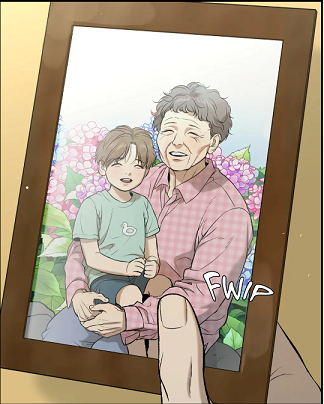 (Chapter 19) and the group photograph at the hospice

 (chapter 57) She wondered if this nickname “MAMA” was not a spelling mistake, and that the translator might have meant “MMA fighter Joo Jaekyung.” Intrigued by this possibility, I sought clarification, and indeed, in the Japanese version
 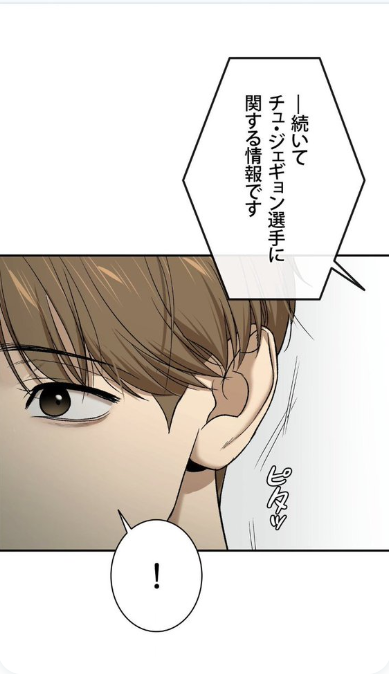 (episode 57) the reporter introduces the main lead differently: “Next, we have news regarding Joo Jaekyung.” This subtle difference is significant for three reasons.
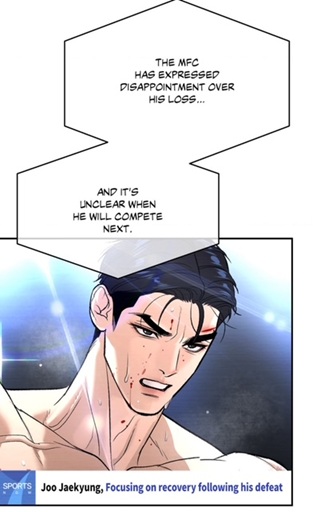 (chapter 57) And what does it mean?
 (chapter 41) the complicity of the doctors who cleared Joo Jaekyung to fight despite his evident injuries as another example of the corruption within this world. Moreover, by avoiding any mention of the suspension
 (chapter 52)
  (chapter 52), is not only a protective measure for MFC but also shields the medical professionals who facilitated the situation. Doctors at the health center failed to report the ankle injury caused by the sabotage
 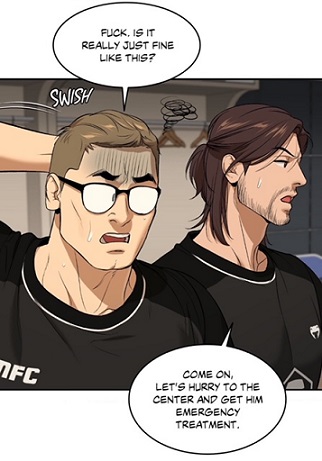 (chapter 50), further implicating them in a network of complicity and greed. Their decision to place the two fighters next to each other without proper privacy measures, such as curtains, reveals a disregard for professional ethics in favor of spectacle and profit. I would even add, the decisions from the health center’s medical staff, played a significant role in escalating the situation. By placing Joo Jaekyung and Baek Junmin next to each other post-fight, without appropriate measures like curtains to ensure separation, the health center created an environment ripe for conflict.
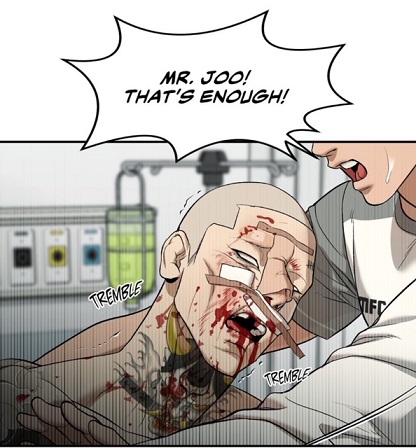 , (chapter 52) as the provoked champion lashed out in an unregulated setting. The decision to ignore these systemic failures and instead to suspend Joo Jaekyung suggests a deeper layer of complicity from the medical world, where doctors and nurses prioritized organizational demands and reputational interests over ethical responsibilities. Their failure to report the provocation and the ankle injury caused by the switched spray further highlights their alignment with MFC’s corrupt practices.
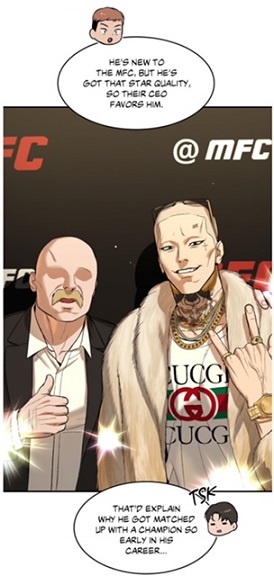 (chapter 47) and favored by MFC’s CEO, Baek Junmin has now been discarded, his relevance extinguished the moment he ceased to serve the organization’s agenda.
 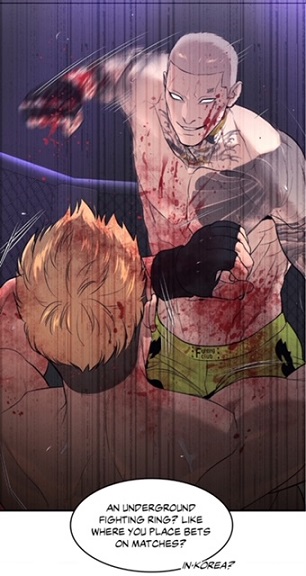 (chapter 47) His background, combined with his visible association with MFC’s CEO, positions him as a key figure who could potentially expose the organization’s darker practices.
 (chapter 49), his ultimate fate now reflects the broader cruelty and exploitation perpetuated by those in power. That’s how I realized the other signification of the cross below his left eye. The latter symbolizes his blindness in the end. The cross signifies his inability to see beyond the role he played within the system—a symbol of his naivety and misplaced confidence. Baek Junmin believed he understood the brutal reality of the fighting world, given his background in underground rings and illegal gambling. He thought his experience and cunning gave him an edge, making him untouchable or indispensable. However, his taunts to Joo Jaekyung
 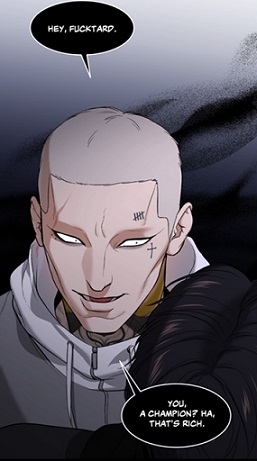 (chapter 49) reveal a man who overestimated his position within the organization.
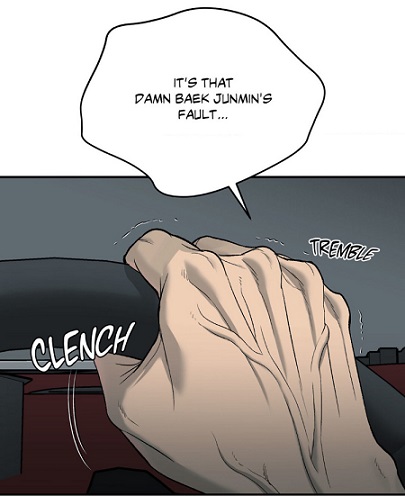 (chapter 54), it shows the athlete’s lack of reflection and insight. He hasn’t been able to discern the truth, the corruption of his “world”. This means that he needs to travel and experience a whole new world. The contrast would serve as an eye-opener for the athlete.
 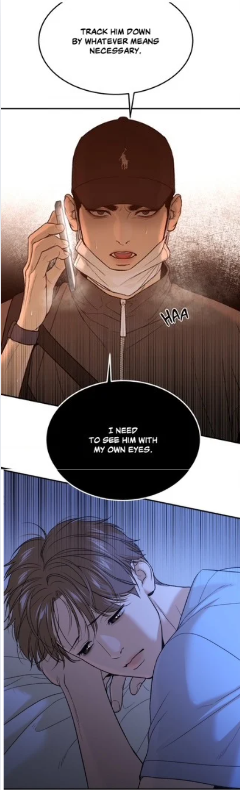 (chapter 56) released shortly after the champion’s urgent request to locate him. This timing is no coincidence. Instead, it reflects a calculated effort to manipulate both the public narrative and Kim Dan’s own perception of his role and value. By introducing the anonymous person as “one of his close associates”, it implies that the champion has already moved on from the protagonist. He is not missing him at all. At the same time, it implies that within a short time, the person was able to get the athlete’s trust which stands in opposition to this scene:
  (chapter 57): his regret was not merely about using the spray but about his failure to assert himself professionally.
  (chapter 49) By complying unquestioningly with the champion’s requests, he had diminished his role, acting more like a servant than a competent physical therapist. The interview, though painful,
  (chapter 57) serves as a harsh wake-up call, forcing him to confront his own shortcomings and reevaluate his behavior.
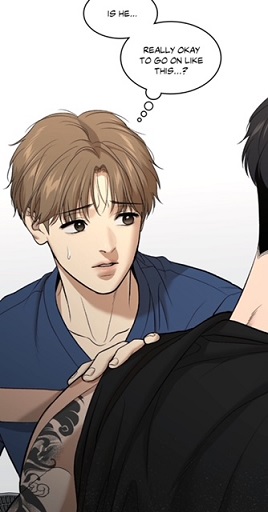 (chapter 41), drawn boundaries, and made his expertise known. I would even add that he never felt responsible for the champion’s reputation in the media
  (chapter 36) Hence he remained passive all this time. His negligence becomes more obvious, when the media released this wave of articles:
  (chapter 41) In addition, while many Jinx-Philes are blaming the champion for his outburst,
  (chapter 50) rejection and
 (chapter 50) accusations,
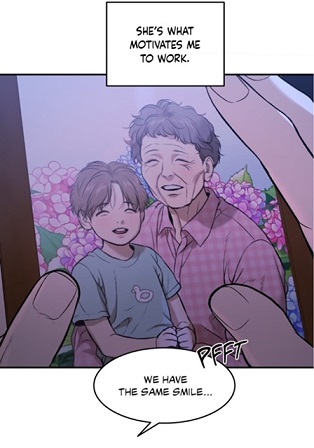 (chapter 47) his indifference and lack of professionalism. In the end, the grandmother is the reason for his lack of professionalism and neglect.
  (chapter 54) Unlike the newly hired PT, who likely has the backing of a hospital or organization, Kim Dan operates independently. This independence, while offering a degree of freedom, also makes him vulnerable. He lacks the institutional support that could shield him from the manipulative tactics of MFC. Moreover, his independence places him in direct contrast to the systemic corruption that permeates MFC and its associated entities. As someone who has already been victimized by two major deceptions—the drugged nutrition shake
  (chapter 37) and the switched spray
 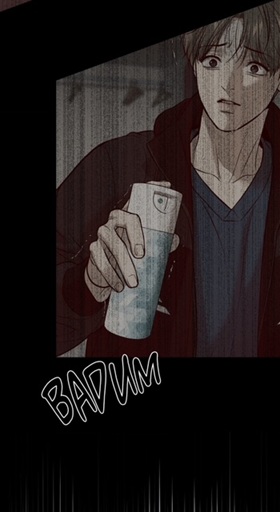 (chapter 57) —Kim Dan stands as a figure who threatens to expose the cracks in MFC’s carefully constructed facade. Let’s not forget that the incident with the poisoned beverage was swept under the rug by framing haters.



 (chapter 56) This dichotomy in season 1 is vividly illustrated in a scene where Kim Dan, under the dappled light of a tree
 (chapter 41), experiences a profound moment of awakening. As his hand seems to reach towards the leaves
 (chapter 41), his senses come alive—he sees the light filtering through, feels the breeze, and hears the faint rustling sound. It is, as if in that moment, he reconnects to his true nature. Like a tree, Kim Dan is deeply rooted, yet capable of growth and resilience.
  (chapter 41) Nature awakens something within him— his heart and as such his third eye —allowing him to realize his affection for Joo Jaekyung. This quiet yet powerful moment emphasizes how nature offers clarity and purity, serving as a contrast to the suffocating, impersonal urban world where Kim Dan often found himself lost. Striking is when Joo Jaekyung met Kim Dan for the first time, he compared him to a “leaf,” shaking and fragile—an unconscious recognition of his true nature.
 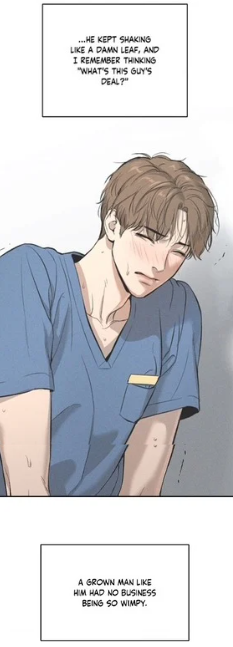 (chapter 56) Leaves are part of trees, symbols of growth, life, and resilience, but since Kim Dan is just a “leaf”, this signifies that he is actually mutilated, reflecting his emotional and physical vulnerability caused by repeated abandonment and suffering. Joo Jaekyung, though dismissive at first, catches a glimpse of Kim Dan’s deeper essence—one connected to nature but battered by his struggles.
 (chapter 55) However, note that the main lead isn’t stretching his hand to the sky and sun. He is almost immobile. Just before, he was holding the cellphone in his hand:
 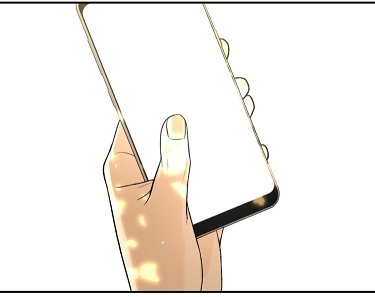 (chapter 55) Another divergence to the scene in episode 41 is that Jinx-philes couldn’t see his face. It indicates that the doctor reverted to his old self, and as such he is not true to himself. Therefore I come to the following conclusion. Mingwa uses nature as a mirror to Kim Dan’s emotional and spiritual state. While moments of connection with nature reflect clarity and self-realization, the juxtaposition in this scene underscores the opposite. Here, Kim Dan sits surrounded by trees and bathed in sunlight, yet his attention is consumed by his cellphone—symbolizing his entanglement with money, duty, and his ongoing struggles. Just moments prior, he wired money to the champion, a decision rooted in his past traumas and present desperation. The irony of the setting cannot be overlooked: though nature surrounds him, its purity and tranquility remain unnoticed, emphasizing how Kim Dan is still trapped in patterns of survival, burdened by his circumstances. He has become a ghost once again. This disconnect reveals how the weight of his past prevents him from embracing the present moment and reconnecting with his true nature, contrasting starkly with earlier scenes where his senses came alive under the trees.
 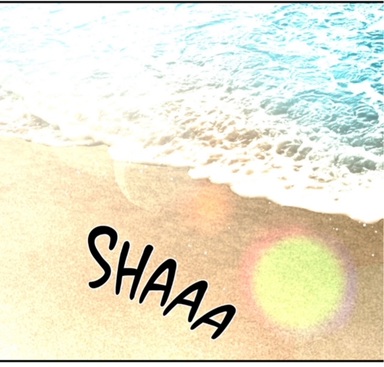 (chapter 56) The empty beach scene, with its sunlight and tranquil beauty, reflects peace, but also unfulfilled connections. Kim Dan’s absence from this moment underscores his failure to keep a heartfelt promise to his grandmother:
  (chapter 53) —now associated with the sunlight, symbolizing life and vitality—but also from Kim Dan’s fixation on his own suffering.
  (chapter 56) Abandoned once again, Kim Dan is consumed by the weight of his trauma, isolating himself emotionally and excluding himself from others.
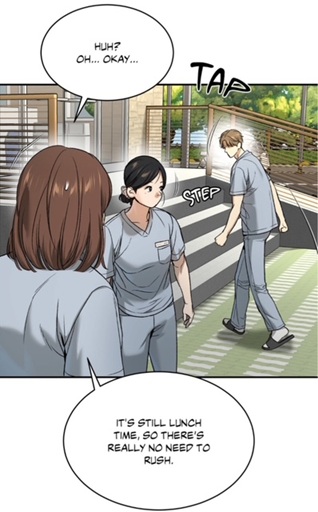 (chapter 56) When approached and complimented, such as when the nurse praises him and encourages him to take a break for lunch, Kim Dan pointedly ignores the praise and instead chooses to return to work. His inability to engage with others reflects the same disconnection that prevents him from connecting to nature. Mingwa subtly reveals a painful truth: Kim Dan’s fixation on his suffering not only blinds him to the solace and clarity offered by nature, but also hinders his ability to nurture relationships.
 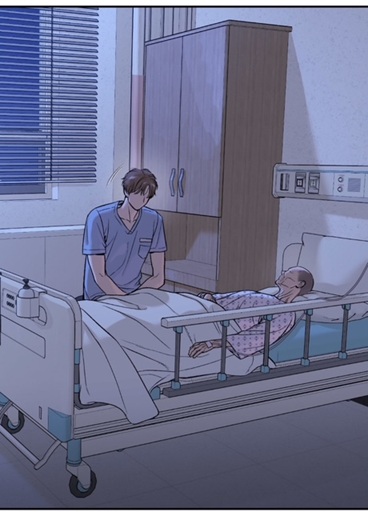 (chapter 56) and, symbolically, to the moon, Kim Dan remains oblivious to what has always been there for him: the enduring forces of love, stability, and healing.
 (chapter 56) the ocean and celestial elements like Saturn (Kim Dan stands for this planet). These forces, outside human control and independent of Kim Dan’s struggles, offer opportunities for renewal and clarity. Yet Kim Dan, consumed by his pain, remains trapped in patterns of survival and alienation. Nature’s constancy mirrors what he needs most—connection, healing, and presence—yet his inability to see it reflects his broader struggle to connect with others and himself.
 (chapter 26) Yes, the day where they sparred out of fun. For the first time, Kim Dan chose to accept a challenge for himself and for Potato. He felt a connection with Yoon-Gu, because he saw in him a puppy:
 (chapter 29) That’s the moment he started opening up to others, he confided his struggles to Oh Daehyun and Potato:
  (chapter 37) The puppy symbolizes not only nature, but also innocence. Let’s not forget that he was moved by the actor’s flowers in the past:
  (chapter 31) Thus it dawned on me how Kim Dan’s soul could be healed:
 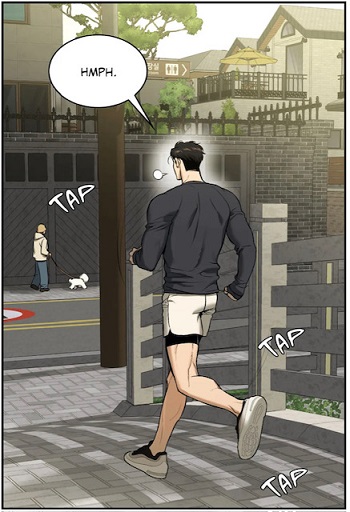 (chapter 21) Yes, by offering him a puppy! Is it a coincidence that the author made the champion jog next to a dog owner? I don’t think so. Until now, nothing could move Kim Dan’s heart:
 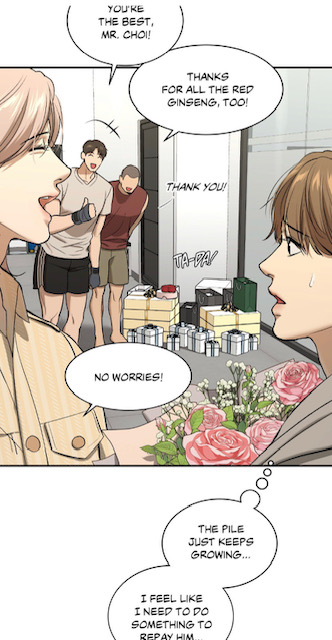 (chapter 31) Here, the main lead saw the gifts as a burden, for they made him think of money and debt. He never saw them as a sign of affection. In fact, dogs have a healing power.
  (chapter 44) In other words, Kim Dan feels a strong connection to animals, but he could never have one due to his poverty and his grandmother. By taking care of a dog, he would be forced to pay attention to nature and in particular to trees. Naturally, I believe that Potato will play a similar role in the future, for Mingwa associated him with a dog.
 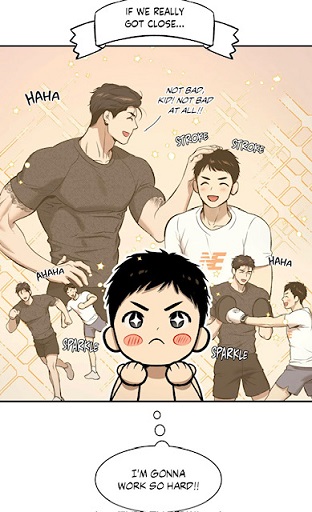 (chapter 23) While this was his original dream, after the last incident, there is no doubt that the young maknae must feel guilty and unhappy. He had not been able to protect and defend his new hyung. However, I have to admit that I would like to see the main couple having a pet! The latter would bring life in the penthouse, but also force the two protagonists to have a new routine. The penthouse would truly become a real home.
 (chapter 47), the nursing attendant
  (chapter 21) or the reporters:
 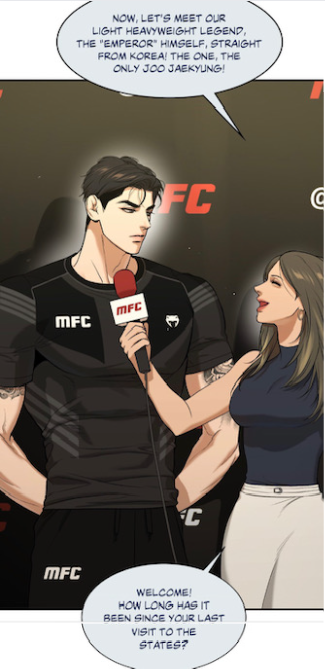 (chapter 37)
 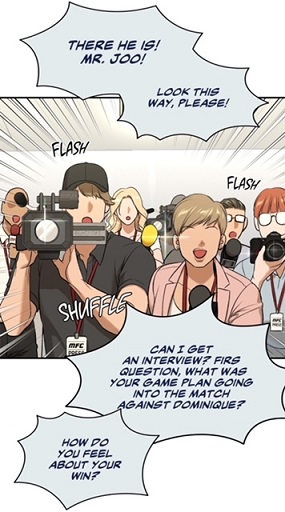 (chapter 40) However, Manhwa-worms will notice a significant distinction: in Season 1, these women were all tied to the world of work. Even Kim Dan’s grandmother, though she represents a familial figure, falls into this category.
 (chapter 56) Moreover, the grandmother’s choice of words, “Why don’t you turn in?”, implies that she sees Kim Dan’s presence as a form of “work” or duty. This phrasing is often associated with someone finishing a day’s tasks or obligations before going to bed, which fits into the broader dynamic between Kim Dan and his responsibilities. In my eyes, it shows that she is seeing her grandson more as a caretaker than as a family member. We shouldn’t forget that she was the reason why the main lead became a PT. It was, as if her dream had come true. Nevertheless, the verity is that his grandmother is receiving treatment from his colleagues.
  (chapter 56)
  (chapter 7) before she got reassured. Then she made this request
  (chapter 56) where one speaks candidly about her personal desires —having Kim Dan as a son-in-law – while the other calls him cute, giving the impression that she might consider him as a potential boyfriend . This dialogue marks a departure from the women of Season 1, who were defined solely by their roles as professionals or authority figures. Here, womanhood begins to represent emotional connection, care, and the nurturing qualities of family life—values that Kim Dan has been missing.
 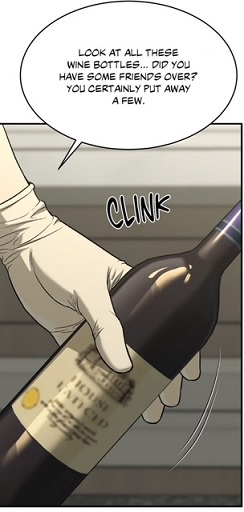 (chapter 55) and later brought the doctor’s present:
 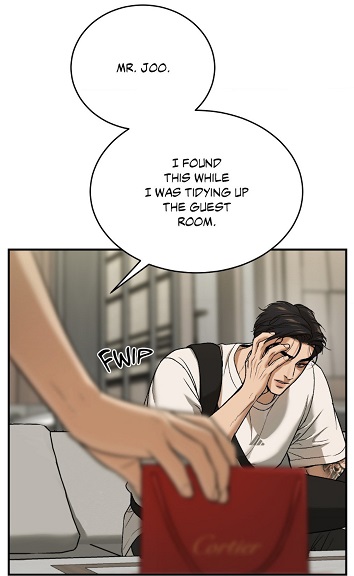 (chapter 55) And what is the common denominator with these two images? The woman’s hand. In the previous essay, I explained that her intervention signalized that the champion would stop drinking and was starting acknowledging Kim Dan. The zoom on the cleaning lady’s hand is a powerful visual cue that encapsulates many of the symbolic meanings associated with a woman’s hand, reinforcing the themes of care, healing, humility, and transformation.
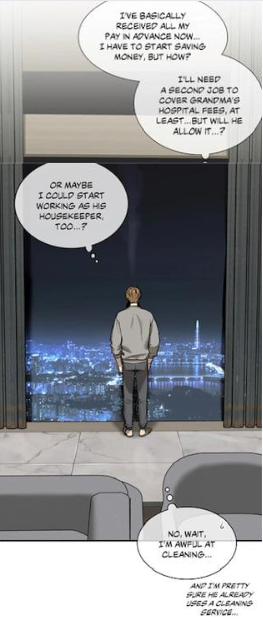 (chapter 19) He is not capable to take care of himself well.
  (chapter 55) Observe how she smiled to him by saying goodbye. This is a sign that her respect and care are genuine. One might think that this nameless cleaning lady was unfortunately portrayed as eyeless:
 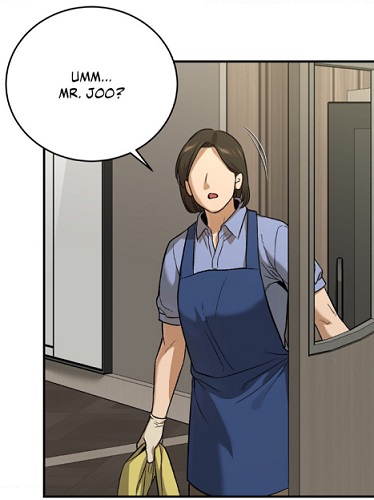 (chapter 56) I don’t think, we should see it in a pejorative light, like for an example of blindness or manipulation. In my eyes, the absence of her eyes are mirroring the nature of their relationship between the champion and the cleaning service. So far, he never met these people, as he was always away. In other words, the absence of the eyes is showing that the sportsman doesn’t know her that well. But it could change and this because of Kim Dan.
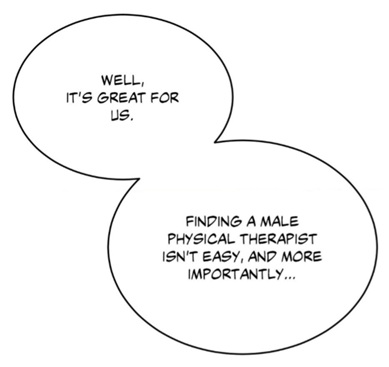 (chapter 56) Male physical therapists like this one
  (chapter 54) prefer specializing in treating athletes because it brings more money and fame, whereas female PT ends up at hospices due to their nature (nurturing, family). This means that by going to the hospice, the athlete will enter a whole new world. The appearance of the woman with glasses was indicating that the athlete was slowly broadening his horizon. As you can see, little by little, the fighter is opening his mind to new things. So how will he react, when he sees that his beloved “hamster” is withering again? This time, he can not blame the doctor. Since I detected similarities between Kim Dan’s current attitude and the champion’s past behavior, I have the feeling that the fighter will recognize himself in his loved one or someone will give him some advice. He will have the answer to this:
 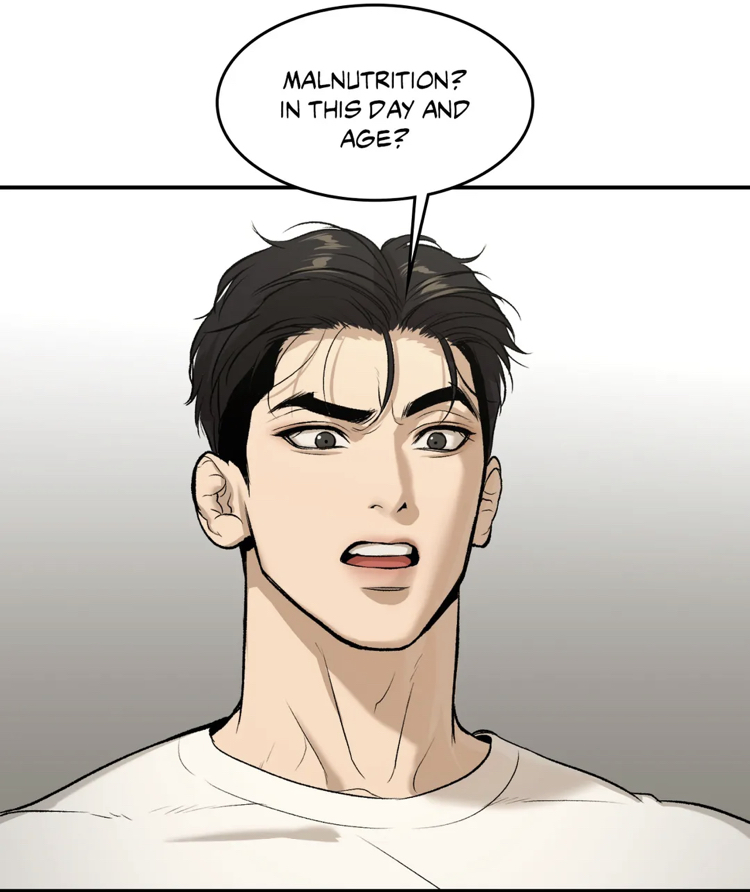 (chapter 13) He is neglecting himself to the point of exhaustion, because he is living as a PT non-stop. While the champion was fighting with his bad shoulder, the other is using his hands for treatment, hence he is not eating.

 (chapter 56) and
 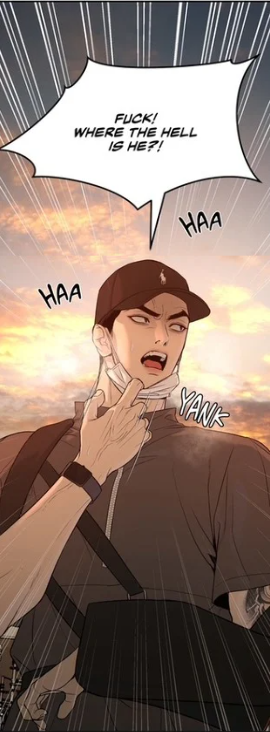 (chapter 56) While in the first picture, Joo Jaekyung is calm, concentrated and silent, in the second one, the fighter is agitated, lost, breathless and yelling. These two mental dispositions are reflected in the location. In the first image, the MMA celebrity appears behind the steering wheel, which is a symbol for power, determination and control, whereas in the second panel the champion is wandering alone in the street. This running is no longer part of his training and routine, but it exposes his powerlessness, loneliness and despair. He has no idea where to go contrary to the first picture. This means that the latter embodies goal and destination, whereas the second image represents the opposite values: beginning, start, ground zero and source. In other words, the end of episode announces the athlete’s rebirth or better said, the start of a new life. I will elaborate further below. But let’s return our attention to the symbolism of the auto.
  (chapter 56)
  (chapter 56) Even if the main lead is moving among other cars, people can recognize that the owner of such a car is rich and probably famous due to the brand and design. On the other hand, by roaming in the street, the champion blends into the background and as such to the mass.
 (chapter 35), Joo Jaekyung succeeded. He is just a passerby. In other words, the avenue indicates not only his failure to find Kim Dan, but also his loss of power and status. He has just become a nobody. Thus we should consider this as the athlete’s karma for thinking that Kim Dan could be replaced, because he was just a nobody:
 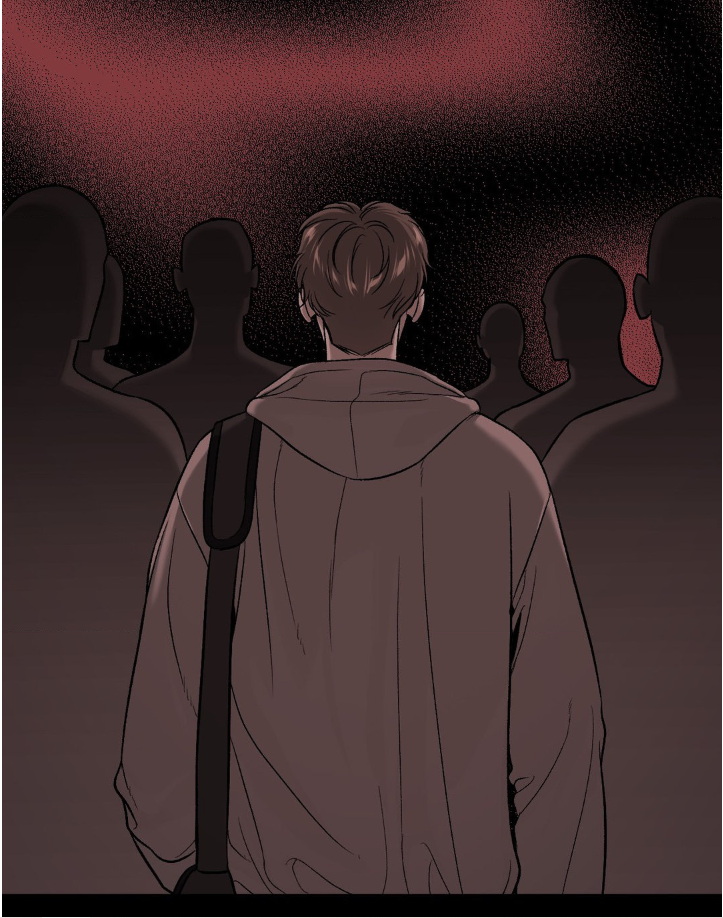 (chapter 55) It is no coincidence as well that the author showed us the star’s back, when the latter called his hyung Park Namwook.
 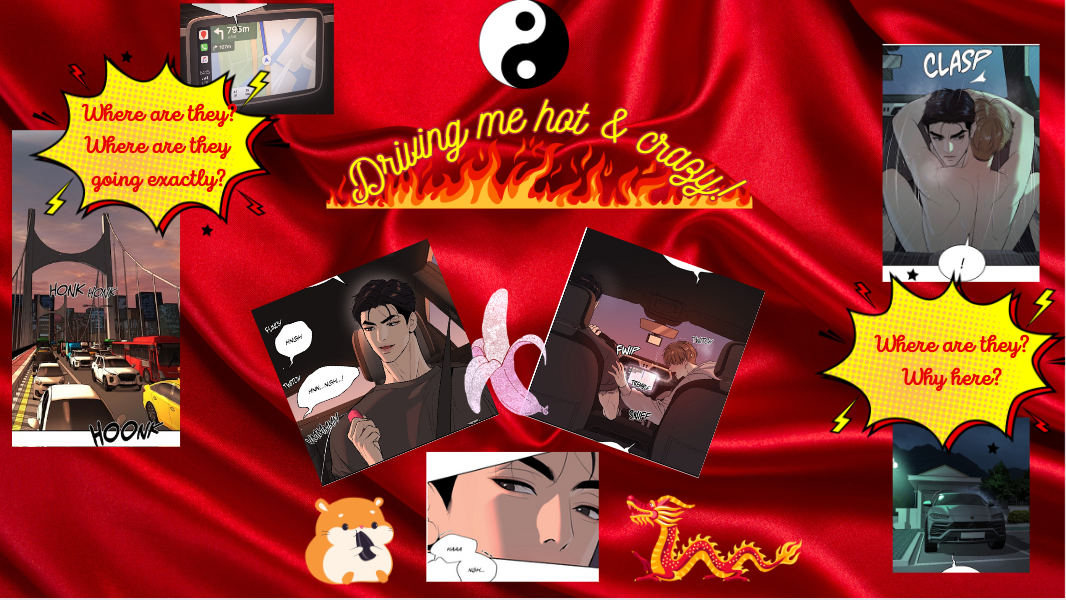 These two chapters are similar, for they convey the same emotions: anger, anxiety, frustration and despair of the fighter. In the car, the champion attempted to control the doctor’s libido.
  (chapter 33) On the one hand, he appeared calm and concentrated like in 56, yet deep inside, he was burning up. The pink dildo was used as a tool to voice his negative emotions (abandonment issues, insecurities and jealousy). With the release of episode 56, another reason came to my mind why the athlete proposed to drive the physical therapist to Choi Heesung.
 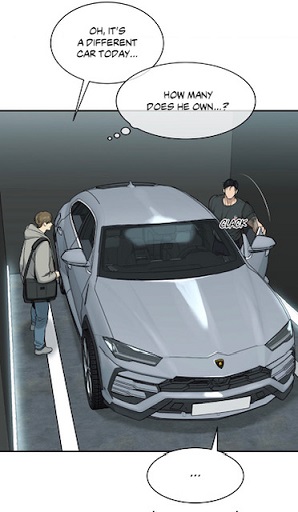 (chapter 32) First, he switched the car in order to demonstrate his wealth and status. It was, as if he wanted to show off to his fated companion, which reminded me of the actor. The latter would bomb doc Dan with “presents”, an indirect demonstration of his fortune. In addition, Jinxphiles will certainly recall that during the same day, the comedian came to fetch the physical therapist with his white Porsche.
  (chapter 32) Consequently, I came to the following deduction. The man selected the gray car in order to distinguish himself from his rival, to impress his companion.
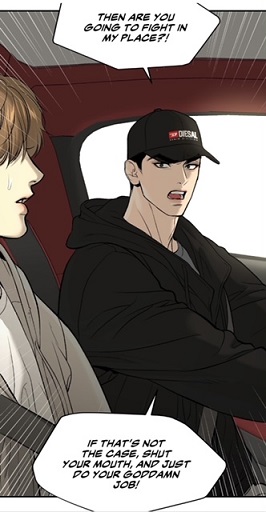 (chapter 42) And what was his attitude there? He would not listen to his passenger. Moreover, he would separate his job from his roommate’s. It looked like they were living in two different worlds, though they were sharing the car. This scene exposes miscommunication, lack of faith, stubbornness and prejudices. The fighter was not willing to accept the physical therapist’s doubts and chose to go through with the training and match.
  (chapter 2)
  (chapter 26) First, he repressed it, but thanks to doc Dan, he is encouraged to face his traumatic past. But for that, he needs to trust someone, a person who wouldn’t judge him and would show understanding. He came to associate “pity”
  (chapter 37) with arrogance and weakness, but this is not true. [For more read this
 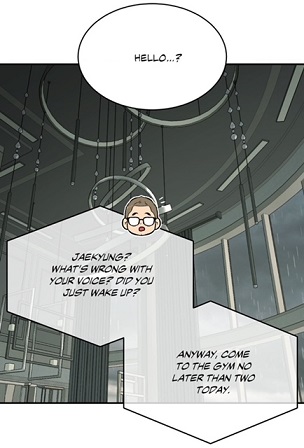 (chapter 54)
  (chapter 5) He allows the coach to drive the car and the manager to sit in the front. Thus they represent the higher authorities. However, so far, the doctor had only been his passenger. Thus a new idea popped up: what if the athlete let the physical therapist drive his car? Let’s not forget that the loner wolf shouldn’t be driving on his own, for his shoulder has not healed properly yet. I already pointed out the wrongdoings from the two hyungs.
 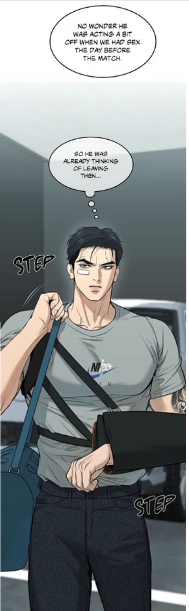 (chapter 53) They should have brought him home. They stand for neglect and indifference due to their passivity and routine. In my eyes, they are happy at the gym, the latter represents their second family. So they imagine that it is the same for their boss. In other words, they projected their own thoughts and feelings onto the celebrity. They embody silence and lack of communication and this is actually palpable in the car. In episode 5, the manager and the MMA fighters lied to each other:
  (chapter 5) Then in episode 49, the champion kept The Shotgun’s words as a secret, while his coach confessed his trust in his “boy”
 (chapter 49). Yet, he revealed his true thoughts at the hospital:
  (chapter 52) He has no real trust in the athlete. Finally, my avid readers should notice that we never heard coach Jeong Yosep speaking up or exchanging his thoughts to the other members there. To conclude, I interpret the car as a symbol for censorship, silence, miscommunication, stubbornness and deafness. In other words, this place is also polluted.
 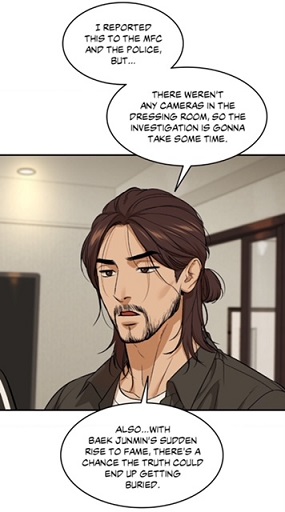 (chapter 52) Imagine that he only reported his investigation and actions afterwards. Then on the athlete’s birthday, he didn’t send any private message as well.
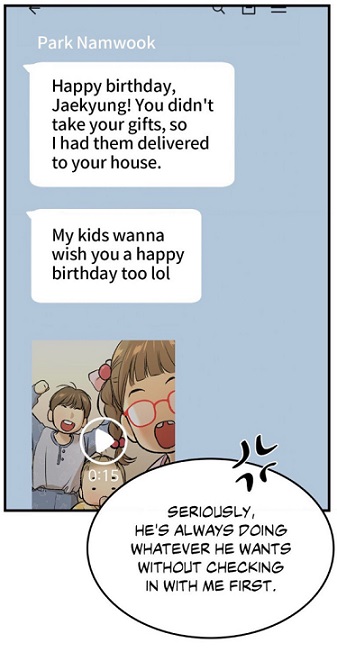 (chapter 45) It gives the impression that he owns no cellphone, especially if Jinx-philes recall this situation in the States:
  (chapter 37) He was using the landline telephone. This observation is relevant, because it exposes the coach’s dependency on Park Namwook. The latter’s task is to keep in touch with his boss and champion, for he has his cellphone number. Nevertheless, how do we explain the absence of the coach’s cellphone? I have the feeling that this could be related to his divorce.
 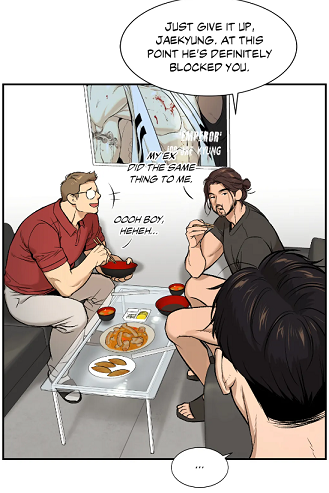 (chapter 5) When his wife suddenly blocked him, he got shocked and hurt. And don’t forget that we have another person traumatized with a phone call: Kim Dan, who got abandoned during that day.
  (chapter 19) Thus this observation made me think that the coach could have something in common with Kim Dan. And that’s how the champion will demonstrate his strength to his hyung. Contrary to him, he didn’t accept the divorce so “easily”. In fact, he is fighting for the doctor in his own way. The problem is that he is his own worst enemy.
 (chapter 49), Jinxphiles could never view the driver.
 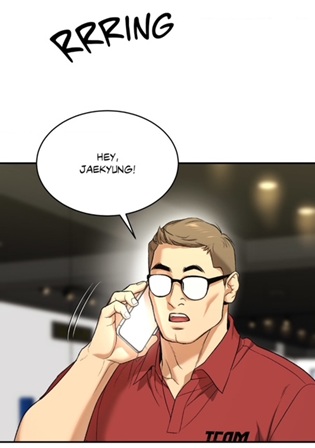 (chapter 56) He doesn’t look worried, scared or despaired. In fact, he is pretty calm, the opposite to this scene:
 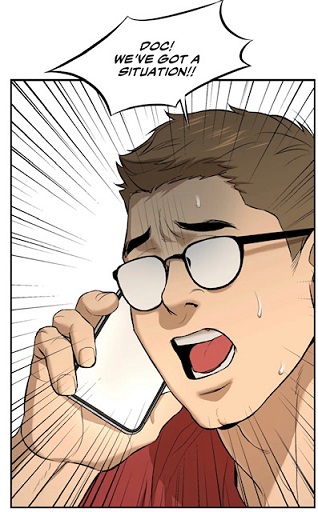 (chapter 13) His question “Is everything okay with you?” is purely mechanical and as such meaningless, for he doesn’t inquire, when he hears a silence from the other side of the line. I would even say that he doesn’t really wait for his boy’s answer as well.
 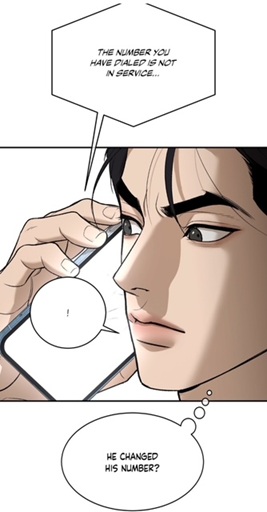 (chapter 56), he could end up in the same situation than the protagonist. And keep in mind that the coach Yosep is actually relying on the manager. Thus I reckon that the champion’s other source of power is actually his cellphone! Without him, he has no connection
  (chapter 5), no money
 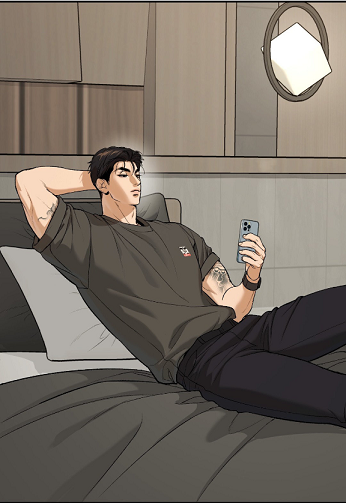 (chapter 32) and no power. His call to the manager during that evening represents his last resort. Thus he is calling the manager “Namwook hyung” contrary to episode 5.
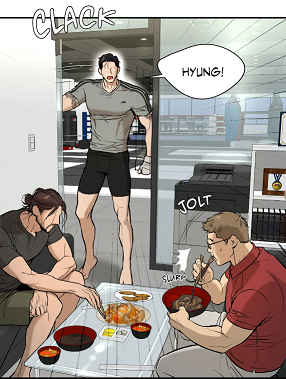 (chapter 5) This title is indicating that the champion is opening up, and willing to show his vulnerability and despair. On the other hand, this change also implies “expectations” from the fighter,
  (chapter 55) The physical therapist hoped to get recognition, gratitude and acceptance from his soulmate. That’s the reason why I perceive this conversation over the phone as a reflection from that scene:
 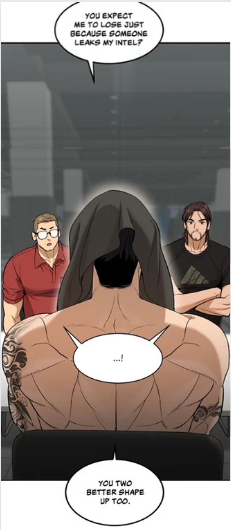 (chapter 46) Keep in mind that at the gym, the athlete denied the relevance of information. Though both hyungs were warned, the reality was that they got off scot-free. They never received any blame for failing to protect him and this twice. And now, he is looking for intel about the doctor. Indirectly, fate is teaching him to recognize his error. In fact, information can procure a good insight about people’s behavior and as such fears. Let me give you an example: if Joo Jaekyung were to hear about Kim Dan’s first employment as PT, he should understand why the PT made mistakes, why he took odd jobs and why he “left” Seoul. If he wanted to work as PT, he needed to go elsewhere.
 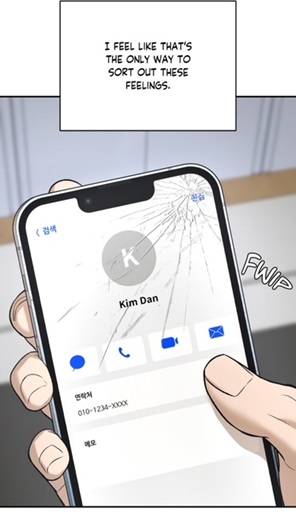 (chapter 56) He somehow expected doc Dan to listen to his words and accept them. That was it. Then at the end, it is just about seeing doc Dan and nothing more. At no moment, he voiced the desire to get to know his partner or to listen to his side of the story. Why? It is because he had strongly internalized that the man was a liar. He never questioned his perception and detected his own prejudices. It is important to recollect how Jinx-philes could sense a positive change in the physical therapist:
 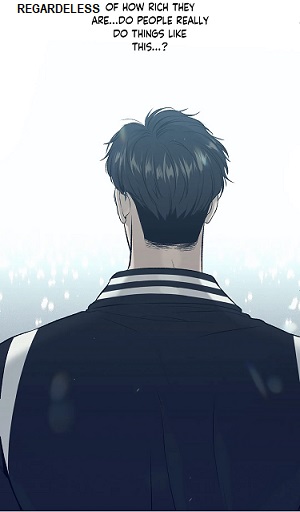 (chapter 22) Yes, it is the view with the star’s back. The author selected such a position on purpose. The face represents the character’s identity and as such his personality. By showing the back, Mingwa is implying that the beholder is full of prejudices and doesn’t know his partner that well. That’s why I judge this image
  (chapter 7)
 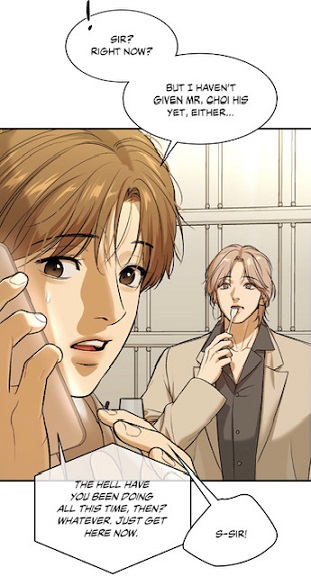 (chapter 32)
 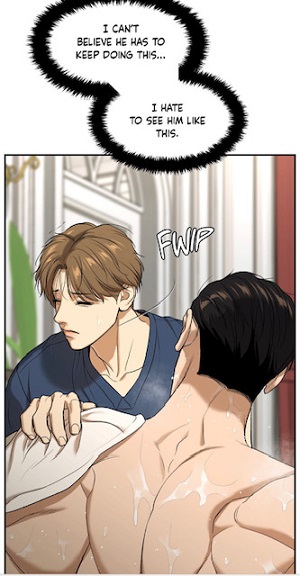 (chapter 37)
  (chapter 40)
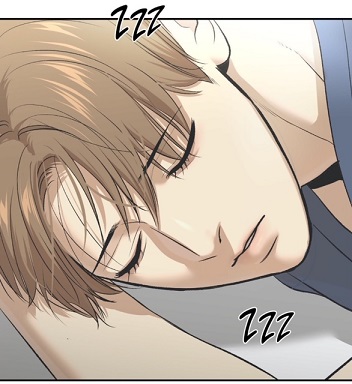 (chapter 43)
  (chapter 45)
 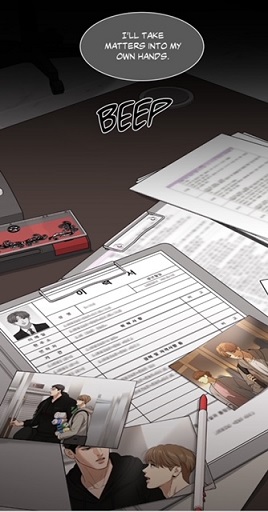 (chapter 46)
 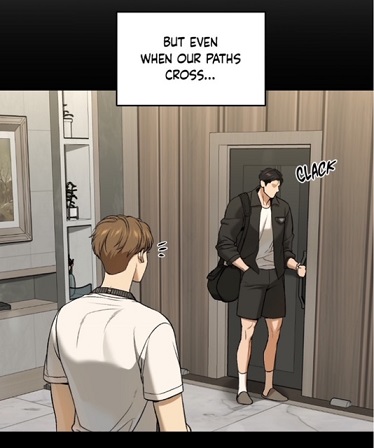 (chapter 47) Looking at his face had become his new secret ritual and as such his source of joy. Naturally, his heart and unconscious were the causes for this new habit. This explicates why he hated hearing the doctor leaving the penthouse during the night: he feared that he would no longer be able to see his cute face. That’s also the reason why Joo Jaekyung got angry/upset, when he saw the doctor turning his head away
  (chapter 21) and almost got shocked
  (chapter 56), when he imagined that she had died. In reality, he helped financially more the grandmother than Kim Dan himself. Kim Dan is the one he should really empathize with. He has always been a victim of circumstances.
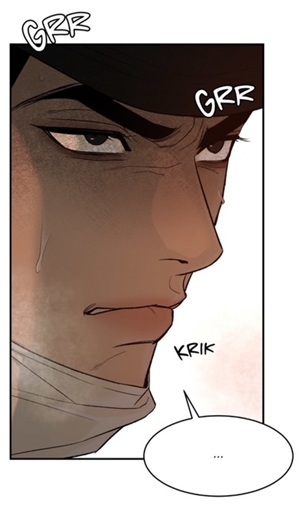 (chapter 56) Desperation can strip away the higher faculties that make us human—reason, empathy, and self-control—exposing something primal.
  (chapter 17) and
  (chapter 11). In season 1, the athlete stands for golden hour, whereas Heo Namwook embodies blue hour. “Entre chien et loup” is the time of day when the light is such that is becomes difficult to distinguish between a dog and a wolf, between friend and foe, between known and unknown. Hence I am thinking that if the next episode represents a continuation of that nightfall, it signifies that the champion is on his way to meet someone from the past. Moreover, I detected that the pavement is the same than in front of the gym:
  (chapter 35)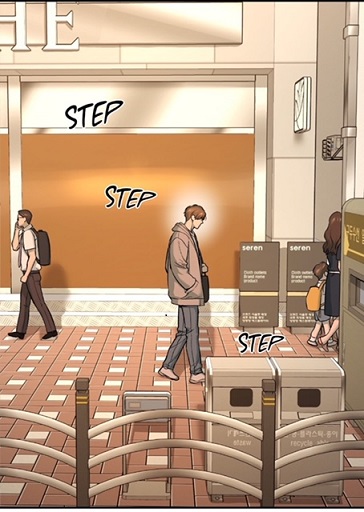
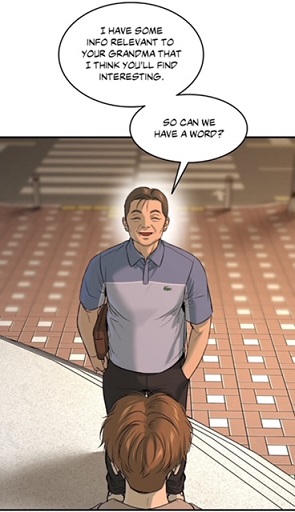 (chapter 48) As you can see, this detail made me realize that the next chapter should contain reflections from episode 35 and 48, the meeting with an old/new acquaintance. I am writing new and old together on purpose, for Director Choi Gilseok had been the halmoni’s loan shark, but the “hamster” had no idea. Choi Gilseok is the boss of Heo Manwook. If this encounter takes place, it signifies that on the one hand, it will cause pain and suffering to the athlete, on the other hand, this incident will become a “blessing in disguise”, for it will push the champion to reflect and mature. That’s how I had the following revelation. Why did the author ensure that the MMA fighter’s shoulder would get badly injured?
  (chapter 52) It is because this exposes the champion’s bad coping mechanism. The champion always uses his fists, therefore he doesn’t reflect and as such analyze his emotions.
 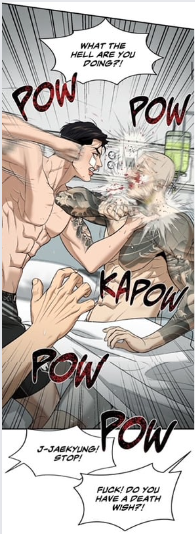 (chapter 52) That’s how he felt right into the trap of the schemers. So by having his splint, Joo Jaekyung is indirectly coerced to meditate on his feelings., as he can no longer use his shoulder and as such his fist. His physical injury represents in reality his “lucky charm”, for it helps him to transform, to overcome his trauma and face the shadows from his traumatic past. Notice that for the first time, the athlete came to accept the existence of feelings for Kim Dan.
 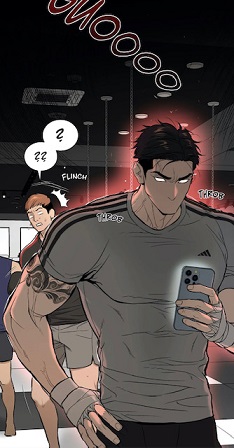 (chapter 5) He is much calmer. He is not oozing red and remaining silent. He is not burning up inside, in fact he is expressing his thoughts and emotions:
  (chapter 5) In both cases, the athlete asked for his manager’s help. However, as Jinx-philes can sense, there exist two huge differences between the past and present. Back then, Park Namwook didn’t care for Kim Dan. He was just a PT like any other doctor. He didn’t even care that Joo Jaekyung would lose his temper and ruin the sandbag.
  (chapter 5) It was not worrisome in his eyes, because his day would consist of training and punching the sandbag. The problem is that the fighter is no longer coming to the gym and he is not even calling him:
  (chapter 56) This shows that the athlete is using more and more his intelligence, he is forced to interact with people. He is gradually developing his social skills which stand for COMMUNICATION. And how did he get deceive in the past?
 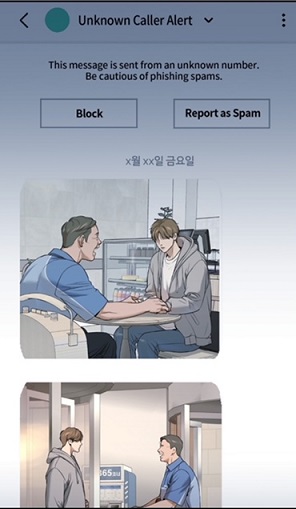 (chapter 48) He got manipulated by his eyes! They used a trick to deceive the athlete: delivering the truth in delay. Joo Jaekyung didn’t confront Kim Dan, because he saw the pictures as proofs! He never tried to hear his side from the story. And now, you comprehend why I am expecting that the champion will suffer another “blow” in the next episode. In my opinion, he will hear an important information. The fire in the illustration is there to indicate “Tabula Rasa”, a clean state. Joo Jaekyung has to lose all his principles and his bias about doc Dan. But for that he needs to face his own past and mistakes. Only through this effective anguish, he can become a better man, a new man.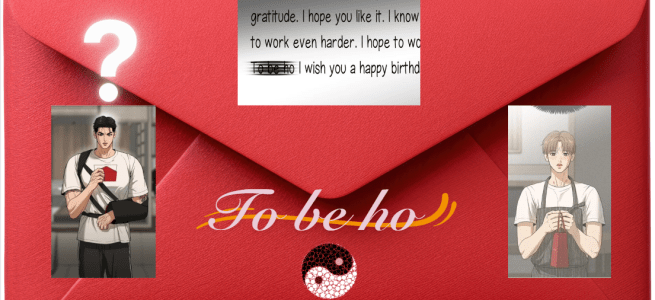



 (chapter 53) for not realizing her biggest wish: to return to the West Coast. With her words, she implies that she never had any choice. Hence she is not responsible for her “misery”. However, after reading Erich Fromm’s philosophy, it becomes clear that she must have always followed social norms and listened to authority figures (parents, husband, doctors, …). That’s how she gave up on her own freedom. One might argue that her scoop of maneuver was limited due to her poverty. However, the Mother Of Pearl Wedding Cabinet is definitely expensive and no junk
  (chapter 16), especially since the latter is rather old. The grandmother could have sold it, but she never did, for the latter has a sentimental value. Consequently, I would say that she had missed her chance, and naturally her misery is the result of her own wrong choices. Under this new light, it becomes comprehensible why the grandmother portrays herself as poor who has nothing to give to her grandchild.
 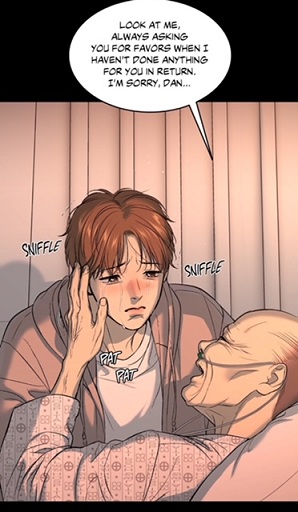 (chapter 53) As a slave, she can not become responsible for Kim Dan and his life. However, she is wrong here again. She was not entirely powerless. She could have talked about her experience with the ocean, she could have loved her grandchild more properly so that Kim Dan wouldn’t have to suffer from abandonment issues and a low self-esteem. Yes, love is something free and no one has control over the emotions of a human being. Due to her lack of self-awareness (Peter Pan Syndrom), she influenced her grandchild negatively, and the latter became a copy of herself: trapped in the past, living in an illusion and rejecting reality. Funny is that by relying on Kim Dan constantly, she was actually teaching her grandson to become accountable and independent. She was entrusting her life into his own hands. Consequently, the main lead chose to accept the deal from Joo Jaekyung during their first night and later asked for a higher salary. Finally, at the end, he chose to leave the penthouse out of obligation
  (chapter 53) (filial duty), a sign that he is not able to break free from social norms. At the same time, it displays that his feelings for Joo Jaekyung are much stronger than the ones for Shin Okja. His short time spent in the penthouse left a deep impression on him.
 (chapter 53) The grandmother is now the master of her own life and Kim Dan’s. On the one hand, just before her death, she is learning to become accountable for her own life, even though I still have my doubts that she is really realizing the consequences of her choice. She is still chasing after after an illusion. As you already know, I am anticipating a rude awakening fron her part, as she can not escape from reality and her own mortality. On the other hand, with her request, she gets responsible for her grandchild’s career, and someone could criticize her for making him quit. She didn’t take his job’s obligations into consideration. Simultaneously, this image illustrates a relapse of Kim Dan. He is once again trapped, though he wished to be freed. Thus he wrote this to Joo Jaekyung:
  (chapter 53) Deep down, he would like to be recognized as a competent physical therapist. Moreover, my avid readers should recall that the champion had already noticed the change of heart in the doctor before the scheme took place.
 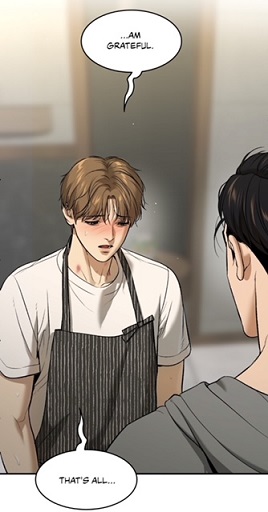 (Chapter 45) But how can he change his condition? I will give the answer below.
 (chapter 14) Yet, the reality is that despite his wealth, he is not free at all. Actually, he reminded me of a Roman gladiator. Gladiators in ancient Rome lived under challenging and contradictory conditions. Although they were often slaves or prisoners of war, some achieved fame, wealth, and admiration comparable to modern-day sports stars. Successful gladiators could earn prizes, attract fan followings, and even enjoy certain luxuries within their restrictive lives. However, they remained under the control of their lanista (manager) or the state, with little freedom to make personal choices. They could not select their opponents or refuse combat, and each fight carried the risk of injury or death, underscoring their vulnerability and lack of autonomy despite their celebrated status.
  (chapter 40), though the gym belongs to the celebrity. But let’s return our attention to the American-German philosopher. The latter pointed out the importance of self-awareness and the rejection of materialism and social pressures (authority figures, conformity) in order to become truly free.
  (chapter 2) Therefore sex is linked to prostitution and work. Back then, this had nothing to do with pleasure, sensuality and entertaining. It was revolving around power and domination. That way, he wouldn’t appear as weak, he is not controlled by his sexual desires and emotions. That’s how it dawned on me why the champion has been denying the existence of feelings in his past relationships. Naturally, it is possible that he got his heart broken before, but it is also possible that he could never live out his own true homosexuality. Note that his father figure, Park Namwook, has no idea about his sexual life. The athlete could fear to disappoint him. This raises the question how the manager will react, when the athlete’s secret is exposed. Should he request from his boy to organize a conference and deny the allegation there, he would divulge not only his lack of loyalty, but also his hypocrisy. Why? It is because this is something he should have organized after the last match. A conference to expose the existence of schemes. But everything got swayed under the rug. On the other hand, I deduce that if the topic of sodomy is brought up in season 2, there is no ambiguity that both main leads won’t give in to conformity and external pressure (even in the form of threats). Why? It is because during season 2, both characters will come to be true to themselves. That‘s how they can become master of their own life.
 (chapter 26) No wonder why he got so surprised by Kim Dan’s reaction in the locker room:
  (chapter 51) He was disarmed by a single question and a shocked and disappointed face:
  (chapter 43), yet he added shortly this comment: :
  (chapter 43) The hypocrite coach utilized the personal pronoun “WE” indicating that he and his peers had played a role in the athlete’s decision. Funny is that though he complained about the schedule, he still accepted the switch of the fighter later. But he could have voiced his fears and objections. Nevertheless, he did nothing. Since I connected the halmeoni to past, I suddenly realized that the “lanista” embodies the opposite notion. He is trapped in the future, thus he is always anxious. Imagine that in that scene, they were celebrating Joo Jaekyung’s birthday, it should have been a good time. Yet, the manager kept talking about work and the future.
  (chapter 43)
  (chapter 43) This is a sign that he was not “enjoying the present”. In my eyes, with his comments, he was actually ruining the party. Fortunately, no one paid attention to his words except the physical therapist and Yosep. By talking like that, he gives the impression that he is caring and paying attention to the fighter. Yet this is just an illusion, for he is not focused on the present. He neglected his duties, therefore the schemers were able to bring drugs to the champion’s rooms.
  (chapter 49) Notice that he was afraid of an outburst from Joo Jaekyung in the locker room, therefore they were restraining him. This was no real protection. I am suspecting that the manager is trusting MFC and its organization. In addition, his obsession with the future explains why the athlete’s mental health has been neglected by the coach and manager. As a conclusion, Park Namwook is himself trapped in his own world: money, fear of the future and the champion‘s retirement which means the end of his own career as manager and coach. Therefore he is pushing his fighter to race against time. It is only a matter until his boy gets injured!!
 (chapter 53). The latter announces that his “boy” can take a break. What caught my attention is his idiom. The suspension got turned into a break which sounds much more positive. Interesting is that break is not only a synonym for “rest”, but also for “opportunity, chance”. This new discovery reinforces my previous interpretation: the loss of his “title” and his suspension are in verity an escape to freedom. Why? It is because he is no longer exposed to manipulations and external pressure like in episode 36:
  (chapter 36) money, social media, the agency, the lawyer, Park Namwook and Jeong Yosep. For the first time, Joo Jaekyung can think of something else other than work. Nevertheless, the athlete had not realized it yet. Striking is that the longer the fighter thought about the PT’s resignation, the longer he came to object to it.
  (chapter 53) This means that the fighter was acknowledging the “uke” as an important member of Team Black. In addition, he was recognizing Kim Dan’s effort and talent as PT. Moreover, it exposes the absence of change in Joo Jaekyung’s mentality. He was still “thinking” of work and fighting. It displays that the protagonist had not realized the true signification of his suspension yet. Hence the doctor’s departure was necessary. Joo Jaekyung is forced to think about his fated partner, making him forget his work and his career. His “obsession” with Kim Dan will push him to stop being a workaholic. But there is more to it.
 (chapter 21) to this
  (chapter 47) Money is powerless in front of death and terrible injuries. Therefore he is lucky that his shoulder is not ruined forever. Moreover a trip represents a good metaphor for an escape, a travel is a synonym for freedom and the end of “routine”.
 (chapter 35). However, since he didn’t spend much time in his own home, he never took the time to take care of his soulmate. By leaving the city and Team Black behind, he would become truly alone (as opposition to his trips to Busan, the States) which would give him an opportunity to become more honest to himself and to Kim Dan.
 (chapter 1). Nonetheless, his words sounded more negative due to the usage of negation. Moreover, Kim Dan was too scared to take his words seriously. Consequently, it becomes obvious that Kim Dan needs to hear praises from the athlete himself. It is not just about an apology about his misjudgment, the “hamster” needs to hear from his own patient that he trusts him and his hands. Thus he wants to be needed:
  (chapter 53) This explicates why the young man kept questioning the actor’s intentions behind his gifts. He could see that the man didn’t need him. This thought displays his desire to give a meaning to his own existence as well. If he is needed, he has a reason to exist. This desire of being needed can be expressed by words, but also with the hands:
  or like this:
  And what does the hand symbolize? The latter symbolizes gratitude and love! Hence the grandmother took the MMA fighter’s hand in order to thank him.
  (chapter 22)
  (chapter 12), though he is no drinker or he doesn’t eat cakes.
  (chapter 41) The fact that the athlete organized a charity event for his birthday exposes not only his huge heart, but also that he had long recognized the power of generosity. Under this new light, it becomes comprehensible why the champion was willing to pay off the doctor’s debts.
  (chapter 18) Here, he hoped to see gratitude on his fated partner’s face, but it didn’t happen like he imagined. Yet, notice that despite their argument, Joo Jaekyung proposed to the main lead to live with him in the penthouse:
  (chapter 18) His facial expression is exposing his true thoughts. He was definitely happy to help the doctor. The reason is simple. He is in control of his heart and life. This shows that deep down, the man has always had a soft heart and could find fulfillment in giving. However, the problem is that the champion had also internalized that there is nothing free in this world. Due to his past experiences, he realized that receivers would exploite his goodness. The green-haired guy was the perfect example.
  (chapter 2) Therefore it is not surprising that he kept denying his kindness to the doctor:
 (chapter 18) He had to, because the man was now living with him. Joo Jaekyung feared that his roommate could come to take advantage of his new position and even consider this place as his own. As you can see, the champion had long discovered the power of giving to others. Yet his problem was that he couldn’t live out this principle: he was either exploited or he has no family or close friend so far.
 (chapter 30) They both desire to be acknowledged and appreciated.
  (chapter 45) With this image, it was, as if Kim Dan wanted to be distinguished from all the stans. Yes, I do think that this has something to do their own negative feelings. However, there is a difference between Choi Heesung and Kim Dan. Note that the gifts are related to his sponsors and the agency. They were related to his work. Moreover, the gumiho rarely gave the meals or the presents personally.
  (chapter 31)
  (Chapter 26)
  (chapter 36) However, my avid readers should ponder on the following aspect: how did he buy the jackets and the junk food?
  (Chapter 37) This last scene is terrible, for this purchase happened behind the boss’ back. Naturally, everything was bought with the company card!! In other words, Park Namwook’s generosity is fake, for he is not spending his own money. After this new realization, I started wondering if the athlete’s negative attitude towards Kim Dan is not the consequence of Park Namwook’s behavior as well who takes it for granted to spend money on the athlete’s account. Why did the champion anticipate an expectation from Kim Dan, when he received the keychain?
  (Chapter 45) It is because his relationship with his coach has always been based on „conditional love and expectations“. Don’t forget that the coach was particularly nice to the athlete after winning his match in Busan. He was willing to be his „servant“ in that moment. Furthermore, there exists another evidence that in episode 45 the fighter latched out on the doctor because of his unresolved feelings towards his hyung.
  (chapter 41) This frenzy was portrayed as something positive. Jinxworms can observe that the manager is mentioning the existence of „favors“. For me, it is no coincidence that in episode 45, the arrival from presents coming from his hyung coincides with the present with Kim Dan. It shows the underlying conflict between the celebrity and the former wrestler. Nevertheless, the fighter has not grasped it yet. So far, Joo Jaekyung has not tried to defy Park Namwook openly, to claim his place as the true owner of Team Black. We should see his words here as a first attempt to act as the boss
 That’s where the generosity from Park Namwook comes from: he gives his punches to Joo Jaekyung and takes Joo Jaekyung‘s company for granted. And now, you comprehend why I selected such a title for this essay.
 (Chapter 26) The sparring in episode 26 represents the positive version of giving a punch and taking it. The fighter was not upset about his defeat, moreover he was acting like a real teacher asking the physical therapist to overcome his own fears. On the hand, the slap at the hospital embodies the opposite notions: resent, no real teaching, no reflection, no listening, the one slapping is not overcoming his own fears and vents his anger. The give and take in episode 26 was happiness, true generosity, self-awareness, while this slap displays misery, anger, ignorance:
  (Chapter 26) The contrast not only exposes Park Namwook’s fake generosity, but also his greed and selfishness. For me, he missed the opportunity, as at the gym, Kim Dan took the chance, when the athlete was distracted. Hence in my opinion, chapter 52 was the turning point in their toxic relationship. Moreover, it signifies that the manager lost his special position as hyung. Far away from the gym, Joo Jaekyung will see Kim Dan under a different light, maybe even as a true role model, for he is wearing his heart in his hand.
 (chapter 9), the manager kept creating a bad image of the athlete: brutal, moody, maniac… but the reality is that the man is actually generous and caring, like mentioned above and the coach knew this. Hence he could lie without any remorse: he is a savior and the gym owner. Moreover, the athlete can speak well and be polite.
  (chapter 22) This scene at the hospital displays that the fighter had been mirroring the behavior of his counterpart: Shin Okja is sweet and kind. And who is moody, yelling, brutal ? Park Namwook:
  (chapter 43)
  (chapter 7) Therefore I conclude that this possessiveness and obsession with Kim Dan is the result of the manager’s influence. Park Namwook treated him like a possession. And this brings me to my next part. How to become happy? One might reply: by loving someone. However, how can Joo Jaekyung drop his insecurities and open his heart like that? As you can see, we need another explanation.
 (chapter 22) Since his relationship with the main lead is so secure, he could claim the gym as his own. Notice how he treats the members here: he’s putting them under pressure, threatening them. Everything is revolving around competition, seriousness and greed. Why doesn’t Joo Jaekyung mess with his weight and nutrition? It is because his hyung made sure that the latter would fulfil all his expectations. He needs to be ready for the next fight. Why was the manager not present here?
  (chapter 43) Where was he, when his star was drunk? It was, as though he had vanished.
  (chapter 43) But the best evidence for this interpretation is this image:
  (chapter 52) The manager is upset, because his boy lost his title and his reputation is ruined. Moreover, many members left the gym which means that the company lost a lot of money.
  (chapter 9) However, he never presented himself as a father or a husband. It was, as if his children or wife were not a source of his happiness. Why? It is because they don’t bring money, but rather cost money. Thanks to Joo Jaekyung’s popularity, the manager could stand in the spotlight
  (chapter 40), yet notice that no fans or fighter know his name as a successful coach or manager. He is not a famous manager in the end. His income depends on the athlete’s career and victories. No wonder why he put so much pressure on his celebrity. Thus I had the following revelation: he was actually exposing his true self in front of the doctor at the restaurant.
  (chapter 40) in the States and even at the gym?
  (Chapter 22) And now, it is important to recall that in the mode of Having, rivalry and competition are predominant. Therefore I deduce that deep down, the coach and manager sensed the physical therapist as a source of threat and rival. Therefore Jinx-philes shouldn’t be surprised that the coach did nothing to keep Kim Dan.
  (Chapter 53) Here his gestures and words should be judged as lip-services. He can even rationalize his departure: bad luck, they save a lot of money, for the next PT will have a lower salary. In addition, Kim Dan was treated as the celebrity’s possession, therefore he used him as a tool in order to compensate the actor. The manager is definitely imagining that once the break ends, things will work like before.
  (chapter 17)
 (chapter 41) In his eyes, possessions and money determine someone’s values. Hence he bought an expensive keychain for his fated partner. Furthermore, I have been wondering if this spending is not related to Shin Okja, the latter could have been a spendthrift. In the essay „
 (Chapter 19). Another possibility is that she made sure that her grandchild would spend money on her:
 (chapter 22) after the departure of Joo Jaekyung, but notice how the halmeoni thanked the benefactor:
 (chapter 21) One might argue that the poor woman couldn’t do much to express her gratitude. However, this is just a deception. Shin Okja could have written a letter to express her gratitude to Joo Jaekyung. Why do you think Mingwa created two scenes with a letter or card?
  (chapter 45)
  (chapter 53) The comparison lets transpire the importance of words. The champion might have judged the keychain differently, if he had read the card. But he didn’t. Another parallel between these two scenes is the rejection of a gift! However, in the final episode, Kim Dan voiced genuine gratitude towards his benefactor. The latter had allowed him to work as his PT. With the letter, he could voice his thoughts and emotions much better. And now, you realize that Shin Okja could have acted the same way. This made me realize that deep down, she resents being poor. She likes Dan spending money on her.
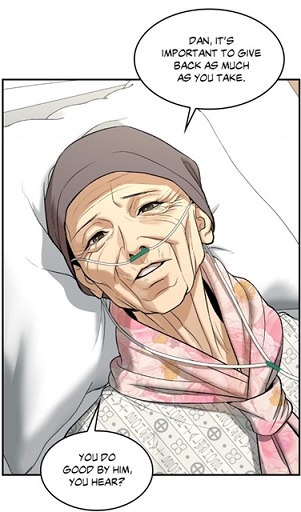 (chapter 41). He should treat the sportsman nicely (“do good”). Kim Dan is the one who should be indebted to Joo Jaekyung. However, observe what she said in front of her grandchild before: she was the one who was grateful to the main lead, and not Kim Dan!!
 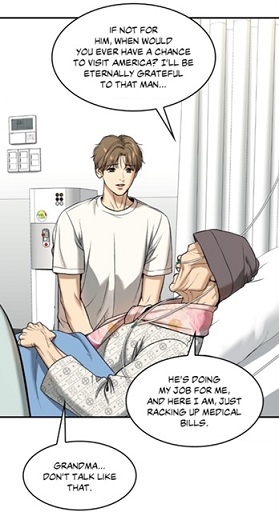 (chapter 41) She should have been the one who expressed her gratitude to Joo Jaekyung, but not Kim Dan for the trip (it was work related anyway). One might argue that the poor woman is trapped in the hospital, she can not do much. But you are wrong. She could have written a letter to her benefactor which means that she would have sacrificed some of her time for the athlete. Imagine that she had sent a message to the athlete, the latter might have decided to pay a visit to her. He is not truly heartless. With this silence, she created the impression that his assistance had changed her situation.
 (chapter 22)
  (chapter 1) In other words, he was not passionate about his profession. This means that he didn’t define himself as PT due to his lack of engagement and low self-esteem. Besides, let’s not forget that he judges people based on their social status and seniority. I would even add, the main lead had not recognized the existence of his own skills (knowledge, genuineness and dedication). But by working for Joo Jaekyung, he came to enjoy his job. This explicates why he kept buying books.
  (chapter 52) In this panel, the author let us see glimpses of their motivation and thoughts. For them, the champion has nothing to teach them, since he lost his title and is injured. This shows that they are only interested in the outcome, success and as such fame, but not in the process, how to become skilled! In other words, they see “success” as a possession. He has no title, then he has nothing to offer. They are all living in the mode of having, which can only lead to misery and even self-destruction. No wonder why they were not too upset or shocked, when they heard that the game had been rigged. But what led them to make such a decision?
 (chapter 23) Then he only focused on the “outcome” and not on the process. Hence he neglected them, delegated his task on the pressured athlete. The latter had to train them:
  (chapter 25) and
  (chapter 36) In my eyes, he didn’t want to play the bad guy. The meeting or his worries were more important
  (chapter 36) than their training and career. Moreover, he kept bribing them with junk food
  (chapter 46) The latter was a new source of income and fame. Everything was revolving around money. That’s how it dawned on me why the manager got angry for the bet in episode 26:
  (chapter 26) We shouldn’t judge his words as a verity, he was just using the doctor as a false excuse. The reality is that the sparring had brought no money at all! This fight was strongly intertwined with fun. The notion of „entertaining“ stands in opposition to money. Fun means feeling emotions and being to true one’s self. In other words, Kim Dan stands for a different notion of MMA fighting: the sportsmen shouldn’t work for money, but for fun. They are artists too. This signifies that as time passed on, the members of Team Black lost their passion for fighting
  (chapter 26) and became more obsessed with possessions and fame. Potato and the remaining members represent the exceptions. They enjoyed the lessons despite the pain and struggles. The other members became dependent on external tools which led them to lose their integrity. To conclude, the reason for their disloyalty is that at the end, they had long internalized the mode of having and were just interested in getting successful.
 (special episode2 ), but also Cheolmin
 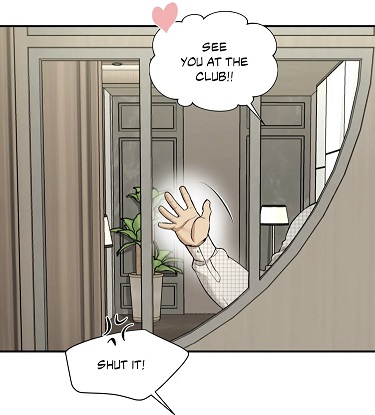 (chapter 13)
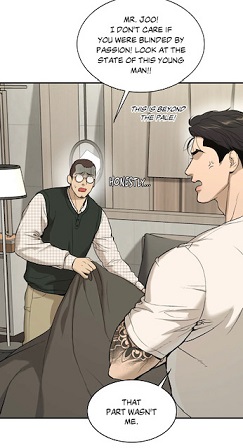 (Chapter 13) when the latter denied his responsibility. This shows that the man doesn’t mistrust people. He has faith in humans. And in this short scene, the doctor shows alle positive notions mentioned above: love, empathy, joy and creativity. Therefore I come to the following interpretation: he embodies the being mode. No wonder why he was not present in season 1. The main lead was definitely obsessed with work. Hence the moment Cheolmin’s path crosses Kim Dan’s, the funny doctor should become the hamster’s new role model.
 (chapter 48) are full of greedy people who have no problems to commit crimes in order to achieve their goals (more fame, more wealth, revenge, more connections). Baek Junmin became a champion by cheating.
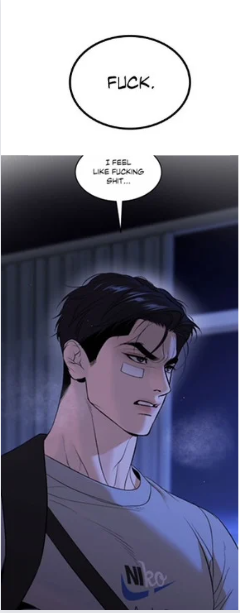 (chapter 53) He is standing at a crossroad. What does he truly want in life? Fame? More money? Or happiness and as such love and fun?
 Bebebisous33s' analyses in K-Dramaland and Manhwas