

Please support the authors by reading Manhwas on the official websites. This is where you can read the Manhwa: Jinx But be aware that the Manhwa is a mature Yaoi, which means, it is about homosexuality with explicit scenes. Here is the link of the table of contents about Jinx. Here is the link where you can find the table of contents of analyzed Manhwas. Here are the links, if you are interested in the first work from Mingwa, BJ Alex, and the 2 previous essays about Jinx Breathless in the Light – part 2 and Love is in the Air -part 1
It would be great if you could make some donations/sponsoring: Ko-fi.com/bebebisous33 That way, you can support me with “coffee” so that I have the energy to keep examining Manhwas. Besides, I need to cover up the expenses for this blog.

Finally a Love Confession?
Among all the scenes in Jinx, none has ignited more speculation than the moment inside the Ferris wheel cabin—those few seconds when Joo Jaekyung’s lips move 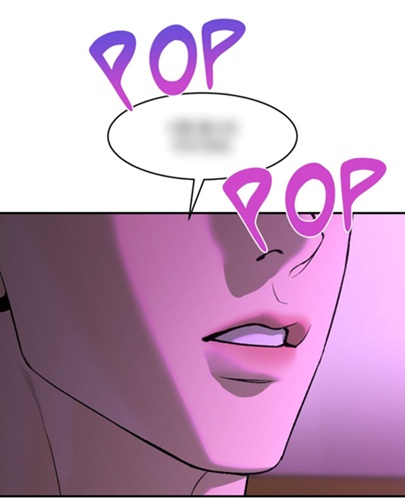 (chapter 84), the fireworks erupt, and Kim Dan turns his head too late.
  (chapter 84) Readers have replayed the blurred panel again and again, straining to decipher the muffled shapes of his mouth. Some are convinced that this is the confession, the moment the wolf finally says aloud what his body has been whispering for months. One Jinx-phile, @4992cb even insisted she had cracked the code: five syllables,
  just enough to match the Korean 좋아해 김단 (jo-a-hae Kim Dan)—“I like you, Kim Dan.”
And truthfully, the scene encourages such a reading. Fireworks often accompany love confessions in East Asian media 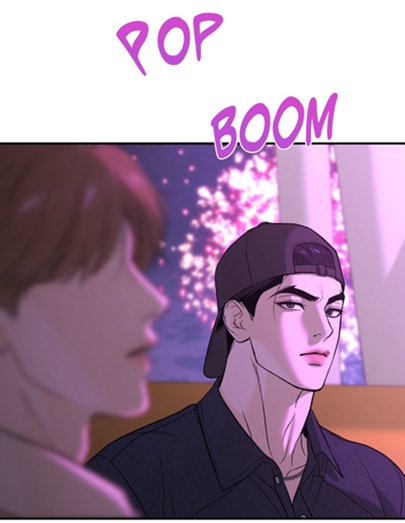 (chapter 84) —especially Japanese summer festivals where boys and girls, dressed in yukata, confess beneath crackling skies. Fireworks symbolize joy, romance, fleeting courage. It is no wonder many readers assumed that Mingwa was drawing on this cultural grammar: purple night sky, glowing lights, two lonely figures suspended above the world. A confession seems almost inevitable. And if it truly was a love declaration, then the champion’s refusal to repeat himself
  (chapter 84) would make perfect narrative sense—confession lost, moment gone, courage spent.
But before we accept the romantic surface, we must pause. Something about the staging feels off—deliberately off. Why would Mingwa construct a confession that the receiver cannot hear? (chapter 84) Why give Kim Dan the long-awaited moment he has yearned for, only to snatch it away with the noise of exploding light? Yes, despite his words, Kim Dan still had the hope to be loved by the athlete. Hence he kept thinking about the athlete’s motivations for his “stay and care at the seaside town”.  (chapter 62)
  (chapter 77) Why does Joo Jaekyung speak exactly when the fireworks begin, as if choosing the one moment when he is guaranteed to be drowned out? (chapter 84) And most importantly: what emotion pushed him to open his mouth in the first place?
 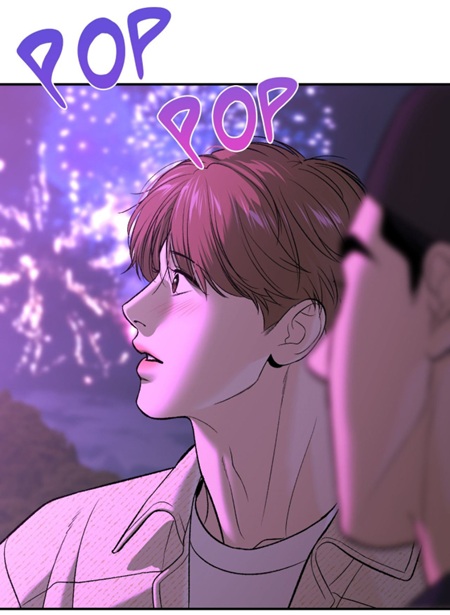 (chapter 84) Was he truly confessing love—or was he trying to verbalize something far more raw, far more primitive, far more difficult?
Before we can decode the stolen syllables, we need to examine the entire machinery around this moment: the champion’s posture, the lighting, the soundscape, the timing, and the emotional triggers accumulated over previous chapters. Only then can we begin to understand what he tried to say, and why the author ensured that Kim Dan—the boy who has always longed to be chosen—could not hear it.
The Mechanics of a Stolen Confession
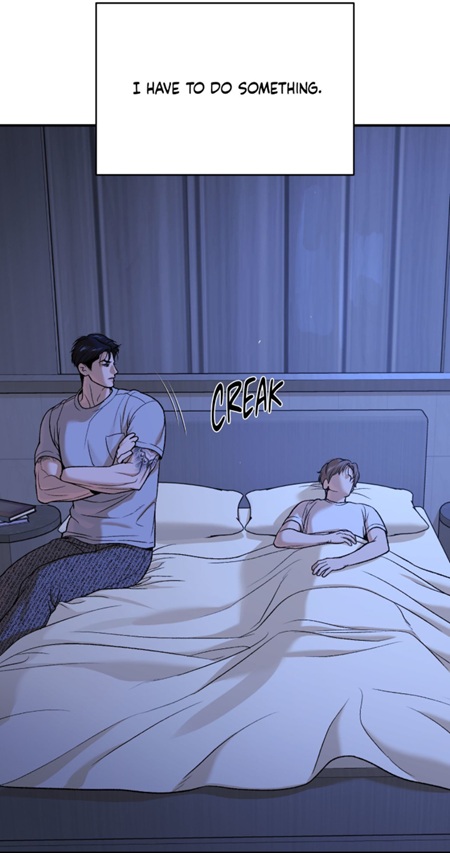
Everything about the Ferris wheel cabin — the positioning, the posture, the lighting — undermines the idea that Joo Jaekyung was intentionally directing his words toward Kim Dan. The mechanics of his body say more than the bubble ever could. To begin with, Jaekyung is not fully facing Kim Dan when he begins to speak. (chapter 84) How do we know this? His body tells the truth before any words do: his torso is angled half-way toward the window and half-way toward Kim Dan, caught between desire and retreat. His arms remain crossed — a classic defensive posture — as if he is bracing himself against the very feelings he is trying to verbalize. This is not the stance of someone delivering a confident love confession; it is the posture of a man attempting something dangerous, something he is afraid to expose.
Only his head turns slightly toward Kim Dan, a diagonal tilt rather than a direct orientation. (chapter 84) It signals hesitation, testing the water, not a deliberate act of addressing someone face-to-face. And the light confirms this: the violet firework glow still falls on the same side of his face as in the previous panel, proving that he did not rotate his body or head enough to truly face Kim Dan while speaking. (chapter 84) He remains more oriented toward the window, toward the blur of lights outside — toward a safer, less intimate direction.
This halfway posture makes everything clear: Jaekyung is speaking from a place of longing mixed with fear, practicing honesty without yet daring to look directly at the person who provokes it. It is because as soon as his fated partner asks him to repeat, he turns slightly his head away, to the window. (chapter 84) When someone truly wants to be understood, they turn instinctively toward the listener. But when Jaekyung turns away, he is not refusing vulnerability — he is choosing fear. Turning his head toward the window is an instinctive retreat into the only safety he knows: distance.
This is crucial: he begins to speak while refusing to meet the therapist’s gaze. (chapter 84) The words escape sideways — literally.
Then comes the second mechanical detail: timing. He opens his mouth precisely at the moment the fireworks erupt. Deep down, he knows the noise will drown his voice. This is not accidental. It mirrors episodes 76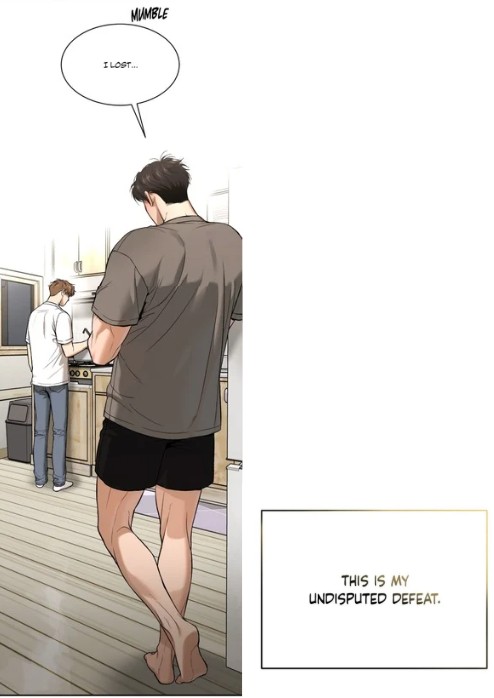 (chapter 76) and 79
  (chapter 79), where he “speaks” only when the other man cannot truly hear him. At the hostel, the mumbling was barely audible: yet according to my observation and deduction, doc Dan seems to have caught something. as later we discover this scene from the champion’s memory:
 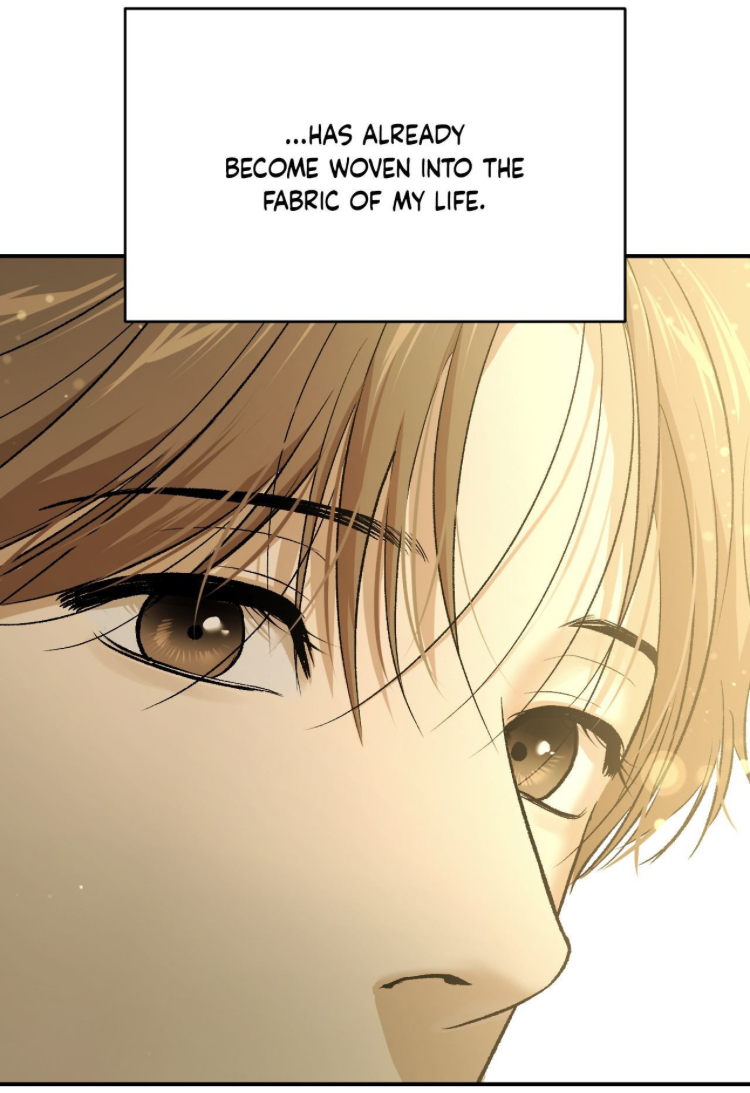 (chapter 77) He already knew that the athlete was standing next to him. However, observe that this vision focused on the doctor’s gaze was accompanied with silence. This means, doc Dan acted, as if he had heard nothing. So if he heard, what did the physical therapist catch exactly in the kitchen? “I lost…”, but it was devoid of any context. Doc Dan had no idea what the director Hwang Byungchul had advised to his former student.
 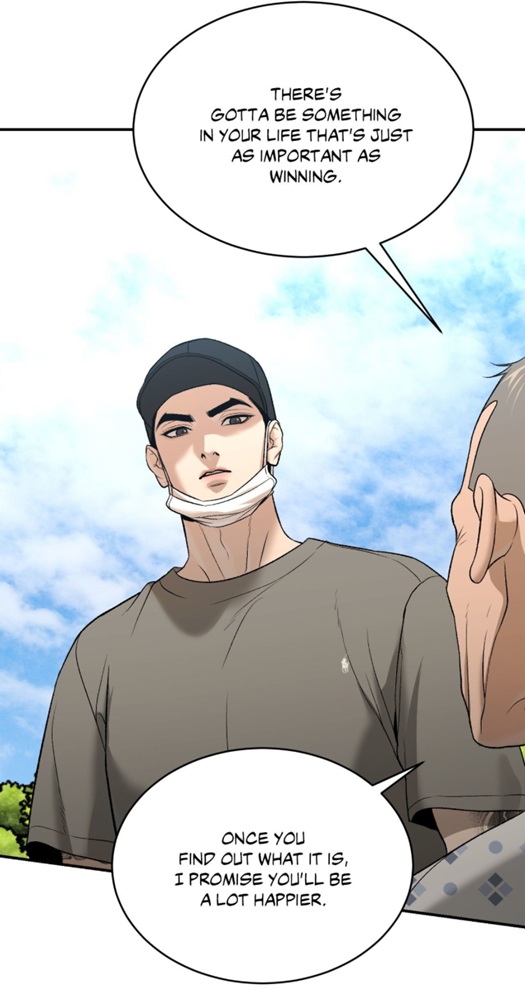 (chapter 75) He could not know that “I lost” referred to something far more intimate: Jaekyung losing control over his own emotional detachment, he was totally vulnerable in front of doc Dan. His heart was stronger than his “mind and fists”. Naturally, if Kim Dan interpreted the phrase at all, he would connect it to the only “loss” he understood: the tie with Baek Junmin. A humiliating defeat. A source of shame. This misinterpretation perfectly explains why in the cabin, the hamster immediately assumes that the champion is once again determined to regain his title:
 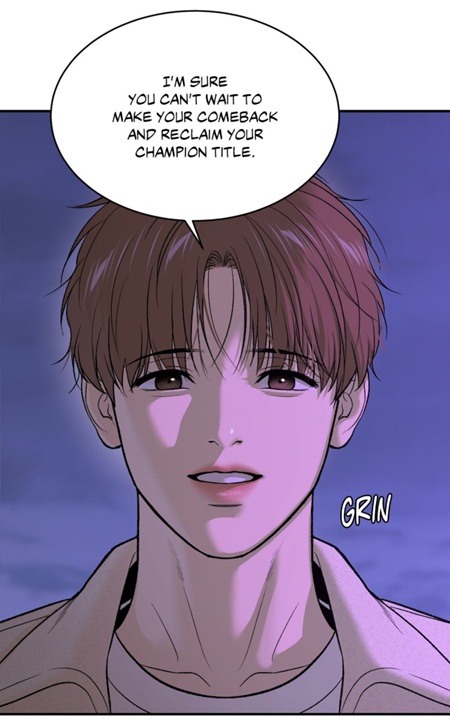 (chapter 84) He is taking the champion’s words at face-value.
  (chapter 77) He trusts the explanation Jaekyung himself gave under the tree. And here lies the deeper revelation: Kim Dan’s misunderstanding exposes the true meaning of the tree confession. Why did Jaekyung suddenly accept the match? Why frame it entirely in terms of “I need you for these two fights”?
Because work was the only safe language he had left for reconnecting with the therapist. He could not say, “Please stay with me.” He could not say, “I don’t want to lose you.” So he said the only thing he believed he was allowed to say:
“I need you for my return match… and my title match.”
It is a substitution — a mask — a plea disguised as practicality.  (chapter 84) A deadline designed to keep Kim Dan close without revealing the depth of the emotional dependency underneath. Finally, before we even analyze posture or timing, we must acknowledge the ghost that is sitting inside the cabin with them — Jaekyung’s own admission of dishonesty. Just minutes earlier, the narrative revealed again a thought he had never dared to voice aloud: (chapter 84) This line is essential, because it exposes the truth behind every failed confession that came before it: Jaekyung did not rekindle with doc Dan with honesty. His first instinct was deception (lie by omission), not vulnerability. Keeping Kim Dan near him mattered more than telling him the truth. So his “love” was still more influenced by possessiveness.
And that is precisely why his apology in the cabin lands with such weight. 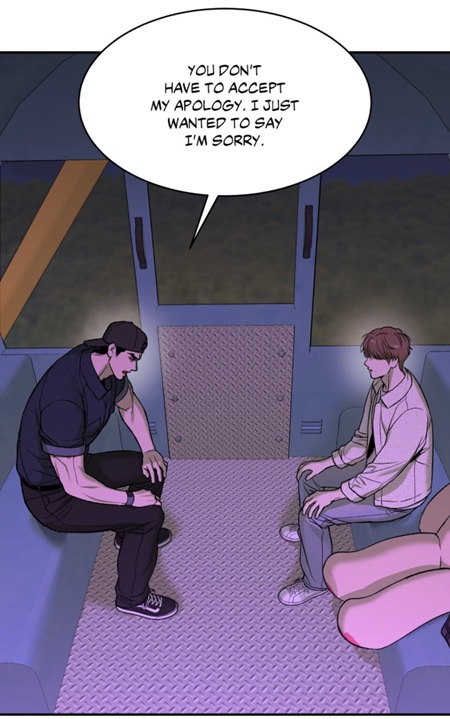 (chapter 84) For the first time, he admits wrongdoing without deflecting, without rage, without pride. This apology is not strategic; it is confessional. A tone we have never heard from him before. It is no coincidence that just before, he employed this expression:
  (chapter 84) This is the language of surrender — not to defeat, but to vulnerability and selflessness. The champion who once insisted on keeping Kim Dan “one way or another” (chapter 84) now articulates the opposite impulse: the willingness to release him, to give him a choice. (chapter 84) Kim Dan can actually never forgive him. He is giving up, on his possessive love — the possessiveness that fueled all his earlier attempts to hold onto Dan through contracts, pressure, intimidation, manipulations or work-related obligations.
Here, his grip loosens. Here, his desire is no longer expressed as ownership, but as remorse. And this shift matters profoundly for the blurred confession. (chapter 84) By apologizing, Jaekyung crosses a threshold he has never crossed before: he speaks without power, without defense, without dominance.
For the first time, he tells Kim Dan something that is not a command, not a justification, not an excuse — but a truth about himself. Yet this emotional shift, as liberating as it is, does not make him ready to say “I love you” or even “I like you” in a clean, intentional, adult way. In fact, the opposite is true. When guilt falls away, he does not step into romantic maturity — he reverts to emotional childhood. This explicates why later he felt so embarrassed on his bed, hiding his face under the pillow. 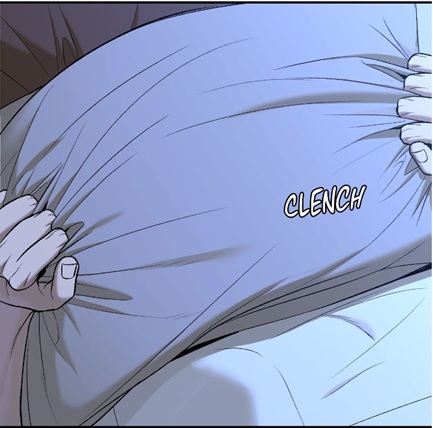 (chapter 84) Thus for me, in the cabin the champion became, for a moment, the boy with no mother’s gaze, no father’s protection, no safe place to rest. He must have said something cheesy, something a young person would say. Purity returns before experience does. Honesty returns before articulation. And in that moment inside the cabin, Mingwa makes a decisive artistic choice: we do not see Jaekyung’s eyes. (chapter 84) The panel hides them completely — not out of convenience, but out of protection. It is as if the author herself shields the wolf’s vulnerability from the reader, granting him a moment of privacy at the precise instant he attempts something emotionally dangerous.
Just as in episodes 76 and 79, his words are not fully directed at Kim Dan. They are spoken near him, not to him.
They slip out sideways — half internal, half external — the verbal equivalent of a heartbeat too quiet to be called speech. In other words, what happens inside the cabin is not the flowering of romantic eloquence. It is the first trembling attempt of someone who has never been loved to express the only version of love he knows: instinctive, needy, unpolished, raw.
This is why he cannot possibly be saying a line as adult and structured as “I love you” or even “I like you.”
Such sentences require three things he does not possess yet:
- A sense that he himself is lovable → he does not. Hence he still views himself as nonredeemable and as a burden.
- A sense that Kim Dan feels the same → he has no proof. Besides, doc Dan keeps avoiding his gaze, feels uncomfortable in front of him. He is not speaking his mind. He keeps reminding him of their limited contract.
- A sense of equality in the relationship → they are not there yet. Joo Jaekyung feels now inferior with all his sins and wrongdoings. Due to his last words, it becomes clear that he is not expecting something in return.
What he can say at this stage — and what fits the emotional mechanics of the scene — is something far younger, far simpler, far more primal, like for example “Stay with me” or “I want to kiss you ” or “I want to hold you”…
These are not love declarations. They are the vocabulary of a neglected child whose first experience of safety has finally returned — and who now fears losing it more than anything else.
And crucially, this would explain everything about the staging:
- why he chooses fireworks (the sound protects him from being truly heard),
- why his body angles away (he speaks sideways, not directly),
- why his voice is blurred (because the reader is not meant to hear it yet),
- why he panics when Kim Dan asks him to repeat,
- why he instantly retracts with “Never mind.”
A man confessing love does not recoil. A child confessing need always does. It is also why the author hides the line. Not because it is a grand romantic confession, but because it is too emotionally naked, too immature, too early, too cheesy. A sentence like “I wish to …”, whispered by a man who has never held anyone without ownership, is more intimate than any polished “I love you.”
And Mingwa knows it. The confession is blurred not because it declares love, but because it reveals Jaekyung’s inexperience with love. He can finally be honest — but he cannot yet be articulate.
He can reach — but he cannot yet claim. He is pure — but not ready. Hence later, he is seen wearing a white t-shirt for the first time. 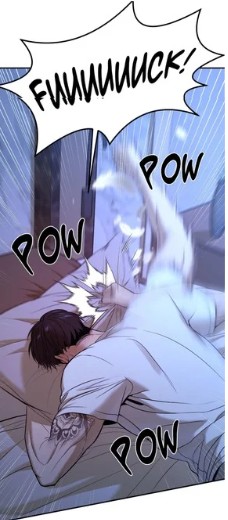 (chapter 84) This pigment stands for innocence, purity, new beginnings and even equity.
Innocence and purity: White is the beginning of everything, before anything is muddied or thinking is ‘colored’.
New beginnings: White represents the clean slate, helping us through times of stress, and allowing us put the past behind us and preparing us to move on.
Equality and unity: White represents the positive as well as the negative aspects of all colors. It contains an equal balance of all the colors of the spectrum. Quoted from https://www.empower-yourself-with-color-psychology.com/color-white.html
That is why the fireworks stole the words. 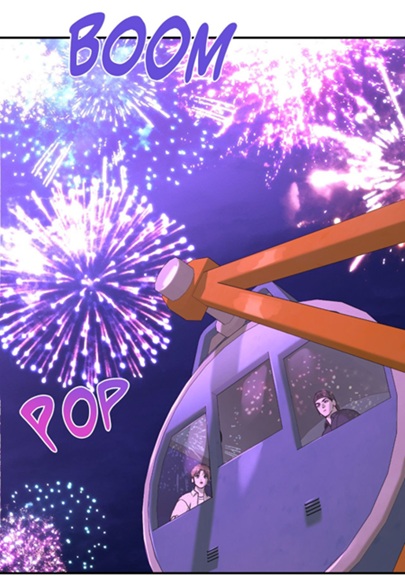 (chapter 84) Because they were not yet meant to be received, only meant to be released. The fireworks allow him to finally attempt a more honest sentence, but in conditions where it cannot reach its target.
Noise replaces courage.
Light replaces eye contact.
Fear replaces clarity.
A man who has only just begun to tell the truth about his wrongdoing cannot yet tell the full truth of his love.
His apology creates the emotional opening — but it also exposes how unprepared he is to verbalize the feelings that have been building silently for 84 chapters. So far, he has never verbalized his desires and emotions, hence he kissed doc Dan right away in the swimming pool.  (chapter 81) Yet this is also the limit of what he can say.
But let’s return our attention to the scene in the penthouse (chapter 79), which is similar to the scene in the kitchen and at the amusement park. Though the star was once again mumbling, this time Doc Dan reacted to his words. However, Jinx-philes can sense a divergence between the other two scenes (chapter 76) (chapter 84). It is because doc Dan was looking at him this time:  (chapter 79) Thus he could see the athlete’s mouth moving and hear sound. Nevertheless, observe that the moment the wolf reached to the doctor’s words, he bowed his head and looked down. From this
 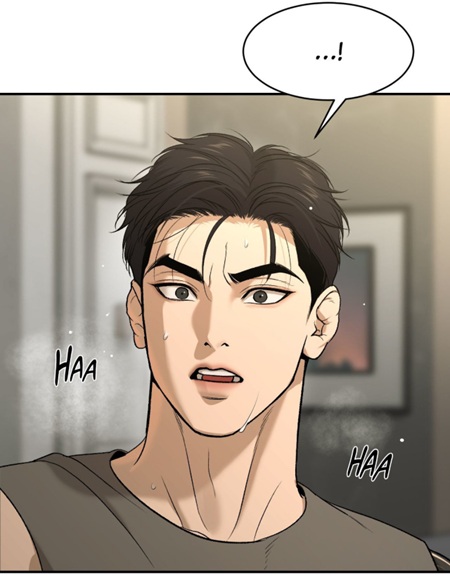 (chapter 79) to this (chapter 79) As you can sense, he fears his lover’s gaze, a new version of this situation:
  (chapter 79) However, he doesn’t fear coldness, but ridicule and mockery, the father’s gaze:
 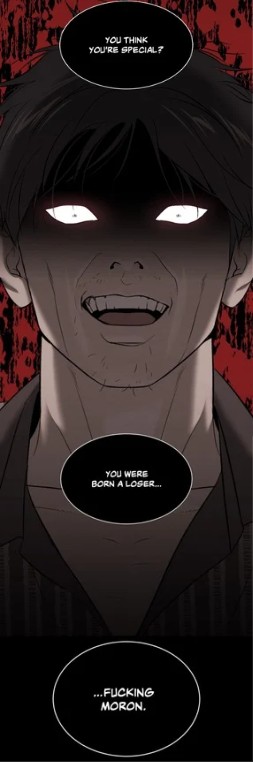 (chapter 73) Under this light, people can grasp why Joo Jaekyung was not facing doc Dan directly in the cabin. To conclude, the mechanism is identical, but amplified. (chapter 84) Instead of mumbling, he lets the fireworks perform the silencing. It is not that the environment interrupts him; it is that he chooses a moment when interruption is guaranteed. However, one detail caught my attention: he’s getting physically closer to Doc Dan!! The distance is getting reduced. It was, as if he was practicing how to confess his affection. And so far, he never used the words « I love you ».
 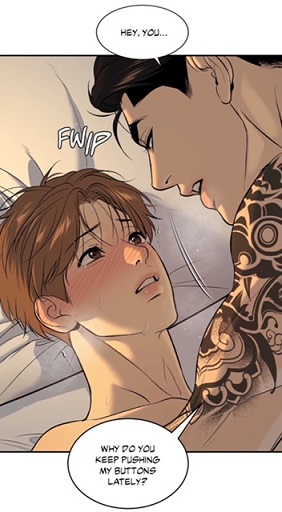 (Chapter 44) (chapter 76) At the same time, Jinx-philes can detect the existence of another common denominator: the physical therapist’s gaze.
The Spark behind the Wolf’s Confession
To understand the blurred sentence — the words the firework stole — we must first shift our attention away from language entirely and back to what truly matters in this scene: vision. What drives Joo Jaekyung to the brink of confession in chapter 84 is not romance, nor timing, nor even the apology he had just managed to deliver. It is Kim Dan’s gaze. (chapter 84) He is moved by such a pure gaze, full of awe.
The panel makes this undeniable. Before speaking, the champion is watching the therapist’s face illuminated by fireworks, softened into wonder. (chapter 84) This is not the gaze of a caretaker, nor a tired worker, nor a subordinate fulfilling a duty. It is the open, trusting gaze of a child witnessing beauty. And for Joo Jaekyung, that gaze is both intoxicating and devastating.
The champion has lived his entire life without soft eyes directed at him. His mother, always drawn from behind, is eyeless — a woman who never truly saw him. 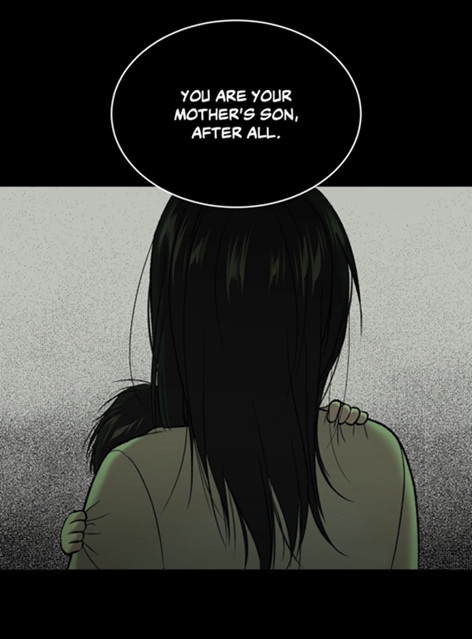 (chapter 73) Besides, the head of her position is indicating that she was not looking at her son, the boy was hiding his face from Joo Jaewoong and his mother. Then his father mocked him, degraded him, and used resemblance as an insult: “ (chapter 73) Moreover, Hwang Byungchul reduced him to a lineage of failure or talent, not a person deserving recognition. He constantly compared him to his father
  (chapter 74) or his mother (a poor but good mother), he was not seen for whom he was: a child, a boy. Jinx consistently links sight with recognition, and recognition with love.
  (chapter 53) Jaekyung has never been granted either.
  (Chapter 45) Thus when he got upset with the present, he indirectly expressed the wish to be « looked at ». Moreover, in his visions or memories, this is what he keeps seeing:
  (chapter 54)
  (chapter 75) Doc Dan’s gaze!
This is what makes the locker-room scene in chapter 51 so crucial. Kim Dan looks at him with shock, vulnerability, and a plea:  (chapter 51) And for the first time, Jaekyung freezes.
 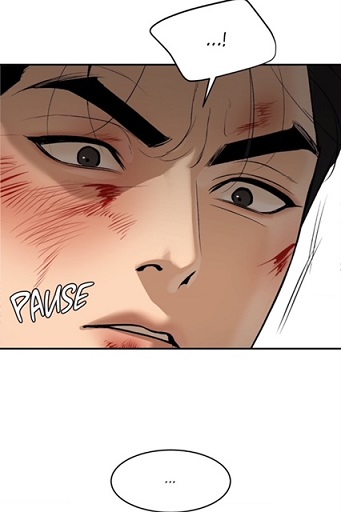 (chapter 51) His breath catches; his eyes widen. It is the moment he realizes his mistake. He never thought that doc Dan had been trusting him. That moment marks the first rupture in his emotional armor, not only because it hurt, but because it revealed. He realizes with terror that he wants to be seen by Kim Dan, but when he faced such a gaze, he could only feel guilty and bad. Thus it is not surprising that later, his nightmare let transpire his guilty conscience. (chapter 54) He is the one who made his fated partner cry. No wonder why he first tried to find a new toy, he felt uncomfortable.
In the Ferris wheel cabin of chapter 84, he encounters his fated partner’s gaze again — (chapter 84) but now it is purified, childlike, unguarded. Kim Dan glows under the fireworks, mesmerized by beauty instead of violence, by wonder instead of fear. And Jaekyung wants — desperately — for that softness to be directed at him. Not at his victories. Not at his muscles. Not at the persona he built to survive. But at the man beneath all of it. A man worthy of admiration, affection, safety. A man who could be held, kept, loved. That’s why I wondered for a while if Joo Jaekyung had not copied Arnaud Gabriel’s flirt  (chapter 82), as the champion has always used his surroundings as a source of inspiration.
 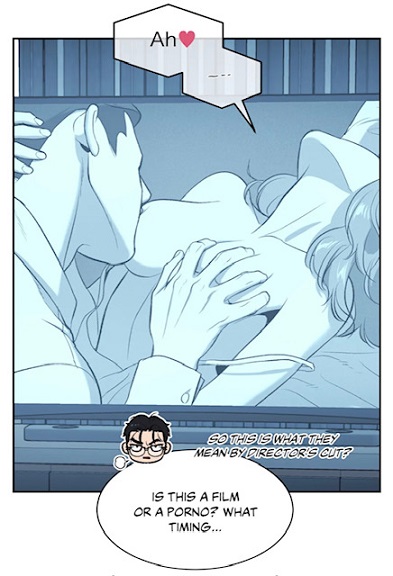 (Chapter 29) It would also fit with 5 syllabes in Korean. And it would be cheesy too. Yet, I have my doubts about this theory which I will explain further below. Nevertheless, one thing is sure. The champion loves the doctor’s eyes and they have the power to move not only his heart but also his mouth. He is encouraged to verbalize his emotions.
This is the true trigger of the confession. Not desire in the adult sense, and certainly not a strategic “I like you” or “I love you,” but a longing to be seen — and therefore, to be wanted. Every wound in Jaekyung’s life is tied to vision: the eyeless mother who vanished, the father who asked whether she would even want to live with him if she saw what he had become, the locker-room moment that shattered his self-perception. All of this returns when he sees Kim Dan’s shining eyes reflecting the fireworks.
He wants those eyes turned toward him with love. Not gratitude. Not dependence. Not fear. Love. What he wants most
and what he fears most come from the same place: Kim Dan’s gaze.  (chapter 84) The gaze under the fireworks triggers emotions in him. Thus he blurted out something. But for me, he does not know how to say “I love you.” He cannot even say “I like you.” Those sentences belong to someone who has matured emotionally — someone who can identify feelings properly, but so far he keeps saying: “to stay by his side” and his « affection declarations » were all linked to negativity.. Thus my idea was that Joo Jaekyung could have said this: “I want to hold you!” (안고 싶어 너). Let’s not forget that so far, the champion had never expressed such a longing before; a warm embrace. He would always follow his instincts:
 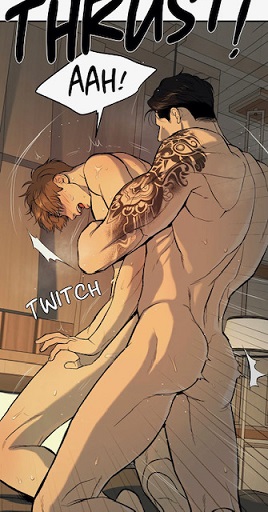 (chapter 4)
  (chapter 43)
 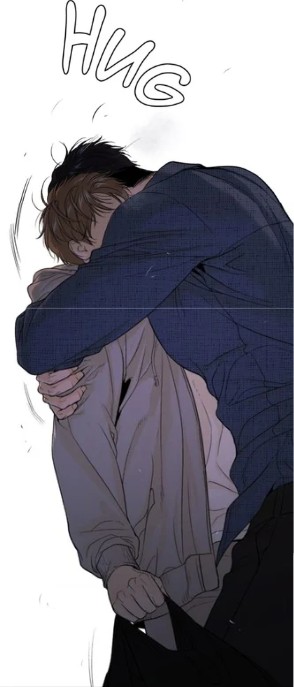 (chapter 69) The hug represents a metaphor for “staying by his side, for home and to be seen”. Moreover, in French embrasser can mean kiss and hug. And strangely, I noticed that the protagonists were never looking at each other during an embrace.
  (chapter 44) And let’s not forget that such a gesture is strongly intertwined with “childhood”.
  (chapter 65) It is for “babies”. No wonder why he retracted immediately.
To conclude, the words that escape him in the dark — too soft to be caught, swallowed by the firework’s explosion — become the linguistic equivalent of reaching toward warmth without daring to touch it. The sentence he forms must fit his emotional stage: childlike, inexperienced, driven by instinct rather than maturity. It must reflect longing, not possession; desire, not declaration. And it must match the blurred outline of five syllables we see in the panel. (chapter 84) 안고 싶어 너: I want to hold/hug you!
The Secret behind the Blurred Words
And now, you are wondering what other secret could be hidden behind these words. It is related to the physical therapist him. Why did Mingwa, the goddess of “narrative fate”, ensure that doc Dan couldn’t hear the athlete’s words? (chapter 84) First, recall that in the previous parallel scenes (76 and 79), doc Dan is portrayed as someone who doesn’t hear Jaekyung’s confessions. But as I argued earlier, we must question whether this is truly the case — especially the one in episode 76. The panel arrangement suggests that something was heard, but not acknowledged. Then during the fireworks, he does not say, “I couldn’t hear what you said.”
He says: “I didn’t catch that.” “Catch” implies arms, grasping, holding — the very things stolen from him as a child.
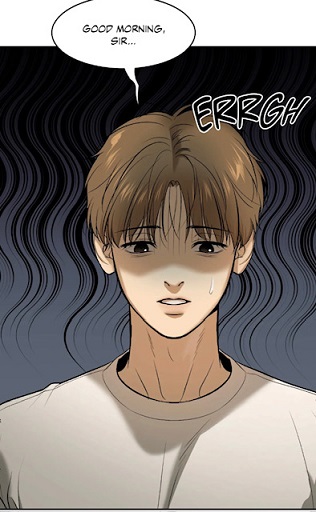
And then comes the detail that betrays everything: the small drop on his cheek. A sign of discomfort… and something deeper: recognition. The drop on his face was not present before. (chapter 84) For me, everything points to the same conclusion: doc Dan might have heard something — but he cannot yet allow himself to process it.
This denial explains his expression in the shower at the hotel: 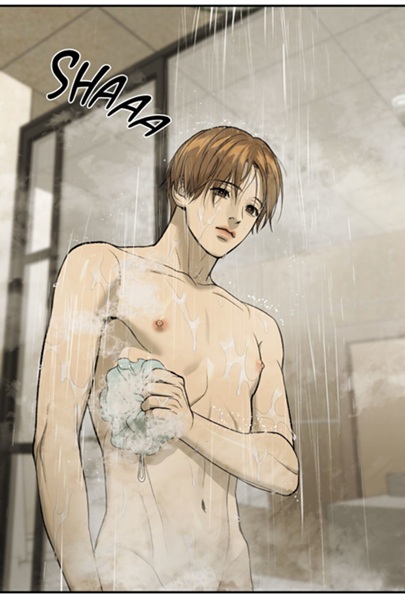
 (chapter 84) Here, the doctor looks sad and wounded. His eyes are unfocused — he is not seeing the present. The water running down his eyelashes gives the impression of tears, even though he is not crying. His gaze is distant, fixed on something internal. His mouth looks tense, almost trembling. The mouth especially is a clue: Kim Dan’s emotions always gather there when something from the past resurfaces.This is the expression of someone thrown into an involuntary flashback. He is inside a memory. This explicates why this scene is similar to the champion’s shower after the latter had met Baek Junmin:
 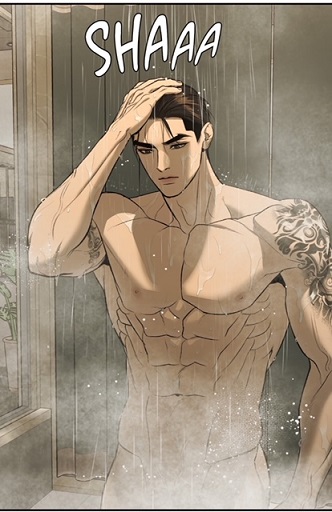 (chapter 49)
  (chapter 49) Both scenes show a man pulled violently into a buried memory. Thus, my assumption is simple: the champion said something that pierced straight into Kim Dan’s oldest wound and brought his trauma to the surface. And this brings me to my next observation. Inside the cabin, there are not two people — there are three: the champion, the therapist, and the Teddy Bear.
 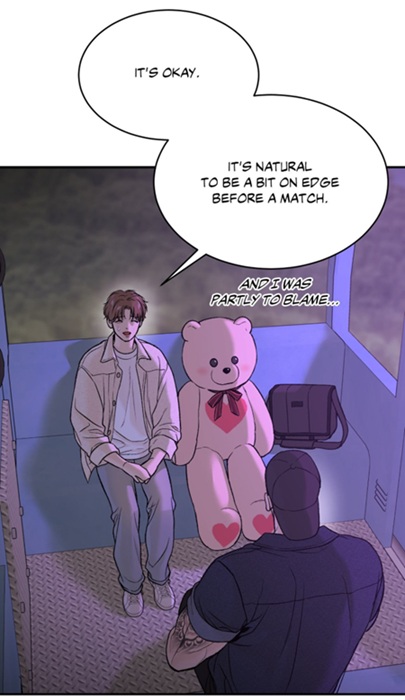 (chapter 84) Furthermore, we have a window. We have a phone (dead, but present). We have a childlike toy — symbol of stolen innocence.
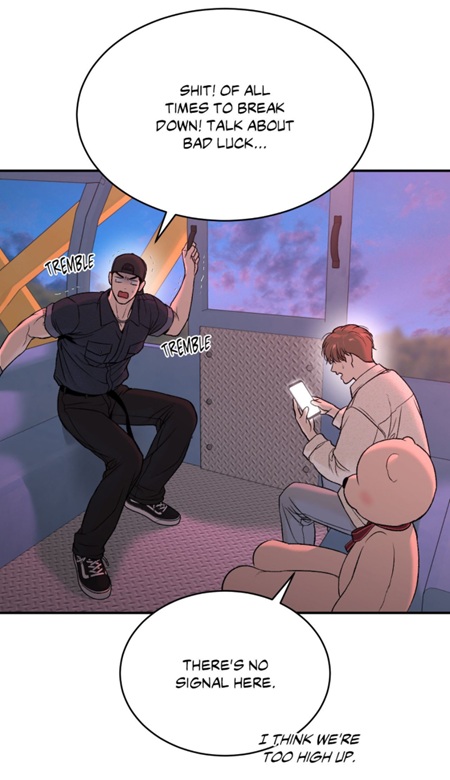 (chapter 84) And now, look again at episode 19:
  (chapter 19) A window with no view. Three figures: halmoni, the boy, and the phone placed between them like a knife. And the sound structure is identical, but reversed:
silence – sound – silence in episode 19
vs
sound – silence – sound in episode 84, as the Teddy Bear is a silent “witness”. In both scenes, something is stolen.
In both scenes, a child loses something he cannot name. Thus, what Jaekyung said must have resembled the emotional tone — if not the wording — of the words spoken over the phone on that catastrophic day.
This explains why Kim Dan ends the scene wearing black instead of white. 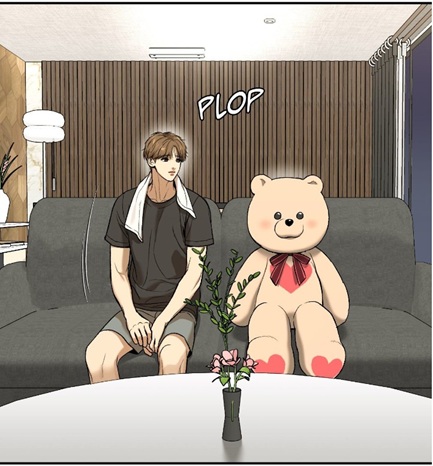 (chapter 84) It is not a fashion choice. It marks the moment when innocence collapses and the past reopens.
And now compare the cabin (chapter 84) with the memory that precedes the parents’ disappearance. You will notice the huge difference: the overwhelming silence inside the house. The halmoni sits beside the phone. She must have heard everything. She must have heard the child as well, if the latter spoke She holds him tightly by the shoulder — as if trying to support him. (Chapter 19) To conclude, she knew something was happening. This recollection represents a repressed memory, and so far doc Dan has always avoided to face his biggest fear: his abandonment issues and the loss of his “parents”.  (chapter 56) In other words, wearing black is more than just a change of personality or mourning. It becomes the color of mystery, the beginning of descent into truth.
  (chapter 84) However, observe that doc Dan is holding, even squeezing the teddy bear’s hand, a sign that he is rekindling with his lost childhood. We are getting closer to the revelation behind the photograph — the day doc Dan has never willingly shown to Joo Jaekyung.
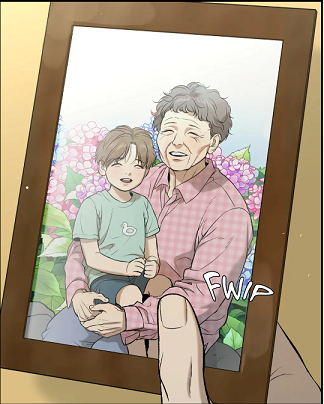 (chapter 19). Observe that in the penthouse, doc Dan has never placed the frame
 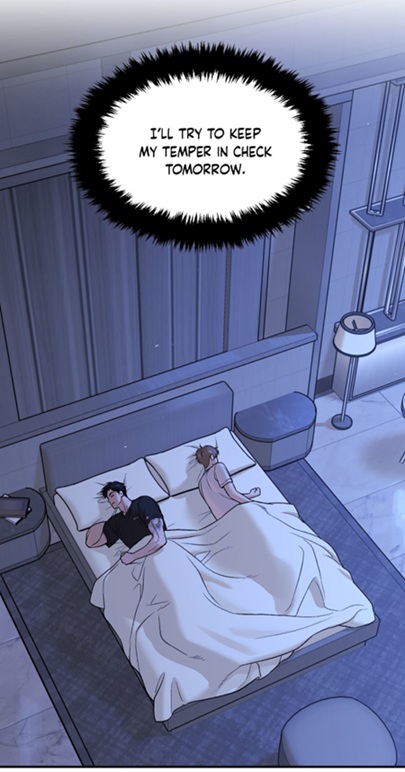 (chapter 79) on the night table.
And what is the other denominator between episode 19 and the amusement park?
Theft.
Stolen childhood.
Stolen confession.
Stolen clarity. (chapter 84)
Exactly like in the cabin, (chapter 19) the words on the phone are inaudible. And now, you comprehend why I came to link the athlete’s blurred words to embrace and longing, as the grandmother’s embrace couldn’t diminish or erase the child’s pain. Finally, Jinx-philes can detect another pattern, the absence of gaze. Not only the boy can not see the person on the phone, but also the characters are turning their back to the readers which reinforces the mystery surrounding the conversation and the reactions of the listeners.
Now, connect it with the lost teddy bear  (chapter 21) and
  (chapter 47). Dan once had toys — proof that once, someone loved him enough to give him gifts which contrasts to the wolf’s childhood.
  (chapter 84) Every time innocence is ripped away, a teddy bear disappears from the story.
So what if Jaekyung’s whispered sentence — a gift of raw affection — triggered the memory of another gift? What if the words under the fireworks echoed the tone of something said just before Dan’s world collapsed?
If this is the case, then doc Dan did not miss the confession entirely. (chapter 84) He remembered something far more painful. It is important, because by remembering his past, he can regain his own identity and get stronger mentally and emotionally. The scene in the cabin represents the positive version of the locker room, which signifies the return of “trust”. That’s why I am more than ever convinced that something at the weight-in 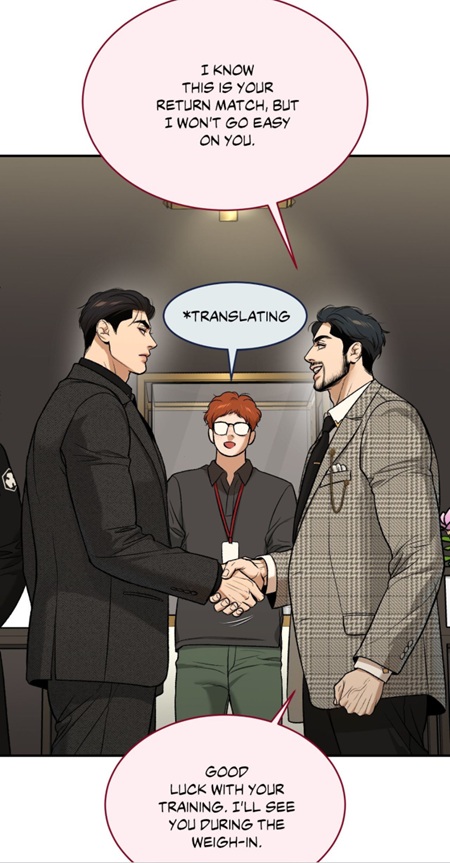 (chapter 82) will happen linked to the protagonists’ past (recent and childhood). Let’s not forget that doc Dan still has no idea what Joo Jaekyung went through after his departure: the slap, the drinking, the headache and the indifference of Team Black, just like the athlete has no idea about the blacklisting and bullying in the physical therapist’s past.
 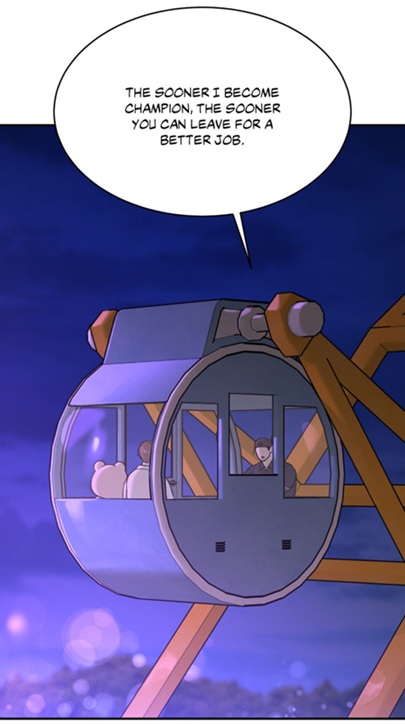 (chapter 84) So by wearing black, doc Dan indicates that he is gradually becoming responsible for Team Blackand Joo Jaekyung the athlete. (chapter 84) They should realize that their life is not so different from each other, in fact they share the same pain and trauma.
Feel free to comment. If you have any suggestion for topics or Manhwa, feel free to ask. If you enjoyed reading it, retweet it or push the button like. My Reddit-Instagram-Twitter-Tumblr account is: @bebebisous33. Thanks for reading and for the support, particularly, I would like to thank all the new followers and people recommending my blog.



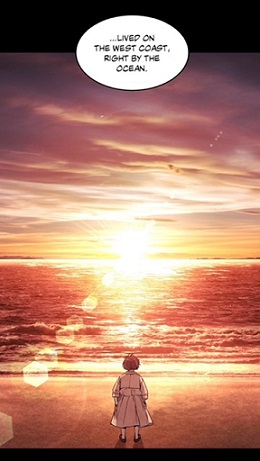 (chapter 53), yet she kept her distance. Observe that she only talked about one time experience. She sensed its danger and built her life on the solid ground of caution, duty, and control. In other words, she belongs to the world of the shore
 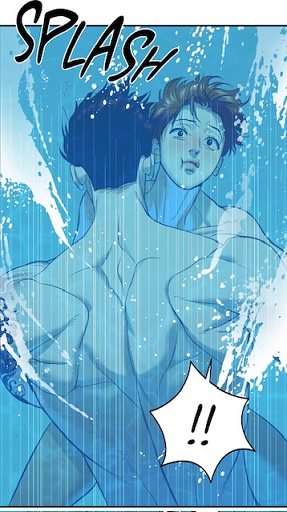 (chapter 28) and learn that not everything can be postponed or entrusted to someone else. Water, in this sense, rejects fatalism. It calls for motion, for risk, for personal responsibility.
 (chapter 80) And that intuition resurfaced and was confirmed in episode 80, when another day off brings the couple back to the pool. This time, the doctor steps into the water willingly.
 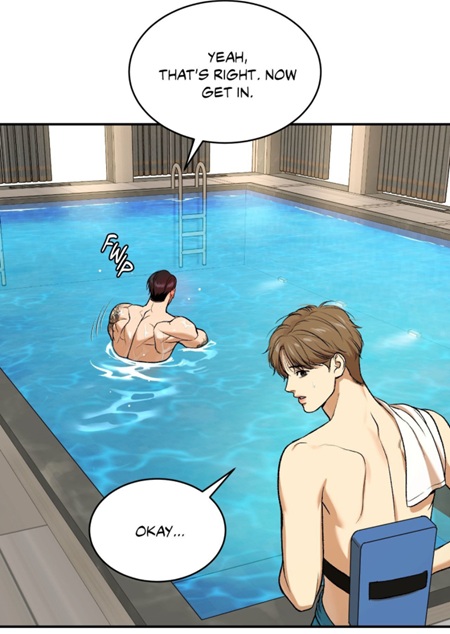 (chapter 80) He is no longer the man waiting to be rescued; he is the man learning how to swim. The champion’s words
  (chapter 80) distill the new doctrine: don’t wait for salvation
  (chapter 80), create your own buoyancy. Between the first swim
 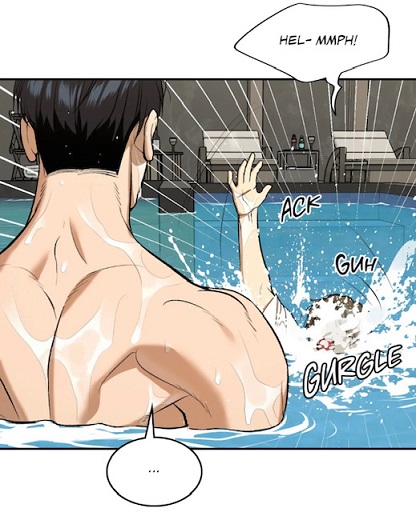 (chapter 27) and this second lies the true point of no return—where superficial judgment turns into reflection, dependency into self-trust
 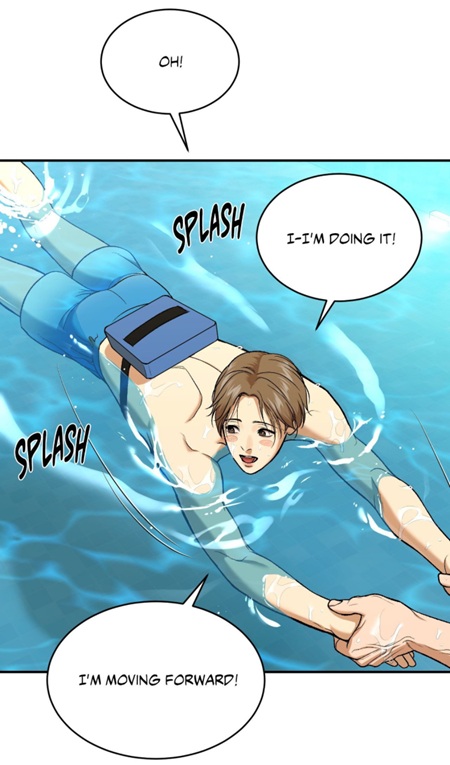 (chapter 80) and the rejection of powerlessness,
  (chapter 28) into the first stirrings of love
 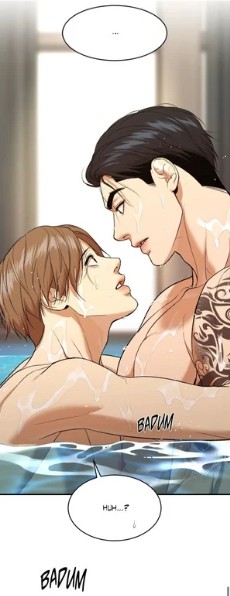 (chapter 80).
 (chapter 53) Safety lay in patience and dependence. Even when she later spoke with the champion by the sea, she avoided mentioning the ocean —as if to deny that any movement beyond her control could exist.
 (chapter 65)
  (chapter 80) Yet her absence from the pool scene is precisely what reveals her theology of avoidance. The pool was never her domain because her life revolves around work, not pleasure. She has no notion of rest without guilt, no concept of joy detached from utility. For her, swimming would appear frivolous—something “unnecessary” as long as one stays on solid ground. Jinx-philes should keep in mind that she never gave such a task to Joo Jaekyung. Her instructions to him were always practical, delegating care outward: take him back to Seoul, bring him to a big hospital and make sure he’s safe.
  (chapter 65) When she sees them together, her first reaction is not pride or relief but mild reproach— doc Dan should have left already.
 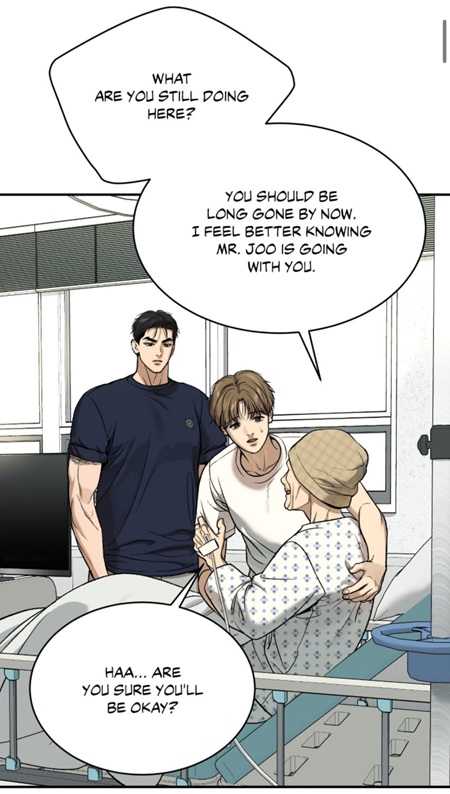 (chapter 78) The subtext is unmistakable: she expected obedience, efficiency, not attachment. Furthermore, her final instruction—“Make sure you see a doctor regularly”—
 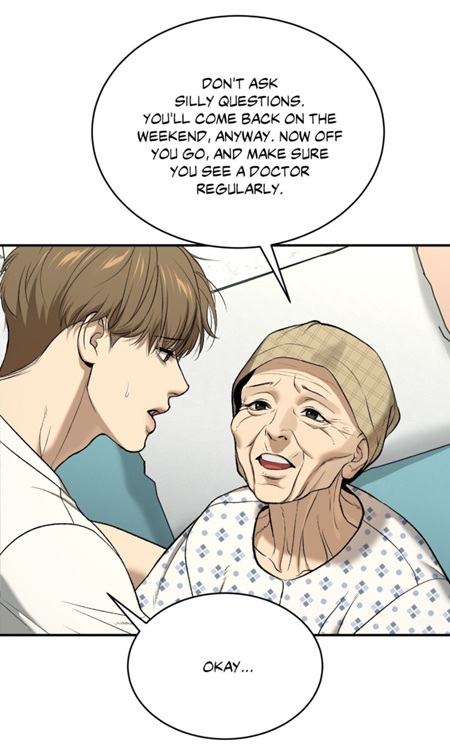 (chapter 78) sounds like ordinary concern, yet it hides her familiar logic of blame. It is as if she were implying that Joo Jaekyung has failed to fulfill her favor because Kim Dan has resisted care. In her eyes, the grandson is still the one responsible for trouble; the athlete’s role remains that of the dependable proxy who must “fix” him. What makes this moment striking is her tone of urgency, so unlike her habitual fatalism. The woman who once repeated “I’m the same as always”
  (chapter 65) suddenly speaks as though time is running out.
 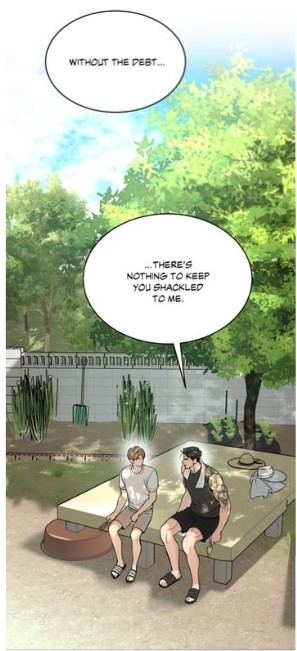 (chapter 77), respect and care. What she calls delay is, in truth, meditation and transformation.
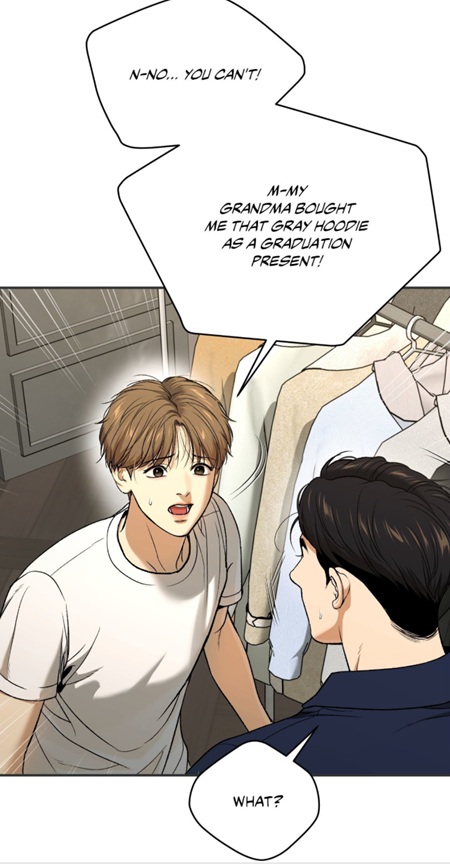
 (chapter 80) It was her graduation gift, yet it had nothing to do with his new profession or status. In contrast, the first episode already shows Kim Dan in a blue therapist’s uniform, name tag neatly pinned — a garment he must have purchased himself.
  (chapter 1) Traditionally, a graduation present helps the recipient embark on a career — like for example, a watch, a suit, or even a briefcase — symbols of adult entry into the job market. By offering him a hoodie instead, she unconsciously devalued her grandson’s professional worth. The garment belongs to the domestic sphere, not the workplace; it wraps him in comfort rather than readiness. In a moment meant to celebrate his arrival into public life, she reinscribes him into the private one — the house, the caretaker role, the obedient child. He doesn’t look like someone who went to university.
 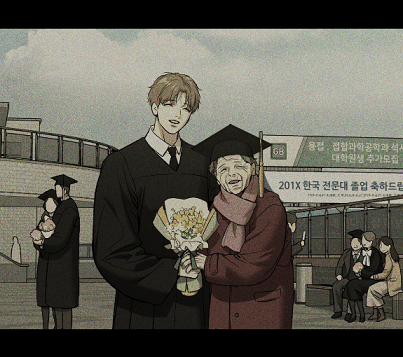 (chapter 47) There was no curiosity about his career, no acknowledgment of his competence—only the quiet satisfaction that through her endurance, she had produced a “doctor.” In the graduation photo, she even wears the mortarboard herself, smiling with the pride of someone who believes the diploma justifies a lifetime of sacrifice. Her grandson’s success confirms her own virtue; his “adulthood” validates her survival. This question to the athlete exposes her lack of interests in his profession:
  (chapter 65)
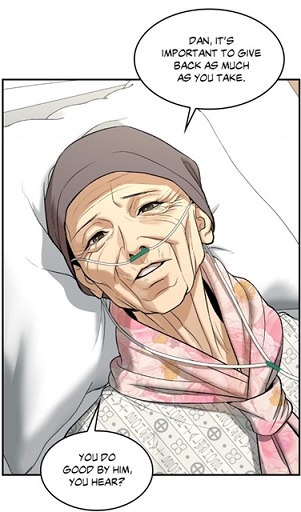 (chapter 41) While dying, she reduces love to an equation of productivity: “Dan, it’s important to give back as much as you take.” The verb do anchors her worldview — love must be measurable, visible, earned through action. To do good by someone means to labor for them, not to rest beside them. What caught my attention is that neither doctor
 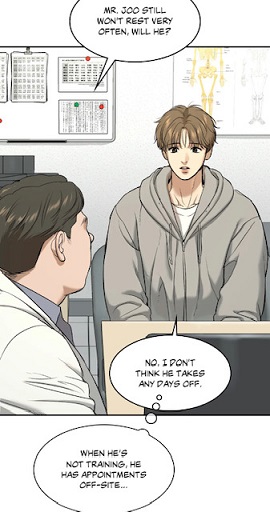 (chapter 27) nor the champion employs the expression “vacation” or “break”.
  (chapter 80) Why? It is because they never experienced a break. We have to envision that the “hamster” must have followed his grandmother, when he was not busy studying or working. Both main leads never experienced a real vacation. They say a day off, as if the day itself didn’t really exist, as if it were a temporary pause between “real” time. In their inherited logic, only work gives time its value; everything else evaporates. The grandmother’s way of loving has turned rest into an absence, something unworthy of being named. However, observe that there’s a gradual change in doc Dan’s vocabulary:
  (chapter 80) The problem is that for the hamster, only the athlete is worthy of getting his rest. It still doesn’t belong to his world.
 (chapter 5) the focus remains mechanical. Eating is fuel; sleep is maintenance. But rest, in the sense of surrender, stillness, or joy, is foreign to her lexicon.
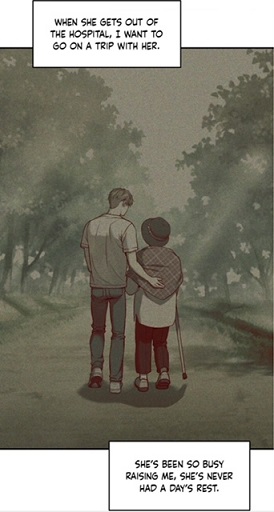 (chapter 47) is, in truth, a legend she wrote about herself. When Kim Dan recalls that “she’s never had a day’s rest,” the statement reveals more about his belief than about her reality. The woman who claimed endless labor also knew the comfort of “weekends”
 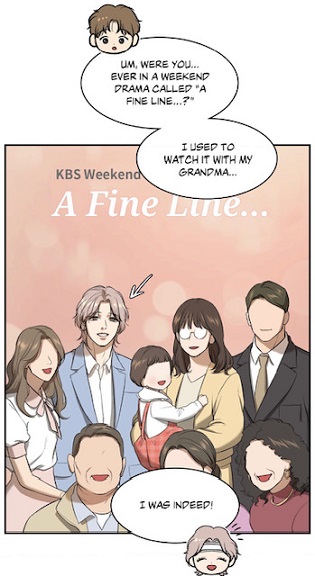 (chapter 30) — she watched The Fine Line, the very drama that made Choi Heesung famous. The detail seems trivial, yet it exposes everything: she had leisure
  (chapter 30), she simply refused to call it that. Watching television was permitted because it was passive, solitary, and could be rationalized as recuperation, not pleasure. In contrast, genuine rest — time shared, chosen, or joyful — never existed in her vocabulary. What she denied was not the existence of rest but the act of resting with him. She kept her downtime to herself, as if peace were a private possession. For her, love meant providing, not accompanying. Yet true care requires presence — sharing is caring, as the saying goes. [For more read this essay:
  (chapter 65) displays that she perceives her grandson’s exhaustion not as suffering but as malfunction, as if the human were a device that could be recalibrated through work and pills. That’s why her favors revolves about living conditions, but not about his “happiness”. Perhaps she genuinely hoped that the drugs and the stability of a “regular job” with the champion would realign him, as though routine alone could fix what grief and deprivation had unbalanced.
 (chapter 65) Her constant bookkeeping—every favor tallied, every gift framed as trouble—betrays a hidden fear: that if she stops keeping score, she will lose him. Rather than grant him autonomy, she entrusts him to another caretaker. Sending him to the champion is not an act of faith but of resignation, a way to offload responsibility while maintaining the illusion of control.
 (chapter 11), scarf tied under her chin, carrying a single sweet bun. She doesn’t need to say she “went out of her way”—her action already proclaims it. The effort is the gift.
  (chapter 11) That simple walk to the store becomes a moral event, proof of affection through fatigue.
 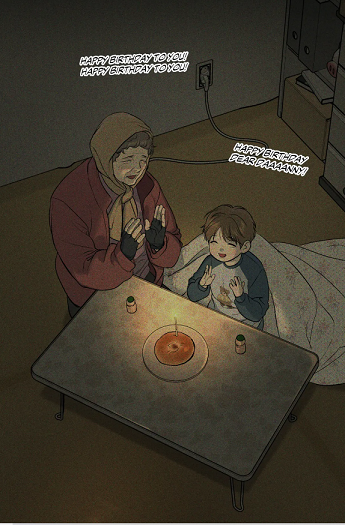 (chapter 11) Even the smallest purchase is framed as sacrifice. The sweet bread itself—a cheap red bean bun—is less nourishment than testimony: “Look what I endured for you.” If he had followed her, he would have seen that it didn’t take so much effort and money to buy the “present”. Finally, he had to share the sweet bread with his grandmother.
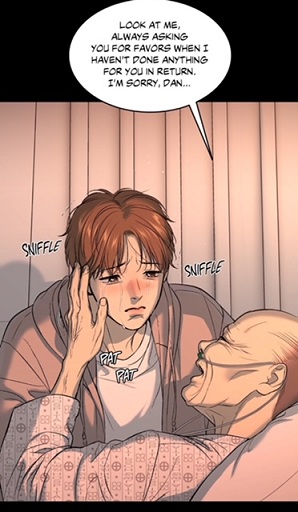 (chapter 53) —perhaps the signing of the loan. “You’re a doctor now; you’ll pay it off quickly.”
 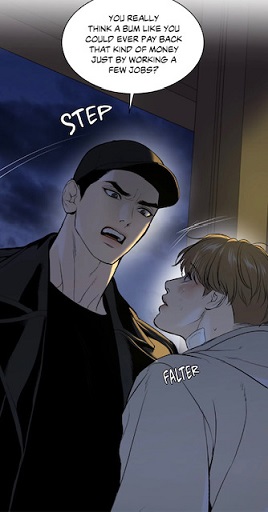 (chapter 80) In her eyes, generosity always justified expectation. The flowers were for display; the hoodie was the contract.
 (chapter 65) and the future
  (chapter 41) When Dan gifts his grandmother an expensive scarf, he hides its true price — “I got it for a bargain” — repeating her own pattern of disguised generosity. She sees through the lie, teasing him for “spoiling” her, yet she accepts the luxury without feeling guilty. The scarf becomes her version of the hoodie: a fabric trophy of moral worth. But its later disappearance is revealing. In season two, she wears it
  (chapter 56) shortly after her arrival at the hospice, never again. When she greets Joo Jaekyung, the scarf is gone
  (chapter 61). Why? One might reply that the scarf lost its value, especially since she is living next to the director’s room. I doubt that such men would pay attention to such an object. Another possibility is that she fears its brightness might betray her neglect, for the champion has lived with her grandson for a while. How could she display silk while her grandson owns almost nothing?
 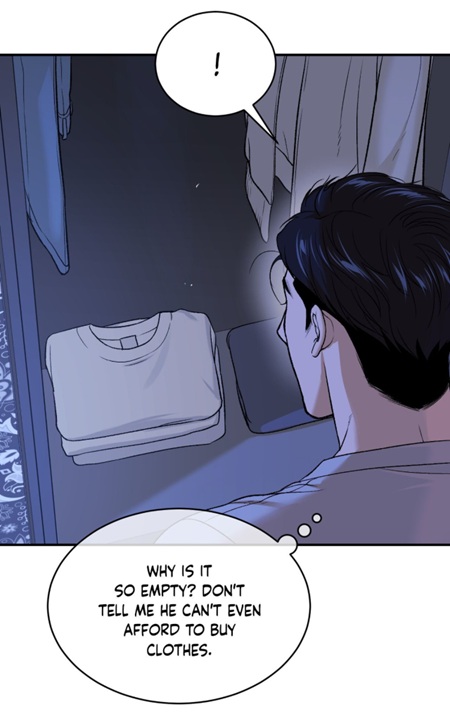 (chapter 80) The missing scarf thus exposes both her superficiality and exaggerated generosity. Her affection, like her pride, is short-lived — decorative rather than enduring. Should Heesung ever visit her,
  (chapter 80) The gesture that once symbolized love now feels like pain and loss. The signification of the gift has changed. What once wrapped him in safety now weighs like absence — the fabric retains the shape of someone who is about to vanish. His silence is not understanding but hurt, a wordless awareness that affection can curdle into memory. The audience, not the character, perceives that with the grandmother’s approaching death, her ledger is about to close. The gray fabric, once proof of her sacrifice, will lose its moral weight; her “gesture” will expire with her. Yet Kim Dan may not yet realize that this very ending could one day free him. The book-keeping dies with the bookkeeper.
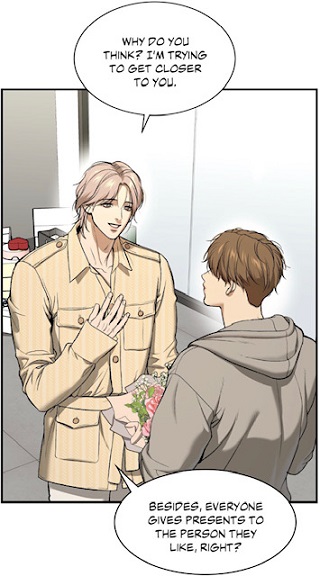 (chapter 31) When Heesung offers flowers “to get closer,” Kim Dan’s face mirrors the same unease: affection presented as transaction, intimacy disguised as generosity. What the actor calls closeness, the doctor feels as imbalance — the same emotional distance that Shin Okja’s presents once produced. Her gifts, meant to bind, isolated him instead; they built a hierarchy where gratitude replaced equality. Each present widened the gap between giver and receiver. To be cared for was to be indebted.
 (chapter 31) and tries to refuse it.
  (chapter 31)
 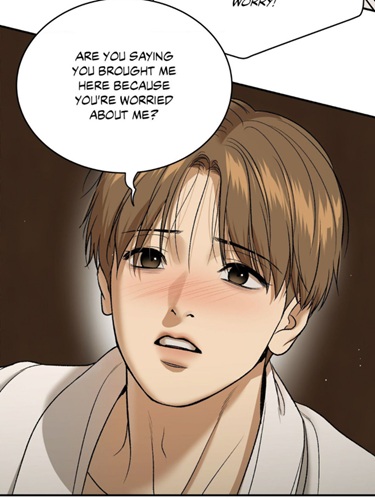 (chapter 67), loses sleep, or pays a price. He interprets Joo Jaekyung’s concern as “trouble,” Heesung’s gifts as “too much.” In his mind, affection is inseparable from cost:
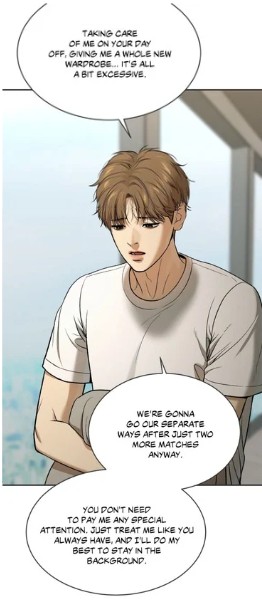 (chapter 80) “I’ll stay in the background.” His self-worth depends on not burdening others. His words let transpire that he has never been Shin Okja’s first priority in the end. The hoodie reinforces that psychology—it is not a professional outfit like a suit or briefcase would have been, but a teenager’s garment, meant for the domestic space rather than the adult world. It literally arrests his growth, keeping him in the house and under her logic. Thus it is not surprising that after receiving his diploma, he still took part-time jobs.
 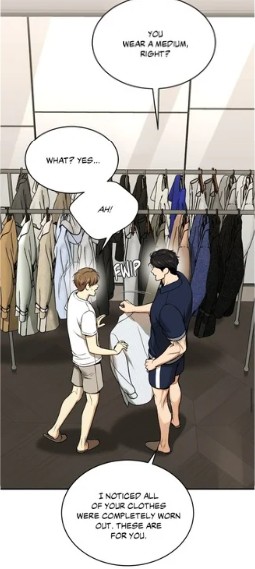 (chapter 80) is the site of its quiet destruction. His act of giving reverses every law the grandmother ever taught. First, he does not “go out of his way.” The clothes are delivered effortlessly, without fanfare or moral accounting.
 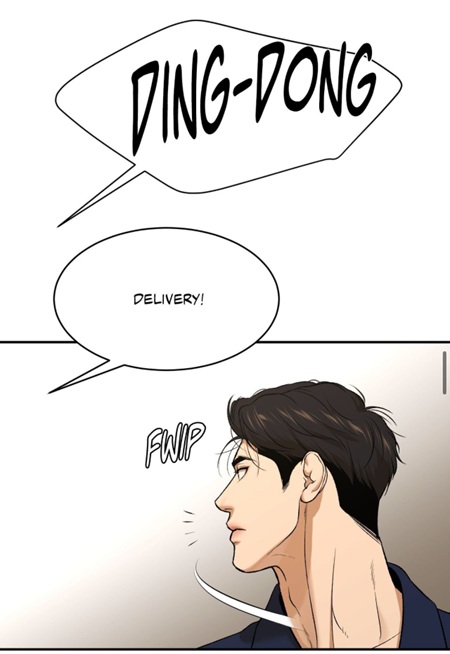 (chapter 80) There is no speech about sacrifice, no self-congratulation.
  (chapter 80) By erasing the gesture of “effort,” he removes the emotional price tag that once accompanied every gift.
 (chapter 80) If the grandmother’s motto was “I went through so much for you,” the champion’s is “It’s no big deal.” Generosity becomes invisible, unburdened, and therefore trustworthy.
 (chapter 80) The row of garments invites choice — a concept absent from Shin Okja’s universe, where love came in single doses and with strings attached. Here, the doctor is asked to select what he likes, to exercise taste, to inhabit preference. The abundance of options grants him agency, dignity, and the right to refuse.
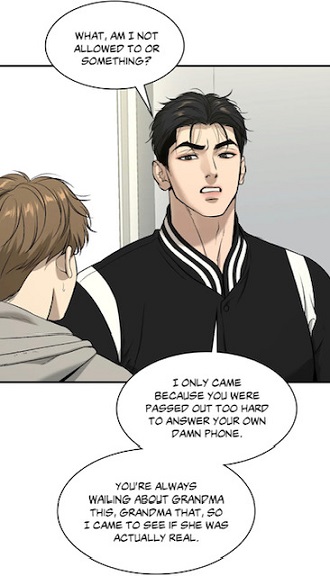 (chapter 22)
 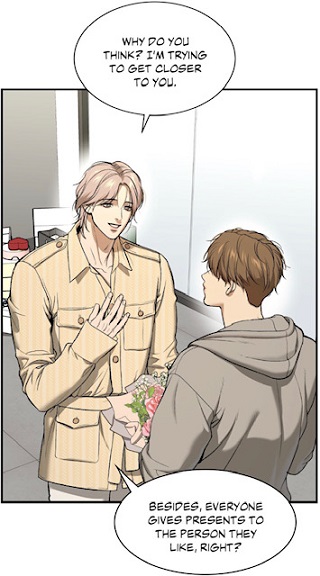 (chapter 30) becomes unexpectedly true here. The wardrobe bridges the distance that the grandmother’s gifts had always created.
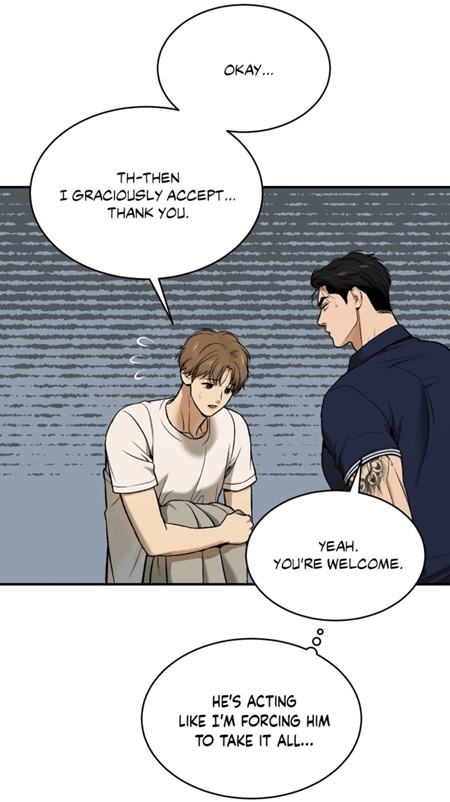 (chapter 80) This is why his hesitant and embarrassed gratitude, framed against a background of dissolving gray waves, feels so transformative. The air behind him ripples as if washing away the residue of his old faith.
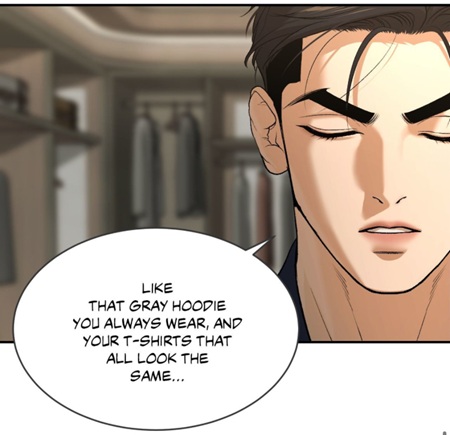 (chapter 80); they mark the passing of days, the return of seasons, the rediscovery that not every morning has to look the same. Variety itself becomes a form of freedom. When the wolf once complained that all his shirts looked identical, he was unknowingly naming what both of them lacked: differentiation, spontaneity, change. Through this act, he restores color not only to the doctor’s wardrobe but to his emotional world — a quiet resurrection through fabric.
 (chapter 80) The “hamster” had instinctively turned to the only person who had ever offered him help without cost.
 — the luminous, wish-granting jewel said to contain both wisdom and life energy. The dragon’s power is not innate; it is completed and elevated by the jewel. Without the yeouiju, it cannot ascend to the heavens — strength without meaning, force without direction.
 (chapter 80), the myth reverses. The dragon—once feared, untouchable, wrapped in rage and solitude—is suddenly embraced by the very being he once believed too fragile for his world. The power dynamic inverts: the human shelters the beast.
 (chapter 75) —this embrace is nothing short of salvation. The man who once fought to wash off shame through endless training now finds himself accepted in his unguarded state. He doesn’t need to mask his trauma with perfume
  (chapter 75), the imagined smell, or cleanse his skin of battle; he is held and, therefore, purified. Through Dan’s arms, he rediscovers his value and humanity—the dragon touched and not destroyed. He is worth of being embraced, even if he is already so old!
 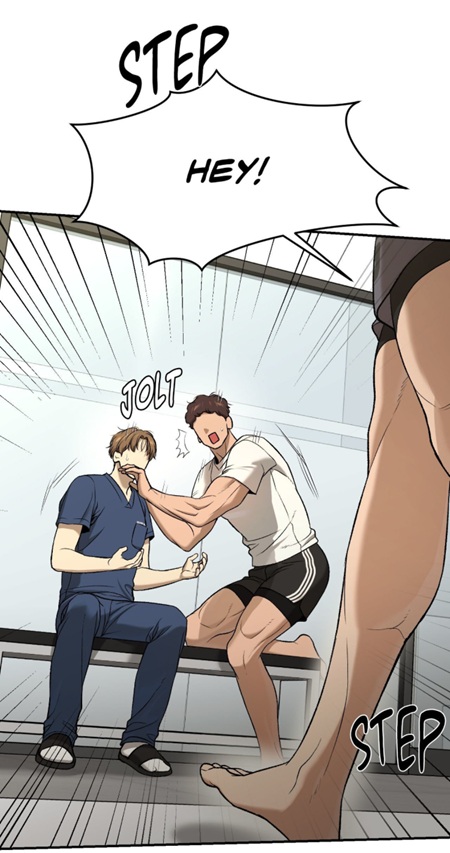 (chapter 79) This is one part of the new circle. Jealousy is the residue of imbalance — the echo of the 7 within the 8. In the numerology of Jinx, the 7-chapters, like for example episode 7
  (chapter 7), episode 18, where the champion had sex because of this statement
  (chapter 18),episode 34 with Choi Heesung
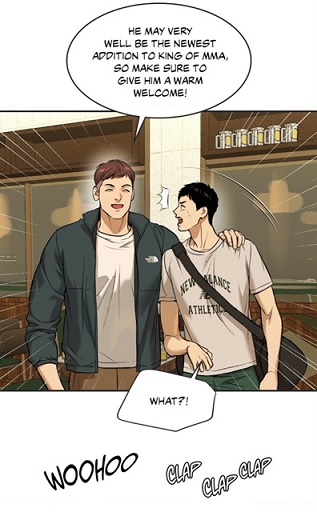
  (chapter 34) or episode 52, where the former members of Team Black and expressed their disdain and jealousy toward the main lead
  (chapter 52)
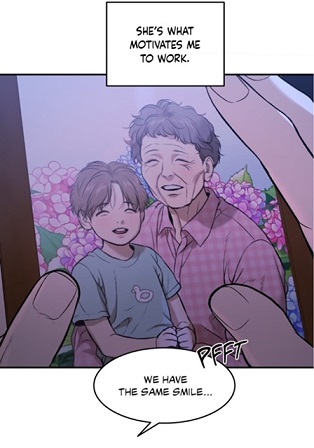 (chapter 47) and 8 lies that invisible hinge: the death of the old economy of love and the birth of a new one.
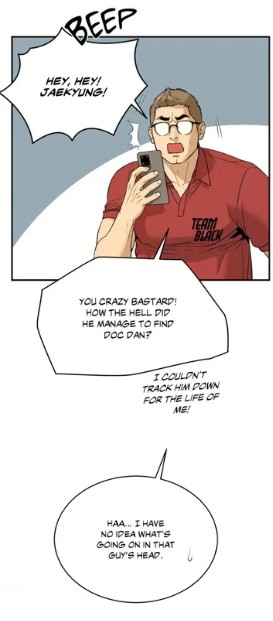 (chapter 61) and Heesung’s residual rivalry and resent. Each acts as a different face of control: the woman binds through guilt, the manager through hierarchy acting as the owner of the athlete’s time, the actor through charm and deceptions. Together they form the triad that tries to reopen the circle closed in the pool. Let’s not forget that the athlete chose to take a day off on his own accord
  (chapter 80), but he had just returned to the gym. It is no longer the same training and routine.

 I established that Kim Dan’s number is 8. It is therefore no coincidence that the arc from chapter 80 to 89 should revolve around him—his body, his suffering, and ultimately his recovery. The number 8, often associated with balance, renewal, and continuity, here signals not only the doctor’s rebirth but also the gradual thawing of his frozen world. It marks the moment when the past can no longer remain buried, when the last remnants of family and unspoken pain begin to surface. The mystery behind this phone call will be soon revealed.
 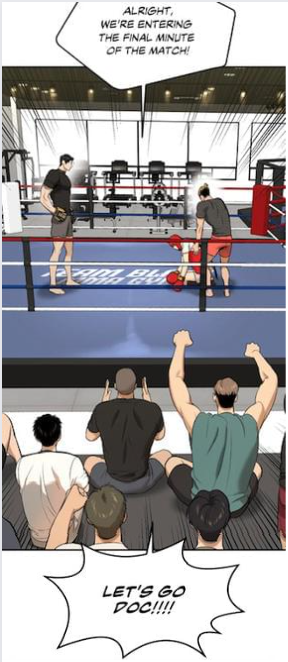 (chapter 26) the sparring between Joo Jaekyung and Kim Dan unfolds under the sign of fun and apparent joy, yet its origin lies in jealousy. The champion, unconsciously triggered by the doctor’s closeness with Potato
 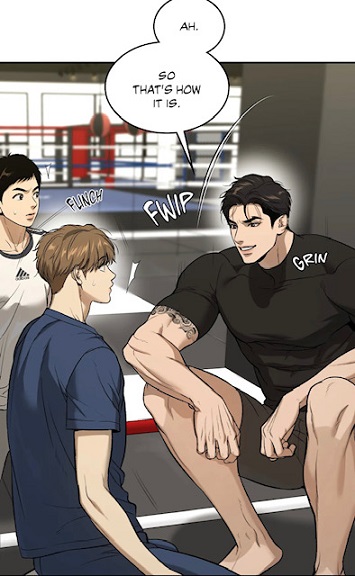 (chapter 25), turns play into a contest—a way to reclaim attention.
  (chapter 25) The gym, usually a place of hierarchy, momentarily becomes a stage where both can laugh, but beneath that laughter runs an undercurrent of rivalry (with Potato). On the other hand, for the first time, the Manhwa allows both protagonists to exist outside the economy of debt and hierarchy. The gym, normally a place of discipline and work, transforms into a playground of laughter. The champion teases the doctor
  (chapter 26), and the latter, clumsy but determined, strikes back with surprising boldness. The crowd cheers, not for the fighter but for the therapist—the underdog, the one who usually stands in the shadow. The entire scene feels like a short-lived holiday, a suspension of order and pain. When Kim Dan smiles at the end of the match, the gesture radiates genuine lightness: he has momentarily escaped the burden of fear and experienced himself as a free, living body.
  (chapter 26) He believes he has accomplished something meaningful and feels, perhaps for the first time, proud of himself. He was taught that he could fight back and overcome his fear.
  (chapter 26) He realizes that the hamster can beam at others, that such light has never been directed at him. In that instant, he no longer sees an employee but a companion whose gaze and embrace he covets, whose approval he unconsciously seeks.
 (chapter 62) The atmosphere is brighter in color but colder in tone. There, Joo Jaekyung got to experience how Kim Dan has lived all this time, helping others, making them happy with his assistance.
  (chapter 62) Here, the protagonist was thinking all the time of his loved one:
 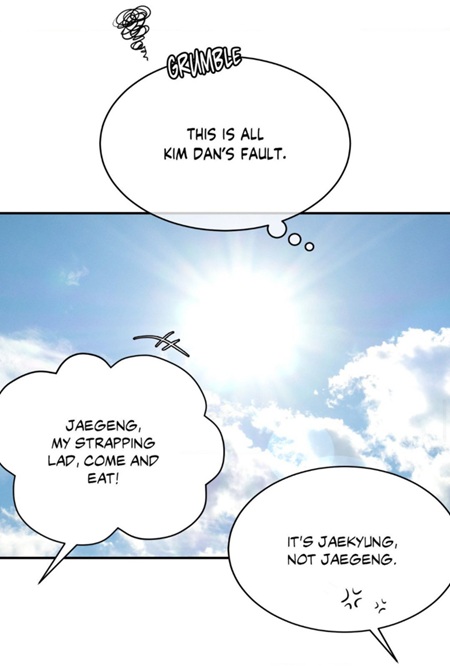 (chapter 62) Indirectly, he hoped to get the doctor’s attention, but he failed. In fact, none of the wolf’s good actions got noticed by his fated partner. Interesting is that though the characters engage in acts of performance and service—helping others, pleasing strangers— their smiles have turned into masks.
 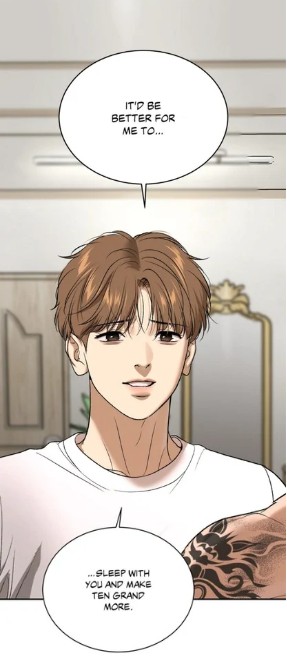 (chapter 62)
 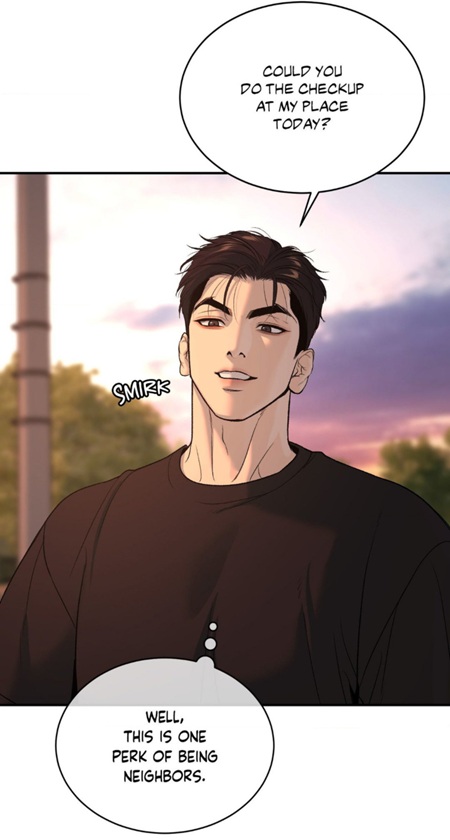 (chapter 62) Where chapter 26 radiated spontaneity, this one reveals calculation and fatigue.
  (chapter 62), where exposure to others leaves both men strangely isolated. The happiness of the crowd no longer unites; it separates. The champion’s outfit, ridiculous and domestic
 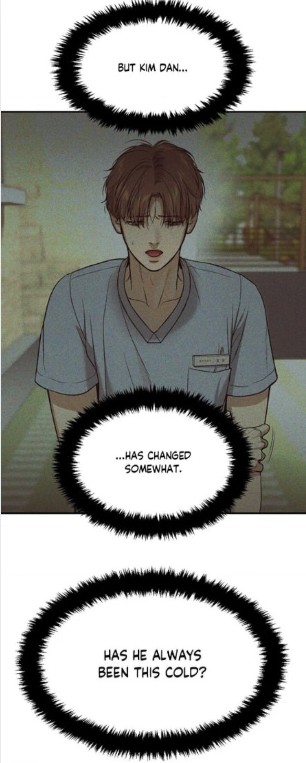 (chapter 62) which is actually his true nature. I will elaborate more further below. For the first time, the wolf looks at his companion and senses distance instead of warmth, as though the man he once touched so easily has withdrawn behind glass. His thought—“Has he always been this cold?”—marks the beginning of introspection, the moment when perception replaces instinct.
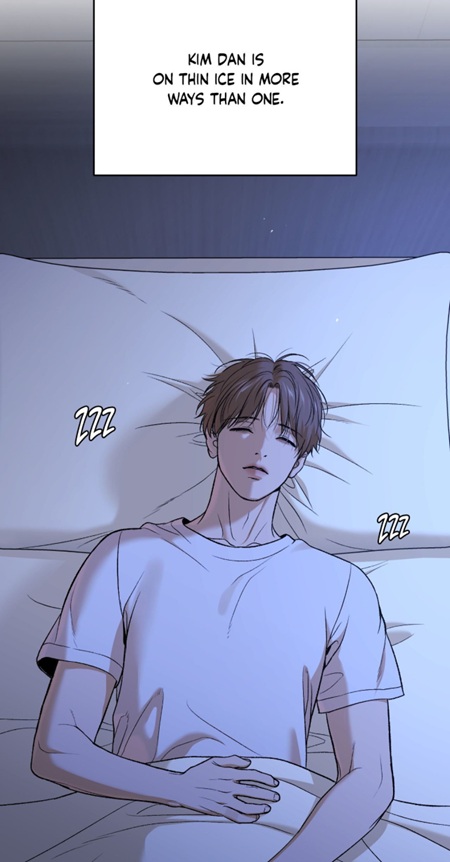 (chapter 80) To “walk on thin ice” is to approach him gently, without force—a lesson the champion must learn if he wishes to thaw what has been frozen by years of duty and self-denial.
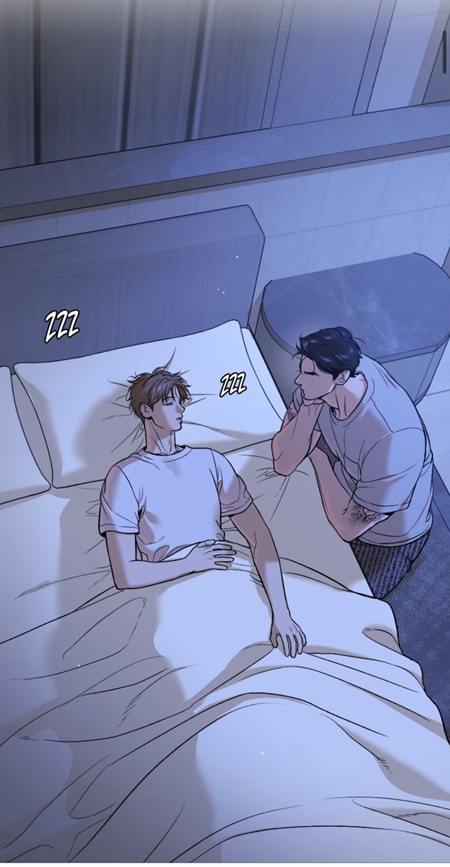 (chapter 80)
  (chapter 80), not red. The atmosphere is fluid, reflective, submerged. Water—not flame—governs this new stage. What we witness is not combustion but fusion—ice meeting water, solid meeting liquid, two states of the same element touching at last. Ice does not just melt under fire; but also in the presence of water. It softens when it recognizes itself in another form. In that sense, Joo Jaekyung’s tenderness doesn’t heat Kim Dan—it mirrors him. The thaw begins not through passion, but through likeness, through quiet recognition. This signifies that Joo Jaekyung is on his way to discover their similarities: they both suffered from bullying and abandonment issues and they love each other.
 (chapter 80) at the board game table mirrors that moment: his smile is light, childlike, uncontaminated by dominance. Yet, tellingly, they do not smile together. Each glows in isolation, unaware of the other’s joy. Doc Dan has not realized it yet: he is the wolf’s source of happiness, he is the only one who can make him laugh and smile.
 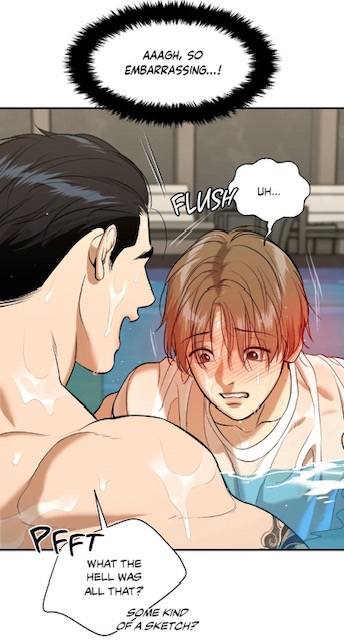 (chapter 27) Thus I came to the following deduction. This is the emotional geometry of the arc 80–89: two smiles moving toward synchrony, two currents approaching convergence. Both need to experience that they make each other happy. Kim Dan on Thin Ice thus begins where the infinite loop of 8 converges—between warmth and coldness, joy and fatigue, play and labor. It is here, in this fragile equilibrium—where ice and water finally coexist—that both men begin, at last, to thaw. And the latter implies emancipation
 (chapter 80), as it exposes the real metamorphosis from the “wolf”. The night Joo Jaekyung watches Kim Dan sleep is not erotic; it is revolutionary. For once, his desire gives way to perception and attentiveness. The fighter who has conquered bodies now studies one that is quietly losing its battle. The body before him is not the sculpted strength he knows, but a map of deprivation: protruding collarbones
 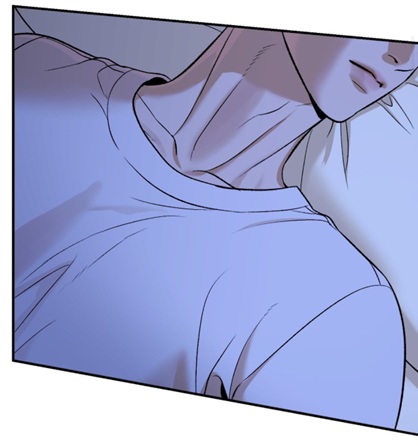 (chapter 80), visible neck tendons, the knobby finger joints and his stiff fingers resting on the blanket as if holding the body together.
  (chapter 80) The pale, bluish hue of the skin—half light, half illness—tells him what no words ever have.
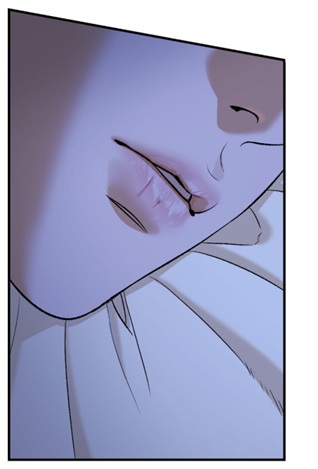 (chapter 80), the faint opacity of the nails
 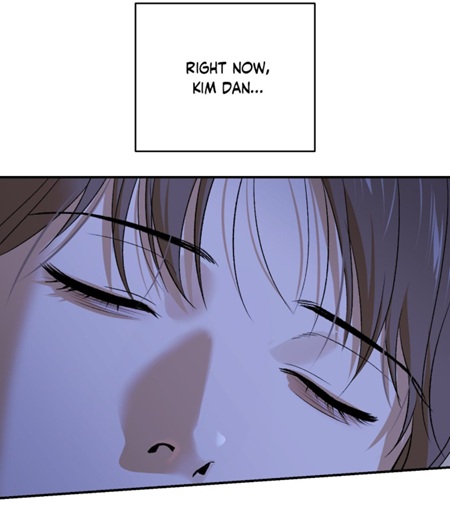 (chapter 80) In the faint parting of the mouth he sees not seduction, but exhaustion—a man so depleted that even rest demands effort.
 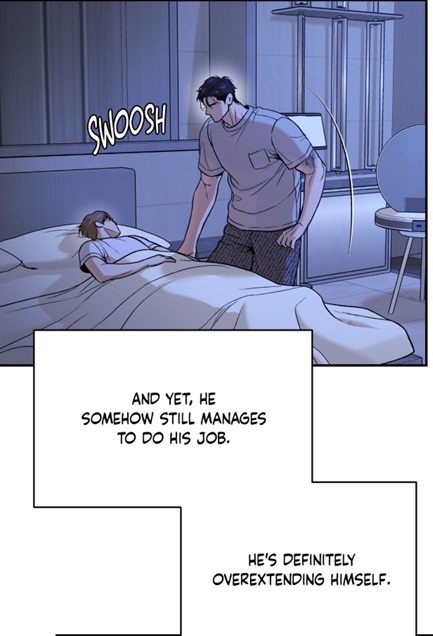 (chapter 80) he begins to treat rest not as weakness, but as reverence.
 (chapter 13) The fighter who once mocked stillness as laziness now finds meaning in it.
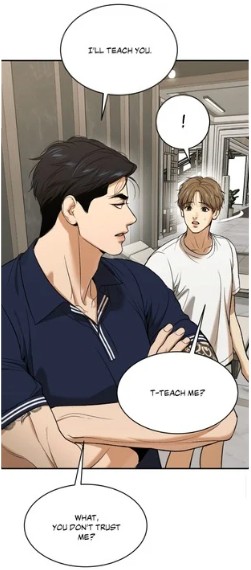 (chapter 80), it signifies that he will have to dedicate his time to the physical therapist! Hence his routine and training could get affected, just like their weekends.
  (chapter 80) —the doctor
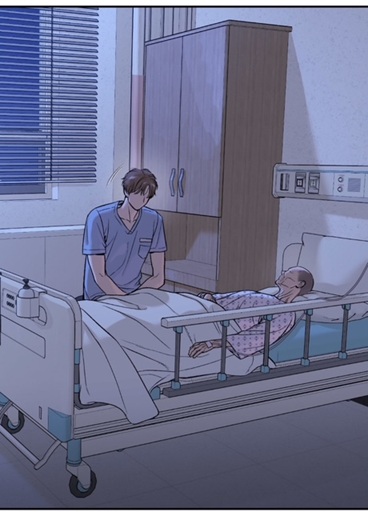
  (chapter 13), the family member
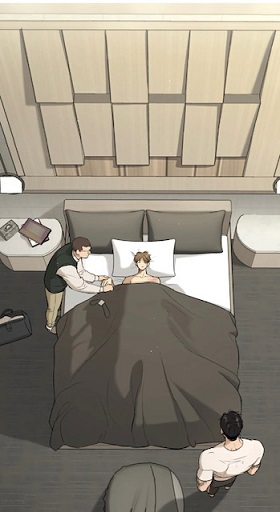
  (chapter 56), the one who stays close enough to touch if needed.
  (chapter 80) Without realizing it,the athlete has inherited that role. His nearness is no longer intrusive but protective. He has crossed the invisible threshold that separates obligation from affection. The fighter who once stood as an outsider in the doctor’s life now finds himself within its most intimate circle.
 (chapter 80) Compare his facial expression to the hamster’s before their first day off together.
  (chapter 27) That way, Mingwa can outline the champion’s confidence and that the one who needed the rest is the physical therapist and not the champion.
 (chapter 69) Every flicker of light falls through The Emperor’s gaze and lands on Kim Dan’s form, transforming weariness into something sacred.
  (chapter 68) in the bathtub
 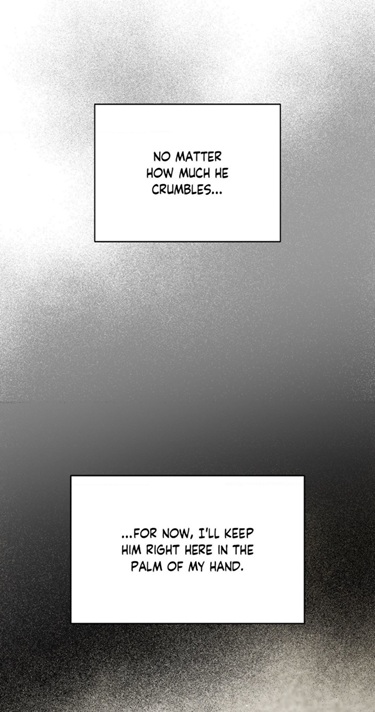 (chapter 68) —“I’ll keep him right here in the palm of my hand”—echo now with quiet irony. To hold someone in one’s hand is, paradoxically, to immobilize them; it grants possession but denies agency. The same gesture that promises safety also enacts paralysis. His possessiveness, once mistaken for protection, now appears as helplessness.
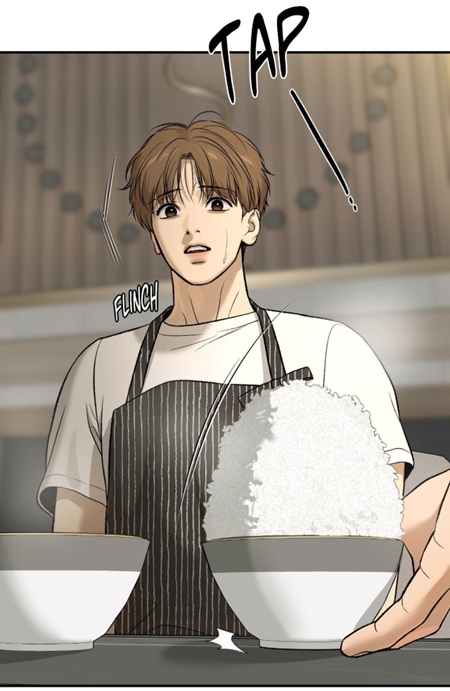 (chapter 79),
  (chapter 80) shrinking back when confronted. The body remembers the threat long after the mind tries to forget.
 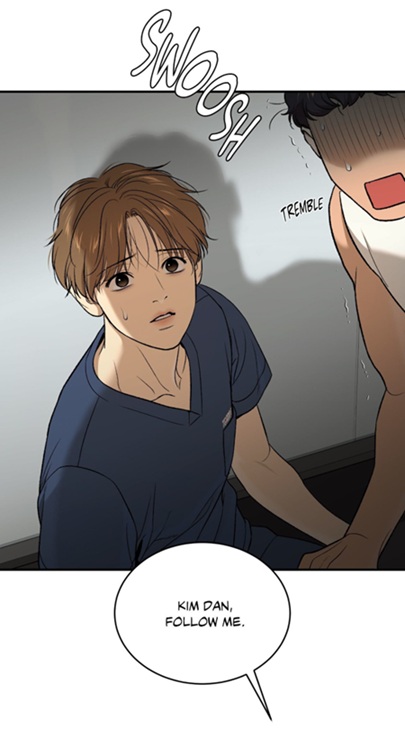 (chapter 79) He lives suspended between two survival reflexes: freezing or fleeing. Since the contract binds him to stay, he cannot physically run away; therefore, his body freezes instead. It is his way of obeying while still protecting himself. Exhaustion becomes his armor. And now, you comprehend why the celebrity could detect the coldness in the “hamster” in front of the hospice.
 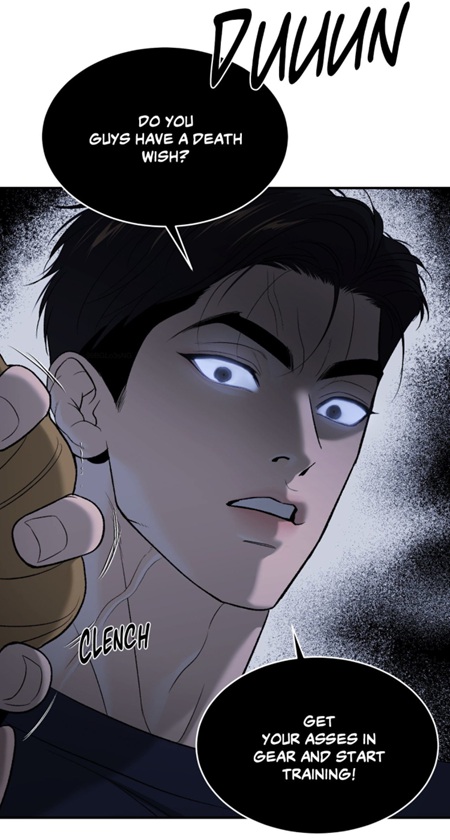 (chapter 79) — now turned outward and wounded the one he wished to protect.
 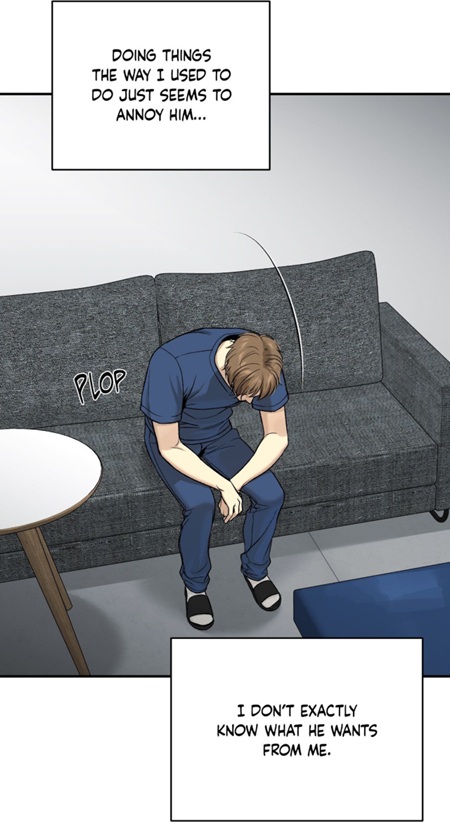 (chapter 79) Thus he clinched onto routine to maintain a normal relationship. But once the champion voiced his dissatisfaction (masking his jealousy), the light in the doctor’s gaze vanished.
  (chapter 79)
 (chapter 79) His unconscious was telling him to flee, as he feared the athlete. To conclude, he was always one step away from collapse. In symbolic terms, he had become ice itself — air and water solidified, transparent yet untouchable. Keep in mind that according to me, the clouds embody the physical therapist.
  (chapter 38) Born on December 26th, his very birthday ties him to winter, to the paradox of beauty that burns when touched.
  That’s why I can’t help myself thinking that the physical therapist is actually embodied by the snow. Ice and snow preserve, but they also isolate.
 (chapter 72), snow was falling — a silent mirror of his loneliness, the frozen residue of a home that no longer existed. Later, in chapter 77, the motif returned as ice cream
  (chapter 63), desperate to restore closeness, mistook passion and pleasure
  (chapter 63) for repair. Believing that physical heat could melt emotional frost
 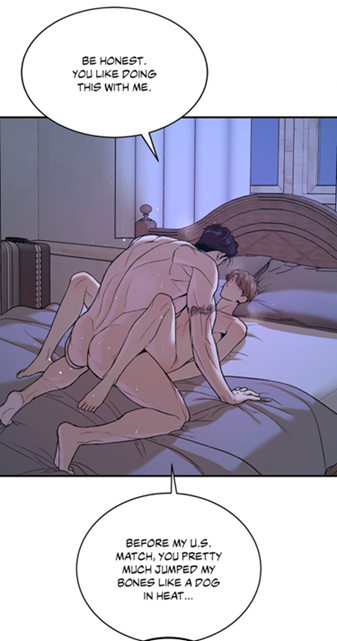 (chapter 64), he tried to burn away the distance through souvenirs (evoking the night in the States) and desire. Yet the more he tried to ignite fire, the more he fed the cold.
 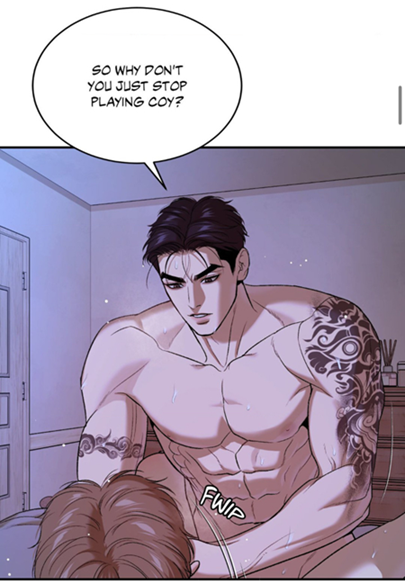 (chapter 64) The physical act, rather than fusing them, exposed the truth he had refused to see — that his partner was already freezing from within. On the other hand, during this night, the athlete used “self-control” for the first time, his roughness in bed started vanishing.
 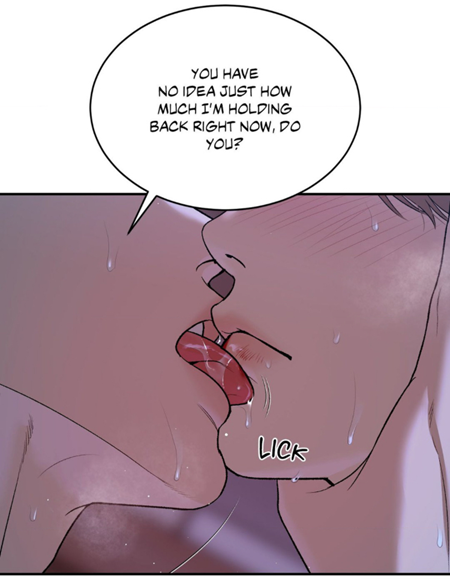 (chapter 64) The wolf’s attempt to “burn the bridge” between them became the very thing that broke it. His flame met ice
 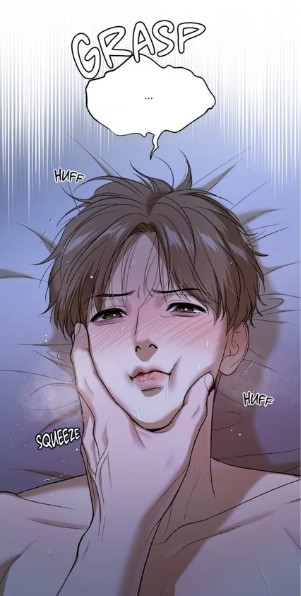 (chapter 64), and the result was not warmth but steam — a brief illusion of intimacy that vanished as soon as Kim Dan pulled away. His rejection wasn’t cruelty but a cry of despair, disillusion and exhaustion
 (chapter 64): a body too cold to burn, a heart too tired to love and fight.
 (chapter 80), but about melting together, letting warmth and cold coexist without annihilating each other. To melt together does not mean to dissolve into sameness, but to trust that proximity will not destroy one’s shape. True intimacy begins when both accept that they can share warmth without losing form — when fire believes it can touch ice without turning it to steam, and ice trusts it can meet fire without vanishing.
  (chapter 61) Touch it bare-handed, and you feel both heat and pain. The same holds true for Kim Dan’s presence: those who reach for him too quickly end up wounding both him and themselves. The sportsman’s early attempts at care followed that pattern — too forceful, too immediate, leaving frostbite where he intended warmth.
 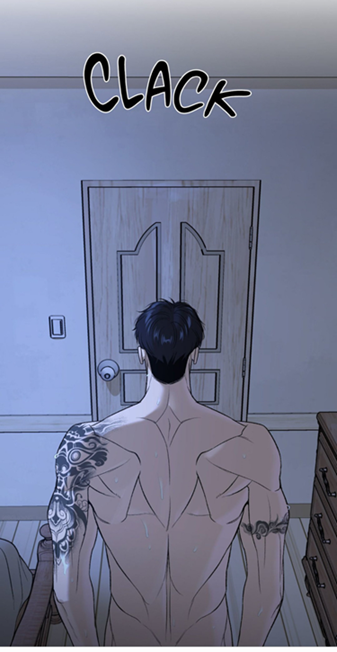 (chapter 64)
  (chapter 79), of not getting the doctor’s affection. Kim Dan’s coldness was not real rejection
 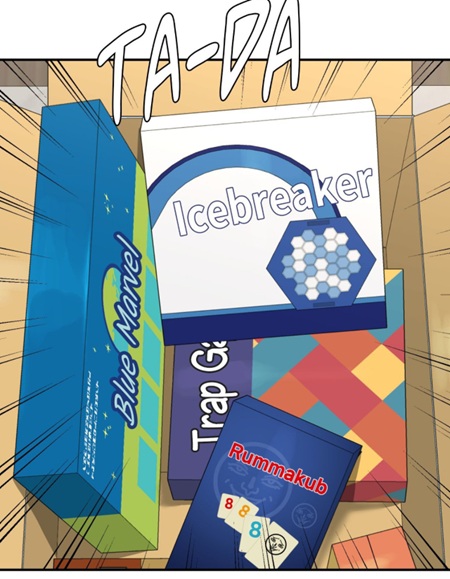 (chapter 80) They never played it — and that is no accident. The title encapsulates the temptation Jaekyung must resist: to treat intimacy as a contest, to imagine that trust can be won through tactics or timing. But hearts do not yield to strategies. The only way to melt the ice is not by “breaking” it, but by warming it, patiently, sincerely.
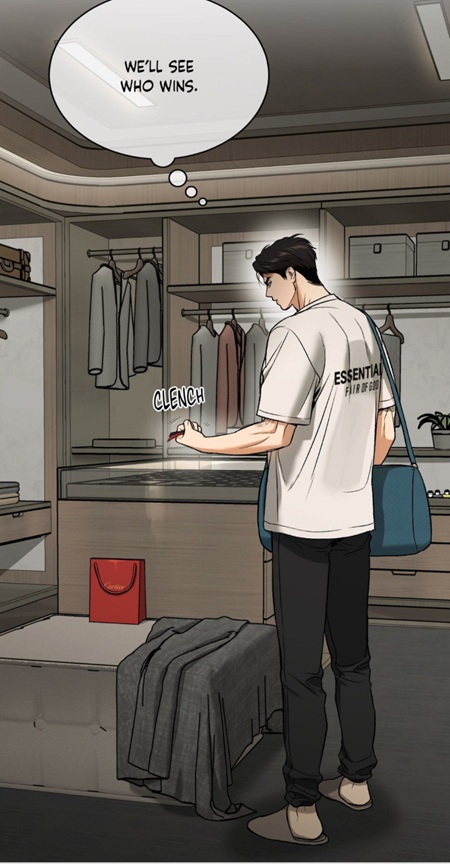 (chapter 66) And this is something the physical therapist could notice, if he enters the room again and pays more attention to his surroundings. This is not about ownership but about inclusion: an unspoken invitation to share a part of himself.
  (chapter 30). Even in that comic panel, the imbalance between physical familiarity and emotional distance was evident. Kim Dan’s embarrassment stood for boundaries not yet earned, and Jaekyung’s casual tone for a love not yet understood.
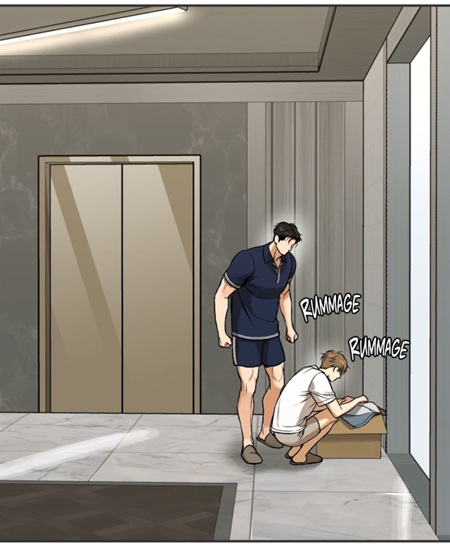 (chapter 80) The scene is small but seismic. The camera places Jaekyung slightly behind, his fists curled and his shoulders tense — an instinctive gesture of self-restraint rather than dominance. He is no longer the one towering above, demanding or explaining; he is waiting, watching, enduring the discomfort of having gone too far. His silence here is not indifference but humility — the silence of someone learning, painfully, what boundaries mean.
 (chapter 70) The athlete’s posture
 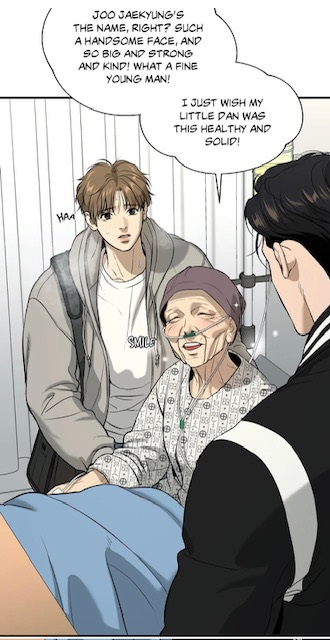 (chapter 21) Behind the warmth of her words lies a quiet wound: she loves her grandson, but she wishes him to be different — stronger, healthier, easier to care for. In his eyes, it’s an unreliable, burdensome shell — a vessel of weakness and sickness. Every protruding collarbone, every cracked lip or dark circle testifies to a deeper wound: the conviction that he is unworthy of care.
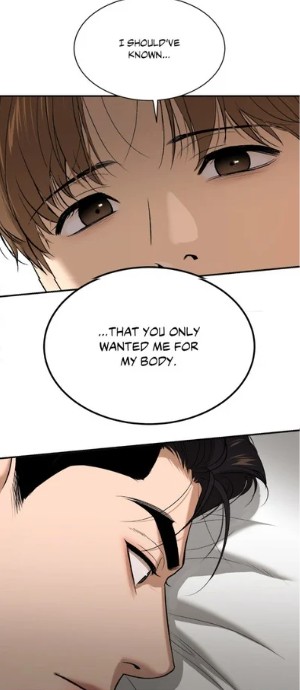 (chapter 62) the weight of that sentence stretches far beyond the bedroom. It carries the residue of every moral, familial, and physical contract that has reduced him to flesh. What the champion hears as accusation is, at its core, a confession of alienation — the echo of a man who has never learned to live inside himself. It’s not only a reproach but a confession. He hates his body because it has become the medium through which he is used, never loved.
 (chapter 27)
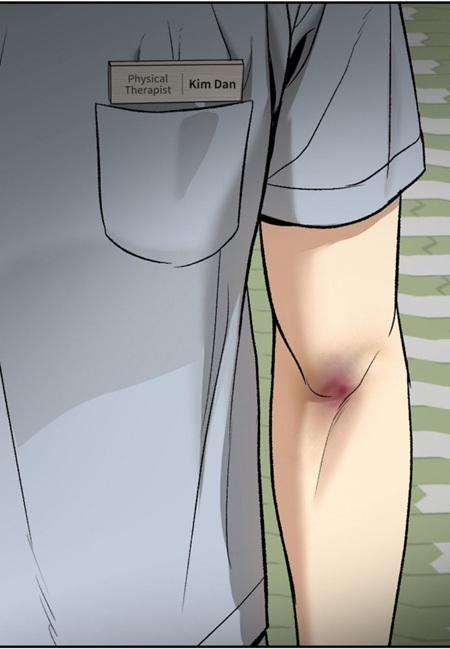 (chapter 61), the other where no one looks. Yet, the attitude of people is the same: no one pays attention to them. Both inhabit bodies that have forgotten the difference between endurance and pain. Both mistake self-destruction for strength.
  (chapter 18) when Kim Dan, bruised, had seized his hand and expressed his concerns. Back then, the gesture had confused the wolf. His hands were made to strike, to defend, to dominate — not to be pitied or protected. He had pulled away instinctively, unsettled by the tenderness and the huge sense of responsibility behind the question. He felt criticized, as if his power was questioned.
  (chapter 80) What began as misunderstanding in episode 1,
 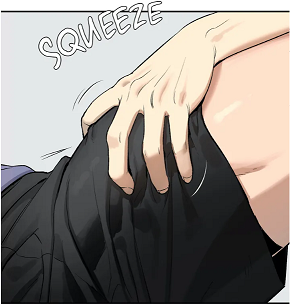 (chapter 1) and was maintained through the awkward hospital encounter in episode 18, now evolves into dialogue and genuine comprehension. In the beginning, Kim Dan’s touch had been accidental and defensive—a misreading of bodily proximity. When he grabbed the fighter in episode 1, he believed he had crossed a forbidden line, that his action would be seen as insolence or violation. The fear and shame that followed transformed touch into a territory of silence and self-censorship.
 (chapter 56), he had interpreted that touch not as mistake or violation, but as a spark of invitation—proof that the “hamster” might want him after all. His own longing twisted the scene into a fantasy of desire, into a private “game” he wanted to continue in the bedroom. One misunderstanding gave birth to another. By episode 18, the same reflex persisted: he reached out again, asking if Jaekyung was hurt, his hand trembling with the same mixture of care and fear. Once more, touch was misread—offered as comfort, received as intrusion. Thus their relationship began under crossed signals: one moved out of survival, the other out of projection or the reverse. It is no coincidence that their relationship in season 1 was doomed to fail. They never communicated properly, as their perception was influenced by their past and surroundings.
 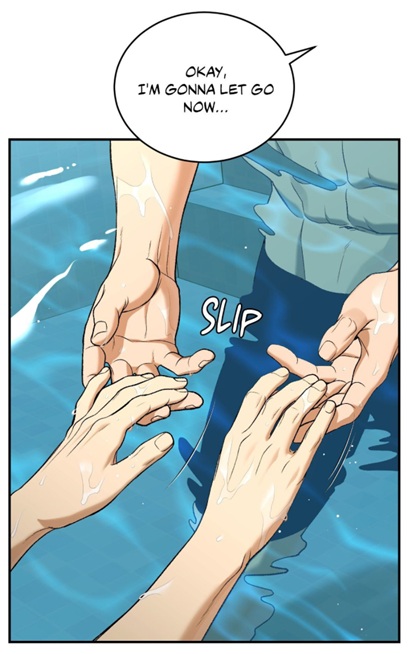 (chapter 80), Kim Dan panics, convinced that release equals abandonment.
 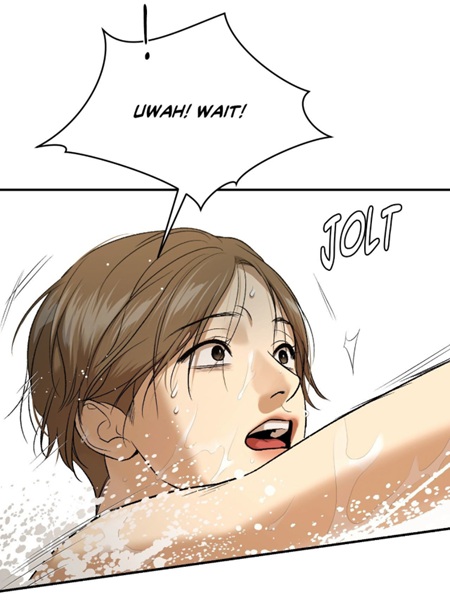 (chapter 80) He freezes once again. Yet the water holds him; he reaches onto the champion again — and this time, the embrace stays. What makes this moment remarkable is that the pool is shallow.
  (chapter 80) Kim Dan could easily stand on his own, but fear has eclipsed reason. His instinct is not to trust his feet, not to fight the water, but to cling to the man before him.
 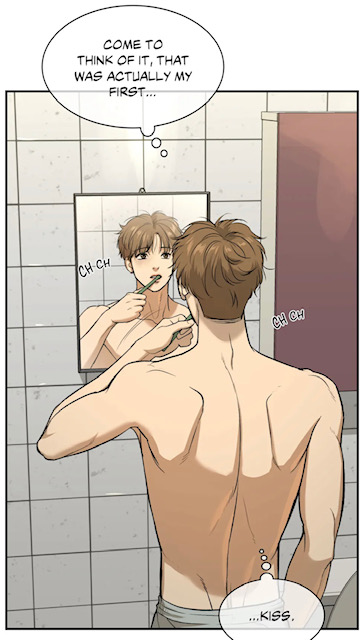 (chapter 16) —that deceptively simple French word—finds its power. It means “ice,” but also “mirror” and “window.” When the champion looks through Kim Dan’s glace
 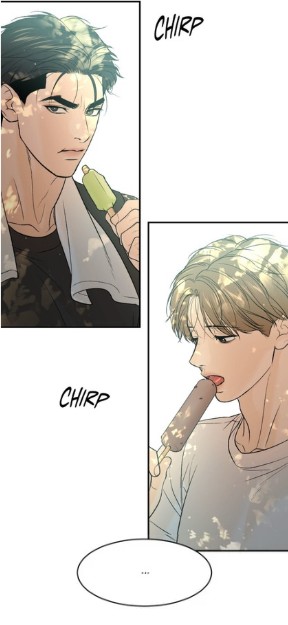 (chapter 77), unlike the touch of ice. It softens, sweetens, dissolves slowly on the tongue. Likewise, the heat between them no longer needs to scorch; it can melt. And yet, the kiss — once their most volatile exchange — has fallen silent.
  (chapter 64) Kim Dan had to bite his own lips to make Jaekyung stop, and neither has ever truly spoken of it. Yet, during the night, the athlete could see the remains of that cold war.
 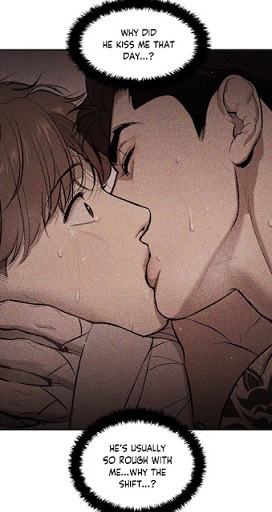 (chapter 16), just as the champion has never confessed that it was his first kiss. Moreover, during their first day off together, Joo Jaekyung had also initiated a kiss and back then, the doctor never wondered why.
  (chapter 27) Both men have been staring into the same mirror without realizing that the reflection was shared. They love each other. Joo Jaekyung needs to ponder on the signification of a kiss
  (chapter 13) and why doc Dan made such a request.
  (chapter 15) The kiss is more than just fun and pleasure. It is the expression of “love”. And now, you comprehend why I am expecting a huge change in the next episode.
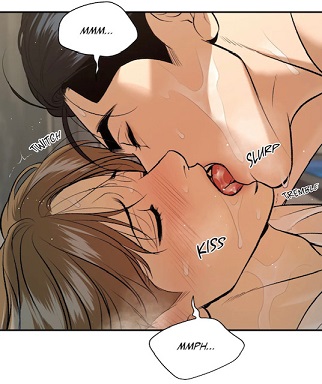 (chapter 28) and urge Kim Dan to ask, at last, the question that remained frozen between them. In doing so, he would not only reopen the conversation but also reclaim the meaning of touch itself: not as misunderstanding or survival, but as curiosity and love.
 (chapter 80) And it comes with a small but crucial instruction. In that single phrase, the MMA fighter encourages Kim Dan to discover his own power and strength without overexercising. His feet, which were once symbolically trapped in the nightly ice, now press against the water with intent during the day. For the first time, his body obeys him, not fear. His movements are neither frantic nor helpless but self-regulated, gentle and alive. That’s why the main lead becomes happy for a moment.
  (chapter 21) comes from the early loss of his mother.
 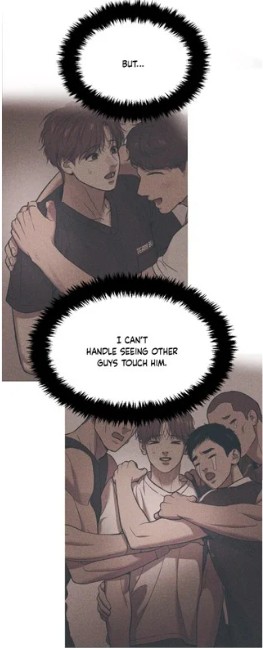 (chapter 79), if he knew that the doctor has already loved him for a long time.
 Kim Dan on Thin Ice was never just about danger or fragility — it was about transformation. The ice that once confined him to stillness has melted into water, and the fear that once froze his body has become motion. Where there was trembling, there is now flow; where there was isolation, there is connection.

 (chapter 66) they saw it as further confirmation of their perception—reinforcing the idea that he is terribly flawed. However, a deeper analysis suggests that this term reflects not just his character but also his evolving mindset and struggle with emotional vulnerability. This essay will explore the paradox at the heart of their dynamic—how both men refuse to acknowledge the emotional weight of their relationship, leading to a cycle of denial and misperception. It will examine how the concept of the jinx evolves, the continued influence of Park Namwook’s manipulations on Joo Jaekyung, and the role that mutual ingratitude plays in their emotional stagnation.
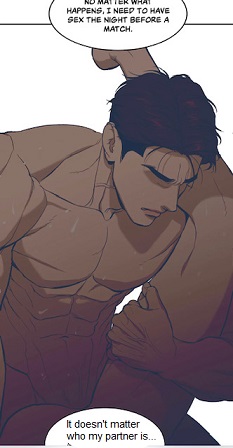 (chapter 2) This belief system dictated that, no matter what, he had to have sex with a man before every match—reinforcing the illusion that he could manipulate fate through repetition. The identity of his partner was irrelevant; what mattered was the act itself, which he perceived as a necessity rather than a choice. This routine provided him with a sense of control, but it also underscored a fundamental reliance on external factors rather than his own abilities. In Chapter 65, however, a subtle shift occurs. While the champion has not dropped his belief yet:
  (chapter 65), the nature of his principle has changed:
  (chapter 65)The athlete is admitting his dependency on doc Dan. The jinx is now directly tied to Kim Dan, not just as a concept but as a tangible element of Joo Jaekyung’s career stability. The second switch is that sex is no longer a condition to ward off bad luck. In fact, the celebrity is recognizing the importance of his daily training and, as such, his hard work.
 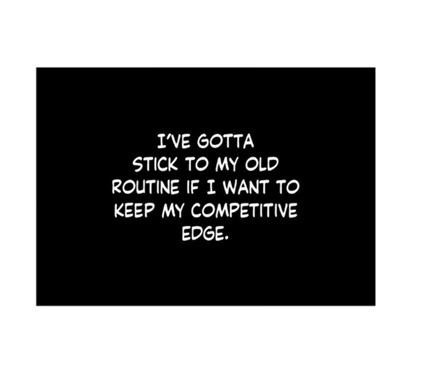 (chapter 65) The inner thoughts of the sportsman reveal that the champion is feeling less powerless than before. His champion status is no longer reliant on superstition but on tangible efforts—his “old routine” and, crucially, Kim Dan’s expertise as a physical therapist. This marks a significant transformation in his perception of Kim Dan, whom he now values for his professional skills rather than as a mere tool for maintaining a ritual. Thus, Joo Jaekyung should be less inclined to request Doc Dan’s sexual services. Then, in episode 66, a new change became visible.
 (chapter 11), a tool to generate money and maintain the gym’s reputation. Hence he blames him, when members leave the gym.
  (chapter 46) The manager used the incident with Seonho to justify the desertion of the other athletes. However, it is clear that some left the gym because they didn’t become successful like Joo Jaekyung. However, their lack of success is explained by their lack of talent
  (chapter 46) exposing the lack of ambition and commitment from the two hyungs. It is clear that Joo Jaekyung’s wealth and fame was used to attract the sportsmen creating a myth that they could experience the same success. Nevertheless, as time passed on, the fighters were confronted with reality. It was, as if the athlete’s achievement had become a curse for Team Black. Nonetheless, neither the manager nor the coach can admit it, the champion’s bad temper is utilized to cover the mismanagement within the gym. Striking is that by portraying the protagonist as a person with a bad temper and personality
  , (chapter 9) the manager and his colleague described their boss as defective. The contrast between Joo Jaekyung’s perception of ‘defect’ and the coach’s view of him as a ‘maniac’ is particularly telling. When the protagonist refers to Kim Dan as having a defect, there is an implicit acknowledgment that something can be repaired or improved. In contrast, Park Namwook’s statement about ‘handling that maniac’ suggests that the star is beyond fixing—someone who must be tolerated and controlled rather than understood or helped. This fundamental difference in perspective reveals how deeply the manager has shaped the champion’s self-perception, reinforcing the idea that he is nothing more than a force to be managed rather than a person who can change or grow.
 (chapter 54)
  (chapter 66) His presence is necessary to maintain the “myth” alive.
 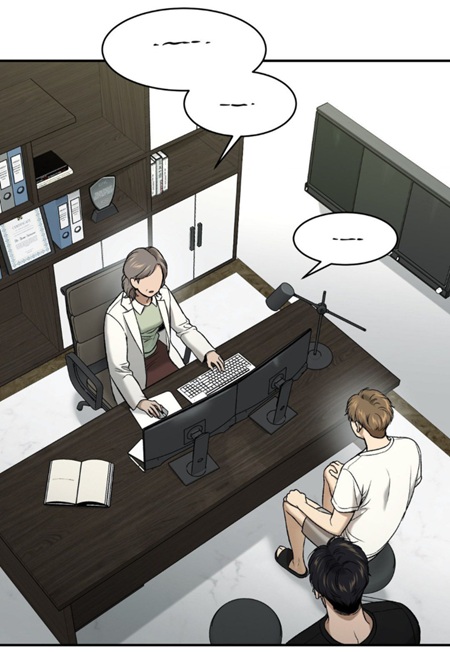 (chapter 66) In calling Kim Dan ‘defect,’ Joo Jaekyung is unknowingly projecting his own self-perception onto him. The term suggests something broken but also something that can be repaired, reflecting an unconscious shift in his perspective. Instead of simply using Kim Dan as part of a superstition, he is beginning to see his vulnerability, perhaps even recognizing a parallel to his own struggles. His choice of words also reveals his deeply ingrained belief in self-reliance.
 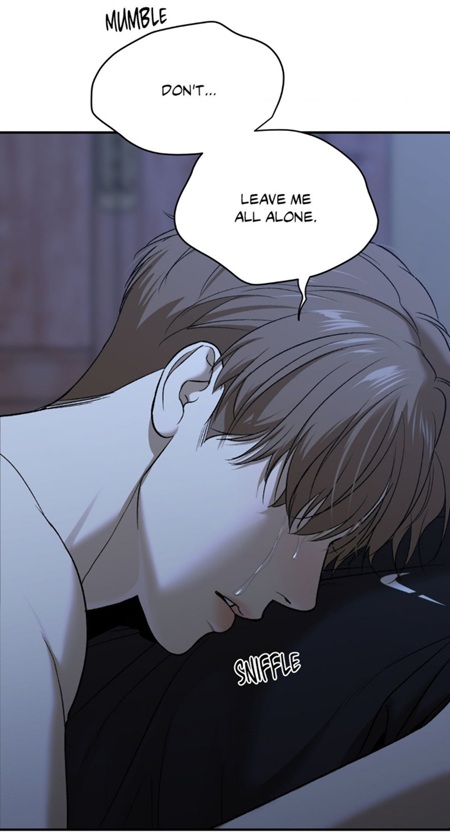 (chapter 66) Kim Dan’s nighttime distress contradicts this principle, as it suggests an inability to be alone. This mirrors Joo Jaekyung’s own realization in the garden
  (chapter 66) Nevertheless, the idiom (“he’s got a defect”) reveal that Joo Jaekyung is still under the manager’s influence. This means that this shift is not immediate or conscious; it is restrained by his continued loyalty to Park Namwook and his ingrained avoidance of emotional vulnerability.
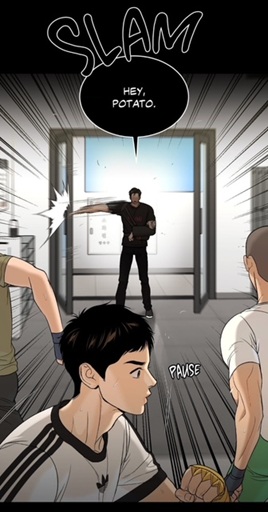 (chapter 60) This scene represents the exception. For the most part of the time, the star only visited the gym because Park Namwook had contacted him.
 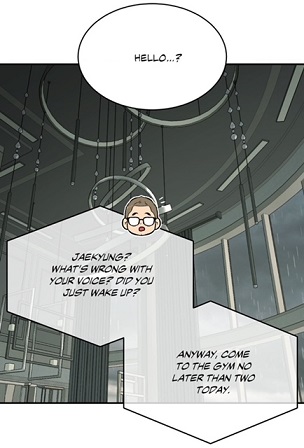 (chapter 54)
  (chapter 66) Striking is that by each meeting, the champion was alone with the manager. The latter was no longer followed by coach Yosep. It was, as if Park Namwook wanted to have some privacy with the celebrity. However, through this contrast, Jinx-lovers can detect a certain MO from the manager: he is isolating the champion, limiting his interactions with other members. This explicates why he remains a pivotal force in Joo Jaekyung’s stagnation.
 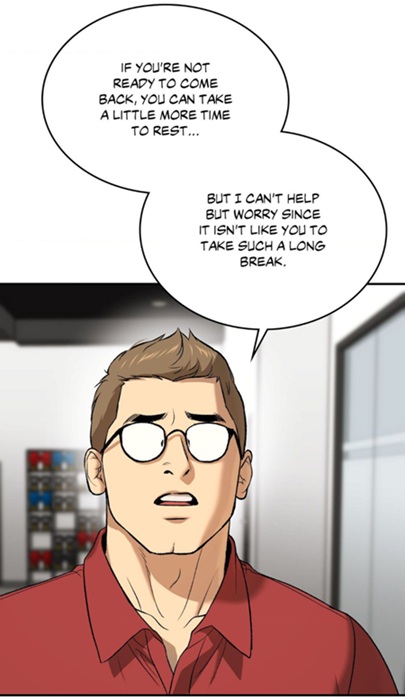 (chapter 66) Yet, just moments later, he tells him that he can take more time to rest, as if feigning concern. This contradiction is striking because it exposes his underlying agenda: he wants Joo Jaekyung back in the gym but doesn’t want to appear forceful. Instead, he makes it seem like Joo Jaekyung is the one making the decision, fostering guilt by implying that his long absence is unnatural.
 (chapter 52) His sudden shift—acting as though the champion is no longer himself—reveals his inconsistency. When Joo Jaekyung was compliant, he was simply a reckless athlete with an attitude. Now that he is exhibiting autonomy, Park Namwook implies that something is wrong with him. It was, as though he was missing the old version of the champion. 😂 But this is what he complained about him in the past: he was a workaholic!
  (chapter 27) This double standard highlights Park Namwook’s true role: he is not a supportive figure but a handler, ensuring that Joo Jaekyung remains under control and fulfilling his duties as a fighter. His words are not meant to provide genuine support but to keep Joo Jaekyung tethered to a system where his worth is defined solely by his success in the ring.
  (chapter 54) or (un)favorable interviews about the athlete.
  (chapter 54)
  (Chapter 57) As a manager, Park Namwook’s role involves overseeing Joo Jaekyung’s career, securing contracts, and ensuring his reputation remains intact. Yet, as seen in Chapter 66, his actual concerns seem remarkably narrow in scope.
  (chapter 48) Back then, there was a witness, Kwak Junbeom and the latter could have reported to the “hyung”. These incidents indicate a consistent effort to control what the champion knows, raising the critical question: why?? His silence on this matter suggests not only a strategic decision to keep the star uninformed, but also an attempt to avoid responsibility. The supervisor often hesitates to make decisive choices
 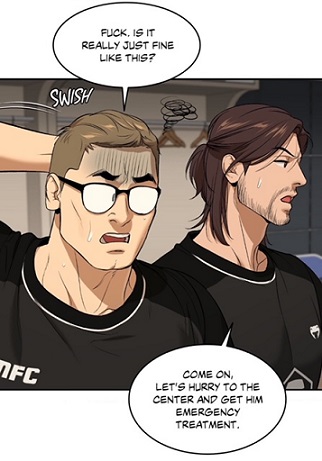 (chapter 50), preferring instead to remain passive so that any negative outcomes can be blamed on the champion. At the same time, this passivity helps him maintain control—as if Joo Jaekyung, without his guidance, would be left ‘alone’ and directionless. In this way, the man with the glasses sustains a dynamic in which the champion feels dependent on his presence, even as he is subtly undermined. By neglecting to inform him of these events, Park Namwook ensures that the champion remains unaware of external factors that could influence his choices. This pattern reinforces the possibility that Park Namwook was aware of the meeting with Choi Gilseok and deliberately ignored it, likely expecting that Joo Jaekyung would take care of it, while absolving himself of responsibility.
 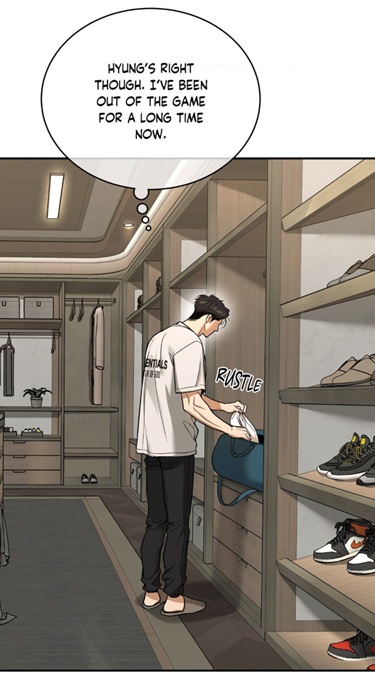 (chapter 66) This hesitation stems from deeply ingrained beliefs about relationships and fidelity. His loyalty to Park Namwook prevents him from fully confronting the possibility that his manager may not have his best interests at heart. Moreover, his own emotional repression makes it difficult for him to recognize his evolving dependency on Kim Dan as something beyond physical necessity.
 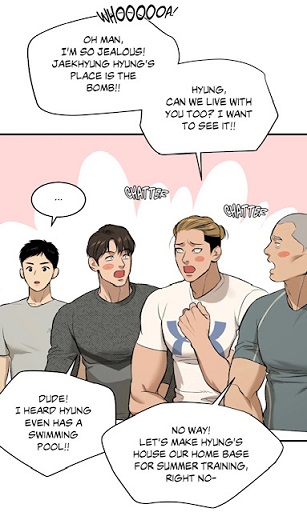 (chapter 22) They had heard about his place, for the manager must have talked about it. The protagonist is not someone who will talk about his private life to others. The manager must have dangled promises in front of them, making them believe that if they’re lucky enough, they too could live like the champion. However, their reactions reveal something crucial—they are not motivated by greed but by genuine admiration. They simply want to experience the luxury once in a while, reinforcing that their bond with Joo Jaekyung is rooted in camaraderie rather than material envy. This further highlights the contrast between Park Namwook’s manipulation and the sincere regard his teammates have for him. This scene is important, because it exposes the manager’s prejudices and lack of discernment.
  (chapter 46) Not everyone is the same and more importantly like him! It is clear that the man is projecting his own principles onto others and in particular onto the champion.
  (chapter 66) Neither of them fully understands how to acknowledge care or support. Just as Joo Jaekyung struggles to recognize his actions as stemming from concern
 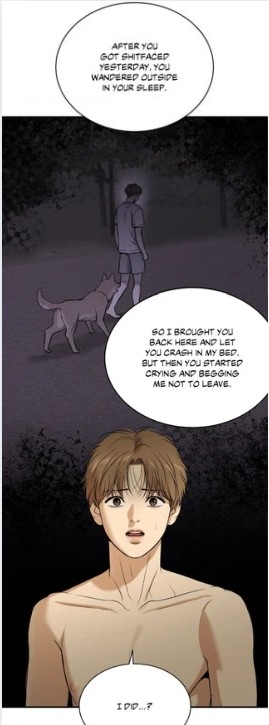 (chapter 66) rather than routine, Kim Dan fails to see Joo Jaekyung’s interventions as genuine help. This mutual misunderstanding deepens the emotional rift between them, ensuring that both remain trapped in their own perceptions of obligation rather than connection. In Chapter 66, he openly expresses frustration, stating,
 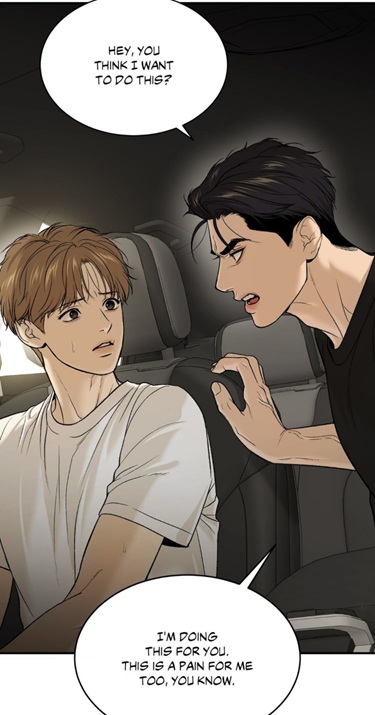 (chapter 66). This moment highlights a rare glimpse of honesty: he is not acting purely out of self-interest, but he frames it as an obligation rather than a choice. From my point of view, such a statement could only reach the physical therapist’s mind, for in the latter’s eyes, the champion has always been a “demon”: self-centered and inconsiderate. Observe the absence of reply from the “hamster”. He couldn’t contradict the star, as the latter was using this negative image: bad tempered and selfish.
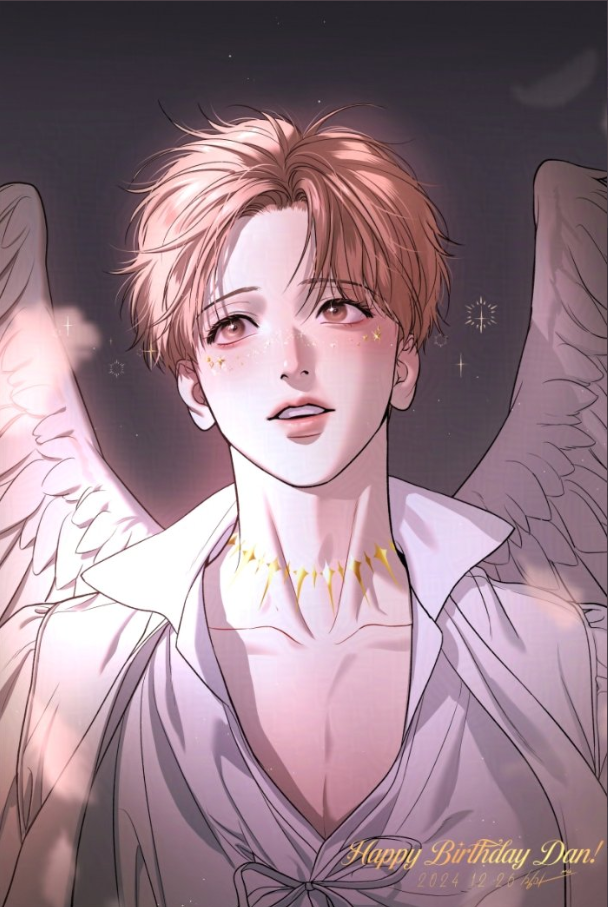 . The reason is simple. He was portrayed as someone who would do favors to people constantly: his grandmother
  (chapter 7) and even Choi Heesung. Hence the latter called him like that:
 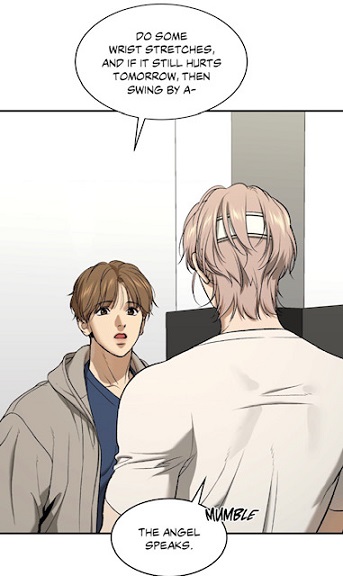 (chapter 30) Kim Dan’s perception of himself as an “angel” has long shaped the way he interprets his relationship with Joo Jaekyung. Reinforced by his upbringing and Park Namwook’s subtle manipulation
 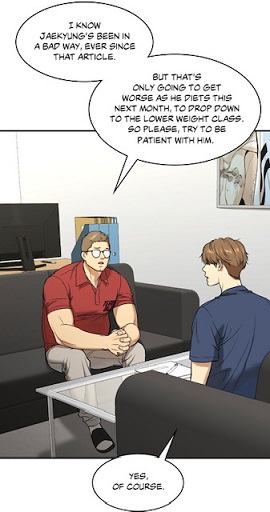 (chapter 36), he has unconsciously placed himself in a position of moral superiority. He is the patient, understanding figure, while Joo Jaekyung, in contrast, is violent
  (chapter 1), selfish, and emotionally stunted. However, this self-perception is deeply flawed. By believing himself to be inherently better
  (chapter 64) than the champion, Kim Dan avoids confronting his own emotional repression, his weaknesses, and his own form of “defectiveness.” He fails to see that he is just as human—just as fragile—as the man he silently judges.
 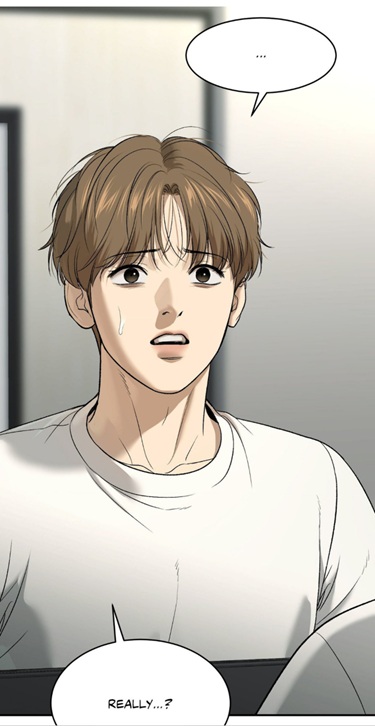 (chapter 66) The expression “Really…?” is not just about disbelief but also about a moment of confrontation with reality. Up until this point, Kim Dan has been dismissing his own suffering, suppressing his struggles, and functioning on autopilot. However, hearing a professional confirm that he is indeed sick forces him to acknowledge what he has been denying.
 (chapter 60) or exaggerations.
 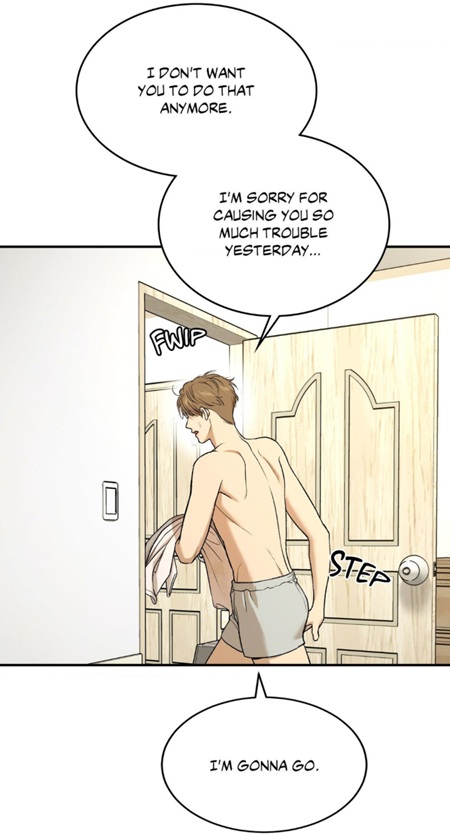 (chapter 66) It also forces him to consider that others—especially Joo Jaekyung—were right to be concerned, which in turn may lead to a shift in his perception of the champion’s actions.
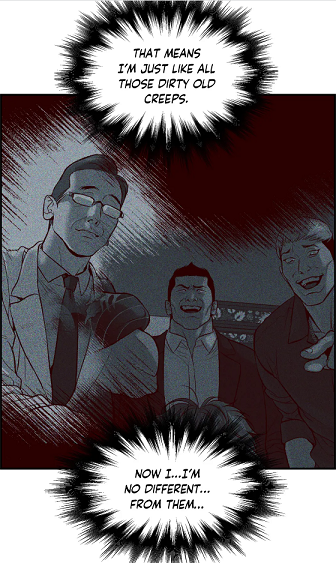 (chapter 20) with shame, something impure that should be avoided or hidden. This internalized belief made it difficult for him to separate his own experiences from moral judgment. When he encountered the champion —who treated sex as nothing more than a professional ritual
 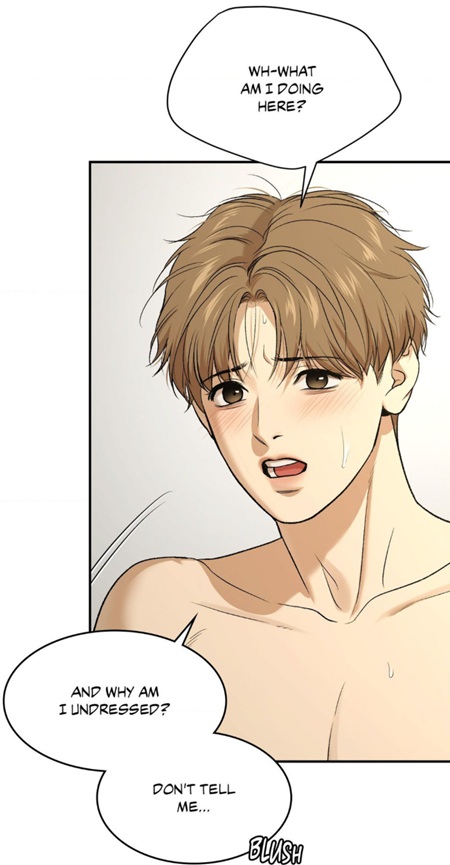 (chapter 66) He assumed once again that the star had taken advantage of his “drunkenness”, something Kim Dan had done himself in the past.
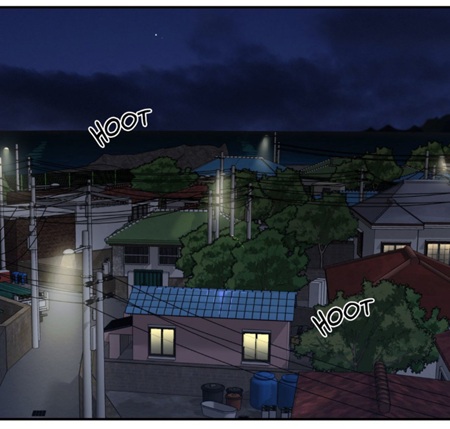 (chapter 65) Symbolically, this reflects their respective journeys. The demon (Joo Jaekyung) is slowly leaving the underworld of detachment and blind routine, stepping toward vulnerability. Meanwhile, the angel (Kim Dan) is descending from his idealized, self-righteous perception of himself, recognizing his own flaws, desires, and limitations. Both must step away from their extremes—Kim Dan from his unconscious moral superiority and passive victimhood, and Joo Jaekyung from his emotional repression and transactional mindset.
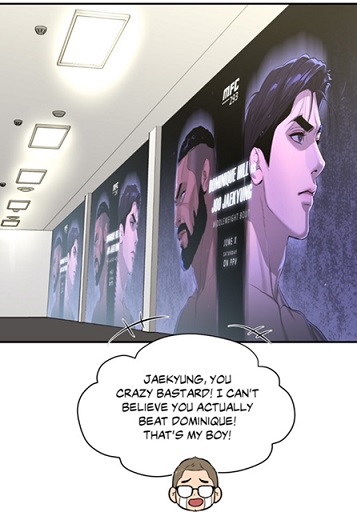 (chapter 40) , while Kim Dan, conditioned by years of emotional neglect, sees gratitude as a transactional exchange rather than an expression of genuine appreciation.
  (chapter 66) because Kim Dan does not recognize his efforts, while Kim Dan cannot see past his own survival instincts to notice that Joo Jaekyung’s actions are slowly shifting from obligation to care. Kim Dan, conditioned by years of neglect and survival-driven thinking, does not see Joo Jaekyung’s actions as genuine care.
 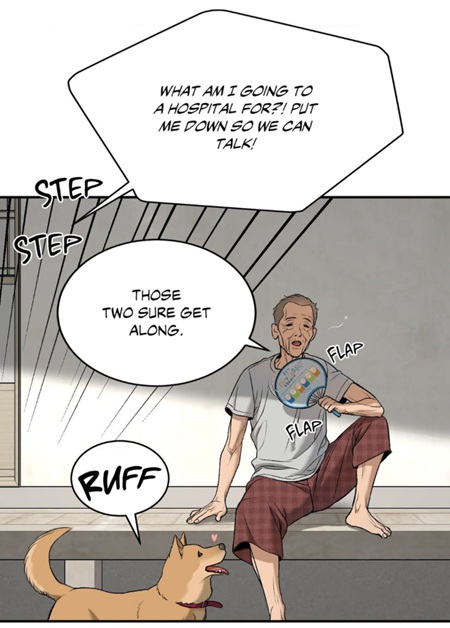 (chapter 66) And the latter can see beyond the appearances.
 (Chapter 15) and the life-saving kiss on the beach
 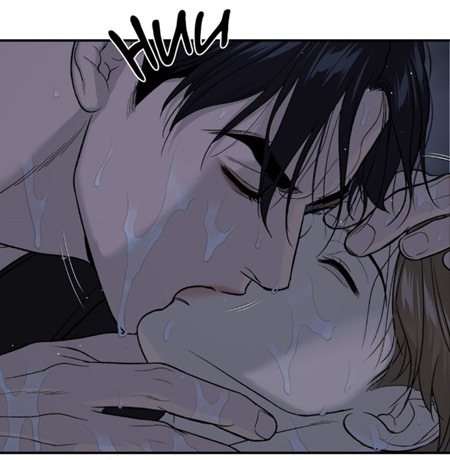 (Episode 60). Both moments carry significant emotional weight but reflect different facets of their dynamic, from selfishness to selflessness, secrecy to openness, and miscommunication to recognition. The setting and circumstances surrounding these kisses not only highlight the characters’ growth but also underscore the unresolved struggles they face.
 (chapter 14), acted particularly rough with Kim Dan
 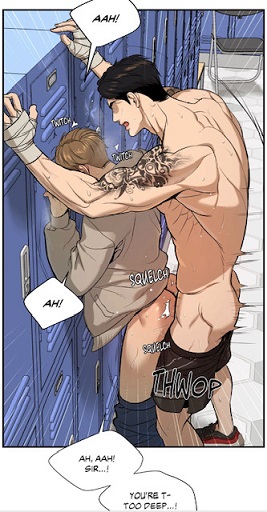 (chapter 14), only snapping back to reality when he felt Kim Dan’s body trembling.
 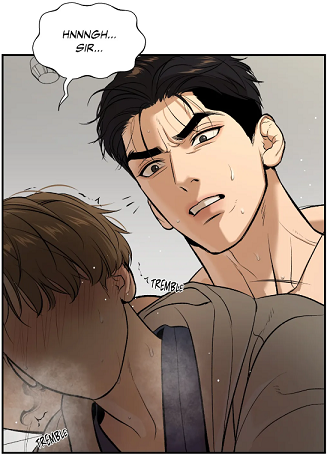 (chapter 14) This moment of realization, coupled with the doctor’s tears and plea
  (chapter 14), served as the trigger for Joo Jaekyung to recall Cheolmin’s recommendation
 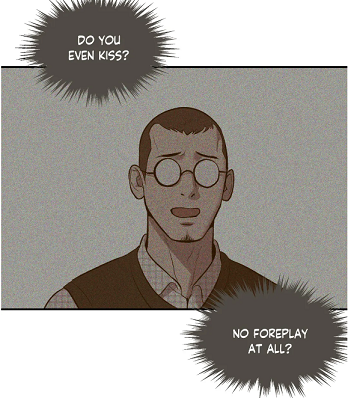 (chapter 14) of using foreplay and gentler methods, such as a kiss. While the kiss reflected care in the moment
 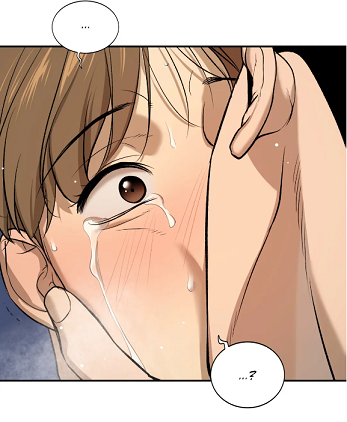 (chapter 14), selfish motives lingered in the shadows, as Joo Jaekyung sought to prevent causing visible harm that could lead to questions or even a scandal. It was, as if he wanted to silence his partner. Moreover, this decision was influenced by external suggestions, particularly from his friend, and not entirely by his own intentions. It was a calculated action to prevent immediate harm but lacked genuine emotional depth.
  (chapter 13) As you can see, through the comparison with the kiss on the beach, I realized the doctor’s passivity and lack of critical thinking in season 1. He never asked why the athlete was so rough during sex. He took this for a normality. His attitude exposed the doctor’s biased perception of his boss: a spoiled and rough man obsessed with sex. I would even add that the kiss had a positive effect on the protagonist
 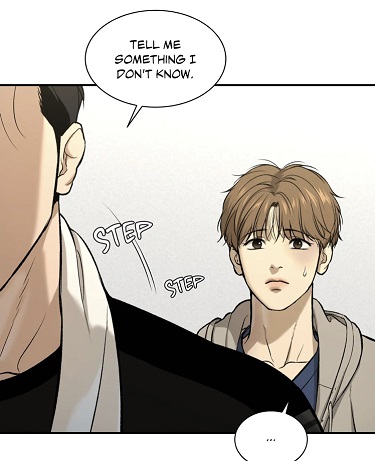 (chapter 15), the physical therapist omitted something important in the locker room. First, he didn’t share all his thoughts about the athlete, in particular his prejudices. Finally, he should have talked about his behavior before the kiss. What was he thinking, when he was having sex with him? In verity, he had been used as a substitute. In other words, the champion’s selfishness was rubbing on the doctor. Both were selfish, both had their heart and mind closed. And this remark brings me to the kiss on the beach.
  (chapter 15), a confined space symbolizing Joo Jaekyung’s need to keep his relationships private. Picking up partners at a VIP club
 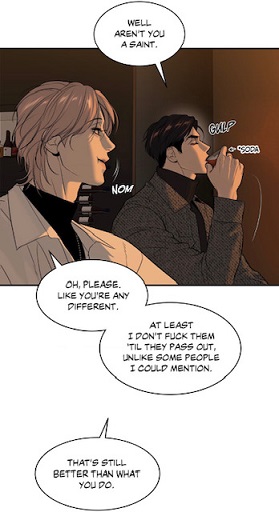 (chapter 33) was another extension of his desire to maintain secrecy. By contrast, the beach in Episode 60 is a public, open space, reflecting a significant shift.
 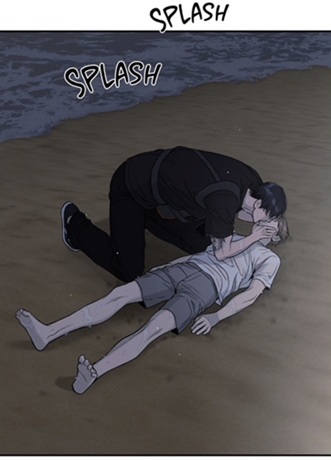 (chapter 60) Moreover, in the past, the locker room
  (chapter 14) was always filled with people surrounding the champion. However, once Kim Dan entered his life, this dynamic began to change. In Episode 14, Joo Jaekyung asked everyone to leave the locker room,
  (chapter 14) even excluding Park Namwook, who was even seen before stationed outside the bathroom door,
 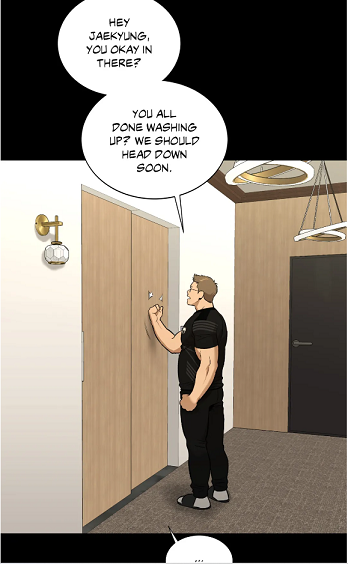 (chapter 14) signaling a gradual exclusion of others from his private life and emotions. By Episode 15, Joo Jaekyung explicitly sent away his manager to have a private conversation with Kim Dan.
 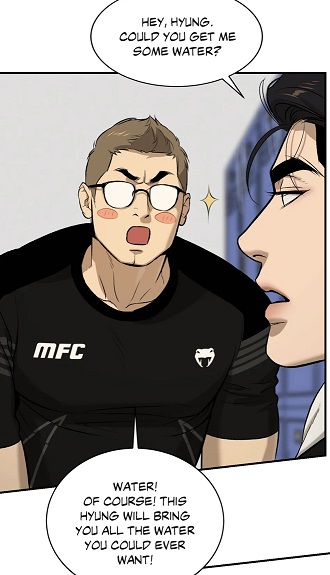 (chapter 14) This shift highlights the increasing importance of Kim Dan in Joo Jaekyung’s personal sphere. Interestingly, this progression is contrasted by Episode 49, where Joo Jaekyung deliberately ensured
  (chapter 49) he was not left alone with Kim Dan. This means that this place was no longer the synonym for privacy and secret. This reflects why director Choi could intrude with his minions. Following the incident with the switched spray, Kim Dan was left behind
  (chapter 50) in the locker room twice
 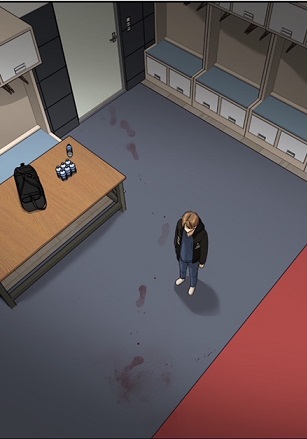 (chapter 51), which could only increase the physical therapist’s feelings that he didn’t belong to Team Black. He was not part of that “family”. And this coincides with the moment where Kim Dan cries for the last time:
 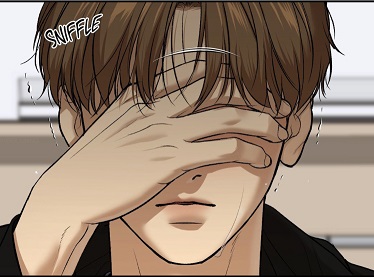 (chapter 51) From that moment on, the main lead won’t show his vulnerability and pain to others. This gesture announces the return of his “blue friend”, the depression.
 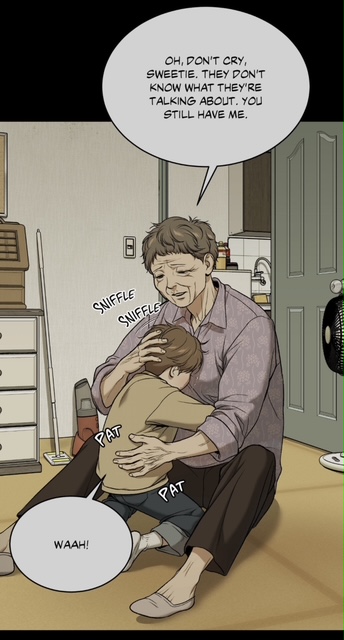 (chapter 57) Shin Okja must have felt uncomfortable with his tears and pain, therefore the doctor internalized not to show his struggling and burdens in front of his grandmother. This explicates why he denied his weeping in front of her first.
  (chapter 47) And now, you are wondering how this is relevant to the scene on the beach. Joo Jaekyung got shocked and scared, but he didn’t cry later and it is the same for Kim Dan. Hence the latter could deny his presence on the beach and even ignore the athlete’s words:
  (chapter 60)
 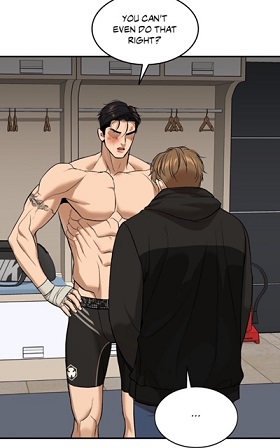 (chapter 51), his lack of loyalty, his greed and obsession for money.
  (chapter 51) Here, they were totally honest to each other:
  (chapter 51) Though the champion was restraining himself, he didn’t realize that his words were like punches to Kim Dan. The latter got to hear what he didn’t know.
 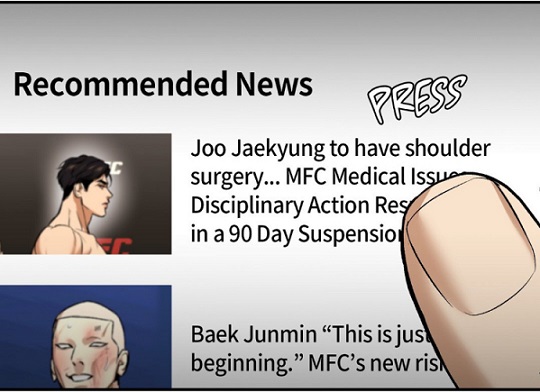 (chapter 52) The conversation in the locker room symbolically announced the champion’s private struggles to the media, as his bad temper was made public shortly after.
  (chapter 15) , representing his need for mental and emotional support, which his team and entourage failed to provide. While the CPR kiss could be dismissed as a rescue, it symbolically represents a step toward Joo Jaekyung revealing his true self. The kiss marks a moment where he unconsciously begins to acknowledge his feelings and his homosexuality, even in a setting where others could witness it.
 (chapter 60) was surrounded by nature. Hence they could show their true self: their exhaustion, desire and emotions. While the doctor was suicidal due to his depression and fatigue, the champion’s worries were genuine. Yet Kim Dan was not able to hear them.
  (chapter 60) This means that on the beach, Kim Dan could only detect one thing: Joo Jaekyung’s presence. But he didn’t sense his kisses and hear his words. That’s the reason why I come to the conclusion that this scene stands under the sign of “dream and illusion”.
  (chapter 60) Hence he came to reject his “intervention” as a lie and deception. The reality is that Joo Jaekyung does care for him, but he doesn’t know how to show it. He fears attachment. Because of his misjudgement, Kim Dan is not capable to notice the transformation in his former boss.
 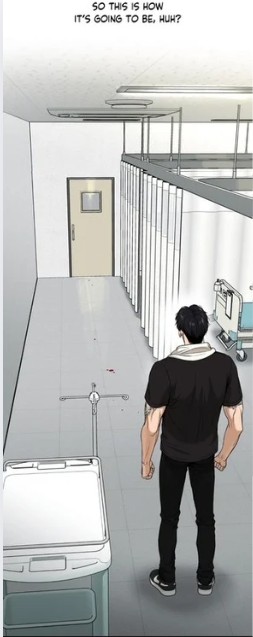 . (chapter 60) The latter has now darker circles, and he lost a lot of weight.
 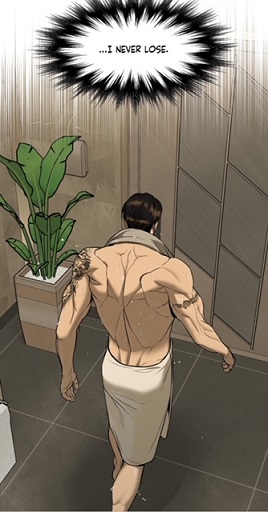 (chapter 49) His muscles are less pronounced. He is also wasting away.
 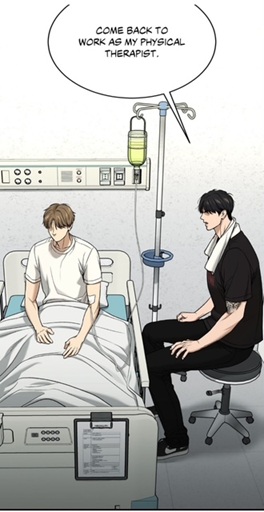 (chapter 60) reinforce control and suppression. In the locker room, the absence of time and space to relax or meditate highlighted the pressures placed on Joo Jaekyung by his manager and coach
  (chapter 49), who believed that physical strength alone would solve his problems. This environment denied him the mental and emotional support he truly needed.
  (chapter 60) By admitting that he knows about his innocence, he imagines that he can get scott-free. But he is wrong. His skepticism and dismissiveness wounded Kim Dan’s heart and mind, leaving scars that reverberate through their future interactions. Kim Dan can no longer trust him now
  (chapter 60) , though there is no doubt that the doctor is still in love with him. At the hospice, this mistrust resurfaces. The parallel conversations—in the locker room and the emergency room—highlight the ongoing cycle of miscommunication and emotional disconnect. Both characters, in their own way, lie to themselves and each other. Joo Jaekyung sees Kim Dan through the lens of poverty and greed
  (chapter 60, reducing his identity to his need for money, while Kim Dan rejects his offer, his help and conceals his pain. It is not surprising that Kim Dan left the treatment room.
  (chapter 60) By doing so, he is denying his rescue and assistance. It was, as if this night and as such the kiss had never happened.
  (chapter 60) The lies and miscommunication fade in the face of the life-and-death situation. However, this recognition is short-lived, as the events at the hospice reveal Joo Jaekyung’s lingering selfishness
  (chapter 27) When Kim Dan removed the needle carelessly
 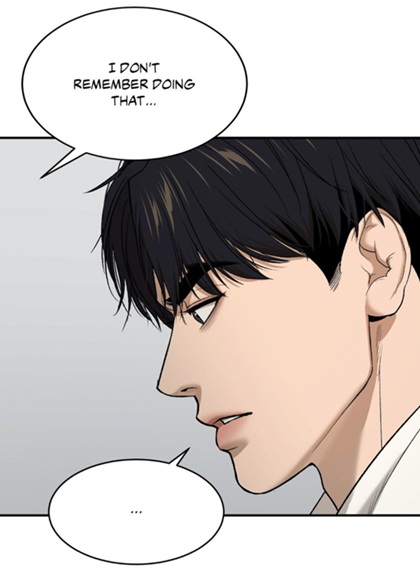 further highlight his mental fragility. This fragility contrasts sharply with Joo Jaekyung’s reaction during their interaction at the hospice. When the champion angrily asks,
  , his words reveal frustration and a superficial understanding of the situation. Rather than addressing the underlying psychological distress driving Kim Dan’s actions, Joo Jaekyung perceives them as reckless behavior. His focus remains on immediate danger rather than the deeper cause, showcasing his emotional detachment and inability to grasp the full seriousness of Kim Dan’s mental state. This misinterpretation underscores how Joo Jaekyung is still projecting his own coping mechanisms onto Kim Dan, assuming that sheer willpower and physical strength can resolve emotional struggles. This moment serves as a stark reminder of Joo Jaekyung’s ongoing growth and the gaps in his understanding of Kim Dan’s suffering. His denial of having gone to the beach, despite clear evidence, points to the depth of his trauma.
  (chapter 60) So he could get into trouble in his profession.
 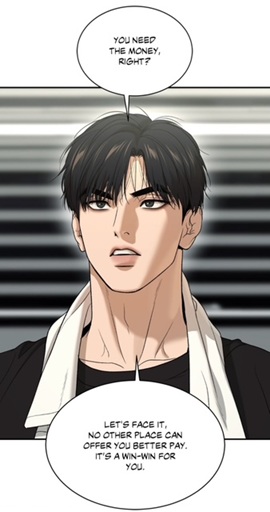 (chapter 60) at the hospice contrasts sharply with the purity of his actions on the beach, underscoring his ongoing struggle with selfishness and superficiality.
 (chapter 60) at the end of episode 60 as something negative. How so? It is because Kim Dan never said this:
 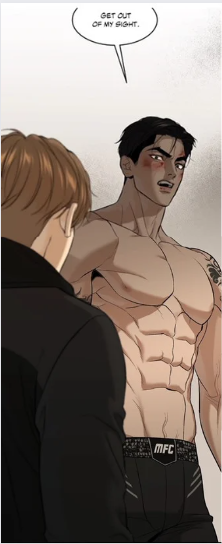 (chapter 51) He never wished to never see Joo Jaekyung again. Moreover, he never regretted their meeting either.
  (chapter 44)
  (chapter 57)
 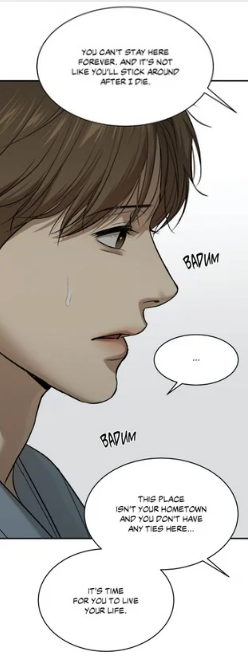 (chapter 57) However, Jinx-philes should detect the divergence: she is not using the word “home”, but Seoul. That’s the reason why in the end, Shin Okja’s confession to her grandchild will come back to bite her, as she described her own grandson as a stranger in this little town. It was, as if he had been an orphan all his life. He had no home all along.
 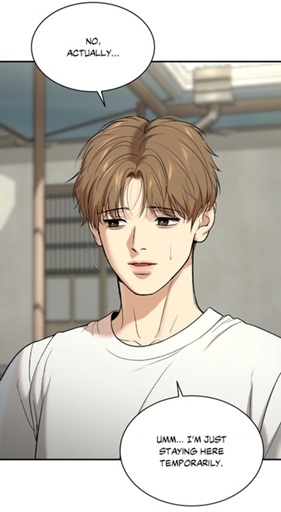 (chapter 58) Where are the parents? Who is the man where he is staying? Where did he plan to go after his stay there? The idiom “temporarily” could be perceived as an evidence that the doctor plans to end his life. According to my interpretation, Heesung believed that the landlord was Kim Dan’s grandfather. He was just denying his origins out of shame.
  (chapter 9) The athlete has now every reason to stay there and that’s how he will discover all the doctor’s secrets and misery.
 (chapter 15) kiss represents selfishness, secrecy, and miscommunication, while the beach kiss
  Bebebisous33s' analyses in K-Dramaland and Manhwas