
Please support the authors by reading Manhwas on the official websites. This is where you can read the Manhwa: Jinx But be aware that the Manhwa is a mature Yaoi, which means, it is about homosexuality with explicit scenes. Here is the link of the table of contents about Jinx. Here is the link where you can find the table of contents of analyzed Manhwas. Here are the links, if you are interested in the first work from Mingwa, BJ Alex, and the 2 previous essays about Jinx The Silent Friend in the Blue Light and The Hidden Predators (part 1)
It would be great if you could make some donations/sponsoring: Ko-fi.com/bebebisous33 That way, you can support me with “coffee” so that I have the energy to keep examining Manhwas. Besides, I need to cover up the expenses for this blog.
Why Two Wolves?
In the first part, I mentioned both Perrault and Grimm not because the stories differ superficially, but because their shared surface—the famous bed scene—hides radically different logics of danger. If one remembers only the dialogue (“What big eyes you have!”), the two versions appear nearly identical. A wolf deceives a girl; she is eaten. Yet the decisive differences lie not in the dialogue but in the structure surrounding it.
In Grimm’s version, the moral is embedded in the ending. The girl disobeys her mother by leaving the path.
One morning, her mother said, “Come, Little Red Riding Hood, here’s a piece of cake and a bottle of wine. Take them to your grandmother—she’s sick and weak, and this will do her good. Go before it gets too hot, and remember to walk carefully. Don’t stray from the path, or you might fall and break the bottle. And when you arrive, don’t forget to say good morning before you peek around her room.” Quoted from https://americanliterature.com/childrens-stories/little-red-riding-hood
Because of her disobedience, she is swallowed, but she is rescued. The huntsman cuts open the wolf’s belly; order is restored; the wolf is killed through a trick. The lesson is corrective and communal: authority intervenes, discipline saves, error can be redeemed. Red Riding Hood learns. She does not stray again. The world remains morally structured.
Perrault’s ending, by contrast, is final. There is no huntsman, no rescue, no second chance. The girl is eaten and remains eaten. One might wonder why. The answer lies not only in the conclusion but in the construction of the encounter itself. In Perrault’s original French text, the wolf is introduced as “Compère le loup”. The word compère does not designate a stranger. It implies familiarity — a companion, an acquaintance, even a friendly associate. From the beginning, the wolf is socially positioned, not alien. Hence the forest in this version is not associated with danger or wildness. The woods are seen as a prolongation of the civilization and society. The predator belongs to the same communicative world as the girl. The danger is therefore not external intrusion but internal misrecognition.
This familiarity is reinforced in the bed scene. When the girl arrives, the wolf does not immediately attack. He instructs her to place the cake and butter aside and then tells her to come into bed with him. Perrault explicitly writes that she removes her clothes before getting in. The intimacy is staged. Closeness precedes violence. The scene imitates adult seduction before revealing predation. The girl is not seized; she participates in the proximity. That participation is precisely what makes the ending irreversible in Perrault’s social universe. Thus the old French expression “avoir vu le loup” (to have met the wolf) means to have lost virginity or have gained sexual experience. Under this light, one might understand why the wolf as Joo Jaekyung’s personality fits so well. 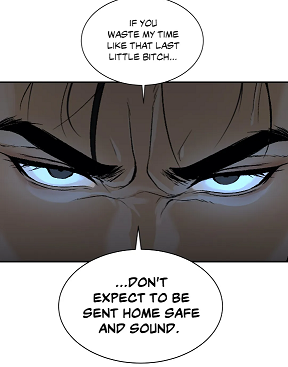 (chapter 3) The latter became responsible for the hamster’s sexual education.
In Grimm’s version, this dimension disappears. The wolf does not construct a prolonged intimacy. After the dialogue, he simply springs from the bed and devours her. There is no undressing, no extended staging of physical closeness. Violence interrupts; it does not grow from apparent consent. Grimm transforms the libertine into a beast. The danger becomes physical appetite rather than social seduction.
Striking is that at the end of the story, Perrault articulates the moral explicitly:
“Children, especially attractive, well-bred young ladies, should never talk to strangers, for if they should do so, they may well provide dinner for a wolf. I say ‘wolf,’ but there are various kinds of wolves. There are also those who are charming, quiet, polite, unassuming, complacent, and sweet, who pursue young women at home and in the streets. And unfortunately, it is these gentle wolves who are the most dangerous ones of all.” Quoted from https://sites.pitt.edu/~dash/perrault02.html
The ending is the moral. There is no reversal because social damage, in Perrault’s world, is irreversible. The wolf represents not wild nature but libertine society. He does not attack in the forest because woodcutters—witnesses—are nearby. He waits until he can move the girl into a private domestic space. He speaks politely. He proposes a race so that he can reach the grandmother’s house sooner. He performs civility. Once in the house, the girl observes inconsistencies, but she accepts the animal’s explanations. Her failure is not merely disobedience; it is misjudgment.
That distinction is why both versions were necessary. Grimm teaches obedience within a moral universe that restores balance. Perrault teaches discernment within a social universe that does not. He is promoting critical thinking.
And Jinx unfolds more in the latter.
The Director: An Anaconda or a Wolf?
At first glance, the hospital director resembles Perrault’s wolf. 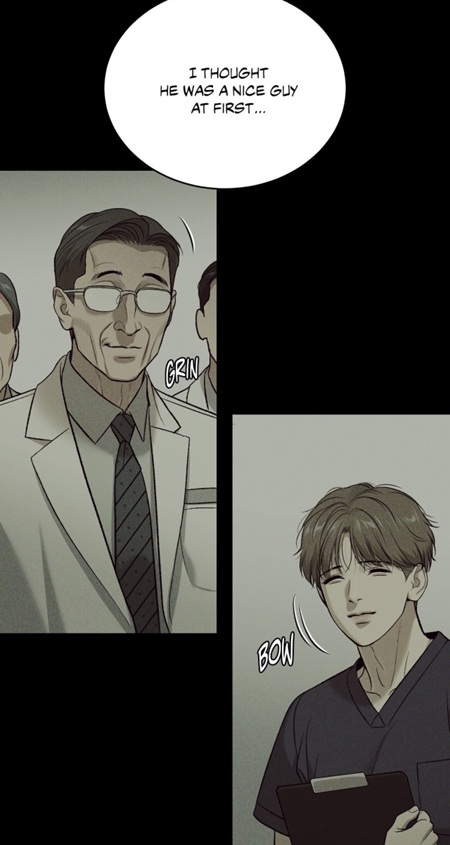 (chapter 90) He is not impulsive. He is not openly violent. He operates within institutions, within offices, within controlled environments. He isolates rather than attacks. He frames rather than forces. Like Compère le loup, he is not a stranger; he is part of the social order. He belongs to the system. That belonging is precisely what grants him access.
His resentment 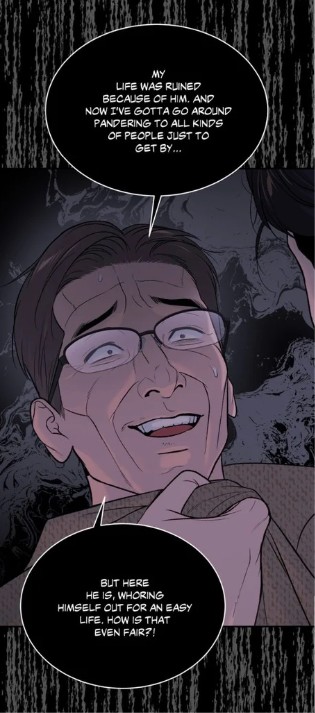 (chapter 90) reveals that his true wound is territorial. He can no longer find his targets within the hospital. He lost control. He lost narrative dominance. This explicates why the predator retaliated against Kim Dan by badmouthing him.
 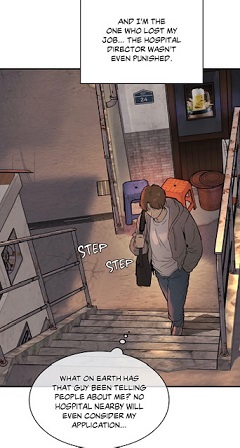 (chapter 1) He made sure that the protagonist was economically and socially “ruined”. However, at the restaurant, what did he discover? A happy man with a companion! Despite his “revenge” for the loss of his territory, the physical therapist’s life had not been ruined. Thus he tried to slander the physical therapist, he was just a slut.
 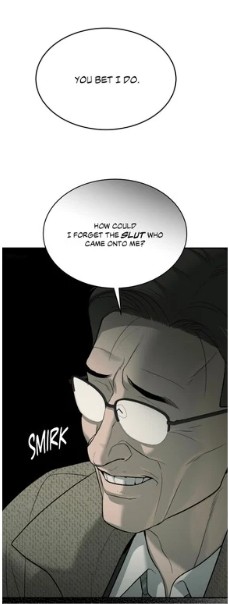 (chapter 90) The problem is that the champion did not react like expected. He got angry at the “client” and not at the “prostitute”. He never thought that the main lead would side with such a person. Thus the hospital director voiced a menace:
 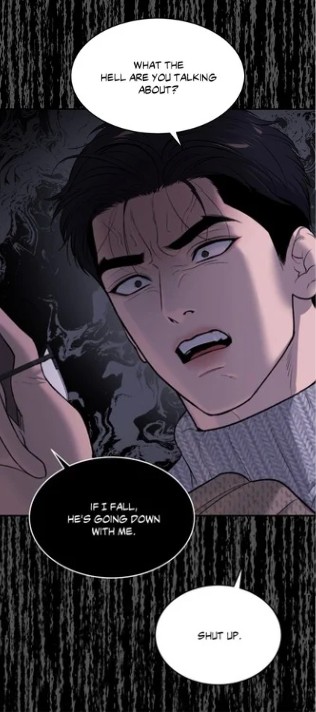 (chapter 90) His threat is not confession; it is defensive strategy. It reveals what he fears most: exposure. Not moral reckoning, but visibility. The predator who once operated in sealed rooms now imagines himself dragged into the open. And that possibility terrifies him.
In Perrault’s logic, harm succeeds because it occurs without witnesses. The wolf avoids the woodcutters. Thus he relocates the act into a private domestic space. But one might wonder about the identity of the woodcutters in the Korean Manhwa. In the architecture of a scandal, the “Woodcutter” represents the Bystander Effect woven into the fabric of an organization. In the fairy tale, the woodcutters are physically present but functionally absent; their focus on their “job” creates a peripheral noise that masks the wolf’s approach.
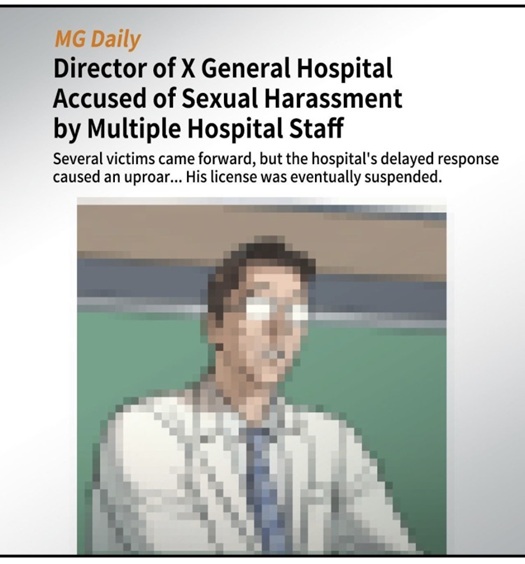 (chapter 91)
When an institution like Saero-An Hospital 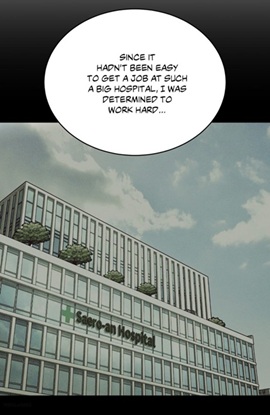 (chapter 90) prioritizes its “output” (reputation, profit, or clinical operations) over the safety of its staff, it adopts the woodcutter’s axe. By focusing only on the work at hand, the institution effectively grants the predator a “sealed room.” The wolf doesn’t need to hide from the woodcutters; he only needs them to keep their heads down. What makes him powerful is not brute force but the absence of eyes. The director functioned the same way. His authority depended on institutional insulation — doors closed, hierarchy unquestioned, narratives controlled. As long as no one looked too closely, he remained Compère — familiar, respectable, legitimate.
However, visibility destroys that structure. It is no coincidence that the name of the institution is not revealed. It is strategic, it is about containment and damage control. (chapter 91) “Director of X General Hospital.” The letter X replaces identity. The institution remains faceless, protected, intact. Only the individual is exposed. He becomes the “black sheep,” the aberration, the singular deviant whose removal restores the illusion of purity. This means the system has not truly fractured. It has absorbed the shock. The management is shielded. The hospital’s reputation survives. The corruption is reframed as personal misconduct rather than structural tolerance. And that explains why the director initially felt safe. It is because he knew the “Mother” (the institution) and the “Woodcutters” (the staff/administration) were more invested in the “Big Hospital” image than in the safety of the “daughters” (the employees). And this is precisely where Perrault’s logic returns — not only through the wolf, but through the adults. In Perrault’s version, one might ask: where are the parents? The mother sends the girl into the forest without any warning. The grandmother only thinks how lovely her grandchild is, hence she is not talking about the dangers. None of them prepare her to recognize manipulation. Neither the mother nor the grandmother teaches her to question charm. She is well-bred, polite, obedient — but not trained to distrust sweetness.
Perrault’s moral seems directed at the girl, but indirectly it exposes society. A culture that values politeness over discernment produces vulnerability. The wolf thrives not only because he is cunning, but because the girl was raised to comply. The blame, therefore, is not purely individual.
The same mechanism appears in the hospital scandal. By omitting the hospital’s name, the article preserves the illusion that corruption was singular. But the panel in which Kim Dan reflects (chapter 1) disrupts the illusion that this was ever an isolated deviation. It reveals that shielding authority at the expense of subordinates was already the hospital’s modus operandi. The management’s instinct was not investigation, but preservation. Not accountability, but hierarchy.
This is crucial. Before the scandal became public, the hospital had already demonstrated where its loyalties lay. The director was protected. The subordinate was expendable. Dan lost his position; the director remained secure. That earlier incident establishes a pattern: institutional cohesion prioritized over justice. Now compare this to the anonymous article. (chapter 91) The article does not expose the forest. It exposes one wolf. Hence the hospital name remains concealed, while the man’s face is “revealed”. The director’s license is suspended. Publicly, the system appears decisive. But structurally, the logic remains the same: protect the institution, isolate the individual. The difference is only in scale. Previously, Dan was sacrificed to shield the director. Now the director is sacrificed to shield the hospital.
The mechanism is identical. This is where Perrault’s tale deepens the analogy. In the fairy tale, the mother sends the girl into danger unprepared. The adults create conditions in which charm is not interrogated. When the wolf succeeds, the girl bears the consequence. Society remains unexamined. Hence in Perrault’s tale, there is no huntsman because society itself is implicated. The wolf is not defeated because the environment that produced him remains untouched.
Likewise, the hospital’s earlier response shows that vulnerability was institutionalized. Victims were isolated. Complaints were contained. Authority was insulated. The forest was never safe; it was simply unacknowledged. The article does not expose the forest. It exposes one wolf.
And that is the most disturbing parallel: predators thrive where institutions prefer appearance over introspection. And now, let me ask you this question: what about MFC as institution then?
Perrault’s warning is therefore double-edged. It cautions young women about gentle wolves, but it also exposes a society that raises daughters to be agreeable rather than analytical. In both cases, the danger is not only the wolf. It is the world that allows him to pass as familiar.
That is why his language is not remorseful but retaliatory. (chapter 90) “If I fall, he’s going down with me” translates into: If I am exposed, I will contaminate the narrative. I will ensure that no one stands clean beside me. The threat is not about truth; it is about mutual ruin. This is Perrault’s mechanism inverted: when privacy collapses, the wolf attempts to drag the girl into public disgrace so that exposure harms both equally. If he cannot remain hidden, he will ensure that the victim appears complicit. What the director fears most is not prison, nor even moral judgment. It is losing control of the story.
And this leads me to the following observation: (chapter 90) The director claimed that doc Dan ruined his life, though the article makes it clear that it happened because of the collaboration of different victims. (chapter 90) The moment he got caught by the nurse in the office, gossips started circulating, and previous victims recognized that they were not the only ones. The man could no longer escape the gaze from the staff. Hence he had to seek his “targets” elsewhere. The restaurant scene clarifies his new method. He is sitting with a man in a curated adult space—low light, alcohol, controlled proximity. 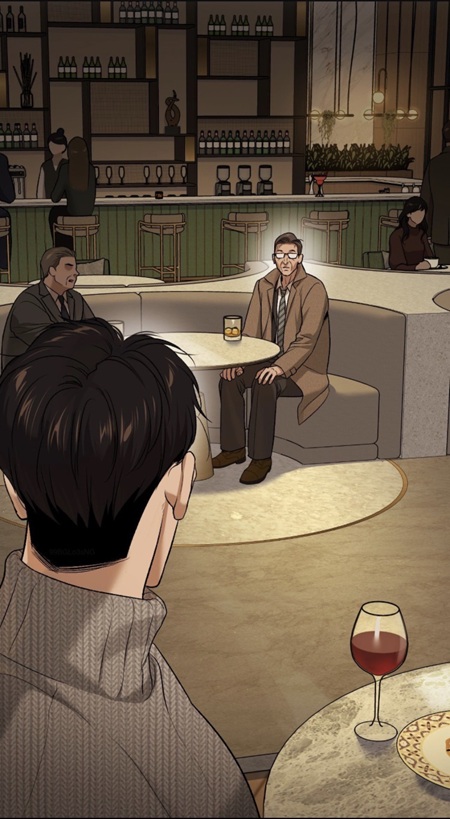 (chapter 90) It resembles the wolf’s preferred setting: intimacy that appears voluntary. What caught my attention is that he complained about his partners. (chapter 90) That line exposes the structural wound. “Pandering” implies performance. It implies negotiation. It implies mutuality. It implies that he must now ask rather than take. In the hospital, he did not have to pander. Authority substituted for charm. Hierarchy substituted for consent. Privacy substituted for persuasion.
Outside that territory, he is reduced to the marketplace of mutual agreement, — dating apps, casual meetings, drinks that require conversation rather than compliance. And he resents it. I came to think about dating apps, because the perverted hospital director did not meet the man at the XY club 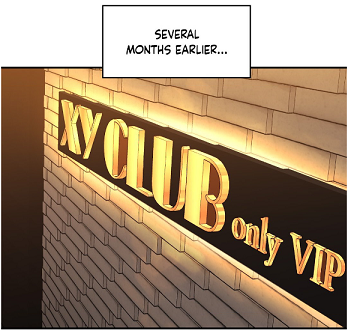 (chapter 33), but at the restaurant. If he had known such a club, he could have met the green haired-guy or the “uke” from episode 55. Thus I deduce that the sexual predator is actually hiding his “homosexuality”, he had been living a double life in the end, like the wolf in Perrault. That’s why he targets “virgins”. Since he used the expression “pandering… get by”, Mingwa implies that this man must have told the men (“all kinds of people”) he met, he was looking for a boyfriend to justify his action.
 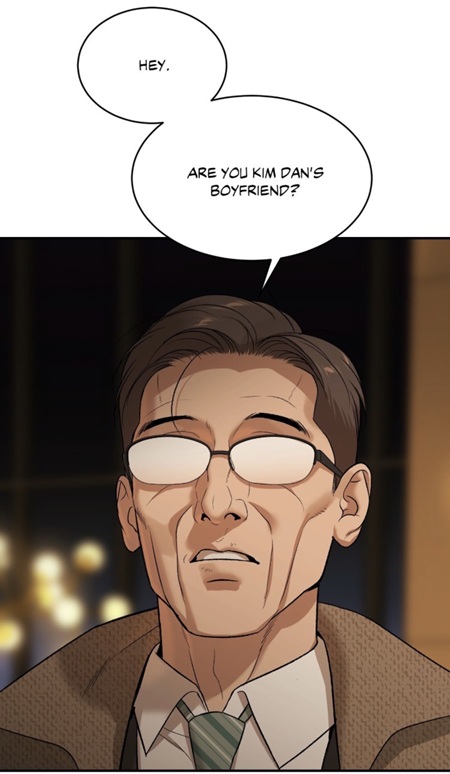 (chapter 90) However, this lie was quickly caught by the unknown companion, as the perverted director paid no attention to him. (chapter 89) This exposes that the sexual predator hadn’t dropped his old mind-set, selfishness and entitlement. When the man abruptly stands and leaves, the director is surprised.
 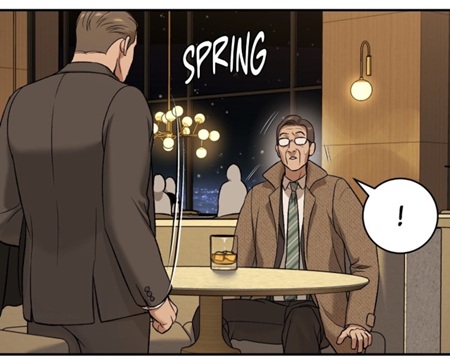 (chapter 90) That surprise matters. It suggests expectation of compliance, of silent agreement, of recognition of coded signals. The man likely does not belong to the director’s ecosystem; he does not recognize the invitation as opportunity but as lack of respect. Thus he exits.
 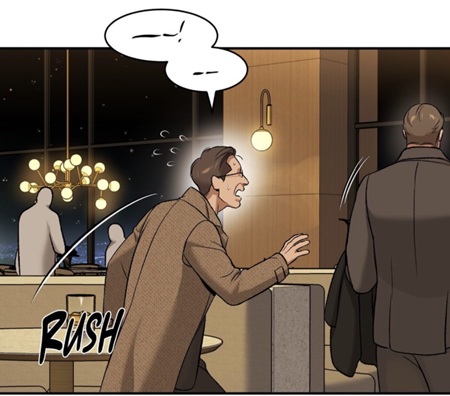 (chapter 90) The fact that the wolf tried to talk him out of it indicates that their relationship was not only superficial, but also more equal. Humiliation is crucial. Predators who rely on social camouflage depend on territory. When territory collapses, strategy must change.
This is where the transformation begins. Until he meets Doc Dan, the director functions like an anaconda: silent constriction, gradual suffocation, no visible struggle. The anaconda does not bite first; it coils. It removes oxygen slowly. The hospital setting enabled precisely that kind of predation—isolated rooms, professional hierarchy, reputational shields. After the loss of his territory, we could say that he becomes acting like a “wolf” from Perrault’s version. He has many relationships (all kinds of people to get by). Perrault’s wolf survives because he is charming and unmarked. He passes as “Compère.” Yet, the moment the champion crosses his path, the director transforms one more time: 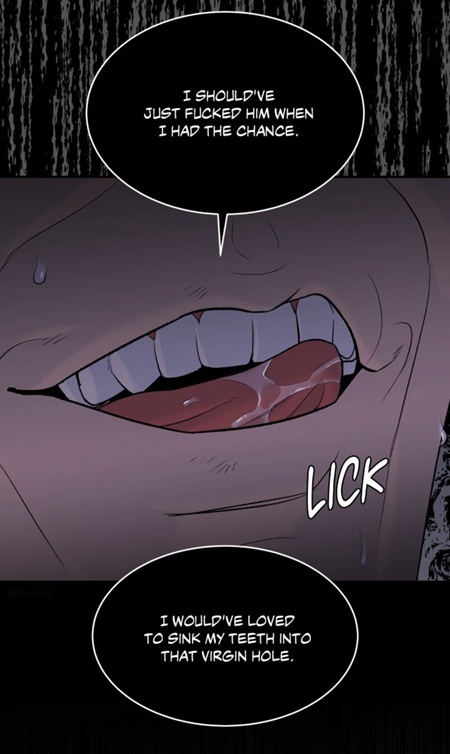 (chapter 90) This is where Grimm enters. His true nature got exposed, he is socially identified as predator.
Thus I initially deduced that the perverted hospital director would retaliate against the famous champion. (chapter 90) Jaekyung represents exposure. He is public, visible, media-facing. He has sponsors, contracts, a name that circulates. Reputation is capital in MMA. A scandal can destabilize a career faster than defeat in the ring.
But the new development alters this trajectory. (chapter 91) The director has already been exposed. His license is suspended. His name circulates in headlines. Even if the hospital remains anonymous, he does not. His face may be blurred, but within professional and social circles, recognition is inevitable.
This changes the mechanics of revenge. Previously, he could have weaponized narrative. Now, narrative cannot be weaponized — because he lacks credibility. Any accusation coming from him would be read as retaliation. He is already stigmatized as the wolf.
And stigma has consequences beyond reputation. He complains that he must “pander to all kinds of people just to get by.” (chapter 90) That line once indicated resentment toward consent. Now it reveals something deeper: he may no longer even succeed in pandering. Who would willingly meet a man publicly accused of harassment? (chapter 91) Even if strangers do not immediately recognize him, someone eventually will. His social ecosystem contracts.
He becomes even more isolated than before. This is where the transformation accelerates. And when charm is no longer viable and narrative manipulation is no longer credible, only one option remains: force without pretense.
This is where Grimm’s wolf enters fully. In Grimm’s version, the wolf does not maintain prolonged civility. He springs. 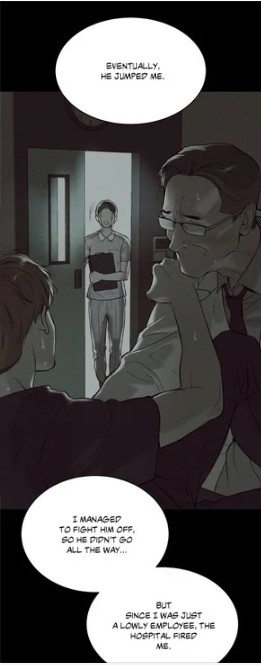 (chapter 90) He devours.
 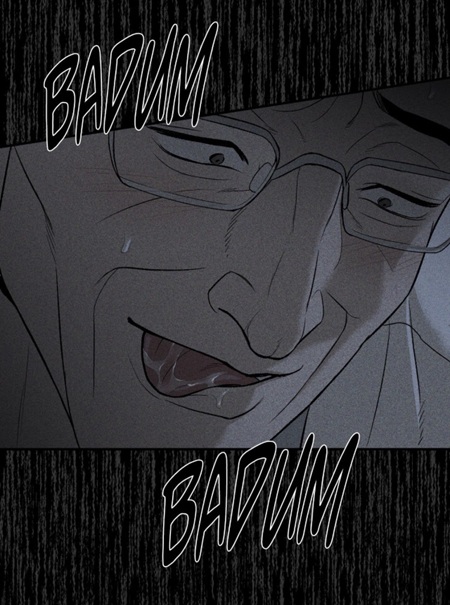 (chapter 90) There is no sustained camouflage. Violence becomes explicit.
The director’s inner monologue already reveals this potential pivot: (chapter 90) That sentence reframes restraint as error. It converts missed coercion into regret.
Now add stigmatization. If he cannot find partners, if he cannot reclaim status, if he cannot control narrative, if he has nothing left to lose, then the probability of retaliation and desperate reassertion increases. Not because he desires intimacy. But because he desires dominance. And dominance without insulation becomes assault.
The restaurant rejection already wounded his ego. Besides, his behavior at the restaurant could be seen as intrusion. 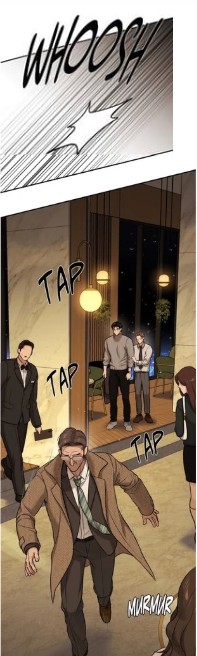 (chapter 90) Hence he ran away. The exposure destroyed his credibility. The public article marked him. His ecosystem collapses. He is no longer hidden wolf. He is identified predator.
Predators who lose camouflage often escalate rather than retreat. Thus the revenge element shifts from narrative contamination to bodily assertion. Not scandal against Jaekyung. Not media manipulation. But an attempt to reclaim asymmetry through direct coercion. This does not guarantee success.
But it increases probability. The fairy-tale logic therefore completes itself:
Perrault shows the wolf who hides behind civility. Grimm shows the wolf who leaps when civility fails.
In Jinx, we may be witnessing the precise moment where camouflage is no longer possible — and where the predator, stripped of territory and credibility, risks becoming the brute he once avoided being. The resentment we see in his thoughts suggests precisely that possibility. When he sees Kim Dan thriving elsewhere, when he frames him as “whoring himself out,” he begins to rewrite the narrative: if Dan is already a “whore,” then coercion becomes transaction. In that logic, force becomes justified. And remember how Heo Manwook reacted, when he imagined that doc Dan was selling himself: 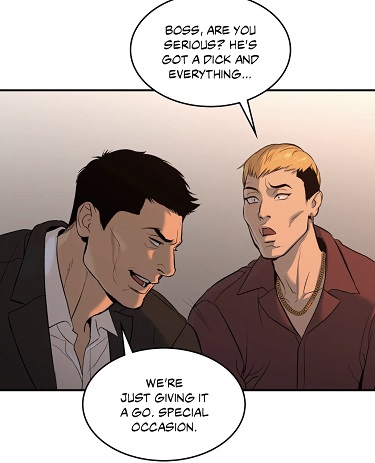 (chapter 16)
This is the most dangerous pivot. Perrault’s wolf survives through civility. Grimm’s wolf initially survives through brutality, until he is caught (the huntsman = police). The director initially belonged to the first category. After losing territory, he risks evolving into the second. To conclude, the shift from anaconda to wolf is not a metaphorical flourish; it is psychological escalation. Camouflaged predators who lose control often intensify behavior rather than retreat.
And now, you are probably wondering why I included the actor Choi Heesung in the illustration of “predators”, though he is a second lead.
The False Mirror: Choi Heesung and The Gentle Wolf
At first glance, Choi Heesung stands disturbingly close to Perrault’s wolf. Not only he appears as polite and gentle 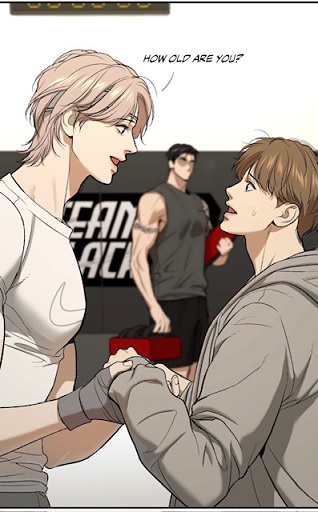 (chapter 30), but also as selfless.
 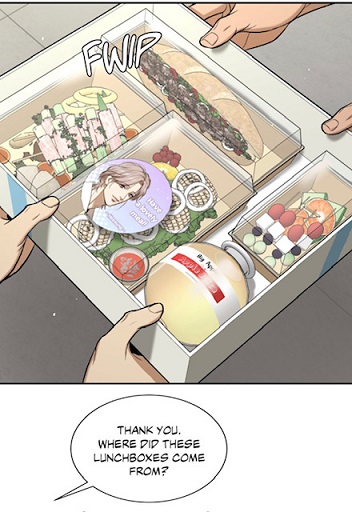 (chapter 30) Yet, he is a libertine, though he claims to be pure by stating that he is looking for his soulmate.
  (chapter 33) Hence no one is suspecting the darkness in his heart. Even the champion believed in his words, when he claimed that he had some feelings for doc Dan.
  (chapter 58) The resemblance is deliberate. He is discreet. He avoids public scrutiny. He hides his intimacy with Potato.
  (chapter 43) Therefore the latter was not present at the champion’s birthday party. The actor operates in private spaces
 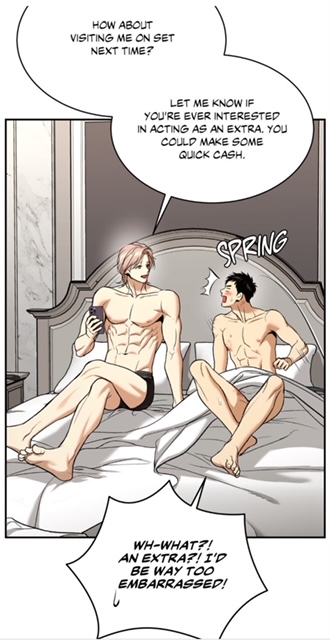 (special episode 2) and prefers silence over visibility. Like Perrault’s Compère le loup, he does not appear monstrous. He appears socially legible — even charming. He navigates controlled environments. He is careful about who sees what.
On the surface, the symmetry is unsettling. Perrault’s wolf does not attack in the forest. He speaks politely and seduces next to the Woodcutters.  (chapter 35) He proposes a “race”to the little girl, in Jinx it’s a meal (ramen in Korean, an allusion to sex)
 (chapter 35) He softens his voice. He invites the girl into bed.
  (special episode 1) He constructs intimacy before violence. He depends on civility as camouflage.
But what distinguishes a “libertine” is the absence of responsibility in their actions and words. Once the “Little Red Riding Hood” loses their virginity, the culprit is not blamed, but the victim. That’s why Perrault warns young women. The latter have to take the responsibility for the wolf’s behavior. Therefore it is not astonishing that the actor agrees that the chow chow becomes “responsible” for him. 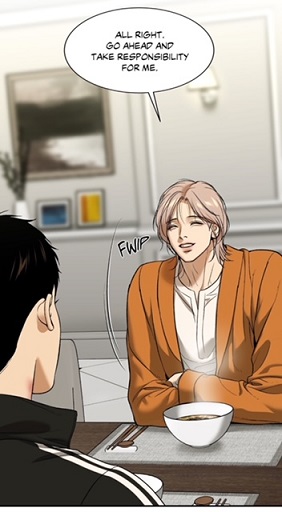 (special episode 1)
Because Heesung, too, prefers the private over the public, he exists in the gray zone where discretion and desire intersect.
But resemblance is not structure.
The decisive difference lies in how secrecy is used. Perrault’s wolf hides in order to extract. Civility functions as access. Privacy ensures there are no woodcutters. Sweetness precedes consumption. The wolf’s politeness is not restraint — it is strategy. Heesung’s secrecy functions differently. It is not just defensive, he still wants his partner to have fun. 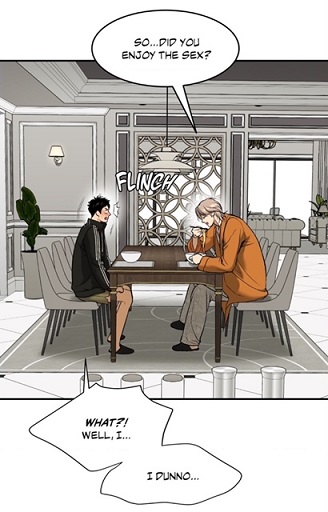 (special episode 1) It is not about power display, but fun. He hides not to isolate his partner, but to shield himself from exposure. His discretion protects his own public image, not his access to another’s body. The imbalance exists — it cannot be denied — but it is not systematically mobilized to erode consent. The latter comes from their initial contract: Potato is at his beck and call.
The wolf uses secrecy to manufacture vulnerability. Heesung uses secrecy to simply avoid visibility and responsibility. This distinction becomes clearer in their relation to inexperience.
For Perrault’s wolf, virginity is not intimacy. It is resistance waiting to be broken. (chapter 90) The girl’s naivety is eroticized precisely because it promises asymmetry. The invitation into bed is staged. Her undressing is narrated. Closeness is prolonged. The violence emerges from intimacy.
Control is primary. Desire is secondary. Heesung’s response to inexperience produces discomfort rather than appetite.  (special episode 1) He has been avoiding “virgins” for one reason. He knows how a “virgin” would react to his dream ” to find his soulmate”. They would take his “words” seriously and imagine him as someone serious and reliable. But by selecting partners with sexual experience, he can claim that he made a mistake, they were no soulmate.
  (special episode 1) But this panel exposes even better why the actor is so different from Perrault’s wolf. Youth symbolizes “vulnerability and innocence” and that’s something he has been avoiding. The reason is simple. That way, he can avoid accountability. That’s why he panics, when he hears the age. He realizes his mistake! This reveals that though Heesung is a libertine, he is different from the hospital warden. He is not seeking pleasure in asymmetry, fear, shame and power. He is not targeting “virgins” to exploit their vulnerability. He has been avoiding “virgins”, as he knew that he would have to take responsibility. In reality, he has always feared attachment. Where the wolf eroticizes vulnerability, Heesung is destabilized by it.
What complicates the contrast with Choi Heesung is not that with his smiles, he resembles 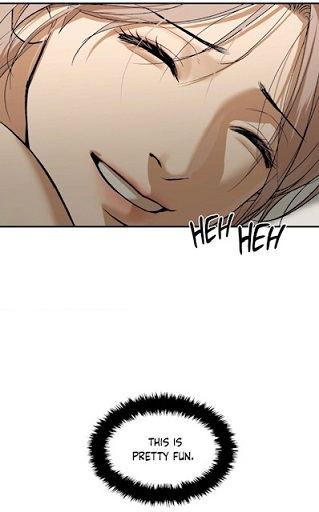 (chapter 34) the predator by accident (chapter 90), but that he resembles him convincingly enough to be confused with him.
In the first part, we wrote: “Something walks close, warm and familiar — speaking softly, until trust opens the way.” That description applied to the wolf. But it also applies to the fox. Heesung’s true animal is not the wolf. It is the fox 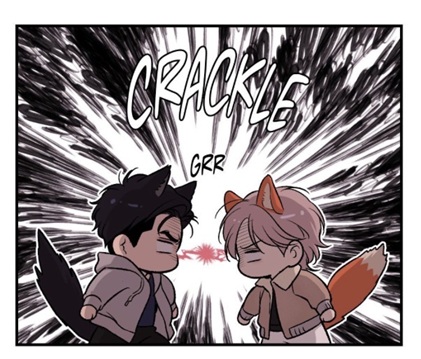 (chapter 89) — clever, adaptable, socially fluid. The fox does not devour. It maneuvers and as such plays tricks.
And yet the fox can be mistaken for a wolf. Heesung repeatedly uses proximity through work to create intimacy.  (chapter 32) He first approaches Kim Dan through professional contact. Later, he suggests a gig to Potato (special episode 1) or uses training space to remain near Potato.
 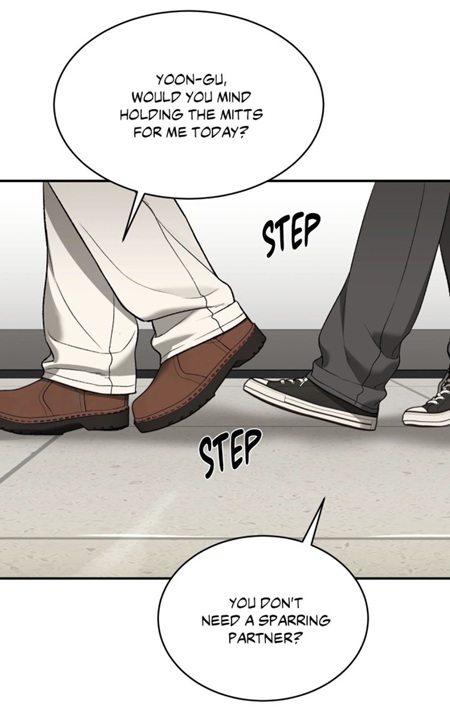 (chapter 88) Even in the gym, he casually asks Yoo-Gu to hold mitts — reorganizing the work structure in ways that subtly serve his private interest. Work becomes the bridge. The boundary blurs.
And here lies the dangerous resemblance. He reproaches Joo Jaekyung: 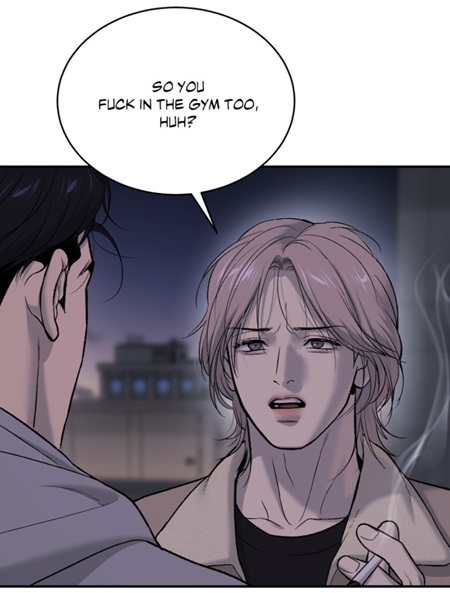 (chapter 89) The accusation implies that Jaekyung contaminates professional space with sex. Yet Heesung himself collapses that boundary. He initiates intimacy with Potato after drinking. He knows the other is intoxicated. He proceeds anyway.
This is not predatory orchestration. But it is negligence toward asymmetry. This is where the question becomes unavoidable: when is it consent, and when is it coercion?
Is consent present simply because no explicit “no” was spoken? Is coercion present only when force is visible?
Or does the line lie elsewhere — in power, in context, in intention? Mingwa gave us the answer: 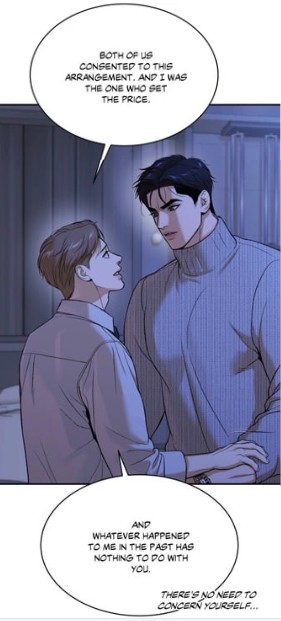 (chapter 90) It is when one makes a clear decision and accepts the consequences. Yet, Heesung violated this rule, for he knew Potato was drunk. He did not stop. He did not insist on postponement. He allowed desire to override clarity. That choice introduces asymmetry. Alcohol clouds agency. Youth complicates balance. Professional proximity blurs roles. Secondly, he is rejecting accountability. Finally, he never tried to correct Potato’s error and false belief. He took advantage of his ignorance. So his behavior could be perceived as manipulative and coercive.
From the outside, the structure resembles the predator’s method: work proximity, private space, imbalance, intoxication. But coercion is not defined by imbalance alone. It is defined by how imbalance is used. The hospital director manufactures dependence. (chapter 90) He isolates. He rewrites refusal. He eroticizes resistance. He regrets restraint. His desire intensifies when asymmetry is greatest. Heesung does not erode consent systematically. He does not isolate Potato over time. He does not rewrite refusal as invitation. But he does blur boundaries. He does allow alcohol to intervene. He does prioritize desire over clarity.
From the outside, that distinction may not be visible. And that is where misrecognition becomes dangerous.
Heesung does not publicly acknowledge the relationship. 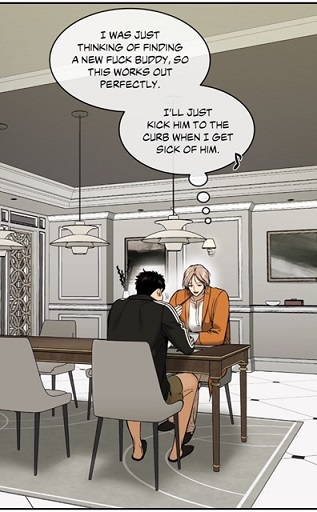 (special episode 1) He hides it, though he tried to reveal it to doc Dan
  (chapter 58). If the truth were exposed — an actor secretly sleeping with a younger, inexperienced partner whom he approached through work — the narrative could easily frame him as exploitative. He could be accused of sexual harassment.
He would appear as a predator. Not because he functions like the hospital director — but because the structure resembles it. Fox mistaken for wolf.
The key distinction lies in aftermath. When Jaekyung reflects 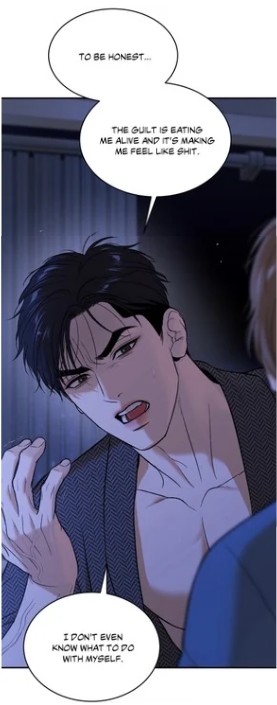 (chapter 91) the emotion is internalized. He experiences remorse not because he was exposed, but because he crossed a boundary. He separates work from intimacy afterward. He becomes rigid about consent, alcohol, and clarity. Therefore imagine his reaction, when he discovers the true nature of the relationship between Choi Heesung and Potato. He can only be shocked and angry.
This is why Jinx constructs the resemblance so carefully. Surface similarity forces the reader to confront how easily desire, secrecy, and proximity can resemble coercion. The difference lies not in discretion, nor in imbalance, nor even in sexual contact under imperfect conditions. It lies in how power is processed before and afterward. At the same time, it gives an answer how to read the first night between the main couple. It was no sexual harassment.
The wolf converts vulnerability into entitlement. The fox risks vulnerability through miscalculation.
And yet — in a world quick to judge by appearances — the fox may be labeled as a wolf. That is the uncomfortable tension Mingwa builds. Because the story is not only about identifying predators. It is about learning to distinguish between domination and error, between strategy and immaturity, between systematic coercion and boundary failure.
If Choi Heesung’s relationship with Potato were to become public, how would it be read? Would he be framed as a predator — the older actor who used work proximity and intoxication to seduce an inexperienced partner? Would he become the new “black sheep,” sacrificed to protect the image of the entertainment agency?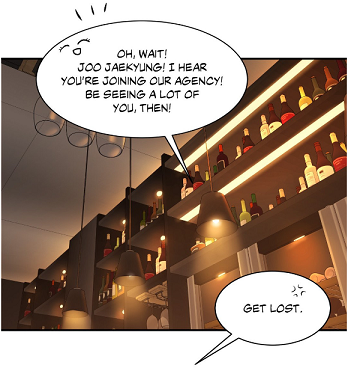 (chapter 33) Or would attention shift to the structure that allowed blurred boundaries to exist in the first place?
This question is not hypothetical. It repeats a pattern already established. Observe how Joo Jaekyung sued a hospital for leaking information, though the lawyer and the institution put the blame an individual.  (chapter 36) When the hospital scandal broke, the institution remained unnamed. (chapter 91) The director was isolated as the deviant. The system survived. Corruption was reframed as personal misconduct. Structural tolerance became invisible.
If Heesung were exposed, would the narrative follow the same logic? Would he be condemned as an individual aberration? Or would the agency be questioned for cultivating environments where professional and private hierarchies overlap, where young trainees depend on seniors, where silence protects image?
The fox can easily be mistaken for the wolf. But the forest still matters. And this brings us to a larger structural mirror: MFC.
When schemes unfolded inside the fighting world — manipulated matches, concealed injuries, silent complicity — who bears responsibility? The CEO? The manager? The doctors who testified selectively?  (chapter 41) The security guards who enforced silence?
  (chapter 40) The sports reporters who repeated the official version? The referees? The moderators? The corrupted director of the gym Choi Gilseok? Or the institution itself?
If one fighter becomes the scapegoat  (chapter 52), does the structure remain untouched?
If one CEO falls, does the culture disappear? 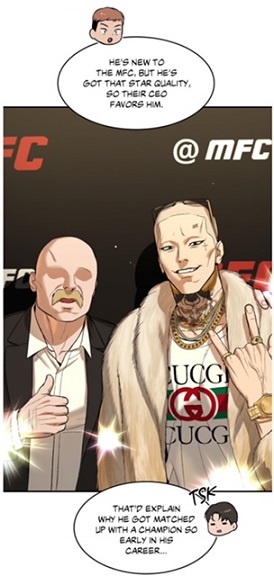 (chapter 47)
If one predator is exposed, does the ecosystem dissolve?  (chapter 48) As you can see, I have the feeling that the pharmaceutical company might become the topic of the next scandal.
Perrault’s tale quietly asks the same question. The wolf is blamed. But who raised the girl to trust sweetness without discernment? Who allowed her to walk alone? Who normalized obedience over critical thought? The fairy tale ends with the wolf devouring the girl — and society intact. Grimm adds a huntsman, but the forest remains.
So when the next scandal erupts — whether in the hospital, in the agency, or in MFC — the real question will not be merely who acted wrongly.
It will be: who benefited?
Who remained silent?
Who enforced the hierarchy?
Who preferred reputation over accountability?
And perhaps the most uncomfortable question of all: Will another wolf be sacrificed — while the forest survives once again?
Feel free to comment. If you have any suggestion for topics or Manhwa, feel free to ask. If you enjoyed reading it, retweet it or push the button like. My Reddit-Instagram-Twitter-Tumblr account is: @bebebisous33. Thanks for reading and for the support, particularly, I would like to thank all the new followers and people recommending my blog.


 (chapter 1) He was even called a psychopath, for he resorted to kidnapping
 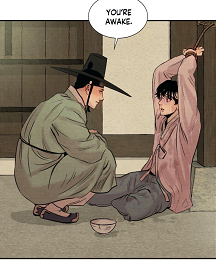 (chapter 1) sequestration, threats
 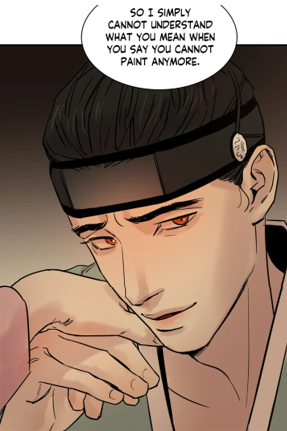 (chapter 2) and blackmail and he initially showed no remorse.
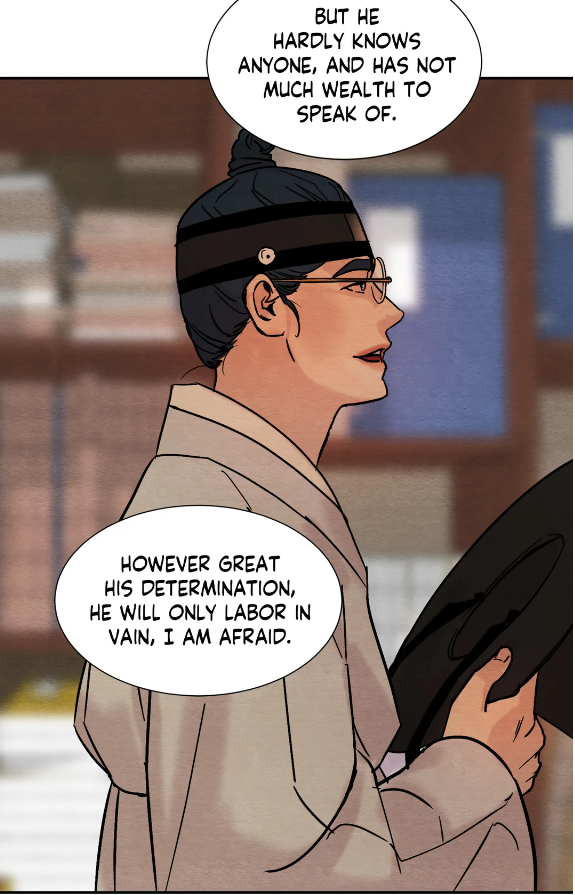 (chapter 7). On the other hand, he never got into trouble for his wrongdoings. Why? It is because he wasn’t violating social norms.
  (chapter 10) It was his right to punish servants, for they are not considered as humans but as propriety. As a lord, he could treat commoners, like it pleased him. Though murder is prohibited, even against a lowborn,
 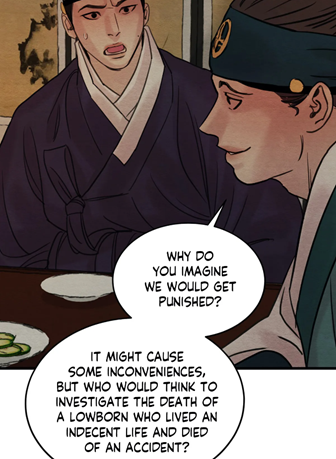 (chapter 43), the reality is that nobles would never get into trouble!! As you can see, there exists a discrepancy between laws on the paper and the reality which was exposed by the rumors in episode 106.
 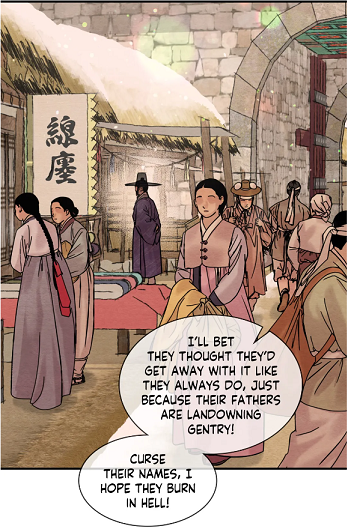 (chapter 107) The fathers would use their position and influence in order to cover up their children’s wrongdoings. And we have the perfect illustration, when the elder master bribes the governor.
  (chapter 127) That’s the reason why the younger generation could do everything! Though the lord appeared as a monster first, he became a “normality”, the more we got to read this story. Under this explication, it becomes comprehensible why lord Min was so sure not to get bothered by the authorities.
 (Chapter 101) He had bought the officers (“the guards”). This explains why Black Heart could threaten No-Name.
 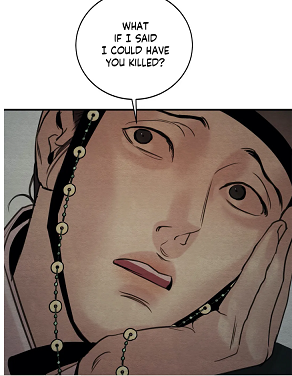 (chapter 76) He didn’t need to dirty his own hands, he could simply frame him. Consequently, I deduce that he had learned this misconduct through the elders’ behavior.
  (chapter 116) This shows that neither Black Heart’s father nor Yoon Chang-Hyeon truly love their children, as according to Erich Fromm, love is knowledge, respect, care and responsibility. However, the elder master Yoon is totally ignorant about his son’s talents and good nature. Thereby, I see lord Seungho from season 1 as the perfect illustration of the corrupted world of the nobility. The monster “Yoon Seungho” was just a reflection from this ruthless and immoral society. Since he committed wrongdoings, his karma was to pay for his sins. It starts with a murder, and the main lead ended up killing people. He might have not broken “traditions” like the disregard of the yangbans against lowborns, but it is considered immoral. He had sinned and now, he is paying for his sins. Therefore his words in the prison resonate differently.
 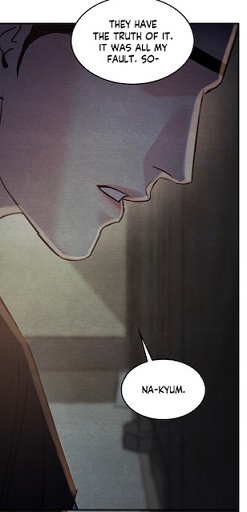 (chapter 126) He expresses regret. He confesses his crimes, he killed people! This means that he is now siding with the lowborns. Their life is as precious as the ones from the nobility. Yet, note that in this image, the author didn’t drew his eyes. Why? It is because in the moment he executed people,
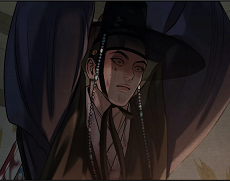 (chapter 102) he was either not himself or he did it out of reflex to protect himself. He was influenced by his past experiences and as such traumas. In the shrine, it becomes more obvious, for he has a lost gaze. He is not even looking at his target. Finally, when he met lord Song, he did it to “protect” himself.
 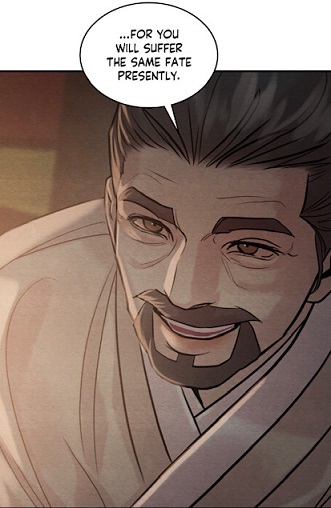 (chapter 123) For me, in episode 1, the execution was triggered by his desire to protect himself and his traumas. And what is the common denominator between these three scenes? The father Yoon Chang-Hyeon! Don’t forget that the petition was the reason for their meeting. And now look at the actions from the patriarch.
 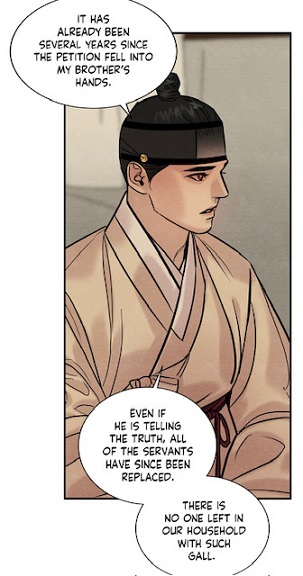 (chapter 116) He had given the order to eliminate all the servants, for they could represent a threat to his “treason”. This explains why the butler describes himself as the only survivor and witness.
 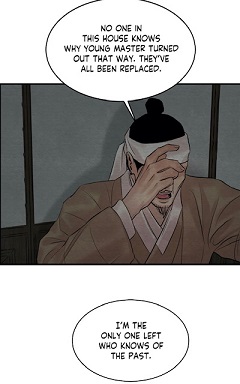 (chapter 86) And we see him giving the order to kill the surviving guard
 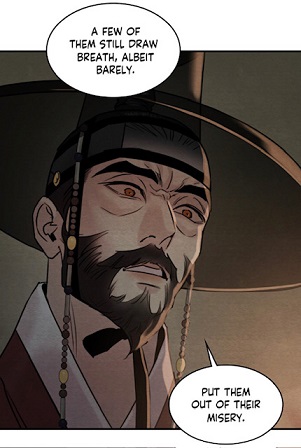 (chapter 125) Besides, he had no problem to order the assassination of his own son which was stopped by the intervention of a helping hand. The father had never asked to spare the main lead’s life.
  (chapter 124). He was his bad role model. But he is not the only one. There is another one…
  (chapter 51) Once a criminal, always a criminal… therefore it is not surprising that the joker chose assassination as second work. By working for the nobles, he would be able to escape punishment, because if he got arrested, he could denunciate them. To conclude, justice is inexistent in Joseon. Yes, we are witnessing the downfall of Joseon, or precisely the king’s bad ruling. The latter is not capable of providing justice to anyone. And this coincides with the purge!
  (chapter 37) What is a purge?
  (chapter 107) “Stepping down” was actually an euphemism for removal. The officials were chased out,
 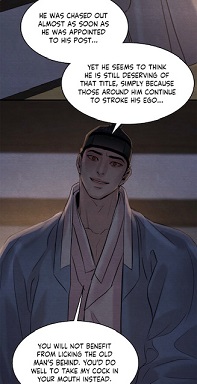 (chapter 80) but their evictions were turned into stepping down.
 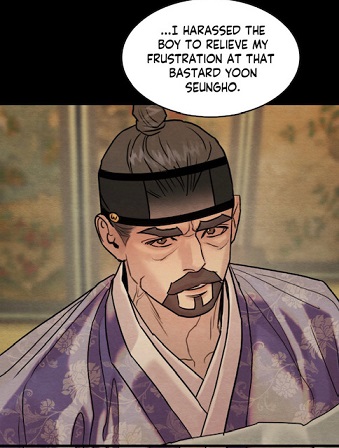 (chapter 122) No wonder why lord Song came to resent the protagonist. Under this new light, it becomes comprehensible why the purge was not noticed by commoners. There was no fire and the staff was sparred.
  (chapter 103) The boots were the indication that this person was working for the government. And it was an elder, for he was wearing this particular headgear.
 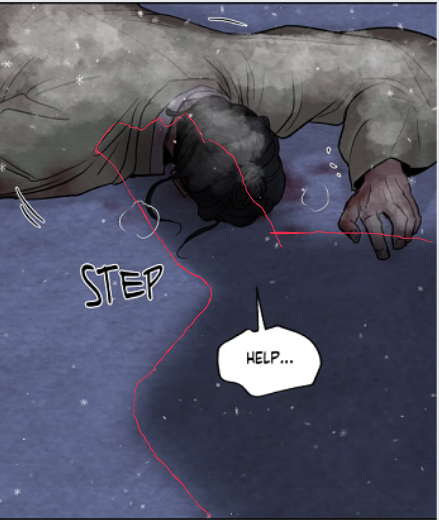 (chapter 103)
  (chapter 67) The murder of lord Shin is the evidence of the anarchy in Joseon. But actually, the monsters are actually everywhere, and not just among the nobility. The Chungin with the scholar and the physicians who have no problem to lie, participate in a kidnapping and drugging people… the kisaengs, the maids, the servants. They are all accomplices, for they feigned ignorance or chose to remain passive, for they preferred avoiding trouble. What people failed to realize is that no one is safe from this tyranny. Hence people could get killed and thrown into a well so easily
 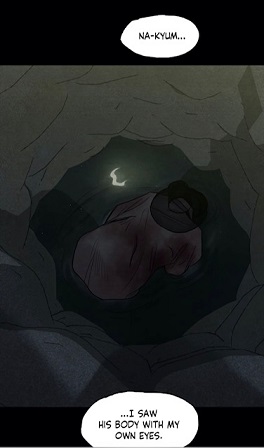 (chapter 97)
 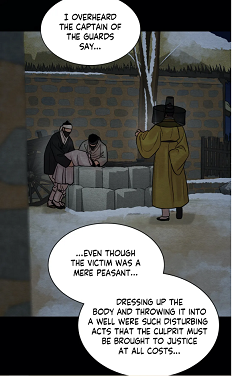 (chapter 101) and their perpetrators got scot-free. Why? It is because the mastermind and the helping hands are protecting each other, like we could see in the Joker’s case. However, the latter in season 3 had no idea that they would face divine retribution and pay with their life.
  (chapter 102) In front of gods, humans are all equal. There is no distinction between gentry, Chungin and commoners. That’s the reason why I come to the conclusion that Yoon Seungho is the divine hand of justice, he is bringing the “divine retribution”. This explicates this vision:
  (chapter 83) Under this new approach, it becomes comprehensible why he is called “the bird of misfortune”. People around him got to suffer, for they received their karma. Funny is that lord Song mocked him by calling him a grim reaper.
 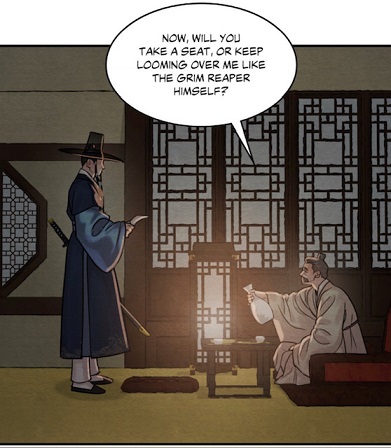 (chapter 123) He underestimated his opponent, not imagining that the latter would use his sword against him. So he became a grim reaper. Lord Song Haseon must have thought that his minions, just like his age and status, would protect him. But no, someone had planned his death and counted on the main lead’s decision.
 (chapter 99) Thus Min’s karma was to die in the total indifference of others. No one is missing him, for he was turned into a brigand himself.
  (chapter 113) But wait… Why did Black Heart get killed in the end? One might say that it was his karma, for he had planned the murder of Baek Na-Kyum in the past. In my opinion, the uke serves as a representative of the divine retribution. The artist is the “judge” and his lover is executing the sentence: death. And we can detect this gods’ intervention through the learned sir’s case as well. Jung In-Hun had looked down on the artist for his origins and education. When the generous main lead chose to accept his apology (attempted rape),
 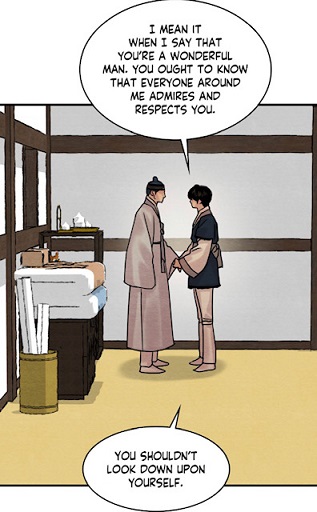 (chapter 120), the latter reminded him that contrary to Yoon Seungho, he was admired. He had such a good notoriety! Since he betrayed the artist and had almost him killed, the scholar ended up losing everything.
 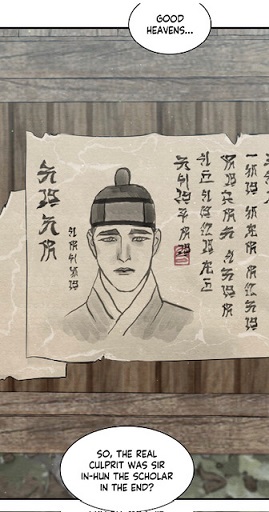 (chapter 127) He became the scapegoat for this incident, for he played a huge role in the painter’s suffering (kidnapping, assault, murder and brainwashing). His success at the civil service examination was erased within a few weeks and now he is viewed as a brigand. How could such a person get selected as an official? His fate gives a bad impression of the civil service examination. And what is the common denominator between these two villains? They both belong to different social classes. Their cases is exposing the king’s negligence and arbitrariness. The latter is the perfect personification of this corruption. Not even Confucianism is respected, for fathers are abusing their own children or even killing them. Season 4 is exposing the chaos in Joseon. Therefore it is not surprising that the sacred tree and the shrine got burned.
  (chapter 106) The gods were using the humans to voice their anger. At the same time, when the woman made this comment, the Manhwa lovers can detect the huge gate in the background, the symbol for royalty. And now, you comprehend why Yoon Seungho was pushed to go to Hanyang. It is his fate to face the king! His task is to clean the palace of these old bearded men.
  (chapter 44) I had already portrayed him as a black shaman in the essay “
 (chapter 65) Don’t forget that the monarch is the only one who stands above the laws, though he is controlled by social norms and his officials. In my opinion, this can only take place, when a new scheme takes place. How so? Note that in the scholar’s case, Jung In-Hun received his karma, but not real human justice. For me, he is not dead. Besides, don’t forget that someone took the petition from lord Song, before Yoon Chang-Hyeon came to the bloody place. There is no ambiguity that the accomplices and schemers didn’t get happy with the last outcome. The couple might be separated physically, but they are attached to each other by their strong love. And since the main lead kept wearing hanboks with the phoenix
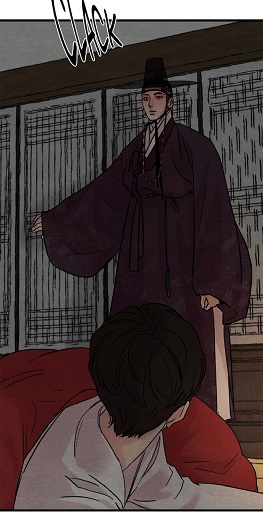 (chapter 34)
  (chapter 45), it indicates that someone saw him as his bird of fortune. And this can not be Yoon Seungho, for the latter was full of self-hatred. Finally, his own father, Kim and Heena called him as a bird of misfortune. As you can see, the king could no longer see the main lead due to the artist’s presence. He is his bird of fortune, for he could live out all his dreams thanks to him, and at no moment he got into trouble. No one is suspecting his intervention.
 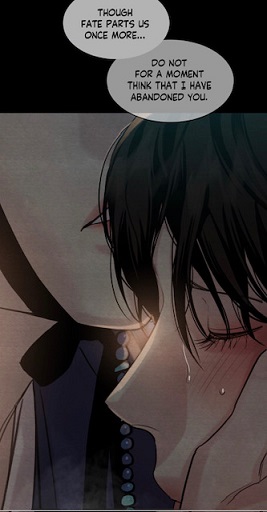 (chapter 127) I recognized why the painter and Yoon Seungho had to go separated ways. It is because the schemers wanted him to return to Hanyang. Remember the learned sir’s suggestion before his departure.
  (chapter 44) Why? It is because now the main lead is an adult. Since my theory is that the pedophile is the ruler, he can no longer approach the protagonist like that. The latter is no longer visiting the gibang. He wants their path to cross again so that they can rekindle. Hence he had to create an opportunity proving that their meeting is not a coincidence. Under this new approach, it becomes comprehensible why Yoon Seungwon encouraged his brother to reconcile with their father.
  (chapter 37) That way, he would be “following” the tradition and become an official. But since Yoon Seungho developed a fear of “old bearded men”, he had no reason to go there.
 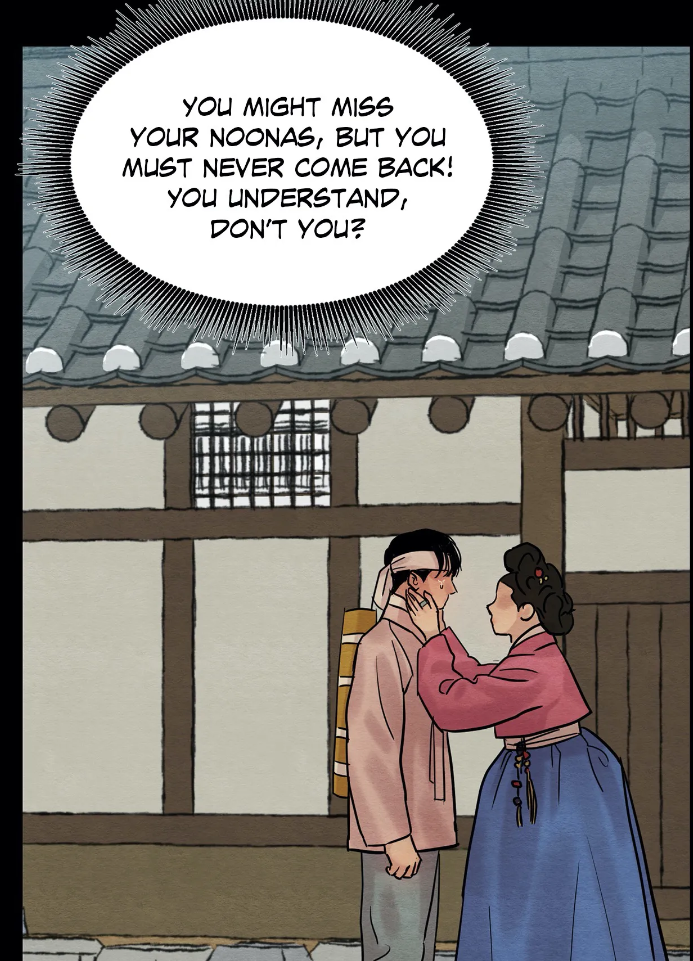 (chapter 46)
 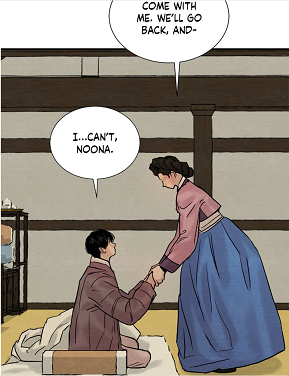 (chapter 68)
  (chapter 97)
 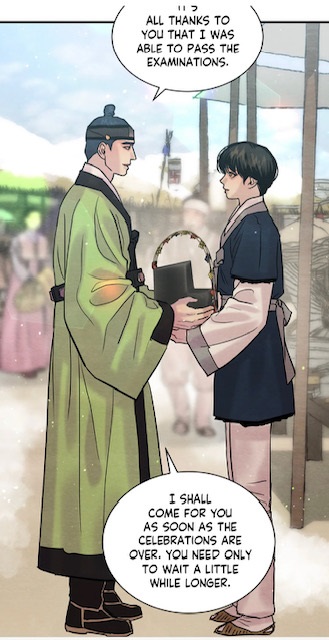 (chapter 111)
  (chapter 120)
 (chapter 127) As you can see, the painter was feverish. Why? From my perspective, he was drugged. He was not allowed to see his loved one, because they don’t want him to remember their departure. The schemers desire him to feel abandoned like in the gibang (chapter 105). The reason why I am suspecting a drug is that this panel
  (chapter 127) is similar to the first Wedding Night:
  (chapter 21) At the same time, this scene is also a reflection from the night after the massacre in the shrine.
  (chapter 103) Back then, he was also under the influence of an aphrodisiac. They don’t want him to remember his last words. And since he didn’t take care of him during that night, though he was unwell, they hope to create the illusion that Yoon Seungho neglected him. He broke his promise. But their trick can no longer work because of the lord’s visitation in the prison and his words.
  (chapter 126)
  (chapter 127) The separation arc is there to prove these plotters wrong. Their affection is not trivial and momentary. He is not a plaything, but his “partner”. In fact, they have absolute trust in each other, and their source of strength will be their short happy moments together. Besides, I am quite certain that the artist will remember the lord’s whisper from that night, since he had problems to recall the First wedding Night and the incident in the shrine. Both are related to his bad conscience. Besides, I have another reason for that, the power of the unconscious knowledge.
 (Chapter 108) Though both were close physically, they still allowed others to manipulate them, for their trust was not complete. In other words, the schemers are thinking that time is working for them!! On the other hand, since Kim is by his side, the painter can only consider his presence as the evidence of the lord’s care.
  (Chapter 127) This coincides with the beginning of the Manhwa, when the lord was seen without his butler.
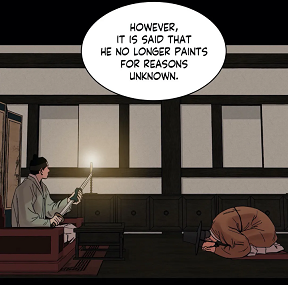 (Chapter 1) The latter only appeared in episode 7, and back then Yoon Seungho had to dress himself.
  (Chapter 7) Finally, I am expecting schemes again.
 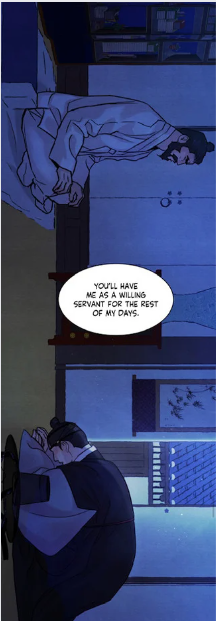 (chapter 127) This means that he is giving up on his status and freedom for Baek Na-Kyum’s sake.
 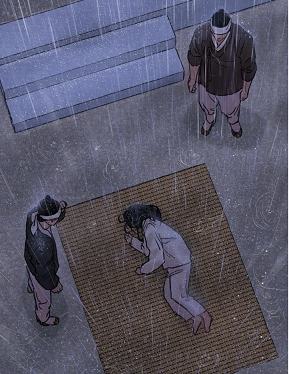 (chapter 127) Here Yoon Seungho had been treated like a servant, because he had been submitted to the straw mat beating. Exactly like in the past, there was a promise. Notice how similar the words are: “No matter”.
 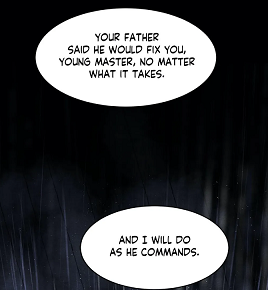 (chapter 77) However, there exists a huge difference. Back then, the vow was made between the butler Kim and Yoon Chang-Hyeon. As you can see, Yoon Seungho is now copying his surrogate father’s behavior.
  (chapter 127) This shows that the young master is following Kim’s path. On the other hand, the domestic employed the future tense in his pledge (“I will do as he commands”), whereas the “spiritual son” is using the present (“I swear to live as you command”). Moreover, the main lead is talking about his way of life and not “order”. And what does the father desire?
  (Chapter 86) Making connections so that the Yoons can become influential again!! But how can he do that? By showing his talent? I have my doubts about it. Why? It is because in season 1, the lord was having sex with his peers, and back then they were like battles… for an exchange of favors. I hope, I might be wrong, but I fear that he is about to become a male kisaeng again. Or if not, then this is what the king is expecting from him. And we have the best example in this scene:
  (chapter 118) Why does he need the protagonist? It is because he needs “connections”. And how can he get these connections? Through his brother. But with the last incident, it looks like Yoon Seungwon jeopardized the remains of his influence, for the noble ignored him.
 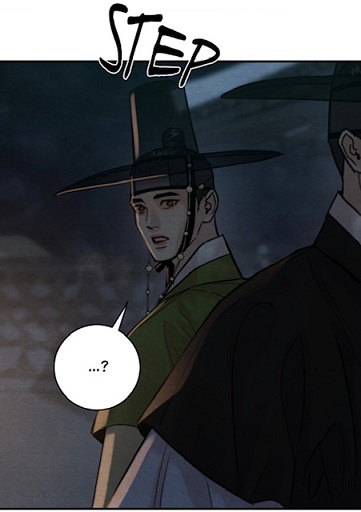 (chapter 127)
 (Chapter 56) Yet, the domestic is only bowing with his head and not his body. The protagonist is dressed exactly like his father. This comparison exposes that my past interpretation was correct: the butler had awakened his master during the night by lighting the candles. And after receiving this letter, Yoon Seungho dressed himself in order to meet his childhood friend, which reinforces my theory that the valet won’t follow the protagonist.
 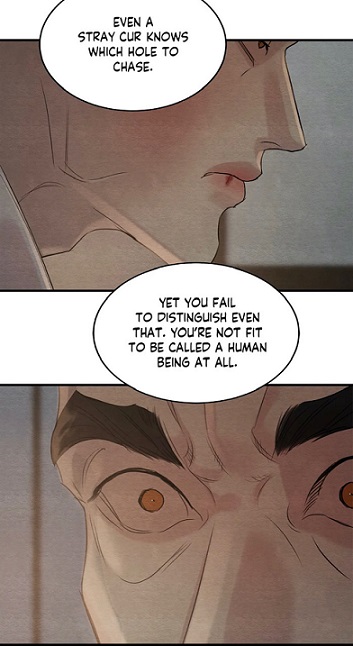 (chapter 86) However, back then, he was considered as the eldest son. One of his duties was to continue the lineage
 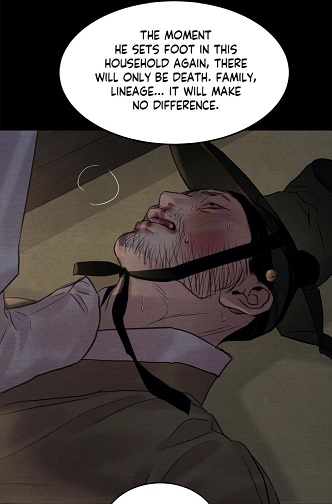 (chapter 82) and because of the stolen kiss, the patriarch became obsessed with sexuality. Observe how lord Song Haseon described the father’s attitude. He knew about the atrocities that the young master was exposed to
 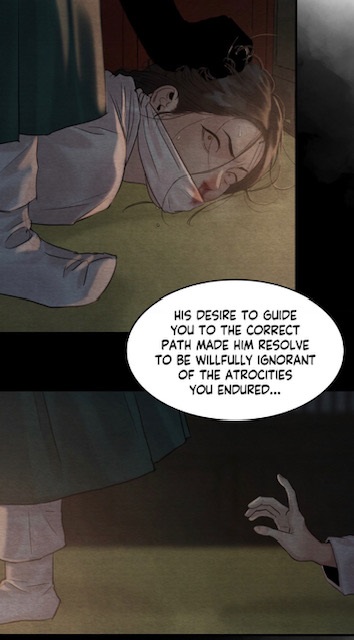 (chapter 123), but he chose to turn a blind eye, for he believed that the end justifies the means. This explicates why he left the room so quickly and abandoned his son. Yoon Chang-Hyeon’s resent for the eldest son came from his high expectations. This can only reinforce my past interpretation that Yoon Seungho is a new version of Prince Sado. Thus the elder master Yoon’s personality is based on king Yeongjo. Moreover, lord Song alluded to the execution of a prince ordered by the monarch.
  (chapter 107)
  (chapter 55) But what did he see in his father’s gaze? Anger and disappointment, for he was never able to satisfy Yoon Chang-Hyeon’s expectations.
  (chapter 55) With the release of episode 127, I had this sudden revelation concerning this memory. In the past, I used to think that he had been submitted to the straw mat beating. But now, I think that in this scene, Yoon Seungho was forced to bow to his father by the servants or guards!! Yes, the former version of this scene.
  (chapter 126) This idea came to my mind, the moment Yoon Seungho emphasized his bowing!
 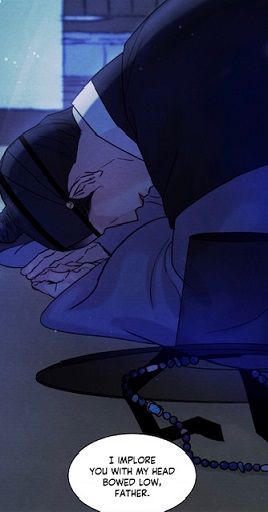 (chapter 127) The protagonist’s words imply that he had never done it before!! And now, you know why Yoon Chang-Hyeon agreed to make a deal with his eldest son.
 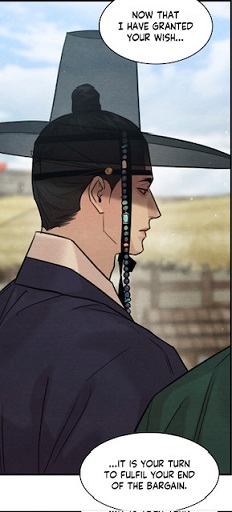 (chapter 127) Yoon Seungho’s bow and oath stand for blind obedience and loyalty. This explicates why the author drew him without eyes.
  (chapter 87) That way, he can act, as if the purge and the humiliation had never happened. So by submitting himself to his father’s will, it looks like Yoon Seungho is put in the same position than in the past. He is “exposed” to the harsh judgement from the patriarch. However, it is just an illusion. How so? First, what caught my attention is the absence of the protagonist’s eye.
 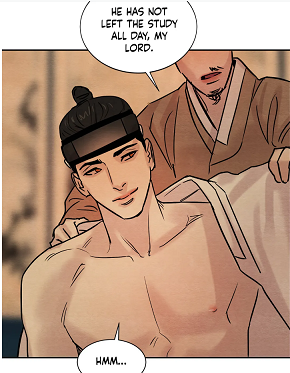 (chapter 11)
  (chapter 35) Does it signify that the protagonist has the intention of betraying his own father? I don’t think so, but the manhwaphiles shouldn’t forget the lord’s wish in the kitchen: “I shall remember this moment for as long as I live”.
  (chapter 118) This shows that when the lord bowed to his father, he was thinking of Baek Na-Kyum in the kitchen. His body might be by his father, but his mind and heart were elsewhere. Thus I couldn’t help myself thinking that Yoon Chang-Hyeon will get betrayed and abandoned by his own son. During the same night, he made 2 vows. It was, as though he had two “lords”! His goal is to meet his loved one again.
  (Chapter 127) Finally, don’t forget that the main lead is following Kim’s path. He will have to choose between his father and the painter. Yoon Seungho is actually applying the father’s principle: the end justifies the means. So if necessary, he can break his vow to his father.
 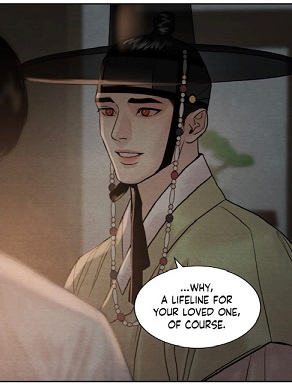 (chapter 116) I still believe that the painter has the original petition. And who is by Baek Na-Kyum’s side? Kim!!
  (Chapter 108) By living by his side, he can lead a quiet life far away from Hanyang. However, this signifies that the artist has become a “prisoner”. As long as he lives in Yoon Chang-Hyeon’s claws, his loved one can not return to his side. Interesting is that a carriage was used to carry away the protagonist.
  (Chapter 78) But where is the painter going? To the mansion? Or to another secluded place? In my eyes, the location is important. His existence is still a source of problems for the schemers. I see a future conflict in the lord’s life, for one oath stands in opposition to the other. Moreover, should the patriarch lose Baek Na-Kyum, he can no longer control his son. He can not suddenly blame the painter for the death of lord Song, for Jung In-Hun has been now convicted for the crime.
  (Chapter 7) Now, the positions are switched. He is the one getting coerced! And this brings me to the following observation. Why did the elder master agree to this deal in the end? First, he refused to assist his son.
 (chapter 127) He believes that he has the petition, therefore he can no longer be blackmailed by his eldest son. The latter has no longer any leverage over him! However, he changed his mind.
 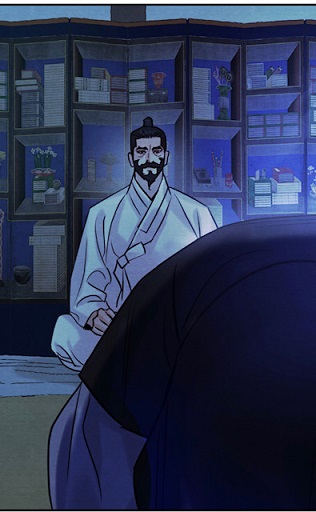 (chapter 127) For me, it is related to the bow. I noticed that the patriarch pays a lot of attention to “manners” and etiquette. Therefore the guards apologized on different occasions, yet the elder master always accepted their excuses
  (chapter 125)
  (chapter 126) Yet, in reality they were fake excuses. I have already pointed out that the servants would act on their own. But more importantly, their fake apology hid their failure as guards. How could they let the young master barge into the lord’s bedchamber? With a simple apology, this wrongdoing was overlooked. And now, observe what happened during the same night:
 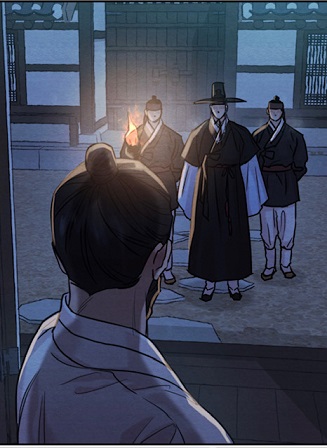 (chapter 127) Yoon Seungho was followed by the guards! It looked like they were serving him. This scene reminded me of the officers’ appearance in front of the mansion.
  (chapter 94) This can only reinforce my theory that the main lead will turn against his father in the end. Keep in mind that there is a deal, so should the situation change (the painter’s desertion or the discovery of the second petition for example), the lord is no longer forced to keep his vow towards his father. Moreover, since Baek Na-Kyum got lied, “brainwashed”
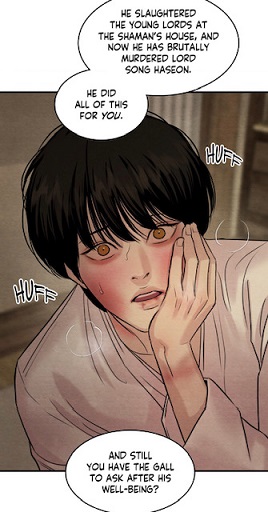 (chapter 125), “drugged” and slapped by Yoon Chang-Hyeon, he is destined to receive his karma through his son. And what was his dream?
  (chapter 125) and paid the governor
 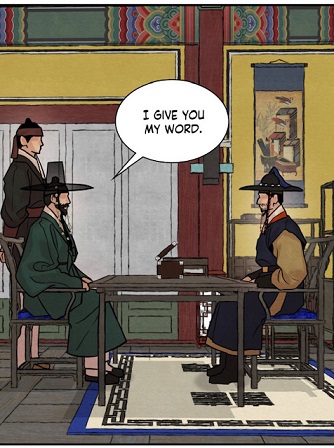 (chapter 127), he could get into trouble for it was, as if he was admitting his responsibility.
 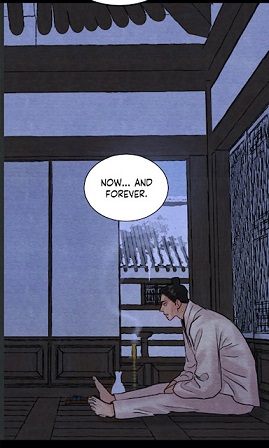 (chapter 87), whereas Yoon Seungho stands for change and hope.
 (chapter 127) Where was Heena noona, when her brother was in prison? This rumor can only create the illusion that the painter is still devoted to the learned sir. Yet, after the last incident, the painter came to regret to have trust the learned sir. Both characters are now healed from their traumas (abandonment issues) and they are in full possession of their mind. This makes them less weak to manipulations.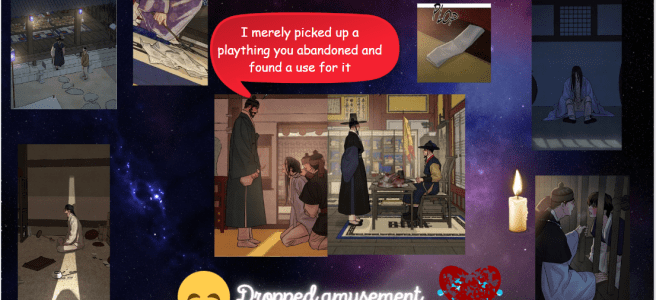

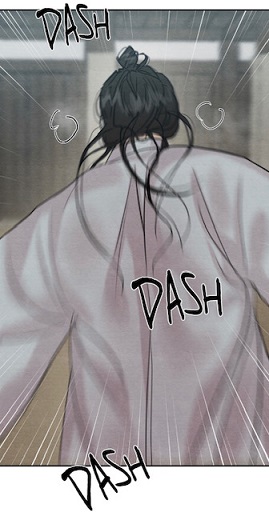 (chapter 126) to another
 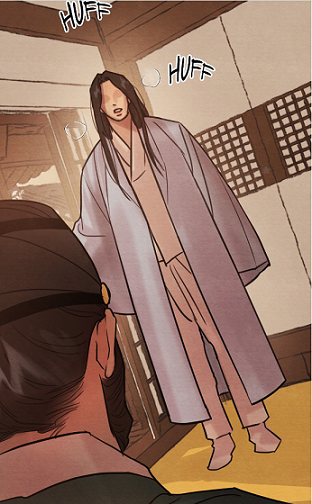 (chapter 126). He allowed his father to humiliate and abuse him
  (Chapter 126) once again. It was, as if the story was back to square one and the protagonist had learned nothing at all. Under this perception, my avid readers can comprehend why I selected such a title. However, instead of thinking that the author was a bad writer, I decided to ponder on the following question. Why did the author choose such an evolution?
 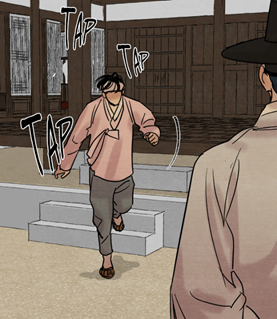 (chapter 7) Like Baek Na-Kyum, he rushed to his loved one’s side. However, he was first stopped
  (chapter 126), because it was not the right time. How so? Notice that his brother had fetched him at the port
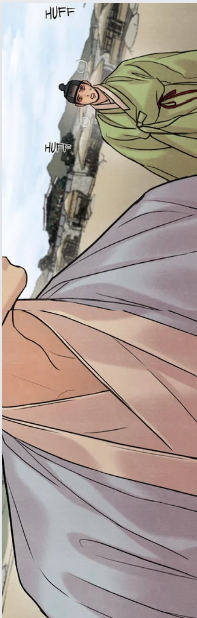 (chapter 125), but he never followed him to the bureau of investigation. And the same happened later. Why didn’t he go to his shed, when he was trapped there? Where was he, when the eldest son visited the father?
 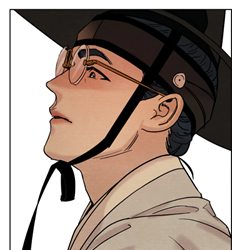 (chapter 07) Therefore Yoon Seungho didn’t notice the presence of a civilian next to the governor.
  (chapter 126). Striking is that the governor knew about Yoon Seungho’s whereabouts before his arrival: the coast. As you can see, I am detecting a link between the governor and the younger master Seungwon. Yet, it was disguised as a rumor behind the expression “I had heard”. My assumption is that Seungwon came from the bureau of investigation in order to inform his brother. Therefore it is not surprising that Seungho was invited by his brother to visit the prison during the night.
  (chapter 126) And the moment I perceived the protagonist as a fool in love, I realized that chapter 126 is a reflection of episode 7, 29
 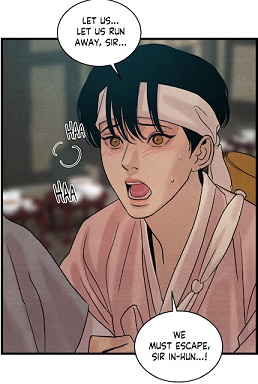 (chapter 29) and 40
  (chapter 40). Here, the painter was trying his best to protect Jung In-Hun’s interests (life, high position). Moreover, in episode 40, the painter had a dream, when he saw the announcement for the civil service examination. He smiled, for he was looking forward for the future.
 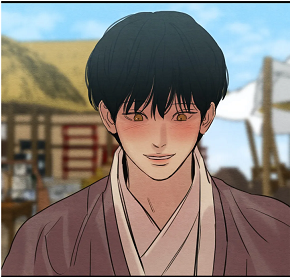 (chapter 40) And what have these episodes more in common? A betrayal, abandonment from a loved one and a paper (painting, poem). Hence I am more than ever convinced that the petition will resurface very soon and play a huge role in the downfall of the schemers and haters. Besides, chapter 40 represents the negative reflection of the conversation in the prison.
 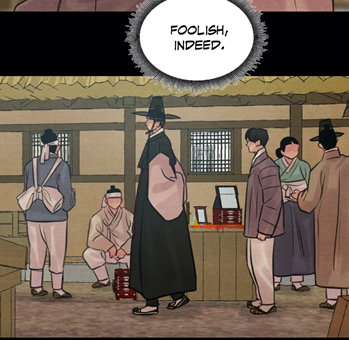 (chapter 40) There is neither disdain nor mockery. The mentioned scenes are similar, for the present resembles the past. And this brings me to the second reason for the Webtoonist’s decision.
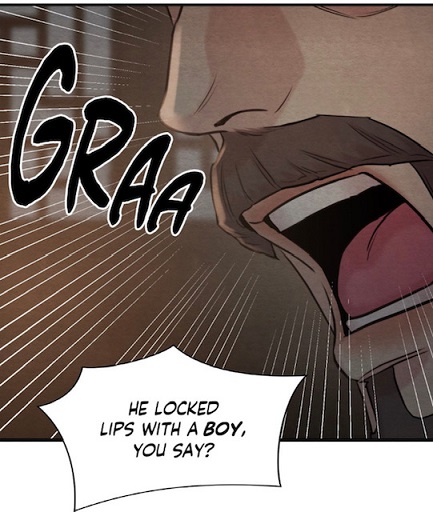 (chapter 123), Yoon Chang-Hyeon considered Yoon Seungho as a human, for he employed the personal pronoun “he”. He was still his son. Then in episode 77, he judged him as a slave
 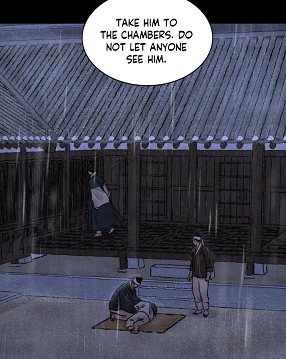 (chapter 77), hence he was submitted to the straw mat beating and was held captive. He even refused to send for a physician.
 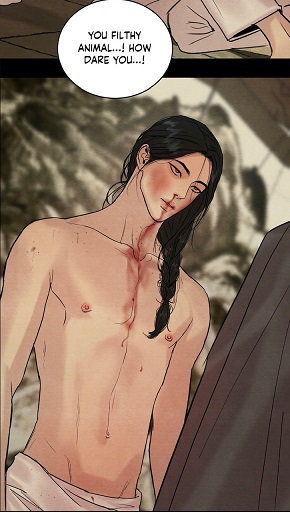 (chapter 83) Here, the father is denying his humanity, he is just an animal. In their next confrontation, he describes him as a monster, hence he wished that he had never been born.
 (chapter 86) However, his words exposed that he was still viewing him as a living being. Therefore it is not surprising that he accepted lord Song’s request to order the murder of his son! In the gibang, he decided to no longer acknowledge Yoon Seungho as his son.
  (chapter 107) The tragedy is that the protagonist still viewed the Yoons as his family because of Yoon Seungwon, who keeps calling him “brother”. This explicates why Yoon Seungho sponsored his brother to have an official position.
  (chapter 115) Therefore it is not surprising that he followed Yoon Seungwon’s advice again.
  (chapter 120). He would bring the petition to his own father. This means that he is acting like the painter who listened to his noona Heena so well.
 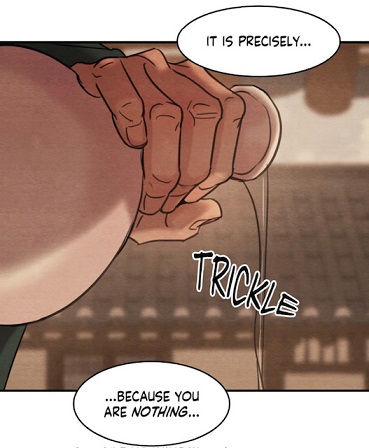 (chapter 126) He is not even a thing. This means that he is actually discarding him. This explicates why he sent him to the shed.
  (chapter 126) It was, as if he had become a merchandise. Or we could say that the elder master had been using him as a tool, which he can now abandon.
  (chapter 126) Interesting is that the idiom “plaything” has for antonyms tool, implement, instrument and utensil. And this brings me to the following remark. The father’s words are reflecting the last scheme. Yoon Seungho was used as the sword to get rid of an enemy, lord Song. It was, as if someone had decided to get rid of lord Song, for he represented a danger or threat. It also mirrors the trick in the shrine. Min and the others got killed, because Lee Jihwa went to his childhood friend. And who had seen the main lead using this sword, when he was enraged? Father Lee!
  (chapter 67) But let’s return our attention to the patriarch and his son. Yoon Seungho is no longer recognized as a Yoon member. Therefore I come to the conclusion that Yoon Seungho will make the following decision: to become an orphan. And this is symbolized by the loss of hair. I am expecting him to cut off his hair, something the painter has been doing for a long time. That’s why Byeonduck showed us the lord without a topknot.
  (chapter 126) This would coincide with my previous statement. The lord is going through the same experience than his loved one. However, people will come to the conclusion that this was done by the father. How so? Remember how each rumor became a reality.
  (chapter 1) I had already demonstrated that Yoon Seungho was not a fiend for sodomy with no regard for time and place, until he met Baek Na-Kyum. But once a deed is done, it can never be repeated.
  (chapter 101) So should Father Lee claim that he has long disowned Jihwa by cutting off his topknot, no one will believe him, for the young master was still seen with a topknot after confessing his feelings in public.
 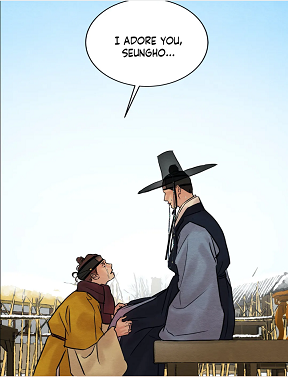 (chapter 57) In other words, the topknot incident at the kisaeng would be brought up. It is impossible for 2 fathers to act the same way. Besides, the loss of the topknot has another signification: Yoon Seungho would cut off ties with valet Kim, for the latter was the one who gave him the topknot. And episode 126 reflected one more time his position:
  (chapter 126) He is the one dressing him. It was, as if he was the pope.
 (chapter 116) It is because someone had reported to him the conversation between lord Song and the painter.
 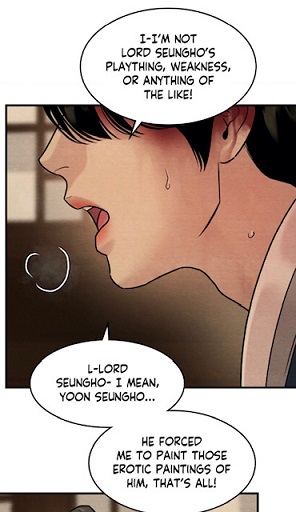 (chapter 122) There was a spy listening to their conversation. Since all the guards died
  (chapter 124)
 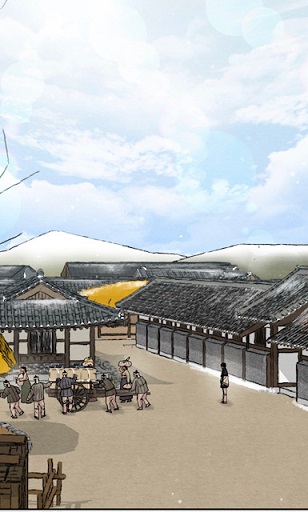 (chapter 120) And who was present there? Jung In-Hun! But there is more to it. Since leaving Baek Na-Kyum behind is considered as an abandonment, it means that the patriarch abandoned his son too.
 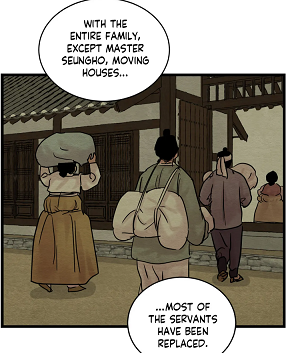 (chapter 27) By speaking to Yoon Seungho, the elder master Yoon didn’t realize that he was admitting his own wrongdoings. Actually, he had abandoned him many times… like here for example
  (chapter 87) Therefore his words will come back to bite him. But these words are also exposing the valet’s betrayal and abandonment towards Yoon Seungho!! How so?
 (chapter 122), then he should have been at the patriarch’s house. The absence of the valet is the evidence of his treason. For me, he is now working for Jung In-Hun which explains why he never mentioned his presence in the mansion, only lord Song. Besides, keep in mind that once deed done can not be repeated. In episode 27, the lord was too angry and busy to notice the learned sir’s spying activities.
 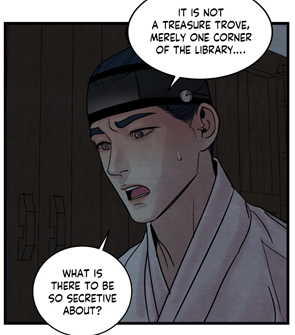 (Chapter 27) Moreover, Kim didn’t report the interrogation to his master. This means that the butler covered up for the teacher’s wrongdoing. But here is the deal:
 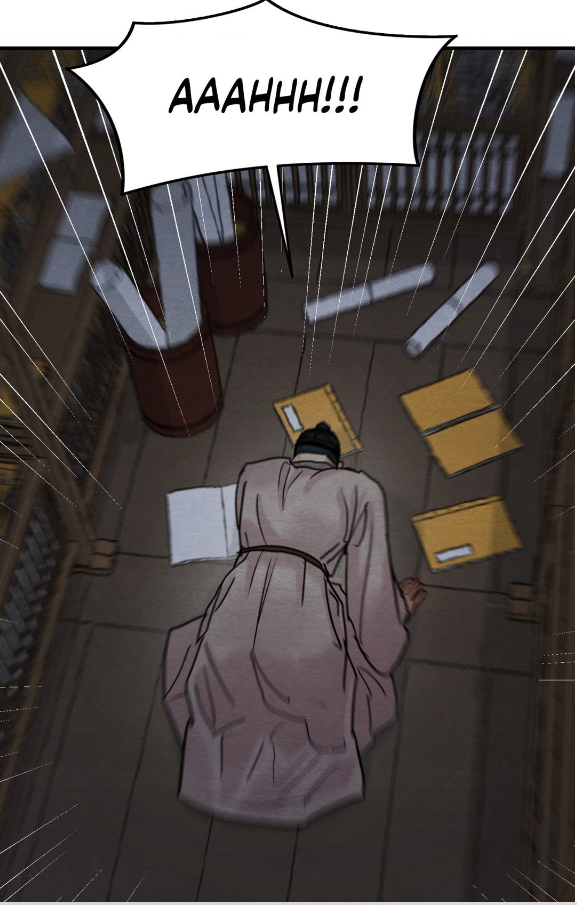 (chapter 120) The library was ransacked, hence this crime is bound to be discovered. Finally, his intervention in the shed is exposing his deception.
  (chapter 83) That’s why I am convinced that these words
 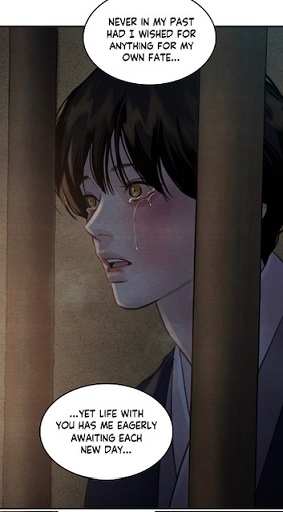 (chapter 126) He is no longer suicidal, in fact he is full of hope! Though he was sent back to hell for a short moment, he came out of this as a winner. My evidence is that the lord has now become a believer.
 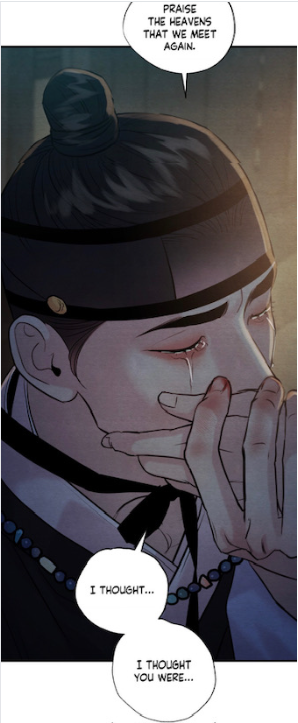 (chapter 126) Yes, episode 126 exposes the return of his faith! And where could we see the atheism of Yoon Seungho in the story? In chapter 92!
  (chapter 92) He didn’t believe in the spring poetry to ward off bad luck! That’s why he was sent back to the past. He needed to lose everything in order to find hope! In his darkest moment, he expressed a wish: to meet his loved one! And where did he pray to the gods? In the shed!
  (chapter 126) Observe how he is kneeling in direction of the bars. He is hoping to meet Baek Na-Kyum again. As you can see, though this scene
  (chapter 126) He was showing resistance and anger towards his father. Moreover, he was no longer shaking in front of the patriarch or the guards.
  (chapter 86) Thus I deduce that though he was mistreated and insulted like in the past, he was no longer suffering from his traumas. He is healed. His will is now really strong, supported by his new found faith.
  (chapter 62) Even if they were hugging, they were not close emotionally and mentally. This stands in opposition to the scene in the jail. They might be separated by the bars, but they are touching each other tenderly.
  (chapter 126) They are able to see each other.
  (chapter 126) Try Meditation
 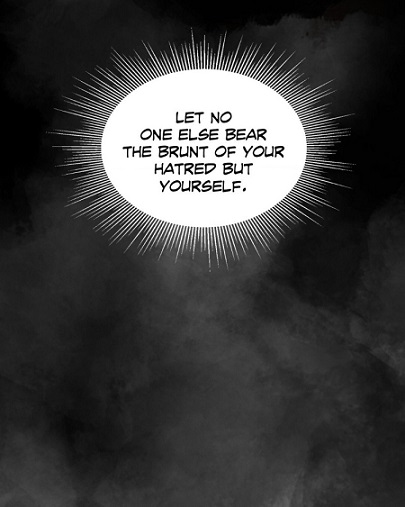 (chapter 126) or Prayer
  (chapter 126)
 (chapter 126) Quoted from
  (chapter 126) It is relevant, because light represents knowledge and truth. He is now the bearer of the truth. And he got his blessing from Baek Na-Kyum, when he touched his hands.
  (chapter 120) Yes, chapter 126 mirrors 92! This somehow confirms my theory that the butler was the one hiding under the purple hanbok.
  (chapter 92) Moreover, we have another reference to this episode, the pouring of alcohol!
 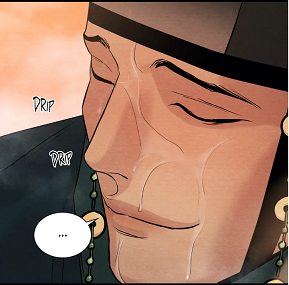 (chapter 92)
  (chapter 126) It was, as if someone wanted the lord to pay for Min’s insult! That’s the reason why I come to the following conclusion: Yoon Seungho is now opening up to Baek Na-Kyum. He is confessing to the painter about his wishes.
 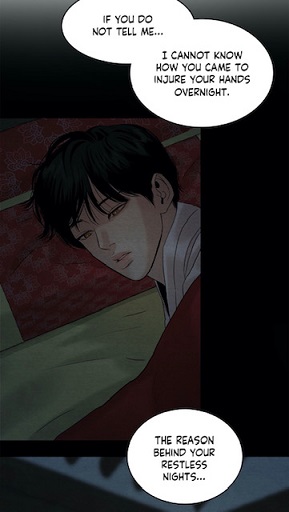 (chapter 85) The manhwaphiles should keep in mind that the request from the artist in the study was strongly connected to forgiveness. And Baek Na-Kyum could also confess what happened in the past: his guilt and regret asking for the lord’s forgiveness. Right now, both are blaming themselves for the incidents, although they got fooled by many schemers. Because the lord proved his loyalty and blinded trust in the painter, I see the scene in the jail as a new version of this confession:
 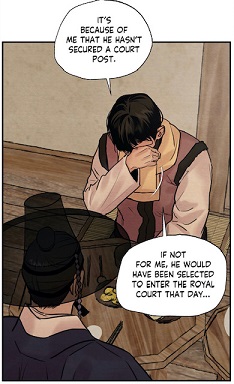 (chapter 75) Thus I consider the prison cell as a sacred place, where both characters are about to be freed from their guilt!
 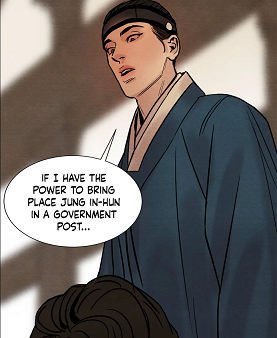 (chapter 11) thus he could escape justice!
  (Chapter 11) Simultaneously, the first definition of life lie corresponds to Yoon Chang-Hyeon. The latter blames his eldest son for the downfall of the Yoons.
 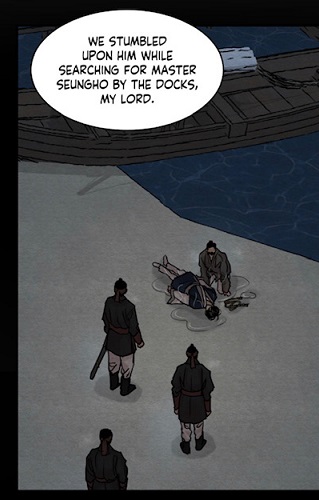 (chapter 125). They fail their duty, for they allowed the main lead to barge in the room.
  (Chapter 126) He is actually encouraging his son to hate himself and indirectly his own father! However, the son made the exact opposite decision: love!! Hence I am more than certain that the elder master is about to experience a harsh awakening.
  (chapter 101) Thus they got punished. And now, the two main leads are about to face human justice.
  (chapter 65) But strangely, the painter is showing no fear at all.
  (chapter 126) He is ready to sacrifice himself. So why was Yoon Seungho dressed up in the end? One might say that with the topknot and the hanbok, the abuse from the patriarch got covered up. That way, Baek Na-Kyum wouldn’t detect Yoon Chang-Hyeon’s lies and abandonment!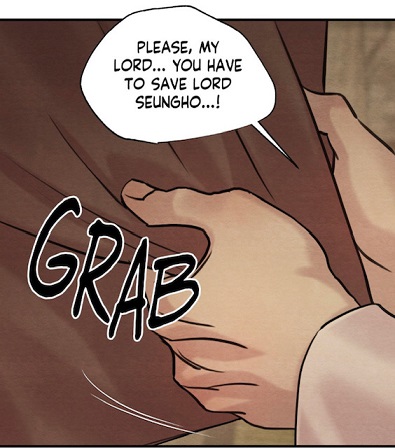
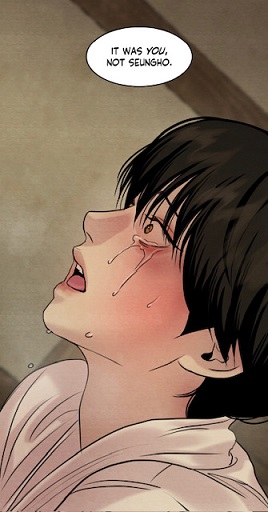 (chapter 125) The latter brainwashed him to take the fall for everything, implying that way, his loved one would be protected! However, I am suspecting that if the lord were to leave the prison, he could meet someone in the office. That way, this person is not confronted with the reality: the main lead was “abused”. According to the butler, he was supposed to meet his brother at the office.
 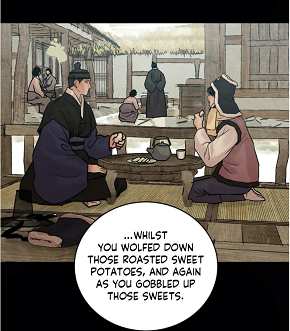 (Chapter 92) In episode 92, we have a mysterious man in the background dressed in black, but he is not wearing his gat. Besides, I would like my avid readers to remember this image from the trailer:
  which reminds us of the office:
 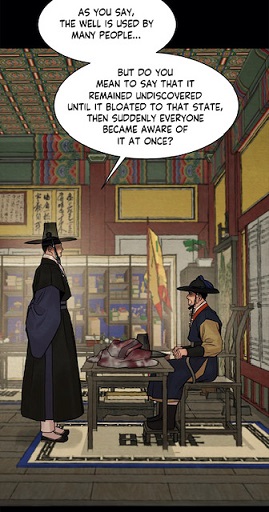 (chapter 98) This place symbolizes power and strength. And because episode 126 is a reflection of chapter 7, 11, 29 and 40, I think, Yoon Seungho is about to receive a deal, for these episodes are focusing on the deal between the painter and the protagonist: protection from the father and punishment in exchange for entertainment. He would appear as a fake savior in the end. Remember what in episode 11 the artist said in front of his fated partner:
 (chapter 11) He would do anything except painting!! He was not willing to give up on this principle, which reminds us of faith. So when Yoon Seungho faced his father, he experienced powerlessness for one reason.
  (Chapter 105) Then in episode 122,
  we discover that lord Song employed the pipe to beat the painter. Moreover, I detected a progression. In season 2, Yoon Seungho was still smoking.
 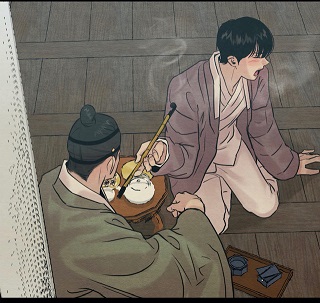 (Chapter 74) But once the painter showed that he didn’t like smoking, Yoon Seungho stopped taking the drug. This explicates why in season 3, he was no longer seen with the item in his hand. Even under stress, he chose to hunt instead of smoking in front of the window. We have two scenes where the pipe is present. One is when the lord is throwing it out of anger,:
 (chapter 86) which reminded me of the incident with the music box.
 (Chapter 85) This shows that this item had no value to the protagonist. Then the pipe appeared in the gibang on the table.
 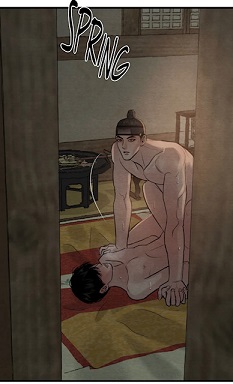 (Chapter 96) However, here the lord had only eyes for the painter or Heena. Hence I have the impression that the pipe could resurface and serve as an tool to identify the perpetrator, just like the glasses were used to recognize the scholar.
  (Chapter 102) Finally, since the pipe appeared in the gibang twice, it indicates that this hobby is linked to the kisaeng house!! And this brings me to my final observation: the pipe is connected to paper
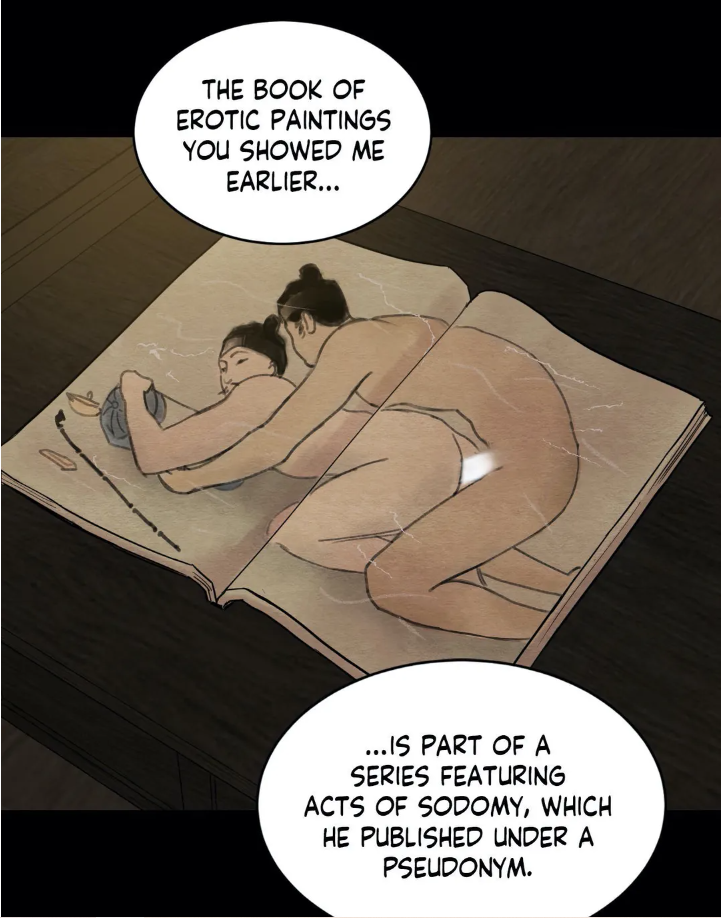 (Chapter 1)
  (chapter 1) However, there exists two books!! And one has no PIPE! This coincides with the decision of the painter to stop drawing erotic pictures! Yes… dropped amusement! At the same time, Yoon Seungho has long lost his interest for erotic publications. He also dropped this hobby. On the other hand, the books were dropped in front of the painter.
 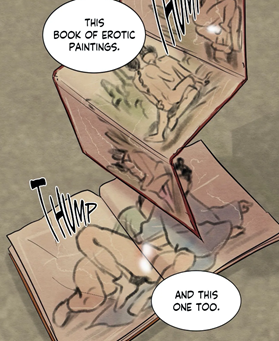 (Chapter 1) Finally, the petition was dropped in front of lord Song
 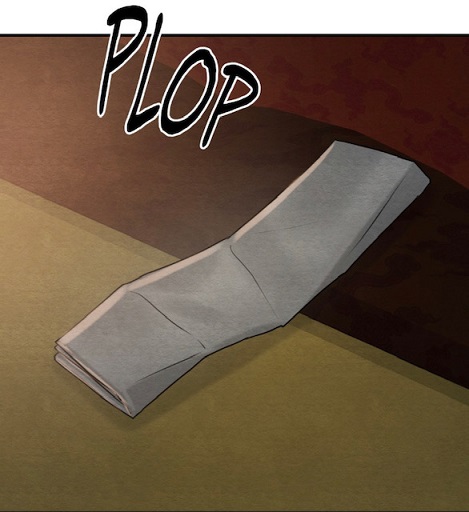 (chapter 123) which announced his death sentence. To conclude, the papers have a strong connection to punishment and death.
  (Chapter 126) Yoon Seungho went to the father’s mansion, and it didn’t take him that long! As you can see, I consider this trip with Yoon Seungwon as a diversion.
 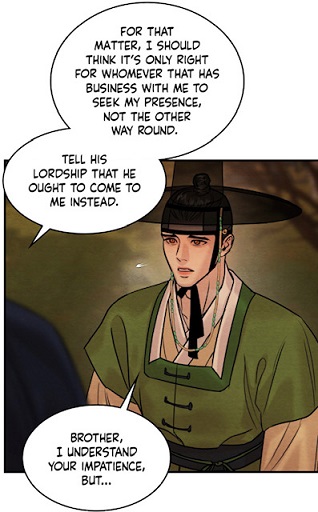 (Chapter 121) So why didn’t the elder master return to his old home? It is to drive the Yoons out of their propriety. In other words, the lies from the past are becoming a reality exposing the liars in the end. Their life lies will be ruined.


 (chapter 36) Hence you comprehend why my new title is once again referring to faith and sin. On the other hand, the readers could be surprised by the choice of my new title. How is it possible that a sinner can be pure? This represents a contradiction. I chose this oxymoron for two reasons. Junah ended season 2 with the same contrast:
 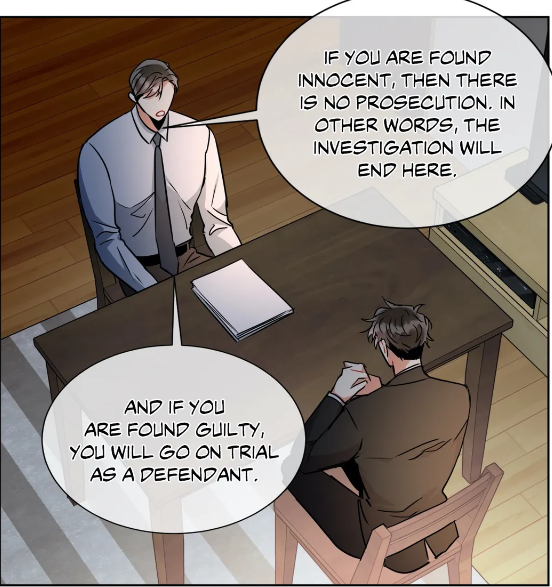 (chapter 44) In this scene, the prosecutor is pronouncing Ha Ideun for “guilty” for murdering Kim Jintaek.
  (chapter 44) However, in that moment the author chose to show the hand of Ha Sungmin, who is about to remove the mask of Ha Sungyeob. This means that the so-called brother is about to commit a murder on the former CEO, his official father. Thus I am deducing that despite the verdict of the prosecutor, Ha Ideun is actually innocent. The “real guilty” versus the “fake one”.
 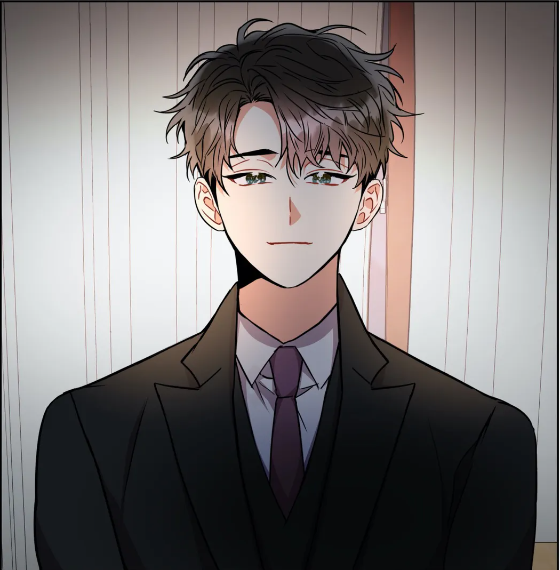 (chapter 44) It was, as if a burden had been removed from his shoulder and heart. Furthermore, in special episode 2, the protagonist’s innocence became even more obvious.
 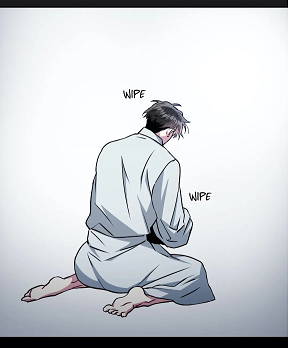 In his nightmare, Ha Ideun is imagining himself wearing a white bathrobe in a white room. Moreover, he looks busy cleaning himself. If you read my essays about Painter Of The Night, you are probably aware of the signification of white and “cleaning”. It is an allusion to purity and purification. Finally, Ha Ideun said that he would never lie by commision.
 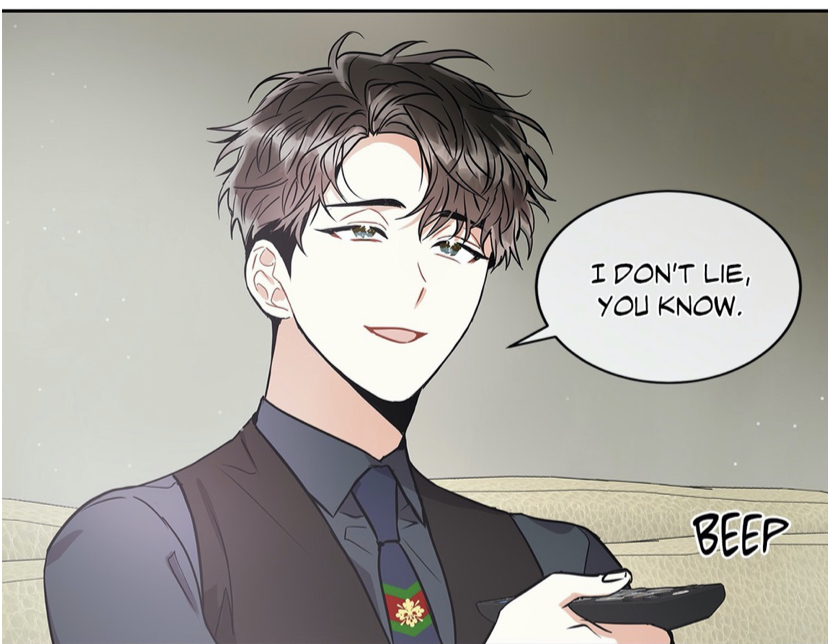 (chapter 11) Everything is pointing out about Ha Ideun’s innocence.
 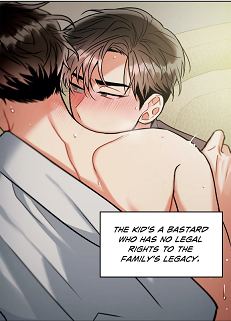 (chapter 39) Hence the reporter Yoo Tae describes him as a bastard, and the official mother Choi Seolhwa doesn’t recognize the protagonist as her son. She doesn’t even call him by his name, but by the expression “the boy”.
 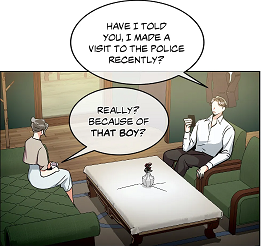 (chapter 41) He is not part of the family. On the other hand, Ha Sungmin and Ha Sungjoon views Ha Ideun as a relative.
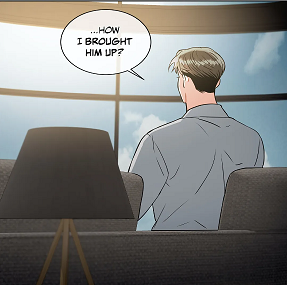
 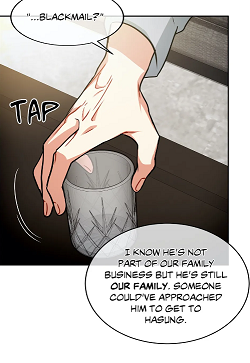 (chapter 37) We could even say that Ha Sungmin views himself as his owner, even as a surrogate father, for he was the one who raised the main lead.
  (chapter 37)
  (special episode 2) He feels responsible not only for the death of Gu Sihwan but also for the death of Kim Jintaek. This explicates why in his nightmares, the suspect had the impression that he had stabbed himself the victims.
 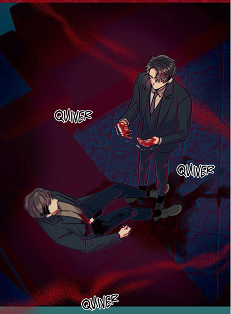 (chapter 21)
 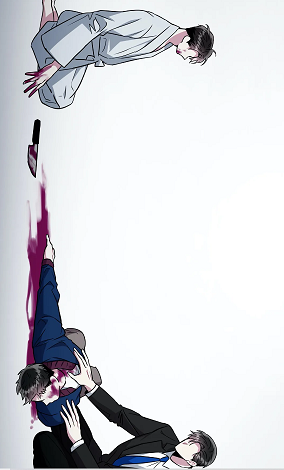 (special episode 2) The hands covered with blood were the symbol of his guilt. The manhwalovers can comprehend why Ideun felt terrible towards the prosecutor. Thus he constantly apologized to the prosecutor by kissing Gu Sehuyk’s wounds
  (chapter 13)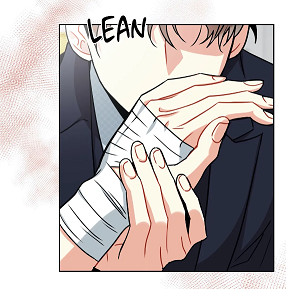
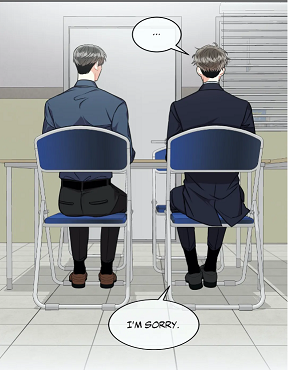 (chapter 23) or by voicing his apology directly.
  (chapter 44) However, as you can imagine, the chaebol never killed the brother or the criminal. I have no doubt about it. He shouldn’t blame himself for their death. On the other hand, Ha Ideun is definitely involved in their vanishing. Thus Ha Sungmin blames him for everything. Ha Ideun is perceived as a sinner. And that’s how he judges himself too, therefore he dreams of being sent to hell. So when the prosecutor declares Ha Ideun
 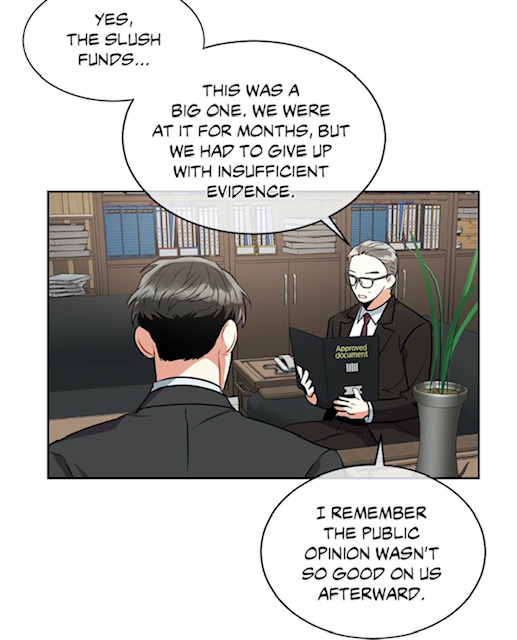 (chapter 8) which is linked to corruption and the project Heaventown. With the slush fund, Ha Sungmin could buy politicians and officials in order to buy the golden land in Gwanghae.
 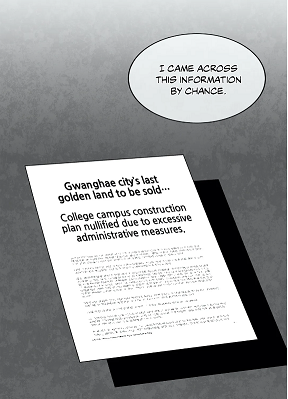 (chapter 39) Note that in the beginning, Gu Sehuyk was supposed to investigate the slush fund. Yet due to his brother’s death, he was removed from the case, for he was left traumatized. His colleague Na Joohwan took over the case and look how it ended:
 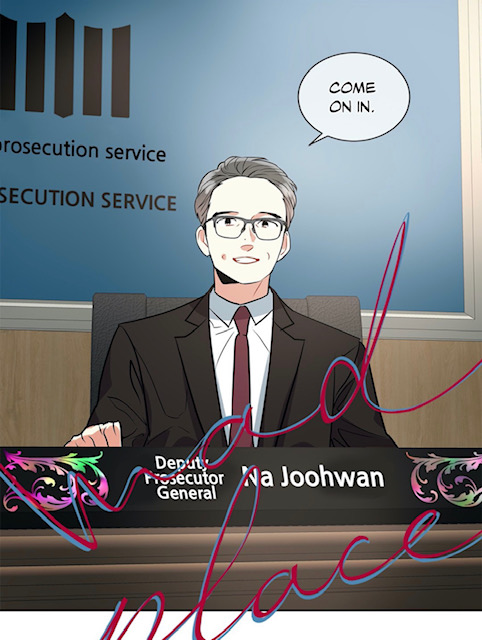 (chapter 8) I have two clues for this theory: he got promoted within a short time, he became deputy prosecutor general, and he is wearing glasses. After reading so many manhwas, I made the following discovery: characters with glasses are hypocrites and even backstabbers. 🧐 [For more read the essay “The significance of masks in manhwas”] Then the reporter Yoo Tae was supported by Ha Ideun to investigate the matter, because he wanted to maintain the good reputation of Hasung Hotel:
  (chapter 39) Moreover, I would like to point out that 2 years later, Ha Ideun was also monitoring Kim Jintaek, this means that he was again investigating about a case, where the Hasung group was involved. This truly exposes the main lead’s righteousness and purity. He chose to do the right thing, yet each time he failed, for he was powerless. People had to die. Therefore the brother said this to Ha Ideun in his dream.
  (special episode 2) Both brothers are goal-oriented, yet they both stand on different sides of the law. Ha Ideun stands for law and righteousness, while the other has no conscious. The goal justifies the means. This explains why Ha Ideun would ask Gu Sehuyk as the prosecutor for this case. The latter is famous for his uprightness and pure nature. Only through him, the truth can come to light. Consequently, I am suspecting that the trial concerning the murder of Kim Jintaek will serve as a mean to unveil all the dirty deeds committed by the Ha family. On the other hand, Ha Ideun wished that his family wouldn’t get into trouble:
  (chapter 40) Why did he make such a request? We have many possibilities. It could be related to Ha Ideun’s goodhearted nature and pride or his fear that Gu Sehuyk could get hurt. So far, people representing a threat to the brother got eliminated. This shows that the main lead was still under the influence of the terrible huyng here.
 (chapter 26) his ambition and greed. He would like to dominate the town and even the economy. His mentality is strongly influenced by his mother who appears as ruthless and selfish too.
  (chapter 41) She is already waiting for her husband’s death. Striking is that at no moment, the villain feels remorse. Why? It is because he has been gaslighting his brother. The brainwashing is detectable in this statement.
 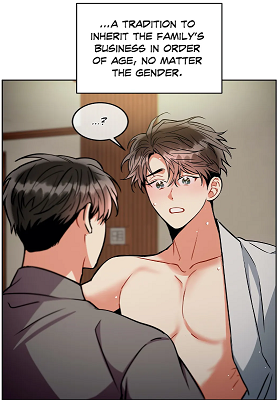 (chapter 39) I am definitely suspecting that there was a battle among the family, and Ha Sungyeob definitely used illegal means to achieve his goal. The oldest sister died in a car accident, and the second brother was judged unqualified. So we could say that Ha Sungmin is actually imitating his “father’s” past behavior, though they are not biologically related. Interesting is that
  (chapter 25) in this scene, Kim Jintaek revealed that he had been in contact with Sungyeob. He showed no real respect to the elder by calling him “crook”, though I have to admit that I am suspecting that Ha Ideun is not Sungyeob’s son. This truly shows that the family Ha is no ordinary family.
  (chapter 37) Junah added the red traces in this panel for that reason. Moreover, Ha Ideun showed signs of PTSD in season 2. On different occasions, he was seen trembling
 (chapter 34), sweating, had difficulties to breathe
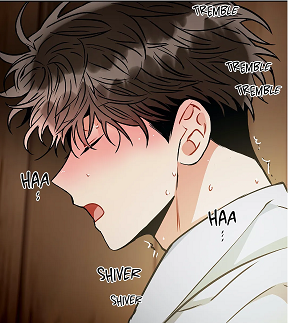 (chapter 34), he had a lost and terrified gaze
 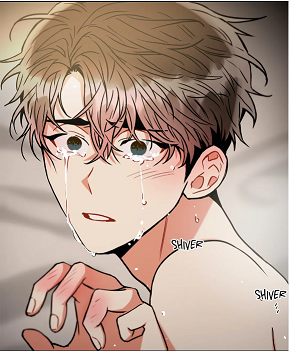 (chapter 33), and he is still suffering from insomnia. He can only sleep after having sex.
 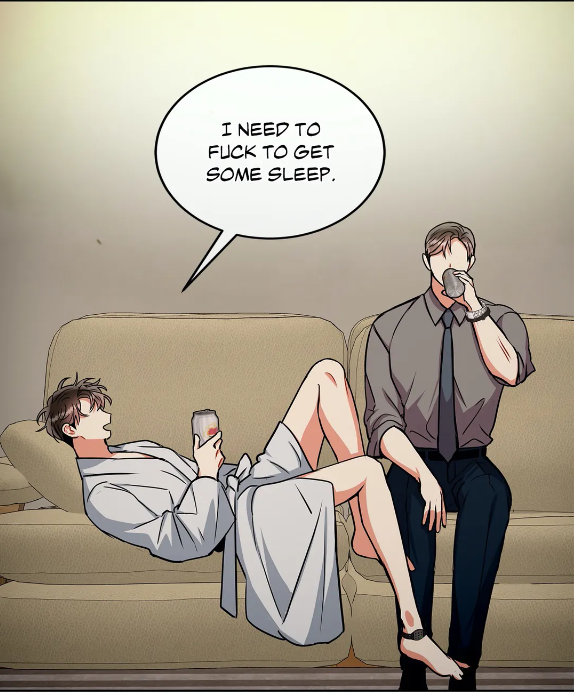 (Chapter 36) This is an indication that the sexual abuse took place during the night. His panic attacks could get triggered by different elements: a certain position or a specific location. He is also suicidal, displaying his self-loathing.
 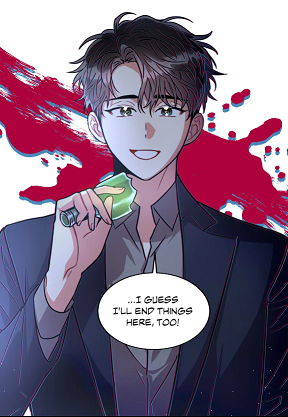 (chapter 21) From my point of view, Ha Ideun had tried to rebell and leave his brother’s side
  (chapter 35), but he had failed. The stabbing is the proof of his resistance.
  (chapter 35) Simultaneously, he was forced to remain by his side, for he had wounded his brother. The blood on the stomach was to make the main lead feel guilty. That way, he would remain silent and passive.
  (chapter 26) They could never show their true self. In my eyes, Ha Ideun stabbed his brother during the sexual abuse
  (chapter 33), as he tried to protect himself, thus the brother has a huge scar on his stomach.
  (chapter 43) This explicates why Ha Sungmin tied his hands with the belt in the hotel. He made sure that the “brother” would never reject him. It was to control him. The hyung had learned his lesson. Moreover, it was his way to “convince” him to return home. In addition, Ha Ideun was definitely confined, for the nightmare revealed that Ha Ideun was trapped. The most terrible thing is that the huyng made sure to gaslight Ha Ideun. He shouldn’t have stabbed him, he had committed a huge sin against him. That’s the reason why Ha Ideun sees his hands covered with blood in his nightmares. He views himself as a sinner. The dirty hand symbolized his guilt.
 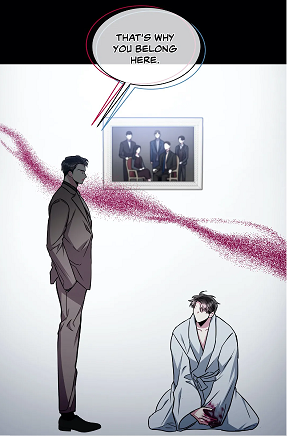 (special episode 2) Thus the main lead came to internalize that sex between “siblings” is normality. Don’t forget that Sungjoon never intervened. He became an silent accomplice. On the other hand, in his subconscious Ha Ideun is well aware that this is not right. This explicates why he felt safer to have sex with strangers than living with his brother. And now you comprehend why I wrote before that the main lead’s wish
 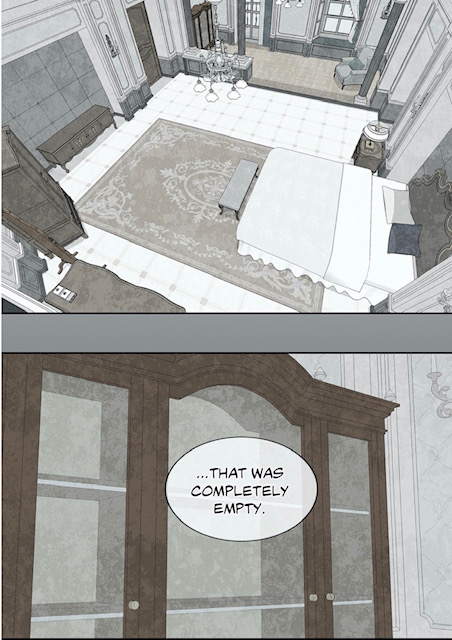 (chapter 08) All traces of violence had to be removed and cleaned.
  (chapter 23) This is no coincidence that Ha Ideun asked how his sexual partner felt about their sexual encounters. It was important that Gu Sehuyk would like it.
  (chapter 22) That way, the main lead had the impression that he was indeed capable to replace the brother’s loss. However, like pointed out above, Ha Ideun needed the protagonist on his side too, for he wished to unveil the truth about Heaventower and the father’s illness which is connected to the drug. This is no coincidence that sex with Gu Sehyuk was connected to a confession. The sinner was seeking relief from the “priest”, at the same time he was trying to redeem himself by give warmth to the wounded prosecutor. Simultaneously, he was hoping to obtain his forgiveness. This is important, because by interacting with the prosecutor, he came to discover a new form of family. This is not surprising that at some point, Ha Ideun came to question the nature of the relationship between siblings.
  (chapter 25) Hence I come to the conclusion that by interacting with Gu Sehuyk, the victim adopted slowly a new religion of HOME! Don’t forget that home has different significations: a household, a mansion and a clan. What caught my attention is that Ha Ideun started calling the prosecutor’s house HOME!
  (chapter 26) This truly exposes that he had moved from Sungmin’s fake religion of home and family.
 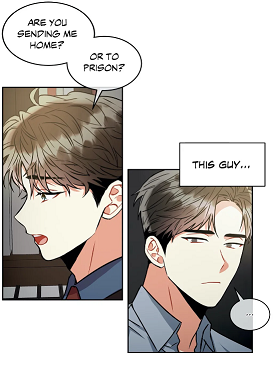 (chapter 29) and at the end of season 2, he chose to reveal his secret to Gu Sehuyk: the sexual and physical abuse. Therefore it is not surprising that at the end, Gu Sehuyk said this to Ha Ideun.
  (chapter 44) He was now considering the “suspect” as his “family”. That’s the reason why I believe that this “sentence guilty” at the end of season 2 is just a subterfuge. This can only serve as an excuse to keep him by his side. At the same time, the prosecutor Gu Sehuyk can not be suspected of favoritism, for he is suspecting a chaebol to have committed a crime. The media already reported the case to the public. Under this new perspective, I came to understand why Ha Ideun never tried to defend himself right from the start. He needed to remain a suspect, so that he could influence the prosecutor in his investigations. That way, he could discover that his brother’s case had not been truly solved…. At the same time, Ha Ideun could be considered as a sinner, for he “seduced” the priest Gu Sehuyk to have sex. So far, the man was dedicated to his work, and as such had no sex life.
 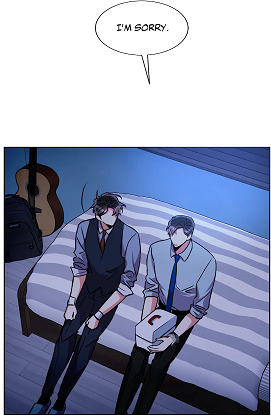 where equity, love and warmth were oozing which stands in opposition to the cold and aseptic “temple” of the Ha.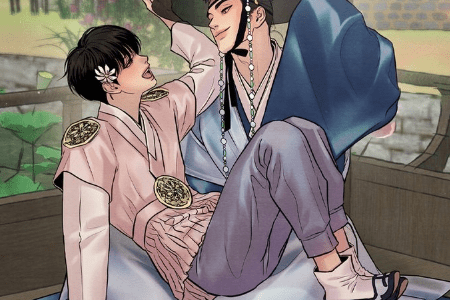

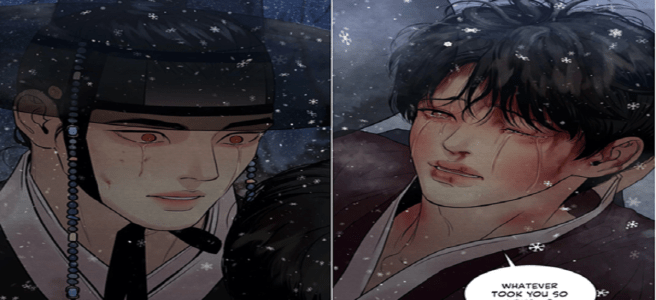


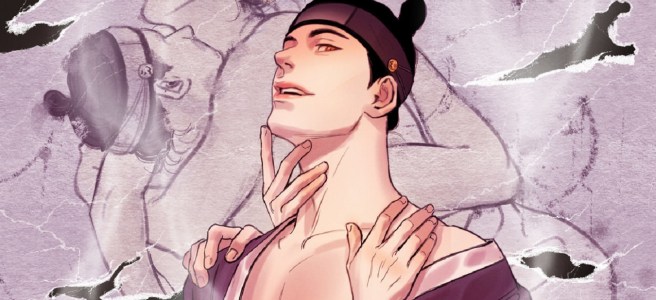
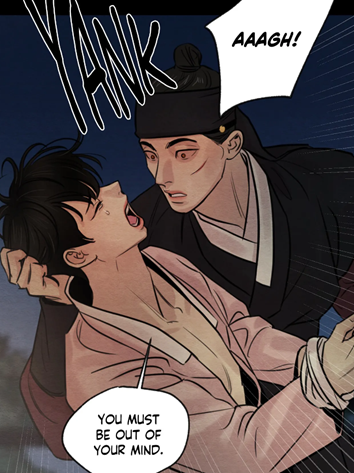
 Since the lord speaks about a bloodbath in a calm manner, he appears cold and even heartless. The cause for his lack of sensibility is that his mouth is controlled by his mind and the latter is denying the existence of any emotion. Striking is that his hands are busy as they are focused on wiping the sword. I perceive a contrast between the tranquility coming from the mouth and the activity of the hands. This scene already implies the first inner conflict between the conscious and unconscious. Notice that he is neither smoking nor drinking so that his feelings are not numb. The movement of his hands displays a certain edginess. With this first introduction, Yoon Seungho appears bloodthirsty due to the association of the blood and the sword. However, if you look again at the scene, you’ll notice that he only threatens, after hearing that the painter is no longer working. So the trigger for his menace is the fear that his wish to get new erotic paintings might not be granted. He denies that this news should concern him, yet right after he comes up with this thread. Someone could die. The contradiction between the hands and the mouth and even the disparity between “that’s nothing to concern myself” and “surely he won’t insist on it once he sees some blood” actually betray the aristocrat’s eagerness to have the artist by his side. He wants Baek Na-Kyum to paint for him. In other words, right from the start the noble felt the need to have the painter and his unconscious through the hands revealed his true emotions. However, in this scene he has never seen Baek Na-Kyum. He has no idea how he looks like but through the paintings, his unconscious had been triggered. The erotic images had aroused emotions in him.
  From that moment, the lord’s visage changes. There is a huge smile on his face and grabs his hands with such a speed and strength that Baek Na-Kyum is unable to resist.
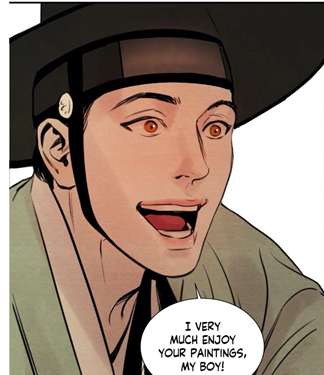 The lord is not even aware that he has dropped his mask of indifference. His eyes are shining, his mouth is even smiling. Striking is that the mouth lets even transpire a lot of affection: “very much enjoy”, “my boy”. His actions contrast so much to the first scene. In my first analysis of the first episode, I had compared him to a fan meeting his idol. However, from my point of view, his emotions are actually much stronger than I had envisioned. The mouth is not under the control of the mind, the conscious. Why such a reaction? It is because the painter has just spoken to him. Therefore I come to the observation that right from the start, the artist’s mouth plays a huge role in their relationship. Baek Na-Kyum’s mouth is the trigger for the unconscious to reveal itself. However, at no instant, Yoon Seungho realizes the contradiction between his body and his mind. He is so happy to meet the painter he admired so much, because he felt a connection through the creations. It’s as if his unconscious had sensed the power of the artist’s emotions (love, warmth) behind his pictures. The unconscious through the eyes recognized the sensitivity in Baek Na-Kyum’s works. For me, the lord had already fallen in love with Baek Na-Kyum, even before he met him for the first time. Yet, I believe, the moment he sees his face and hears his voice, his feelings become even more intense to the point he already has an erection.
 His body, led by his unconscious, is attracted by the low-born. Interesting is that at no time, Baek Na-Kyum’s status as a low-born is relevant. The noble feels the need to touch his hands, even treasures them. He allows the artist’s hands to touch his loins. There is such a closeness exposing the noble’s desire: his body wishes intimacy, yet his mouth is still fighting the urges expressed by the unconscious. That’s why he keeps talking about the paintings and the effect they had on him.
  Why do I think that the powerful protagonist is so fascinated by the painter’s mouth and the latter serves as a trigger for his unconscious to reveal itself? Let’s not forget that I wrote that the low-born’s face serves as a mirror to the lord. His face symbolizes the mirror of the truth. Since the aristocrat’s mouth is under the power of his conscious, his mouth is never allowed to speak the truth. Due to his philosophy to live as a spirit and to never feel any emotion, the lord forced himself to use his mouth to disguise himself and to never let transpire any emotion: only rationality and coldness. Therefore his mouth is never honest in reality. Not only it lies to others but also to the main lead himself. The mind through the mouth is ruling his life, telling him and others that he is cold, distant and even heartless. However, deep down his unconscious wishes honesty and genuineness. In reality, Seungho is a very passionate person.
  the lord’s face slowly gets frigid and the smile vanishes gradually.
  For me, the lie triggered the return of his mask. Look at his faze: it was as if it was paralyzed. The conscious takes over the control of the lord’s face. He is disguising his emotions. He is deeply hurt. His feelings have been rejected, since the painter told him that he wasn’t the person he had been looking for. The conscious might control the face and the mouth for an instant, yet his hands are under the power of his unconscious. That’s why he grabs the sword so quickly.
  The manhwalovers only witness the sword leaving its protection outlining the rapidity of his hand. This gesture displays the anger he is hiding behind his frozen face. From my perspective, his hands and his feet are expressing what he is feeling inside. There is this rage and pain for being pushed away. He’s already the vengeful spirit, his unconscious feels the need to vent his inner emotions. However, since I observed the return of the lord’s mind, we have to imagine that the main lead has the impression, he is making decisions rationally. He is just following what he said the night before. If his wish is not granted, then someone has to pay. I believe, the speed of his hands and feet indicate that the latter are actually influenced by his unconscious, the lord can’t detect the power of his unconscious as they are actually obeying the order of his mind: someone needs to die. And note that soon after he rushes to the servant’s side.
  It was as if he was flying towards him, his feet are rushing demonstrating the intensity of his inner emotions. The painter’s mouth, which he is already treasuring, wounded his heart so deeply that he feels the need to punish someone but he can’t hurt the artist because he was somehow moved by the painter’s face. His unconscious must have sensed the innocence in the painter’s gaze. Let’s not forget that Baek Na-Kyum is sweating, when he lies to Yoon Seungho. As you can detect, there are many reasons why he didn’t touch the artist in the first place. Yet, since his mouth said that some blood would be spilled, he needs to find another target and that’s the domestic. Furthermore, the unconscious sees no problem with the killing. I would like to remind that the unconscious is something wild and knows no boundary, the emotions unleashed by the unconscious can be very violent. The mind might have decided that he would kill someone if his wish wasn’t granted and the unconscious might have agree to this in order to vent his fury. In other words, the lord’s body might seem now under the control of the mind, yet from my perspective, the lord’s emotions, led by his unconscious, are playing a huge role in this scene as well. Observe that the moment he is about to kill, his gaze is cold and ruthless, but his face seems like frozen.
 Only after the murder, he sees the painter’s tool, while he explains the reason for his action in a rational and calm manner. My question is: Why didn’t he check out who lied in the first place? Why did he have to kill someone? From my perspective, in this scene, the lord’s heart played a huge part in his behavior. In my opinion, he’s already developed some feelings for the painter, hence he didn’t vent his anger on him. Deep down, he knew that his servant had deceived him, though he couldn’t tell how. He didn’t notice the servant’s discomfort.
  (Chapter 1) Thus he was portrayed with no eyes. Sure, not everything was a lie, yet the commoner mixed a lie with the truth, turning his testimony into a deception. What appeared as trivial was in truth betrayal. What the domestic didn’t know is that the lord hates lies, for they were the reason for his downfall. He needed to hurt someone, because he had been wounded by the painter’s lie. But the latter was just a white lie. So in the picture above, I see the lord’s conscious attempting to justify his action.
  Yet his gaze and smile contradict his mouth right after. There is a glimpse of a smile, his eyes are showing an interest. The idiom “the boy” illustrates a certain closeness. I mean, he could have called him “the low-born” but he didn’t. For me, this picture illustrates the lord’s satisfaction. He has obtained what he wanted: the painter.
  It looks like the sword would remove the cloth so that he can see the artist’s naked body. The way he uses the weapon exposes that his unconscious doesn’t want to hurt the artist, although he is actually displeased to be lied again. This gesture expresses a certain sexual desire, but the counterpart is not noticing it due to his uncomfortable and frightening situation. That’s why there is no rage unlike at the tavern. The sexual desires have returned. Furthermore, we could say that the main character has got used to or that he is well aware that Baek Na-Kyum has the creator of the erotic paintings by his side. He feels less betrayed.
  First, he wipes the painter’s tears and later he even grabs his hands again.
 I would even say, the gesture with the sword is another caress showing the power of his emotions. His unconscious feels the urge to touch and caress his face and his hands. Both have already become Yoon Seungho’s weaknesses. Notice that he even lowers himself to the painter twice and gets very close to him.
  His feet always lead him to the artist’s proximity. He remains by his side, until he is lied a second time. From that moment, he stands up and starts walking revealing a certain uneasiness and edginess. He is troubled and frustrated because he has been indirectly rejected again. Yet, unlike at the tavern, his reaction is less violent and this for two reasons. First, his unconscious is definitely more attracted than before. Secondly, his mind is well aware that the painter is not telling the truth. In other words, his heart and mind are not fighting each other. Their goal is the same, they want to have the painter by their side. Yet the conscious doesn’t realize that behind its decisions, the heart is already influencing his mind. Why does he want the erotic drawings?
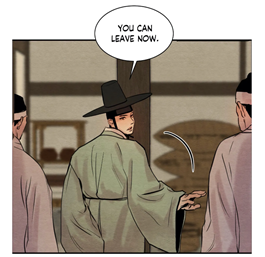 Striking is that he even sent his staff away, creating a certain intimacy. He definitely wants to get close to Baek Na-Kyum physically and mentally. But since he’s just a spirit, he doesn’t notice that his hands and feet have been acting on their own… led by his unconscious.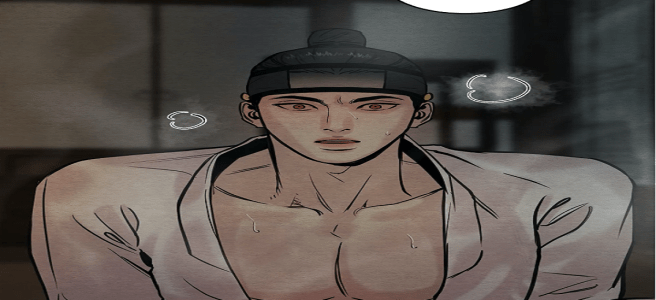
 Bebebisous33s' analyses in K-Dramaland and Manhwas