

Please support the authors by reading Manhwas on the official websites. This is where you can read the Manhwa: Jinx But be aware that the Manhwa is a mature Yaoi, which means, it is about homosexuality with explicit scenes. Here is the link of the table of contents about Jinx. Here is the link where you can find the table of contents of analyzed Manhwas. Here are the links, if you are interested in the first work from Mingwa, BJ Alex, and the 2 previous essays about Jinx The Deceptive Light Of Hope and The Fault in His Powerful Hands
It would be great if you could make some donations/sponsoring: Ko-fi.com/bebebisous33 That way, you can support me with “coffee” so that I have the energy to keep examining Manhwas. Besides, I need to cover up the expenses for this blog.

In Jinx, the relationship between Joo Jaekyung and Kim Dan takes center stage as a transformative journey, marked by unexpected decisions and evolving dynamics. This journey is not only metaphorical but also visual, as emphasized in episode 61 through the recurring imagery of Joo Jaekyung’s car. Mingwa dedicates numerous panels 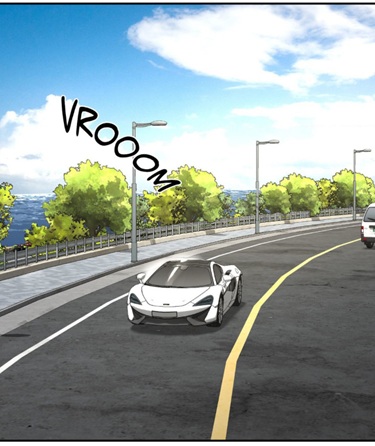 (chapter 61) to the champion’s expensive car
  (chapter 61), which symbolizes his personal and emotional odyssey. The car embodies a dual symbolism: on one hand, it represents his quest for happiness, freedom, and purpose; on the other, it signifies civilization and his disconnection from nature. Each frame highlights not just his physical travel but the deeper changes he undergoes along the way.
The car’s prominence underscores the champion’s life of privilege and control, yet it also signifies his yearning for something more meaningful. The zoom on the screeching wheel in Episode 61  (chapter 61) marks a pivotal moment: his journey reaches its destination at the hospice. This “final stop” symbolizes his decision to live closer to Kim Dan and find a sense of rest and belonging. However, the screeching wheel also represents an unconscious choice by the fighter. At this stage, he perceives his visit as temporary, limited to his rehabilitation.
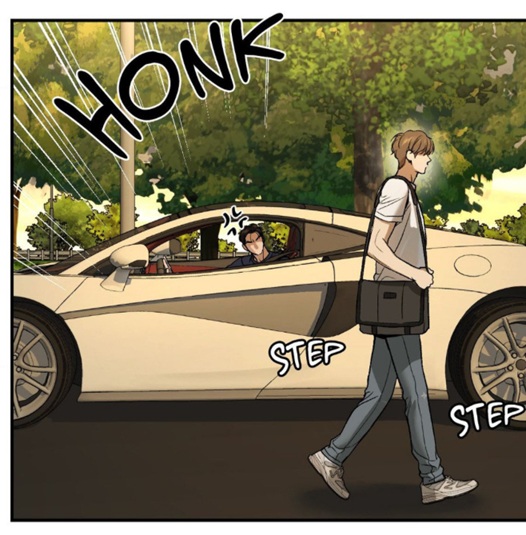
  (chapter 61) This explains why, later, the athlete is shown honking at Kim Dan while driving in the opposite direction, illustrating that his mindset had not yet shifted fully.
  (chapter 61) In the final scene, the car is no longer present, symbolizing the completion of his journey, as he settles near Kim Dan and redefines his purpose. By settling near Kim Dan
 (chapter 61), Joo Jaekyung shifts his focus from external accomplishments to internal growth and emotional connection.
At its core, the essay “A Clueless One-Way Street to Kim Dan” explores how Joo Jaekyung’s choices, initially rooted in habit 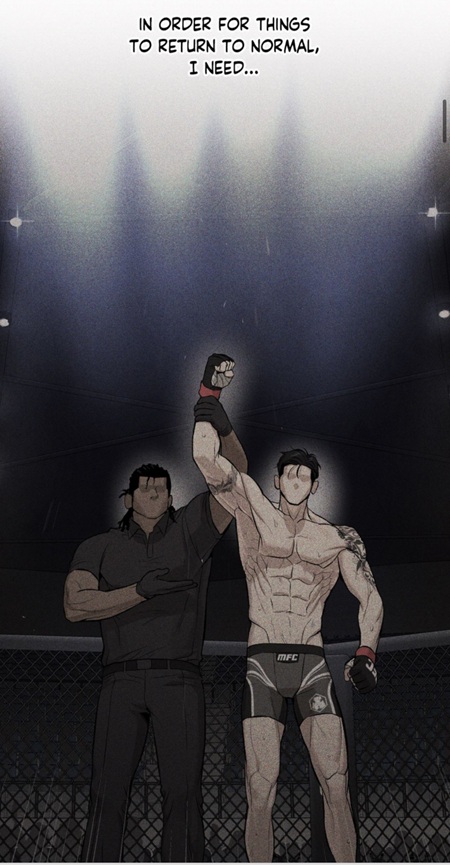 (chapter 61) and superficial assumptions (chapter 61), lead him into uncharted emotional territory. This essay examines the pivotal moments that highlight his progression—from the conversation with the manipulative orthopedic surgeon to his introspective thoughts in his penthouse, his trip to the small town, and, ultimately, his realization of the permanence of his new path. By analyzing these stages, it becomes evident that Joo Jaekyung’s seemingly routine actions mark a profound and irreversible change in his life, especially as his relationship with Kim Dan shifts from a boss-employee dynamic to a pure doctor-patient bond before becoming neighbors.
The Surgeon’s Manipulation: A Subtle Push
The orthopedic surgeon,  (chapter 61) Park Junmin, displays a striking lack of empathy and a clear focus on self-interest in his interactions with Joo Jaekyung across two pivotal chapters. In Episode 54, he highlights Joo Jaekyung’s prolonged recovery, urging him to rest but failing to show genuine concern for his well-being.
 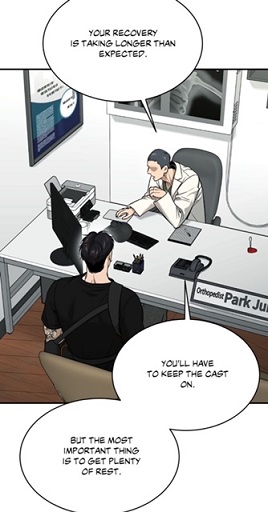 (chapter 54) (chapter 61) By Episode 61, his attitude becomes overtly transactional, reflecting a focus on securing Joo Jaekyung’s rehabilitation at his hospital to boost its reputation. During their first consultation, Park Junmin avoided eye contact, using the computer as a shield to mask his detachment and avoid accountability. In their second conversation, however, he looks directly at Joo Jaekyung and even smiles, attempting to project warmth. This shift underscores his passive and opportunistic nature: he subtly blames Joo Jaekyung’s body for the slow recovery but later seeks credit for the champion’s improvement. His behavior dehumanizes Joo Jaekyung, treating his body as merchandise to enhance the hospital’s prestige, as evidenced by his manipulative remark,
  (chapter 61) This statement reflects his agenda rather than any genuine concern for the champion’s future.
The lack of empathy in Park Junmin’s approach is further emphasized by his name, a combination of “Park,” the manager, and “Baek Junmin,” the last fighter. This naming convention may signify a deliberate connection to figures who have exploited or controlled the main lead for their own gain. Park Junmin’s behavior mirrors these themes, reducing Joo Jaekyung to a tool for professional prestige rather than treating him as a person with multifaceted needs. While the manager saw in the fighter a “boy” 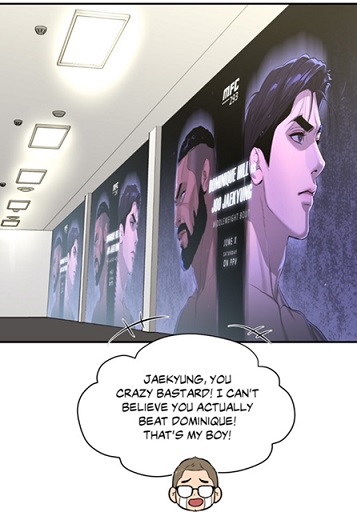 (chapter 40), the other considered him as a baby.
  (chapter 49) And what is the other common denominator between these three characters?
  (chapter 54) (chapter 49) (chapter 61) They expressed not only urgency, but also their desire to see the champion prove his “value” in the ring. This shows that none of them are seeing the main lead as a man, even as an adult. For them, he is just a fighter and he has no private life. Park Junmin’s pseudo-suggestion (chapter 61) , which masquerades as encouragement but subtly imposes his own agenda, reminds me of the behavior of Park Namwook
  (chapter 56), the lawyer, and the manager from the entertainment agency, who all used similar tactics.
 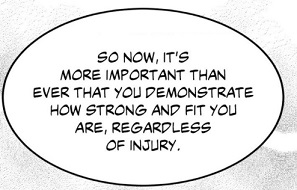 (chapter 36) They all had expectations on him.
What is striking here is Joo Jaekyung’s response. (chapter 61) While we do not see his gaze, his expression oozes dissatisfaction, revealing that he is fully aware of the manipulation at play. This moment mirrors his reaction in Chapter 6
 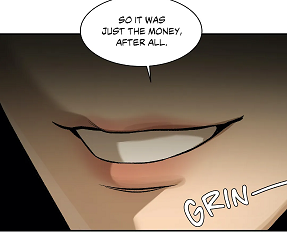 (chapter 6), where he recognized how Kim Dan like the others were exploiting him for his money and reputation. However, this time, his awareness reflects growth: thanks to the doctor’s polite refusal
  (chapter 60), Joo Jaekyung now knows about the sincerity and humility of Kim Dan in contrast to those who treat him like a commodity. Thanks to Kim Dan, he is able to reject the pseudo-suggestion and instead prioritize a more genuine and respectful dynamic. He instinctively rejects the offer by stating that he will receive treatment elsewhere, a decision that catches the surgeon off guard and further showcases Joo Jaekyung’s resistance to being controlled. Turning away from the hospital, Joo Jaekyung unknowingly embarks on a journey shaped by his emotional needs, though he remains unaware of the full implications of this decision.
The Penthouse Reflections: Clinging to the Past
Joo Jaekyung’s return to his penthouse 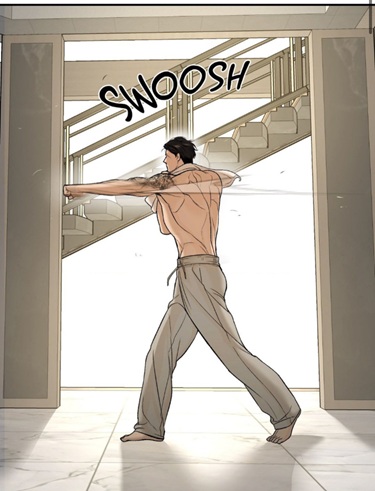 (chapter 61) marks a period of superficial introspection
 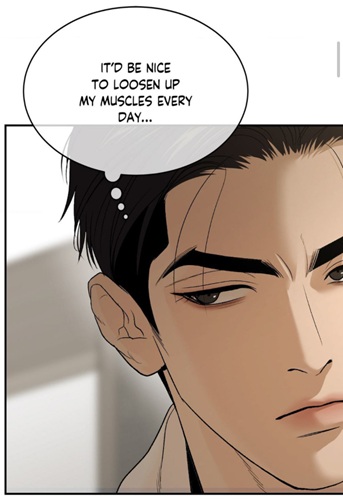 (chapter 61) where he begins to rationalize his actions. (chapter 61) He imagines the situation as analogous to his past—using fame, money, and connections to achieve his goals.
  (chapter 61) In his mind, this scenario is nothing new; he is simply leveraging his resources to secure treatment from Kim Dan
 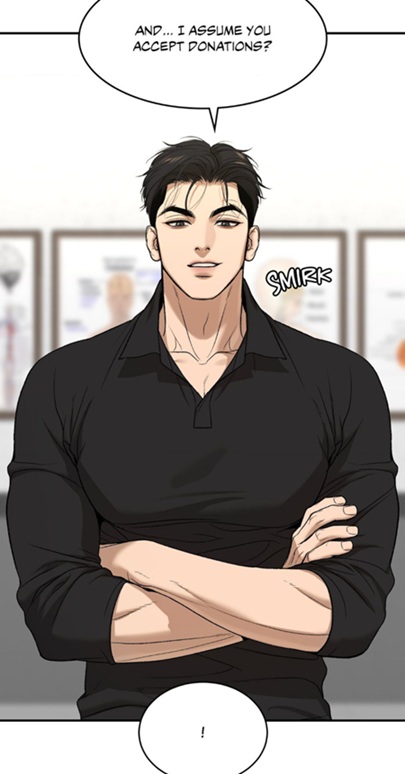 (chapter 61), much like he has done countless times before in other contexts. However, this rationalization obscures a critical difference: he is no longer in control of the dynamic.
The transformation of their relationship into a pure doctor-patient dynamic represents a significant departure from their previous interactions. This new dynamic is marked by mutual respect and the absence of the power imbalances that once defined their connection. (chapter 61) Joo Jaekyung’s decision to seek treatment from Kim Dan, rather than the hospital recommended by Park Junmin, signals his growing trust in Kim Dan’s abilities and judgment. It also reflects an implicit acknowledgment of the positive impact Kim Dan has had on his life, even though Kim Dan has not yet treated him.
What makes this transition particularly compelling is Joo Jaekyung’s gradual awareness of the emotional implications of this shift.  (chapter 61) As he adjusts to a life dictated by Kim Dan’s schedule, he begins to recognize the limitations of his previous reliance on fame, money, and connections. This realization is not immediate but unfolds as he navigates the challenges of adapting to a new way of life. The loss of his VIP status becomes a catalyst for personal growth, forcing him to confront his vulnerabilities and redefine his sense of self beyond his achievements. This implies that the balance of power is moving closer to equity, though it is not achieved yet. Kim Dan’s refusal to return to the gym compels Joo Jaekyung to adapt to his terms, diminishing the power dynamic that previously defined their relationship. Kim Dan is now the one controlling the champion’s time. This shift signifies the erosion of the transactional nature of their relationship. No longer a boss commanding an employee, Joo Jaekyung becomes a patient seeking help from a professional.
  (chapter 61) That’s why Kim Dan can leave his side right away after the treatment. Moreover, the main lead feels no longer obliged to talk to his fated partner. He interacts as little as possible with the MMA fighter.
  (chapter 61) The champion is confronted with silence and emotional distance revealing that Joo Jaekyung is looking for something else. I would even add that he needed to experience this new approach as failure in order to force himself to change his MO and mind-set. This loss of status as a VIP underscores a larger theme in the narrative: the futility of relying on external markers of success to navigate personal relationships.
The Illusion of Separation Versus Reality
During his penthouse reflections, Joo Jaekyung envisions a future (chapter 61) where he receives treatment from Kim Dan and then parts ways, as if their connection could be neatly severed. This imagined scenario reveals his reluctance to acknowledge the depth of their bond. Influenced by Park Junmin and Park Namwook’s words (chapter 61), Joo Jaekyung begins to internalize the idea that his relationship with Kim Dan is purely functional and temporary. However, this perception is far from reality.
The juxtaposition of this imagined separation with the scene of Joo Jaekyung honking his car horn behind Kim Dan highlights the disconnect between fiction and reality. (chapter 61) In the image with the car, Joo Jaekyung is following Kim Dan, unaware of the symbolic significance of his actions. He thought that by driving towards the doctor, the latter would notice him and ask for a ride. However, in this small town, the physical therapist doesn’t need any transportation. I would even add, because of this experience (chapter 32)
  (chapter 32), the “hamster” learned to be cautious about such “generous offers”. 😂 That’s why the physical therapist is rejecting any assistance from the athlete. Because of this reminder
  (chapter 60), Joo Jaekyung lost all his credibility in the doctor’s eyes. From that moment on, Kim Dan is perceiving any offer or genuine concern as a trick and fake assistance with selfish intentions. Hence the hamster can no longer see the celebrity’s genuine and selfless action, like this one:
  (chapter 61) Each time Kim Dan turns his back on him
  (chapter 61), it reinforces Joo Jaekyung’s subconscious pursuit. The honking scene represents reality—Joo Jaekyung knows what he wants (here his attention) and continues to follow Kim Dan, yet he does not recognize the emotional dependency forming through these actions.
Contrastingly, in his imagined separation, Joo Jaekyung places himself and Kim Dan as individuals moving in opposite directions, as though their paths can diverge without consequence. (chapter 61) This contrast emphasizes the deeper truth: their positions in the honking scene reflect their emotional states and goals in life. Joo Jaekyung is grounded, determined, and focused (initially thinking of his title), whereas Kim Dan is aimless, lost, and struggling with suicidal thoughts. The honking car scene becomes a metaphor for their intertwined fates—Joo Jaekyung’s persistence and clarity must ultimately provide direction and purpose to Kim Dan’s life. At the same time, it implies that the athlete also needs to change his goal now. He can no longer keep thinking of his title, if he desires to get the doctor’s attention and closeness. He needs to become less self-centered and selfish. In other words, the honking scene marks a pivotal turning point in the champion’s life, signifying a path of no return. And the evidence is that right after this image, the car not only vanishes, but also is replaced with this little house which was remodeled into a hostel before. (chapter 61)
Moving to the Little Town: A New Reality
Joo Jaekyung’s decision to move to the small town marks a significant turning point in his journey.  (chapter 61) This transition is not just physical but deeply symbolic, contrasting his former life of isolation and detachment in the penthouse with a new environment characterized by community and connection.
The white penthouse, towering above the city, reflects Joo Jaekyung’s loneliness and separation from others. 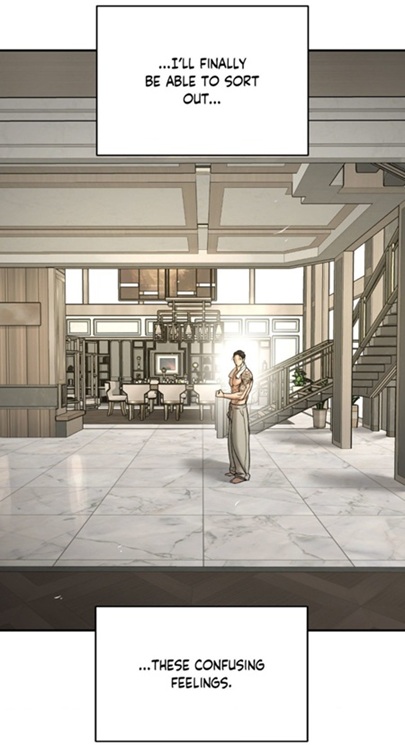 (chapter 61) Its luxurious yet cold atmosphere symbolizes his exclusion and lack of roots. It is a sterile world.
  (chapter 35) Living above everyone else, like a god, further emphasizes his disconnection from the world around him. Seoul itself, as a city of anonymity, amplifies this isolation. The penthouse’s grandeur and emptiness serve as a stark reminder of his solitary existence, where material success failed to provide fulfillment. (chapter 61) The panel where he reflects on his “confusing feelings” encapsulates this sense of emotional emptiness. Standing alone in the grand yet sterile space, he recognizes the hollowness of his success and his growing need to confront and process his emotions. This moment becomes the catalyst for his move, symbolizing his readiness to leave behind the detachment of his past.
In contrast, his new house in the small town represents a shift toward belonging and grounding. (chapter 61) The presence of neighbors, a garden with plants, the refraction and fresh air signify his move toward a more connected, colorful and harmonious life. He is now closer to nature. 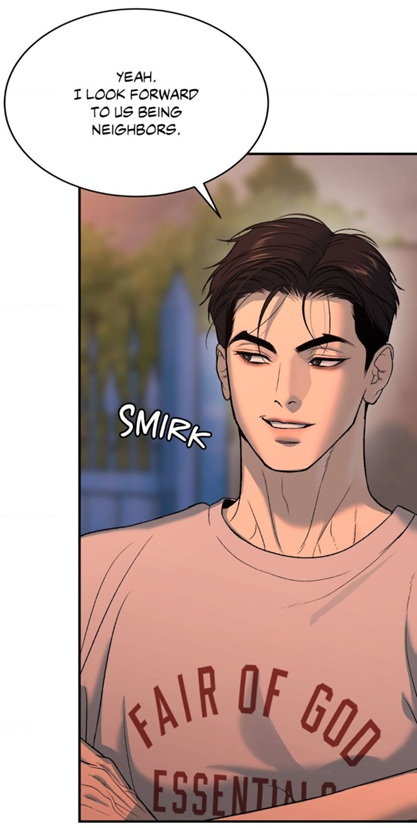 (chapter 61) The T-shirt he wears, emblazoned with “Fair of God Essentials,” subtly reflects his evolving mindset. The phrase evokes themes of humility and essentialism, aligning with his journey from a life defined by material excess to one centered on genuine connection and simplicity. The notion of “being neighbors” further emphasizes his integration into the community—a stark contrast to his isolated existence in the penthouse. The house is no longer just a space but a reflection of his evolving priorities.
Another layer of this transformation is revealed through Joo Jaekyung’s interactions with Shin Okja, Kim Dan’s grandmother. 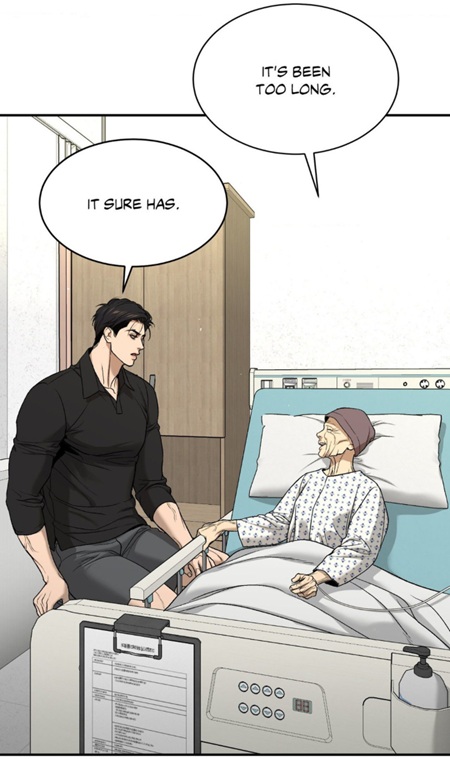 (chapter 61) Drawing from past experiences, the champion believed that treating Shin Okja well would win Kim Dan’s favor. In earlier episodes, Kim Dan expressed gratitude with a gentle smile
  (chapter 22) when Joo Jaekyung made efforts to bring a smile to his grandmother’s face, even going so far as to cook him breakfast afterward.
  (chapter 22) Having missed Kim Dan’s meals and the intimacy they symbolized, Joo Jaekyung unconsciously imagines that this approach will recreate that connection.
However, this strategy backfires. 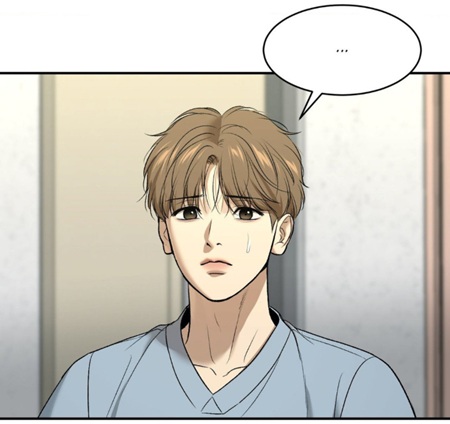 (chapter 61) The doctor is showing his disappointment with his mouth. Kim Dan, burdened by his own painful experiences with his grandmother, has come to see their relationship as fractured.
 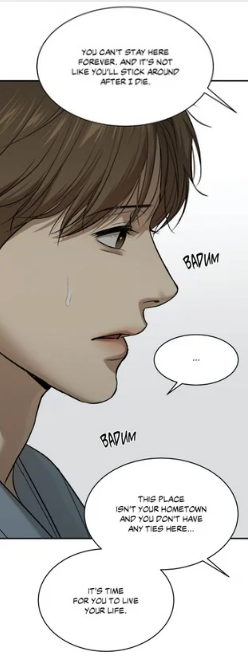 (chapter 57) Shin Okja’s rejection of Kim Dan, telling him he was a stranger and should return to Seoul, further deepened the divide. In a significant moment, Shin Okja uses for the champion the phrase “our little town,”
  (chapter 61) which gives the impression that she is including Kim Dan in her sense of community. However, in Episode 57 she had expressed the exact opposite. For her, home is deeply tied to family and childhood, while Kim Dan, who spent most of his time in Seoul, represents a disconnection from that shared history. So when she utilized this idiom, she was referring to the community in general.
This expression, “our little town,” is relevant because it shapes Joo Jaekyung’s perception of Kim Dan. He begins to think that Kim Dan belongs to the town and came there in order to get support  (chapter 60), unaware of the rejection Kim Dan experiences from his grandmother. Joo Jaekyung may even believe that the old man in the town is a relative of Kim Dan, further solidifying his misunderstanding. Note that he doesn’t investigate Kim Dan’s life, he judges him based on impressions and appearances, especially since he can no longer talk to him. These interactions underline a crucial misalignment: while Joo Jaekyung interprets Shin Okja’s words as inclusive and warm, Kim Dan can only be reminded of his exclusion and estrangement. Shin Okja’s conversation with Joo Jaekyung will undoubtedly play a significant role in the future: a point of no return.
When Shin Okja offers her affection to Joo Jaekyung (chapter 61) —taking his hand and even offering him yogurts  (chapter 61), gestures she denied her own grandson in season 2 —it can only exacerbate Kim Dan’s feelings of alienation. The zoomed panel of their hands (chapter 61) is laden with significance, suggesting that Kim Dan is observing this moment with jealousy and pain. Instead of fostering closeness, Joo Jaekyung’s well-intentioned efforts inadvertently drive a wedge between himself and Kim Dan, making the latter feel as though his grandmother’s affection is being taken away. In fact, this scene outlines the grandmother’s selfishness and neglect towards Kim Dan. She expresses her worries for the champion’s loss of weight
 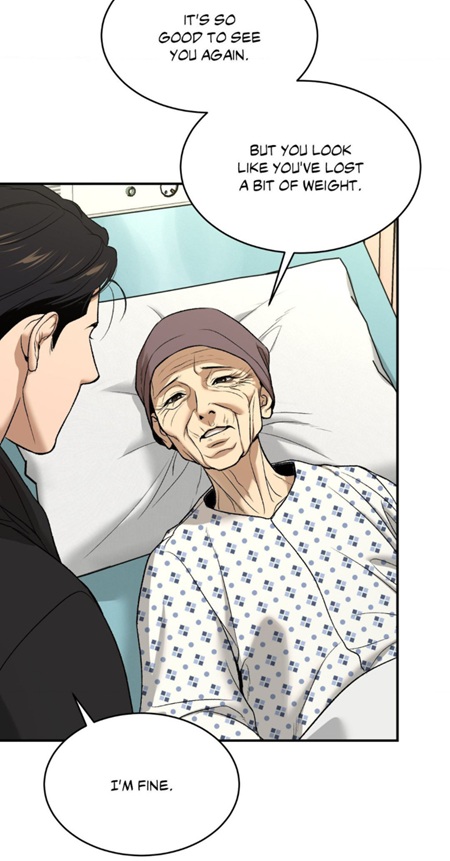 (chapter 61), but seems to have forgotten that Kim Dan is in a similar situation.
  (chapter 57) By moving to that place, the athlete can say that he belongs to that place and can claim his closeness to the grandmother.
It raises an intriguing question: did he rent or buy this place? Based on his actions and growing attachment to Kim Dan, it seems more likely that he purchased the house, though his intentions may not be to stay forever in the beginning. (chapter 61) Instead, the house symbolizes a period of rest and healing, as he himself acknowledges that this space is intertwined with the idea of taking a break. Naturally, his statement is a mixture of truth and lie. He has to hide his true intentions from the “old man”.
This comparison between the penthouse and the new house highlights Joo Jaekyung’s transformation. The penthouse’s sterile opulence contrasts sharply with the warmth and potential for growth in his new surroundings. By choosing to leave behind the isolation of his previous life, Joo Jaekyung takes a step toward a future where he is no longer defined by material success but by his ability to connect with others and nurture meaningful relationships.
At the same time, the move underscores the irony of his situation. While Joo Jaekyung initially imagined that his actions would lead to gratitude and closeness  (chapter 61), the reality is far more complex. Kim Dan’s insistence on maintaining professional boundaries forces Joo Jaekyung to confront the limitations of his influence and the necessity of respecting Kim Dan’s autonomy. The daily routine of seeking treatment (chapter 61) becomes a metaphor for the gradual dismantling of his old ways of thinking, paving the way for personal growth and a deeper understanding of their evolving bond.
But why did he move? We have to envision that till his move to that place, he must have traveled each day from Seoul. Imagine the time he spent on the road!! (chapter 61) And each time, his treatment sessions were so short and didn’t fulfill the champion’s expectations. 😂 His motivations for this move stem from his realization that Kim Dan was drawing a clear line between them, one defined strictly by their doctor-patient relationship. Despite Joo Jaekyung’s attempts to recreate the dynamics of their past interactions, he begins to understand that Kim Dan’s boundaries are unyielding. 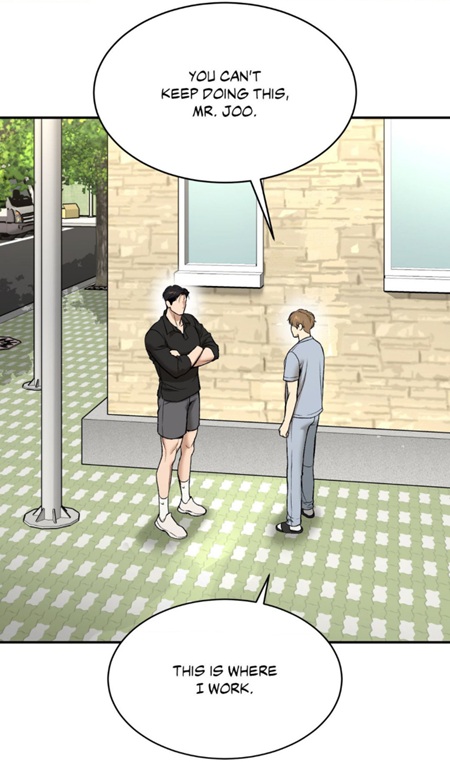 (chapter 61) He can no longer hide his special relationship behind work.
 (chapter 61) This means that his move announces a change in their relationship: privacy. They are neighbors and as such acquaintances.
The move signifies Joo Jaekyung’s willingness to adapt to this new reality, even if it challenges his sense of control and comfort. By relocating, he not only physically places himself closer to Kim Dan but also symbolically acknowledges the shift in their relationship. (chapter 61) This decision highlights his growing dependency on Kim Dan’s presence and care, even as he struggles to navigate the limitations imposed by the doctor-patient dynamic.
Awakening Maternal Instincts in the champion
Interestingly, the number 6 itself is often associated with themes of motherhood, care, harmony, and the ability to foster deep emotional connections. It embodies community, home, and a sense of togetherness, qualities that Joo Jaekyung begins to embody as his transformation unfolds, reinforcing the symbolic depth of this arc.
The number 6 is associated with beauty, harmony, charisma, and the ability to experience deep love. Under the influence of Venus, individuals resonating with number 6 possess a magnetic charm and an effortless ability to attract others. They are often sensual and excel at flirting, exuding a natural allure. The 6 values home life, comfort, and a harmonious atmosphere. It embodies caring qualities, enjoys tranquility, and upholds traditions. With its presence, the 6 can create a positive mood and vibe within a community, fostering a sense of togetherness. Quote from https://www.numerologistpro.com/numerology-numbers/numerology-number-6-meaning/
That’s why I come to the following deduction. Episodes 60 to 69 represent a significant arc in Joo Jaekyung’s character development, particularly as he awakens to his nurturing, almost maternal instincts. This shift is first revealed in his immediate concern upon noticing the large bruise on Kim Dan’s arm. 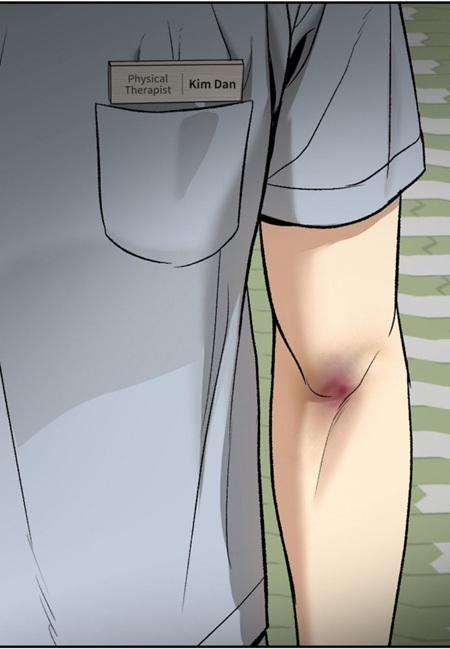 (chapter 61) Despite working in a hospice surrounded by trained nurses
  (chapter 61), no one else notices or comments on this obvious injury. It was, as if the staff including the director were all blinded by the celebrity’s status and wealth. (chapter 61) This detail underscores Joo Jaekyung’s unique focus on Kim Dan, contrasting the indifference or detachment of those around him. (chapter 61) However, there exist other reasons for their neglect. Like the director of this hospice pointed out, this institution is focused on elderly people and cancer.
  (chapter 61) So unconsciously, they came to develop the following belief: only elderly people can get sick. This explicates why the doctor and the nurse recommended rest to Joo Jaekyung
  (chapter 60). They imagined that Kim Dan was simply suffering from a burnout.
 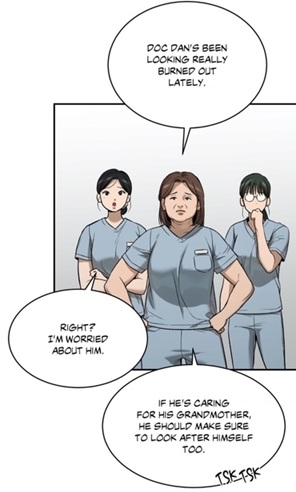 (chapter 57) However, in real life, young people can become ill too. Secondly, cancer is not the only disease in the world, just like burnout is not the only mental issue. There exists so many disorders and diseases that it is important that a hospital doesn’t focus too much on one illness. Why? It is because the hospice or hospital will lose its patients in the long run. No wonder why the institution in this little town is not modernized. (chapter 61) Therefore with the arrival of Joo Jaekyung at the hospice, it becomes clear that this institution will be forced to change its strategy and even its name. From a hospice to a hospital… It is no coincidence that the director of the movie called it a hospital
 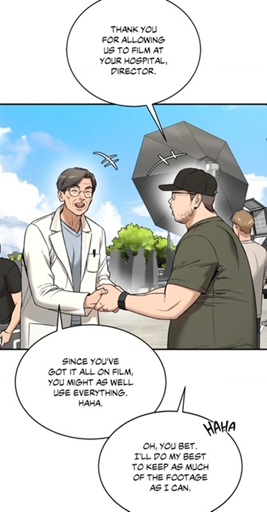 (chapter 59). He didn’t make the distinction in the end.
But let’s return our attention to the celebrity and his shocking discovery. (chapter 61) Joo Jaekyung’s sincere concern, however, is short-lived for two reasons. (chapter 61) First, Kim Dan rejects his assistance
  (chapter 61), creating an emotional barrier that Joo Jaekyung respects
 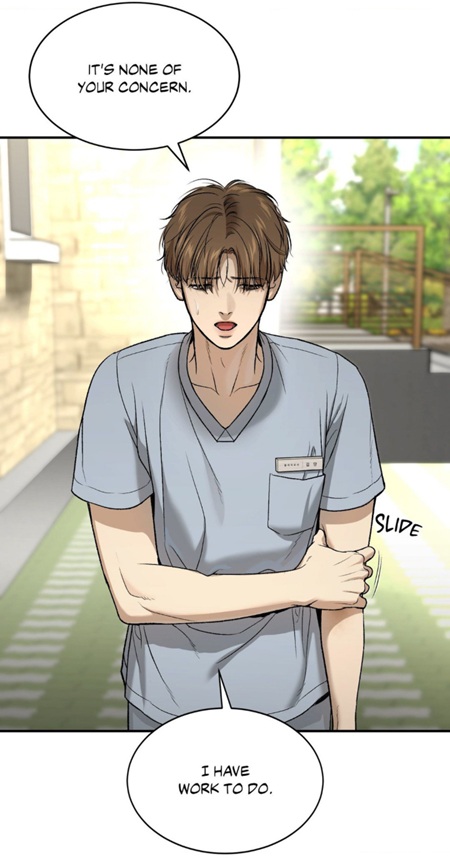 (chapter 61), even if begrudgingly. Secondly, Joo Jaekyung quickly connects the bruise to the removal of a needle
 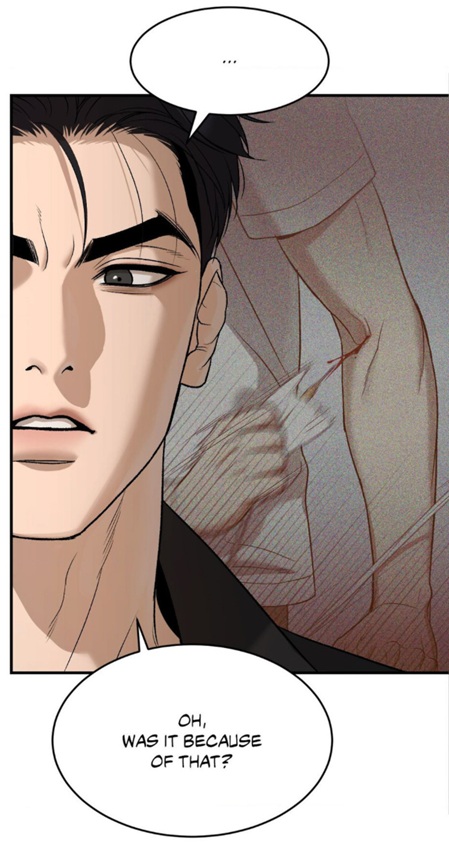 (chapter 61), which absolves him of any perceived responsibility for Kim Dan’s injury. This logical deduction, while correct, also highlights the limits of his emotional insight at this stage. Although he recognizes the physical signs of distress, he does not yet fully grasp the emotional struggles underlying them and the danger behind this huge bruise.
This moment is pivotal because it reveals Joo Jaekyung’s potential to care deeply for others, even as he struggles to navigate the boundaries imposed by Kim Dan. It marks the beginning of a shift from seeing Kim Dan as merely his doctor to recognizing the vulnerabilities and needs of the person behind the professional role.
Another key figure in this transformation is Boksoon, the dog,  (chapter 61) who serves as a symbol of motherhood and nature. Boksoon’s own experiences, including the loss of a puppy
  (chapter 59), highlight the impact of nurturing and loss, shaping her behavior toward both her puppies and humans. She should become more attentive and reliant on humans, notifying them if something is wrong. Her heightened sensitivity positions her as a potential bridge between Kim Dan and Joo Jaekyung, subtly training the champion’s nurturing instincts. Hence in front of the house, she stands between the main couple. (chapter 61)
The landlord, who owns Boksoon, also plays a crucial role in this dynamic. Initially, the grandfather denies responsibility for the puppy’s death  (chapter 59), attributing it to the natural order and failing to take proactive steps like seeking veterinary care.
 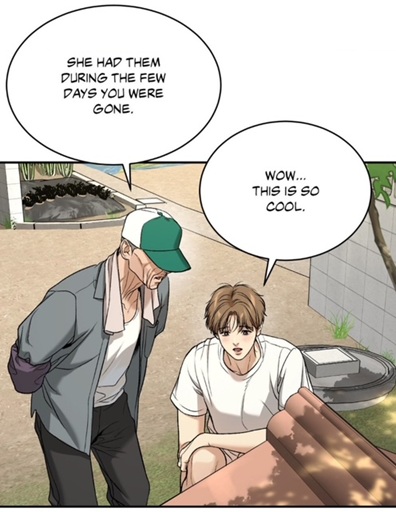 (chapter 57) This missed opportunity underscores the consequences of neglect, in contrast to Boksoon’s increased attentiveness. On the other side, the old man paid attention to Kim Dan’s odd behavior (his alcoholism
 – chapter 57 -, his workaholism
 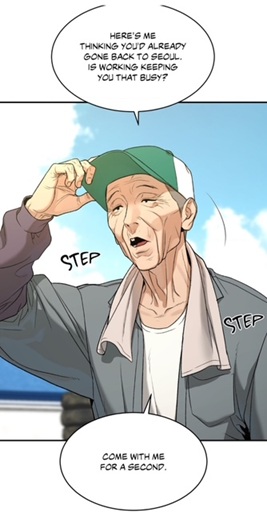 – chapter 57 ) Hence I am assuming that he will be a source of information for the champion. And now pay attention to their position in front of the house: (chapter 61) The landlord and Boksoon together create a link between the two protagonists, building a bridge of shared responsibility and care. Joo Jaekyung’s proximity to Kim Dan, the landlord, and Boksoon demands that he earn their trust and favor. This interconnected relationship encourages him to focus not just on Kim Dan but also on the community around him, further cultivating his maternal instincts and sense of responsibility. With the vanishing of his car, he is not using his status to demonstrate his superiority. With his attitude, he is trying to create a genuine relationship with his “neighbors”. Naturally, he has not dropped his “selfishness” entirely yet. Hence his smile is a mixture of sincerity and calculation: (chapter 61)
A Shared Goal: Standing Side by Side
The contrasting images—the honking car (chapter 61) and the imagined separation (chapter 61) —underscore the emotional stakes of Joo Jaekyung’s journey. The honking car scene captures the reality of their relationship: Joo Jaekyung’s determined pursuit of Kim Dan, despite the latter’s emotional distance and struggles. The imagined separation, on the other hand, reflects Joo Jaekyung’s initial misunderstanding of their bond as something temporary and transactional.
For Joo Jaekyung to truly help Kim Dan, he must realize that their goals must align. Kim Dan’s suicidal tendencies and lack of direction require more than professional care; they need emotional support and a new sense of purpose.
(chapter 61) By changing his approach, Joo Jaekyung can become a source of stability and meaning in Kim Dan’s life. The narrative suggests that the ultimate resolution lies in their ability to stand side by side, as equals, sharing a common goal and mutual understanding. This alignment is foreshadowed in the final scene, where their positions symbolize unity and a shared future. However, their hands are not joined. In my opinion, the last image announces the birth of a real team. And this brings me back to his imagined separation. Even in his superficial pondering and rationalized thoughts, the champion is always seen alone. (chapter 61) There is no real Team Black and team spirit. In that small town, he will discover the power of a team.
The Road of No Return
Joo Jaekyung’s decision to seek treatment from Kim Dan ultimately represents a turning point that reshapes his life in ways he could not have anticipated. This choice, though seemingly minor at the time, sets him on a path of no return, where his time, priorities, and emotional well-being become increasingly intertwined with Kim Dan’s presence. (chapter 61) The daily travel for treatment serves as a metaphor for this new reality, where Joo Jaekyung’s life is no longer dictated by his own terms but by the needs and schedules of another.
This shift highlights the inevitability of change and the limitations of attempting to control every aspect of one’s life. Joo Jaekyung’s journey underscores the importance of embracing vulnerability and relinquishing control, even in the face of uncertainty. By choosing to prioritize his well-being over external markers of success, he begins to forge a new path that is defined not by what he has achieved but by who he is becoming. (chapter 61) He is now a citizen of that small community, hence he is bound by social norms and traditions. So the move symbolizes that Joo Jaekyung has begun to internalize the notion of respect. Moreover, this internalization of laws and boundaries is essential for developing true bravery, as it requires understanding and respecting limits to navigate relationships and challenges meaningfully. [For more read my essay Cowardice versus courage: innate or learnable?] In order to expose his true self and as such his vulnerabilities, he needs to become courageous and as such to cross the line. By choosing to settle in a small town, he acknowledges the need to adhere to norms and laws. This environment, which values community and accountability, highlights the shift in his mindset. Unlike before, where his wealth and status allowed him to bypass consequences 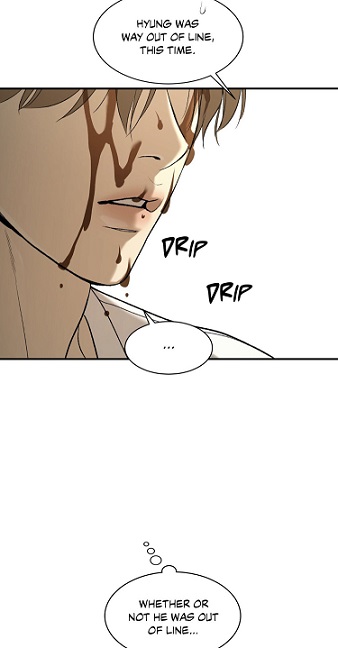 (chapter 37), Joo Jaekyung now operates within a framework where he must respect boundaries and take responsibility for his actions. This transition signifies his understanding that money cannot shield him from the realities of interpersonal relationships and the consequences of his past behavior. To conclude, he can no longer cross the line and return to his old self.
Conclusion
Joo Jaekyung’s journey in episode 61 reveals the transformative power of vulnerability, frustration, connection, and the willingness to confront one’s own limitations. His evolution from a detached and transactional figure to a character who values genuine relationships underscores a broader theme of self-discovery and personal growth. Each pivotal moment—be it the manipulative pseudo-suggestions of Park Junmin, his reflections in the penthouse, or his interactions with Shin Okja—serves as a step along the road to change.
The move to the small town symbolizes more than a change in location; it reflects his internalization of respect, the importance of boundaries, and the understanding that true bravery arises from accepting and operating within those limits. The shift from isolation in his penthouse to embracing a community-oriented life highlights his desire to integrate into a world defined by accountability and care, rather than wealth and privilege.
His bond with Kim Dan serves as the emotional core of this transformation. Initially rooted in a hierarchical dynamic, their relationship evolves into one of mutual dependency and growth. Joo Jaekyung’s recognition of Kim Dan’s sincerity and resilience pushes him to challenge his own assumptions and adapt to a new reality. However, this journey is not without its missteps, as seen in his interactions with the director and Shin Okja, which inadvertently deepen Kim Dan’s feelings of alienation.
Ultimately, Joo Jaekyung’s story is a testament to the complexities of human connection. It demonstrates how seemingly small decisions—whether it’s choosing to move, rejecting manipulative advice, or taking notice of another’s pain—can ripple into profound changes. By embracing vulnerability and relinquishing control, Joo Jaekyung steps onto a path that is defined not by external achievements but by the authenticity of his relationships and his willingness to grow. His journey highlights that true transformation often requires navigating a one-way street, leaving behind the familiar and embracing the uncertainty of what lies ahead.
Feel free to comment. If you have any suggestion for topics or manhwas, feel free to ask. If you enjoyed reading it, retweet it or push the button like. My Reddit-Instagram-Tumblr-Twitter account is: @bebebisous33. Thanks for reading and for the support, particularly, I would like to thank all the new followers and people recommending my blog.



 (chapter 9), we discover the origin for Yoon-Gu’s nickname, Potato. The coach and sparring partner from Joo Jaekyung is the one behind it. However, this connection reveals a lot about the divorced man. He is actually a soft and tender man. Yes, in my opinion, Yosep’s nickname should be Potato.
  (chapter 9) This gesture oozes humility and respect. This contrasts so much to Park Namwook’s behavior during their first meeting: no bowing and no shaking hands.
  (chapter 1)
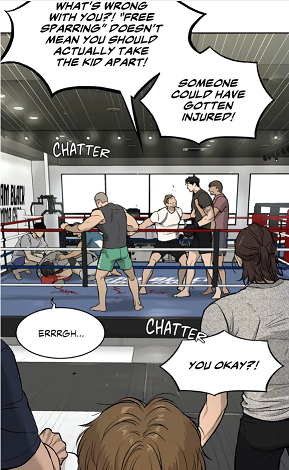 (chapter 1) He came right away, whereas the manager was busy with his phone-call and never asked later about the incident.
 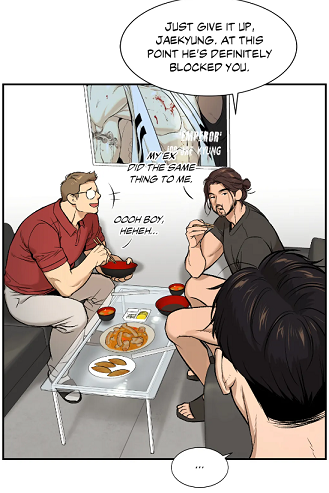 (chapter 5) At no moment, he claims the champion as his boy or tries to attract attention from people for being the Emperor’s sparring partner. Thus each time the protagonist wins, he doesn’t appear in the ring contrary to Park Namwook.
 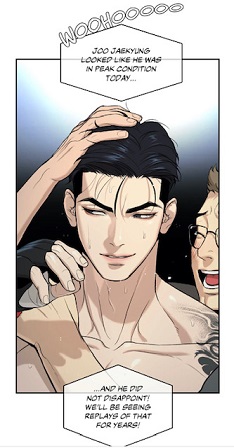 (chapter 5)
  (chapter 40) Yes, at no moment Jinx-philes can detect his presence. The bearded man embodies humbleness. As you can observe, this man doesn’t mind standing in the champion’s shadow. He already knows that fame and success are no guarantee for happiness, as he lost his wife. In fact, he knows that success means rather loneliness. This remark brings me back to his confession in the office.
  (chapter 53) So when he tried to call her, she blocked his calls. One of the causes for their failed marriage is that they had stopped talking to each other. [As for the other reason, I will expose it below] That’s the other reason why I developed the theory that the coach Yosep was behind this phone call.
  (chapter 19) He definitely knew about his relationship with Kim Dan, as he was the only one who was not surprised by this revelation.
  (chapter 22) This observation is relevant, for it indicates that the former champion must have listened to his manager as well. He never questioned the responsibility of his former coach or manager or organization. I am suspecting that he might have already been working with Park Namwook in the past, which would explain their closeness. For his divorce, Jeong Yosep chose to take the whole blame. Hence he kept his failure to himself. However, observe the manager’s attitude concerning this revelation.
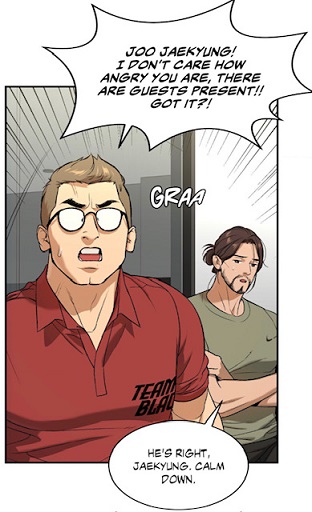
  (chapter 37) he acts more like a servant. In my eyes, the last image displays the manager’s three “boys”: Yosep, Kim Dan and Joo Jaeykung. They are the former wrestler’s servants, while he can stand on the sideline and watch as a superior and guardian.
  (chapter 37)
 (chapter 26)
  (chapter 36). He even agrees to everything the man says and decides.
  (chapter 36) Yet, I see a turning point in the States. For the first time, he is seen talking on the phone, which indicates a certain responsibility.
  (chapter 37) However, till this scene, Yosep was treated like a “boy”, which I outlined above. The gradual transition can be perceived if you contrast the two following images
  (chapter 49)
 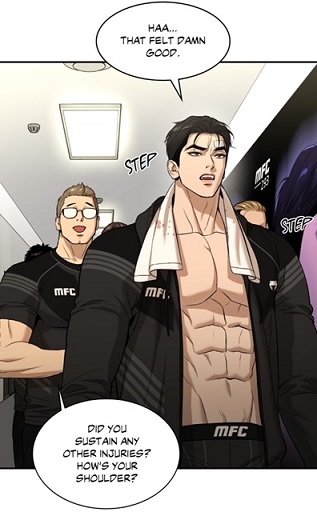 (chapter 40) In the States, he was not visible at all, he would even walk behind Oh Daehyun next to Yoon-Gu. In my opinion, he felt the need to be next to the maknae. However, in South Korea, he is standing right behind the protagonist. Moreover, note how Joo Jaekyung entrusted him with the charity event, another indication that the main lead was trusting more and more his sparring partner:
  (chapter 41) In addition, in the locker room, he is the one who made the decision to let the Emperor fight against Baek Junmin.
 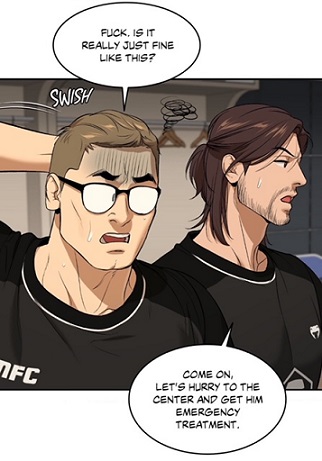 (chapter 50) For the first time, he voiced his own opinion, yet his choice lets transpire the great influence from his “hyung” and MFC. His decision was influenced by money. Naturally, the high peak of his action is, when he announces to the main lead that he went to different authorities
 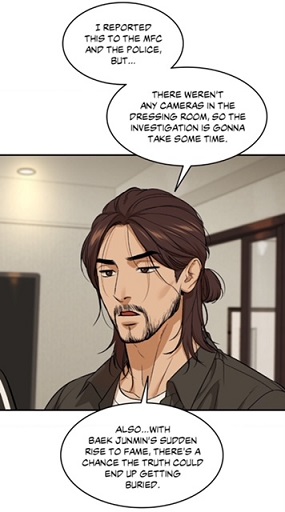 (chapter 52). However, it is important to recall that putting the whole blame on the manager and coach is not right either. How so? As a former athlete, he has more experiences and he should have realized that he should not just trust people blindly. Yes, I believe that his major flaw is that he is too trusting and doesn’t ponder deeply why his relationship with his wife failed. As you can see, he embodies the opposite notions of Park Namwook: faith in authorities and people. This explicates why in chapter 47, he didn’t say anything in the conference room.
  (chapter 47) He let his “hyung” and the other “experts” who were never in the ring do the talking.
 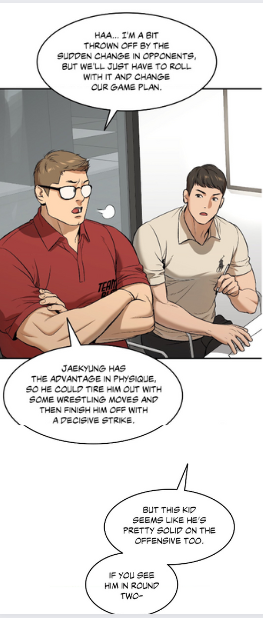 (chapter 47) Why did he let it happen? It is simply because he just views himself as a “sportsman”. The others act with their title (managers, advisors), as if they had more knowledge than the sparring partner from the Emperor. Another mistake from him is that he never looked at his sparring partner’s files. He let Park Namwook take care of this, thinking that he would pay attention to their star’s health and security.
  (chapter 52) Since he lost his wife and as such has no family, it is clear that this former champion views Team Black as a family. Therefore he participated in the surprise party.
  (chapter 43) Consequently, I come to the following conclusion that the last scheme made him realize his own wrongdoing. He didn’t protect his sparring partner correctly. He failed him. However, like pointed out in a previous Daily Jinx Advent Insight, Yosep was manipulated from his colleague. Therefore the coach didn’t meet Kim Dan in the office and couldn’t talk him out of it. This discovery exposes that one of the protagonist’s problem is that he was following his sparring partner’s lead as well. Because Yosep trusted blindly Namwook, his “pupil” did the same. And this remark leads me to the confrontation in episode 46. The true owner of Team Black warned his both hyungs:
  (chapter 46) This led the manager to give a task to the coach Jeong.
 (chapter 46) Why did he delegate it to the former athlete? Simply because that way, he could avoid responsibility. If something wrong happened, then “Potato” would take the blame. The hot potato was passed around. I am using this term on purpose. The reason is that “Potato” embodies harmlessness. And because Yosep comforted the manager and didn’t criticize him for his outburst and slap, it displays that the coach has not questioned the manager’s integrity yet. He is not doubting his trustworthiness. This explains why Joo Jaekyung returned home on his own, though he had an injured shoulder.
  (chapter 53) So we could say that Jeong Yosep is not entirely free from the negative influence from the manager. However, I have still hope for a true change in this gentle and caring man. How so?
  (chapter 13) Interesting is that these two hyungs are linked to a similar color: dark green. This shade embodies hope and nature. However, since they are still living in the city and working for corrupted organisation (hospitals, MFC), they are not true themselves.
  (chapter 7) Note the absence of Yosep in that panel, a sign that his work and position were minimized. Nevertheless, this was just the consequence of his own decision. He chose to minimize his own value and to rely on his hypocrite partner.

 (Chapter 1) Imagine that he was in the middle of an intercourse. Yet he felt the need to have someone else by his side. It was, as if the grass on the other side was looking greener. 😉 Yes, in this scene, I detect parallels between Choi Heesung and Joo Jaekyung.
  (Chapter 33) On the one hand, the celebrity felt attracted to Kim Dan, on the other hand he had already sensed that the green-haired uke was greedy and even too passive. He was letting the celebrity fuck him. Yet there was neither real interaction nor sensuality between them. Hence the athlete could call Kim Dan during their sex. Funny is that the other didn’t mind at all, or in the worst case he didn’t even notice it. This shows not only the deafness and blindness of the mint goblin, but also the absence of communication and understanding in their “couple”. It was, as though the green-haired uke had submitted himself of becoming a sex toy. So by recalling the doctor, there is no doubt that the athlete couldn’t have voiced this change verbally. Why was he thinking of someone else during the intercourse? He was just simply not feeling it, the “great fuck”. In other words, Joo Jaekyung was attracted to Kim Dan by lust! In my previous analysis entitled
  (chapter 42), it becomes clear why the athlete’s lust for the mint goblin couldn’t last. The latter was only interested in his money and not even in his body. Thus he didn’t try to bring thrill into their relationship or even seduce him. And now, you comprehend why Mingwa let us see such a scene in the beginning of the story.
 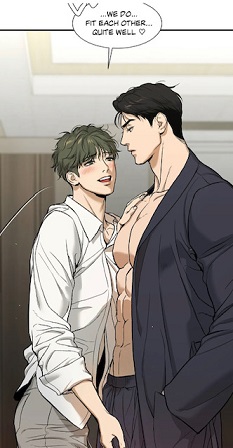 (chapter 2) He had never done it before. As for the champion, Manhwa-lovers can grasp that since their relationship was purely physical (not even accompanied with romanticism due to the athlete’s jinx), the lust from the champion’s side could only weaken overtime. When the athlete met the actor, he had not met the green-haired man before. Hence the sportsman was sitting at the bar looking more or less for a new partner.
  (chapter 33) So the relationship between the “prostitute” and the fighter must have lasted around 3 months, the same amount of time than with the physical therapist. The uke had put no effort, for in verity he was relying on the athlete’s jinx. The latter just needed him, and no one was willing to experience such a rough sex session. The reason why I gave the green-haired uke the nickname “mint goblin” is the following. He brought some fresh breathe in the athlete’s life, for contrary to his past lovers, this one didn’t run away. However, as time passes on, the mint taste couldn’t mask his corrupted mind and heart. He was passive and rotten deep inside. But there’s more to it. Thanks to the mint goblin, the athlete learned an important lesson. It was possible that someone could match his strength in bed. Yes, the latter wasn’t passing out like the others. Deep down, the star could sense that he was no monster, a criticism he had received from the actor.
 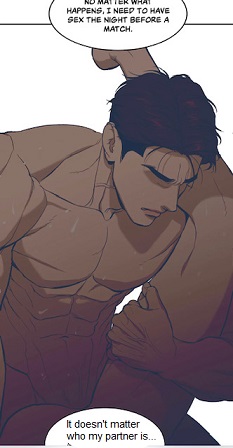 (chapter 2) There would be nothing left in the future, it was a work relationship. Under this new light, it becomes comprehensible why Kim Dan had to end their relationship at the end of the season. Because of his confession, their relationship was doomed to fail. It stood under the sign of “jinx”. We could say that the champion was receiving his karma for treating people like sex toys or surrogate fighters.
 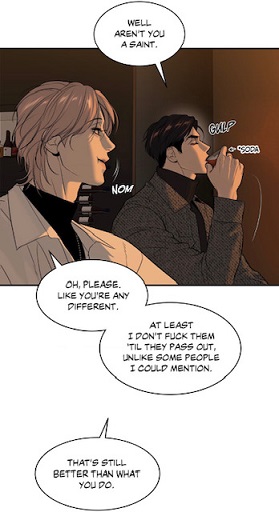 (chapter 33). The irony is that as soon as he saw Kim Dan
 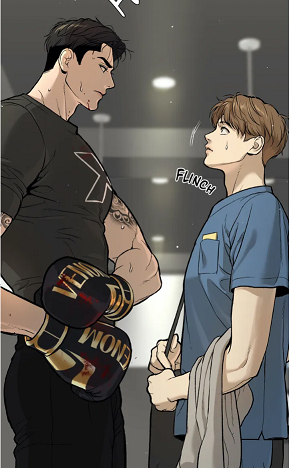 (chapter 1), he got attracted to this pretty and cute new face. However, contrary to the comedian, he didn’t realize this, for the athlete is not someone who thinks deeply. He acts rather on his emotions, exactly like his mentor Park Namwook. Since lust is the first stage of love, the recipient of his “attraction” needed to give him a signal that he was interested in him. I doubt that the celebrity would have made a move on him, if the doctor had not made this mistake
 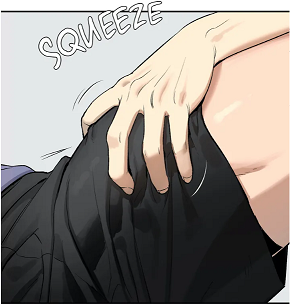 (chapter 1). Naturally, grabbing his phallus was the expression of the doctor’s masked sexual desires. This signifies that when the couple met for the first time, the grass appeared greener on the other side (medical world) for the first time. Since we have the first step of love in their relationship, we could say that the athlete was already in love with Kim Dan. While “lust” only represents the first stage in a love relationship, I decided to examine their relationship on this aspect.
 (chapter 33) We have the novelty aspect (bringing thrill into their relationship) and the champion’s selfishness. The sex toy was utilized as a “punishment”, for the athlete was upset due to his jealousy. However, this perception is still too short-sighted. You will laugh, as soon as you read my new interpretation.
 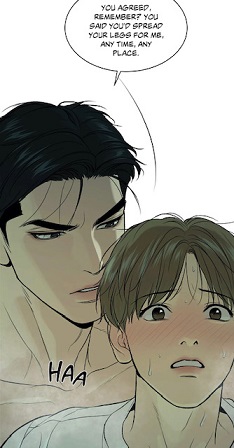 (chapter 8)
  (chapter 27) Consequently, the man had to bring up the deal constantly. Besides, their relationship started because of money. Finally, I would like Jinx-lovers to keep in mind the doctor’s lie: he had previous relationships with men.
  (chapter 3) As you know, I am quite certain that the athlete had sensed his lie (thus he utilized no condoms later). Yet, Kim Dan never came out with the truth either. This is relevant, for there could be lingering doubts from the MMA star’s side. Since the athlete had no idea about the doctor’s taste and physical attraction, Joo Jaekyung worried that his partner would start fantasizing the gumiho. Under this light, my avid readers can grasp why in episode 33, it was important for the champion to use the sex toy first. Initially it was to exhaust the doctor so that the latter would no longer feel attracted to Choi Heesung. Yes, it was to kill in him “lust”. Moreover, the moment the young man asked for his assistance
  (chapter 33), Joo Jaekyung had the impression that he was needed. Finally, don’t forget how this scene ended. Kim Dan was finally admitting that he was really sensitive to him:
 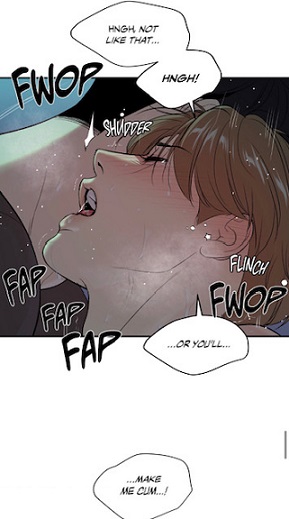 (chapter 33) However, this desire was accompanied with rejection and denial too. This explicates why the champion didn’t know how to interpret Kim Dan’s thoughts and emotions.
 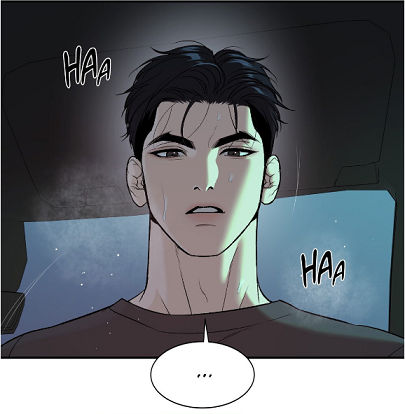 (chapter 33) Was Kim Dan feeling the same way than him or not? Did Kim Dan desire him or not? And this leads me to the next sex session:
  (chapter 34) For the first time, the athlete was divulging his physical attraction and desire towards the doctor. He seduced him with his own body. Yet, in order to keep the upper hand in their relationship, he was the one who was determining how they would have sex:
  (chapter 34) As you can see, during season 1, it took a long time for the athlete to admit “lust and physical attraction” towards the doctor. One might reply that the celebrity had already admitted this to the physical therapist:
  (chapter 29) However, this confession is connected to the anus, and not to the doctor’s face and as such identity. Thus I don’t consider it as an admission that Kim Dan was his type. One might object too that he had already wooed the doctor before next to the swimming pool.
  (chapter 27) The divergence between these two chapters is that in the first scene, the athlete had not planned this. He was acting on his instincts and emotions, while in the living room, he was seducing the doctor on purpose.
  (chapter 34) I would even add that he gave more freedom to Kim Dan to decide if he would accept his offer or not. As you can see, Joo Jaekyung was learning to internalize the notion “consent and respect”. Here, the doctor could have refused… the evidence is his reaction at the gym, the slap on the athlete’s hand. That’s how I realized the strong connection between the athlete’s ignorance about his soulmate’s taste (partner type) and his consent. Respecting the doctor’s boundary meant to trust that the doctor was attracted to him and accepted him as a partner.
 (chapter 39), this could only make the athlete happy first. He had the impression that he had finally discovered his soulmate’s taste and secret: he was also feeling the same… LUST. Yes, I am not writing love, but lust on purpose. Why? The irony is that the athlete was not recognizing that he was feeling more than lust for Kim Dan. He was already in love. 😉 However, so far he had only been busy focusing on Kim Dan’s type. Was the man also lusting after him or not? Under this new perspective, Manhwa-lovers can grasp why Joo Jaekyung asked this to Kim Dan in the dining room:
  (chapter 41) He didn’t expect a love confession He wanted to know if Kim Dan was finally accepting him as his partner, if he desired him too. Yes, gradually the possibility of dating was slowly emerging. Like mentioned in the introduction, lust is just the beginning of love. So should Kim Dan have remembered this night in the hotel room, he would have come not only to deny his feelings for the athlete, but also he would have reduced this “I love you” to lust, just a physical reaction due to the drug. A new version of the blue night, the only difference is that that night he kept his thoughts to himself.
  (chapter 45) What did the athlete imagine here? A fake love confession from Kim Dan, a stan trying to live out a fantasy. He was expecting “dating”, a notion he couldn’t accept, for he was confusing “lust” with “love”. That’s the reason why he couldn’t accept Doc Dan’s present and “gratitude”. They sounded like fake, especially since he was showing respect to the celebrity and not to the man himself! Yes, even in that scene, the PT was still hiding his own true emotions and attraction towards the handsome man. Joo JAekyung has no idea that Kim Dan views him as “perfect”
  (chapter 1) despite his injured shoulder: the muscles, the skin, the handsome face. He has never voiced such thoughts in front of his VIP client.He always kept them to himself.
 (chapter 53) He let him go, for he anticipated that the latter would remain by his side. In addition, he didn’t feel the need to have sex the whole night, as his affection had already moved to the next stage. There was more than physical attraction and desire.

 (chapter 22) Back then, I came to realize that both ukes were associated with the number 2. Shortly after, while making a first portrait of Cheolmin, I noticed that this cute doctor was linked to numbers 1, 3, 4.
  At the same time, I connected him to the sky, an angel. As you can observe it, my observations led me little by little to planets and numerology. But the major turning point was, when I perceived Kim Dan as a representative of Saturn
  . From that moment on, I came to associate Jinx-characters with gods and as such planets. Hence in the essay
  , I made the following connections. Potato was Venus, and his soulmate Choi Heesung is Mercury. Then Joo Jaekyung is Jupiter and the Sun, whereas Kim Dan was Saturn and the Moon.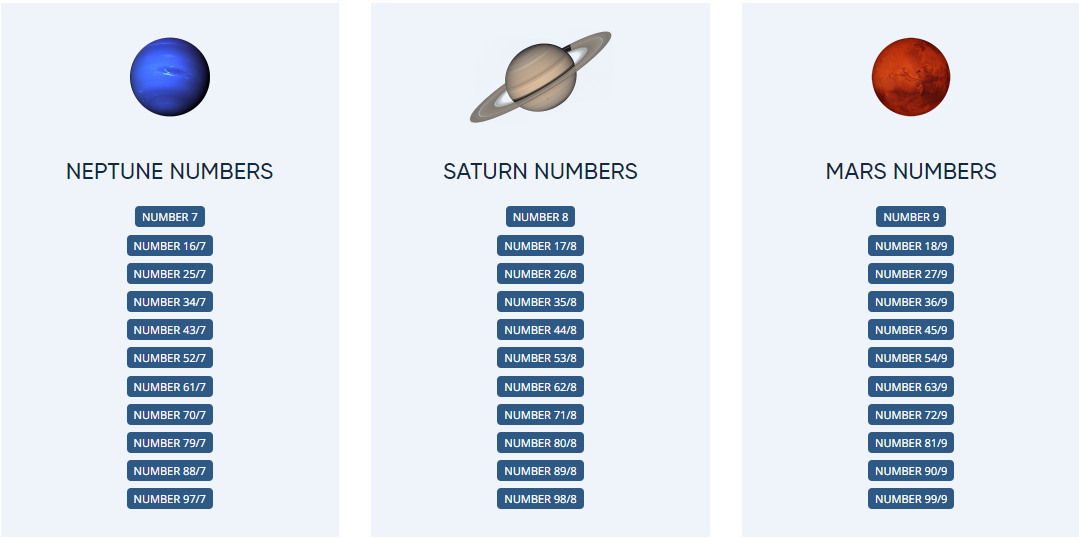

 That’s how I discovered that Kim Dan was associated with the number 8. Thus in the composition
  HEALING! That’s the night Kim Dan got healed.
 (chapter 44) During that night, he realized that time was flowing. It helped him to reconnect with the present and forget his abandonment issues. How so? This revelation was necessary to make him realize that his promise with his halmoni was impossible. She was a mortal, exactly like him. This lovely night gave him the strength to face reality
  (chapter 47) and digest the terrible news.
 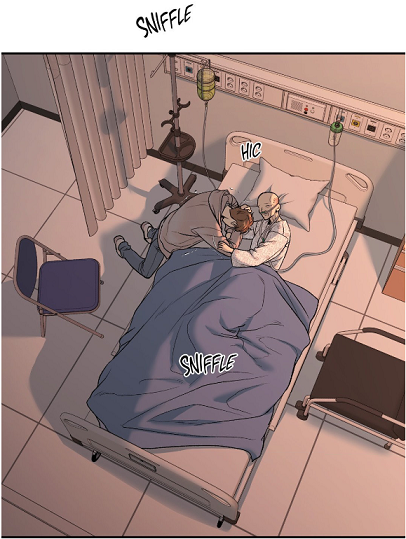 (chapter 47) Thanks to the champion, Kim Dan discovered that he could receive warmth and love from someone else. And now, you can grasp why he was strong enough to give the present to Joo Jaekyung despite his fear, why he could confront his boss in the locker room in episode 51. Thanks to this magical night, he learned that he could stand on his own. He is an adult now. But wait… people might question this interpretation, for there was no teamwork in episode 11.
  (chapter 11) When Park Namwook and Kwak Junbeom saw that he was wounded, the manager could detect the doctor’s lie. But what did they do? Nothing, they acted, as if they had not detected his lie. However, don’t forget the champion’s reaction.
  (chapter 11) He treated him as an important member of his team, he needed his assistance. Secondly, who helped Kim Dan with his struggles? Joo Jaekyung.
  (chapter 11) He might have taken advantage of the situation, yet contrary to the others, he did something despite his ignorance.
 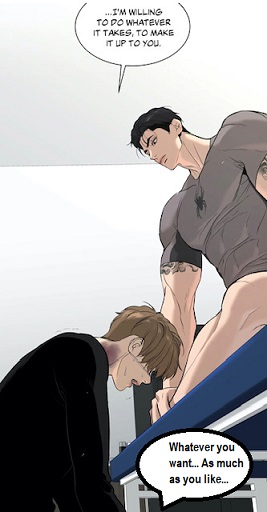 (chapter 11) They were a team… working together, relying on each other. 22 announced a new start, for the champion divulged that he was living with the cute hamster.
  (chapter 22) It is important, because it indicates that little by little, Joo Jaekyung is taking over the gym. From that chapter on, he was building his world from the ground”.
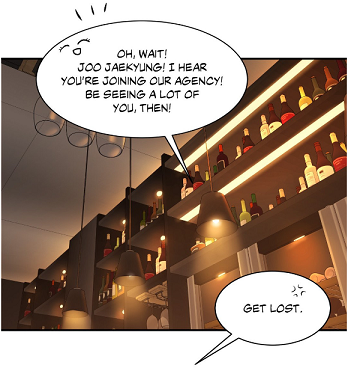 (chapter 33), we could see Joo Jaekyung’s success reached its peak, as he had just signed a contract with the Entertainment agency. “Reaching the pinnacles of success” was also reflected in another situation. The champion was allowed to touch his lover’s phallus
  (chapter 33), something he had been denied before (chapter 24). Moreover, he was able to get a confession from Kim Dan.
  (chapter 33) The cute doctor was unconsciously accepting to be intimate with his boss. Thus he whispered to the sportsman.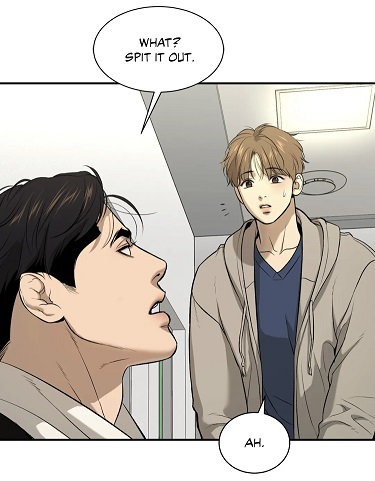


 A request, but notice that he is avoiding the athlete’s gaze. He only starts talking, when the other is turning his back to him.
  But even so, he is not able to look at his VIP client. Kim Dan is the one avoiding the athlete.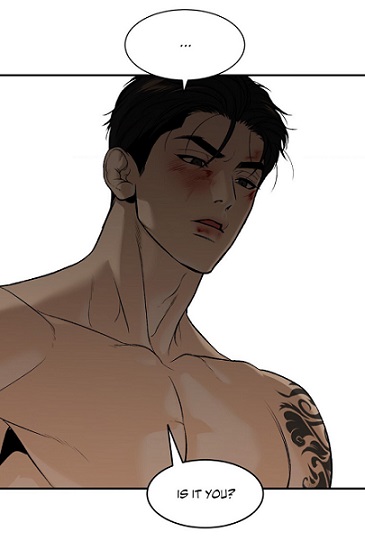
 Both faced each other. They voiced their own thoughts and emotions.
  They are no longer avoiding discomfort, a sign that they are getting closer to each other.
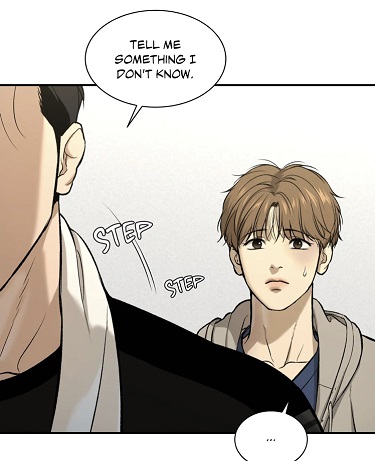 Here Manhwa-lovers can detect Joo Jaekyung’s arrogance and detachment. Both were not true to themselves. They were both beating around the bush. No one voiced exactly what they truly desire from each other, for they were not listening to their own heart.
 However, their discussion ended with a question pushing both characters to meditate.
  I selected pictures from episode 6, 33 and 51! They are all connected to the same number. This signifies that we should examine the following chapters 6, 15, 24, 33, 42, and 51 as a continuation or better said as reflections. Hence they stand for love, but don’t forget that Venus also embodies fertility, prosperity and victory. How so? She was the ancestor of the Roman people through her son, Aeneas, who survived the fall of Troy and fled to Italy. That’s why she came to symbolize Rome’s imperial power. Yes, these chapters are mirroring a battle, who has the upper hand in the couple.
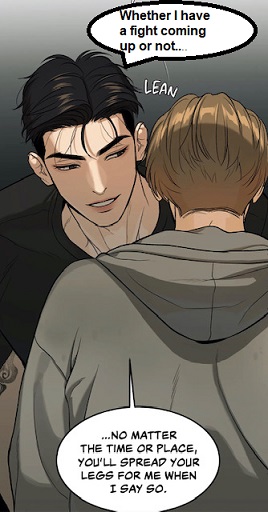

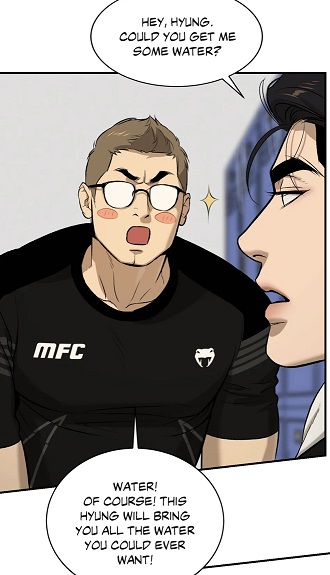
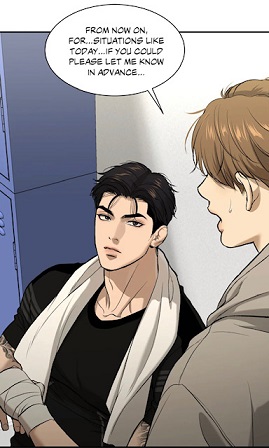


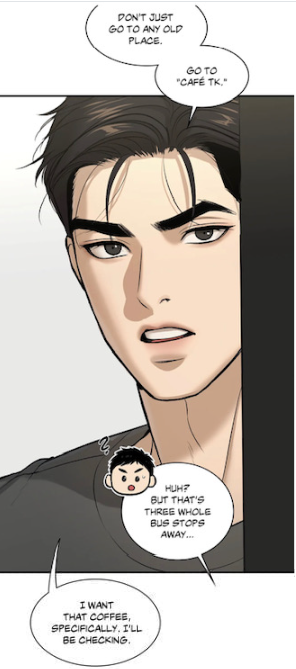


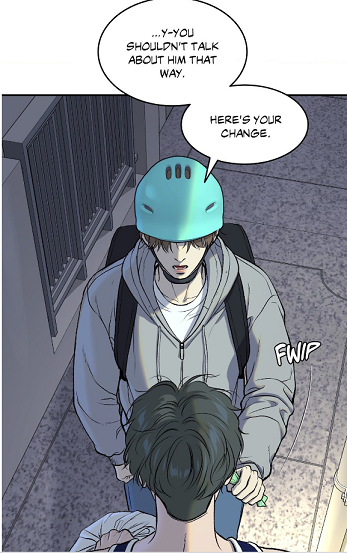

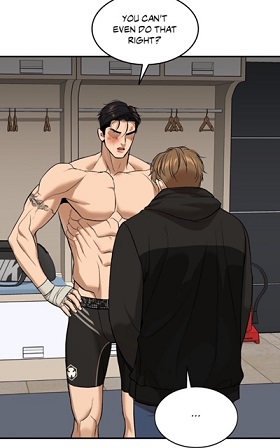
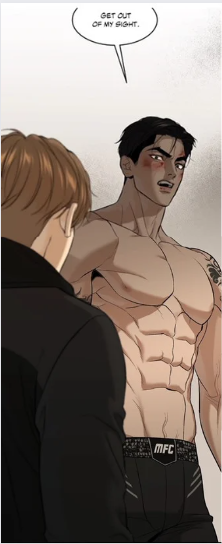
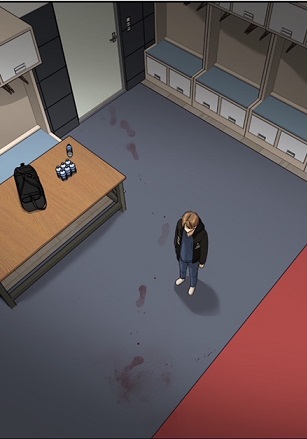
 (chapter 45) By taking a side gig, the main lead pushed the athlete to recognize him as a true physical therapist and not as a whore. This new interpretation reinforces my conviction that the sex before the match with Baek Junmin was different, it had lost its true value and meaning: it was no longer a belief, rather a habit. Kim Dan could even determine the end of the sex session.
 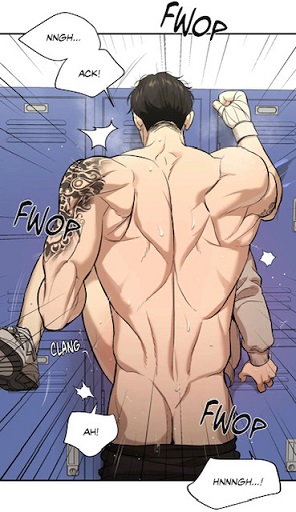 (chapter 15) But there’s more to it. It was also a first for the champion. He invited Kim Dan to watch the show. Imagine that he had never invited any sex partner before. Then in episode 24, he listened to the doctor’s request without any complain. Then in episode 33, for the first time, Joo Jaekyung focused on giving Kim Dan’s anal pleasure. It was, as if the star wanted to trigger desires in Kim Dan. Then in episode 42, Joo Jaekyung witnessed that Kim Dan was doing the breakfasts out of “routine” and not out of pleasure. Thus he always fell asleep. On the other hand, the physical therapist got confronted with a rival for the first time. Finally, in episode 51, Joo Jaekyung is now acknowledging Kim Dan as his final doctor. He is voicing his expectation: meticulousity.
  (chapter 51) By bringing the topic money
  (chapter 51), the champion could finally voice his biggest fear. Deep down, he knew that their relationship was based on money. But with one sentence, the doctor could remove his doubts and insecurities.
  (chapter 46) , he listened to Kim Dan till the end.
 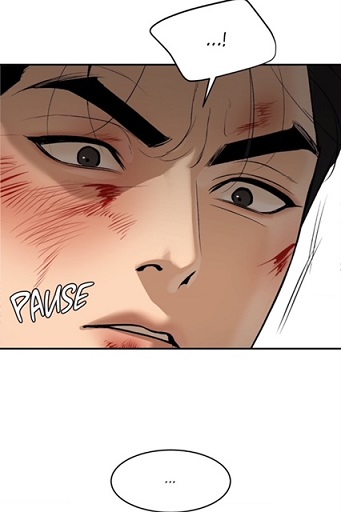 (chapter 51) He was more than caught by surprise, in my opinion, it must have dawned on him that he might have been wrong about the doctor. Hence he got upset. Seeing the physical therapist’s face was like a reminder that he had made a mistake, he had not trusted Kim Dan, while the latter had not.
  (chapter 13) and Alfredo
  (chapter 47). Remember that for me, Cheolmin is connected to Neptune, hence we have the number 1, 3 and 4. Thus it would validate my hypothesis that at the restaurant, Joo Jaekyung was talking to the cute doctor.
 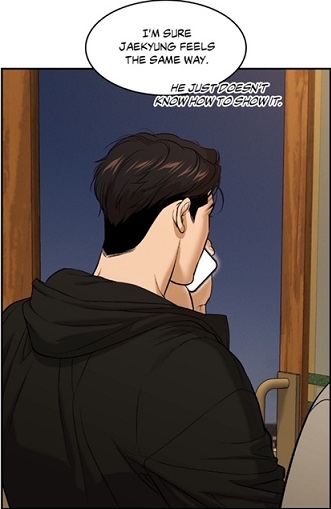 (chapter 43) On the other hand, you are probably wondering how I came to this new theory. It’s simple. It’s because of his name. Alfredo is connected to the number 7. In addition, his name signifies wise counselor.
 , (chapter 39) In chapter 53, we discover that it was the halmoni’s dream to see the ocean, like we could observe it in his old house.
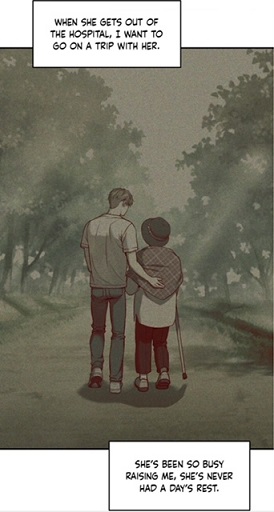
  (chapter 17) However, in the last panel, Joo Jaekyung was leading his loved one, symbolizing that he would bring him to different places. Thus the doctor had to follow him to Busan (city next to the sea) and to the USA. At the end of season 1, it becomes clear that the champion will follow the doctor’s footsteps. He will got to the West Coast. Yet, in reality, the fighter is actually following the grandmother’s trail. Moreover, note that the doctor’s dream was to travel too. However, this desire is strongly connected to his relative.
  (chapter 47) As you can see, we have dream and ocean combined together. But if the ocean is connected to dream, how did I come to associate Alfredo with the dark elf? My theory is that the sea also represents the source of his suffering and as such his nightmare. I believe that his parents died drowning which would explain this reaction in the swimming pool.
  (chapter 27) Yet according to my previous interpretation, the PT’s totem is the duck:
  (chapter 19) A bird that is associated with water. And what is the common denominator between these last three panels?
  (chapter 7)
  (chapter 37)
  (chapter 47) The bridge from San Francisco is a place where people often commit suicide. My idea is that after they vanished, the halmoni never discussed their death with him. Since the grandmother was harassed by the loan shark, I can only assume that they killed themselves due to the debts, and suicide is a huge taboo in South Korea. Notice that his first trip led him to Busan which is a town next to the sea. However, back then, he had not the time to go to the beach. But when he went to the States, it was far from the coast, as UFC/MFC is located in Las Vegas. Hence he came to enjoy his trip. In fact, it inspired him to travel.
  (chapter 39) Then his favorable days are Thursday, Tuesday and Friday. And if we combine the days from the two protagonists, there is only Wednesday off.
 (chapter 35) We have a 5, but 3+5= 8, the double of 4. Besides, his favorable numbers are 1, 7, 4. Then we would have the explanation why he became more important in episode 22
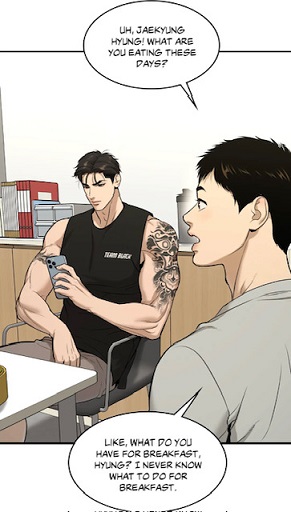 (chapter 22), why he protected the doctor from Heesung in episode 31
 (chapter 31), why he asked for Kim Dan in episode 40
 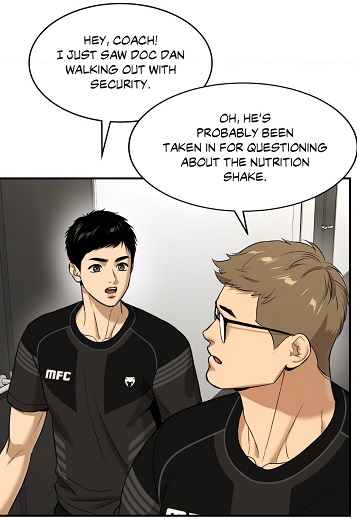 and why he reappeared in episode 47.
 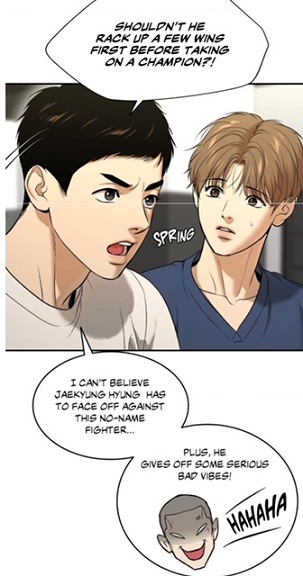 (chapter 47) and helped him in the locker room.
  (chapter 49)
 Bebebisous33s' analyses in K-Dramaland and Manhwas