
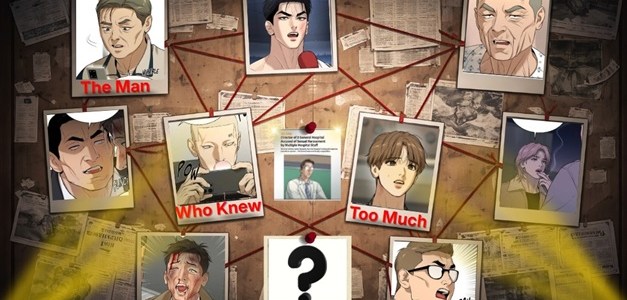
Please support the authors by reading Manhwas on the official websites. This is where you can read the Manhwa: Jinx But be aware that the Manhwa is a mature Yaoi, which means, it is about homosexuality with explicit scenes. Here is the link of the table of contents about Jinx. Here is the link where you can find the table of contents of analyzed Manhwas. Here are the links, if you are interested in the first work from Mingwa, BJ Alex, and the 2 previous essays about Jinx The Hidden Predators (Part 2) and The Man Who Knew Too Much – part 1
It would be great if you could make some donations/sponsoring: Ko-fi.com/bebebisous33 That way, you can support me with “coffee” so that I have the energy to keep examining Manhwas. Besides, I need to cover up the expenses for this blog.
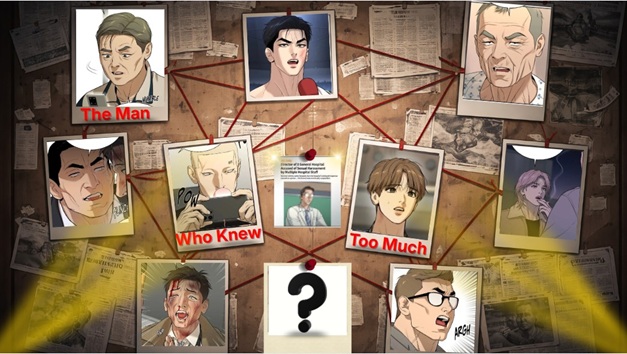
I know that my avid readers were expecting an analysis of episode 94, especially because the conversation between the two main leads was so moving. Actually, the illustration and the title are already prepared.  Beautiful, right? Yet I could not help myself returning once again to the criminals. My fascination with thrillers and investigations probably gives it away: when I read this story, I instinctively begin to examine every image, words and event like a detective reconstructing a case.
You may therefore wonder what triggered this sudden return to the question of conspiracy.
Surprisingly, it started with a very quiet panel. 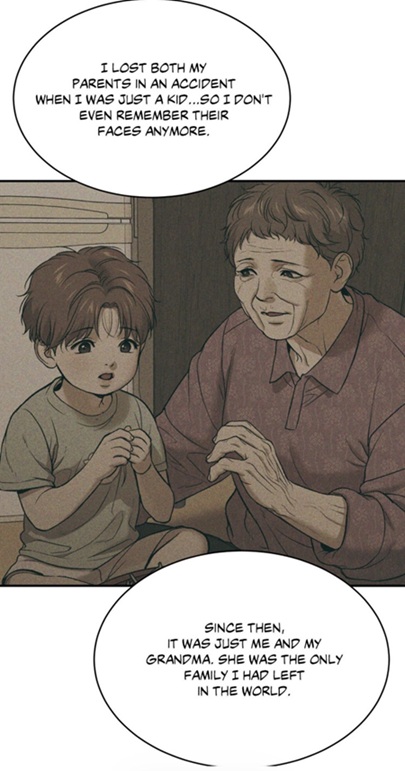 (chapter 94) In this moment we learn that Kim Dan lost his parents in an accident when he was a child, though we shouldn’t trust this confession as the truth due to the debts. Anyway, the word “accident” immediately resonates with a principle that has appeared again and again throughout the story: someone being at the wrong time, at the wrong place.
In Kim Dan’s case, however, the catastrophe is natural. It is not the result of manipulation or conspiracy. Fate simply intervened. The tragedy shaped his life, leaving him alone with his grandmother and forcing him to grow up prematurely. This explains the origins of his powerlessness and passivity. His entire existence is marked by the consequences of that accident. Yet precisely because this accident is natural, it casts a revealing light on the world of the criminals.
In their world, accidents are manufactured. 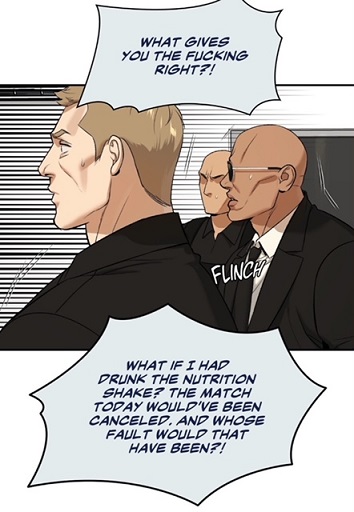 (chapter 40) What appears to be coincidence is often carefully engineered.
The Criminal Method
When we examine the schemes surrounding Joo Jaekyung and Kim Dan, a recurring structure becomes visible. The antagonists rarely attack their targets directly. Instead, they create situations where events unfold in such a way that someone appears to have been caught at the wrong place, at the wrong time.
The pattern is remarkably consistent. First, the media narrative is prepared. Hence an article about his shoulder injury was leaked to the press. 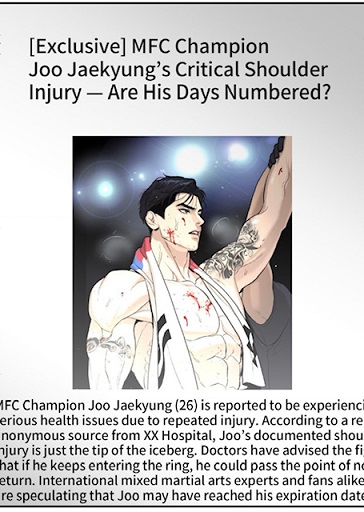 (chapter 36) At the same time, social medias were manipulated in order to stir public pressure and push the champion toward accepting the match in the States.
 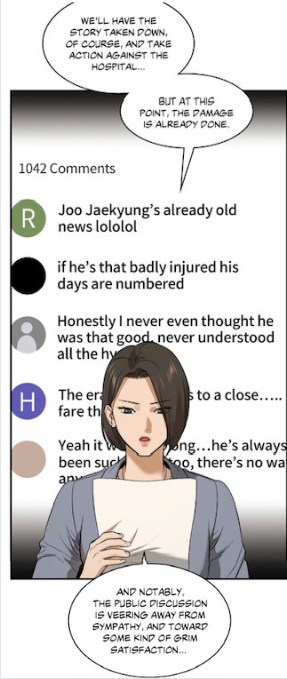 (chapter 36) But we only discover this MO thanks to the match with Arnaud Gabriel and the Entertainment agency’s involvement.
  (chapter 81)
After the incident in the United States, the manipulation did not stop. On the contrary, it entered a new phase. The media reported that Joo Jaekyung had been suspended because of his temperament. 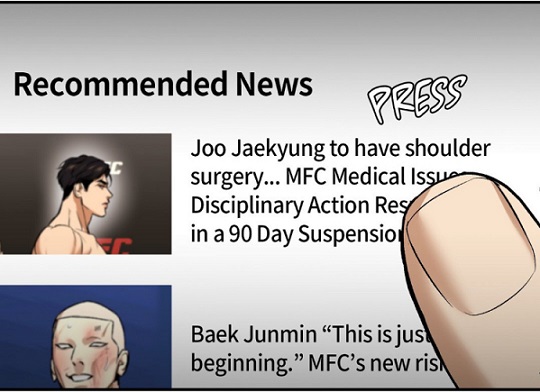 (chapter 52) Officially, the story suggested that his own behavior had caused the problem. In reality, however, this removal also had another function: it cleared space for Baek Junmin’s rise. That’s the reason why the article with The Shotgun was placed directly below the star’s and why the director Hwang Byungchul accepted easily the disqualification of his former pupil.
  (chapter 71)
At the same time, the public image of the champion was gradually reframed. (chapter 54) He was increasingly portrayed as reckless and irresponsible for continuing to fight despite his condition.
  (chapter 54) In this new narrative, the original leak of confidential medical information was no longer treated as the real wrongdoing. The focus shifted entirely onto the athlete himself.
Rumors about the champion’s injuries, his unstable recovery, and his arrogance could now circulate in advance, so that any later setback—including a possible defeat in Paris—would appear understandable, even inevitable.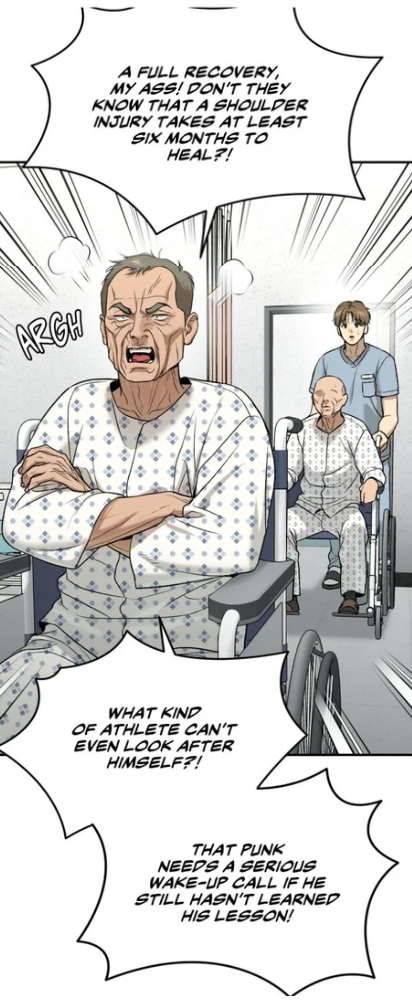 (chapter 70) Once such stories enter public discourse—injury, temper, arrogance—every later incident can be read as confirmation. The narrative becomes self-reinforcing. The media no longer merely reports events; it prepares the framework through which future events will be judged.
Second, a destabilizing trigger is introduced. Often this takes the form of drugs or pharmaceutical substances. The drugged beverage in the United States  (chapter 37) and the suspicious spray
  (chapter 49) used during the manipulated match both belong to this category. These substances create uncertainty about the athlete’s physical condition and about the legitimacy of his treatment. But this implies the involvement of the pharmaceutical industry.
  (chapter 41)
The third step in this pattern is the involvement of authorities and institutions. Once the destabilizing event has occurred, official actors step in: security personnel, referees, medical staff, health centers, or the sports organization itself. Their intervention transforms a chaotic incident into an officially documented event.
This stage is essential, because institutions possess something criminals do not: legitimacy. The incident in the United States reveals how institutional authority can be used to control the narrative. After the incident with the drugged beverage was reported to the MFC, security personnel intervened and brought Kim Dan into an interrogation room. 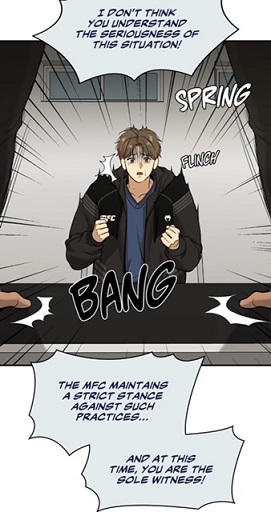 (chapter 40) The scene resembled a police investigation, yet these men were not representatives of the state. Hence there was no translator and lawyer. They were dressed-up employees of a private organization whose primary objective is to protect the company from scandal and as such from losing money
During the interrogation, the agents attempted to frame Kim Dan by focusing on the “nutrition shake” he had allegedly consumed. He seemed to be part of a scheme.  (chapter 40) At first glance, this strategy appears effective. By redirecting attention toward the therapist, the organization can distance itself from the real problem: the suspicious beverage that had been introduced into the environment of the fight.
However, the scheme overlooks an important detail. The incident did not remain entirely undocumented.  (chapter 40) A doctor took a blood sample from Kim Dan, and the laboratory later produced a component analysis report. (chapter 41) This report becomes significant for two reasons. First, it confirms that the contamination was real. The substance had indeed been introduced into the environment surrounding the fight. Such a finding inevitably raises questions about how the drink entered the system controlled by the MFC. In order to avoid institutional responsibility, the organization therefore needed a convenient explanation—someone outside its sphere of influence who could be blamed for the incident, antis.
 (chapter 41)
Second, the timing of the report is revealing. The results of the component analysis appear in the very same episode in which the MFC doctors give their approval for the next fight.  (chapter 41) This coincidence exposes another layer of the mechanism. While the laboratory analysis confirms that an illicit substance had been present, the medical authorities simultaneously authorize the champion to continue fighting. The two decisions cannot easily be separated. Together, they suggest that the involvement of the doctors helps stabilize the narrative: the suspicious beverage becomes a secondary issue, while the focus shifts toward the champion’s physical condition and his decision to fight despite his shoulder injury.
In this way, medical authority does not simply clarify the situation. It contributes to transforming a troubling incident into a new plot and manageable story. To conclude, the MFC medical authorities approving the fight are now part of the scheme, accomplices of the set up as well. Doctors have entered the chain of events. But why did all the employees (security agents, doctors) started helping? The fear of a scandal and the involvement of the media … and naturally loss of money 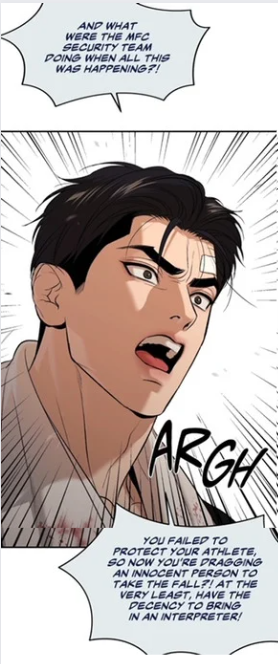 (chapter 40) That’s why they needed a scapegoat. First Kim Dan, later antis and finally the athlete himself. And who fears a scandal in Jinx? One might say Park Namwook
 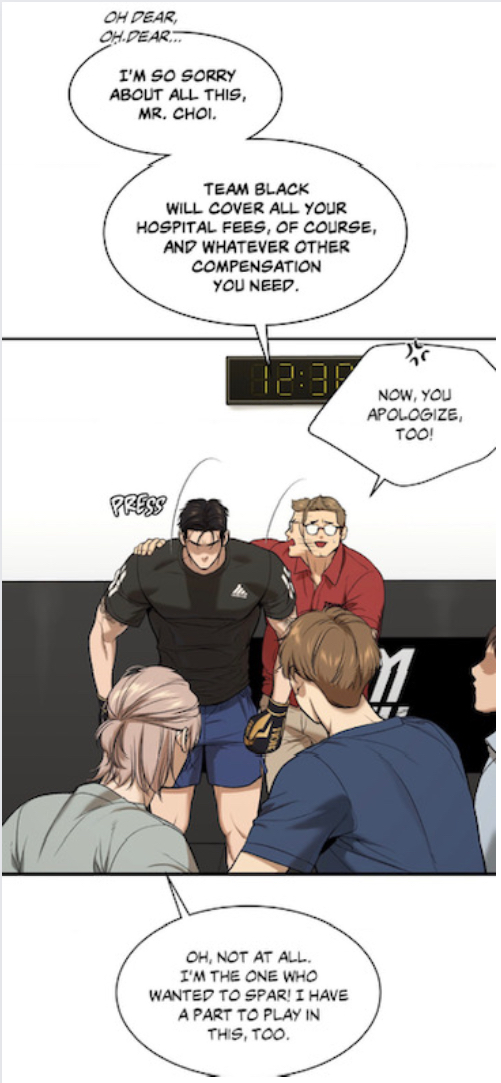 (chapter 31) who always hides behind authorities and shows distrust toward fighters. But he is just reflecting the attitude of the other MFC accomplices.
The same mechanism appears during the events surrounding the manipulated match and the switched spray. Joo Jaekyung’s ankle got injured after the substance had been used. 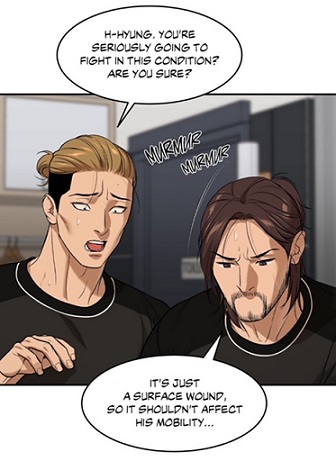 (chapter 50) Observe that in the locker room, the coach declares the athlete as fit despite the injury before going to the health center. The chronology is important, as the MFC doctors have the final saying. So when the champion is taken to the health center before the fight. the responsibility is shifted.
By examining the athlete and clearing him for the match despite the injury, the medical authorities effectively became responsible for the decision that allowed the fight to proceed. In principle, such a medical examination should have resulted in documentation of several elements: the condition of the ankle, the treatment administered, and the circumstances surrounding the injury. But I am suspecting that the documentation was either ignored or deliberately minimized the ankle injury. Why?
Keep in mind that the narrative that later circulated in the media tells a different story. Instead of focusing on the injured ankle and the suspicious spray, the discussion shifted almost entirely toward the champion’s shoulder injury. (chapter 54) The public narrative portrayed him as reckless for continuing to fight despite his physical condition. The responsibility for the situation was therefore redirected toward the athlete himself. MFC’s notoriety remained clean, the employees were all safe, they were not facing any financial or legal repercussion contrary to the star.  (chapter 54) Hence Park Namwook remained passive.
The later meeting at the restaurant confirms this strategy of containment. The CEO of the MFC  (chapter 69) apologized for the behavior of the security staff toward one of Joo Jaekyung’s team members.
 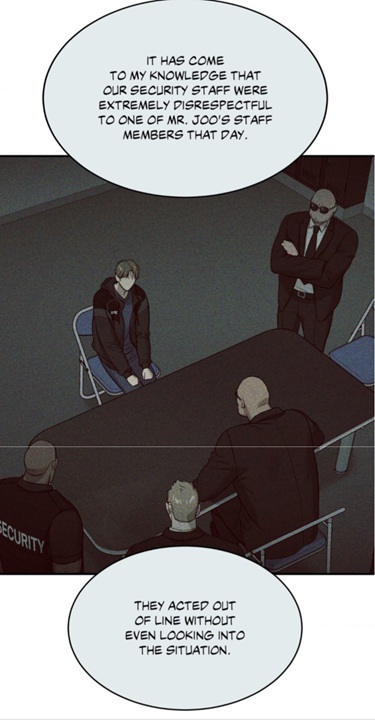 (chapter 69) Significantly, this apology took place behind closed doors, not in front of the media, and doc Dan is still left in the dark about it. The goal was therefore not transparency but damage control. They were in reality attempting to bury everything, to buy some time, until the athlete would lose his next match.
By presenting the incident as the result of overzealous security agents, the organization could deflect attention from the more troubling questions raised by the drugged beverage and the switched spray, the lack of security and neglect.  (chapter 69) The problem was reduced to a matter of manners rather than a potential security failure or institutional complicity. In this way, the apology functioned less as an admission of guilt than as a mechanism to close the case quietly before it reached the public sphere.
Interestingly, the executive describes the substance as a “fake supplement.” This terminology already reveals a subtle shift in language. The laboratory analysis had identified the compound as an aphrodisiac. In other words, a drug that can exist within the legal pharmaceutical sphere. By presenting the substance as a “fake supplement,” the organization avoids raising uncomfortable questions about the origin and distribution of the compound. The problem is no longer framed as the misuse of a pharmaceutical drug but as the circulation of a counterfeit product introduced by an external criminal actor. In this way, the language protects not only the organization itself but also the broader pharmaceutical system from scrutiny. And don’t forget that Doc Dan got informed about the connection between the rival gym and the parent pharmaceutical company in the States. 
And now, the modus operandi of the villains and schemers becomes clear. When these incidents are considered together, a consistent criminal method emerges. The antagonists try to trap their targets like hunters. Instead, they construct situations in which events appear to unfold naturally while responsibility is quietly redirected elsewhere.
The structure remains remarkably stable: first a compromised situation is created, then a destabilizing act of sabotage is introduced, and finally responsibility is redirected toward a convenient scapegoat. In this way, institutions remain intact while the blame falls on expendable individuals.
This is how the underworld functions. Someone is always placed in the wrong place at the wrong time, and the lowest figures in the hierarchy—the minions—are left to take the fall. For this very reason, criminal organizations and drug cartels are notoriously difficult to dismantle: the system protects itself by sacrificing those at the bottom while the structures above remain untouched.
If this pattern truly governs the criminal strategy, then the attack against Kim Dan cannot be limited to a single incident. The physical therapist represents the most vulnerable element in the entire situation: he comes from poverty, lacks institutional protection, and his professional credibility can easily be questioned. For this reason, it is likely that the conspirators will attempt not one manipulation but several. And the last one will force them to expose their true nature: they are criminals and no doctors, directors or athletes (kidnapping).
These stunts will almost certainly revolve around the same thematic field that has already appeared in the story: wrongdoings, drugs and substances. Whether through medication 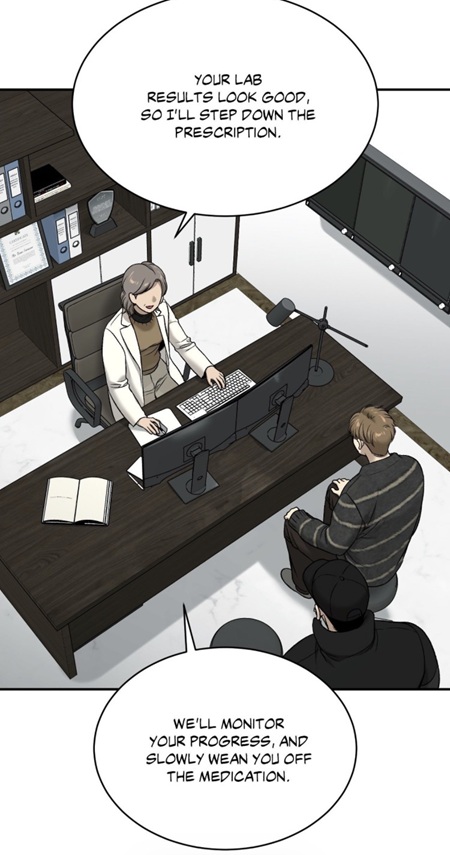 (chapter 91), drinks , smoking,
  (chapter 65), or other forms of contamination, each incident would undermine Kim Dan’s credibility as a medical professional. If the therapist can be portrayed as irresponsible, incompetent, or compromised by substances, the institutional narrative could once again shift responsibility onto him.
Kim Dan and The Medical Trap
Once this mechanism becomes visible, the events in the locker room acquire a different meaning. At the very moment when the scheme reaches its decisive phase 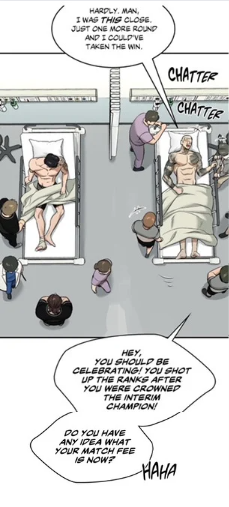 (chapter 52), Kim Dan is no longer present. After confronting him and suspecting a betrayal
 (chapter 51), Joo Jaekyung leaves the locker room alone and goes to the health center. And don’t forget that before, he even refused his treatment for the ankle injury before.
  (chapter 50)
As a result, Kim Dan is absent when the champion is treated at the MFC medical center and at the health center. 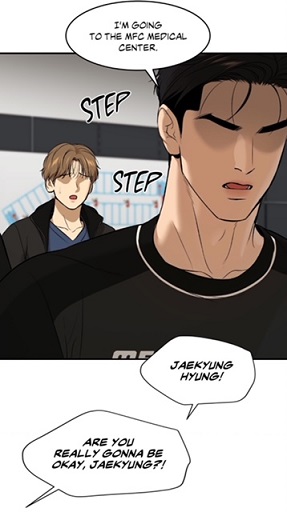 (chapter 50) He therefore has no knowledge of what happens there: the medical examination, the decisions taken by the doctors, and the institutional narrative that later emerges from this encounter.
This absence is crucial. The criminal method described above requires the presence of a convenient scapegoat at the moment when the official version of events is constructed. 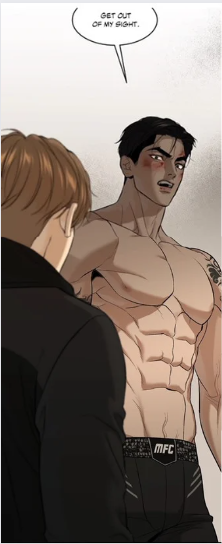 (chapter 51) But this time, the pattern is disrupted. Kim Dan is not there when the institutions intervene.
Paradoxically, the accusation that drove Joo Jaekyung to distance himself from his therapist also removes him from the very situation in which he might once again have been blamed. The scapegoat has disappeared from the scene.
That’s why Joo Jaekyung had to take the blame for the outcome and the “scandal”, the brawl burying the incident with the switched spray!!  (chapter 52)
To understand the consequences of this absence, we must therefore return to the locker room itself—where suspicion, photographs, and accusations first triggered the rupture between the two men. The confrontation in the locker room marks the moment when this criminal mechanism nearly achieves its objective. At this point in the story, suspicion has already begun to circulate around Kim Dan. 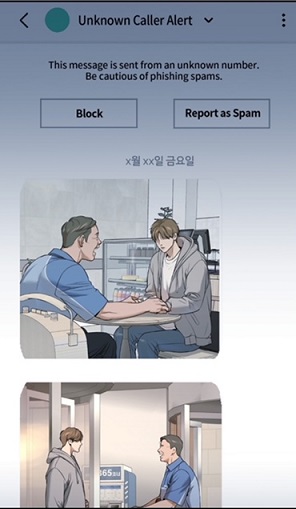 (chapter 48) Photographs of him had been sent to Joo Jaekyung, suggesting that the physical therapist might have been communicating with Baek Junmin through the director of the other gym.
 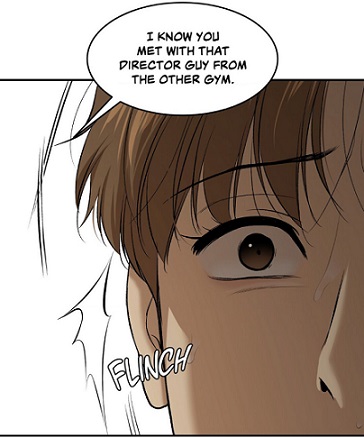 (chapter 51) Confronted with these images and the growing confusion surrounding the match, the champion reaches a painful conclusion: that his roommate may have betrayed him.
In the locker room, this suspicion finally erupts into open accusation. (chapter 51) Joo Jaekyung confronts Kim Dan directly and demands an explanation. For the first time, the therapist is placed in the exact position that the criminal schemes had been preparing all along: the position of the possible traitor.
From the champion’s perspective, the logic seems simple. The photographs appear to show a connection between Kim Dan and his rival. While Joo Jaekyung believes he has finally uncovered the truth behind the sabotage, he is in fact reacting to a carefully constructed illusion. He is not realizing that the match was rigged, the jury and moderator had been bought. They had planned the tie. That way, MFc appears as a legitimate sports organization. The images and circumstances that appear to implicate Kim Dan are themselves part of the larger mechanism designed to redirect suspicion toward the most vulnerable figure in the entire situation. 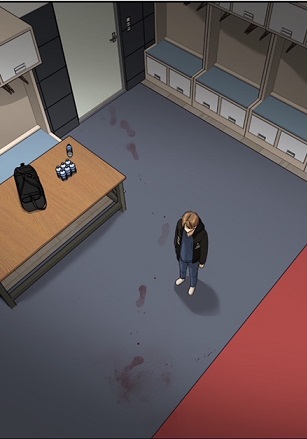 (chapter 51)
Timing, however, remains the key element in the criminals’ strategy: everything depends on placing someone at the wrong time and at the wrong place. Yet in this instance, the timing fails. The report of the incident surfaces only much later, after Potato hears about the situation.  (chapter 52) By that point, the circumstances have already changed. The use of the switched spray introduces a new dimension to the case, and with it the possibility that another authority must intervene.
For the first time, the matter can no longer remain confined within the internal structures of the MFC. 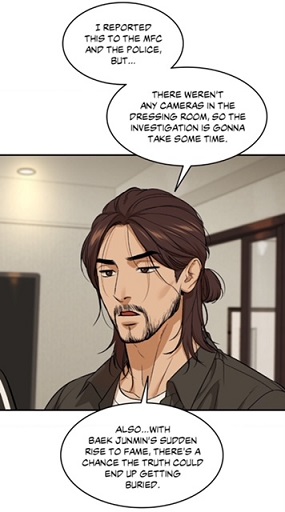 (chapter 52) The situation now risks attracting the attention of the police. As you can see, by remaining passive, Joo Jaekyung in his own way protected the physical therapist from real trouble. If he had truly blamed him, he could have “called” the police, but he did not.
In other words, the conspirators would have obtained their perfect scapegoat. The champion’s rejection therefore becomes a blessing in disguise. By removing Kim Dan from the scene, he prevents the therapist from being trapped inside the very mechanism designed to destroy him.
Baek Junmin and the Shadow of the Police
The appearance of the police in chapter 52 introduces an element that cannot be ignored. Up to this point, the incidents surrounding Joo Jaekyung have largely been contained within private structures: the MFC, its security personnel, and its medical institutions. These actors possess authority, but they remain part of a controlled environment where scandals can be managed internally.
The police represent a very different kind of authority. Interestingly, the narrative later reveals that Joo Jaekyung himself had previously spent time at a police station following an incident involving damaged property and a street fight. 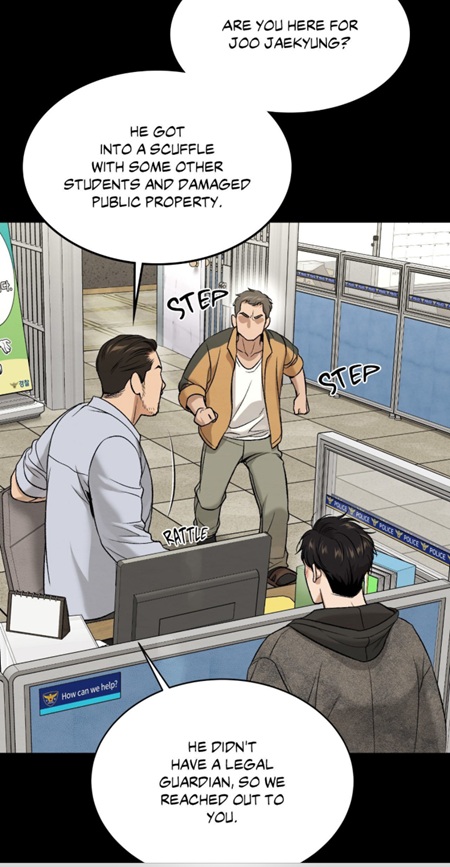 (chapter 74) The coincidence between these two moments—chapter 52 and chapter 74—suggests more than a simple narrative repetition. Both situations involve the same institutional actor: the police.
This connection raises an important question. Why does Joo Jaekyung immediately suspect Baek Junmin with the switched spray (chapter 51), when the pictures only show Choi Gilseok and he was not even present in the locker room?
The answer may lie in his own past experience. When the champion finds himself at the police station in the earlier incident, the situation appears similar to the pattern we have already observed elsewhere: a chaotic confrontation, witnesses present, and a narrative that quickly identifies him as the responsible party. Moreover, observe that during that night, the future champion 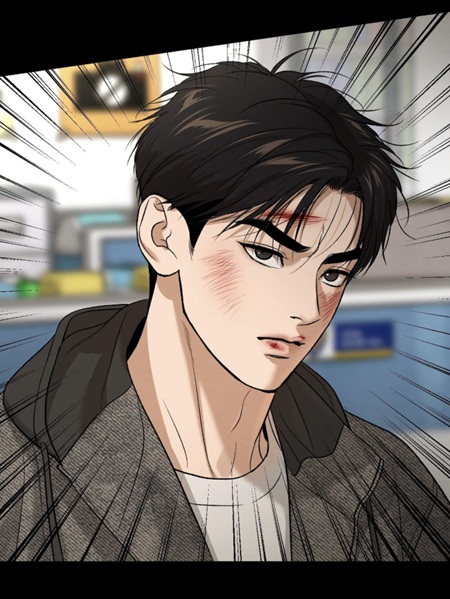 (chapter 74) has a similar wound on the forehead than The Shotgun.
 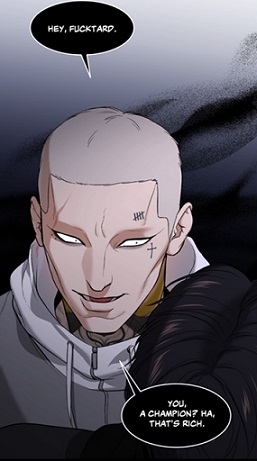 (chapter 74) If Baek Junmin had orchestrated that earlier event, the strategy would have been simple but effective. Instead of attacking his rival directly, he could create circumstances that forced the authorities themselves to intervene. But why would he involve the police, when he is involved in the criminal world? Such a tactic would allow him to remove or weaken Joo Jaekyung without openly violating the protection imposed by his hyung
 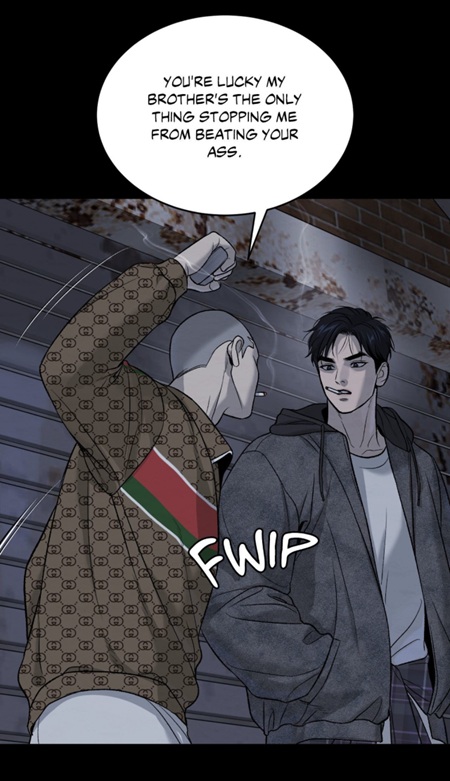 (chapter 74), who had explicitly forbidden him from harming the champion.
In this scenario, the police become an instrument. By manipulating witnesses—perhaps even paying students who had previously been bullied 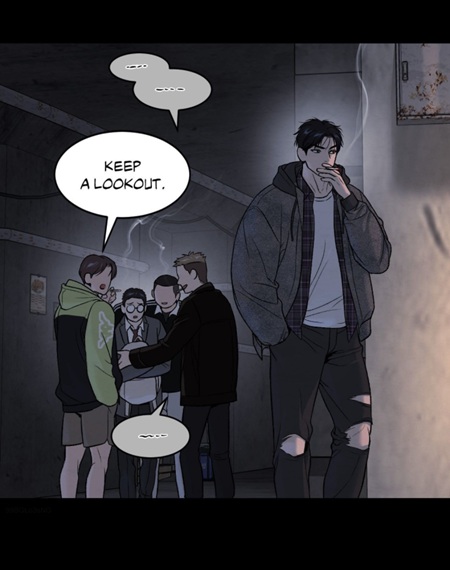 (chapter 74) —Junmin could ensure that the story presented to the authorities pointed toward Joo Jaekyung. For the students involved, the arrangement would offer a practical advantage: financial compensation and a chance to escape their own precarious situation. But for that stunt, The Shotgun got to pay a heavy price: not only the scar on his forehead
 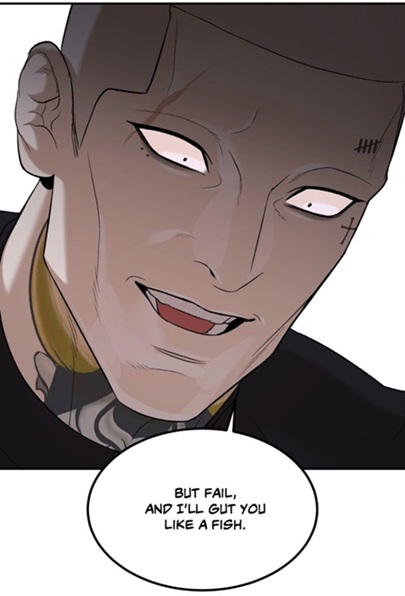 (chapter 93), but also a life in the shadow forever. It is clear that he could never get rich and famous through his illegal fights. Hence he resents the main lead so deeply.
The result would be a classic example of the principle that governs the criminal world depicted in the story: placing someone at the wrong time and the wrong place. His suspicion toward Baek Junmin does not arise from speculation alone. It is grounded in experience.
If this interpretation is correct, Baek Junmin’s strategy becomes clear. By orchestrating a situation that attracts police intervention, he can remove his rival without ever directly attacking him. IMO, he is on his way to play a similar trick than in the past. Hence he looks at the calendar, timing is essential. 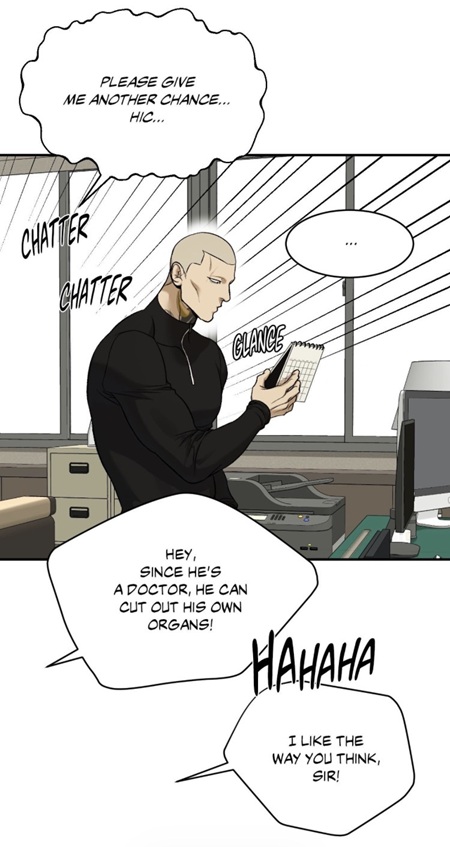 (chapter 93) The authorities perform the task that Junmin himself is forbidden to carry out.
Moreover, the champion understands another important rule of the criminal world: organized crime usually avoids the police whenever possible. The mob prefers to settle conflicts quietly through money, intimidation, or internal arrangements. Calling the authorities risks exposing the entire network. This interpretation also explains why Joo Jaekyung doesn’t report the trespassing and assault to the authorities.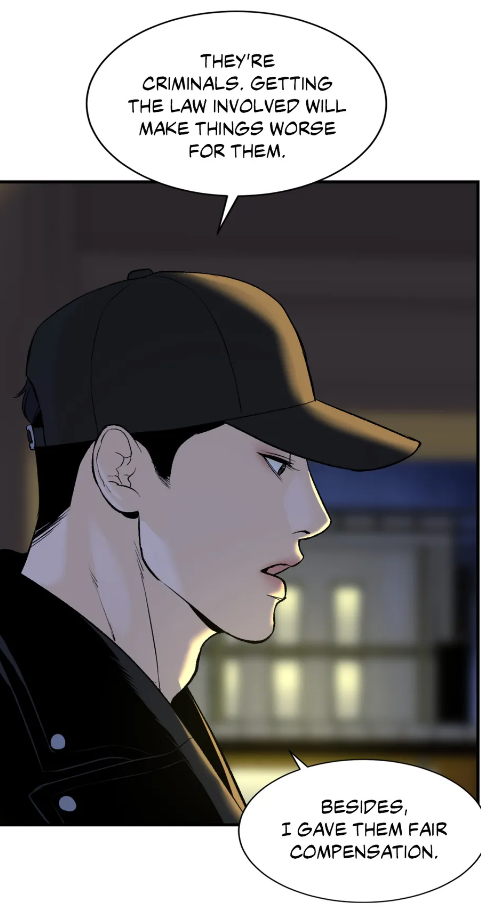 (chapter 18) He knows how the criminal world functions.
Thus I deduce that with this new offer to the former hospital director, the Shotgun is involving not only the medical world more deeply into the scheme, but also the police.  (chapter 91) The article reports that the director of X General Hospital was accused of sexual harassment by several members of the hospital staff. The scandal eventually forced the institution to suspend his medical license. Yet the wording of the report also exposes an important detail: the hospital reacted slowly, and the affair was handled primarily as an internal disciplinary matter.
In principle, repeated sexual harassment by a hospital director should not remain merely an administrative issue. Such actions constitute criminal offenses and could have led to a police investigation. Instead, the institution appears to have contained the scandal within its own structures.
In other words, the hospital followed the same logic that we have already observed in the MFC and within the criminal world itself: avoid the police whenever possible. The reasons are obvious. Once law enforcement becomes involved, internal arrangements lose their power and other crimes could come to the surface. Reports are reopened, testimonies are examined, and the entire chain of responsibility may become visible.
Another important ingredient of this plot is silence. The scandals are not denied outright; they are contained, privatized, and buried. The MFC admits the set-up only behind closed doors. The hospital treats criminal behavior as an internal disciplinary matter. The underworld, for its part, prefers money and intimidation to police reports. In each case, silence becomes a tool of power. What remains unspoken protects the system. That’s why the witnesses and victims need to speak up and report the crimes. Doc Dan has not reported the assault yet: 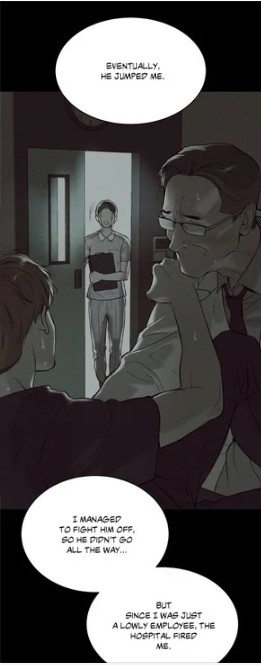 (chapter 90)
Seen from this perspective, the Shotgun’s proposal to the disgraced director acquires a new meaning. By recruiting a figure who already stands at the intersection of scandal and institutional cover-up, he introduces another fragile element into the situation. The director represents a man whose career collapsed precisely because a scandal nearly escaped the control of the institution that protected him. But in his eyes, he stands for “respectability and trust”, as he is called doctor. (chapter 93)
If such a person becomes involved in the scheme against Joo Jaekyung and Kim Dan, the consequences could extend beyond the criminal underworld or the sports organization. The medical world itself—and potentially the legal system—may be drawn into the conflict.
In that sense, the Shotgun’s move does not merely deepen the conspiracy. It risks bringing the one actor that all these systems usually try to avoid: the police. A lesson that he didn’t learn from the past.
And now you may wonder why I remain so focused on the earlier episodes instead of concentrating entirely on episode 94. The reason lies precisely in what this scene reveals.
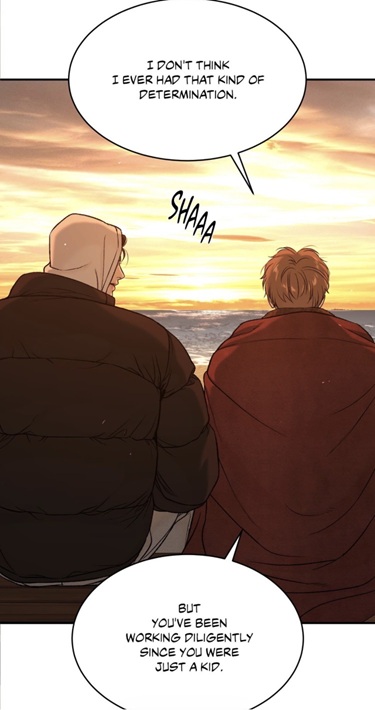
The conversation between Joo Jaekyung and Kim Dan makes something suddenly clear: together, they embody the opposite principle of the one that has governed the criminal schemes throughout the story. 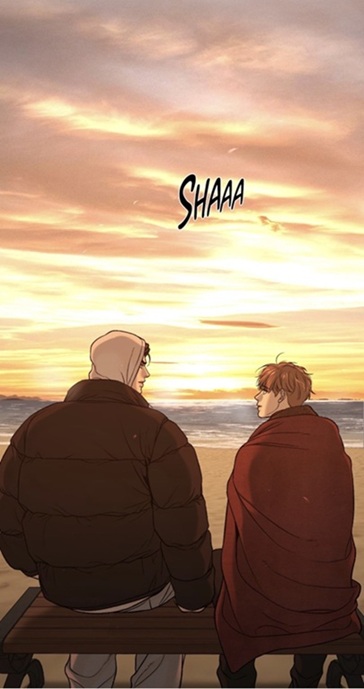 (chapter 94) Up to this point, the antagonists have relied on a simple but effective strategy. By manipulating circumstances, they repeatedly place others at the wrong place and at the wrong time. Each incident—whether involving the media, drugs, or institutional authorities—follows this logic. Someone is caught in a situation carefully arranged by others and must carry the consequences.
Episode 94 breaks this pattern. 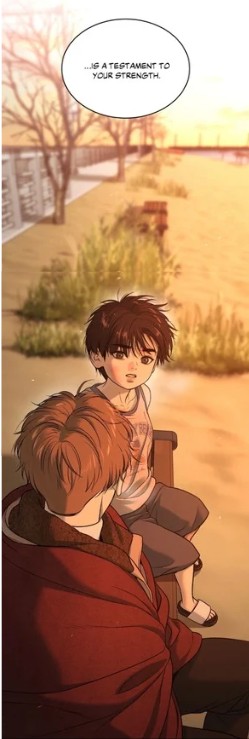 (chapter 94) There is trust, recognition, admiration and open-mindedness. In their mutual confession, the two protagonists do something that none of the criminals ever achieve: they seize the moment at the right time and in the right place. They speak and listen to each other. Instead of being manipulated by circumstances, they recognize the opportunity before them and act upon it.
The result is not merely emotional reconciliation. It quietly undermines the very mechanism that has been used against them. For the first time, the logic of coincidence and manipulation no longer dictates the outcome.
Turning the Method Against the Criminals
Yet the story introduces an important twist. The main couple gradually learns to use the same modus operandi against their enemies: at the right time and the right place.  (chapter 59)
  (chapter 79)
  (chapter 94)
A revealing example occurs when Joo Jaekyung publicly challenges Baek Junmin after the fight against Arnaud Gabriel. 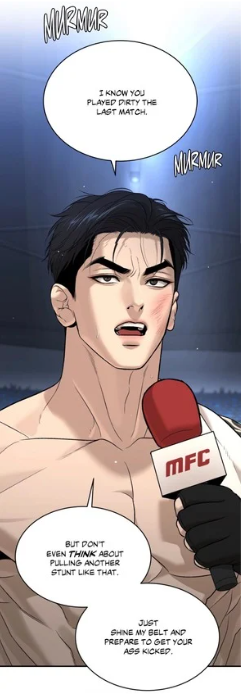 (chapter 87) By issuing the challenge in front of the cameras, the champion forces the MFC to respond. Even though the season had effectively ended, the public nature of the declaration creates pressure that the organization and the media cannot easily ignore.
In that moment, Joo Jaekyung takes control of the narrative.
Baek Junmin suddenly finds himself in the same position that his victims usually occupy: he cannot escape the situation. Instead of manipulating time and circumstances, he must react to them. His glance toward the calendar reveals his awareness that the timing is no longer in his control. (chapter 93)
The antagonists attempt to regain that control by scheduling events close to Christmas, a moment when institutions and public attention may be distracted. Time itself becomes another instrument within the conflict. A second possibility also emerges from the same logic of timing. If the grandmother were to pass away soon 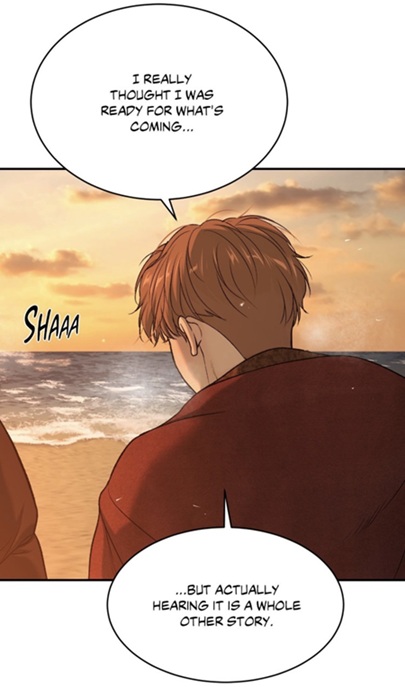 (chapter 94), the situation could disrupt the plans surrounding the anticipated fight with Baek Junmin.
A funeral represents the ultimate example of being at the wrong place and at the wrong time. Death does not follow the schedules of sports organizations or criminal schemes. It interrupts them. In such circumstances, Joo Jaekyung might decide not to appear at the match himself and instead send a replacement fighter, much as similar substitutions have already occurred in the past. (chapter 47)
But the champion’s public statement has already changed the balance of power. By drawing the attention of the media and the authorities, he forces figures like Choi Gilseok to operate under pressure and make mistakes. The latter must begin bribing officials and manipulating the environment simply to buy time. The system that once protected the criminals begins to turn against them.
The Man Who Knew Too Much
This development also explains the deeper meaning behind the title “The Man Who Knew Too Much.”
Knowledge in this story does not come from theory or speculation. It comes from experience. 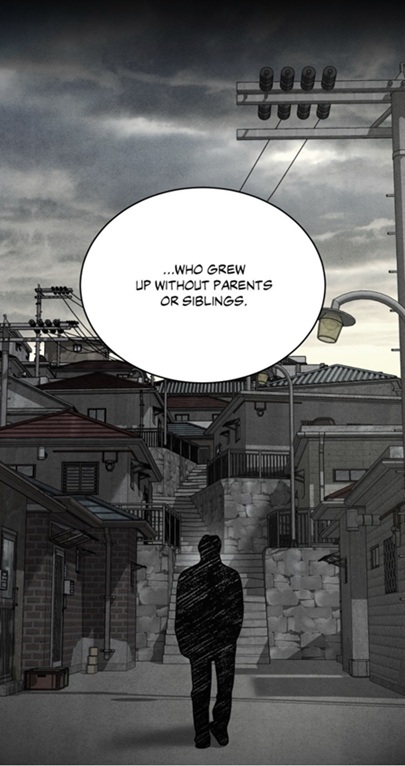 (chapter 94) Joo Jaekyung has survived the criminal world long enough to understand how its mechanisms operate. Through his actions, he gradually passes this knowledge on to Kim Dan.
 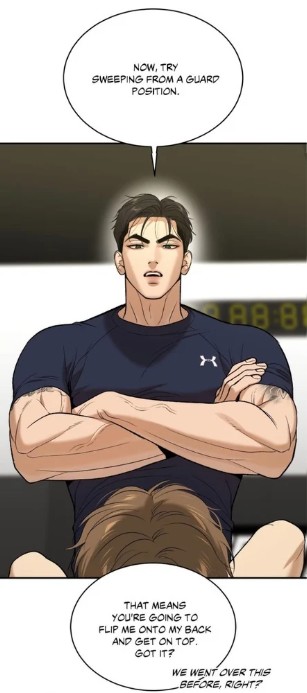 (chapter 88)
He taught him how to swim. He taught him how to fight. He taught him how to take care of himself and to express his opinion and desires. In other words, Kim Dan came to internalize that he also deserved respect. 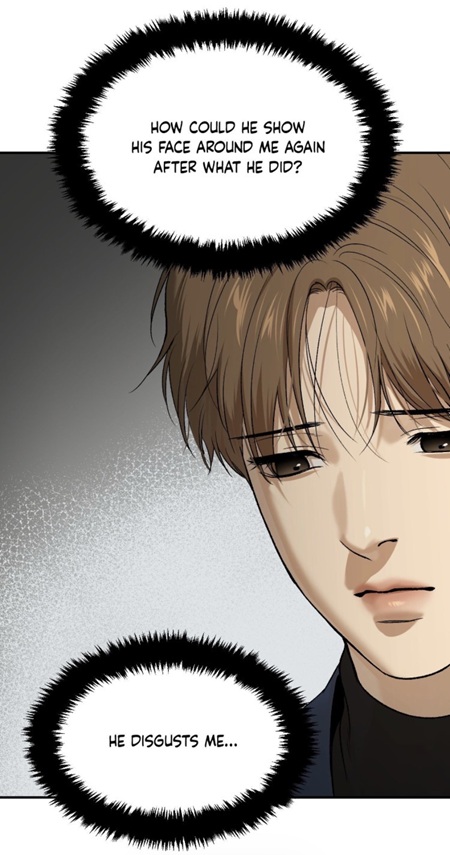 (chapter 91) The athlete exposed him to situations that forced him to grow stronger and more independent. He shared his thoughts and philosophy to his “pupil” as well
 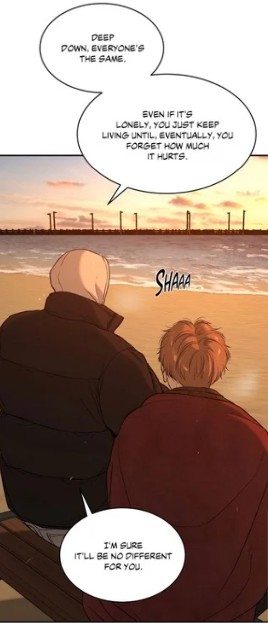 (chapter 94) so that at the end, Kim Dan admits to see him as a “younger sibling”. (donsaeng in Korean)
 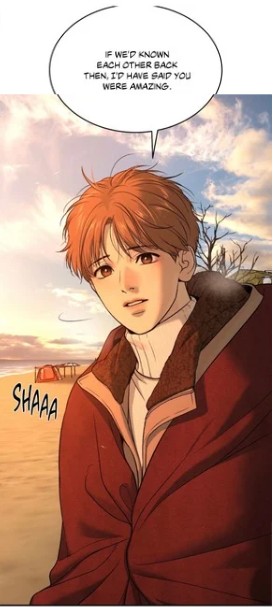 (chapter 94)
Yet his transformation has another consequence. Kim Dan has also become both a witness and a target of the champion’s jinx. By standing beside Joo Jaekyung, he has been drawn into the very chain of manipulations that once isolated the athlete. He can expose the existence of money laundering.
For the first time, the couple begins to grasp wrongdoings and even understand how this mechanism works. And once someone understands the trap, the outcome of the game can change.
The criminals may continue to rely on their favorite principles— money and placing others at the wrong place and at the wrong time. But the situation has now changed. In fact, the schemers will end up being caught at the wrong time and at the wrong place.
Until recently, however, Joo Jaekyung himself was unable to expose Baek Junmin openly. One reason lies in a more personal burden: shame. 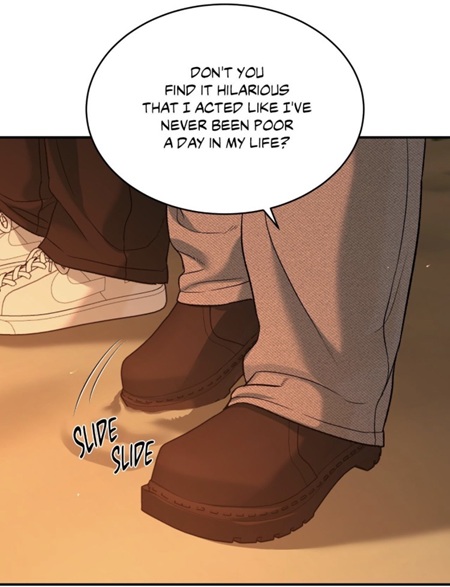 (chapter 94) The champion carried the weight of his past—his violent environment, the humiliation he endured, and the circumstances that shaped his rise. Speaking about these events would have meant revealing parts of his life he preferred to bury.
 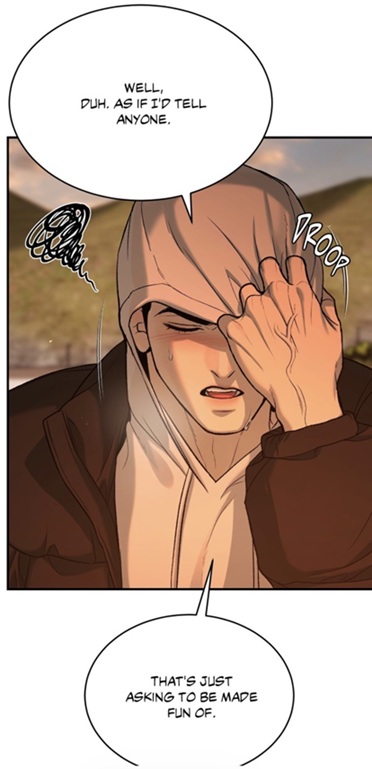 (chapter 94) The conversation on the beach changes this dynamic. By confessing his past to Kim Dan, Joo Jaekyung frees himself from the silence that had protected his enemies. The shame that once prevented him from speaking begins to lose its power.
And once the athlete is no longer bound by shame, he can finally do something he had avoided for a long time: he can speak and reveal his knowledge to the media.
Feel free to comment. If you have any suggestion for topics or Manhwa, feel free to ask. If you enjoyed reading it, retweet it or push the button like. My Reddit-Instagram-Twitter-Tumblr account is: @bebebisous33. Thanks for reading and for the support, particularly, I would like to thank all the new followers and people recommending my blog.


 🌶️😂
🌶️😂 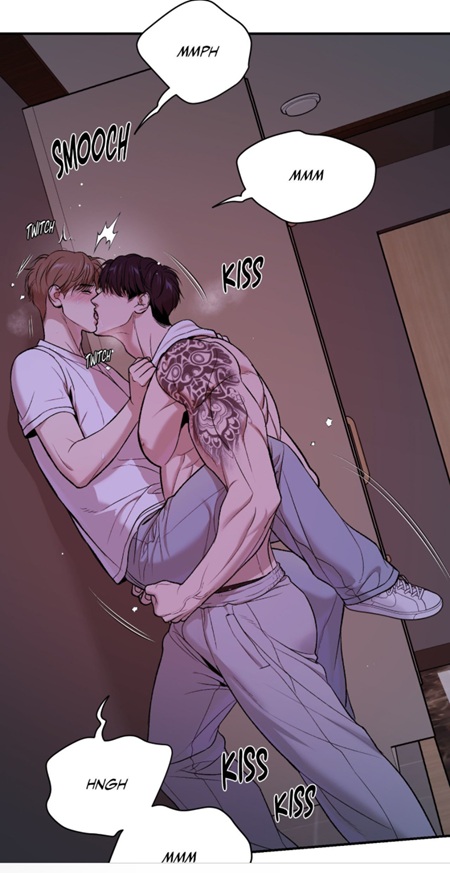 (chapter 85). Against this emotional core, elements such as carpets, hallways, floors, and room layouts may seem secondary, even irrelevant.
 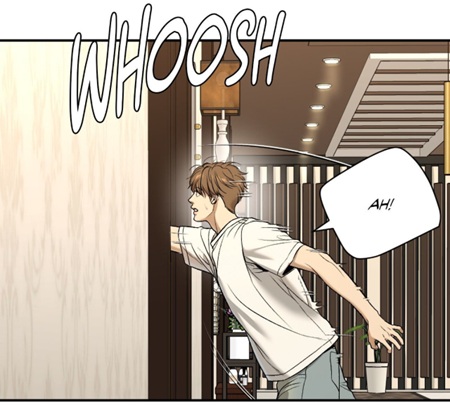 (chapter 85) Why care about the color of a carpet or the direction a door opens
  (chapter 85), when the real story unfolds between Joo Jaekyung and Kim Dan?
 (chapter 82) Floors and patterns are not neutral decoration. They function as a parallel narrative system—one that tracks changes in status
 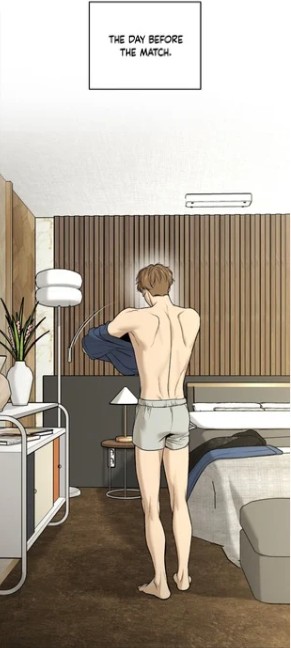 (chapter 85), exposes the actual situations in which the characters are placed
  (chapter 85), and helps us locate spaces and relationships within the hotel architecture itself. In other words, the floors do not merely frame the story; they add a spatial depth that sharpens our understanding of the “characters.”
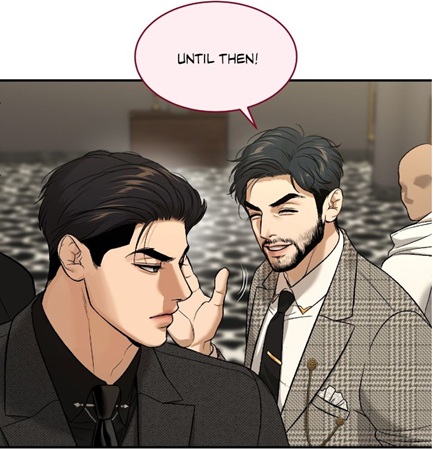 (chapter 82)
 (chapter 82)
  (chapter 82) One might think, the only information we get is that MFC had booked a conference room at the hotel where Team Black is staying. However, in the States, the carpet of the hallway at the hotel had a similar pattern.
 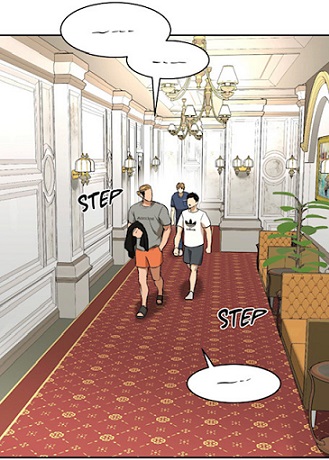 (chapter 37) This similarity and repetition caught my attention. It suggests continuity between public spectacle and private space, between what is shown and what is concealed. Following this thread led to a broader realization: the floors simultaneously signal elevation and confinement. They show who appears powerful—and who is, in fact, enclosed.
 (chapter 37)
 (chapter 37) It is in that hallway that Kim Dan collapses after drinking a drugged beverage. He literally falls onto the carpet, on his knees. The trap activates—but not on its intended target.
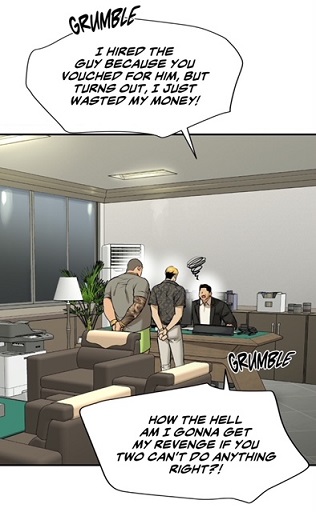 (chapter 46), not by MFC directly. The scheme exists, but it is imperfect. Joo Jaekyung is not truly “caught” in that moment, which explains why the plan ultimately fails.
  (chapter 69) As you can see, the pattern of the carpet could be seen as an evidence for a trap, and the “Emperor” is their target once again. Their plan is to end his career so that all the incidents and crimes from the past can be buried.
 (chapter 82). The opponent stands on the surface that embodies order, hierarchy, and control, and behaves accordingly. He flirts, comments on the doctor’s eyes, and treats the moment as harmless. Then he turns his back.
  (chapter 82) He never steps onto, nor does he seem to register, the animal-patterned carpet nearby, as doc Dan was standing on a white-off carpet. In other words, Arnaud Gabriel interacts only with the space that reflects the institution’s worldview.
  (chapter 82) This is not the response of a neutralized Emperor, but the instinctive surge of a predator whose territory has been violated. The scene echoes an earlier, more intimate image from the bathroom in chapter 30,
 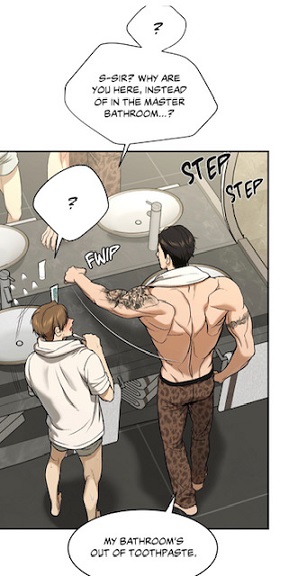 (chapter 30), where Joo Jaekyung appeared wearing leopard-patterned pajamas. The animal imagery was already present then, but dormant. Here, it reawakens.
 (chapter 85) The champion is not alone inside the cage. He is supported, grounded, and no longer isolated. What MFC fails to see is that this support does not weaken the predator—it stabilizes him. And a stabilized predator is far more dangerous than a cornered one. For years, Joo Jaekyung’s violence was reactive, triggered by threat, humiliation, or loss of control. Such a fighter is powerful, but predictable. He can be provoked, exhausted, and manipulated.
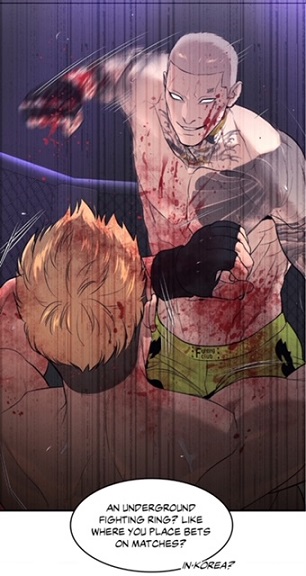 (chapter 47) Through him, Joo Jaekyung gains access to a form of knowledge the institution does not control. The beast is no longer driven blindly forward; it is guided.
 (chapter 84) These visual cues distinguish floors, mark thresholds between zones, and separate different kinds of isolation. The hotel ceases to function as an abstract backdrop and instead reveals itself as a structured environment in which hierarchy is materially inscribed.
 (chapter 85)
  (chapter 84)
 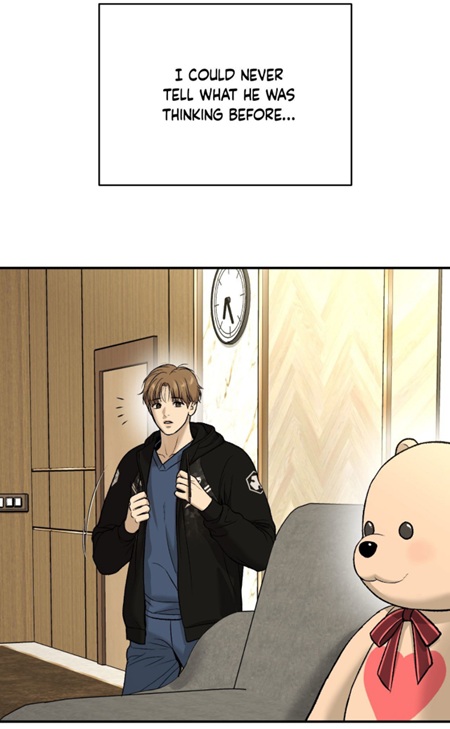 (chapter 85) The corridor seems to have white linoleum covered a dark brown carpet, similar to the one in his bedroom. However, observe that the manager’s entrance has the same tiles than in the hallway.
 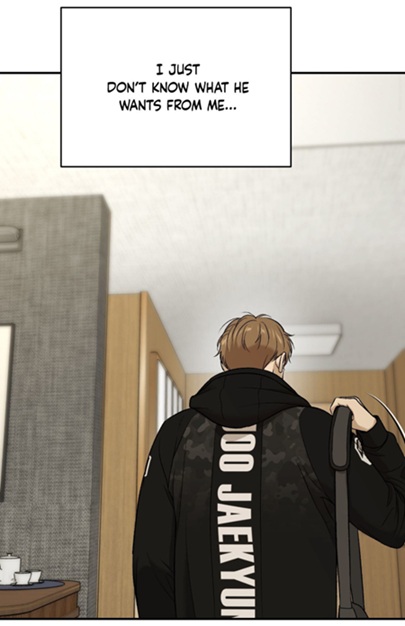 (chapter 85) reminds us of the champion’s living room in the hotel.
  (chapter 82) This clearly exposes that doc Dan’s room is not a normal room. It exceeds that basic category. It is larger, brighter, and arranged for comfort. The interior layout is particularly revealing: the bathroom is located close to the bedroom
 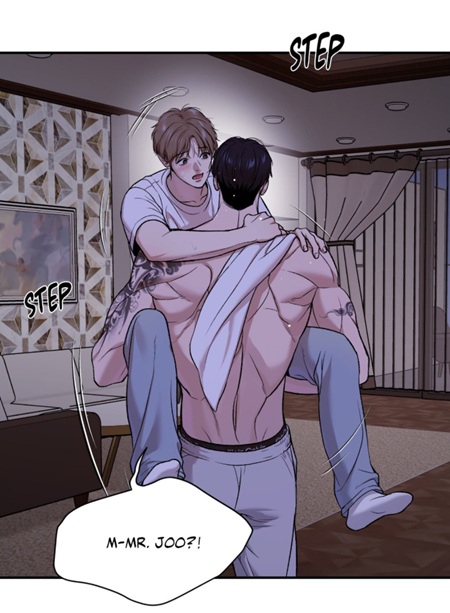 (chapter 85) clearly separating living space from bedroom
 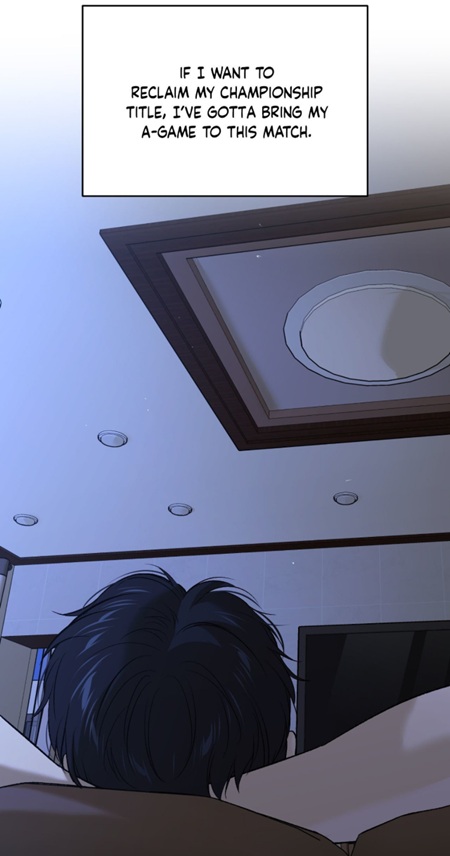 (chapter 82), and extending outward through more than one balcony.
  (chapter 82)
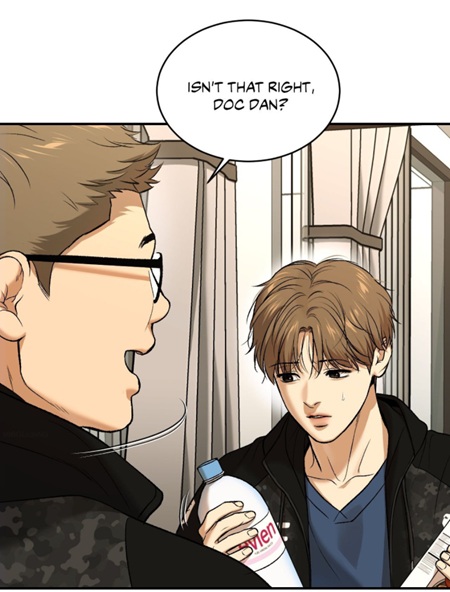 (chapter 82) And the moment I had this realization, architecture, once again, speaks first, my attention returned to the hotel in the States.
  (chapter 37)
 (chapter 37) This detail is crucial. It explains why he can hear their laughter and smell the food they are eating.
 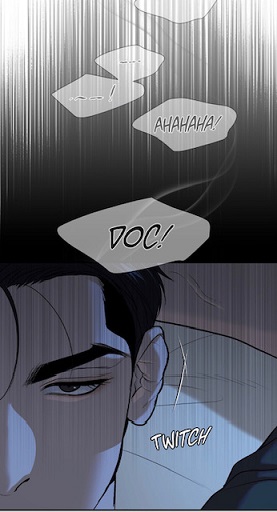 (chapter 37) Architecturally, he was not isolated. Despite his status, he remained embedded within the collective space of the team.
  (chapter 37) Besides, Episode 40 confirms that Joo Jaekyung did occupy an imperial suite: the interior layout includes a door separating the bedroom from another room
  (chapter 40), a feature characteristic of a suite rather than a standard hotel room. The issue, therefore, is not the absence of a suite, but how that suite was positioned and managed.
 (chapter 37) Because the suite was embedded within a shared corridor, an intruder could approach the champion’s room without attracting attention.
  (chapter 37) intended for weight-cutting and post–weight-cut recovery. This detail exposes a managerial failure rather than a hotel failure. The environment was not curated around the champion’s physical needs. Discipline was demanded of his body, but not enforced in his space. Meanwhile, fighters and coaches purchased junk food behind the champion’s and Kim Dan’s back, reinforcing the gap between stated goals and actual practice.
 (chapter 37) There is no visible keycard system, and no clear indication of an interior lock.
 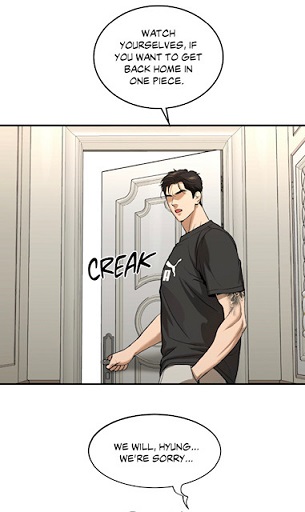 (chapter 37) This absence is striking, especially when contrasted with the Paris hotel
  (chapter 85), where doors are equipped with keycards and locks on both sides
 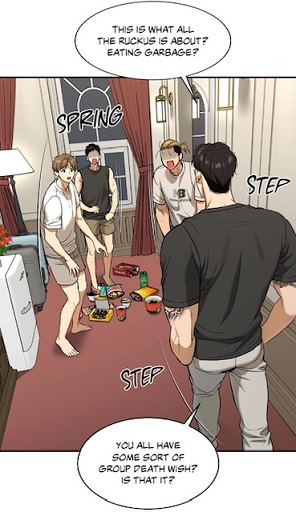 (chapter 37) Access was not negotiated; it was simply taken. The architecture allowed it. The space did not protect its occupants.
 (chapter 37) At first glance, this appears implausible. A suite, by definition, should insulate its occupant from such disturbances. His bedroom is not situated next to the corridor.
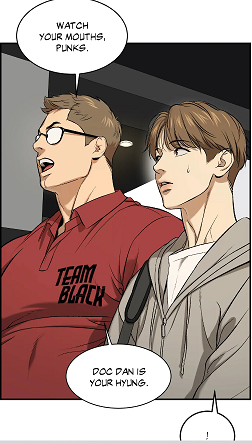 (chapter 7) Status was asserted rhetorically, but not enforced spatially, exactly with Joo Jaekyung.
 (chapter 37), negotiating access with local coaches and nearly getting into a physical altercation before being allowed to use their facilities
 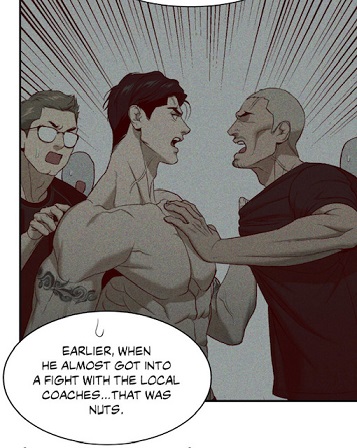 (chapter 37). Only after asserting himself does he gain permission to train. Even then, the gym he ultimately uses is unremarkable — functional, crowded, and indistinguishable from what any average fighter might access. There is nothing exceptional about it.
 (chapter 82) The infrastructure finally aligns with the demands placed on his body. This shift is not a luxury; it is a correction. It reveals retroactively how deficient the American setup was — and how little institutional care surrounded the champion at the time.
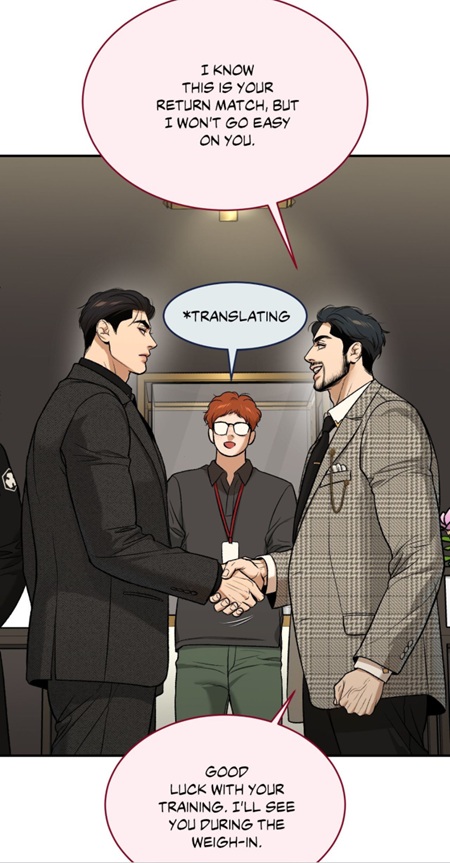 (chapter 82) The remark does not stem from arrogance alone; it is grounded in observation. The training space available to Joo Jaekyung at the hotel is not designed for an elite athlete, even less for MMA fighters.
  (chapter 82) It is a generic fitness room intended for ordinary guests. There are no heavy bags, no proper equipment, no environment suited to the demands of a reigning champion.
 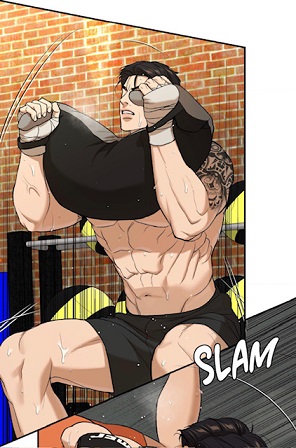 (chapter 37) This is precisely why his training must be adapted, restrained, and partially improvised.
 (chapter 5) MMA is not baseball or soccer
  (chapter 54); it does not benefit from the same institutional prestige or resources. Earlier in his career, the champion was more likely trained to endure damage than to prevent it. What we see now is not the continuation of an elite system, but its gradual construction — one in which Kim Dan plays a central role.
 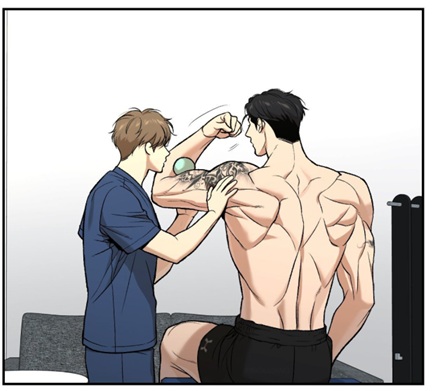 (chapter 81)
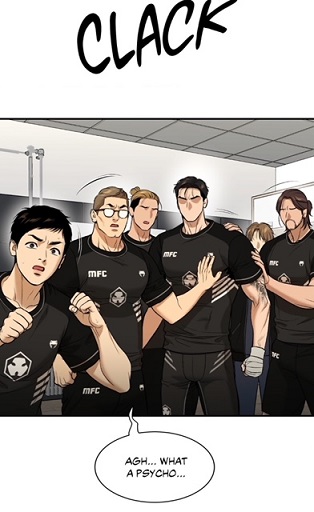 (chapter 49), rather restraining him and as such exposing him to danger.
 (chapter 37) and the post–weight-cut recovery.
 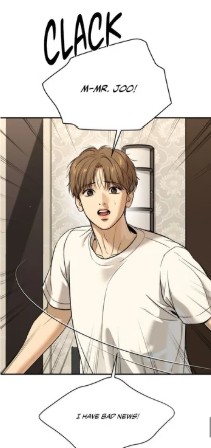 (chapter 82) Kim Dan may indeed possess a keycard to Joo Jaekyung’s suite. If so, this is not a minor convenience. It constitutes a symbolic transfer of access. The physical therapist is granted proximity not merely to the champion’s body, but to his private space. Hence the athlete is not caught by surprise, he doesn’t even mind this intrusion or interruption.
 (chapter 82) and support
 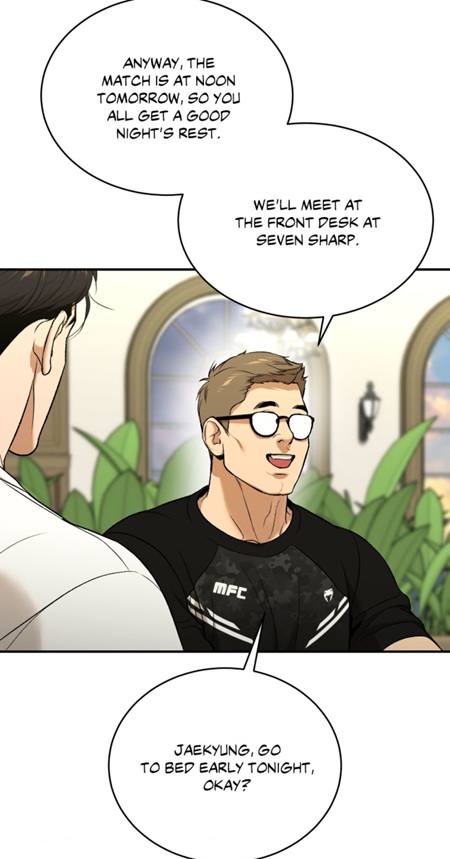 (chapter 85), he expects everyone to wake up on time and appear at seven sharp. He doesn’t see it as his “task” to wake up the champion. Once again, he is delegating responsibility onto others. However, it is clear that he expects Joo Jaekyung to be awake early like he did before. So if the champion doesn’t appear on time, the manager’s decision should be to call doc Dan or visit his room. In his eyes, he is the one responsible for the champion!!
 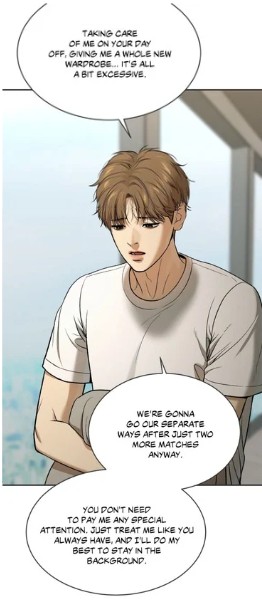 (chapter 80) for his contract is limited not only to Joo Jaekyung, but also in time. He was never a fighter, hence he is not part of MFC at all contrary to the other hyungs.
 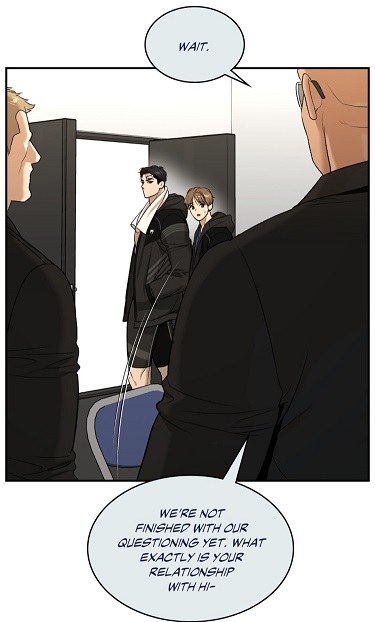 (chapter 40)
 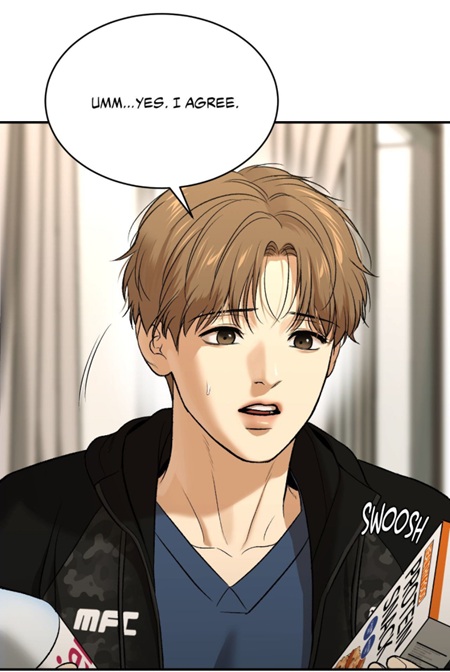 (chapter 82) These are managerial functions.
 (chapter 40) Doc Dan is not one among others, but the BEST physical therapist. He is also a champion

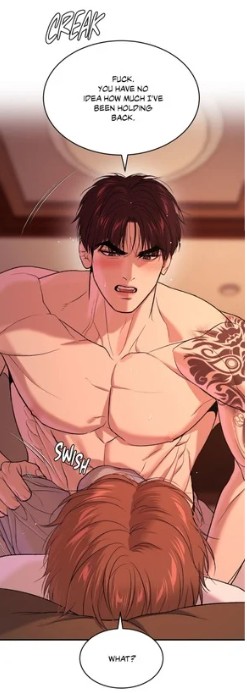 (chapter 85) represents the positive reflection of this night
  (chapter 58)
  (chapter 58)
  (chapter 58), when the physical therapist chose to give up on the athlete and stop listening to his heart. Here, I am not only referring to the numerical symmetry but also to the doctor’s shifting vision of Joo Jaekyung.
 (chapter 85), Jaekyung appears with a towel around his neck. This simple object evokes water and sweat, but in Jinx, these elements are never neutral. They are tied to one of the champion’s earliest traumas: the humiliation of being called “dirty”
  (chapter 75) and “smelly” as a child. This is why Jaekyung learned to perfuse his body with cologne after every shower
 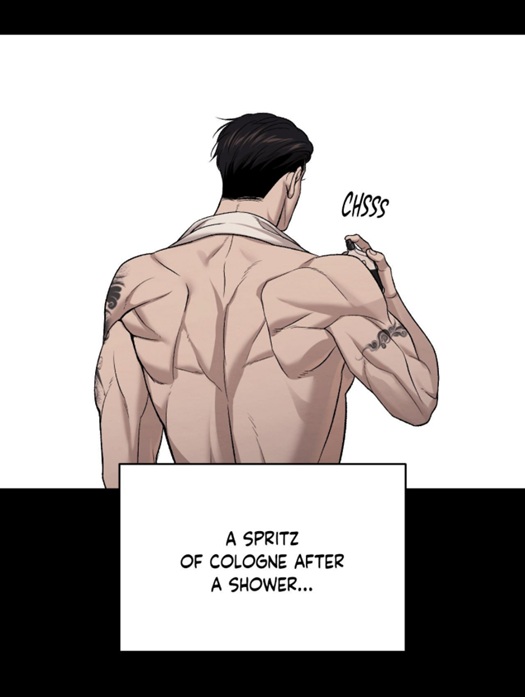 (chapter 75) and why physical proximity has always carried the risk of shame. Hence he kept people at arms length. In chapter 40, when he rescued Kim Dan from the security guards, he kept his distance
  (chapter 40) It was, as if the fear of smelling “wrong,” of being perceived as contaminated, was still dictating his movements. Hence he could only claim doc Dan as one of his own, but not as his “physical therapist” or even “family”. And interesting is that doc Dan copied his attitude. In the hallway, he maintained a certain distance from the athlete.
 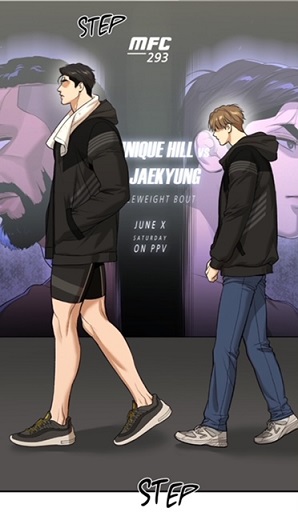 (chapter 40)
 (chapter 40) the moment he dried off
  (chapter 85) His hair is unstyled, his scent unmasked — and yet he approaches Dan without hesitation. He even kisses him. The item that once symbolized rejection now signifies trust: without fragrance, he is certain that doc Dan will not call him “dirty,” will not recoil, will not shame him. What once provoked distance becomes an unexpected bridge, revealing that Jaekyung is finally letting someone remain close, when he feels most vulnerable. The night in Paris does not simply suggest a return of desire; it announces the return of hope
 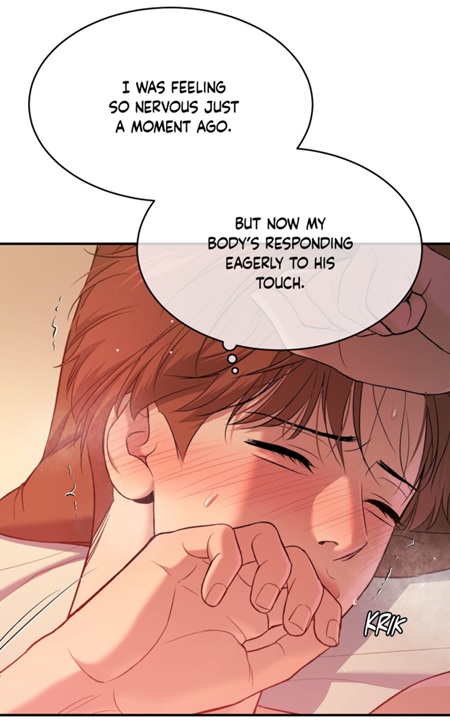 (chapter 85) and trust — and perhaps even the moment when Dan chooses, for the first time, to be honest with his own body and heart.
 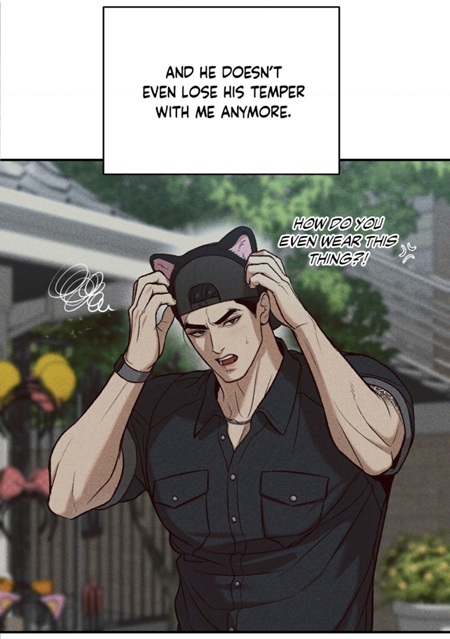 (chapter 85)
  (chapter 61) [I will elaborate it further later]. And perhaps this is why the moment feels so disarming: because the downfall is not tragic but tender, not humiliating but intimate. Sweet, even.
 (chapter 85) Dan is lost in his thoughts — anticipating the night ahead with the champion — and has barely touched his food. Park Namwook notices this. One might think, such a remark displays the manager’s concern for the main lead’s well-being. However, the manager adds that the other members of the team are all almost finished. With such a remark, it becomes clear that the manager is urging the protagonist to finish his plate. Although Park Namwook addresses Dan as if showing concern, the content of his remark betrays his true priority: not Dan’s well-being, but the team’s schedule. By pointing out that ‘the rest of us are almost finished,’ he urges Dan to keep pace, treating him as staff who had to follow the group rather than someone with personal needs. As you can sense, schedule is essential for the manager. However, because doc Dan couldn’t reveal the true reason behind his behavior, he gives an excuse for his lack of appetite.
 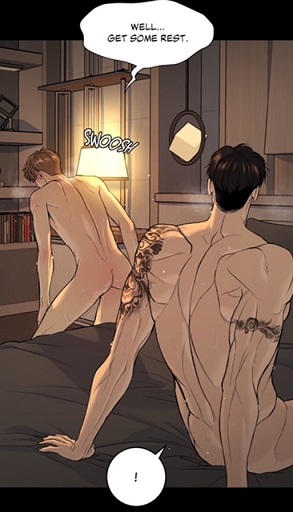 (chapter 53) The manager’s words bring Joo Jaekyung back to reality and its uncomfortable truth that Dan’s presence now is still bound to a contract — temporary, contingent, never fully his. In other words, with his remarks, Park Namwook is reopening old wounds which shows his total blindness and lack of finesse and of empathy. He treats the last match, as if nothing bad had happened. The incident with the switched spray is simply erased.
 (chapter 53) leaving without thinking; now, after Dan vanished from his life entirely, that earlier departure feels like a sign he failed to read. Park’s question brushes against this bruise, and Jaekyung’s lips reflect the discomfort.
 (chapter 85) The younger fighter suddenly bursts into panic, declaring how nervous he would be in Jaekyung’s place, how his heart would be pounding out of his chest. His outburst is sincere, naïve, and completely focused on the champion — he never once considers Dan’s feelings. Yet these words strike deeper than he intends. At the mention of a pounding heart, Jaekyung’s eyes lift upward in a brief, involuntary movement. It is the smallest gesture, but it exposes everything he wishes to hide. Because his heart is pounding — but not for the match. It is because of doc Dan!
  (chapter 85) “Come to my room at 11.”
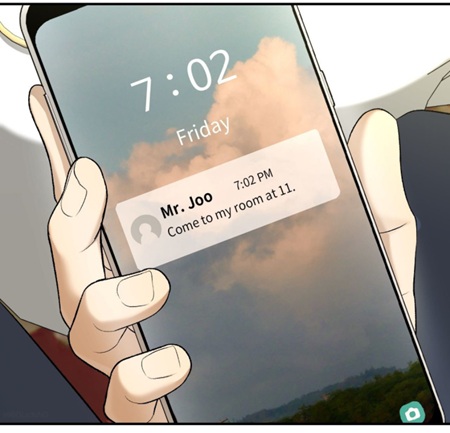 (chapter 85) the need for reassurance, the wish to rewrite the pattern of the past, the quiet hope that Dan will not leave him again — not tonight and not afterwards.
 (chapter 85), as soon as the athlete stands up right after his recommendation and announces he is now returning to his room.
  (chapter 54)
 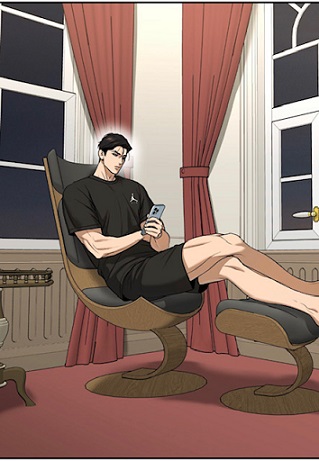 (chapter 38) and Korea
  (chapter 48) before a big fight: watch his opponent’s videos, study their habits, rehearse counters. If we only looked at the clock, we might assume he spent the evening thinking about Arnaud Gabriel.
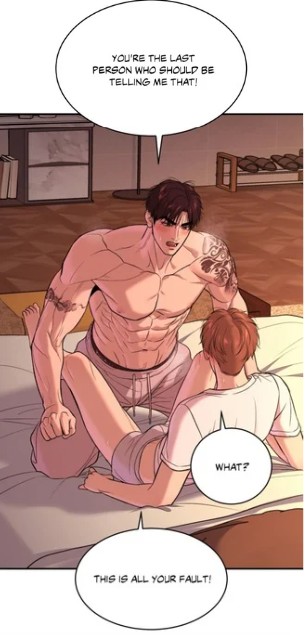 (chapter 85) From 7:02 onward, the question is no longer “How do I beat Gabriel?” but “How do I win doc Dan’s heart?” The clock from 7:02 to 11:00 p.m. stops being a “training window” and becomes an emotional countdown. He is no longer the champion preparing for an opponent—he is the man hoping not to be abandoned again. This is why the later scene at the door feels so contradictory: when Dan finally arrives, Jaekyung behaves like someone who couldn’t wait.
  (chapter 85) He opens the door and immediately grabs him inside
  (chapter 85) This is not the controlled, casual emperor of old; it is someone who has been holding back for hours and refuses to risk even a second in which Dan might change his mind.
  (chapter 65) and the comment of the champion in front of this movie:
 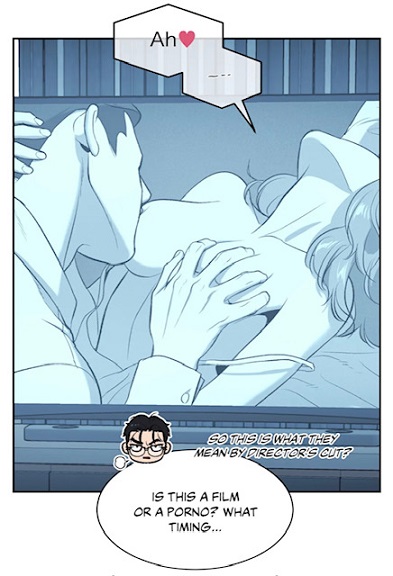 (chapter 29) Moreover, I consider this scene
 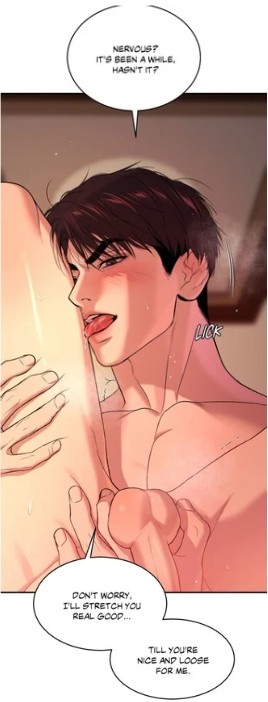 (chapter 85) as a new version of Choi Heesung’s advice: Doc Dan just needs to sit back and enjoy!!
 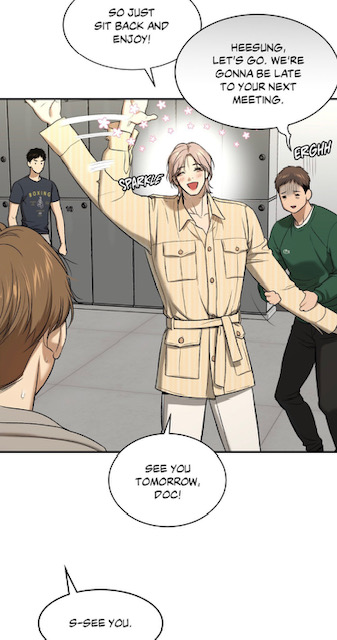 (chapter 31) Joo Jaekyung is now doing everything, as deep down he wants to become the perfect lover! And how had I described the night in the States?
  Back then, the hamster Dan had become the champion’s perfect lover, especially because he had kissed his face, hugged him and confessed to him.
 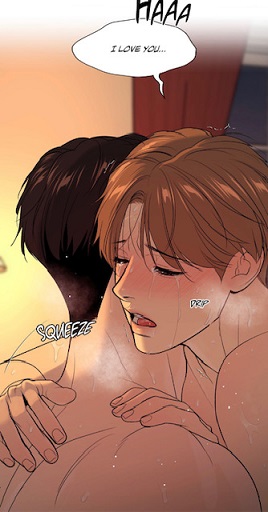 (chapter 39) But if his fear to lose doc Dan was so huge, why did he ask him to come so late then?
  (chapter 38) One might reply that the athlete desired to maintain appearances and as such to hide his suffering and anxiety. In other words, he was hiding his emotions behind routine, Jinx-sex would always start at 11 pm. However, this idea is not entirely satisfying because once doc Dan was in his room, the fighter was no longer hiding his emotions and desires.
  (chapter 72), when the latter would return late from his “work” and the death of his father
 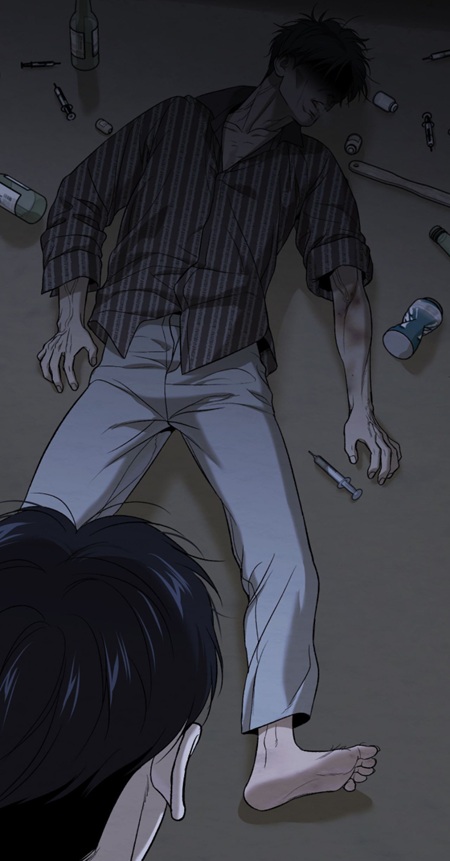 (chapter 73).
 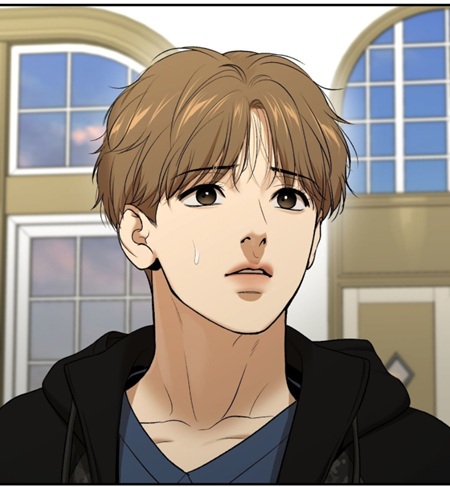 (chapter 85) This explains why his worried gaze followed his fated partner.
  (chapter 85) In other words, the text had a different meaning. It was not an order, but rather a wish…and it had nothing to do with his match against Arnaud Gabriel. During that night, Joo Jaekyung is not seeing a surrogate fighter in front of him or a sex toy, but his real partner, his future boyfriend. This means, this night stands in opposition to the one in the penthouse:
 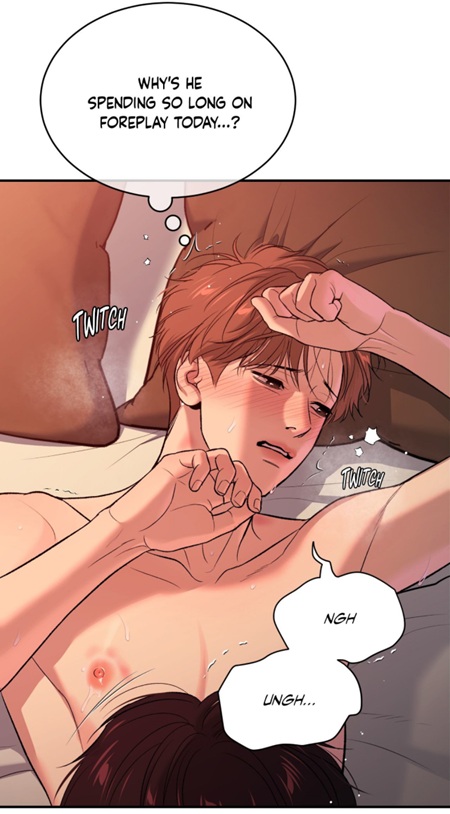 (chapter 85) This is why he touches Dan’s face instead of flipping him over.
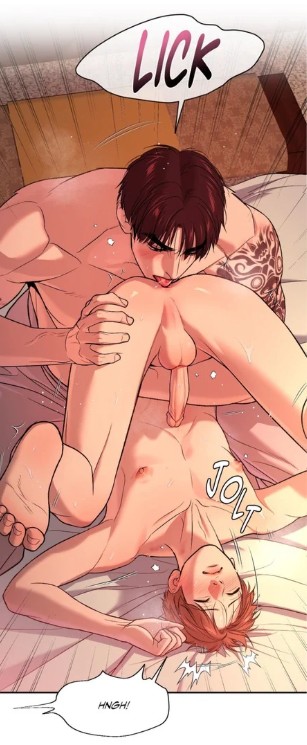 (chapter 85) — something he has never done before. This does not come from instinct. It comes from intention. It comes from effort. It comes from learning. He is indeed showering doc Dan with love and tenderness, therefore it is not surprising that the “hamster” is moved sensually and emotionally. Exactly like during the Summer Night’s Dream, he is reaching nirvana, hence Jinx-philes are constantly seeing stars,.
 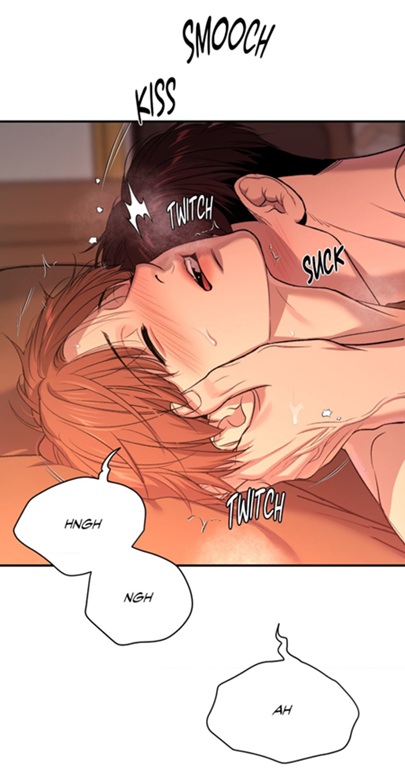 (chapter 85)
  (chapter 85) — or the emotional slip that comes with resurfacing feelings: the therapist losing distance, falling back into intimacy. All of these readings sound plausible at first glance.
 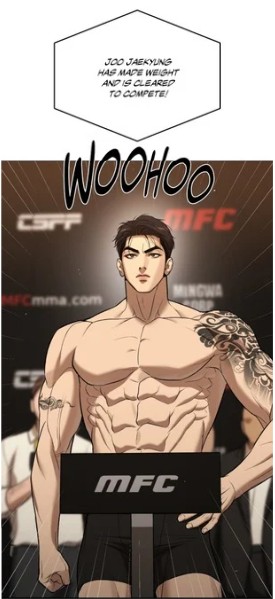 (chapter 85) Styled up, hardened with gel
 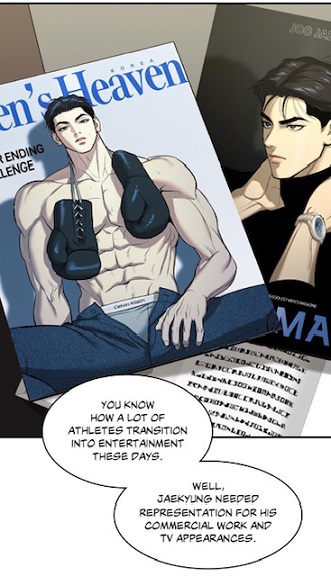 (chapter 30) , perfectly arranged — it is the crown of the Emperor, the symbol of his control, his discipline, and the myth that MFC sells:
 (chapter 85) — but not the way adults or professionals usually do.
 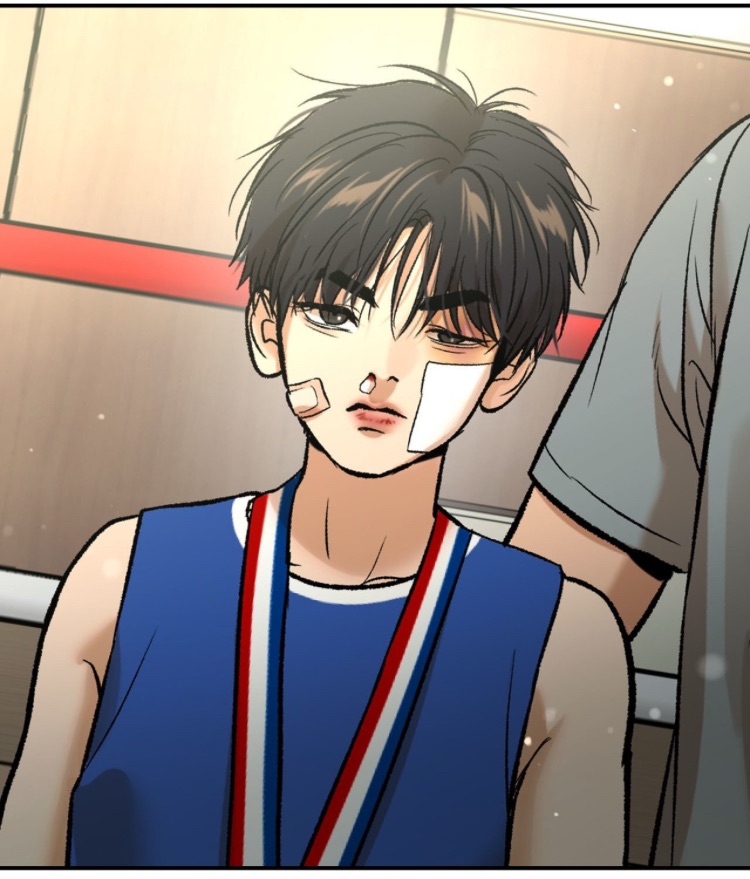 (chapter 71) So doc Dan could recognize the little boy in the athlete, the more he sees the protagonist with his hair down. Furthermore, I noticed that contrary to season 1, Doc Dan has now more memories of the “wolf” facing him.
  (chapter 85) In the past, he would more look at him from behind:
  (chapter 35)
  (chapter 35) Seeing his face reflects not only the increasing care for each other, but also the improving communication between them.
  (chapter 85) more mature, more “masculine” in the traditional sense. This explicates why the stylists had to dress him up.
  (chapter 82) Yet such an intervention did more than prepare him for the cameras — it tightened the restrictions around his own image, reducing the fighter’s rights over how he appears to the world. With the suit, he appeared older and more powerful. The French fighter leans into age, while the Korean champion leans into youth — a symbolic inversion that reinforces the central tension in the Paris arc: Gabriel performs adulthood; Jaekyung rediscovers the adolescence he never lived.
  (chapter 85) But just as Jaekyung begins to slip into these youthful, softer identities, MFC reasserts control.
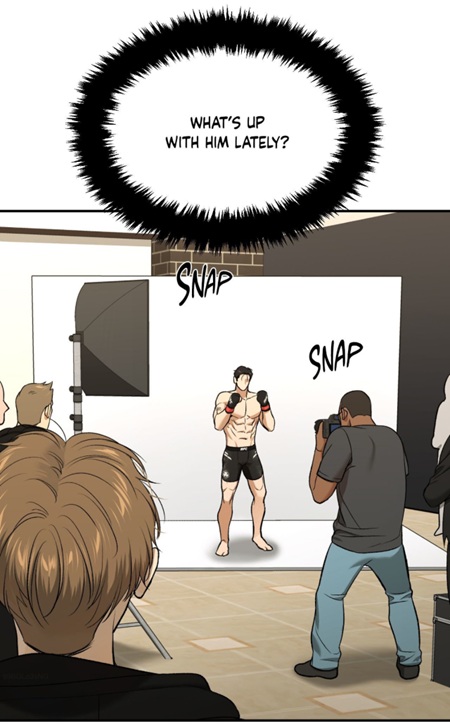 (chapter 85) hair up, face polished, a look engineered for posters and rankings. He becomes once again the Emperor — the man who must appear older, sharper, more intimidating, more manufactured.
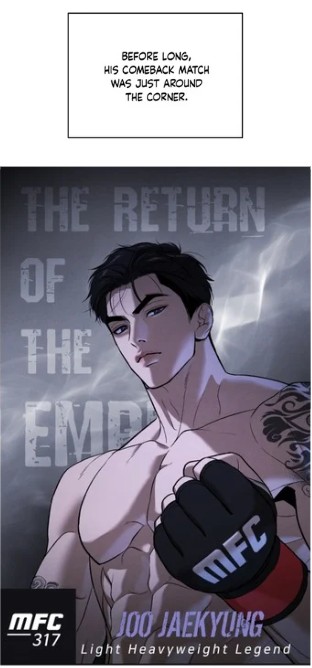 (chapter 79) This is the boy from the childhood photograph.
 In the rain, with his hair heavy and unstyled, his gaze dark and sensual, Jaekyung appears nothing like the commanding emperor. He looks free — freed by weather, freed by desire, freed from roles. It was foreshadowing, not just fanservice. It announces the end of the « jinx » in reality.
 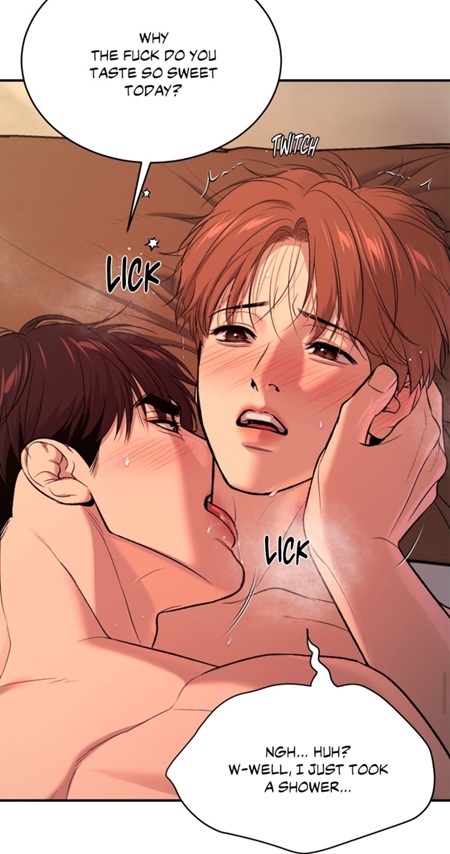 (chapter 85) He is describing himself. His sweetness is the taste of freedom — freedom from performance, freedom from control, freedom from MFC, freedom from fear. He is enjoying this moment. Dan tastes sweet because Jaekyung is finally tasting the life he never allowed himself to want.
 (chapter 21) The image of winged rescue and divine protection hangs over the very piece of furniture that, throughout the series, has functioned as Dan’s private sanctuary. This is not incidental. In Jinx, the couch is tied to his deepest memories of care and abandonment, and Mingwa activates this symbolism each time Dan gravitates to it.
 (chapter 21) Why does he consistently feel safer on the couch than in a bed?
 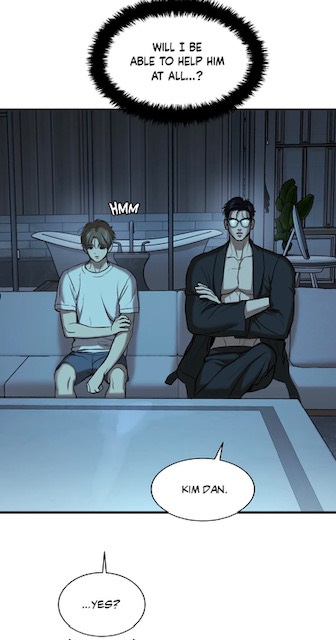 (chapter 29) Why, after the second swimming lesson, did he refuse to return to the bed
 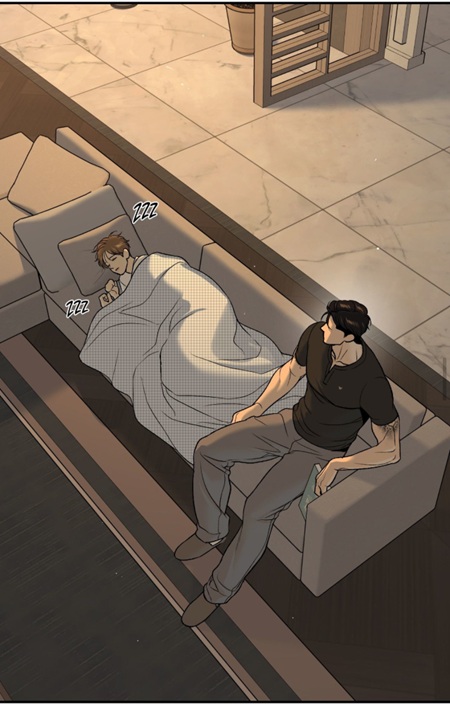 (chapter 81), even though he was exhausted? Why does he place the teddy bear
  (chapter 10) Secondly, at no moment, we ever witness the grandmother carrying the little boy to bed. Either she is rocking him to sleep outside the house
  (chapter 47) or he is already in the bed. We never see her bringing him to bed.
  (chapter 44),
  (chapter 44) traces from parents. And now, you comprehend why the hamster could never truly rest in the bed. The couch is therefore not an adult preference; it is a trauma imprint. Resting there feels safe because beds—large, empty, abandoned spaces—became reminders of whoever no longer carried him. Hence it is no longer surprising that he woke up, when he sensed the vanishing of warmth.
 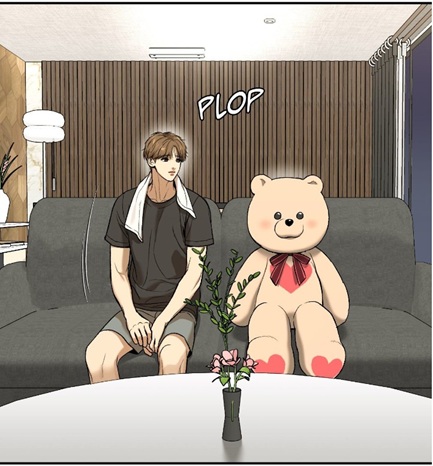 (chapter 84): the bear stands in for a lost comforting presence. It also represents the main lead, Joo Jaekyung. The latter is gradually reentering in the physical therapist’s heart and life. Therefore it is not surprising that there, he squeezes the hand of the toy. It is also why Doc Dan curls around it like a child who deep down hopes to be chosen, lifted, and held. And it is why, even as an adult, his body still whispers the same yearning: someone, please carry me to bed again.
 chapter 40, chapter 65, chapter 68, chapter 79)
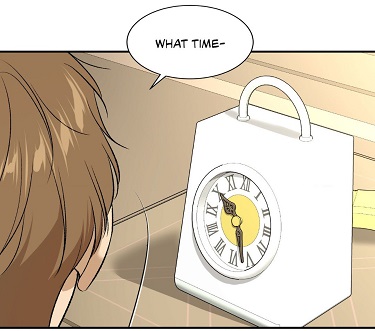 (chapter 85) and he was still able to arrive on time in the arena.
 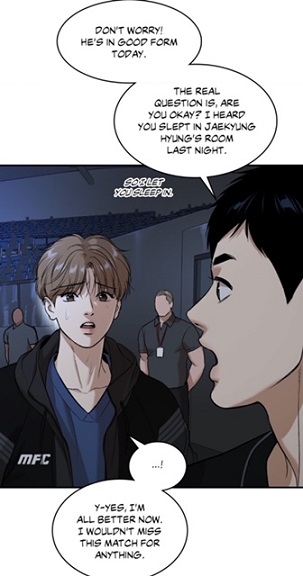 (chapter 40) For me, it is a clue that the manager would always request to meet around 7.00 am, when the match was at noon. But what should do the athlete do during all this time? He can only get nervous and feel pressured.
 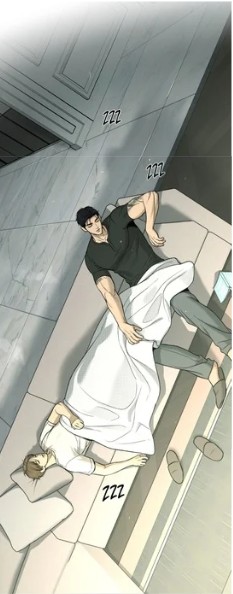 (chapter 81) I noticed that in different scenes from season 2, the athlete started waking up later and even after doc Dan.
  (chapter 66) But the manager’s rigid schedule threatens even that. An early morning summons drains the fighter’s cortisol reserves before the match has even begun, creating a long, empty corridor of waiting — a period where tension, anxiety, fatigue, and irritation ferment in the body. Instead of resting, centering, and preparing, the champion would spend hours fighting against the clock imposed on him.
 (chapter 54) , he might even jump to the wrong conclusion: that Jaekyung drank again — this time behind his back.

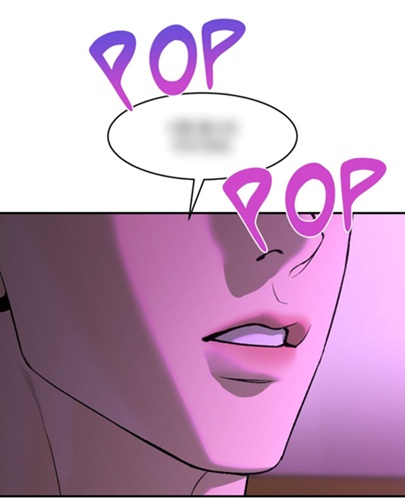 (chapter 84), the fireworks erupt, and Kim Dan turns his head too late.
  (chapter 84) Readers have replayed the blurred panel again and again, straining to decipher the muffled shapes of his mouth. Some are convinced that this is the confession, the moment the wolf finally says aloud what his body has been whispering for months. One Jinx-phile,
  just enough to match the Korean 좋아해 김단 (jo-a-hae Kim Dan)—“I like you, Kim Dan.”
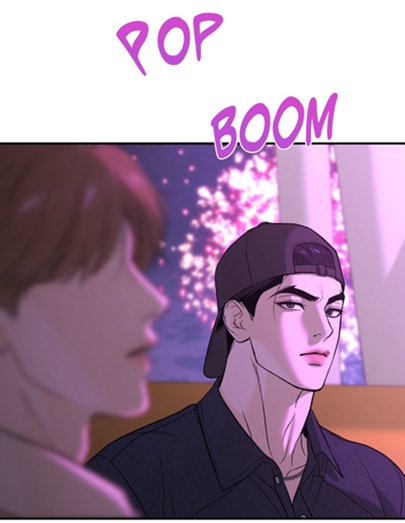 (chapter 84) —especially Japanese summer festivals where boys and girls, dressed in yukata, confess beneath crackling skies. Fireworks symbolize joy, romance, fleeting courage. It is no wonder many readers assumed that Mingwa was drawing on this cultural grammar: purple night sky, glowing lights, two lonely figures suspended above the world. A confession seems almost inevitable. And if it truly was a love declaration, then the champion’s refusal to repeat himself
  (chapter 84) would make perfect narrative sense—confession lost, moment gone, courage spent.
 (chapter 62)
  (chapter 77) Why does Joo Jaekyung speak exactly when the fireworks begin, as if choosing the one moment when he is guaranteed to be drowned out?
 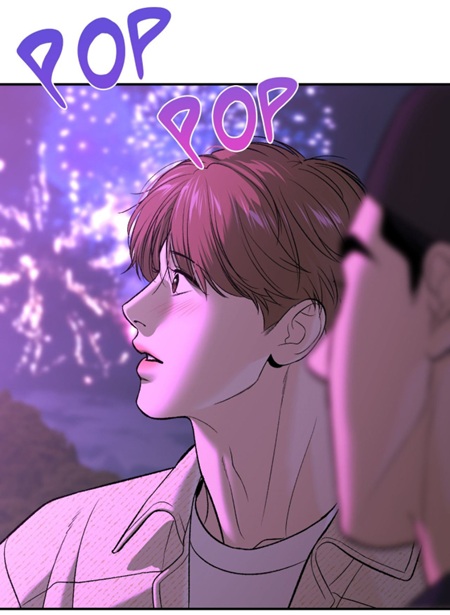 (chapter 84) Was he truly confessing love—or was he trying to verbalize something far more raw, far more primitive, far more difficult?
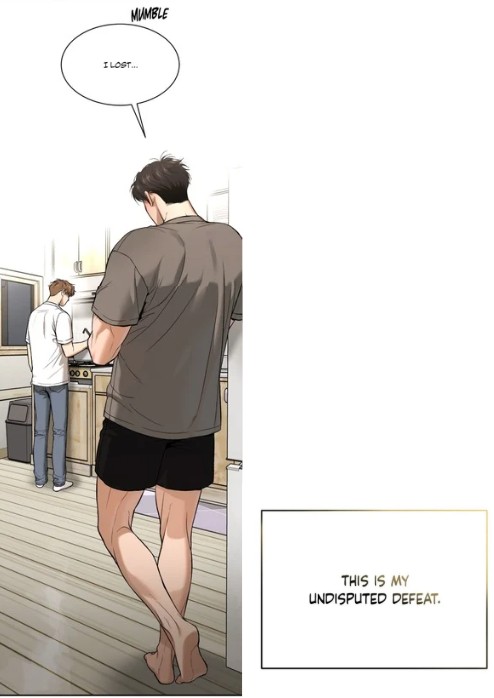 (chapter 76) and 79
  (chapter 79), where he “speaks” only when the other man cannot truly hear him. At the hostel, the mumbling was barely audible: yet according to my observation and deduction, doc Dan seems to have caught something. as later we discover this scene from the champion’s memory:
  (chapter 77) He already knew that the athlete was standing next to him. However, observe that this vision focused on the doctor’s gaze was accompanied with silence. This means, doc Dan acted, as if he had heard nothing. So if he heard, what did the physical therapist catch exactly in the kitchen? “I lost…”, but it was devoid of any context. Doc Dan had no idea what the director Hwang Byungchul had advised to his former student.
  (chapter 75) He could not know that “I lost” referred to something far more intimate: Jaekyung losing control over his own emotional detachment, he was totally vulnerable in front of doc Dan. His heart was stronger than his “mind and fists”. Naturally, if Kim Dan interpreted the phrase at all, he would connect it to the only “loss” he understood: the tie with Baek Junmin. A humiliating defeat. A source of shame. This misinterpretation perfectly explains why in the cabin, the hamster immediately assumes that the champion is once again determined to regain his title:
  (chapter 84) He is taking the champion’s words at face-value.
  (chapter 77) He trusts the explanation Jaekyung himself gave under the tree. And here lies the deeper revelation: Kim Dan’s misunderstanding exposes the true meaning of the tree confession. Why did Jaekyung suddenly accept the match? Why frame it entirely in terms of “I need you for these two fights”?
 (chapter 84) A deadline designed to keep Kim Dan close without revealing the depth of the emotional dependency underneath. Finally, before we even analyze posture or timing, we must acknowledge the ghost that is sitting inside the cabin with them — Jaekyung’s own admission of dishonesty. Just minutes earlier, the narrative revealed again a thought he had never dared to voice aloud:
 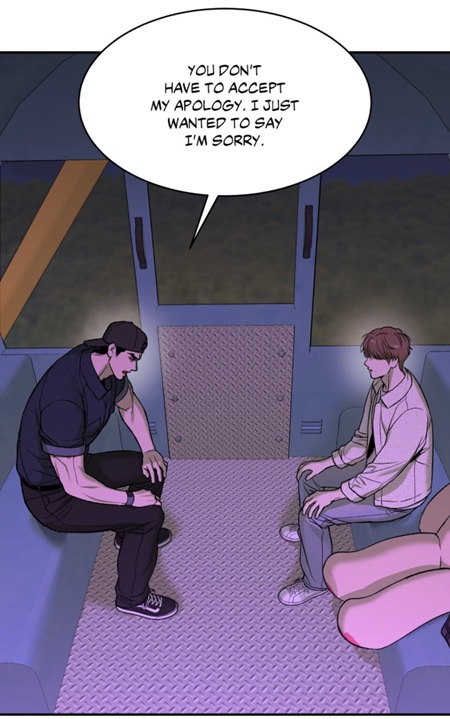 (chapter 84) For the first time, he admits wrongdoing without deflecting, without rage, without pride. This apology is not strategic; it is confessional. A tone we have never heard from him before. It is no coincidence that just before, he employed this expression:
  (chapter 84) This is the language of surrender — not to defeat, but to vulnerability and selflessness. The champion who once insisted on keeping Kim Dan “one way or another” (chapter 84) now articulates the opposite impulse: the willingness to release him, to give him a choice.
 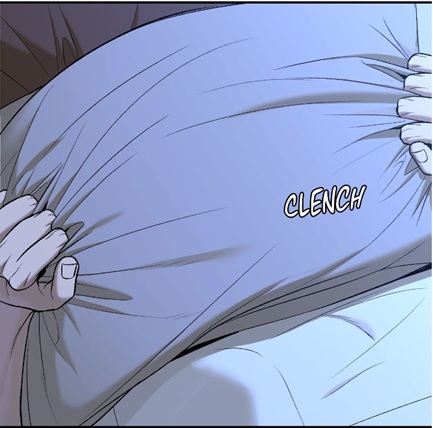 (chapter 84) Thus for me, in the cabin the champion became, for a moment, the boy with no mother’s gaze, no father’s protection, no safe place to rest. He must have said something cheesy, something a young person would say. Purity returns before experience does. Honesty returns before articulation. And in that moment inside the cabin, Mingwa makes a decisive artistic choice: we do not see Jaekyung’s eyes.
 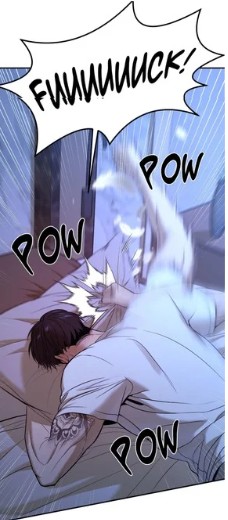 (chapter 84) This pigment stands for innocence, purity, new beginnings and even equity.
 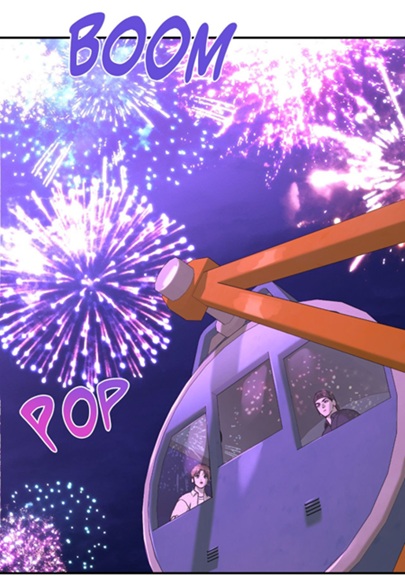 (chapter 84) Because they were not yet meant to be received, only meant to be released. The fireworks allow him to finally attempt a more honest sentence, but in conditions where it cannot reach its target.
 (chapter 81) Yet this is also the limit of what he can say.
 (chapter 79) Thus he could see the athlete’s mouth moving and hear sound. Nevertheless, observe that the moment the wolf reached to the doctor’s words, he bowed his head and looked down. From this
 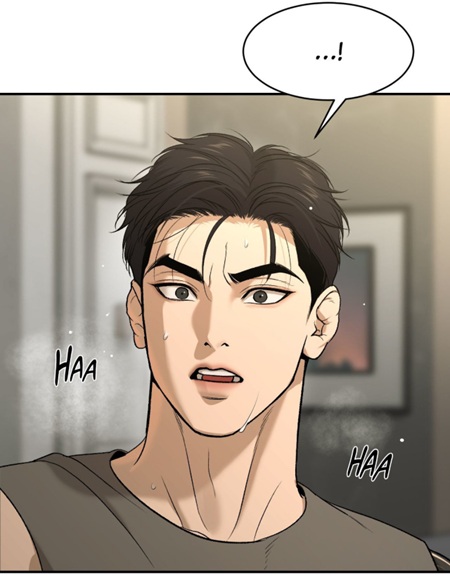 (chapter 79) to this
  (chapter 79) However, he doesn’t fear coldness, but ridicule and mockery, the father’s gaze:
 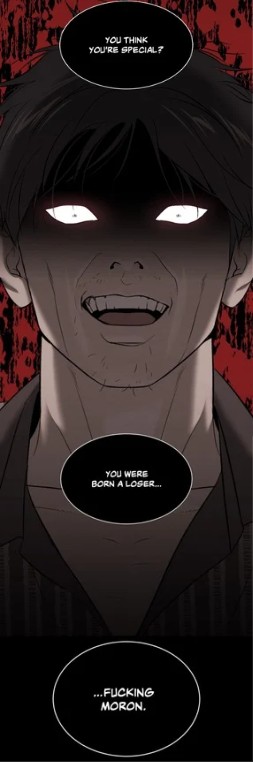 (chapter 73) Under this light, people can grasp why Joo Jaekyung was not facing doc Dan directly in the cabin. To conclude, the mechanism is identical, but amplified.
 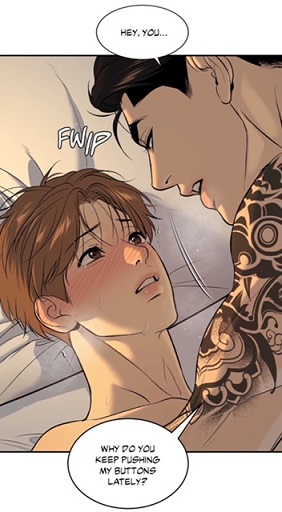 (Chapter 44)
 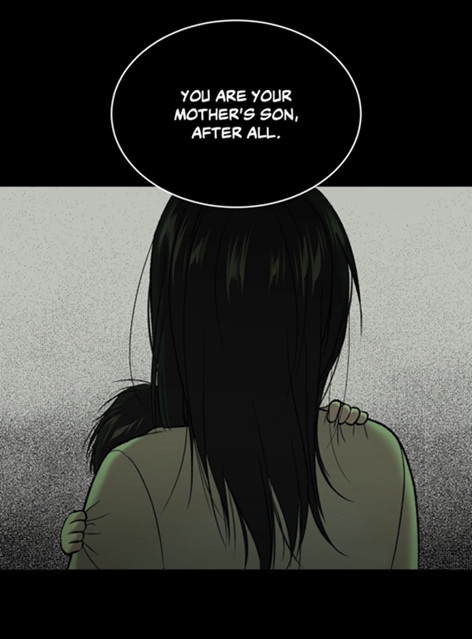 (chapter 73) Besides, the head of her position is indicating that she was not looking at her son, the boy was hiding his face from Joo Jaewoong and his mother. Then his father mocked him, degraded him, and used resemblance as an insult: “
 (chapter 74) or his mother (a poor but good mother), he was not seen for whom he was: a child, a boy. Jinx consistently links sight with recognition, and recognition with love.
  (chapter 53) Jaekyung has never been granted either.
  (Chapter 45) Thus when he got upset with the present, he indirectly expressed the wish to be « looked at ». Moreover, in his visions or memories, this is what he keeps seeing:
  (chapter 54)
  (chapter 75) Doc Dan’s gaze!
 (chapter 51) And for the first time, Jaekyung freezes.
 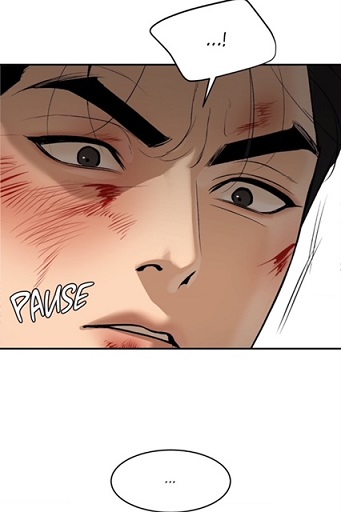 (chapter 51) His breath catches; his eyes widen. It is the moment he realizes his mistake. He never thought that doc Dan had been trusting him. That moment marks the first rupture in his emotional armor, not only because it hurt, but because it revealed. He realizes with terror that he wants to be seen by Kim Dan, but when he faced such a gaze, he could only feel guilty and bad. Thus it is not surprising that later, his nightmare let transpire his guilty conscience.
  (chapter 82), as the champion has always used his surroundings as a source of inspiration.
  (chapter 84) The gaze under the fireworks triggers emotions in him. Thus he blurted out something. But for me, he does not know how to say “I love you.” He cannot even say “I like you.” Those sentences belong to someone who has matured emotionally — someone who can identify feelings properly, but so far he keeps saying: “to stay by his side” and his « affection declarations » were all linked to negativity.. Thus my idea was that Joo Jaekyung could have said this: “I want to hold you!” (안고 싶어 너). Let’s not forget that so far, the champion had never expressed such a longing before; a warm embrace. He would always follow his instincts:
 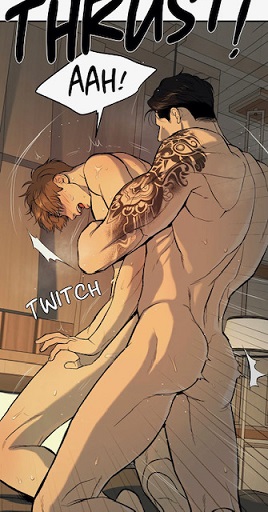 (chapter 4)
 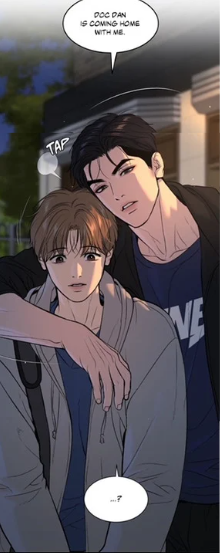 (chapter 43)
 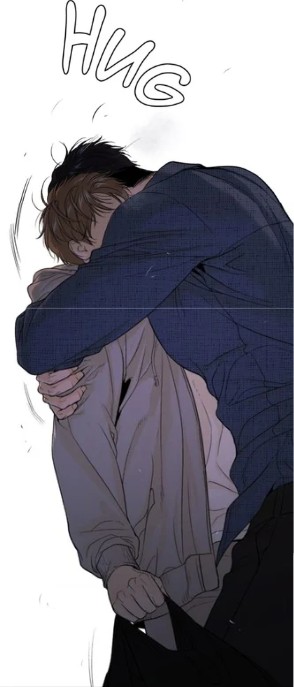 (chapter 69) The hug represents a metaphor for “staying by his side, for home and to be seen”. Moreover, in French embrasser can mean kiss and hug. And strangely, I noticed that the protagonists were never looking at each other during an embrace.
  (chapter 44) And let’s not forget that such a gesture is strongly intertwined with “childhood”.
  (chapter 65) It is for “babies”. No wonder why he retracted immediately.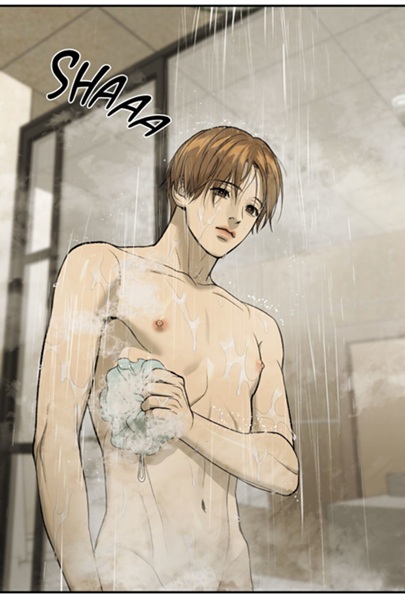
 (chapter 84) Here, the doctor looks sad and wounded. His eyes are unfocused — he is not seeing the present. The water running down his eyelashes gives the impression of tears, even though he is not crying. His gaze is distant, fixed on something internal. His mouth looks tense, almost trembling. The mouth especially is a clue: Kim Dan’s emotions always gather there when something from the past resurfaces.This is the expression of someone thrown into an involuntary flashback. He is inside a memory. This explicates why this scene is similar to the champion’s shower after the latter had met Baek Junmin:
 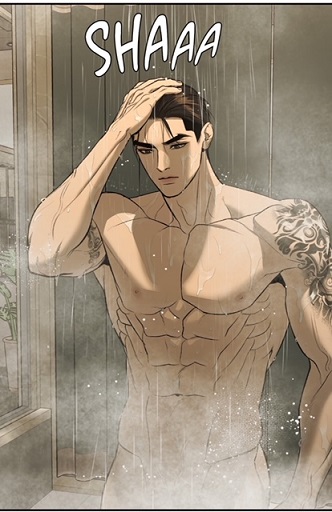 (chapter 49)
  (chapter 49) Both scenes show a man pulled violently into a buried memory. Thus, my assumption is simple: the champion said something that pierced straight into Kim Dan’s oldest wound and brought his trauma to the surface. And this brings me to my next observation. Inside the cabin, there are not two people — there are three: the champion, the therapist, and the Teddy Bear.
 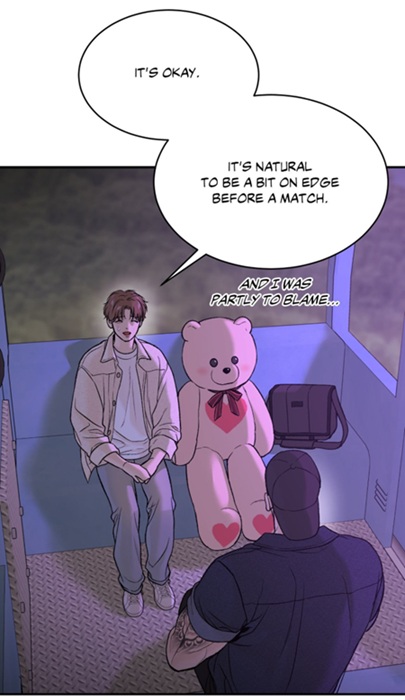 (chapter 84) Furthermore, we have a window. We have a phone (dead, but present). We have a childlike toy — symbol of stolen innocence.
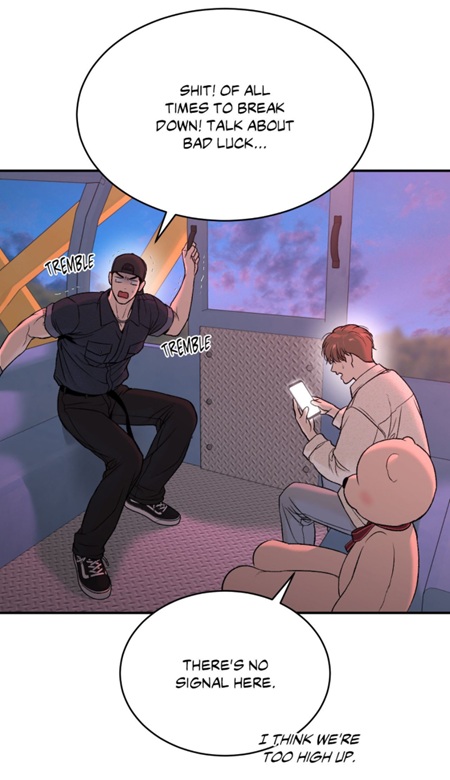 (chapter 84) And now, look again at episode 19:
  (chapter 19) A window with no view. Three figures: halmoni, the boy, and the phone placed between them like a knife. And the sound structure is identical, but reversed:
 (chapter 56) In other words, wearing black is more than just a change of personality or mourning. It becomes the color of mystery, the beginning of descent into truth.
 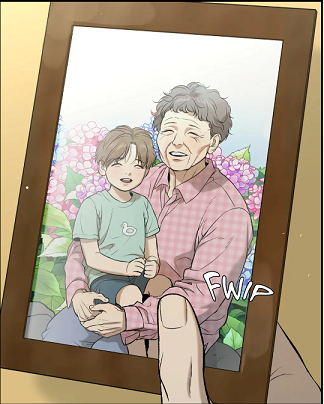 (chapter 19). Observe that in the penthouse, doc Dan has never placed the frame
 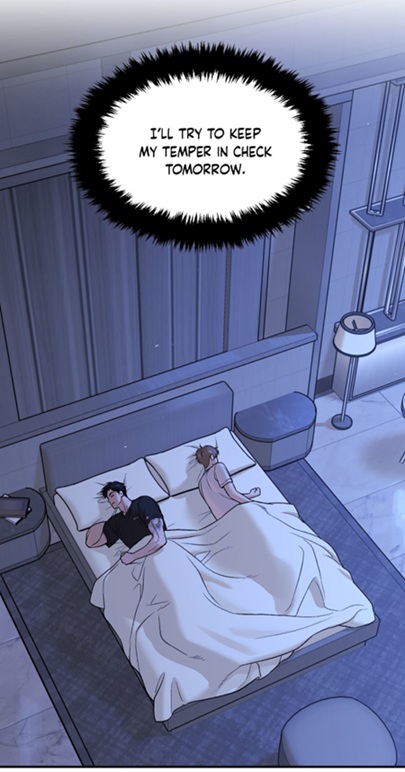 (chapter 79) on the night table.
  (chapter 84) Every time innocence is ripped away, a teddy bear disappears from the story.
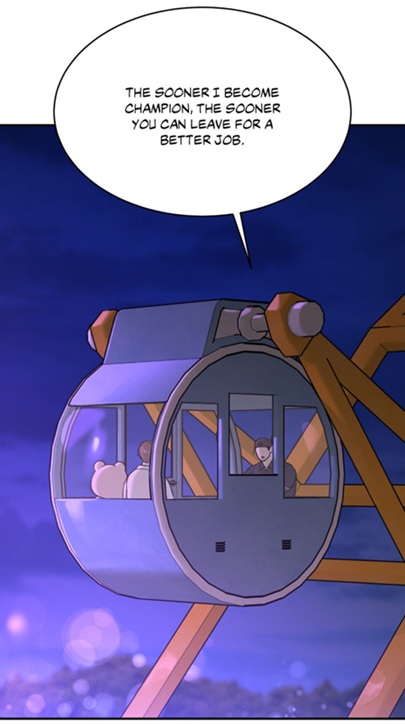 (chapter 84) So by wearing black, doc Dan indicates that he is gradually becoming responsible for Team Blackand Joo Jaekyung the athlete.

 (chapter 81) No airport appears, no greeting, no applause — only movement, silent noise, and distance. The scene refuses arrival. It’s as if the air itself has become unwelcoming, unsure whether to receive or reject the traveler.
 (chapter 74) What does it mean that a man who once reached for his mother’s voice is now suspended between clouds, unreachable himself?
  (chapter 74) Why does the same stillness that once followed a farewell now fill the air around his flight?
 (chapter 65) Let’s not forget that the last poster of chapter 81
  (chapter 74) In that earlier scene, the smoke rises from burning incense sticks which is linked to scent — the invisible bridge between the living and the dead. Here, it reappears as the airplane’s exhaust
 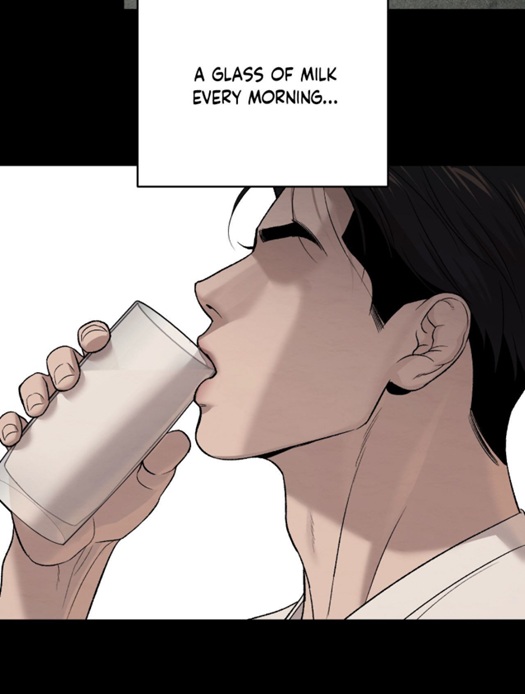 (chapter 75), perfume
  (chapter 75) became instruments of anesthesia, each meant to silence the body that once betrayed him.That betrayal did not come from the body itself but from what it carried — his father’s shadow.
 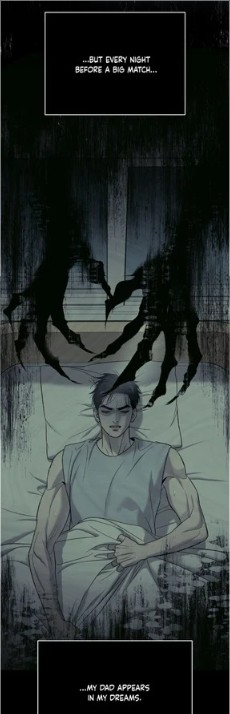 (chapter 75) Every muscle, every breath, every instinct reminded him of the man he swore never to become. The body was a mirror of lineage, and lineage meant failure. In his dreams, that failure still reached for him: black hands emerging from the dark, the father who had lost everything.
 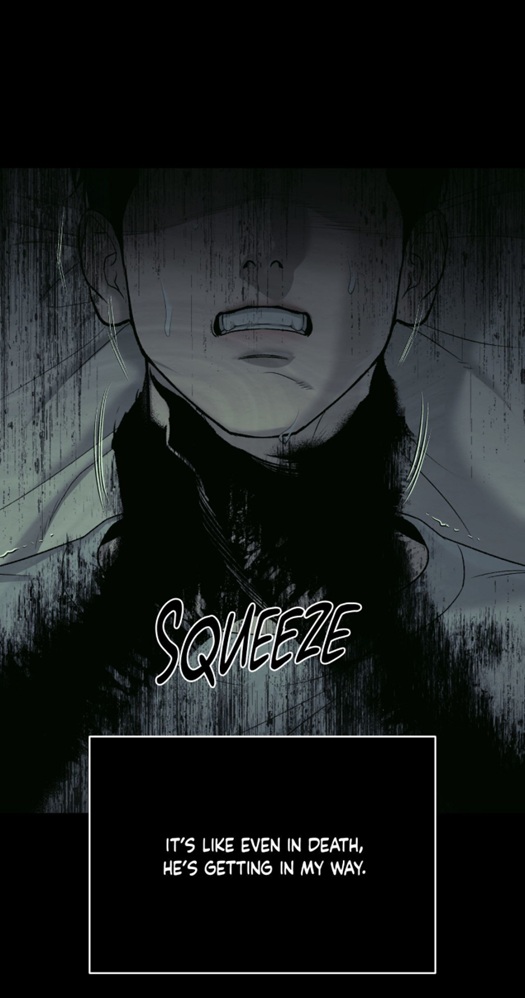 (chapter 75) The fighter calls it a “dream,” not a nightmare, because fighting was once his father’s dream — a dream of escape, of being seen, of proving that poverty was not fate. But for the son, that same dream turned into a curse. To fight was to repeat what had already destroyed the family.
 (chapter 75), the forbidden comfort that ended in scolding.
  (chapter 72) When he finally received it, it was not from a mother but from the director — a man whose gift could fill the stomach but not the heart. From that day, nourishment and submission became one.
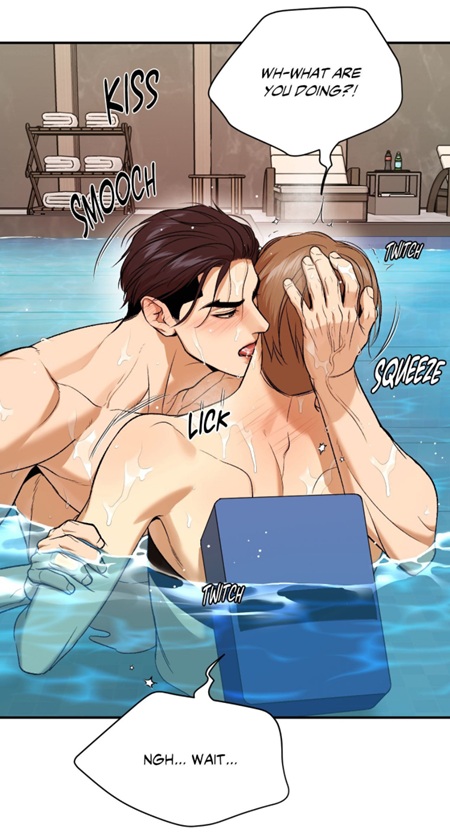 (chapter 81) — the same spot where he once sprayed his perfume
  (chapter 44) — nuzzling the one destined to become his anchor. Jinx-philes can observe not only the presence of steam (which is similar to smoke), but also the effect of the scent. Back then, the champion had calmed down thanks to the hamster’s scent.
  (chapter 45)
  (chapter 65) He will make sure that doc Dan doesn’t smoke again and his scent remains pure. This signifies that the wolf will pursue its source through the smoke of deception, through the perfume of luxury and corruption. The doctor becomes both compass and contrast — the pure odor that exposes every false aroma around him. Through Dan’s scent he will breathe again—through that fragile, living fragrance the wolf begins to track the truth that stinks beneath luxury and lies.
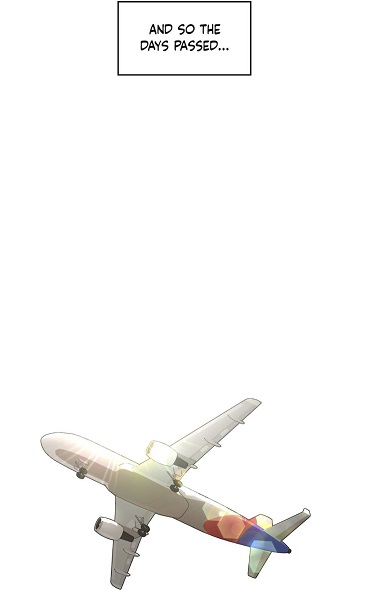 (chapter 36) When the champion left South Korea for the United States in episode 36, the plane glided through a void of light. There was no sky, no earth, no horizon — only a white expanse pierced by the sun’s glare. Even the boundaries of air and space seemed dissolved. The image radiated purity but felt sterile, stripped of texture. The machine was rising, not toward a destination but away from attachment itself.
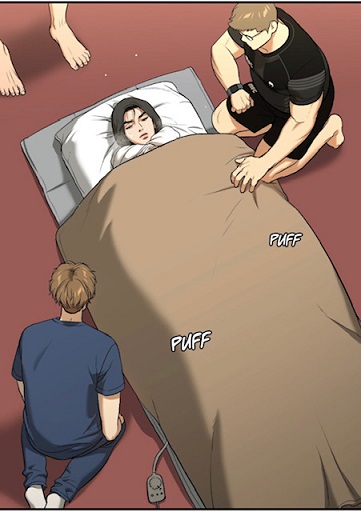 (chapter 37), the heart disinfected of need. Hence the bed became an instrument of “torture”. The upward flight marked a beginning, yet it already smelled of exhaustion and futility. A life built on departure cannot land anywhere.
 (chapter 78) Through Hwang Byungchul’s blunt words, the Emperor finally realized that he possessed an identity of his own—one not confined by inheritance or shame. The insults that once defined him,
 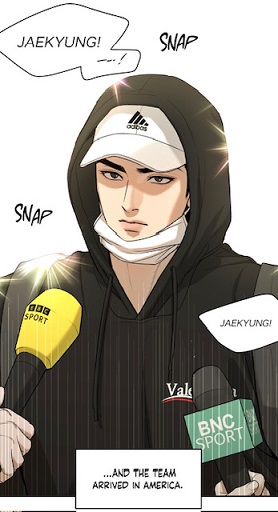 (chapter 36) instead of naming Joo Jaekyung himself. He might have stood beside the MMA fighter the entire time, yet he preferred to disappear behind collective language, as if the plural could shield him from personal involvement. It was a professional gesture, an attempt to efface the self, to stand beside the fighter without belonging to him. His role was service, not solidarity; his language confirmed distance. Thus his karma was that he got abandoned by the team after the match, while rescued by the celebrity himself!!
 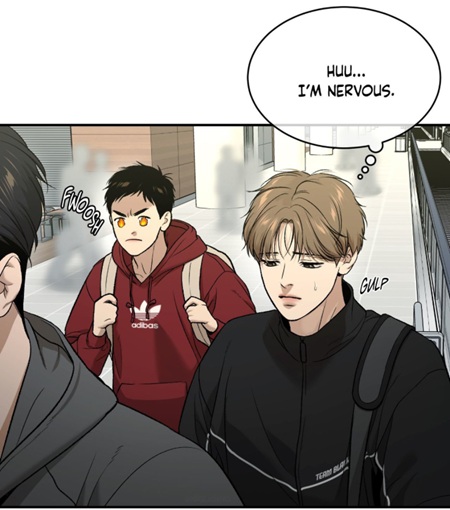 (chapter 81) translates that awareness into sensation. It’s no longer the passivity of a bystander but the heartbeat of someone invested. The count of days becomes a shared horizon between doctor and fighter, a bridge of feeling.
  (chapter 81) When Jaekyung exhales the same “huu,” their anxiety synchronizes, transforming fear into connection. The loop of repetition (“days passed”) has turned into a countdown of empathy (“eight days left”). Time itself has begun to belong to both of them. The same “team” has become real, but contrary to the past: there are only 2 members, Kim Dan and Joo Jaekyung. At the airport he wears the Team Black jacket, a subtle but deliberate signal that he has accepted inclusion. The jacket is not uniform; it is recognition. Both form 8, which is a symbol for balance and infinity.
 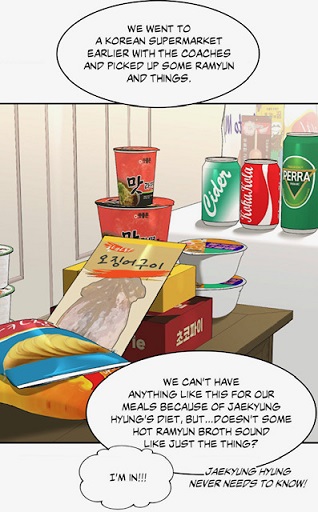 (chapter 37) The others indulge in small pleasures — snacks, shopping, light rebellion — but the champion and his doctor remain trapped in routine, orbiting one another inside sterile rooms. I am suspecting that doc Dan must have bought the scarf at the airport, a small act of thoughtfulness before departure.
  (chapter 41) Yet the gesture, though sincere, carries a quiet irony. The scarf is printed with flowers, mostly roses, but as a piece of fabric it has neither scent nor warmth. It imitates life without containing it. What he gives her, in truth, is a copy of affection, not its essence — a bouquet that cannot breathe.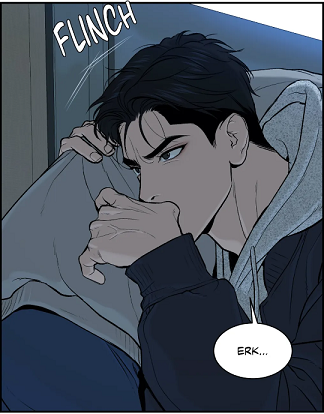
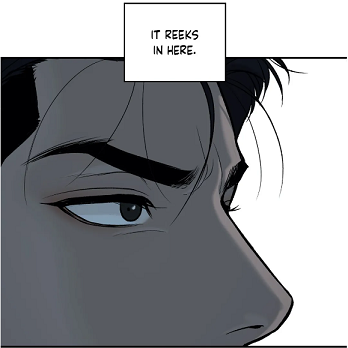


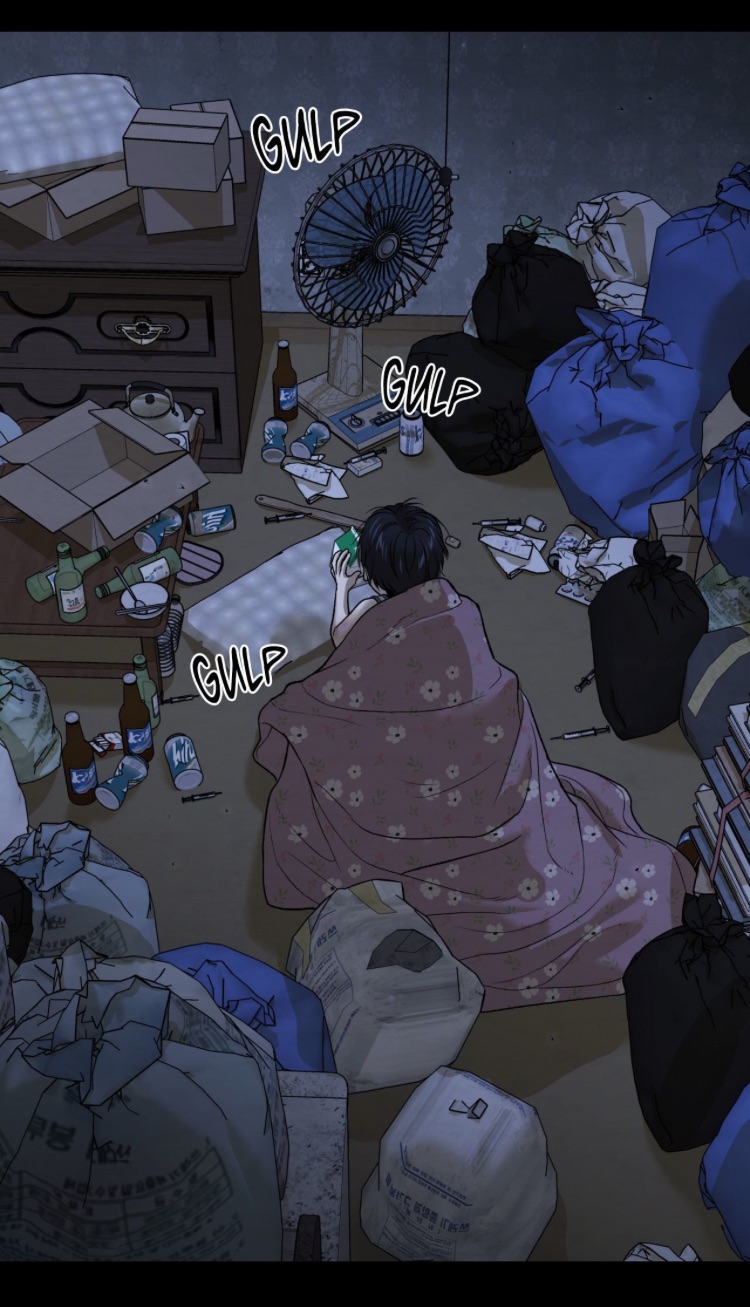 (chapter 72) — the garbage, the spoiled food, the stale air of neglect. What he truly covers is not his nose, but his fear of returning there. Later, in episode 22, when Dan cooks for him, the champion instinctively associates food with corruption:
  (chapter 22) Interesting is that here fish has a negative connotation: intrusion and thoughtlessness. This shows how detached the champion was from his true self: water and the ocean. Moreover, cooking, warmth, nourishment—all evoked garbage, the chaos of his first home.
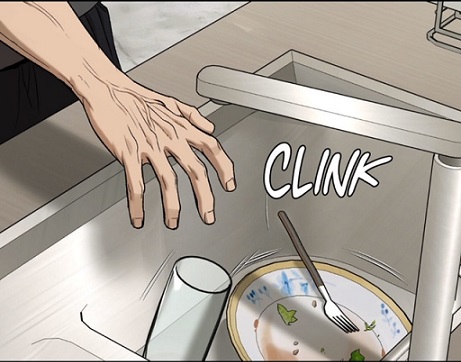 (chapter 54) couldn’t nourish him. Hence he replaced it with wine for a while.
 (chapter 74) Their fragrance became the perfume of loss. To his senses, flowers never meant beauty or love or nice smell; they mean burial and as such pain. Every petal recalls the suffocating smell of the funeral room, the smoke, the artificial but painful peace of goodbye.
 (chapter 32) The blue tie contains 3 striped colors: red, white and blue, which are quite similar to French flag, though the order has been switched. Secondly, Choi Heesung purchased
 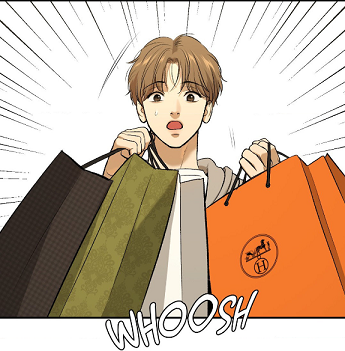 (chapter 32) Hermès’ item, a French company famous its bags, scarfs and perfumes. So I am quite certain that once Jinx-philes discovered the identity of the next fighter
 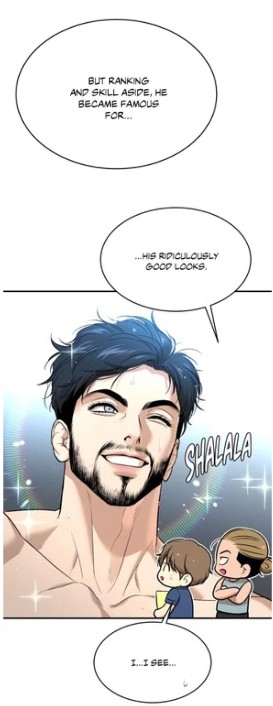 (chapter 81) and saw the plane, they must have jumped to the conclusion that the next fight will take place in Paris! But France is more just than the capital. This country is called the Hexagon due to its form, and this name stands in opposition to the MMA ring, which is an octagon!
  (chapter 40) Interesting is that the team at the airport is composed of 6 people.
  (chapter 81) So we could say that despite the disadvantage being in a foreign country, they are “equal”, 6 colors against the team from the Hexagon, the blue light from the MMA ring. But let’s return our attention to Paris. The latter is widely recognized as the symbol of love, the global center for fashion, art, and stardom. The city has a deep historical connection to these fields, being the birthplace of haute couture and home to many of the world’s leading fashion houses and luxury conglomerates. Its cultural scene is equally rich, with a long history as a hub for artists and a more recent reputation for being a center for music and film stars. However, the image with the landing plane is actually revealing the truth.
 (chapter 81) and “splash”
  (chapter 14) Here, exactly like in the States, his trip to Busan never gave him the opportunity to visit the city and the beach, exactly like the athlete. The next airport to Cannes is Nice- Côte d’Azur and it looks more like the one in the Manhwa. Furthermore, the South of France has a milder climate in the fall, hence it is still possible to swim in September. Besides, in my last essay, I had connected the champion to Bruce Lee and water:
  Finally, Naturally, here I could be wrong with Cannes. Nevertheless, Cannes, with its glittering shorelines and film festival glamour, symbolizes the marriage of money (millionaires, yachts) and illusion — the theater of appearances. It is where contracts are made, where bodies are displayed, traded, and consumed through the gaze, the very economy that has always governed the champion’s existence. The wolf, once born among garbage and hunger, now finds himself surrounded by luxury, in a world perfumed with artificial success. Yet beneath the surface of that “breeze” and “splash” lingers the scent of corruption. The coastal light hides what the smoke once revealed: exploitation, manipulation, and the unspoken violence of commerce.
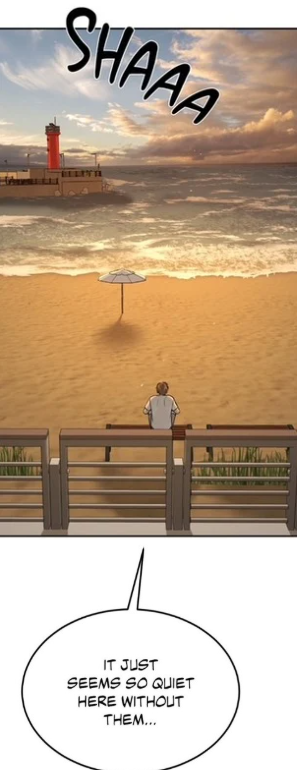 (chapter 59); silence had replaced air; life was drained of flavor. None of them truly enjoyed the nature: the ocean or the mountain. The seaside town was strongly intertwined with work
 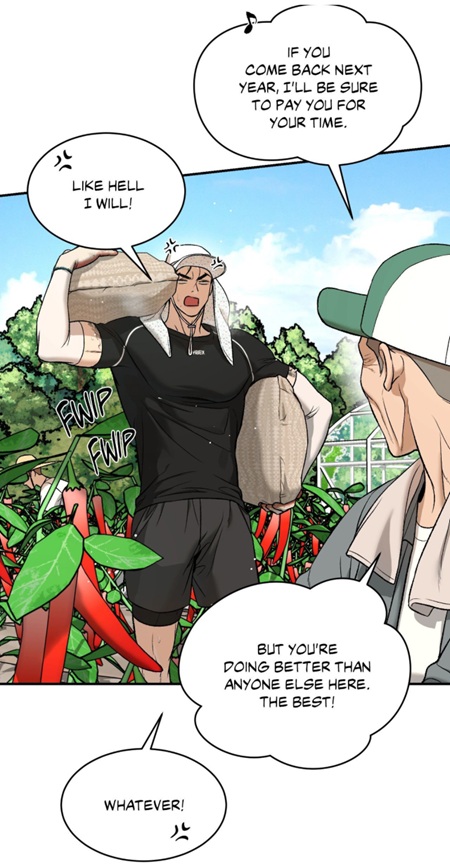 (chapter 77) or danger. Then, when they returned to that place, their time was limited to visit the grandmother and the landlord.
  (chapter 81) They had no time to walk through the woods or visit the hills. They had no time for themselves. Consequently, I believe that in The French Riviera, the two of them will discover “savoir vivre”. Everything breathes, glows, and stirs. It is a land overflowing with color, aroma, and taste — precisely the senses that the wolf had long sought to erase through ritual. Doc Dan had led a similar life too, dedicated to his grandmother and work. If they are close to the sea, they might decide to walk on the beach together.
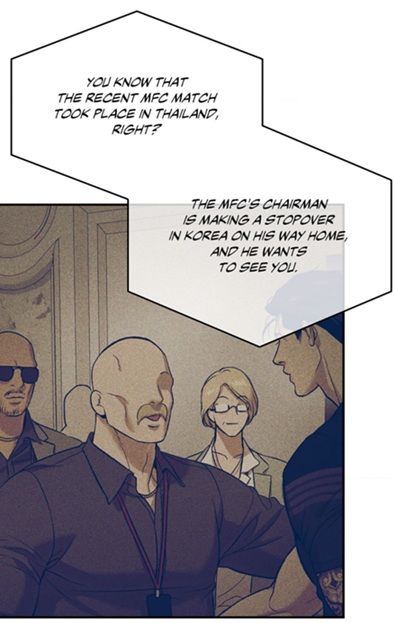 (chapter 69), where Baek Junmin once fought for the championship belt. Thailand in Jinx is not a paradise but a mirror of corruption — the place where victory turns into prostitution, where the body becomes currency. There, the Shotgun won a crown but not respect; his triumph was drenched in manipulation, spectacle, and moral decay. He was admired by no one, celebrated by ghosts.
 (chapter 69) He was crowned, yet unseen. In his bitterness, he mistakes vengeance for validation. If Jaekyung falls publicly, perhaps the Shotgun’s own shame will finally be understood. Thus, France becomes his stage of revenge — not through direct confrontation, but through orchestration. The game he once lost in Thailand, he now rewrites from the shadows.
 (chapter 36), the transition from flight to arrival unfolds with seamless precision: no airport, no customs, no luggage — only the honk of city traffic and the flags fluttering over a hotel entrance. Everything about that journey screams logistics. It was a corporate trip, arranged, timed, and contained. The athletes passed through invisible gates, their movement stripped of individuality. The champion, like cargo, was transported rather than welcomed. His arrival, though triumphant
  (chapter 81)
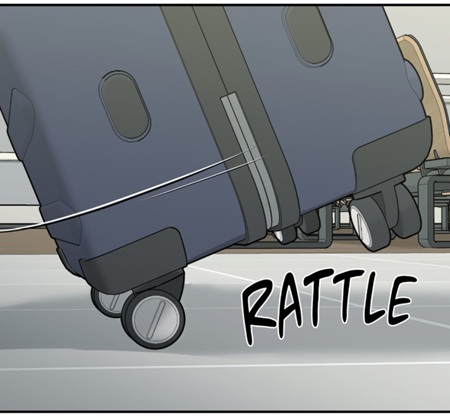 (chapter 81) The suitcase becomes the true protagonist of this threshold. In that small vibration lies all the instability the white air once denied. It is his portable home, his compressed past, the fragile proof that he finally has something to lose. In the earlier arc, he could have vanished mid-flight and no one would have noticed; now, if the suitcase disappears, another heart will break. That difference measures his evolution. Yet it also marks new vulnerability: any hand can touch what he carries.
 (chapter 41) and the wedding cabinet
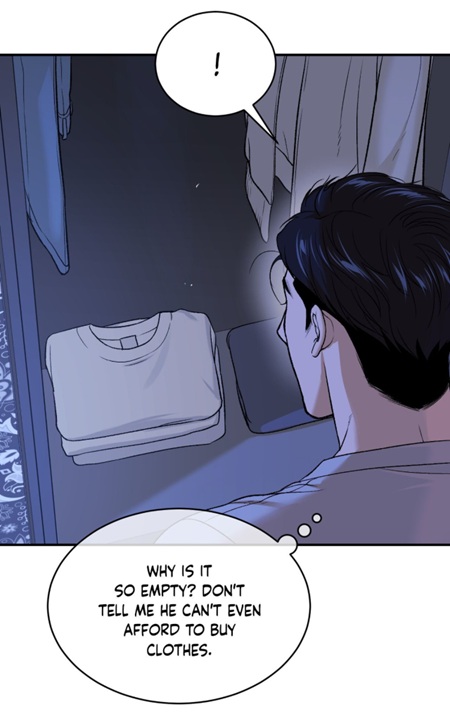 (chapter 80) before it, the suitcase belongs to the same symbolic lineage. It is the container of intimacy — filled with clothes, precious items like pictures or books, with the silent evidence of presence. But unlike its predecessors, it moves. The wardrobe once stood still, rooted in the domestic; the wedding cabinet invited intrusion within a private world, as it was once discarded. The suitcase, however, carries that vulnerability into the public realm. It is exposure on wheels — the private made portable.
 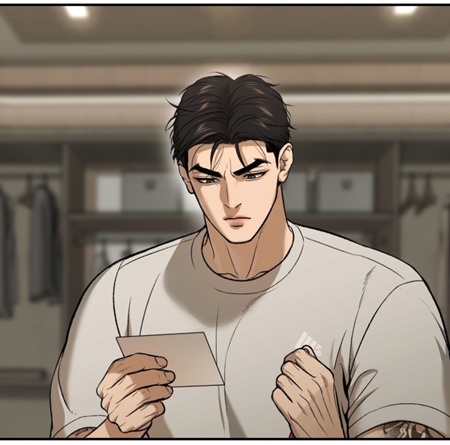 (chapter 81)
  (chapter 81) and Kim Dan has still no idea that the athlete has kept them like cherished relics. He might have placed the notebook from Hwang Byungchul as well. However, the person carrying the suitcase is the manager:
 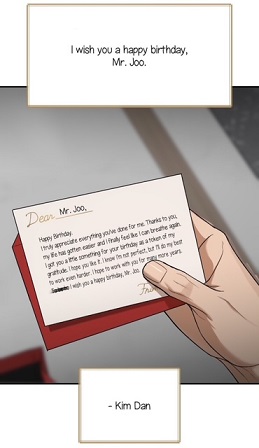 (chapter 55), where he expressed his desire to work for Joo Jaekyung for a long time. What would be the manager’s reaction, when he recalls this incident with the switched spray and Doc Dan’s sudden departure? Moreover, we have here “erased words”: to be ho… The timing of the discovery is really important. This could generate some tension and confrontation between the manager and the physical therapist. Besides, such a birthday card could generate negative feelings (like jealousy), Kim Dan is gradually taking more and more place in the athlete’s life. The violation that once occurred behind closed doors (the penthouse) now could happen in plain sight. The line between private and public collapses, just as the boundary between success and loss blurs.
 (chapter 75) While he was sick, he could recall this scene.
 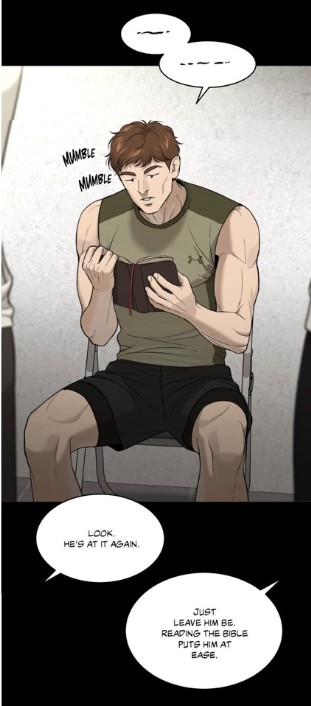 (chapter 75) where the fighter could stay focused, though he was surrounded by noise and people. The advice had seemed trivial, when first given. Now it re-emerges as revelation. The emperor, once incapable of rest, now reads
  (chapter 81) beside someone who represents safety. The book becomes a bridge between wakefulness and sleep, a ritual that does not erase consciousness but calms it. Where his earlier practices sought to block sensation, this one restores it.
 (chapter 81) The paper bends, absorbs scent, bears traces of fingers and warmth; the metal resists, reflects light, carries weight. Together they represent the balance between tenderness and strength — precisely what his life has lacked. In contrast to the mechanical milk and odorless perfume, these objects are human, imperfect, touchable.
 (chapter 80) And here, I had imagined that the mother had offered this t-shirt as a birthday present.
  (chapter 72) Each call was a prayer cast into emptiness, the sound of longing echoing against the wall of indifference. She taught him to expect nothing from tenderness. she had implied that she was weak, a victim of the husband’s tyranny, while she pushed the young boy to become a parent: cleaning the house, working, earning money. Her “warmth” had been performance; her concern, deception.
 (chapter 72) He did not sleep like a child but like an object kept near for safety. The woman lying beside him was a mother in name only — emotionally distant, physically present. No stroke, no kiss, hence the boy had to clinch onto her.
 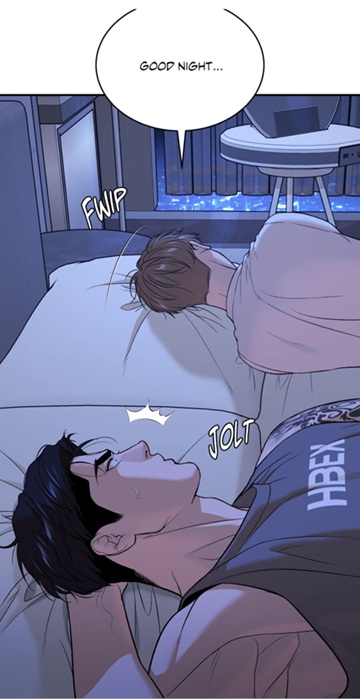 (chapter 78), without the good night! That missing intimacy was not a void but a distortion — a tenderness twisted into survival. The mother’s touch, meant to console, existed only to protect herself. She kept the child close not out of affection but out of anxieties and resent, turning him into a living barrier between her and the man she resented. What he experienced as warmth was, in truth, defense and rejection; what seemed like closeness was the choreography of avoidance. Hence she never looked at her child. The body that should have been cradled for its own sake was held as cover, its value defined by its usefulness.
 (chapter 29) which reminds us of breastfeeding. And now, look at the embrace in the swimming pool:
  (chapter 80). The hamster was imitating the behavior of the little Jaekyung in the past, clinching onto the “parent” like his life depended on him. But how did the athlete react to this embrace? He looked at his fated partner
 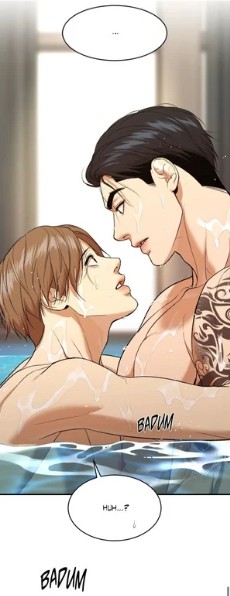 (chapter 80) and got all warm and fuzzy by looking at him:
  (chapter 81) A sign that the mother had never reacted the way her son is doing now, the feel to kiss the loved one! The problem is that in the swimming pool, the doctor’s scent and taste are covered by chlorine.
  (chapter 61) or solitude, becomes again what it was meant to be: a place of rest and tenderness. Thus he touches his fated partner’s legs over the cover, showing his care and respect.
  (chapter 81)
 (chapter 81), he can recognize the false nature of his mother’s affection. What she offered was conditional, deceptive and self-centered; what the doctor gives is ordinary and consistent. No grand gestures, no promises — only presence. The doctor does not rehearse concern; he lives it through routine. And this ordinariness, paradoxically, becomes sacred. It was, as if the athlete was treating his own inner child through the physical therapist.
  (chapter 73): she thought she could become somebody else, but she never truly left. The woman may have escaped the home physically and socially, but she remains chained to it in spirit. How so? Because she cannot erase the child who once called her eomma. No matter how far she runs, Joo Jaekyung’s existence anchors her to the very life she tried to abandon.
 (chapter 74) At this moment, the page itself turns black, veined with smoky whorls of gray — as though her words had burned into the air rather than spoken. “I can’t live with you… please understand… let’s just go our separate ways.” The sentences rise like vapors, leaving behind the faint residue of a scent that refuses to vanish. This visual texture — half smoke, half ink — captures her true condition: she dissolves herself with every attempt at escape.
 France itself mirrors her — beautiful, perfumed, wrapped in silk and secrecy. She definitely climbed the social ladders through her second marriage, hence she could offer toys to her second son. The nation of couture and fragrance becomes the stage for the mother’s unmasking. Once the name of Joo Jaewoong rises again, questions about her will inevitably follow. And here, she can no longer hide behind silence or excuses. The myth of refinement — both hers and France’s — collapses under the weight of exposure.
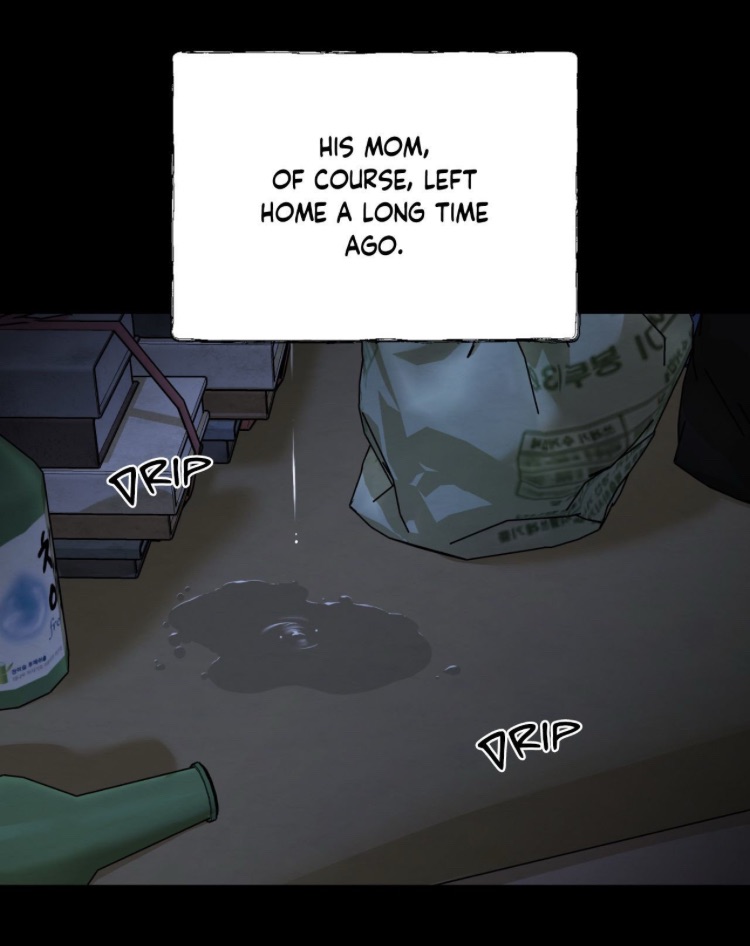 (chapter 72)


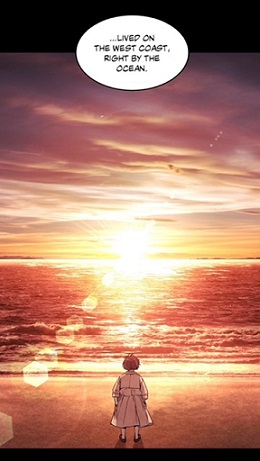 (chapter 53), yet she kept her distance. Observe that she only talked about one time experience. She sensed its danger and built her life on the solid ground of caution, duty, and control. In other words, she belongs to the world of the shore
  (chapter 28) and learn that not everything can be postponed or entrusted to someone else. Water, in this sense, rejects fatalism. It calls for motion, for risk, for personal responsibility.
 (chapter 80) And that intuition resurfaced and was confirmed in episode 80, when another day off brings the couple back to the pool. This time, the doctor steps into the water willingly.
  (chapter 80) He is no longer the man waiting to be rescued; he is the man learning how to swim. The champion’s words
  (chapter 80) distill the new doctrine: don’t wait for salvation
  (chapter 80), create your own buoyancy. Between the first swim
  (chapter 27) and this second lies the true point of no return—where superficial judgment turns into reflection, dependency into self-trust
  (chapter 80) and the rejection of powerlessness,
  (chapter 28) into the first stirrings of love
  (chapter 53) Safety lay in patience and dependence. Even when she later spoke with the champion by the sea, she avoided mentioning the ocean —as if to deny that any movement beyond her control could exist.
 (chapter 65)
  (chapter 80) Yet her absence from the pool scene is precisely what reveals her theology of avoidance. The pool was never her domain because her life revolves around work, not pleasure. She has no notion of rest without guilt, no concept of joy detached from utility. For her, swimming would appear frivolous—something “unnecessary” as long as one stays on solid ground. Jinx-philes should keep in mind that she never gave such a task to Joo Jaekyung. Her instructions to him were always practical, delegating care outward: take him back to Seoul, bring him to a big hospital and make sure he’s safe.
  (chapter 65) When she sees them together, her first reaction is not pride or relief but mild reproach— doc Dan should have left already.
 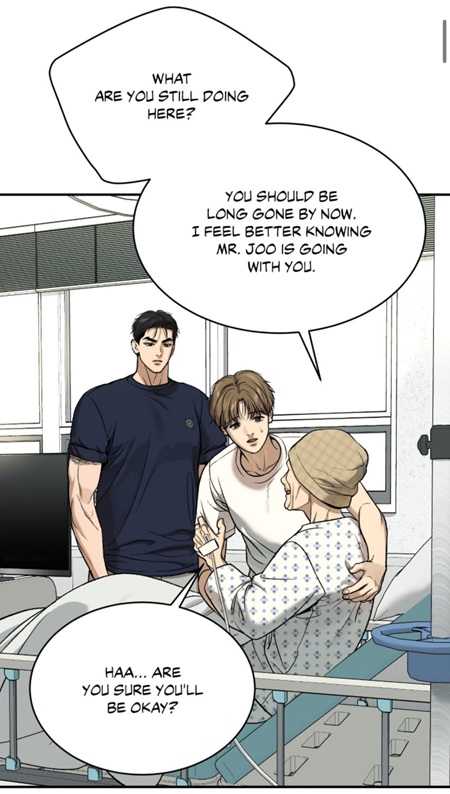 (chapter 78) The subtext is unmistakable: she expected obedience, efficiency, not attachment. Furthermore, her final instruction—“Make sure you see a doctor regularly”—
 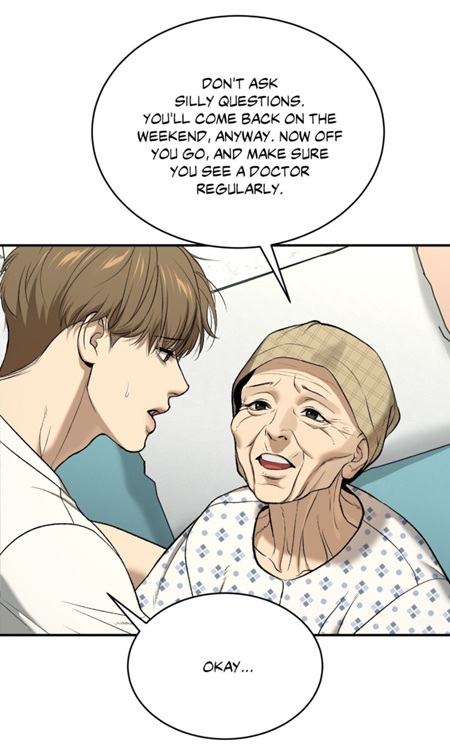 (chapter 78) sounds like ordinary concern, yet it hides her familiar logic of blame. It is as if she were implying that Joo Jaekyung has failed to fulfill her favor because Kim Dan has resisted care. In her eyes, the grandson is still the one responsible for trouble; the athlete’s role remains that of the dependable proxy who must “fix” him. What makes this moment striking is her tone of urgency, so unlike her habitual fatalism. The woman who once repeated “I’m the same as always”
  (chapter 65) suddenly speaks as though time is running out.
 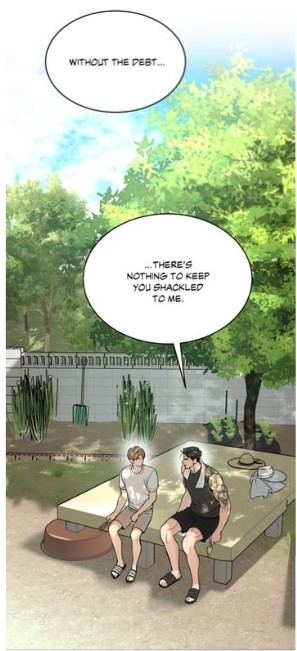 (chapter 77), respect and care. What she calls delay is, in truth, meditation and transformation.
 (chapter 80) It was her graduation gift, yet it had nothing to do with his new profession or status. In contrast, the first episode already shows Kim Dan in a blue therapist’s uniform, name tag neatly pinned — a garment he must have purchased himself.
  (chapter 1) Traditionally, a graduation present helps the recipient embark on a career — like for example, a watch, a suit, or even a briefcase — symbols of adult entry into the job market. By offering him a hoodie instead, she unconsciously devalued her grandson’s professional worth. The garment belongs to the domestic sphere, not the workplace; it wraps him in comfort rather than readiness. In a moment meant to celebrate his arrival into public life, she reinscribes him into the private one — the house, the caretaker role, the obedient child. He doesn’t look like someone who went to university.
 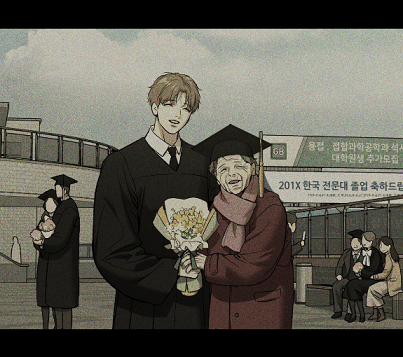 (chapter 47) There was no curiosity about his career, no acknowledgment of his competence—only the quiet satisfaction that through her endurance, she had produced a “doctor.” In the graduation photo, she even wears the mortarboard herself, smiling with the pride of someone who believes the diploma justifies a lifetime of sacrifice. Her grandson’s success confirms her own virtue; his “adulthood” validates her survival. This question to the athlete exposes her lack of interests in his profession:
  (chapter 65)
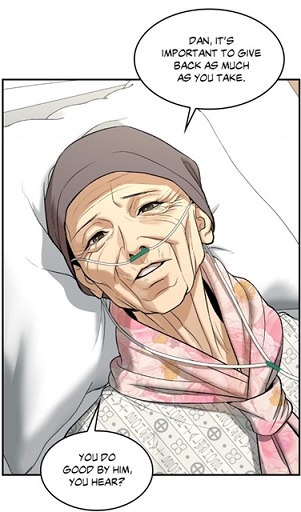 (chapter 41) While dying, she reduces love to an equation of productivity: “Dan, it’s important to give back as much as you take.” The verb do anchors her worldview — love must be measurable, visible, earned through action. To do good by someone means to labor for them, not to rest beside them. What caught my attention is that neither doctor
  (chapter 27) nor the champion employs the expression “vacation” or “break”.
  (chapter 80) Why? It is because they never experienced a break. We have to envision that the “hamster” must have followed his grandmother, when he was not busy studying or working. Both main leads never experienced a real vacation. They say a day off, as if the day itself didn’t really exist, as if it were a temporary pause between “real” time. In their inherited logic, only work gives time its value; everything else evaporates. The grandmother’s way of loving has turned rest into an absence, something unworthy of being named. However, observe that there’s a gradual change in doc Dan’s vocabulary:
  (chapter 80) The problem is that for the hamster, only the athlete is worthy of getting his rest. It still doesn’t belong to his world.
 (chapter 5) the focus remains mechanical. Eating is fuel; sleep is maintenance. But rest, in the sense of surrender, stillness, or joy, is foreign to her lexicon.
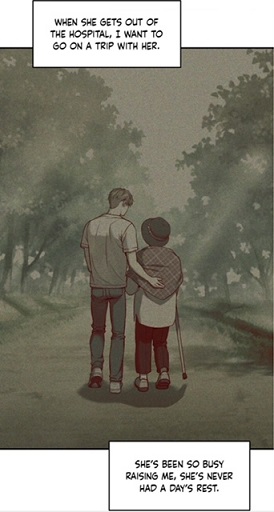 (chapter 47) is, in truth, a legend she wrote about herself. When Kim Dan recalls that “she’s never had a day’s rest,” the statement reveals more about his belief than about her reality. The woman who claimed endless labor also knew the comfort of “weekends”
  (chapter 30) — she watched The Fine Line, the very drama that made Choi Heesung famous. The detail seems trivial, yet it exposes everything: she had leisure
  (chapter 30), she simply refused to call it that. Watching television was permitted because it was passive, solitary, and could be rationalized as recuperation, not pleasure. In contrast, genuine rest — time shared, chosen, or joyful — never existed in her vocabulary. What she denied was not the existence of rest but the act of resting with him. She kept her downtime to herself, as if peace were a private possession. For her, love meant providing, not accompanying. Yet true care requires presence — sharing is caring, as the saying goes. [For more read this essay:
  (chapter 65) displays that she perceives her grandson’s exhaustion not as suffering but as malfunction, as if the human were a device that could be recalibrated through work and pills. That’s why her favors revolves about living conditions, but not about his “happiness”. Perhaps she genuinely hoped that the drugs and the stability of a “regular job” with the champion would realign him, as though routine alone could fix what grief and deprivation had unbalanced.
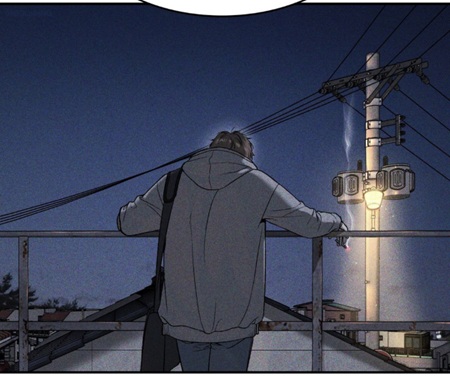 (chapter 65) Her constant bookkeeping—every favor tallied, every gift framed as trouble—betrays a hidden fear: that if she stops keeping score, she will lose him. Rather than grant him autonomy, she entrusts him to another caretaker. Sending him to the champion is not an act of faith but of resignation, a way to offload responsibility while maintaining the illusion of control.
 (chapter 11), scarf tied under her chin, carrying a single sweet bun. She doesn’t need to say she “went out of her way”—her action already proclaims it. The effort is the gift.
  (chapter 11) That simple walk to the store becomes a moral event, proof of affection through fatigue.
 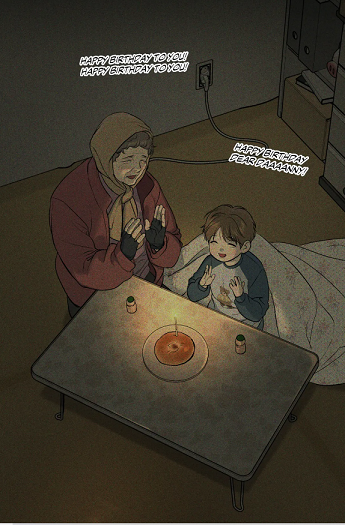 (chapter 11) Even the smallest purchase is framed as sacrifice. The sweet bread itself—a cheap red bean bun—is less nourishment than testimony: “Look what I endured for you.” If he had followed her, he would have seen that it didn’t take so much effort and money to buy the “present”. Finally, he had to share the sweet bread with his grandmother.
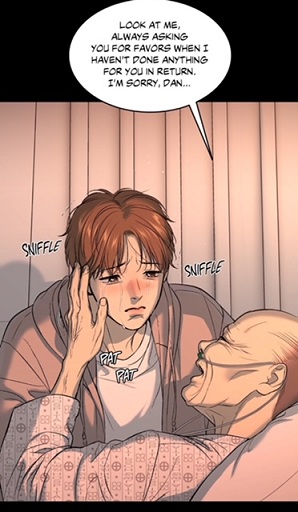 (chapter 53) —perhaps the signing of the loan. “You’re a doctor now; you’ll pay it off quickly.”
 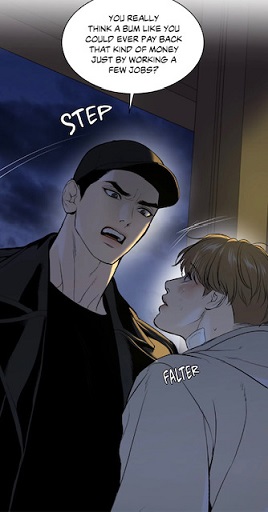 (chapter 80) In her eyes, generosity always justified expectation. The flowers were for display; the hoodie was the contract.
 (chapter 65) and the future
  (chapter 41) When Dan gifts his grandmother an expensive scarf, he hides its true price — “I got it for a bargain” — repeating her own pattern of disguised generosity. She sees through the lie, teasing him for “spoiling” her, yet she accepts the luxury without feeling guilty. The scarf becomes her version of the hoodie: a fabric trophy of moral worth. But its later disappearance is revealing. In season two, she wears it
  (chapter 56) shortly after her arrival at the hospice, never again. When she greets Joo Jaekyung, the scarf is gone
  (chapter 61). Why? One might reply that the scarf lost its value, especially since she is living next to the director’s room. I doubt that such men would pay attention to such an object. Another possibility is that she fears its brightness might betray her neglect, for the champion has lived with her grandson for a while. How could she display silk while her grandson owns almost nothing?
  (chapter 80) The gesture that once symbolized love now feels like pain and loss. The signification of the gift has changed. What once wrapped him in safety now weighs like absence — the fabric retains the shape of someone who is about to vanish. His silence is not understanding but hurt, a wordless awareness that affection can curdle into memory. The audience, not the character, perceives that with the grandmother’s approaching death, her ledger is about to close. The gray fabric, once proof of her sacrifice, will lose its moral weight; her “gesture” will expire with her. Yet Kim Dan may not yet realize that this very ending could one day free him. The book-keeping dies with the bookkeeper.
 (chapter 31) When Heesung offers flowers “to get closer,” Kim Dan’s face mirrors the same unease: affection presented as transaction, intimacy disguised as generosity. What the actor calls closeness, the doctor feels as imbalance — the same emotional distance that Shin Okja’s presents once produced. Her gifts, meant to bind, isolated him instead; they built a hierarchy where gratitude replaced equality. Each present widened the gap between giver and receiver. To be cared for was to be indebted.
 (chapter 31) and tries to refuse it.
  (chapter 31)
  (chapter 67), loses sleep, or pays a price. He interprets Joo Jaekyung’s concern as “trouble,” Heesung’s gifts as “too much.” In his mind, affection is inseparable from cost:
 (chapter 80) is the site of its quiet destruction. His act of giving reverses every law the grandmother ever taught. First, he does not “go out of his way.” The clothes are delivered effortlessly, without fanfare or moral accounting.
  (chapter 80) There is no speech about sacrifice, no self-congratulation.
  (chapter 80) By erasing the gesture of “effort,” he removes the emotional price tag that once accompanied every gift.
 (chapter 80) If the grandmother’s motto was “I went through so much for you,” the champion’s is “It’s no big deal.” Generosity becomes invisible, unburdened, and therefore trustworthy.
 (chapter 80) The row of garments invites choice — a concept absent from Shin Okja’s universe, where love came in single doses and with strings attached. Here, the doctor is asked to select what he likes, to exercise taste, to inhabit preference. The abundance of options grants him agency, dignity, and the right to refuse.
 (chapter 22)
  (chapter 30) becomes unexpectedly true here. The wardrobe bridges the distance that the grandmother’s gifts had always created.
 (chapter 80) This is why his hesitant and embarrassed gratitude, framed against a background of dissolving gray waves, feels so transformative. The air behind him ripples as if washing away the residue of his old faith.
 (chapter 80); they mark the passing of days, the return of seasons, the rediscovery that not every morning has to look the same. Variety itself becomes a form of freedom. When the wolf once complained that all his shirts looked identical, he was unknowingly naming what both of them lacked: differentiation, spontaneity, change. Through this act, he restores color not only to the doctor’s wardrobe but to his emotional world — a quiet resurrection through fabric.
 (chapter 80) The “hamster” had instinctively turned to the only person who had ever offered him help without cost.
 — the luminous, wish-granting jewel said to contain both wisdom and life energy. The dragon’s power is not innate; it is completed and elevated by the jewel. Without the yeouiju, it cannot ascend to the heavens — strength without meaning, force without direction.
 (chapter 75), the imagined smell, or cleanse his skin of battle; he is held and, therefore, purified. Through Dan’s arms, he rediscovers his value and humanity—the dragon touched and not destroyed. He is worth of being embraced, even if he is already so old!
 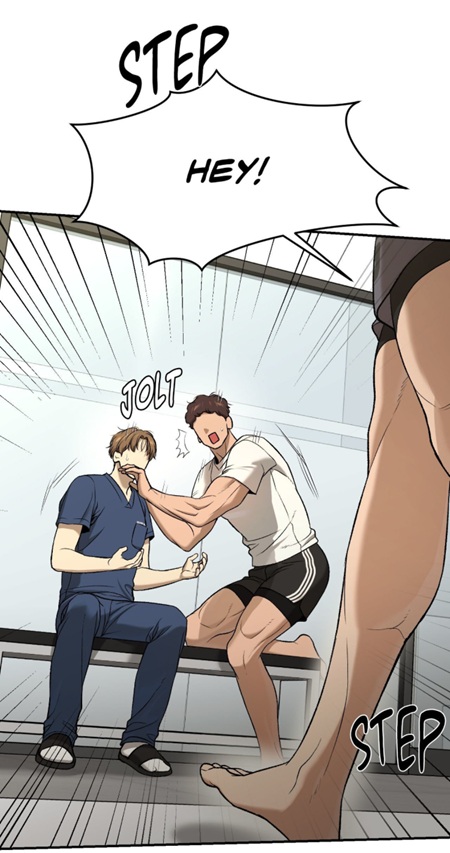 (chapter 79) This is one part of the new circle. Jealousy is the residue of imbalance — the echo of the 7 within the 8. In the numerology of Jinx, the 7-chapters, like for example episode 7
  (chapter 7), episode 18, where the champion had sex because of this statement
  (chapter 18),episode 34 with Choi Heesung
  (chapter 34) or episode 52, where the former members of Team Black and expressed their disdain and jealousy toward the main lead
 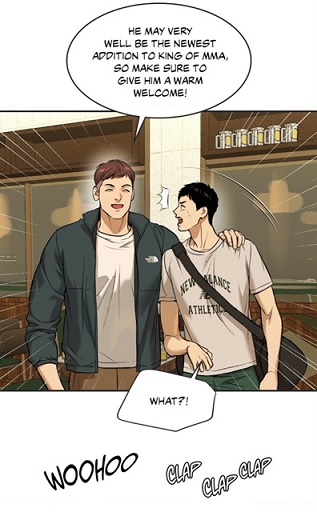 (chapter 52)
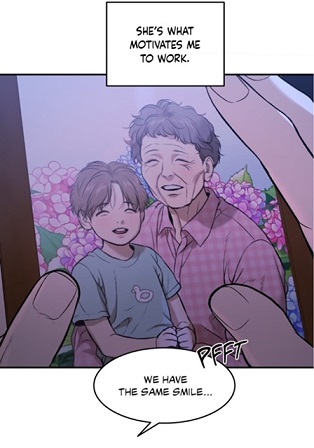 (chapter 47) and 8 lies that invisible hinge: the death of the old economy of love and the birth of a new one.
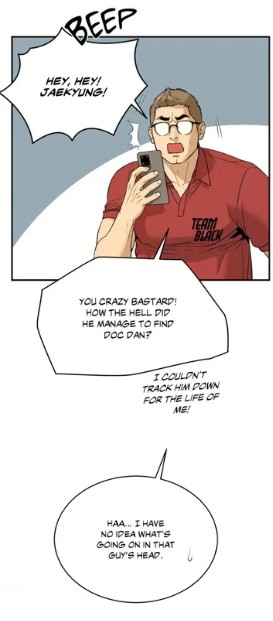 (chapter 61) and Heesung’s residual rivalry and resent. Each acts as a different face of control: the woman binds through guilt, the manager through hierarchy acting as the owner of the athlete’s time, the actor through charm and deceptions. Together they form the triad that tries to reopen the circle closed in the pool. Let’s not forget that the athlete chose to take a day off on his own accord
  (chapter 80), but he had just returned to the gym. It is no longer the same training and routine.

 (chapter 14) For the physical therapist, this moment would later be confirmed.
  (chapter 16) —haltingly and with a trace of disbelief visible thanks to the points of suspension —as his first kiss ever. His stunned reaction and eventual admission offer a compelling lens through which to explore the symbolism of kissing in Jinx, but also the emotional landscape the two men must navigate.
  (chapter 55) Still, some readers have theorized the existence of a “special lover” in his past
  (chapter 2), someone who might have earned a different kind of intimacy. One cause for this hypothesis is that in the champion’s first memory, he was facing his partner, which contrasts so much to the way he had sex with his partners (from behind). This possibility casts the locker room kiss in a new light.
  (chapter 14) If it was his first, the gesture carries a far deeper meaning than either man realizes in the moment. And if it wasn’t, then why does this kiss—with Kim Dan—resonate so differently?
 (chapter 15) she showed more than the physical therapist’s confusion with the interrogation marks, she added his inner thoughts. This question (“What’s this?”) already hinted that he had never experienced a kiss before. The ambiguity of his reaction suggested that the moment was unfamiliar, and not immediately recognizable as a kiss at all.
  (chapter 16) it frightened him. The kiss broke an invisible boundary—one his upbringing had silently enforced. That’s the reason why he wasn’t sure if he could do it again.
 (chapter 30) He blushes and wonders why.
  (chapter 30) It’s a telling moment: Dan isn’t used to feeling attraction and desire, let alone recognizing it. He never bought posters of celebrities, never fantasized. That world—the glamorous world of affection, attention, and beauty—was never his.
 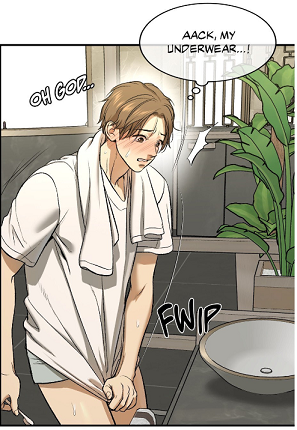 (chapter 30) —despite already having been seen naked by Jaekyung
  (chapter 30) —suggests something deeper than modesty. When he rushes to hide his underwear and blushes merely at brushing his teeth next to someone
 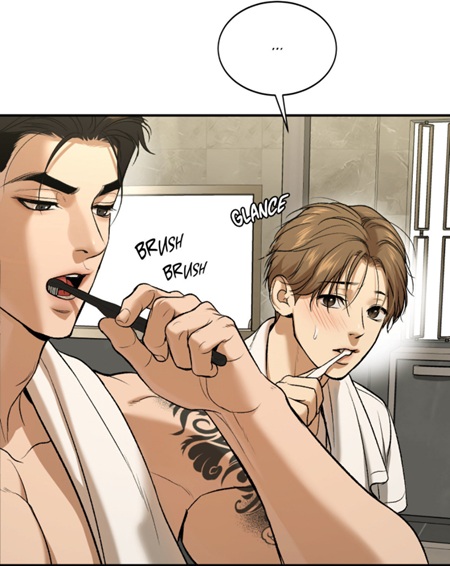 (chapter 30), it becomes evident: Dan is not accustomed to physical closeness or shared domestic spaces. These are not reactions of a man with just sexual trauma—they point to someone raised without the warmth of daily intimacy.
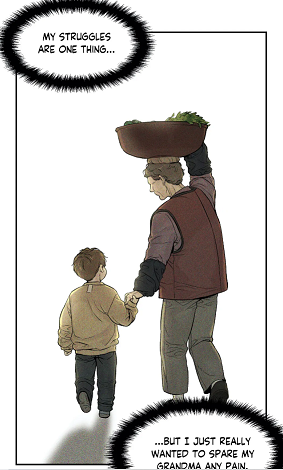 (chapter 5) He had to take care of himself, dressed on his own. He had to act like an adult, as his role was to assist his grandmother:
 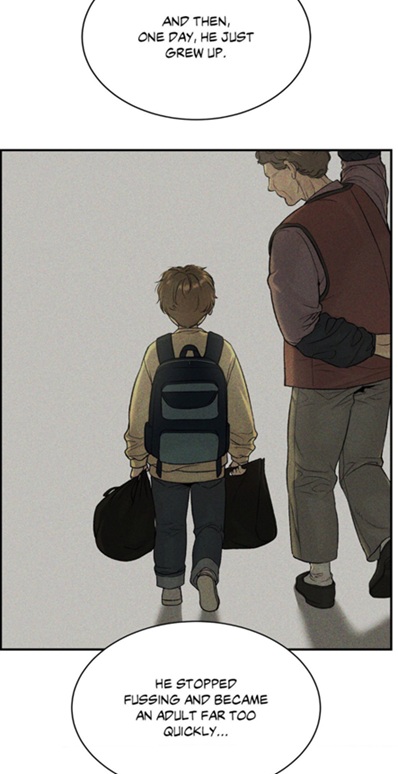 (chapter 65) This raises the possibility that someone else—most likely his mother—was his primary caregiver in early childhood. She would have changed his diapers, held him close, and kissed him gently.
  (chapter 65) This hypothesis and interpretation gets reinforced with the champion’s first kiss on his cheek
  (chapter 44) For me, without realizing it, Dan reproduced those gestures. These actions can not come from Shin Okja, as we only see her caressing or patting her grandson. The progression is striking. It moves away from eroticism (kiss from the lips)
  (chapter 44) and toward something far more intimate and protective. These are not the kisses of seduction, but of affection—almost maternal in their tone. Hence the MMA fighter got patted later:
  (chapter 57) (chapter 57)—licking them not out of instinct alone, but to reassure and bond.
  (chapter 57) During that summer night’s dream, Dan’s body mirrored this wordless care. That’s why he could laugh so genuinely like a child after witnessing his “pet’s reaction”.
  (chapter 44)
  (chapter 14) Therefore the physical therapist astonishment, “What’s this?” was not naïve; it was disoriented. Somewhere deep within, Dan had internalized a different model of kissing: one that reflected comfort, not conquest; affection, not arousal. The kiss he received was too strange, too fierce—it violated a definition he didn’t even know he had. His body knew how to kiss, but it remembered a different type of kiss altogether. The latter stands for love and as such emotions. Under this new light, my avid readers can comprehend why the physical therapist made the following request from his fated partner:
  (chapter 15) He needed to be “warned” in order to control his “heart”. As you can see, doc Dan had an innocent definition of the kiss. Therefore it is not astonishing that the wolf’s first kiss confused him so deeply: it shattered the only blueprint he had for intimacy.
 (chapter 65) with success and fortune take on a new, darker meaning. Her restraint around love and sexuality wasn’t only generational—it was strategic. She reinforced a worldview in which success, debt repayment, and self-denial were Dan’s only legitimate currencies. For her, love, on the other hand, was frivolous, indulgent, even dangerous. She only treasures the relationship between the protagonists, as such a friendship is useful. It serves her interests, that way she can still control doc Dan’s fate. In other words, she only views relationship as transactional. The smiling family in A Fine Line
  (chapter 14) Jaekyung repeated such a gesture, as seen in chapters 24
 (chapter 24), and again in 64
  (chapter 64). These gestures were not expressions of tenderness, but acts of dominance, mirroring how the celebrity was taught to treat intimacy: not as an exchange, but as an imposition. His behavior echoes Cheolmin’s earlier suggestion
  (chapter 13) where a little touch was functional. On the other hand, the suggestion framed “affection” as a form of fun and entertainment, meant to soften the experience and shift the focus toward the partner. While Cheolmin’s comment was not malicious—in fact, it encouraged Jaekyung to become gentler and more attentive—it still fell short of true emotional connection. Why? It was a medical suggestion, meant to protect Dan’s fragile state. The kisses in episodes 14 were to protect the physical therapist. They were initially functional, a mean to achieve a goal before becoming a habit.
 (chapter 63) Fun is not the same as love, and this distinction matters deeply for someone like Kim Dan, who associates kissing with emotional safety and love, not performance or play. This explicates why he refused to be kissed in episode 63:
 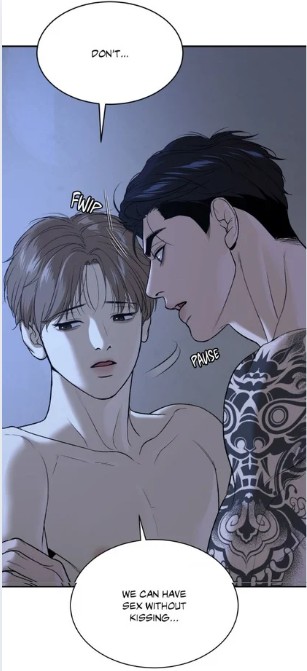 (chapter 63)
 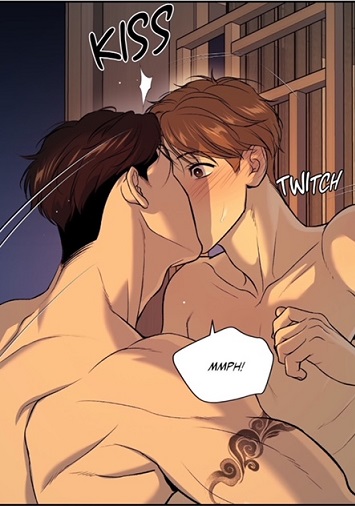 (chapter 44), Dan’s were soft, exploratory, almost reverent. His lips touched not just his lover’s mouth, but his cheek and ear—tender sites that bypass eroticism in favor of emotional intimacy. These weren’t prolonged, devouring kisses. They were pecks, small and deliberate. They mirrored affection, not possession.
 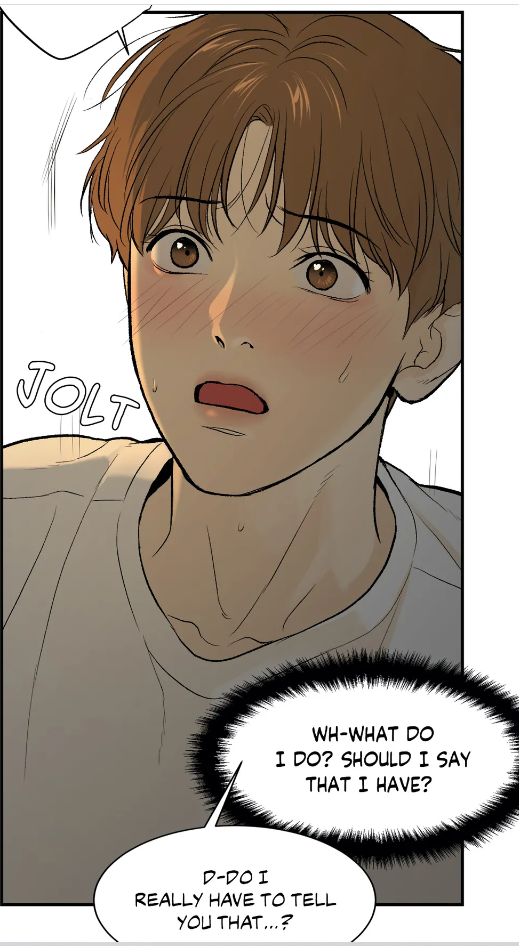 (chapter 3) —it forces the wolf to ponder on the meaning of a kiss and his relationship with the physical therapist.
 In that iconic artwork, the man does not kiss the woman on the mouth, the traditional locus of erotic desire. Instead, his lips are placed upon her cheek—a gesture that suggests reverence, not possession; vulnerability, not domination.
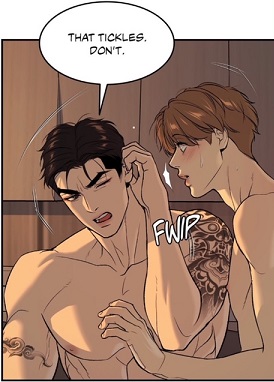 (chapter 44)
  (chapter 45)
 (chapter 54) When he was young, he had to face an abuser. Notice that the man’s face was very close to the champion’s
  (chapter 54). Thus I interpret that for the champion, the face represents not only his vulnerability, but also a source of danger. That’s the reason why he couldn’t hide his displeasure and frustration, when he faced this “lover”.
  (chapter 44) He couldn’t hide his joy by the champion’s funny reaction and laughed. And how did the protagonist react to this? Not only his face expressed his dissatisfaction, but also he silenced his partner with a kiss right away:
  (chapter 44) Joo Jaekyung is leading the kiss, he is regaining control over their relationship. It reinforces the idea that the wolf’s kiss was not merely about passion, but about reclaiming dominance and halting a shift in power. Just moments earlier, Kim Dan’s laughter had opened a space of emotional intimacy and lightness, which the champion was not prepared to face. The kiss, now prolonged and intensified, becomes the sportsman’s way of reasserting control over a situation that was slipping into unfamiliar emotional territory.
 (chapter 45) wasn’t just the pain he might have inflicted—it was the realization that the balance of power had subtly shifted. The man who had always dictated the terms of their relationship had surrendered to something unfamiliar: tenderness, emotional closeness, and shared desire. The fact that Kim Dan initiated affection, even kissed him voluntarily, shattered Jaekyung’s script. For someone who conflated feelings with threat, and dominance with safety, this reversal was unbearable.
 (chapter 45) —and that he, in turn, had wanted Dan back. This terrified him more than any bruise ever could.
 (chapter 37) It was, as if they were mocking him because of his forced “diet”. No wonder why the champion is barely seen laughing and prefers seriousness. At the same time, I can grasp why the athlete feels close to Park Namwook, as the latter stands for these exact notions: work, money and seriousness. Fun is not part of his world and vocabulary, therefore he punished Joo Jaekyung for sparring with doc Dan.
 (chapter 2) Though his face was close to the star’s, he didn’t attempt to kiss him. In fact, he proposed him a fellatio, a sign that the champion had never allowed anyone to get close to his “face”. Finally, observe how he reacted, when the uke in episode 55 attempted to kiss him:
  (chapter 55) Not only he rejected him, but also he pushed him violently so that the latter was on the floor.
  (chapter 55) The celebrity even ran away: a sign that the allowing someone approaching his face is perceived as something uncomfortable and threatening. At the same time, that moment exposes the kiss as something sacred—one that cannot be duplicated without emotional violation. This shows that for the champion, the meaning of a smooch has evolved. It is no longer perceived as a source of fun and a mean to gain something.
 (chapter 55) He couldn’t forget doc Dan’s face, the latter excited him, a sign that for the champion, the face in general has been a source of pain, yet thanks to doc Dan, the latter has become a source of “comfort and joy”.
  (chapter 66) When he saw his face for the first time, he didn’t realize that he was already under the hamster’s spell. Striking is that he even focused on his chin and lips, a sign that he desired to kiss them. One thing is sure. The champion treasured the doctor’s face. After their separation, it is not surprising that the wolf felt the need to see his face.
 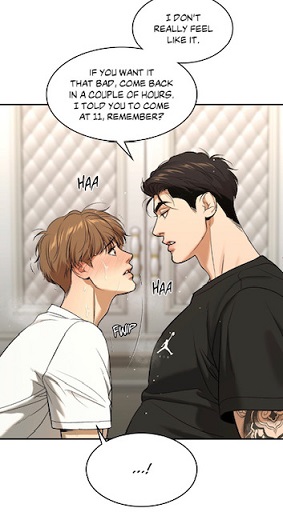 (chapter 39) before requesting a fellatio:
  (chapter 39) The main lead’s head was very close to the champion’s face, thus he must have felt uncomfortable. Secondly by acting this way, the doctor was gradually gaining power over their relationship. For the wolf, dominance is everything, an indication that in his past he felt defenseless and weak. His “opponent”, the mysterious ghost, had the upper hand. Moreover, the fellatio created a distance between them, where the fighter could expose his superiority. And note how doc Dan behaved under the influence of the drug:
  (chapter 39) He caught his fated partner by surprise, when he suddenly kissed him, mirroring the champion’s past behavior. This panel corroborates that for the doctor, a kiss is the symbol of love. The champion was not happy with this kiss too, for the latter meant that he was no longer controlling their relationship. Yet, after hearing the doctor’s confession during that night, the athlete no longer resisted his partner’s kisses.
  (chapter 39) For the first time, he accepted Dan’s initiative—both physically and emotionally. Compare it to his attitude before:
  (chapter 39) here, he still has his eyes wide open, a sign of vigilance. These kisses from doc Dan
  (chapter 39) mark a turning point in Jaekyung’s arc: he begins to lower his defenses, allowing Dan not only into his personal space but also into a position of gentle agency within their relationship. The kiss no longer represents a threat; it becomes an opening and a sign of trust.
  (chapter 55) These memories represent the moment where the athlete felt strong and had the upper hand in their relationship. These images reveal that Joo Jaekyung hasn’t realized the signification of the kiss yet. For him, they don’t seem important. This exposes that the athlete has not associated kiss with love and affection yet. At the same time, we have to envision that a smooch is strongly intertwined with equity and trust.
  (chapter 28) And in episode 14, it was clear that the star still felt superior to his companion, therefore the kiss had no special meaning. As you can see, everything is pointing out that Joo Jaekyung had never been kissed before. And what does a kiss symbolize? Not only attachment, but also purity and innocence.
  (chapter 42) According to him, doc Dan was not different from him. However, he was wrong. It is because the champion had kissed him!! Moreover, the celebrity had allowed doc Dan to kiss him as well. Besides, how did the champion name his past lovers? They were toys… normally people don’t kiss playthings. And now, imagine that doc Dan were to discover that Joo Jaekyung had his first kiss with him. This revelation would not only make him realize that Joo Jaekyung loves him, but also he could be wondering why the athlete had never done such a thing before, though he had past lovers. YES, the “first kiss” could be the trigger for both characters to question their respective past and perceive their fated partner correctly.
  (chapter 15)
 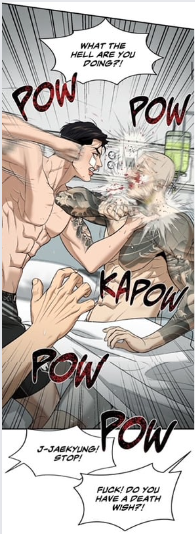 (chapter 52) In that context, a kiss could never be affection, but vulnerability. A risk.
 (chapter 3), based on Dan’s vague claim of prior partners. Yet Dan has never kissed anyone before. The kiss becomes his true moment of loss, a quiet confession through action. Conversely, Jaekyung’s own discomfort shows that he, too, is untouched in this particular way. When Dan tries to kiss Jaekyung again, and he instinctively rejects it, it reveals just how unprepared he is for affection. They are both unaware that the other is emotionally “pure” in this regard, and that makes the kiss a shared revelation.
 (chapter 67), Jaekyung must reinvent his approach. He cannot rely on dominance, strength, or sexual performance to win Dan’s heart. If he wants true connection, he must learn a new language—one built on gestures of affection, softness, and presence. This process also involves separating his public persona from his private longing. Joo Jaekyung, the champion, cannot seduce with spectacle. But Jaegeng, the man, might learn to express love through a simple touch, or a well-timed kiss. The redefinition of seduction is not just about Dan’s healing; it is about the wolf’s reclaiming his own right to feel and give love. And in my opinion, that process has already started:
  (chapter 69) That moment was devoid of lust, stripped of performance, and free from power dynamics. Jaekyung didn’t lean in for a kiss; he didn’t touch Dan’s lips or body with any sexual intent. Instead, he wrapped his arms around the physical therapist in silent reassurance, tucking his face against Dan’s shoulder as though hiding from the world. This was not a champion claiming a prize—it was a man expressing affection. The embrace exposes that doc Dan belongs to his “world” and he trusts him. In this light, the embrace becomes a prelude to a kiss—not a literal one, but an emotional kiss: a meeting place of vulnerability and longing.
 (chapter 29: note that he did not select this scene to rekindle with the doctor, but the other scene) He will learn it from life, from watching how the innocent express care without shame or purpose.
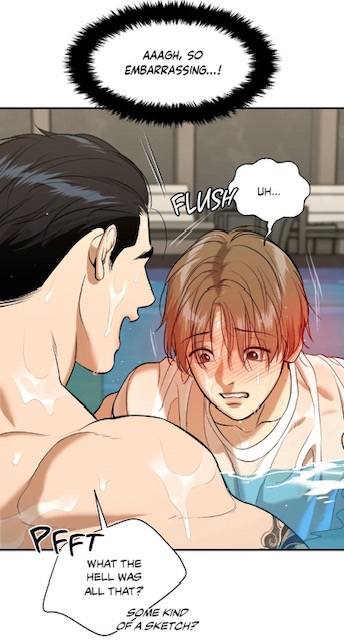 (chapter 27) In Jaekyung’s past, laughter had been a weapon—an expression of ridicule and cruelty from an abuser.
  (chapter 62) If someone had laughed in front of him and made fun of him, this would have reopened his old wounds.

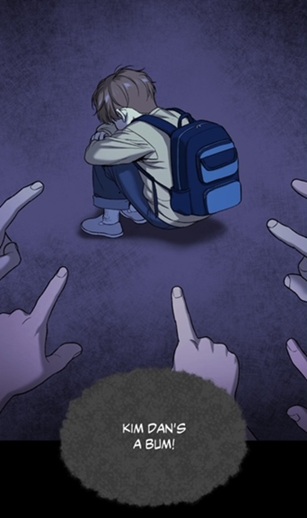 (chapter 57). Similarly, when Joo Jaekyung faced his opponent Randy Booker, he was also verbally harassed
 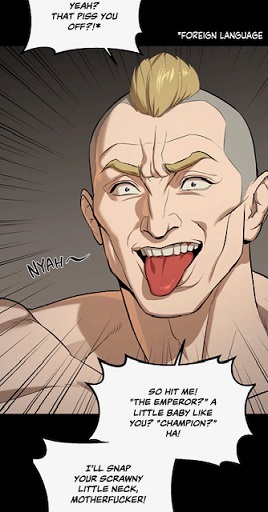 (chapter 14) which visibly destabilized the champion. Then in chapter 49, Team Black failed to perceive the duality of appearances and reality:
  (chapter 49) the surface shows two athletes seemingly engaged in a normal, even friendly interaction – they are shaking hands -, while the panels reveal a darker undercurrent of verbal harassment and manipulation.
  (Chapter 49)
  (chapter 61), while Joo Jaekyung represses his emotions and thoughts through “physical activities”.
 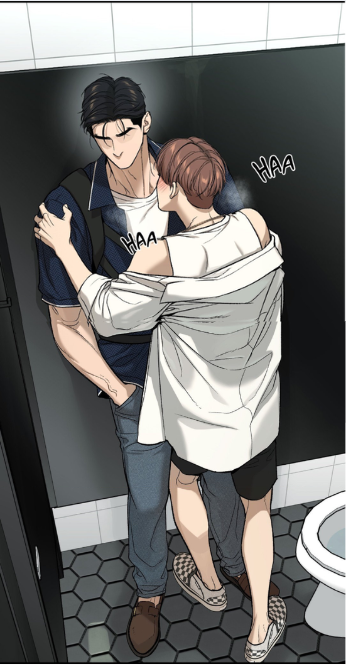 (chapter 55) This essay will explore how their experiences in the restroom space serve as a mirror to their past and reveal the psychological scars that shape their behaviors.
 (chapter 14)
  (chapter 38)
 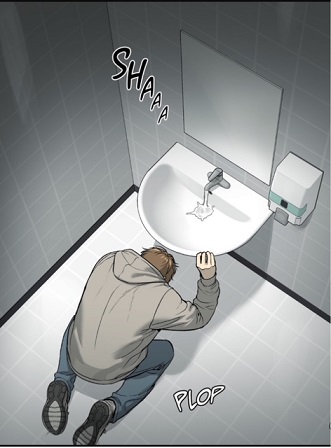 (chapter 47) However, in Season 2, the lavatory appears isolated for the first time, reinforcing a shift in symbolic meaning. This distinction helps to explain why restrooms (toilets/water closets) hold different meanings for the two protagonists. [for more read
  (chapter 19) —a space where one is free to confront their inner selves without external pressures. In Jinx, the use of the restroom emphasizes the external pressures and the characters’ reactions to their environments, reinforcing their struggles with exposure and control. But how did I come to this realization?
 (chapter 61) The wolf reminded me of a stalker.
 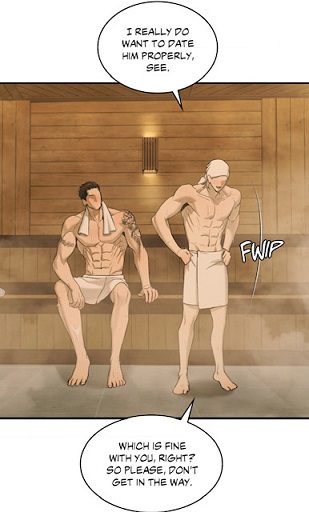 (chapter 34), vulnerabilities are exposed, and participants are pushed to their limits. In the essay
  (chapter 33) This would explain why Heesung was determined to hide the physical therapist’s whereabouts.
  (chapter 58) He saw in him a bully and even a stalker. His judgment was based on these two incidents:
 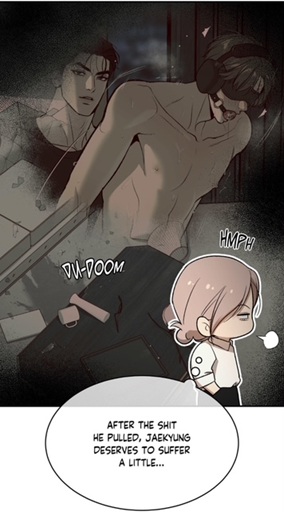 (chapter 58) He imagined that Kim Dan had been coerced to it, while the physical therapist always had the choice to refuse. Joo Jaekyung would never hurt the doctor.
 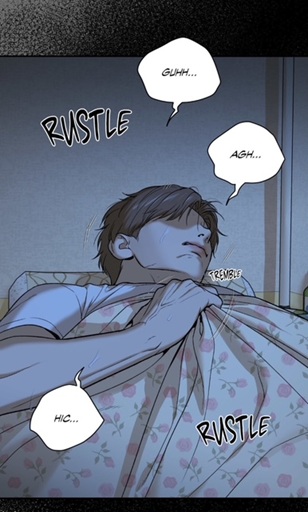 (chapter 59) The imminent death of his grandmother triggered his repressed fears.
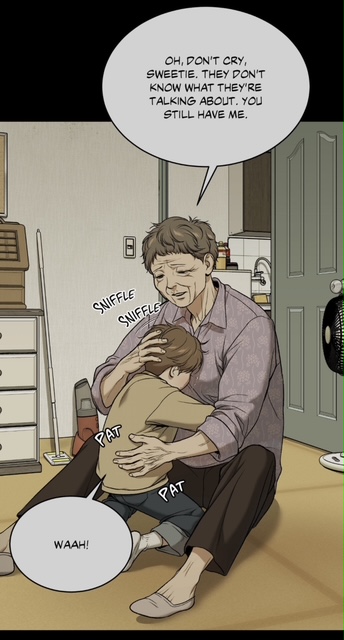 (chapter 57) Without her, he is now left with no protection. Stalking, in contrast, occurs later in life but evokes the same psychological distress—trapping victims in a cycle of hyper-awareness, helplessness, and anxiety. What makes stalking even more insidious is that it often mimics past experiences of bullying, dragging the victim back into a state of learned helplessness.
 (chapter 61), reacts with pursuit. His behavior mirrors the tendencies of a stalker—not out of malice, but because his entire life was shaped by the belief that to be ignored is to be erased and forgotten.
  (chapter 55) In childhood, he learned that only strength could secure attention
  (chapter 26)
 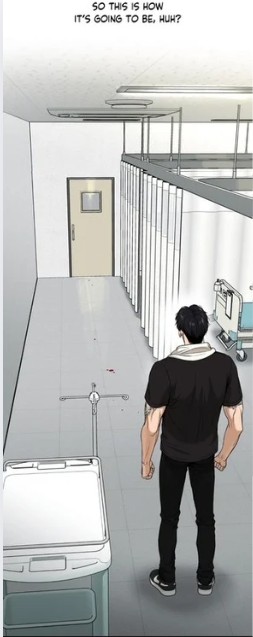 (chapter 60) He tracks him down, calls him repeatedly
  (chapter 61) Deep down, he wants to be part of his life. Hence he moves next to Kim Dan’s house as his final attempt.
 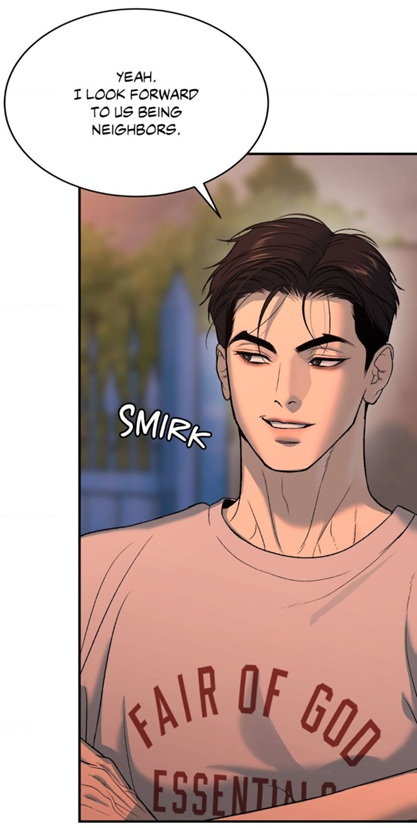 (chapter 61) To Jaekyung, dominance and control are how relationships function, yet due to the doctor’s silent treatment, he is incited to change his approach. But to Kim Dan, these actions trigger memories of past tormentors, reviving the very feelings that once sent him running to the restroom for solace. The same space that shielded him as a child now becomes his only escape from Jaekyung.
  (chapter 57) and cornered, leading him to associate confined spaces with protection. The restroom was his only escape from ridicule, his sanctuary where he could momentarily regain control. This explains why he went crying there, when he heard the terrible news about his grandmother.
  (chapter 61) Since he can not escape the champion, he decides to ignore him.
  (chapter 55) – the mirror is very low -, Kim Dan retreats into memories to rationalize his pain. Instead of processing his suffering, he shifts blame to Jaekyung, using the restroom space to wall himself off emotionally. The restroom in Jinx thus acts as a metaphor for entrapment—whether through self-isolation or forced exposure, neither character is truly free from their past.
  (chapter 38) So he could faint there or hurt himself and he would have no one by his side. Don’t forget that this place stands for seclusion and privacy.
  (chapter 57), it is clear that the kids were not thinking of sex or using the restroom to assault the little boy. However, we should question ourselves how this rumor about Kim Dan being an orphan started.
  (chapter 54) bears a striking resemblance to this boy, leading to the possibility that this new character could be Kim Dan’s childhood bully. Given Jinx’s themes of positive psychology and confronting past demons, it is plausible that Kim Dan will encounter this schoolmate again. Such an interaction could force Kim Dan to address his unresolved trauma and reexamine his perceptions of strength and vulnerability. Moreover, don’t forget that the doctor in green saw the champion in a terrible shape who had admitted that he had drunk the night before.
  (chapter 61) I sense some retaliation here.
  (chapter 08) It is because in his mind, this place is associated with toilets in general. That’s how it dawned on me that the athlete could have been harassed at school, but contrary to the physical therapist, it took place later. The leader was Baek Junmin who hid behind the “mob”.
  (chapter 49) Because he utilized the expression “how you were as a kid”, it signifies that the MMA fighter was not only older, but also an adult, whereas the champion must have been a teenager. And now, you comprehend why Baek Junmin acted like a friendly athlete in front of the public:
 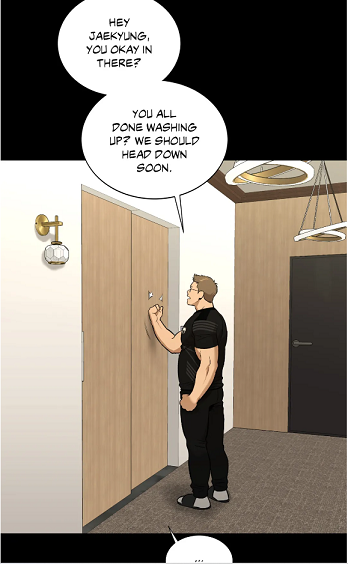 (Chapter 14)
  (chapter 55), he showed no reaction. In fact, his headache got even worse than before.
 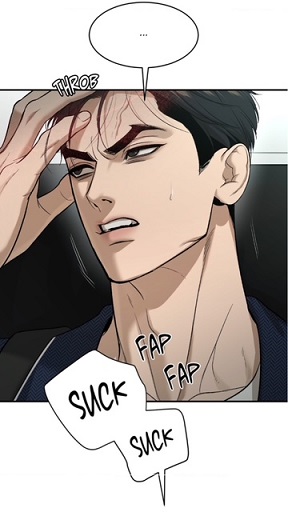 (chapter 55) The champion’s passivity and migraine could be the symptoms of the athlete’s past suffering. His pain worsened in that place because of the past, but he didn’t realize it, for he was so focused on his soulmate. Secondly, the moment he was about to get kissed
  (chapter 61) In my opinion, the departure of Kim Dan forced the champion to be confronted with his repressed past.
 (chapter 54) While he calls his former rival and tormentor’s name and recollects his beating, he is not plagued with a migraine. This means that the real cause for Joo Jaekyung’s suffering (his headache linked to his repressed memories) is triggered by the attitude of his guardian. That’s the reason why he had a nightmare with the ghost of the past.
  (chapter 7) At the same time, it shows that by asking to defend himself, he pushed the athlete to become a “fighter”. He needed to demonstrate his strength and worth constantly. Choosing truth would have required him to admit that his emotional detachment stemmed from his own fears of vulnerability and inadequacy. Instead, he projected these insecurities onto his son, perpetuating a cycle of emotional isolation and avoidance.

 (chapter 59) —an innocent request by the nurses at the hospice
  (chapter 59) —which becomes the pivotal clue leading Joo Jaekyung to Kim Dan. Through a careful analysis of the timeline and the use of contrasting events, it becomes clear that Mingwa’s narrative mirrors a kaleidoscope, reflecting positive and negative elements rooted in Taoist principles. While the doctor’s unconscious
  (chapter 59) led him to the shore, driven by despair and suicidal intent, the MMA fighter’s journey stands as its opposite:
  (chapter 59 ) a conscious choice to follow his heart, hence he was full of anger and frustration. Joo Jaekyung was no longer repressing his feelings, even if he had yet to fully recognize his affection.
  (chapter 59) embodies the negative reflection of Joo Jaekyung’s purposeful arrival. We can detect the divergences: day versus night, work versus break, healthy versus unhealthy etc. Through the juxtaposition of images and situations, Mingwa provides profound insight into the characters’ thoughts, desires, and intentions. The photograph’s role becomes pivotal: while it marks the end of Heesung and Potato’s visit
 (chapter 59), it simultaneously signifies the first crucial clue in Joo Jaekyung’s search. This marked the turning point where his ongoing efforts were given direction, transforming his pursuit into a decisive journey toward discovery.
 (chapter 59) —each of whom had interacted with Kim Dan
  (chapter 57) during his time at Light of Hope. While these individuals appear as potential candidates for revealing Kim Dan’s location, the true helper remains shrouded in mystery. This ambiguity emphasizes the layered narrative of Jinx, where each small action—no matter how mundane—contributes to the larger theme of fate’s intricate web, offering insight into the power of both intentional and unintentional intervention. If Potato had not suggested the picture
  (chapter 58), ignorance and superficiality
  (chapter 58) and Potato, despite their contrasting motivations
  (chapter 58), came to the same conclusion: they should not reveal Kim Dan’s whereabouts to Joo Jaekyung. Heesung argued that Kim Dan was better off in his secluded life, away from the chaos of Joo Jaekyung. Potato, deeply trusting his lover’s seniority and judgment, chose to follow Heesung’s lead. Their decision reflects not only their loyalty to Kim Dan’s expressed wishes but also their passive adherence to the belief that avoiding intervention was a form of help which reminds us of Potato’s former principle:
  (chapter 35) This shows that despite the last incident, Yoon-Gu didn’t drop this terrible principle. Notice that he is advocating the same philosophy than Shin Okja. Heesung justified his stance by claiming that it was in Kim Dan’s best interests
  (chapter 59) Importantly, Joo Jaekyung did not arrive during this period, further affirming their resolve. The photograph taken just before their departure was the key turning point. However, the timeline—marked by the sunsets
  (chapter 59)
  (chapter 59) —suggests that Joo Jaekyung arrived only two days after Heesung and Potato left. This indicates that neither Potato nor Heesung leaked the information to Joo Jaekyung, as the champion would have sought Kim Dan immediately if informed by them. Instead, this photograph—seemingly public rather than private—became the clue he needed. Moreover, since the two friends knew where Kim Dan lived, I am assuming that he would have gone right to the doctor‘s rented room. But he did not. He went to the beach. Since the nurses didn‘t notice that Kim Dan was a friend of Potato and Heesung and mistook him for a fan, I am assuming that only the two friends know his address.
  (chapter 8)
  (chapter 37) and Kwak Junbeom was a witness of the encounter between Kim Dan and director Choi Gilseok.
  (Chapter 48) Nonetheless, there exist significant points against this theory. Despite their fondness for the actor
  (chapter 30) and their interactions with Heesung and Potato
  (chapter 35), they are unaware of the actor’s relationship with Potato. The author left many clues for this interpretation. They didn’t notice the maknae’s absence at the champion’s birthday
  (chapter 43), but more importantly the presence of Yoon-Gu‘s embarrassment in front of his hyung indicates secrecy. .
  (chapter 58) His “redness” indicates that he doesn’t want to expose his special relationship with Heesung. Therefore I believe that he didn’t mention this trip to other members. Consequently, I doubt that the members were looking for Potato in such a photograph. Furthermore, from my perspective, members of Team Black are still left in the dark about Joo Jaekyung’s struggles. They are unaware of his drinking habits
  (chapter 56), or his emotional state. They think, he has not come to the gym due to his recovery. Furthermore, they don’t use his cellphone number to contact him. The hiring of a new physical therapist and
  (chapter 57) the interview suggested that Joo Jaekyung was taking a break to recover from his injury, leaving no indication of his active search for Kim Dan. However, Yoon-Gu got informed through Heesung that Joo Jaekyung was desperately looking for him:
  (chapter 58), but probably saw this as another “negative reaction” (bad temper) of a spoiled child. This makes it unlikely that members of Team Black could have provided the critical information.
  (chapter 57), her positioning reflects Mingwa’s deliberate storytelling, emphasizing her subtle yet crucial role in connecting the threads of fate. She is also unlikely to have directly contacted Joo Jaekyung. As an average nurse living far from Seoul, she would not have access to the champion’s contact information or knowledge of his search for Kim Dan. However, this does not exclude her influence entirely. My idea is that she shared the photograph with someone close to her—a family member or friend—turning what was initially a public image into a private clue. Through this intermediary, the picture may have reached someone who recognized Kim Dan and understood his connection to the MMA fighter. This chain of events underscores the role of chance and intervention in the narrative and suggests that another, yet unknown, individual helped guide Joo Jaekyung to his destination.
 (chapter 50)
  (chapter 49), highlighting the failures of relying solely on fate. The champion’s eventual discovery of Kim Dan underscores the necessity of teamwork and active intervention. Notably, this also reflects the flaws in Team Black, whose inaction and superficiality limited their understanding of both Joo Jaekyung’s struggles and Kim Dan’s situation. While Heesung’s stardom and blog
  (chapter 30) could have amplified the picture’s reach, it’s unlikely Joo Jaekyung relied on such sources directly. I can not imagine him spying on the actor’s blog. Instead, the role of the helpers — the nurse and her acquaintance— emerge as crucial to piecing together the connection. The inadvertent role of the nurses Mind and Heart, urging Heesung to take the picture, becomes an integral part of the story’s progression.
  (chapter 13) who played pivotal roles in lifting the curse, as Mingwa’s narrative often draws on such reflections. Here, the nurses’ actions, though seemingly minor, echo the same themes of fate and intervention.
 (chapter 13) but didn’t know his identity. He mistook him for someone who was selling his body for money.
  (chapter 13) In addition, Kim Dan never got to know the intervention of this hyung: he was the invisible helping hand in season 1. And now, if you reread the scene in episode 13, you will notice that this conversation between Joo Jaekyung and his friend contains all the ingredients in episode 59: the use of the phone, fainting, malnutrition, secrecy, neglect, secret suffering, pictures and public knowledge
  (chapter 13), the death of a man and finally urgency. Moreover, remember what his friend told him before: the importance of rest and
 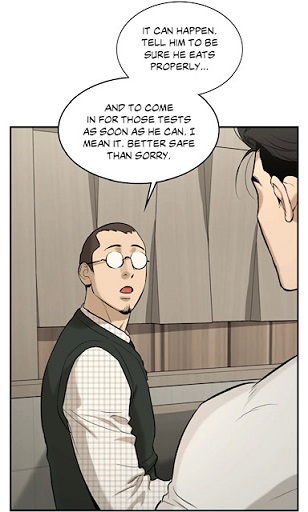 (chapter 13) He should send him to the hospital for tests, but the fighter refused. Why? It is because the latter feared his “chingu”. The doctor seemed rather interested in Kim Dan, therefore he feared that the PT might dump him for a “colleague”. That’s why Heesung was sent later to his gym. Karma was punishing him for not listening to his friend’s advice. Finally, it is important to recall his advice:
 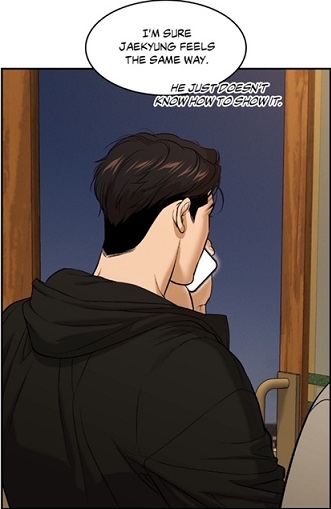 (chapter 43) And during that evening, the champion called his penthouse with the doc “Home” for the first time. Finally, in season 2, Joo Jaekyung started visiting each hospital or Sports Rehabilitation Center in Seoul in order to find Kim Dan.
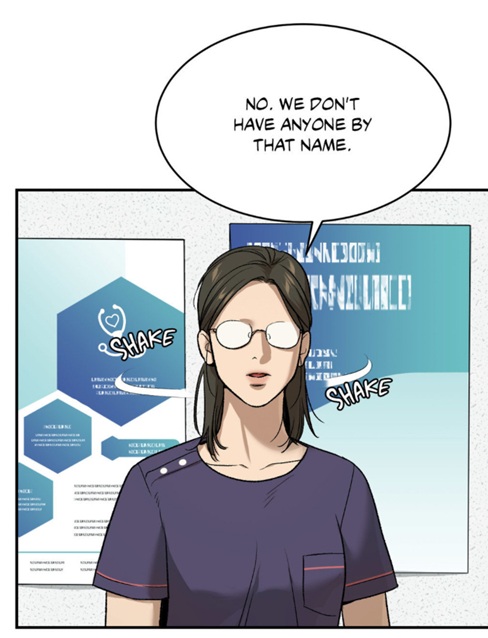 (chapter 56) And there’s no doubt that Joo Jaekyung got recognized by people forcing him to use a mask to hide his identity. So this frenetic search must have reached the mysterious doctor’s ears, but I doubt that he made the connection between the star’s lover and the physical therapist right away. Since he‘s a guest of XY club,
  (Chapter 13), it is also possible that he could have heard about the last incident in the restroom with doc Dan’s replacement. Since Cheolmin found Dan cute, it is very likely that he was also drawn to the surrogate „Dan“. But I don‘t think, this was enough to intervene, as Joo Jaekyung didn‘t ask for his help.
 and to Neptune
  and strangely, the doctor moved to a place next to the coast. So maybe Cheolmin comes from that little town and the green-haired nurse is his relative. I had already outlined their similarities. Finally, look at the numbers, we have 4 in both episodes, 13 and 59 (13: 1+3 = 4 / 59: 5-9= -4) The -4 would coincide with Kim Dan’s vanishing, but also with the intervention of Cheolmin. And if my theory is correct, this means that the champion will come to regret his past decision
 (chapter 48) Why did the Webtoonist gave us the time, when the next episode starts another day? On the one hand, it exposes that the schemers knew about the champion’s nightly activities. He wouldn’t sleep much and he would keep his cellphone next to him.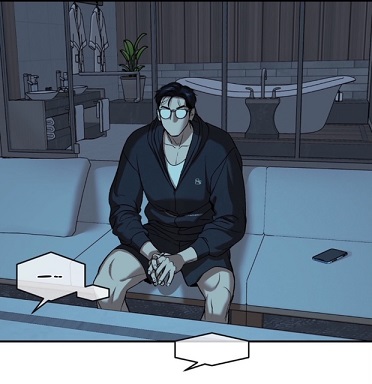
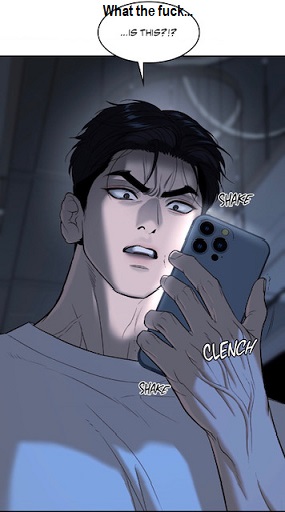 (chapter 35) This made me think of Painter of The Night and No-Name’s advice:
  (chapter 76) “A deed once foiled has no chance of success the second time around”.The criminal was referring to learning through experience. After going through such an event once, the athlete is no longer caught by surprise. We could say that he learned not to jump to conclusions and control his emotions. That’s the reason why in episode 48 he remained level-headed. Because the champion didn’t get angry, he could be more attentive.
  (chapter 48) Secondly,
  (Chapter 48) The irony is that the doctor had been able to treat the star’s injury. For me, the Summer Night’s Dream played a huge role, as during that night, Joo Jaekyung felt treasured and loved. Therefore the pictures could only expose the duplicity of the director of King of MMA. Under this new light, it becomes understandable why the celebrity didn’t fall into their trap and why they had to turn doc Dan into a traitor by giving him a weapon without his knowledge. Finally, I believe that Joo Jaekyung had another reason not to confront the physical therapist. How so? It is because he had sent away his soulmate, while the latter had approached him.
  (chapter 48) He had missed the opportunity.
 (chapter 30) Here, he wished to seek the doctor’s closeness. Nonetheless, if he had gone to Kim Dan’s bedroom during that night, he would have achieved the opposite: he would have created distance and caused an argument. The latter could have told him that he was looking out for himself, for Joo Jaekyung had threatened to fire him. Through these observations, it becomes visible why the athlete couldn’t ask Kim Dan at all. Consequently, I come to the conclusion that the clock
  (chapter 45) Then in the bedroom, he had rejected all his requests (massage, conversation). It was, as if he no longer needed him. He was no longer eating his breakfasts too.
  (chapter 47) Under this new light, Manhwa-lovers can comprehend why he looked annoyed in the hallway.
  (chapter 49) The gaze displays not only worry and anxiety, but also regret. It was too late to ask the doctor. For me, he chose silence, for he was regretting his reactions in the penthouse. He feared to ask Kim Dan, because if he brought up the meeting with Choi Gilseok, this could push the hamster to quit his job. However, thanks to Kim Dan, the star’s condition improved greatly. That’s how it dawned on me why the champion became a beast and why he is hiding his past:
 (chapter 48) But why is midnight so important? It is because the number 12 carries religious, mythological and magical symbolism, generally representing perfection, entirety, or cosmic order.
 (chapter 12) the couple was supposed to reach Nirvana, but the athlete failed terribly. Under this new light, it becomes comprehensible why the protagonist chose not to confront Kim Dan in episode 48. It was, as if the champion was closer to the heavens. This represents the champion’s leap of faith. Don’t forget that the star got scared for one moment
 (chapter 48), when he noticed doc Dan’s presence too late. But nothing happened to him, that’s how he got incited to trust Kim Dan. The latter wouldn’t backstab him. Under the blue light, the champion got transformed.
  (chapter 48) On the other side, the fact that the champion is always targeted during the night is a sign that the villains desired to approach him, when he was isolated. So they know not only about his insomnia, but also about his solitude. I would even add that the plotters are aware of his association between the night and danger. Remember how he described relaxation: he would give an opportunity to his enemies to attack him
  (chapter 29) This new observation reinforces my past theory: he would be suffering from Somniphobia due to traumas. [For more read




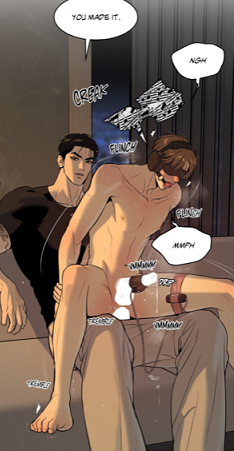


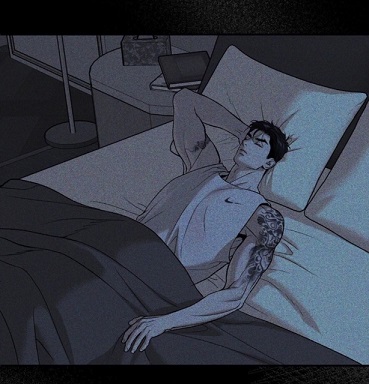
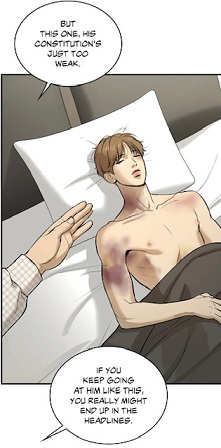 (chapter 13) It is important, because through this terrible experience, Joo Jaekyung came to internalize the connection between sex and danger. This would explain why he has been so rough in bed before. He came to see it as a normality, a sign that his perception of sex had been negatively influenced. And this can only come from bad experiences. It had nothing to do with “enjoying the moment”, until the protagonist met the shy hamster. We can see his gradual transformation. In episode 12, he definitely saw the night as “carpe diem”
 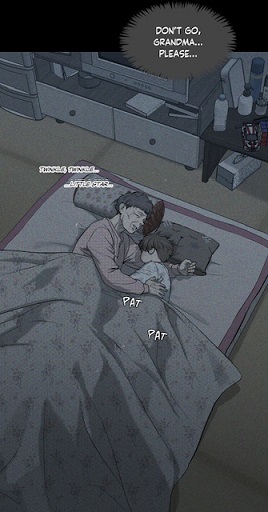 (chapter 21) Furthermore, the champion exposed why he could never relax:
 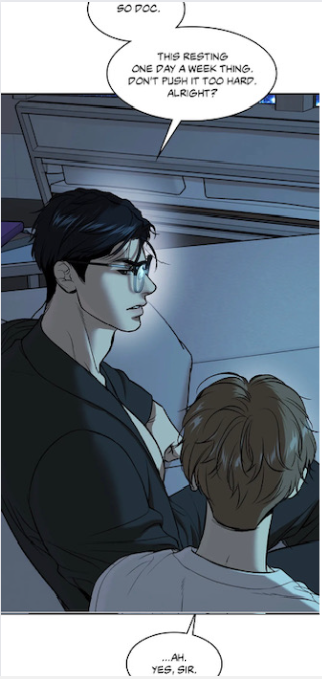 and 48:
  (chapter 47). And what was the main lead feeling after that terrible night? Regret, for he had not been able to notice his relative’s suffering and sacrifice!
 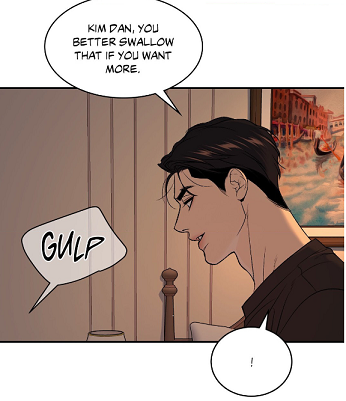 (chapter 39) or kissing the champion’s ruined ears
  (Chapter 18) And now, observe that during the night in the bathroom, doc Dan was associated with a baby receiving food:
 (chapter 20) As you can see, here the champion started viewing him as a human being. It exposes that little by little, his perception of the physical therapist improved. So from chapter 30 to 39, Joo Jaekyung was forced to question the nature of his relationship with Kim Dan: a PT or a prostitute or a pet?
  (Chapter 34) Here, he was in denial, he described the main lead as a possession, but he couldn’t fool the actor. Under this new light, it becomes comprehensible why the nights in chapter 19, 29 and 39 were so magical, they announced a transition or better the end of viewing Kim Dan as an object (tool for his jinx) and possession. From 41 to 49, the champion was cornered to recognize Kim Dan as a physical therapist and not just as a member from Team Black. Don’t forget his attitude in the car, when the main lead suggested him not to train.
 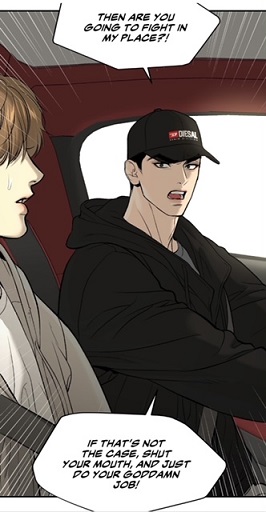 (Chapter 42) He rejected his advice, a sign that he was doubting doc Dan’s skills and competences. That’s the reason why I come to the conclusion that with the pictures, the champion was pushed to admit that Kim Dan is his physical therapist
 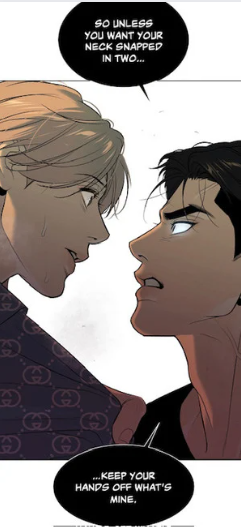 (chapter 34), then the fake star Baek Junmin
 (chapter 33)
  (chapter 49) Then I noticed another parallel between the two plots: the presence of a scapegoat, and the involvement of a third person. Heesung faked his injury by putting the blame on the athlete, while he asked Kim Dan as compensation. In the second plot, the roles are switched. Kim Dan is now the perpetrator, while the athlete is the victim! Baek Junmin is the beneficiary of this scheme. And what do these plots have in common? Joo Jaekyung is the victim of a trick, though Heesung’s manipulation was rather benign. First, he acted on his own.
  (Chapter 31) Moreover, he utilized the genuine concern and innocence of his surroundings. In other words, he used his image as a good and honest man to his advantage. Thus I come to the conclusion that the artist’s sin in their youth was rather minor, as the artist tends to violate social norms. So though it was no illegal, the actor’s wrongdoing definitely left scars on the protagonist’s heart.
 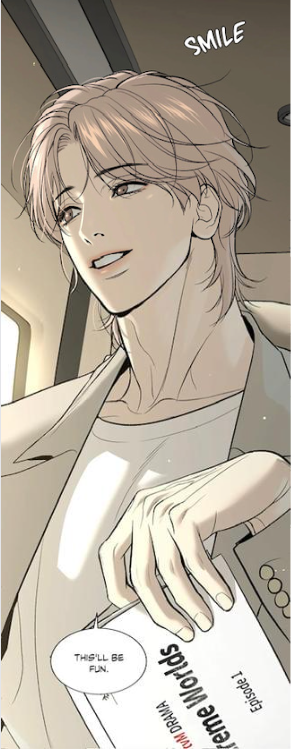 (chapter 29) Probably, Heesung utilized Joo Jaekyung’s innocence to his advantage in order to maintain his good reputation, like for example he was not supposed to be smoking or he took away a friend from him, as the topic of their conversation was about the theft of a person
  (chapter 33)
  (Chapter 30) Another common denominator between The Shotgun and Heesung is their envy and greed.
  (chapter 5) Joo Jaekyung destroyed the sandbag, when he imagined that doc Dan had blocked him! This signifies that the former could no longer contact the shy hamster. Joo Jaekyung saw it as an affront, a challenge!
  (chapter 46) could be seen as a reflection from the arcade and the star’s past. And since Kim Dan wounded Joo Jaekyung in the locker room
  (chapter 49), I deduce that such an action must have happened in the champion’s youth. He got not only hurt by people, but also betrayed by a friend. There exists many reasons for this hypothesis.
 (Chapter 04) and be rude towards others.
 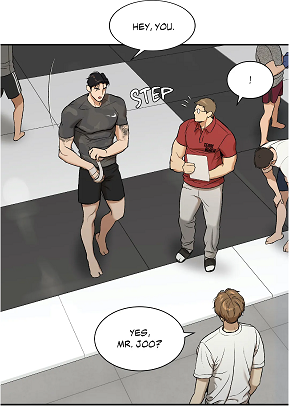 (Chapter 7)
  (chapter 37) But Mingwa left many clues that the celebrity’s personality shouldn’t be judged by impressions. During their first night together, Manhwa-lovers could see books next to the bed.
 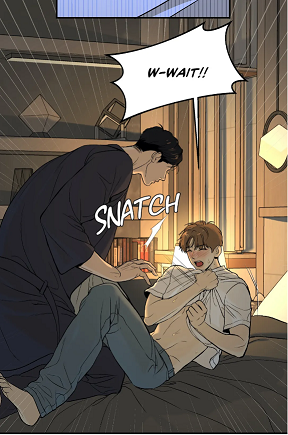 (Chapter 3) Some of them are not written in Korean or English. Moreover, the Webtoonist revealed that one of his hobbies is reading. This explains why he can talk prettily.
 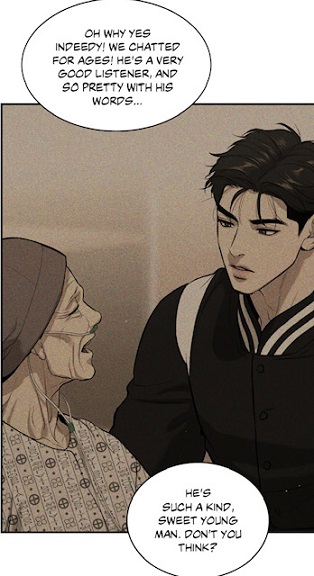 (chapter 22) This shows that his behavior mirrors the counterpart’s. Consequently, it is not surprising that the champion is rough with his own body, as Park Namwook is not treating him like a delicate child.
  (chapter 31) But there exists another proof for his intelligence. The celebrity is capable to lead an interview in English on his own.
  (Chapter 37) Even stressed and filled with anger, he could understand and speak fluently in English.
  (chapter 40) Besides, Jinx-philes should question why Mingwa is not divulging his scores as a student contrary to Kim Dan or Jinwon from BJ Alex. It is because she wants to create a certain image about the champion: he is a bad boy. In my eyes, she is playing with prejudices about MMA fighters. People often imagine, they lack social manners and education. They chose this path, for they could do nothing else. And this brings me to my next remark. We know that Kim Dan selected PT because of his halmoni.
  (chapter 26) Joo Jaekyung was also an amateur in the past, but his motivations were his rage and resent. On the other hand, contrary to his soulmate, the athlete likes sports as well. His other hobbies are jogging and swimming. Thus I am suspecting that Joo Jaekyung might have been part of a swimming club in the past. Striking is that he forgot his passion due to his career as a MMA champion.
  (chapter 27) I see a contrast between these two sports: swimming which is related to relaxation, pleasure and fun and MMA fighting which stands for challenge, pain and seriousness. This contrast is even more present in the following panel:
  (chapter 49) Is it a coincidence that this Enlightenment took place under the shower? For me, no! I see a strong link between water, swimming and the champion’s job. It looked like swimming represents a source of danger for the athlete’s job, as it is an entertainment! Hence I can’t shake the feeling that in the past, Joo Jaekyung might have shown aptitude for becoming a natation athlete! Let’s not forget that for the calendar 2024, the champion was seen carrying swimming googles and not “MMA gloves”. This detail caught my attention and made me wonder why Mingwa selected these items.
  (chapter 49) He is a hyena, hence his color is brown.
  (Chapter 48) And The Shotgun has a similar attitude:
  (chapter 49) Interesting is that his description of the challengers fits the situation in the new plot perfectly. The Shotgun imagines that he will fight against a diminished champion. His shoulder is injured and they have planned to add a new injury. The hyena stands for balance and cleansing as their task is to remove the weak ones.
 (chapter 49) As an old man, Choi Heesung is revealing vulnerability and senility. Due to his old age, he could be replaced by another hyena, a younger hyena!
 (chapter 5), as he is the only person who has not appeared yet, though the champion has his cellphone number. And this remark brings me back to the present and the night messages and the hyenas.
 (chapter 36) which could only affect the members from Team Black. Their loyalty could waver. Then he got to hear bad comments from the Internet
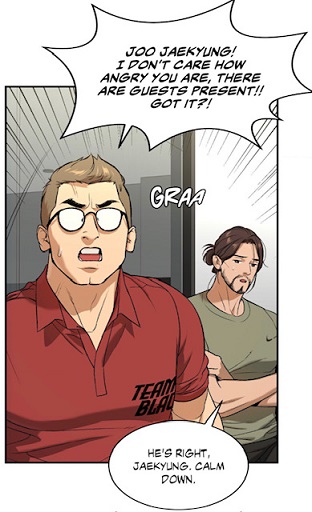 (chapter 36) Under this new perception, Manhwaphiles can grasp why the MFC manager offered him a new defy right away. They needed to exploit his injury!
  (chapter 47) At no moment, the physical therapist brought up his misdeeds and asked for an apology. His silence became the symbol for his tolerance and even forgiveness. In addition, the doctor and his halmoni embody both vulnerability and poor health, which is strangely connected to crime and scandal.
 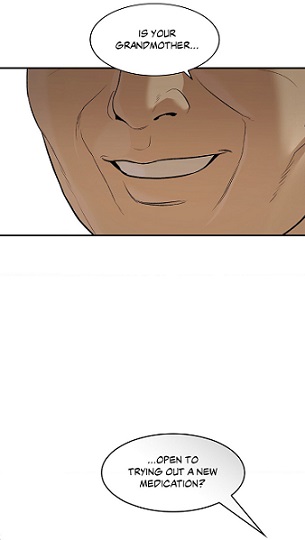 (chapter 48) Through them, the champion is learning that hunting weak and pitiful creatures is not only a sin, but also a crime! In the first case, he could be accused of hurting an innocent.
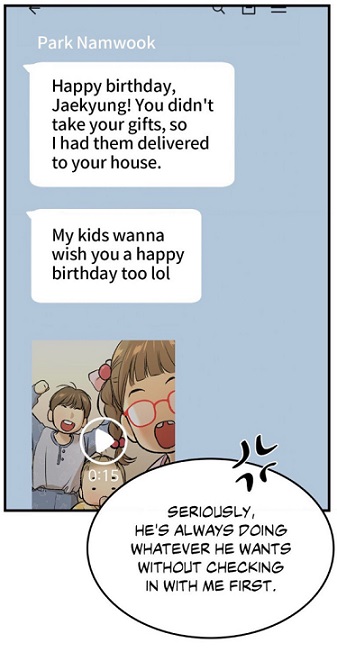 (chapter 45) At no moment, the author let us see the celebrity receiving a gift or a message from a family member! It was, as if he was an orphan and had no family. Their absence and silence are the evidences of neglect. But one might argue that his parents could be dead, something I had already envisaged in the past. However, if so, as a teenager and young man, he needed to have a guardian by his side, exactly like the doctor with his halmoni. And Park Namwook is not acting as his guardian, for he doesn’t visit him in the penthouse or calls him there. So where was the guardian in episode 45? Invisible, silent and passive! Like mentioned above, I am suspecting the mysterious Seo Gichan. Thus I consider the champion’s criticism as the expression of deep scars which came to the surface:
 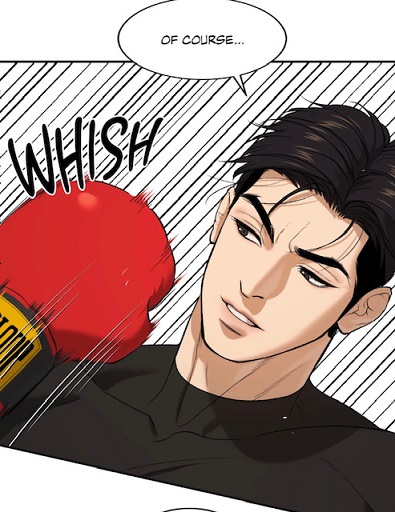 (chapter 26) For the first time, he had fun sparring. Hence he kept smiling. It is no coincidence that soon after he chose to accept to take a day-off, when Kim Dan made the suggestion.
 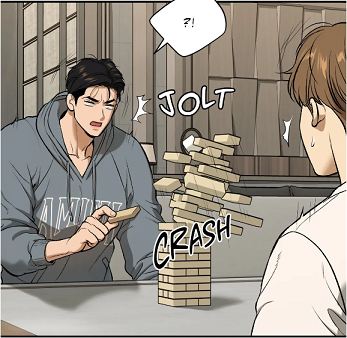 (chapter 27) That’s how he remembered that he liked swimming and he could play a prank on his lover.
  (chapter 27) Here, he could smile, because it was fun and there was no real expectation. It was not truly connected to money.
  (chapter 35) and not in episode 48. It is because Kim Dan had paid him a visit during that night, a sign that he was thinking of him as his patient and VIP client.
 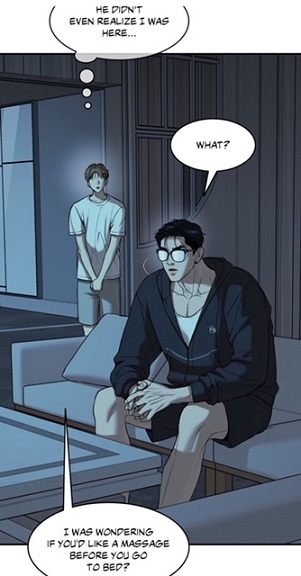 (Chapter 48) On the other hand, I am inclined to think that when a terrible incident in his youth occurred, he couldn’t contact his family or guardian. Hence he keeps his cellphone by his side constantly. Yes, I was thinking of the doctor’s assault in the street and his failed rape:
  (Chapter 16) Heo Namwook’s minions had confiscated his cellphone. Hence it was impossible for him to call for help. And now take a closer look at this scene:
 (Chapter 16) Though he had been on the phone and it was daylight, no one stopped the thugs from kidnapping the main lead or reported the incident to the police. Hence I am also suspecting that Joo Jaekyung must have faced a similar situation: he was surrounded by malicious people and no one had assisted him. So he could have been targeting at school due to his grads or his social status. And his isolation at home could push to seek company outside, to look for friends at school.
  (chapter 49) And the anonymous person on the other side of the phone was definitely calling in order to be updated about Joo Jaekyung, for his coach asked him about his physical conditions.
 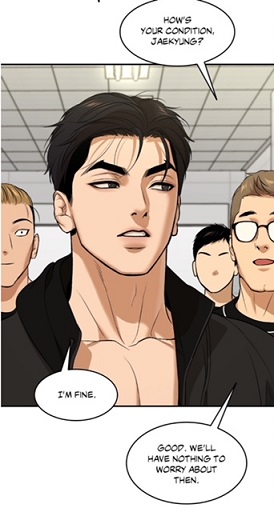 (chapter 49) That could be the hidden guardian who has not showed up yet, I am thinking of Seo Gichan. And now it is time to close this long essay.

 (chapter 47) Now, you are wondering why I decided to dedicate an essay about this scene. It is because the phone call and message raise a lot of questions. Why did the mysterious man call Kim Dan at such an early hour? Notice that it is in the morning, at 5. 15 am.
  (chapter 47)
  (chapter 47) The Spanish translator thought, the person calling Kim Dan was contacting him, after the doctor had met the oncologist. She imagined that not much time had passed. Yet, I believe, it is in the morning. First, it is important to place the day in the year. Since Joo Jaekyung’s birthday is on June 21st, and the next match is shortly after
 (chapter 47), I deduce that we are in July. However, the
  (chapter 47) It is in the morning. Moreover, the Webtoonist tipped off her avid readers with this panel:
  (chapter 47) In Korean, it is written MONDAY!! I had already detected a certain pattern. The protagonist would visit his grandmother on Sundays,
 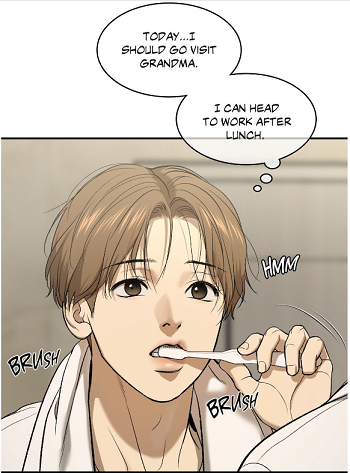 (chapter 30) as Saturdays are Kim Dan’s days. The morning in chapter 30 took place after the couple had spent their day-off together.
  (chapter 47), it was Saturday evening. Then the next day, he went to the hospital in order to get the results. After hearing the terrible news, he lost track of time. Hence he didn’t look at his cellphone contrary to episode 5.
  (chapter 5) On the other hand, I don’t think, he visited Shin Okja right after meeting Kim Miseon, for his grandma would have known that he had remained by her side the entire night. Nonetheless, her worries were about eating and not about lack of sleep.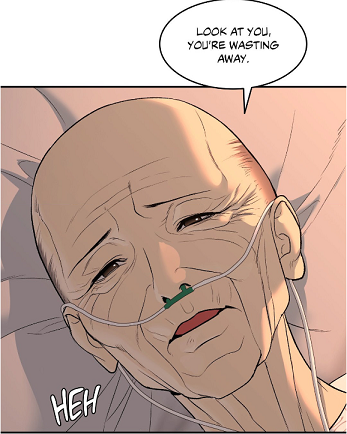
 (chapter 47) Thus I come to the conclusion that he spent the whole night at the hospital like in episode 21:
  (chapter 21) This explains why the grandmother was not wearing her headgear. She was sleeping. But back then, Kim Dan returned to the penthouse at dawn.
  (chapter 21) Therefore the grandma didn’t notice that he had stayed by her side for quite some time, for she was asleep. Hence she requested his presence the next morning. Nonetheless, there exists another difference between chapter 47 and 21. In my eyes, Kim Dan entered her room during the night and spent some time in the bathroom.
  (chapter 47) He didn’t approach the bed the same way:
  (chapter 21) However, I doubt that he spent just one hour in the restroom covering his tears by running the tap water.
 (chapter 3) Here, he was also sitting on the floor pondering if he should still accept the deal. And what had happened back then? The protagonist was lost in the moment, he had no notion of time because of his fears and social norms. As a first conclusion, Kim Dan spent a lot of time in the bathroom reliving the moment when he was receiving the bad news. This interpretation displays how much his grandmother’s imminent death devastated him. He had spent the entire night crying:
  (chapter 47) Therefore he had red eyes. Furthermore, the halmoni’s name is Shin Okja, and Shin can signify “morning, dawn and daybreak”. For me, it is no coincidence. First, it was her moment to shine due to her compassion.
 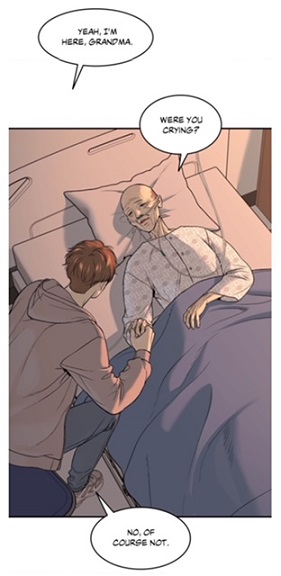 (chapter 47) In my eyes, this scene represents the positive reflection from that nightmare:
  (chapter 21) As a little boy, he had asked his grandmother to never leave his side, unaware that this meant that he should do the same. He should remain by her side too. Yet, he didn’t do it.
 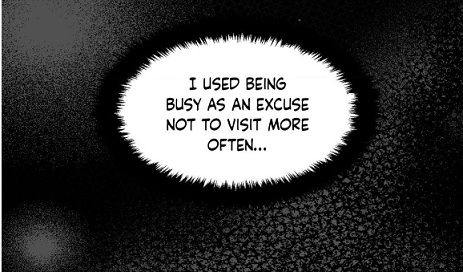 (chapter 47) This observation made me realize another aspect. When he heard the diagnosis from Kim Miseon for the first time, he admitted his powerlessness.
 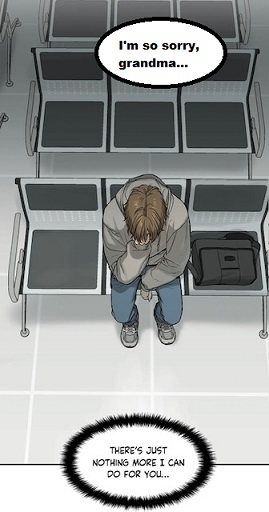 (chapter 5) In his eyes, he could do nothing for his grandma. But he was wrong, as he could support her by spending time with her. From my point of view, when the halmoni left home for the hospital, deep down, he must have felt abandoned. On the other hand, we shouldn’t forget that he also had other worries and problems to solve: the loan, the hospital bills and finding a job as a PT. Hence I deduce that through his grandmother, he learned the following lesson: he should spend more time with his loved ones, as they can vanish at any moment. He learned how precious time is. This remark made me realize the huge contrast between these two scenes:
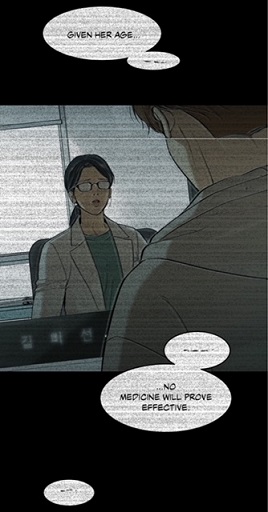 (chapter 47) He was in the bathroom crying and kept recalling the terrible monologue from the oncologist. He felt lost and trapped in the same moment. It felt like an eternity for him. But when he listened to his grandmother, bathed in the sunlight, it triggered his memory about his childhood with her.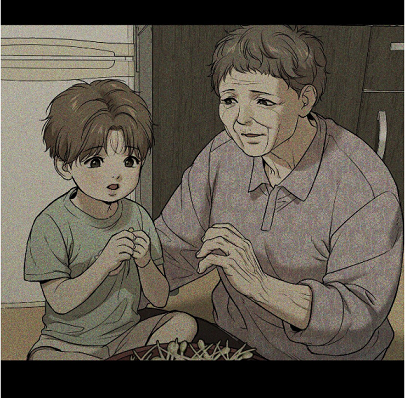
 (chapter 47) Shin Okja is no longer a goddess, a star during the night… but a human facing her mortality. Besides, the doctor focused too much on money, not realizing that goods are irrelevant in front of death.
  Yet, I can refute this point. How so? Note that the caller only let the phone ring 3 times:
  (chapter 47) Then he left a message. This stands in opposition to Joo Jaekyung’s action in episode 5:
  (chapter 35) So what does the divergence display? I would say, the lack of seriousness and integrity from the executive director. Shim Yoon-Seok wished to appear as a serious reporter, though he was intruding in the champion’s private life. Don’t forget that the latter messaged Joo Jaekyung during the night, but he didn’t call him:
 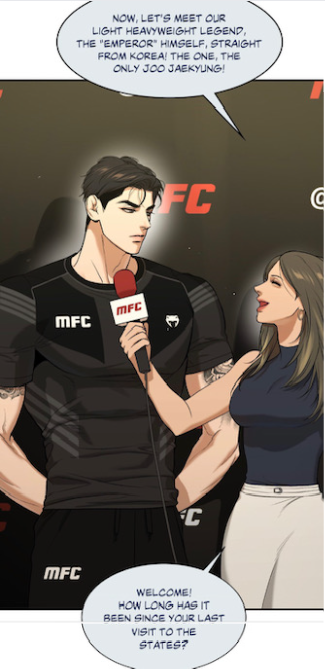 (chapter 36) This divergence reveals that the executive director has a different approach than the reporter. The former seeks to „get close to Kim Dan“, while the journalist desired to avoid the famous fighter’s wrath. Shim Yoon-Seok anticipated his reaction. Therefore I have the feeling that the mysterious man contacted the physical therapist so early to create the illusion that it was urgent. They needed him. Interesting is that when the champion received the message from Shim Yoon-Seok, he never questioned how the reporter got his contact.
  (chapter 46) And now, imagine the consequences, when Kim Dan or Joo Jaekyung reports the text as spam. Not only he doesn’t prevent the scammer from sending more texts to him, but it does let the authorities know as well that there’s a problem. Carriers might block the sender’s messages. Government bureaus might take action to prevent the scammer from messaging other cellphone users.
  (Chapter 46) And remember that Mr. Choi used this cellphone to contact his underling, a sign that their relationship was not official and should remain a secret. Hence if the line got cut, then Heo Manwook and Mr. Choi would be forced to meet. As you can imagine, the moment I discovered the connection between „carrier“ and „spam“, I couldn‘t help myself thinking that Mr. Choi might have received the CV from the courier company!!
  (Chapter 42) Yes, we have here a text on a cellphone too. Therefore I couldn‘t help myself laughing!! Why? It is because I believe that the schemers are thinking that Kim Dan is a member of Team Black, a fighter, and he is Joo Jaekyung‘s protégé. My reasoning is the following: since my hypothesis is that he got the doctor‘s curriculum vitae through the courier enterprise
 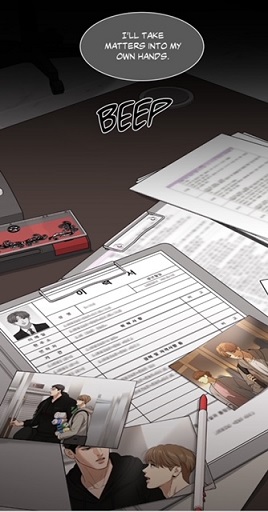 (Chapter 46), I doubt that Kim Dan mentioned that he was working as PT for Joo Jaekyung. This would have raised an eye-brow!! His side gig was supposed to be a secret implying that his official work was to be kept hidden as well. Furthermore, I am assuming that Mr. Choi must have tried to figure out Kim Dan based on his CV. He worked for a short time at the hospital and after he chose to take odd jobs. So he could have had a change of heart, he desired to pursue a different career, like for example becoming a professional MMA fighter. I don‘t think, people would mention such a hobby, as it could give a bad impression. Finally, if my theory is correct, then it signifies that Mr. Choi got tipped off by the hidden person from chapter 42.
  (chapter 42) Remember my previous interpretation: the anonymous person had discovered a secret, but back then it was difficult to determine the secret.
 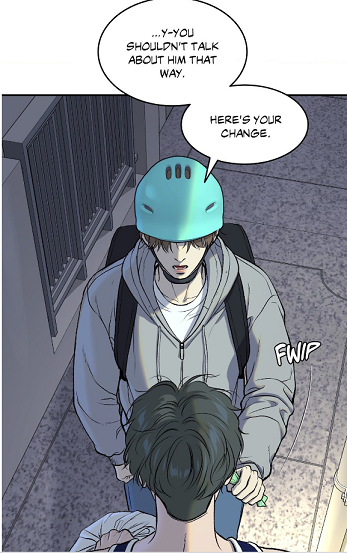 (Chapter 42) First, I thought that they knew that Kim Dan was probably his „sex partner“ as a fan, as he didn‘t object to this statement
  They are trying to snatch away the favorite athlete from Team Black in order to destabilize Joo Jaekyung mentally
 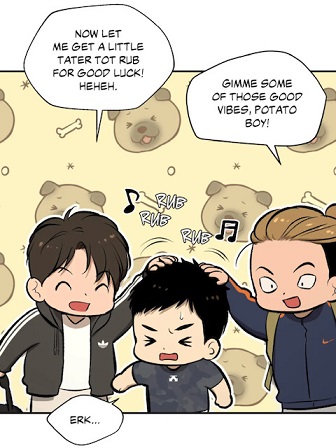 (chapter 23) So they could think, Kim Dan is not questioning the belief too, as he is a fighter. However, in the picture, Kim Dan looked depressed alone. So the picture was exposing his disillusion and Mr. Choi could misinterpret the origins of his disappointment: he was not able to achieve his dream.
  (Chapter 26) They could have jumped to the conclusion that Doc Dan was his stage name as a reference to his education and past, unaware that in reality it was indicating his true job. Thanks to @joojaedan, I got access to the original version.
  He is addressed as Kim Dan, and @joojaedan told me that he got addressed the same way than the fighter and Joo Jaekyung would call him. I have to admit that I let the app Deepl translate the Korean version. This is what I got:
 (Chapter 36) Moreover, this signifies that Baek Junmin is presented as the owner of the gym
  (chapter 47), as he is the face of that gym. In reality, he is just the cover, whereas the true owner is the mysterious sender of the text.
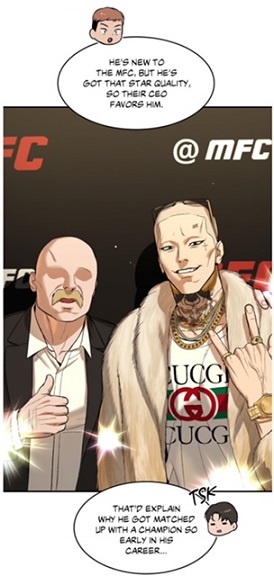 (Chapter 47) This signifies that he is acting like Park Manwook
 (chapter 22). Yet, he is his negative reflection, as Mr. Choi is the real owner, but he hides behind the thug Baek Junmin. On the other hand, Park Manwook views himself as the owner of the gym, for he takes care of contracts and finances, but the one with the final saying is in truth Joo Jaekyung. To conclude, we have a similar situation between the two gyms: the owners are keeping a low profile, they stand in the shadow. However, there exists a difference between them. Joo Jaekyung is allowing his hyung to call himself the owner of the gym out of respect, whereas the other is doing in order to hide his criminal activities. I would even say, he is making sure that Baek Junmin would take the fall in case he would get into trouble.
 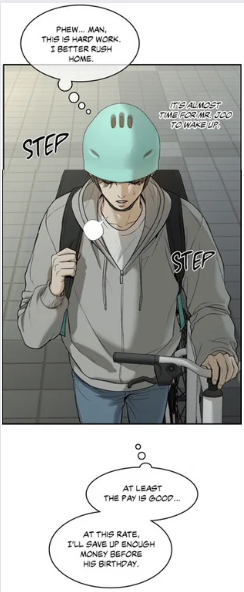 (chapter 42) He let it ring three times before texting him in order to catch the doctor’s attention, to distinguish himself from the previous calls (for his job). If so, then Mr. Choi must believe that Kim Dan is being “exploited” by the athlete. Hence the doctor would look so unhappy, when he is alone. In other words, the pictures taken in secrecy would expose the hypocrisy of the celebrity towards the main lead.
  (Chapter 35) Here, the actor had planned to confess to him, while the other wanted to divulge the true nature of their relationship:
  (chapter 34) It was pure sex, yet the comedian didn‘t get fooled. Joo Jaekyung had feelings for him. Striking is that during that night, the doctor got fooled and this twice!!:
  (chapter 34) First, the star knew about the invitation from Choi Heesung. This even caught Kim Dan by surprise. This image exposes that the champion had violated the doctor’s privacy. So how did he know it? We have different possibilities, yet my idea is that he had seen the message!! Thus he replied with a text to Heesung. Besides, observe how he dissuaded the doctor from visiting the actor.
 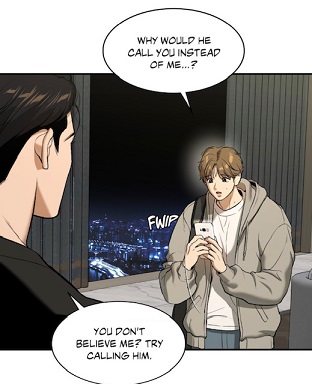 (Chapter 34) He should CALL him… a sign that the champion had not called anyone. Since Mingwa is writing like Byeonduck, I have the feeling that the message from Mr. Choi will be discovered by Joo Jaekyung. Remember how his hyungs had warned him
 (chapter 46), but he had refused to listen to them.
  (Chapter 46) But the moment the champion is confronted with such a message directly, this would be a wake-up call for Joo Jaekyung, he should treat his members much better, as the existence of his company is in jeopardy. Moreover, I am hoping that such a discovery will push Joo Jaekyung to play a trick on his enemy too, like for example he gives a task to Potato, act as a spy!!

 Kim Dan saw the calls, but he ignored them.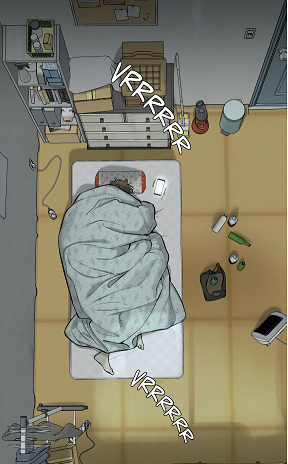
 It was another emergency call, for he needed to leave the place within a week. Interesting is that the person didn’t present himself. No name… As you already know, I am suspecting that the doctor got fooled, for I doubt he ever received any compensation for his move. He should have received money. Emergency, rejection, manipulation, interruption and spying (Heo Manwook interrogated the doctor right after)

 Sex, interruption, „emergency“, as the champion didn‘t take off his shoes and put down his bag. Then during the intercourse, the doctor was called by the hospital
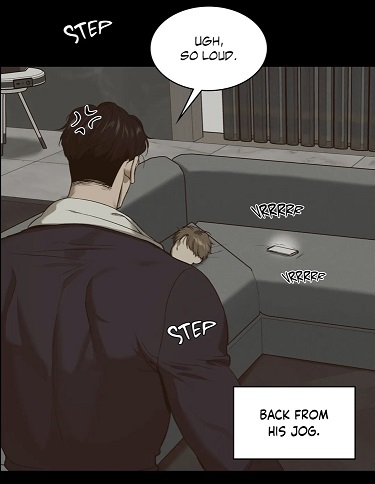
 Sex, interruption (food), secrecy, manipulation, ignorance and spying. Potato had tried to listen to their conversation.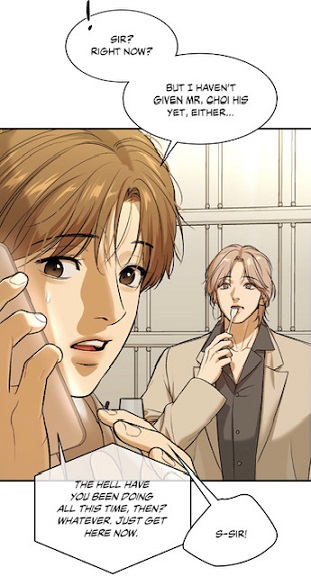
 Interesting is that here, there was no emergency from the champion‘s part. This time, Kim Dan was the one longing for the athlete.
 (Chapter 47) And how should he betray the athlete?
  (Chapter 46) Furthermore, since Heo Manwook was the one who hired this man
  (Chapter 47) And the latter has a reason to get revenge on the celebrity because the suffered humiliation and beating.
  (Chapter 46) What caught my attention is that this athlete definitely boosted his situation by advertising that he was the champion’s sparring partner. I doubt that the main lead‘s criticism was unfounded.
  (Chapter 46), for he had been bragging about his merits.
  (Chapter 46) By the way, I believe, Seonho was a recent recruit. Therefore he doesn‘t know the champion that well and he is not close to the other fighters. Hence they didn‘t protect him
  (Chapter 46) like in episode 1
  (chapter 1) He had no idea about the roughness during the sparring, though this scene exposes that the champion had toned down the brutality during the sparring.
 (Chapter 46)
  (Chapter 25) So Seonho could expose the true identity of the main lead, he is a physical therapist… Hence the schemers would understand why he got blocked or reported as spam. Their retaliation would be to tarnish his reputation as physical therapist.
 (chapter 42) On the other hand, since I am predicting a failure of their scheme, they could decide to take revenge on Seonho by sending him to an illegal fighting game, where he could get badly injured. Moreover, the moment they discover how weak the red-haired man is, they could jump to the impression that Seonho deceived them!!
  (Chapter 46) Don’t forget that the champion is the mirror of truth, while the doctor‘s role is to expose the hideous side from people: the goblin and the green fox!
 (Chapter 46) But he was sitting with the others later. Consequently, I come to the deduction that he failed to discover any lead, or better said, any connection between the bets and Mr. Choi. Why? It is because he is a former champion, and professionals among MMA world must know that he works for the star.
 (Chapter 47) Joo Jaekyung needs to realize that he can not just rely on his hyungs alone, he needs the assistance from the whole staff: Kim Dan and the other fighters, as they are not known in the MMA world.
 (Chapter 47) They couldn‘t break into MFC, on the other hand, their position helps them to get insight, to approach the illegal fighting ring.

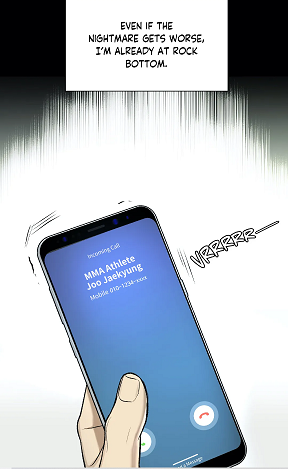
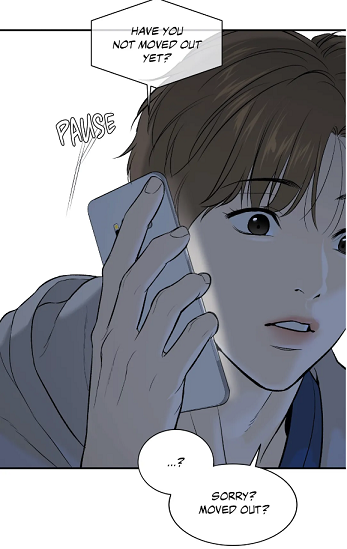


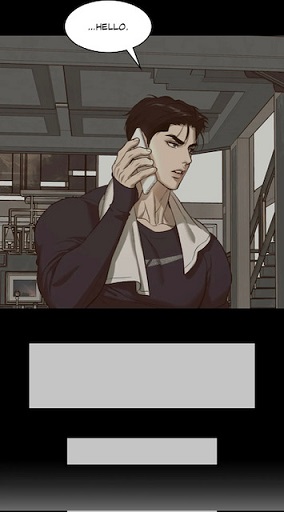


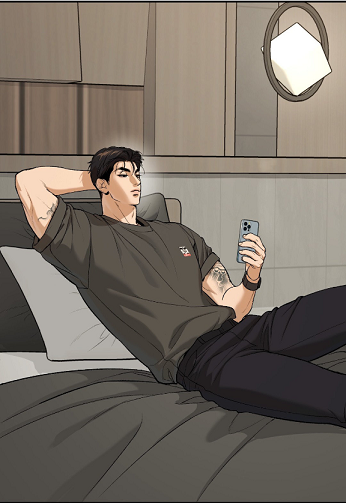
 (chapter 43) In the podcast and in the list, I omitted one recurrent topic on purpose: REJECTION!!, We have this topic in chapter 1, 5, 17, 19, 21, 22, 24, 30, 32, 34, 35, 36, 37 and finally 43.
  (chapter 43) The doctor was invited for the second round and he could have agreed, but the athlete intervened fearing that the doctor would prefer the company of the fighters. This exposes his low self-esteem. However, Kim Dan was already rejecting their invitation.
 (chapter 13) He was acting, as if he hated kisses, foreplay and embraces. At the same time, he is showing his face, yet this is just acting. Thus the hyung replied the same way. He faked his anxieties and submission.

 (chapter 40) This signifies that in this moment, Kim Dan decides to cross the line, especially since he likes the emperor. He is accepting that he means much more to Joo Jaekyung than being his toy. Because the champion called him “his person”, he felt moved and indebted. Consequently he started considering himself not only as being a part of the champion’s life, but also as a part of Team Black.
  (chapter 1) The reference of belief in two panels from episode 40
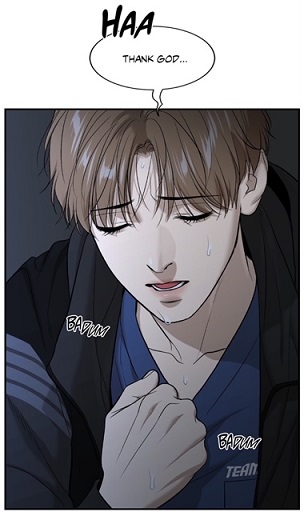 (chapter 40) led me to associate Kim Dan with a butterfly, for the latter symbolizes faith, hope, change and rebirth. And now, you comprehend why this illustration
  contains blue-black butterflies. They are alluding to the physical therapist. The latter is wearing his blue uniform with the black jacket from Team Black.
 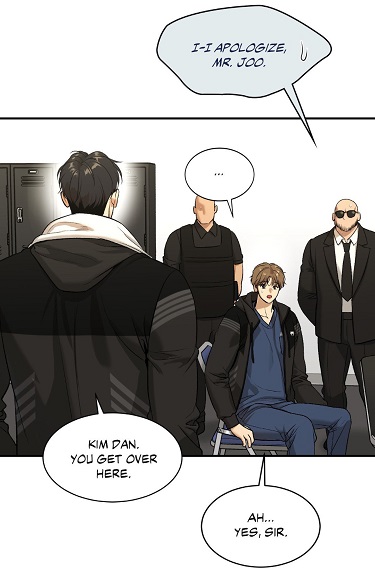 (chapter 40) And the butterfly got unfortunately caught by a spider.
  (chapter 409. Yes, the hand from the MFC security guard reminded me of a spider. But there exists another reason why I came to connect the MFC security guys with the spider. It is because both are related to the web. There is no doubt that the MFC security guards wove a web of lies to Kim Dan. And how can we detect this? There exist different methods to expose the men in Black as manipulators and hunters. First, the MFC security guys are wearing glasses. Another method is to compare the interrogation scene with episodes from Jinx. Finally, it is important to examine their words and as such their speech bubbles. But let’s start with the glasses.
 (chapter 40) I have long outlined his flaws. Imagine that he only informed his star about the incident with the drugged beverage after the match, but he knew about it before. However, his words are implying that it was not his fault, for he had been informed too late (“I only found out this morning”). He was not responsible for the incident due to his ignorance.
  , she embodies impartiality, because she is able to detect the truth through the testimonies. She is not blinded by prejudices (origins, social background, gender…) contrary to the characters in Jinx.
  (chapter 40) The MFC guys are biased, they are acting like cops, prosecutors
 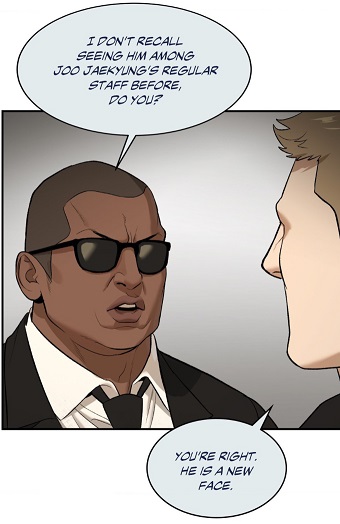 (chapter 40) Don’t forget that they are not outside, but in a close room. First, such glasses are connected to spying. People should not recognize them, they are hiding their identity. The eyes serve to identify people, this explicates why there is this saying, the eyes are the mirror of the soul. For me, the sun glasses have a symbolic meaning. Three MFC guys were wearing sun glasses
 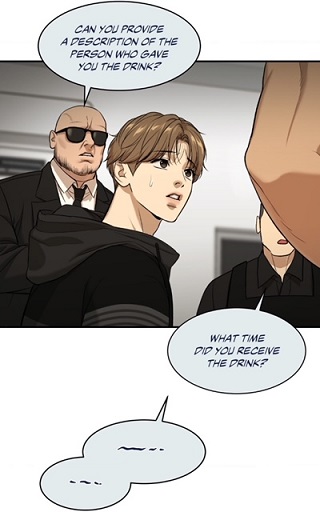 (chapter 40), but two were acting as the main accusers.
 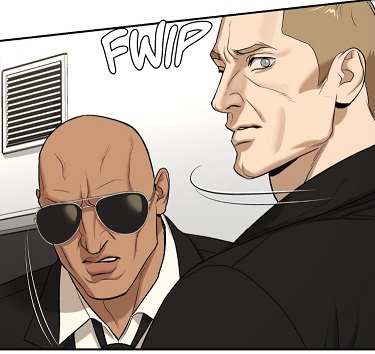 (chapter 40), a sign of his anxiety, nervousness and anger. It was, as if he had been caught. This little detail displays his knowledge. He knew that Kim Dan was innocent in the end. These two men wearing sun glasses were extremely ruthless and calculating, as if they had sold their soul to the devil. They were determined to frame Kim Dan, for he was new. Moreover, I believe that the sun glasses have another symbolism. According to my interpretation, Joo Jaekyung is represented by the sun, so wearing sun glasses indicates that they are trying to protect themselves from the champion. I will elaborate about this further more. Finally, wearing sun glasses is a sign for coolness and confidence. It looked like this item gave them the assurance to act like the tough and hardworking security agents. In other words, the sun glasses are strongly connected to acting! Yes, we were witnessing a fake investigation and trial! This leads me to the second method, the comparison of panels and scenes.
  (chapter 11) Yes, the MFC security guys are mirroring Heo Manwook and his minions. And not just once, but twice!!
 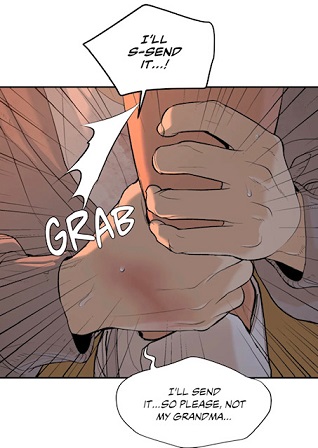 (chapter 16). In the interrogation room, the MFC security agents accuse him to have plotted against the celebrity.
  (chapter 40). As you can see, Joo Jaekyung is utilized the same way than the grandmother. Moreover, I would like to outline that in episode 16, the main lead got kidnapped in broad daylight, and no one stopped them.
  (chapter 40) Though the stadium was plunged in the darkness, the Manhwa lovers shouldn’t forget that the match took place at 11.00 am. So it should have ended around lunchtime. To conclude, the kidnapping and sequestration from the security agents is a combination of episode 11 and 16, therefore we have the same elements: blue and black reminding us of the night and the time as an indicator for the day. But let’s return our attention to the physical therapist in the arena. He was approached from behind, for the mysterious man touched him by the shoulder.
 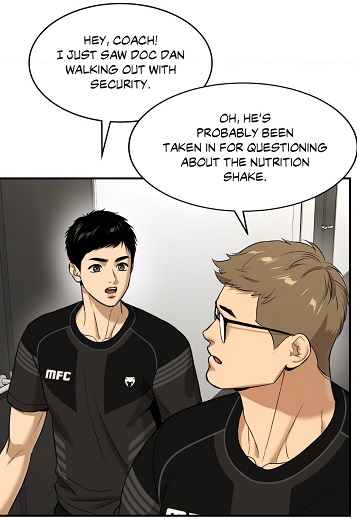 (chapter 40) Even, when Park Namwook is informed that the security took away the physical therapist, he showed no concern. For him, it was legal and normal due to the dubious nutrition shake. The Jinx-philes can sense the same passivity from people in Seoul and in the States. Why did no one from Team Black feel the need to follow the physical therapist? In my opinion, it is related not only to their blind trust, but also to a certain indifference. Kim Dan has a special status at the gym. Technically, he is just the private physical therapist from Joo Jaekyung.
  (chapter 11) or even trespass his house and rape him.
  (chapter 16) Striking is that MFC has a similar attitude in the end. They control their stars’ life through their regulations: the weight categories and weight cutting
 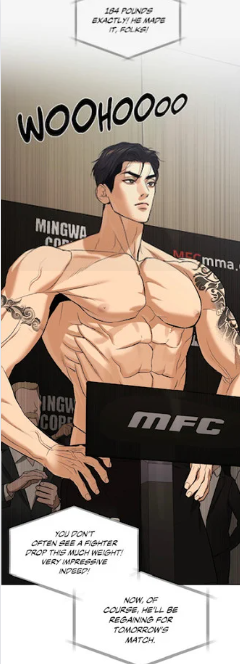 . (chapter 37), they supervise their food
  (chapter 37), and finally they take blood samples or urine tests in order to ensure that the fighters didn’t use any drug.
  (chapter 29) This explicates why the man with black glasses asked him about his relationship with the physical therapist.
 (chapter 11) Funny is that Heo Manwook suspected the main lead to earn his money through illegal means, while in reality, the former is actually the one using illegal means. As you already know, for me, he is involved in the set up against the two protagonists. But it doesn’t end here. MFC guys are acting like legal authorities, thus they are wearing black suits and glasses
 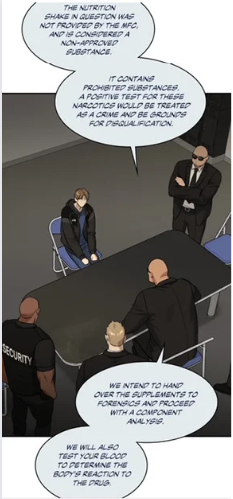 (chapter 40) reminding us of FBI agents.
  (chapter 15)
 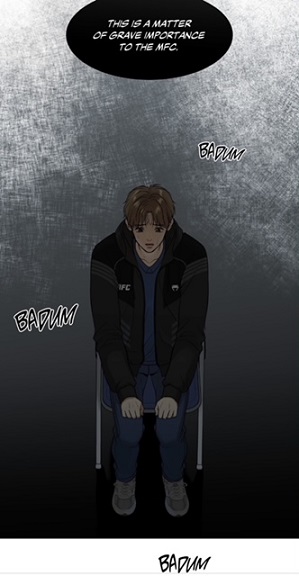 (chapter 40) resembles a lot to the one from the hospital,
  (chapter 11) Secondly, Mingwa created scenes, where someone would take action against a person or organization:
  (chapter 30) Under this approach, it becomes comprehensible why they were wearing sun glasses, they served as a shield for a trial. No ID and no eyes means no identity.
 (chapter 14) And that’s how the schemers discovered that their trick had failed. But this could have consequences for MFC, for the reputation of the MFC security guys would have been tainted. That’s why I believe that the manager had to find a way out. He must have advised the MFC staff to find a scapegoat in order to avoid a scandal… Kim Dan had to be framed… because he is the one who said that the nutrition shake came from the MFC!!
 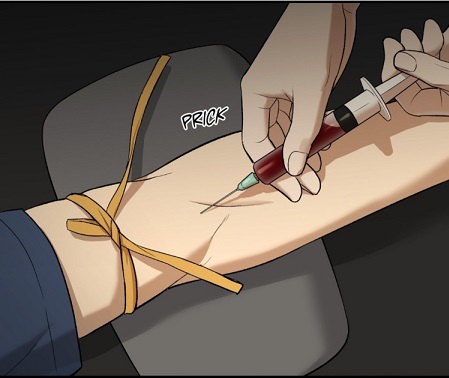 (chapter 40) MFC is a private organization, so they are not supervised. So they could do anything with this blood sample, like for example fake results.
 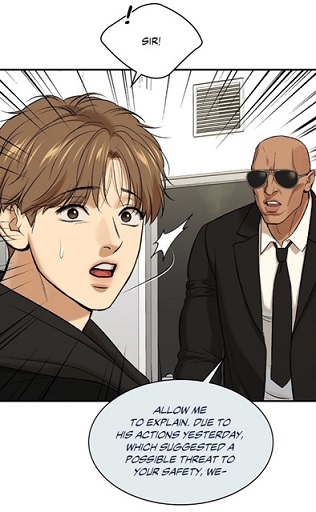 (chapter 40) Like Joo Jaekyung pointed out, this trick was exposing their lack of security. They had failed their duty.
 (Chapter 36) Striking is that the manager described the match as an urgency. Why should the fight take place a month later, when it is a non-title match?
  (Chapter 36) Besides, why should it take place in the US? The purpose is to weaken him… Yes, the match was organized to put him in disadvantage. Far away from home, he would have less supporters.
  (Chapter 15) Moreover, he is fighting an experienced MMA fighter. And with the weight cutting, his performance could be affected. So now, it is time to reveal his identity:
  (Chapter 14) Yes, Randy Booker! Let’s not forget that this fighter had tried to enter the higher weight category
  (Chapter 13) But he failed terribly. Note that the athlete is put in the same situation than the butcher (same weight, travelling). He has to fight in a foreign country. Secondly, he mocked the athlete for his age.
  (chapter 34) and the doctor’s cut
 (chapter 36). Under this perspective, the punches from Kim Dan
 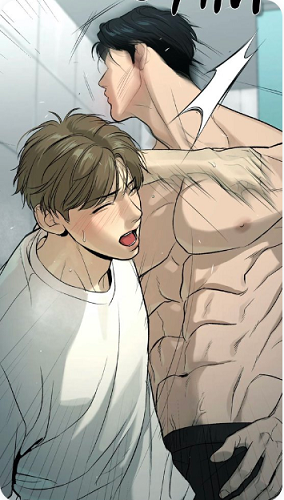 (Chapter 7: elbow)
 (chapter 26) were there to train Joo Jaekyung to get accustomed to be punched. Despite his cuts, he shouldn’t lose focus or become scared. He should keep fighting. But now let’s return our attention to my initial theory: the involvement of Randy Booker. Why would he do that? It is not just out of revenge.
 (chapter 11) Yes, it is Heo Namwoook. And note that he is also connected to blue!
  (Chapter 17) Joo Jaekyung made a reference to the hospital in front of the loan shark. So he knew that Kim Dan had Joo Jaekyung as patient. Besides, there is no doubt that the moneylender is aware of the main lead’s formation. He is a physical therapist. But since the champion wanted his sex partner to accompany him to his med check, he gave the impression that the physical therapist was working at the hospital. Moreover, note that the champion is never mentioned as the owner of Team Black in the article.
  (chapter 13) The name of the gym is not visible in the poster. This promotion explains why the fans are screaming only Joo Jaekyung
 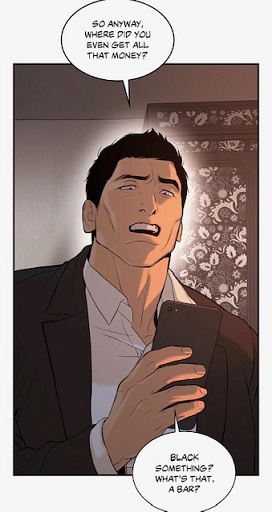 (Chapter 16) Team Black only appears on the jacket
 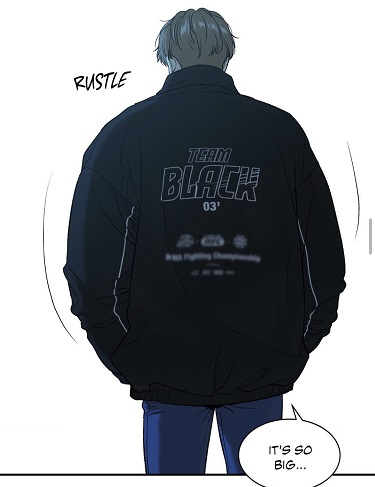 (chapter 36) So the moment you imagine that Heo Namwook is behind the event, it makes sense why Dominic Hill was selected. First, he saw how the athlete could
  (Chapter 17) overthrow someone weighting heavier than himself. He was clear-minded and far from being emotional, when he fought Heo Namwook and his minions.
  (Chapter 17) But with the scandal and the weight cutting, it is different. The “enemy” is messing not only with his body, but also with his mind. If my theory is true, then the loan shark would be actually acting as a fight promoter:
 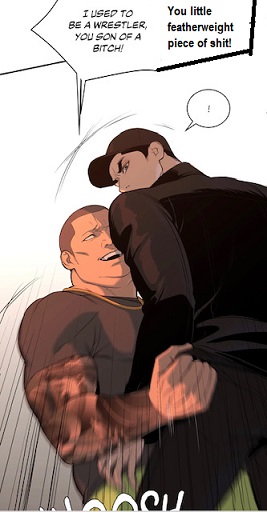 (Chapter 17) Secondly, Heo Namwook called MMA as fake, for he thought that it was like wrestling.
 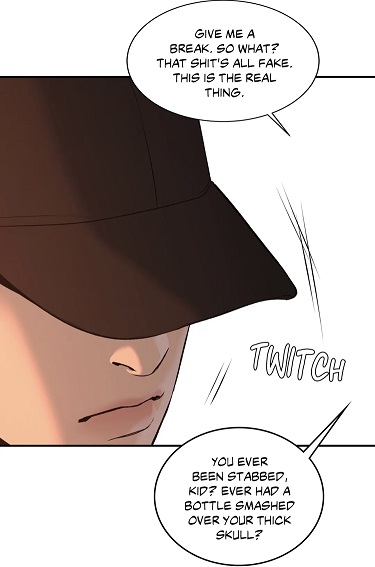 (Chapter 17) Since Park Namwook is a former wrestler, I can only deduce that Heo Manwook has a common past with the champion’s coach. He was also a wrestler. I would even say, the new Agent Blue is his negative version. But if he had such a profession in the past, how could he have connections in America?
  (chapter 17)
  (chapter 17), I can only imagine that the former loan shark created this event for one reason: Joo JAekyung should get destroyed! It looks like a show, but the fight will be real. Dominic Hill has been tasked to kill the champion figuratively.
  (Chapter 17) He is a hot commodity, because his agent at the entertainment agency is “promoting” him. He is making him work, because the more schedules he gets, the more the agent gets paid. However, it is not the manager’s task to promote Team Black!! This explicates why the other fighters are not famous! In other words, the loan shark is exposing Park Namwook’s lazy nature. Under this new perspective, it becomes comprehensible why the coach spoke about free PR.
 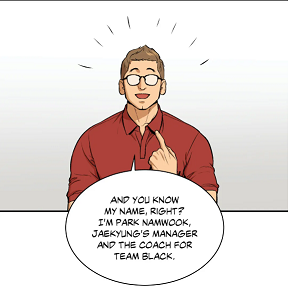 (Chapter 9) Interesting is that the man with the red t-shirt only describes himself as the coach of Team Black. So who is the manager of Team Black? And this brings me to the following observation. Why does the coach consider Team Black as his gym? It is because he is managing the bank account of Team Black. Hence we see him ordering new jackets
  (chapter 36) or bringing food.
 (Chapter 26) Yes, he occupies a similar function than Heo Namwook in the end. The coach is like a book keeper. Yet, there exists a huge difference between them. First, the athlete is separating his private account from Team Black’s contrary to the moneylender.
  (Chapter 16) But Park Namwook has been just relying on Joo Jaekyung to promote the gym. Contrary to the creditor, he sent his athlete first, while the other would first send his minions.
  (Chapter 5) One might say that he promoted Team Black through the clothes.
 (Chapter 14) Furthermore, in episode 23, the fighters left the gym without wearing any uniform!!
 (Chapter 23) They all had different clothes, a sign that Namwook had been neglecting them. As you can see, the new clothes made me realize that the coach hadn’t been promoting Team Black properly, until Kim Dan joined the team. And it started with this:
 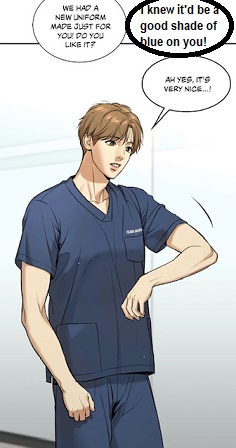 (chapter 9) The name was written on the left side. However, it is not visible, as soon as Kim Dan wears a jacket.
  (Chapter 14) The man on the left side is not part of Team Black, for he is wearing an ID, whereas the fighter next to the coach is a member of the gym, though he is not wearing any black clothes. The choice for the clothes were truly bad.
  (Chapter 36) First, the name Team Black is visible on the side, while MFC vanished.
 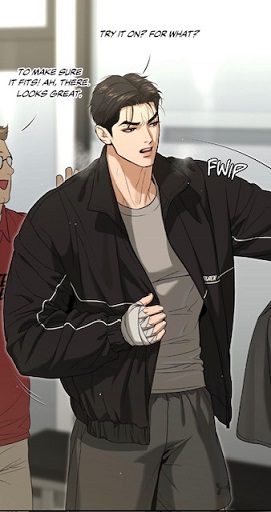 (Chapter 36) At the same time, this signifies that slowly, he is giving the other fighters more attention. The face of Team Black is changing. It is no longer reduced to Joo Jaekyung. This signifies that the dragon is gradually sharing his burden to others. On the other hand, such a jacket exposes the coach’s arrogance.
  (Chapter 36) It was, as if they were taking over the champion’s company. Yet, the latter is the real owner. On the other hand, Park Namwook’s decision represents a blessing. How so?
 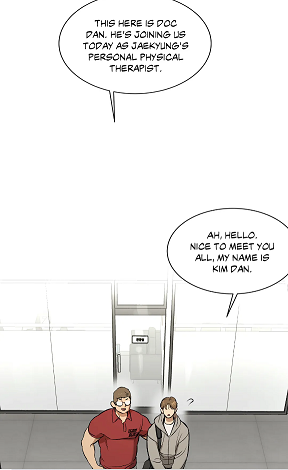 (Chapter 7) He is the physical therapist of Team Black de facto, especially if he is seen in company of other members.
  (Chapter 23) Potato has already planned as the champion’s successor. To conclude, this match in the USA should expose the manager’s selfishness and the corruption. But since Kim Dan has now such a jacket, I am expecting that with his magic touch
 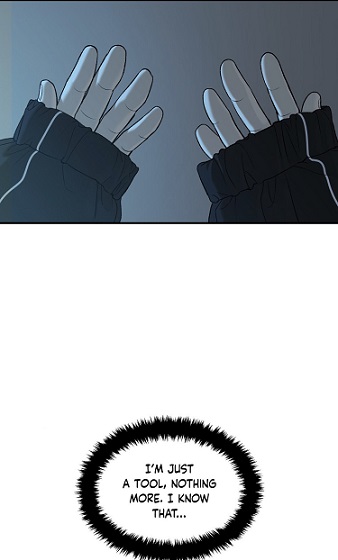 (chapter 36) he will get the attention from the MMA world: reporters, fighters and MFC manager. Something that the schemers didn’t expect… As a conclusion, in the next chapter, pay attention to the jackets and the numbers. There were all XXL, except the one for Potato.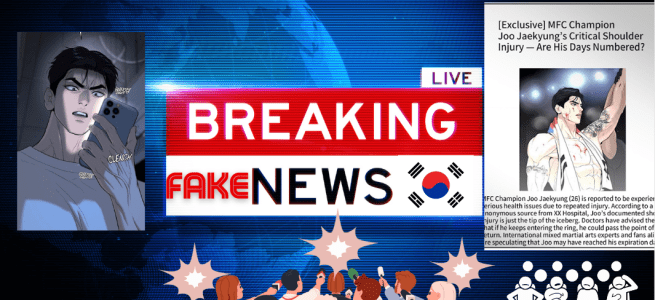

 (chapter 27) But his diagnosis in English wasn’t clear enough. Was he referring to the joints of the shoulder or to others? Nonetheless, based on the X-rays and the therapy
 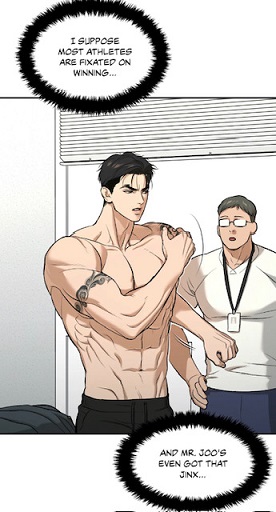 (chapter 27), it is clear that Joo Jaekyung’s real issue is his shoulder in bad shape. Hence we see him constantly touching his right shoulder.
  (chapter 1) Because of this contrast between title and content, the Manhwaphiles can grasp the writer’s true intentions behind the article. He was looking for sensationalism, hence he exaggerated the champion’s physical condition. But there is more to it. The columnist attempted to create the illusion of a proper and serious investigation by employing the idiom “the doctors”. With this term, he insinuated that he had consulted different doctors and they would all come to the same verdict. Moreover by including the fans, he gave the impression that this topic had been long discussed among the supporters. In reality, he was mixing the cause and consequence. The moment people will read this news, they will start speculating about his future. However, since this was a secret till this publication, I doubt that the lovers had already speculated whether the champion had reached his zenith. That’s the reason why I consider this column as a fake news. It was a hype created on a truth mixed with lies.
  (chapter 27), if he changed his way of life and training. Hence he recommended rest.
  (chapter 27) Another evidence for this tabloid journalism is the reference to the hospital and the anonymous source. It was, as if the personal from that hospital was not trustworthy, for the “anonymous source” had leaked information from the files. Though the name of the hospital was not mentioned, it is clear that Dr. Lee will feel concerned, for such a divulgation to the public can endanger the champion’s career and his own reputation. He could be held responsible for the main lead. Now, his opponents know his weakness. So such an article can lead to an investigation from that hospital and the chaebol. Who is the anonymous source? Dr. Lee will certainly vouch for his employees, and that’s where Kim Dan comes in. Notice that this article was released shortly, after Kim Dan met the doctor for the first time!
  (chapter 27) Moreover, he is the only doctor who read the files!
  (chapter 17) People will start suspecting the protagonist and if his past with the perverted hospital director is exposed,
  (chapter 1) it is clear that his reputation will suffer. Furthermore, Kim Dan was seen with bruises too
  (chapter 11) which could lead to the discovery of the debts and the loan sharks. He had financial problems and a sick halmoni. Finally, let’s not forget that the boxer is the first client of the physical therapist. So people will question the champion’s choice for picking Kim Dan as his personal physical therapist. He lacks credentials. Consequently, the doctor’s integrity and competences will be questioned by public opinion. In other words, Kim Dan could bring bad PR to Black Team and this could create some frictions between the champion, the doctor and Park Namwook. To conclude, it is clear that the target of this article is not just the athlete, but also Kim Dan. The allusion to the “anonymous source” was done on purpose, so that people would ask for his identity. He betrayed the hero and emperor! Someone violated the confidentiality clause. Nevertheless, divulging the existence of an anonymous source was to divert attention from the real issue! The real traitor is the author of this article who broke a rule. He shouldn’t have leaked this to the public! He is responsible, if Joo Jaekyung gets really injured by his opponent. But I would like to outline that the files were left in the office of Team Black and they allowed strangers to enter the gym because of Heesung!
  (chapter 30) As you can see, anyone could have access to the files, especially because the physical therapist was absent in the morning. He only joined the company much later. As the Jinx-lovers can observe, this article should be seen as a lesson for the physical therapist, Park Namwook and Joo Jaekyung. They should be more careful, due to money, this rule “bringing strangers” had not been followed.
  (chapter 1)
  (chapter 35) He is not a greedy, immoral and selfish bump. He embodies true loyalty
  (chapter 27) It is because he is unhappy. He definitely has a low self-esteem despite his attitude. And this observation brings me to the following remark. When Kim Dan described Joo Jaekyung in bad shape
  (chapter 34) This shows that the doctor is slowly realizing the importance of welfare in such a career. Anger is a sign for stress. The latter is also the cause for damaged “joints”.
  (chapter 35) In his eyes, he had focused too much on Kim Dan. Like explained in the previous essay, I am expecting a relapse from the athlete, but this time, he will be stopped by the main lead, for the latter is now well acquainted with his mental and physical condition. Furthermore, since this news resembles to a challenge, I think that Joo Jaekyung will organize a match in order to prove this exclusive announcement wrong. I see parallels between chapter 35
  (chapter 20) For Kim Dan, it was back then a matter of life and death. Now during this night, Joo Jaekyung is put in the same situation. It was, as if someone was attempting to kill him. If he loses his title, he has the impression that he will die, he will vanish into thin air. But why is it so important to him? It is necessary to recall that in his childhood, the athlete was an invisible and silenced child! With this title, he has the impression to “exist”, though he is not truly living. So how will he react to this article? Rush to the hospital and throw a tantrum? Or go to Kim Dan and wake him up?
  is indicating that it is rather late.
  (chapter 35) Why did the reporter send this message and article at this hour? For me, there is no doubt that they knew that the champion wouldn’t be asleep. It was, as if they knew about his insomnia. Besides, Joo Jaekyung never leaves his cellphone behind… and a sign that they expected him to see the message very quickly. As a conclusion, this breaking news expose the involvement of people close to the champion. Moreover, notice that he was contacted directly and not through his gym, Team Black. This proves to me that there is a conspiracy in the end. Someone leaked information to this reporter.
  (chapter 30) Hence I deduce that the agency will get involved too very soon and the owner could ask for the identity of the anonymous source. Who leaked this information to the author of the article? Since Kim Dan is the newest member, he would be the biggest suspect and the perfect scapegoat, for he doesn’t belong to a hospital and he has no agency protecting him. And this brings me to the following conclusion. Romeo and Juliet is a tragic love story, because these two young people’s families were in a feud! Hence I sense the birth of a conflict between Team Black and the agency. But we have Choi Heesung who is also represented by this agency.
  (chapter 33) In the English and Korean version, the actor employed the possessive pronoun “our” and not “my”, this could be an evidence that the agency could belong to Heesung’s family. So because of this breaking fake news, Heesung would be brought in a position, where he can help the physical therapist.
  (Chapter 35) If he helps the angel, then he would keep his promise and appear as reliable. And that’s how he would become more responsible and selfless. That way he would learn how to practice “true love”: a choice, a judgement and promise! He would give without expecting anything in return! This is real selfless love.
  (chapter 1) The previous physical therapist!! Moreover, the latter got hurt by the athlete. One of my theories was that the man had not treated the champion properly.
  (chapter 1) Besides, he would have another interest to have Kim Dan fired. How could he get hired, when he lacked experience? By mentioning the anonymous source and the hospital, the reporter would divert attention from the real traitor. No one would suspect a former employee. The schemers are hoping that the hospital and Kim Dan would put the blame on each other. In other words, we shouldn’t forget this mysterious person. Finally, the author has to expose the truth about this incident. What had happened exactly? I doubt that Joo Jaekyung truly beat him, for the latter could have sued the man. Besides, we know now that Park Namwook is biased and has the tendency to put the blame on his star.
 (chapter 122) represents their future, their reunion. Since I saw chapter 124 had references to episode 116
  (chapter 116), I am expecting that the painter will be given new clothes, for the assassin switched clothes too and we should have a new scene near a pavilion
  (chapter 116). Besides, don‘t forget that Yoon Seungho had ordered clothes for the painter which should have been delivered to the gibang.
 (Chapter 106)


 (chapter 5) He asked him if the physical therapist had contacted him yet. It is because the athlete had used the official channel to hire Kim Dan. He was hiding behind his manager. Thus in the car, he had voiced this wish!
  (chapter 5) He wanted Park Namwook to get in touch with the physical therapist. Thus it is no coincidence that his hyung replied that he would call the main lead.
  (chapter 5) If he had known that Joo Jaekyung had his cellphone number, he could have asked him to call the doctor, just like he had requested from his colleague to fetch the doctor.
  (chapter 5) Because Park Namwook was acting on the champion’s order, he identified himself with Joo Jaekyung, therefore he employed the personal pronoun “us”. But like pointed out, Namwook had no idea that the champion had his cellphone number. This explains why the moment the champion heard “us”, he switched the personal pronoun to “me”, hence he got upset.
  (chapter 5) However, here he was just thinking. He never voiced this thought. He had to, because he couldn’t reveal that he had his cellphone number too! This would expose the doctor’s rejection and the champion’s humiliation. However, this is what Jeong Yosep said:
  (chapter 5) HE is blocking YOU!! This means that he knew that the celebrity had his cellphone number. Moreover, he could see the cellphone in the champion’s hand. He could clearly see that the fighter’s bad mood was related to the fact that Joo Jaekyung couldn’t reach the main lead. From that moment on, the former national athlete could only jump to the conclusion that they must have met afterwards!! This explicates why he connected this incident to his own marriage and divorce. And now, you comprehend why I came to the conclusion that the coach Jeong Yosep knew about the special relationship between the two protagonists very early on!
  (chapter 15) Here, the champion confessed to Park Namwook that he had lied. But by doing so, he created a false image about himself: he was a spoiled brat! This could only reinforce the coach’s biased perception about Joo Jaekyung.
  (chapter 27) Hence I deduce that the coach Yosep judges the celebrity differently. He is well aware that Joo Jaekyung listens to them. He knows that the term “hyung” is not an empty word for the main lead. Thus he had given him the following advice:
  (chapter 27) It is because he didn’t desire Park Namwook to be worried. However, I don’t think that Jeong Yosep bought his lie. Let’s not forget that he had been training with him before the match. He had recognized the change in his behavior. Moreover, who had taken the jacket from Kim Dan after the match?
  (chapter 15) Hence I deduce that Yosep must have been the one who took care of the physical therapist! Why? It is because of the yin-yang philosophy! Hence I had developed the following theory: Namwook was married, since Yosep was divorced. This theory was confirmed recently, indicating that this pattern serves as basis for the progression of the story.
  (chapter 27) This resembles to this situation:
  (chapter 19) He had behaved like a workaholic, but he had taken a break, when the champion called Kim Dan:
  (chapter 5) Observe that the panel is somehow similar:
  No wonder why he likes knitting. He is detail-orientated. Hence he was not surprised when the champion exposed to the group that Kim Dan was living with him!
  (chapter 22) For me, he is the hidden motherly figure in Jinx. Thus my prediction is that the former national champion will be the one supporting the couple! However, because Yosep gave Kim Dan’s cellphone in secret behind the manager, I come to the following deduction: someone will do the same! Giving the physical therapist’s cellphone number behind Joo Jaekyung’s back! For me, Heesung will ask for it! So who would give it to the actor? Park Namwook or Yoon-Gu? What do you think?
 Bebebisous33s' analyses in K-Dramaland and Manhwas