
Please support the authors by reading Manhwas on the official websites. This is where you can read the Manhwa: Jinx But be aware that the Manhwa is a mature Yaoi, which means, it is about homosexuality with explicit scenes. Here is the link of the table of contents about Jinx. Here is the link where you can find the table of contents of analyzed Manhwas. Here are the links, if you are interested in the first work from Mingwa, BJ Alex, and the 2 previous essays about Jinx The Secrets Behind The Floors and Between A Squeeze And A Crack – part 1
It would be great if you could make some donations/sponsoring: Ko-fi.com/bebebisous33 That way, you can support me with “coffee” so that I have the energy to keep examining Manhwas. Besides, I need to cover up the expenses for this blog.

I wish you a HAPPY NEW YEAR 2026
The Power of Voice
In the first part of this essay, I lingered on two gestures that never fully entered language: the squeeze of a hand  (chapter 87), and the destruction of black glass under Baek Junmin’s foot.
 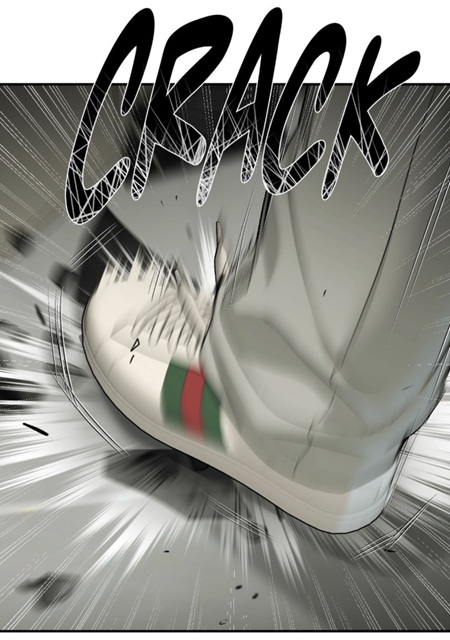 (chapter 87) Both moments operate under pressure, yet they belong to radically different economies. One gathers force inward to protect, contain, and care. The other expels force outward to fracture, dominate, and erase. The biggest difference is not intensity, but direction—and whether the other is held, or destroyed.
What remained implicit, however, was something more unsettling. In both cases, movement begins with voice.
In the bed scene, the sequence is precise. The champion whispers first. 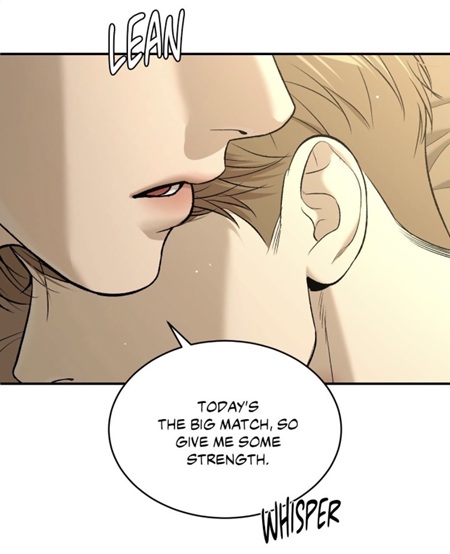 (chapter 87) He asks for strength and luck
  (chapter 87). Kim Dan answers with a gesture, the offered hand accompanied with a wish:
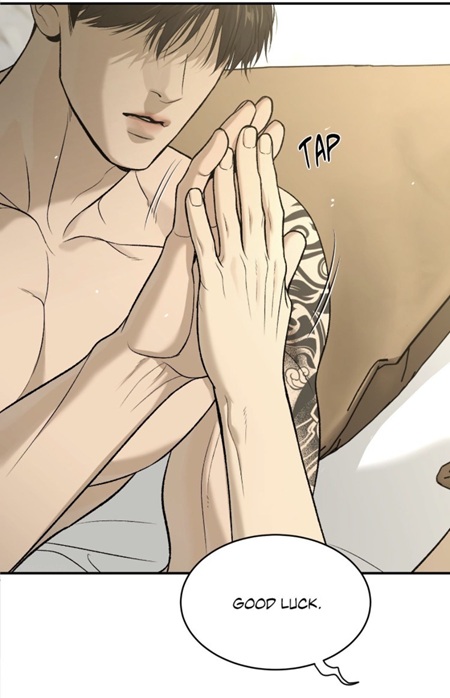 (chapter 87). Only then does the squeeze occur. Words initiate connection; the body confirms it. Speech and gesture align. Pressure becomes care.
In the other scene, words are also present 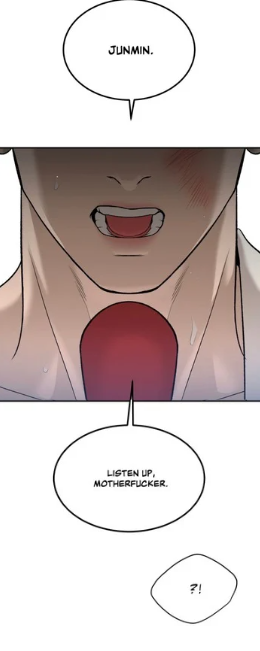 (chapter 87) —but they are refused. Baek Junmin is denied any possibility of reply—no space to answer, to justify himself, or even to speak back.
  (chapter 87) The screen interposed between them
 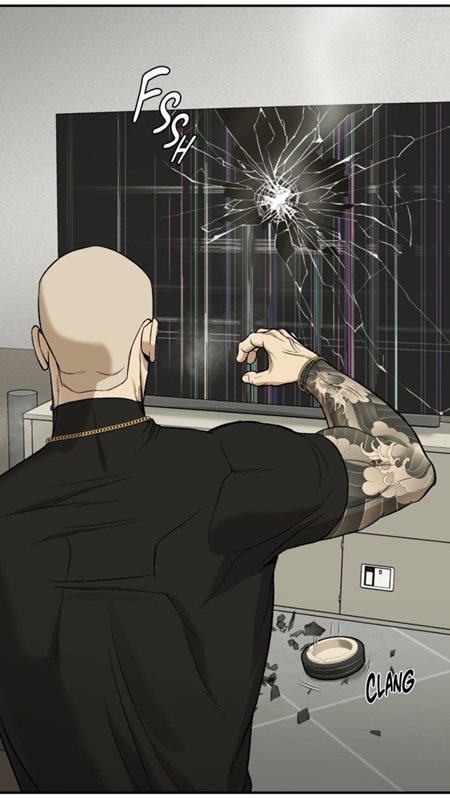 (chapter 87) functions as both a physical and symbolic barrier: it delivers judgment without permitting response. Deprived of dialogue, Junmin is pushed out of language altogether. What remains available to him is not speech, but the body. His answer therefore does not come in words, but through the hand
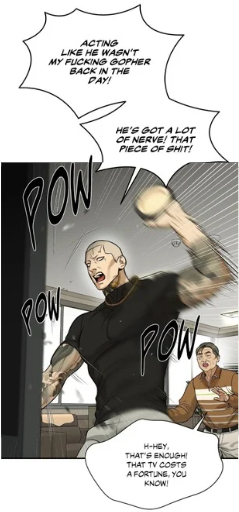 (chapter 87) and then through the foot. (chapter 87) Not as dialogue, but as rupture.
Read this way, the attack on the television screen becomes fully intelligible. 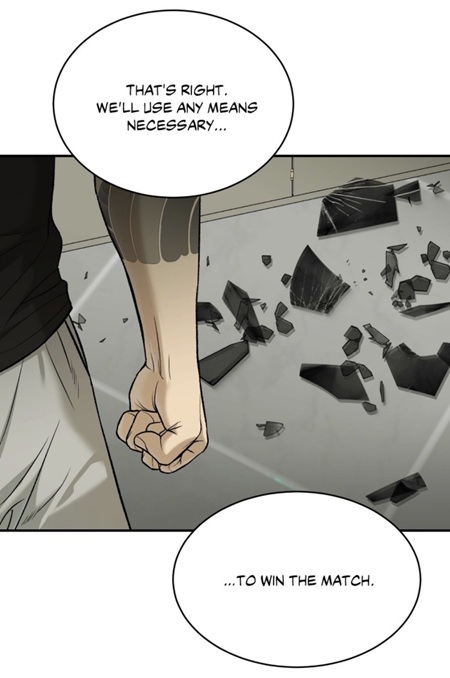 (chapter 87) The violence is not misdirected; it is precisely directed at the medium that silences him. The screen is the site of exclusion, (chapter 87) the object that speaks at him while preventing him from speaking back. Striking it is not an attempt to destroy an image, but to break through a barrier—to replace blocked language with immediate, corporeal force.
And now, my avid readers comprehend the illustration for Between a Squeeze and a Crack The champion’s voice represents a turning point. The title displays this difference. In both moments, the champion’s voice carries weight. What changes is not the force of the words, but the space in which they fall—and whether anyone is willing, or able, to answer them.
Part II begins at the moment when this difference becomes irreversible.
An Invisible Revolution: The Rising of the Dragon
Something changes in episode 87. And that shift does not begin with shouting, provocation, or scandal. It begins with voice seeking alignment.
Before the interview  (chapter 87), before the challenge
 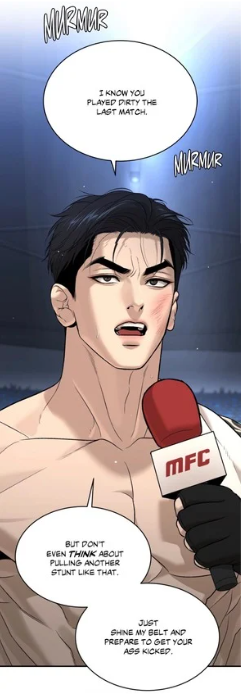 (chapter 87), the champion turns around.
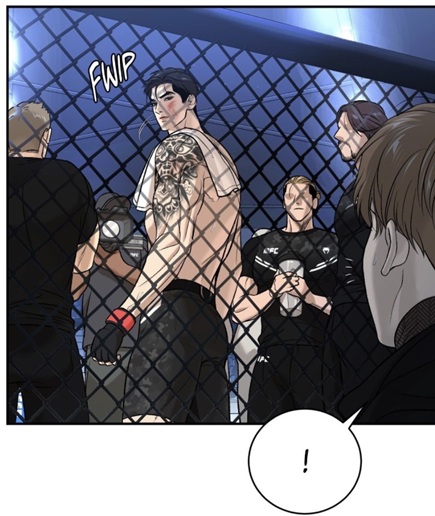 (chapter 87) He looks—not at the crowd, not at the institution, but at Kim Dan. The gaze matters. It establishes a circuit. Like a phone call finally answered, it places both on the same wavelength. Only then does the question come.
 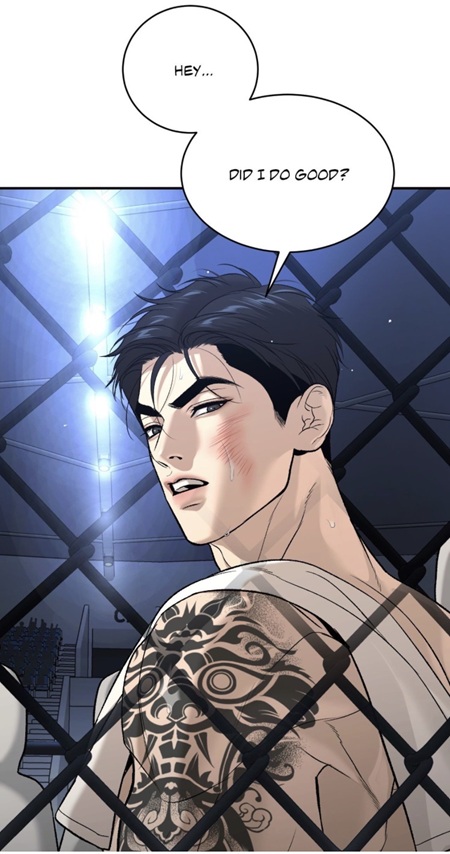 (chapter 87) Here again, language and body are aligned.
  (chapter 87) Kim Dan answers—first with a nod, then with words. The response is clear, immediate, and embodied. And what follows is decisive: the champion raises his arm.
  (chapter 87)
He does not wait for the referee. He does not wait for the jury. He does not wait for the organization.
This gesture is easy to overlook. It is not aggressive. It is not loud. Yet it is quietly revolutionary. When contrasted with his previous matches 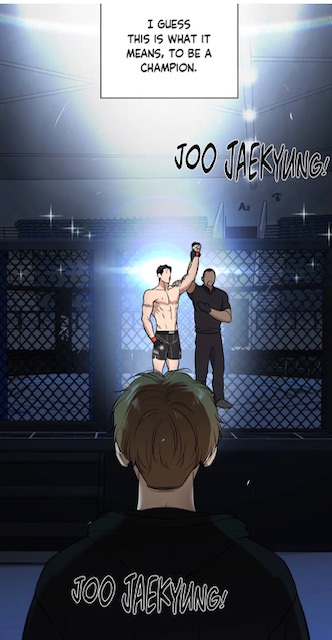 (chapter 15)
 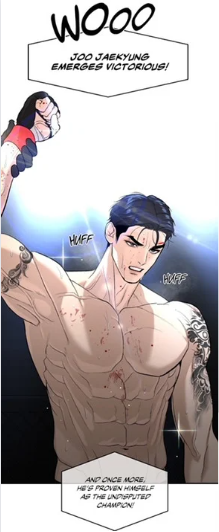 (chapter 40)
  (chapter 51), its meaning sharpens. For the first time, Kim Dan no longer occupies the position of fan or witness. He functions as judge and jury. 😮 And the champion acts accordingly. He declares himself the winner. (chapter 87)
Authority shifts before exposure occurs.
This is the missing step. Validation has already taken place. (chapter 87) Legitimacy is no longer awaited; it has been secured within the relationship itself. What follows is not a request for recognition, but its declaration. (chapter 87) Doc Dan is the one turning Joo Jaekyung into a champion, into the Emperor. And I doubt, MFC noticed this revolutionary gesture.
Therefore it is not surprising that shortly after the champion takes the microphone. 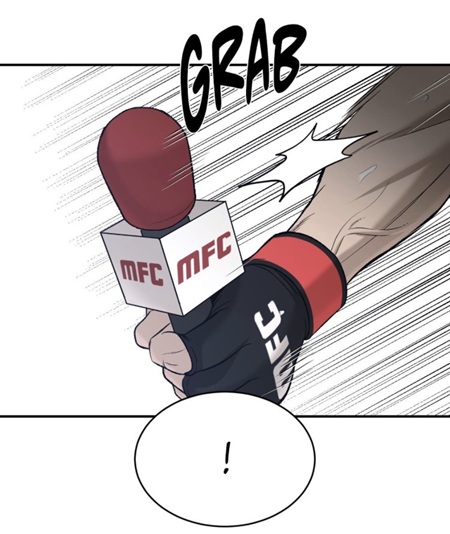 (chapter 87) Joo Jaekyung is no longer a puppet or zombie, but a man with a heart and voice.
And the microphone is not incidental. By taking it, the dragon deliberately secures visibility, recording, and irreversibility. But more importantly, he seizes narrative control. (chapter 87)
The microphone is the institution’s tool. 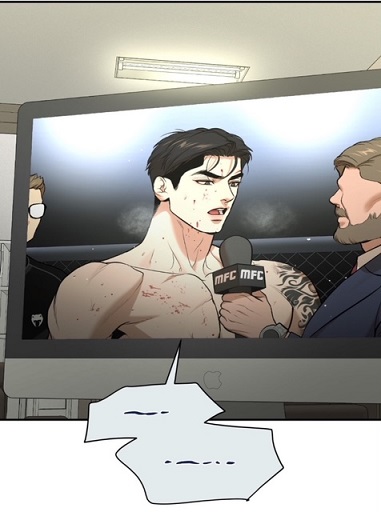 (chapter 46) It regulates turn-taking, determines who may speak, in what order, and under which framing. As long as it remains in the moderator’s hand, speech is mediated, filtered, and contextualized. Questions lead; answers follow. Meaning circulates vertically.
By removing the microphone from that circuit, the champion disarms the moderator. (chapter 87) The interview collapses. What remains is not dialogue, but unilateral address. This is why the moderator’s only possible response is an apology. 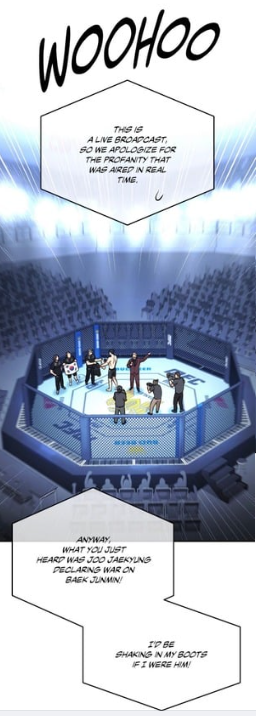 (chapter 87) He no longer moderates; he reacts. He cannot redirect the statement, soften it, or translate it into spectacle. He can only acknowledge that something has escaped containment. The apology is not moral—it is procedural. It marks the moment the institution loses authorship.
What was once private and contained now enters public time without mediation. The champion is no longer being narrated 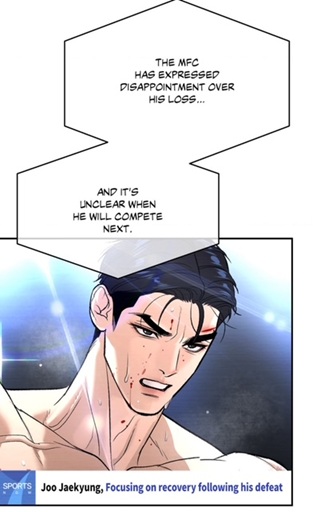 (chapter 57); he is narrating. He does not answer a question (chapter 87) —he establishes a position. (chapter 87) And because this occurs live, the statement cannot be re-sequenced, reframed, or quietly absorbed later. In this moment, authority shifts again—not from fighter to organization, but away from the organization entirely. The champion speaks, as if MFC and CSPP were already secondary. The conflict no longer belongs to the apparatus that stages it. Wait a minute… CSPP? What is that?
This logo only caught my attention in the latest episode. However, it was already present in the beginning, but barely visible. 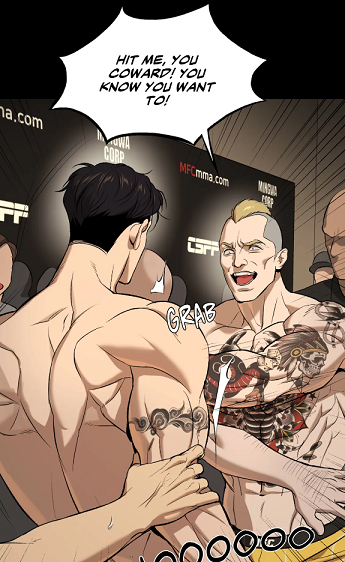 (chapter 14) Yet, CSPP
  appears more and more insistently
 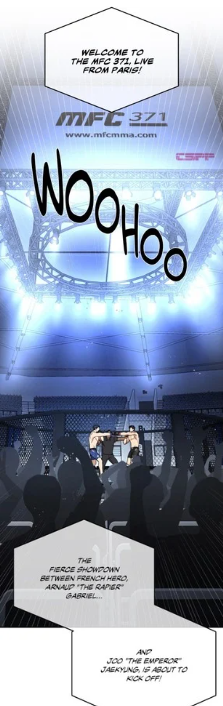 (chapter 87), even in the cage
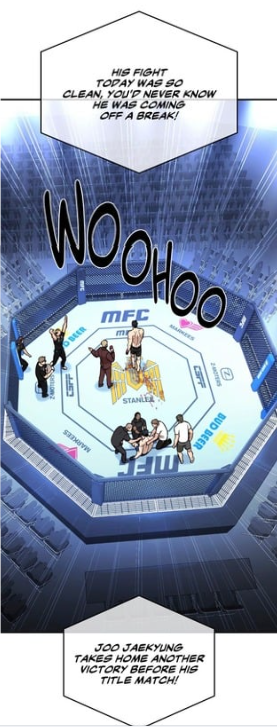 (chapter 87), contrary to before.
  (chapter 15) Either you only see the C or the name is placed out of the frame.
  (chapter 40) Yet it remains unexplained. What does it stand for in the world of Jinx? A sponsor? A broadcaster? The story never defines it explicitly—and that absence matters. What goes unnamed is often what exercises the most power. I will elaborate about it further.
Exposure, then, is not the cause of rupture. It is its consequence. The rupture occurs earlier, at the moment the champion looks for doc Dan’s gaze and opinion. That’s when the narration changes hands. Thus he raised his arm. What was once private and contained now risks exposure. (chapter 87) Hence the behavior of the wolf is filmed. At the same time, doc Dan appears much closer to the spotlight and the camera. Thus I deduce that in the future, doc Dan is about to enter into the spotlight. Some Jinx-philes are already speculating that his face could have been noticed by the cameraman and as such by the institution MFC or the antagonists.
This matters because the system surrounding him—MFC, CSPP, broadcast commentary, and the managerial logic embodied by Park Namwook 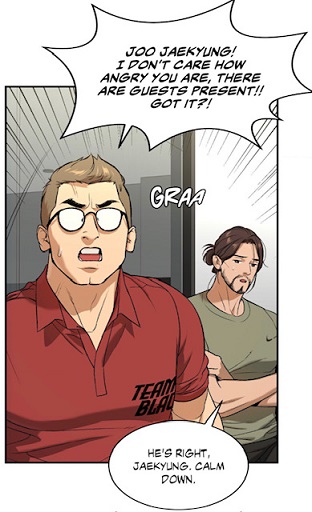 (chapter 36) —depends on mediation. Delay. Scoring. Interpretation. The quiet redistribution of meaning after the fact. As long as nothing is said outright
 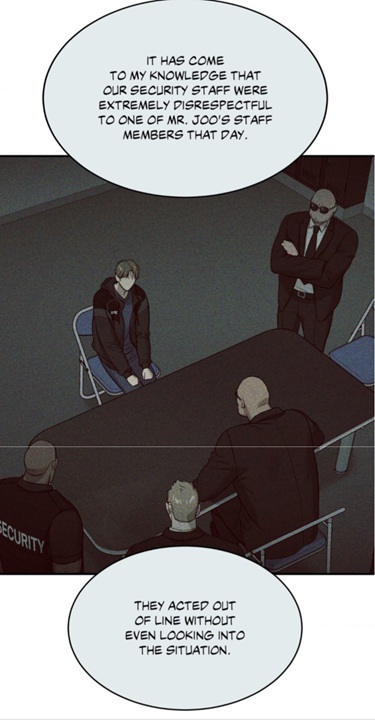 (chapter 69), control remains possible. Once speech becomes public, control becomes fragile.
The live broadcast sharpens this rupture. (chapter 87) Live means witnessed. And once witnessed, meaning no longer belongs to a single institution. It circulates among viewers: patients at the hospice 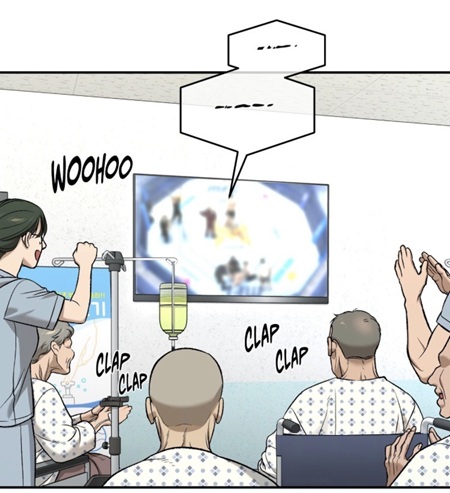 (chapter 87), people in the seaside town, a public that exists before commentary can shape it.
Even the visuals insist on this distinction. When red, green, and white are mixed (chapter 87), they neutralize one another. The result is a muted, earthy tone—balance achieved through cancellation. That palette dominates the opening of the episode. It signals containment and fragile harmony. (chapter 87)
Baek Junmin’s shoe tells a different story. (chapter 87) The same colors appear, but they do not blend. They exist side by side, unresolved. Rage, greed, jealousy, emptiness—none neutralize the others. In chromatic terms, this is not balance but erosion. Because red and green are complementary opposites, their refusal to merge points not toward power, but toward self-destruction.
So now the question is no longer why Joo Jaekyung spoke. His speech was anticipated. In fact, it was partially scripted. The system expected resentment, accusation, even open hostility toward Baek Junmin—and in that sense, the champion’s words remained within the frame that had been imagined for him. His anger was legible, manageable, and therefore harmless.
The failure lies elsewhere. What happens when speech is anticipated—but its emotional and physical consequences are not? What happens when words fail to remain governable once they enter circulation? When images detach from their managers? When words no longer stabilize power, but instead generate rupture and conflict?
Part II addresses these questions sequentially: first through the fight and its language, then through the broadcast and mediation, and finally through the asymmetry of responses it produces.
Between a squeeze and a crack lies the instant when pressure stops circulating quietly and begins to transform the field itself. This part of the essay is about that instant—and about what happens when containment gives way to exposure.
The Fight as Language: Technique, Tempo, and Control
Before the speech, before the microphone, before the question that pretends to offer a choice, there is the fight itself. 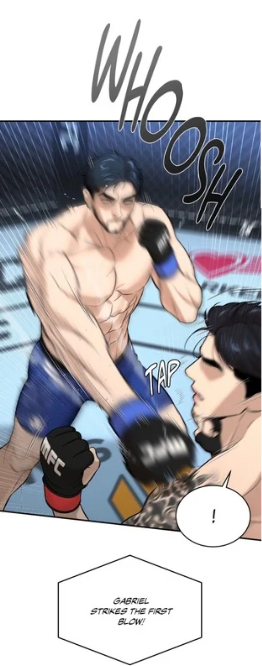 (chapter 87) And the fight already answers the questions the system hopes to postpone. What we see in the cage is not merely a contest of strength, but a clash of communicative regimes. How one fights here is inseparable from how one speaks, evades, provokes, or withholds.
Arnaud Gabriel’s strategy is immediately legible. He does not seek resolution; he seeks accumulation. 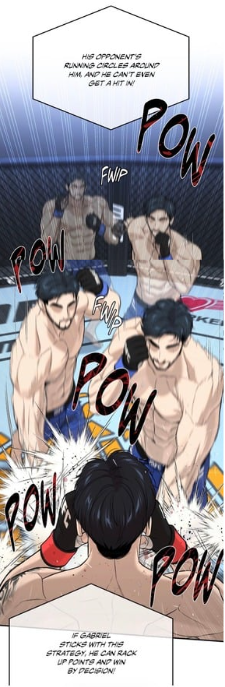 (chapter 87) His movement privileges distance, tempo
 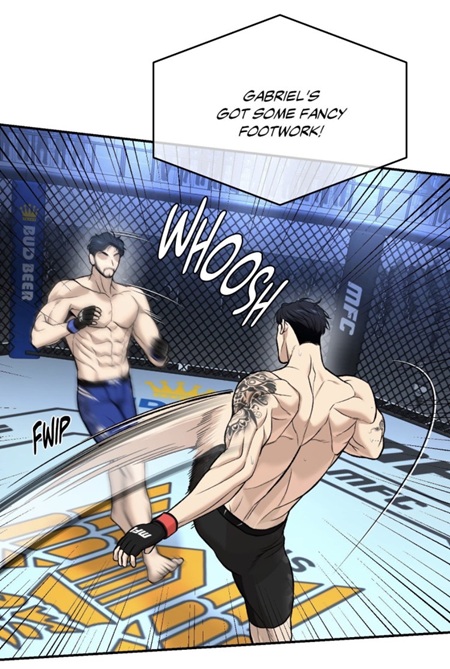 (chapter 87) and visibility. That way he gives the impression that he is superior to the former champion. The middle kick appears not as a finishing tool
 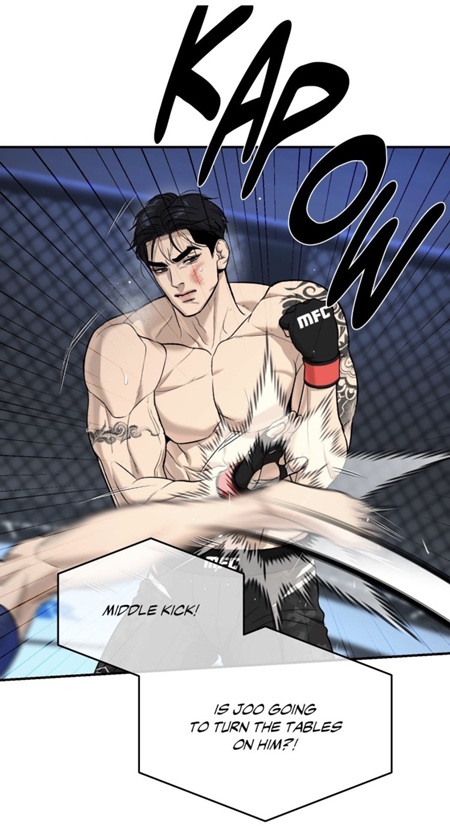 (chapter 87), but as an instrument of disruption—enough to score, enough to interrupt rhythm, never enough to end the exchange. The rest of his offense follows the same logic: repeated punches to the face
 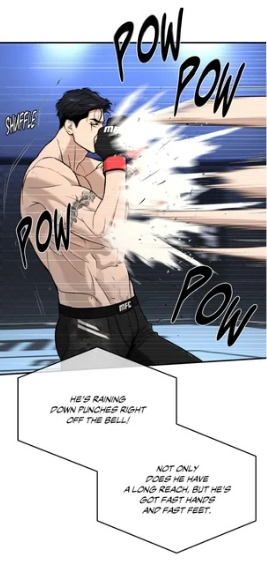 (chapter 87), the hands, the shoulder. Targets chosen not for collapse, but for points. Not to silence the opponent, but to keep him talking through damage. The choice of targets is not arbitrary. The hands and the shoulder are not neutral zones. They are sites of vulnerability that presuppose knowledge. Arnaud Gabriel does not fight, as if he were discovering his opponent in real time; he fights as if he were acting on prior information.
 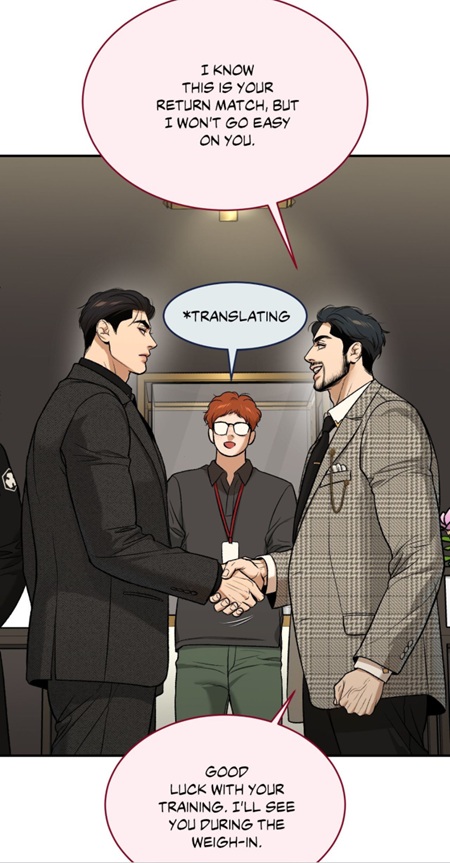 (chapter 82) He anticipated a diminished MMA fighter at the end of his career who would train at the hotel gym. His punches repeatedly return to the same areas—not to finish, but to aggravate. Not to silence, but to extract fatigue.
This matters because these are not weaknesses produced inside the cage alone. 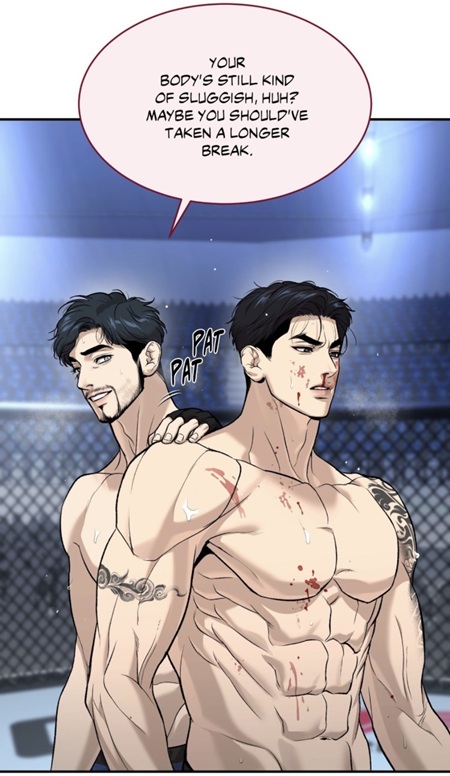 (chapter 87) The shoulder carries the memory of surgery and recovery. The hands mediate both offense and defense; exhausting them degrades reach, timing, and confidence. And breathlessness
  (chapter 82)—noticed earlier during training—signals something even more fragile: limits that are physiological, not tactical.
What the fight reveals, then, is a second layer of mediation. Gabriel’s strategy appears reactive, but it is in fact anticipatory.  (chapter 87) It aligns disturbingly well with what had already circulated outside the match: commentary about tension, exhaustion, time away from competition. Whether through media narratives, observation, or informal channels of intelligence, the opponent’s body has already been translated into information.
This confirms something the system prefers not to name. In Jinx, fighters do not enter the cage as blank presences. They arrive already annotated. 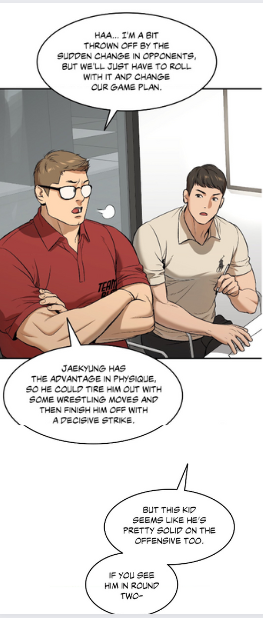 (chapter 47) Already discussed. Already framed. Gabriel’s reliance on point accumulation is inseparable from this logic.
  (chapter 87) He does not need to dominate the body; he needs to activate its known limits and let the scoring apparatus do the rest.
Seen this way, the fight mirrors the economy of speech that surrounds it. Information circulates before confrontation. Weakness is spoken elsewhere, then reenacted physically. The opponent is not answered directly; he is managed.
Against this backdrop, Joo Jaekyung’s refusal to continue circulating 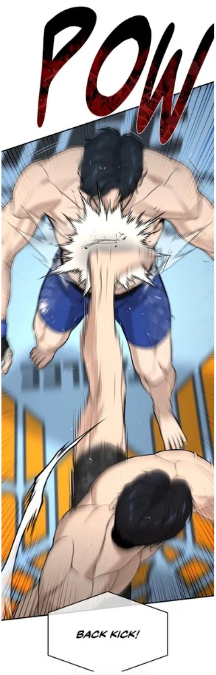 (chapter 87) —his decision to close distance, to counter decisively, to end the exchange rather than prolong it—appears less like impatience than resistance. He does not correct the narrative. He interrupts it.
This is important. Gabriel’s fight is structured around being seen. He “circles”, he lands, he retreats. He performs control without assuming responsibility for outcome. The commentators name it explicitly: (chapter 87) if he sticks to this strategy, he can rack up points and win by decision. Victory here does not come from transformation, but from endurance within the rules. It is a fight designed to be judged, mediated, interpreted later.
Under this logic, victory does not belong to the fighter who transforms the exchange, but to the institution that interprets it. This is not new. In episode 47, Park Namwook (chapter 47) articulates the same principle explicitly: not a knockout, not a decisive end, but a strategy that stretches time, drains energy, and leaves judgment in the hands of referees and juries. (chapter 51) The fight is no longer about what happens between bodies, but about who controls evaluation. And that’s how they could rig the match between Baek Junmin and Joo Jaekyung. (chapter 51) without ever appearing fraudulent.
By encouraging endurance, point accumulation, and delayed resolution, authority shifts away from the fighters and toward referees and juries. Decisiveness becomes a liability. Ambiguity becomes profitable. Read in this light, the director’s remark about young fighters lacking fighting spirit and being arrogant 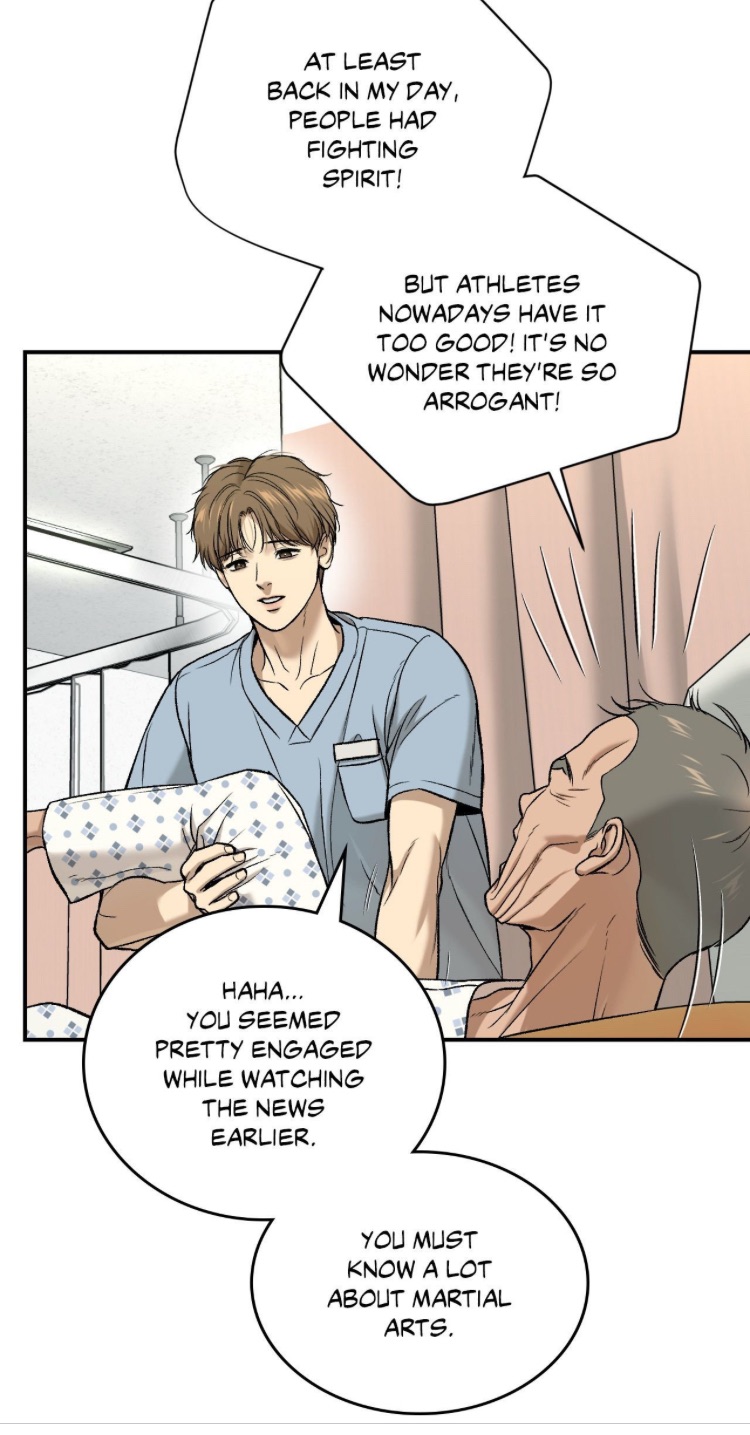 (chapter 70) acquires a different meaning. What he condemns as arrogance is not a moral failure, but a structural adaptation. These fighters have learned that they do not need to finish fights with a knockout. They only need to prolong them—to survive them—because the system will finish the sentence for them. Therefore, the moderator’s commentary during the match introducing the new Korean fighter takes on a clearer function.
 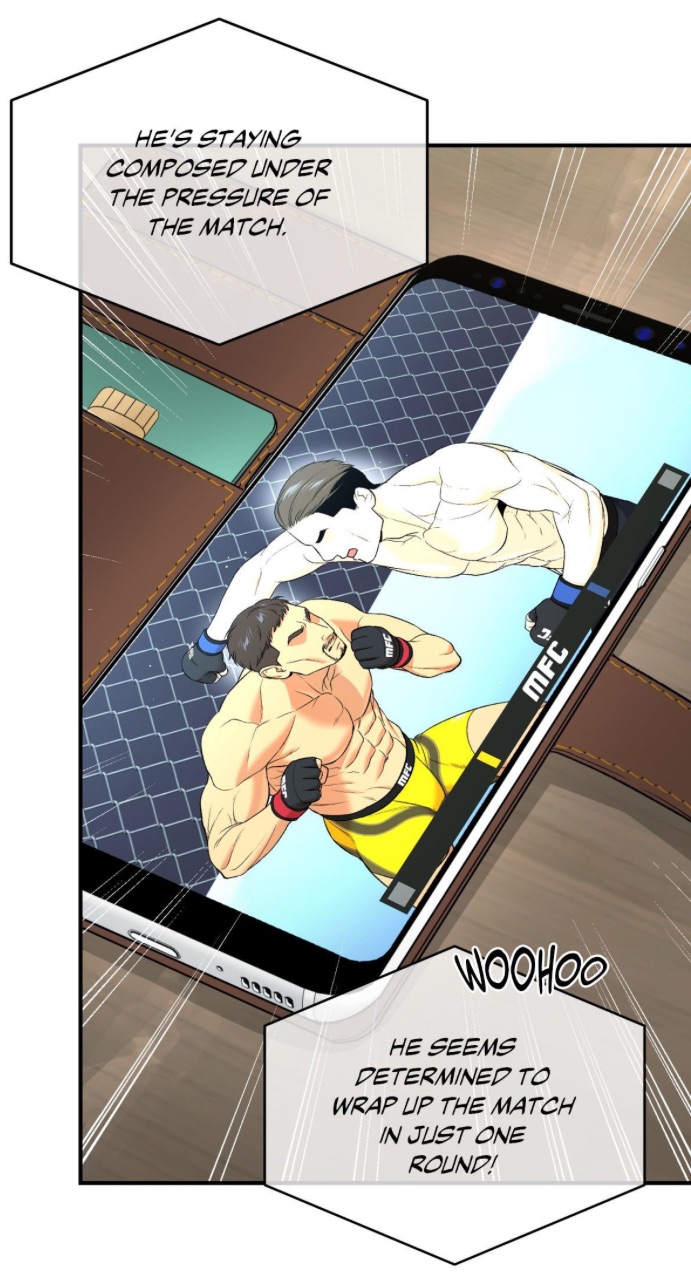 (chapter 71) He frames the rookie as someone “waiting for the right timing,” subtly suggesting a coming knockout rather than prolonged survival. The language is important: it reassures the audience that decisiveness still exists within the system, that power is merely deferred—not absent.
But this is precisely where the narration fails. The moderator’s interpretation is not an analysis of what is happening in the cage; it is a reassurance directed outward, toward spectators who still expect resolution. 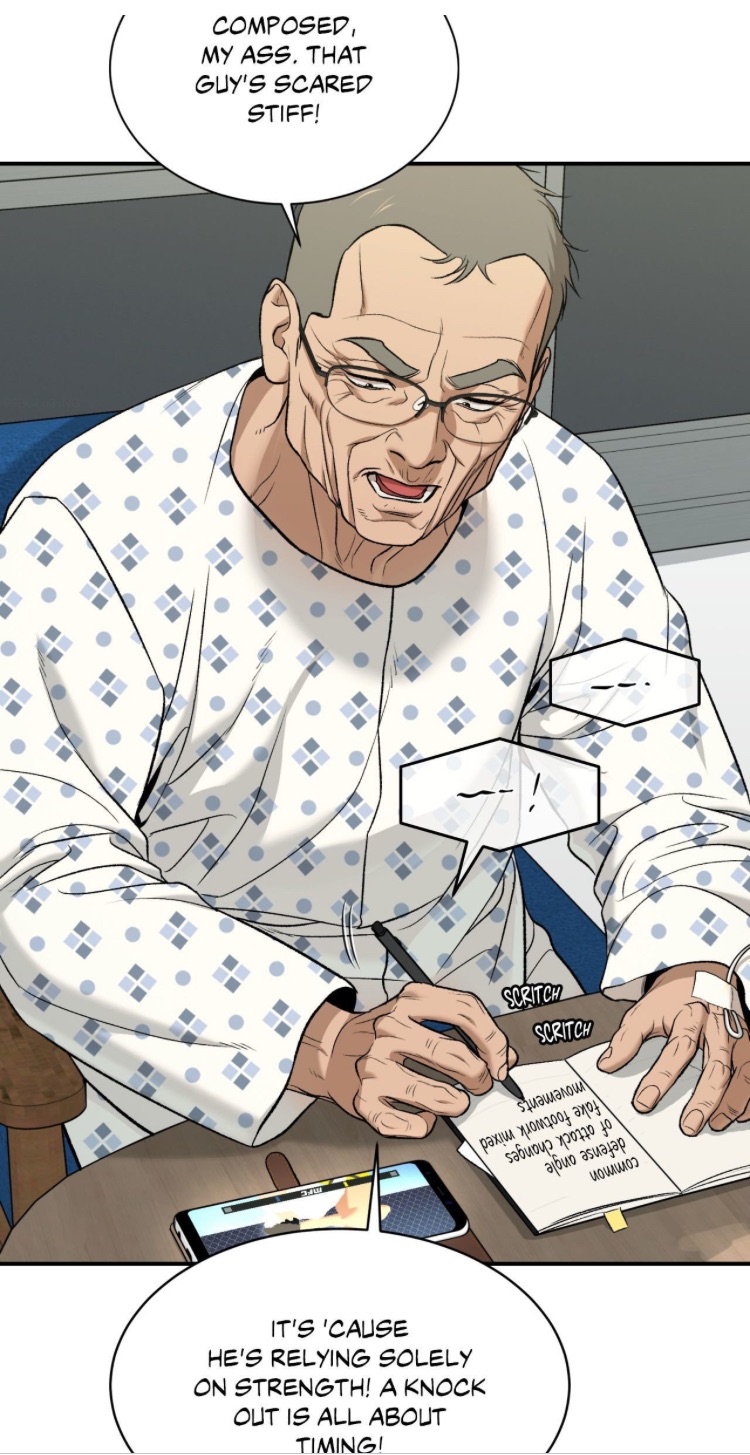 (chapter 71) The director is not persuaded. Hwang Byungchul reads the situation differently. He recognizes stiffness, fear, and overreliance on structure—not composure, not strategy. Where the moderator sees patience, the director sees hesitation. Where commentary insists on strategy, experience detects rigidity and lack of instincts.
This discrepancy matters. It exposes the gap between institutional narration and embodied knowledge. Commentary works to preserve belief in the system’s fairness and coherence; the director’s reaction reveals how deeply fighters have been trained to survive judgment rather than risk transformation. The moderator speaks to maintain the illusion of control. The director sees through it because he understands what a fighter looks like when he is no longer fighting to win, but to last.
Read this way, Arnaud Gabriel is not an anomaly but a template. His method externalizes power. By avoiding resolution, he transfers authority away from the cage and into the system that counts, frames, and decides. The longer the match, the greater this discretion becomes.
Under this light, the absence of strategic advisors for the match in Paris is no oversight.  (chapter 81) It is an assumption: that the outcome no longer requires athletic intervention. The champion is treated as a finished product, a celebrity whose role is to endure visibility, not to alter the terms of the fight itself.
And this is precisely how Arnaud Gabriel behaves outside 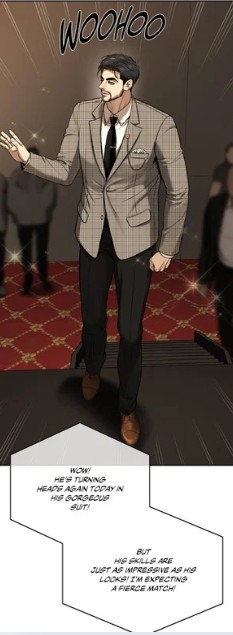 (chapter 82) and inside the cage.
 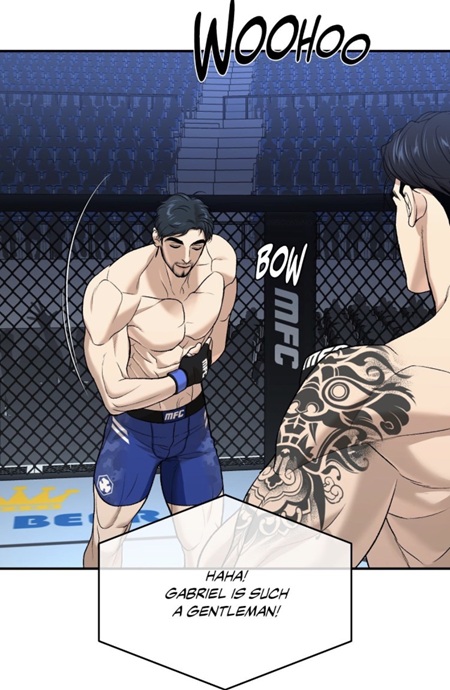 (chapter 87) Publicly, he is courteous. Measured. Even complimentary. (chapter 82) His mockery arrives only after contact has been broken—after the bell, after the exchange, after safety has been restored. (chapter 82) He remarks, not as confrontation, but as commentary. Like his fighting style, his speech avoids commitment. It is designed to sting without escalating, to destabilize without consequence. Gabriel never needs to raise his voice because the system will finish his sentence for him. His confidence does not announce itself; it is delegated. He hides arrogance and cynicism behind smiles
 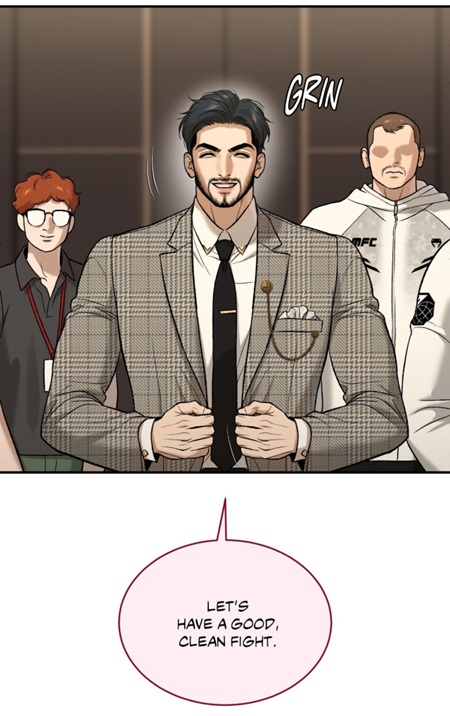 (chapter 82), gentle and polite gestures, and tactical distance— away from the spotlight, away from overt confrontation. His restraint is not humility, but alignment. He performs civility so that judgment, narration, and authority can be outsourced to the institution. That’s why for him, fighting is strongly intertwined with fun and he sees himself more as a star than as an athlete. He is definitely influenced by MFC. Hence we can say that his suit mirrors his mind-set. Gabriel’s suit does not soften his presence; it disciplines it. The patterned fabric signals rigidity rather than elegance—structure over fluidity. It mirrors his fighting style: calibrated, rule-bound, resistant to improvisation. Nothing about his appearance invites rupture. Everything is designed to hold form.
Baek Junmin operates according to the same economy, even if his temperament is different.
Like Gabriel, he relies on intermediaries.  (chapter 52) He lets others speak, provoke, circulate images, manage money, create pressure.
  (chapter 54) His power does not come from direct address, but from displacement. When he does appear, it is rarely to argue.
  (chapter 49) It is to smirk, to whisper, to apply pressure obliquely. In both cases, the logic is identical: control is preserved by never being fully present.
What distinguishes Joo Jaekyung in this fight is that he refuses this grammar. (chapter 87)
In the first round, his so-called inability to land a hit is not simply frustration or decline. 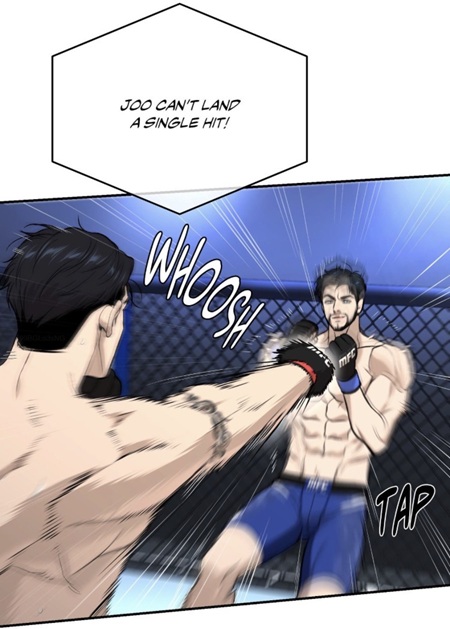 (chapter 87) It is more observation. He allows the opponent to speak first—to reveal the structure of the exchange. (chapter 87) Gabriel runs, scores points, performs mastery. The system recognizes this as competence. (chapter 87) But competence is not the same as authority. The main lead was simply waiting for the right time.
The shift comes with the back kick. (chapter 87)
A back kick is not a display technique. It is a counter. It requires timing, proximity, and commitment. It is thrown not to accumulate points, but to end conversation. 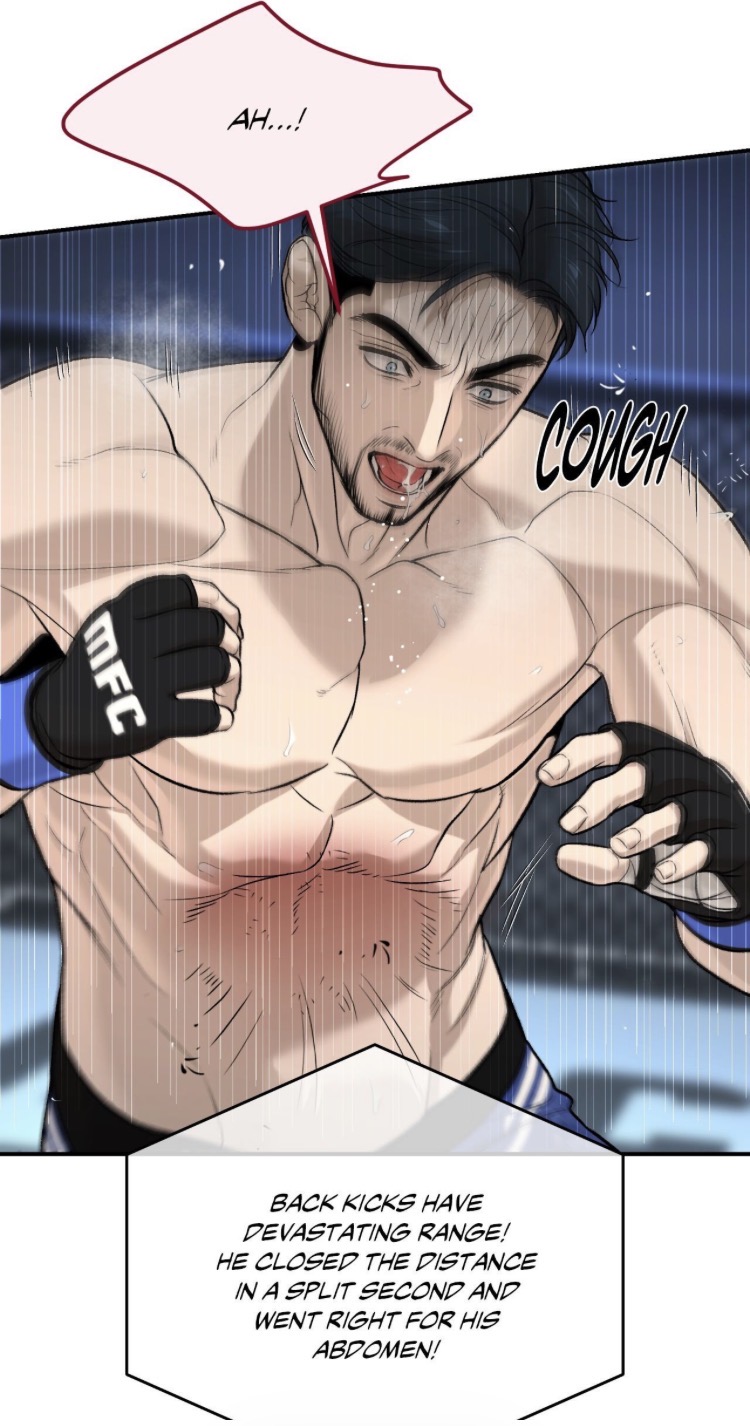 (chapter 87) When it lands, it collapses distance. It forces the opponent inward. And crucially, it targets the center of the body—not the face that earns applause, but the core that sustains movement.
What the kick takes away is not balance alone, but breath. (chapter 87) This matters. Breath is what allows speech, rhythm, and continuity. By striking the abdomen, Joo Jaekyung does not silence Arnaud Gabriel symbolically; he silences him physiologically. The cough is not incidental. It is the visible sign of a system failure. The “eagle”—the aerial, circling, point-accumulating fighter—cannot stay aloft once the diaphragm collapses. Flight gives way to gravity.
The follow-up matters even more. After the back kick, Joo Jaekyung closes in 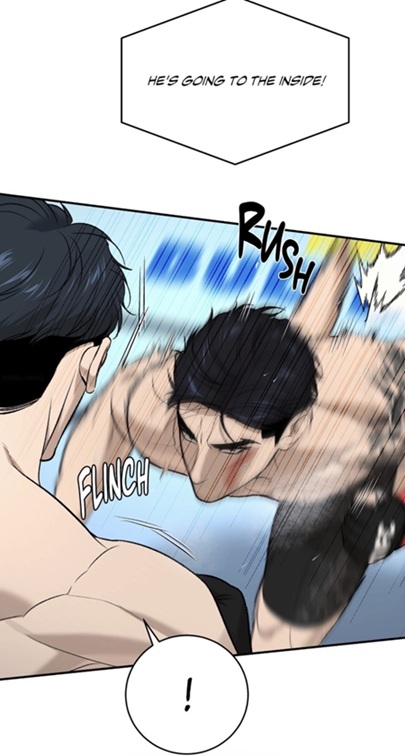 (chapter 87) and delivers an uppercut.
 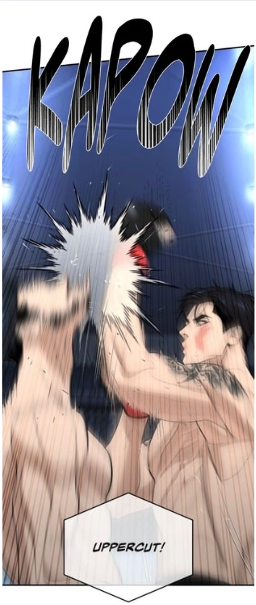 (chapter 87) This is not escalation; it is completion. Where Gabriel sought to keep the fight open, Joo Jaekyung compresses it. He refuses the long exchange. He refuses circulation. He refuses to wait for judgment. His strategy is not to be evaluated later, but to be undeniable now.
The back kick strips Arnaud Gabriel of breath. (chapter 87) The uppercut strips him of orientation. (chapter 87)
Once the diaphragm collapses, Gabriel is no longer capable of regulating posture or timing. The uppercut intervenes at precisely that moment—not to add force, but to resolve imbalance. It lifts a body that can no longer stabilize itself and interrupts any attempt at recovery. What follows is not resistance, but collapse. The eagle does not land; it falls. Arms and legs fail at once, and with them the capacity to stay airborne. 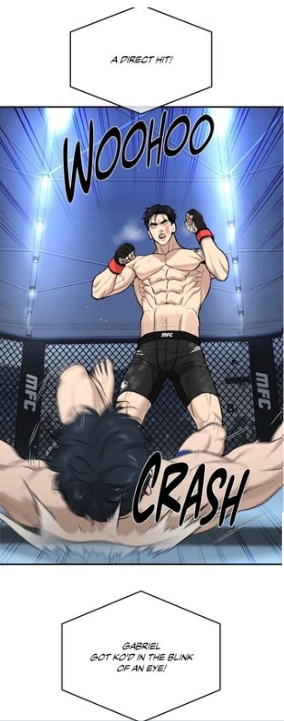 (chapter 87) This is not silence imposed from outside, but silence produced by gravity. Once the body crashes, breath cannot return, and speech has nowhere to perch.
This distinction matters. Gabriel’s entire mode of fighting—and speaking—depends on continuity: light contact (chapter 87), controlled retreat, smiling commentary, damage spread thin enough to remain narratable. From my perspective, pain, for him, has always been something deferred (spread across rounds), translated (into points, commentary, statistics) and mediated (by rules, referees, judges, replay). (chapter 87) But the uppercut ends that translation. Crucially, it is Joo Jaekyung who calls this strike a “tap.” 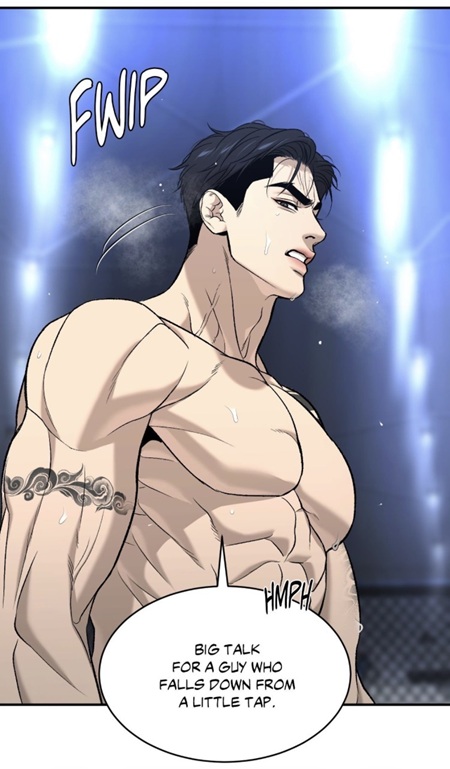 (chapter 87)
The word matters. By naming the uppercut this way, the champion reframes violence from the inside. He is not minimizing the impact; he is exposing a hierarchy of force. What appears decisive to the audience is, for him, secondary. The real rupture has already occurred with the loss of breath, with the back kick (chapter 87). Compared to that, the uppercut is merely punctuation.
This inversion reveals how far he has moved beyond a point-based or spectacle-driven economy of fighting. The strike that looks spectacular is not the one that matters most. The decisive action is the one that interrupts breath, rhythm, and continuity — the one that makes speech, posture, and recovery impossible.
After it lands, Gabriel does not speak. He does not smile. He does not reframe. He remains grounded, silent, and exposed. (chapter 87) This is why the moment feels disproportionate. It is not simply that Gabriel is hurt; it is that he appears unprepared for pain that interrupts language rather than ornamenting it.
The protagonist’s fighting style mirrors his communicative behavior exactly: alignment. (chapter 87)
Where Gabriel and Baek Junmin rely on deferral, Joo Jaekyung insists on alignment. Where they speak around conflict 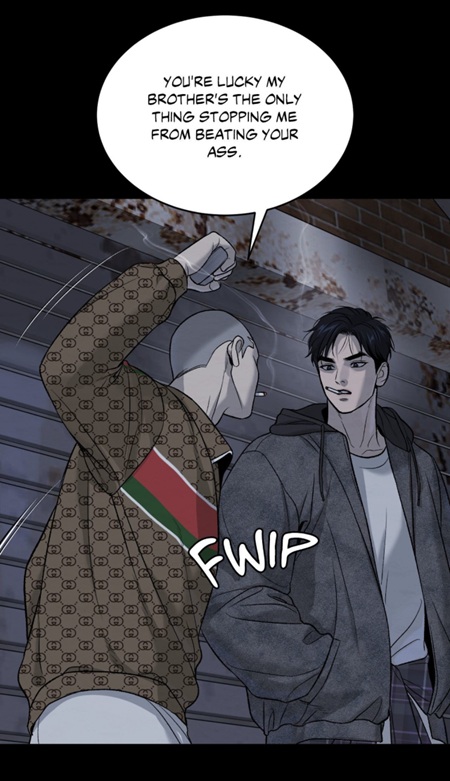 (chapter 74) (chapter 82) (chapter 87), he speaks into it. Where their power depends on systems that can reinterpret outcomes, his depends on moments that resist reinterpretation. It looks as though the athlete has internalized surprise as a mode of operation. (chapter 87) Not surprise as chaos, but as interruption. Each decisive movement arrives before it can be absorbed by the system—before it can be scored, reframed, or deferred to later interpretation. The opponent is caught off-balance, but so is the moderator, whose script assumes predictability. Surprise here is not a tactic for winning exchanges; it is a tactic for breaking mediation.
This is why the moderator’s question is not accidental. It is an attempt to pull the champion back into a familiar structure: (chapter 87) Two options. Two lanes. A controlled fork in the road. The equivalent of Gabriel’s point-scoring strategy translated into language. But the fight has already shown us why this will fail despite the appearances
Joo Jaekyung has no interest in winning by decision—whether athletic or rhetorical. He does not want to be interpreted. He wants to be answered. 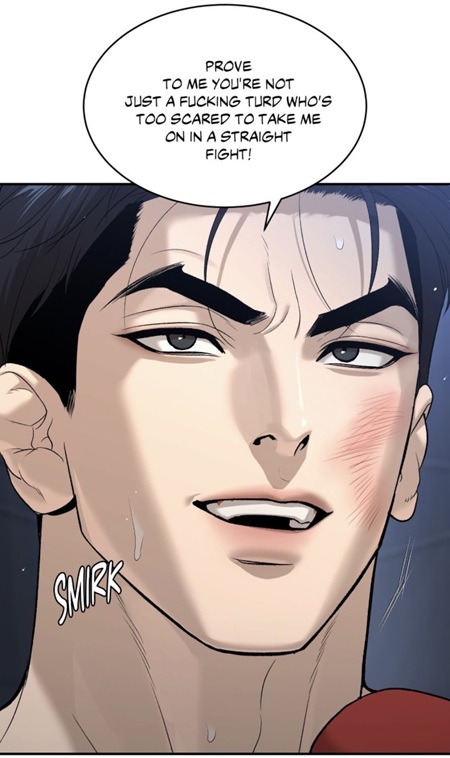 (chapter 87)
Seen this way, the fight is not a prelude to the speech. It is its proof. The jinx mattered because it did not merely weaken the champion’s body; it rendered him structurally mute. 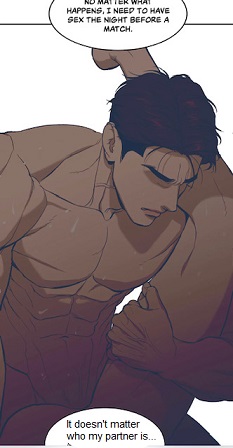 (chapter 2) While the jinx held, action could still occur, but speech could not carry consequence. Words dissipated, were deferred, or were absorbed by systems designed to neutralize them. Powerlessness expressed itself as speechlessness.
What breaks in episode 87 is not luck, but that condition. The jinx no longer governs his relation to outcome. And the clearest sign of that release is not victory, but articulation. (chapter 87) He can now act in ways that resist reinterpretation—and speak in ways that cannot be postponed.
Surprise becomes possible, only once the jinx loses its grip. While cursed, every move was anticipated, rerouted, or explained away. Once uncursed, the champion no longer needs permission, timing, or validation from the system. 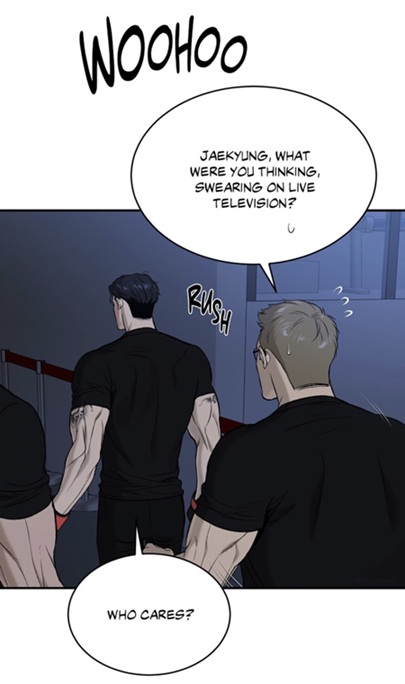 (chapter 87) His actions arrive before meaning can be reassigned. His words arrive where no answer is prepared. In this sense, episode 87 marks the moment Joo Jaekyung becomes fluent in his own discipline. Not merely competent, not merely dominant, but articulate. His movements surprise (chapter 87) because they are no longer designed to be legible in advance. They are not bids for approval; they are declarations.
Where Arnaud Gabriel’s fighting style depends on being read, scored, and explained—on allowing the system to finish his sentence—Joo Jaekyung’s now depends on interruption. Each movement cuts across expectation. Each decision arrives before mediation can begin. Surprise is no longer an accident; it is his mode of expression. That’s how it dawned on me why he won this match so quickly after his first night with doc Dan  (chapter 5) which had surprised his manager Park Namwook.
 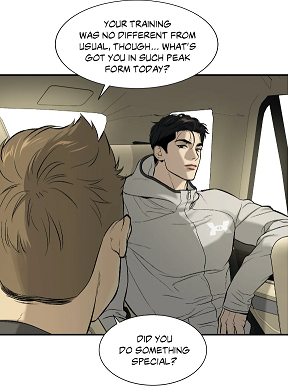 (chapter 5)
The system believes it still governs outcomes because it confuses movement with control. Gabriel moves. Baek Junmin circulates. But neither transforms the field. Joo Jaekyung does. First with his body. Soon with his voice.
And once speech enters the same register as the back kick (chapter 87) —direct, unmediated, irreversible—there will be no neutral ground left to retreat to. (chapter 87)
Commentary as Control: When Mediation Rewrites the Fight
Before the microphone is seized (chapter 87), the fight has already been partially rewritten. Not by the fighters, but by the voice that accompanies them.
The moderator’s narration does not describe the fight; it scripts how the fight should be seen. (chapter 87) Here, the man praises the French sportsman while omitting the action from the Korean athlete. This distinction matters. Commentary during the fight in Paris is not a neutral layer added after the fact. It intervenes in real time, assigning meaning, value, and legitimacy to movements as they occur. What counts as action, what counts as damage, and what counts as dominance are not decided solely by bodies in motion, but by the language that frames them.
A telling discrepancy appears early. Joo Jaekyung advances and throws a punch. (chapter 87) Visually, contact is registered: the onomatopoeia “TAP” marks the moment. Something happens. And yet the moderator declares, unequivocally: “Joo can’t land a single hit.” The issue is not that the blow lacks force; it is that it is rendered nonexistent. Contact is reclassified as absence.
By contrast, when Arnaud Gabriel touches (chapter 87) — repeatedly, often against guard or shoulder— those same gestures are narrated as accumulation. (chapter 87) Circling becomes “control.” Light strikes become “points.” Endurance becomes strategy. The same physical economy is not evaluated differently; it is counted differently. (chapter 87)
This asymmetry is systematic. Gabriel’s movements are framed as strong and intelligent, even when they produce no decisive effect. The thing is that Joo Jaekyung can withstand such punches. He has long internalized to use his body as shield. Besides, his movements, when they do not immediately collapse the opponent, are either omitted or framed as failure. (chapter 87) The moderator does not ask whether Joo is absorbing damage; he announces that Joo is being outmaneuvered. He does not note that Joo remains squared, grounded, and facing his opponent; he insists that Gabriel is “running circles around him.” (chapter 87)
What emerges is not analysis, but instruction. The commentary teaches the audience what to recognize as skill and what to dismiss as noise. It does not reflect the fight; it pre-interprets it, guiding perception toward a point-based, decision-oriented outcome. Victory, under this narration, is not something seized—it is something awarded later.
This is why the strategy attributed to Gabriel fits so cleanly within the system. His fight is designed to be judged. He circles, touches, retreats. He avoids moments that resist reinterpretation. He never needs to raise his voice or force a conclusion, because the system will finish his sentence for him. Commentary, jury, and scoring will translate minimal impact into legitimacy. Joo Jaekyung, by contrast, does not fight to be translated. He absorbs, advances, closes distance. His guard is not praised as strength and resilience but dismissed as passivity. (chapter 87) His contact is not evaluated but erased. The narration does not merely favor Gabriel; it prepares the conditions under which Gabriel’s approach can win without ever having to end the fight.
Seen this way, the fight is not merely athletic. It is already political. The moderator’s voice functions as an invisible hand on the scale, redefining what counts as action before the judges ever speak. It was already palpable during the match between the main lead and the Shotgun, but now it becomes more obvious.
This is the context in which the later intervention must be read. When Joo Jaekyung takes the microphone (chapter 87), he is not interrupting a fair narrative. He is reclaiming authorship from a system that has already begun to speak over his body.
Moderation as Deflection: The Interview as a Managed Choice
By the time the microphone appears, the fight is already over—but control over its meaning is not. (chapter 87) This is where the moderator enters the cage and becomes visible. His intervention is not neutral, and it is not merely journalistic. It is managerial.
The structure of his question reveals this immediately. He does not ask one question, then wait. He asks two at once: how the champion feels and whether he has words for Baek Junmin. This is not conversational clumsiness; it is a framing device. The champion is placed in front of a forced alternative: personal affect or rivalry hype. Either answer keeps the discourse safely within the register of sport. Both options redirect attention forward—toward the next match—rather than backward, toward responsibility.
This is a classic diversionary tactic. By introducing Baek Junmin at this precise moment, the moderator collapses multiple narratives into one convenient axis: fighter versus fighter. Institutional involvement disappears. The CEO of MFC disappears. Any irregularity becomes merely interpersonal tension. The interview is designed not to elicit truth, but to channel attention.
That this is happening on a live broadcast matters. The moderator is not improvising; he is containing risk in real time.
Who Is Watching—and Why That Matters
But what the moderator miscalculates is not the champion’s temperament, but his audience.
This match is not being watched only by fans or analysts. It is being watched by patients at the hospice. (chapter 87) It is being watched by staff. It is being watched by Hwang Byungchul—someone who knows the champion not as a brand, but as a body, a history, and a visitor and former patient of that very place. These viewers are not consuming spectacle; they are witnessing continuity. They know the fighter as a person, and I suppose, it is the same for the inhabitants of the seaside town.
For them, Joo Jaekyung’s presence is not abstract. It is personal. They are watching because of him, not because of the event itself. The dragon is not just a celebrity for them, but someone who once occupied the same space they do now. This shifts the interpretive frame entirely. They are not primed to receive hype or promotional narrative. They are primed to notice discontinuity—moments where what is said no longer matches what they know of the body, the risk, and the cost.
The moderator speaks as if he is guiding interpretation. (chapter 87) But live broadcast does not guarantee interpretive obedience. It only guarantees exposure. For the inhabitants and patients of the hospice, authority does not circulate through the microphone. It circulates through familiarity. They have no relationship with the moderator—no shared past, no shared vulnerability. With the champion, they do. His words carry weight precisely because they are grounded in recognition, not mediation. When he speaks, he is not framing the event for them; he is interrupting the frame itself. That’s why I believe not “motherfucker” will catch their attention, rather the other statement “playing dirty”. (chapter 87)
The Champion’s Speech as Refusal of Explanation
This is where the champion’s response becomes decisive—not because of what it clarifies, but because of what it refuses to clarify. (chapter 87) Contrary to the moderator’s method, Joo Jaekyung does not explain. He does not narrate. He does not contextualize. He speaks about a stunt. A trick. He names the existence of manipulation without supplying its mechanism.
This is not accidental. It is the inverse of commentary logic. Where the moderator’s role is to tell viewers how to see what just happened, the champion’s declaration does the opposite: it destabilizes perception. It introduces doubt without closure. It forces questions instead of answers. The speech functions less as accusation than as riddle. Let’s not forget that for that tie which was turned into a defeat, many people were involved: the MFC security guards, the intervention of doctors, the corruption of the jury, referee and moderator and the switched spray (its fabrication…).
This is precisely what the moderator and MFC did not anticipate.
Had the champion named the trick explicitly—had he described the spray 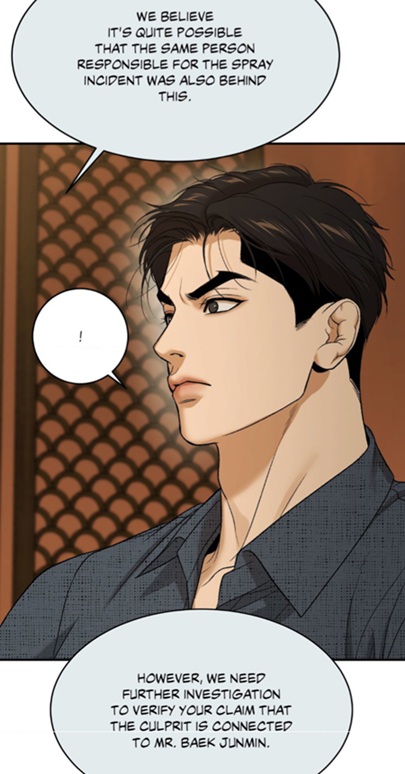 (chapter 69) , the switching, the method—the institution could have responded. Clarifications could be issued. Liability could be managed. But by speaking elliptically, by pointing to manipulation without anatomizing it, the champion places the burden of interpretation onto the audience. And MFC can not deny the existence of an incident in the locker room.
And that audience includes people who already trust the main lead, his strength and his selflessness.  (chapter 62) They are not close enough to trust the system blindly.
Why This Speech Is Dangerous to the System
For viewers in the seaside town, the declaration invites curiosity. For hospice patients, it resonates with lived vulnerability. For Hwang Byungchul, it can also activate memory (chapter 87) — of past matches, past compromises, past blindness. He is not being told what to think. He is being prompted to remember the suspension which he thought, his pupil deserved.  (chapter 57)
This is the opposite of what moderation is designed to do. The moderator attempts to redirect attention toward Baek Junmin and the future. (chapter 87) There will be a match soon. The champion pulls it backward, toward unresolved causality. The moderator offers a spectacle that can be consumed. The champion offers a fracture that must be examined.
This is why the subsequent apology for profanity is so revealing. It is the only response available. Language has slipped beyond containment, so the institution retreats to formality. Civility replaces substance. That way, the athlete can be criticized for his language. He doesn’t appear as refined or proper. The reality is that he portrayed Baek Junmin as a cheater.
The Larger Diversion at Work
Seen in this light, the behavior of the CEO and the woman in red becomes legible. By foregrounding the incident in the States  (chapter 69), by allowing attention to cluster around foreign misconduct
  (chapter 69) and public embarrassment (chapter 69), they redirect scrutiny away from the quieter, more actionable crime: the switched spray and the rigging of the game. Scandal abroad is survivable. Manipulation at home is not.
The champion’s speech threatens this balance. Not because it exposes everything, but because it exposes enough. (chapter 87) It disrupts the economy of managed ignorance. It creates a situation in which silence no longer stabilizes meaning. The incident is no longer buried, it is gradually coming to the surface,
The moderator was not asking two harmless questions. In reality, he was offering a script. And for the first time, the champion declined to read from it. Hence he insulted the actual champion.(chapter 87)
The Most Dangerous Word
The danger is not the profanity. It is what the profanity makes available.
When Joo Jaekyung says (chapter 87), he is not losing control. He is actually speaking on doc Dan’s behalf, as he has long recognized how the incident with the switched spray affected his lover. Hence he had pushed for further investigation later. He is more than just refusing the moderator’s script and naming his opponent directly, outside institutional mediation. The word does not function as an insult alone; it functions as a key.
Once spoken on live broadcast, it authorizes a shift in narrative terrain—from the fight to the past.
In a system that already treats Joo Jaekyung as a celebrity rather than an athlete (for more read my analysis “The Secrets Behind The Floors “], language is no longer evaluated for meaning but for usability. The insult “motherfucker” becomes extractable evidence. It invites biography. Not training history, but origins.
Raised by a single father who was not only violent, but also a drug-addict, a gambler and a mobster. Police records. 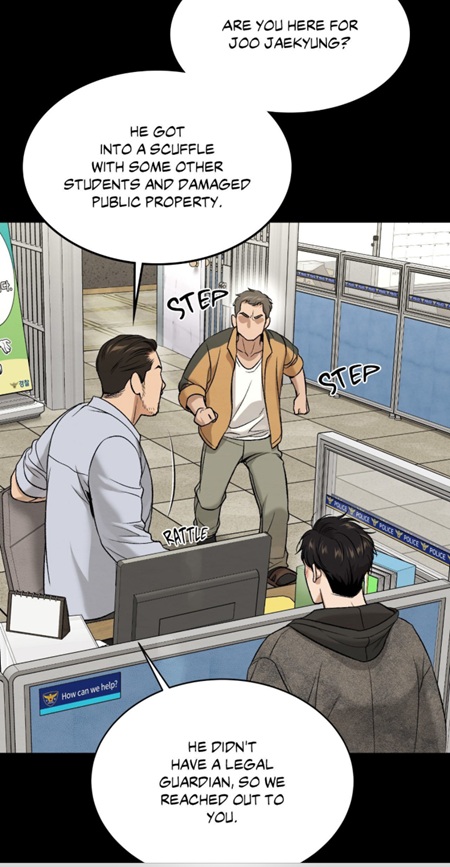 (chapter 74) Early incidents reframed as character. Let’s not forget that he was stigmatized as a thug by the members from Team Black too.
 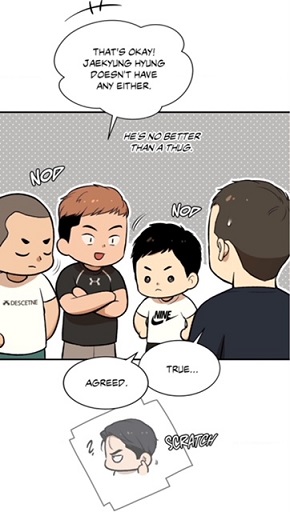 (chapter 47) Nothing new needs to be invented. Only reassembled. They know about the dragon’s past, because they brought Baek Junmin, someone who resented the celebrity for his wealth and fame.
This is how reputations are dismantled without contradiction. A scandal could finish his career, thus the manager silenced the incident with Choi Heesung’s fake injury. 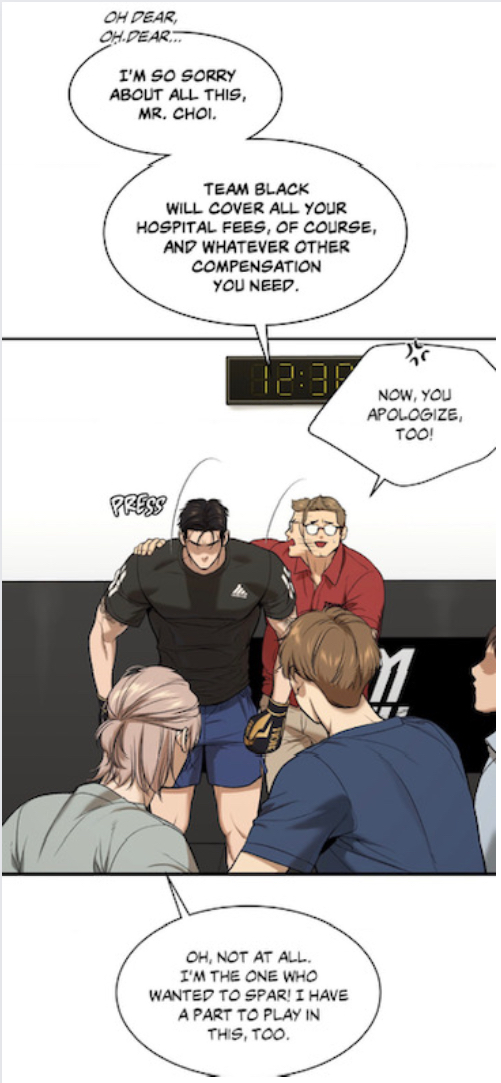 (chapter 31) The system does not deny the champion’s words ; it reclassifies them. What was a refusal of manipulation becomes “anger issues.” What was naming becomes “acting out.”
The word “motherfucker” is especially volatile because it summons the mother into the narrative. Her return—whether literal or discursive—does not need to accuse the champion. 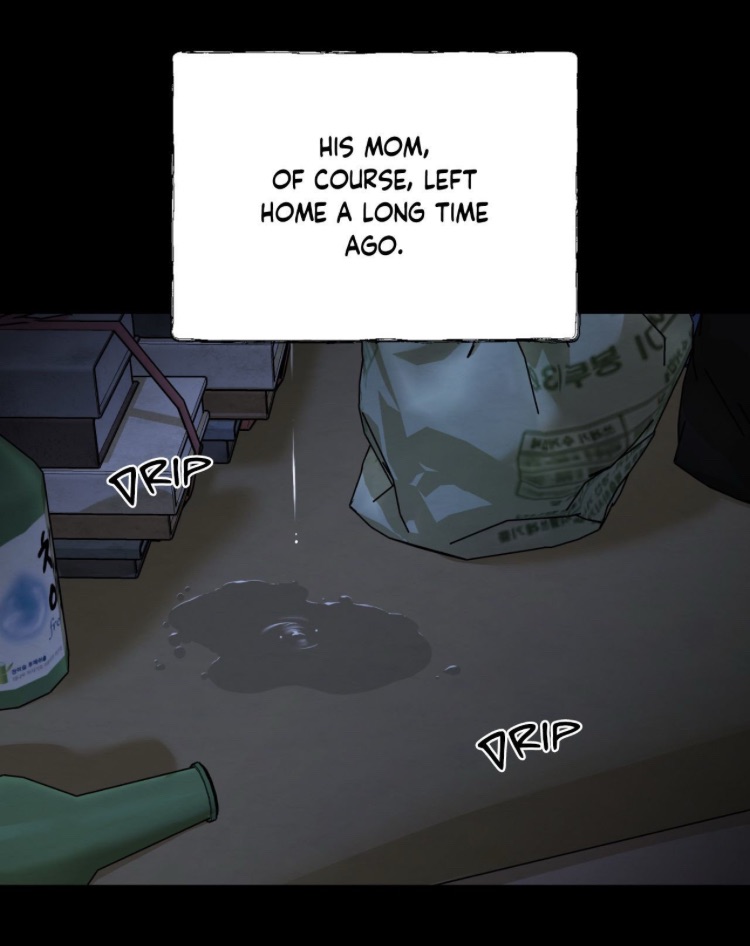 (chapter 72) It only needs to repeat an already accepted story: abandonment as necessity, violence as justification, disappearance as victimhood. A story the system knows how to circulate. And Hwang Byungchul never questioned her decision so far.
In that configuration, the champion’s speech is no longer debated. It is overwritten.
This is why the insult matters. Not because it is crude, but because it cannot be neutralized without reopening the past. The curse does not expose Joo Jaekyung. It gives the system permission to try. And this is the cost of refusing the script. However, what the schemers fail to recognize is that the champion is no longer influenced by the past and his origins. He received his absolution from the director Hwang Byungchul:  (chapter 78) Secondly, Kim Dan is now able to distinguish the past from the present. Finally, thanks to doc Dan
 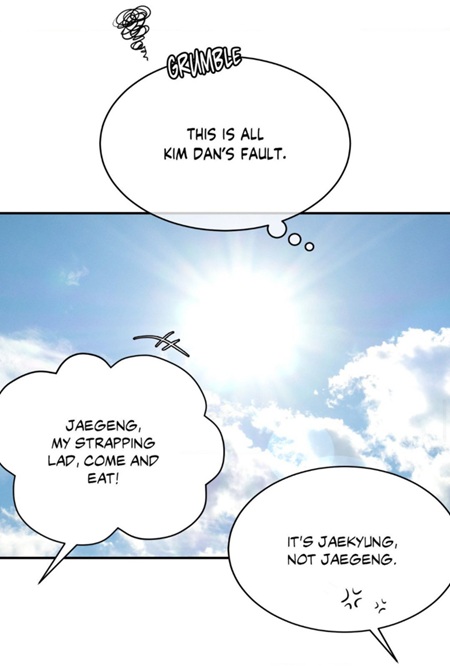 (chapter 62), he did so many good deeds in the seaside town that the inhabitants and the patients from the hospice won’t accept such accusations. I believe that such people won’t see “motherfucker” as a problem at all, they will rather see it as a part of his role after the match. What will remain in their mind is rather the accusation and riddle he voiced: the stunt Baek Junmin played.
CSPP and the Economy of Broadcast
What ultimately exposes the fragility of the system in episode 87 is not the champion’s aggression, but the infrastructure that was supposed to absorb it. The live broadcast does not merely transmit the fight; it reorganizes responsibility. And this is where CSPP becomes impossible to ignore. (chapter
CSPP is not presented as a television channel. The fight in the States was explicitly sold on PPV 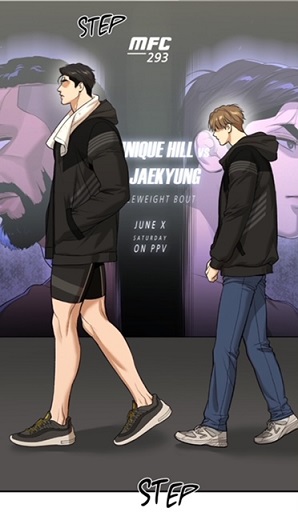 (chapter 87), which already tells us that CSPP does not function as a simple broadcaster. My idea is that CSPP operates as an intermediary apparatus: a company that packages events, sells broadcasting rights, coordinates visibility, and transforms violence into consumable spectacle. In other words, CSPP does not show fights; it produces events. This explicates why CSPP was present right from the start
 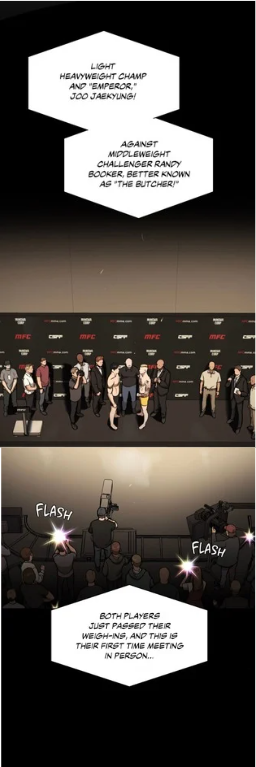 (chapter 14), but barely visible. But the moment it caught my attention in Paris, I realized that its increasing visibility displays the success of MFC as company. Observe that when the champion faced Randy Booker, the weight-in took place on the same day than the fight and in the arena, not at a prestigious hotel like in Paris. Here, the champion held a conference many days before the weight-in, and the latter took place the night before the match with Arnaud Gabriel. Secondly, you can observe the success of MFC through the banners. In Busan, the website of MFC was posed in the background next to CSPP. (chapter 14) In Seoul, when the star faced his old rival, there is no website on the banner
  (chapter 50), only MFC and CSPP. But in Paris, it is now totally different. (chapter 87) Thanks to CSPP, I noticed Joo Jaekyung’s true role. He is the one who made MMA fighting and MFC so popular! He is a trendsetter. He is indeed making history! And since CSPP and MFC are strongly connected to each other, it implies that CSPP as an organization is earning more and more money as well.
This is consistent with how the logo appears gradually in the narrative. In Paris, CSPP is omnipresent in the cage (chapter 87), on the banner, and on the stage and probably in promotional material , yet remains narratively undefined. That absence is not accidental. CSPP functions precisely where definition would impose accountability. It sits between MFC, sponsors, pharmaceutical interests  (chapter 48), and distribution platforms, insulating each layer from direct responsibility. If something goes wrong, blame can always be displaced sideways.
CSPP and the Architecture of Visibility
CSPP enters the narrative quietly, but never innocently. Its function is not to comment on fights, nor to judge them. According to my observations and deductions, CSPP controls something more fundamental: when, how, and for whom events become visible. It is not a television channel. It does not merely broadcast. It packages, licenses, and distributes attention. And this becomes clear once we follow the timing.
Early revelations about Joo Jaekyung—his injury 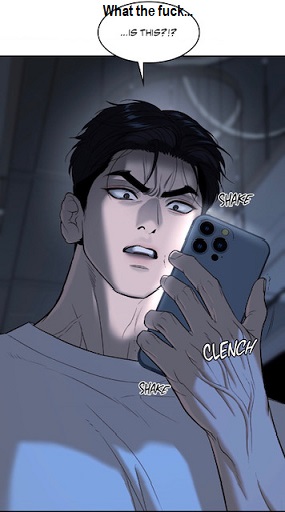 (chapter 35), his suspension
 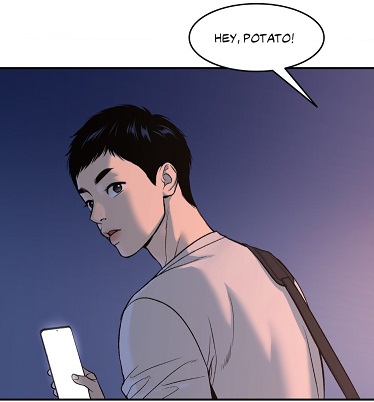 (chapter 52), the causes for his defeat —usually surface in the evening or late at night (chapter 54). They circulate when attention is thin, fragmented, and easily exhausted. These disclosures are technically public, yet functionally muted. They exist without witnesses who can gather, discuss, or respond collectively.
As MMA gains popularity within the story, this pattern shifts. News about Joo Jaekyung begins to appear during the day.  (chapter 57)
 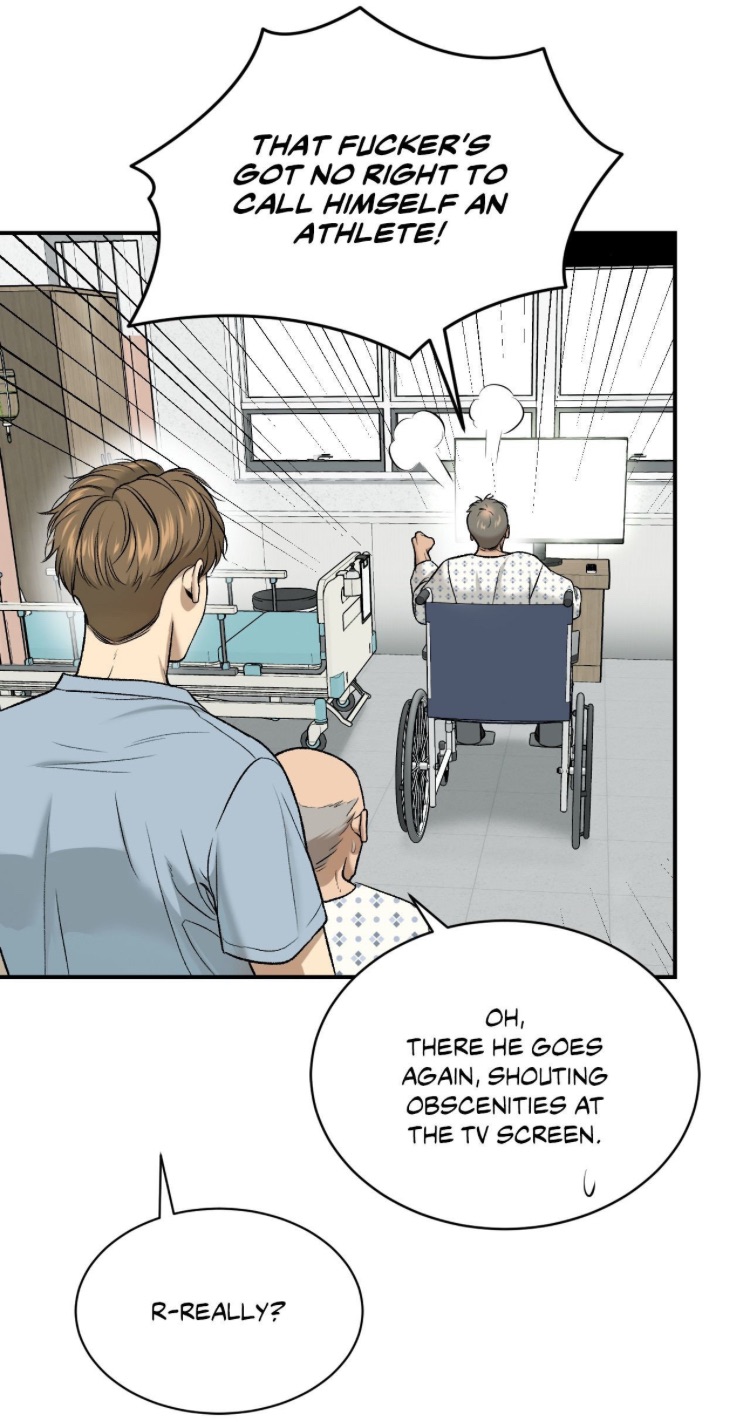 (chapter 70) His matches are scheduled at hours accessible even to a Korean hospital
  (chapter 41) or hospice patients. (chapter 87) This is not coincidence. The schedule itself signals that Joo Jaekyung has become a ratings anchor—a figure around whom time is organized. He is no longer merely an athlete; he structures attention. Seen in this light, the late-night scheduling of the Korean rookie’s fight
 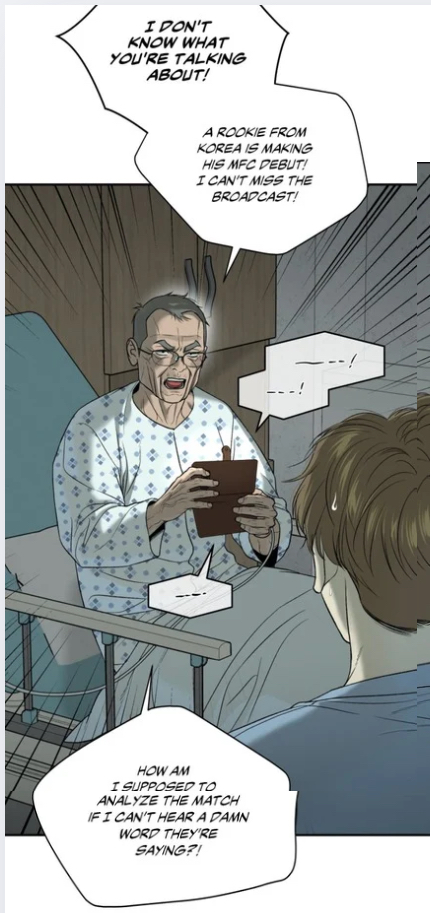 (chapter 71) becomes intelligible. It is not a mark of anticipation, but of expendability. The match is placed where attention is thinnest, where failure or success carries minimal consequence. By contrast, Joo Jaekyung’s fights are positioned to be seen. The asymmetry exposes how dependent MFC’s visibility economy is on him—not as a competitor, but as the primary organizer of audience attention.
This is precisely when CSPP becomes more visible.
CSPP’s logos multiply as control becomes more precarious. Its presence in the cage, on banners, and in broadcast framing (stage) increases not because it is expanding, but because it needs to be seen owning the frame. Visibility here is defensive. The more unstable meaning becomes, the more insistently CSPP marks the space as regulated, licensed, and sanctioned.
The contrast with Baek Junmin is instructive. His early fights are difficult to trace. Kim Dan cannot find information online.  (chapter 47) His presence circulates through curated highlights and controlled conference footage rather than open broadcast.
  (chapter 47) His rise is engineered through selective visibility.
  (chapter 47) Weak opponents are chosen.
  (chapter 47) His image is inflated before he ever faces Joo Jaekyung. CSPP does not need to expose him fully; it needs only to prepare recognition. However, CSPP is an official company, they can not control rumors among fighters.
 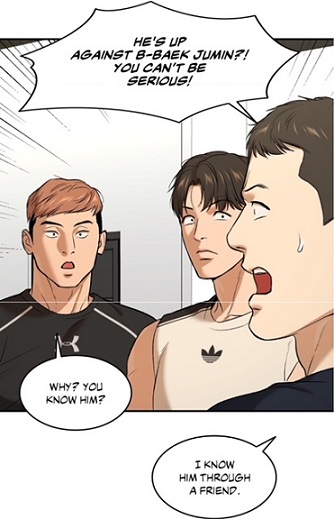 (chapter 47) Thus the manager suggested this to his boss just before:
  (chapter 46) By mentioning the existence of spies, he incited the main lead to keep his distance from the doctor and the members so that the rumors about the underground fighting wouldn’t reach his ears.
This explains the asymmetry in scheduling as well. When defeat is anticipated for Joo Jaekyung—Busan 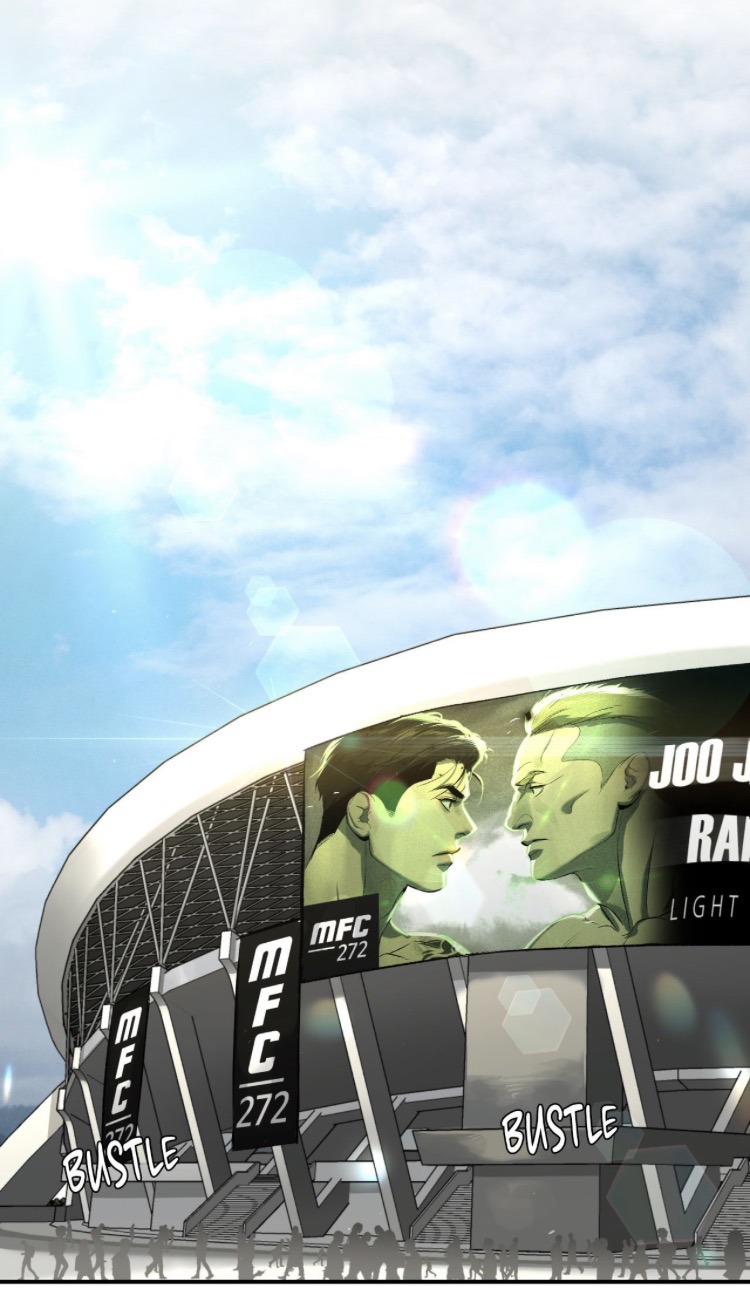 (chapter 14), the United States, Paris—the fights are placed in high-visibility slots. Loss must be witnessed. Decline must be shared. By contrast, the fight between Baek Junmin and Joo Jaekyung takes place in the morning
  (chapter 49), a time of dispersed attention, private viewing, and reduced collective response. Visibility is not maximized; it is managed.
  (chapter 49) CSPP’s role, then, is not neutral mediation. It is temporal governance. It decides when exposure becomes dangerous and when it becomes profitable. It does not silence events; it times them.
This also clarifies why Baek Junmin’s championship appears so late, almost as an afterthought.  (chapter 77) Once Joo Jaekyung does not contest the loss of his title—once he does not sue, demand more investigation, or interrupt the administrative process— MFC and CSPP no longer need to justify anything. Delay becomes normalization. Silence becomes confirmation.
What CSPP ultimately sells is not fights, but legitimacy through circulation. As long as conflicts remain within the frame of scheduled events (chapter 87), licensed images, and mediated commentary, the system holds. But the moment violence spills into spaces CSPP cannot package—off-camera, unsanctioned, criminal—the entire structure becomes vulnerable.
This is why Baek Junmin’s trajectory 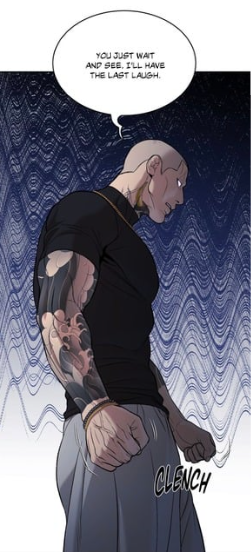 (chapter 87) is dangerous not only for MFC, but for CSPP itself. If his connections to the underworld surface, CSPP is no longer a distributor of sport, but a conduit for illicit spectacle. Contracts dissolve not because violence occurred, but because violence escaped framing.
CSPP thrives on controlled exposure. What it cannot survive is uncontrollable visibility. And by focusing on this aspect, it dawned on me that CSPP could have footage of the fight in Seoul. This distinction clarifies an earlier anomaly that otherwise remains unresolved: the Seoul fight.
Joo Jaekyung was injured, when he entered the scene.  (chapter 49) Under normal medical protocol, this should have stopped the fight immediately.
  (chapter 41) No athlete should perform when injured. Yet MFC Medical remains silent, the staff simply treats the wound. The bout proceeds. Only later—after attention has shifted, after consequences have begun to circulate—does the same medical authority step forward to issue disciplinary sanctions and a suspension (chapter 52).
The reversal is telling. Medical authority here does not operate preventively, but retroactively. It does not protect the athlete at the moment of risk; it activates only once visibility becomes dangerous. This explains why a trick was played at the health center. It was to divert attention from their own complicity.
Seen through the logic of CSPP, this makes sense. If CSPP governs circulation, then footage of the Seoul fight does not disappear—it is archived. The problem is not the absence of evidence, but its containment. 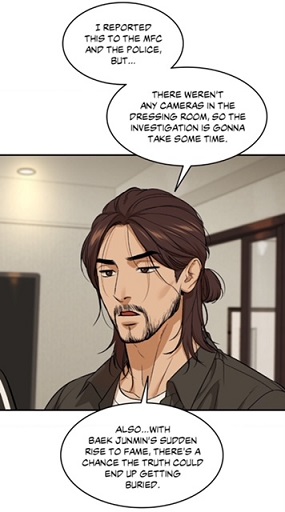 (chapter 52) There were cameras in the arena. What cannot be allowed to surface is proof of foreknowledge: that an injured athlete was permitted to fight under institutional supervision. Thus it raises the question if the match in the morning was broadcast on TV.
This explains the sudden relocation of scandal to the health center. By staging conflict there, the system launders responsibility. 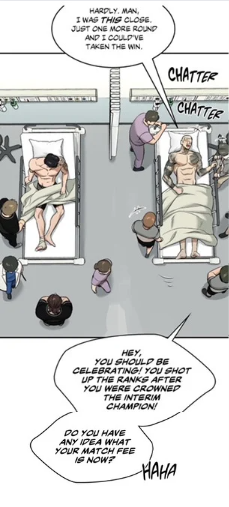 (chapter 52) Structural complicity is translated into an individualized incident. What occurred in the cage is no longer the issue; what occurred afterward becomes the narrative.
In this light, the suspension is not punishment. (chapter 52) It is a containment mechanism. It freezes exposure, recenters authority in bureaucratic procedure, and prevents uncontrolled questions from forming. CSPP’s role is not to deny visibility, but to delay and reroute it until meaning can be safely absorbed.
What emerges is not a conspiracy, but a pattern: intervention follows visibility, not injury. Authority responds to exposure, not to risk. CSPP is the mechanism that makes this inversion sustainable—until visibility escapes its frame.
What the system fails to recognize at this point is that the champion’s speech (chapter 87) and Baek Junmin’s reaction belong to the same event, even though they unfold in different spaces. (chapter 87) Joo Jaekyung speaks publicly, but sparingly. He does not explain. He does not accuse in detail. He names only enough to destabilize the frame: a “stunt,” “playing dirty,” a past match that no longer sits quietly in memory. His words are not designed to persuade; they are designed to unanswered. Joo Jaekyung doesn’t care about his rival’s opinion or innocence. The words remain unresolved. They enter broadcast time without closure.
CSPP and MFC attempt to absorb this rupture by doing what it always does: redirecting attention, normalizing tone, apologizing for profanity, and re-centering the narrative on rivalry and future spectacle. (chapter 87) From the perspective of the institution, the danger has been defused. The spotlight has been shifted back to Baek Junmin. The next fight is already being imagined.
But this is precisely where the miscalculation occurs. First, Baek Junmin hears something entirely different. What reaches him is not the insult, but the accusation. Not “motherfucker,” but “stunt.” (chapter 87) Not provocation, but exposure. This explains his reaction at the office. He destroys the television. And he does not prepare for a rematch, but for retaliation. But why is he so angry? He receives the words as theft. What reaches him is not the insult, but the suggestion that his victory—already fragile, already mediated—has been publicly reclassified. The words “stunt” and “playing dirty” do not accuse him in detail; they do something worse. They strip legitimacy. In his mind, he had finally achieved his goal: prove his superiority to Joo Jaekyung and live in the spotlight. (chapter 87) In a single sentence, the match is no longer remembered as a win, but as something tainted. He understands that the spotlight is no longer safe. Like mentioned before, he chooses to show his true self: a criminal. If the logic of broadcast begins to question tricks rather than celebrate rivalry, then CSPP becomes vulnerable. An underworld connection, once exposed, does not merely threaten a fighter; it threatens contracts, rights deals, and legitimacy.
This logic is not unprecedented. It echoes the historical trajectory of PRIDE Fighting Championships [which I had mentioned in a different essay Unsung Hero : Rescues in the Shadow], whose spectacular rise was inseparable from television exposure—and whose collapse followed once the connection between broadcast, organized crime, and event production could no longer be contained. In that case as well, violence was not the problem. What proved fatal was uncontrollable visibility. Once media circulation exposed what had previously been managed behind the scenes, legitimacy evaporated faster than contracts could protect it.
The parallel sharpens what is at stake in Jinx. MFC’s vulnerability does not lie in brutality, nor even in corruption, but in its dependence on televised containment. As long as speech, images, and outcomes remain governable, the system holds. Once television ceases to stabilize meaning—once it begins to expose rather than frame—power unravels from the inside.
Seen in this light, the danger is not that combat sports are violent, but that they are visible. And visibility, once it escapes its managers, has a history of collapsing institutions that believed spectacle would always protect them.
This is why CSPP and MFC become powerless in that moment. Thus the TV screen gets destroyed. CSPP and MFC can apologize for profanity, but it cannot erase the doubt now attached to Baek Junmin’s title, as the incident with the switched spray has been recognized by MFC and even treated by MFC medical. To conclude, the damage is semantic, not procedural.
The destruction of the television is therefore not rage at insult, but rage at loss of ownership over meaning. (chapter 87) Baek Junmin understands that what was taken from him is not a belt, but the story that made the belt matter. He has been repositioned—from winner to suspected cheater—without trial, without rebuttal, and without recourse.
From his perspective, the system has failed him. The apparatus that once guaranteed controlled visibility has allowed a sentence to circulate that cannot be neutralized. He has followed the rules of managed ascent, only to discover that a single, unscripted utterance can undo it.
This is the precise moment where institutional miscalculation becomes personal. And it is this perceived injustice—being robbed in full view—that makes Choi Gilseok’s permissive “by all means” possible. (chapter 87)
This is where CSPP’s position becomes the most precarious of all. If Baek Junmin’s ties to illegal fighting or organized crime surface publicly, CSPP is the first entity that cannot claim ignorance. It is the company that sold the event, packaged the narrative, and guaranteed its legitimacy. Unlike MFC, which can hide behind sport governance, or individual managers who can be scapegoated, CSPP’s value depends entirely on credibility. Once that credibility collapses, so do its partnerships.
Seen this way, Baek Junmin is not the mastermind of the schemes. He is their residual container. He absorbs the consequences of financial losses 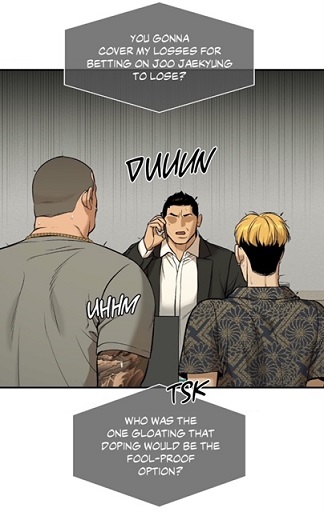 (chapter 46) that began elsewhere—losses already acknowledged when Choi Gilseok brought him into the system in the first place.
This is the deeper irony. The live broadcast was meant to neutralize confrontation by redirecting it. Instead, it amplifies instability. Words that were supposed to fuel hype begin to corrode trust. Visibility, once an asset, becomes a threat.
Conclusion: When Speech Breaks the Frame
The failure examined in this part does not lie in miscommunication, provocation, or loss of discipline. It lies in miscalculation. The system anticipates speech—but only as performance. It anticipates words that can be framed, apologized for, redirected, or folded back into rivalry and spectacle. What it does not anticipate are the consequences of speech once it escapes those circuits. The patients of Light of Hope and the inhabitants from the seaside town will definitely side with the athlete.
What happens, then, when speech is anticipated but not governable?
The fight provides the first answer. (chapter 87) Technique becomes language. Point accumulation, endurance, and delay reflect a world in which outcomes are meant to be evaluated rather than decided. Within this economy, decisiveness is a liability, and ambiguity is profitable. Joo Jaekyung’s refusal to prolong exchange—his choice to interrupt rather than circulate—marks the first rupture. The fight is no longer a prelude to speech; it becomes its proof. (chapter 87) The jinx that once rendered him powerless and speechless dissolves as he finds a language that cannot be scored.
The broadcast provides the second answer. (chapter 87) CSPP does not fail because it broadcasts the moment, but because it cannot contain what follows. Live transmission turns control into exposure. Apologies manage tone, not meaning. Scheduling governs attention, not interpretation. Once words enter circulation without mediation, images detach from their managers. Visibility ceases to stabilize power and begins to redistribute it.
The responses provide the final answer. Institutional calm persists. Procedures continue. But elsewhere, the effects are immediate and bodily. Baek Junmin experiences not insult, but dispossession. (chapter 87) His reaction reveals the asymmetry at the heart of the system: speech that appears harmless within spectacle can devastate outside it. A single unresolved sentence is enough to fracture legitimacy that took years to assemble. Neither MFC nor CSPP witness his outburst. Secondly, by grabbing the microphone, Joo Jaekyung is little by little taking control of the narrative, but more importantly he is choosing the timing! (chapter 87) So far, he only spoke in front of people during a conference or after a match. He could never choose the topic either. 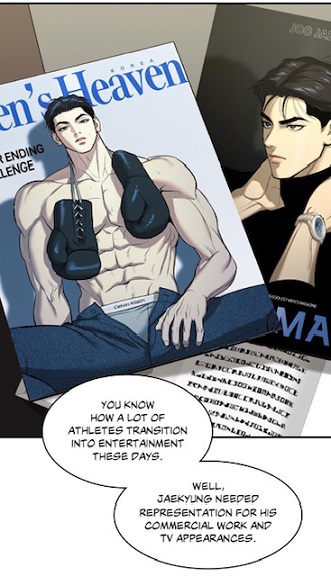 (chapter 30) This implies that he won’t remain passive and silent like in the past, relying on structure and institutions (Entertainment agency…) and accepting to become a scapegoat.
  (chapter 54)
Taken together, these moments show that power in Jinx does not collapse because truth is revealed. It destabilizes because meaning can no longer be timed, framed, or absorbed. (chapter 87) Once speech escapes governance, it does not clarify—it unsettles. It does not resolve conflict—it displaces it.
Part II has traced this shift step by step: from fight to broadcast, from mediation to rupture. What emerges is not the triumph of a voice, but the exposure of a system that depended on voices remaining manageable. Between a squeeze and a crack lies the instant when pressure stops circulating quietly and begins to alter the field itself. This is the moment when containment gives way to consequence—and when power, finally, has to reckon with what it can no longer control.
Feel free to comment. If you have any suggestion for topics or Manhwa, feel free to ask. If you enjoyed reading it, retweet it or push the button like. My Reddit-Instagram-Twitter-Tumblr account is: @bebebisous33. Thanks for reading and for the support, particularly, I would like to thank all the new followers and people recommending my blog.


 (chapter 57) She wondered if this nickname “MAMA” was not a spelling mistake, and that the translator might have meant “MMA fighter Joo Jaekyung.” Intrigued by this possibility, I sought clarification, and indeed, in the Japanese version
 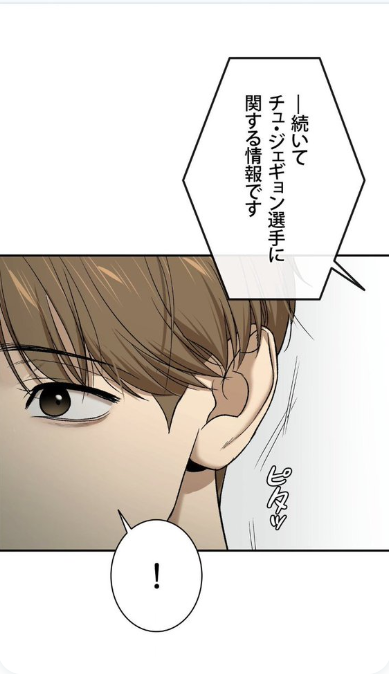 (episode 57) the reporter introduces the main lead differently: “Next, we have news regarding Joo Jaekyung.” This subtle difference is significant for three reasons.
 (chapter 52), is not only a protective measure for MFC but also shields the medical professionals who facilitated the situation. Doctors at the health center failed to report the ankle injury caused by the sabotage
 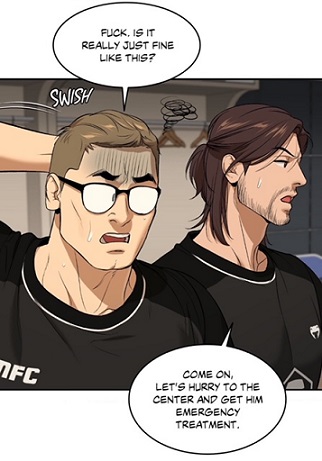 (chapter 50), further implicating them in a network of complicity and greed. Their decision to place the two fighters next to each other without proper privacy measures, such as curtains, reveals a disregard for professional ethics in favor of spectacle and profit. I would even add, the decisions from the health center’s medical staff, played a significant role in escalating the situation. By placing Joo Jaekyung and Baek Junmin next to each other post-fight, without appropriate measures like curtains to ensure separation, the health center created an environment ripe for conflict.
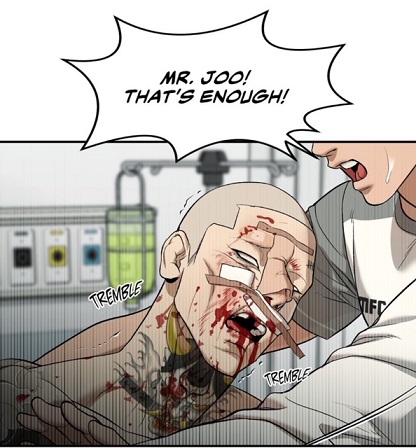 , (chapter 52) as the provoked champion lashed out in an unregulated setting. The decision to ignore these systemic failures and instead to suspend Joo Jaekyung suggests a deeper layer of complicity from the medical world, where doctors and nurses prioritized organizational demands and reputational interests over ethical responsibilities. Their failure to report the provocation and the ankle injury caused by the switched spray further highlights their alignment with MFC’s corrupt practices.
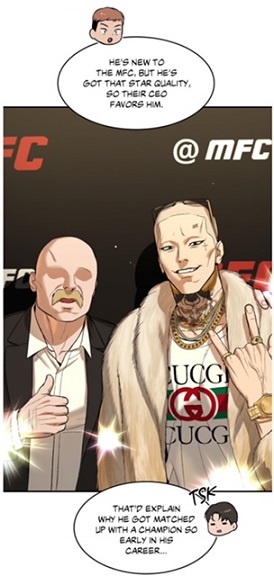 (chapter 47) and favored by MFC’s CEO, Baek Junmin has now been discarded, his relevance extinguished the moment he ceased to serve the organization’s agenda.
 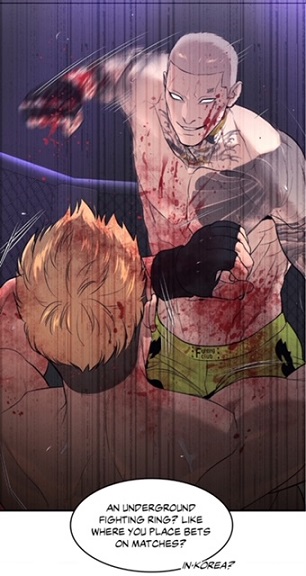 (chapter 47) His background, combined with his visible association with MFC’s CEO, positions him as a key figure who could potentially expose the organization’s darker practices.
 (chapter 49), his ultimate fate now reflects the broader cruelty and exploitation perpetuated by those in power. That’s how I realized the other signification of the cross below his left eye. The latter symbolizes his blindness in the end. The cross signifies his inability to see beyond the role he played within the system—a symbol of his naivety and misplaced confidence. Baek Junmin believed he understood the brutal reality of the fighting world, given his background in underground rings and illegal gambling. He thought his experience and cunning gave him an edge, making him untouchable or indispensable. However, his taunts to Joo Jaekyung
 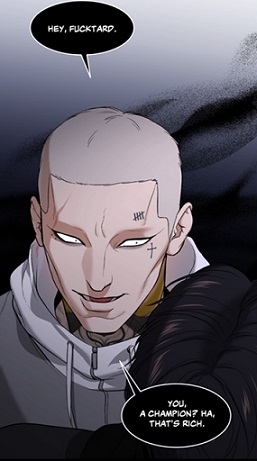 (chapter 49) reveal a man who overestimated his position within the organization.
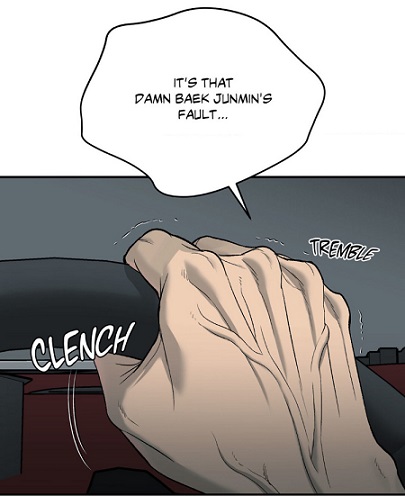 (chapter 54), it shows the athlete’s lack of reflection and insight. He hasn’t been able to discern the truth, the corruption of his “world”. This means that he needs to travel and experience a whole new world. The contrast would serve as an eye-opener for the athlete.
 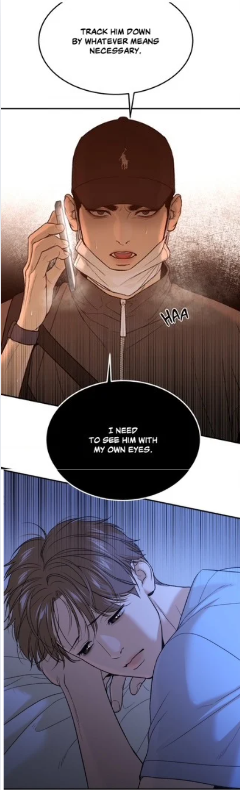 (chapter 56) released shortly after the champion’s urgent request to locate him. This timing is no coincidence. Instead, it reflects a calculated effort to manipulate both the public narrative and Kim Dan’s own perception of his role and value. By introducing the anonymous person as “one of his close associates”, it implies that the champion has already moved on from the protagonist. He is not missing him at all. At the same time, it implies that within a short time, the person was able to get the athlete’s trust which stands in opposition to this scene:
  (chapter 51) Thus I conclude that the interview serves a dual purpose: to emotionally undermine Kim Dan and to cement his estrangement from Joo Jaekyung.
 (chapter 57): his regret was not merely about using the spray but about his failure to assert himself professionally.
  (chapter 49) By complying unquestioningly with the champion’s requests, he had diminished his role, acting more like a servant than a competent physical therapist. The interview, though painful,
  (chapter 57) serves as a harsh wake-up call, forcing him to confront his own shortcomings and reevaluate his behavior.
 (chapter 41), drawn boundaries, and made his expertise known. I would even add that he never felt responsible for the champion’s reputation in the media
  (chapter 36) Hence he remained passive all this time. His negligence becomes more obvious, when the media released this wave of articles:
 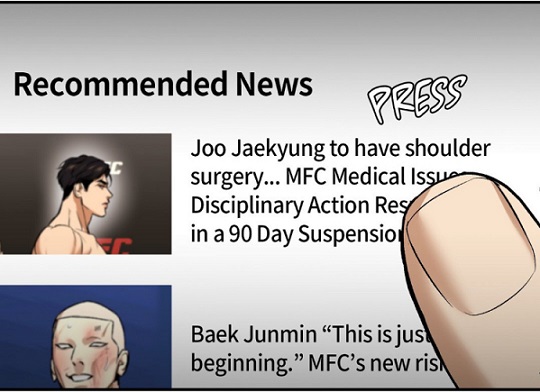 (chapter 52) Thus I discern a turning point in the doctor’s mentality. The last interview served as a painful wake-up call. This juxtaposition not only deepens Kim Dan’s understanding of his mistakes but also offers a model for the kind of professional he aspires to become. He can, if he wants to be in the spotlight:
  (chapter 50) rejection and
 (chapter 50) accusations,
 (chapter 51), the main lead is not blaming his fated partner at all. Why? It is because none of this would have happened, if he had acted as PT and trusted his own hands. He was too passive, standing by the sideline. He never became proactive.
 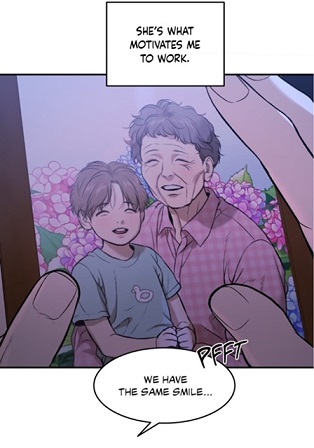 (chapter 47) his indifference and lack of professionalism. In the end, the grandmother is the reason for his lack of professionalism and neglect.
  (chapter 54) Unlike the newly hired PT, who likely has the backing of a hospital or organization, Kim Dan operates independently. This independence, while offering a degree of freedom, also makes him vulnerable. He lacks the institutional support that could shield him from the manipulative tactics of MFC. Moreover, his independence places him in direct contrast to the systemic corruption that permeates MFC and its associated entities. As someone who has already been victimized by two major deceptions—the drugged nutrition shake
  (chapter 37) and the switched spray
 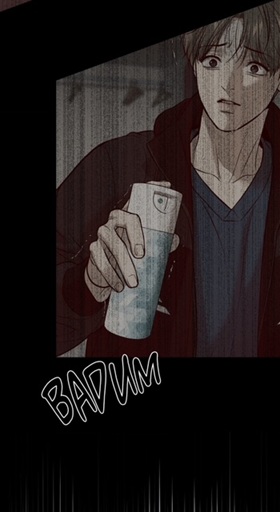 (chapter 57) —Kim Dan stands as a figure who threatens to expose the cracks in MFC’s carefully constructed facade. Let’s not forget that the incident with the poisoned beverage was swept under the rug by framing haters.


 (chapter 53) One detail caught my attention. The inscription on the back is referring to Team Black and it has a number, 03. Why doesn’t the jacket show his name, when the MMA fighter is so famous?
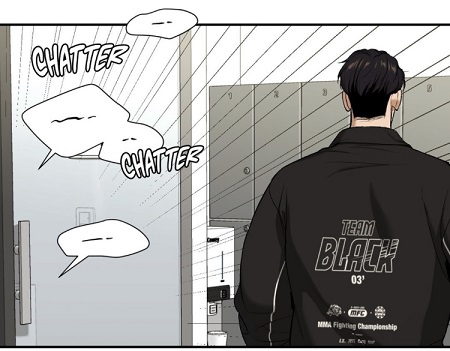 (chapter 36) The gym is visible and at the bottom of the jacket, you can see the name of the different sponsors (MFC, Jinx and others). As you can see, only the name or nickname (Emperor) of the main lead is missing. So how could Park Namwook recognize that this one was for the Emperor,
  (chapter 36), though his size is not so different from other fighters? One might think that it is related to the number 03. Yet I detected that all the other jackets had the same number too: 03.
 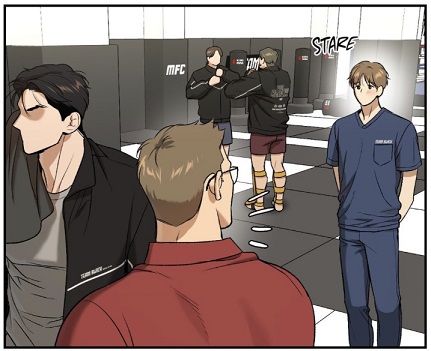 (chapter 36) That’s how I realized two aspects.
  (chapter 36) The cloth is the symbol of membership. And now you comprehend why Kim Dan chose to return it to Joo Jaekyung. He was no longer considering it as a gift, rather as a company uniform.
 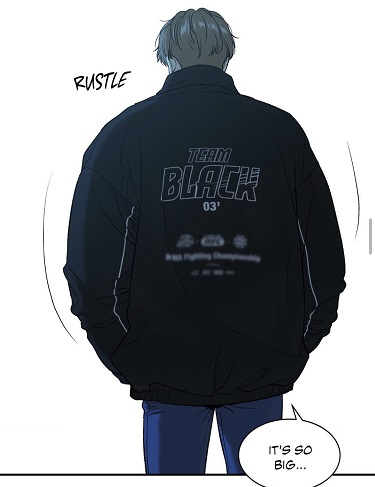 (chapter 36) Moreover, in the States, he was wearing a different jacket:
 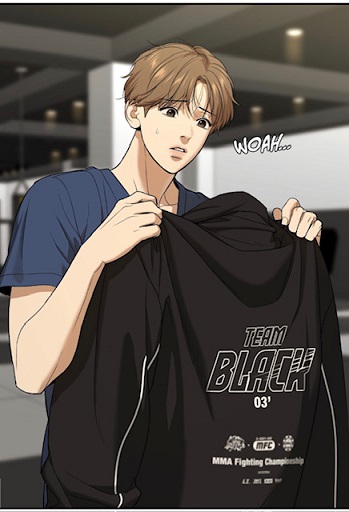 (chapter 36) Yes, the gym stands in the foreground. And who claims to be the owner of TEAM BLACK? Naturally Park Namwook.
  (chapter 22)This signifies that he is trying to get famous on Joo Jaekyung’s back. By not adding his name or his nickname on his back, he is claiming the fighter as his “fighter” and member. He is trying to claim that only thanks to him, the athlete could reach the top. In addition, when the manager gave the jacket to the celebrity, he had just selected one of them based on his size and nothing more.
 (chapter 30) As a conclusion, the jacket revealed the manager’s greed and indirect “embezzlement”. He is using Team Black and Joo Jaekyung to get recognition and admiration. Should the jacket have the name of Joo Jaekyung on it, no one would pay attention to Team Black.
 (chapter 36) Yes, the coach and manager, but his bad mood didn’t get the attention from the readers or the members. He was yelling, even looking unhappy and grumpy.
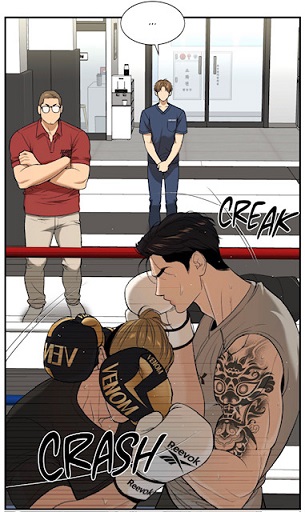 (chapter 36) According to my observations, Park Namwook’s nightmare is to see the end of the champion’s career. In other words, he also felt threatened after the release of the article. The champion’s career is numbered.
  (chapter 26) And how were the members from Team Black feeling during that special day?
 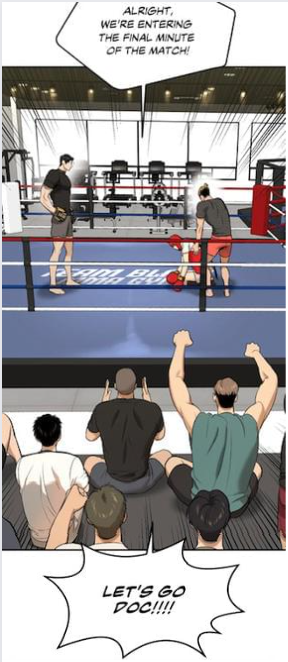 (chapter 26) Happy, though they were just observing. Kim Dan was spreading not only good mood, but also genuine care and selflessness.
 (chapter 36) The manager and coach was upset too and he could no longer hide his anxieties and stress. Thus I come to the following deduction: we should see this episode as the older version of the slap.
  (Chapter 2) His boy had not been perfect. He had failed him. In addition, Namwook’s reaction contrasts so much to Kim Dan who not only fulfilled Potato’s dream, but also desired to learn from the star. He considered him as a master. But let’s return our attention to chapter 36 and the coach’s attitude.
 (chapter 36) Yet, he pales in comparison to our main lead Kim Dan, who didn’t use money to get recognition and admiration from the other members. He is not using Joo Jaekyung to get rich or famous…. And this remark brings me to another statement. While the sparring in episode 26 embodies fun, honesty, happiness, gratitude and teaching, episode 36 represents the opposite notions: MONEY, WORK, ANGER, greed, manipulations and selfishness. That’s why the jackets have no name on it, they symbolize dehumanization and anonymity. The underlining message is that even Joo Jaekyung, as a fighter, can get replaced. However, this is not correct, for the protagonist is the true owner of the gym. Without him, the gym can not exist.
 (chapter 7) They are honorable, though they are using their fists.

 Bebebisous33s' analyses in K-Dramaland and Manhwas