

Please support the authors by reading Manhwas on the official websites. This is where you can read the Manhwa: Jinx But be aware that the Manhwa is a mature Yaoi, which means, it is about homosexuality with explicit scenes. Here is the link of the table of contents about Jinx. Here is the link where you can find the table of contents of analyzed Manhwas. Here are the links, if you are interested in the first work from Mingwa, BJ Alex, and the 2 previous essays about Jinx The Song Of Life (locked) and The Fabric of Silence
It would be great if you could make some donations/sponsoring: Ko-fi.com/bebebisous33 That way, you can support me with “coffee” so that I have the energy to keep examining Manhwas. Besides, I need to cover up the expenses for this blog.
People might have been wondering why I haven’t published anything after the release of episode 78. My silence is linked to my health. I was sick exactly like Joo Jaekyung. I had to remain in bed for a while. But enough about me.
When Doc Dan returned to Team Black, the fighters were so overjoyed that they immediately proposed to celebrate his comeback with a party. 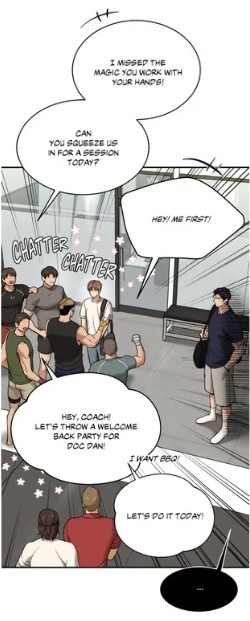 (chapter 78) Their noisy excitement — hugs, wishes, smiles, jokes, even talk of meat — gave the impression of a long-awaited reunion. Yet the suggestion was cut short by Jaekyung, who rejected it like this:
  (chapter 78) In other words, a party was “missed.” At first glance, this might appear to be an exception, a rare moment of denial in a story otherwise filled with shared rituals. Readers might recall the welcome party
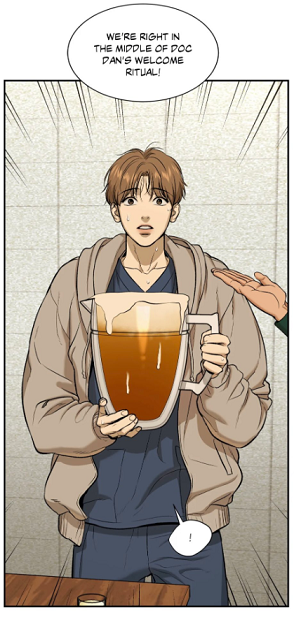 (chapter 9) in episode 9, the champion’s birthday dinner
  (chapter 43) in episode 43, the talk of hospital get-togethers
  (chapter 61), or the festive tone of fighters after director Choi Gilseok’s victory
  (chapter 52).
But the closer one looks, the clearer the pattern becomes. The missed party is not an isolated accident; it is the rhythm of Jinx itself. Whenever celebration hovers near — a victory, a birthday, a reunion, even a funeral — someone is not present. In addition, the celebration arrives too early, too late, in the wrong place, or in the wrong form. Jaekyung wins titles, but the gym shares the glory while he remains uncelebrated. 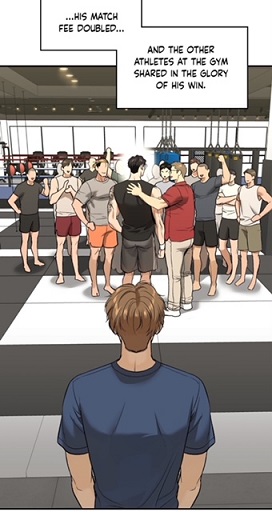 (chapter 41) Why did they not organize a party in Seoul to celebrate his victory in the States? Dan devotes himself to work, but his departures are marked by silence
 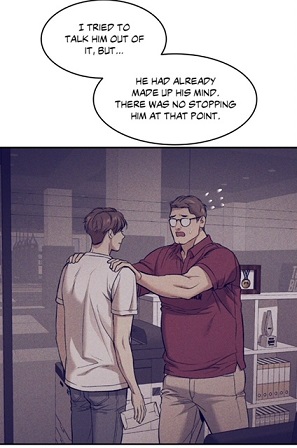 (chapter 53) rather than farewell.
 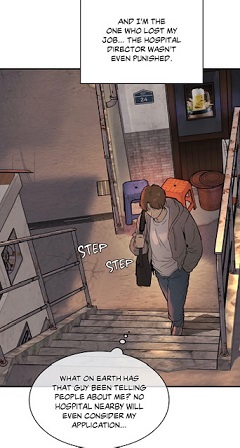 (chapter 1) The few rituals that do occur — a premature birthday cake, a noisy hug, puppies chasing after a car —
 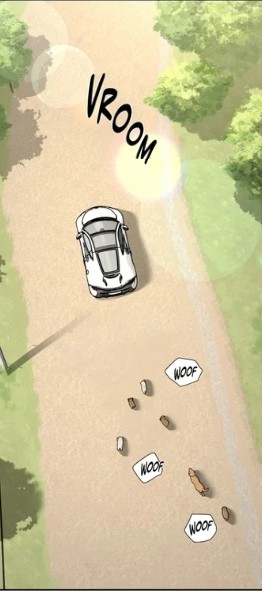 (chapter 78) always miss their mark, either hollow in substance or unseen by the very people who should be honored.
The title The Missed Party therefore names more than one canceled occasion. It captures the way the two protagonists move through a world where rituals of belonging are constantly distorted or denied. And in a culture where such celebrations carry deep social weight, the absence is all the more striking. The missed party becomes the haunting motif of their lives: recognition always promised, but never truly given.
The Meaning of Parties in Korea
In Korean culture, parties and team dinners (hoesik) hold a strong ritual function: they create bonds, display hierarchy, and confirm belonging within a group. Farewells, birthdays, and victories are all expected occasions for collective recognition. Yet in Jinx, these moments of celebration are strangely absent or hollow. When Jaekyung wins, his fee doubles, but no feast marks his achievement. Instead, the manager presents the “wolf” as his “trophy”. To conclude, others share in the reflected glory while the champion himself remains excluded, a fighter without a banquet. (Chapter 41) And this absence of recognition and respect is mirrored in the physical therapist’s position. He is not surrounded by the fighters and included by the manager. He is standing on the sideline. It was, as though his good work was not recognized  . (Chapter 43) Even the “dragon’s” birthday, supposedly a day of personal celebration, is reduced to an awkward dinner at his expense, with a cake arriving a day too early
 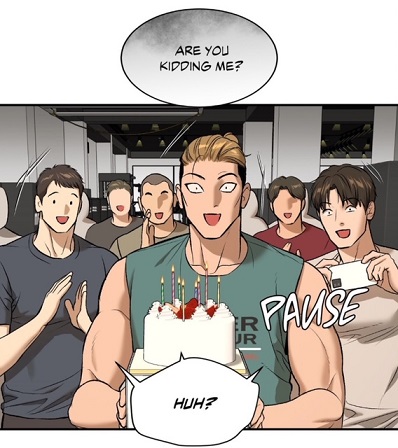 (chapter 43) or gifts from sponsors and fans he never wanted.
  (Chapter 41) In Germany, it is considered as a bad omen to celebrate a birthday too soon. Rituals that should affirm intimacy instead expose distance and lack of respect.
A striking contrast appears in chapter 52, when the fighters from King of MMA (chapter 52) gather at the very restaurant used for Jaekyung’s birthday. This time the feast is paid for not by him, but by Choi Gilseok — the rival director who had just won money betting against Jaekyung. The excuse for the banquet is twofold: the humiliation of the champion’s tie and the arrival of new members. Yet the sponsor of the event is absent, his presence felt only through the bill he covers. Unlike the wolf, whose victories go unmarked, Choi Gilseok uses food and drink to project power and buy loyalty. Yet, this celebration with the absent director displays not only hypocrisy, but also resent and jealousy due to the selection of the location. The cruel irony is that Jaekyung’s fall is more celebrated than his rise.  (Chapter 52)
This cultural backdrop makes the silences and absences in the Korean Manhwa all the more striking. Parties are repeatedly mentioned but rarely materialize, and when they do, they are strangely hollow. In chapter 61, for instance, a nurse suggests inviting the star to their next hospital get-together. (Chapter 61) The excitement is palpable — “loyalty” and celebrity sparkle in their eyes — but what stands out is the way Dan is erased in the process. They do not invite him; they want access to the famous fighter through him. His role is reduced to a conduit, the man who happens to be “close with Mr. Joo.” The irony is brutal: after two months of work in the hospice, Dan has never once been shown attending such gatherings himself. His own belonging is not on the table. He is used as a bridge to someone else’s fame, while his own exhaustion and lowered gaze silently testify to his exclusion.
But wait — is Dan not also responsible for his isolation? At no moment does he try to be close to them. He avoids their chatter, keeps his distance, and carries himself like someone already half absent. Chapter 56 seems to confirm this impression: even approached by one of the nurses, doc Dan uses work to avoid their company. 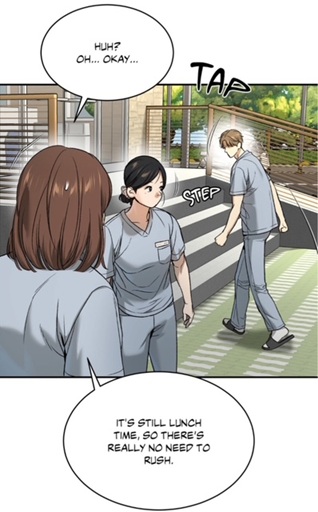 (chapter 56) However, this is just an illusion. What caught my attention is that the nurses wondered themselves why such a skilled therapist would come to a small-town hospital.
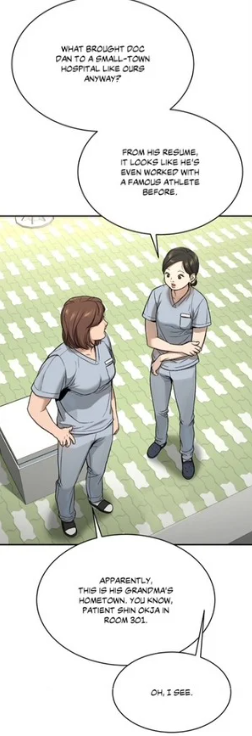 (chapter 56) They speak about him, as though he had no reason to stay there, as if he were a stranger passing through. Right from the beginning, he was treated unconsciously as temporary, someone whose presence required explanation rather than welcome. Finally, no party was held for him, no ritual of inclusion was offered. His distance and their detachment mirrored each other, producing the silence that would later define his departure.
  (chapter 78)
The paradox becomes even clearer when we turn to the star himself. Despite his status as champion, he never receives a proper victory celebration. After each match, we never see a celebration.  (chapter 5) It ends either in the car or in the locker room.
  (chapter 15) The high peak of his celebrated victories takes place at the gym where Park Namwook gather the fighters in front of the Emperor congratulating himself for his “good work” and the spectators for belonging to a winning team. (chapter 41) Yet no feast is held for Jaekyung, no toast to his perseverance. The two men at the center of the achievement are left without ritual acknowledgment, while the institution absorbs the honor. They remain a wolf and a hamster without a feast — fighting, winning, but never celebrated for who they are. And now, you understand why the manager could make such a suggestion at the hospital:
 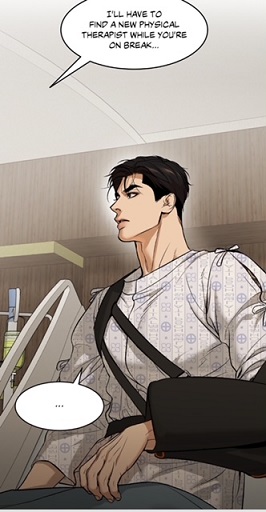 (chapter 53) For him, the physical therapists were just tools and as such replaceable.
Even Jaekyung’s birthday party in chapter 43 reveals this paradox.  (chapter 43) A birthday, especially in Korea, is typically a family-centered celebration, held at home or among close friends. Yet Jaekyung’s “party” takes place in a restaurant, under Yosep’s casual announcement that they would be having a “dinner party.” (chapter 43) The phrasing itself is odd, almost bureaucratic, as though the event were an obligation rather than a gift. Jaekyung himself had to pay the bill, reversing the usual logic of being celebrated. They even started eating before which is actually a huge violation of social norms. The cake appeared the day before his real birthday, an empty gesture more about timing than sincerity. And while fans and sponsors showered him with gifts throughout the month, Jaekyung revealed that he didn’t want any of them. The ritual forms were there — cake, dinner, presents — but the meaning was absent.
But there is another telling absence: Dan himself was left in the dark about the “surprise.” (chapter 43) The fighters never included him in the planning, as if they feared he might leak the secret. In reality, this exclusion only repeated his deeper past: once again, he was not considered part of the group’s inner circle. Had he been told, he might have brought the card and the gift of his own, softening the sting of Jaekyung’s reaction.  (chapter 45) By keeping Dan in the dark about the “surprise,” the fighters created another problem. Their silence pushed him to offer his own present on the same day as the gifts from sponsors and fans — exactly the kind of attention Jaekyung resented. He had already said he did not want those presents, and now Dan’s sincere gesture was placed in the same category, indistinguishable from the flood of unwanted offerings. What could have been a private, meaningful moment was absorbed into the hollow ritual of the group. Hence the champion never got to read his card! (chapter 43) In trying to celebrate, the team only ensured that both Jaekyung and Dan felt more isolated than ever. Instead, his silence reinforced the impression that he was peripheral. Unconsciously, Team Black treated him not as one of their own, but as an outsider to be managed. And even within the celebration, another absence was visible: Potato was missing, and no one seemed to notice. (chapter 43) The party did not affirm Jaekyung’s existence, nor Dan’s place beside him. It only reinforced their shared isolation, hidden under the noise of clapping and cheers.
Thus, Jinx presents us with a paradox: in a culture where parties are essential rituals of belonging, both Dan and Jaekyung remain excluded. They are surrounded by the signs of festivity, but the substance is always missing. Their lives are structured not by recognition but by its absence, not by celebration but by silence.
Dan’s Missed Parties
If the star’s parties are hollow, Dan’s are almost nonexistent. The only party where we see him smiling is his birthday, when he was a little boy. 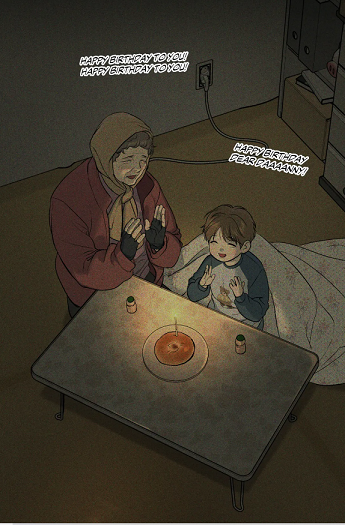 (Chapter 11) One might think, this celebration embodies a perfect birthday party. However, observe the absence of friends. It took place during the night too, a sign that his birthday was not celebrated properly. Everything implies his social exclusion. This made me wonder if this memory represents the only birthday party he ever had with Shin Okja. His life is a sequence of departures without ritual, absences without acknowledgment. Each time he leaves a place of work or community, he slips out like a ghost, denied the closure that parties are meant to provide.
At the hospital in Seoul, where he endured the predatory advances of the director, his dismissal was brutal and final. (Chapter 1) He was not only fired but blacklisted, erased from his profession’s networks. No farewell dinner was organized, no colleagues thanked him for his work, no one marked his departure.  (Chapter 1) His stay had been so brief as well. Besides, his absence was engineered to be total, as though he had never existed. The very ritual that should have affirmed his contributions instead became a ritual of erasure.
At the gym, the pattern repeated itself. The spray incident turned him first into a scapegoat. Park Namwook yelled, the fighters remained passive, and even Jaekyung rejected his presence. In the space of a few minutes, Dan was ostracized, his innocence ignored.  (Chapter 50) Then later the athlete questioned the physical therapist’s actions and told him this
 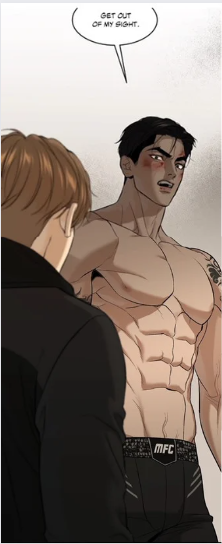 (chapter 51) out of fear and pain, the physical therapist thought, he was fired. Once again, he left in silence, unacknowledged. No one stood up for him, no one tried to reintegrate him, no farewell was offered. (Chapter 53) And keep in mind that according to me, in this scene, the manager already knew the truth. So he had a reason to dismiss a farewell party. The absence of ritual here was particularly cruel: Dan had given his skills and energy to the fighters, but his exit marked him only as disposable.
The hospice, where he briefly found genuine warmth, provided no closure either. When he left for Seoul, the staff were shocked, even saddened — but his departure was so sudden that no send-off was possible. (Chapter 78) Their affection was genuine, but the ritual was missing. Dan slipped away in silence, just as he had at the hospital and the gym. In the panel, what caught my attention is the reaction of the director. He is crying while keeping his distance, a sign that he is the one the most affected by doc Dan’s departure. For me, the author is alluding to the director’s regrets. If only he had treated doc Dan better… only too late, he had recognized that he had become accustomed to his presence. Doc Dan had always been a silent but active listener.
This absence of farewell may stretch back to his earliest traumas. If his parents truly died by suicide, it is possible that Dan never attended their funeral. Poverty, shame, and debt may have erased even that ceremony, leaving him with no closure for the loss of his own family. We can use Joo Jaewoong’s funeral as a source of inspiration. 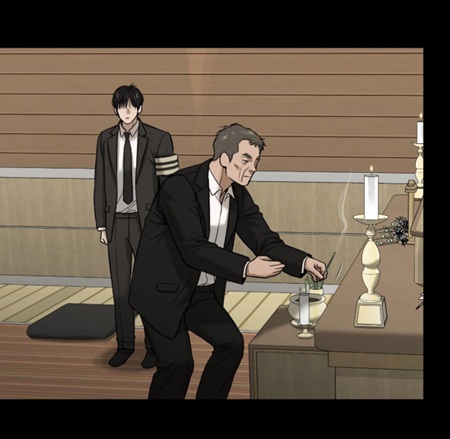 (chapter 74) The silence of his grandmother on this point suggests that even the most basic ritual of mourning was denied him.
The pattern becomes symbolic in the death of the puppy. 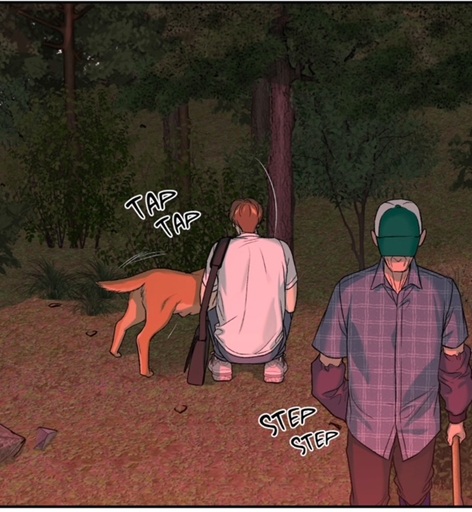 (Chapter 59) Only Dan and the landlord marked the event with a quiet burial. Since no one knew about it, it left the ritual incomplete. For Dan, the small act was meaningful, but its invisibility to the larger community echoed his own life: recognition always hidden, always partial, never public.
Even in moments that looked like parties, Dan was left on the margins. Jaekyung’s birthday party, with its cake and noisy cheer, contained an intimate truth: Jaekyung’s sudden, raw confession, “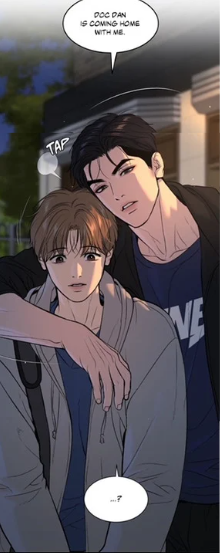 (chapter 43) This was the real heart of the evening, the only moment where ritual turned into intimacy. And yet even this was missed by Potato, who was absent at that crucial moment, lingering elsewhere with Heesung. The party’s form was there, but its essence — the recognition of Jaekyung’s loneliness and Dan’s importance — was overlooked by the two men at its center due to the presence of alcohol.
Thus, Dan’s life is a chain of missed parties. At the hospital, the gym, the hospice, even at funerals, he departs without recognition. And when celebrations do occur, the essential truth is missed — noticed only by those who are absent, while those present look away.
The Puppies’ Party
Nowhere is the irony sharper than in chapter 78, when the puppies run after the departing car.  (Chapter 78) To them, departure is not tragedy but play, a noisy farewell parade. Their barking and chasing become a spontaneous party, a joyous ritual of attachment. (Chapter 78) It is pure, instinctive, and alive. And yet, neither Jaekyung nor Dan sees it. Shut in the car, burdened by urgency, contracts, and exhaustion, they miss the little parade given in their honor.
The contrast is devastating. Humans, with their expectations of formal ritual, repeatedly fail to mark Dan’s contributions. They miss every opportunity to acknowledge him. But the animals, in their innocence, succeed where people fail: they celebrate simply because they care. The puppies recognize bonds better than the humans who claim to love him.
What makes this little parade even more striking is that the puppies do not separate between wolf and hamster. Their joy is directed at both men together, at the bond symbolized by the car’s departure. (Chapter 78) In this sense, the puppies achieve what the humans cannot: they recognize attachment without division, gratitude without debt. Their farewell is not tied to work, contracts, or hierarchy, but to presence itself. (Chapter 78) By running after the car, they express loyalty and responsibility, acknowledging the care they have received. It is the only party in Jinx that includes both protagonists as they are — not as worker and champion, not as scapegoat and boss, but as a pair worth celebrating. Finally, they have no idea that the couple plans to return soon, as they have no notion of time.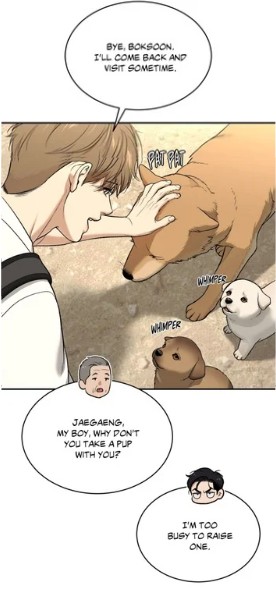 (Chapter 78) Striking is that here, doc Dan is making a promise to Boksoon and her puppies, but the latter have no idea. Therefore imagine this. On the weekend, the moment the car approaches the landlord’s house, the puppies will recognize them and celebrate their return! And this time, both characters will witness this welcome party: (chapter 78) How can doc Dan not be moved and even smile? Why did the champion reject the landlord’s suggestion (taking a puppy)? He had no time… Having a puppy will not just force him to slow down and take his time, but also attract real and genuine attention from the members of Team Black. (Chapter 78) The animals would even change Joo Jaekyung’s behavior and the fighters’ perception of their hyung.
 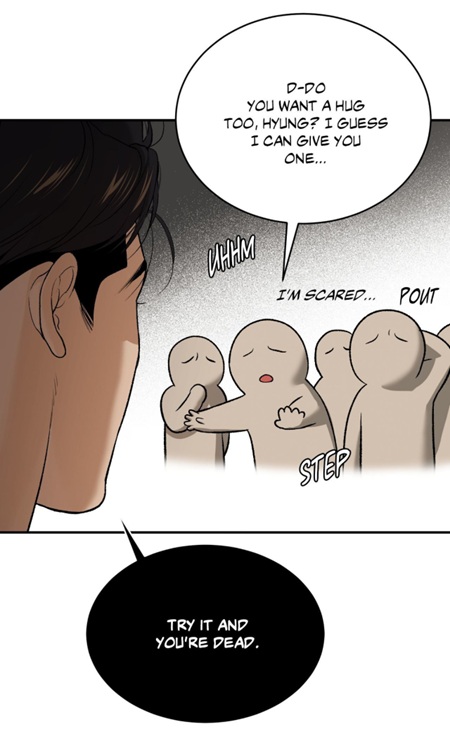 (chapter 78)
The Illusory Reset
When Dan returns to the gym, the fighters smother him with hugs and noisy affection. They beg him not to leave again, propose a welcome party, and act as if everything is back to normal.  (Chapter 78) But this “reset” is an illusion. Dan is only contracted for two matches. Interesting is that no one is capable of perceiving the truth, as the main lead’s explanation is ambiguous.
 (Chapter 78) He doesn’t limit the number of matches, only that he will focus on the “wolf”. So for them, his return is not limited in time. Nevertheless, his paleness and dark circles speak louder than their words: he is exhausted, fragile, still haunted.
The fighters, however, do not see his state. 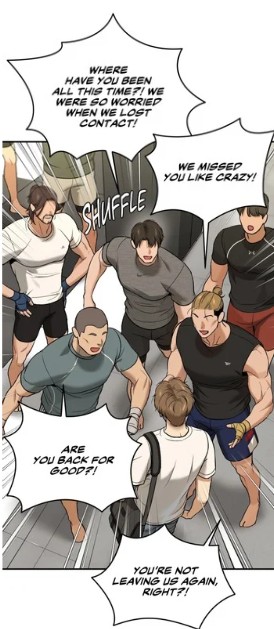 (Chapter 78) They are more worried about another possible departure than about his condition, as though his leaving again would be a greater tragedy than his ongoing suffering. This exposes that the members are not totally oblivious and their reunion is not a repetition of the past. On the other hand, warm words and a noisy welcome are enough for them. They take his generosity for granted, just as they always have. Therefore they ask for his magic hands. (Chapter 78) Their celebration is shallow, a ritual meant to restore their own comfort rather than acknowledge his reality.
Here, the cultural weight of parties in Korea sharpens the irony. Gatherings are strongly intertwined with alcohol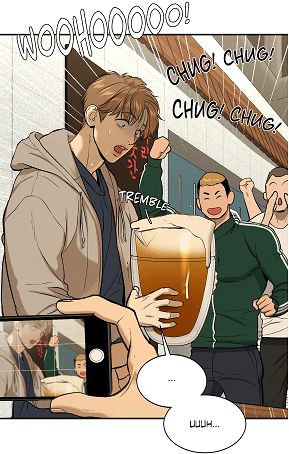 (chapter 9), and abstaining from drink often means being excluded from group belonging. Yet Dan, on medication, cannot drink. His doctor’s recommendation makes it impossible for him to participate in such “public” rituals. Even the customary sharing of a huge bowl — a symbol of intimacy and unity — must be avoided. For Jaekyung, who once used alcohol to dull his own struggles,
  (chapter 54) this becomes another reason to refuse such parties: they risk exposing Dan to temptation and harm. Park Namwook, knowing Jaekyung’s history of drinking, has no interest in promoting such events either.
 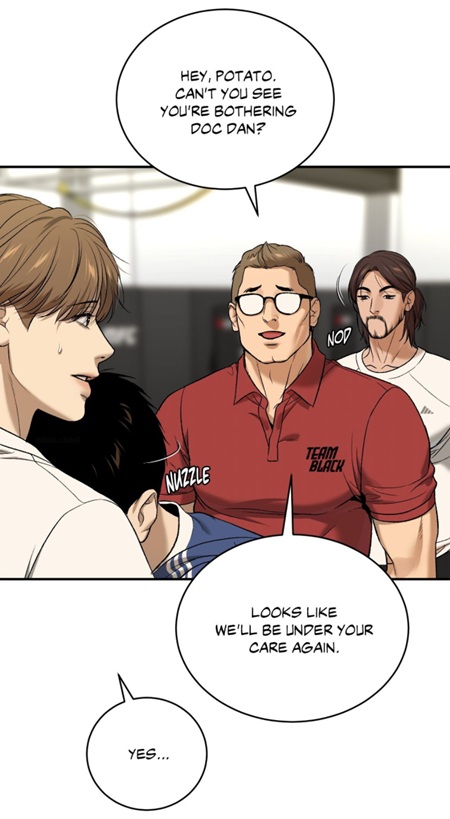 (Chapter 78) Hence the latter has no interest to organize a welcome party and even maintain the ritual with the bowl!! What might appear to others as grumpiness or stinginess is in fact a form of protection.
In contrast, Potato embodies another response. 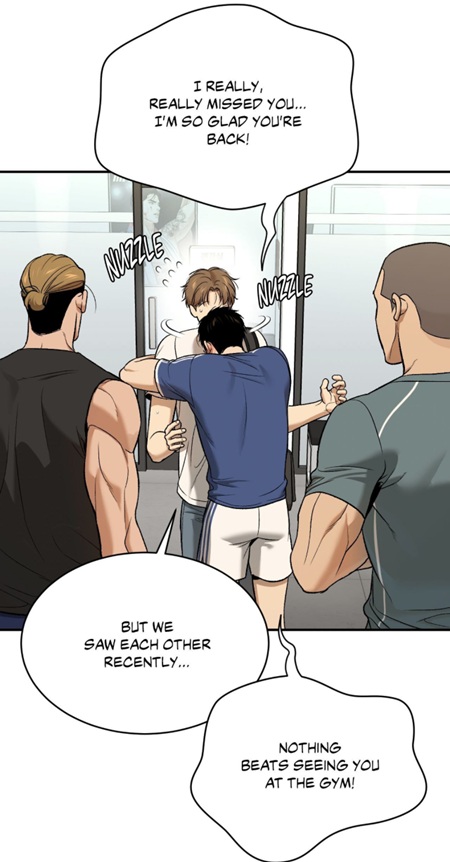 (Chapter 78) Having missed Dan most deeply during his absence, he now wishes to spend as much time as possible with his hyung. His longing shows that no party with Heesung and the landlord — no noisy drinking night —
  (chapter 58) could fill the hole left by Dan’s departure. But his form of attachment is still caught in the ritual of surface-level affection. What Potato craves is real closeness, hence he keeps hugging the physical therapist, (chapter 78) but what he proposes are the same shallow gestures that miss the truth of Dan’s fragility. The chow chow’s words — “Nothing beats seeing you at the gym” — unintentionally reveal this dependence. On the surface, it is a casual expression of joy and longing. Yet beneath it lies another truth: if the hamster were to leave Team Black for good, the gym would eventually lose all its members. From the start of the story, Dan has embodied teamwork. He is the glue that holds the fighters together, not by authority or charisma, but by care. Without him, unity dissolves into rivalry and noise. The irony is that the fighters sense this truth but cannot articulate it. They attempt to celebrate his return with hugs and the promise of a party, as if rituals could substitute for recognition. In reality, what they crave is not the feast but the fragile cohesion that Dan alone brings.
Striking is that Jaekyung’s refusal of the welcome party is linked to his position as director of the gym. It marks a turning point. Indirectly, he rejects the idea by redirecting the fighters’ attention. He points out their indifference toward him. For the first time, the athlete is voicing his dislike openly, he felt excluded. Due to this combination, the athlete doesn’t realize that he rejected the party, as if he refused to participate in hollow rituals that only disguise exhaustion and perpetuate harm. (Chapter 78) It becomes clear that for the athlete, such parties built on illusion can only harm Dan further. To conclude, thanks to his intervention, he protected the hamster from rituals that mistake noise for acceptance and even care. 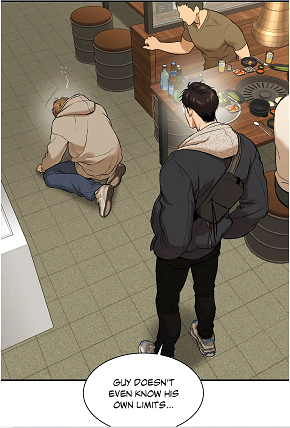 (chapter 9)
Park Namwook’s position within Team Black also sheds light on the dynamic of missed parties. In earlier chapters, he was the one who orchestrated gatherings  (chapter 26), or allowed whether welcome parties or surprise celebrations or pre-match meals
  (chapter 22). These events were never about genuine recognition but about maintaining power and appearances, boosting morale, or reminding the fighters of their dependence on the team structure he managed. The “surprise” birthday party in chapter 43 bore his fingerprints, (chapter 43) yet he stayed conspicuously absent when the cake was presented, only appearing later at the restaurant.
 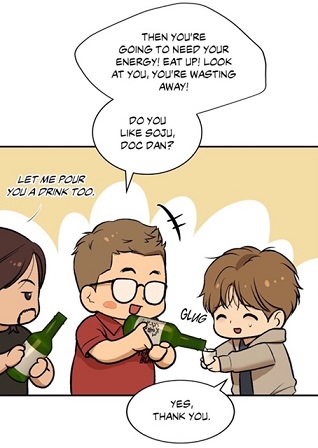 (chapter 43) This absence is revealing: Namwook preferred to avoid direct conflict with Jaekyung’s visible displeasure, leaving the awkward burden of paying and performing to the champion himself to Yosep. In other words, his parties were tools of control, not gifts of belonging. By chapter 78, however, the balance has shifted.
  (chapter 78) Standing in the back, Namwook watches as Dan returns and is embraced by the fighters. He notices a “different vibe” between the two leads, but fails to grasp what it means. Doc Dan is actually free and has the upper hand in their relationship. Hence he can no longer ask this from doc Dan:
 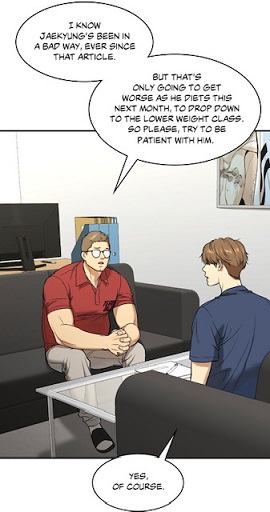 (chapter 36) Doc Dan should put up with everything. What he cannot admit is that Dan is no longer replaceable. (chapter 78) Once erased, the therapist now belongs; once central, the manager is now the outsider. Namwook is pushed into the very silence he once imposed on others. The irony is sharpened when Jaekyung openly asserts his authority: (chapter 78) With that, the wolf reclaims his rightful place. In other words, by respecting the hamster, the protagonist is learning to protect his own dignity and interests. (chapter 78) Namwook’s illusion of control dissolves, his “decisions” and rituals losing their force. Even the proposed welcome party collapses in an instant when Jaekyung refuses, proving that Namwook no longer directs the rhythm of the team. The missed party is thus his own as well: the final chance to assert authority through ritual slips away before his eyes, leaving him stranded on the margins of the very world he once managed. And in this reversal lies a striking symmetry: the silence that once excluded Dan now excludes Namwook, completing a cycle of poetic justice. What Dan endured in season one (chapter 41), sidelined and voiceless, is now mirrored in the manager’s quiet erasure.
If Dan’s health were to worsen, the most striking reversal might occur: a match could be cancelled not because of the champion, but because of his therapist. Such a possibility would mark a profound shift in the logic of Team Black. In season one, Jaekyung fought regardless of his condition; his insomnia, shoulder injury, foot injury and depression were ignored, never reasons to stop the machine. Dan was expected to keep patching him up in silence while the show went on. But if a fight were cancelled due to Dan’s weakness, it would confirm his irreplaceable place in the system. The team’s future would depend not only on the fists of the champion but on the presence of the man who heals him. For the wolf, this would be more than logistics: it would be a choice of care over profit, proof that he has reclaimed his authority to protect rather than exploit. And for Namwook, such a cancellation would represent his ultimate defeat. A missed party of the grandest kind — a fight night erased from the calendar — would signal the collapse of his management logic.  (chapter 69) Yet unlike all the hollow celebrations that came before, this missed event would finally have meaning. It would not be absence through neglect, but absence as recognition: proof that Dan’s life matters more than ritual, profit, or performance.
The Real Parties They Missed
If there was ever a “real” party in Dan’s life, it was the small gathering by the seaside with Heesung, the landlord, and Potato. (chapter 58) A simple evening of drinking and laughter, it gave him a fleeting taste of inclusion outside the world of gyms and hospitals. Yet even this was flawed: Dan’s health made alcohol dangerous, and Jaekyung never knew of the event. For him, it became another missed party, a moment of warmth hidden from his eyes.
The traces of this seaside evening resurface in chapter 78, when Potato joins the fighters to welcome Dan back. Unlike the others, however, he arrives noticeably later. 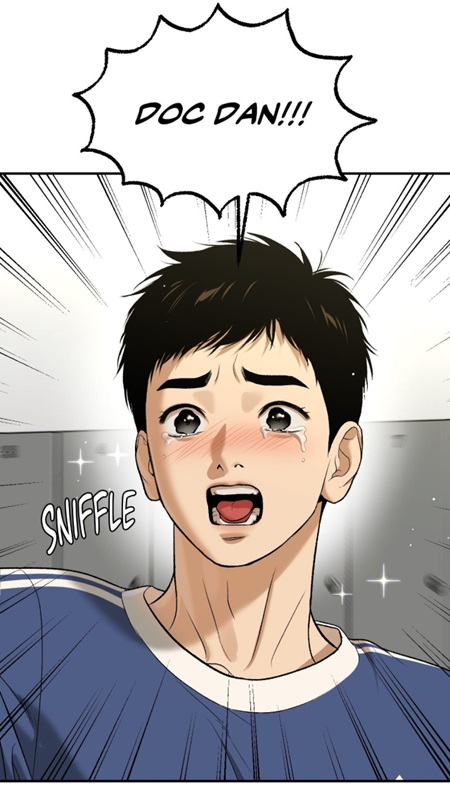 (chapter 78) This delay suggests a split loyalty: while the team is already celebrating, Potato is likely still tied to Heesung, perhaps even speaking to him on the phone. His tardiness betrays how his heart is pulled in two directions — caught between the actor’s orbit and the gym’s renewed center around Dan. Yet the embrace of the fighter, and his tearful reaction at seeing Dan again, show that his real place lies with Team Black. (chapter 78) The return of Dan shifts Potato’s focus: he no longer has to trail after Heesung, but can make his hyung and his own career a priority once more.
And here lies the seed of conflict. In chapter 59, 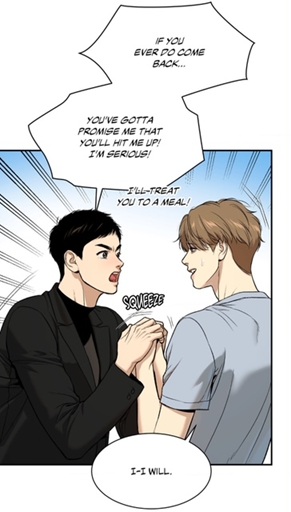 (chapter 59) Potato had made a promise to treat Dan to a meal if he ever returned, squeezing his hand with the sincerity of a puppy. That promise, innocent as it seemed, carried a hidden trap: in Korea, such “treats” almost always involve alcohol. And he could try to recreate the party on the coast. Potato, unaware of Dan’s medical restrictions, may offer him exactly what he must refuse. Only Jaekyung knows the truth of Dan’s fragile health; only he can act as his shield against such misplaced affection. Secondly, Potato possesses pictures of the puppies
  (chapter 60), which he took on the day one of them died!
What makes this tension more explosive is the role of Heesung. He alone knows that Jaekyung resorted to drinking after Dan’s departure 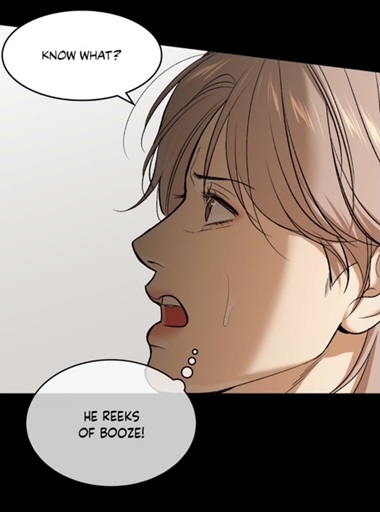 (chapter 58), and his presence ties alcohol directly to the champion’s vulnerability. At the same time, Potato’s loyalty is beginning to shift. He once orbited Heesung like a hidden lover, but Dan’s return rekindles his attachment to the gym and as such will affect his relationship with the gumiho. (chapter 78) The “puppy” now prefers Dan’s company at the gym to the actor’s beck and call. The small seaside party that once united them may become the fault line that divides them: an invitation, a bottle of soju, a clash between past habits and new priorities. For Jaekyung, it will be the ultimate test — not whether he attends the party, but whether he transforms it into something different, a celebration without alcohol, a ritual of care rather than destruction. As you can see, I am expecting the return of the fox Heesung.
And yet, even beyond the noisy welcomes and the hidden seaside gatherings, the theme of absence reaches into the most intimate farewells. When Dan prepares to leave the hospice, he leans toward his grandmother, seeking an embrace, a moment of warmth that could ease the separation. 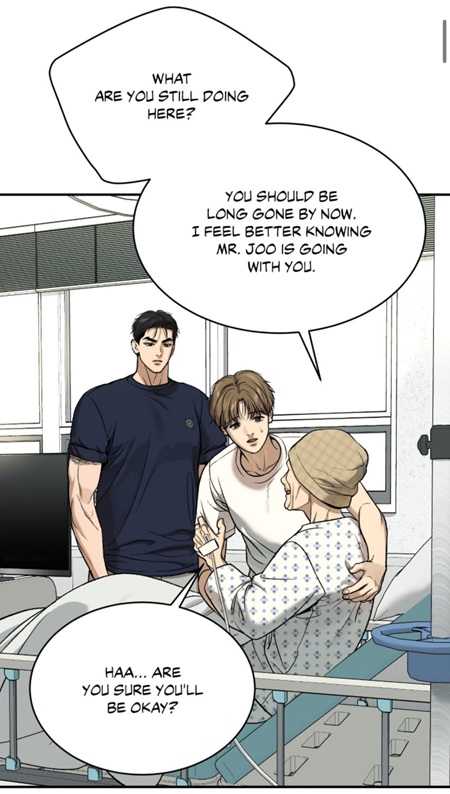 (chapter 78) But she does not return the gesture, as she might believe that he is just holding her straight. Her arms remain still, her body heavy with silence. Instead she talks, urging her grandson to leave the place as quickly as possible. So she doesn’t enjoy this moment. What should have been a small celebration of love — a hug of recognition, a party for two — dissolves into emptiness. Halmoni, who had always claimed to be his anchor, fails to give him the ritual of belonging he craves. The one gesture that could have affirmed their bond is withheld, turning tenderness into yet another missed ceremony.
Hwang Byungchul mirrors this failure in his own way. 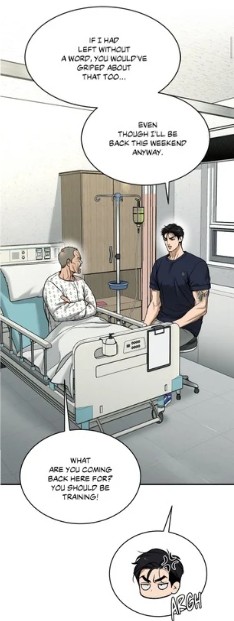 (chapter 78) Sitting stiffly in his hospital bed, he waves away any possibility of affection. His body language, arms crossed, his words reduced to commands about training, erase the emotional bond that might have connected him to Jaekyung. Where halmoni’s silence is passive, Byungchul’s is active — he refuses intimacy, replacing it with obligation. For both figures, farewell becomes an empty form, stripped of the recognition that makes partings bearable. In these moments, the absence of a hug, the denial of tenderness, is more devastating than the loudest rejection. It is a party that never begins, a rite of passage left unspoken.
This is crucial, because in Korean culture, embraces are rare, and when they occur, they carry profound weight. To hug someone is to cross into genuine intimacy, to declare loyalty and affection without words. The absence of such a gesture from halmoni and the director therefore marks not just emotional distance but outright exclusion. They cannot — or will not — celebrate Dan or Jaekyung as individuals worthy of deep affection. they only know pity, pride or annoyance. Their failure underlines the story’s central rhythm: the rituals that should affirm identity are constantly missed, postponed, or corrupted.
Placed against these failures, the quiet “parties” between Jaekyung and Dan acquire even greater weight. A home-cooked meal,
 (chapter 22)
  (chapter 13) a breakfast in silence
 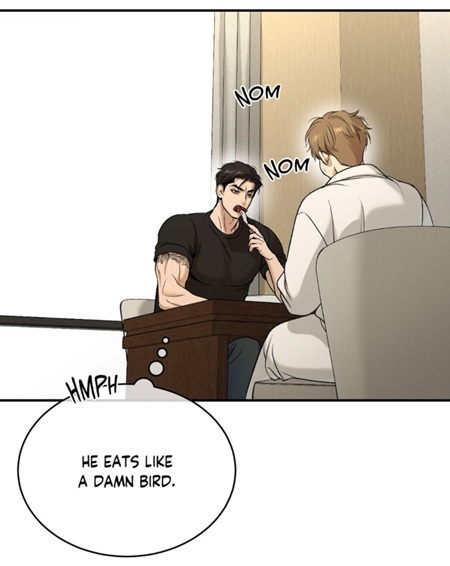 (chapter 68), the embraces in the dark
 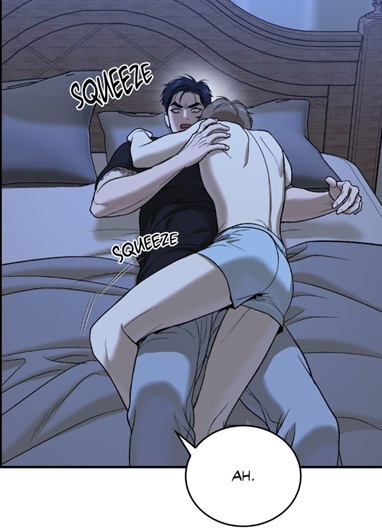 (chapter 66) (the wordless recognition of suffering) — these become the true celebrations of Jinx. They lack alcohol, noise, or spectacle, but they carry sincerity. They reveal that belonging can be built not through grand gestures but through repetition, through the transformation of fleeting kindness into ritual. This implies the existence of conscious and choice. And yet, these moments remain fragile. After their return to the penthouse, there is no shared meal, no laughter, only nostalgia and sadness.
 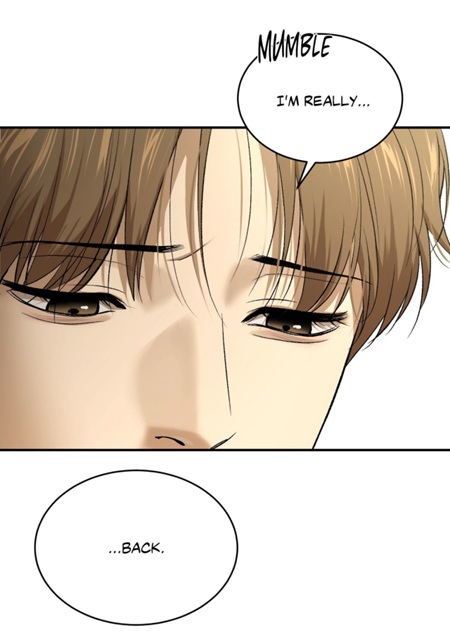 (chapter 78) Even Jaekyung is troubled by the reminder that Dan’s stay is temporary, as if the very walls of the penthouse resist turning into a home.
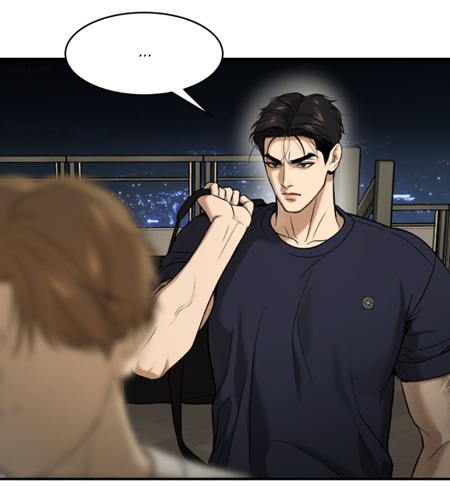 (chapter 78) In other words, the wolf’s task is no longer to win battles in the ring but to protect these fragile celebrations — to make Dan feel at home, to turn missed hugs into embraces, missed parties into warm meals, missed gestures into habits of care. Only then can the cycle of exclusion be broken. Only then can “The Missed Party” become, at last, a real one.
Conclusion
Both protagonists are marked by missed celebrations. Dan’s life has been a chain of exclusions: fired without farewell, blamed without defense, departing without closure. Even in death — (if we include the theory of his parents’ vanishing), the puppy’s burial — rituals of belonging were denied. Jaekyung, for his part, wins victories without feasts, carrying glory without intimacy.
The fighters and nurses offer illusory parties, mistaking noise for recognition, affection for change. But the true parties are elsewhere: in the puppies’ joyous run, in the hidden rituals of wolf and hamster [the embrace,  (chapter 68), the shared meal (chapter 68) and in the landlord’s quiet kindness
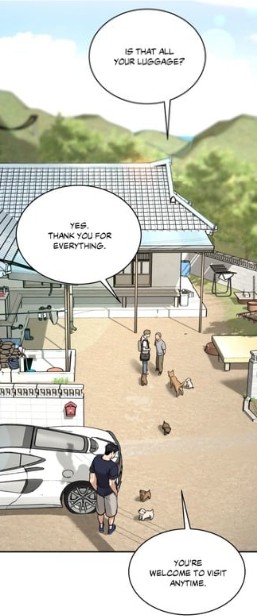 (chapter 78). For me, it is no coincidence that the senior followed them to the street and waved at them!
 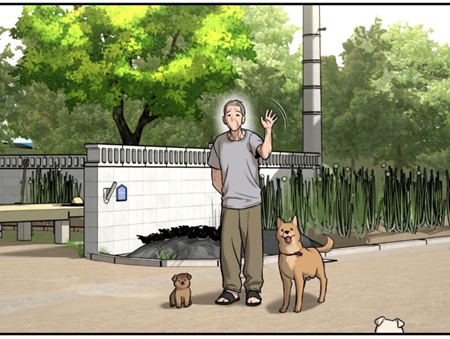 (chapter 78) He expressed not only his genuine feelings, but also his longing: he hoped to see them soon. He had come to appreciate their presence which is not related to their work. The Missed Party becomes not a single absence, but the haunting rhythm of the entire narrative: recognition always arriving too late, always seen by the wrong eyes. And perhaps the story’s promise lies here — that one day, the real party will finally be held, not in karaoke bars or gym halls, but in the unbreakable bond of two men who learn what true friendship and belonging mean. This means, the more the champion and his fated partner develop new routines, the more it will affect the gym and as such Park Namwook, which can only feel more and more excluded.
PS: If in the next chapter, the night continues, then I can’t shake the feeling that Joo Jaekyung might pat doc Dan’s head and not yank his hair, like he announced it. 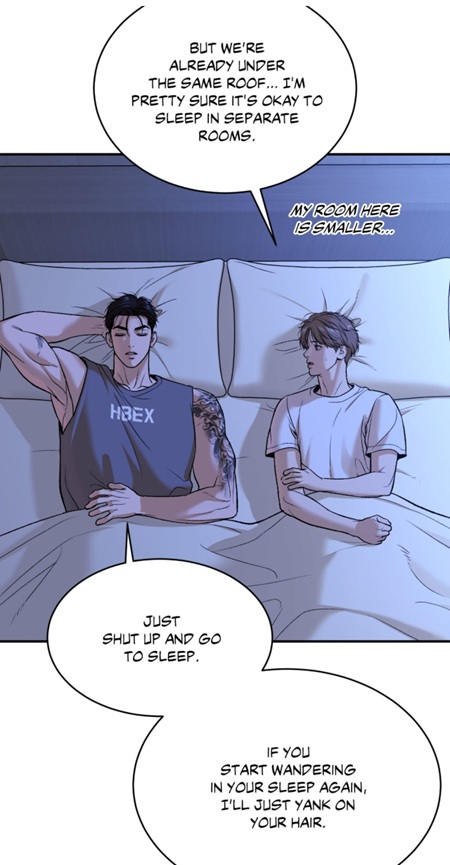 (chapter 78)
Feel free to comment. If you have any suggestion for topics or Manhwa, feel free to ask. If you enjoyed reading it, retweet it or push the button like. My Reddit-Instagram-Twitter-Tumblr account is: @bebebisous33. Thanks for reading and for the support, particularly, I would like to thank all the new followers and people recommending my blog.
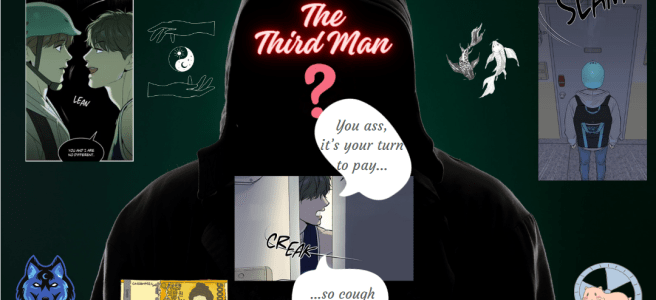

 (chapter 35) And this pigment corresponds to the mixture of yellow and pink which are the colors embodying Yoon-Gu and Heesung. Interesting is that the artist and the fighter were not alone. There was a third person, when Potato chose to accept the invitation from the celebrity, Kwak Junbeom.
  (chapter 35) Nevertheless, the witness didn’t notice the seduction from the artist, for he was sleeping due to the influence of the soju!! Thus Potato’s first sexual experience remained a secret. Yes, in this scene, Jinx-Philes can detect the similarities between 35 and 42. It is about sex, “attachment”, wrongdoing and secret. Potato employed the expression “There’s nothing wrong to…”. In addition, Yoon-Gu is still treated as a child by the fighters and Kim Dan, so such a suggestion could appear as scandalous. Interesting, is that no one noticed the sudden offer from Heesung, though they were in a public place. The owner of the food truck was not paying attention to them, as she was busy. Oh Daehyun had vanished, as he was not feeling well.
  (chapter 35) That’s why this remained a secret. But more importantly, there was a discussion between the maknae and the actor about love.
 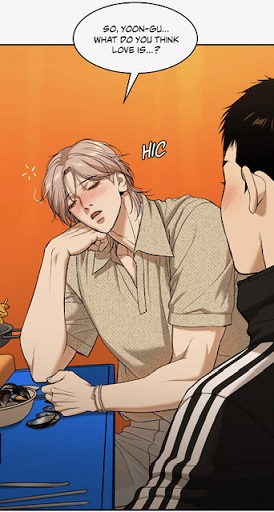 (chapter 35) Funny is that when Potato expressed his admiration and reverence for the protagonists,
  (chapter 35), he yelled. Though he looked angry, he was not.
  (chapter 35) He was acting under the influence of his strong emotions and principles. As you can see, the discussion between Potato and Heesung was totally different from the one in episode 42. The gumiho and the chow chow came to the same agreement: accept not to be special for the protagonists, but to hold no grudge because of the rejection.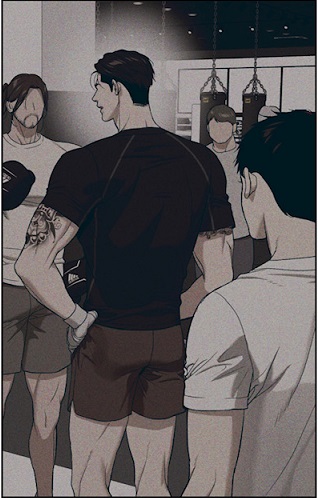
 (chapter 35) Consequently, the moment you contrast Yoon-Gu’s declaration of unconditional adoration
 (chapter 42) Manhwaworms can only jump to the following conclusion. Chapter 42 represents the negative version of the seduction scene in chapter 35. While readers were overjoyed while reading episode 35, they only felt repulsion in front of chapter 42. In the introduction, I mentioned the importance of the numbers. 35 and 42 are similar structured, for one number is missing each time: 4 and 3. Hence chapter 42 share some parallels with episodes 33 and 34 which I will explain further below. At the threshold, the green-haired guy voiced the exact opposite for the main leads: his disdain, jealousy and hatred towards them. He was scaring off the doctor. We have persuasion, comfort, modesty and purity versus discouragement, regret, greed and corruption.
 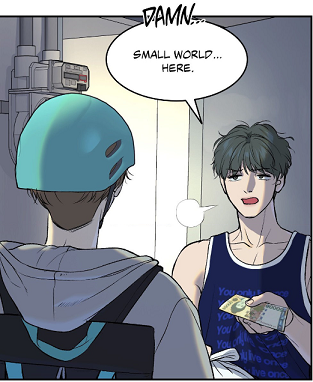 (chapter 35) Furthermore, the room seems to have similar shades. Because the green-haired man is wearing a blue shirt and the author portrayed him in black and green
 (chapter 42) contrasts to this one:
  (chapter 41) civilization, anger, night versus nature, calmness and day. In order to create money, trees need to be sawn. The grape and insects on the bill are fake. Hence I come to the following deduction that this mysterious person is only interested in money too. For this faceless person, money is the symbol of power and life. And now, you comprehend why this person didn’t offer to pay the dinner on his own
  (chapter 42) contrary to the doctor:
 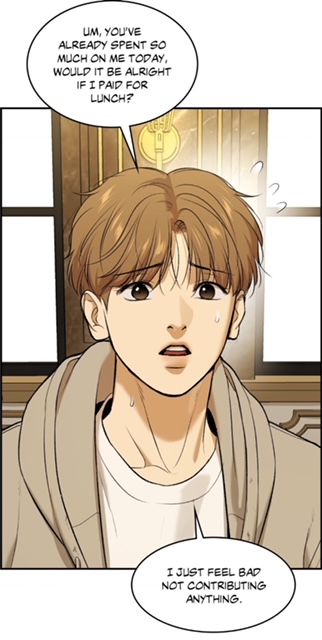 (chapter 32). The third man embodies avidity, selfishness, but also calculations and frugality. The goblin and his companion didn’t order an expensive dish, as it only cost 40.000 KRW. 😉 50.000 KRW – 10.000 KRW
  (chapter 32) Simultaneously, it exposes Kim Dan’s selflessness and thoughtlessness. He is bad at calculating and saving money.
  (chapter 42) Under this new light, it becomes comprehensible why I perceive this third man as the opposite of Kim Dan, notwithstanding sharing the same color. This signifies that the shadow is exactly like the green-haired uke: envious, greedy and stingy. Both appear as cheap. Because the goblin insulted him (“ass”, in Korean “Bastard/Asshole” and in Spanish “son of a bitch”), it becomes clear that these two are close, in the sense that they belong to the same social class. One might say that they are equal, but because the goblin badmouthed the other, their equity is just superficial. The green-haired uke looks down on the other. Since the goblin didn’t hide his bad mood in front of the other, I assume that they are both roommates. On the other hand, it is palpable that they are not affectionate towards each other. The goblin has no problem to voice his irritability in front of his “companion”. That’s how I deduce that both are united by the same desire: earn money on a quick and easy way. They are both using each other. I view them as “parasites” in the end. Since the goblin had no problem to expose his true thoughts at the door step
 (chapter 42) The latter are getting closer to each other, taking care of each other. The breakfasts have become an important moment for them, where they share their thoughts and can make jokes. Hence the late snack in the small flat embodies the opposite: frustration and disregard. Thus in my eyes, the goblin and his “partner” are not interested in each other, because both are in a similar situation. They are not rich. Thus my idea is that the green-haired man hadn’t exposed to his roommate that he had been the champion’s lover in the past and the latter had beaten him. In my eyes, this revelation was new to the third man. How so?

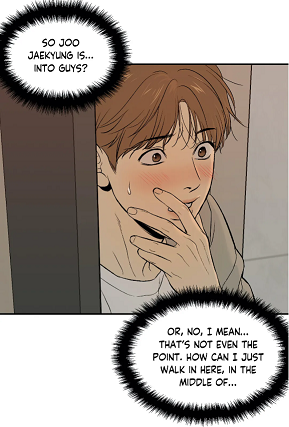
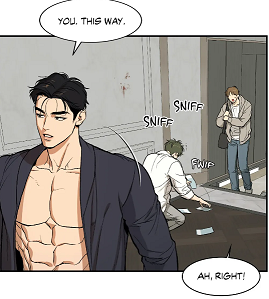





 (chapter 42) Moreover, the latter has no idea that Kim Dan is a physical therapist and even living with the main lead. And this brings me to the following observation. The goblin and his roommate imagined to see through Kim Dan and they are anticipating the delivery man’s next actions. How so?
 (chapter 13) But homosexuality is also a taboo among MMA fighters. That’s the reason why I can not tell exactly the content for the next uproar. Yet, I noticed another common denominator between these chapters: the cell phone!! And one person was ignorant of the situation.
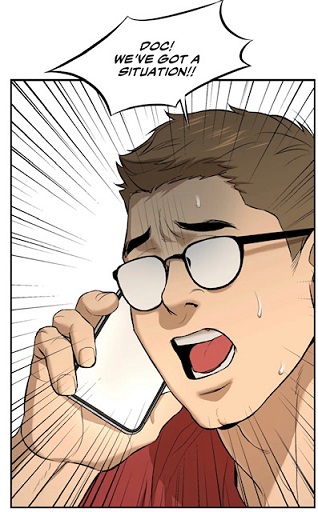 (chapter 13)
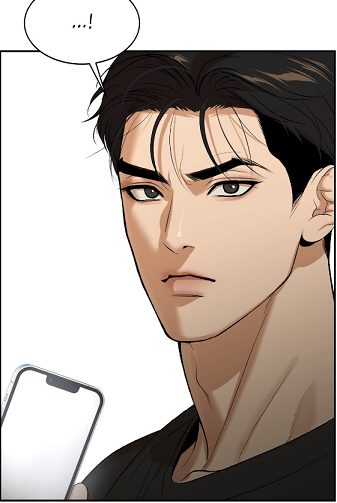 (chapter 33)(according to me, the mysterious doctor), when he caught the actor and his manager exposing the truth.
 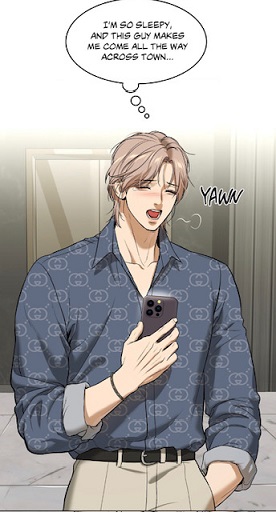 The item was used for a nightly invitation, more precisely for a confrontation.
 (chapter 35) Yes, the color is also green.
 (chapter 35) And we could consider this scene as a reflection of episode 42 too. How so? The third person in this scene are the netizens reading the article. Why did the reporter contact him through the cell phone? It is because he can not face him out of fear to get punched! He is hiding his face behind the media and the public. This journalist is totally different from these reporters:
  (chapter 37)
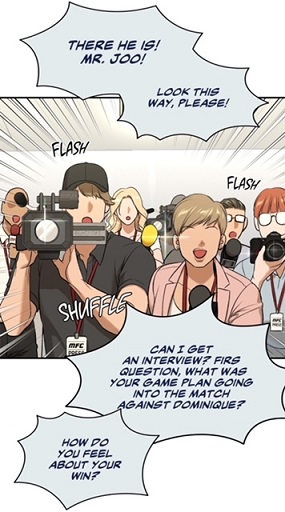 (chapter 40) The former is a hunter looking for blood, a huge scoop to destroy a champion. He is throwing over board social norms and morality. Since the bill of 50.000 KWR is embodying him, it reinforces my theory that the third man is a scholar, but a „fake“ one. And the moment you accept this idea, you will understand why I said that the green-haired man would receive his retribution. I have the feeling that he could get beaten. Imagine that the third man has the champion’s cellphone number. He could call Joo Jaekyung and inform him about the conversation in the hallway. He was insulted by his ex- sex partner. He could also try to blackmail the celebrity. If he doesn’t pay, then he will expose the “truth”. Naturally, he could hide behind the green-haired man. It is also possible that the goblin gets manipulated by the faceless man in the shadow. I am quite certain that the goblin will be caught in a scandal, and he will have to take the fall, betrayed by his roommate.
 (chapter 33)
  (chapter 33) Interesting is that the scenery from the first image reminded me of the district where Kim Dan was working as a courier.
  (chapter 35) But why? Here, I can only speculate. It is related to Heesung and the Entertainment agency. Don’t forget that Heesung had asked his manager to keep his trick a secret
  (chapter 34) In other words, I am suspecting the involvement of the champion’s agent. The latter could have let transpire to the tabloid journalist that there was some tension between these two. However, nothing happened between Heesung and Joo Jaekyung after the ride.
  (chapter 33) Is it a coincidence that the author employed green in this scene? I have already demonstrated that the agent from the Entertainment company was involved in the conspiracy. Under this new light, you comprehend why I am suspecting a scandal during the birthday charity event. Many people will be present and all the lights will be directed at the star. By causing a scandal, the journalist would get noticed and even “glorified” as the hero denunciating “corruption and perversion”, whereas in reality it is the opposite. Like mentioned above, I can not totally predict his moves.
 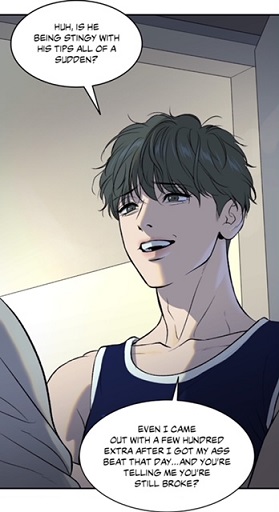 (chapter 42) and the physical therapist as victims. The man could even go so far to recreate the incident from episode 2. Let’s not forget that Park Namwook has the tendency to condemn Joo Jaekyung for any “wrongdoing” and he saw the main lead with bruises.
 (chapter 11) Moreover, the star felt the need to punch someone after hearing the words from netizens.
 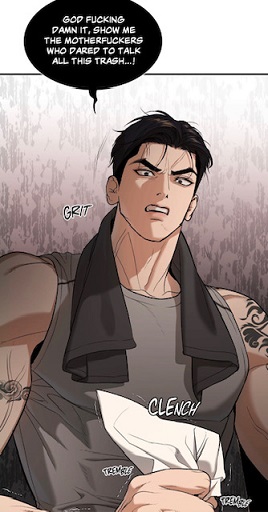 (chapter 36) And if Heo Manwook was involved in the conspiracy for the last match, he could see this new discovery as the perfect revenge. The champion is in reality a trash, a criminal! That would be the perfect revenge… He can not present himself as a victim contrary to the others. And that’s how Cheolmin would be forced to resurface.
  (chapter 13) So technically, he could have treated the green-haired man after that altercation. Finally, when Kim Dan went to the hospital in chapter 18
 (chapter 18) , Joo Jaekyung had an appointment there. So this treatment could be brought up. Moreover, I would like to point out that in chapter 13, Kim Dan never detected the presence and intervention of a doctor. It was the same in chapter 34/35, Kim Dan never caught and identified the presence of the third person.
 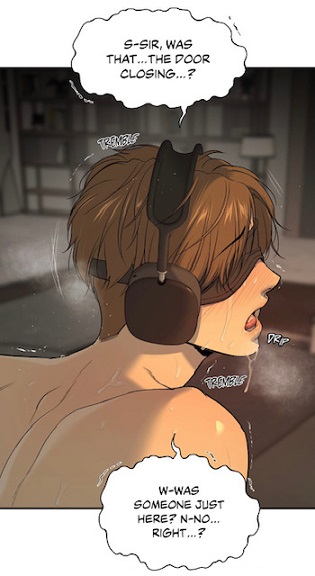 (chapter 35) That’s how I recognized that none of the spies were “caught” or identified. Chapter 42 represents no exception, hence the third man feels safe.
 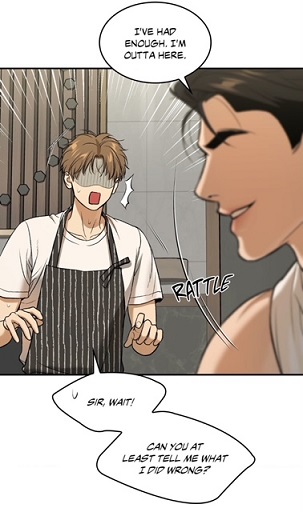 (chapter 41) Hence I conclude that the green-haired guy and his roommate don’t care for each other. So while the readers are about to witness the rising of the physical therapist, I am expecting the opposite for this dangerous couple. They could destroy each other.
  (chapter 37) could be Shim Yoon-Seok! How so? If the trick with the drug had worked, he would have been present to expose the scandal in South Korea. This scene is also quite similar to the one with 3 men, a room and a door, especially since Oh Daehyun and the others were in a different room.
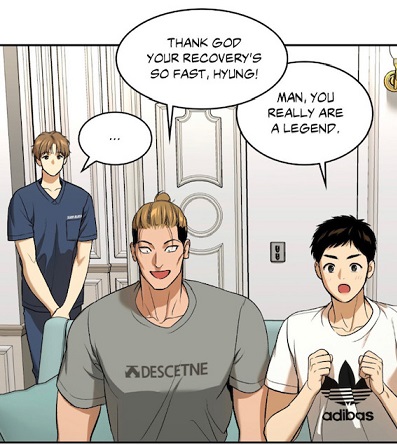 (Chapter 37), while Kim Dan faced the man in black. Besides, the interaction between the sportsman and the tabloid reporter
  (Chapter 35) resembles a lot to the one between Kim Dan and the unknown man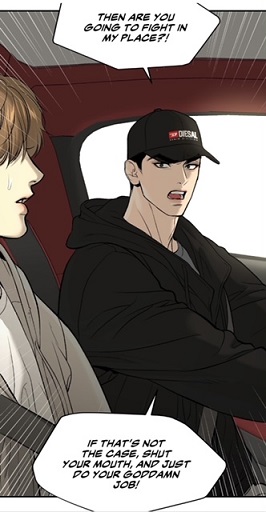
 (Chapter 42) Since the athlete‘s shoulder was already in bad shape, the former physical therapist might have proposed pain killers, but the star refused. Because the doctor considered himself as superior, he came to look down on Joo Jaekyung and chose to ruin his reputation so that the latter ended up having a novice, someone with no experience!
 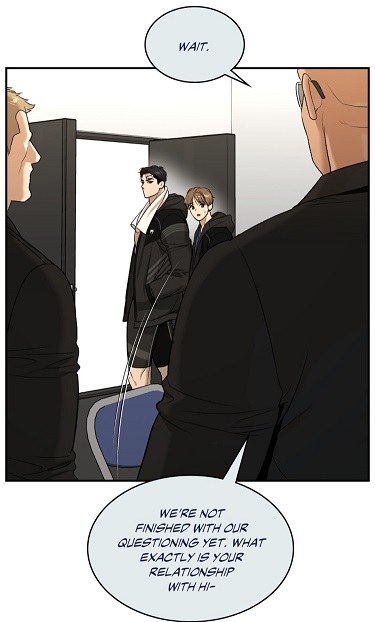 (Chapter 40) And his ambiguous reply
  (Chapter 40) could lead the third man to assume that Joo Jaekyung is a hypocrite. He hid the prostitute as a member of Team Black. Once back to South Korea, he had no longer use of him! And that‘s how he got forced to „work“ as courier. Team Black could be suspected of being a cover for prostitution… especially when Heesung‘s relationship with Yoon-Gu is discovered. But appearances can be deceiving, as neither the green-haired uke nor his roommate are aware that the main lead is a physical therapist living with the celebrity. And this brings me to my final thought: since the Webtoonist created such a mystery behind the reporter and the third man, it becomes clear why Kim Dan‘s status is ambiguous as well. His nemesis is a shadow and so is the doctor! Both are working behind the scenes, yet at some point both will be pushed to reveal their face and identity. Whereas one will shine, the other can only fall into the abyss, like his name is indicating it.
  Bebebisous33s' analyses in K-Dramaland and Manhwas