

Please support the authors by reading Manhwas on the official websites. This is where you can read the Manhwa: Jinx But be aware that the Manhwa is a mature Yaoi, which means, it is about homosexuality with explicit scenes. Here is the link of the table of contents about Jinx. Here is the link where you can find the table of contents of analyzed Manhwas. Here are the links, if you are interested in the first work from Mingwa, BJ Alex, and the 2 previous essays about Jinx After All, Before It’s Too Late and I Love You
It would be great if you could make some donations/sponsoring: Ko-fi.com/bebebisous33 That way, you can support me with “coffee” so that I have the energy to keep examining Manhwas. Besides, I need to cover up the expenses for this blog.

The Wolf Before the Mirror
After episode 75, many readers felt they finally understood Joo Jaekyung. He spoke of his routines — the glass of milk 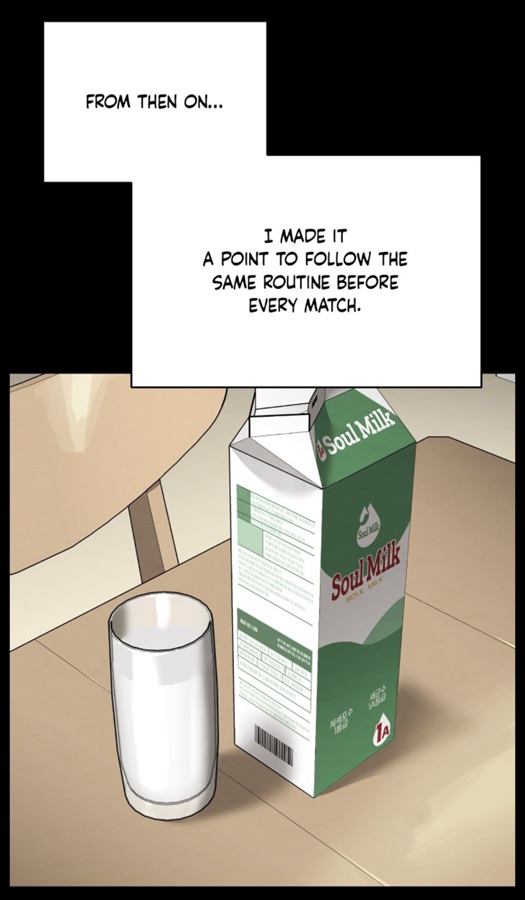 (chapter 75), the perfume
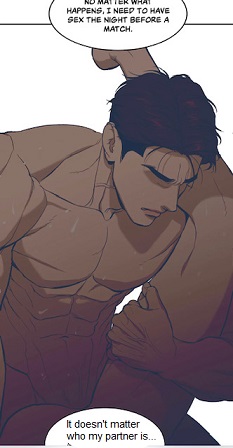
  (chapter 75), the nights of sex before a fight
  (chapter 75). His words seemed like a confession, a key to the riddle of the Night Emperor. But do we truly know him now? Yes and no. Yes, because his testimony reveals patterns we had only noticed before. No, because those patterns are only the ones he decided to share. The tattoos
 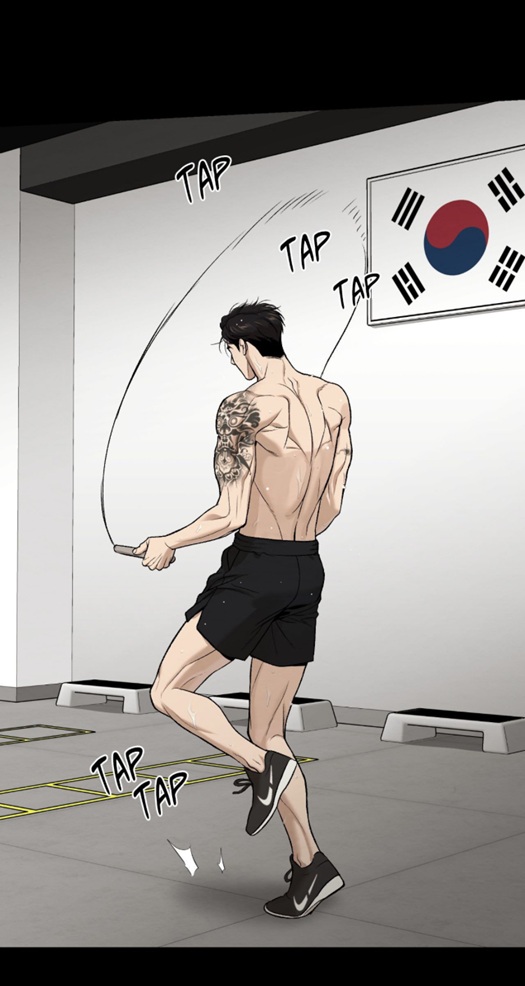 chapter 75) that suddenly appeared on his body
 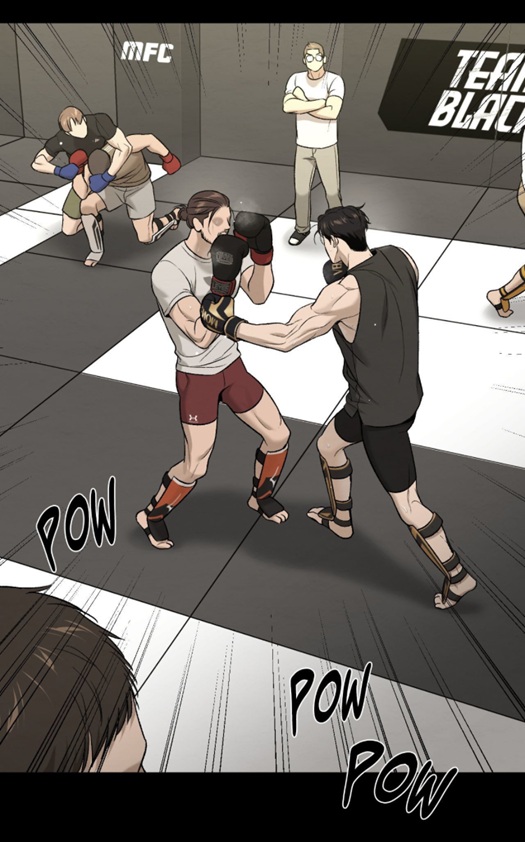 (chapter 75), for example, were left unmentioned — proof that silence still surrounds him.
And that silence is the heart of the mystery. Why cling to such gestures at all? 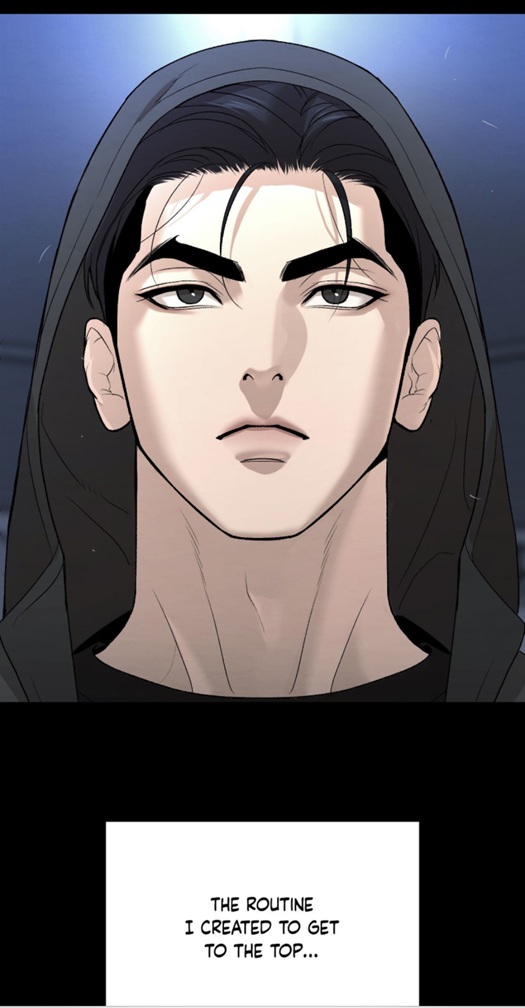 (chapter 75) Why fight as though every match were a matter of life and death? Why keep repeating the same acts, long after survival was secured?
  (chapter 75) What does the jinx truly represent for him — mere superstition, a ritual of control, or something he himself has not yet dared to name? For Jaekyung himself cannot fully explain it. He confesses what he knows — that sex steadies him, that milk soothes him, that perfume sharpens him — but he does not grasp what lies beneath these habits. The origin of the jinx remains hidden, lodged somewhere between memory and trauma, where even he cannot follow. Are these rituals mere superstition, a desperate bid for control? Or are they fragments of something deeper — pieces of a story he has never fully told, even to himself?
This essay does not claim to solve the riddle once and for all. Instead, it traces the wolf’s path step by step: the seed of the jinx in childhood loss, its growth through training and systems, its mask as professional myth, its collapse in illness and insomnia, and the counterforce embodied by Kim Dan — the tender mirror that reflects what Jaekyung has never faced.
The wolf has spoken, but his words only open new questions. To read them closely is not to find closure, but to stand at the edge of the mirror and ask: what truth still hides behind the jinx?
The Birth of the Jinx: From Loser to Survivor
The origins of Joo Jaekyung’s “jinx” cannot be reduced to a single event or ritual  .(chapter 75) They are the product of a long chain of humiliations, betrayals, and systemic exploitation, each layering onto the next until a young man’s raw talent was encased in a carapace of compulsions. To understand the jinx is to understand how the protagonist’s life collapsed around the word loser, and how the fighting industry transformed his private shame into public myth.
From the beginning, Jaekyung’s relationship to combat was not framed as “sport” or “discipline” but as survival. 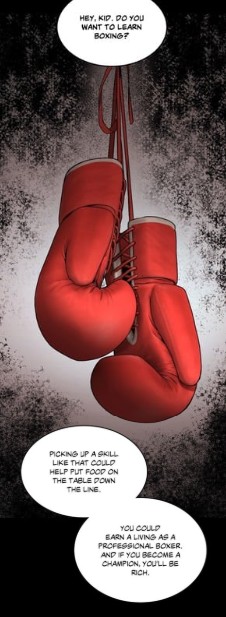 (chapter 72) Even before stepping into a professional cage, his life had been a series of trials to prove he was not worthless.
  (chapter 74) Hunger, poverty, bullying, insults— each branded his body with a language of violence. Among them came his father’s words, spat like a curse: loser.
 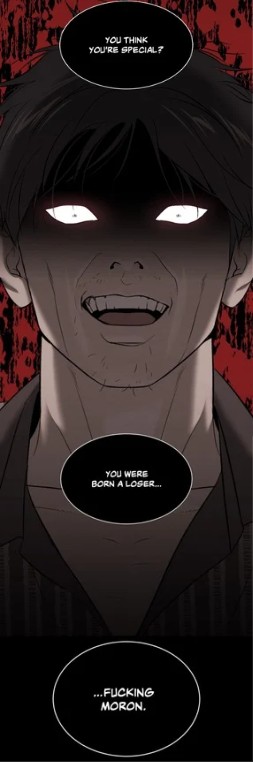 (chapter 73) That insult crystallized everything. The young boy absorbed it as truth, so much so that every later fight would be less about victory and more about silencing that single syllable.
 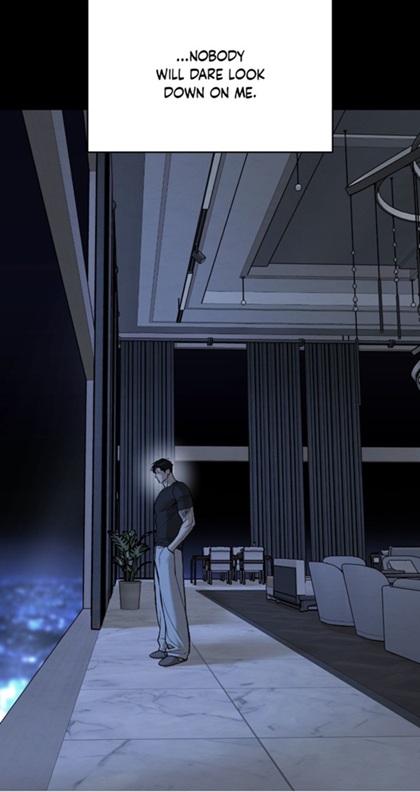 (chapter 75)
To conclude, the origins of Joo Jaekyung’s jinx lie in the place where private wounds and public exploitation overlap. It was never simply a superstition, nor only the accumulation of personal rituals. It was born in the crucible of insult, abandonment, and systemic betrayal, until it hardened into a second skin. To grasp the weight of the jinx, one must trace its seed in his childhood, its growth in the system that exploited him, and its crisis in the moment when he first admitted: I can’t take it anymore (chapter 69)
The Five Losses
At first, Joo Jaekyung’s rise seemed unstoppable. He was young, raw, and hungry 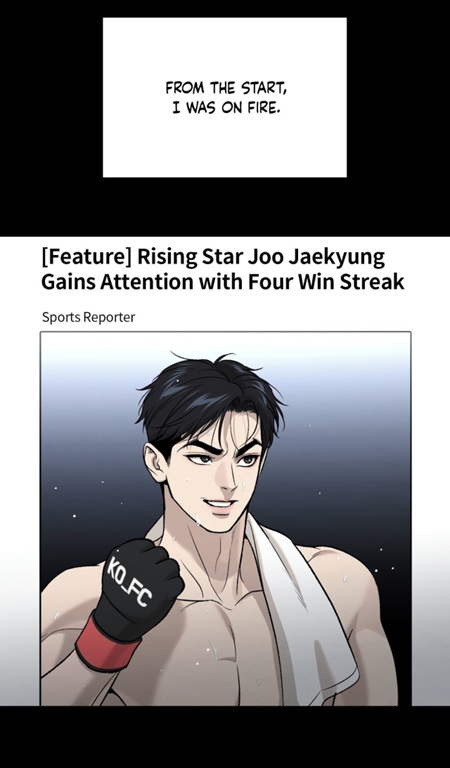 (chapter 75) — a boy who fought with the desperation of someone who had nothing else. Victory after victory gave him the illusion that he had escaped his father’s shadow. As long as he was winning, he could suppress the pain, bury the insult loser, and silence the memory of that cursed night when his father died and his mother abandoned him. Triumph became his shield, proof that he was not what he had said he was.
But then came the first defeat.  (chapter 75)
For most athletes, a loss is a bruise, a chance to recalibrate. For Jaekyung, it was a collapse, That first loss did not just wound his pride — it broke the fragile wall he had built against his past. With the referee’s decision, the ghosts returned. Memories he had forced into silence came rushing back: his father’s drunken rages, the contempt in his voice, the silence of the house after the funeral, the absence of the mother who should have stayed.
Yet the people around him could not see any of this.  (chapter 75) To them, a fighter’s struggles had only one explanation: weakness. Park Namwook and the other coach dismissed his losses as nerves
  (chapter 75), as if the only measure of worth were what happened under the spotlight. They never thought to ask what kind of weight he was carrying, what kind of nights he was surviving before he entered the cage. While the other fighters were well aware of the champion’s insomnia
 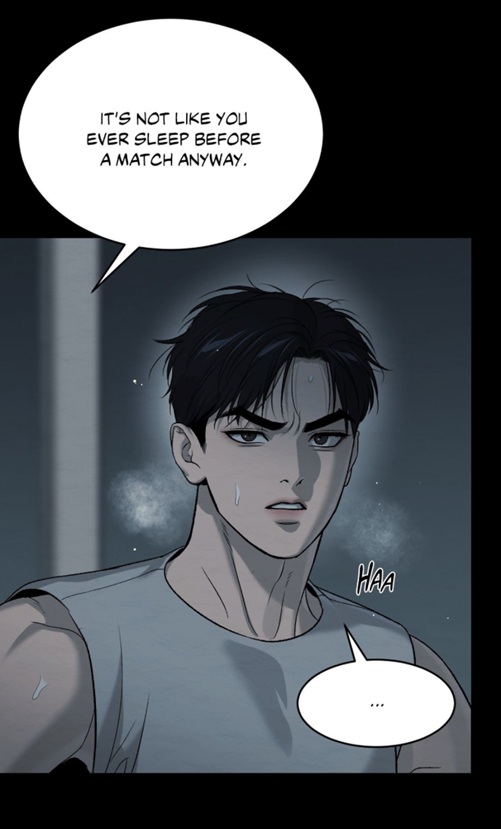 (chapter 75), Park Namwook still has no idea of the champion’s struggles. This shows how disconnected he is from his “boy”.
For the coaches, fighters were not human beings with inner lives. They were “fresh meat,”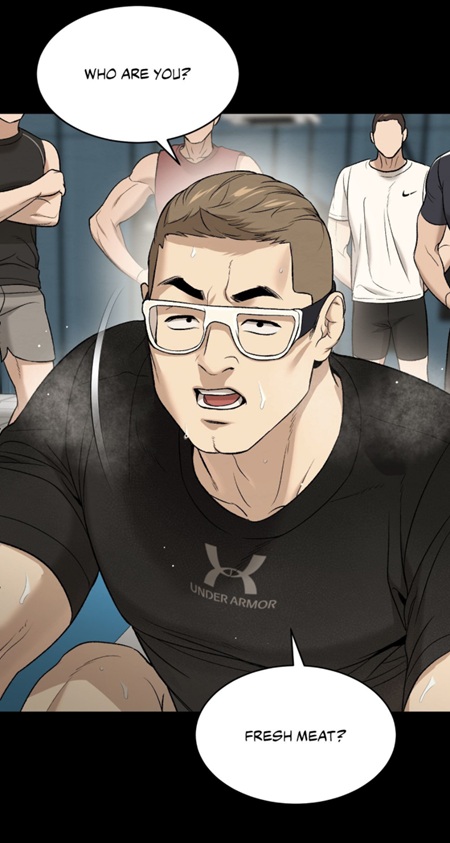 (chapter 74) bodies to be tested, pushed, and discarded if they broke. Where Jaekyung’s defeat cracked open childhood trauma, they saw only performance failure. What he lived as suffocation and despair
 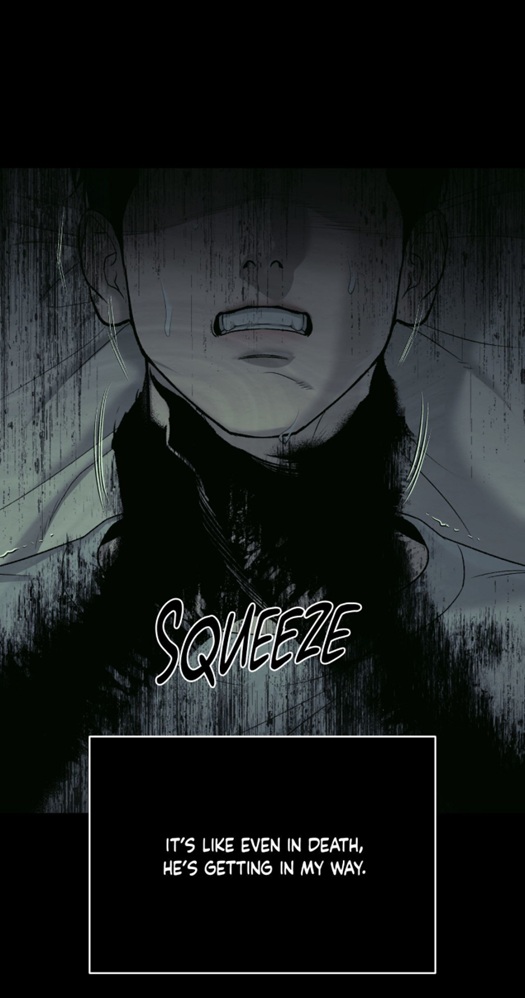 (chapter 75), they reduced to cowardice, bad luck or lack of discipline.
It was after that first defeat that the nightmares began. On the eve of every major fight, his father returned in dreams — not as comfort, but as terror. 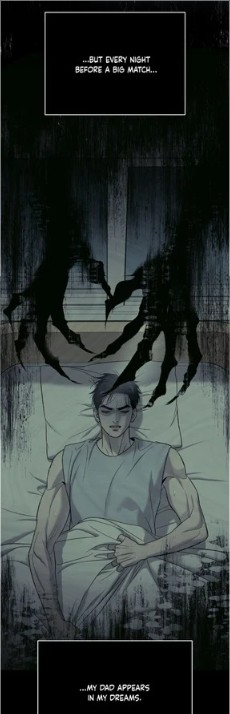 (chapter 75) Shadowed hands stretched over his body, pressing down, suffocating him as he tried to sleep. The man was dead, but still he choked the air from his son. It was, as if the father wanted to bring his son to the afterlife.
In truth, every match had always been a battle for survival. 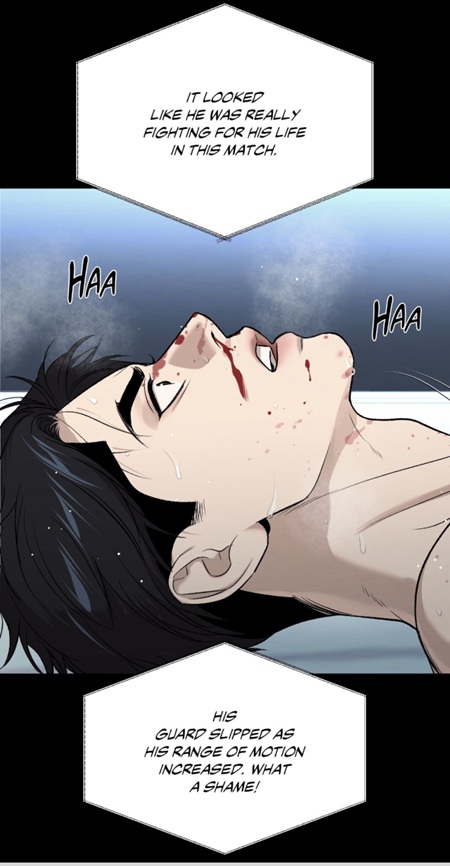 (chapter 75) Even before his first loss, Jaekyung fought like a cornered animal, pouring every ounce of strength into proving he could not be beaten. That’s why he rose so fast. But why? The reason is that all his opponents were reflections of his “father”.
  (chapter 29) Hence all the challengers have empty eyes and a smirk on their face, just like Joo Jaewoong.
  (chapter 75) Consequently, his matches always looked like life-and-death struggles. He wasn’t strategizing against a specific fighter; he was exorcising a ghost. That’s why he never refused a challenge. His opponent never mattered. Besides, as long as he could win, it didn’t matter.
But after his first defeat, that survival style began to falter. The stronger his opponents became  (chapter 75), the more the cracks showed — and the ghosts of his father and mother made every fight feel like a replay of abandonment and accusation. The five losses
  (chapter 75) were not just setbacks in his career; they were the repeated reopening of a wound that would never heal. Each one confirmed his father’s curse. Each one reinforced the sense that he was marked, that no matter how high he climbed, he would always be dragged down again.
This is why insomnia became his constant companion. Victories silenced the ghosts temporarily, but the fear of defeat meant he could never rest. (chapter 29) Sleep was dangerous. Night itself was dangerous. To close his eyes was to risk drowning again in his father’s shadow.
The “jinx” was born here, in the space between triumph and terror. Losses triggered his past, victories gave only temporary relief, and the cycle of sleeplessness carved itself into his body. It was not just that he lost five matches — it was that in losing, he discovered he could never truly escape. (chapter 75)
Defeat for Jaekyung was never contained to the ring. It spilled outward, contaminating his sense of self. With no supportive network to reframe failure as growth, he internalized it as destiny. At this point the soil of the jinx had been prepared: shame, hunger, and despair compacted into a single wound.
The Father’s Insult & the Mother’s Abandonment
If the five losses cracked Jaekyung’s present, the deeper fracture had already been carved years earlier — on the night of his father’s death. That final argument sealed itself into his soul like a curse.
The fight began when Jaekyung, cornered by frustration and anger, shouted his desire to leave “this dump of a house.”  (chapter 73) To the boy, it was a cry for pain and survival — an instinctive urge to escape despair and criticism. To the father, it was betrayal. Already emasculated by failure and drink, he was reminded of his wife’s discontent, the specter of another abandonment. He lashed out the only way he knew: (chapter 73)
That word — loser — became permanent. When the father died later that night, Jaekyung was left with two unbearable impressions: that his last words had cursed his father to die  (chapter 73), and that the man’s final judgment on him would never be undone. Love and hatred, longing and guilt fused in that moment. He loved his father despite the abuse. And yet he would forever wonder if leaving — even just threatening to leave — had killed him. Worse, because death came so suddenly, there was no time left.
 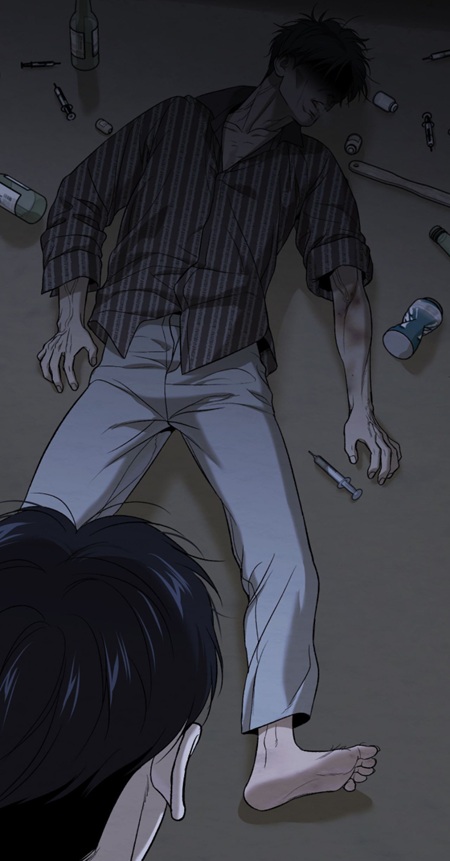 (chapter 73) The clock had stopped before forgiveness could be spoken, before the boy could say he had not meant it. From that moment on, time itself became his opponent: every match another countdown, every victory an attempt to outrun that night.
The nightmares that began after Jaekyung’s first professional loss are echoes of that night. In them, his father returns, shadowed hands stretching to choke the air from his chest. (chapter 75) The hands around his throat were not only the weight of guilt — the boy regretting words he could never take back. (chapter 75) They were also the expression of longing, the words his father had not spoken that day. Behind the insult ‘loser’ was the wound of a man deserted by his wife 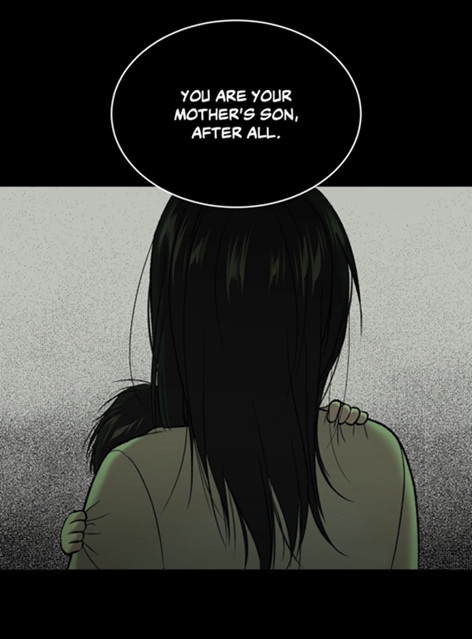 (chapter 73), unable to voice his own vulnerability. (chapter 75) In the dream, the silence became hands: both curse and plea, punishment and confession, suffocating the son who could never repair what had been broken. It was as if the father wanted to bring his son to the other side, yet beneath the violence was a plea: “Don’t abandon me, too.”
And here, the mirror appears. Dan unconsciously repeats the father’s gesture 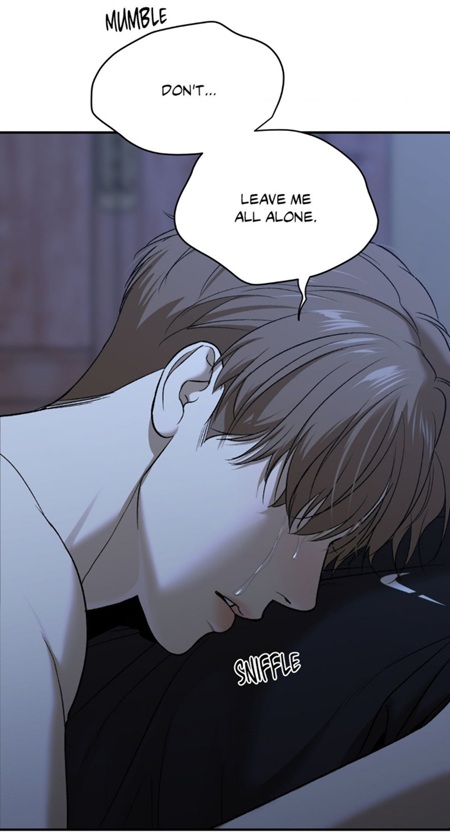 (chapter 66) — speaking not with fists or insults but with tears and an embrace.
  (chapter 66) His sleepwalking reacting to a simple touch
 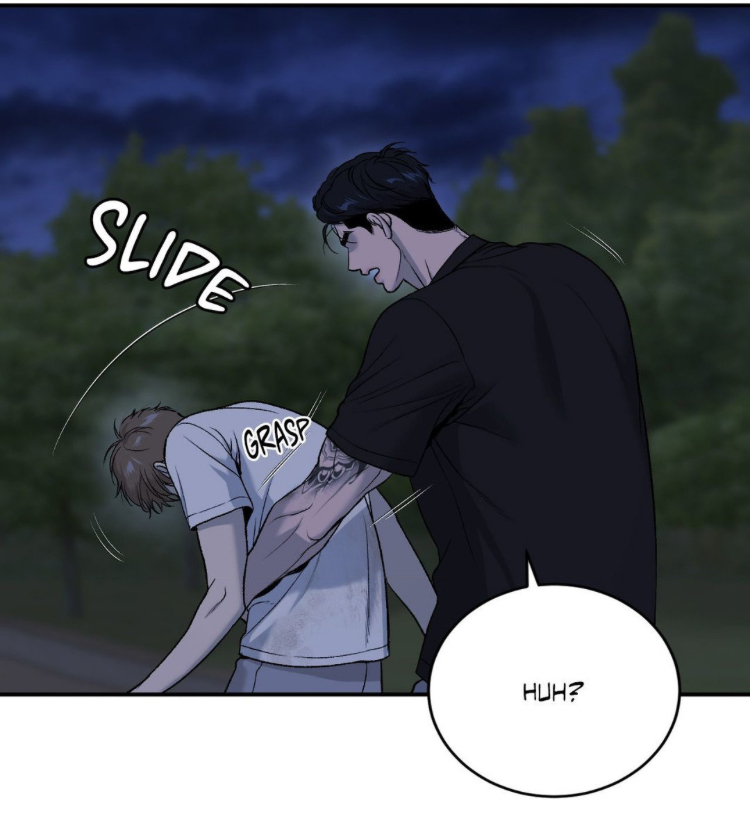 (chapter 65), his dissociative pleas
 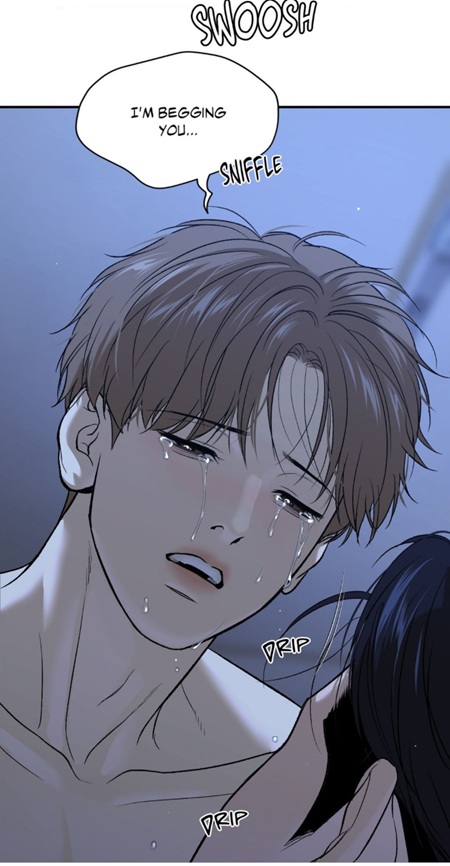 (chapter 66) give Jaekyung the words his father could not say. Where the father’s unconscious leaked out in aggression, Dan’s unconscious offers gentleness and honesty. Both men speak from a place deeper than reason; one chained Jaekyung to guilt, the other opens the possibility of release. In Dan’s trembling body, Jaekyung sees the tender reflection of his father’s hidden plea (chapter 66) — the same hands that once strangled him in nightmares now return as arms clutching him in desperation, not to kill him, but to keep him alive. Doc Dan’s whispers revealed that deep down, he desired to be saved and even taken. The father and the physical therapist both fear abandonment. That’s how it dawned on me why Joo Jaewoong chose to hide his vulnerability and resorted to violence and insult to mask his suffering and low self-esteem. Where are his parents in this story? Why was he obsessed to leave the place?
  (chapter 73) Why does the champion have no grand-parents?
If Joo Jaewoong was himself an orphan — or had effectively lived as one — then his life would have been marked by the same wounds that later haunted his son: abandonment, lack of recognition, and a hunger for belonging. But unlike Jaekyung, he never found a way to sublimate that pain into something lasting. His only outlet was boxing, a fragile refuge that collapsed once his career failed.  (chapter 74) With no parents, no siblings, and eventually no wife, he had nothing to fall back on and saw in the criminal world another form of “family”. The family he created became his one fragile shelter — and when that shelter cracked, there was nothing left to hold him.
This also explains why betrayal cut so deeply. If he had been orphaned once already, his worst nightmare was to be abandoned again. When his wife left, the nightmare returned in full force.  (chapter 72) His violence expressed his powerlessness. And when his son shouted his desire to leave the “dump of a house,” (chapter 73) he heard the same wound echoing. His response — calling his son a loser — was not really about boxing. It was about himself. In Jaekyung’s words he recognized his own instinct: the same drive to escape, to sever ties, to search for life elsewhere. His insult was not only an attack, but also a mirror, reflecting back the failure and desertion he had never overcome.
The tragedy is that he had no language for vulnerability. Where Kim Dan trembles and pleads openly, (chapter 66), the father could not. He had never been taught how to ask for help, how to voice fear, how to admit despair. Keep in mind how the little “hamster” was treated at school:  (chapter 57) Violence and insult became his only idiom. “Loser” was not simply an accusation, but the displaced confession of his own defeat: I was abandoned. I failed. I have nothing.
This is why he resented his son. Jaekyung mirrored him too closely.  (chapter 73) The boy’s boxing talent was a source of pride — proof of strength — but also a threat. Strength meant escape. Escape meant abandonment. The father, who had already lost his wife and his dignity, projected onto his son the terror of losing everything once again. His resentment was not born of disappointment alone but of recognition (unconsciously): you are me, and you will leave me too.
From a narrative standpoint, this also clarifies why Jinx never shows Jaekyung’s grandparents, while Dan’s halmoni plays such a visible role.  (chapter 65) The absence is not an oversight but a theme. Jaekyung comes from severed roots: no grandparents, no siblings, no extended family to lean on. Hence he was alone at the funeral.
 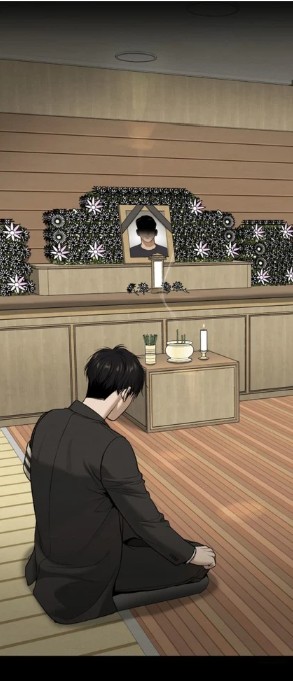 (chapter 74) His father may have been an orphan, just like his mother too. Therefore the latter was emotionally unavailable, and so he inherited not only trauma but also silence. By contrast, Dan has at least one surviving figure — flawed as she is — who keeps the family thread intact. That contrast makes Jaekyung’s bond with Dan all the more significant: it is not just romance, but an attempt to build a family line that never existed before him.
This also explains why the story deliberately exposed the “mother” of Hwang Byungchul 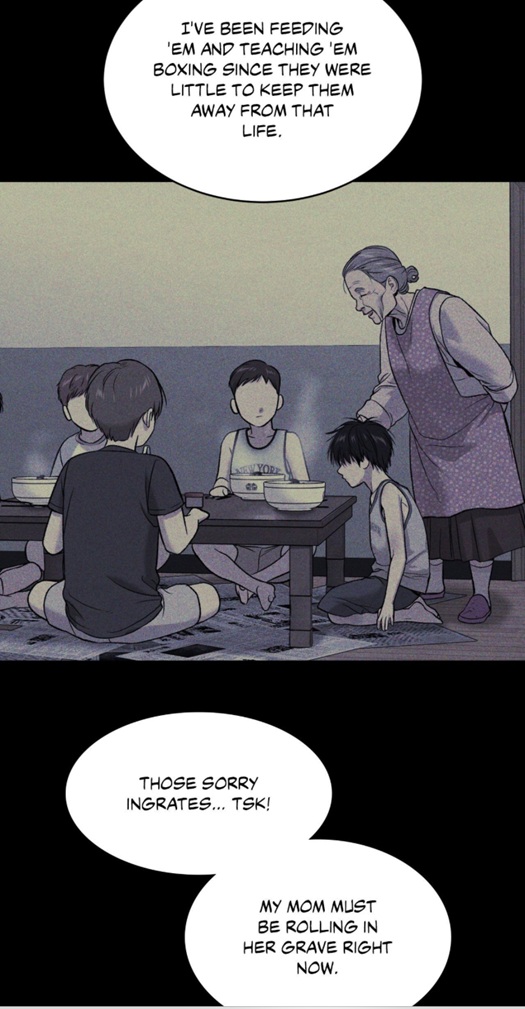 (chapter 73), while keeping Jaewoong’s own origins shrouded. Hwang had someone by his side — gentle, quiet, but present — while Jaewoong had no one, as according to me, the mother was counting on her “husband”‘s success and dream. The director’s stability, however fragile, was rooted in that maternal figure. Jaewoong had no such guide, and without it, he simply made the wrong choice.
If the father cursed him with words, the mother wounded him with silence. When news of her husband’s death reached her  (chapter 74), she never once spoke to her son about it, never asked what he felt. She did not grieve with him, nor allow him to grieve. Besides, the main lead’s words were ambiguous: Was the father dead or had he abandoned his son too? The fact that she never asked exposes that it didn’t matter to her. She was not interested in the truth, her only concern was herself — her new life, her fear of losing it. Where the father left him branded, the mother left him erased.
 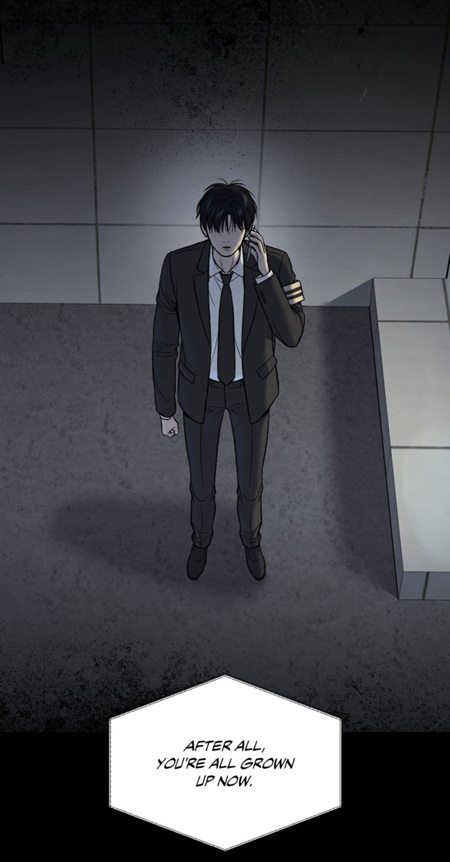 (chapter 75) One condemned him, the other abandoned him, and between them Jaekyung was left with neither recognition nor belonging.
Worse still, she used time itself against him. To her, his pain was invalid because he had “grown up”; childhood had expired, and with it any claim to comfort. If the father’s death left him no time to undo his last words, the mother’s detachment told him he was already too late. One parent departed too soon, the other dismissed him as already finished. Between them, Jaekyung was trapped in a cruel paradox of time. This explicates why he rushed his career. Every victory carried the urgency of being “not too late,” yet every memory reminded him that it already was.
This fusion of insult and betrayal created the paradox that would dominate his adult life. Every victory was haunted by loss 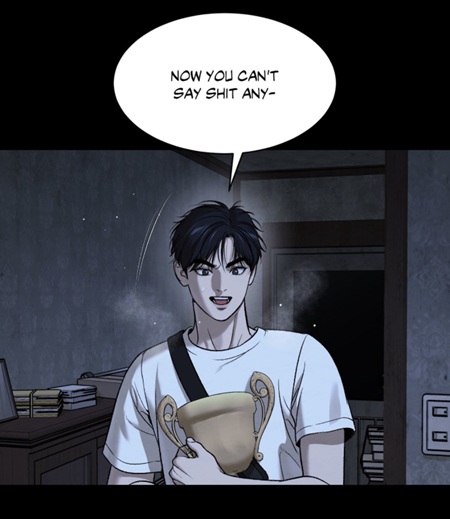 (chapter 73); every triumph, by the echo of rejection
 (chapter 73). To win was to prove his father wrong, but to stand alone in victory was to prove his mother right. Success and emptiness became inseparable.
And yet, this is precisely why Kim Dan’s presence destabilizes him. The quiet therapist mirrors the mother: bound to the domestic, offering care in silence  (chapter 56), seemingly fragile and dependent. But unlike her, he stays. Where the mother left, Dan endures. He only left because of the champion’s final words:
 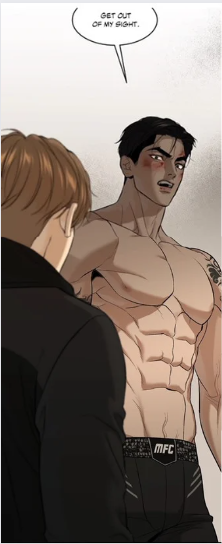 (chapter 51)
By choosing Dan, Jaekyung faces the chance to rewrite the past on both fronts. To hear in the tears of another man what his father could not say. To receive in daily presence what his mother could not give. Dan is the mirror — but also the key. Through him, the curse of that night can finally be undone. The insult “loser” can be answered not with endless victories but with loyalty and responsibility. The suffocating grip of the nightmare can be released not by outrunning it, but by choosing someone who will not disappear when the fight is over. Finally, because his fated partner’s fate resembles to his own father, he can grasp Joo Jaewoong’s words from that night much better. That moment where Jaewoong shouts,  (chapter 73) mirrors what the director later whispers to Jaekyung:
 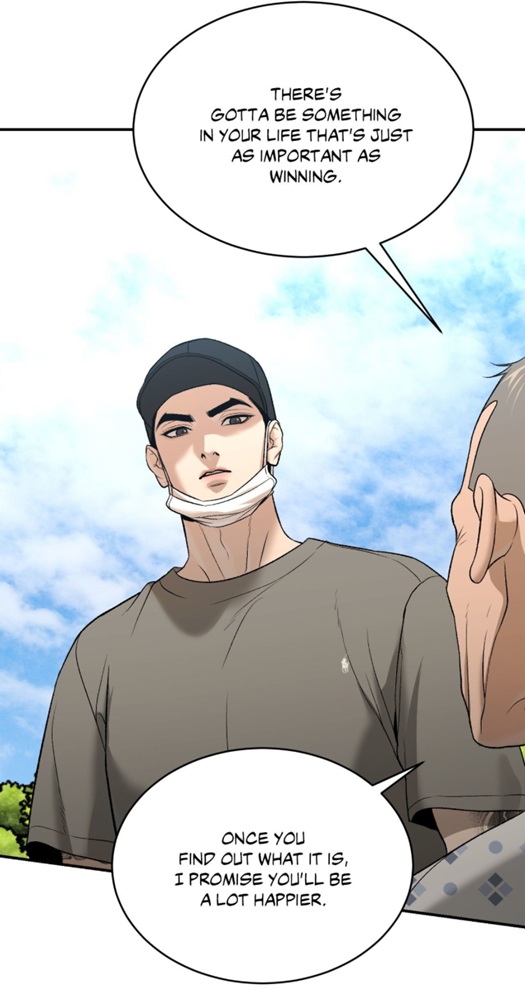 (chapter 75) Both men — the broken father and the regretful coach — carry the same hidden insight: that fighting cannot be the whole of life, and that reducing yourself to fists and violence only leads to ruin.
But where Jaewoong voiced it as rage (a curse disguised as a lesson), the director voiced it as wisdom (a confession born of hindsight). Both were trying, in their own ways, to warn the boy. And yet, Jaekyung could not hear it until he had this vision of doc Dan waiting for him!  (chapter 75) This is the wolf’s ritual in front of the tender mirror: the fighter who lived by curses and silence finally meeting their reflection transformed into gentleness and endurance.
To conclude, Dan is not just a partner but the tender mirror of the champion. He reflects both parents back to Jaekyung: the father’s unspoken vulnerability, the mother’s missing presence. To accept Dan is to answer both wounds at once — to refuse to be defined by the word “loser,” and to refuse the emptiness that haunted every victory.
The Bible Fighter Encounter
At his lowest point, after the five humiliating defeats and the sleepless nights where his father’s shadow clawed at his throat, Jaekyung stumbled across another fighter whose stability was almost alien. 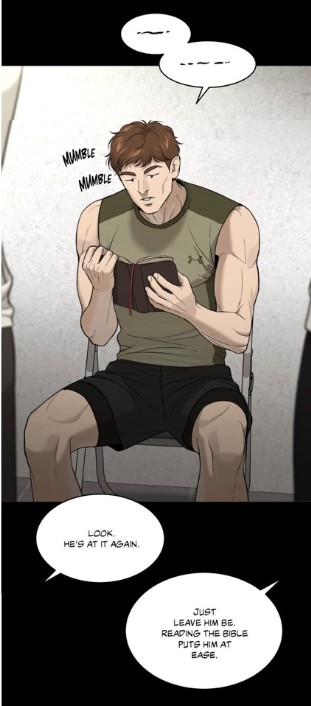 (chapter 75) This man’s jinx was startlingly simple: he read the Bible before every match. One book, one ritual, one anchor. To outsiders, it may have seemed quaint, even laughable, but to Jaekyung it was enviable.
Here was a man who had condensed all the chaos of combat into a single act of faith. His jinx was not a patchwork of compulsions but a covenant: a relationship to something larger than himself, a story that gave meaning to the brutality of the cage. 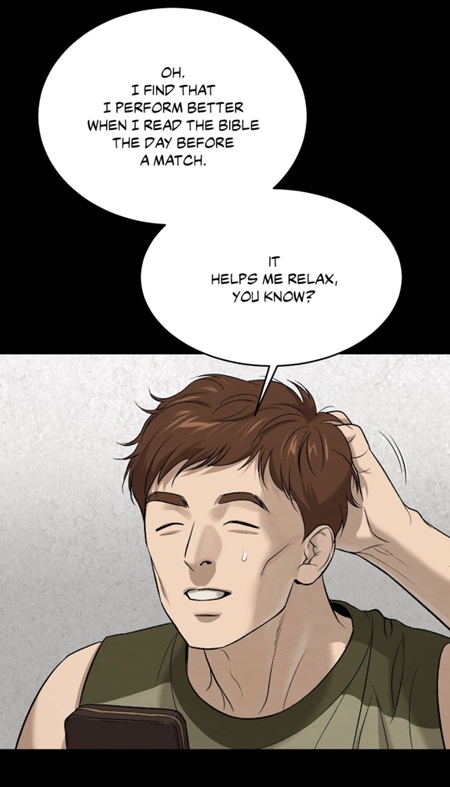 (chapter 75) When he prayed, it was not only for victory, but for coherence. Win or lose, the ritual bound him to a sense of belonging that Jaekyung had never tasted.
For Jaekyung, the encounter did not plant faith, but it did plant envy. 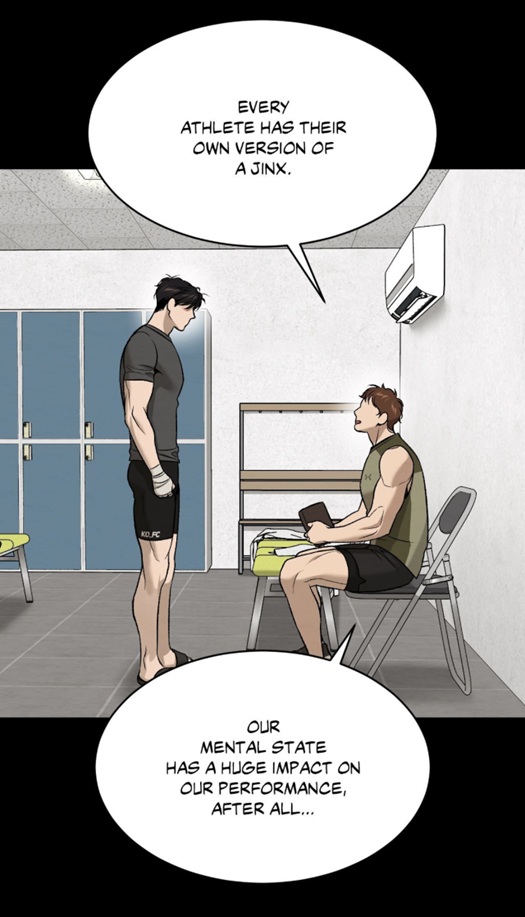 (chapter 75) If ritual could bend fate, he would build his own. But where the Bible fighter had a single, unifying story — scripture, God, fellowship — Jaekyung had nothing to draw on. No faith to lean on, no parental blessing to inherit, no safe home to return to. Instead, he began to stitch together a mosaic of rituals, each one disguising a different childhood wound. To outsiders it looked obsessive, neurotic, almost superstitious. To him, it was survival. Each gesture was both repression and remembrance, a scar disguised as armor. And this is the paradox: the rituals made him strong enough to survive, but too broken to live.
- Sex was not intimacy but anesthesia.
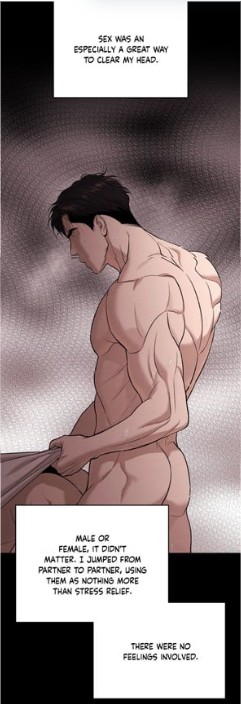 (chapter 75) By using another body, he cleared his head, numbed the loneliness, and convinced himself he was in control. But it was also a grim reenactment of abandonment: he could take without being left, dominate rather than risk being deserted. At the same time, he considered his sex partners as toys in order to avoid guilt. A toy can not die, it can be “thrown away”.
 - Milk seemed trivial — a glass before the day began.
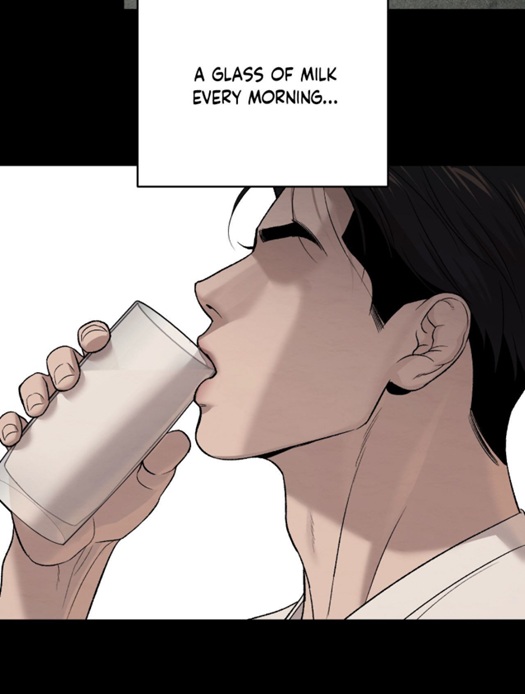 (chapter 75) But in truth it was a disguised memory of hunger
 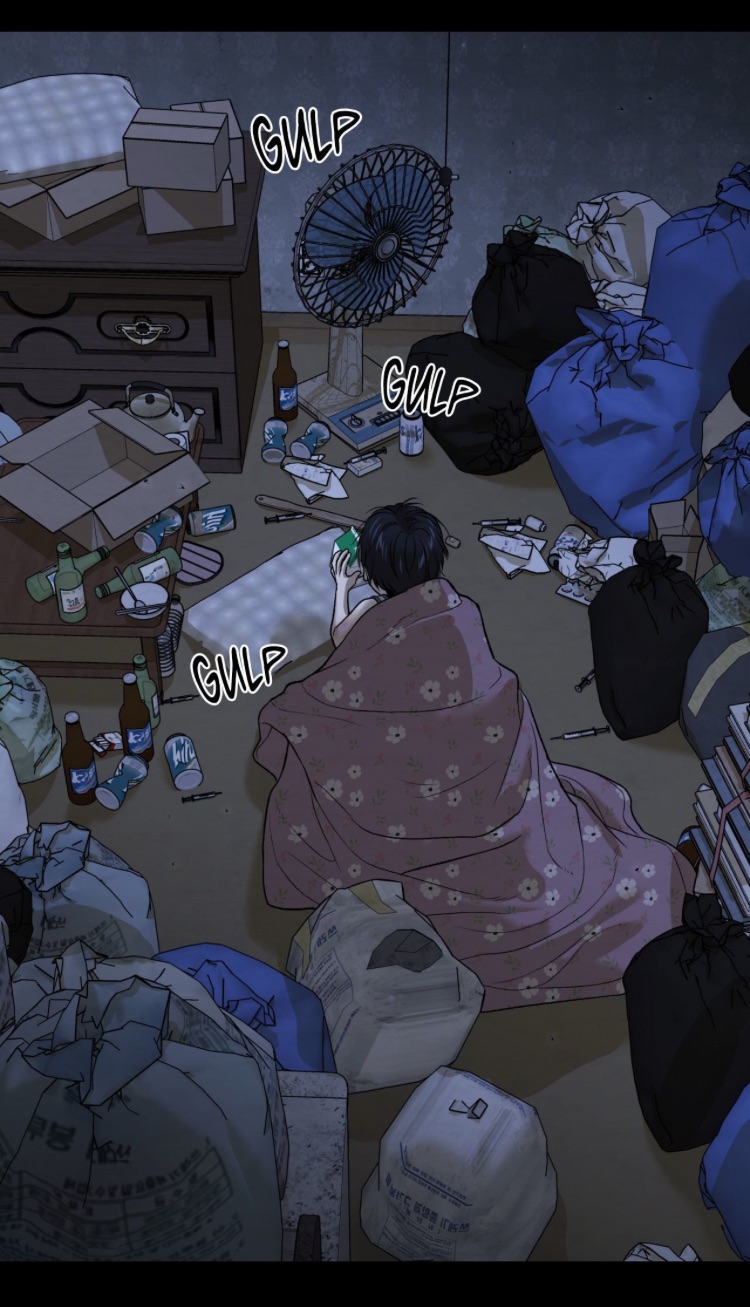 (chapter 72), of nights when there was nothing to eat, of shame attached to poverty.
  (chapter 75) To drink milk was to rewrite the past: I will not go hungry again. Yet the act was also a reminder that he once had.
 - Perfume transformed bullying into ritual. Once shamed for smell and sweat (chapter 75), he turned fragrance into armor. (chapter 75) The bottle on his shelf was less cosmetic than talismanic, proof that no one could call him dirty again. But the ritual did not erase the insult; it replayed it daily.
- Tattoos etched pain into permanence. To endure the needle was to reenact overtraining
 (chapter 27) , self-punishment, the willingness to suffer endlessly for the cage. He didn’t fear pain. Their sudden appearance (chapter 75) remains shrouded in silence — who drew them onto his body, and under what conditions? Why are they absent in his youth, only to surface fully formed as he steps onto the international stage? This silence is telling. The tattoos are both declaration and wound: marks of pride, but also scars he chose to carry in plain sight.
Together, these rituals formed a raft — not to carry him forward, but to keep him from drowning. They gave him the illusion of escape, while chaining him to the very traumas he sought to forget. He imagined he was moving on, outpacing the ghosts of his father’s insult and his mother’s abandonment. Yet each gesture pulled the past back into the present. The Bible fighter’s ritual was a prayer; Jaekyung’s were bargains. The more he clung to them, the clearer it became that he was not free. He was frozen, an adult in body but still the boy (chapter 75) who had been abandoned, when he was 6 years old. In fact, on the day, he shouted to his father he would leave this “dump of the house”, he didn’t anticipate that he would relive the day, when he was abandoned as a child. That’s why he has imagined of himself as a little boy and not a teenager. He had the heart of a little boy: wounded, scared and abandoned. Thus he could never grow emotionally. His jinx was not transcendence but entrapment. He was bargaining with memory: don’t let me fall back into the night where I was branded a loser. Don’t let me taste abandonment again.
In this way, the Bible fighter’s simplicity only underscored Jaekyung’s fracture. What was singular faith for one man became a shattered mosaic for another. The jinx did not make him whole; it reminded him every day of how broken he already was.
The Rush to the Top and his predestined Fall
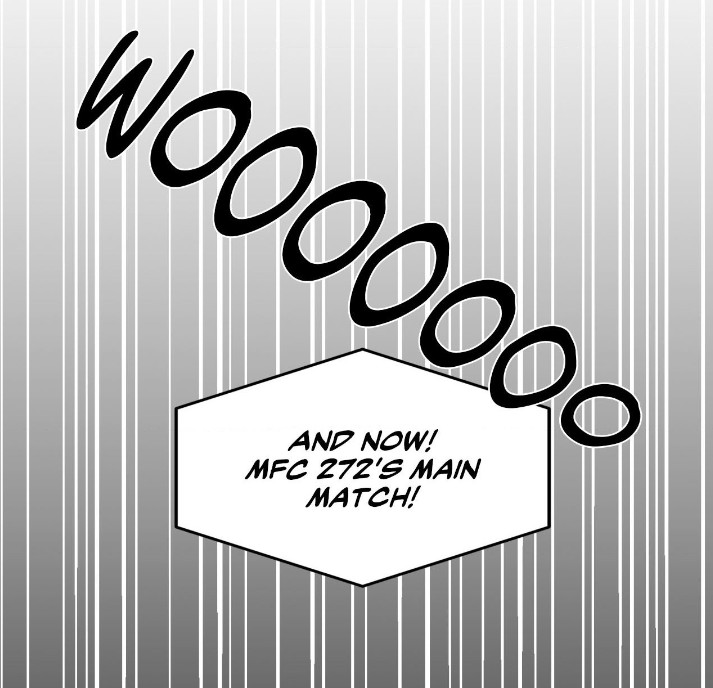
What made this fragile system even more dangerous was the brutal pace at which his career was structured. Between the ages of twenty and twenty-six, Jaekyung was hurled from obscurity into the international spotlight. His first MFC fight was already the 220th bout 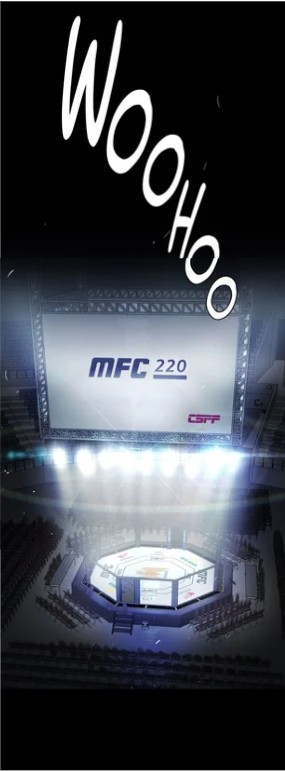 (chapter 75), a reminder that he had entered a machine in motion, a system that swallowed fighters whole and spat out statistics. From that point, the acceleration was merciless: by April, he was in the 272nd bout against Randy Booker
  (chapter 14); by June, the 293rd against Dominic Hill
  (chapter 40); and by July, the 298th against Baek Junmin.
  (chapter 50)
In less than two years, there were merely eighty fights, and he participated quite often: 4 within 5 months (I am including the one in episode 5) The pace was staggering — inhuman. In the span of six years 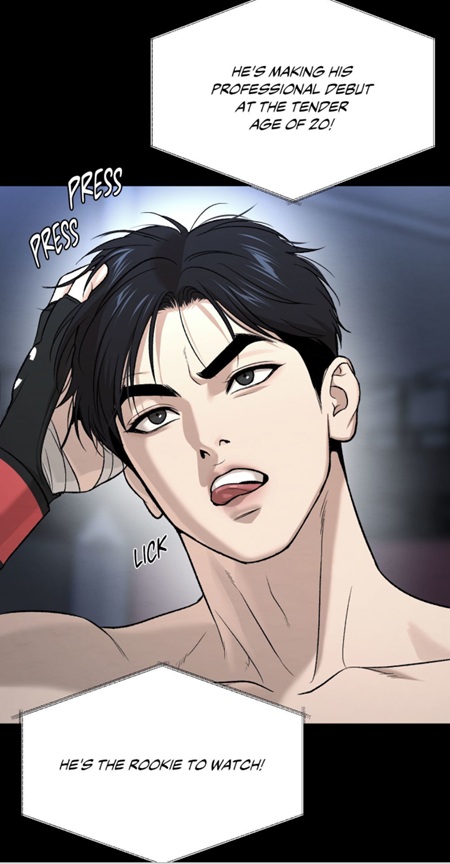 (chapter 75), he had not merely “built” a career, he had been consumed by one. There was no time to recover from injuries, no space to process victory, no room to integrate defeat. No wonder why his shoulders were in bad shape. (chapter 27) And even before entering MFC, he had to win the champion title for KO-FC! Here he had to face many opponents.
  (chapter 75) Every fight blurred into the next, every opponent older, stronger, more experienced. And yet Jaekyung fought them all with the same desperate, survival-driven ferocity.
Commentators marveled at his intensity, describing him as if he were “fighting for his life.” (chapter 75) They meant it metaphorically, but for Jaekyung it was literal. The cage was his childhood all over again — a dump he needed to escape, fists and rage the only tools at hand. He fought not to win titles but to silence ghosts. Every opponent became his father’s shadow, every victory a plea to his absent mother: see me, recognize me, don’t abandon me.
This was not a steady ascent, not the careful shaping of an “athlete.” It was exploitation disguised as opportunity. Moderators described his ferocity as spectacle, but the deeper betrayal was in the language used to frame him. The director 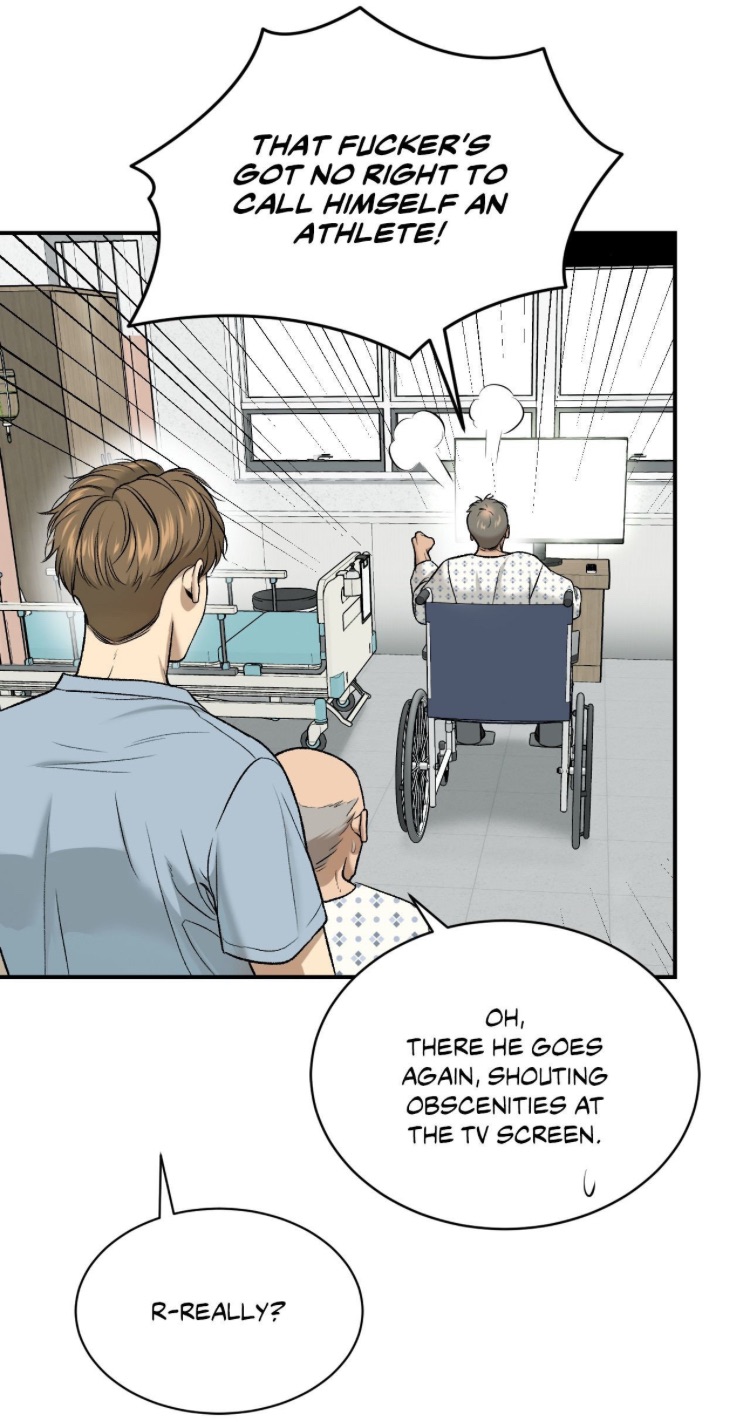 (chapter 71) and Dr. Lee
  (chapter 27) still called him an athlete — someone whose body required balance, protection, recovery. But MFC and KO-FC never did. For them, the main lead or his colleagues were addressed as
 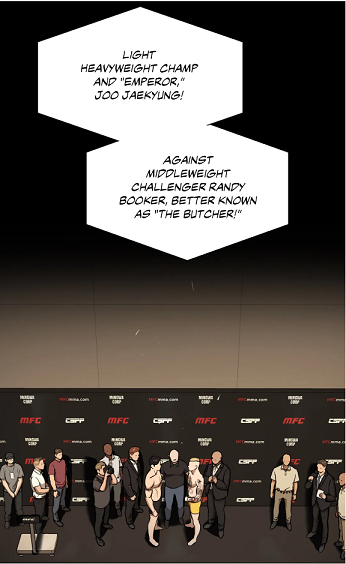 (chapter 14) “The Emperor”, “a crazy bastard”
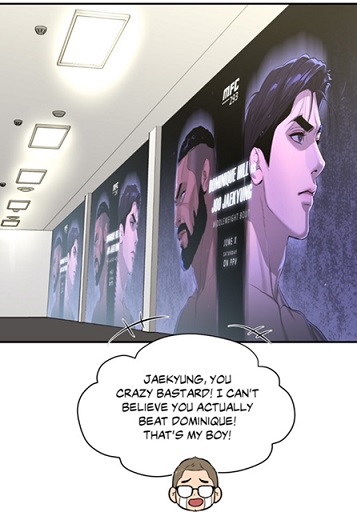 (chapter 40), “my boy”, (chapter 74) “fresh meat,” (chapter 14) “ Randy Booker the butcher,” or
 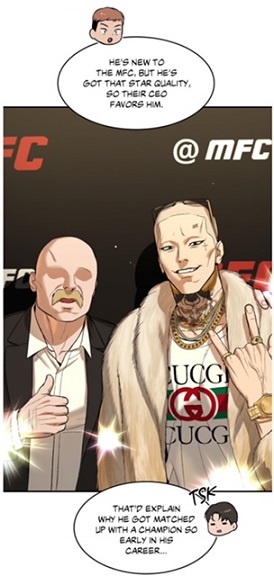 (chapter 47) “a potential star.” Not a person, not even a professional, but branding material — a body to be consumed by audiences and discarded once spent. The absence of the word athlete marks what he lost: recognition as a human being. And guess what?
 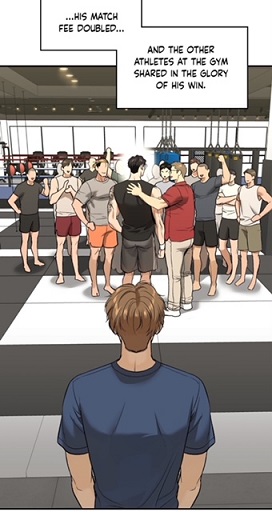 (chapter 41) Only doc Dan at the gym saw the fighters as athletes!
Here, the personal and the professional fused in a toxic loop. The wolf’s private jinx gave him the illusion of control — sex, milk, perfume, tattoos — while the organizations fed on those compulsions, scheduling fight after fight, using his rituals as fuel for their machine. The more he fought, the more he relied on the jinx. The more he relied on the jinx, the more exploitable he became. What looked like discipline was really desperation; what looked like destiny was really a trap.
The tattoos mark this stage with brutal clarity. They appear suddenly (chapter 75), without narrative explanation of when or by whom they were inked — as if stamped onto him by the very system he served. In South Korea, tattoos long carried a stigma, associated with gangs and the underworld; Baek Junmin’s body displays this openly  (chapter 47). Thus only doctors are allowed to do them officially. But Jaekyung’s rise shifted that meaning. As “The Emperor,” he normalized tattoos for the new generation of fighters, transforming what once marked marginality into a badge of visibility. This is why even Oh Daehyun, one of his admirers and members of Team Black, now carries one:
  (chapter 8) The celebrity’s suffering literally redefined the aesthetic of the sport. His body, turned billboard, became part of the league’s branding.
Is it a coincidence that Jaekyung’s fall began almost as soon as Dan entered his orbit? At first glance, one might think the therapist’s presence destabilized him, but the timing reveals something darker. The moment Jaekyung began to show humanity, the system pounced — using his deepest wounds as leverage to strip him down.
Every challenge he faced after Dan’s arrival carried the sharp edge of his private pain. Randy Booker taunted him as a “baby,” 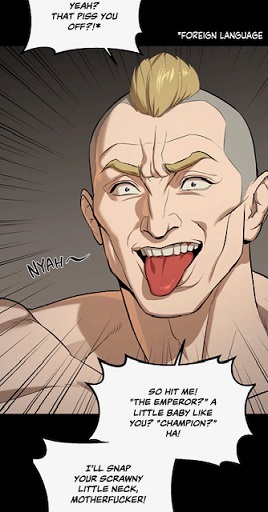 (chapter 14) ripping open the scar of his father’s “loser” and his mother’s absence and silent parentification. Not long after, an article exposed his shoulder injury
 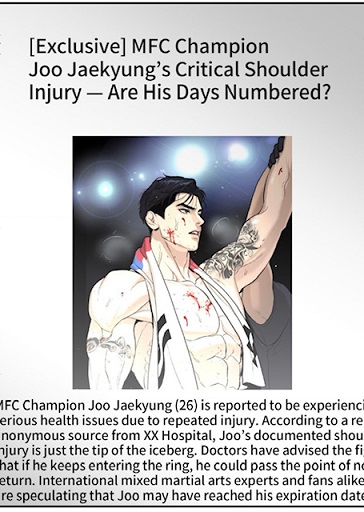 (chapter 35), reducing years of discipline to a liability on the page. Later came the suspension narrative
  (chapter 54), his temper framed not as the product of exploitation and scheme but as proof of unfitness, as if his rage were a crime instead of a symptom.
  (chapter 54) Even the match with Baek Junmin was twisted against him — accepted under pressure, then reframed as recklessness. To the system, his crown had been too secure, his presence too dominant. He had been champion for “too long.”
The logic was brutally simple: a fighter is valuable until he earns too much , (chapter 41) until he threatens the balance of spectacle and profit. Then the very traits that made him marketable — ferocity, endurance, defiance — are turned into weapons against him. The same press that glorified his titles was quick to call him a liability. What the commentators once celebrated as survival was reframed as instability. Did you notice that all the events quoted above are linked to the number 5!  (chapter 5) the name Seo Gichan appeared here for the first time… a faceless name!
The panel of the gym makes this logic stark. (chapter 41) His match fee doubled, and the athletes around him cheered, basking in the reflected glory of his win. Yet the same scene exposes the truth: behind him stand rows of “fresh meat”, ready to replace him the moment his body breaks or his aura fades. Fighters were not nurtured as athletes or honored as artists; they were consumed like rations in a machine that never stops feeding. His career, far from proof of fate or talent alone, was a treadmill built by others — one that guaranteed collapse. That is why his “invitation” from the CEO was less an opportunity than a pitfall. 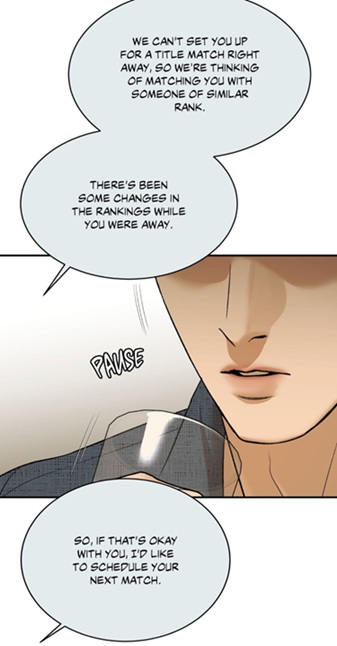 (chapter 69) The danger lay in the very identity of his next challenger. If they pitted him against a newcomer who had rocketed through the ranks as quickly as Baek Junmin once did (chapter 47), the outcome was already poisoned.
Should Jaekyung win, the victory would be dismissed: he had chosen an easy opponent, feeding the narrative that he no longer belonged at the top. Should he be paired with a strong opponent, they expect him to lose, for he has just been surged. So should he lose, the humiliation would be absolute — proof that his era was over, his downfall sealed. And even a tie would work against him, just as before: no one would call it resilience; they would call it weakness, the inability to dominate. In every possible outcome, his worth would be diminished.
This is why Potato’s skepticism back in chapter 47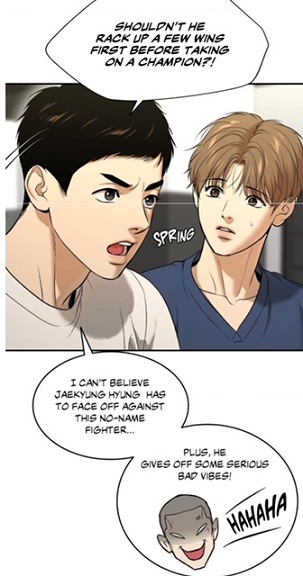 (chapter 47), questioning the selection of Baek Junmin, is so crucial. It shows that the manipulation of opponents was no accident — it was systemic. Matches were not about fair combat but about narrative management: making sure the emperor’s story served the company’s balance sheet.
The system leaves Jaekyung with only one real option: to step out of the spotlight. Every path inside the cage leads to diminishment — win, lose, or tie, the outcome is already poisoned. To remain would be to keep running on the treadmill until his body breaks, his title stripped, his name forgotten.
But there is another path, one the system cannot script: (chapter 75) to follow Dan into a different kind of life. For Jaekyung, this does not mean abandoning fighting altogether, but detaching it from the machinery of survival and spectacle. To fight not to silence ghosts or to feed companies, but because he chooses to. To discover that strength can exist outside the ring.
This is where the tender mirror matters. In Dan’s steady presence, Jaekyung catches a glimpse of the self he has never allowed himself to become: not just wolf, not just champion, but a man capable of rest, of connection, of living beyond ritual. Where the system shows him only exploitation, the mirror reflects possibility. He will discover the advantages of “vulnerability and childhood”: fun and enjoy the present.
The system can strip him of titles, twist his image, discard his body. But what it cannot erase is the possibility of choosing a different path, like for example fight for fun and act as a real director of a gym!
The Empty Champion
The façade cracked with the tie against Baek Junmin.  (chapter 51) On paper, it was a draw. In practice, it was soon reframed as a loss
 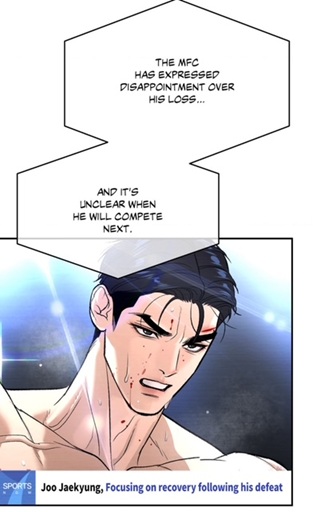 (chapter 57). By late August, Jaekyung had slipped to third place.
  (chapter 69) And strikingly, no one questioned it. Not Park Namwook, not the officials, not even Joo Jaekyung or the commentators who had once praised his streak. The silence was louder than any insult.
The title of “champion” — the very identity he had staked his survival on — was revealed as hollow.  (chapter 75) Here, it looks like a mirror, but naturally it is a fake one. It was not earned with fists alone; it could be stripped, reassigned, reshaped at will. One tie, one whisper, one adjustment in the rankings, and the Night Emperor was dethroned without ceremony.
For Jaekyung, this revelation was more than professional disillusionment. It tore open the paradox of his childhood. Just as his mother’s absence had turned victory into rejection, the system now proved that even championships carried no safety. He could win endlessly and still be discarded. He could bleed, sweat, endure, and still be branded as replaceable.
The belt was supposed to erase the insult “loser.” Instead, it exposed how fragile identity remained when it depended on others’ recognition. He had built a kingdom on rituals, and the first storm revealed it was sand.
The Cry of Exhaustion
When Jaekyung finally mutters, “I can’t take it anymore” (chapter 69), the choice of words is crucial. He does not say “I can’t do it anymore” — as though it were a matter of strength or skill — but take. This single verb reveals the deeper structure of his life. He has lived not by creating or belonging, but by enduring and consuming.
To take meant many things for him:
- to take blows in the ring, as though punishment were the measure of his worth;
- to take orders from coaches and managers, their words absorbed as commands rather than care;
- to take the belt, the money, the fame, without ever finding nourishment in them;
- to take on guilt and abandonment, carrying weights that were never his to bear.
Even his jinx rituals repeat this same pattern. Each is an act of taking:
- Milk — taking liquid into his body (chapter 75), ritualizing hunger that had once been real deprivation.
- Sex — taking another’s body as a vessel
 (chapter 75), not for intimacy but to clear his head and stave off loneliness, emptiness and his abandonment issues.
 - Perfume — taking a scent (chapter 75), masking shame by cloaking himself in armor.
- Tattoos — taking pain into his skin, as if engraving scars could grant permanence.
None of these rituals is about giving, sharing, or being. They are substitutions, attempts to fill a void. He consumes and endures, but he never rests. Survival by taking is not the same as living.
That is why the sentence “I can’t take it anymore” is more than a cry of exhaustion. It is a refusal of the very economy that has defined him: the endless cycle of taking, absorbing, enduring. The belt, the fights, the rituals — they have all lost their power to silence the ghosts. His body cracks under the weight, and his soul confesses what his will has long denied: that survival without belonging is hollow.
Here begins the possibility of a new mode of existence. Not taking, but being. Not absorbing endlessly, but inhabiting presence. And this is what Dan embodies. Where Jaekyung has lived by taking, Dan offers constancy — a presence that does not vanish, a tenderness that does not demand. The mirror he holds up makes Jaekyung’s cry not merely one of collapse, but of awakening. It signals a desire to step out of the hollow cycle of taking, and toward the possibility of being — not a “champion,” not a “loser,” but simply himself. (chapter 75) The problem is that in his dream of belonging, the champion is not present yet. He hovers at the edges of his own life, like a ghost, repeating rituals that anchor him to absence rather than connection. He exists in fragments — as fighter, as brand, as body — but not yet as a whole person. To become present, he must learn not only to abandon the logic of taking, but to enter the world of giving and receiving, where presence is shared rather than consumed. His later vow 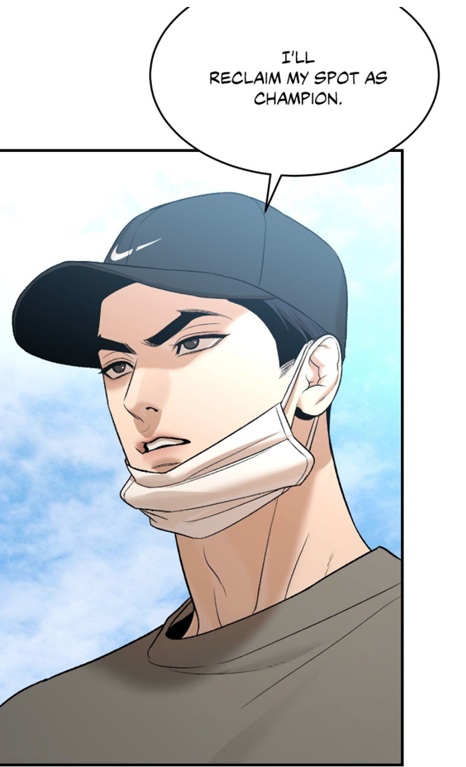 (chapter 75) must be read in this light. It is not a relapse into the system’s treadmill, nor a blind return to the pitfall laid before him. Notice that he does not say he will fight in the fall, nor does he mention the upcoming match that everyone else is waiting for.
  (chapter 71) Instead, he frames his goal with a word that changes everything: reclaim.
Reclaiming is not the same as taking. It implies agency, choice, and even memory — an effort to retrieve something that was stolen or hollowed out, and to give it new meaning. Here, Jaekyung is no longer the body endlessly used by the system, nor the boy who clung to rituals of survival. He is beginning to define his own ground. The belt may still be the symbol, but what he seeks is not its material shine; it is the authority to say: this is mine because I chose it, not because it was forced on me.
This subtle shift is the fruit of the tender mirror. Through Dan’s presence, Jaekyung glimpses that fighting can be more than compulsion, more than survival — it can be chosen, and it can be shared. His declaration to “reclaim” is thus less about the system’s title than about carving a new relation to himself: no longer the orphan boy trapped in taking, but the man who begins to act, even falteringly, from his own will.
The Tie as Inverted Trauma
And yet, within the Baek Junmin fight lies a paradoxical seed of transformation. The tie (chapter 51) repeats the structure of his childhood trauma but in inverted form.
Then he won the match  (chapter 73), but he lost his father and his mother abandoned him. (chapter 74) He lost his hope of a “home” for good.
Now: he tied the match, but he is the one who criticized the doctor. Though he didn’t lose his gym, he pushed doc Dan away and the latter chose to quit.
Then: he was silenced, (chapter 73) branded a loser without reply. His words — “I’ll leave this dump” — were thrown back at him as “loser.” The insult froze him in place. He could not defend himself, could not reply, could not demand to be understood. His father’s judgment became law, sealed by death. To speak further would have meant betraying him, to stay silent meant carrying the curse. The boy’s voice was extinguished before it ever found strength.
In the locker room with Dan, Jaekyung is no longer mute.  (chapter 51) When his world threatened to collapse again — the tie with Baek Junmin, the looming humiliation — he erupted in rage. He screamed at Dan, he let the words spill out violently, breaking the silence that had once shackled him. It was an act of defiance against the curse: if he could not silence the nightmare, he would shout it down.
But here lies the decisive contrast: unlike his father, Dan does not reply with insult. He does not brand him, erase him, or abandon him. Instead, he disarms him with a single, piercing question:  “Don’t you trust me?” (chapter 54) That moment reverses the old script entirely. Where his father’s last word was condemnation, Dan’s is invitation. Where his father’s voice ended the dialogue forever, Dan opens one. Where his father made trust impossible, Dan asks for it. Besides, the latter encouraged him to reflect on himself.
The locker room clash thus marks more than anger — it is the birth of a new possibility. Jaekyung is no longer the boy silenced by judgment, but the man whose rage meets not insult, but a chance at trust. 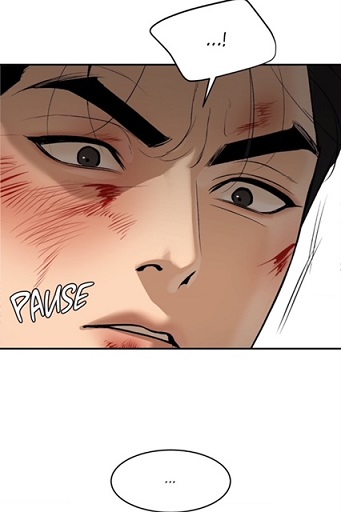 (chapter 51) The mirror is clear: the cycle can be broken, but only if he dares to answer the question that was never asked of him before. Therefore it is not surprising that the physical therapist’s question appeared in the champion’s vision:
  (chapter 54) His unconscious was telling him to have faith in his “doctor”. Thus later, the champion told the director of the hospital this:
 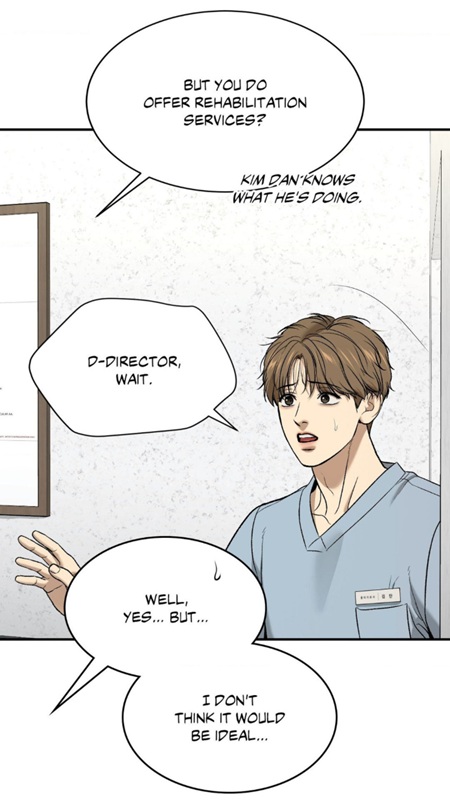 (chapter 61) He was acknowledging the main lead as a real physical therapist.
The tie created a strange neutral space, neither victory nor defeat, where change became possible. Losing the belt was not only humiliation; it was a disruption of the old cycle. A chance to redefine what fighting could mean.If the first trauma bound him forever to the word “loser,” the second pointed toward another possibility: to lose a title, but to gain, at last, a home and even a partner!
The Mirror Clouded By Silence
Like mentioned above, readers may think that by chapter 75 the mystery of the jinx is solved. The protagonist finally names it, recounts his five losses, confesses the nightmares of his father, and admits to the strange bargain of sex as ritual (chapter 75). The wolf speaks — and the silence seems broken. But this is only the surface. The confession gives the illusion of truth while concealing how much remains unspoken. How so? It is because this confession changes everything. It reframes the past.
For in reality, Jaekyung has never revealed the whole architecture of his jinx to anyone. To the outside world, 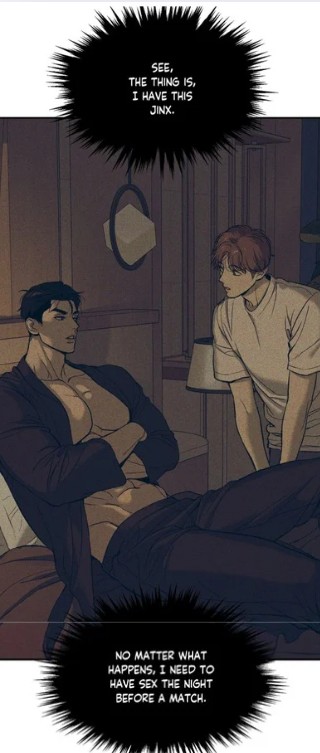 (chapter 62)— and even to those closest to his body — it looks like nothing more than sex. That was all the uke from chapter 2 saw, and it was enough for him to sneer:
 (chapter 2) The insult landed with devastating familiarity, not as a new wound but as an echo of his father’s curse: “loser.” Both words reduced Jaekyung to nothing — not a man, not an athlete, just a fraud kept alive by crutches.
This is why Jaekyung’s violent outburst was so extreme.  (chapter 2) In slamming his former partner against the wall, he was not merely silencing a lover’s cruelty. He was fighting the ghost of his father, the voice that had branded him weak, cursed, unworthy. The jinx that kept him alive was being twisted into proof of his failure, and he could not bear it.
  (chapter 2)
But Dan, too, repeats this misrecognition, though with none of the malice. In chapter 62, when Jaekyung asked to return to their routine and another aspect of the jinx 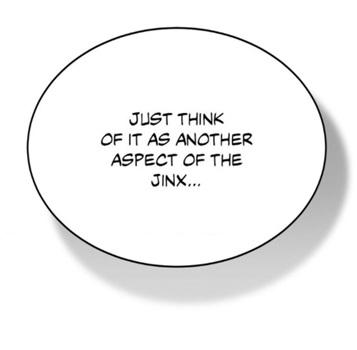 (chapter 62), Dan recoiled.
 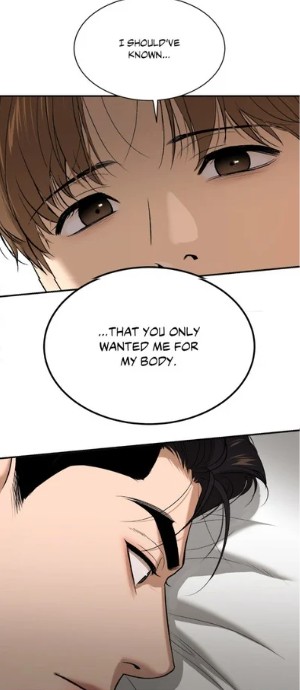 (chapter 62) To him, “jinx” meant objectification, a reduction of their bond to sex. (chapter 62) He could not know that behind the word was an entire architecture of rituals — milk, perfume, tattoos, scars — all the desperate scaffolding Jaekyung had built to survive. Like mentioned above, by the time of chapter 62, Jaekyung already valued Kim Dan not just as a body to “use”
 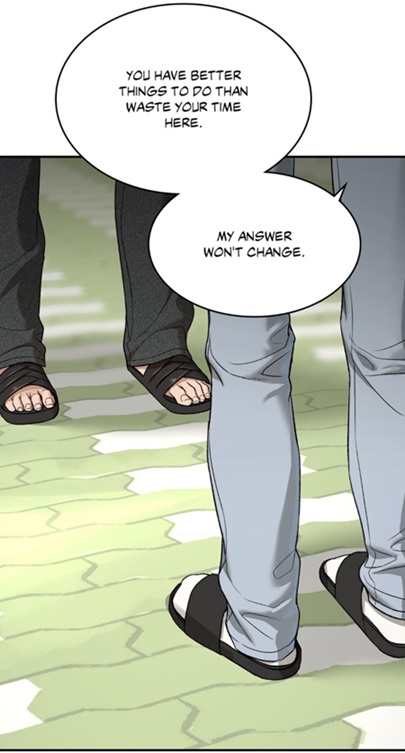 (chapter 62) but as a therapist he trusted. His words about wanting to return to the “usual pre-match routine”
  (chapter 62) were, in his mind, a way of saying: I need you to bring back wholeness, to help me steady myself again. But because Dan only knew fragments of the jinx, the message landed with devastating distortion.
To Dan, “pre-match routine” meant sex. He knew about that ritual, maybe also the glass of milk —  (chapter 41) but not the others. He had never seen how layered and fragmented Jaekyung’s survival system truly was: the shower and perfume, the milk, the tattoos, the obsessive fight schedule. Thus, when Jaekyung invoked the jinx, Dan heard only objectification: you want me for my body. However, this is not what the “wolf” meant. Thus he got surprised by such a statement.
  (chapter 62) For Jaekyung, the plea was about coherence; for Dan, it sounded like reduction.
This is why Dan recoils, saying bitterly that he should have known Jaekyung “only wanted my body.” Both men were speaking from wounds — but past each other. Jaekyung was reaching for stability, Dan was defending his dignity. The gulf between them was not lack of care but lack of shared knowledge.
Food as Silent Ritual
This gap becomes especially poignant when we look at the food scenes. Because Dan doesn’t know the full set of rituals, he instinctively replaces them.  (chapter 22) He cooks breakfast for Jaekyung, offering something warm, homemade, human — a substitute for the cold, industrial glass of milk. (chapter 75) Naturally, he must have noticed the glass of milk each morning, but the physical therapist thought that this beverage was just the expression of the champion’s taste. He never saw it as a part of the ritual. In cooking so, he unconsciously takes over not only the role of the nutritionist, but also of the “family”. That’s the reason why Joo Jaekyung got so moved, though he did not smile
  (chapter 22) or cry out of joy.
We see the contrast after the doctor’s vanishing: Jaekyung, alone, eats food mechanically,  (chapter 54) throws the plate away
 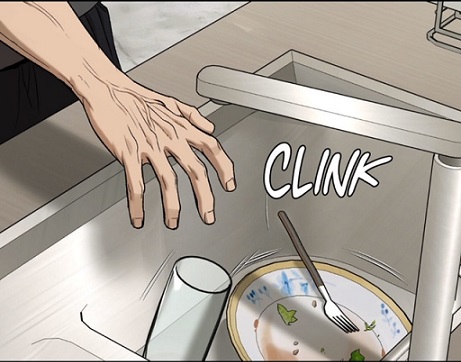 (chapter 54), or sits at a vast table in silence.
  (chapter 54) But when Dan cooks, Jaekyung is surprised, even touched. For once, nourishment is not consumption but connection. The milk was always a disguised memory of deprivation; Dan’s meal becomes the antidote — food as presence. So for him, the prematch-routine was also referring to the meals prepared by his fated partner. And I feel the need to bring another aspect. Since there was no “family” in the athlete’s life, he never got the chance to discover the joy of the table.
  (chapter 22) Hence it is not surprising that he looked at his phone, while the others were eating and discussing. He never had a real conversation with a family member around the table.
The Hidden Scent
Another layer is scent.  (chapter 40) Perfume was one of Jaekyung’s protective rituals — masking shame, creating an armor against the memory of bullying and ridicule. Yet Dan shows that none of this is necessary. The panel where he clings to the bedsheets after their Summer Night’s Dream together
 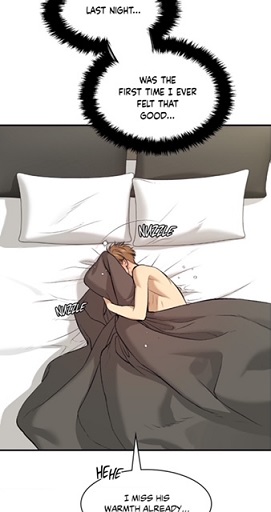 (chapter 45), whispering that he misses Jaekyung’s warmth, reveals that the champion’s natural scent is already enough. He never gets to see this — Jaekyung doesn’t know how deeply Dan treasures his smell.
This is critical: Dan unconsciously redeems the rituals. He replaces milk with food, perfume with genuine warmth, mechanical sex with an act that stirs tenderness. But because Jaekyung doesn’t articulate his system, Dan cannot recognize what he is undoing. The mirror is already working, but the reflection is clouded. And this leads me to another observation. His rituals had already been affected by doc Dan’s presence, but the latter never realized it! Joo Jaekyung returned to his lover’s side after the shower and perfume!  (chapter 40) Here he turned around and placed his lover in the middle of the bed. He even let him rest.
Why Only Mention Sex?
A lingering question remains: why does Jaekyung mention only sex in this conversation  (chapter 2), and not the other rituals? Because to admit the rest would be to expose the origin of the jinx: the father’s insult, the mother’s abandonment, the hunger, the bullying. Sex was the only ritual that could be spoken without directly dragging the past into the room. It was the “safe” shorthand — though tragically, it became the most dangerous. Homosexuality is definitely a stigma among boxers and MMA fighters.
By limiting his words to sex, Jaekyung avoided revisiting trauma, but in doing so, he doomed the conversation to collapse. He reached for the mirror, but without naming his scars, the reflection became distorted.
A Mirror of Wounds
Chapter 62 therefore stages one of the most painful paradoxes in Jinx: Dan is already healing Jaekyung’s rituals without realizing it. But because he doesn’t know the full picture, he interprets the champion’s plea as exploitation. Interesting is that in this confrontation, something crucial happens. (chapter 62) Dan’s reproach is not framed in the language of the ring. He does not call Jaekyung weak, a loser, or unfit — the very vocabulary that had haunted the champion since his father’s curse and that others (uke, press, rivals) recycled against him. Instead, Dan’s words land on an entirely different plane: “I should’ve known… that you only wanted me for my body.”
This is not an insult to the protagonist as a fighter. It is a wound as a man. The complaint does not echo his father’s verdict but indicts his coldness, his selfishness, his inability to show care. Where the old trauma was about being branded unworthy of victory, Dan’s reproach is about being unworthy of intimacy.
That difference matters. For the first time, the athlete is not being told he cannot fight; he is being told he cannot love. He doesn’t care! The battlefield shifts. What once was survival inside the cage is now survival outside of it — the fight to be recognized, not as “Emperor,” but as a partner capable of connection. Under this new light, it becomes comprehensible why the champion tried to take care of his fated partner! 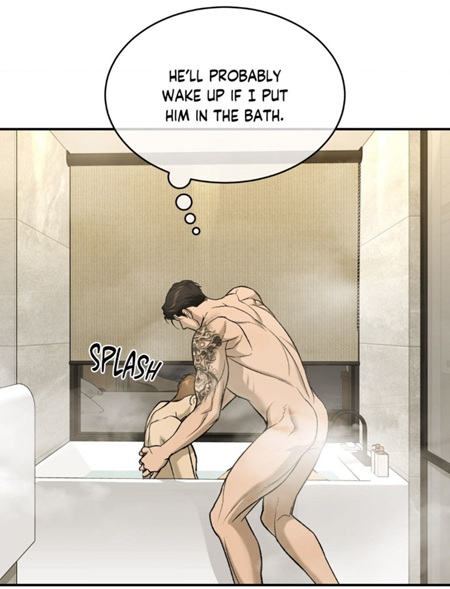 (chapter 68) In his own way, he was showing him that he did care! He was more than just a body… or even a physical therapist!!
Here the mirror metaphor sharpens: Jaekyung sees himself through Dan, but Dan only sees part of him due to his “secrecy” and silence. Until both fragments meet — the rituals revealed, the care recognized — the mirror cannot reflect the whole.
The Tender Mirror: Dan’s Role
If the jinx was born in silence — the father’s insult, the mother’s disappearance, the system’s exploitation — then its undoing begins in silence as well. But this time, the silence is not absence. It is observation and presence.  (chapter 35) It is the steady mirror of Kim Dan.
From the very beginning, their dynamic was framed in asymmetry. In Season 1, Jaekyung appeared as the unshakable adult, even the father-figure: towering, dominant, controlling every space he entered. Dan, in contrast, was cast as the child  (chapter 13) — helpless, cornered, often pleading. Thus the champion taught the doctor to overcome his fear and fight back:
  (chapter 26) This imbalance was no accident. It replayed Jaekyung’s own childhood roles: he became what his father had been to him (the better version naturally, for he is the mirror of truth), and forced Dan into the position he had once held himself. Through Dan, Jaekyung unconsciously re-enacted his trauma, reversing their positions as if to master what had once mastered him. That way, he was pushed to mature emotionally! That’s why he could connect with the main lead unconsciously. His trembling words in Chapter 51 (chapter 51) were the expression of a desire for recognition and acceptance. Thus the request from the champion (chapter 51) should be seen as the separation between a “father” and “son”.
But Season 2 begins to fracture this arrangement. Slowly, Dan ceases to be the terrified child. Instead, he resembles more to the adolescent. He can not grasp his own behavior. 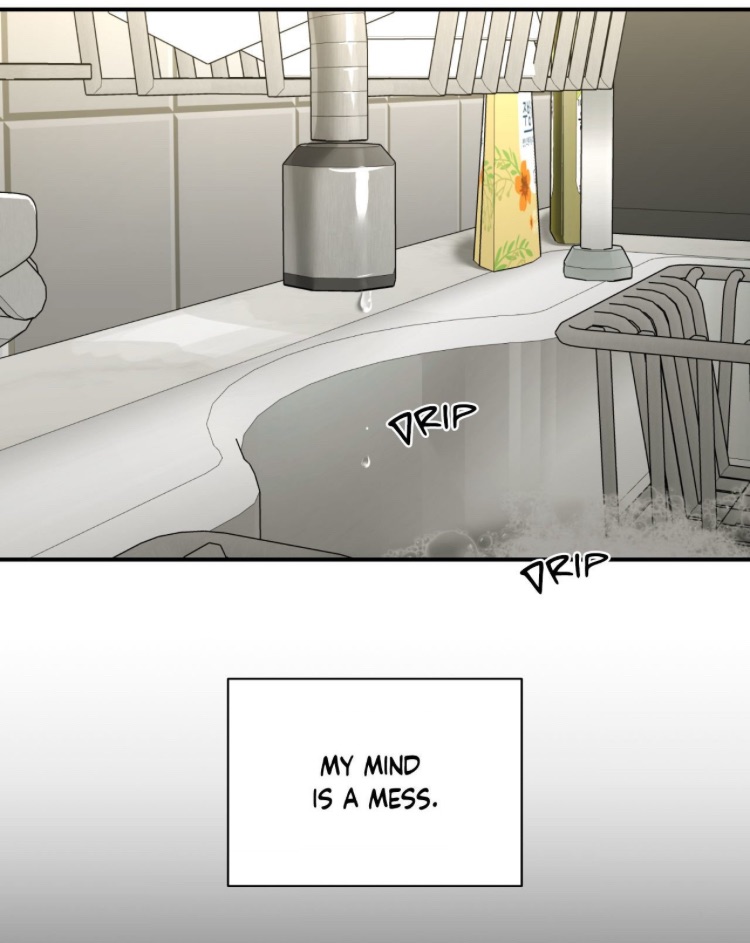 (chapter 71) He believes to know the truth, while he is ignorant. He is insecure, extreme in his behavior (drinking)
 (chapter 71), but also selfish and questioning, still fragile yet capable of protest. He is struggling with his own emotions and thoughts.
 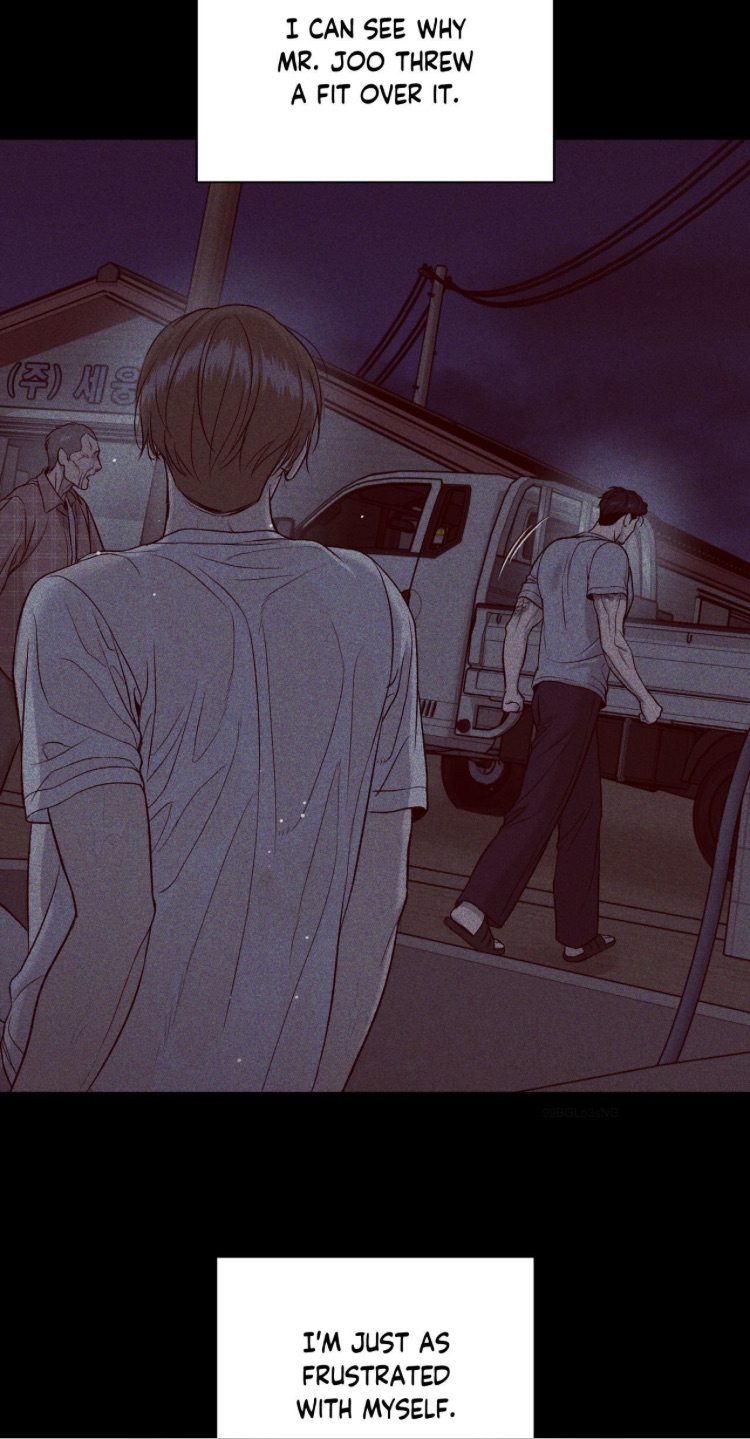 (chapter 71) How can he trust the athlete, when he doubts himself so much? From my point of view, he is on the verge of become “mature mentally” and as such “responsible”. At the same time, Jaekyung is revealed as the adult in crisis. His exhaustion (Chapter 69) strips away the illusion of invulnerability. The wolf, once a figure of brute survival, begins to look more like a cornered animal, uncertain whether to fight or collapse. And observe that now the champion is having a cold, like a small “child”!
  (chapter 70)
Gradually, their roles shift again. Thus I deduce that Dan is about to take care of Jaekyung. But not as his “father”… but as his hyung!  (chapter 74) It is because thanks to the director’s confession, the “hamster” is able to see the champion as a “a kindred spirit“, an orphan and as such as the younger “boy”.
This is why the possibility of “hyung” is so radical. The word collapses categories that Jaekyung has always kept apart: dependence and respect, family and intimacy, protection and confession. To call Dan “hyung” would be to admit need without shame, to claim family without fear of betrayal. He would become now a part of “Joo Jaekyung’s team”. It would be, in essence, the reversal of the father’s insult “loser.” Where “loser” condemned him to isolation, “hyung” would admit him into belonging. Through this single word, the curse could be undone. At the same time, it would announce the end of Park Namwook’s ruling. Finally, let’s not forget that in episode 7, the physical therapist was introduced as “hyung” to the other fighters. 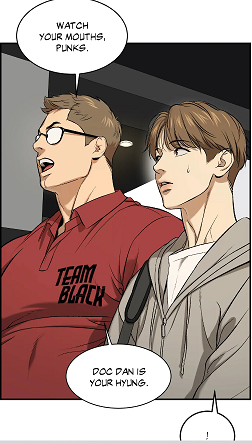 (chapter 7)
Toward Redefinition: Fighting as Fun
When the director whispered to Jaekyung to “find a new purpose,” it was not only advice — it was prophecy. (chapter The purpose he had clung to until now had already rotted. Victory no longer silenced his ghosts. Belts no longer secured belonging. Titles could be stripped at will. Even his rituals had begun to betray him, his body collapsing into illness (headache, insomnia) after Doc Dan left his side. What remained was emptiness.
But emptiness is also possibility.
For Jaekyung, the redefinition of fighting begins with a shift from having to being. Until now, his life was driven by the mode of having: having titles, having opponents, having sex, having rituals to take the edge off. Even his exhausted cry in Chapter 69 — “I can’t take it anymore” — reveals this logic. What he can no longer endure are the burdens of having: the blows, the obligations, the belt that weighs more than it rewards. His rituals, too, were all about taking — taking milk, taking a body, taking perfume, taking tattoos. They filled emptiness for a moment but never answered it.
To become present, he must enter another mode: not having, but being. Being in the fight, being in connection, being in the moment. Fighting not to silence ghosts or to feed a machine, but because it is fun  (chapter 26), because it is play, because it is chosen.
This redefinition is not foreign to combat. At its root, martial arts were always more than survival. They were practice, discipline, sometimes even dance. But Jaekyung had never been allowed to experience them that way. For him, the cage was always a replay of childhood — fists against ghosts, survival against abandonment. To rediscover fighting as fun is not regression but liberation: a way of reclaiming what was stolen from him, the joy of movement, the thrill of competition without the terror of loss. That way, the rituals lose their meanings.
The hug in Chapter 69 marks the pivot. Here Jaekyung embraces Dan not as therapist or tool, but as man to man.  (chapter 69) It is not about treatment or jinx, but about presence. This hug reframes the meaning of strength. True strength is not the ability to fight endlessly, but the ability to hold and be held, to mirror” is like touching oneself! Let’s not forget that the mirror represents the reflection of a person. Respecting the physical therapist signifies respecting oneself!
And this is where the future possibility of “hyung” matters. To call Dan hyung would mean accepting him not as ritual but as family. It would mean that fighting is no longer about proving oneself against ghosts but about sharing life with another. To fight as fun is to fight with nothing to prove, no curse to outrun, no insult to erase. It is to enter the ring not for survival, but for joy.
Conclusion – From Loser to Hyung
The arc of Jaekyung’s life can now be seen in its full sweep:
- Seed: the father’s insult, the mother’s abandonment. He views himself as a loser deep down! Thus we should see this as a self-deception. (chapter 75) He was confronted with reality after the match with Baek Junmin. The manager slapped him, Potato criticized him, the medias portrayed him as reckless! His wealth or his fame could never erase his self-loathing.
- Growth: the system’s exploitation, the rush to the top.
- Mask: the rituals of the jinx — sex, milk, perfume, tattoos.
- Crisis: collapse in Chapter 75 — the 5 losses, insomnia, nightmares, tie, illness.
- Counterforce: Dan’s presence as tender mirror.
- Redefinition: fighting as joy, family instead of fresh meat.
In this arc, the wolf is transformed. The boy branded a loser, who built armor out of rituals and clawed his way to titles, now stands before the tender mirror. There, at last, he sees a reflection not of ghosts but of life. (chapter 75) He discovers that strength does not mean enduring forever alone, but allowing oneself to need, to ask, to belong. Besides, having a partner implies that the latter has his back!
The final reversal is simple yet profound. Once, Jaekyung believed survival meant taking: blows, titles, bodies, rituals. Now he begins to see that life means giving and receiving. The wolf’s true victory will not be another belt but another word: hyung.
In that word, everything is reversed. The father’s insult “loser” is silenced. The mother’s abandonment is answered. The system’s exploitation is refused. And the wolf, no longer a cursed emperor, becomes simply a man — fighting not for survival, but for life. And that’s how he can escape the trap from the schemers, for the latter only knows one form of the jinx: sex! Besides,thanks to his loved one, he is able to gain peace of mind. From that moment on, no one can provoke him like in the past. 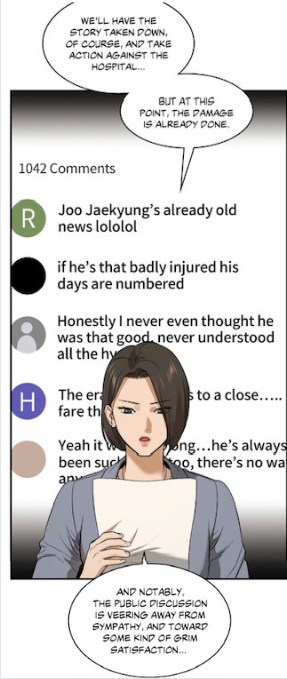 (chapter 36) He can remain indifferent to their “provocations”, as he has long matured emotionally.
 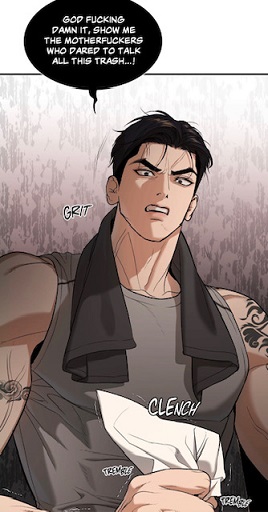 (chapter 36) He can retaliate differently. With his money and power, he can prove to them, he is no loser!
Feel free to comment. If you have any suggestion for topics or Manhwa, feel free to ask. If you enjoyed reading it, retweet it or push the button like. My Reddit-Instagram-Twitter-Tumblr account is: @bebebisous33. Thanks for reading and for the support, particularly, I would like to thank all the new followers and people recommending my blog.


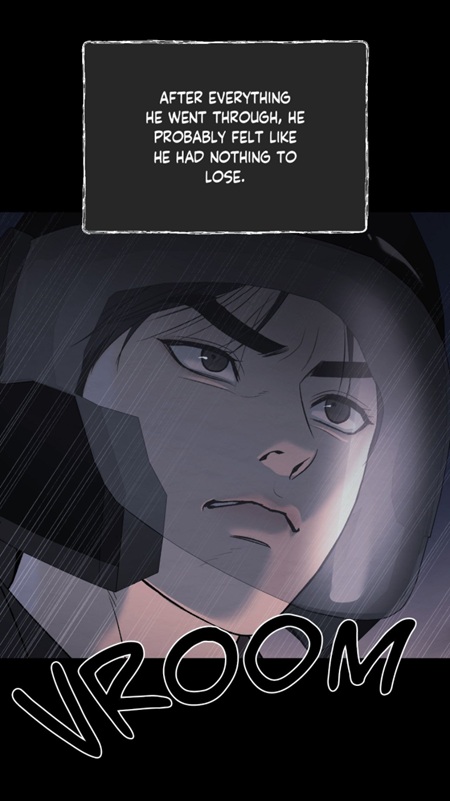 (chapter 74) What do they share? You might already have noticed it. At first glance, the answer seems obvious: each sentence turns around the word after. But if we pay closer attention, it is not just after that repeats, but after all. And here, the “all” quietly carries the weight of everything. A slight shift, but one that feels significant. But why this expression, and why here? Why does it resurface precisely in the context of Jaekyung’s family and past?
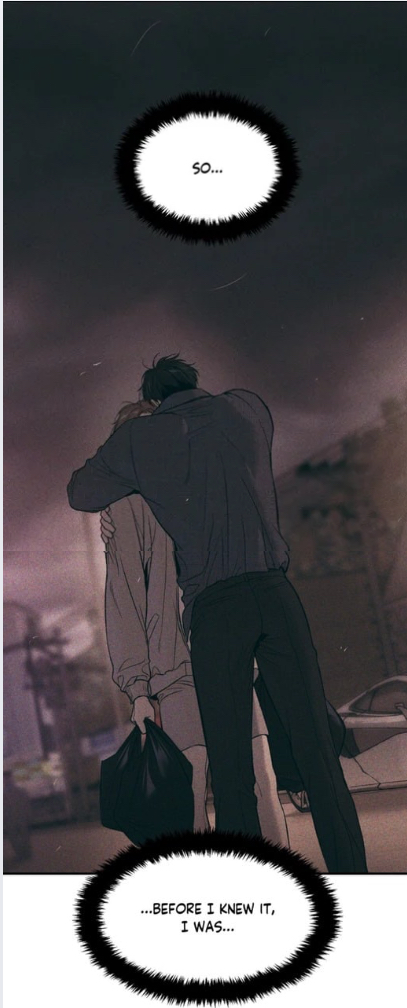 (chapter 70) For the first time, the flow of time shifted. Besides, no explanation, no certainty—just an admission that something happened beyond his planning or reasoning. Where the earlier lines spoke with closure, this one arrived without a verdict. But what does this “confession” signify for the athlete now?
 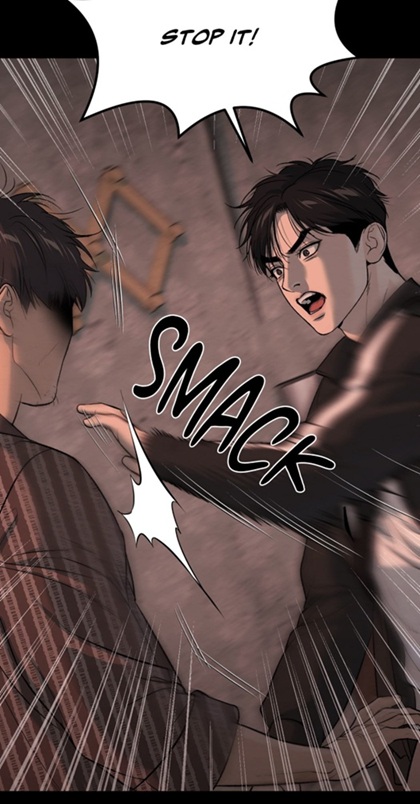 (chapter 73) locked in confrontation, while in the past, the woman had already shown her back — a gesture of refusal that foreshadowed her desertion. She had withdrawn in silence; the man, however, lashed out in noise. Both abandon, but in different registers: hers in silence and absence, his in noise and abuse. But the father’s gaze was selective.
 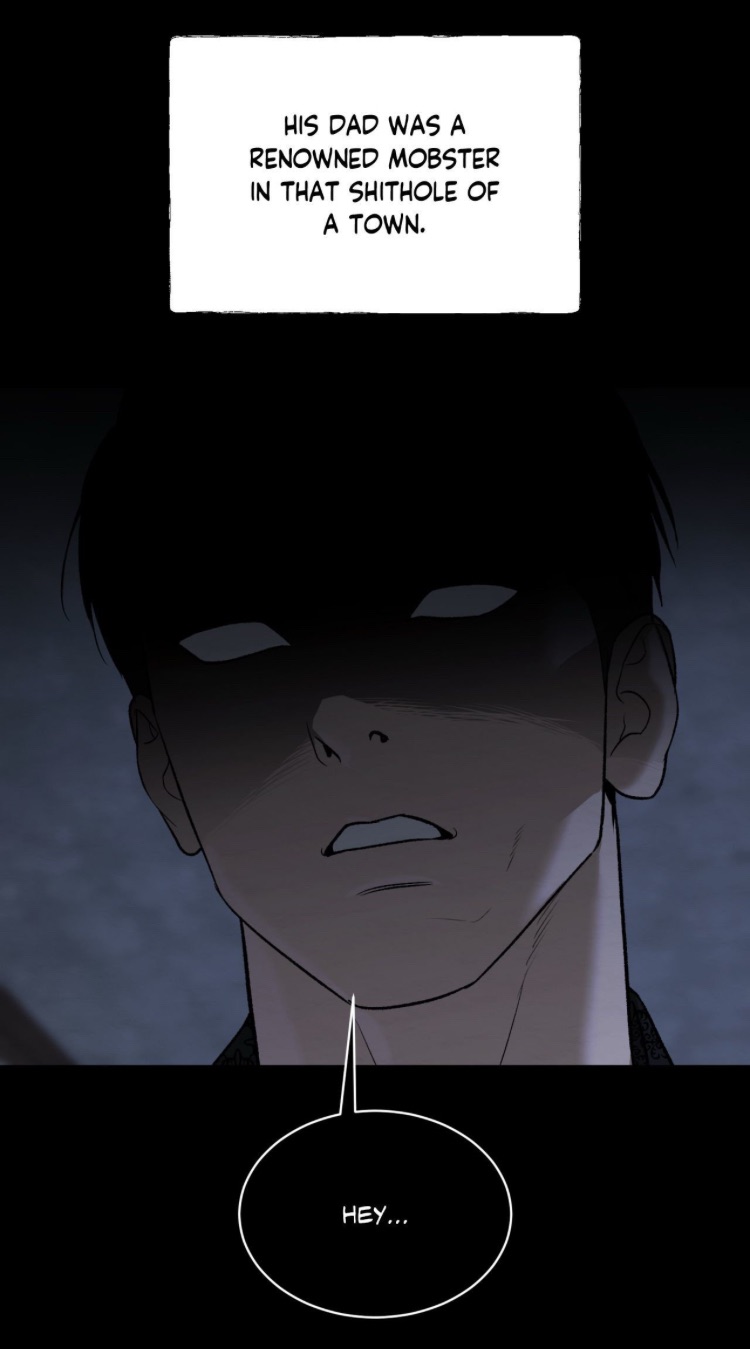 (chapter 73) — all were rewritten into a story where the woman was the sole traitor, and the child nothing more than her extension. In this way, the boy was denied recognition as a victim in his own right. He had been abandoned too. He had been abused either. He became instead a mirror in which his father projects the wound of being left behind.
  (chapter 73) To speak was to wound, to be wounded in return. Besides, the boy could never speak of this truth. He carried the memory of that last conversation in silence, crushed by the belief that he bore guilt for his father’s death. Shame and responsibility bound his tongue. That is how words, once used against him as weapons, became impossible for him to wield in his own defense. However, this was only the beginning of his withdrawal into silence. His fists would become his language, his body the only safe instrument of reply.
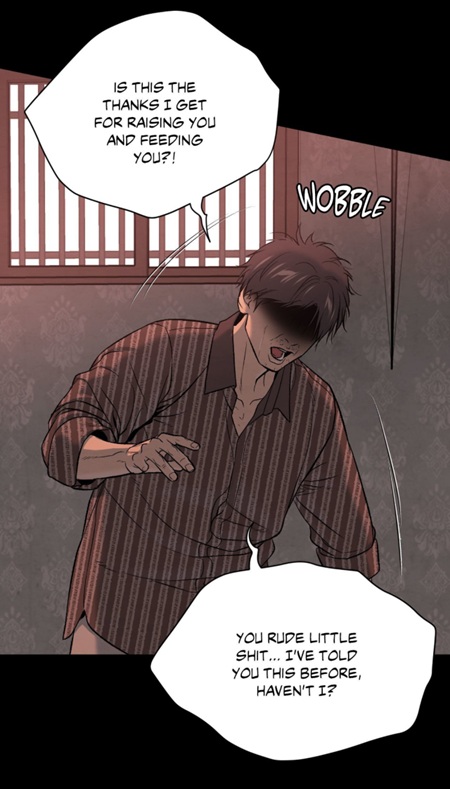 (chapter 73) The betrayal he lamented was nothing more than the logical outcome of his own principle. There had never been a we — only a man clinging to his pride, a woman turning her back, and a child caught in between. His after all
 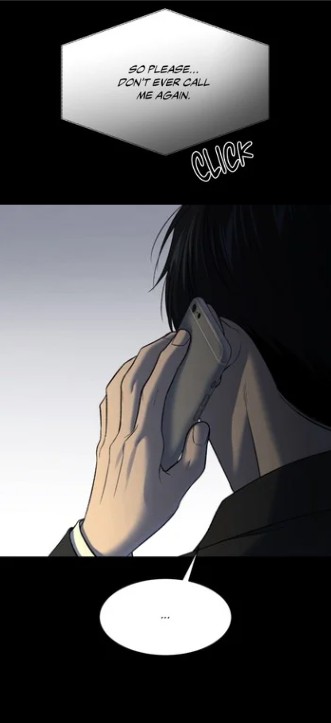 (chapter 74)
 (chapter 74) In the past, the boy had dialed her number from the same public booth
 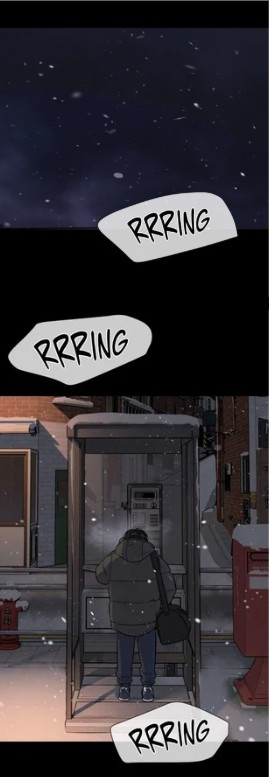 (chapter 72), clinging to the hope that she might answer one day. Eventually, those attempts ceased — but not the attachment. What remained was the number itself, saved under “Mom” on his phone
  (chapter 74) Here, he was old and rich enough to buy his own cellphone. The phone number was no longer a channel of communication, only a relic: a fragile thread he could not sever, because the fact that she never changed her number sustained the illusion that reunion was still possible. That dormant hope was shattered only when she finally picked up — not out of recognition, but by mistake, assuming the unfamiliar call must be important.
 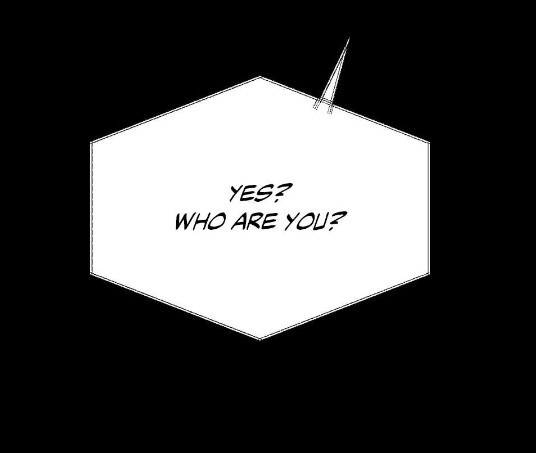 (chapter 74) And so, after years of silence, his voice reached her at last.
 (chapter 74) repeating “please” twice — not out of kindness, but because he had become a source of threat to her new life.
  (chapter 66)
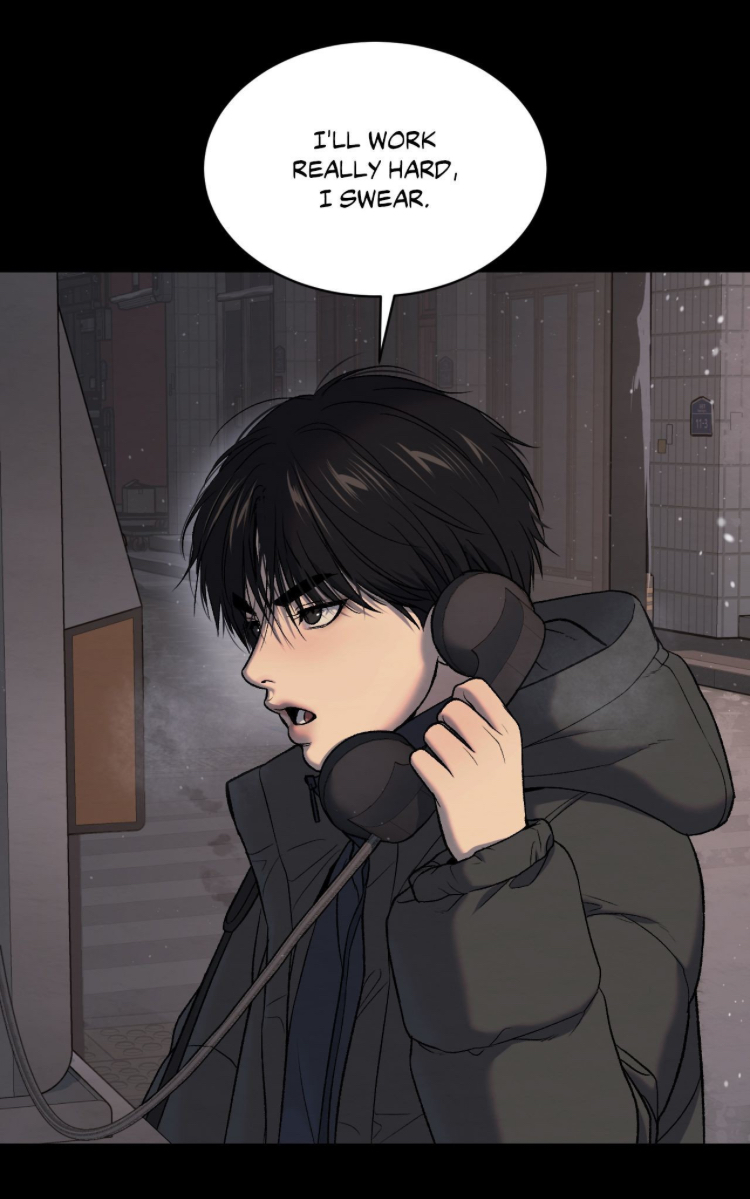 (chapter 72) “the father no longer represents a menace to her” but the very fact that she gave him her phone number. To a child, that number was more than digits on a page — it was proof of connection, a lifeline, an assurance that she could be reached, that she might one day answer.
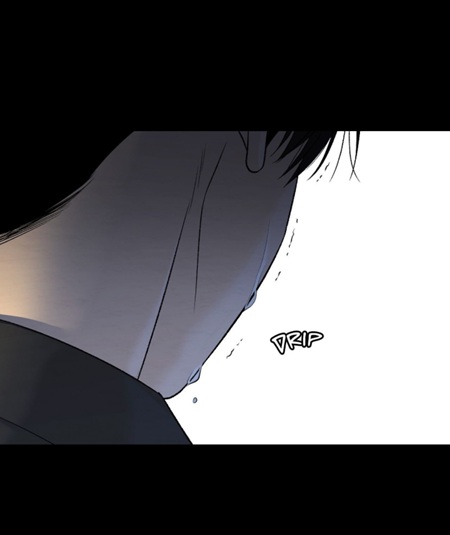 (chapter 74) Furthermore, it gaslights him into believing that the abandonment never occurred — that the break is only beginning now.
  (chapter 72) neglect, starvation, abuse, loneliness, betrayal — and yet the parents invoke it not to acknowledge his pain, but to hide their wrongdoings (justify their betrayal) and as such their failure! By placing after all at the front of her sentence,
 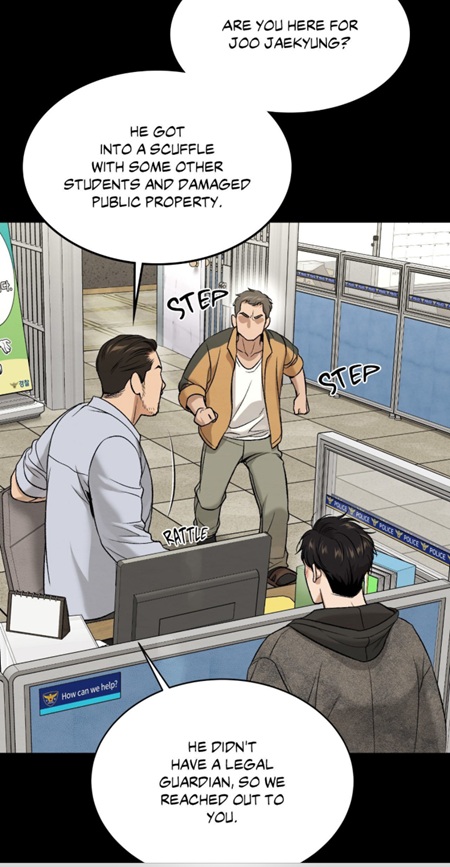 (chapter 74) When the boy once caused trouble, the police looked for Joo Jaekyung’s guardian. In the cutthroat town, they reached out to Hwang Byungchul — not because he was legally responsible, but because everyone knew the boy was close to him (“we”). Guardianship, then, is never erased by silence. Even if you abandon the child, others will still hold you accountable.
 (chapter 74) In a city of anonymity, hearsay cannot replace documents. She left a paper trail — a legal identity that binds them together. Should the champion cause trouble in Seoul, or even become the victim of a crime, the police would have to turn to his legal guardian. And that can only be her.
  (chapter 26). Oh Daehyun mentions that the young fighter broke the punching machine so many times he was blacklisted. Such destruction could easily have brought police intervention — and if it had, they would have been forced to search for his legal guardian. That guardian is none other than the mother who abandoned him and her new family. In other words, her erasure was never complete: every act of the boy risked pulling her shadow back into the open. Furthermore, this is what Kim Changmin revealed to his friend and colleague:
  (chapter 26) But Joo Jaekyung had long discovered sports and MMA, when he arrived in Seoul and met Park Namwook for the first time.
  (chapter 74) who redirected him before he was swallowed by the wrong path. The discrepancy between these accounts exposes more than just the manager’s manipulation: it points to the shadow of another intervention. How could he afford to destroy machine after machine without consequence? The only plausible answer is the “mother” and her new family, whose money and silence allowed him to pass as the “self-made” Emperor while erasing their own responsibility from the tale. And now, you comprehend why The Emperor was made voiceless. [For more read
 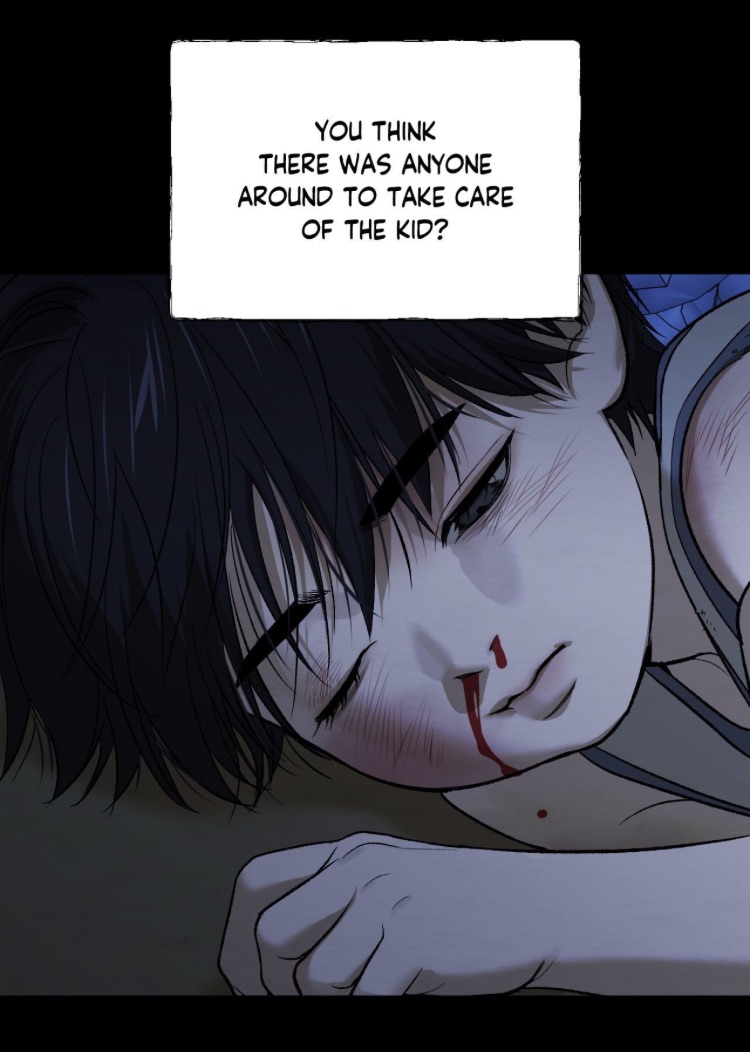 (chapter 74) For doc Dan who embodies the present, such a statement can only become the ultimate truth: the star had been an orphan like him.
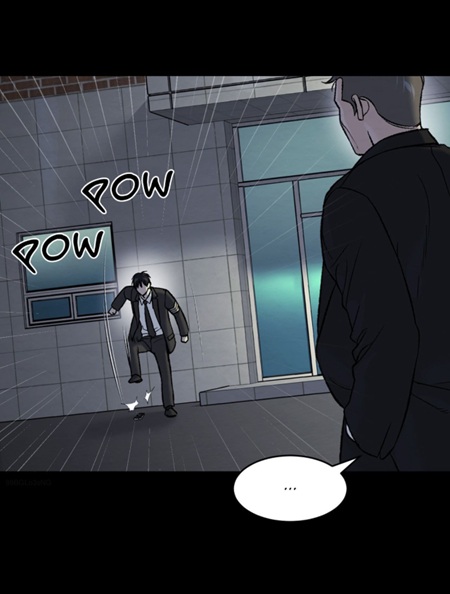 (chapter 74) At the moment when Joo Jaekyung shattered the cellphone, Hwang Byungchul was not by his side but standing at a distance, directly in front of him. This means he must have seen the boy’s face — the tears,
 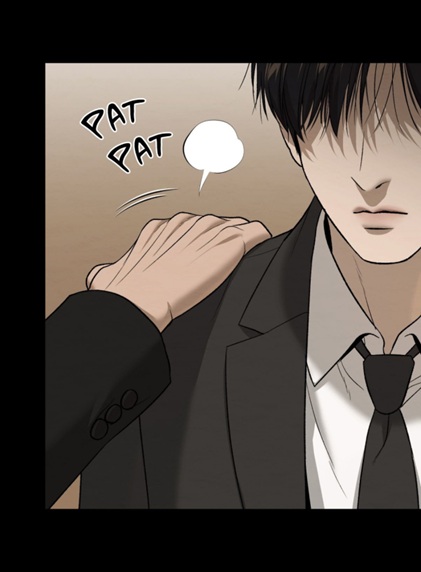 (chapter 74) Once again, the director was there — but his presence was mute. He placed a hand on the boy’s shoulder, yet he never lent him an ear. He never invited the boy to speak, never created a space where grief, anger, or longing could be put into words. In other words, he was present in body but absent in voice and heart. Thus the director’s pat was a gesture of pity. It was a substitute for words, a way of saying “poor boy” while protecting himself from deeper involvement. But precisely because he withheld speech and listening, it denied Jaekyung the chance to articulate his own grief. It comforted without connecting.
 (chapter 74), through fighting. Thus the director’s quietness, his refusal to engage, became a formative wound in itself. He chose the safety of distance over the risk of involvement, and in doing so, left the boy’s cries unanswered.
  (chapter 74)
  (chapter 74) He was given a chance to step in, to finally become the guardian he had failed to be on the night of the boy’s deepest collapse. Therefore it is no coincidence that he claims to have raised him, while the readers are well aware of the truth.
  (chapter 74) Yet the way he handled the moment revealed the full extent of his contradictions.
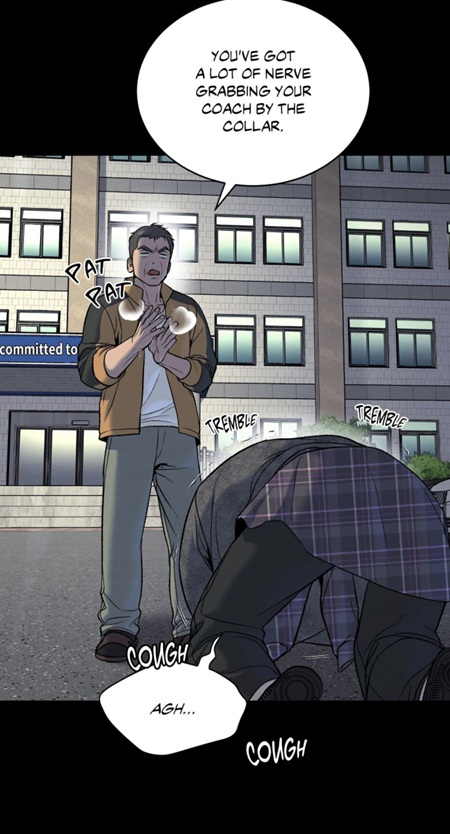 (chapter 74) or sometimes stood beside him, kept him in sight. On the surface, this could seem like loyalty, but in truth it was another form of failure. Facing him head-on meant constant confrontation, constant judgment. His presence was physical, but never protective; it was discipline, surveillance, not refuge. He never had his back!!
  (chapter 74) The father was dragged into memory as a warning: “Do you want to end up like him?” The mother, already gone, was turned into a conditional model: “Would she even want to live with you if she could see you now?” In both cases, the boy was denied his right to grieve. His parents were not mourned, but transformed into instruments of discipline. He was forced to run from one shadow and to chase another, leaving him no space to simply exist. The director maintained the future champion trapped in the chains of the past.
  (chapter 74) For him, she was a symbol — fuel for perseverance, as he was projecting his own mother onto the boy’s! For the teenager, the mother was the deepest wound. By naming her, the director imagined he was motivating; in reality, he was tearing it open once more. But how could Jaekyung reveal the truth — that his own mother had rejected him, not just once, but twice? To admit this would have been to confess that the hope she dangled before him, the dream of reunion, had been nothing but a cruel game. His silence was not pride but a shield, for voicing it would mean exposing that even his mother’s love had been counterfeit.
 (chapter 74) Thus his silence was not indifference but defense: he was protecting her name, even when it burned him to do so. In shielding her, he also buried himself.
 (chapter 74) That is how another pattern emerges: every exchange the boy endured was never true conversation, but always structured as an argument or a challenge. Even here:
 (chapter 74) For the first time, he shifted ground and no longer invoked Jaekyung’s parents as warnings; instead, he summoned the memory of his own mother. After everything she had done for him, he insisted, the boy should repay her sacrifice by leading a better life. Yet here again the same logic returns: time weaponized, gratitude demanded, obligation imposed. What might have been a tender remembrance of maternal care was turned into a debt-ledger pressed onto Jaekyung’s shoulders.
  (chapter 74) For him, discipline was always bound to her presence, her food, her care, her silent labor that sustained the gym. By invoking “the mother” as a motivator, he was, in truth, repeating the only model of loyalty and endurance he had ever known. But this was borrowed authority, not Jaekyung’s. What may have given the boy a flicker of purpose in the moment — to endure, to fight “for her sake” —
  (chapter 74) could not last. It was never his voice, never his wound being acknowledged. It was an external script imposed upon him. And so, over time, that imposed motivation faded, eclipsed by the title and the money.
  (chapter 54) The director’s form of guidance could not sustain him; it was external, borrowed, conditional. Therefore, it is not surprising that he was never contacted after the main lead’s departure for Seoul. By then, the director had already become like his own mother — reduced to a memory
  (chapter 70) and nothing more. He neither possessed the boy’s number nor showed the desire to stay connected; worse, he had told him explicitly never to return.
  (chapter 74) Through both words and attitude, he conveyed that their paths were to diverge for good. Yet, this was never truly his intentions. In cutting him off so decisively, he enacted the very separation he condemned later. The boy had taken his words too seriously.
  (chapter 56)
  (chapter 66) His care always comes after, never before. The word itself reveals his stance: he notices change, but belatedly, when damage is already done. The main lead is now escaping his control. And now, you comprehend why PArk Namwook blamed Joo Jaekyung and slapped him at the hospital.
 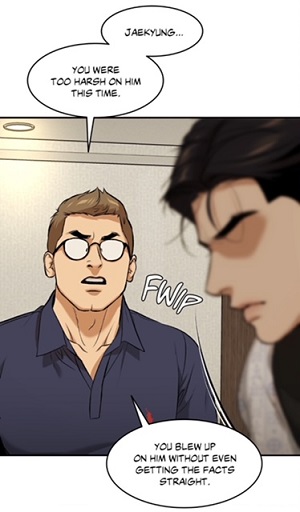 (chapter 52) That way, he could divert attention from the “before and circumstances”. And in season 2, the man hasn’t changed at all. Instead of asking what caused Jaekyung’s crisis, he chides him for straying from the routine — for not showing up at the gym, for being absent.
 (chapter 52), either for not rising above (after everything) or for drifting from his prescribed path (lately).
 (chapter 52) The slap at the hospital was more than a physical outburst; it was the eruption of long-repressed truth. Where he once swallowed pain in silence for his mother, and later endured fists in silence for his coach, here he answers back. Lately thus marks not only Namwook’s delay but also Jaekyung’s refusal to bear the weight alone anymore.
 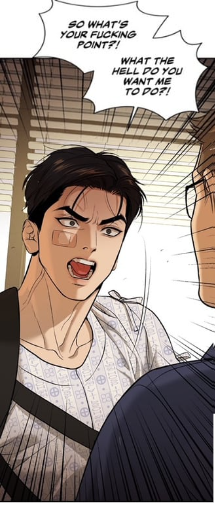 (chapter 52)
 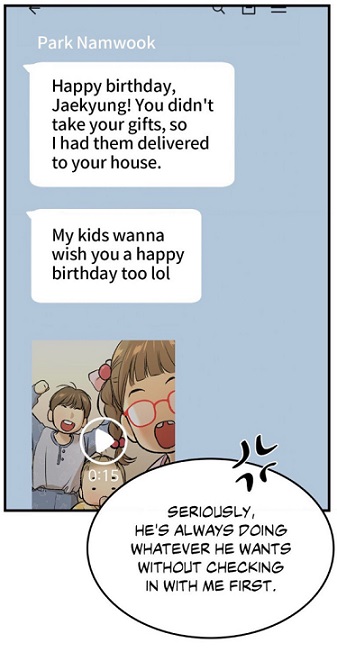 (chapter 45) his true life hidden elsewhere. Like her, he conceals his absence behind a phone call, creating the illusion of presence without truly standing by the boy.
  (chapter 45)
 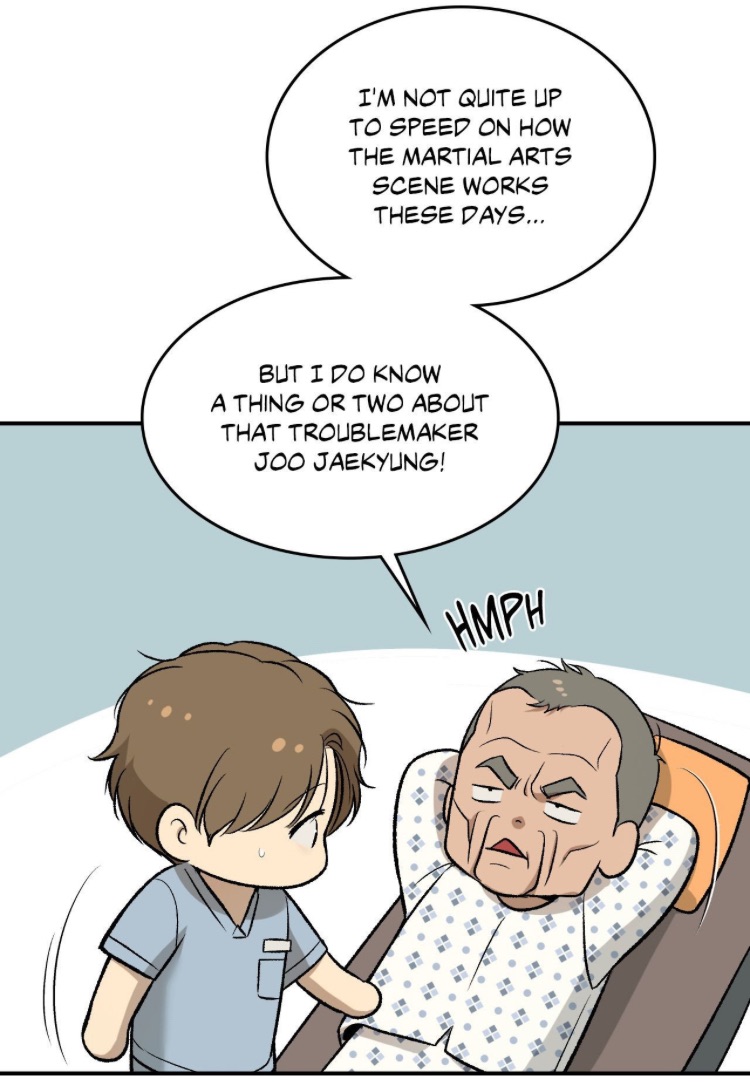 , (chapter 70), while remaining oblivious to the rot within their own world and the medical world. The director accused Joo Jaewoong of “choosing the wrong path,”
  (chapter 69): for the first time, a figure of authority assumed responsibility, however insincerely. What to others looked like shallow PR, to Namwook appeared as a dangerous break with the rule of denial. It highlighted the emptiness of his own guardianship, where reproach replaces protection and victims are erased from the narrative.
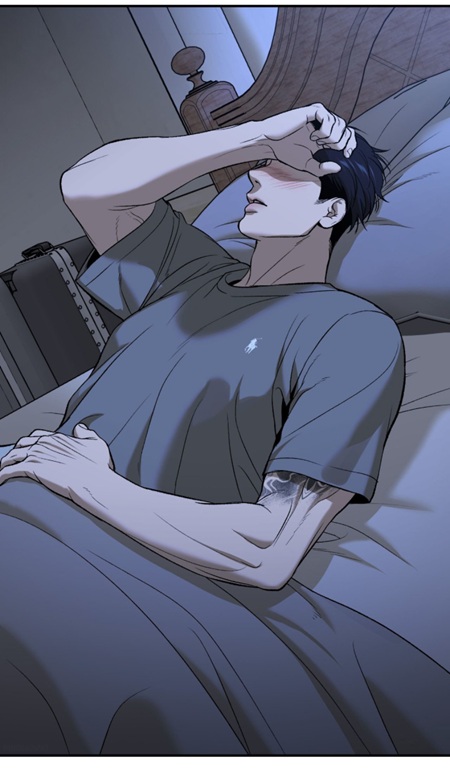 (chapter 74) Honestly, it would be funny, if the champion used the same words than his own mother against the manager
  (chapter 70) Thus the manager is confident that the star can return to the ring. By cutting the manager off in such a moment, Jaekyung would be affirming that he no longer accepts neglect disguised as toughness. Both “directors” are trapping the champion in the chains of the past and the future. For them, there’s no present and as such no happiness or fulfillment. Hence Hwang Byungchul is even bored, when he watched the MFC match.
 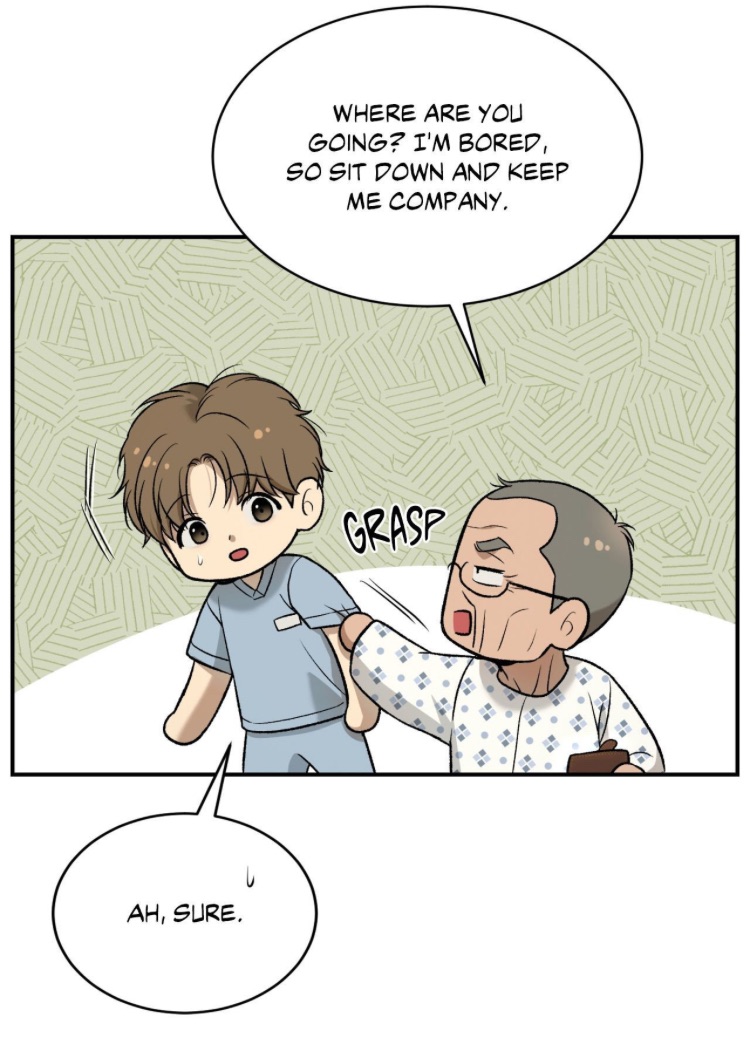 (chapter 71) Deep down, he has been longing for company too. Now, he is finally talking….
 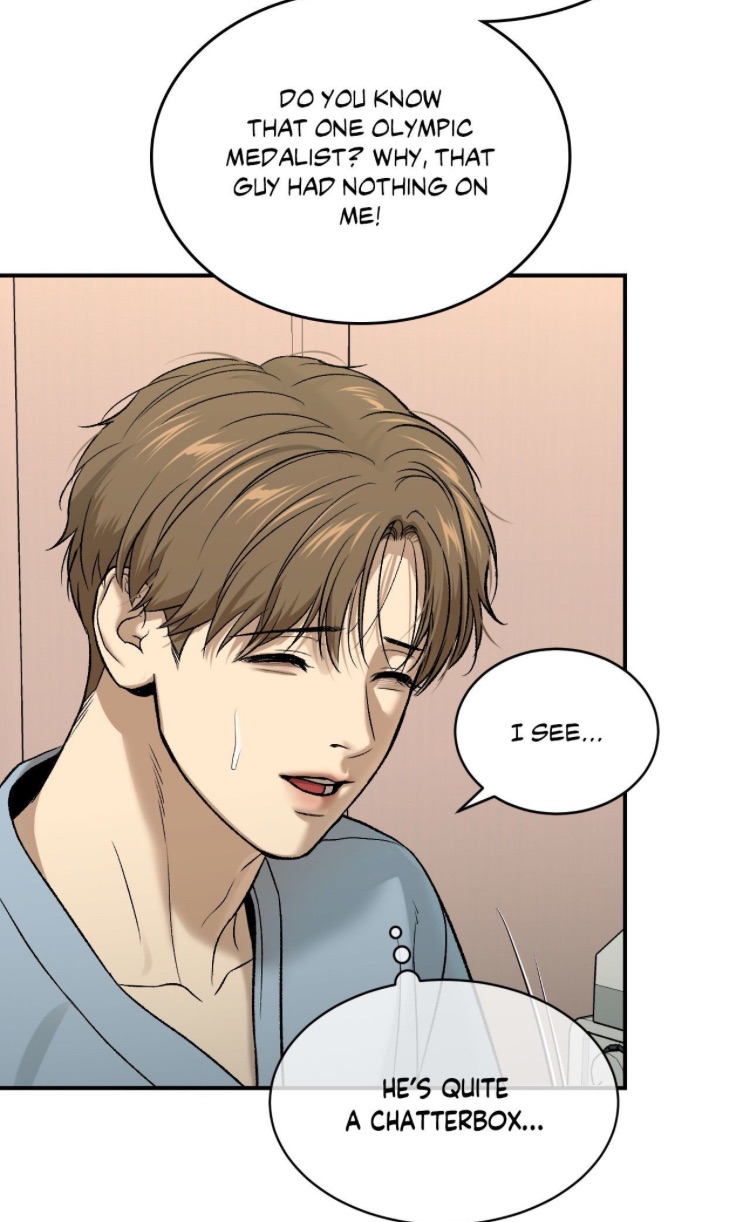 (chapter 70) As you can see, it is never too late… Thus we saw this on the roof of the hospital: a real and intimate conversation between the “guardian” and his pupil:
  (chapter 71) The director has changed!
 (chapter 65) She can appear as the perfect role model in the athlete’s eyes. No wonder why he listened to her and brought doc Dan to a huge hospital in Seoul. But here is the thing….
 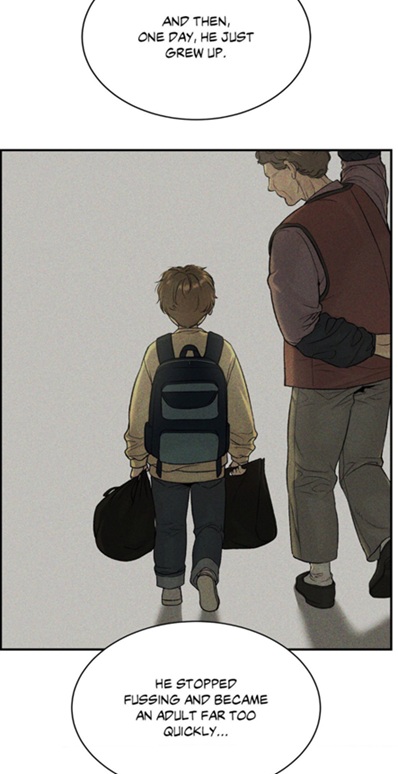 (chapter 65) The grandmother’s narrative culminates in a deceptively simple phrase: “And then, one day, he just grew up.” Unlike after all, which implies endurance, patience, and a long lapse of time, her then one day compresses everything into a brief, almost casual instant. In her telling, there is no slow accumulation of wounds, no process of wear, no history of pain to be endured. The transformation is presented as sudden and natural, as if nothing of significance had preceded it.
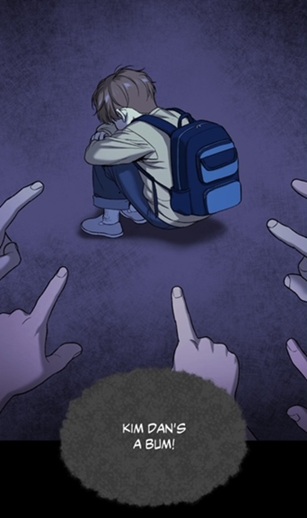 (chapter 57), and his forced maturity to a single, fleeting day. No trauma, no endurance — just inevitability. By collapsing years of hardship into a harmless “day,” she erases both the past and the victim. And now, you can understand why doc Dan is trapped in the present! By erasing the “before” (abandonment, trauma) and trivializing the process of “becoming an adult,” she collapses time into a single, static present. Kim Dan is not allowed a past that hurts (because she erased it), nor a future that could unfold differently (because “he just grew up” is presented as inevitable).
 (chapter 62) cannot, by themselves, sustain love. Emotions flare and fade, tied to the immediacy of the present. Thus the mother could break her promise and even lie to him later. What endures is not emotion alone, but the principles that Fromm identified as the essence of love: care, responsibility, knowledge, and respect. These qualities stabilize the fleeting nature of feeling and transform the present into something continuous, something that can grow. In this sense, the teddy bear bridges the gap between “present” and “future”:
 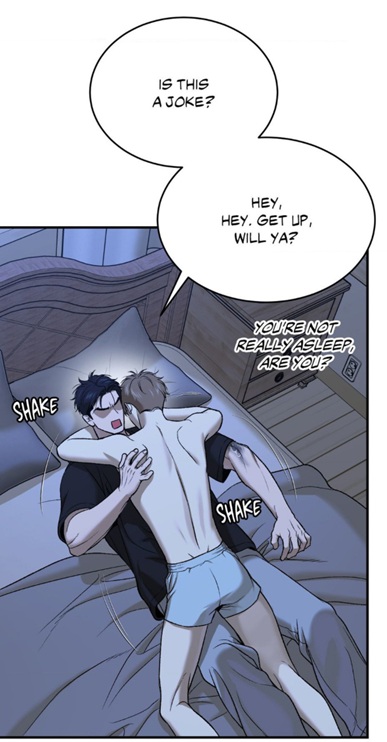 (chapter 65) it transforms the fleeting moment of emotion into a promise of constancy. After all, before it’s too late, what both men longed for was never glory or escape, but a home where they could rest — not alone, but in each other’s arms. By discovering emotions and learning to live in the present, the champion also rediscovers his inner child. His line — “Is this a joke?” — marks that shift, since jokes, like emotions, only exist in the immediacy of the moment. It is only a matter of time, until he laughs because of a joke. By embracing doc Dan like a teddy bear, he allows himself to cling and regress, no longer the wolf or the Emperor but simply a boy seeking warmth. Even his cold becomes symbolic:
 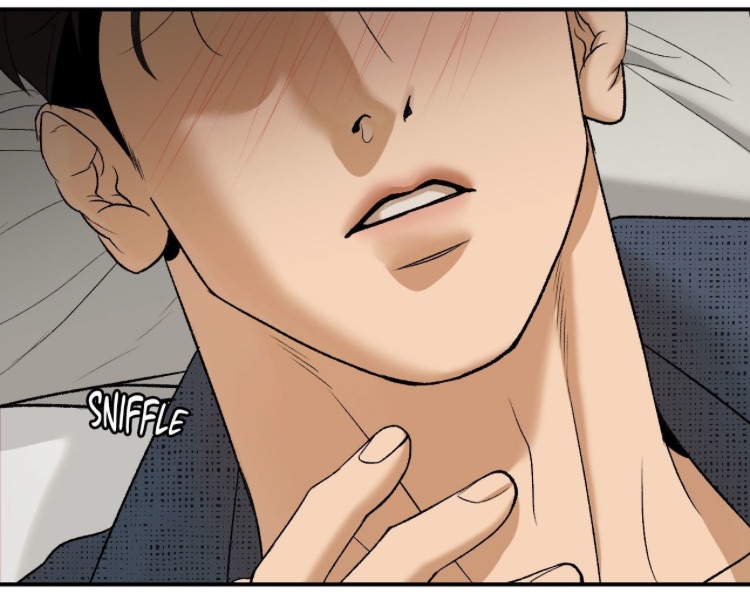 (chapter 70) illness forces him to slow down, to be vulnerable, and to receive care — something denied to him in childhood. In this way, love turns the regression into healing, transforming weakness into the possibility of renewal.
 (chapter 48) Why did the Webtoonist gave us the time, when the next episode starts another day? On the one hand, it exposes that the schemers knew about the champion’s nightly activities. He wouldn’t sleep much and he would keep his cellphone next to him.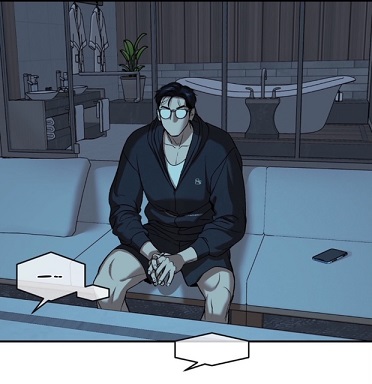
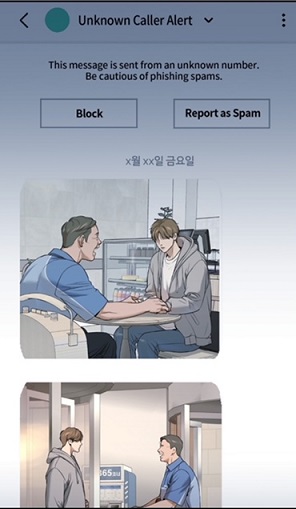 (chapter 48) It shows once again that the traitor is close to the athlete, for he knows about his way of life. Furthermore, the unknown person could text to the champion, hence this means that his cellphone number got leaked by a person close to him. On the other hand, I am quite certain, the Webtoonist desired to fool her readers making them anticipate a confrontation between the two protagonists. However, nothing happened indicating that Joo Jaekyung didn’t react, like the plotters had anticipated it. Thus they had to create a new scheme. First, let’s not forget that they had used a similar method in the past.
 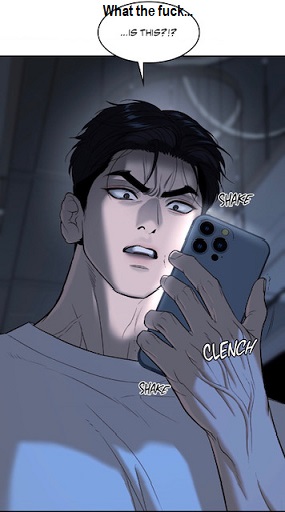 (chapter 35) This made me think of Painter of The Night and No-Name’s advice:
  (chapter 76) “A deed once foiled has no chance of success the second time around”.The criminal was referring to learning through experience. After going through such an event once, the athlete is no longer caught by surprise. We could say that he learned not to jump to conclusions and control his emotions. That’s the reason why in episode 48 he remained level-headed. Because the champion didn’t get angry, he could be more attentive.
 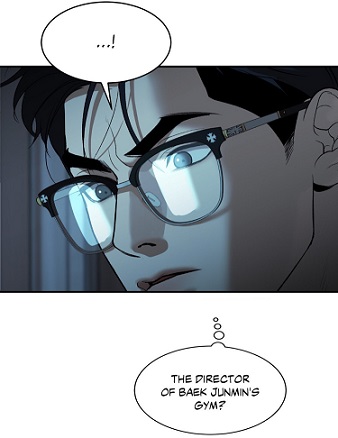 (chapter 48) Secondly,
 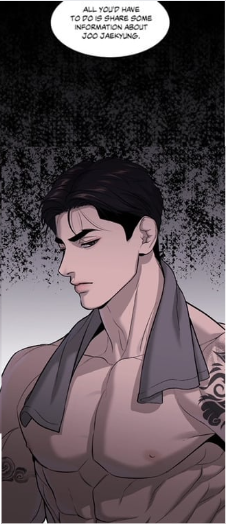 (Chapter 48) The irony is that the doctor had been able to treat the star’s injury. For me, the Summer Night’s Dream played a huge role, as during that night, Joo Jaekyung felt treasured and loved. Therefore the pictures could only expose the duplicity of the director of King of MMA. Under this new light, it becomes understandable why the celebrity didn’t fall into their trap and why they had to turn doc Dan into a traitor by giving him a weapon without his knowledge. Finally, I believe that Joo Jaekyung had another reason not to confront the physical therapist. How so? It is because he had sent away his soulmate, while the latter had approached him.
  (chapter 48) He had missed the opportunity.
 (chapter 30) Here, he wished to seek the doctor’s closeness. Nonetheless, if he had gone to Kim Dan’s bedroom during that night, he would have achieved the opposite: he would have created distance and caused an argument. The latter could have told him that he was looking out for himself, for Joo Jaekyung had threatened to fire him. Through these observations, it becomes visible why the athlete couldn’t ask Kim Dan at all. Consequently, I come to the conclusion that the clock
  (chapter 2) He is not jinxed, but his failures are the result of his bad choices, like for example trusting the wrong people or not listening to the trustworthy ones or keeping secrets. Or we could say that he is just the product of his education and childhood. He is cursed, for he was not properly raised. He refused to listen to his PT, when the latter wished to tell him something.
 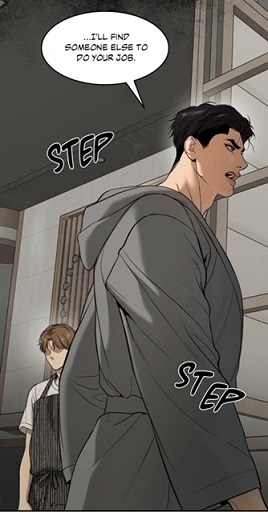 (chapter 45) Then in the bedroom, he had rejected all his requests (massage, conversation). It was, as if he no longer needed him. He was no longer eating his breakfasts too.
 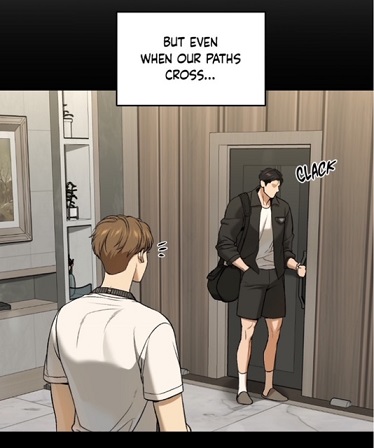 (chapter 47) Under this new light, Manhwa-lovers can comprehend why he looked annoyed in the hallway.
 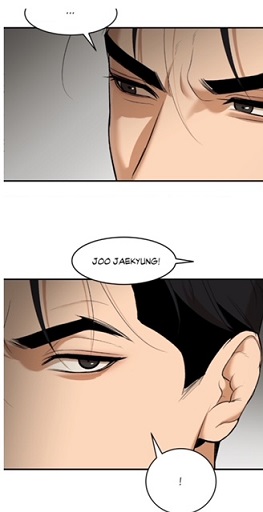 (chapter 49) The gaze displays not only worry and anxiety, but also regret. It was too late to ask the doctor. For me, he chose silence, for he was regretting his reactions in the penthouse. He feared to ask Kim Dan, because if he brought up the meeting with Choi Gilseok, this could push the hamster to quit his job. However, thanks to Kim Dan, the star’s condition improved greatly. That’s how it dawned on me why the champion became a beast and why he is hiding his past:
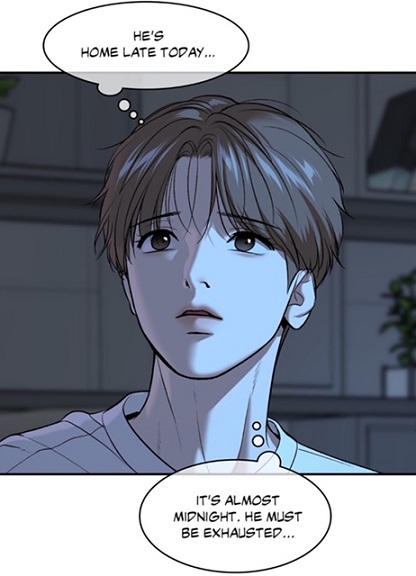 (chapter 48) But why is midnight so important? It is because the number 12 carries religious, mythological and magical symbolism, generally representing perfection, entirety, or cosmic order.
 (chapter 12) the couple was supposed to reach Nirvana, but the athlete failed terribly. Under this new light, it becomes comprehensible why the protagonist chose not to confront Kim Dan in episode 48. It was, as if the champion was closer to the heavens. This represents the champion’s leap of faith. Don’t forget that the star got scared for one moment
 (chapter 48), when he noticed doc Dan’s presence too late. But nothing happened to him, that’s how he got incited to trust Kim Dan. The latter wouldn’t backstab him. Under the blue light, the champion got transformed.
 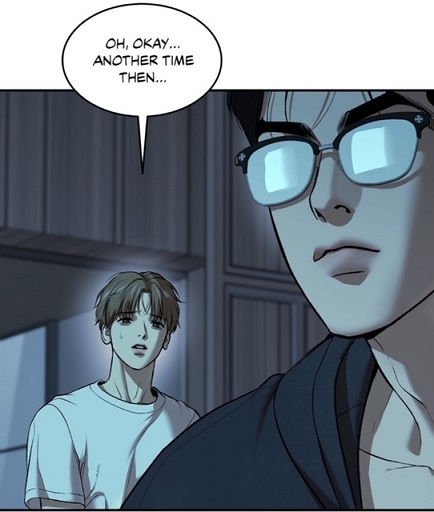 (chapter 48) On the other side, the fact that the champion is always targeted during the night is a sign that the villains desired to approach him, when he was isolated. So they know not only about his insomnia, but also about his solitude. I would even add that the plotters are aware of his association between the night and danger. Remember how he described relaxation: he would give an opportunity to his enemies to attack him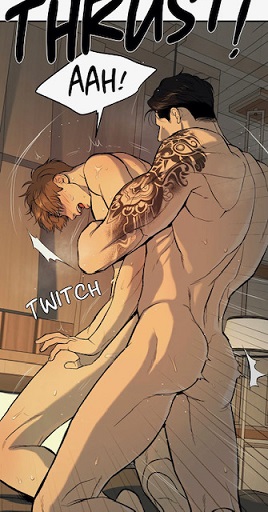


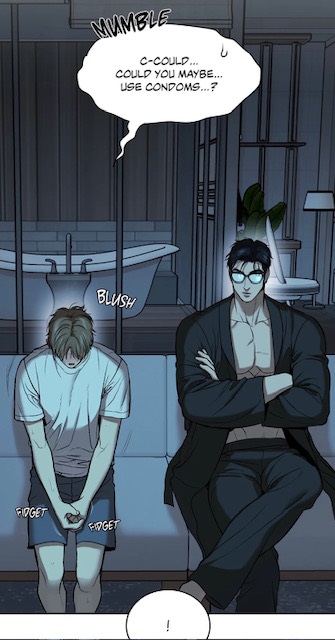






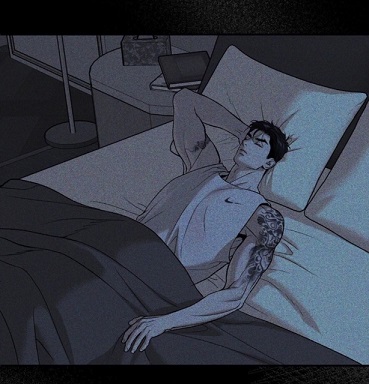
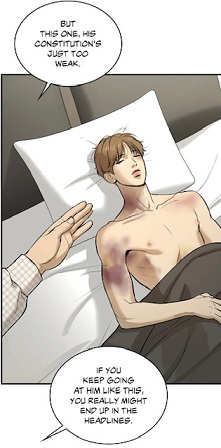 (chapter 13) It is important, because through this terrible experience, Joo Jaekyung came to internalize the connection between sex and danger. This would explain why he has been so rough in bed before. He came to see it as a normality, a sign that his perception of sex had been negatively influenced. And this can only come from bad experiences. It had nothing to do with “enjoying the moment”, until the protagonist met the shy hamster. We can see his gradual transformation. In episode 12, he definitely saw the night as “carpe diem”
 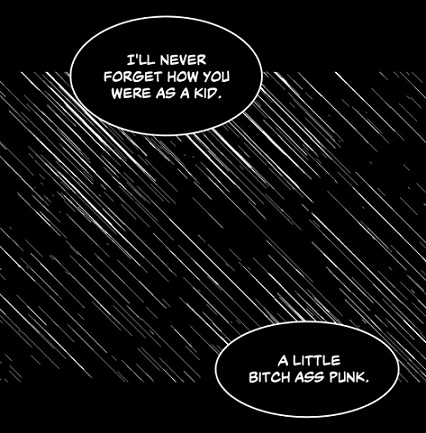 (chapter 49) In the previous essay, I had mentioned the theory that the champion might have been raped and even gangraped which would fit the criteria (sex, danger and urgency). Finally, the recurrence of “delicacy” during the night is an indication that the athlete must have been like Kim Dan in the past! Vulnerable and alone!
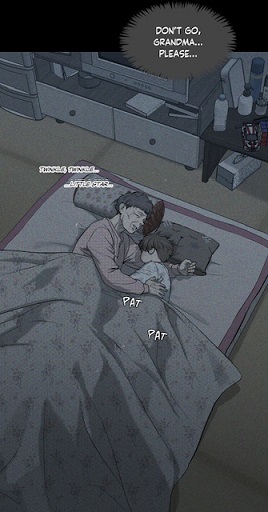 (chapter 21) Furthermore, the champion exposed why he could never relax:
 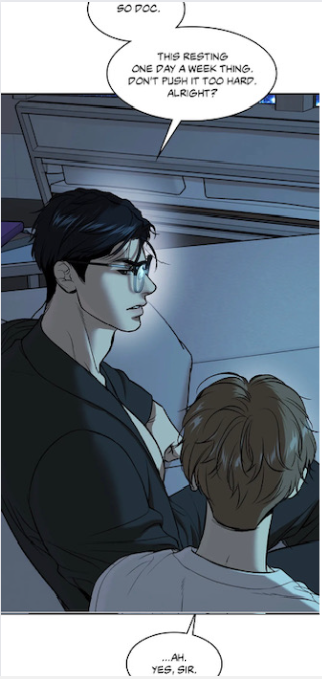 and 48:
 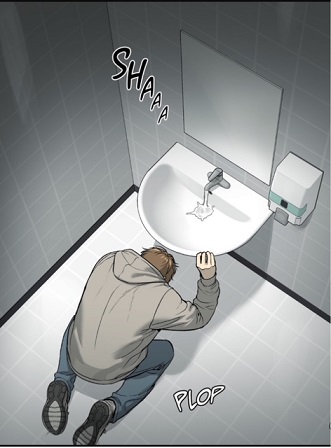 , for he had been recollecting the diagnosis from Kim Miseon and kept thinking of his grandmother. After this painful meditation, he came to recognize his selfishness and his relative’s love and generosity
 (chapter 47). And what was the main lead feeling after that terrible night? Regret, for he had not been able to notice his relative’s suffering and sacrifice!
 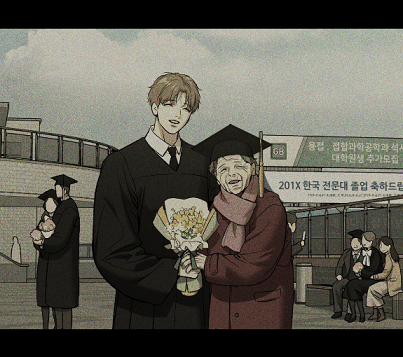 (chapter 47)
 (chapter 19) or a new request like swallowing the sperm
 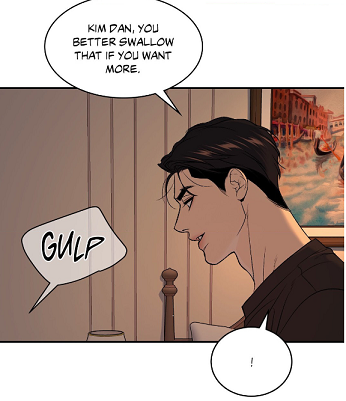 (chapter 39) or kissing the champion’s ruined ears
  (chapter 44)
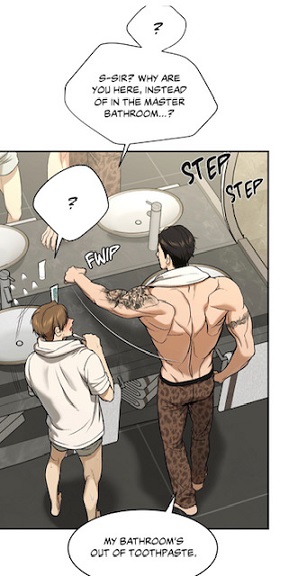 (chapter 30) He was rough and used the toothpaste as an excuse.
 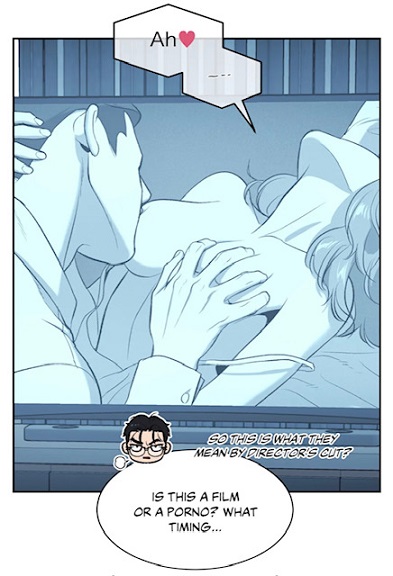 (Chapter 29)
 (Chapter 40) That’s the moment he stopped considering the hamster as a prostitute, while from chapter 2 to 18, he viewed Kim Dan as a tool, as a talisman against his jinx. However, I detected a transition after he kissed the physical therapist. From that moment on, the doctor was connected to food and sweetness.
  (Chapter 18) And now, observe that during the night in the bathroom, doc Dan was associated with a baby receiving food:
 (chapter 20) As you can see, here the champion started viewing him as a human being. It exposes that little by little, his perception of the physical therapist improved. So from chapter 30 to 39, Joo Jaekyung was forced to question the nature of his relationship with Kim Dan: a PT or a prostitute or a pet?
  (Chapter 34) Here, he was in denial, he described the main lead as a possession, but he couldn’t fool the actor. Under this new light, it becomes comprehensible why the nights in chapter 19, 29 and 39 were so magical, they announced a transition or better the end of viewing Kim Dan as an object (tool for his jinx) and possession. From 41 to 49, the champion was cornered to recognize Kim Dan as a physical therapist and not just as a member from Team Black. Don’t forget his attitude in the car, when the main lead suggested him not to train.
 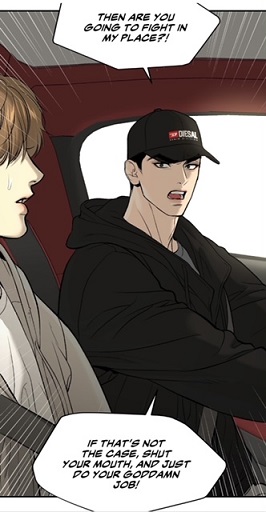 (Chapter 42) He rejected his advice, a sign that he was doubting doc Dan’s skills and competences. That’s the reason why I come to the conclusion that with the pictures, the champion was pushed to admit that Kim Dan is his physical therapist
  (Chapter 49)
 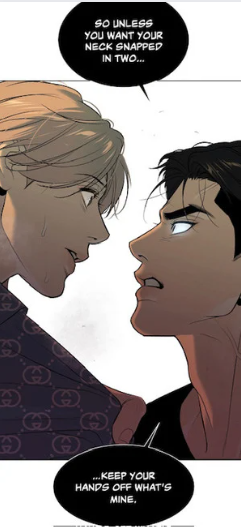 (chapter 34), then the fake star Baek Junmin
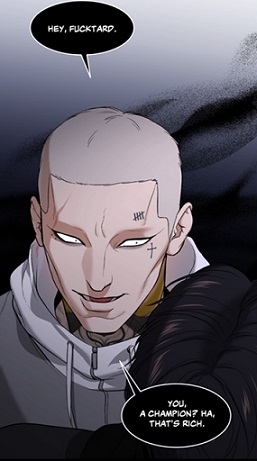 (chapter 49). These meetings are not random at all, a sign that someone knows about the athlete’s hidden suffering very well. Observe that both characters challenged the celebrity by giving him an order:
 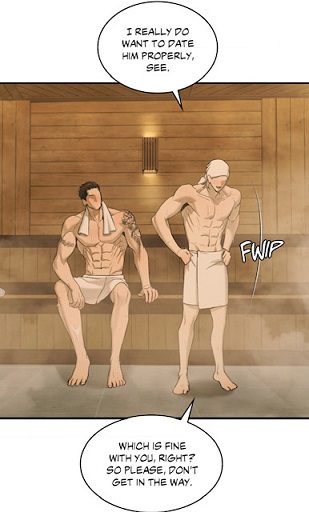 (chapter 34) “Don’t get in the way” and “make sure you give her a good polish”.
  (chapter 49) The sportsman is viewed as a hindrance to their dreams, he should clear the way for them. I deduce that in his youth, people must have treated him the same way. He represented an obstacle, therefore these two figures must have challenged him in the past too. Their confidence comes from their past experiences with the athlete. Both must have defeated Joo Jaekyung, but naturally they must have tricked him.
  (chapter 33)
  (chapter 49) Then I noticed another parallel between the two plots: the presence of a scapegoat, and the involvement of a third person. Heesung faked his injury by putting the blame on the athlete, while he asked Kim Dan as compensation. In the second plot, the roles are switched. Kim Dan is now the perpetrator, while the athlete is the victim! Baek Junmin is the beneficiary of this scheme. And what do these plots have in common? Joo Jaekyung is the victim of a trick, though Heesung’s manipulation was rather benign. First, he acted on his own.
  (Chapter 31) Moreover, he utilized the genuine concern and innocence of his surroundings. In other words, he used his image as a good and honest man to his advantage. Thus I come to the conclusion that the artist’s sin in their youth was rather minor, as the artist tends to violate social norms. So though it was no illegal, the actor’s wrongdoing definitely left scars on the protagonist’s heart.
  (chapter 29) Probably, Heesung utilized Joo Jaekyung’s innocence to his advantage in order to maintain his good reputation, like for example he was not supposed to be smoking or he took away a friend from him, as the topic of their conversation was about the theft of a person
  (chapter 33)
 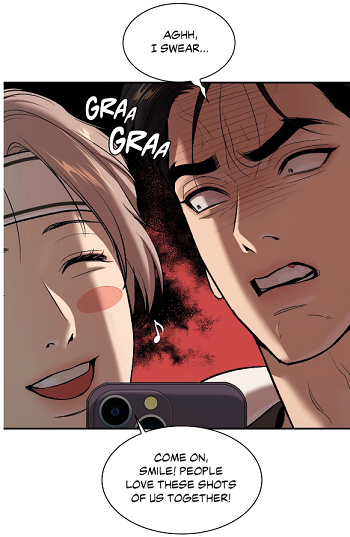 (chapter 30), because it always makes him appear as a well-mannered and honest man. He gets fun at his frenemy’s expense. In addition, he could play tricks without getting caught… and the other would appear as the bad guy and take the blame, like we could observe at the gym with the manager’s judgement.
  (Chapter 30) Another common denominator between The Shotgun and Heesung is their envy and greed.
  (chapter 5) Joo Jaekyung destroyed the sandbag, when he imagined that doc Dan had blocked him! This signifies that the former could no longer contact the shy hamster. Joo Jaekyung saw it as an affront, a challenge!
  (chapter 46) could be seen as a reflection from the arcade and the star’s past. And since Kim Dan wounded Joo Jaekyung in the locker room
  (chapter 49), I deduce that such an action must have happened in the champion’s youth. He got not only hurt by people, but also betrayed by a friend. There exists many reasons for this hypothesis.
 (Chapter 04) and be rude towards others.
 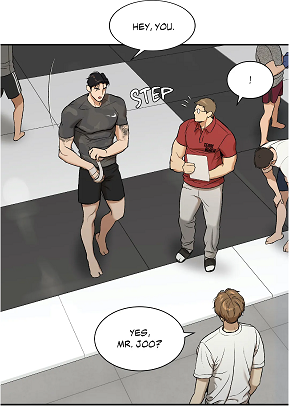 (Chapter 7)
  (chapter 37) But Mingwa left many clues that the celebrity’s personality shouldn’t be judged by impressions. During their first night together, Manhwa-lovers could see books next to the bed.
 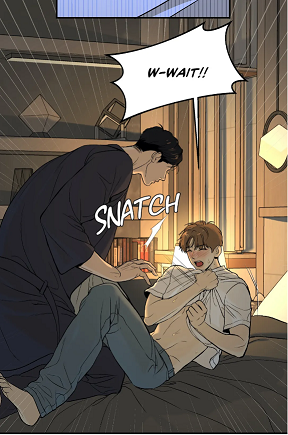 (Chapter 3) Some of them are not written in Korean or English. Moreover, the Webtoonist revealed that one of his hobbies is reading. This explains why he can talk prettily.
 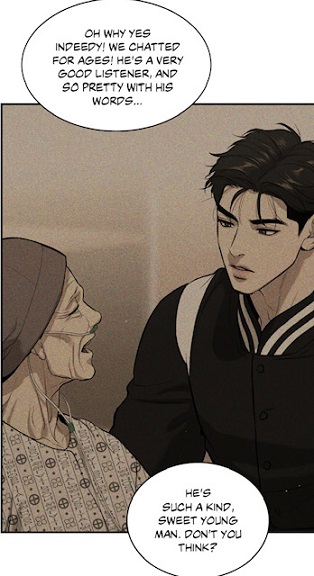 (chapter 22) This shows that his behavior mirrors the counterpart’s. Consequently, it is not surprising that the champion is rough with his own body, as Park Namwook is not treating him like a delicate child.
 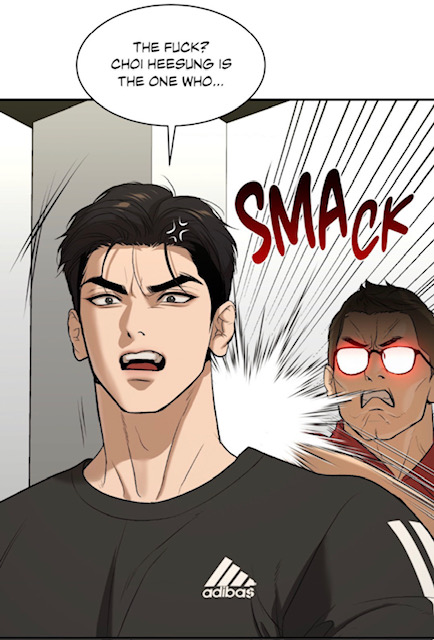 (chapter 31) But there exists another proof for his intelligence. The celebrity is capable to lead an interview in English on his own.
  (Chapter 37) Even stressed and filled with anger, he could understand and speak fluently in English.
 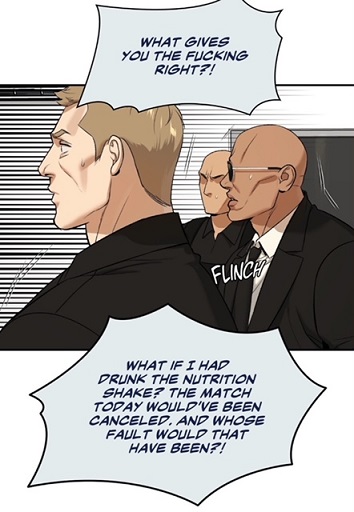 (Chapter 40) Compare Kim Dan’s English skills in the same scene:
  (chapter 40) Besides, Jinx-philes should question why Mingwa is not divulging his scores as a student contrary to Kim Dan or Jinwon from BJ Alex. It is because she wants to create a certain image about the champion: he is a bad boy. In my eyes, she is playing with prejudices about MMA fighters. People often imagine, they lack social manners and education. They chose this path, for they could do nothing else. And this brings me to my next remark. We know that Kim Dan selected PT because of his halmoni.
 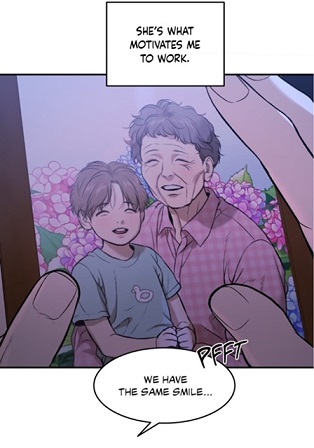 (chapter 47) So what was the protagonist’s motivation to become a MMA fighter? In my eyes, this question represents the core of the mystery. My idea is that the suffering in his youth led him to become a boxer. It is definitely related to his experienced powerlessness and loneliness. So when he suggested the sparring to Kim Dan, we should see it as a reflection from the past:
 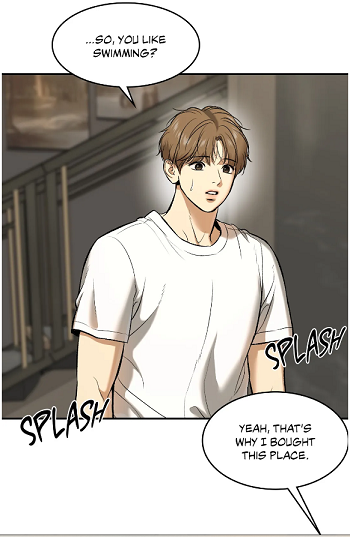 (chapter 27) I see a contrast between these two sports: swimming which is related to relaxation, pleasure and fun and MMA fighting which stands for challenge, pain and seriousness. This contrast is even more present in the following panel:
 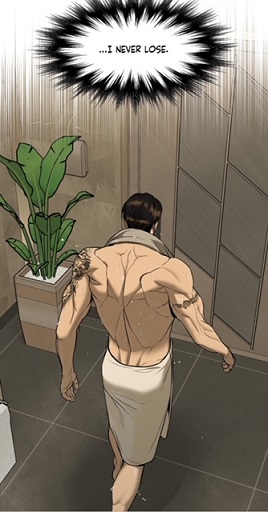 (chapter 49) Is it a coincidence that this Enlightenment took place under the shower? For me, no! I see a strong link between water, swimming and the champion’s job. It looked like swimming represents a source of danger for the athlete’s job, as it is an entertainment! Hence I can’t shake the feeling that in the past, Joo Jaekyung might have shown aptitude for becoming a natation athlete! Let’s not forget that for the calendar 2024, the champion was seen carrying swimming googles and not “MMA gloves”. This detail caught my attention and made me wonder why Mingwa selected these items.
  (chapter 49) He is a hyena, hence his color is brown.
  (Chapter 48) And The Shotgun has a similar attitude:
  (chapter 49) Interesting is that his description of the challengers fits the situation in the new plot perfectly. The Shotgun imagines that he will fight against a diminished champion. His shoulder is injured and they have planned to add a new injury. The hyena stands for balance and cleansing as their task is to remove the weak ones.
 (chapter 49) As an old man, Choi Heesung is revealing vulnerability and senility. Due to his old age, he could be replaced by another hyena, a younger hyena!
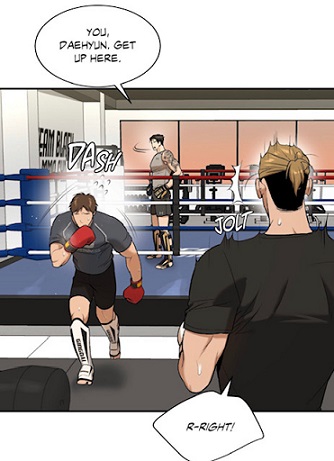 (chapter 36) which could only affect the members from Team Black. Their loyalty could waver. Then he got to hear bad comments from the Internet
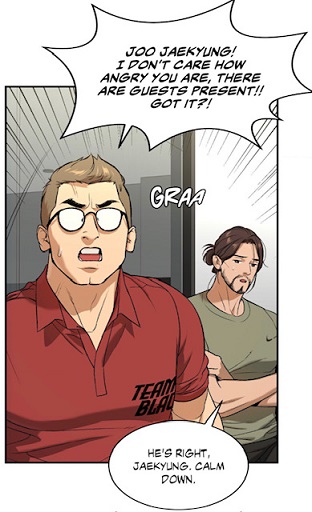 (chapter 36) Under this new perception, Manhwaphiles can grasp why the MFC manager offered him a new defy right away. They needed to exploit his injury!
  (chapter 41) With the pictures
  (chapter 13) This could have ended badly. Another wrongdoing could be the rejection of his birthday present and his harsh reaction.
  (chapter 47) At no moment, the physical therapist brought up his misdeeds and asked for an apology. His silence became the symbol for his tolerance and even forgiveness. In addition, the doctor and his halmoni embody both vulnerability and poor health, which is strangely connected to crime and scandal.
 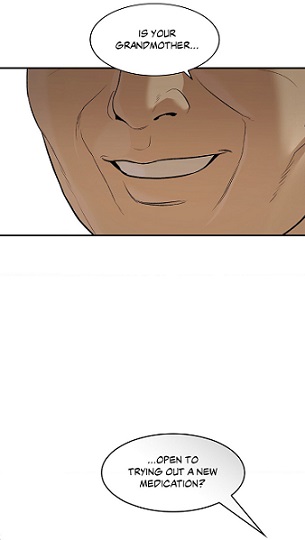 (chapter 48) Through them, the champion is learning that hunting weak and pitiful creatures is not only a sin, but also a crime! In the first case, he could be accused of hurting an innocent.
 (chapter 45) He wanted Kim Dan to look at him and take care of him. In other words, he wished to be seen and not neglected! He has not realized it yet, but he is longing for a companion, a playmate. He desires to have someone by his side who would talk to him and listen to him. From my point of view, the champion must have received on his birthdays many presents, but he was all alone. He had no one by his side. The gifts couldn’t replace the warmth from a loving parent. The moment I made this connection, it dawned on me what the nightly desertions could have meant for the star.
 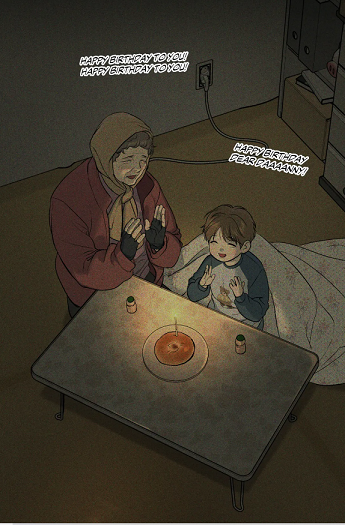 (chapter 11) He wished to receive attention and to have a normal conversation. Consequently, I assume that the champion has been copying his role model. That’s how he was pushed to grow up too quickly. For me, he had no childhood at all, hence when he met Kim Dan, he was encouraged to develop his inner child!
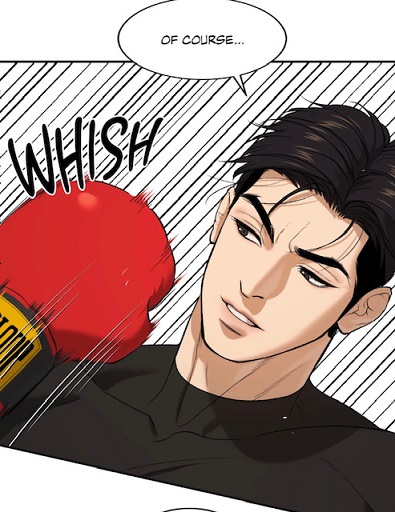 (chapter 26) For the first time, he had fun sparring. Hence he kept smiling. It is no coincidence that soon after he chose to accept to take a day-off, when Kim Dan made the suggestion.
 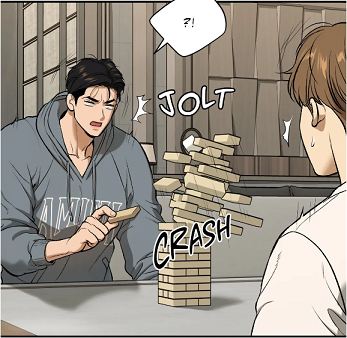 (chapter 27) That’s how he remembered that he liked swimming and he could play a prank on his lover.
  (chapter 27) Here, he could smile, because it was fun and there was no real expectation. It was not truly connected to money.
  (chapter 35) and not in episode 48. It is because Kim Dan had paid him a visit during that night, a sign that he was thinking of him as his patient and VIP client.
 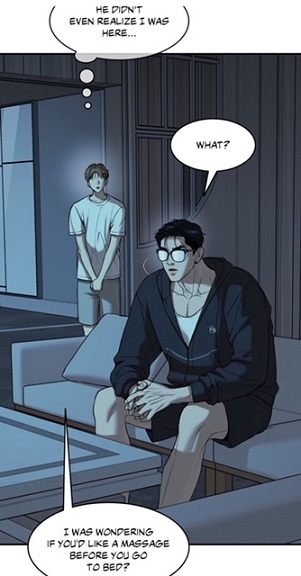 (Chapter 48) On the other hand, I am inclined to think that when a terrible incident in his youth occurred, he couldn’t contact his family or guardian. Hence he keeps his cellphone by his side constantly. Yes, I was thinking of the doctor’s assault in the street and his failed rape:
  (Chapter 16) Heo Namwook’s minions had confiscated his cellphone. Hence it was impossible for him to call for help. And now take a closer look at this scene:
 (Chapter 16) Though he had been on the phone and it was daylight, no one stopped the thugs from kidnapping the main lead or reported the incident to the police. Hence I am also suspecting that Joo Jaekyung must have faced a similar situation: he was surrounded by malicious people and no one had assisted him. So he could have been targeting at school due to his grads or his social status. And his isolation at home could push to seek company outside, to look for friends at school.
  (chapter 37)
  (chapter 49) And the anonymous person on the other side of the phone was definitely calling in order to be updated about Joo Jaekyung, for his coach asked him about his physical conditions.
 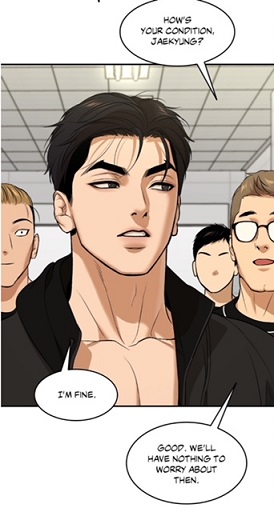 (chapter 49) That could be the hidden guardian who has not showed up yet, I am thinking of Seo Gichan. And now it is time to close this long essay.



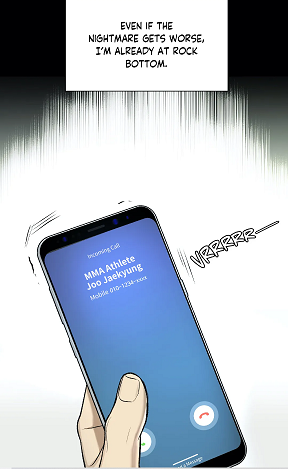
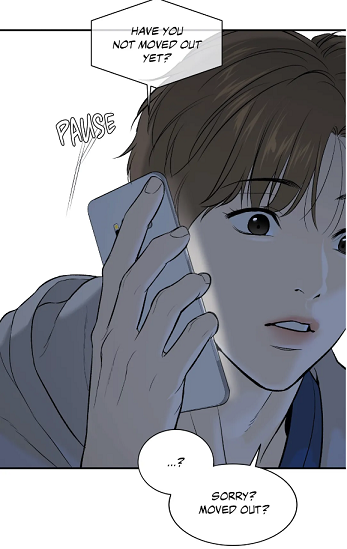


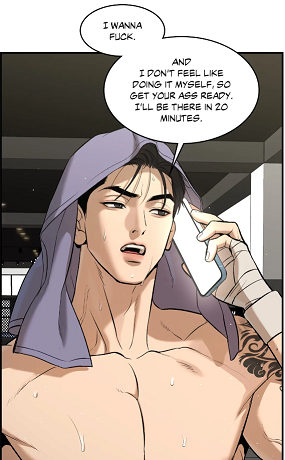
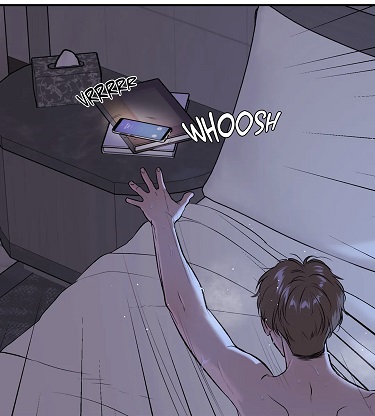
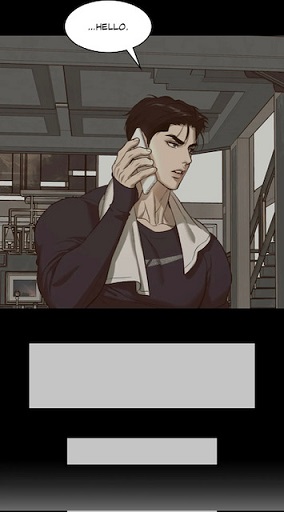


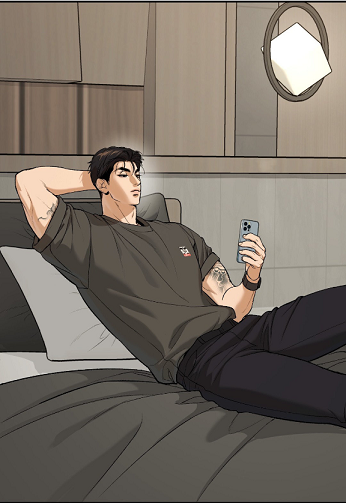
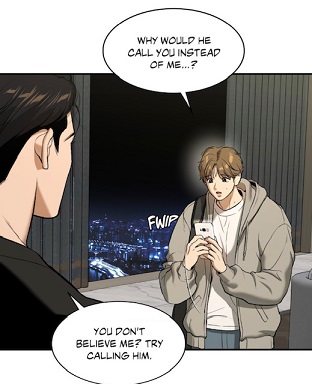


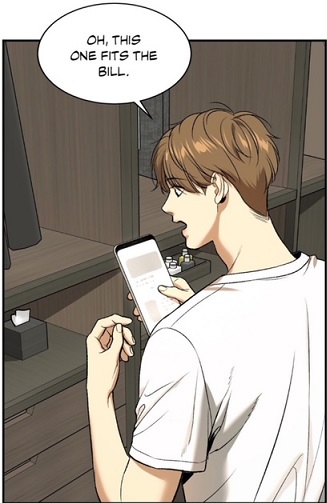
 (chapter 43) In the podcast and in the list, I omitted one recurrent topic on purpose: REJECTION!!, We have this topic in chapter 1, 5, 17, 19, 21, 22, 24, 30, 32, 34, 35, 36, 37 and finally 43.
  (chapter 43) The doctor was invited for the second round and he could have agreed, but the athlete intervened fearing that the doctor would prefer the company of the fighters. This exposes his low self-esteem. However, Kim Dan was already rejecting their invitation.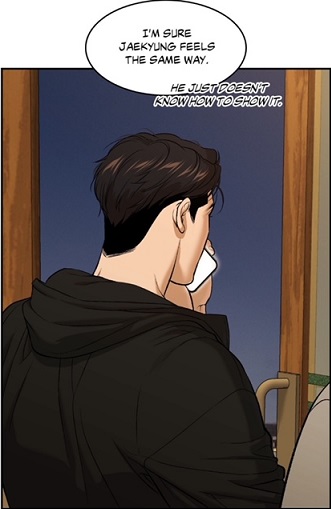
 (chapter 13) He was acting, as if he hated kisses, foreplay and embraces. At the same time, he is showing his face, yet this is just acting. Thus the hyung replied the same way. He faked his anxieties and submission.


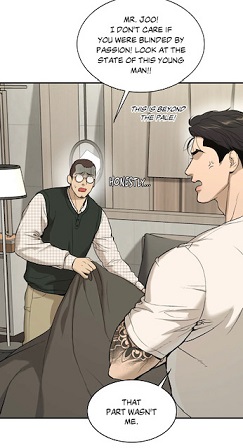 (chapter 13) who also jumped to the wrong conclusion, when he saw the doctor’s bruises. He imagined that the champion had been too rough in bed with Kim Dan. However, once he heard his testimony, he believed him. This shows that he trusted him. On the other hand, this scene reinforces my interpretation that the glasses are connected to prejudices and false perception. Moreover, observe that he was curious about the physical therapist, hence he interrogated the champion.
  (chapter 13) Then, observe that in the penthouse, the doctor acted too.
  (chapter 40) and the blood test
 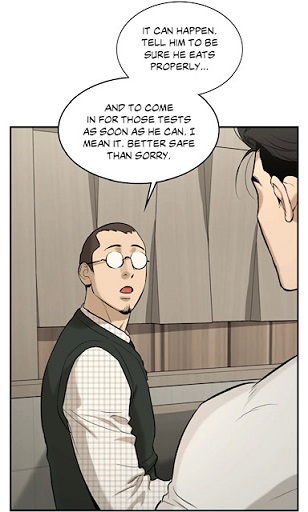 (chapter 13) and a new face!!
  (chapter 40)
  (chapter 13) And by contrasting these two scenes, I realized that it reinforced my theories. 1. There must have been a phone call!! In episode 13, the champion must have called his chingu.
  (chapter 40) However, the moment the guard with the sun glasses got caught, he tried to act as a savior. As you can see, this comparison reinforces my theory. The MFC manager must have asked the MFC security guys to cover up the incident. If not, they would be blamed for the matter!! And now, you comprehend why they had to know everything about Kim Dan.
  (chapter 40) They needed to find any excuse to put the blame on the protagonist. Either he had a strong reaction because of his medication or because of a different meal… but since Kim Dan never replied to them, they had to frighten him, to coerce him to confess a crime.
  (chapter 13) That’s how desperate and ruthless they were in the end. While dressed like FBI agents, they were acting like thugs and criminals. No matter what… MFC should not be involved in a scandal! And this brings me to my second discovery. Who else is wearing glasses in Jinx?
  (chapter 1) And he also got caught!! What did happen afterwards?
  (chapter 1) Kim Dan got fired, for he was a new face!
  (chapter 1) The wrongdoing from the higher-up had been covered up, and the staff had assisted him!!
  (chapter 40) The intrusion of Joo Jaekyung in the office was caused by Park Namwook’s revelation. And it was the same, when the champion caught Heo Manwook with his minions.
  (chapter 6) and the moneylender?
  (chapter 16) Sexual harassment and the usage of the number to achieve their goal!! These two characters could hide their crimes with the assistance of other people (thugs, staff). We could say that both used an organization. Consequently, I am assuming that the MFC manager is doing the same!! Therefore it is no coincidence that Mingwa employed the same colors: blue, white and black
  . (chapter 1) That’s the reason why I am suspecting that the MFC guys must have already been informed that Kim Dan might be the champion’s sex partner.
  (chapter 40) If the champion had admitted that Kim Dan was his boyfriend, then they could say that Kim Dan had drunk the nutrition shake by mistake, and Joo Jaekyung had actually planned to take the drug. Keep in mind that according to me, the green-haired guy, the loan shark and the MFC manager are working together. But they were assisted by the lawyer and the manager from. the Entertainment agency. Fortunately, the champion’s answer was ambiguous.
  (chapter 1), but also he owns the club. This means, in chapter 40, as the team leader of Team Black, he protected Kim Dan!! It exposes that Joo Jaekyung used the organization to defend his lover and physical therapist.
 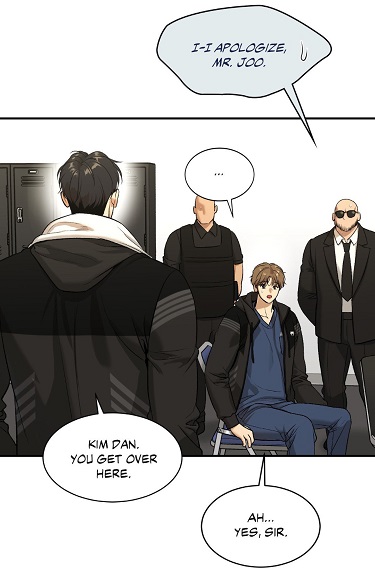 (chapter 40) Joo Jaekyung is behaving the opposite from the perverted hospital director, Heo Manwook and finally the MFC manager. Thus it dawned on me that the reporter from this article did the same.
  (chapter 35) He sought protection behind the hospital
  (chapter 36). Thus I deduce that the agent from the Entertainment agency and that lawyer are acting the same. They believe that they are safe, for they are both working for a huge company or law firm. And guess what… the doctor Kim Miseon is also wearing glasses.
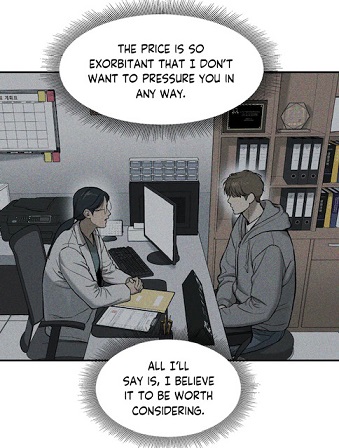 (chapter 5) As you can see, thanks to the glasses, I discovered a new pattern. These schemers and helping hands are avoiding any responsibility by hiding their wrongdoings behind an institution or we could say behind a name.
  (chapter 7) In the last case, it would be MFC!! But the reproach from the champion
 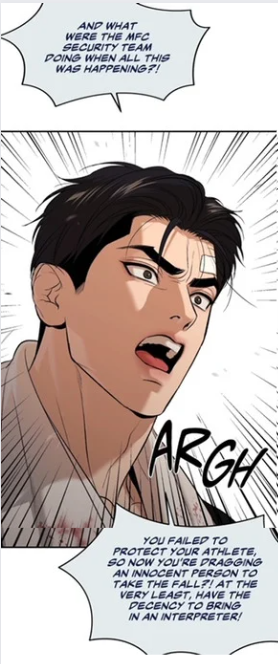 (chapter 40) should have opened their eyes! Not MFC would have been involved a scandal… but only the MFC security team!! As you can see, the moment they had been informed about the incident, they should have reported the MFC manager to the highers-up! They should have never protected such a person in the end, because the latter is the reason why the organization would be involved in a scandal. That’s the reason why such people are framing others. They know how an institution works. Under this new light, it becomes comprehensible why the plotters are trying to ruin the champion’s name!!
  (chapter 36) It is because they are projecting their own thoughts onto the champion. He is just a person. However, what they don’t realize is that behind the athlete, there is also an organization: TEAM BLACK!!
 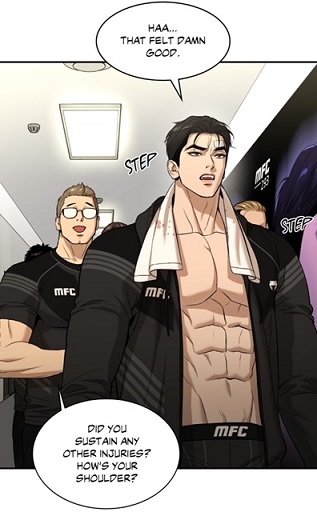 (chapter 40) Because their scheme failed, there is no doubt that they will target the physical therapist, for he is much weaker. He is “new” in the team and he comes from a low social background. He has a sick and old halmoni. However, Kim Dan has almost become their true mascot!!
 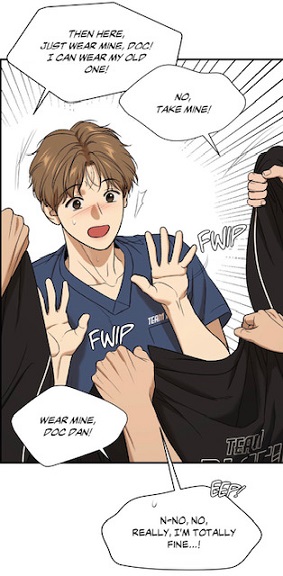 (chapter 36) Note that Oh Daehyun and Potato tried to investigate the matter with the doctor’s illness.
  (chapter 38)
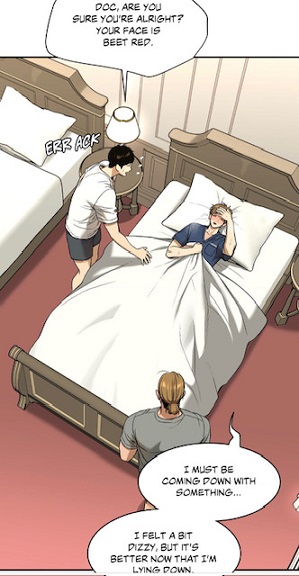 (chapter 38) Thus I deduce that because of Kim Dan, the members from Team Black will become more proactive. They need to show to these people that Joo Jaekyung is not alone, he is the alpha of a great gym… producing many champions!! In other words, the dragon with his yeouiju will be able to remove these Deceit’s webs and purify these institutions. As you can imagine, I am suspecting that Dr. Lee must have been blamed for the article
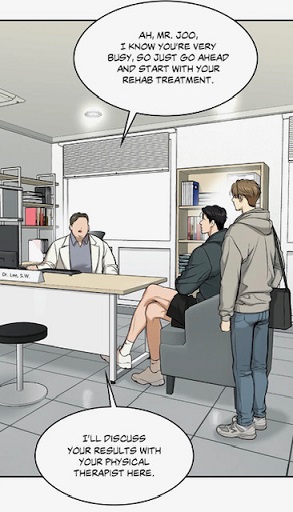 (chapter 27), for someone had to take the fall. I hope, we will see him again.
 (chapter 29) However, here the item has a different signification. How so? It is because Joo Jaekyung was totally honest and was opening up to the physical therapist.
  (chapter 29) It seems to contradict my previous interpretation about the glasses. But no… Observe that during that whole scene, the readers could see the champion’s eyes contrary to the MFC guys
 (chapter 37), Kim Miseon
 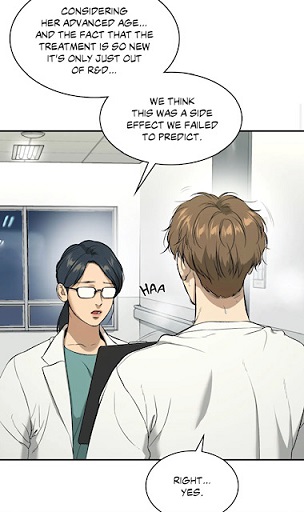 (chapter 21), Cheolmin
  (chapter 13) and the perverted hospital director
 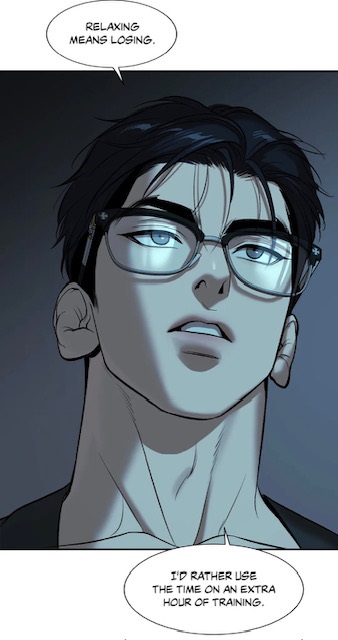 (chapter 29) Because he was wearing blue light blocking glasses, he was protected from “Agent Blue”, the positive version of episode 36 and 40!! This explicates why I consider them as a shield. He was trying to hide his vulnerability while confiding to Kim Dan.
  (chapter 35) The Jinx-Philes could see his eyes too. He had come to the café with them to hide his identity, but in reality his action had the opposite effect. People noticed the actor.
  (chapter 35) Striking is that as soon as the actor removed them, he got honest with the doctor. He revealed his intentions, but he got rejected. As you can see, the glasses can have a positive function. Consequently, I came to develop a theory which was triggered by the glasses. Kim Dan envisioned the athlete in a suit
  (chapter 32), then he imagined him with the sun glasses
  (chapter 35) Thus I come to the conclusion, Kim Dan will be the one turning the athlete into a star, a real celebrity! But he won’t be reduced to his body and face
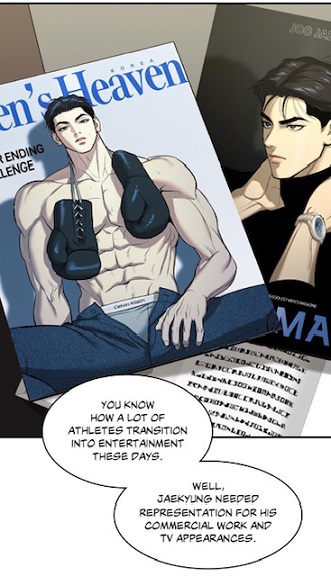 (chapter 30) People will notice his qualities and talents so that he doesn’t need to prove his strength and power in the ring. The celebrities often use sun glasses to protect their anonymity. And Mingwa already implied that the champion’s birthday is around the corner.
 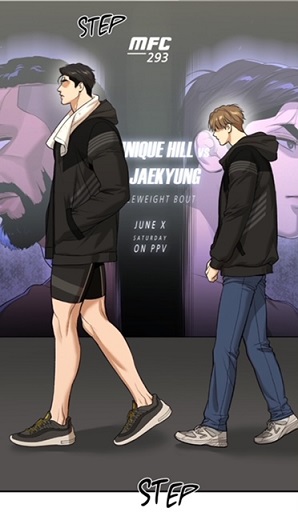 (chapter 40) So he could offer the sun glasses to his savior. If this prediction comes true, then it means that Kim Dan will become the rival of the manager from the agency. Besides, it was the manager’s job to develop a strategy how to change the netizens’ opinion. But he chose to put the whole responsibility on his athlete.
 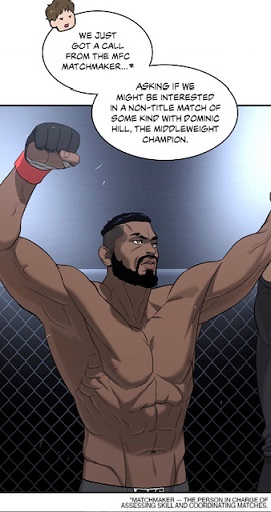 (chapter 36) He could have shown that Joo Jaekyung was the owner of Team Black and he was training other athletes. It is important, because it shows that certain people hide their laziness behind the organization or a name. That’s the reason why I am expecting that Choi Heesung will play a role in the demise of the bad manager at the agency.
 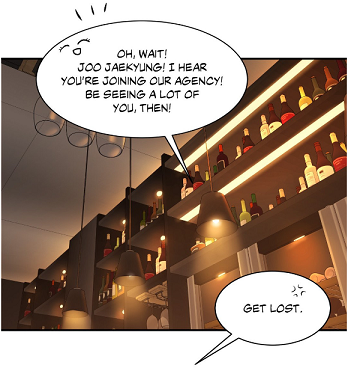 (chapter 33) Since he has sun glasses, he is already connected to spying. Don’t forget that he tried to determine the true nature of their relationship before giving up on his angel.
  (chapter 32) Finally, I have the feeling that Team Black will come to act like the security guys in episode 40, investigate the matter why the champion and the doctor became the targets of malicious rumors and bad articles.
  (chapter 31) and they are under his spell.



 (chapter 1) Slowly, he is getting tamed and as such he is becoming a social being! Right now, he has become much more considerate towards the physical therapist.
  (chapter 25) Note that he is standing in the ring, but he is smiling. And this change can only push the manhwaphiles to question about Joo Jaekyung’s raising and past. His metamorphosis is referring to the famous debate “nature versus nurture” in psychology.
 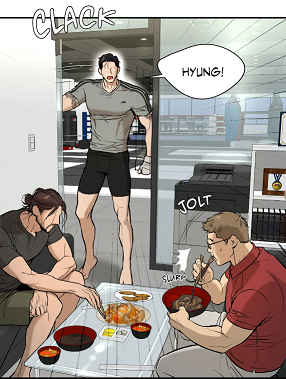 (chapter 5) and the doctor Cheolmin.
 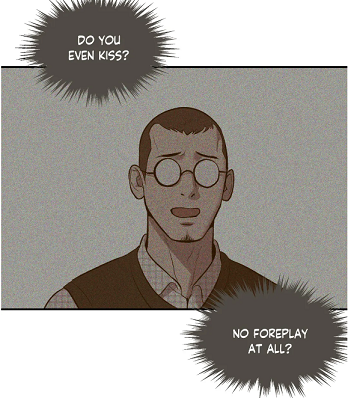 (chapter 14) He listens to them, hence he calls them all “hyung”. But here is the question. How did he come to meet them and even trust them? Imagine that he is still keeping his distance from other fighters, yet he is the unofficial owner of Black Team. He can determine the salary and the transferring. This displays that his mistrust is not just a matter of time. Consequently, my hypothesis is that someone introduced the hyungs to him. Here, I feel the need to remind my inquisitive readers that I had found many clues in the name Joo Jaekyung [For more read “
 , you will identify that two images are from episode 5.
 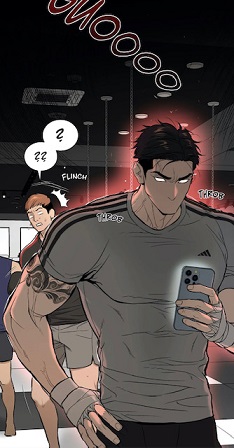 (chapter 5)
 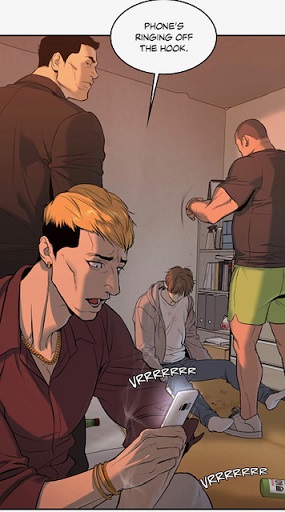 (chapter 16)
 (chapter 16)
  (chapter 16) The minions saw the amount and came to the conclusion that Kim Dan was selling his body.
 (chapter 1)
 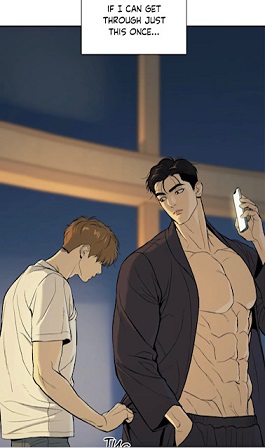 (chapter 2)
  (chapter 18) And guess what? The name “Gi” can signify “prostitute” or “flesh, muscle”.
  (chapter 21). Joo Jaekyung is used to this. But there’s more to his name. However, before exposing more about his name and his personality, I would like to examine this panel again.
 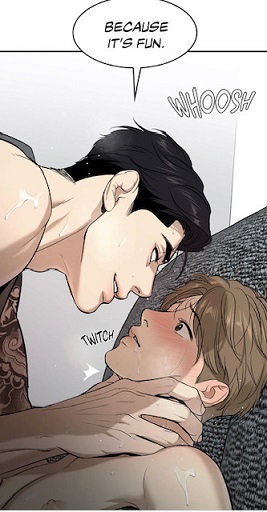 (chapter 24)
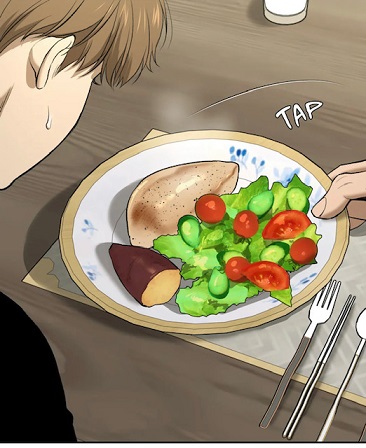 (chapter 13)
 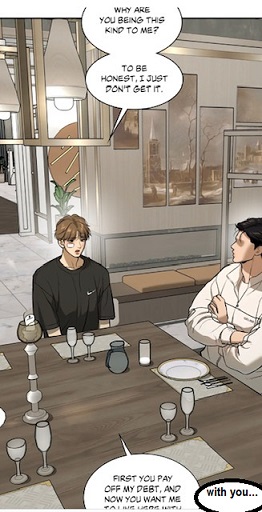 (chapter 18) As a child, he was encouraged to drink his glass of milk and not to drink these sweet yoghurts.
  (chapter 21) They were definitely judged as unhealthy, for they contain a lot of sugar. It is no coincidence that Seo can mean “order, discipline and age”. This man was definitely strict. Hence the main lead never experienced a caress and a warm hug from his guardian.
 (chapter 22)
  (chapter 22) Seo Gichan must have never cooked for the athlete, he simply hired a nutritionist!
 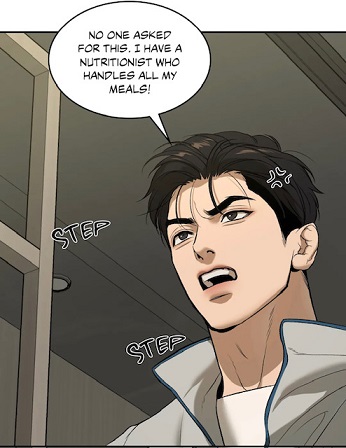 (chapter 22) However, I doubt that Seo Gichan is living like the athlete. I am suspecting that he enjoys good meals. Why? It’s because Chan can mean “meal, eat, food, delicacies“!! Moreover, Seo can refer to hungry. Hence I don’t think that he is as slim and fragile as the halmoni, quite the opposite! Why? First, his name Gi can signify “rhinoceros” or “piebald horse“, an indication that he must be robust. Additionally, this ghost is linked to “west”, “dawn” and willow, which reminded me of Park Namwook. The latter is represented by “morning sun, rising, mountain cherry and camphor tree“!! How does the coach look like?
  (chapter 7) Quite chubby! Thus we can assume that he resembles to the coach and the emperor is taking after his mentor to a certain extent.
 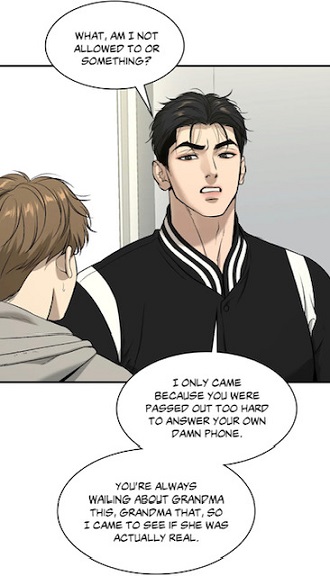 (chapter 22) Is he actually real?
 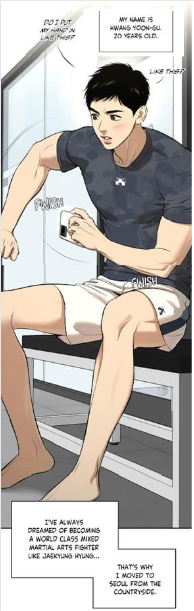 (chapter 23) For me, their path will cross, especially since Potato is a reflection of Kim Dan. The former could view the physical therapist as a source of danger for his idol. But let’s return our attention to my interpretation. Seo Gichan comes from a humble background, but he could raise socially, the exact opposite of the grandmother’s destiny. This is not surprising that Gi can signify “rise, raise and get up“. Hence he was not rich and powerful from the start. So how could he come close to a chaebol heir? It is because he was his guardian. He must have gained the chaebol family’s trust. Thus he could indoctrinate his pupil telling him that poor people are to blame for their misery. In other words, Seo Gichan must have sold himself as a self-made man which would explain why Joo Jaekyung is such a hardworking athlete and he is not living on his wealth. I have the feeling that in reality, he is more like Heo Manwook, the loan shark. He took advantage of the situation. (“Gi”: machine, opportunity”)
 (chapter 18) In the analysis “The bright calamity”, I had elaborated that this painting was reflecting the protagonist’s name and as such his personality. But we know that Joo Jaekyung has no knowledge about culture:
 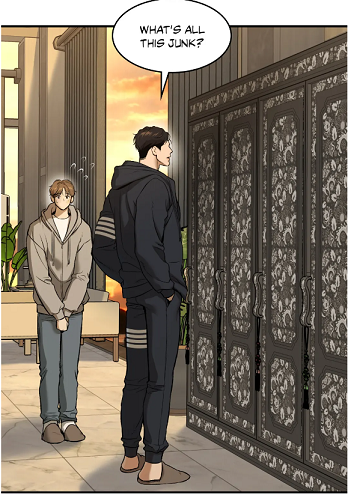 (chapter 19) For me, the painting reflects not only the champion, but also the mysterious man. Why? His name can also signify “book, divination, lucky, auspicious, oath and libation cup“, hence I included the bowl from episode 9 in the illustration. All these idioms belong to the semantic field of religion and faith, thus we have the church in the picture. And that’s how it dawned on me why Joo Jaekyung came to choose abstinence and is refusing to drink alcohol with his fellows. It is because he is drinking with his “master Seo”, his priest!! Besides, Gi can refer to “base, basic, foundation“. He is the owner of the champion’s past (Gi= to record, note and remember“). Thus he could distort the champion’s past memories and childhood. Under this new light, it occurred to me that Seo Gichan is the cause for the champion’s false belief:
  (chapter 18) How so? It is because Seo Gichan must have presented himself as his lucky charm (“Seo: lucky, auspicious, propitious; Chan: libation cup, praise, compliment, brilliant, glorious“). And this leads me to the following observation, Gi

 (Doctor Frost, 175) And that’s how I realized another divergence between the halmoni and Seo Gichan. Kim Dan’s grandmother might have played a role in Kim Dan’s suffering, but it was not done on purpose. She had trouble herself, the main culprits were the parents. Moreover, though both (Seo Gichan and the grandmother) wanted the main leads to remain “boys” and “children”, the grandmother was more focused on the past because of her imminent death, while I am quite certain that Seo Gichan is more thinking of the future! He wishes to take over the inheritance, though he must be quite old. In other words, he is not realizing his own immortality. That’s the reason why I believe that he will be the biggest enemy of our beloved couple, for Kim Dan represents a threat to his power. Gi means “afraid, careful, abnormal, unbalanced, lopsided“, hence I am suspecting that he will use tricks to get rid of the physical therapist.
  (chapter 22) Moreover, the White tiger is the king of terrestrial beings which coincides with the manager’s function. Namwook is the representative of Team Black.
 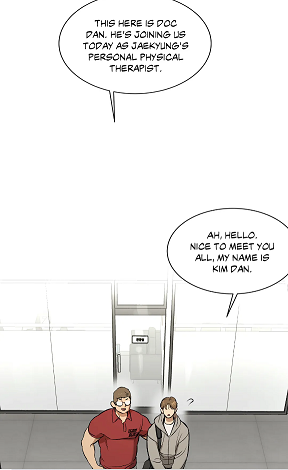 (chapter 7) Thus I believe that together, they will be able to free Joo Jaekyung from his suffering and his mental prison changing his destiny. In reality, the main lead was destined to greatness.




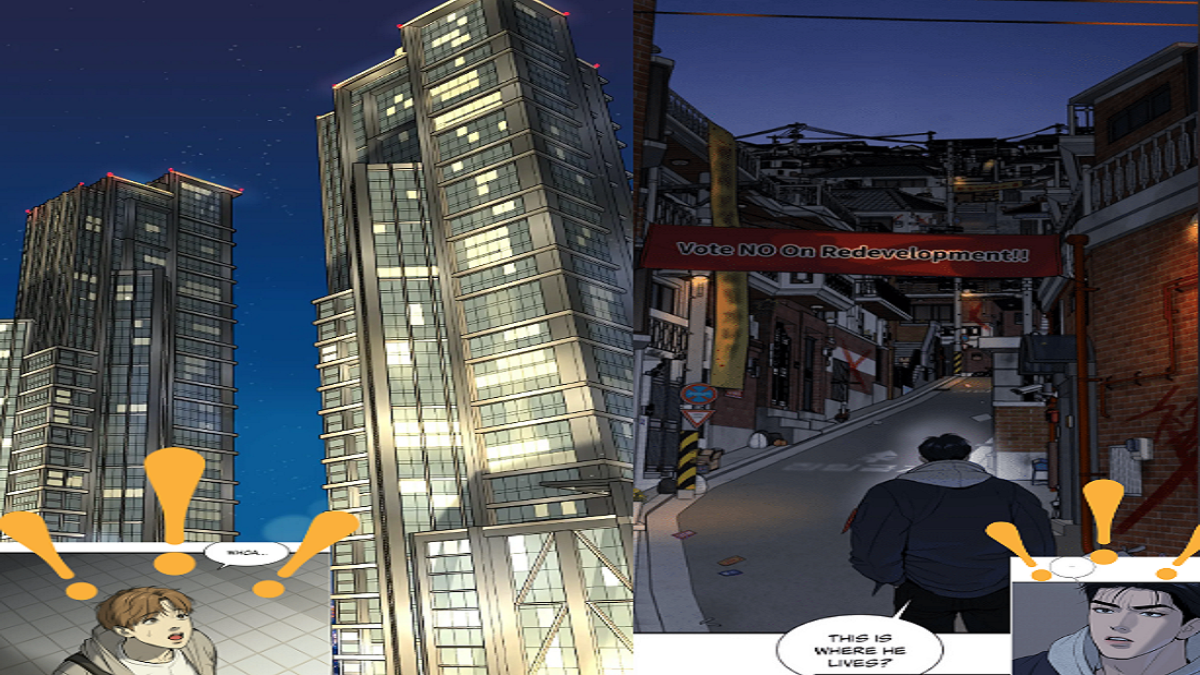
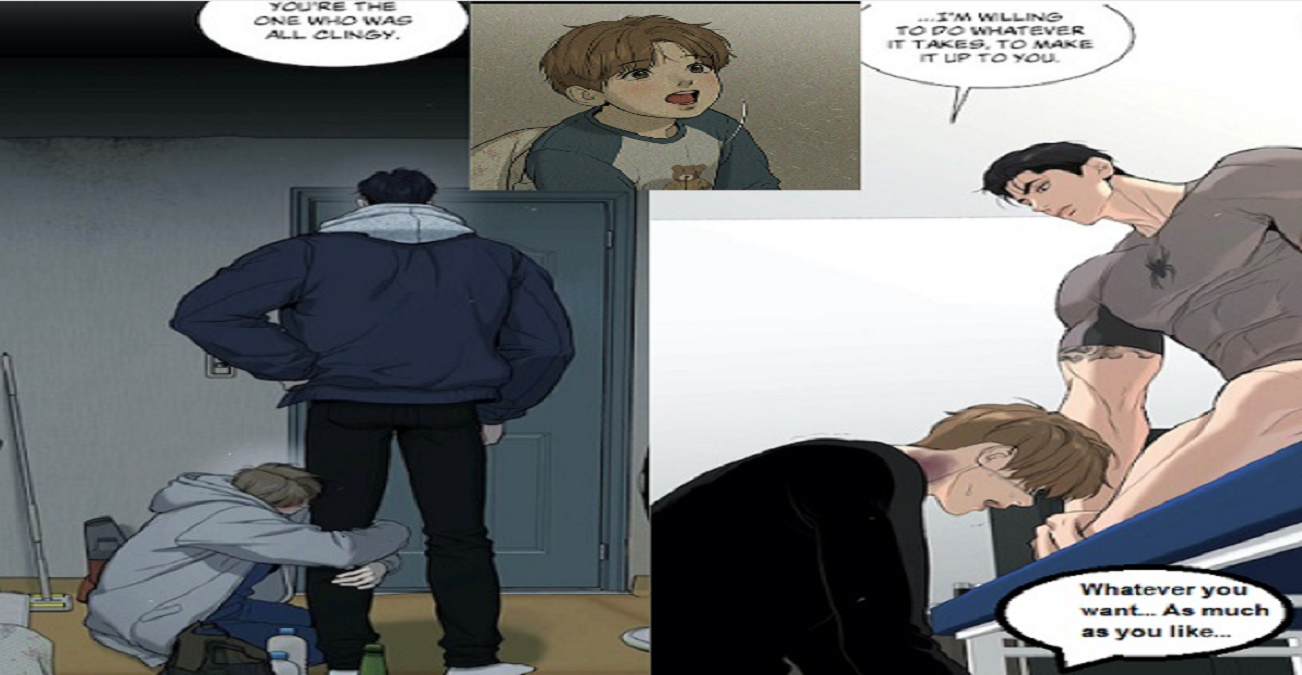

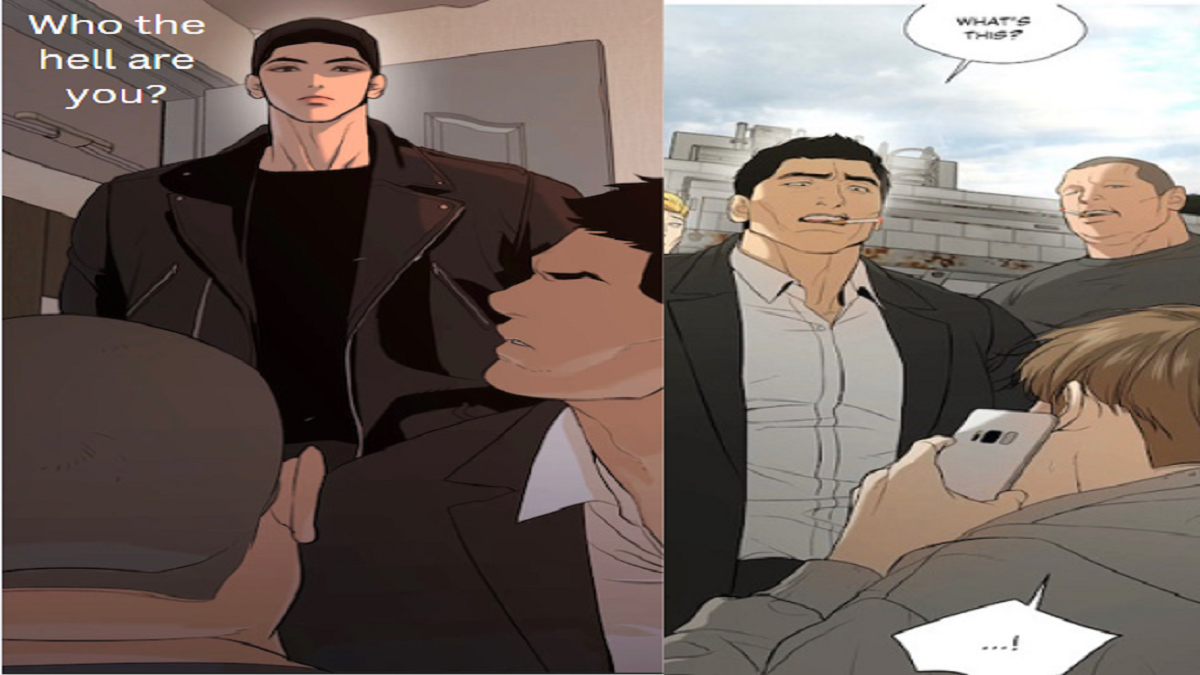
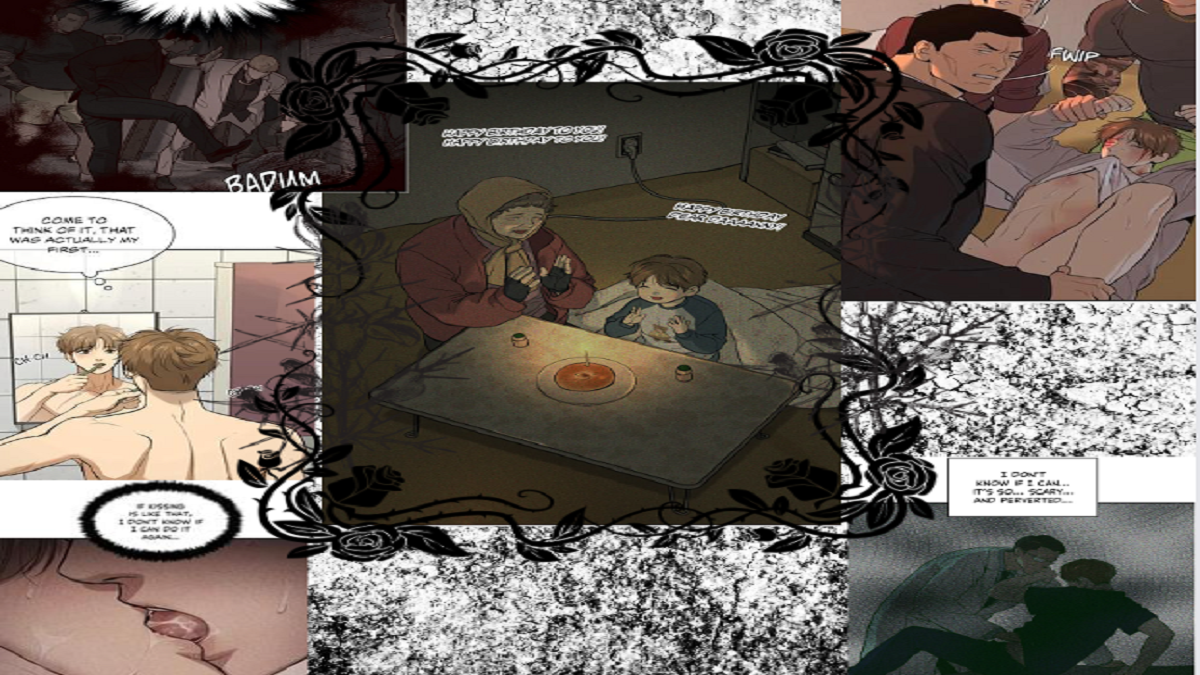


 (locked essay, with new password, switch simply the order of the words, don’t forget the space)











































 Col
Col
























































 Bebebisous33s' analyses in K-Dramaland and Manhwas