Protected: Painter Of The Night: A change of heart ❣️ (second version)
Bebebisous33s' analyses in K-Dramaland and Manhwas
Analyses of K-dramas and Manhwas (for the most part Yaoi)


This is where you can read the manhwa. https://www.lezhinus.com/en/comic/painter But be aware that this manhwa is a mature Yaoi, which means, it is about homosexuality with explicit scenes. If you want to read more essays, here is the link to the table of contents: https://bebebisous33analyses.wordpress.com/2020/07/04/table-of-contents-painter-of-the-night/ I am also using doctor Frost as reference again. https://www.webtoons.com/en/mystery/dr-frost/list?title_no=371 I am also mentioning the K-drama “Bad and crazy”
It would be great if you could make some donations/sponsoring: Ko-fi.com/bebebisous33 That way, you can support me with “coffee” so that I have the energy to keep examining manhwas. Besides, I need to cover up the expenses for this blog.
You are probably wondering why I selected such a title, when the story in episode 93 took place in the kisaeng house. I was inspired by the new episode from Doctor Frost again. Right now, doctor Frost and his former student are fighting against a terror organization using brainwashing. Here, the author explains the birth of terror which can lead to war and even to a genocide. 
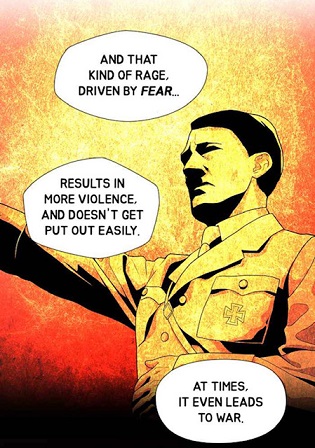 (Doctor Frost, chapter 180) As you can observe, fear and hatred are the main components for unleashing agitation and violence. But this can only work if the medias are amplifying these emotions. Yes, I am talking again about propaganda. And today in the newest episode, the commissar used the fire as a metaphor to describe the evolution of terror.
  (Doctor Frost, episode 183) This means that you can stop the fire from spreading, if you observe the fire path. In other words, if you pay attention to the evolution of the hate crimes, you can slowly put an end to the climate of terror. Important is to find its origin. Then she added this. The fire becomes the most effective in the winter forest.
  (Doctor Frost, chapter 183) Here the manhwaphiles should see the forest as a symbol for society and humans.
  (Doctor Frost, chapter 183) This signifies that the people will get easily influenced by their fear and rage, if there exists a cold climate. A society without compassion and affection. And with only one spark, the forest can get destroyed. This signifies, the absence of love and understanding play a huge role in creating an environment full of hatred and violence. This is not surprising that because of the Coronavirus, intolerance and violence are on the rising, since people are getting more and more isolated and scared. And now, here is the next question: What symbolizes the winter forest in Painter Of The Night and more precisely in episode 93?
When people read the episode 93, they had mixed feelings. On the one hand, they were moved by the way Baek Na-Kyum was treated by his noonas. It was such a warm welcome that it made the painter so happy. He was literally glowing out of delight. 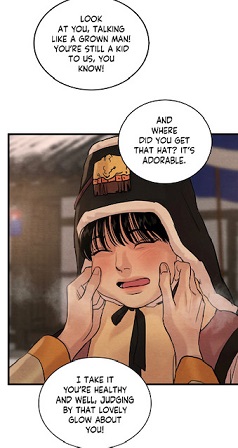 (chapter 93) On the other hand, many readers were greatly disappointed by Yoon Seungho’s behavior. He had prevented Heena from meeting her brother, and the painter was left in the dark. But the lord had also sentenced her to seclusion.
 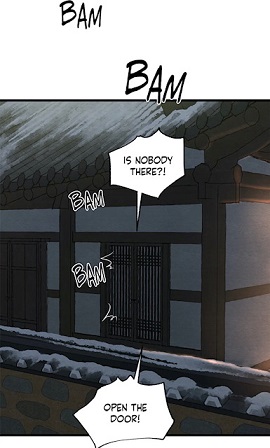 (chapter 93) In their eyes, he was indeed a hoodlum or a bastard. According to the blogger theprocrastinatingredkitty, in the Korean version Yoon Seungho was called a bastard
  (chapter 93) Yes, he had done it again… he hadn’t trusted Baek Na-Kyum and had become violent or ruthless again. But after reading my introduction, you can already anticipate what I am about to say. The winter forest was in fact Baek Na-Kyum’s family. The noonas and the painter had been missing each other so much, but because of Heena’s belief and intervention, she had destroyed this family. Yes, I see her as a religious fanatic who unfortunately got brainwashed by Jung In-Hun and now by Kim. This is no coincidence why Heena is sent to a cold and dark room
 (chapter 93), while the noonas and the artist are sitting in a comfortable room. Hatred versus love… even the colors in the picture reflect the true emotions of the characters. Now, it is time to elaborate my interpretation.
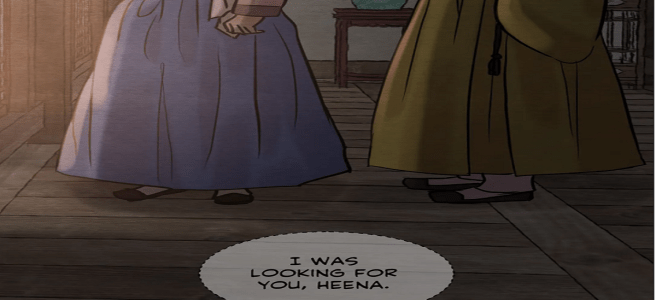
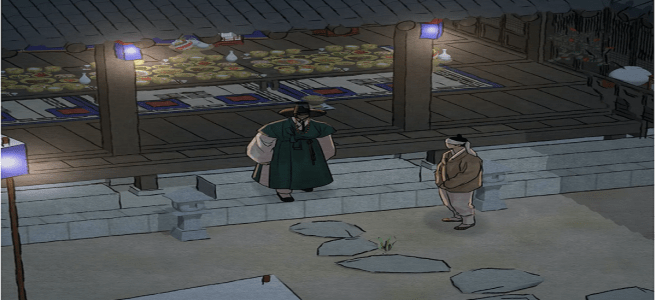
When the painter arrived in the courtyard of the kisaeng house, he was alone. 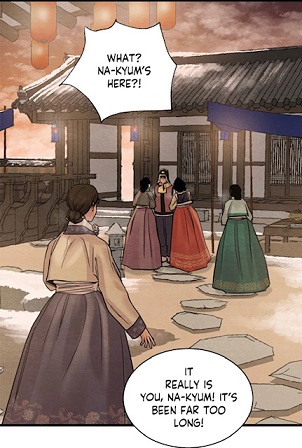 (chapter 93) So where was the lord? I will give you the answer below. Striking is that during the whole time, the artist didn’t notice his absence, until his lovely sister asked him about his whereabouts:
  (chapter 93) Her question reminded him of Yoon Seungho, therefore the artist looked for him, and got surprised, because he didn’t see his husband by his side.
  (chapter 93) This scene is important for two reasons. First, the behavior of the kisaeng clearly showed that she had been left in the dark as well. She was not lying, as there was no drop of sweat on her face. While she had no idea where her brother had been this entire time, Heena knew this the entire time!! 😬 But she kept silent and as such, she hindered her sisters to meet the painter as well. But this doesn’t end here.
  (chapter 93) The kisaeng had not only been left in the dark, but she had also been lied. How did I come to this interpretation? The caring noona employed the expression “you’ve flown the nest already”. With this idiom, she implied that Baek Na-Kyum had willingly left the kisaeng house. He had made this decision on his own, for he felt the need to leave the gibang, whereas the readers already know that this was the opposite. He had been forced to leave by Heena.
 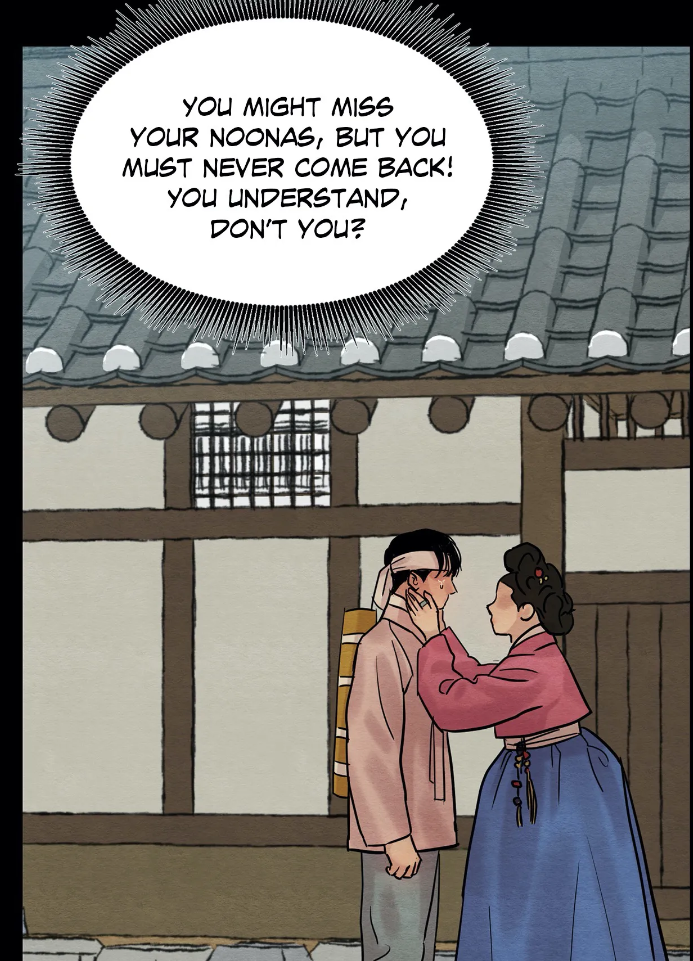 (chapter 46) Like I had already pointed out, the kisaeng had made sure that Baek Na-Kyum didn’t bid goodbye to his noonas. Heena had lied to them saying that this was the boy’s desire and he was now old enough to leave the mansion. This explains why the nice noona employed the idiom “I know”. This is a signal that she had been told by her sister!! But the most infuriating is that Heena left her colleagues in the ignorance for 18 months. None of them knew where the painter was exactly. In the beginning, they had actually no idea that he first lived with the scholar. Besides, notice that the kisaeng complained to the artist. Why didn’t he visit them once in a while? The older sister had given him an order not to!! The most astonishing is that the gentle noona showed great understanding. She accepted the painter’s white lie. (chapter 93) I couldn’t help myself smiling, when I read his excuse: “I was caught up in something important” (sex? spring poetry?😂). At the same time, it broke my heart, for he reduced his long suffering with a single sentence. The noonas had no idea how he got brainwashed and abandoned by the kisaeng and the scholar. The latter even abused him. Note the huge contrast between the noona’s attitude and Heena’s:
  (chapter 68) Heena put the whole blame on the painter, though the latter had been following her orders. She showed no understanding contrary to her sister. Besides, since she knew where he was, why didn’t she contact him in the end?
To conclude, Heena was the reason for the separation between the painter and his noonas. This means that she was responsible for the painter’s agony and trust issues. He had never been abandoned in reality. Hence we could say that she was paying for her sins. She was not allowed to participate in the family reunion. Striking is that when the kisaeng showered her brother with love (I would like to know her name!!), Yoon Seungho walked past them. (chapter 93) You can detect his presence on the left. This means that so far, he had been standing in the background observing the reunion attentively. I couldn’t help myself connecting this scene to this one panel: 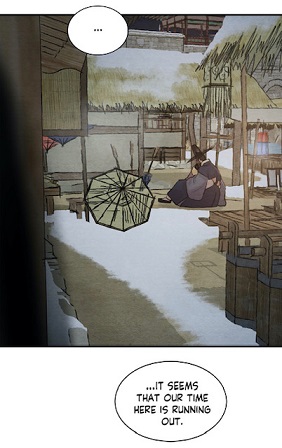 (chapter 76) Back then, Nameless had been confronted with reality: the protagonists were just two men in love and their affection was deep and genuine. So imagine what it meant for the lord, when he saw this scene in the shadow: (chapter 93) He could see what a real family was! This is not surprising that he spoke nicely to them later, and even didn’t take the seat of honor later. In fact, he showed humbleness, for he took the seat next to the door, the lowest in the rank.
 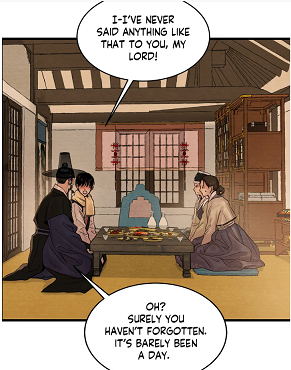 (chapter 93) There’s no doubt that he was seeking for their approval. To conclude, he remained in the background in order to judge the kisaengs correctly. Would they behave like Heena or not? In fact, Yoon Seungho had made a jump of faith. He had trusted the painter’s heart. However, he couldn’t let Heena ruin this happy reunion. Therefore she got excluded. She could have made a ruckus.
More striking is that when the lord walked past them, none of the kisaengs got shocked or condemned him. They couldn’t identify him right away. This means, they only knew him by his name, lord Seungho. Even one of them said this:  (chapter 93) In her eyes, he was a handsome man. Another fell under his spell as well:
  (chapter 93) This is important, because this shows that the kisaengs are not thinking like Heena at all. They don’t resent him, because he is a noble.
  (chapter 65) I would even add that they couldn’t recognize him, and I am now assuming that they had not heard about Yoon Seungho yet. They couldn’t put a name on him, he was just a fancy companion. (Chapter 93) They were not shocked or surprised. They had no reaction at all. This means that the smear campaign started much later: hate speech! The spark of the fire in the winter forest!
 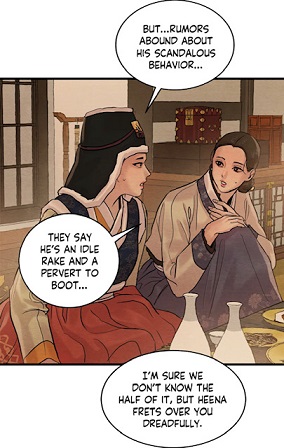 (chapter 93) In the first version, I had blamed Heena, yet I have to admit that I made a mistake, because I had paid too much attention to this image.
 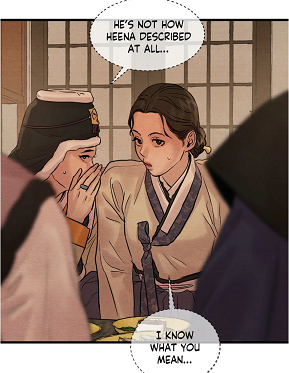 (Chapter 93) Here, they whispered quite loudly and actually blamed the noona for her negative description. But this declaration contradicts the previous one. (Chapter 93) Observe here that none of the kisaengs clearly said that Heena had been spreading rumors about the protagonist. The two women employed the following expressions: „They say“/„I am sure we don’t know the half of it“. The kisaeng with the purple hanbok was pointing out that these rumors were actually upsetting their colleague. This means that in the gibang, someone made sure to call him many names similar to this situation: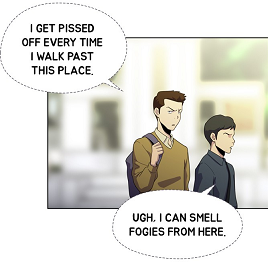
 (Doctor Frost, chapter 175) It created the illusion that Heena had been badmouthing Yoon Seungho and desired to obtain the support from her eonnies. But who had called him a rake and a pervert? The noona herself! (Chapter 93) We could say that they were spreading the rumors herself. Therefore their karma was to get caught!
  (Chapter 93) However, they were just repeating what they had been told. Hence it didn’t work. Why? First, it is, because the painter appeared alone. They could see with their own eyes how well he was doing. (chapter 93) In that scene, the kisaengs were pure and innocent. The other reason is that the noonas aren’t brainwashed, hence they are still selfless and compassionate. In other words, the winter forest was just sleeping, and as soon as the sun appeared, the forest was being reborn. Love and affection never disappeared despite the long separation. That‘s the reason why the fire couldn‘t spread in the end. But who described the main lead like that?
  (Chapter 93) Naturally Min!! How do I come to this conclusion? Simply by recollecting his words in the tavern:
  (chapter 93) He was actually portraying himself as an immoral person lacking in sexual restraint. He would not know fidelity. But the moment the kisaengs got caught, the lord proved their words wrong. He remained calm and treated them well despite the insult.
 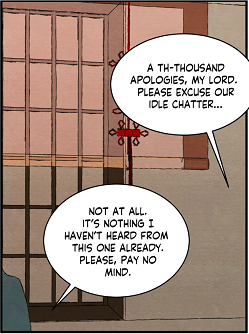 (Chapter 93) He made no fuss and accepted their apology. The most striking is that he ended up apologizing to the noonas.
  (Chapter 93)
And this leads me to the following conclusion. Heena was now under the spell of Kim, hence she insulted the main lead as a murderer, whereas the other kisaengs were under the influence of Black Heart, though it is very possible that they could have been influenced by another colleague, who was acting on Min‘s order.  (Chapter 95) The manhwaphiles should recall the following rule: a scene will be reflected in the next episode. There is no doubt that the valet was the one who ruined the Yoons in the end by causing mistrust and jealousy. He destroyed the family. Therefore Kim sent the ruined painting to the father, and even refused to give the letters from the brother. He made sure to create misunderstandings, silence and tensions between the Yoons, portraying each of them like a monster or a selfish and common brute. This is not surprising that for the father, the son is a monster:
 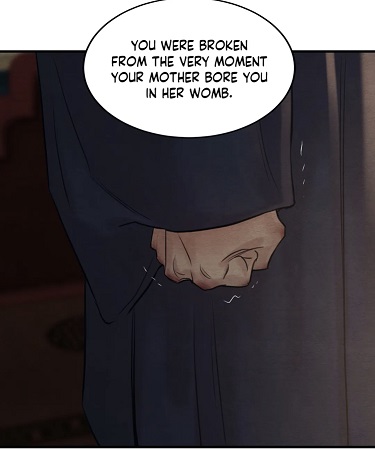 (chapter 86) Kim was successful, for he could change their personality entirely. He used social norms, people’s superstitions, fears and flaws to his advantage. Why? It is because he had to hide his own wrongdoings and betrayals. That’s the reason why the lord’s mansion could be considered as a winter forest as well. But since Heena resents powerful nobles, her negative emotions and her bias made her the perfect tool for the next scheme. But Min and Kim failed. Why? It is because they had two different approaches: The valet preferred using the scholar‘s death for the smear campaign, whereas Black Heart wished to destroy the affection and trust between our beloved couple. Moreover, since the noonas had stopped Heena from approaching her brother with their warm welcome, the kisaengs‘ attempts to ruin the relationship between Yoon Seungho and Baek Na-Kyum were rather half-hearted. The noonas were lacking determination and stubbornness.
First, it is important to examine why the lord even agreed to the painter’s request. What caught my attention is this panel:  (chapter 92) The lord saw that the painter was looking elsewhere and his gaze was full of longing. Secondly, he had promised his lover to fulfil all his wishes.
  (Chapter 91) He didn’t want to break his promise. I am wondering if this idea was not suggested by the butler, because the meeting in the inn was no coincidence. The noble Min made sure to trigger the painter’s memory with the presence of the kisaeng and the blue-lavender hanbok. As you can see, Yoon Seungho didn’t have much choice in the end,
What caught my attention is that Yoon Seungho went in direction of the party where Heena was participating. 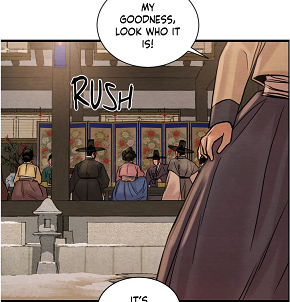 (chapter 93) First, I thought that the man with the green hanbok was Black Heart, since the kisaeng facing the man in green resembles to one who followed him to the tavern, the one under the purple jacket. The color of the skirt is the same.
 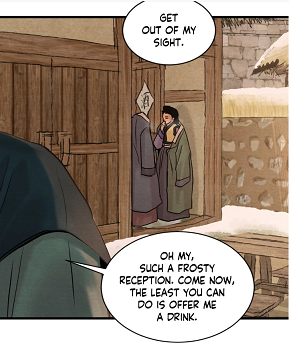 (chapter 92) However, at some point I began doubting this, for for the green shade is a little different. Moreover, I was reminded of this panel:
  (chapter 87) Yes, the same colors, the green hanbok and the kisaeng’s clothes are the same. On the other hand, since Min had wet clothes, it is also possible that once in the gibang, Min received a new hanbok from the host, similar to the scene in chapter 59, when Lee Jihwa was asked if he had played in the snow.
 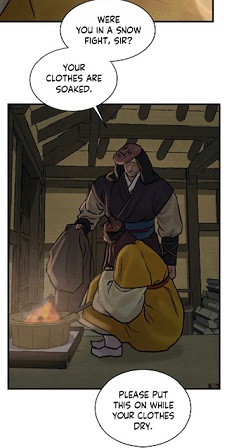 (Chapter 59) On the other hand, Min appeared later as the doppelgaenger of Lee Jihwa.
  (Chapter 96) So we have to wonder if Min switched clothes three times during the same evening. But it is definitely possible, for each episode is reflected in the next.
Another possibility is that Yoon Seungho met his former abuser, but I have my doubts about it, since the man kept his distance from the main figure for quite some time. In my eyes, he needed a reason for his return. Consequently, my theory is that the main lead met Black Heart again, and talked to him about Heena. Don‘t forget that the main lead was present, when the kisaeng had made a ruckus in his mansion.  (Chapter 66) The Joker could serve as a witness, and Black Heart couldn‘t lie at all, as he needed to keep his trust. Besides, it is possible that he must have noticed the disappearance of the Spring poem. Don’t forget that it had vanished in the inn, and Min was the last one seen with it.
 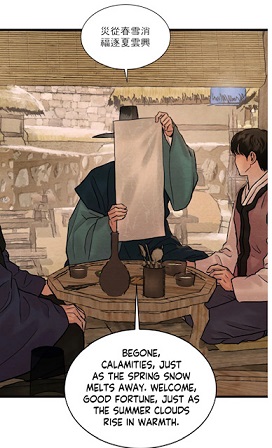 (Chapter 92). Their sudden meeting could be the reason why he disappeared. (Chapter 93) He didn’t wish to create a ruckus because of the painter, and Min had no interest to become involved so openly, as his image would have been ruined. The kisaeng could have caused a scandal. In my opinion, Yoon Seungho picked Heena there, and the man with the green hanbok didn‘t hinder him. Hence Heena was forced to follow the protagonist. So by going directly to the party, he put an end to the fire. The kisaeng couldn’t cause a ruckus or describe the main lead as a criminal or brutal murderer. Therefore there was no fire in the winter forest. If she had come close to her brother, she would have tried to make him feel dirty and have made him many reproaches. I have to admit that this episode was difficult to read, for they were a lot of blanks. We never saw what Yoon Seungho did, before he entered the room, just like there is a time jump between the moment the painter wants to leave the courtyard, and the moment he is sitting in the room. Furthermore, notice that the kisaeng with the green jacket disappeared as well. In fact, 2 noonas disappeared from 4! So where did they go?
What caught my attention is the contradiction between these two panels: (chapter 93)  (chapter 93) Now, they know that the young painter lived with the scholar. How come? Baek Na-Kyum didn’t tell them, because the noona asked him this question. This means that she wanted a confirmation. And now, we have to question ourselves this: who told them about the painter’s past? One possibility is that it was Yoon Seungho, but I doubt it, for the noona didn’t recognize him outside. From my point of view, the noona had left her brother’s side. There was a time jump, because the kisaeng was now wearing a different skirt, khaki!! This means that now, she was acting on the order of someone. Like mentioned above, it could be Min via the other kisaeng. But there exists another eventuality: the Yoons! Don’t forget that khaki is the color of Yoon Chang-Hyeon.
 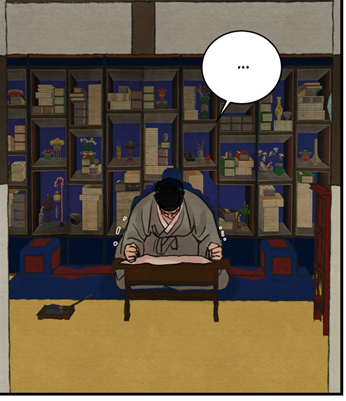 (Chapter 44)
 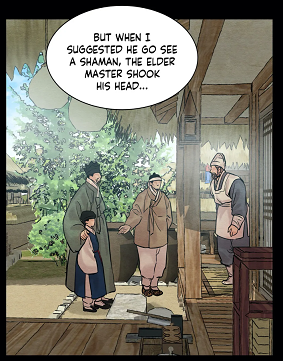 (chapter 57) Besides, just a few episodes ago, he had mentioned the scholar and the civil service examinations, and the story is following this rule: the next chapters will reflect the previous ones. Moreover, in season 2 and 3, the father was seen in the kisaeng house. Finally, in front of the learned sir‘s home, the manhwaworms could identify the guards from the patriarch.
 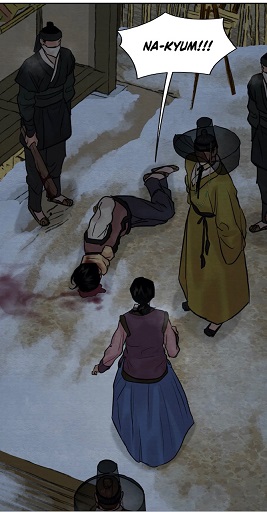 (Chapter 99) This scene outlined that Black Heart and Yoon Chang Hyeon were working together, and they had planned to blame the Lees. But the irony is that the father was doomed to fail, because he was using the noonas‘ goodness and innocence. So the scholar was mentioned for one reason. The kisaeng desired to push Baek Na-Kyum to question his sponsor about the learned sir‘s well-being and whereabouts. The purpose was to generate a quarrel. Note that the other helped her colleague. As you can see, the hat and the change of the color of the noona’s skirt was an indication that there was a time jump. Thus I am deducing that the kisaeng was not present the entire time. Remember that the magician Byeonduck is always creating a fake continuity.
First, the noona had the hat with the orange skirt:  (chapter 93) When she mentioned the learned sir, Yoon Seungho entered the room. (Chapter 93) But observe that the woman had a green skirt with the hat. This means that in the meantime, she must have left the room!! Striking is that he only opened the door, when Jung In-Hun was mentioned. This was no coincidence! He was putting an end to the fire by replying this:
 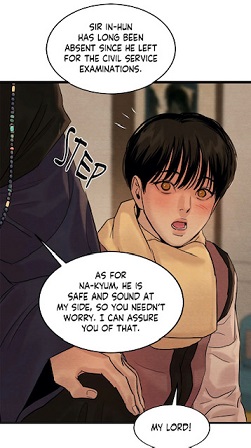 (chapter 93) What could the noonas say to this answer? They couldn‘t call the main lead a liar! And note how he introduced himself: (chapter 93) This means that he had heard their conversation for quite some time. He also must have seen the kisaeng leaving and entering the room too. She was still wearing the green skirt with the hat! (Chapter 93) So here we had no time jump! And now, you comprehend why the author made us hear the conversation from the hallway. (Chapter 93) This corresponds to the main lead‘s arrival. In my eyes, from that moment on, he was spying on the family. But contrary to the past, he had no outburst of rage because of their badmouthing and lie. Why? It is because he had seen their genuine affection in the courtyard. The lord had witnessed the artist‘s happiness and joy! Thus I am deducing that Yoon Seungho had been manipulated in the past. Heena had provoked our beloved protagonist with a deception
 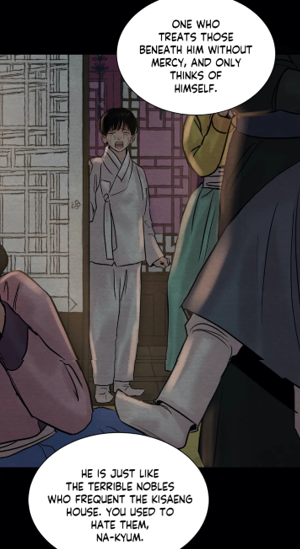 (Chapter 68) which I had already sensed in the past. This chapter reinforces my previous interpretation. But why did the noona change her skirt? It is because it was wet! I had observed that the lit of the well had been removed. (Chapter 93)
  (chapter 94) That‘s the reason why Yoon Seungho went to the well later. My explanation is that he had been suggested to go there by the noonas, while the latter had proposed a different idea to their brother: the walk to the pond. But why? In reality, the schemers envisioned that Yoon Seungho would behave like a hoodlum, he would kill the kisaeng Heena. Remember the threat expressed to the noona: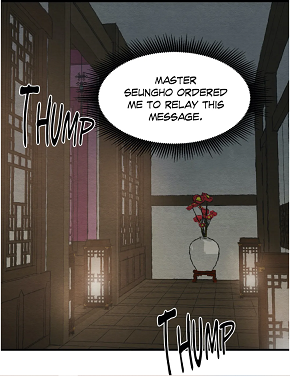
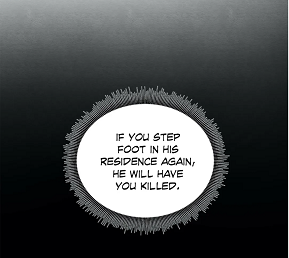 (Chapter 69) But like I had explained, this menace was voiced by Kim, which was only validated by Yoon Seungho afterwards. And naturally, this threat had been revealed to the schemers: Min and the patriarch. They all imagined that the main lead would punish Heena for her accusations. Kim had experienced this scene in the courtyard
 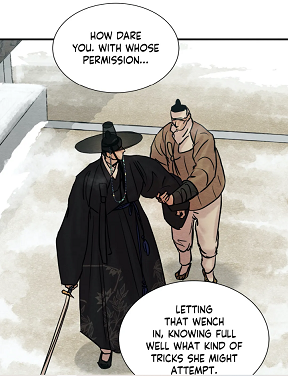 (chapter 68) He had taken these words as face-value. But he never recognized that the main lead would never use violence against Baek Na-Kyum‘s family, and this was already perceptible in chapter 68. He never barged in the study, when the noona called him a bird of misfortune.
  (Chapter 68) He respected their privacy, the opposite of the butler.
  (Chapter 85) This explicates why the kisaengs blamed Heena for the rumors. (Chapter 93) They were trying to fuel resent towards their colleague. But for a benevolent listener, their words reflected a different reality: the kisaengs’ open-mindedness. They were perceiving the main lead in a better light. That’s the reason why their „smear campaign“ failed.
Hence I come to the following conclusion. During that night in the gibang, Min and Yoon Chang-Hyeon had expected that Yoon Seungho would kill the kisaeng. And her body would have been thrown into the well. That way, the elder master could have used his messenger‘s death as another evidence for the lord‘s criminal activity. And now, under this new light, I believe that the silence and resignation from the noona (chapter 93) in the kitchen created the illusion that the main lead had silenced her. Besides, observe that the light from the room had vanished. It is visible, if you contrast the last two panels.  (Chapter 93) This gesture (blowing the candle) outlines that he was indeed trying to stop the fire, a symbol for hatred and fear, from spreading.
But let‘s return our attention to the conversation between the kisaengs and the couple. What caught my attention is that while the noble lost in his thoughts by recalling his conversation with Heena, he didn‘t realize that something had changed. 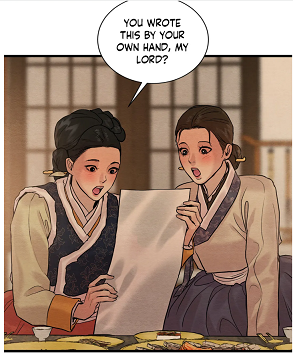 (Chapter 93) This time, the noona had no longer the hat, but she was wearing the orange skirt again. The only explanation is that she had left the room. Since the kisaengs had no drop of sweat on their face, their admiration and surprise were genuine. But now take a look at this
  (chapter 93) We have the return of the hat! Moreover, another detail caught my attention: the paper is blank! Where are the calligraphes? One might argue that it was too difficult for the author to draw them, but I can only refute this point by using this scene.
 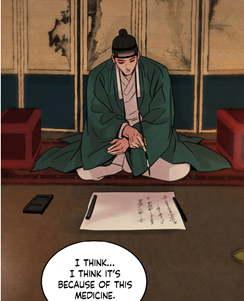 (Chapter 36) Here, the handwriting was even smaller compare to this calligraphy:
 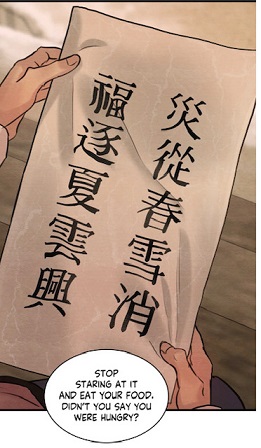 (chapter 92) From my point of view, the Spring poem got switched and was returned to the schemers. Another evidence for this theory is the length of the piece of paper. (Chapter 93) It is much longer here, as the end disappears under the table. But not here: (chapter 93) This was the famous blank piece of paper, a new version of this scene:
  (chapter 65) First, the noona couldn‘t see her brother‘s painting, until Kim showed her the picture with Jung In-Hun which he had kept!
  (Chapter 65) Kim was embarrassed in that scene, like the drop of sweat indicates it.This was the negative version of chapter 93. Don’t forget that Heena had been manipulated by Kim, when she visited the lord’s mansion. The latter had shown her the painting from the painter and then he must have told about the flashback in the bedchamber and the second marathon session in the shed.
 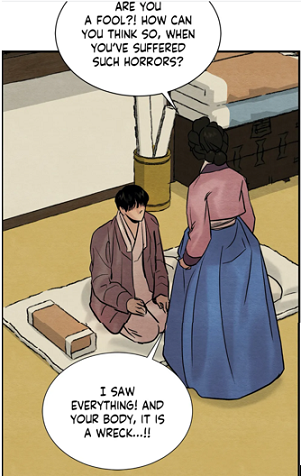 (chapter 68)
For chapter 93 represents the positive reflection from the noona’s stay in the mansion, I think that first, the noonas saw the original Spring poem, then they gave it to someone else and the woman returned with a blank page. Like I had already explained, they needed to remove the evidence that Yoon Seungho was highly educated. (Chapter 93) Striking is that neither Baek Na-Kyum nor his lover had eyes in this panel, a sign that they were blind to the noona‘s tricks. Nonetheless, I would like the manhwaphiles to keep in their mind that these women were just naive, and got manipulated too. They were definitely acting for their sibling’s best interests: Baek Na-Kyum. At the same time, we could say that this was Yoon Seungho’s karma! Don’t forget that he had stolen a poem from the painter too  (chapter 4) and he had never returned it. He had replaced it with another sijo, according to me with the original sijo.
  (Chapter 7) It doesn‘t matter, if the scholar had deceived the painter. The latter viewed the paper as a treasure, a memory from his learned sir.
So during the family dinner, the noonas had an ambiguous attitude towards the main lead, which I explained with their social status. How could they disregard a noble, especially an elder! From my point of view, Yoon Chang-Hyeon must have listened to their conversation, for we have to remember that there is always a reflection within the same chapter. So imagine how the patriarch must have felt, when he heard the lord‘s rejection: 
 (Chapter 93) The father was mocked for his dream!! He was portraying the elder master as a poor and weak noble! He was even compared to the learned sir. We have two proofs for this signification:
  (chapter 86) This was the father‘s karma. He had insulted his own son, made him feel little and even jealous
  (chapter 86) Remember that karma will always retaliate shortly, and the punishment will be even worse. The irony is that the lord was actually repeating the butler‘s words! (Chapter 93) This is what he had been told, when the lord had let transpire that he was thinking about taking the civil service examination. There’s no ambiguity that the noble was talked out of it, for if he went to the court, he would meet the pedophile and recognize the identity of his abuser.
What caught my notice is that here, the noona had no longer the hat again!  (Chapter 93) This symbolizes that she was not acting here. The drop of sweat on their face showed their embarrassment. They could not deny his statement, for the learned sir was indeed poor and with no connection. They anticipated that the lord would boost about his talent, but no he was showing humbleness. On the other hand, he outlined his wealth and power, which the noonas couldn’t contradict. His words were indeed reflecting a certain reality. Another important detail is their reply to the lord‘s statement: the points of suspension which I connect to the butler. Since chapter 77, the latter had switched loyalty and was now serving the elder master Yoon.
But let’s return our attention to the noona who tried to divert attention from their shame and guilt: 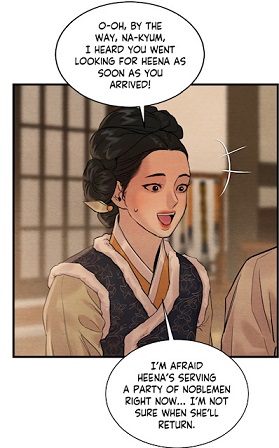 (chapter 93) “I heard” indicates that she wasn’t the entire time with Baek Na-Kyum. This proves my previous statement that the woman must have left the room leaving her siblings inside at some point. Secondly, the drop of sweat on the cheek is a signal for a lie. This means that the kisaeng was well aware of Heena’s arrest. She was actually covering up. It was, as if she was working for Yoon Seungho, while in reality she was acting on someone else’s behalf.
Heena was in the kisaeng house and there’s no ambiguity that she knew where her sister was. This means that she was deceiving her brother. This truly shows that she didn’t feel upset about the situation. I have the impression that the schemers must have discovered that Heena had kept hidden from her co-workers that she knew where her brother had been. They must have discovered her deception. For me, Heena was just receiving the punishment she had deserved. Don’t forget that she had barged in his mansion with guards 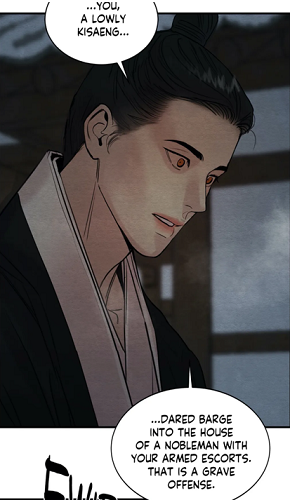 (chapter 69), and back then the lord had showed leniency. However, Heena didn’t want to acknowledge his benevolence. Thus she sent letters to her brother, in which she called Yoon Seungho many names: a rake, a hoodlum, a bastard and finally a murderer…
  (chapter 93) One might bring up the freedom of speech, but there’s a reason why in Germany total freedom of expression is not allowed. During the Republic of Weimar, parties were authorized to announce their hatred for democracy and republic. The result was that right-extremist parties as such the NSDAP led by Hitler became more and more powerful. This is no coincidence that this republic vanished. The NSDAP could spread fear and hate against democrats, Jews and other minorities. Hate speech encourages hate crimes. Yes, this is the consequence of the butler’s philosophy: “don’t take it to heart”. This saying symbolizes indifference and as such passivity and silence which contributes to create the perfect climate for hatred and fear.
But let us return to the letters. From my point of view, Yoon Seungho never gave the order to hide the letters, but once he discovered their existence, he didn’t decide to ignore them. I have the impression that he read them, when the painter took a nap first.  (chapter 91) They didn‘t go to the calligrapher right away. One week had passed, since the elder master Yoon had visited the mansion. This signifies that Heena is forced to face the consequences of her past actions.
 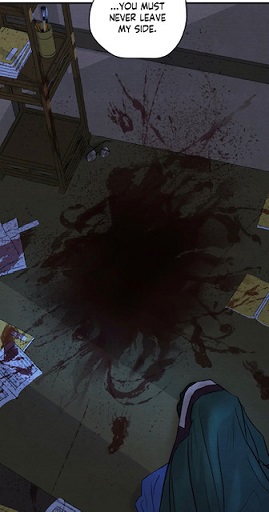 (chapter 88) This is no coincidence that she was sitting the same way in the “jail”, than when she discovered the blood. However, this time she was facing the door. (chapter 93) She was forced to face her isolation. One might say that these were just letters… The lord was just too harsh with her. But remember what I wrote above: calling names is the start of discrimination and terror. That‘s how the lord‘s downfall started too. People shouldn’t underestimate the power of words in the letters. Baek Na-Kyum already went through this terrible experience. Just because Yoon Seungho is used to this, he shouldn’t accept this. Besides, by acting so, she is tarnishing her brother’s honor. If the artist lives with him, he becomes guilty by association. Her goal is to make the painter leave the mansion. She could have confronted the main lead like in the past, but she didn‘t. She never went to the authorities either.
In addition, I would like to bring up the K-drama Bad and Crazy. In this story, teenagers got brainwashed by a so-called therapist who pushed them to commit crimes. He used their low self-esteem and lack of confidence to gaslight them. Striking is that in episode 9, the main lead Soo Yul discovered that a man got sentenced instead of the real culprit. However, when he met the convict, Soo Yul asked him why he didn’t ask for a retrial. The innocent man confessed his guilt immediately. He started explaining everything which confused Soo Yul. Until he saw this:  (episode 9) The real culprit had sent him letters each day for years… The content of the correspondence was always the same:
  (episode 9) That’s how he got brainwashed and convinced that he had indeed committed a crime. In jail, he was isolated and due to the suffered injustice, the prisoner definitely suffered from an emotional and mental breakdown, explaining why he was receptive to manipulations. That’s why you see the mouth and the letter together. So imagine that Baek Na-Kyum had read all the letters and all of them were saying the same thing over and over again. Since the painter is someone with a low self-esteem, he would have started doubting his own judgement. This is gaslighting. Naturally, Kim never intended him to read them. The whole purpose was to create a quarrel in the couple. I am quite certain that Heena never asked about her brother’s well-being. She was already convinced that the lord was a rake and a bastard. Her letters were full of contempt and hatred, something Yoon Seungho could sense in the correspondence.
  The reflection of this scene.
  (chapter 87) But note that Yoon Seungho never used any violence at all. He just asked her to remain quiet and cause no trouble. (chapter 93) We could see that once rumors about Yoon Seungho started spreading in the kisaeng house, Heena didn’t stop them, she heard them, and believed in them. The start of the smear campaign began in the gibang:
 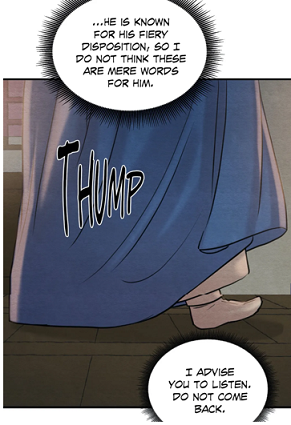 (Chapter 69) And who was there during that night? Black Heart. This is important, because in the first episode, the noona had badmouthed the main lead, but she was well aware of the truth.
 (Chapter 1) It was, as if the kisaeng was now paying for her past sin. She had become a victim of her own trick. (chapter 93) In her eyes, the main lead was just a man consumed by sex, hence he is a “rake” and a “pervert”.
But “rake,” when used in the context of a regency romance, has nothing to do with chores. A shortened version of the word “rakehell,” this category of carefree, libertine aristocratic men became popular in stage plays written during the Restoration period in 17th century England. […] He’s definitely someone who’s not interested in marriage. Celibacy is off the table. No serious relationships of any kind. Often, rakes really adore women of all shapes and sizes. They have an innate sense of how sexy they are, and how to use that sexiness to get what they want from anybody around them. Essentially, the rake is the bad boy with the heart of gold. quoted from https://www.oprahdaily.com/entertainment/tv-movies/a35034695/what-is-a-rake-person-romance-novels/
This means that her job was to deny the existence of the marriage between the painter and the noble  (chapter 87), since the rumors of his union in town were already spreading. The purpose of this smear campaign was to portray the lord as someone who was not interested in monogamy and fidelity. And who had an interest to oppose this union? The father!! As you could detect, through these comparisons I could connect Yoon Chang-Hyeon, Kim, Heena and Black Heart together. In the end, this badmouthing couldn’t succeed, for her eonnies were different. They were more innocent and less selfish, they had been left in the dark concerning the lord’s past. They never admired the learned sir in detriment of Baek Na-Kyum. They certainly don’t reject sexuality and they have less prejudices. As you can see, I detected a war of rumors, reminding me of the war of the waves during World War II.
Here, I would like to bring up the manhwa Doctor Frost again. 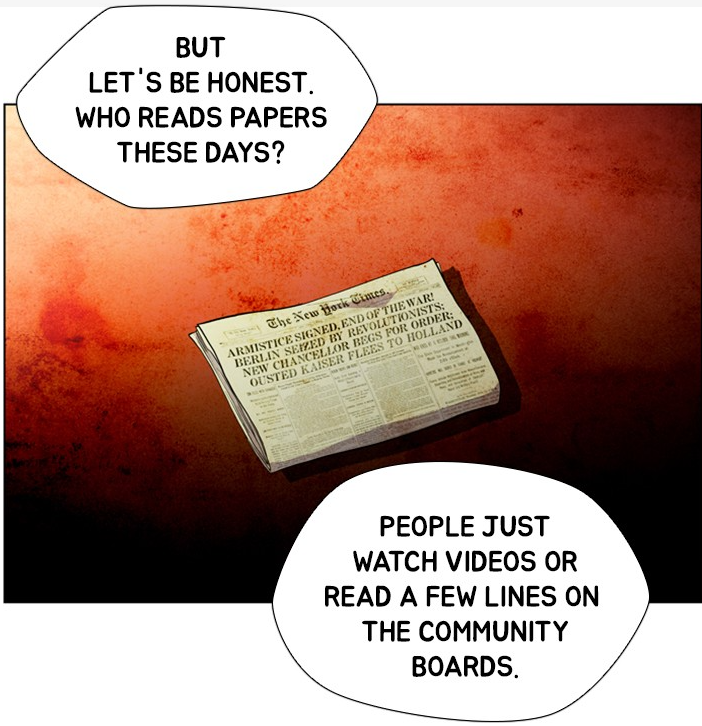

 (chapter 175) Because of this comparison, I couldn’t help myself thinking of the water vapor as the grapevines in Painter Of The Night. They’re everywhere and no one can stop them. And now, you comprehend how the noble’s reputation got ruined.
  (chapter 175) That’s how hatred and contempt were spread. And Lee Jihwa listened to them, this is no coincidence why his mind and heart got poisoned. As long as he remained by Kim and Min’s side, his heart and mind would always be clouded. This means that Yoon Seungho was able to stop a fire, before it ruined the winter forest. People were upset, for he had such a cold gaze, when he remembered his interaction with Heena.
 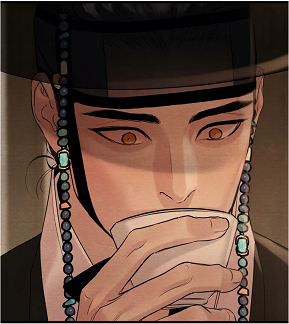 (chapter 93) But he was just mirroring the schemers‘ thoughts and gaze. He had to remain cold. So what does Heena’s isolation mean? Yoon Seungho has no idea, but he is clearing her mind from the brainwashing.
  (Doctor Frost, chapter 183) There exists two methods. First,
  (Doctor Frost, chapter 183) And we could clearly detect this in the confrontation between Heena and Yoon Seungho:
  (chapter 93: In the Korean version: Your little brother will be with me now) For Heena, the painter should live with the scholar. This was her faith:
  (chapter 46), though I am quite sure that it was in truth her biggest wish. She was in love with the learned sir herself. By looking him in the eyes, she could detect the lord’s determination and frankness. This was his choice. The problem is with deprogramming is
  (Doctor Frost, chapter 183) That’s the reason why nowadays, psychologists prefer the other method
  (Doctor Frost, chapter 183) And now, you comprehend what happened. The deprogramming didn‘t work out, for Heena was approached by the schemers again. They used another noona to deceive the sibling, for they could no longer use the women close to Baek Na-Kyum. Thus Heena was still under the influence of the haters.
  (Chapter 98) Since she resents nobles, I deduce that the so-called witness was a commoner. In my eyes, it can only be Kim who justified his silence by saying that he could do nothing. He was the only one who knew, because the other had been already killed.
Since the other kisaengs were not involved in the lord’s suffering, they were more innocent. This is the reason why it was important for the main leads to have some good time with the noonas first. The latter could see with their own eyes that the couple was happy.  (chapter 93). Hence their punishment for their deceptions couldn‘t be so harsh.
  (Chapter 99) The symbol of their dinner and reunion was pushed away. In my eyes, this ruckus put them in a bad light. However, I believe that these deceptions were necessary, for the bond between Heena and the other noonas
 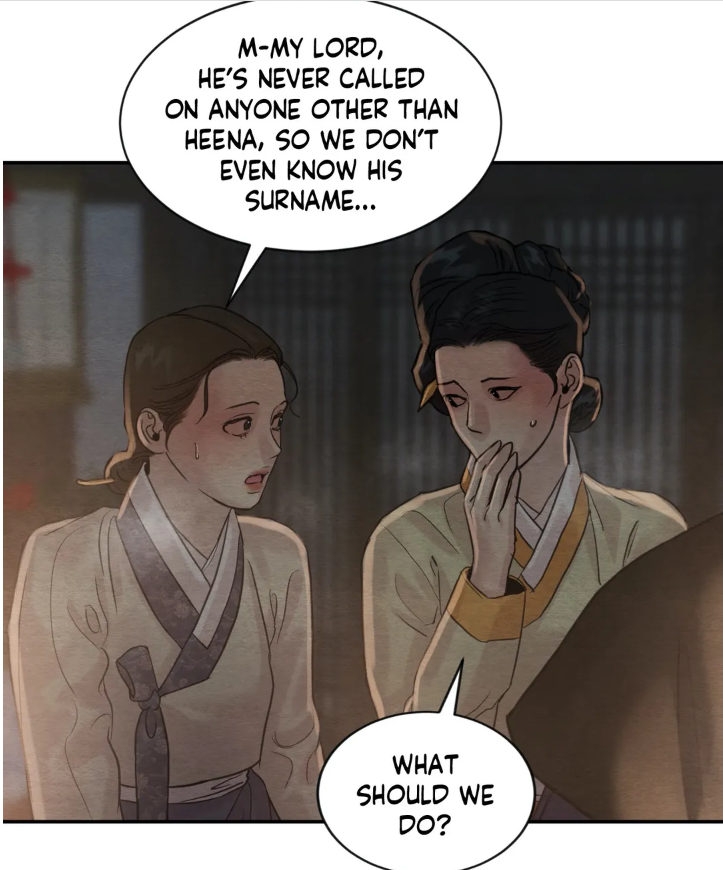 (Chapter 99) was quite strong. In this scene, they had sided with the kisaeng again, hiding the fact that they had seen leaving Heena with Lee Jihwa. They knew that the kisaeng was running away from the gibang, for she was not dressed up.
  (Chapter 99) Hence the moment the kisaengs see how the brother was hurt by Min, they will realize the deception from Heena who abused their affection and loyalty. They will definitely blame themselves for their lies, and since I discovered connections between Yoon Chang-Hyeon and the noonas, I have the impression that Yoon Seungho will discover the backstabbing coming from his own father. According to me, the schemers had planned to frame the main lead for Heena‘s death (well), but the puppet masters‘ karma is to receive the sentence that they had planned for the main lead: accusation of violence and murder. The more I am analysing, the more I am sensing that Yoon Chang-Hyeon will be judged as an accomplice of Lee Jihwa’s crime in the nobles‘ bloodbath. He had helped Lee Jihwa and deceived Black Heart. And if the kisaeng is alive, the survivor will recognize the deception from the guards.
Besides, I would like to point out how gentle the lord was, when he forced Heena to look him in the eyes. (chapter 93) Don’t forget how he grabbed the servant’s face:  (chapter 80) Heena could have pushed away his hand, her movements were not restrained contrary to the lord in the kisaeng house
 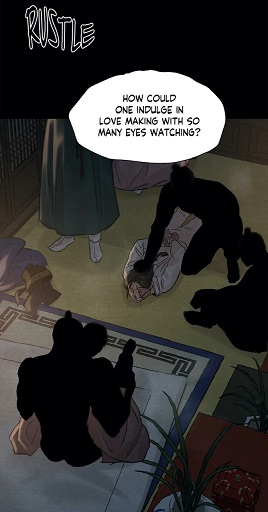 (chapter 86).
People have the impression that this reunion was too beautiful to be true, but the reality is that we are witnessing a war!! But each time, the main lead was able to defeat his opponent, for he was no longer avoiding the problems. He faced them head on. But he didn’t work alone. His wife assisted him. He already started by defending his husband’s honor.  (chapter 93) Secondly, he introduced his partner to his family properly.
 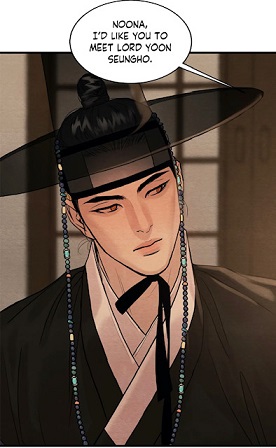 (chapter 93) It is here necessary to contrast this introduction with this one:
  (chapter 01) In the beginning of the story, the protagonist was not presented as a lord, but as a master!! This means, he belonged to the Yoons. However, Baek Na-Kyum is now viewing the protagonist as the real lord of the mansion. He is independent, which means that the artist is not truly acknowledging Yoon Chang-Hyeon and Yoon Seung-Won as his family. And if you compare the first episode with chapter 93, you’ll realize the similarities. Back then, Heena had mentioned the main lead in order to scare the painter, she had used rumors… (chapter 01) But exactly like in episode 10, where the grapevine was created to target the painter and Jung In-Hun, the “rumor” in episode 1 never reached the noonas’ ears. They only heard about the black sheep of the family recently. (chapter 93) In the last panel, we can detect Heena’s hypocrisy. She got worried the moment she heard her brother was living with the main lead. I would even say that her mind was in peace until the scandal in town, this explicates why she could enjoy buying clothes.
  (chapter 64) But she started worrying for her brother, when she realized that he wasn’t living according to her belief: abstinence. And now, we have to question ourselves this: why did Yoon Seungho encourage his bride to sleep in the kisaeng house?
 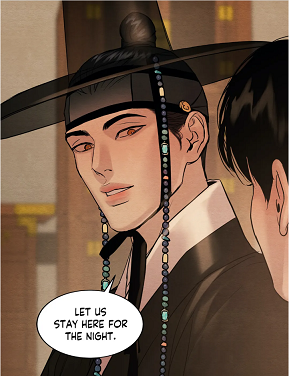 (chapter 93) Naturally, he had many reasons to do so. First, he wished to keep his promise. Secondly, he had sensed the painter’s sadness.
  (Chapter 93) But Yoon Seungho never imagined that he was himself the cause for this heartache. The painter could detect the lord’s agony and low self-esteem. He knew how hurtful it is to be called names like rake or bastard or hoodlum. And the lord’s selflessness got rewarded: his biggest wish came true during that night. There was someone who loved him despite his flaws and wrongdoings. We could say that their stay was to confirm his marriage with the painter to the noonas. At the same time, season 3 exposed the slow transformation of Yoon Seungho. Little by little, he was showing an interest to his own past and no longer accepting the justification that he was just a bird of misfortune. Don’t forget the master’s previous statement:
  (chapter 86) He was already pondering on the question why the family name was sullied. This shows that Yoon Seungho is slowly uncovering the truth, and he is now using Kim’s MO: deliver the information in delay, feign ignorance and act, listening to conversations behind the doors. This is no coincidence that he is recovering his memories as well. This is important, because he is less manipulable and as such no longer weak to brainwashing.
And here I would like to thank my follower @Spppeedy who made me discover another aspect. Yoon Seungho’s real emancipation didn’t occur just with the hug, but also with the whisper:  (chapter 88) When the lord got embraced, the painter whispered this to his ear:
“I like to hold you close.”
This explicates why he said this later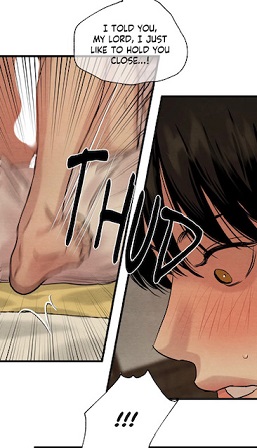 (chapter 91) This represented Baek Na-Kyum’s first mini-love confession. His action was supported by his words. Therefore the lord could realize the honesty and genuineness of the painter. He could be embraced and as such accepted, he was no monster. Yes, it was the opposite of the love session in the physician’s office. Back then, the painter had remained silent.
  (chapter 62) And this made me realize the signification of whispers in the manhwa. They stand in opposition to the hate speech and brainwashing!! This is no coincidence that the noonas whispered, when they noticed that Yoon Seungho was totally different from the description which Heena was supposed to have spread. (chapter 93) The whispers symbolize secrets, trust and intimacy. They embody love, honesty and truth, though here they blamed their noona. This means that the louder a character in the manhwa is, the more dishonest and insensitive he or she is.
  (chapter 18) The whisper contrasts so much to the rumors, anonymity versus personal. Thus I conclude that the whisper represents a weapon against the brainwashing and terror. This is not something that a spy can hear from the window or the door! Hence you have Yoon Seungho whispering this to Lee Jihwa
 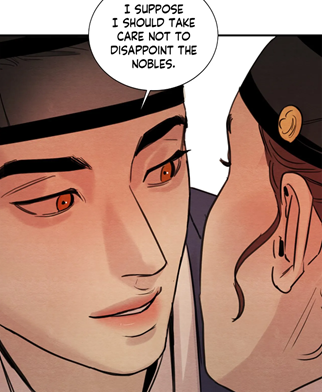 (chapter 18) or Yoon Seungho saying this to Heena: (chapter 93) Due to the closeness, the lord incited them to face reality. He confided to them his wish and goal, though after 6 months, the master’s dream changed. He views Baek Na-Kyum as his wife. That’s why I believe that the lord’s whisper
  (chapter 92) reflects the nature of their relationship: Love and closeness. Even outside and in front of the calligrapher, the lord felt the need to know his lover’s thoughts, the positive version of this rumor: An aficionado for the painter with no regard for time and place. 😉
So when you read this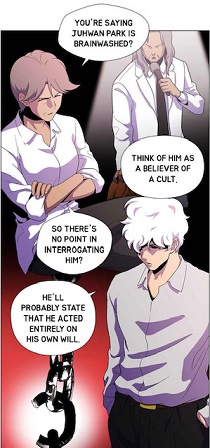 (doctor Frost, chapter 83), you should just replace the name Juhwan Park by Heena. She was just manipulated by the butler and Min’s trick. They used her strong belief and prejudices. However, I had the feeling that Heena could come to her senses, because she remained silent and her gaze was different.
  (chapter 83) Besides, what caught my attention is that she never replied to Yoon Seungho. She never fought back like in episode 65:
 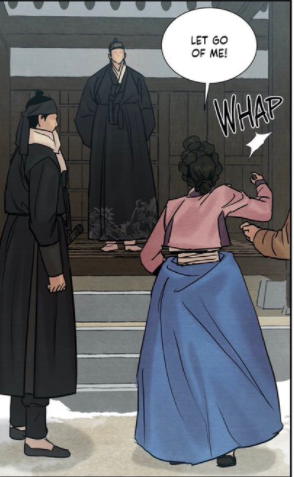 Why was she so passive? It is because the exclusion from the reunion represented the biggest punishment for Heena. She has always seen herself as a knight in shining armor. Imagine all the noonas could see the little brother and enjoy his company, while she couldn’t. I was hoping that she would start regretting her actions. As you can see, I really viewed Heena more as a victim, blinded by her faith and her own suffering than as a big perpetrator. There’s no doubt that she rejects sex because of a traumatic experience. Yet, due to her blindness and selfishness, she was an accomplice to her brother‘s suffering in the past, and unfortunately, she made the same decision.
  (Chapter 97) Seeing the corpse in the well was the trigger for her to believe everything she saw and heard without questioning the coincidences and appearances. She didn‘t doubt the testimony of the so-called witness. (Chapter 98) This image illustrates perfectly her fanaticism, her vision full of prejudices, for the author drew her without eyes. She shares some common denominators with the persons in this picture: (Dr. Frost, chapter 180) Fear, rage and the absence of eyes!! She chose the scholar over her brother.
And now, you comprehend why Byeonduck decided to let this season take place before the spring. The lord and painter needed to put an end to the terror and terrible rumors circulating about Yoon Seungho. They had to find and remove the source of the hatred and fear leading to violence. Once the winter ends, the climate of hatred and terror will vanish. The forest will come to life again… just like Yoon Seungho’s new home and family. Thus I am expecting that the noonas will come to accept the aristocrat. Hence the marriage takes place in the gibang 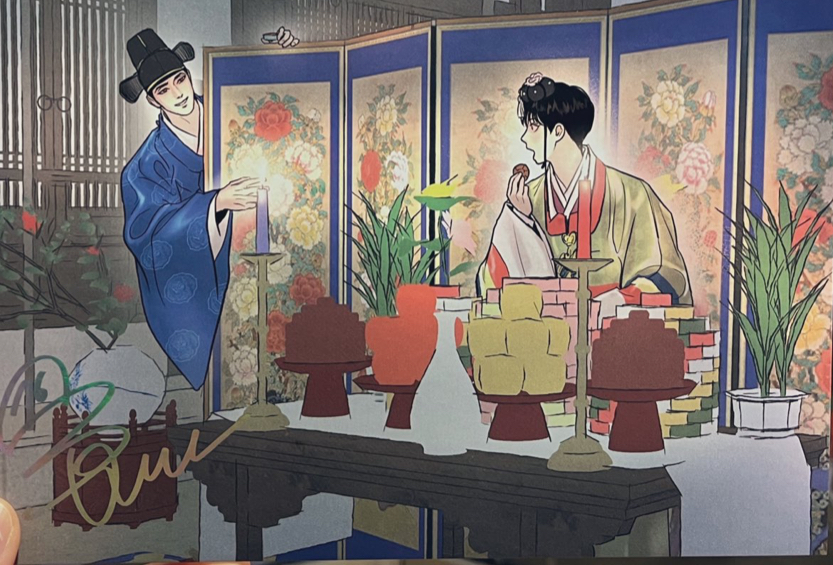 replacing these three fake feasts:
  (chapter 87) (chapter 93)
  (chapter 99) No scandal in the past and in chapter 93, but now it can no longer be contained!!
 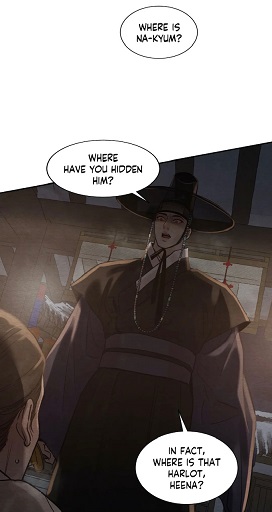 (Chapter 99) On the other hand, the resent for Heena didn‘t turn Yoon Seungho into a fool or a person full of prejudices! He still trusted the noonas, as he believed in his lover‘s heart and his genuine confession! The fire couldn‘t spread in the gibang! The lord showed mercy towards the kisaengs and the domestic Seok-Dae! Hence no one will ever come to believe that Yoon Seungho is a murderer. In their eyes, he makes nothing but hot air!! 😉
Feel free to comment. If you have any suggestion for topics or manhwas, feel free to ask. If you enjoyed reading it, retweet it or push the button like. My Reddit-Instagram-Tumblr-Twitter account is: @bebebisous33. Thanks for reading and for the support, particularly, I would like to thank all the new followers and people recommending my blog.



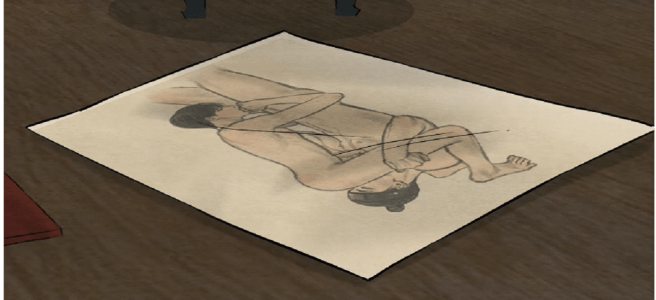

This is where you can read the manhwa. https://www.lezhinus.com/en/comic/painter But be aware that this manhwa is a mature Yaoi, which means, it is about homosexuality with explicit scenes. If you want to read more essays, here is the link to the table of contents: https://bebebisous33analyses.wordpress.com/2020/07/04/table-of-contents-painter-of-the-night/
I mostly used the following website as a source of inspiration: https://idioms.thefreedictionary.com/tears
What caught my attention in chapter 76 was Min’s tear combined with the laugh 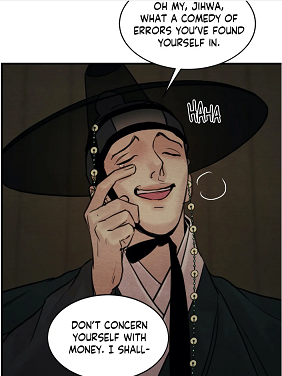 (chapter 76) which was totally new in the manhwa. We never saw such a combination: a single tear with a laugh. Moreover, for the first time, The Joker had shed a tear. The manhwalovers will certainly recall that so far, we had tears of happiness (chapter 21) and sadness
  , (chapter 59) but never tears out of laughing.😂🤣 Therefore I came to recognize the significance of this scene. First, it divulged a lot about Black Heart’s personality, and announced a turning point in his life. At the same time, this observation gave me a new idea, which I will elaborate in the second part. Striking is that until now, I had examined the painter and Jihwa’s tears, yet I had never focused on this topic itself. Hence in this analysis, I would like to study not only the weeping of the characters, but also the absence of their tears.
But before beginning with the real topic, it is necessary to define tears and their origins. There exist three types of tears:
The connection between tears and life is relevant, because it explains why Jung In-Hun is never seen crying. He has a heart of stone. Consequently, Byeonduck drew the learned sir next to a rock in two occasions: (chapter 6) and  (chapter 22). The rock is a metaphor of his heart: he will remain cold-hearted. Striking is that even after the humiliation during the hunt, he never shed a tear. He was only frustrated and angry at his opponent and sponsor. His huge ego had been hurt by the main lead’s mockery, but despite his wound, he chose to look up to the sky, apparently waiting that fate/karma would punish the wealthy noble for his wrongdoing. This outlines that the learned sir still believed in his superiority. In other words, Yoon Seungho had not reduced the scholar to tears with his words, which stands in opposition to the second lead’s reactions.
“To reduce someone to tears”: to cause a person to cry through insults, frustration and belittling” quoted from https://idioms.thefreedictionary.com/reduce+(one)+to+tears
In chapter 18, the main lead had reduced Lee Jihwa to cry through his reproaches and belittling.  (chapter 18)
This huge difference between the two figures (Lee Jihwa and Jung In-Hun) shows that the childhood friend is still a human despite his egoistic and prideful attitude. He was overcome with negative emotions (pain, sadness, frustration and anger), while the other only feels resent and anger. Hence through this expression (“reduce to tears”), the manhwalovers can recognize the connection between pride and tears. And if you compare both situations, you’ll notice that during their argument, the main lead lowered himself and faced his childhood friend.
This reveals that the true intention of Yoon Seungho was not to humiliate his ex-lover per se. He didn’t desire to show his superiority to him. He had acted in the moment after witnessing Jihwa’s outburst. The former felt betrayed, as the second lead had acted behind his acts on different occasions (the spy, the slapping of Baek Na-Kyum, the ruined painting). Yoon Seungho still showed a certain respect towards his ex-partner by sending him away accompanied with a servant. Note that in the woods, he left the low noble on his knees without looking back. In other words, he showed no remorse towards Jung In-Hun, while it was not the case with Jihwa. There’s no doubt that the noble was indeed moved by Jihwa’s tears. However, it wasn’t obvious, because he didn’t touch his face and wipe his tears. The readers can only grasp it, when they compare both scenes (18-22). Through this comparison, I recognized that Jihwa’s tears were connected to his wounded pride. It becomes even more evident in chapter 21. It was, as if the red-haired second lead had an outburst. We have to envision that he literary burst into tears.
“Burst into tears: to begin suddenly to cry” quoted from https://idioms.thefreedictionary.com/burst+into+tears
This explosion of emotions is visible, as the lord ruined his room.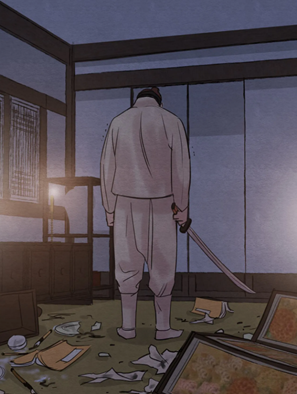 He broke out to tears. And note that in that moment he was standing with a sword in his hand, another evidence that his tears were triggered by his frustration and bruised ego mixed with sadness and anger. And now, you comprehend why he represent a negative reflection of Baek Na-Kyum, the latter embodying humbleness and modesty. However, unlike the scholar, Jihwa was slowly learning his lesson and as such changing. Since the low noble’s heart is made of stone, he will never change in my opinion.
Jihwa reached the bottom, when he got confronted by Yoon Seungho at the tavern in chapter 57. He was not only pushed to the ground, but the latter was never able to stand up in front of his friend again, contrary to chapter 18. At the end, the second lead gathered his courage and confessed his love on his knees in front of commoners. And this truly outlines that Jihwa had finally realized that his bond with his childhood friend mattered more than his pride. He had to make a choice and selected affection over his ego. 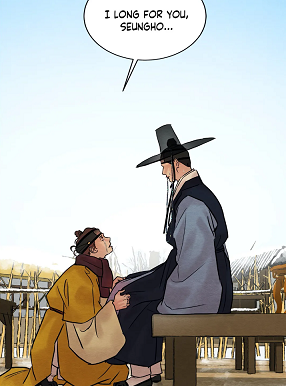 (chapter 57)
In addition, by comparing it with the episode 18, the manhwaworms can notice a divergence in the main lead’s attitude. Contrary to before, he no longer showed any respect towards his friend. He never lowered himself, but he was forced to sit down by valet Kim. For me, this is no coincidence, the sickness was a good excuse for the butler. If his master sat down, then the public humiliation would be lessened and as such, this would cause less ruckus. Important is that after his answer, Yoon Seungho left Lee Jihwa behind without paying attention to him. He never asked Kim to take care of his former lover. This displays that the gap between them had so much increased that their relationship would never be like before. This was even reinforced by the lord’s words: “Do not harbor any longing for me. There is not the slightest chance of my ever returning such sentiments.” (chapter 59)
Striking is that in the second season, Yoon Seungho was taught the same lesson by the painter. The former had to give up on his title and devalue himself in order to remain by Baek Na-Kyum’s side. That’s why in chapter 71, he called his lover Lord Na-Kyum and treated him as a master after that. But pay attention that the main lead never shed a tears due to his wounded ego. Yet this doesn’t mean that he is similar to the learned sir. In fact, the main character felt more like crying, when he was reminded of his past.  (chapter 56). This signifies that his tears are not related to pride, but to his traumas. The lord can no longer weep due to the constant exposure to physical, mental and emotional pain. However, since he has been taught not cry in the presence of the butler, in chapter 56 it was, as if he was blinking back tears.
“to blink back tears: to try to stop oneself from crying” quoted from https://idioms.thefreedictionary.com/blink+back+tears
How do I come to this conclusion? It’s because the butler avoided his master’s gaze, when the latter threw the letter (chapter 56) He acted, as if nothing was happening. Furthermore, it was the butler who asked the painter to stop crying after the rape: “Would you stop crying? Your eyes will be sore later”.(chapter 26) And since the painter’s fate is to go through the same suffering than the rich noble, it signifies that the butler must have said the same thing to his master in the past. There’s no ambiguity that father Yoon must have a similar mind-set too.
As you can see, Yoon Seungho isn’t still capable to cry, as he has long internalized that he is not allowed to show such emotions. In his past, he was coerced to repress his tears. He was forbidden to show any emotion and pain, though he was repeatedly confronted with terrible events (rape, physical and mental abuse, gangrape, drugs, brainwashing, betrayal). This explicates why the lord chose to live as a ghost. If he was a spirit, he could no longer feel emotions and as such pain. I would like to point out the strong connection between emotion and hurt, though the latter is no emotion. It is an emotional experience. However, the chapter 56 indicates a slow transformation, as the lord feels the need to hide his gaze behind his hand and even turn away his head from Kim, like you can observe at the top of the composition. In my perspective, the lord must have sensed something in his eyes, but out of fear and habit, he preferred masking his wound.
There’s a reason for Yoon Seungho’s gradual metamorphosis. Baek Na-Kyum cried, when he was physically (chapter 11, 25) and emotionally wounded (chapter 11, 41, 42)
Besides, right from the start the noble was moved by the painter’s tears, hence he felt the need to touch his face and wipe his tears. 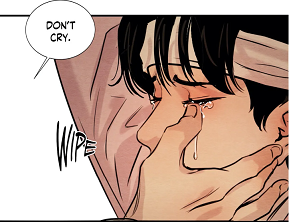 (chapter 2) And now, you can imagine which idiom I am about to bring up:
“Moved to tears”: to elicit such a strong reaction or overwhelming reaction in one that it causes one to cry. Quoted from https://idioms.thefreedictionary.com/moved+to+tears
Since the noble was forced to repress his emotions and as such tears, it is normal that in chapter 1, he wasn’t moved to tears. Furthermore, living without any emotion, it signifies that he couldn’t detect and recognize them in chapter 1. He never realized that he was actually showing happiness first and later a certain sadness, when he killed the servant. However, the tears from the painter (episode 1) triggered something in his heart.
He sensed a slight pain, that’s why he asked him to stop crying. Let’s not forget that right before the artist started shedding tears, the noble reminded him of the death of the servant. He put the whole blame on the low-born, as the latter had lied to him. According to the main lead, the painter was responsible for the domestic’s death. After hearing this, Baek Na-Kyum was moved to tears. This incident is important for two reasons:
And now, if the manhwaphiles look at the panel again, they will notice that the noble’s behavior displays remorse and compassion. Hence he asks him to stop crying, while wiping his tears. Consequently, during the night of the rape, we have a repetition of this scene: the lord feels uncomfortable in the presence of the tears (remorse), but also a certain compassion towards the painter. However, when his hand is rejected, the main lead tries to blame the artist for the situation. But this time, Baek Na-Kyum doesn’t accept the criticism and defends his position. Furthermore, he expresses a death wish: “I hate you so much I could die, sir”. (chapter 26) Only now, I truly realize the significance of this scenes. These words pained Yoon Seungho so much that it triggered emotions, which had been buried for a long time. That’s why we witnessed an outburst: “But if I am to be hated, I might as well be hated properly. Don’t you agree?” (chapter 26) But since he had forgotten how to cry, he could only show strong emotions like pain, rage and jealousy through violence.
However, we shouldn’t overlook that the painter had mentioned his death. In my eyes, it truly exposed the lord’s fear. He couldn’t bear the thought of being separated from the painter. If the lord had been able to cry, he would have. But he could only explode and in my opinion, in that scene he hadn’t just murderous, but also suicidal thoughts. This was the first version of this panel, though the lord never expressed it: “If I killed them all, and myself, would it be easier…” (chapter 55).
By killing the learned sir, he would push the painter to kill himself and the noble would have definitely followed him in his death. And now, you comprehend why in the hallway, the lord wondered about his own reaction. This was totally new to him, he had never felt anything like that before. Simultaneously, the manhwalovers can grasp why we haven’t witnessed the lord’s weeping yet. He needed to feel pain and emotions first. As a conclusion, during that night, the lord felt guilty, empathy, envy, rage and jealousy. Therefore I interpret that by witnessing the painter’s tears, the lord was taught to feel pain and emotions. Hence he stands in opposition to the scholar who chose to vent his anger and jealousy onto the painter, each time he felt humiliated. 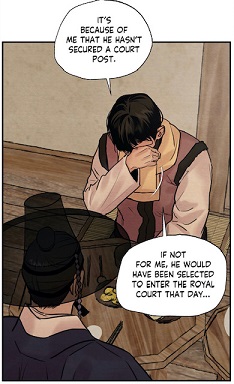 (chapter 75) This truly exposes the teacher’s cruelty and ruthlessness. We could say that the painter reinforced his admired sir’s cold-heartedness. Therefore I come to the following conclusion: Jung In-Hun will never feel remorse or empathy. He is destined to become a monster, as his wounded pride will just arouse brutality, resent and thirst for revenge.
Because of the strong connection between tears and emotions, I realized that the absence of tears isn’t just a sign of heartlessness, but also of indifference. There’s another person who never sheds a tear. It is the butler Kim. When in the pavilion he saw the painter lying on the ground, he was not moved to tears. The only comment he made was: “And here I was wondering why he lent me a horse…” (chapter 25) This means that he felt no empathy for the painter. However, he is different from the teacher. How? While Jung In-Hun senses no sympathy, the other tries to feel nothing. That’s why he gave his master the following advice: “Perhaps it would be best, if you did not take it to heart…” (chapter 50) In other words, Yoon Seungho should act, as if he had no heart. This explicates why he is annoyed, when he is facing someone in tears. He feels uncomfortable, especially if he is responsible for the incident. From my point of view, after Yoon Seungho got raped, the domestic made sure that the young lord would stop crying by making feel guilty and dirty. “Please!! No… It’s not…!” (chapter 65) Besides, I have the impression that he was turning his back on Yoon Seungho, when the teenager grabbed his shirt. Like I had pointed out above, tears are linked to a guilty conscience. And now, you comprehend, why Kim never cries. He is indifferent, because he doesn’t want to feel any pain and remorse. What is funny is that there exists a slang expression which connects tears to insensitivity:
“Two tears in a bucket” (rude slang): doesn’t matter, who cares. Said to express acceptance of or unconcern for the consequences of something. https://idioms.thefreedictionary.com/two+tears+in+a+bucket+fuck+it
And look at this: we always see the butler carrying a bucket around. 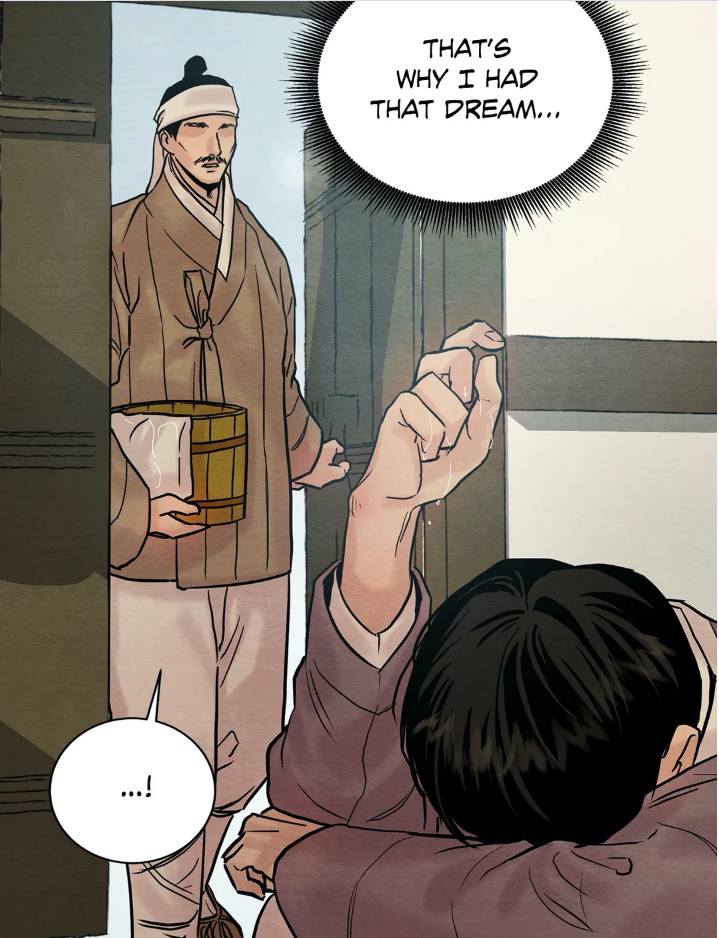 (chapter 56) I couldn’t help myself laughing, when I discovered it. I have no idea, if there’s such an expression in Korean. This slang expression comes from “to cry buckets”, which signifies that the person is like a cry baby. This new discovery made me realize that Yoon Seungho played a similar role to his admired valet than Baek Na-Kyum to his learned sir. Since the main lead was constantly facing terrible experiences, due to his cowardice and powerlessness the domestic chose not to take to heart. The more he witnessed, the more unconcerned he became. Therefore I deduce that Kim will never change his mind-set. He will prefer detachment, cowardice and blindness, because that way he is not suffering: neither regret nor heartache.
While Baek Na-Kyum contrasts so much to the valet, it means that Lee Jihwa stands between them. He is a mixture of indifference and empathy. This is particularly palpable in chapter 36. At the tavern, he cries out of frustration and anger, thereby he calls Yoon Seungho an “asshole” due to his wounded pride. Yet at the same time he feels a certain empathy for his childhood friend: “But I… know him best of all… I can… I can understand it all. Everything…” (Jihwa, chapter 36) He knows that he suffered a lot in the past. However, his compassion is quite superficial, because his bruised ego and pain are more important than his ex-lover’s traumatic past. As you can imagine, I am predicting that Jihwa will change in that aspect again. As time passes on, he will show more caring and respect towards others. However, as the readers can anticipate it, Nameless will serve him as role model. Besides, he has already triggered in him the right emotions:
On the other hand, the noble brings the goodness which was buried in the criminal’s heart to the surface. That’s why I come to the following deduction. Nameless might have not shed a tear until now, but he wasn’t indifferent. Contrary to the butler, he had a job, where he was forced to bury his compassion. In my opinion, he was confronted in a similar situation than Yoon Seungho. The only difference is that Nameless had to witness many wrongdoings committed on people close to him that at some point he chose to stop crying. In other words, Jihwa will teach the commoner to feel emotions (pity, caring, admiration, eg.) again so that at some point, we should expect Nameless to have tears in his eyes. Though he is not crying like the low noble and the domestic, he is not truly devoid of emotions. So far, he used his mask to protect his heart.
I am quite sure that you are surprised with such a heading. Nonetheless, there’s a reason for this selection. You all know the saying
“blood, sweat and tears”: a huge amount of effort, dedication and hard work. quoted from https://idioms.thefreedictionary.com/Blood+Sweat+and+Tears
What caught my attention is that neither Jung In-Hun nor Kim are seen hard-working. I had already demonstrated in the essay entitled “Jung In-Hun’s worries and problems” that the scholar was more and more stressed, when he realized that he needed to pass the exam in order to get the high position as official. Before he envisioned that the powerful noble would give him a high position without putting any effort. As for the butler, he is only forced to work hard (chapter 12, 25, 33, 56), when he has to take care of the painter. However, if you pay attention to his action, you will notice that he doesn’t work like a real intendant. That’s why I am stating that he is not diligent. He shows no real authority around the staff. He lets them eat the painter’s dishes (chapter 17) or leave the mansion without any permission (chapter 12, chapter 51). Furthermore, Deok-Jae attempted to sell the stolen red dresser. That’s why the worker in episode 29 described the household as hush-hush. There was no real control over the domestics. In my opinion, Kim is not a true hard worker, as he is not taking any responsibility in the mansion. He prefers simple tasks, like sweeping (chapter 65), bringing lunches or announcing the arrival of a guest. And this observation made me realize that the lord started working hard, the moment he desired to woo Baek Na-Kyum. He dressed up, ordered some medicine for excessive drinking, organized two hunts, started strolling through downtown. Yet, this is no real work. And note that Jihwa behaved in a similar way, when he sensed danger from the painter. He also dressed up, had to plant a spy and trespass the mansion on different occasions. From my perspective, Yoon Seungho will start working the moment he behaves like a master. He needs more than just give orders to his staff. He has to control them and pay attention to finances. From my point of view, it is also his duty to take care of them as well, as the head of the mansion. To sum up, he has to learn how to manage the mansion. That’s why I believe that the lord’s tears will only return, the moment all the conditions are met:
That’s why after comparing these 5 characters concerning their “tears”, I realized Jihwa’s true position and Nameless’ role. The second lead is not truly the painter’s negative reflection. Therefore I created a table to summarize my interpretations.
| – | -/+ | + | |
| Pride | Jung In-Hun | Lee Jihwa / Yoon Seungho | Baek Na-Kyum/ Nameless |
| Empathy | Valet Kim | Lee Jihwa / Yoon Seungho | Baek Na-Kyum / Nameless |
| Diligence / hard work | Jung In-Hun / Valet Kim | Lee Jihwa / Yoon Seungho | Baek Na-Kyum / Nameless |
As you can imagine, the persons in the middle were in the beginning of Painter Of The Night selfish, lazy and quite superficial. But as time passed on, they were affected by the painter. The latter with his tears moved the lord’s heart which created a riff between the protagonist and his lover. The latter was forced to cry and as such to change.
And now, you are wondering when I will talk about Min and his tear! As you can anticipate, I can only examine him in the second part. This essay already has more than 3700 words! Furthermore, I haven’t mentioned Heena noona and Yoon Seung-Won yet. As a conclusion, there’s so much to say about the tears, which is no surprise, because many manhwaphiles call this work “PAIN”ter of the night. Many readers are crying buckets while reading this story.
Feel free to comment. If you have any suggestion for topics or manhwas, feel free to ask. If you enjoyed reading it, retweet it or push the button like. My instagram-tumblr-twitter account is: @bebebisous33. Thanks for reading and for the support, particularly, I would like to thank all the new followers and people recommending my blog.


This is where you can read the manhwa. https://www.lezhinus.com/en/comic/painter But be aware that this manhwa is a mature Yaoi, which means, it is about homosexuality with explicit scenes. If you want to read more essays, here is the link to the table of contents: https://bebebisous33analyses.wordpress.com/2020/07/04/table-of-contents-painter-of-the-night/
Many readers are able to recognize the similarities between chapter 40 and 75, because both episodes contain the following elements:
 (chapter 40)
  (chapter 75: repetition from chapter 74)
 (chapter 40) versus
 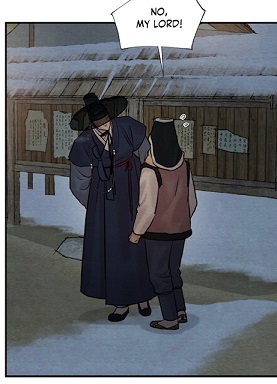 (chapter 75)
 (chapter 40) versus
 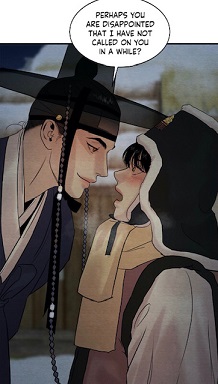 (chapter 75)
 (chapter 40) versus
 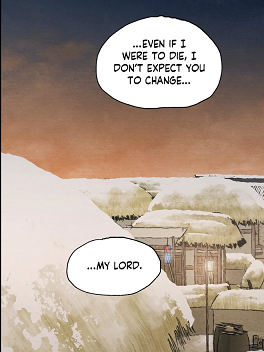 (chapter 75)
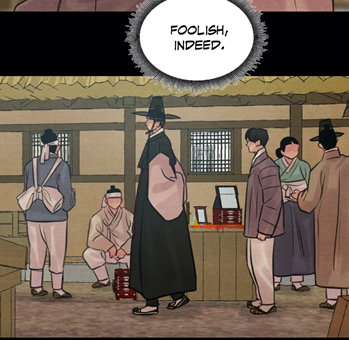 (chapter 40) versus
 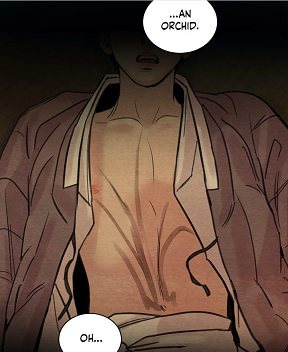 (chapter 75)
Yet despite all the parallels, if I had to give a title to chapter 75, I would select “Memories” and not “Responsibility”, although the latter is still present in episode 75. Why? It is, because the painter talks about his past and youth and as such, he is forced to bring up memories.  (Chapter 75) And this made me realize two things: Baek Na-Kyum embodies memories, hence we got many flashbacks from the painter (chapter 2, 11, 23, 34, 38, 40, 41, 46, 56, 57, 60, 66, 74, 75), whereas Yoon Seungho embodies truth. Note that unlike the artist, Byeonduck showed us only a few memories from the aristocrat (chapter 19, 25, 48, 55, 74 with the nightmare). Moreover, the latter is always confronting the painter with his questions and observations. The noble wants him to be true to himself and question his own motivation. (Chapter 75) And this observation made realize another aspect about Yoon Seungho, because unlike chapter 40, the aristocrat stands in the center of episode 75: the significance of memories in the lord’s life.
In order to understand why I came to this conclusion, it is relevant to examine the memories in chapter 40 due to the parallelism. There, the painter recalled the questions and comments from Yoon Seungho, which incited the commoner to ask his teacher about his future. Once the scholar had succeeded, would he become responsible for the painter, like he had implied? And observe that during the confrontation, the artist used a statement from the past: 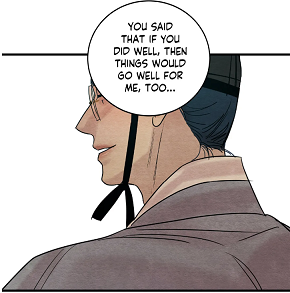 (chapter 29) Thanks to the memories, the low-born had gathered courage and faced his teacher. However, this discussion led to a tragedy. Baek Na-Kyum got hurt, because his learned sir chose to destroy him in the worst possible way. With his words, he showed his true thoughts
  (chapter 40) and in order to reinforce his statement, he made sure that Baek Na-Kyum would perceive his real gaze: cold and ruthless.
 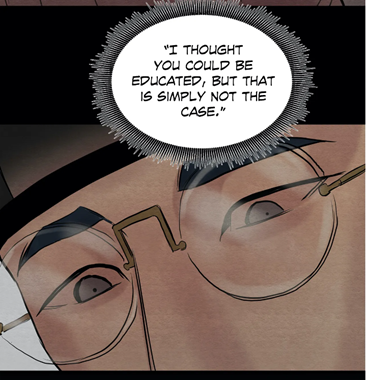 (chapter 41) But more striking is that the scholar used memories (the kisaeng house) to define the painter’s identity: he was born to be a prostitute despite his “lessons”. He puts the whole responsibility and blame on the commoner. As a conclusion, the memories served in the conflict to identify Baek Na-Kyum. Who was he really to the scholar? Was he his helping hand, like the low-born claimed, or was he just a “prostitute” according to the scholar?
This connection between memory and identity in the manhwa is not random, because according to John Locke’s “memory theory”, a person’s identity only reaches as far as their memory extends into the past. In other words, memory is a necessary condition of personal identity. Thus, as a person’s memory begins to disappear, so does his identity. Therefore, we could say that without memory, there’s no identity. On the other hand, in my previous analysis, I had demonstrated that the lord’s unconscious was trying to force his conscious to remember his past, because he had repressed his traumatic past. This meant that he was suffering from memory loss. Hence we could say, that he lost his own identity. This is not surprising that childhood trauma and memory loss go hand-in-hand. Blocking out memories can be a way of coping with the trauma. It goes even so far that an adult survivor of childhood trauma can even believe that he was never a victim of childhood trauma. Consequently, in case of a permanent memory loss, it signifies that the victim even loses his own identity. Since my theory has been confirmed that the lord was a painter in his youth, chapter 75 actually exposed the memory loss in two different ways:

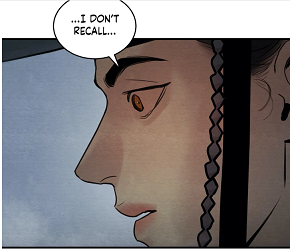 (Chapter 75), an indication that his short-term memory was defective due to his lack of sleep.It exposes that it was actually an automatic gesture, revealing that he had internalized such a gesture in the long-term memory. And note that when he did this, he mentioned his youth
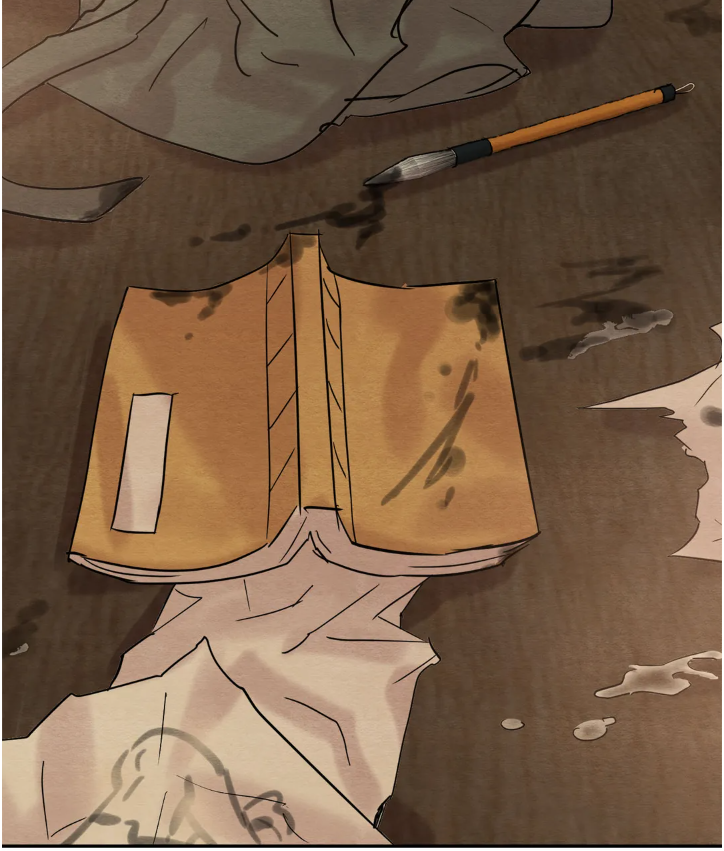
  (chapter 36) Therefore I come to the conclusion that Yoon Seungho’s short-term memory is not working properly. Imagine, he could remember one incident from his childhood, but he couldn’t remember painting the orchid. Hence I believe that the lord can’t even reminisce the drawings in chapter 8
  and 23
  . Only thanks to Baek Na-Kyum’s mention, he was able to recall the drawing. Thus the manhwalovers can comprehend why I consider the artist as a synonym for memories.
 But in the manhwa, there’s more than just memory loss due to a coping mechanism. Traumatic events such as sexual assaults, are encoded differently than more routine due to extreme fear. The victim won’t be able to remember everything, just details, the chronology will be mixed up due to existential fear, that’s why if you recall the following panel, you’ll truly grasp the real atrocity of Yoon Seungho’s suffering. 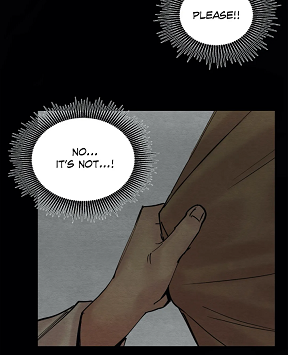 (Chapter 65) While he can’t remember what truly happened due to his poor emotional and physical state, Kim somehow blames him. The young master is so confused that he has to defend himself. This means that after the first rape, the domestic didn’t even comfort the protagonist, but he used the victim’s vulnerable state of mind (who was confused due to this terrific incident) to manipulate the noble’s memory.
That’s why when police investigate a sexual abuse and interview a victim, the latter will always be interrogated twice. The first interview focuses more on the sensory and emotional memories, while during the second, the officers will try to reconstruct the chronology. This explicates why they always wait for quite some time for the second statement. It is necessary, as the memories are now stored and they can be retrieved, although due to fear and stress, the incident can never be properly reconstructed. As you can imagine, Yoon Seungho was not in the capacity to testify about the sexual assault. This terrible event affected his memory so much that he was not given the opportunity to denunciate the crime. He was made speechless in the end due to the insinuation and as such manipulation. I bet, he couldn’t even describe what had truly happened to him. That’s why he repressed the first rape.
But now imagine this. You are exposed to physical and sexual abuse for more than a decade, this means that your memory will be definitely affected. You are living constantly in fear and stress, two important factors, which can trigger memory loss. [read more here: https://www.verywellmind.com/what-causes-memory-loss-4123636] Like I explained briefly above, terrific events are never encoded normally. This signifies in our case that the lord’s faculties to memorize were definitely affected due to the constant exposure, which can make him more vulnerable to false memories. Studies show that individuals with PTSD, a history of trauma, or depression are at risk for producing false memories, when they are exposed to information that is related to their knowledge base. This also signifies that they are more receptive for manipulations. Therefore I come to the next deduction that in chapter 68, Kim was definitely attempting to distort the past and create false memories. 
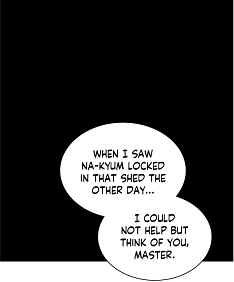 (Chapter 68) He mixed facts with lies in order to confuse his master’s judgement and memory. That’s the reason why it is important now to recall my initial statement: without any memory, there’s no identity. This signifies that in chapter 68, when Kim tried to give him memories, he desired to give him a certain identity: he was similar to his father. The latter would punish or imprison the boy and not release him. Giving a false reflection and identity is something Kim had never done before in front of his master, as he knew that his master feared his own image. However, he never imagined that Yoon Seungho would react differently. Instead of pushing away the painter, he let the artist choose his fate.
However, in order to comprehend the topic memory, it is relevant to know how memory functions. The latter is divided in 3 parts: encoding, storage and retrieval. And in order to encode information, you have to utilize your senses. There are 3 types of encoding: semantic (words), visual and acoustic (sound). The manwhaphiles should recall that according to my interpretation, Yoon Seungho had been deprived of all his senses, therefore he lived like a ghost. And this signifies that he couldn’t make any memory at all. And with no memory, you have no identity and as such no life. That’s why when he cut ties with Jihwa the first time, he never mentioned the word “memories”, but time spent together:  (Chapter 18) In my opinion, this shows that Yoon Seungho had no true memory in reality. He knew that they had sex together, but that was it. It was more like “the night is long and I need to kill time so that dawn can come faster.” Note that he never mentions their childhood together. With this interpretation, it becomes comprehensible that the main lead could act, as if nothing had happened between Jihwa and himself after the topknot incident.
  From my point of view, he had literally forgotten the incident, yet for Jihwa, it meant that he had been forgiven.
  (Chapter 59) And this explicates why Yoon Seungho barges in the mansion in chapter 67: he makes it clear that he won’t forget what happened.
  (Chapter 67) The real forgiveness occurred in chapter 59: Despite the caused pain, Yoon Seungho was willing to overlook the terrible action
 (chapter 59), but he made it clear that he would never reciprocate the feelings. This was real forgiveness from my perspective, whereas in the past, Yoon Seungho couldn’t remember anything. Jihwa had the terrible habit to use the past in order to torment his childhood friend, which always triggered buried emotions connected to memories, which the noble couldn’t control. From my point of view, the lord only had flashbulb memories which the readers could discover in chapter 55:
  (chapter 55)
“A flashbulb memory is an accurate and exceptionally vivid long-lasting memory for the circumstances surrounding learning about a dramatic event. Flashbulb Memories are memories that are affected by our emotional state.” quoted from https://www.simplypsychology.org/flashbulb-memory.html
These memories connected to emotions were the remains of his deeply repressed memories. The lord could only remember the feelings he had felt during his traumatic past. To sum up, the lord had no real recollection of his past, and the few things he knew were manipulations and lies explained by his butler. Therefore you can comprehend why Kim got scared (chapter 56), when he heard that lord Song asked for a meeting. The latter could definitely reveal new information and let the protagonist realize that he was truly suffering from memory loss.
However, due to the exposure to arts, his eyes got healed, hence he could sense positive emotions and as such create good memories (visual encoding). From my point of view, when Baek Na-Kyum entered his life, the noble had started developing good memories, because so far, all he had were traumatic memories. However, Yoon Seungho’s capacities to memorize were under-developed due to the lack of practice. This explicates why he shows no interest to discover why the commoner stopped painting. This was not meaningful to him, and the readers should know that people will only memorize significant information. The emergence of his memory is visible in chapter 1. We see him speaking about his nightly activities so positively, but observe that he is only talking about recent and meaningful memories.  (Chapter 1) Striking is that when Baek Na-Kyum confronts him with his poor image (“man consumed by lust”)
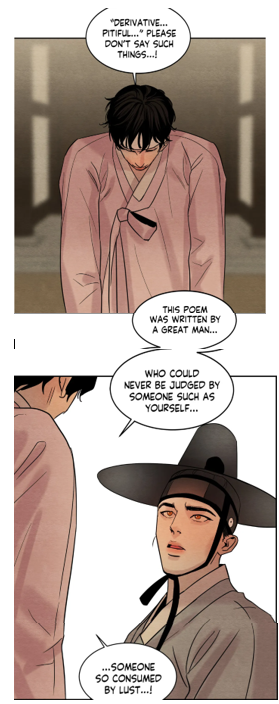 (chapter 4), the lord is bothered. He is forced to ponder why he is described like that, hence he has to recall events from the past. At the same time, when the lord read the poem, he was encouraged to recall the original sijo. This shows that at some point, Yoon Seungho rediscovered literature. Words and paintings helped to create memories. Thus if you pay attention, you’ll notice that the more time passes on, the more memories the lord has. They are strongly intertwined with the paintings. The latter helped him to reminisce the sex sessions and his past. He can’t forget how the painter masturbated behind the door. He is even getting more and more good memories.
  (chapter 18) Then in chapter 19, he reminisces the painter’s facial expressions which puts him in a good mood.
 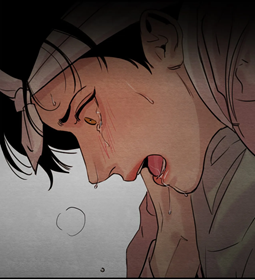 (Chapter 19) This explicates why Yoon Seungho was so moved by the painter’s confession during their Wedding night. For the first time, he experienced warmth and love, he even heard a love confession. This could only be stored as a wonderful memory. At the same time, he hoped, the artist would create a picture of this night in order to ensure that this memory was real. Moreover, note that in chapter 58,
 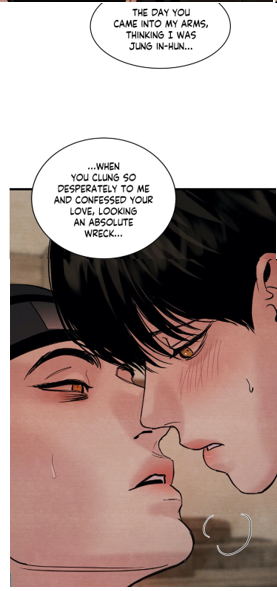 he externalized how much this night meant to him.
  (Chapter 58)
Yet, the manhwaphiles can detect that in his confession, the memory is not entirely described as positive: “haunt”. This explicates why I consider the Wedding night as a turning point in Yoon Seungho’s life. This memory is a combination of positive and negative elements. The lord wished to relive this, but he was not satisfied, because he knew that he had impersonated the scholar. Moreover, the manhwaphiles should reminisce that after this night, the lord will do terrible things to the artist and as such, he gets now terrible memories. That’s the reason why in my opinion, Byeonduck chose to expose the rape as a flashback from the master’s perspective. Because of his bad actions, Yoon Seungho feels huge pangs of conscience and can’t act like nothing happened. He is now forced to remember. However, in my eyes it is different from the past. Before, he was just a ghost, hence he was incapable to get memories, with Baek Na-Kyum’s help, he can get memories which will help him to face his own traumatic past.
There’s one aspect, strongly connected to memory, which I didn’t mention so far: learning.
” Learning and memory operate together in order increase our ability for navigating the environment and survival. Learning refers to a change in behavior that results from acquiring knowledge about the world and memory is the process by which that knowledge is encoded, stored, and later retrieved.” quoted from https://opentext.wsu.edu/psych105/chapter/8-2-how-memory-functions/
As you can see, in order to change, the lord needs memories. Through positive and negative experiences, the noble can gain knowledge leading to a change of attitude which the readers could observe. Gradually, the noble learnt from his mistakes and good memories. Therefore, this is no coincidence that when in chapter 75, Baek Na-Kyum talks about his past and memories, he criticizes his master: (Chapter 75) He gives him the impression that he will never change, the lord wouldn’t even remember him after his death. Now, you grasp why he reproaches Yoon Seungho his fickle nature, he is indirectly referring to the lord’s memories.  (Chapter 75) His feelings will fade away just like memories. He will forget him. What the painter doesn’t realize is the following: this date is actually an important moment in Yoon Seungho’s life. For the first time, he gets to discover the painter’s memories and past, which now the noble can store as his own. He will never forget this day, especially when he heard that the painter would cry because of him
  (a new version of chapter 21:
  (chapter 21) , but here out of concern. In other words, Baek Na-Kyum would like to be remembered. Hence he complains that the lord didn’t call for him. And this can only make the lord happy, because he can detect through the painter’s words that the latter is longing for his presence and care. From my perspective, Yoon Seungho has finally grasped why the artist is not truly honest with him. Therefore he can only tease his lover pushing him to make the first step. Let’s not forget that right now, the master is now treating his lover as his new lord. So the latter has to call for him.
  (Chapter 75) Here, the protagonist clearly displays that he has never forgotten his companion. Their date is so important for two reasons. It allows the noble to gather more information about the commoner, and get a really good memory before the next tragedy.
From my point of view, it will help him to face his own traumatic past. Let’s not forget that a rape is planned, so if the noble was to discover this, he would be definitely reminded of his own past. And this truly happened in season 3. Simultaneously he would be able to help his lover to recover from the traumatic incident. We shouldn’t forget that during the kidnapping, the lord’s smile was the reason why Baek Na-Kyum didn’t lose his sanity  (Chapter 60) and could cope with the kidnapping much better. Note that he has no nightmare afterwards. And this detail is important, because we have to envision that while Yoon Seungho was exposed to physical and sexual abuse for a decade, he had no good memory at all in order to remain sane. Moreover, he never felt loved. Consequently, he couldn’t even think of anyone in a positive way. That’s why he was so damaged in the end. (Chapter 57)
 The presence of a loved one is necessary in order to cope with traumatic childhood abuse.
And this leads me to the next observation: Due to his childhood trauma, the lord’s memory was affected and didn’t work properly, as for a long time, his memory was not encouraged to encode events. On the other hand, because of Baek Na-Kyum, Yoon Seungho was forced more and more to face his traumatic past, therefore his fears and abandonment issues came to the surface. This explicates why he couldn’t pay attention to details and never questioned the circumstances of the first abduction. Note that during the night at the physician’s, he still doesn’t trust his own senses.  (Chapter 58) This signifies that he is unsure if what he is experiencing is real or not. From my point of view, the memory loss and his life as ghost affected his brain and the way to encode and store information. Hence he has no real recollection of the incident with Deok-Jae (chapter 30 and 53). That’s why he is not asking for his whereabouts. However, I believe to see a turning point in chapter 75. By giving the lord the opportunity to have a real date, where he could hear and see that Baek Na-Kyum was definitely affected by him, the noble will react differently compared to the first abduction and after the painter’s first flashback. He will not lose his mind blinded by his emotions and insecurities, he knows that the artist chose him. And he won’t blame himself like for the first flashback. Remember that in chapter 66, he never called the physician. Why? Because someone told him that the painter needed the presence of a loved one to recover. Kim made sure that Yoon Seungho would feel guilty. Deep down, Yoon Seungho knew that he was responsible for the panic attack.
 (Chapter 66) But the real cause for all this was the butler’s silence and complicity. That’s why he remained by his side, until the artist had recovered. Thus I had predicted that after meeting Nameless, Baek-Na-Kyum would get a panic attack.
 (Chapter 75)
This is what I wrote in the first version:
“However, this time, the noble will wonder how this could happen. They had a nice conversation, where they exchanged thoughts. He is not responsible and it can’t be the alcohol. Moreover, he will recall his lover’s words: He won’t focus on his own emotions, but will try to calm down the artist and investigate why the painter reacted like that.” It is definitely possible that he brings back the painter to the mansion and decides to visit the physician in order to ask for an advice. From my point of view, thanks to the new memories, the noble is learning more about his surroundings and gaining more experience.”
However, the reality was that Yoon Seungho thought that the painter’s panic attack had just been triggered by the entertainers. (Chapter 76) He didn’t take his words seriously, for he believed that he had discovered the truth. Therefore the lord never investigated the circumstances of the kidnapping. Since he thought, he knew the truth, he had no reason to question this. Why did the Joker scare the painter so much? Thus the lord didn’t take the memories from the painter seriously. How could he, since he had been already informed? However, the revelation from Min had diverted Yoon Seungho’s attention from the real problem: the involvement of the helping hands (Kim, Deok-Jae, No-Name) and of the mastermind behind this.
What caught my attention is that Baek Na-Kyum is also hurt, though he has memories from his past. What he confessed to his lover represented a bad memory, and this made him feel guilty. Striking is that he believes, he knows the truth, as he can reminisce his past. Yet, he is making a huge mistake: memories are by no means facts, they are biased and even tainted. The artist took the scholar’s words as face-value. He never questioned his words, therefore he blamed himself for Jung In-Hun’s failure. Here, I would like the manhwaphiles to notice the parallels between Jihwa and the artist: both feel responsible for a tragedy, while in reality it was not the case. Both were victims of manipulations and lies.
My theory is that the learned sir imagined that he had finally the possibility to get a high position. Yet the incident in the gibang put an end to it, and this is definitely related to the erotic pictures. However, there is no ambiguity that Jung In-Hun was actually receiving his karma. Remember that in the Alternative Universe, the protagonist used Jung Na-Min as his artist name. In other words, the name of the artist must have had an effect on his career. Besides, let’s not forget that the teacher is preaching immobility, for people’s fate is always determined.  (Chapter 6) They can not escape their conditions. Thus the gods chose to punish him the following way: he could never escape his own situation. He would remain a man with no wealth and connection. Thus no matter what he did, it ended with a failure. Therefore it is not surprising that he came to resent the painter, for he caught the attention of a powerful noble and this at least twice. The scholar was offered a position, but due to the incident in the gibang, the sponsor changed his mind. Hence he blamed Baek Na-Kyum for not securing a post. It was, as if he had stolen it from him. I think, Jung In-Hun published poetry, but couldn’t get recognition. Therefore he used the incident (discovery of the erotic pictures) in order to punish him and force him to give up on painting. He couldn’t allow that a commoner was more successful than him. At the same time, it was the reason why there was a ruckus in the gibang too. But now, we have to wonder why Baek Na-Kyum talked about his past. From my point of view, an important detail played a huge role at the inn:
  (Chapter 74) Observe that the woman has a similar hair dress than his noona. That’s why I believe that when he saw her, he must have been reminded of her. Note that when he speaks about the leftovers, he describes leaving food as a sin, but strangely, in chapter 40/41, he had the opposite attitude.
 (Chapter 41) He didn’t eat all the sweets or even skipped meals.
  (Chapter 41) In other words, he didn’t eat everything and committed a sin. This indicates a certain hypocrisy, simultaneously Baek Na-Kyum’s lack of critical thinking, when it comes to his noona. Moreover, he says the opposite of what he thinks. In chapter 74, he claims that the lord has changed
 (chapter 74), in episode 75, he claims that he has not improved his behavior. The painter’s memories clearly reveal Heena’s strong influence, which explains why he doesn’t make the first step in the end. He would like the lord to become responsible for him. But Yoon Seungho would like the opposite, because that way, the low-born can never claim that he was forced or pressured by him. In my eyes, Baek Na-Kyum still fears to be perceived as a man consumed by lust, if he makes the first move.
That’s why I believe that Yoon Seungho embodies the truth, while Baek Na-Kyum represents the past and memories. The commoner’s past will become the trigger for Yoon Seungho to decide to discover the truth about his own past and as such regain his own identity: he was a talented painter with a promising future. Since the low-born’s past with the kisaeng and the scholar are more recent, it is much easier for Yoon Seungho to unveil the lies concerning Baek Na-Kyum’s past in the kisaeng house. At the same time, thanks to the physician, Baek Na-Kyum is gathering information about his lover’s past (chapter 57), which will assist him to regain his lost memories.
Feel free to comment. If you have any suggestion for topics or manhwas, feel free to ask. If you enjoyed reading it, retweet it or push the button like. My instagram-tumblr-twitter account is: @bebebisous33. Thanks for reading and for the support, particularly, I would like to thank all the new followers and people recommending my blog.

This is where you can read the manhwa. https://www.lezhinus.com/en/comic/painter But be aware that this manhwa is a mature Yaoi, which means, it is about homosexuality with explicit scenes. If you want to read more essays, here is the link to the table of contents: https://bebebisous33analyses.wordpress.com/2020/07/04/table-of-contents-painter-of-the-night/
Feel free to make some donations/sponsoring: Ko-fi.com/bebebisous33 That way, you can support me with “coffee” so that I have the energy to keep examining manhwas.
While I was reading the manhwa again, the scene when the lord caressed the painter’s cheek in chapter 18/19 caught my attention. Striking is that neither the noble nor the painter cared too much about that gesture. The artist was too shocked due to the huge scandal, and the main lead had the impression, he just wanted to taste the artist out of curiosity and interest. So there was no deep meaning in the caress, yet this gesture was witnessed by the scholar Jung In-Hun.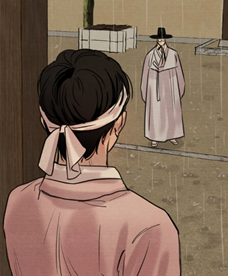 (Chapter 18) And this not only shocked him, but more importantly, it really made him jealous.
 Imagine, he was upset, because the painter had been the recipient of a caress from the powerful noble. Yet, he didn’t feel repulsed, just displeased and resentful But if he was jealous, then it signifies that he desired to have received this mark of attention. That’s the reason why I come to the conclusion, Jung In-Hun would have even accepted the noble’s advances, if it meant that he would get some benefit from it. And this interpretation is even confirmed, when you compare it with its reflection in chapter 35.
Here, we have a reversed situation. Exactly like the main character, he strokes the artist’s cheek, while he seems not to be aware that he is observed by Yoon Seungho. However, unlike in chapter 19, the caress has a huge signification. Jung In-Hun is faking affection in order to achieve his goal: the painter should spy on the benefactor on his behalf. Consequently, before he leaves the mansion, he reminds him of his request.  (Chapter 35) In other words, although the caress from Yoon Seungho was anodyne, his gentleness was genuine, whereas it is the opposite with the teacher’s stroke. Moreover, if you compare the vocabulary field, you’ll notice the contrast: duty/work versus entertainment. And although the low noble is aware that Baek Na-Kyum has been very ill, he just sends him back to his “work”. He makes sure that the artist doesn’t fall for the lord’s generosity. He should remember that this is just work, and not entertainment. Moreover, the teacher reminds the painter of his promise: he is his servant. As the manhwaphiles can detect, in chapter 19, Jung In-Hun was already jealous of the painter, because he was receiving the lord’s attention and affection. But this was just a caress, therefore envision how he must have felt, when he heard this from the painter:
  (chapter 35) He must have realized that he was on the verge of losing the artist’s favors. That’s why he reminded the painter of his “loyalty” and “promise”. In chapter 35, Yoon Seungho was the one jealous, hence imagine the resent and jealousy Jung In-Hun must have felt in chapter 19. Yoon Seungho had even cut ties with another aristocrat due to the low-born. But unlike the scholar, Yoon Seungho’s jealousy was much more intensive to the point he would have killed the artist, if he had set a foot outside the mansion, though I doubt that he would have done it for real.
  But why are these characters jealous?
I made some research about the origin of jealousy and this is was I discovered: This feeling appears, when someone feels insecure in his relationship with another person due to the appearance of a third person. And if we take this definition into consideration, then the scholar’s jealousy is triggered by two aspects. First, he resents the artist, because he caught the lord’s attention. Yet there is more to it. He resents the low-born, as the latter seems to have escaped his control. Let’s not forget that Baek Na-Kyum allowed another man to touch his cheek. For the first time, Jung In-Hun saw another man getting closer to Baek Na-Kyum, indicating that his influence over the artist was diminishing. The readers shouldn’t forget that the scholar enjoyed it very much to use the low-born as his puppet. In the past, Baek Na-Kyum would always follow his orders, yet with this anodyne gesture, Jung In-Hun realized that something had changed. That’s the reason why he had to blame the painter for this, and accused him of seducing the main lead.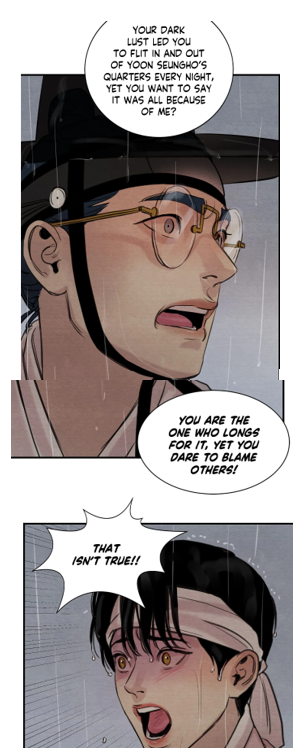 (Chapter 19) In truth, he projected his own thoughts onto the painter. He wanted to be the one getting closer to the powerful aristocrat, and would do anything in exchange for his own interests. Simultaneously, he needed the artist to remain obedient and loyal, so that he wouldn’t become a rival. And now, if we examine the protagonist’s jealousy in chapter 35 with this definition, we recognize that it is related to the sex marathon. Yoon Seungho had envisaged that after that event, the painter had finally accepted him as his partner, and their relationship had changed. Besides, after his return, Baek Na-Kyum had been in his bed and had never reproached the sexual encounter leading to his illness. Therefore, he had envisaged that the commoner was slowly accepting him.
While many think, jealousy is terrible, evolutionary psychologists regard it as a necessary emotion, because it helps people to preserve their social bonds and motivate them to improve their relationship, since it serves as a wake-up call for the affected person. And if you pay attention to Yoon Seungho’s behavior, you’ll indeed sense that right after feeling jealous, he tries his best to improve his relationship with the painter. In chapter 35, he compliments the painter , approaches him and smiles to him. 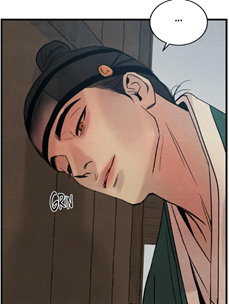 (Chapter 35) Moreover, he caresses his head
  (chapter 35) after finally asking him about his interest. This scene made him realize that he needed to get to know Baek Na-Kyum better, and their relationship shouldn’t only be limited to sex. Hence he invited the painter to his bedchamber that night. In my opinion, he really hoped to initiate a conversation. That’s the reason why he was writing something, he hoped that Baek Na-Kyum would ask, but due to the aphrodisiac and the “warning” from Kim, the artist didn’t dare to speak. As a conclusion, we could say, Kim would have totally succeeded to ruin Yoon Seungho’s plan, if the brother hadn’t appeared that night. At the end, Baek Na-Kyum did earn the lord’s trust, he was able to sleep by the lord’s side.
And now, with the release of chapter 69, we have a reflection from these two chapters. We see two jealous persons, Heena noona and Yoon Seungho, the kisaeng is replacing the teacher. Yet, there’s a huge change. Why? While Baek Na-Kyum in the past would trust his adoptive parents and follow them blindly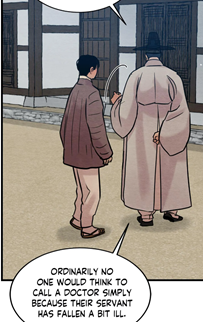 (chapter 35) (chapter 46), we see the painter deciding his own fate. He prefers remaining in the mansion.
  Not only he is no longer listening to his parents, but also he becomes proactive. He gives his noona his own scarf, a sign that he is now old enough to take care of her.
 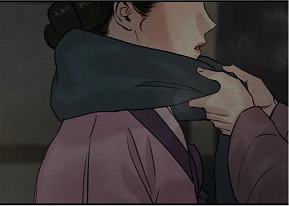 (Chapter 69) He is no longer a child. In reality, this gesture has so much meaning. With this tender gesture, he desires to end the discussion. Notice that she keeps pressuring him
  (chapter 69), illustrating that she is still not giving up on her adoptive son. Since the chapter 19 is a reflection of episode 69, I believe that Heena noona’s behavior is indeed motivated by jealousy. Imagine, for the first time, her son doesn’t obey her, while in the past, even if he admired the teacher, the latter never represented a threat to her relationship with her son. For the first time, he has refused her help
  (chapter 68) and pushed her hand away, a huge shock for the kisaeng.
  (Chapter 68) For her, the only explanation can be the negative influence of Yoon Seungho. And because she attempts to change the painter’s mind just before leaving, Baek Na-Kyum stops her by smiling. He is trying to reassure her that he is fine.
  (Chapter 69) But she doesn’t trust her son’s judgement. She believes, she knows what is right for her son. Therefore, her last words exposes her true intentions. She won’t respect the artist’s choice.
 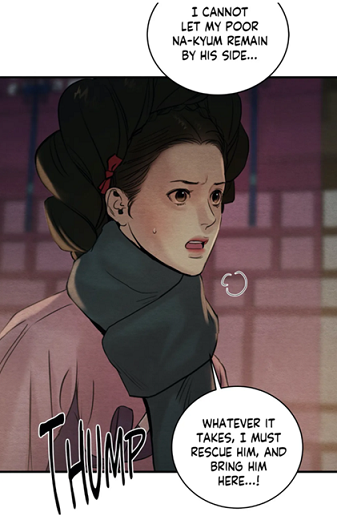 (Chapter 69) She thinks of herself as her son’s savior, whereas in reality, she will jeopardize Baek Na-Kyum’s safety. There’s no doubt that she will be manipulated by Min and Kim. Due to his kind words, she has already judged him as a good man
 (chapter 67), unaware that she is trusting a terrible servant who is determined to hurt her son. This reminds us of the chapter 35, where Jung In-Hun risked the painter’s life. I have to admit that after comparing the scene from episode 19 with 35, I had the impression that Jung In-Hun could have been demonstrating his affection in order to show off to the lord that the painter would only listen to him. Let’s not forget that in chapter 30, the teacher tried to sell off Baek Na-Kyum by telling Yoon Seungho that the artist would only obey to him. And in both cases, Jung In-Hun never recognized the real situation: he was putting his life in danger. And observe that we have many parallels in chapter 69 with chapter 30 as well. We have the painter’s intervention
 (chapter 69), when he senses that Heena noona keeps challenging Yoon Seungho by refusing to recognize his benevolence and her wrongdoing. Here again, he speaks to the main lead in order to deescalate the situation. While in chapter 30, he feared the main lead,
  (chapter 30) yet he desired to protect his learned sir, in episode 69 we have a reversed situation. The one menacing is the kisaeng, and not the lord. The latter steps back
 , as he knows that he did something wrong to his lover. Baek Na-Kyum could have exposed his brutality. However, due to Yoon Seungho’s past action, Baek Na-Kyum has learned to fear the noble’s power and strength. Hence he intervenes, because he wishes to protect his noona. (Chapter 69) Nevertheless the readers can sense that the artist is feeling more uncomfortable than scared. Moreover, his sincerity and his thoughtfulness is palpable. He is indeed recognizing the lord’s leniency.
 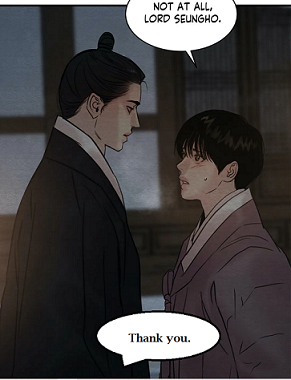 (Chapter 69) Another similarity is the constant blushing of the painter, the lord’s action and words surprise him. Therefore there is this awkward moment, for both protagonists are trying to figure out the situation. The lord never expected a thank you from the low-born, especially after receiving such a mistreatment.
  (chapter 69)
In chapter 35, he detected his exhaustion and honesty, but he felt indeed affected by his presence. Nonetheless, the cause of his reddening diverges here.  (chapter 69) He is not just affected by the main lead’s appearance, but also by his gestures. Baek Na-Kyum is finally able to see the kindness in Yoon Seungho. First, he did keep his promise to the artist. He restrained himself to punish the kisaeng. Secondly, he put himself the scarf around the low-born’s neck, which is quite extraordinary. The manhwaphiles shouldn’t forget that Yoon Seungho is actually lowering himself by acting so, he prioritizes the commoner. This is not surprising that at the end, Baek Na-Kyum can’t help himself blushing.
 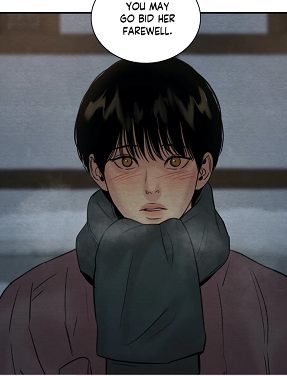 (Chapter 69) Unlike in the past, Yoon Seungho is willing to trust the painter by his actions and words. Therefore he emphasizes this:
  (chapter 69) “I do believe”. He has learnt his lesson. He recognized that his judgement had been clouded by his insecurities and jealousy. That’s why he stares at the painter, when the latter is looking at his mother walking away.
  (Chapter 69) He notices the artist’s concern and attention towards his mother. This explicates why he allows the painter to follow the kisaeng to the front gate. However, as you can observe it, the painter is not realizing that the lord is paying attention to his facial expressions. In my opinion, Yoon Seungho is trying to make the painter smile, when he gives his consent.
Let’s not forget that in chapter 44, he did ask Jung In-hun to bid farewell to Baek Na-Kyum, but the latter never cared for the boy. Yet, Yoon Seungho is only at the beginning to trust the painter entirely, hence he asks him to remain in his sight.  (chapter 69) This explains why he asks him to follow his mother only to the front gate. That’s the limit of his trust. I would even add, he can’t bear Baek Na-Kyum out of sight. That’s how much he loves him. He needs to feel his presence close to him. And exactly like in chapter 35, the readers sense the importance of the door. While in episode 35, the gate was associated to life or death, now the door symbolizes trust. Within the building, he will put his faith in the artist’s words. Finally, we have another allusion to chapter 35: the reference to coldness.
  (chapter 35)
  And this parallel reinforces my perception about the valet. He is a hypocrite, because he incited the lord to go to the window, while claiming that it was cold. That’s why I perceive the chapter 69 as a good sign. Yoon Seungho is definitely willing to trust the painter. He let him make his own choice, and the moment Baek Na-Kyum expressed that he was not leaving the mansion
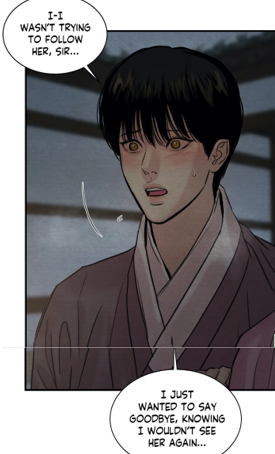 (chapter 69), the lord could only feel relieved. That’s why he had a softer gaze right after.
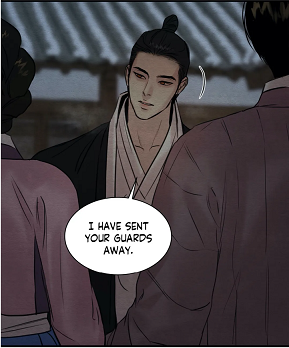 (Chapter 69) He was definitely happy that the commoner had chosen him. However, there’s still awkwardness between them, hence the noble can’t entirely trust him. And this lack of trust becomes a reality, when in chapter 80, the manhwaphiles witness that Yoon Seungho had threatened the kisaeng behind the painter’s back.
  (Chapter 80) He had once again listened to the butler’s advice… How can I be so sure? It is because the real author of the threat was the butler and not the lord. (chapter 69) Yoon Seungho will never order someone to eliminate a person. He will always use his own hands. We have many evidences for this: the hunt and the scenes with the sword. (chapter 69) The tragedy is that in the courtyard, the artist made the lord this promise: (chapter 69) He would remain by the lord’s side, but the lord still didn’t trust the artist’s words. And now, it is time to examine the origin of Yoon Seungho’s jealousy and lack of trust.
As you can imagine, the answer is quite simple. It’s Kim. The latter has always been mistrusting people, he always felt insecure. In other words, he was jealous. This signifies that deep down, he always wanted to keep the noble’s attention and affection. That’s the reason why he revealed the incident with the door to father Yoon.  (chapter 77) The young boy was looking at someone else. He would stop looking at him like that.
 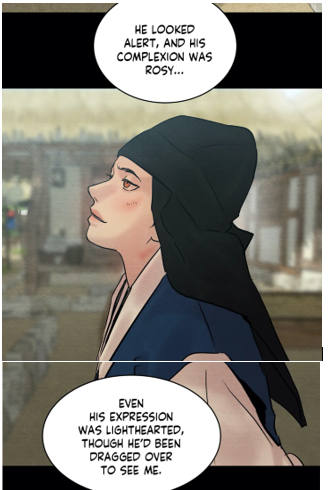 (chapter 57) The butler would lose his influence over the boy. Under this new light, you comprehend why he decided to betray father Yoon after the straw mat beating. The young boy was rejecting him and despising him.
  (chapter 77) Yoon Seungho’s gaze was telling all his emotions and thoughts. That’s the reason why the butler isolated his master for so many years. And note that in chapter 69, he projected his own thoughts onto the painter again. Since the butler has always backstabbed, betrayed and abandoned Yoon Seungho, he imagined that the artist would have a change of heart too… like Kim always did in the past. Naturally, this is the negative version of a change of heart: not compassion and remorse, but resent and jealousy!!
And now, you comprehend why the bride’s abduction has to take place right now. Kim is not only on the verge of losing his home… but also he has lost his master’s love and affection. He is no longer looking at him. For the first time, he was punished which had never happened before.  (chapter 77) If the painter leaves the mansion, the butler will make sure to portray the painter in a negative light. But there’s one thing that Kim overlooked: Yoon Seungho’s ability to learn!! Remember that jealousy is there to make the partner realize that he needs to improve his behavior. Since he mistrusted the painter’s choice, he realized later that he needed to earn the artist’s trust first. Therefore he made the following promises:
 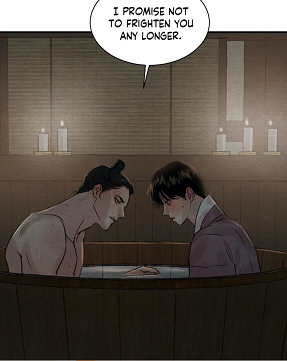 (chapter 70) and he would always ask for the artist’s consent.
  (chapter 71). Furthermore, the artist’s reproach in the tavern
 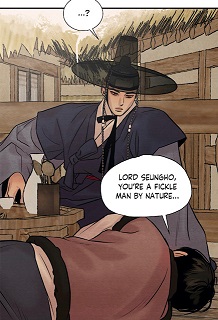 (chapter 75) must have been an eye-opener for the wealthy aristocrat as well. How can he expect “loyalty and trust” from Baek Na-Kyum, if he is himself a fickle man by nature? With such words, the artist encouraged the lord to stop wavering and doubting his lover. He needed to show his love and trust first, before expecting it right away from the low-born. And now, you comprehend why Yoon Seungho started courting Baek Na-Kyum. He needed to show his trust and love in order to obtain it. And in chapter 80, he finally succeeded it. Therefore the bride’s abduction is doomed to failure. Kim won’t be able to achieve his goal. However, there’s one thing that this incident will make the lord recognize that he trusted the wrong person. He should never have listened to the butler’s advice and threatened the kisaeng, because this meant that he was mistrusting his lover!
Feel free to comment. If you have any suggestion for topics or manhwas, feel free to ask. If you enjoyed reading it, retweet it or push the button like. My reddit-Instagram-Tumblr-Twitter account is: @bebebisous33. Thanks for reading and for the support, particularly, I would like to thank all the new followers and people recommending my blog.
This is where you can read the manhwa. https://www.lezhinus.com/en/comic/painter But be aware that this manhwa is a mature Yaoi, which means, it is about homosexuality with explicit scenes. If you want to read more essays, here is the link to the table of contents: https://bebebisous33analyses.wordpress.com/2020/07/04/table-of-contents-painter-of-the-night/
It would be great if you could make some donations/sponsoring: Ko-fi.com/bebebisous33 That way, you can support me with “coffee” so that I have the energy to keep examining manhwas. Besides, I need to cover up the expenses for this blog.
In the essay “Respect and love” I demonstrate that both protagonists aren’t honest to themselves, exposing their lack of self-respect. This is one of the reasons why they keep disregarding each other. While they are hurting each other, they force each other to question their own action and words simultaneously. Hence the readers are witnessing their transformation. Little by little, the protagonists mature and turn into adults. They become more responsible. Their growth coincides with the development of attachment and the realization of their affection. At the same time, this evolution is strongly intertwined with the painter’s sexuality. The latter is making his first sexual experiences, which leads him to slowly accept his homosexuality. Yet he still fears his own strong libido and as such his love for the noble. Therefore till chapter 68, the artist is still dishonest with himself. As the manhwaphiles can see, the painter’s honesty is linked to respect and love. Striking is that both values are dependent on communication.
- “Love without communication is impossible”. from Mortimer Adler
- “Much unhappiness has come into the world because of bewilderment and things left unsaid.” from Fyodor Dostoevsky
With these quotes, it becomes obvious that communication represents the foundation of a good relationship, where there exist respect, love and trust. Silence or lies stand in opposition to communication, because they create a false perception or an illusion. Since manipulators employ lies by commission or omission, the latter can be judged as weapons. Moreover, unsaid things and deceptions display a lack of trust. That’s why the relationship between the noble and the low-born can only stabilize, the moment they talk to each other properly. Once Yoon Seungho and Baek Na-Kyum reveal their true thoughts and emotions to each other, they not only show trust, but also can discover the true personality of their lover. However, if you pay attention to the evolution of the story, you’ll observe two details:
 He wanted to communicate (“share what’s on our mind”) with the low-born, but the latter refused, because he just considered the noble as a sex toy to procure him pleasure out of fear to get hurt and deceived again.
 Now, I would like to elaborate more these observations, hence I will start with the first chapter as illustration. The manhwaphiles should remember that at the tavern, Yoon Seungho was very talkative. (Chapter 1) He expressed his genuine admiration for Baek Na-Kyum’s talent and creations. Yet, at no moment the painter noticed the compliments. He had been forced to touch the loins, which shocked him, and then he remembered the lord’s bad notoriety. Therefore all the lord’s good words fell on deaf ears. The painter was more concerned with appearances and rumors than anything else. That’s why the conversation failed. Since Baek Na-Kyum was not interested in the main lead’s feelings, he feigned ignorance first, and lied at the end.  Striking is that their first conversation was connected to books and sex, therefore this already limited their exchange. Moreover, this first chapter clearly reveals the lord’s interest in the low-born. He not only sent a domestic for the investigation about the mysterious creator, but also asked about his recent whereabouts. And curiosity usually initiates a conversation. But there’s more to it. From my perspective, the main lead felt no longer satisfied with the erotic pictures. He wanted to share his emotions and thoughts, when he looked at them. However, he had no one to talk to, so in his mind, if he met the artist, he could come into a conversation with the creator. That’s why he wanted to invite him in the end. The painting of sex sessions would give him the perfect occasion to discuss with someone.
And observe, when the first session starts, he can’t help himself talking to the artist, while Jihwa remains silent, as he doesn’t pay attention to him. If you read the story again, you’ll sense the master’s strong desire to communicate. When the painter arrives in the bedchamber in chapter 8, the lord welcomes him warmly with a huge smile and speech.  (Chapter 8) Observe the contrast. The main lead doesn’t reveal his anger towards the noble with the mole, it is not worthy for Yoon Seungho of giving him an explanation for the humiliation. He just smiles
  (Chapter 8) before grabbing him by the topknot. His words and behavior truly display a huge respect and a desire to exchange thoughts and observation.
Moreover, when the master is not talking during the sex sessions, then he is in a locked gaze with the artist. (Chapter 8) This mirrors the noble’s need to talk and now, you understand why the main lead had to evict the aristocrat with the mole in the end. By requesting to send away the commoner,
  (Chapter 8) he was more or less asking from the host to remain silent.
  (Chapter 8) The latter just had to focus on the guest’s sexual desires which confirms my interpretation that the main lead is treated like a head-kisaeng. Since the noble showed him no respect, then the main character didn’t need to respect him either. But more importantly, the protagonist made sure that he would be treated the same way. He also wouldn’t listen to his words, because the noble with the mole didn’t want to hear him speaking either. Therefore the door is closed, before the man can protest. As a conclusion, the aristocrats only visited him for sex or other pleasures and nothing more, while the noble had to remain quiet. Hence we have a silent main lead in his relapse:
  (chapter 52) However, even here the manhwaphiles can notice the transformation. The guests are no longer here for sex, just for smoking opium and drink wine. That way, the noble doesn’t feel lonely.
And Jihwa was not different from the others. Like Yoon Seungho described it to father Lee, 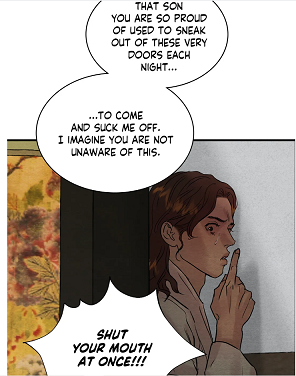 (chapter 67) the childhood friend would only visit him during the night (“used to”). However, it changed the moment the main lead paid a visit to the red-haired noble early in the morning (chapter 3). After that, Jihwa realized that he could also go to his friend during the day (chapter 5
  and 12
  ). And now, you comprehend why the lord questioned his presence in the morning and why he assumed that his visit was related to sex in the end. It looks like Jihwa never showed an interest in the lord’s thoughts and emotions too. And there exist two reasons for that. First, he had the impression he knew everything about his lover.
  (Chapter 57) Secondly, there was a risk that the main character could talk about the past and as such mention Jihwa’s betrayal. The lord’s emotions (sadness, anger, pain) represented a huge burden to the red-haired master.
 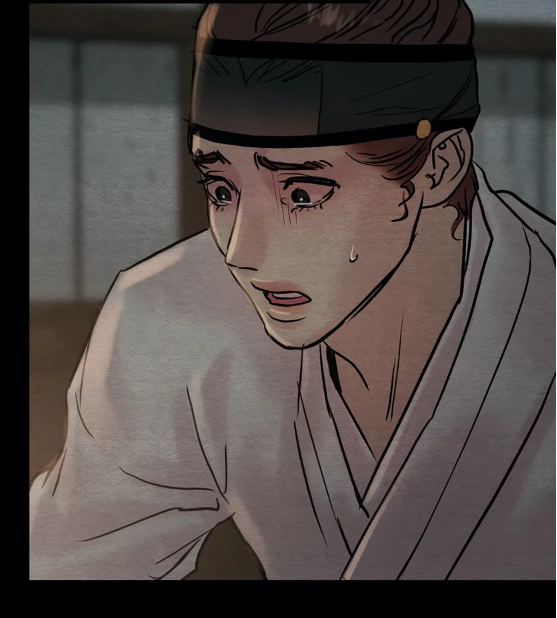 (Chapter 59)
This illustrates that the lord was never allowed to express his thoughts and emotions, until the artist arrived at the property. And now the readers can comprehend why Yoon Seungho said this in chapter 18: (chapter 18) Thanks to the artist’s presence, Yoon Seungho had been able to talk and people would actually pay attention to his presence and words. They started listening to his words. Imagine, one word and the straw mat beating was stopped: 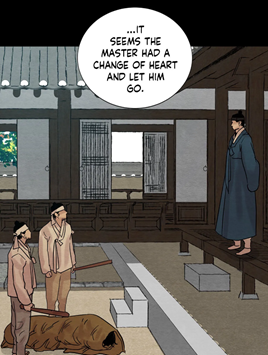 (Chapter 13) No wonder, why he thanked the painter in chapter 18. He could only be happy, when he confronted his childhood friend, as there was a real exchange for the first time.
  (Chapter 13) Argument is also a form of communication, and it happens between people in a relationship. Not only his words were finally noticed, but also he was able to draw lines to Jihwa.
  By influencing the host with the hope, Yoon Seungho would send away the painter, the childhood friend didn’t recognize that he was attempting to turn the protagonist into a puppet, therefore he could only fail. Moreover, Jihwa had no idea that Yoon Seungho’s true desire was to get close to someone, to engage a honest conversation. Therefore the main lead could only reject the friend’s words and proposition. As a conclusion, with the painter’s arrival, the lord’s words were little by little listened, he was able to communicate more with others: Jihwa, the nobles and the staff. After scolding the maids in the kitchen
  (chapter 38), the head-maid started showing her respect to her lord. But more importantly, he gave her the order personally to bring the painter’s lunch to his study.
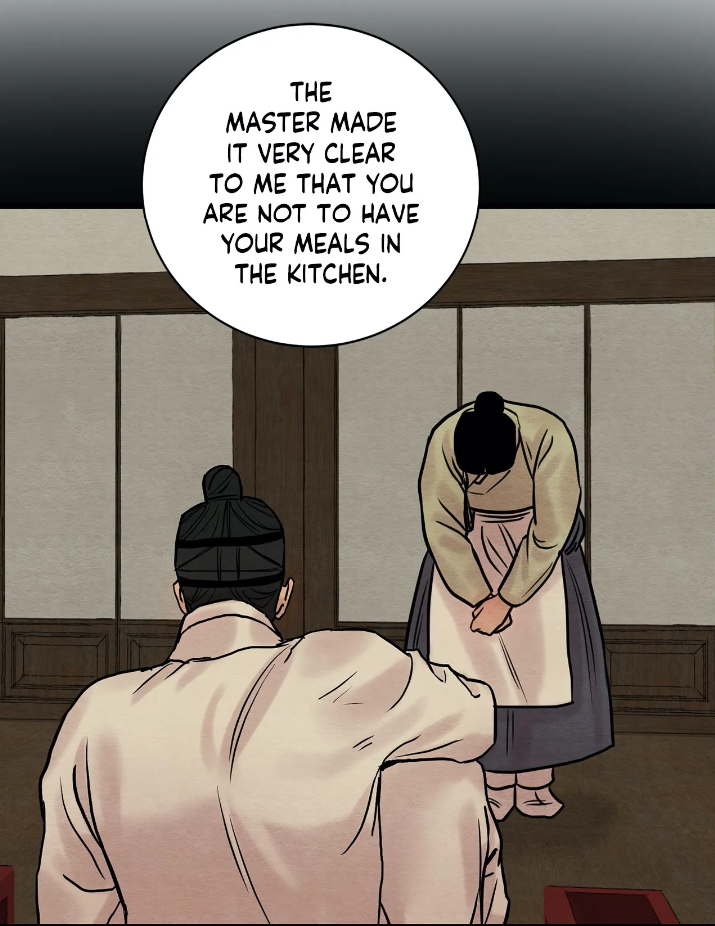 (Chapter 46) He could finally voice his thoughts, everything happened thanks to the painter. This explicates why Yoon Seungho kept seeking the artist’s proximity, although the latter kept rejecting him (his escape, his lies, his refusal to paint for him etc…). He had realized that his living conditions had improved despite the struggling with the low-born.
His strong desire to communicate exposes that he had no companion by his side. In my opinion, Yoon Seungho justified his existence as a free spirit in order to hide his loneliness and emptiness. It was his explication why the nobles and Jihwa wouldn’t listen to him and disrespect him. Yet, the real cause for this situation was his traumatic past, where he had been forced to silence. Moreover this explains why he never paid attention to intruders in the end. He didn’t have the impression, he would truly live in that mansion. Besides, because people were supposed to visit him during the night for sex, then he was never expecting visitors during the day. Hence he spent his days smoking in front of the window.  (Chapter 5) This outlines the main lead’s isolation and loneliness. Simultaneously, with this new approach, the readers grasp why Yoon Seungho couldn’t anticipate to become Min’s target in the end. He noticed Black Heart’s envious gaze
 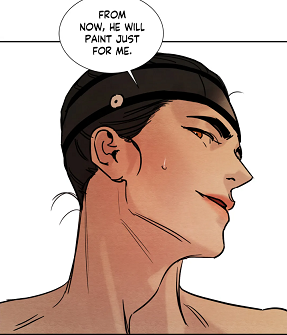 , (chapter 8) but he didn’t envision what jealousy and greed would provoke. In my eyes, he couldn‘t identify these emotions properly.
The problem is that Baek Na-Kyum refused to converse with the lord. In chapter 4, the artist didn’t allow the main lead to express his opinion about the plagiarized poem. (Chapter 4) He was not worthy to comment this poetry, as he was just a man consumed by lust. However, the commoner never asked why the noble would judge the poem so poorly. He already assumed that he was just making fun in order to humiliate the scholar, while in reality the noble wanted to reveal the author’s true personality: Jung In-Hun was just a deceiver. And since he had been hurt by the painter’s comment, he retaliated too: since he was just a commoner, he had no right to criticize the lord.
And now, it is time to focus on the second aspect: Yoon Seungho and Baek Na-Kyum only started communicating properly through sex. The reason is simple: the painter was only honest, when his unconscious revealed his true desires. Right from the start, the artist was sexually attracted by the lord, but he kept denying it. However, the aristocrat did notice the painter’s genuineness in the sex sessions, which could only reinforce his strong attraction towards the low-born. He loved his art, and now he saw that someone was truly perceiving him.  (Chapter 2) Baek Na-Kyum was the first who made the main lead realize the existence of his body. For the first time, he felt attraction through the gaze and saw something beautiful in himself. And what was the lord‘s immediate reaction? He started talking about his thoughts, though this was more a monologue than a discussion.
  (Chapter 3)
 (chapter 3) Exactly like the painter, Yoon Seungho began talking while having sex. He even formulated his first desire in front of his childhood friend:
  (chapter 3) And now, you comprehend why his relationship with Lee Jihwa was doomed to fail. The red-haired master was more focused on sex and his own sexual emancipation than his lover‘s well-being.
 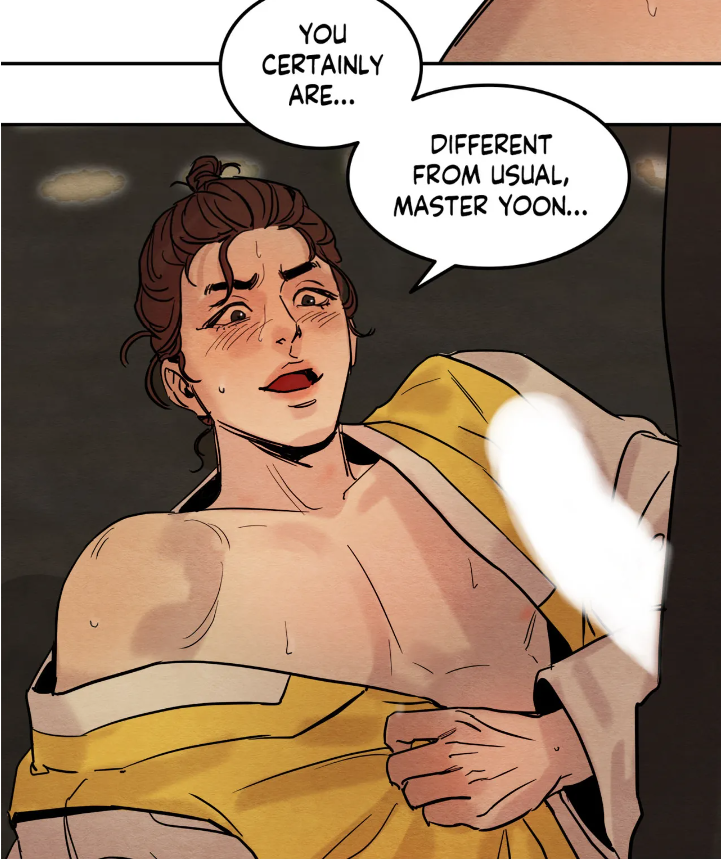 (Chapter 3) He never asked him why he was behaving so differently. He didn‘t notice that the lord was more communicative.
But let’s return our attention to the main couple. The real conversation between Yoon Seungho and Baek Na-Kyum only starts in chapter 16. Nonetheless, the only one talking is Yoon Seungho. He keeps asking questions about Baek Na-Kyum’s sexuality, waiting an answer from the artist:
1. 
2. 
3. 
4. 
Here I only selected a few inquiries from the main lead, however what caught my attention is that with his behavior, the noble was putting the artist under pressure. The latter remained silent, but the beholder detect how these questions affect the artist. They actually excite him in reality. Why? It is because the lord’s words incite the painter’s imagination. Note that in the second panel above, he is describing the sex session. And the painter gets really excited, when the noble says this:  (chapter 16) On the surface, it looks like he is sulking, the reality is that he is already fighting against his urges. The hand is trembling due the arousal.
 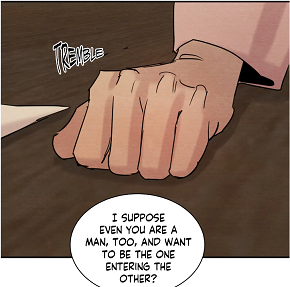 While you have the impression, he is bothered by Yoon Seungho, the truth is that the artist is getting more and more excited due the lord’s picturesque questions. Funny is that in this scene, the aristocrat is the more innocent one. He plays with the head-band
 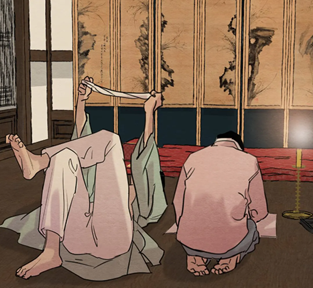 and his “innocence” is truly visible through his facial expressions too:
 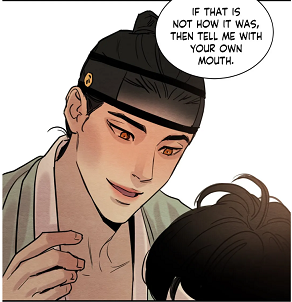 . What is the painter’s real sexual desire? We have the answer in this panel: Getting violated by a stranger! In the wet dream in chapter 6,
 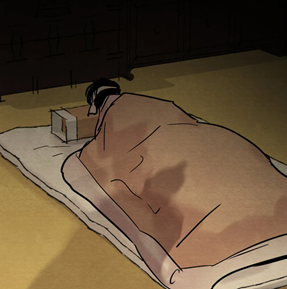 (chapter 6) a stranger in form of a shadow enters the artist’s room. The lord’s identity is only discovered at the end. But in his fantasy, the main lead was even grabbing him by the hair. It was definitely not a tender gesture.
 He was even caressing him against his will. And note that when Yoon Seungho questions when he got the most excited to the point that he had difficulties to breath, the commoner remembers this image and not the strokes. (Chapter 16) As a conclusion, the artist is actually a person who likes BDSM. This explicates why the painter’s trembling hand was grabbing the shirt in chapter 12 while facing the lord. He was hiding his erection
  (chapter 12) triggered by fear. This new interpretation explains why the artist painted the sex at the pavilion in the end.
  (Chapter 41) If the forced sex had truly traumatized him, he wouldn’t have been able to do so. Furthermore, he questioned the authenticity of the lord’s affection, when he recalled the moment, he was offered to the other nobles. He was upset and offended.
  (Chapter 55) Yet he didn’t even think about the scene at the pavilion for one minute. This means that Baek Na-Kyum only accepts the main lead as his lover. Fear and pain are not perceived as something negative, they can evoke pleasure.
In chapter 16, Yoon Seungho got the painter so excited that he felt the need to run away in order to hide his erection. Striking is that when the lord starts masturbating him, the commoner starts blushing and crying. But these tears and reddening are not the expression of pain, they express the opposite: pleasure.  (Chapter 16) Moreover, he didn’t get angry at Yoon Seungho for touching his phallus. He got more scared that someone had seen him enjoying the masturbation and I would even say, getting grabbed by force. Therefore the lord got an erection and was so happy at the kisaeng house. Finally, he had been able to talk to the painter. He even got to receive a honest answer for the first time, where he was even called “my lord”:
  (chapter 16) To sum up, Baek Na-Kyum showed a certain respect to the main lead in this chapter. But more importantly, the master was in a good mood, because he kept thinking how he could procure pleasure to the commoner.
However, he felt a little insecure at the same time, because the commoner had kept saying “no”. That’s why during their first Wedding night, the lord asked him about his first sexual experience: 
 (Chapter 21) The painter reveals the truth by replying that he enjoyed it very much, it felt like a dream. As you can see, chapter 21 was a reflection of the episode 16: we had a discussion, where the lord tried to initiate a conversation, tears of joy connected with pleasure, the lord asking to be called “my lord” and the realization of a dream. But we have another evidence that despite his words, he wanted the main lead to continue:
 (chapter 16) The commoner’s hand is placed on the shoulder indicating that he is pushing Yoon Seungho to his side. He could have tried to remove the lord’s hand on his phallus, but he didn’t. The hand was even trembling from pleasure. That’s why the second sex marathon shouldn’t be judged as a rape in my opinion, although the painter kept saying no too. First, the painter makes the exact same expression than in chapter 16:
  (Chapter 63) And even the lord notices that the painter is getting more and more excited by the roughness. He keeps describing how the painter is reacting below
 (chapter 63) which can only increase Baek Na-Kyum’s arousal, as his words are again very graphic. Note that the lord’s pictorial “filthy” expressions affect the painter deeply, exactly like in his second wet dream:
  (Chapter 63) Therefore I come to the conclusion that in chapter 63, the painter is not crying, because he is really hurt and angry at the main lead. These are tears of pleasure mixed with pain, which is linked to BDSM. That’s why he keeps blushing the whole time.
  (Chapter 63) This explicates why he kept ejaculating, despite saying “no” or recognizing that there was a witness. He felt no longer scared or embarrassed, like in chapter 16, where he ran away to hide. With this new version of the sex marathon, the painter truly discovered his sexual preferences. Therefore, when we see this
 (chapter 63), we shouldn’t project our own emotions into the artist: pain and disgust. Remember this: the painter felt his blood running hot, when the lord grabbed his hair violently in his wet dream. (Chapter 6)
And now, you understand why the artist is scared to admit his affection to the main lead.  (Chapter 68) He is still scared and embarrassed of his own sexuality. It must have felt strange in that historical period. What caught my attention is that we have two chapters where tears are mixed with pleasure and happiness (chapter 16-21), while we have two chapters where the tears are associated to pain and sadness (25-26; 41-42). Besides, in the last sex session from the first season, the painter was the one asking the lord to be quite rough!
  (Chapter 42) Yet, the noble couldn’t help himself showing tenderness and affection at the end with the passionate kiss. As a conclusion, the second sex marathon contains all these elements: sadness, pain, pleasure, anger and happiness.
And it is the same for Yoon Seungho. He likes BDSM and cosplay. That’s why he plays with the head-band  (chapter 16), and in chapter 35 he accepts to be a servant or in chapter 49 a sex toy. Due their different sex sessions, he discovered that he likes being rough too. Therefore he couldn’t enjoy, when the painter was so passive. He recognized that he took pleasure, when the painter was showing resistance too.
 (Chapter 63) This explicates why he couldn’t stand the expression “I like it”. This was too insipid. So when he became rough in chapter 48, he truly hoped to provoke tears of happiness caused by the sensation of pleasure.
 (Chapter 48) However, since the painter ended up crying and criticizing the lord, he had the impression, he had failed. As you can see, the lord might have had a lot of sexual experiences, yet with the painter, he entered a totally new world: full of warmth and love, yet there was pain connected to pleasure as well. This explicates why he could open up and reveal that his real dream was to make the painter smile
 (chapter 63), which contrasts so much to Baek Na-Kyum’s dream: cry of happiness.
I deduce that Yoon Seungho discovered BDSM through the painter, and we should see this as a treatment for the sexual abuse. First, he is put in the same position than lord Song. Thus he learned that sex could only be enjoyable, if there was consent.  (Chapter 79) Hence people saw the sex session in the shed as rape. Nonetheless, the manhwaphiles shouldn’t forget that Baek Na-Kyum was living in the mansion as a servant. Hence according to Joseon’s social norms, he was in no position to reject the main lead. However, for Yoon Seungho, it was different, for he was a young master. He had a title that was supposed to protect him. Consequently, the main lead can reproach the mysterious lord Song that he never asked for his consent and he would even treat him like a male kisaeng!
However, we shouldn’t forget that right from the start, the lord was seeking for a companion to share his thoughts and emotions. Due to the sex sessions, their honest conversations were limited to sex. First, they started arguing, because their couple had started on the wrong premise. Both were not honest to themselves in reality. Through their discussion, they were forced to listen to each other: chapter 25-26. Yet without any confrontation, they were not able to converse properly. Both of them were hiding something out of fear and pain, that’s why the conversation in chapter 47 failed too. As you can sense, their physical connection was never satisfying for the lord, he always hoped for more and tried to initiate conversations (chapter 35, 39-40, 41, 42). Both needed to learn to trust each other, but it was not possible because of their lack of self-respect.
Remember that the aristocrat desires to talk to the painter right from the start, and later he wants to share his meals with him. And each time, Kim intervenes. First, he manipulates the lord to visit the artist in his study, well aware what Jihwa has already done. Then in chapter 50, he finally reveals the content of the conversation between Baek Na-Kyum and his scholar. And this conversation happens right after the lord asked to take his meal with the artist. He made sure that their interactions would only be limited to sex. In my opinion, Kim started meddling between the two protagonists, because that way he could refrain them to communicate directly to each other.
“There is only one rule for being a good talker – learn to listen” from Christopher Morley
That way, the butler hindered the painter to discover Yoon Seungho’s true personality. If they didn’t have an opportunity to talk, then the artist couldn’t learn through listening. That’s why the use of aphrodisiac in chapter 36 was actually an act of sabotage. The manhwaphiles shouldn’t forget that in chapter 35 the lord tried to discover the painter’s likes and offered the latter to join him to his room. But in order to ensure that there would be no conversation, Kim warned the artist about the lord’s bad mood.  (Chapter 36) While, it looked like he was protecting the painter, he was undermining their relationship. He was actually using triangulation.
Triangulation is an approach used by many different people who share one thing in common: insecurity. As a result, they’re willing to manipulate others in harmful ways to get what they want or feel a sense of security in a relationship. Quoted from https://www.verywellmind.com/what-is-triangulation-in-psychology-5120617
I had described the protagonists as insecure, and Kim could sense these anxieties and took advantage of it. And this is no coincidence that the painter’s love confession took place in the gibang. Kim was not present, and he could only join them much later. As a conclusion, Kim made sure that there would only be sex between them and nothing more. But when he realized that sex would bring them closer, as they started communicating, he separated the couple. They should no longer have sex together. First the valet used the conversation in the library as a justification,  (chapter 50) Then he utilized the lord’s misconduct in the storage room. He should wait for the painter’s visit in his bedchamber. (Chapter 75) However, the valet could never stop the progression. The irony is that their first deep conversation took place outside the mansion.
  (Chapter 39) Once again, the lord had a teasing attitude, yet he was gentle and considerate. This is not surprising that due to their interaction, Baek Na-Kyum started listening to the lord. He took his questions and advices very seriously (chapter 40). Thus he confronted the learned sir about his future. As the painterofthenightphiles can detect, by communicating they began trusting each other more, and as such showing more curiosity and understanding to their counterpart.
After the kidnapping, the butler imagined that the lord would kill the artist for his abandonment, yet it didn’t happen. In reality, the lord prepared himself the painter’s bed. Then when he went to the barn in order to see what was happening, he heard and saw a painter saying “no”, while the lord was quite rough. So in his mind, after this sex session, the painter would be scared of the lord and would run away. What he saw was violence because of the past. Note when he tried to manipulate the master, he mentioned the main lead’s rape at the barn. (Chapter 68) With these words, he was implying that the low-born suffered the same fate than Yoon Seungho, because it looks like that on the surface. He imagined that he would achieve his goal (sending away Baek Na-Kyum) by using his knowledge, but in my opinion the opposite happened, like I had expected. What caught my attention is that the butler only mentioned Yoon Chang-Hyeon  (chapter 68), as he had sent the painter to the storage room like his father. Yet, at no moment he made an allusion about lord Song, though he saw the sex in the barn as sexual abuse. He was thinking of the pedophile’s crime. He couldn‘t bring up the pedophile for two reasons: As a domestic, he can‘t badmouth the king. Secondly, he has to blame the father, as his own responsibility in Yoon Seungho‘s suffering would come to the surface. Remember my theory: Kim was the one brought the young master to the king thinking that the latter would protect Yoon Seungho.
Yet the problem with BDSM is that the couple needs to set the rules first, and these are strongly intertwined with “respect and love”. They have to communicate. That’s why the moment the painter accepts his affection, he is forced to recognize his own sexual preferences. This is no coincidence that in the bedchamber, Baek Na-Kyum voiced his desires after vowing loyalty to his lover.  (Chapter 88) Furthermore, the chronology is important. The painter communicated first his thoughts and wishes, before they initiated the love session.
  (Chapter 88) This contrasts to the sex session in chapter 48/49. The lord had used sex in order to force the painter to share what was on his mind. Finally, in the gibang, the painter had talked a lot about his childhood to his lover before kissing his lover.
  (Chapter 94) They had a long conversation, where the lord could ask questions. This conversation ended with a love confession.
  (Chapter 94) This is important, because sex had now a different function. Sex was now a real form of communication, they would share what was on their heart. With their bodies, they would convey emotions. They would use the hand
 (chapter 88) or the kiss
  (Chapter 95) so that no misunderstanding would be created. Therefore it is not surprising that even during their love session, they would keep talking, and even express their desires:
 (Chapter 96) And observe that even after the love session, they continued sharing what was on their mind and heart:
  (chapter 97) And now, you comprehend why the schemers had to separate the couple! From this moment on, they would communicate constantly, and this outside sex. Thus when they are in the mountain, they can speak freely.
  (Chapter 102) They are no longer a noble and a commoner walking together, but a real couple. They are equals sharing their happiness and pain.
However, this doesn’t mean that their love story ends here. This marks only the beginning, because the lord has so much more to show to the painter. Their love will keep growing and affecting other aspects in their life. Moreover, they are now paying attention to what is happening around them  (chapter 102) Here, the painter wished to understand why they were separated for so long. This means that Yoon Seungho has to discover the circumstances which led to this tragedy. That‘s how they will realize that the enemies are close to them. The lord has to recognize that he needs to share everything, like for example the discovery of Deok-Jae’s corpse.
  (Chapter 97) As you can see, the topics of their conversation will diverge more and more. I do think that he was incited to let the painter sleep in order to „protect“ him. Yoon Seungho needs to recognize that warning and drawing lines are not enough to protect the loved one. He will have to take real measures to turn his statement (taking responsibility for the painter) into a reality: he will have to fight for his right to happiness. Taking the civil service examination only represents one step. Furthermore, appearances can be deceiving. The pure artist is not so “innocent” in the end. He has definitely met his match in Yoon Seungho, though I believe that his role is to heal Yoon Seungho from his PTSD and give him closure. And this can only happen, when the victim of sexual abuse confronts his perpetrators, the old bearded men!
Feel free to comment. If you have any suggestion for topics or manhwas, feel free to ask. If you enjoyed reading it, retweet it or push the button like. My Tumblr-Reddit-Instagram-Twitter account is: @bebebisous33. Thanks for reading and the support.
This is where you can read the manhwa. https://www.lezhinus.com/en/comic/painter But be aware that this manhwa is a mature Yaoi, which means, it is about homosexuality with explicit scenes. If you want to read more essays, here is the link to the table of contents: https://bebebisous33analyses.wordpress.com/2020/07/04/table-of-contents-painter-of-the-night/
It would be great if you could make some donations/sponsoring: Ko-fi.com/bebebisous33 That way, you can support me with “coffee” so that I have the energy to keep examining manhwas. Besides, I need to cover up the expenses for this blog.
The first reaction many readers had was to celebrate the butler’s courage, because he chose to tell his lord the truth and confront him with his true reflection. And unlike all the other characters, he mentioned one positive aspect: the lord’s good heart. 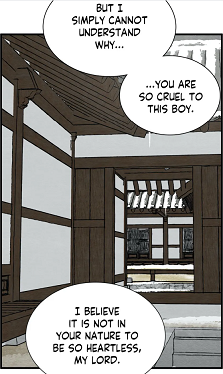 (chapter 68) In their eyes, valet Kim had turned into a hero not fearing his death. But we had another hero in this chapter, the scholar Jung In-Hun. The latter took the crying Baek Na-Kyum in his arm and brought him away from the scene, where Heena noona was getting beaten by a rich noble.
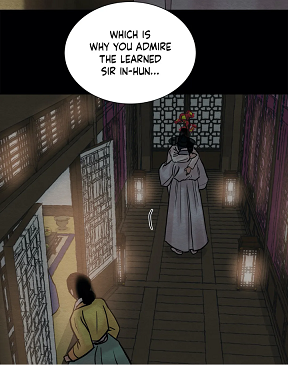 (chapter 68) In her eyes, he was a hero, because he showed concern and care towards her tenderhearted brother.
 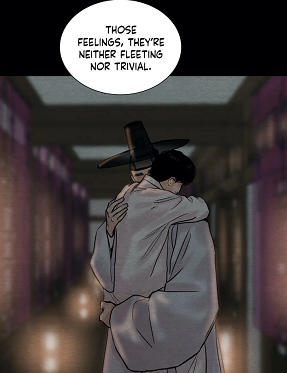 (chapter 68) Yet, only a few applauded Jung In-Hun for his behavior. Why? It is because many readers have already perceived his true nature: his hypocrisy and coldness hidden behind his calm demeanor and huge smiles. That’s why we need to examine more closely the behavior of these two father figures. Are they truly heroes? In order to answer this question, it is important to look at the definition of heroism and at the characteristics of a hero.
Heroism is characterized by:2
So let’s start with the scholar’s heroism. I would like to remind the reader that this scene is told from Heena noona’s perspective. If the manhwalovers observe Jung In-Hun’s action, they have the impression that the scholar is indeed helping someone in need. He is comforting the upset boy. (chapter 68) So the first condition is met. However, neither the second condition or third component are present in the teacher’s gesture. Jung In-Hun is not exposing himself to danger, risking his own life as he doesn’t come to help the real person in danger: Heena noona. Actually, the real person who needed to be rescued was the gisaeng, and not the artist. (chapter 68) Yet, the so-called hero abandoned her to her misery, as he walked away from the room. (chapter 68) This shows that he wasn’t willing to risk his life or position. There are no selflessness and sacrifice. Secondly, he did hope something in return: while consoling the kind boy, he hoped to get recognition from the gisaengs. They would see him in a positive light, hence if he came to visit the brothel again, they wouldn’t ask him for money, and I can even envision that they would give him some wine or food. Furthermore, they would allow him to roam around. No one would question, why he would come to the gisaengs. His reason was simple: he liked the tenderhearted boy. Finally, we have to question about the scholar’s appearance at the brothel. Why was he there, so dressed up? This scene is relevant, because it displays how Heena noona got manipulated in the end. The teacher used Baek Na-Kyum as tool in order to save his own skin. In reality, Jung In-Hun was there in order to get noticed by rich and powerful nobles. He hoped to find some connections, as he knew that the brothel was the place, where influential aristocrats would like to spend their time. In my opinion, this is what happened. Jung In-Hun knew the importance of Baek Na-Kyum at the brothel. From my point of view, he used this knowledge to achieve his goal. He must have approached the guest at the gisaeng, while Heena noona was serving him. But the rich aristocrat got upset that a scholar was bothering him and started beating the poor woman. Seeing this, Baek Na-Kyum cried which gave Jung In-Hun the excuse to leave the place. He needed to console the boy. While reading this, the manhwalovers sense the origin of Heena noona’s prejudices towards rich aristocrats. The latter would disregard her, because the teacher was around, as the latter was hoping to get some benefit from it. With this scene, Byeonduck exposes the origin of Heena’s blindness, which is also visible in different panels, like this one:  (chapter 68) As you can detect, the absence of her eyes reflect her blindness. The feelings she is projecting onto the painter’s are actually her own.
  (chapter 68) Now, we know why Baek Na-Kyum was so indoctrinated in the end. His own sister was also a victim of the manipulator, whom I had already diagnosed as a person suffering from a narcissistic personality disorder. Note that she uses the same vocabular than the scholar.
 (chapter 18) Hence I come to the conclusion, the teacher used the school in order to manipulate the commoners and the gisaengs. While he portrayed himself as righteous and kind, he described the powerful nobles as violent and arrogant, so that he would get the admiration from the commoners. In truth, he was deceiving them, since he looked down on them. Yet he needed them in order to get some connections to the powerful and rich nobles visiting the gisaeng house. On the other hand, since he didn’t want to get too close to the gisaengs, he employed the innocent boy as a shield, misleading Heena noona to think that Jung In-Hun had feelings for her brother. That’s why he hugs the protagonist so tightly. (chapter 68) For Heena, he was a hero, because he gave the impression that he cared for them, whereas it was the total opposite.
If we pay now attention to the butler’s behavior, it looks like the first aspect (“Acting voluntarily for the service of others who are in need“) is present in his action. He wanted to help Heena.  (chapter 67) However, the second component (“Performing actions without any expectation of reward or external gain“) doesn’t apply, because he is not doing it for free. Let’s not forget Kim’s philosophy, which was exposed in chapter 65:
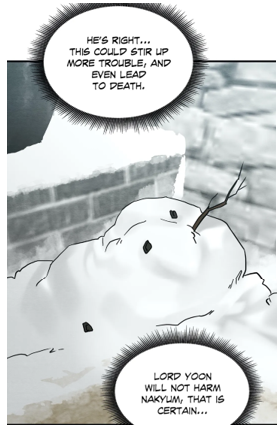 (chapter 65) He hates scandal and trouble. The gisaeng created such a uproar that Kim almost lost his credibility in front of his master.
  (chapter 65) He had two reasons for allowing her to meet the painter. First, Kim feared that she would cause more chaos in the future. Secondly, Kim realized that Baek Na-Kyum had become a huge source of trouble. He knew that the artist had been abducted, hence he got aware that Baek Na-Kyum had become a target of nobles. Furthermore, as soon as he had been returned, his sister made such a ruckus that she had turned the mansion upside down. Besides, like I had mentioned before, due to her behavior, she had put Kim in a difficult spot. Finally, he had another ground for giving his help: (chapter 65) He had seen the painter hurt in the bedchamber, so his words “Lord Yoon will not harm Nakyum” were proven wrong. Therefore I conclude, he had something to gain from his intervention. But what exactly? In my perspective, Kim wanted to get rid of the painter. The valet had already anticipated that Heena noona would ask her brother to leave the mansion. That’s why he said her this: (chapter 67) The butler anticipated her words and actions, as he is very perceptive (see chapter 23). At the same time, he told her the truth:
  (chapter 67) He had never received the authorization from his master. However, the manhwalovers should recognize that he painted his master in a rather negative light, while leaving a good impression on her. (chapter 67) In his mind, the butler thought that Baek Na-Kyum would leave the place right away after the harsh treatment he had received. For him, there was no doubt that no one in his right mind would stay at such a place. He knew that Yoon Seungho would come back soon. In other words, he was not helping Heena or Baek Na-Kyum here. He was doing himself a favor: his desire was to lead a peaceful life. Therefore, this explanation contradicts the first point.
As for the third point (“Recognition and acceptance of the potential risk or sacrifice made by taking heroic actions“), the manhwalovers should question this: When he granted the favor, was he putting his life at risk or was he willing to sacrifice himself? In my opinion, he was not, as he was acting behind his master’s back. He waited for the lord’s departure, then he allowed her to enter the mansion with the hope that Baek Na-Kyum would follow her right away. That’s why he was waiting outside next to the door. At the same time, he couldn’t tell her to hurry. At no moment, he was risking his life. He was using his position as the loyal valet to make decisions on his own, and even lied to the head-maid, when she questioned his behavior. (chapter 67) In my opinion, we have here a new version of the painter’s escape from the first season: Kim acting as a shadow helped the artist to run away (chapter 29-30). However, the problem is that he got caught by Yoon Seungho.
  (chapter 68) What should he do now? I would like to remind the manhwaphiles that Kim had not only disobeyed his master’s order, but he had acted, as if he was a lord. He had given the permission without Yoon Seungho’s consent. (chapter 68 It is important to recall that this story takes place in Joseon, therefore Kim’s action can definitely be judged as a betrayal and usurpation of power. One might argue that he desired to help Heena, yet like I exposed above, he did out of selfishness and not because he felt concerned for the painter and for her. As such, Yoon Seungho has the right to be upset. He is the master and someone is acting behind his back, overlooking his orders. Under this perspective, the head-maid appears more loyal to her lord than Kim himself. In this scene, he was only serving his own interest.
People were rejoicing that Kim became brave, because he criticized his master for his behavior. But what they failed to realize is the importance of the timing. Why now? Observe that Kim only starts confronting the main lead after Yoon Seungho threatens him with consequences:  (chapter 68). Note that the protagonist doesn’t menace to kill the gisaeng. He just desires to send her away, but he is now determined to punish his butler for his disobedience. He usurped his position, and as a lord he is allowed to do so. And that’s the moment, when Kim starts speaking the truth, which many readers associate to something positive.
However, this is important to realize that truth can also be used as manipulation. This is called paltering. Psychologists discern 3 types of lie: lie by commission, lie by omission and paltering.
“Like lying by omission, paltering can involve failing to disclose relevant information, but unlike lying by omission, paltering involves the active disclosure of true but misleading information: paltering enables would-be deceivers to actively influence a target’s beliefs” (Rogers, Zeckhauser, Gino, Norton, & Schweitzer, 2016). quoted from https://workplacepsychology.net/2016/12/18/to-deceive-using-truthful-statements-is-called-paltering/
This type of lie and manipulation is often used by politicians and even traders. They try to divert attention from the real main issue, and in our case: the butler’s disobedience and abuse of power. The other advantage is that since the paltering person is using truth as his tool, it is easier to remember and not get caught by the target. Moreover, the manipulator doesn’t have to feel guilty, as it looks like ethically more correct than lies.
That’s why it is important to look at the timing, when Kim reveals the truth. Here, I would like to bring another scene, where Kim’s first paltering was visible: chapter 50 
 Note, that in that chapter, the lord had the sword in his hand, and strangely the valet came late. As you can imagine, this is no coincidence. In my opinion, butler knew that something bad had happened and in order to escape his lord’s bad mood, he arrived late on purpose (lie by commission), but at the same time he revealed his knowledge about the cause for Baek Na-Kyum’s depressed mood in order to divert his master’s attention. That way, he could put the blame on the absent noble, but also on the painter. The latter had disregarded him due to the scholar’s words. At the same time, he made the lord feel insecure, because it showed him that he had behaved exactly like a client, a man obsessed with sex. That’s why with the butler’s intervention, the master had a relapse. What mattered for Kim was a peaceful life, the rest is
  (chapter 65) Yet, he never expected such a change of behavior in the main lead, that’s why he blamed the painter afterwards.
 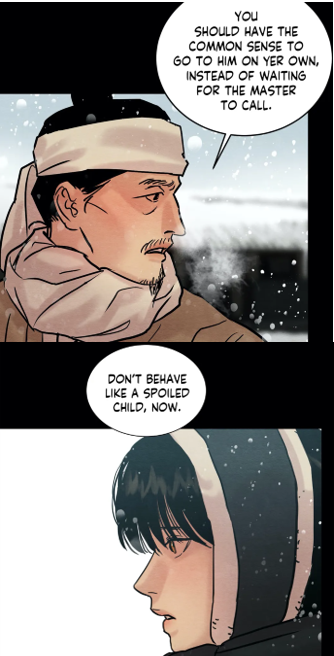 (chapter 52)
Hence I come to the conclusion that Kim’s MO is mostly paltering. And now, it is time to return our attention to the conversation between Yoon Seungho and his valet. It is important to examine each argument Kim brought up:  (chapter 68) Initially, it looks like he is appealing to the lord’s heart, but in reality the main point is the noble’s judgement. The valet is reprimanding his master for his lack of discernment. He misjudged the painter’s behavior. This is relevant because in this panel, I view a first emotional manipulation. His real intent is to make the lord doubt his own judgement, like “look, back then you made the wrong decision… therefore you could be wrong here”. But the readers know that Yoon Seungho is right. Heena is determined to take away his lover, so his initial judgement about Heena is indeed correct. In his eyes, she represents a source of thread, he might lose the artist. One might argue that Yoon Seungho is sequestring the painter which is also correct, yet like my reader Luzy pointed out, this is the painter’s decision. Neither Kim nor Heena nor Yoon Seungho have to make the decision for him. And here, Kim and Heena are trying to do so. The problem is that Kim got caught. But let’s go back to my initial thought. Kim used his knowledge (the lord’s misjudgment) in order to make his lord doubt himself. and he appealed to his emotions for that. This type of manipulation is called gaslighting:
“Gaslighting is a form of emotional abuse that’s seen in abusive relationships. It’s the act of manipulating a person by forcing them to question their thoughts, memories, and the events occurring around them. A victim of gaslighting can be pushed so far that they question their own sanity.” https://www.healthline.com/health/gaslighting#:~:text=Gaslighting%20is%20a%20form%20of,they%20question%20their%20own%20sanity.
As a conclusion, Kim made the lord feel insecure and doubt his own judgment and used facts in order to achieve his goal. The lord should rely on his butler’s discernment. But the mercy and favor for the painter are just a subterfuge, he is trying to mask his wrongdoing.
I could bring up another panel as illustration: (chapter 68) Here, he is using the past in order to distort reality and memories while speaking truth. What Kim doesn’t mention here is his involvement in that incident.  (chapter 65) Kim is destroying the lord’s confidence, so that Yoon Seungho will rely on Kim’s judgement.
If you pay attention to Kim’s words during that confrontation, Kim is actually utilizing many psychological and emotional manipulations:
(chapter 68) “You are so cruel to this boy”. He might be right, yet why didn’t he say anything in chapter 64?  (chapter 64) He literally looked away, because truth wasn’t helpful in this case. Feigning innocence and ignorance was more appropriate.
 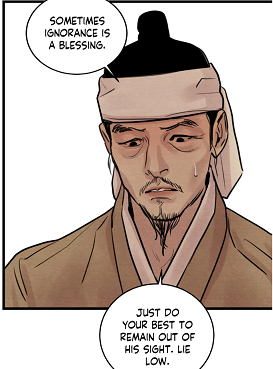 (chapter 23) (chapter 68) (chapter 68) (chapter 68) Here, Kim is mentioning the past, where he played an active role between the father and son. In other words, he is reminding the master that he is acting like a mediator. However, this revelation exposes the servant’s manipulation. He was one of the causes for the falling apart between father Yoon and the eldest son. We have to imagine that he never revealed the real reason for Yoon Seungho’s rebellious nature to father Yoon. And here, he is behaving like in the past. He tries to intervene between Baek Na-Kyum, Heena noona and Yoon Seungho, as if he had the right to.
 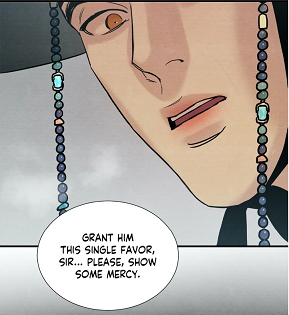 (chapter 68) (chapter 68) he is bringing up the past to divert Yoon Seungho from the main problem: Kim abused his position. (chapter 68) making a person feel bad about herself, by giving backhanded compliments or comparing to another person. On the surface, it looks like constructive criticism, while in reality the victim is supposed to feel terrible and doubt his personality. https://www.healthline.com/health/mental-health/negging
 I have to admit that I can’t give you an illustration of all psychological tricks Kim used in this confrontation. On wikipedia, there is a whole list of different psychological manipulations, which served me as orientation. https://en.wikipedia.org/wiki/Psychological_manipulation Nonetheless, as the readers can detect, I tried to look for more info for this analysis.
After portraying Kim as a manipulator, I would like to remind my reader of two aspects: I described the butler as the gatekeeper, the one who opens the door. And now, if the manhwaphiles pay attention to this picture, (chapter 68) they will detect that the door is now open. The valet opened Pandora’s box in my opinion. That’s why Yoon Seungho was hurt and at the end ran away.  (chapter 68) He had heard, how Heena noona was comparing him to misfortune, reinforcing his negative opinion about himself.
  He had been already prepared mentally by his butler. He was as wounded as Baek Na-Kyum, when the scholar had voiced his true thoughts about the painter. (chapter 40) While the artist’s fate is to become a prostitute, the other is destined to bring misery. He already externalized this perception about himself in chapter 49:
 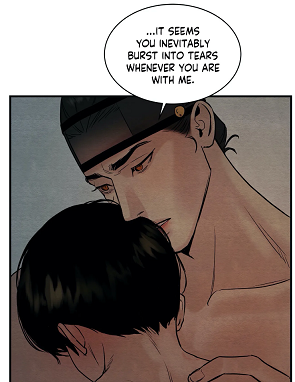 (chapter 68) For me, chapter 68 is the new version of chapter 40. That’s why I wasn’t rejoicing at all about Kim’s behavior. He was far from being honest with his truth. In reality, he used truth mixed with emotions as his ultimate tool in order to save his own skin. In other words, he functioned as the noble’s mirror.
This scene made me think of “Snow White and the 7 dwarfs”, where the mirror of truth tells the jealous queen that Snow White is far more beautiful than her. With this truth, the queen is led to take actions against the heroine and torment her. And here, we have another allusion how truth can be used as a weapon. The mirror never told the queen how to become the most beautiful woman. He never gave her any advice, it retained information: beauty can be different. It is not just the physical aspect, but it is about the personality. Therefore we could say that the mirror of Truth manipulated the queen leading her to her own demise. However, at no moment the queen never questioned the mirror of Truth and its ulterior motive. That’s exactly how Kim behaved the whole time explaining why Yoon Seungho never suspect his words. They reflected the truth. Yet the valet never intervened for his sake and for the painter’s sake. He only did, when he noticed that his lord was angry and let others take the blame, like here the father or Yoon Seungho himself. However, the readers should remember that in this scene, Kim had abused his authority. That’s also a fact.
Therefore I don’t consider Kim as a hero, quite the opposite. He is the worst manipulator, the reason why Yoon Seungho ended up with self-hatred and became violent with his swing moods. Kim isolated him, eroded his sense of reality, making him fear his own image. Besides, he didn’t even help him, when he got raped. Since Yoon Seungho has been manipulated psychologically and emotionally for years, he ended up hating himself.
“Long term effects of emotional manipulation:
That’s the reflection Kim wanted him to have, so that the latter would never question his servant’s actions. And now, this picture has another meaning for me: (chapter 57) His gaze is only focused on his valet, not realizing that the latter is not honest with him. From my point of view, there’s a reason why Byeonduck put Jung In-Hun’s so-called heroism (chapter 68) next to the valet’s . (chapter 68) For me, she put the readers in the same situation than Heena noona’s. Just like the kisaeng, many readers expressed their admiration for the butler, because he had told the truth. They associated truth to goodness. Heena noona also watched the kindness in the scholar’s gesture leading her to think that the teacher was a honest and caring person, yet she overlooked that the teacher had in reality abandoned her. He never protected her and let her suffer. This picture truly reflects his cowardice and treachery  (chapter 68) He slowly takes the artist in his arms. He doesn’t rush to her side, remains silent and immobile. His passivity reflects his true personality, but Heena is too focused on her young brother to grasp the situation. (chapter 68) The crying boy is used as a diversion. Besides, I am quite certain that Jung In-Hun was actually the source of her misery by trying to get attention from powerful nobles. Note that the scholar and Kim utilize both the painter’s to hide behind their misdeed. He serves as a justification why the scholar left the gisaeng behind and why Kim defied his master’s order. The domestic used kindness and pity as legitimations (chapter 68), while it was the opposite. He desired to get rid of them.
But there’s hope in my opinion. Baek Na-Kyum refused to listen to his sister’s words, which Kim hadn’t expected. Therefore he got caught, he anticipated Baek Nakyum’s eagerness to leave. (chapter 67) Secondly, by giving his master a reflection of his behavior, the valet lost his influence on the main lead. Remember that I wrote that Baek Na-Kyum served as the lord’s mirror, therefore he will take over the valet’s role. He will reveal his true reflections: his flaws and wrongdoings

 (chapter 68), but also his quality: his honesty
 (chapter 58). Let’s not forget that the artist realized his dedication in chapter 58. Note the huge difference. The artist never uses others in order to judge the lord. Kim will realize soon enough the consequences of opening Pandora’s box. He might have achieved his goal (the lord won’t punish him for his disobedience), yet he lost his lord’s trust. Notice that right after this quarrel, Yoon Seungho started treating Baek Na-Kyum like a noble.
  (chapter 69)
  (chapter 72) From that moment on, Yoon Seungho was no longer viewing the valet as the unofficial lord. We could say that he had lost his status as “hero” in the main lead’s eyes.
Feel free to comment. If you have any suggestion for topics or manhwas, feel free to ask. If you enjoyed reading it, retweet it or push the button like. My Reddit-Instagram-Tumblr-Twitter account is: @bebebisous33. Thanks for reading and for the support, particularly, I would like to thank all the new followers and people recommending my blog.

