

Please support the authors by reading Manhwas on the official websites. This is where you can read the Manhwa: Jinx But be aware that the Manhwa is a mature Yaoi, which means, it is about homosexuality with explicit scenes. Here is the link of the table of contents about Jinx. Here is the link where you can find the table of contents of analyzed Manhwas. Here are the links, if you are interested in the first work from Mingwa, BJ Alex, and the 2 previous essays about Jinx Drama Queen 👸 Han Dan and The Joker -part 1 and Drama Queen and The Joker – part 2
It would be great if you could make some donations/sponsoring: Ko-fi.com/bebebisous33 That way, you can support me with “coffee” so that I have the energy to keep examining Manhwas. Besides, I need to cover up the expenses for this blog.

Kim Dan’s birthday and his presents
As the narrative of Jinx moves toward the decisive window of December 24th to 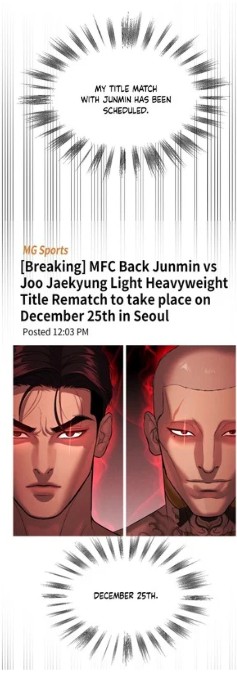 (chapter 89) December 26th
 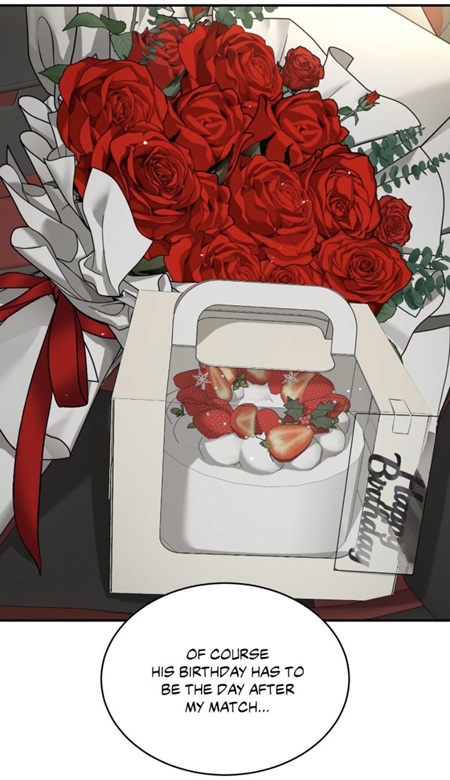 (chapter 97), readers are confronted with a question that seems simple yet resists any easy answer: what exactly has Joo Jaekyung prepared for Kim Dan’s birthday?
For many, the answer appears obvious. (chapter 97) The bouquet of red roses—long associated with romantic passion, desire, and confession—seems to speak for itself. Paired with the appearance of a strawberry cake and the long-anticipated possibility of couple rings 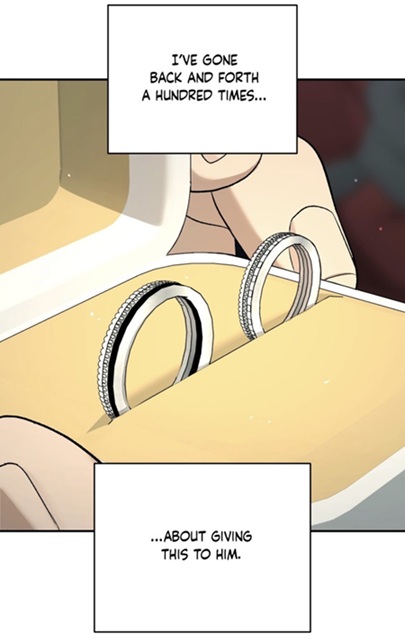 (chapter 97), the scene appears easy to decode. It suggests a champion finally ready to step out from behind his walls and express what words have long concealed. But are these gifts the true center of the moment, or only its most visible layer? Is Jaekyung merely celebrating a birthday, or trying to alter the future he and Kim Dan might share?
Yet Jinx rarely reveals itself through what is most obvious at first glance. Again and again, significance emerges through timing  (chapter 81), hesitation, gesture, and subtle changes in the spaces characters inhabit. A gift may matter less than the moment it is offered. A movement may reveal more than a confession. Even the introduction of something new into a familiar environment can carry emotional weight beyond words.
Perhaps the most important mystery lies not in what Kim Dan will receive, but in what Jaekyung himself is becoming. Is he still the man who equates care with possession and value with financial power? Or is he beginning, however awkwardly, to imagine another form of devotion—one expressed less through spectacle than through protection, constancy, and shared future?
To answer that question, we must look beyond the surface of roses and celebration. For the most meaningful present may not be the one that first captures the eye, but the one that reveals a transformation of the heart.
When Gifts Speak Volumes
At first glance, Chapter 97 appears easy to interpret. A bouquet of red roses, a strawberry cake marked Happy Birthday, and a pair of rings seem to point toward an obvious conclusion: (chapter 97) Joo Jaekyung has prepared birthday presents for Kim Dan. Yet the chapter becomes far more complex, once we recognize that these presents do not carry fixed meanings in themselves. In this story, gifts are shaped less by appearance than by intention, timing, and emotional context.
Red Roses: Desire and Reconciliation
The bouquet of red roses offers the clearest example. Traditionally, red roses signify romantic love, passion, desire, and confession. On the surface, they appear to announce a straightforward romantic gesture. Yet the surrounding context changes their meaning. Jaekyung brings them after acknowledging that he had treated Kim Dan badly. 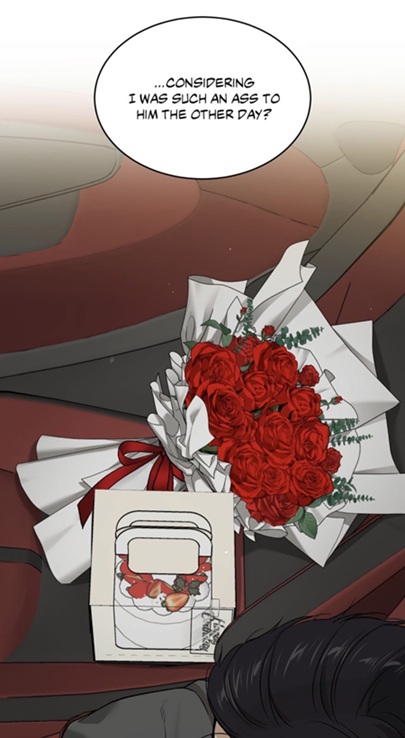 (chapter 97) Because of this, the flowers express more than attraction alone. They also function as apology and reconciliation. Their romantic symbolism remains, but it is deepened by remorse and by the desire to restore closeness after harm.
This double meaning is important. The roses do not erase desire; they refine it. Passion is no longer detached from responsibility. Attraction is joined to remorse. In that sense, the gesture marks growth: Jaekyung does not simply want Kim Dan—he wants to restore closeness with him. If intimacy follows that night 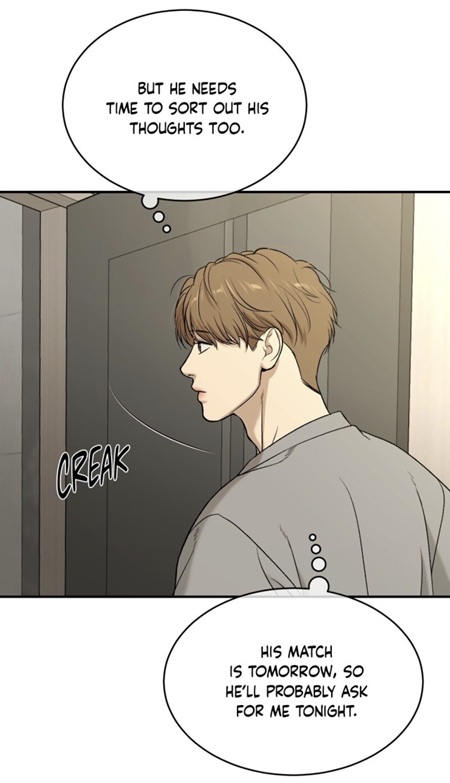 (chapter 97), it would carry a different significance than in the past. It would no longer be defined by the old “jinx” logic of transactional or ritualized sex, but by reconciliation and mutual affection. The act would cease to be mere release and become an expression of true love.
The bouquet of red roses carries yet another layer of meaning when placed beside the couple’s earlier conversation about flowers. When Kim Dan once received pink roses from Choi Heesung  (chapter 31), he explained that he liked flowers because of their scent.
  (chapter 31) The statement seemed simple at the time, almost shyly innocent, yet it reveals something essential about his character. Kim Dan values not spectacle, status, or monetary worth, but the quiet emotional effect an object can have. He does not love flowers because they are expensive. He loves the atmosphere they create, the comfort they bring, and the mood they awaken.
This detail becomes even more significant when contrasted with Joo Jaekyung’s immediate response: (chapter 31) At first, the line sounds like blunt indifference. Yet its emotional effect falls most sharply on Kim Dan. Having just admitted that he likes flowers because of their scent, Kim Dan is suddenly placed in an awkward position. Thus he apologizes. The rejection no longer concerns flowers alone. It risks sounding like a rejection of what Kim Dan himself has brought into the shared space.
This matters because scent crosses boundaries in ways other objects do not. A fragrance cannot be neatly contained. It lingers, spreads through rooms (chapter 31), and remains in the air. In that sense, Kim Dan may feel he has trespassed—that he has filled Jaekyung’s penthouse with something unwanted, leaving behind traces of himself where he had no right to do so. That’s how it dawned on me why the athlete refused to have the room cleaned for quite some time 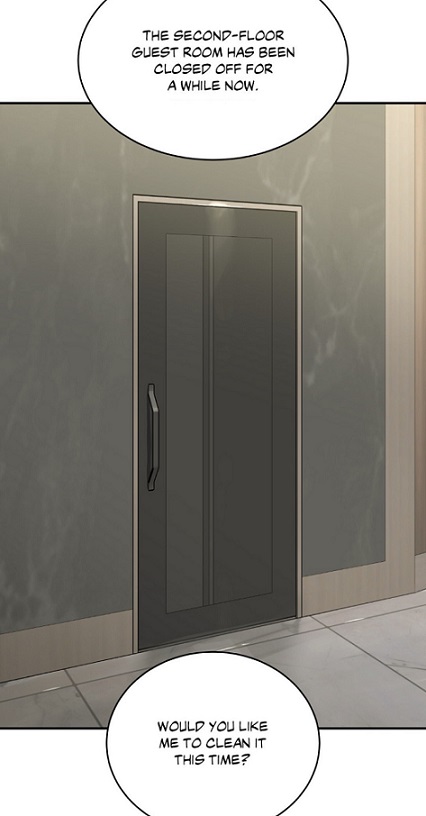 (chapter 55), he wanted to keep the physical therapist’s scent there.
But let’s return our attention to the scene with the pink roses. For a man as careful and self-effacing as Kim Dan, such a moment would naturally produce embarrassment. The shame lies not only in differing tastes, but in the fear of being too present. His preference seems to have occupied space that was never truly his. And now, you understand why he didn’t leave the elevator at the same time. 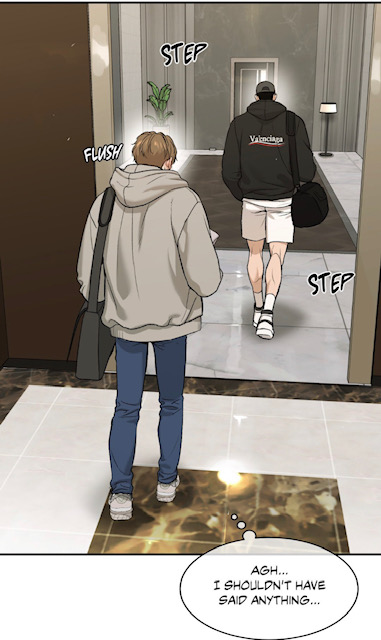 (chapter 31) He wanted to be considerate of Joo Jaekyung, making sure that the flowers’ fragrance would not bother his “landlord”.
Striking is that the line “I hate flowers” is more than just blunt indifference. Yet later revelations about Jaekyung’s childhood allow it to be read differently. His past is marked by humiliation, deprivation, and social contempt. 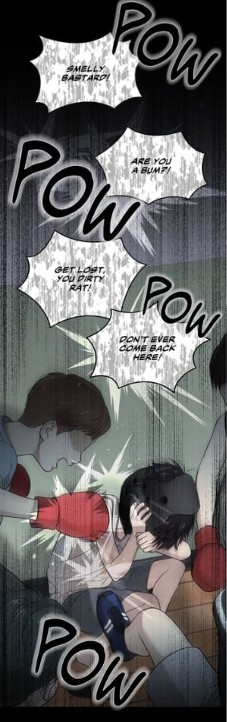 (chapter 72) He was mocked as dirty, poor, and
 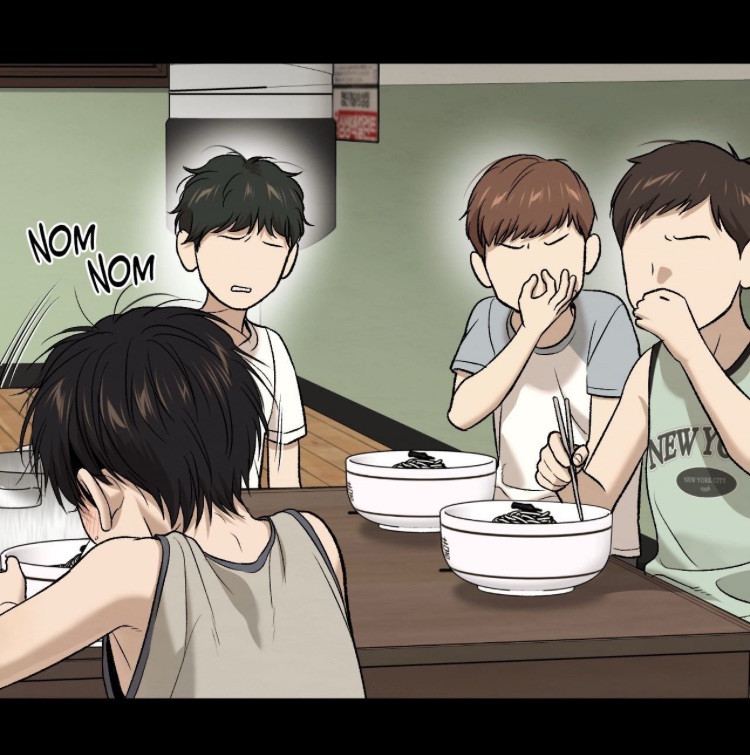 (chapter 72) “smelly.” Odor, in his early life, was not associated with beauty or tenderness, but with shame. Smell became tied to exclusion.
That distinction matters because scent is one of the most powerful carriers of memory. Unlike rational thought, fragrance can bypass language and return a person directly to emotion. For Kim Dan, the smell of flowers “puts [him] in a good mood.” (chapter 31) For Jaekyung, sensory memory may have operated in the opposite direction, linking smell to poverty, rejection, and pain.
Seen in this light, the red roses of Chapter 97 are profoundly symbolic. The celebrity does not merely buy a conventional romantic gift. He chooses an object tied to a sensory world he once rejected. Whether consciously or not, he reaches toward what he had previously denied. (chapter 97) This contrast gives the bouquet an additional significance. The red roses do not merely symbolize romance or apology; they also possess an immediate emotional function. Because the wolf remembers that flowers can cheer up his fated partner, his choice of gift becomes quietly strategic as well as affectionate. He is not only offering an object, but shaping the atmosphere in which the encounter will unfold.
The fragrance of the roses can soften tension, brighten the space, and reduce the emotional distance created by their recent conflict. In that sense, Jaekyung is doing more than saying I’m sorry. He is creating the conditions in which that apology may be more easily accepted. Rather than forcing reconciliation through words or authority, he approaches Kim Dan through something known to bring him comfort.
The gesture therefore reveals a subtle but important evolution. The MMA fighter is no longer acting only from impulse or pride. He is observing, remembering, and responding to Kim Dan’s inner world. What he offers is not simply flowers, but consideration.
At the same time, the bouquet suggests the rewriting of scent itself. What was once connected to humiliation is now reintroduced through affection. What once belonged to trauma is placed inside a gesture of care. This is why the flowers can be understood as therapeutic for Jaekyung as well. In offering them to his fated partner, he may also be exposing himself to a new emotional association. The fragrance of flowers no longer belongs only to distance or discomfort. Through Kim Dan, it can become linked to warmth, intimacy, and home.
The color deepens this transformation. Earlier pink roses symbolized admiration, gratitude, joy, grace, and gentle affection.  (chapter 31) Red roses carry stronger meanings: passion, desire, courage, and declared love. The movement from pink to red mirrors the movement of the relationship itself—from undecisive tenderness to chosen intensity.
 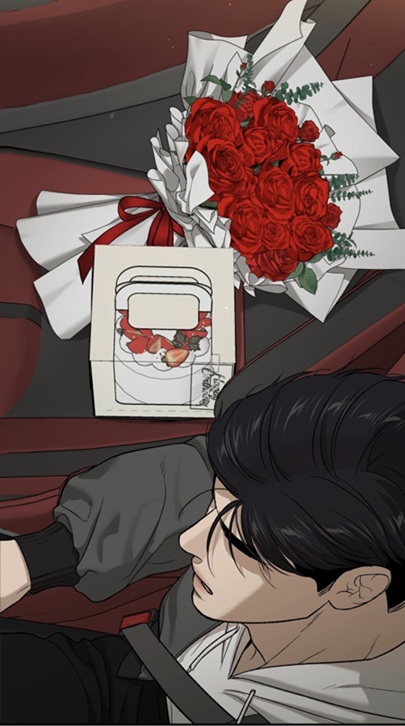 (chapter 97)
Most importantly, the bouquet reveals how Kim Dan changes Jaekyung’s relationship to the world. Kim Dan does not simply receive gifts; he rehumanizes meanings that trauma had distorted. Through him, even something as ordinary as scent can be recovered. In that sense, the roses speak not only to Kim Dan, but to the wounded child Jaekyung once was.
The Strawberry Cake: One Object, Many Readings
The cake works in a similarly revealing way. (chapter 97) Its packaging openly displays the words Happy Birthday, inviting the reader to assume that its purpose is self-evident. Yet the narrative itself unsettles that assumption. 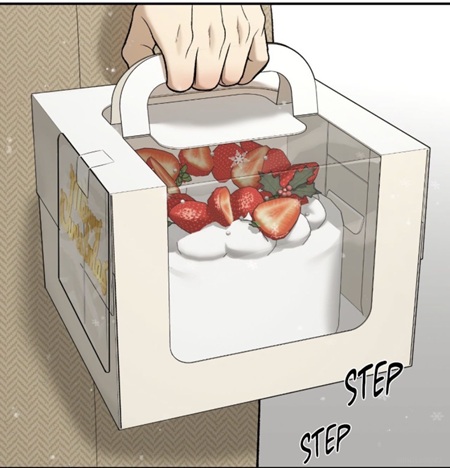 (chapter 97) Kim Dan also purchases the same kind of cake, but not to celebrate his own birthday. He chooses it to honor Jaekyung, expressing pride, care, and happiness for the champion’s success.
 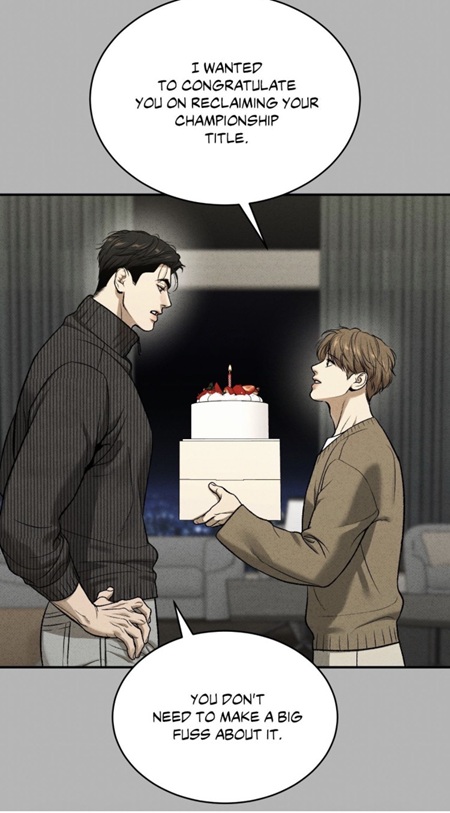 (chapter 97) Gratitude and admiration replace regret as the emotional core of the gesture. The same object therefore carries different meanings in different hands.
This parallel reveals that the cake does not inherently mean “birthday.” Its significance depends on the giver and the feeling expressed through it. In Jaekyung’s hands, it becomes part of an effort to repair tension and reopen warmth. In Kim Dan’s hands, it becomes admiration and support. The printed message remains the same, but the emotional message changes. The same object becomes two messages: one says, I’m sorry. The other says, I’m proud of you. Without coordination, both men choose the same symbolic language: Love. They are beginning to meet each other in thought. To conclude, the cake reveals emotional convergence.
The cake gains additional meaning when placed within its seasonal context. In South Korea, the strawberry shortcake-style dessert displayed in bakeries each December is strongly associated with Christmas celebrations.

Covered in white cream and topped with bright strawberries, it visually echoes the festive colors of winter and has become a familiar part of romantic holiday culture. It is not merely something people eat; it is an object tied to atmosphere, celebration, and shared occasions.
The cultural backdrop changes how the scene can be read, but not necessarily how the characters themselves understand it. On December 24th, roses and a strawberry cream cake naturally evoke the visual language of romance and couple celebration. To an outside observer, such gifts can resemble the signs of a private date or an intimate evening together. Yet the scene suggests that neither Kim Dan nor Jaekyung fully approaches it through that lens.
Kim Dan’s attention is drawn to a family leaving the bakery 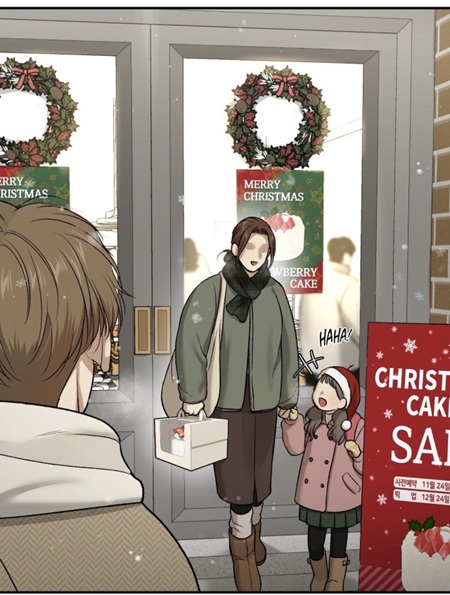 (chapter 97), which subtly shifts the emotional frame. Rather than reading the setting as romantic spectacle, he may register warmth, celebration, and shared belonging. True to his character, domestic happiness may speak to him more immediately than public codes of romance.
Jaekyung’s position is different, but no less revealing. He appears motivated first by personal memory and immediate need. He remembers flowers in connection with Kim Dan and seeks a way to repair the distance created by recent conflict. (chapter 31) His impulse is intimate rather than seasonal. He is not setting out to perform Christmas romance; he is trying, in the only way he can, to reconcile.
At the same time, that private intention takes shape within a very specific environment. Because he is shopping on Christmas Eve, he moves through spaces already saturated with festive displays, bakery counters, bouquets, and seasonal rituals of affection. The desire originates within him, but the language available to express it is supplied by the world around him. This helps explain his visible hesitation. 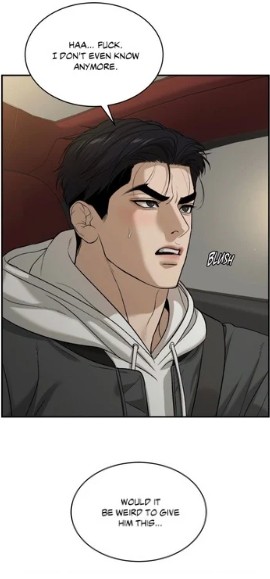 (chapter 97) He questions whether it would be strange to give such presents and admits that he no longer even knows what to do. The uncertainty suggests that he has not fully mastered the symbolic code he is using. He senses that flowers, cake, and rings matter, yet he cannot entirely explain why they feel right or whether they will make him look foolish.
That tension makes the scene especially moving. Kim Dan sees warmth 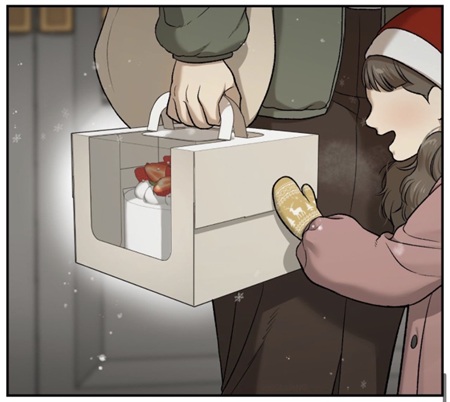 (chapter 97) where others might see romance. Jaekyung reaches for gestures of affection whose wider meanings he only partially understands. Neither man consciously names the moment as a couple’s ritual, yet their actions begin to inhabit that language all the same. Personal feeling leads, while culture quietly gives it form.
This gives the moment a special subtlety. The gifts carry meanings larger than either man explicitly names. Their relationship begins to appear as a couple’s bond, even before they fully recognize it themselves. Culture speaks around them before they can speak for themselves.
Yes, Christmas in Korea is celebrated similarly to Valentine’s Day. It is also often referred to as “Valentines with Santa” because it’s more of a couples’ day. Instead of a family festival, it’s seen as a private date for couples to cherish winter and the Yule tradition.
This makes the writing on the box especially significant. Happy Birthday offers an innocent and socially acceptable explanation for gifts that might otherwise appear overtly romantic. (chapter 97) The label clarifies the scene on the surface, yet it may also conceal its deeper meaning. What looks like a birthday errand can simultaneously function as an intimate gesture between two people, whose bond is becoming harder to hide.
The timing of Jaekyung’s gesture strengthens this reading even further. Kim Dan’s birthday falls on December 26th, yet the flowers and cake are brought on the night of December 24th. This is not merely an early delivery. It creates a practical contradiction. (chapter 97) Both gifts are highly perishable. (chapter 97) Fresh roses begin to droop with time, and a cream cake topped with strawberries is meant to be enjoyed while fresh. If these objects were truly intended as the final birthday presents for the actual day, they would be oddly chosen. By the time December 26th arrived, the flowers would already be fading and the cake would have lost the freshness that gives it value.
This everyday logic matters because it shifts the interpretation at the most basic level. Even before symbolism enters the discussion, the objects do not behave like conventional birthday presents. They belong to the present moment, not to a celebration two days away. (chapter 97) That present moment is emotional rather than calendrical. Jaekyung does not bring them because the date demands it, but because the relationship does. The gifts answer urgency: recent conflict, approaching uncertainty, and the desire to restore warmth before the match intervenes and the doctor leaves him.
In that sense, their perishability becomes meaningful in itself. These are objects made to be experienced now, just as reconciliation must happen now. They are temporary gifts chosen for an immediate wound, while the more lasting question of the future is carried elsewhere.
The Couple Rings: Equality and Commitment
Once the flowers and cake are recognized as gestures for the present rather than true birthday presents, one visible possibility remains: the couple rings. 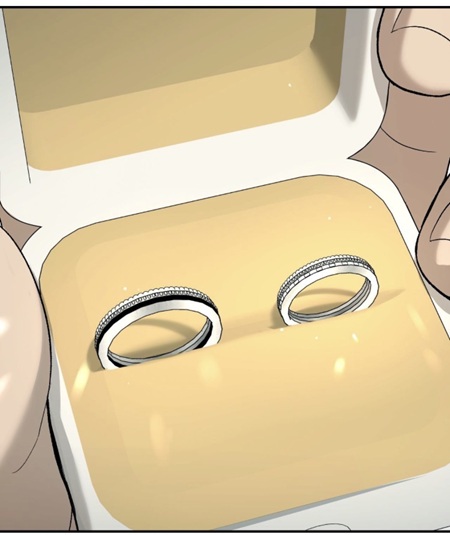 (chapter 97) They seem, at last, to be the real gift. Their permanence contrasts with the fragility of roses and cream cake, and their symbolism suits an important personal occasion far more naturally.
And yet even here, the scene proves more complex than it first appears.The rings belong to another emotional layer altogether. Unlike the flowers and cake, they are already in Jaekyung’s possession. He carries them with him 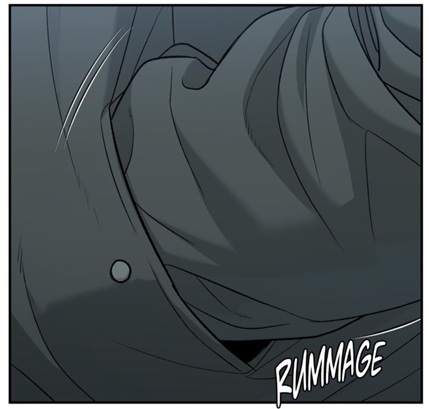 (chapter 97) and admits that he has gone back and forth countless times about giving them. (chapter 97) This hesitation suggests that they were acquired well before the events of the chapter and tied to a longer internal struggle. An earlier panel strengthens this interpretation.
 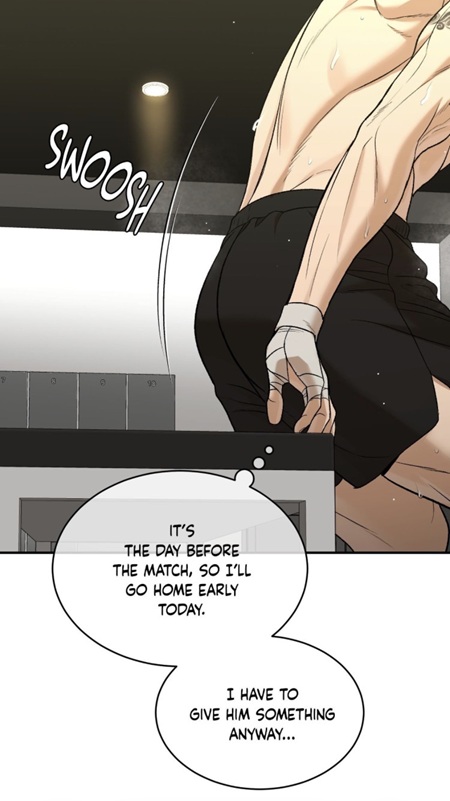 (chapter 97) While still at the gym, before any flowers or cake appear, Jaekyung tells himself that he has to give Kim Dan something. The wording is important. He does not think about buying something, searching for something, or choosing something later. He speaks as someone who already has a gift in mind and already has it with him.
That object can hardly be the flowers or the cake. Both appear freshly purchased and belong to the practical errands of the journey home. The roses are newly arranged, and the cream cake with strawberries is clearly meant for immediate consumption. They are gifts obtained on the way, not items long carried in secret.
The rings fit the evidence far more convincingly. Small enough to remain hidden in his pocket, already burdened with emotional hesitation, and linked to a decision he has postponed many times (chapter 97), they are the only visible present that explains the panel at the gym. Jaekyung leaves early because he intends to act, but before returning home he stops at the bakery and flower shop, adding new gestures of apology and warmth to the older gift he had already prepared.
This also explains the subtle irony of the sequence. Though he departs the gym early, he does not arrive home immediately. The delay itself becomes meaningful: between decision and confession 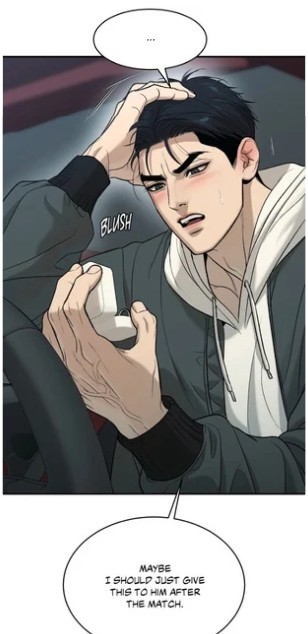 (chapter 97), he gathers the courage—and the accompanying symbols—needed to finally face Kim Dan.
Yet among everything he carries or acquires that evening, one object stands apart from the rest. The flowers and cake belong to the immediate moment: they soothe tension, create warmth, and answer a present emotional need. The rings, by contrast, reach beyond the night itself. They are not meant to be enjoyed briefly or consumed in passing, but to endure. For that reason, they carry the greatest symbolic weight of all.
Flowers can wilt, cake is consumed, but a ring endures. (chapter 97) Its circular form traditionally signifies continuity, fidelity, and mutual belonging. Most importantly, a ring cannot fully function within hierarchy. It gains meaning through reciprocity. One person may offer it, but its true significance depends on acceptance. In that sense, the rings challenge the old imbalance that has defined their bond: wealth versus debt, fame versus obscurity, strength versus vulnerability. If the wolf offers couple rings, he is not simply giving an object. He is inviting Kim Dan into a shared definition of the relationship. That is a radically different gesture from transactional generosity. It says not I provide for you, but let us belong to one another.
This is also why the rings cannot be understood as an ordinary birthday present. A birthday gift is usually directed toward one person alone. Couple rings follow another logic entirely: the giver receives one as well. The gesture is not centered on an individual celebration, but on the creation of a mutual bond. They do not say this day belongs to you so much as our future belongs to us.
And yet even this is not the final step. Commitment of the heart must still be matched by conditions in which that commitment can live.
For that reason, the rings signify something deeper than celebration. They do not simply mark a date. They express commitment, vulnerability, and the fear of loss. More than any other object in the chapter, they reach toward the future. Seen in this light, none of the visible presents can be reduced to simple birthday gifts. The flowers speak of love and apology. (chapter 97) The cake proves that even obvious symbols can be redefined by intention. The rings embody permanence and the hope that what exists now might continue beyond the match. (chapter 97)
Thus I conclude that even the rings do not complete the transformation. The roses may apologize, the cake may reconcile, and the rings may promise continuity, but all three remain symbolic gestures. They express feeling without necessarily changing the conditions in which that feeling must survive. In this story, love is tested not by sentiment alone, but by circumstances and actions. What use is confession without safety? What use is commitment without freedom? What use is tenderness if the surrounding world remains invasive, unstable, or controlling?
For Kim Dan, the deepest issue has never been exhaustion alone. His life has long been structured by dependence: on institutions, on precarious work, on family obligation, and finally on Jaekyung’s benevolence and protection. Flowers, cake, and even rings may express attachment, but they do not resolve the question of autonomy. Until now, the physical therapist has rarely been treated as a fully self-determining adult. 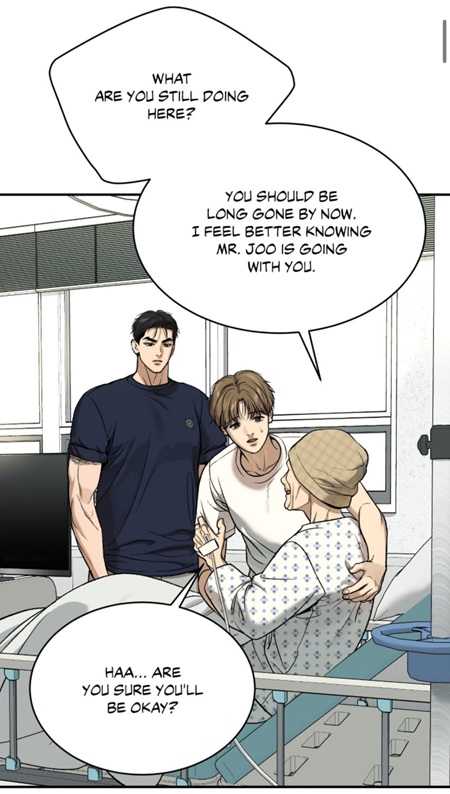 (chapter 78) More often, he has been positioned as a servant to be used or a child to be guided.
 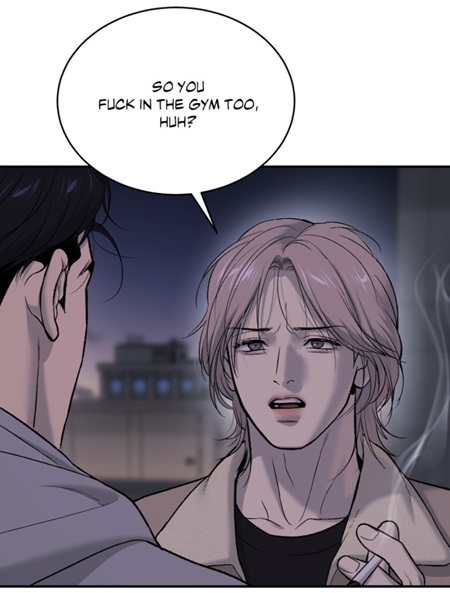 (chapter 89) His choices have repeatedly been shaped, directed, or provoked by the will of others rather than emerging freely as his own.
If the story ended with the rings, Kim Dan would be a loved dependent, but still a dependent. He would remain the one waiting in the penthouse 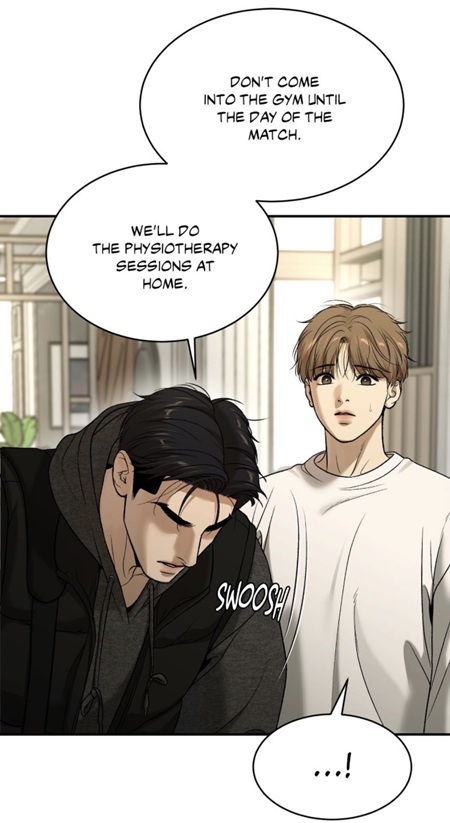 (chapter 96), the one being driven, the one whose safety exists only when Jaekyung is physically present.
To love him fully, then, requires more than symbolic devotion. It requires the creation of conditions in which he can move freely, choose freely, and exist securely without total reliance on another person. And that is precisely where the question of the true birthday gift returns.
The Architecture of the Sanctuary
And once these meanings are recognized, a final question naturally emerges: does the champion truly have a birthday gift for Kim Dan after all—and if so, where is it?
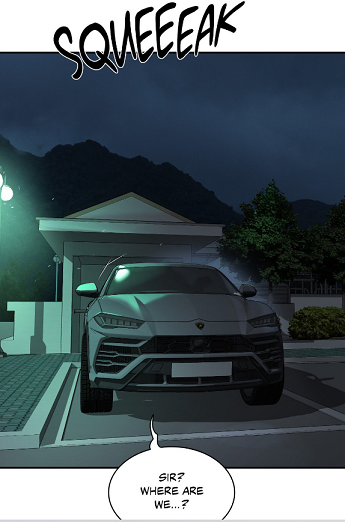
The answer may begin not among the visible presents, but in a detail far easier to overlook: the parking garage.  (chapter 97) The moment the flowers, cake, and rings are understood as gestures serving other emotional purposes, the possibility of another gift comes sharply into view. If those objects are not the true birthday present, then the narrative invites us to search elsewhere. One panel quietly draws attention to exactly such a possibility: for the first time, a third car appears.
This detail gains force when placed beside earlier chapters. The garage shown in Chapter 97 does not simply contain another vehicle; it reflects an evolution already underway. In Chapter 18, the space appears more functional and exposed. 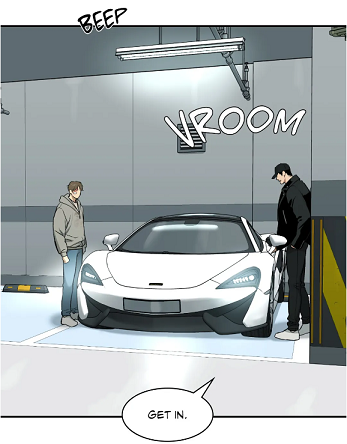 (chapter 18) By Chapter 32, the parking area has changed noticeably.
 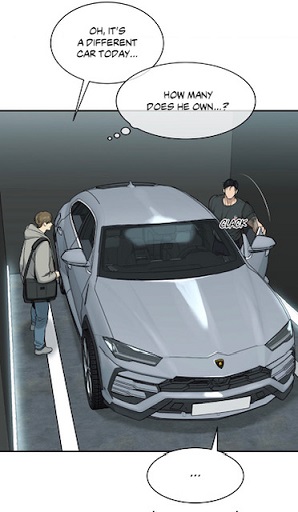 (chapter 32) It is larger, more exclusive, and more carefully structured, resembling a private VIP bay rather than an ordinary shared garage. The environment itself has become more protected.
That architectural change matters. A private bay separates the vehicles from the risks of crowded public parking: scratches, collisions, intrusion, unwanted proximity. (chapter 97) The cars are no longer stored merely for convenience. They are sheltered. Even before any emotional interpretation, the space communicates a desire for control, security, and preservation.
In episode 32, Kim Dan wondered about the number of Jaekyung’s cars, because he noticed the new car. (chapter 32), and many readers likely did the same. Attention naturally falls on wealth and quantity. Yet the more meaningful change may lie elsewhere: not in how many cars exist, but in the kind of space being created around them.
Personal transformation in this story is often reflected through architecture. Rooms, hallways, rooftops, doors, and thresholds do not simply contain events; they externalize inner states. Jaekyung’s world has long been luxurious, elevated, and impressive, yet also emotionally isolated. The penthouse functions as both reward and prison: a symbol of success that often feels sterile and inaccessible. It is therefore significant that one of the clearest signs of change appears below the tower rather than inside it.
The deepest change may not be that Jaekyung owns more. It may be that he has begun arranging what he owns for someone else.
The White Sedan: Why This Car Matters
Among the parked vehicles, one stands apart: the white sedan. (chapter 97) . Unlike Jaekyung’s earlier sports cars—machines associated with speed, aggression, (chapter 32) display, and public image—this vehicle speaks a different language. It is understated rather than theatrical, spacious rather than cramped, functional rather than performative.
The color matters as well. White can suggest clarity, neutrality, and renewal. Whether read symbolically or simply aesthetically, it sharply contrasts with the darker, more aggressive aura of luxury performance cars. It looks less like an extension of ego and more like the beginning of another chapter. On the other hand, white is the safest color on the road because it’s the most visible to other drivers at night. If this theory is true, then it indicates that Jaekyung is truly prioritizing Dan’s safety over his own “cool” aesthetic.
More importantly, the sedan fits Kim Dan far more naturally than it fits Jaekyung’s former image. Kim Dan has never been defined by extravagance or spectacle. He values usefulness, modesty, comfort, and quiet sincerity. A practical and comfortable vehicle suited for daily life reflects his character far more than a machine built to impress strangers.
For that reason, the sedan becomes another clue that the new car may not be intended for Jaekyung at all. It resembles Kim Dan’s needs more than Jaekyung’s branding. The car also offers something rare in the world of Jinx: invisibility. Fame has repeatedly exposed Jaekyung to surveillance, intrusion, and manipulation. Many readers will certainly recall this episode where a black car was detected following the champion’s gray SUV.  (chapter 33) A discreet sedan blends into ordinary traffic in ways a recognizable celebrity vehicle cannot. If registered under Kim Dan’s name, it would create even greater privacy and unpredictability. Protection would no longer depend only on physical strength, but on foresight and anonymity. And if this car was purchased recently, no one would know about its existence. Not even Park Namwook! If Chapter 33 presented movement as secrecy, confusion, and anxious uncertainty
 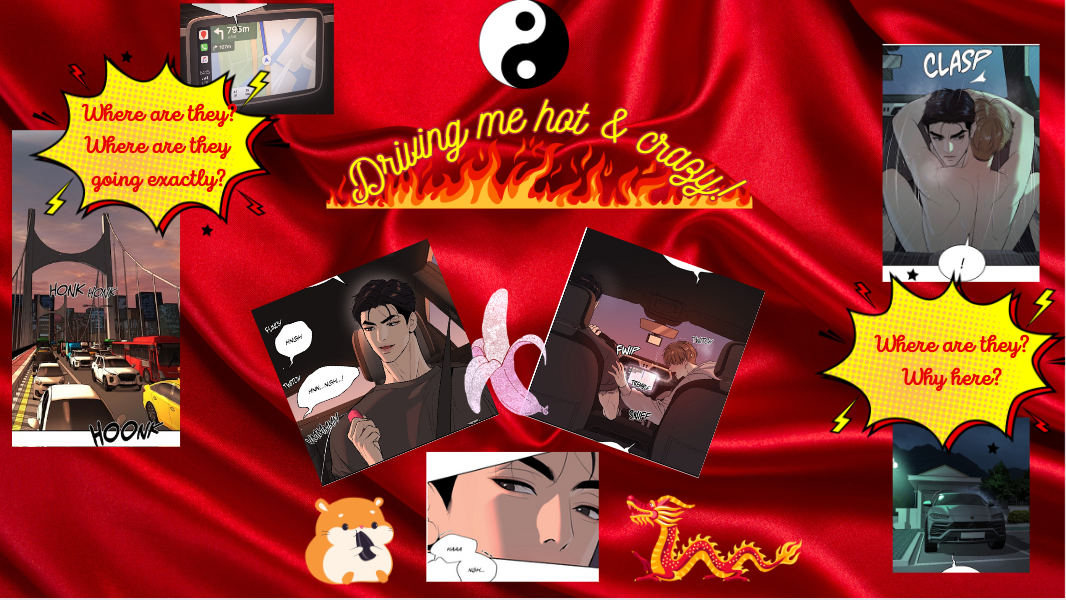 —where the question was Where are they going, and why?
  (chapter 33) —then Chapter 97 becomes its positive reflection. The same motif of driving now signifies trust, mutual desire, and emotional security. What was once shadowed by suspicion is transformed into intimacy. The destination matters less than the person beside you. The journey is no longer something done to Kim Dan, but something they experience together.
 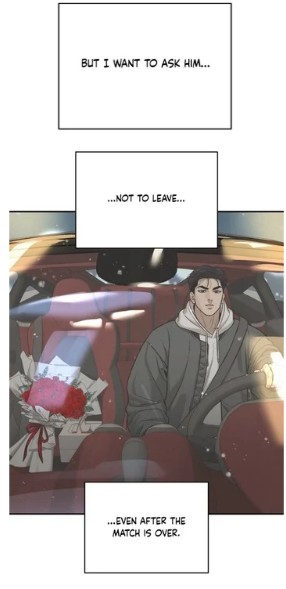 (chapter 97)
Yet perhaps the most important meaning is autonomy. If Dan owns or drives the car, Jaekyung is not merely giving him transportation. He is giving him the power to choose when to stay, when to leave, and where to go. He is literally placing the keys of departure in Kim Dan’s hands.
But due to his social class, it is clear that Kim Dan does not yet have a driving licence. Therefore the gift cannot be reduced to ownership alone. It would imply learning, practice, patience, and future development. In other words, the present becomes a shared project. That changes Jaekyung’s role as well. He is no longer simply the powerful man who provides solutions from above. He becomes someone who teaches, encourages, and accompanies Kim Dan as he acquires a new skill. Instead of keeping Dan dependent, he would actively help him become more independent.
This matters because it reverses earlier patterns in their relationship. 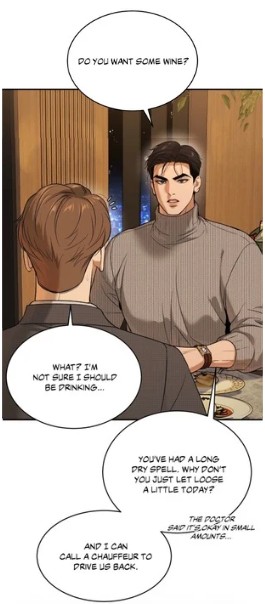 (chapter 89) So often, Kim Dan has been pushed by crisis, debt, or necessity. Here, he would be pushed toward growth. The pressure would no longer come from fear, but from care. The physical therapist could drive his drunk lover back home.
The symbolism is rich: learning to drive means learning confidence, judgment, orientation, and trust in one’s own decisions. It is not only about operating a vehicle; it is about entering a wider world. Seen in that light, the gift would expand Kim Dan’s life on multiple levels. It offers mobility in the present, autonomy in the future, and a new horizon of possibility. He could suggest to his lover to go on a trip: 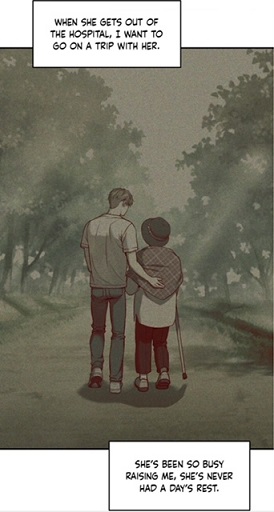 (chapter 47) Jaekyung would not merely be giving him a car. He would be helping him become someone who can go further than before.
And that changes everything. If Kim Dan remains after receiving the freedom to leave, then his staying becomes meaningful in an entirely new way. In other words, the white car stands for blind faith.
Rings Before Keys: Commitment and Shared Future
Even so, the car cannot come first. Among all visible presents, the couple rings carry the greatest symbolic weight. Unlike flowers or cake, a ring endures. It signifies continuity, reciprocity, and chosen connection. Its circular form evokes a bond without hierarchy, beginning, or end.
That symbolism matters because Jaekyung and Kim Dan’s history has long been shaped by imbalance: wealth against debt, fame against obscurity, strength against vulnerability. In such a relationship, an expensive gift can easily reproduce the old pattern of giver and receiver, power and dependence.
A ring resists that logic. (chapter 97) Its meaning does not come from price, but from mutual consent. It only becomes meaningful when accepted. For perhaps the first time, Jaekyung would be offering something that requires equality.
This is why the order matters. If the car came first, it could still appear as another transaction. But if the rings come first, the emotional foundation changes. Commitment precedes comfort. The relationship is defined before support is expanded.
Kim Dan once gave from scarcity.  (chapter 42) He worked exhausting night shifts and spent money he could barely spare in order to offer something meaningful. The value of the keychain was not only monetary; it represented sacrifice, attention, and a sincere desire to make Joo Jaekyung happy.
If Jaekyung now offered only a confession with rings (chapter 97) and nothing else, the scene could risk feeling emotionally incomplete—not because the rings are insignificant, but because the story has already established a language of giving in which effort matters. Kim Dan gave beyond his means. Readers therefore expect Jaekyung, who possesses far greater resources, to respond not merely with sentiment, but with a gesture that shows equal thoughtfulness and concrete care.
That is why the possibility of another gift carries such force. It is not about luxury for its own sake. It is about demonstrating that Jaekyung has understood who Kim Dan is and what he actually needs. The true opposite of Kim Dan’s earlier sacrifice would not be expensive jewelry alone, but something shaped around Dan’s daily life, freedom, and well-being.
In that sense, the issue is not whether Jaekyung appears stingy. It is whether his love remains symbolic only, or becomes materially attentive. The narrative stakes are higher than generosity: they concern transformation.
Under those conditions, the white sedan acquires a different meaning. (chapter 97) It is no longer a trophy or display object. It becomes shared infrastructure. If the rings secure the emotional bond (chapter 97), the car secures the practical conditions in which that bond can live. For Kim Dan, that practical dimension matters profoundly. Until now, movement has rarely belonged fully to him. He walks 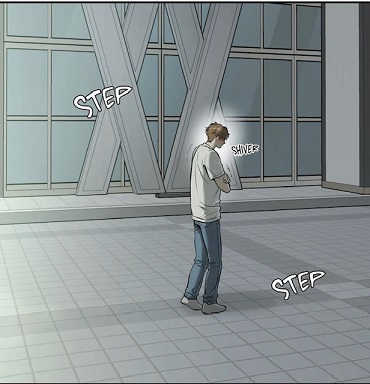 (chapter 21), uses public transportation
  (chapter 11), takes taxis
 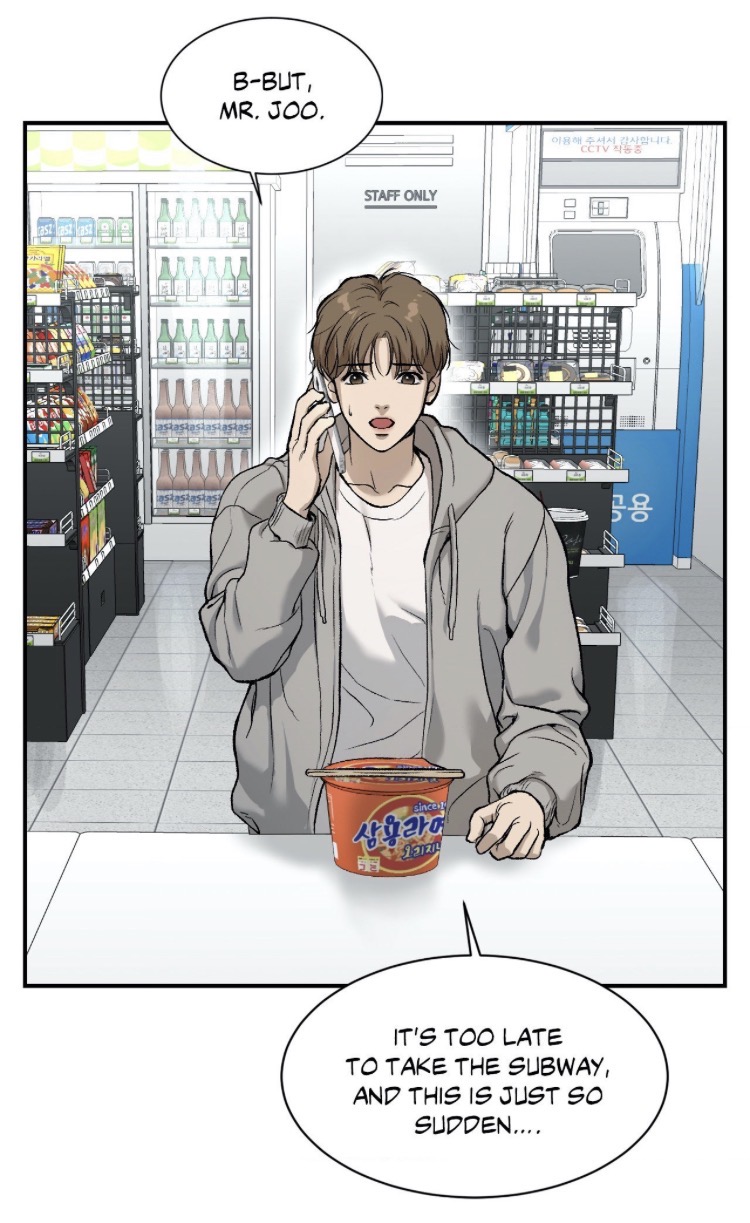 (chapter 1), or is driven by others.
 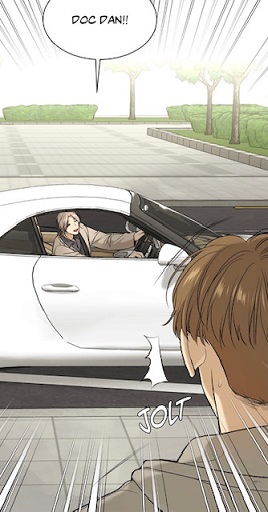 (chapter 32) Even mobility itself has often depended on circumstance and on the decisions of other people.
 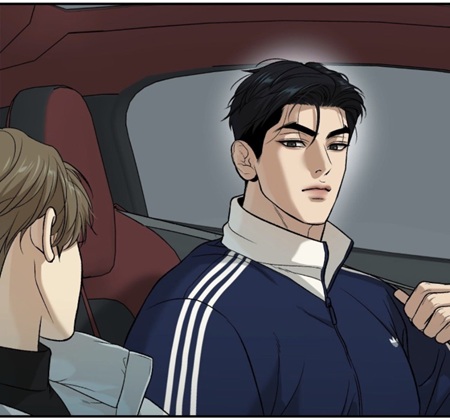 (chapter 95) A car therefore symbolizes more than comfort: it represents agency, adulthood, and the power to move by his own will. Yet the emotional meaning goes even further. In Chapter 97, the question is no longer only where one goes, but with whom one travels. What was once denied to Kim Dan as independence now returns to him as both freedom and companionship. He is no longer merely carried by another person’s choices; he gains the ability to choose for himself while sharing the road with someone who chooses him in return.
The gift would also transform responsibility. Until now, Jaekyung has often been driven, managed, and accompanied by others on decisive days. His manager and coach occupied the space of trust around him—at least when he remained profitable and useful.  (chapter 5) Yet when he was injured and vulnerable, that support proved conditional and incomplete.
 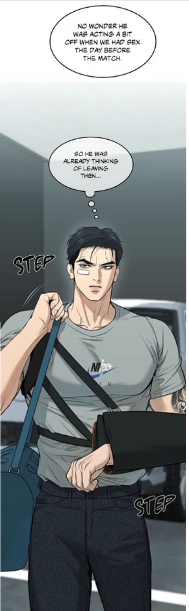 (chapter 53)
If Kim Dan becomes the one who drives, steadies, and accompanies him, the structure quietly changes. The old “hyungs” are not displaced through conflict, but through irrelevance. Care succeeds where management failed. At the same time, the gesture expresses trust. To let Kim Dan drive is to entrust him with direction, safety, and shared movement. The man who has long carried the weight of control would finally allow someone else to take the wheel. That change matters deeply for Jaekyung as well. It means he no longer has to bear every burden alone. He can rest in the passenger seat, just like Kim Dan does. 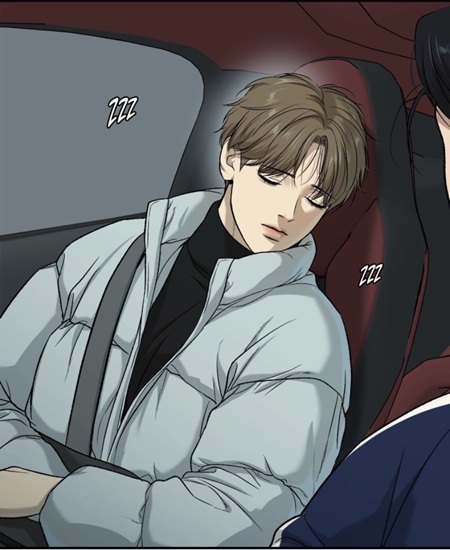 (chapter 95) He can be guided instead of always guiding, supported instead of always performing. The positions become reversible: each can carry the other when needed.
In that sense, the car symbolizes more than freedom. It symbolizes partnership. (chapter 97) They are no longer fixed in rigid roles of protector and protected. They gain the ability to switch places, share responsibility, and move forward together.
This completes one of the story’s deepest reversals. The man once treated as burden or servant becomes the person closest to the champion’s future.
Kim Dan once gave Jaekyung a small keychain (chapter 81): modest (not too visible), personal, and sincere. The price for his hard work. 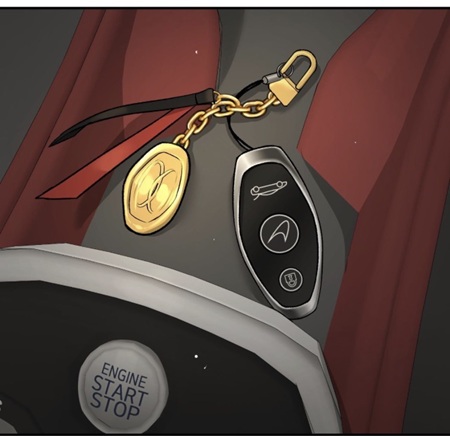 (chapter 97) If Jaekyung now gives him a car, their gestures beautifully answer one another. Kim Dan once offered the symbolic key to his world; Jaekyung responds by offering the means to navigate a shared one.
One gift says: stay with me.
The other says: let’s move forward together.
And now, you comprehend why I made the following prediction: They would stay together, but leave the place too!
Conclusion: The Dragon’s Pearl
What emerges from these details is a quiet but radical truth: home in Jinx is no longer a penthouse, a contract, or a symbol of status. It is a person. (chapter 97)
Jaekyung’s deepest transformation is not that he has become softer in some simplistic sense, but that his strength is being redirected. The force once used to dominate, intimidate, and defend his own pride is gradually turned outward in service of another’s well-being. (chapter 97) That is why the image of the dragon and the pearl feels so fitting. In many traditions, the dragon guards treasure—but the highest treasure is not gold. It is wisdom, devotion, and the recognition of what truly matters.
Kim Dan, likewise, is no longer merely the exhausted and scared man in need of rescue. He becomes the emotional center around which Jaekyung reorganizes his life. He is his moon shining in the darkness. 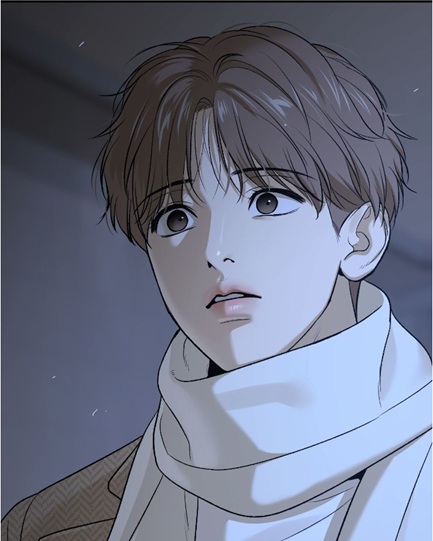 (chapter 97) Their bond moves beyond the false alternatives of burden and savior, victim and protector, debtor and benefactor. They begin to inhabit a rarer form of intimacy: mutual sanctuary.
In a world shaped by spectators, institutions, scandals, and past wounds, safety cannot be guaranteed by wealth alone. It must be created through trust, constancy, and the willingness to change for another person. If Jaekyung’s gifts truly point in that direction, then the greatest present is neither roses, nor rings, nor a car.
It is the life he is learning to build beside him. (chapter 97)
Feel free to comment. If you have any suggestion for topics or Manhwa, feel free to ask. If you enjoyed reading it, retweet it or push the button like. My Reddit-Instagram-Twitter-Tumblr account is: @bebebisous33. Thanks for reading and for the support, particularly, I would like to thank all the new followers and people recommending my blog.
 (chapter 96), while another movement unfolds elsewhere.
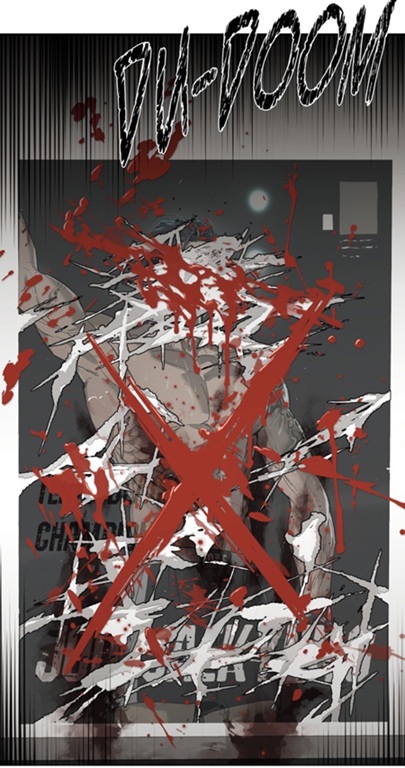
  (chapter 97) The interview, the damaged poster
  (chapter 96), the hallway encounter, the former director’s sudden presence — none of these incidents need to be isolated events. They can be read as layers of the same design, arranged to poison the climate around Joo Jaekyung and Kim Dan through mistrust, guilt, and confusion.
 (chapter 79) Danger emerged first, and only then did someone intervene. Joo Jaekyung repeatedly occupied that role.
  (chapter 17) He was the one who could step in, overpower threats, and remove Kim Dan from immediate harm. Kim Dan, by contrast, was usually placed on the other side of that equation: the one exposed, cornered, or in need of help. But rescue and protection are not the same thing.
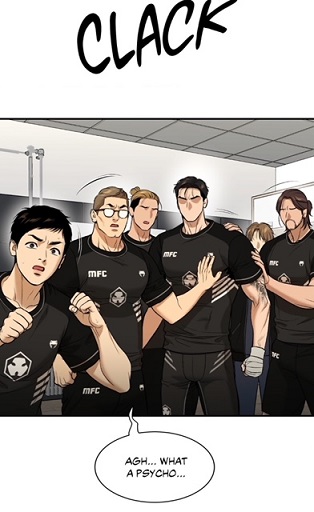
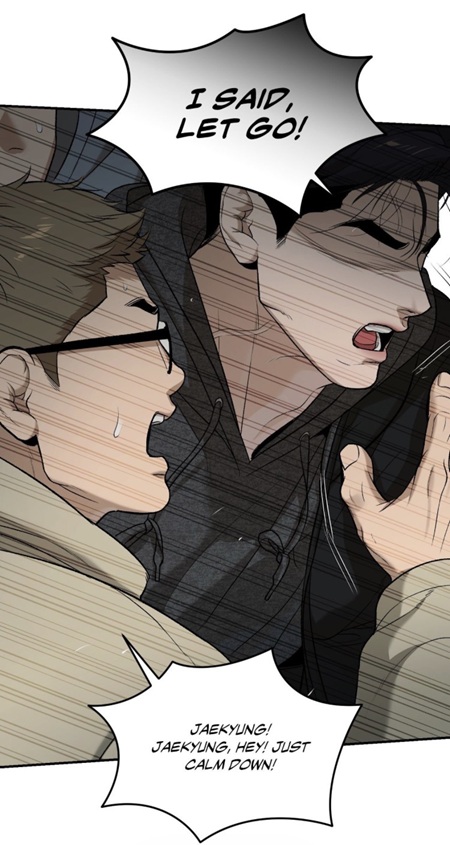 (chapter 96). On the surface, this action resembles a form of protection: they are stopping him from committing a violent act that would derail his career, effectively “saving” him from himself
 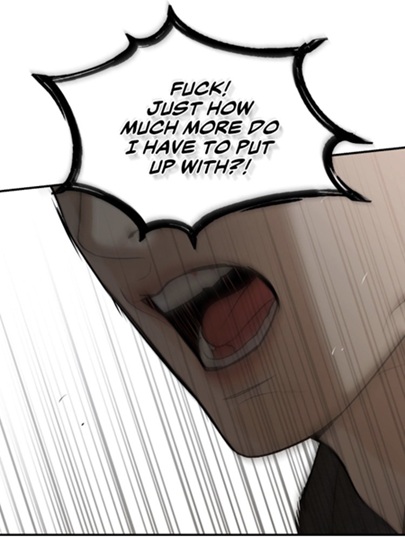 (chapter 96). Yet, this is rescue, not protection. Their intervention is purely physical, reactive, and localized. Crucially, as they physically struggle, Park Namwook and the others remain mentally and verbally passive.
 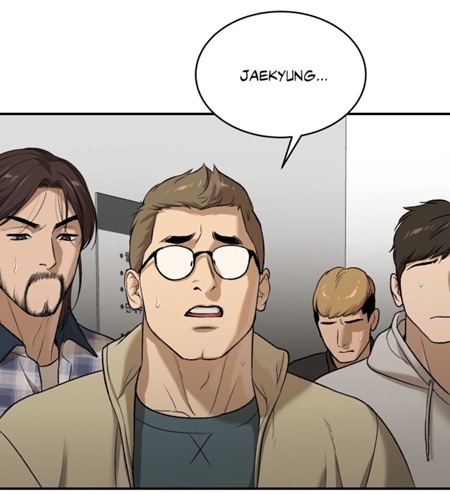 (chapter 96) They do not challenge the source of the rage or offer a solution. They only seek to manage the immediate visible symptom. While the fist is stopped, the underlying “toxic climate” that allows these provocations to take root is left completely intact. This scene proves that without speech, strategy, and mutual agency, physical restraint—even when well-intentioned—is just temporary damage control. This is exactly the kind of passive, limited intervention that the new paradigm must overcome.
 (chapter 72) It answers a crisis once it has already begun. Protection reaches further.
 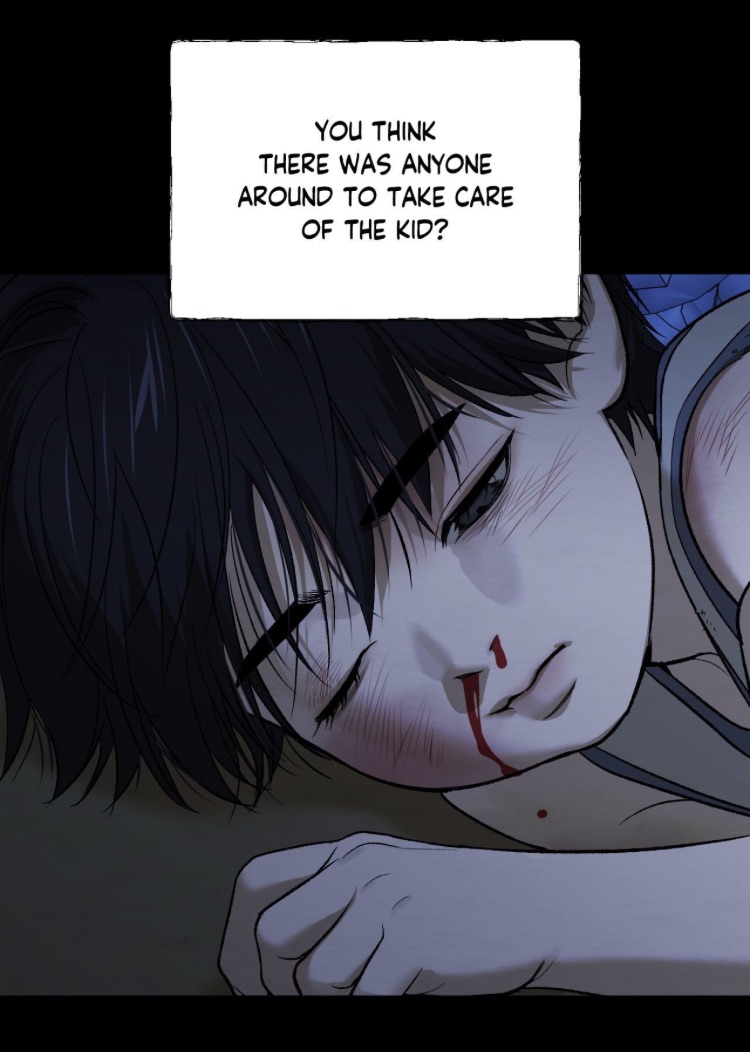 (chapter 72) It concerns safety before the blow lands, the ability to recognize manipulation
  (chapter 49), to prevent harm from taking root, and to create a space where trust can survive pressure.
 (chapter 91), and Kim Dan’s recent actions
 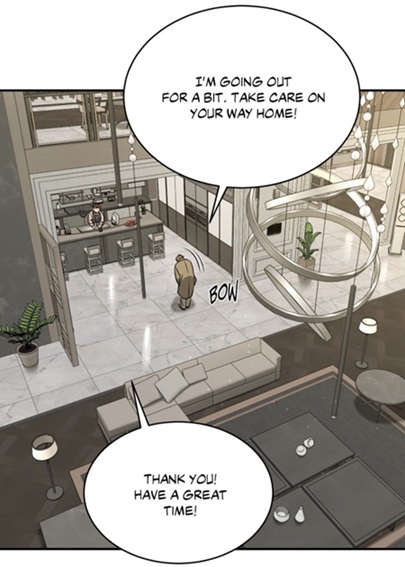 (chapter 97) all suggest that the old division may no longer be stable. The familiar roles of protector and protected are beginning to shift.
 (chapter 1). In that moment, the world was a predatory space where every threshold was a threat.
 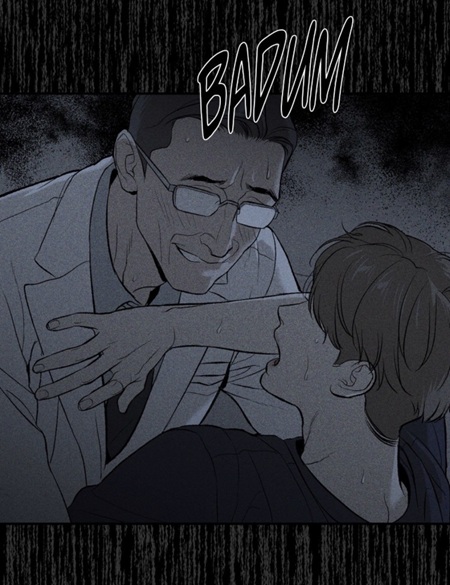 (chapter 90) The memory is important. The director did not lure him with kindness alone. He used his position
  (chapter 1), status, and Kim Dan’s financial desperation to force compliance. Kim Dan needed the job, needed the salary, needed stability.
 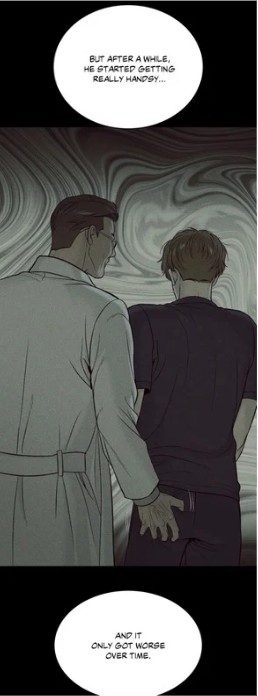 (chapter 90) The imbalance of power was already doing the violence before any physical act began. What appeared outwardly as professional authority became a means of control. The setting itself carries symbolic weight: enclosed space, unequal power, obscurity, silence.
 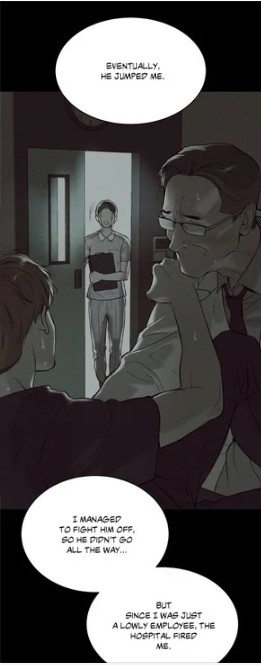 (chapter 90) A place where Kim Dan’s options were reduced and his voice cornered. The hallway now echoes that structure. It is dark. It is private. It is detached from witnesses.
 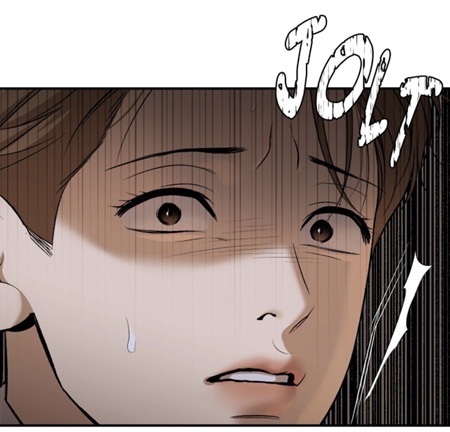 (chapter 90) It was the body remembering before language could fully explain why.
 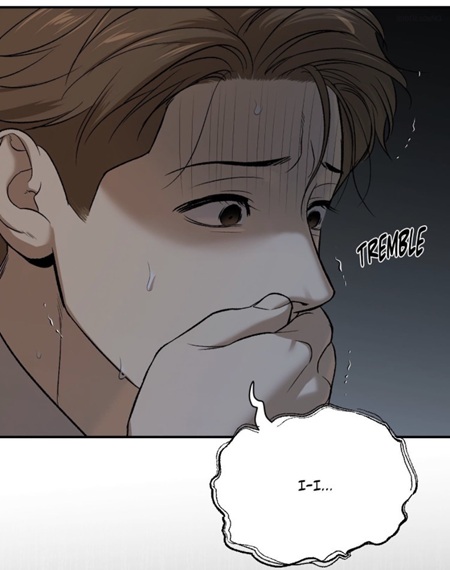 (chapter 90) Trauma often recognizes danger faster than conscious thought. If so, the first battle of the chapter is not just one of emotional endurance, but of practical application. Like mentioned above, the look on Kim Dan’s face in the hallway is not one of paralyzing fear, but of profound shock
 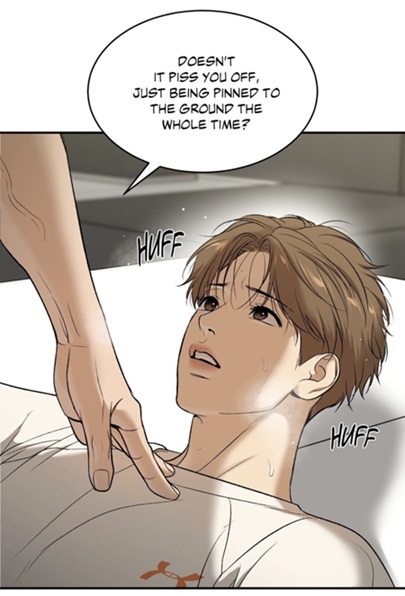 (chapter 88). In that moment, the champion wasn’t just showing dominance; he was imparting a philosophy of resistance. He taught Dan that ‘technique beats size’
 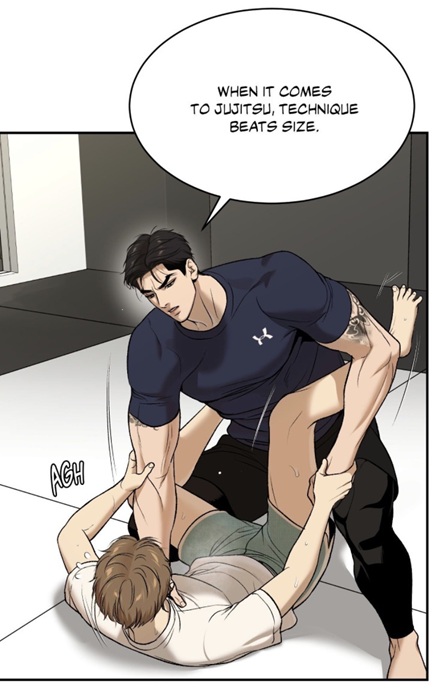 (chapter 88) and that even a smaller person can take down a ‘bigger guy’
 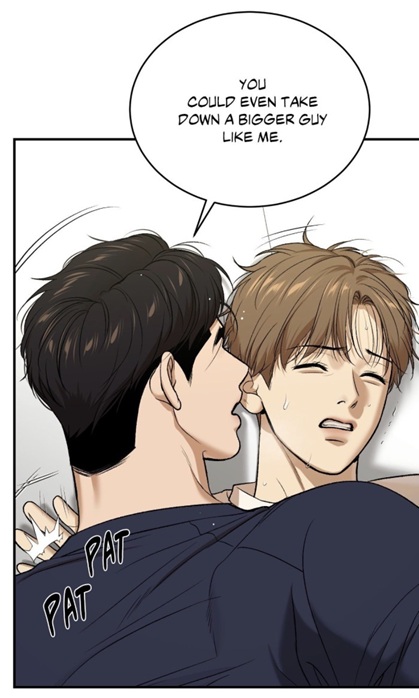 (Chapter 88).
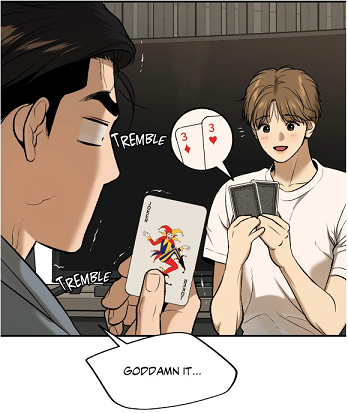 (chapter 27) The object symbolized instability, provocation, loss and a game whose rules could suddenly change. It represented a force that unsettled even the champion. Now another object occupies his hand:
 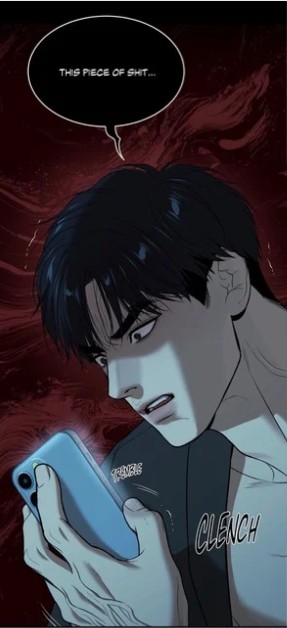 (chapter 91) the cellphone containing the article about the disgraced former director.
 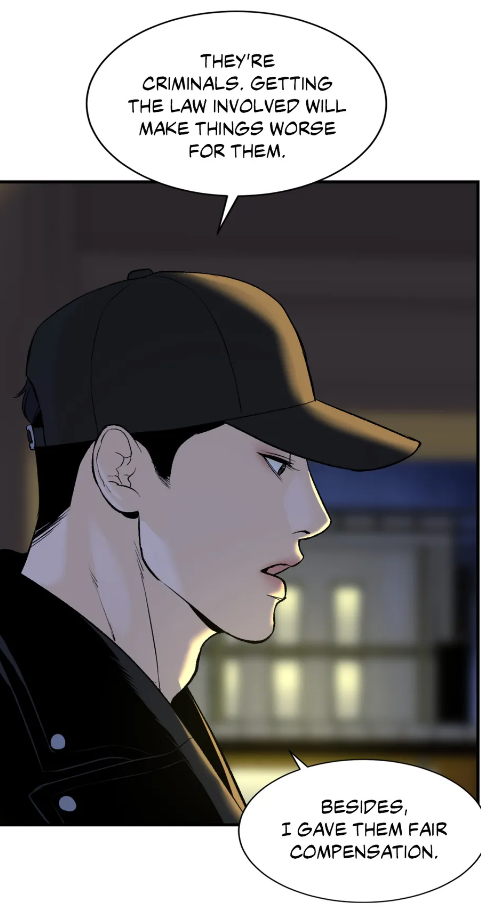 (chapter 18) because, for Jaekyung, the ‘system’ was never a source of safety. This mistrust is rooted in a childhood where his abuse was an open secret that remained unaddressed
 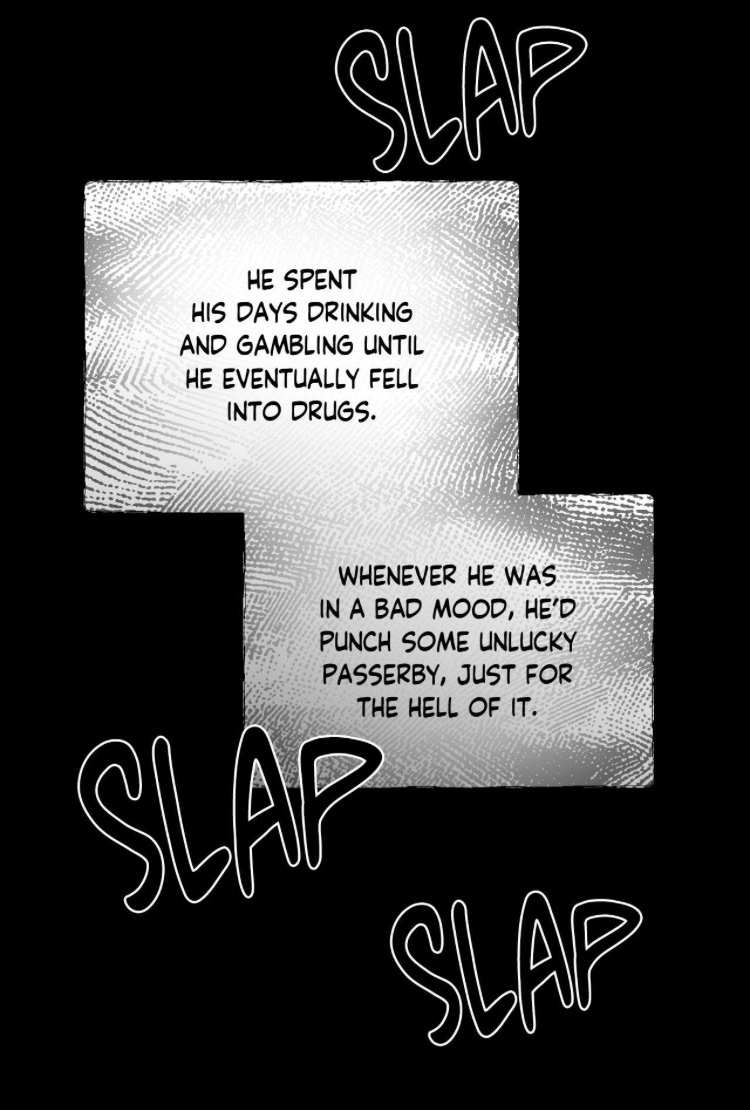 (chapter 72), on paper he remained a ‘good citizen’ who never faced legal repercussions. Jaekyung learned that authorities protect the appearance of order rather than the victims of violence. This skepticism manifested again at the docks
 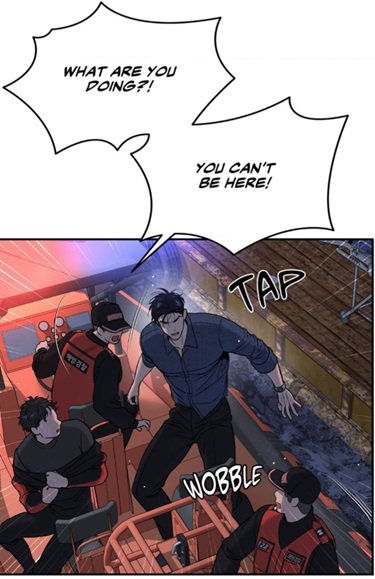 (chapter 69), where he chose to ‘save’ Kim Dan through private force rather than wait for legal intervention. Yet those methods repeatedly failed to create real safety. Problems were hidden, postponed, or redirected, or relegated
 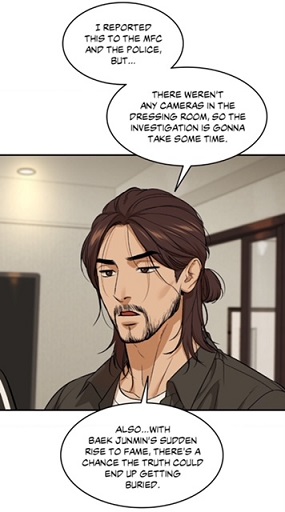 (chapter 52) but not resolved. The cellphone introduces another path
 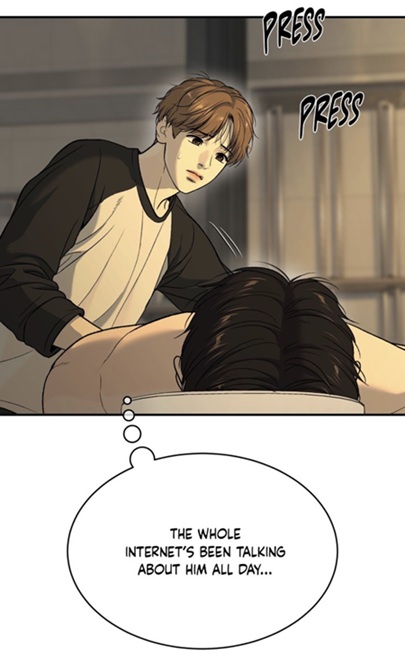 (chapter 96) He only read the headlines. On the surface, this might appear dismissive or indifferent.
 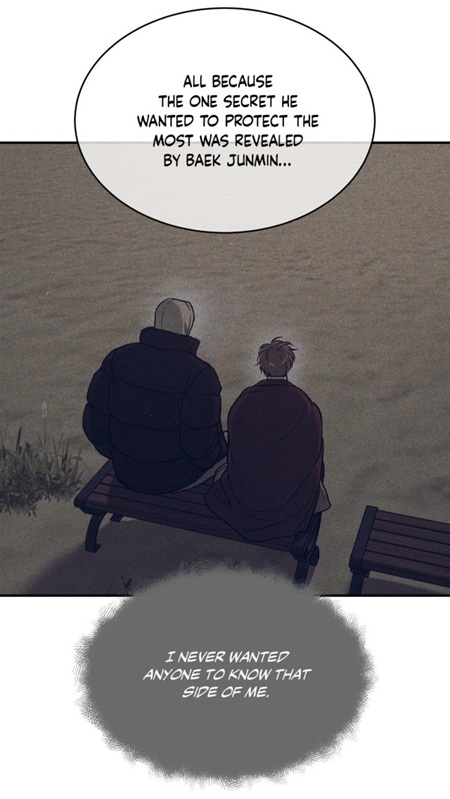 (chapter 96) Yet it can also be understood as an expression of Jeong. Kim Dan’s attention was not captured by the Joker’s performance. His concern went directly to Joo Jaekyung and how such exposure might wound him. He absorbed the central facts — poverty, orphanhood, hardship — but did not grant full authority to the humiliating spectacle built around them.
 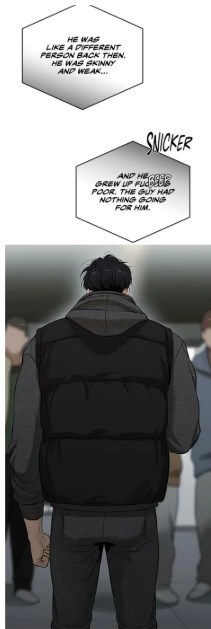 (chapter 96)That distinction matters because Baek Junmin likely assumes that public narrative equals truth. If the audience hears something loudly enough, then it becomes reality. But Kim Dan now stands in a different position. He has already met Hwang Byungchul. He has already heard another version of the champion’s past, something the Joker is not expecting. He knows about the father’s abuse, the violence of the home, and the suffering hidden behind Joo Jaekyung’s coldness.
 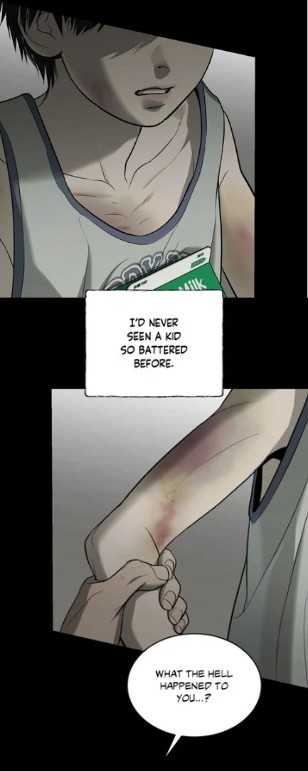 (chapter 72) This means that if the hallway encounter is designed to reveal a “hidden truth” — like for example that Joo Jaekyung is only a thug, a violent man who attacks doctors
  (chapter 1) and patients
 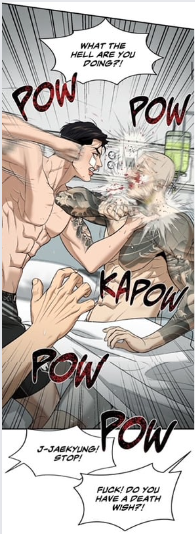 (chapter 52) ) someone unworthy of trust— the strategy may fail at its most important point. The intended listener is no longer ignorant. Kim Dan can now protect the champion by refusing reduction. He can challenge selective storytelling. Jaekyung is frequently depicted as an avid reader
 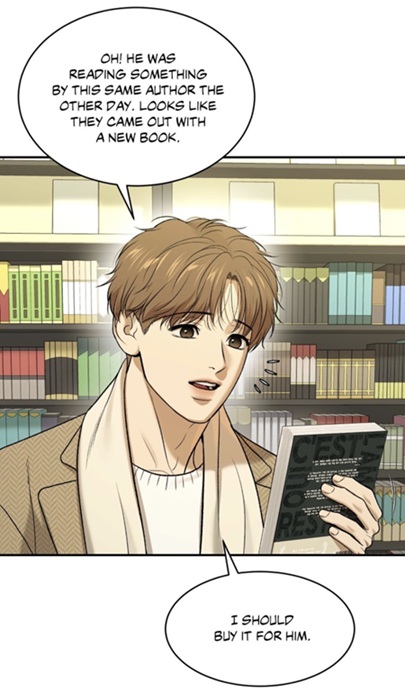 (chapter 97), a sign of a deeply disciplined and self-educated mind. This intellectual depth is his most overlooked form of protection. It means he isn’t just a ‘frightened kid’ or a ‘reactive thug’; he is someone who understands the power of information.Besides, he is a huge reader. He can insist that pain has context, that trauma cannot be erased, and that one act of rage does not explain an entire person. In earlier chapters, Joo Jaekyung protected through action (buying clothes, teaching him how to swim). Here, Kim Dan may protect through interpretation and words.
 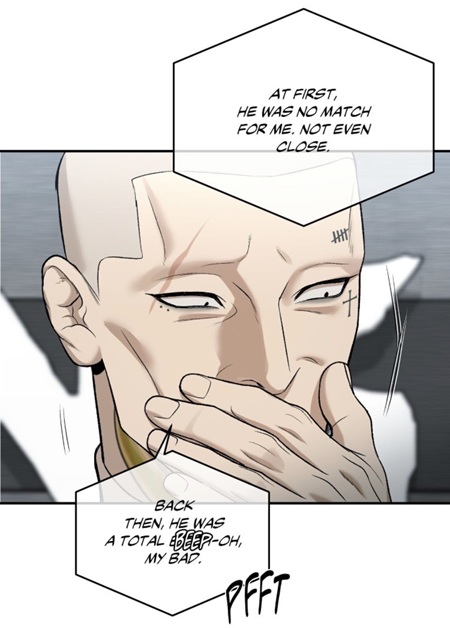 (chapter 96) behind the present tension rely on the same weapon — the past.
 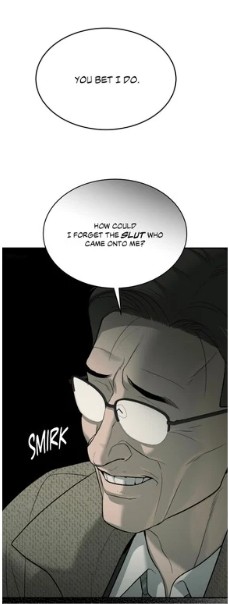 (chapter 90)
 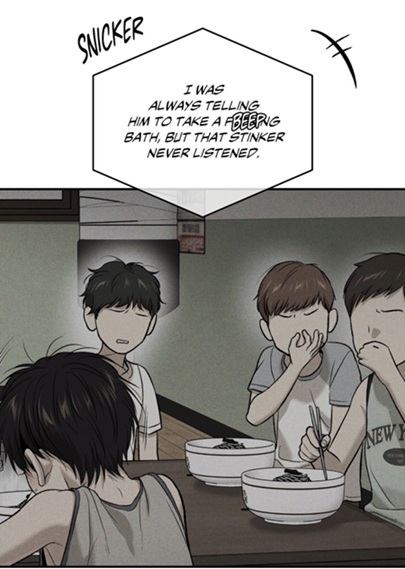 (chapter 96), and old reactions, as though Joo Jaekyung were still trapped inside the same vulnerabilities and Kim Dan still occupied the same desperate, submissive position.
 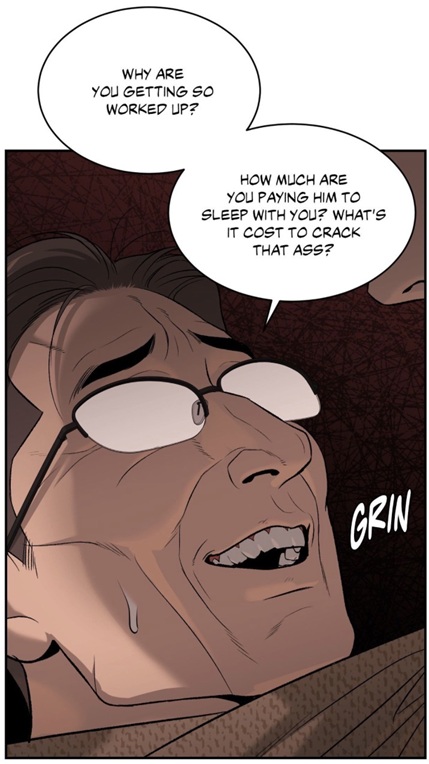 (chapter 90)The former director operates similarly, but with a more intimate cruelty. He does not speak to Kim Dan as a person in front of him. He speaks about Kim Dan to Joo Jaekyung, reducing him once again to an object of transaction, greed, and sexual humiliation.
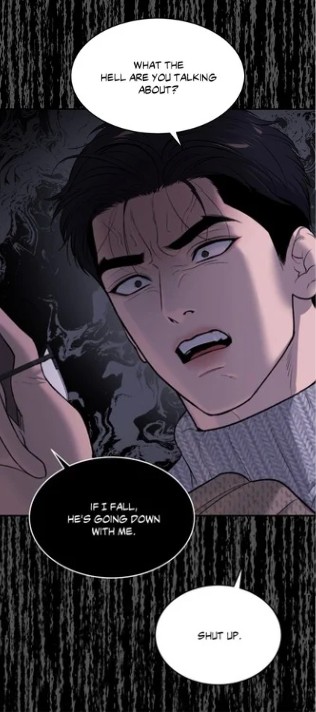 (chapter 90) Kim Dan is called money-hungry, fake, a slut, someone whose affection can be bought. Their apparent happiness is framed as performance, their bond as a financial arrangement, intimacy as deception. In one move, the former director attempts to degrade Kim Dan and poison Joo Jaekyung’s trust at the same time.
 (chapter 97) Joo Jaekyung is no longer merely a reactive fighter ruled by rage. He is now capable to reflect on his own behavior.
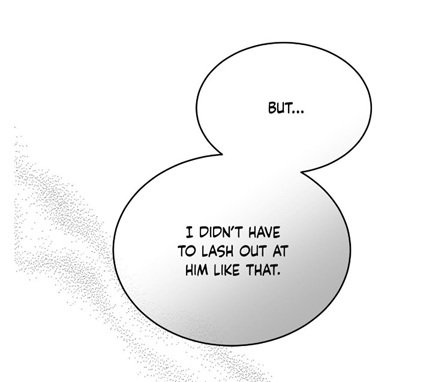 (chapter 97) Their relationship itself has altered the conditions on which those older scripts depended.
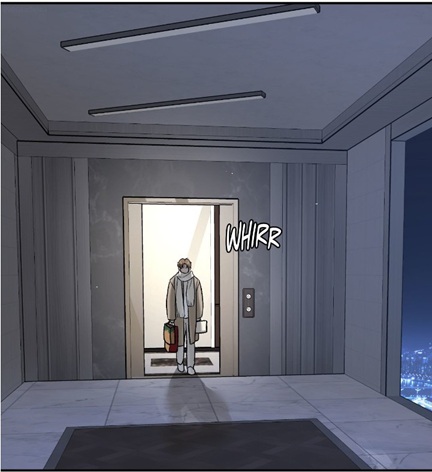 (chapter 97) the official path of movement. But once it closes, that route disappears. What remains is the staircase: the emergency passage, yet also the more secret and ambiguous one. In Jinx, stairways
 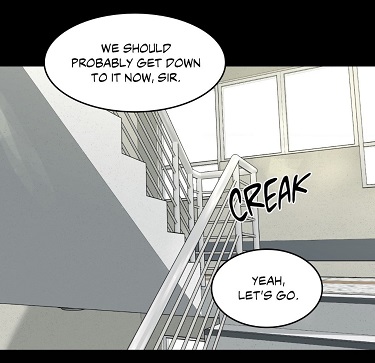 (chapter 50) seem to be linked to conspiracy, crime
 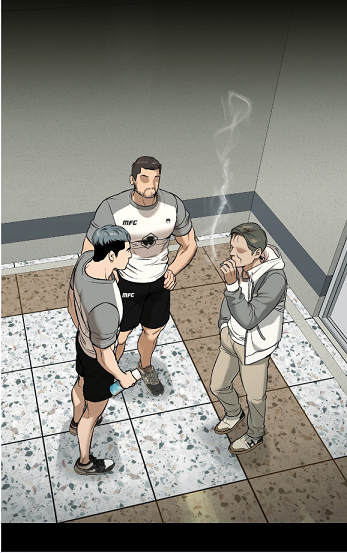 (chapter 50), or offstage maneuvering
 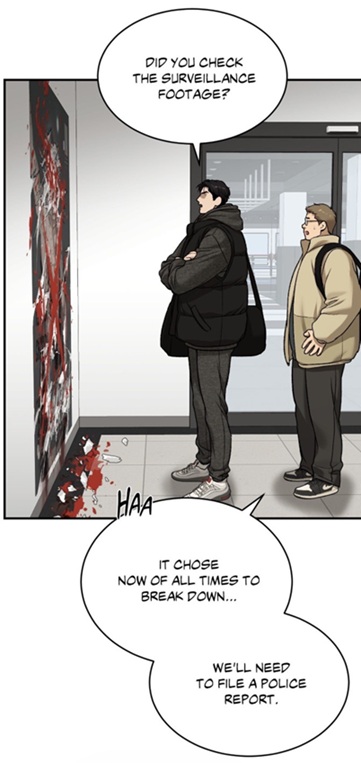 (chapter 96). The hallway therefore feels less like a neutral corridor than a set arranged for entrapment, where ordinary exits vanish and only compromised paths remain.
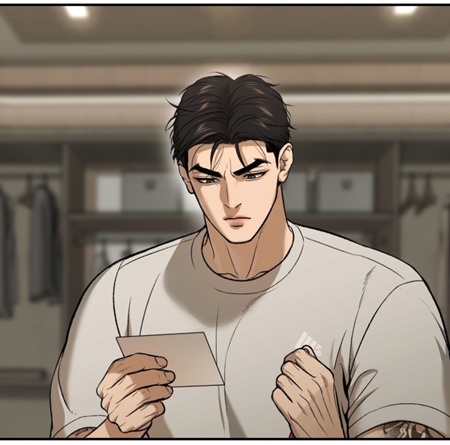 (chapter 81) As a result, the gesture remained incomplete and vulnerable to misunderstanding.
  (chapter 45) The material gift was visible, but the feeling behind it stayed hidden. The book changes that structure.
 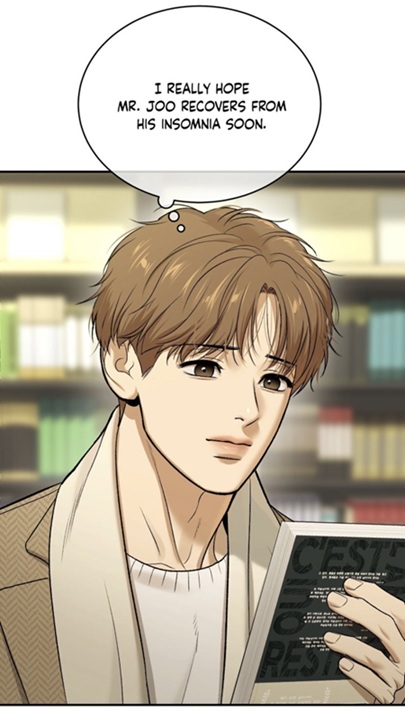 (chapter 87) Oui, c’est l’amour means in French Yes, this is love. The phrase functions almost like an answer to all the confusion that came before: the uncertainty in the dining room
 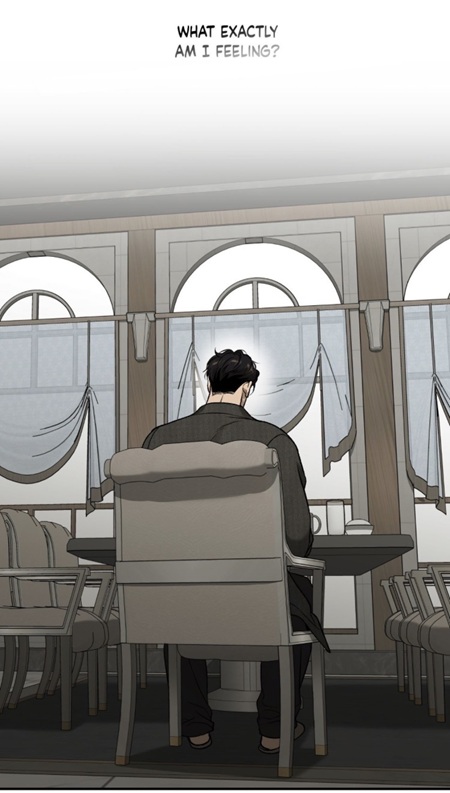 (chapter 93), the champion asking what he was feeling, the hesitation around whether kindness was guilt
 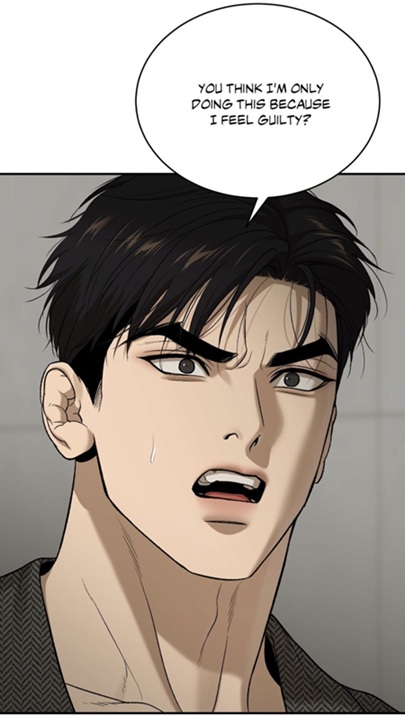 (chapter 93), pity, or something else.
 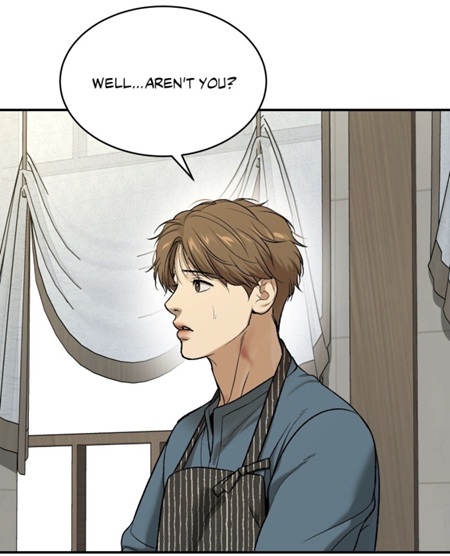 (chapter 93) The title responds clearly where the characters still struggle to do so themselves. Yes—what exists here is love. Another visible word, reste, signifies stay or remain in French. Yet because the final letter appears hidden or incomplete, the word can also be seen through English eyes as rest.
  (chapter 72), a young Jaekyung stands in a snow-covered phone booth, promising: ‘One day I’ll make a lot of money… and stop him. So can you come back home?’ For the young champion, ‘Home’ was a conditional destination—a reward that could only be reclaimed once he had enough wealth to physically ‘stop’ the source of violence. He equated protection with financial power and the physical ability to gatekeep. Yet, as an adult, even with the wealth and the power to stop anyone, he remained ‘homeless’ in spirit. By offering him the book and a space to ‘stay,’ Kim Dan is updating this childhood vow. He is proving that a ‘Home’ is not something Jaekyung has to buy or defend alone through force; it is a sanctuary that is built through mutual presence and emotional safety. Kim Dan is offering a new kind of protection: the creation of a domestic sanctuary. If the ring is a place of performance and the hallway a place of entrapment, the book represents a ‘portable home.’
  (chapter 93), delaying genuine encounters, and keeping everything trapped inside the schedule of the match. Everything must wait until after the fight: truth, tenderness, resolution, emotional clarity. Human feeling is subordinated to spectacle.
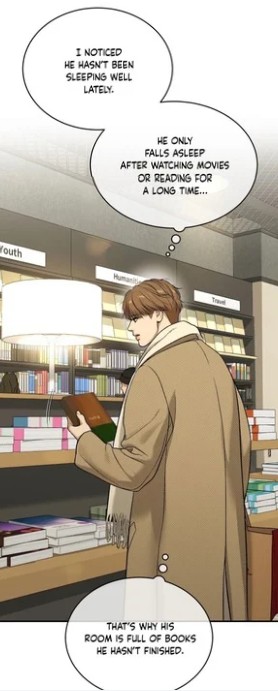 (chapter 97) Care continued in absence. The relationship was active even when they were apart. This places the gift in sharp contrast with the keychain episode. Back then, Kim Dan selected something through external logic. He entered the dressing room
 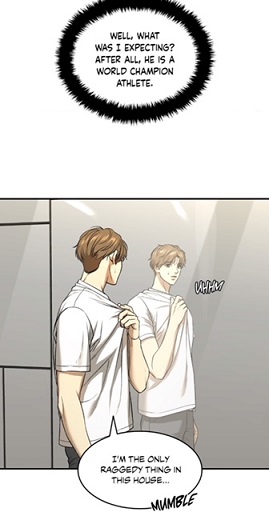 (chapter 42), crossing into the champion’s private space
 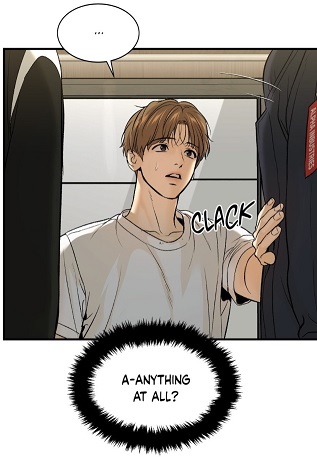 (chapter 42), and chose according to appearance and assumed usefulness. The gesture was sincere, but still uncertain. It responded to what Joo Jaekyung seemed to need.
 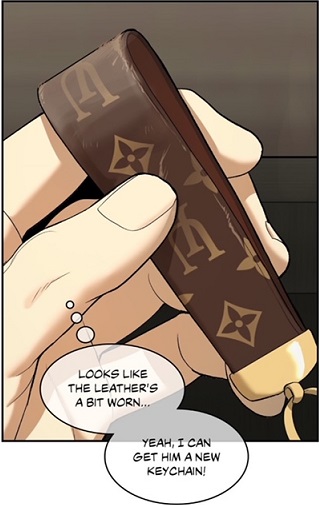 (chapter 42) The book is different because it responds to who he is.
 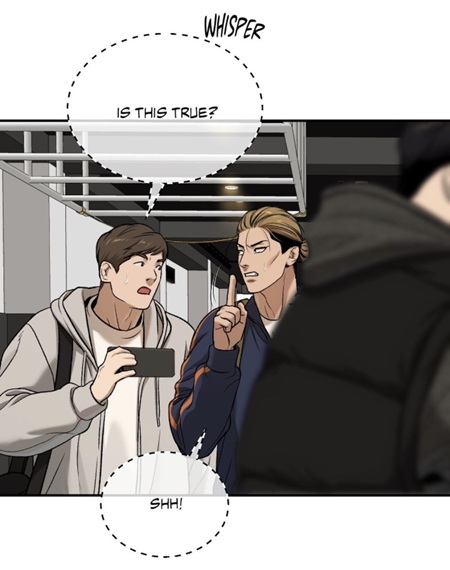 (chapter 96), sponsors, and the broader world watching the scandal unfold. The damaged poster seems to continue that same logic by materializing contempt in public space. The champion’s image is defaced where others can see it. Reputation is targeted through humiliation.
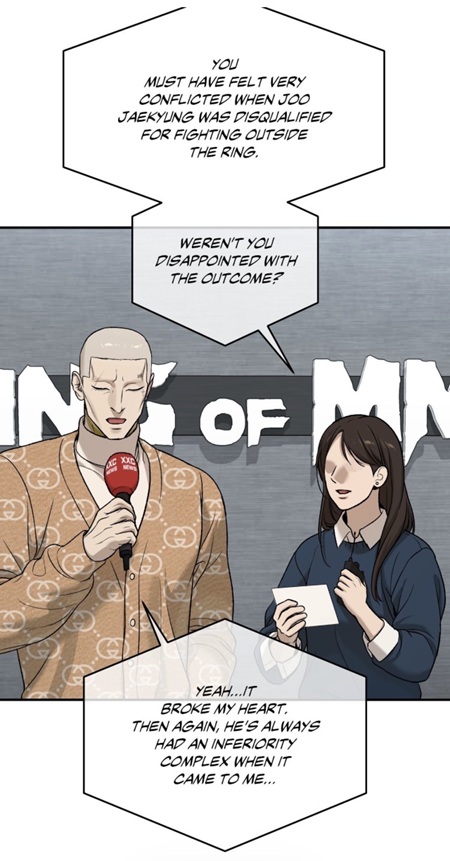 (chapter 96) However, there exists another possible interpretation. Readers may remember the earlier café scene, where Kim Dan met Choi Gilseok and photographs of that encounter were later sent to Joo Jaekyung.
 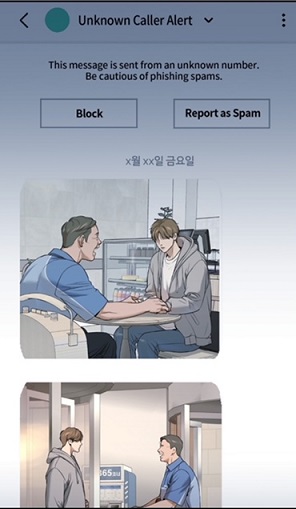 (chapter 48) That episode already suggested the presence of an unseen observer—someone in the shadows who understood that images can wound relationships more efficiently than fists can. If those photographs were indeed part of Baek Junmin’s broader method, then the interview and the poster follow the same principle: public content designed for private damage.
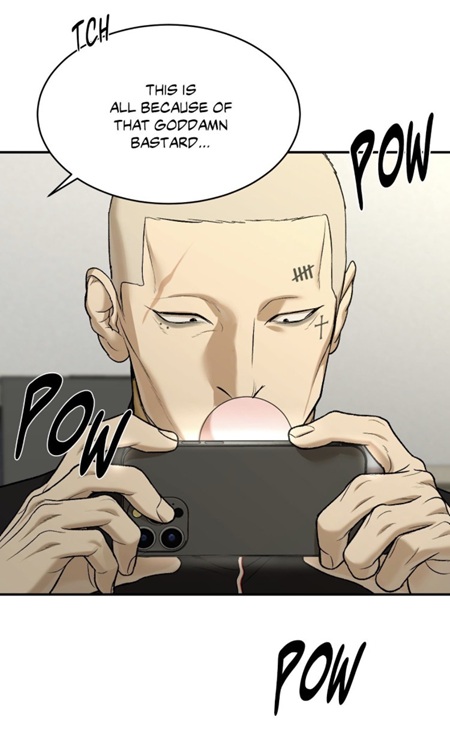 (chapter 93) He knows the physical therapist is no passing employee, but someone emotionally significant. That changes everything. If Kim Dan cannot be removed physically, he may be pressured psychologically.
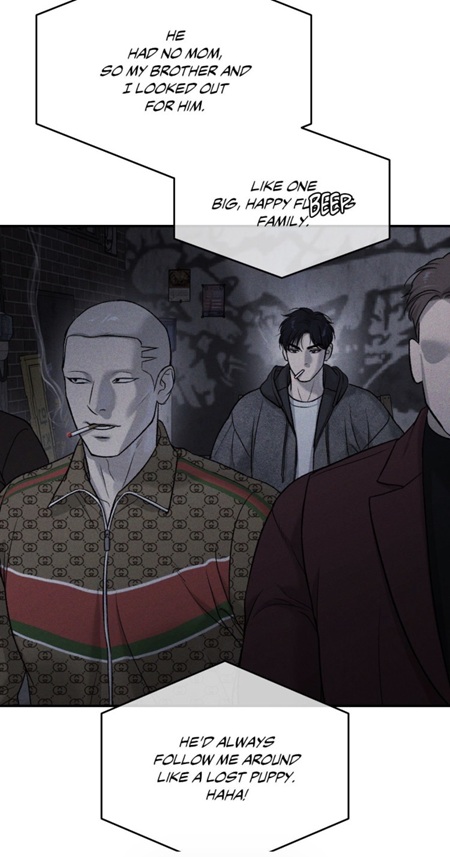 (chapter 96), someone shameful, poor, abandoned, ridiculous.
 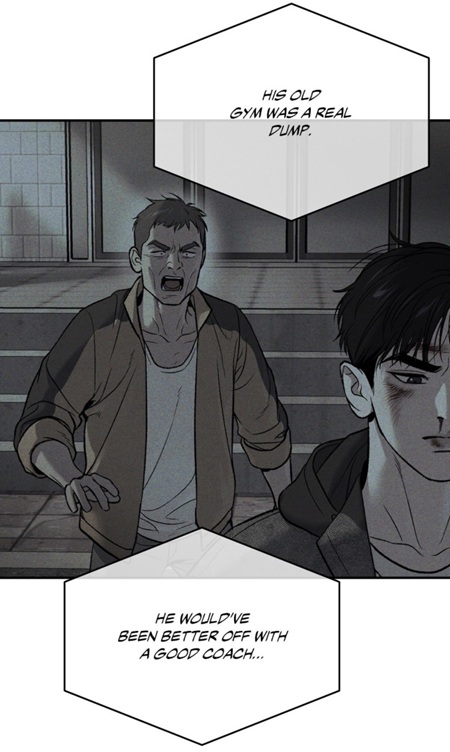 (chapter 96) It reframes loyalty as foolishness. It attempts to poison admiration itself.
 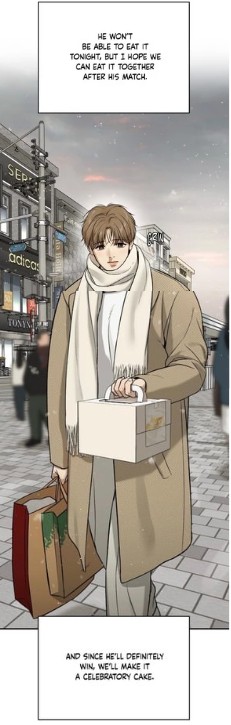 (chapter 97) Someone who remains emotionally invested in the person rather than the image.
 (chapter 52) may turn away when public opinion shifts. A sponsor may withdraw when scandal appears. A crowd may cheer one day and mock the next.
 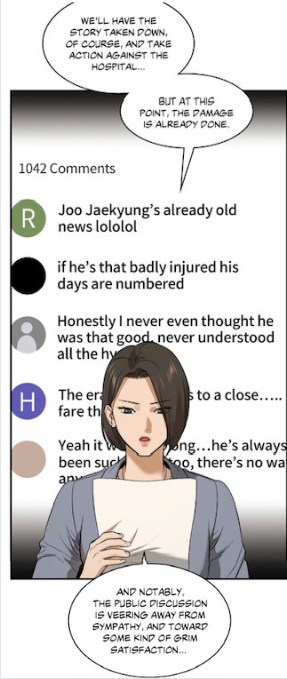 (chapter 36) But Kim Dan’s bond is no longer built on those unstable foundations. He believes in him.
 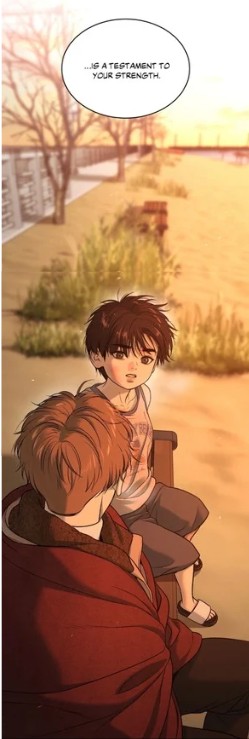 (chapter 94) For Baek Junmin, lost puppy oozes resent and mockery, but for the physical therapist, the same expression evokes care and protective instincts.
  (Chapter 29) He knows the wounds behind the arrogance. He knows the habits, the loneliness
 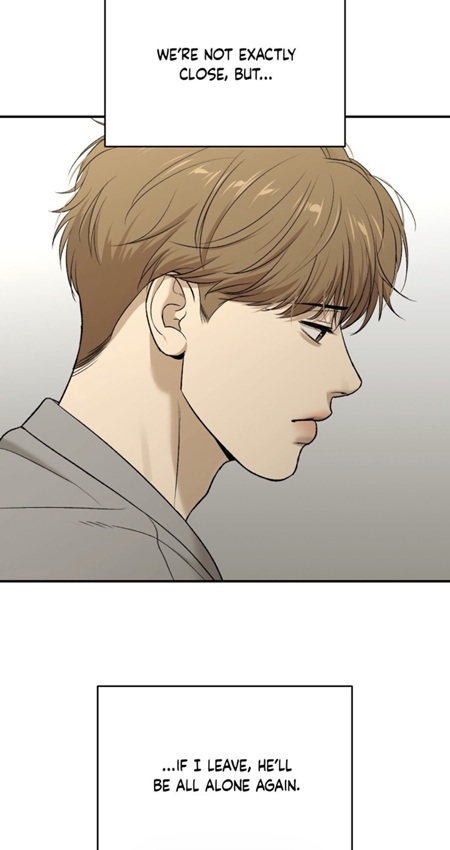 (chapter 97), the insomnia, the roughness that conceals care. He has seen the human being hidden beneath the public mask.
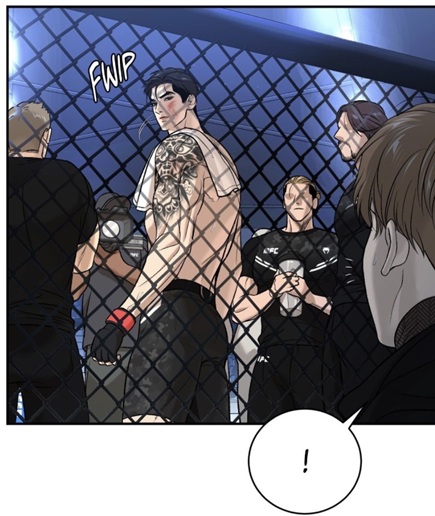 (chapter 87), where Joo Jaekyung visibly searched for Kim Dan in the crowd. Or he may have encountered videos
 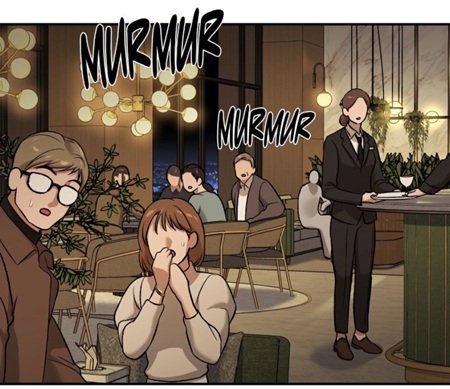 (chapter 90) circulating online of the disturbance at the restaurant.
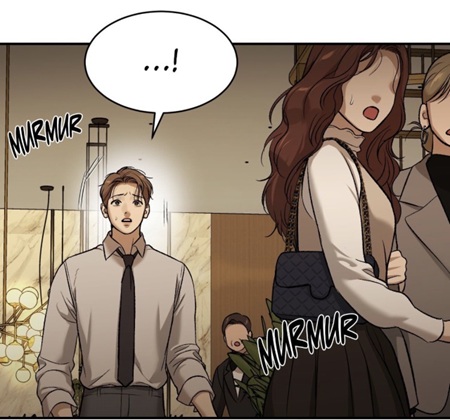
 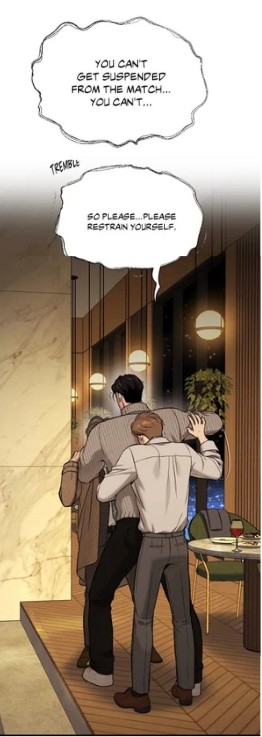 (chapter 90) In either case, the external image would have looked simple: Joo Jaekyung had been provoked once again. The champion still appeared volatile, reactive, and unchanged.
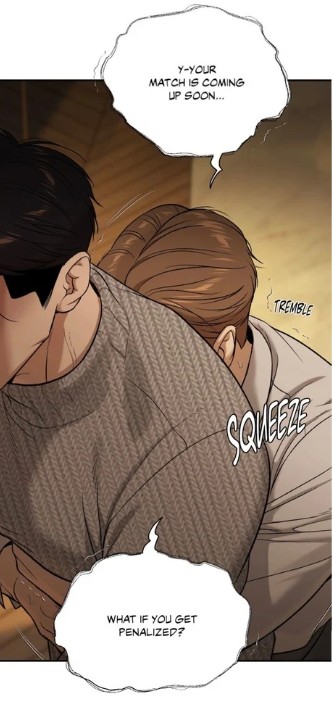
 (chapter 90) It could seem as though the physical therapist was merely restraining, interrupting, or obstructing the champion. A hindrance rather than an ally.
  (chapter 90)
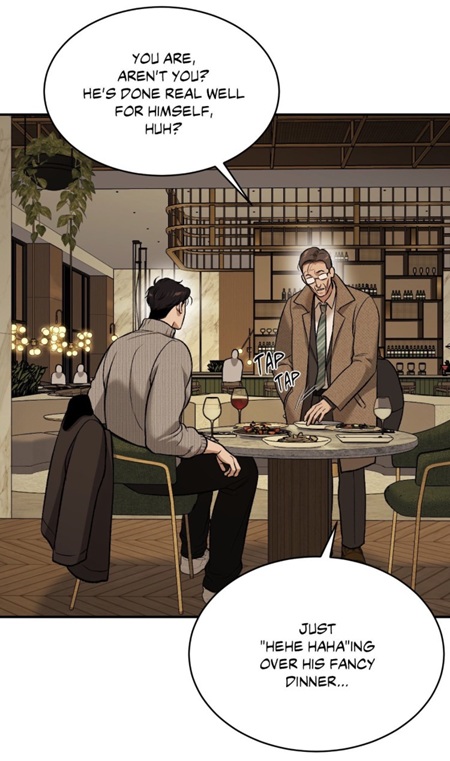 (chapter 90) No outsider could know that the tension began because Kim Dan had left the room in emotional distress. No camera would capture the private wound beneath the public reaction. What looked like friction between the former director and the celebrity was in reality the consequence of care, misunderstanding, and emotional stakes invisible to spectators.
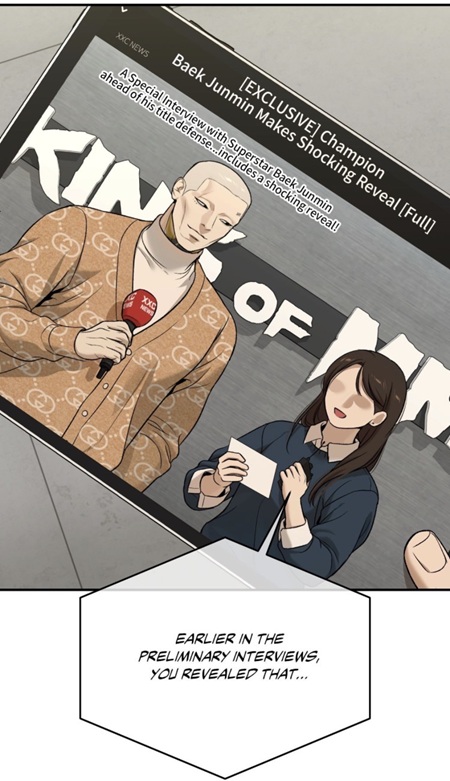 (Chapter 96), headlines
 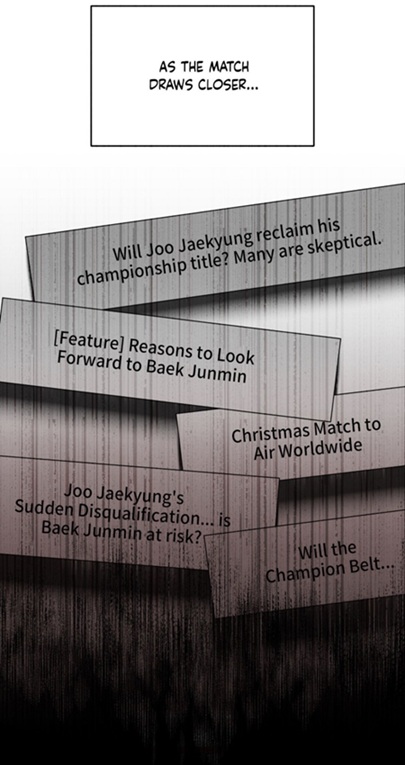 (chapter 95), and shows designed for public consumption. To Junmin, truth is something manufactured for the camera; it is a ‘show’ of superiority and victimhood. This is why his method relies on surfaces—he assumes that if he can change the ‘image’ of Joo Jaekyung in Kim Dan’s eyes, the bond will break.
 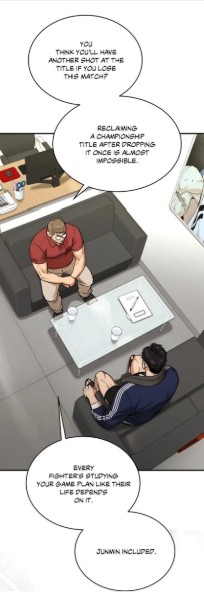 (chapter 95) Walls cannot protect trust.
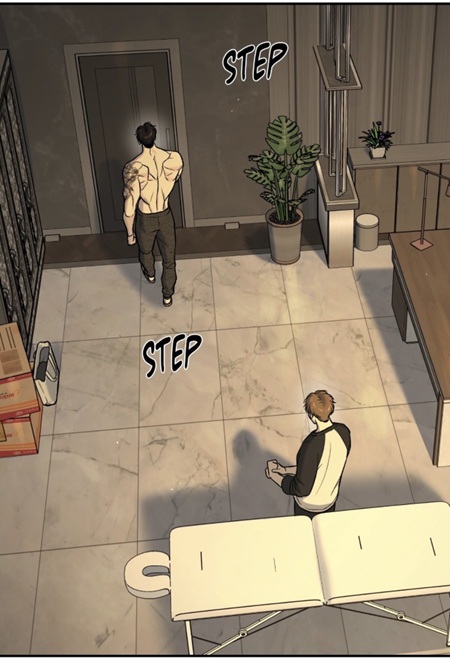 (chapter 96) Distance, interruption, and broken rhythm shaped their contact. On the physical level, they seemed out of sync.
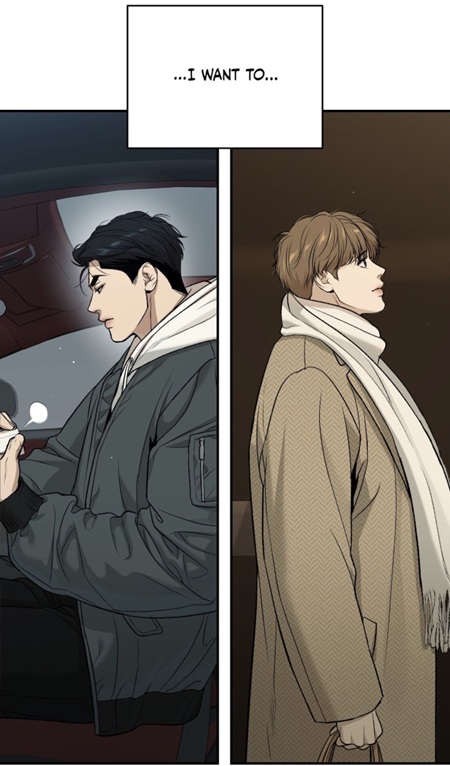 (chapter 97) This alignment appears through a series of quiet but striking parallels.
  (chapter 97) Both independently buy the same cake.
 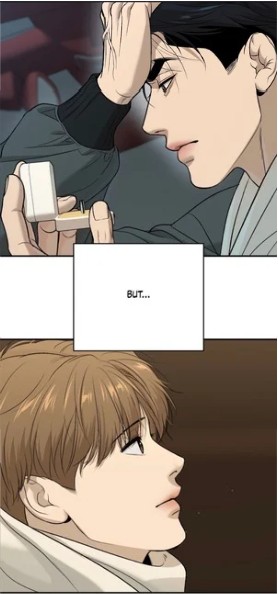 (chapter 97) The author places them in mirrored and balanced panels, separated in space yet linked in intention. They stand apart physically, but the framing suggests an inner synchrony stronger than distance. What chapter 96 presented as bodily discord, chapter 97 answers with emotional consonance.
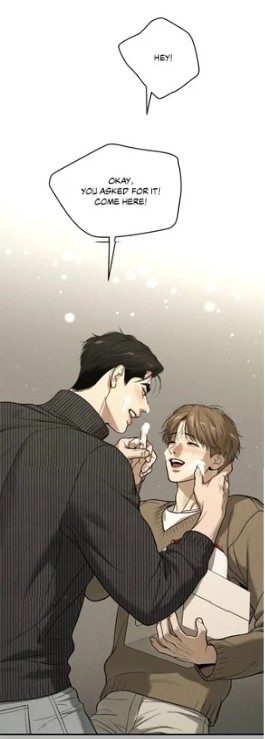 (chapter 97) Stay together. And that conclusion may not be reached individually. They are no longer two isolated people reacting alone. They are becoming two people capable of choosing together. That’s what the couple rings symbolize here.
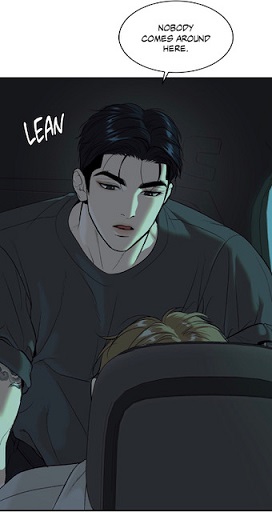 (Chapter 33). The presence of the actor entering the club in slippers and no jacket despite the winter cold suggests a desperate, hurried escape from a world that had become a ‘trap.’
  (chapter 33) Even then, Jaekyung’s motivation was clear: he followed Kim Dan because he could not bear for him to leave. That secluded house could be the physical ‘home’ Jaekyung had built while waiting for a partner worthy of sharing it.
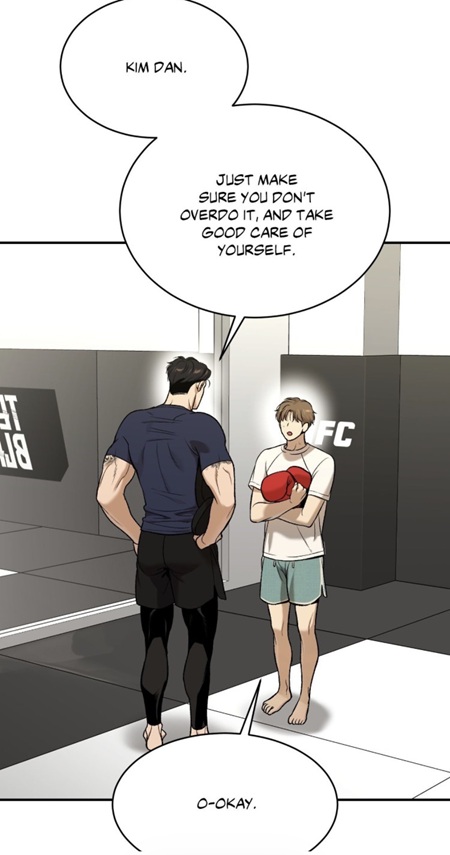 (chapter 88), resisted differently, and prevented from defining the future. Joo Jaekyung may protect Kim Dan not through another violent intervention, but through truth made public, lawful action, and the refusal to let harm disappear in silence contrary to the past. Kim Dan may protect Joo Jaekyung not through physical force, but through knowledge
 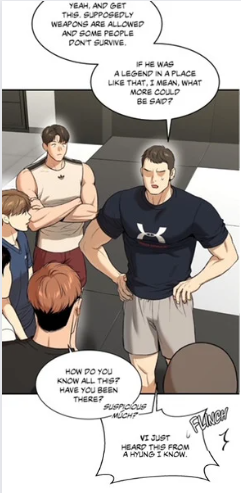 (chapter 47), revelation
  (chapter 48), and the rejection of false narratives designed to reduce him
 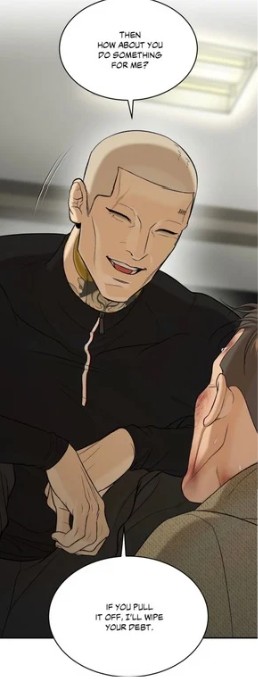 (chapter 93) The former director did not appear there by chance. What remains uncertain is not whether this is a scheme, but how the latter was arranged and what it is meant to achieve.
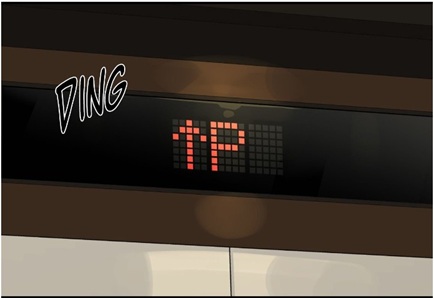 (chapter 97) They often contain clues — small visual decisions, strange timing, unusual framing, details that seem minor until later chapters reveal their weight. A final panel does not always announce the future directly, but it can offer glimpses of the forces already in motion.
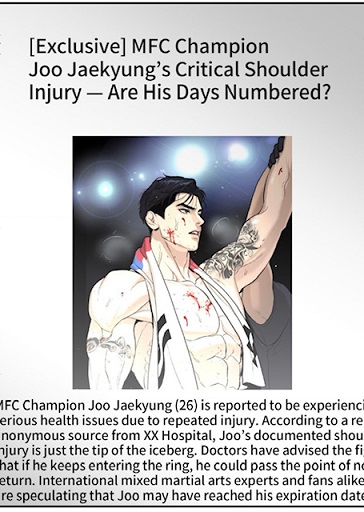 (chapter 35), it was not one wrongdoing but two
 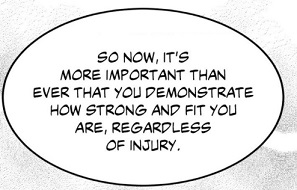 (chapter 36) layered together: one visible distraction, another hidden move
  (chapter 37), and often a consequence
  (chapter 40) that only became clear afterward. In other words, the first event is rarely the whole trick. It is only the surface. If that pattern still applies now, then the interview may be only the loudest surface event,
 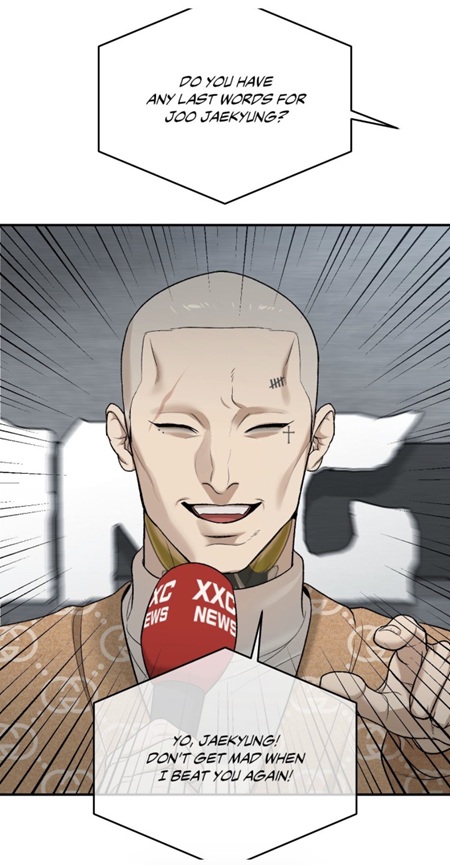 (chapter 96) while the real movement of the scheme occurs elsewhere — perhaps in the damage already done, or in the encounter still waiting in the dark.
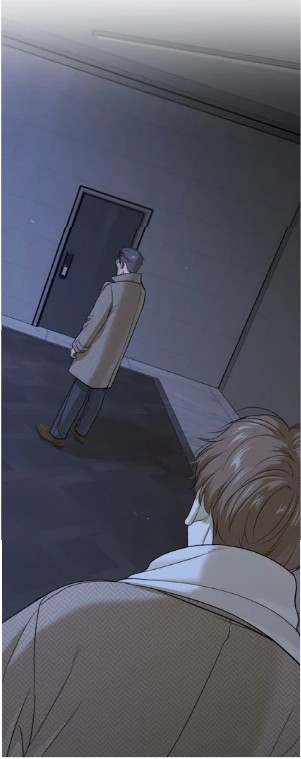
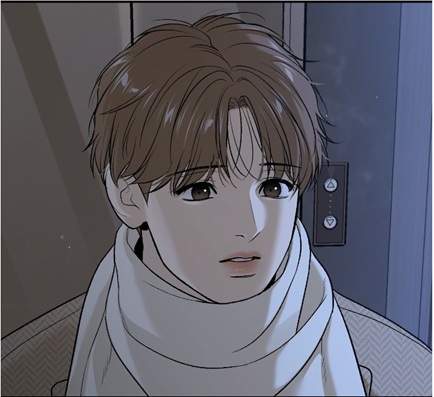 (chapter 97) The easiest path backward has vanished. The resident is inside his own home, yet the geometry of the scene briefly turns him into the trapped figure.
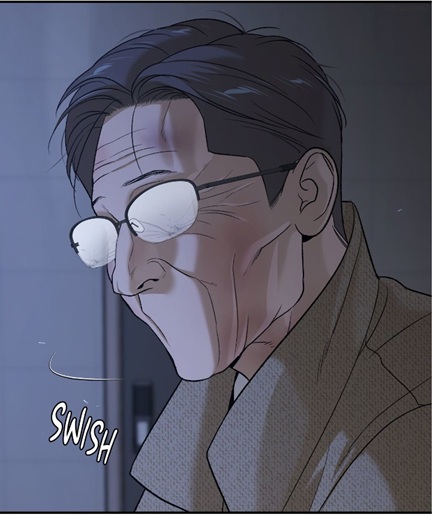 (chapter 97), only after Kim Dan has already advanced and the elevator has closed. This delayed turn transforms a normal greeting into something theatrical. It resembles the timed reveal of an actor who waits for the right cue before facing the audience. Recognition itself is staged.
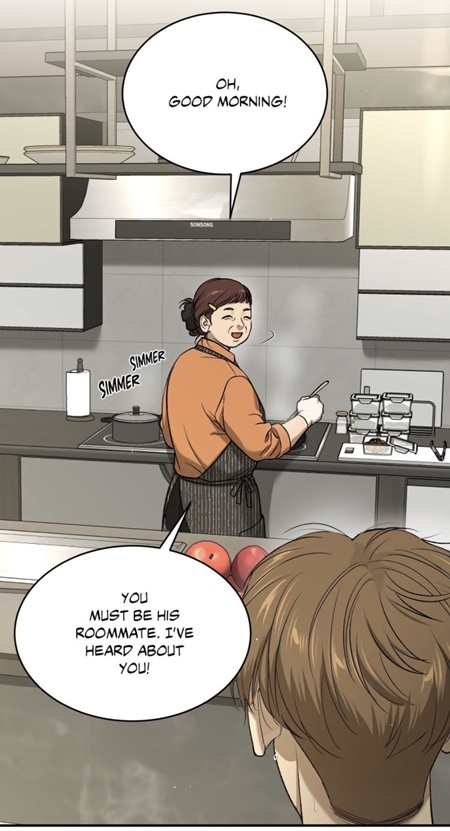 (chapter 96), old routines seem restored
 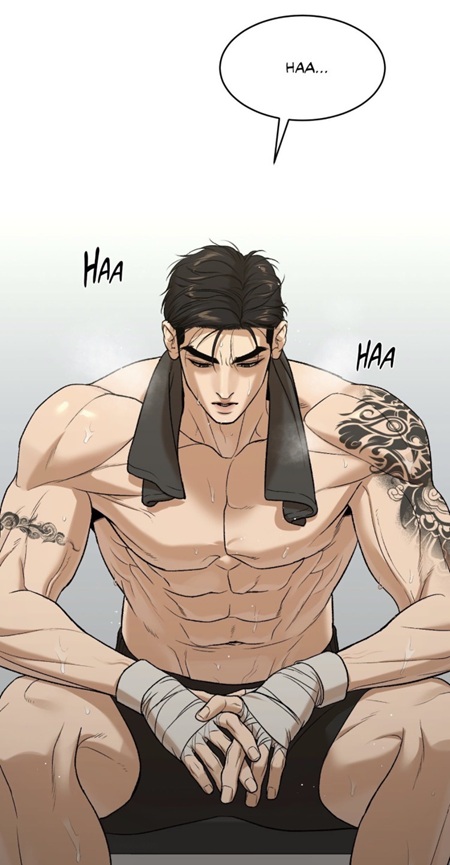 (chapter 97) From the outside, the easiest conclusion is that the “hamster” has left. Yet that conclusion may be entirely false. He did not disappear. He only disappeared from view. And this observation leads to a deeper question. Who was the former director truly there to meet? Formally speaking, he has come to the penthouse of Joo Jaekyung, its official resident and owner. On paper, the visit concerns the champion. Yet formal appearances can be as misleading as visual ones. A registered address does not necessarily reveal the real destination of a scheme. Just as people may mistake absence for departure, they may also mistake the legal resident for the intended target. What appears to be a visit to one man may, in reality, have been arranged for another.
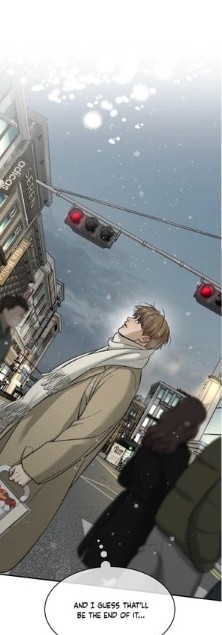 (chapter 97) whether he will go or remain. While Kim Dan crosses the street lost in thought, the pedestrian signal turns red
 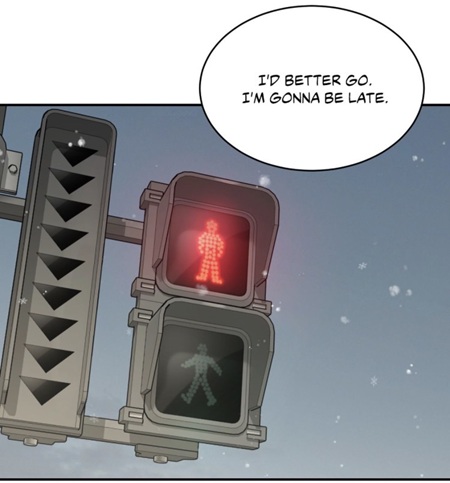 (chapter 97), visually interrupting departure itself. By contrast, Joo Jaekyung’s desire to ask him not to leave
  (chapter 97) The chapter therefore stages two opposite directions at once: one character preparing to walk away, the other trying to keep him near. In that sense, the hallway confrontation strikes at the story’s central tension: stay or leave.
  (chapter 1) to the penthouse and sent him the address while having sex with someone else. Kim Dan arrived under false assumptions, believing he had been called for treatment. In episode 2, not only the hallway was lit
 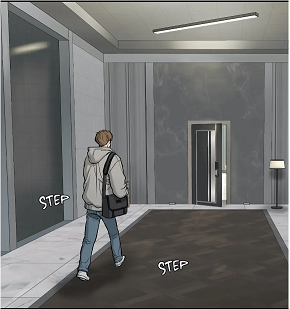 (chapter 02), but also the door stood open, and deception functioned through entry: he was drawn into a private space without understanding what awaited him inside.
 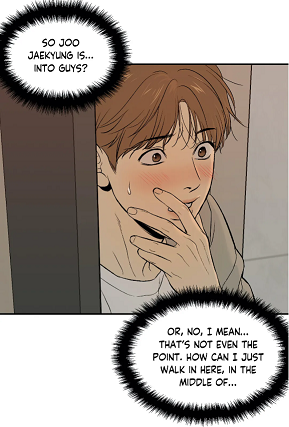 (chapter 2) The present encounter reverses that structure almost exactly. Now the door remains closed and the director is also standing at a certain distance from it.
 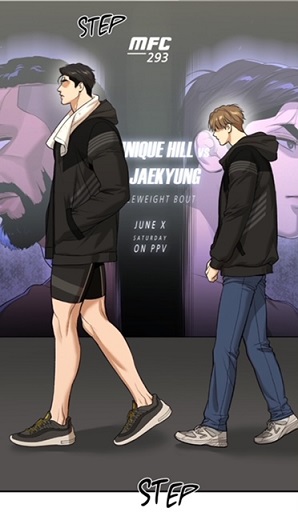 (chapter 40) Earlier in the story, a different corridor became the place where Kim Dan’s heart first moved toward Joo Jaekyung.
 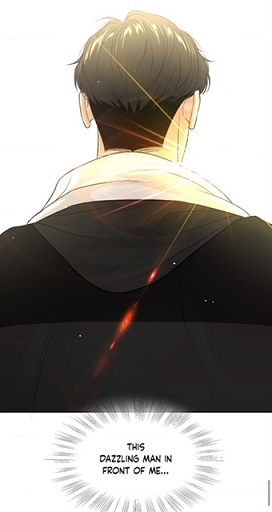 (chapter 40) There, the champion stood in light, framed by cameras and public attention, dazzling through image and presence.
 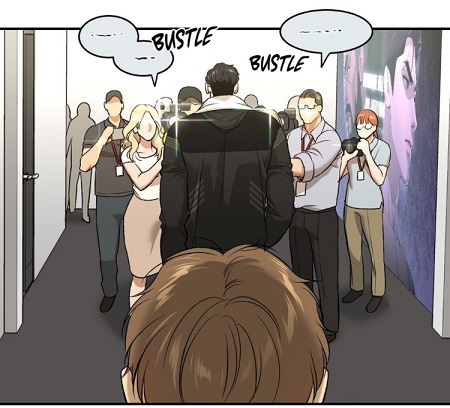 (chapter 40) That threshold marked attraction, recognition, and emotional movement toward him. The present hallway appears as its inversion. Darkness replaces light.
  (chapter 49), Joo Jaekyung also encountered Baek Junmin in a hallway while Kim Dan watched from behind. To everyone else, the scene appeared harmless, even cordial: two fighters exchanging a handshake in public view.
  (chapter 49) Yet beneath that surface, something very different was taking place. The Joker used proximity and secrecy to whisper words that dragged the champion back toward a buried past
 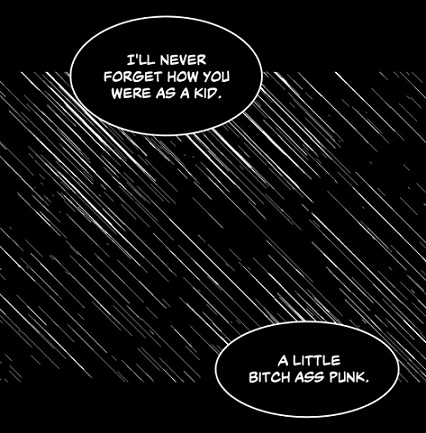 (chapter 49) — weakness, humiliation, the memory of being a vulnerable child. The visible gesture was friendly; the hidden action was psychological assault.
  (chapter 49) That earlier corridor teaches us how these spaces function in Jinx: not merely as passages, but as places where unseen truths move beneath staged appearances. If so, the present hallway may repeat the structure in altered form. Joo Jaekyung now stands nearby but outside the frame, while Kim Dan occupies the position once held by the champion. What was previously aimed at one man’s repressed wounds may now be redirected toward another’s.
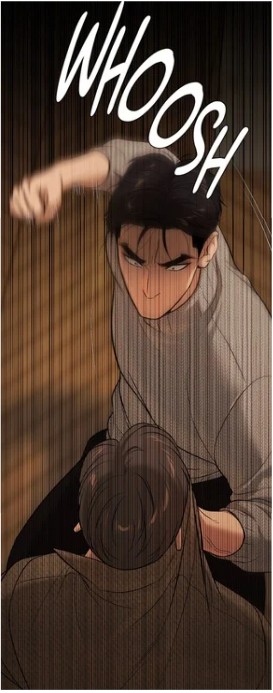 (chapter 90) This new threshold may demand another kind of strength altogether.
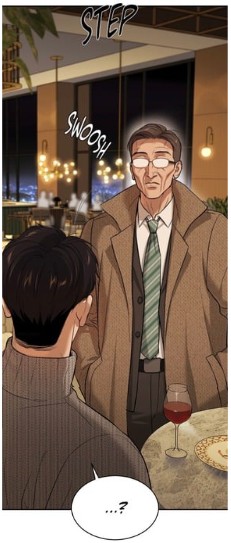 (chapter 90) If so, the lack of light performs another function: it softens the visible signs of downfall.
 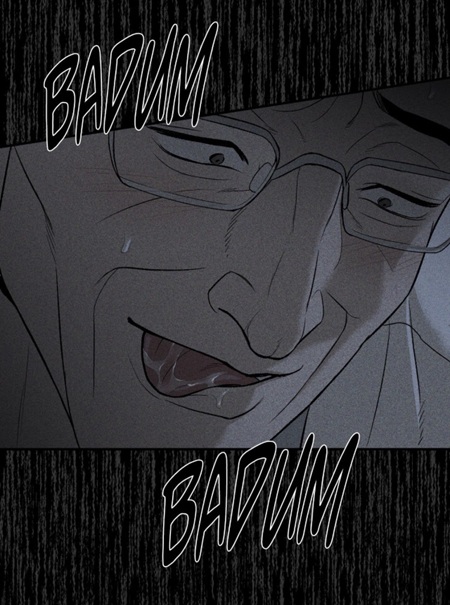 (chapter 90), sweating greed, vulgar speech
 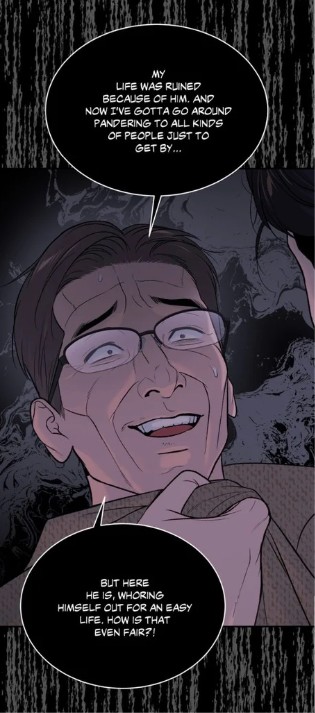 (chapter 90), predatory fantasy, shameless mockery
 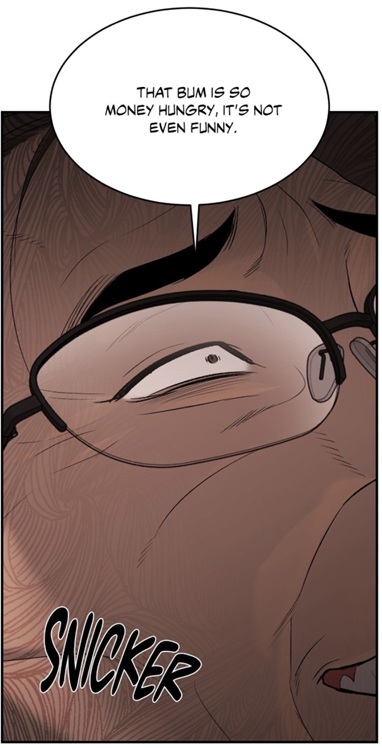 (chapter 90), and a grin
 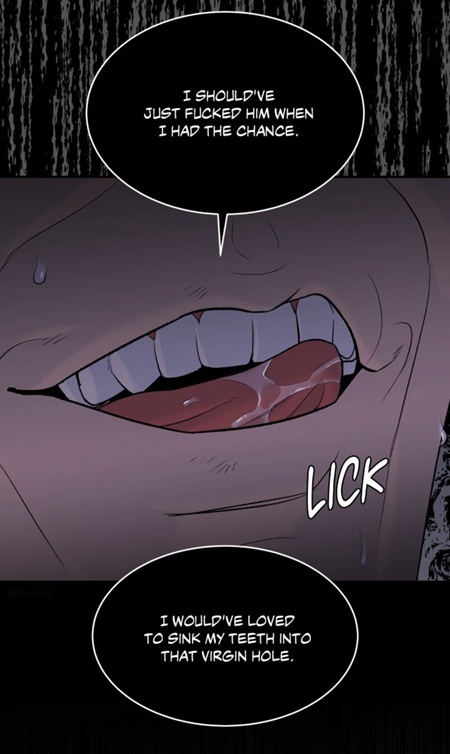 (chapter 90) that exposed appetite without restraint. He was visually loud, almost grotesquely transparent. Readers did not need to guess what kind of man stood before them. His face announced it.
 (chapter 84), where both main leads were trapped “together” and sound played a huge importance. Instead, the final scene in episode 97 withholds precisely those things. The darkness does not stage confession. It stages concealment.
 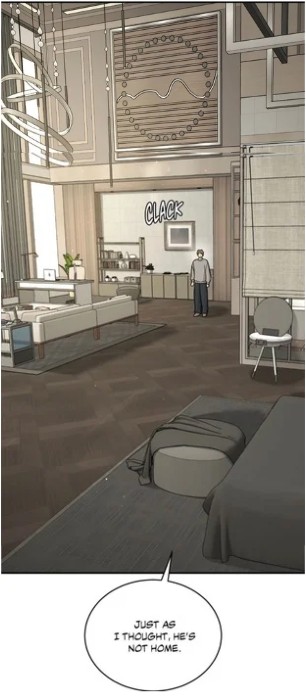 (chapter 97) To outsiders, however, invisibility can quickly harden into narrative. If a person is no longer seen, people begin to explain that disappearance for themselves. And the easiest explanation is often the wrong one.
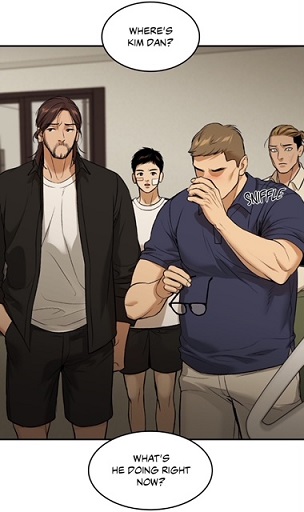 (chapter 52), and the champion interpreted that separation through what little he could observe. Later, at the hospital, he heard that Kim Dan had quit.
 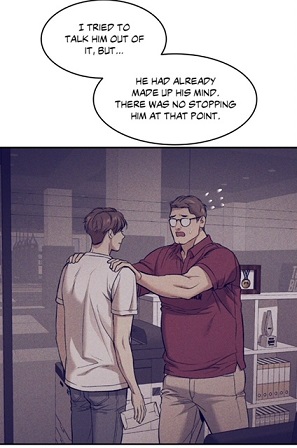 (chapter 53) But quitting the job did not automatically mean leaving altogether. In his mind, Kim Dan had stepped out of the professional role, not necessarily out of his personal orbit. The evidence before him therefore remained partial: distance, silence, and formal resignation, but no clear answer about the bond between them. Hence he imagined that the main lead was still living in the penthouse.
  (chapter 53) Yet what he “knew” was never the full truth. It was a narrative assembled from scattered pieces while the emotional reality remained elsewhere.
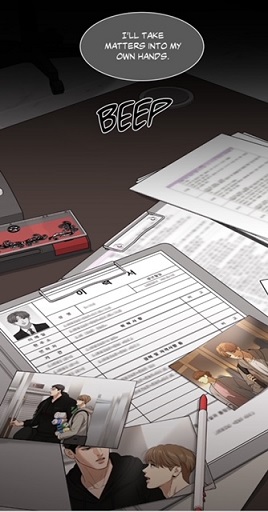 (chapter 46) Secret photographs were taken of him without his knowledge. According to me, Baek Junmin was the one behind the camera. The hamster’s movements were monitored. His connection to Joo Jaekyung was observed from afar. That matters because it suggests the schemers did not suddenly become interested in him now. They had already understood that the physical therapist was not a minor side figure, but someone emotionally tied to the champion. If one wanted to wound Joo Jaekyung indirectly, Kim Dan had long been the obvious path.
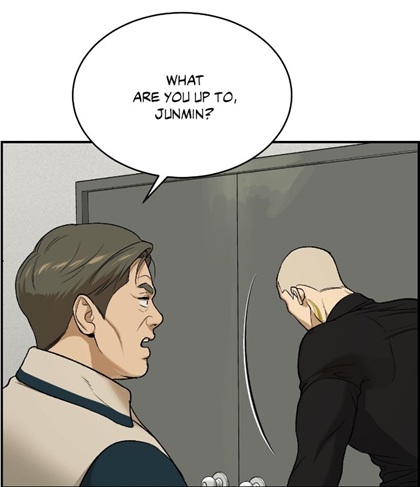 (chapter 93) If Baek Junmin and Choi Gilseok are orchestrating events, they cannot appear to be doing so. A clean scheme often works best when responsibility seems to originate elsewhere. The most effective leak is not the one traced to its author, but the one attributed to an innocent intermediary.
 (chapter 66), altered schedules, replaced meals, and silence. From those fragments, a conclusion becomes tempting: Kim Dan is gone. Joo Jaekyung is alone again. And finally, don’t forget how Doc Dan was introduced to the champion for the first time
  (chapter 1): he had been hired by Park Namwook, for the previous physical therapist had suddenly quit.
  (chapter 1) A replacement. A therapist. Someone sent because the champion supposedly lacks proper care before an important fight, and, unlike others, is not asking too much money.
 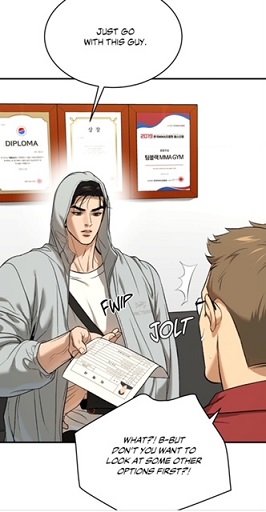 (chapter 54) Observe how the manager reacted, when Joo Jaekyung selected the one with a lot of credentials. Park Namwook jolted. The language of professionalism becomes cover for personal sabotage. Entry is granted not through force, but through usefulness.
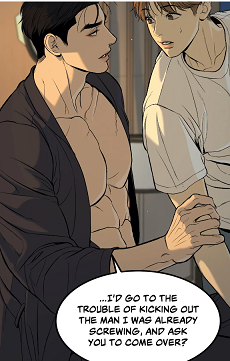 (chapter 2) Professional necessity became the doorway through which a far more intimate bond later emerged. If so, the present scheme may mirror that origin in corrupted form. What once began through work and gradually became attachment is now imitated as strategy. A “helper” is sent not to heal, but to divide.
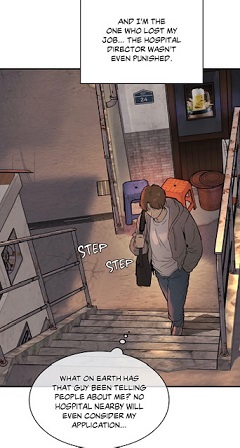 (chapter 1), exclusion, desperation, and a system willing to discard him while rewarding others. The language of merit has never been neutral in Jinx. It often hides power, convenience, and who gets chosen or erased.
 (chapter 56) He stayed beside his grandmother. He worked despite exhaustion. He treated Joo Jaekyung despite fear and humiliation. He cooked
  (chapter 22), cleaned, worried, forgave, and endured. Much of what he gave happened almost invisibly. And that is precisely why Jeong is so often underestimated. It does not announce itself dramatically. It appears in support that is constant yet barely noticed until it is missing. Kim Dan’s passivity and silence were therefore not emptiness, but one form of devotion. I admit this was not immediately obvious to me. At times, Kim Dan’s attitude even frustrated me, because I was shaped by a different cultural environment — one in which care is often expressed more directly, emotions are verbalized more openly, and disagreement is more readily shown. Imagine that he did not talk to his roommate for 8 days!
 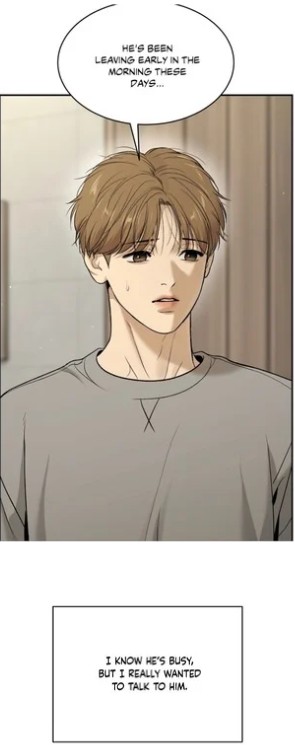 (chapter 97) In his mind, he was being considerate. He was giving him space,
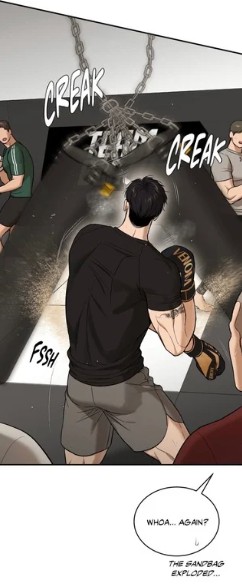 (chapter 91) were the visible forms of pain that had never healed. Even his need to control others often looked less
  (chapter 45) like confidence than fear translated into aggression.
 (chapter 64) Silent suffering became spoken judgment. Han entered his voice.
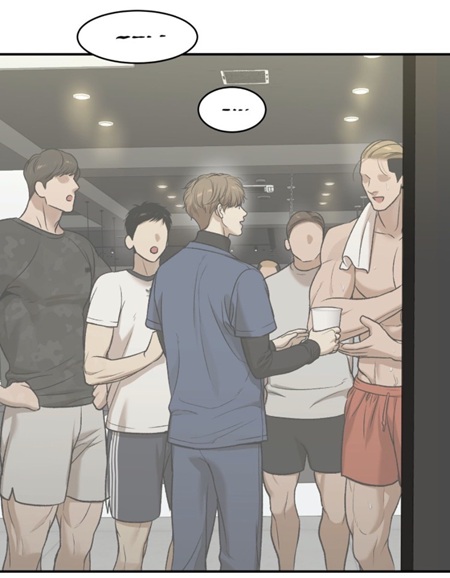 (chapter 95) He no longer feels endlessly obliged. And when he sees the former director, his second reaction is not meekness but disgust.
 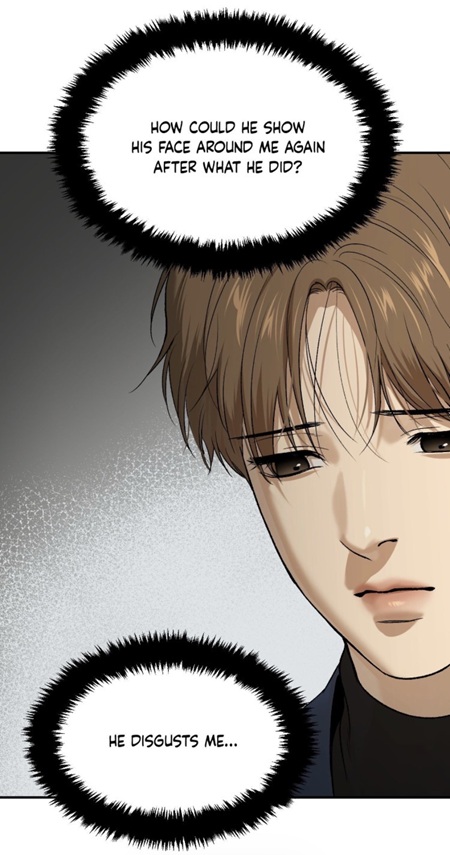 (chapter 91) That matters. Resentment is no longer buried beneath obedience. It has become part of his emotional language. But this change is not limited to anger alone. It also deepens Kim Dan’s ability to reflect. Earlier, he often positioned himself only as the one who had to endure, obey, or silently adapt.
 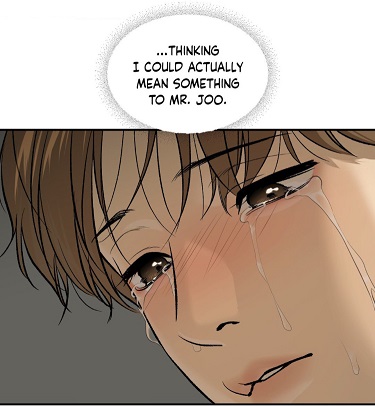 (chapter 46) Now he begins to examine situations from more than one side. He can recognize not only how he was hurt
 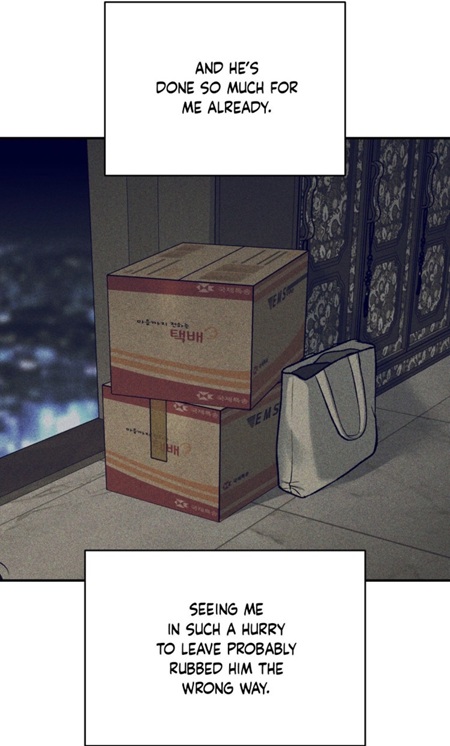 (chapter 97), but how his own actions may have wounded others as well. When he remembers packing in haste and preparing to leave, he no longer sees himself simply as justified and Joo Jaekyung as wrong. He understands that sudden departure, silence, and emotional withdrawal could wound the other person too.
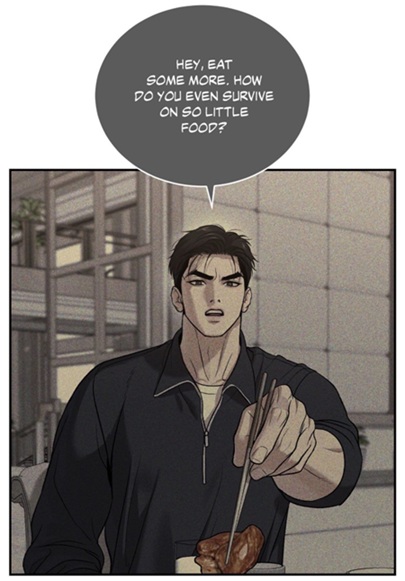 (chapter 97) A command to eat more, once read as control
 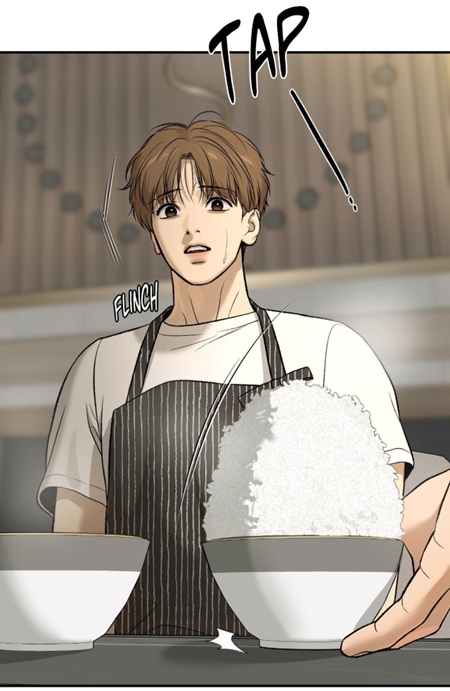 (chapter 79), can be understood as concern.
 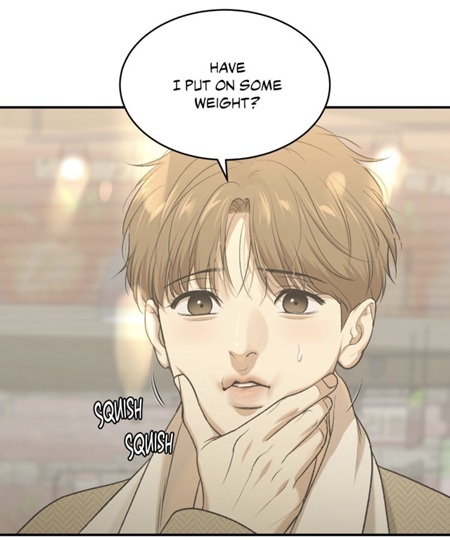 (chapter 97) Practical attention can reveal tenderness. What had seemed oppressive begins to show another meaning. This delayed recognition matters because Jeong is not always perceived in the moment it is given. For Joo Jaekyung, its value becomes visible through distance, uncertainty, and the fear of loss. For Kim Dan, recognition emerges differently: through gratitude, self-reflection, and the gradual realization that gestures once dismissed or misunderstood had been forms of care all along.
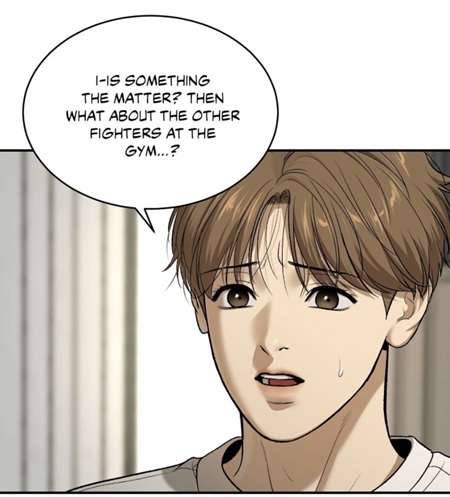 (chapter 96) He knew how to look after people, but not how to imagine being looked after in return. Receiving affection is often harder than offering it.
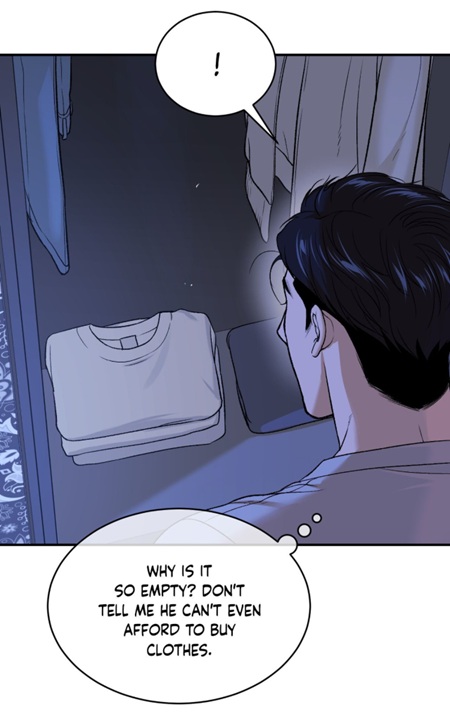 (chapter 80), and emotional responsibility.
 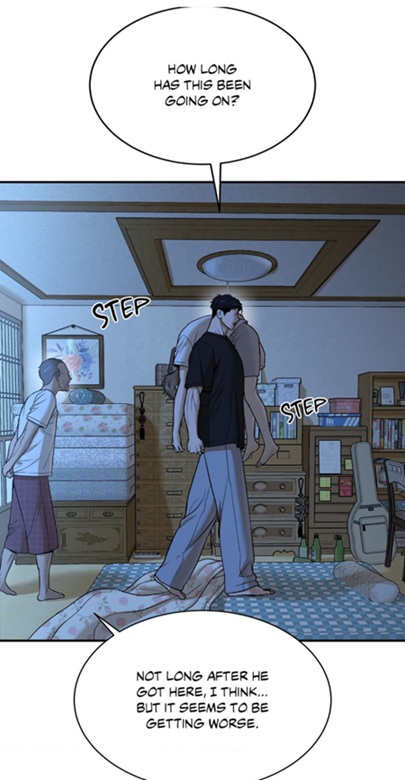 (chapter 65) In different ways, both men are learning that relationships are not built through victory over the other, but through a new way of seeing one another.
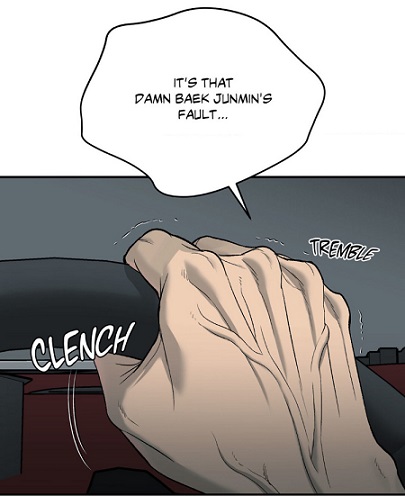 (chapter 54) rather than Kim Dan. He distinguished the real source of harm instead of attacking the nearest vulnerable person. Since then, he has worried about Kim Dan’s meals, noticed his body, bought flowers and cake, remembered small preferences, and even more than ever wants him to stay after the match. Care has begun to replace reflexive aggression.
 (chapter 37), or another act of public humiliation in which ordinary objects suddenly become dramatic instruments. Read through that lens, the cake in Kim Dan’s hands contains its own ironic potential: it could become not merely dessert, but a comic weapon of refusal, an insult that answers intrusion with ridicule.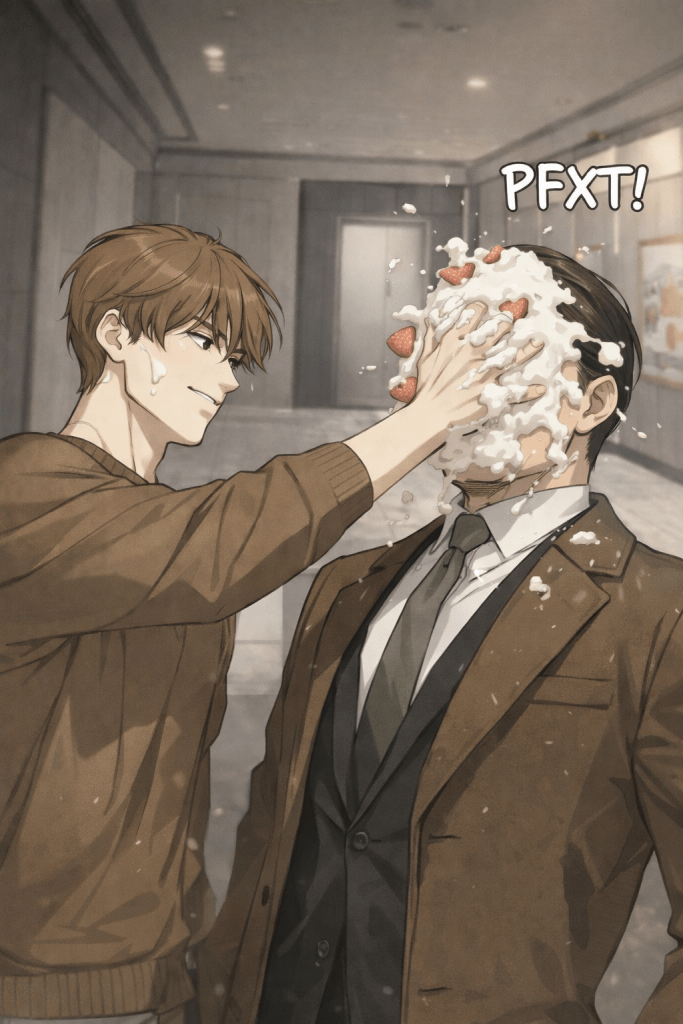
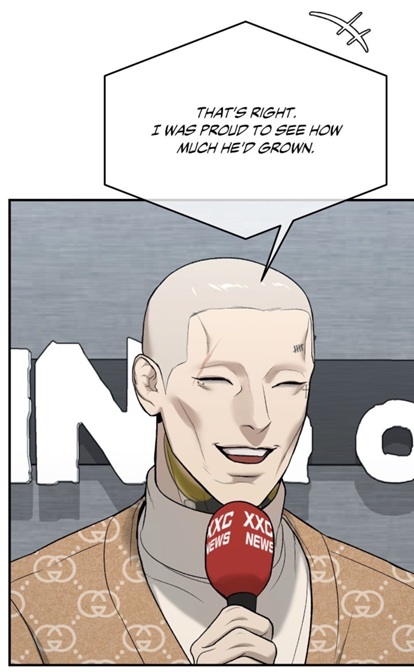 (chapter 96), who claimed authority through superiority, manipulation, and the posture of the one who “knows better,” but a different kind of hyung whose authority comes through tenderness, emotional understanding
 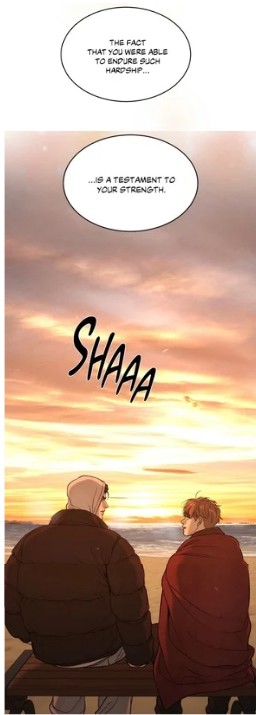 (chapter 95), and the ability to create warmth. If the self-proclaimed men of power arrive with schemes
 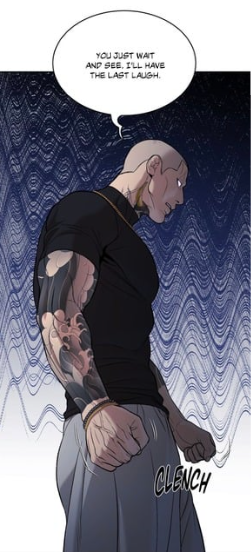 (chapter 87) With this panel it is clear that Baek Junmin will never have the last laugh. Anyway, the impact of such a reversal would not be limited to the intruder alone. Instead of answering tension with more anger, Joo Jaekyung himself could be drawn into laughter. That possibility is relevant, because laughter would do what violence cannot: it would break the script from within. Remember how powerless he felt after the exposure and humiliation.
  (chapter 48), as they met in front of the building where the gym Team Black is. Besides, the encounter was easily photographed and readily interpreted as betrayal.
  (chapter 49), seemingly tied to revenge,
 (chapter 48), but more likely prepared in advance to cause damage under pressure. In that reading, the point was never only retaliation. The point was that Kim Dan could later be made to carry the blame for everything surrounding the chaos. One event captured attention, another produced harm, and the true consequence emerged only afterward. What appeared spontaneous was structurally engineered.
 (chapter 51) But the irony is that neither the champion nor his manager called the police for an investigation right away.
 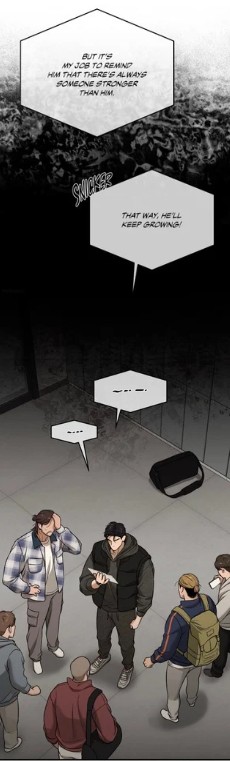 (chapter 96) It is the figure others still believe to be vulnerable: someone economically fragile
 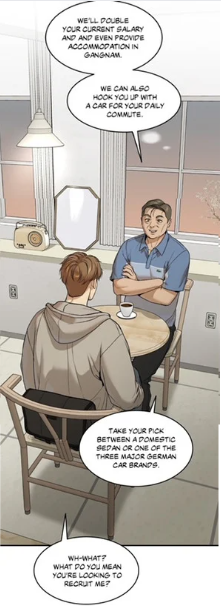 (chapter 48), emotionally tied to the target, marked by past shame and abandonment wounds (he is also an “orphan”), and assumed to carry burdens in silence. From the outside, Kim Dan may still appear to fit that role. The schemers likely imagine a man who is isolated, unsupported, and easy to overwhelm — someone with no real backing, no language of resistance, and no choice but to absorb whatever is placed on him.
 (chapter 3) those conditions did not emerge from nowhere. They followed the abuse and professional ruin inflicted earlier. The blacklisting was and is the reason why he is not looking for a job in Seoul
  (chapter 56) In that sense, an attempt to blame Kim Dan for everything risks exposing the original cause instead. The man chosen as scapegoat may now be able to point back at the hand that first pushed him toward the edge. The setting makes that possibility even sharper. The hallway is dark, where faces are obscured and appearances become uncertain. But in darkness, a voice can be heard clearly.
  (chapter 54), injuries
 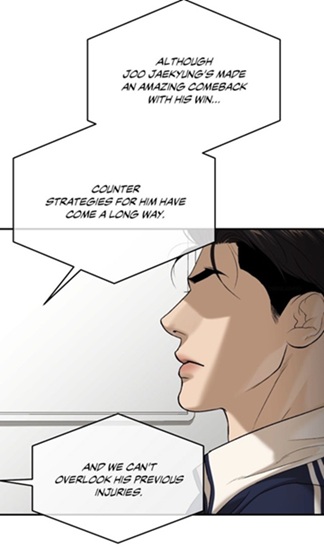 (chapter 95), overtraining, disqualification
  into accusation and his own misconduct into Kim Dan’s supposed guilt.
 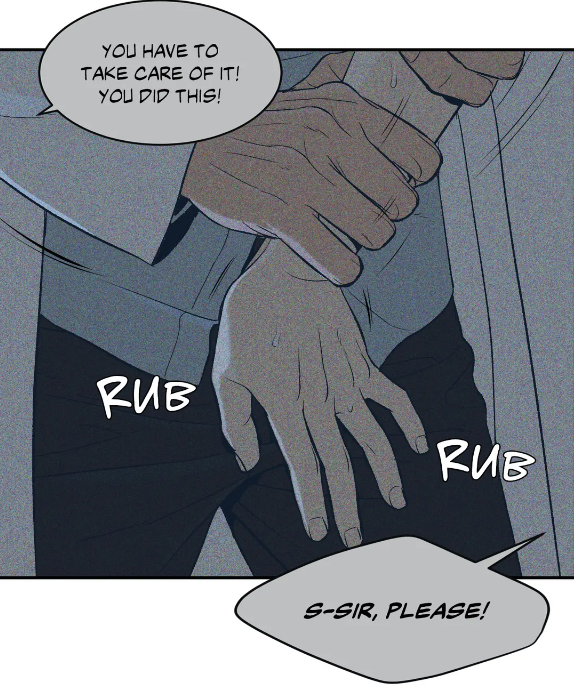 (chapter 6)
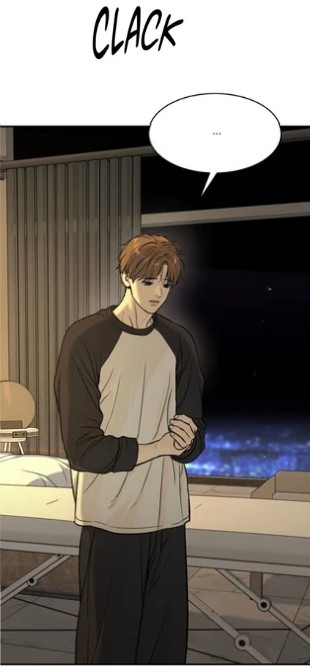 (chapter 96) His hesitation, his position, his choice. But this would be too limited. Because episode 96 does not present a single decision. It constructs a field of decisions.
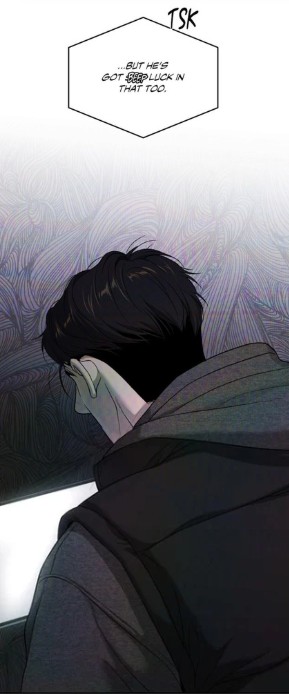 (chapter 96) In this shift, agency is erased. The champion’s path is no longer something he forged, but something that merely happened to him. This reduction is not incidental. It allows Baek Junmin to neutralize what he cannot replicate. If success is luck, then failure requires no explanation. If choice is denied, then responsibility can be displaced.
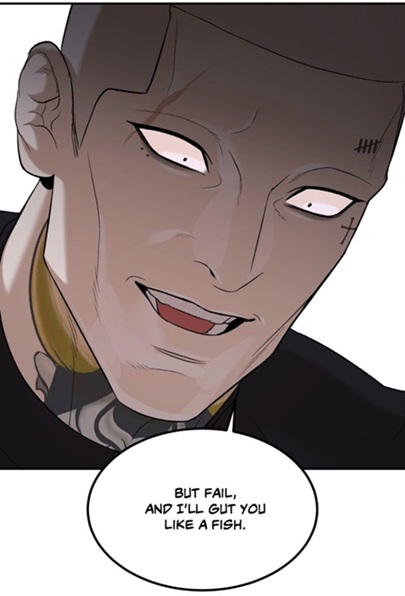 (chapter 93) responsibility can be displaced. But the moment they act, that displacement collapses, and the weight of the compromised authority returns to the one who selected it. He speaks of “wrong choices” while trapped in a cycle of making them.
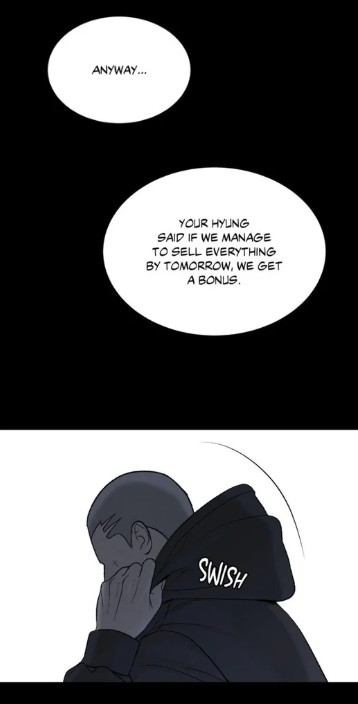 (chapter 73); not toward a gym aimed at progression, but into a space governed by risk and illegality.
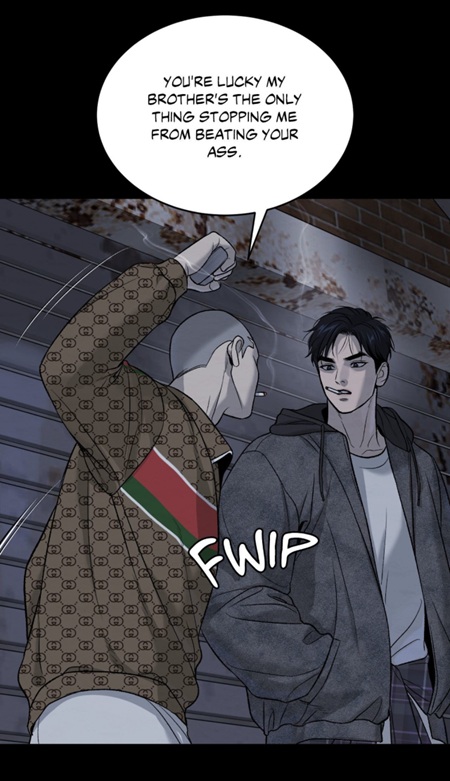 (chapter 74) To conclude, he did not fall outside the system; he was never inside it to begin with.
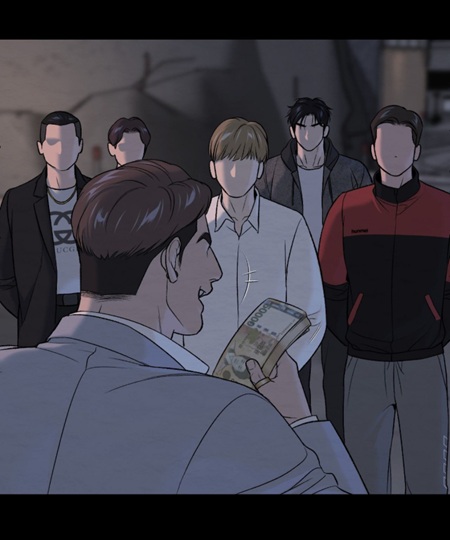 (chapter 74) the figure who initiated Baek Junmin into a system of exploitation masked as guidance. On the other, Baek Junmin himself attempts to reproduce this exact position.
 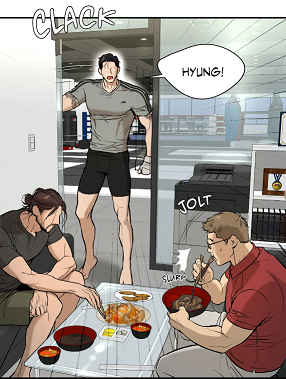 (chapter 5) Unlike the underground mentor, his authority is institutional and his position legitimate. For Kim Dan, this distinction is decisive.
 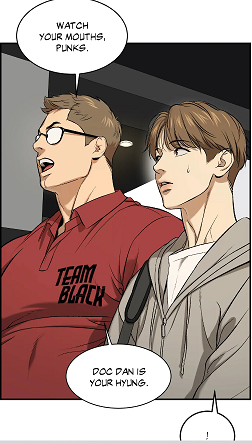 (chapter 7) He perceives in the manager a form of empathy
 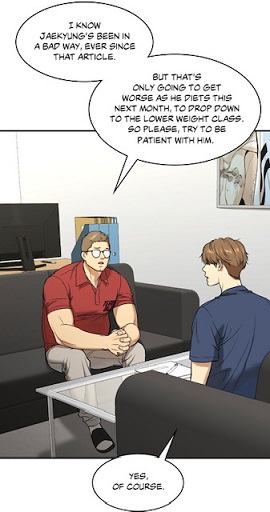 (chapter 36), a concern for the athlete’s well-being—a figure capable of managing what he himself cannot. Kim Dan’s trust does not emerge in a vacuum; it is built through a series of interactions that appear, at first glance, to confirm this perception
  (chapter 7). Park Namwook speaks the language of care, addresses him with familiarity, and repeatedly positions himself as someone who values both the fighter and the medical staff. If there was tension between them, he would side with him and not Joo Jaekyung.
 (chapter 37) Even when he intervenes critically
 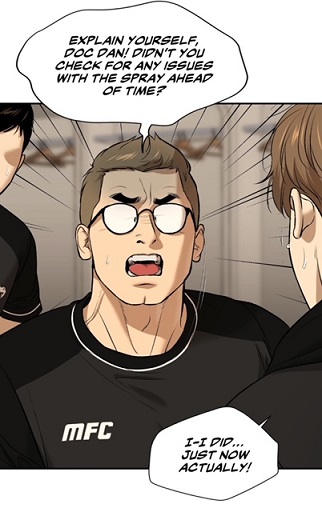 (chapter 50) —questioning his decisions or demanding explanations—these moments are framed, in Kim Dan’s perception, as being in the champion’s best interest rather than as acts of control.
 (chapter 27) He assumes coherence where there is only alignment of interests. What appears as consistency in Park Namwook’s behavior is therefore not examined as strategy, but accepted as sincerity.
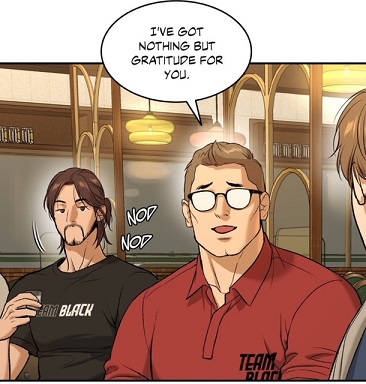 (chapter 43), reassurances, even moments of apparent protection and respect
 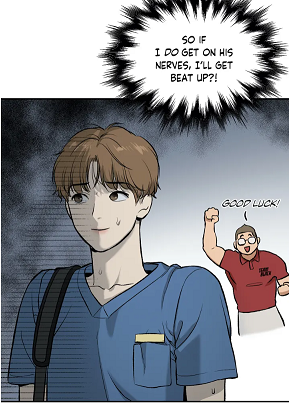 (chapter 1) in which responsibility dissolves into circumstance.
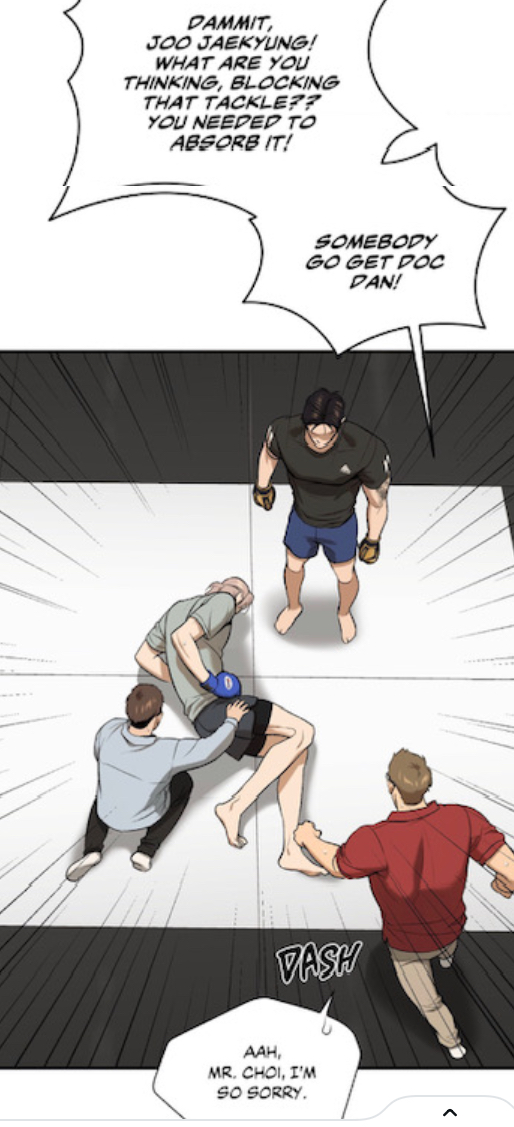 (chapter 31) Here, if the athlete had followed this recommendation, he would have injured himself badly. What appears as protection recreates distance; what is named as guidance results in isolation.
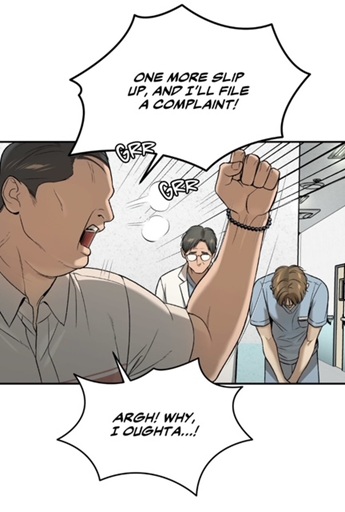 (chapter 59) He had indeed made a mistake here, but the director of the hospice had defended him. He was not fired after this incident. Hence I come to the following deduction: Kim Dan is about to be confronted not simply with an external threat, but with the realization of his own misrecognition.He trusted the wrong hyung, just like Joo Jaekyung did.
 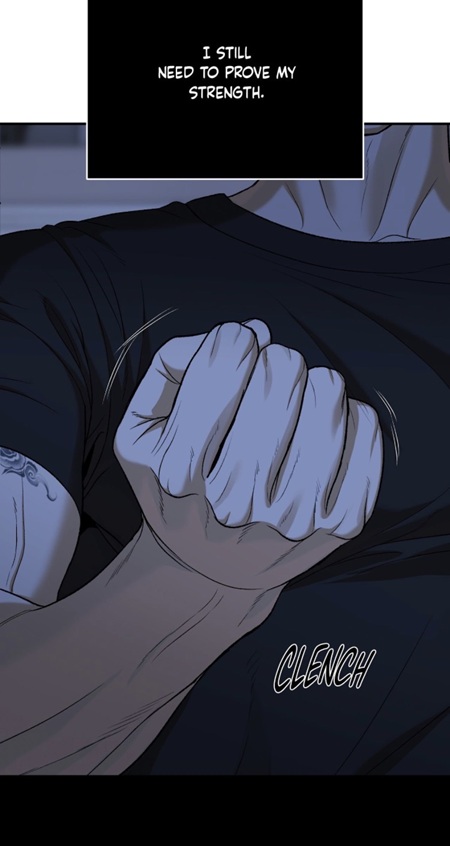 (chapter 95) Until now, he has no idea about the champion’s losses
  (chapter 52) and the champion’s drinking
 (chapter 54)
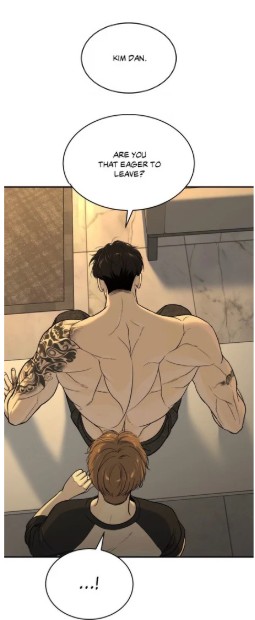 (chapter 96) It requires something both have avoided until now: to meet each other’s gaze.
 (chapter 1) A towering figure, a champion, a name that carries weight across arenas and screens. Someone whose image is large enough to be printed, displayed, and recognized at a glance. And yet, that same image can be torn.
 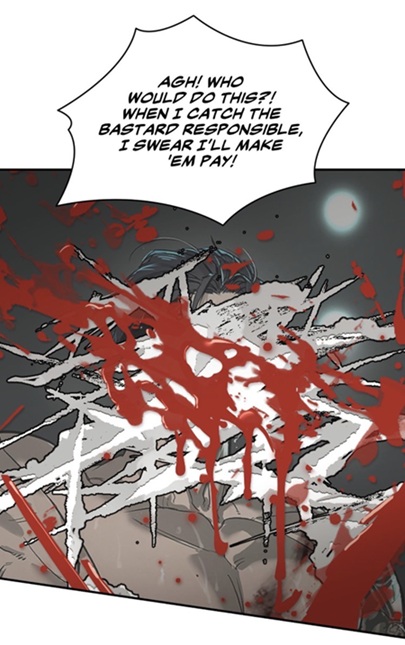 (chapter 96) But something has shifted. The image no longer holds in the same way.
 (chapter 47) He was introduced as the “underdog,” the one rising unexpectedly, the figure whose ascent could be celebrated. The framing was simple, effective, and, to some extent, transparent. It invited attention, but it also raised suspicion.
 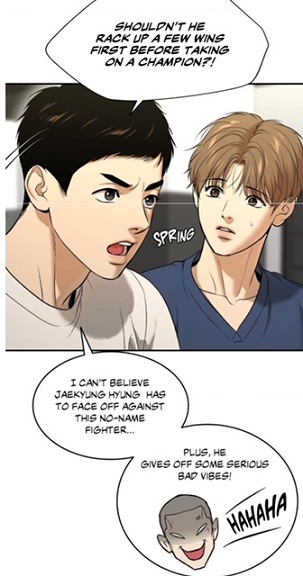 (chapter 47), suggesting that what appeared as spontaneous recognition might in fact be influenced, if not orchestrated. The idea that media coverage could be shaped
  (chapter 47) The system was not yet fully opaque. It could still be glimpsed—but only indirectly, through inconsistencies that were sensed rather than fully articulated.
 (90 days), reversible, even later framed as recovery
  (chapter 57) — is now recoded as something definitive.
  (chapter 69) A disqualification operates differently.
  (chapter 69) The panel from chapter 47
 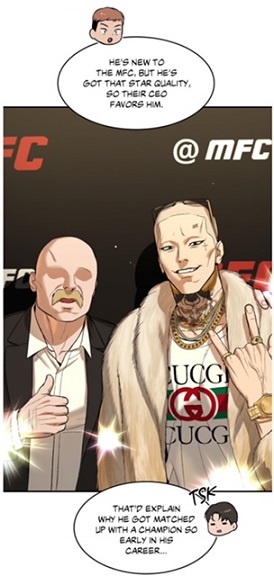 (chapter 47), makes this structure perceptible. The presence of executive figures, the proximity between management and select fighters, and the emphasis on “star quality” reveal a structure in which recognition is not solely determined by performance.
  (chapter 51), the irregularities surrounding the match, the incident with the switched spray—contains elements that could be reexamined. Joo Jaekyung’s public challenge in Paris reactivates these tensions. It signals not only resistance, but the possibility of escalation. By refusing to accept the existing narrative, he reopens questions that the system had already moved to close.
  (chapter 52), notably among the members of King of MMA. This persistence is not merely rhetorical; it reflects a deeper uncertainty regarding the legitimacy of his rise. Within the fighters’ own environment, the outcome of the match is not experienced as a clear victory. Baek Junmin himself acknowledges that he was “this close to winning,”
 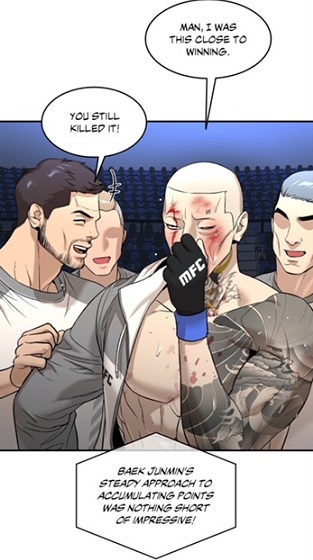 (chapter 51) revealing that the tie has not been integrated as a legitimate conclusion. It persists instead as a wound: a result experienced not as confirmation, but as deprivation. In this sense, his current aggression does not only seek promotion; it seeks retrospective compensation.
 (chapter 51) So he had not bet on the Shotgun’s victory.
  (chapter 75) The latter’s rise was marked by a visible title, publicly attached to his name and career trajectory. Baek Junmin, by contrast, occupies the position of champion without passing through the same symbolic sequence of recognition. All this time, he was working in the shadow, in the illegal underground fighting. What he inherits institutionally, he does not fully possess symbolically. He may occupy the position of champion, but the conditions of his ascent prevent that position from being fully recognized as legitimate. The label that once signified ascent is never replaced by one that would confirm his dominance. At the same time, his stage name The Shotgun
  (chapter 49) fails to establish itself. Neither his peers nor the media adopt it. Instead, he is consistently referred to by his real name: Baek Junmin.
 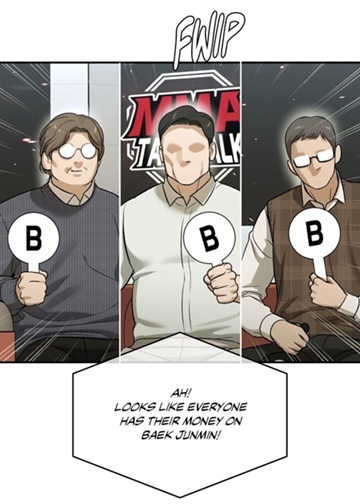 (chapter 95) This absence is not insignificant. In the world of competitive sports, a title or nickname is not merely decorative; it is a marker of recognition, a sign that an identity has been collectively validated. To name a fighter is to fix his position within the symbolic order of the sport. By refusing—or failing—to adopt his stage name, the media and his environment deny him that stabilization.
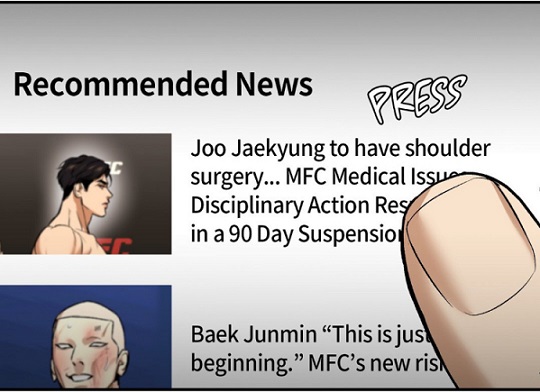 (chapter 52) Victory must be seen, fixed, and circulated in order to become real. In this respect, Baek Junmin’s position reveals a fundamental volability. His so-called victory does not produce a defining image. The match that secured his title was neither clearly decisive nor widely broadcast, leaving no shared visual reference through which his dominance could be established.
 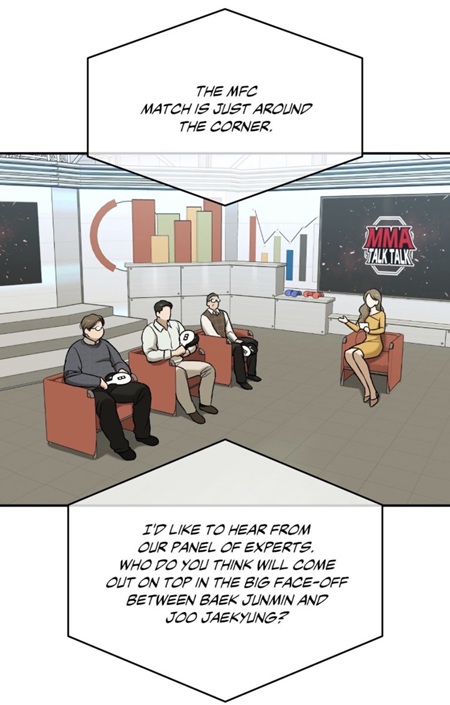 (chapter 95) It becomes more visible, if you contrast this show with the one about the celebrity in episode 52:
  (chapter 54) Instead, it continues to rely on the image of Joo Jaekyung. Even in defeat, the latter remains visually central: his body, his injuries, his presence provide the material through which the narrative is articulated.
 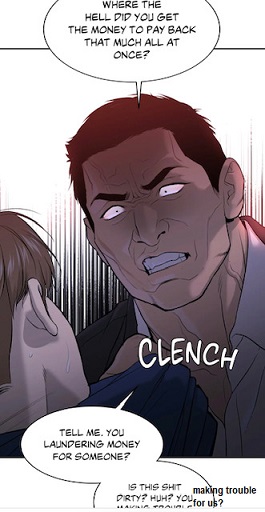 (chapter 11) It is a shadow that cannot be struck with a stone. However, this configuration reveals a fundamental weakness: the Giant is not just made of paper; it is rotting from within. If the foundation of the MFC is nourished by money laundering
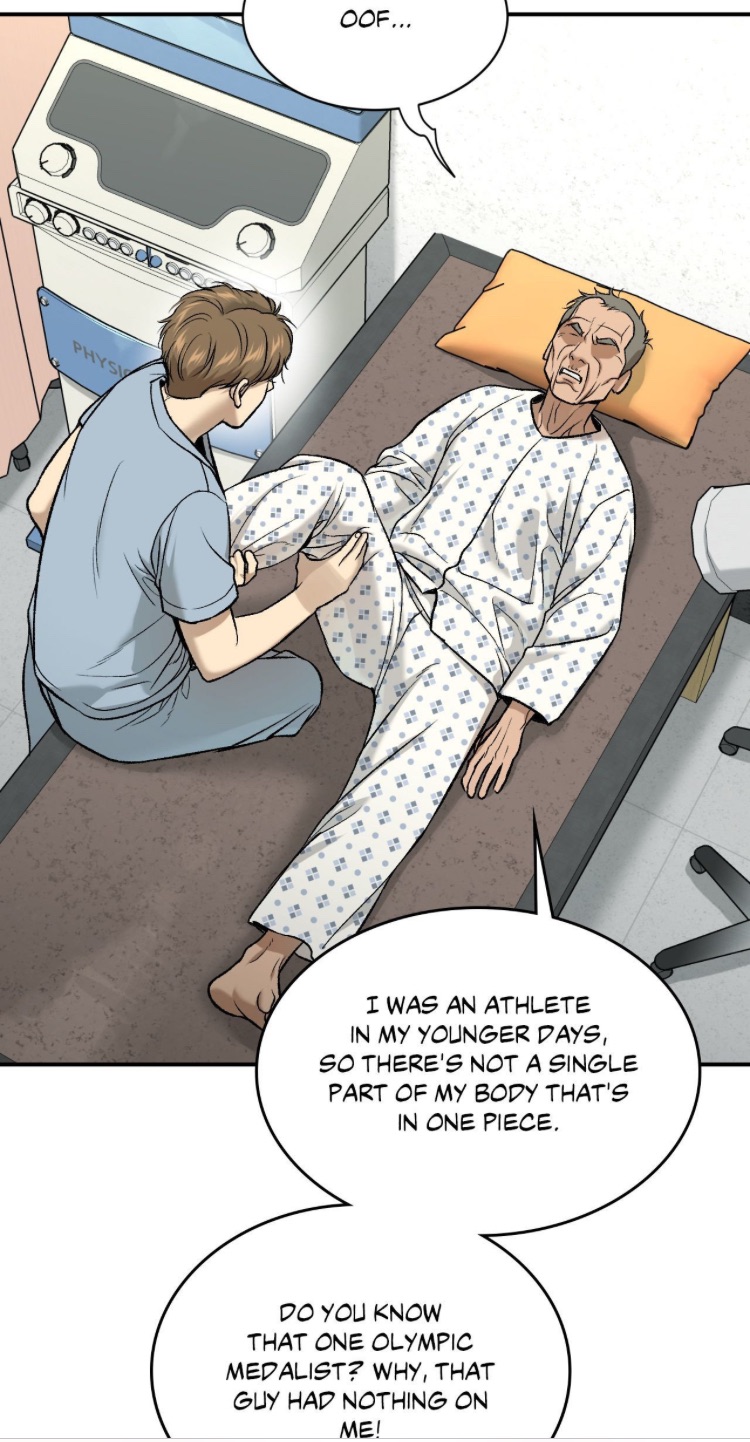
  (chapter 74) The omission cannot therefore be reduced to coincidence. It suggests either a lack of knowledge regarding this dimension of the past, or a deliberate decision to leave it unaddressed. In both cases, the effect is the same: a crucial element of the champion’s formation is excluded from the narrative, preventing any recognition of continuity, inheritance, or transmission.
  (chapter 73), a connection that the narrative had carefully displaced. What appears as a personal account thus becomes unstable, exposing not only its own inconsistencies, but the broader system it sought to conceal.
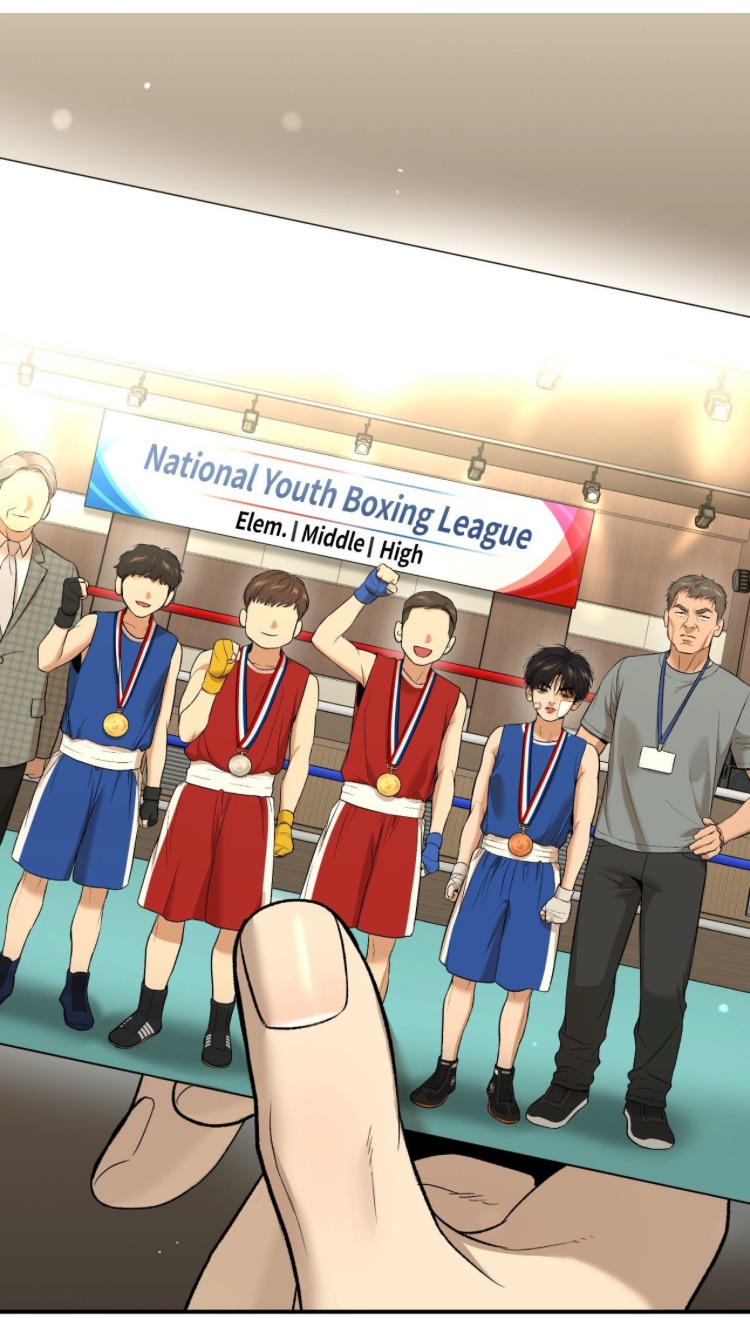 (chapter 71) The photograph of the young fighter with his coach introduces a contradiction that the interview cannot fully absorb. It does not merely suggest discipline or continuity; it attests to a process that precedes and exceeds the narrative imposed upon it. The trajectory it reveals is not incidental, nor dependent on a single relationship, but anchored in duration, training, and transmission.
 (chapter 73). This detail is decisive. It establishes that his development was already underway, and that his formation cannot be reduced to the simplified account presented in the interview. It also repositions Hwang Byungchul. Far from being the negligible or ineffective figure implied indirectly by the discourse, he appears as part of a structure that enabled this early progression.
 (chapter 71) , the tournament, the documented progression—these elements introduce points of verification that resist the logic of selective reconstruction. The past is not entirely available for reinterpretation; parts of it remain anchored in events, relations, and figures that can contradict the imposed version. On the other hand, the Champion in Paper has only his recollection as evidence which is based on the narration of others.
  (chapter 74) rather than systemic conditions. Thus he accepted that his body as a fighter got so damaged.
 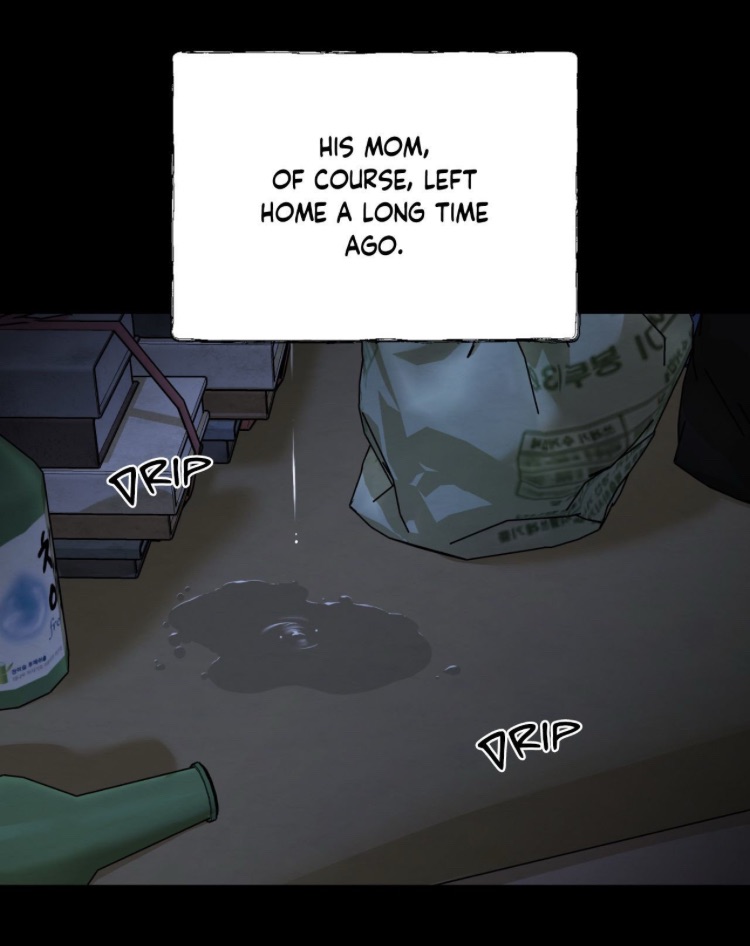 (chapter 72), yes, but she had reasons. The father was violent, the household unstable, and escape could therefore be understood as a form of necessity. In this interpretation, the mother’s departure remained painful, but intelligible. What he failed to ask, however, was the decisive question: if she left to save herself, why did she leave the child behind? Why was the boy not taken with her? For him, absence did not mean abandonment. He still had a positive vision of the mother: caring and selfless.
  (chapter 74) The interview brutalizes this unresolved contradiction by collapsing it into a simpler formula:
  (chapter 72) In doing so, he mistook a visible moment for the whole of the problem. He overlooked the impact on the little boy’s soul. What Baek Junmin reveals—despite his malicious intentions—is that
  (chapter 71), as if it were an exceptional trait now begins to look like the product of a much longer history of humiliation, abandonment, and misrecognition.
 (chapter 71) Not once. Despite the years of training, despite the shared history, despite the role he himself believed to have played
  (chapter 74), the champion had cut all contact without explanation. This absence had remained unresolved, almost suspended—something to be accepted, but not truly understood. Hence he became resentful.
 (chapter 65) The simplified narrative offered by Baek Junmin aligns too easily with her own history of hardship. But this immediacy has a cost. By recognizing the pain, she risks accepting the distorted framework through which it is presented.
 (chapter 65), even if it was never enough. Her role was defined by sacrifice, by the necessity to protect and sustain the “child” she still perceives in him—someone to be fed, guided, and contained rather than allowed to stand fully on his own.
 (chapter 94) They attest to the existence of parents, of a prior life, of relationships that were not entirely erased but quietly set aside.
 (chapter 7)
 (chapter 65) The debt is not mentioned; it is simply endured. In doing so, its cause is displaced, if not entirely obscured.
  (chapter 57) It was not only a gesture of comfort; it was a conviction. It implied that the absence of others could be compensated by her own care.
 (chapter 57), and where being “different” invited mockery and exclusion. What Shin Okja had perceived as a problem of loneliness was also a problem of exposure and humiliation.
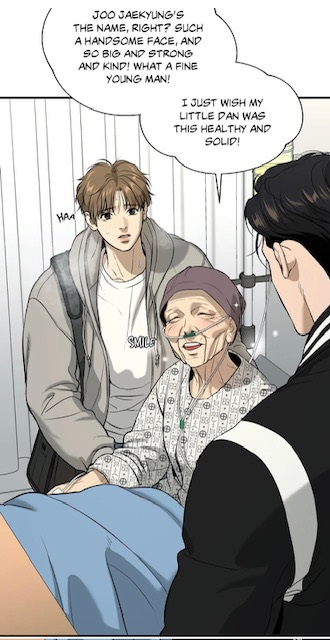 (chapter 21) She perceived him as a finished figure—healthy, solid, and self-sufficient—without questioning the conditions that made such stability possible. Even when she turned toward him with warmth
 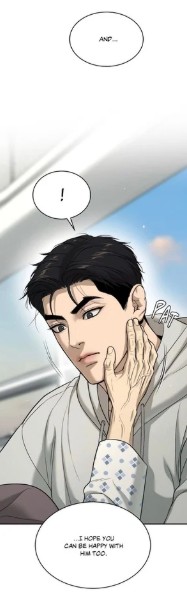 (chapter 94), her perception remained structured by Kim Dan. She acknowledged his place beside her grandson, but not the history that had formed him. She had never asked him any question in the end.
 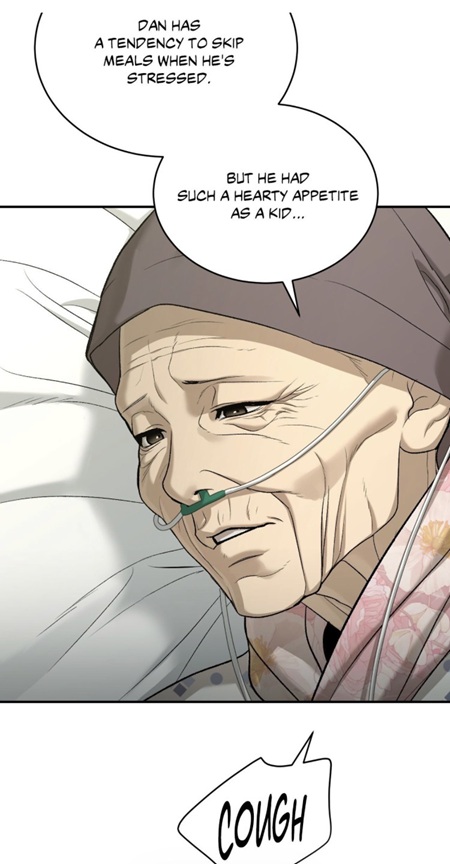 (chapter 94), withdrawing under pressure rather than sustaining himself. While Jaekyung’s strength appears to have been forged under conditions of absence, Kim Dan’s fragility seems to persist within the structure of her presence.
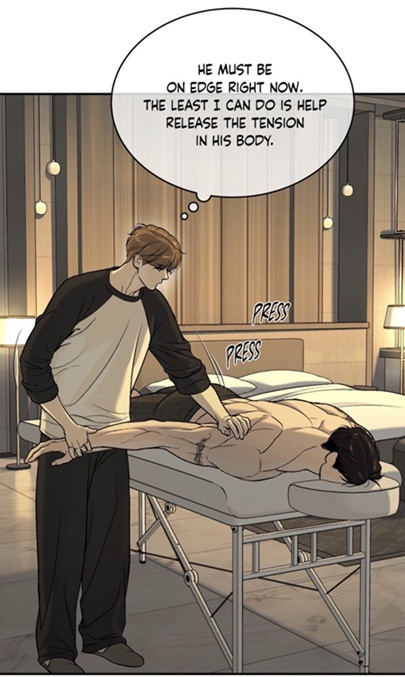 (chapter 96) without confronting what that presence truly meant, because he occupied a role. He was the physical therapist. His gestures, his proximity, his care—all of it could be justified, contained, and, above all, depersonalized.
 The addition of the star on the therapist’s uniform is more than a “badge of office”; it is a geometric prophecy. It represents the intertwining of two disparate lives—the red triangle of Jaekyung’s force and the blue triangle of Dan’s empathy. When these two triangles overlap, they create a structure (The Star) that is far more stable than the ‘Paper Giant’ of the MFC. This star is naturally a reference to the star of David. But at the same time, I wanted to avoid any reference to religion as such. The star of David is created by 2 triangles intertwined together. And the moment you accept that each main lead represents one triangle, you realize that both can become the star of David, once they become a team and a couple.
 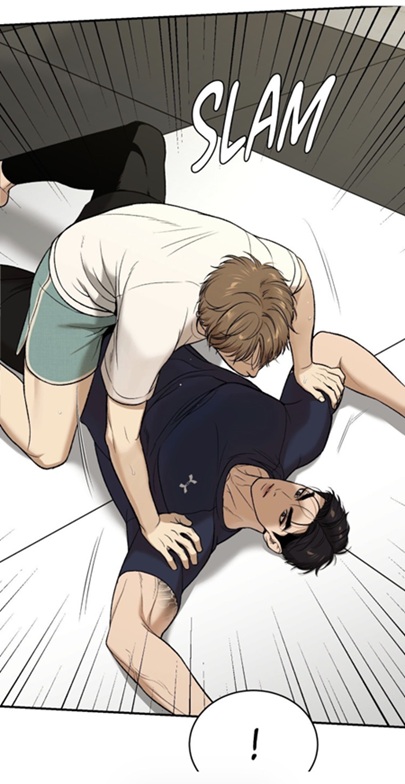 (chapter 88) The “hamster” is not an isolated symbol. It has been shaped in relation to Joo Jaekyung—through proximity, through tension, through a form of attention that is neither hierarchical nor purely functional. If Kim Dan embodies connection, Joo Jaekyung embodies determination and direction.
 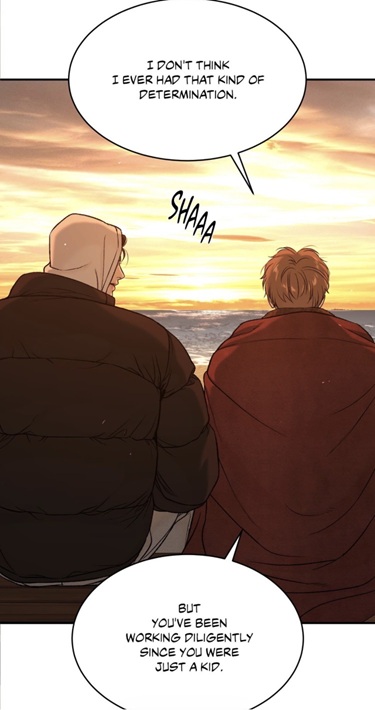 (chapter 94) What emerges between them is not dependency, but a potential alignment. That’s the reason why I believe that contrary to that morning
 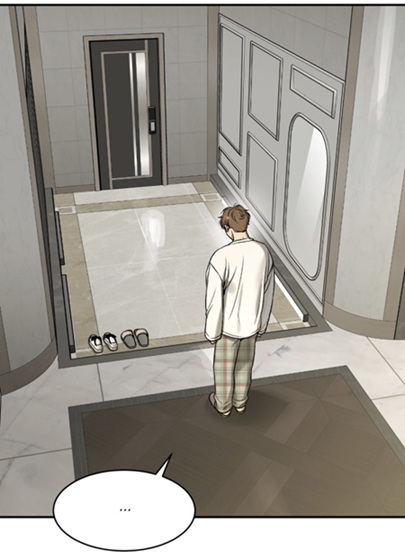 (chapter 96), Kim Dan might decide to follow Joo Jaekyung.
 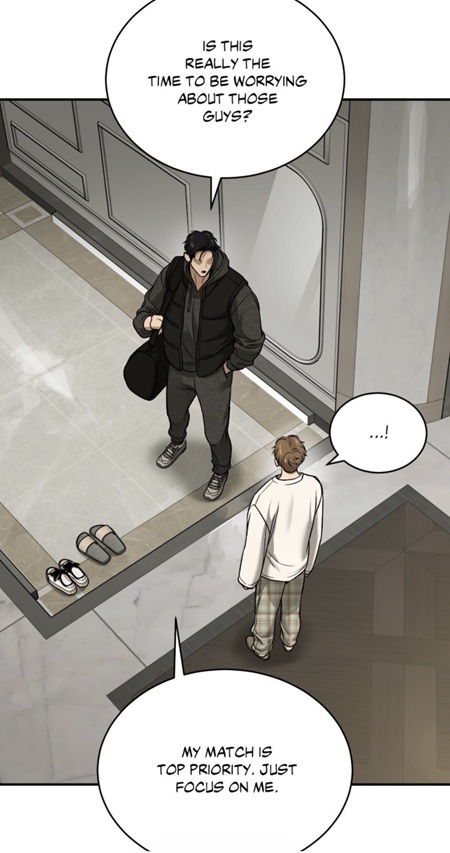 (chapter 96) and as such to be loved, something his mother never did.
 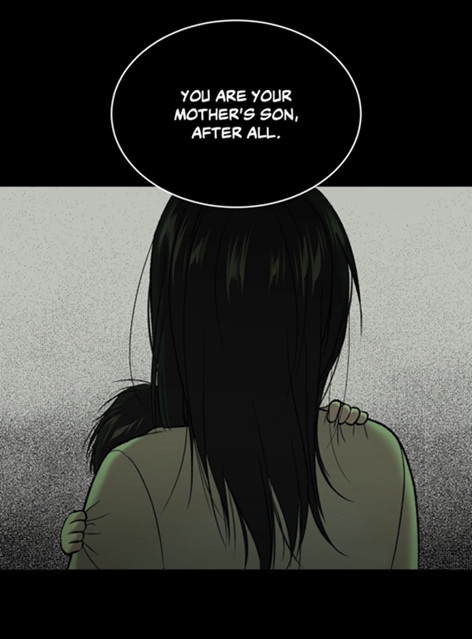 (chapter 73) Even with an injured hand, he can do this. As you can see, I am full of hope.
 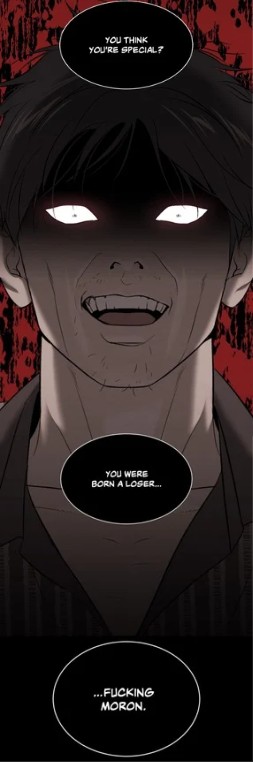 (chapter 73) His words are punctuated by smirks, interruptions, and mockery. The childhood he evokes is not one of growth or development, but of humiliation, hierarchy, and control.
 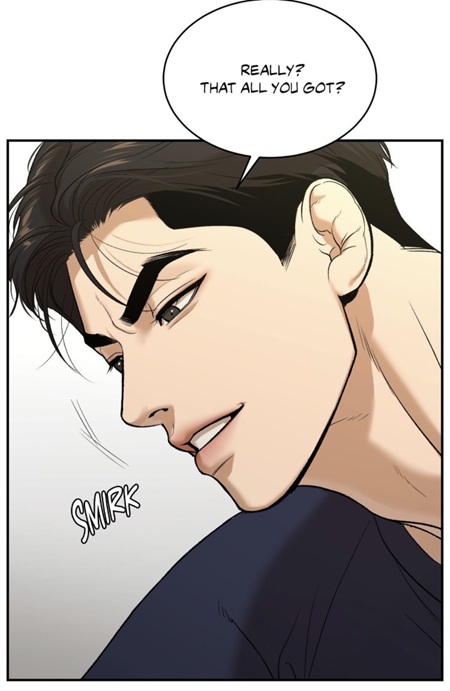 (chapter 88) Without it, action becomes mechanical, external, and ultimately unsustainable. What is done without pleasure cannot reach completion, because it remains detached from the subject who performs it.
 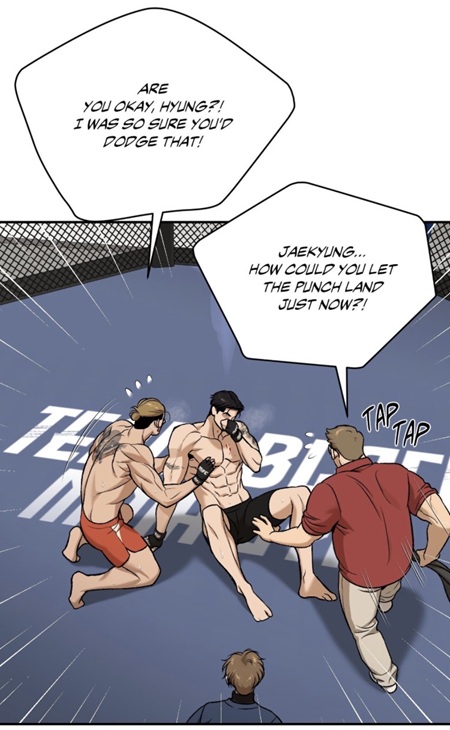 (chapter 95)
  (chapter 96) It is directed outward, against the main lead and others, and depends entirely on their diminishment. It cannot sustain itself. It requires a target. In contrast, Kim Dan is associated with a different form of laughter.
 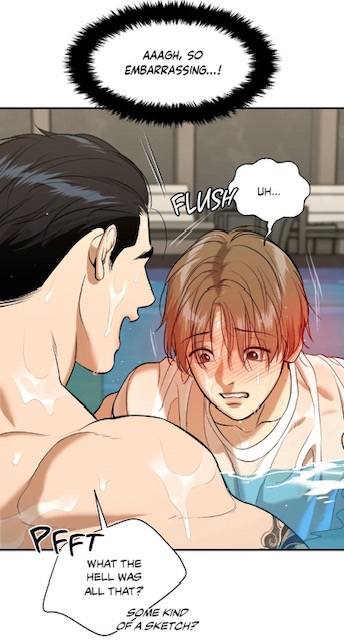 (chapter 27) The hamster—seemingly insignificant—represents companionship, warmth, and a form of joy that does not depend on hierarchy or recognition.
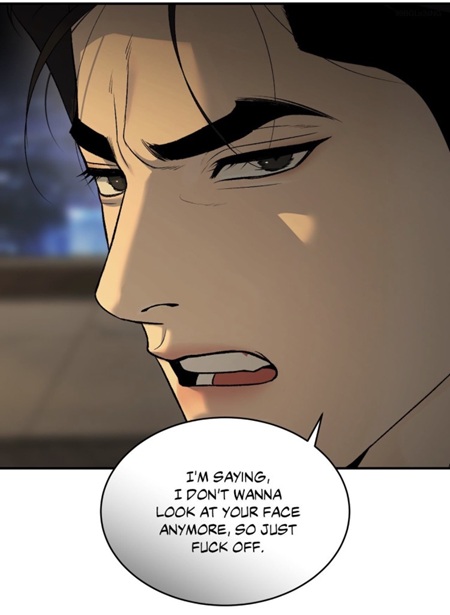 (chapter 96) It’s the consequence of pain, it belongs to the logic of rupture, of protection through distance, of a structure that resolves tension by separation. To obey would be to repeat the past—to accept absence as the only possible form of resolution. To follow the athlete, however, would be something else entirely. Not obedience to his words, but an understanding of what they conceal. Not submission, but a deliberate alignment: an act of commitment. A decision to remain—not because he is told to, but because he chooses to.
 (chapter 30) Let’s not forget that the champion’s “jinx” is linked to the smell, something which Baek Junmin revealed earlier.

 (chapter 96) A hand reaches out to continue what is not yet finished. Kim Dan tries to stop the champion, to maintain the contact, to complete the treatment.
  (chapter 96) The response is immediate: Joo Jaekyung pushes the hand away.
 (chapter 95) Both scenes belonged to episode 95, and together they already announced a growing dissonance.
 (chapter 95) The other was quieter, grounded in proximity, shared time, and a more fragile sense of presence.
 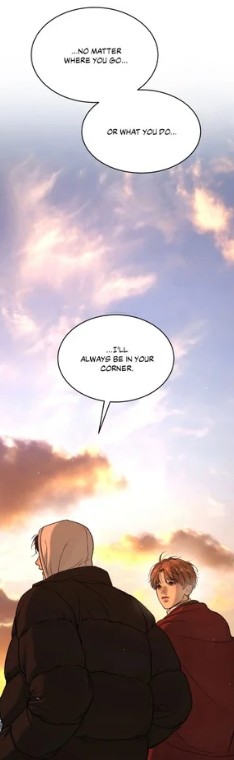 (chapter 95) They did not openly clash, but they did not align either.
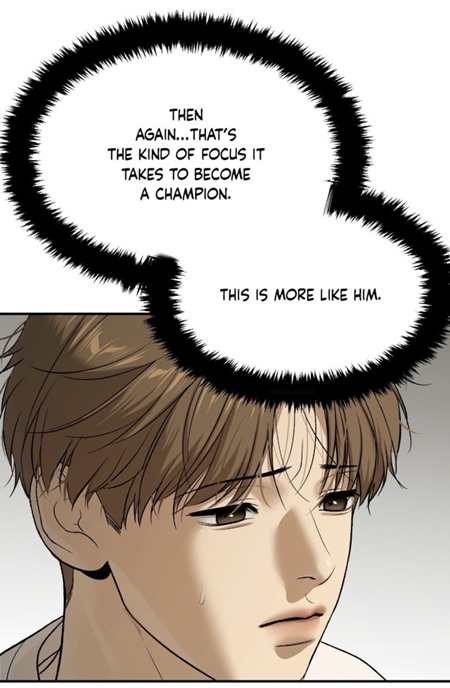 (chapter 96) From where he stands, the words and gesture appear as rejection, and the scene seems to confirm an old pattern.
 (chapter 95): in what is missing, in what is delayed, in what no longer coincides. A presence that is no longer acknowledged.
 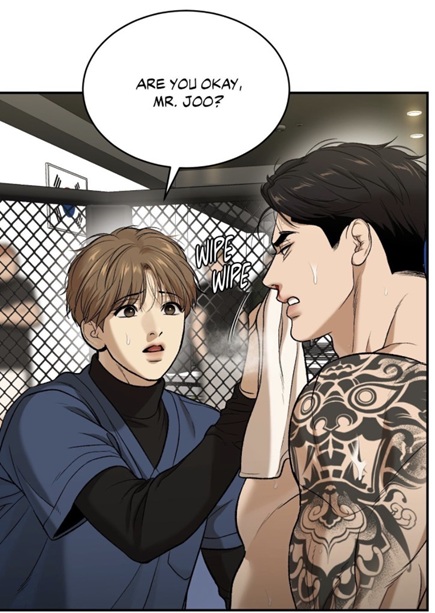 (chapter 95) A touch that relieves tension, but does not invite the burden to be shared.
 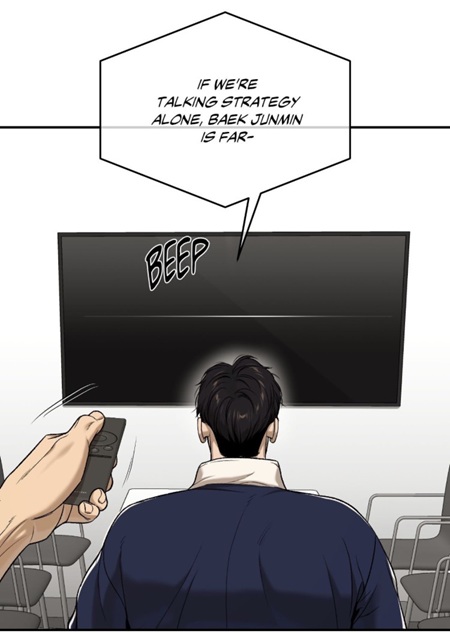 (chapter 95) There is no entourage
  (chapter 36), no managers, no advisors
  (chapter 47), no representatives from the entertainment agency
 (chapter 81). And yet, we know this moment matters: the match is approaching, the stakes are high, the narrative around him is already circulating. He only has 10 days left.
 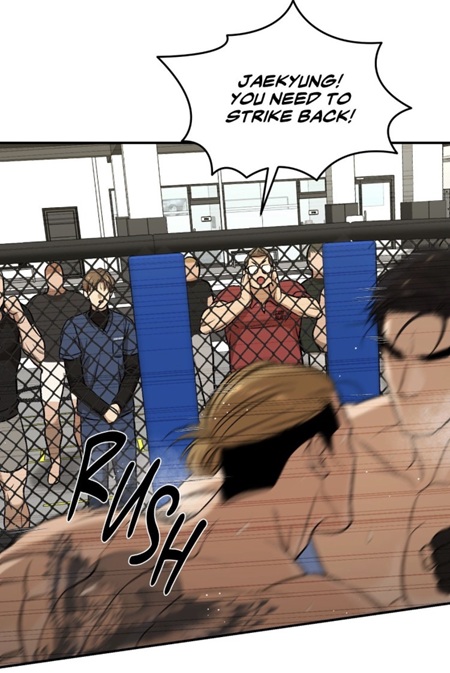 (chapter 95) It becomes even more obvious, if you compare the sparring between the champion and Oh Daehyun
 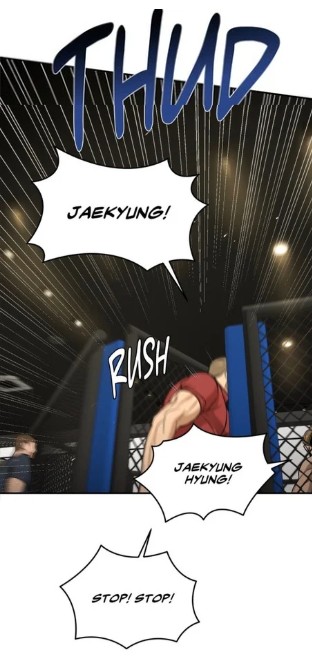 (chapter 95) and the one in episode 1, where the other partner got injured.
 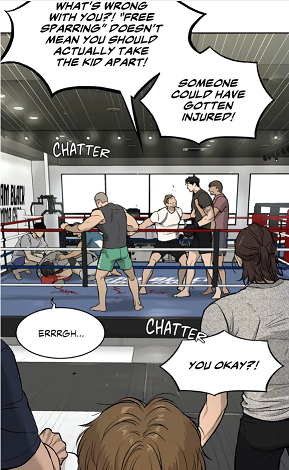 (chapter 1) He rushed to the injured fighter. But in episode 95, he is invisible. No explanation, no transition. His absence is not emphasized—and yet, it echoes. Especially if we recall episode 46, where he was on the verge of being sent out
  (chapter 46), tasked with gathering information, while Park Namwook positioned himself as the director of Team Black:
  (chapter 46) This detail is not incidental. It establishes a division of roles that is directly connected to a larger structure: the network linking gyms and the MFC. This network is not hypothetical; it is explicitly confirmed in episode 49
  (chapter 49), when Choi Gilseok asks Park Namwook why he was absent from the Seoul managers’ meeting. In other words, coordination between gyms and directors is not occasional—it is organized, expected, and institutionalized.
 (chapter 95), yet we know that meetings and exchanges between directors must still be taking place, then the question becomes unavoidable: who represents Team Black within that network at that moment?
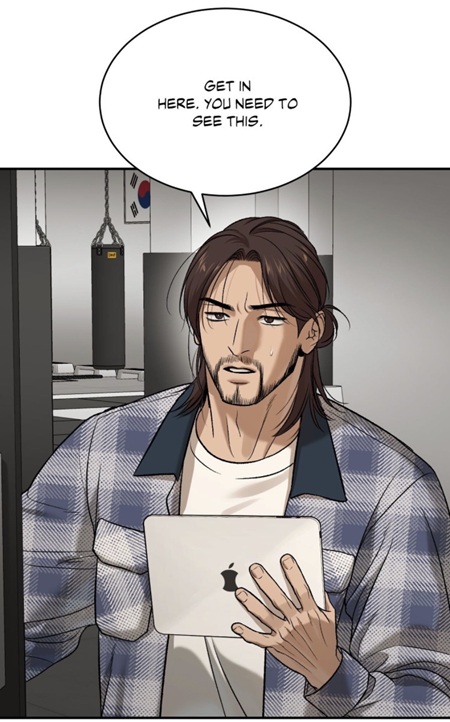 (chapter 96) Yosep is the one who calls Joo Jaekyung. He is already informed. More importantly, he is the one who presents the video—the interview in which Baek Junmin openly frames the confrontation.
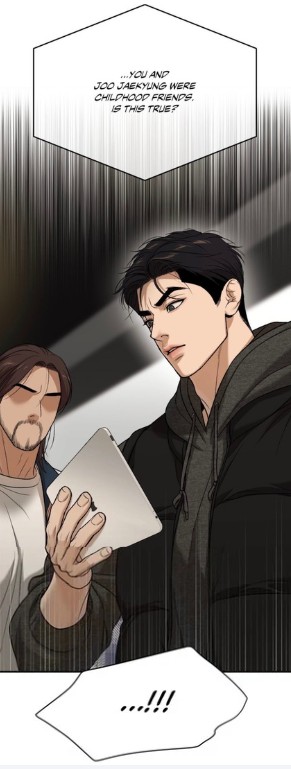 (chapter 96) Instead, he becomes the relay of a narrative that is already circulating publicly. What he transmits is no longer a report meant to establish truth, but a mediated version of events—one that exposes Joo Jaekyung to an external gaze shaped by others.
 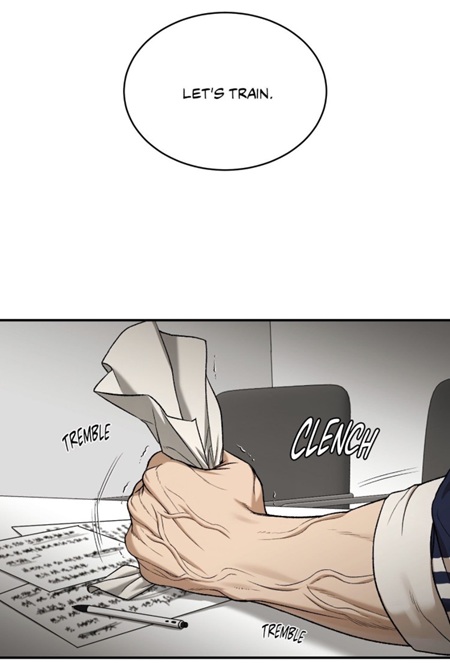 (chapter 95) the author reveals a table full of notes and a pen next to his left hand, while the champion is holding a sheet of paper. This image exposes that Joo Jaekyung was actually engaged in another activity: he was writing notes for his next fight. This implies that he was not oriented toward the act of watching, but toward a process of concentration. So why would he watch a show, when he is developing his game?
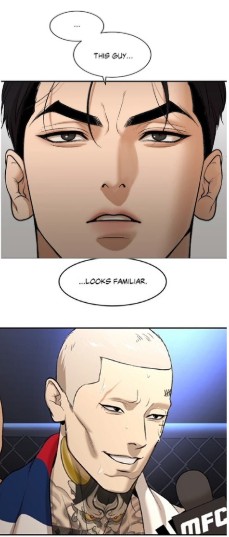 (chapter 47), his gaze is sharply defined and functions as a marker of attention
  (chapter 36), recognition, or confrontation. Here, that anchor disappears. The subject is present, but not visually positioned as the origin of perception.
  (chapter 87)
  (chapter 89)
 (chapter 13); he intervenes at its margins. He does not construct the framework; he reacts within it. And in doing so, he creates situations in which his presence becomes necessary again —whether by interrupting, redirecting, or framing what is happening.
 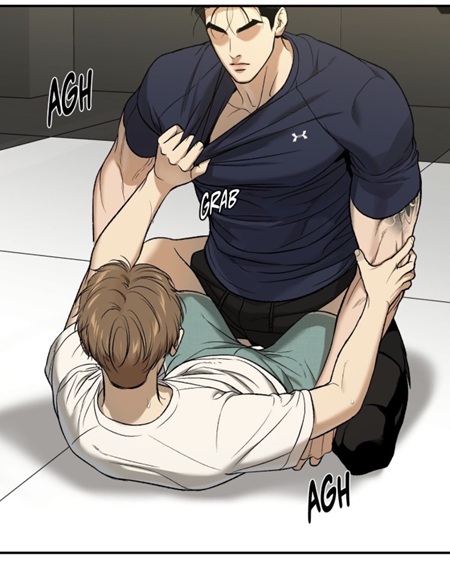 (chapter 88) and Shin Okja
 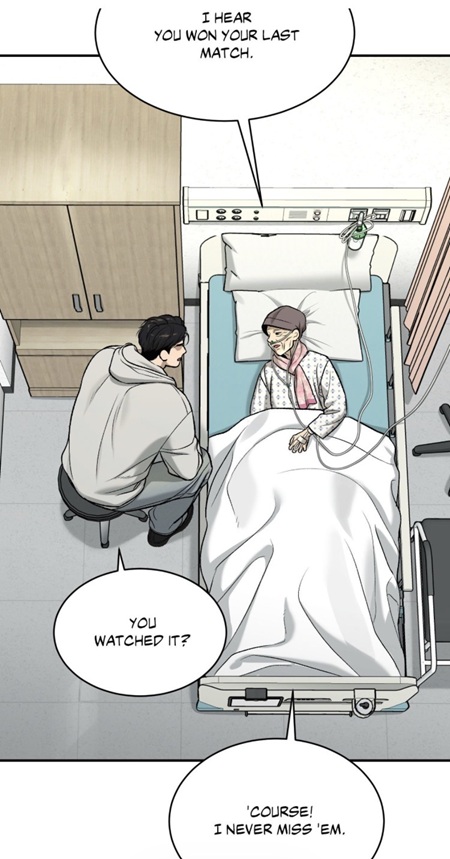 (chapter 94), the champion’s schedule has already shifted: training has been interrupted, attention divided, priorities altered.
 (chapter 37) —they allow it to pass through unchecked.
 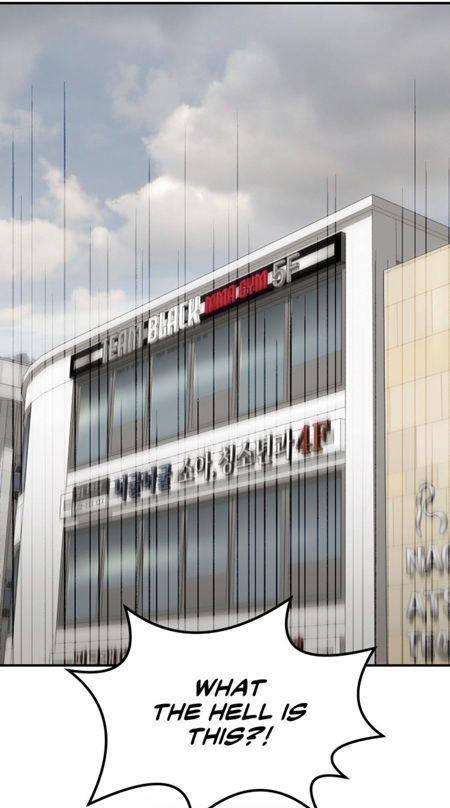 (chapter 96), but he can clear grasp the situation: an act of vandalism. Then he questions the identity of the perpetrator
  (chapter 96), and turns suspicion toward the fighters present.
 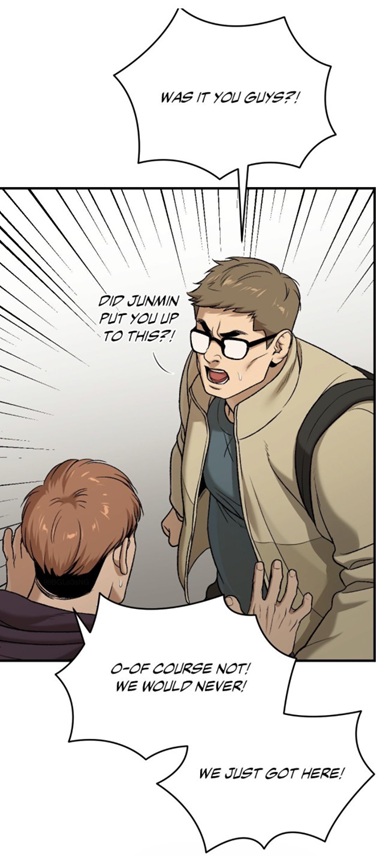 (chapter 96) The scene frames him as someone discovering the vandalism alongside the others.
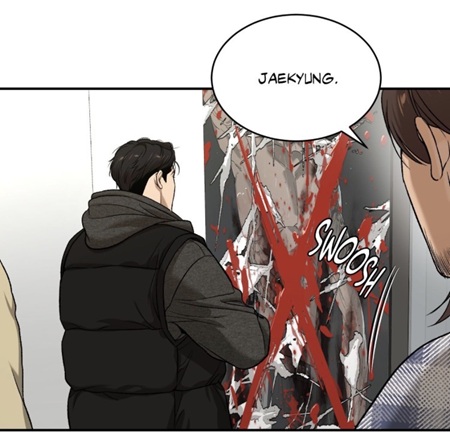 (chapter 96) Yosep is already inside the gym before the others arrive. He opens the door from the inside. This detail matters.
 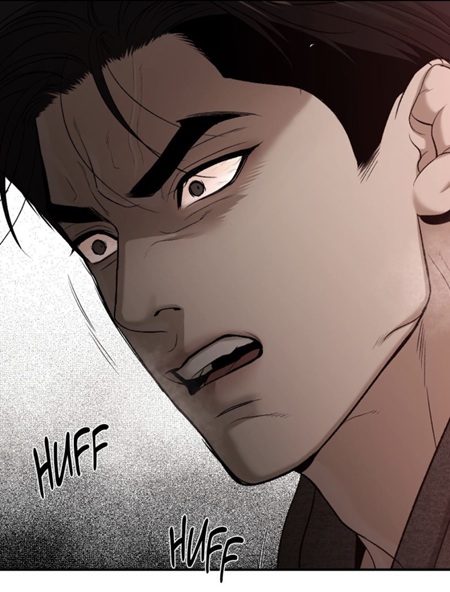 (chapter 96) This transformation is not abstract. It is rendered directly in the body of the athlete. His breathing becomes labored, his skin flushed, his eyes reddened—as if the system itself were overheating. The excess cannot circulate; it accumulates.
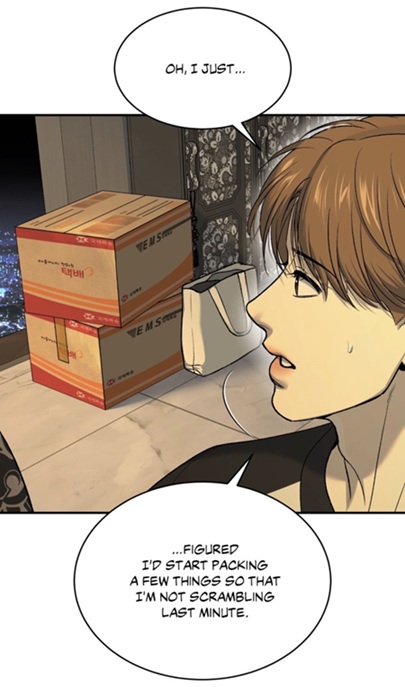 (chapter 96), he does not raise his voice.
 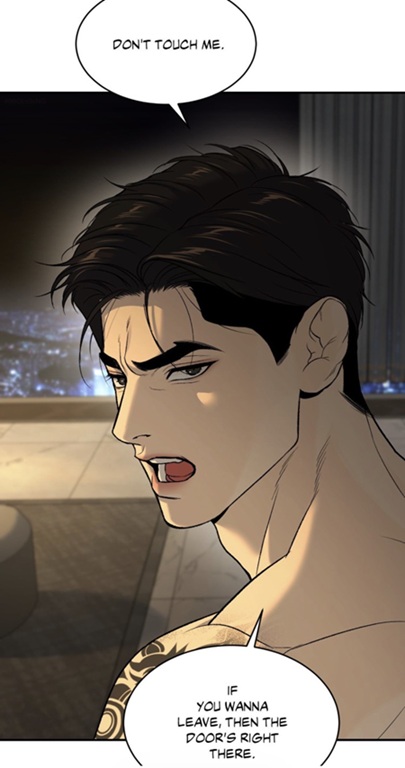 (chapter 96), maintains composure, and—most importantly—
  (chapter 96) attends to the other’s response before leaving.
 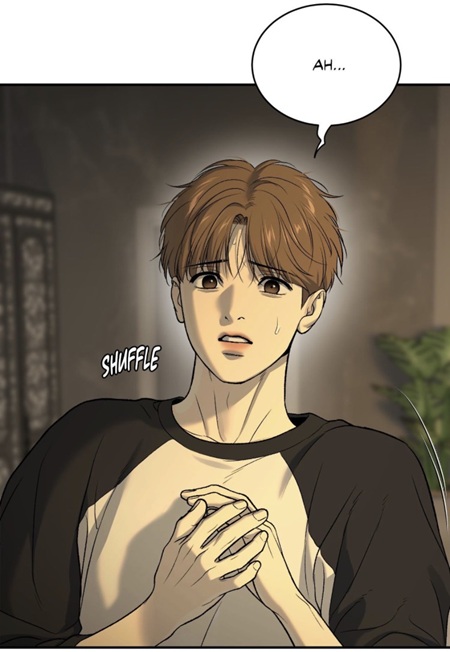 (chapter 96) This detail matters.
 (chapter 95) At first glance, its transparency suggests continuity—the inside and the outside remain visually connected. And yet, the author frames the door in a way that emphasizes secrecy, separation rather than openness. The image functions less as a window than as a boundary.
  (chapter 95)
  (chapter 95)
  (chapter 95), readers can detect a pattern emerging.
 (chapter 95) There is no transition to negotiate, no boundary to maintain. There is only the fight. What appears, from this perspective, as distraction is therefore reinterpreted as failure. What is, in fact, a tension between two spheres is reduced to a flaw within one.
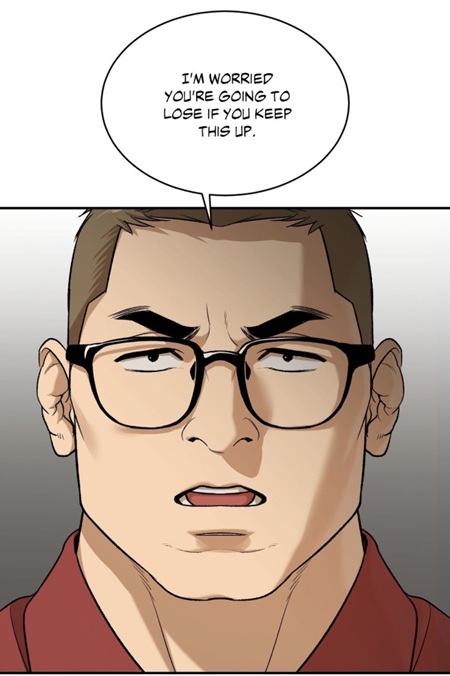 (chapter 95) This clarity signals a mode of perception that has already appeared elsewhere. When he looks at the main lead and calls him “fresh meat”
 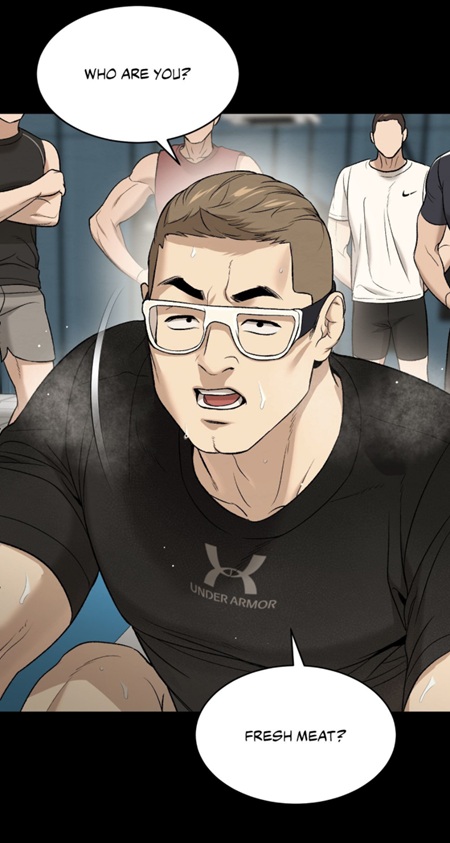 (chapter 74), the same logic is at work. The individual is not encountered as a subject, but classified as a function, reduced to a body that can be evaluated and positioned.
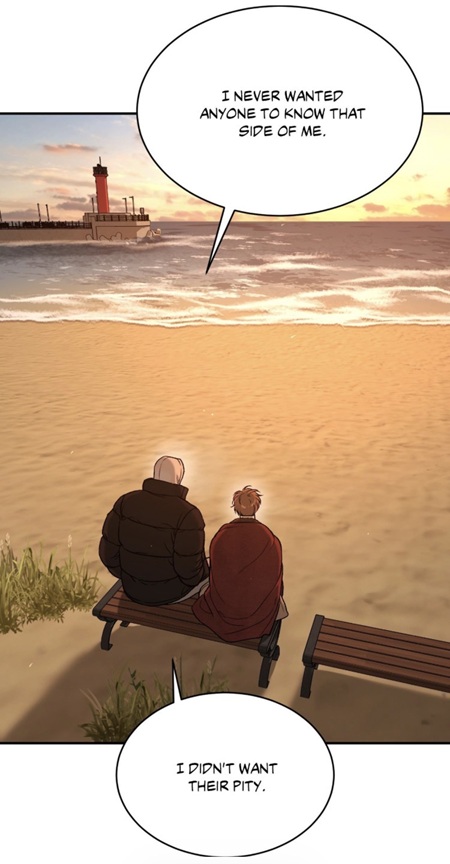 (chapter 95) Joo Jaekyung and Kim Dan sit side by side, aligned within the same horizontal plane. The asymmetry that structured the office—front versus opposite, speaker versus evaluated—seems to dissolve. The scene suggests proximity, even equality.
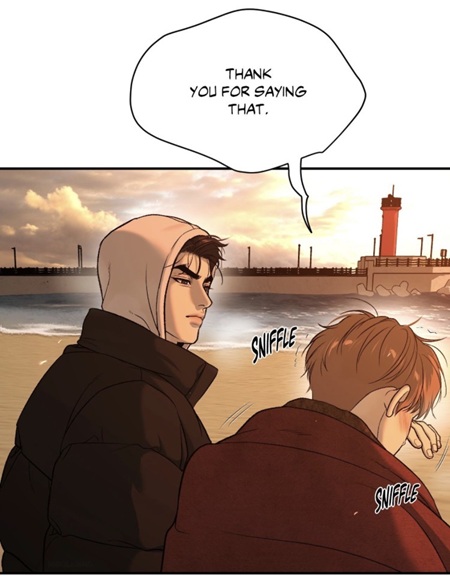 (chapter 95) The promise is unilateral. There is no reciprocal formulation, no mirrored commitment, no re-articulation of the bond from the other side. What is offered outward is not taken up and extended; it remains suspended.
 (chapter 95) In Kim Dan’s gaze, Joo Jaekyung is not reflected. What appears instead is the lighthouse in the distance. At first glance, this suggests a displacement: the athlete’s presence does not fully register within his field of vision.
 (chapter 69) This panel implied that Kim Dan had become his whole world. The comparison exposes that the athlete is still not in the center of his life yet. The lighthouse is not only an external point of orientation.
 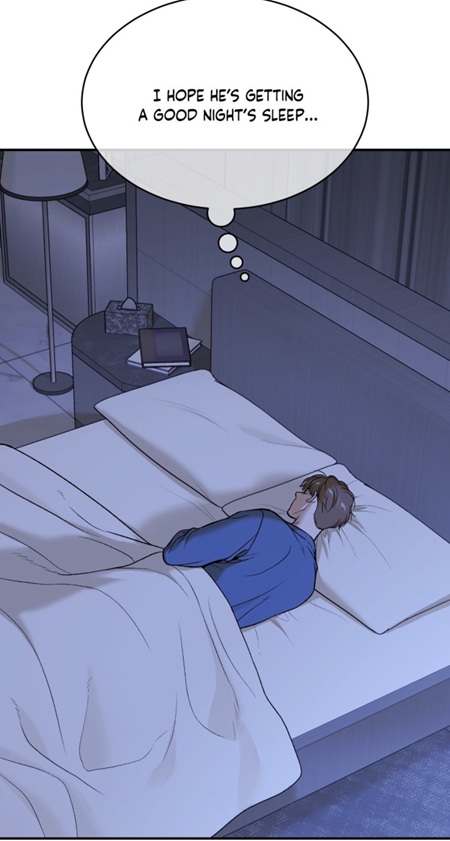 (chapter 91) It lingers in the background, acknowledged but never truly treated. And yet, it is not incidental. Insomnia signals the inability to withdraw, to interrupt exposure, to let the body enter a different rhythm. In this sense, it mirrors the function of the lighthouse. A lighthouse remains on—it stabilizes, but it does not allow rest.
 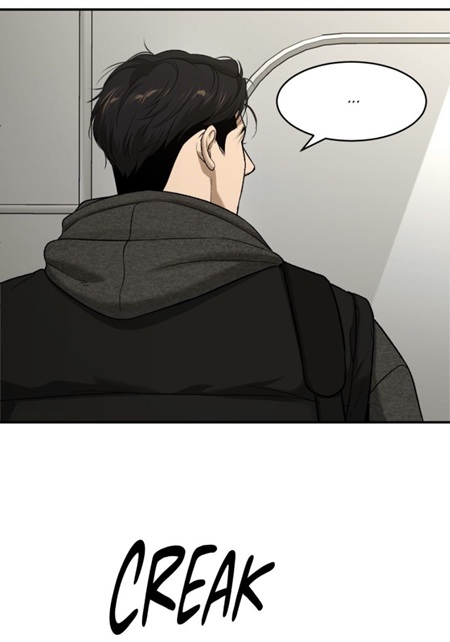 (chapter 96), without reestablishing that line of orientation, the structure collapses. What had been silently assumed—being seen, being turned toward—is no longer confirmed.
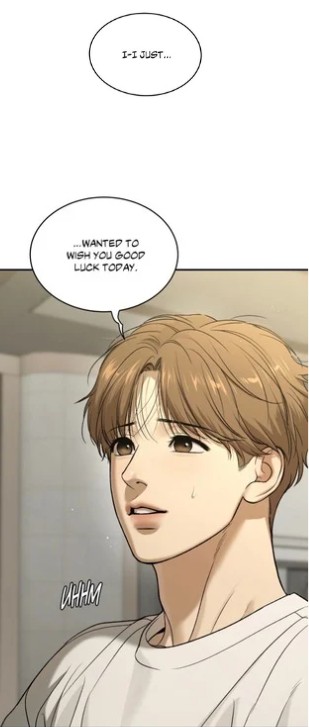 (chapter 96) At first glance, this appears simple. But it is not neutral. It is a repetition. Kim Dan tries to reactivate a shared ritual—the one established after the night in Paris.
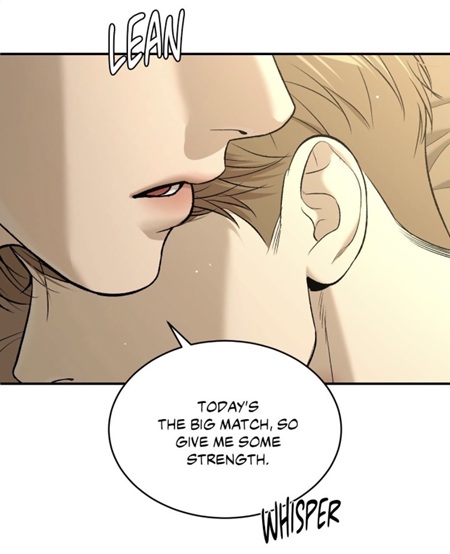 (chapter 87) A moment where touch, words, and intention aligned.
 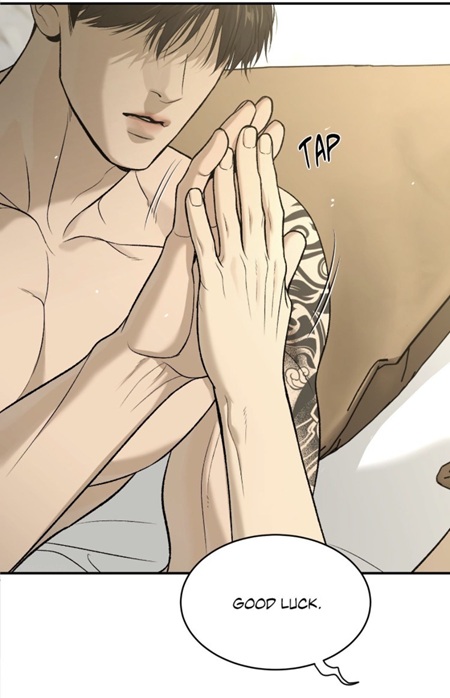 (chapter 87) A moment where connection was not abstract, but embodied.
 (chapter 87) But in front of the entrance, something is missing.
  — earlier echoed outside the narrative—suggests a moment that has not yet been reached. A point where gesture, intention, and response will finally align.
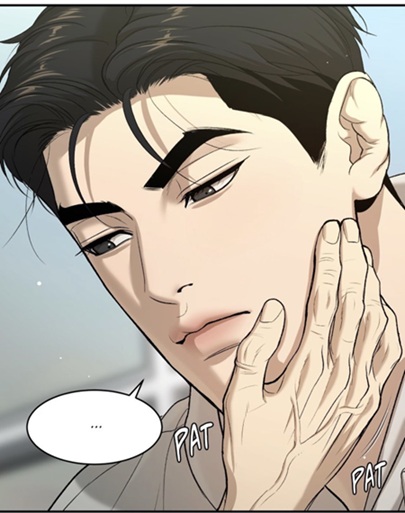 (chapter 94) It is not a gesture of control, nor of care defined by function. It is, instead, a gesture of recognition and affection.
 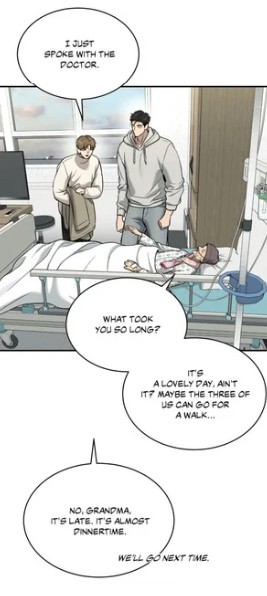 (chapter 94) When the grandmother suggests that “the three of us can go for a walk,” the gesture shifts from recognition to movement. The proposal is not incidental. It translates what has just been opened into a concrete form.
 (chapter 95) Her words are not recalled, her figure is not evoked, her request is not consciously revisited. On the surface, she is absent. And yet, this absence is deceptive.
 (chapter 95) —is no longer stable. It is immediately unsettled by another voice, another possibility:
  (chapter 95) And what follows is not an abstract idea. It is an image. Kim Dan appears.
  (chapter 95) This shift is decisive. The grandmother is not present as a figure, but as a function. She has already altered the internal configuration through which Joo Jaekyung perceives himself. Her gesture has been absorbed, displaced, and translated into a new form of questioning.
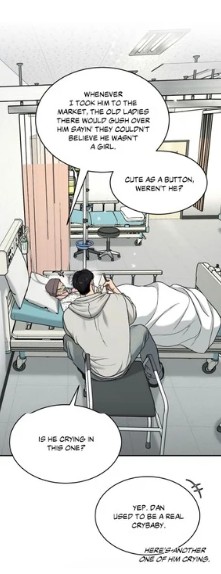 (chapter 94) It has introduced a new axis—one that opposes performance to relation, victory to something else that remains undefined, but essential. But this axis is not yet resolved. It exists as a fracture. And from this point onward, absence no longer signifies emptiness. It signifies transformation. What is no longer visible has already begun to act.
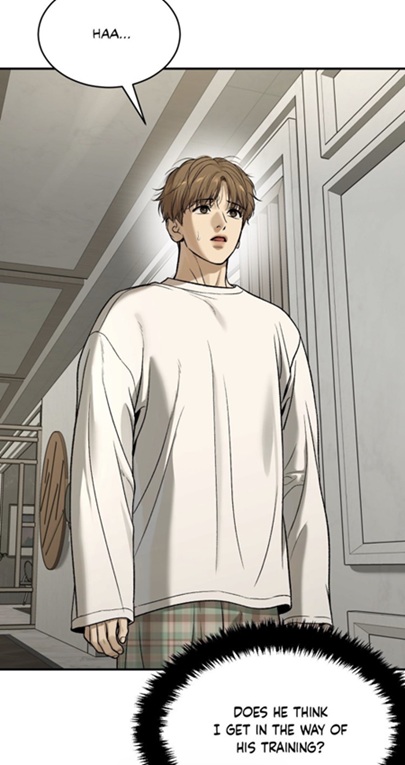 (chapter 96) Thus the physical therapist is not included in the meeting. Distraction must be eliminated, influence must be controlled, and relationships are tolerated only insofar as they remain functional. The body must remain available, and the mind aligned.
