

This is where you can read the manhwa. https://www.lezhin.com/en/comic/painter ut be aware that this manhwa is a mature Yaoi, which means, it is about homosexuality with explicit scenes.
This time, I’m just going to make a list of all important elements I could dig up through my analyses so that when the second season starts, the readers can start interpreting on their own by using this handbook. Furthermore if you go through the list and pay attention to all the small details, then you’ll be able to savor each episode even more, since one chapter a week is not enough. They always seem to be too short, as Painter Of The Night is so addictive. So what did we discover? Based on my observations, I’ll give tips but at the same time develop theories for the second season.
- The characters and their clothes
First, if there is a new character, it is important to observe his clothes and manners. We still have to see the face of Yoon Seungho’s father and his favorite color. 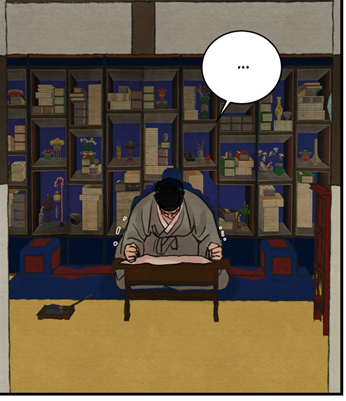 Based on one cloth, it is not enough, furthermore the color is difficult to discern: grey or khaki. We discovered that Byeonduck is very particular about the colors and the kind of clothes her figures are wearing. We already know what yellow, orange, black, red, burgundy, pink, green and blue mean. The clothing can give us clues about the person’s true personality. Besides, we have to observe if the headband will resurface again or not and if yes, under which condition, though I doubt it. Furthermore, I was always able to associate the figures to animals (Baek Na-Kyum as a lamb, Yoon Seungho as eagle, Min as magpie/crow and snake, Jung In-Hun as a chameleon, a peacock and a snake, Jihwa as pheasant). Since we will see the younger brother and his father more often, we should try to find the fitting animals. We should do the same for any new character. It helps to discern the person more correctly.
2. The behavior of the characters and their interactions with others
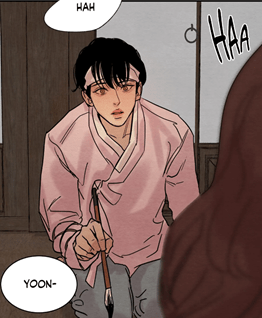
We noticed Yoon Seungho’s passivity as recurrent behavior because even in the final episode, he continues smoking in front of the window at the end of the first season.  His inaction was reflected in his refusal to meddle in politics as well therefore he refused to follow Jung In-Hun to the capital. However, I anticipate that Jung In-Hun’s “career”, his brother’s decision to take the civil service examination and the failed attempt of assassination on Baek Na-Kyum will provoke a change. He will be forced to take matters into his own hands. This means that at some point, we won’t view the protagonist smoking like before. My theory is that the lord will become Baek Na-Kyum’s teacher and he could become a real sponsor for the painter encouraging to paint something else too. As for Baek Na-Kyum, we could see a change in his behavior through his hands. First, he touched the main lead on the shoulder with his hand
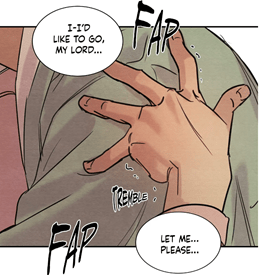
on his own volition (chapter 16). Remember the protagonist’s reaction, when Jung In-Hun attempted to do the same, he would have been killed if the painter had not intervened hence the latter grabbed the noble’s hand to pledge allegiance. 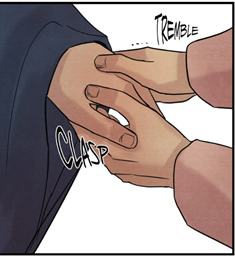 Then during the sex marathon, he brushed the man’s stomach.

Each time, the painter’s hand was used to stop or restrain the master. However, the level of intimacy kept growing. First, the robe separated the physical contact. Then it was just the hand where the uke’s skin could rub the noble’s skin. Finally, it was the aristocrat’s body. However, in the chapter 42,

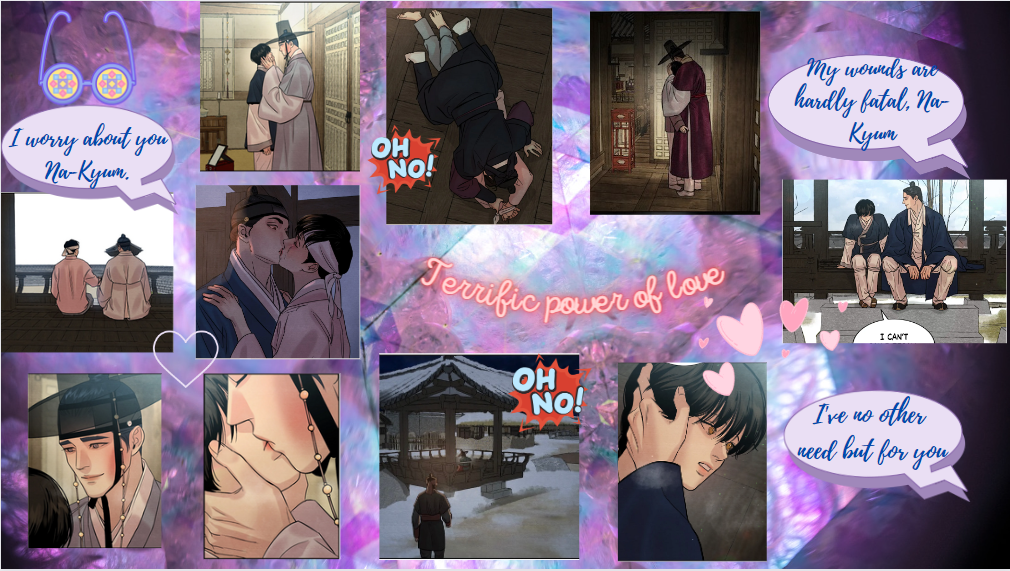
the artist finally grabs the master’s hand to put it on his stomach in order to encourage the lord to thrust even harder. In other words, while the level of intimacy increased all along, the nature of the gesture has changed. He is taking the initiative, encouraging more intimacy and physical contact. Will the painter take the initiative again at some point? I believe so, then we could compare this scene to the one from the chapter 41-42, where he perceived himself as a prostitute and observe the progression. This will reflect how the painter’s feelings for the master have deepened.
I have to say that their positions during their sexual encounters always reflected the nature of their relationship. When it was from behind, sex mattered more than love or feelings, however during their last sexual encounter, they are facing each other indicating that they have come closer. This represents the climax of their relationship: 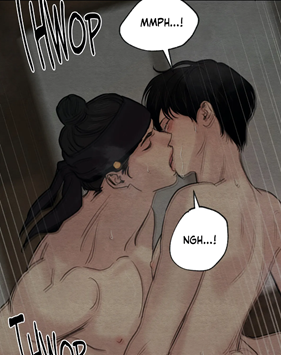 But here, the noble is taking the initiative again, attempting to show his feelings for the painter.
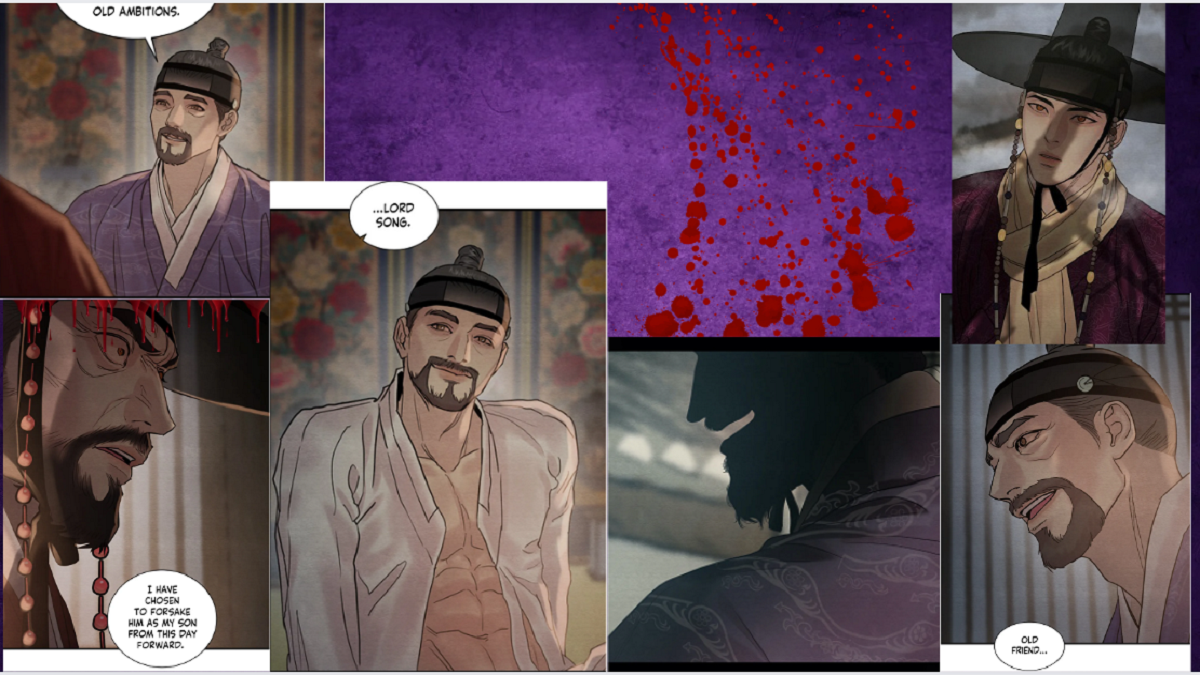
Concerning Jung In-Hun, I also observed homosexuality had entered his world. First he acted like a pimp and a whore at the same time. 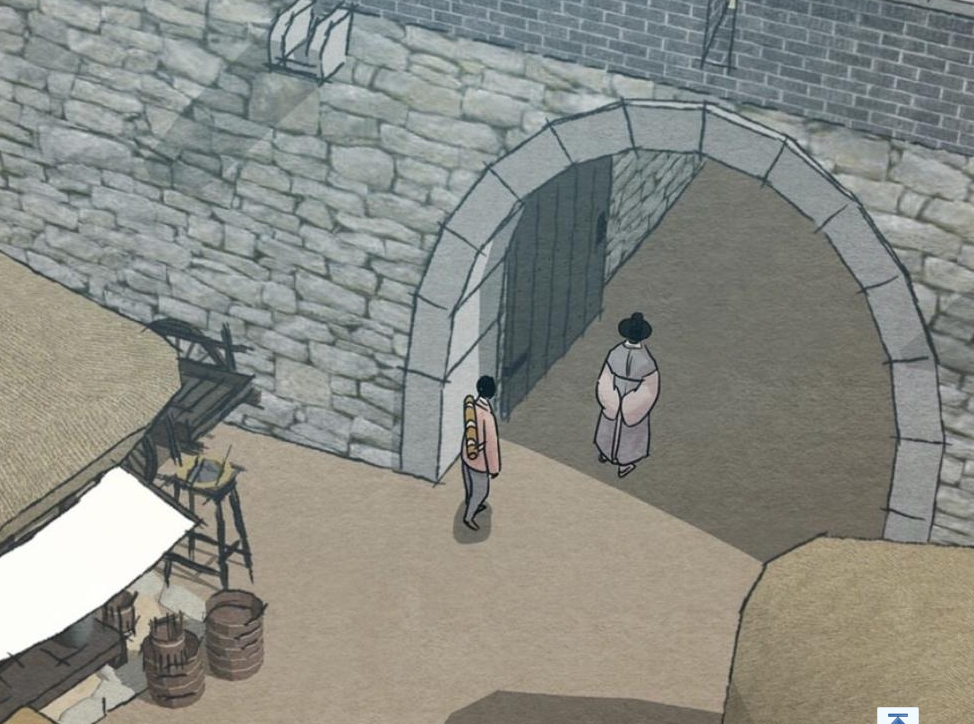 Striking is that he not only leads the painter to return to the mansion and as such allows him to become a sodomite officially, but also passes through the door himself. So does this mean that this door marks a turning point in Jung In-Hun’s life as well? Will the readers see him selling himself to an official for his own interests? I am inclined to believe so. Therefore pay attention to his gestures and his “lip service”. Will we see another progression where the teacher’s first sexual encounter symbolizes the climax of this evolution?
Then the readers should pay attention to the behavior of the servants. Will their relationship to the painter improve? We saw that thanks to the lord’s intervention, the domestics stopped gossiping about the artist and their master.  Baek Na-Kyum could play a huge role as mediator so that the relationship between Yoon Seungho and the other servants improves. They finally accept him as their true master. Before they showed no respect and loyalty towards their lord (gossiping, the opening of the door of his bedroom, the expressed criticism from the maid in front of his loyal valet). Right now, they just fear him hence they are no longer talking about him behind his back.
3. The locations and their meaning
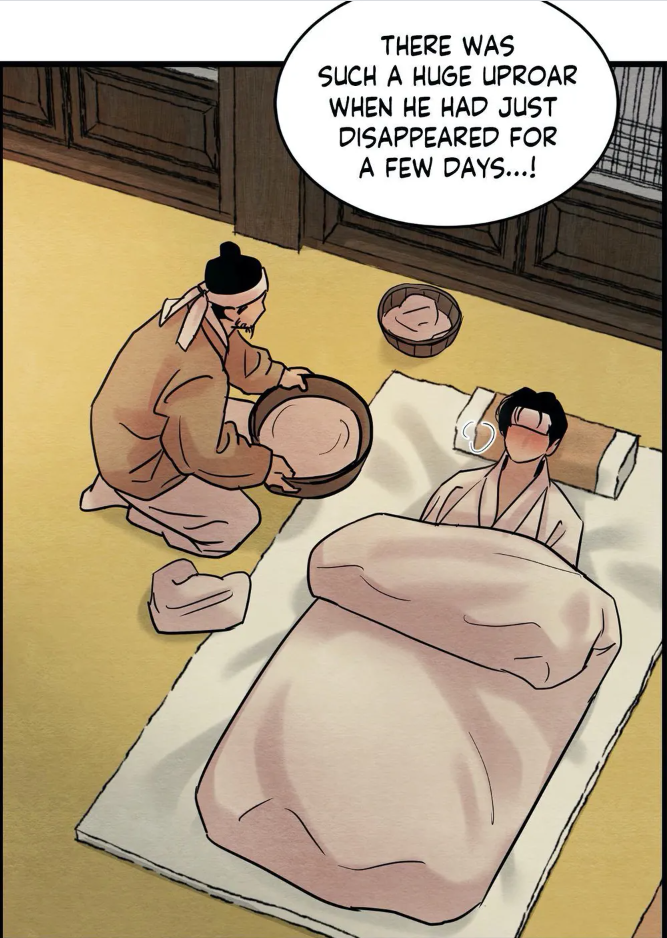
The locations play a huge role. I pointed out that Baek Na-Kyum and Yoon Seungho always had consensual intercourse in Baek Na-Kyum’s chamber. The first time, both had the impression that it was like a dream had come true. The second time the painter was finally admitting his true sexual orientation but perceived himself as a prostitute. When they have sex again, where does it take place? In his chamber or in the master’s room? I am inclined to think that it will be in the commoner’s chamber. On the other hand, we know that Yoon Seungho would like to share his bed with the painter permanently, hence the appearance of the yellow and red bed is an indicator to see if their relationship has improved or not. My theory is that the place will change… at some point, the artist will be willing to do it in the master’s chamber. Besides, I am expecting that they will share a bed together again.  Nevertheless, their position will be different. The climax would be that Yoon Seungho lays under the cover just like the painter so that there is no longer a master-servant relationship. In the picture above, there is still a gap between our protagonists. Consequently the cover as wall will disappear. Strictly speaking, look at the position of the cover.
 Then the library became a terrible place for the artist who not only had to hear harsh words but also was abandoned there. I can imagine that the artist won’t connect this place with good memories.
 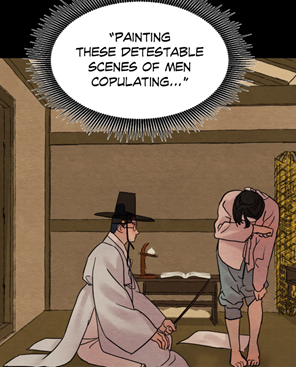 Besides, he was beaten and brainwashed in a similar place by the low noble Jung In-Hun hence I am quite sure that the low-born doesn’t connect books with good memories. This would explain why he dropped his lessons. However, I have already anticipated that Yoon Seungho will be the one who teaches the low-born how to read and write. So where will this happen? At the library or somewhere else?
 The pavilion was important, because this is the location where Yoon Seungho liberated himself from his self-hatred and accepted his sexual orientation.
  There he saw himself in a different light that’s the reason why he asked the artist to meet him there after the hunt. Therefore the pavilion is linked to a bad memory for Baek Na-Kyum. Will this place appear again and have another symbolic meaning? I have the feeling that the pavilion could become the place where the master will teach the commoner. This would erase the event of the rape but at the same time, become the location of Baek Na-Kyum’s emancipation, just like it occurred to Yoon Seungho. The pavilion could symbolize the protagonists’ liberation in the end. And this would also help the servants to perceive their lord differently and even accept his relationship with the low-born. They would no longer judge him as a sodomite but as an open-minded and caring lord. Remember that he is a supporter for the education of commoners (chapter 6). This could be what he defends later, when he has to go to the capital…
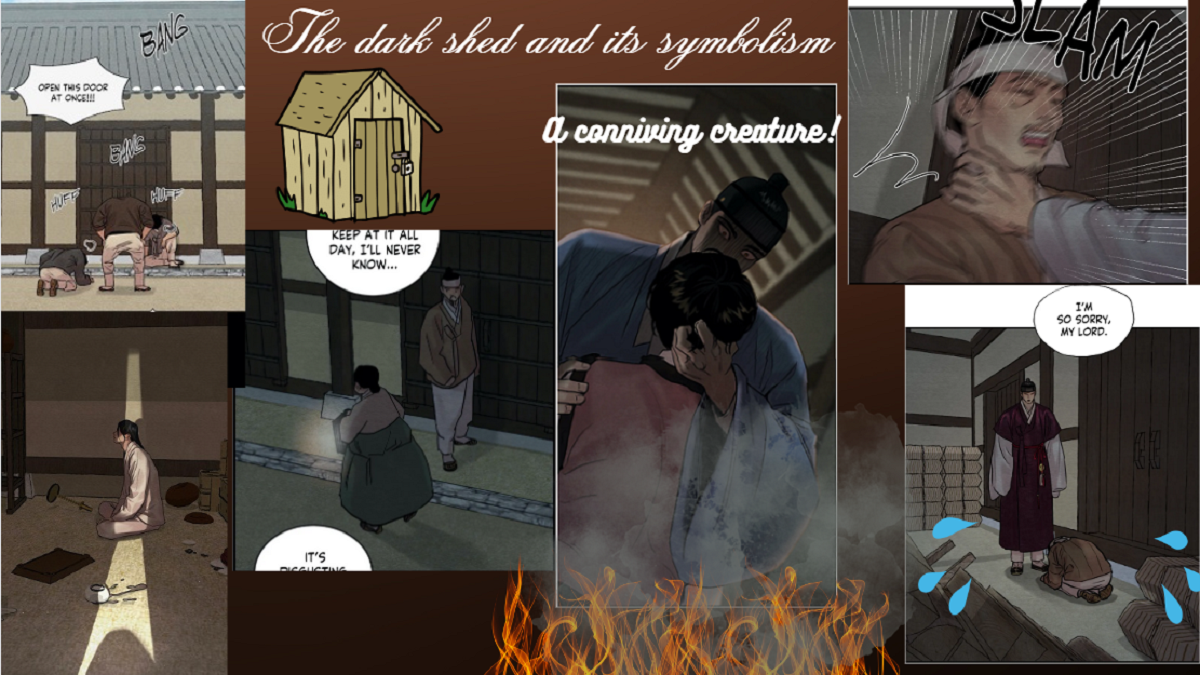
Finally, we have to pay attention to the door and the window too because they are deeply connected to our main characters.
4. The drawings
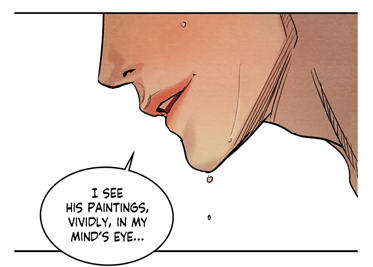
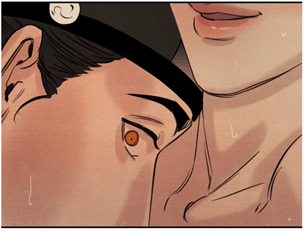
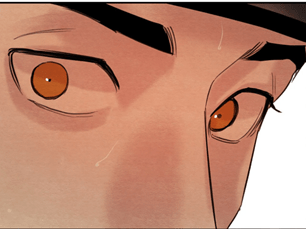
Then the readers should analyze the images as they are quite important. Why do we see only Seungho’s mouth? If such a drawing appears more often, this indicates the opening up of our beloved seme. He is exteriorizing more and more his thoughts and feelings towards the artist. It is the same when Byeonduck focuses on the hand or Seungho’s gaze. What is the purpose of such images? By each zoom, the “manhwaphiles” should try to think about the meaning.
Then the “manhwaworms” have to pay attention to the chronology of the pictures. I can mention an example from the first season as illustration. At the tailor shop, we have the following sequence:
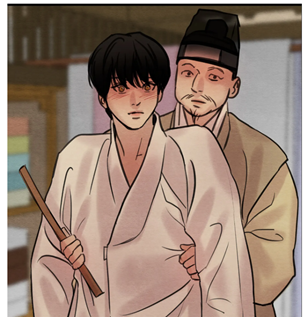
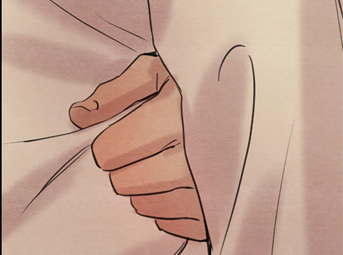
 The author wanted to let the bibliophiles recognize the jealousy of the main lead. He doesn’t say anything but the zoom on the hand represented the lord’s vision. Hence for the second season, we have to question the chronology. Why is there a zoom on the hand in this moment? How about the gaze? Or will the focus on Baek Na-Kyum’s hand reveal another progression, like f. ex. he finally caresses the lord’s face or chest? So far, we never saw him caressing his face or his arms with such a tenderness, while we could observe the main lead kissing the low-born tenderly twice.
Let us not forget that Byeonduck paid attention to the perspective. That’s why we become a sort of voyeur in the chapter 28.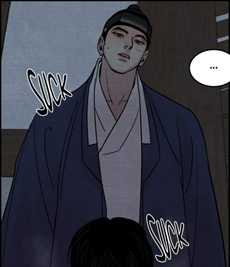 We sometimes had the impression we had entered the character’s mind and were witnessing things through the character’s eyes. I could name the fellatio as example. Here we can understand the seme’s fascination for the painter’s gaze. He saw the acceptance in his eyes.
 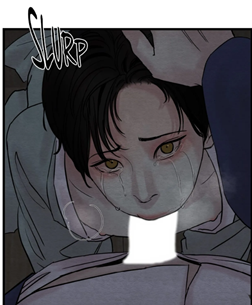 But we also entered Jihwa’s mind too.

This is what Jihwa sees when he is awakened by his servant. This outlines how low Jihwa has become. The domestic has to look down on his master. The red-haired man is no longer acting like a noble, he is just a wreck and this could be another foreshadowing for Jihwa’s tragic outcome, the loss of his title as noble.
The use of flashbacks was also relevant. It indicated for example Seungho’s pangs of conscience and Baek Na-Kyum’s repressed memories (the physical abuse) and sexual desires. The painter’s flashback in the chapter 40 mirrored the progression of his critical thinking and the increasing influence of Yoon Seungho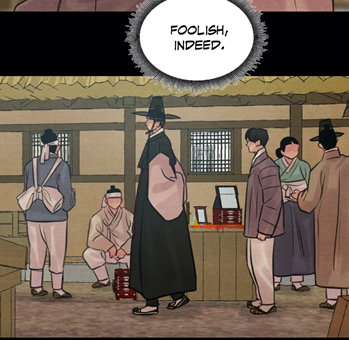 . Here, he did listen to the lord’s remark and questions.
Byeonduck uses colors like pink to show the sexual desires and phantasms. Will we see it again and what does it mean?
5. The presence of the mirror
In the first season, the mirror had different functions. It served to reveal Jihwa’s personality (his vanity, superficiality),  to foreshadow the future of our protagonists or reflect the painter’s natural desires or to liberate the uke from the coercive persuasion done by the vicious teacher.
Remember that I described the lord as someone who feared people’s gaze until he saw the artist’s first painting. However, we never saw the noble looking at his own image in the mirror alone. Even during the sex marathon, he could only see his gaze but the uke was in the middle, as if he was used as a shield. 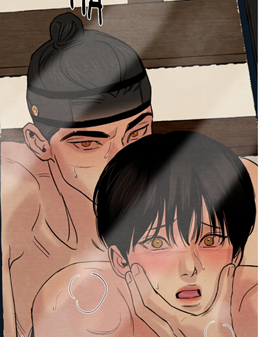 It would be interesting to witness this because this would mean that Seungho is finally able to accept his own identity and he no longer needs to perceive his own reflection in the painter’s gaze, he is longing for love and acceptance there.
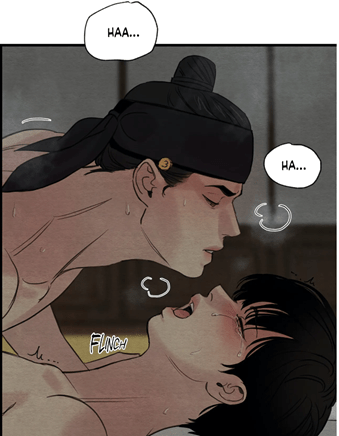
Notice that till the end, the master is looking at the painter’s eyes. Sure, he would like to recognize the satisfaction and desire in the painter’s gaze, yet I feel that our aristocrat is still looking at his own reflection in the artist’s eyes. It is important for him to see acceptance and love in the partner’s gaze.
6. Baek Na-Kyum’s paintings
They revealed a lot about the low-born’s state of mind and his relationship with the lord. The last drawings we saw in the chapter 41 revealed that there was no deep feelings for the lord, he only painted automatically, like a machine. They were not detail-oriented, especially the artist’s facial expressions were still missing. So we have to pay attention to his future creations. They will serve as an indicator of his feelings for the lord. Simultaneously, the drawings will reflect an improvement in his self-esteem. So far, Baek Na-Kyum has a low self-esteem created by the teacher.
 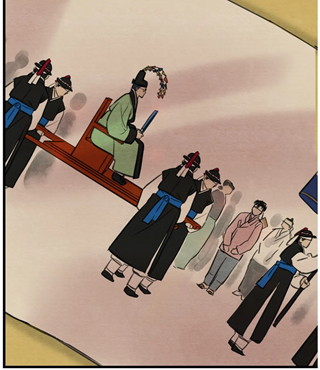 That’s why there is no facial expression on his face and he stands far away from Jung In-Hun in the painting of his inauguration. His erotic paintings should ooze love and warmth as time passes on and maybe the artist will be encouraged by Seungho to draw something else. In other words, the readers should look carefully to the future paintings.
7. The language and names
The manhwaphiles should pay attention to the choice of words of the characters, especially concerning Jung In-Hun and Yoon Seungho. Although both are masters of deception, the powerful noble distinguishes himself from the low noble by his expertise, when it comes to words. He can be sarcastic (chapter 6/37) 
 but behind the irony, we can detect his true thoughts. Through his ironical remarks, we might even discover more clues about his traumatic past. Moreover he often uses metaphors, like when he compares Min to a mouse and in the final chapter he spoke about “lip service” which was quite ambiguous. He loves teasing the painter.
 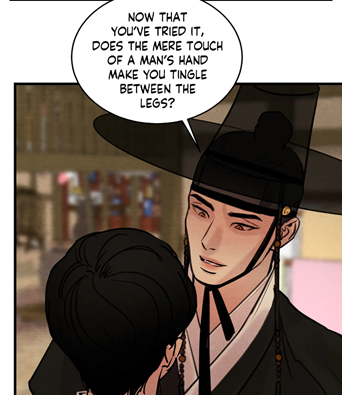 Savor the noble’s intelligence, sarcasm and his jokes.
Besides, remember how Baek Na-Kyum is called by the other characters: a charlatan, an ill-bred curs, a vermin, etc. Only the main lead called him in a positive way, either “Na-Kyum” or “boy” (chapter 31). Even there he didn’t insult the low-born despite his jealousy and anger.
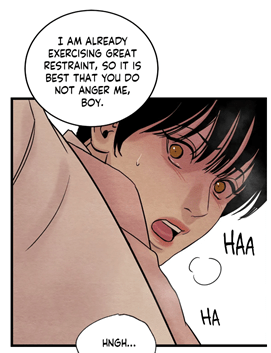
The manhwaworms have to pay attention to the way the lord addresses to our painter. This will reflect if their relationship has progressed. It is the same for the artist. Till the end, he calls Yoon Seungho “my lord”, even when he moans. It would be really great to witness how the lord asks Baek Na-Kyum to call him by his name or a “nickname”. At some point, I had even envisaged that Baek Na-Kyum would call him “learned sir”, yet I have some doubt about it because it would be a constant reminder of the former teacher. Calling him by a nickname or his name would represent another step in the transformation of their relationship. They would no longer be master and servant.
I hope, I didn’t forget anything. If I did, then you are more than welcome to point out the missing elements so that I have to update the manual. I hope that my readers and followers will appreciate this manual and help them to have a better understanding of the story. Just like the main lead, I am encouraging my readers to critical thinking. Remember that Yoon Seungho triggered the painter’s critical thinking through questions, he never told him what to think. 
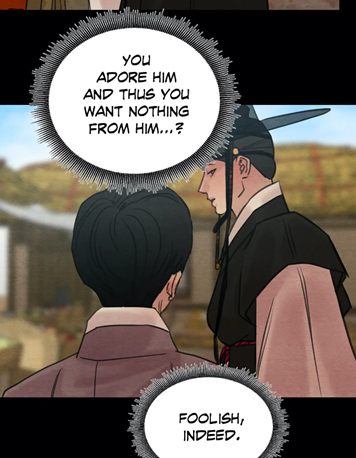
As you can observe, I’m still acting like a teacher, even if I am writing these analyses. That’s why I described myself on twitter “teacher till the end”.
Feel free to comment or to give any suggestion for an analysis (topic, manhwas). If you enjoyed reading it, either retweet it or push the button “like” so that this writing doesn’t become pointless. My twitter/tumblr/instagram account is @bebebisous33. Thanks for the support.

 (chapter 3)
 (chapter 5)
 (chapter 12)
 (chapter 12)
 (chapter 18)
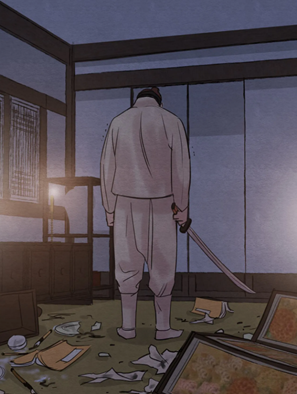 (chapter 21)
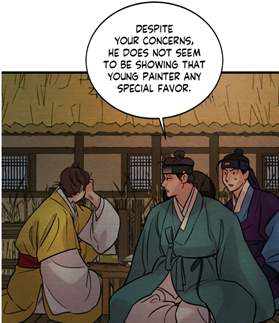 (chapter 36)
 (chapter 41)
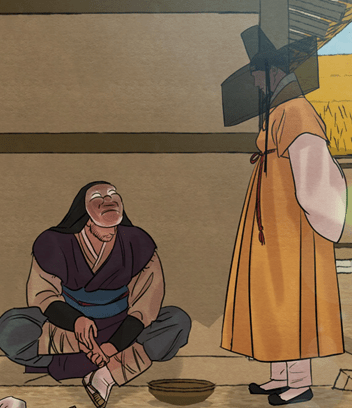
 , he didn’t feel the need to attract attention and admiration because he had already succeeded with his plot. He was so happy that he didn’t pay attention to his image. However, he is still wearing his topknot therefore he is demonstrating his power to others: he is a noble. This is totally different in the chapter 36.
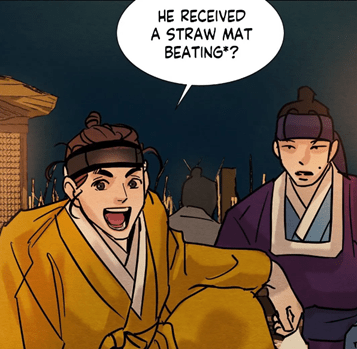
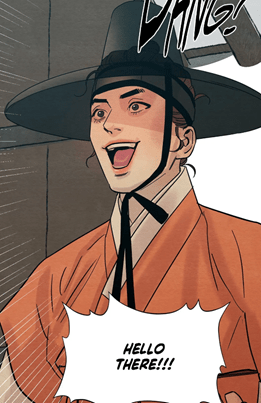
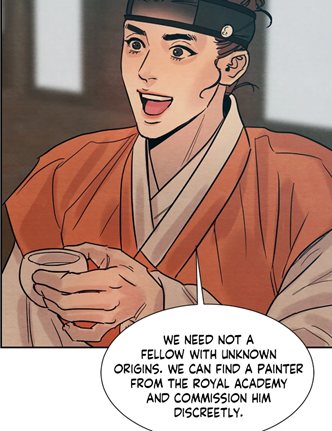 , the reader often sees the red-haired noble laughing and smiling so that we can definitely say that he is cheerful and good-humored. He likes wearing different clothes, drinking, having sex with Yoon Seungho and he even buys erotic books hence all this reminds me of an epicurean, someone appreciating life and its pleasures which is also linked to yellow. He can be sometimes analytical for he observed his childhood friend’s gaze and behavior in the chapter 14/15
  and remembered his friend’s words.
 He fears that the painter might become the protagonist’s new sex partner because his chamber is next to the master’s.
 He shows a certain creativity, when he plays a trick on Baek Na-Kyum by ruining the second painting. Simultaneously, this action revealed a negative side of Jihwa, he acted like a coward. I can even add that his cowardice is even confirmed, the moment he visits the artist’s room a second time without his friend’s knowledge. He never wanted Yoon Seungho to discover his presence. However, he can’t restrain himself when he sees the painting with the masturbation and slaps the poor painter. He is just too emotional that he admits his crime in front of the painter and his friend.
 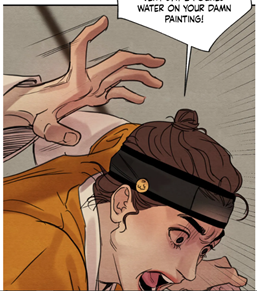 His impulsivity and his jealousy were the reasons why he got caught in the end.
 this picture reminds me of the myth of Narcissus who looked at his own image until his death. Here, Jihwa believes in the strength of his beauty. He can’t envisage that his friend is immune to his handsome face. Striking is that we have yellow and orange dominating in this drawing as if it was signalizing a danger, a bad omen for our second character.


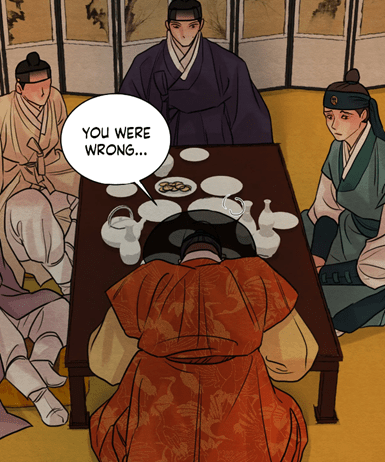
 (chapter 41). So the choice of the robe for that fateful evening is no coincidence. He is over-estimating his beauty and he truly doesn’t understand his childhood friend due to his egoism and superficiality.
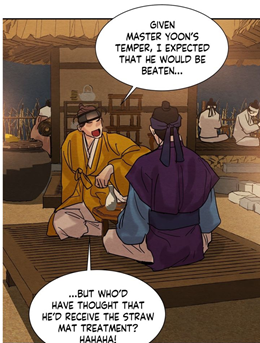
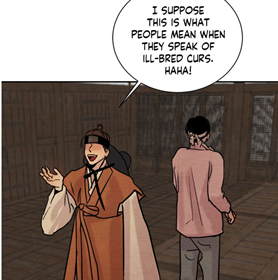 and he even shows no remorse for the unjust punishment (straw mat beating). He even laughs about it, not caring about the damage. For him, the painter is just a commoner hence he can do anything he wants. He has such a misconception about commoners, he is very prejudiced and judgmental. For him, all the low-born are uneducated, greedy and selfish. They would do anything in order to change their life and social status. Yet he he is totally wrong as he is generalizing. In reality, he just projects his own thoughts into Baek Na-Kyum. His entitlement leads him to believe that he can even mistreat any commoner, any servant.
 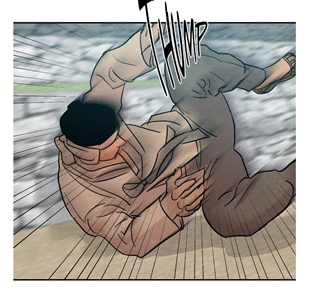 He is as ruthless and brutal as Yoon Seungho. Jihwa justifies every action. It is always for his friends’ best interest (revenge/Saving Seungho’s reputation), whereas in fact, it is for his own benefit. He is selfish but still shows a certain lack of confidence because he tries to get rid of a rival through tricks. As you can detect, he is a mixture of arrogance and lack of confidence. He uses others in order to hurt his rival (Seungho in the first case and the hired assassin in the second case). This is just another act of cowardice. Fact is that he feels threatened by the painter, he senses that his friend is attracted by the low-born.
  Another example for his boasting is when he dresses up to pay a visit to Yoon Seungho. He already imagined that the former would be hurting on his own because of Seung-Won’s call. That’s why he chose the robe with the crane. He definitely wanted to make a statement: “Without me, you’ll never be happy”. But the opposite happened. Once hurt, he can’t hide his pain and has to exteriorize it, hence he goes to his acquaintance, the man with the mole.
  He can’t hide his tears in front of the others…
 or without the seme’s knowledge in order to plot something against Baek Na-Kyum or to spy on his friend.
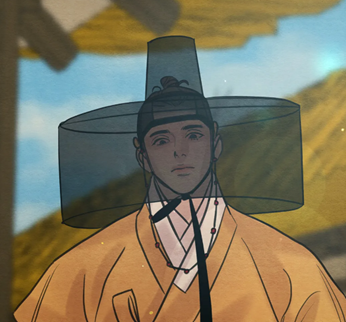 Finally, I would like to examine the last clothes Jihwa is wearing in the chapter 43 and 44. What caught my attention is that he is wearing an exterior robe with short sleeves, has a red belt and a huge hat covered with a veil. On the one hand, with his apparel he is attracting the attention of people, especially at a place where there are many commoners. At the same time, he is attempting to hide his identity. This contradiction reflects the character’s true personality: he is arrogant and stupid enough to believe that he can walk just like that without his identity being discovered. I am quite sure that people will remember his appearance. Besides, he chose his favorite color… So the pheasant who perceives himself as a crane is about to experience the harshness of life. He has no idea that this impulsive decision marks his downfall. He is too foolish and blinded to realize that he has been played by Min.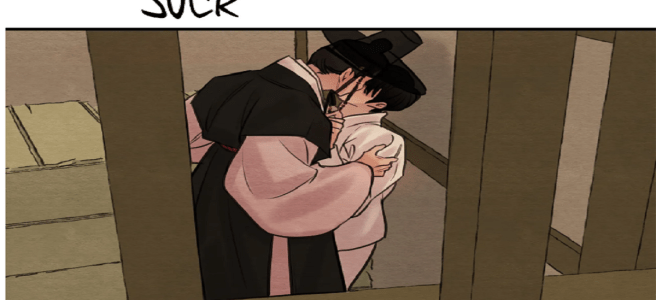
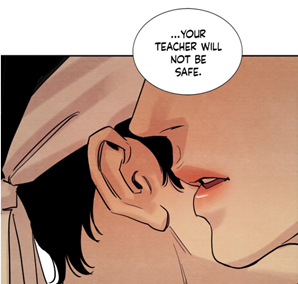
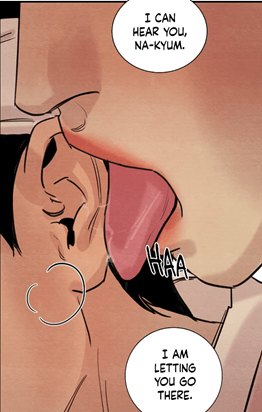
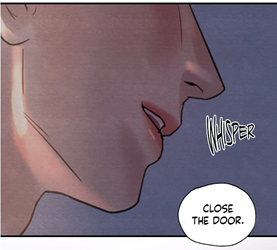

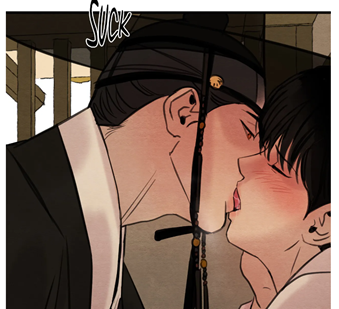


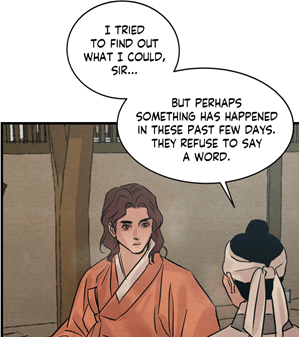
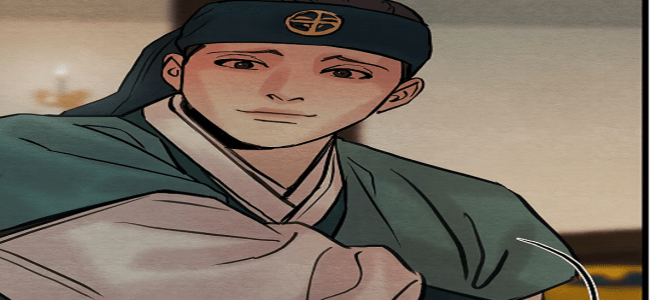
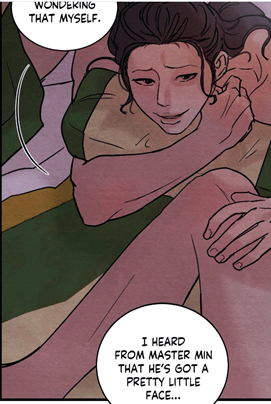
 First I wasn’t certain if Min was the one who participated at the sex session in the chapter 8 because his face looked a little different but now, I can say for sure that he was present (pictures from the chapter 8 and 9)
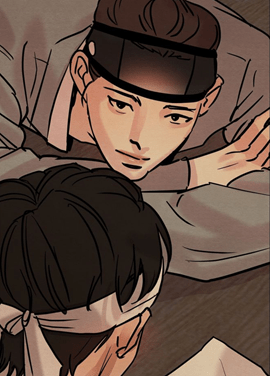
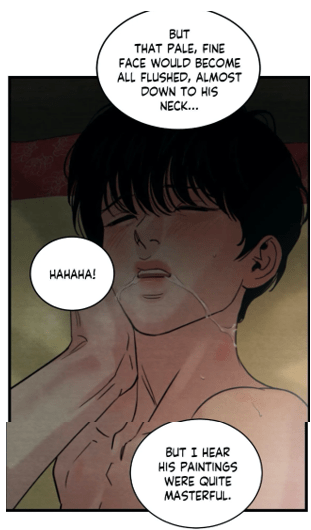
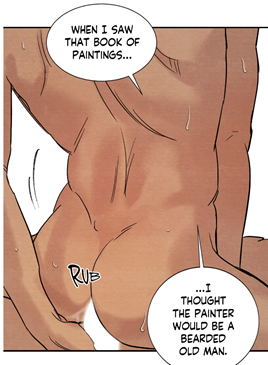

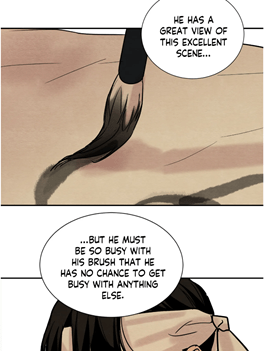
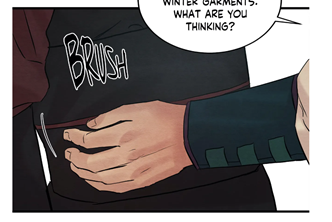 where he touches the seme’s waist, a very intimate place. One of my readers objected that Min was an uke in the chapter 8 hence he could never become a seme.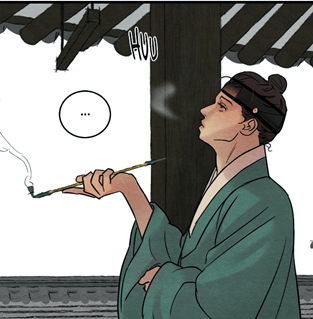
 If the beholder looks again at the picture of the penetration, then the person notes the similarity of Min’s action with Baek Na-Kyum’s gesture in the chapter 41.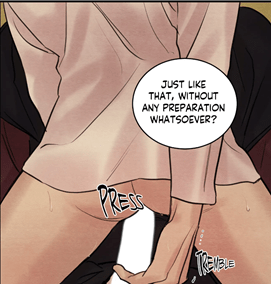
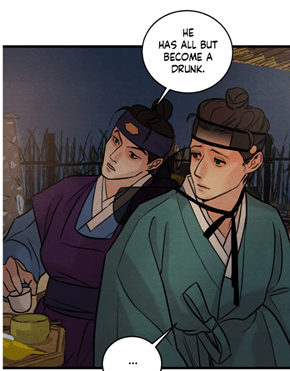
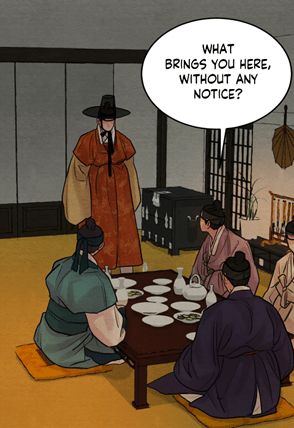

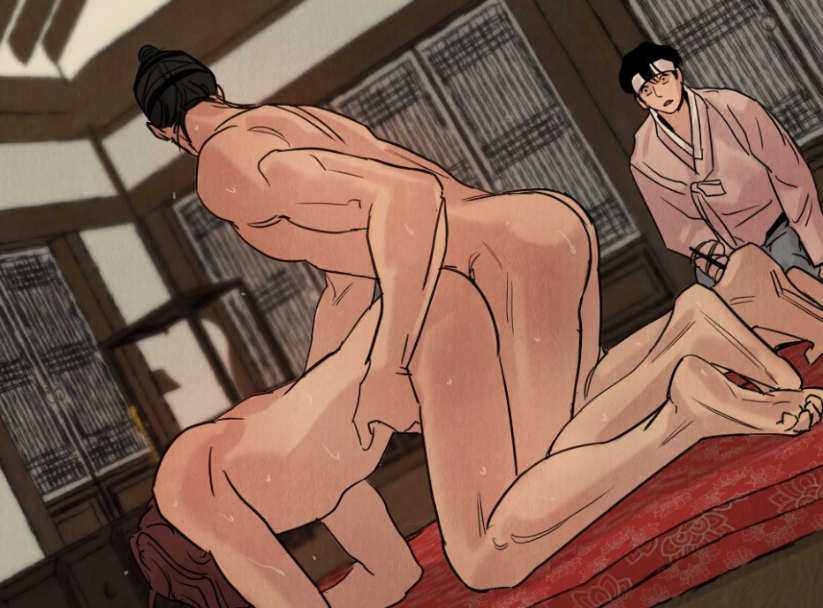
 Note that Min is standing on the one side, whereas Yoon Seungho is sitting on the other side and the others are lying on the floor. It was as if the powerful noble was sitting on a throne. Moreover, we have to imagine that Min’s gaze is directed at our main lead. However, if you pay attention more closely to the picture, you’ll detect that most of the nobles’ heads are turned to Min’s side underlining his growing influence. The fearless noble might still be sitting on the throne, yet Min has already attracted attention. Besides, the exchange of words is not harmless in this scene too. In reality, he is already challenging the seme.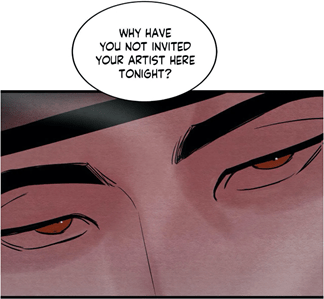



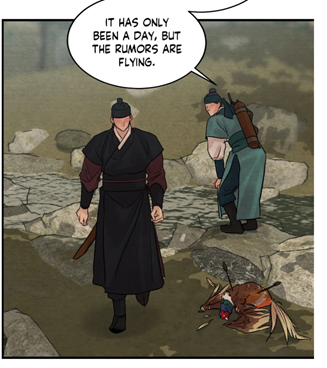
 And this reminds me of the way he hurt the pheasant during the hunt. He shot arrows… which makes me think of the small beak of a magpie. This black and white bird has to use its beak a lot in order to eat the whole content of the egg. Seungho killed the pheasant, he was not afraid of dirtying his hands.



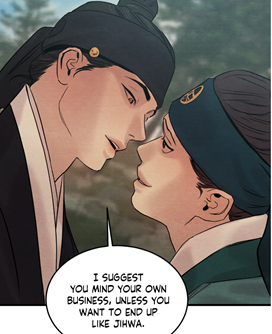 For the main character, Min is just a mouse implying that he doesn’t represent any danger. However, he is making a huge mistake. First Min is not acting on his own which Seungho is not aware. There is a reason why the protagonist doesn’t feel frightened and it is related to his past. For him, the old men are far more dangerous because he experienced it himself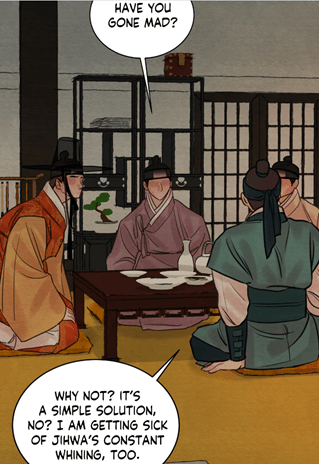

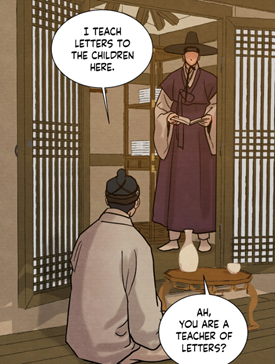 He had a style of robe that he doesn’t usually put on. Furthermore, he always kept his hat on his head indicating that he couldn’t feel comfortable in such a shabby house. He gave a different impression about himself, as if he was concerned about his appearance and image. He was acting like a typical noble, vain, superficial and with an air of entitlement. That’s why he had chosen the exterior robe with short sleeves in order to demonstrate his wealth. Only rich and powerful lords wear that kind of robe. Now, you can understand why the low noble felt comfortable around Yoon Seungho and revealed his true thoughts about the commoners. Due to the clothes, the teacher thought to perceive the lord’s personality. Yet, Seungho did it in order to deceive the man. Nonetheless, I doubt that Jung In-Hun wasn’t just talking in order to impress the man. His contempt for commoners did represent his true thoughts, however I have the feeling that Jung In-Hun was particularly harsh in words because of Yoon Seungho as he believed that he would look down on the commoners. In other words, here these clothes should be perceived as a disguise from my point of view. Now, let’s pay attention to the color. First, Yoon Seungho was wearing green announcing a turning point in his life, then he wore blue as he wanted to impress the painter and was somehow irritated at the same time due to the negative description of himself, “a man consumed by lust”, and now for the teacher, he chose dark purple. And this is what I found about purple and dark purple:

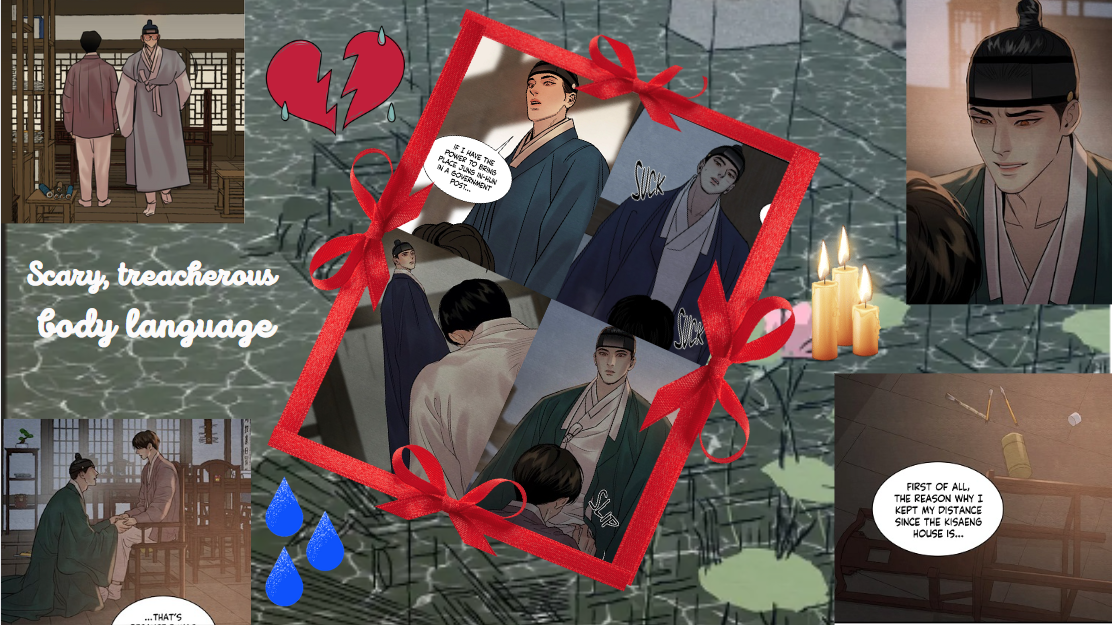
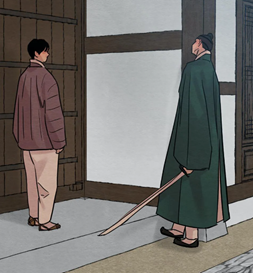 During the chapters 35 and 36, Yoon Seungho chose a dark green robe, the color symbolizing envy and jealousy. Here he had to witness how Jung In-Hun was flirting with his painter. He could imagine how the commoner would blush due to the stroke on his hair and the caress on the cheek. The exhausted man had done everything in his power to win the man’s heart but he had always failed: threads, his position as master, sex appeal, new clothes, a master’s bed, taking care of his health at any cost, giving up his chamber and his sexual expertise as a fine lover. None of this worked. That’s why he was so desperate at the end and even willing to kill the low-born out of jealousy. The cloth reflects his inner emotions and fragile state of mind. The irony is that at the end, he is no longer jealous or envious the moment he notices the uke’s erection. He literally gives up on these bad emotions which is somehow reflected with a simple gesture due to the brother’s visit.
  He gives up on his jealousy by covering the artist with his green robe. Simultaneously, by putting his own robe on the artist, he is making a statement. This is his trusted partner and lover hence he is sitting by the lord’s side. The noble is protecting him with his name and he makes it clear that he is taking his responsibility. That’s why after sharing the same bed, the aristocrat wants to make it official as soon as possible and sends him to his own tailor.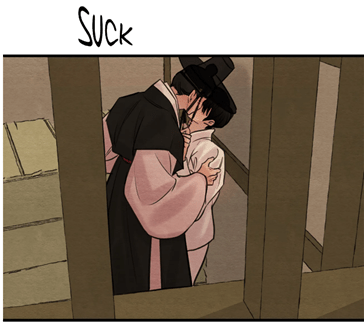
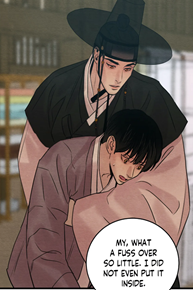 This explains why he is helping him later.


 Let’s take a look at the other nobles.
 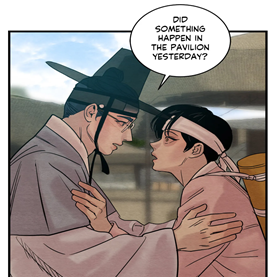 Have you noticed the difference? Jihwa, Jung In-Hun and Seung-Won prefer having an exterior robe with short sleeves unlike the main character. The only exceptions for our beloved seme are, when he visits the teacher Jung In-Hun
 and when he visits the tailor shop in the chapter 39-40:
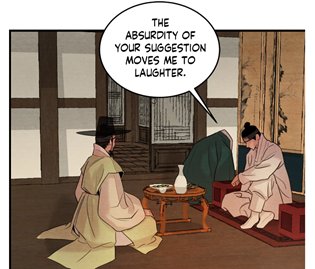
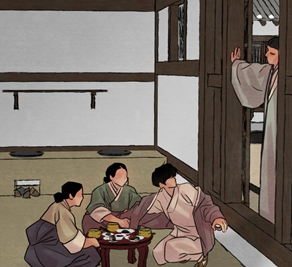
 Notice that he never put down his hat while sitting in front of the protagonist. We can’t say that he was in a hurry because a table full of dishes had been brought in the meantime. Seungho showed a certain respect from his side. And this exposes the nature of their relationship. Seung-Won doesn’t treat Seungho as a real brother, only as a tool hence he feels uncomfortable. Besides, it reinforces the impression that he is not honest with him. The clothes as a disguise and shield are mirroring his intention. He is not opening up to Seungho, in reality he is trying to deceive him. A foolish attempt which unveils his naivety. As you can observe with the analysis of Seung-Won’s clothes, we could determine that they reflect their personality, their state of mind and the intention of the characters. So the question asked by my follower was correct, the clothes have a deeper meaning.
 His robe has no short sleeves, unless he hunts, just like the seme.
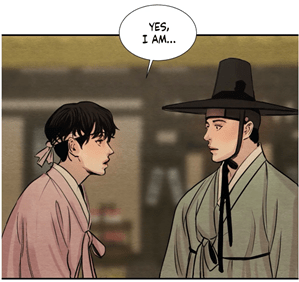
 (chapter 35)
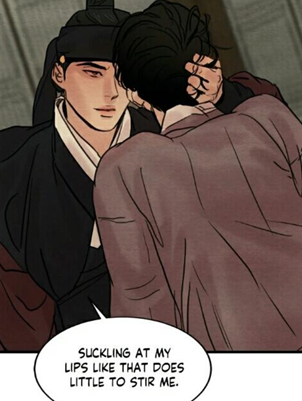 (chapter 41)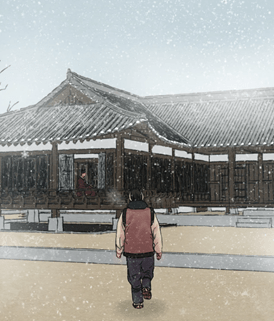
 Because he was wearing the master’s clothes, it illustrates that the lord wanted to make a statement. From now on, Baek Na-Kyum is his partner and as such, he should be treated like a master. However, only after his long illness, he is willing to wear the master’s clothes.

 But before his outburst of rage he was quite idealistic and even devoted to the artist as he wanted to eat his lunch with him. And this explains why he chose a even darker blue robe after he had heard the reproach from Baek Na-Kyum (“he was a man consumed by lust”) and after the rape. He was even more cold, emotionally unstable, unforgiving and conservative. That’s why he can’t get aroused by Jihwa in the chapter 5 or he has an outburst after taking his bath in the chapter 25.
  It did mirror his state of mind. A simple gesture and he would literally explode. That’s why his robe is not closed. In my opinion, he must have some difficulties to breathe due to pangs of conscience. Besides, it reinforces my impression that he is someone who prefers comfort over looks. Even happy, he paid no attention to the way he was dressed, he couldn’t even wait to meet the painter in the chapter 11. He is not vain, quite a natural personal. But the open robe is also a sign of his torment too in my opinion, when he is having some trouble. Finally, we shouldn’t forget that blue is connected to royalty and I have the impression that he chose this color in order to impress the painter and to demonstrate his power. He was a majestic master. The darker the blue, the more he wants to appear majestic.
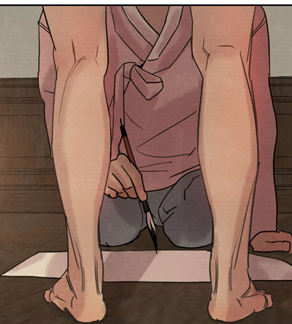 Sure, this was not the first time that our low-born had seen the lord naked, yet this time it diverges because he is exposing his phallus directly to the painter. He is using his sex-appeal to invite the painter to join him. So the lack of robe here has a purpose. Then after the sex session with Jihwa, he doesn’t wear his light green robe properly. The man is revealing his naked chest. On the one hand, I believe that this has to do with seduction, on the other side this displays his comfort in front of the painter. Here, the latter is not perceived as a nobody, rather as someone where the lord can be himself. He is natural, playful and quite relaxed.
 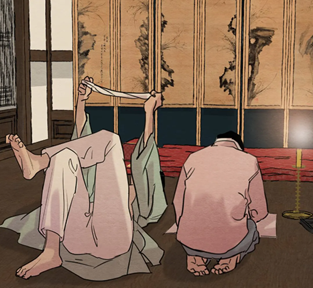 This is the first time that he is so close to the commoner, there are no distance and no painting between them. He is approaching him so carefully as he has sensed this man’s shyness. Therefore he is wearing the light green robe, when he masturbates the young man for the first time. Everything is new, I doubt that he did something similar to Jihwa, in particular with this special position.
 He is embracing the man showing his need to feel close to the low-born. For him, the social gap is non-existent. Only his desires matter. Striking is that after this event, Seungho starts wearing again the lighter blue robe. Interesting is that each time, he chose it, he was in a good mood.

 He knows the painter’s daring attitude, when it comes to Jung In-Hun. The other clue is that he asked his servant Kim to attend the artist personally and take care of the wound on his lip. Striking is that he knew where the innocent man had been injured: the cut on the lip. So he must have paid attention to the artist’s face.
  From my point of view, the lord is someone self-reflecting a lot. How do I come to this conclusion?
 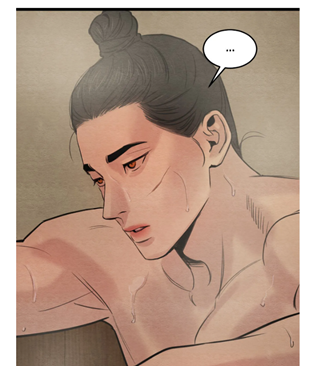 In the bathroom, he is recalling what led to the rape and the fact that he is remembering shows that he is not denying what happened. He wants to know how this could happen since he had never planned the rape. A person without remorse or regret wouldn’t even give a thought and would never attempt to remember like that because bad memories are quite painful. In the bathroom, he cools down and is no longer angry, rather remorseful. Therefore he makes the decision to bring the injured painter his own clothes.
 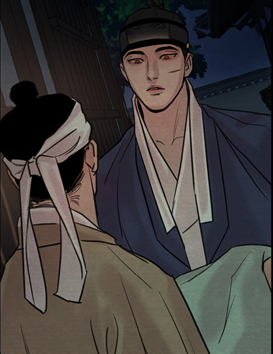 The deadly gaze he gives to Kim on his way back is a defense mechanism in my opinion. He doesn’t want to be confronted by a critical and reproachful gaze. We all know that he is truly sensitive, when it comes to gaze. And notice that he even attends the poor low-born himself. He stands by the bathtub and looks at him and even wipes the tears from his eyes.
 However, the noble doesn’t truly realize the real impact of his action. He thought that even if he coerced him to sex, the painter would no longer resist him and accept him as his partner. He is a lord after all. That’s why he shows a certain lack of understanding first.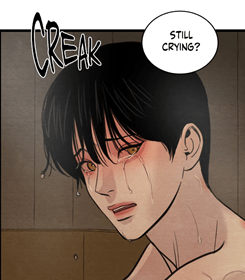

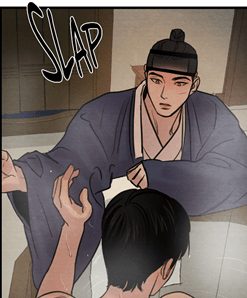

 If he hadn’t acted as Jung In-Hun, then none of this would have ever happened. Striking is that painter is more angry at him because of their first night than the forced sex at the pavilion. That’s why the beholder sees a shock on the master’s face. No one has ever reprimanded him like that, confronting with such harsh words and putting all the responsibility on him. He can’t accept criticism so well as he has never been used to it. We shouldn’t forget that he has never been in a relationship and all his “acquaintances” are just sex partners. He has been a loner for a long time.
 Just after the rape, he does the same. He had already felt remorse, when the uke whispered Jung In-Hun hence he left the pavilion.
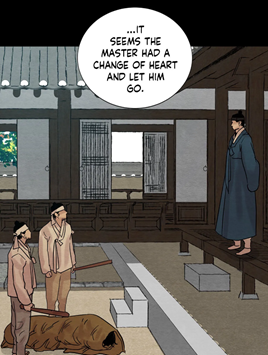
 This terrible and somehow empty gaze serves as a shield, he is so lost in his thoughts and he doesn’t even want to see or hear anything that could resemble a disapproval or reprimand. In other words, the regret or remorse are always connected to a certain cowardice. He doesn’t want to face any admonishment and wants to seclude himself. However, as time passes on, I believe that he reflects on his behavior and has some pangs of conscience. Hence he went himself to release the painter from the straw mat beating and he personally fetched the horse and brought back his own clothes to the commoner. He has a certain self-awareness. And let’s not forget that he personally confirmed that the wound on his lip was healing.
  This gesture illustrates that the lord is definitely taking the blame for the injury.

 Here, he can’t blame anyone like in the past (see the straw mat beating, the rape and the fellatio due to the way Baek Na-Kyum is dressed: half-naked and touching his body). He can’t run away either because if he did, the artist could die. He has to face his wrongdoing. Yet we can detect a progression in his change of behavior: he has lowered himself even more than before. When he recognizes that his simple gesture didn’t work, he gets even more concerned.

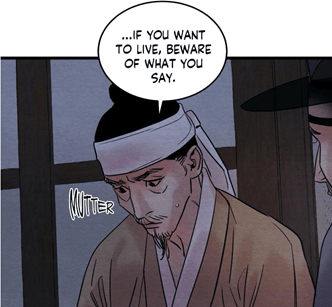
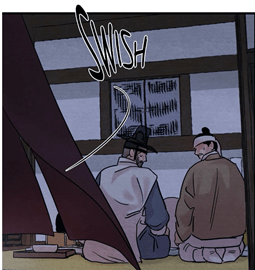

 He observes a different reaction: there is no resent or hatred like in the bathroom, although what he did, was far worse in his eyes. Therefore he lets the painter leave his bedroom. The low-born could have died and the master is well aware of this fact but he is content enough that there is no hatred from the painter. The pangs of conscience are the reason why he broods the whole night. Besides, he has to find a way to get closer to Baek Na-Kyum.
  That’s why there is this slap in the chapter 41. He still views himself as a master. We have to imagine that he has internalized his role as master so this shouldn’t wonder us that there are some remains. From my point of view, Seungho is now able to digest criticism but he needs to learn to communicate with the painter hence he wouldn’t need to seclude himself in order to reflect. An apology is needed too in my opinion. When the lord does that, their relationship will improve and the gap between them will really disappear.

 The artist is surprised by this sudden brutal behavior, nevertheless he doesn’t complain. What caught my attention in this scene is the alternation of his attitude towards the commoner. First, he is aggressive, then when Jung In-Hun asks the artist to search for a weakness, he has already distanced himself from the low-born.

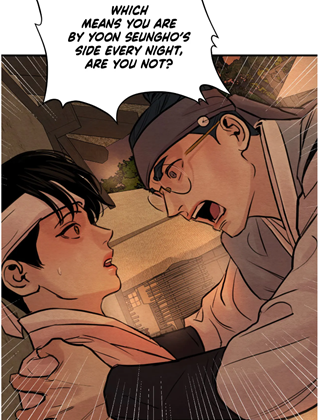 Yet, when he witnessed Baek Na-Kyum’s shocked face, he gets aware that he needs to treat the artist better if he wants to convince the painter to act as a spy. That’s why Byeonduck zoomed on the low noble’s mouth.


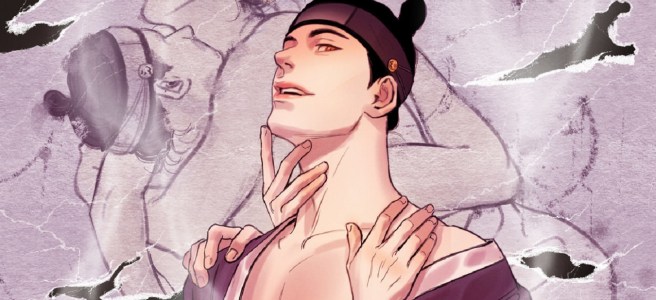
 He becomes very close to the uke, touches his shoulder with his head and hands, then he kisses his hands. He is definitely seducing the innocent man. One might object that this is just an act but fact is that he is using his body in an alluring way in order to convince the painter. It is like a job he has to do. He knows that Baek Na-Kyum will never ask him for a sexual favor because he has indoctrinated him that he views homosexuality as filthy and disgusting. Sure, one might argue that he has only taken over the part of the pimp. However, what the uke didn’t realize is that he has the upper hand in their relationship. If he had been a corrupted person, he could have proposed a deal: “Sleep with me and you’ll get your info”. Imagine the irony of the situation: Jung In-Hun is here asking the painter to do anything, including sleep with the lord, in exchange for weaknesses, whereas at the same time, the learned sir is forced to become touchy and to caress the painter’s hands with his lips. We have to wonder who is here the whore. The low noble knows that he is safe with the artist and the latter will never come up with the idea to exploit this situation.
 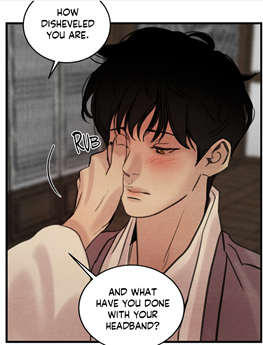 Nonetheless, the elements of prostitution are right here. He is willing to use sex in order to achieve his goal and he is willing to use his body to seduce the naive man. And if we compare his behavior towards Baek Na-Kyum in the past, we will observe that the low noble always kept his distance from him. It was especially visible in the chapter 7 at the teacher’s arrival. While the artist was almost jumping on him, the learned sir could only take a step backwards while making a disgusted face.
 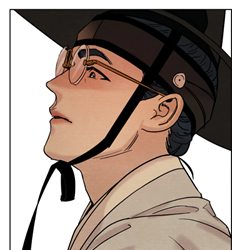 The only time, he touched the man, it was to prevent him from painting so that he would leave the mansion. Nonetheless, he was barely touching the uke’s chin (chapter 10).
 But it was not obvious and he thought that this was a small token, nothing in comparison to what he would get from Yoon Seungho’s support. However after the chapter 24, the low noble’s attitude changes drastically. Jung In-Hun keeps touching him illustrating that sex and homosexuality that he abhors so much are now part of Jung In-Hun’s world.
  (chapter 29)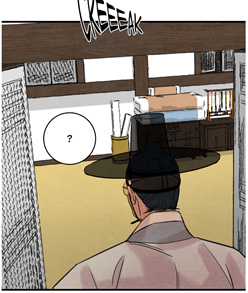




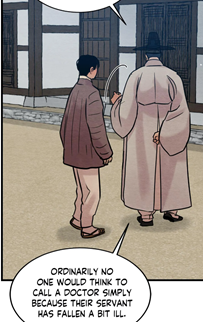 Then he tries diminishing the lord’s action by declaring that he wasn’t seriously ill. These words do affect the painter. Here, he is able to sense that the low noble doesn’t value him very much. The candid man has to remind the learned sir that his condition was pretty serious. He is already hurt. And just before leaving, this is what Jung In-Hun says:
 This time, he is caressing the cheek with his full hand… Observe the progression. From the head, the teacher went closer to the lips. He is truly increasing his seductive gestures. Imagine that all this time, Yoon Seungho had to witness their interactions. No wonder, when he declares that he would have killed the painter if he had left the domain with the low noble. For him, it was as if they were having sex in front of him.
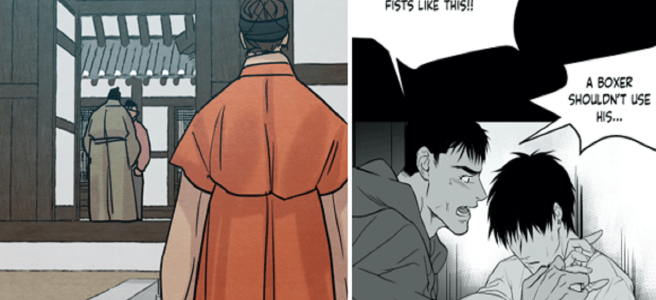
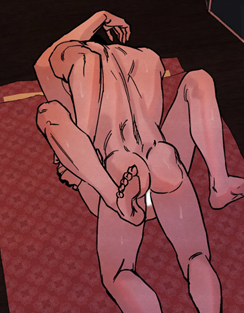 (chapter 2) or the wet dream in the chapter 6
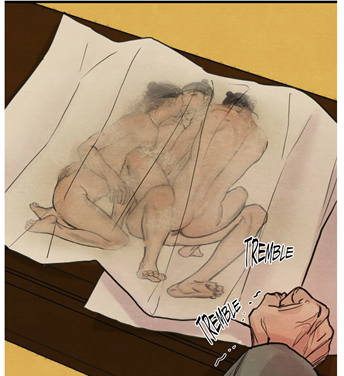
  where the painter’s repressed natural desires resurface. The readers are a little confused because initially they have no idea how to judge these drawings. Are they reality or fiction? This is in particular visible in the following picture:
 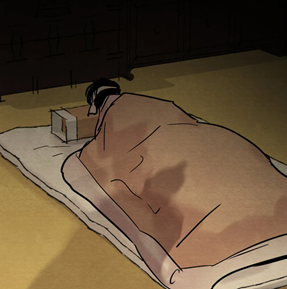 On the surface, it looks so real, while in reality this image was a vision in Baek Na-Kyum’s dream which marked the start of his unleashed unconscious. In the wet dream, we had a similar question. The beholder wondered if these images were true memories or fantasies.
 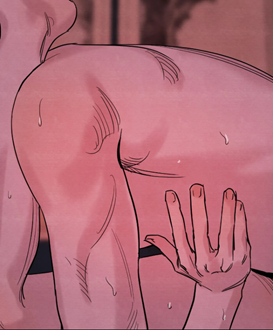 (Chapter 2) These were a mixture of both, although the more pictures we got, the more it became an illusion, a phantasm. As you can observe, the boundaries between seem and real were sometimes not clearly defined. The beholder had to distinguish this.
 as much as he is expressing his love for the low-born, Jihwa imagines to see something else. Baek Na-Kyum is the one who seduces the powerful lord hence he believes to detect a cunning smile on the artist’s face.
  (Chapter 43) The red-haired man is too biased towards the young low-born because he has so many prejudices against commoners. He believes that each low-born has no principle and virtue and will do anything in exchange for power, money in order to improve his life. However, the reality is different from the illusion Jihwa experienced.

 (chapter 13). Notice that Jihwa wasn’t present at the sex orgy in the chapter 33 hence he trusted Min’s words when the latter told him that the seme was hopping from one bedchamber to the other. From my point of view, Jihwa never participated in that kind of events that’s why he was able to have a clean reputation.
 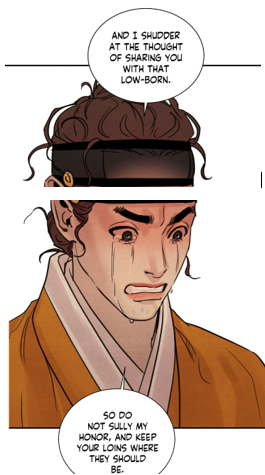 (Chapter 18) With these words, the red-haired noble implied that his friend had to choose between him or Baek Na-Kyum as Jihwa had no intention to share him with the artist.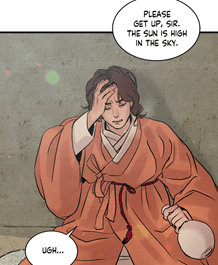
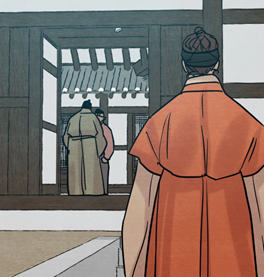 (Chapter 12) Nevertheless, it contrasts to the first case as in this scene every action is real, it just depends on the interpretation of the participants. Here, the red-haired uke is observing from far away how Yoon Seungho is treating the low-born. We have to remember that his perception of the reality is limited because the lord is turning his back to him and is in front of the painter. Secondly he stands too far away to be able to hear their conversation. In other words, he can’t see Yoon Seungho’s facial expression nor the painter’s face as the master’s shoulder is covering his face. Based on these parameters, I selected all the pictures Jihwa could witness due to the movement of Seungho’s arm and hand:


 (Chapter 14) All this led the jealous man to the conclusion that there was something going on between the commoner and his childhood friend. However, we have to remind to the readers what Jihwa couldn’t see in the pictures above. The uke was avoiding the master’s gaze. Either he closed his eyes or looked down. If he had witnessed it, Jihwa would have realized that the fascination was coming more from his childhood friend than the reverse and as such, Baek Na-Kyum didn’t seduce the lord in this chapter. For him, the reality was that the low-born was using his position and influenced the lord in a bad way. He was already showing some favoritism. This perception of the reality was definitely influenced by his biased view about commoners.
 (Chapter 12)


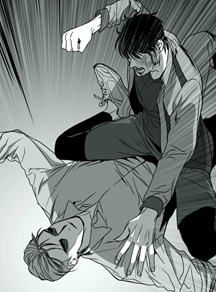


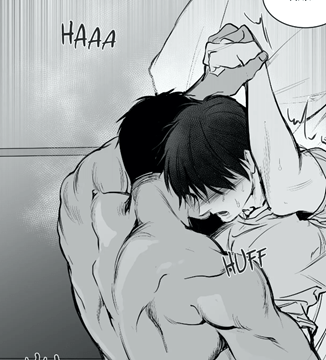
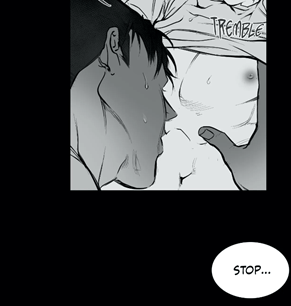
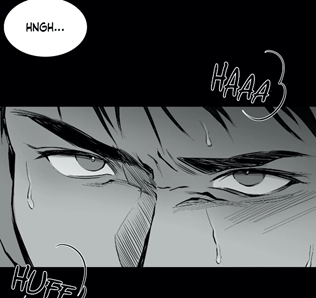


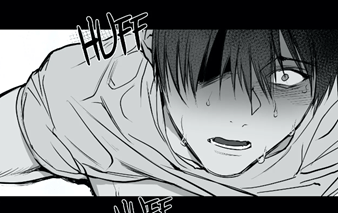

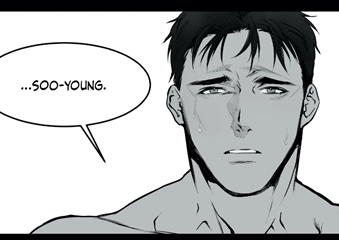 It was, as if the protagonist would awake the beastly instincts living inside the boyfriend. However, this rape doesn’t change the fact that Soo-Young has some love and affection for Si-Jung. He confesses to himself that he would like the boyfriend to find him and support him.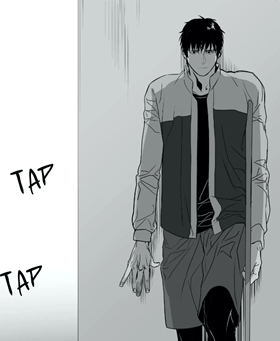
 A guided tour of Yoon Seungho’s domain 🏡 (second version) (only accessible with a password) Use the second password

 🎉
🎉





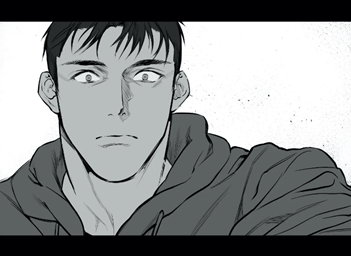
 First, his fist is clenched indicating that there is resent, frustration and even hatred. However, his hand and wrist are shaking revealing a certain fear. Seungho doesn’t want anyone to witness his vulnerability and weakness.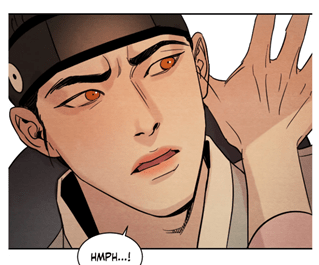
 the moment they first met. Like I mentioned it in another analysis, their first encounter marks a change in the lord’s life. He is actually inviting the low-born to enter his personal space. From that moment, Yoon Seungho kept touching him. Either he wiped the tears on the artist’s face
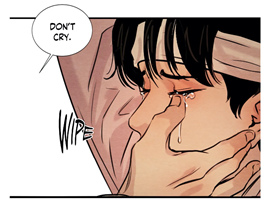 (chapter 1) or he caressed the hand
 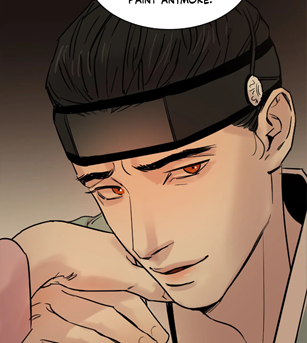 with his cheek (chapter 2) or pushed the low-born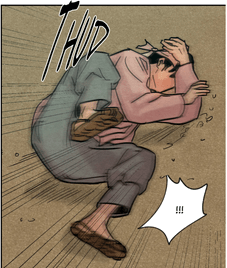
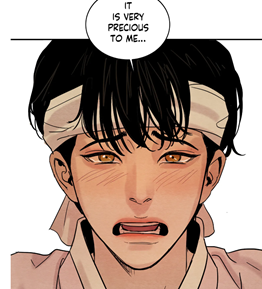 . I also believe that the hypnotic gaze helped the commoner to come closer to the lord, just like it served to unleash the commoner’s unconscious.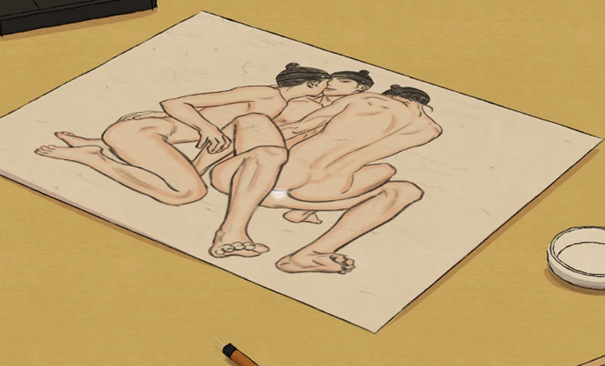
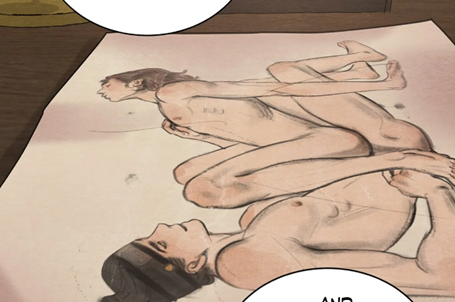
 This explains why Jihwa and Min decided to have the painter killed. As a conclusion, the lord created a fake image of himself as a powerful and self-assured noble with a strong stamina which no one ever questioned. All this underlines how big his fear is to reveal his vulnerability and sensitivity. His strong stamina was the result of drinking a lot of replenishing medicine (aphrodisiacs), no one has been really suspecting that he was no homosexual right from the start, even the readers were fooled by Byeonduck. The lord is a master of deception hence he could only fall for someone who symbolizes the opposite: naturalness and unrestraint. You all know the saying: opposite attracts.
 and favoritism, then his sexual charisma
  ,
, 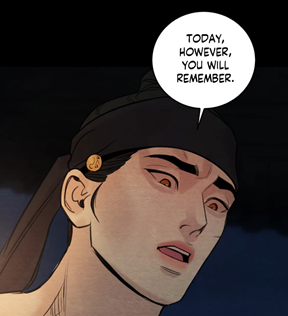 ,
,  None of this worked. Only by giving up his position as a noble and lord, he is able to be accepted by the painter. With the fellatio, Yoon Seungho is willing to appear weaker in front of the low-born.
  This position reflects his change of mind. He had already noticed that Baek Na-Kyum was moved, when the latter saw him at his lowest point.
 This explicates why the lord has no problem to reveal his vulnerability in front of the uke, when Seung-Won appears. Later the protagonist even requests to the commoner to share his bed with him. By hugging him so closely he showed his true personality.
 There is no disguise and deception from his part. He is literally naked in front of the artist. He had dawned to him that naturalness and sensitivity could be the only tool… That’s the reason why Seungho chose to reveal his weaknesses. However, we shouldn’t forget that Seungho is not manipulating here the low-born, his deep feelings were the cause for all of this. The kiss at the end of the sex marathon marked another pivotal moment in the noble’s life.
  Here, he wants to know if the low-born came back because of the low noble’s request, if he has been asked to sleep with the powerful lord in order to get some info. That’s why he keeps questioning the teacher’s words.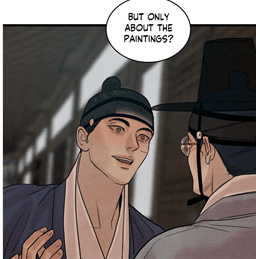

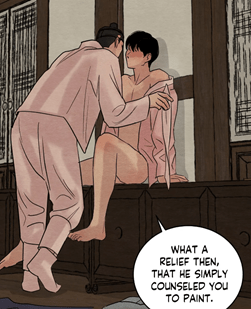
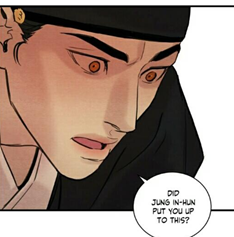 The sudden request accompanied with tears and a certain resignation leads the noble to think that Jung In-Hun has now asked him to have sex with him. Like I mentioned it before, Baek Na-Kyum had internalized the teacher’s words and come to believe that he was indeed a prostitute. All his actions contrast to the spontaneity and the naturalness Baek Na-Kyum exuded before. He was no longer fighting and his gestures were stripped of warmth and genuine sensuality. Yoon Seungho saw the behavior of a prostitute in front of him, resigned to his fate… selling his body which is not what the noble is looking for. At the end, he was convinced that despite the tears, Baek Na-Kyum was doing it on his own accord because the commoner has never been able to lie and hide any ulterior motives. There is a reason why Yoon Seungho fears so much this idea that the painter might sell his body and it is related to his own father. The latter sold his own son in order to save his own skin and as such treated his son as a prostitute, while he was himself the pimp. Now, you understand why he wasn’t willing to sleep with the artist.
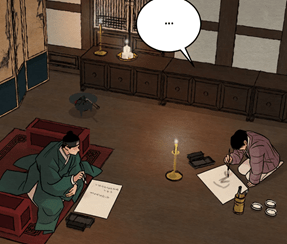
 And let’s not forget that the returned poem in the chapter 7 could be a different poem but Baek Na-Kyum failed to notice it. Hence just like Baek Na-Kyum, the readers will discover a new side of our protagonist in the future, like f. ex. his refined sense of poetry which was just implied in the chapter 4.
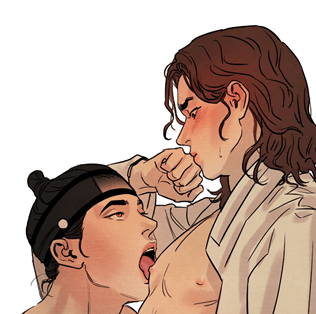
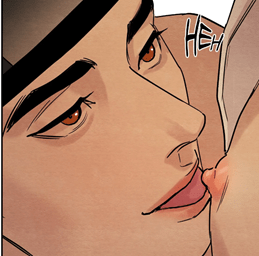

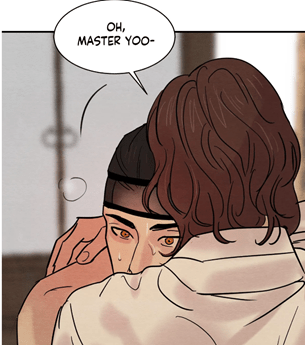
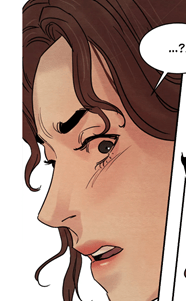

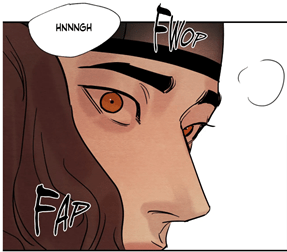
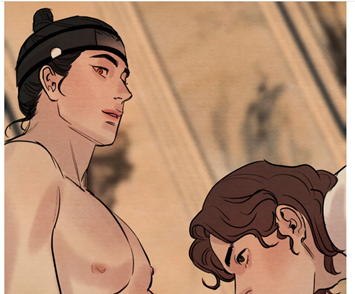 During this occasion, Jihwa can look again at Seungho’s gaze and what he observes annoys him the most. He sees that Seungho is starring (again) at the painter which means that the noble is neglecting his sex partner. Each time, the powerful lord wants to examine the painter’s reaction and look at his gaze, as if he was drawn to the uke’s eyes. We could even say that both gazes seem to have a hypnotic effect, they help them to unveil their deeply repressed unconscious. Besides their hypnotic gaze serves as a mirror, they see each other as attractive and alluring. There is no contempt and disdain, they perceive themselves as normal and natural, unaware of the effect caused by the gaze. This could be judged as an contradiction to Sartres’ theory, sometimes the gaze from the other can liberate oneself.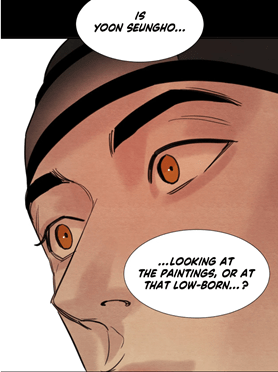

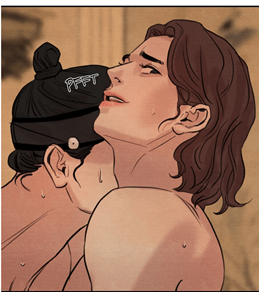
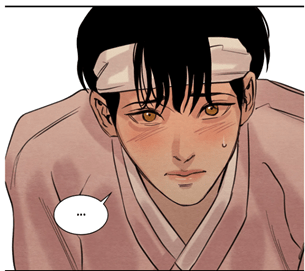
 By contrasting both images, the beholder detect the difference in the distance. It was as if Seungho had got closer to Baek Na-Kyum. However, we have to imagine that this is just an impression due to the perspective. Nonetheless it reflects their increasing closeness. Little by little, the noble is definitely getting closer with his seduction but just virtually. We have to remember that each sexual gesture is addressed to the young painter. The climax of their developing intimacy represents the following picture.
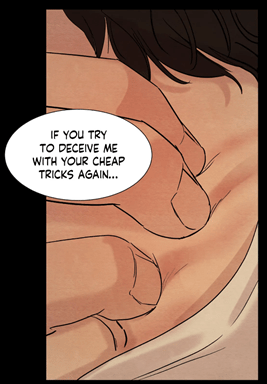

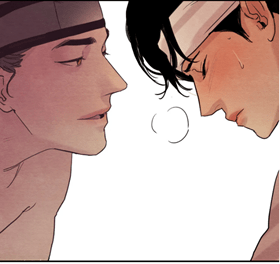
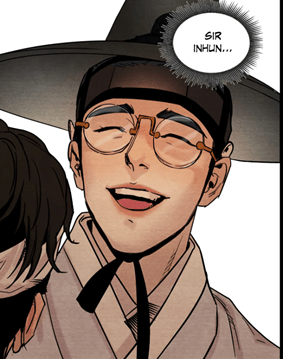
 The low noble had never looked him in the eye because he would have revealed his true thoughts, his soul. Besides, the artist would have recognized the disdain for him and his social status. That’s why the voice and words played a huge role in the commoner’s brainwashing.


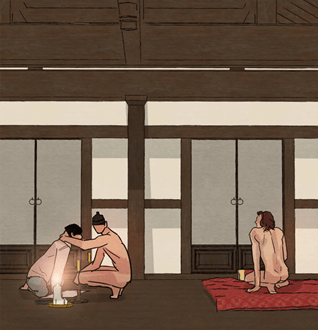
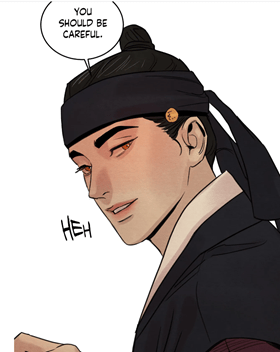
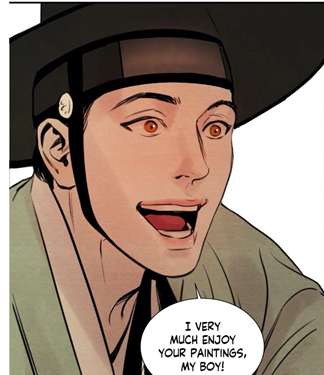 because he is able to meet his idol. In the chapter 22, the seme is oozing sincerity, warmth and more importantly calmness. That’s why he has been patient with the low-born. All this has been triggered by the night spent with Baek Na-Kyum. All this outlines the importance of their “wedding night” and that he has experienced something new. He felt loved although it was just an illusion and deep down, Seungho was hoping that this wasn’t a dream. Baek Na-Kyum’s words during that night expressed what the seme felt too.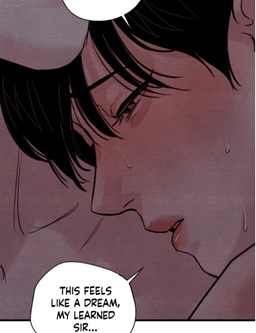

 as he personally took care of the uke. This revealed that the protagonist had been keeping an eye on the low-born which we didn’t see. Striking is that after helping him and showing him such a nice and gentle smile, the painter thanks him and the reader is unable to see Yoon Seungho’s face.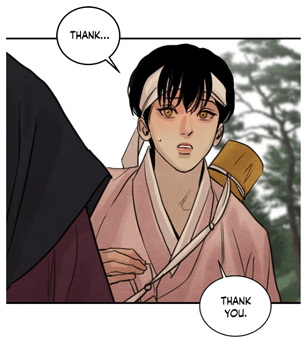


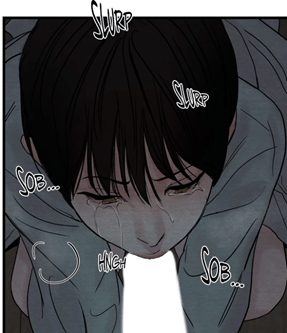
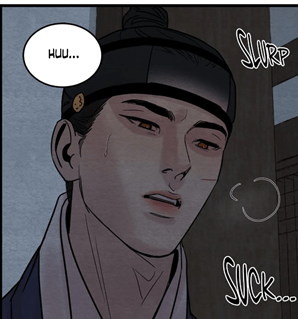





 However, he blames the brother, when the father doesn’t leave his room in order to bid farewell.
 , because the illness is just an excuse. He is quite daring to ask his brother to pay a visit to their father. He knows the true signification of this request, which is the reason why Seungho laughs it off and refuses.
  He used his position as lord to mistreat Kim by threatening him and accusing him to lie, to ignore his words,

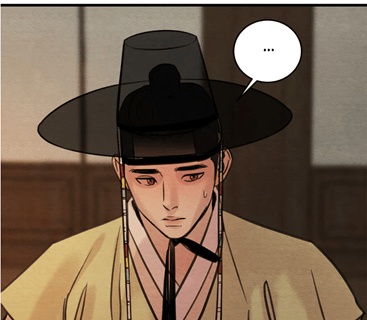
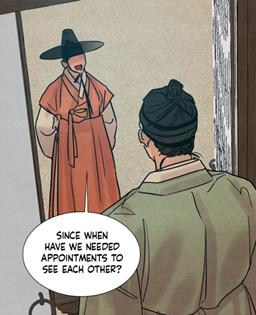
 He should realize that he did expect something from his learned sir. Since he had helped him to find a sponsor, the painter hoped, the scholar would become reliable for him, as he was just a low-born.
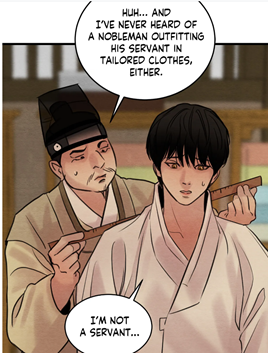
 He was the target of bad remarks, because the young artist was wearing the lord’s own shirt. For the first time, the aristocrat was confronted with the negative consequences of reputation and image. The main lead might be fine with his bad notoriety, but it is different for Baek Na-Kyum, as the latter is just a commoner. Yoon Seungho witnessed how the low-born claimed to be an artist, but he was not perceived as such. By giving him new clothes, the main lead wanted to demonstrate that the artist was not a servant, he had a special status. However, this incident was relevant for another reason. Due to the master’s reprimand, the gossips about Yoon Seungho’s household disappeared, hence Jihwa’s servant couldn’t get new information about his childhood friend.
 Hence Yoon Seungho decided to join them. Moreover, the main lead is a very possessive and jealous man. While getting dressed, he must have recognized that the tailor would get close to his lover by measuring him too. Note that it was the first question the lord asked, when he penetrated the room.
 This definitely exposed that the noble was thinking a lot about this task. Moreover, his gaze was instantly directed at the tailor and his hand. This displays that the main lead had already envisioned the measuring and disliked the idea that someone else would see his partner so closely.
 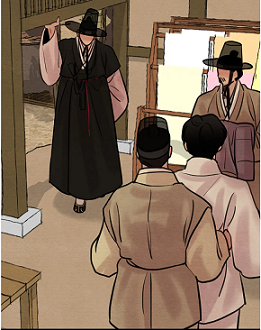 Striking is that his late arrival truly outlined the artist’s importance in Yoon Seungho’s life, which couldn’t escape the tailor’s notice. Imagine, the lord was ensuring himself that everything was done properly. To sum up, the master had two reasons to join the butler and the artist. He desired to make sure that Baek Na-Kyum was treated properly, at the same time he needed to keep other men away. He had to protect the painter’s reputation: he was no servant, but an artist and his companion! Through his words said in front of the tailor, he deliberately unveiled the nature of their relationship. He knew that the tailor would catch this insinuation.
 (chapter 1)
 (chapter 10)
  (chapter 13)
 (chapter 18)
 (chapter 22)
 Besides, the childhood friend is often mentioning rumors as well, and since Jihwa is Black Heart’s pupil, this could be judged as another proof for my interpretation. Under this new perspective, this explicates why Jihwa, who is close to The Joker, could mention this gossip to Yoon Seungho in chapter 18:
 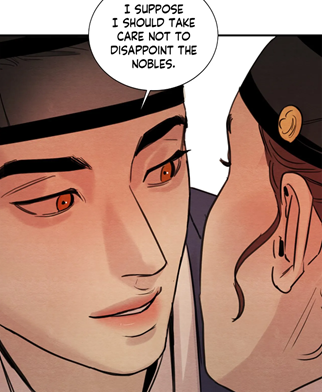 He desired his childhood friend to tell the others that he didn’t fear this type of gossips. We have to envision that these words must have reached the Joker’s ears. That’s why in chapter 33, he retaliated by using the painter as an excuse. Note that the nobles mentioned Baek Na-Kyum as gossip
  and while leaving they kept talking about another rumor:
 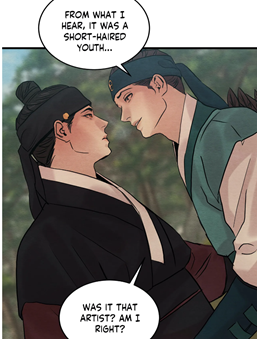 He tried to instill fear in the noble (“look, now you are even associated to a low-born!”) but he didn’t succeed. That’s why The Joker decided to have the painter killed right after.
  If the latter were to die, then Yoon Seungho would truly become lonely, especially after discovering that his childhood friend was the culprit. Let’s not forget that Min was present
 Min is manipulating the second lead, making him believe that he has to listen to him, as the protagonist could target him. The Joker is using the second lead’s existential fear to separate both friends.
  Despite all his schemes, Min was not able to attach the red-haired aristocrat to himself. Furthermore, he even has to discover how Jihwa had sex with a low-born like Nameless and he would even listen to his words. No wonder why Min got infuriated in the end.
  Despite all his schemes, he was not able to control Jihwa and Yoon Seungho. Both escaped his manipulations. And now the readers should question themselves Black Heart’s true goal in all this. Why is he so determined to hurt the protagonist and to make him feel miserable? If he was able to hurt and control Yoon Seungho, he would become the ultimate puppet master. However, that’s what The Joker thinks. Remember what I wrote about Black Heart’s real weakness. The latter fears social norms and as such rumors. Strictly speaking, he pays attention to appearances despite his nihilistic tendencies. That’s why he smiles and laughs a lot. However, he has always envied Yoon Seungho for that reason. The latter has always remained impassible to social norms and rumors. He showed real courage and strength, because he never complied through peer group pressure. And the worst is that even Jihwa was willing to be associated to such a man, although the latter has a terrible reputation. I would even say that the bond between the two characters hasn’t been destroyed yet after all, although both figures kept hurting each other. Even after the abduction, the main lead didn’t retaliate against his friend. That’s why Min has to make Jihwa and Yoon Seungho miserable. He envies the protagonist, because he was capable to have such a friend. They have seen the worst from each other, yet they were able to remain friend, even Jihwa wanted to become Yoon Seungho’s lover. Moreover, now he is not hiding his relationship with Baek Na-Kyum. As you can imagine, the episode 76 made me realize Min’s defeat. The latter couldn’t stop Yoon Seungho from revealing his special relationship to the painter in front of commoners. He treated his lover like his wife and the town folks could witness it.
  Therefore this is no coincidence that episode 76 is connecting responsibility to rumors. The water and the music box are the evidences that Yoon Seungho is a responsible man. They reveal his integrity which stands in opposition to reputation. Integrity describes how you act, it is a characteristic of you regardless of who is watching. Finally, Yoon Seungho’s true personality is revealed to the world in chapter 76. He shows moral righteousness, courage, gentleness and responsibility. He allows a commoner to hug him, is willing to lower himself and listen to the low-born’s request: he needs his help.
  And during the second season Min’s only success was in chapter 54.
  Here, he could only wound the main lead, because the painter feared social norms as well. But now, it is no longer working on Baek Na-Kyum either. I believe, the trigger for this huge war is Baek Na-Kyum. I am still convinced that Black Heart is obsessed with the artist, because he wished that the artist would look at him the same way. Imagine this: The low-born showed pure desires, and neither the main lead’s terrible reputation nor his wrongdoings could disgust the artist so that the latter would leave Yoon Seungho’s side. As a psychopath/sociopath, Min can only resent the main lead.
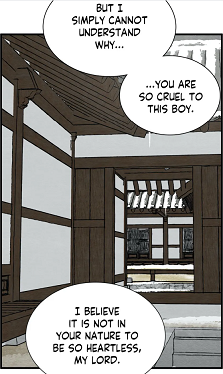
  In chapter 32, he never intervened in order to defend his master’s honor. Moreover, he influenced them with his words. After calling Baek Na-Kyum a no-good painter
  (chapter 11), the maid associated Baek Na-Kyum
  to a charlatan (chapter 17). Besides, I would like to outline that through his words, Kim encouraged the staff to show a disrespect towards the low-born. That’s why they started eating his food. Since, the valet never reprimanded them for their misconduct, it truly shows that Kim had no interest to protect his master’s interests and rights. He is the one who described Yoon Seungho as violent and with mood swings, because he used the incident with Jihwa’s topknot. He had a reason for spreading these rumors. Exactly like Min, he desired to isolate Yoon Seungho so that the latter would always rely on him. He would show care and concern in front of his master, as he knew his true personality:
  he was gentle and considerate. And now, it is time to focus once again on chapter 40. Note that when the protagonists left the tailor shop, the butler didn’t follow them:
 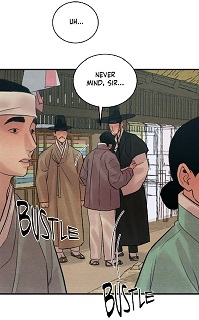 Why? It’s because he needed to speak with the tailor alone. He asked him to never reveal the foreplay to others. That’s why Kim never witnessed this scene:
  This is the reason why the scholar speaks of flourishing. Let’s not forget that he was the only one who knew about the order of winter clothes. And here, they had just been ordered. From my point of view, Kim hoped to create a quarrel between the learned sir and the painter. Another evidence for this evidence is perceptible in chapter 50:
  The valet’s words clearly imply that the conversation had become the topic of gossips. That’s why in chapter 45, Byeonduck introduced Kim in front of commoners spreading gossips.
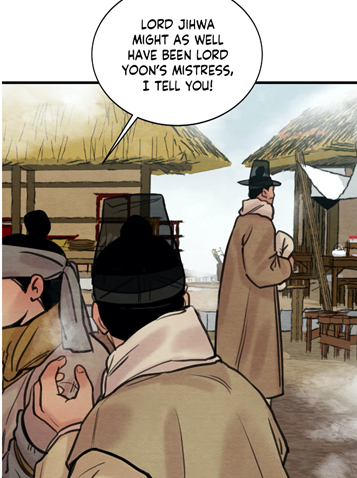 This is no coincidence. And this led me to realize two important elements. Right from the start, the author wanted to indicate the valet’s true personality. Kim was not only responsible for the rumors concerning his master, but also for the ambiguous status for Baek Na-Kyum. Furthermore, the butler thought, his trick had been successful, yet during his walk through the town, he discovered a new gossip. The town folks had already perceived a change of their lord’s behavior and connected it to a love affair.
 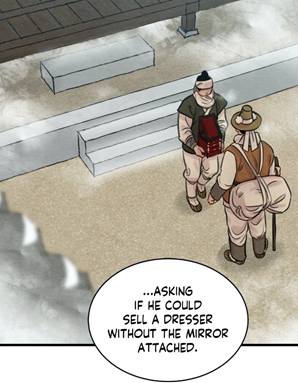 And this showed that the lord’s image was not that bad in reality. They still hoped that their lord would calm down and settle. They were even willing to accept Jihwa as the lord’s mistress. This truly revealed that they didn’t truly reject his homosexuality, rather his debauchery. In chapter 45, Kim discovered that Deok-Jae had ruined his plan. Kim was determined to ensure that Yoon Seungho would keep a bad reputation. The moment he was seen as a responsible man, he would no longer be isolated and rely on him. Moreover, the moment he was judged as responsible and he wouldn’t reject commoners, it becomes possible that the commoners complain to him and ask for his help. However, slowly Kim lost his pawns among the staff, so that he has no one to spread rumors. The maid questioned his authority
  and even defended her lord in chapter 67. She didn’t question Yoon Seungho’s reasoning, it was his right. This means that now he is considered as the real master of the mansion. Kim still used the male servants for his scheme in chapter 69, but in my opinion, he even lost their support, because nothing bad happened after their love session. And note that the domestic’s words are referring to rumor:
  The butler was no longer able to manipulate through rumors, hence he ends up alone in the backyard.
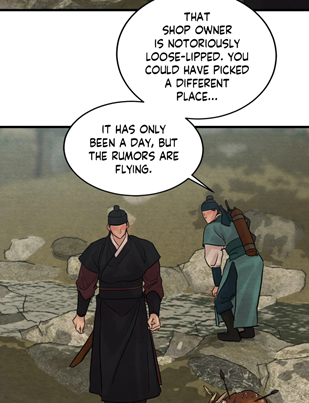
  Imagine, Kim can’t even use the loose-lipped tailor for his schemes, as the shop owner resents the butler for turning him into a liar and fool.
  That’s why we see him whispering to a client, when the lord is standing in front of his shop.
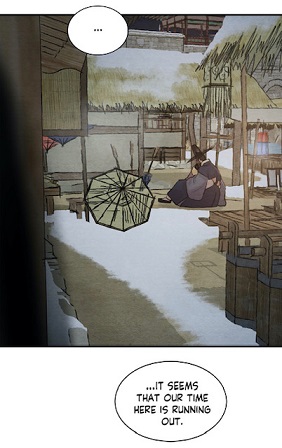
  Now, the tailor can talk to his heart content. Neither Kim nor Kim can ask him to remain quiet. And note that in chapter 76 Yoon Seungho is walking alone with his lover, hence when he helped his panicked lover, the commoners could witness how kind, selfless and generous Yoon Seungho was.
 Exactly like in chapter 40, he came later so that his behavior would outline the artist’s importance in the noble’s life.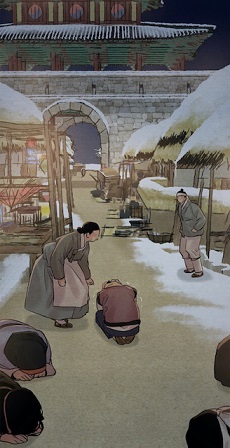
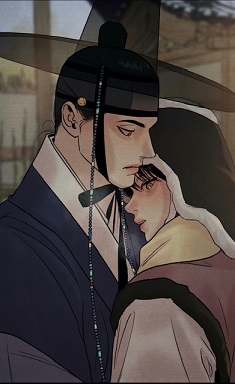
 First, he sat on the ground to comfort his partner. Then after bringing to the planks of woods, Yoon Seungho took care of Baek Na-Kyum’s headgears.
  He made sure that his wife was properly covered and he would get water. Finally, he was even willing to buy an expensive music box, although Baek Na-Kyum never said anything.
  He acted as a responsible man which many people, commoners and nobles, could witness.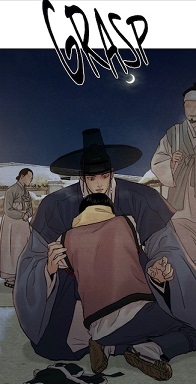
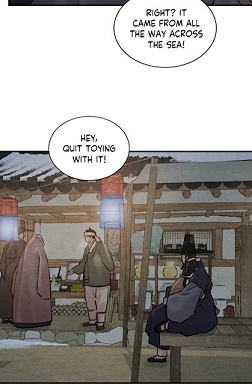
 and how he screamed for Yoon Seungho’s help.
  The commoners complained about the behavior of the lord’s servants. Back then, the rumors were that a servant had run away, however the tailor revealed that the lord’s lover was the painter. Hence I am expecting that the town folks will realize that Yoon Seungho’s lover was abducted. And since Jihwa had confessed in public the night before the artist’s disappearance
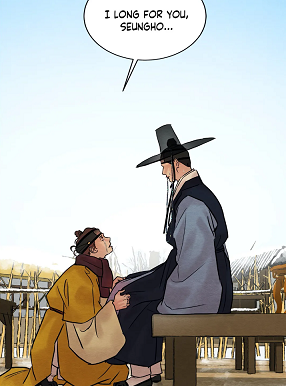 , the commoners will realize what the ex-lover did, when he got rejected. And maybe that’s the reason why Min is able to bind Jihwa to him.
 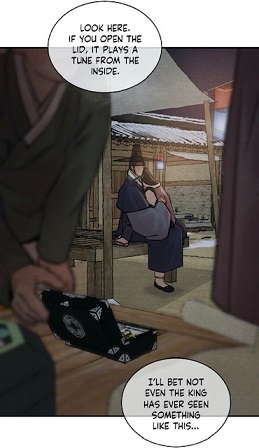 The lord’s statement in chapter 40 became true.
 (chapter 33) At the same time, due to Black Heart’s words, the noble was reminded of the painter’s health conditions. Although the lord was talking about the artist, as though the latter was just an object, the reminder forced him to recall that Baek Na-Kyum was a human who could die. That’s why he returned in the end. His abandonment reflected his cowardice, he didn’t desire to be confronted with the consequences of his bad behavior. Consequently, just like in the Russian novel, the main lead was reminded that the low-born was just a human. As you can see, both characters had a similar disposition and also a change of heart.
 (chapter 34) Kim’s remark was in fact insinuating that the lord had been very generous and caring for him. He gave the impression to the low-born that the noble was treating him like a noble, as the latter had sacrificed his bed for his recovery. However, this was not true, as the lord had brought the artist to the study before the doctor’s arrival.
  (chapter 33) At the same time, the butler was not entirely lying either. The lord had indeed shown generosity and care, since he had called for the physician. Yet, once he had heard about the doctor’s precription, the aristocrat had ran away from his responsibilities
  (chapter 33) and left everything in Kim’s hands. Remember my statement: Kim is always telling half-truths. Kim was in reality the one who brought him to the noble’s bed.
  (chapter 33) He needed to portray his master in a much more positive light in order to obtain the painter’s cooperation. The valet hoped that the artist would follow his order
  (chapter 34) and become the lord’s sex toy:
  The irony is that although the valet treated the painter as a honorable guest (bringing him to the lord’s chamber and taking care of him as if he was his master), in truth he was just viewing the low-born as an object and tool. was truly making sure that Baek Na-Kyum would get the best treatment, but the domestic used the opportunity to praise his master indirectly.
 (chapter 33) While he was at the sex orgy, he remembered the exhausted young face of the painter, while they were talking about him.
 The lord was suffering, but unlike in the past he couldn’t keep his distance from his lover. He needed to sense his presence. He was no longer his sex partner, but he wasn’t treated like an object or a servant. During these two separations, Yoon Seungho was full of worries for Baek Na-Kyum which he was trying to forget, yet he couldn’t. At the same time, he was reflecting on his past actions:
 (chapter 33) He was acting as a mediator between the master and the low-born which looks like a good thing. In reality, he was meddling in their relationship. Who was he to intervene? That’s why he acted like a father. With his words, the butler was implying that his lord had been affected by his illness, hence he remained away. However, I believe that in the valet’s mind, there existed a different explanation. For Kim, his master was just a coward. That’s why he said this comment in front of the physician:
  (chapter 33) He anticipated that his master was avoiding to face the consequences of his selfish behavior. For me, Kim doesn’t truly love his master. He views the Yoons as terrible, but he will never confront them. But for his own safety, he needed to deceive the painter. Let’s not forget that Kim had played a role in his escape and the low-born could reveal it to his master. That’s why he needed to fake his care and concern for the painter so that the artist wouldn’t mention the past. Thus he begged the young man not to wander around as a sign of care and gentleness.

 (chapter 32) However, the valet Kim was not present, hence when he lied to Baek Na-Kyum, he had no idea that in reality his words were containing more truth than lies in reality. That’s why I chose the kiss as illustration for the analysis. The roles were switched. The master acted as a servant, and the low-born was now the lord. The male lead was acting like Vasili Andreyevich Brekhunov from the Russian novel. Yoon Seungho was even willing to give water to the exhausted man. This situation was repeated in chapter 76:
  (chapter 76). The lord made sure that the painter would feel better with the water. But let’s return our attention to chapter 33. In the bedchamber, the main lead was to blame for Baek Na-Kyum sickness, as he hadn’t paid attention to the artist’s condition. He had acted selfishly, exactly like the protagonist from Master and man. Both realized their huge mistakes, came to regret and took some responsibility, although the chronology in the Russian story diverges. But this shows that both aristocrats came to realize that commoners were humans and no possessions.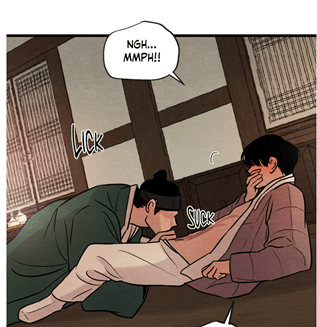

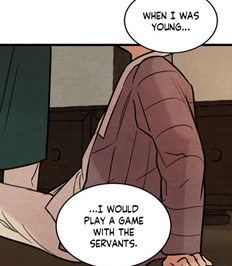 (chapter 36), until he saw the painter’s erection. He was willing to give up his position as master. That’s why he prioritizes the painter’s pleasure all the time.
  (chapter 36) So their relationship master-servant stopped at this moment, hence he lets him stay by his side, when the brother Seung-Won is in his chamber.
 (chapter 71) Baek NA-Kyum was no longer a low-born, but a noble, while the main lead was his “servant”. This explicates why the noble was no longer asking for him in the evening
  (chapter 74) and visited him secretly during the night. But this switch of position didn’t remain a secret, the moment the lord embraced his panicked lover.
 Bebebisous33s' analyses in K-Dramaland and Manhwas