

Please support the authors by reading Manhwas on the official websites. This is where you can read the Manhwa: Jinx But be aware that the Manhwa is a mature Yaoi, which means, it is about homosexuality with explicit scenes. Here is the link of the table of contents about Jinx. Here is the link where you can find the table of contents of analyzed Manhwas. Here are the links, if you are interested in the first work from Mingwa, BJ Alex, and the 2 previous essays about Jinx After All, Before It’s Too Late and I Love You
It would be great if you could make some donations/sponsoring: Ko-fi.com/bebebisous33 That way, you can support me with “coffee” so that I have the energy to keep examining Manhwas. Besides, I need to cover up the expenses for this blog.

The Wolf Before the Mirror
After episode 75, many readers felt they finally understood Joo Jaekyung. He spoke of his routines — the glass of milk 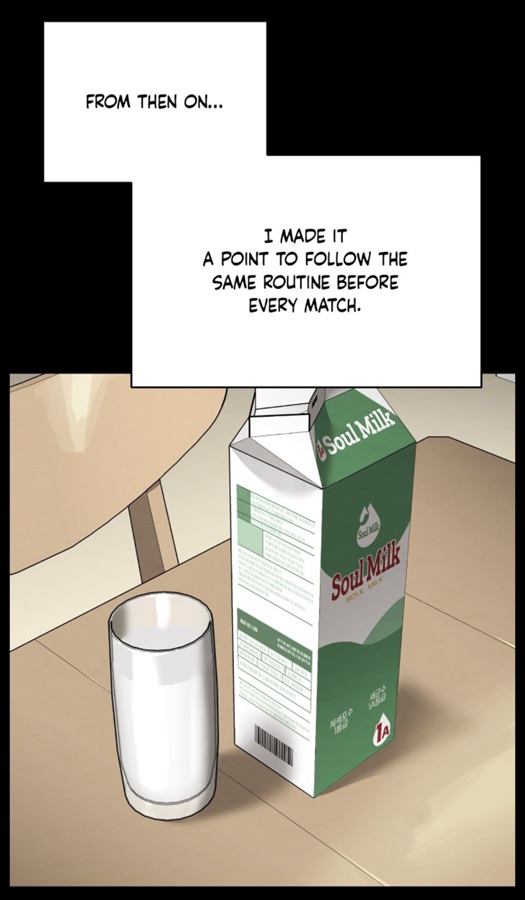 (chapter 75), the perfume
  (chapter 75), the nights of sex before a fight
  (chapter 75). His words seemed like a confession, a key to the riddle of the Night Emperor. But do we truly know him now? Yes and no. Yes, because his testimony reveals patterns we had only noticed before. No, because those patterns are only the ones he decided to share. The tattoos
 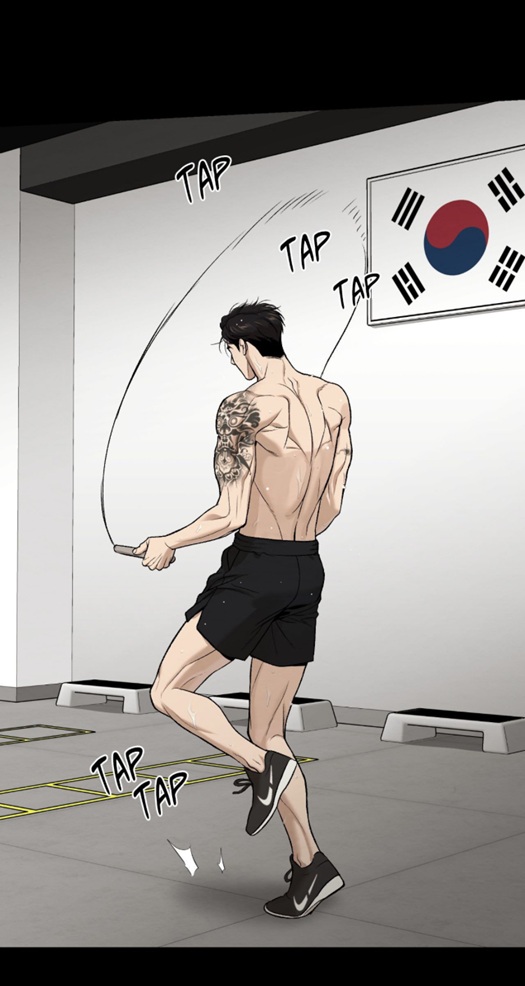 chapter 75) that suddenly appeared on his body
 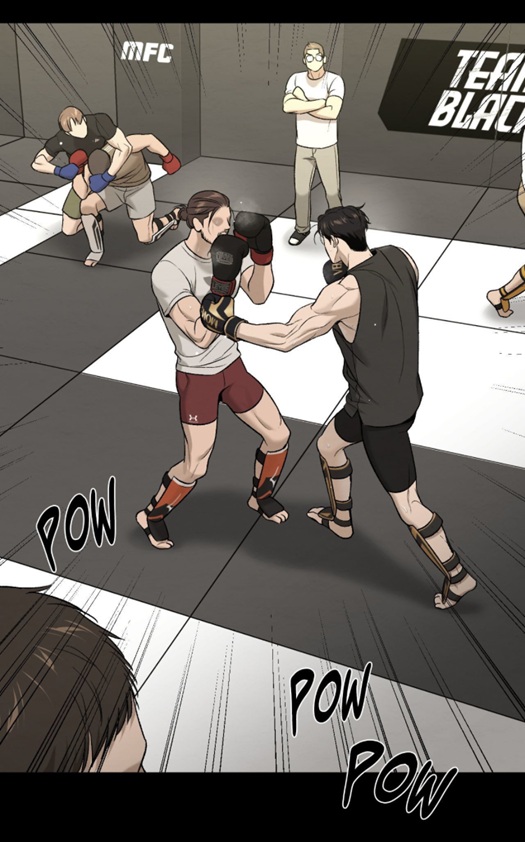 (chapter 75), for example, were left unmentioned — proof that silence still surrounds him.
And that silence is the heart of the mystery. Why cling to such gestures at all? 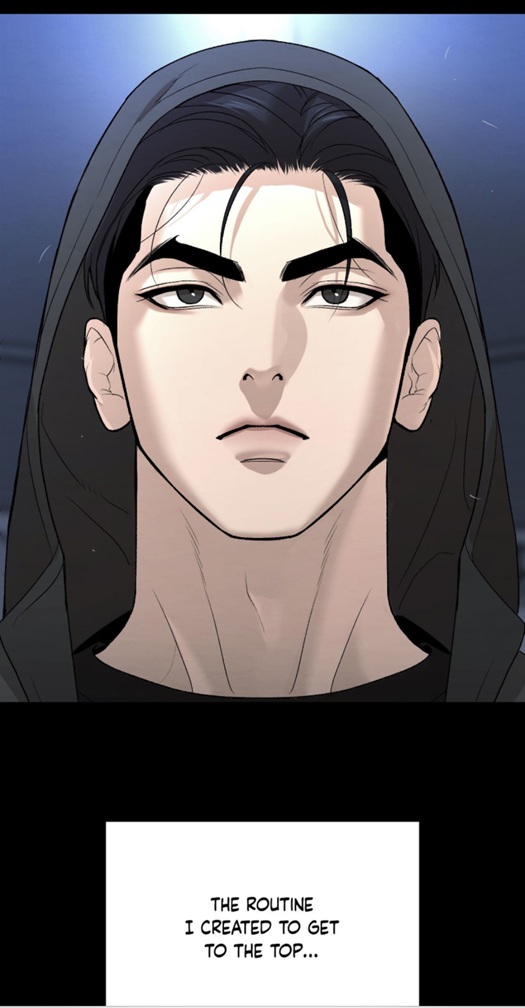 (chapter 75) Why fight as though every match were a matter of life and death? Why keep repeating the same acts, long after survival was secured?
  (chapter 75) What does the jinx truly represent for him — mere superstition, a ritual of control, or something he himself has not yet dared to name? For Jaekyung himself cannot fully explain it. He confesses what he knows — that sex steadies him, that milk soothes him, that perfume sharpens him — but he does not grasp what lies beneath these habits. The origin of the jinx remains hidden, lodged somewhere between memory and trauma, where even he cannot follow. Are these rituals mere superstition, a desperate bid for control? Or are they fragments of something deeper — pieces of a story he has never fully told, even to himself?
This essay does not claim to solve the riddle once and for all. Instead, it traces the wolf’s path step by step: the seed of the jinx in childhood loss, its growth through training and systems, its mask as professional myth, its collapse in illness and insomnia, and the counterforce embodied by Kim Dan — the tender mirror that reflects what Jaekyung has never faced.
The wolf has spoken, but his words only open new questions. To read them closely is not to find closure, but to stand at the edge of the mirror and ask: what truth still hides behind the jinx?
The Birth of the Jinx: From Loser to Survivor
The origins of Joo Jaekyung’s “jinx” cannot be reduced to a single event or ritual  .(chapter 75) They are the product of a long chain of humiliations, betrayals, and systemic exploitation, each layering onto the next until a young man’s raw talent was encased in a carapace of compulsions. To understand the jinx is to understand how the protagonist’s life collapsed around the word loser, and how the fighting industry transformed his private shame into public myth.
From the beginning, Jaekyung’s relationship to combat was not framed as “sport” or “discipline” but as survival. 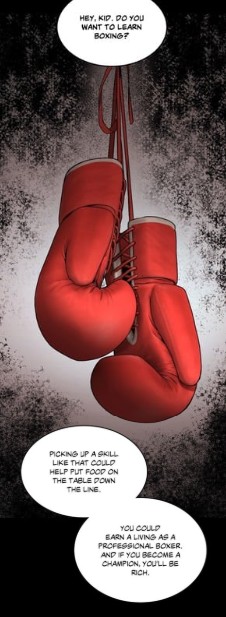 (chapter 72) Even before stepping into a professional cage, his life had been a series of trials to prove he was not worthless.
  (chapter 74) Hunger, poverty, bullying, insults— each branded his body with a language of violence. Among them came his father’s words, spat like a curse: loser.
 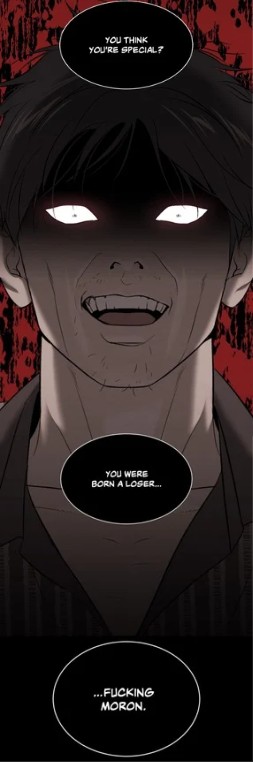 (chapter 73) That insult crystallized everything. The young boy absorbed it as truth, so much so that every later fight would be less about victory and more about silencing that single syllable.
 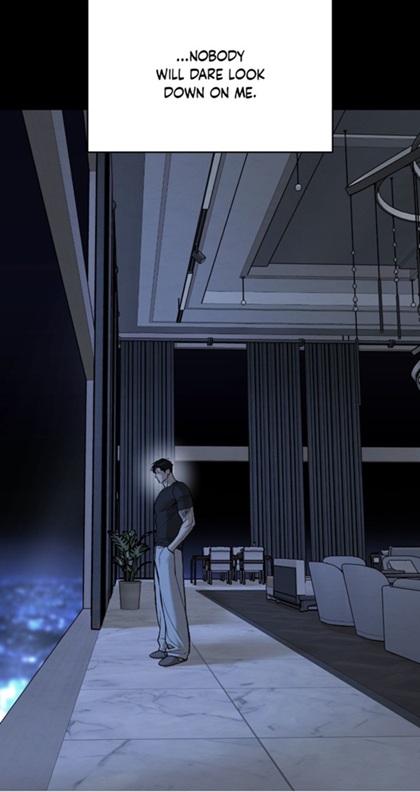 (chapter 75)
To conclude, the origins of Joo Jaekyung’s jinx lie in the place where private wounds and public exploitation overlap. It was never simply a superstition, nor only the accumulation of personal rituals. It was born in the crucible of insult, abandonment, and systemic betrayal, until it hardened into a second skin. To grasp the weight of the jinx, one must trace its seed in his childhood, its growth in the system that exploited him, and its crisis in the moment when he first admitted: I can’t take it anymore (chapter 69)
The Five Losses
At first, Joo Jaekyung’s rise seemed unstoppable. He was young, raw, and hungry 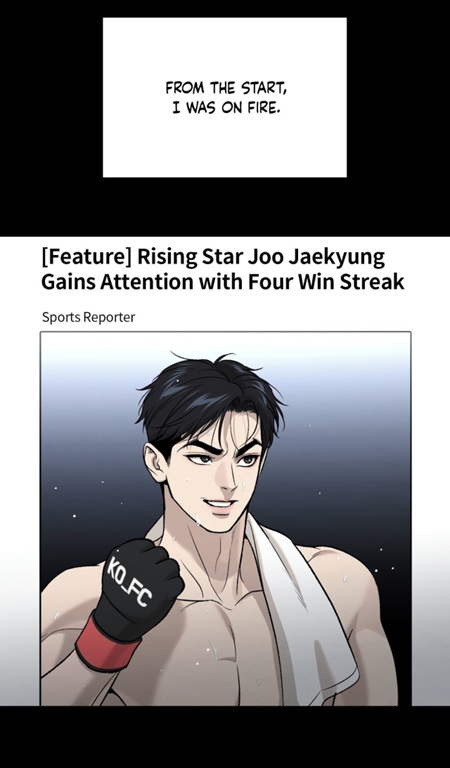 (chapter 75) — a boy who fought with the desperation of someone who had nothing else. Victory after victory gave him the illusion that he had escaped his father’s shadow. As long as he was winning, he could suppress the pain, bury the insult loser, and silence the memory of that cursed night when his father died and his mother abandoned him. Triumph became his shield, proof that he was not what he had said he was.
But then came the first defeat.  (chapter 75)
For most athletes, a loss is a bruise, a chance to recalibrate. For Jaekyung, it was a collapse, That first loss did not just wound his pride — it broke the fragile wall he had built against his past. With the referee’s decision, the ghosts returned. Memories he had forced into silence came rushing back: his father’s drunken rages, the contempt in his voice, the silence of the house after the funeral, the absence of the mother who should have stayed.
Yet the people around him could not see any of this.  (chapter 75) To them, a fighter’s struggles had only one explanation: weakness. Park Namwook and the other coach dismissed his losses as nerves
  (chapter 75), as if the only measure of worth were what happened under the spotlight. They never thought to ask what kind of weight he was carrying, what kind of nights he was surviving before he entered the cage. While the other fighters were well aware of the champion’s insomnia
 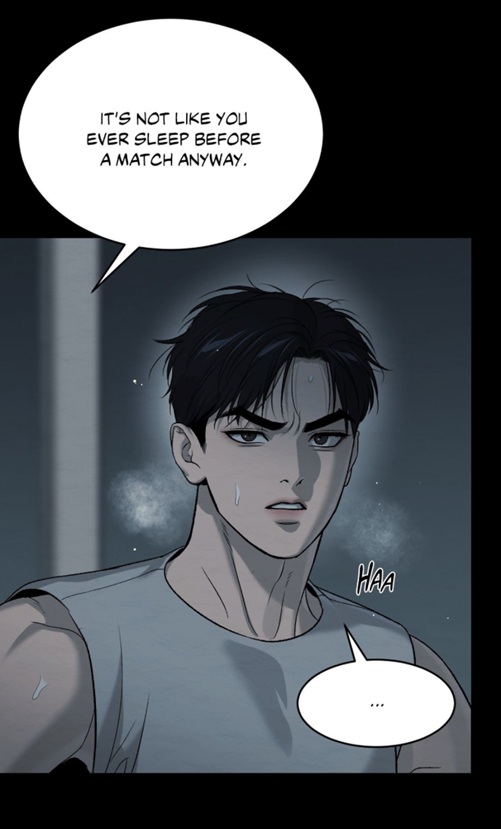 (chapter 75), Park Namwook still has no idea of the champion’s struggles. This shows how disconnected he is from his “boy”.
For the coaches, fighters were not human beings with inner lives. They were “fresh meat,”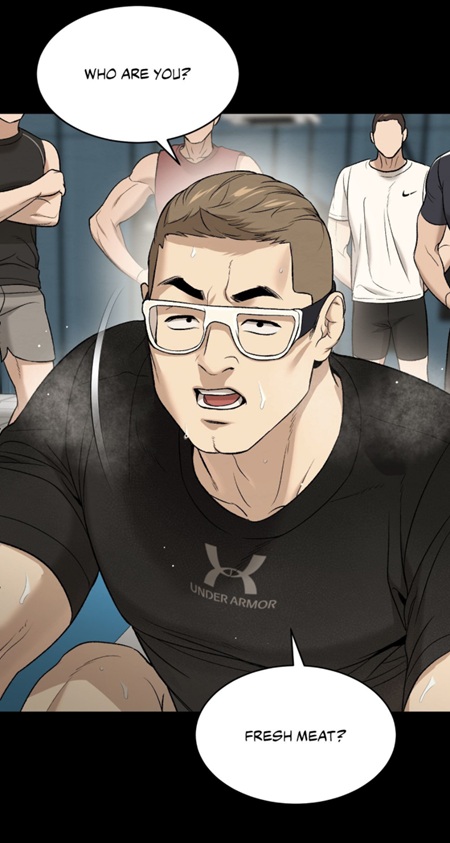 (chapter 74) bodies to be tested, pushed, and discarded if they broke. Where Jaekyung’s defeat cracked open childhood trauma, they saw only performance failure. What he lived as suffocation and despair
 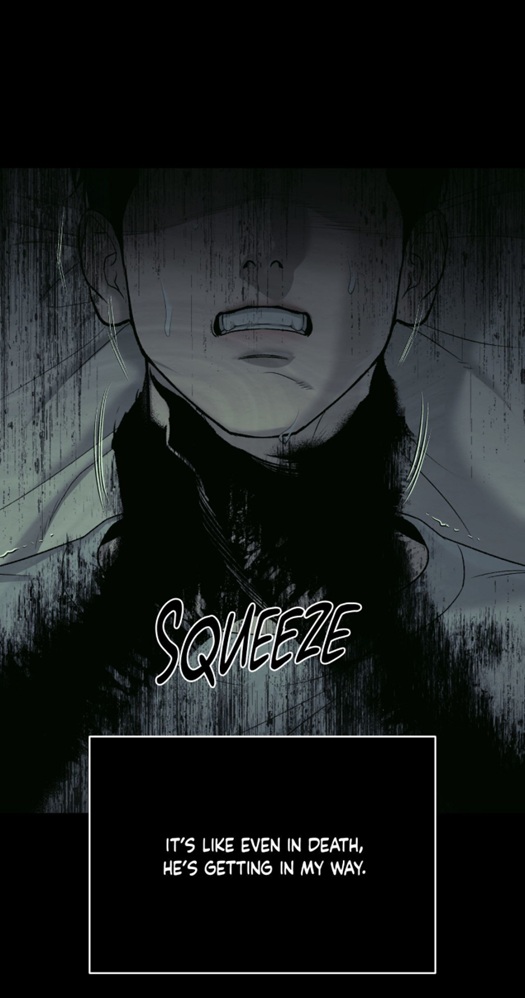 (chapter 75), they reduced to cowardice, bad luck or lack of discipline.
It was after that first defeat that the nightmares began. On the eve of every major fight, his father returned in dreams — not as comfort, but as terror. 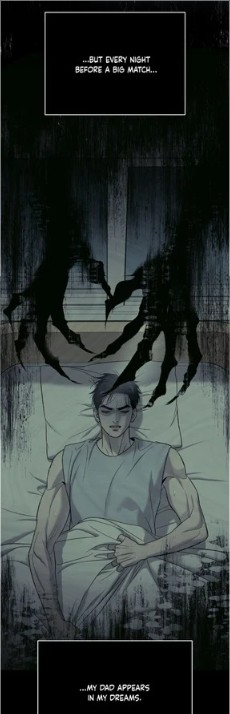 (chapter 75) Shadowed hands stretched over his body, pressing down, suffocating him as he tried to sleep. The man was dead, but still he choked the air from his son. It was, as if the father wanted to bring his son to the afterlife.
In truth, every match had always been a battle for survival. 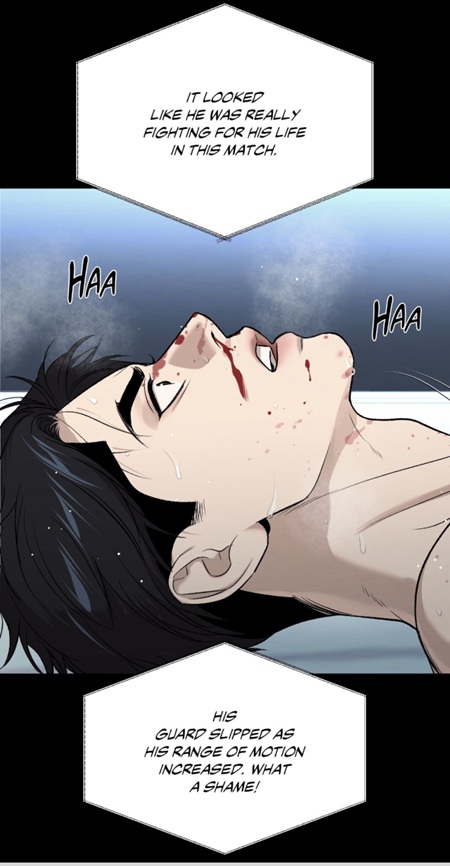 (chapter 75) Even before his first loss, Jaekyung fought like a cornered animal, pouring every ounce of strength into proving he could not be beaten. That’s why he rose so fast. But why? The reason is that all his opponents were reflections of his “father”.
  (chapter 29) Hence all the challengers have empty eyes and a smirk on their face, just like Joo Jaewoong.
  (chapter 75) Consequently, his matches always looked like life-and-death struggles. He wasn’t strategizing against a specific fighter; he was exorcising a ghost. That’s why he never refused a challenge. His opponent never mattered. Besides, as long as he could win, it didn’t matter.
But after his first defeat, that survival style began to falter. The stronger his opponents became  (chapter 75), the more the cracks showed — and the ghosts of his father and mother made every fight feel like a replay of abandonment and accusation. The five losses
  (chapter 75) were not just setbacks in his career; they were the repeated reopening of a wound that would never heal. Each one confirmed his father’s curse. Each one reinforced the sense that he was marked, that no matter how high he climbed, he would always be dragged down again.
This is why insomnia became his constant companion. Victories silenced the ghosts temporarily, but the fear of defeat meant he could never rest. (chapter 29) Sleep was dangerous. Night itself was dangerous. To close his eyes was to risk drowning again in his father’s shadow.
The “jinx” was born here, in the space between triumph and terror. Losses triggered his past, victories gave only temporary relief, and the cycle of sleeplessness carved itself into his body. It was not just that he lost five matches — it was that in losing, he discovered he could never truly escape. (chapter 75)
Defeat for Jaekyung was never contained to the ring. It spilled outward, contaminating his sense of self. With no supportive network to reframe failure as growth, he internalized it as destiny. At this point the soil of the jinx had been prepared: shame, hunger, and despair compacted into a single wound.
The Father’s Insult & the Mother’s Abandonment
If the five losses cracked Jaekyung’s present, the deeper fracture had already been carved years earlier — on the night of his father’s death. That final argument sealed itself into his soul like a curse.
The fight began when Jaekyung, cornered by frustration and anger, shouted his desire to leave “this dump of a house.”  (chapter 73) To the boy, it was a cry for pain and survival — an instinctive urge to escape despair and criticism. To the father, it was betrayal. Already emasculated by failure and drink, he was reminded of his wife’s discontent, the specter of another abandonment. He lashed out the only way he knew: (chapter 73)
That word — loser — became permanent. When the father died later that night, Jaekyung was left with two unbearable impressions: that his last words had cursed his father to die  (chapter 73), and that the man’s final judgment on him would never be undone. Love and hatred, longing and guilt fused in that moment. He loved his father despite the abuse. And yet he would forever wonder if leaving — even just threatening to leave — had killed him. Worse, because death came so suddenly, there was no time left.
 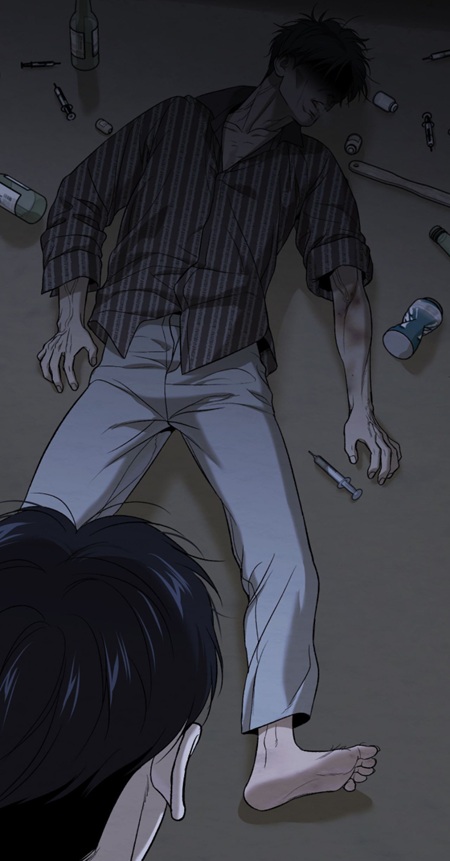 (chapter 73) The clock had stopped before forgiveness could be spoken, before the boy could say he had not meant it. From that moment on, time itself became his opponent: every match another countdown, every victory an attempt to outrun that night.
The nightmares that began after Jaekyung’s first professional loss are echoes of that night. In them, his father returns, shadowed hands stretching to choke the air from his chest. (chapter 75) The hands around his throat were not only the weight of guilt — the boy regretting words he could never take back. (chapter 75) They were also the expression of longing, the words his father had not spoken that day. Behind the insult ‘loser’ was the wound of a man deserted by his wife 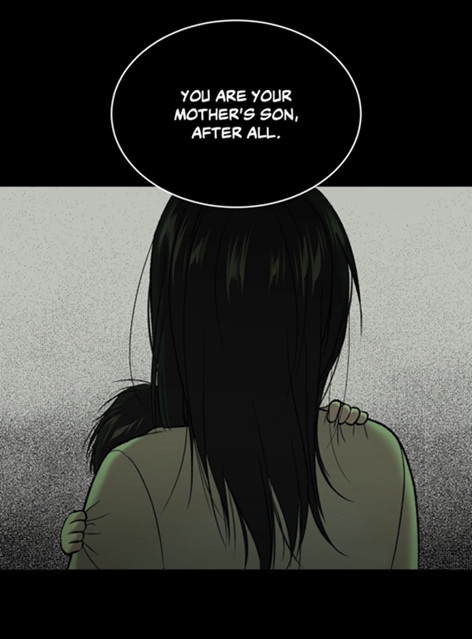 (chapter 73), unable to voice his own vulnerability. (chapter 75) In the dream, the silence became hands: both curse and plea, punishment and confession, suffocating the son who could never repair what had been broken. It was as if the father wanted to bring his son to the other side, yet beneath the violence was a plea: “Don’t abandon me, too.”
And here, the mirror appears. Dan unconsciously repeats the father’s gesture 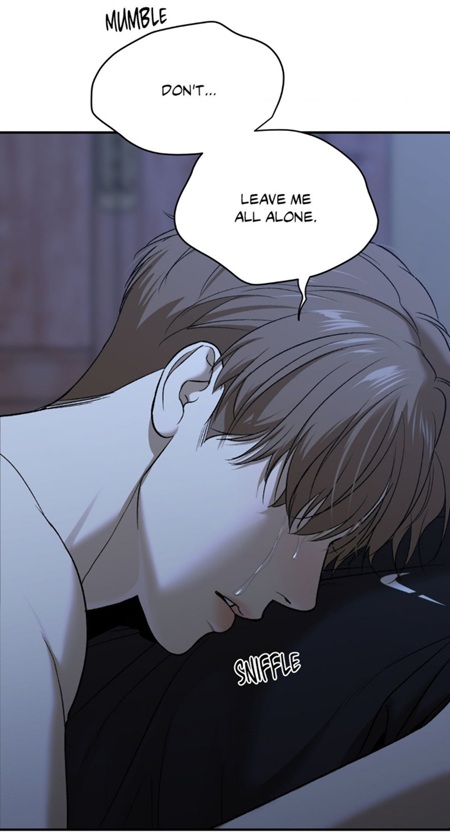 (chapter 66) — speaking not with fists or insults but with tears and an embrace.
  (chapter 66) His sleepwalking reacting to a simple touch
 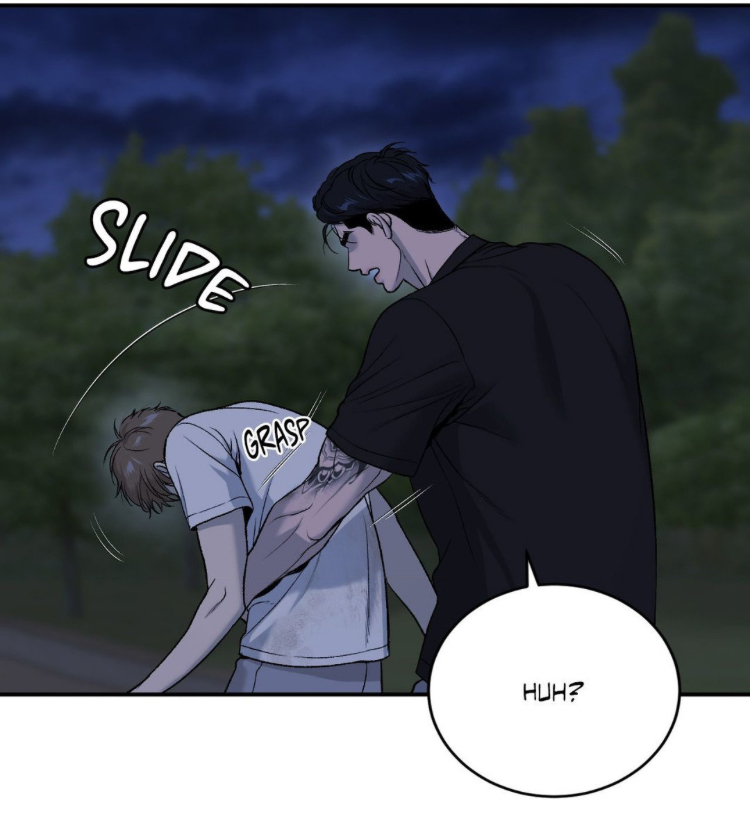 (chapter 65), his dissociative pleas
 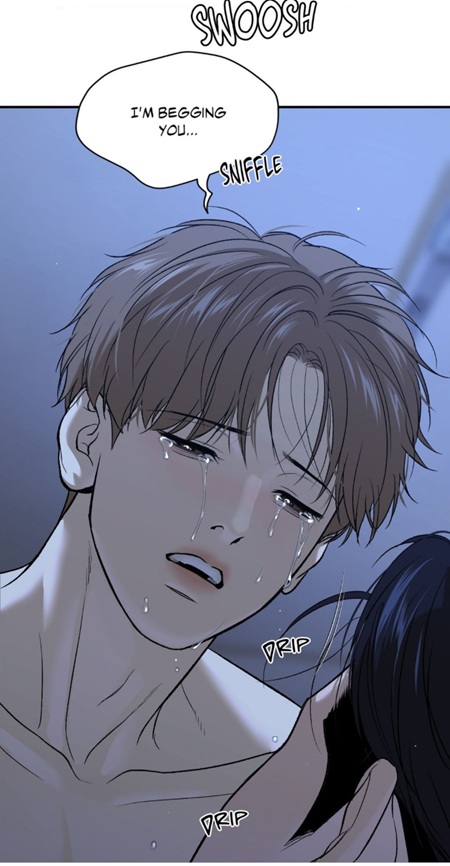 (chapter 66) give Jaekyung the words his father could not say. Where the father’s unconscious leaked out in aggression, Dan’s unconscious offers gentleness and honesty. Both men speak from a place deeper than reason; one chained Jaekyung to guilt, the other opens the possibility of release. In Dan’s trembling body, Jaekyung sees the tender reflection of his father’s hidden plea (chapter 66) — the same hands that once strangled him in nightmares now return as arms clutching him in desperation, not to kill him, but to keep him alive. Doc Dan’s whispers revealed that deep down, he desired to be saved and even taken. The father and the physical therapist both fear abandonment. That’s how it dawned on me why Joo Jaewoong chose to hide his vulnerability and resorted to violence and insult to mask his suffering and low self-esteem. Where are his parents in this story? Why was he obsessed to leave the place?
  (chapter 73) Why does the champion have no grand-parents?
If Joo Jaewoong was himself an orphan — or had effectively lived as one — then his life would have been marked by the same wounds that later haunted his son: abandonment, lack of recognition, and a hunger for belonging. But unlike Jaekyung, he never found a way to sublimate that pain into something lasting. His only outlet was boxing, a fragile refuge that collapsed once his career failed.  (chapter 74) With no parents, no siblings, and eventually no wife, he had nothing to fall back on and saw in the criminal world another form of “family”. The family he created became his one fragile shelter — and when that shelter cracked, there was nothing left to hold him.
This also explains why betrayal cut so deeply. If he had been orphaned once already, his worst nightmare was to be abandoned again. When his wife left, the nightmare returned in full force.  (chapter 72) His violence expressed his powerlessness. And when his son shouted his desire to leave the “dump of a house,” (chapter 73) he heard the same wound echoing. His response — calling his son a loser — was not really about boxing. It was about himself. In Jaekyung’s words he recognized his own instinct: the same drive to escape, to sever ties, to search for life elsewhere. His insult was not only an attack, but also a mirror, reflecting back the failure and desertion he had never overcome.
The tragedy is that he had no language for vulnerability. Where Kim Dan trembles and pleads openly, (chapter 66), the father could not. He had never been taught how to ask for help, how to voice fear, how to admit despair. Keep in mind how the little “hamster” was treated at school:  (chapter 57) Violence and insult became his only idiom. “Loser” was not simply an accusation, but the displaced confession of his own defeat: I was abandoned. I failed. I have nothing.
This is why he resented his son. Jaekyung mirrored him too closely.  (chapter 73) The boy’s boxing talent was a source of pride — proof of strength — but also a threat. Strength meant escape. Escape meant abandonment. The father, who had already lost his wife and his dignity, projected onto his son the terror of losing everything once again. His resentment was not born of disappointment alone but of recognition (unconsciously): you are me, and you will leave me too.
From a narrative standpoint, this also clarifies why Jinx never shows Jaekyung’s grandparents, while Dan’s halmoni plays such a visible role.  (chapter 65) The absence is not an oversight but a theme. Jaekyung comes from severed roots: no grandparents, no siblings, no extended family to lean on. Hence he was alone at the funeral.
 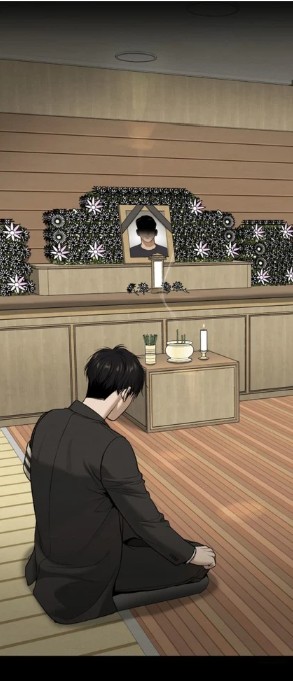 (chapter 74) His father may have been an orphan, just like his mother too. Therefore the latter was emotionally unavailable, and so he inherited not only trauma but also silence. By contrast, Dan has at least one surviving figure — flawed as she is — who keeps the family thread intact. That contrast makes Jaekyung’s bond with Dan all the more significant: it is not just romance, but an attempt to build a family line that never existed before him.
This also explains why the story deliberately exposed the “mother” of Hwang Byungchul 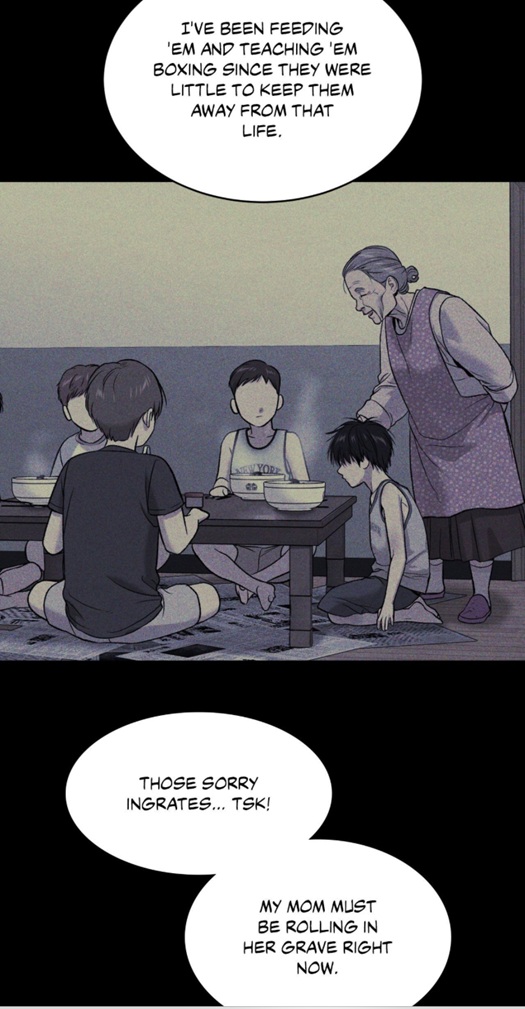 (chapter 73), while keeping Jaewoong’s own origins shrouded. Hwang had someone by his side — gentle, quiet, but present — while Jaewoong had no one, as according to me, the mother was counting on her “husband”‘s success and dream. The director’s stability, however fragile, was rooted in that maternal figure. Jaewoong had no such guide, and without it, he simply made the wrong choice.
If the father cursed him with words, the mother wounded him with silence. When news of her husband’s death reached her  (chapter 74), she never once spoke to her son about it, never asked what he felt. She did not grieve with him, nor allow him to grieve. Besides, the main lead’s words were ambiguous: Was the father dead or had he abandoned his son too? The fact that she never asked exposes that it didn’t matter to her. She was not interested in the truth, her only concern was herself — her new life, her fear of losing it. Where the father left him branded, the mother left him erased.
 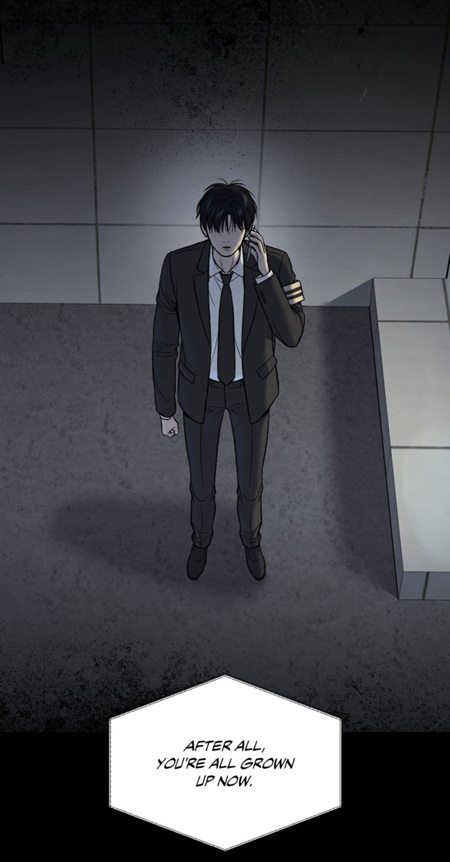 (chapter 75) One condemned him, the other abandoned him, and between them Jaekyung was left with neither recognition nor belonging.
Worse still, she used time itself against him. To her, his pain was invalid because he had “grown up”; childhood had expired, and with it any claim to comfort. If the father’s death left him no time to undo his last words, the mother’s detachment told him he was already too late. One parent departed too soon, the other dismissed him as already finished. Between them, Jaekyung was trapped in a cruel paradox of time. This explicates why he rushed his career. Every victory carried the urgency of being “not too late,” yet every memory reminded him that it already was.
This fusion of insult and betrayal created the paradox that would dominate his adult life. Every victory was haunted by loss 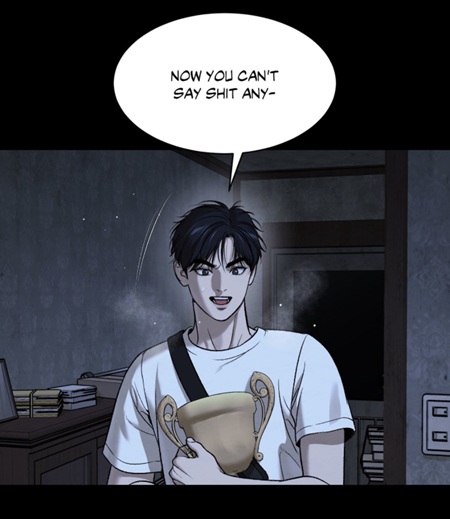 (chapter 73); every triumph, by the echo of rejection
 (chapter 73). To win was to prove his father wrong, but to stand alone in victory was to prove his mother right. Success and emptiness became inseparable.
And yet, this is precisely why Kim Dan’s presence destabilizes him. The quiet therapist mirrors the mother: bound to the domestic, offering care in silence  (chapter 56), seemingly fragile and dependent. But unlike her, he stays. Where the mother left, Dan endures. He only left because of the champion’s final words:
 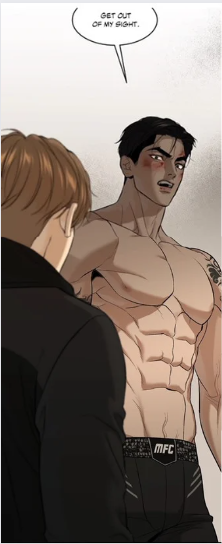 (chapter 51)
By choosing Dan, Jaekyung faces the chance to rewrite the past on both fronts. To hear in the tears of another man what his father could not say. To receive in daily presence what his mother could not give. Dan is the mirror — but also the key. Through him, the curse of that night can finally be undone. The insult “loser” can be answered not with endless victories but with loyalty and responsibility. The suffocating grip of the nightmare can be released not by outrunning it, but by choosing someone who will not disappear when the fight is over. Finally, because his fated partner’s fate resembles to his own father, he can grasp Joo Jaewoong’s words from that night much better. That moment where Jaewoong shouts,  (chapter 73) mirrors what the director later whispers to Jaekyung:
 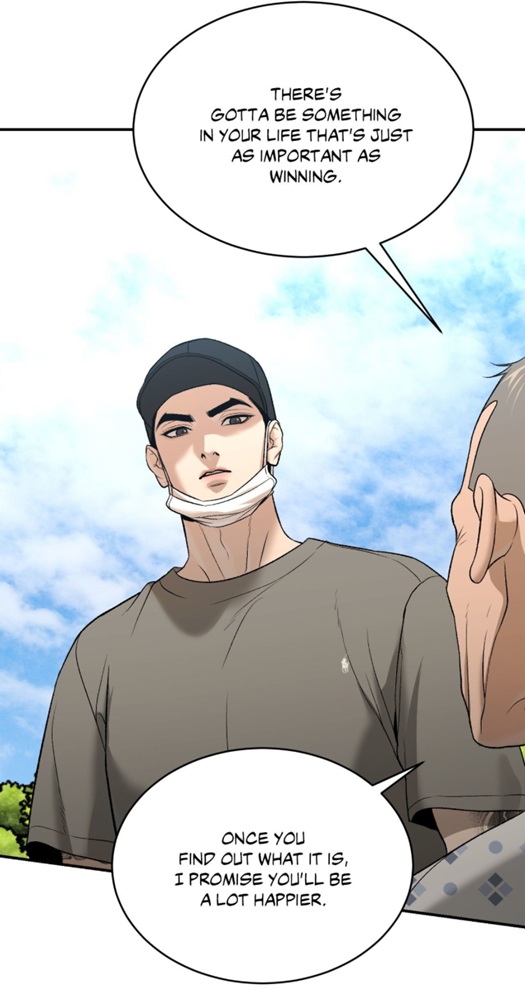 (chapter 75) Both men — the broken father and the regretful coach — carry the same hidden insight: that fighting cannot be the whole of life, and that reducing yourself to fists and violence only leads to ruin.
But where Jaewoong voiced it as rage (a curse disguised as a lesson), the director voiced it as wisdom (a confession born of hindsight). Both were trying, in their own ways, to warn the boy. And yet, Jaekyung could not hear it until he had this vision of doc Dan waiting for him!  (chapter 75) This is the wolf’s ritual in front of the tender mirror: the fighter who lived by curses and silence finally meeting their reflection transformed into gentleness and endurance.
To conclude, Dan is not just a partner but the tender mirror of the champion. He reflects both parents back to Jaekyung: the father’s unspoken vulnerability, the mother’s missing presence. To accept Dan is to answer both wounds at once — to refuse to be defined by the word “loser,” and to refuse the emptiness that haunted every victory.
The Bible Fighter Encounter
At his lowest point, after the five humiliating defeats and the sleepless nights where his father’s shadow clawed at his throat, Jaekyung stumbled across another fighter whose stability was almost alien. 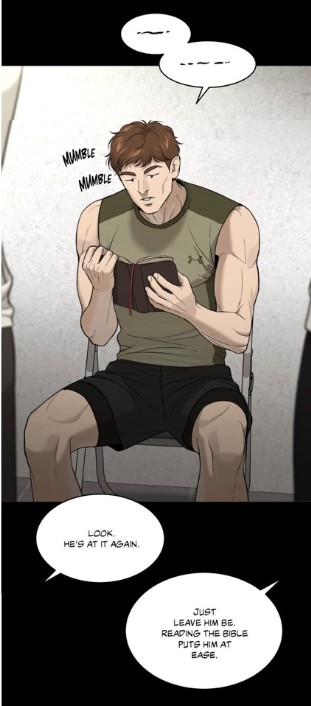 (chapter 75) This man’s jinx was startlingly simple: he read the Bible before every match. One book, one ritual, one anchor. To outsiders, it may have seemed quaint, even laughable, but to Jaekyung it was enviable.
Here was a man who had condensed all the chaos of combat into a single act of faith. His jinx was not a patchwork of compulsions but a covenant: a relationship to something larger than himself, a story that gave meaning to the brutality of the cage. 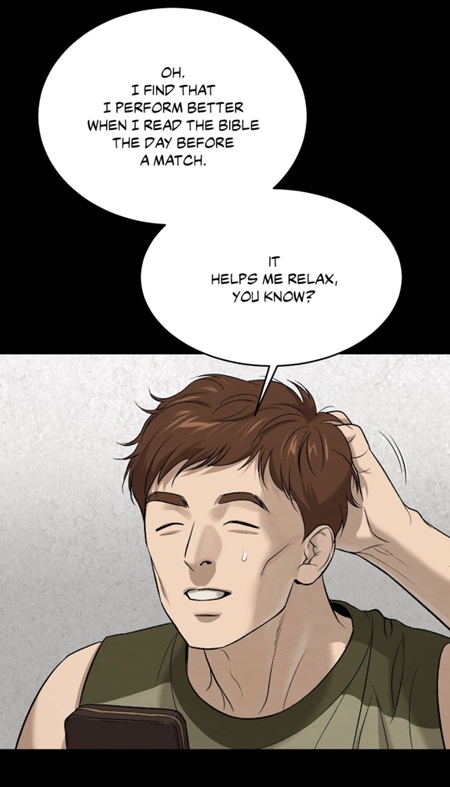 (chapter 75) When he prayed, it was not only for victory, but for coherence. Win or lose, the ritual bound him to a sense of belonging that Jaekyung had never tasted.
For Jaekyung, the encounter did not plant faith, but it did plant envy. 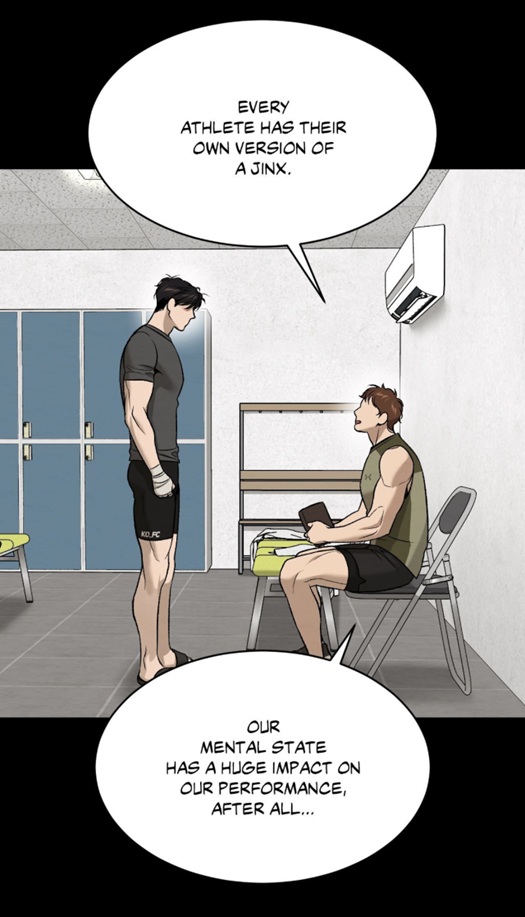 (chapter 75) If ritual could bend fate, he would build his own. But where the Bible fighter had a single, unifying story — scripture, God, fellowship — Jaekyung had nothing to draw on. No faith to lean on, no parental blessing to inherit, no safe home to return to. Instead, he began to stitch together a mosaic of rituals, each one disguising a different childhood wound. To outsiders it looked obsessive, neurotic, almost superstitious. To him, it was survival. Each gesture was both repression and remembrance, a scar disguised as armor. And this is the paradox: the rituals made him strong enough to survive, but too broken to live.
- Sex was not intimacy but anesthesia.
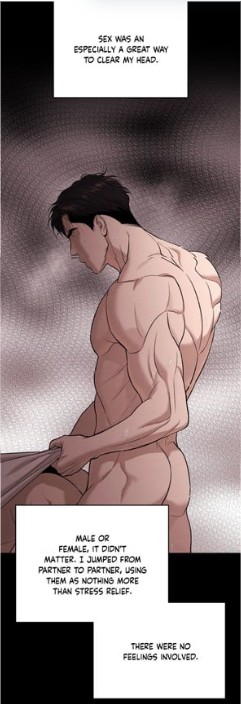 (chapter 75) By using another body, he cleared his head, numbed the loneliness, and convinced himself he was in control. But it was also a grim reenactment of abandonment: he could take without being left, dominate rather than risk being deserted. At the same time, he considered his sex partners as toys in order to avoid guilt. A toy can not die, it can be “thrown away”.
 - Milk seemed trivial — a glass before the day began.
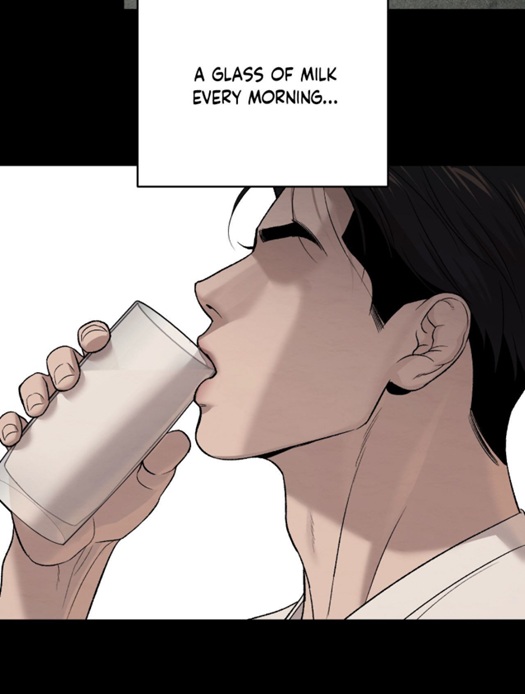 (chapter 75) But in truth it was a disguised memory of hunger
 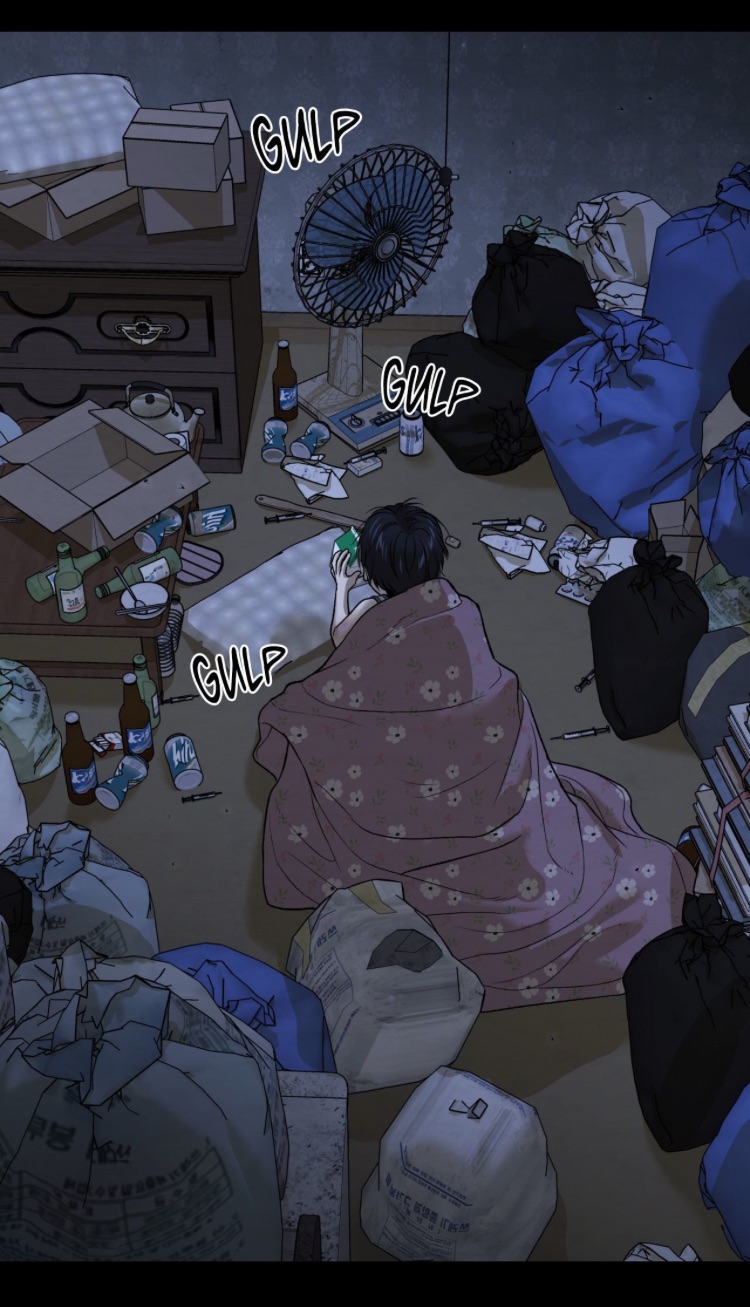 (chapter 72), of nights when there was nothing to eat, of shame attached to poverty.
  (chapter 75) To drink milk was to rewrite the past: I will not go hungry again. Yet the act was also a reminder that he once had.
 - Perfume transformed bullying into ritual. Once shamed for smell and sweat (chapter 75), he turned fragrance into armor. (chapter 75) The bottle on his shelf was less cosmetic than talismanic, proof that no one could call him dirty again. But the ritual did not erase the insult; it replayed it daily.
- Tattoos etched pain into permanence. To endure the needle was to reenact overtraining
 (chapter 27) , self-punishment, the willingness to suffer endlessly for the cage. He didn’t fear pain. Their sudden appearance (chapter 75) remains shrouded in silence — who drew them onto his body, and under what conditions? Why are they absent in his youth, only to surface fully formed as he steps onto the international stage? This silence is telling. The tattoos are both declaration and wound: marks of pride, but also scars he chose to carry in plain sight.
Together, these rituals formed a raft — not to carry him forward, but to keep him from drowning. They gave him the illusion of escape, while chaining him to the very traumas he sought to forget. He imagined he was moving on, outpacing the ghosts of his father’s insult and his mother’s abandonment. Yet each gesture pulled the past back into the present. The Bible fighter’s ritual was a prayer; Jaekyung’s were bargains. The more he clung to them, the clearer it became that he was not free. He was frozen, an adult in body but still the boy (chapter 75) who had been abandoned, when he was 6 years old. In fact, on the day, he shouted to his father he would leave this “dump of the house”, he didn’t anticipate that he would relive the day, when he was abandoned as a child. That’s why he has imagined of himself as a little boy and not a teenager. He had the heart of a little boy: wounded, scared and abandoned. Thus he could never grow emotionally. His jinx was not transcendence but entrapment. He was bargaining with memory: don’t let me fall back into the night where I was branded a loser. Don’t let me taste abandonment again.
In this way, the Bible fighter’s simplicity only underscored Jaekyung’s fracture. What was singular faith for one man became a shattered mosaic for another. The jinx did not make him whole; it reminded him every day of how broken he already was.
The Rush to the Top and his predestined Fall
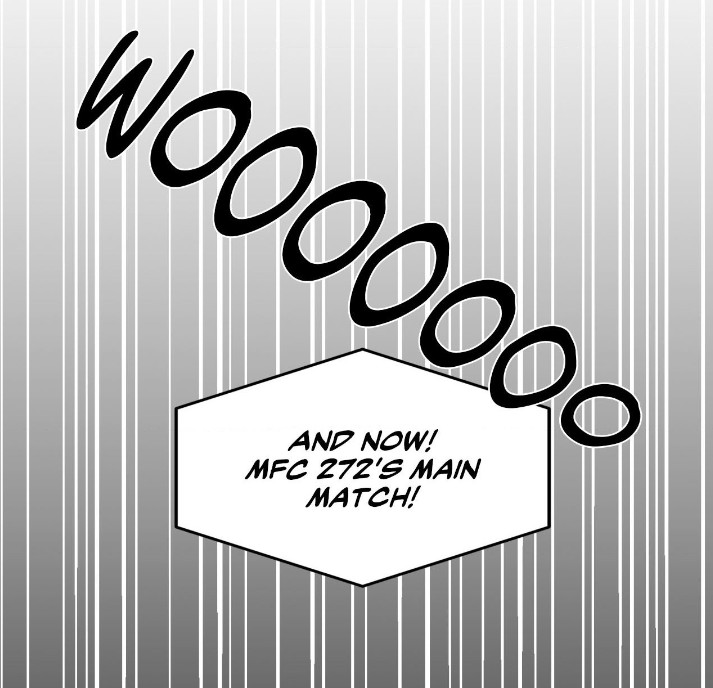
What made this fragile system even more dangerous was the brutal pace at which his career was structured. Between the ages of twenty and twenty-six, Jaekyung was hurled from obscurity into the international spotlight. His first MFC fight was already the 220th bout 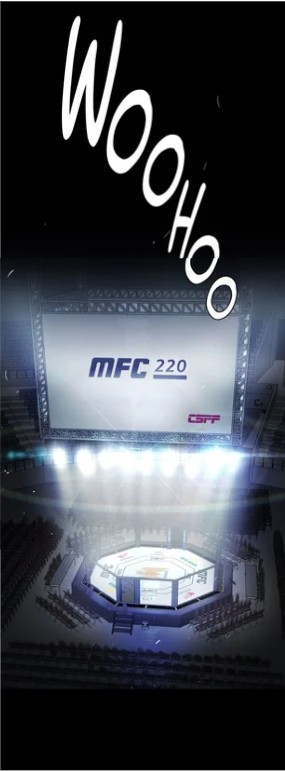 (chapter 75), a reminder that he had entered a machine in motion, a system that swallowed fighters whole and spat out statistics. From that point, the acceleration was merciless: by April, he was in the 272nd bout against Randy Booker
  (chapter 14); by June, the 293rd against Dominic Hill
  (chapter 40); and by July, the 298th against Baek Junmin.
  (chapter 50)
In less than two years, there were merely eighty fights, and he participated quite often: 4 within 5 months (I am including the one in episode 5) The pace was staggering — inhuman. In the span of six years 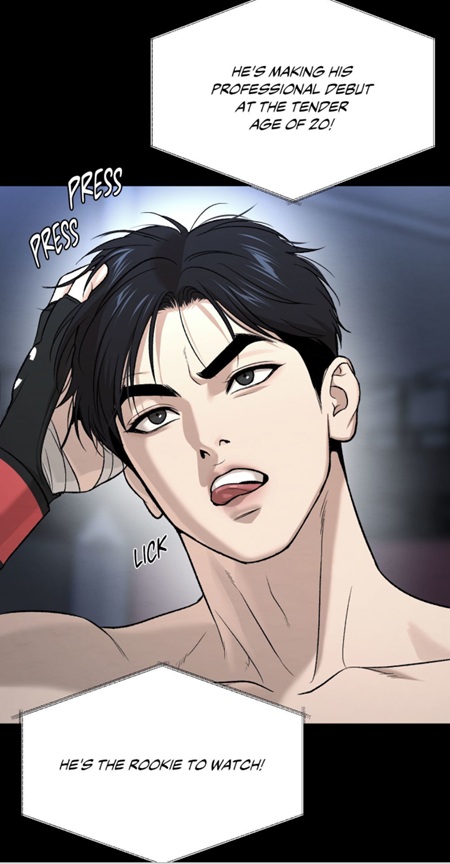 (chapter 75), he had not merely “built” a career, he had been consumed by one. There was no time to recover from injuries, no space to process victory, no room to integrate defeat. No wonder why his shoulders were in bad shape. (chapter 27) And even before entering MFC, he had to win the champion title for KO-FC! Here he had to face many opponents.
  (chapter 75) Every fight blurred into the next, every opponent older, stronger, more experienced. And yet Jaekyung fought them all with the same desperate, survival-driven ferocity.
Commentators marveled at his intensity, describing him as if he were “fighting for his life.” (chapter 75) They meant it metaphorically, but for Jaekyung it was literal. The cage was his childhood all over again — a dump he needed to escape, fists and rage the only tools at hand. He fought not to win titles but to silence ghosts. Every opponent became his father’s shadow, every victory a plea to his absent mother: see me, recognize me, don’t abandon me.
This was not a steady ascent, not the careful shaping of an “athlete.” It was exploitation disguised as opportunity. Moderators described his ferocity as spectacle, but the deeper betrayal was in the language used to frame him. The director 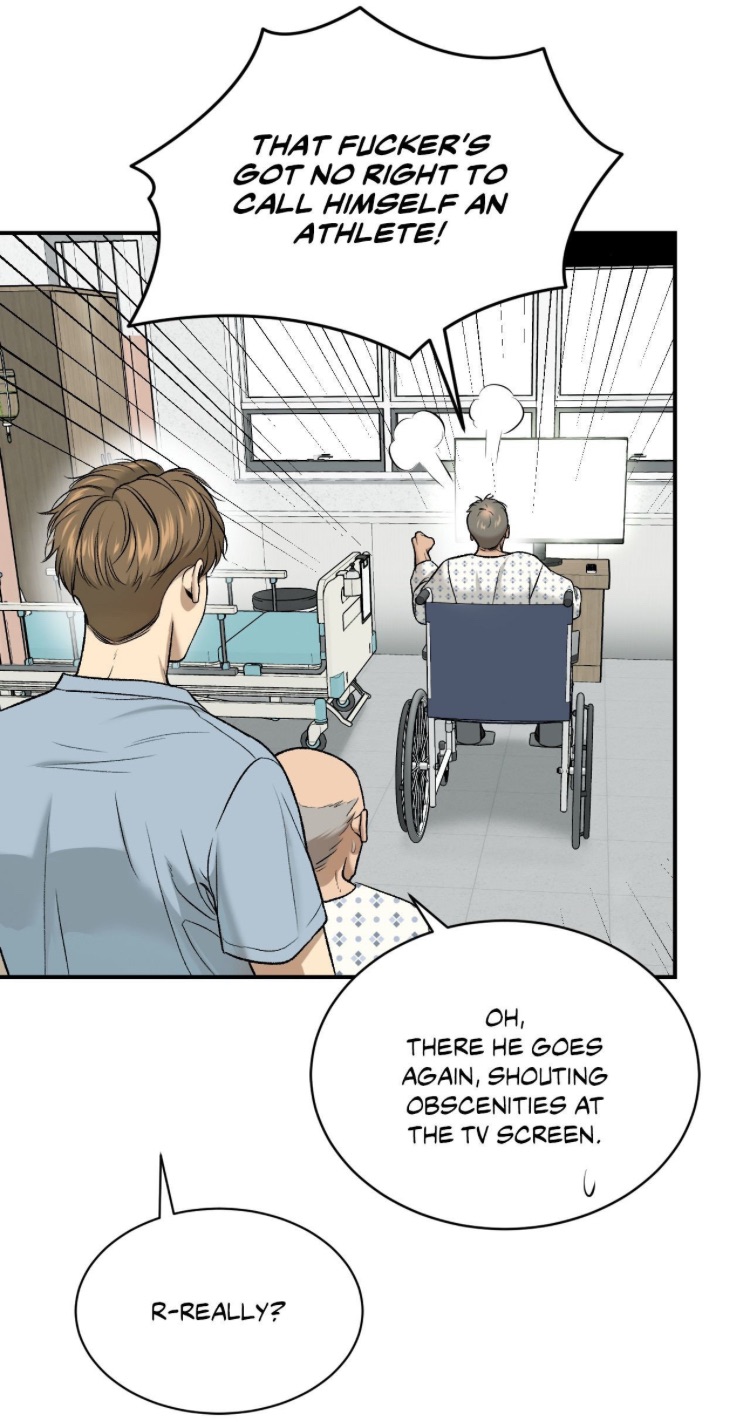 (chapter 71) and Dr. Lee
  (chapter 27) still called him an athlete — someone whose body required balance, protection, recovery. But MFC and KO-FC never did. For them, the main lead or his colleagues were addressed as
 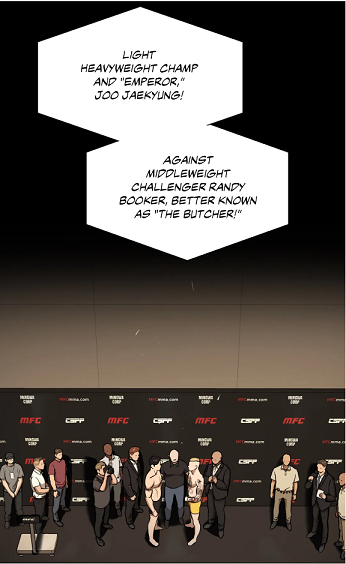 (chapter 14) “The Emperor”, “a crazy bastard”
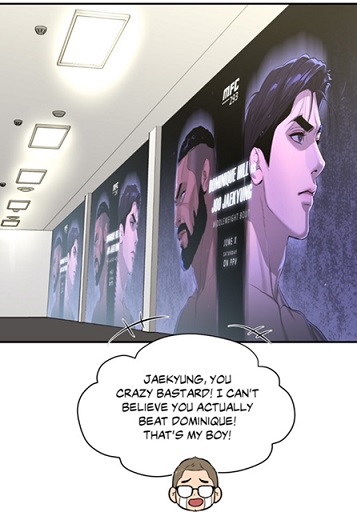 (chapter 40), “my boy”, (chapter 74) “fresh meat,” (chapter 14) “ Randy Booker the butcher,” or
 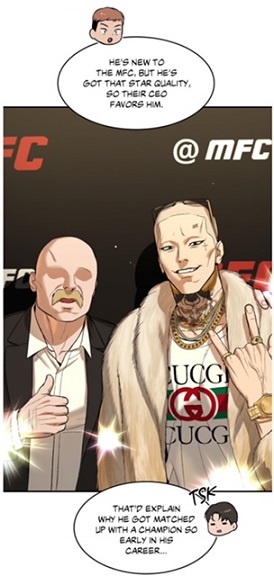 (chapter 47) “a potential star.” Not a person, not even a professional, but branding material — a body to be consumed by audiences and discarded once spent. The absence of the word athlete marks what he lost: recognition as a human being. And guess what?
  (chapter 41) Only doc Dan at the gym saw the fighters as athletes!
Here, the personal and the professional fused in a toxic loop. The wolf’s private jinx gave him the illusion of control — sex, milk, perfume, tattoos — while the organizations fed on those compulsions, scheduling fight after fight, using his rituals as fuel for their machine. The more he fought, the more he relied on the jinx. The more he relied on the jinx, the more exploitable he became. What looked like discipline was really desperation; what looked like destiny was really a trap.
The tattoos mark this stage with brutal clarity. They appear suddenly (chapter 75), without narrative explanation of when or by whom they were inked — as if stamped onto him by the very system he served. In South Korea, tattoos long carried a stigma, associated with gangs and the underworld; Baek Junmin’s body displays this openly  (chapter 47). Thus only doctors are allowed to do them officially. But Jaekyung’s rise shifted that meaning. As “The Emperor,” he normalized tattoos for the new generation of fighters, transforming what once marked marginality into a badge of visibility. This is why even Oh Daehyun, one of his admirers and members of Team Black, now carries one:
  (chapter 8) The celebrity’s suffering literally redefined the aesthetic of the sport. His body, turned billboard, became part of the league’s branding.
Is it a coincidence that Jaekyung’s fall began almost as soon as Dan entered his orbit? At first glance, one might think the therapist’s presence destabilized him, but the timing reveals something darker. The moment Jaekyung began to show humanity, the system pounced — using his deepest wounds as leverage to strip him down.
Every challenge he faced after Dan’s arrival carried the sharp edge of his private pain. Randy Booker taunted him as a “baby,” 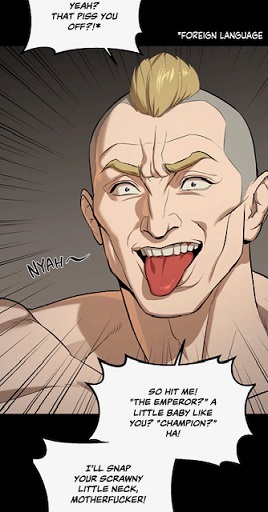 (chapter 14) ripping open the scar of his father’s “loser” and his mother’s absence and silent parentification. Not long after, an article exposed his shoulder injury
 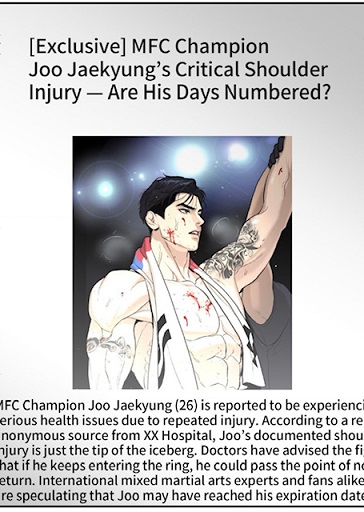 (chapter 35), reducing years of discipline to a liability on the page. Later came the suspension narrative
  (chapter 54), his temper framed not as the product of exploitation and scheme but as proof of unfitness, as if his rage were a crime instead of a symptom.
  (chapter 54) Even the match with Baek Junmin was twisted against him — accepted under pressure, then reframed as recklessness. To the system, his crown had been too secure, his presence too dominant. He had been champion for “too long.”
The logic was brutally simple: a fighter is valuable until he earns too much , (chapter 41) until he threatens the balance of spectacle and profit. Then the very traits that made him marketable — ferocity, endurance, defiance — are turned into weapons against him. The same press that glorified his titles was quick to call him a liability. What the commentators once celebrated as survival was reframed as instability. Did you notice that all the events quoted above are linked to the number 5!  (chapter 5) the name Seo Gichan appeared here for the first time… a faceless name!
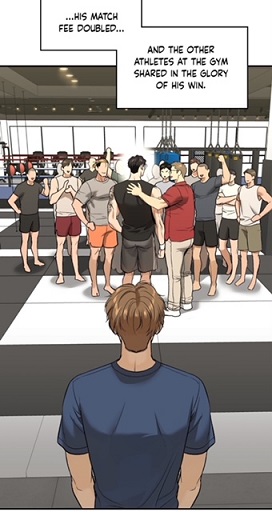
The panel of the gym makes this logic stark. (chapter 41) His match fee doubled, and the athletes around him cheered, basking in the reflected glory of his win. Yet the same scene exposes the truth: behind him stand rows of “fresh meat”, ready to replace him the moment his body breaks or his aura fades. Fighters were not nurtured as athletes or honored as artists; they were consumed like rations in a machine that never stops feeding. His career, far from proof of fate or talent alone, was a treadmill built by others — one that guaranteed collapse. That is why his “invitation” from the CEO was less an opportunity than a pitfall. 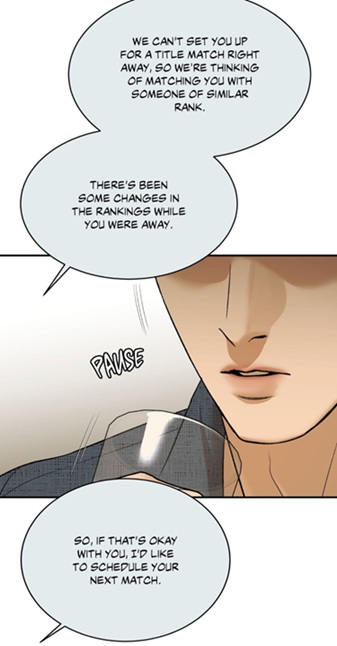 (chapter 69) The danger lay in the very identity of his next challenger. If they pitted him against a newcomer who had rocketed through the ranks as quickly as Baek Junmin once did (chapter 47), the outcome was already poisoned.
Should Jaekyung win, the victory would be dismissed: he had chosen an easy opponent, feeding the narrative that he no longer belonged at the top. Should he be paired with a strong opponent, they expect him to lose, for he has just been surged. So should he lose, the humiliation would be absolute — proof that his era was over, his downfall sealed. And even a tie would work against him, just as before: no one would call it resilience; they would call it weakness, the inability to dominate. In every possible outcome, his worth would be diminished.
This is why Potato’s skepticism back in chapter 47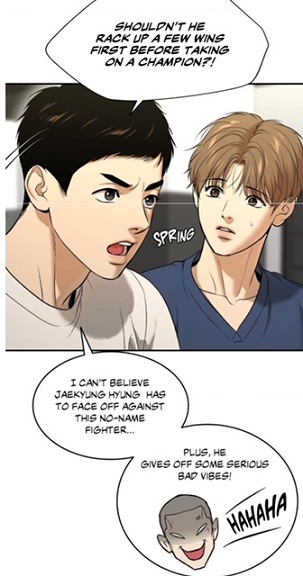 (chapter 47), questioning the selection of Baek Junmin, is so crucial. It shows that the manipulation of opponents was no accident — it was systemic. Matches were not about fair combat but about narrative management: making sure the emperor’s story served the company’s balance sheet.
The system leaves Jaekyung with only one real option: to step out of the spotlight. Every path inside the cage leads to diminishment — win, lose, or tie, the outcome is already poisoned. To remain would be to keep running on the treadmill until his body breaks, his title stripped, his name forgotten.
But there is another path, one the system cannot script: (chapter 75) to follow Dan into a different kind of life. For Jaekyung, this does not mean abandoning fighting altogether, but detaching it from the machinery of survival and spectacle. To fight not to silence ghosts or to feed companies, but because he chooses to. To discover that strength can exist outside the ring.
This is where the tender mirror matters. In Dan’s steady presence, Jaekyung catches a glimpse of the self he has never allowed himself to become: not just wolf, not just champion, but a man capable of rest, of connection, of living beyond ritual. Where the system shows him only exploitation, the mirror reflects possibility. He will discover the advantages of “vulnerability and childhood”: fun and enjoy the present.
The system can strip him of titles, twist his image, discard his body. But what it cannot erase is the possibility of choosing a different path, like for example fight for fun and act as a real director of a gym!
The Empty Champion
The façade cracked with the tie against Baek Junmin.  (chapter 51) On paper, it was a draw. In practice, it was soon reframed as a loss
 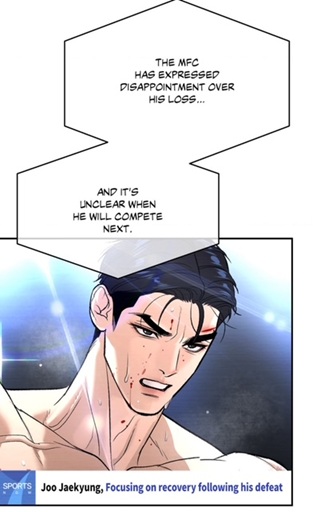 (chapter 57). By late August, Jaekyung had slipped to third place.
  (chapter 69) And strikingly, no one questioned it. Not Park Namwook, not the officials, not even Joo Jaekyung or the commentators who had once praised his streak. The silence was louder than any insult.
The title of “champion” — the very identity he had staked his survival on — was revealed as hollow.  (chapter 75) Here, it looks like a mirror, but naturally it is a fake one. It was not earned with fists alone; it could be stripped, reassigned, reshaped at will. One tie, one whisper, one adjustment in the rankings, and the Night Emperor was dethroned without ceremony.
For Jaekyung, this revelation was more than professional disillusionment. It tore open the paradox of his childhood. Just as his mother’s absence had turned victory into rejection, the system now proved that even championships carried no safety. He could win endlessly and still be discarded. He could bleed, sweat, endure, and still be branded as replaceable.
The belt was supposed to erase the insult “loser.” Instead, it exposed how fragile identity remained when it depended on others’ recognition. He had built a kingdom on rituals, and the first storm revealed it was sand.
The Cry of Exhaustion
When Jaekyung finally mutters, “I can’t take it anymore” (chapter 69), the choice of words is crucial. He does not say “I can’t do it anymore” — as though it were a matter of strength or skill — but take. This single verb reveals the deeper structure of his life. He has lived not by creating or belonging, but by enduring and consuming.
To take meant many things for him:
- to take blows in the ring, as though punishment were the measure of his worth;
- to take orders from coaches and managers, their words absorbed as commands rather than care;
- to take the belt, the money, the fame, without ever finding nourishment in them;
- to take on guilt and abandonment, carrying weights that were never his to bear.
Even his jinx rituals repeat this same pattern. Each is an act of taking:
- Milk — taking liquid into his body (chapter 75), ritualizing hunger that had once been real deprivation.
- Sex — taking another’s body as a vessel
 (chapter 75), not for intimacy but to clear his head and stave off loneliness, emptiness and his abandonment issues.
 - Perfume — taking a scent (chapter 75), masking shame by cloaking himself in armor.
- Tattoos — taking pain into his skin, as if engraving scars could grant permanence.
None of these rituals is about giving, sharing, or being. They are substitutions, attempts to fill a void. He consumes and endures, but he never rests. Survival by taking is not the same as living.
That is why the sentence “I can’t take it anymore” is more than a cry of exhaustion. It is a refusal of the very economy that has defined him: the endless cycle of taking, absorbing, enduring. The belt, the fights, the rituals — they have all lost their power to silence the ghosts. His body cracks under the weight, and his soul confesses what his will has long denied: that survival without belonging is hollow.
Here begins the possibility of a new mode of existence. Not taking, but being. Not absorbing endlessly, but inhabiting presence. And this is what Dan embodies. Where Jaekyung has lived by taking, Dan offers constancy — a presence that does not vanish, a tenderness that does not demand. The mirror he holds up makes Jaekyung’s cry not merely one of collapse, but of awakening. It signals a desire to step out of the hollow cycle of taking, and toward the possibility of being — not a “champion,” not a “loser,” but simply himself. (chapter 75) The problem is that in his dream of belonging, the champion is not present yet. He hovers at the edges of his own life, like a ghost, repeating rituals that anchor him to absence rather than connection. He exists in fragments — as fighter, as brand, as body — but not yet as a whole person. To become present, he must learn not only to abandon the logic of taking, but to enter the world of giving and receiving, where presence is shared rather than consumed. His later vow 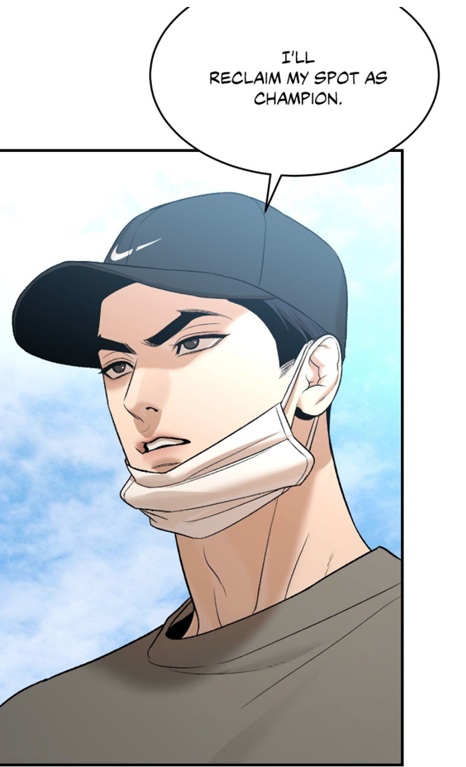 (chapter 75) must be read in this light. It is not a relapse into the system’s treadmill, nor a blind return to the pitfall laid before him. Notice that he does not say he will fight in the fall, nor does he mention the upcoming match that everyone else is waiting for.
  (chapter 71) Instead, he frames his goal with a word that changes everything: reclaim.
Reclaiming is not the same as taking. It implies agency, choice, and even memory — an effort to retrieve something that was stolen or hollowed out, and to give it new meaning. Here, Jaekyung is no longer the body endlessly used by the system, nor the boy who clung to rituals of survival. He is beginning to define his own ground. The belt may still be the symbol, but what he seeks is not its material shine; it is the authority to say: this is mine because I chose it, not because it was forced on me.
This subtle shift is the fruit of the tender mirror. Through Dan’s presence, Jaekyung glimpses that fighting can be more than compulsion, more than survival — it can be chosen, and it can be shared. His declaration to “reclaim” is thus less about the system’s title than about carving a new relation to himself: no longer the orphan boy trapped in taking, but the man who begins to act, even falteringly, from his own will.
The Tie as Inverted Trauma
And yet, within the Baek Junmin fight lies a paradoxical seed of transformation. The tie (chapter 51) repeats the structure of his childhood trauma but in inverted form.
Then he won the match  (chapter 73), but he lost his father and his mother abandoned him. (chapter 74) He lost his hope of a “home” for good.
Now: he tied the match, but he is the one who criticized the doctor. Though he didn’t lose his gym, he pushed doc Dan away and the latter chose to quit.
Then: he was silenced, (chapter 73) branded a loser without reply. His words — “I’ll leave this dump” — were thrown back at him as “loser.” The insult froze him in place. He could not defend himself, could not reply, could not demand to be understood. His father’s judgment became law, sealed by death. To speak further would have meant betraying him, to stay silent meant carrying the curse. The boy’s voice was extinguished before it ever found strength.
In the locker room with Dan, Jaekyung is no longer mute.  (chapter 51) When his world threatened to collapse again — the tie with Baek Junmin, the looming humiliation — he erupted in rage. He screamed at Dan, he let the words spill out violently, breaking the silence that had once shackled him. It was an act of defiance against the curse: if he could not silence the nightmare, he would shout it down.
But here lies the decisive contrast: unlike his father, Dan does not reply with insult. He does not brand him, erase him, or abandon him. Instead, he disarms him with a single, piercing question:  “Don’t you trust me?” (chapter 54) That moment reverses the old script entirely. Where his father’s last word was condemnation, Dan’s is invitation. Where his father’s voice ended the dialogue forever, Dan opens one. Where his father made trust impossible, Dan asks for it. Besides, the latter encouraged him to reflect on himself.
The locker room clash thus marks more than anger — it is the birth of a new possibility. Jaekyung is no longer the boy silenced by judgment, but the man whose rage meets not insult, but a chance at trust. 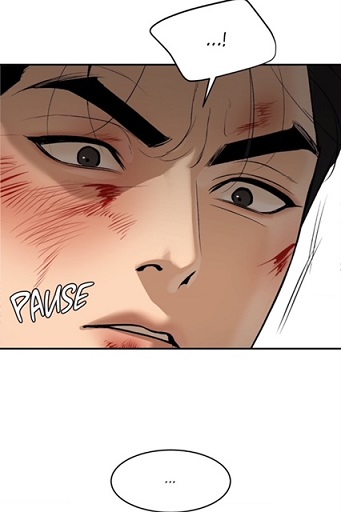 (chapter 51) The mirror is clear: the cycle can be broken, but only if he dares to answer the question that was never asked of him before. Therefore it is not surprising that the physical therapist’s question appeared in the champion’s vision:
  (chapter 54) His unconscious was telling him to have faith in his “doctor”. Thus later, the champion told the director of the hospital this:
 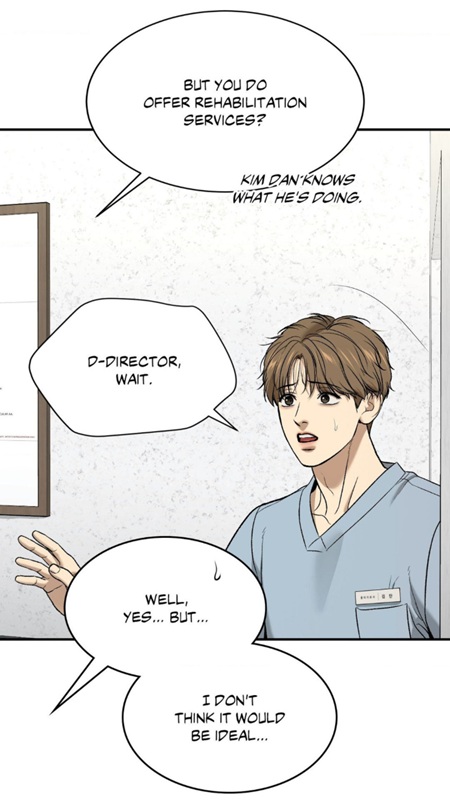 (chapter 61) He was acknowledging the main lead as a real physical therapist.
The tie created a strange neutral space, neither victory nor defeat, where change became possible. Losing the belt was not only humiliation; it was a disruption of the old cycle. A chance to redefine what fighting could mean.If the first trauma bound him forever to the word “loser,” the second pointed toward another possibility: to lose a title, but to gain, at last, a home and even a partner!
The Mirror Clouded By Silence
Like mentioned above, readers may think that by chapter 75 the mystery of the jinx is solved. The protagonist finally names it, recounts his five losses, confesses the nightmares of his father, and admits to the strange bargain of sex as ritual (chapter 75). The wolf speaks — and the silence seems broken. But this is only the surface. The confession gives the illusion of truth while concealing how much remains unspoken. How so? It is because this confession changes everything. It reframes the past.
For in reality, Jaekyung has never revealed the whole architecture of his jinx to anyone. To the outside world, 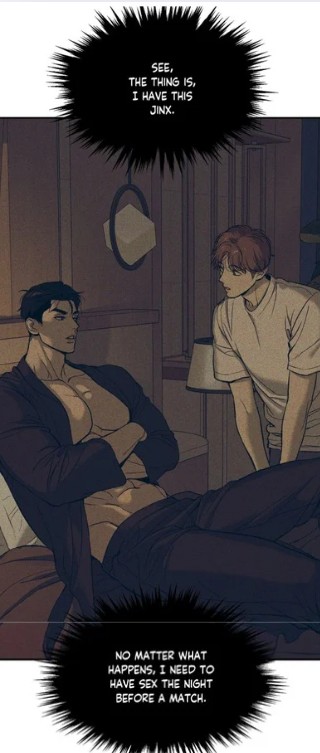 (chapter 62)— and even to those closest to his body — it looks like nothing more than sex. That was all the uke from chapter 2 saw, and it was enough for him to sneer:
 (chapter 2) The insult landed with devastating familiarity, not as a new wound but as an echo of his father’s curse: “loser.” Both words reduced Jaekyung to nothing — not a man, not an athlete, just a fraud kept alive by crutches.
This is why Jaekyung’s violent outburst was so extreme.  (chapter 2) In slamming his former partner against the wall, he was not merely silencing a lover’s cruelty. He was fighting the ghost of his father, the voice that had branded him weak, cursed, unworthy. The jinx that kept him alive was being twisted into proof of his failure, and he could not bear it.
  (chapter 2)
But Dan, too, repeats this misrecognition, though with none of the malice. In chapter 62, when Jaekyung asked to return to their routine and another aspect of the jinx 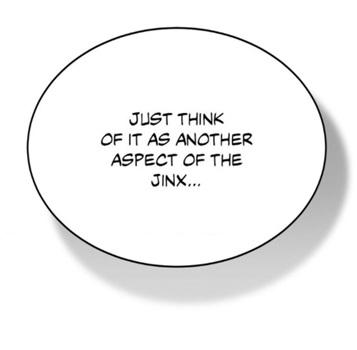 (chapter 62), Dan recoiled.
 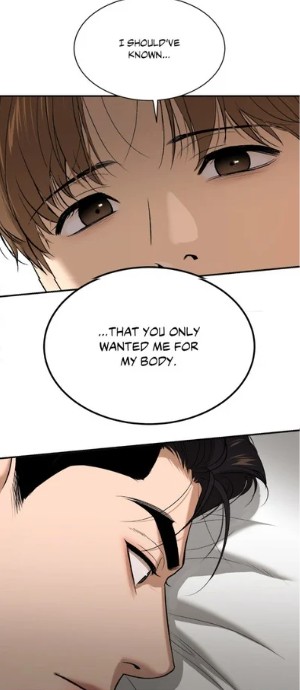 (chapter 62) To him, “jinx” meant objectification, a reduction of their bond to sex. (chapter 62) He could not know that behind the word was an entire architecture of rituals — milk, perfume, tattoos, scars — all the desperate scaffolding Jaekyung had built to survive. Like mentioned above, by the time of chapter 62, Jaekyung already valued Kim Dan not just as a body to “use”
 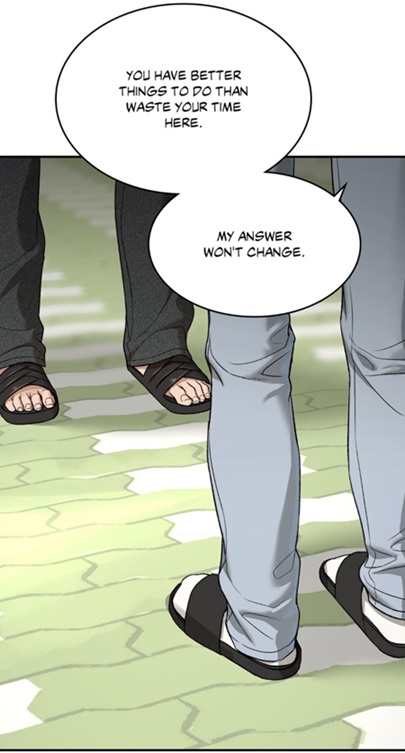 (chapter 62) but as a therapist he trusted. His words about wanting to return to the “usual pre-match routine”
  (chapter 62) were, in his mind, a way of saying: I need you to bring back wholeness, to help me steady myself again. But because Dan only knew fragments of the jinx, the message landed with devastating distortion.
To Dan, “pre-match routine” meant sex. He knew about that ritual, maybe also the glass of milk —  (chapter 41) but not the others. He had never seen how layered and fragmented Jaekyung’s survival system truly was: the shower and perfume, the milk, the tattoos, the obsessive fight schedule. Thus, when Jaekyung invoked the jinx, Dan heard only objectification: you want me for my body. However, this is not what the “wolf” meant. Thus he got surprised by such a statement.
  (chapter 62) For Jaekyung, the plea was about coherence; for Dan, it sounded like reduction.
This is why Dan recoils, saying bitterly that he should have known Jaekyung “only wanted my body.” Both men were speaking from wounds — but past each other. Jaekyung was reaching for stability, Dan was defending his dignity. The gulf between them was not lack of care but lack of shared knowledge.
Food as Silent Ritual
This gap becomes especially poignant when we look at the food scenes. Because Dan doesn’t know the full set of rituals, he instinctively replaces them.  (chapter 22) He cooks breakfast for Jaekyung, offering something warm, homemade, human — a substitute for the cold, industrial glass of milk. (chapter 75) Naturally, he must have noticed the glass of milk each morning, but the physical therapist thought that this beverage was just the expression of the champion’s taste. He never saw it as a part of the ritual. In cooking so, he unconsciously takes over not only the role of the nutritionist, but also of the “family”. That’s the reason why Joo Jaekyung got so moved, though he did not smile
  (chapter 22) or cry out of joy.
We see the contrast after the doctor’s vanishing: Jaekyung, alone, eats food mechanically,  (chapter 54) throws the plate away
 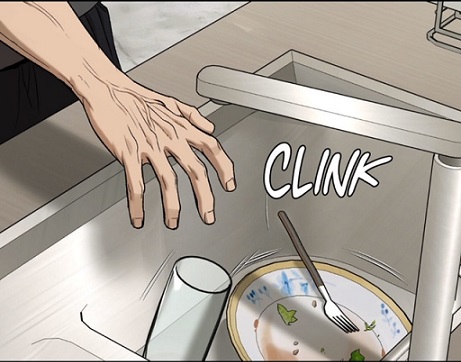 (chapter 54), or sits at a vast table in silence.
  (chapter 54) But when Dan cooks, Jaekyung is surprised, even touched. For once, nourishment is not consumption but connection. The milk was always a disguised memory of deprivation; Dan’s meal becomes the antidote — food as presence. So for him, the prematch-routine was also referring to the meals prepared by his fated partner. And I feel the need to bring another aspect. Since there was no “family” in the athlete’s life, he never got the chance to discover the joy of the table.
  (chapter 22) Hence it is not surprising that he looked at his phone, while the others were eating and discussing. He never had a real conversation with a family member around the table.
The Hidden Scent
Another layer is scent.  (chapter 40) Perfume was one of Jaekyung’s protective rituals — masking shame, creating an armor against the memory of bullying and ridicule. Yet Dan shows that none of this is necessary. The panel where he clings to the bedsheets after their Summer Night’s Dream together
 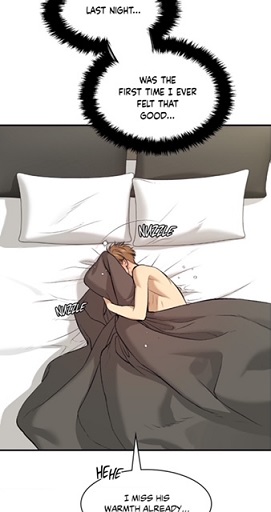 (chapter 45), whispering that he misses Jaekyung’s warmth, reveals that the champion’s natural scent is already enough. He never gets to see this — Jaekyung doesn’t know how deeply Dan treasures his smell.
This is critical: Dan unconsciously redeems the rituals. He replaces milk with food, perfume with genuine warmth, mechanical sex with an act that stirs tenderness. But because Jaekyung doesn’t articulate his system, Dan cannot recognize what he is undoing. The mirror is already working, but the reflection is clouded. And this leads me to another observation. His rituals had already been affected by doc Dan’s presence, but the latter never realized it! Joo Jaekyung returned to his lover’s side after the shower and perfume!  (chapter 40) Here he turned around and placed his lover in the middle of the bed. He even let him rest.
Why Only Mention Sex?
A lingering question remains: why does Jaekyung mention only sex in this conversation  (chapter 2), and not the other rituals? Because to admit the rest would be to expose the origin of the jinx: the father’s insult, the mother’s abandonment, the hunger, the bullying. Sex was the only ritual that could be spoken without directly dragging the past into the room. It was the “safe” shorthand — though tragically, it became the most dangerous. Homosexuality is definitely a stigma among boxers and MMA fighters.
By limiting his words to sex, Jaekyung avoided revisiting trauma, but in doing so, he doomed the conversation to collapse. He reached for the mirror, but without naming his scars, the reflection became distorted.
A Mirror of Wounds
Chapter 62 therefore stages one of the most painful paradoxes in Jinx: Dan is already healing Jaekyung’s rituals without realizing it. But because he doesn’t know the full picture, he interprets the champion’s plea as exploitation. Interesting is that in this confrontation, something crucial happens. (chapter 62) Dan’s reproach is not framed in the language of the ring. He does not call Jaekyung weak, a loser, or unfit — the very vocabulary that had haunted the champion since his father’s curse and that others (uke, press, rivals) recycled against him. Instead, Dan’s words land on an entirely different plane: “I should’ve known… that you only wanted me for my body.”
This is not an insult to the protagonist as a fighter. It is a wound as a man. The complaint does not echo his father’s verdict but indicts his coldness, his selfishness, his inability to show care. Where the old trauma was about being branded unworthy of victory, Dan’s reproach is about being unworthy of intimacy.
That difference matters. For the first time, the athlete is not being told he cannot fight; he is being told he cannot love. He doesn’t care! The battlefield shifts. What once was survival inside the cage is now survival outside of it — the fight to be recognized, not as “Emperor,” but as a partner capable of connection. Under this new light, it becomes comprehensible why the champion tried to take care of his fated partner! 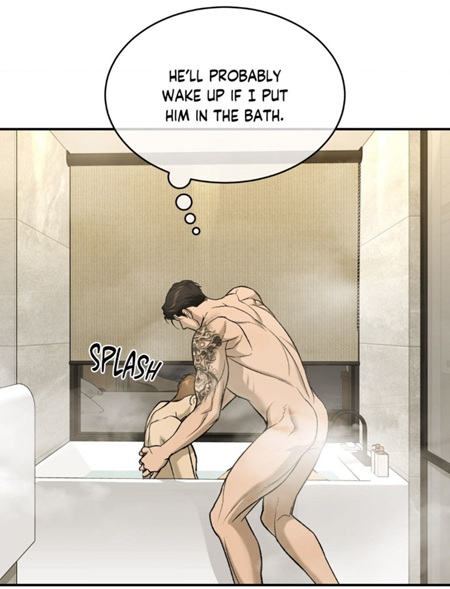 (chapter 68) In his own way, he was showing him that he did care! He was more than just a body… or even a physical therapist!!
Here the mirror metaphor sharpens: Jaekyung sees himself through Dan, but Dan only sees part of him due to his “secrecy” and silence. Until both fragments meet — the rituals revealed, the care recognized — the mirror cannot reflect the whole.
The Tender Mirror: Dan’s Role
If the jinx was born in silence — the father’s insult, the mother’s disappearance, the system’s exploitation — then its undoing begins in silence as well. But this time, the silence is not absence. It is observation and presence.  (chapter 35) It is the steady mirror of Kim Dan.
From the very beginning, their dynamic was framed in asymmetry. In Season 1, Jaekyung appeared as the unshakable adult, even the father-figure: towering, dominant, controlling every space he entered. Dan, in contrast, was cast as the child  (chapter 13) — helpless, cornered, often pleading. Thus the champion taught the doctor to overcome his fear and fight back:
  (chapter 26) This imbalance was no accident. It replayed Jaekyung’s own childhood roles: he became what his father had been to him (the better version naturally, for he is the mirror of truth), and forced Dan into the position he had once held himself. Through Dan, Jaekyung unconsciously re-enacted his trauma, reversing their positions as if to master what had once mastered him. That way, he was pushed to mature emotionally! That’s why he could connect with the main lead unconsciously. His trembling words in Chapter 51 (chapter 51) were the expression of a desire for recognition and acceptance. Thus the request from the champion (chapter 51) should be seen as the separation between a “father” and “son”.
But Season 2 begins to fracture this arrangement. Slowly, Dan ceases to be the terrified child. Instead, he resembles more to the adolescent. He can not grasp his own behavior. 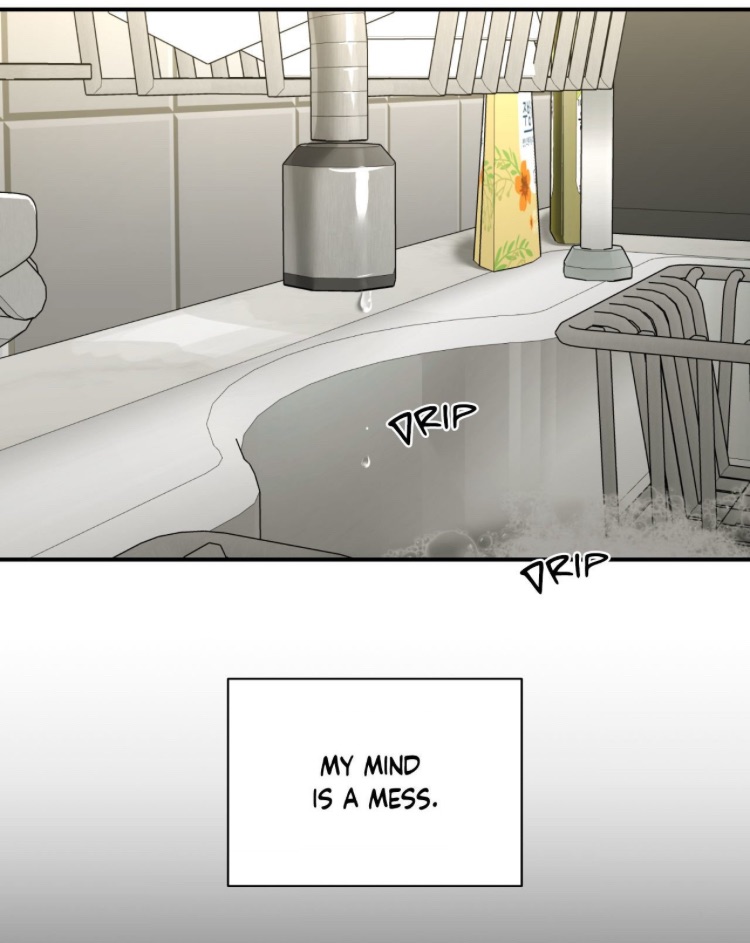 (chapter 71) He believes to know the truth, while he is ignorant. He is insecure, extreme in his behavior (drinking)
 (chapter 71), but also selfish and questioning, still fragile yet capable of protest. He is struggling with his own emotions and thoughts.
 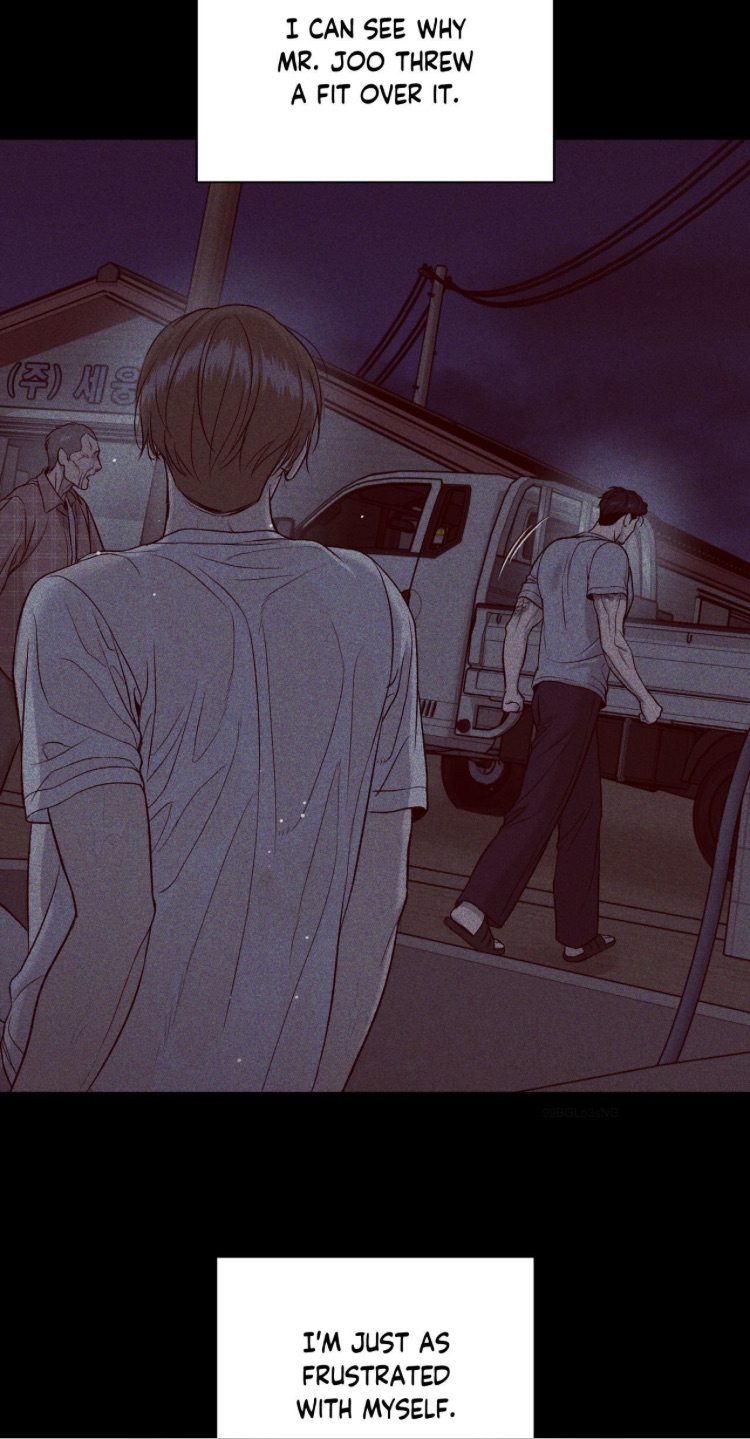 (chapter 71) How can he trust the athlete, when he doubts himself so much? From my point of view, he is on the verge of become “mature mentally” and as such “responsible”. At the same time, Jaekyung is revealed as the adult in crisis. His exhaustion (Chapter 69) strips away the illusion of invulnerability. The wolf, once a figure of brute survival, begins to look more like a cornered animal, uncertain whether to fight or collapse. And observe that now the champion is having a cold, like a small “child”!
  (chapter 70)
Gradually, their roles shift again. Thus I deduce that Dan is about to take care of Jaekyung. But not as his “father”… but as his hyung!  (chapter 74) It is because thanks to the director’s confession, the “hamster” is able to see the champion as a “a kindred spirit“, an orphan and as such as the younger “boy”.
This is why the possibility of “hyung” is so radical. The word collapses categories that Jaekyung has always kept apart: dependence and respect, family and intimacy, protection and confession. To call Dan “hyung” would be to admit need without shame, to claim family without fear of betrayal. He would become now a part of “Joo Jaekyung’s team”. It would be, in essence, the reversal of the father’s insult “loser.” Where “loser” condemned him to isolation, “hyung” would admit him into belonging. Through this single word, the curse could be undone. At the same time, it would announce the end of Park Namwook’s ruling. Finally, let’s not forget that in episode 7, the physical therapist was introduced as “hyung” to the other fighters. 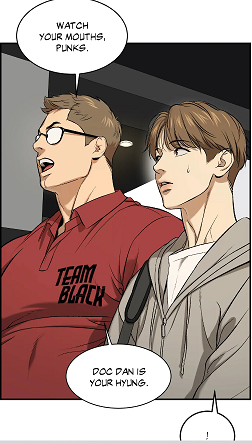 (chapter 7)
Toward Redefinition: Fighting as Fun
When the director whispered to Jaekyung to “find a new purpose,” it was not only advice — it was prophecy. (chapter The purpose he had clung to until now had already rotted. Victory no longer silenced his ghosts. Belts no longer secured belonging. Titles could be stripped at will. Even his rituals had begun to betray him, his body collapsing into illness (headache, insomnia) after Doc Dan left his side. What remained was emptiness.
But emptiness is also possibility.
For Jaekyung, the redefinition of fighting begins with a shift from having to being. Until now, his life was driven by the mode of having: having titles, having opponents, having sex, having rituals to take the edge off. Even his exhausted cry in Chapter 69 — “I can’t take it anymore” — reveals this logic. What he can no longer endure are the burdens of having: the blows, the obligations, the belt that weighs more than it rewards. His rituals, too, were all about taking — taking milk, taking a body, taking perfume, taking tattoos. They filled emptiness for a moment but never answered it.
To become present, he must enter another mode: not having, but being. Being in the fight, being in connection, being in the moment. Fighting not to silence ghosts or to feed a machine, but because it is fun  (chapter 26), because it is play, because it is chosen.
This redefinition is not foreign to combat. At its root, martial arts were always more than survival. They were practice, discipline, sometimes even dance. But Jaekyung had never been allowed to experience them that way. For him, the cage was always a replay of childhood — fists against ghosts, survival against abandonment. To rediscover fighting as fun is not regression but liberation: a way of reclaiming what was stolen from him, the joy of movement, the thrill of competition without the terror of loss. That way, the rituals lose their meanings.
The hug in Chapter 69 marks the pivot. Here Jaekyung embraces Dan not as therapist or tool, but as man to man.  (chapter 69) It is not about treatment or jinx, but about presence. This hug reframes the meaning of strength. True strength is not the ability to fight endlessly, but the ability to hold and be held, to mirror” is like touching oneself! Let’s not forget that the mirror represents the reflection of a person. Respecting the physical therapist signifies respecting oneself!
And this is where the future possibility of “hyung” matters. To call Dan hyung would mean accepting him not as ritual but as family. It would mean that fighting is no longer about proving oneself against ghosts but about sharing life with another. To fight as fun is to fight with nothing to prove, no curse to outrun, no insult to erase. It is to enter the ring not for survival, but for joy.
Conclusion – From Loser to Hyung
The arc of Jaekyung’s life can now be seen in its full sweep:
- Seed: the father’s insult, the mother’s abandonment. He views himself as a loser deep down! Thus we should see this as a self-deception. (chapter 75) He was confronted with reality after the match with Baek Junmin. The manager slapped him, Potato criticized him, the medias portrayed him as reckless! His wealth or his fame could never erase his self-loathing.
- Growth: the system’s exploitation, the rush to the top.
- Mask: the rituals of the jinx — sex, milk, perfume, tattoos.
- Crisis: collapse in Chapter 75 — the 5 losses, insomnia, nightmares, tie, illness.
- Counterforce: Dan’s presence as tender mirror.
- Redefinition: fighting as joy, family instead of fresh meat.
In this arc, the wolf is transformed. The boy branded a loser, who built armor out of rituals and clawed his way to titles, now stands before the tender mirror. There, at last, he sees a reflection not of ghosts but of life. (chapter 75) He discovers that strength does not mean enduring forever alone, but allowing oneself to need, to ask, to belong. Besides, having a partner implies that the latter has his back!
The final reversal is simple yet profound. Once, Jaekyung believed survival meant taking: blows, titles, bodies, rituals. Now he begins to see that life means giving and receiving. The wolf’s true victory will not be another belt but another word: hyung.
In that word, everything is reversed. The father’s insult “loser” is silenced. The mother’s abandonment is answered. The system’s exploitation is refused. And the wolf, no longer a cursed emperor, becomes simply a man — fighting not for survival, but for life. And that’s how he can escape the trap from the schemers, for the latter only knows one form of the jinx: sex! Besides,thanks to his loved one, he is able to gain peace of mind. From that moment on, no one can provoke him like in the past. 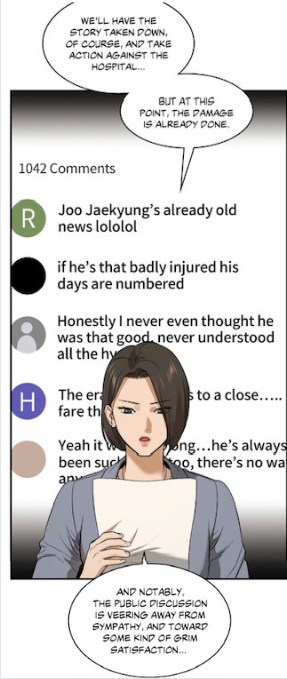 (chapter 36) He can remain indifferent to their “provocations”, as he has long matured emotionally.
 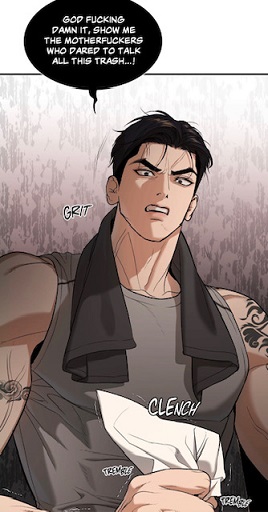 (chapter 36) He can retaliate differently. With his money and power, he can prove to them, he is no loser!
Feel free to comment. If you have any suggestion for topics or Manhwa, feel free to ask. If you enjoyed reading it, retweet it or push the button like. My Reddit-Instagram-Twitter-Tumblr account is: @bebebisous33. Thanks for reading and for the support, particularly, I would like to thank all the new followers and people recommending my blog.

 (chapter 72) In fact, he stayed by his side for exactly ten years after the vanishing of the mother.
 (chapter 73) In chapter 73, Joo Jaekyung is shown as a first-year high school student—meaning he was sixteen. I suspect this turning point occurred in May, since the earlier fight happened on May 16th.
  (chapter 72) Additionally, the tournament he won was the 17th boxing competition
 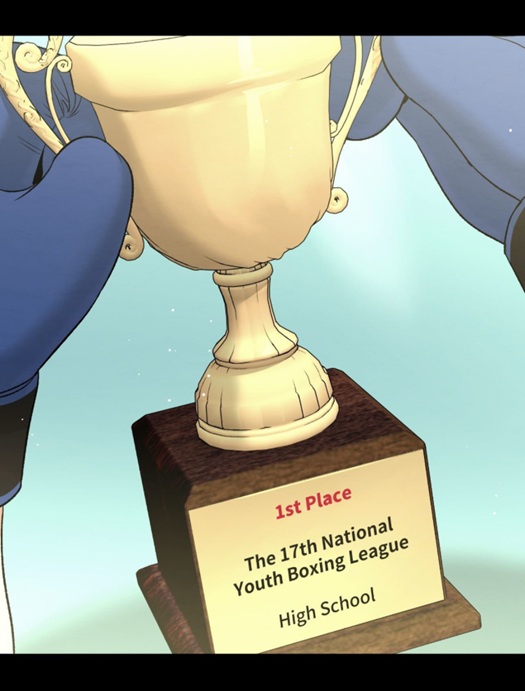 (chapter 73), suggesting he had likely participated from the very beginning of the event’s history. This places his debut—and symbolic birth as a fighter—at the very origin of the tournament itself.
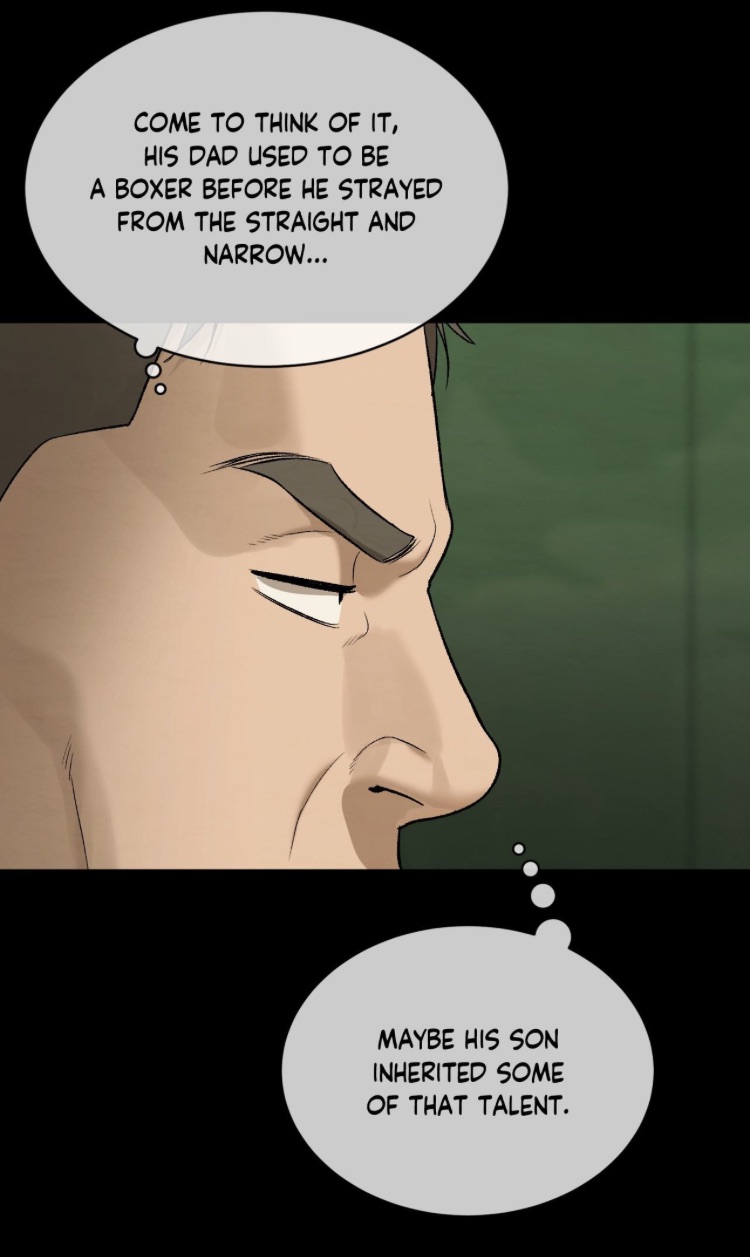 (chapter 72) This becomes painfully clear in the call to his mother, when young Joo Jaekyung promises to become strong,
 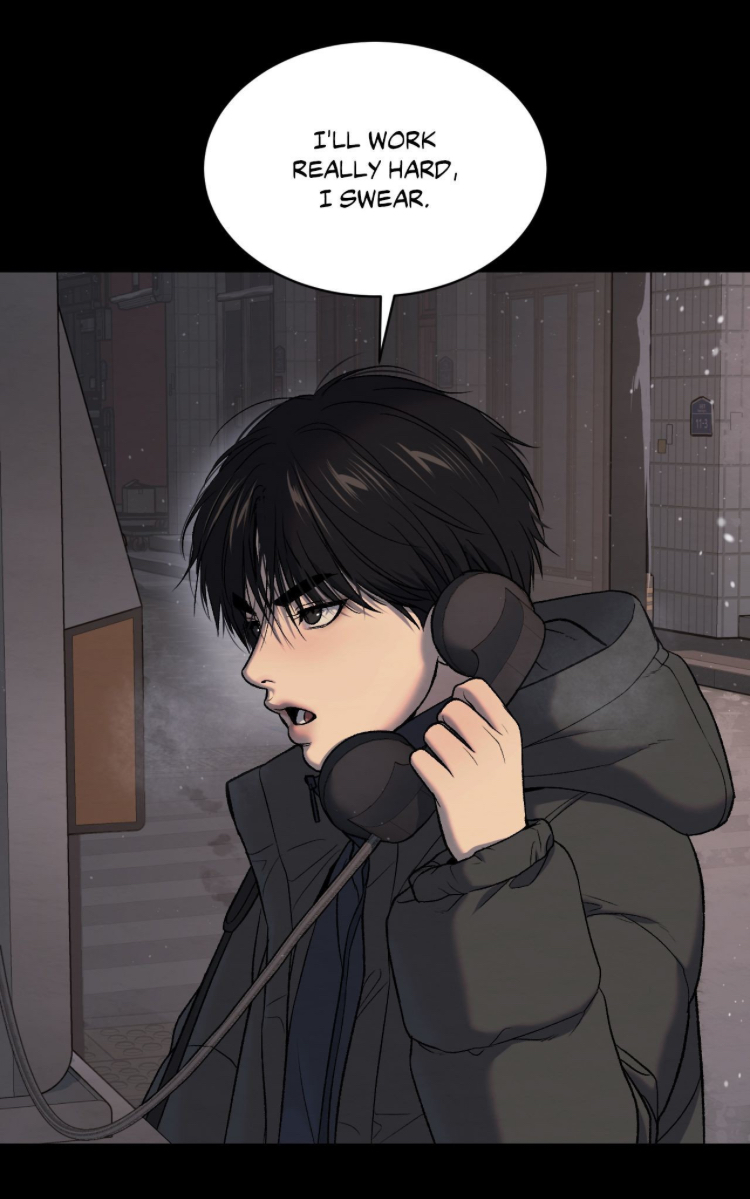 (chapter 72) to earn a lot of money,
  (chapter 65) Unlike Kim Dan’s grandmother—who is shown gazing downward at the baby she holds, visibly burdened yet emotionally present—the champion’s mother stares straight ahead.
 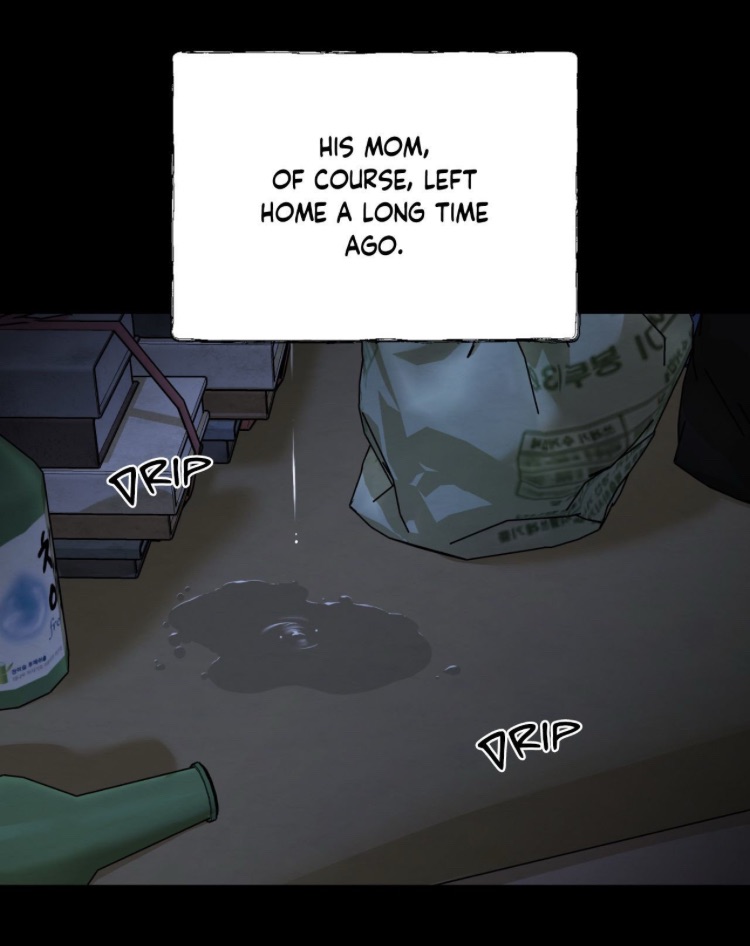 (chapter 72) The use of “of course” suggests inevitability, even justification. He is siding with the mother. His explanation for her departure is the father’s behavior: his abusive attitude.
 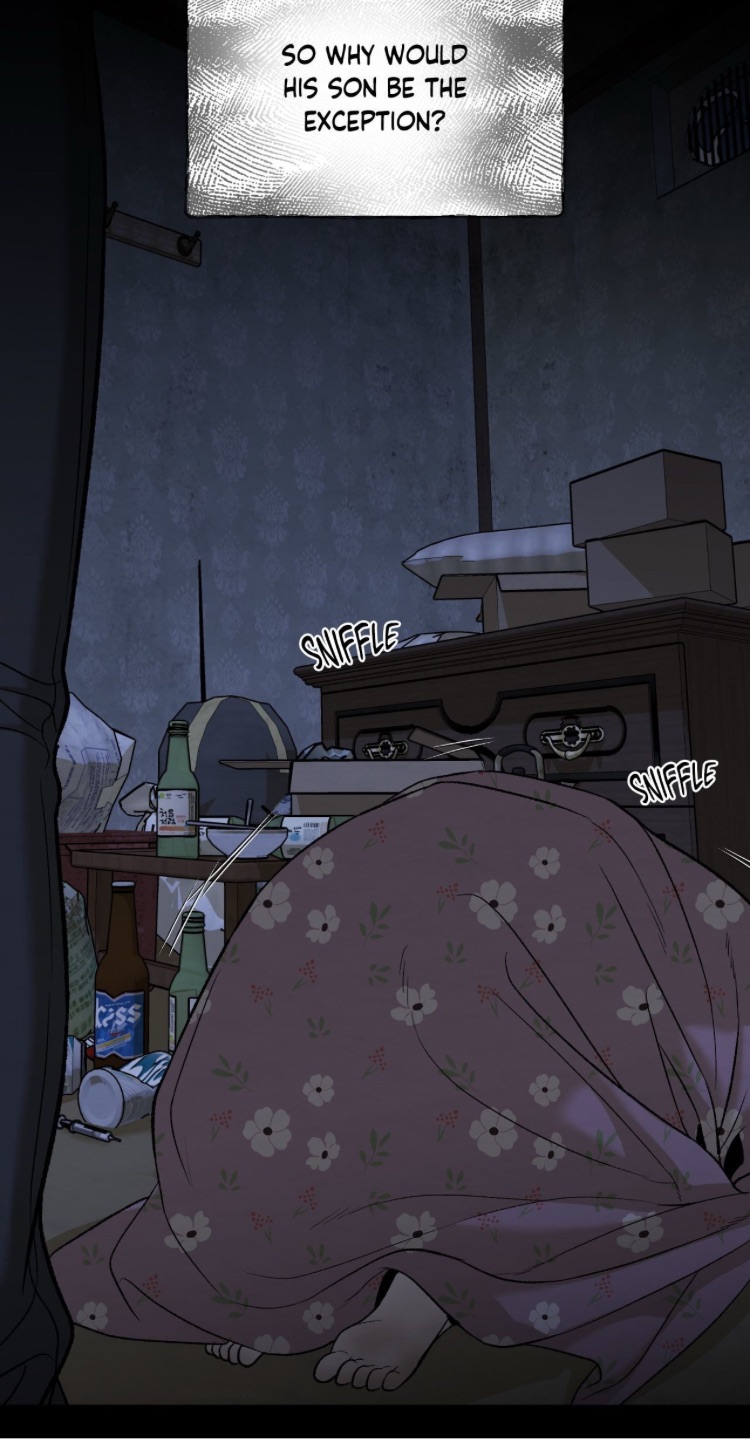 (chapter 73) However, what remains unspoken in this sentence is that she did not just leave her husband—she left her son too. Hwang Byungchul fails to mention this because he, too, is a man who has lived alongside a woman without truly giving her an official recognition. His own mother lived in his shadow, cooking for fighters, breathing life and love into the studio, yet she remained unnamed. Like Jaekyung’s mother, she was reduced to a supportive function. The crucial difference is that Hwang’s mother lived through her son, and stayed until her death.
 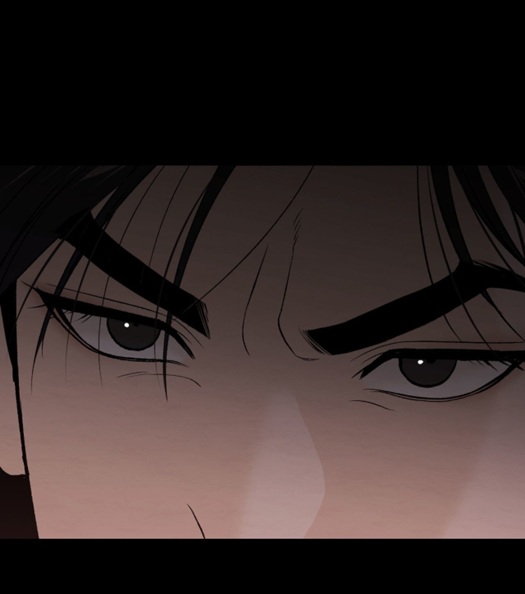 (chapter 73) Under this light, it becomes comprehensible why the man would avoid to meet his wife’s gaze and why the author hid Joo Jaekyung and his mother’s gaze in the last memory from Joo Jaewoong. Her gaze was for him painful, full of rejection. Consequently, I think that when Mingwa created this image for the champion’s birthday
  , she was revealing the arrival of the mother and her traits in her son: humbleness, water, darkness, a daring gaze and uncombed! But let’s return our attention to Joo Jaewoong and his vision:
 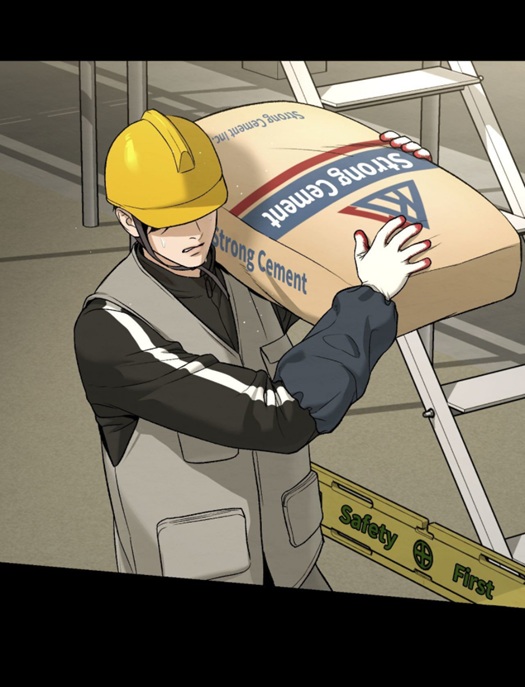 (chapter 73), cleaning the house. He felt like a kept man, emasculated by the very woman he expected to serve him. That’s why he says this to his son:
 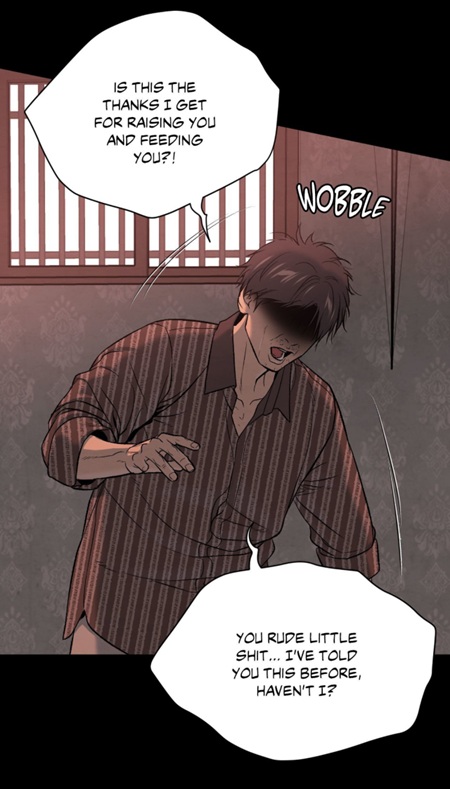 (chapter 73) He is clinching onto this image as the breadwinner and head of family. Thus, this sentence “You are your mother’s son, after all” becomes not a factual statement, but a projection, meant to degrade both wife and son by branding them as disloyal, ungrateful, and disobedient.
 (chapter 72) He desired to be greeted properly, to be recognized as the head of the family. However, this is how the loser’s mother acted, when he returned home.
  (chapter 73) He didn’t greet him either and avoided to talk to him (points of suspension). This could only infuriate Joo Jaewoong, as the latter felt as a failure and denial of being a husband and father. And now, you comprehend why I see this picture as the evidence
 It is no coincidence that the main lead has a similar vision than his own father about the mother.
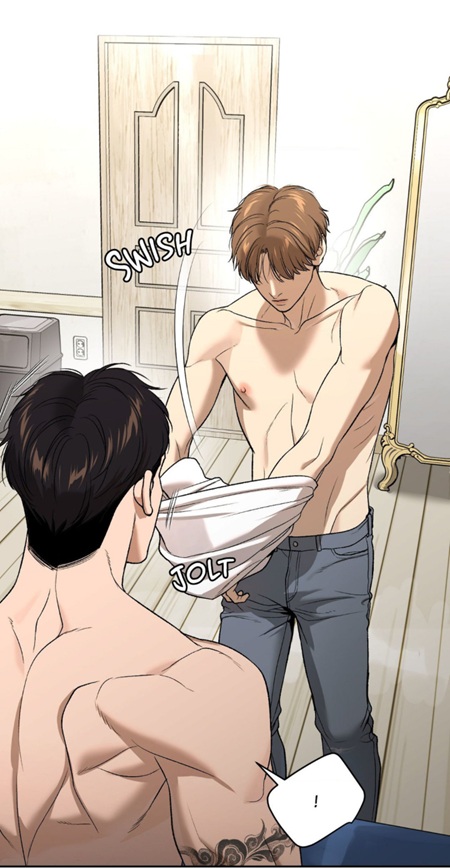
 (chapter 55), but she gave him the necessary push to reconnect with doc Dan.
  (chapter 55) In this scene,
  (chapter 55) we can detect similarities with the former home from the main lead:
  (chapter 72) greeting versus absence of greeting; respect versus abuse; birthday present (according to me, the t-shirt with the teddy bear was a present from the mother), alcohol, bags of trash and “departure”! Thus I came to the following deduction: the mother must have taken odd jobs too, similarly to her son and doc Dan, because she couldn’t have followed her “dreams”. having been forced to give up on any personal dreams. Her reality, like theirs, was one of survival, not self-fulfillment.
 (chapter 1) . And now, compare this to the 26-year-old champion standing beside his father. His face mirrors the father’s almost exactly (jaw,nose), except for the eyes.
  (chapter 72) That contrast is crucial. The difference lies not in bone structure, but in soul. And that difference, I argue, belongs to the mother. He is his mother’s child in spirit! However, with the loss of his father, the light in his light vanished.
 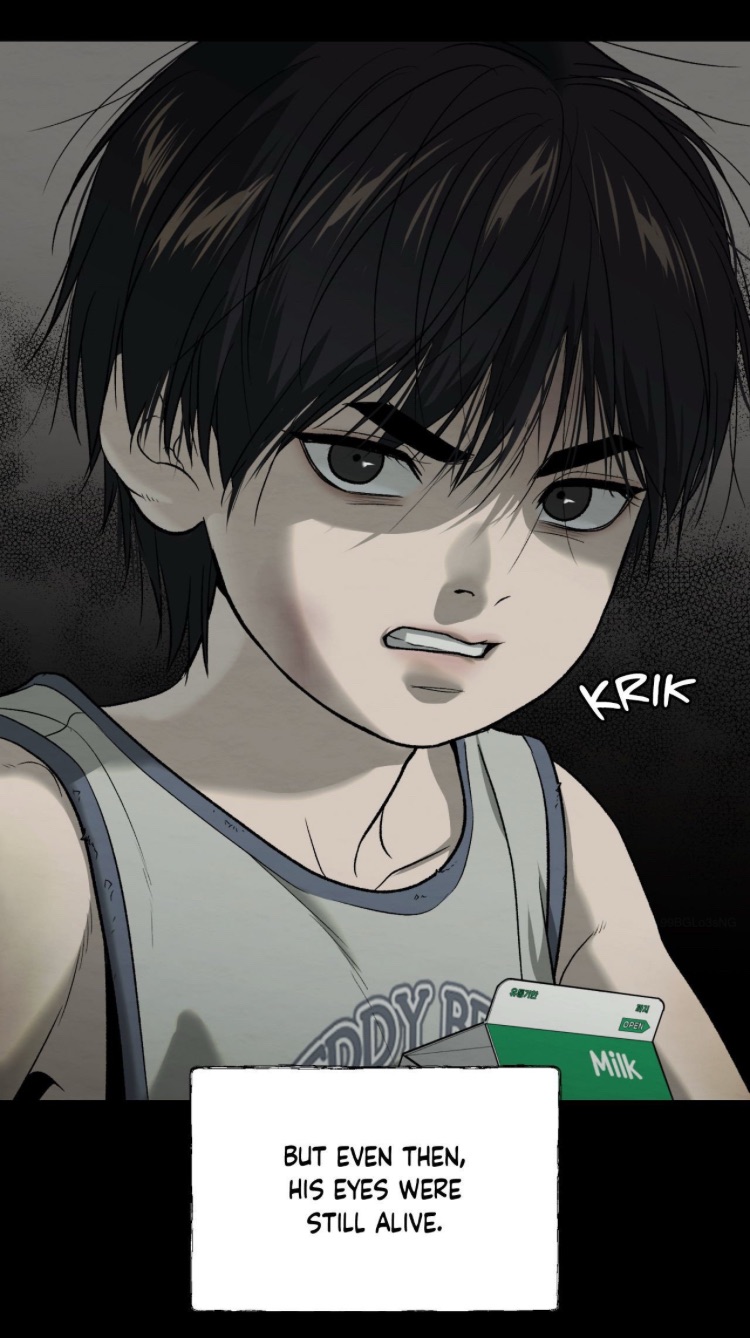 (chapter 72)
 (chapter 54), who used to clean the house and carry the bags of trash outside.
 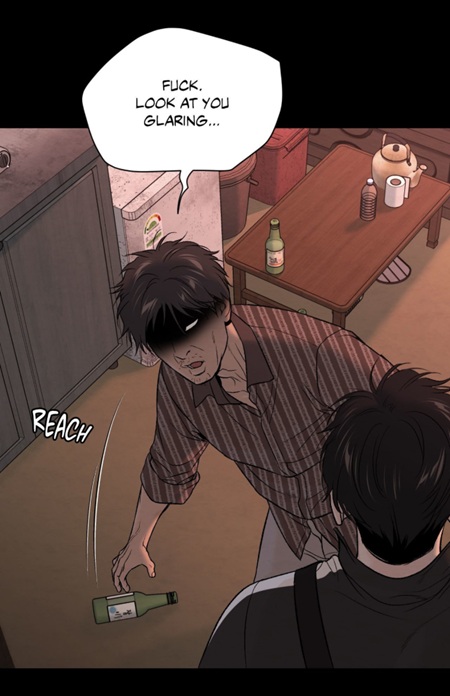 (chapter 73) The place is clean, there’s barely waste on the floor, the books are still wrapped together at the entrance. But who removed the bags and mopped the floor? Naturally, the main lead. One might say that he learned it from the boxing studio and the director’s mother. Nevertheless, it dawned on me what had happened 20 years ago. The mother had stopped cleaning the place, she no longer cooked either… she gathered the waste in the bags and left them there, as if she wanted her husband to bring them outside. As you can see, I see the dumpster as her way of expressing her unwell-being (depression, resignation) and her protest against Joo Jaewoong. She felt so burdened that at the end, she ran away.
  (chapter 73) However, like mentioned above, their toxic relationship played a role. Another is money. Observe how the the 10 years old boy added right after:
 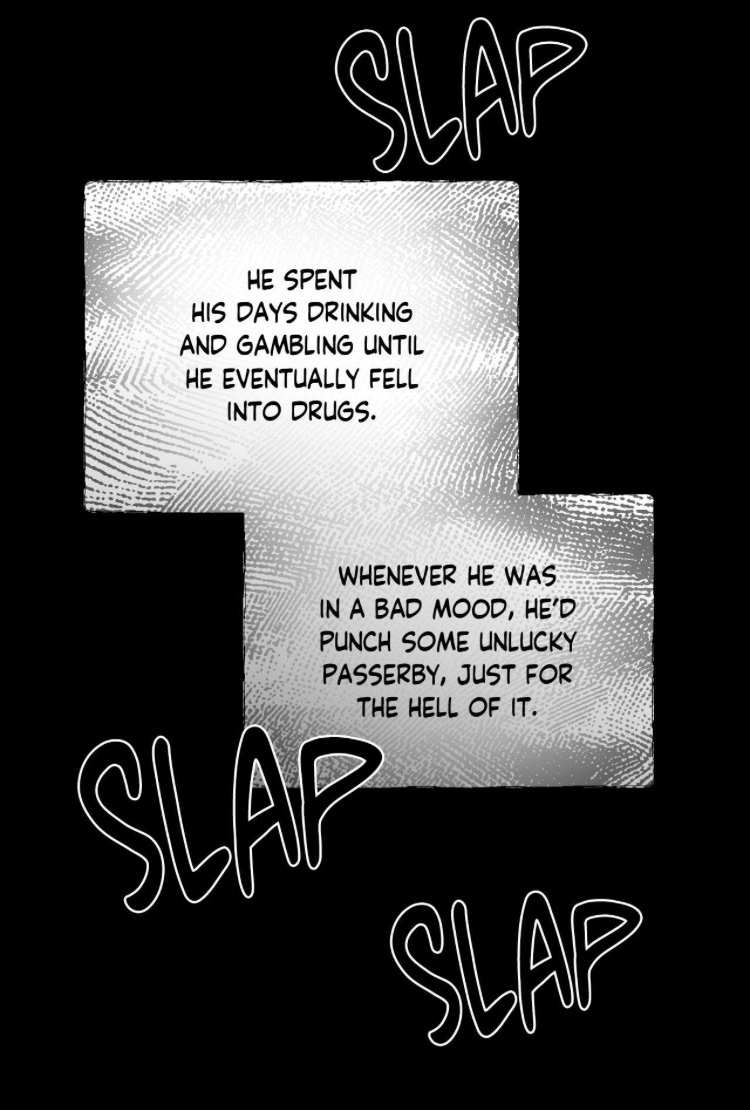 (chapter 72) She didn’t want to support such a behavior. It was like filling a bottomless jar. Since the man seems not to have listened to her, the only thing she could do was passivity and silence. Yet, in Jaewoong’s memory
  (chapter 73) became his curse, as his dream had become a reality.
  (chapter 7) and possessiveness.
 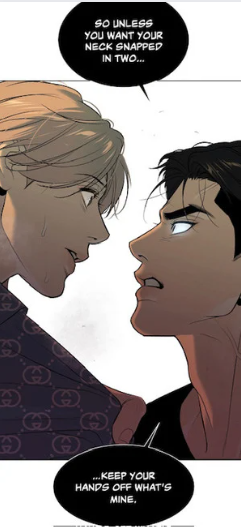 (chapter 34) I had already portrayed the ghost as a person suffering from narcissistic personality disorder, and since the ghost shares common traits with the father, I am assuming that the father is the ghost. Jaewoong’s narcissism was not simply paternal in my opinion.
 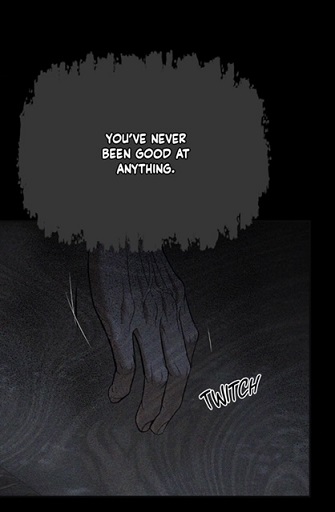 (chapter 54) I believe that it was also possessive and romantic in its jealousy. He wanted control, loyalty, and gratitude, but never offered love in return. He must have treated the wife the same way. That’s how the mother got almost broken. And observe how the main lead tried to control his lover’s time and professional life.
  (chapter 31) He didn’t support him to become independent professionally. That’s why I feel like the insecure boxer must have acted the same way, not allowing his wife to become successful in the end.
  (chapter 42) the jealous and regretful ex-lover told him otherwise. How did the father describe his son?
 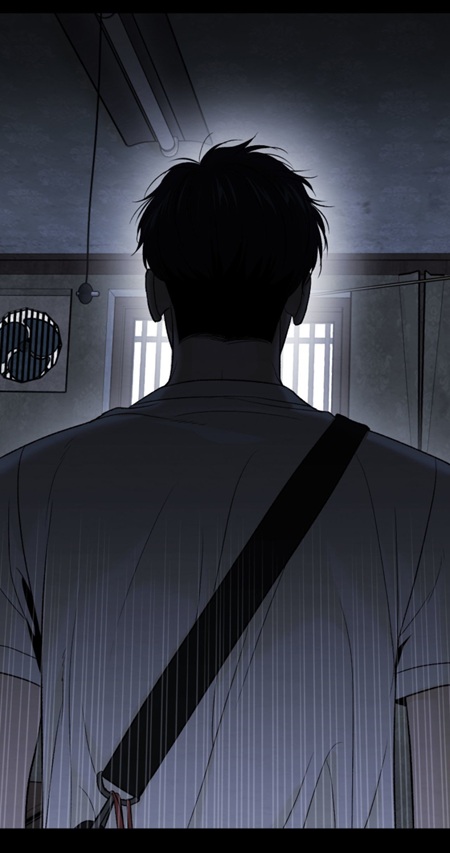 (chapter 73) And because the father is now dead, I am inclined to think that the mother is still alive. I am even thinking that the mother is living in this place:
 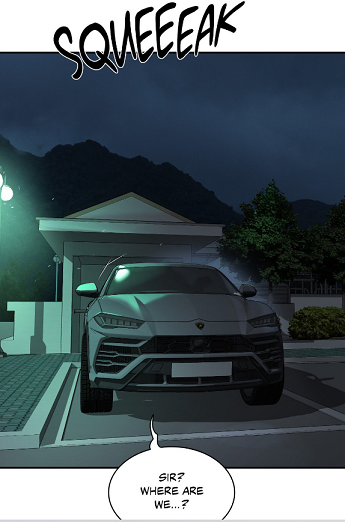 (chapter 33) This chapter stands not only under the sign of jealousy, but also of motherhood due to the number 6. If this theory is correct, then it signifies that he kept his promise. He gave her a place, but he didn’t want to return to her side for two reasons: her abandonment and his guilt concerning the death of his father. As for the mother, I would say… out of guilt and shame due to her “pride”. She knows that she did hurt her son. Naturally, I could be wrong… but I hope if she is alive so that the champion can talk with his “mother”. This will help him to move on. Breaking the silence between them would put an end to his self-loathing and misery
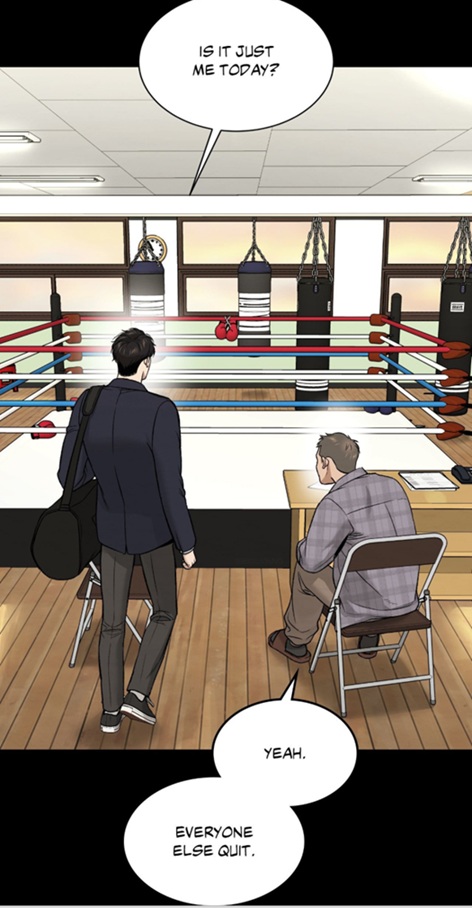 (chapter 73), gradually fell into decline after the death of his mother. She had been its soul, offering invisible support, care, and emotional warmth to the fighters.
  (chapter 52) The gym’s foundation was never trust, fun, or teamwork—it was performance, money and fame. Without victory, it holds nothing. His teammates are not companions; they are shadows. The cycle is repeating: the gym becomes a sterile battlefield, not a second home.
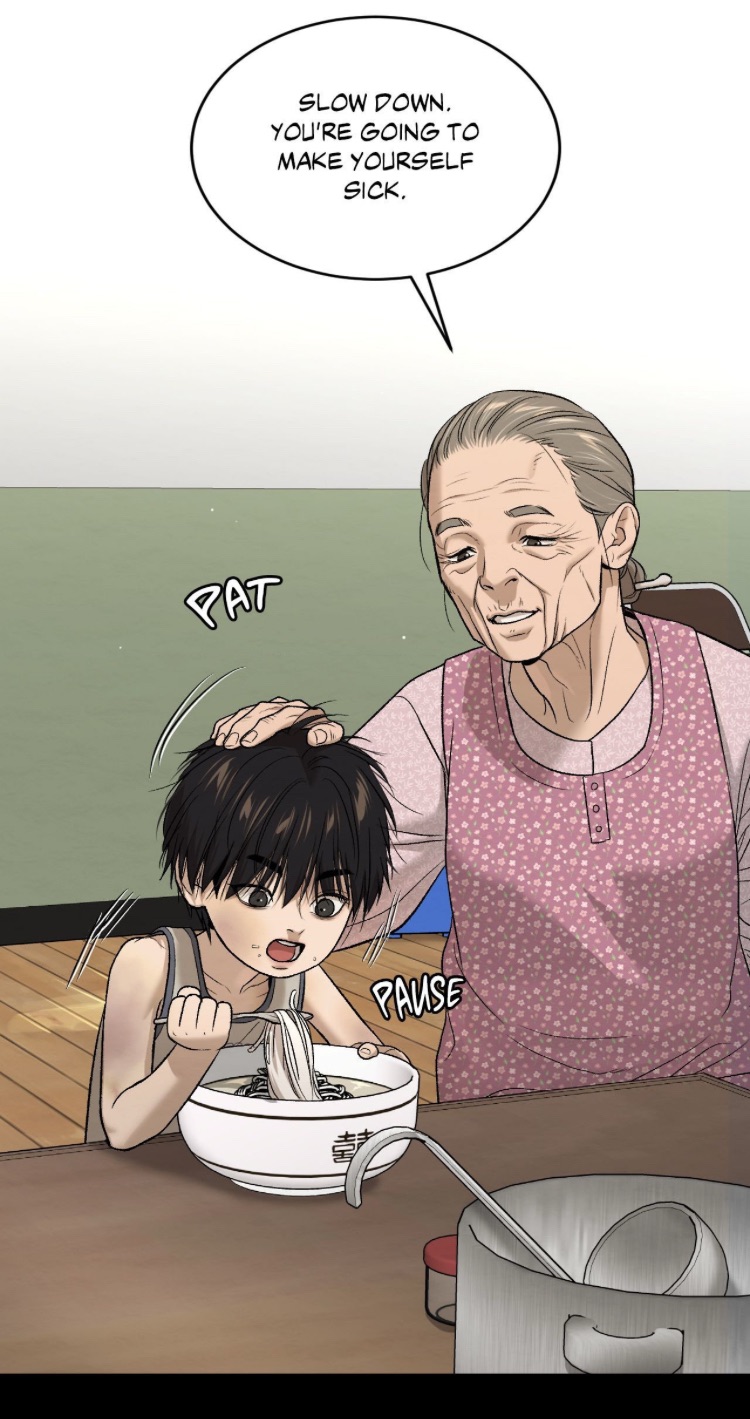 (chapter 72) onto Shin Okja
 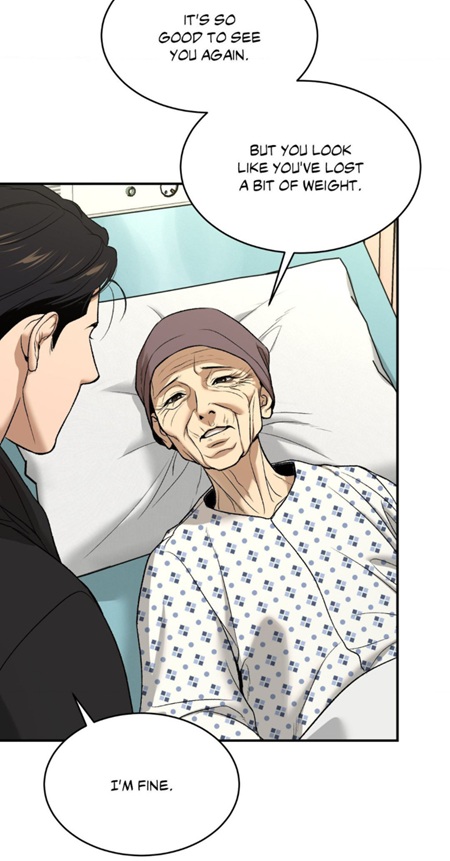 (chapter 61) due to her similarities in age, gender, gestures and words. However, he failed to detect her flaws, as he trusts seniors too much. I guess, it is related to Jaewoong’s death. Nevertheless, it becomes clear that doc Dan had become the soul of the gym:
 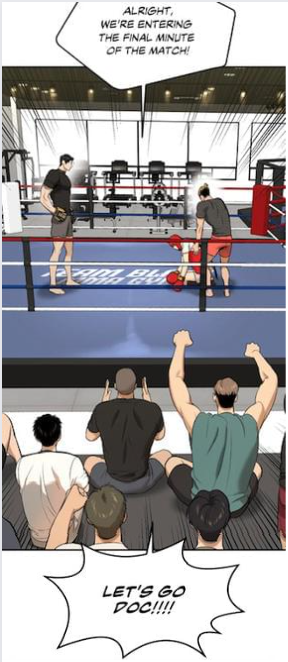 (chapter 26), but the latter was not recognized as a real member of Team Black. Besides, let’s not forget that he was only working for the champion and not Team Black!
 (chapter 26)
 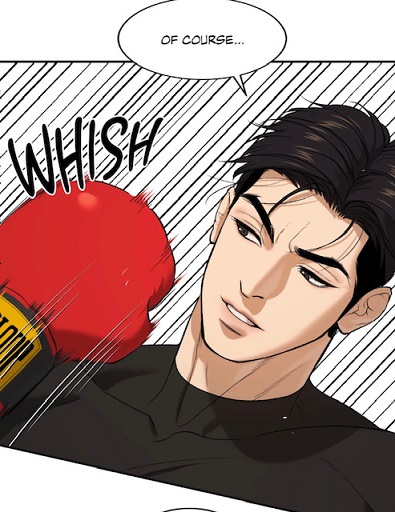 (chapter 26), to play, even to feel embarrassment—emotions far removed from the sterile discipline of professional sport. Through Doc Dan, the athlete briefly recovered his lost passion. Not just for boxing, but for being human.
 (chapter 62) So far, doc Dan hasn’t heard what his fated partner did while waiting for his “return from work”.

 (chapter 72) —and not with fists, but with fabric.
 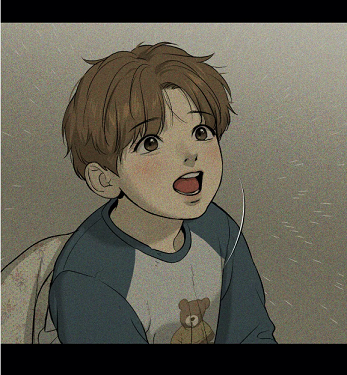 (chapter 11) Each boy is introduced wearing a shirt adorned with a teddy bear, a symbol that quietly carries the emotional weight of the entire narrative.
 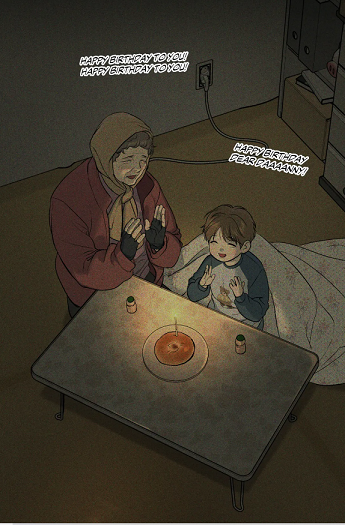 (chapter 11) [For more read
  (chapter 72)
  (chapter 68) In time, each man will become the other’s bear
  (chapter 66): a source of comfort, loyalty, and belonging. To follow the teddy bear is to trace this emotional path—from abandonment to connection, from injury to intimacy, from being held once to being held again.
 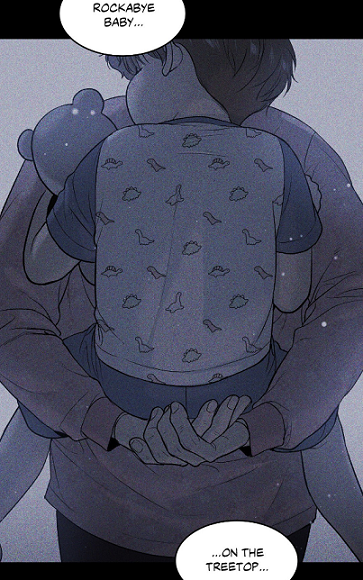 (chapter 47), and then claimed, just like his teddy bear. The fate of doc Dan’s toy bear reflects the boy’s. The former was pushed outside the embrace and bed before disappearing.
  (chapter 21) That’s how the toy bear vanished from the little boy’s life. Thus I deduce that the teddy bear on the pajamas was the last traces of his “childhood”.
 To follow the teddy bear is to trace this journey back to tenderness: the long path from abandonment to being held again.
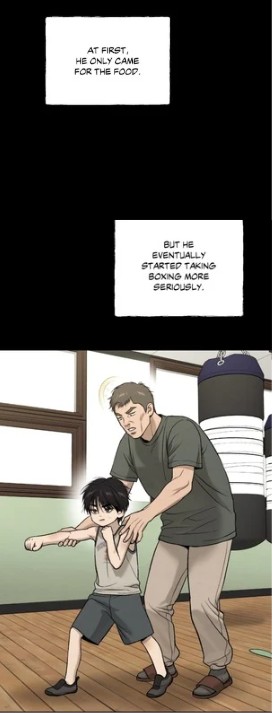 (chapter 72) The shirts are not only outgrown
  (chapter 72) but also replaced with t-shirts without any design alluding to the vanishing of their identity and forced maturity.
 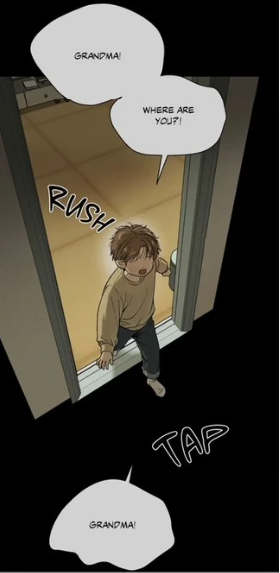 (chapter 57) For Jaekyung, the beanie-wearing bear with its wounded arm and wise glasses is the last trace of comfort before reality hardens. What remains is not the child, but the instinct to survive. From the moment the bear vanishes, a new figure begins to emerge—not one held, but one who fights. The boy with the teddy bear becomes the man who can’t rest, who equates existence with usefulness, and usefulness with victory.
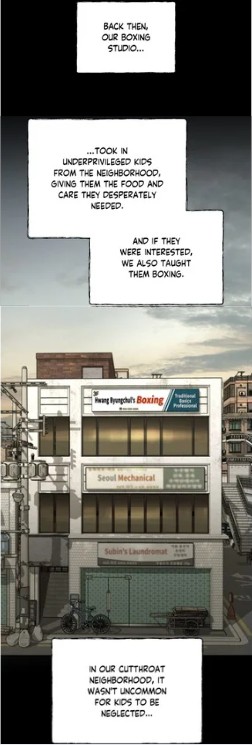 (Chapter 72) This subtle insertion suggests that the gym wasn’t just his workplace—it was his whole life, his identity, and even his home. Therefore it is not surprising that his name was not mentioned by doc Dan or the other patients. His stay at the Light of Hope implies the loss of his “home”, the gym and as such his identity. At the same time, this image reveals that Jinx-philes should examine each panel very closely, that there’s more than meets the eye.
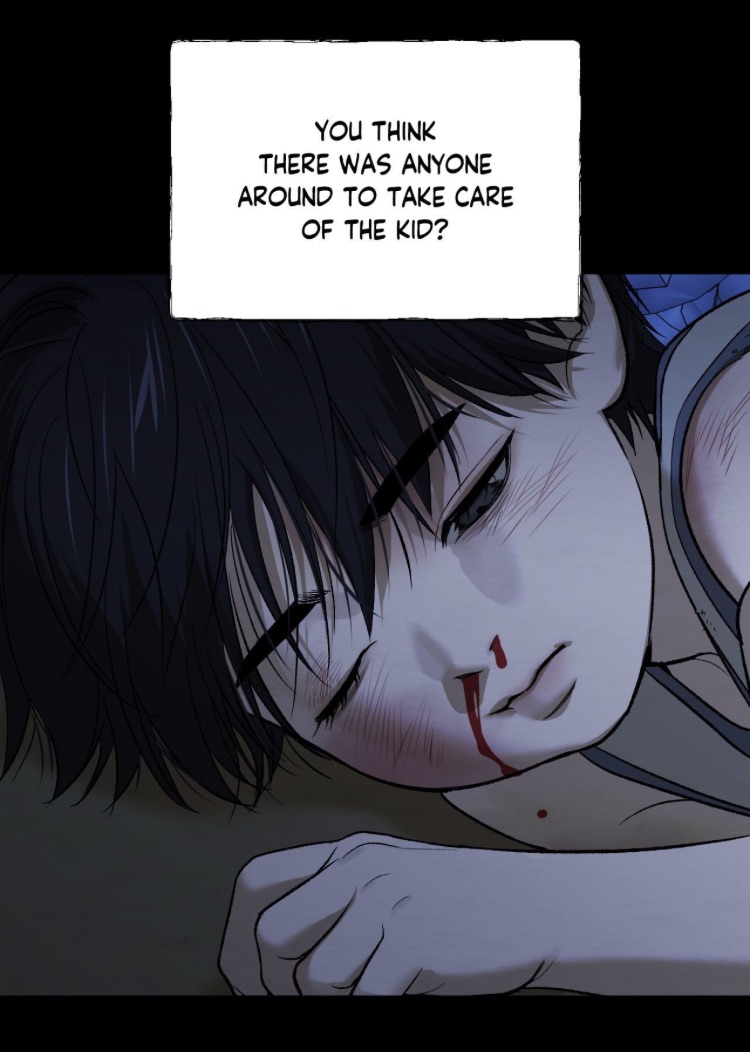 (Chapter 72) This episode doesn’t just show how Jaekyung became a self-made man
 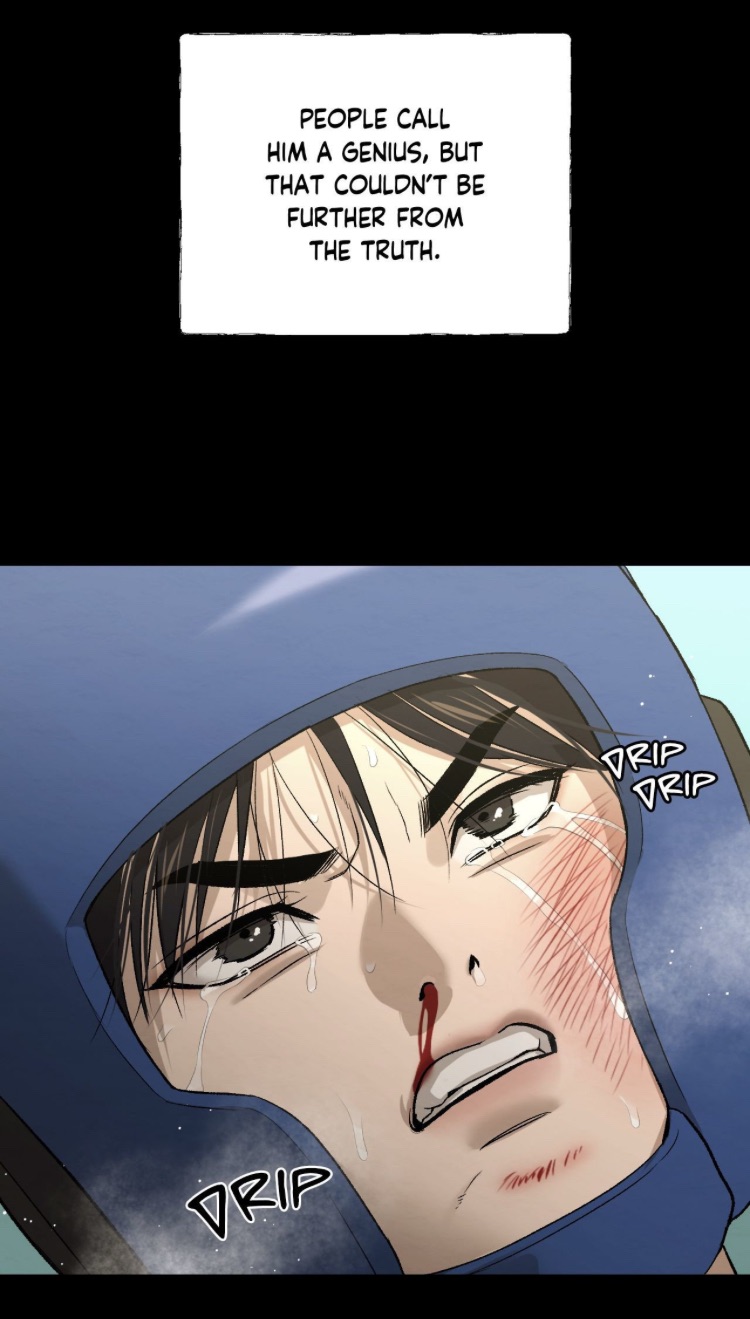 (chapter 72)
  (chapter 72) —it makes one thing heartbreakingly clear: he wasn’t raised by a pack of wolves; he raised himself.
  (chapter 7) The cliché used by Park Namwook in chapter 7 is revealed to be not only ignorant, but cruel. Jaekyung had no home, no real guardian, no one to defend or guide him. He didn’t grow up in the wild—he grew up alone, navigating between violence (abuse and bullying), hunger, and neglect without true protection. This reframes the champion’s identity: not as someone untamable, but as someone who was never tamed because no one cared enough to try. What we witness is not savagery, but simple survival. Thus he had no friend.
  (chapter 71), performative masculinity and high expectations of Park Namwook, and the explosive violence of his father.
  (chapter 5) His behaviors—his hot temper, cold demeanor, blunt speech, and instrumental approach to others—were not innate traits. They were learned strategies, adapted from men who had likewise buried their vulnerability beneath strength or stoicism or brutality. Hence he brought no present to the patient at the hospice.
 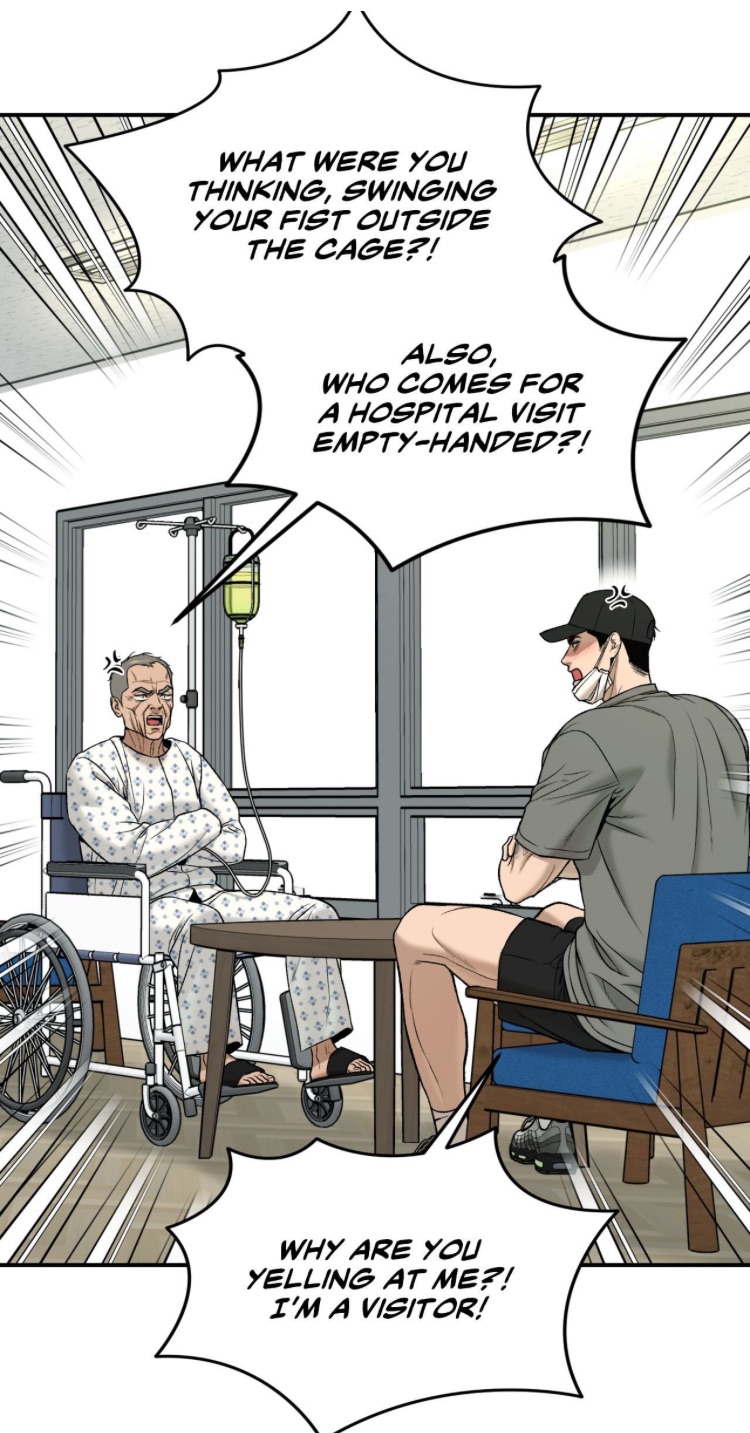 (chapter 71) He became a wolf because he was surrounded by wolves—but deep down, his true nature is closer to a cat’s. This contrast becomes visible in Chapter 72, where his external persona appears as a shy, quiet, more sensitive self.
  (Chapter 72) Much earlier, in the summer night’s dream (Chapter 44), Kim Dan sensed that hidden nature: not the predator, but the man longing to be held.
 (Chapter 44) Doc Dan had sensed the real person behind the legend.
 (chapter 1), as he treats them as valid, not shameful. He cries, trembles, runs away, he apologizes… He asks questions rather than issuing orders. He names feelings
 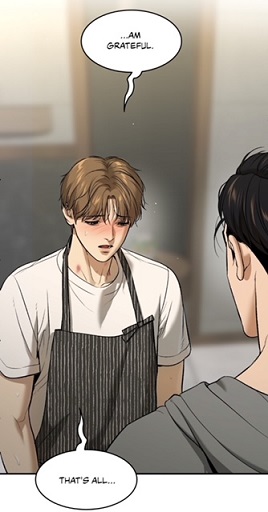 (chapter 45) and respects boundaries. He listens.
  (chapter 29) And so, like a child learning a new language, Jaekyung begins to mimic him too.
 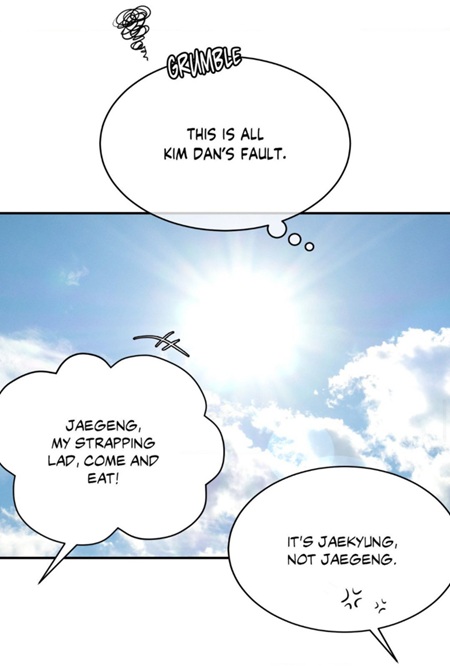 (chapter 62) The change is gradual but visible: helping the townspeople, accepting rest, asking to stay close, even touching and speaking more gently.
  (chapter 71) With Kim Dan, the fighter who once only mirrored power begins to echo tenderness.
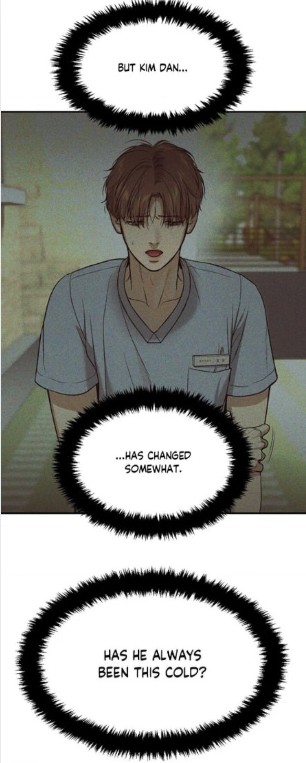 (chapter 62)
  (chapter 68). These are not just words—they’re the building blocks of intimacy, borrowed from the only person who ever saw through his armor. From mimicking strength, Jaekyung has begun to mimic care.
 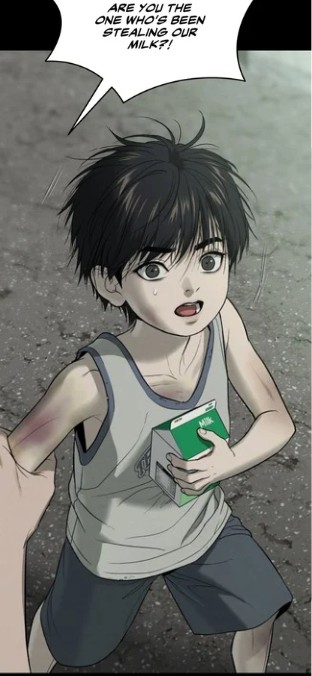 (chapter 72) So he fed him. But he never saw the deeper hunger: the absence of love, of being wanted. The coach assumed the problem was solved with food—because he had never gone without care.
  (chapter 72) He lived with his mother. He was never truly alone. And so he projected stability onto the boy’s silence.
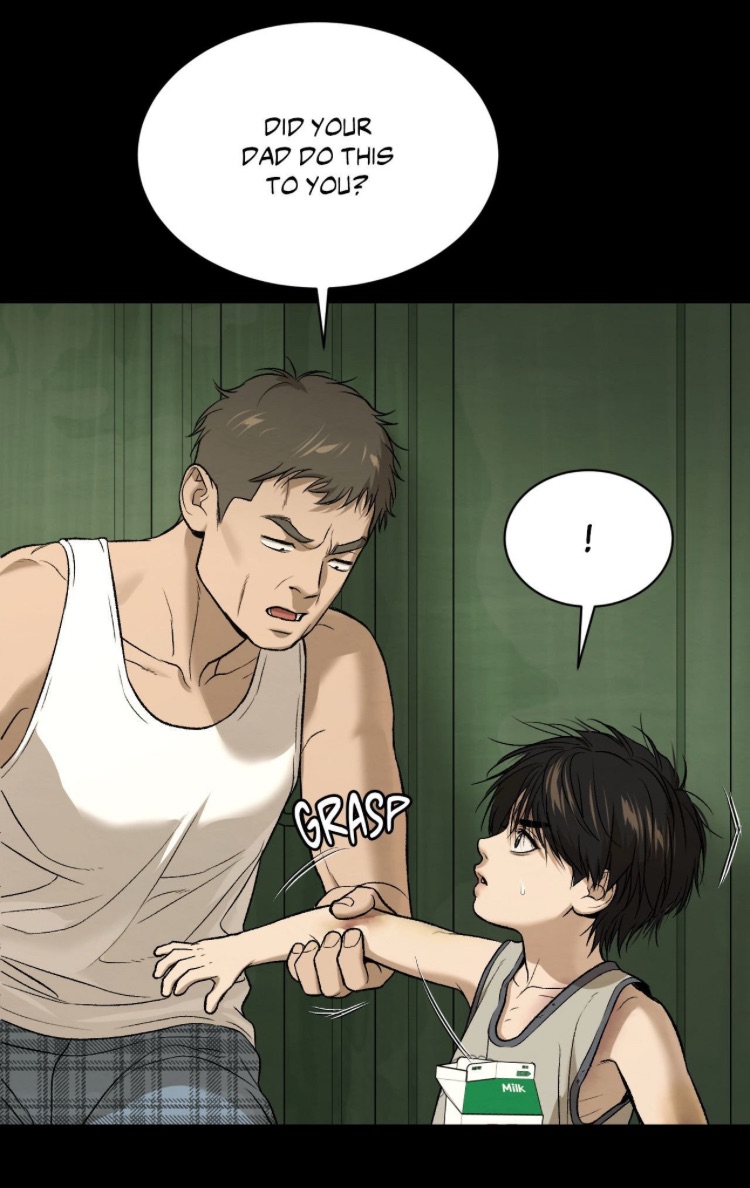 (Chapter 72) Instead, he redirects the situation:
 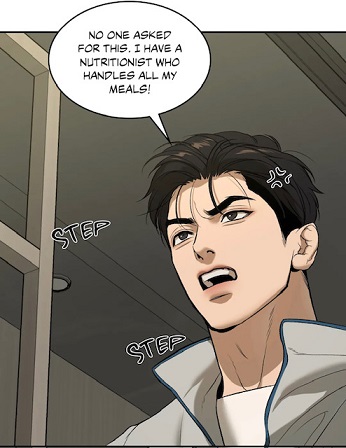 (chapter 22) There is no joy in eating, no comfort at the table. His body becomes a tool, and pain becomes the currency he pays to keep it running.
 (Chapter 26) This is how he enters adulthood, though he was still a child: not through love, but through function. The moment he steps into the ring, he’s no longer a child. He becomes, in the eyes of the adults around him, a product.
  (chapter 72) The expression (“But reality was like a punch to the gut”) suggests that even the coach himself was struck by how wrong or harsh the outcome turned out to be, but that realization came too late. Yet he blamed the young boy instead of convincing the young boy to postpone the fight. This scene shows that the man’s form of “help” was not rooted in empathy or protection—it was rooted in opportunity and perhaps even short-sighted hope for glory through the boy’s talent. He turned pain into performance.
 (chapter 71) why Joo Jaekyung never visited him or expressed his gratitude towards the boxing coach more openly.
 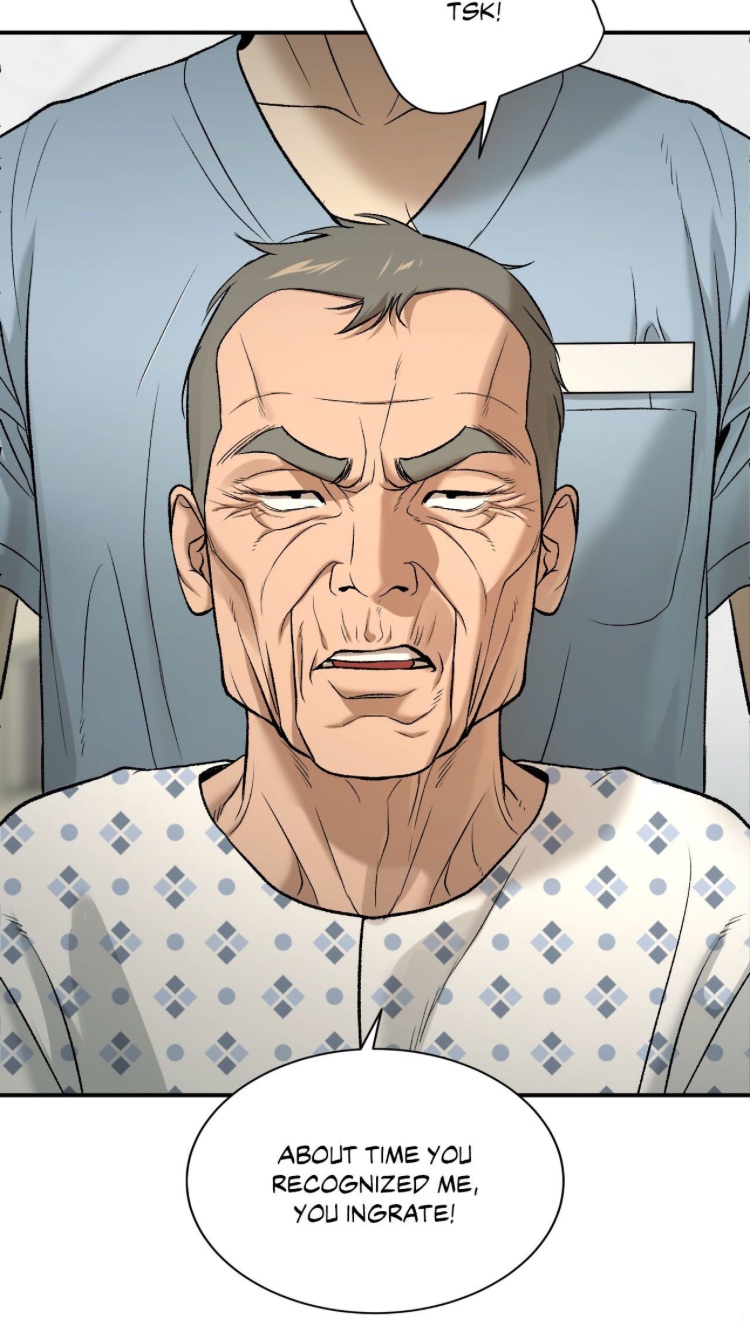 (Chapter 71) He became successful thanks to his own hard work. It was, as if he had followed the advice to the letter—make it on your own. I am suspecting that the charity event is linked to poor neighborhoods and children, so he didn’t totally erase the man from his memory, he just repressed him. However, it is not astonishing why the director is resentful and even bitter towards Joo Jaekyung. It was, as if he had never helped him. While he blames the man, the coach never recognized his own shortcomings. He didn’t see that his assistance was actually conditional.
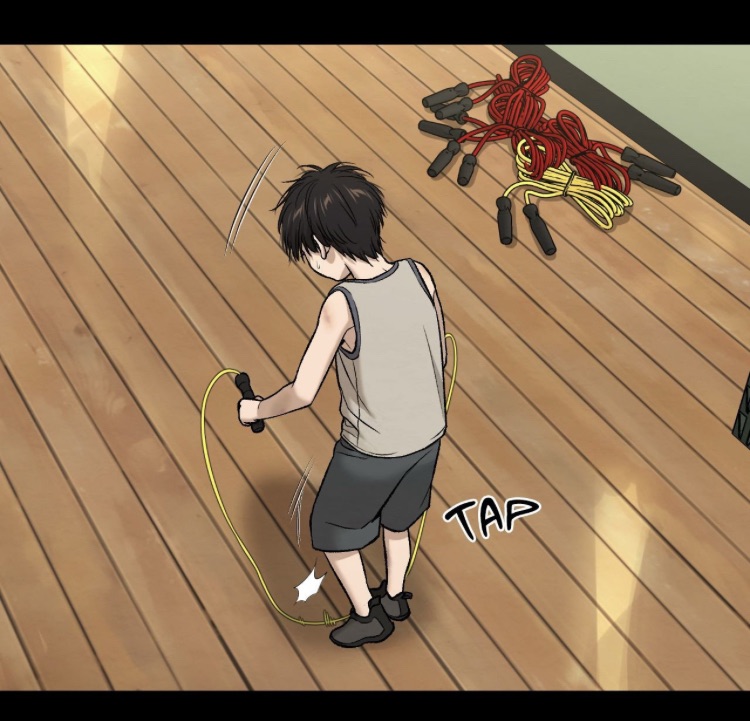 (chapter 72) They are all rivals. But from my perspective, there exists another reason why the main lead didn’t keep in touch with Hwang Byungchul exposing the director’s blindness. The adult Joo Jaekyung admits that seeing the director’s face brings back “old memories”—not of comfort, but of trauma.
  (Chapter 71) The implication is unmistakable: Hwang Byungchul reminds him of his father and the abuse. And the latter is strongly intertwined with the mother’s abandonment.
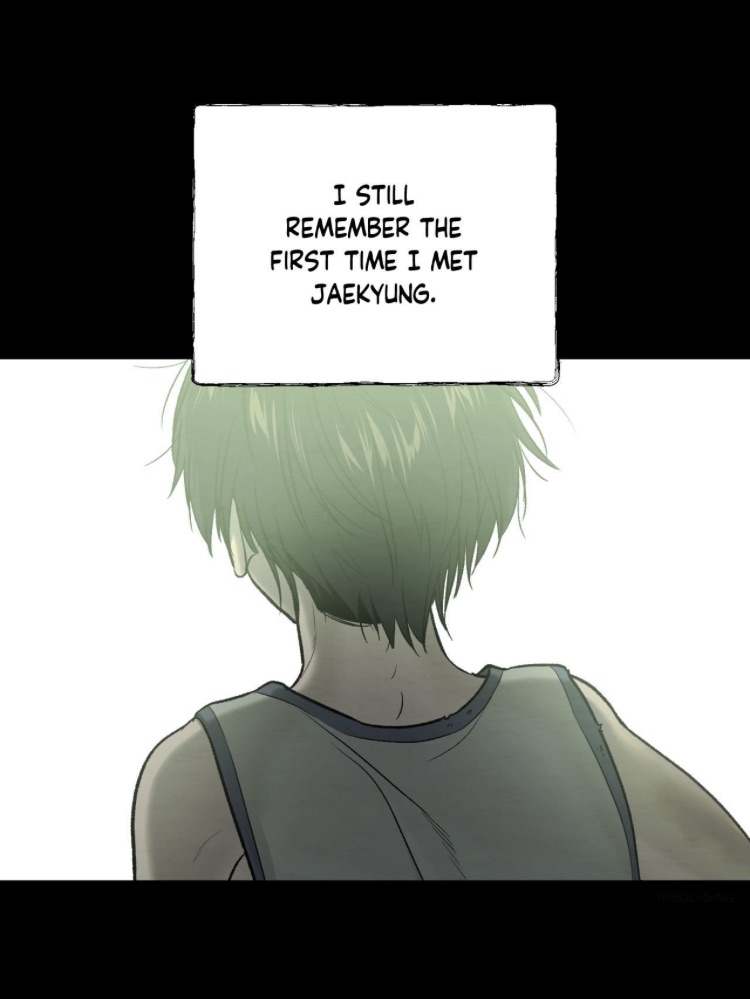 (chapter 72) The other is Jaekyung himself. How can we tell? Because the scene of the phone call contains no narration, no framing voice.
 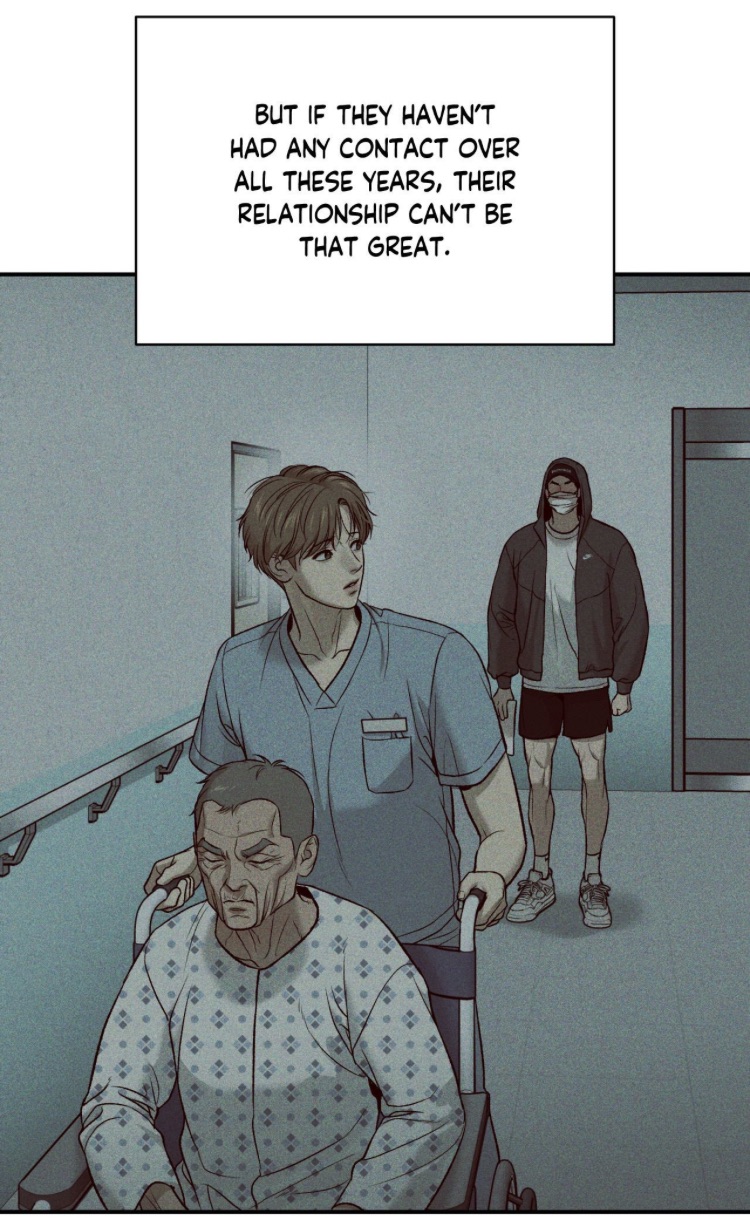 (Chapter 71) But here, doc Dan was making a huge mistake: he was just projecting his own feelings and relationship with him onto theirs. But he was behaving exactly like the former director: simplification.
  (chapter 9) Instead of listening, we assume. We choose clear lines—strong or weak, good or bad, useful or useless—over the tangled, uncomfortable truth that everyone is both hurting and trying. This refusal to reflect doesn’t just distort reality—it perpetuates it. When we simplify, we don’t heal; we reenact.
 (chapter 52),
 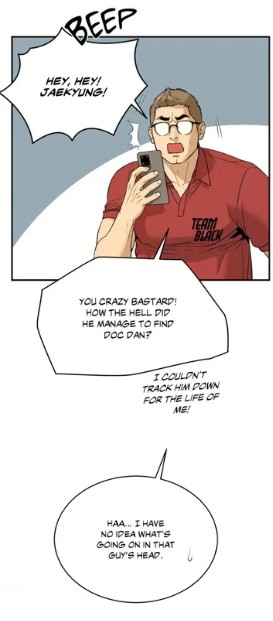 (chapter 61) In the panel where he sighs, “Haa… I have no idea what’s going on in that guy’s head,” he unintentionally exposes the shallowness of his approach. He imagines that by looking at Jaekyung’s brain—by cracking his psychology—he’ll “understand” him. That way, he can regain control. But this isn’t curiosity. It’s a veiled form of control-seeking. Namwook doesn’t want to know Jaekyung as a person—he wants him to be predictable, manageable, marketable. That line doesn’t reflect concern. It reflects frustration that the human being in front of him refuses to fit the role he’s been assigned. Hence it is logical that his solution to force Joo Jaekyung to return to the gym is to accept a new match.
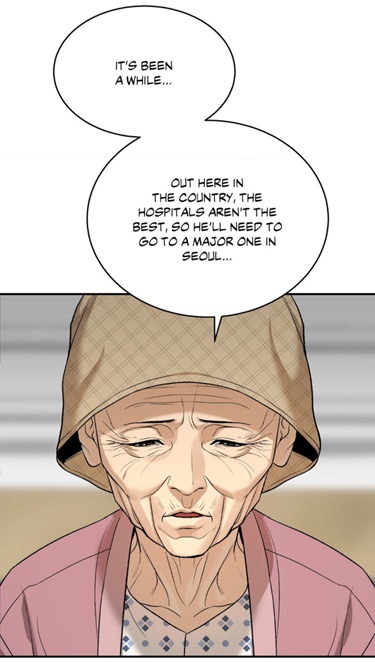
  (chapter 65) Her mindset follows a consistent logic: one problem, one person, one solution. Kim Dan is overworked and sick?
  (chapter 65) Then someone stronger should carry him. That “someone” becomes Jaekyung. The doctor should take pills and that’s it.
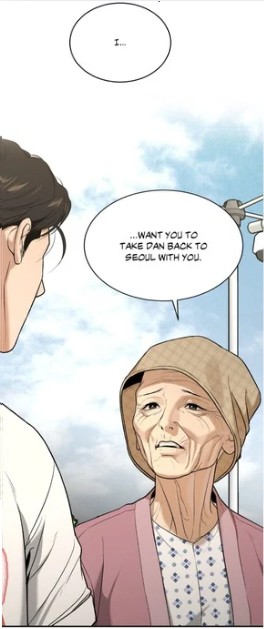 (chapter 65) Her logic is deeply utilitarian—Jaekyung is rich, strong, and dependable. Therefore, he must be fine. She does not consider whether he is emotionally stable, available, or even willing to carry such a weight. The haunted look in his eyes that Hwang Byungchul noticed in Chapter 72
 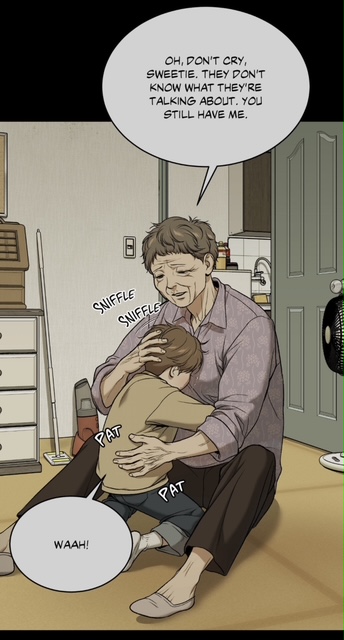 (chapter 57) This line, though comforting on the surface, is an act of simplification. She makes herself the sole solution to Dan’s complex emotional wounds. Her message: You don’t need justice, friends, or understanding. You need me. That’s how doc Dan was taught not to argue and not to fight back. He just needed to accept the situation.
 (chapter 65) she doesn’t know anything about his life. That’s the price of simplification: you get a clean answer, but not the truth.
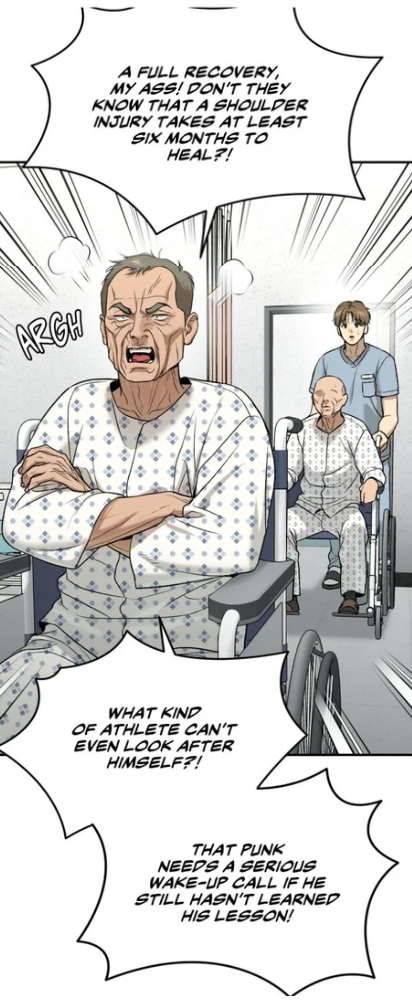 (chapter 70), as though he chose freely, overlooking how coercion and image control operate in their world. He accuses him of ruining his career with the suspension, even though it was orchestrated by others.
  (chapter 70) He judges him without knowing the circumstances. This projection is not new. In the past, he blamed the father,
 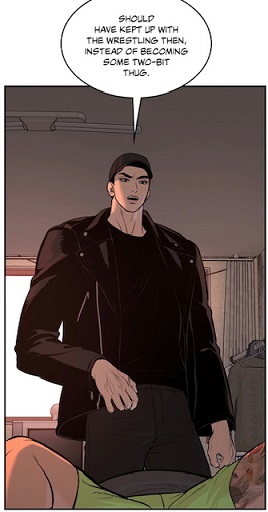 (chapter 17), it becomes clear that there exists a recurring link between athletic decline and criminal paths. The man fails to notice this connection. He sees these outcomes as individual moral failings, not systemic failures.
 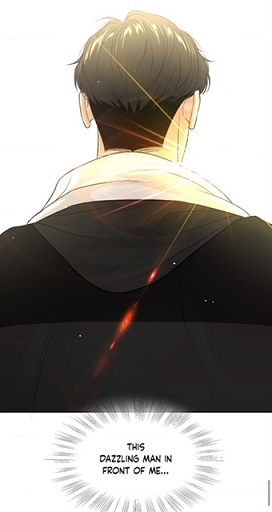 (chapter 40) Kim Dan saw the result and got fascinated. And what we’re left with now is a man whose pain and exhaustion are almost unseen
  (chapter 64) He reproached him about being used and abandoned. But he was forgetting his own actions. He had also used the athlete, he had also left the bed in a hurry the next morning. Yes, he, too, simplified Jaekyung. That night, he said nothing. And in doing so, he confirmed the belief Jaekyung had internalized: I’m not someone who gets cared for. I’m someone who is tolerated, used, replaced. Like mentioned above, his mind-set was strongly influenced by Shin Okja. On the other hand, I noticed that the protagonist embodies complexity. How so? On the surface, he appears simple: obedient, quiet, weak, submissive, passive.
  (chapter 70) But beneath that surface lies a dense emotional world— love, grief, guilt, exhaustion, intelligence, empathy and moral clarity — that few characters in Jinx truly perceive. He stands for the heart! And everyone knows that “the heart has its reasons, of which reason knows nothing.” (Blaise Pascal) Because he acts from a place that defies the cold logic of power, hierarchy, and survival, he operates on emotional intelligence
 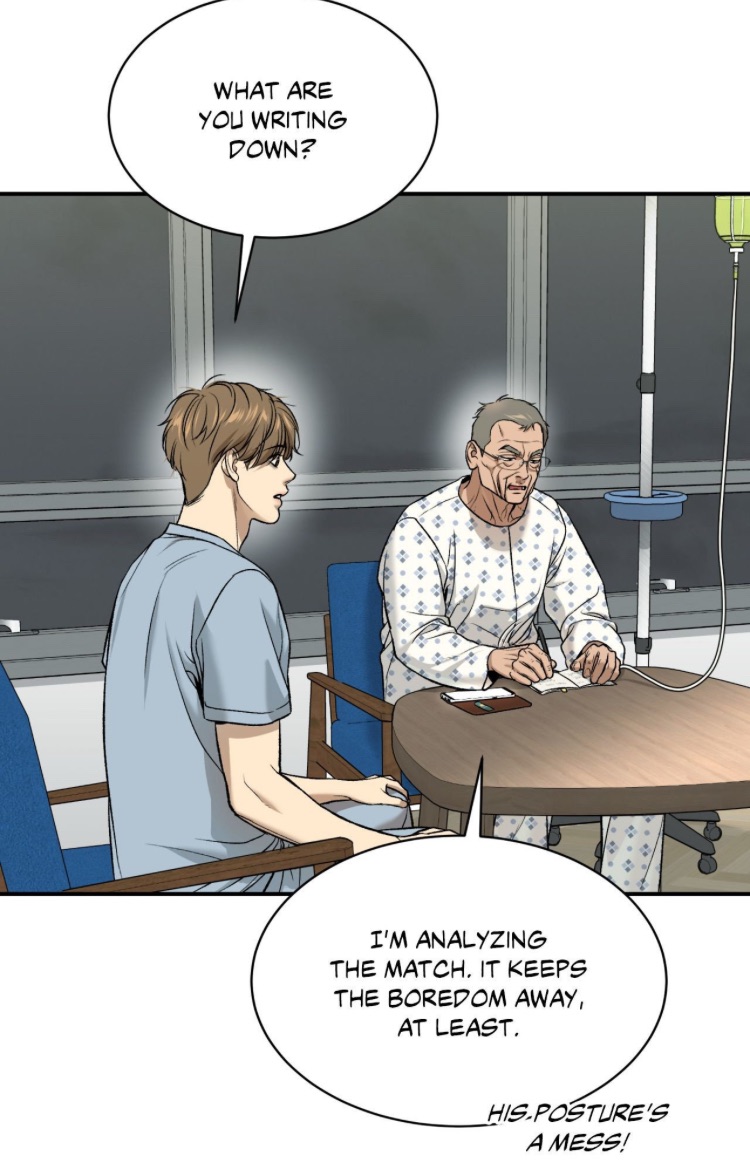 (chapter 71) —unspoken understanding, silent resistance, instinctive empathy. It’s no coincidence that his presence disrupts every system he enters: the gym, the hospital, the champion’s life.
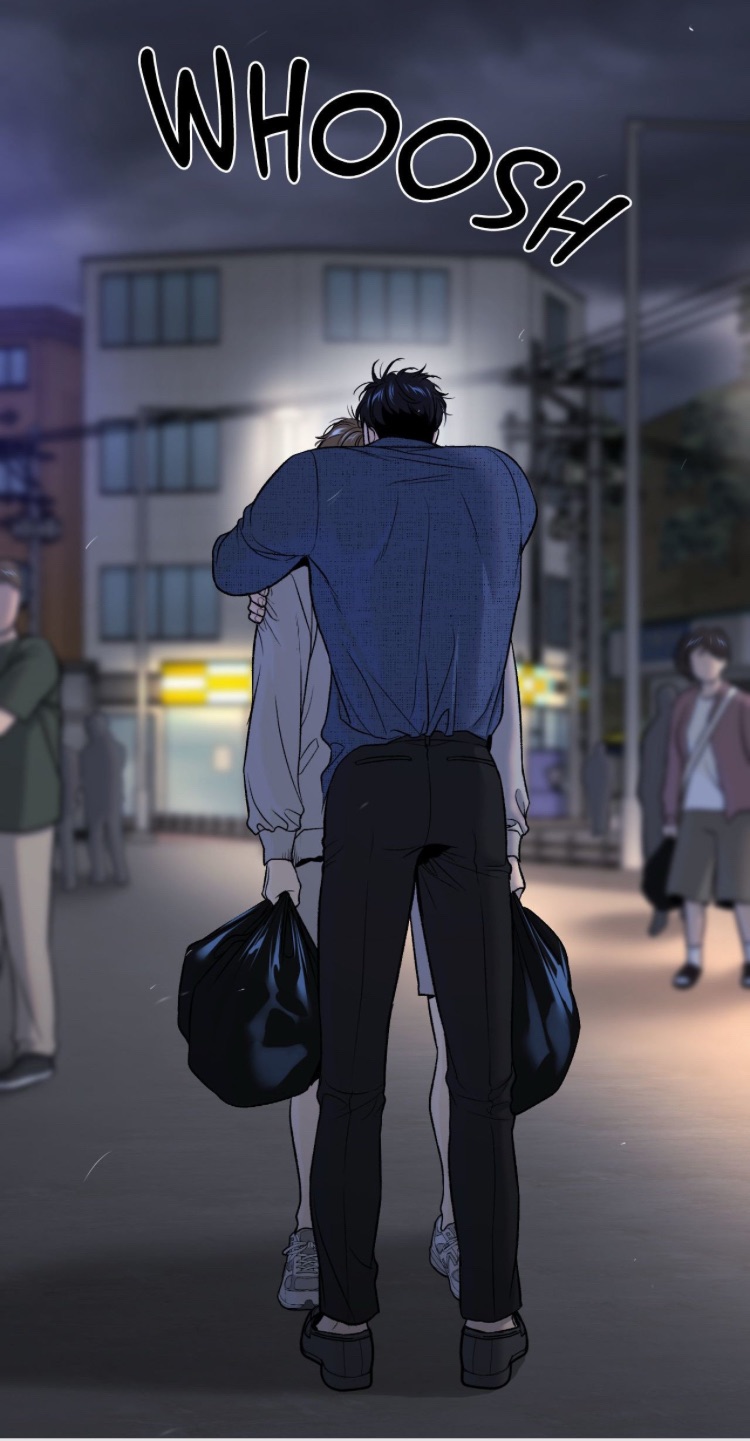 (chapter 70), and starts being a person. The racing heart… which has already happened. And this observation leads me to this scene:
 (chapter 58) Kim Dan was erasing this memory, he wanted to forget the star The Emperor. This act of forgetting wasn’t an escape from pain; it’s an active rejection of a myth that was keeping him emotionally paralyzed. As long as Jaekyung remained “The Emperor,” he could not be touched, questioned, or truly known. By forcing himself to forget that image, Kim Dan was making space for something more vulnerable and human to emerge. To conclude, thanks to this painful decision, he was able to perceive Joo Jaekyung the man. That’s why he acted so fiercely in front of him later. So by meeting the director, doc Dan is now able to see the child or the “cat” in his fated partner. That’s how it dawned on me why Mingwa let doc Dan suffer from addiction, depression and insomnia. Because these afflictions defy simplification. They resist instant solutions (pills). They demand patience, presence, and a refusal to look away.
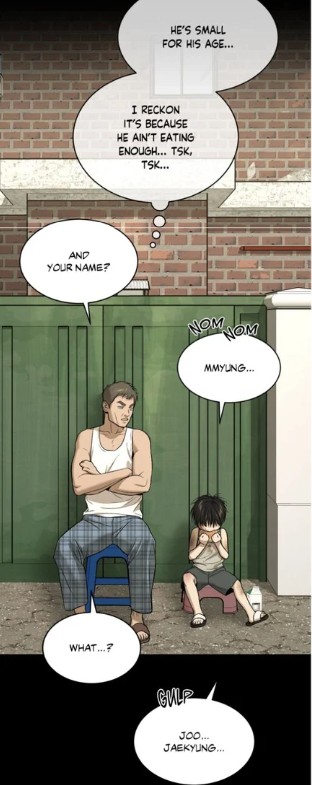 (chapter 72), his bruises
 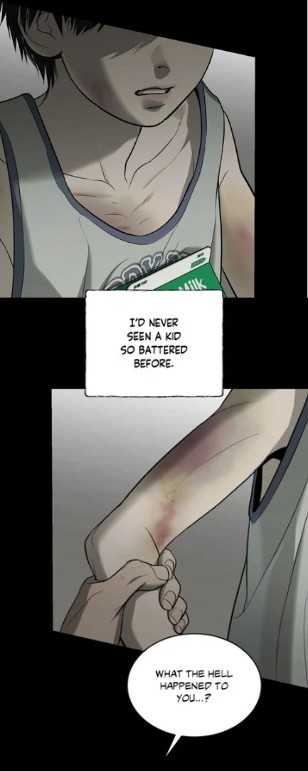 (chapter 72) and asked for his name. This exposes his priorities and his blindness. He didn’t truly perceive the child in him, he was seeing him through the lenses of a boxer and director. Hence he underestimated the absence and abandonment of the mother.
 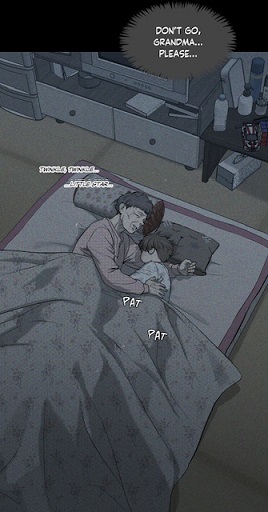 (chapter 21) Unlike Kim Dan, who grew up falling asleep next to his grandmother, accustomed to someone sharing his blanket, Jaekyung was emotionally and physically on his own from the start. Moreover, observe that the little boy had toys
  (chapter 53) He is a physical therapist. He had also arranged his books together:
 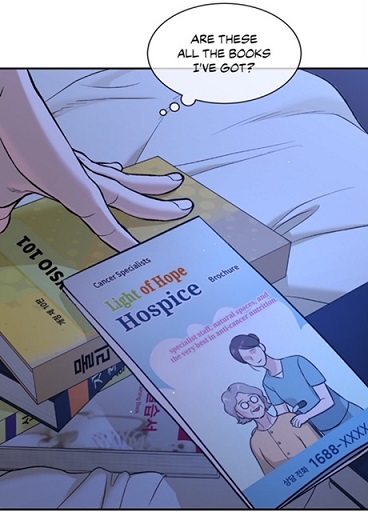 (chapter 53) And what did the hamster think while gathering his belongings?
 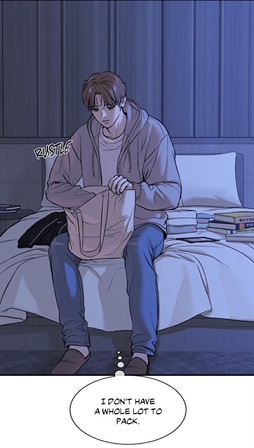 (chapter 53) So I deduce that the woman left them behind because she didn’t need them, she had enough or she no longer cared. But there is more to it!
 (chapter 27) There are no toys, no supplies for a child—just quiet evidence of a woman focused on herself, her escape perhaps already underway.
 (chapter 53) The jacket… Because of these parallels, I come to develop the following theory. Joo Jaekyung knew his age, because he had just celebrated his birthday. This scene definitely took place in the summer.
  (chapter 53) must have triggered the champion’s abandonment issues. He had the impression to relive the past. The mother had left him behind in the dark unexpectedly.
 (chapter 53) Thus Joo Jaekyung started drinking and recalling his repressed traumas. This explains why he didn’t look for doc Dan at first and why he hates his birthday and presents.
  (chapter 45) And now, you comprehend why I wrote above that I was not giving up on the idea that the champion could belong to a different world too. She was not accustomed to take care of a household. She wasn’t used to cook either. She would order food, hence we have the empty bowls.
  (chapter 72) Remember how the champion reacted, when he tasted his cooking for the first time?
  (chapter 72). In other words, the mother was already emotionally absent long before she physically vanished. The bandaged bear thus becomes a silent accusation: you saw, and you left. Therefore it is not astonishing that Joo Jaekyung made such a mistake:
  (chapter 44) before he was abandoned. Jaekyung was never treated properly before. He was not claimed at all. It is important because the champion mentioned the word “home”
 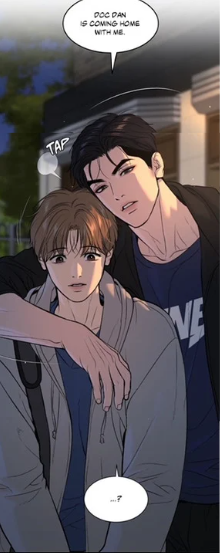 (chapter 43) for the first time shortly after receiving a mysterious phone call.
 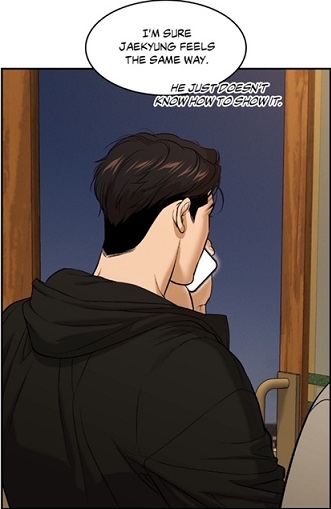 (chapter 43) And it is linked to his birthday. This resembles a lot to this scene:
  (chapter 37)
  (chapter 49) Is it the mother or someone acting as an invisible guardian who knows the champion’s past? What do you think?
 (chapter 72) Joo Jaewoong—whose name literally evokes the bear (웅, 雄 or 熊)—was not a gentle protector, but a violent alcoholic and drug addicted, a man who “strayed from the straight and narrow”
 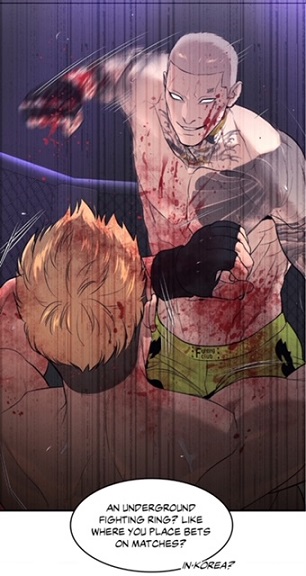 (chapter 47)
 (chapter 54) —Team Black—bears symbolic weight. Unlike other athletes who proudly attach their names to their legacy, Joo Jaekyung avoids personal branding. He doesn’t call it “Jaekyung’s Gym” or “Joo Athletics.” Instead, he opts for anonymity, for darkness. It’s as if he’s building a fortress rather than a legacy, a space that offers power and protection, but no trace of where he came from.
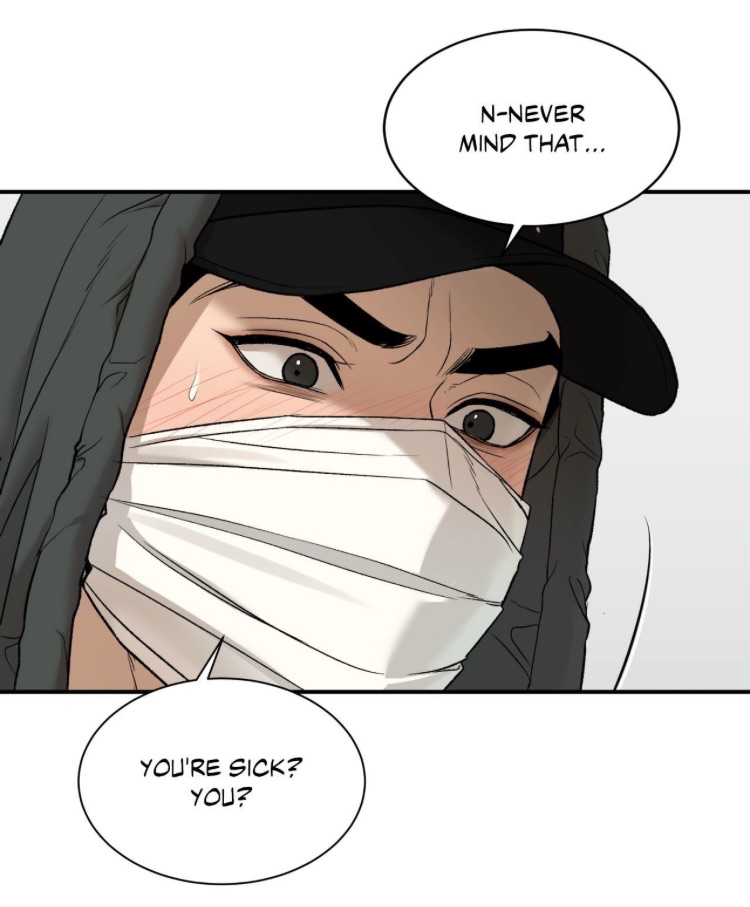 (chapter 71) I am quite certain that her vanishing must have pained him. She embodies the only good motherly role model in his life which explains why Joo JAekyung has a soft heart for Shin Okja. He knew to speak prettily and gently because of her. It is clear that the director influenced his dream, creating a gym where his mother would be part of it.
  (chapter 22)

 (chapter 14) For the physical therapist, this moment would later be confirmed.
 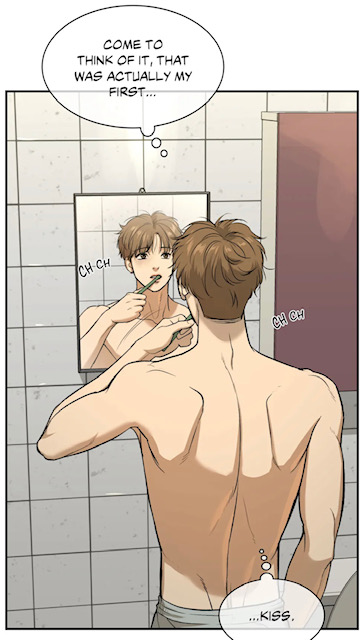 (chapter 16) —haltingly and with a trace of disbelief visible thanks to the points of suspension —as his first kiss ever. His stunned reaction and eventual admission offer a compelling lens through which to explore the symbolism of kissing in Jinx, but also the emotional landscape the two men must navigate.
  (chapter 55) Still, some readers have theorized the existence of a “special lover” in his past
 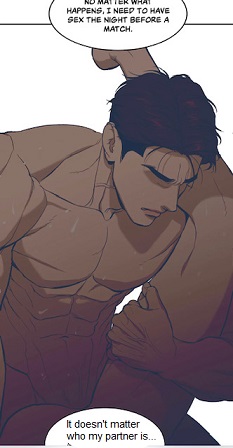 (chapter 2), someone who might have earned a different kind of intimacy. One cause for this hypothesis is that in the champion’s first memory, he was facing his partner, which contrasts so much to the way he had sex with his partners (from behind). This possibility casts the locker room kiss in a new light.
  (chapter 14) If it was his first, the gesture carries a far deeper meaning than either man realizes in the moment. And if it wasn’t, then why does this kiss—with Kim Dan—resonate so differently?
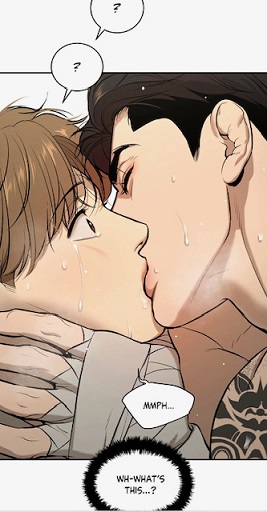 (chapter 15) she showed more than the physical therapist’s confusion with the interrogation marks, she added his inner thoughts. This question (“What’s this?”) already hinted that he had never experienced a kiss before. The ambiguity of his reaction suggested that the moment was unfamiliar, and not immediately recognizable as a kiss at all.
  (chapter 30) Recognizing his face, Dan mentions that his grandmother used to watch the drama A Fine Line, and that he had seen it with her.
  (chapter 30) The author even includes a framed shot from the fictional show, depicting Heesung as the smiling son-in-law in a multigenerational family. This visual insert is subtle, but telling: it wasn’t the story that stayed with Dan, but the faces—the aesthetics of family structure and polite emotional decorum.
 (chapter 16) it frightened him. The kiss broke an invisible boundary—one his upbringing had silently enforced. That’s the reason why he wasn’t sure if he could do it again.
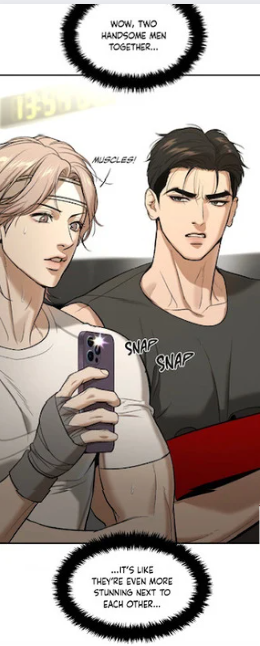 (chapter 30) He blushes and wonders why.
  (chapter 30) It’s a telling moment: Dan isn’t used to feeling attraction and desire, let alone recognizing it. He never bought posters of celebrities, never fantasized. That world—the glamorous world of affection, attention, and beauty—was never his.
  (chapter 30) —despite already having been seen naked by Jaekyung
  (chapter 30) —suggests something deeper than modesty. When he rushes to hide his underwear and blushes merely at brushing his teeth next to someone
 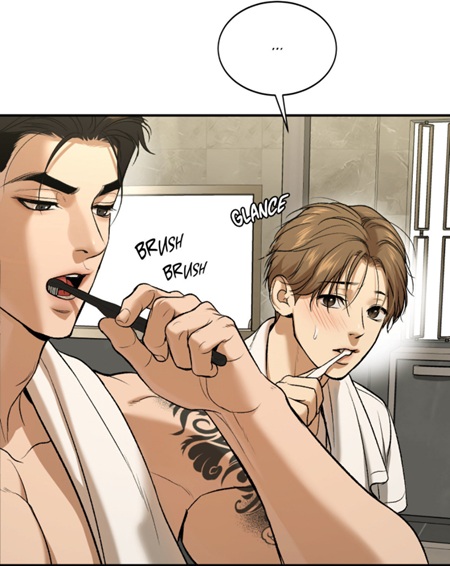 (chapter 30), it becomes evident: Dan is not accustomed to physical closeness or shared domestic spaces. These are not reactions of a man with just sexual trauma—they point to someone raised without the warmth of daily intimacy.
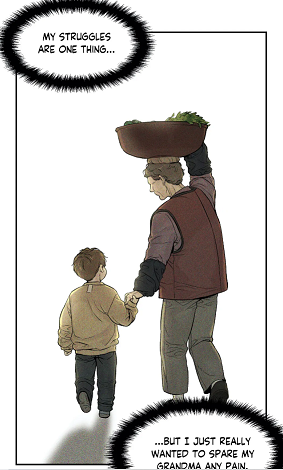 (chapter 5) He had to take care of himself, dressed on his own. He had to act like an adult, as his role was to assist his grandmother:
 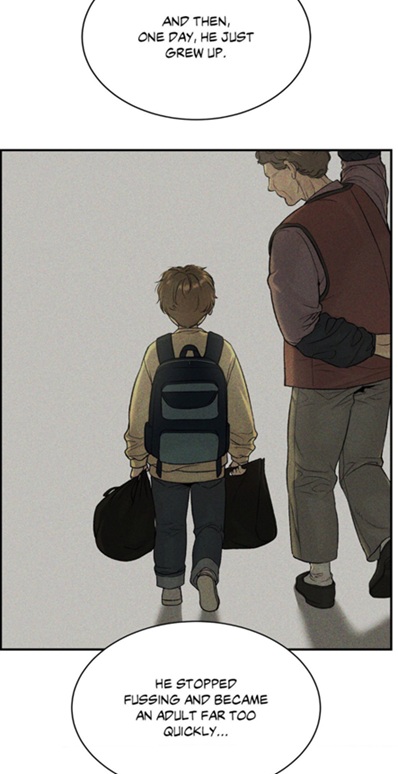 (chapter 65) This raises the possibility that someone else—most likely his mother—was his primary caregiver in early childhood. She would have changed his diapers, held him close, and kissed him gently.
  (chapter 44) For me, without realizing it, Dan reproduced those gestures. These actions can not come from Shin Okja, as we only see her caressing or patting her grandson. The progression is striking. It moves away from eroticism (kiss from the lips)
  (chapter 44) and toward something far more intimate and protective. These are not the kisses of seduction, but of affection—almost maternal in their tone. Hence the MMA fighter got patted later:
  (chapter 44) They suggest care, comfort, and emotional presence. This is crucial, because it reveals that for Dan, a kiss is not about arousal or conquest. It is a language of love. They carry the flavor of instinct. These are the kinds of kisses a child might have once received, or given, in moments of safety and connection.
 (chapter 44) is a behavior shared by felines and wolves alike: a subtle act of comfort, trust, and bonding. Wolves nuzzle to soothe and reassure. Leopards nudge to display affection without threatening dominance. Dan’s pecks
  (chapter 57) (chapter 57)—licking them not out of instinct alone, but to reassure and bond.
 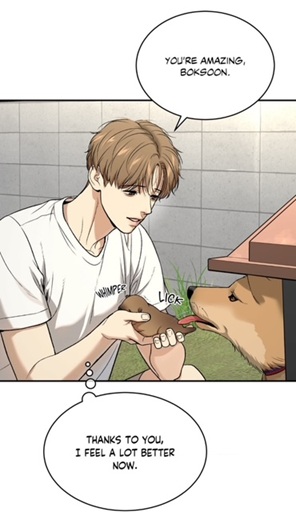 (chapter 57) During that summer night’s dream, Dan’s body mirrored this wordless care. That’s why he could laugh so genuinely like a child after witnessing his “pet’s reaction”.
  (chapter 44)
  (chapter 14) Therefore the physical therapist astonishment, “What’s this?” was not naïve; it was disoriented. Somewhere deep within, Dan had internalized a different model of kissing: one that reflected comfort, not conquest; affection, not arousal. The kiss he received was too strange, too fierce—it violated a definition he didn’t even know he had. His body knew how to kiss, but it remembered a different type of kiss altogether. The latter stands for love and as such emotions. Under this new light, my avid readers can comprehend why the physical therapist made the following request from his fated partner:
  (chapter 15) He needed to be “warned” in order to control his “heart”. As you can see, doc Dan had an innocent definition of the kiss. Therefore it is not astonishing that the wolf’s first kiss confused him so deeply: it shattered the only blueprint he had for intimacy.
 (chapter 65) with success and fortune take on a new, darker meaning. Her restraint around love and sexuality wasn’t only generational—it was strategic. She reinforced a worldview in which success, debt repayment, and self-denial were Dan’s only legitimate currencies. For her, love, on the other hand, was frivolous, indulgent, even dangerous. She only treasures the relationship between the protagonists, as such a friendship is useful. It serves her interests, that way she can still control doc Dan’s fate. In other words, she only views relationship as transactional. The smiling family in A Fine Line
  (chapter 14) Jaekyung repeated such a gesture, as seen in chapters 24
 (chapter 24), and again in 64
  (chapter 64). These gestures were not expressions of tenderness, but acts of dominance, mirroring how the celebrity was taught to treat intimacy: not as an exchange, but as an imposition. His behavior echoes Cheolmin’s earlier suggestion
  (chapter 13) where a little touch was functional. On the other hand, the suggestion framed “affection” as a form of fun and entertainment, meant to soften the experience and shift the focus toward the partner. While Cheolmin’s comment was not malicious—in fact, it encouraged Jaekyung to become gentler and more attentive—it still fell short of true emotional connection. Why? It was a medical suggestion, meant to protect Dan’s fragile state. The kisses in episodes 14 were to protect the physical therapist. They were initially functional, a mean to achieve a goal before becoming a habit.
 (chapter 63) Fun is not the same as love, and this distinction matters deeply for someone like Kim Dan, who associates kissing with emotional safety and love, not performance or play. This explicates why he refused to be kissed in episode 63:
  (chapter 63)
 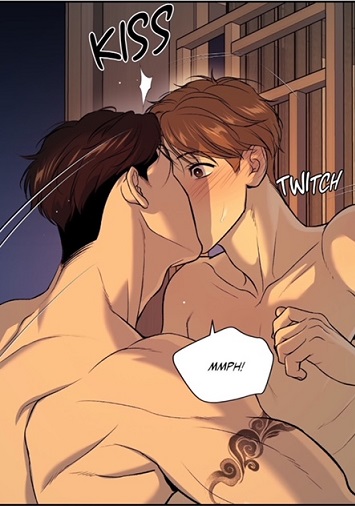 (chapter 44), Dan’s were soft, exploratory, almost reverent. His lips touched not just his lover’s mouth, but his cheek and ear—tender sites that bypass eroticism in favor of emotional intimacy. These weren’t prolonged, devouring kisses. They were pecks, small and deliberate. They mirrored affection, not possession.
 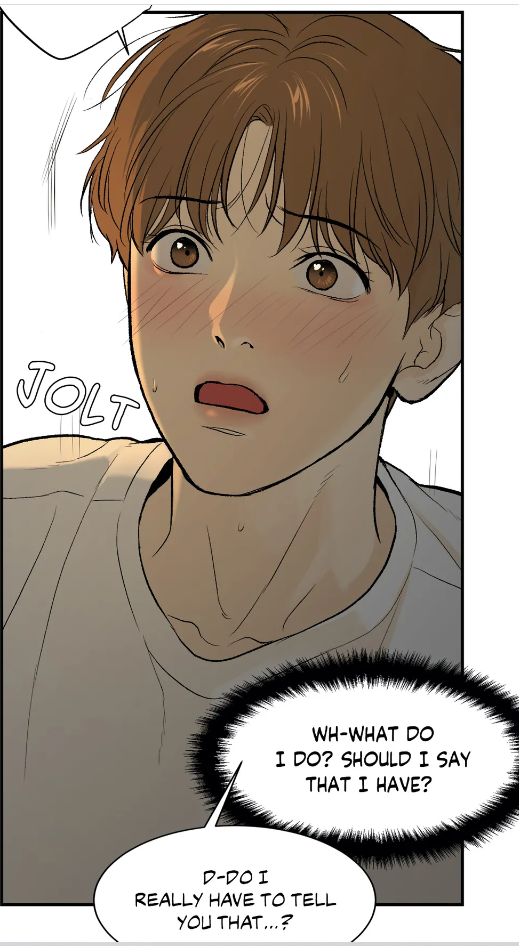 (chapter 3) —it forces the wolf to ponder on the meaning of a kiss and his relationship with the physical therapist.
 In that iconic artwork, the man does not kiss the woman on the mouth, the traditional locus of erotic desire. Instead, his lips are placed upon her cheek—a gesture that suggests reverence, not possession; vulnerability, not domination.
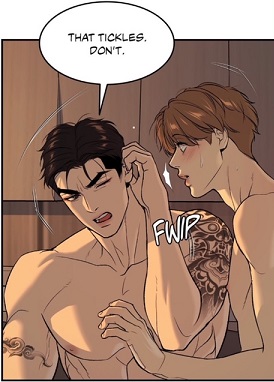 (chapter 44)
  (chapter 45)
 (chapter 54) When he was young, he had to face an abuser. Notice that the man’s face was very close to the champion’s
  (chapter 44) He couldn’t hide his joy by the champion’s funny reaction and laughed. And how did the protagonist react to this? Not only his face expressed his dissatisfaction, but also he silenced his partner with a kiss right away:
  (chapter 44) Joo Jaekyung is leading the kiss, he is regaining control over their relationship. It reinforces the idea that the wolf’s kiss was not merely about passion, but about reclaiming dominance and halting a shift in power. Just moments earlier, Kim Dan’s laughter had opened a space of emotional intimacy and lightness, which the champion was not prepared to face. The kiss, now prolonged and intensified, becomes the sportsman’s way of reasserting control over a situation that was slipping into unfamiliar emotional territory.
 (chapter 45) The marks on the doctor’s body were evidence that he was no longer in control. They weren’t just signs of a physical encounter—they were witnesses to something far more threatening: vulnerability, softness, and reciprocity. In the night, swept up by instinct and unspoken longing, the wolf had allowed himself to be touched—not just physically, but emotionally. But by morning, the spell was broken. His gaze didn’t linger on Kim Dan with affection—it darted instead to the bruises and scratches as though they were accusations.
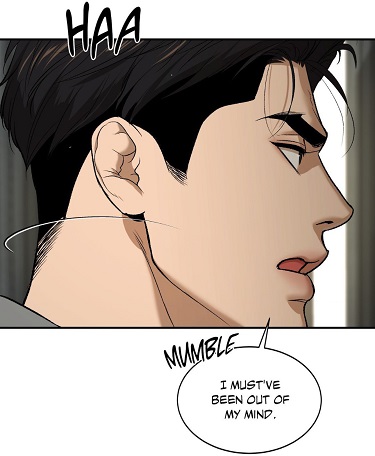 (chapter 45) wasn’t just the pain he might have inflicted—it was the realization that the balance of power had subtly shifted. The man who had always dictated the terms of their relationship had surrendered to something unfamiliar: tenderness, emotional closeness, and shared desire. The fact that Kim Dan initiated affection, even kissed him voluntarily, shattered Jaekyung’s script. For someone who conflated feelings with threat, and dominance with safety, this reversal was unbearable.
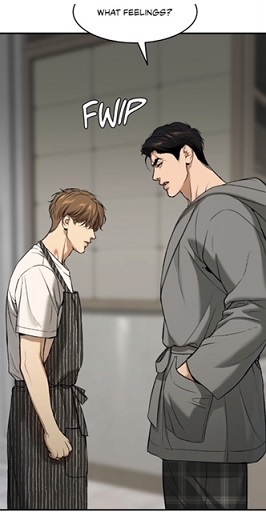 (chapter 45) —and that he, in turn, had wanted Dan back. This terrified him more than any bruise ever could.
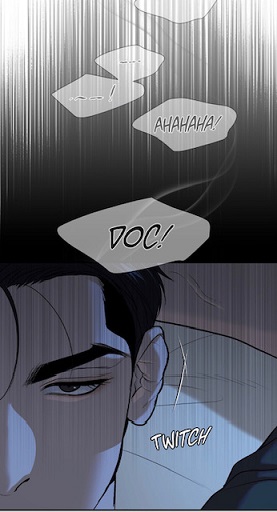 (chapter 37), and kissing becomes his emotional brake pedal. It’s not simply an act of love, but a means to regulate, or even drown out, what he cannot yet name or accept: that he is being loved. It is not random that I included the scene from episode 37: he heard laughs from the other room. For him, such a noise must have sounded like a disrespect and mockery, triggering his past trauma. And he was not entirely wrong in the sense that they were eating behind his back
  (chapter 37) It was, as if they were mocking him because of his forced “diet”. No wonder why the champion is barely seen laughing and prefers seriousness. At the same time, I can grasp why the athlete feels close to Park Namwook, as the latter stands for these exact notions: work, money and seriousness. Fun is not part of his world and vocabulary, therefore he punished Joo Jaekyung for sparring with doc Dan.
 (chapter 2) Though his face was close to the star’s, he didn’t attempt to kiss him. In fact, he proposed him a fellatio, a sign that the champion had never allowed anyone to get close to his “face”. Finally, observe how he reacted, when the uke in episode 55 attempted to kiss him:
 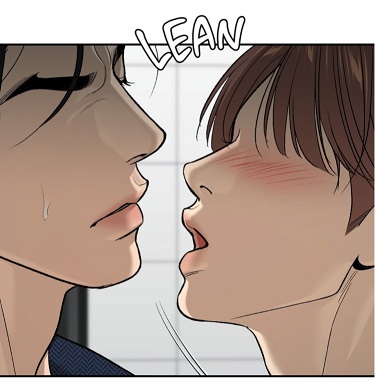 (chapter 55) Not only he rejected him, but also he pushed him violently so that the latter was on the floor.
 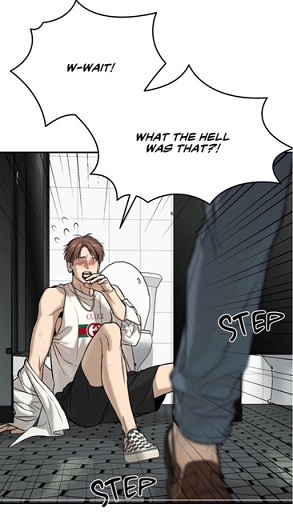 (chapter 55) The celebrity even ran away: a sign that the allowing someone approaching his face is perceived as something uncomfortable and threatening. At the same time, that moment exposes the kiss as something sacred—one that cannot be duplicated without emotional violation. This shows that for the champion, the meaning of a smooch has evolved. It is no longer perceived as a source of fun and a mean to gain something.
 (chapter 55) He couldn’t forget doc Dan’s face, the latter excited him, a sign that for the champion, the face in general has been a source of pain, yet thanks to doc Dan, the latter has become a source of “comfort and joy”.
  (chapter 66) When he saw his face for the first time, he didn’t realize that he was already under the hamster’s spell. Striking is that he even focused on his chin and lips, a sign that he desired to kiss them. One thing is sure. The champion treasured the doctor’s face. After their separation, it is not surprising that the wolf felt the need to see his face.
 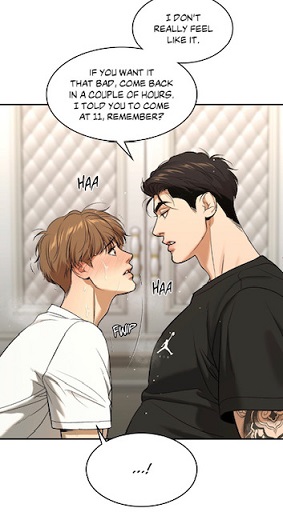 (chapter 39) before requesting a fellatio:
  (chapter 39) The main lead’s head was very close to the champion’s face, thus he must have felt uncomfortable. Secondly by acting this way, the doctor was gradually gaining power over their relationship. For the wolf, dominance is everything, an indication that in his past he felt defenseless and weak. His “opponent”, the mysterious ghost, had the upper hand. Moreover, the fellatio created a distance between them, where the fighter could expose his superiority. And note how doc Dan behaved under the influence of the drug:
  (chapter 39) He caught his fated partner by surprise, when he suddenly kissed him, mirroring the champion’s past behavior. This panel corroborates that for the doctor, a kiss is the symbol of love. The champion was not happy with this kiss too, for the latter meant that he was no longer controlling their relationship. Yet, after hearing the doctor’s confession during that night, the athlete no longer resisted his partner’s kisses.
  (chapter 39) For the first time, he accepted Dan’s initiative—both physically and emotionally. Compare it to his attitude before:
  (chapter 39) here, he still has his eyes wide open, a sign of vigilance. These kisses from doc Dan
  (chapter 39) mark a turning point in Jaekyung’s arc: he begins to lower his defenses, allowing Dan not only into his personal space but also into a position of gentle agency within their relationship. The kiss no longer represents a threat; it becomes an opening and a sign of trust.
  (chapter 55) These memories represent the moment where the athlete felt strong and had the upper hand in their relationship. These images reveal that Joo Jaekyung hasn’t realized the signification of the kiss yet. For him, they don’t seem important. This exposes that the athlete has not associated kiss with love and affection yet. At the same time, we have to envision that a smooch is strongly intertwined with equity and trust.
  (chapter 28) And in episode 14, it was clear that the star still felt superior to his companion, therefore the kiss had no special meaning. As you can see, everything is pointing out that Joo Jaekyung had never been kissed before. And what does a kiss symbolize? Not only attachment, but also purity and innocence.
  (chapter 42) According to him, doc Dan was not different from him. However, he was wrong. It is because the champion had kissed him!! Moreover, the celebrity had allowed doc Dan to kiss him as well. Besides, how did the champion name his past lovers? They were toys… normally people don’t kiss playthings. And now, imagine that doc Dan were to discover that Joo Jaekyung had his first kiss with him. This revelation would not only make him realize that Joo Jaekyung loves him, but also he could be wondering why the athlete had never done such a thing before, though he had past lovers. YES, the “first kiss” could be the trigger for both characters to question their respective past and perceive their fated partner correctly.
  (chapter 15)
 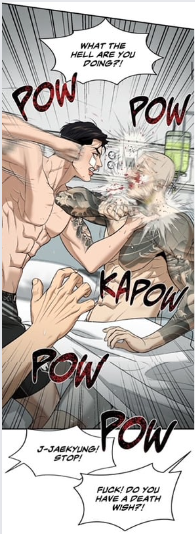 (chapter 52) In that context, a kiss could never be affection, but vulnerability. A risk.
 (chapter 3), based on Dan’s vague claim of prior partners. Yet Dan has never kissed anyone before. The kiss becomes his true moment of loss, a quiet confession through action. Conversely, Jaekyung’s own discomfort shows that he, too, is untouched in this particular way. When Dan tries to kiss Jaekyung again, and he instinctively rejects it, it reveals just how unprepared he is for affection. They are both unaware that the other is emotionally “pure” in this regard, and that makes the kiss a shared revelation.
 (chapter 67), Jaekyung must reinvent his approach. He cannot rely on dominance, strength, or sexual performance to win Dan’s heart. If he wants true connection, he must learn a new language—one built on gestures of affection, softness, and presence. This process also involves separating his public persona from his private longing. Joo Jaekyung, the champion, cannot seduce with spectacle. But Jaegeng, the man, might learn to express love through a simple touch, or a well-timed kiss. The redefinition of seduction is not just about Dan’s healing; it is about the wolf’s reclaiming his own right to feel and give love. And in my opinion, that process has already started:
 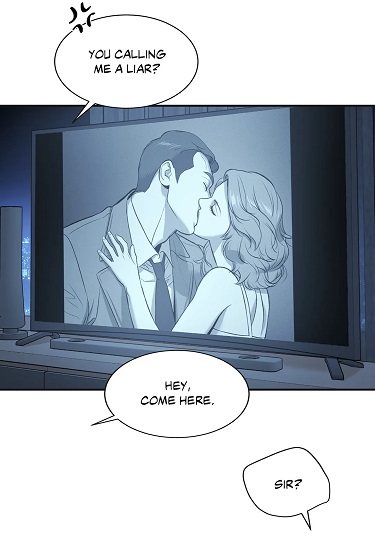 (chapter 29: note that he did not select this scene to rekindle with the doctor, but the other scene) He will learn it from life, from watching how the innocent express care without shame or purpose.
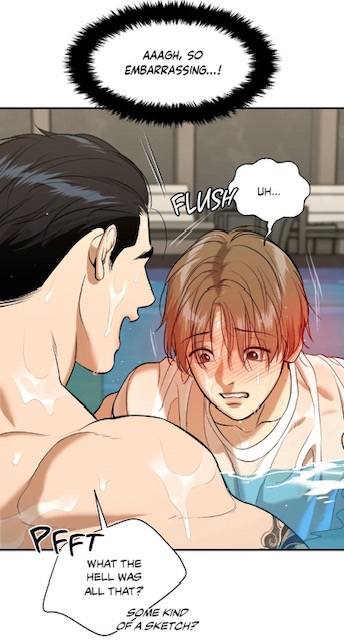 (chapter 27) In Jaekyung’s past, laughter had been a weapon—an expression of ridicule and cruelty from an abuser.

 (chapter 69)
 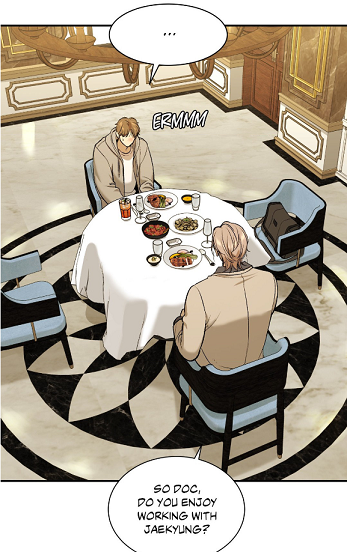 (chapter 32) Yet upon closer inspection, certain oddities stood out to me.
  (chapter 43) In that scene, Kim Dan poured soju into his water cup to pace himself during a drinking session.
  (chapter 43) Joo Jaekyung, unaware, mistakes it for his own and angrily reacts upon drinking it. This moment shows how closely water glasses are associated with Korean dining culture—even in casual or alcohol-heavy settings. Hence during a meal, the characters always have
  (chapter 32) two glasses on the table. In South Korea, it is customary for restaurants to provide a glass of water to every diner, regardless of the meal’s formality or complexity. This small gesture reflects hospitality, attentiveness, and the expectation of proper nourishment. The absence of water glasses, therefore, subtly communicates indifference or even disrespect—signaling that the recipient is not truly welcome to enjoy a full meal or rest. When applied to the “dessert meeting,” this detail becomes all the more striking: a cultural standard is ignored, revealing the performative nature of the gesture. Their absence at the “dessert meeting” feels deliberate, a symbol of superficiality and arrogance.
  (chapter 43) The reason for his mistake was that they had only placed a spoon and sticks.😮 He had no glass for himself. It was, as if they had forgotten him. In other words, he was not supposed to eat and drink at his own birthday party!! 😂
 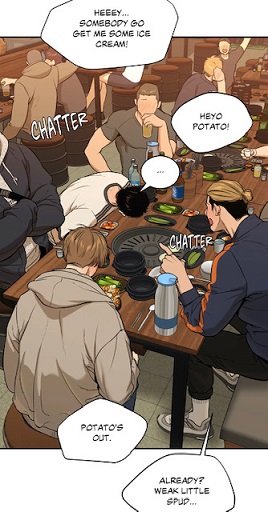 (chapter 9) It reflects a pattern: the champion is present but not included in the communal or emotional aspects of the gathering. His spoon and chopsticks function like a prop, much like the untouched knives and forks at the dessert meeting.
  (chapter 69)
  (chapter 48), the meeting between Choi Gilseok and Kim Dan. The former invited him for coffee.
  (chapted 48) At first, the gesture seemed generous—he offers a home, a car,
  (chapter 48) and the promise to help doc Dan to get a new treatment for the grandmother.
  (chapter 48) But this so-called kindness is conditional: in exchange, Kim Dan must betray Joo Jaekyung. Striking is that director Choi only ordered coffee. But a coffee without a dessert is no real break, but a stimulant—fuel for continued work. In both this meeting and the previous one with Choi Gilseok, the core remains the same: “work”, stinginess and greed wrapped in the guise of generosity. Every sweet drink or dessert lies a hidden price. This comparison highlights that the current meeting is not for the athlete’s sake—it is meant to serve Park Namwook and the CEO, who share different but aligned goals.
 (chapter 66) linked to fire, summer (hence the reference to the trip in the States), passion, performance, and vitality—ironically twisted here into cold professionalism and superficial seduction. Her position contrasts with her symbolic warmth, highlighting the emptiness of her care. This explains why she is portrayed eyeless. She sold her “soul” to money and as such to the “devil”.
 (chapter 69) wearing black, aligns with the North (흑, Heuk), associated with the color black, winter, water, authority, secrecy, and hidden control. It was, as if he was representing the missing glass of water. His position as the initiator of the meeting and his location near the window reinforce his dominance and detachment.
 (chapter 69), which evokes confusion and corruption. This artistic backdrop continues the theme from Voyage, Voyage (life is a journey), positioning Jaekyung as mentally “adrift” within this orchestrated trap. At the same time, the green might reference the “Black Forest”—a literal and metaphorical journey ahead. Like Hansel and Gretel, he is being lured with sweets into the forest. But unlike the fairy tale, the athlete’s breadcrumb trail will not lead him home—it will lead him to Kim Dan. On the other hand, by making this connection, I couldn’t help myself thinking that exactly like Hansel and Gretel, doc Dan and his fated partner will cross the witch’s path on their journey to independence and happiness.
 (chapter 69) Notably, this outfit marks a shift from his previous appearances: during his public pose with Baek Junmin
  (chapter 37) Now, Joo Jaekyung mirrors this casual dark attire
  (chapter 69) —a signal of inner turmoil and his transition from his former life. Blue stands for loyalty, thought, and calm, while black alludes to his troubled past. He is evolving but not yet free.
 (chapter 69) the strawberry fraisier (chosen by the woman) stands for surface sweetness and seduction; the layered chocolate cake (perhaps a feuilleté) represents indulgence and opulence. Joo Jaekyung alone chose a square Black Forest cake—a form traditionally associated with structure, truth, and boundaries. Because the cake contains kirschwasser, subtly referencing the athlete’s brief brush with alcohol, it becomes clear that Park Namwook was not the one behind this order. Imagine this: under his very own eyes, the champion is encouraged to taste a strong alcohol. In my opinion, they must know that the star has been drinking. Yet, it was through Kim Dan’s presence that he stopped drinking, making this dessert an unconscious mirror of both his struggle and strength. Meanwhile, Park Namwook, ever the follower, selects the same dessert as the CEO and the same drink as the woman, revealing his pretense and pastiche once more. Since the manager has always bought junk food (chicken
 – chapter 26, hamburgers, ramen
  – episode 37), it becomes clear that the hyung simply has no idea about Western food in general and in particular expensive French or German dishes. That’s why he didn’t ask about the dish or questioned the champion if he should eat the deadly sweet cake.
  (chapter 22)
 (chapter 48), their meeting was not supposed to be secretive. On the other hand, because the scene was photographed
  (chapter 48), it created the illusion of “betrayal” as it looked like a secret meeting”. In episode 69, the meeting is hidden from the public. In contrast to the earlier public appearance alongside Baek Junmin for the cameras
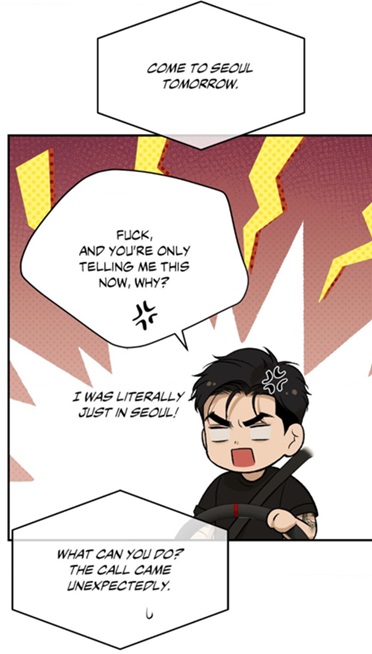 (chapter 69) This framing is deceptive: far from being a gesture of goodwill, it reveals the urgency and opportunism driving the meeting. However, this gesture is carefully staged: the CEO and the woman in red are the ones who selected the time and location of the encounter, placing the athlete in a reactive position where he must adjust his schedule to their convenience. It reinforces the illusion of privilege while concealing a dynamic of control. The meeting is designed to appear personalized, but it reflects MFC’s ethos that ‘time is money’—a business-centered logic that prioritizes efficiency over empathy. The CEO’s urgency to schedule a match, despite Jaekyung’s unclear health status, further exposes the commodification of the athlete. Notably, the proposed match is not even a title bout.
  (chapter 69), hence the “future match” is no longer a secret.
  (chapter 69)
 (chapter 67) He was not dropping the case. That’s the reason why the fighter is offered a match in the fall. If he is busy, then he might forget the “case”, especially since fall is right around the corner. He would be occupied training. Like mentioned in previous essays, my theory is that the CEO is involved in the scheme. This assumption got reinforced with this meeting. Striking is that the focus of the “chief of security” was the incident in the States.
  (chapter 69) By stating that the criminal belonged to a Korean gang in the States, she implied that this man had no direct connection in South Korea. In addition, with this statement, she claims that he is still in the States and the champion is safe. However, if the “fake manager” had been living in the States for a long time, he wouldn’t have spoken in Korean automatically.
  (chapter 37) In other words, she is trying to place the mastermind in South Korea.
 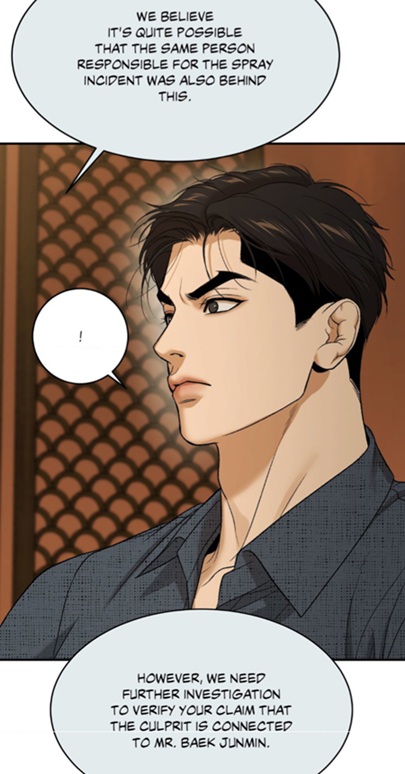 (chapter 69) This means that she is attempting to erase the involvement of MFC in the scheme. That’s why they are now offering an apology, which is naturally fake:
  (chapter 42), it dawned on me that MFC is actually treating the Emperor like a “cash cow”, they imagine that they can keep milking him. I could say, this encounter is exposing the reality to the athlete: Joo Jaekyung is treated like any other fighter. Hence there is no longer mention of Baek Junmin in the news. On the other hand, they have to vouch for Baek Junmin’s integrity
  (chapter 41) here the topic is avoided altogether—possibly due to the lack of actual clearance. Should a third-party hospital intervene, the match could be canceled. Secondly, Park Namwook assumes control of the timeline: a match in the fall means training now. But the champion is no longer dancing to his tune. He is meditating, admitting his exhaustion.
 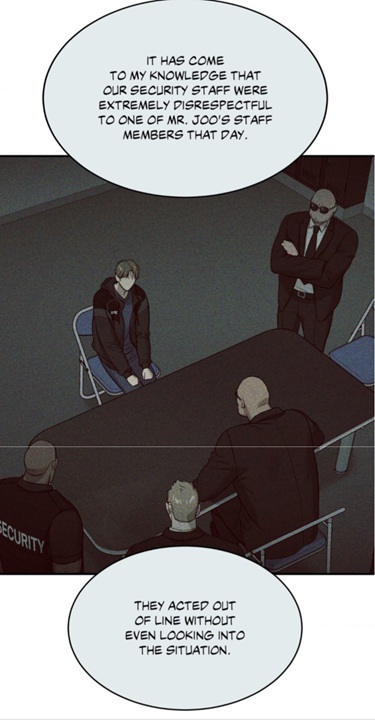 (chapter 69) So Joo JAekyung is more than a fighter and the apology (interrupted by the manager) is the evidence for this. Under this new light, Jinx-philes can understand Park Namwook’s interruption and embarassement. Not only he doesn‘t want to be reminded of his past mistakes (passivity, failure of his job, the slap), but also this apology serves as a mirror and reminder that he is not the true owner of the gym.
  (chapter 69) He is his unseen savior. Thanks to Kim Dan, the star remained silent and calm giving the impression that he had fallen for MFC’s trick.
  (chapter 40) This echoes Kim Dan’s confusion in Chapter 40 when interrogated in English. It also conveniently hides their ties to local authorities—acting as foreigners with no responsibility or rootedness in Korea. But this is what director Choi Gilseok confessed to the angel:
  (chapter 48) The business is rooted in the USA.
 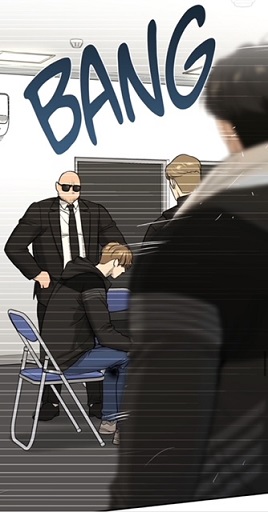 (chapter 40), effectively opening the metaphorical door to truth and protection. In this meeting, however, Park Namwook serves to contain and silence, not to defend. His placement underscores his complicity and fear—not just of the CEO or MFC, but of confronting the consequences of his own failures. But the manager is on his way for a rude awakening, he will be taught a lesson: don’t judge a book by its cover. The athlete won’t be the depressed, anxious, submissive and passive “boy” any longer. Moreover, he listened carefully to the chief of security:
  (chapter 69) It is Kim Dan.
 (chapter 69) he leaves during the day and arrives by night.
  (chapter 69) This spatial detachment echoes his emotional separation from MFC and its toxic grip. Distance, both literal and figurative, is now his strength. The fact that he chose to return to the little town outlines that he is now considering that place as his “home” and not the penthouse. He is not realizing that his true home is doc Dan.
  (chapter 32) During Kim Dan’s lunch with Choi Heesung, the floor beneath their round table shows a twelve-petal flower motif—evocative of the legendary Knights of the Round Table, who were said to sit twelve strong. That earlier scene featured Heesung testing Dan, much like the fake round table later hosts a veiled test for Joo Jaekyung. The repetition of round tables masks exclusion and betrayal. These early “false” tables pave the way for a true table—one that Jaekyung might one day forge with fighters like Heesung, Potato, Oh Daehyun, and others, where loyalty and respect, not manipulation, define the bond.

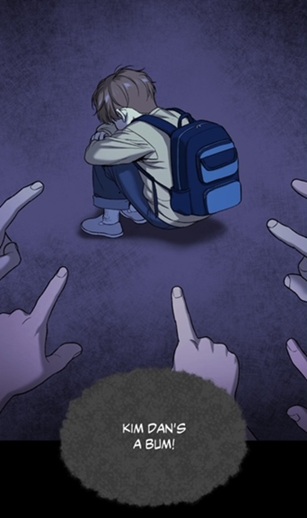 (chapter 57). Similarly, when Joo Jaekyung faced his opponent Randy Booker, he was also verbally harassed
  (chapter 49) the surface shows two athletes seemingly engaged in a normal, even friendly interaction – they are shaking hands -, while the panels reveal a darker undercurrent of verbal harassment and manipulation.
  (Chapter 49)
  (chapter 61), while Joo Jaekyung represses his emotions and thoughts through “physical activities”.
 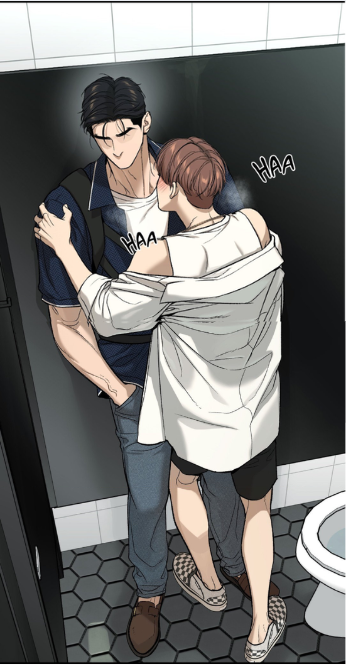 (chapter 55) This essay will explore how their experiences in the restroom space serve as a mirror to their past and reveal the psychological scars that shape their behaviors.
 (chapter 14)
  (chapter 38)
  (chapter 47) However, in Season 2, the lavatory appears isolated for the first time, reinforcing a shift in symbolic meaning. This distinction helps to explain why restrooms (toilets/water closets) hold different meanings for the two protagonists. [for more read
  (chapter 19) —a space where one is free to confront their inner selves without external pressures. In Jinx, the use of the restroom emphasizes the external pressures and the characters’ reactions to their environments, reinforcing their struggles with exposure and control. But how did I come to this realization?
 (chapter 61) The wolf reminded me of a stalker.
 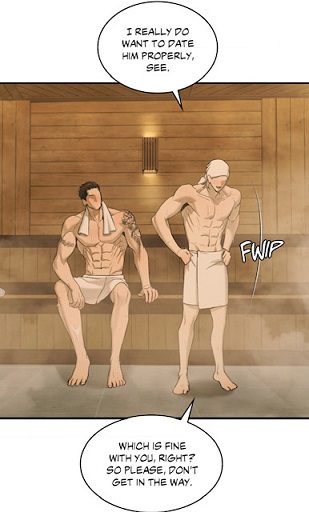 (chapter 34), vulnerabilities are exposed, and participants are pushed to their limits. In the essay
  (chapter 33) This would explain why Heesung was determined to hide the physical therapist’s whereabouts.
  (chapter 58) He saw in him a bully and even a stalker. His judgment was based on these two incidents:
 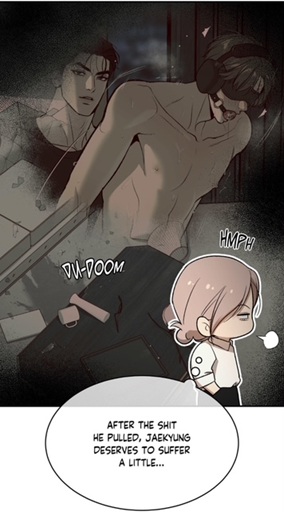 (chapter 58) He imagined that Kim Dan had been coerced to it, while the physical therapist always had the choice to refuse. Joo Jaekyung would never hurt the doctor.
 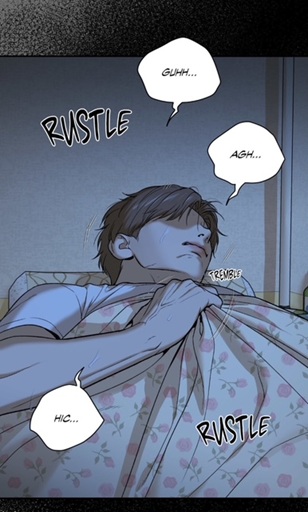 (chapter 59) The imminent death of his grandmother triggered his repressed fears.
 (chapter 61), reacts with pursuit. His behavior mirrors the tendencies of a stalker—not out of malice, but because his entire life was shaped by the belief that to be ignored is to be erased and forgotten.
 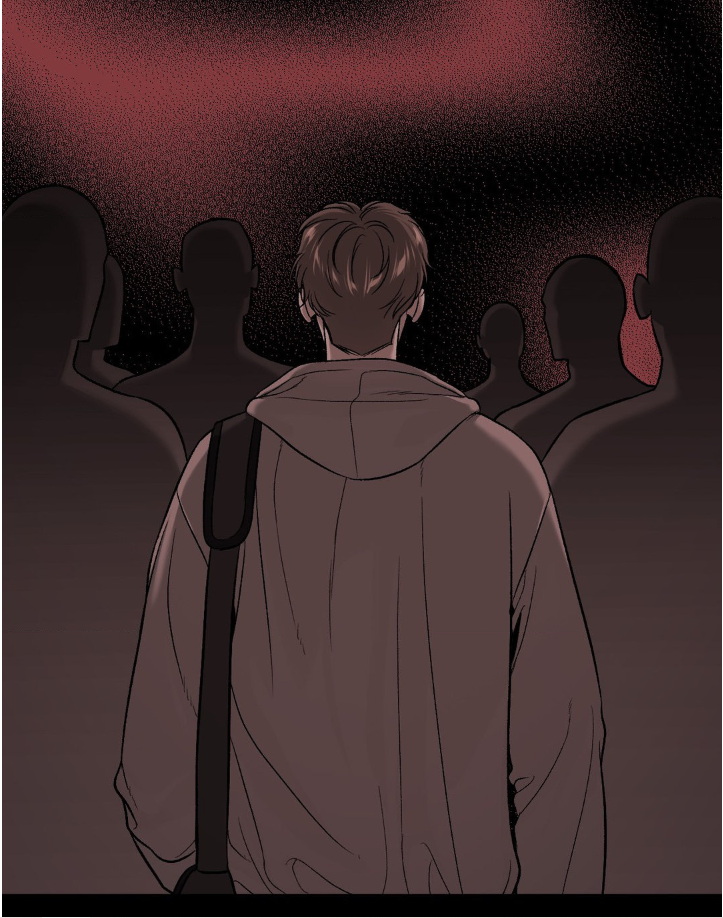 (chapter 55) In childhood, he learned that only strength could secure attention
 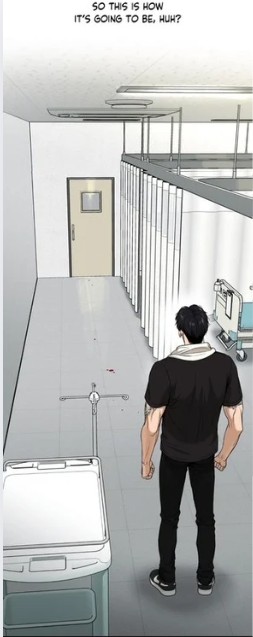 (chapter 60) He tracks him down, calls him repeatedly
  (chapter 61) Deep down, he wants to be part of his life. Hence he moves next to Kim Dan’s house as his final attempt.
 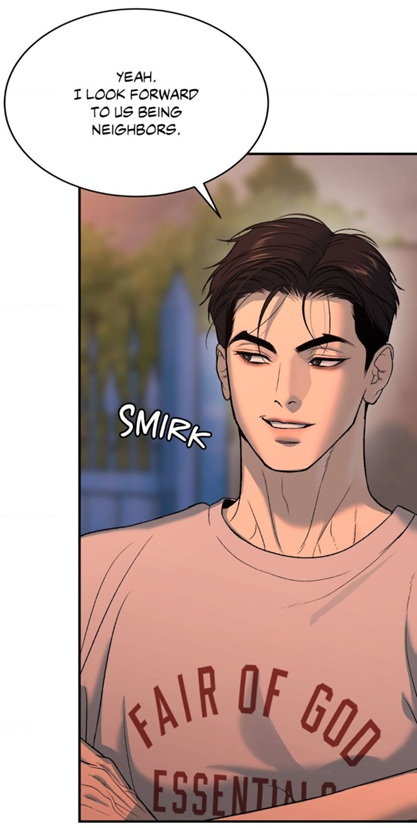 (chapter 61) To Jaekyung, dominance and control are how relationships function, yet due to the doctor’s silent treatment, he is incited to change his approach. But to Kim Dan, these actions trigger memories of past tormentors, reviving the very feelings that once sent him running to the restroom for solace. The same space that shielded him as a child now becomes his only escape from Jaekyung.
  (chapter 61) Since he can not escape the champion, he decides to ignore him.
  (chapter 55) – the mirror is very low -, Kim Dan retreats into memories to rationalize his pain. Instead of processing his suffering, he shifts blame to Jaekyung, using the restroom space to wall himself off emotionally. The restroom in Jinx thus acts as a metaphor for entrapment—whether through self-isolation or forced exposure, neither character is truly free from their past.
  (chapter 38) So he could faint there or hurt himself and he would have no one by his side. Don’t forget that this place stands for seclusion and privacy.
  (chapter 57), it is clear that the kids were not thinking of sex or using the restroom to assault the little boy. However, we should question ourselves how this rumor about Kim Dan being an orphan started.
  (chapter 54) bears a striking resemblance to this boy, leading to the possibility that this new character could be Kim Dan’s childhood bully. Given Jinx’s themes of positive psychology and confronting past demons, it is plausible that Kim Dan will encounter this schoolmate again. Such an interaction could force Kim Dan to address his unresolved trauma and reexamine his perceptions of strength and vulnerability. Moreover, don’t forget that the doctor in green saw the champion in a terrible shape who had admitted that he had drunk the night before.
  (chapter 54) And in episode 61, the main lead announced to Park Namwook that he had to fire the physical therapist.
  (chapter 61) I sense some retaliation here.
  (chapter 08) It is because in his mind, this place is associated with toilets in general. That’s how it dawned on me that the athlete could have been harassed at school, but contrary to the physical therapist, it took place later. The leader was Baek Junmin who hid behind the “mob”.
 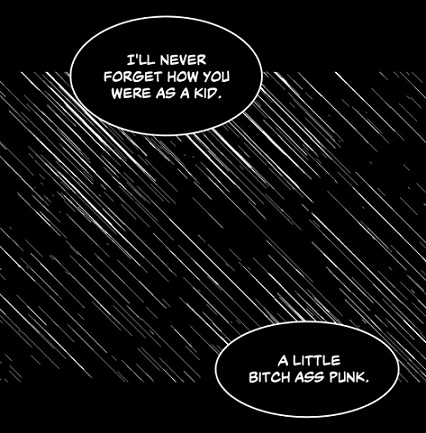 (chapter 49) Because he utilized the expression “how you were as a kid”, it signifies that the MMA fighter was not only older, but also an adult, whereas the champion must have been a teenager. And now, you comprehend why Baek Junmin acted like a friendly athlete in front of the public:
 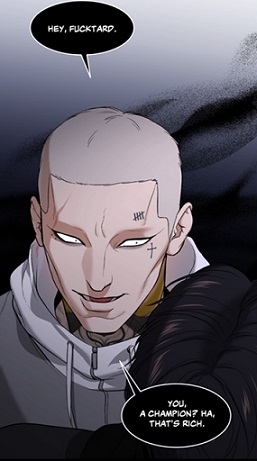 (chapter 49) People could discern his true personality: he was nothing more than a thug. Moreover, he would be perceived as a cheater, because he used others and his seniority to torment a child or teenager. At the same time, since Joo Jaekyung became a victim of bully later, the content about the mobbing should have been different. I am suspecting that he could have been targeted because of his homosexuality.
 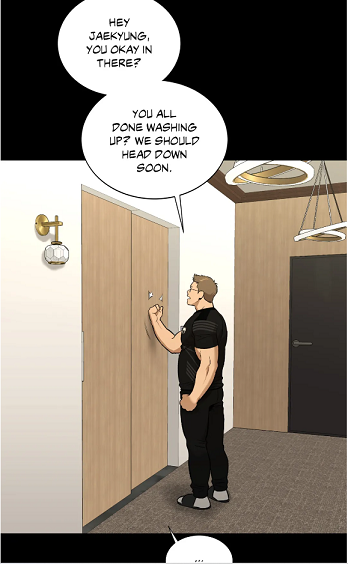 (Chapter 14)
  (chapter 55), he showed no reaction. In fact, his headache got even worse than before.
 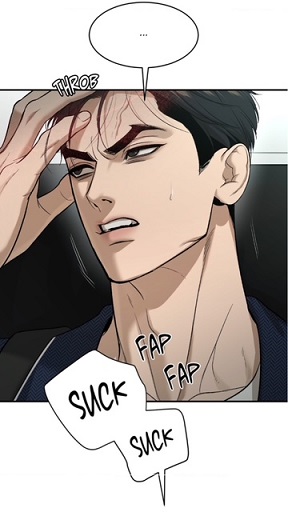 (chapter 55) The champion’s passivity and migraine could be the symptoms of the athlete’s past suffering. His pain worsened in that place because of the past, but he didn’t realize it, for he was so focused on his soulmate. Secondly, the moment he was about to get kissed
  (chapter 61) In my opinion, the departure of Kim Dan forced the champion to be confronted with his repressed past.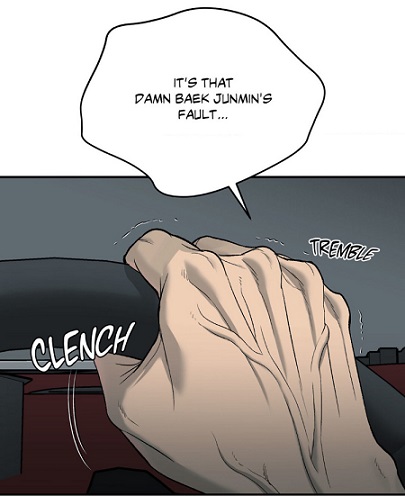
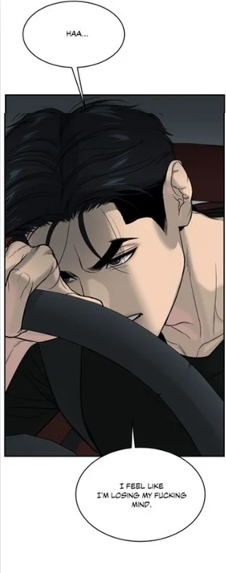 (chapter 54) While he calls his former rival and tormentor’s name and recollects his beating, he is not plagued with a migraine. This means that the real cause for Joo Jaekyung’s suffering (his headache linked to his repressed memories) is triggered by the attitude of his guardian. That’s the reason why he had a nightmare with the ghost of the past.

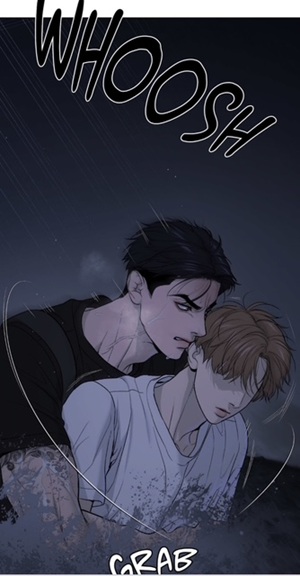 (chapter 59) is a masterful interplay of symbolism, reflection, and narrative breadcrumbs laid out by Mingwa. Central to this exploration is a photograph
  (chapter 59) —an innocent request by the nurses at the hospice
  (chapter 59) —which becomes the pivotal clue leading Joo Jaekyung to Kim Dan. Through a careful analysis of the timeline and the use of contrasting events, it becomes clear that Mingwa’s narrative mirrors a kaleidoscope, reflecting positive and negative elements rooted in Taoist principles. While the doctor’s unconscious
 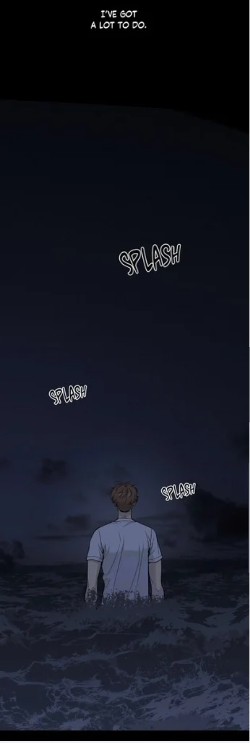 (chapter 59) led him to the shore, driven by despair and suicidal intent, the MMA fighter’s journey stands as its opposite:
 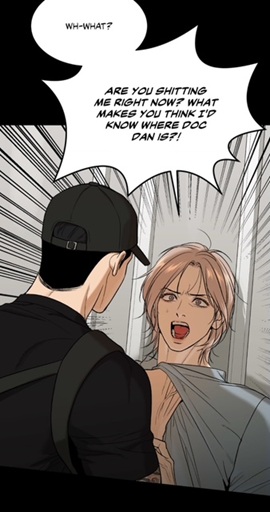 (chapter 59 ) a conscious choice to follow his heart, hence he was full of anger and frustration. Joo Jaekyung was no longer repressing his feelings, even if he had yet to fully recognize his affection.
 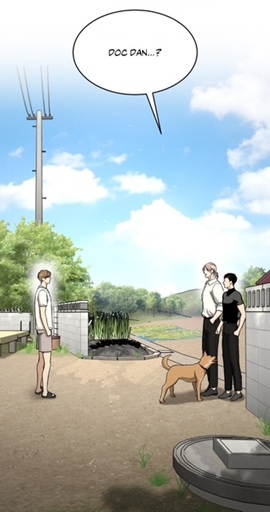 (chapter 59) embodies the negative reflection of Joo Jaekyung’s purposeful arrival. We can detect the divergences: day versus night, work versus break, healthy versus unhealthy etc. Through the juxtaposition of images and situations, Mingwa provides profound insight into the characters’ thoughts, desires, and intentions. The photograph’s role becomes pivotal: while it marks the end of Heesung and Potato’s visit
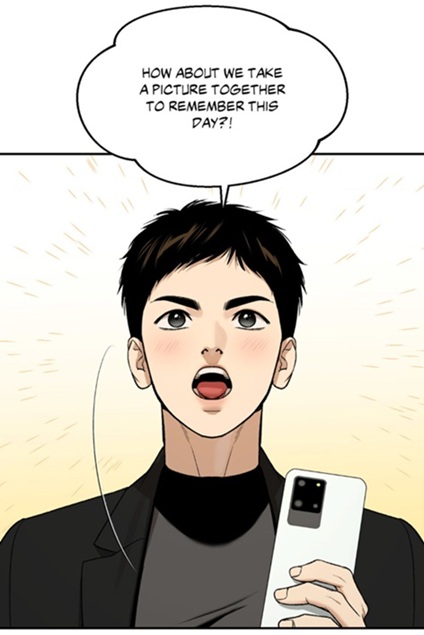 (chapter 59), it simultaneously signifies the first crucial clue in Joo Jaekyung’s search. This marked the turning point where his ongoing efforts were given direction, transforming his pursuit into a decisive journey toward discovery.
 (chapter 59) —each of whom had interacted with Kim Dan
  (chapter 57) during his time at Light of Hope. While these individuals appear as potential candidates for revealing Kim Dan’s location, the true helper remains shrouded in mystery. This ambiguity emphasizes the layered narrative of Jinx, where each small action—no matter how mundane—contributes to the larger theme of fate’s intricate web, offering insight into the power of both intentional and unintentional intervention. If Potato had not suggested the picture
 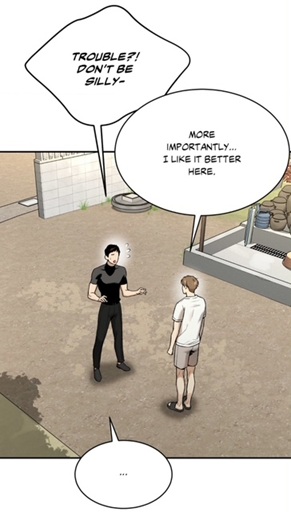 (chapter 58), ignorance and superficiality
  (chapter 58), becomes the shadowed reflection of the proactive search by Joo Jaekyung. This interplay of light and dark is central to unraveling how fate unfolded.
 (chapter 58) and Potato, despite their contrasting motivations
  (chapter 58), came to the same conclusion: they should not reveal Kim Dan’s whereabouts to Joo Jaekyung. Heesung argued that Kim Dan was better off in his secluded life, away from the chaos of Joo Jaekyung. Potato, deeply trusting his lover’s seniority and judgment, chose to follow Heesung’s lead. Their decision reflects not only their loyalty to Kim Dan’s expressed wishes but also their passive adherence to the belief that avoiding intervention was a form of help which reminds us of Potato’s former principle:
  (chapter 35) This shows that despite the last incident, Yoon-Gu didn’t drop this terrible principle. Notice that he is advocating the same philosophy than Shin Okja. Heesung justified his stance by claiming that it was in Kim Dan’s best interests
  (chapter 59) Importantly, Joo Jaekyung did not arrive during this period, further affirming their resolve. The photograph taken just before their departure was the key turning point. However, the timeline—marked by the sunsets
  (chapter 59)
  (chapter 59) —suggests that Joo Jaekyung arrived only two days after Heesung and Potato left. This indicates that neither Potato nor Heesung leaked the information to Joo Jaekyung, as the champion would have sought Kim Dan immediately if informed by them. Instead, this photograph—seemingly public rather than private—became the clue he needed. Moreover, since the two friends knew where Kim Dan lived, I am assuming that he would have gone right to the doctor‘s rented room. But he did not. He went to the beach. Since the nurses didn‘t notice that Kim Dan was a friend of Potato and Heesung and mistook him for a fan, I am assuming that only the two friends know his address.
  (chapter 8)
  (chapter 37) and Kwak Junbeom was a witness of the encounter between Kim Dan and director Choi Gilseok.
  (chapter 30) and their interactions with Heesung and Potato
  (chapter 35), they are unaware of the actor’s relationship with Potato. The author left many clues for this interpretation. They didn’t notice the maknae’s absence at the champion’s birthday
 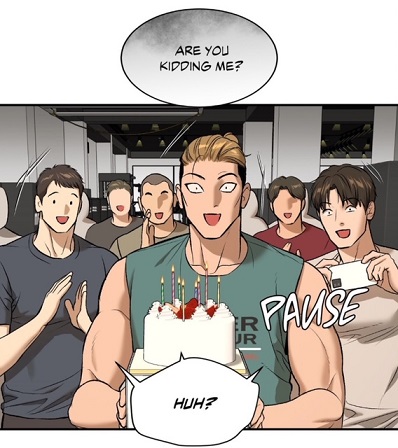 (chapter 43), but more importantly the presence of Yoon-Gu‘s embarrassment in front of his hyung indicates secrecy. .
  (chapter 58) His “redness” indicates that he doesn’t want to expose his special relationship with Heesung. Therefore I believe that he didn’t mention this trip to other members. Consequently, I doubt that the members were looking for Potato in such a photograph. Furthermore, from my perspective, members of Team Black are still left in the dark about Joo Jaekyung’s struggles. They are unaware of his drinking habits
  (chapter 56), or his emotional state. They think, he has not come to the gym due to his recovery. Furthermore, they don’t use his cellphone number to contact him. The hiring of a new physical therapist and
  (chapter 57) the interview suggested that Joo Jaekyung was taking a break to recover from his injury, leaving no indication of his active search for Kim Dan. However, Yoon-Gu got informed through Heesung that Joo Jaekyung was desperately looking for him:
  (chapter 58), but probably saw this as another “negative reaction” (bad temper) of a spoiled child. This makes it unlikely that members of Team Black could have provided the critical information.
 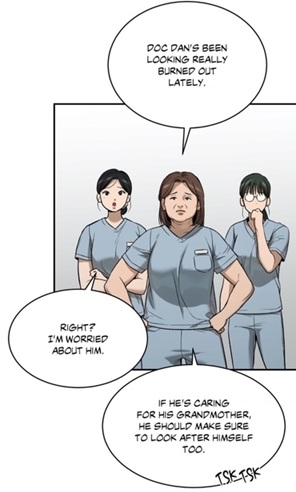 (chapter 57), her positioning reflects Mingwa’s deliberate storytelling, emphasizing her subtle yet crucial role in connecting the threads of fate. She is also unlikely to have directly contacted Joo Jaekyung. As an average nurse living far from Seoul, she would not have access to the champion’s contact information or knowledge of his search for Kim Dan. However, this does not exclude her influence entirely. My idea is that she shared the photograph with someone close to her—a family member or friend—turning what was initially a public image into a private clue. Through this intermediary, the picture may have reached someone who recognized Kim Dan and understood his connection to the MMA fighter. This chain of events underscores the role of chance and intervention in the narrative and suggests that another, yet unknown, individual helped guide Joo Jaekyung to his destination.
 (chapter 50)
  (chapter 49), highlighting the failures of relying solely on fate. The champion’s eventual discovery of Kim Dan underscores the necessity of teamwork and active intervention. Notably, this also reflects the flaws in Team Black, whose inaction and superficiality limited their understanding of both Joo Jaekyung’s struggles and Kim Dan’s situation. While Heesung’s stardom and blog
 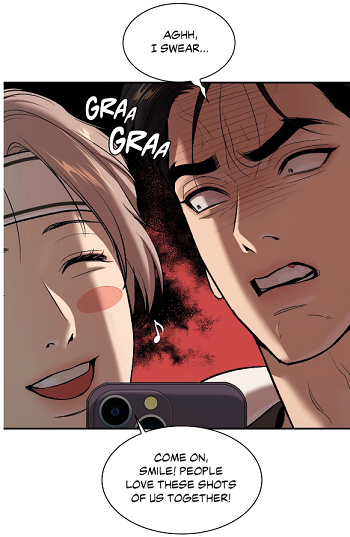 (chapter 30) could have amplified the picture’s reach, it’s unlikely Joo Jaekyung relied on such sources directly. I can not imagine him spying on the actor’s blog. Instead, the role of the helpers — the nurse and her acquaintance— emerge as crucial to piecing together the connection. The inadvertent role of the nurses Mind and Heart, urging Heesung to take the picture, becomes an integral part of the story’s progression.
  (chapter 13) who played pivotal roles in lifting the curse, as Mingwa’s narrative often draws on such reflections. Here, the nurses’ actions, though seemingly minor, echo the same themes of fate and intervention.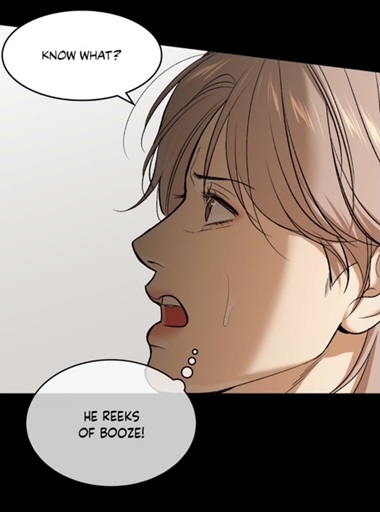
 (chapter 13) but didn’t know his identity. He mistook him for someone who was selling his body for money.
  (chapter 13) In addition, Kim Dan never got to know the intervention of this hyung: he was the invisible helping hand in season 1. And now, if you reread the scene in episode 13, you will notice that this conversation between Joo Jaekyung and his friend contains all the ingredients in episode 59: the use of the phone, fainting, malnutrition, secrecy, neglect, secret suffering, pictures and public knowledge
  (chapter 13), the death of a man and finally urgency. Moreover, remember what his friend told him before: the importance of rest and
 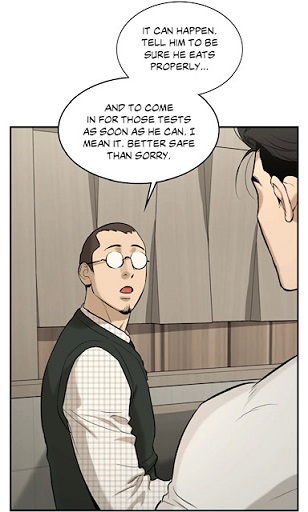 (chapter 13) He should send him to the hospital for tests, but the fighter refused. Why? It is because the latter feared his “chingu”. The doctor seemed rather interested in Kim Dan, therefore he feared that the PT might dump him for a “colleague”. That’s why Heesung was sent later to his gym. Karma was punishing him for not listening to his friend’s advice. Finally, it is important to recall his advice:
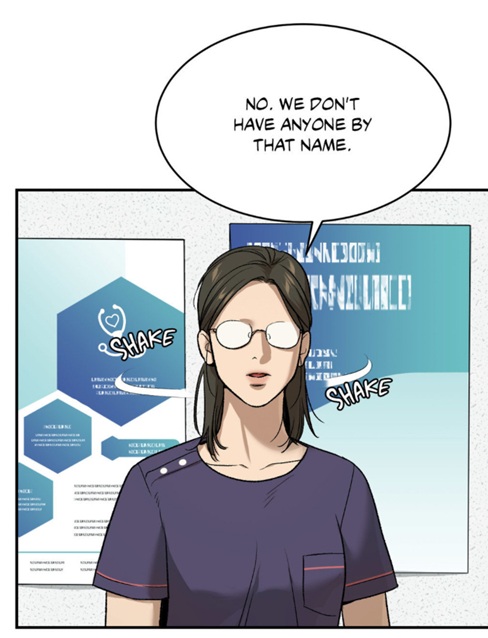 (chapter 56) And there’s no doubt that Joo Jaekyung got recognized by people forcing him to use a mask to hide his identity. So this frenetic search must have reached the mysterious doctor’s ears, but I doubt that he made the connection between the star’s lover and the physical therapist right away. Since he‘s a guest of XY club,
  (Chapter 13), it is also possible that he could have heard about the last incident in the restroom with doc Dan’s replacement. Since Cheolmin found Dan cute, it is very likely that he was also drawn to the surrogate „Dan“. But I don‘t think, this was enough to intervene, as Joo Jaekyung didn‘t ask for his help.
 and to Neptune
  and strangely, the doctor moved to a place next to the coast. So maybe Cheolmin comes from that little town and the green-haired nurse is his relative. I had already outlined their similarities. Finally, look at the numbers, we have 4 in both episodes, 13 and 59 (13: 1+3 = 4 / 59: 5-9= -4) The -4 would coincide with Kim Dan’s vanishing, but also with the intervention of Cheolmin. And if my theory is correct, this means that the champion will come to regret his past decision
 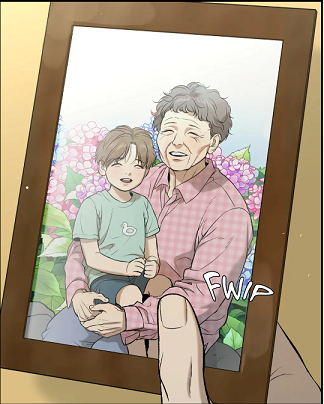 (Chapter 19) and the group photograph at the hospice

 , but as always I didn’t anticipate the effort and energy involved in the composition. Thus I decided to publish the essay “Sound Of Water” first, as it is much easier to write (less literature to read). The trigger for this essay are Haikus which I discovered in a recently published French Book entitled “Le bruit de l’eau” (Sound of water).
  And now, you know the origin for this essay. As you can see, the collection of Haikus is focusing on the topic “Water”. Since I only possess the French version of Haikus, I could only give you my own English translation. Fortunately, my friend @Rin_de_eegana was able to find the original version, Japanese. Therefore in the second version, I am giving a second English translation whích gave me new insight once again. Anyway, the thing is that as soon as I read certain poems, it made me think of Jinx and the characters. This shows my obsession for this terrific Manhwa.
 (chapter 14) Yet, the main lead never got the chance to see it. Then the ocean is only mentioned directly at the end of the first season. The halmeoni was expressing her wish to return to the West Coast
 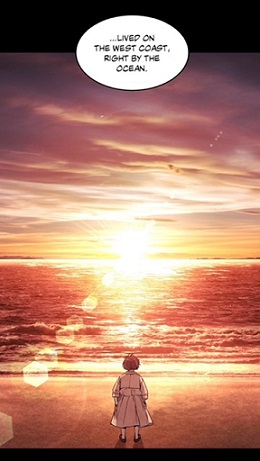 (chapter 53) where she hoped to see a beautiful ocean one more time.
  (chapter 53) When she was 10 years old, she was moved by how the ocean changed colors with the beautiful sunset. It was no longer blue or grey, but yellow, red, pink, orange and purple. This wonderful but brief moment left such a deep impression on her that she could never forget it.
  (chapter 53) She never came to regret her walk to the beach, because this souvenir also became her source of strength. This memory created in her the desire to see it again, thus she kept postcards with views of the ocean.
 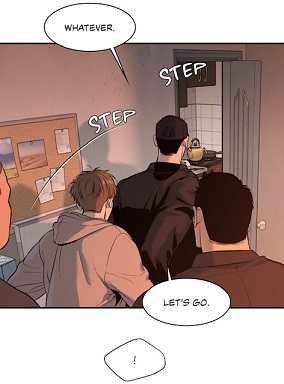 (chapter 17)
 (chapter 53) is glowing blue? I don’t think so. Let’s not forget that blue symbolizes wood for Koreans. The sea (water) and a tree
 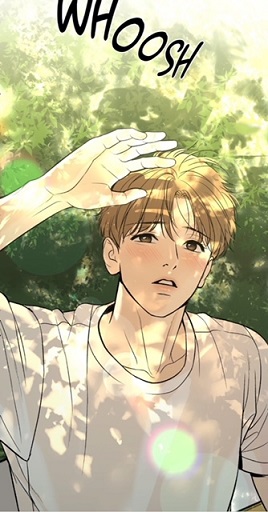 (chapter 41) are the doctor’s true elements. Under this new light, it becomes comprehensible why under the tree, he came to acknowledge his feelings for the athlete. In addition, if Kim Dan gets close to water, this signifies that he will get replenished and truly nourished. And notice that during season 1, he never ate properly.
 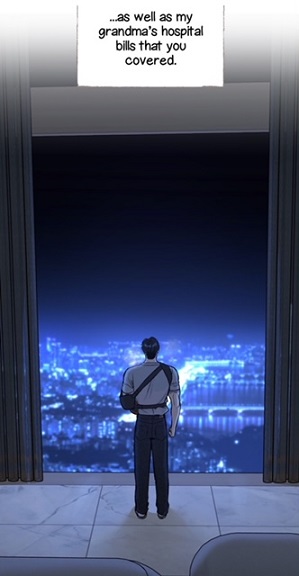 (chapter 53) He is standing in front of the blue city. But he doesn’t feel free and powerful. Why? There is a window in front of him. The window is showing him his own boundaries. His penthouse is like a cage, and he is not truly dominating the city. In reality, he is isolated. To conclude, the panel stands in opposition to the Japanese poem and the grandmother’s vision: alienation, regret and powerlessness. So we should write the haiku like this, from the champion’s perspective:
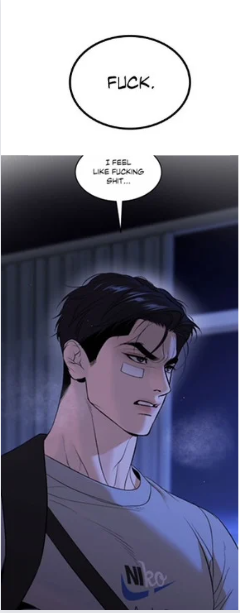 (chapter 53) Together, these opposites suggest a state of inner turmoil or confusion, where a person lacks clarity about both themselves and the world around them, which can inhibit personal growth and well-being. And this is exactly how the main lead feels in the final panel of season 1.
 (chapter 27) Like mentioned above, the beholder in front of the ocean can have a different experience than the young girl.
 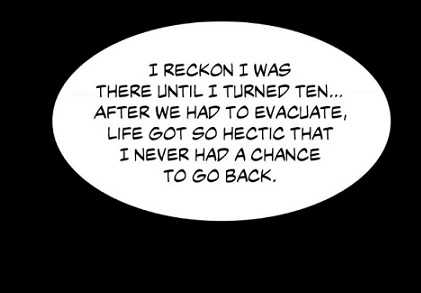 (chapter 53) Thus I deduce that in that moment, she must have felt at peace. This explains why she could never forget this magic moment. However, her confession displays a deep regret as well: she couldn’t go back to the ocean. I would even add that she is portraying herself as a person who had no control over her life. It was either « we » or « life ». Through her words, we can sense her passivity, but also her victim mentality. It was not her fault that she couldn’t go back to the ocean. She never had the opportunity to do so!! She never had missed her chance. She is denying the existence of a missed chance or timing. After reading the description of her past life, I am quite certain that my avid readers can recognize the similarities between the athlete and the halmeoni’s destiny. Until his defeat, Joo Jaekyung had no time either. He was also racing against time. However, there exists one divergence between them: the chance to make the right decision. This means that the champion has now the opportunity to take a break. Furthermore, he also has one chance to get back the doctor, but he shouldn’t miss it.
 (chapter 53) Secondly, I doubt that the beautiful view could make her forget her suffering. Finally, let’s not forget that for one single moment, she will spend many days in a hospice, where she will be surrounded by dying people. Furthermore, the image of the ocean could generate a different feeling: torment like mentioned above. She is expecting to make the same experience, but the opposite could happen. She gets terrified and tormented. Therefore I have the impression that the grandmother might come to regret her past decision. But contrary to the past, she can not blame the others (« we ») or life, as it was her own choice and request! Therefore I deduce that in the past, she let others make decisions for herself, like we could see it with her expensive treatment. She listened to Kim Dan and the oncologist.
  (Chapter 7) And we could see that Joo Jaekyung had a similar attitude in season 1, he would listen to his hyungs and the people working for MFC. Consequently, I come to the following deduction: this time, the fighter will make the decision on his own. He won’t follow Park Namwook’s advice:
 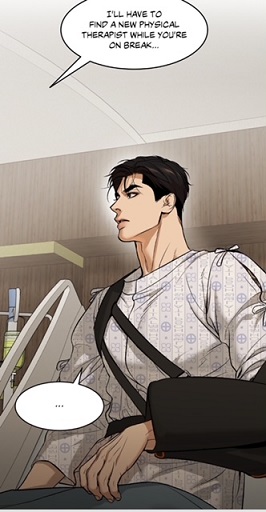 (chapter 53) The latter is asking him to simply wait and to rely on him. Joo Jaekyung will take the matter into his own hands, the exact opposite attitude to the beginning of season 1.
 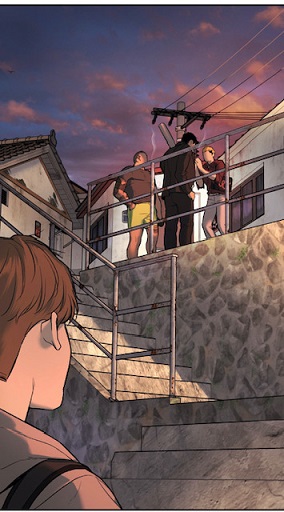 (chapter 1)
  (chapter 47)
  (chapter 47) even when the doctor was confronted with the truth about his terminally ill grandmother. The sun was always shining brightly. Since in the haiku from Ryokan Taigu, the rain is associated with old-age and fall (misty), it dawned on me that the rain should be associated with the grandmother’s death. If this comes true, it was, as though the sky and gods were weeping for her vanishing. Additionally, the first season took place in Spring and Summer, thus I deduce that season 2 will take place around late summer, fall and winter. This means that the weather should change. And this remark led to my second revelation. I started looking for South Korea’s climates, particularly I was curious about the climate on the West Coast.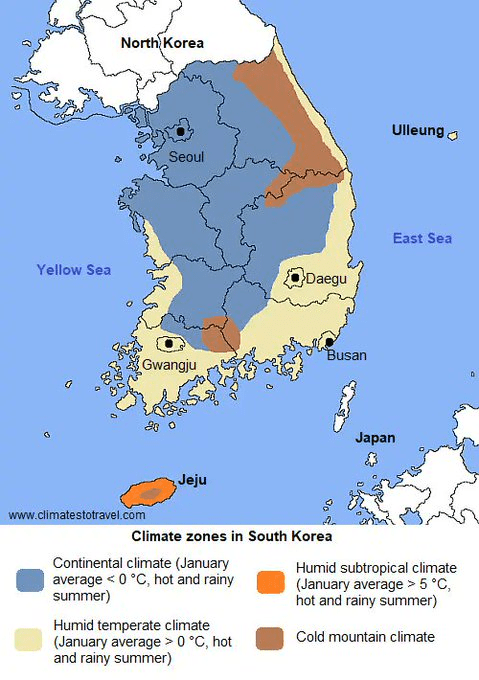

 We have an elderly man walking through the rain in front of the blue sea. The latter is accompanied with a Waka-poem from Yoshihiro (which was not translated). According to my Japanese friend @Rin_de_eegana (飯乞ふと 里にも出でず この頃は 時雨の雨の 間なくし降れば), this phrase describes a situation where one cannot even go out to the village to beg for alms due to the long rain. Here, we have the topic of poverty linked to old-age and rain. Yes, the pages of this book reminded me of Shin Okja, a poor elderly woman who is so sick. And like mentioned above, the rain could be the reason why the woman doesn’t go to the beach. The two poems are underlining one important aspect: the powerlessness of humans in front of nature. No one can stop aging, just like no one can control the weather. At the same time, it outlines the importance for a senior to be surrounded by people, so that they don’t end up dying from dehydration, from a cold or hypothermia.
 (chapter 49) Both main leads went to the restroom in order to hide their emotional turmoil and suffering. They used flowing water (in Joo Jaekyung’s case the shower) in order to cover the sound of their weeping: SHAAA. Yes, the tears are making sound… so the rain should make sound as well. And this brings me to my next remark.
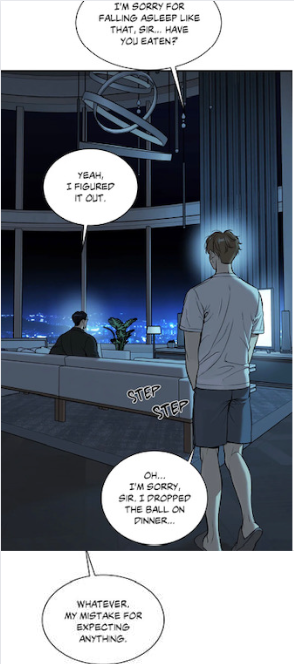 (chapter 29)
  (chapter 35) The blue would be a reference to the ocean. After that couch confession night, the athlete got a certain enlightenment, hence he tried to get closer to Kim Dan the next morning
  . (chapter 30) In episode 35, the night stands for ignorance and self-deception, for the doctor was not present. Joo Jaekyung reverted to his old self. However, don’t forget that the haiku was not just about the moon light, but also about the sound of the waves. All the senses are awakened which represents a better experience than the grandmother’s. Moreover, since I am anticipating the presence of Kim Dan, this means that Kim Dan embodies not only the light in the dark, but also sound of water. This interpretation brings me to the following remark. In season 1, the athlete had already associated his fated partner to “sound”, though in the beginning he viewed it as noise
  (chapter 18) and as a source of stress and worries.
  (chapter 45) This means that the night view of the ocean should make him discover the beauty of the sound of water. He will come to associate the sound of the sea waves with Kim Dan. That’s how he will be able to fall asleep. In other words, I am expecting a new version of this scene:


 (chapter 140)
  (chapter 149) Both were suffering from survivor guilt. To conclude, Joo Jaekyung and Kim Dan represent the bitter medicine for their scars. I mentioned “bitter”, because through their loved one, they are forced to face painful moments. That’s how they can overcome their past and discover happiness. However, while looking for a new title, I rediscovered the first illustration
  , and it suddenly made click in my head. To conclude, I had another revelation concerning episode 50.
 . (chapter 50) At first glance, the champion is blaming Kim Dan for the wound. He betrayed him. However, his words could have a different signification. Don’t forget that a message always has 4 sides according to Schulz von Thun.
  Consequently, while many saw this question as a “factual information” and as such as an accusation, the reality is that it gave us an insight about the sender too. The sportsman was not using the personal pronoun “I” or “me” in his inquiry. As you can see, the absence of the personal pronoun is indicating that Joo Jaekyung was in reality not referring to him and his wounds. He is not prioritizing himself, rather the doctor and his action. So this question could be prompted by curiosity or a desire to understand the person’s recent activities. Thus I deduce that the champion was asking his lover to tell him the truth. He should come clean. He desired a honest explanation. His attitude reminded me of an adult confronting his child.
 (chapter 51) But note that he never accused Kim Dan of assault, but of leaking information. That’s the reason why I don’t think that this inquiry “What have you done” was about seeking accountability. In that case, he wouldn’t have rejected the doctor’s offer. By letting him treat his wound, Kim Dan would have become responsible for the injury.
  (Chapter 50) It becomes comprehensible why the Emperor refused the offer. The rejection was the symbol of his “trust” in Kim Dan unconsciously. Astonishing, right, though people and Kim Dan had the opposite impression. Yet, because of the “tie”, Kim Dan felt responsible for the incident, therefore he apologized.
  (chapter 51) This means, the main lead recognized his responsibility. He should have checked the spray more carefully. The champion could perceive this excuse as a confession of his complicity. Hence he asked his lover if he was the spy.
 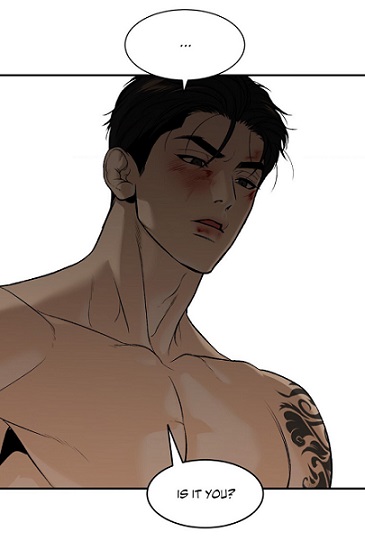 (chapter 51) This signifies that in episode 51, he dared to question his physical therapist’s loyalty. Yes, we have another “Truth or Dare” in episode 51.
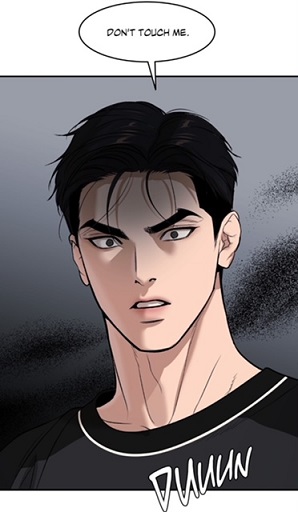 (chapter 50) This is the face of a scarred man. Yet, contrary to the past, he is not expressing his fear through rage. That’s the reason why his emotions were controlled. Under this new light, Manhwaworms grasp why the athlete asked such a question from his soulmate:
  (chapter 51) Interesting is that he was more pained by the idea of a betrayal from Kim Dan than the tie, if you compare these two panels: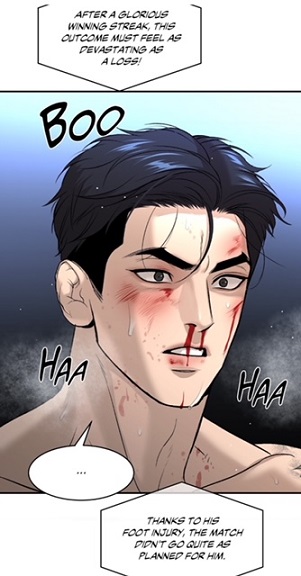
 (chapter 51) Thus Kim Dan could overcome this shocking but terrible discovery: he hadn’t earned the full trust from Joo Jaekyung yet.
  (chapter 51) As my avid readers can see, my perception about chapter 50 was confirmed with episode 51. The arguments in the locker room were reflecting the quarrel in the penthouse with Choi Heesung. What is the common denominator between these two scenes? The lack of trust from Joo Jaekyung, but his private PT failed to realize it in the penthouse. Why? It’s because he chose to trust his destined partner.
 I believe you = I trust you

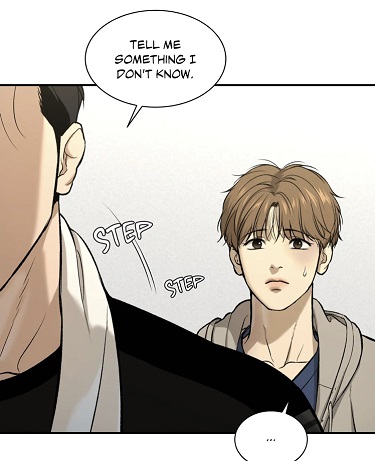 (chapter 15) He told him something that he didn’t know. Note that after the terrible meeting with the actor, Joo Jaekyung couldn’t even find the answer himself:
 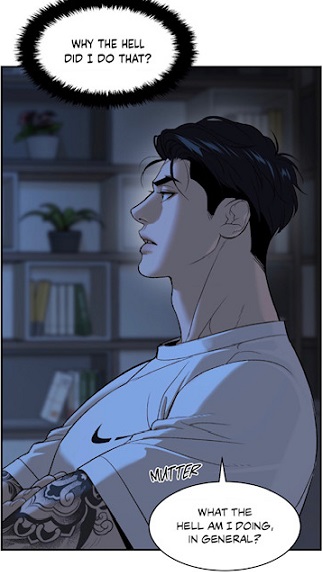 (chapter 35) He was still clueless about the trigger for his behavior. With this inquiry “You don’t trust me”, the hamster pushed his destined partner to face his biggest fear: trust someone and in particular him. This conversation can only incite him to meditate about their relationship. So while in episode 15, he behaved like a pouting child
  (chapter 15), in the latest episode, Jinx-philes can perceive his growth and maturity.
  (chapter 15) This painful incident was a wake-up call Thus I come to the following deduction. Kim Dan will try to earn the champion’s trust, whereas the champion will be forced to take a leap of faith towards Kim Dan. Contrary to episode 34, the champion could see the truth directly through the doctor’s gaze and voice:
  (chapter 34) As a conclusion, while the champion thought that his loved one had dared to cross the line, he was confronted with truth. He was biased and mistrusting his room mate and PT. This shows that though dare was the opposite choice of truth, the fighter ended up to be confronted with verity.
 (chapter 34) These questions were all rhetorical:
  (chapter 34) This signifies that in the sauna, truth was not standing in opposition to daring. The sauna reminded me of the cavern where an imugi hides, until the latter leaves its hidden place and find his star, his yeouiju. Only then, he can turn into a dragon. To conclude, because of Heesung’s pressure, the imugi had to select between daring or lie. In other words, telling the truth became the challenge itself. Heesung knew that Joo Jaekyung would never confess.
  (Chapter 34) What Heesung wanted was actually a lie by omission or commission which would have been presented as the truth. Through this game, the actor thought that he could impose his will onto the celebrity. He anticipated the athlete’s silence. This signifies that he knew about the star’s denial and turned it against him. Besides, that way Heesung could maintain his good image: he had not stolen his partner and as such there was no cheating. No one was betraying him.
 (chapter 34), but also his hand.
 (chapter 34) He caught the actor by surprise, the latter never thought that the celebrity would become violent. The redness on his face was displaying that he was barely controlling his annoyance and impatience.
 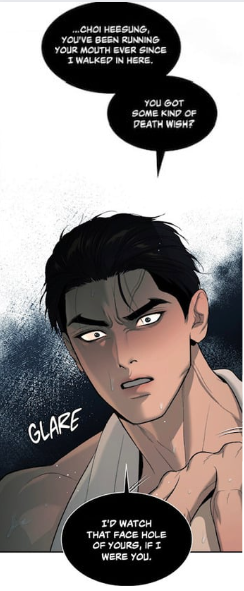 (chapter 34) However, they were in a public place, the hotel’s sauna, and the actor is a celebrity. Hence he is protected by his fame and social status. That’s the reason why the champion didn’t hit his frenemy, he had learned his lesson at the gym.
  (chapter 34) Despite his words, the gumiho still got scared. The racing of his heart is an indication of his fright. Therefore he ran away more or less after ordering his trainer not to meddle in his love life.
 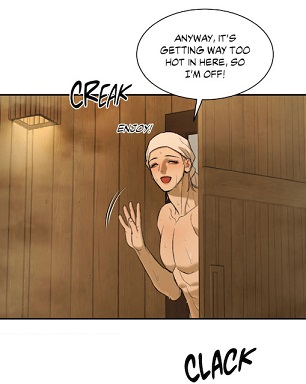 (chapter 34) Yes, after that incident, he chose to give him a fake excuse for his departure. As you can see, this conversation was strongly intertwined with the notion “truth or dare”, but both ended up lying. Whereas the champion didn’t admit any feelings, the other acted, as if there was nothing wrong and he was not scared. The gumiho thought that if he were to remove the champion from the doctor’s side, the latter would be able to open up to the actor.
  (chapter 34) What does it reveal? The actor had been projecting his own thoughts onto the future dragon too. He was the one who didn’t dare to become more honest with the physical therapist. He used work to spend time with Kim Dan. One might say that Heesung failed terribly. Yet, this is just an illusion, because his “failure” pushed him to become more honest with Kim Dan. Thereby he asked to meet the doctor again.
  (chapter 34) Yet, the message is exposing that Heesung was still lying, as he kept using work as an excuse. Hence Joo Jaekyung had to intervene again:
  (chapter 34) The champion dared to challenge his rival.
  (chapter 35) Yes, by challenging the athlete because of Kim Dan, the comedian ended up telling the truth.
  (chapter 34), but his anxiety reached a new peak, the fear that he might be abandoned. Hence he used the sandbag to vent his temper. And what did the cute puppy do during that incident? He dared to offer his help to his idol:
  (chapter 34), yet he was in total denial about the reality: it was dangerous. Deep down, the champion knew that it was impossible for him to control his lover’s time, but also his body. Besides, the other problem is that the athlete is rejecting the notion of love. By denying the existence of his own feelings, he can not claim the doctor’s heart. That’s the reason why the champion got so mad and frustrated.
  (chapter 34) He was not telling the truth, when he stated that Kim Dan was his “possession”. This explicates why he couldn’t stay by the doctor’s side
  (chapter 34) in the end. He manipulated the main lead by letting him think that he had no other choice. Yet the last panel displays his trick. It was up to the doctor to decide how he should spend his free time. Nevertheless, while people were mad at the champion for his deception, many failed to realize that the champion was actually deceiving himself. So all the tricks (episode 33 and 34) were manifestations of avoidance, the fear to face the truth: his affection for Kim Dan and this due to a past betrayal. Hence these chapters stand under the sign of silence hidden by “pranks”.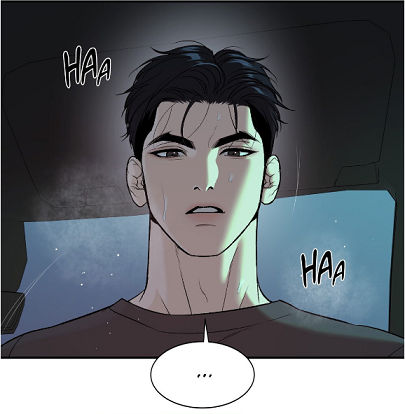
 (chapter 35) On the other hand, the artist could only tell one part of the truth: the presence of feelings. However, the deceptions in the penthouse exposed something else:
 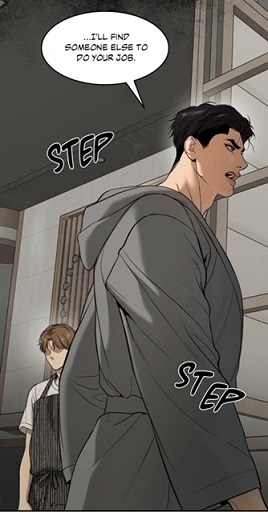 (chapter 45) or left the doctor in the locker room in episode 51.
  (chapter 45) It is because by denying his affection, he needs to justify his presence next to him. He is his PT… forcing his enemies to portray the doctor as a traitor or a bad PT. However, they failed, as the champion is not doubting the doctor’s innocence concerning his wound on the foot. Nevertheless, the incident is not closed, as the culprit has not been brought to justice.
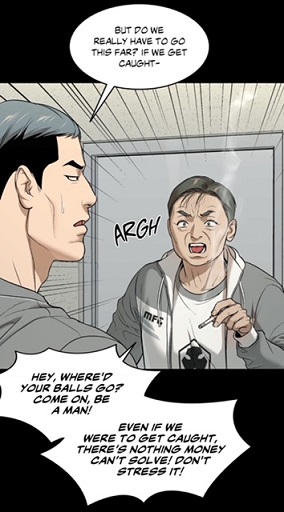 (chapter 50) First, the schemers’ MO corresponds to the game Truth or Dare. Choi Gilseok asked his minion to cross the line. This explicates why they are trying to use tricks and manipulations. Daring means no truth, thus someone will be framed: Kim Dan. Yet, the plotters are not aware that thanks to the cute hamster, the alpha is turned into a mirror of truth. Hence he couldn’t get deceived by the MFC security guys:
 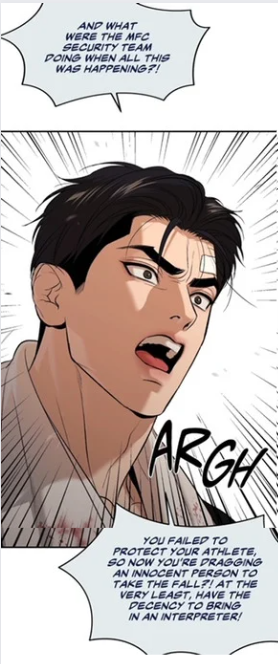 (chapter 40)
  (chapter 36) The lawyer, the journalist and the manager pushed him to choose “dare” and not truth! That’s why there was no interview and the leak was not investigated. He had to prove his strength.
  (chapter 36) And exactly like at the sauna, daring became a synonym for verity. No wonder why the fighter is never rejecting the challenge. It corresponds to his past attitude: he has been burying the truth and as such the past. But let’s return our attention to the plotters.
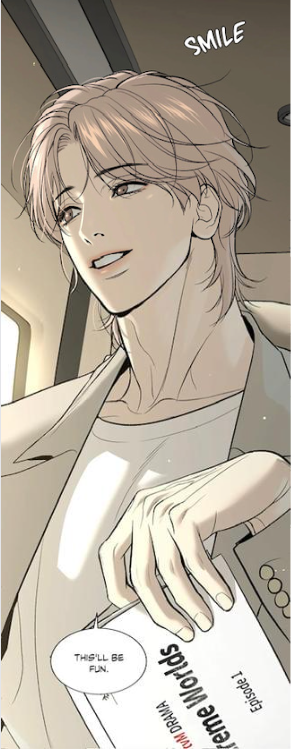 (chapter 29), the journalist without a face
  (chapter 35), the “fake” MFC agent
 (chapter 42), Baek Junmin whom the champion couldn’t truly identify
 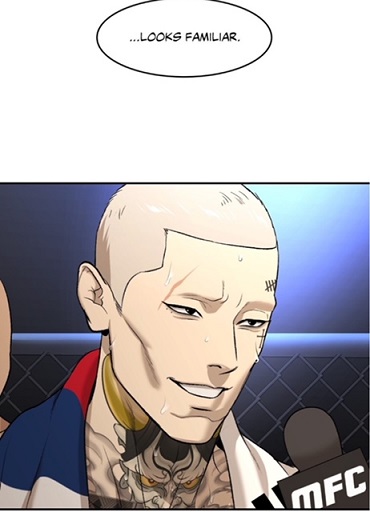 (chapter 47), then he recognized the director without naming him,
 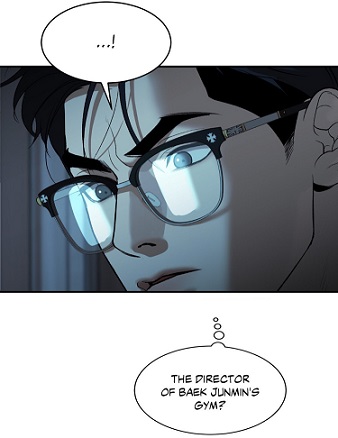 (chapter 48) and finally the ghost from the past
  (chapter 50) This scene exposed that the champion repressed a certain incident which is rather common among victims of a trauma, especially people suffering from PTSD. This shows that some traumatic event took place for quite some time, but the champion acted, as if nothing had happened.
  (Doctor Frost, chapter 140 ) That’s how the champion became a zombie, he couldn’t live properly due to his untreated scars.
  (doctor Frost, chapter 139) But thanks to his fated partner, the traumatic past is slowly coming to the surface.
 (chapter 48) Yes, he didn’t dare to tell him what had happened. No truth… no daring which reflects the games in the sauna and the living room of the penthouse. Kim Dan could have come clean the next morning, but no. This panel explains his silence. He also mistrusted his VIP patient. He had a negative perception of his lover’s mental state. On the other hand, the champion’s attitude reminded me of a parent who has not the time to listen to his child’s problem due to work.
 (chapter 48) Should the athlete remember this night, he will realize that he was the one dismissing his physical therapist, although the doctor could have come clean later. At the same time, Joo Jaekyung’s attitude could be mirroring the parent or guardian’s in the past. They didn’t have the time or the inclination to listen to their son, hence the traumatic incident got buried.
  (chapter 27), hence truth comes to the surface! Kim Dan and Joo Jaekyung feel attracted to each other and have come to love each other. When they speak their mind, they feel comfortable around each other. Truth is strongly connected to communication. Hence the painful conversation in the locker room was necessary. “You don’t trust me?” also reflected the doctor’s attitude. He never tried to approach his room mate
  (chapter 47) and voice his true thoughts and emotions:
  (chapter 49) The latter didn’t even greet the director or acted, as if they didn’t know each other. He exposed the existence of a secret, an uncomfortable secret. Consequently, I believe that the champion could only jump to the conclusion that Kim Dan had been indeed acting behind his back, even coerced to do something.
  (chapter 51) Note that the star never came clean with the truth either.
 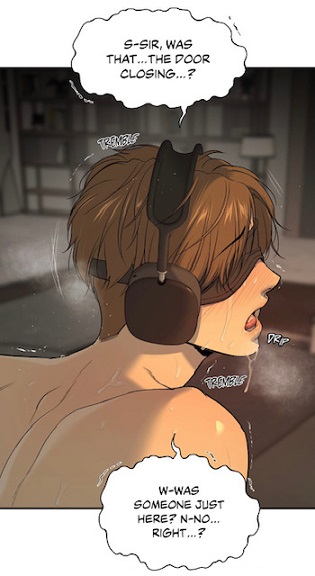 (Chapter 35) Through the doctor, the champion is encouraged to become honest to himself.
 (chapter 33) Simultaneously, it exposes that the champion has a secret, which is strongly intertwined with betrayal, love, money and deceptions. I couldn’t help myself thinking of “blackmail”. Kim Dan had been coerced to do something, as the director was holding something against him. Hence we have the question: “what have you done?”. Remember how the actor chose to approach the angel.
 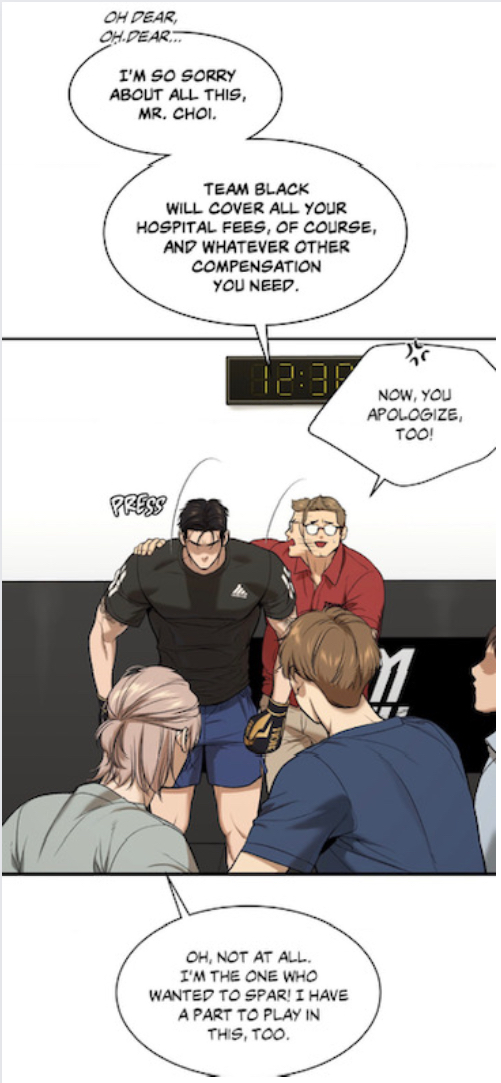 (chapter 31) He tricked his boss by faking an injury. He put the gym under pressure, as this incident could be leaked to the outside. The whole situation reminded me of blackmail. If he did not follow his request, there could be a scandal. That’s the reason why I believe that the champion’s past is linked to blackmail as well. How is it possible? It is because of the game “truth or dare”! The latter is strongly intertwined with divulging information and crossing the line!! To sum up, this game embodies trauma, secret, leaking information, trust and overstepping a boundary or rule. This observation brings me to my next point.
 (chapter 9) And what did happen after they left the restaurant? The champion discovered the truth:
  (chapter 10)
 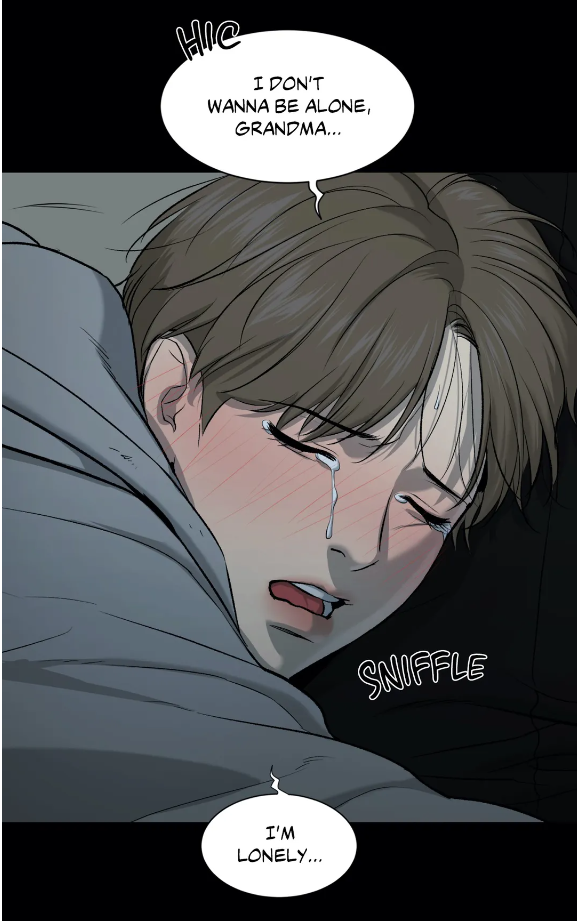 (chapter 10) Kim Dan was terribly poor, but he was also on his own, missing his grandmother.
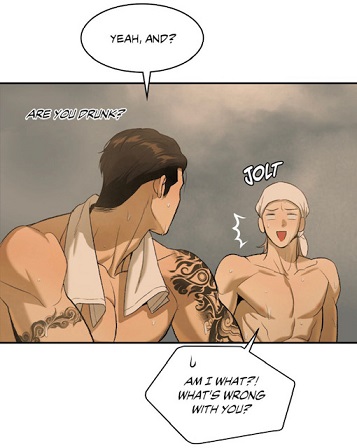 (chapter 34) “Are you drunk?” With this question, the protagonist revealed something about himself. He associates dating and love confession with drunkenness. He implies the existence of a lie. But a confession is strongly associated with verity and sincerity. On the other hand, for the sportsman, no one in his right mind would admit to be in love and in our case to love another man. For me, one part of the problem is that the champion is afraid of admitting his homosexuality. The latter is still a stigma in South Korean society. But there’s more to the game Truth or Dare. If you paid attention to the origin of the last quote, you will realize that this fun is linked to bullying and even hazing.
 (chapter 37) Finally, note that the schemers are working in teams exactly like the bullying students. Therefore I judge Park Namwook’s attitude as the teacher’s who is closing the eye to the truth. He is rather passive and puts the whole responsibility on his “boy”.
  (chapter 41) It is the champion’s choice to refuse or not the matches. The moment I associated the game with parties, peer groups and bullying, I had many revelations.
 (chapter 37) Interesting is the athlete described this night as a party which made me think of a students’ party. Therefore I couldn’t help myself wondering if the champion didn’t go to college, but due to an incident, he was forced to drop out. And the latter could be related to a party organized by students. The latter chose to cover up the incident by remaining silent. I would like to outline that the doctor got fired, though he was actually sexually harassed by his superior. The nurse never testified in his favor, she chose to close an eye to the crime.
  (chapter 1) The main lead never considered her behavior as betrayal and abandonment. In fact, he never considered the crime as a betrayal from an institution.
 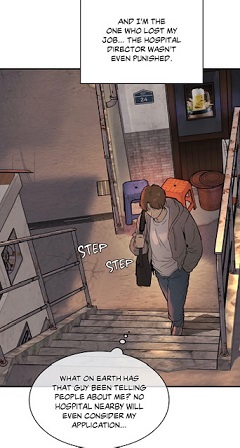 (chapter 1) He put the whole blame on the hospital director himself. He is a liar. Furthermore, through these pictures
  (chapter 47)
 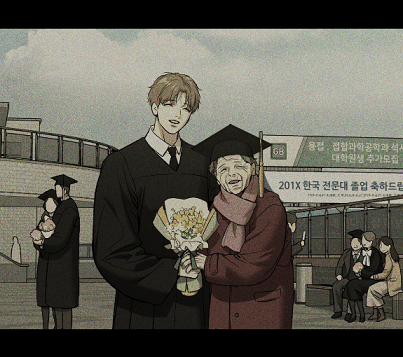 (chapter 47), Manhwalovers can see that Kim Dan was a loner. Therefore I doubt that he had friends during his college years. The only person he knew from his school was his mentor:
  (chapter 1) It is important, because it implies that Kim Dan avoided to socialize and participate in gatherings. Interesting is that in season 2, Jinx-philes discover that Kim Dan had been bullied in the past.


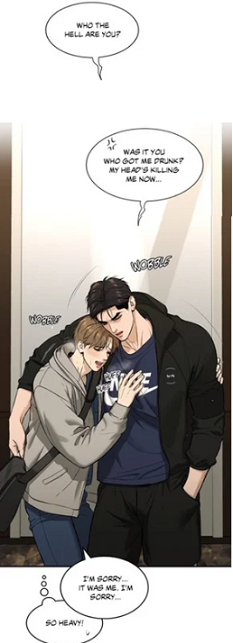
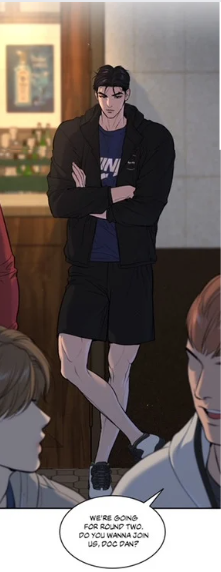 (chapter 43) Moreover, they never wondered about his physical condition. Was he drunk or not? Funny is that the intoxicated character was the one who forced Kim Dan to go home.
  (chapter 43) That’s what a friend is supposed to do.
 (chapter 35) So the auntie could keep an eye on the judo fighter, and it was only a matter of time, until his friend would return. Nevertheless, this scene is implying a certain problem: a drunken person shouldn’t be left unguarded. Thus imagine that during a party, an unconscious person is brought to a room and left there unguarded, as the friend desires to keep partying, similar to this scene:
  (chapter 37) The person could get sexually assaulted, and no one would notice it. Secondly, I would like to outline that the hazing party from the article reminded me a lot to bullying. These freshmen were humiliated, and the perpetrator excused her behavior behind traditions and social norms. So the champion could have been betrayed by a friend, as the latter would have justified his action similarly. So instead of admitting his mistake, he could have justified the incident like this: the victim was responsible for his misery, because he was at the wrong place at the wrong time. It was just his misfortune or better said his jinx. Yes, for me, the jinx is indicating that people responsible for the champion’s traumas were denying their wrongdoings.
 (chapter 3) Neither Kim Dan nor the protagonist were seen both naked in the shower room.
  (chapter 8)
  (chapter 20)
  (chapter 34) He feels uncomfortable naked around people… As soon as you connect this place to a wound, my avid readers can finally better interpret the champion’s irritation in episode 36:
  (chapter 36) Kim Dan’s entrance could be perceived as a violation, for the champion was naked. This intrusion caught him off-guard. But since his gaze was covered, his anxiety masked behind his anger was diminished. On the other hand, this led him to leave the bathtub undressed and have sex in the kitchen.
  (chapter 36) For me, everything is pointing out that one of the champion’s fears is intimacy with water. He has long internalized this association. Don’t forget that the sexual encounter in the swimming pool started with clothes, before they got completely removed.
 (chapter 27) Under this new perspective, I don’t think that it is a coincidence that the champion felt the need to take a shower after meeting Baek Junmin and recalling the past.
  (chapter 49) This helped him to overcome his trauma and past wound.
  (chapter 49) Yet, keep in mind that the athlete’s wounded soul is not the result of one traumatic incident, but of many anguishes.
 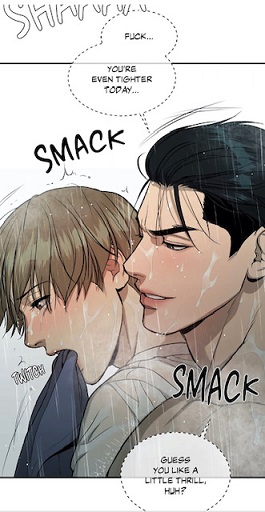 (chapter 8) they dared to have sex next to Oh Daehyun and the other fighter. However, note that in all these scenes, neither the doctor nor the champion were honest. They were both lying… not only to their counter-part, but also to themselves.
 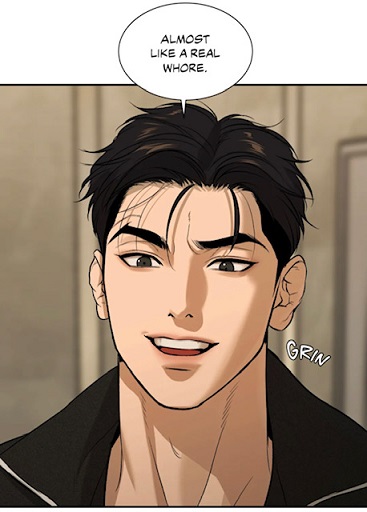 (chapter 19) That’s the reason why the argument in the locker room
  (chapter 51) doesn’t represent the final moment where both main leads opened up their heart and mind to each other. They were not truly honest to themselves and to each other. There was no water… and according to me, the spray was a pepper spray, so the champion’s ankle should have been cleaned and not simply covered. For me, both characters need to prove their trust and loyalty to each other. But they are moving in the right direction, for Joo Jaekyung divulged a huge information to Kim Dan.
  (chapter 7)
  (chapter 70) His sexual orientation was exposed in high school, his friends were behind the rumor
  (chapter 70), although we have to envision that his crush played a huge part in it. Why? It is because he didn’t want to be associated with homosexuality.
  (chapter 70) Not only he cut off ties with him, but also he made sure to isolate the main lead from other students. The worst is that this person acted, as if this ostracizing had never occurred.
  (chapter 69), as if he had done nothing wrong. For me, it shows that the traitor never grasped the significance of his actions. Hence Park Sung-Woong could forget Dong-Gyun, while the latter could never forget him at all. The result from this huge betrayal was that the cute uke decided to keep his distance from people.
  (chapter 70) He could no longer trust people, he avoided meetings. In order to outline how severe betrayal trauma can be, the Webtoonist showed us the immediate effects of betrayal trauma: physical and emotional reactions
  (chapter 70)
  (chapter 70) and the long term effects:
 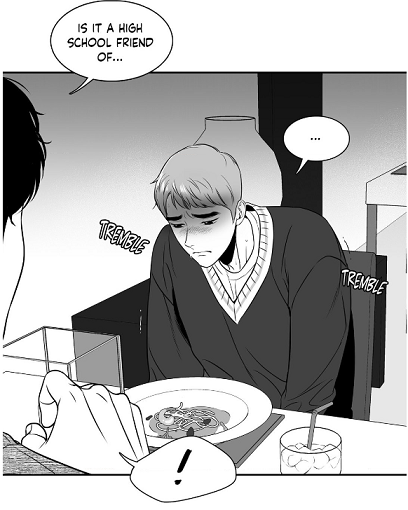 (chapter 69) he is trembling so much, he can not look at his former friend. Readers shouldn’t underestimate the issue. Betrayal trauma is so severe that it is comparable to being hit by a white truck. The pain is so great that it affects the brain functioning and as such personality.
 (chapter 9), trust issues
  (chapter 05) Then when he stayed at home,
 (chapter 32), it was clear that the doctor’s actions were constantly on his mind. He was so bothered that he had to bring him to Heesung. He made sure that Kim Dan would forget Choi Heesung in the car.
  (chapter 33) Interesting is that this trauma resembles a lot to PTSD.
 (chapter 49), the latter was not loved, as he didn’t reach the first place like his older brother. Then we have Interpersonal with Nam Dong-Gyun and his high school friend. However, since the rumor circulated at school, and no adults intervened, we could see it as a reference to Institutional betrayal. Finally, Mingwa presented the last type (partner) with Hweemin.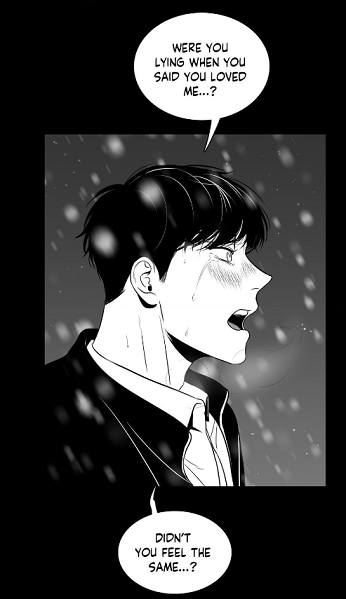
 (chapter 51) But why is betrayal trauma so severe? It is because everything appears as a lie, as an illusion. All the memories become tainted. The victim can only question his own senses and judgment. How could he not detect the lies? Since PTSD and betrayal trauma share some common points, it is not surprising that such persons come to blame themselves and develop huge self-loathing.
 (doctor Frost, chapter 139). And now, it is time to expose my latest observation:
 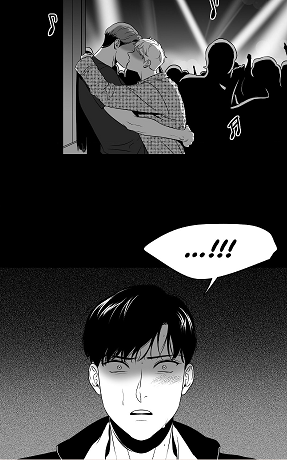 (BJ Alex, chapter 51) Ahn Jiwon caught his first lover cheating on him at a club. Interesting is that the new lover resembles a lot to Joo Jaekyung! Mingwa said that characters from BJ Alex will only appear, but Jinx is not connected to her previous work. Note that they were kissing in a public place. Moreover, the club is a location where students not only meet, but also drink alcohol together. However, once Jiwon saw Hweemin, he dragged him outside so that they could talk. In other words, the “new lover” was left behind. Thus I come to the following conclusion. Joo Jaekyung has been suffering from betrayal trauma exactly like Ahn Jiwon. He was betrayed by his guardian
 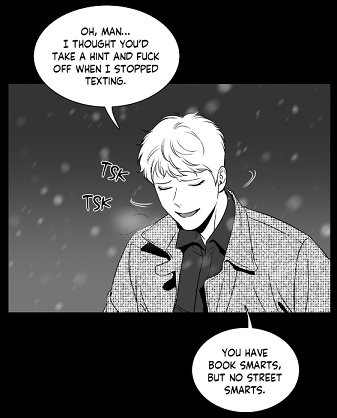 (BJ Alex, chapter 51). If this theory is true, then Mingwa would finally outline the devastating effects of Betrayal trauma on people, something she barely touched in her previous work.
 (chapter 51)

 (chapter 23) On the other hand, the physical therapist has always been associated with a hamster, like in this image.
  So how did I come to connect the main lead to a puppy dog?
  (chapter 47) It is because Shin Okja called her grandson “her puppy dog”.
 (chapter 5), but a young dog. This signifies that in the bathroom, the main lead’s true nature came to the surface due to the bad news concerning his grandmother.
 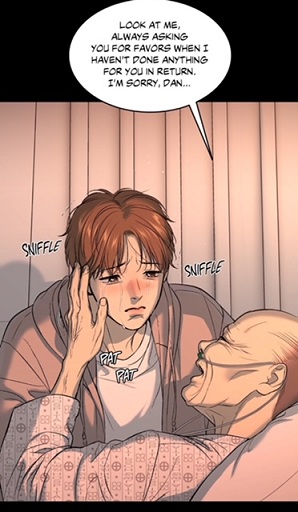 (Chapter 53) In that moment, she became the person indebted towards him. I would even add, she was inciting her grandson to follow his instincts, though I doubt that she recognized the consequences of her words. Kim Dan should no longer follow traditions, like do everything for her sake. So the patting on the head is an allusion to Nietzsche’s transcendence of conventional morality. [For more read
 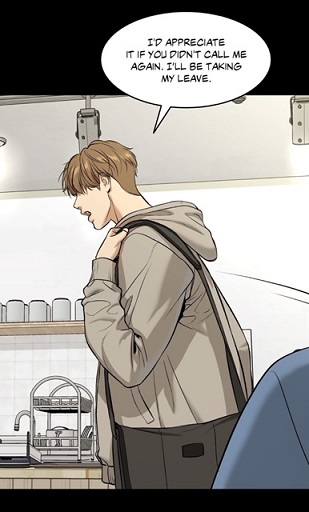 (chapter 48) Furthermore, Jinx-philes could observe how the doctor had followed his instincts during the conversation with Choi Gilseok in different panels, like for example in this image.
 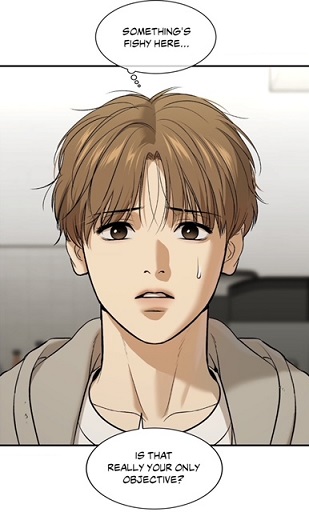 (chapter 48) The idiom “fishy” is a reference to smell, indicating that he was relying on his own senses. But we have another evidence that the puppy dog was using all his senses to judge his counterpart:
  (chapter 48) He rejected the touch from Choi Gilseok. That’s how he could detect the director’s hypocrisy. He refused to drink the coffee from the senior, although it had been recommended. As you can imagine, all his 5 senses were on alert, and the latter are strongly intertwined with instincts. In addition, when he asked his counterpart to go to the point and speak frankly
 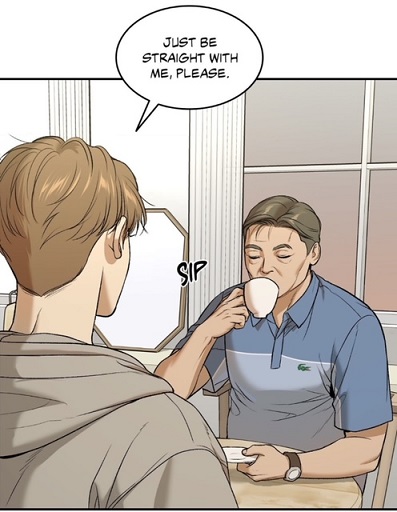 (chapter 48), he was urging Choi Gilseok to drop all manners. Yet, Manhwalovers should keep in mind that the synonyms for manners are etiquette and ceremony. This proves that manners stand for civilization. But what are good manners?
 (chapter 48) He refused to take the card from the director. However, the moment his grandmother was brought up, he became obedient and accepted the invitation.
  (chapter 48) He acted out of loyalty and love for her. Nevertheless, the director’s offer for his halmoni served him to see the truth. His behavior during the conversation exposes the awakening of his wild and rebellious side. Thus we could say, Doc Dan showed more and more his rudeness. He left without asking permission and saying goodbye.
 (Chapter 48) To conclude, the conversation displayed that Kim Dan was already following his halmoni’s advice, he was living as a dog. This made me smirk, because I could detect how Joo Jaekyung had rubbed off on Kim Dan!! 😂
  These two characters symbolize true friendship. Thus I come to the following deduction: Kim Dan is about to get truly adopted by Team Black, while it looked the opposite at the end of the season. He might have been wearing a uniform and a jacket Team Black, yet there were signs that he wasn’t truly part of the team.
 (Chapter 43) He wasn’t simply left out here, when it was dinner. They never questioned the origins of his tiredness, indicating a certain neglect and disinterest. Their concern was rather superficial. He was not included as well, when Oh Daehyun and the other members prepared a surprise party. Hence he was caught by surprise.
  (chapter 43) The cause for this issue is that Kim Dan was hired as the private Physical Therapist for the champion. He occupies a special position, for he is no fighter. Yet, he did everything to integrate his new family by treating the other members, though it was never his responsibility officially.
 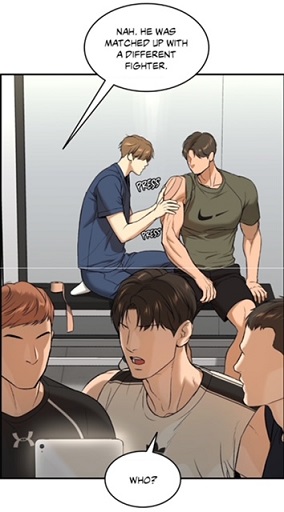 (chapter 47) But for the adoption to happen, he needs to prove his loyalty. How will he do it? Once again… wait for the part with the predictions. Yes, I am taunting my attentive readers.
 (chapter 47) They could never break into the MFC! Yes, chapter 47 actually exposed the falsehood of this belief: Potato hadn’t been bringing luck to Team Black. But why? The first reason is simple. It is because of his good vibes.
  (chapter 47) She was underlining their innocence and naivety. Thus they are still ignorant of the existence of schemes in the MFC world. They have the impression that the underground fighting ring and MFC are two different worlds.
  (Chapter 47) That’s the reason why they were not expecting that their idol would get so hurt or lose the fight. Kim Dan didn’t dare to contradict them, especially when Potato asked for his opinion.
 (chapter 47) In my eyes, Doc Dan didn’t dare to ruin the maknae’s illusion about his idol, though he thought otherwise. His broken sentences and his drop of sweat are revealing his discomfort and skepticism. He was not sure about the success of his VIP client. But Kim Dan as his PT knew about the champion’s true conditions: he is not truly healthy. But why are the fighters so innocent?
 (chapter 23) While it looks like he has high expectations from his members, the reality is different. He offered them chicken
  (chapter 36) To sum up, he was buying their loyalty. Under this new light, it becomes comprehensible why the coach of Team Black treated Seonho so gently
 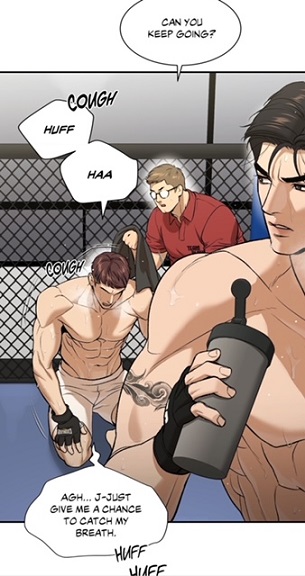 (chapter 46) and why he was worried about the desertion and betrayal from members.
  (chapter 46) It is because the success of the gym relies only on the champion’s glory and the number of members. Till the end of season 1, he has not changed his behavior yet.
  (chapter 31) It looks like I am diverting from the topic, as I am now talking about the fighters and the gym. No wonder why most of the members switched the gym, as soon as the champion lost and his reputation got tarnished. Nonetheless, keep in mind that his game with Baek Junmin ended up with a TIE. So it is not a complete defeat. In my opinion, the schemers desired to tame the Emperor, not to ruin him, as they definitely need him to make money.
  (chapter 23) Kim Dan and Yoon-Gu had no task at all. The latter were treated like playmates and nothing more. Hence the manager asked patience from the doctor.
 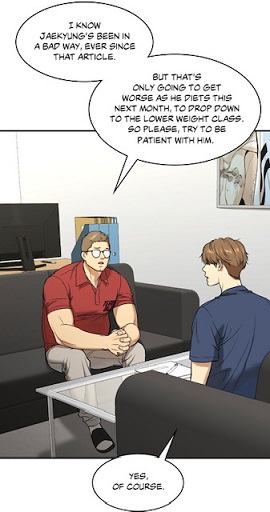 (chapter 36) He should keep the star company, as no one was willing to be exposed to his sour mood and roughness. To conclude, both puppies were treated the same way: like puppies and not dogs or better said as fighters.
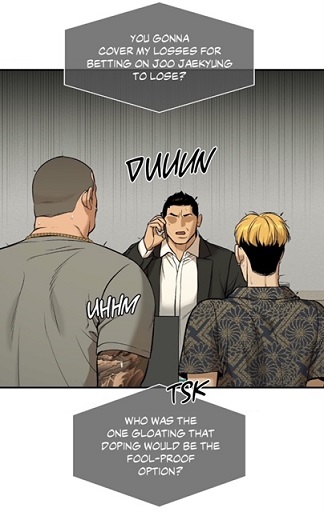 (chapter 46), but also by his greed. He had lost so much money. He needed to refill his pockets. Thus his wish was to “kill” the emperor and as such to ruin Team Black. In other words, he had planned the destruction of the rival gym. With the victory, Baek Junmin could replace the champion, and Choi’s gym King Of MMA would attract members. And my prediction came true. With the tie, many members from Team Black went to King Of MMA hoping that they would come to get rich and famous very quickly.
  (chapter 52) And since the other fighters from Team Black had never been able to break through MFC, it is not entirely surprising why they made such a decision. With their desertion and the champion’s ruined image, the future of the gym Team Black seems to be sealed: failure. Under this new light, my avid readers can grasp the true signification of this gesture:
  (chapter 49) It was not just about Kim Dan’s fate, but also Team Black’s. Hence he can not quit or run away. This new interpretation made me perceive the entrance of Kim Dan in the arena in a new light.
  (chapter 50) Remember how I said that the locker room had become a temple. Thus I come to the conclusion that he got baptized there. He discovered the power of his hands, similar to this scene.
 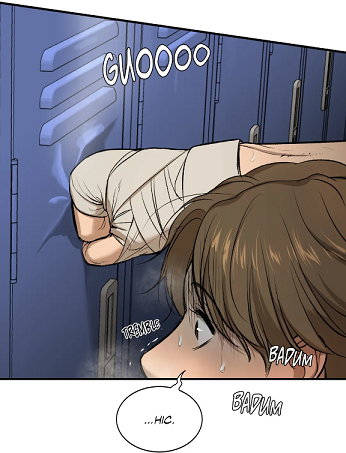 (Chapter 14) So when he comes to the arena, he is still following his instincts, unaware of his own metamorphosis. He is no longer a puppy, but a dog. Deep down, he feels that he has to be there despite his agony. He needs to be there in order to protect his home. To conclude, in the locker room, the doctor reached adulthood. Interesting is the chosen perspective from Mingwa. It was, as though he was flying high in the sky, like a yeouiju.
 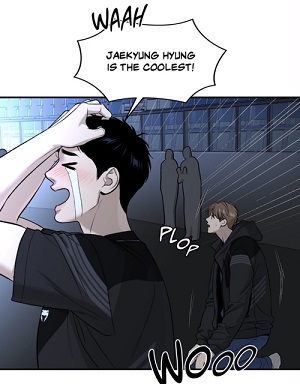 (chapter 40) In this image, he has to look up, whereas in the other panel, the beholder has the impression that doc Dan is rather standing on the same level than his soulmate, the alpha Jaekyung. However, since the athlete blamed him for the incident and rejected his hand, for Kim Dan, it sounded that he was no longer needed.
  (chapter 53) This exposes that the physical therapist learned through this terrible incident the huge significance of a PT. The latter is the sportsman’s protector. He is the one making sure that the athletes don’t ruin their career.
 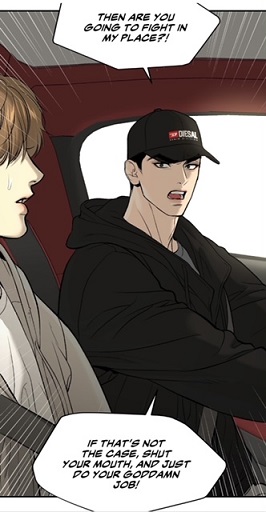 (chapter 42) Here, it becomes obvious that he didn’t see his PT as a partner, but as an underling.
 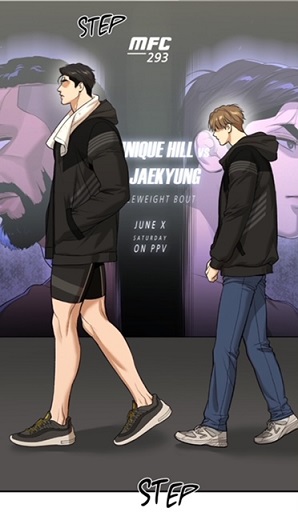 (chapter 40) And that’s how the champion will come to realize that he can not live like before, as Kim Dan can not keep up to him. He is physically weaker. He desires his loved one to always look at him, to never leave his side, to stop living like a stray dog.
  (chapter 4)
 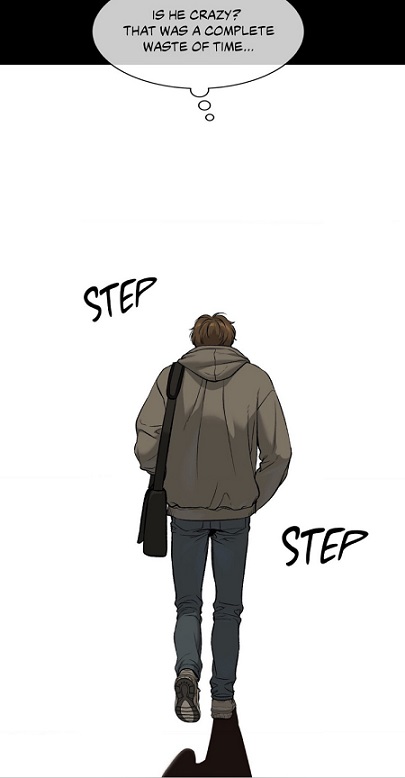 (chapter 48) Yes, these images represent a metaphor of a wandering dog. On the other hand, the shadow below the doctor is indicating that he is slowly turning into a human being out of flesh and blood. He is no longer living like a spirit.
 (chapter 29) while all the others called Yoon-Gu as Potato.
  (chapter 9) The image divulges us the origin of this nickname: coach Jeong Yosep. Yet, this shows us the naivety from the hyung. And what did the other fighters do? They simply followed the suggestion from their elder:
 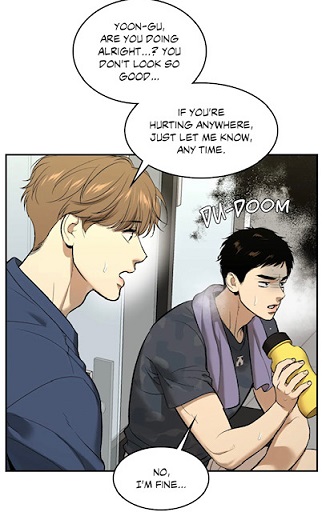 (Chapter 23) This shows that he was not infantilizing him despite judging him as a child or “puppy”.
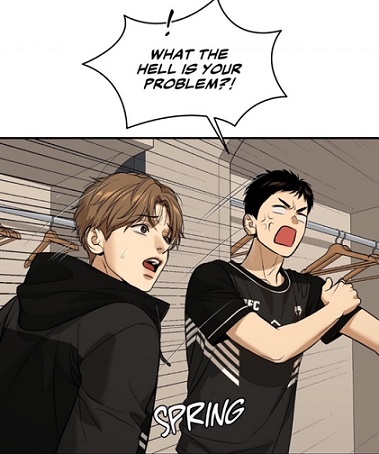 (Chapter 49) Not only he yelled, but also he protected his star by standing in the front line.
 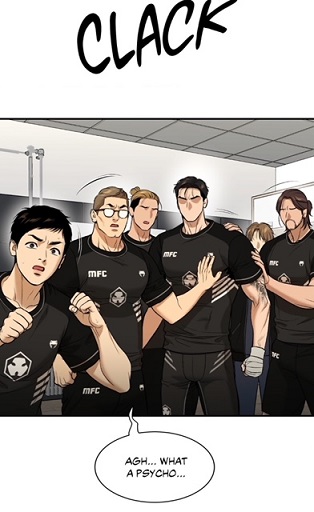 (Chapter 49) I detected a huge contrast. He is the only one with clenched fists, ready to punch the other fighters or even Choi Gilseok, whereas the other members were trying to restrain their athlete, though the perpetrator was in reality the other director. As you can see, exactly like his hyung doc Dan and Joo Jaekyung, Potato is also disregarding good manners, when it is necessary. I could include another example for his impoliteness:
 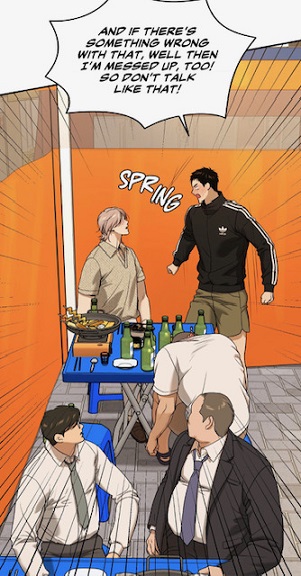 (chapter 35) He stood up, yelled and gave an order to the artist, though he is a junior. No wonder why the other guests turned around and looked at him. But this shows his strength, as he is following his instincts and as such his heart. He has already developed his own moral codex.
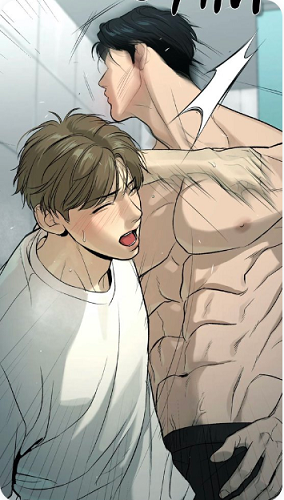 (chapter 7) He might have not wounded his partner terribly, but we shouldn’t forget that he was facing the Emperor. To conclude, by calling him Potato, the fighters were misjudging the young fighter. Kim Dan was the first one to identify him correctly. He was a dog, hence he desired to treat the champion as his master.
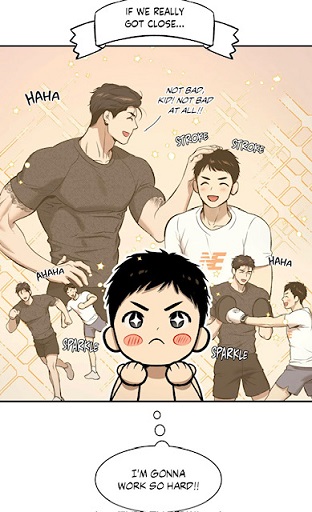 (chapter 23) His desire was to become the Emperor’s companion and as such best friend. The problem is that he was projecting his own thoughts onto the protagonist. The latter is not a dog, but a wolf. Moreover, Jinx-philes can sense that in his mind, the maknae was viewing the training as a playground. However, for the Emperor, life is like a battlefield, where death can strike at any moment. It is deadly serious. So in the star’s eyes, training has nothing to do with pleasure and fun, but survival. That’s why Joo Jaekyung received punches from his soulmate, a reminder that he needed to be careful. And that’s how Kim Dan earned the athlete’s respect.
 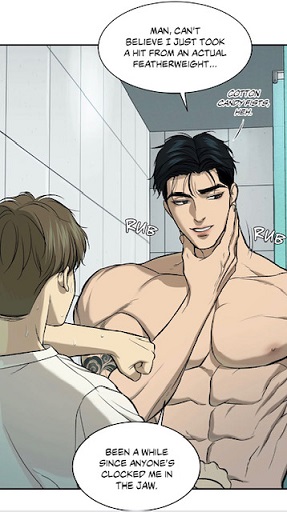 (Chapter 8) I noticed that the champion initially only listened to violence. It was, as if he had internalized this Nature’s law: the strongest prevails. No wonder why the champion didn’t react to Potato’s admiration so positively.
  (Chapter 23)
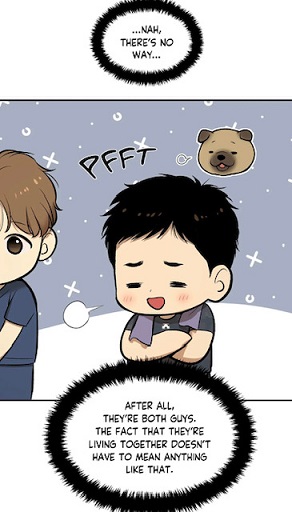 (chapter 23) Interesting is that she cut the chibi Kim Dan in half. Why? In my opinion, the main lead had not found his true self yet. She didn’t place any puppy above his head as well, because she wanted to keep her readers in the dark. However, let’s not forget that a puppy will recognize another puppy much more easily. Therefore Potato felt jealous and resentful first.
  (chapter 25) Moreover, we should interpret his nightmare like this. The puppy doc Dan had already marked his territory:
 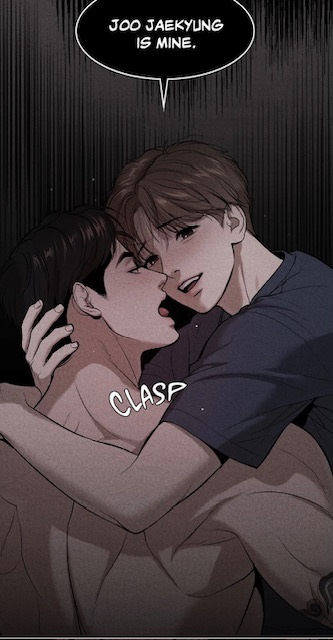 (chapter 25), though in his vision it looked like the roles were switched. The “dog” was the champion, whereas the doctor was the owner. That’s the other reason why Potato was so worked up. He preferred the strong man or beast.
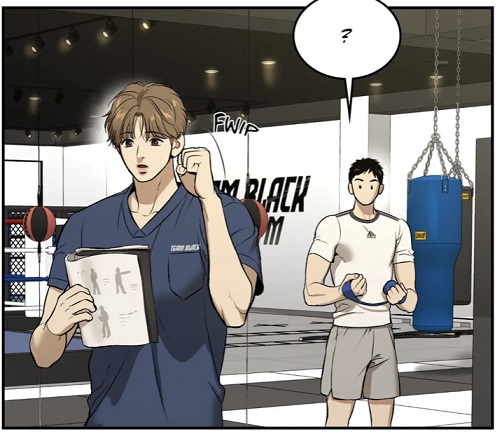 (chapter 25) The latter was trying to learn more about MMA, as he desired to improve his skills as PT.
 (Chapter 25) That’s how Potato came to offer his assistance. Interesting is that Yoon-Gu became the teacher for the physical therapist.
  (chapter 25) It is relevant, because the maknae was acting like a sunbae and not like a junior. He was given responsibility. His task was quite important compared to the coffee incident. With such a task, the cute puppy got to learn the importance of PT. This explicates why Potato always paid attention to the protagonist and his duties afterwards. Though Kim Dan had been constantly diminishing himself as physical therapist, in front of Potato he acted differently: meticulous, dedicated and caring. As you can see, this training session had huge repercussions for the chow chow.
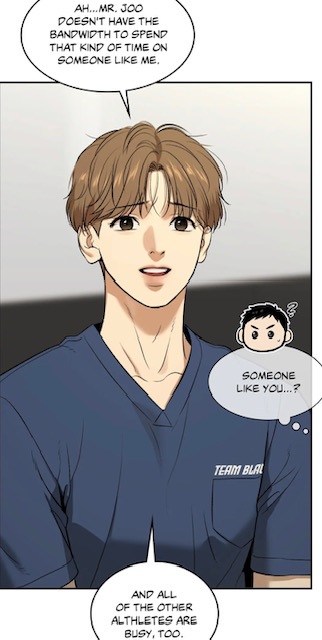 (Chapter 25) Hence it is not surprising that Kim Dan chose to repay Potato’s kindness by fulfilling his dream.
  (chapter 26) He was following his heart and as such his instincts. That’s the reason why money was out of question.
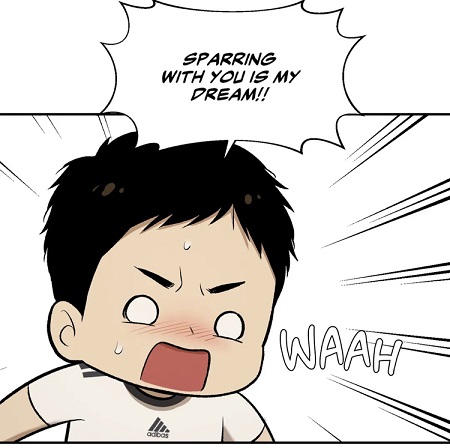 (chapter 25), then he lowered his face like a moping mutt.
 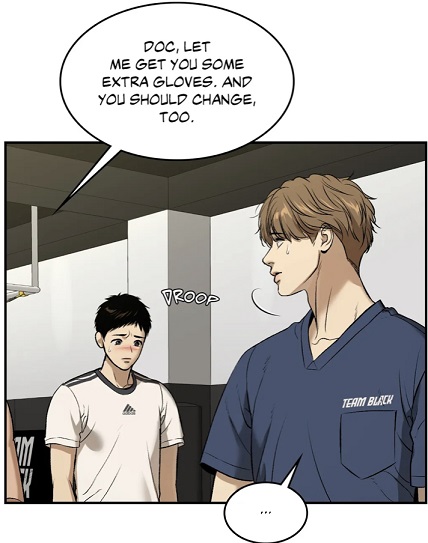 (chapter 25) Because of his sacrifice and generosity, doc Dan became a role model in Potato’s eyes.
  (chapter 26)
 (chapter 31) But how could he judge the actor as a danger? It is because he was using his senses as well. Don’t forget that they had bumped into each other
 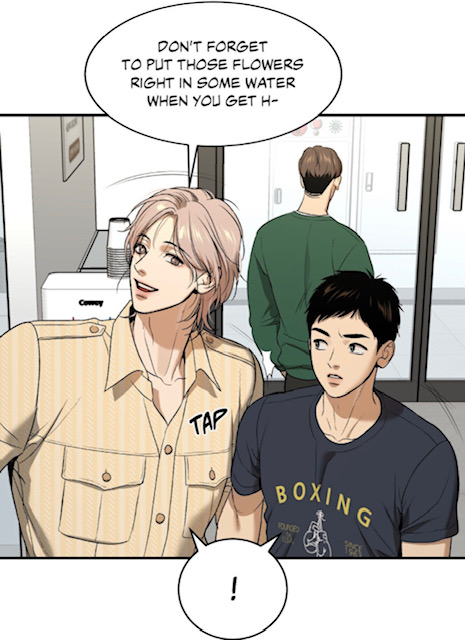 (chapter 31) Secondly, since Yoon-Gu is a dog, this signifies that he can not be bought with money or presents either. Hence he could only mistrust the artist’s generosity. It is important to recall that before meeting the “angel”, Heesung would simply offer meals
 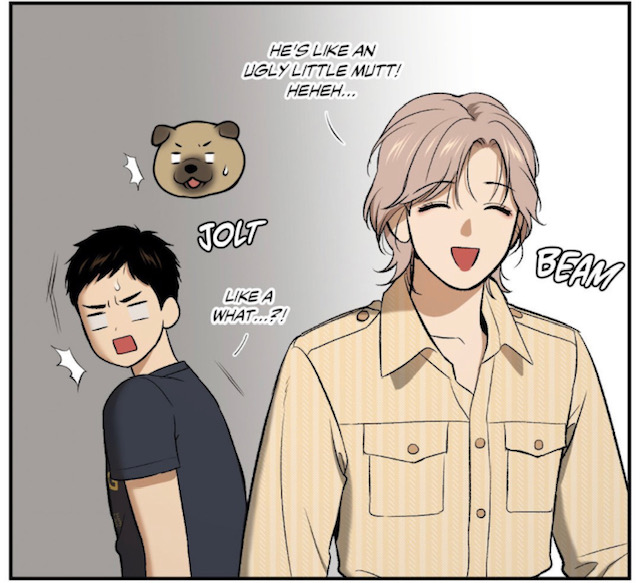 (chapter 31) Heesung described him as ugly, which is actually an insult. Note the contrast. Heesung is smiling despite his words. It is because he was voicing his annoyance at Potato. The latter represented a hindrance to his courting.
 (chapter 40), the former came to appreciate the doctor much more than before.
 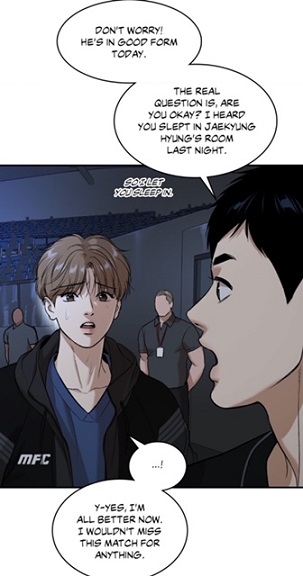 (chapter 40) First, he informs him about his patient’s conditions. On the other hand, it becomes obvious that he worries much more about the doctor’s health. His increasing care started with the party.
  (chapter 37) When Potato and Daehyun saw that Kim Dan was feeling down, they tried to cheer him up. Moreover, let’s not forget that when they got caught partying, the hyung tried to protect them:
  (chapter 37) Besides, Yoon-Gu witnessed the effects of the drug
 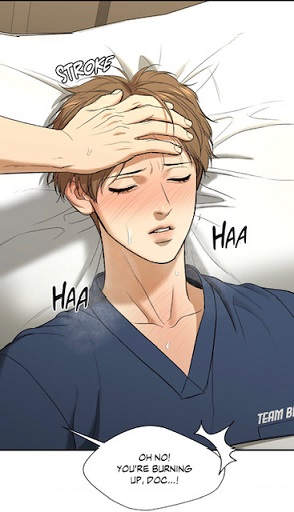 (chapter 38). Contrary to the other fighter, he touched his head. This gesture reminded me of a mother’s. And now, I know why Kim Dan saw Potato as a puppy.
 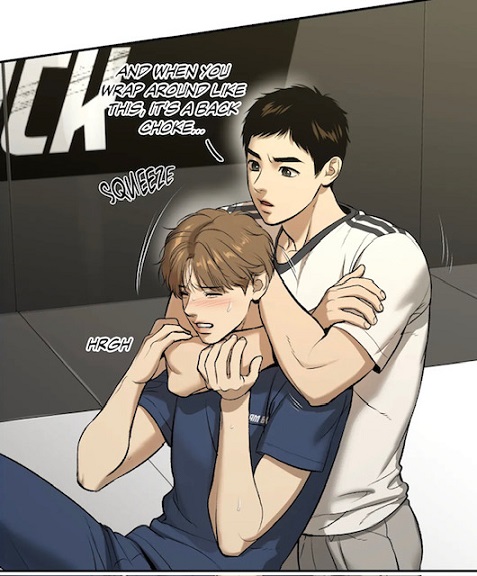 (chapter 25) On the other hand, Yoon-Gu lacks experiences, for he has never been exposed to the cruelty of this world, unlike Kim Dan or Joo Jaekyung. His fighting spirit is not developed yet.
 (Chapter 40) Therefore it is not surprising why after mentioning the incident with the MFC security guys to Park Namwook.
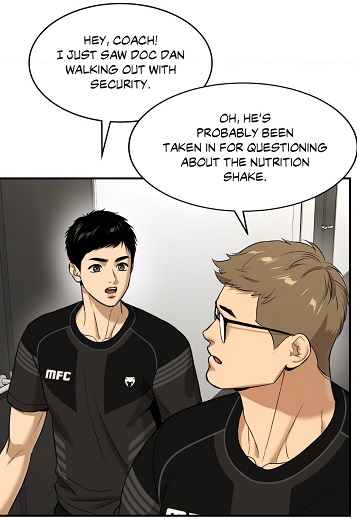 (Chapter 40), he didn’t follow his boss despite his concern. In his eyes, it was Joo Jaekyung’s role as his soulmate to take care of his partner. Furthermore, since Potato came to value doc Dan as PT, it becomes understandable why he brought up the vanishing of Kim Dan. For him, the latter is already part of Team Black and plays an important role, as he is taking care of the physical condition of the Emperor.
 (chapter 41) Thus the latter must have suggested to go out during the planned birthday party.
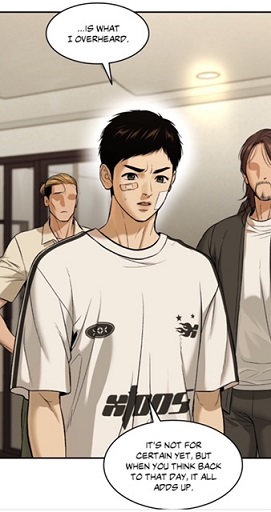 (chapter 52) He never questioned why the coach didn’t stop Kim Dan from quitting. On the other hand, I wondered how he came to change his mind about his idol. It can not be his brutality
 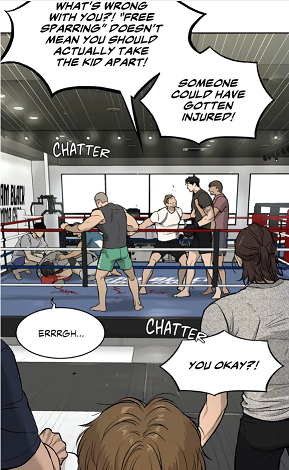 (chapter 1) and rudeness, for he didn’t criticize the athlete in the first episode or episode 7. In my eyes, the maknae lacks critical thinking. Nevertheless, we shouldn’t overlook that he followed the members’ behavior. No one from Team Black called Kim Dan and looked out for him. They all abandoned him after the match.
  (chapter 52) They only talked about the lost members, not about the physical therapist. This exposes that they didn’t treat him as one of them. To conclude, as time passes on, Yoon-Gu came to mimic and think like hyung Namwook.
  (Chapter 49) and helped him. I have to admit that the way the main lead was holding his hand reminded me a little dog.
  (chapter 49) For me, it becomes clear that the more time Potato and Kim Dan interacted together, the more the chow chow valued the job as physical therapist as significant in the career of an athlete. Besides, thanks to Kim Dan, the young puppy had the impression that he was contributing himself to his champion’s success too. It gave his presence a meaning. In other words, the puppies bonded through their jobs. That’s the reason why I am quite certain that with the recent incident, Potato will change his attitude towards Kim Dan. His vanishing made him realize how important he was to the team.
 (chapter 52) Hence he looked so upset and sad. Thus I can only come to the deduction that for Kim Dan’s return, he will do anything. Moreover, after the discovery of the scheme, there is no doubt that the chowchow will become Kim Dan’s guardian. He will protect him, as he failed to do so in the locker room. At no moment, he vouched for the PT’s innocence, he chose to follow the hyungs. On the one hand, we could see glimpses of a change in the locker room. He not only gave him an advice, but he spoke loudly and clearly to his role model:
  (chapter 50) He was cheering him up! On the other hand, he still remained passive, and didn’t question the sunbaes like Park Namwook or Yosep. One thing is sure. After the last incident, he should have realized cheering someone is not truly loving someone. And this brings me to the other reason why Kim Dan was alone between 41 and 47. Yoon-Gu didn’t know doc Dan that well. He has no idea about his past and his actual situation. He can not expect the champion to act like in the States, as now the situation is different. He is already injured. Consequently, I am quite certain that it is also time for the semi-professional to reveal his true nature: he is a chow chow in verity! He sometimes acts more like a mother towards Kim Dan, though the latter is his hyung. Take the last panel as an example. Yoon-Gu is strong, extremely loyal and intelligent! His nickname Potato might be cute, but it doesn’t reflect his personality.
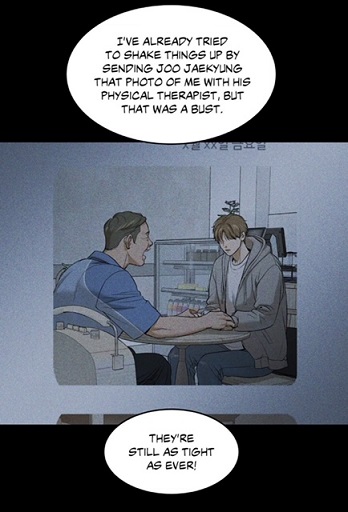 (Chapter 50) However, the doctor
 (chapter 47) was hiding his sadness and pain behind his job. How could Potato notice his suffering? Kim Dan never let his wounds transpire. Finally, we shouldn’t overlook the fact that Kim Dan never confided to the puppy dog as well. The protagonist has always been a loner, like we could see it in his memories.
  (Chapter 21) He was first of all his boss and his landlord. Yoon-Gu is not connected to the main lead because of money. The foundation of their relationship is based on trust, care and respect. Thus I deduce that Potato is on his way to become not only his first true friend, but also his second stan. He might have noticed his angelic nature in the past
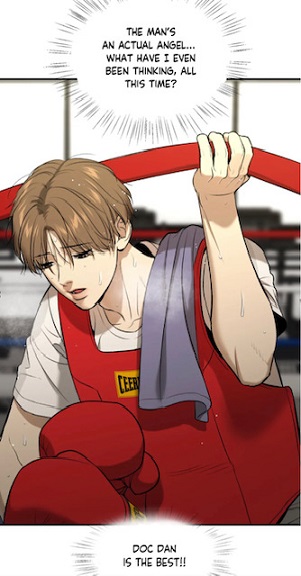 (chapter 26), but his adoration for the champion was still very strong.
 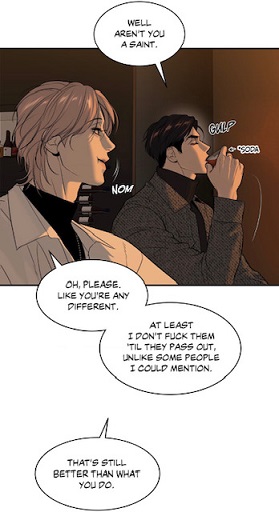 (chapter 33), hence they can talk frankly to each other. Heesung knows that he won’t be condemned for his confession.
 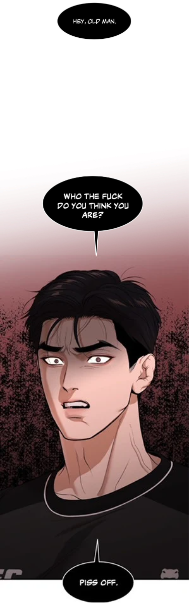 (chapter 49) Respecting the elders! For me, Kim Dan will see red, when he hears the truth about the incident. From that moment on, he will start questioning not only seniors (manager Park Namwook), but also authorities (doctors).
  (chapter 42)
 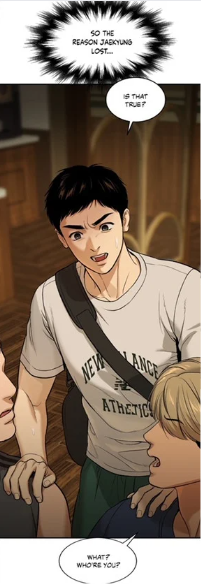 (chapter 52) His behavior shows that he was no longer respecting social norms, respecting the elders. While in the beginning, he still followed Seonho
 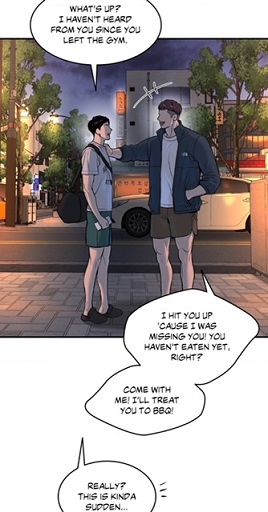 (chapter 52), at the end he chose to leave the restaurant on his own accord. Yes, he stopped being a follower of “herd mentality”.
  (chapter 40) I am quite certain that some readers might be shocked or call me crazy… but actually such an incident was a blessing in disguise. How so? It is because it pushed both protagonists to drop their bias and flaws.
 (chapter 50) and Kim Dan. While the former was tormented by his challenger directly
  (chapter 50) and indirectly, the other had to witness how the members from Team Black turned their back on him in the locker room.
  (chapter 50) They could put themselves in his shoes: he was left behind. On the other hand, the reaction from Joo Jaekyung was totally understandable.
 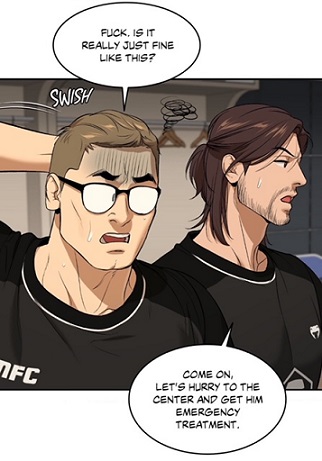 (chapter 50) And everyone knows this saying: Time is money. Yes, the hyungs didn’t decide to postpone the fight, because they would have to pay huge fees, and this could have affected the Emperor’s reputation. It exposes that the fight as such the show was more important than the well-being of their star. As a conclusion, money played a huge role in their decision. On the other side, the annulation would have brought more trouble to Kim Dan, as it would have caught the attention from journalists and fans, though it can still happen later. Under this new perspective, it becomes comprehensible why they left the locker room and didn’t argue with Kim Dan. They were under pressure. Nevertheless, the readers had a different reaction, for they knew the truth: Doc Dan was the victim of a new scheme. Therefore they judged the whole situation as unfair. Some were mad at the manager for yelling at the physical therapist.
 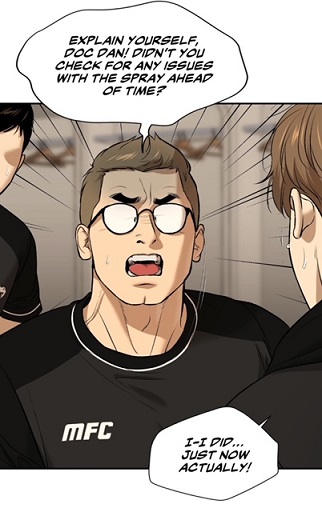 (chapter 50) Yet, we shouldn’t allow our emotions cloud our judgement, for this image displays the doctor’s metamorphosis. Notice that he talked back. Though his sentence is still not complete, the thickness of the writing and the point of exclamation are indicating that he was not whispering. He was speaking loudly and clearly. He was talking back firmly. Moreover, he was not avoiding his counterpart’s gaze contrary to the argument in the penthouse.
  (chapter 44) Now, the doctor is no longer associating sex with prostitution and corruption, but with love.
 (chapter 27) But only Dr. Lee and Kim Dan got to see the results
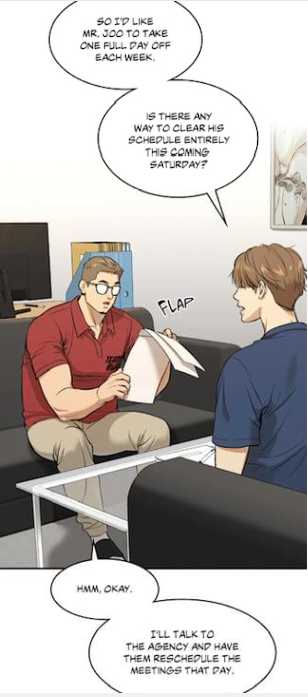 (chapter 27) Then, after the match in the States, the manager asked his “boy” how his shoulder was.
 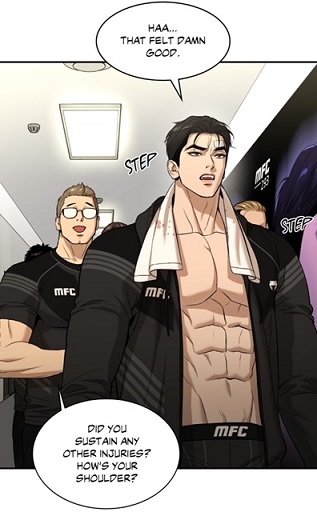 (chapter 40) Here, he chose to rely on the celebrity’s words,
 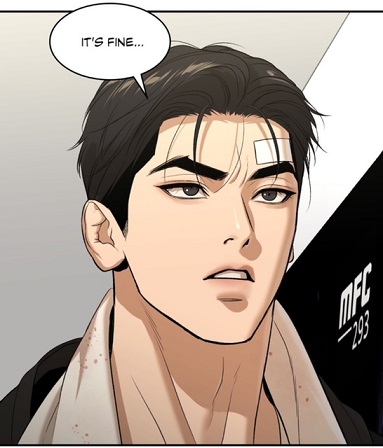 (chapter 40) while the manager had witnessed how Dominic Hill had targeted his shoulder. He should have realized that his star’s shoulder had been damaged. Nevertheless, we shouldn’t overlook that the athlete’s statement was corroborated by the medical checkup from MFC. That’s how he got fooled. Hence there was no treatment. However, doc Dan could detect the champion’s lie not only through observations
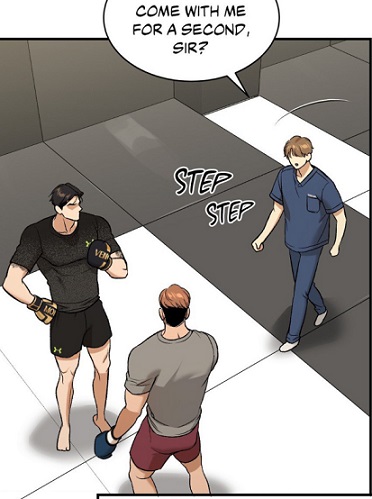 (chapter 41) but also through touching.
 (chapter 41) As you can see, the wound was slowly coming to the surface. Thus I consider the incident in episode 43 as a metaphor for the shoulder injury.
 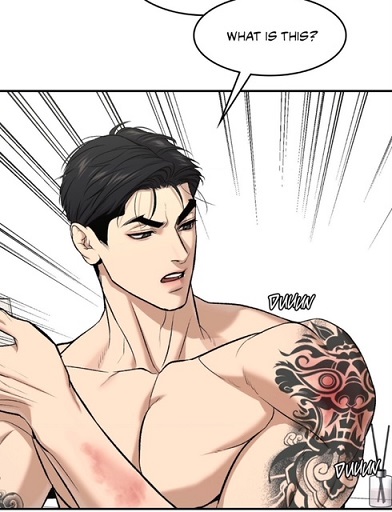 (chapter 43) It was exposing the damage in his body. Consequently, when the champion’s foot got wounded by the pepper spray,
  (chapter 49), I realized what was happening. Mingwa is forcing the Emperor to admit his suffering. Hence his wounds are becoming more and more visible.
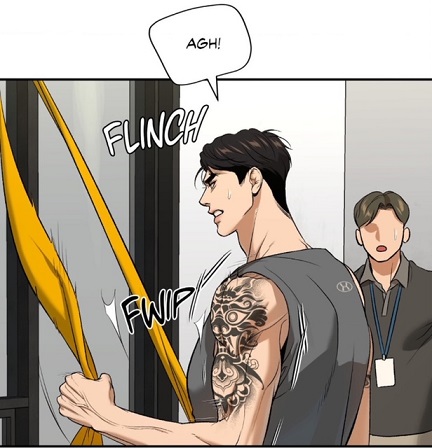

 (chapter 5) for he was simply relying on the prostitutes due to his jinx. Thus I consider this argument in the penthouse as a huge step for the athlete:
 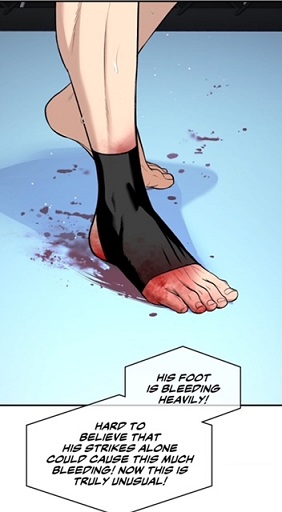 (chapter 50) So far, he just had a cut above his eye, nothing serious.
  (Chapter 40) However, the wound on the foot is different, for his skin is damaged. The recovery will take longer. It is relevant, because Park Namwook can no longer feign ignorance about his star’s wounds. He is less susceptible to manipulations.
  (chapter 50) That’s the reason why he turned into a dragon at the end of the chapter. [For more read the essay “
 (chapter 5) And now, you comprehend why he got so nervous and angry, when he imagined that Kim Dan had blocked him.
 (chapter 50) From my perspective, this is the result of the overexerting.
  (Chapter 50) Even the coach is noticing that the athlete is overtraining himself. Remember that the athlete refused to listen to his PT.
  (chapter 42) In addition, he would return home late, a sign that he would train even more than before.
 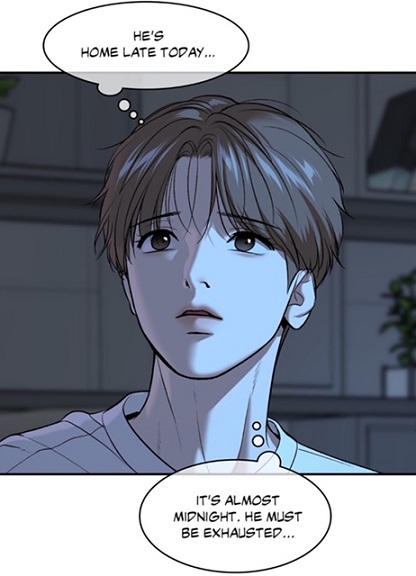 (chapter 48) Finally, we shouldn’t overlook the fact that after his match in the States, he never visited the hospital due to the law suit.
 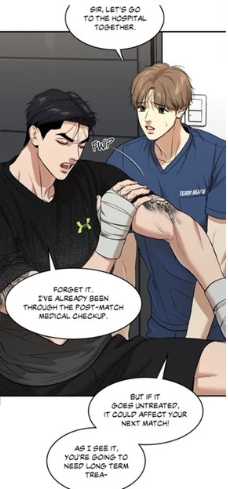 (chapter 41) According to me, the MFC medical checkup was not reflecting the verity. Hence he never got a real check-up and MFC could definitely say that the athlete was definitely fine.
  (chapter 27) refused to force the champion to take a day-off by saying that the protagonist would never listen anyway. With such a statement, he pushed Kim Dan to make the decision and announce it to his VIP client. Moreover, the manager didn’t stop his “boy” from exposing his injured shoulder to the public.
 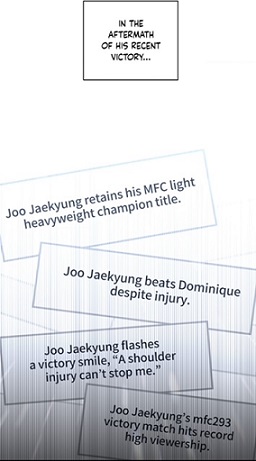 (chapter 41) However, by doing so, he was exposing his vulnerability to his opponents, though I am still suspecting that MFC leaked information too. So far, the headlines are not indicating which shoulder is wounded. Yet, the moderator knew which one:
 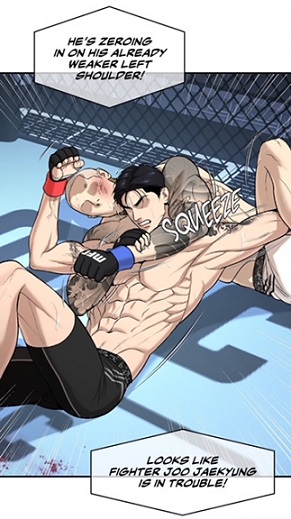 (chapter 50) So why was the manager so shocked with such an attack?
  (chapter 50) It was clear that during such a match, the challenger would use the opponent’s weakness. What did he expect in the end? The panel exposes his stupidity and his immaturity. He should have anticipated such a move. These observations lead me to the following conclusion: the champion needs to realize that his hyung will never recognize his suffering, as long as Joo Jaekyung is in denial. Until now, he hasn’t been protecting Joo Jaekyung’s interests, rather his own comfort. His MO was to put the whole responsibility on the athlete. But it was his duty as his manager not to accept the new challenge.
 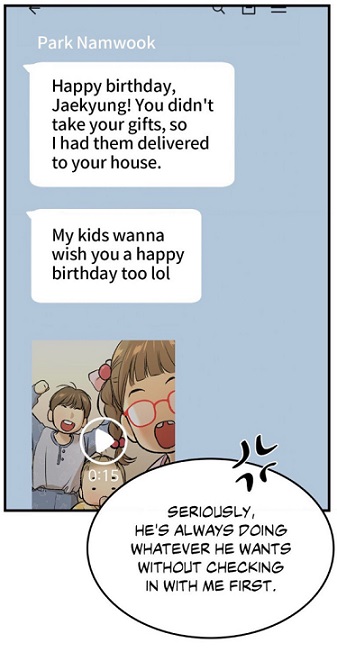 (Chapter 45) In other words, his loyalty towards the star is improving.
  (chapter 46)
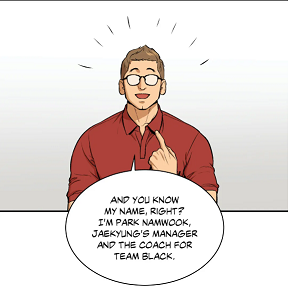 (Chapter 9) and coach for Team Black, but he acts like the director of Team Black.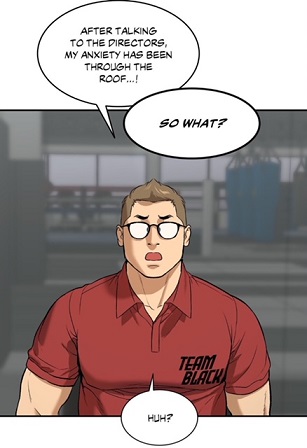
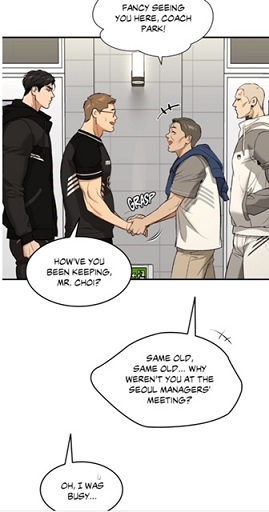 (Chapter 49) This explains why he claimed that Team Black was his gym,
 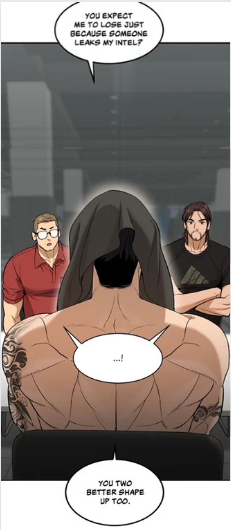 (Chapter 46) Thus I deduce that the role between the star and his hyung must be redefined because of Kim Dan’s presence. But wait… the heading is referring to the Russian author Leo Tolstoy. So what is his connection to the manager from Team Black?
 (chapter 41) to the golden keychain.
  (Chapter 45) As you can see, the famous writer is connected to Positive Psychology, for he was also promoting meditation and experiences. This fits our story, as both main characters are on their way to give a meaning to their life and as such to find happiness. But let’s return our attention to the manager Park Namwook as a representative of “ignorance”.
  (chapter 11), but also he never tried to correct the star’s false conclusion.
 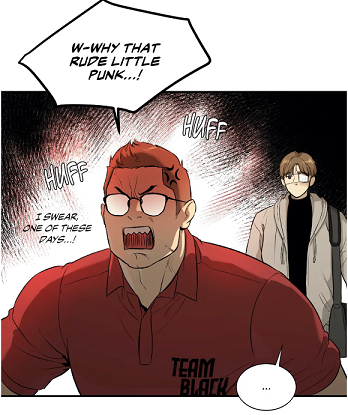 (Chapter 11) He just got angry giving the impression that he was siding with Kim Dan. But the reality is that he did nothing for the poor doctor at all. He remained passive and silent. His “ignorance” explains as well why he is not questioning events and his athlete’s success.
 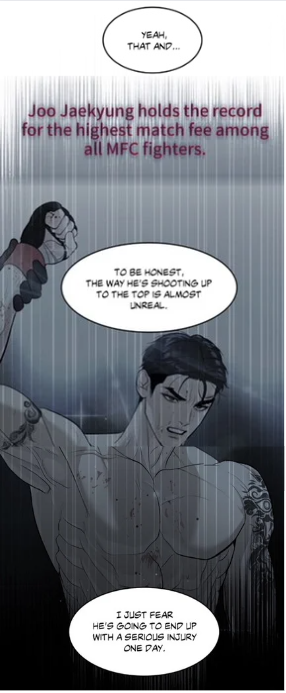 (chapter 43) Through the two examples, Manhwaphiles can sense that his “ignorance” is a mixture of willingness to close an eye and real naivety. Under this new approach, it dawned on me why the manager used to beat his star so brutally.
 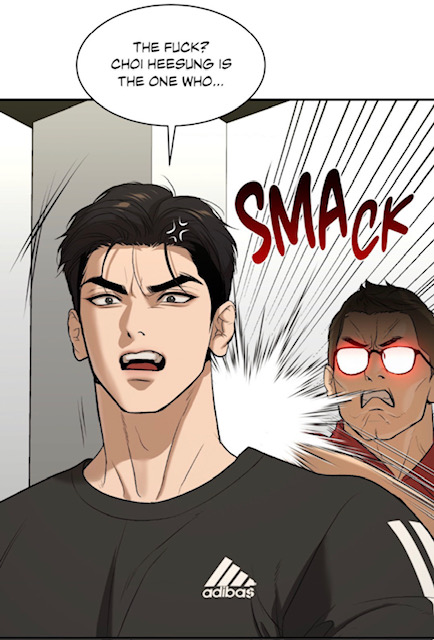 (Chapter 31) It is his way how to deal with uncomfortable situations. He stands for social norms and conformity. It is not surprising that the manager proposed to use Kim Dan as compensation for Heesung’s fake injury.
  (chapter 32) Furthermore, he forced Joo Jaekyung to take the blame without investigating the matter.
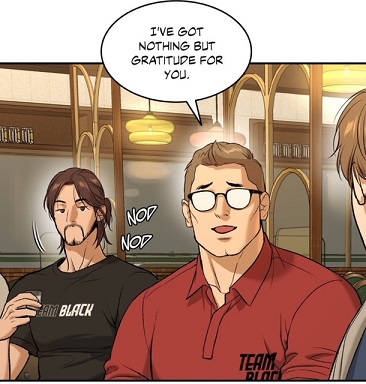 (chapter 43) The latter triggers his anxiety and nervousness. Thus when there is a problem, his MO is either to threaten,
  (chapter 36) or to let others make decisions. I would even add, he often delegates things to others: the manager from the Entertainment company
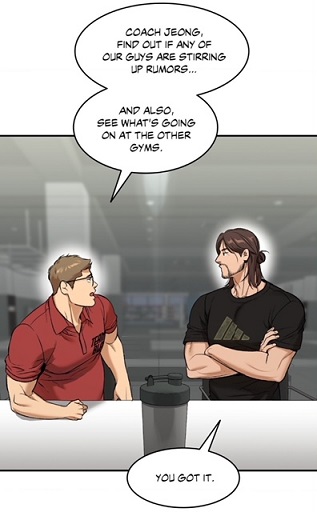 (chapter 46), Kim Dan [f. ex. He should accept the bad mood from his VIP client]
  (chapter 43) Furthermore, compare his behavior towards the celebrity and the doctor:
 (chapter 46) and
 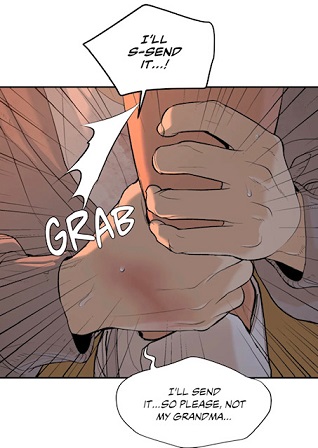 (chapter 16)
 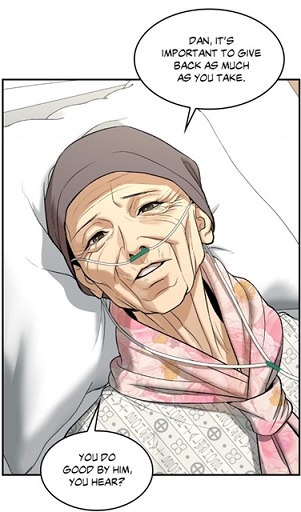 (chapter 41) and he should assist him during his matches!
  (chapter 41) Therefore I believe that in the locker room, Kim Dan must have recalled her words. She became his source of strength once again. That’s why we have parallels between these three scenes:
  (chapter 21: he was criticized by Kim Miseon, he feared to lose his halmoni)
 (chapter 50) That’s the reason why Kim Dan could become a star. Contrary to Joo Jaekyung, we didn’t assist to the birth of the yeouiju. It is no coincidence that birth is connected to pain and happiness. Mothers forget the suffering of the delivery, as their child can procure them a lot of joy and happiness.
 (Chapter 26) By embracing misfortune, transcending conventional morality, striving for self-overcoming, embracing individuality, and creating meaning and values, individuals can embark on a journey of self-discovery and self-actualization, ultimately becoming the architects of their own lives. At the heart of Nietzsche’s vision lies the concept of the Übermensch, or Overman, who embodies the pinnacle of human potential and serves as a beacon of courage, creativity, and self-mastery. Through the pursuit of the Übermensch ideal, individuals can transcend their limitations, confront their fears, and forge their own destinies, thereby finding their true selves in the process.
 (chapter 5) or Heesung drank alcohol
  (chapter 35). Both were trying to numb their pain, though they shouldn’t have according to the German philosopher. The soju stopped them from becoming the better version of themselves. I am suspecting that doc Dan copied this poor habit from his grandmother, who drank in secret. Don’t forget that in all the memories, the halmoni is smiling
 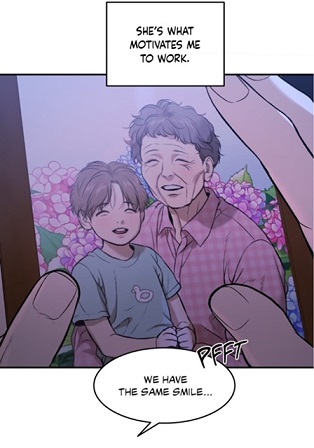 (chapter 47) In other words, he had selected this job, as he was following traditions and expectations. Only in episode 47, he realized that she was his real motivation. Yet, he discovered shortly after that she is about to die. Thus he needs to find a new motivation for his job, or better said, he needs to question himself about his profession. Does he truly want to be a physical therapist? Since the beginning of the story, doc Dan has never identified himself as a physical therapist. Thus he accepted to be judged as a whore
  (chapter 16) or as a tool for the jinx, therefore he mopped the floor
 (chapter 36), acting like an errand boy. Then he doubted Heesung’s words and admiration
 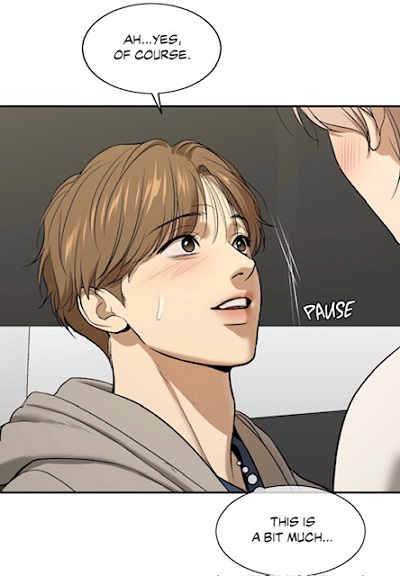 (chapter 31)
  (chapter 31). Furthermore, he took a side gig in order to buy the champion’s present and finally, he rejected Choi Gilseok’s praise and offer.
 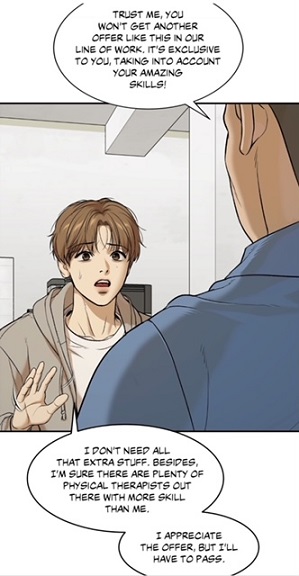 (chapter 48) He was always diminishing himself as a doctor. Therefore in the locker room, he was confronted with his biggest fear: is he really a physical therapist?
  (chapter 50) He injured his patient. The spray is there to let him see that he has power in his hands. He should trust himself and his magical hands. Don’t forget that this request was made by Joo Jaekyung.
 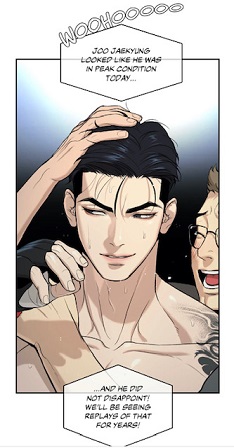 (chapter 5)
 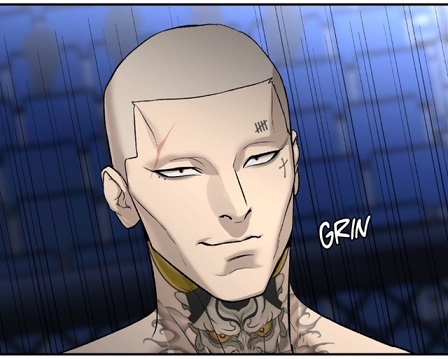 (chapter 50) It is relevant, because through such an intervention, hamster Dan would teach the champion an important lesson. He is not alone in the ring, the doctor is watching his physical condition and helping him.
  For me, chapter 50 announces a new start! Interesting is that the number 50 is associated with the planet Mercury which stands for poison but also medicine! And now, you comprehend why I consider the painful chapter as treatment sessions. The two protagonists are forced to redefine themselves. Joo Jaekyung might be injured, but he no longer sees himself jinxed!
  (chapter 48) So the moment you perceive this moment
  (chapter 19), this signifies that Potato was acting like a true friend in the locker room.
  (chapter 37)
  (chapter 40)
  And this brings me to my next observation. The doctor’s pain is exposing his recovery! Weird, right?
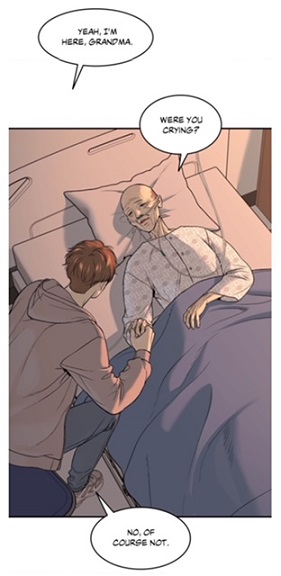 (chapter 47) and his agony. He was no longer under the influence of toxic positivity. While he cried, he admitted his flaws making him realize that he had never been abandoned by his grandmother.
  (chapter 47) That’s how he overcame his abandonment issues.
 . (chapter 36)
  (chapter 45) And now, you comprehend why I stated earlier that he acted rather instinctively. For me, he still trusts the physical therapist.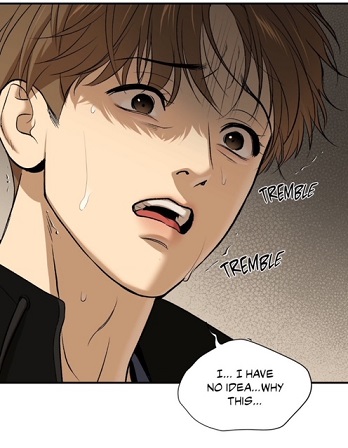
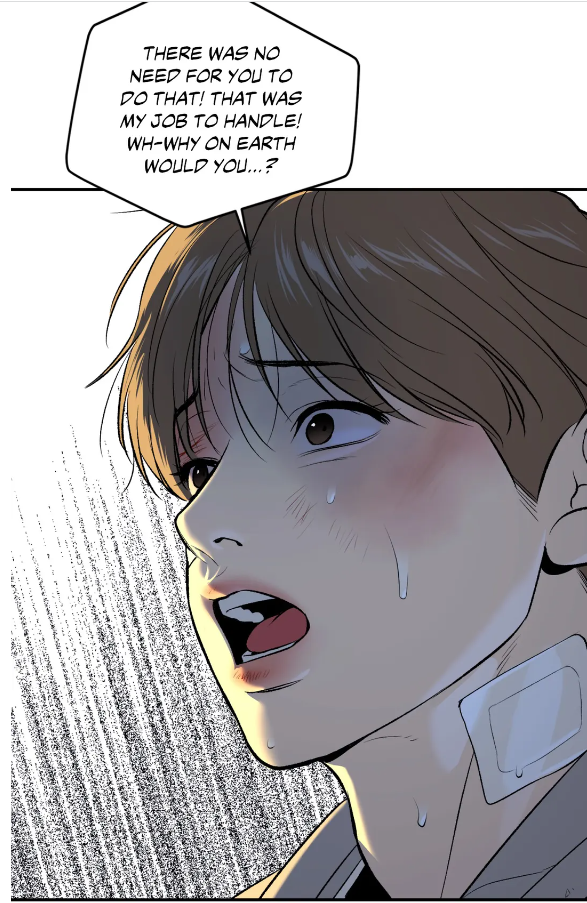 (chapter 18) When the champion paid off his debts, he saw it as meddling. Interesting is that he came to accept the champion’s support, but he never asked for Joo Jaekyung’s help directly. In addition, Jinx-philes should notice that in the interrogation room, he thought just about the champion and not himself.
  (chapter 40) It never came to his mind that he should ask for assistance. Finally, observe that after he got drugged in the States, he let the champion deal with the problem.
  (chapter 41) He accepted the statement from his boss. Nevertheless, doc Dan was the real victim. He should have become more involved in the matter. Besides, he was a witness. And this brings me to my next thought: if Kim Dan gets into trouble, he should remember Heesung’s words: he should give him a call!
  (chapter 35) For me, the incident is there to teach Kim Dan that he can ask for help! This would show him that he is no longer alone. He wouldn’t appear weak at all. That’s how he would end up to gain his first friends. Let’s not forget that Heesung’s relationship with the doctor is no longer tainted by money or by lust or greed. In fact, thanks to him, he found his soulmate. What unites Kim Dan and Heesung is the heart and the desire to help. Heesung stands for brotherhood, so he could be the one outlining the problems to Team Black. Finally since Potato likes Doc Dan very much, there is no doubt that Heesung and Potato will work together to assist the main lead. This image
 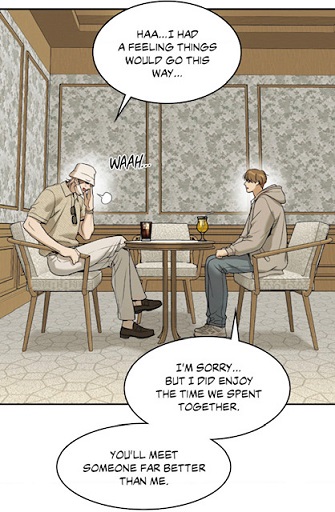 (Chapter 35) Interesting is that after his confession, he still chose to come clean with the doctor. He revealed the truth to Kim Dan, though he could have lost the protagonist’s respect. He admitted his lie and manipulation,
  (Chapter 35), but Kim Dan’s reaction was not to scold his future friend. In fact, he appreciated his honesty. In front of Kim Dan, he could show his true self. He was not entirely a good guy, but he didn’t get rejected. But so far, the actor is not present in the arena. Therefore Potato could be the first person Kim Dan asks for help. He shares some similarities with his soulmate. He doesn’t fear people’s gaze, hence he raised his voice under the tent.
  (chapter 49) similarly to his idol and hero in the States. He noticed the issue right away: the security didn’t do his job properly. To sum up, Potato would follow his foot steps and that’s how he would get noticed by MFC!
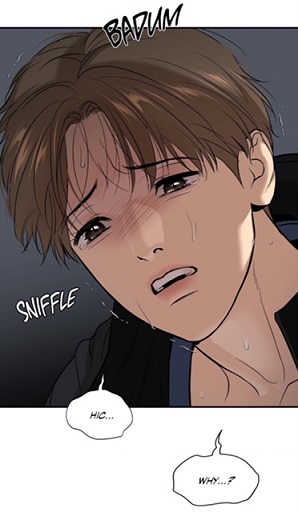 (chapter 50) The word is displaying that the doctor is not accepting the incident simply like that. It is showing that the doctor is slowly losing his naivety. Before the incident with the spray took place, he still trusted the words from people.
 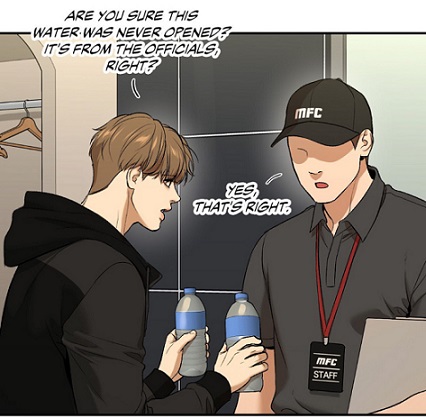 (chapter 49) Naturally, he can not get rid of his naivety totally, for keeping a certain purity is necessary in life too. On the other hand, it becomes clear that his naivety is the result from his education. The halmoni is herself quite too trusting. Hence she ended up being harassed by loan sharks. On the other hand, the incident was like an eye-opener for the physical therapist. He should stop judging people based on their words
 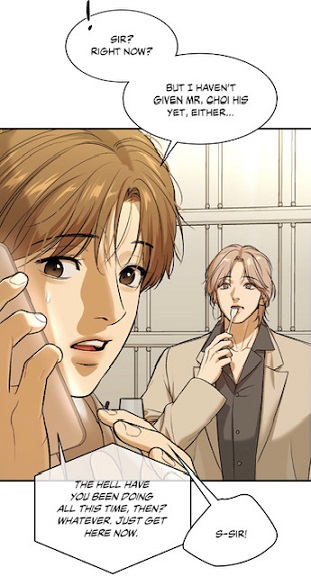 (Chapter 32)
 (chapter 1)
  (chapter 1) by bosses, it becomes comprehensible why he didn’t fall into the trap a third time.
 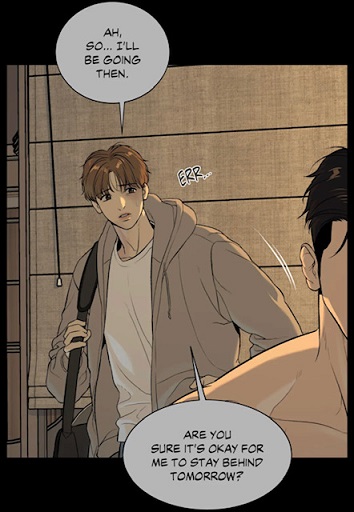 (chapter 13) Furthermore, after having sex in the locker room, Kim Dan was left behind.
  (chapter 15) And notice that this pattern was the same in the States. For the second match, Team Black left without him, hence Kim Dan arrived late.
 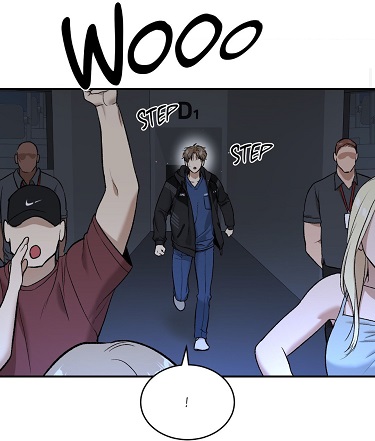 (chapter 40) Therefore he was running once again. However, back then, no readers felt angry at the team, though it could also be perceived as a betrayal and abandonment! Kim Dan was not perceived as necessary, neither for Joo Jaekyung nor for Park Namwook. Hence the bedroom could be judged as the place of the betrayal: “
 (chapter 40) It was to outline their previous disregard and betrayal! Thanks to Potato, Joo Jaekyung got informed, hence he could rescue the physical therapist.
 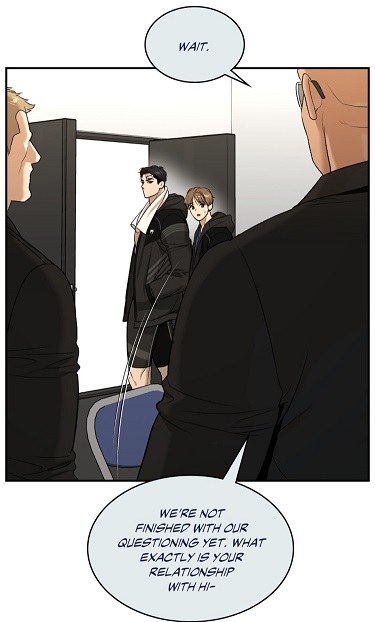 (chapter 40) But he never revealed the hamster’s role in the team! This explains why Kim Dan was used by Choi Gilseok. He needs to expose his role in Team Black to the world. He is the champion’s private PT!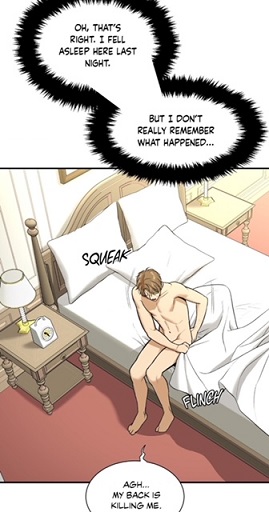
 He has just his blue uniform.


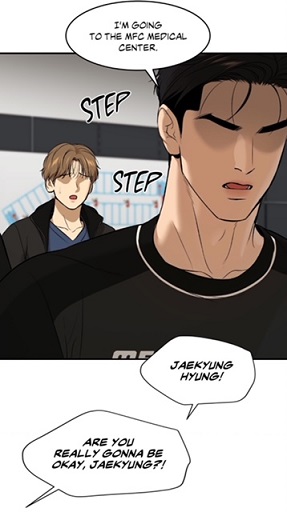 Hence he could get into trouble! The MFC could report the incident to the authorities!
  (chapter 38) To conclude, it was not in Kim Dan’s interest to run away or hide! This would have been judged as a sign of his culpability and complicity. He needs to face the problems so that he can shape his destiny with his own hands and not remain the playball of dark forces! Yes, this chapter announces a huge change at Team Black, the start of a real friendship between two puppies. 😉
 (chapter 48) Why did the Webtoonist gave us the time, when the next episode starts another day? On the one hand, it exposes that the schemers knew about the champion’s nightly activities. He wouldn’t sleep much and he would keep his cellphone next to him.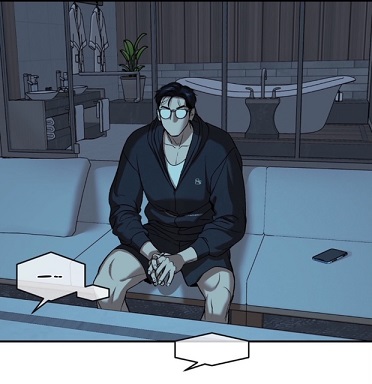
 (chapter 35) This made me think of Painter of The Night and No-Name’s advice:
  (chapter 76) “A deed once foiled has no chance of success the second time around”.The criminal was referring to learning through experience. After going through such an event once, the athlete is no longer caught by surprise. We could say that he learned not to jump to conclusions and control his emotions. That’s the reason why in episode 48 he remained level-headed. Because the champion didn’t get angry, he could be more attentive.
 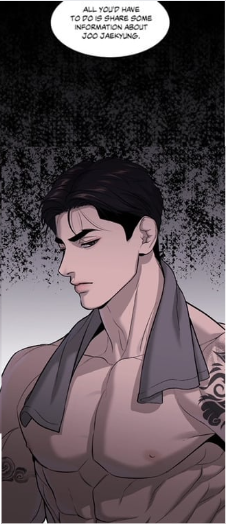 (Chapter 48) The irony is that the doctor had been able to treat the star’s injury. For me, the Summer Night’s Dream played a huge role, as during that night, Joo Jaekyung felt treasured and loved. Therefore the pictures could only expose the duplicity of the director of King of MMA. Under this new light, it becomes understandable why the celebrity didn’t fall into their trap and why they had to turn doc Dan into a traitor by giving him a weapon without his knowledge. Finally, I believe that Joo Jaekyung had another reason not to confront the physical therapist. How so? It is because he had sent away his soulmate, while the latter had approached him.
  (chapter 49) The gaze displays not only worry and anxiety, but also regret. It was too late to ask the doctor. For me, he chose silence, for he was regretting his reactions in the penthouse. He feared to ask Kim Dan, because if he brought up the meeting with Choi Gilseok, this could push the hamster to quit his job. However, thanks to Kim Dan, the star’s condition improved greatly. That’s how it dawned on me why the champion became a beast and why he is hiding his past:
 (chapter 12) the couple was supposed to reach Nirvana, but the athlete failed terribly. Under this new light, it becomes comprehensible why the protagonist chose not to confront Kim Dan in episode 48. It was, as if the champion was closer to the heavens. This represents the champion’s leap of faith. Don’t forget that the star got scared for one moment
 (chapter 48), when he noticed doc Dan’s presence too late. But nothing happened to him, that’s how he got incited to trust Kim Dan. The latter wouldn’t backstab him. Under the blue light, the champion got transformed.
 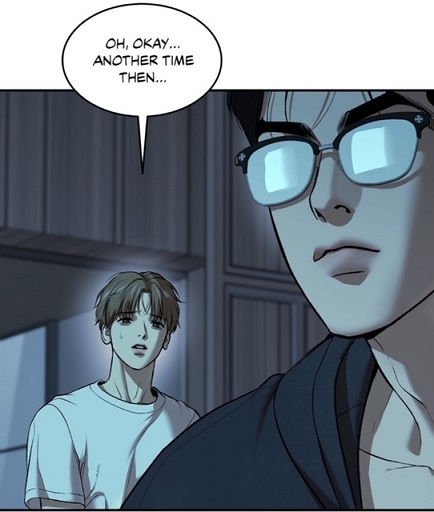 (chapter 48) On the other side, the fact that the champion is always targeted during the night is a sign that the villains desired to approach him, when he was isolated. So they know not only about his insomnia, but also about his solitude. I would even add that the plotters are aware of his association between the night and danger. Remember how he described relaxation: he would give an opportunity to his enemies to attack him


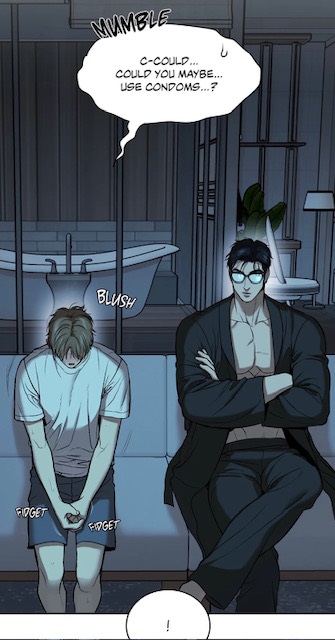


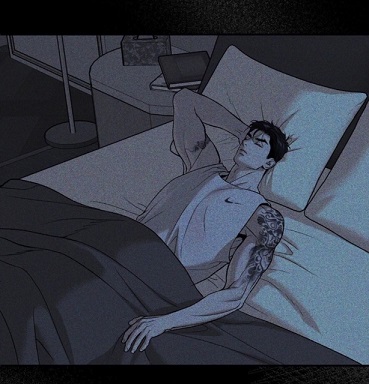
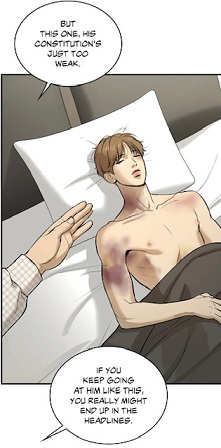 (chapter 13) It is important, because through this terrible experience, Joo Jaekyung came to internalize the connection between sex and danger. This would explain why he has been so rough in bed before. He came to see it as a normality, a sign that his perception of sex had been negatively influenced. And this can only come from bad experiences. It had nothing to do with “enjoying the moment”, until the protagonist met the shy hamster. We can see his gradual transformation. In episode 12, he definitely saw the night as “carpe diem”
 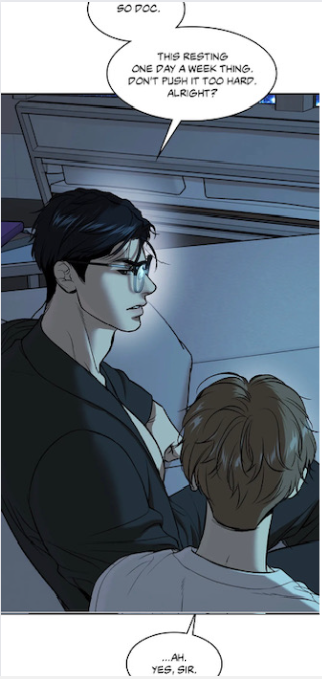 and 48:
 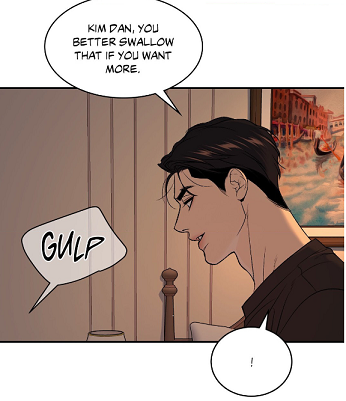 (chapter 39) or kissing the champion’s ruined ears
 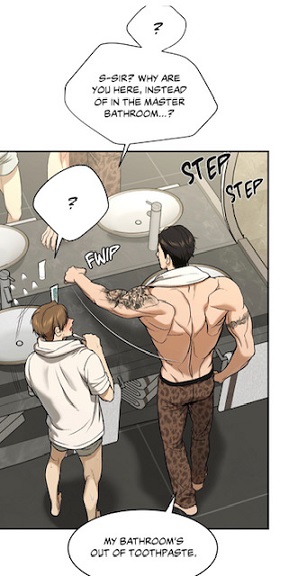 (chapter 30) He was rough and used the toothpaste as an excuse.
  (Chapter 29)
 (Chapter 40) That’s the moment he stopped considering the hamster as a prostitute, while from chapter 2 to 18, he viewed Kim Dan as a tool, as a talisman against his jinx. However, I detected a transition after he kissed the physical therapist. From that moment on, the doctor was connected to food and sweetness.
  (Chapter 18) And now, observe that during the night in the bathroom, doc Dan was associated with a baby receiving food:
 (chapter 20) As you can see, here the champion started viewing him as a human being. It exposes that little by little, his perception of the physical therapist improved. So from chapter 30 to 39, Joo Jaekyung was forced to question the nature of his relationship with Kim Dan: a PT or a prostitute or a pet?
  (chapter 33)
  (chapter 49) Then I noticed another parallel between the two plots: the presence of a scapegoat, and the involvement of a third person. Heesung faked his injury by putting the blame on the athlete, while he asked Kim Dan as compensation. In the second plot, the roles are switched. Kim Dan is now the perpetrator, while the athlete is the victim! Baek Junmin is the beneficiary of this scheme. And what do these plots have in common? Joo Jaekyung is the victim of a trick, though Heesung’s manipulation was rather benign. First, he acted on his own.
  (Chapter 31) Moreover, he utilized the genuine concern and innocence of his surroundings. In other words, he used his image as a good and honest man to his advantage. Thus I come to the conclusion that the artist’s sin in their youth was rather minor, as the artist tends to violate social norms. So though it was no illegal, the actor’s wrongdoing definitely left scars on the protagonist’s heart.
  (Chapter 30) Another common denominator between The Shotgun and Heesung is their envy and greed.
  (chapter 46) could be seen as a reflection from the arcade and the star’s past. And since Kim Dan wounded Joo Jaekyung in the locker room
  (chapter 49), I deduce that such an action must have happened in the champion’s youth. He got not only hurt by people, but also betrayed by a friend. There exists many reasons for this hypothesis.
 (Chapter 04) and be rude towards others.
 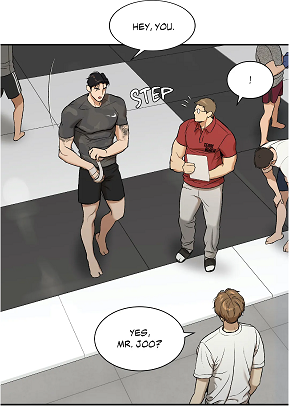 (Chapter 7)
  (chapter 37) But Mingwa left many clues that the celebrity’s personality shouldn’t be judged by impressions. During their first night together, Manhwa-lovers could see books next to the bed.
 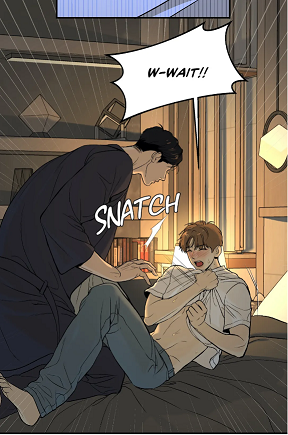 (Chapter 3) Some of them are not written in Korean or English. Moreover, the Webtoonist revealed that one of his hobbies is reading. This explains why he can talk prettily.
 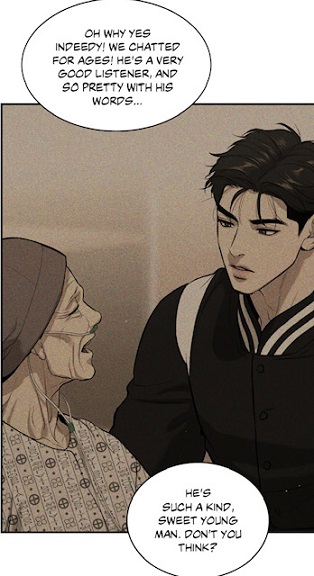 (chapter 22) This shows that his behavior mirrors the counterpart’s. Consequently, it is not surprising that the champion is rough with his own body, as Park Namwook is not treating him like a delicate child.
 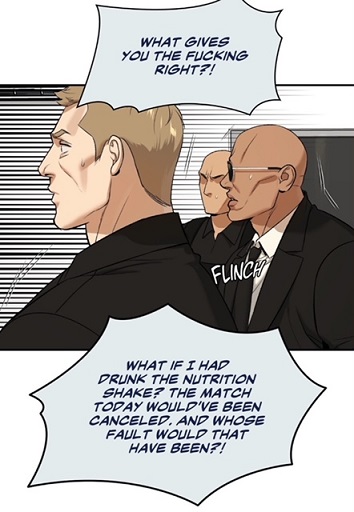 (Chapter 40) Compare Kim Dan’s English skills in the same scene:
 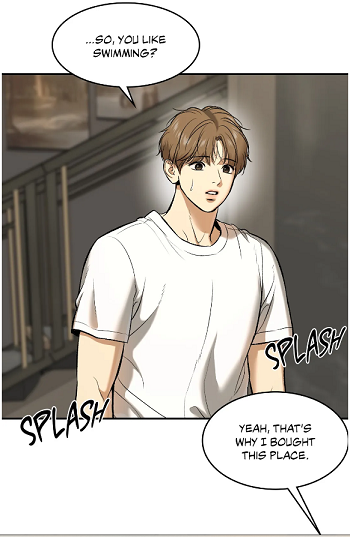 (chapter 27) I see a contrast between these two sports: swimming which is related to relaxation, pleasure and fun and MMA fighting which stands for challenge, pain and seriousness. This contrast is even more present in the following panel:
  (chapter 49) He is a hyena, hence his color is brown.
  (chapter 49) Interesting is that his description of the challengers fits the situation in the new plot perfectly. The Shotgun imagines that he will fight against a diminished champion. His shoulder is injured and they have planned to add a new injury. The hyena stands for balance and cleansing as their task is to remove the weak ones.
 (chapter 49) As an old man, Choi Heesung is revealing vulnerability and senility. Due to his old age, he could be replaced by another hyena, a younger hyena!
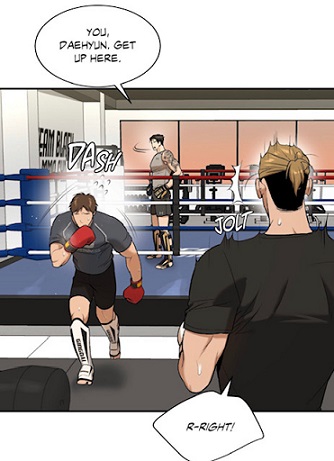 (chapter 36) which could only affect the members from Team Black. Their loyalty could waver. Then he got to hear bad comments from the Internet
 (chapter 36) Under this new perception, Manhwaphiles can grasp why the MFC manager offered him a new defy right away. They needed to exploit his injury!
  (chapter 48) Through them, the champion is learning that hunting weak and pitiful creatures is not only a sin, but also a crime! In the first case, he could be accused of hurting an innocent.
 (chapter 27) That’s how he remembered that he liked swimming and he could play a prank on his lover.
  (chapter 35) and not in episode 48. It is because Kim Dan had paid him a visit during that night, a sign that he was thinking of him as his patient and VIP client.
  (Chapter 48) On the other hand, I am inclined to think that when a terrible incident in his youth occurred, he couldn’t contact his family or guardian. Hence he keeps his cellphone by his side constantly. Yes, I was thinking of the doctor’s assault in the street and his failed rape:
  (Chapter 16) Heo Namwook’s minions had confiscated his cellphone. Hence it was impossible for him to call for help. And now take a closer look at this scene:
 (Chapter 16) Though he had been on the phone and it was daylight, no one stopped the thugs from kidnapping the main lead or reported the incident to the police. Hence I am also suspecting that Joo Jaekyung must have faced a similar situation: he was surrounded by malicious people and no one had assisted him. So he could have been targeting at school due to his grads or his social status. And his isolation at home could push to seek company outside, to look for friends at school.
 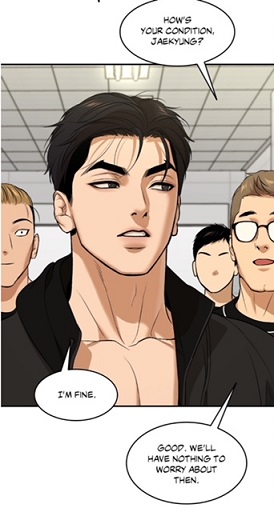 (chapter 49) That could be the hidden guardian who has not showed up yet, I am thinking of Seo Gichan. And now it is time to close this long essay.

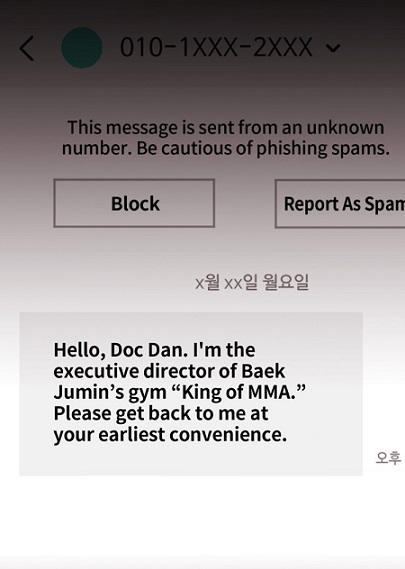 (chapter 47) Now, you are wondering why I decided to dedicate an essay about this scene. It is because the phone call and message raise a lot of questions. Why did the mysterious man call Kim Dan at such an early hour? Notice that it is in the morning, at 5. 15 am.
  (chapter 47)
  (chapter 47) The Spanish translator thought, the person calling Kim Dan was contacting him, after the doctor had met the oncologist. She imagined that not much time had passed. Yet, I believe, it is in the morning. First, it is important to place the day in the year. Since Joo Jaekyung’s birthday is on June 21st, and the next match is shortly after
 (chapter 47), I deduce that we are in July. However, the
  (chapter 47) In Korean, it is written MONDAY!! I had already detected a certain pattern. The protagonist would visit his grandmother on Sundays,
 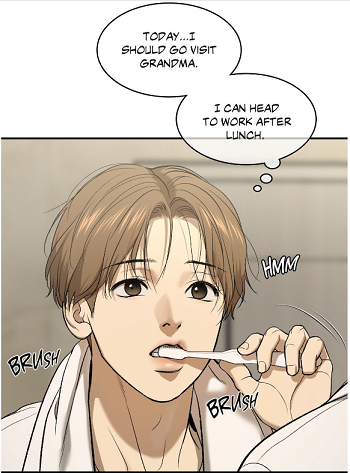 (chapter 30) as Saturdays are Kim Dan’s days. The morning in chapter 30 took place after the couple had spent their day-off together.
  (chapter 47), it was Saturday evening. Then the next day, he went to the hospital in order to get the results. After hearing the terrible news, he lost track of time. Hence he didn’t look at his cellphone contrary to episode 5.
  (chapter 5) On the other hand, I don’t think, he visited Shin Okja right after meeting Kim Miseon, for his grandma would have known that he had remained by her side the entire night. Nonetheless, her worries were about eating and not about lack of sleep.
 (chapter 47) Thus I come to the conclusion that he spent the whole night at the hospital like in episode 21:
  (chapter 21) This explains why the grandmother was not wearing her headgear. She was sleeping. But back then, Kim Dan returned to the penthouse at dawn.
  (chapter 21) Therefore the grandma didn’t notice that he had stayed by her side for quite some time, for she was asleep. Hence she requested his presence the next morning. Nonetheless, there exists another difference between chapter 47 and 21. In my eyes, Kim Dan entered her room during the night and spent some time in the bathroom.
  (chapter 47) He didn’t approach the bed the same way:
  (chapter 21) However, I doubt that he spent just one hour in the restroom covering his tears by running the tap water.
 (chapter 47) Therefore he had red eyes. Furthermore, the halmoni’s name is Shin Okja, and Shin can signify “morning, dawn and daybreak”. For me, it is no coincidence. First, it was her moment to shine due to her compassion.
  (chapter 21) As a little boy, he had asked his grandmother to never leave his side, unaware that this meant that he should do the same. He should remain by her side too. Yet, he didn’t do it.
  (chapter 47) This observation made me realize another aspect. When he heard the diagnosis from Kim Miseon for the first time, he admitted his powerlessness.
  (chapter 5) In his eyes, he could do nothing for his grandma. But he was wrong, as he could support her by spending time with her. From my point of view, when the halmoni left home for the hospital, deep down, he must have felt abandoned. On the other hand, we shouldn’t forget that he also had other worries and problems to solve: the loan, the hospital bills and finding a job as a PT. Hence I deduce that through his grandmother, he learned the following lesson: he should spend more time with his loved ones, as they can vanish at any moment. He learned how precious time is. This remark made me realize the huge contrast between these two scenes:
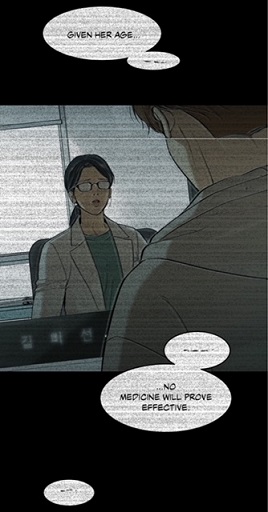 (chapter 47) He was in the bathroom crying and kept recalling the terrible monologue from the oncologist. He felt lost and trapped in the same moment. It felt like an eternity for him. But when he listened to his grandmother, bathed in the sunlight, it triggered his memory about his childhood with her.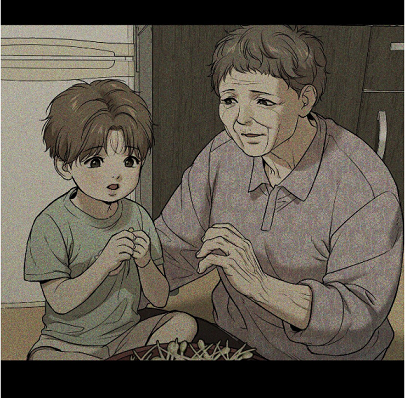
 (chapter 47) Shin Okja is no longer a goddess, a star during the night… but a human facing her mortality. Besides, the doctor focused too much on money, not realizing that goods are irrelevant in front of death.
  (chapter 41) This explicates why the champion is not attached to clothes and presents.
 Yet, I can refute this point. How so? Note that the caller only let the phone ring 3 times:
  (chapter 47) Then he left a message. This stands in opposition to Joo Jaekyung’s action in episode 5:
 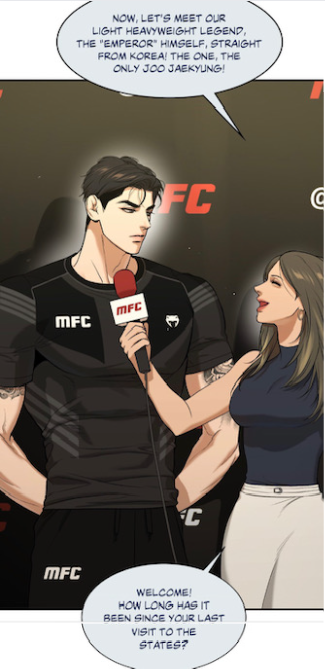 (chapter 36) This divergence reveals that the executive director has a different approach than the reporter. The former seeks to „get close to Kim Dan“, while the journalist desired to avoid the famous fighter’s wrath. Shim Yoon-Seok anticipated his reaction. Therefore I have the feeling that the mysterious man contacted the physical therapist so early to create the illusion that it was urgent. They needed him. Interesting is that when the champion received the message from Shim Yoon-Seok, he never questioned how the reporter got his contact.
  (chapter 46) And now, imagine the consequences, when Kim Dan or Joo Jaekyung reports the text as spam. Not only he doesn’t prevent the scammer from sending more texts to him, but it does let the authorities know as well that there’s a problem. Carriers might block the sender’s messages. Government bureaus might take action to prevent the scammer from messaging other cellphone users.
  (Chapter 46) And remember that Mr. Choi used this cellphone to contact his underling, a sign that their relationship was not official and should remain a secret. Hence if the line got cut, then Heo Manwook and Mr. Choi would be forced to meet. As you can imagine, the moment I discovered the connection between „carrier“ and „spam“, I couldn‘t help myself thinking that Mr. Choi might have received the CV from the courier company!!
 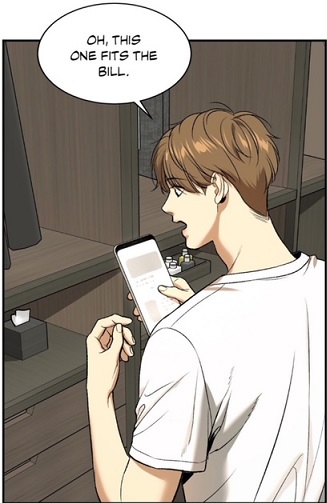 (Chapter 42) Yes, we have here a text on a cellphone too. Therefore I couldn‘t help myself laughing!! Why? It is because I believe that the schemers are thinking that Kim Dan is a member of Team Black, a fighter, and he is Joo Jaekyung‘s protégé. My reasoning is the following: since my hypothesis is that he got the doctor‘s curriculum vitae through the courier enterprise
 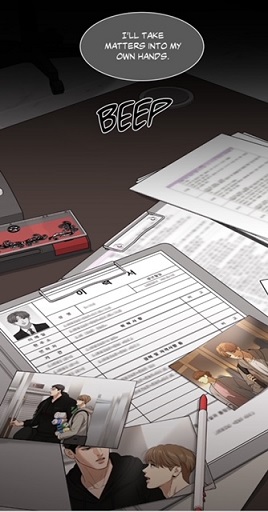 (Chapter 46), I doubt that Kim Dan mentioned that he was working as PT for Joo Jaekyung. This would have raised an eye-brow!! His side gig was supposed to be a secret implying that his official work was to be kept hidden as well. Furthermore, I am assuming that Mr. Choi must have tried to figure out Kim Dan based on his CV. He worked for a short time at the hospital and after he chose to take odd jobs. So he could have had a change of heart, he desired to pursue a different career, like for example becoming a professional MMA fighter. I don‘t think, people would mention such a hobby, as it could give a bad impression. Finally, if my theory is correct, then it signifies that Mr. Choi got tipped off by the hidden person from chapter 42.
 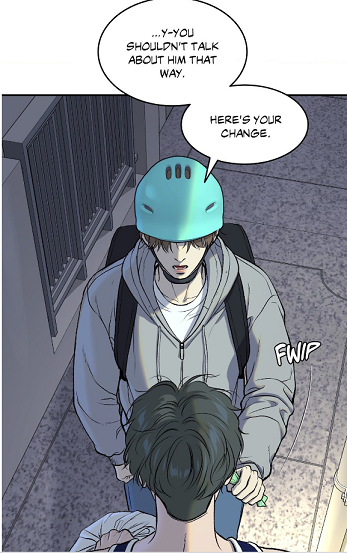 (Chapter 42) First, I thought that they knew that Kim Dan was probably his „sex partner“ as a fan, as he didn‘t object to this statement
  They are trying to snatch away the favorite athlete from Team Black in order to destabilize Joo Jaekyung mentally
  He is addressed as Kim Dan, and @joojaedan told me that he got addressed the same way than the fighter and Joo Jaekyung would call him. I have to admit that I let the app Deepl translate the Korean version. This is what I got:
 (Chapter 36) Moreover, this signifies that Baek Junmin is presented as the owner of the gym
 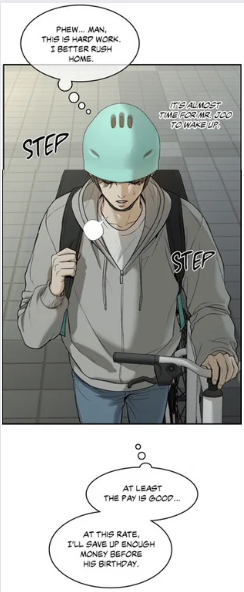 (chapter 42) He let it ring three times before texting him in order to catch the doctor’s attention, to distinguish himself from the previous calls (for his job). If so, then Mr. Choi must believe that Kim Dan is being “exploited” by the athlete. Hence the doctor would look so unhappy, when he is alone. In other words, the pictures taken in secrecy would expose the hypocrisy of the celebrity towards the main lead.
  (chapter 34) First, the star knew about the invitation from Choi Heesung. This even caught Kim Dan by surprise. This image exposes that the champion had violated the doctor’s privacy. So how did he know it? We have different possibilities, yet my idea is that he had seen the message!! Thus he replied with a text to Heesung. Besides, observe how he dissuaded the doctor from visiting the actor.
 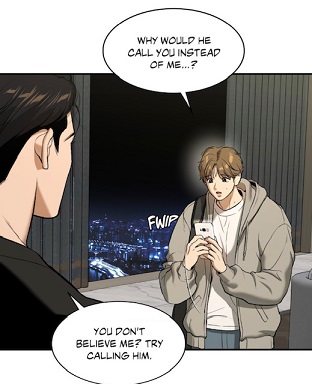 (Chapter 34) He should CALL him… a sign that the champion had not called anyone. Since Mingwa is writing like Byeonduck, I have the feeling that the message from Mr. Choi will be discovered by Joo Jaekyung. Remember how his hyungs had warned him
 Kim Dan saw the calls, but he ignored them.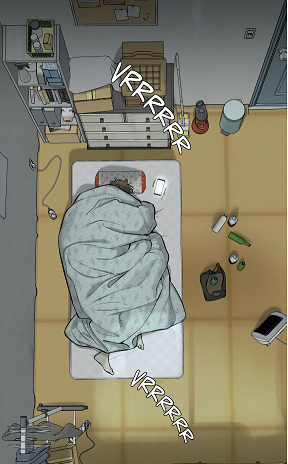
 It was another emergency call, for he needed to leave the place within a week. Interesting is that the person didn’t present himself. No name… As you already know, I am suspecting that the doctor got fooled, for I doubt he ever received any compensation for his move. He should have received money. Emergency, rejection, manipulation, interruption and spying (Heo Manwook interrogated the doctor right after)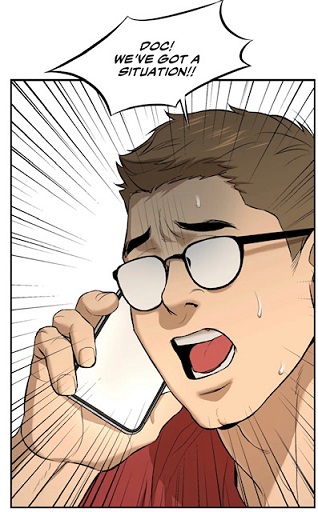

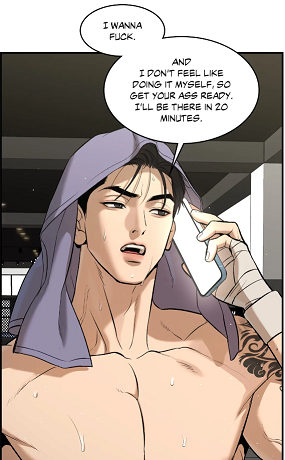
 Sex, interruption, „emergency“, as the champion didn‘t take off his shoes and put down his bag. Then during the intercourse, the doctor was called by the hospital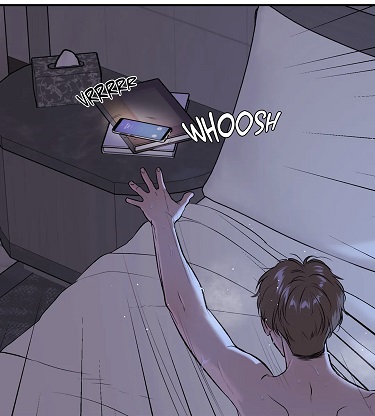
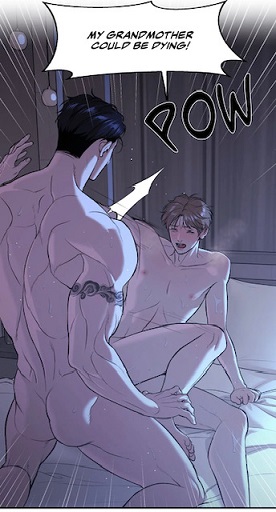
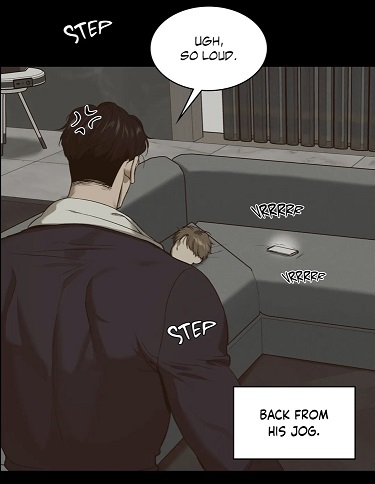
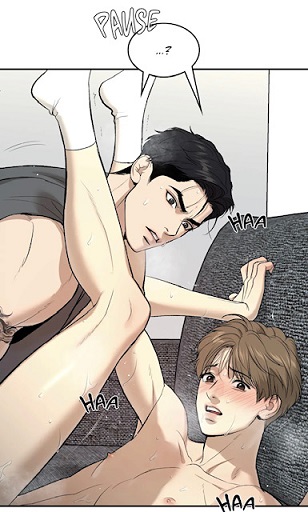 Sex, interruption (food), secrecy, manipulation, ignorance and spying. Potato had tried to listen to their conversation.
  Interesting is that here, there was no emergency from the champion‘s part. This time, Kim Dan was the one longing for the athlete.
 Sex, emergency, ignorance, manipulation, though here the victims of the trick were the two main leads.
 (Chapter 46) Furthermore, since Heo Manwook was the one who hired this man
  (Chapter 47) The MMA fighter could have been asked to fake an injury, similar to Heesung‘s plot. As for Kim Dan, his task would be to „target his shoulder, his weak point“. Another possibility is to expose his vulnerabilities. One thing is sure: their approach will fail, hence they will propose the deal to Seonho.
  (Chapter 47) And the latter has a reason to get revenge on the celebrity because the suffered humiliation and beating.
  (Chapter 46) What caught my attention is that this athlete definitely boosted his situation by advertising that he was the champion’s sparring partner. I doubt that the main lead‘s criticism was unfounded.
 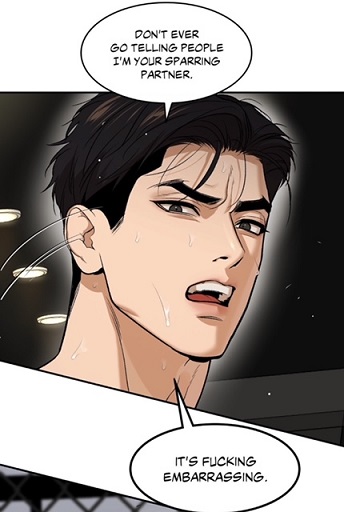 (Chapter 46), for he had been bragging about his merits.
 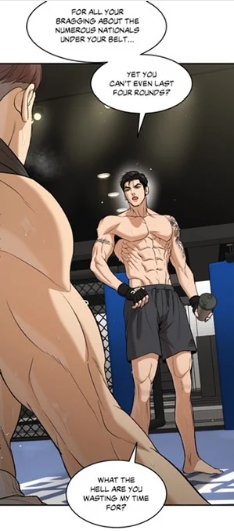 (Chapter 46) By the way, I believe, Seonho was a recent recruit. Therefore he doesn‘t know the champion that well and he is not close to the other fighters. Hence they didn‘t protect him
 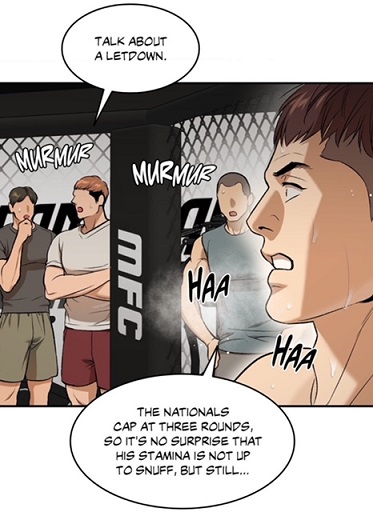 (Chapter 46) like in episode 1
  (Chapter 46)
  (Chapter 25) So Seonho could expose the true identity of the main lead, he is a physical therapist… Hence the schemers would understand why he got blocked or reported as spam. Their retaliation would be to tarnish his reputation as physical therapist.
 (chapter 42) On the other hand, since I am predicting a failure of their scheme, they could decide to take revenge on Seonho by sending him to an illegal fighting game, where he could get badly injured. Moreover, the moment they discover how weak the red-haired man is, they could jump to the impression that Seonho deceived them!!
  (Chapter 46) But he was sitting with the others later. Consequently, I come to the deduction that he failed to discover any lead, or better said, any connection between the bets and Mr. Choi. Why? It is because he is a former champion, and professionals among MMA world must know that he works for the star.
 (Chapter 47) Joo Jaekyung needs to realize that he can not just rely on his hyungs alone, he needs the assistance from the whole staff: Kim Dan and the other fighters, as they are not known in the MMA world.
 (chapter 46) I had even truly perceived his motivations:
  (chapter 46) He desired to get revenge on the celebrity. But from my point of view, there exist other reasons for his trick. He was seeking validation for his statement:
 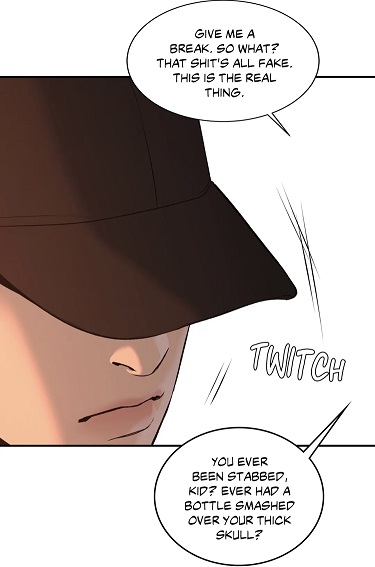 (chapter 17) Such fights are fake. The irony was that his perception got discredited once again. And now, we know why he thought like this. He is involved with the underground sports gamblers.
  (Chapter 46)
 (chapter 16) And this raises the following question again.
  (chapter 17) To which account did the champion send the money? Heo Manwook’s or a different one? If this is the second case, this signifies that Heo Manwook has been embezzling money from Mr. Choi through the poor physical therapist. The latter was sending the money to his personal account.
  (chapter 16) This would explain why Heo Manwook would harass the main lead, though he had paid the interests on time.
  (chapter 1) Under this new light, it dawned on me why the moneylender interrogated Kim Dan later.
  (chapter 11) It is because the doctor had paid a huge amount making it impossible for the loan shark to filch it. And now take a closer look at the infuriated thug: he employed the expression “laundering money”! He was projecting his own fears onto Kim Dan. For me, this scene exposes the true nature between Mr. Choi and Heo Manwook. He is laundering money for Mr. Choi. This explicates why their work relations is not official, as they are engaged in illegal activities. Thus their labor relations can not be known to others. On the other hand, if the champion paid the loan to the same account
  (chapter 45) Yes, the negative reflection from the physical therapist’s. So should the broker indeed have embezzled money, that would be the end between him and Mr Choi. He would be abandoned. However, since my assumption is that the moneylender is laundering money for Mr. Choi, it signifies that the latter is dependent on him as well. However, he could choose to replace him. We could detect through the years that the thugs were switched.
  (Chapter 5)
  (chapter 1) Thus I come to the following conclusion: We are assisting to the gradual disintegration of their secret relationship. I am already envisaging that Heo Manwook could end up not only losing Mr. Choi’s favor, but also getting switched by this man.
  (Chapter 46) The sum reflects the faith he had in Heo Manwook. Yet, the conversation displays the increasing mistrust between them. Note that the usurer is not taking responsibility for the failure of his scheme: „on their end“.
  (chapter 46). Secondly, since Mr. Choi is now taking the matter into his own hands, this signifies that the criminal won’t be involved in the next scheme, so he won‘t gain anything.
  (chapter 46) That’s the reason why the thug had hired the man himself. This confirms that this man
  (chapter 40). How so? It is because Heo Manwook doesn’t explain how the plot failed!!
  (chapter 5), thus I doubt that Mr. Choi is aware of the connection between the physical therapist and Heo Manwook. The curriculum vitae sent to him certainly doesn’t contain any information about Kim Dan’s past financial situation.
 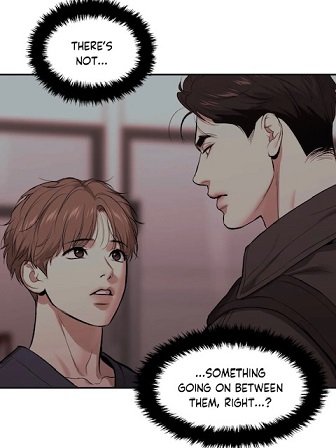 (chapter 23) Back then, he initially denied the existence of intimacy between them, until he was confronted with reality.
  (chapter 25) Hence he envied the doctor for his closeness with the celebrity.
 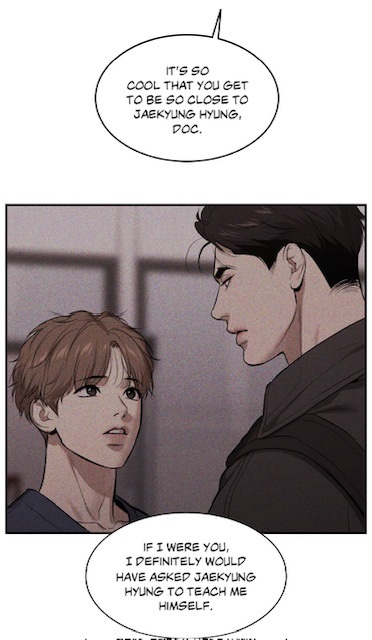 (chapter 25) Thus from my point of view, Mr. Choi must have come to a different perception than the maknae:
  (chapter 40) He only declared that he was part of his team. They had no idea who the person actually was. However, Joo Jaekyung didn’t realize that through his action, he was bringing attention to the company “TEAM BLACK”. That’s what the criminal saw on the uniform and the jacket! Thus I come to the following deduction: the hired man will report to Heo Manwook the existence of Team Black and its connection with Joo Jaekyung.
  (chapter 16) Thus there’s a high chance that they will try to ruin the champion by tarnishing his company. It is a hidden brothel. Imagine Park Manwook’s reaction, when he gets to hear that his gym is a whorehouse.
  (chapter 31) That’s how the actor’s reputation would get affected. As you can see, the actor and Mr. Choi share the same family name. So are they related or not?
 (chapter 43) Besides, on his desk, there were photos of the protagonists. But in my eyes, these two persons are totally different. How so?
 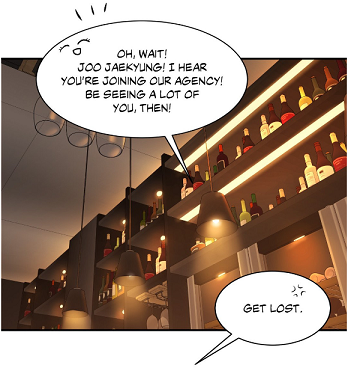 (chapter 33) He employed the personal pronoun “our” (even in the Korean version), a sign that he was identifying himself with the owner. From my point of view, Mr Choi and Choi Heesung are related, I would even say father and son. I know, when I presented my theory on X, people argued about this, for in South Korea, Choi is a common surname, just like Kim Miseon is not related to Kim Dan.
  (Chapter 5) Yet, I can refute their objections with the following points. Jinx is about emancipation and maturity, the leads are encouraged to become responsible and mature men. This signifies that they need to cut off ties with their parents and become strong mentally and emotionally.
 (chapter 29) Note that the comedian is promoting himself with Heesung and not his surname.
  (chapter 30) It was, as if he didn’t want to be connected to this Mr. Choi. Moreover, contrary to the mysterious director, readers could see his face and identify his “job”: an actor!
  (chapter 29)
 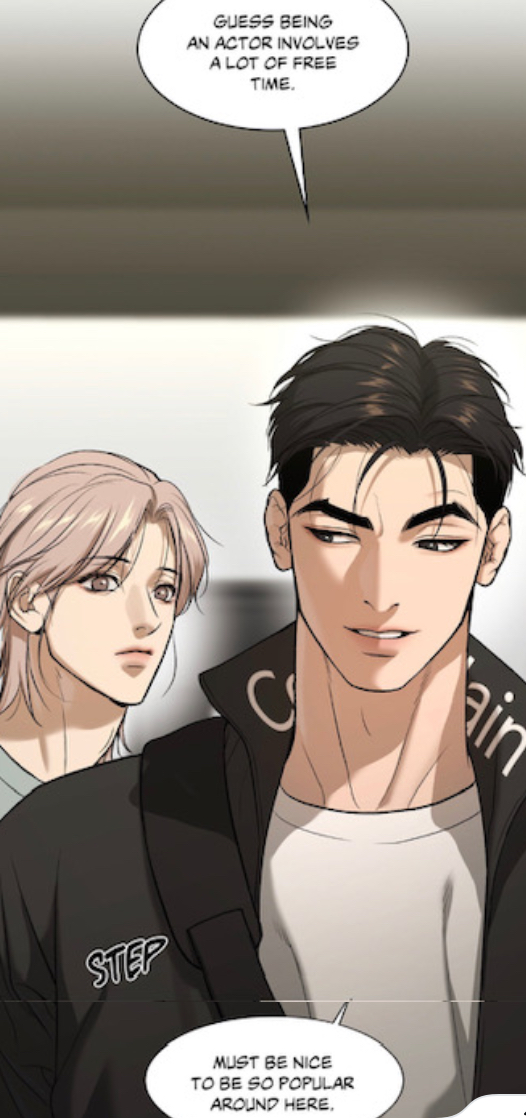 (Chapter 31) As you can see, I sense that Heesung had an ambivalent relationship with his „father“. On the one hand, he rejects him due to his cold-heartedness and high expectations, on the other hand, he was still relying on him and his connections through the agency. In my eyes, he will be forced to choose between love or money in the end.
  (chapter 33) This was the “stalker” working on Mr. Choi’s account. So it dawned on me that Heesung might have been living with his father in the huge building
 (chapter 32), until he chose to move out and live on his own. And now, we have the perfect explanation why his house is so clean and impersonal:
  (chapter 33) It is because his father probably meddled in his life constantly. I have the impression that he must know about his father’s past and the true origin of their wealth. The fact that he introduces himself as “Heesung” is a sign that he wants to deny his origins, Choi.
 (Chapter 33) He had been missing love and warmth too because of his family, exactly like the champion. Both came to a similar conclusion: fame served as a replacement. It was to get recognition and „affection“. The problem is that this type of attachment is rather superficial and temporary, as none of their „admirers“ or „fans“ has to become responsible for them. Moreover, their fortune played a huge role to undermine their relationship.
 The house stands for power and propriety. But Choi has another signification.
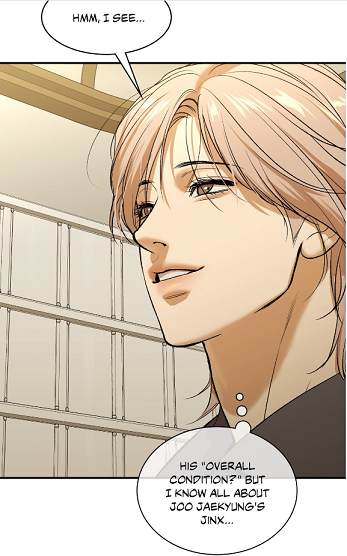 (Chapter 32) Note that when he was conversing with the celebrity at the bar, he never brought up his jinx.
  (Chapter 43) However, if he pondered a little more, he would realize that it is a lie. How so? Coach Jeon Yosep is the evidence that not all athletes are destined to end their career because of an injury. Yosep is still a fighter.
 (chapter 43) The package arrived right on time.
 (chapter 42) That way, the agency would divert attention from its own responsibility and even receive support from the clinic. Then we have this rumor circulating that people are sending spies to gyms.
  (chapter 46) Is it a coincidence that this terrible gossip reached the blind manager Park Manwook at this moment? No, nothing is random in this story. They could frame the physical therapist as someone who tried to “leak” information in order to rig a game. He could be portrayed as a gambler. Yet, Mr Choi is not aware that Kim Dan offered a golden keychain to the champion and even risked his health to buy the expensive present.
  , (chapter 36), he must have wagered too and lost money. This would explain why he asked the doctor from MFC to give it a go right after. He needed to create a new game in order to cover up the last losses. The problem is that since Mr. Choi wasn’t informed about the incident with the security guys from MFC, I don’t think, he is truly aware of the celebrity’s physical conditions. If he knew about the real diagnosis, he wouldn’t need to investigate Kim Dan. He would rely on time… within such a short time, Joo Jaekyung wouldn’t be able to recover. In fact, he would even bet on the athlete’s defeat once again. Since he saw these pictures, I am quite certain that he is misjudging the relationship between the two protagonists. They are close, hence he needs to sow discord and even plant a seed of doubts on the athlete’s mind.
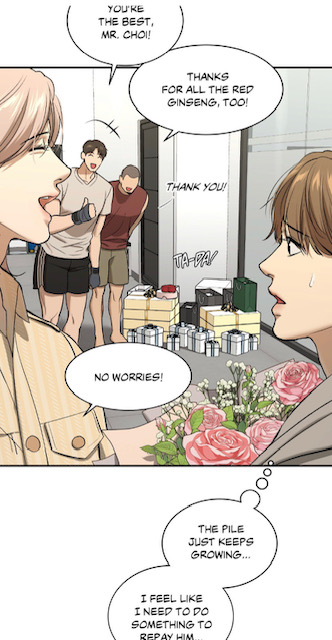 (Chapter 31) Yes, appearances would now play in Heesung‘s disfavor. Finally, an incident with the agency would push Heesung to fight against his relative… and to regain control over his life.


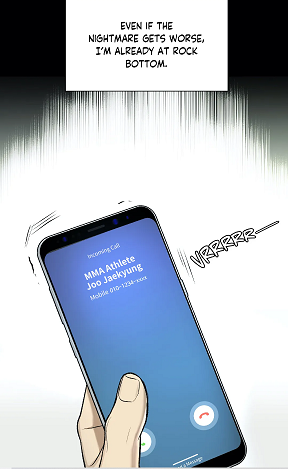
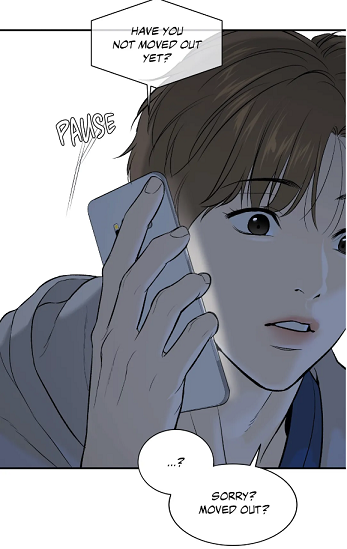


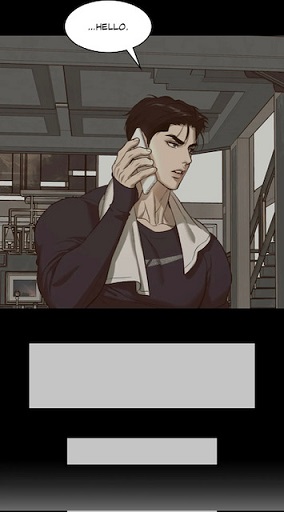


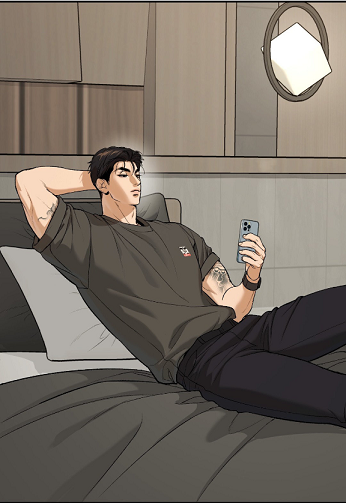
 (chapter 43) The doctor was invited for the second round and he could have agreed, but the athlete intervened fearing that the doctor would prefer the company of the fighters. This exposes his low self-esteem. However, Kim Dan was already rejecting their invitation.
 (chapter 13) He was acting, as if he hated kisses, foreplay and embraces. At the same time, he is showing his face, yet this is just acting. Thus the hyung replied the same way. He faked his anxieties and submission.


 (chapter 40) This signifies that in this moment, Kim Dan decides to cross the line, especially since he likes the emperor. He is accepting that he means much more to Joo Jaekyung than being his toy. Because the champion called him “his person”, he felt moved and indebted. Consequently he started considering himself not only as being a part of the champion’s life, but also as a part of Team Black.
  (chapter 1) The reference of belief in two panels from episode 40
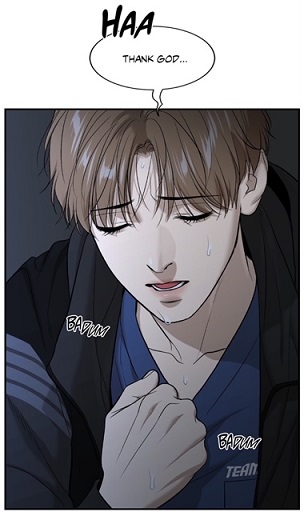 (chapter 40) led me to associate Kim Dan with a butterfly, for the latter symbolizes faith, hope, change and rebirth. And now, you comprehend why this illustration
  contains blue-black butterflies. They are alluding to the physical therapist. The latter is wearing his blue uniform with the black jacket from Team Black.
 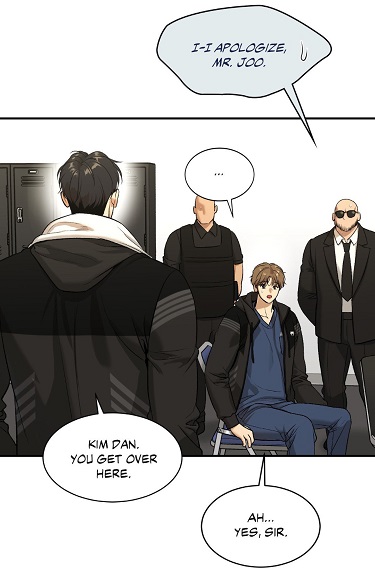 (chapter 40) And the butterfly got unfortunately caught by a spider.
  (chapter 409. Yes, the hand from the MFC security guard reminded me of a spider. But there exists another reason why I came to connect the MFC security guys with the spider. It is because both are related to the web. There is no doubt that the MFC security guards wove a web of lies to Kim Dan. And how can we detect this? There exist different methods to expose the men in Black as manipulators and hunters. First, the MFC security guys are wearing glasses. Another method is to compare the interrogation scene with episodes from Jinx. Finally, it is important to examine their words and as such their speech bubbles. But let’s start with the glasses.
 (chapter 40) I have long outlined his flaws. Imagine that he only informed his star about the incident with the drugged beverage after the match, but he knew about it before. However, his words are implying that it was not his fault, for he had been informed too late (“I only found out this morning”). He was not responsible for the incident due to his ignorance.
  , she embodies impartiality, because she is able to detect the truth through the testimonies. She is not blinded by prejudices (origins, social background, gender…) contrary to the characters in Jinx.
  (chapter 40) The MFC guys are biased, they are acting like cops, prosecutors
 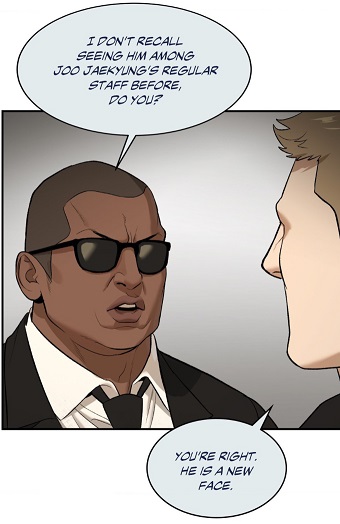 (chapter 40) Don’t forget that they are not outside, but in a close room. First, such glasses are connected to spying. People should not recognize them, they are hiding their identity. The eyes serve to identify people, this explicates why there is this saying, the eyes are the mirror of the soul. For me, the sun glasses have a symbolic meaning. Three MFC guys were wearing sun glasses
 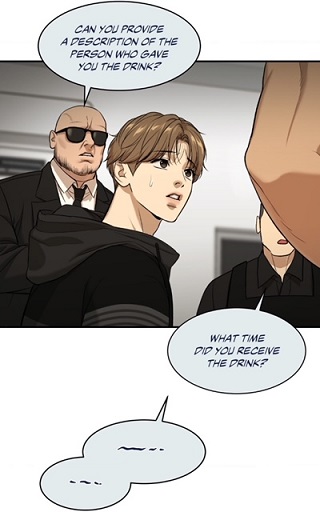 (chapter 40), but two were acting as the main accusers.
  (chapter 40), a sign of his anxiety, nervousness and anger. It was, as if he had been caught. This little detail displays his knowledge. He knew that Kim Dan was innocent in the end. These two men wearing sun glasses were extremely ruthless and calculating, as if they had sold their soul to the devil. They were determined to frame Kim Dan, for he was new. Moreover, I believe that the sun glasses have another symbolism. According to my interpretation, Joo Jaekyung is represented by the sun, so wearing sun glasses indicates that they are trying to protect themselves from the champion. I will elaborate about this further more. Finally, wearing sun glasses is a sign for coolness and confidence. It looked like this item gave them the assurance to act like the tough and hardworking security agents. In other words, the sun glasses are strongly connected to acting! Yes, we were witnessing a fake investigation and trial! This leads me to the second method, the comparison of panels and scenes.
  (chapter 11) Yes, the MFC security guys are mirroring Heo Manwook and his minions. And not just once, but twice!!
  (chapter 40). As you can see, Joo Jaekyung is utilized the same way than the grandmother. Moreover, I would like to outline that in episode 16, the main lead got kidnapped in broad daylight, and no one stopped them.
  (chapter 11) or even trespass his house and rape him.
  (chapter 16) Striking is that MFC has a similar attitude in the end. They control their stars’ life through their regulations: the weight categories and weight cutting
 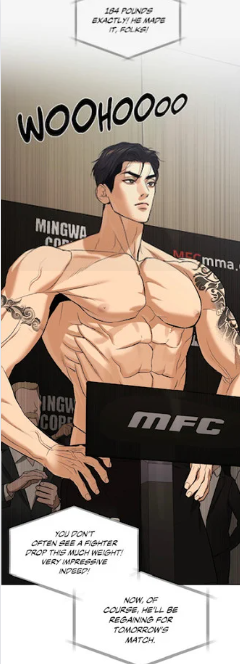 . (chapter 37), they supervise their food
  (chapter 37), and finally they take blood samples or urine tests in order to ensure that the fighters didn’t use any drug.
  (chapter 29) This explicates why the man with black glasses asked him about his relationship with the physical therapist.
 (chapter 11) Funny is that Heo Manwook suspected the main lead to earn his money through illegal means, while in reality, the former is actually the one using illegal means. As you already know, for me, he is involved in the set up against the two protagonists. But it doesn’t end here. MFC guys are acting like legal authorities, thus they are wearing black suits and glasses
 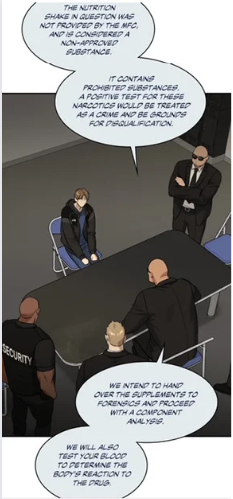 (chapter 40) reminding us of FBI agents.
 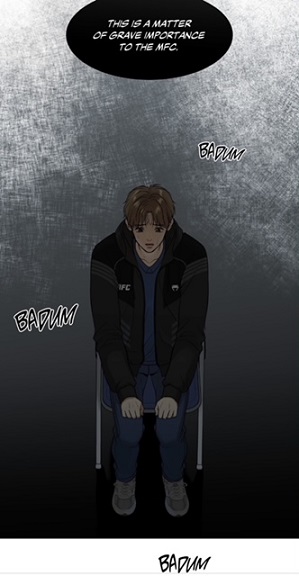 (chapter 40) resembles a lot to the one from the hospital,
  (chapter 11) Secondly, Mingwa created scenes, where someone would take action against a person or organization:
  (chapter 30) Under this approach, it becomes comprehensible why they were wearing sun glasses, they served as a shield for a trial. No ID and no eyes means no identity.
 (chapter 14) And that’s how the schemers discovered that their trick had failed. But this could have consequences for MFC, for the reputation of the MFC security guys would have been tainted. That’s why I believe that the manager had to find a way out. He must have advised the MFC staff to find a scapegoat in order to avoid a scandal… Kim Dan had to be framed… because he is the one who said that the nutrition shake came from the MFC!!
 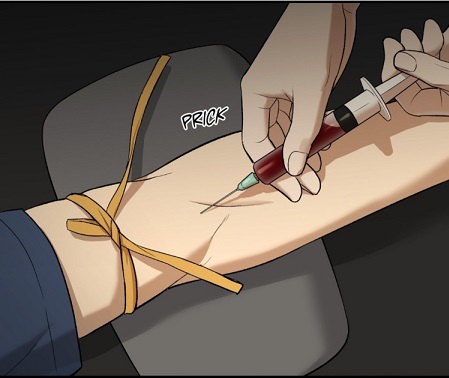 (chapter 40) MFC is a private organization, so they are not supervised. So they could do anything with this blood sample, like for example fake results.
 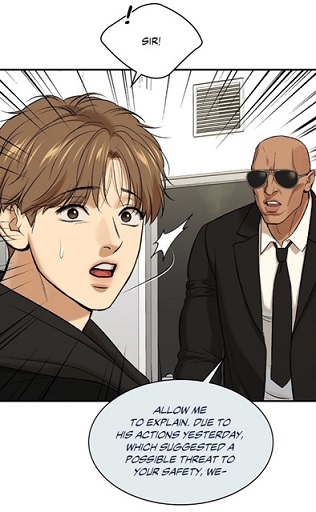 (chapter 40) Like Joo Jaekyung pointed out, this trick was exposing their lack of security. They had failed their duty.
 (Chapter 15) Moreover, he is fighting an experienced MMA fighter. And with the weight cutting, his performance could be affected. So now, it is time to reveal his identity:
  (Chapter 14) Yes, Randy Booker! Let’s not forget that this fighter had tried to enter the higher weight category
  (Chapter 13) But he failed terribly. Note that the athlete is put in the same situation than the butcher (same weight, travelling). He has to fight in a foreign country. Secondly, he mocked the athlete for his age.
  (chapter 34) and the doctor’s cut
 (chapter 36). Under this perspective, the punches from Kim Dan
  (chapter 11) Yes, it is Heo Namwoook. And note that he is also connected to blue!
  (Chapter 17) Joo Jaekyung made a reference to the hospital in front of the loan shark. So he knew that Kim Dan had Joo Jaekyung as patient. Besides, there is no doubt that the moneylender is aware of the main lead’s formation. He is a physical therapist. But since the champion wanted his sex partner to accompany him to his med check, he gave the impression that the physical therapist was working at the hospital. Moreover, note that the champion is never mentioned as the owner of Team Black in the article.
  (chapter 13) The name of the gym is not visible in the poster. This promotion explains why the fans are screaming only Joo Jaekyung
  (chapter 30) the name Team Black isn’t brought up in the covers either. It is only about Joo Jaekyung. This explicates why the loan shark’s minion didn’t connect Team Black to the protagonist.
 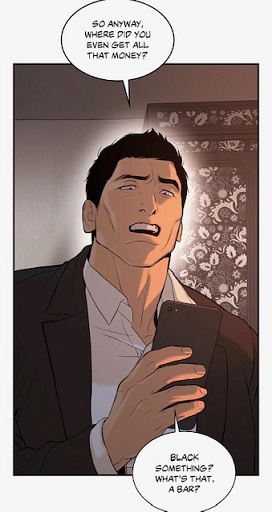 (Chapter 16) Team Black only appears on the jacket
 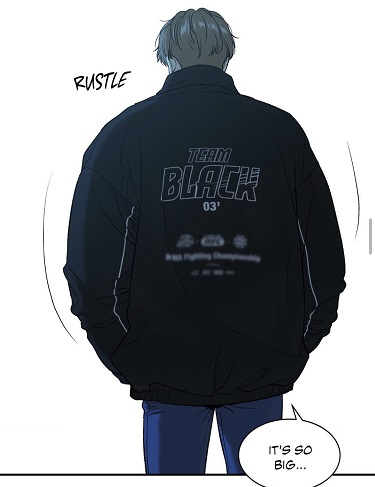 (chapter 36) So the moment you imagine that Heo Namwook is behind the event, it makes sense why Dominic Hill was selected. First, he saw how the athlete could
  (Chapter 17) overthrow someone weighting heavier than himself. He was clear-minded and far from being emotional, when he fought Heo Namwook and his minions.
  (Chapter 17) But with the scandal and the weight cutting, it is different. The “enemy” is messing not only with his body, but also with his mind. If my theory is true, then the loan shark would be actually acting as a fight promoter:
 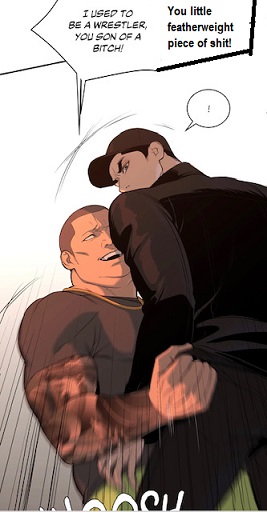 (Chapter 17) Secondly, Heo Namwook called MMA as fake, for he thought that it was like wrestling.
  (chapter 17)
  (chapter 17), I can only imagine that the former loan shark created this event for one reason: Joo JAekyung should get destroyed! It looks like a show, but the fight will be real. Dominic Hill has been tasked to kill the champion figuratively.
  (Chapter 17) He is a hot commodity, because his agent at the entertainment agency is “promoting” him. He is making him work, because the more schedules he gets, the more the agent gets paid. However, it is not the manager’s task to promote Team Black!! This explicates why the other fighters are not famous! In other words, the loan shark is exposing Park Namwook’s lazy nature. Under this new perspective, it becomes comprehensible why the coach spoke about free PR.
  (chapter 36) or bringing food.
 (Chapter 14) Furthermore, in episode 23, the fighters left the gym without wearing any uniform!!
 (Chapter 23) They all had different clothes, a sign that Namwook had been neglecting them. As you can see, the new clothes made me realize that the coach hadn’t been promoting Team Black properly, until Kim Dan joined the team. And it started with this:
 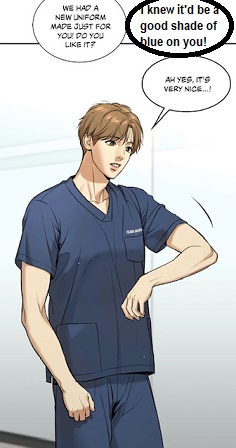 (chapter 9) The name was written on the left side. However, it is not visible, as soon as Kim Dan wears a jacket.
  (Chapter 14) The man on the left side is not part of Team Black, for he is wearing an ID, whereas the fighter next to the coach is a member of the gym, though he is not wearing any black clothes. The choice for the clothes were truly bad.
  (Chapter 36) First, the name Team Black is visible on the side, while MFC vanished.
 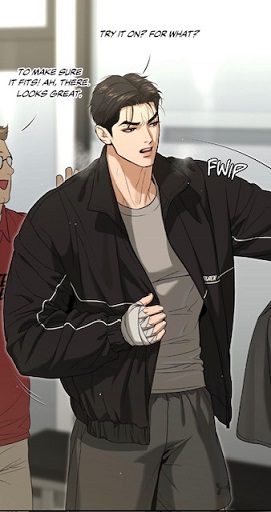 (Chapter 36) At the same time, this signifies that slowly, he is giving the other fighters more attention. The face of Team Black is changing. It is no longer reduced to Joo Jaekyung. This signifies that the dragon is gradually sharing his burden to others. On the other hand, such a jacket exposes the coach’s arrogance.
 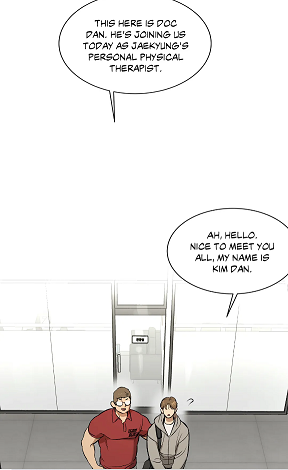 (Chapter 7) He is the physical therapist of Team Black de facto, especially if he is seen in company of other members.
  (Chapter 23) Potato has already planned as the champion’s successor. To conclude, this match in the USA should expose the manager’s selfishness and the corruption. But since Kim Dan has now such a jacket, I am expecting that with his magic touch
 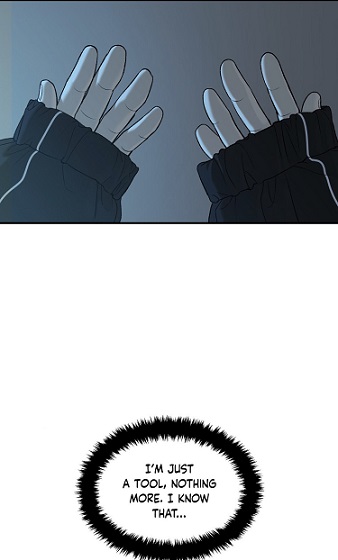 (chapter 36) he will get the attention from the MMA world: reporters, fighters and MFC manager. Something that the schemers didn’t expect… As a conclusion, in the next chapter, pay attention to the jackets and the numbers. There were all XXL, except the one for Potato.
  (Chapter 32) He will become a real MMA manager promoting his own company and his fighters.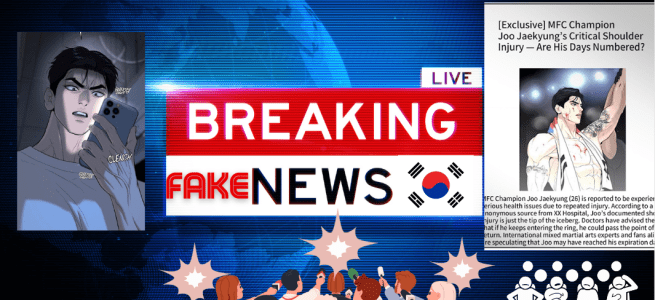

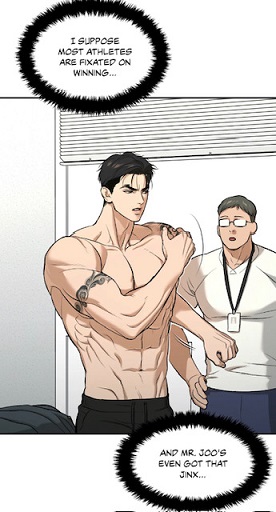 (chapter 27), it is clear that Joo Jaekyung’s real issue is his shoulder in bad shape. Hence we see him constantly touching his right shoulder.
 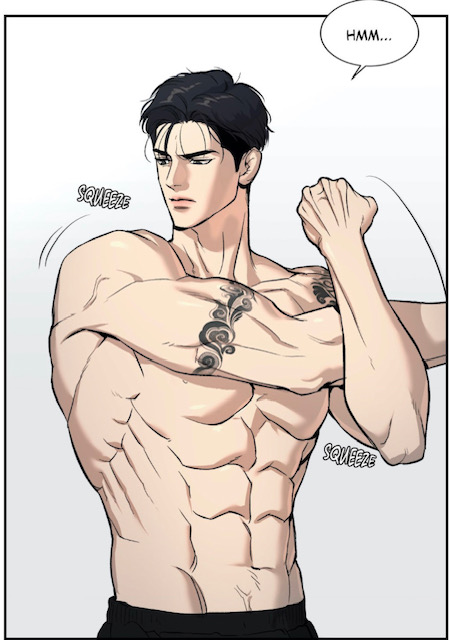 (chapter 1) Because of this contrast between title and content, the Manhwaphiles can grasp the writer’s true intentions behind the article. He was looking for sensationalism, hence he exaggerated the champion’s physical condition. But there is more to it. The columnist attempted to create the illusion of a proper and serious investigation by employing the idiom “the doctors”. With this term, he insinuated that he had consulted different doctors and they would all come to the same verdict. Moreover by including the fans, he gave the impression that this topic had been long discussed among the supporters. In reality, he was mixing the cause and consequence. The moment people will read this news, they will start speculating about his future. However, since this was a secret till this publication, I doubt that the lovers had already speculated whether the champion had reached his zenith. That’s the reason why I consider this column as a fake news. It was a hype created on a truth mixed with lies.
  (chapter 27), if he changed his way of life and training. Hence he recommended rest.
  (chapter 27) Another evidence for this tabloid journalism is the reference to the hospital and the anonymous source. It was, as if the personal from that hospital was not trustworthy, for the “anonymous source” had leaked information from the files. Though the name of the hospital was not mentioned, it is clear that Dr. Lee will feel concerned, for such a divulgation to the public can endanger the champion’s career and his own reputation. He could be held responsible for the main lead. Now, his opponents know his weakness. So such an article can lead to an investigation from that hospital and the chaebol. Who is the anonymous source? Dr. Lee will certainly vouch for his employees, and that’s where Kim Dan comes in. Notice that this article was released shortly, after Kim Dan met the doctor for the first time!
 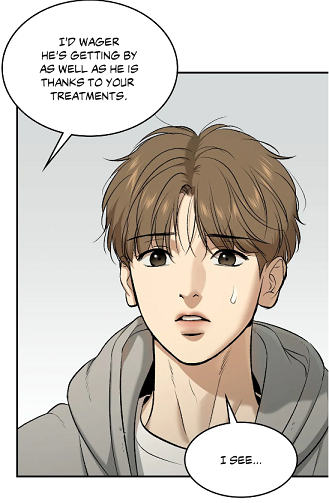 (chapter 27) Moreover, he is the only doctor who read the files!
 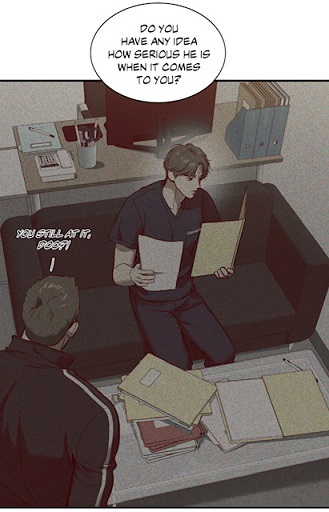 (chapter 17) People will start suspecting the protagonist and if his past with the perverted hospital director is exposed,
  (chapter 11) which could lead to the discovery of the debts and the loan sharks. He had financial problems and a sick halmoni. Finally, let’s not forget that the boxer is the first client of the physical therapist. So people will question the champion’s choice for picking Kim Dan as his personal physical therapist. He lacks credentials. Consequently, the doctor’s integrity and competences will be questioned by public opinion. In other words, Kim Dan could bring bad PR to Black Team and this could create some frictions between the champion, the doctor and Park Namwook. To conclude, it is clear that the target of this article is not just the athlete, but also Kim Dan. The allusion to the “anonymous source” was done on purpose, so that people would ask for his identity. He betrayed the hero and emperor! Someone violated the confidentiality clause. Nevertheless, divulging the existence of an anonymous source was to divert attention from the real issue! The real traitor is the author of this article who broke a rule. He shouldn’t have leaked this to the public! He is responsible, if Joo Jaekyung gets really injured by his opponent. But I would like to outline that the files were left in the office of Team Black and they allowed strangers to enter the gym because of Heesung!
  (chapter 30) As you can see, anyone could have access to the files, especially because the physical therapist was absent in the morning. He only joined the company much later. As the Jinx-lovers can observe, this article should be seen as a lesson for the physical therapist, Park Namwook and Joo Jaekyung. They should be more careful, due to money, this rule “bringing strangers” had not been followed.
 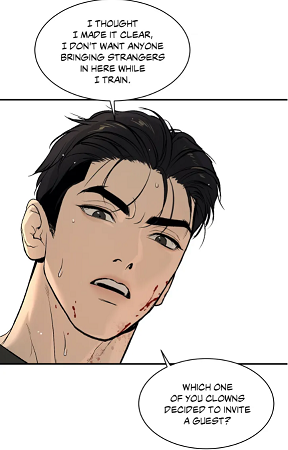 (chapter 1)
  (chapter 35) He is not a greedy, immoral and selfish bump. He embodies true loyalty
  (chapter 34) This shows that the doctor is slowly realizing the importance of welfare in such a career. Anger is a sign for stress. The latter is also the cause for damaged “joints”.
  (chapter 20) For Kim Dan, it was back then a matter of life and death. Now during this night, Joo Jaekyung is put in the same situation. It was, as if someone was attempting to kill him. If he loses his title, he has the impression that he will die, he will vanish into thin air. But why is it so important to him? It is necessary to recall that in his childhood, the athlete was an invisible and silenced child! With this title, he has the impression to “exist”, though he is not truly living. So how will he react to this article? Rush to the hospital and throw a tantrum? Or go to Kim Dan and wake him up?
  is indicating that it is rather late.
 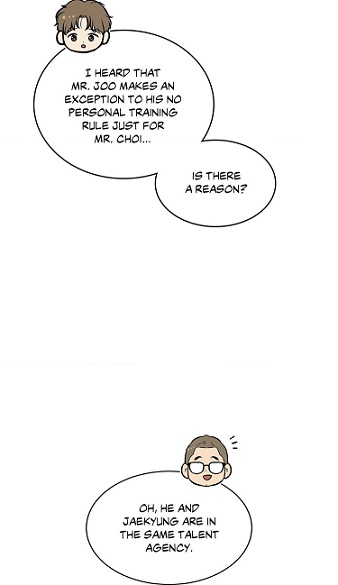 (chapter 30) Hence I deduce that the agency will get involved too very soon and the owner could ask for the identity of the anonymous source. Who leaked this information to the author of the article? Since Kim Dan is the newest member, he would be the biggest suspect and the perfect scapegoat, for he doesn’t belong to a hospital and he has no agency protecting him. And this brings me to the following conclusion. Romeo and Juliet is a tragic love story, because these two young people’s families were in a feud! Hence I sense the birth of a conflict between Team Black and the agency. But we have Choi Heesung who is also represented by this agency.
  (chapter 1) The previous physical therapist!! Moreover, the latter got hurt by the athlete. One of my theories was that the man had not treated the champion properly.
  (chapter 1) Besides, he would have another interest to have Kim Dan fired. How could he get hired, when he lacked experience? By mentioning the anonymous source and the hospital, the reporter would divert attention from the real traitor. No one would suspect a former employee. The schemers are hoping that the hospital and Kim Dan would put the blame on each other. In other words, we shouldn’t forget this mysterious person. Finally, the author has to expose the truth about this incident. What had happened exactly? I doubt that Joo Jaekyung truly beat him, for the latter could have sued the man. Besides, we know now that Park Namwook is biased and has the tendency to put the blame on his star.
